See whether Helium helps you make better-informed decisions. Try every Pro Trader feature for 30 days. No credit card required.
Try every Pro Trader feature for 30 days. No credit card required.
The Peacock price hike is reported with mostly concrete pricing details but is wrapped in a shopping-deal frame, calling a subscription bundle an 'excellent deal' while the publisher discloses possible affiliate revenue.
Automated analysis; not human reviewed. · 1 of 54 available dimensions scored; omitted dimensions are not treated as neutral. · Verified supporting quotes for 0 of 1 scored dimensions.
Claim: The report uses promotional product-recommendation language and cafe an explicit affiliate-revenue disclosure, signaling an advertorial/shopping framing with a factual news core.
“Given that the latter hasn't seen a price hike yet, it's an excellent deal, since customers can get two ad-free streaming service for the same price as stand-alone Peacock Premium Plus.” · not found in supplied text
“If you buy them, we may get a small share of the revenue from the sale from our partners.” · exact text match
Why: The exact 'excellent deal' paragraph and the affiliate-compensation disclosure show promotial/product-recommendation framing, though the price-hike details are reported factually.
A promotional preorder roundup frames the Pixel 11 launch as an urgent buying opportunity through gift-card incentives, personal endorsements, and an affiliate disclosure.
Automated analysis; not human reviewed. Limitations: No independent verification of the promotional deal terms or release dates is possible from this text. · 10 of 54 available dimensions scored; omitted dimensions are not treated as neutral. · Verified supporting quotes for 9 of 10 scored dimensions.
Claim: The tone is subjective and consumer-oriented rather than objective reporting.
“Google Pixel fans get ready, because the newest generation of the brand's smartphone is here.” · exact text match
“An upgraded camera also makes it the perfect companion for catching cherished moments.” · exact text match
Why: Exclamatory fan-directed language and superlative product praise center sentiment over neutral description.
Claim: The prose uses hype and promotional adjectives to amplify the product launch.
“It's a sweet, no-strings-attached deal that requires no phone plans or trade-ins.” · exact text match
“latest and greatest operating power” · exact text match
Why: 'Sweet' and 'latest and greatest' are enthusiasm-driven framing rather than measured evaluation.
Claim: The framing is consistently positive and enthusiastic about the launch and deals.
“Google Pixel fans get ready, because the newest generation of the brand's smartphone is here.” · exact text match
“a sweet way to score some bonus spending money” · exact text match
Why: The language celebrates the launch and frames preorder perks as exciting opportunities.
Claim: The content prescribes reader action rather than merely describing the launch.
“Preorder yours now with these deals and freebies.” · exact text match
“I recommend ordering as early as possible to secure your device at release” · exact text match
Why: Direct commands and recommendations tell readers what to do.
Claim: Subjective preference and endorsement are embedded in the buying advice.
“My personal favorite is the no-strings-attached Amazon deal” · exact text match
“preordering the Pixel 11 Pro from Amazon is an easy choice” · exact text match
Why: Personal favorite and 'easy choice' present recommendations as opinion rather than neutral fact.
Claim: Shipping delay and stock scarcity are asserted with certainty not supported by evidence.
“Ordering early is important for multiple reasons. Limited stock means procrastinating will delay your shipping date” · exact text match
“delaying can push your fulfillment date out” · exact text match
Why: The article asserts scarcity and delay as certain outcomes without sourcing or supporting data.
Claim: The content functions as an advertorial pushing immediate preorders and affiliate purchases.
“Preorder yours now with these deals and freebies.” · exact text match
“If you buy them, we may get a small share of the revenue from the sale from our partners.” · exact text match
Why: The text repeatedly instructs preordering, promotes retailer and carrier deals, and discloses affiliate compensation.
Claim: Google's and carriers' products and promotions are presented uncritically and favorably.
“Google's latest smartphone line promises more Gemini Intelligence-powered streamlining and more.” · exact text match
“You can save big by getting your Pixel 11 from AT&T or Verizon with a trade-in or an eligible plan.” · not found in supplied text
Why: The article adopts vendor marketing language and frames carrier promotions as unambiguous savings.
Claim: Future fulfillment outcomes are predicted despite lacking evidence.
“Ordering early is important for multiple reasons. Limited stock means procrastinating will delay your shipping date” · exact text match
“delaying can push your fulfillment date out” · exact text match
Why: The text forecasts shipping delays based on assumed limited stock, which is speculative.
Claim: Deadline urgency and unverified scarcity are used to pressure preorder decisions.
“act fast, since the deal ends on August 27.” · exact text match
“Limited stock means procrastinating will delay your shipping date” · exact text match
Why: The text combines an expiration date with a scarcity warning to push immediate action.
No independent verification of the promotional deal terms or release dates is possible from this text.
August 02, 2026 · 0 shares
Promotional framing with affiliate links and VPN recommendation.
Lioness is a CIA espionage drama series on Paramount Plus starring Zoe Saldaña.
Automated analysis; not human reviewed. Limitations: The article is a promotional guide with affiliate revenue incentives; bias analysis may overemphasize commercial framing. · 6 of 52 available dimensions scored; omitted dimensions are not treated as neutral. · Verified supporting quotes for 6 of 6 scored dimensions.
Claim: The article mixes factual scheduling information with subjective promotional language.
“Back for another thrilling season” · exact text match
“One of the top picks in our guide to the best VPNs, NordVPN, is the one we trust for the job.” · exact text match
Why: Factual details (release dates, prices) are presented alongside opinionated endorsements and hype phrases.
Claim: The article provides practical streaming information that may interest fans.
“Fans can catch new episodes of Lioness weekly on Sundays, starting on August 2” · exact text match
Why: The scheduling details are useful but the article is largely promotional, limiting its novelty.
Claim: The article contains promotional fluff and repeated calls to sign up for services.
“Take a smarter break in your day - and see how far you get.” · exact text match
“Not able to sign up for Paramount Plus where you are? Don't fret: you can still watch Lioness season three by using a VPN” · exact text match
Why: The text includes unsolicited product recommendations and jargon that serve marketing rather than pure information.
Claim: The article's credibility is reduced by its commercial incentives and lack of independent verification.
“Disclosure: Written and researched by the Insider Reviews team. We highlight products and services you might find interesting. If you buy them, we may get a small share of the revenue” · exact text match
Why: The explicit affiliate disclosure signals that recommendations may be influenced by revenue, undermining trustworthiness.
Claim: The article heavily promotes Paramount Plus subscriptions and NordVPN as a product.
“The most affordable option is to sign up for the service's Essential tier, starting at $9 a month” · exact text match
“NordVPN is top of the pile of the best VPN services. It offers excellent value” · exact text match
Why: The article repeatedly recommends specific paid services and includes affiliate links, making it highly advertorial.
Claim: The article shows a favorable stance toward Paramount Plus and NordVPN.
“Paramount Plus is perfect for viewers who want to stream CBS TV shows, local NFL games, and tons of content” · exact text match
“NordVPN is top of the pile of the best VPN services.” · exact text match
Why: Unqualified positive adjectives ('perfect', 'top of the pile') indicate a pro-corporate framing without balanced critique.
The article is a promotional guide with affiliate revenue incentives; bias analysis may overemphasize commercial framing.
The press release uses speculative hype, FOMO, and unsubstantiated comparisons to Dogecoin to promote the Pepeto token as a guaranteed high-return investment.
Pepeto is a new meme cryptocurrency with a planned DeFi exchange. The article is a paid press release distributed on markets.businessinsider.com promoting the token's presale.
Automated analysis; not human reviewed. Limitations: The article is a paid press release, so its promotional nature may be inherent; distinguishing publisher framing from paid content is the main input limitation. · 18 of 53 available dimensions scored; omitted dimensions are not treated as neutral. · Verified supporting quotes for 17 of 18 scored dimensions.
Claim: The article is overwhelmingly subjective, presenting opinion and speculation as fact.
“The bigger gains form where DOGE itself formed them, in a token still small, still early, still loading its viral fuel.” · exact text match
Why: The entire piece is framed as market opinion and prediction, not objective reporting.
Claim: The article uses sensational language to create urgency and excitement.
“Pepeto is walking that road today. Talk of Elon Musk ties keeps growing across X and Telegram, and the question has moved from if a mention comes to when” · exact text match
Why: Comparison to early Dogecoin and speculation about Elon Musk are typical sensational tactics.
Claim: The article is extremely bullish on Pepeto and Dogecoin.
“a $12 billion coin no longer has the room for the multiples that change lives. That room only exists in a token still early” · exact text match
Why: Strong encouragement to invest, promising life-changing multiples.
Claim: The article prescribes immediate action rather than describing events.
“This market has never rewarded whoever analyzed best, it rewards whoever moved first, acting while the rest were still forming opinions.” · exact text match
Why: Directly tells readers to act quickly, ignoring analysis.
Claim: The article creates fear of missing out to drive action.
“Once trading opens on exchanges, presale access ends for good, taking with it the type of ground-floor opportunity that turned modest sums into real wealth” · exact text match
Why: Emphasizes scarcity and irreversible loss to induce urgency.
Claim: The argument assumes Pepeto will succeed because Dogecoin succeeded.
“The bigger gains form where DOGE itself formed them, in a token still small, still early, still loading its viral fuel.” · exact text match
Why: Assumes the same pattern will repeat without justification.
Claim: The article spreads unverified rumors about Elon Musk ties.
“Talk of Elon Musk ties keeps growing across X and Telegram” · exact text match
Why: Treats unsubstantiated social media buzz as a meaningful signal.
Claim: The article is almost entirely opinion, with minimal factual reporting.
“The answer looks like a young project burning with the fire early DOGE had” · exact text match
Why: The content is speculative and promotional, not factual.
Claim: Investing success is oversimplified to 'move first'.
“This market has never rewarded whoever analyzed best, it rewards whoever moved first” · exact text match
Why: Ignores risk, analysis, and market dynamics.
Claim: Predictions are stated with certainty far beyond available evidence.
“Pepeto lives inside that moment, rounds still open, entry at its floor, attention climbing hourly.” · exact text match
Why: Assumes current entry is guaranteed profitable without supporting data.
Claim: The article is promotional advertising, not editorial content.
“New Crypto Pepeto Defi Exchange Update And Bullish $1.5 Dogecoin Price Prediction” · exact text match
Why: The content is a press release promoting a token presale.
Claim: Low credibility due to unsupported claims and lack of independent verification.
“This proves smart money is inside, the only money that dares to invest in dead markets” · exact text match
Why: Claims are presented as fact without evidence, undermining trustworthiness.
Claim: The article presents emotional and unsupported reasoning as proof of investment potential.
“This proves smart money is inside, the only money that dares to invest in dead markets, because it never does unless the potential is real.” · exact text match
Why: Claims about smart money and potential are stated as certainties without evidence, appealing to emotion over logic.
Claim: The article functions as an advertorial for Pepeto.
“For more information about Pepeto (PEPETO): Website:” · exact text match
Why: Direct call to action and promotional tone.
Claim: The article is highly speculative, predicting future prices and trends.
“analysts at Benzinga hold a Dogecoin price prediction of $1.50 by 2030, more than 20x from today's Dogecoin price.” · exact text match
Why: Cites price predictions as key information, not fact.
Claim: Uses observable manipulative techniques such as fake urgency and emotional appeals.
“presale access ends for good, taking with it the type of ground-floor opportunity that turned modest sums into real wealth” · exact text match
Why: Creates false scarcity and links to emotional wealth narrative.
Claim: The article lacks journalistic integrity by publishing misleading promotional content without disclosure.
“New Crypto Pepeto Defi Exchange Update And Bullish $1.5 Dogecoin Price Prediction” · exact text match
Why: The headline and body treat a paid press release as news, misleading readers about the source's independence.
Claim: The article encourages a delusional belief in guaranteed high returns.
“wand to change everything for its holders.” · not found in supplied text
Why: Promises life-changing wealth with no acknowledgment of risk.
The article is a paid press release, so its promotional nature may be inherent; distinguishing publisher framing from paid content is the main input limitation.
Promotional press release uses speculative Dogecoin parallels and bullish Ethereum predictions to create urgency and FOMO around a new crypto presale.
This is a press release (GlobeNewswire) distributed on Business Insider's markets section, promoting a new cryptocurrency presale.
Automated analysis; not human reviewed. Limitations: The article is a press release with promotional intent; no independent verification of claims is possible from the text. · 47 of 53 available dimensions scored; omitted dimensions are not treated as neutral. · Verified supporting quotes for 19 of 47 scored dimensions.
Claim: The article uses populist framing pitting 'regular people' against elites.
“back when regular people holding a forgotten joke coin woke up rich” · exact text match
Why: Frames wealth as accessible to 'regular people' versus elite insiders.
Claim: The article presents speculative interpretations as signals and facts.
“Seasoned traders read those signals today the same way they read them then.” · exact text match
Why: Equating subjective 'signals' to a prior Dogecoin run without evidence is highly subjective.
Claim: The article uses dramatic, emotional language to hype the presale.
“back when regular people holding a forgotten joke coin woke up rich” · exact text match
Why: Describing wealth creation as 'woke up rich' is sensational and emotional.
Claim: The article strongly promotes a bullish outlook on Pepeto and Ethereum.
“crypto is heading higher, and a growing chain lifts every project built on top of it” · exact text match
Why: Explicitly states a bullish directional claim as fact.
Claim: The article prescribes action (investing in the presale) rather than describing events.
“making sure Pepeto is not the one that gets away in 2026” · exact text match
Why: Tells readers not to miss out, which is prescriptive.
Claim: The article assumes its own premises (e.g., that rate cuts will boost crypto) as evidence.
“rate cuts are coming, and cheap money always finds crypto first” · exact text match
Why: Assumes 'always' relationship without evidence, using it to support bullish case.
Claim: The article is overwhelmingly opinion and promotion, not fact.
“The case built through this article stands on two facts the bullish Ethereum price prediction confirms” · not found in supplied text
Why: Claims 'facts' that are actually predictions and interpretations.
Claim: The article reduces complex market dynamics to simple cause-effect.
“every past cycle shows what a shakeout like this week's does for young projects, it hands them the launchpad for their biggest moves” · exact text match
Why: Oversimplifies market cycles to a guaranteed positive outcome.
Claim: The article appeals to authority figures and institutions to bolster claims.
“Fortune reports experts remain bullish on ETH's long-term path, with Standard Chartered calling for $40,000 within the next decade” · exact text match
Why: Cites Fortune and Standard Chartered as authoritative sources for predictions.
Claim: The article uses juvenile, hype-driven language typical of crypto promotion.
“Pepeto races past $10.59M” · not found in supplied text
Why: The phrase 'races past' and tone resemble immature hype.
Claim: The article expresses certainty about outcomes beyond available evidence.
“A token carrying this utility and this virality failing is hard to picture” · exact text match
Why: States failure is 'hard to picture,' implying near-certain success.
Claim: The article is promotional fluff with hyperbolic claims and no substantive original reporting.
“Pepeto races past $10.59M” · not found in supplied text
Why: Title uses 'races past' typical of spammy promotional content.
Claim: The article strongly adheres to a crypto-bullish ideology.
“crypto is heading higher” · exact text match
Why: Unqualified positive assertion about crypto's direction reflects ideological commitment.
Claim: The article is anti-establishment in tone, promoting crypto as an alternative to traditional finance.
“Wallets that size act on information the public never sees, and copying their timing has always been one of the sharpest plays this market offers” · exact text match
Why: Implies that public information is insufficient and insider copying is smart, anti-establishment stance.
Claim: The article uses positively charged emotional language about wealth and history.
“woke up rich” · exact text match
“their names went into crypto history” · exact text match
Why: Phrases like 'woke up rich' and 'crypto history' evoke positive emotions.
Claim: The article lacks credible sourcing, makes unverifiable claims, and is a promotional press release.
“crypto is heading higher, and a growing chain lifts every project built on top of it” · exact text match
Why: Unsourced sweeping claim; press release format with no independent verification.
Claim: The article relies on irrational analogies and emotional reasoning rather than evidence.
“That sequence is running again, and as bold as it sounds, the pace here is quicker than Dogecoin's early days ever were” · exact text match
Why: Comparing presale pace to Dogecoin's early days without evidence is irrational.
Claim: The article functions as an advertisement for the Pepeto token presale.
“For more information about Pepeto (PEPETO): Website:” · exact text match
Why: Directly provides a website for the promoted token; press release format.
Claim: The article emphasizes individual wealth accumulation through presale investment.
“the wallets that made millions on ETH bought during its presale, not after its fame” · exact text match
Why: Focuses on individual millionaire-making rather than collective benefit.
Claim: The article is dominated by speculative forecasts and hypothetical scenarios.
“The large wallets driving those fast sellouts see a clear path to a result of historic scale” · exact text match
Why: Claims to know what anonymous large wallets see, which is pure speculation.
Claim: The article uses fear of missing out (FOMO) and urgency tactics.
“Money is entering this new crypto presale at a pace with one famous precedent in the books: Dogecoin before its 10,000% explosion” · exact text match
Why: Compares current pace to Dogecoin's historic explosion to induce FOMO.
Claim: The article obscures risks and presents a one-sided promotional narrative.
“History also recorded the weakness in that story. Dogecoin's climb to $85 billion happened with zero products behind it” · exact text match
Why: Acknowledges Dogecoin's weakness but omits similar risks for Pepeto, only mentioning utility as a counter.
Claim: The article presents a fantasy of quick riches with little grounding in reality.
“a token carrying this utility and this virality failing is hard to picture” · not found in supplied text
Why: Dismissing failure possibility is delusional in a high-risk asset.
The article is a press release with promotional intent; no independent verification of claims is possible from the text.
A promotional press-release style is going to sales-driven copy, framing the presale in terms of urgency, momentum, and unverified future targets.
In crypto presales, tokens are sold directly to buyers in stages before a public exchange listing; CEX and DEX refer to centralized and decentralized exchanges; ALPE is the AlphaPepe token.
Automated analysis; not human reviewed. Limitations: The article provides only self-described promotional metrics and no independent source or verification for the claimed raise, holder count, or roadmap status. · 5 of 54 available dimensions scored; omitted dimensions are not treated as neutral. · Verified supporting quotes for 4 of 5 scored dimensions.
Claim: The article interprets buyer behavior and project quality with explicitly subjective claims.
“That matters because fast stage movement shows buyers are not waiting for the full roadmap reveal before positioning.” · exact text match
Why: An external speed claim is drawn into an unsourced observation that communicates that a large shared project is a compelling decision.
Claim: The copy uses dramatic language to present the pre as a strong retail event.
“This is becoming one of the strongest retail triggers around the presale.” · exact text match
Why: The word 'strongest' and retail 'triggers' add a sensational and hype-driven tone.
Claim: The article is a promotional pitch for AlphaPepe’s presale using direct 'act now' language.
“AlphaPepe’s Bonus Drop is live, giving buyers another reason to act before the presale window tightens.” · exact text match
Why: The paragraph is not limited to informing; it repeatedly encourages purchase and frames the current price as will not stay open.
Claim: The article centers on future price predictions and unconfirmed exchange listings as essential content.
“Ethereum price prediction headlines continue to consider whether ETH could target $10,000 in a stronger bull-market scenario.” · not found in supplied text
Why: Future price targets and rumors are used as speculative news rather than verified events.
Claim: The text uses time-pressure and reward-real framing to prompt urgent purchasing.
“This creates a simple urgency loop: reveal the bonus, keep it active for 48 hours, and use it before the presale moves closer to closure.” · exact text match
Why: The page defines an 'urgency loop' as its intended purpose and uses it as an asymmetric inducement to buy before the claimed window closes.
The article provides only self-described promotional metrics and no independent source or verification for the claimed raise, holder count, or roadmap status.
A promotional press release for a cryptocurrency presale, heavily favoring Bullski by framing it as the best early entry opportunity while including a disclaimer that the content is provided by the project.
Automated analysis; not human reviewed. Limitations: The analysis may be influenced by the recognition that the article is a paid advertisement, which lowers credibility and increases bias scores. · 13 of 53 available dimensions scored; omitted dimensions are not treated as neutral. · Verified supporting quotes for 12 of 13 scored dimensions.
Claim: The article uses subjective value judgments rather than objective reporting.
“The best crypto to buy in August 2026 depends less on which name you like than on how early your entry still is.” · verified after text normalization
Why: The opening sentence frames the article as a subjective recommendation, not a neutral report.
Claim: The article uses sensational language to emphasize the presale price.
“Stage 1 is open now at $0.00001 , the lowest figure the schedule will show” · exact text match
Why: The phrase 'lowest figure the schedule will show' creates a sense of urgency and exclusivity.
Claim: The article is strongly bullish on crypto and especially on Bullski.
“Bullski leads it because stage 1 is open now, with the terms in plain view on the Bullski website.” · not found in supplied text
Why: Bullski is placed first and described as leading, indicating a bullish bias toward that asset.
Claim: The article is prescriptive, telling readers what to buy and how to invest.
“Size it as a small researched position rather than the center of a portfolio, and if that fits your plan, buy the early slice while stage 1 is still the open rung.” · exact text match
Why: Direct instruction to buy a specific asset at a specific time.
Claim: The article is heavily opinionated, presenting personal views as guidance.
“Depth and simplicity matter more than upside at the start, which points to Bitcoin or Ethereum.” · exact text match
Why: This is a subjective opinion about investment strategy, not a factual statement.
Claim: The article oversimplifies investment decisions by focusing only on entry timing.
“Sorting by entry stage helps more” · exact text match
Why: Reduces complex investment analysis to a single factor.
Claim: The article expresses certainty about a future listing price.
“a $0.0025 listing reference to measure that entry against” · verified after text normalization
Why: Presents the listing reference as a given, without acknowledging uncertainty.
Claim: The article is spammy, repeating promotional calls to action.
“buy the early slice while stage 1 is still the open rung” · exact text match
Why: Repetitive encouragement to purchase, typical of spam content.
Claim: The article has low credibility due to being a paid promotion with no independent verification.
“Disclaimer: This content is provided by Bullski.” · exact text match
Why: The source is the subject itself, and no independent verification is offered.
Claim: The article is clearly an advertisement for Bullski.
“Visit the official Bullski website at bullski.io” · exact text match
Why: Direct call to action to an external website, characteristic of advertising.
Claim: The article is highly speculative, based on uncertain future events.
“a $0.0025 listing reference to measure that entry against” · verified after text normalization
Why: Assumes a future listing price that is not guaranteed.
Claim: The article uses manipulative techniques like FOMO and scarcity.
“an open stage closes behind you” · exact text match
Why: Creates urgency by implying that the opportunity will be lost if not taken immediately.
Claim: The article lacks integrity because it is a paid promotion presented as a news list.
“Disclaimer: This content is provided by Bullski.” · exact text match
Why: The disclaimer reveals the content is provided by the subject, undermining independence and honesty.
The analysis may be influenced by the recognition that the article is a paid advertisement, which lowers credibility and increases bias scores.
Press release from DiamondLake promotes its Grand Teton sponsorship of Wyoming Blockchain Symposium with bullish, forward-looking claims about digital asset tokenization and institutional adoption.
Wyoming Blockchain Symposium is an annual event focused on blockchain and digital assets, co-hosted by SALT, a global thought leadership forum for finance, technology and geopolitics. DiamondLake is a multi-strategy operating company specializing in digital assets and SEC-registered security tokens.
Automated analysis; not human reviewed. Limitations: The article is a corporate press release, not independent journalism; bias analysis reflects the press release's promotional framing rather than editorial stance of the publisher. · 14 of 53 available dimensions scored; omitted dimensions are not treated as neutral. · Verified supporting quotes for 12 of 14 scored dimensions.
Claim: The article focuses on elite networking opportunities, implying an elitist framing.
“DiamondLake will have the opportunity to network among institutional investors, sovereign wealth funds, family offices, policymakers and industry leaders” · exact text match
Why: The mention of institutional investors, sovereign wealth funds, and family offices targets an elite audience, not the general public.
Claim: The article uses promotional and subjective language rather than objective reporting.
“The Grand Teton sponsorship will provide the company with a premier international stage to showcase its vision for the tokenization of real-world assets (RWAs), institutional blockchain adoption, digital securities, artificial intelligence and next-generation financial infrastructure.” · not found in supplied text
Why: The phrase 'premier international stage' is subjective praise, not a verifiable fact.
Claim: The article is extremely bullish on the company's prospects and the industry.
““Capital markets are undergoing one of the most significant transformations in modern history,”” · exact text match
Why: The CEO's quote uses hyperbolic language to project a positive outlook, indicating bullish bias.
Claim: The article prescribes a vision for the future rather than describing current facts.
“DiamondLake expects to deepen relationships with institutional investors, strategic partners, regulators and technology leaders around the world” · exact text match
Why: The use of 'expects to' and aspirational language prescribes a desired outcome.
Claim: The article is heavily opinionated, expressing the company's views rather than facts.
“The sponsorship comes as institutional adoption of tokenized assets continues to accelerate” · exact text match
Why: This statement is presented as fact but is an opinion about market trends, not independently verified.
Claim: The article expresses certainty beyond what the evidence supports.
“DiamondLake expects to deepen relationships with institutional investors, strategic partners, regulators and technology leaders around the world” · exact text match
Why: The use of 'expects' without supporting evidence indicates overconfidence in future outcomes.
Claim: The article aligns with established financial and institutional interests.
“SALT has become the global meeting place where the world's most influential investors, innovators and policymakers come together to shape that future.” · exact text match
Why: Praises SALT as a gathering of influential elites, reinforcing establishment norms.
Claim: The article conveys a positive emotional tone about the company's future.
““Capital markets are undergoing one of the most significant transformations in modern history,”” · exact text match
Why: The CEO's statement is emotionally uplifting and positive, aiming to generate excitement.
Claim: The article has low credibility due to its promotional nature and lack of independent verification.
“This release contains “forward-looking statements” within the meaning of the Private Securities Litigation Reform Act of 1995.” · exact text match
Why: The presence of a safe harbor disclaimer signals that the content is not reliable as factual reporting, lowering credibility.
Claim: The article functions primarily as promotional advertising for DiamondLake.
“The Grand Teton sponsorship will offer us opportunities to showcase our products and services on a global stage.” · exact text match
Why: The explicit purpose is to showcase products and services, characteristic of advertising.
Claim: The article is pro-corporate, advocating for DiamondLake's business interests.
“DiamondLake has spent decades building durable, cash-generating businesses grounded in timeless principles of sustainable growth and strong earnings.” · exact text match
Why: Positive self-description of the company's business practices indicates pro-corporate bias.
Claim: The article is highly speculative about future events and market conditions.
“The sponsorship comes as institutional adoption of tokenized assets continues to accelerate, with leading financial institutions increasingly embracing blockchain-based infrastructure” · exact text match
Why: The statement about acceleration and increasing embrace is speculative and not supported by data in the article.
Claim: The press release includes forward-looking statements with disclaimers, lowering integrity as objective news.
“This release contains “forward-looking statements” within the meaning of the Private Securities Litigation Reform Act of 1995. All statements other than statements of historical fact are forward-looking statements” · exact text match
Why: The inclusion of forward-looking statements and safe harbor indicates the content is promotional and uncertain, reducing integrity as neutral reporting.
The article is a corporate press release, not independent journalism; bias analysis reflects the press release's promotional framing rather than editorial stance of the publisher.
Presents senior McKinsey partners' career advice as authoritative without critical scrutiny, implicitly endorsing firm culture.
Automated analysis; not human reviewed. · 9 of 53 available dimensions scored; omitted dimensions are not treated as neutral. · Verified supporting quotes for 6 of 9 scored dimensions.
Claim: Article frames senior McKinsey partners as elite authorities whose advice is valuable.
“They now sit among the firm's most senior and best-paid leaders” · exact text match
Why: The introductory description emphasizes their elite status, and the article presents their advice without critical counterpoint, supporting an elitist framing.
Claim: Article predominantly reports subjective advice and opinions as the central content.
“When asked what they wished their junior colleagues would stop doing, the group hesitated — then launched into an animated exchange” · exact text match
Why: The article is built around the partners' subjective views, not objective data, though the reporting itself is factual.
Claim: Article conveys prescriptive advice from partners on what junior consultants should do and stop doing.
“"I would encourage people to not think like that," Devereson said.” · not found in supplied text
Why: Multiple direct prescriptions from partners, and the article's framing as advice makes it prescriptive.
Claim: Article is based on partners' opinions presented as guidance.
“They now sit among the firm's most senior and best-paid leaders” · exact text match
“launched into an animated exchange” · exact text match
Why: While the article reports factual interview content, the core is opinionated advice.
Claim: Article relies heavily on the authority of senior partners to validate the advice.
“the group hesitated — then launched into an animated exchange about the pitfalls and missteps they see in the workplace.” · exact text match
Why: The partners' seniority is emphasized, and their statements are given weight without external validation.
Claim: Article portrays McKinsey leadership positively without criticism, reinforcing the existing corporate hierarchy.
“They now sit among the firm's most senior and best-paid leaders” · exact text match
Why: The article's selection and framing bolster McKinsey's establishment image.
Claim: Article attributes all claims to specific named partners and includes direct quotes, enhancing credibility.
“Alex Deverson, a London-based senior partner who works on life sciences. The result is a 'lot of AI slop'” · not found in supplied text
Why: The reporting is transparent and attributed, but the content is heavily based on subjective opinions, lowering absolute credibility.
Claim: Article presents McKinsey's culture and AI integration positively.
“McKinsey has aggressively incorporated AI into its workflows” · exact text match
Why: Positive description of McKinsey's AI adoption without critical perspective on downsides.
Claim: The advice encourages individual career focus and personal enjoyment over collective or team goals.
“"Enjoy the journey, not just the objective," he added.” · not found in supplied text
“she has seen younger colleagues leave or decide an opportunity is not for them because they imagine it won't work with having a family.” · exact text match
Why: The partners advise focusing on personal enjoyment and lifestyle, individualist orientation.
July 27, 2026 · 0 shares
Framing foregrounds energy, persistence, and curiosity as the core drivers of career advancement in professional services, grounded by quotes from PwC's US CEO and other corporate leaders to support a pro-establishment narrative.
Profile of PwC's US CEO Paul Griggs, tracing his ascent from intern to the C-suite and emphasizing a long-running ethic of energy, persistence, and curiosity as drivers of advancement; includes corroborating examples from Visa, Chipotle, and BCG leaders.
Automated analysis; not human reviewed. Limitations: The piece relies heavily on quotes from corporate leaders and primarily presents a pro-work-ethic narrative without critical counterpoints. · 2 of 52 available dimensions scored; omitted dimensions are not treated as neutral. · Verified supporting quotes for 1 of 2 scored dimensions.
Claim: Framing includes prescriptive guidance about career advancement (hard work and curiosity).
“Energy and persistence conquer all things” · exact text match
“we don't all get to the same place from the same place” · exact text match
“It's putting the time when people are not looking; It's being curious.” · not found in supplied text
Why: The quoted statements advocate specific behaviors as pathways to advancement rather than neutral descriptions.
Claim: Framing aligns with established corporate culture and pro-establishment career narratives.
“Energy and persistence conquer all things” · exact text match
“What you put into it is what you get out of it” · exact text match
Why: Quoted phrases anchor a long-standing work-ethic path to advancement associated with corporate norms.
The piece relies heavily on quotes from corporate leaders and primarily presents a pro-work-ethic narrative without critical counterpoints.
July 30, 2026 · 0 shares
Ethics-driven leadership by an immigrant founder is framed as central to a success story within the American entrepreneurial ecosystem.
An as-told-to narrative recounting Lucy Postins' founding of The Honest Kitchen in 2002, its growth to a $250 million business, her shift from CEO to Chief Integrity Officer, and personal background as a London-born immigrant who benefited from American entrepreneurship and now employs 69 people.
Automated analysis; not human reviewed. Limitations: The article is a personal, self-reported narrative; numbers like 69 employees and the $250 million figure are not independently verified. · 2 of 52 available dimensions scored; omitted dimensions are not treated as neutral. · Verified supporting quotes for 1 of 2 scored dimensions.
Claim: Publisher frames American entrepreneurship and immigrant success positively and as enabled by the US system
“I've benefited from American culture around entrepreneurship.” · not found in supplied text
“The US has a real culture of wanting people to do well and celebrating success.” · exact text match
“I'm grateful I was able to come here on a work visa, eventually get my citizenship, and now employ 69 people.” · exact text match
Why: Direct quotes show supportive framing of US culture and opportunities for an immigrant entrepreneur.
Claim: Ethics and integrity are positioned as central to the business leadership
“After about two years of transition, the then-president of the company became CEO, and I became chief integrity officer.” · exact text match
“It's the role I'm most passionate about.” · exact text match
“Sometimes it involves tasting dog food (yes, really) to make sure our product meets our standards.” · exact text match
Why: Direct quotes show emphasis on integrity and ethics.
The article is a personal, self-reported narrative; numbers like 69 employees and the $250 million figure are not independently verified.
August 19, 2026 · 0 shares
Miami's billionaire-driven real estate surge is treated as an unquestioned backdrop for a promenading celebration of private schools that prioritizes tuition costs, serene facilities, and trophy admissions over any critical examination or alternative values, presenting elite education as an obvious indicator of success.
Automated analysis; not human reviewed. Limitations: Reliance on a single supplied text limits cross-verification of facts; while the tuition and financial-aid figures appear specific and likely drawn from official sources, the analysis cannot independently confirm them or assess the quantitative significance without access to the full original article. · 10 of 54 available dimensions scored; omitted dimensions are not treated as neutral. · Verified supporting quotes for 10 of 10 scored dimensions.
Claim: The article celebrates elite institutions and wealth without critique
“They want their kids to go to what is perceived as the best — and that is private schools.” · exact text match
“State-of-the-art facilities, strong athletics, and impressive college matriculation lists are just some of the features that define Miami's most expensive schools.” · exact text match
Why: Wealth is presented as an intrinsic positive, and the choice of private schooling is framed as the only rational outcome of the boom, with no trade-offs or societal costs mentioned.
Claim: The article presents mostly objective information
“The campus has state-of-the-art sporting and academic facilities.” · exact text match
Why: While generally factual, the repetition of marketing language like 'state-of-the-art' and a glowing description of every assessed school tips it slightly toward subjectivity, although it remains predominantly objective.
Claim: The piece is fact-forward and dry, not sensational, despite a headline-worthy subject
“Tuition fees for 2026-27 start at $43,600 for the early childhood program and rise to $56,400 for grades 9 to 12.” · exact text match
Counterevidence:
“Admissions to the Gulliver Prep can be a multi-step process.” · exact text match
Why: The body consistently reports specific figures and dates without exaggeration or clickbait, undercutting the sensationalist headline. However, the negative score is a judgment of tone, which is inherently less certain from text alone.
Claim: The article conveys a mildly positive and opportunistic tone
“With over 40 athletic teams known as the Gulliver Prep Raiders, Gulliver Prep says that 60% of its students participate in sports.” · exact text match
Why: 'Sought-after,' 'impressive' and similar positive descriptors throughout present the schools in a favorable light.
Claim: Mildly interesting to the target audience
“Miami is experiencing a billionaire boom, with wealthy individuals relocating there.” · exact text match
Why: The pejorative 'billionaire boom' framing sparks enough curiosity, but the subject matter is niche, and the writing style is perfunctory.
Claim: The article is predominantly descriptive, reporting facts and figures about the schools
“The school offers many extracurricular activities, from athletics to academic clubs.” · exact text match
Why: Most paragraphs objectively list programs, costs, and achievements without telling readers what to do. However, the selection and presentation of facts carries a promotional undercurrent.
Claim: The piece name-drops famous alumni and incoming families to generate interest
“Billionaires who have recently purchased properties in Coconut Grove include Citadel CEO Ken Griffin and Google cofounder Larry Page.” · exact text match
Why: Referencing specific billionaires such as Griffin and Page creates an emotional hook for the reader, arguably making the article more engaging but veering into tabloid territory.
Claim: The article equates school quality with expensive facilities and college admission stats
“The class of 2026, consisting of 247 students, had 125 acceptances to colleges that Gulliver Prep categorized as most competitive, highly selective, or Ivy Plus.” · exact text match
Why: Academic achievement is reduced to a series of metrics: tuition prices, acceptance rates, and championship titles, omitting educational philosophy, teaching quality, or student well-being.
Claim: The article leans on a real estate broker and school-provided claims rather than independent research
“Michael Light, Miami-based luxury real estate broker and founder of The Light Group at Douglas Elliman, told that a lot of families won't commit to a property until their child is accepted into a school.” · verified after text normalization
Why: The piece relies on a broker to validate the demand for these schools and repeats unverified school-supplied statistics, presenting them without counterbalance or independent inquiry.
Claim: The piece favors the established elite and their institutions
“Billionaires who have recently purchased properties in Coconut Grove include Citadel CEO Ken Griffin and Google cofounder Larry Page.” · exact text match
Why: The conspicuous name-dropping of titans of industry and famous alumni, without a corresponding mention of the policy environment that allowed wealth concentration, frames a positive light on existing power structures.
Reliance on a single supplied text limits cross-verification of facts; while the tuition and financial-aid figures appear specific and likely drawn from official sources, the analysis cannot independently confirm them or assess the quantitative significance without access to the full original article.
Borrower-centered, emotionally charged narrative frames private student loan debt as a personal crisis with limited lender relief.
A first-person account of private student loan debt and its impact on education decisions and career path, including debt amounts, payment challenges, and limited lender relief options.
Automated analysis; not human reviewed. · 52 of 52 available dimensions scored; omitted dimensions are not treated as neutral. · Verified supporting quotes for 5 of 52 scored dimensions.
Claim: The framing favors borrowers and critiques private lenders.
“The majority of my debt is owed to a private student loan company with astronomical interest rates.” · exact text match
Why: The quote highlights borrower hardship and lender criticism; supports a mild liberal-leaning framing.
Claim: The debt story is framed negatively toward debt and private lenders.
“The majority of my debt is owed to a private student loan company with astronomical interest rates.” · exact text match
“I will forever be haunted by student debt, and it's a very real possibility that I will never live my adult life debt-free.” · exact text match
Why: The quotes reveal a negative framing of debt and lenders.
Claim: Debt is depicted as a frightening, inescapable burden.
“I will forever be haunted by student debt, and it's a very real possibility that I will never live my adult life debt-free.” · exact text match
Why: Strong emotional language indicates fear-based framing.
Claim: The piece contains personal beliefs about education’s value and impact on career.
“Had I not gone to college, I am certain I would not have found a career in writing.” · exact text match
Why: The quote expresses a personal belief about education’s impact.
Claim: The narrative relies on emotional language about debt.
“I will forever be haunted by student debt, and it's a very real possibility that I will never live my adult life debt-free.” · exact text match
Why: The statement conveys emotional framing.
Frames the city crackdown on delivery apps as a growing, worker-protective effort that holds mega-corporations accountable and promises further action.
Automated analysis; not human reviewed. · 46 of 52 available dimensions scored; omitted dimensions are not treated as neutral. · Verified supporting quotes for 3 of 46 scored dimensions.
Claim: Framing favors pro-regulation and accountability for large corporations.
“Today's $104 million victory is part of city hall's larger effort to hold delivery apps and mega corporations accountable.” · not found in supplied text
Why: Direct quote attributes actions to city hall and frames the crackdown as accountability against large firms.
Claim: Rhetoric emphasizes opposition to corporate power and portrays city actions as a populist win against elites.
“The days of city hall accepting corporate abuse as the cost of doing business here in New York City are over.” · not found in supplied text
Why: The quote frames corporate power as an 'abuse' and claims a new era.
Claim: Public policy framed as an assertive use of state power to regulate corporations.
“This is only the beginning” · exact text match
Why: The quote signals ongoing assertive action by the city against corporate practices.
Claim: The article uses normative language about the ending of corporate abuse and future actions.
“This is only the beginning” · exact text match
Why: The statement expresses a normative assessment and future intent.
Claim: Levies normative stance against corporate practices and for government enforcement.
“The days of city hall accepting corporate abuse as the cost of doing business here in New York City are over.” · not found in supplied text
Why: Clear normative stance on corporate conduct and government role.
Claim: Uses emotive language around 'corporate abuse' and 'wins' for workers.
“"The days of city hall accepting corporate abuse as the cost of doing business here in New York City are over."” · not found in supplied text
“"Today's $104 million victory"” · not found in supplied text
Why: Emotional framing around accountability and victory for workers.
Claim: The article presents verifiable figures from a city report and official statements, suggesting credible sourcing.
“the city report found the crackdown on deceptive tipping practices ... has resulted in an additional $104 million in tips” · not found in supplied text
“tips have doubled since the tipping protections took effect in late January” · exact text match
“70,000 delivery workers in the city were on track to each earn ... an additional $2,287 in tips annually” · not found in supplied text
Why: Multiple numeric claims drawn from a city report and official statements support credibility, though no independent corroboration is provided in the excerpt.
Claim: Rational, data-driven framing with numeric claims about tips.
“Mamdani on Wednesday touted a new city report that found the crackdown on deceptive tipping practices by food-delivery platforms has resulted in an additional $104 million in tips for delivery workers since January.” · exact text match
Why: Uses a city report and a monetary figure to support policy evaluation.
Claim: Frames corporate practices negatively and emphasizes corporate accountability.
“"hold delivery apps and mega corporations accountable"” · not found in supplied text
Why: Direct phrasing critiques corporate practices and promotes accountability.
A personal essay reframes raising teenagers as joyful and rewarding, countering common negative portrayals.
Automated analysis; not human reviewed. Limitations: The article is a first-person narrative; bias analysis is limited to observable framing and tone. · 3 of 53 available dimensions scored; omitted dimensions are not treated as neutral. · Verified supporting quotes for 2 of 3 scored dimensions.
Claim: The article presents personal feelings and experiences as its primary content, not verifiable facts.
“I'm looking forward to it more than you'd think.” · exact text match
“the relief and joy that comes from feeling, just for a second, that you might have got this parenting thing right is immeasurable, if fleeting.” · not found in supplied text
Why: The entire narrative is based on the author's subjective emotional experience.
Claim: The article is a first-person opinion piece that explicitly states its viewpoint as a 'controversial opinion'.
“stand by for a controversial opinion: living with teens can also be a lot of fun.” · exact text match
Why: The article is structured as a personal essay arguing a specific viewpoint, not as a neutral report.
Claim: The article conveys a strongly positive emotional tone about raising teenagers.
“Teens in general may not seem lovable, but teenage versions of your own children are surprisingly sweet” · exact text match
“there's quite a lot of joy to be found in raising teens.” · exact text match
Why: The author uses positive language like 'joy', 'sweet', 'hilarious', 'infectious' to describe the teen years.
The article is a first-person narrative; bias analysis is limited to observable framing and tone.
A warmly subjective personal narrative that frames aging with independence and positivity, emphasizing emotional connection over factual reporting.
Automated analysis; not human reviewed. Limitations: Single-source personal account with no independent verification. · 3 of 52 available dimensions scored; omitted dimensions are not treated as neutral. · Verified supporting quotes for 3 of 3 scored dimensions.
Claim: The article is entirely subjective, presenting a personal perspective with no pretense of objectivity.
“I thought the small space would be hard, but her independence shined the whole time.” · exact text match
Why: First-person account with personal judgments and emotional language.
Claim: The article is highly opinionated, presenting personal feelings and reflections rather than factual reporting.
“I spent 3 months traveling in an RV with my 90-year-old mom. It wasn't as challenging as I expected.” · exact text match
Why: The entire text uses first-person narrative and expresses personal opinions about the experience.
Claim: The article has a strongly positive emotional tone, celebrating the mother's independence and the author's gratitude.
“I feel lucky that we still have this time together, and I don't want to waste it.” · exact text match
Why: The text consistently uses positive language and expressions of warmth and appreciation.
Single-source personal account with no independent verification.
A first-person account emphasizes the emotional rewards of multigenerational living while acknowledging practical stresses, framing the experience as worthwhile despite difficulties.
Automated analysis; not human reviewed. · 6 of 52 available dimensions scored; omitted dimensions are not treated as neutral. · Verified supporting quotes for 6 of 6 scored dimensions.
Claim: The article presents the author's personal feelings and reflections without pretense of objectivity.
“I found myself reflecting on the multigenerational living experience and asking whether I'd do it again.” · exact text match
“The truth is, despite the challenges, I absolutely would.” · exact text match
Why: The entire narrative is first-person, focusing on subjective experience and emotional judgment rather than neutral reporting.
Claim: The article describes events and feelings without prescribing actions or policies.
“The low light for me was when I went down with a nasty strain of COVID in May.” · exact text match
Why: The account narrates what happened and how it felt, never telling others what to do.
Claim: The article is heavily opinionated, expressing personal preferences and judgments.
“I'd do it again despite the challenges.” · exact text match
“Overall, every hurdle was worth it for the precious time we shared with my parents.” · exact text match
Why: The author explicitly states a personal conclusion and value judgment about the experience.
Claim: The article has a mildly positive emotional tone, balancing negatives with an overall grateful outlook.
“The memories we made are ones I'll cherish forever.” · exact text match
Counterevidence:
“It's been stressful trying to avoid getting them sick” · exact text match
“The low light for me was when I went down with a nasty strain of COVID.” · not found in supplied text
Why: The positive conclusion outweighs but does not erase the acknowledged difficulties, producing a net positive emotional valence.
Claim: The article is honest about both benefits and challenges.
“Sharing their home with three young kids is wonderful in many ways, but it's also noisy, busy, and adds pressure to their day-to-day lives.” · exact text match
Why: The author does not omit or minimize difficulties, presenting a balanced account of the trade-offs.
Claim: The article shows reflective insight and perspective.
“I've moved around so much throughout my life, living in more than 20 houses, and while I never imagined living back in my childhood home in my 40s, it's turned out to be a wonderful chapter.” · exact text match
Why: The author contextualizes the experience within a larger life narrative, showing thoughtful reflection.
First-person account framing a rural relocation as a holistic quality-of-life improvement driven by faith and self-reflection.
Automated analysis; not human reviewed. Limitations: The article is a first-person narrative with no external verification; personal accounts may be subject to recall bias or selective reporting. · 5 of 52 available dimensions scored; omitted dimensions are not treated as neutral. · Verified supporting quotes for 5 of 5 scored dimensions.
Claim: The article presents a personal, subjective narrative.
“I sold my house in Miami and moved to rural North Florida.” · exact text match
Why: The entire article is a first-person account of personal experiences and beliefs, with no pretense of objective reporting.
Claim: The article contains specific, consequential personal financial details that add interest.
“My auto insurance premium dropped from $280 to about $125 a month” · exact text match
“My property has appreciated to double the price I paid for it.” · exact text match
Why: Quantitative details about cost savings and property appreciation make the narrative more engaging and concrete.
Claim: The article expresses strong personal opinions about lifestyle choices.
“Our culture often presents a choice between pursuing success and living a simpler life.” · exact text match
Why: This statement is a generalization expressing the author's view on cultural values, not a verifiable fact.
Claim: The article conveys a positive emotional tone regarding the life change.
“My cost of living declined, my productivity increased, my stress level fell, and my quality of life has improved” · exact text match
Why: The author uses positive language to describe outcomes, with an overall uplifting tone.
Claim: The article emphasizes individual decision-making and personal responsibility.
“Every meaningful decision asks us to give something up” · exact text match
Why: The focus is on the individual's choice to change their life, rather than collective or community action.
The article is a first-person narrative with no external verification; personal accounts may be subject to recall bias or selective reporting.
August 19, 2026 · 0 shares
The framing is personal and optimistic, presenting self-advocacy and individual workplace negotiation as the primary solutions to burnout and financial unpreparedness.
Automated analysis; not human reviewed. Limitations: The article is a first-person account; the employer's perspective, independent verification of financial details, and the generalizability of the arrangement are not available from the text, and the narrative may be shaped for publication. · 4 of 54 available dimensions scored; omitted dimensions are not treated as neutral. · Verified supporting quotes for 4 of 4 scored dimensions.
Claim: The piece is a subjective first-person narrative
“I was heading toward burnout and considered full retirement when I reached my Social Security age of 66.” · exact text match
Why: The narrative is told entirely from the subject's own perspective, making subjectivity self-evident.
Claim: The outcome is framed with positive emotional language
“My anxiety levels have diminished, and I've found peace.” · exact text match
Why: The piece emphasizes the emotional and practical benefits of the arrangement.
Claim: Credible detail supports authenticity
“I said I'd work eight hours on Tuesdays and Thursdays, and a half-day on Wednesday in the afternoon.” · exact text match
Why: Specific, internally consistent operational detail lends credibility; independent verification is unavailable from the text.
Claim: Personal agency and self-advocacy are presented as solutions
“I'm a great believer in putting forward solutions, rather than complaining to your manager.” · exact text match
Why: The narrative endorses individual proactiveness over collective demand.
The article is a first-person account; the employer's perspective, independent verification of financial details, and the generalizability of the arrangement are not available from the text, and the narrative may be shaped for publication.
Promotional framing presents young entrepreneurship as universally beneficial and uncritically endorses the founder's success story while marketing his book and event.
Automated analysis; not human reviewed. Limitations: Limited content; article is a short promotional preview, so analysis is based on a few lines of substantive text. · 6 of 53 available dimensions scored; omitted dimensions are not treated as neutral. · Verified supporting quotes for 6 of 6 scored dimensions.
Claim: The article presents Harary's personal opinion as advice, though reported as news.
“He says his youth and lack of experience were the source of his success — not a barrier.” · exact text match
Why: The article relays Harary's subjective claim without counterbalance, framing it as authoritative guidance.
Claim: The article reduces success to a single factor (youth and inexperience) without acknowledging complexity.
“He says his youth and lack of experience were the source of his success — not a barrier.” · exact text match
Why: The claim oversimplifies the many factors behind entrepreneurial success, presenting a neat causal story.
Claim: The article relies on Harary's status as a successful founder to lend weight to his advice.
“Spin Master's Ronnen Harary tells Sarah Needleman about building his toy company into the global powerhouse behind PAW Patrol and other hits.” · exact text match
Why: The article credits Harary's authority as a cofounder of a major toy company to make his advice more persuasive.
Claim: The tone is positive and inspirational, evoking optimism about entrepreneurship.
“Why you should start a company in your 20s” · exact text match
“everyone cheers on young founders” · exact text match
Why: The phrasing is enthusiastic and uplifting, encouraging a positive emotional response.
Claim: The article is a promotional piece for a book and live event, using persuasive language to encourage entrepreneurship.
“Why you should start a company in your 20s” · exact text match
“In a live Q&A with 's Sarah E. Needleman, Harary shares how he grew Spin Master into a toy powerhouse, and how other young entrepreneurs can follow his example.” · exact text match
Why: The headline directly prescribes action, and the body explicitly promotes the book and Q&A event.
Claim: The article promotes individual entrepreneurial achievement as a path to success.
“Why you should start a company in your 20s” · exact text match
“how other young entrepreneurs can follow his example” · exact text match
Why: The focus on individual founders and personal initiative aligns with a pro-individualistic perspective.
Limited content; article is a short promotional preview, so analysis is based on a few lines of substantive text.
August 09, 2026 · 0 shares
A first-person parenting narrative that strongly advocates for eliminating screen time by presenting a personal success story as universally applicable, using emotive and prescriptive language.
Automated analysis; not human reviewed. Limitations: Limited to a single anecdotal experience without external verification or counterarguments. · 7 of 53 available dimensions scored; omitted dimensions are not treated as neutral. · Verified supporting quotes for 5 of 7 scored dimensions.
Claim: The title and framing sensationalize the personal story.
“I told my kids the TV was broken. Four months later, I'm still pretending.” · exact text match
Why: The title implies a dramatic deception, which is a sensational hook.
Claim: The article uses a surprising anecdote (lying about broken TV) to engage readers.
“I told my kids the TV was broken. Four months later, I'm still pretending.” · exact text match
Why: The hook is unusual and likely to capture attention.
Claim: The article is a personal opinion advocating for reduced screen time rather than a balanced news report.
“I don't want my kids to get used to instant gratification” · exact text match
“We communicate better because we communicate more.” · exact text match
Why: The text uses first-person perspective and prescriptive statements without presenting counterarguments or external evidence, indicating a strong opinion piece.
Claim: The article treats all screen time as uniformly negative, ignoring potential benefits or context.
“Not only were my kids overstimulated, but so was I.” · exact text match
Why: The author generalizes from personal experience without acknowledging nuance.
Claim: The article asserts that the benefits were immediate and universal without qualification.
“the benefits were almost instantaneous.” · exact text match
Why: The phrase 'almost instantaneous' suggests certainty beyond what a single anecdote can support.
Claim: The article uses positive emotional language to describe the outcomes.
“Not a day goes by that we don't talk about how much we appreciate each of them.” · not found in supplied text
Why: The language is effusive and positive, framing the experience as uniformly beneficial.
Claim: The article is a personal anecdote without external verification or sourcing, limiting its credibility as factual reporting.
“I told my kids the TV was broken at the beginning of March.” · not found in supplied text
Why: The text relies solely on the author's unverified claims.
Limited to a single anecdotal experience without external verification or counterarguments.
Telegraph framing relies on satellite imagery and defense-expert quotes to depict Beijing's replicas as deliberate, targeted preparations and to situate the issue within a Western security narrative.
Satellite imagery-based reporting details Chinese to-scale model construction and its potential implications for Taiwan contingency planning.
Automated analysis; not human reviewed. Limitations: Case-specific; quotes may reflect editorial stance; external corroboration not provided. · 12 of 52 available dimensions scored; omitted dimensions are not treated as neutral. · Verified supporting quotes for 0 of 12 scored dimensions.
Assumes Western framing; evidence is selective.
Official-source framing centers on NATO and Polish authorities attributing the incident to a Russian Kh-101 missile breaching Polish airspace and crashing inside Poland, while noting no evidence of deliberate attack.
Context: Part of the Russia-Ukraine war and NATO's eastern flank defense, with cross-border missile exchanges and airspace violations tied to Kh-101 usage.
Automated analysis; not human reviewed. Limitations: The article relies on official sources with potential data ambiguities (e.g., missile counts) and limited independent verification. · 47 of 52 available dimensions scored; omitted dimensions are not treated as neutral. · Verified supporting quotes for 1 of 47 scored dimensions.
Claim: The article frames the incident through official sources (NATO/Polish authorities) rather than independent analysis.
“NATO says a Russian missile crashed in Poland.” · exact text match
“Polish Prime Minister Donald Tusk said at the weapon's crash site that, per the 'military's assessment regarding the missile fragments, everything points to the fact that it was a Russian Kh-101 missile.'” · not found in supplied text
“U.S. Army Col. Martin O'Donnell ... 'in response to a Russian missile of currently unknown type that entered Polish airspace' and crashed inside the country.” · not found in supplied text
Why: Direct quotes from official channels indicate framing through establishment sources.
Claim: The piece demonstrates high credibility through direct quotes and concrete details from named institutions.
“NATO says a Russian missile crashed in Poland.” · exact text match
“O'Donnell said two Polish F-16s, a NATO A330 refueling aircraft, a Polish Saab 340 airborne early warning plane, and a Polish Mi-24 helicopter were scrambled in response.” · not found in supplied text
“The munition left a 10-meter-wide, 5-meter-deep crater that was consistent with the explosive payload of a Kh-101.” · not found in supplied text
Why: Multiple named sources and precise details support reliability.
Claim: The report shows fairness by including statements from Polish, Ukrainian, and NATO sources and by noting uncertainties.
“There is no indication to suggest that Poland was deliberately attacked.” · not found in supplied text
“Andrii Sybiha, Ukraine's foreign minister, said a Kh-101 cruise missile crossed into Poland, 'violating NATO airspace' during the attack.” · not found in supplied text
“Ukrainian fighter jets tried to shoot down Russian missiles near the border with Poland on Thursday; however, at least one breached Polish airspace, Western officials said.” · exact text match
Why: Inclusion of multiple perspectives and uncertainties.
Claim: The article demonstrates strong analytical detail with timelines, distances, and weapon specifications from official statements.
“The Kh-101, known by NATO as the AS-23 Kodiak, is an air-launched cruise missile with a maximum speed of around 600 mph that Russia frequently uses in large-scale attacks against Ukraine.” · exact text match
“Russia launched over 60 Kh-101s as part of an overnight barrage, the Ukrainian Air Force said in a statement.” · exact text match
“Russia launched more than 70 missiles — including 61 Kh-101 cruise missiles — and nearly 300 drones as part of the massive overnight attack on Ukraine, which intercepted most of the munitions.” · exact text match
Why: The article presents concrete measurements and quantified figures from official sources.
The article relies on official sources with potential data ambiguities (e.g., missile counts) and limited independent verification.
Framing depicts Taiwan as preparing for a credible surprise PLA attack via the Tamsui River and centers on defensive measures, while relying on Taiwanese and US analysts without presenting Chinese perspectives.
Taiwan holds annual Han Kuang exercises; this year's drills simulated defense of the Tamsui River and central Taipei, reflecting concerns about a surprise PLA attack via the river corridor, while the most publicized invasion scenario is often a large-scale landing across the Taiwan Strait.
Automated analysis; not human reviewed. Limitations: No publication date or author metadata provided; article text includes repeated subscription prompts. · 2 of 54 available dimensions scored; omitted dimensions are not treated as neutral. · Verified supporting quotes for 2 of 2 scored dimensions.
Claim: Reporting attributes key assessments to named analysts and officials and includes specific exercise details.
“said Tristan Tang, a nonresident fellow at the US think tank National Bureau of Asian Research” · exact text match
“Lin Ping-yu, a former Taiwanese special forces paratrooper and now a city councilor for New Taipei City, said” · exact text match
Why: The text consistently names and quotes sources for threat assessments, while describing exercise events concretely, supporting moderate credibility.
Claim: The report presents conditional invasion scenarios and capability-based forecasts about a PLA attack via the Tamsui.
“That could provide Beijing with a direct route into central Taipei, with the presidential office — a major invasion objective — positioned less than a mile from the river.” · exact text match
“China has Zubr-class air-cushion landing craft that can move at more than 50 knots, and PLA air assault troops could also come in by helicopter” · exact text match
Why: The article repeatedly discusses hypothetical PLA actions and potential invasion routes, though many are attributed to analysts and framed as possibilities.
No publication date or author metadata provided; article text includes repeated subscription prompts.
Presents the study's findings with strong attribution, explicit hedging, and the researcher's own caution that absolute ALS risk remains small, all without advocacy or speculation.
Automated analysis; not human reviewed. Limitations: Analysis is based solely on the supplied text; the underlying Neurology study, VA records, and quotations could not be independently verified. · 14 of 54 available dimensions scored; omitted dimensions are not treated as neutral. · Verified supporting quotes for 14 of 14 scored dimensions.
Claim: The article is non-partisan and apolitical.
“The study, published in the journal Neurology last month, analyzed records for nearly 10 million veterans” · exact text match
Why: Reporting sticks entirely to the study's scientific findings and contains no political or ideological content.
Claim: The reporting is highly objective and impartial.
“The researchers did not determine whether particular military jobs or exposures were responsible for the difference.” · exact text match
Why: States what the study did not establish, holding the claims to an objective evidentiary standard.
Claim: The reporting tempers rather than inflates the findings.
“represent only modest increases in risk among military personnel” · exact text match
Why: Emphasizes the interpretation that offsets the eye-catching headline statistics, countering sensationalism.
Claim: Tone is balanced between risk and reassurance.
“cautioned that ALS is rare and the overall risk of developing it remains small” · exact text match
Why: Weighs the alarming implications of the findings against the researcher's explicit reassurance about absolute risk.
Claim: Moderately engaging for a general readership.
“perhaps because veterans face exposure to risk factors like lead, pesticides, and other toxins” · exact text match
Why: Provides explanatory color beyond bare statistics, adding intuitive hooks for the reader.
Claim: Descriptive reporting without advocacy.
“Differences were more pronounced among men under age 61 than among those over 75.” · exact text match
Why: Describes the study's observed patterns without prescribing actions or policy.
Claim: Facts are reported factually, with no editorializing.
“according to a new study” · exact text match
Why: Within the opening sentence the claims are attributed to a source rather than asserted as the publisher's own.
Claim: The article is non-political.
“The study, published in the journal Neurology last month, analyzed records for nearly 10 million veterans” · exact text match
Why: All claims are confined to the health-science domain, without any policy or partisan dimension.
Claim: Certainty is calibrated below that of the underlying evidence.
“cautioned that ALS is rare and the overall risk of developing it remains small” · exact text match
Why: The text explicitly distinguishes statistical from practical significance, avoiding overstatement.
Claim: Visible sourcing makes the article credible.
“said in an American Academy of Neurology press release” · exact text match
Why: Consistently attributes statements to the researchers and press releases, making the reporting easy to verify.
Claim: The methodology is scientific and data-driven.
“analyzed records for nearly 10 million veterans receiving Department of Veterans Affairs healthcare between 2000 and 2024, including nearly 14,500 with an ALS diagnosis” · exact text match
Why: Relies on a large, peer-reviewed observational dataset with visible methodological detail.
Claim: Reporting is transparent and honest about limits.
“The researchers said they had limited ability to assess differences among women” · exact text match
Why: Surfaces a material limitation of the study rather than overstating its completeness.
Claim: The piece reflects a sound understanding of the science.
“represent only modest increases in risk among military personnel” · exact text match
Why: Accurately distinguishes statistically significant results from clinically important effects, a sophisticated point to convey.
Claim: The reporting is truth-seeking and open about unknowns.
“What could explain the branch and rank differences remains unclear.” · exact text match
Why: Explicitly acknowledges that causal understanding remains incomplete, reflecting a commitment to truth over narrative.
Analysis is based solely on the supplied text; the underlying Neurology study, VA records, and quotations could not be independently verified.
Frames the pricing standoff as a conflict between corporate greed and public health, using activist anger and official criticism to highlight inequity.
Lenacapavir is a new long-acting pre-exposure prophylaxis (PrEP) drug that requires two injections per year. It is not yet widely available globally, and manufacturing capacity is still scaling up.
Automated analysis; not human reviewed. · 19 of 52 available dimensions scored; omitted dimensions are not treated as neutral. · Verified supporting quotes for 2 of 19 scored dimensions.
Claim: The report frames Gilead's pricing as unjust and characterizes the impasse as corporate greed versus public health.
“"Pharma greed is killing us!"” · not found in supplied text
“"Innovation without access is not an innovation. It is an injustice."” · not found in supplied text
Why: Direct quotes from activists and a health minister explicitly label the situation as greed and injustice, a typical liberal framing.
Claim: The article sides with activists and ordinary people against a powerful pharmaceutical corporation.
“Activists waved posters and chanted protests — "Pharma greed is killing us!" "Pills cost lives!" "Latin America for the cure!" — to applause and cheers from the audience.” · not found in supplied text
Why: Reporting the protests with applause and without critical distance signals alignment with the populist critique.
Claim: The article implicitly supports government intervention to ensure drug access, e.g., Brazil's constitutional obligation and calls for price control.
“"Innovation without access is not an innovation. It is an injustice."” · not found in supplied text
“Brazil "should not now be forced to stand in the back of the queue"” · not found in supplied text
Why: Quotes from officials advocate for governmental pressure on Gilead, reflecting a pro-authoritarian (state-interventionist) stance.
Claim: The reporting mixes factual data with emotionally charged language and value judgments.
“"miracle" drug” · not found in supplied text
“"anger over the impasse spilled onto the stage"” · not found in supplied text
Why: The use of 'miracle' and 'spilled onto the stage' adds subjective color to an otherwise factual report.
Claim: The headline and opening paragraph use dramatic language to attract attention.
“"The HIV shot that could change medicine is facing its biggest test: Getting to patients."” · not found in supplied text
Why: Describing access as 'its biggest test' is a sensationalizing device for a public health challenge.
Claim: The topic of a highly effective HIV prevention drug with conflicting access dynamics is inherently compelling.
“"For the first time in the four-decade fight against HIV, there is a 'miracle' drug"” · not found in supplied text
Why: The novelty and high stakes of the drug make the story interesting.
Claim: The report includes prescriptive statements about what should happen.
“Brazil "should not now be forced to stand in the back of the queue"” · not found in supplied text
Why: The 'should not' language is a clear prescription, though the overall article remains largely descriptive.
Claim: The article includes opinionated statements from sources but does not present the journalist's own opinion directly.
“"Pharma greed is killing us!"” · not found in supplied text
“"It is an injustice."” · not found in supplied text
Why: These are attributed quotes, but their selection and placement convey an opinionated tone.
Claim: The article heavily involves politics of drug pricing, international trade, and public health governance.
“Their status as 'upper-middle income countries' means they are too rich to qualify for the cut-price generic version, and yet they remain too poor to pay the US price.” · not found in supplied text
Why: The entire story revolves around a political-economic conflict over drug access.
Claim: The article devotes significant space to protests, official statements, and activist demands.
“Activists waved posters and chanted protests” · exact text match
“"So I ask my friends at Gilead again, help us to change this."” · not found in supplied text
Why: A large portion of the article reports reactions and responses rather than just the drug's efficacy.
Claim: The article frames populations in excluded countries as victims of an unjust pricing system.
“Brazil "should not now be forced to stand in the back of the queue"” · not found in supplied text
Why: The 'queue' metaphor and the explicit exclusion portray these countries as unfairly disadvantaged.
Claim: The article is critical of Gilead, a major pharmaceutical corporation, and supports activist and governmental challenges to it.
“"Pharma greed is killing us!"” · not found in supplied text
“"Innovation without access is not an innovation. It is an injustice."” · not found in supplied text
Why: The frequent citation of anti-corporate protests and official criticism positions the article against a powerful industry player.
Claim: The overall emotional tone is slightly negative, driven by frustration and anger.
“"Anger over the impasse spilled onto the stage"” · not found in supplied text
“"Pharma greed is killing us!"” · not found in supplied text
Why: The words 'anger' and 'killing' evoke a negative emotional response.
Claim: The article cites named sources, uses data from UNAIDS, and includes on-the-record statements.
“Winnie Byanyima, Executive Director of UNAIDS, said” · exact text match
“A spokesperson for Gilead said” · not found in supplied text
Why: Attribution to high-level officials and a corporate spokesperson enhances trustworthiness.
Claim: The article is critical of Gilead's pricing strategy and business practices.
“"Pharma greed is killing us!"” · not found in supplied text
“"Innovation without access is not an innovation. It is an injustice."” · not found in supplied text
Why: The repeated negative characterizations of Gilead's behavior indicate an anti-corporate stance.
Claim: The article supports collective action through government provision of healthcare.
“Brazil has a law that obliges the state to provide treatment, no matter the cost” · exact text match
“Brazil will incorporate ViiV healthcare's long-acting cabotegravir into its PrEP program through SUS” · not found in supplied text
Why: Highlighting the government's role and new public program reflects a pro-collectivist orientation.
Claim: The article includes speculation about future outcomes, e.g., alternative drugs possibly forcing prices down.
“Innovation in the same category of long-lasting PrEP drugs from other companies might ultimately force prices down.” · exact text match
Why: The word 'might' indicates speculation, though it is clearly marked as possibility.
Claim: The article attributes statements to multiple stakeholders, includes Gilead's responses, and acknowledges its historical contributions.
“However, a spokesperson for Gilead said they did not "agree with that characterization," adding ...” · not found in supplied text
“Gilead is famously a volume producer of HIV and other important developing world drugs” · exact text match
Why: The inclusion of Gilead's denial and positive reputation demonstrates fair sourcing and balance.
Claim: The article provides context, data, multiple perspectives, and nuanced analysis.
“UNAIDS data shows new infections in the region have climbed 25% since 2010” · exact text match
“Gilead says it's negotiating with regional Latin American governments directly, but hasn't said what price it is asking” · exact text match
Why: The inclusion of statistical trends and detailed negotiation status demonstrates a sophisticated understanding.
August 06, 2026 · 0 shares
Promotional framing with strong positive language and affiliate revenue disclosure, emphasizing the deal as a no-strings-attached opportunity.
Automated analysis; not human reviewed. · 8 of 53 available dimensions scored; omitted dimensions are not treated as neutral. · Verified supporting quotes for 8 of 8 scored dimensions.
Claim: The article presents personal opinion and subjective praise as part of its promotional content.
“A personal favorite of mine” · exact text match
Why: The explicit phrase 'personal favorite' indicates subjective preference rather than objective reporting.
Claim: The article uses hyperbolic language to create excitement about the deal.
“blows it out of the water” · exact text match
Why: The phrase 'blows it out of the water' is an exaggerated comparison, typical of sensational promotional writing.
Claim: The article is extremely positive about the product and deal, using enthusiastic language.
“basically free money” · exact text match
Why: Calling the gift card 'basically free money' is a strong bullish endorsement of the offer.
Claim: The article prescribes a specific action, urging readers to take advantage of the deal.
“Take a smarter break in your day” · exact text match
Why: The imperative 'Take a smarter break' directly instructs the reader to purchase the product.
Claim: The article is heavily opinionated, with personal preferences and subjective judgments.
“A personal favorite of mine” · exact text match
Why: The phrase 'personal favorite' is a clear opinion statement, not a factual claim.
Claim: The article uses positively charged language to evoke excitement and desire.
“free money” · exact text match
Why: The term 'free money' has strong positive emotional connotation, framing the deal as a windfall.
Claim: The article is a paid promotional piece with affiliate revenue disclosure.
“We highlight products and services you might find interesting. If you buy them, we may get a small share of the revenue from the sale from our partners.” · exact text match
Why: The explicit disclosure of potential revenue from sales indicates the article functions as advertising.
Claim: The article uses exaggerated language to manipulate reader perception of the deal's value.
“blows it out of the water” · exact text match
Why: The hyperbolic phrase 'blows it out of the water' is a manipulative technique to make the offer seem superior without objective comparison.
August 06, 2026 · 0 shares
Presents a fictional narrative about SpaceX's stock performance as factual, using dramatic language and speculative analysis to create a sensational and misleading report.
SpaceX is a private company and has not conducted an IPO; the article's premise of a publicly traded SpaceX stock is fictional.
Automated analysis; not human reviewed. Limitations: The article is based on a fictional premise (SpaceX being publicly traded), which fundamentally alters the interpretation of framing and bias; the analysis treats the text as a real report despite its factual inaccuracy. · 9 of 53 available dimensions scored; omitted dimensions are not treated as neutral. · Verified supporting quotes for 9 of 9 scored dimensions.
Claim: The article is highly subjective, using emotional language and opinion rather than objective reporting.
“SpaceX stock isn't just falling. It's hitting every branch on the way down.” · exact text match
Why: The phrasing is metaphorical and dramatic, not factual.
Claim: The article is sensationalized, exaggerating the drama and stakes.
“Now they face the final boss.” · exact text match
“one of the biggest in capital markets history” · exact text match
Why: Hyperbolic language ('final boss', 'biggest in history') amplifies the story beyond objective reporting.
Claim: The article expresses certainty far beyond the evidence, as the entire premise is fabricated.
“Today is the day, and the unlock — one of the biggest in capital markets history — will make as many as 911.5 million shares immediately available for trading.” · exact text match
Why: Specific numbers and dates are presented with absolute certainty despite being fictional.
Claim: The article has extremely low credibility due to presenting a fictional scenario as factual.
“After surging to a $2.6 trillion valuation on its third day of public trading, SpaceX stock has tumbled 46%” · exact text match
Why: The core premise is factually incorrect (SpaceX is private), undermining all claims.
Claim: The article presents a fictional scenario as factual, demonstrating irrationality.
“SpaceX stock isn't just falling. It's hitting every branch on the way down.” · exact text match
“After surging to a $2.6 trillion valuation on its third day of public trading, SpaceX stock has tumbled 46%” · exact text match
Why: The article asserts events that are factually impossible (SpaceX is private), showing a disregard for reality.
Claim: The article is highly speculative, focusing on hypothetical trading scenarios and unsubstantiated claims.
“Given how things have been going, it wouldn't be surprising to see some early investors and insiders cut and run.” · exact text match
“If selling is lighter than expected, that could trigger a relief rally that squeezes shorts and amplifies upward moves.” · exact text match
Why: Multiple conditional statements and predictions about future market behavior are presented as likely outcomes.
Claim: The article uses dramatic language and false premises to manipulate reader perception.
“SpaceX, we have another problem: 900 million shares unlock today.” · exact text match
“Shares have been getting nailed by a series of headwinds since an initial post-IPO spike.” · exact text match
Why: Loaded phrasing ('nailed', 'final boss') and a false framing of a real company create a misleading narrative.
Claim: The article demonstrates low integrity by presenting false information as fact.
“After surging to a $2.6 trillion valuation on its third day of public trading, SpaceX stock has tumbled 46%” · exact text match
Why: The publisher asserts a false claim about a real company, indicating dishonesty or negligence.
Claim: The article promotes a delusional view of reality by treating a fictional stock as real.
“SpaceX, we have another problem: 900 million shares unlock today.” · exact text match
Why: It asserts a non-existent event as happening, indicating a detachment from factual reality.
The article is based on a fictional premise (SpaceX being publicly traded), which fundamentally alters the interpretation of framing and bias; the analysis treats the text as a real report despite its factual inaccuracy.
A promotional preorder roundup frames the Pixel 11 launch as an urgent buying opportunity through gift-card incentives, personal endorsements, and an affiliate disclosure.
Automated analysis; not human reviewed. Limitations: No independent verification of the promotional deal terms or release dates is possible from this text. · 10 of 54 available dimensions scored; omitted dimensions are not treated as neutral. · Verified supporting quotes for 9 of 10 scored dimensions.
Claim: The tone is subjective and consumer-oriented rather than objective reporting.
“Google Pixel fans get ready, because the newest generation of the brand's smartphone is here.” · exact text match
“An upgraded camera also makes it the perfect companion for catching cherished moments.” · exact text match
Why: Exclamatory fan-directed language and superlative product praise center sentiment over neutral description.
Claim: The prose uses hype and promotional adjectives to amplify the product launch.
“It's a sweet, no-strings-attached deal that requires no phone plans or trade-ins.” · exact text match
“latest and greatest operating power” · exact text match
Why: 'Sweet' and 'latest and greatest' are enthusiasm-driven framing rather than measured evaluation.
Claim: The framing is consistently positive and enthusiastic about the launch and deals.
“Google Pixel fans get ready, because the newest generation of the brand's smartphone is here.” · exact text match
“a sweet way to score some bonus spending money” · exact text match
Why: The language celebrates the launch and frames preorder perks as exciting opportunities.
Claim: The content prescribes reader action rather than merely describing the launch.
“Preorder yours now with these deals and freebies.” · exact text match
“I recommend ordering as early as possible to secure your device at release” · exact text match
Why: Direct commands and recommendations tell readers what to do.
Claim: Subjective preference and endorsement are embedded in the buying advice.
“My personal favorite is the no-strings-attached Amazon deal” · exact text match
“preordering the Pixel 11 Pro from Amazon is an easy choice” · exact text match
Why: Personal favorite and 'easy choice' present recommendations as opinion rather than neutral fact.
Claim: Shipping delay and stock scarcity are asserted with certainty not supported by evidence.
“Ordering early is important for multiple reasons. Limited stock means procrastinating will delay your shipping date” · exact text match
“delaying can push your fulfillment date out” · exact text match
Why: The article asserts scarcity and delay as certain outcomes without sourcing or supporting data.
Claim: The content functions as an advertorial pushing immediate preorders and affiliate purchases.
“Preorder yours now with these deals and freebies.” · exact text match
“If you buy them, we may get a small share of the revenue from the sale from our partners.” · exact text match
Why: The text repeatedly instructs preordering, promotes retailer and carrier deals, and discloses affiliate compensation.
Claim: Google's and carriers' products and promotions are presented uncritically and favorably.
“Google's latest smartphone line promises more Gemini Intelligence-powered streamlining and more.” · exact text match
“You can save big by getting your Pixel 11 from AT&T or Verizon with a trade-in or an eligible plan.” · not found in supplied text
Why: The article adopts vendor marketing language and frames carrier promotions as unambiguous savings.
Claim: Future fulfillment outcomes are predicted despite lacking evidence.
“Ordering early is important for multiple reasons. Limited stock means procrastinating will delay your shipping date” · exact text match
“delaying can push your fulfillment date out” · exact text match
Why: The text forecasts shipping delays based on assumed limited stock, which is speculative.
Claim: Deadline urgency and unverified scarcity are used to pressure preorder decisions.
“act fast, since the deal ends on August 27.” · exact text match
“Limited stock means procrastinating will delay your shipping date” · exact text match
Why: The text combines an expiration date with a scarcity warning to push immediate action.
No independent verification of the promotional deal terms or release dates is possible from this text.
Presents the study's findings with strong attribution, explicit hedging, and the researcher's own caution that absolute ALS risk remains small, all without advocacy or speculation.
Automated analysis; not human reviewed. Limitations: Analysis is based solely on the supplied text; the underlying Neurology study, VA records, and quotations could not be independently verified. · 14 of 54 available dimensions scored; omitted dimensions are not treated as neutral. · Verified supporting quotes for 14 of 14 scored dimensions.
Claim: The article is non-partisan and apolitical.
“The study, published in the journal Neurology last month, analyzed records for nearly 10 million veterans” · exact text match
Why: Reporting sticks entirely to the study's scientific findings and contains no political or ideological content.
Claim: The reporting is highly objective and impartial.
“The researchers did not determine whether particular military jobs or exposures were responsible for the difference.” · exact text match
Why: States what the study did not establish, holding the claims to an objective evidentiary standard.
Claim: The reporting tempers rather than inflates the findings.
“represent only modest increases in risk among military personnel” · exact text match
Why: Emphasizes the interpretation that offsets the eye-catching headline statistics, countering sensationalism.
Claim: Tone is balanced between risk and reassurance.
“cautioned that ALS is rare and the overall risk of developing it remains small” · exact text match
Why: Weighs the alarming implications of the findings against the researcher's explicit reassurance about absolute risk.
Claim: Moderately engaging for a general readership.
“perhaps because veterans face exposure to risk factors like lead, pesticides, and other toxins” · exact text match
Why: Provides explanatory color beyond bare statistics, adding intuitive hooks for the reader.
Claim: Descriptive reporting without advocacy.
“Differences were more pronounced among men under age 61 than among those over 75.” · exact text match
Why: Describes the study's observed patterns without prescribing actions or policy.
Claim: Facts are reported factually, with no editorializing.
“according to a new study” · exact text match
Why: Within the opening sentence the claims are attributed to a source rather than asserted as the publisher's own.
Claim: The article is non-political.
“The study, published in the journal Neurology last month, analyzed records for nearly 10 million veterans” · exact text match
Why: All claims are confined to the health-science domain, without any policy or partisan dimension.
Claim: Certainty is calibrated below that of the underlying evidence.
“cautioned that ALS is rare and the overall risk of developing it remains small” · exact text match
Why: The text explicitly distinguishes statistical from practical significance, avoiding overstatement.
Claim: Visible sourcing makes the article credible.
“said in an American Academy of Neurology press release” · exact text match
Why: Consistently attributes statements to the researchers and press releases, making the reporting easy to verify.
Claim: The methodology is scientific and data-driven.
“analyzed records for nearly 10 million veterans receiving Department of Veterans Affairs healthcare between 2000 and 2024, including nearly 14,500 with an ALS diagnosis” · exact text match
Why: Relies on a large, peer-reviewed observational dataset with visible methodological detail.
Claim: Reporting is transparent and honest about limits.
“The researchers said they had limited ability to assess differences among women” · exact text match
Why: Surfaces a material limitation of the study rather than overstating its completeness.
Claim: The piece reflects a sound understanding of the science.
“represent only modest increases in risk among military personnel” · exact text match
Why: Accurately distinguishes statistically significant results from clinically important effects, a sophisticated point to convey.
Claim: The reporting is truth-seeking and open about unknowns.
“What could explain the branch and rank differences remains unclear.” · exact text match
Why: Explicitly acknowledges that causal understanding remains incomplete, reflecting a commitment to truth over narrative.
Analysis is based solely on the supplied text; the underlying Neurology study, VA records, and quotations could not be independently verified.
The report frames a secondhand tip about an Nvidia rival as credible, amplifying a single insider's claim of a 10x performance edge to bolster a bearish thesis on AI stocks.
Automated analysis; not human reviewed. Limitations: The analysis heavily weights a single, unverified claim from an anonymous source as a meaningful market signal, potentially overstating the immediacy of the reported competitive threat. · 53 of 54 available dimensions scored; omitted dimensions are not treated as neutral. · Verified supporting quotes for 4 of 53 scored dimensions.
Claim: The article uses some sensational language in framing the story, though it mostly attributes claims.
“Michael Burry has fired another shot at AI kingmaker Nvidia.” · exact text match
Why: Phrases like 'fired another shot' and 'AI kingmaker' add dramatic color; however, the body itself is more measured, so this is moderate confidence for mild sensationalism.
Claim: The report overall adopts a bearish tone toward Nvidia and AI stocks, highlighting short positions and a potential correction.
“which fall within his larger thesis that AI is a market bubble that's poised for a large correction.” · exact text match
Why: The article emphasizes negative signals, the short thesis, and a claim of serious competition, making a bearish leaning unmistakable.
Claim: The tone is more pessimistic, given the short-term bearish outlook on AI.
“This is serious competition for NVDA... disruption is in the pipeline” · not found in supplied text
Why: The choice to highlight potential negatives for Nvidia tilts the overall affect toward pessimism, even though the claims are attributed.
Claim: There is a subtle fear-mongering undertone about AI market fragility.
“This is serious competition for NVDA...” · not found in supplied text
Why: The report tends to amplify anxious language and a sense of alarm about potential market correction.
Claim: There is an undercurrent of market gossip, sourcing key claims from an anonymous tipster.
“information he received from an unnamed company insider” · exact text match
Why: The heavy reliance on an unnamed insider's claim ties the story's significance to unverified chit-chat rather than verified facts.
Claim: While mostly attributing Burry's opinions, the framing and selection of details push the piece toward opinion/analysis rather than straight news.
“Michael Burry flagged a potential 'disruption' for AI stocks that could stem from Etched” · not found in supplied text
Why: The choice of which quotes and claims to feature, along with the conclusive headline framing, gives the report a subjective analytical slant.
Claim: Despite its attribution, the article presents the 10x performance and 'disruption' claims with a degree of certainty that surpasses the available evidence.
“This is serious competition for NVDA... disruption is in the pipeline” · not found in supplied text
Why: Strong declarative statements from the source are reported without a critical counterweight, implying a level of certainty not fully supported by the unverified nature of the claim.
Claim: The article heavily relies on speculative secondhand claims about a startup's performance without independent verification.
“I am told by a semi insider this is looking at 10x performance at lower cost per die” · exact text match
Why: The central claim of 'serious competition' rests on an anonymous source's estimate and a WSJ article, and the analysis makes clear these are unverified forecasts.
Claim: The article is moderately sophisticated, accurately distinguishing between attributed claims and reported facts.
“According to an unnamed company insider” · not found in supplied text
Why: Shows a reasonable level of analysis while remaining accessible to a general finance-focused audience.
The analysis heavily weights a single, unverified claim from an anonymous source as a meaningful market signal, potentially overstating the immediacy of the reported competitive threat.
The report is promotional and favorable toward Pocket, emphasizing its rapid growth and market potential while treating the founder's financial projections with limited scrutiny.
The company was part of Y Combinator's accelerator; cofounders met at a San Francisco hacker house; competitors include Granola and platform-native tools from Google Meet, Zoom, and Microsoft Teams.
Automated analysis; not human reviewed. · 54 of 54 available dimensions scored; omitted dimensions are not treated as neutral. · Verified supporting quotes for 0 of 54 scored dimensions.
August 06, 2026 · 0 shares
Presents a fictional narrative about SpaceX's stock performance as factual, using dramatic language and speculative analysis to create a sensational and misleading report.
SpaceX is a private company and has not conducted an IPO; the article's premise of a publicly traded SpaceX stock is fictional.
Automated analysis; not human reviewed. Limitations: The article is based on a fictional premise (SpaceX being publicly traded), which fundamentally alters the interpretation of framing and bias; the analysis treats the text as a real report despite its factual inaccuracy. · 9 of 53 available dimensions scored; omitted dimensions are not treated as neutral. · Verified supporting quotes for 9 of 9 scored dimensions.
Claim: The article is highly subjective, using emotional language and opinion rather than objective reporting.
“SpaceX stock isn't just falling. It's hitting every branch on the way down.” · exact text match
Why: The phrasing is metaphorical and dramatic, not factual.
Claim: The article is sensationalized, exaggerating the drama and stakes.
“Now they face the final boss.” · exact text match
“one of the biggest in capital markets history” · exact text match
Why: Hyperbolic language ('final boss', 'biggest in history') amplifies the story beyond objective reporting.
Claim: The article expresses certainty far beyond the evidence, as the entire premise is fabricated.
“Today is the day, and the unlock — one of the biggest in capital markets history — will make as many as 911.5 million shares immediately available for trading.” · exact text match
Why: Specific numbers and dates are presented with absolute certainty despite being fictional.
Claim: The article has extremely low credibility due to presenting a fictional scenario as factual.
“After surging to a $2.6 trillion valuation on its third day of public trading, SpaceX stock has tumbled 46%” · exact text match
Why: The core premise is factually incorrect (SpaceX is private), undermining all claims.
Claim: The article presents a fictional scenario as factual, demonstrating irrationality.
“SpaceX stock isn't just falling. It's hitting every branch on the way down.” · exact text match
“After surging to a $2.6 trillion valuation on its third day of public trading, SpaceX stock has tumbled 46%” · exact text match
Why: The article asserts events that are factually impossible (SpaceX is private), showing a disregard for reality.
Claim: The article is highly speculative, focusing on hypothetical trading scenarios and unsubstantiated claims.
“Given how things have been going, it wouldn't be surprising to see some early investors and insiders cut and run.” · exact text match
“If selling is lighter than expected, that could trigger a relief rally that squeezes shorts and amplifies upward moves.” · exact text match
Why: Multiple conditional statements and predictions about future market behavior are presented as likely outcomes.
Claim: The article uses dramatic language and false premises to manipulate reader perception.
“SpaceX, we have another problem: 900 million shares unlock today.” · exact text match
“Shares have been getting nailed by a series of headwinds since an initial post-IPO spike.” · exact text match
Why: Loaded phrasing ('nailed', 'final boss') and a false framing of a real company create a misleading narrative.
Claim: The article demonstrates low integrity by presenting false information as fact.
“After surging to a $2.6 trillion valuation on its third day of public trading, SpaceX stock has tumbled 46%” · exact text match
Why: The publisher asserts a false claim about a real company, indicating dishonesty or negligence.
Claim: The article promotes a delusional view of reality by treating a fictional stock as real.
“SpaceX, we have another problem: 900 million shares unlock today.” · exact text match
Why: It asserts a non-existent event as happening, indicating a detachment from factual reality.
The article is based on a fictional premise (SpaceX being publicly traded), which fundamentally alters the interpretation of framing and bias; the analysis treats the text as a real report despite its factual inaccuracy.
Reports Amazon's drone-expansion announcement uncritically, framing it as a consumer win while deflating concerns with a joke rather than analysis.
Automated analysis; not human reviewed. Limitations: The article is a brief, single-source wire report lacking a byline, date, and publication name, which forced reliance on the presence of a typo and template text to infer editorial quality; I also cannot independently verify the claims made by Amazon or Walmart. · 12 of 54 available dimensions scored; omitted dimensions are not treated as neutral. · Verified supporting quotes for 9 of 12 scored dimensions.
Claim: The article is politically neutral, reporting a corporate announcement without ideological framing.
“The company plans to make the service available to customers in Illinois, Georgia, Ohio, Idaho, and New York.” · exact text match
Why: No partisan language or policy positions; it is a straightforward business/tech brief.
Claim: Primarily factual reporting with sporadic casual editorializing.
“Take a smarter break in your day - and see how far you get.” · exact text match
Why: Most sentences report verifiable facts, but the closing and a parenthetical joke introduce light subjectivity, pulling slightly toward the objective end.
Claim: The article adopts a mildly promotional, positive tone toward drone delivery expansion.
“Amazon is positioning Prime Air as the next horizon in delivery services.” · exact text match
“That's a major ramp up.” · exact text match
Counterevidence:
“the sounds of the drones themselves might prove an issue for some residents” · exact text match
Why: The default framing is growth and convenience; the sole caveat is defused with humor, indicating a mildly sunny outlook.
Claim: The article uses engaging, informal devices to make a dry topic interesting.
“Take a smarter break in your day - and see how far you get.” · exact text match
“as anyone who has tried to chill on a beach while someone flies a consumer drone to get that sweeping shot for Instagram can attest.” · exact text match
Why: The playful opening/closing and relatable analogy are designed to sustain interest, placing it above neutral.
Claim: The piece is descriptive, relaying what the companies said, without recommending specific policies.
“The company says that any items that weighs 5 pounds or less, and that can fit in a large shoe box, can be delivered by a drone.” · exact text match
Why: No prescriptions; it sticks to describing plans and claims.
Claim: Objective reporting is interleaved with evaluative and subjective language.
“That's a major ramp up.” · exact text match
“While that sounds convenient...” · not found in supplied text
Why: Phrases like 'major ramp up' and 'that sounds convenient' inject the author's evaluation, though it remains more newsy than opinionated.
Claim: Complex operational, regulatory, and community issues are reduced to simple consumer benefits.
“The company says that any items that weighs 5 pounds or less... can be delivered by a drone. That's the majority of the millions of packages ordered on Amazon every day.” · not found in supplied text
“While that sounds convenient, the sounds of the drones themselves might prove an issue for some residents...” · not found in supplied text
Why: The piece equates mass market viability with package size/weight and dismisses the suite of public concerns with a single joke, oversimplifying the issues around mass drone delivery.
Claim: Future expansion is asserted as fact, not conditioned on approval or performance.
“Amazon said Prime Air is expanding its drone delivery service to almost 500 US cities and towns by the end of this year.” · exact text match
“The company plans to make the service available to customers in Illinois, Georgia, Ohio, Idaho, and New York.” · exact text match
Why: The announcement is presented without hedging about regulatory, technical, or community approval, even though drone delivery has missed past targets.
Claim: Corporate announcements are reported on their own terms without critical distance.
“Walmart has also ramped up its own drone delivery service over the last year, bringing it to 100 more stores in places like Atlanta, Charlotte, Houston, Orlando, and Tampa.” · exact text match
Why: Expansion is described as newsworthy growth rather than subject to scrutiny; however, the article is not actively defending a specific status quo, so the signal is modest.
Claim: The content is plausibly accurate but shows signs of a rushed, single-source, lightly edited production.
“Amazon sad in a press release.” · exact text match
“Take a smarter break in your day - and see how far you get.” · exact text match
Why: The misspelling and template-like filler reduce trust; the absence of independent reporting or named author further lowers confidence.
Claim: Substantial sections read as unpaid promotion for Amazon's service given the uncritical reproduction of press-release content.
“"Orders arrive in as fast as 30 minutes, with most orders arriving around 60 minutes after checkout," Amazon sad in a press release.” · not found in supplied text
“Take a smarter break in your day - and see how far you get.” · exact text match
Why: Direct quoting from the company without challenge, combined with the inclusion of the outlet's generic promotional sign-off, creates a semi-advertorial impression.
Claim: The piece frames corporate expansion positively, as innovation, without balancing negative angles.
“Walmart has also ramped up its own drone delivery service over the last year, bringing it to 100 more stores in places like Atlanta, Charlotte, Houston, Orlando, and Tampa.” · exact text match
Why: Both Amazon and Walmart are described neutrally-positively; any antisocial or contested aspects are either omitted or turned into a joke.
The article is a brief, single-source wire report lacking a byline, date, and publication name, which forced reliance on the presence of a typo and template text to infer editorial quality; I also cannot independently verify the claims made by Amazon or Walmart.
August 02, 2026 · 0 shares
Promotional framing with affiliate links and VPN recommendation.
Lioness is a CIA espionage drama series on Paramount Plus starring Zoe Saldaña.
Automated analysis; not human reviewed. Limitations: The article is a promotional guide with affiliate revenue incentives; bias analysis may overemphasize commercial framing. · 6 of 52 available dimensions scored; omitted dimensions are not treated as neutral. · Verified supporting quotes for 6 of 6 scored dimensions.
Claim: The article mixes factual scheduling information with subjective promotional language.
“Back for another thrilling season” · exact text match
“One of the top picks in our guide to the best VPNs, NordVPN, is the one we trust for the job.” · exact text match
Why: Factual details (release dates, prices) are presented alongside opinionated endorsements and hype phrases.
Claim: The article provides practical streaming information that may interest fans.
“Fans can catch new episodes of Lioness weekly on Sundays, starting on August 2” · exact text match
Why: The scheduling details are useful but the article is largely promotional, limiting its novelty.
Claim: The article contains promotional fluff and repeated calls to sign up for services.
“Take a smarter break in your day - and see how far you get.” · exact text match
“Not able to sign up for Paramount Plus where you are? Don't fret: you can still watch Lioness season three by using a VPN” · exact text match
Why: The text includes unsolicited product recommendations and jargon that serve marketing rather than pure information.
Claim: The article's credibility is reduced by its commercial incentives and lack of independent verification.
“Disclosure: Written and researched by the Insider Reviews team. We highlight products and services you might find interesting. If you buy them, we may get a small share of the revenue” · exact text match
Why: The explicit affiliate disclosure signals that recommendations may be influenced by revenue, undermining trustworthiness.
Claim: The article heavily promotes Paramount Plus subscriptions and NordVPN as a product.
“The most affordable option is to sign up for the service's Essential tier, starting at $9 a month” · exact text match
“NordVPN is top of the pile of the best VPN services. It offers excellent value” · exact text match
Why: The article repeatedly recommends specific paid services and includes affiliate links, making it highly advertorial.
Claim: The article shows a favorable stance toward Paramount Plus and NordVPN.
“Paramount Plus is perfect for viewers who want to stream CBS TV shows, local NFL games, and tons of content” · exact text match
“NordVPN is top of the pile of the best VPN services.” · exact text match
Why: Unqualified positive adjectives ('perfect', 'top of the pile') indicate a pro-corporate framing without balanced critique.
The article is a promotional guide with affiliate revenue incentives; bias analysis may overemphasize commercial framing.
The review frames the dining experiences through a strongly subjective, personal lens, clearly favoring Gordon Ramsay's Hell's Kitchen while acknowledging positives at other restaurants.
Automated analysis; not human reviewed. Limitations: The analysis is limited because the article is a first-person review, making subjective opinion the primary frame, not objective reporting. · 4 of 52 available dimensions scored; omitted dimensions are not treated as neutral. · Verified supporting quotes for 3 of 4 scored dimensions.
Claim: The review is presented as personal opinion rather than objective reporting.
“Ramsay would have won easily” · exact text match
Why: The statement is a clear subjective judgment, not a factual claim.
Claim: The article expresses strong personal opinions about the restaurants.
“I highly recommend the sticky toffee pudding” · not found in supplied text
Why: The phrase 'I highly recommend' is a direct opinion, not a neutral description.
Claim: The review contains positive emotional expressions about the dining experiences.
“I was super excited to finally dine at one of his Hell's Kitchen restaurants” · exact text match
Why: The phrase 'super excited' conveys positive emotion, but the overall tone is moderately enthusiastic, not extreme.
Claim: The text exhibits human-like narrative and voice, unlikely to be AI-generated.
“Gone are the days when my friends and I would solely survive on McDonald's or Panda Express” · exact text match
Why: The nostalgic, conversational aside is characteristic of human writing, but modern AI can mimic such style, so confidence is moderate.
The analysis is limited because the article is a first-person review, making subjective opinion the primary frame, not objective reporting.
A deeply personal bereavement narrative is framed as a relatable, day-to-day account that foregrounds intimate emotion, memory, and coping rituals (e.g., movie outing after a death, songs and jewelry to honor a father) rather than a detached or evidentiary report.
A personal, first-person narrative about grieving the author's father's death and its impact on daily life and family obligations.
Automated analysis; not human reviewed. Limitations: Concise, case-specific limitations and plausible alternative interpretations. · 47 of 52 available dimensions scored; omitted dimensions are not treated as neutral. · Verified supporting quotes for 0 of 47 scored dimensions.
Single-narrative lens may not reflect broader grieving experiences; statements may not generalize.
May 15, 2025 · 70 shares
The article provides objective information on how to watch the PGA Championship, detailing streaming options and tee times without expressing personal opinions or bias.
I focus on neutrality and objectivity in analysis.
August 30, 2025 · 4 shares
A mostly neutral, consumer-oriented streaming-guide with mild promotional ties to VPNs and partner services, transparently disclosed, yielding light advertising/affiliate bias but no political or ideological tilt.
Balanced, evidence-driven; no political slant; transparent disclosures.
Promotional framing centers on serial founders' Cisco-backed exit and a Lightspeed-led seed round to project Harmony's credibility and scalable AI workplace platform.
Automated analysis; not human reviewed. Limitations: Ambiguity due to garbled quotes and missing attributions in parts of the article text; some lines appear with placeholders, which could affect interpretation. · 3 of 52 available dimensions scored; omitted dimensions are not treated as neutral. · Verified supporting quotes for 1 of 3 scored dimensions.
Claim: The piece frames Harmony positively through credible backers and serial entrepreneurs with a high-profile exit.
“Lightspeed led Harmony's $34 million round.” · exact text match
“Two founders who sold their first startup to Cisco for $500 million have raised $34 million in seed funding for their next act.” · exact text match
Why: Backers and a notable exit are present in the text.
Claim: Sourcing is transparent with attribution and verifiable details.
“Harmony raised a $34 million seed round led by Lightspeed.” · not found in supplied text
“Here's a look at the pitch deck that Harmony used to raise its $34 million seed. The deck has been redacted so that it can be shared publicly.” · exact text match
Why: Explicit facts and a publicly shareable deck support credibility.
Claim: The piece uses clear attribution and verifiable details.
“Harmony raised a $34 million seed round led by Lightspeed.” · not found in supplied text
“Its founders previously sold their cloud software startup Epsagon to Cisco.” · exact text match
Why: Named individuals and deals are stated with direct quotes.
Ambiguity due to garbled quotes and missing attributions in parts of the article text; some lines appear with placeholders, which could affect interpretation.
An intimate, memoir-like framing foregrounds a founder's personal tragedy and ascent, using selective anecdotes and a private-sector, tech-market framing to present Waterlily's AI-powered long-term care planning as the main solution to aging.
An as-told-to Insider profile recounting Lily Vittayarukskul's journey from NASA-inspired interests to founding Waterlily and addressing aging through AI.
Automated analysis; not human reviewed. Limitations: Concise, case-specific limitations and plausible alternative interpretations. · 8 of 52 available dimensions scored; omitted dimensions are not treated as neutral. · Verified supporting quotes for 2 of 8 scored dimensions.
Claim: The article frames Waterlily's AI-powered, cross-industry approach as a market-based solution to aging, with emphasis on private funding strategies over public policy.
“Waterlily is an AI-powered long-term care planning platform that helps people estimate when they may need long-term care, how much it could cost, and how to pay for it based on their health, finances, and family situation.” · exact text match
“The platform provides personalized projections and funding strategies—including insurance, savings, and caregiving plans—to help families prepare for the financial and logistical challenges of aging.” · exact text match
“Healthcare doesn't exist in one industry. Neither does aging. We work across healthcare, insurance, and financial services simultaneously, each with different incentives and different ways of operating.” · exact text match
Why: Quotes emphasize private-sector tools and cross-industry coordination over public policy.
Claim: The framing leans toward an elite, data-driven tech solution rather than populist appeal.
“Waterlily offers a free tool on its site that provides personalized insights, based on more than half a billion data points, to better understand what aging and long-term care could look like.” · exact text match
“Understanding aging means understanding insurance, retirement accounts, savings, investing, and how all those pieces fit together.” · exact text match
“I've become much more financially literate than I ever thought I'd need to be. Building Waterlily has required me to develop deep expertise across insurance, retirement planning, healthcare, and financial services.” · exact text match
Counterevidence:
“After speaking with thousands of families, one thing surprised me.” · exact text match
Why: Data-point emphasis and expertise positioning suggest an elite framing rather than broad populist appeal.
Claim: The framing leans toward libertarian-leaning private-sector autonomy rather than government control.
“The platform provides personalized projections and funding strategies—including insurance, savings, and caregiving plans—to help families prepare for the financial and logistical challenges of aging.” · exact text match
“Waterlily operates across healthcare, insurance, and financial services; cross-industry framing.” · not found in supplied text
“No explicit mention of government programs or public policy.” · not found in supplied text
Why: Private-sector, voluntary funding approaches imply libertarian tilt; absence of policy discussion reduces authoritarian cues.
Claim: The piece uses first-person narrative and emotional language, indicating a subjective frame.
“What kept me going, though, was the same question I asked myself after my aunt died.” · exact text match
“Watching my family unravel changed my definition of impact.” · not found in supplied text
“Starting Waterlily has changed me in ways I didn't expect.” · exact text match
Counterevidence:
“Waterlily's platform description and funding figures are factual.” · not found in supplied text
Why: Personal reflections signal subjectivity, though factual details provide balance.
Claim: The article presents Waterlily in a bullish light, highlighting fundraising and potential impact.
“Since launching, the company has raised $9.2 million.” · exact text match
“Waterlily offers a free tool on its site that provides personalized insights...” · not found in supplied text
“I cofounded Waterlily to solve a problem that many families face.” · not found in supplied text
Why: Fundraising and mission-focused language signal bullish framing.
Claim: The framing endorses startup entrepreneurship and private-sector innovation within established market structures.
“Since launching, the company has raised $9.2 million.” · exact text match
“Waterlily is a platform that integrates across multiple industries.” · not found in supplied text
Why: Positive depiction of startup funding aligns with establishment-friendly framing.
Claim: High emotional content in the founder's narrative, which may influence reader emotion.
“What I remember most wasn't a single diagnosis or conversation. It was the quiet.” · exact text match
“Watching my family unravel changed my definition of impact.” · not found in supplied text
“Starting Waterlily has changed me in ways I didn't expect.” · exact text match
Why: Personal hardship narratives evoke emotion.
Claim: The article relies on data-driven claims about Waterlily's capabilities and the private-sector approach to aging.
“Waterlily is an AI-powered long-term care planning platform that helps people estimate when they may need long-term care, how much it could cost, and how to pay for it based on their health, finances, and family situation.” · exact text match
“The platform provides personalized projections and funding strategies—including insurance, savings, and caregiving plans—to help families prepare for the financial and logistical challenges of aging.” · exact text match
“Waterlily offers a free tool on its site that provides personalized insights, based on more than half a billion data points.” · not found in supplied text
Counterevidence:
“The text is largely anecdotal and personal; it might be selective.” · not found in supplied text
Why: Concrete data claims bolster a rational frame; personal anecdotes introduce subjective elements.
Funding figure discrepancy; evidence scope limited.
The report is promotional and favorable toward Pocket, emphasizing its rapid growth and market potential while treating the founder's financial projections with limited scrutiny.
The company was part of Y Combinator's accelerator; cofounders met at a San Francisco hacker house; competitors include Granola and platform-native tools from Google Meet, Zoom, and Microsoft Teams.
Automated analysis; not human reviewed. · 54 of 54 available dimensions scored; omitted dimensions are not treated as neutral. · Verified supporting quotes for 0 of 54 scored dimensions.
Personal narrative framing frequent moving as a positive, identity-shaping experience.
Automated analysis; not human reviewed. · 4 of 52 available dimensions scored; omitted dimensions are not treated as neutral. · Verified supporting quotes for 3 of 4 scored dimensions.
Claim: The article is highly subjective.
“So, have I liked moving? Yes, because it's made me who I am.” · exact text match
Why: The entire article is a first-person narrative of personal experience and feelings, with no pretense of objectivity.
Claim: The article is highly opinionated.
“So, have I liked moving? Yes, because it's made me who I am.” · exact text match
Why: The article presents personal opinions and reflections without factual claims.
Claim: The emotional tone is positive.
“I'd trade every deep root I don't have before I'd trade the width of the ones I do.” · exact text match
Why: The author expresses positive valuation of her experience, concluding that moving has made her who she is.
Claim: The article demonstrates average intellectual depth.
“The writing is clear and thoughtful, with reflective insights on root metaphors.” · not found in supplied text
Why: The essay is well-written but does not present novel or complex ideas beyond personal reflection.
A first-person account emphasizes the emotional rewards of multigenerational living while acknowledging practical stresses, framing the experience as worthwhile despite difficulties.
Automated analysis; not human reviewed. · 6 of 52 available dimensions scored; omitted dimensions are not treated as neutral. · Verified supporting quotes for 6 of 6 scored dimensions.
Claim: The article presents the author's personal feelings and reflections without pretense of objectivity.
“I found myself reflecting on the multigenerational living experience and asking whether I'd do it again.” · exact text match
“The truth is, despite the challenges, I absolutely would.” · exact text match
Why: The entire narrative is first-person, focusing on subjective experience and emotional judgment rather than neutral reporting.
Claim: The article describes events and feelings without prescribing actions or policies.
“The low light for me was when I went down with a nasty strain of COVID in May.” · exact text match
Why: The account narrates what happened and how it felt, never telling others what to do.
Claim: The article is heavily opinionated, expressing personal preferences and judgments.
“I'd do it again despite the challenges.” · exact text match
“Overall, every hurdle was worth it for the precious time we shared with my parents.” · exact text match
Why: The author explicitly states a personal conclusion and value judgment about the experience.
Claim: The article has a mildly positive emotional tone, balancing negatives with an overall grateful outlook.
“The memories we made are ones I'll cherish forever.” · exact text match
Counterevidence:
“It's been stressful trying to avoid getting them sick” · exact text match
“The low light for me was when I went down with a nasty strain of COVID.” · not found in supplied text
Why: The positive conclusion outweighs but does not erase the acknowledged difficulties, producing a net positive emotional valence.
Claim: The article is honest about both benefits and challenges.
“Sharing their home with three young kids is wonderful in many ways, but it's also noisy, busy, and adds pressure to their day-to-day lives.” · exact text match
Why: The author does not omit or minimize difficulties, presenting a balanced account of the trade-offs.
Claim: The article shows reflective insight and perspective.
“I've moved around so much throughout my life, living in more than 20 houses, and while I never imagined living back in my childhood home in my 40s, it's turned out to be a wonderful chapter.” · exact text match
Why: The author contextualizes the experience within a larger life narrative, showing thoughtful reflection.
A deeply personal bereavement narrative is framed as a relatable, day-to-day account that foregrounds intimate emotion, memory, and coping rituals (e.g., movie outing after a death, songs and jewelry to honor a father) rather than a detached or evidentiary report.
A personal, first-person narrative about grieving the author's father's death and its impact on daily life and family obligations.
Automated analysis; not human reviewed. Limitations: Concise, case-specific limitations and plausible alternative interpretations. · 47 of 52 available dimensions scored; omitted dimensions are not treated as neutral. · Verified supporting quotes for 0 of 47 scored dimensions.
Single-narrative lens may not reflect broader grieving experiences; statements may not generalize.
Frames the pricing standoff as a conflict between corporate greed and public health, using activist anger and official criticism to highlight inequity.
Lenacapavir is a new long-acting pre-exposure prophylaxis (PrEP) drug that requires two injections per year. It is not yet widely available globally, and manufacturing capacity is still scaling up.
Automated analysis; not human reviewed. · 19 of 52 available dimensions scored; omitted dimensions are not treated as neutral. · Verified supporting quotes for 2 of 19 scored dimensions.
Claim: The report frames Gilead's pricing as unjust and characterizes the impasse as corporate greed versus public health.
“"Pharma greed is killing us!"” · not found in supplied text
“"Innovation without access is not an innovation. It is an injustice."” · not found in supplied text
Why: Direct quotes from activists and a health minister explicitly label the situation as greed and injustice, a typical liberal framing.
Claim: The article sides with activists and ordinary people against a powerful pharmaceutical corporation.
“Activists waved posters and chanted protests — "Pharma greed is killing us!" "Pills cost lives!" "Latin America for the cure!" — to applause and cheers from the audience.” · not found in supplied text
Why: Reporting the protests with applause and without critical distance signals alignment with the populist critique.
Claim: The article implicitly supports government intervention to ensure drug access, e.g., Brazil's constitutional obligation and calls for price control.
“"Innovation without access is not an innovation. It is an injustice."” · not found in supplied text
“Brazil "should not now be forced to stand in the back of the queue"” · not found in supplied text
Why: Quotes from officials advocate for governmental pressure on Gilead, reflecting a pro-authoritarian (state-interventionist) stance.
Claim: The reporting mixes factual data with emotionally charged language and value judgments.
“"miracle" drug” · not found in supplied text
“"anger over the impasse spilled onto the stage"” · not found in supplied text
Why: The use of 'miracle' and 'spilled onto the stage' adds subjective color to an otherwise factual report.
Claim: The headline and opening paragraph use dramatic language to attract attention.
“"The HIV shot that could change medicine is facing its biggest test: Getting to patients."” · not found in supplied text
Why: Describing access as 'its biggest test' is a sensationalizing device for a public health challenge.
Claim: The topic of a highly effective HIV prevention drug with conflicting access dynamics is inherently compelling.
“"For the first time in the four-decade fight against HIV, there is a 'miracle' drug"” · not found in supplied text
Why: The novelty and high stakes of the drug make the story interesting.
Claim: The report includes prescriptive statements about what should happen.
“Brazil "should not now be forced to stand in the back of the queue"” · not found in supplied text
Why: The 'should not' language is a clear prescription, though the overall article remains largely descriptive.
Claim: The article includes opinionated statements from sources but does not present the journalist's own opinion directly.
“"Pharma greed is killing us!"” · not found in supplied text
“"It is an injustice."” · not found in supplied text
Why: These are attributed quotes, but their selection and placement convey an opinionated tone.
Claim: The article heavily involves politics of drug pricing, international trade, and public health governance.
“Their status as 'upper-middle income countries' means they are too rich to qualify for the cut-price generic version, and yet they remain too poor to pay the US price.” · not found in supplied text
Why: The entire story revolves around a political-economic conflict over drug access.
Claim: The article devotes significant space to protests, official statements, and activist demands.
“Activists waved posters and chanted protests” · exact text match
“"So I ask my friends at Gilead again, help us to change this."” · not found in supplied text
Why: A large portion of the article reports reactions and responses rather than just the drug's efficacy.
Claim: The article frames populations in excluded countries as victims of an unjust pricing system.
“Brazil "should not now be forced to stand in the back of the queue"” · not found in supplied text
Why: The 'queue' metaphor and the explicit exclusion portray these countries as unfairly disadvantaged.
Claim: The article is critical of Gilead, a major pharmaceutical corporation, and supports activist and governmental challenges to it.
“"Pharma greed is killing us!"” · not found in supplied text
“"Innovation without access is not an innovation. It is an injustice."” · not found in supplied text
Why: The frequent citation of anti-corporate protests and official criticism positions the article against a powerful industry player.
Claim: The overall emotional tone is slightly negative, driven by frustration and anger.
“"Anger over the impasse spilled onto the stage"” · not found in supplied text
“"Pharma greed is killing us!"” · not found in supplied text
Why: The words 'anger' and 'killing' evoke a negative emotional response.
Claim: The article cites named sources, uses data from UNAIDS, and includes on-the-record statements.
“Winnie Byanyima, Executive Director of UNAIDS, said” · exact text match
“A spokesperson for Gilead said” · not found in supplied text
Why: Attribution to high-level officials and a corporate spokesperson enhances trustworthiness.
Claim: The article is critical of Gilead's pricing strategy and business practices.
“"Pharma greed is killing us!"” · not found in supplied text
“"Innovation without access is not an innovation. It is an injustice."” · not found in supplied text
Why: The repeated negative characterizations of Gilead's behavior indicate an anti-corporate stance.
Claim: The article supports collective action through government provision of healthcare.
“Brazil has a law that obliges the state to provide treatment, no matter the cost” · exact text match
“Brazil will incorporate ViiV healthcare's long-acting cabotegravir into its PrEP program through SUS” · not found in supplied text
Why: Highlighting the government's role and new public program reflects a pro-collectivist orientation.
Claim: The article includes speculation about future outcomes, e.g., alternative drugs possibly forcing prices down.
“Innovation in the same category of long-lasting PrEP drugs from other companies might ultimately force prices down.” · exact text match
Why: The word 'might' indicates speculation, though it is clearly marked as possibility.
Claim: The article attributes statements to multiple stakeholders, includes Gilead's responses, and acknowledges its historical contributions.
“However, a spokesperson for Gilead said they did not "agree with that characterization," adding ...” · not found in supplied text
“Gilead is famously a volume producer of HIV and other important developing world drugs” · exact text match
Why: The inclusion of Gilead's denial and positive reputation demonstrates fair sourcing and balance.
Claim: The article provides context, data, multiple perspectives, and nuanced analysis.
“UNAIDS data shows new infections in the region have climbed 25% since 2010” · exact text match
“Gilead says it's negotiating with regional Latin American governments directly, but hasn't said what price it is asking” · exact text match
Why: The inclusion of statistical trends and detailed negotiation status demonstrates a sophisticated understanding.
Frames the city crackdown on delivery apps as a growing, worker-protective effort that holds mega-corporations accountable and promises further action.
Automated analysis; not human reviewed. · 46 of 52 available dimensions scored; omitted dimensions are not treated as neutral. · Verified supporting quotes for 3 of 46 scored dimensions.
Claim: Framing favors pro-regulation and accountability for large corporations.
“Today's $104 million victory is part of city hall's larger effort to hold delivery apps and mega corporations accountable.” · not found in supplied text
Why: Direct quote attributes actions to city hall and frames the crackdown as accountability against large firms.
Claim: Rhetoric emphasizes opposition to corporate power and portrays city actions as a populist win against elites.
“The days of city hall accepting corporate abuse as the cost of doing business here in New York City are over.” · not found in supplied text
Why: The quote frames corporate power as an 'abuse' and claims a new era.
Claim: Public policy framed as an assertive use of state power to regulate corporations.
“This is only the beginning” · exact text match
Why: The quote signals ongoing assertive action by the city against corporate practices.
Claim: The article uses normative language about the ending of corporate abuse and future actions.
“This is only the beginning” · exact text match
Why: The statement expresses a normative assessment and future intent.
Claim: Levies normative stance against corporate practices and for government enforcement.
“The days of city hall accepting corporate abuse as the cost of doing business here in New York City are over.” · not found in supplied text
Why: Clear normative stance on corporate conduct and government role.
Claim: Uses emotive language around 'corporate abuse' and 'wins' for workers.
“"The days of city hall accepting corporate abuse as the cost of doing business here in New York City are over."” · not found in supplied text
“"Today's $104 million victory"” · not found in supplied text
Why: Emotional framing around accountability and victory for workers.
Claim: The article presents verifiable figures from a city report and official statements, suggesting credible sourcing.
“the city report found the crackdown on deceptive tipping practices ... has resulted in an additional $104 million in tips” · not found in supplied text
“tips have doubled since the tipping protections took effect in late January” · exact text match
“70,000 delivery workers in the city were on track to each earn ... an additional $2,287 in tips annually” · not found in supplied text
Why: Multiple numeric claims drawn from a city report and official statements support credibility, though no independent corroboration is provided in the excerpt.
Claim: Rational, data-driven framing with numeric claims about tips.
“Mamdani on Wednesday touted a new city report that found the crackdown on deceptive tipping practices by food-delivery platforms has resulted in an additional $104 million in tips for delivery workers since January.” · exact text match
Why: Uses a city report and a monetary figure to support policy evaluation.
Claim: Frames corporate practices negatively and emphasizes corporate accountability.
“"hold delivery apps and mega corporations accountable"” · not found in supplied text
Why: Direct phrasing critiques corporate practices and promotes accountability.
Presents the study's findings with strong attribution, explicit hedging, and the researcher's own caution that absolute ALS risk remains small, all without advocacy or speculation.
Automated analysis; not human reviewed. Limitations: Analysis is based solely on the supplied text; the underlying Neurology study, VA records, and quotations could not be independently verified. · 14 of 54 available dimensions scored; omitted dimensions are not treated as neutral. · Verified supporting quotes for 14 of 14 scored dimensions.
Claim: The article is non-partisan and apolitical.
“The study, published in the journal Neurology last month, analyzed records for nearly 10 million veterans” · exact text match
Why: Reporting sticks entirely to the study's scientific findings and contains no political or ideological content.
Claim: The reporting is highly objective and impartial.
“The researchers did not determine whether particular military jobs or exposures were responsible for the difference.” · exact text match
Why: States what the study did not establish, holding the claims to an objective evidentiary standard.
Claim: The reporting tempers rather than inflates the findings.
“represent only modest increases in risk among military personnel” · exact text match
Why: Emphasizes the interpretation that offsets the eye-catching headline statistics, countering sensationalism.
Claim: Tone is balanced between risk and reassurance.
“cautioned that ALS is rare and the overall risk of developing it remains small” · exact text match
Why: Weighs the alarming implications of the findings against the researcher's explicit reassurance about absolute risk.
Claim: Moderately engaging for a general readership.
“perhaps because veterans face exposure to risk factors like lead, pesticides, and other toxins” · exact text match
Why: Provides explanatory color beyond bare statistics, adding intuitive hooks for the reader.
Claim: Descriptive reporting without advocacy.
“Differences were more pronounced among men under age 61 than among those over 75.” · exact text match
Why: Describes the study's observed patterns without prescribing actions or policy.
Claim: Facts are reported factually, with no editorializing.
“according to a new study” · exact text match
Why: Within the opening sentence the claims are attributed to a source rather than asserted as the publisher's own.
Claim: The article is non-political.
“The study, published in the journal Neurology last month, analyzed records for nearly 10 million veterans” · exact text match
Why: All claims are confined to the health-science domain, without any policy or partisan dimension.
Claim: Certainty is calibrated below that of the underlying evidence.
“cautioned that ALS is rare and the overall risk of developing it remains small” · exact text match
Why: The text explicitly distinguishes statistical from practical significance, avoiding overstatement.
Claim: Visible sourcing makes the article credible.
“said in an American Academy of Neurology press release” · exact text match
Why: Consistently attributes statements to the researchers and press releases, making the reporting easy to verify.
Claim: The methodology is scientific and data-driven.
“analyzed records for nearly 10 million veterans receiving Department of Veterans Affairs healthcare between 2000 and 2024, including nearly 14,500 with an ALS diagnosis” · exact text match
Why: Relies on a large, peer-reviewed observational dataset with visible methodological detail.
Claim: Reporting is transparent and honest about limits.
“The researchers said they had limited ability to assess differences among women” · exact text match
Why: Surfaces a material limitation of the study rather than overstating its completeness.
Claim: The piece reflects a sound understanding of the science.
“represent only modest increases in risk among military personnel” · exact text match
Why: Accurately distinguishes statistically significant results from clinically important effects, a sophisticated point to convey.
Claim: The reporting is truth-seeking and open about unknowns.
“What could explain the branch and rank differences remains unclear.” · exact text match
Why: Explicitly acknowledges that causal understanding remains incomplete, reflecting a commitment to truth over narrative.
Analysis is based solely on the supplied text; the underlying Neurology study, VA records, and quotations could not be independently verified.
Automated source summary · Updated August 23, 2026 · Not human reviewed. Check recent article panels for claim-level evidence when available.
Weighted source-level patterns from recent analyzed coverage. Open recent articles below to inspect score-specific evidence and limitations when available.
🗞️ Objective <—> Subjective 👁️ 6
📉 Bearish <—> Bullish 📈7
😩 Pessimistic <—> Optimistic 🌞12
💡 Boring <—> Interesting17
📝 Prescriptive10
😨 Fearful10
💭 Opinion70
Oversimplification12
🏛️ Appeal to Authority16
👀 Covering Responses13
😤 Overconfidence14
🏴 Anti-establishment <—> Pro-establishment 📺6
❌ Low Credibility <—> High Credibility ✅24
🧠 Rational <—> Irrational 🤪-6
🤑 Advertising18
💔 Low Integrity <—> High Integrity ❤️18
🪨 Low Intelligence <—> High Intelligence 🦉40
🎭 Virtue Signaling12
🦊 Anti-Corporate <—> Pro-Corporate 👔7
🎲 Speculation22
🐍 Manipulative27
🔵 Liberal <—> Conservative 🔴0
🧢 Populist <—> Elitist 🎩2
🚨 Sensational5
🕊️ Dovish <—> Hawkish 🦁1
📞 Begging the Question0
🗣️ Gossip2
🗳 Political4
🍼 Immature2
😢 Victimization2
🗑️ Spam3
🔒 Ideological4
✊ Woke0
🤡 Hypocrisy0
🔬 Scientific <—> Superstitious 🔮-1
👤 Individualist <—> Collectivist 👥1
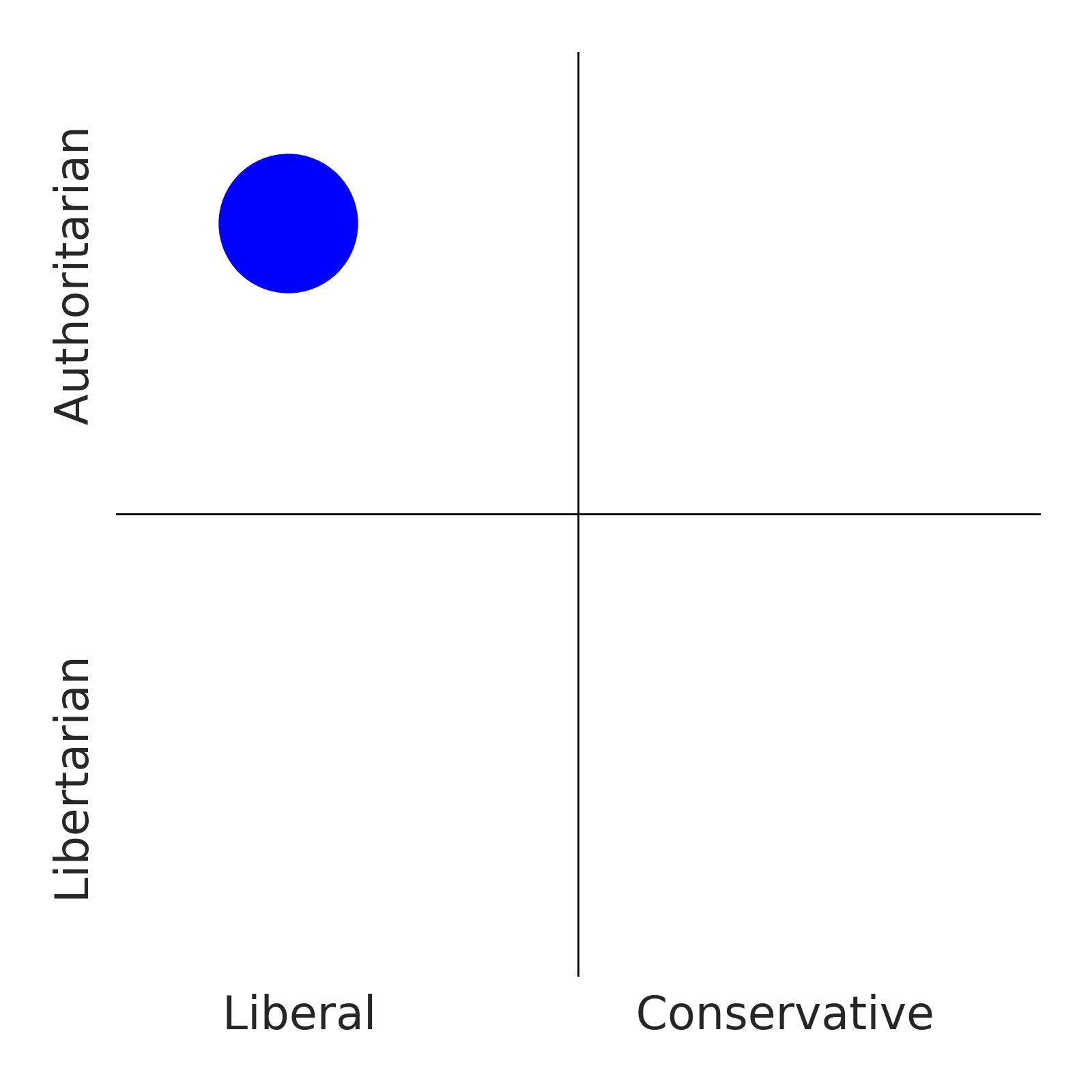
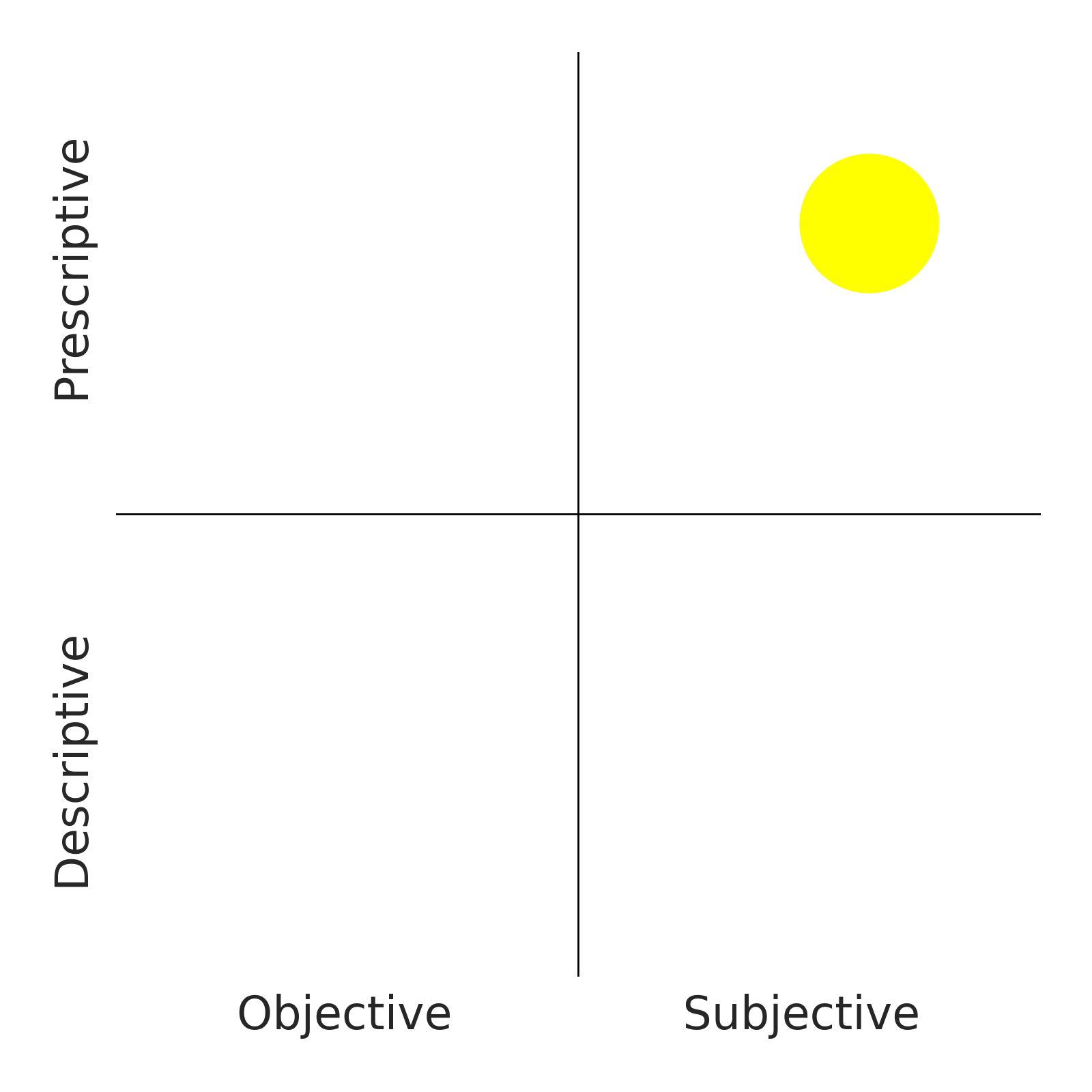
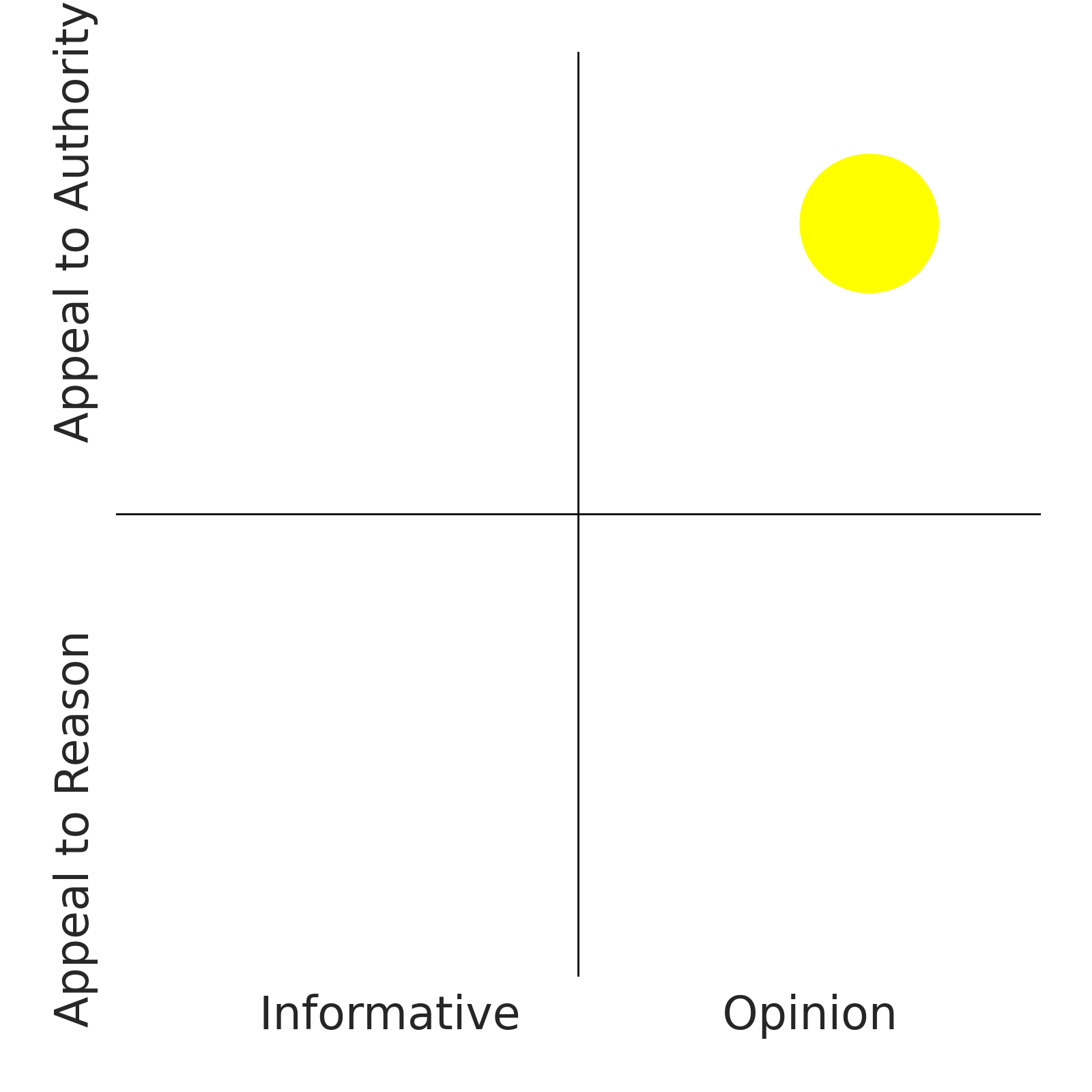
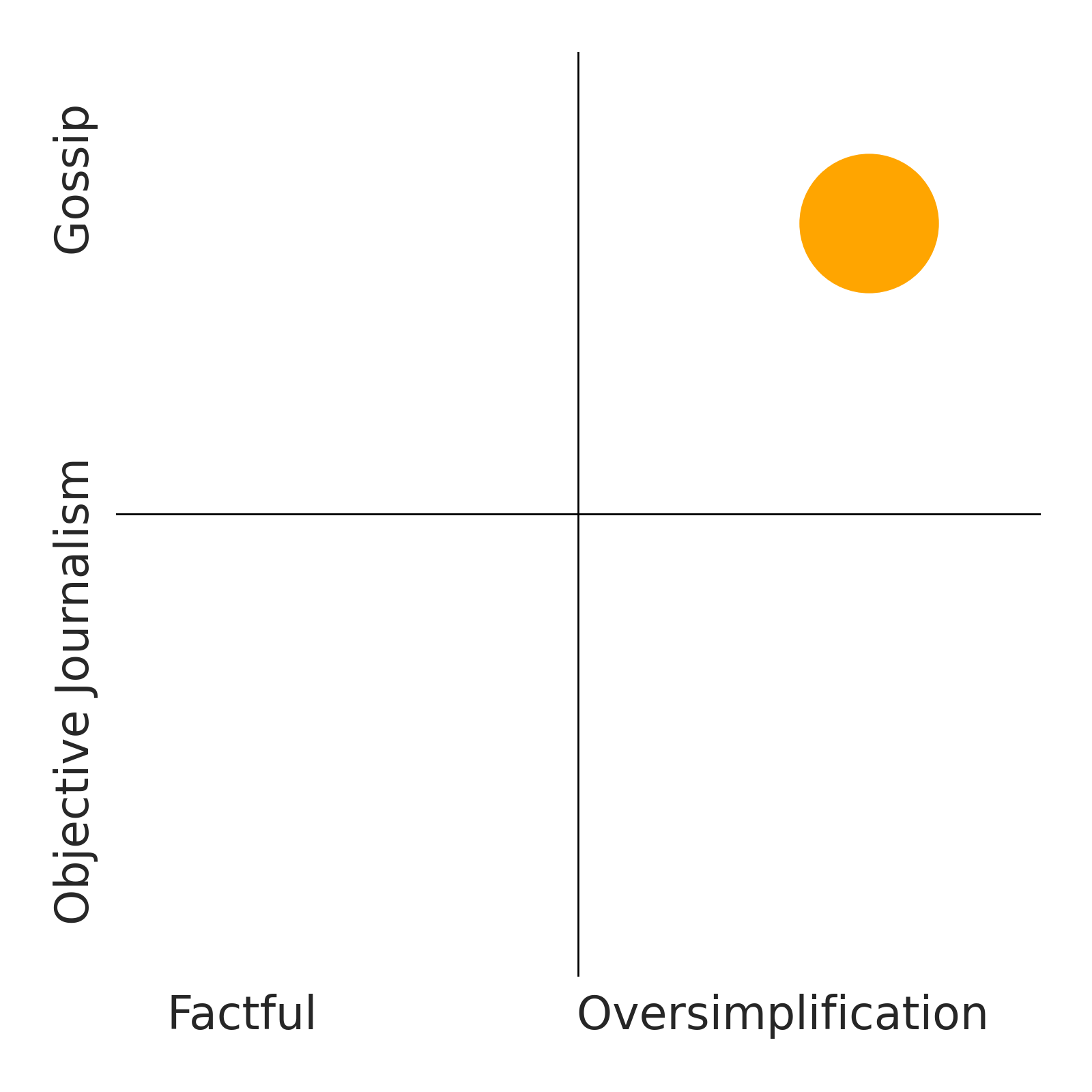
2026 © Helium Trades
Privacy Policy & Disclosure
* Disclaimer: Nothing on this website constitutes investment advice, performance data or any recommendation that any particular security, portfolio of securities, transaction or investment strategy is suitable for any specific person. Helium Trades is not responsible in any way for the accuracy
of any model predictions or price data. Any mention of a particular security and related prediction data is not a recommendation to buy or sell that security. Investments in securities involve the risk of loss. Past performance is no guarantee of future results. Helium Trades is not responsible for any of your investment decisions,
you should consult a financial expert before engaging in any transaction.