See whether Helium helps you make better-informed decisions. Try every Pro Trader feature for 30 days. No credit card required.
Try every Pro Trader feature for 30 days. No credit card required.
Coverage and framing: The sample concentrates on European Union matters [85], U.S. politics and foreign policy, Iran/Israel/Palestine, Russia, China, immigration, central banking, debt, cryptocurrency, AI, surveillance, health controversies, emergency preparedness, and alternative-history or conspiracy themes
August 04, 2026 · 0 shares
A strongly accusatory and sensationalist narrative that labels ICE a murderous terrorist organization, emphasizing systemic violence, impunity, and threats from officials.
Automated analysis; not human reviewed. · 19 of 53 available dimensions scored; omitted dimensions are not treated as neutral. · Verified supporting quotes for 14 of 19 scored dimensions.
Claim: The article frames ICE as a murderous terrorist organization under the Trump administration, reflecting strong anti-Trump liberal bias.
“ICE: From A Rogue Agency To A Murderous Terrorist Organization” · exact text match
“the agency’s weaponization by the Trump administration” · exact text match
Why: Extreme negative label and explicit connection to Trump administration.
Claim: The article portrays ICE as an oppressive elite force threatening common people, reflecting populist anti-elite bias.
“blatantly threaten more bloodshed on American streets” · exact text match
“hyperviolent agents of the state are given carte blanche to brutalize with impunity” · exact text match
Why: Emphasizes elite abuse of power against ordinary communities.
Claim: The article strongly opposes state authority and advocates for civil liberties, showing libertarian bias.
“armed agents of the state act with reckless impunity” · exact text match
“constitutionally protected speech” · exact text match
Why: Explicitly criticizes state power and defends individual rights.
Claim: The article is highly subjective, relying on value-laden language and opinion.
“murderous terrorist organization” · not found in supplied text
“vicious rampage” · exact text match
Why: Uses strongly subjective terms throughout.
Claim: The article employs sensationalist phrasing to evoke strong reactions.
“murderous terrorist organization” · not found in supplied text
“wave of terror continues” · not found in supplied text
Why: Sensational labels and dramatic framing.
Claim: The article prescribes how the government should not act, advocating for change.
“It is not the place for enforcers of the state to act as judge, jury, and executioner” · exact text match
Why: Implies a prescriptive stance against current ICE practices.
Claim: The article uses fear-inducing language about ICE violence and threats.
“wave of violence committed by ICE officers only continues to increase” · exact text match
“blatantly threaten more bloodshed” · exact text match
Why: Emphasizes escalation and implied danger.
Claim: The article is heavily opinionated, presenting interpretation as fact.
“the agency only appears to be brazenly emboldened to continue their vicious rampage” · exact text match
Why: Subjective judgment presented without qualification.
Claim: The article is explicitly political, targeting the Trump administration and its policies.
“Trump’s immigration crackdown” · exact text match
“weaponization by the Trump administration” · exact text match
Why: Directly links ICE actions to political administration.
Claim: The article reduces complex agency operations to a simple 'terrorist' label.
“ICE: From A Rogue Agency To A Murderous Terrorist Organization” · exact text match
Why: Title itself oversimplifies by calling ICE a terrorist organization.
Claim: The article uses name-calling and immature insults.
“trigger happy lunatics” · exact text match
Why: Derogatory label instead of reasoned critique.
Claim: The article focuses on portraying ICE actions as victimizing innocent people.
“father of three who had been living in the United States for 35 years with no criminal record” · exact text match
“American citizen, Renee Nicole Good, as well as various other attacks against schoolchildren, teenagers, and the elderly” · exact text match
Why: Emphasizes victim status and innocence.
Claim: The article asserts claims with certainty beyond the evidence presented.
“The wave of violence committed by ICE officers only continues to increase” · exact text match
“The deaths... constitute a new normal” · not found in supplied text
Why: Absolute statements without hedging or acknowledging uncertainty.
Claim: The article reflects a strong anti-state, pro-civil liberties ideology.
“police state” · exact text match
“civil liberties” · exact text match
“biometric surveillance panopticon” · exact text match
Why: Uses ideological terminology associated with anti-authoritarian movements.
Claim: The article is strongly anti-establishment, attacking federal agencies and officials.
“rogue agency” · not found in supplied text
“hyperviolent agents of the state” · exact text match
Why: Portrays ICE as a rogue entity outside legitimate authority.
Claim: The article conveys strong negative emotion, particularly anger and outrage.
“bloodshed” · exact text match
“vicious rampage” · exact text match
“senselessly killed” · exact text match
Why: Emotionally charged vocabulary.
Claim: The article's credibility is reduced by extreme bias and sensationalism despite citing some sources.
“ICE: From A Rogue Agency To A Murderous Terrorist Organization” · exact text match
“trigger happy lunatics” · exact text match
Why: Sensational framing undermines trustworthiness even with factual citations.
Claim: The article uses emotional and hyperbolic language that undermines rational analysis.
“The wave of violence committed by ICE officers only continues to increase” · exact text match
“trigger happy lunatics” · exact text match
Why: Absolute and inflammatory phrasing substitutes for measured reasoning.
Claim: The article uses loaded language and omits pro-ICE perspectives to manipulate reader perception.
“murderous terrorist organization” · not found in supplied text
“trigger happy lunatics” · exact text match
Why: One-sided emotional labeling without balancing counterarguments.
The article frames 6G as a hazardous, untested technology that will expose populations to harmful radiation while enabling AI brain chips and surveillance, presenting speculative risks as near-certainties with minimal counterevidence.
The article is from Global Research, a outlet known for anti-establishment and conspiracy-oriented content, and is a commentary warning about 6G technology, published after the author's appearance on NEWSMAX. It does not provide balanced scientific consensus or regulatory context.
Automated analysis; not human reviewed. Limitations: The article is short, lacks primary sources for several claims, and is produced by a known advocacy outlet; analysis is limited to the supplied text with no external fact-checking. · 21 of 54 available dimensions scored; omitted dimensions are not treated as neutral. · Verified supporting quotes for 19 of 21 scored dimensions.
Claim: The article is skeptical of government and industry, but not overtly conservative.
“politicians appear to have little understanding of the potential consequences” · exact text match
Why: Anti-establishment and distrust of authority can align with libertarian or populist views, but not clear partisan direction.
Claim: The article takes a populist stance against elites and industry.
“the multitrillion-dollar telecommunications industry is unlikely to adequately test chronic 6G exposure in humans” · exact text match
“politicians appear to have little understanding” · exact text match
Why: It frames industry and politicians as negligent elites versus the public.
Claim: The article is anti-authoritarian, opposing government/industry mandates for 6G.
“politicians appear to have little understanding of the potential consequences of blanketing entire populations” · exact text match
Why: It opposes top-down implementation of technology.
Claim: The article blends facts with opinion and speculation.
“It will dramatically intensify EMF exposure while enabling AI brain chips and advanced surveillance systems.” · not found in supplied text
“And the concerns extend far beyond health.” · exact text match
Why: Uses definitive language for speculative claims.
Claim: The article is sensationalistic in tone and selection.
“6G Will Expose Entire Populations to Largely Untested Terahertz Radiation, Enable AI Brain Chips, and Allow Through-Wall Surveillance” · exact text match
Why: The headline is alarmist and attention-grabbing.
Claim: The article is highly pessimistic about 6G and its consequences.
“Sadly, politicians appear to have little understanding of the potential consequences” · exact text match
Why: Frames the future negatively.
Claim: The article prescribes action: rigorous testing before deployment.
“demand rigorous long-term human testing before deployment” · exact text match
Why: Calls for a policy change.
Claim: The article uses fear-inducing language about health and surveillance.
“dramatically intensify EMF exposure while enabling AI brain chips and advanced surveillance systems” · exact text match
Why: Equates 6G with bodily harm and dystopian surveillance.
Claim: The article is heavily opinionated.
“Unfortunately, the multitrillion-dollar telecommunications industry is unlikely to adequately test chronic 6G exposure” · exact text match
Why: Strong language like 'unfortunately' and 'sadly' indicates opinion.
Claim: The article has political undertones by criticizing politicians.
“politicians appear to have little understanding of the potential consequences” · exact text match
Why: Criticism of politicians makes it somewhat political.
Claim: The article oversimplifies complex issues.
“6G will not simply deliver faster internet—it will dramatically intensify EMF exposure while enabling AI brain chips and advanced surveillance systems” · exact text match
Why: Reduces 6G to a few alarming outcomes.
Claim: The article expresses certainty beyond evidence.
“6G will not simply deliver faster internet—it will dramatically intensify EMF exposure” · exact text match
Why: Claims what 6G will do, despite the article later admitting studies don't prove real-world effects.
Claim: The article is driven by a tech-skeptic ideology.
“6G is being developed to support AI brain chips and surveillance systems capable of detecting human presence, movement, and activity through walls” · exact text match
Why: It presents a dystopian view without balanced scientific evidence.
Claim: The article is strongly anti-establishment.
“the multitrillion-dollar telecommunications industry is unlikely to adequately test chronic 6G exposure in humans” · exact text match
“politicians appear to have little understanding” · exact text match
Why: Criticizes both industry and political authorities.
Claim: The article has a negative emotional tone.
“Sadly, politicians appear to have little understanding of the potential consequences” · exact text match
Why: Uses emotional adverbs.
Claim: The article has low credibility due to lack of balanced sourcing and single-sided presentation.
“These studies do not yet prove that real-world 6G exposure will cause widespread disease” · exact text match
“Unfortunately, the multitrillion-dollar telecommunications industry is unlikely to adequately test chronic 6G exposure” · exact text match
Why: Acknowledges uncertainty but proceeds to present alarmist conclusions without counterperspective.
Claim: The article leans irrational by overstating risks and dismissing counterevidence.
“These studies do not yet prove that real-world 6G exposure will cause widespread disease, but they establish serious biological warning signals” · exact text match
Why: It acknowledges uncertainty but then uses it to advocate against deployment, which is a leap.
Claim: The article speculates on future harms and capabilities.
“6G infrastructure is expected to be operational in many major cities by 2030” · exact text match
“6G is being developed to support AI brain chips and surveillance systems” · exact text match
Why: Discusses future trends without current evidence.
Claim: The article uses loaded language and omits counterarguments.
“blanketing entire populations in largely untested terahertz electromagnetic radiation” · exact text match
Why: Uses charged metaphors and fails to mention industry safety claims.
Claim: The article lacks analytical depth and nuance.
“6G will not simply deliver faster internet—it will dramatically intensify EMF exposure while enabling AI brain chips and advanced surveillance systems” · exact text match
Why: Sweeping claims without supporting technical analysis.
Claim: The article implies a conspiracy between industry and government to avoid testing.
“the multitrillion-dollar telecommunications industry is unlikely to adequately test chronic 6G exposure in humans—just as 5G was rolled out without comprehensive human safety studies” · not found in supplied text
Why: Suggests deliberate negligence or collusion.
The article is short, lacks primary sources for several claims, and is produced by a known advocacy outlet; analysis is limited to the supplied text with no external fact-checking.
August 03, 2026 · 0 shares
Frames the new Gaza technocratic committee as a neocolonialist Zionist-backed power grab undermining Palestinian resistance.
Automated analysis; not human reviewed. · 26 of 52 available dimensions scored; omitted dimensions are not treated as neutral. · Verified supporting quotes for 23 of 26 scored dimensions.
Claim: The article exhibits a strong liberal/left-wing framing by using terms like 'Zionist backed genocide' and 'false flag attack' to condemn US-Israeli policy.
“Technocratic regime change under the guise of a Zionist backed peace plan” · exact text match
“Israel’s US-backed genocide in Gaza” · exact text match
Why: The language consistently aligns with far-left critiques of Israel and US imperialism.
Claim: The article adopts a populist anti-elite stance by attacking 'globalist power nexus' and 'technocrats'.
“the conflict has been utilized by the globalist power nexus as a means of advancing certain goals of technocracy” · exact text match
“technocratic takeover of Gaza is complete” · exact text match
Why: Directly frames the peace plan as an elite-driven land grab.
Claim: The article opposes authoritarian state power and calls for resistance against the 'Zionist regime'.
“the Zionist regime” · exact text match
“ensuring the erasure of Palestinian resistance and independence” · exact text match
Why: Consistently criticizes state and colonial authority, advocating for Palestinian self-determination.
Claim: The article is highly subjective, presenting opinions and allegations as facts without balanced sourcing.
“Technocratic regime change under the guise of a Zionist backed peace plan” · exact text match
Why: The framing assumes nefarious intent without supporting evidence.
Claim: The article uses sensational and emotionally charged language like 'genocide' and 'ethnic cleansing'.
“Israel’s US-backed genocide in Gaza” · exact text match
“ethnic cleansing of the Palestinian people” · exact text match
Why: These terms are highly inflammatory and not objectively established in the text.
Claim: The article is prescriptive, arguing that the peace plan is a facade and advocating for Palestinian independence.
“any attempts to facilitate an alleged ceasefire... have been intended not to bring about... self determination but to bring about a regime change” · not found in supplied text
Why: The article tells readers what the plan 'actually' serves rather than describing events neutrally.
Claim: The article uses fear-mongering language about genocide and ethnic cleansing.
“genocide” · exact text match
“ethnic cleansing” · exact text match
Why: Invokes extreme terms to provoke fear and outrage.
Claim: The article is extremely opinionated, stating opinions as established facts.
“the false flag attack of October 7th, 2023” · exact text match
Why: Presents a debatable conspiracy theory as a given fact.
Claim: The article is entirely about political conflict and regime change.
“Technocratic regime change under the guise of a Zionist backed peace plan” · exact text match
Why: The central topic is political power transfer.
Claim: The article oversimplifies the conflict into a struggle between good (Palestinians) and evil (Zionists/technocrats).
“ensuring the erasure of Palestinian resistance and independence” · exact text match
Why: Reduces complex geopolitical dynamics to a single villainous plot.
Claim: The article uses childish conspiracy theory language like 'false flag'.
“false flag attack” · exact text match
Why: Resorts to simplistic, emotionally charged labels rather than nuanced analysis.
Claim: The article emphasizes the victimhood of Palestinians and portrays them as oppressed.
“years of devastation” · exact text match
“ethnic cleansing of the Palestinian people” · exact text match
Why: Focuses on Palestinian suffering and frames the conflict as one-sided victimization.
Claim: The article expresses undue certainty about the completion of a technocratic takeover.
“the technocratic takeover of Gaza is complete” · exact text match
Why: Declares a final outcome without corroborating evidence.
Claim: The article is heavily ideologically driven, viewing events through a lens of globalist conspiracy and anti-Zionism.
“globalist power nexus” · exact text match
“technocracy” · exact text match
Why: The entire analysis is filtered through a rigid ideological framework.
Claim: The article is strongly anti-establishment, opposing the Trump peace plan and globalist institutions.
“the Trump administration’s so-called 'peace plan'... actually serves as a neocolonialist technocratic land grab” · not found in supplied text
Why: Directly condemns establishment figures and institutions.
Claim: The article has a strongly negative emotional tone, using words like genocide and false flag.
“genocide” · exact text match
“false flag attack” · exact text match
Why: Emotionally charged language evokes anger and fear.
Claim: The article has low credibility due to conspiracy claims and lack of reliable sourcing.
“false flag attack” · exact text match
“globalist power nexus” · exact text match
Why: Relies on unverified and fringe narratives.
Claim: The article promotes conspiracy theories, such as the October 7th attack being a 'false flag', indicating irrational reasoning.
“false flag attack of October 7th, 2023” · exact text match
Why: Presents the widely debunked false flag narrative as fact, rejecting standard evidence.
Claim: The article is anti-corporate, specifically criticizing Palantir and its role.
“Thiel’s Palantir has played an extensive role in providing material assistance to the Israeli military” · exact text match
Why: Singles out a corporation for aiding military operations.
Claim: The article speculates on the hidden intentions of the ceasefire and peace plan.
“any attempts to facilitate an alleged ceasefire... have been intended... to bring about a regime change” · not found in supplied text
Why: Presents unsupported conjecture about motives as analysis.
Claim: The article uses manipulative language, such as 'Zionist backed peace plan' and 'false flag', to influence reader perception.
“Zionist backed peace plan” · exact text match
“false flag attack” · exact text match
Why: Loaded terms frame the narrative without factual basis.
Claim: The article lacks integrity by presenting one-sided conspiracy claims as fact.
“false flag attack of October 7th, 2023” · exact text match
Why: Omits any alternative viewpoint or evidence countering the false flag narrative.
Claim: The article demonstrates low intellectual rigor by relying on conspiracy theories and vague globalist tropes.
“the globalist power nexus” · exact text match
Why: Vague enemy figures replace evidence-based analysis.
Claim: The article embraces delusional conspiracy theories like the October 7th false flag.
“false flag attack” · exact text match
Why: Believing in a known false narrative indicates detachment from reality.
Claim: The article promotes multiple conspiracy theories, including false flag and globalist takeover.
“false flag attack of October 7th, 2023” · exact text match
“the globalist power nexus” · exact text match
Why: Central claims rely on unsubstantiated conspiracy narratives.
Claim: The article scapegoats Zionists, technocrats, and globalists for the conflict.
“Zionist regime” · exact text match
“technocratic backers” · exact text match
Why: Groups are blamed as monolithic malevolent forces.
August 10, 2026 · 0 shares
Presents high blood pressure treatment as a deliberate scam orchestrated by Big Pharma, using sensational language and conspiracy framing to discredit medical authorities and drugs.
Automated analysis; not human reviewed. Limitations: The article is from a website with an anti-establishment slant; the text is a single polemic, not a news report, limiting generalizability. · 22 of 53 available dimensions scored; omitted dimensions are not treated as neutral. · Verified supporting quotes for 17 of 22 scored dimensions.
Claim: The article adopts a strong anti-elite, populist framing by attacking Big Pharma and doctors as a corrupt establishment.
“If ever there’s a situation where there are so many people getting conned into the Big Pharma lies” · exact text match
“Big Pharma doesn’t want to pay too much attention (or no attention at all) to the above-mentioned diet and lifestyle factors and making the appropriate necessary changes. After all, no drug money to be made here.” · exact text match
Why: The language explicitly pits 'Big Pharma' and 'trained doctors' against the public, using populist 'us vs. them' rhetoric.
Claim: The article advocates against medical authority and promotes individual choice.
“Avoid doctors and their long-term pill pushing trained mentality if you can.” · exact text match
“Pay much attention and try reversing the conditions with healthy diet and lifestyle. Keep trying to maintain your spiritual connection” · exact text match
Why: Directly advises avoiding doctors and relying on personal lifestyle changes, reflecting anti-authority libertarian stance.
Claim: The article is highly subjective, presenting opinion as fact.
“The Great High Blood Pressure Treatment Scam” · exact text match
“If ever there’s a situation where there are so many people getting conned into the Big Pharma lies” · exact text match
Why: The headline and opening sentence are overtly opinionated, not neutral reporting.
Claim: The article uses sensational language to provoke emotional response.
“The Great High Blood Pressure Treatment Scam” · exact text match
“con” · exact text match
“Big Pharma lies” · exact text match
Why: Terms like 'scam', 'con', and 'lies' are sensational and intended to alarm.
Claim: The article is prescriptive, telling readers what to do.
“Avoid doctors and their long-term pill pushing trained mentality if you can.” · exact text match
“Pay much attention and try reversing the conditions with healthy diet and lifestyle.” · exact text match
Why: Direct commands to avoid doctors and adopt specific lifestyle changes are prescriptive, not descriptive.
Claim: The article uses fear to motivate readers.
“Don’t be a hapless victim to the great high blood pressure treatment scam.” · exact text match
“You are at risk due to a misguided false paradigm approach, involving screening, monitoring and intervention” · not found in supplied text
Why: Warns readers they are victims and at risk, creating fear of being misled.
Claim: The article is entirely opinion, lacking neutral reporting.
“The Great High Blood Pressure Treatment Scam” · exact text match
“If ever there’s a situation where there are so many people getting conned into the Big Pharma lies” · exact text match
Why: The entire text is a polemic, not a balanced news report.
Claim: The article oversimplifies complex medical issues.
“Very little attention is given diet and lifestyle. These days, if over 120/80, then millions of people will have the “hypertension” label. -Medication is only a matter of time” · not found in supplied text
Why: Reduces a complex diagnostic process to a simple threshold leading to medication, ignoring nuance.
Claim: The article expresses certainty beyond its evidence.
“This is completely vague. It is unfounded nonsense devoid of objective evidence.” · not found in supplied text
“The less than 10% doesn’t add up when considering around half the world’s population could now be diagnosed with high blood pressure due to Big Pharma’s lowering of the figures as treatment criteria!” · exact text match
Why: Declares medical claims as 'unfounded nonsense' with high confidence, but lacks rigorous evidence.
Claim: The article is strongly anti-establishment, attacking CDC, WHO, and Big Pharma.
“Avoid doctors” · exact text match
“Big Pharma lies” · exact text match
“CDC’s recommendation is based on only one highly influential research journal.” · exact text match
Why: It explicitly discourages trust in medical institutions and portrays them as corrupt.
Claim: The article has a strong negative emotional tone.
“Don’t be a hapless victim” · exact text match
“Big Pharma lies” · exact text match
“con” · exact text match
Why: Language evokes fear, anger, and distrust, indicating a negative emotional framing.
Claim: The article has low credibility due to weak sourcing, conspiracy framing, and lack of balance.
“A number of articles have strongly suggested that conflicts of interest underlie biased reporting.” · exact text match
“Eye opening research has shown how ineffective anti-hypertensive drugs can be. A 5-year study reveals...” · not found in supplied text
Why: Relies on vague references and a single study with no independent verification; presents opinion as fact.
Claim: The article makes irrational leaps and dismisses evidence without justification.
“This is completely vague. It is unfounded nonsense devoid of objective evidence” · exact text match
“How convenient is this for Big Pharma, as they stand to make even more profits on blood pressure lowering drugs??” · exact text match
Why: It dismisses genetic variants as 'unfounded nonsense' and uses a rhetorical question to imply conspiracy, lacking logical support.
Claim: The article is strongly anti-corporate, particularly against pharmaceutical companies.
“Big Pharma lies” · exact text match
“Big Pharma doesn’t want to pay too much attention... no drug money to be made here.” · not found in supplied text
Why: Consistently frames Big Pharma as the villain, showing a clear anti-corporate bias.
Claim: The article leans toward superstition by rejecting scientific consensus and promoting alternative views.
“This carefully chosen article is not the organic sound advice you may it expect it to be.” · exact text match
Why: Implies that mainstream medical advice is not 'organic' or trustworthy, favoring a more naturalistic, unscientific perspective.
Claim: The article promotes individual action over collective medical authority.
“Avoid doctors and their long-term pill pushing trained mentality if you can.” · exact text match
“Pay much attention and try reversing the conditions with healthy diet and lifestyle.” · exact text match
Why: Advocates for personal responsibility and avoidance of institutional medical advice.
Claim: The article engages in speculation about motives and outcomes.
“How convenient is this for Big Pharma, as they stand to make even more profits on blood pressure lowering drugs??” · exact text match
Why: Speculates on Big Pharma's intentions without evidence.
Claim: The article uses manipulative techniques such as loaded language and fear appeals.
“Don’t be a hapless victim to the great high blood pressure treatment scam.” · exact text match
“If ever there’s a situation where there are so many people getting conned into the Big Pharma lies” · exact text match
Why: Uses victimization and fear to persuade readers, a common manipulation technique.
Claim: The article selectively cites evidence and makes strong accusations without sufficient backing.
“This carefully chosen article is not the organic sound advice you may it expect it to be. The fact that it has been peer-reviewed without identifying the reviewers makes it most suspicious.” · exact text match
“A number of articles have strongly suggested that conflicts of interest underlie biased reporting.” · exact text match
Why: It dismisses peer-reviewed research on the basis of missing reviewer names and relies on vague references to 'a number of articles'.
Claim: The article presents a conspiratorial view disconnected from mainstream evidence.
“How convenient is this for Big Pharma, as they stand to make even more profits on blood pressure lowering drugs??” · exact text match
Why: Asserts that profit motive alone explains the change in blood pressure criteria, ignoring medical evidence.
Claim: The article promotes a conspiracy theory about Big Pharma and blood pressure criteria.
“How convenient is this for Big Pharma, as they stand to make even more profits on blood pressure lowering drugs??” · exact text match
“It falsely justifies the use of more blood pressure lowering drugs.” · exact text match
Why: Implicitly suggests a deliberate plot to increase profits by lowering thresholds.
Claim: The article blames Big Pharma and doctors for the perceived scam.
“Big Pharma doesn’t want to pay too much attention (or no attention at all) to the above-mentioned diet and lifestyle factors and making the appropriate necessary changes.” · exact text match
Why: Assigns blame for lack of focus on lifestyle to corporate greed, scapegoating the industry.
The article is from a website with an anti-establishment slant; the text is a single polemic, not a news report, limiting generalizability.
August 06, 2026 · 0 shares
Frames US government debt management as an inevitable stealthy wealth confiscation through financial repression, using alarmist tone and libertarian-leaning critique of spending and entitlements.
Automated analysis; not human reviewed. Limitations: Article text truncated at the end with list of other headlines; analysis based on substantive body. · 32 of 53 available dimensions scored; omitted dimensions are not treated as neutral. · Verified supporting quotes for 25 of 32 scored dimensions.
Claim: The article advocates for sharply limited government, ending entitlements and welfare, reflecting a conservative fiscal position.
“the US would need a leader who—at a minimum—returns the federal government to a limited Constitutional Republic, closes the 800 military bases abroad, ends entitlements, kills the welfare state, and repays a large portion of the national debt.” · exact text match
Why: The quote explicitly calls for ending entitlements and welfare, reducing government to a limited republic, which is a conservative/libertarian fiscal stance.
Claim: The article positions the author as part of a knowledgeable elite who understands what the 'financially ignorant public' does not.
“They could try to sell it to a scared and financially ignorant public as a safety measure” · exact text match
“perhaps not even 1 in 100 people truly understand what is happening” · exact text match
Why: The quotes describe the public as ignorant and imply the author is among the few who understand, indicating an elitist perspective.
Claim: The article expresses strong opposition to government intervention and advocates for limited government, reflecting libertarian values.
“returns the federal government to a limited Constitutional Republic, closes the 800 military bases abroad, ends entitlements, kills the welfare state” · exact text match
Why: The quote directly calls for drastically reducing government scope and power, a core libertarian position.
Claim: The article is highly subjective, with first-person opinions, value judgments, and predictions.
“I think financial repression is how the US government will try to manage its otherwise impossible debt situation.” · exact text match
“In my view, the US government has no choice but to implement financial repression.” · exact text match
Why: The article repeatedly uses 'I think' and 'In my view,' signaling subjective opinion rather than objective reporting.
Claim: The article uses alarmist and sensational language to describe government actions.
“Financial Repression: How the US Government Will Quietly Confiscate Your Wealth” · exact text match
“stealthily confiscate wealth from bondholders” · exact text match
Why: The headline and body use words like 'quietly confiscate' and 'stealthily,' which are emotionally charged and sensational.
Claim: The article presents a very negative outlook on the US economy and government debt, predicting financial repression and wealth confiscation.
“the deficits will not stop growing, nor will the debt needed to finance them.” · exact text match
“the US government has no choice but to implement financial repression.” · exact text match
Why: The article predicts an unavoidable crisis and stealthy wealth destruction, indicating a strongly bearish stance.
Claim: The article covers a niche economic concept in an engaging, alarmist style.
“Financial Repression: How the US Government Will Quietly Confiscate Your Wealth” · exact text match
Why: The topic is somewhat niche but presented with dramatic framing, which may interest readers.
Claim: The article prescribes what should be done (limited government, cuts) and predicts what will happen (financial repression), and ends with a call to action.
“the US would need a leader who—at a minimum—returns the federal government to a limited Constitutional Republic...” · not found in supplied text
“Read our free report to understand the forces driving it...” · not found in supplied text
Why: The article advocates for specific policy changes and directs readers to a paid report, making it prescriptive.
Claim: The article criticizes military spending and war, suggesting a dovish stance.
“the ongoing war with Iran guarantees military spending has nowhere to go but up, way up.” · not found in supplied text
Why: The quote implies criticism of increasing military spending and the war, indicating a dovish view.
Claim: The article uses fear-inducing language to describe a stealthy confiscation of wealth.
“How the US Government Will Quietly Confiscate Your Wealth” · exact text match
“stealthily confiscate wealth from bondholders without causing too much alarm” · exact text match
Why: The title and repeated references to 'quietly confiscate' and 'stealthily' are designed to provoke fear.
Claim: The article assumes that spending cuts and tax increases are impossible, then concludes that financial repression is inevitable.
“it’s politically impossible to even slow the federal spending growth rate, let alone cut it.” · exact text match
Why: The claim that it's politically impossible is presented as a premise without proof, leading to the conclusion that financial repression is the only option.
Claim: The article is overwhelmingly opinion-based rather than factual reporting.
“I think financial repression is how the US government will try to manage its otherwise impossible debt situation.” · exact text match
“In my view, the US government has no choice but to implement financial repression.” · exact text match
Why: Multiple first-person opinion statements show the article is primarily the author's perspective.
Claim: The article is heavily focused on government policy, debt, and political decisions.
“Among the biggest expenditures for the US government are so-called entitlements like Social Security and Medicare.” · exact text match
“With the most precarious geopolitical situation since World War 2, National Defense—another large expenditure—is unlikely to be cut.” · exact text match
Why: The article discusses government spending, entitlements, defense, and political feasibility, making it highly political.
Claim: The article simplifies complex fiscal dynamics, stating that deficits will inevitably grow without considering countermeasures.
“no matter what happens, the deficits will not stop growing, nor will the debt needed to finance them.” · exact text match
Why: The absolute statement ignores potential policy changes, economic growth, or reform, oversimplifying the situation.
Claim: The article cites Forbes for a statistic, but does not rely on authority arguments.
“According to Forbes, there are around 902 billionaires in the US with a combined net worth of about $6.8 trillion.” · exact text match
Why: The citation is for a factual number, not an appeal to authority to support the main argument.
Claim: The article uses some sarcasm but maintains a serious tone.
“When I first heard the term “financial repression,” I thought it had to be a joke.” · exact text match
Why: The opening line is sarcastic, but the rest of the article is serious and not immature in tone.
Claim: The article does not exhibit strong circular reasoning; it is a linear argument.
“That means issuing ever-increasing amounts of debt is the only way to finance continuously expanding budget deficits.” · exact text match
Why: The argument is a chain of reasoning, not circular, though it may be based on unproven premises.
Claim: The article portrays bondholders and savers as victims of government stealth.
“stealthily confiscate wealth from bondholders without causing too much alarm” · exact text match
Why: The language frames savers and bondholders as being quietly robbed, positioning them as victims.
Claim: The article expresses certainty that financial repression is unavoidable, without acknowledging uncertainty.
“the US government has no choice but to implement financial repression.” · exact text match
Why: The phrase 'no choice but to implement' conveys absolute certainty beyond what the evidence in the article supports.
Claim: The article ends with a promotional pitch for a free report, reducing its informational value.
“Read our free report to understand the forces driving it, the risks they pose to your wealth and personal freedom, and the three strategies you can use right now to prepare.” · exact text match
Why: The call to action is a direct marketing pitch, indicating the article is used to generate leads.
Claim: The article is driven by a clear ideological preference for limited government and free markets.
“returns the federal government to a limited Constitutional Republic, closes the 800 military bases abroad, ends entitlements, kills the welfare state” · exact text match
Why: The specific policy prescriptions reflect a libertarian/minarchist ideology.
Claim: The article is strongly critical of the government, central banks, and current political establishment.
“It’s no wonder financial repression is so attractive to politicians.” · exact text match
“They could sell it with patriotic lies” · exact text match
Why: The article portrays politicians and government as deceptive and self-serving, reflecting an anti-establishment stance.
Claim: The article has a strong negative emotional tone, focusing on fear and loss.
“quietly confiscate your wealth” · not found in supplied text
“stealthily confiscate wealth” · exact text match
Why: The language is designed to evoke fear and negative emotions about the future.
Claim: The article uses some real data but is heavily opinionated and alarmist, lowering credibility.
“According to Forbes, there are around 902 billionaires...” · not found in supplied text
“I think financial repression is how the US government will try to manage...” · not found in supplied text
Why: The article mixes factual citations with unsupported opinion and fear-mongering, reducing overall trustworthiness.
Claim: The article uses logical reasoning from stated premises, but the conclusion is speculative and based on strong assumptions.
“In my view, the US government has no choice but to implement financial repression.” · exact text match
Why: The conclusion is presented as inevitable, but it relies on the assumption that spending cuts and tax increases are impossible, which is not proven.
Claim: The article functions as an advertorial for a paid report.
“Read our free report to understand the forces driving it...” · not found in supplied text
Why: The article leads directly to a sales pitch, making it promotional.
Claim: The article strongly advocates for individual freedom and against collective government control.
“returns the federal government to a limited Constitutional Republic” · exact text match
“limiting your financial freedom” · exact text match
Why: The article calls for limiting government power and warns against restrictions on financial freedom, reflecting individualist values.
Claim: The article is highly speculative about future government actions.
“In my view, the US government has no choice but to implement financial repression.” · exact text match
Why: The prediction of financial repression is a speculative forecast, not a verified fact.
Claim: The article uses fear and urgency to manipulate readers into taking action (reading the report).
“This is only one part of a much larger crisis now taking shape. Read our free report...” · not found in supplied text
Why: The article creates a sense of crisis and then offers a solution via a paid report, a classic manipulation technique.
Claim: The article is transparent about being opinion and cites a source for a statistic, but presents a one-sided view.
“According to Forbes, there are around 902 billionaires in the US with a combined net worth of about $6.8 trillion.” · exact text match
Why: The article cites Forbes for billionaire data, showing some sourcing, but the overall presentation is opinionated and selective.
Claim: The article describes a coordinated, stealthy government strategy to confiscate wealth, implying a conspiracy.
“Financial repression will not arrive with a public announcement. It will come through policies that appear reasonable, temporary, and even protective—while quietly eroding the value of your savings.” · not found in supplied text
Why: The idea of a hidden, deliberate policy to erode savings without public awareness has conspiratorial overtones.
Claim: The article blames politicians and government for the debt problem and the need for financial repression.
“It’s no wonder financial repression is so attractive to politicians.” · exact text match
Why: The article attributes the problem to politicians' choices, making them the scapegoat.
Article text truncated at the end with list of other headlines; analysis based on substantive body.
Conspiratorial framing depicts Silicon Valley oligarchs and neoreactionary influencers as secretly seizing U.S. defense policy to push a transnational 'NRx accelerationist' project and to fuse U.S.-Israeli defense capabilities.
Background: NDAA Sec. 219 US-Israel defense tech cooperation; Defense Policy Board (DPD) advisory role; Heritage Foundation's influence; neoreactionary ideology (NRx) and Dark Enlightenment; the PayPal Mafia; Project 2025 and 'Freedom Cities' proposals.
Automated analysis; not human reviewed. Limitations: The analysis hinges on contested sources and conspiratorial framing; reliability and independence of sources are not established within the text. · 19 of 52 available dimensions scored; omitted dimensions are not treated as neutral. · Verified supporting quotes for 7 of 19 scored dimensions.
Claim: Publisher frames elite technocracy as a threat to democratic governance.
“In the United States (US) a gaggle of Silicon Valley oligarchs has formed a partnership that has seized operational control of the US defence sector.” · exact text match
Why: Direct pejorative framing of elites as having seized control.
Claim: Elites are portrayed as adversaries of 'the people' and subject to suspicion.
“In the United States (US) a gaggle of Silicon Valley oligarchs has formed a partnership that has seized operational control of the US defence sector.” · exact text match
Why: Use of 'oligarchs' and 'gaggle' signals populist framing.
Claim: Discourse leans toward normative interpretation of events.
“What is described as governance action is framed as a dangerous transformation.” · not found in supplied text
Why: Some statements reflect normative judgments rather than neutral description.
Claim: Event framing uses sensational adjectives and dramatic claims.
“seized operational control of the US defence sector.” · exact text match
“the U.S. military’s data could soon be the Israeli military’s data.” · exact text match
Why: Loaded phrases emphasize dramatic, alarming framing.
Claim: Material presented is of high interest due to its sensational content.
““Dark Enlightenment” and accelerationism are invoked repeatedly to frame policy.” · not found in supplied text
Why: Content centers on controversial, attention-grabbing ideas.
Claim: Contains normative implications about future policy directions.
“The HF/Project 2025 stacking should be concerning for Palestinians but also staunch Zionists.” · not found in supplied text
Why: Imbues description with normative judgments about consequences.
Claim: Narrative reflects hawkish stance toward China and defense policy planning.
“HF/Project 2025 is ardently anti-China. Describing the Chinese government as 'a totalitarian enemy of the United States'.” · not found in supplied text
Why: Promotes a hawkish foreign-policy framing.
Claim: Conveys threat rhetoric around elite-driven defense realignment.
“the U.S. military’s data could soon be the Israeli military’s data.” · exact text match
Why: Highlights risk and potential harm from data fusion and policy shifts.
Claim: Article makes normative judgments about elites and governance.
“But Andreessen is far from the only DPD member with a clear conflict of interest.” · exact text match
Why: Implements evaluative judgments about individuals.
Claim: Narrative is political and anti-elite.
“The article depicts a group of oligarchs and Heritage Foundation influence in defense policy.” · not found in supplied text
Why: Framing centers on political actors and power structures.
Claim: Reduces complex defense policy to elite control and conspiratorial framing.
“They have comprehensive control of the DPD.” · not found in supplied text
“Rounding off the accelerationists and anti-China hawks on the DPD is Blake Masters.” · not found in supplied text
Why: Condenses multi-actor policy dynamics into a single-control narrative.
Claim: Certainty about outcomes if Sec. 219 passes.
“If the proposed section Sec. 219 eventually passes, which seems highly likely, it will certainly create USrael.” · exact text match
Why: Explicit definitive language about consequences.
Claim: Publisher frames traditional institutions as influential players in a conservative policy network.
“Hegseth’s DPD is heavily influenced by the Heritage Foundation.” · exact text match
“The DPD’s remit is to provide “independent strategic advice and recommendations” on such matters as US military “strategic planning, the policy implications of [US] force structure and modernization.”” · exact text match
Why: Direct citations show institutional linkages and influence.
Claim: Claims about accelerationist control and global 'patchwork' are presented as credible.
“They want to build what their guru Curtis Yarvin called a 'patchwork of realms' in the form of a transnational network of privately owned city-states, or neostates.” · not found in supplied text
“In keeping with the Dark Enlightenment, this is called accelerationism.” · exact text match
Why: Explicit attribution to ideologies and leaders supports a non-neutral presentation.
The analysis hinges on contested sources and conspiratorial framing; reliability and independence of sources are not established within the text.
Main recurring biases: The strongest pattern is an anti-establishment, populist, and libertarian frame: governments, regulators, media, corporations, central banks, universities, and medical authorities are frequently depicted as corrupt, coercive, incompetent, or aligned against ordinary people
July 28, 2026 · 0 shares
Anti-establishment, conspiratorial framing depicts the US medical establishment as corrupt, profit-driven, and unreformable, while promoting depopulation and decentralized health alternatives.
Automated analysis; not human reviewed. · 8 of 52 available dimensions scored; omitted dimensions are not treated as neutral. · Verified supporting quotes for 6 of 8 scored dimensions.
Claim: The piece provides prescriptive guidance to readers.
“In the meantime, you have to do all that’s possible to protect yourself. Try to distance yourself as far away from the medical establishment’s reach as you can.” · exact text match
Why: Explicit reader guidance constitutes prescriptive framing.
Claim: The piece deploys fear-based depopulation framing.
“The medical establishment are out to see deaths en masse; using drugs such as midazolam on the elderly, euthanasia on people all ages, intentionally pushing more poisonous “vaccines” and pills… -All designed to cause the maximum number of casualties.” · exact text match
Why: Explicit fear-inducing language about deaths and depopulation.
Claim: The piece incorporates conspiratorial insinuation about 'fake heroes'.
“Or perhaps you don’t, seeing them as staged fake heroes.” · exact text match
Why: Questioning the authenticity of supposedly reform-minded figures signals conspiratorial framing.
Claim: The article presents normative judgments about the establishment as fact.
“The US medical establishment is a grifting operation, choosing profits before people’s health.” · not found in supplied text
Why: Normative language indicates opinionated framing rather than neutral reporting.
Claim: The piece injects political critique and anti-establishment sentiment.
“The two-party system is so crooked, so corrupted, by money and power.” · exact text match
Why: Direct quote ties disease policy framing to political systems and corruption.
Claim: Certainty about reform impossibility exceeds the presented evidence.
“Reformation can only happen when you rid the medical establishment of its irrepressible, dangerously deranged, evil, narcissistic, money and power hungry, self-serving, enriching controllers… -It’s highly unlikely that this will ever happen,” · exact text match
Why: Absolute language about reform status suggests overconfidence relative to supporting text.
Claim: The article frames the medical establishment as corrupt and profit-driven.
“The US medical establishment is a grifting operation, choosing profits before people’s health.” · not found in supplied text
Why: Directly demonstrates anti-establishment framing through a loaded accusation of greed.
Claim: The article portrays the establishment as morally compromised (crooked, racketeering).
“The medical establishment’s corrupt alphabet organizations such as the FDA (Food and Drug Administration), CDC (Center for Disease Control), WHO (World Health Organization)… and other crooked institutions with its associated crooks continue unabatedly with their racketeering and wealth transfers.” · exact text match
Why: Uses terms like 'crooked' and 'racketeering' to suggest systemic dishonesty.
Uses a routine AWS outage to issue an alarmist warning about centralized infrastructure vulnerability and advocate for individual preparedness, mixing technical reporting with survivalist ideology.
Automated analysis; not human reviewed. Limitations: The input article is from a publisher known for prepper/conspiracy content, which may color interpretation, but I have based analysis only on the text. · 16 of 53 available dimensions scored; omitted dimensions are not treated as neutral. · Verified supporting quotes for 4 of 16 scored dimensions.
Claim: The text frames the outage as evidence of elite corporate failure and advocates for ordinary people to prepare.
“Amazon still runs about a third of global cloud infrastructure. Add Microsoft and Google and you're at roughly 70 percent of the internet sitting on three companies' hardware. ... That's not a network. That's a bottleneck with good marketing.” · not found in supplied text
Why: Language is anti-corporate elite, populist.
Claim: The text promotes individual self-reliance and distrust of centralized control.
“Carry cash... Keep a second payment method that doesn't route through your phone... Get the important stuff off the cloud... Have a way to get information when the apps quit.” · not found in supplied text
“a Central Bank Digital Currency can freeze it for as long as somebody upstairs decides you deserve.” · exact text match
Why: Strong libertarian theme.
Claim: The article is heavily prescriptive, telling readers what to do.
“Carry cash. Real bills, small denominations, in your wallet, today. A couple hundred at home in a safe spot.” · exact text match
“Get the important stuff off the cloud and onto hardware you own.” · exact text match
“Buy paper maps for your area...” · not found in supplied text
Why: Extensive concrete recommendations.
Claim: The text uses fear to motivate preparedness.
“Now stretch that from two hours to two days and ask yourself what your town looks like.” · exact text match
“Now picture somebody doing this on purpose... Payment rails down. Comms degraded. Logistics frozen. Grocery stores run about 72 hours of inventory... The shit doesn't have to hit the fan all at once. It just has to stop moving for four or five days.” · not found in supplied text
Why: Vivid fear scenarios.
Claim: The article is predominantly opinion, not neutral reporting.
“That's not a network. That's a bottleneck with good marketing.” · verified after text normalization
“Nobody fixed the actual problem.” · not found in supplied text
“The cashless part is the part that should scare you.” · not found in supplied text
Why: Clear editorializing.
Claim: The text advocates for political/structural changes regarding infrastructure and digital currency.
“If a company glitch can freeze your ability to pay... a Central Bank Digital Currency can freeze it for as long as somebody upstairs decides you deserve.” · not found in supplied text
Why: Political implications.
Claim: The text oversimplifies the outage as a single point of failure affecting half the country.
“One Server Farm in Oregon Just Shut Down Payments for Half the Country.” · exact text match
“The failure was in Oregon and almost a quarter of the pain was showing up in Virginia.” · exact text match
Why: Hyperbole in headline and framing.
Claim: The text predicts future failures with certainty.
“And some morning that isn't a Friday in July, the fix won't come by nine.” · verified after text normalization
“The system doesn't need to be hacked... It can just have a bad Friday morning.” · not found in supplied text
Why: Certainty about future.
Claim: The text consistently applies a prepper/survivalist ideology.
“Cover the boring four: water, food, shelter, protection.” · exact text match
“Then sit down and run a real Threat Assessment on your own situation.” · not found in supplied text
Why: Strong ideological lens.
Claim: The text is strongly anti-establishment, criticizing corporate and government structures.
“Banks, telecom, the grid, the data centers, all of it, in corporate hands with inconsistent oversight and security budgets that get cut every time earnings come in light.” · exact text match
“everybody in charge is betting nothing goes wrong twice on the same day.” · exact text match
Why: Direct criticism.
Claim: The emotional tone is negative, focusing on fear and danger.
“That's a bottleneck with good marketing.” · verified after text normalization
“The cashless part is the part that should scare you.” · not found in supplied text
“The shit doesn't have to hit the fan all at once.” · verified after text normalization
Why: Negative emotional language.
Claim: The text promotes the publisher's own content and resources.
“Prepper 101 walks you through it if you're starting from zero.” · verified after text normalization
“Start with Emergency Communications When TSHTF and the Ham Radio Cheat Sheet.” · exact text match
Why: Mild self-promotion.
Claim: The text is highly critical of corporations, especially tech companies.
“Amazon still runs about a third of global cloud infrastructure... That's not a network. That's a bottleneck with good marketing.” · not found in supplied text
“Over 85 percent of American critical infrastructure is privately owned... in corporate hands with inconsistent oversight and security budgets that get cut every time earnings come in light.” · not found in supplied text
Why: Strong anti-corporate.
Claim: The text advocates for individual action over collective reliance.
“Carry cash... Get the important stuff off the cloud and onto hardware you own... Buy paper maps... Have a way to get information when the apps quit.” · not found in supplied text
Why: Individualist.
Claim: The text speculates about future intentional attacks and prolonged outages.
“Now picture somebody doing this on purpose, to three regions at once, on a Monday, timed with something else. Payment rails down. Comms degraded. Logistics frozen.” · exact text match
Why: Speculative scenario.
Claim: The text uses fear, loaded language, and false urgency to persuade.
“The cashless part is the part that should scare you.” · not found in supplied text
“Now stretch that from two hours to two days and ask yourself what your town looks like.” · exact text match
“DIGITAL BLACKOUT: One Server Farm in Oregon Just Shut Down Payments for Half the Country.” · exact text match
Why: Observable manipulative techniques.
The input article is from a publisher known for prepper/conspiracy content, which may color interpretation, but I have based analysis only on the text.
August 10, 2026 · 0 shares
A populist-conservative polemic that frames the H-1B program as a fraudulent corporate scheme displacing American workers while advocating restrictive government reforms.
Automated analysis; not human reviewed. Limitations: The analysis relies solely on the supplied article text; no independent verification of cited statistics was possible. · 20 of 53 available dimensions scored; omitted dimensions are not treated as neutral. · Verified supporting quotes for 18 of 20 scored dimensions.
Claim: The framing is conservative on immigration, favoring restrictions over open labor markets.
“The H-1B program was sold to the American people as a narrow pathway for importing rare talent that supposedly could not be found in the United States.” · not found in supplied text
Counterevidence:
“America does not need to close itself to exceptional talent.” · exact text match
Why: The article's critical stance toward immigration and emphasis on protecting American workers indicates a conservative orientation on this dimension.
Claim: The framing is strongly populist, blaming elites and institutions for ordinary Americans' hardship.
“The responsibility belongs to politicians who created the loopholes, agencies that failed to verify applications, universities that produced questionable credentials, brokers who monetized fraud, and corporations that learned how to manipulate the system.” · exact text match
Why: The article attacks a broad array of elites and centers the interests of American workers, typical of populist framing.
Claim: The article advocates for increased government regulation and criminal penalties, indicating authoritarian leaning.
“Visa brokers and staffing companies caught submitting forged records should face criminal prosecution rather than another administrative settlement.” · exact text match
Why: The call for criminal prosecution and mandated government oversight of hiring practices supports an authoritarian classification.
Claim: The article is highly subjective, interweaving opinion and emotional commentary with factual claims.
“This is especially offensive when a company dismisses thousands of American employees while simultaneously pursuing additional H-1B workers.” · exact text match
Why: The use of 'especially offensive' is a subjective value judgment, characteristic of opinionated writing.
Claim: The article uses sensational language to evoke emotional response.
“The H-1B Visa Scam: Importing Cheap Labor While Americans Are Laid Off.” · exact text match
Why: The title combines 'scam,' 'cheap labor,' and 'laid off' to create a sensationalist frame.
Claim: The article is heavily prescriptive, proposing specific policy solutions.
“A legitimate high-skill program would prioritize compensation, experience, patents, advanced research, independently verified qualifications, and demonstrable scarcity.” · exact text match
Why: The article extensively uses 'should' and 'would' to prescribe reforms.
Claim: The article stimulates fear about economic insecurity and foreign labor competition.
“They are importing dependence.” · exact text match
Why: The phrase 'importing dependence' evokes a threatening image, generating fear about loss of control.
Claim: The article is overwhelmingly opinionated, presenting a strong point of view.
“This is especially offensive when a company dismisses thousands of American employees while simultaneously pursuing additional H-1B workers.” · exact text match
Why: The entire piece is a persuasive editorial, with numerous value-laden statements.
Claim: The article is overtly political, engaging directly with immigration and labor policy debates.
“Congress should prohibit companies conducting large domestic layoffs from obtaining new H-1B workers for comparable positions during a defined cooling-off period.” · exact text match
Why: The article explicitly advocates for congressional action and policy change.
Claim: The article simplifies a complex issue into a dichotomy between 'exceptional talent' and 'cheap, controllable labor.'
“It needs to stop confusing exceptional talent with cheap, controllable labor.” · exact text match
Why: This statement reduces the H-1B debate to two caricatures, ignoring middle-ground realities.
Claim: The article leans on official sources and expert testimony to bolster its case.
“The Department of Labor admitted in March 2026 that existing prevailing-wage levels had 'for too long' been set dramatically below the market rates received by many American workers” · not found in supplied text
Why: The article frequently cites USCIS, DOL, and a former consulate officer as authoritative validators.
Claim: The article frames American workers as victims of a rigged system.
“The young American graduate cannot compete with that arrangement.” · exact text match
Why: This sentence positions American graduates as helpless against corporate and government forces.
Claim: The article expresses strong certainty about the program's failure without qualifiers.
“That sales pitch has collapsed under the weight of fraud, corporate abuse, and government negligence.” · exact text match
Why: The categorical 'has collapsed' asserts a definitive conclusion beyond the evidence presented.
Claim: The article is driven by a coherent nationalist-populist ideology, interpreting facts through that lens.
“Corporations do not want to acknowledge a labor shortage of their own making. They want experienced workers at entry-level prices.” · exact text match
Why: This quote reveals a fixed worldview of corporate exploitation rather than a neutral analysis.
Claim: The article is strongly anti-establishment, blaming elites and institutions for the problem.
“The responsibility belongs to politicians who created the loopholes, agencies that failed to verify applications, universities that produced questionable credentials, brokers who monetized fraud, and corporations that learned how to manipulate the system.” · exact text match
Why: This quote explicitly assigns blame across a range of establishment actors.
Claim: The article carries a negative emotional tone, focused on anger and injustice.
“This is especially offensive when a company dismisses thousands of American employees while simultaneously pursuing additional H-1B workers.” · exact text match
Why: Words like 'offensive' and the sense of betrayal drive a negative emotional response.
Claim: The article is moderately credible because it cites specific statistics and qualifies some claims, but is one-sided.
“A 2008 USCIS assessment found fraud or technical violations in approximately 21% of the H-1B cases it examined.” · exact text match
Why: Using specific data and noting limitations supports some credibility, though the absence of counterarguments reduces it.
Claim: The article demonstrates some rational restraint by distinguishing an estimate from an official finding.
“It is Siddiqui’s assessment based on the cases she personally encountered roughly two decades ago. It is not a current USCIS finding that 90% of all H-1B petitions are fraudulent.” · exact text match
Why: The article explicitly corrects an overstatement, showing a moderate level of epistemic care.
Claim: The article uses loaded framing to steer reader interpretation.
“The H-1B Visa Scam: Importing Cheap Labor While Americans Are Laid Off.” · exact text match
Why: The title's 'scam' and 'cheap labor' are emotionally loaded, potentially manipulating perception.
Claim: The article shows some internal honesty by qualifying the 90% claim, but overall remains one-sided.
“It is Siddiqui’s assessment based on the cases she personally encountered roughly two decades ago. It is not a current USCIS finding that 90% of all H-1B petitions are fraudulent.” · exact text match
Why: Acknowledging a limitation of an estimate signals basic integrity, though the article's overall persuasive purpose limits the score.
The analysis relies solely on the supplied article text; no independent verification of cited statistics was possible.
August 02, 2026 · 0 shares
The text frames Federal Reserve policy as a corrupt money-printing scheme that artificially enriches the wealthy and revives socialism, using loaded language and selective data to support a libertarian critique.
Automated analysis; not human reviewed. · 22 of 52 available dimensions scored; omitted dimensions are not treated as neutral. · Verified supporting quotes for 19 of 22 scored dimensions.
Claim: The text adopts a conservative economic framing, criticizing socialism and Keynesianism.
“socialism at this late date in history—and after all its abysmal failures the world over—is having some kind of dubious second coming in America” · exact text match
Why: The phrase 'dubious second coming' and reference to 'abysmal failures' show strong conservative bias against socialism.
Claim: The text targets Wall Street, central bankers, and the wealthy as elites harming ordinary people.
“That is to say, the massive $136.4 trillion increase in net worth over this period went to the holders of financial and housing assets, less associated debts. Accordingly, with a lot of debt at the bottom income rungs relative to modest asset levels, the resulting wealth distribution skewed sharply to the tippy-top of the economic ladder.” · not found in supplied text
Why: The text explicitly blames the elite (top 1% and 10%) and uses 'tippy-top' to evoke populist resentment.
Claim: The text advocates for minimal state intervention in money and banking, opposing Federal Reserve activism.
“Simply pass a law forbidding the Fed to own government debt or buy and sell any securities at all. In lieu of this mode of monetary central planning, instead, just restore passive Discount Window lending at a penalty spread above the free market rate of interest” · exact text match
Why: The direct policy prescription to abolish Fed securities operations is a distinctly libertarian position.
Claim: The text presents opinion and interpretation as fact, with strong normative language.
“Under a regime of sound money and honest markets there would have been no soaring gains in net worth relative to the very modest gains in national income and savings.” · exact text match
Why: The statement is a counterfactual assertion presented as truth, reflecting subjective economic theory as objective.
Claim: The text uses dramatic, emotional language to heighten impact.
“The Money Printers Fueling Socialism's Rise” · exact text match
Why: The headline and recurring phrases like 'socialism's rise' are sensationalized framing.
Claim: The text is pessimistic about current economic trajectory and warns of crisis.
“the rage grow and the long knives of wealth slayers drawn and used in ways no one wants” · exact text match
Why: The warning of upheaval indicates a bearish outlook on sustainability.
Claim: The text prescribes specific policy changes rather than just describing events.
“Simply pass a law forbidding the Fed to own government debt or buy and sell any securities at all.” · exact text match
Why: Clear prescriptive directive.
Claim: The text is hawkish on monetary policy, favoring tight money and opposing inflation.
“Under a regime of sound money and honest markets” · exact text match
Why: Advocacy for sound money implies hawkish stance against inflationary policy.
Claim: The text invokes fear of socialism, upheaval, and collapse.
“History shows precisely where this leads, namely to some upheaval that is even worse for everyone.” · exact text match
Why: Direct fear-based warning.
Claim: The text is heavily opinionated, using first-person and judgmental language.
“We beg to differ” · not found in supplied text
Why: Explicit expression of opinion.
Claim: The text explicitly links economic policy to political outcomes (socialism, party politics).
“the modern day GOP has paved the way for the emerging Mamdani socialist coup in the Democrat Party” · exact text match
Why: Directly ties monetary policy to partisan political developments.
Claim: The text reduces complex economic dynamics to a single cause (money printing).
“Yes, it is that simple.” · exact text match
Why: Oversimplification via 'that simple.'
Claim: The text asserts certainty beyond what the evidence supports.
“It could not be more dispositive.” · exact text match
Why: Absolute certainty in interpretation of data.
Claim: The text consistently applies a free-market, Austrian-school ideology.
“Under a regime of sound money and honest markets” · exact text match
Why: Repeated ideological language.
Claim: The text conveys strong negative emotion about the current state.
“abysmal failures” · exact text match
“corruption by the printing press” · exact text match
Why: Negative emotional descriptors.
Claim: The text uses data but selectively and with strong opinion, reducing credibility.
“It is not. Not in the slightest as we detail below.” · exact text match
Why: While data is sourced, the dismissive tone and cherry-picking undermine neutrality.
Claim: The text uses data and economic reasoning but also relies on strong assertions and selective framing.
“It could not be more dispositive.” · exact text match
Why: The phrase 'could not be more dispositive' asserts certainty from data, blending rational argument with overconfident claim.
Claim: The text is strongly anti-Wall Street and anti-corporate financial interests.
“the capture of the Federal Reserve by Wall Street speculators” · exact text match
Why: Direct accusation of capture by corporate interests.
Claim: The text champions individual initiative and free markets over collective action.
“American businesses, workers, consumers, savers, investors, inventors, and speculators pursuing their own best interest on the free market—coupled with relatively sound money—caused the American economy to actually boom” · exact text match
Why: Emphasis on individual pursuit of self-interest as driver of prosperity.
Claim: The text includes specific future predictions.
“likely to hit $120 trillion by year-end 2026” · exact text match
Why: Explicit forecast.
Claim: The text uses loaded language and omits alternative explanations, potentially manipulating reader emotion.
“the fetid fruit of the central bank printing presses” · exact text match
Why: Highly emotive and biased language with no counterargument presented.
Claim: The text appears to be written by a human given its stylistic complexity and references.
“When your editor first arrived in Washington, DC as a youthful Capitol Hill staffer” · not found in supplied text
Why: First-person narrative and specific personal context indicate human authorship.
August 01, 2026 · 0 shares
Promotional article for Zano privacy ecosystem frames governments and centralized stablecoins as existential threats while positioning its own technology as the solution, using hyperbolic and adversarial language.
Automated analysis; not human reviewed. · 19 of 52 available dimensions scored; omitted dimensions are not treated as neutral. · Verified supporting quotes for 19 of 19 scored dimensions.
Claim: The article frames the conflict as 'peaceful individuals' versus 'the state' and 'authoritarian regulators', presenting its technology as empowering the common person against elite control.
“arming peaceful individuals with the technological weaponry needed to make state coercion completely obsolete” · exact text match
“The state relies entirely on coercion, deception, and the weaponization of financial architecture to maintain control” · exact text match
Why: Language consistently pits 'peaceful individuals' against a coercive state apparatus, portraying the project as a tool for ordinary people to escape elite control.
Claim: The article strongly advocates for individual sovereignty and complete rejection of state permission-based systems.
“a parallel economy that operates entirely outside the boundaries of their permission-based systems” · exact text match
“no bureaucrat can blacklist a user's funds or halt a transaction” · verified after text normalization
Why: Explicitly promotes systems immune to state control, core libertarian principle.
Claim: The article is highly subjective, presenting value-laden interpretations rather than neutral reporting.
“weaponized corporate honeypots” · exact text match
“authoritarian regulators attempt to enforce a financial quarantine” · exact text match
Why: Loaded language and moral judgments dominate the text.
Claim: The article employs sensational phrasing to provoke emotional response.
“terrifying pace” · exact text match
“quiet mutiny” · exact text match
Why: Dramatic metaphors and urgent tone are used throughout.
Claim: The article is bullish on Zano's privacy ecosystem and bearish on centralized stablecoins and state surveillance.
“a parallel network of uncompromised, privacy-first infrastructure is quietly rendering their coercion obsolete” · exact text match
“TETHER'S $184 BILLION USDT TO FACE A U.S. BAN BY 2028” · exact text match
Why: Promotes Zano as the solution while painting alternatives as doomed or dangerous.
Claim: The article prescribes a specific course of action: adopt Zano's technology to achieve freedom.
“the tools to opt out completely are officially in our hands” · exact text match
“choose freedom and privacy” · exact text match
Why: Explicitly tells readers to choose a path and implies Zano provides the means.
Claim: The article induces fear of a global surveillance state and financial control to motivate adoption.
“The global surveillance state is expanding at a terrifying pace” · exact text match
“cash being systematically criminalized” · exact text match
Why: Use of 'terrifying', 'criminalized', 'control grid' aims to scare readers.
Claim: The article expresses strong opinions rather than balanced reporting.
“We are not just resisting; we are out-building them” · exact text match
“TETHER'S $184 BILLION USDT TO FACE A U.S. BAN BY 2028” · exact text match
Why: Assertions are presented as fact without counterarguments.
Claim: The article is deeply political, arguing against state surveillance and central bank digital currencies.
“While politicians and central bankers scramble to deploy total financial control grid mechanisms” · exact text match
“authoritarian regulators” · exact text match
Why: Directly attacks political and regulatory actors.
Claim: The article simplifies complex issues into a binary of good (privacy tech) versus evil (state/corporations).
“centralized stablecoins are merely an extension of the legacy banking system” · exact text match
“The state relies entirely on coercion, deception, and the weaponization of financial architecture” · exact text match
Why: Reduces multifaceted financial systems to one-dimensional threats.
Claim: The article portrays Zano's solutions as definitive and inevitable without acknowledging risks or limitations.
“fUSD, a confidential asset engineered specifically to be completely immune to being frozen” · exact text match
“Zenith obliterates the current dynamic by completely axing the computational arms race” · exact text match
Why: Absolutes like 'completely immune' and 'obliterates' lack hedging.
Claim: The article evokes negative emotions (fear, anger) toward the state and positive emotions (hope, empowerment) toward Zano.
“The global surveillance state is expanding at a terrifying pace” · exact text match
“the counter-surveillance movement is experiencing an unprecedented surge of momentum” · exact text match
Why: Negative and positive emotional appeals are unbalanced, with overall negative tone directed at opponents.
Claim: Low credibility due to one-sided promotion, lack of independent sources, and hyperbole.
“We are not just resisting; we are out-building them” · exact text match
“the tools to opt out completely are officially in our hands” · exact text match
Why: No external verification, clear promotional intent, and exaggerated claims.
Claim: The article uses hyperbolic and emotionally charged rhetoric that undermines dispassionate reasoning, while still presenting technical details.
“The global surveillance state is expanding at a terrifying pace” · exact text match
“a quiet mutiny is brewing” · exact text match
Why: Although technical specifics are provided, the framing relies on fear and urgency, reducing overall rationality.
Claim: The article functions as an advertorial for Zano, promoting its products and upgrades.
“Zano is systematically eliminating this structural weakness” · exact text match
“Zano's upcoming Hard Fork 6 introduces Gateway Addresses” · verified after text normalization
Why: Repeatedly names and praises Zano's features, lacks critical analysis.
Claim: The article is anti-corporate, specifically targeting centralized stablecoin issuers and legacy financial institutions.
“weaponized corporate honeypots” · exact text match
“centralized stablecoins are merely an extension of the legacy banking system” · exact text match
Why: Consistently frames corporations as part of the oppressive system.
Claim: The article champions radical individualism, advocating for complete autonomy from collective institutions.
“honoring the non-aggression principle” · exact text match
“opt out completely” · exact text match
Why: Emphasizes individual sovereignty and rejection of collective state control.
Claim: The article uses fear, urgency, and loaded language to steer reader behavior.
“The urgency of this shift becomes glaringly obvious” · exact text match
“Which will it be?” · exact text match
Why: Creates a false dichotomy and presses for immediate action.
Claim: The article lacks editorial independence as it promotes a specific commercial project without disclosing conflicts of interest.
“The solution to this vulnerability is already operational within the Zano privacy ecosystem through fUSD” · exact text match
“We are not just resisting; we are out-building them” · exact text match
Why: The piece reads as a one-sided advertisement for Zano, omitting critical evaluation or counterpoints.
Framing is alarmist and anti-elite, depicting job loss as an imminent systemic betrayal and prescribing self-reliance.
Automated analysis; not human reviewed. Limitations: Single article with heavy rhetorical framing; all data points are as cited by the author and not independently verified. · 18 of 53 available dimensions scored; omitted dimensions are not treated as neutral. · Verified supporting quotes for 15 of 18 scored dimensions.
Claim: Frames corporate and tech elites as exploitative and dismissive of ordinary workers.
“to these people you’re not a worker, you’re an input, and inputs get optimized.” · exact text match
Why: The quote directly characterizes elites as treating workers as fungible inputs, a classic populist anti-elite framing.
Claim: Advocates self-reliance and distrust of institutions, with no expectation of government or corporate help.
“Nobody is coming. Not the company, not Congress, not the school that sold your kid the ticket.” · exact text match
Why: The statement explicitly rejects institutional support and promotes individual preparation.
Claim: Heavily interpretive and opinionated, using personal address and rhetorical judgments.
“That’s not an education. That’s a leash with a diploma stapled to it.” · exact text match
Why: The metaphor is a subjective value judgment rather than a neutral description.
Claim: Uses alarmist disaster language to dramatize job loss.
“if the axe finds you, you’re going for a long walk.” · exact text match
Why: The phrase treats job loss as a violent, fateful event, heightening emotional impact.
Claim: Presents a negative outlook on job security and the labor market.
“Your odds of getting back up quickly if you do get cut are the worst they’ve been in a decade.” · exact text match
Why: The statement portrays recovery prospects as historically poor, a bearish assessment.
Claim: Gives explicit step-by-step instructions and commands.
“Days 1 through 30: get your real number, then go get the cash” · exact text match
“Cut burn to the bone in week one, while it’s still your decision.” · exact text match
Why: The text directly instructs the reader on actions, making it strongly prescriptive.
Claim: Uses fear and urgency to motivate preparedness.
“That’s the disaster. Not the volcano, not the EMP, not some rifle-and-rucksack fantasy where you disappear into the woods. The one that shows up at your actual address, on a normal Tuesday, wearing business casual.” · exact text match
Why: The framing presents job loss as an imminent, personal disaster to provoke anxiety.
Claim: Strongly opinionated with value judgments and calls to action.
“That’s not an education. That’s a leash with a diploma stapled to it.” · exact text match
Why: The sentence is a forceful opinion, not a neutral report.
Claim: Reduces complex labor-market and technology trends to a simple 'system vs. individual' conflict.
“The technology isn’t eating the whole ladder yet. It’s eating the bottom rungs, the ones you climb to get on.” · exact text match
Why: The metaphor simplifies AI's diverse labor-market effects into a single ominous pattern.
Claim: Portrays workers as victims of a deliberate systemic betrayal.
“They never intended to. The pension died 40 years ago and nobody replaced it with anything but a slogan.” · exact text match
Why: The statement attributes a collectively broken promise, framing workers as exploited victims.
Claim: States predictions and probabilities with certainty beyond evidence.
“One of those two things is getting tested in your lifetime. The odds aren’t close.” · exact text match
Why: The claim asserts a near-certain future testing event without presenting a probabilistic basis.
Claim: Presents a consistent libertarian/prepper ideology as the only solution.
“The only thing that has ever protected a man from this system is being able to walk away from it.” · not found in supplied text
Why: The statement enshrines a core ideological belief in exit and self-reliance as the sole protection.
Claim: Anti-establishment, critical of corporations, government, and educational institutions.
“Not the company, not Congress, not the school that sold your kid the ticket.” · exact text match
Why: The statement dismisses all major institutions as sources of help, showing anti-establishment stance.
Claim: Negative emotional tone, emphasizing anxiety and betrayal.
“That’s the part that should actually put a knot in your stomach.” · not found in supplied text
Why: The text explicitly attempts to evoke physical anxiety, a negative emotional response.
Claim: Strongly anti-corporate, depicting companies as exploitative.
“Your company loves you exactly as much as your electric company loves you. Right up until the meter reads zero.” · exact text match
Why: The analogy equates employer loyalty with a utility meter, demonstrating anti-corporate framing.
Claim: Advocates radical self-reliance and independence from institutions.
“It’s time to start relying on the only person you can count on… YOU.” · exact text match
Why: The statement explicitly elevates individual action above collective or institutional support.
Claim: Makes forward-looking predictions about job loss and AI disruption.
“One of those two things is getting tested in your lifetime. The odds aren’t close.” · exact text match
Why: The claim projects a future event with asserted certainty, characteristic of speculation.
Claim: Uses loaded language and fear appeals to push a specific course of action.
“That’s the part that should actually put a knot in your stomach.” · not found in supplied text
Why: The text deliberately triggers a physical fear response to motivate behavior.
Single article with heavy rhetorical framing; all data points are as cited by the author and not independently verified.
July 25, 2026 · 0 shares
Rights are framed as government-granted privileges to be distributed or revoked, while historical references to Jefferson and Madison are used to urge binding the government with the chains of the Constitution and to resist executive power.
A political, opinion-style manifesto arguing that constitutional rights have become conditional privileges and calling for renewed constitutional restraints to curb executive power and surveillance.
Automated analysis; not human reviewed. Limitations: Analysis relies on explicit quotes from a long-form, opinion-driven publication; interpretation may reflect rhetorical devices intended to persuade rather than objective measurement; some phrases are repeated throughout the text. · 9 of 52 available dimensions scored; omitted dimensions are not treated as neutral. · Verified supporting quotes for 5 of 9 scored dimensions.
Claim: Conservative-leaning framing emphasizing constitutional restraint and rights as foundational.
“Two hundred and fifty years after the Declaration of Independence proclaimed that all people possess inalienable rights, we now live under a government that increasingly behaves as though rights belong to the government to distribute, restrict and revoke as it sees fit.” · exact text match
“Rights that the Declaration of Independence described as inalienable are increasingly treated as permissions—granted when convenient, withheld when inconvenient, and interpreted according to political priorities rather than constitutional principle.” · exact text match
“Bind the government, including the president, down with the chains of the Constitution.” · exact text match
Why: The quotes foreground a normative defense of constitutional restraint and rights as birthrights.
Claim: Emphasizes 'we the people' and distrust of elites, suggesting rights are being reserved for the politically favored.
“To listen to those in power, however, freedom is a privilege reserved for a select few: the politically favored, the ideologically acceptable, the obedient, the compliant, the useful.” · exact text match
“Nowhere has this inversion of constitutional government been more visible than under the Trump administration, where rights increasingly appear to depend not on constitutional principle but on political identity, ideological conformity and executive preference.” · exact text match
Why: The quotes emphasize populist framing that privileges 'the people' against elites.
Claim: Anti-authoritarian, pro-constitution framing advocating limits on executive power.
“The presidency grows stronger, while the people’s ability to restrain it grows weaker.” · not found in supplied text
“Bind the government, including the president, down with the chains of the Constitution.” · exact text match
“Rights written on paper become little more than “parchment barriers” unless the people insist that those limits be honored.” · exact text match
Counterevidence:
“Even where the Court has reaffirmed constitutional protections—as it did in rejecting the Trump administration’s attempt to undermine birthright citizenship—it has still left intact a dangerous constitutional reality: executive overreach can move faster than meaningful accountability.” · exact text match
Why: Quotations emphasize restraining power and the illegitimacy of unchecked authority.
Claim: High subjective, opinionated framing that treats liberty and rights as moral imperatives.
“It speaks the language of freedom while making freedom conditional on obedience.” · exact text match
Why: The selected quotes illustrate normative judgments about liberty and government.
Claim: The piece both describes power shifts and prescribes restoring constitutional restraints.
“The unfinished work of the American Revolution was never about building a stronger government. It was about preserving a free people capable of restraining their government.” · exact text match
“Bind the government, including the president, down with the chains of the Constitution.” · exact text match
Why: The quoted lines mix description of current power with explicit prescriptions for action.
Claim: Indicates integrity in the commitment to constitutional safeguards and honesty about past hypocrisy.
“America’s founders may have disagreed—often grievously and hypocritically—about who qualified as “the people,” but they were united in one essential conviction: our rights do not come from government.” · exact text match
“The Constitution cannot defend itself. Neither can freedom.” · exact text match
Why: Quotes reflect a narrative of constitutional integrity and accountability.
August 03, 2026 · 0 shares
Frames the new Gaza technocratic committee as a neocolonialist Zionist-backed power grab undermining Palestinian resistance.
Automated analysis; not human reviewed. · 26 of 52 available dimensions scored; omitted dimensions are not treated as neutral. · Verified supporting quotes for 23 of 26 scored dimensions.
Claim: The article exhibits a strong liberal/left-wing framing by using terms like 'Zionist backed genocide' and 'false flag attack' to condemn US-Israeli policy.
“Technocratic regime change under the guise of a Zionist backed peace plan” · exact text match
“Israel’s US-backed genocide in Gaza” · exact text match
Why: The language consistently aligns with far-left critiques of Israel and US imperialism.
Claim: The article adopts a populist anti-elite stance by attacking 'globalist power nexus' and 'technocrats'.
“the conflict has been utilized by the globalist power nexus as a means of advancing certain goals of technocracy” · exact text match
“technocratic takeover of Gaza is complete” · exact text match
Why: Directly frames the peace plan as an elite-driven land grab.
Claim: The article opposes authoritarian state power and calls for resistance against the 'Zionist regime'.
“the Zionist regime” · exact text match
“ensuring the erasure of Palestinian resistance and independence” · exact text match
Why: Consistently criticizes state and colonial authority, advocating for Palestinian self-determination.
Claim: The article is highly subjective, presenting opinions and allegations as facts without balanced sourcing.
“Technocratic regime change under the guise of a Zionist backed peace plan” · exact text match
Why: The framing assumes nefarious intent without supporting evidence.
Claim: The article uses sensational and emotionally charged language like 'genocide' and 'ethnic cleansing'.
“Israel’s US-backed genocide in Gaza” · exact text match
“ethnic cleansing of the Palestinian people” · exact text match
Why: These terms are highly inflammatory and not objectively established in the text.
Claim: The article is prescriptive, arguing that the peace plan is a facade and advocating for Palestinian independence.
“any attempts to facilitate an alleged ceasefire... have been intended not to bring about... self determination but to bring about a regime change” · not found in supplied text
Why: The article tells readers what the plan 'actually' serves rather than describing events neutrally.
Claim: The article uses fear-mongering language about genocide and ethnic cleansing.
“genocide” · exact text match
“ethnic cleansing” · exact text match
Why: Invokes extreme terms to provoke fear and outrage.
Claim: The article is extremely opinionated, stating opinions as established facts.
“the false flag attack of October 7th, 2023” · exact text match
Why: Presents a debatable conspiracy theory as a given fact.
Claim: The article is entirely about political conflict and regime change.
“Technocratic regime change under the guise of a Zionist backed peace plan” · exact text match
Why: The central topic is political power transfer.
Claim: The article oversimplifies the conflict into a struggle between good (Palestinians) and evil (Zionists/technocrats).
“ensuring the erasure of Palestinian resistance and independence” · exact text match
Why: Reduces complex geopolitical dynamics to a single villainous plot.
Claim: The article uses childish conspiracy theory language like 'false flag'.
“false flag attack” · exact text match
Why: Resorts to simplistic, emotionally charged labels rather than nuanced analysis.
Claim: The article emphasizes the victimhood of Palestinians and portrays them as oppressed.
“years of devastation” · exact text match
“ethnic cleansing of the Palestinian people” · exact text match
Why: Focuses on Palestinian suffering and frames the conflict as one-sided victimization.
Claim: The article expresses undue certainty about the completion of a technocratic takeover.
“the technocratic takeover of Gaza is complete” · exact text match
Why: Declares a final outcome without corroborating evidence.
Claim: The article is heavily ideologically driven, viewing events through a lens of globalist conspiracy and anti-Zionism.
“globalist power nexus” · exact text match
“technocracy” · exact text match
Why: The entire analysis is filtered through a rigid ideological framework.
Claim: The article is strongly anti-establishment, opposing the Trump peace plan and globalist institutions.
“the Trump administration’s so-called 'peace plan'... actually serves as a neocolonialist technocratic land grab” · not found in supplied text
Why: Directly condemns establishment figures and institutions.
Claim: The article has a strongly negative emotional tone, using words like genocide and false flag.
“genocide” · exact text match
“false flag attack” · exact text match
Why: Emotionally charged language evokes anger and fear.
Claim: The article has low credibility due to conspiracy claims and lack of reliable sourcing.
“false flag attack” · exact text match
“globalist power nexus” · exact text match
Why: Relies on unverified and fringe narratives.
Claim: The article promotes conspiracy theories, such as the October 7th attack being a 'false flag', indicating irrational reasoning.
“false flag attack of October 7th, 2023” · exact text match
Why: Presents the widely debunked false flag narrative as fact, rejecting standard evidence.
Claim: The article is anti-corporate, specifically criticizing Palantir and its role.
“Thiel’s Palantir has played an extensive role in providing material assistance to the Israeli military” · exact text match
Why: Singles out a corporation for aiding military operations.
Claim: The article speculates on the hidden intentions of the ceasefire and peace plan.
“any attempts to facilitate an alleged ceasefire... have been intended... to bring about a regime change” · not found in supplied text
Why: Presents unsupported conjecture about motives as analysis.
Claim: The article uses manipulative language, such as 'Zionist backed peace plan' and 'false flag', to influence reader perception.
“Zionist backed peace plan” · exact text match
“false flag attack” · exact text match
Why: Loaded terms frame the narrative without factual basis.
Claim: The article lacks integrity by presenting one-sided conspiracy claims as fact.
“false flag attack of October 7th, 2023” · exact text match
Why: Omits any alternative viewpoint or evidence countering the false flag narrative.
Claim: The article demonstrates low intellectual rigor by relying on conspiracy theories and vague globalist tropes.
“the globalist power nexus” · exact text match
Why: Vague enemy figures replace evidence-based analysis.
Claim: The article embraces delusional conspiracy theories like the October 7th false flag.
“false flag attack” · exact text match
Why: Believing in a known false narrative indicates detachment from reality.
Claim: The article promotes multiple conspiracy theories, including false flag and globalist takeover.
“false flag attack of October 7th, 2023” · exact text match
“the globalist power nexus” · exact text match
Why: Central claims rely on unsubstantiated conspiracy narratives.
Claim: The article scapegoats Zionists, technocrats, and globalists for the conflict.
“Zionist regime” · exact text match
“technocratic backers” · exact text match
Why: Groups are blamed as monolithic malevolent forces.
August 05, 2026 · 0 shares
Frames BRICS as a necessary alternative to a declining US-led imperialist order, urging India to prioritize Global South solidarity over alignment with Washington.
BRICS is a grouping of emerging economies (Brazil, Russia, India, China, South Africa). The G7 is a forum of major advanced economies. The Non-Aligned Movement was a Cold War-era bloc of developing countries seeking independence from superpower blocs.
Automated analysis; not human reviewed. Limitations: The article is an opinion piece with strong ideological framing; some factual claims (e.g., 'U.S. attack on Iran') are uncertain and may affect confidence in bias assessments. · 14 of 53 available dimensions scored; omitted dimensions are not treated as neutral. · Verified supporting quotes for 11 of 14 scored dimensions.
Claim: Publisher framing is left-leaning, critical of US and Israel, and supportive of BRICS and Global South.
“these countries continue to pursue a worldview rooted in an imperialist outlook” · exact text match
“Israel is now viewed by many not only as an aggressor but also as a state accused of committing genocide” · exact text match
Why: The repeated use of 'imperialist' and the strong criticism of US and Israeli policies indicate a left-wing, anti-imperialist stance.
Claim: Framing is somewhat populist, advocating for the Global South against elite powers.
“It is important for India to preserve its credibility and strengthen its leadership within BRICS. For this it must take concrete steps that demonstrate its commitment to the Global South” · exact text match
Why: The call to champion the Global South against established imperialist powers resonates with populist rhetoric.
Claim: The piece is highly subjective, reflecting personal opinion and advocacy.
“the manner in which Prime Minister Narendra Modi conducted himself ... has, in my opinion, diminished both his personal stature and India’s international image” · not found in supplied text
Why: Explicit use of 'in my opinion' and prescriptive language throughout demonstrates a subjective viewpoint.
Claim: The article is heavily prescriptive, urging specific actions for India.
“It is important for India to preserve its credibility and strengthen its leadership within BRICS. For this it must take concrete steps that demonstrate its commitment to the Global South” · exact text match
Why: Multiple sentences use 'must' and call for concrete steps, including promoting alternatives to the US dollar.
Claim: The framing is dovish, advocating for collective security and criticizing military aggression.
“advocating collective security arrangements independent of imperialist powers” · exact text match
Why: The article criticizes US and Israeli military actions and calls for non-aligned security frameworks.
Claim: The article is almost entirely opinion, with little neutral reporting.
“It is important for India to preserve its credibility and strengthen its leadership within BRICS” · exact text match
Why: The entire text is a commentary with prescriptive arguments, not a news report.
Claim: The article is deeply political, focusing on geopolitical power dynamics and foreign policy.
“BRICS has opened new possibilities for developing countries to strengthen cooperation and pursue development through mutual partnership” · exact text match
Why: Central subject is international politics and alignment strategies.
Claim: Expresses strong certainty about geopolitical assessments and prescriptions.
“It is important for India to preserve its credibility and strengthen its leadership within BRICS. For this it must take concrete steps” · exact text match
Why: The 'must' language and definitive statements about what India should do exceed the caution warranted by the complexity of geopolitics.
Claim: Presents a strong anti-imperialist, pro-Global South ideological lens.
“they continue to pursue a worldview rooted in an imperialist outlook” · not found in supplied text
Why: Repeated use of 'imperialist' and 'Global South' indicates a consistent ideological framework.
Claim: The article is anti-establishment, challenging US-led global order and criticizing India's alignment with it.
“the growing realization among the G 7 powers that their global dominance is no longer as unchallenged as it once was” · not found in supplied text
Why: Portrays G7 and US as declining imperialist powers and advocates for alternatives like BRICS.
Claim: The tone is moderately negative toward US and Israel, and positive toward BRICS.
“Israel is now viewed by many not only as an aggressor but also as a state accused of committing genocide” · exact text match
Why: Use of 'genocide' and 'aggressor' carries strong negative emotional charge.
Claim: The article mixes reasoned geopolitical analysis with speculative or unverified claims, slightly leaning irrational.
“following the U.S. attack on Iran and its inability to extricate itself from the resulting conflict” · exact text match
Why: The claim about a U.S. attack on Iran is not widely reported and may be speculative, reducing overall rational grounding.
Claim: The article favors collectivist international cooperation over individual state interests.
“promoting alternatives to the U.S. dollar in international trade, advocating collective security arrangements independent of imperialist powers” · exact text match
Why: Calls for collective action among developing countries, prioritizing group solidarity.
Claim: Contains speculative statements about future geopolitical outcomes.
“Only time will reveal how effectively the present Indian government responds to these challenges” · exact text match
Why: Several passages discuss uncertain future developments without strong evidence.
The article is an opinion piece with strong ideological framing; some factual claims (e.g., 'U.S. attack on Iran') are uncertain and may affect confidence in bias assessments.
Frames the uncovered espionage network as a failed regime change plot by a Saudi-Mossad-CIA alliance, portraying Ansarallah as vigilant defenders of Yemeni sovereignty and the Palestinian cause.
Yemen has been embroiled in a civil war since 2014, with Ansarallah (Houthis) controlling the capital Sana'a. A Saudi-led coalition intervened in 2015. The Houthis have been launching attacks on Israel and Red Sea shipping in solidarity with Palestinians in Gaza.
Automated analysis; not human reviewed. · 32 of 53 available dimensions scored; omitted dimensions are not treated as neutral. · Verified supporting quotes for 17 of 32 scored dimensions.
Claim: The article employs left-leaning framing such as 'genocide in Gaza' and portrays US/Israeli actions as aggression.
“during the genocide in Gaza” · exact text match
Why: The term 'genocide' is a strong left-aligned characterization of the Gaza conflict.
Claim: The narrative pits a popular resistance movement against elite intelligence agencies.
“a secret intelligence alliance ... to achieve regime change” · not found in supplied text
Why: The framing of a secret alliance of foreign agencies against a national movement is populist.
Claim: The article clearly takes the side of Ansarallah, presenting their allegations as fact.
“the operation mirrored intelligence campaigns previously carried out against Hezbollah” · exact text match
Why: The comparison to Hezbollah is a subjective analogy, not an objective report.
Claim: The headline and language are sensational, using terms like 'Regime Change Mission Foiled'.
“Regime Change Mission Foiled” · exact text match
Why: The headline itself is sensational and dramatic.
Claim: The article contains detailed allegations of espionage and surveillance, making it engaging.
“a series of networks linked to joint operations rooms – staffed by Saudi intelligence, CIA and Mossad officers” · exact text match
Why: The specific intelligence collaboration details are inherently interesting.
Claim: The article prescribes a narrative of victimhood and resistance rather than describing neutrally.
“the plan was to assassinate the country's senior political and military leadership” · verified after text normalization
Why: Presents the alleged plan as a given, prescribing a threat.
Claim: The article supports continued military operations by Ansarallah.
“our operations did not stop, the regime in Sana'a did not fall, and Yemen became much stronger” · verified after text normalization
Why: Quoting a leader celebrating resilience implies hawkish support.
Claim: The article amplifies fear of foreign infiltration and espionage.
“a sophisticated espionage network” · not found in supplied text
Why: The repeated use of 'espionage network' and 'infiltration' invokes fear.
Claim: Detailed confessions about surveillance and secret meetings add a gossipy element.
“I successfully installed advanced cameras and listening devices in seven houses” · exact text match
Why: Such personal operational details resemble gossip.
Claim: The article is heavily opinionated, presenting interpretations as fact.
“the US-Israeli-Saudi joint operations room” · exact text match
Why: Labeling the room with three countries implies an opinion on who is responsible.
Claim: The article is intensely political, focusing on geopolitical conflict and alliances.
“Yemen continued to assert its role in regional conflicts” · not found in supplied text
Why: Central theme is political struggle.
Claim: The conflict is framed as a simple good vs. evil struggle.
“the goal was also to prevent us from supporting Gaza” · not found in supplied text
Why: Reduces complex motivations to a single cause.
Claim: The article relies heavily on statements from Yemeni authorities and detainees.
“According to Yemeni investigators” · exact text match
Why: Frequent attribution to authorities lends credibility to allegations.
Claim: The article focuses on Ansarallah's response and narrative rather than the original events.
“Yemeni officials share that the network consisted of multiple compartmentalized intelligence cells” · not found in supplied text
Why: The response is covered as the primary story.
Claim: Ansarallah is framed as the primary victim of foreign conspiracies.
“the campaign was designed ... to halt its ability to continue military operations” · not found in supplied text
Why: Presents Ansarallah as under attack.
Claim: The article presents allegations with certainty beyond the supplied evidence.
“Yemeni officials say that instead, the plan was to assassinate” · not found in supplied text
Why: Presents the plan as definite despite being an allegation.
Claim: The article is driven by an ideological narrative of anti-imperialism and resistance.
“positioning its actions as opposition to Israeli military operations” · exact text match
Why: Frames actions within a clear ideology.
Claim: The article is strongly anti-establishment, opposing US, Israeli, and Saudi institutions.
“secret intelligence alliance ... to achieve regime change” · not found in supplied text
Why: Frames the establishment as conspiratorial and hostile.
Claim: The article evokes negative emotions toward US/Israel and positive toward Ansarallah.
“Israel continues its killing spree” · not found in supplied text
Why: Loaded language 'killing spree' evokes negative emotion.
Claim: The article applies different standards, condemning US/Israel actions but justifying Ansarallah's.
“Amnesty International stated that the U.S. strike ... constituted a war crime” · not found in supplied text
Why: Highlights a war crime by the U.S. but not discussing similar actions by Ansarallah.
Claim: Low credibility due to biased sourcing and reliance on detainee confessions.
“Newly leaked documents reveal” · exact text match
Why: Lack of independent verification reduces credibility.
Claim: The article presents a coherent but unverifiable conspiracy narrative relying on detainee confessions.
“Yemeni investigators say that instead, the plan was to assassinate” · not found in supplied text
Why: Coherent but based on allegations without independent confirmation.
Claim: The article emphasizes collective resistance and communal mobilization.
“Yemen continued to assert its role in regional conflicts” · not found in supplied text
Why: Focus on collective national action.
Claim: The article speculates about future plans and intentions.
“the plan was to assassinate” · exact text match
Why: Claims about future actions are speculative.
Claim: The article uses loaded language and one-sided evidence to manipulate reader opinion.
“genocide in Gaza” · exact text match
“regime change mission foiled” · not found in supplied text
Why: Loaded terms aim to provoke emotional response and shape opinion.
Claim: The article shows some formulaic patterns but is likely human-written.
“The post {"Regime Change Mission Foiled:” · verified after text normalization
Why: The presence of a JSON-like structure and repetition suggests possible boilerplate, but overall prose is human.
Claim: The article lacks balance, presenting only one side of the story without verification.
“Newly leaked documents reveal” · exact text match
Why: Claims of leaked documents without independent sourcing reduce integrity.
Claim: The narrative has elements of delusional conspiracy belief.
“a secret intelligence alliance ... to achieve regime change” · not found in supplied text
Why: Tenuous claim of three-way alliance, though not entirely implausible.
Claim: The article is sympathetic to Ansarallah, an Islamist movement.
“Yemen became much stronger” · exact text match
Why: Positive framing of Ansarallah's strength implies sympathy.
Claim: The article signals moral virtue by supporting resistance against Israel.
“our operations did not stop, the regime in Sana'a did not fall” · verified after text normalization
Why: Quotes emphasize steadfastness, a virtue signal.
Claim: The article promotes a conspiracy narrative of coordinated foreign action.
“secret intelligence alliance ... between Saudi intelligence, Israel's Mossad and the CIA” · not found in supplied text
Why: Alleges a secret three-way alliance for regime change.
Claim: Foreign intelligence agencies are scapegoated for Yemen's problems.
“the US-Israeli-Saudi joint operations room” · exact text match
Why: Assigns blame to a unified foreign entity.
The report strongly frames Nicaragua's electoral restrictions as legitimate sovereign defense while dismissing Western media and US officials as hysterical or hypocritical.
Nicaragua's 2018 protests involved violent clashes and a government crackdown resulting in hundreds dead. The Ortega government has faced repeated US sanctions and accusations of authoritarianism. The article presents a supportive view of the Ortega government, covering a July 19 speech that also celebrated the 1979 Sandinista revolution anniversary.
Automated analysis; not human reviewed. Limitations: The article is clearly partisan, advocating for the Ortega government while framing all opposition as US-sponsored; as such it may under-represent independent facts about Nicaragua's political conditions. · 47 of 54 available dimensions scored; omitted dimensions are not treated as neutral. · Verified supporting quotes for 0 of 47 scored dimensions.
The article is clearly partisan, advocating for the Ortega government while framing all opposition as US-sponsored; as such it may under-represent independent facts about Nicaragua's political conditions.
Hawkish, establishment-aligned framing emphasizes a bipartisan push to escalate sanctions by targeting the five largest purchasers of Russian oil and gas.
Context: Russia's invasion of Ukraine and Western sanctions framework; growing importance of energy purchases by China and India to Moscow's revenue; and the use of secondary sanctions as a policy tool.
Automated analysis; not human reviewed. Limitations: The embedded sensational headlines at the bottom of the article_text suggest editorial or clickbait framing; the core reporting relies on stated legislative details and quotes from officials, but not all content is verifiable within the main text. · 18 of 52 available dimensions scored; omitted dimensions are not treated as neutral. · Verified supporting quotes for 4 of 18 scored dimensions.
Claim: Establishment framing dominates with bipartisan moves and White House endorsement.
“A bipartisan coalition of U.S. senators has formally introduced legislation granting President Donald Trump authority to impose tariffs of up to 100% on the five largest purchasers of Russian oil and gas, marking a dramatic escalation in economic pressure against Moscow.” · not found in supplied text
“White House endorsement has cleared the path for Senate action within 30 days.” · not found in supplied text
Why: Use of 'bipartisan' and 'White House endorsement' signals establishment-driven framing rather than partisan ideology.
Claim: Prominence of senators and the White House shows elite-driven policymaking.
“A bipartisan coalition of U.S. senators has formally introduced legislation...” · not found in supplied text
“dubbed the 'Lindsey Graham Russia Accountability Bill' after its late chief sponsor” · not found in supplied text
“Sen. Wicker described the legislation as 'Lindsey Graham’s greatest achievement'” · not found in supplied text
Why: Highlights of elite policymakers and a named sponsor imply elite-driven framing.
Claim: Some language conveys normative judgments about the policy.
“The proposed secondary tariffs represent a fundamental shift in U.S. economic statecraft.” · exact text match
“The Graham Russia Accountability Bill represents the most aggressive congressional effort to date to sever the financial arteries sustaining Russia’s war machine.” · exact text match
Why: Phrases like 'fundamental shift' and 'most aggressive' reflect evaluative framing.
Claim: Policymaking frames sanctions as a vigorous, punitive stance toward Russia.
“marking a dramatic escalation in economic pressure against Moscow” · exact text match
“the most aggressive congressional effort to date to sever the financial arteries sustaining Russia’s war machine” · exact text match
Why: The language emphasizes escalation and aggressiveness.
Claim: The page includes sensational or provocative headlines that imply opinion.
“Trump ramps up another forever war that nobody ever talks about” · exact text match
“Sick Political Charlatans Still Lending Support to Ukraine’s Cult of Fascism” · exact text match
Why: Explicit sensational headlines indicate gossipy or polemical framing separate from main reporting.
Claim: The article presents diverse viewpoints and official positions.
“China has emerged as Russia’s primary economic lifeline during the war, purchasing discounted crude at levels that analysts say directly fund Putin’s military campaign.” · exact text match
“The bill’s narrowed focus represents months of negotiations with the Trump administration, which has now endorsed the measure in writing.” · exact text match
Why: Inclusion of China’s reaction and negotiation details shows attempt at balanced framing.
The embedded sensational headlines at the bottom of the article_text suggest editorial or clickbait framing; the core reporting relies on stated legislative details and quotes from officials, but not all content is verifiable within the main text.
August 05, 2026 · 0 shares
A data-driven comparison of government debt using IMF projections, emphasizing the distinction between absolute and relative debt burdens.
Automated analysis; not human reviewed. · 53 of 53 available dimensions scored; omitted dimensions are not treated as neutral. · Verified supporting quotes for 3 of 53 scored dimensions.
Claim: The article does not exhibit a liberal or conservative political viewpoint.
“The article presents IMF data without partisan framing or policy advocacy.” · not found in supplied text
Why: The content is purely descriptive, using neutral language and no ideological cues.
Claim: The article does not cater to populist or elitist perspectives.
“The article treats all countries equally, focusing on data rather than blaming elites or praising common people.” · not found in supplied text
Why: No language that appeals to populist resentment or elitist condescension.
Claim: The article is neutral on government intervention vs. individual liberty.
“The article does not advocate for or against any policy; it merely reports debt data.” · not found in supplied text
Why: No expression of support for libertarian or authoritarian positions.
Claim: The article is highly objective, presenting facts without subjective commentary.
“This graphic uses 2026 projections from the International Monetary Fund (IMF) to compare the world’s 30 most indebted governments using both measures.” · exact text match
“The table below ranks the 30 countries with the highest government debt by total value in 2026.” · exact text match
Why: The article relies on quantitative data and avoids personal opinions or emotional language.
Claim: The article is objective and not sensational.
“The article uses measured language such as 'projected' and 'highlighting the extraordinary scale of U.S. borrowing.' The term 'extraordinary' is a mild descriptor, not sensational clickbait.” · not found in supplied text
Why: While 'extraordinary' might be slightly dramatic, the overall tone is data-driven and restrained.
Claim: The article is neutral on market outlook, neither bearish nor bullish.
“The article simply presents debt figures without predicting economic outcomes or celebrating/condemning debt levels.” · not found in supplied text
Why: No language indicating optimism or pessimism about markets or economies.
Claim: The article is fairly interesting due to its comparative data and clear visuals.
“The article presents rankings and highlights counterintuitive differences between absolute and relative debt.” · not found in supplied text
Why: The data comparison is engaging, but the article is short and not deeply analytical.
Claim: The article is purely descriptive, not prescriptive.
“The countries with the largest government debt totals are not necessarily those carrying the heaviest debt burdens.” · exact text match
“Investors also consider factors such as a government’s fiscal record, credit rating, political stability, and access to financing.” · exact text match
Why: The article describes data and factors without recommending any action or policy.
Claim: The article does not lean dovish or hawkish on fiscal/monetary policy.
“The article does not advocate for austerity or stimulus; it only reports debt levels.” · not found in supplied text
Why: Neutral on policy stance.
Claim: The article does not use fear-mongering.
“The article uses neutral language like 'projected' and does not highlight panic or crisis.” · not found in supplied text
Why: Lacks any fear-inducing rhetoric.
Claim: The article does not contain circular reasoning.
“The article states facts and then explains them; no logical circle.” · not found in supplied text
Why: Straightforward presentation.
Claim: The article contains no gossip.
“No personal or sensational anecdotes.” · not found in supplied text
Why: Pure data report.
Claim: The article is factual, not opinionated.
“No opinion words or first-person commentary.” · not found in supplied text
Why: Objective reporting.
Claim: The article has a very low political bias, as it is about government debt but non-partisan.
“The article does not attribute debt levels to specific political parties or ideologies.” · not found in supplied text
Why: The topic is inherently political, but the treatment is technical and neutral.
Claim: The article is not oversimplified; it provides nuance.
“The picture changes considerably depending on whether debt is measured in dollar terms or relative to the size of a country’s economy.” · exact text match
“Debt-to-GDP ratios alone do not indicate how much trust global financial markets place in a government.” · not found in supplied text
Why: The article explains the complexity of debt assessment.
Claim: The article appeals to the IMF as an authority, which is reasonable for such data.
“This graphic uses 2026 projections from the International Monetary Fund (IMF) to compare...” · not found in supplied text
Why: Citing a major international institution is standard, not excessive.
Claim: The article is mature and serious.
“No sensationalism or juvenile language.” · not found in supplied text
Why: Professional tone.
Claim: No circular reasoning present.
“Logical flow from data to interpretation.” · not found in supplied text
Why: None.
Claim: The article does not focus on responses to the debt situation.
“No mention of political or market reactions.” · not found in supplied text
Why: Only presents data.
Claim: No victimization framing.
“No groups portrayed as victims.” · not found in supplied text
Why: None.
Claim: The article does not exhibit overconfidence; it uses projections and cautious language.
“Uses 'projected' and 'estimated,' not certain claims.” · not found in supplied text
Why: Appropriate epistemic caution.
Claim: Not spam.
“Substantive content.” · not found in supplied text
Why: No excessive ads or empty filler.
Claim: No ideological framing.
“Neutral data presentation.” · not found in supplied text
Why: None.
Claim: The article is neutral; it does not favor or oppose established institutions.
“It uses IMF data (an establishment source) but also notes limitations of debt-to-GDP ratios.” · not found in supplied text
Why: While it relies on an establishment institution, it does not uncritically endorse its views.
Claim: Emotionally neutral.
“No positive or negative emotional language.” · not found in supplied text
Why: Objective tone.
Claim: No double standards.
“Same measures applied to all countries.” · not found in supplied text
Why: Consistent treatment.
Claim: High credibility due to sourcing and transparent methodology.
“This graphic uses 2026 projections from the International Monetary Fund (IMF) to compare...” · not found in supplied text
“The table below ranks the 30 countries with the highest government debt by total value in 2026.” · exact text match
Why: Explicit attribution to a well-known authoritative source and clear presentation of both debt measures.
Claim: The article employs rational, evidence-based reasoning.
“This graphic uses 2026 projections from the International Monetary Fund (IMF) to compare the world’s 30 most indebted governments using both measures.” · exact text match
“Investors also consider factors such as a government’s fiscal record, credit rating, political stability, and access to financing.” · exact text match
Why: Reliance on authoritative data and nuanced explanation of debt measures demonstrates rational analysis.
Claim: Low; includes app promotion but separate from main content.
“The article contains a line promoting the Voronoi app, but it is a small aside.” · not found in supplied text
Why: The main content is informative; the promotional line is minor.
Claim: No corporate bias.
“No mention of corporations or corporate interests.” · not found in supplied text
Why: Neutral on corporate power.
Claim: The article is scientific/empirical (using economic data).
“Uses IMF projections, which are based on empirical economic models.” · not found in supplied text
Why: Relies on data rather than superstition.
Claim: Neutral on individual vs. collective.
“No emphasis on individual responsibility or collective action.” · not found in supplied text
Why: N/A.
Claim: Low probability; text seems human-written with some data-heavy phrasing.
“Smooth prose but no strong AI markers; contains a few awkward phrases like 'The countries with the largest government debt totals are not necessarily those carrying the heaviest debt burdens.' which could be written by a human.” · not found in supplied text
Why: Insufficient evidence of AI authorship; style is typical of data journalism.
Claim: The article demonstrates high integrity through transparent sourcing and balanced presentation.
“This graphic uses 2026 projections from the International Monetary Fund (IMF) to compare...” · not found in supplied text
“The picture changes considerably depending on whether debt is measured in dollar terms or relative to the size of a country’s economy.” · exact text match
Why: Explicit attribution to IMF and clear explanation of both measures show fairness and honesty.
Claim: The article is intelligent in its data presentation and explanation.
“It distinguishes absolute vs. relative debt and discusses investor considerations.” · not found in supplied text
Why: Good analytical quality but brief.
Claim: No delusional content.
“Reports realistic projections.” · not found in supplied text
Why: Grounded in mainstream economics.
Claim: Not applicable.
“Topic unrelated.” · not found in supplied text
Why: None.
Claim: Not applicable.
“No class conflict or anti-capitalist rhetoric.” · not found in supplied text
Why: None.
Claim: Not applicable.
“No discussion of Islam or governance.” · not found in supplied text
Why: None.
Claim: Not applicable.
“No mention of Jews or Israel.” · not found in supplied text
Why: None.
Claim: Not applicable.
“No mention of LGBT issues.” · not found in supplied text
Why: None.
Claim: Not applicable.
“No racial references.” · not found in supplied text
Why: None.
Claim: No identity politics framing.
“No mention of identity groups.” · not found in supplied text
Why: None.
Claim: No cruelty.
“Neutral tone.” · not found in supplied text
Why: None.
Claim: No virtue signaling.
“No moral posturing.” · not found in supplied text
Why: None.
Claim: No conspiracy theories.
“Data from official source.” · not found in supplied text
Why: None.
Claim: Not applicable.
“No compassion framing that ignores harm.” · not found in supplied text
Why: None.
Claim: No scapegoating.
“No blaming of any group.” · not found in supplied text
Why: None.
Claim: No hypocrisy detected.
“Consistent standards applied.” · not found in supplied text
Why: None.
Claim: Not applicable.
“No rejection of reason or universal rights.” · not found in supplied text
Why: None.
August 17, 2026 · 0 shares
The framing celebrates the perpetual swap as a world-changing innovation through a co-founder’s recollections, treating market dominance as validation.
Automated analysis; not human reviewed. Limitations: The supplied text is a single-source feature, so I cannot independently verify the reported history or external regulatory context; scoring is limited to internal framing. · 7 of 54 available dimensions scored; omitted dimensions are not treated as neutral. · Verified supporting quotes for 6 of 7 scored dimensions.
Claim: Evaluative language presents the product’s significance as settled rather than as a matter of interpretation.
“And in doing so, he invented one of the most consequential financial products of the 21st century.” · exact text match
Why: “Most consequential financial products” is a subjective superlative presented as narrative fact.
Claim: Dramatic framing emphasizes epochal change and success.
“The inside story of how a hike in Hong Kong changed crypto trading forever.” · exact text match
Counterevidence:
“The perpetual swap launched in May 2016 with little ceremony.” · exact text match
Why: The headline promises a world-changing inside story, though the body is mostly expository.
Claim: The closing outlook is positive about the perpetual swap's adoption by traditional finance.
“I think once traditional finance sees the benefits of this financial product, it’ll be impressive.” · not found in supplied text
Why: The ending uses a favorable prediction without countervailing risk assessment.
Claim: The account mainly describes what happened and how the product worked, rather than prescribing what should happen.
“The core mechanic was straightforward: a futures contract with no expiry date, anchored to the spot price through a daily funding rate.” · exact text match
Why: The sentence explains a mechanism descriptively, with no normative call to action.
Claim: The feature includes an opinionated superlative about the product's success.
“It’s one of the most successful products in the history of capitalism.” · exact text match
Why: A source's sweeping verdict is included as the culmination of the product's story.
Claim: The narrative foregrounds the founder's credentials and firsthand role to support its account.
“Ben Delo, the mathematician and co-founder of BitMEX, was walking with a friend called Bavik, a derivatives trader” · exact text match
“Delo spent years building high-frequency trading systems at JP Morgan.” · exact text match
Why: Credentials and institutional experience are emphasized while the account comes largely from Delo himself.
Claim: A complex financial mechanism is explained with precise technical context.
“The exchange began measuring how far the swap was trading above or below spot over an eight-hour window, treating that gap as an implied basis, and back-calculating the annualized rate from it.” · exact text match
Why: The explanation gives a coherent, specific account of the funding-rate calculation.
The supplied text is a single-source feature, so I cannot independently verify the reported history or external regulatory context; scoring is limited to internal framing.
A second major pattern is fear and catastrophe framing. Energy shortages, nuclear war, grid failure, financial collapse, job loss, surveillance, and technological harms are presented with urgency or near-inevitability
August 11, 2026 · 0 shares
This speculative opinion piece frames rising Treasury yields as an imminent systemic threat, predicts forced Federal Reserve intervention, and promotes a survivalist report using fear and urgency.
Automated analysis; not human reviewed. Limitations: The article text includes multiple separate article titles after the main content, which are ignored; the main article is a clearly opinionated, promotional piece, and the analysis is based solely on the supplied text without external verification. · 20 of 53 available dimensions scored; omitted dimensions are not treated as neutral. · Verified supporting quotes for 17 of 20 scored dimensions.
Claim: The article uses populist framing to appeal to common people against elites.
“serious consequences for your wealth and personal freedom.” · exact text match
Why: The phrase 'your wealth and personal freedom' directly addresses individual readers, implying elite threats, typical of populist rhetoric.
Claim: The article presents personal opinions as fact.
“I expect the 10-year Treasury yield to keep climbing” · exact text match
Why: First-person statements and unsupported forecasts make the content highly subjective.
Claim: The article uses dramatic, alarmist language to attract attention.
“The 5% Line in the Sand: The Treasury Yield That Could Break the Fiat System” · exact text match
Why: The headline itself is sensational, implying a catastrophic outcome from a routine market level.
Claim: The article expresses a highly bearish outlook on Treasury yields and the economy.
“A rising 10-year Treasury yield signals trouble for the US dollar because it means investors are selling Treasuries, which pushes up the US government’s borrowing costs.” · exact text match
Why: Portrays rising yields as uniformly negative, ignoring potential positive interpretations like economic growth.
Claim: The topic is presented as highly engaging and critical.
“The 10-year Treasury yield is perhaps the most important financial benchmark in the global fiat system” · exact text match
Why: Emphasizes the importance of the topic to capture reader interest.
Claim: The article prescribes specific actions to readers.
“three practical strategies to help you prepare.” · exact text match
Why: Directly tells readers to take action, moving from description to prescription.
Claim: The article uses fear-inducing language and predicts dire consequences.
“break the fiat system” · not found in supplied text
“The Most Dangerous Economic Crisis in 100 Years” · exact text match
Why: Explicitly invokes images of systemic collapse and historic crisis, aimed at provoking fear.
Claim: The article is overwhelmingly opinion-based rather than factual reporting.
“I expect the 10-year Treasury yield to keep climbing” · exact text match
Why: Repeated use of first-person and speculative language demonstrates opinionated nature.
Claim: The article reduces a complex economic dynamic to a single threshold.
“That’s why I think 5% could be the line in the sand that forces the Fed’s hand.” · exact text match
Why: Oversimplifies the many factors influencing Fed policy into one yield level.
Claim: The article ends with an unsolicited promotional pitch.
“That is why I just released an urgent free report, The Most Dangerous Economic Crisis in 100 Years… the Top 3 Strategies You Need Right Now.” · exact text match
Why: The promotion is a clear spam-like call to action unrelated to the analytical content.
Claim: The article consistently promotes a bearish, anti-fiat, goldbug ideology.
“Record debt, money printing, and growing political and social instability could create extraordinary volatility” · exact text match
Why: Repeated focus on debt, money printing, and instability reveals a fixed ideological lens.
Claim: The article is strongly critical of established financial institutions and the fiat system.
“the US dollar-based fiat system—a critical measure akin to its beating heart.” · exact text match
Why: Criticizes the very foundation of the monetary system, showing anti-establishment stance.
Claim: The article has a strong negative emotional tone.
“A rising 10-year Treasury yield signals trouble for the US dollar” · exact text match
Why: Choice of 'trouble' and other alarmist words convey negative emotion.
Claim: The article lacks sourcing and uses speculative claims, reducing credibility.
“I expect the 10-year Treasury yield to keep climbing... until it forces the Fed’s hand.” · not found in supplied text
Why: Unsupported forecasts and a promotional tone undermine trustworthiness.
Claim: The article relies on speculative, unsupported reasoning rather than balanced analysis.
“Nobody knows exactly how high the 10-year yield must rise before the Fed is forced to act. If I had to guess, I would say around 5%” · exact text match
Why: Acknowledges uncertainty yet offers a specific guess as a key prediction, indicating irrational overreliance on personal speculation.
Claim: The article functions as an advertorial for the author's report.
“That is why I just released an urgent free report... It explains the forces now unfolding, the risks ahead, and three practical strategies to help you prepare.” · not found in supplied text
Why: The entire argument leads to a sales pitch, making the article primarily promotional.
Claim: The article emphasizes individual preparation over collective solutions.
“three practical strategies to help you prepare.” · exact text match
Why: Advises personal action rather than advocating for collective policy changes.
Claim: The article heavily relies on speculative forecasts.
“I expect the 10-year Treasury yield to keep climbing over the coming weeks and months” · exact text match
Why: Multiple forward-looking statements without evidence characterize the content as speculative.
Claim: The article uses fear and urgency to manipulate reader behavior.
“urgent free report” · exact text match
Why: The word 'urgent' and the evoked fear of crisis are manipulation techniques to prompt action.
Claim: The article mixes financial analysis with self-promotion, reducing its integrity.
“That is why I just released an urgent free report, The Most Dangerous Economic Crisis in 100 Years… the Top 3 Strategies You Need Right Now.” · exact text match
Why: The abrupt transition from analysis to a sales pitch undermines the perceived objectivity and honesty of the content.
The article text includes multiple separate article titles after the main content, which are ignored; the main article is a clearly opinionated, promotional piece, and the analysis is based solely on the supplied text without external verification.
Alarmist, fear-based framing presents societal collapse as already underway and Americans as dangerously unaware, urging relocation and self-reliance while citing historical parallels.
Automated analysis; not human reviewed. Limitations: The article text includes some extraneous links and formatting artifacts that may indicate it is a truncated or aggregated post, potentially missing context from the full interview. · 28 of 53 available dimensions scored; omitted dimensions are not treated as neutral. · Verified supporting quotes for 18 of 28 scored dimensions.
Claim: The article positions a small aware minority as superior to the gullible masses.
“Adams has stated that many people will never recognize their own gullibility, continuing to promote conventional narratives even as the system unravels.” · not found in supplied text
Why: The quote explicitly characterizes the general public as gullible and unable to see the truth, while the speakers are presented as knowledgeable.
Claim: The article advocates for individual self-reliance and leaving government-dependent urban areas.
“Bracken advised Americans to leave major metropolitan areas – particularly what he termed 'big blue cities' – and relocate to regions where food is grown” · not found in supplied text
Why: The advice explicitly encourages exiting government-controlled urban centers and moving to self-sufficient rural areas.
Claim: The article is primarily opinion and exhortation, not objective reporting.
“Adams nevertheless admitted that no matter how much one prepares for the impending collapse, it is likely not enough.” · not found in supplied text
Why: The entire piece consists of warnings and advice from individuals, with no balancing or countervailing evidence presented.
Claim: The article uses dramatic, fear-inducing language.
“THE COLLAPSE IS ALREADY HERE and Americans Are Unaware Of It” · not found in supplied text
Why: The headline itself is a sensational assertion of imminent catastrophe.
Claim: The article takes an extremely negative view of societal and economic prospects.
“the world cannot sustain eight billion people under such conditions” · exact text match
Why: Forecasts catastrophic population reduction, indicating deep pessimism.
Claim: The article heavily prescribes specific actions for readers.
“Preppers should focus on self-reliant communities near agricultural areas, according to the discussion.” · exact text match
Why: Explicitly tells readers what they should do.
Claim: The article is designed to provoke fear.
“Bracken’s warning to move to self-reliant areas before the 'tsunami' arrives” · not found in supplied text
Why: Uses evocative imagery of a tsunami to induce urgency and anxiety.
Claim: The article is dominated by opinion and conjecture.
“The natural limitation of food supply will ultimately determine population size, as Adams illustrated using a deer-herd analogy.” · exact text match
Why: The analogy and the conclusion are speculative opinions, not factual reporting.
Claim: The article involves political topics of energy conflict and global trade.
“linking events in Europe, the Middle East and Asia” · exact text match
Why: Discusses geopolitical energy conflicts but does not advocate for a specific party or ideology.
Claim: The article reduces complex societal dynamics to a simple collapse narrative.
“When artificial feeding stops, the herd collapses back to what the land can support” · exact text match
Why: Applies a simplistic ecological analogy to human civilization, ignoring many variables.
Claim: The article relies on the authority of named individuals.
“Former Navy officer Matt Bracken has warned” · exact text match
Why: Uses Bracken's military background to lend credibility to the warnings.
Claim: The article presents predictions with unwarranted certainty.
“collapse is already here, but many refuse to see it” · exact text match
Why: States collapse as a current fact, not a possibility, without providing robust evidence.
Claim: The article includes promotional links and unrelated content.
“DIGITAL BLACKOUT: One Server Farm in Oregon Just Shut Down Payments for Half the Country” · exact text match
Why: Appends promotional headlines that are not part of the main analysis.
Claim: The article promotes a survivalist/prepper ideology.
“Preppers should focus on self-reliant communities” · exact text match
Why: Endorses a specific lifestyle and belief system about societal fragility.
Claim: The article is hostile to mainstream institutions and narratives.
“continuing to promote conventional narratives even as the system unravels” · exact text match
Why: Dismisses conventional views as gullible and incorrect, positioning itself against the establishment.
Claim: The article evokes strong negative emotions.
“The decision to remain in a city, he said, is a gamble that most will lose.” · exact text match
Why: Creates anxiety and fear of loss.
Claim: The article has low credibility due to lack of objective sourcing and sensationalism.
“The natural limitation of food supply will ultimately determine population size, as Adams illustrated using a deer-herd analogy.” · exact text match
Why: Relies on analogies and unsupported predictions rather than verifiable facts.
Claim: The article makes alarmist, unsupported predictions about imminent collapse.
“Most Americans will fail to understand the methodical nature of the collapse until it is too late, according to Martenson.” · exact text match
Why: The statement presents an absolute prediction without empirical support, appealing to fear rather than reasoned analysis.
Claim: The article directs readers to purchase or engage with commercial services.
“Paraguay and Chill: Second Residency for the Price of a Used Honda” · exact text match
Why: Promotes residency programs and other commercial offerings.
Claim: The article lacks empirical scientific backing for its claims.
“During the 1973 Wollo famine in Ethiopia, according to researcher Stephen Devereux as cited by Alex de Waal in 'Mass Starvation,' rural communities were so isolated that they had poor information and fragmented food supplies” · not found in supplied text
Why: Uses historical example but does not provide current data or peer-reviewed studies.
Claim: The article strongly advocates for individual self-reliance over collective action.
“self-reliant communities near agricultural areas” · exact text match
Why: Promotes leaving cities and forming independent groups, downplaying governmental or societal solutions.
Claim: The article is highly speculative about future events.
“if nations revert to pre-industrial trade models, global standards of living will plummet by a century” · exact text match
Why: Describes a hypothetical future scenario with dramatic consequences.
Claim: The article uses manipulative techniques like urgency and fear.
“Bracken’s warning to move to self-reliant areas before the 'tsunami' arrives” · not found in supplied text
Why: Creates a false sense of urgency for a non-imminent event.
Claim: The article makes unsubstantiated claims and uses fear to promote a viewpoint.
“Bracken, as reported by Adams, coined the term 'World War E' to describe the global conflict over energy resources that now extends across multiple theaters simultaneously” · not found in supplied text
Why: The claim is presented as fact without independent verification, and the article mixes speculation with assertion.
Claim: The article lacks analytical depth and uses superficial reasoning.
“Adams nevertheless admitted that no matter how much one prepares for the impending collapse, it is likely not enough.” · not found in supplied text
Why: The admission reveals a defeatist attitude rather than constructive analysis.
Claim: The article asserts a catastrophic scenario as already happening.
“Collapse is already here, but many refuse to see it” · not found in supplied text
Why: States a controversial and unproven claim as absolute fact.
Claim: The article suggests a coordinated plan behind energy disruptions and collapse.
“This coordinated assault on energy infrastructure, according to Bracken, will hit food and fuel supplies suddenly.” · exact text match
Why: Uses language of 'coordinated assault' implying intentional, secret planning.
Claim: The article attributes collapse to specific external actors.
“coordinated attacks on global energy chokepoints” · exact text match
Why: Implies a deliberate, coordinated enemy as the cause of collapse, shifting blame away from systemic factors.
The article text includes some extraneous links and formatting artifacts that may indicate it is a truncated or aggregated post, potentially missing context from the full interview.
Alarmist and politically charged framing predicts imminent oil-driven economic collapse due to government incompetence and geopolitical conflict.
The report is set during an assumed U.S.-Iran war that resumed after a brief peace deal, with Houthi involvement in Yemen and disruptions in the Strait of Hormuz and Bab el-Mandeb.
Automated analysis; not human reviewed. Limitations: The article assumes a future timeline post-2025 and uses a speculative, unverifiable scenario, limiting the ability to fact-check from current data. · 26 of 53 available dimensions scored; omitted dimensions are not treated as neutral. · Verified supporting quotes for 19 of 26 scored dimensions.
Claim: The article frames the Biden administration as negligent and incompetent, and dismisses the Associated Press as 'far-left', indicating a conservative perspective.
“Thanks to the negligence of the Biden administration” · exact text match
“reports the far-left Associated Press” · exact text match
Why: Direct criticism of Biden and labeling of AP as far-left are clearly conservative-leaning.
Claim: The article positions itself against political elites and government incompetence, appealing to common Americans.
“I really don’t understand the tremendous apathy that I am witnessing right now” · exact text match
“Apathetic Americans are about to be blindsided by a major league wake up call” · not found in supplied text
Why: The author speaks as if representing ordinary people against out-of-touch elites.
Claim: The article is heavily opinionated, using first-person expressions and value judgments.
“I really don’t understand” · exact text match
“The extreme incompetence that we have been witnessing absolutely horrifies me.” · not found in supplied text
Why: Multiple first-person expressions of emotion and judgment.
Claim: The article uses sensational language to describe the oil crisis and war.
“this could send the price of oil into the stratosphere” · exact text match
“Major League Wake Up Call” · exact text match
Why: Hyperbolic phrases like 'into the stratosphere' and capitalized hype.
Claim: The article predicts severe oil supply shortages and price spikes, reflecting a bearish outlook.
“we only have 43 days of supply remaining” · exact text match
“Gasoline prices will likely rise” · exact text match
Why: The entire premise is a coming crisis and price increase.
Claim: The article is engaging and dramatic, using a countdown and urgent language.
“43 Days And Counting” · exact text match
“major league wake up call” · exact text match
Why: The headline and tone are designed to grab attention.
Claim: The article advocates for military action by suggesting ground troops are needed to stop Iran.
“The only way to stop Iran from attacking commercial ships with missiles and drones would be to send in ground troops.” · exact text match
Why: Explicit support for military escalation.
Claim: The article repeatedly evokes fear of imminent crisis and collapse.
“major league wake up call is coming, and it is going to be very painful.” · exact text match
Why: The entire article is fear-based, warning of painful consequences.
Claim: The article assumes the severity of the crisis without proving it, taking the apathy as unjustified.
“I really don’t understand the tremendous apathy that I am witnessing right now” · exact text match
Why: It presupposes that the situation is dire enough to warrant alarm.
Claim: The article is heavily opinionated, mixing analysis with personal commentary.
“I really don’t understand” · exact text match
“horrifies me” · exact text match
Why: Strong personal opinions dominate the text.
Claim: The article is highly political, focusing on blame of the Biden administration and war policy.
“Thanks to the negligence of the Biden administration” · exact text match
Why: Central political critique of the administration.
Claim: The article simplifies the oil crisis to government incompetence and war, ignoring other factors.
“Thanks to the negligence of the Biden administration” · exact text match
Why: Attributes SPR inoperability solely to negligence, overlooking technical or other reasons.
Claim: The article uses crude language and dramatic, clickbait style.
“Oh My Fucking God, They’re Doing It Again” · exact text match
“Major League Wake Up Call” · exact text match
Why: Use of profanity and hype.
Claim: The article portrays Americans as victims of apathy and government incompetence.
“Apathetic Americans are about to be blindsided” · not found in supplied text
Why: Framing Americans as victims needing a wake-up.
Claim: The article presents predictions with certainty beyond the evidence.
“This will likely start happening some time around the beginning of September” · not found in supplied text
Why: Specific timing prediction without strong basis.
Claim: The article consistently criticizes the Biden administration and references Trump's presidency as a baseline, reflecting conservative ideology.
“From Trump’s inauguration in January 2025 to April 2026” · exact text match
Why: Uses Trump's tenure as a reference point, contrasting with current administration.
Claim: The article is critical of the Biden administration and mainstream media, positioning itself against establishment.
“far-left Associated Press” · exact text match
“negligence of the Biden administration” · exact text match
Why: Anti-establishment tone by criticizing both government and media.
Claim: The article is strongly negative in emotion, using words like 'horrifies', 'painful', 'apocalyptic'.
“The extreme incompetence that we have been witnessing absolutely horrifies me.” · not found in supplied text
“it is going to be very painful.” · exact text match
Why: Repeated negative emotional words.
Claim: The article lacks balanced sourcing, uses emotional language, and makes strong claims without verification, reducing credibility.
“Relies on unsourced claims and personal opinion.” · not found in supplied text
Why: Low trustworthiness due to lack of verification and emotional manipulation.
Claim: The article uses emotional and dramatic language, relying on fear and assumption rather than balanced analysis.
“The apocalyptic war that is unfolding in the Middle East is going to radically change all of our lives.” · exact text match
Why: Language is highly emotional and catastrophic.
Claim: The article is heavily speculative, predicting future oil prices and supply crises.
“this could send the price of oil into the stratosphere” · exact text match
“will likely start happening” · exact text match
Why: Many forward-looking statements.
Claim: The article uses fear, urgency, and blame to manipulate reader emotions.
“major league wake up call is coming, and it is going to be very painful.” · exact text match
Why: Clearly attempts to provoke fear and action.
Claim: The article presents opinion as fact and uses loaded language without countervailing evidence, lowering integrity.
“The extreme incompetence that we have been witnessing” · exact text match
“reports the far-left Associated Press” · exact text match
Why: Assertions of incompetence without balancing sources, and dismissive labeling.
Claim: The article is simplistic and alarmist, lacking depth.
“We really have reached a major turning point in human history.” · exact text match
Why: Grandiose but shallow analysis.
Claim: The article presents a dire outlook with certainty despite uncertainty, leaning towards delusional thinking.
“The apocalyptic war... is going to radically change all of our lives.” · not found in supplied text
Why: Overblown claims without evidence.
Claim: The article blames the Biden administration and Iran for the oil crisis.
“Thanks to the negligence of the Biden administration” · exact text match
“Iran continued to violate the agreement” · exact text match
Why: Identifies specific scapegoats for the crisis.
The article assumes a future timeline post-2025 and uses a speculative, unverifiable scenario, limiting the ability to fact-check from current data.
Frames a nuclear apocalypse as certain and hidden by elites, using sensationalism and unverifiable authority to endorse escape destinations.
This is an editorial-style survivalist essay, not a news report; it presents a hypothetical nuclear-winter scenario and evaluates five regions as refuges without citing any specific recent event.
Automated analysis; not human reviewed. Limitations: No external verification of the cited analyst, classified briefings, or survival claims was possible from the supplied text. · 18 of 54 available dimensions scored; omitted dimensions are not treated as neutral. · Verified supporting quotes for 15 of 18 scored dimensions.
Claim: Frames survival information as deliberately hidden from ordinary people by elites.
“the silence from those who know is deafening” · exact text match
“The billionaires in their bunkers...” · not found in supplied text
Why: The opening warning and repeated references to concealed knowledge and wealthy bunkers portray an elite-versus-public divide.
Claim: Presents speculative judgments as analysis.
“It is a map of the possible, a cartography of the places where the human experiment might continue.” · not found in supplied text
Why: The piece explicitly frames its own content as a 'map of the possible' rather than verified fact.
Claim: Uses alarmist, dramatic language to escalate stakes.
“The clock isn’t just ticking anymore—it’s screaming.” · exact text match
Why: Metaphorical screaming clocks and similar phrasing amplify urgency beyond factual reporting.
Claim: Forecasts catastrophic collapse with only remote hope.
“when—not if, but when—those fingers finally press down, the world you know will vanish” · exact text match
“The end of the world is not the end of everything.” · exact text match
Why: The dominant tone is impending doom, with only a thin closing assertion of possible survival.
Claim: Directs readers to prepare and relocate to selected locations.
“Choose wisely. Prepare quietly.” · exact text match
Why: The concluding imperatives prescribe behavior, not merely describe the situation.
Claim: Invokes imminent doom and mortal danger.
“when—not if, but when—those fingers finally press down” · exact text match
“drenched in sweat, the residue of dreams” · exact text match
Why: The language repeatedly emphasizes certainty of catastrophe and personal danger.
Claim: Assumes the apocalypse is certain and proceeds from that premise.
“The question is no longer if, but when.” · exact text match
Why: The central premise is treated as already established rather than argued.
Claim: Offers subjective judgment as guidance.
“What follows is not a travel guide. It is a map of the possible.” · not found in supplied text
Why: The piece openly labels itself as a subjective vision rather than factual reporting.
Claim: Reduces survival to geographic location.
“The answer lies in geography, in the accidents of tectonic plates and ocean currents” · exact text match
Why: Complex outcomes of nuclear war are compressed into a single geographical factor.
Claim: Relies on an unverifiable expert persona to bolster credibility.
“Dr. Elias Vance, Former Strategic Analyst, NATO Defense College” · exact text match
“I have read the classified briefings” · exact text match
Why: The warning is anchored to a titled authority and secret documents without independent verification.
Claim: States catastrophic predictions with absolute certainty.
“when—not if, but when—those fingers finally press down” · exact text match
Why: The article presents a hypothetical future as an inevitable chronological certainty.
Claim: Attacks official silence and concealed information.
“the silence from those who know is deafening” · exact text match
“What They Don’t Want You To Know About Surviving The End” · exact text match
Why: The framing asserts that authorities are withholding vital survival information.
Claim: Provides no verifiable sourcing for central claims.
“I have seen the projections. I have read the classified briefings” · exact text match
Why: The credibility rests on unverifiable briefings and an unverified analyst, with no external evidence offered.
Claim: Predicts an inevitable apocalypse based on unverifiable classified briefings.
“the chess pieces positioned with mathematical precision while the world sleeps” · exact text match
“This isn’t fear-mongering. This isn’t conspiracy theory dressed in journalism’s clothing.” · exact text match
Why: The claim of mathematical certainty and the denial of conspiracy theories rely on unstated, unsupported sources.
Claim: Forecasts events without supporting evidence.
“What comes next will not be war as your grandparents understood it—it will be something that rewrites the very definition of survival.” · exact text match
Why: The piece makes concrete predictions about the future without empirical basis.
Claim: Uses urgent loaded rhetoric and false reassurance.
“The clock isn’t just ticking anymore—it’s screaming.” · exact text match
“This isn’t fear-mongering.” · exact text match
Why: The combination of alarmist language and denial of alarmism is a strong rhetorical manipulation technique.
Claim: Asserts credibility while deploying unsubstantiated conspiracy claims.
“This isn’t fear-mongering. This isn’t conspiracy theory dressed in journalism’s clothing.” · exact text match
“I have read the classified briefings that never reached your evening news.” · exact text match
Why: The denial of fear-mongering conflicts with the article's alarmist content and unverifiable claims.
Claim: Implies a cover-up of hidden knowledge.
“classified briefings that never reached your evening news” · exact text match
“the silence from those who know is deafening” · exact text match
Why: The article repeatedly suggests that powerful actors are hiding catastrophic information from the public.
No external verification of the cited analyst, classified briefings, or survival claims was possible from the supplied text.
Presents an alarmist and opinionated forecast of a severe global energy crisis, framing it as inevitable due to depleted buffers and ongoing attacks, while urging personal preparedness.
Automated analysis; not human reviewed. Limitations: The article text is a mixture of direct quotes and editorial commentary; it is unclear whether some sections are excerpted from another source, which may affect attribution. · 13 of 53 available dimensions scored; omitted dimensions are not treated as neutral. · Verified supporting quotes for 12 of 13 scored dimensions.
Claim: The article mixes factual reporting with strong personal opinion and exhortation.
“Of course I am fully convinced that the war in the Middle East is not going to end any time soon.” · exact text match
Why: First-person opinion stated as conviction, not supported by evidence.
Claim: The language is highly dramatic and alarmist, emphasizing worst-case scenarios.
“It Is Going To Be A Very Difficult Winter If The Global Energy Crisis Is Not Resolved Soon.” · exact text match
Why: Headline uses capital letters and 'Very Difficult' to heighten drama.
Claim: The article consistently forecasts worsening energy supply and higher prices.
“Once the stockpiles get to zero, oil prices will go 'a lot higher'.” · not found in supplied text
Why: Explicitly predicts oil price increase and severe shortages.
Claim: The article prescribes personal preparation and implies action is needed.
“So I would make preparations for a very difficult winter.” · exact text match
Why: Direct prescription to readers to prepare, beyond mere description.
Claim: The article repeatedly invokes fear of shortages, rationing, and a difficult winter.
“Unless some sort of a miracle happens, the world is facing a severe energy supply crunch in the months ahead.” · exact text match
Why: Uses 'miracle' and 'severe crunch' to evoke fear.
Claim: The article includes multiple personal opinions and unsupported forecasts as central claims.
“Of course I am fully convinced that the war in the Middle East is not going to end any time soon.” · exact text match
Why: First-person certainty about an unpredictable geopolitical conflict.
Claim: The article reduces a complex global energy situation to a single narrative of depleted buffers and inevitable crisis.
“At this moment, the world is running an oil deficit.” · exact text match
Why: Presents a simple deficit narrative without discussing demand side or policy options.
Claim: The article states future outcomes with certainty that exceeds the supporting evidence.
“It Is Going To Be A Very Difficult Winter If The Global Energy Crisis Is Not Resolved Soon.” · exact text match
Why: Uses 'Is Going To Be' as definitive forecast, conditional only on an unlikely resolution.
Claim: The article criticizes western media for underreporting and implies government failure.
“We aren’t hearing about this a lot in the western media, but serious damage is being done by the Houthis.” · exact text match
Why: Suggests media omission, implying establishment is not adequately informing the public.
Claim: The article conveys strong negative emotion, primarily fear and urgency.
“Unless some sort of a miracle happens, the world is facing a severe energy supply crunch in the months ahead.” · exact text match
Why: Phrasing implies desperation and panic.
Claim: The article mixes attributed facts with unsupported opinion and speculative claims, reducing trustworthiness.
“Unless some sort of a miracle happens, the world is facing a severe energy supply crunch in the months ahead.” · exact text match
Why: Uses 'miracle' framing which is non-factual, undermining credibility.
Claim: The article presents an alarmist and speculative outlook with certainty beyond evidence.
“Unless some sort of a miracle happens, the world is facing a severe energy supply crunch in the months ahead.” · exact text match
Why: Uses 'miracle' framing implying inevitability without evidence, and 'severely' 'crunch' is dramatic.
Claim: The article makes multiple unsupported forecasts about future energy conditions.
“So I would make preparations for a very difficult winter.” · exact text match
Why: Forecast of a difficult winter presented as advice, not as conditional scenario.
The article text is a mixture of direct quotes and editorial commentary; it is unclear whether some sections are excerpted from another source, which may affect attribution.
July 30, 2026 · 0 shares
Uses Finland's underground shelters to push an alarmist, conspiratorial narrative that governments are secretly preparing for imminent war while deceiving the public.
Automated analysis; not human reviewed. Limitations: Analysis is based solely on the supplied text, which may be excerpted and lack full article context. · 19 of 52 available dimensions scored; omitted dimensions are not treated as neutral. · Verified supporting quotes for 17 of 19 scored dimensions.
Claim: The article frames Finland's preparedness as a contrast to European politicians' frivolous spending, showing populist anti-elite bias.
“While politicians across Europe dismantled civil defense, reduced their militaries, and diverted spending toward every fashionable political cause imaginable, Finland kept digging.” · exact text match
Why: The quote explicitly criticizes politicians and contrasts with Finland's actions, fitting populist anti-elite framing.
Claim: The article uses emotionally charged language and rhetorical questions, indicating high subjectivity.
“Let that sink in. Nearly one million people.” · exact text match
“Who spends decades and billions of dollars constructing an underground city unless they genuinely believe it may one day be needed?” · exact text match
Why: These phrases are clearly subjective and emotional.
Claim: The article uses dramatic and sensational language to amplify fear.
“Finland Is Preparing to Hide an Entire City Underground.” · exact text match
“The frightening reality is that governments never announce the danger while they are preparing for it.” · exact text match
Why: Headline and phrasing are sensational.
Claim: The article prescribes that readers should be concerned and distrust government reassurances.
“That should concern every person in Europe far more than another reassuring speech from politicians claiming everything is under control.” · exact text match
Why: Explicitly tells readers what they should feel.
Claim: The article praises military preparedness and implies that Europe should follow Finland's example.
“Finland kept digging” · exact text match
“Finland is probably not the exception. It is simply one of the few countries honest enough to admit what it has been doing.” · exact text match
Why: The framing is pro-defense and hawkish.
Claim: The article intentionally evokes fear about future conflict and government deception.
“The frightening reality is that governments never announce the danger while they are preparing for it.” · exact text match
“simply to survive” · exact text match
Why: The word 'frightening' and the emphasis on survival.
Claim: The article is heavily opinionated, presenting analysis as fact without evidence.
“Ask yourself a very simple question. Who spends decades and billions of dollars constructing an underground city unless they genuinely believe it may one day be needed?” · exact text match
Why: This is an opinionated rhetorical question used to assert a conclusion.
Claim: The article addresses geopolitical defense policy, making it political.
“Finland is not building these shelters because of some passing political disagreement with Moscow. The country shares an 830-mile border with Russia and has never forgotten the Winter War.” · exact text match
Why: It is political, but not highly partisan.
Claim: The article reduces complex geopolitical and economic dynamics to a simple deterministic chain.
“Debt leads to instability. Instability leads to political desperation. Political desperation ultimately leads to war.” · exact text match
Why: The chain is an oversimplification.
Claim: The article asserts certainty about future conflict without supporting evidence.
“Every policy points in the same direction. They are preparing society for prolonged conflict.” · exact text match
Why: The statement is presented as certain.
Claim: The article exhibits a clear prepper/anti-establishment ideology.
“While politicians across Europe dismantled civil defense, reduced their militaries, and diverted spending toward every fashionable political cause imaginable, Finland kept digging.” · exact text match
Why: The contrast implies an ideological stance.
Claim: The article is highly anti-establishment, criticizing politicians and governments for deceiving the public.
“While politicians across Europe dismantled civil defense, reduced their militaries, and diverted spending toward every fashionable political cause imaginable” · exact text match
“governments never announce the danger while they are preparing for it. They reassure the public until the very last moment.” · not found in supplied text
Why: Directly attacks politicians and government secrecy.
Claim: The article has a strongly negative emotional tone.
“Let that sink in. Nearly one million people.” · exact text match
“simply to survive” · exact text match
Why: Negative and urgent.
Claim: The article lacks credible sourcing and relies on vague claims, reducing overall credibility.
“Our computer has warned that the years ahead would not resemble the decades” · exact text match
Why: The absence of attribution undermines credibility.
Claim: The article presents an oversimplified deterministic causal chain without evidence, showing irrational reasoning.
“Debt leads to instability. Instability leads to political desperation. Political desperation ultimately leads to war.” · exact text match
“Our computer has warned that the years ahead would not resemble the decades people have grown comfortable living through.” · exact text match
Why: The causal chain is simplistic and the reference to 'our computer' is vague and unsupported.
Claim: The article heavily speculates about future war and societal collapse.
“The years ahead would not resemble the decades people have grown comfortable living through.” · not found in supplied text
“Debt leads to instability... leads to war” · not found in supplied text
Why: Entirely based on speculation.
Claim: The article uses emotional manipulation and rhetorical devices to pressure readers.
“Let that sink in. Nearly one million people.” · exact text match
“That should concern every person in Europe far more than another reassuring speech” · exact text match
Why: Uses repetition and direct emotional appeal.
Claim: The article lacks proper sourcing and relies on vague authority ('our computer'), indicating low integrity.
“Our computer has warned that the years ahead would not resemble the decades people have grown comfortable living through.” · exact text match
Why: The absence of specific sources and use of anonymous computer detracts from integrity.
Claim: The article implies governments are hiding the truth about impending war.
“governments never announce the danger while they are preparing for it. They reassure the public until the very last moment” · exact text match
Why: This is a classic conspiracy narrative.
Analysis is based solely on the supplied text, which may be excerpted and lack full article context.
August 18, 2026 · 0 shares
The article uses conspiratorial framing and sensational language to present unverified claims about secret government bunkers as established fact.
The article compiles claims about U.S. government continuity-of-government facilities developed during the Cold War, some of which are publicly known and documented, but it presents them with unsupported allegations about a vast secret network and undisclosed funding.
Automated analysis; not human reviewed. Limitations: The article text includes embedded promotional and unrelated headlines, potentially affecting the coherence of the analysis. · 32 of 54 available dimensions scored; omitted dimensions are not treated as neutral. · Verified supporting quotes for 0 of 32 scored dimensions.
The article text includes embedded promotional and unrelated headlines, potentially affecting the coherence of the analysis.
August 07, 2026 · 0 shares
Frames the UK government's Hybrid Threats Directorate as a secretive apparatus that manufactures enemies and suppresses dissent, particularly against Palestine solidarity, using leaked files as evidence.
Automated analysis; not human reviewed. Limitations: The article text is a single-source polemic from a publisher known for anti-establishment and conspiracy content; analysis is limited to the provided text and cannot independently verify claims. · 21 of 53 available dimensions scored; omitted dimensions are not treated as neutral. · Verified supporting quotes for 15 of 21 scored dimensions.
Claim: The article aims to induce fear of an unaccountable state apparatus that targets political opposition.
“Once dissent enters that system, official assessments can shape government messaging, engagement with online platforms, funding decisions and how people are treated across public institutions.” · exact text match
Why: The description of consequences creates a sense of pervasive surveillance and control.
Claim: The article assumes the directorate is a 'ministry for manufacturing enemies' without proving that claim.
“Britain's Hybrid Threats Directorate: Whitehall's Ministry for Manufacturing Enemies” · exact text match
Why: The headline states the conclusion as a fact, which the article then attempts to support, circularly.
Claim: The article is dominated by opinion and editorial commentary rather than objective reporting.
“When an organic protest movement can be branded a foreign influence threat... who prevents...?” · not found in supplied text
Why: The rhetorical and inflammatory language is opinionated, not neutral.
Claim: The article is highly political, focusing on government actions, protest movements, and state power.
“The Gaza operation emerges amid an unprecedented crackdown on Palestine solidarity in Britain.” · exact text match
Why: The entire content revolves around political controversy and state response.
Claim: The article simplifies complex government operations into a conspiracy of manufacturing enemies.
“The leaked files expose another layer of state power behind that visible police response.” · exact text match
Why: It reduces multifaceted security policies to a single nefarious purpose.
Claim: The article relies heavily on the authority of researcher David Miller and MintPress News.
“Miller’s investigation for MintPress News draws on internal government pages...” · not found in supplied text
Why: The article anchors its credibility on one researcher and outlet without independent verification.
Claim: The article uses rage-baiting language to provoke an emotional reaction.
“When an organic protest movement can be branded a foreign influence threat... who prevents...?” · not found in supplied text
Why: The tone is inflammatory and designed to elicit outrage rather than inform.
Claim: The article portrays Palestine solidarity supporters as victims of an unjust state apparatus.
“more than 3,300 people have been arrested and over 1,200 charged with terrorism-related offences, many for peacefully opposing the ban.” · exact text match
Why: The emphasis on 'peacefully opposing' and the high numbers frame them as innocent victims.
Claim: The article presents its conclusions with certainty beyond the evidence provided.
“The documents therefore place work concerning Iran, Israel and Gaza within an overlapping institutional structure, showing how the same Foreign Office information-threat structure could be directed across related geopolitical issues.” · exact text match
Why: The word 'therefore' asserts a causal or intentional link that the source documents may not justify.
Claim: The article is driven by an anti-establishment, left-wing ideology that frames government as oppressive.
“Britain's Hybrid Threats Directorate: Whitehall's Ministry for Manufacturing Enemies” · exact text match
Why: The entire narrative conforms to an ideological critique of state power.
Claim: The article is strongly anti-establishment, attacking government institutions and their lack of accountability.
“the government blocked attempts to extend the committee’s remit to bodies including the Counter Disinformation Unit, preventing what the committee called 'effective scrutiny by Parliament.'” · not found in supplied text
Why: The article highlights government obstruction as evidence of a hidden, unaccountable state, a clear anti-establishment stance.
Claim: The article evokes strong negative emotions, particularly anger and fear.
“The Gaza operation emerges amid an unprecedented crackdown on Palestine solidarity in Britain.” · exact text match
Why: Words like 'crackdown' and 'unprecedented' are emotionally loaded.
Claim: The article has low credibility due to one-sidedness, reliance on a single source, and conspiracy framing.
“The documents expose part of a state apparatus that operates with little public scrutiny while monitoring and countering narratives deemed threatening to British interests.” · exact text match
Why: The article presents leaked files as definitive proof but does not question their authenticity or provide alternative explanations.
Claim: The article includes self-promotional content at the end.
“SUPPORT OUR INDEPENDENT MEDIA PLATFORM – BECOME A MEMBER @21WIRE.TV” · exact text match
Why: A call to support the publisher is present but minimal and not the main purpose.
Claim: The article speculates extensively about the directorate's secret motives and future consequences.
“Once dissent enters that system, official assessments can shape government messaging, engagement with online platforms, funding decisions and how people are treated across public institutions.” · exact text match
Why: The description of consequences is speculative, not directly supported by the leaked files.
Claim: The article uses manipulative techniques such as loaded language, false dichotomy, and fearmongering.
“When an organic protest movement can be branded a foreign influence threat and its supporters arrested under terrorism law, who prevents...?” · not found in supplied text
Why: The rhetorical question presents a false choice between organic protest and state repression, ignoring potential legitimate security concerns.
Claim: The article lacks balance and presents a one-sided narrative without acknowledging alternative perspectives or potential inaccuracies.
“When an organic protest movement can be branded a foreign influence threat and its supporters arrested under terrorism law, who prevents a hidden information-war apparatus from treating political opposition as an enemy of the state?” · exact text match
Why: The rhetorical conclusion assumes the worst and dismisses any legitimate security rationale, showing low integrity in fairness.
Claim: The article is intellectually shallow, lacking nuance and relying on conspiracy framing.
“Britain's Hybrid Threats Directorate: Whitehall's Ministry for Manufacturing Enemies” · exact text match
Why: The headline alone indicates a polemical rather than analytical approach.
Claim: The article signals moral superiority by defending Palestine solidarity and criticizing government overreach.
“The UN human rights chief warned that the proscription misused counterterrorism law and threatened freedom of expression, assembly and association.” · exact text match
Why: Citing the UN human rights chief bolsters a moral posture without engaging alternative views.
Claim: The article promotes a conspiracy theory that the government manufactures enemies to suppress dissent.
“The machinery exposed by Miller allows officials to define the threat, identify its alleged carriers and intervene without disclosing the evidence behind those judgments.” · exact text match
Why: The framing suggests deliberate deception and hidden control, core elements of conspiracy thinking.
The article text is a single-source polemic from a publisher known for anti-establishment and conspiracy content; analysis is limited to the provided text and cannot independently verify claims.
August 08, 2026 · 0 shares
Definitive language frames a cover-up without supporting evidence, signaling an accusatory and anti-establishment stance.
Automated analysis; not human reviewed. Limitations: Article text is extremely brief (headline and one sentence), limiting analysis to framing of an unsupported claim. · 16 of 53 available dimensions scored; omitted dimensions are not treated as neutral. · Verified supporting quotes for 16 of 16 scored dimensions.
Claim: The article frames the US government as deceptive and untrustworthy, aligning with a populist, anti-elite perspective.
“definitive evidence emerges demonstrating that the US government is covering up and lying about soldier casualties in the Iran war.” · exact text match
Why: The accusation of a government cover-up without evidence positions the government as an elite deceiving the public.
Claim: The article presents an unsubstantiated accusation as a definitive fact.
“definitive evidence emerges demonstrating that the US government is covering up and lying” · exact text match
Why: Definitive language without supporting evidence indicates subjective assertion presented as objective.
Claim: The headline uses 'Exposed' and the text claims 'definitive evidence' without proof, making it sensational.
“The US Exposed For Covering Up Soldier Casualties In Iran War.” · exact text match
Why: The word 'Exposed' and the overall tone are designed to provoke emotional response.
Claim: The article uses fear-inducing language about government deception.
“covering up and lying” · exact text match
Why: The implication that the government is hiding casualties can instill fear and distrust.
Claim: The article assumes the truth of the cover-up claim without providing evidence.
“definitive evidence emerges demonstrating that the US government is covering up” · exact text match
Why: The statement assumes the existence of definitive evidence and the cover-up itself.
Claim: The article expresses an opinion as a factual statement.
“definitive evidence emerges demonstrating that the US government is covering up and lying” · exact text match
Why: The assertion is presented as fact but is an unsubstantiated opinion.
Claim: The article addresses a political issue with a strong accusatory tone.
“covering up and lying about soldier casualties in the Iran war” · exact text match
Why: The content is clearly political and takes a side against the government.
Claim: The article simplifies a complex issue to a single accusation.
“the US government is covering up and lying about soldier casualties” · exact text match
Why: No context or complexity provided; reduces the issue to a cover-up claim.
Claim: The article asserts 'definitive evidence' without presenting any.
“definitive evidence emerges demonstrating” · exact text match
Why: The use of 'definitive' indicates certainty far beyond the evidence provided in the text.
Claim: The article is strongly anti-establishment, accusing the US government of lying.
“the US government is covering up and lying about soldier casualties” · exact text match
Why: Direct accusation of government cover-up indicates anti-establishment stance.
Claim: The article uses negatively charged language to evoke emotional response.
“covering up and lying” · exact text match
“Exposed” · exact text match
Why: Words like 'lying' and 'Exposed' carry negative emotional valence.
Claim: The article has low credibility due to lack of evidence and unsubstantiated definitive claims.
“definitive evidence emerges demonstrating that the US government is covering up” · exact text match
Why: No supporting evidence is provided, and the claim is presented as fact, reducing credibility.
Claim: The article functions as a promotional blurb for a podcast episode.
“Podcast:Play in new window|Download|Embed Subscribe:Apple Podcasts|Email|RSS” · exact text match
Why: The text includes podcast subscription and download options, indicating it is promotional content.
Claim: The article speculates about a government cover-up without evidence.
“definitive evidence emerges demonstrating that the US government is covering up” · exact text match
Why: The statement is speculative as no evidence is shown.
Claim: The article uses manipulative language to provoke distrust in government.
“Exposed” · exact text match
“covering up and lying” · exact text match
Why: Loaded words and definitive framing without evidence are manipulative techniques.
Claim: The article promotes a conspiracy theory of government cover-up.
“covering up and lying about soldier casualties” · exact text match
Why: The claim of a deliberate government cover-up without evidence is characteristic of conspiratorial framing.
Article text is extremely brief (headline and one sentence), limiting analysis to framing of an unsupported claim.
August 13, 2026 · 0 shares
The framing promotes lifestyle interventions against chronic inflammation as central to preserving thymus function and longevity, translating observational findings into prescriptive advice.
The thymus is a primary lymphoid organ that produces T cells. Its age-related involution has long been considered benign. The health-and-lifestyle site Mercola frequently frames research to advocate diet and lifestyle changes.
Automated analysis; not human reviewed. Limitations: The analysis relies heavily on the article's own claims and self-referential evidence without access to the original Nature studies. · 51 of 53 available dimensions scored; omitted dimensions are not treated as neutral. · Verified supporting quotes for 0 of 51 scored dimensions.
The analysis relies heavily on the article's own claims and self-referential evidence without access to the original Nature studies.
August 04, 2026 · 0 shares
A strongly accusatory and sensationalist narrative that labels ICE a murderous terrorist organization, emphasizing systemic violence, impunity, and threats from officials.
Automated analysis; not human reviewed. · 19 of 53 available dimensions scored; omitted dimensions are not treated as neutral. · Verified supporting quotes for 14 of 19 scored dimensions.
Claim: The article frames ICE as a murderous terrorist organization under the Trump administration, reflecting strong anti-Trump liberal bias.
“ICE: From A Rogue Agency To A Murderous Terrorist Organization” · exact text match
“the agency’s weaponization by the Trump administration” · exact text match
Why: Extreme negative label and explicit connection to Trump administration.
Claim: The article portrays ICE as an oppressive elite force threatening common people, reflecting populist anti-elite bias.
“blatantly threaten more bloodshed on American streets” · exact text match
“hyperviolent agents of the state are given carte blanche to brutalize with impunity” · exact text match
Why: Emphasizes elite abuse of power against ordinary communities.
Claim: The article strongly opposes state authority and advocates for civil liberties, showing libertarian bias.
“armed agents of the state act with reckless impunity” · exact text match
“constitutionally protected speech” · exact text match
Why: Explicitly criticizes state power and defends individual rights.
Claim: The article is highly subjective, relying on value-laden language and opinion.
“murderous terrorist organization” · not found in supplied text
“vicious rampage” · exact text match
Why: Uses strongly subjective terms throughout.
Claim: The article employs sensationalist phrasing to evoke strong reactions.
“murderous terrorist organization” · not found in supplied text
“wave of terror continues” · not found in supplied text
Why: Sensational labels and dramatic framing.
Claim: The article prescribes how the government should not act, advocating for change.
“It is not the place for enforcers of the state to act as judge, jury, and executioner” · exact text match
Why: Implies a prescriptive stance against current ICE practices.
Claim: The article uses fear-inducing language about ICE violence and threats.
“wave of violence committed by ICE officers only continues to increase” · exact text match
“blatantly threaten more bloodshed” · exact text match
Why: Emphasizes escalation and implied danger.
Claim: The article is heavily opinionated, presenting interpretation as fact.
“the agency only appears to be brazenly emboldened to continue their vicious rampage” · exact text match
Why: Subjective judgment presented without qualification.
Claim: The article is explicitly political, targeting the Trump administration and its policies.
“Trump’s immigration crackdown” · exact text match
“weaponization by the Trump administration” · exact text match
Why: Directly links ICE actions to political administration.
Claim: The article reduces complex agency operations to a simple 'terrorist' label.
“ICE: From A Rogue Agency To A Murderous Terrorist Organization” · exact text match
Why: Title itself oversimplifies by calling ICE a terrorist organization.
Claim: The article uses name-calling and immature insults.
“trigger happy lunatics” · exact text match
Why: Derogatory label instead of reasoned critique.
Claim: The article focuses on portraying ICE actions as victimizing innocent people.
“father of three who had been living in the United States for 35 years with no criminal record” · exact text match
“American citizen, Renee Nicole Good, as well as various other attacks against schoolchildren, teenagers, and the elderly” · exact text match
Why: Emphasizes victim status and innocence.
Claim: The article asserts claims with certainty beyond the evidence presented.
“The wave of violence committed by ICE officers only continues to increase” · exact text match
“The deaths... constitute a new normal” · not found in supplied text
Why: Absolute statements without hedging or acknowledging uncertainty.
Claim: The article reflects a strong anti-state, pro-civil liberties ideology.
“police state” · exact text match
“civil liberties” · exact text match
“biometric surveillance panopticon” · exact text match
Why: Uses ideological terminology associated with anti-authoritarian movements.
Claim: The article is strongly anti-establishment, attacking federal agencies and officials.
“rogue agency” · not found in supplied text
“hyperviolent agents of the state” · exact text match
Why: Portrays ICE as a rogue entity outside legitimate authority.
Claim: The article conveys strong negative emotion, particularly anger and outrage.
“bloodshed” · exact text match
“vicious rampage” · exact text match
“senselessly killed” · exact text match
Why: Emotionally charged vocabulary.
Claim: The article's credibility is reduced by extreme bias and sensationalism despite citing some sources.
“ICE: From A Rogue Agency To A Murderous Terrorist Organization” · exact text match
“trigger happy lunatics” · exact text match
Why: Sensational framing undermines trustworthiness even with factual citations.
Claim: The article uses emotional and hyperbolic language that undermines rational analysis.
“The wave of violence committed by ICE officers only continues to increase” · exact text match
“trigger happy lunatics” · exact text match
Why: Absolute and inflammatory phrasing substitutes for measured reasoning.
Claim: The article uses loaded language and omits pro-ICE perspectives to manipulate reader perception.
“murderous terrorist organization” · not found in supplied text
“trigger happy lunatics” · exact text match
Why: One-sided emotional labeling without balancing counterarguments.
July 30, 2026 · 0 shares
Uses Finland's underground shelters to push an alarmist, conspiratorial narrative that governments are secretly preparing for imminent war while deceiving the public.
Automated analysis; not human reviewed. Limitations: Analysis is based solely on the supplied text, which may be excerpted and lack full article context. · 19 of 52 available dimensions scored; omitted dimensions are not treated as neutral. · Verified supporting quotes for 17 of 19 scored dimensions.
Claim: The article frames Finland's preparedness as a contrast to European politicians' frivolous spending, showing populist anti-elite bias.
“While politicians across Europe dismantled civil defense, reduced their militaries, and diverted spending toward every fashionable political cause imaginable, Finland kept digging.” · exact text match
Why: The quote explicitly criticizes politicians and contrasts with Finland's actions, fitting populist anti-elite framing.
Claim: The article uses emotionally charged language and rhetorical questions, indicating high subjectivity.
“Let that sink in. Nearly one million people.” · exact text match
“Who spends decades and billions of dollars constructing an underground city unless they genuinely believe it may one day be needed?” · exact text match
Why: These phrases are clearly subjective and emotional.
Claim: The article uses dramatic and sensational language to amplify fear.
“Finland Is Preparing to Hide an Entire City Underground.” · exact text match
“The frightening reality is that governments never announce the danger while they are preparing for it.” · exact text match
Why: Headline and phrasing are sensational.
Claim: The article prescribes that readers should be concerned and distrust government reassurances.
“That should concern every person in Europe far more than another reassuring speech from politicians claiming everything is under control.” · exact text match
Why: Explicitly tells readers what they should feel.
Claim: The article praises military preparedness and implies that Europe should follow Finland's example.
“Finland kept digging” · exact text match
“Finland is probably not the exception. It is simply one of the few countries honest enough to admit what it has been doing.” · exact text match
Why: The framing is pro-defense and hawkish.
Claim: The article intentionally evokes fear about future conflict and government deception.
“The frightening reality is that governments never announce the danger while they are preparing for it.” · exact text match
“simply to survive” · exact text match
Why: The word 'frightening' and the emphasis on survival.
Claim: The article is heavily opinionated, presenting analysis as fact without evidence.
“Ask yourself a very simple question. Who spends decades and billions of dollars constructing an underground city unless they genuinely believe it may one day be needed?” · exact text match
Why: This is an opinionated rhetorical question used to assert a conclusion.
Claim: The article addresses geopolitical defense policy, making it political.
“Finland is not building these shelters because of some passing political disagreement with Moscow. The country shares an 830-mile border with Russia and has never forgotten the Winter War.” · exact text match
Why: It is political, but not highly partisan.
Claim: The article reduces complex geopolitical and economic dynamics to a simple deterministic chain.
“Debt leads to instability. Instability leads to political desperation. Political desperation ultimately leads to war.” · exact text match
Why: The chain is an oversimplification.
Claim: The article asserts certainty about future conflict without supporting evidence.
“Every policy points in the same direction. They are preparing society for prolonged conflict.” · exact text match
Why: The statement is presented as certain.
Claim: The article exhibits a clear prepper/anti-establishment ideology.
“While politicians across Europe dismantled civil defense, reduced their militaries, and diverted spending toward every fashionable political cause imaginable, Finland kept digging.” · exact text match
Why: The contrast implies an ideological stance.
Claim: The article is highly anti-establishment, criticizing politicians and governments for deceiving the public.
“While politicians across Europe dismantled civil defense, reduced their militaries, and diverted spending toward every fashionable political cause imaginable” · exact text match
“governments never announce the danger while they are preparing for it. They reassure the public until the very last moment.” · not found in supplied text
Why: Directly attacks politicians and government secrecy.
Claim: The article has a strongly negative emotional tone.
“Let that sink in. Nearly one million people.” · exact text match
“simply to survive” · exact text match
Why: Negative and urgent.
Claim: The article lacks credible sourcing and relies on vague claims, reducing overall credibility.
“Our computer has warned that the years ahead would not resemble the decades” · exact text match
Why: The absence of attribution undermines credibility.
Claim: The article presents an oversimplified deterministic causal chain without evidence, showing irrational reasoning.
“Debt leads to instability. Instability leads to political desperation. Political desperation ultimately leads to war.” · exact text match
“Our computer has warned that the years ahead would not resemble the decades people have grown comfortable living through.” · exact text match
Why: The causal chain is simplistic and the reference to 'our computer' is vague and unsupported.
Claim: The article heavily speculates about future war and societal collapse.
“The years ahead would not resemble the decades people have grown comfortable living through.” · not found in supplied text
“Debt leads to instability... leads to war” · not found in supplied text
Why: Entirely based on speculation.
Claim: The article uses emotional manipulation and rhetorical devices to pressure readers.
“Let that sink in. Nearly one million people.” · exact text match
“That should concern every person in Europe far more than another reassuring speech” · exact text match
Why: Uses repetition and direct emotional appeal.
Claim: The article lacks proper sourcing and relies on vague authority ('our computer'), indicating low integrity.
“Our computer has warned that the years ahead would not resemble the decades people have grown comfortable living through.” · exact text match
Why: The absence of specific sources and use of anonymous computer detracts from integrity.
Claim: The article implies governments are hiding the truth about impending war.
“governments never announce the danger while they are preparing for it. They reassure the public until the very last moment” · exact text match
Why: This is a classic conspiracy narrative.
Analysis is based solely on the supplied text, which may be excerpted and lack full article context.
Framing portrays osteoporosis screening as a profit-driven overmedicalization, labeling the T-score threshold arbitrary and describing the medical establishment as marketing-driven and susceptible to industry influence.
Context: The report centers on bone-density testing (DEXA) and T-scores, arguing that the threshold for osteoporosis is arbitrary and mislabels aging, while linking bisphosphonates to adverse effects and corporate influence.
Automated analysis; not human reviewed. Limitations: The text uses sensational framing (e.g., 'bone density fraud') and strong claims about industry influence; many numbers appear without citation; conclusions require independent verification. · 17 of 52 available dimensions scored; omitted dimensions are not treated as neutral. · Verified supporting quotes for 11 of 17 scored dimensions.
Claim: Anti-authority stance toward conventional medical guidelines
“The question is whether medicine will treat the patient or the arbitrary number on a scan.” · exact text match
Why: The quote questions reliance on an arbitrary diagnostic threshold over patient care.
Claim: The framing is highly subjective and normative
“The bone density fraud: How a flawed test and toxic drugs created a multi-billion dollar medical myth.” · exact text match
“The current osteoporosis approach is a marketing triumph.” · exact text match
Why: Phrases expressing fraud and marketing triumph indicate normative framing.
Claim: The reporting uses sensational language
“The bone density fraud: How a flawed test and toxic drugs created a multi-billion dollar medical myth.” · exact text match
Why: The title uses strong, sensational terms.
Claim: Text prescribes a course of action (nutrition/exercise)
“But patients can reclaim bone health through nutrition and exercise.” · exact text match
Why: Transition from description to explicit recommendation.
Claim: Sensational framing that evokes fear of injury and药害
“The bone density fraud: How a flawed test and toxic drugs created a multi-billion dollar medical myth.” · exact text match
“Side effects include intestinal perforation, liver and kidney damage, atrial fibrillation, spontaneous fractures and irreversible jawbone degeneration.” · exact text match
Why: Mentions severe side effects and 'fraud' to induce fear.
Claim: Appeals to overdiagnosis without external cross-checks
“The T-score, known for decades to fail at predicting fractures, still drives overdiagnosis.” · exact text match
Why: Assumes overdiagnosis without presenting independent corroboration.
Claim: Explicit normative assessment of medical practice
“The current osteoporosis approach is a marketing triumph.” · exact text match
Why: Offers a normative judgment about medical practice.
Claim: Speaks to a single metric as central to fracture risk
“The T-score does not predict fractures.” · exact text match
Why: Reduces fracture risk to a single diagnostic metric.
Claim: Appears to state broad conclusions beyond presented data
“The T-score, known for decades to fail at predicting fractures, still drives overdiagnosis.” · exact text match
Why: Projects broad conclusions from select studies without full context.
Claim: Portrays medical establishment as influenced by marketing/profit
“The current osteoporosis approach is a marketing triumph.” · exact text match
Why: The quoted line directly frames the system as marketing-driven.
Claim: The article blends empirical claims with sensational framing
“The bone density fraud: How a flawed test and toxic drugs created a multi-billion dollar medical myth.” · exact text match
“The T-score system was never meant for clinical diagnosis.” · exact text match
Why: Quotes show sensational framing alongside explicit critique of the T-score's use.
The text uses sensational framing (e.g., 'bone density fraud') and strong claims about industry influence; many numbers appear without citation; conclusions require independent verification.
August 09, 2026 · 0 shares
Accuses US and Israel of deliberate aggression and long-term conflict with Iran, using alarmist and unsupported claims.
Automated analysis; not human reviewed. Limitations: The article text is very short and lacks substantive content, limiting the depth of analysis; many dimensions rely on tone and framing rather than detailed claims. · 15 of 53 available dimensions scored; omitted dimensions are not treated as neutral. · Verified supporting quotes for 13 of 15 scored dimensions.
Claim: The article uses fear-inducing language about death and destruction.
“dangers of more death and destruction for West Asia have never been more apparent” · exact text match
Why: Specifically aims to frighten readers about impending calamity.
Claim: The article is highly opinionated, presenting assertions as fact.
“It’s becoming clearer than ever” · exact text match
Why: Relies on personal conviction rather than evidence.
Claim: The article is intensely political, focusing on US-Israeli-Iran conflict.
“Trump’s M.O.U. Games Reveal Real US-Israeli Agenda With Iran” · exact text match
Why: Central theme is geopolitical power struggle.
Claim: The article oversimplifies complex geopolitical dynamics.
“US are pushing a weak Saudi Arabia to attack Yemen—a move that is most certain to hurt Saudi” · exact text match
Why: Reduces motivations to a single coercive action.
Claim: The article frames Iran as a victim of US-Israeli aggression.
“US aggression” · exact text match
“dangers of more death and destruction” · exact text match
Why: Portrays Iran as threatened by hostile actions.
Claim: The article expresses certainty beyond supporting evidence.
“will certainly extend” · exact text match
“most certain to hurt” · exact text match
Why: Uses absolute terms about future events without evidence.
Claim: The article is heavily ideological, presenting a one-sided narrative.
“It’s becoming clearer than ever that the US and Israel are locked into a long-term conflict with Iran” · exact text match
Why: No counterpoints or alternative views are presented.
Claim: The article strongly opposes the US-Israeli establishment narrative.
“US and Israel are locked into a long-term conflict with Iran” · exact text match
“deliberate violations” · exact text match
Why: Challenges mainstream foreign policy assumptions.
Claim: The article uses negative emotional language to evoke fear and anger.
“death and destruction” · exact text match
“aggression” · exact text match
Why: Words carry strong negative connotations.
Claim: The article has very low credibility due to lack of sourcing and unsupported claims.
“No sources, no attribution, no verifiable data” · not found in supplied text
Why: Cannot be trusted as factual reporting.
Claim: The article is highly speculative, predicting future events with certainty.
“will certainly extend” · exact text match
“most certain to hurt” · exact text match
Why: Presents forecasts as inevitable.
Claim: The article uses loaded language and emotional manipulation.
“deliberate violations” · exact text match
“aggression” · exact text match
“dangers of more death and destruction” · exact text match
Why: Chooses words to provoke strong emotional response.
Claim: The article lacks sourcing, attribution, or evidence, indicating low integrity.
“No sources or citations in the text” · not found in supplied text
Why: Absence of factual support undermines integrity.
Claim: The article implies a coordinated secret agenda between US and Israel.
“Real US-Israeli Agenda” · exact text match
Why: Suggests hidden motives and collusion.
Claim: The article blames US and Israel for conflict and instability.
“deliberate violations” · exact text match
“planned hostilities” · exact text match
Why: Assigns sole responsibility to US and Israel.
The article text is very short and lacks substantive content, limiting the depth of analysis; many dimensions rely on tone and framing rather than detailed claims.
August 01, 2026 · 0 shares
Promotional article for Zano privacy ecosystem frames governments and centralized stablecoins as existential threats while positioning its own technology as the solution, using hyperbolic and adversarial language.
Automated analysis; not human reviewed. · 19 of 52 available dimensions scored; omitted dimensions are not treated as neutral. · Verified supporting quotes for 19 of 19 scored dimensions.
Claim: The article frames the conflict as 'peaceful individuals' versus 'the state' and 'authoritarian regulators', presenting its technology as empowering the common person against elite control.
“arming peaceful individuals with the technological weaponry needed to make state coercion completely obsolete” · exact text match
“The state relies entirely on coercion, deception, and the weaponization of financial architecture to maintain control” · exact text match
Why: Language consistently pits 'peaceful individuals' against a coercive state apparatus, portraying the project as a tool for ordinary people to escape elite control.
Claim: The article strongly advocates for individual sovereignty and complete rejection of state permission-based systems.
“a parallel economy that operates entirely outside the boundaries of their permission-based systems” · exact text match
“no bureaucrat can blacklist a user's funds or halt a transaction” · verified after text normalization
Why: Explicitly promotes systems immune to state control, core libertarian principle.
Claim: The article is highly subjective, presenting value-laden interpretations rather than neutral reporting.
“weaponized corporate honeypots” · exact text match
“authoritarian regulators attempt to enforce a financial quarantine” · exact text match
Why: Loaded language and moral judgments dominate the text.
Claim: The article employs sensational phrasing to provoke emotional response.
“terrifying pace” · exact text match
“quiet mutiny” · exact text match
Why: Dramatic metaphors and urgent tone are used throughout.
Claim: The article is bullish on Zano's privacy ecosystem and bearish on centralized stablecoins and state surveillance.
“a parallel network of uncompromised, privacy-first infrastructure is quietly rendering their coercion obsolete” · exact text match
“TETHER'S $184 BILLION USDT TO FACE A U.S. BAN BY 2028” · exact text match
Why: Promotes Zano as the solution while painting alternatives as doomed or dangerous.
Claim: The article prescribes a specific course of action: adopt Zano's technology to achieve freedom.
“the tools to opt out completely are officially in our hands” · exact text match
“choose freedom and privacy” · exact text match
Why: Explicitly tells readers to choose a path and implies Zano provides the means.
Claim: The article induces fear of a global surveillance state and financial control to motivate adoption.
“The global surveillance state is expanding at a terrifying pace” · exact text match
“cash being systematically criminalized” · exact text match
Why: Use of 'terrifying', 'criminalized', 'control grid' aims to scare readers.
Claim: The article expresses strong opinions rather than balanced reporting.
“We are not just resisting; we are out-building them” · exact text match
“TETHER'S $184 BILLION USDT TO FACE A U.S. BAN BY 2028” · exact text match
Why: Assertions are presented as fact without counterarguments.
Claim: The article is deeply political, arguing against state surveillance and central bank digital currencies.
“While politicians and central bankers scramble to deploy total financial control grid mechanisms” · exact text match
“authoritarian regulators” · exact text match
Why: Directly attacks political and regulatory actors.
Claim: The article simplifies complex issues into a binary of good (privacy tech) versus evil (state/corporations).
“centralized stablecoins are merely an extension of the legacy banking system” · exact text match
“The state relies entirely on coercion, deception, and the weaponization of financial architecture” · exact text match
Why: Reduces multifaceted financial systems to one-dimensional threats.
Claim: The article portrays Zano's solutions as definitive and inevitable without acknowledging risks or limitations.
“fUSD, a confidential asset engineered specifically to be completely immune to being frozen” · exact text match
“Zenith obliterates the current dynamic by completely axing the computational arms race” · exact text match
Why: Absolutes like 'completely immune' and 'obliterates' lack hedging.
Claim: The article evokes negative emotions (fear, anger) toward the state and positive emotions (hope, empowerment) toward Zano.
“The global surveillance state is expanding at a terrifying pace” · exact text match
“the counter-surveillance movement is experiencing an unprecedented surge of momentum” · exact text match
Why: Negative and positive emotional appeals are unbalanced, with overall negative tone directed at opponents.
Claim: Low credibility due to one-sided promotion, lack of independent sources, and hyperbole.
“We are not just resisting; we are out-building them” · exact text match
“the tools to opt out completely are officially in our hands” · exact text match
Why: No external verification, clear promotional intent, and exaggerated claims.
Claim: The article uses hyperbolic and emotionally charged rhetoric that undermines dispassionate reasoning, while still presenting technical details.
“The global surveillance state is expanding at a terrifying pace” · exact text match
“a quiet mutiny is brewing” · exact text match
Why: Although technical specifics are provided, the framing relies on fear and urgency, reducing overall rationality.
Claim: The article functions as an advertorial for Zano, promoting its products and upgrades.
“Zano is systematically eliminating this structural weakness” · exact text match
“Zano's upcoming Hard Fork 6 introduces Gateway Addresses” · verified after text normalization
Why: Repeatedly names and praises Zano's features, lacks critical analysis.
Claim: The article is anti-corporate, specifically targeting centralized stablecoin issuers and legacy financial institutions.
“weaponized corporate honeypots” · exact text match
“centralized stablecoins are merely an extension of the legacy banking system” · exact text match
Why: Consistently frames corporations as part of the oppressive system.
Claim: The article champions radical individualism, advocating for complete autonomy from collective institutions.
“honoring the non-aggression principle” · exact text match
“opt out completely” · exact text match
Why: Emphasizes individual sovereignty and rejection of collective state control.
Claim: The article uses fear, urgency, and loaded language to steer reader behavior.
“The urgency of this shift becomes glaringly obvious” · exact text match
“Which will it be?” · exact text match
Why: Creates a false dichotomy and presses for immediate action.
Claim: The article lacks editorial independence as it promotes a specific commercial project without disclosing conflicts of interest.
“The solution to this vulnerability is already operational within the Zano privacy ecosystem through fUSD” · exact text match
“We are not just resisting; we are out-building them” · exact text match
Why: The piece reads as a one-sided advertisement for Zano, omitting critical evaluation or counterpoints.
August 06, 2026 · 0 shares
A technically detailed solar-cell report is undercut by appended promotional self-links and sensational unrelated headlines.
Automated analysis; not human reviewed. · 6 of 53 available dimensions scored; omitted dimensions are not treated as neutral. · Verified supporting quotes for 6 of 6 scored dimensions.
Claim: The article includes sensational unrelated headlines at the end.
“Job Loss Is the Most Likely SHTF Event You’ll Ever Face, Most Americans Can’t Survive Three Weeks of It” · exact text match
“DIGITAL BLACKOUT: One Server Farm in Oregon Just Shut Down Payments for Half the Country” · exact text match
Why: The appended headlines use dramatic language like 'SHTF' and 'DIGITAL BLACKOUT', which contrasts with the neutral technical content.
Claim: The article presents a novel technical development with potential practical impact.
“Shade-Resistant Solar Cells Retain 97% Efficiency After 2,000 Hours of Testing” · exact text match
“The new design maintained its efficiency across the full test duration, outperforming standard configurations commonly deployed in rooftop and ground-mounted systems.” · exact text match
Why: The topic is relevant and includes concrete performance metrics, though the presentation is not especially engaging beyond the technical facts.
Claim: The article includes self-promotional links to other Bright sites.
“resources such as BrightLearn.ai offer free book generation on various topics, while BrightVideos.com provides a free speech video platform for sharing uncensored content.” · exact text match
Why: The promotional passage directly advertises multiple affiliated platforms, which is a clear spammy element.
Claim: The main content is credible but the promotional and sensational elements reduce overall trustworthiness.
“The cells incorporate a custom bypass architecture and advanced perovskite-silicon tandem layers designed to minimize power loss from partial shading.” · exact text match
“For those interested in exploring decentralized energy solutions further, resources such as BrightLearn.ai offer free book generation on various topics” · exact text match
Why: The technical reporting includes specific data and attribution, but the appended promotional material and sensational headlines undermine the impression of objective journalism.
Claim: The article contains advertorial content promoting external products.
“BrightAnswers.ai is an alternative AI search engine trained on natural health and liberty, and BrightNews.ai offers AI-analyzed news trends from independent media.” · exact text match
Why: The text explicitly pitches commercial services, making the content promotional.
Claim: The article includes technical details and references to prior work.
“The cells incorporate a custom bypass architecture and advanced perovskite-silicon tandem layers” · exact text match
“A novel maximum power point tracker based on analog and digital control loops has been explored in prior literature” · exact text match
Why: The article uses specific technical terminology and cites prior studies, indicating a knowledgeable presentation.
August 01, 2026 · 0 shares
Publisher frames the pocket chainsaw as an essential survival tool using promotional language and disaster scenarios, directing readers to purchase from its own store.
The article is from the Health Ranger Store, a vendor of survival gear, and includes product-specific endorsements, purchase links, and references to other articles and a video on the same site.
Automated analysis; not human reviewed. · 9 of 52 available dimensions scored; omitted dimensions are not treated as neutral. · Verified supporting quotes for 7 of 9 scored dimensions.
Claim: The article prescribes actions and product use rather than describing objective facts.
“Understanding how to use a pocket chainsaw properly is essential for both safety and effectiveness.” · exact text match
“Determining the tree’s natural lean before starting, always beginning on the opposite side of that lean.” · not found in supplied text
Why: Multiple instructional and prescriptive statements direct the reader on how to use the tool.
Claim: The article expresses strong subjective recommendations rather than neutral reporting.
“The humble saw is often overlooked, even though it is a workhorse that deserves far more attention than it receives.” · not found in supplied text
“a pocket chainsaw is a humble tool that proves that sometimes the most effective solutions are also the simplest.” · exact text match
Why: Language like 'deserves far more attention' and 'proves that...' indicates opinionated promotion.
Claim: The article contains spam-like promotional content, including multiple links to purchase products and to other articles.
“Click on this link for the ultimate prepper gear checklist for outdoor survival.” · exact text match
“Watch this clip about UHMWPE Braided Survival Cord and Bug Spray, two essential prepping tools for your survival kit.” · exact text match
Why: Excessive links to sales pages and related content indicate spammy promotion.
Claim: The article has low credibility because it is a self-interested promotion with no independent sourcing or verification.
“As explained by the Enoch AI engine at BrightU.AI, a pocket chainsaw’s portability cannot be overstated.” · exact text match
Why: Citing an AI engine as an authority reduces trustworthiness; no external reviews or data are provided.
Claim: The article functions as an advertisement for a specific product sold by the publisher.
“The Health Ranger Store is committed to helping you prepare for any emergency. That’s why we’re proud to introduce useful prepping gear like Official Survival Gear’s Pocket Chain-Saw.” · exact text match
“Visit Health Ranger Store and Bright Shop to find more prepping products for your survival kits and bug-out bags.” · exact text match
Why: The article explicitly promotes a product and directs readers to purchase from the publisher's store.
Claim: The article is pro-corporate in promoting a specific brand and its parent store.
“Official Survival Gear’s Pocket Chain-saw features:” · exact text match
“The Health Ranger Store is committed to helping you prepare for any emergency.” · exact text match
Why: The article endorses a corporate product and store, showing favorability toward commerce.
Claim: The article uses manipulative techniques such as invoking disaster scenarios to create urgency.
“When disaster strikes, whether it’s a hurricane toppling trees across driveways or a winter storm leaving debris scattered across properties, the ability to cut through wood efficiently can mean the difference between chaos and control.” · exact text match
Why: Framing product need with worst-case scenarios can manipulate urgency.
Claim: The article shows possible AI-generated traits, including reference to an AI engine and generic smooth prose.
“As explained by the Enoch AI engine at BrightU.AI, a pocket chainsaw’s portability cannot be overstated.” · exact text match
Why: The direct mention of an AI engine suggests possible AI involvement, but the prose alone is not sufficient for high confidence.
Claim: The article lacks journalistic integrity by blending advertising with ostensibly informational content without clear disclosure.
“The Health Ranger Store is committed to helping you prepare for any emergency. That’s why we’re proud to introduce useful prepping gear like Official Survival Gear’s Pocket Chain-Saw.” · exact text match
Why: The article does not label itself as an advertisement or sponsored content, yet directly sells a product.
AI authorship: It cannot be established from these records.
Repetitive headline structures, formulaic cross-topic framing, appended promotional links, and abrupt topic shifts are compatible with AI-assisted production or automated content workflows
August 01, 2026 · 0 shares
Fringe claim of a lost civilization promoted with sensational and pseudoscientific framing, while briefly noting mainstream skepticism.
Automated analysis; not human reviewed. Limitations: Article text is a short excerpt from a larger page; the publisher's full editorial framing and additional context are unknown. · 9 of 52 available dimensions scored; omitted dimensions are not treated as neutral. · Verified supporting quotes for 9 of 9 scored dimensions.
Claim: The article uses sensational language to attract interest.
“Mysterious symbols spanning the globe hint at a lost civilization 38,000 years ago.” · exact text match
Why: The headline uses 'mysterious' and 'hint' which are sensational triggers.
Claim: The article reduces complex ancient history to a single narrative.
“Mysterious symbols spanning the globe hint at a lost civilization 38,000 years ago” · exact text match
Why: The article reduces diverse ancient symbols to a single origin story without considering alternative explanations.
Claim: The article positions the claim against mainstream authority.
“For centuries, mainstream archaeologists have dismissed the idea that an advanced civilization existed long before modern times.” · exact text match
Why: The article positions the claim as being suppressed by mainstream authorities.
Claim: The article has low credibility due to promoting fringe claims despite some attribution.
“Mainstream archaeologists, however, date known Lake Van sites to the Urartian period thousands of years ago and say there is no evidence supporting a pre-Ice Age global civilization, and no peer-reviewed research currently supports LaCroix’s proposed dating.” · exact text match
Why: The article provides attribution and skepticism, but the overall framing promotes a fringe claim without robust evidence.
Claim: The article endorses an irrational claim.
“Now, an independent researcher claims he has uncovered ‘paradigm-shifting evidence of a lost civilization’ that hid a sophisticated code through geometry, symbolism, and monument design across the globe to preserve its knowledge ahead of catastrophic events.” · exact text match
Why: The claim is irrational by mainstream scientific standards.
Claim: The article includes promotional content for a product.
“The pocket chainsaw: The unsung hero of emergency preparedness and outdoor survival” · exact text match
Why: The article includes a promotional link for a product, suggesting commercial intent.
Claim: The article frames an unsupported claim of a lost civilization as plausible.
“Now, an independent researcher claims he has uncovered ‘paradigm-shifting evidence of a lost civilization’ that hid a sophisticated code through geometry, symbolism, and monument design across the globe to preserve its knowledge ahead of catastrophic events.” · exact text match
Why: The article presents a pseudoscientific claim without rigorous evidence, and the framing suggests paranormal or mythical knowledge.
Claim: The article presents speculative claims as plausible.
“According to LaCroix, this civilization tracked cosmic cycles, anticipated global disasters, and embedded teachings about human origins, the structure of the universe, and divine existence into monuments and sacred sites.” · exact text match
Why: The article presents unsubstantiated speculations about the civilization's capabilities.
Claim: The article suggests a hidden reality behind ancient symbols.
“Mysterious symbols spanning the globe hint at a lost civilization 38,000 years ago” · exact text match
Why: The article suggests a hidden reality behind the symbols, appealing to conspiratorial thinking.
Article text is a short excerpt from a larger page; the publisher's full editorial framing and additional context are unknown.
August 06, 2026 · 0 shares
A technically detailed solar-cell report is undercut by appended promotional self-links and sensational unrelated headlines.
Automated analysis; not human reviewed. · 6 of 53 available dimensions scored; omitted dimensions are not treated as neutral. · Verified supporting quotes for 6 of 6 scored dimensions.
Claim: The article includes sensational unrelated headlines at the end.
“Job Loss Is the Most Likely SHTF Event You’ll Ever Face, Most Americans Can’t Survive Three Weeks of It” · exact text match
“DIGITAL BLACKOUT: One Server Farm in Oregon Just Shut Down Payments for Half the Country” · exact text match
Why: The appended headlines use dramatic language like 'SHTF' and 'DIGITAL BLACKOUT', which contrasts with the neutral technical content.
Claim: The article presents a novel technical development with potential practical impact.
“Shade-Resistant Solar Cells Retain 97% Efficiency After 2,000 Hours of Testing” · exact text match
“The new design maintained its efficiency across the full test duration, outperforming standard configurations commonly deployed in rooftop and ground-mounted systems.” · exact text match
Why: The topic is relevant and includes concrete performance metrics, though the presentation is not especially engaging beyond the technical facts.
Claim: The article includes self-promotional links to other Bright sites.
“resources such as BrightLearn.ai offer free book generation on various topics, while BrightVideos.com provides a free speech video platform for sharing uncensored content.” · exact text match
Why: The promotional passage directly advertises multiple affiliated platforms, which is a clear spammy element.
Claim: The main content is credible but the promotional and sensational elements reduce overall trustworthiness.
“The cells incorporate a custom bypass architecture and advanced perovskite-silicon tandem layers designed to minimize power loss from partial shading.” · exact text match
“For those interested in exploring decentralized energy solutions further, resources such as BrightLearn.ai offer free book generation on various topics” · exact text match
Why: The technical reporting includes specific data and attribution, but the appended promotional material and sensational headlines undermine the impression of objective journalism.
Claim: The article contains advertorial content promoting external products.
“BrightAnswers.ai is an alternative AI search engine trained on natural health and liberty, and BrightNews.ai offers AI-analyzed news trends from independent media.” · exact text match
Why: The text explicitly pitches commercial services, making the content promotional.
Claim: The article includes technical details and references to prior work.
“The cells incorporate a custom bypass architecture and advanced perovskite-silicon tandem layers” · exact text match
“A novel maximum power point tracker based on analog and digital control loops has been explored in prior literature” · exact text match
Why: The article uses specific technical terminology and cites prior studies, indicating a knowledgeable presentation.
July 31, 2026 · 0 shares
Frames divorce as a prepper-style adversarial survival scenario where men are systematically disadvantaged by family courts and must prepare strategically.
Automated analysis; not human reviewed. · 28 of 52 available dimensions scored; omitted dimensions are not treated as neutral. · Verified supporting quotes for 24 of 28 scored dimensions.
Claim: The article adopts a populist, anti-elite stance by framing family court as a system stacked against ordinary men and criticizing lawyers and judges.
“Family court doesn’t run on justice. It runs on volume, procedure, and money, and every player in it gets paid by the hour to keep the fight going.” · exact text match
Why: The language explicitly attacks the system and its players, positioning the reader against elite institutions.
Claim: The article promotes self-reliance and distrust of state authority, consistent with libertarian views.
“Self-reliance isn’t a hobby you do on weekends with a backpack. This is it. This is the real version.” · exact text match
Why: Advocates for personal preparation and independence from the court system, reflecting anti-authoritarian sentiment.
Claim: The article blends objective statistical facts with strongly subjective opinion and advice.
“The pocket chainsaw: The unsung hero of emergency preparedness and outdoor survival” · exact text match
Counterevidence:
“The whole article is framed as direct opinionated advice to men, with personal anecdotes and imperatives.” · not found in supplied text
Why: While factual data is present, the overall structure and tone are subjective and prescriptive.
Claim: The article uses sensational language (e.g., 'war', 'hurricane', 'survival situation') to heighten drama.
“It’s a hurricane that only one house saw coming” · exact text match
Why: Metaphorical and dramatic wording amplifies the perceived threat beyond neutral reporting.
Claim: The article covers a unique angle (divorce as prepper scenario) with detailed, surprising data.
“The strongest predictor of who filed was who expected to get the kids.” · not found in supplied text
Why: Presents novel framing and unexpected statistics, making it engaging.
Claim: The article is overwhelmingly prescriptive, telling readers what to do and what not to do.
“Copy, don’t take. You’re building a record, not stealing evidence.” · exact text match
Why: Nearly every paragraph contains imperative instructions.
Claim: The article uses fear of losing assets, custody, and health to motivate action.
“You want to know why guys lose everything in family court?” · exact text match
Why: Starts with a fear-inducing question and continues with warnings about worst-case scenarios.
Claim: The article is heavily opinionated, offering personal advice rather than neutral reporting.
“Here’s the thing about the woman you married: you don’t know her right now. If you were a good guy, she’s going to make shit up” · exact text match
Why: Expresses strong personal opinions about women's behavior in divorce.
Claim: The article is political in that it addresses family policy and court reform, but not partisan.
“So no, the deck isn’t stacked forever. It’s stacked today, in your county, in front of your judge. Plan for the county you’re standing in and vote for the one you want.” · exact text match
Why: Explicitly encourages political action (voting) regarding family court laws.
Claim: The article simplifies complex legal and relational dynamics into a survival guide.
“Divorce turns decent people into strangers and it turns bad ones into something worse.” · exact text match
Why: Reduces divorce to a binary of good vs bad, ignoring nuances.
Claim: The article appeals to academic research to support its claims.
“Stanford’s Michael Rosenfeld tracked couples through the How Couples Meet and Stay Together survey” · exact text match
Why: Cites named researchers and studies, a legitimate use of authority.
Claim: The article contains some crude language and emotional outbursts.
“They’re not creative, they’re just running the same fucking script the all run” · exact text match
Why: Profanity and aggressive tone lower maturity level slightly.
Claim: The article portrays men as victims of the court system and of wives who plan divorces.
“Assume she’s building a file on you. Assume it started before you knew anything was wrong.” · exact text match
Why: Consistently frames men as unaware targets of adversarial planning.
Claim: The article expresses confidence in its advice and statistical claims beyond typical uncertainty.
“Read that twice. Take away the reward for going nuclear, and people stop going nuclear.” · exact text match
Why: Interprets correlation as near-certain causation, though not egregiously overconfident.
Claim: The article is strongly ideological in its men's rights/prepper worldview.
“The machine wasn’t producing that behavior because of some flaw in human nature. It was producing it because it paid.” · exact text match
Why: Applies a consistent ideological lens of systems and incentives.
Claim: The article is anti-establishment, criticizing the family court system and its incentives.
“Family court doesn’t run on justice. It runs on volume, procedure, and money.” · not found in supplied text
Why: Directly attacks the institution of family court.
Claim: The article's emotional tone is predominantly negative, focusing on fear, anger, and loss.
“Divorced men were about 2.4 times more likely to die by suicide” · not found in supplied text
Why: Highlights negative outcomes and uses alarming statistics.
Claim: The article is moderately credible due to sourcing, transparency, and practical advice, despite bias.
“Brinig and Allen ran 46,000 divorce decrees back in 2000” · exact text match
Why: Provides verifiable citations, but the heavy opinion and selective framing reduce trustworthiness for neutral reporting.
Claim: The article is predominantly rational, using empirical studies and logical advice, though emotional appeals introduce some irrationality.
“Brinig and Allen found that filings track custody expectations.” · exact text match
Counterevidence:
“Assume she’s building a file on you. Assume it started before you knew anything was wrong.” · exact text match
Why: Cites multiple studies and gives structured advice, but also includes fear-based assumptions and emotional warnings that lower rationality.
Claim: The article includes promotional content for other articles and the 'Unapologetic Dad' site.
“For more no-nonsense advice and support, check out our buddy Unapologetic Dad over at Dads Against the Machine.” · exact text match
Why: Explicitly recommends another content creator at the end.
Claim: The article relies on empirical social science research, not superstition.
“Augustine Kposowa at UC Riverside ran the National Longitudinal Mortality Study data” · exact text match
Why: Quotes specific studies and data sets.
Claim: The article strongly advocates individual self-reliance over collective or institutional solutions.
“Self-reliance isn’t a hobby you do on weekends with a backpack. This is it.” · exact text match
Why: Central theme is personal preparation and independence.
Claim: The article speculates about future outcomes and motives of spouses.
“Some do it, some don’t, and you cannot tell the difference from where you’re standing.” · exact text match
Why: Acknowledges uncertainty but still speculates about adversarial preparation.
Claim: The article uses emotionally manipulative techniques such as fear and guilt to persuade.
“If it ever gets past bad, if you catch yourself doing the math on whether they’d be better off, STOP THAT SHIT!!!” · exact text match
Why: Employs strong emotional language and imperative commands to influence behavior.
Claim: The article appears human-written with personal anecdotes and varied style; AI indicators are very low.
“I’m going to be straight with you here, because everybody else dances around it.” · exact text match
Why: Natural conversational tone, idiosyncratic punctuation, and personal voice are not typical of current AI.
Claim: The article shows integrity by disclosing its limitations, sourcing studies, and advising consultation with actual lawyers.
“None of this is legal advice, by the way. I’m not a lawyer, and family law is fifty different games with fifty different rulebooks.” · exact text match
Why: Honest about its non-professional status and encourages seeking proper legal counsel.
Claim: The article demonstrates intelligence by integrating research, logic, and detailed practical advice.
“Custody expectation tracks the filing decision.” · not found in supplied text
Why: Synthesizes academic findings into actionable strategies.
Claim: The article blames the family court system and women's strategic behavior for men's losses.
“But a big chunk of it is that the man walks into a war that he never saw coming” · exact text match
Why: Attributes men's failures to external forces rather than personal choices.
August 16, 2026 · 0 shares
The text frames the Iran-US situation as a recurring cycle of Trump bluffing and Iran refusing concessions, with a pessimistic outlook on any lasting peace.
The article is about a specific incident in the ongoing US-Iran tensions in 2025, involving a threatened US airstrike on Iran that was called off, and subsequent negotiations and denials. The context includes the prior US-Iran conflict, the ceasefire that began on April 8, and the strategic importance of the Strait of Hormuz.
Automated analysis; not human reviewed. Limitations: The article text is truncated and contains some embedded quotes and references that may not be fully presented, but sufficient content is available for analysis. · 54 of 54 available dimensions scored; omitted dimensions are not treated as neutral. · Verified supporting quotes for 28 of 54 scored dimensions.
Claim: The text exhibits skepticism toward Trump and his claims, portraying him as manipulative and prone to empty threats.
“Trump decided not to pull the trigger at the last moment and he claimed that Iran had asked to make a deal.” · exact text match
“the Iranians denied asking for any sort of a deal and insisted that they have not agreed to make any of the concessions that Trump is seeking.” · exact text match
Why: The framing consistently casts Trump's actions in a negative light, suggesting a liberal-leaning perspective.
Claim: The text adopts a populist tone, using phrases like 'Trump posted the following message on his Truth Social account' and 'the rest of us did', suggesting an anti-establishment stance.
“They learned about Trump’s decision the way that the rest of us did…” · not found in supplied text
Why: The phrasing implies a separation between the elite (Trump) and ordinary people, aligning with populist sentiment.
Claim: The text criticizes government actions, particularly Trump's military decisions and the use of force, suggesting a libertarian lean.
“If I was running things, there is no way that I would give the Iranians that good of a shot.” · exact text match
Why: The criticism of state military action and the assertion of personal opinion indicate a preference for less authoritarian approaches.
Claim: The text mixes reporting with strong subjective opinions and predictions.
“Obviously Trump and the Iranians are not on the same page.” · exact text match
“So let’s enjoy this period of relative peace and quiet for the short time that it lasts, because the clock is ticking.” · exact text match
Why: The presence of opinionated commentary and forecasts indicates a subjective presentation.
Claim: The text uses dramatic language and sensational claims, such as 'all-out war' and 'spiraling out of control'.
“Israeli forces had been put on high alert because they were expecting all-out war to erupt in the region.” · exact text match
“Once we get to that stage, there will be little that anyone can do to stop events from spiraling out of control.” · exact text match
Why: These phrases heighten the sense of crisis, sensationalizing the content.
Claim: The text has a pessimistic outlook on the situation, predicting further conflict and no permanent deal.
“Since Iran is not willing to give Trump what he wants, it is just a matter of time before this pause in the fighting collapses just like all of the others have.” · exact text match
Why: The repeated assertion that peace is temporary reflects a bearish view.
Claim: The text is strongly pessimistic about the prospects for peace and stability.
“Of course Iran will never agree to permanently open the Strait of Hormuz and Iran will never agree to the nuclear concessions that Trump is seeking.” · exact text match
“So it is just a matter of time before there is more fighting.” · exact text match
Why: The clear prediction of inevitable conflict dominates the text, showing a pessimistic bias.
Claim: The content is moderately engaging due to the geopolitical stakes and the repeated pattern, but the repetitive argument reduces interest.
“The same pattern keeps repeating over and over again.” · exact text match
Why: The subject matter is of interest but the presentation is somewhat repetitive.
Claim: The text is primarily descriptive but includes prescriptive statements about what should be done.
“If I was running things, there is no way that I would give the Iranians that good of a shot.” · exact text match
Why: The prescriptive element is minimal but present in the author's personal opinion.
Claim: The text has a hawkish tone, emphasizing the need for stronger action against Iran and dismissing peace efforts.
“It is just a matter of time before there is more fighting.” · not found in supplied text
“Once the Iranians and the Israelis start directly fighting one another again, things are going to get very heated.” · not found in supplied text
Why: The focus on inevitable conflict and the criticism of Trump's restraint suggest a hawkish perspective.
Claim: The text uses fear-inducing language about impending conflict and uncontrollable escalation.
“Once we get to that stage, there will be little that anyone can do to stop events from spiraling out of control.” · exact text match
Why: The emphasis on unavoidable catastrophe and loss of control is designed to generate fear.
Claim: The text assumes that Iran will never make concessions and that peace is doomed without providing evidence.
“Of course Iran will never agree to permanently open the Strait of Hormuz and Iran will never agree to the nuclear concessions that Trump is seeking.” · exact text match
Why: The phrase 'of course' presupposes the outcome without substantiation.
Claim: The text includes unnamed sources and speculative reporting, resembling gossip.
“Israel’s Channel 12 reported, citing senior US officials.” · exact text match
Why: Attributions to anonymous officials add a gossip-like element.
Claim: The article is heavily opinionated, with the author directly expressing views and predictions.
“I think that Trump would really love to make a deal to end this war, but the Iranians will never give him what he wants.” · exact text match
“And personally I think that it is a really bad idea for the USS Abraham Lincoln to be sailing so close to the Iranian coast…” · exact text match
Why: The use of first-person opinions and speculative assertions indicates a high opinion bias.
Claim: The article is heavily political, focusing on US-Iran relations and Trump's decisions.
“U.S. military assets are moved into the Middle East and President Trump threatens to attack Iran harder than ever before.” · exact text match
Why: The entire article is centered on political and military affairs.
Claim: The text oversimplifies the conflict by presenting it as a repetitive cycle with straightforward causes.
“The same pattern keeps repeating over and over again.” · exact text match
“So it is just a matter of time before there is more fighting.” · exact text match
Why: The complexity of the situation is reduced to a simple pattern of threats and failures.
Claim: The text relies on quotes from officials and news agencies, but also includes personal opinions.
“According to him, talks between the two countries began immediately after the ceasefire on April 8.” · not found in supplied text
Why: There is some use of official sources, but it is not over-relied upon.
Claim: The text includes childish commentary, such as mocking Trump's memes and using exaggerated expressions.
“he spent the past couple of days posting memes about himself on his Truth Social account. The following is just one example…” · exact text match
Why: The mocking tone contributes to an immature presentation.
Claim: The text uses the inevitability of conflict as both a premise and a conclusion.
“Since Iran is not willing to give Trump what he wants, it is just a matter of time before this pause in the fighting collapses just like all of the others have.” · exact text match
Why: The argument is circular in that it assumes the outcome from past patterns.
Claim: The text portrays Iran as the aggressor and the US as reactive, but also frames Iran as victimized by US pressure.
“Iran was launching cruise missiles at a commercial vessel…” · exact text match
Why: There is some portrayal of Iran as a target of US military buildup, but it is not prominent.
Claim: The author makes confident predictions about future events without providing sufficient basis.
“So it is just a matter of time before there is more fighting.” · exact text match
Why: The assertion of inevitability is made with certainty, but it is speculative.
Claim: The text is driven by a pessimistic ideology about US-Iran relations, rather than balanced analysis.
“Of course Iran will never agree to permanently open the Strait of Hormuz.” · not found in supplied text
Why: The fixed viewpoint is evident.
Claim: The text is critical of official narratives and portrays the US government as manipulative, suggesting an anti-establishment stance.
“the Iranians denied asking for any sort of a deal and insisted that they have not agreed to make any of the concessions that Trump is seeking.” · exact text match
Why: The automatic credence to Iran's denial over Trump's claim indicates skepticism towards the government.
Claim: The text has a negative emotional tone, emphasizing conflict and frustration.
“So let’s enjoy this period of relative peace and quiet for the short time that it lasts, because the clock is ticking.” · exact text match
Why: The language is cynical and pessimistic, conveying negative emotion.
Claim: The text applies different standards to Trump's claims and Iran's denials, favoring Iran's version.
“Iranian semi-official news agencies on Sunday denied US President Donald Trump’s claim hours earlier that Tehran had asked the US to hold off on any attack.” · not found in supplied text
Why: There is an unequal treatment of the two sides.
Claim: The article uses some attributed sources but also contains unsupported assertions and personal opinions, reducing credibility.
“A regional official says the proposal announced by President Trump over the weekend calls for the U.S. and Iran to return to negotiations and continue working out many of the issues that have stymied prior progress on the deal.” · exact text match
Why: The mix of sourcing and personal commentary affects credibility.
Claim: The text presents a rational analysis of the situation but includes some emotive language and assumptions.
“Since Iran is not willing to give Trump what he wants, it is just a matter of time before this pause in the fighting collapses just like all of the others have.” · exact text match
Why: The assertion is based on repetition but lacks deeper analysis, so it's somewhat rational but with predictive certainty.
Claim: The text emphasizes national interests and the actions of individual leaders, suggesting a collectivist perspective.
“President Trump threatens to attack Iran harder than ever before.” · exact text match
Why: The focus on state-level actors aligns with collectivism.
Claim: The text is highly speculative about future events and motivations.
“So it is just a matter of time before there is more fighting.” · exact text match
“Once we get to that stage, there will be little that anyone can do to stop events from spiraling out of control.” · exact text match
Why: The predictions dominate the article.
Claim: The text uses loaded language and selective sourcing to guide the reader's interpretation.
“Obviously Trump and the Iranians are not on the same page.” · exact text match
Why: The use of 'obviously' asserts an interpretation without evidence.
Claim: The text has some repetitive structures and simplistic arguments, but it also includes personal opinions and references to recent events.
“The same pattern keeps repeating over and over again.” · exact text match
Why: The writing appears human-like but with a patterned argument; insufficient evidence for AI.
Claim: The text selectively uses sources and presents unverified claims as fact, but also includes some attribution.
“Iranian semi-official news agencies on Sunday denied US President Donald Trump’s claim hours earlier that Tehran had asked the US to hold off on any attack.” · not found in supplied text
Why: There is an even-handed presentation of denials, but the overall framing and commentary reduce perceived integrity.
Claim: The article demonstrates a basic understanding of the situation but lacks depth and nuance.
“The same pattern keeps repeating over and over again.” · exact text match
Why: The repetitive argumentation and simple conclusions suggest moderate intelligence.
Claim: The text is relatively truth-seeking but contains speculative predictions.
“I think that Trump would really love to make a deal to end this war, but the Iranians will never give him what he wants.” · exact text match
Why: The statements are based on opinion but not delusional.
Claim: The text hints at hidden motives and manipulation, such as Iran's denial being a 'desperate attempt to manipulate the market'.
“the Iranians denied asking for any sort of a deal and insisted that they have not agreed to make any of the concessions that Trump is seeking. Despite these denials by Iran, it is quite likely that stock prices will jump higher on Monday.” · not found in supplied text
Why: The suggestion of market manipulation introduces a conspiratorial element.
Claim: The text blames Iran for the failure of peace and the continuation of conflict.
“Since Iran is not willing to give Trump what he wants, it is just a matter of time before this pause in the fighting collapses.” · not found in supplied text
Why: Iran is consistently blamed for the lack of a deal.
The article text is truncated and contains some embedded quotes and references that may not be fully presented, but sufficient content is available for analysis.
Highest three apparent values:
August 11, 2026 · 0 shares
This speculative opinion piece frames rising Treasury yields as an imminent systemic threat, predicts forced Federal Reserve intervention, and promotes a survivalist report using fear and urgency.
Automated analysis; not human reviewed. Limitations: The article text includes multiple separate article titles after the main content, which are ignored; the main article is a clearly opinionated, promotional piece, and the analysis is based solely on the supplied text without external verification. · 20 of 53 available dimensions scored; omitted dimensions are not treated as neutral. · Verified supporting quotes for 17 of 20 scored dimensions.
Claim: The article uses populist framing to appeal to common people against elites.
“serious consequences for your wealth and personal freedom.” · exact text match
Why: The phrase 'your wealth and personal freedom' directly addresses individual readers, implying elite threats, typical of populist rhetoric.
Claim: The article presents personal opinions as fact.
“I expect the 10-year Treasury yield to keep climbing” · exact text match
Why: First-person statements and unsupported forecasts make the content highly subjective.
Claim: The article uses dramatic, alarmist language to attract attention.
“The 5% Line in the Sand: The Treasury Yield That Could Break the Fiat System” · exact text match
Why: The headline itself is sensational, implying a catastrophic outcome from a routine market level.
Claim: The article expresses a highly bearish outlook on Treasury yields and the economy.
“A rising 10-year Treasury yield signals trouble for the US dollar because it means investors are selling Treasuries, which pushes up the US government’s borrowing costs.” · exact text match
Why: Portrays rising yields as uniformly negative, ignoring potential positive interpretations like economic growth.
Claim: The topic is presented as highly engaging and critical.
“The 10-year Treasury yield is perhaps the most important financial benchmark in the global fiat system” · exact text match
Why: Emphasizes the importance of the topic to capture reader interest.
Claim: The article prescribes specific actions to readers.
“three practical strategies to help you prepare.” · exact text match
Why: Directly tells readers to take action, moving from description to prescription.
Claim: The article uses fear-inducing language and predicts dire consequences.
“break the fiat system” · not found in supplied text
“The Most Dangerous Economic Crisis in 100 Years” · exact text match
Why: Explicitly invokes images of systemic collapse and historic crisis, aimed at provoking fear.
Claim: The article is overwhelmingly opinion-based rather than factual reporting.
“I expect the 10-year Treasury yield to keep climbing” · exact text match
Why: Repeated use of first-person and speculative language demonstrates opinionated nature.
Claim: The article reduces a complex economic dynamic to a single threshold.
“That’s why I think 5% could be the line in the sand that forces the Fed’s hand.” · exact text match
Why: Oversimplifies the many factors influencing Fed policy into one yield level.
Claim: The article ends with an unsolicited promotional pitch.
“That is why I just released an urgent free report, The Most Dangerous Economic Crisis in 100 Years… the Top 3 Strategies You Need Right Now.” · exact text match
Why: The promotion is a clear spam-like call to action unrelated to the analytical content.
Claim: The article consistently promotes a bearish, anti-fiat, goldbug ideology.
“Record debt, money printing, and growing political and social instability could create extraordinary volatility” · exact text match
Why: Repeated focus on debt, money printing, and instability reveals a fixed ideological lens.
Claim: The article is strongly critical of established financial institutions and the fiat system.
“the US dollar-based fiat system—a critical measure akin to its beating heart.” · exact text match
Why: Criticizes the very foundation of the monetary system, showing anti-establishment stance.
Claim: The article has a strong negative emotional tone.
“A rising 10-year Treasury yield signals trouble for the US dollar” · exact text match
Why: Choice of 'trouble' and other alarmist words convey negative emotion.
Claim: The article lacks sourcing and uses speculative claims, reducing credibility.
“I expect the 10-year Treasury yield to keep climbing... until it forces the Fed’s hand.” · not found in supplied text
Why: Unsupported forecasts and a promotional tone undermine trustworthiness.
Claim: The article relies on speculative, unsupported reasoning rather than balanced analysis.
“Nobody knows exactly how high the 10-year yield must rise before the Fed is forced to act. If I had to guess, I would say around 5%” · exact text match
Why: Acknowledges uncertainty yet offers a specific guess as a key prediction, indicating irrational overreliance on personal speculation.
Claim: The article functions as an advertorial for the author's report.
“That is why I just released an urgent free report... It explains the forces now unfolding, the risks ahead, and three practical strategies to help you prepare.” · not found in supplied text
Why: The entire argument leads to a sales pitch, making the article primarily promotional.
Claim: The article emphasizes individual preparation over collective solutions.
“three practical strategies to help you prepare.” · exact text match
Why: Advises personal action rather than advocating for collective policy changes.
Claim: The article heavily relies on speculative forecasts.
“I expect the 10-year Treasury yield to keep climbing over the coming weeks and months” · exact text match
Why: Multiple forward-looking statements without evidence characterize the content as speculative.
Claim: The article uses fear and urgency to manipulate reader behavior.
“urgent free report” · exact text match
Why: The word 'urgent' and the evoked fear of crisis are manipulation techniques to prompt action.
Claim: The article mixes financial analysis with self-promotion, reducing its integrity.
“That is why I just released an urgent free report, The Most Dangerous Economic Crisis in 100 Years… the Top 3 Strategies You Need Right Now.” · exact text match
Why: The abrupt transition from analysis to a sales pitch undermines the perceived objectivity and honesty of the content.
The article text includes multiple separate article titles after the main content, which are ignored; the main article is a clearly opinionated, promotional piece, and the analysis is based solely on the supplied text without external verification.
August 01, 2026 · 0 shares
Promotional article for Zano privacy ecosystem frames governments and centralized stablecoins as existential threats while positioning its own technology as the solution, using hyperbolic and adversarial language.
Automated analysis; not human reviewed. · 19 of 52 available dimensions scored; omitted dimensions are not treated as neutral. · Verified supporting quotes for 19 of 19 scored dimensions.
Claim: The article frames the conflict as 'peaceful individuals' versus 'the state' and 'authoritarian regulators', presenting its technology as empowering the common person against elite control.
“arming peaceful individuals with the technological weaponry needed to make state coercion completely obsolete” · exact text match
“The state relies entirely on coercion, deception, and the weaponization of financial architecture to maintain control” · exact text match
Why: Language consistently pits 'peaceful individuals' against a coercive state apparatus, portraying the project as a tool for ordinary people to escape elite control.
Claim: The article strongly advocates for individual sovereignty and complete rejection of state permission-based systems.
“a parallel economy that operates entirely outside the boundaries of their permission-based systems” · exact text match
“no bureaucrat can blacklist a user's funds or halt a transaction” · verified after text normalization
Why: Explicitly promotes systems immune to state control, core libertarian principle.
Claim: The article is highly subjective, presenting value-laden interpretations rather than neutral reporting.
“weaponized corporate honeypots” · exact text match
“authoritarian regulators attempt to enforce a financial quarantine” · exact text match
Why: Loaded language and moral judgments dominate the text.
Claim: The article employs sensational phrasing to provoke emotional response.
“terrifying pace” · exact text match
“quiet mutiny” · exact text match
Why: Dramatic metaphors and urgent tone are used throughout.
Claim: The article is bullish on Zano's privacy ecosystem and bearish on centralized stablecoins and state surveillance.
“a parallel network of uncompromised, privacy-first infrastructure is quietly rendering their coercion obsolete” · exact text match
“TETHER'S $184 BILLION USDT TO FACE A U.S. BAN BY 2028” · exact text match
Why: Promotes Zano as the solution while painting alternatives as doomed or dangerous.
Claim: The article prescribes a specific course of action: adopt Zano's technology to achieve freedom.
“the tools to opt out completely are officially in our hands” · exact text match
“choose freedom and privacy” · exact text match
Why: Explicitly tells readers to choose a path and implies Zano provides the means.
Claim: The article induces fear of a global surveillance state and financial control to motivate adoption.
“The global surveillance state is expanding at a terrifying pace” · exact text match
“cash being systematically criminalized” · exact text match
Why: Use of 'terrifying', 'criminalized', 'control grid' aims to scare readers.
Claim: The article expresses strong opinions rather than balanced reporting.
“We are not just resisting; we are out-building them” · exact text match
“TETHER'S $184 BILLION USDT TO FACE A U.S. BAN BY 2028” · exact text match
Why: Assertions are presented as fact without counterarguments.
Claim: The article is deeply political, arguing against state surveillance and central bank digital currencies.
“While politicians and central bankers scramble to deploy total financial control grid mechanisms” · exact text match
“authoritarian regulators” · exact text match
Why: Directly attacks political and regulatory actors.
Claim: The article simplifies complex issues into a binary of good (privacy tech) versus evil (state/corporations).
“centralized stablecoins are merely an extension of the legacy banking system” · exact text match
“The state relies entirely on coercion, deception, and the weaponization of financial architecture” · exact text match
Why: Reduces multifaceted financial systems to one-dimensional threats.
Claim: The article portrays Zano's solutions as definitive and inevitable without acknowledging risks or limitations.
“fUSD, a confidential asset engineered specifically to be completely immune to being frozen” · exact text match
“Zenith obliterates the current dynamic by completely axing the computational arms race” · exact text match
Why: Absolutes like 'completely immune' and 'obliterates' lack hedging.
Claim: The article evokes negative emotions (fear, anger) toward the state and positive emotions (hope, empowerment) toward Zano.
“The global surveillance state is expanding at a terrifying pace” · exact text match
“the counter-surveillance movement is experiencing an unprecedented surge of momentum” · exact text match
Why: Negative and positive emotional appeals are unbalanced, with overall negative tone directed at opponents.
Claim: Low credibility due to one-sided promotion, lack of independent sources, and hyperbole.
“We are not just resisting; we are out-building them” · exact text match
“the tools to opt out completely are officially in our hands” · exact text match
Why: No external verification, clear promotional intent, and exaggerated claims.
Claim: The article uses hyperbolic and emotionally charged rhetoric that undermines dispassionate reasoning, while still presenting technical details.
“The global surveillance state is expanding at a terrifying pace” · exact text match
“a quiet mutiny is brewing” · exact text match
Why: Although technical specifics are provided, the framing relies on fear and urgency, reducing overall rationality.
Claim: The article functions as an advertorial for Zano, promoting its products and upgrades.
“Zano is systematically eliminating this structural weakness” · exact text match
“Zano's upcoming Hard Fork 6 introduces Gateway Addresses” · verified after text normalization
Why: Repeatedly names and praises Zano's features, lacks critical analysis.
Claim: The article is anti-corporate, specifically targeting centralized stablecoin issuers and legacy financial institutions.
“weaponized corporate honeypots” · exact text match
“centralized stablecoins are merely an extension of the legacy banking system” · exact text match
Why: Consistently frames corporations as part of the oppressive system.
Claim: The article champions radical individualism, advocating for complete autonomy from collective institutions.
“honoring the non-aggression principle” · exact text match
“opt out completely” · exact text match
Why: Emphasizes individual sovereignty and rejection of collective state control.
Claim: The article uses fear, urgency, and loaded language to steer reader behavior.
“The urgency of this shift becomes glaringly obvious” · exact text match
“Which will it be?” · exact text match
Why: Creates a false dichotomy and presses for immediate action.
Claim: The article lacks editorial independence as it promotes a specific commercial project without disclosing conflicts of interest.
“The solution to this vulnerability is already operational within the Zano privacy ecosystem through fUSD” · exact text match
“We are not just resisting; we are out-building them” · exact text match
Why: The piece reads as a one-sided advertisement for Zano, omitting critical evaluation or counterpoints.
July 25, 2026 · 0 shares
Rights are framed as government-granted privileges to be distributed or revoked, while historical references to Jefferson and Madison are used to urge binding the government with the chains of the Constitution and to resist executive power.
A political, opinion-style manifesto arguing that constitutional rights have become conditional privileges and calling for renewed constitutional restraints to curb executive power and surveillance.
Automated analysis; not human reviewed. Limitations: Analysis relies on explicit quotes from a long-form, opinion-driven publication; interpretation may reflect rhetorical devices intended to persuade rather than objective measurement; some phrases are repeated throughout the text. · 9 of 52 available dimensions scored; omitted dimensions are not treated as neutral. · Verified supporting quotes for 5 of 9 scored dimensions.
Claim: Conservative-leaning framing emphasizing constitutional restraint and rights as foundational.
“Two hundred and fifty years after the Declaration of Independence proclaimed that all people possess inalienable rights, we now live under a government that increasingly behaves as though rights belong to the government to distribute, restrict and revoke as it sees fit.” · exact text match
“Rights that the Declaration of Independence described as inalienable are increasingly treated as permissions—granted when convenient, withheld when inconvenient, and interpreted according to political priorities rather than constitutional principle.” · exact text match
“Bind the government, including the president, down with the chains of the Constitution.” · exact text match
Why: The quotes foreground a normative defense of constitutional restraint and rights as birthrights.
Claim: Emphasizes 'we the people' and distrust of elites, suggesting rights are being reserved for the politically favored.
“To listen to those in power, however, freedom is a privilege reserved for a select few: the politically favored, the ideologically acceptable, the obedient, the compliant, the useful.” · exact text match
“Nowhere has this inversion of constitutional government been more visible than under the Trump administration, where rights increasingly appear to depend not on constitutional principle but on political identity, ideological conformity and executive preference.” · exact text match
Why: The quotes emphasize populist framing that privileges 'the people' against elites.
Claim: Anti-authoritarian, pro-constitution framing advocating limits on executive power.
“The presidency grows stronger, while the people’s ability to restrain it grows weaker.” · not found in supplied text
“Bind the government, including the president, down with the chains of the Constitution.” · exact text match
“Rights written on paper become little more than “parchment barriers” unless the people insist that those limits be honored.” · exact text match
Counterevidence:
“Even where the Court has reaffirmed constitutional protections—as it did in rejecting the Trump administration’s attempt to undermine birthright citizenship—it has still left intact a dangerous constitutional reality: executive overreach can move faster than meaningful accountability.” · exact text match
Why: Quotations emphasize restraining power and the illegitimacy of unchecked authority.
Claim: High subjective, opinionated framing that treats liberty and rights as moral imperatives.
“It speaks the language of freedom while making freedom conditional on obedience.” · exact text match
Why: The selected quotes illustrate normative judgments about liberty and government.
Claim: The piece both describes power shifts and prescribes restoring constitutional restraints.
“The unfinished work of the American Revolution was never about building a stronger government. It was about preserving a free people capable of restraining their government.” · exact text match
“Bind the government, including the president, down with the chains of the Constitution.” · exact text match
Why: The quoted lines mix description of current power with explicit prescriptions for action.
Claim: Indicates integrity in the commitment to constitutional safeguards and honesty about past hypocrisy.
“America’s founders may have disagreed—often grievously and hypocritically—about who qualified as “the people,” but they were united in one essential conviction: our rights do not come from government.” · exact text match
“The Constitution cannot defend itself. Neither can freedom.” · exact text match
Why: Quotes reflect a narrative of constitutional integrity and accountability.
Bureaucratic cowardice framing dominates, contrasting internal warnings of a six-month outage with public guidance of two weeks.
Context: references to the 2018 National Infrastructure Advisory Council warning about multi-month outages, the discrepancy with public guidance (two weeks), Volt Typhoon compromises and joint advisories, later ODNI threat assessments, and grid-security exercises and reliability assessments that frame ongoing risk and preparation considerations.
Automated analysis; not human reviewed. · 16 of 52 available dimensions scored; omitted dimensions are not treated as neutral. · Verified supporting quotes for 9 of 16 scored dimensions.
Claim: The framing treats government action as corrupt or cowardly rather than competent.
“"That’s not a conspiracy. It’s worse. It’s bureaucratic cowardice."” · exact text match
Why: The explicit insult targets government competence and frames it as cowardice.
Claim: Elites and Beltway governance are portrayed as out of touch and culpable.
“"The grid doesn’t owe you a warning. It already gave you one, in 2018, on government letterhead — and you’re one of the few people who ever read it."” · exact text match
Why: Mocking Beltway readership and government letterhead signals anti-elite framing.
Claim: Advocates private preparation and distrusts government reliance.
“"The grid doesn’t owe you a warning. It already gave you one... Do the math yourself and start moving."” · not found in supplied text
Why: Promotes individual action over government guidance.
Claim: The narrative relies on emotive language and invective rather than neutral analysis.
“"BULLSHIT!"” · not found in supplied text
“"bureaucratic cowardice"” · not found in supplied text
Why: Presence of strong evaluative terms.
Claim: Language emphasizes dramatic risk to provoke fear and urgency.
“"That’s not a conspiracy. It’s worse. It’s bureaucratic cowardice."” · exact text match
“"That’s not a grid. That’s a house of cards with a fan pointed at it."” · exact text match
Why: Metaphoric and alarmist phrasing.
Claim: The piece sustains reader interest through ongoing threat framing and hearings.
“"Three hearings. Four months. Zero national news coverage that penetrated past page eleven."” · exact text match
Why: Highlights ongoing activity and attention.
Claim: The article prescribes concrete preparedness steps for individuals.
“"Water first, and it’s not close. You die in three days without it... Emergency Water Storage: Storing Water for Long-Term Preparedness."” · not found in supplied text
Why: Explicit actionable recommendations.
Claim: Frames foreign threats as urgent security concerns, supporting a hawkish stance.
“"Incapacitating the grid with cyber or physical attacks will have widespread, devastating impacts"” · verified after text normalization
Why: Emphasizes security threats and potential for disruption.
Claim: The article aims to induce fear about grid vulnerability.
“"Incapacitating the grid with cyber or physical attacks will have widespread, devastating impacts"” · verified after text normalization
Why: Direct fear-inducing framing.
Claim: References to informal channels and open chatter as risk signals.
“"The playbook is public now. It’s being workshopped in group chats."” · exact text match
Why: Alludes to informal conversations as evidence.
Claim: The text injects opinion through evaluative judgments.
“"The government told you six months in 2018 and then changed the subject."” · not found in supplied text
Why: Clearly opinionated framing.
Claim: Reduces complex grid risk to a two-number contrast (six months vs two weeks).
“"The government’s own experts said plan for a six-month outage. The government’s own public guidance said stock two weeks."” · exact text match
Why: Simplifies a multifaceted issue.
Claim: Assertive certainty about outcomes beyond the stated evidence.
“"You don’t get to negotiate the odds. You only get to decide what happens to your family on the day the coin lands wrong."” · not found in supplied text
Why: Promotes a definitive view of future risk.
Claim: Framing uses Beltway and institutional language to critique governance.
“"the Beltway"” · not found in supplied text
“"bureaucratic cowardice"” · not found in supplied text
Why: Frequent references to government institutions and insiders.
Claim: The article blends credible data with sensational framing, implying certainty beyond the official stance.
“"The government’s own experts said plan for a six-month outage. The government’s own public guidance said stock two weeks."” · exact text match
Why: juxtaposes verifiable figures with emotive language.
August 07, 2026 · 0 shares
Frames the UK government's Hybrid Threats Directorate as a secretive apparatus that manufactures enemies and suppresses dissent, particularly against Palestine solidarity, using leaked files as evidence.
Automated analysis; not human reviewed. Limitations: The article text is a single-source polemic from a publisher known for anti-establishment and conspiracy content; analysis is limited to the provided text and cannot independently verify claims. · 21 of 53 available dimensions scored; omitted dimensions are not treated as neutral. · Verified supporting quotes for 15 of 21 scored dimensions.
Claim: The article aims to induce fear of an unaccountable state apparatus that targets political opposition.
“Once dissent enters that system, official assessments can shape government messaging, engagement with online platforms, funding decisions and how people are treated across public institutions.” · exact text match
Why: The description of consequences creates a sense of pervasive surveillance and control.
Claim: The article assumes the directorate is a 'ministry for manufacturing enemies' without proving that claim.
“Britain's Hybrid Threats Directorate: Whitehall's Ministry for Manufacturing Enemies” · exact text match
Why: The headline states the conclusion as a fact, which the article then attempts to support, circularly.
Claim: The article is dominated by opinion and editorial commentary rather than objective reporting.
“When an organic protest movement can be branded a foreign influence threat... who prevents...?” · not found in supplied text
Why: The rhetorical and inflammatory language is opinionated, not neutral.
Claim: The article is highly political, focusing on government actions, protest movements, and state power.
“The Gaza operation emerges amid an unprecedented crackdown on Palestine solidarity in Britain.” · exact text match
Why: The entire content revolves around political controversy and state response.
Claim: The article simplifies complex government operations into a conspiracy of manufacturing enemies.
“The leaked files expose another layer of state power behind that visible police response.” · exact text match
Why: It reduces multifaceted security policies to a single nefarious purpose.
Claim: The article relies heavily on the authority of researcher David Miller and MintPress News.
“Miller’s investigation for MintPress News draws on internal government pages...” · not found in supplied text
Why: The article anchors its credibility on one researcher and outlet without independent verification.
Claim: The article uses rage-baiting language to provoke an emotional reaction.
“When an organic protest movement can be branded a foreign influence threat... who prevents...?” · not found in supplied text
Why: The tone is inflammatory and designed to elicit outrage rather than inform.
Claim: The article portrays Palestine solidarity supporters as victims of an unjust state apparatus.
“more than 3,300 people have been arrested and over 1,200 charged with terrorism-related offences, many for peacefully opposing the ban.” · exact text match
Why: The emphasis on 'peacefully opposing' and the high numbers frame them as innocent victims.
Claim: The article presents its conclusions with certainty beyond the evidence provided.
“The documents therefore place work concerning Iran, Israel and Gaza within an overlapping institutional structure, showing how the same Foreign Office information-threat structure could be directed across related geopolitical issues.” · exact text match
Why: The word 'therefore' asserts a causal or intentional link that the source documents may not justify.
Claim: The article is driven by an anti-establishment, left-wing ideology that frames government as oppressive.
“Britain's Hybrid Threats Directorate: Whitehall's Ministry for Manufacturing Enemies” · exact text match
Why: The entire narrative conforms to an ideological critique of state power.
Claim: The article is strongly anti-establishment, attacking government institutions and their lack of accountability.
“the government blocked attempts to extend the committee’s remit to bodies including the Counter Disinformation Unit, preventing what the committee called 'effective scrutiny by Parliament.'” · not found in supplied text
Why: The article highlights government obstruction as evidence of a hidden, unaccountable state, a clear anti-establishment stance.
Claim: The article evokes strong negative emotions, particularly anger and fear.
“The Gaza operation emerges amid an unprecedented crackdown on Palestine solidarity in Britain.” · exact text match
Why: Words like 'crackdown' and 'unprecedented' are emotionally loaded.
Claim: The article has low credibility due to one-sidedness, reliance on a single source, and conspiracy framing.
“The documents expose part of a state apparatus that operates with little public scrutiny while monitoring and countering narratives deemed threatening to British interests.” · exact text match
Why: The article presents leaked files as definitive proof but does not question their authenticity or provide alternative explanations.
Claim: The article includes self-promotional content at the end.
“SUPPORT OUR INDEPENDENT MEDIA PLATFORM – BECOME A MEMBER @21WIRE.TV” · exact text match
Why: A call to support the publisher is present but minimal and not the main purpose.
Claim: The article speculates extensively about the directorate's secret motives and future consequences.
“Once dissent enters that system, official assessments can shape government messaging, engagement with online platforms, funding decisions and how people are treated across public institutions.” · exact text match
Why: The description of consequences is speculative, not directly supported by the leaked files.
Claim: The article uses manipulative techniques such as loaded language, false dichotomy, and fearmongering.
“When an organic protest movement can be branded a foreign influence threat and its supporters arrested under terrorism law, who prevents...?” · not found in supplied text
Why: The rhetorical question presents a false choice between organic protest and state repression, ignoring potential legitimate security concerns.
Claim: The article lacks balance and presents a one-sided narrative without acknowledging alternative perspectives or potential inaccuracies.
“When an organic protest movement can be branded a foreign influence threat and its supporters arrested under terrorism law, who prevents a hidden information-war apparatus from treating political opposition as an enemy of the state?” · exact text match
Why: The rhetorical conclusion assumes the worst and dismisses any legitimate security rationale, showing low integrity in fairness.
Claim: The article is intellectually shallow, lacking nuance and relying on conspiracy framing.
“Britain's Hybrid Threats Directorate: Whitehall's Ministry for Manufacturing Enemies” · exact text match
Why: The headline alone indicates a polemical rather than analytical approach.
Claim: The article signals moral superiority by defending Palestine solidarity and criticizing government overreach.
“The UN human rights chief warned that the proscription misused counterterrorism law and threatened freedom of expression, assembly and association.” · exact text match
Why: Citing the UN human rights chief bolsters a moral posture without engaging alternative views.
Claim: The article promotes a conspiracy theory that the government manufactures enemies to suppress dissent.
“The machinery exposed by Miller allows officials to define the threat, identify its alleged carriers and intervene without disclosing the evidence behind those judgments.” · exact text match
Why: The framing suggests deliberate deception and hidden control, core elements of conspiracy thinking.
The article text is a single-source polemic from a publisher known for anti-establishment and conspiracy content; analysis is limited to the provided text and cannot independently verify claims.
The article frames a federal land transfer for a data center as a socialist, corrupt giveaway to corporate interests, using visceral language and broad generalizations about government and tech elites.
Boulder City, Nevada, is home to the Hoover Dam and near Lake Mead, a critical water source for the Southwest. The federal government owns about 88% of Nevada's land. Executive Order 14318 directed federal agencies to accelerate reviews for data center construction on federal land. The BLM used an environmental review from a previously approved solar project for the new data center, which raised legal concerns under NEPA and other federal laws.
Automated analysis; not human reviewed. Limitations: The article is from a niche website with an openly ideological mission, so the analysis may over-weight framing versus factual reporting. The writer also assumes a specific political viewpoint as the norm. · 53 of 54 available dimensions scored; omitted dimensions are not treated as neutral. · Verified supporting quotes for 8 of 53 scored dimensions.
Claim: The publisher applies the term 'MAGA socialism' to a federal land decision, indicating a conservative perspective that criticizes government action from a free-market standpoint.
“Conservatives spent the better part of eighty years screaming about that exact model whenever Democrats tried it. Apparently, all it takes to make socialism acceptable is a red hat, an executive order, and a few billionaires promising that the machines will eventually make our lives better.” · exact text match
“There is nothing free-market about this arrangement. It is government picking winners, transferring public assets to politically favored private interests, socializing the cost, and privatizing the profit.” · exact text match
Why: The phrase 'MAGA socialism' and the framing that the deal contradicts limited government and free-market principles indicate a conservative-libertarian ideological stance.
Claim: The publisher frames ordinary people as victims of an elite corporate-government alliance, indicating a populist stance.
“The hedge fund gets the asset, the technology companies get the electricity, and everyone else gets stuck paying higher utility bills while praying the grid doesn’t collapse during the next heat wave.” · exact text match
“These people do not view you as a citizen whose consent matters. They view you as a user, a data source, a monthly payment, a potential security risk, and eventually a behavior pattern to be monitored and corrected.” · exact text match
Why: The narrative consistently pits 'ordinary Americans' and 'the public' against 'hedge funds,' 'Silicon Valley,' and 'Washington bureaucrats,' matching a populist anti-elite framework.
Claim: The publisher frames government action as coercive and overreaching, while championing individual and local control.
“Millions of people thought they were voting for limited government, private property rights, local control, energy independence, and an end to Washington bureaucrats deciding what happens in their communities.” · exact text match
“The federal government simply decided the project needed to move forward and treated everyone living nearby as an inconvenience.” · exact text match
Why: The article criticizes federal control and 'picking winners,' aligning with a libertarian critique of government power, although it does not advocate for absolute individual liberty against all forms of governance.
Claim: The publisher mixes factual reporting with heavy editorializing, opinion, and emotional appeals.
“That is not some activist on social media complaining about paperwork. That is a former senior official who spent decades inside the agency saying the government bent the rules farther than he had ever witnessed.” · exact text match
“That is not limited government. It is not private enterprise. It is not America First.” · exact text match
Why: While including factual elements such as agency names and quotes, the article interjects strong opinion and moral judgment, making it largely subjective.
Claim: The publisher uses sensational language and dramatic overstatement to evoke an emotional response.
“They are accusing the agency of bulldozing through several major federal protections to get the project approved.” · exact text match
“Boulder City is what that loss of control looks like when it stops being theoretical.” · exact text match
Why: The use of 'bulldozing,' 'loss of control,' and repeated exclamation marks (e.g., 'THEY GIVE ZERO FUCKS ABOUT YOU!') is sensationalist rather than objective.
Claim: The publisher is pessimistic about the AI investment boom and its economic consequences.
“If demand slows, financing tightens, or the technology fails to produce enough revenue to justify the spending, the losses will not arrive gradually.” · exact text match
“A large portion of recent market gains depends on investors believing that AI spending will continue growing and eventually produce profits large enough to justify the cost.” · exact text match
Why: The article repeatedly warns of a potential AI asset bubble and the economic fallout, showing a bearish stance on AI-related investments.
Claim: The publisher emphasizes negative outcomes and dangers for the public, indicating a pessimistic overall tone.
“Residents get transmission lines, backup generators, truck traffic, water demand, and higher utility costs while the financial benefits flow somewhere else.” · exact text match
“An enormous empty warehouse filled with obsolete silicon, sitting on land that used to belong to the public, connected to infrastructure the public is still being forced to pay for.” · not found in supplied text
Why: The article portrays a bleak future for communities and ratepayers, with little consideration of potential benefits, clearly pessimistic.
Claim: The article combines a specific local issue with broader economic and technological themes, making it compelling.
“A solar field and a data center are not remotely the same type of development.” · exact text match
“Data centers could consume 82 percent of electricity sold by the utility in northern Nevada.” · not found in supplied text
Why: The juxtaposition of a local land deal with large-scale economic consequences and corporate influence may capture reader interest.
Claim: The publisher prescribes what should be done rather than merely describing, framing the project as an unacceptable injustice.
“If a Democratic administration had taken federal land, skipped public review, handed it to a Texas hedge fund, subsidized the project with tax breaks, and forced utility customers to finance new fossil-fuel power plants to support it, the conservative media would call it a federal land grab, corporate welfare, and socialism.” · exact text match
“The people living nearby were not treated as owners of the land. They were not even treated as meaningful participants in the process.” · exact text match
Why: The article is overtly prescriptive, arguing that the action is morally wrong and that the public should have control, rather than objectively presenting facts.
Claim: The publisher strongly criticizes government and corporate institutions, indicating an anti-establishment stance.
“The federal government calls it public land, but the word “public” does a lot of dishonest work in that sentence.” · exact text match
“The Department of the Interior says the approval is consistent with Executive Order 14318... Responsible stewardship apparently now means handing public property to a hedge fund while excluding the public from the decision.” · not found in supplied text
Why: The article attacks federal agencies and corporate power, placing it firmly against the establishment.
Claim: The publisher engages in emotional reasoning, using name-calling and sweeping generalizations rather than neutral analysis.
“THEY GIVE ZERO FUCKS ABOUT YOU!” · exact text match
“That’s the same machine we wrote about in Surveillance Grid Nobody Approved, where 96,000 cameras went up across the country without a single real public vote.” · exact text match
Why: The use of hostile caps-lock exclamations and the conflation of disparate government actions into a single 'machine' indicate an emotionally charged, less rational approach.
Claim: The publisher presents accurate quotes and data but uses them selectively to support a predetermined narrative.
“He called the decision “an extraordinary and liberal interpretation of existing law and regulations” and said he had never seen anything like it during his career.” · not found in supplied text
“Olivia Tanager of the Sierra Club’s Toiyabe Chapter warned that the approval could become a blueprint for future projects.” · exact text match
Why: The article includes verifiable factual elements and direct quotes, suggesting some effort at honesty, but the overall presentation is heavily biased toward advocacy, affecting perceived integrity.
The article is from a niche website with an openly ideological mission, so the analysis may over-weight framing versus factual reporting. The writer also assumes a specific political viewpoint as the norm.
Alarmist, fear-based framing presents societal collapse as already underway and Americans as dangerously unaware, urging relocation and self-reliance while citing historical parallels.
Automated analysis; not human reviewed. Limitations: The article text includes some extraneous links and formatting artifacts that may indicate it is a truncated or aggregated post, potentially missing context from the full interview. · 28 of 53 available dimensions scored; omitted dimensions are not treated as neutral. · Verified supporting quotes for 18 of 28 scored dimensions.
Claim: The article positions a small aware minority as superior to the gullible masses.
“Adams has stated that many people will never recognize their own gullibility, continuing to promote conventional narratives even as the system unravels.” · not found in supplied text
Why: The quote explicitly characterizes the general public as gullible and unable to see the truth, while the speakers are presented as knowledgeable.
Claim: The article advocates for individual self-reliance and leaving government-dependent urban areas.
“Bracken advised Americans to leave major metropolitan areas – particularly what he termed 'big blue cities' – and relocate to regions where food is grown” · not found in supplied text
Why: The advice explicitly encourages exiting government-controlled urban centers and moving to self-sufficient rural areas.
Claim: The article is primarily opinion and exhortation, not objective reporting.
“Adams nevertheless admitted that no matter how much one prepares for the impending collapse, it is likely not enough.” · not found in supplied text
Why: The entire piece consists of warnings and advice from individuals, with no balancing or countervailing evidence presented.
Claim: The article uses dramatic, fear-inducing language.
“THE COLLAPSE IS ALREADY HERE and Americans Are Unaware Of It” · not found in supplied text
Why: The headline itself is a sensational assertion of imminent catastrophe.
Claim: The article takes an extremely negative view of societal and economic prospects.
“the world cannot sustain eight billion people under such conditions” · exact text match
Why: Forecasts catastrophic population reduction, indicating deep pessimism.
Claim: The article heavily prescribes specific actions for readers.
“Preppers should focus on self-reliant communities near agricultural areas, according to the discussion.” · exact text match
Why: Explicitly tells readers what they should do.
Claim: The article is designed to provoke fear.
“Bracken’s warning to move to self-reliant areas before the 'tsunami' arrives” · not found in supplied text
Why: Uses evocative imagery of a tsunami to induce urgency and anxiety.
Claim: The article is dominated by opinion and conjecture.
“The natural limitation of food supply will ultimately determine population size, as Adams illustrated using a deer-herd analogy.” · exact text match
Why: The analogy and the conclusion are speculative opinions, not factual reporting.
Claim: The article involves political topics of energy conflict and global trade.
“linking events in Europe, the Middle East and Asia” · exact text match
Why: Discusses geopolitical energy conflicts but does not advocate for a specific party or ideology.
Claim: The article reduces complex societal dynamics to a simple collapse narrative.
“When artificial feeding stops, the herd collapses back to what the land can support” · exact text match
Why: Applies a simplistic ecological analogy to human civilization, ignoring many variables.
Claim: The article relies on the authority of named individuals.
“Former Navy officer Matt Bracken has warned” · exact text match
Why: Uses Bracken's military background to lend credibility to the warnings.
Claim: The article presents predictions with unwarranted certainty.
“collapse is already here, but many refuse to see it” · exact text match
Why: States collapse as a current fact, not a possibility, without providing robust evidence.
Claim: The article includes promotional links and unrelated content.
“DIGITAL BLACKOUT: One Server Farm in Oregon Just Shut Down Payments for Half the Country” · exact text match
Why: Appends promotional headlines that are not part of the main analysis.
Claim: The article promotes a survivalist/prepper ideology.
“Preppers should focus on self-reliant communities” · exact text match
Why: Endorses a specific lifestyle and belief system about societal fragility.
Claim: The article is hostile to mainstream institutions and narratives.
“continuing to promote conventional narratives even as the system unravels” · exact text match
Why: Dismisses conventional views as gullible and incorrect, positioning itself against the establishment.
Claim: The article evokes strong negative emotions.
“The decision to remain in a city, he said, is a gamble that most will lose.” · exact text match
Why: Creates anxiety and fear of loss.
Claim: The article has low credibility due to lack of objective sourcing and sensationalism.
“The natural limitation of food supply will ultimately determine population size, as Adams illustrated using a deer-herd analogy.” · exact text match
Why: Relies on analogies and unsupported predictions rather than verifiable facts.
Claim: The article makes alarmist, unsupported predictions about imminent collapse.
“Most Americans will fail to understand the methodical nature of the collapse until it is too late, according to Martenson.” · exact text match
Why: The statement presents an absolute prediction without empirical support, appealing to fear rather than reasoned analysis.
Claim: The article directs readers to purchase or engage with commercial services.
“Paraguay and Chill: Second Residency for the Price of a Used Honda” · exact text match
Why: Promotes residency programs and other commercial offerings.
Claim: The article lacks empirical scientific backing for its claims.
“During the 1973 Wollo famine in Ethiopia, according to researcher Stephen Devereux as cited by Alex de Waal in 'Mass Starvation,' rural communities were so isolated that they had poor information and fragmented food supplies” · not found in supplied text
Why: Uses historical example but does not provide current data or peer-reviewed studies.
Claim: The article strongly advocates for individual self-reliance over collective action.
“self-reliant communities near agricultural areas” · exact text match
Why: Promotes leaving cities and forming independent groups, downplaying governmental or societal solutions.
Claim: The article is highly speculative about future events.
“if nations revert to pre-industrial trade models, global standards of living will plummet by a century” · exact text match
Why: Describes a hypothetical future scenario with dramatic consequences.
Claim: The article uses manipulative techniques like urgency and fear.
“Bracken’s warning to move to self-reliant areas before the 'tsunami' arrives” · not found in supplied text
Why: Creates a false sense of urgency for a non-imminent event.
Claim: The article makes unsubstantiated claims and uses fear to promote a viewpoint.
“Bracken, as reported by Adams, coined the term 'World War E' to describe the global conflict over energy resources that now extends across multiple theaters simultaneously” · not found in supplied text
Why: The claim is presented as fact without independent verification, and the article mixes speculation with assertion.
Claim: The article lacks analytical depth and uses superficial reasoning.
“Adams nevertheless admitted that no matter how much one prepares for the impending collapse, it is likely not enough.” · not found in supplied text
Why: The admission reveals a defeatist attitude rather than constructive analysis.
Claim: The article asserts a catastrophic scenario as already happening.
“Collapse is already here, but many refuse to see it” · not found in supplied text
Why: States a controversial and unproven claim as absolute fact.
Claim: The article suggests a coordinated plan behind energy disruptions and collapse.
“This coordinated assault on energy infrastructure, according to Bracken, will hit food and fuel supplies suddenly.” · exact text match
Why: Uses language of 'coordinated assault' implying intentional, secret planning.
Claim: The article attributes collapse to specific external actors.
“coordinated attacks on global energy chokepoints” · exact text match
Why: Implies a deliberate, coordinated enemy as the cause of collapse, shifting blame away from systemic factors.
The article text includes some extraneous links and formatting artifacts that may indicate it is a truncated or aggregated post, potentially missing context from the full interview.
Alarmist, fear-based framing presents societal collapse as already underway and Americans as dangerously unaware, urging relocation and self-reliance while citing historical parallels.
Automated analysis; not human reviewed. Limitations: The article text includes some extraneous links and formatting artifacts that may indicate it is a truncated or aggregated post, potentially missing context from the full interview. · 28 of 53 available dimensions scored; omitted dimensions are not treated as neutral. · Verified supporting quotes for 18 of 28 scored dimensions.
Claim: The article positions a small aware minority as superior to the gullible masses.
“Adams has stated that many people will never recognize their own gullibility, continuing to promote conventional narratives even as the system unravels.” · not found in supplied text
Why: The quote explicitly characterizes the general public as gullible and unable to see the truth, while the speakers are presented as knowledgeable.
Claim: The article advocates for individual self-reliance and leaving government-dependent urban areas.
“Bracken advised Americans to leave major metropolitan areas – particularly what he termed 'big blue cities' – and relocate to regions where food is grown” · not found in supplied text
Why: The advice explicitly encourages exiting government-controlled urban centers and moving to self-sufficient rural areas.
Claim: The article is primarily opinion and exhortation, not objective reporting.
“Adams nevertheless admitted that no matter how much one prepares for the impending collapse, it is likely not enough.” · not found in supplied text
Why: The entire piece consists of warnings and advice from individuals, with no balancing or countervailing evidence presented.
Claim: The article uses dramatic, fear-inducing language.
“THE COLLAPSE IS ALREADY HERE and Americans Are Unaware Of It” · not found in supplied text
Why: The headline itself is a sensational assertion of imminent catastrophe.
Claim: The article takes an extremely negative view of societal and economic prospects.
“the world cannot sustain eight billion people under such conditions” · exact text match
Why: Forecasts catastrophic population reduction, indicating deep pessimism.
Claim: The article heavily prescribes specific actions for readers.
“Preppers should focus on self-reliant communities near agricultural areas, according to the discussion.” · exact text match
Why: Explicitly tells readers what they should do.
Claim: The article is designed to provoke fear.
“Bracken’s warning to move to self-reliant areas before the 'tsunami' arrives” · not found in supplied text
Why: Uses evocative imagery of a tsunami to induce urgency and anxiety.
Claim: The article is dominated by opinion and conjecture.
“The natural limitation of food supply will ultimately determine population size, as Adams illustrated using a deer-herd analogy.” · exact text match
Why: The analogy and the conclusion are speculative opinions, not factual reporting.
Claim: The article involves political topics of energy conflict and global trade.
“linking events in Europe, the Middle East and Asia” · exact text match
Why: Discusses geopolitical energy conflicts but does not advocate for a specific party or ideology.
Claim: The article reduces complex societal dynamics to a simple collapse narrative.
“When artificial feeding stops, the herd collapses back to what the land can support” · exact text match
Why: Applies a simplistic ecological analogy to human civilization, ignoring many variables.
Claim: The article relies on the authority of named individuals.
“Former Navy officer Matt Bracken has warned” · exact text match
Why: Uses Bracken's military background to lend credibility to the warnings.
Claim: The article presents predictions with unwarranted certainty.
“collapse is already here, but many refuse to see it” · exact text match
Why: States collapse as a current fact, not a possibility, without providing robust evidence.
Claim: The article includes promotional links and unrelated content.
“DIGITAL BLACKOUT: One Server Farm in Oregon Just Shut Down Payments for Half the Country” · exact text match
Why: Appends promotional headlines that are not part of the main analysis.
Claim: The article promotes a survivalist/prepper ideology.
“Preppers should focus on self-reliant communities” · exact text match
Why: Endorses a specific lifestyle and belief system about societal fragility.
Claim: The article is hostile to mainstream institutions and narratives.
“continuing to promote conventional narratives even as the system unravels” · exact text match
Why: Dismisses conventional views as gullible and incorrect, positioning itself against the establishment.
Claim: The article evokes strong negative emotions.
“The decision to remain in a city, he said, is a gamble that most will lose.” · exact text match
Why: Creates anxiety and fear of loss.
Claim: The article has low credibility due to lack of objective sourcing and sensationalism.
“The natural limitation of food supply will ultimately determine population size, as Adams illustrated using a deer-herd analogy.” · exact text match
Why: Relies on analogies and unsupported predictions rather than verifiable facts.
Claim: The article makes alarmist, unsupported predictions about imminent collapse.
“Most Americans will fail to understand the methodical nature of the collapse until it is too late, according to Martenson.” · exact text match
Why: The statement presents an absolute prediction without empirical support, appealing to fear rather than reasoned analysis.
Claim: The article directs readers to purchase or engage with commercial services.
“Paraguay and Chill: Second Residency for the Price of a Used Honda” · exact text match
Why: Promotes residency programs and other commercial offerings.
Claim: The article lacks empirical scientific backing for its claims.
“During the 1973 Wollo famine in Ethiopia, according to researcher Stephen Devereux as cited by Alex de Waal in 'Mass Starvation,' rural communities were so isolated that they had poor information and fragmented food supplies” · not found in supplied text
Why: Uses historical example but does not provide current data or peer-reviewed studies.
Claim: The article strongly advocates for individual self-reliance over collective action.
“self-reliant communities near agricultural areas” · exact text match
Why: Promotes leaving cities and forming independent groups, downplaying governmental or societal solutions.
Claim: The article is highly speculative about future events.
“if nations revert to pre-industrial trade models, global standards of living will plummet by a century” · exact text match
Why: Describes a hypothetical future scenario with dramatic consequences.
Claim: The article uses manipulative techniques like urgency and fear.
“Bracken’s warning to move to self-reliant areas before the 'tsunami' arrives” · not found in supplied text
Why: Creates a false sense of urgency for a non-imminent event.
Claim: The article makes unsubstantiated claims and uses fear to promote a viewpoint.
“Bracken, as reported by Adams, coined the term 'World War E' to describe the global conflict over energy resources that now extends across multiple theaters simultaneously” · not found in supplied text
Why: The claim is presented as fact without independent verification, and the article mixes speculation with assertion.
Claim: The article lacks analytical depth and uses superficial reasoning.
“Adams nevertheless admitted that no matter how much one prepares for the impending collapse, it is likely not enough.” · not found in supplied text
Why: The admission reveals a defeatist attitude rather than constructive analysis.
Claim: The article asserts a catastrophic scenario as already happening.
“Collapse is already here, but many refuse to see it” · not found in supplied text
Why: States a controversial and unproven claim as absolute fact.
Claim: The article suggests a coordinated plan behind energy disruptions and collapse.
“This coordinated assault on energy infrastructure, according to Bracken, will hit food and fuel supplies suddenly.” · exact text match
Why: Uses language of 'coordinated assault' implying intentional, secret planning.
Claim: The article attributes collapse to specific external actors.
“coordinated attacks on global energy chokepoints” · exact text match
Why: Implies a deliberate, coordinated enemy as the cause of collapse, shifting blame away from systemic factors.
The article text includes some extraneous links and formatting artifacts that may indicate it is a truncated or aggregated post, potentially missing context from the full interview.
Uses a routine AWS outage to issue an alarmist warning about centralized infrastructure vulnerability and advocate for individual preparedness, mixing technical reporting with survivalist ideology.
Automated analysis; not human reviewed. Limitations: The input article is from a publisher known for prepper/conspiracy content, which may color interpretation, but I have based analysis only on the text. · 16 of 53 available dimensions scored; omitted dimensions are not treated as neutral. · Verified supporting quotes for 4 of 16 scored dimensions.
Claim: The text frames the outage as evidence of elite corporate failure and advocates for ordinary people to prepare.
“Amazon still runs about a third of global cloud infrastructure. Add Microsoft and Google and you're at roughly 70 percent of the internet sitting on three companies' hardware. ... That's not a network. That's a bottleneck with good marketing.” · not found in supplied text
Why: Language is anti-corporate elite, populist.
Claim: The text promotes individual self-reliance and distrust of centralized control.
“Carry cash... Keep a second payment method that doesn't route through your phone... Get the important stuff off the cloud... Have a way to get information when the apps quit.” · not found in supplied text
“a Central Bank Digital Currency can freeze it for as long as somebody upstairs decides you deserve.” · exact text match
Why: Strong libertarian theme.
Claim: The article is heavily prescriptive, telling readers what to do.
“Carry cash. Real bills, small denominations, in your wallet, today. A couple hundred at home in a safe spot.” · exact text match
“Get the important stuff off the cloud and onto hardware you own.” · exact text match
“Buy paper maps for your area...” · not found in supplied text
Why: Extensive concrete recommendations.
Claim: The text uses fear to motivate preparedness.
“Now stretch that from two hours to two days and ask yourself what your town looks like.” · exact text match
“Now picture somebody doing this on purpose... Payment rails down. Comms degraded. Logistics frozen. Grocery stores run about 72 hours of inventory... The shit doesn't have to hit the fan all at once. It just has to stop moving for four or five days.” · not found in supplied text
Why: Vivid fear scenarios.
Claim: The article is predominantly opinion, not neutral reporting.
“That's not a network. That's a bottleneck with good marketing.” · verified after text normalization
“Nobody fixed the actual problem.” · not found in supplied text
“The cashless part is the part that should scare you.” · not found in supplied text
Why: Clear editorializing.
Claim: The text advocates for political/structural changes regarding infrastructure and digital currency.
“If a company glitch can freeze your ability to pay... a Central Bank Digital Currency can freeze it for as long as somebody upstairs decides you deserve.” · not found in supplied text
Why: Political implications.
Claim: The text oversimplifies the outage as a single point of failure affecting half the country.
“One Server Farm in Oregon Just Shut Down Payments for Half the Country.” · exact text match
“The failure was in Oregon and almost a quarter of the pain was showing up in Virginia.” · exact text match
Why: Hyperbole in headline and framing.
Claim: The text predicts future failures with certainty.
“And some morning that isn't a Friday in July, the fix won't come by nine.” · verified after text normalization
“The system doesn't need to be hacked... It can just have a bad Friday morning.” · not found in supplied text
Why: Certainty about future.
Claim: The text consistently applies a prepper/survivalist ideology.
“Cover the boring four: water, food, shelter, protection.” · exact text match
“Then sit down and run a real Threat Assessment on your own situation.” · not found in supplied text
Why: Strong ideological lens.
Claim: The text is strongly anti-establishment, criticizing corporate and government structures.
“Banks, telecom, the grid, the data centers, all of it, in corporate hands with inconsistent oversight and security budgets that get cut every time earnings come in light.” · exact text match
“everybody in charge is betting nothing goes wrong twice on the same day.” · exact text match
Why: Direct criticism.
Claim: The emotional tone is negative, focusing on fear and danger.
“That's a bottleneck with good marketing.” · verified after text normalization
“The cashless part is the part that should scare you.” · not found in supplied text
“The shit doesn't have to hit the fan all at once.” · verified after text normalization
Why: Negative emotional language.
Claim: The text promotes the publisher's own content and resources.
“Prepper 101 walks you through it if you're starting from zero.” · verified after text normalization
“Start with Emergency Communications When TSHTF and the Ham Radio Cheat Sheet.” · exact text match
Why: Mild self-promotion.
Claim: The text is highly critical of corporations, especially tech companies.
“Amazon still runs about a third of global cloud infrastructure... That's not a network. That's a bottleneck with good marketing.” · not found in supplied text
“Over 85 percent of American critical infrastructure is privately owned... in corporate hands with inconsistent oversight and security budgets that get cut every time earnings come in light.” · not found in supplied text
Why: Strong anti-corporate.
Claim: The text advocates for individual action over collective reliance.
“Carry cash... Get the important stuff off the cloud and onto hardware you own... Buy paper maps... Have a way to get information when the apps quit.” · not found in supplied text
Why: Individualist.
Claim: The text speculates about future intentional attacks and prolonged outages.
“Now picture somebody doing this on purpose, to three regions at once, on a Monday, timed with something else. Payment rails down. Comms degraded. Logistics frozen.” · exact text match
Why: Speculative scenario.
Claim: The text uses fear, loaded language, and false urgency to persuade.
“The cashless part is the part that should scare you.” · not found in supplied text
“Now stretch that from two hours to two days and ask yourself what your town looks like.” · exact text match
“DIGITAL BLACKOUT: One Server Farm in Oregon Just Shut Down Payments for Half the Country.” · exact text match
Why: Observable manipulative techniques.
The input article is from a publisher known for prepper/conspiracy content, which may color interpretation, but I have based analysis only on the text.
Framing is alarmist and anti-elite, depicting job loss as an imminent systemic betrayal and prescribing self-reliance.
Automated analysis; not human reviewed. Limitations: Single article with heavy rhetorical framing; all data points are as cited by the author and not independently verified. · 18 of 53 available dimensions scored; omitted dimensions are not treated as neutral. · Verified supporting quotes for 15 of 18 scored dimensions.
Claim: Frames corporate and tech elites as exploitative and dismissive of ordinary workers.
“to these people you’re not a worker, you’re an input, and inputs get optimized.” · exact text match
Why: The quote directly characterizes elites as treating workers as fungible inputs, a classic populist anti-elite framing.
Claim: Advocates self-reliance and distrust of institutions, with no expectation of government or corporate help.
“Nobody is coming. Not the company, not Congress, not the school that sold your kid the ticket.” · exact text match
Why: The statement explicitly rejects institutional support and promotes individual preparation.
Claim: Heavily interpretive and opinionated, using personal address and rhetorical judgments.
“That’s not an education. That’s a leash with a diploma stapled to it.” · exact text match
Why: The metaphor is a subjective value judgment rather than a neutral description.
Claim: Uses alarmist disaster language to dramatize job loss.
“if the axe finds you, you’re going for a long walk.” · exact text match
Why: The phrase treats job loss as a violent, fateful event, heightening emotional impact.
Claim: Presents a negative outlook on job security and the labor market.
“Your odds of getting back up quickly if you do get cut are the worst they’ve been in a decade.” · exact text match
Why: The statement portrays recovery prospects as historically poor, a bearish assessment.
Claim: Gives explicit step-by-step instructions and commands.
“Days 1 through 30: get your real number, then go get the cash” · exact text match
“Cut burn to the bone in week one, while it’s still your decision.” · exact text match
Why: The text directly instructs the reader on actions, making it strongly prescriptive.
Claim: Uses fear and urgency to motivate preparedness.
“That’s the disaster. Not the volcano, not the EMP, not some rifle-and-rucksack fantasy where you disappear into the woods. The one that shows up at your actual address, on a normal Tuesday, wearing business casual.” · exact text match
Why: The framing presents job loss as an imminent, personal disaster to provoke anxiety.
Claim: Strongly opinionated with value judgments and calls to action.
“That’s not an education. That’s a leash with a diploma stapled to it.” · exact text match
Why: The sentence is a forceful opinion, not a neutral report.
Claim: Reduces complex labor-market and technology trends to a simple 'system vs. individual' conflict.
“The technology isn’t eating the whole ladder yet. It’s eating the bottom rungs, the ones you climb to get on.” · exact text match
Why: The metaphor simplifies AI's diverse labor-market effects into a single ominous pattern.
Claim: Portrays workers as victims of a deliberate systemic betrayal.
“They never intended to. The pension died 40 years ago and nobody replaced it with anything but a slogan.” · exact text match
Why: The statement attributes a collectively broken promise, framing workers as exploited victims.
Claim: States predictions and probabilities with certainty beyond evidence.
“One of those two things is getting tested in your lifetime. The odds aren’t close.” · exact text match
Why: The claim asserts a near-certain future testing event without presenting a probabilistic basis.
Claim: Presents a consistent libertarian/prepper ideology as the only solution.
“The only thing that has ever protected a man from this system is being able to walk away from it.” · not found in supplied text
Why: The statement enshrines a core ideological belief in exit and self-reliance as the sole protection.
Claim: Anti-establishment, critical of corporations, government, and educational institutions.
“Not the company, not Congress, not the school that sold your kid the ticket.” · exact text match
Why: The statement dismisses all major institutions as sources of help, showing anti-establishment stance.
Claim: Negative emotional tone, emphasizing anxiety and betrayal.
“That’s the part that should actually put a knot in your stomach.” · not found in supplied text
Why: The text explicitly attempts to evoke physical anxiety, a negative emotional response.
Claim: Strongly anti-corporate, depicting companies as exploitative.
“Your company loves you exactly as much as your electric company loves you. Right up until the meter reads zero.” · exact text match
Why: The analogy equates employer loyalty with a utility meter, demonstrating anti-corporate framing.
Claim: Advocates radical self-reliance and independence from institutions.
“It’s time to start relying on the only person you can count on… YOU.” · exact text match
Why: The statement explicitly elevates individual action above collective or institutional support.
Claim: Makes forward-looking predictions about job loss and AI disruption.
“One of those two things is getting tested in your lifetime. The odds aren’t close.” · exact text match
Why: The claim projects a future event with asserted certainty, characteristic of speculation.
Claim: Uses loaded language and fear appeals to push a specific course of action.
“That’s the part that should actually put a knot in your stomach.” · not found in supplied text
Why: The text deliberately triggers a physical fear response to motivate behavior.
Single article with heavy rhetorical framing; all data points are as cited by the author and not independently verified.
August 11, 2026 · 0 shares
This speculative opinion piece frames rising Treasury yields as an imminent systemic threat, predicts forced Federal Reserve intervention, and promotes a survivalist report using fear and urgency.
Automated analysis; not human reviewed. Limitations: The article text includes multiple separate article titles after the main content, which are ignored; the main article is a clearly opinionated, promotional piece, and the analysis is based solely on the supplied text without external verification. · 20 of 53 available dimensions scored; omitted dimensions are not treated as neutral. · Verified supporting quotes for 17 of 20 scored dimensions.
Claim: The article uses populist framing to appeal to common people against elites.
“serious consequences for your wealth and personal freedom.” · exact text match
Why: The phrase 'your wealth and personal freedom' directly addresses individual readers, implying elite threats, typical of populist rhetoric.
Claim: The article presents personal opinions as fact.
“I expect the 10-year Treasury yield to keep climbing” · exact text match
Why: First-person statements and unsupported forecasts make the content highly subjective.
Claim: The article uses dramatic, alarmist language to attract attention.
“The 5% Line in the Sand: The Treasury Yield That Could Break the Fiat System” · exact text match
Why: The headline itself is sensational, implying a catastrophic outcome from a routine market level.
Claim: The article expresses a highly bearish outlook on Treasury yields and the economy.
“A rising 10-year Treasury yield signals trouble for the US dollar because it means investors are selling Treasuries, which pushes up the US government’s borrowing costs.” · exact text match
Why: Portrays rising yields as uniformly negative, ignoring potential positive interpretations like economic growth.
Claim: The topic is presented as highly engaging and critical.
“The 10-year Treasury yield is perhaps the most important financial benchmark in the global fiat system” · exact text match
Why: Emphasizes the importance of the topic to capture reader interest.
Claim: The article prescribes specific actions to readers.
“three practical strategies to help you prepare.” · exact text match
Why: Directly tells readers to take action, moving from description to prescription.
Claim: The article uses fear-inducing language and predicts dire consequences.
“break the fiat system” · not found in supplied text
“The Most Dangerous Economic Crisis in 100 Years” · exact text match
Why: Explicitly invokes images of systemic collapse and historic crisis, aimed at provoking fear.
Claim: The article is overwhelmingly opinion-based rather than factual reporting.
“I expect the 10-year Treasury yield to keep climbing” · exact text match
Why: Repeated use of first-person and speculative language demonstrates opinionated nature.
Claim: The article reduces a complex economic dynamic to a single threshold.
“That’s why I think 5% could be the line in the sand that forces the Fed’s hand.” · exact text match
Why: Oversimplifies the many factors influencing Fed policy into one yield level.
Claim: The article ends with an unsolicited promotional pitch.
“That is why I just released an urgent free report, The Most Dangerous Economic Crisis in 100 Years… the Top 3 Strategies You Need Right Now.” · exact text match
Why: The promotion is a clear spam-like call to action unrelated to the analytical content.
Claim: The article consistently promotes a bearish, anti-fiat, goldbug ideology.
“Record debt, money printing, and growing political and social instability could create extraordinary volatility” · exact text match
Why: Repeated focus on debt, money printing, and instability reveals a fixed ideological lens.
Claim: The article is strongly critical of established financial institutions and the fiat system.
“the US dollar-based fiat system—a critical measure akin to its beating heart.” · exact text match
Why: Criticizes the very foundation of the monetary system, showing anti-establishment stance.
Claim: The article has a strong negative emotional tone.
“A rising 10-year Treasury yield signals trouble for the US dollar” · exact text match
Why: Choice of 'trouble' and other alarmist words convey negative emotion.
Claim: The article lacks sourcing and uses speculative claims, reducing credibility.
“I expect the 10-year Treasury yield to keep climbing... until it forces the Fed’s hand.” · not found in supplied text
Why: Unsupported forecasts and a promotional tone undermine trustworthiness.
Claim: The article relies on speculative, unsupported reasoning rather than balanced analysis.
“Nobody knows exactly how high the 10-year yield must rise before the Fed is forced to act. If I had to guess, I would say around 5%” · exact text match
Why: Acknowledges uncertainty yet offers a specific guess as a key prediction, indicating irrational overreliance on personal speculation.
Claim: The article functions as an advertorial for the author's report.
“That is why I just released an urgent free report... It explains the forces now unfolding, the risks ahead, and three practical strategies to help you prepare.” · not found in supplied text
Why: The entire argument leads to a sales pitch, making the article primarily promotional.
Claim: The article emphasizes individual preparation over collective solutions.
“three practical strategies to help you prepare.” · exact text match
Why: Advises personal action rather than advocating for collective policy changes.
Claim: The article heavily relies on speculative forecasts.
“I expect the 10-year Treasury yield to keep climbing over the coming weeks and months” · exact text match
Why: Multiple forward-looking statements without evidence characterize the content as speculative.
Claim: The article uses fear and urgency to manipulate reader behavior.
“urgent free report” · exact text match
Why: The word 'urgent' and the evoked fear of crisis are manipulation techniques to prompt action.
Claim: The article mixes financial analysis with self-promotion, reducing its integrity.
“That is why I just released an urgent free report, The Most Dangerous Economic Crisis in 100 Years… the Top 3 Strategies You Need Right Now.” · exact text match
Why: The abrupt transition from analysis to a sales pitch undermines the perceived objectivity and honesty of the content.
The article text includes multiple separate article titles after the main content, which are ignored; the main article is a clearly opinionated, promotional piece, and the analysis is based solely on the supplied text without external verification.
July 28, 2026 · 0 shares
Anti-establishment, conspiratorial framing depicts the US medical establishment as corrupt, profit-driven, and unreformable, while promoting depopulation and decentralized health alternatives.
Automated analysis; not human reviewed. · 8 of 52 available dimensions scored; omitted dimensions are not treated as neutral. · Verified supporting quotes for 6 of 8 scored dimensions.
Claim: The piece provides prescriptive guidance to readers.
“In the meantime, you have to do all that’s possible to protect yourself. Try to distance yourself as far away from the medical establishment’s reach as you can.” · exact text match
Why: Explicit reader guidance constitutes prescriptive framing.
Claim: The piece deploys fear-based depopulation framing.
“The medical establishment are out to see deaths en masse; using drugs such as midazolam on the elderly, euthanasia on people all ages, intentionally pushing more poisonous “vaccines” and pills… -All designed to cause the maximum number of casualties.” · exact text match
Why: Explicit fear-inducing language about deaths and depopulation.
Claim: The piece incorporates conspiratorial insinuation about 'fake heroes'.
“Or perhaps you don’t, seeing them as staged fake heroes.” · exact text match
Why: Questioning the authenticity of supposedly reform-minded figures signals conspiratorial framing.
Claim: The article presents normative judgments about the establishment as fact.
“The US medical establishment is a grifting operation, choosing profits before people’s health.” · not found in supplied text
Why: Normative language indicates opinionated framing rather than neutral reporting.
Claim: The piece injects political critique and anti-establishment sentiment.
“The two-party system is so crooked, so corrupted, by money and power.” · exact text match
Why: Direct quote ties disease policy framing to political systems and corruption.
Claim: Certainty about reform impossibility exceeds the presented evidence.
“Reformation can only happen when you rid the medical establishment of its irrepressible, dangerously deranged, evil, narcissistic, money and power hungry, self-serving, enriching controllers… -It’s highly unlikely that this will ever happen,” · exact text match
Why: Absolute language about reform status suggests overconfidence relative to supporting text.
Claim: The article frames the medical establishment as corrupt and profit-driven.
“The US medical establishment is a grifting operation, choosing profits before people’s health.” · not found in supplied text
Why: Directly demonstrates anti-establishment framing through a loaded accusation of greed.
Claim: The article portrays the establishment as morally compromised (crooked, racketeering).
“The medical establishment’s corrupt alphabet organizations such as the FDA (Food and Drug Administration), CDC (Center for Disease Control), WHO (World Health Organization)… and other crooked institutions with its associated crooks continue unabatedly with their racketeering and wealth transfers.” · exact text match
Why: Uses terms like 'crooked' and 'racketeering' to suggest systemic dishonesty.
August 10, 2026 · 0 shares
Presents high blood pressure treatment as a deliberate scam orchestrated by Big Pharma, using sensational language and conspiracy framing to discredit medical authorities and drugs.
Automated analysis; not human reviewed. Limitations: The article is from a website with an anti-establishment slant; the text is a single polemic, not a news report, limiting generalizability. · 22 of 53 available dimensions scored; omitted dimensions are not treated as neutral. · Verified supporting quotes for 17 of 22 scored dimensions.
Claim: The article adopts a strong anti-elite, populist framing by attacking Big Pharma and doctors as a corrupt establishment.
“If ever there’s a situation where there are so many people getting conned into the Big Pharma lies” · exact text match
“Big Pharma doesn’t want to pay too much attention (or no attention at all) to the above-mentioned diet and lifestyle factors and making the appropriate necessary changes. After all, no drug money to be made here.” · exact text match
Why: The language explicitly pits 'Big Pharma' and 'trained doctors' against the public, using populist 'us vs. them' rhetoric.
Claim: The article advocates against medical authority and promotes individual choice.
“Avoid doctors and their long-term pill pushing trained mentality if you can.” · exact text match
“Pay much attention and try reversing the conditions with healthy diet and lifestyle. Keep trying to maintain your spiritual connection” · exact text match
Why: Directly advises avoiding doctors and relying on personal lifestyle changes, reflecting anti-authority libertarian stance.
Claim: The article is highly subjective, presenting opinion as fact.
“The Great High Blood Pressure Treatment Scam” · exact text match
“If ever there’s a situation where there are so many people getting conned into the Big Pharma lies” · exact text match
Why: The headline and opening sentence are overtly opinionated, not neutral reporting.
Claim: The article uses sensational language to provoke emotional response.
“The Great High Blood Pressure Treatment Scam” · exact text match
“con” · exact text match
“Big Pharma lies” · exact text match
Why: Terms like 'scam', 'con', and 'lies' are sensational and intended to alarm.
Claim: The article is prescriptive, telling readers what to do.
“Avoid doctors and their long-term pill pushing trained mentality if you can.” · exact text match
“Pay much attention and try reversing the conditions with healthy diet and lifestyle.” · exact text match
Why: Direct commands to avoid doctors and adopt specific lifestyle changes are prescriptive, not descriptive.
Claim: The article uses fear to motivate readers.
“Don’t be a hapless victim to the great high blood pressure treatment scam.” · exact text match
“You are at risk due to a misguided false paradigm approach, involving screening, monitoring and intervention” · not found in supplied text
Why: Warns readers they are victims and at risk, creating fear of being misled.
Claim: The article is entirely opinion, lacking neutral reporting.
“The Great High Blood Pressure Treatment Scam” · exact text match
“If ever there’s a situation where there are so many people getting conned into the Big Pharma lies” · exact text match
Why: The entire text is a polemic, not a balanced news report.
Claim: The article oversimplifies complex medical issues.
“Very little attention is given diet and lifestyle. These days, if over 120/80, then millions of people will have the “hypertension” label. -Medication is only a matter of time” · not found in supplied text
Why: Reduces a complex diagnostic process to a simple threshold leading to medication, ignoring nuance.
Claim: The article expresses certainty beyond its evidence.
“This is completely vague. It is unfounded nonsense devoid of objective evidence.” · not found in supplied text
“The less than 10% doesn’t add up when considering around half the world’s population could now be diagnosed with high blood pressure due to Big Pharma’s lowering of the figures as treatment criteria!” · exact text match
Why: Declares medical claims as 'unfounded nonsense' with high confidence, but lacks rigorous evidence.
Claim: The article is strongly anti-establishment, attacking CDC, WHO, and Big Pharma.
“Avoid doctors” · exact text match
“Big Pharma lies” · exact text match
“CDC’s recommendation is based on only one highly influential research journal.” · exact text match
Why: It explicitly discourages trust in medical institutions and portrays them as corrupt.
Claim: The article has a strong negative emotional tone.
“Don’t be a hapless victim” · exact text match
“Big Pharma lies” · exact text match
“con” · exact text match
Why: Language evokes fear, anger, and distrust, indicating a negative emotional framing.
Claim: The article has low credibility due to weak sourcing, conspiracy framing, and lack of balance.
“A number of articles have strongly suggested that conflicts of interest underlie biased reporting.” · exact text match
“Eye opening research has shown how ineffective anti-hypertensive drugs can be. A 5-year study reveals...” · not found in supplied text
Why: Relies on vague references and a single study with no independent verification; presents opinion as fact.
Claim: The article makes irrational leaps and dismisses evidence without justification.
“This is completely vague. It is unfounded nonsense devoid of objective evidence” · exact text match
“How convenient is this for Big Pharma, as they stand to make even more profits on blood pressure lowering drugs??” · exact text match
Why: It dismisses genetic variants as 'unfounded nonsense' and uses a rhetorical question to imply conspiracy, lacking logical support.
Claim: The article is strongly anti-corporate, particularly against pharmaceutical companies.
“Big Pharma lies” · exact text match
“Big Pharma doesn’t want to pay too much attention... no drug money to be made here.” · not found in supplied text
Why: Consistently frames Big Pharma as the villain, showing a clear anti-corporate bias.
Claim: The article leans toward superstition by rejecting scientific consensus and promoting alternative views.
“This carefully chosen article is not the organic sound advice you may it expect it to be.” · exact text match
Why: Implies that mainstream medical advice is not 'organic' or trustworthy, favoring a more naturalistic, unscientific perspective.
Claim: The article promotes individual action over collective medical authority.
“Avoid doctors and their long-term pill pushing trained mentality if you can.” · exact text match
“Pay much attention and try reversing the conditions with healthy diet and lifestyle.” · exact text match
Why: Advocates for personal responsibility and avoidance of institutional medical advice.
Claim: The article engages in speculation about motives and outcomes.
“How convenient is this for Big Pharma, as they stand to make even more profits on blood pressure lowering drugs??” · exact text match
Why: Speculates on Big Pharma's intentions without evidence.
Claim: The article uses manipulative techniques such as loaded language and fear appeals.
“Don’t be a hapless victim to the great high blood pressure treatment scam.” · exact text match
“If ever there’s a situation where there are so many people getting conned into the Big Pharma lies” · exact text match
Why: Uses victimization and fear to persuade readers, a common manipulation technique.
Claim: The article selectively cites evidence and makes strong accusations without sufficient backing.
“This carefully chosen article is not the organic sound advice you may it expect it to be. The fact that it has been peer-reviewed without identifying the reviewers makes it most suspicious.” · exact text match
“A number of articles have strongly suggested that conflicts of interest underlie biased reporting.” · exact text match
Why: It dismisses peer-reviewed research on the basis of missing reviewer names and relies on vague references to 'a number of articles'.
Claim: The article presents a conspiratorial view disconnected from mainstream evidence.
“How convenient is this for Big Pharma, as they stand to make even more profits on blood pressure lowering drugs??” · exact text match
Why: Asserts that profit motive alone explains the change in blood pressure criteria, ignoring medical evidence.
Claim: The article promotes a conspiracy theory about Big Pharma and blood pressure criteria.
“How convenient is this for Big Pharma, as they stand to make even more profits on blood pressure lowering drugs??” · exact text match
“It falsely justifies the use of more blood pressure lowering drugs.” · exact text match
Why: Implicitly suggests a deliberate plot to increase profits by lowering thresholds.
Claim: The article blames Big Pharma and doctors for the perceived scam.
“Big Pharma doesn’t want to pay too much attention (or no attention at all) to the above-mentioned diet and lifestyle factors and making the appropriate necessary changes.” · exact text match
Why: Assigns blame for lack of focus on lifestyle to corporate greed, scapegoating the industry.
The article is from a website with an anti-establishment slant; the text is a single polemic, not a news report, limiting generalizability.
Bureaucratic cowardice framing dominates, contrasting internal warnings of a six-month outage with public guidance of two weeks.
Context: references to the 2018 National Infrastructure Advisory Council warning about multi-month outages, the discrepancy with public guidance (two weeks), Volt Typhoon compromises and joint advisories, later ODNI threat assessments, and grid-security exercises and reliability assessments that frame ongoing risk and preparation considerations.
Automated analysis; not human reviewed. · 16 of 52 available dimensions scored; omitted dimensions are not treated as neutral. · Verified supporting quotes for 9 of 16 scored dimensions.
Claim: The framing treats government action as corrupt or cowardly rather than competent.
“"That’s not a conspiracy. It’s worse. It’s bureaucratic cowardice."” · exact text match
Why: The explicit insult targets government competence and frames it as cowardice.
Claim: Elites and Beltway governance are portrayed as out of touch and culpable.
“"The grid doesn’t owe you a warning. It already gave you one, in 2018, on government letterhead — and you’re one of the few people who ever read it."” · exact text match
Why: Mocking Beltway readership and government letterhead signals anti-elite framing.
Claim: Advocates private preparation and distrusts government reliance.
“"The grid doesn’t owe you a warning. It already gave you one... Do the math yourself and start moving."” · not found in supplied text
Why: Promotes individual action over government guidance.
Claim: The narrative relies on emotive language and invective rather than neutral analysis.
“"BULLSHIT!"” · not found in supplied text
“"bureaucratic cowardice"” · not found in supplied text
Why: Presence of strong evaluative terms.
Claim: Language emphasizes dramatic risk to provoke fear and urgency.
“"That’s not a conspiracy. It’s worse. It’s bureaucratic cowardice."” · exact text match
“"That’s not a grid. That’s a house of cards with a fan pointed at it."” · exact text match
Why: Metaphoric and alarmist phrasing.
Claim: The piece sustains reader interest through ongoing threat framing and hearings.
“"Three hearings. Four months. Zero national news coverage that penetrated past page eleven."” · exact text match
Why: Highlights ongoing activity and attention.
Claim: The article prescribes concrete preparedness steps for individuals.
“"Water first, and it’s not close. You die in three days without it... Emergency Water Storage: Storing Water for Long-Term Preparedness."” · not found in supplied text
Why: Explicit actionable recommendations.
Claim: Frames foreign threats as urgent security concerns, supporting a hawkish stance.
“"Incapacitating the grid with cyber or physical attacks will have widespread, devastating impacts"” · verified after text normalization
Why: Emphasizes security threats and potential for disruption.
Claim: The article aims to induce fear about grid vulnerability.
“"Incapacitating the grid with cyber or physical attacks will have widespread, devastating impacts"” · verified after text normalization
Why: Direct fear-inducing framing.
Claim: References to informal channels and open chatter as risk signals.
“"The playbook is public now. It’s being workshopped in group chats."” · exact text match
Why: Alludes to informal conversations as evidence.
Claim: The text injects opinion through evaluative judgments.
“"The government told you six months in 2018 and then changed the subject."” · not found in supplied text
Why: Clearly opinionated framing.
Claim: Reduces complex grid risk to a two-number contrast (six months vs two weeks).
“"The government’s own experts said plan for a six-month outage. The government’s own public guidance said stock two weeks."” · exact text match
Why: Simplifies a multifaceted issue.
Claim: Assertive certainty about outcomes beyond the stated evidence.
“"You don’t get to negotiate the odds. You only get to decide what happens to your family on the day the coin lands wrong."” · not found in supplied text
Why: Promotes a definitive view of future risk.
Claim: Framing uses Beltway and institutional language to critique governance.
“"the Beltway"” · not found in supplied text
“"bureaucratic cowardice"” · not found in supplied text
Why: Frequent references to government institutions and insiders.
Claim: The article blends credible data with sensational framing, implying certainty beyond the official stance.
“"The government’s own experts said plan for a six-month outage. The government’s own public guidance said stock two weeks."” · exact text match
Why: juxtaposes verifiable figures with emotive language.
August 11, 2026 · 0 shares
This speculative opinion piece frames rising Treasury yields as an imminent systemic threat, predicts forced Federal Reserve intervention, and promotes a survivalist report using fear and urgency.
Automated analysis; not human reviewed. Limitations: The article text includes multiple separate article titles after the main content, which are ignored; the main article is a clearly opinionated, promotional piece, and the analysis is based solely on the supplied text without external verification. · 20 of 53 available dimensions scored; omitted dimensions are not treated as neutral. · Verified supporting quotes for 17 of 20 scored dimensions.
Claim: The article uses populist framing to appeal to common people against elites.
“serious consequences for your wealth and personal freedom.” · exact text match
Why: The phrase 'your wealth and personal freedom' directly addresses individual readers, implying elite threats, typical of populist rhetoric.
Claim: The article presents personal opinions as fact.
“I expect the 10-year Treasury yield to keep climbing” · exact text match
Why: First-person statements and unsupported forecasts make the content highly subjective.
Claim: The article uses dramatic, alarmist language to attract attention.
“The 5% Line in the Sand: The Treasury Yield That Could Break the Fiat System” · exact text match
Why: The headline itself is sensational, implying a catastrophic outcome from a routine market level.
Claim: The article expresses a highly bearish outlook on Treasury yields and the economy.
“A rising 10-year Treasury yield signals trouble for the US dollar because it means investors are selling Treasuries, which pushes up the US government’s borrowing costs.” · exact text match
Why: Portrays rising yields as uniformly negative, ignoring potential positive interpretations like economic growth.
Claim: The topic is presented as highly engaging and critical.
“The 10-year Treasury yield is perhaps the most important financial benchmark in the global fiat system” · exact text match
Why: Emphasizes the importance of the topic to capture reader interest.
Claim: The article prescribes specific actions to readers.
“three practical strategies to help you prepare.” · exact text match
Why: Directly tells readers to take action, moving from description to prescription.
Claim: The article uses fear-inducing language and predicts dire consequences.
“break the fiat system” · not found in supplied text
“The Most Dangerous Economic Crisis in 100 Years” · exact text match
Why: Explicitly invokes images of systemic collapse and historic crisis, aimed at provoking fear.
Claim: The article is overwhelmingly opinion-based rather than factual reporting.
“I expect the 10-year Treasury yield to keep climbing” · exact text match
Why: Repeated use of first-person and speculative language demonstrates opinionated nature.
Claim: The article reduces a complex economic dynamic to a single threshold.
“That’s why I think 5% could be the line in the sand that forces the Fed’s hand.” · exact text match
Why: Oversimplifies the many factors influencing Fed policy into one yield level.
Claim: The article ends with an unsolicited promotional pitch.
“That is why I just released an urgent free report, The Most Dangerous Economic Crisis in 100 Years… the Top 3 Strategies You Need Right Now.” · exact text match
Why: The promotion is a clear spam-like call to action unrelated to the analytical content.
Claim: The article consistently promotes a bearish, anti-fiat, goldbug ideology.
“Record debt, money printing, and growing political and social instability could create extraordinary volatility” · exact text match
Why: Repeated focus on debt, money printing, and instability reveals a fixed ideological lens.
Claim: The article is strongly critical of established financial institutions and the fiat system.
“the US dollar-based fiat system—a critical measure akin to its beating heart.” · exact text match
Why: Criticizes the very foundation of the monetary system, showing anti-establishment stance.
Claim: The article has a strong negative emotional tone.
“A rising 10-year Treasury yield signals trouble for the US dollar” · exact text match
Why: Choice of 'trouble' and other alarmist words convey negative emotion.
Claim: The article lacks sourcing and uses speculative claims, reducing credibility.
“I expect the 10-year Treasury yield to keep climbing... until it forces the Fed’s hand.” · not found in supplied text
Why: Unsupported forecasts and a promotional tone undermine trustworthiness.
Claim: The article relies on speculative, unsupported reasoning rather than balanced analysis.
“Nobody knows exactly how high the 10-year yield must rise before the Fed is forced to act. If I had to guess, I would say around 5%” · exact text match
Why: Acknowledges uncertainty yet offers a specific guess as a key prediction, indicating irrational overreliance on personal speculation.
Claim: The article functions as an advertorial for the author's report.
“That is why I just released an urgent free report... It explains the forces now unfolding, the risks ahead, and three practical strategies to help you prepare.” · not found in supplied text
Why: The entire argument leads to a sales pitch, making the article primarily promotional.
Claim: The article emphasizes individual preparation over collective solutions.
“three practical strategies to help you prepare.” · exact text match
Why: Advises personal action rather than advocating for collective policy changes.
Claim: The article heavily relies on speculative forecasts.
“I expect the 10-year Treasury yield to keep climbing over the coming weeks and months” · exact text match
Why: Multiple forward-looking statements without evidence characterize the content as speculative.
Claim: The article uses fear and urgency to manipulate reader behavior.
“urgent free report” · exact text match
Why: The word 'urgent' and the evoked fear of crisis are manipulation techniques to prompt action.
Claim: The article mixes financial analysis with self-promotion, reducing its integrity.
“That is why I just released an urgent free report, The Most Dangerous Economic Crisis in 100 Years… the Top 3 Strategies You Need Right Now.” · exact text match
Why: The abrupt transition from analysis to a sales pitch undermines the perceived objectivity and honesty of the content.
The article text includes multiple separate article titles after the main content, which are ignored; the main article is a clearly opinionated, promotional piece, and the analysis is based solely on the supplied text without external verification.
August 08, 2026 · 0 shares
Definitive language frames a cover-up without supporting evidence, signaling an accusatory and anti-establishment stance.
Automated analysis; not human reviewed. Limitations: Article text is extremely brief (headline and one sentence), limiting analysis to framing of an unsupported claim. · 16 of 53 available dimensions scored; omitted dimensions are not treated as neutral. · Verified supporting quotes for 16 of 16 scored dimensions.
Claim: The article frames the US government as deceptive and untrustworthy, aligning with a populist, anti-elite perspective.
“definitive evidence emerges demonstrating that the US government is covering up and lying about soldier casualties in the Iran war.” · exact text match
Why: The accusation of a government cover-up without evidence positions the government as an elite deceiving the public.
Claim: The article presents an unsubstantiated accusation as a definitive fact.
“definitive evidence emerges demonstrating that the US government is covering up and lying” · exact text match
Why: Definitive language without supporting evidence indicates subjective assertion presented as objective.
Claim: The headline uses 'Exposed' and the text claims 'definitive evidence' without proof, making it sensational.
“The US Exposed For Covering Up Soldier Casualties In Iran War.” · exact text match
Why: The word 'Exposed' and the overall tone are designed to provoke emotional response.
Claim: The article uses fear-inducing language about government deception.
“covering up and lying” · exact text match
Why: The implication that the government is hiding casualties can instill fear and distrust.
Claim: The article assumes the truth of the cover-up claim without providing evidence.
“definitive evidence emerges demonstrating that the US government is covering up” · exact text match
Why: The statement assumes the existence of definitive evidence and the cover-up itself.
Claim: The article expresses an opinion as a factual statement.
“definitive evidence emerges demonstrating that the US government is covering up and lying” · exact text match
Why: The assertion is presented as fact but is an unsubstantiated opinion.
Claim: The article addresses a political issue with a strong accusatory tone.
“covering up and lying about soldier casualties in the Iran war” · exact text match
Why: The content is clearly political and takes a side against the government.
Claim: The article simplifies a complex issue to a single accusation.
“the US government is covering up and lying about soldier casualties” · exact text match
Why: No context or complexity provided; reduces the issue to a cover-up claim.
Claim: The article asserts 'definitive evidence' without presenting any.
“definitive evidence emerges demonstrating” · exact text match
Why: The use of 'definitive' indicates certainty far beyond the evidence provided in the text.
Claim: The article is strongly anti-establishment, accusing the US government of lying.
“the US government is covering up and lying about soldier casualties” · exact text match
Why: Direct accusation of government cover-up indicates anti-establishment stance.
Claim: The article uses negatively charged language to evoke emotional response.
“covering up and lying” · exact text match
“Exposed” · exact text match
Why: Words like 'lying' and 'Exposed' carry negative emotional valence.
Claim: The article has low credibility due to lack of evidence and unsubstantiated definitive claims.
“definitive evidence emerges demonstrating that the US government is covering up” · exact text match
Why: No supporting evidence is provided, and the claim is presented as fact, reducing credibility.
Claim: The article functions as a promotional blurb for a podcast episode.
“Podcast:Play in new window|Download|Embed Subscribe:Apple Podcasts|Email|RSS” · exact text match
Why: The text includes podcast subscription and download options, indicating it is promotional content.
Claim: The article speculates about a government cover-up without evidence.
“definitive evidence emerges demonstrating that the US government is covering up” · exact text match
Why: The statement is speculative as no evidence is shown.
Claim: The article uses manipulative language to provoke distrust in government.
“Exposed” · exact text match
“covering up and lying” · exact text match
Why: Loaded words and definitive framing without evidence are manipulative techniques.
Claim: The article promotes a conspiracy theory of government cover-up.
“covering up and lying about soldier casualties” · exact text match
Why: The claim of a deliberate government cover-up without evidence is characteristic of conspiratorial framing.
Article text is extremely brief (headline and one sentence), limiting analysis to framing of an unsupported claim.
Alarmist, fear-based framing presents societal collapse as already underway and Americans as dangerously unaware, urging relocation and self-reliance while citing historical parallels.
Automated analysis; not human reviewed. Limitations: The article text includes some extraneous links and formatting artifacts that may indicate it is a truncated or aggregated post, potentially missing context from the full interview. · 28 of 53 available dimensions scored; omitted dimensions are not treated as neutral. · Verified supporting quotes for 18 of 28 scored dimensions.
Claim: The article positions a small aware minority as superior to the gullible masses.
“Adams has stated that many people will never recognize their own gullibility, continuing to promote conventional narratives even as the system unravels.” · not found in supplied text
Why: The quote explicitly characterizes the general public as gullible and unable to see the truth, while the speakers are presented as knowledgeable.
Claim: The article advocates for individual self-reliance and leaving government-dependent urban areas.
“Bracken advised Americans to leave major metropolitan areas – particularly what he termed 'big blue cities' – and relocate to regions where food is grown” · not found in supplied text
Why: The advice explicitly encourages exiting government-controlled urban centers and moving to self-sufficient rural areas.
Claim: The article is primarily opinion and exhortation, not objective reporting.
“Adams nevertheless admitted that no matter how much one prepares for the impending collapse, it is likely not enough.” · not found in supplied text
Why: The entire piece consists of warnings and advice from individuals, with no balancing or countervailing evidence presented.
Claim: The article uses dramatic, fear-inducing language.
“THE COLLAPSE IS ALREADY HERE and Americans Are Unaware Of It” · not found in supplied text
Why: The headline itself is a sensational assertion of imminent catastrophe.
Claim: The article takes an extremely negative view of societal and economic prospects.
“the world cannot sustain eight billion people under such conditions” · exact text match
Why: Forecasts catastrophic population reduction, indicating deep pessimism.
Claim: The article heavily prescribes specific actions for readers.
“Preppers should focus on self-reliant communities near agricultural areas, according to the discussion.” · exact text match
Why: Explicitly tells readers what they should do.
Claim: The article is designed to provoke fear.
“Bracken’s warning to move to self-reliant areas before the 'tsunami' arrives” · not found in supplied text
Why: Uses evocative imagery of a tsunami to induce urgency and anxiety.
Claim: The article is dominated by opinion and conjecture.
“The natural limitation of food supply will ultimately determine population size, as Adams illustrated using a deer-herd analogy.” · exact text match
Why: The analogy and the conclusion are speculative opinions, not factual reporting.
Claim: The article involves political topics of energy conflict and global trade.
“linking events in Europe, the Middle East and Asia” · exact text match
Why: Discusses geopolitical energy conflicts but does not advocate for a specific party or ideology.
Claim: The article reduces complex societal dynamics to a simple collapse narrative.
“When artificial feeding stops, the herd collapses back to what the land can support” · exact text match
Why: Applies a simplistic ecological analogy to human civilization, ignoring many variables.
Claim: The article relies on the authority of named individuals.
“Former Navy officer Matt Bracken has warned” · exact text match
Why: Uses Bracken's military background to lend credibility to the warnings.
Claim: The article presents predictions with unwarranted certainty.
“collapse is already here, but many refuse to see it” · exact text match
Why: States collapse as a current fact, not a possibility, without providing robust evidence.
Claim: The article includes promotional links and unrelated content.
“DIGITAL BLACKOUT: One Server Farm in Oregon Just Shut Down Payments for Half the Country” · exact text match
Why: Appends promotional headlines that are not part of the main analysis.
Claim: The article promotes a survivalist/prepper ideology.
“Preppers should focus on self-reliant communities” · exact text match
Why: Endorses a specific lifestyle and belief system about societal fragility.
Claim: The article is hostile to mainstream institutions and narratives.
“continuing to promote conventional narratives even as the system unravels” · exact text match
Why: Dismisses conventional views as gullible and incorrect, positioning itself against the establishment.
Claim: The article evokes strong negative emotions.
“The decision to remain in a city, he said, is a gamble that most will lose.” · exact text match
Why: Creates anxiety and fear of loss.
Claim: The article has low credibility due to lack of objective sourcing and sensationalism.
“The natural limitation of food supply will ultimately determine population size, as Adams illustrated using a deer-herd analogy.” · exact text match
Why: Relies on analogies and unsupported predictions rather than verifiable facts.
Claim: The article makes alarmist, unsupported predictions about imminent collapse.
“Most Americans will fail to understand the methodical nature of the collapse until it is too late, according to Martenson.” · exact text match
Why: The statement presents an absolute prediction without empirical support, appealing to fear rather than reasoned analysis.
Claim: The article directs readers to purchase or engage with commercial services.
“Paraguay and Chill: Second Residency for the Price of a Used Honda” · exact text match
Why: Promotes residency programs and other commercial offerings.
Claim: The article lacks empirical scientific backing for its claims.
“During the 1973 Wollo famine in Ethiopia, according to researcher Stephen Devereux as cited by Alex de Waal in 'Mass Starvation,' rural communities were so isolated that they had poor information and fragmented food supplies” · not found in supplied text
Why: Uses historical example but does not provide current data or peer-reviewed studies.
Claim: The article strongly advocates for individual self-reliance over collective action.
“self-reliant communities near agricultural areas” · exact text match
Why: Promotes leaving cities and forming independent groups, downplaying governmental or societal solutions.
Claim: The article is highly speculative about future events.
“if nations revert to pre-industrial trade models, global standards of living will plummet by a century” · exact text match
Why: Describes a hypothetical future scenario with dramatic consequences.
Claim: The article uses manipulative techniques like urgency and fear.
“Bracken’s warning to move to self-reliant areas before the 'tsunami' arrives” · not found in supplied text
Why: Creates a false sense of urgency for a non-imminent event.
Claim: The article makes unsubstantiated claims and uses fear to promote a viewpoint.
“Bracken, as reported by Adams, coined the term 'World War E' to describe the global conflict over energy resources that now extends across multiple theaters simultaneously” · not found in supplied text
Why: The claim is presented as fact without independent verification, and the article mixes speculation with assertion.
Claim: The article lacks analytical depth and uses superficial reasoning.
“Adams nevertheless admitted that no matter how much one prepares for the impending collapse, it is likely not enough.” · not found in supplied text
Why: The admission reveals a defeatist attitude rather than constructive analysis.
Claim: The article asserts a catastrophic scenario as already happening.
“Collapse is already here, but many refuse to see it” · not found in supplied text
Why: States a controversial and unproven claim as absolute fact.
Claim: The article suggests a coordinated plan behind energy disruptions and collapse.
“This coordinated assault on energy infrastructure, according to Bracken, will hit food and fuel supplies suddenly.” · exact text match
Why: Uses language of 'coordinated assault' implying intentional, secret planning.
Claim: The article attributes collapse to specific external actors.
“coordinated attacks on global energy chokepoints” · exact text match
Why: Implies a deliberate, coordinated enemy as the cause of collapse, shifting blame away from systemic factors.
The article text includes some extraneous links and formatting artifacts that may indicate it is a truncated or aggregated post, potentially missing context from the full interview.
August 03, 2026 · 0 shares
Frames the new Gaza technocratic committee as a neocolonialist Zionist-backed power grab undermining Palestinian resistance.
Automated analysis; not human reviewed. · 26 of 52 available dimensions scored; omitted dimensions are not treated as neutral. · Verified supporting quotes for 23 of 26 scored dimensions.
Claim: The article exhibits a strong liberal/left-wing framing by using terms like 'Zionist backed genocide' and 'false flag attack' to condemn US-Israeli policy.
“Technocratic regime change under the guise of a Zionist backed peace plan” · exact text match
“Israel’s US-backed genocide in Gaza” · exact text match
Why: The language consistently aligns with far-left critiques of Israel and US imperialism.
Claim: The article adopts a populist anti-elite stance by attacking 'globalist power nexus' and 'technocrats'.
“the conflict has been utilized by the globalist power nexus as a means of advancing certain goals of technocracy” · exact text match
“technocratic takeover of Gaza is complete” · exact text match
Why: Directly frames the peace plan as an elite-driven land grab.
Claim: The article opposes authoritarian state power and calls for resistance against the 'Zionist regime'.
“the Zionist regime” · exact text match
“ensuring the erasure of Palestinian resistance and independence” · exact text match
Why: Consistently criticizes state and colonial authority, advocating for Palestinian self-determination.
Claim: The article is highly subjective, presenting opinions and allegations as facts without balanced sourcing.
“Technocratic regime change under the guise of a Zionist backed peace plan” · exact text match
Why: The framing assumes nefarious intent without supporting evidence.
Claim: The article uses sensational and emotionally charged language like 'genocide' and 'ethnic cleansing'.
“Israel’s US-backed genocide in Gaza” · exact text match
“ethnic cleansing of the Palestinian people” · exact text match
Why: These terms are highly inflammatory and not objectively established in the text.
Claim: The article is prescriptive, arguing that the peace plan is a facade and advocating for Palestinian independence.
“any attempts to facilitate an alleged ceasefire... have been intended not to bring about... self determination but to bring about a regime change” · not found in supplied text
Why: The article tells readers what the plan 'actually' serves rather than describing events neutrally.
Claim: The article uses fear-mongering language about genocide and ethnic cleansing.
“genocide” · exact text match
“ethnic cleansing” · exact text match
Why: Invokes extreme terms to provoke fear and outrage.
Claim: The article is extremely opinionated, stating opinions as established facts.
“the false flag attack of October 7th, 2023” · exact text match
Why: Presents a debatable conspiracy theory as a given fact.
Claim: The article is entirely about political conflict and regime change.
“Technocratic regime change under the guise of a Zionist backed peace plan” · exact text match
Why: The central topic is political power transfer.
Claim: The article oversimplifies the conflict into a struggle between good (Palestinians) and evil (Zionists/technocrats).
“ensuring the erasure of Palestinian resistance and independence” · exact text match
Why: Reduces complex geopolitical dynamics to a single villainous plot.
Claim: The article uses childish conspiracy theory language like 'false flag'.
“false flag attack” · exact text match
Why: Resorts to simplistic, emotionally charged labels rather than nuanced analysis.
Claim: The article emphasizes the victimhood of Palestinians and portrays them as oppressed.
“years of devastation” · exact text match
“ethnic cleansing of the Palestinian people” · exact text match
Why: Focuses on Palestinian suffering and frames the conflict as one-sided victimization.
Claim: The article expresses undue certainty about the completion of a technocratic takeover.
“the technocratic takeover of Gaza is complete” · exact text match
Why: Declares a final outcome without corroborating evidence.
Claim: The article is heavily ideologically driven, viewing events through a lens of globalist conspiracy and anti-Zionism.
“globalist power nexus” · exact text match
“technocracy” · exact text match
Why: The entire analysis is filtered through a rigid ideological framework.
Claim: The article is strongly anti-establishment, opposing the Trump peace plan and globalist institutions.
“the Trump administration’s so-called 'peace plan'... actually serves as a neocolonialist technocratic land grab” · not found in supplied text
Why: Directly condemns establishment figures and institutions.
Claim: The article has a strongly negative emotional tone, using words like genocide and false flag.
“genocide” · exact text match
“false flag attack” · exact text match
Why: Emotionally charged language evokes anger and fear.
Claim: The article has low credibility due to conspiracy claims and lack of reliable sourcing.
“false flag attack” · exact text match
“globalist power nexus” · exact text match
Why: Relies on unverified and fringe narratives.
Claim: The article promotes conspiracy theories, such as the October 7th attack being a 'false flag', indicating irrational reasoning.
“false flag attack of October 7th, 2023” · exact text match
Why: Presents the widely debunked false flag narrative as fact, rejecting standard evidence.
Claim: The article is anti-corporate, specifically criticizing Palantir and its role.
“Thiel’s Palantir has played an extensive role in providing material assistance to the Israeli military” · exact text match
Why: Singles out a corporation for aiding military operations.
Claim: The article speculates on the hidden intentions of the ceasefire and peace plan.
“any attempts to facilitate an alleged ceasefire... have been intended... to bring about a regime change” · not found in supplied text
Why: Presents unsupported conjecture about motives as analysis.
Claim: The article uses manipulative language, such as 'Zionist backed peace plan' and 'false flag', to influence reader perception.
“Zionist backed peace plan” · exact text match
“false flag attack” · exact text match
Why: Loaded terms frame the narrative without factual basis.
Claim: The article lacks integrity by presenting one-sided conspiracy claims as fact.
“false flag attack of October 7th, 2023” · exact text match
Why: Omits any alternative viewpoint or evidence countering the false flag narrative.
Claim: The article demonstrates low intellectual rigor by relying on conspiracy theories and vague globalist tropes.
“the globalist power nexus” · exact text match
Why: Vague enemy figures replace evidence-based analysis.
Claim: The article embraces delusional conspiracy theories like the October 7th false flag.
“false flag attack” · exact text match
Why: Believing in a known false narrative indicates detachment from reality.
Claim: The article promotes multiple conspiracy theories, including false flag and globalist takeover.
“false flag attack of October 7th, 2023” · exact text match
“the globalist power nexus” · exact text match
Why: Central claims rely on unsubstantiated conspiracy narratives.
Claim: The article scapegoats Zionists, technocrats, and globalists for the conflict.
“Zionist regime” · exact text match
“technocratic backers” · exact text match
Why: Groups are blamed as monolithic malevolent forces.
August 05, 2026 · 0 shares
Frames BRICS as a necessary alternative to a declining US-led imperialist order, urging India to prioritize Global South solidarity over alignment with Washington.
BRICS is a grouping of emerging economies (Brazil, Russia, India, China, South Africa). The G7 is a forum of major advanced economies. The Non-Aligned Movement was a Cold War-era bloc of developing countries seeking independence from superpower blocs.
Automated analysis; not human reviewed. Limitations: The article is an opinion piece with strong ideological framing; some factual claims (e.g., 'U.S. attack on Iran') are uncertain and may affect confidence in bias assessments. · 14 of 53 available dimensions scored; omitted dimensions are not treated as neutral. · Verified supporting quotes for 11 of 14 scored dimensions.
Claim: Publisher framing is left-leaning, critical of US and Israel, and supportive of BRICS and Global South.
“these countries continue to pursue a worldview rooted in an imperialist outlook” · exact text match
“Israel is now viewed by many not only as an aggressor but also as a state accused of committing genocide” · exact text match
Why: The repeated use of 'imperialist' and the strong criticism of US and Israeli policies indicate a left-wing, anti-imperialist stance.
Claim: Framing is somewhat populist, advocating for the Global South against elite powers.
“It is important for India to preserve its credibility and strengthen its leadership within BRICS. For this it must take concrete steps that demonstrate its commitment to the Global South” · exact text match
Why: The call to champion the Global South against established imperialist powers resonates with populist rhetoric.
Claim: The piece is highly subjective, reflecting personal opinion and advocacy.
“the manner in which Prime Minister Narendra Modi conducted himself ... has, in my opinion, diminished both his personal stature and India’s international image” · not found in supplied text
Why: Explicit use of 'in my opinion' and prescriptive language throughout demonstrates a subjective viewpoint.
Claim: The article is heavily prescriptive, urging specific actions for India.
“It is important for India to preserve its credibility and strengthen its leadership within BRICS. For this it must take concrete steps that demonstrate its commitment to the Global South” · exact text match
Why: Multiple sentences use 'must' and call for concrete steps, including promoting alternatives to the US dollar.
Claim: The framing is dovish, advocating for collective security and criticizing military aggression.
“advocating collective security arrangements independent of imperialist powers” · exact text match
Why: The article criticizes US and Israeli military actions and calls for non-aligned security frameworks.
Claim: The article is almost entirely opinion, with little neutral reporting.
“It is important for India to preserve its credibility and strengthen its leadership within BRICS” · exact text match
Why: The entire text is a commentary with prescriptive arguments, not a news report.
Claim: The article is deeply political, focusing on geopolitical power dynamics and foreign policy.
“BRICS has opened new possibilities for developing countries to strengthen cooperation and pursue development through mutual partnership” · exact text match
Why: Central subject is international politics and alignment strategies.
Claim: Expresses strong certainty about geopolitical assessments and prescriptions.
“It is important for India to preserve its credibility and strengthen its leadership within BRICS. For this it must take concrete steps” · exact text match
Why: The 'must' language and definitive statements about what India should do exceed the caution warranted by the complexity of geopolitics.
Claim: Presents a strong anti-imperialist, pro-Global South ideological lens.
“they continue to pursue a worldview rooted in an imperialist outlook” · not found in supplied text
Why: Repeated use of 'imperialist' and 'Global South' indicates a consistent ideological framework.
Claim: The article is anti-establishment, challenging US-led global order and criticizing India's alignment with it.
“the growing realization among the G 7 powers that their global dominance is no longer as unchallenged as it once was” · not found in supplied text
Why: Portrays G7 and US as declining imperialist powers and advocates for alternatives like BRICS.
Claim: The tone is moderately negative toward US and Israel, and positive toward BRICS.
“Israel is now viewed by many not only as an aggressor but also as a state accused of committing genocide” · exact text match
Why: Use of 'genocide' and 'aggressor' carries strong negative emotional charge.
Claim: The article mixes reasoned geopolitical analysis with speculative or unverified claims, slightly leaning irrational.
“following the U.S. attack on Iran and its inability to extricate itself from the resulting conflict” · exact text match
Why: The claim about a U.S. attack on Iran is not widely reported and may be speculative, reducing overall rational grounding.
Claim: The article favors collectivist international cooperation over individual state interests.
“promoting alternatives to the U.S. dollar in international trade, advocating collective security arrangements independent of imperialist powers” · exact text match
Why: Calls for collective action among developing countries, prioritizing group solidarity.
Claim: Contains speculative statements about future geopolitical outcomes.
“Only time will reveal how effectively the present Indian government responds to these challenges” · exact text match
Why: Several passages discuss uncertain future developments without strong evidence.
The article is an opinion piece with strong ideological framing; some factual claims (e.g., 'U.S. attack on Iran') are uncertain and may affect confidence in bias assessments.
Limitations: The records are recent and likely selected for unusually salient or high-bias articles; neutral or unpublished material is under-observed.
The supplied historical synthesis is context rather than independent evidence.
Article summaries also assess framing more directly than factual accuracy.
Automated source summary · Updated August 23, 2026 · Not human reviewed. Check recent article panels for claim-level evidence when available.
Weighted source-level patterns from recent analyzed coverage. Open recent articles below to inspect score-specific evidence and limitations when available.
🧢 Populist <—> Elitist 🎩-20
🗽 Libertarian <—> Authoritarian 🚔-11
🗞️ Objective <—> Subjective 👁️ 17
🚨 Sensational100
📉 Bearish <—> Bullish 📈-9
😩 Pessimistic <—> Optimistic 🌞-18
💡 Boring <—> Interesting25
📝 Prescriptive42
😨 Fearful46
📞 Begging the Question20
🗣️ Gossip8
💭 Opinion100
🗳 Political48
Oversimplification42
🏛️ Appeal to Authority30
🍼 Immature21
🔄 Circular Reasoning12
👀 Covering Responses25
😢 Victimization26
😤 Overconfidence46
🔒 Ideological84
🏴 Anti-establishment <—> Pro-establishment 📺-16
📏📏 Double Standard36
❌ Low Credibility <—> High Credibility ✅6
🤑 Advertising13
🪨 Low Intelligence <—> High Intelligence 🦉32
🚫✡️ Anti-semitism6
⚠️🌍 Racism6
✊ Woke20
🔪 Cruel14
🎭 Virtue Signaling54
🔍 Truth-seeking <—> Delusion 🌀16
🔺 Conspiracy80
🐐 Scapegoating26
🤡 Hypocrisy16
⛓️ Anti-enlightenment10
🦊 Anti-Corporate <—> Pro-Corporate 👔-8
🎲 Speculation45
🐍 Manipulative95
🔵 Liberal <—> Conservative 🔴-3
🕊️ Dovish <—> Hawkish 🦁3
🗑️ Spam5
🧠 Rational <—> Irrational 🤪4
🤖 Written by AI0
💔 Low Integrity <—> High Integrity ❤️2
💣 Terrorism4
👺 Marxism0
⛓️ Islamist2
🚫🏳️🌈 Anti-LGBT2
❤️🔥 Suicidal Empathy0
🔬 Scientific <—> Superstitious 🔮2
👤 Individualist <—> Collectivist 👥-3
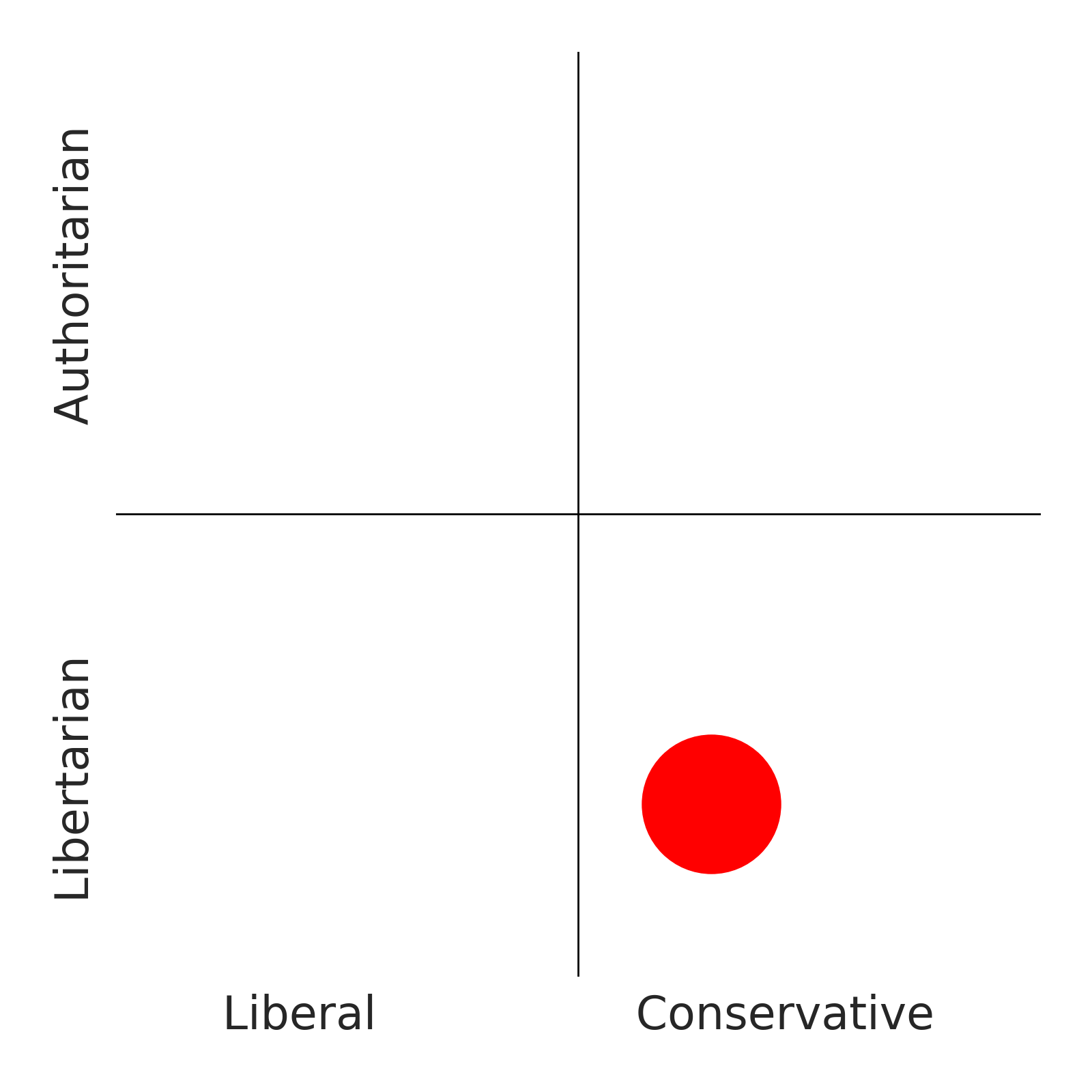
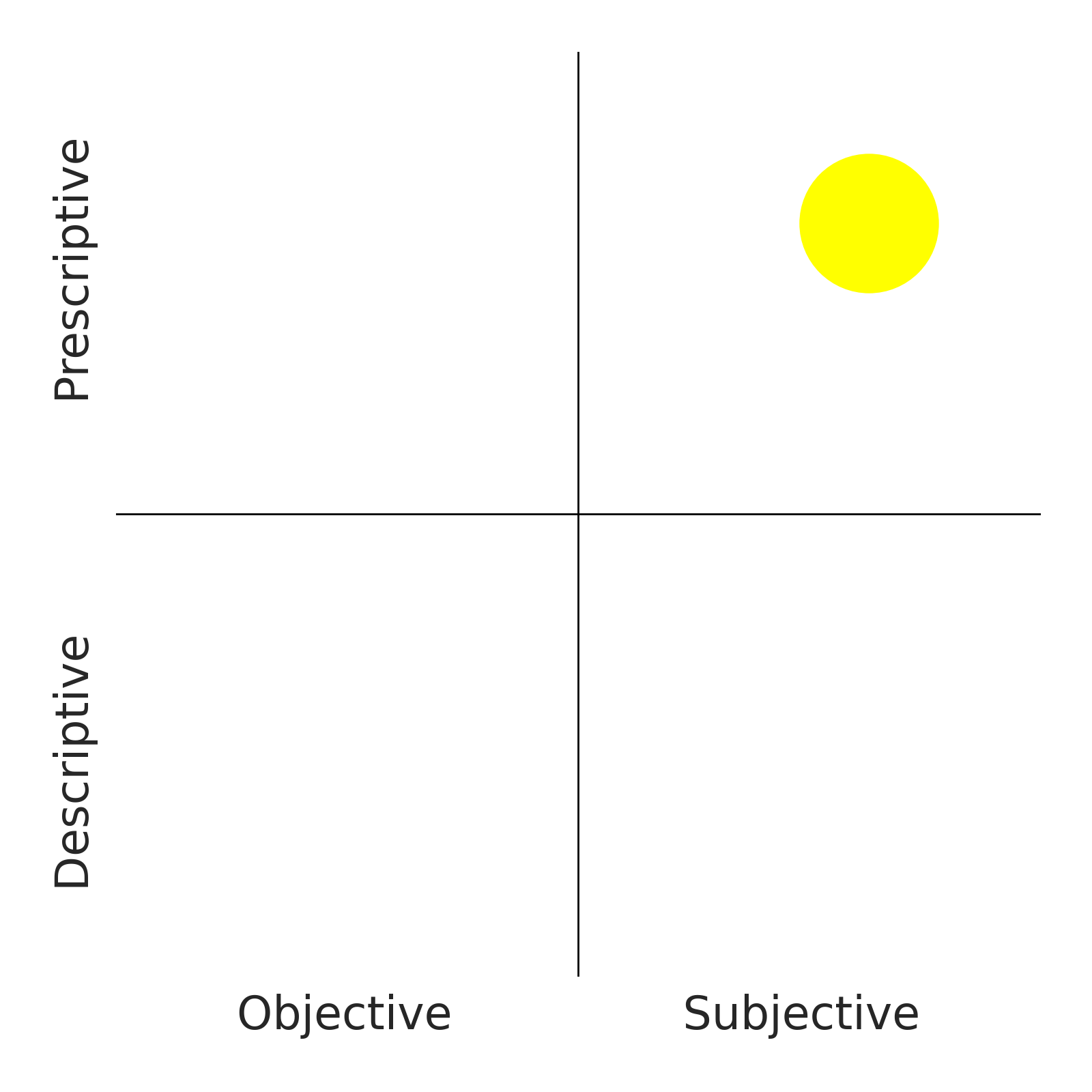
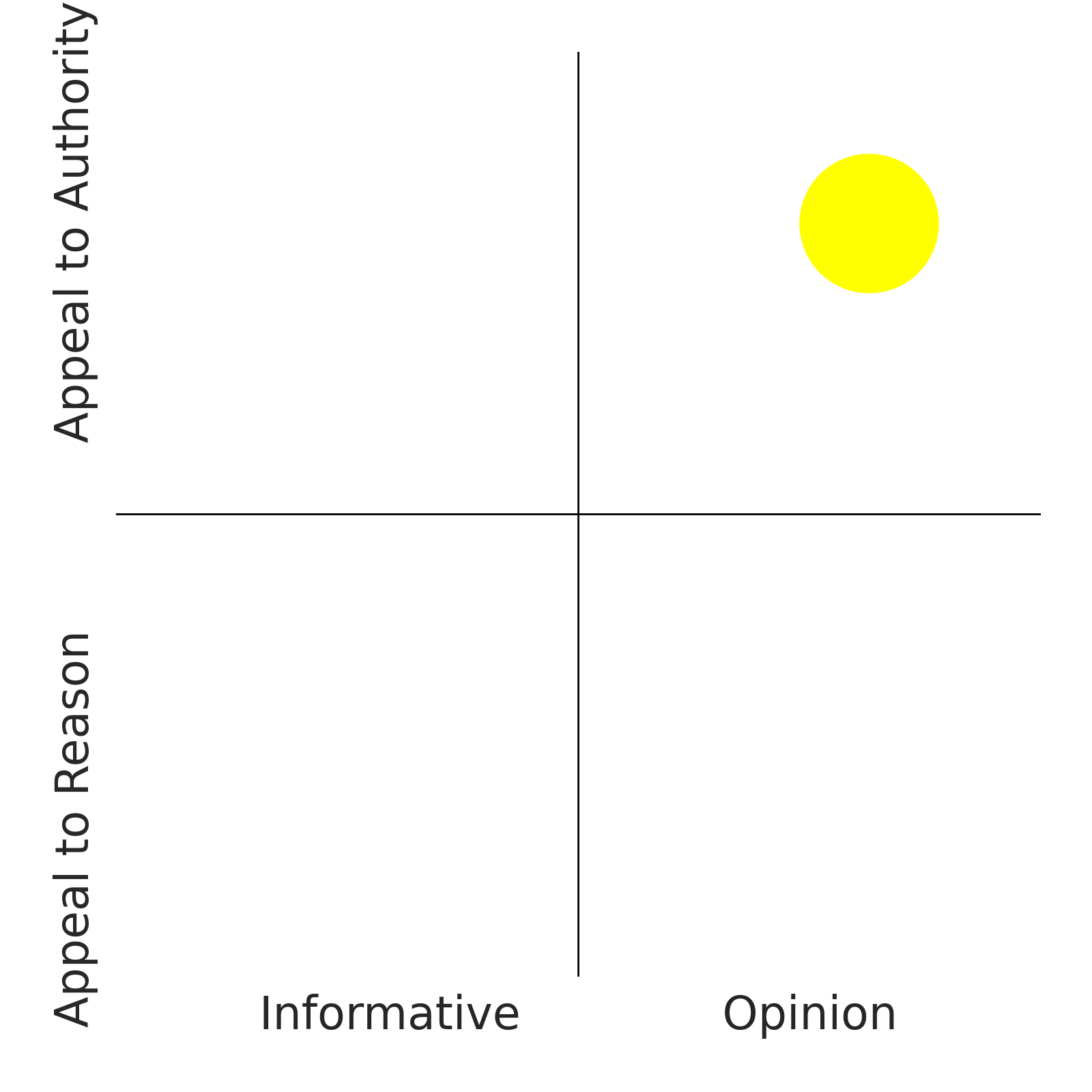
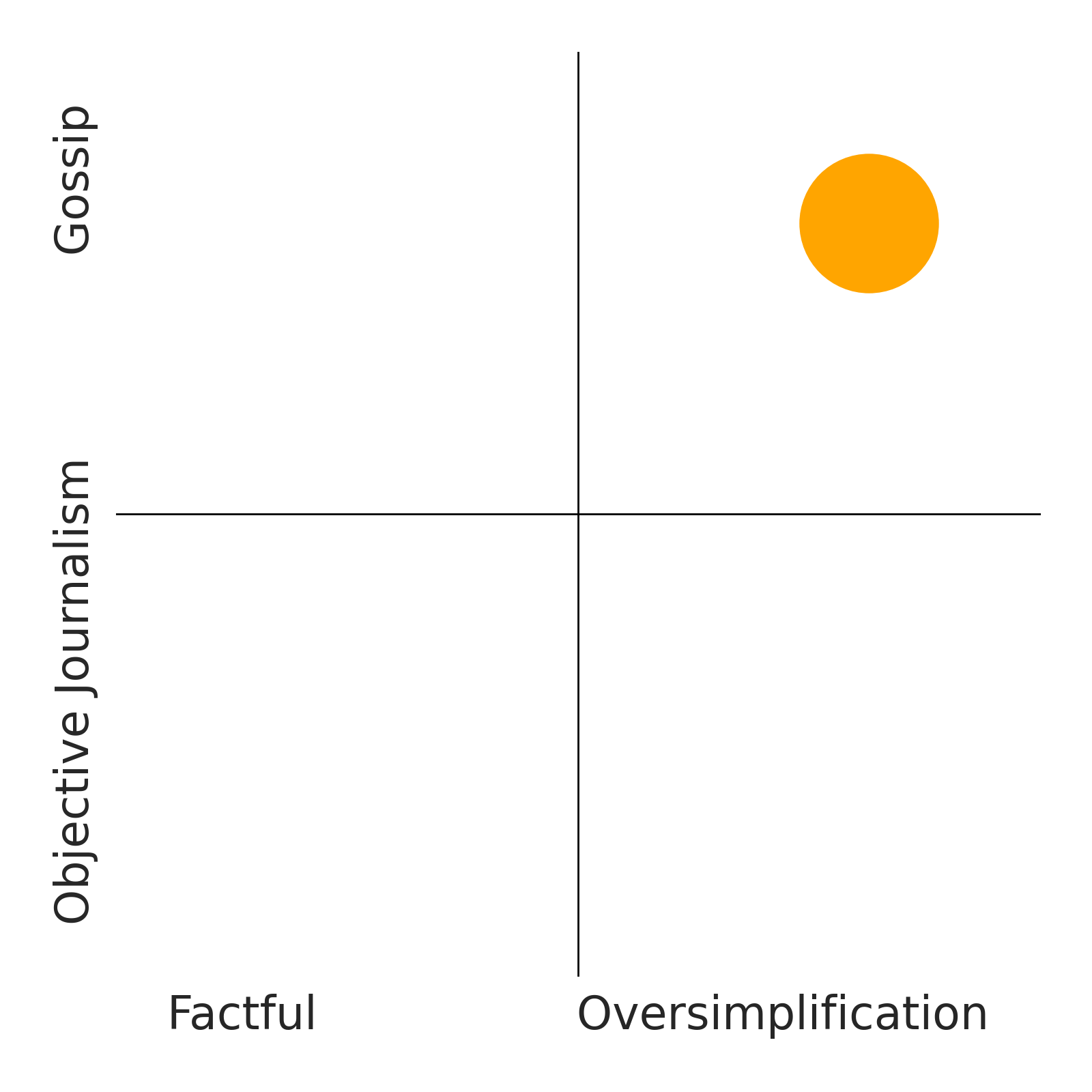
2026 © Helium Trades
Privacy Policy & Disclosure
* Disclaimer: Nothing on this website constitutes investment advice, performance data or any recommendation that any particular security, portfolio of securities, transaction or investment strategy is suitable for any specific person. Helium Trades is not responsible in any way for the accuracy
of any model predictions or price data. Any mention of a particular security and related prediction data is not a recommendation to buy or sell that security. Investments in securities involve the risk of loss. Past performance is no guarantee of future results. Helium Trades is not responsible for any of your investment decisions,
you should consult a financial expert before engaging in any transaction.
Helium Research Assistant

How can I help you today?
Ask any question about Activist Post bias.


