See whether Helium helps you make better-informed decisions. Try every Pro Trader feature for 30 days. No credit card required.
Try every Pro Trader feature for 30 days. No credit card required.
The sample portrays crypto primarily through markets, infrastructure, regulation, and institutional adoption. Coverage frequently treats ETFs, bank participation, tokenization, compliant stablecoins, custody, and legislative recognition as indicators of progress
Framing Morgan Stanley's ether and solana ETFs as a mainstream, governance-forward expansion designed to broaden investor access through low costs and a large distribution network.
Automated analysis; not human reviewed. · 8 of 52 available dimensions scored; omitted dimensions are not treated as neutral. · Verified supporting quotes for 0 of 8 scored dimensions.
Claim: The piece implicitly endorses crypto expansion tied to large financial institutions' distribution networks
“Morgan Stanley's wealth management network includes roughly 16,000 financial advisors overseeing more than $9 trillion in client assets.” · not found in supplied text
“E*TRADE provides direct access to millions of self-directed investors.” · not found in supplied text
Why: Emphasizes large institutions and broad distribution, which suggests an elitist framing.
Claim: Article presents crypto ETF expansion as beneficial for investors and diversification
“The funds provide exposure to ether and SOL without holding tokens directly.” · not found in supplied text
“0.14% expense ratio; staking rewards passed through to investors.” · not found in supplied text
Why: Positive product features and investor access imply a bullish stance on the expansion.
Claim: Framing the crypto ETF expansion as mainstream and institution-friendly
“There are eight SOL ETFs listed by SoSoValue, with total net assets of $889.3 million.” · not found in supplied text
“"Digital assets are becoming an increasingly important component of diversified investment portfolios," Amy Oldenburg said in a press release.” · not found in supplied text
“The funds arrive as large asset managers continue to broaden their crypto offerings in response to growing investor demand.” · exact text match
Why: Quotes and market framing portray crypto expansion as aligned with established financial institutions and investor demand.
Claim: The article uses credible signals: named funds, precise benchmarks, and quotes
“The firm announced Tuesday that the Morgan Stanley Ethereum Trust (MSSE) and Morgan Stanley Solana Trust (MSOL) will begin trading on NYSE Arca.” · exact text match
“The funds track the CoinDesk Ether Benchmark 4PM NY Settlement Rate and CoinDesk Solana Benchmark 4PM NY Settlement Rate.” · not found in supplied text
Why: Specific fund names, trading venue, and benchmark references support credibility, though the piece has promotional elements.
Claim: Use of direct quotes and governance-focused language signals credibility
“"Digital assets are becoming an increasingly important component of diversified investment portfolios."” · not found in supplied text
“Amy Oldenburg's emphasis on governance, infrastructure and risk management.” · not found in supplied text
Why: Quotations and governance framing provide signals of measured reporting and risk-conscious framing.
Claim: The article reports specific product details and benchmarks
“MSSE and MSOL will begin trading on NYSE Arca.” · not found in supplied text
“The funds track CoinDesk Ether Benchmark 4PM NY Settlement Rate and CoinDesk Solana Benchmark 4PM NY Settlement Rate.” · not found in supplied text
Why: Precise fund details and benchmark references indicate substantial reporting of substantive facts.
July 28, 2026 · 0 shares
Public endorsements from major Wall Street firms frame the CLARITY Act as essential regulatory clarity to protect investors and maintain U.S. competitiveness.
Regulatory framework for digital assets under discussion; The CLARITY Act would establish a regulatory framework for the U.S. crypto industry and recast oversight by the SEC and CFTC; Senate negotiations merged House and Senate proposals and include ethics restrictions for officials; The timeline for passage is uncertain with a summer recess looming.
Automated analysis; not human reviewed. Limitations: Endorsement-driven framing may overstate broad consensus and underrepresent opposing views; coverage centers on a subset of influential firms and may overstate the bill's legislative prospects. · 47 of 52 available dimensions scored; omitted dimensions are not treated as neutral. · Verified supporting quotes for 2 of 47 scored dimensions.
Claim: No explicit liberal or conservative tilt is evident; coverage positions appear centrist.
“The article discusses investor protections and market leadership without political framing.” · not found in supplied text
Why: Lack of political ideology cues.
Claim: Support for a regulatory framework and oversight implies an authoritarian tilt.
“The CLARITY Act would establish a new regulatory framework and change how the SEC and CFTC oversee the sector.” · not found in supplied text
Why: Represents support for government-led regulation.
Claim: Framing uses strong language about endorsements.
“one of the strongest public shows of support yet” · exact text match
Why: Phrase suggests heightened emphasis.
Claim: Public endorsements by major financial institutions back the CLARITY Act.
“The biggest names on Wall Street are lining up behind the Digital Asset Market Clarity Act” · exact text match
“Over the past week, firms including BlackRock, Fidelity, Franklin Templeton, Goldman Sachs and SoFi have all urged Congress to pass the bill” · exact text match
Why: Direct quotes show endorsements from major firms.
Claim: The piece relies on quotes from multiple named sources.
“The article quotes Samara Cohen, David Solomon, Anthony Noto, and Franklin Templeton's leadership.” · not found in supplied text
Why: Multiple named sources indicate credible coverage.
Endorsement-driven framing may overstate broad consensus and underrepresent opposing views; coverage centers on a subset of influential firms and may overstate the bill's legislative prospects.
July 26, 2026 · 0 shares
Publisher framing emphasizes regulatory strictness as the driver of crypto market evolution in Europe, privileging established financial institutions and consolidation over pure crypto competition.
The piece links MiCA and UK regulation to a shift toward regulated financial institutions and institutional infrastructure as the pathway to crypto adoption in Europe.
Automated analysis; not human reviewed. Limitations: Concise, case-specific limitations and plausible alternative interpretations. · 49 of 52 available dimensions scored; omitted dimensions are not treated as neutral. · Verified supporting quotes for 0 of 49 scored dimensions.
Ambiguities in regulatory framing could influence interpretation.
Framing centers on Securitize gaining Wall Street legitimacy through SEC adviser registration and expanding institutional partnerships in the tokenization trend.
Context: Regulators are evaluating how existing securities rules apply to on-chain investment products and vault-based yield strategies; DeFi vaults are expanding beyond DeFi to mainstream platforms, increasing the focus on tokenization infrastructure and institutional adoption.
Automated analysis; not human reviewed. · 2 of 52 available dimensions scored; omitted dimensions are not treated as neutral. · Verified supporting quotes for 1 of 2 scored dimensions.
Claim: Headline frames tokenization expansion as increasing Wall Street credentials through SEC adviser licensing.
“Securitize builds Wall Street credentials with SEC adviser license as tokenization expands.” · exact text match
Why: The exact wording ties tokenization growth to Wall Street credentialing via SEC licensing.
August 21, 2026 · 0 shares
A detail-heavy, cautionary security update that tempers AI optimism with repeated warnings that affected users remain vulnerable without new seeds.
Automated analysis; not human reviewed. Limitations: The article text contains a possible typo: '2021 and July 2026' may be inaccurate but is presented as stated. · 2 of 54 available dimensions scored; omitted dimensions are not treated as neutral. · Verified supporting quotes for 1 of 2 scored dimensions.
Claim: The report contains no political content, making it politically neutral.
“The device now re-checks a transaction immediately before signing it, so a computer compromised at the USB port cannot alter a payment after the owner has approved it on screen.” · exact text match
Why: All content is technical and business-focused; no political actors or issues are mentioned.
Claim: The report is highly credible due to specific, verifiable details and consistent attribution of claims.
“Law enforcement is still investigating the thefts and working to identify those responsible, the company said.” · not found in supplied text
Why: The article provides concrete figures, names, and qualifies statements with sources, enhancing its trustworthiness.
The article text contains a possible typo: '2021 and July 2026' may be inaccurate but is presented as stated.
Frames a network outage as a near-catastrophic event while including the Foundation's reassurance, creating a tension between risk and resilience.
Solana is a smart contract blockchain that has faced several outages in the past. The February 2024 halt took about five hours to restart. Staking involves locking tokens to secure the network; finality stops if more than a third of staked coins go offline.
Automated analysis; not human reviewed. Limitations: Analysis based solely on the article text; no external verification of Solana network data or source reliability was performed. · 53 of 53 available dimensions scored; omitted dimensions are not treated as neutral. · Verified supporting quotes for 6 of 53 scored dimensions.
Claim: The article injects a subjective warning conclusion.
“This whole event is a clear warning: if more than one-third of the network’s tokens ever go offline at once, the entire blockchain freezes for every single person holding SOL, and there is no quick way to fix the bigger damage that would follow.” · exact text match
Why: The statement is not attributed but presented as the publisher's own interpretation, making it subjective.
Claim: The article uses sensational language to describe the event.
“Solana neared a freeze threshold Wednesday, Marinade Finance says.” · exact text match
Why: The headline and lead emphasize 'near a freeze threshold' and 'within striking distance,' which are sensational framing.
Claim: The article shifts from describing events to prescribing a warning.
“This whole event is a clear warning: if more than one-third of the network’s tokens ever go offline at once, the entire blockchain freezes for every single person holding SOL, and there is no quick way to fix the bigger damage that would follow.” · exact text match
Why: The sentence prescribes a takeaway (a clear warning) beyond mere description.
Claim: The article emphasizes the risk of a total freeze to generate concern.
“This whole event is a clear warning: if more than one-third of the network’s tokens ever go offline at once, the entire blockchain freezes for every single person holding SOL, and there is no quick way to fix the bigger damage that would follow.” · exact text match
Why: The warning explicitly describes a worst-case scenario without balancing countermeasures, appealing to fear.
Claim: The article includes an opinionated warning statement.
“This whole event is a clear warning: if more than one-third of the network’s tokens ever go offline at once, the entire blockchain freezes for every single person holding SOL, and there is no quick way to fix the bigger damage that would follow.” · exact text match
Why: The statement is presented as the publisher's own conclusion, not attributed, thus opinionated.
Claim: The article demonstrates high credibility through specific data, attribution, and timestamps.
“A routing glitch at a major data center provider knocked nearly 29% of Solana’s staked tokens offline” · exact text match
“Marinade said that the network came within about 20 million tokens of that threshold.” · exact text match
“Solana Foundation’s VP of Tech Jacob Creech said ... 597 of 699 staked validators kept voting” · not found in supplied text
Why: Concrete numbers, named sources, and a timestamp for fix add credibility.
Claim: The article fairly presents both Marinade's warning and the Foundation's rebuttal.
“Marinade said that the network came within about 20 million tokens of that threshold.” · exact text match
“Solana Foundation’s VP of Tech Jacob Creech framed the episode as evidence that the network’s design held up under pressure.” · exact text match
Why: Multiple sources are quoted with specific data, and no apparent omission of key perspectives.
Analysis based solely on the article text; no external verification of Solana network data or source reliability was performed.
The perspective is generally industry-literate and market-oriented. It emphasizes price catalysts, ETF flows, derivatives, liquidity, Treasury policy, and technical indicators
August 22, 2026 · 0 shares
The report frames the bitcoin rally through a market-mechanics lens, attributing causality to a Treasury move while cautioning that traders may be overreacting.
Automated analysis; not human reviewed. · 3 of 54 available dimensions scored; omitted dimensions are not treated as neutral. · Verified supporting quotes for 3 of 3 scored dimensions.
Claim: The article maintains an objective, explanatory tone, attributing opinions to named analysts and clearly distinguishing facts from interpretation.
“Bitcoin jumped about 25% since Wednesday and surged past $78,000 as of Asian morning hours Saturday” · exact text match
“Treasury buybacks are not QE, analysts said, but the move helped pull long-term yields off 19-year highs and triggered a record short squeeze” · exact text match
Why: The language is measured, multiple sources are cited, and the article explicitly notes that the buyback is not quantitative easing, demonstrating care to avoid overstatement.
Claim: The article is moderately interesting due to timely market news and analytical commentary, but not exceptionally so.
“How a Treasury buyback tweak helped bitcoin surge 25% to nearly $80,000 in days” · exact text match
“That would be particularly constructive against a backdrop of roughly $650 million of net ETF inflows this week.” · exact text match
Why: The topic is timely for market watchers, but may be of limited general interest; the rating is modest.
Claim: The article demonstrates high credibility through specific data points, named expert sources with titles, and balanced attribution of claims.
“The U.S. Treasury said it would double the size of its buyback operations in the longest-dated government bonds, to $4 billion from $2 billion per operation.” · exact text match
“said Jeff Ko, chief analyst at CoinEx, in a note to CoinDesk.” · exact text match
Why: The reporting includes specific numbers, attributes statements to identified individuals, and provides multiple perspectives, supporting trustworthiness.
August 21, 2026 · 0 shares
Reports Bitcoin's record weekly surge with a bullish tone, framing the move as fundamentally driven with only brief, qualified mention of overbought risks.
The report is situated in a market environment where investors have been closely monitoring the US Treasury's bond-buyback program and its effects on risk assets. The broader macroeconomic backdrop includes the US dollar's level relative to recent highs and modest gains in equity futures. Bitcoin's price action is being assessed against technical analysis patterns and derivatives market flows, with the article clarifying that the Altcoin Season index drop reflects increased bitcoin dominance rather than an overall crypto selloff.
Automated analysis; not human reviewed. Limitations: CoinDesk, the publisher, is a subsidiary of Bullish, a digital asset company, and the disclosure at the end suggests potential alignment with crypto industry fortunes, which might tilt coverage toward a bull case. I do not have access to price feeds or external context to independently verify the trading levels or claims made. · 1 of 54 available dimensions scored; omitted dimensions are not treated as neutral. · Verified supporting quotes for 1 of 1 scored dimensions.
Claim: Grounded in verifiable market data with specific figures, though causal attribution to the Treasury move is asserted without direct sourcing.
“Bitcoin BTC$78,505.87 climbed as high as $79,400 on Friday, adding 8.8% since midnight UTC as a rally kicked off by the U.S. Treasury on Wednesday gathered steam.” · exact text match
“according to CoinGlass” · exact text match
Why: Draws on concrete data and source attribution, but the causality between Treasury action and price rise is presented as established fact without questioning or alternative explanation.
CoinDesk, the publisher, is a subsidiary of Bullish, a digital asset company, and the disclosure at the end suggests potential alignment with crypto industry fortunes, which might tilt coverage toward a bull case. I do not have access to price feeds or external context to independently verify the trading levels or claims made.
August 21, 2026 · 0 shares
The publisher frames bitcoin's rally as an institutionally driven event, consistently spotlighting bullish expert commentary and ETF inflows while giving brief, skeptical caveats.
Automated analysis; not human reviewed. Limitations: The article contains significant internal inconsistencies in bitcoin price levels, dates, and portfolio metrics, which complicates unbiased verification of the facts. · 54 of 54 available dimensions scored; omitted dimensions are not treated as neutral. · Verified supporting quotes for 6 of 54 scored dimensions.
Claim: Mixes dry market data with subjective reporter commentary.
“with bitcoin possibly entering a new bull market” · not found in supplied text
“nice momentum these last few days” · not found in supplied text
Why: The article switches between data-heavy reporting and personal commentary, muddying the boundary between news and opinion.
Claim: The article leans bullish by emphasizing the scale and sustainability of institutional demand.
“confirming the institutional bid behind bitcoin's run” · exact text match
“He expects to see a daily inflow of $1 billion at some point.” · exact text match
Why: Quotes and framing consistently highlight positive institutional flows and analysts' upside projections, counterbalanced by a single closing caution.
Claim: The tone is cautiously optimistic, presenting the rally as real but subject to near-term pullback.
“the move is rather small and just getting started” · exact text match
“If ETF buying holds into next week, the breakout has a foundation.” · exact text match
Why: The article uses hedged language that still leans toward further gains, including the conditional in the second quote.
Claim: Presents multiple recent market events and references, making it moderately interesting for a crypto-reader.
“Broader measures have yet to show a full altcoin season.” · exact text match
“The short end of the curve is directly influenced by Federal Reserve policy.” · not found in supplied text
Why: Covers a variety of interconnected topics, from ETF flows to Fed policy, offering context that would interest followers of the asset class.
Claim: Integrates reporter speculation seamlessly with factual reporting.
“One wonders if next year's story might be data center players migrating back to BTC mining.” · not found in supplied text
“Anvil is a shared on-chain collateral layer built on a a programmable letter of credit: reserve assets as a guarantee -no loan, no interest, keep custody & yield.” · not found in supplied text
Why: While the article clearly attributes most opinions, some statements cross into editorializing, and the second quote shows the inclusion of advertising-like material.
Claim: Market dynamics are simplified to focus almost exclusively on ETF flows.
“The flows answer the question hanging over the run.” · exact text match
“The flows are the thing to watch.” · exact text match
Why: Repeatedly reduces a complex market move to a single flow variable.
Claim: The article relies heavily on prominent named figures for authority.
“says FalconX's Joshua Lim” · not found in supplied text
“wrote Ray Dalio on Friday” · exact text match
Why: Uses acknowledged sources; however, their claims are not balanced with equal-weight skepticism.
Claim: Presents analysts' price forecasts with little emphasis on inherent uncertainty.
“He expects to see a daily inflow of $1 billion at some point.” · exact text match
“There is now a risk my end year forecast (of $100,000) is too low.” · exact text match
Why: The publication appears to endorse the bullish case by prominently featuring it in the summary section without much counter-check on its achievability.
Claim: Cites specific data providers and sources, enhancing credibility, but the presence of internal inconsistencies detracts from its reliability.
“per SoSoValue data” · exact text match
“according to an Aug. 20 SEC filing” · exact text match
Why: Attribution to concrete data sources is good practice, but the conflicting price reports undermine trust in the details.
Claim: The article engages in heavy speculation about future market direction and price levels.
“The next leg, he says, will be driven by buyers.” · exact text match
“He expects to see a daily inflow of $1 billion at some point.” · exact text match
Why: Multiple forward-looking statements from analysts and traders about prices, flows, and market structure with uncertain outcomes.
Claim: The article synthesizes a wide range of sources but contains internal contradictions and repetition, lowering its intellectual coherence.
“Bitcoin surged to $79,500 before retreating back below $78,000.” · not found in supplied text
“Bitcoin traded near $75,500 on Friday after touching $72,344 on Thursday.” · not found in supplied text
Why: The article would be improved by resolving the inconsistencies in price reporting and trimming repetitive phrases.
The article contains significant internal inconsistencies in bitcoin price levels, dates, and portfolio metrics, which complicates unbiased verification of the facts.
July 24, 2026 · 0 shares
Publisher frames bitcoin options activity as a bullish, data-driven narrative by foregrounding large open interest at 70k/72k, detailing specific trades, and tying sentiment to CLARITY Act optimism to shape readers toward a market-upside interpretation.
CoinDesk analyzes Deribit BTC options around the 70k/72k strikes and links large open interest and trades to bullish positioning, while noting policy-related sentiment around the CLARITY Act.
Automated analysis; not human reviewed. Limitations: Analysis limited to the provided text; relies on quoted data and stated interpretations; may not capture broader market context or alternative readings. · 8 of 52 available dimensions scored; omitted dimensions are not treated as neutral. · Verified supporting quotes for 2 of 8 scored dimensions.
Claim: The article blends factual data with subjective interpretation about sentiment.
“The opening line calls the data 'a bullish story.'” · not found in supplied text
“The heavily skewed call-to-put ratio reflects the bullish sentiment.” · exact text match
Counterevidence:
“Unwinding notes present countervailing evidence.” · not found in supplied text
Why: Objectively reported data coexists with subjective sentiment framing.
Claim: The article frames the data as bullish and supports a bullish forecast.
“A $5 billion cluster has formed in bitcoin options. It tells a bullish story.” · exact text match
“The heavily skewed call-to-put ratio reflects the bullish sentiment.” · exact text match
Counterevidence:
“However, he added that, in the last 24 hours, the market has dialed back those expectations, leading to unwinding of some of these bullish bets.” · exact text match
Why: Explicit language ties data to a bullish interpretation, with a noted near-term reversal.
Claim: The text describes options strategies and their impact on open interest, not simply reporting data.
“The bull call spread structure: buying the $70,000 call and selling the $72,000 call.” · not found in supplied text
“The structure accounts for approximately 49% and 50% of total call open interest at the $70K and $72K strikes, respectively.” · not found in supplied text
Counterevidence:
“The piece also notes unwind of bullish bets in the last 24 hours.” · not found in supplied text
Why: Describes trading structures and their market implications rather than instructing readers.
Claim: Policy-focused framing implies a policy-oriented stance toward legislation affecting crypto markets.
“Jimmy Yang described 'Clarity Act optimism' driving demand for topside BTC calls.” · not found in supplied text
“The Polymarket odds change reflects ongoing policy dynamics.” · not found in supplied text
Counterevidence:
“Senate Thune's warning about passage before August recess.” · not found in supplied text
Why: Policy discourse shapes market interpretation with some caution about legislative timing.
Claim: The piece uses normative language to endorse a bullish outlook on bitcoin options.
“A $5 billion cluster has formed in bitcoin options. It tells a bullish story.” · exact text match
“The heavily skewed call-to-put ratio reflects the bullish sentiment.” · exact text match
Counterevidence:
“However, the market has unwound some bullish bets in the last 24 hours.” · not found in supplied text
Why: Framing language and sentiment indicators push toward a bullish forecast.
Claim: The article frames policy-related optimism (CLARITY Act) as a driver of market activity.
“Jimmy Yang described 'Clarity Act optimism' driving demand for topside BTC calls.” · not found in supplied text
“The odds of the Clarity Act being signed into law this year have dropped to 38% from 51% early this week, per Polymarket.” · not found in supplied text
Counterevidence:
“Senate Majority Leader John Thune said he does not expect the bill to pass before August recess.” · not found in supplied text
Why: Policy framing is foregrounded, but counterpoints acknowledge procedural limits.
Claim: The piece presents data from recognized providers and quotes market participants, with standard disclosures.
“Laevitas data.” · not found in supplied text
“Polymarket odds.” · not found in supplied text
“Quote from Jimmy Yang.” · not found in supplied text
Why: Multiple credible sources and explicit disclosures support trustworthiness.
Claim: The article cites identifiable data sources and discloses organizational policies.
“Laevitas identified a large bull call spread structure, involving buying the $70,000 call and simultaneously selling the $72,000 call.” · exact text match
“Laevitas data underpins the call/put breakdown.” · not found in supplied text
“CoinDesk is part of Bullish (NYSE:BLSH), with policy disclosures.” · not found in supplied text
Why: Use of named data sources and explicit disclosures enhances credibility.
Ambiguities: Laevitas data used; bullish framing; limited context.
CoinDesk frames the Clarity Act as a time-sensitive, bipartite legislative push with industry backing, while presenting both Democratic objections and Republican concerns.
CoinDesk's State of Crypto newsletter analyzes the merged Clarity Act draft and its ethics provisions within the broader legislative and market context.
Automated analysis; not human reviewed. Limitations: Case-specific limitations include reliance on a single article's text and quotes; framing may shift as negotiations progress. · 1 of 52 available dimensions scored; omitted dimensions are not treated as neutral. · Verified supporting quotes for 0 of 1 scored dimensions.
August 07, 2026 · 0 shares
Reports the Senate's delay of a crypto bill with balanced sourcing and neutral tone, attributing political hurdles to both parties and the Trump ethics provision.
Automated analysis; not human reviewed. Limitations: Analysis is limited to the supplied article text; no external verification of claims or additional context. · 4 of 53 available dimensions scored; omitted dimensions are not treated as neutral. · Verified supporting quotes for 2 of 4 scored dimensions.
Claim: The article maintains neutrality between liberal and conservative viewpoints.
“Senators from both parties had major unresolved issues on the legislation.” · exact text match
“multiple Republican senators publicly announcing their opposition and Democrats continuing to call for President Donald Trump to agree to a stricter ethics provision” · exact text match
Why: The article reports on opposition from both parties and does not endorse either side.
Claim: The article is heavily political, focusing on Senate procedural politics and partisan dynamics.
“The Dems are insistent on no Clarity vote” · exact text match
“Senators from both parties had major unresolved issues on the legislation” · exact text match
“the biggest remaining issue was an agreement on a so-called ethics provision targeting Trump” · not found in supplied text
Why: The article's core narrative is about political maneuvering around a crypto bill, including party positions, election timing, and presidential conflicts.
Claim: The article demonstrates credible sourcing and transparency.
“multiple individuals following the legislation told CoinDesk” · exact text match
“One source familiar told CoinDesk late Thursday” · exact text match
Why: The article attributes information to multiple named and anonymous sources, provides updates, and includes a disclosure about the publisher's ownership.
Claim: The article includes moderate speculation about future procedural votes and timing.
“The next major procedural question is when Thune will file for cloture... If he files for cloture before the Senate leaves town this month, lawmakers can hold the first procedural vote on the bill as soon as Tuesday, September 15. If he files after the Senate returns that Monday, the first vote could be held no earlier than Wednesday, September 16, under Senate procedure.” · not found in supplied text
Why: The article outlines possible future scenarios based on conditional statements, which is speculative but grounded in procedural rules.
Analysis is limited to the supplied article text; no external verification of claims or additional context.
Framing emphasizes the Coldcard exploit's severity through dramatic quotes and comparisons, fostering a fearful and sensational tone.
Automated analysis; not human reviewed. Limitations: The analysis is based on a single article snippet that includes multiple topics and advertorial content, limiting depth. · 7 of 52 available dimensions scored; omitted dimensions are not treated as neutral. · Verified supporting quotes for 2 of 7 scored dimensions.
Claim: The article mixes factual reporting with subjective reactions, giving weight to personal opinions.
““Our team is heartbroken about yesterday's news,” wrote Rodolfo Novak” · not found in supplied text
“Bitcoin has turned 3% lower as the ramifications of the Coldcard exploit became clear (fact)” · not found in supplied text
Why: The article interweaves emotion-laden quotes with market data.
Claim: The article uses a dramatic headline and includes hyperbolic comparisons to amplify the impact.
“Live updates: 'Move your funds now,' says co-founder and CEO of Coldcard maker Coinkite.” · exact text match
““Not hyperbolic, but this event is worse than Mt. Gox, affecting the most responsible and aware plebs among us,” wrote Jessy Gilger.” · exact text match
Why: Headline is a direct quote urging action; inclusion of comparison to Mt. Gox as 'worse' heightens sensationalism.
Claim: The article emphasizes negative market reaction and damaging consequences for Bitcoin self-custody.
“bitcoin (BTC) has pulled back to its weakest level of the week, now down 3.2% over the past 24 hours at $62,600.” · exact text match
““I’m afraid this Coldcard vulnerability is going to do more damage to self custody than anything else we’ve experienced”” · not found in supplied text
Why: Selection of data showing price drop and quotes framing damage.
Claim: The article features multiple quotes expressing devastation and fear about the exploit.
““I'm sorry and I'm devastated,” wrote Rodolfo Novak” · exact text match
““the people affected by this have done everything right ... now wake up to the reality that their life savings have gone,” wrote David Lawrence.” · not found in supplied text
Why: Use of emotionally charged language to evoke fear.
Claim: The article provides transparent disclosure of ownership and editorial policies, but includes advertorial content, reducing credibility.
“Disclosure & Polices: CoinDesk is an award-winning media outlet... CoinDesk is part of Bullish” · not found in supplied text
“The Evolution of the Crypto CEX Landscape: A Case Study on Binance (repeated three times)” · not found in supplied text
Why: Balance between transparency and promotional material.
Claim: The article contains a repeated advertorial section promoting Binance.
“The Evolution of the Crypto CEX Landscape: A Case Study on Binance (repeated three times)” · not found in supplied text
“Disclosure & Polices: CoinDesk is part of Bullish (NYSE:BLSH)” · not found in supplied text
Why: Promotional content for a crypto exchange.
Claim: The article selects and emphasizes alarming quotes to steer reader perception.
““This is the worst hit in Bitcoin history to the most knowledgeable and ‘properly secured’ Bitcoiners,” said Guy Swann.” · exact text match
““What FTX and Mt Gox did to promote self custody was just unwound by Coinkite and Coldcard,” wrote Taylor Distler.” · exact text match
Why: While attributed, the selection of extreme statements influences emotional response.
The analysis is based on a single article snippet that includes multiple topics and advertorial content, limiting depth.
August 20, 2026 · 0 shares
Framing highlights a record short liquidation, while the closing caveat portrays the rally as technically fueled and vulnerable to partial reversal.
Liquidation reports track forced closures of leveraged positions and are only as complete as each exchange's reporting rules; they are not a measure of all trading volume.
Automated analysis; not human reviewed. Limitations: The supplied text mixes main article content, related headlines, and disclosure boilerplate; boundaries between those parts were inferred, and no independent real-world data or original publication date was available. · 3 of 54 available dimensions scored; omitted dimensions are not treated as neutral. · Verified supporting quotes for 0 of 3 scored dimensions.
Claim: The article is transparent about its sourcing and reports a clear limitation in the liquidation data.
“Total liquidations reached nearly $3 billion across 172,108 traders, according to CoinGlass.” · exact text match
“Binance restricted its liquidation reporting in April 2021, and CoinGlass publishes only one liquidation order per second from the exchange, meaning both Wednesday's figure and every trend comparison may understate the true totals.” · not found in supplied text
Why: It attributes the key data to a specific source, gives exact amounts and timeframes, and explicitly notes that the comparison may be understated.
Claim: The article includes a forward-looking market forecast about whether bitcoin holds its price level and may partly give back gains.
“Watch whether bitcoin holds above $69,000 through the Asian and European session.” · exact text match
“Moves built on forced buying rather than fresh demand have a habit of giving some of it back.” · not found in supplied text
Why: The final paragraph projects future price behavior and market consequences rather than reporting already-observed facts.
The supplied text mixes main article content, related headlines, and disclosure boilerplate; boundaries between those parts were inferred, and no independent real-world data or original publication date was available.
August 05, 2026 · 0 shares
Neutral, fact-based reporting with direct quotes and market data, no editorial slant.
The AI agent token category emerged from the Truth Terminal experiment and GOAT token in 2024, with projects like AI16Z and Virtuals Protocol reaching billions in market cap before the crash.
Automated analysis; not human reviewed. · 6 of 53 available dimensions scored; omitted dimensions are not treated as neutral. · Verified supporting quotes for 1 of 6 scored dimensions.
Claim: The article shows no political framing; it reports on a crypto token failure without left-right ideological cues.
“The article focuses on market data, lawsuit allegations, and founder statements, with no references to political parties or ideologies.” · not found in supplied text
Why: Crypto news often carries libertarian undertones, but this article is purely factual and avoids political commentary.
Claim: The article is highly objective, presenting facts and quotes without subjective opinion.
“ELIZAOS trades near $0.00031 with a market cap of about $2.3 million, down 97% from its high.” · exact text match
“Walters wrote on X earlier Wednesday: 'The token is dead. Completely.'” · not found in supplied text
Why: Direct market data and verbatim quotes replace any subjective interpretation.
Claim: The story of a $2.4 billion token collapsing 97% with a founder declaring it dead is inherently interesting.
“Nineteen months after AI16Z reached a $2.4 billion market cap, the founder... has declared its successor token... dead and told holders to sell.” · not found in supplied text
Why: The dramatic rise and fall, plus lawsuit and personal health details, make it engaging.
Claim: The article is credible due to specific market data, legal filings, and direct quotes.
“CoinGecko still lists the abandoned AI16Z contract separately, with a market cap of roughly $375,000 as of early U.S. hours.” · exact text match
“The group filed a proposed class action in the Southern District of New York in April, alleging false advertising” · exact text match
Why: Verifiable data sources and legal document references strengthen trustworthiness.
Claim: The article explains the token's collapse through logical causes: litigation, rebrand, and market decline.
“Walters pinned the shutdown on litigation. He said the foundation transferred its remaining treasury and available funds to settle.” · not found in supplied text
Why: Causal reasoning is explicit and supported by source statements.
Claim: The article demonstrates high integrity by including both sides and noting unreturned requests for comment.
“CoinDesk has asked Eliza Labs and Burwick Law about the settlement terms, the status of the federal case and what holders received. Neither firm replied immediately.” · not found in supplied text
Why: Transparency about missing responses and fair presentation of allegations.
August 13, 2026 · 0 shares
High Treasury yields and a completed bearish head-and-shoulders pattern are used to frame seven-figure bitcoin forecasts as likely overambitious.
Automated analysis; not human reviewed. Limitations: The supplied main text is an excerpt with appended teaser links; I treated those teasers and the disclosure boilerplate as outside the analyzed article. · 5 of 54 available dimensions scored; omitted dimensions are not treated as neutral. · Verified supporting quotes for 4 of 5 scored dimensions.
Claim: The report frames bitcoin's near-term outlook as likely to see more losses relative to the previous cost-capital measure, contradicting the seven-figure forecasts.
“Forecasts for $1 million bitcoin price likely look too ambitious, key ratio suggests” · exact text match
“The H&S breakdown on the BTC-to-30-year yield chart suggests more losses ahead for the cryptocurrency” · not found in supplied text
Counterevidence:
“None of this means bitcoin's dollar price won't rise sustainably again.” · exact text match
Why: The headline and technical conclusion make clearly bearish claims about bitcoin relative to 30-year Treasury opportunity cost, but the caveat prevents a more extreme score.
Claim: The analysis conditions realistic seven-figure targets on a more favorable macro environment, giving the conclusion a pessimistic tone regarding current prospects.
“But for seven-figure targets to materialize, the interest rate backdrop likely needs to turn as supportive as it was in 2020-21.” · exact text match
Why: The sentence clearly frames the current rate environment as an obstacle to the bullish forecasts, making the tone pessimistic about those targets.
Claim: The report combines market observations with evaluative judgments about what the likely forecasts omit.
“What most of these targets likely do not include is the opportunity cost.” · exact text match
Why: It asserts what forecasters likely omitted and interprets data using judgment, which places it toward the opinionated end rather than dry factual reporting.
Claim: The report is visibly sourced and hedged: it attributes forecasts, cites a named quantitative study, and adds a cautionary caveat.
“According to Thomas Bulkowski's study of thousands of historical chart patterns, one of the most widely cited bodies of empirical technical-analysis research in traditional markets” · exact text match
“None of this means bitcoin's dollar price won't rise sustainably again.” · exact text match
Why: The article shows sourcing, quantitative attribution, and uncertainty, supporting moderately high integrity and credibility, though the underlying claims are not externally verifiable from the text.
Claim: The piece forecasts future bitcoin losses and conditions the possibility of recovery on future Treasury-yield changes.
“So, the H&S breakdown on the BTC-to-30-year yield chart suggests more losses ahead for the cryptocurrency, at least against the long-term cost of capital.” · exact text match
Why: The statement is a forecast about future price behavior, supported by a pattern-inference rather than a realized event.
The supplied main text is an excerpt with appended teaser links; I treated those teasers and the disclosure boilerplate as outside the analyzed article.
Institutional dominance in crypto trading is framed as the primary driver of lower volatility and market maturation, positioning large investors as shaping liquidity and asset selection.
Automated analysis; not human reviewed. Limitations: The analysis relies on Wintermute's report; no independent corroboration is provided. · 1 of 52 available dimensions scored; omitted dimensions are not treated as neutral. · Verified supporting quotes for 1 of 1 scored dimensions.
Claim: Pro-establishment framing: institutions dominate trading and shape market structure
“institutions accounted for roughly 72% of spot trading volume on its over-the-counter (OTC) desk during the first half of 2026, the highest share on record” · exact text match
Why: Direct evidence of institutional dominance and a framing of market maturation around large participants.
The analysis relies on Wintermute's report; no independent corroboration is provided.
Framing Morgan Stanley's ether and solana ETFs as a mainstream, governance-forward expansion designed to broaden investor access through low costs and a large distribution network.
Automated analysis; not human reviewed. · 8 of 52 available dimensions scored; omitted dimensions are not treated as neutral. · Verified supporting quotes for 0 of 8 scored dimensions.
Claim: The piece implicitly endorses crypto expansion tied to large financial institutions' distribution networks
“Morgan Stanley's wealth management network includes roughly 16,000 financial advisors overseeing more than $9 trillion in client assets.” · not found in supplied text
“E*TRADE provides direct access to millions of self-directed investors.” · not found in supplied text
Why: Emphasizes large institutions and broad distribution, which suggests an elitist framing.
Claim: Article presents crypto ETF expansion as beneficial for investors and diversification
“The funds provide exposure to ether and SOL without holding tokens directly.” · not found in supplied text
“0.14% expense ratio; staking rewards passed through to investors.” · not found in supplied text
Why: Positive product features and investor access imply a bullish stance on the expansion.
Claim: Framing the crypto ETF expansion as mainstream and institution-friendly
“There are eight SOL ETFs listed by SoSoValue, with total net assets of $889.3 million.” · not found in supplied text
“"Digital assets are becoming an increasingly important component of diversified investment portfolios," Amy Oldenburg said in a press release.” · not found in supplied text
“The funds arrive as large asset managers continue to broaden their crypto offerings in response to growing investor demand.” · exact text match
Why: Quotes and market framing portray crypto expansion as aligned with established financial institutions and investor demand.
Claim: The article uses credible signals: named funds, precise benchmarks, and quotes
“The firm announced Tuesday that the Morgan Stanley Ethereum Trust (MSSE) and Morgan Stanley Solana Trust (MSOL) will begin trading on NYSE Arca.” · exact text match
“The funds track the CoinDesk Ether Benchmark 4PM NY Settlement Rate and CoinDesk Solana Benchmark 4PM NY Settlement Rate.” · not found in supplied text
Why: Specific fund names, trading venue, and benchmark references support credibility, though the piece has promotional elements.
Claim: Use of direct quotes and governance-focused language signals credibility
“"Digital assets are becoming an increasingly important component of diversified investment portfolios."” · not found in supplied text
“Amy Oldenburg's emphasis on governance, infrastructure and risk management.” · not found in supplied text
Why: Quotations and governance framing provide signals of measured reporting and risk-conscious framing.
Claim: The article reports specific product details and benchmarks
“MSSE and MSOL will begin trading on NYSE Arca.” · not found in supplied text
“The funds track CoinDesk Ether Benchmark 4PM NY Settlement Rate and CoinDesk Solana Benchmark 4PM NY Settlement Rate.” · not found in supplied text
Why: Precise fund details and benchmark references indicate substantial reporting of substantive facts.
August 21, 2026 · 0 shares
Sympathetically frames the crypto industry's lawsuit as justified pushback against a discriminatory state tax, amplifying its grievances without a state counterpoint.
Automated analysis; not human reviewed. Limitations: The analysis relies solely on the excerpted text and cannot consult the cited legal documents, the full tax statute, or any response from Illinois officials; all quoted criticisms are treated as claims, not verified facts. · 4 of 54 available dimensions scored; omitted dimensions are not treated as neutral. · Verified supporting quotes for 4 of 4 scored dimensions.
Claim: The text's framing aligns with a limited-government position that portrays the state tax as an imposition to be resisted.
“uniquely punitive treatment” · exact text match
“head off the state's tax” · exact text match
Why: The article's language gives prominence to the plaintiffs' characterization of the tax and reports their motion to block it without substantive defense of the state.
Claim: The report mixes straightforward news reporting with advocacy framing that subtly endorses the industry's grievance.
“critics have noted” · exact text match
Why: The phrase relays an opinion without naming a specific critic, adopting a mild editorializing tone within an otherwise factual news brief.
Claim: The report follows sound journalistic sourcing practices, attributing information to named officials and documents.
“Ji Kim, who leads CCI, in a statement” · exact text match
“said Summer Mersinger, CEO of the Blockchain Association, in a statement” · exact text match
Why: Precise attribution and checkable details (named executives, specific court, revenue threshold) support verifiability and responsible reporting.
Claim: The selection and framing favor the industry's legal position by giving it unrestricted play.
“The crypto industry is piling more legal challenges on Illinois” · exact text match
Why: Portrays the industry's legal offensive as a collective effort, implicitly framing state action as an obstacle to be overcome.
The analysis relies solely on the excerpted text and cannot consult the cited legal documents, the full tax statute, or any response from Illinois officials; all quoted criticisms are treated as claims, not verified facts.
August 11, 2026 · 0 shares
Publisher frames potential Democratic committee chairs as skeptical obstacles to crypto legislation, emphasizing hostility and political headwinds.
Automated analysis; not human reviewed. Limitations: The article text contains multiple discrete stories; analysis focused on the primary political article, potentially ignoring the Zcash and other segments. · 9 of 53 available dimensions scored; omitted dimensions are not treated as neutral. · Verified supporting quotes for 7 of 9 scored dimensions.
Claim: The article is neutral on the liberal-conservative spectrum, neither endorsing nor opposing either party.
“The Democrats who may get a bigger say in future crypto legislative efforts are familiar figures, and they generally look at digital assets with distrust.” · exact text match
Why: The article reports Democrats' positions without editorializing, but the framing of 'distrust' is a factual observation, not a partisan endorsement.
Claim: The article is slightly subjective, using framing language that suggests a narrative.
“However, the California lawmaker also had once negotiated an earlier stablecoin effort just inches from the finish line” · exact text match
Why: The phrase 'just inches from the finish line' adds dramatic framing, but overall the article relies on factual reporting.
Claim: The article is bearish on crypto's legislative prospects under Democratic control, highlighting headwinds and obstacles.
“potential Democrat committee leaders are unlikely to see crypto regulation occupy the level of priority the current Republicans maintain” · exact text match
“crypto industry would be facing significant headwinds when it tries again” · exact text match
Why: The quotes directly indicate reduced priority and significant headwinds, signaling a bearish outlook.
Claim: The article is moderately interesting due to its focus on political power shifts and crypto industry stakes.
“If the crypto industry and its congressional allies have to toss the Digital Asset Market Clarity Act in the same bin where they once left its predecessor” · exact text match
Why: The dramatic language about tossing bills adds interest, but the topic is niche.
Claim: The article is highly political, focusing on congressional power dynamics and election outcomes.
“If crypto goes back to the congressional drawing board, 3 Democrat women loom large” · exact text match
“The betting on Kalshi predicts a Democratic House majority at an 84% likelihood” · exact text match
Why: The article's central theme is political control and its impact on legislation, making it strongly political.
Claim: The article oversimplifies the complex positions of Democrats by reducing them to uniform 'F' grades.
“All four of these leading Democrats in the relevant committees — Waters, Brown, Warren and Bennet — have matching 'F' ratings from Stand With Crypto.” · not found in supplied text
Why: The single grade simplifies nuanced stances, but the article also includes quotes showing nuance.
Claim: The article is pro-establishment in focusing on existing committee structures and insider politics.
“The Democrats who may get a bigger say in future crypto legislative efforts are familiar figures” · exact text match
Why: The article treats established political figures as the key actors, showing a bias toward the status quo.
Claim: The article demonstrates high credibility through named sources, direct quotes, and attribution.
“Blockchain Association CEO Summer Mersinger said in a CoinDesk interview” · not found in supplied text
“Digital Chamber CEO Cody Carbone said to CoinDesk in a statement” · not found in supplied text
Why: The article attributes statements to specific individuals and organizations, transparently sourcing its information.
Claim: The article speculates on future committee leadership and legislative outcomes.
“Next January, there's a strong chance that U.S. Representative Maxine Waters will steer the destiny” · exact text match
“If Waters takes over her panel, counterpart Representative Shontel Brown could rise” · exact text match
Why: The use of 'strong chance' and 'could' indicates speculative forecasting about future events.
The article text contains multiple discrete stories; analysis focused on the primary political article, potentially ignoring the Zcash and other segments.
August 04, 2026 · 0 shares
Frames a mystery group's anti-crypto ad campaign as opaque and fear-based while reporting the Clarity Act's political struggle, with slight subjectivity in labeling the group as mysterious.
The Digital Asset Market Clarity Act is a U.S. Senate bill aimed at regulating cryptocurrencies. The Senate is in its final week before the summer recess, making it a critical time for the bill's advancement.
Automated analysis; not human reviewed. Limitations: The article text includes repeated unrelated headlines and a Binance case study that may be boilerplate; I excluded them from extraction to focus on the main report. · 3 of 53 available dimensions scored; omitted dimensions are not treated as neutral. · Verified supporting quotes for 2 of 3 scored dimensions.
Claim: The article uses subjective language like 'mystery group' and 'hammers away' to describe Crypto Watchdog's campaign, indicating a slightly subjective framing.
“As Clarity Act teeters, mystery group hammers away at crypto in Washington ads.” · exact text match
“its director won't say who is backing it.” · exact text match
Why: The headline and description characterize the group as mysterious and aggressive, which is not purely objective. The refusal to disclose funding is presented as a key point.
Claim: The article includes fear-based messaging from Crypto Watchdog's ads, but does not amplify it; it reports the ads' content.
“"The worst people operating in the darkest places use crypto because there are no guardrails," citing connections to drug cartels, terrorists and people praying against seniors.” · not found in supplied text
Why: The article quotes the fearful ad language but does not endorse or emphasize it. The overall tone is reporting rather than fear-mongering.
Claim: The entire article is centered on political maneuvering around the Clarity Act and lobbying groups, making it highly political.
“The crypto industry's central policy drive is to get U.S. laws that elevate it to a fully regulated and government-approved corner of the financial system.” · exact text match
“Democrats — with President Donald Trump in mind — had demanded the legislation include limits on government officials' crypto activity” · exact text match
Why: The article extensively covers legislative negotiations, party dynamics, and lobbying efforts, which are inherently political topics.
The article text includes repeated unrelated headlines and a Binance case study that may be boilerplate; I excluded them from extraction to focus on the main report.
August 21, 2026 · 0 shares
The publisher frames bitcoin's rally as an institutionally driven event, consistently spotlighting bullish expert commentary and ETF inflows while giving brief, skeptical caveats.
Automated analysis; not human reviewed. Limitations: The article contains significant internal inconsistencies in bitcoin price levels, dates, and portfolio metrics, which complicates unbiased verification of the facts. · 54 of 54 available dimensions scored; omitted dimensions are not treated as neutral. · Verified supporting quotes for 6 of 54 scored dimensions.
Claim: Mixes dry market data with subjective reporter commentary.
“with bitcoin possibly entering a new bull market” · not found in supplied text
“nice momentum these last few days” · not found in supplied text
Why: The article switches between data-heavy reporting and personal commentary, muddying the boundary between news and opinion.
Claim: The article leans bullish by emphasizing the scale and sustainability of institutional demand.
“confirming the institutional bid behind bitcoin's run” · exact text match
“He expects to see a daily inflow of $1 billion at some point.” · exact text match
Why: Quotes and framing consistently highlight positive institutional flows and analysts' upside projections, counterbalanced by a single closing caution.
Claim: The tone is cautiously optimistic, presenting the rally as real but subject to near-term pullback.
“the move is rather small and just getting started” · exact text match
“If ETF buying holds into next week, the breakout has a foundation.” · exact text match
Why: The article uses hedged language that still leans toward further gains, including the conditional in the second quote.
Claim: Presents multiple recent market events and references, making it moderately interesting for a crypto-reader.
“Broader measures have yet to show a full altcoin season.” · exact text match
“The short end of the curve is directly influenced by Federal Reserve policy.” · not found in supplied text
Why: Covers a variety of interconnected topics, from ETF flows to Fed policy, offering context that would interest followers of the asset class.
Claim: Integrates reporter speculation seamlessly with factual reporting.
“One wonders if next year's story might be data center players migrating back to BTC mining.” · not found in supplied text
“Anvil is a shared on-chain collateral layer built on a a programmable letter of credit: reserve assets as a guarantee -no loan, no interest, keep custody & yield.” · not found in supplied text
Why: While the article clearly attributes most opinions, some statements cross into editorializing, and the second quote shows the inclusion of advertising-like material.
Claim: Market dynamics are simplified to focus almost exclusively on ETF flows.
“The flows answer the question hanging over the run.” · exact text match
“The flows are the thing to watch.” · exact text match
Why: Repeatedly reduces a complex market move to a single flow variable.
Claim: The article relies heavily on prominent named figures for authority.
“says FalconX's Joshua Lim” · not found in supplied text
“wrote Ray Dalio on Friday” · exact text match
Why: Uses acknowledged sources; however, their claims are not balanced with equal-weight skepticism.
Claim: Presents analysts' price forecasts with little emphasis on inherent uncertainty.
“He expects to see a daily inflow of $1 billion at some point.” · exact text match
“There is now a risk my end year forecast (of $100,000) is too low.” · exact text match
Why: The publication appears to endorse the bullish case by prominently featuring it in the summary section without much counter-check on its achievability.
Claim: Cites specific data providers and sources, enhancing credibility, but the presence of internal inconsistencies detracts from its reliability.
“per SoSoValue data” · exact text match
“according to an Aug. 20 SEC filing” · exact text match
Why: Attribution to concrete data sources is good practice, but the conflicting price reports undermine trust in the details.
Claim: The article engages in heavy speculation about future market direction and price levels.
“The next leg, he says, will be driven by buyers.” · exact text match
“He expects to see a daily inflow of $1 billion at some point.” · exact text match
Why: Multiple forward-looking statements from analysts and traders about prices, flows, and market structure with uncertain outcomes.
Claim: The article synthesizes a wide range of sources but contains internal contradictions and repetition, lowering its intellectual coherence.
“Bitcoin surged to $79,500 before retreating back below $78,000.” · not found in supplied text
“Bitcoin traded near $75,500 on Friday after touching $72,344 on Thursday.” · not found in supplied text
Why: The article would be improved by resolving the inconsistencies in price reporting and trimming repetitive phrases.
The article contains significant internal inconsistencies in bitcoin price levels, dates, and portfolio metrics, which complicates unbiased verification of the facts.
July 24, 2026 · 0 shares
Publisher frames bitcoin options activity as a bullish, data-driven narrative by foregrounding large open interest at 70k/72k, detailing specific trades, and tying sentiment to CLARITY Act optimism to shape readers toward a market-upside interpretation.
CoinDesk analyzes Deribit BTC options around the 70k/72k strikes and links large open interest and trades to bullish positioning, while noting policy-related sentiment around the CLARITY Act.
Automated analysis; not human reviewed. Limitations: Analysis limited to the provided text; relies on quoted data and stated interpretations; may not capture broader market context or alternative readings. · 8 of 52 available dimensions scored; omitted dimensions are not treated as neutral. · Verified supporting quotes for 2 of 8 scored dimensions.
Claim: The article blends factual data with subjective interpretation about sentiment.
“The opening line calls the data 'a bullish story.'” · not found in supplied text
“The heavily skewed call-to-put ratio reflects the bullish sentiment.” · exact text match
Counterevidence:
“Unwinding notes present countervailing evidence.” · not found in supplied text
Why: Objectively reported data coexists with subjective sentiment framing.
Claim: The article frames the data as bullish and supports a bullish forecast.
“A $5 billion cluster has formed in bitcoin options. It tells a bullish story.” · exact text match
“The heavily skewed call-to-put ratio reflects the bullish sentiment.” · exact text match
Counterevidence:
“However, he added that, in the last 24 hours, the market has dialed back those expectations, leading to unwinding of some of these bullish bets.” · exact text match
Why: Explicit language ties data to a bullish interpretation, with a noted near-term reversal.
Claim: The text describes options strategies and their impact on open interest, not simply reporting data.
“The bull call spread structure: buying the $70,000 call and selling the $72,000 call.” · not found in supplied text
“The structure accounts for approximately 49% and 50% of total call open interest at the $70K and $72K strikes, respectively.” · not found in supplied text
Counterevidence:
“The piece also notes unwind of bullish bets in the last 24 hours.” · not found in supplied text
Why: Describes trading structures and their market implications rather than instructing readers.
Claim: Policy-focused framing implies a policy-oriented stance toward legislation affecting crypto markets.
“Jimmy Yang described 'Clarity Act optimism' driving demand for topside BTC calls.” · not found in supplied text
“The Polymarket odds change reflects ongoing policy dynamics.” · not found in supplied text
Counterevidence:
“Senate Thune's warning about passage before August recess.” · not found in supplied text
Why: Policy discourse shapes market interpretation with some caution about legislative timing.
Claim: The piece uses normative language to endorse a bullish outlook on bitcoin options.
“A $5 billion cluster has formed in bitcoin options. It tells a bullish story.” · exact text match
“The heavily skewed call-to-put ratio reflects the bullish sentiment.” · exact text match
Counterevidence:
“However, the market has unwound some bullish bets in the last 24 hours.” · not found in supplied text
Why: Framing language and sentiment indicators push toward a bullish forecast.
Claim: The article frames policy-related optimism (CLARITY Act) as a driver of market activity.
“Jimmy Yang described 'Clarity Act optimism' driving demand for topside BTC calls.” · not found in supplied text
“The odds of the Clarity Act being signed into law this year have dropped to 38% from 51% early this week, per Polymarket.” · not found in supplied text
Counterevidence:
“Senate Majority Leader John Thune said he does not expect the bill to pass before August recess.” · not found in supplied text
Why: Policy framing is foregrounded, but counterpoints acknowledge procedural limits.
Claim: The piece presents data from recognized providers and quotes market participants, with standard disclosures.
“Laevitas data.” · not found in supplied text
“Polymarket odds.” · not found in supplied text
“Quote from Jimmy Yang.” · not found in supplied text
Why: Multiple credible sources and explicit disclosures support trustworthiness.
Claim: The article cites identifiable data sources and discloses organizational policies.
“Laevitas identified a large bull call spread structure, involving buying the $70,000 call and simultaneously selling the $72,000 call.” · exact text match
“Laevitas data underpins the call/put breakdown.” · not found in supplied text
“CoinDesk is part of Bullish (NYSE:BLSH), with policy disclosures.” · not found in supplied text
Why: Use of named data sources and explicit disclosures enhances credibility.
Ambiguities: Laevitas data used; bullish framing; limited context.
Framing emphasizes the Coldcard exploit's severity through dramatic quotes and comparisons, fostering a fearful and sensational tone.
Automated analysis; not human reviewed. Limitations: The analysis is based on a single article snippet that includes multiple topics and advertorial content, limiting depth. · 7 of 52 available dimensions scored; omitted dimensions are not treated as neutral. · Verified supporting quotes for 2 of 7 scored dimensions.
Claim: The article mixes factual reporting with subjective reactions, giving weight to personal opinions.
““Our team is heartbroken about yesterday's news,” wrote Rodolfo Novak” · not found in supplied text
“Bitcoin has turned 3% lower as the ramifications of the Coldcard exploit became clear (fact)” · not found in supplied text
Why: The article interweaves emotion-laden quotes with market data.
Claim: The article uses a dramatic headline and includes hyperbolic comparisons to amplify the impact.
“Live updates: 'Move your funds now,' says co-founder and CEO of Coldcard maker Coinkite.” · exact text match
““Not hyperbolic, but this event is worse than Mt. Gox, affecting the most responsible and aware plebs among us,” wrote Jessy Gilger.” · exact text match
Why: Headline is a direct quote urging action; inclusion of comparison to Mt. Gox as 'worse' heightens sensationalism.
Claim: The article emphasizes negative market reaction and damaging consequences for Bitcoin self-custody.
“bitcoin (BTC) has pulled back to its weakest level of the week, now down 3.2% over the past 24 hours at $62,600.” · exact text match
““I’m afraid this Coldcard vulnerability is going to do more damage to self custody than anything else we’ve experienced”” · not found in supplied text
Why: Selection of data showing price drop and quotes framing damage.
Claim: The article features multiple quotes expressing devastation and fear about the exploit.
““I'm sorry and I'm devastated,” wrote Rodolfo Novak” · exact text match
““the people affected by this have done everything right ... now wake up to the reality that their life savings have gone,” wrote David Lawrence.” · not found in supplied text
Why: Use of emotionally charged language to evoke fear.
Claim: The article provides transparent disclosure of ownership and editorial policies, but includes advertorial content, reducing credibility.
“Disclosure & Polices: CoinDesk is an award-winning media outlet... CoinDesk is part of Bullish” · not found in supplied text
“The Evolution of the Crypto CEX Landscape: A Case Study on Binance (repeated three times)” · not found in supplied text
Why: Balance between transparency and promotional material.
Claim: The article contains a repeated advertorial section promoting Binance.
“The Evolution of the Crypto CEX Landscape: A Case Study on Binance (repeated three times)” · not found in supplied text
“Disclosure & Polices: CoinDesk is part of Bullish (NYSE:BLSH)” · not found in supplied text
Why: Promotional content for a crypto exchange.
Claim: The article selects and emphasizes alarming quotes to steer reader perception.
““This is the worst hit in Bitcoin history to the most knowledgeable and ‘properly secured’ Bitcoiners,” said Guy Swann.” · exact text match
““What FTX and Mt Gox did to promote self custody was just unwound by Coinkite and Coldcard,” wrote Taylor Distler.” · exact text match
Why: While attributed, the selection of extreme statements influences emotional response.
The analysis is based on a single article snippet that includes multiple topics and advertorial content, limiting depth.
Frames a network outage as a near-catastrophic event while including the Foundation's reassurance, creating a tension between risk and resilience.
Solana is a smart contract blockchain that has faced several outages in the past. The February 2024 halt took about five hours to restart. Staking involves locking tokens to secure the network; finality stops if more than a third of staked coins go offline.
Automated analysis; not human reviewed. Limitations: Analysis based solely on the article text; no external verification of Solana network data or source reliability was performed. · 53 of 53 available dimensions scored; omitted dimensions are not treated as neutral. · Verified supporting quotes for 6 of 53 scored dimensions.
Claim: The article injects a subjective warning conclusion.
“This whole event is a clear warning: if more than one-third of the network’s tokens ever go offline at once, the entire blockchain freezes for every single person holding SOL, and there is no quick way to fix the bigger damage that would follow.” · exact text match
Why: The statement is not attributed but presented as the publisher's own interpretation, making it subjective.
Claim: The article uses sensational language to describe the event.
“Solana neared a freeze threshold Wednesday, Marinade Finance says.” · exact text match
Why: The headline and lead emphasize 'near a freeze threshold' and 'within striking distance,' which are sensational framing.
Claim: The article shifts from describing events to prescribing a warning.
“This whole event is a clear warning: if more than one-third of the network’s tokens ever go offline at once, the entire blockchain freezes for every single person holding SOL, and there is no quick way to fix the bigger damage that would follow.” · exact text match
Why: The sentence prescribes a takeaway (a clear warning) beyond mere description.
Claim: The article emphasizes the risk of a total freeze to generate concern.
“This whole event is a clear warning: if more than one-third of the network’s tokens ever go offline at once, the entire blockchain freezes for every single person holding SOL, and there is no quick way to fix the bigger damage that would follow.” · exact text match
Why: The warning explicitly describes a worst-case scenario without balancing countermeasures, appealing to fear.
Claim: The article includes an opinionated warning statement.
“This whole event is a clear warning: if more than one-third of the network’s tokens ever go offline at once, the entire blockchain freezes for every single person holding SOL, and there is no quick way to fix the bigger damage that would follow.” · exact text match
Why: The statement is presented as the publisher's own conclusion, not attributed, thus opinionated.
Claim: The article demonstrates high credibility through specific data, attribution, and timestamps.
“A routing glitch at a major data center provider knocked nearly 29% of Solana’s staked tokens offline” · exact text match
“Marinade said that the network came within about 20 million tokens of that threshold.” · exact text match
“Solana Foundation’s VP of Tech Jacob Creech said ... 597 of 699 staked validators kept voting” · not found in supplied text
Why: Concrete numbers, named sources, and a timestamp for fix add credibility.
Claim: The article fairly presents both Marinade's warning and the Foundation's rebuttal.
“Marinade said that the network came within about 20 million tokens of that threshold.” · exact text match
“Solana Foundation’s VP of Tech Jacob Creech framed the episode as evidence that the network’s design held up under pressure.” · exact text match
Why: Multiple sources are quoted with specific data, and no apparent omission of key perspectives.
Analysis based solely on the article text; no external verification of Solana network data or source reliability was performed.
August 04, 2026 · 0 shares
Neutral reporting on a new DeFi integration for XRP, with factual description and attribution of claims to sources.
Automated analysis; not human reviewed. · 10 of 53 available dimensions scored; omitted dimensions are not treated as neutral. · Verified supporting quotes for 7 of 10 scored dimensions.
Claim: The article avoids political framing and focuses on technical/financial details.
“Flare, the blockchain that lets XRP be used in decentralized finance, told CoinDesk on Monday that its wrapped version of the token has been accepted as collateral by Sentora” · exact text match
Why: No political language or policy advocacy; purely descriptive of a crypto financial product.
Claim: The article reports events and statements without injecting personal opinion or emotional language.
“Borrowers post the wrapped XRP, called FXRP, and take out RLUSD against it.” · exact text match
“The approval opens an isolated FXRP/RLUSD market on Morpho Blue where holders can borrow against XRP exposure rather than sell it.” · exact text match
Why: Straightforward factual descriptions of the mechanism; no evaluative adjectives.
Claim: No sensational language or exaggeration; measured tone throughout.
“Getting there takes several steps as of Tuesday.” · exact text match
“The isolated structure is what makes the approval possible.” · exact text match
Why: Language is calm and technical, not hyperbolic.
Claim: The article covers a novel development in crypto DeFi, moderately interesting for the niche.
“XRP holders can now borrow RLUSD against their coins on Ethereum without selling, through a $280 million vault that had never accepted an XRP-linked asset before.” · exact text match
“Flare says it is building a route through Smart Accounts that would let holders authorize the whole sequence from an XRP Ledger wallet” · exact text match
Why: Presents a new use case for XRP in DeFi, which is notable but specialized.
Claim: The article describes what happened and how the market works without prescribing actions.
“Flare co-founder and CEO Hugo Philion told CoinDesk that XRP is one of the largest assets in crypto and one of the least used in DeFi” · exact text match
“Users mint FXRP through Flare's FAssets system, bridge it to Ethereum via Stargate, deposit it into the market and borrow at their chosen loan-to-value ratio.” · exact text match
Why: No imperative statements or recommendations; purely descriptive.
Claim: The article relies on statements from Flare CEO and an institutional risk review, but also provides technical details.
“Flare co-founder and CEO Hugo Philion told CoinDesk that ...” · not found in supplied text
“Sentora reviewed FXRP's market behavior, oracle design, liquidity and liquidation capacity under its institutional risk framework before signing off” · exact text match
Why: Quotes from CEO and institutional review lend authority, but the article also explains the mechanism independently.
Claim: The article cites named sources, includes a disclosure, and acknowledges missing details for follow-up.
“Flare, the blockchain that lets XRP be used in decentralized finance, told CoinDesk on Monday” · exact text match
“CoinDesk has reached out to Flare and Sentora for the supply cap ... and will update with any response.” · not found in supplied text
Why: Named source, attribution, commitment to update, and explicit disclosure of ownership increase credibility.
Claim: The article presents factual information with acknowledgement of uncertainty and open questions.
“Scale is the open question, however.” · exact text match
“CoinDesk has reached out to Flare and Sentora for the supply cap, loan-to-value ratio, liquidation threshold and oracle source, and will update with any response.” · exact text match
Why: Includes uncertainties and plans to update, showing rational epistemic practice.
Claim: The article includes disclosure of ownership and editorial policies, and commits to updates.
“CoinDesk has adopted a set of principles aimed at ensuring the integrity, editorial independence and freedom from bias of its publications.” · exact text match
“CoinDesk has reached out ... and will update with any response.” · not found in supplied text
Why: Transparency about affiliation and commitment to correction shows high integrity.
Claim: The article demonstrates understanding of DeFi mechanics and provides clear explanations.
“The isolated structure is what makes the approval possible. Each Morpho Blue market carries its own collateral asset, debt asset, oracle and liquidation threshold, so a failure in the FXRP market stays inside it rather than reaching the rest of the vault.” · exact text match
Why: Shows technical depth with correct terminology and explanation of risk isolation.
August 21, 2026 · 0 shares
A detail-heavy, cautionary security update that tempers AI optimism with repeated warnings that affected users remain vulnerable without new seeds.
Automated analysis; not human reviewed. Limitations: The article text contains a possible typo: '2021 and July 2026' may be inaccurate but is presented as stated. · 2 of 54 available dimensions scored; omitted dimensions are not treated as neutral. · Verified supporting quotes for 1 of 2 scored dimensions.
Claim: The report contains no political content, making it politically neutral.
“The device now re-checks a transaction immediately before signing it, so a computer compromised at the USB port cannot alter a payment after the owner has approved it on screen.” · exact text match
Why: All content is technical and business-focused; no political actors or issues are mentioned.
Claim: The report is highly credible due to specific, verifiable details and consistent attribution of claims.
“Law enforcement is still investigating the thefts and working to identify those responsible, the company said.” · not found in supplied text
Why: The article provides concrete figures, names, and qualifies statements with sources, enhancing its trustworthiness.
The article text contains a possible typo: '2021 and July 2026' may be inaccurate but is presented as stated.
August 05, 2026 · 0 shares
Presents a neutral crypto market report but embeds it within heavily repeated promotional content for Binance, indicating an advertorial framing.
Automated analysis; not human reviewed. · 5 of 53 available dimensions scored; omitted dimensions are not treated as neutral. · Verified supporting quotes for 5 of 5 scored dimensions.
Claim: The article contains interpretive statements that go beyond neutral reporting.
“which points the drag inward rather than at the macro” · exact text match
Why: This is an analytical conclusion not strictly derived from reported data, reflecting the author's opinion on the cause of the price action.
Claim: The article includes repetitive, overly promotional content that resembles spam.
“The Evolution of the Crypto CEX Landscape: A Case Study on Binance” · exact text match
“Binance remains crypto’s leading exchange, expanding from spot and derivatives into RWAs, payments, savings, yield, and broader financial services.” · exact text match
Why: The identical promotional text is repeated three times, a hallmark of spam or low-quality content distribution.
Claim: The article contains repeated promotional content for Binance that serves as advertising.
“The Evolution of the Crypto CEX Landscape: A Case Study on Binance” · exact text match
“Binance remains crypto’s leading exchange, expanding from spot and derivatives into RWAs, payments, savings, yield, and broader financial services.” · exact text match
Why: The same promotional text about Binance appears multiple times verbatim, clearly intended as sponsored or promotional material, not editorial content.
Claim: The article includes speculative forecasting about crypto market reactions.
“Watch what happens if the Hormuz announcement lands Wednesday as reported. That is the cleanest macro catalyst crypto will get this week, and a market that cannot rally on a confirmed deal after failing to rally on the prospect of one is telling you the buyers are elsewhere.” · exact text match
Why: The author offers a conditional prediction about market behavior, which goes beyond reporting observable facts.
Claim: The article mixes news reporting with undisclosed or under-disclosed promotional material, undermining editorial integrity.
“The Evolution of the Crypto CEX Landscape: A Case Study on Binance” · exact text match
“Binance remains crypto’s leading exchange, expanding from spot and derivatives into RWAs, payments, savings, yield, and broader financial services.” · exact text match
Why: The promotional Binance content is interleaved with market news without clear visual or textual separation, blurring the line between journalism and advertising.
August 21, 2026 · 0 shares
A market report frames bitcoin's approach to $80,000 as a macro-liquidity narrative, mixing attributed expert commentary and technical analysis with repeated embedded promotional material.
Automated analysis; not human reviewed. Limitations: My analysis treats the repeated 'Anvil' promotional text as an embedded editorial advertisement within the supplied article; if it is instead a scraping or layout artifact, the advertising, manipulation, and credibility scores would be less negative for the editorial content. · 9 of 54 available dimensions scored; omitted dimensions are not treated as neutral. · Verified supporting quotes for 8 of 9 scored dimensions.
Claim: The article is largely objective market reporting but incorporates informal and promotional elements.
“Stay alert!” · exact text match
Counterevidence:
“The core factual reporting on prices and flows is stated without overt editorializing.” · not found in supplied text
Why: The article reports news with attributed quotes and data but injects a casual, urgent aside and promotional copy, pulling it slightly from pure objectivity.
Claim: The article adopts a mildly bullish tone toward bitcoin and ether price action.
“Spot U.S. ETF data from today's session will help further show how institutions are perceiving the rally.” · verified after text normalization
Why: It emphasizes record inflows and frames $80,000 as a test rather than a ceiling, though it tempers this with risk factors.
Claim: The article includes analyst opinion and promotional assertions alongside straight news reporting.
“the market lacks the depth of conviction that typically underpins a durable breakout” · exact text match
Why: While attributed to a source, the content reads as analysis and opinion in a news context, and the embedded promo adds a promotional layer.
Claim: The article relies heavily on a single expert source to validate the market narrative.
“The rally is primarily a macro story rather than a crypto specific one” · exact text match
Why: James Butterfill's analysis anchors the piece, and the article does not offer independent verification or contrasting expert views.
Claim: The tone suggests a higher degree of certainty about future market movements than the underlying uncertainty justifies.
“clearly decisive move likely to require confirmation” · not found in supplied text
Why: Presents probable outcomes and technical inferences with declarative language, though it does hedge with terms like 'likely'.
Claim: The article demonstrates moderate-to-good credibility through attributed sourcing and specific figures, but is undercut by embedded promotional content.
“CoinShares' head of research, James Butterfill, said in a statement.” · verified after text normalization
“The spot U.S. bitcoin ETFs posted net inflows of $606 million on Thursday, the most since May 1.” · exact text match
Counterevidence:
“Ends with a disclosure about editorial standards and independence.” · not found in supplied text
Why: Uses named sources and concrete numbers, but the undisclosed promotional block and forward-looking technical claims temper full credibility.
Claim: The article includes a clear embedded promotional passage for a commercial product.
“Anvil is a shared on-chain collateral layer built on a programmable letter of credit” · exact text match
Why: The repeated promotional text is distinctly advertorial and transforms the piece into an advertising medium.
Claim: The article engages in significant speculation about future price movements and market direction.
“likely points towards a sustained outperformance for ETH over its larger rival” · exact text match
Why: Includes probable and conditional language about unproven future price movements, particularly in the ETH/BTC technical analysis section.
Claim: The article blends promotional content into editorial, potentially confusing readers about paid versus objective information.
“Anvil is a shared on-chain collateral layer built on a programmable letter of credit: reserve assets as a guarantee -no loan, no interest, keep custody & yield.” · exact text match
Why: The promotional block is presented without clear separation from editorial, which may be manipulating reader trust in a news context.
My analysis treats the repeated 'Anvil' promotional text as an embedded editorial advertisement within the supplied article; if it is instead a scraping or layout artifact, the advertising, manipulation, and credibility scores would be less negative for the editorial content.
August 03, 2026 · 0 shares
Reports the Coldcard wallet exploit as an ongoing, technically detailed event with explicit caveats about pattern-matching and unconfirmed transactions.
Automated analysis; not human reviewed. Limitations: The article text includes several separate headlines and promotional content for Binance, making it ambiguous whether those are part of the same article or page elements; analysis focused on the Coldcard attack content. · 2 of 52 available dimensions scored; omitted dimensions are not treated as neutral. · Verified supporting quotes for 2 of 2 scored dimensions.
Claim: The article contains embedded promotional content for Binance, indicating advertising bias.
“The Evolution of the Crypto CEX Landscape: A Case Study on Binance” · exact text match
“Binance remains crypto’s leading exchange, expanding from spot and derivatives into RWAs, payments, savings, yield, and broader financial services.” · exact text match
Why: Promotional copy for Binance is inserted into the article text, which is unrelated to the Coldcard hack report, suggesting advertorial content.
Claim: The article displays high integrity through transparent attribution and explicit uncertainty.
“Thorn said he had no direct victim report and published his findings on pattern matching alone, choosing speed over confirmation to warn people while the transactions were still unconfirmed.” · exact text match
“If it holds, however, the running total across four waves had reached about 1,816 bitcoin, near $114 million, from more than 5,200 addresses since July 30.” · exact text match
Why: The publisher includes caveats, attributes findings to a named researcher, and explicitly states the uncertainty of pattern-based conclusions, indicating fairness and honesty.
The article text includes several separate headlines and promotional content for Binance, making it ambiguous whether those are part of the same article or page elements; analysis focused on the Coldcard attack content.
There is evidence of observable persuasion techniques—agenda-setting, authority appeal, selective expert emphasis, fear appeals, and occasional advertorial blending—but not enough evidence to label the source systematic propaganda.
Examples include reliance on named analysts to validate bullish interpretations
August 21, 2026 · 0 shares
The publisher frames bitcoin's rally as an institutionally driven event, consistently spotlighting bullish expert commentary and ETF inflows while giving brief, skeptical caveats.
Automated analysis; not human reviewed. Limitations: The article contains significant internal inconsistencies in bitcoin price levels, dates, and portfolio metrics, which complicates unbiased verification of the facts. · 54 of 54 available dimensions scored; omitted dimensions are not treated as neutral. · Verified supporting quotes for 6 of 54 scored dimensions.
Claim: Mixes dry market data with subjective reporter commentary.
“with bitcoin possibly entering a new bull market” · not found in supplied text
“nice momentum these last few days” · not found in supplied text
Why: The article switches between data-heavy reporting and personal commentary, muddying the boundary between news and opinion.
Claim: The article leans bullish by emphasizing the scale and sustainability of institutional demand.
“confirming the institutional bid behind bitcoin's run” · exact text match
“He expects to see a daily inflow of $1 billion at some point.” · exact text match
Why: Quotes and framing consistently highlight positive institutional flows and analysts' upside projections, counterbalanced by a single closing caution.
Claim: The tone is cautiously optimistic, presenting the rally as real but subject to near-term pullback.
“the move is rather small and just getting started” · exact text match
“If ETF buying holds into next week, the breakout has a foundation.” · exact text match
Why: The article uses hedged language that still leans toward further gains, including the conditional in the second quote.
Claim: Presents multiple recent market events and references, making it moderately interesting for a crypto-reader.
“Broader measures have yet to show a full altcoin season.” · exact text match
“The short end of the curve is directly influenced by Federal Reserve policy.” · not found in supplied text
Why: Covers a variety of interconnected topics, from ETF flows to Fed policy, offering context that would interest followers of the asset class.
Claim: Integrates reporter speculation seamlessly with factual reporting.
“One wonders if next year's story might be data center players migrating back to BTC mining.” · not found in supplied text
“Anvil is a shared on-chain collateral layer built on a a programmable letter of credit: reserve assets as a guarantee -no loan, no interest, keep custody & yield.” · not found in supplied text
Why: While the article clearly attributes most opinions, some statements cross into editorializing, and the second quote shows the inclusion of advertising-like material.
Claim: Market dynamics are simplified to focus almost exclusively on ETF flows.
“The flows answer the question hanging over the run.” · exact text match
“The flows are the thing to watch.” · exact text match
Why: Repeatedly reduces a complex market move to a single flow variable.
Claim: The article relies heavily on prominent named figures for authority.
“says FalconX's Joshua Lim” · not found in supplied text
“wrote Ray Dalio on Friday” · exact text match
Why: Uses acknowledged sources; however, their claims are not balanced with equal-weight skepticism.
Claim: Presents analysts' price forecasts with little emphasis on inherent uncertainty.
“He expects to see a daily inflow of $1 billion at some point.” · exact text match
“There is now a risk my end year forecast (of $100,000) is too low.” · exact text match
Why: The publication appears to endorse the bullish case by prominently featuring it in the summary section without much counter-check on its achievability.
Claim: Cites specific data providers and sources, enhancing credibility, but the presence of internal inconsistencies detracts from its reliability.
“per SoSoValue data” · exact text match
“according to an Aug. 20 SEC filing” · exact text match
Why: Attribution to concrete data sources is good practice, but the conflicting price reports undermine trust in the details.
Claim: The article engages in heavy speculation about future market direction and price levels.
“The next leg, he says, will be driven by buyers.” · exact text match
“He expects to see a daily inflow of $1 billion at some point.” · exact text match
Why: Multiple forward-looking statements from analysts and traders about prices, flows, and market structure with uncertain outcomes.
Claim: The article synthesizes a wide range of sources but contains internal contradictions and repetition, lowering its intellectual coherence.
“Bitcoin surged to $79,500 before retreating back below $78,000.” · not found in supplied text
“Bitcoin traded near $75,500 on Friday after touching $72,344 on Thursday.” · not found in supplied text
Why: The article would be improved by resolving the inconsistencies in price reporting and trimming repetitive phrases.
The article contains significant internal inconsistencies in bitcoin price levels, dates, and portfolio metrics, which complicates unbiased verification of the facts.
Framing emphasizes the Coldcard exploit's severity through dramatic quotes and comparisons, fostering a fearful and sensational tone.
Automated analysis; not human reviewed. Limitations: The analysis is based on a single article snippet that includes multiple topics and advertorial content, limiting depth. · 7 of 52 available dimensions scored; omitted dimensions are not treated as neutral. · Verified supporting quotes for 2 of 7 scored dimensions.
Claim: The article mixes factual reporting with subjective reactions, giving weight to personal opinions.
““Our team is heartbroken about yesterday's news,” wrote Rodolfo Novak” · not found in supplied text
“Bitcoin has turned 3% lower as the ramifications of the Coldcard exploit became clear (fact)” · not found in supplied text
Why: The article interweaves emotion-laden quotes with market data.
Claim: The article uses a dramatic headline and includes hyperbolic comparisons to amplify the impact.
“Live updates: 'Move your funds now,' says co-founder and CEO of Coldcard maker Coinkite.” · exact text match
““Not hyperbolic, but this event is worse than Mt. Gox, affecting the most responsible and aware plebs among us,” wrote Jessy Gilger.” · exact text match
Why: Headline is a direct quote urging action; inclusion of comparison to Mt. Gox as 'worse' heightens sensationalism.
Claim: The article emphasizes negative market reaction and damaging consequences for Bitcoin self-custody.
“bitcoin (BTC) has pulled back to its weakest level of the week, now down 3.2% over the past 24 hours at $62,600.” · exact text match
““I’m afraid this Coldcard vulnerability is going to do more damage to self custody than anything else we’ve experienced”” · not found in supplied text
Why: Selection of data showing price drop and quotes framing damage.
Claim: The article features multiple quotes expressing devastation and fear about the exploit.
““I'm sorry and I'm devastated,” wrote Rodolfo Novak” · exact text match
““the people affected by this have done everything right ... now wake up to the reality that their life savings have gone,” wrote David Lawrence.” · not found in supplied text
Why: Use of emotionally charged language to evoke fear.
Claim: The article provides transparent disclosure of ownership and editorial policies, but includes advertorial content, reducing credibility.
“Disclosure & Polices: CoinDesk is an award-winning media outlet... CoinDesk is part of Bullish” · not found in supplied text
“The Evolution of the Crypto CEX Landscape: A Case Study on Binance (repeated three times)” · not found in supplied text
Why: Balance between transparency and promotional material.
Claim: The article contains a repeated advertorial section promoting Binance.
“The Evolution of the Crypto CEX Landscape: A Case Study on Binance (repeated three times)” · not found in supplied text
“Disclosure & Polices: CoinDesk is part of Bullish (NYSE:BLSH)” · not found in supplied text
Why: Promotional content for a crypto exchange.
Claim: The article selects and emphasizes alarming quotes to steer reader perception.
““This is the worst hit in Bitcoin history to the most knowledgeable and ‘properly secured’ Bitcoiners,” said Guy Swann.” · exact text match
““What FTX and Mt Gox did to promote self custody was just unwound by Coinkite and Coldcard,” wrote Taylor Distler.” · exact text match
Why: While attributed, the selection of extreme statements influences emotional response.
The analysis is based on a single article snippet that includes multiple topics and advertorial content, limiting depth.
August 21, 2026 · 0 shares
A market report frames bitcoin's approach to $80,000 as a macro-liquidity narrative, mixing attributed expert commentary and technical analysis with repeated embedded promotional material.
Automated analysis; not human reviewed. Limitations: My analysis treats the repeated 'Anvil' promotional text as an embedded editorial advertisement within the supplied article; if it is instead a scraping or layout artifact, the advertising, manipulation, and credibility scores would be less negative for the editorial content. · 9 of 54 available dimensions scored; omitted dimensions are not treated as neutral. · Verified supporting quotes for 8 of 9 scored dimensions.
Claim: The article is largely objective market reporting but incorporates informal and promotional elements.
“Stay alert!” · exact text match
Counterevidence:
“The core factual reporting on prices and flows is stated without overt editorializing.” · not found in supplied text
Why: The article reports news with attributed quotes and data but injects a casual, urgent aside and promotional copy, pulling it slightly from pure objectivity.
Claim: The article adopts a mildly bullish tone toward bitcoin and ether price action.
“Spot U.S. ETF data from today's session will help further show how institutions are perceiving the rally.” · verified after text normalization
Why: It emphasizes record inflows and frames $80,000 as a test rather than a ceiling, though it tempers this with risk factors.
Claim: The article includes analyst opinion and promotional assertions alongside straight news reporting.
“the market lacks the depth of conviction that typically underpins a durable breakout” · exact text match
Why: While attributed to a source, the content reads as analysis and opinion in a news context, and the embedded promo adds a promotional layer.
Claim: The article relies heavily on a single expert source to validate the market narrative.
“The rally is primarily a macro story rather than a crypto specific one” · exact text match
Why: James Butterfill's analysis anchors the piece, and the article does not offer independent verification or contrasting expert views.
Claim: The tone suggests a higher degree of certainty about future market movements than the underlying uncertainty justifies.
“clearly decisive move likely to require confirmation” · not found in supplied text
Why: Presents probable outcomes and technical inferences with declarative language, though it does hedge with terms like 'likely'.
Claim: The article demonstrates moderate-to-good credibility through attributed sourcing and specific figures, but is undercut by embedded promotional content.
“CoinShares' head of research, James Butterfill, said in a statement.” · verified after text normalization
“The spot U.S. bitcoin ETFs posted net inflows of $606 million on Thursday, the most since May 1.” · exact text match
Counterevidence:
“Ends with a disclosure about editorial standards and independence.” · not found in supplied text
Why: Uses named sources and concrete numbers, but the undisclosed promotional block and forward-looking technical claims temper full credibility.
Claim: The article includes a clear embedded promotional passage for a commercial product.
“Anvil is a shared on-chain collateral layer built on a programmable letter of credit” · exact text match
Why: The repeated promotional text is distinctly advertorial and transforms the piece into an advertising medium.
Claim: The article engages in significant speculation about future price movements and market direction.
“likely points towards a sustained outperformance for ETH over its larger rival” · exact text match
Why: Includes probable and conditional language about unproven future price movements, particularly in the ETH/BTC technical analysis section.
Claim: The article blends promotional content into editorial, potentially confusing readers about paid versus objective information.
“Anvil is a shared on-chain collateral layer built on a programmable letter of credit: reserve assets as a guarantee -no loan, no interest, keep custody & yield.” · exact text match
Why: The promotional block is presented without clear separation from editorial, which may be manipulating reader trust in a news context.
My analysis treats the repeated 'Anvil' promotional text as an embedded editorial advertisement within the supplied article; if it is instead a scraping or layout artifact, the advertising, manipulation, and credibility scores would be less negative for the editorial content.
July 31, 2026 · 0 shares
Primarily attributes all key claims to Reuters, analysts, or Binance, maintaining a detached, fact-reporting stance.
Iran's Central Bank and Islamic Revolutionary Guard Corps (IRGC) are under U.S. sanctions. The IRGC is a major military and political institution that answers to Iran's supreme leader.
Automated analysis; not human reviewed. Limitations: The article text includes unrelated content (other headlines and a disclosure) which were excluded from analysis; the main article is assumed to be the Shelbit report. · 9 of 52 available dimensions scored; omitted dimensions are not treated as neutral. · Verified supporting quotes for 9 of 9 scored dimensions.
Claim: The article shows no partisan leaning in reporting on a geopolitical financial crime story.
“Shelbit allegedly sent hundreds of millions of dollars to major crypto exchanges, including Binance, as it linked gambling sites and sanctioned Iranian entities to global crypto markets.” · exact text match
Why: Reporting is purely factual with attribution, no left-right political cues.
Claim: The article relies on attributed sources and avoids editorializing.
“Reuters reported” · exact text match
“the report said” · exact text match
“Binance said” · exact text match
Why: Consistent third-party attribution without opinion.
Claim: The article reveals a major sanctions-evasion network and ties to illegal gambling.
“This is by far the biggest Iranian illegal gambling network ever discovered and one of the biggest in the world” · exact text match
“one of the largest Iranian sanctions-evasion networks discovered since 2016” · exact text match
Why: Novel and significant discovery reported.
Claim: The article describes events without prescribing actions.
“Shelbit has moved hundreds of millions of dollars to some of the most prominent crypto companies” · exact text match
“Binance said Shelbit had never held an account” · exact text match
Why: No calls to action or normative statements.
Claim: The article contains no editorial opinion.
“Shelbit allegedly sent hundreds of millions of dollars to major crypto exchanges, including Binance, as it linked gambling sites and sanctioned Iranian entities to global crypto markets.” · exact text match
Why: Use of 'allegedly' and attribution maintains non-opinionated stance.
Claim: The article covers a geopolitical sanctions issue involving Iran.
“Iran sanctioned-evasion network” · exact text match
“Central Bank of Iran has been sanctioned under U.S. counterterrorism authorities” · exact text match
“IRGC” · exact text match
Why: Central topic is international sanctions and illicit finance.
Claim: The article attributes all claims to named sources and includes a publisher disclosure.
“Reuters reported” · exact text match
“John Wojcik, a former researcher at Infoblox and now senior analyst at TRM Labs” · exact text match
“Binance said” · exact text match
Why: Multiple attributions and a disclosure about ownership increase transparency.
Claim: The article follows logical reporting structure, uses attributions, and avoids emotional language.
“Considered one of the world’s largest, with more than 2,000 platforms, the illegal gambling network is a major customer of Shelbit” · exact text match
Why: Systematic presentation of facts and quotes.
Claim: The article fairly represents both the allegations and Binance's denial.
“Binance said Shelbit had never held an account on its platform and that transactions linked to Shelbit were not considered high risk” · exact text match
“Reuters said it could not determine whether the IRGC directly controlled Shelbit” · exact text match
Why: Provides counter-statement and acknowledges uncertainty.
The article text includes unrelated content (other headlines and a disclosure) which were excluded from analysis; the main article is assumed to be the Shelbit report.
August 21, 2026 · 0 shares
Framing is balanced, using scattered analyst quotes to weigh the probability of a sustained Bitcoin rally against the risk of a pullback.
Automated analysis; not human reviewed. Limitations: Input is limited to a single article on short-term cryptocurrency price movements, which may not capture the full scope of market dynamics or risk factors. · 54 of 54 available dimensions scored; omitted dimensions are not treated as neutral. · Verified supporting quotes for 4 of 54 scored dimensions.
Claim: The report is void of political alignment, containing no political content.
“Bitcoin rose to $79,200 on Friday before pulling back to $77,500.” · not found in supplied text
Why: It is a purely financial market report with no political implications.
Claim: The article is written for a general finance audience without resorting to populist or elitist rhetoric.
“Market watchers say sudden sharp price spikes and forced short liquidations are the classic signs of a bottom” · exact text match
Why: The language is descriptive and technical, lacking class-based or anti-elite/populist appeals.
Claim: The article takes no net position, balancing bullish and bearish analyst commentary.
“the current setup seems very familiar” · exact text match
“my concern is that BTC could run out of steam at overhead resistance” · exact text match
Why: It directly contrasts a positive view with a cautious one, allowing the reader to weigh both sides.
Claim: The article expresses no overall optimistic or pessimistic lean on the market.
“it's possible, but I wouldn't count on it. It's times like these when FOMO tends to go into overdrive.” · exact text match
Why: It juxtaposes a negative outcome (drawdown) with a positive one (momentum), which suggests neutrality.
Claim: The report clearly distinguishes facts from opinions and quotes.
“Bitcoin rose to $79,200 on Friday before pulling back to $77,500.” · not found in supplied text
Why: Observable price movements are reported as facts, while opinions are attributed to sources.
Claim: The publication shows high credibility through strong sourcing, attribution, and transparent reporting methods.
“according to Adam Morgan McCarthy, a researcher at LO:TECH, a London-based digital asset liquidity and market data firm.” · not found in supplied text
“Tobias Bauer, co-founder at TBV, noted that Binance traded $1.26 billion of bitcoin futures in a single 60-second window” · exact text match
Why: The article clearly attributes opinions to named, identifiable individuals and uses specific data points from sources, allowing for independent verification.
Input is limited to a single article on short-term cryptocurrency price movements, which may not capture the full scope of market dynamics or risk factors.
AI authorship is indeterminate. The supplied bias descriptions are highly formulaic and repetitive, which is compatible with automated or AI-assisted classification, but they are summaries rather than authenticated article manuscripts.
They cannot reliably establish whether the underlying journalism was AI-written.
Highest: institutional legitimacy, market/data-driven explanation, and regulatory clarity/adoption
Framing centers on Securitize gaining Wall Street legitimacy through SEC adviser registration and expanding institutional partnerships in the tokenization trend.
Context: Regulators are evaluating how existing securities rules apply to on-chain investment products and vault-based yield strategies; DeFi vaults are expanding beyond DeFi to mainstream platforms, increasing the focus on tokenization infrastructure and institutional adoption.
Automated analysis; not human reviewed. · 2 of 52 available dimensions scored; omitted dimensions are not treated as neutral. · Verified supporting quotes for 1 of 2 scored dimensions.
Claim: Headline frames tokenization expansion as increasing Wall Street credentials through SEC adviser licensing.
“Securitize builds Wall Street credentials with SEC adviser license as tokenization expands.” · exact text match
Why: The exact wording ties tokenization growth to Wall Street credentialing via SEC licensing.
August 22, 2026 · 0 shares
The report frames the bitcoin rally through a market-mechanics lens, attributing causality to a Treasury move while cautioning that traders may be overreacting.
Automated analysis; not human reviewed. · 3 of 54 available dimensions scored; omitted dimensions are not treated as neutral. · Verified supporting quotes for 3 of 3 scored dimensions.
Claim: The article maintains an objective, explanatory tone, attributing opinions to named analysts and clearly distinguishing facts from interpretation.
“Bitcoin jumped about 25% since Wednesday and surged past $78,000 as of Asian morning hours Saturday” · exact text match
“Treasury buybacks are not QE, analysts said, but the move helped pull long-term yields off 19-year highs and triggered a record short squeeze” · exact text match
Why: The language is measured, multiple sources are cited, and the article explicitly notes that the buyback is not quantitative easing, demonstrating care to avoid overstatement.
Claim: The article is moderately interesting due to timely market news and analytical commentary, but not exceptionally so.
“How a Treasury buyback tweak helped bitcoin surge 25% to nearly $80,000 in days” · exact text match
“That would be particularly constructive against a backdrop of roughly $650 million of net ETF inflows this week.” · exact text match
Why: The topic is timely for market watchers, but may be of limited general interest; the rating is modest.
Claim: The article demonstrates high credibility through specific data points, named expert sources with titles, and balanced attribution of claims.
“The U.S. Treasury said it would double the size of its buyback operations in the longest-dated government bonds, to $4 billion from $2 billion per operation.” · exact text match
“said Jeff Ko, chief analyst at CoinEx, in a note to CoinDesk.” · exact text match
Why: The reporting includes specific numbers, attributes statements to identified individuals, and provides multiple perspectives, supporting trustworthiness.
CoinDesk frames the Clarity Act as a time-sensitive, bipartite legislative push with industry backing, while presenting both Democratic objections and Republican concerns.
CoinDesk's State of Crypto newsletter analyzes the merged Clarity Act draft and its ethics provisions within the broader legislative and market context.
Automated analysis; not human reviewed. Limitations: Case-specific limitations include reliance on a single article's text and quotes; framing may shift as negotiations progress. · 1 of 52 available dimensions scored; omitted dimensions are not treated as neutral. · Verified supporting quotes for 0 of 1 scored dimensions.
August 05, 2026 · 0 shares
Presents a neutral crypto market report but embeds it within heavily repeated promotional content for Binance, indicating an advertorial framing.
Automated analysis; not human reviewed. · 5 of 53 available dimensions scored; omitted dimensions are not treated as neutral. · Verified supporting quotes for 5 of 5 scored dimensions.
Claim: The article contains interpretive statements that go beyond neutral reporting.
“which points the drag inward rather than at the macro” · exact text match
Why: This is an analytical conclusion not strictly derived from reported data, reflecting the author's opinion on the cause of the price action.
Claim: The article includes repetitive, overly promotional content that resembles spam.
“The Evolution of the Crypto CEX Landscape: A Case Study on Binance” · exact text match
“Binance remains crypto’s leading exchange, expanding from spot and derivatives into RWAs, payments, savings, yield, and broader financial services.” · exact text match
Why: The identical promotional text is repeated three times, a hallmark of spam or low-quality content distribution.
Claim: The article contains repeated promotional content for Binance that serves as advertising.
“The Evolution of the Crypto CEX Landscape: A Case Study on Binance” · exact text match
“Binance remains crypto’s leading exchange, expanding from spot and derivatives into RWAs, payments, savings, yield, and broader financial services.” · exact text match
Why: The same promotional text about Binance appears multiple times verbatim, clearly intended as sponsored or promotional material, not editorial content.
Claim: The article includes speculative forecasting about crypto market reactions.
“Watch what happens if the Hormuz announcement lands Wednesday as reported. That is the cleanest macro catalyst crypto will get this week, and a market that cannot rally on a confirmed deal after failing to rally on the prospect of one is telling you the buyers are elsewhere.” · exact text match
Why: The author offers a conditional prediction about market behavior, which goes beyond reporting observable facts.
Claim: The article mixes news reporting with undisclosed or under-disclosed promotional material, undermining editorial integrity.
“The Evolution of the Crypto CEX Landscape: A Case Study on Binance” · exact text match
“Binance remains crypto’s leading exchange, expanding from spot and derivatives into RWAs, payments, savings, yield, and broader financial services.” · exact text match
Why: The promotional Binance content is interleaved with market news without clear visual or textual separation, blurring the line between journalism and advertising.
August 21, 2026 · 0 shares
A market report frames bitcoin's approach to $80,000 as a macro-liquidity narrative, mixing attributed expert commentary and technical analysis with repeated embedded promotional material.
Automated analysis; not human reviewed. Limitations: My analysis treats the repeated 'Anvil' promotional text as an embedded editorial advertisement within the supplied article; if it is instead a scraping or layout artifact, the advertising, manipulation, and credibility scores would be less negative for the editorial content. · 9 of 54 available dimensions scored; omitted dimensions are not treated as neutral. · Verified supporting quotes for 8 of 9 scored dimensions.
Claim: The article is largely objective market reporting but incorporates informal and promotional elements.
“Stay alert!” · exact text match
Counterevidence:
“The core factual reporting on prices and flows is stated without overt editorializing.” · not found in supplied text
Why: The article reports news with attributed quotes and data but injects a casual, urgent aside and promotional copy, pulling it slightly from pure objectivity.
Claim: The article adopts a mildly bullish tone toward bitcoin and ether price action.
“Spot U.S. ETF data from today's session will help further show how institutions are perceiving the rally.” · verified after text normalization
Why: It emphasizes record inflows and frames $80,000 as a test rather than a ceiling, though it tempers this with risk factors.
Claim: The article includes analyst opinion and promotional assertions alongside straight news reporting.
“the market lacks the depth of conviction that typically underpins a durable breakout” · exact text match
Why: While attributed to a source, the content reads as analysis and opinion in a news context, and the embedded promo adds a promotional layer.
Claim: The article relies heavily on a single expert source to validate the market narrative.
“The rally is primarily a macro story rather than a crypto specific one” · exact text match
Why: James Butterfill's analysis anchors the piece, and the article does not offer independent verification or contrasting expert views.
Claim: The tone suggests a higher degree of certainty about future market movements than the underlying uncertainty justifies.
“clearly decisive move likely to require confirmation” · not found in supplied text
Why: Presents probable outcomes and technical inferences with declarative language, though it does hedge with terms like 'likely'.
Claim: The article demonstrates moderate-to-good credibility through attributed sourcing and specific figures, but is undercut by embedded promotional content.
“CoinShares' head of research, James Butterfill, said in a statement.” · verified after text normalization
“The spot U.S. bitcoin ETFs posted net inflows of $606 million on Thursday, the most since May 1.” · exact text match
Counterevidence:
“Ends with a disclosure about editorial standards and independence.” · not found in supplied text
Why: Uses named sources and concrete numbers, but the undisclosed promotional block and forward-looking technical claims temper full credibility.
Claim: The article includes a clear embedded promotional passage for a commercial product.
“Anvil is a shared on-chain collateral layer built on a programmable letter of credit” · exact text match
Why: The repeated promotional text is distinctly advertorial and transforms the piece into an advertising medium.
Claim: The article engages in significant speculation about future price movements and market direction.
“likely points towards a sustained outperformance for ETH over its larger rival” · exact text match
Why: Includes probable and conditional language about unproven future price movements, particularly in the ETH/BTC technical analysis section.
Claim: The article blends promotional content into editorial, potentially confusing readers about paid versus objective information.
“Anvil is a shared on-chain collateral layer built on a programmable letter of credit: reserve assets as a guarantee -no loan, no interest, keep custody & yield.” · exact text match
Why: The promotional block is presented without clear separation from editorial, which may be manipulating reader trust in a news context.
My analysis treats the repeated 'Anvil' promotional text as an embedded editorial advertisement within the supplied article; if it is instead a scraping or layout artifact, the advertising, manipulation, and credibility scores would be less negative for the editorial content.
August 21, 2026 · 0 shares
Sympathetically frames the crypto industry's lawsuit as justified pushback against a discriminatory state tax, amplifying its grievances without a state counterpoint.
Automated analysis; not human reviewed. Limitations: The analysis relies solely on the excerpted text and cannot consult the cited legal documents, the full tax statute, or any response from Illinois officials; all quoted criticisms are treated as claims, not verified facts. · 4 of 54 available dimensions scored; omitted dimensions are not treated as neutral. · Verified supporting quotes for 4 of 4 scored dimensions.
Claim: The text's framing aligns with a limited-government position that portrays the state tax as an imposition to be resisted.
“uniquely punitive treatment” · exact text match
“head off the state's tax” · exact text match
Why: The article's language gives prominence to the plaintiffs' characterization of the tax and reports their motion to block it without substantive defense of the state.
Claim: The report mixes straightforward news reporting with advocacy framing that subtly endorses the industry's grievance.
“critics have noted” · exact text match
Why: The phrase relays an opinion without naming a specific critic, adopting a mild editorializing tone within an otherwise factual news brief.
Claim: The report follows sound journalistic sourcing practices, attributing information to named officials and documents.
“Ji Kim, who leads CCI, in a statement” · exact text match
“said Summer Mersinger, CEO of the Blockchain Association, in a statement” · exact text match
Why: Precise attribution and checkable details (named executives, specific court, revenue threshold) support verifiability and responsible reporting.
Claim: The selection and framing favor the industry's legal position by giving it unrestricted play.
“The crypto industry is piling more legal challenges on Illinois” · exact text match
Why: Portrays the industry's legal offensive as a collective effort, implicitly framing state action as an obstacle to be overcome.
The analysis relies solely on the excerpted text and cannot consult the cited legal documents, the full tax statute, or any response from Illinois officials; all quoted criticisms are treated as claims, not verified facts.
August 19, 2026 · 0 shares
The event coverage relays pro-Clarity Act statements from Trump and crypto executives using attributed quotes, notes the bill's Senate stalemate, and includes an ethics-clash mention with Democrats, framing passage as the path to U.S. dominance without adversarial counterpoint.
CoinDesk covers the cryptocurrency industry and discloses that it is part of Bullish, a digital-asset platform that owns and invests in digital assets and businesses, and that its journalists may receive Bullish equity-based compensation.
Automated analysis; not human reviewed. Limitations: The article text includes an update timestamp (August 2022) inconsistent with the reported 2025-era events, suggesting possible scrape or metadata corruption; only the event's proponent voices appear in the supplied coverage, leaving the opposing Senate view summarized but unquoted. · 1 of 54 available dimensions scored; omitted dimensions are not treated as neutral. · Verified supporting quotes for 0 of 1 scored dimensions.
Claim: The report relies on named on-the-record sources with direct quotes and discloses the outlet's corporate ownership.
“The president — flanked by crypto business leaders from Coinbase, Gemini, Ripple, Chainlink Labs and others — called for "a fair version" of the Digital Asset Market Clarity Act at the gathering” · not found in supplied text
“CoinDesk is part of Bullish (NYSE:BLSH), an institutionally focused global digital asset platform that provides market infrastructure and information services.” · exact text match
Why: Quotes are clearly attributed to named officials and executives, and the publisher discloses its parent company's digital-asset interests, which are credibility-supporting signals; however, the piece presents only one side's views and includes a dated update label inconsistent with reported events.
The article text includes an update timestamp (August 2022) inconsistent with the reported 2025-era events, suggesting possible scrape or metadata corruption; only the event's proponent voices appear in the supplied coverage, leaving the opposing Senate view summarized but unquoted.
Automated source summary · Updated August 23, 2026 · Not human reviewed. Check recent article panels for claim-level evidence when available.
Weighted source-level patterns from recent analyzed coverage. Open recent articles below to inspect score-specific evidence and limitations when available.
🗞️ Objective <—> Subjective 👁️ -6
😩 Pessimistic <—> Optimistic 🌞7
💡 Boring <—> Interesting15
😨 Fearful10
💭 Opinion25
Oversimplification6
🏛️ Appeal to Authority16
👀 Covering Responses15
😤 Overconfidence6
🏴 Anti-establishment <—> Pro-establishment 📺7
❌ Low Credibility <—> High Credibility ✅29
🧠 Rational <—> Irrational 🤪-9
💔 Low Integrity <—> High Integrity ❤️19
🪨 Low Intelligence <—> High Intelligence 🦉50
🎭 Virtue Signaling6
🦊 Anti-Corporate <—> Pro-Corporate 👔8
🎲 Speculation26
🐍 Manipulative12
🧢 Populist <—> Elitist 🎩0
🗽 Libertarian <—> Authoritarian 🚔1
🚨 Sensational0
📉 Bearish <—> Bullish 📈5
📝 Prescriptive0
🕊️ Dovish <—> Hawkish 🦁1
🗣️ Gossip0
🗳 Political2
😢 Victimization0
🔒 Ideological4
🤑 Advertising4
🔍 Truth-seeking <—> Delusion 🌀0
🔺 Conspiracy0
🔬 Scientific <—> Superstitious 🔮-1
👤 Individualist <—> Collectivist 👥0
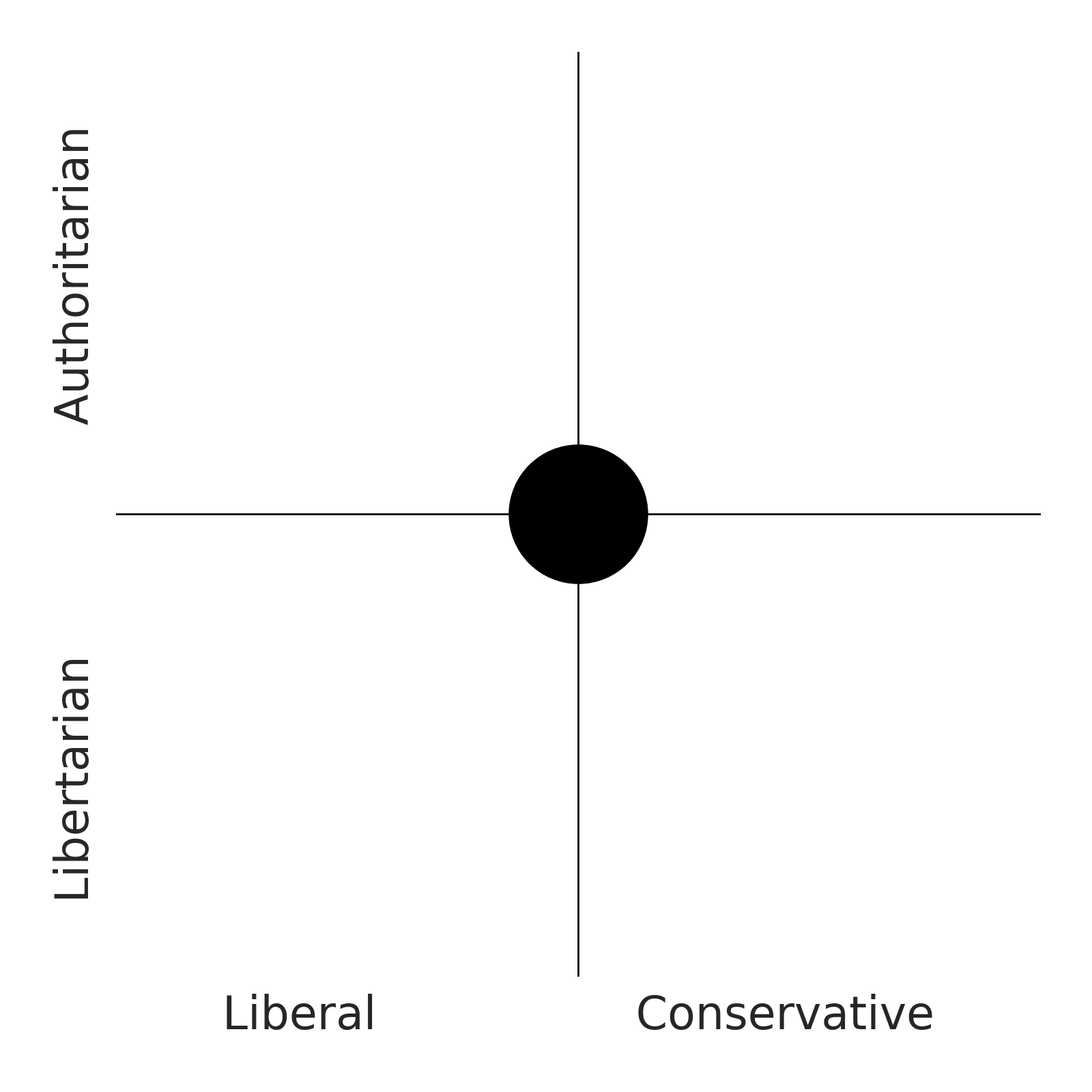
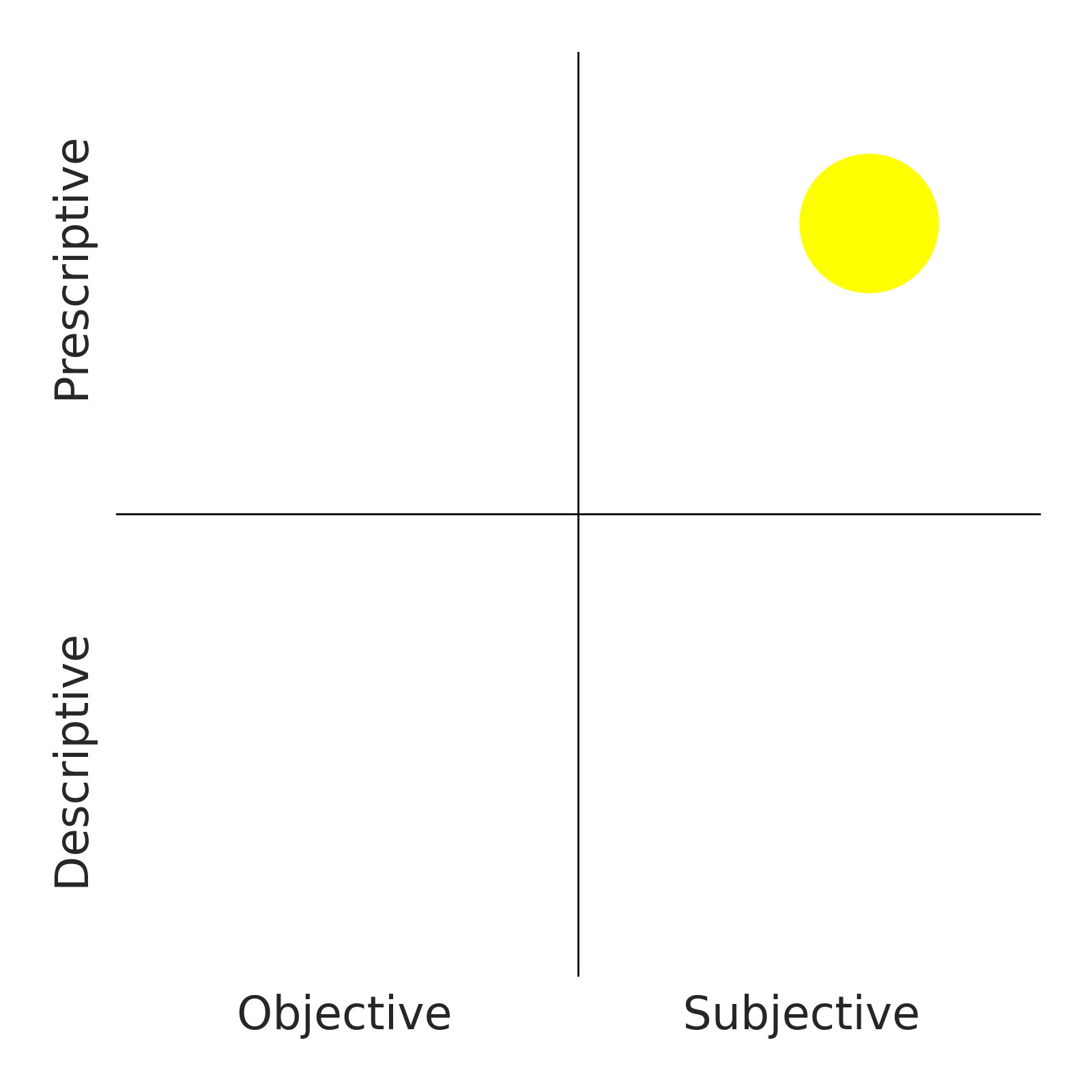
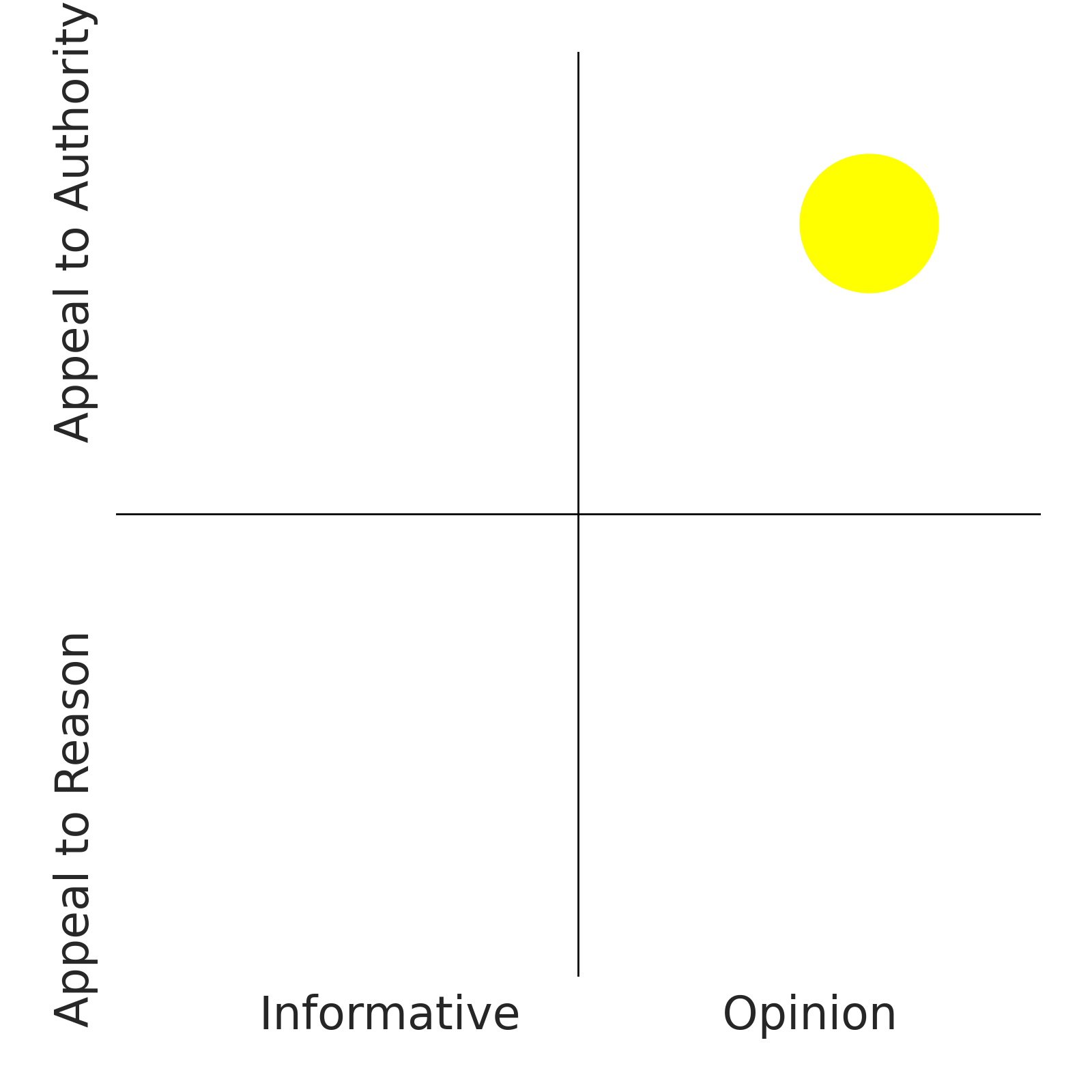
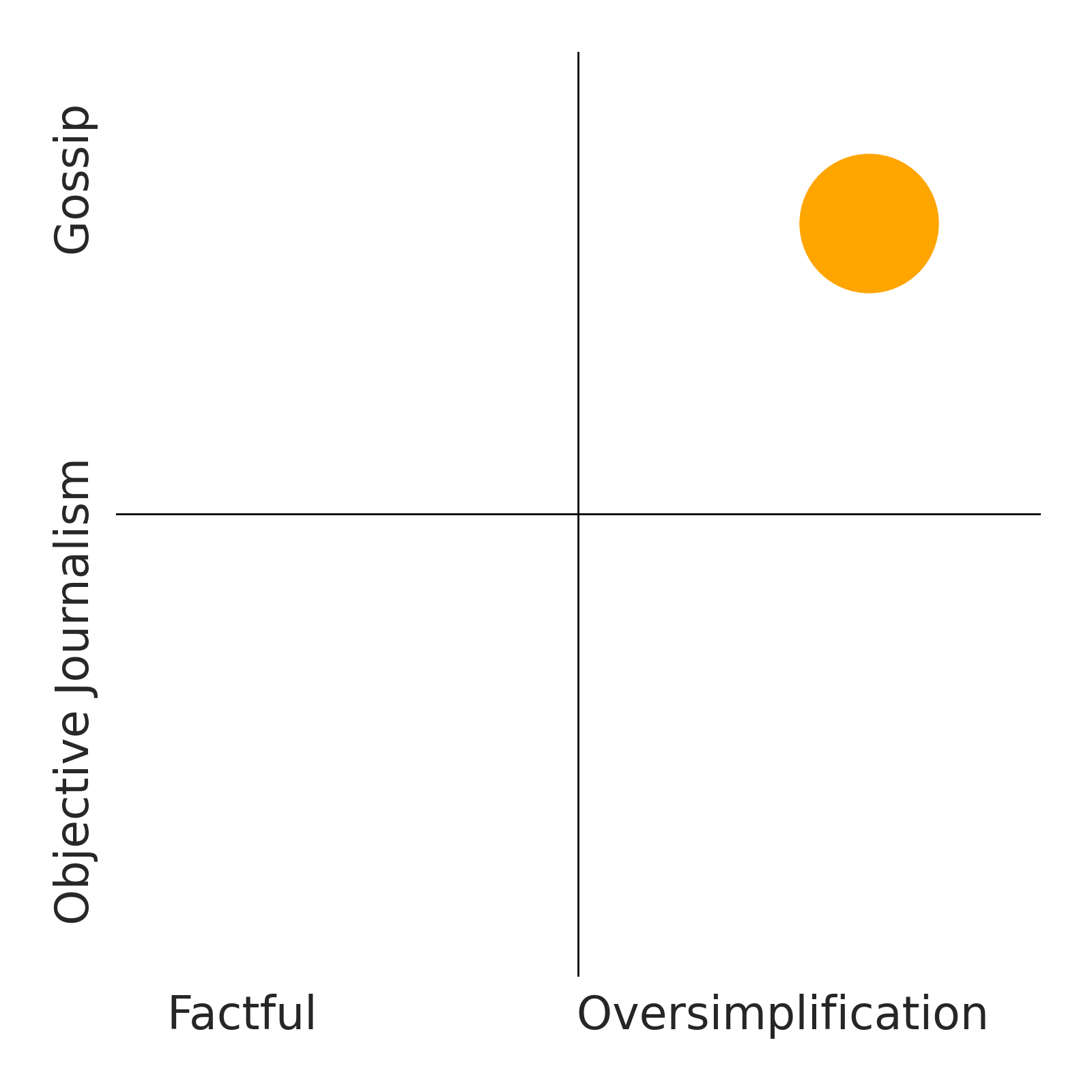
2026 © Helium Trades
Privacy Policy & Disclosure
* Disclaimer: Nothing on this website constitutes investment advice, performance data or any recommendation that any particular security, portfolio of securities, transaction or investment strategy is suitable for any specific person. Helium Trades is not responsible in any way for the accuracy
of any model predictions or price data. Any mention of a particular security and related prediction data is not a recommendation to buy or sell that security. Investments in securities involve the risk of loss. Past performance is no guarantee of future results. Helium Trades is not responsible for any of your investment decisions,
you should consult a financial expert before engaging in any transaction.
Helium Research Assistant

How can I help you today?
Ask any question about Coin Desk bias.