See whether Helium helps you make better-informed decisions. Try every Pro Trader feature for 30 days. No credit card required.
Try every Pro Trader feature for 30 days. No credit card required.
The sample exhibits an industry- and technology-forward “innovation pipeline” frame: partnerships, product launches, regulatory clearances, clinical validation, financing, and revenue growth are recurring signals of importance.
Collaboration is explicitly the most frequent keyword [42], and numerous items concern corporate or institutional partnerships
August 12, 2026 · 0 shares
The publisher neutrally reports a corporate partnership announcement, using factual language and an attributed quote without editorial slant.
Automated analysis; not human reviewed. · 5 of 53 available dimensions scored; omitted dimensions are not treated as neutral. · Verified supporting quotes for 5 of 5 scored dimensions.
Claim: The article is objective, reporting facts and an attributed quote without subjective framing.
“Natera announced on Wednesday that it is collaborating with Kupando Therapeutics on a Phase I clinical trial for skin cancer patients in Germany.” · exact text match
Why: The sentence presents a factual announcement without editorial influence.
Claim: The article is not sensational; it uses straightforward, neutral language.
“Natera announced on Wednesday that it is collaborating with Kupando Therapeutics on a Phase I clinical trial for skin cancer patients in Germany.” · exact text match
Why: No exaggerated or dramatic language is used.
Claim: The article describes the collaboration and trial design without prescribing actions.
“Through the agreement, Natera's blood-based, tissue-free molecular residual disease assay Latitude will be used in Kupando's clinical trial of its lead immunotherapy candidate KUP-101.” · exact text match
Why: The sentence describes what will happen, not what should happen.
Claim: The article is emotionally neutral, containing no emotional language or appeals.
“Natera announced on Wednesday that it is collaborating with Kupando Therapeutics on a Phase I clinical trial for skin cancer patients in Germany.” · exact text match
Why: The wording is strictly factual; no positive or negative emotional tone.
Claim: The article attributes statements to a named executive and provides specific trial details, enhancing credibility.
“The trial will assess serial circulating tumor DNA dynamics as part of treatment response monitoring in patients with advanced tumors across multiple skin cancers.” · exact text match
“KUP-101 is designed to active the innate immune system and induce trained immunity, Natera noted in a statement.” · exact text match
Why: The inclusion of specific trial parameters and an attributed source (Natera's statement) supports trustworthiness.
August 18, 2026 · 0 shares
The article reports a corporate research collaboration in a neutral, factual tone without evaluative language.
Automated analysis; not human reviewed. · 54 of 54 available dimensions scored; omitted dimensions are not treated as neutral. · Verified supporting quotes for 0 of 54 scored dimensions.
August 19, 2026 · 0 shares
The report presents a collaborative partnership announcement in a neutral, press-release-mirroring tone with no observable bias on the measured dimensions.
The partnership aims to advance precision oncology in lung cancer by identifying genomic alterations that could benefit from biomarker-driven therapies.
Automated analysis; not human reviewed. Limitations: Analysis relies on a single press-release-based brief without independent verification; possible selection bias in what the publisher chose to cover. · 9 of 54 available dimensions scored; omitted dimensions are not treated as neutral. · Verified supporting quotes for 4 of 9 scored dimensions.
Claim: The report is written in a fact-based, non-editorializing manner, making it very objective.
“Pillar Biosciences said on Wednesday that it will contribute its next-generation sequencing assay to a partnership in Japan for genomic screening of liquid biopsy samples.” · exact text match
Why: The opening sentence presents verifiable information from the company without subjective evaluation, exemplifying objective reporting.
Claim: The report is presented in a calm, factual tone without emotional or sensational language.
“Pillar Biosciences, LSI Medience Partner on Liquid Biopsy Screening in Japan” · exact text match
Why: The headline uses neutral wording—'Partner' and 'Screening'—lacking sensationalist terms or exaggerated framing.
Claim: The report is a straightforward business announcement with limited appeal beyond industry observers.
“LSI Medience, a Japanese clinical testing company, validated the assay and will perform the testing.” · exact text match
Why: The content is informative but dry and niche, focusing on a routine corporate and research collaboration.
Claim: The report is factful and neutral, with no editorial opinions from the publisher.
“The assay, oncoReveal Essential+, will be used to profile cell-free DNA (cfDNA) and cell-free RNA (cfRNA) from approximately 2,000 Japanese patients with non-small cell lung cancer over a two-year period.” · exact text match
“"LC-SCRUM-Asia has established an important collaborative framework for advancing precision oncology research in lung cancer," said Daniel Harma, chief commercial officer of Natick, Massachusetts-based Pillar Biosciences, in a statement.” · not found in supplied text
Why: Opinions are attributed to named individuals in direct quotes, and the publisher's voice is purely descriptive.
Claim: The report is eminently credible based on clear attribution; information is sourced to named statements from the companies and network representatives.
“"Rapid and reliable genomic testing is essential for identifying patients who may benefit from biomarker driven clinical studies and emerging precision therapies," Koichi Goto, LC-SCRUM-Asia founder and chief of the Department of Thoracic Oncology at Japan's National Cancer Center Hospital East, said in a statement.” · not found in supplied text
Why: The article attributes all claims to specific individuals and organizations, provides contextual details, and does not present unsupported facts, though it relies on a single source without independent verification.
Claim: The report mirrors a press release and includes promotional support for Pillar's assay through executive quotes.
“"LC-SCRUM-Asia has established an important collaborative framework for advancing precision oncology research in lung cancer," said Daniel Harma, chief commercial officer of Natick, Massachusetts-based Pillar Biosciences, in a statement.” · not found in supplied text
“"We are pleased that oncoReveal Essential+ has been validated at LSI Medience for screening both cfDNA and cfRNA samples and look forward to supporting this large-scale project in Japan."” · not found in supplied text
Why: The quotes from Pillar's commercial officer serve to promote the company's technology, giving the piece a mildly promotional tone consistent with an advertorial, although it is not presented as an advertisement.
Claim: The text shows a low but plausible possibility of AI authorship; its formulaic, press-release-like structure and dry style could be machine-generated or human-generated.
“As part of the LC-SCRUM-Asia research network, the partners will profile cell-free DNA and RNA from approximately 2,000 Japanese patients with lung cancer.” · exact text match
“"The use of oncoReveal Essential+ through LSI Medience will provide the LC-SCRUM-Asia network with a highly accurate and accessible liquid biopsy solution."” · not found in supplied text
Why: The text's template-like structure and reliance on press release content make AI or an AI-assisted workflow plausible, but these features are also consistent with human business journalism, warranting a low-confidence setting.
Analysis relies on a single press-release-based brief without independent verification; possible selection bias in what the publisher chose to cover.
July 29, 2026 · 0 shares
Promotional framing of a multi-year industry-university collaboration to advance precision oncology through biomarker discovery and integration into clinical decision-making.
A cross-institutional project combining 10x Genomics' single-cell and spatial biology tools with Lausanne University Hospital's clinical data to identify biomarkers and integrate findings into medical decision-making.
Automated analysis; not human reviewed. · 5 of 52 available dimensions scored; omitted dimensions are not treated as neutral. · Verified supporting quotes for 0 of 5 scored dimensions.
Claim: The article blends factual reporting with forward-looking statements from company representatives.
“"The team will utilize the 10x Flex Apex and Xenium platforms to identify biomarkers from tumors in advanced cancer."” · not found in supplied text
“"We believe single-cell and spatial technologies provide a fundamentally richer view of the biology within tumors and their microenvironment, creating opportunities to discover biomarkers that can help guide treatment decisions and enable future diagnostic approaches in cancer care," said Serge Saxonov, CEO of 10x Genomics, in a statement.” · not found in supplied text
Why: Forward-looking statements accompany descriptive details, contributing to subjective framing.
Claim: The framing emphasizes a credible, beneficial collaboration between industry and a university hospital.
“"This collaboration brings together complementary expertise in spatial biology, pathology, computational AI, and clinical precision oncology to address one of the biggest challenges in cancer care: predicting which patients will benefit from treatment," said Raphael Gottardo, director of the Biomedical Data Science Center at Lausanne University Hospital, in a statement.” · not found in supplied text
“"Together, we aim to discover clinically actionable biomarkers that improve patient selection and bring more precise treatment decisions closer to routine clinical care."” · not found in supplied text
Why: Quotes from a hospital leader and the company's leadership frame the collaboration as credible and beneficial, signaling establishment-friendly framing.
Claim: Language and framing promote the collaboration's potential benefits, functioning like promotional content.
“"The biomarkers may also help predict cancer prognosis and support diagnostic development, the company said."” · not found in supplied text
“"We believe single-cell and spatial technologies provide a fundamentally richer view of the biology within tumors and their microenvironment, creating opportunities to discover biomarkers that can help guide treatment decisions and enable future diagnostic approaches in cancer care," said Serge Saxonov, CEO of 10x Genomics, in a statement.” · not found in supplied text
Why: Promotional phrasing highlights potential benefits and future utility rather than reporting neutral facts.
Claim: Claims about potential clinical impact are framed as likely outcomes rather than certain results.
“"The biomarkers may also help predict cancer prognosis and support diagnostic development, the company said."” · not found in supplied text
“"This collaboration will generate a comprehensive, multimodal resource integrating single-cell and spatial data, and will explore how the identified biomarkers can be incorporated into clinical reporting to support personalized treatment planning and molecular tumor board decision-making."” · not found in supplied text
Why: The language describes potential benefits and future applications rather than established results.
Claim: The piece includes voices from both institutions to appear balanced and credible.
“"This collaboration brings together complementary expertise in spatial biology, pathology, computational AI, and clinical precision oncology to address one of the biggest challenges in cancer care: predicting which patients will benefit from treatment,"” · not found in supplied text
“"Together, we aim to discover clinically actionable biomarkers that improve patient selection and bring more precise treatment decisions closer to routine clinical care."” · not found in supplied text
Why: Inclusion of statements from both sides supports perceived integrity and balanced framing.
Industry-collaboration framing presents the GSK-Relation deal as a positive, ecosystem-wide push toward AI-enabled cellular models for drug discovery.
Automated analysis; not human reviewed. · 1 of 52 available dimensions scored; omitted dimensions are not treated as neutral. · Verified supporting quotes for 1 of 1 scored dimensions.
Claim: Framing emphasizes a positive, ecosystem-wide push for AI-enabled cellular models within industry collaboration.
“GSK and Relation join a host of other efforts to generate multimodal dataset for building AI cell models.” · exact text match
Why: Directly indicates the article positions the deal within a broader ecosystem and frames it as beneficial to industry progress.
Framing emphasizes philanthropic in-kind support to expand equitable access to advanced genomic analysis for underserved children, presenting the collaboration as a constructive, accessibility-driven initiative.
Automated analysis; not human reviewed. Limitations: Ambiguity around the exact date of the announcement (Monday) and the lack of precise date in the text. · 2 of 52 available dimensions scored; omitted dimensions are not treated as neutral. · Verified supporting quotes for 0 of 2 scored dimensions.
Claim: The publisher frames collaboration as a positive, establishment-friendly philanthropic partnership
“"This collaboration reflects our shared commitment to making advanced genomic analysis more accessible to under-resourced communities."” · not found in supplied text
“"By providing our platform as an in-kind contribution, we hope to help reduce barriers to genomic diagnostics and support Genetic Alliance's efforts to expand equitable access for patients with rare diseases."” · not found in supplied text
Why: Direct quotes emphasize accessibility and in-kind support as positive elements of the collaboration.
Claim: The publisher signals fairness by highlighting in-kind contributions and preserving attribution
“"By providing our platform as an in-kind contribution, we hope to help reduce barriers to genomic diagnostics and support Genetic Alliance's efforts to expand equitable access for patients with rare diseases."” · not found in supplied text
Why: The use of a formal quote about in-kind contribution suggests transparent portrayal of the collaboration.
Ambiguity around the exact date of the announcement (Monday) and the lack of precise date in the text.
Its wording is usually wire-service-like and descriptive, with named companies, regulators, journals, executives, financial figures, and technical specifications.
That improves traceability, but many claims remain company-supplied rather than independently verified: the product roundup reproduces vendor performance and cost claims
A plainly descriptive trade-magazine product roundup that relays corporate announcements and product specifications as attributed facts, without analysis, context, or critical distance.
The European Union's In Vitro Diagnostic Regulation (IVDR) is replacing the earlier In Vitro Diagnostic Directive, with a transition period that runs until December 2028; this context explains why vendors are announcing IVDR-certified products now. The piece is a compilation of company press releases presented without independent verification.
Automated analysis; not human reviewed. Limitations: The source is a trade-press compilation of vendor announcements with occasional JSON/XML encoding artifacts that can disrupt quoting; the analysis cannot independently verify any of the companies' claims. All assessments reflect the frame of a B2B product-news column rather than in-depth journalism. · 6 of 54 available dimensions scored; omitted dimensions are not treated as neutral. · Verified supporting quotes for 5 of 6 scored dimensions.
Claim: The prose is detached and factual, reporting product details as objective statements without subjective evaluation.
“According to Biomodal, Duet Mosaic assays can read multiple layers of biology from the same DNA sample, including genetic variants, DNA methylation, and fragmentomics.” · exact text match
Why: Third-person declarative statements, specific quantities, and attribution to sources are used throughout; no personal or evaluative language appears.
Claim: The register is measured and clinical, with no hype, urgency, or exaggeration beyond what the companies claim.
“Available now for research use, Duet +modC Mosaic and Duet 6-base Mosaic assays come in eight-, 24-, and 96-reaction formats and are compatible with standard short-read sequencing platforms.” · exact text match
Why: The language is flat and matter-of-fact, confined to formats, compatibility, and availability; even the most promotional phrases are attributed to the vendors.
Claim: The report is purely descriptive, relaying product specifications, formats, and availability without prescription or judgment.
“OGT, a Sysmex Group company, has launched IVDR-certified CytoCell Prenatal X, Y, 13, 18 and 21 probe kits, designed for clinical cytogenetics and prenatal diagnostic laboratories requiring IVDR-certified FISH probes for routine and rapid aneuploidy testing.” · exact text match
Why: The text consists entirely of descriptive product facts and attributed statements with no recommendations, imperatives, or value judgments.
Claim: The content is factual and value-neutral, offering no opinion or evaluation of the products.
“The beads are stable at room temperature, RNase free, and interchangeable with gold standard beads for size selection protocols, making them a cost-effective alternative for almost any lab, Integra said.” · not found in supplied text
Why: All statements are framed as product facts or attributed to the companies, and the article endorses no position or course of action.
Claim: The reporting is generally trustworthy within its trade-press format, with disciplined attribution and specific, checkable facts.
“Each compound is mapped to a curated four-level hierarchy of toxicity mechanisms anchored to established adverse outcome pathways (AOPs). The company said it will begin pilot programs with pharmaceutical companies in the coming months.” · exact text match
Why: Claims are attributed (e.g., 'the company said', 'according to') and include precise numbers that could be verified, supporting credibility; however, the piece provides no independent verification or counterbalancing sources.
Claim: The column functions largely as republished press releases, and the promotional self-descriptions of the vendors are carried without critical commentary.
“making them a cost-effective alternative for almost any lab, Integra said” · exact text match
Why: The text reproduces company marketing language at length and without challenge, giving vendors free promotional space, though the content remains informative and clearly attributed.
The source is a trade-press compilation of vendor announcements with occasional JSON/XML encoding artifacts that can disrupt quoting; the analysis cannot independently verify any of the companies' claims. All assessments reflect the frame of a B2B product-news column rather than in-depth journalism.
August 17, 2026 · 0 shares
Promotional framing centered on a company's new product launch, relying largely on CEO claims without independent verification or critical balance.
Automated analysis; not human reviewed. Limitations: The article is primarily a product launch release based on CEO statements; no independent validation or balanced expert commentary is included. · 54 of 54 available dimensions scored; omitted dimensions are not treated as neutral. · Verified supporting quotes for 9 of 54 scored dimensions.
Claim: The article blends factual product details with promotional subjective claims, prominently featuring CEO assertions without independent verification.
“It is the first platform for monitoring multiple organs simultaneously for drug toxicity, according to Jack Kennefick, Tagomics CEO and cofounder.” · exact text match
Why: The reliance on a CEO's unverified superlative claim shifts from objective reporting toward subjective marketing language.
Claim: The article uses mildly sensational promotional language, such as 'suggests' and 'promising', but remains largely factual in tone.
“Kennefick said that the initial data from preclinical and clinical studies performed with these partners is promising” · exact text match
Why: A promotional descriptor like 'promising' introduces positive spin, but the article largely sticks to descriptive reporting of the product launch.
Claim: The article presents a positive outlook on the product and company, emphasizing benefits and potential, without significant critical or skeptical content.
“It relies on Active-Seq, Tagomics' epigenomic profiling platform, which in turn is built on the company's Azide Click Tagging for In Vitro Epigenomic sequencing technology” · not found in supplied text
Why: The overall framing highlights the product's potential and company growth, reflecting a bullish tone even if not explicitly forecasting stock performance.
Claim: The article adopts an optimistic tone about the product's future impact and current progress.
“LiquiPath, in contrast, takes a more agnostic approach to the source of potential injury.” · exact text match
Why: Emphasizing advantages over traditional methods and citing promising early data conveys optimism rather than skepticism.
Claim: The article frequently relies on statements from the CEO as authoritative, without independent expert opinions or data.
“Kennefick said that the initial data from preclinical and clinical studies performed with these partners is promising” · exact text match
Why: The narrative is largely driven by the CEO's assertions, making the authority of a company executive a primary source of credibility.
Claim: The article presents unverified claims of promise and capability with higher certainty than the evidence warrants.
“It is the first platform for monitoring multiple organs simultaneously for drug toxicity, according to Jack Kennefick” · exact text match
Why: The CEO's claim of being 'first' is stated without independent verification, yet the article does not hedge beyond attribution.
Claim: The article functions partly as a product announcement and promotional piece for the company's new test, lacking critical perspective.
“Tagomics, a Cambridge, UK-based startup that's developed a platform for enriching unmethylated DNA, today launched LiquiPath, a cell-free DNA (cfDNA)-based blood test for drug safety monitoring powered by that technology.” · exact text match
Why: The article focuses on promoting the product's launch and capabilities, echoing a press release format rather than independent journalism.
Claim: The article presents the company and its product in a favorable light without critical scrutiny or alternative viewpoints.
“The company is offering the test under an early-access program to approximately 10 partners, and several companies, including AstraZeneca, have already joined.” · exact text match
Why: Highlighting partnerships and positive progress without independent assessment indicates a pro-corporate stance.
Claim: The article explains the scientific mechanism of the technology in a detailed and empirical manner.
“As described in a 2025 publication, the Active-Seq workflow uses a mutated methyltransferase enzyme to add azide tags to genomic CpG sites lacking certain epigenetic modifications, including methylation.” · exact text match
Why: The scientific description is specific and grounded in molecular biology, reflecting a scientific approach.
Claim: The article attributes claims primarily to the CEO and does not disclose potential conflicts of interest or provide independent verification.
“Kennefick said that the initial data from preclinical and clinical studies performed with these partners is promising, but he declined to share specifics or how much Tagomics is charging for access to LiquiPath.” · exact text match
Why: Not providing data or pricing and relying on claims from the product's own executive raises questions of completeness and independence.
The article is primarily a product launch release based on CEO statements; no independent validation or balanced expert commentary is included.
Newborn genetic screening for childhood cancer is presented as a promising opportunity with acknowledged economic and scientific uncertainties.
Many U.S. state newborn screening programs store dried blood spot samples and screen for metabolic and endocrine conditions, but cancer-predisposition genes are not yet part of standard public health newborn screening.
Automated analysis; not human reviewed. Limitations: None; the analysis is based solely on the supplied article text and does not attempt external verification of the underlying research. · 8 of 54 available dimensions scored; omitted dimensions are not treated as neutral. · Verified supporting quotes for 0 of 8 scored dimensions.
Claim: The reporting is method-laden and source-attributed, with explicit awareness of uncertainty rather than personal editorial framing.
“The researchers performed target next-generation sequencing on the samples using an 11-gene cancer predisposition panel” · exact text match
“This extrapolation is not a measurement of variant penetrance” · not found in supplied text
Why: The facts are tied to a named journal, study, and methods, and the text explicitly notes limits on what the numbers mean.
Claim: The report avoids exaggerating results, using conditional language and flagging unresolved evaluation questions.
“though the economic and public health implications still need to be evaluated” · not found in supplied text
“Therefore, it remains to be seen the cost saving between the targeted panel used in the study versus whole-genome sequencing” · exact text match
Why: The report repeatedly uses qualifying phrases and explicitly states that important impacts have not yet been measured.
Claim: The reporting emphasizes the possible benefits of screening while acknowledging limitations, creating a moderately optimistic overall frame.
“Newborn genetic screening could help identify some children at risk for early onset cancer, potentially altering their survival outcomes and treatment courses” · not found in supplied text
“It is more than just healthcare dollars, it is also quality of life” · exact text match
Counterevidence:
“Despite its promises, the economic and public health implications of newborn genetic screening for cancer risk remains to be evaluated.” · exact text match
Why: Lead language and expert quotes trend toward expected benefit and quality-of-life gains, though a clear caveat appears in the same text.
Claim: The article reports the findings as a peer-reviewed study with named institutions, named researchers, discrete methods, and clear limits.
“Published in Nature Communications on Wednesday, the retrospective study demonstrates this” · not found in supplied text
“The researchers analyzed the results of 1,948 children born in Michigan between 1987 and 2020” · not found in supplied text
Why: The presence of a specific article, named principle investigator, sample cohort, methodology, and acknowledged limitations supports trustworthiness.
Claim: The report openly includes limitations such as unknown penetrance, the absence of cost analysis, and equity concerns.
“We do not know how often we will detect variants that don't result in cancer in early childhood” · exact text match
“The researchers did not perform an individual cost, analysis for the workflow” · not found in supplied text
Why: The article transparently reports that important uncertainty remains, which is an internally honest and fair approach.
None; the analysis is based solely on the supplied article text and does not attempt external verification of the underlying research.
Reporting frames tissue-specific aging clocks as a promising early-detection lead but deliberately tempers that optimism with prominent methodological caveats, presenting the work as preliminary rather than proven.
The Genotype-Tissue Expression project is a public resource linking human tissue gene expression and genotypes; biological age can be estimated through molecular clocks such as DNA methylation and telomere length. Tissue-based aging measures require tissue samples, making minimally invasive blood-based markers clinically attractive.
Automated analysis; not human reviewed. Limitations: The article text lacks an exact publication date and external citation beyond 'Nature Medicine', so independent verification of the original study was not possible. · 2 of 54 available dimensions scored; omitted dimensions are not treated as neutral. · Verified supporting quotes for 0 of 2 scored dimensions.
Claim: The report attaches the findings to a named peer-reviewed journal and preserves source caveats.
“The findings appeared in Nature Medicine on Friday.” · exact text match
“However, we note that the absolute age-calibration of predicted tissue-specific age gaps from blood cannot be verified in external cohorts without paired tissue histology.” · not found in supplied text
Why: Attribution to a named journal plus inclusion of internal limitations gives the text visible credibility markers.
Claim: The article does not suppress the limitations of the underlying study.
“However, we note that the absolute calibration of predicted tissue-specific age gaps from blood cannot be verified in external cohorts without paired tissue histology, also that the validation was performed on people with prevalent disease, demonstrating associations with existing conditions.” · not found in supplied text
Why: The publisher includes negative or qualifying observations, indicating honest treatment of findings.
The article text lacks an exact publication date and external citation beyond 'Nature Medicine', so independent verification of the original study was not possible.
August 19, 2026 · 0 shares
A heavily attributed, neutral report that relays Oxford Nanopore's new strategy, its cross-licensing agreement, and mixed H1 2026 results, including an acknowledged revenue shortfall, without editorial judgment.
Oxford Nanopore is a UK-headquartered life-sciences company that develops and sells nanopore-based DNA/RNA sequencing products and is listed on the London Stock Exchange; the report covers the six months ended June 30, 2026, the company's fiscal first half.
Automated analysis; not human reviewed. Limitations: The analysis treats the provided text as the publisher's complete article, but the included material contained separate navigation, advertising, and 'Premium' link elements that were excluded per the instructions; financial figures are taken as presented and were not independently verified. · 3 of 54 available dimensions scored; omitted dimensions are not treated as neutral. · Verified supporting quotes for 2 of 3 scored dimensions.
Claim: The report is a neutral, objective financial-results article.
“The results came in below internal expectations” · exact text match
Why: The article relays a negative data point factually and without spin, attributing figures to sources and displaying a source-attributed, objective reporting style rather than advocacy or political framing.
Claim: The article exhibits high credibility through visible sourcing, attribution, and transparency.
“This story has been updated to include additional information from Oxford Nanopore's earnings call.” · exact text match
Why: The publisher discloses its updates, identifies named sources (e.g., CFO Nick Keher, CEO Francis Van Parys), and attributes data, signaling transparency typical of high-credibility reporting; however, it relies on company-provided financial information without independent verification.
The analysis treats the provided text as the publisher's complete article, but the included material contained separate navigation, advertising, and 'Premium' link elements that were excluded per the instructions; financial figures are taken as presented and were not independently verified.
August 17, 2026 · 0 shares
Promotional framing centered on a company's new product launch, relying largely on CEO claims without independent verification or critical balance.
Automated analysis; not human reviewed. Limitations: The article is primarily a product launch release based on CEO statements; no independent validation or balanced expert commentary is included. · 54 of 54 available dimensions scored; omitted dimensions are not treated as neutral. · Verified supporting quotes for 9 of 54 scored dimensions.
Claim: The article blends factual product details with promotional subjective claims, prominently featuring CEO assertions without independent verification.
“It is the first platform for monitoring multiple organs simultaneously for drug toxicity, according to Jack Kennefick, Tagomics CEO and cofounder.” · exact text match
Why: The reliance on a CEO's unverified superlative claim shifts from objective reporting toward subjective marketing language.
Claim: The article uses mildly sensational promotional language, such as 'suggests' and 'promising', but remains largely factual in tone.
“Kennefick said that the initial data from preclinical and clinical studies performed with these partners is promising” · exact text match
Why: A promotional descriptor like 'promising' introduces positive spin, but the article largely sticks to descriptive reporting of the product launch.
Claim: The article presents a positive outlook on the product and company, emphasizing benefits and potential, without significant critical or skeptical content.
“It relies on Active-Seq, Tagomics' epigenomic profiling platform, which in turn is built on the company's Azide Click Tagging for In Vitro Epigenomic sequencing technology” · not found in supplied text
Why: The overall framing highlights the product's potential and company growth, reflecting a bullish tone even if not explicitly forecasting stock performance.
Claim: The article adopts an optimistic tone about the product's future impact and current progress.
“LiquiPath, in contrast, takes a more agnostic approach to the source of potential injury.” · exact text match
Why: Emphasizing advantages over traditional methods and citing promising early data conveys optimism rather than skepticism.
Claim: The article frequently relies on statements from the CEO as authoritative, without independent expert opinions or data.
“Kennefick said that the initial data from preclinical and clinical studies performed with these partners is promising” · exact text match
Why: The narrative is largely driven by the CEO's assertions, making the authority of a company executive a primary source of credibility.
Claim: The article presents unverified claims of promise and capability with higher certainty than the evidence warrants.
“It is the first platform for monitoring multiple organs simultaneously for drug toxicity, according to Jack Kennefick” · exact text match
Why: The CEO's claim of being 'first' is stated without independent verification, yet the article does not hedge beyond attribution.
Claim: The article functions partly as a product announcement and promotional piece for the company's new test, lacking critical perspective.
“Tagomics, a Cambridge, UK-based startup that's developed a platform for enriching unmethylated DNA, today launched LiquiPath, a cell-free DNA (cfDNA)-based blood test for drug safety monitoring powered by that technology.” · exact text match
Why: The article focuses on promoting the product's launch and capabilities, echoing a press release format rather than independent journalism.
Claim: The article presents the company and its product in a favorable light without critical scrutiny or alternative viewpoints.
“The company is offering the test under an early-access program to approximately 10 partners, and several companies, including AstraZeneca, have already joined.” · exact text match
Why: Highlighting partnerships and positive progress without independent assessment indicates a pro-corporate stance.
Claim: The article explains the scientific mechanism of the technology in a detailed and empirical manner.
“As described in a 2025 publication, the Active-Seq workflow uses a mutated methyltransferase enzyme to add azide tags to genomic CpG sites lacking certain epigenetic modifications, including methylation.” · exact text match
Why: The scientific description is specific and grounded in molecular biology, reflecting a scientific approach.
Claim: The article attributes claims primarily to the CEO and does not disclose potential conflicts of interest or provide independent verification.
“Kennefick said that the initial data from preclinical and clinical studies performed with these partners is promising, but he declined to share specifics or how much Tagomics is charging for access to LiquiPath.” · exact text match
Why: Not providing data or pricing and relying on claims from the product's own executive raises questions of completeness and independence.
The article is primarily a product launch release based on CEO statements; no independent validation or balanced expert commentary is included.
August 19, 2026 · 0 shares
Reports the company launch in a factual press-release style, placing an optimistic but non-deceptive emphasis on the scale of the financing and the potential of the AI technology.
Automated analysis; not human reviewed. Limitations: The analysis relies solely on the supplied text, which appears to be a brief trade press article based on a company press release; no later developments are considered. · 6 of 54 available dimensions scored; omitted dimensions are not treated as neutral. · Verified supporting quotes for 5 of 6 scored dimensions.
Claim: The article does not expose any partisan political leaning; it appears neutral on political matters.
“Network Bio launched on Wednesday with $50 million in financing” · exact text match
Why: The report is devoid of political content, making it non-political rather than politically neutral.
Claim: The article reports facts in a neutral, descriptive style and attributes subjective claims to sources.
“Network Bio launched on Wednesday with $50 million in financing” · exact text match
“Asad Ali Ahmad, cofounder and CEO of Network Bio, said in a statement” · exact text match
Why: The piece contains largely factual statements about the company's launch, funding, and partnership; the only emotional assertion is presented as an attributed quote.
Claim: The article does not use exaggerated or fear-inducing language.
“This is the future of medicine.” · exact text match
“The Palo Alto, California-based startup will use the financing to advance its mission” · exact text match
Why: All hyperbolic or promotional language appears in direct quotes or is attributed to company leaders rather than being the publisher's own framing.
Claim: The article is non-political; it does not discuss policy, elections, or parties.
“Network Bio will create a population-scale cfRNA foundation model” · exact text match
Why: The report stays within science and business topics and never touches on political matters.
Claim: The article demonstrates visible sourcing and attribution practices.
“Asad Ali Ahmad, cofounder and CEO of Network Bio, said in a statement.” · exact text match
Why: The article names investors, partners, and data sources while attributing the sole testimonial to a named executive.
Claim: The article is well-written but reads like a press release, reflecting moderate intellectual sophistication.
“implementing a tone indicative of a professional trade publication” · not found in supplied text
“coverage of the launch is accessible” · not found in supplied text
Why: Reads as a standard company announcement, not a piece of high intellectual complexity.
The analysis relies solely on the supplied text, which appears to be a brief trade press article based on a company press release; no later developments are considered.
August 14, 2026 · 0 shares
A forward-looking corporate announcement is framed as enthusiastic business news, with favorable internal quotes and regulatory timelines presented more like momentum than risk.
CE-IVDR and UKCA are regulatory conformity systems for in-vitro diagnostics in the European Union and the UK, respectively; MCED means multicancer early detection. No other external background is required beyond the report.
Automated analysis; not human reviewed. Limitations: The supplied article is largely company-sourced announcements and executive quotes; independent verification of the reported performance, funding, and regulatory timeline was not available in the input. · 5 of 54 available dimensions scored; omitted dimensions are not treated as neutral. · Verified supporting quotes for 0 of 5 scored dimensions.
The supplied article is largely company-sourced announcements and executive quotes; independent verification of the reported performance, funding, and regulatory timeline was not available in the input.
August 17, 2026 · 0 shares
The article reports unambiguously bullish analyst assessments of Freenome with no critical perspective or cautionary details, framing the company's prospects in consistently positive terms.
Freenome is a biotech company developing blood-based cancer screening tests, including SimpleScreen CRC for colorectal cancer. The company recently went public via SPAC and received FDA approval for its first test, positioning itself in the emerging liquid biopsy and multi-cancer early detection market.
August 18, 2026 · 0 shares
Framing favors the company by presenting analyst bullishness and growth projections with limited critical weighting of acknowledged risks.
Freenome is a liquid biopsy company that recently went public via SPAC and received FDA clearance for its colorectal cancer screening test.
Automated analysis; not human reviewed. Limitations: The article is a financial analyst note summary; cannot verify underlying projections or company claims. · 14 of 54 available dimensions scored; omitted dimensions are not treated as neutral. · Verified supporting quotes for 10 of 14 scored dimensions.
Claim: No political or ideological framing; purely financial and analytical.
“TD Cowen on Tuesday initiated coverage of Freenome with a Buy rating and a price target of $17.” · exact text match
Why: Content lacks any political or liberal-conservative dimension.
Claim: Predominantly factual reporting with some reliance on analyst opinions and projections.
“In a note to investors, analyst Dan Brennan wrote that the company has differentiated liquid biopsy chemistry...” · not found in supplied text
Why: Article reports analyst views and projections as facts, but also includes stock price and factual background.
Claim: No sensational language; straightforward financial coverage.
“Shares of Freenome finished Tuesday trading on the Nasdaq up more than 3 percent at $13.45.” · exact text match
Why: No exaggerated or sensationalist elements present.
Claim: Overall bullish on Freenome due to Buy rating and positive outlook.
“TD Cowen initiated coverage with a Buy rating and a price target of $17.” · not found in supplied text
Why: Starts with bullish rating and highlights positive projections and partnerships.
Claim: Optimistic tone emphasizing growth potential despite noted risks.
“roadmap in multi-cancer early detection (MCED) and single-cancer screening that supports a sales ramp...” · not found in supplied text
Why: Focus on projected sales growth and future success while listing risks but not dwelling on them.
Claim: Mostly descriptive with implicit investment recommendation.
“initiated coverage of Freenome with a Buy rating” · exact text match
Why: Describes analyst actions while implicitly guiding investors.
Claim: Relies heavily on analyst and investment bank authority.
“analyst Dan Brennan wrote that the company has differentiated liquid biopsy chemistry” · exact text match
Why: Frames the investment thesis through analyst credibility.
Claim: Confidence in projections presented as likely achievable.
“supports a sales ramp from $107 million in 2026 to $242 million by 2030 and approximately $1 billion by 2035.” · exact text match
Why: Sales projections presented with certainty but based on analyst estimates, not facts.
Claim: Focus on mainstream financial analysts and Wall Street norms.
“Multiple investment banks including Leerink, Jeffries, and BTIG have initiated coverage of Freenome in the past week.” · exact text match
Why: Relies on established financial institutions and conventional investment analysis.
Claim: Credible financial reporting with attributed analyst quotes and factual context.
“Shares of Freenome finished Tuesday trading on the Nasdaq up more than 3 percent at $13.45.” · exact text match
Why: Provides specific data points and attributes opinions to named analysts.
Claim: Analysis is based on reasoned financial projections and acknowledged risks.
“High cash burn, $1 billion in projected capital raises, and limited visibility on key pipeline products are risks, Brennan noted.” · exact text match
Why: The report includes quantified projections and specified risks, indicating rational analytical approach.
Claim: Significant speculative forecasting based on analyst projections.
“supports a sales ramp from $107 million in 2026 to $242 million by 2030 and approximately $1 billion by 2035.” · exact text match
Why: Future sales and growth are speculative estimates.
Claim: Balanced by including risks and analyst attribution.
“High cash burn, $1 billion in projected capital raises, and limited visibility on key pipeline products are risks, Brennan noted.” · exact text match
Why: Article acknowledges risks and attributes statements to the analyst, showing some balance.
The article is a financial analyst note summary; cannot verify underlying projections or company claims.
August 14, 2026 · 0 shares
A routine business-update frame built around the company's stated rationale for the layoff and Proteus delay, using plainly attributed figures and little editorial interpretation.
Automated analysis; not human reviewed. Limitations: No independent verification of Quantum-Si's claims is possible from the supplied text, and the exact publication date is missing. · 3 of 54 available dimensions scored; omitted dimensions are not treated as neutral. · Verified supporting quotes for 0 of 3 scored dimensions.
Claim: The reporting is predominantly factual and relies on company statements and attributed executive explanations rather than opinion.
“Quantum-Si on Thursday said it is laying off it is laying off roughly 20 percent of its workforce as it pushes back the launch of its Proteus protein sequencing system to the second quarter of 2027.” · not found in supplied text
Why: Key claims are attributed to the company or CEO Jeff Hawkins, with financial figures given straightforwardly and without editorial commentary.
Claim: The article reports the layoff and delay in a restrained, numbers-driven manner rather than a dramatic or emotionally charged style.
“The company projected that the cuts will extend its cash runway from Q2 2028 to Q4 2028.” · not found in supplied text
“The initial version of the instrument will be able to sequence around 6 million to 7 million peptides per experiment.” · exact text match
Why: The report avoids hyperbolic language and instead relies on company forecasts, financial metrics, and neutral operational details.
Claim: The article displays strong visible sourcing and attribution practices.
“On a conference call following the release of Quantum-Si's Q2 2026 financial results, President and CEO Jeff Hawkins said the company was delaying the Proteus launch.” · not found in supplied text
“The company posted a net loss in Q2 of $23.5 million, or $.11 per share, compared to a net loss of $28.8 million, or $.16 per share, a year ago.” · not found in supplied text
Why: The report attributes statements to a named executive, uses exact corporate figures, and clearly distinguishes company projections from earlier targets.
No independent verification of Quantum-Si's claims is possible from the supplied text, and the exact publication date is missing.
The reporting is factual and straightforward, focusing on the regulatory setback and its financial implications, with direct quotes from company officials and no apparent editorial slant.
OraSure Technologies acquired Sherlock Biosciences in late 2024. Sherlock had developed the InteliQuick CT/NG test and had also been known for CRISPR-based assays. The company had been subject to shareholder criticism and revenue declines related to public health funding.
Automated analysis; not human reviewed. Limitations: The article text includes only the initial paragraphs and some later quotes; some sections may be truncated, but the available content is sufficient. · 53 of 54 available dimensions scored; omitted dimensions are not treated as neutral. · Verified supporting quotes for 3 of 53 scored dimensions.
Claim: Reporting is largely objective, using company statements and regulatory filings without editorializing.
“OraSure Technologies recently disclosed that it has withdrawn the US Food and Drug Administration 510(k) and CLIA waiver submission for its InteliQuick CT/NG point-of-care molecular test” · exact text match
Why: The article reports facts, quotes officials, and avoids subjective language.
Claim: No sensational language; tone is neutral and businesslike.
“The firm said it will now miss its targeted 2026 launch, ultimately resulting in $22.6 million in contingency-related income related to its acquisition of Sherlock Biosciences.” · exact text match
Why: Language is factual and measured.
Claim: Slightly optimistic tone about the company's future despite the delay.
“While we're disappointed by the delay in bringing InteliQuick CT/NG to the US market, our conviction in the product and opportunity has only grown.” · exact text match
Counterevidence:
“We're clearly disappointed in the delayed timing.” · not found in supplied text
Why: The article includes positive outlook from company officials.
Claim: Slightly optimistic overall, emphasizing cost offsets and continued confidence.
“In an unanticipated way, we expect that to cost less.” · not found in supplied text
Why: Mixed but leans slightly optimistic due to management's statements.
The article text includes only the initial paragraphs and some later quotes; some sections may be truncated, but the available content is sufficient.
August 19, 2026 · 0 shares
Evenly sourced legal reporting frames the appellate outcome as a clean defeat for 10x Genomics while attributing the substantive holding of invalidity to the lower tribunal.
Inter partes review (IPR) is a US Patent and Trademark Office trial proceeding—held before the Patent Trial and Appeal Board—that allows third parties to challenge patent validity on grounds such as obviousness using prior art; appeals from PTAB decisions go to the US Court of Appeals for the Federal Circuit.
Automated analysis; not human reviewed. Limitations: The article is a short press-dispatch summary that may omit details of the parties' appellate arguments or the underlying technology; I could not independently verify the legal rulings from the supplied text. · 9 of 54 available dimensions scored; omitted dimensions are not treated as neutral. · Verified supporting quotes for 6 of 9 scored dimensions.
Claim: The reporting is strictly factual and avoids subjective characterization.
“The US Court of Appeals for the Federal Circuit on Wednesday upheld a decision from the US Patent Trial and Appeal Board that invalidated three patents held by 10x Genomics” · exact text match
Why: The lead sentence reports the exact court, the action taken, the body that previously ruled, and the number of patents at issue—pure factual reporting with no evaluative language.
Claim: The reporting is sober and contains no sensational language.
“10x declined to comment.” · exact text match
Why: The article closes with a routine statement that the company declined to comment, illustrating a restrained, non-hyperbolic treatment of the dispute, and no inflammatory vocabulary appears anywhere.
Claim: The text describes events without recommending any action or outcome.
“After Parse Bio had asked for a review of the patents, the US Patent Trial and Appeal Board in early 2025 deemed the intellectual property "unpatentable as obvious"” · not found in supplied text
Why: The passage recounts the procedural history and the board's legal conclusion without endorsing, criticizing, or casting judgment on the outcome.
Claim: No opinionated language appears.
“The US Patent Trial and Appeal Board in early 2025 deemed the intellectual property 'unpatentable as obvious'” · not found in supplied text
Why: All claims are presented as verifiable procedural history or attributed statements; there is no commentary on the merits.
Claim: Existing coverage is unemotional.
“The court upheld a ruling from the US Patent Trial and Appeal Board that invalidated several of 10x's patent claims.” · exact text match
Why: The text uses flat, formal legal language throughout, with no emotional framing.
Claim: The article demonstrates high source awareness and accurate attribution.
“"Parse welcomes the Federal Circuit’s affirmance of the invalidation of 10x’s patents," a company spokesperson said in a statement. 10x declined to comment.” · not found in supplied text
“as cited in article” · not found in supplied text
Why: The reporter attributes the only effectively evaluative statement to a named spokesperson, identifies the parties and patents precisely, and distinguishes between related but separate proceedings, signaling conscientious sourcing.
Claim: The text is human-written.
“which became part of 10x a year ago” · exact text match
Why: Slightly informal phrasing and word order characteristic of human editorial writing; no repetitive or mechanical text patterns suggesting machine generation.
Claim: The article synthesizes multiple legal proceedings coherently.
“The ruling does not affect a separate court decision, issued last year by the US District Court for the District of Delaware, that sided with Parse Bio” · exact text match
Why: The piece carefully parses related but distinct federal and agency rulings for lay readers, though it contains a minor typographical artifact in the quote block.
The article is a short press-dispatch summary that may omit details of the parties' appellate arguments or the underlying technology; I could not independently verify the legal rulings from the supplied text.
These features resemble observable propaganda-adjacent techniques—bandwagon/appeal-to-authority through partnerships and analyst consensus, prestige transfer through FDA or journal references, and “innovation” framing—but the record does not establish coordinated persuasion, deception, or political propaganda.
There is little evidence of partisan political bias
August 19, 2026 · 0 shares
Reports the company launch in a factual press-release style, placing an optimistic but non-deceptive emphasis on the scale of the financing and the potential of the AI technology.
Automated analysis; not human reviewed. Limitations: The analysis relies solely on the supplied text, which appears to be a brief trade press article based on a company press release; no later developments are considered. · 6 of 54 available dimensions scored; omitted dimensions are not treated as neutral. · Verified supporting quotes for 5 of 6 scored dimensions.
Claim: The article does not expose any partisan political leaning; it appears neutral on political matters.
“Network Bio launched on Wednesday with $50 million in financing” · exact text match
Why: The report is devoid of political content, making it non-political rather than politically neutral.
Claim: The article reports facts in a neutral, descriptive style and attributes subjective claims to sources.
“Network Bio launched on Wednesday with $50 million in financing” · exact text match
“Asad Ali Ahmad, cofounder and CEO of Network Bio, said in a statement” · exact text match
Why: The piece contains largely factual statements about the company's launch, funding, and partnership; the only emotional assertion is presented as an attributed quote.
Claim: The article does not use exaggerated or fear-inducing language.
“This is the future of medicine.” · exact text match
“The Palo Alto, California-based startup will use the financing to advance its mission” · exact text match
Why: All hyperbolic or promotional language appears in direct quotes or is attributed to company leaders rather than being the publisher's own framing.
Claim: The article is non-political; it does not discuss policy, elections, or parties.
“Network Bio will create a population-scale cfRNA foundation model” · exact text match
Why: The report stays within science and business topics and never touches on political matters.
Claim: The article demonstrates visible sourcing and attribution practices.
“Asad Ali Ahmad, cofounder and CEO of Network Bio, said in a statement.” · exact text match
Why: The article names investors, partners, and data sources while attributing the sole testimonial to a named executive.
Claim: The article is well-written but reads like a press release, reflecting moderate intellectual sophistication.
“implementing a tone indicative of a professional trade publication” · not found in supplied text
“coverage of the launch is accessible” · not found in supplied text
Why: Reads as a standard company announcement, not a piece of high intellectual complexity.
The analysis relies solely on the supplied text, which appears to be a brief trade press article based on a company press release; no later developments are considered.
August 18, 2026 · 0 shares
Bias summary: The report neutrally describes the FDA's request for input and its proposed risk-assessment and premarket evaluation frameworks, without editorializing or speculation.
This is a regulatory development in the US medical device sector, part of FDA's ongoing consideration of AI/ML-based software as a medical device. The paper is a discussion document, not a binding guidance.
Automated analysis; not human reviewed. Limitations: No significant input limitation; the article explicitly notes that the paper is a discussion document, not regulatory guidance. · 54 of 54 available dimensions scored; omitted dimensions are not treated as neutral. · Verified supporting quotes for 3 of 54 scored dimensions.
Claim: The article lightly leans authoritarian by describing regulatory frameworks, but also seeks stakeholder input.
“The agency is using the paper to engage stakeholders on the challenges of GenAI-enabled medical devices and possible approaches to regulating them.” · exact text match
Why: The regulatory focus implies some authority, but it is tempered by seeking input and acknowledging limits.
Claim: The article is highly objective, reporting facts about the FDA document without subjective language.
“FDA noted that the paper is not meant to communicate its regulatory expectations or address whether the questions discussed fall within its existing legal authorities.” · not found in supplied text
Why: Presents neutral, factual description with no evaluative or emotive language.
Claim: The article is highly objective, not sensationalized.
“The agency is using the paper to engage stakeholders on the challenges of GenAI-enabled medical devices and possible approaches to regulating them.” · exact text match
Why: No sensational vocabulary or hype; straightforward reporting.
Claim: The article is predominantly descriptive, reporting what the FDA proposes and asks for input.
“On the matter of premarket review, the discussion paper puts forth a competency-based approach...” · not found in supplied text
Why: It describes proposals without advocating for them or issuing instructions, though it covers prescriptive content from the FDA.
Claim: The article mildly appeals to authority by relying on FDA statements without independent analysis.
“The agency suggested that in many cases, the performance of GenAI-enabled devices could be compared to that of qualified clinicians or the median clinician in practice.” · exact text match
Why: It reports the FDA's suggestions as authoritative, but that is typical for coverage of regulatory announcements.
Claim: The article does not overstate certainty; it presents the paper as a discussion document with questions.
“The paper also raises questions around...” · not found in supplied text
Why: It repeatedly uses 'raises questions', 'considering', 'possible approaches', indicating measured uncertainty.
Claim: The article is mildly pro-establishment by reporting favorably on FDA's regulatory engagement.
“The Digital Health Center of Excellence within the US Food and Drug Administration's Center for Devices and Radiological Health (CDRH) on Tuesday issued a discussion paper and request for feedback.” · not found in supplied text
Why: It presents the FDA's process as legitimate, but does not endorse any particular policy.
Claim: The article has high credibility due to clear attribution and direct quotes from the FDA document.
“The agency said it is considering whether it might accept 'greater premarket uncertainty regarding a GenAI-enabled device’s benefit-risk profile'.” · not found in supplied text
Why: Uses direct quotation and attributes statements to the FDA, giving transparency and verifiability.
Claim: The article is highly rational, presenting a structured, evidence-based discussion of regulatory approaches.
“The agency proposes a two-axis framework that evaluates a device's risk based on both the device's activity ... and the potential severity of the consequences.” · not found in supplied text
Why: It describes a systematic framework and raises nuanced questions, indicating rational deliberation without emotional or irrational appeals.
Claim: The article is scientific, focusing on empirical evaluation methods.
“...benchmark a device's performance in terms of areas including safety, clinical proficiency, and generalizability.” · not found in supplied text
Why: It discusses technical evaluation frameworks, not superstition.
Claim: The article demonstrates integrity by transparently reporting the FDA's own caveats and not overstating the document's status.
“FDA noted that the paper is not meant to communicate its regulatory expectations or address whether the questions discussed fall within its existing legal authorities.” · not found in supplied text
Why: It includes the FDA's explicit disclaimer, showing honesty about the document's scope.
Claim: The article is truth-seeking, presenting factual regulatory details.
“FDA noted that the paper is not meant to communicate its regulatory expectations or address whether the questions discussed fall within its existing legal authorities.” · not found in supplied text
Why: It includes clarifications that avoid misleading readers.
No significant input limitation; the article explicitly notes that the paper is a discussion document, not regulatory guidance.
AI authorship is possible but unproven. Formulaic headlines, repetitive attribution, compressed technical summaries, and press-release mirroring could be machine-assisted
August 19, 2026 · 0 shares
The report presents a collaborative partnership announcement in a neutral, press-release-mirroring tone with no observable bias on the measured dimensions.
The partnership aims to advance precision oncology in lung cancer by identifying genomic alterations that could benefit from biomarker-driven therapies.
Automated analysis; not human reviewed. Limitations: Analysis relies on a single press-release-based brief without independent verification; possible selection bias in what the publisher chose to cover. · 9 of 54 available dimensions scored; omitted dimensions are not treated as neutral. · Verified supporting quotes for 4 of 9 scored dimensions.
Claim: The report is written in a fact-based, non-editorializing manner, making it very objective.
“Pillar Biosciences said on Wednesday that it will contribute its next-generation sequencing assay to a partnership in Japan for genomic screening of liquid biopsy samples.” · exact text match
Why: The opening sentence presents verifiable information from the company without subjective evaluation, exemplifying objective reporting.
Claim: The report is presented in a calm, factual tone without emotional or sensational language.
“Pillar Biosciences, LSI Medience Partner on Liquid Biopsy Screening in Japan” · exact text match
Why: The headline uses neutral wording—'Partner' and 'Screening'—lacking sensationalist terms or exaggerated framing.
Claim: The report is a straightforward business announcement with limited appeal beyond industry observers.
“LSI Medience, a Japanese clinical testing company, validated the assay and will perform the testing.” · exact text match
Why: The content is informative but dry and niche, focusing on a routine corporate and research collaboration.
Claim: The report is factful and neutral, with no editorial opinions from the publisher.
“The assay, oncoReveal Essential+, will be used to profile cell-free DNA (cfDNA) and cell-free RNA (cfRNA) from approximately 2,000 Japanese patients with non-small cell lung cancer over a two-year period.” · exact text match
“"LC-SCRUM-Asia has established an important collaborative framework for advancing precision oncology research in lung cancer," said Daniel Harma, chief commercial officer of Natick, Massachusetts-based Pillar Biosciences, in a statement.” · not found in supplied text
Why: Opinions are attributed to named individuals in direct quotes, and the publisher's voice is purely descriptive.
Claim: The report is eminently credible based on clear attribution; information is sourced to named statements from the companies and network representatives.
“"Rapid and reliable genomic testing is essential for identifying patients who may benefit from biomarker driven clinical studies and emerging precision therapies," Koichi Goto, LC-SCRUM-Asia founder and chief of the Department of Thoracic Oncology at Japan's National Cancer Center Hospital East, said in a statement.” · not found in supplied text
Why: The article attributes all claims to specific individuals and organizations, provides contextual details, and does not present unsupported facts, though it relies on a single source without independent verification.
Claim: The report mirrors a press release and includes promotional support for Pillar's assay through executive quotes.
“"LC-SCRUM-Asia has established an important collaborative framework for advancing precision oncology research in lung cancer," said Daniel Harma, chief commercial officer of Natick, Massachusetts-based Pillar Biosciences, in a statement.” · not found in supplied text
“"We are pleased that oncoReveal Essential+ has been validated at LSI Medience for screening both cfDNA and cfRNA samples and look forward to supporting this large-scale project in Japan."” · not found in supplied text
Why: The quotes from Pillar's commercial officer serve to promote the company's technology, giving the piece a mildly promotional tone consistent with an advertorial, although it is not presented as an advertisement.
Claim: The text shows a low but plausible possibility of AI authorship; its formulaic, press-release-like structure and dry style could be machine-generated or human-generated.
“As part of the LC-SCRUM-Asia research network, the partners will profile cell-free DNA and RNA from approximately 2,000 Japanese patients with lung cancer.” · exact text match
“"The use of oncoReveal Essential+ through LSI Medience will provide the LC-SCRUM-Asia network with a highly accurate and accessible liquid biopsy solution."” · not found in supplied text
Why: The text's template-like structure and reliance on press release content make AI or an AI-assisted workflow plausible, but these features are also consistent with human business journalism, warranting a low-confidence setting.
Analysis relies on a single press-release-based brief without independent verification; possible selection bias in what the publisher chose to cover.
August 17, 2026 · 0 shares
The report is a factual regulatory announcement, presenting approval details with neutral sourcing and no evaluative language.
Automated analysis; not human reviewed. Limitations: The article is a brief announcement; deeper context on the drug or test is limited, affecting analysis depth. · 7 of 54 available dimensions scored; omitted dimensions are not treated as neutral. · Verified supporting quotes for 5 of 7 scored dimensions.
Claim: The article is purely factual, with no opinion or subjective interpretation.
“AmoyDx announced on Monday that it has received approval from Japan's Ministry of Health, Labour and Welfare for the AmoyDx Pan Lung Cancer PCR Panel as a companion diagnostic for Nippon Boehringer Ingelheim's Hernexeos (zongertinib).” · exact text match
Why: Sentence is a straightforward regulatory announcement without subjective adjectives or interpretation.
Claim: The article avoids sensational language and presents information plainly.
“The multiplex PCR test enables the simultaneous detection of actionable alterations in eight key driver genes: EGFR, ALK, ROS1, BRAF, MET exon 14 skipping, KRAS, RET and HER2.” · exact text match
Why: Descriptive, technical language with no hyperbole or emotional appeal.
Claim: The article reports a routine regulatory approval without distinctive or novel elements.
“The drug is indicated for the treatment of patients with unresectable, advanced, or recurrent HER2-positive non-small cell lung cancer that has progressed after chemotherapy.” · exact text match
Why: Standard announcement lacks dramatic or uncommon details, making it routine for specialized readers.
Claim: The article has no political content or orientation.
“AmoyDx announced on Monday that it has received approval from Japan's Ministry of Health, Labour and Welfare for the AmoyDx Pan Lung Cancer PCR Panel as a companion diagnostic.” · not found in supplied text
Why: Regulatory and medical information only, no political dimension.
Claim: No ideological slant is present; the article sticks to facts.
“The multiplex PCR test enables the simultaneous detection of actionable alterations in eight key driver genes.” · not found in supplied text
Why: No ideological terms or frameworks, just technical description.
Claim: The article is credible due to clear attribution and use of official announcement.
“AmoyDx announced on Monday that it has received approval from Japan's Ministry of Health, Labour and Welfare for the AmoyDx Pan Lung Cancer PCR Panel as a companion diagnostic for Nippon Boehringer Ingelheim's Hernexeos (zongertinib).” · exact text match
Why: Source is the company announcement, and the regulatory body is named, but no independent verification is provided.
Claim: The text is consistent with human-written press-release style but has some formulaic phrasing.
“The test previously received Japanese approval for use as a companion diagnostic for Nuvation Bio's Ibtrozi (taletrectinib adipate) in non-small cell lung cancer.” · exact text match
Why: Standard press-release language is common in human-written news, so the match is weak.
The article is a brief announcement; deeper context on the drug or test is limited, affecting analysis depth.
August 19, 2026 · 0 shares
Evenly sourced legal reporting frames the appellate outcome as a clean defeat for 10x Genomics while attributing the substantive holding of invalidity to the lower tribunal.
Inter partes review (IPR) is a US Patent and Trademark Office trial proceeding—held before the Patent Trial and Appeal Board—that allows third parties to challenge patent validity on grounds such as obviousness using prior art; appeals from PTAB decisions go to the US Court of Appeals for the Federal Circuit.
Automated analysis; not human reviewed. Limitations: The article is a short press-dispatch summary that may omit details of the parties' appellate arguments or the underlying technology; I could not independently verify the legal rulings from the supplied text. · 9 of 54 available dimensions scored; omitted dimensions are not treated as neutral. · Verified supporting quotes for 6 of 9 scored dimensions.
Claim: The reporting is strictly factual and avoids subjective characterization.
“The US Court of Appeals for the Federal Circuit on Wednesday upheld a decision from the US Patent Trial and Appeal Board that invalidated three patents held by 10x Genomics” · exact text match
Why: The lead sentence reports the exact court, the action taken, the body that previously ruled, and the number of patents at issue—pure factual reporting with no evaluative language.
Claim: The reporting is sober and contains no sensational language.
“10x declined to comment.” · exact text match
Why: The article closes with a routine statement that the company declined to comment, illustrating a restrained, non-hyperbolic treatment of the dispute, and no inflammatory vocabulary appears anywhere.
Claim: The text describes events without recommending any action or outcome.
“After Parse Bio had asked for a review of the patents, the US Patent Trial and Appeal Board in early 2025 deemed the intellectual property "unpatentable as obvious"” · not found in supplied text
Why: The passage recounts the procedural history and the board's legal conclusion without endorsing, criticizing, or casting judgment on the outcome.
Claim: No opinionated language appears.
“The US Patent Trial and Appeal Board in early 2025 deemed the intellectual property 'unpatentable as obvious'” · not found in supplied text
Why: All claims are presented as verifiable procedural history or attributed statements; there is no commentary on the merits.
Claim: Existing coverage is unemotional.
“The court upheld a ruling from the US Patent Trial and Appeal Board that invalidated several of 10x's patent claims.” · exact text match
Why: The text uses flat, formal legal language throughout, with no emotional framing.
Claim: The article demonstrates high source awareness and accurate attribution.
“"Parse welcomes the Federal Circuit’s affirmance of the invalidation of 10x’s patents," a company spokesperson said in a statement. 10x declined to comment.” · not found in supplied text
“as cited in article” · not found in supplied text
Why: The reporter attributes the only effectively evaluative statement to a named spokesperson, identifies the parties and patents precisely, and distinguishes between related but separate proceedings, signaling conscientious sourcing.
Claim: The text is human-written.
“which became part of 10x a year ago” · exact text match
Why: Slightly informal phrasing and word order characteristic of human editorial writing; no repetitive or mechanical text patterns suggesting machine generation.
Claim: The article synthesizes multiple legal proceedings coherently.
“The ruling does not affect a separate court decision, issued last year by the US District Court for the District of Delaware, that sided with Parse Bio” · exact text match
Why: The piece carefully parses related but distinct federal and agency rulings for lay readers, though it contains a minor typographical artifact in the quote block.
The article is a short press-dispatch summary that may omit details of the parties' appellate arguments or the underlying technology; I could not independently verify the legal rulings from the supplied text.
August 13, 2026 · 0 shares
Frames a mass spectrometry-based RNA sequencing method as a promising complementary scientific tool through neutral technical reporting, attributed researcher quotes, and explicit limitations. "one_sentence_summary": "Researchers at SUNY Albany and collaborators published a Nucleic Acids Research study describing 3D NGMS-Seq, a mass spectrometry method that directly sequenced small RNA mixtures and detected site-specific modifications." "list_of_extracted_data": [{"label":"study_publication_venue","value":"Published in Nucleic Acids Research, described in the article as published last month."},{"label":"method_name_and_components","value":"3D NGMS-Seq combines controlled formic acid hydrolysis, liquid chromatography tandem mass spectrometry, and statistical modeling."},{"label":"benchmark_small_rna_mixture","value":"In a 20-nucleotide siRNA and miRNA mixture, the method achieved de novo sequencing of all three RNA molecules with 100% accuracy."},{"label":"benchmark_sgrna_samples","value":"Two CRISPR/Cas9 single guide RNA samples of 100 nucleotides each achieved 100% sequence accuracy, with modification heterogeneity impurities detected in one sample."},{"label":"input_and_detection_limits","value":"Method accepts 1 pmol to 100 pmol RNA input and can reliably detect RNA species with relative abundance above 1% of the most abundant species."},{"label":"commercialization","value":"A patent was filed; DirectSeq Biosciences, founded by study corresponding author Shenglong Zhang, will offer the method as a service and has received over $400,000 in grant funding from the National Human Genome Research Institute."},{"label":"position_vs_sequencing","value":"Zhang stated mass spectrometry-based RNA sequencing will complement, not replace, higher-throughput sequencing-based approaches."}], "article_context": "", "implicit_assumptions": [], "objective subjective bias": -10, "rational irrational bias": -10, "objective sensational bias": -10, "descriptive prescriptive bias": -10, "science superstition bias": -10, "overall credibility": 10, "article intelligence": 10, "emotional bias": 0, "article category": "Science", "my bias": "Only the supplied article text was analyzed; no external verification of study results.", "bias evidence": {"objective subjective bias": {"claim": "The report uses neutral, factual phrasing rather than opinion and attributes claims to researchers.", "evidence": ["Researchers from the State University of New York at Albany and their collaborators have developed a new method that can achieve de novo direct sequencing of small RNA molecules using mass spectrometry.", "According to Zhang, one of the most crucial components of the 3D NGMS-Seq workflow is the mathematical algorithm his team has developed"], "confidence": 90, "rationale": "The opening states a development, and later claims are attributed to Zhang rather than asserted as the reporter's own."}, "rational irrational bias": {"claim": "Describes mechanisms, benchmarks, and limitations in a logical manner.", "evidence": ["3D NGMS-Seq combines controlled formic acid hydrolysis, liquid chromatography tandem mass spectrometry, and statistical modeling", "the current mass spectrometry platforms are mainly designed to analyze proteins, which have positively charged backbones"], "confidence": 85, "rationale": "Technical reasoning and explicit constraints support rational, evidence-based presentation."}, "objective sensational bias": {"claim": "No sensational language; explicitly notes limitations and positions the method as complementary.", "evidence": ["it is not meant to replace a sequencing-based approach", "challenges still remain for the approach."], "confidence": 85, "rationale": "Includes balancing caveats and avoids dramatic claims."}, "descriptive prescriptive bias": {"claim": "Primarily describes what the method does and what results were observed.", "evidence": ["The results indicate that 3D NGMS-Seq again achieved 100 percent sequence accuracy while revealing RNA impurities arising from modification heterogeneity in one of the samples."], "confidence": 80, "rationale": "Reports findings and possible applications rather than instructing readers what to do."}, "science superstition bias": {"claim": "Empirical methodology with quantitative accuracy outcomes.", "evidence": ["controlled formic acid hydrolysis, liquid chromatography tandem mass spectrometry, and statistical modeling", "the method achieved de novo sequencing of all three RNA molecules with 100 percent accuracy."], "confidence": 90, "rationale": "Relies on controlled experiments and stated accuracy metrics, not supernatural or non-empirical claims."}, "overall credibility": {"claim": "Names a peer-reviewed venue, attributes statements, and notes limitations.", "evidence": ["Described in a Nucleic Acids Research study published last month", "challenges still remain for the approach."], "confidence": 85, "rationale": "Visible sourcing and caveats support trustworthiness within the supplied text."}, "article intelligence": {"claim": "Displays technical complexity and careful conceptual explanation.", "evidence": ["mass difference between adjacent ladder fragments can help infer the RNA nucleotide at that position, along with potential modifications."], "confidence": 75, "rationale": "Detailed technical reasoning indicates high cognitive sophistication."}, "emotional bias": {"claim": "Tone is unemotional and measured throughout.", "evidence": ["Overall, the researchers concluded that 3D NGMS-Seq can achieve de novo sequencing of RNA and site-specific modifications without prior knowledge, while resolving RNA sample heterogeneity and distinguishing subtle methylation ambiguities."], "confidence": 70, "rationale": "No emotionally loaded or value-laden adjectives; neutral scientific reporting."}}}
Highest three:
Positive corporate-growth framing emphasizes oncology testing expansion, regulatory approvals, and the planned Personalis acquisition as drivers of higher revenue guidance.
Automated analysis; not human reviewed. · 3 of 52 available dimensions scored; omitted dimensions are not treated as neutral. · Verified supporting quotes for 0 of 3 scored dimensions.
Claim: Pro-establishment framing emphasizing growth milestones and strategic alignment.
“"The Chicago-based company's oncology testing business grew 31 percent year over year in Q2, helping drive overall quarterly revenue growth of 22 percent."” · not found in supplied text
“"Bringing Personalis under our roof accelerates commercial adoption of our MRD test, rounds out our overall portfolio, and strengthens the multimodal data flywheel that differentiates our business," he said.” · not found in supplied text
“"Between xT CDx and xF approvals, we anticipate approximately $400 million of revenue uplift in 2028," he said.” · not found in supplied text
Why: The content foregrounds growth, approvals, and acquisition as drivers of performance, signaling pro-establishment framing.
Claim: The article uses concrete figures and direct quotes to support its reporting.
“"Revenues totaled $382.5 million for the quarter ended June 30, up from $314.6 million in Q2 2025 and beating the Wall Street consensus estimate of $379.5 million."” · not found in supplied text
“"Tempus posted net income of approximately $5.6 million, or $0.03 per share, compared to a net loss of $42.8 million, or $.25 per share, in the prior-year quarter."” · not found in supplied text
“"I can't see any scenario in which this doesn't close," he said.” · not found in supplied text
Why: Use of specific quarterly figures and investor-facing statements supports credibility, though framed within a corporate communications context.
Claim: Positive portrayal of Tempus as a successful, forward-looking corporate actor.
“"The strong growth of Tempus' oncology testing business also boosted its overall diagnostics business, which rose 20 percent year over year to $289.3 million in Q2 from $241.8 million in Q2 2025."” · not found in supplied text
“"On the back of its strong Q2 results, Tempus raised its full-year 2026 revenue guidance to between $1.6 billion and $1.61 billion, from a previous estimate of $1.59 billion to $1.60 billion."” · exact text match
“"Bringing Personalis under our roof accelerates commercial adoption of our MRD test, rounds out our overall portfolio, and strengthens the multimodal data flywheel that differentiates our business," he said.” · not found in supplied text
Why: Emphasis on growth, upgraded guidance, and strategic acquisition conveys a favorable corporate portrayal.
August 13, 2026 · 0 shares
Frames a mass spectrometry-based RNA sequencing method as a promising complementary scientific tool through neutral technical reporting, attributed researcher quotes, and explicit limitations. "one_sentence_summary": "Researchers at SUNY Albany and collaborators published a Nucleic Acids Research study describing 3D NGMS-Seq, a mass spectrometry method that directly sequenced small RNA mixtures and detected site-specific modifications." "list_of_extracted_data": [{"label":"study_publication_venue","value":"Published in Nucleic Acids Research, described in the article as published last month."},{"label":"method_name_and_components","value":"3D NGMS-Seq combines controlled formic acid hydrolysis, liquid chromatography tandem mass spectrometry, and statistical modeling."},{"label":"benchmark_small_rna_mixture","value":"In a 20-nucleotide siRNA and miRNA mixture, the method achieved de novo sequencing of all three RNA molecules with 100% accuracy."},{"label":"benchmark_sgrna_samples","value":"Two CRISPR/Cas9 single guide RNA samples of 100 nucleotides each achieved 100% sequence accuracy, with modification heterogeneity impurities detected in one sample."},{"label":"input_and_detection_limits","value":"Method accepts 1 pmol to 100 pmol RNA input and can reliably detect RNA species with relative abundance above 1% of the most abundant species."},{"label":"commercialization","value":"A patent was filed; DirectSeq Biosciences, founded by study corresponding author Shenglong Zhang, will offer the method as a service and has received over $400,000 in grant funding from the National Human Genome Research Institute."},{"label":"position_vs_sequencing","value":"Zhang stated mass spectrometry-based RNA sequencing will complement, not replace, higher-throughput sequencing-based approaches."}], "article_context": "", "implicit_assumptions": [], "objective subjective bias": -10, "rational irrational bias": -10, "objective sensational bias": -10, "descriptive prescriptive bias": -10, "science superstition bias": -10, "overall credibility": 10, "article intelligence": 10, "emotional bias": 0, "article category": "Science", "my bias": "Only the supplied article text was analyzed; no external verification of study results.", "bias evidence": {"objective subjective bias": {"claim": "The report uses neutral, factual phrasing rather than opinion and attributes claims to researchers.", "evidence": ["Researchers from the State University of New York at Albany and their collaborators have developed a new method that can achieve de novo direct sequencing of small RNA molecules using mass spectrometry.", "According to Zhang, one of the most crucial components of the 3D NGMS-Seq workflow is the mathematical algorithm his team has developed"], "confidence": 90, "rationale": "The opening states a development, and later claims are attributed to Zhang rather than asserted as the reporter's own."}, "rational irrational bias": {"claim": "Describes mechanisms, benchmarks, and limitations in a logical manner.", "evidence": ["3D NGMS-Seq combines controlled formic acid hydrolysis, liquid chromatography tandem mass spectrometry, and statistical modeling", "the current mass spectrometry platforms are mainly designed to analyze proteins, which have positively charged backbones"], "confidence": 85, "rationale": "Technical reasoning and explicit constraints support rational, evidence-based presentation."}, "objective sensational bias": {"claim": "No sensational language; explicitly notes limitations and positions the method as complementary.", "evidence": ["it is not meant to replace a sequencing-based approach", "challenges still remain for the approach."], "confidence": 85, "rationale": "Includes balancing caveats and avoids dramatic claims."}, "descriptive prescriptive bias": {"claim": "Primarily describes what the method does and what results were observed.", "evidence": ["The results indicate that 3D NGMS-Seq again achieved 100 percent sequence accuracy while revealing RNA impurities arising from modification heterogeneity in one of the samples."], "confidence": 80, "rationale": "Reports findings and possible applications rather than instructing readers what to do."}, "science superstition bias": {"claim": "Empirical methodology with quantitative accuracy outcomes.", "evidence": ["controlled formic acid hydrolysis, liquid chromatography tandem mass spectrometry, and statistical modeling", "the method achieved de novo sequencing of all three RNA molecules with 100 percent accuracy."], "confidence": 90, "rationale": "Relies on controlled experiments and stated accuracy metrics, not supernatural or non-empirical claims."}, "overall credibility": {"claim": "Names a peer-reviewed venue, attributes statements, and notes limitations.", "evidence": ["Described in a Nucleic Acids Research study published last month", "challenges still remain for the approach."], "confidence": 85, "rationale": "Visible sourcing and caveats support trustworthiness within the supplied text."}, "article intelligence": {"claim": "Displays technical complexity and careful conceptual explanation.", "evidence": ["mass difference between adjacent ladder fragments can help infer the RNA nucleotide at that position, along with potential modifications."], "confidence": 75, "rationale": "Detailed technical reasoning indicates high cognitive sophistication."}, "emotional bias": {"claim": "Tone is unemotional and measured throughout.", "evidence": ["Overall, the researchers concluded that 3D NGMS-Seq can achieve de novo sequencing of RNA and site-specific modifications without prior knowledge, while resolving RNA sample heterogeneity and distinguishing subtle methylation ambiguities."], "confidence": 70, "rationale": "No emotionally loaded or value-laden adjectives; neutral scientific reporting."}}}
August 12, 2026 · 0 shares
Neutral reporting of a scientific study on maternal-infant microbiome dynamics, with no editorializing or political slant.
Automated analysis; not human reviewed. · 15 of 53 available dimensions scored; omitted dimensions are not treated as neutral. · Verified supporting quotes for 6 of 15 scored dimensions.
Claim: The article shows no political leaning.
“No political references or ideological language are present in the text.” · not found in supplied text
Why: The article is a neutral scientific report without any political framing.
Claim: The article does not adopt a populist or elitist frame.
“The language is technical and descriptive, with no appeal to 'the people' or elite institutions beyond standard academic citation.” · not found in supplied text
Why: The article reports scientific findings without populist or elitist rhetoric.
Claim: The article is highly objective, reporting factual findings without subjective interpretation.
“Metagenomic sequencing of samples from mother-child pairs collected during pregnancy and postpartum helped to spell out contributors to infant microbiomes.” · exact text match
Why: The article describes methods and results in a straightforward manner, with direct quotes from the authors rather than subjective commentary.
Claim: The article is objective and avoids sensationalism.
“The tone is measured throughout, with no hyperbolic language or exaggerated claims.” · not found in supplied text
Why: The article uses cautious language such as 'appeared' and 'suggest', and sticks to reporting the study's findings.
Claim: The article is purely descriptive, not prescriptive.
“Investigators called the maternal gut microbiome a 'major reservoir for infant colonization.' There are no recommendations for action.” · not found in supplied text
Why: The article describes the study's results and conclusions without advocating any specific policy or behavior.
Claim: The article is non-political.
“No mention of political figures, parties, or policies.” · not found in supplied text
Why: The content is entirely scientific and clinical, with no political dimension.
Claim: The article is emotionally neutral.
“The text contains no emotive language or appeals to emotion.” · not found in supplied text
Why: All statements are factual or attributed, with no positive or negative emotional framing.
Claim: The article demonstrates high credibility through clear sourcing, attribution, and detail.
“senior and co-corresponding author Alexandra Zhernakova, a genetics researcher at the University of Groningen and University Medical Center Groningen, and her co-authors wrote in Nature on Wednesday.” · exact text match
Why: The article names the journal, authors, institution, and provides specific sample sizes and methods, enhancing trustworthiness.
Claim: The article is strongly rational, relying on empirical data and scientific method.
“the team linked some 280 infant gut microbial pathways to 51 variables, ranging from feeding mode and delivery features to maternal diet and complementary feeding for older children.” · exact text match
Why: The article presents quantitative findings from a large, well-designed study using metagenomic sequencing and detailed phenotyping, indicating a rational evidence-based approach.
Claim: The article is strongly scientific and evidence-based.
“Metagenomic sequencing of samples from mother-child pairs collected during pregnancy and postpartum helped to spell out contributors to infant microbiomes.” · exact text match
Why: The article relies on empirical data from DNA sequencing and statistical analysis, consistent with scientific methodology.
Claim: The article shows integrity by faithfully reporting study results with proper attribution and no misleading omissions.
“The team saw relatively stable gut microbial communities in the maternal gut during pregnancy, though factors such as diet, pre-pregnancy smoking habits, and infection history coincided with pregnancy-related gut microbiome shifts.” · exact text match
Why: The article includes both main findings and limitations (e.g., 'moderate association') without overstating results.
Claim: The article is intelligent, with sophisticated scientific content and precise language.
“They also measured two dozen oligosaccharides in 586 breast milk samples collected from participating mothers during the first three months of their infants' lives.” · exact text match
Why: The article uses technical terminology appropriately and provides detailed quantitative data, reflecting high intellectual engagement with the subject.
July 30, 2026 · 0 shares
Growth framing with positive validation signals (FDA approval and payer coverage) accompanies a Q2 revenue surge and raised full-year guidance.
Automated analysis; not human reviewed. · 1 of 52 available dimensions scored; omitted dimensions are not treated as neutral. · Verified supporting quotes for 0 of 1 scored dimensions.
Claim: Regulatory approvals and payer coverage are presented as validation signals for Shield and Guardant360, signaling pro-establishment framing.
“"The landmark FDA approval of Guardant360 Liquid CDx further strengthens our portfolio and positions us to drive sustained growth in the years ahead," he said.” · not found in supplied text
“"The inclusion of the Shield blood test in the American Cancer Society's screening guidelines, together with UnitedHealth Group's broad coverage decision, represents powerful validation of Shield's clinical utility and its potential to improve access to screening," Guardant Cofounder and Co-CEO AmirAli Talasaz said in the statement.” · not found in supplied text
Why: The quotes explicitly frame regulatory approval and payer coverage as validation, aligning with an establishment-friendly framing.
Industry-collaboration framing presents the GSK-Relation deal as a positive, ecosystem-wide push toward AI-enabled cellular models for drug discovery.
Automated analysis; not human reviewed. · 1 of 52 available dimensions scored; omitted dimensions are not treated as neutral. · Verified supporting quotes for 1 of 1 scored dimensions.
Claim: Framing emphasizes a positive, ecosystem-wide push for AI-enabled cellular models within industry collaboration.
“GSK and Relation join a host of other efforts to generate multimodal dataset for building AI cell models.” · exact text match
Why: Directly indicates the article positions the deal within a broader ecosystem and frames it as beneficial to industry progress.
July 29, 2026 · 0 shares
Promotional framing of a multi-year industry-university collaboration to advance precision oncology through biomarker discovery and integration into clinical decision-making.
A cross-institutional project combining 10x Genomics' single-cell and spatial biology tools with Lausanne University Hospital's clinical data to identify biomarkers and integrate findings into medical decision-making.
Automated analysis; not human reviewed. · 5 of 52 available dimensions scored; omitted dimensions are not treated as neutral. · Verified supporting quotes for 0 of 5 scored dimensions.
Claim: The article blends factual reporting with forward-looking statements from company representatives.
“"The team will utilize the 10x Flex Apex and Xenium platforms to identify biomarkers from tumors in advanced cancer."” · not found in supplied text
“"We believe single-cell and spatial technologies provide a fundamentally richer view of the biology within tumors and their microenvironment, creating opportunities to discover biomarkers that can help guide treatment decisions and enable future diagnostic approaches in cancer care," said Serge Saxonov, CEO of 10x Genomics, in a statement.” · not found in supplied text
Why: Forward-looking statements accompany descriptive details, contributing to subjective framing.
Claim: The framing emphasizes a credible, beneficial collaboration between industry and a university hospital.
“"This collaboration brings together complementary expertise in spatial biology, pathology, computational AI, and clinical precision oncology to address one of the biggest challenges in cancer care: predicting which patients will benefit from treatment," said Raphael Gottardo, director of the Biomedical Data Science Center at Lausanne University Hospital, in a statement.” · not found in supplied text
“"Together, we aim to discover clinically actionable biomarkers that improve patient selection and bring more precise treatment decisions closer to routine clinical care."” · not found in supplied text
Why: Quotes from a hospital leader and the company's leadership frame the collaboration as credible and beneficial, signaling establishment-friendly framing.
Claim: Language and framing promote the collaboration's potential benefits, functioning like promotional content.
“"The biomarkers may also help predict cancer prognosis and support diagnostic development, the company said."” · not found in supplied text
“"We believe single-cell and spatial technologies provide a fundamentally richer view of the biology within tumors and their microenvironment, creating opportunities to discover biomarkers that can help guide treatment decisions and enable future diagnostic approaches in cancer care," said Serge Saxonov, CEO of 10x Genomics, in a statement.” · not found in supplied text
Why: Promotional phrasing highlights potential benefits and future utility rather than reporting neutral facts.
Claim: Claims about potential clinical impact are framed as likely outcomes rather than certain results.
“"The biomarkers may also help predict cancer prognosis and support diagnostic development, the company said."” · not found in supplied text
“"This collaboration will generate a comprehensive, multimodal resource integrating single-cell and spatial data, and will explore how the identified biomarkers can be incorporated into clinical reporting to support personalized treatment planning and molecular tumor board decision-making."” · not found in supplied text
Why: The language describes potential benefits and future applications rather than established results.
Claim: The piece includes voices from both institutions to appear balanced and credible.
“"This collaboration brings together complementary expertise in spatial biology, pathology, computational AI, and clinical precision oncology to address one of the biggest challenges in cancer care: predicting which patients will benefit from treatment,"” · not found in supplied text
“"Together, we aim to discover clinically actionable biomarkers that improve patient selection and bring more precise treatment decisions closer to routine clinical care."” · not found in supplied text
Why: Inclusion of statements from both sides supports perceived integrity and balanced framing.
Industry-collaboration framing presents the GSK-Relation deal as a positive, ecosystem-wide push toward AI-enabled cellular models for drug discovery.
Automated analysis; not human reviewed. · 1 of 52 available dimensions scored; omitted dimensions are not treated as neutral. · Verified supporting quotes for 1 of 1 scored dimensions.
Claim: Framing emphasizes a positive, ecosystem-wide push for AI-enabled cellular models within industry collaboration.
“GSK and Relation join a host of other efforts to generate multimodal dataset for building AI cell models.” · exact text match
Why: Directly indicates the article positions the deal within a broader ecosystem and frames it as beneficial to industry progress.
Positive corporate-growth framing emphasizes oncology testing expansion, regulatory approvals, and the planned Personalis acquisition as drivers of higher revenue guidance.
Automated analysis; not human reviewed. · 3 of 52 available dimensions scored; omitted dimensions are not treated as neutral. · Verified supporting quotes for 0 of 3 scored dimensions.
Claim: Pro-establishment framing emphasizing growth milestones and strategic alignment.
“"The Chicago-based company's oncology testing business grew 31 percent year over year in Q2, helping drive overall quarterly revenue growth of 22 percent."” · not found in supplied text
“"Bringing Personalis under our roof accelerates commercial adoption of our MRD test, rounds out our overall portfolio, and strengthens the multimodal data flywheel that differentiates our business," he said.” · not found in supplied text
“"Between xT CDx and xF approvals, we anticipate approximately $400 million of revenue uplift in 2028," he said.” · not found in supplied text
Why: The content foregrounds growth, approvals, and acquisition as drivers of performance, signaling pro-establishment framing.
Claim: The article uses concrete figures and direct quotes to support its reporting.
“"Revenues totaled $382.5 million for the quarter ended June 30, up from $314.6 million in Q2 2025 and beating the Wall Street consensus estimate of $379.5 million."” · not found in supplied text
“"Tempus posted net income of approximately $5.6 million, or $0.03 per share, compared to a net loss of $42.8 million, or $.25 per share, in the prior-year quarter."” · not found in supplied text
“"I can't see any scenario in which this doesn't close," he said.” · not found in supplied text
Why: Use of specific quarterly figures and investor-facing statements supports credibility, though framed within a corporate communications context.
Claim: Positive portrayal of Tempus as a successful, forward-looking corporate actor.
“"The strong growth of Tempus' oncology testing business also boosted its overall diagnostics business, which rose 20 percent year over year to $289.3 million in Q2 from $241.8 million in Q2 2025."” · not found in supplied text
“"On the back of its strong Q2 results, Tempus raised its full-year 2026 revenue guidance to between $1.6 billion and $1.61 billion, from a previous estimate of $1.59 billion to $1.60 billion."” · exact text match
“"Bringing Personalis under our roof accelerates commercial adoption of our MRD test, rounds out our overall portfolio, and strengthens the multimodal data flywheel that differentiates our business," he said.” · not found in supplied text
Why: Emphasis on growth, upgraded guidance, and strategic acquisition conveys a favorable corporate portrayal.
July 30, 2026 · 0 shares
Growth framing with positive validation signals (FDA approval and payer coverage) accompanies a Q2 revenue surge and raised full-year guidance.
Automated analysis; not human reviewed. · 1 of 52 available dimensions scored; omitted dimensions are not treated as neutral. · Verified supporting quotes for 0 of 1 scored dimensions.
Claim: Regulatory approvals and payer coverage are presented as validation signals for Shield and Guardant360, signaling pro-establishment framing.
“"The landmark FDA approval of Guardant360 Liquid CDx further strengthens our portfolio and positions us to drive sustained growth in the years ahead," he said.” · not found in supplied text
“"The inclusion of the Shield blood test in the American Cancer Society's screening guidelines, together with UnitedHealth Group's broad coverage decision, represents powerful validation of Shield's clinical utility and its potential to improve access to screening," Guardant Cofounder and Co-CEO AmirAli Talasaz said in the statement.” · not found in supplied text
Why: The quotes explicitly frame regulatory approval and payer coverage as validation, aligning with an establishment-friendly framing.
Positive corporate-growth framing emphasizes oncology testing expansion, regulatory approvals, and the planned Personalis acquisition as drivers of higher revenue guidance.
Automated analysis; not human reviewed. · 3 of 52 available dimensions scored; omitted dimensions are not treated as neutral. · Verified supporting quotes for 0 of 3 scored dimensions.
Claim: Pro-establishment framing emphasizing growth milestones and strategic alignment.
“"The Chicago-based company's oncology testing business grew 31 percent year over year in Q2, helping drive overall quarterly revenue growth of 22 percent."” · not found in supplied text
“"Bringing Personalis under our roof accelerates commercial adoption of our MRD test, rounds out our overall portfolio, and strengthens the multimodal data flywheel that differentiates our business," he said.” · not found in supplied text
“"Between xT CDx and xF approvals, we anticipate approximately $400 million of revenue uplift in 2028," he said.” · not found in supplied text
Why: The content foregrounds growth, approvals, and acquisition as drivers of performance, signaling pro-establishment framing.
Claim: The article uses concrete figures and direct quotes to support its reporting.
“"Revenues totaled $382.5 million for the quarter ended June 30, up from $314.6 million in Q2 2025 and beating the Wall Street consensus estimate of $379.5 million."” · not found in supplied text
“"Tempus posted net income of approximately $5.6 million, or $0.03 per share, compared to a net loss of $42.8 million, or $.25 per share, in the prior-year quarter."” · not found in supplied text
“"I can't see any scenario in which this doesn't close," he said.” · not found in supplied text
Why: Use of specific quarterly figures and investor-facing statements supports credibility, though framed within a corporate communications context.
Claim: Positive portrayal of Tempus as a successful, forward-looking corporate actor.
“"The strong growth of Tempus' oncology testing business also boosted its overall diagnostics business, which rose 20 percent year over year to $289.3 million in Q2 from $241.8 million in Q2 2025."” · not found in supplied text
“"On the back of its strong Q2 results, Tempus raised its full-year 2026 revenue guidance to between $1.6 billion and $1.61 billion, from a previous estimate of $1.59 billion to $1.60 billion."” · exact text match
“"Bringing Personalis under our roof accelerates commercial adoption of our MRD test, rounds out our overall portfolio, and strengthens the multimodal data flywheel that differentiates our business," he said.” · not found in supplied text
Why: Emphasis on growth, upgraded guidance, and strategic acquisition conveys a favorable corporate portrayal.
A plainly descriptive trade-magazine product roundup that relays corporate announcements and product specifications as attributed facts, without analysis, context, or critical distance.
The European Union's In Vitro Diagnostic Regulation (IVDR) is replacing the earlier In Vitro Diagnostic Directive, with a transition period that runs until December 2028; this context explains why vendors are announcing IVDR-certified products now. The piece is a compilation of company press releases presented without independent verification.
Automated analysis; not human reviewed. Limitations: The source is a trade-press compilation of vendor announcements with occasional JSON/XML encoding artifacts that can disrupt quoting; the analysis cannot independently verify any of the companies' claims. All assessments reflect the frame of a B2B product-news column rather than in-depth journalism. · 6 of 54 available dimensions scored; omitted dimensions are not treated as neutral. · Verified supporting quotes for 5 of 6 scored dimensions.
Claim: The prose is detached and factual, reporting product details as objective statements without subjective evaluation.
“According to Biomodal, Duet Mosaic assays can read multiple layers of biology from the same DNA sample, including genetic variants, DNA methylation, and fragmentomics.” · exact text match
Why: Third-person declarative statements, specific quantities, and attribution to sources are used throughout; no personal or evaluative language appears.
Claim: The register is measured and clinical, with no hype, urgency, or exaggeration beyond what the companies claim.
“Available now for research use, Duet +modC Mosaic and Duet 6-base Mosaic assays come in eight-, 24-, and 96-reaction formats and are compatible with standard short-read sequencing platforms.” · exact text match
Why: The language is flat and matter-of-fact, confined to formats, compatibility, and availability; even the most promotional phrases are attributed to the vendors.
Claim: The report is purely descriptive, relaying product specifications, formats, and availability without prescription or judgment.
“OGT, a Sysmex Group company, has launched IVDR-certified CytoCell Prenatal X, Y, 13, 18 and 21 probe kits, designed for clinical cytogenetics and prenatal diagnostic laboratories requiring IVDR-certified FISH probes for routine and rapid aneuploidy testing.” · exact text match
Why: The text consists entirely of descriptive product facts and attributed statements with no recommendations, imperatives, or value judgments.
Claim: The content is factual and value-neutral, offering no opinion or evaluation of the products.
“The beads are stable at room temperature, RNase free, and interchangeable with gold standard beads for size selection protocols, making them a cost-effective alternative for almost any lab, Integra said.” · not found in supplied text
Why: All statements are framed as product facts or attributed to the companies, and the article endorses no position or course of action.
Claim: The reporting is generally trustworthy within its trade-press format, with disciplined attribution and specific, checkable facts.
“Each compound is mapped to a curated four-level hierarchy of toxicity mechanisms anchored to established adverse outcome pathways (AOPs). The company said it will begin pilot programs with pharmaceutical companies in the coming months.” · exact text match
Why: Claims are attributed (e.g., 'the company said', 'according to') and include precise numbers that could be verified, supporting credibility; however, the piece provides no independent verification or counterbalancing sources.
Claim: The column functions largely as republished press releases, and the promotional self-descriptions of the vendors are carried without critical commentary.
“making them a cost-effective alternative for almost any lab, Integra said” · exact text match
Why: The text reproduces company marketing language at length and without challenge, giving vendors free promotional space, though the content remains informative and clearly attributed.
The source is a trade-press compilation of vendor announcements with occasional JSON/XML encoding artifacts that can disrupt quoting; the analysis cannot independently verify any of the companies' claims. All assessments reflect the frame of a B2B product-news column rather than in-depth journalism.
August 17, 2026 · 0 shares
Promotional framing centered on a company's new product launch, relying largely on CEO claims without independent verification or critical balance.
Automated analysis; not human reviewed. Limitations: The article is primarily a product launch release based on CEO statements; no independent validation or balanced expert commentary is included. · 54 of 54 available dimensions scored; omitted dimensions are not treated as neutral. · Verified supporting quotes for 9 of 54 scored dimensions.
Claim: The article blends factual product details with promotional subjective claims, prominently featuring CEO assertions without independent verification.
“It is the first platform for monitoring multiple organs simultaneously for drug toxicity, according to Jack Kennefick, Tagomics CEO and cofounder.” · exact text match
Why: The reliance on a CEO's unverified superlative claim shifts from objective reporting toward subjective marketing language.
Claim: The article uses mildly sensational promotional language, such as 'suggests' and 'promising', but remains largely factual in tone.
“Kennefick said that the initial data from preclinical and clinical studies performed with these partners is promising” · exact text match
Why: A promotional descriptor like 'promising' introduces positive spin, but the article largely sticks to descriptive reporting of the product launch.
Claim: The article presents a positive outlook on the product and company, emphasizing benefits and potential, without significant critical or skeptical content.
“It relies on Active-Seq, Tagomics' epigenomic profiling platform, which in turn is built on the company's Azide Click Tagging for In Vitro Epigenomic sequencing technology” · not found in supplied text
Why: The overall framing highlights the product's potential and company growth, reflecting a bullish tone even if not explicitly forecasting stock performance.
Claim: The article adopts an optimistic tone about the product's future impact and current progress.
“LiquiPath, in contrast, takes a more agnostic approach to the source of potential injury.” · exact text match
Why: Emphasizing advantages over traditional methods and citing promising early data conveys optimism rather than skepticism.
Claim: The article frequently relies on statements from the CEO as authoritative, without independent expert opinions or data.
“Kennefick said that the initial data from preclinical and clinical studies performed with these partners is promising” · exact text match
Why: The narrative is largely driven by the CEO's assertions, making the authority of a company executive a primary source of credibility.
Claim: The article presents unverified claims of promise and capability with higher certainty than the evidence warrants.
“It is the first platform for monitoring multiple organs simultaneously for drug toxicity, according to Jack Kennefick” · exact text match
Why: The CEO's claim of being 'first' is stated without independent verification, yet the article does not hedge beyond attribution.
Claim: The article functions partly as a product announcement and promotional piece for the company's new test, lacking critical perspective.
“Tagomics, a Cambridge, UK-based startup that's developed a platform for enriching unmethylated DNA, today launched LiquiPath, a cell-free DNA (cfDNA)-based blood test for drug safety monitoring powered by that technology.” · exact text match
Why: The article focuses on promoting the product's launch and capabilities, echoing a press release format rather than independent journalism.
Claim: The article presents the company and its product in a favorable light without critical scrutiny or alternative viewpoints.
“The company is offering the test under an early-access program to approximately 10 partners, and several companies, including AstraZeneca, have already joined.” · exact text match
Why: Highlighting partnerships and positive progress without independent assessment indicates a pro-corporate stance.
Claim: The article explains the scientific mechanism of the technology in a detailed and empirical manner.
“As described in a 2025 publication, the Active-Seq workflow uses a mutated methyltransferase enzyme to add azide tags to genomic CpG sites lacking certain epigenetic modifications, including methylation.” · exact text match
Why: The scientific description is specific and grounded in molecular biology, reflecting a scientific approach.
Claim: The article attributes claims primarily to the CEO and does not disclose potential conflicts of interest or provide independent verification.
“Kennefick said that the initial data from preclinical and clinical studies performed with these partners is promising, but he declined to share specifics or how much Tagomics is charging for access to LiquiPath.” · exact text match
Why: Not providing data or pricing and relying on claims from the product's own executive raises questions of completeness and independence.
The article is primarily a product launch release based on CEO statements; no independent validation or balanced expert commentary is included.
July 30, 2026 · 0 shares
Growth framing with positive validation signals (FDA approval and payer coverage) accompanies a Q2 revenue surge and raised full-year guidance.
Automated analysis; not human reviewed. · 1 of 52 available dimensions scored; omitted dimensions are not treated as neutral. · Verified supporting quotes for 0 of 1 scored dimensions.
Claim: Regulatory approvals and payer coverage are presented as validation signals for Shield and Guardant360, signaling pro-establishment framing.
“"The landmark FDA approval of Guardant360 Liquid CDx further strengthens our portfolio and positions us to drive sustained growth in the years ahead," he said.” · not found in supplied text
“"The inclusion of the Shield blood test in the American Cancer Society's screening guidelines, together with UnitedHealth Group's broad coverage decision, represents powerful validation of Shield's clinical utility and its potential to improve access to screening," Guardant Cofounder and Co-CEO AmirAli Talasaz said in the statement.” · not found in supplied text
Why: The quotes explicitly frame regulatory approval and payer coverage as validation, aligning with an establishment-friendly framing.
Framing emphasizes philanthropic in-kind support to expand equitable access to advanced genomic analysis for underserved children, presenting the collaboration as a constructive, accessibility-driven initiative.
Automated analysis; not human reviewed. Limitations: Ambiguity around the exact date of the announcement (Monday) and the lack of precise date in the text. · 2 of 52 available dimensions scored; omitted dimensions are not treated as neutral. · Verified supporting quotes for 0 of 2 scored dimensions.
Claim: The publisher frames collaboration as a positive, establishment-friendly philanthropic partnership
“"This collaboration reflects our shared commitment to making advanced genomic analysis more accessible to under-resourced communities."” · not found in supplied text
“"By providing our platform as an in-kind contribution, we hope to help reduce barriers to genomic diagnostics and support Genetic Alliance's efforts to expand equitable access for patients with rare diseases."” · not found in supplied text
Why: Direct quotes emphasize accessibility and in-kind support as positive elements of the collaboration.
Claim: The publisher signals fairness by highlighting in-kind contributions and preserving attribution
“"By providing our platform as an in-kind contribution, we hope to help reduce barriers to genomic diagnostics and support Genetic Alliance's efforts to expand equitable access for patients with rare diseases."” · not found in supplied text
Why: The use of a formal quote about in-kind contribution suggests transparent portrayal of the collaboration.
Ambiguity around the exact date of the announcement (Monday) and the lack of precise date in the text.
Newborn genetic screening for childhood cancer is presented as a promising opportunity with acknowledged economic and scientific uncertainties.
Many U.S. state newborn screening programs store dried blood spot samples and screen for metabolic and endocrine conditions, but cancer-predisposition genes are not yet part of standard public health newborn screening.
Automated analysis; not human reviewed. Limitations: None; the analysis is based solely on the supplied article text and does not attempt external verification of the underlying research. · 8 of 54 available dimensions scored; omitted dimensions are not treated as neutral. · Verified supporting quotes for 0 of 8 scored dimensions.
Claim: The reporting is method-laden and source-attributed, with explicit awareness of uncertainty rather than personal editorial framing.
“The researchers performed target next-generation sequencing on the samples using an 11-gene cancer predisposition panel” · exact text match
“This extrapolation is not a measurement of variant penetrance” · not found in supplied text
Why: The facts are tied to a named journal, study, and methods, and the text explicitly notes limits on what the numbers mean.
Claim: The report avoids exaggerating results, using conditional language and flagging unresolved evaluation questions.
“though the economic and public health implications still need to be evaluated” · not found in supplied text
“Therefore, it remains to be seen the cost saving between the targeted panel used in the study versus whole-genome sequencing” · exact text match
Why: The report repeatedly uses qualifying phrases and explicitly states that important impacts have not yet been measured.
Claim: The reporting emphasizes the possible benefits of screening while acknowledging limitations, creating a moderately optimistic overall frame.
“Newborn genetic screening could help identify some children at risk for early onset cancer, potentially altering their survival outcomes and treatment courses” · not found in supplied text
“It is more than just healthcare dollars, it is also quality of life” · exact text match
Counterevidence:
“Despite its promises, the economic and public health implications of newborn genetic screening for cancer risk remains to be evaluated.” · exact text match
Why: Lead language and expert quotes trend toward expected benefit and quality-of-life gains, though a clear caveat appears in the same text.
Claim: The article reports the findings as a peer-reviewed study with named institutions, named researchers, discrete methods, and clear limits.
“Published in Nature Communications on Wednesday, the retrospective study demonstrates this” · not found in supplied text
“The researchers analyzed the results of 1,948 children born in Michigan between 1987 and 2020” · not found in supplied text
Why: The presence of a specific article, named principle investigator, sample cohort, methodology, and acknowledged limitations supports trustworthiness.
Claim: The report openly includes limitations such as unknown penetrance, the absence of cost analysis, and equity concerns.
“We do not know how often we will detect variants that don't result in cancer in early childhood” · exact text match
“The researchers did not perform an individual cost, analysis for the workflow” · not found in supplied text
Why: The article transparently reports that important uncertainty remains, which is an internally honest and fair approach.
None; the analysis is based solely on the supplied article text and does not attempt external verification of the underlying research.
Industry-collaboration framing presents the GSK-Relation deal as a positive, ecosystem-wide push toward AI-enabled cellular models for drug discovery.
Automated analysis; not human reviewed. · 1 of 52 available dimensions scored; omitted dimensions are not treated as neutral. · Verified supporting quotes for 1 of 1 scored dimensions.
Claim: Framing emphasizes a positive, ecosystem-wide push for AI-enabled cellular models within industry collaboration.
“GSK and Relation join a host of other efforts to generate multimodal dataset for building AI cell models.” · exact text match
Why: Directly indicates the article positions the deal within a broader ecosystem and frames it as beneficial to industry progress.
Reporting frames tissue-specific aging clocks as a promising early-detection lead but deliberately tempers that optimism with prominent methodological caveats, presenting the work as preliminary rather than proven.
The Genotype-Tissue Expression project is a public resource linking human tissue gene expression and genotypes; biological age can be estimated through molecular clocks such as DNA methylation and telomere length. Tissue-based aging measures require tissue samples, making minimally invasive blood-based markers clinically attractive.
Automated analysis; not human reviewed. Limitations: The article text lacks an exact publication date and external citation beyond 'Nature Medicine', so independent verification of the original study was not possible. · 2 of 54 available dimensions scored; omitted dimensions are not treated as neutral. · Verified supporting quotes for 0 of 2 scored dimensions.
Claim: The report attaches the findings to a named peer-reviewed journal and preserves source caveats.
“The findings appeared in Nature Medicine on Friday.” · exact text match
“However, we note that the absolute age-calibration of predicted tissue-specific age gaps from blood cannot be verified in external cohorts without paired tissue histology.” · not found in supplied text
Why: Attribution to a named journal plus inclusion of internal limitations gives the text visible credibility markers.
Claim: The article does not suppress the limitations of the underlying study.
“However, we note that the absolute calibration of predicted tissue-specific age gaps from blood cannot be verified in external cohorts without paired tissue histology, also that the validation was performed on people with prevalent disease, demonstrating associations with existing conditions.” · not found in supplied text
Why: The publisher includes negative or qualifying observations, indicating honest treatment of findings.
The article text lacks an exact publication date and external citation beyond 'Nature Medicine', so independent verification of the original study was not possible.
August 13, 2026 · 0 shares
Framing is neutral and trade-focused, presenting the company's technology, validation data, and partnership with explicit attribution and quantitative detail, without advocacy or critical scrutiny.
Automated analysis; not human reviewed. Limitations: No significant input limitation; the article text is complete and sufficient for analysis.
No significant input limitation; the article text is complete and sufficient for analysis.
Limits: This is a small, recent, preselected set—apparently tilted toward unusual or already-labeled high-bias items.
It cannot reveal stories the source did not publish, the full articles, editorial processes, corrections, readership, or whether omissions were space-driven.
Automated source summary · Updated August 23, 2026 · Not human reviewed. Check recent article panels for claim-level evidence when available.
Weighted source-level patterns from recent analyzed coverage. Open recent articles below to inspect score-specific evidence and limitations when available.
🗞️ Objective <—> Subjective 👁️ -6
📉 Bearish <—> Bullish 📈9
😩 Pessimistic <—> Optimistic 🌞11
💡 Boring <—> Interesting10
💭 Opinion25
🏛️ Appeal to Authority14
👀 Covering Responses8
😤 Overconfidence8
🏴 Anti-establishment <—> Pro-establishment 📺9
❌ Low Credibility <—> High Credibility ✅25
🧠 Rational <—> Irrational 🤪-7
🤑 Advertising18
💔 Low Integrity <—> High Integrity ❤️15
🪨 Low Intelligence <—> High Intelligence 🦉36
🎭 Virtue Signaling12
🦊 Anti-Corporate <—> Pro-Corporate 👔13
🔬 Scientific <—> Superstitious 🔮-7
🎲 Speculation17
🐍 Manipulative22
💊 Big Pharma10
🧢 Populist <—> Elitist 🎩0
🗽 Libertarian <—> Authoritarian 🚔0
🚨 Sensational0
📝 Prescriptive0
😨 Fearful0
🗳 Political0
Oversimplification4
🤖 Written by AI0
🔍 Truth-seeking <—> Delusion 🌀-4
👤 Individualist <—> Collectivist 👥2
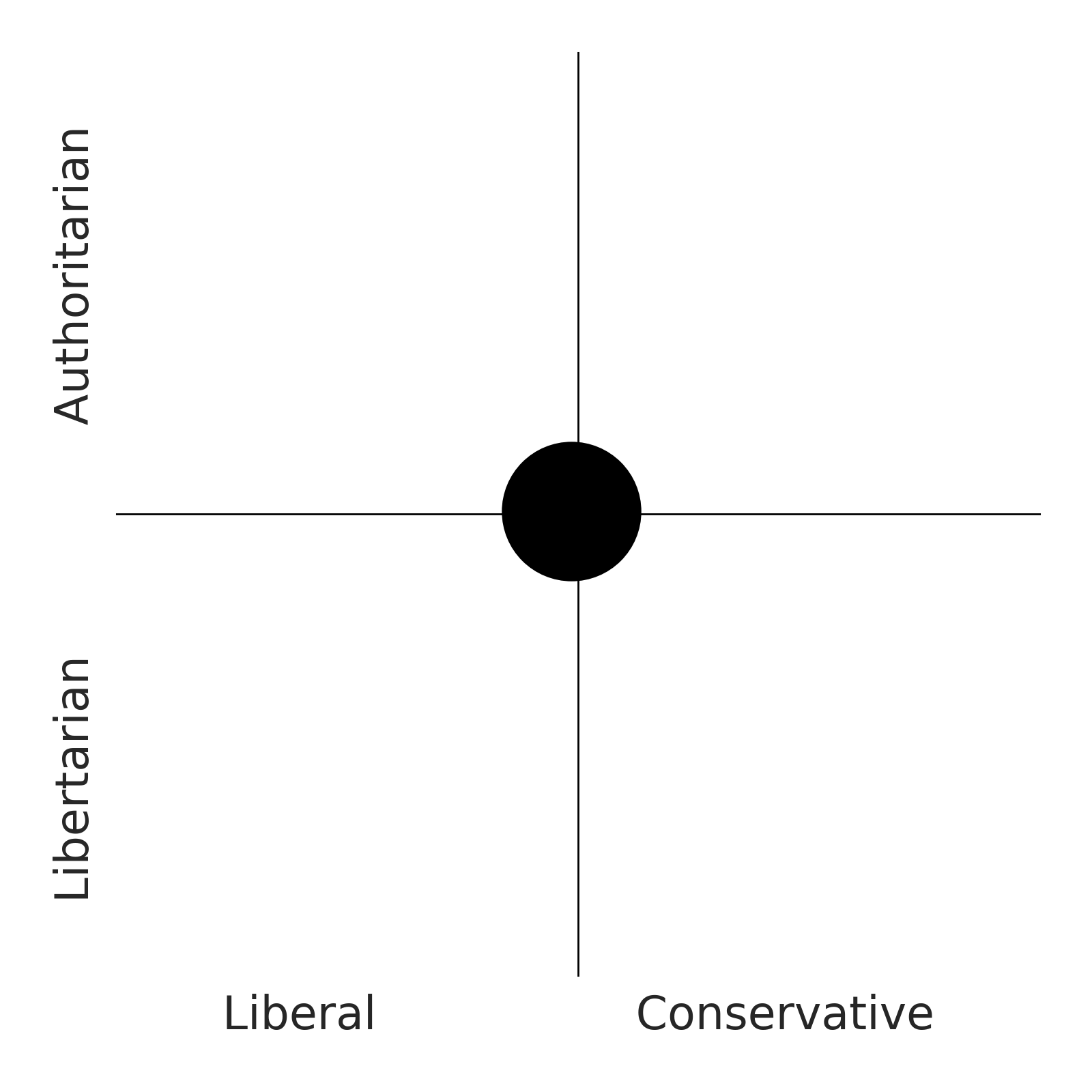
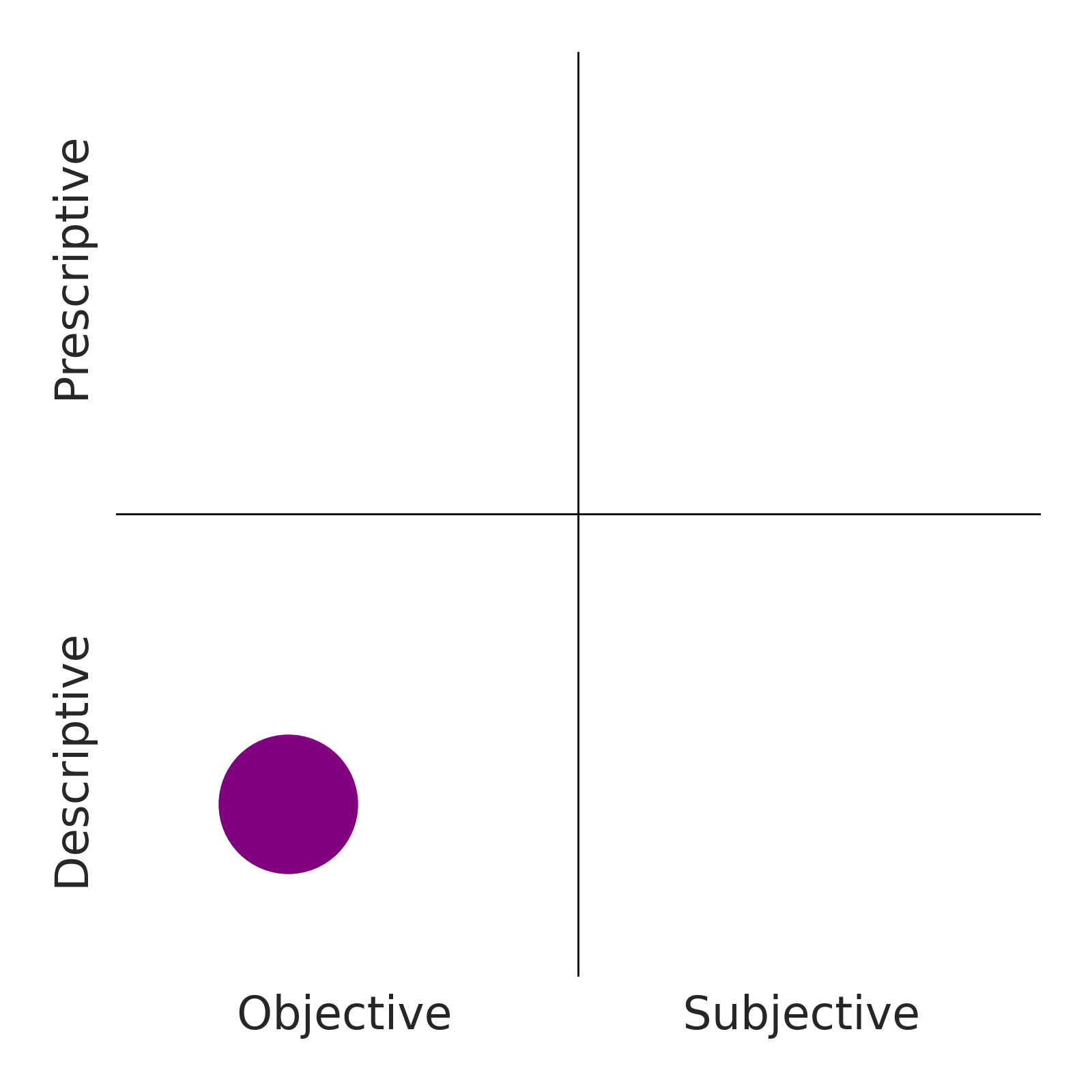
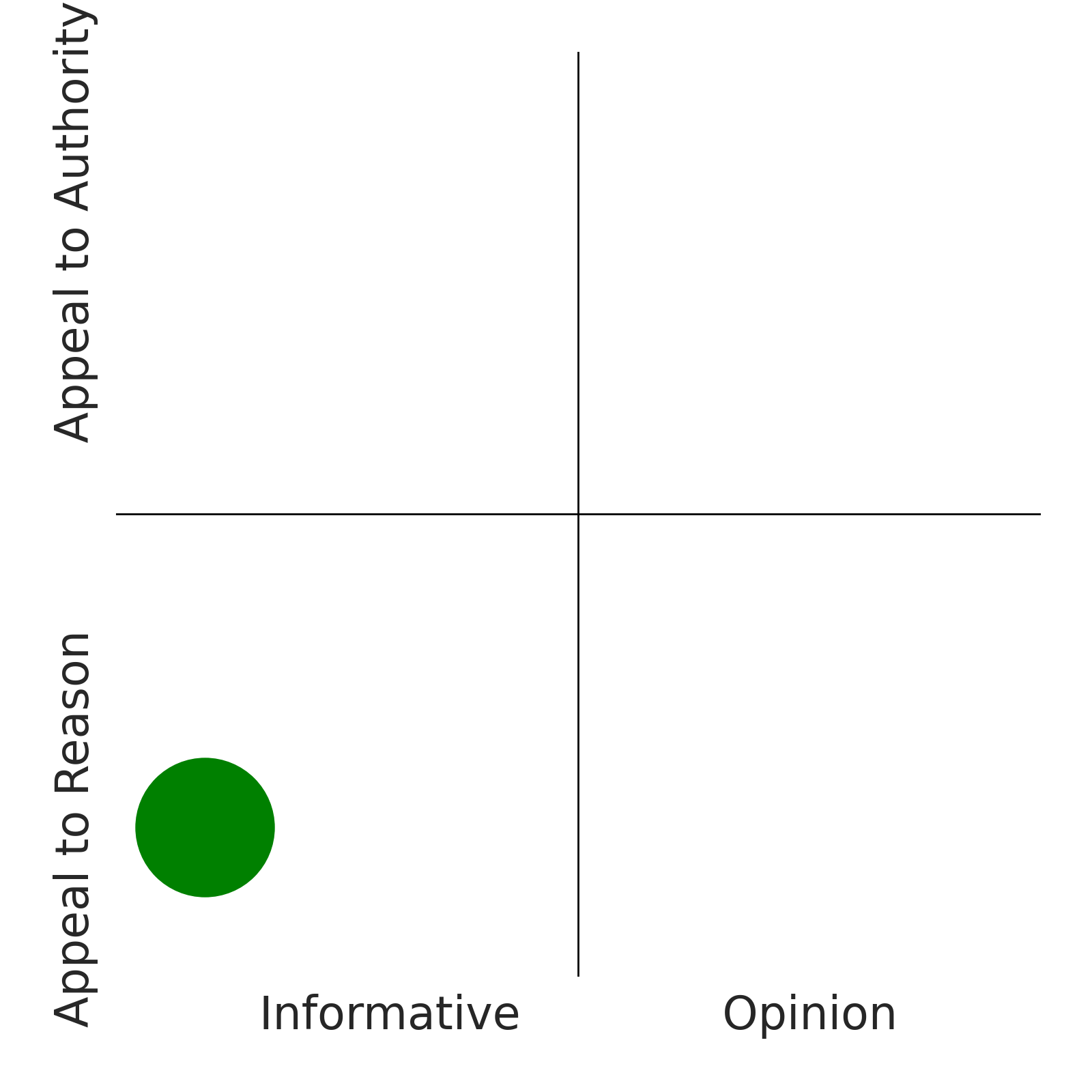
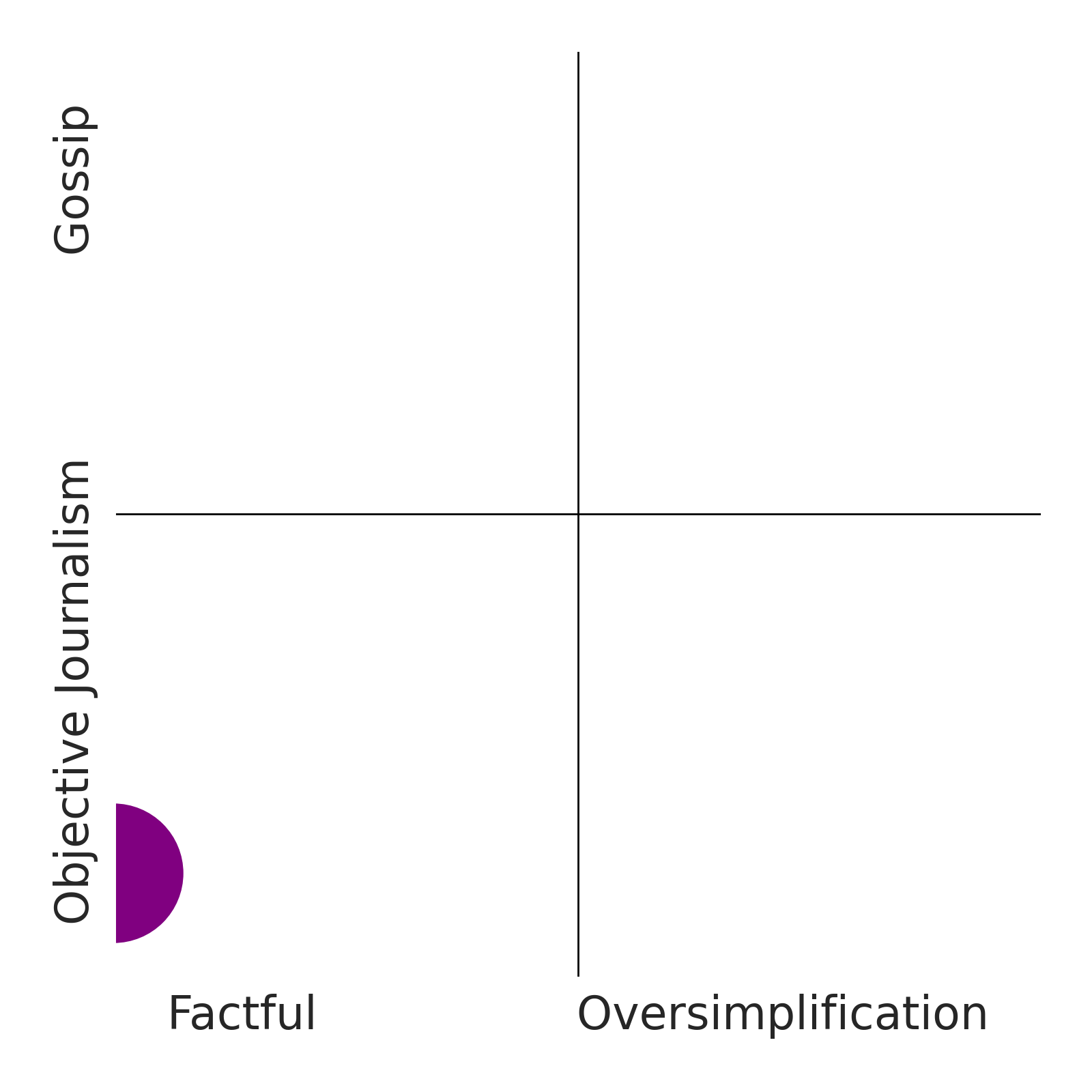
2026 © Helium Trades
Privacy Policy & Disclosure
* Disclaimer: Nothing on this website constitutes investment advice, performance data or any recommendation that any particular security, portfolio of securities, transaction or investment strategy is suitable for any specific person. Helium Trades is not responsible in any way for the accuracy
of any model predictions or price data. Any mention of a particular security and related prediction data is not a recommendation to buy or sell that security. Investments in securities involve the risk of loss. Past performance is no guarantee of future results. Helium Trades is not responsible for any of your investment decisions,
you should consult a financial expert before engaging in any transaction.
Helium Research Assistant

How can I help you today?
Ask any question about Genome Web bias.


