See whether Helium helps you make better-informed decisions. Try every Pro Trader feature for 30 days. No credit card required.
Try every Pro Trader feature for 30 days. No credit card required.
The sample is concentrated in U.S. policy, national security, China, technology, economics, immigration, higher education, and political-cultural debate.
Washington, DC is both unusually frequent and unusually emotional as a keyword [41] coverage commonly concerns military modernization, Taiwan, AI, quantum technology, infrastructure, and geopolitical competition
July 19, 2026 · 0 shares
Framing China's military capacity as highly advanced and potentially threatening, the report relies on satellite imagery and analyst claims to emphasize risk and possible preemptive action, reflecting a hawkish, establishment-aligned framing.
Telegraph reporting of satellite imagery showing replica US Navy ships in the Taklamakan desert, with analysts suggesting potential missile-strike rehearsal and risk to U.S. forces.
Automated analysis; not human reviewed. Limitations: Concise, case-specific limitations and plausible alternative interpretations. · 47 of 52 available dimensions scored; omitted dimensions are not treated as neutral. · Verified supporting quotes for 0 of 47 scored dimensions.
Gaps: single-source excerpt; author/date unavailable; limited quotes may affect framing.
Quantum leadership is framed as a US-led, alliance-driven policy priority rooted in a Hoover Institution establishment perspective, combining democracy-prosperity rhetoric with prescriptive calls for investment, diplomacy, and supply-chain resilience while noting privacy and espionage risks.
Policy-forward analysis from a Hoover Institution-affiliated think tank on US leadership in quantum tech and allied networks, with disclaimers about authors' views and a focus on investment, diplomacy, and alliance-building.
Automated analysis; not human reviewed. Limitations: Concise, case-specific limitations and plausible alternative interpretations. · 52 of 52 available dimensions scored; omitted dimensions are not treated as neutral. · Verified supporting quotes for 8 of 52 scored dimensions.
Claim: The article frames US-led, alliance-based leadership as normative for quantum tech policy, consistent with establishment conservative priorities.
“America and its global friends and allies can win the “quantum race”.” · exact text match
“US leadership in the quantum era will depend on orchestrating resilient alliance networks.” · exact text match
“the nation’s preeminent research center dedicated to generating policy ideas that promote economic prosperity, national security, and democratic governance.” · exact text match
Counterevidence:
“the US, China, and European nations are all making advancements in the field.” · exact text match
“The opinions expressed on this website are those of the authors and do not necessarily reflect the opinions of the Hoover Institution or Stanford University.” · not found in supplied text
Why: Explicit emphasis on US leadership and alliance-building signals a conservative, establishment framing.
Claim: Text reflects elite think-tank framing that elevates Hoover Institution and US policymakers' perspectives.
“Located on the campus of Stanford University and in Washington, DC, the nation’s preeminent research center dedicated to generating policy ideas that promote economic prosperity, national security, and democratic governance.” · not found in supplied text
“What sets Hoover apart from all other policy organizations is its status as a center of scholarly excellence, its locus as a forum of scholarly discussion of public policy, and its ability to bring the conclusions of this scholarship to a public audience.” · exact text match
“Throughout our over one-hundred-year history, our work has directly led to policies that have produced greater freedom, democracy, and opportunity in the United States and the world.” · exact text match
Counterevidence:
“The disclaimer statement notes that authors’ opinions may not reflect Hoover or Stanford.” · not found in supplied text
Why: Frequent claims of institutional prestige reflect elitist positioning.
Claim: Slight lean toward free society and democratic governance; endorses alliances and investment rather than coercive state power.
“the nation’s preeminent research center dedicated to generating policy ideas that promote economic prosperity, national security, and democratic governance.” · exact text match
“Your gift helps advance ideas that promote a free society.” · exact text match
Counterevidence:
“Mentions national security concerns and espionage, implying authority-based policy.” · not found in supplied text
Why: Supports freedom and democracy; limited evidence of coercive tendencies.
Claim: Blend of descriptive policy analysis with prescriptive recommendations.
“This report offers nontechnical policymakers in allied countries a comprehensive guide to quantum computing, sensing, and communications: where each stands, how China is competing, and why no single nation can control the stack.” · exact text match
“It argues that US leadership in the quantum era will depend on orchestrating resilient alliance networks.” · exact text match
Counterevidence:
“The language is normative and policy-forward.” · not found in supplied text
Why: Policy analysis with normative recommendations.
Claim: Some sensational framing around quantum revolution and race, but not extreme.
“Quantum Leap? How America And Her Allies Can Lead The Next Tech Revolution.” · exact text match
“win the “quantum race”.” · exact text match
Counterevidence:
“The content is primarily analytic and prescriptive.” · not found in supplied text
Why: Moderate sensational framing; not extreme.
Claim: Overall bullish about US leadership and allied networks in quantum tech.
“US leadership in the quantum era will depend on orchestrating resilient alliance networks.” · exact text match
“no single nation can control the stack, reinforcing US-led coalition.” · not found in supplied text
Counterevidence:
“The article acknowledges potential challenges (data privacy, espionage) but remains optimistic about leadership.” · not found in supplied text
Why: Leadership-focused language and alliance emphasis.
Claim: Analysis alternates between describing the quantum landscape and prescribing steps.
“This report offers nontechnical policymakers in allied countries a comprehensive guide to quantum computing, sensing, and communications: where each stands, how China is competing, and why no single nation can control the stack.” · exact text match
“It argues that US leadership in the quantum era will depend on orchestrating resilient alliance networks.” · exact text match
“plus lessons learned from the semiconductor industry regarding supply chains, intellectual property, and geopolitical vulnerability.” · exact text match
Counterevidence:
“In parts, descriptive content may be more than prescriptive.” · not found in supplied text
Why: Clear mixture of description and policy prescriptions.
Claim: Raised concerns about national security while emphasizing diplomacy and alliances.
“most notably, data privacy and international espionage.” · not found in supplied text
“an emphasis on diplomacy and greater international cooperation.” · not found in supplied text
Counterevidence:
“Article is not advocating violent actions; it is policy-focused.” · not found in supplied text
Why: Balance of defense/security concerns with diplomacy.
Claim: Acknowledges challenges (privacy, espionage) but uses them as context rather than to evoke fear.
“most notably, data privacy and international espionage.” · not found in supplied text
Counterevidence:
“No explicit fear-mongering present.” · not found in supplied text
Why: Contextual mention of risks, not fear-inducing.
Claim: The piece expresses a strong ideological preference for Western-led democracy and alliance-centric policy.
“US leadership and resilient alliance networks.” · not found in supplied text
“promotes democratic governance.” · not found in supplied text
Counterevidence:
“The disclaimers acknowledge independence of authors.” · not found in supplied text
Why: Recurring advocacy for Western democratic norms and alliances.
Claim: Promotes Hoover Institution's prestige and mission as the basis of policy analysis.
“Located on the campus of Stanford University... the nation’s preeminent research center dedicated to generating policy ideas that promote economic prosperity, national security, and democratic governance.” · not found in supplied text
“What sets Hoover apart from all other policy organizations is its status as a center of scholarly excellence, its locus as a forum of scholarly discussion of public policy, and its ability to bring the conclusions of this scholarship to a public audience.” · exact text match
Counterevidence:
“Disclaimer of opinions” · not found in supplied text
Why: Frequent appeals to institutional prestige indicate establishment bias.
Claim: Emotional cues are present in normative language about 'freedom' and 'opportunity'.
“produced greater freedom, democracy, and opportunity in the United States and the world.” · exact text match
“Your gift helps advance ideas that promote a free society.” · exact text match
Counterevidence:
“The text remains policy-oriented.” · not found in supplied text
Why: Uses normative, value-laden language alongside analysis.
Claim: The article presents reasoned policy analysis with caveats but also assertive leadership claims.
“no single nation can control the stack” · exact text match
“US leadership in the quantum era will depend on orchestrating resilient alliance networks” · exact text match
Counterevidence:
“The normative language around leadership could signal overconfidence.” · not found in supplied text
Why: Combination of descriptive content and prescriptive claims; hedges present but not decisive.
Claim: Disclosures and disclaimers indicate attempts at transparency, suggesting fairness.
“The opinions expressed on this website are those of the authors and do not necessarily reflect the opinions of the Hoover Institution or Stanford University.” · not found in supplied text
Counterevidence:
“Promotional language about Hoover and 'free society' may color the presentation.” · not found in supplied text
Why: Presence of disclaimers signals integrity signals.
Claim: Article demonstrates substantive policy content and context.
“Quantum technologies are moving from the laboratory toward strategic relevance but at different speeds and with different implications for allied security.” · exact text match
“This report offers nontechnical policymakers in allied countries a comprehensive guide to quantum computing, sensing, and communications: where each stands, how China is competing, and why no single nation can control the stack.” · exact text match
Counterevidence:
“Placeholders in the text may affect clarity.” · not found in supplied text
Why: Substantive policy content and contextual framing.
Case-specific ambiguities: placeholders and think-tank framing; limited perspectives
July 26, 2026 · 0 shares
Hoover Institution framing relies on institution-centered promotional language that asserts authority and mission while distancing official positions from individual authors' opinions.
Hoover Institution is a Stanford-affiliated think tank producing policy analysis.
Automated analysis; not human reviewed. Limitations: Case-specific; relies on provided text; may omit other framing cues not present in the excerpt. · 3 of 52 available dimensions scored; omitted dimensions are not treated as neutral. · Verified supporting quotes for 3 of 3 scored dimensions.
Claim: Content presents normative policy analysis with prescriptive goals.
“Hoover scholars offer analysis of current policy challenges and provide solutions on how America can advance freedom, peace, and prosperity.” · exact text match
Counterevidence:
“The opinions expressed on this website are those of the or Stanford University.” · not found in supplied text
Why: Descriptive statements include prescriptive aims; disclaimers acknowledge authorial opinions.
Claim: The text relies on Hoover's prestige to bolster credibility.
“With its eminent scholars and world-renowned library and archives, the seeks to improve the human condition by advancing ideas that promote economic opportunity and prosperity while securing and safeguarding peace for America and all mankind.” · verified after text normalization
“What sets Hoover apart from all other policy organizations is its status as a center of scholarly excellence, its locus as a forum of scholarly discussion of public policy, and its ability to bring the conclusions of this scholarship to a public audience.” · exact text match
Counterevidence:
“The opinions expressed on this website are those of the or Stanford University.” · not found in supplied text
Why: Prestige language signals authority; disclaimers argue for independence.
Claim: Hoover's authority and longevity are foregrounded to lend credibility to the content.
“Located on the campus of Stanford University and in Washington, DC, the is the nation’s preeminent research center dedicated to generating policy ideas that promote economic prosperity, national security, and democratic governance.” · verified after text normalization
“Throughout our over one-hundred-year history, our work has directly led to policies that have produced greater freedom, democracy, and opportunity in the United States and the world.” · exact text match
“With its eminent scholars and world-renowned library and archives, the seeks to improve the human condition by advancing ideas that promote economic opportunity and prosperity while securing and safeguarding peace for America and all mankind.” · verified after text normalization
Counterevidence:
“The opinions expressed on this website are those of the authors and do not necessarily reflect the opinions of the or Stanford University.” · verified after text normalization
Why: Prominence language signals establishment credibility; disclaimers temper this claim.
Promotional Hoover framing; limited independent CCP evidence; interpretation uncertain.
July 27, 2026 · 0 shares
Drone-enabled, persistent, multi-front strikes are framed as the essential evolution of U.S. military doctrine to maintain advantage, reflecting establishment think-tank framing.
Automated analysis; not human reviewed. Limitations: Institutional framing by a think tank; potential bias due to publisher's mission. · 47 of 52 available dimensions scored; omitted dimensions are not treated as neutral. · Verified supporting quotes for 0 of 47 scored dimensions.
Institutional framing by a think tank; potential bias due to publisher's mission.
January 30, 2025 · 1 shares
The article highlights the importance of U.S.-China relations in AI policy but leans towards promoting American dominance and a pro-establishment perspective through the lens of the Hoover Institution, suggesting a significant bias towards conservative values, specifically regarding national security and economic opportunity.
I aim for neutrality but may reflect mainstream media biases.
July 29, 2026 · 0 shares
Elite, hawkish defense-policy framing emphasizes industrial endurance and deterrence against China, prioritizing degrading the PLA's war-making capacity and building resilient production networks over battlefield platform competition.
Context: Analyzes Ukraine and Iran conflicts to argue that modern wars are won by degrading the adversary's entire military-power system, including the industrial base, and by deterring China through industrial resilience and allied production networks.
Hoover Institution framing presents China’s military modernization as an aggressive, security-threat narrative, foregrounding policy analysis tied to democratic governance and pro-market ideals while embedding branding and author-disclaimer language.
Hoover Institution policy framing combines think-tank branding, normative pro-democracy language, and citations to international events to frame China-related tensions.
Automated analysis; not human reviewed. · 5 of 52 available dimensions scored; omitted dimensions are not treated as neutral. · Verified supporting quotes for 0 of 5 scored dimensions.
July 31, 2026 · 0 shares
Frames Los Angeles homelessness policy as a failure driven by ideological blinders, Democratic leadership, and flawed progressive policies, using empirical data to support a conservative prescription for reform.
Los Angeles has a chronic homelessness crisis; city and county have spent billions on housing and services; housing first and harm reduction are key policy approaches.
Automated analysis; not human reviewed. Limitations: The article text includes a future-dated reference (May 2026 county review) which may indicate a hypothetical or error; this could affect factual reliability. · 11 of 52 available dimensions scored; omitted dimensions are not treated as neutral. · Verified supporting quotes for 8 of 11 scored dimensions.
Claim: The article adopts a conservative perspective by criticizing progressive homeless policies and Democratic leadership.
“Perhaps the most important change in addressing homelessness is decoupling policy from housing first and harm reduction. These approaches were well intended but they incentivize drug use, make Los Angeles and other California cities a desirable location for those abusing drugs and alcohol, and do not give people adequate incentives to become responsible for themselves.” · exact text match
“However, I see very little interest in changing these policies within California’s Democratic leadership. This suggests homelessness is here to stay.” · exact text match
Why: The article explicitly critiques progressive policies (housing first, harm reduction) and blames Democratic leadership, aligning with conservative policy positions.
Claim: The article is heavily prescriptive, advocating specific policy changes.
“Policies that would have a better chance of addressing homelessness require improving incentives and increasing accountability for city staff and nonprofit operators managing homelessness spending and implementation, building treatment centers in affordable locations to help the homeless deal with mental health and substance abuse, and following San Francisco’s new policy in creating sober-living environments.” · exact text match
Why: The author explicitly recommends a set of policy changes, moving beyond description to prescription.
Claim: The article uses alarming terms to emphasize danger and urgency.
“Homelessness is still a hot mess and out of control.” · exact text match
Why: The phrase 'out of control' implies a loss of order and potential threat.
Claim: The article expresses strong personal opinions about policy failures and future outlook.
“However, I see very little interest in changing these policies within California’s Democratic leadership. This suggests homelessness is here to stay.” · exact text match
Why: The first-person 'I' and definitive prediction reveal the author's subjective opinion.
Claim: The article is highly political, focusing on partisan criticism and policy debate.
“California’s Democratic leadership” · exact text match
Why: The article directly targets Democratic leadership and frames homelessness as a political failure.
Claim: The article expresses certainty about future outcomes beyond strong evidence.
“This suggests homelessness is here to stay.” · exact text match
Why: The conclusion that homelessness is permanent is stated as a near certainty, but the evidence does not fully preclude policy change.
Claim: The article is driven by a conservative ideological framework that attributes failure to progressive ideology.
“the true culprits are ideological blinders and a lack of political will.” · exact text match
Why: The author explicitly attributes failure to 'ideological blinders', indicating a strong ideological lens.
Claim: The article uses negative emotional language to describe the homelessness situation.
“Homelessness is still a hot mess and out of control.” · exact text match
“deadly on far too many occasions” · exact text match
Why: Phrases like 'hot mess', 'out of control', and 'deadly' evoke a negative emotional response.
Claim: The article cites multiple verifiable sources, though some future-dated claims may be questionable.
“A 2024 Los Angeles County audit found that LAHSA had advanced $50.8 million to service providers without formal repayment agreements...” · not found in supplied text
“A May 2026 county review found that LAHSA could not produce complete financial statements...” · not found in supplied text
Why: The article provides specific audit findings and study references, enhancing credibility, but a purported May 2026 review (future at time of writing) raises uncertainty.
Claim: The article uses empirical data and academic studies to support its arguments.
“A Journal of the American Medical Association study reports that 37 percent regularly use meth, nonprescription opioids, and/or cocaine, and that nearly 20 percent of the homeless had overdosed.” · exact text match
“Another JAMA article surveyed eighty-five studies and found that about 44 percent of the homeless have drug and/or alcohol abuse, 67 percent have one or more mental health disorders...” · not found in supplied text
Why: The author relies on peer-reviewed medical studies (JAMA), audit reports, and official data, indicating a rational, evidence-based presentation.
Claim: The article relies on scientific studies and statistical data.
“A Journal of the American Medical Association study reports that 37 percent regularly use meth...” · not found in supplied text
Why: The use of JAMA studies and other peer-reviewed research indicates a scientific, empirical approach.
The article text includes a future-dated reference (May 2026 county review) which may indicate a hypothetical or error; this could affect factual reliability.
July 16, 2026 · 0 shares
Loaded anti-socialist framing with a provocative headline and an unattributed economic projection that a wealth tax would have negative revenue due to billionaire flight from California, signaling a conservative, pro-market reporting stance.
Concise, factful, accurate, balanced context for the article in one sentence.
Automated analysis; not human reviewed. Limitations: Concise, case-specific limitations and plausible alternative interpretations. · 52 of 52 available dimensions scored; omitted dimensions are not treated as neutral. · Verified supporting quotes for 27 of 52 scored dimensions.
Claim: The piece frames socialism negatively and defends market-oriented policy discourse.
“Socialists Think Wealth Is Stolen. They're Wrong..” · exact text match
Why: Headline signals ideological stance against socialism and favors pro-market framing.
Claim: Elitist framing through reference to billionaires fleeing California.
“thanks to billionaires fleeing California” · exact text match
Why: Focus on elites' behavior aligns with elite-centric framing.
Claim: Implicates a government policy issue (wealth tax) framed as problematic.
“net present value of the tax will be negative $24.7 billion” · exact text match
Why: Economic policy framing aligns with views on government size.
Claim: The article relies on normative phrasing (They're Wrong).
“Socialists Think Wealth Is Stolen. They're Wrong..” · exact text match
Why: Loaded phrasing indicates subjectivity in presentation.
Claim: Headline and framing are sensationalized.
“Socialists Think Wealth Is Stolen. They're Wrong..” · exact text match
Why: Provocative wording invites strong emotional response.
Claim: Presents a negative projection of the wealth tax.
“net present value of the tax will be negative $24.7 billion” · exact text match
Why: Negative projection implies unfavorable outlook for the policy.
Claim: Framing and numeric claim may engage reader interest.
“Socialists Think Wealth Is Stolen. They're Wrong..” · exact text match
“net present value of the tax will be negative $24.7 billion” · exact text match
Why: Provocative headline and numerical estimate attract attention.
Claim: The piece prescribes a stance against socialism.
“They're Wrong..” · exact text match
Why: Normative statement shows prescriptive rather than descriptive aim.
Claim: Not evident.
Why: No policy pronouncements on conflict or defense.
Claim: Suggests risk around wealth tax outcomes.
“net present value of the tax will be negative $24.7 billion” · exact text match
Why: Negative projection emphasizes risk to policy outcomes.
Claim: No explicit fallacious reasoning beyond a projection.
Why: Cannot assess with provided text.
Claim: Not evidenced.
Why: No gossip content.
Claim: The piece is clearly opinionated.
“They're Wrong..” · exact text match
Why: Direct normative assertion marks opinionated framing.
Claim: Framing aligns with anti-socialist political stance.
“Socialists Think Wealth Is Stolen. They're Wrong..” · exact text match
Why: Headline signals ideological direction.
Claim: Relies on a single projection to judge policy.
“net present value of the tax will be negative $24.7 billion” · exact text match
Why: Simplifies complex policy by relying on one estimate.
Claim: Mentions researchers but omits institution.
“Researchers at the estimate that” · verified after text normalization
Why: Authority claim is weakened by missing attribution.
Claim: Not clearly immature; minor.
“They're Wrong..” · exact text match
Why: Limited evidence of immaturity.
Claim: Not evident.
Why: No circular reasoning detected.
Claim: Omit details about source attribution; response incomplete.
“Researchers at the estimate that” · verified after text normalization
Why: Omittance of source affects response completeness.
Claim: Not evidenced.
Why: No victimization framing.
Claim: Presents a precise figure as definitive.
“negative $24.7 billion” · exact text match
Why: Numeric precision implies certainty beyond provided context.
Claim: Not evidenced.
Why: No promotional content.
Claim: Framing supports anti-socialist ideology.
“Socialists Think Wealth Is Stolen. They're Wrong..” · exact text match
Why: Explicit ideological stance against socialism.
Claim: Framing could align with establishment discourse about taxation and elites.
“Researchers at the estimate that, thanks to billionaires fleeing California, the net present value of the tax will be negative $24.7 billion.” · verified after text normalization
Why: Content touches policy and elites in a way typical of mainstream debates.
Claim: Headline uses emotional framing; normative language.
“They're Wrong..” · exact text match
Why: Emotion-driven phrasing influences reader perception.
Claim: Not evidenced.
Why: No double standards shown.
Claim: Attribution incomplete; credible support questionable.
“Researchers at the estimate that” · verified after text normalization
Why: Incomplete sourcing undermines credibility.
Claim: Uses a numeric NPV projection to frame the tax argument.
“net present value of the tax will be negative $24.7 billion” · exact text match
Why: Numeric projection supports a calculative argument but context is limited.
Claim: Not evidenced.
Why: No advertising content.
Claim: Economic framing favors individual-market outcomes.
“net present value of the tax will be negative $24.7 billion” · exact text match
Why: Economic framing prioritizes individual wealth and market outcomes.
Claim: Relies on a single projection to judge policy.
“net present value of the tax will be negative $24.7 billion” · exact text match
Why: Single projection suggests speculation.
Claim: Framing uses selective info and incomplete attribution.
“Socialists Think Wealth Is Stolen. They're Wrong..” · exact text match
“Researchers at the estimate that” · verified after text normalization
Why: Loading framing via selective information.
Claim: Not determinable from provided text.
Why: No evidence of AI authorship.
Claim: Lacks full attribution for the source of the estimate.
“Researchers at the estimate that” · verified after text normalization
Why: Omitted institution undermines clarity and perceived credibility.
Claim: Lacks procedural detail but uses numeric estimate.
“net present value of the tax will be negative $24.7 billion” · exact text match
Why: One calculation is presented without context.
Claim: Not applicable.
Why: No terrorism content.
Claim: No explicit Marxist content.
“Socialists Think Wealth Is Stolen. They're Wrong..” · exact text match
Why: No class-conflict materialist framing.
Claim: Not evidenced.
Why: No Islam content.
Claim: Not evidenced.
Why: No antisemitic content.
Claim: Not evidenced.
Why: No LGBT content.
Claim: Not evidenced.
Why: No racial content.
Claim: Not evidenced.
Why: No identity-politics framing.
Claim: Not evidenced.
Why: No cruelty framing.
Claim: Not evidenced.
Why: No virtue signaling.
Claim: Not evidenced.
Why: No conspiratorial framing.
Claim: Not evidenced.
Why: No self-harm framing.
Claim: Not evidenced.
Why: No scapegoating.
Claim: Not evidenced.
Why: No hypocrisy pattern.
Claim: Not evidenced.
Why: No rejection of reason.
Ambiguity: missing attribution; limited data; potential framing
July 20, 2026 · 0 shares
Conservative-leaning framing promotes Christianity as shaping American politics, portrays secular scholars as dismissive, and warns that secular retreat would unleash superstition and delusions.
A brief op-ed asserting Christianity's influence on American politics and criticizing secular scholarship.
Automated analysis; not human reviewed. Limitations: Concise, case-specific limitations and plausible alternative interpretations. · 21 of 52 available dimensions scored; omitted dimensions are not treated as neutral. · Verified supporting quotes for 0 of 21 scored dimensions.
Claim: The article frames religion as shaping politics and depicts secular scholars as dismissive, indicating conservative framing.
“"JD Vance's Ambiguous Message On Christianity and America."” · not found in supplied text
“"Although generally neglected, mocked, or reviled by scholars and progressive intellectuals, religion shapes and colors American politics."” · not found in supplied text
“"When it recedes from hearts and minds, traditional faith leaves a spiritual vacuum into which flow all manner of superstitions, false prophets, and utopian delusions."” · not found in supplied text
Counterevidence:
“"JD Vance's Ambiguous Message On Christianity and America."” · not found in supplied text
Why: The language emphasizes traditional faith and critiques secular elites, signaling conservative framing.
Claim: The piece portrays scholars and progressive intellectuals as dismissive of religion, signaling anti-elite sentiment.
“"Although generally neglected, mocked, or reviled by scholars and progressive intellectuals, religion shapes and colors American politics."” · not found in supplied text
Counterevidence:
“"JD Vance's Ambiguous Message On Christianity and America."” · not found in supplied text
Why: Frames intellectual elites as hostile to religion, aligning with populist critique of elites.
Claim: The writing uses loaded language and normative claims rather than neutral reporting.
“"Religion shapes and colors American politics."” · not found in supplied text
“"When it recedes from hearts and minds, traditional faith leaves a spiritual vacuum into which flow all manner of superstitions, false prophets, and utopian delusions."” · not found in supplied text
Counterevidence:
“"JD Vance's Ambiguous Message On Christianity and America."” · not found in supplied text
Why: Loaded terms and normative claims indicate subjectivity.
Claim: The article prescribes a protective stance for traditional faith and warns of consequences of secular retreat.
“"Religion shapes and colors American politics."” · not found in supplied text
“"When it recedes from hearts and minds, traditional faith leaves a spiritual vacuum into which flow all manner of superstitions, false prophets, and utopian delusions."” · not found in supplied text
Counterevidence:
“"JD Vance's Ambiguous Message On Christianity and America."” · not found in supplied text
Why: Statements imply normative effects and recommended adherence to tradition.
Claim: Frames religion as a key driver of political life, implying a conservative political stance.
“"Religion shapes and colors American politics."” · not found in supplied text
Counterevidence:
“"JD Vance's Ambiguous Message On Christianity and America."” · not found in supplied text
Why: Direct claim of religion shaping politics indicates political bias toward religious traditionalism.
Ambiguity in scope; limited excerpt; potential bias toward religion.
Conservative, pro-market framing emphasizes deregulation via rule-based governance, investor protection, and capital formation, while presenting crypto policy as a pragmatic, innovation-friendly adjustment within an established think-tank framework.
Uncommon Knowledge interview with SEC Chairman Paul Atkins at Stanford/Hoover Institution discussing regulation, crypto policy, and capital markets.
Automated analysis; not human reviewed. Limitations: Concise, case-specific limitations and plausible alternative interpretations. · 52 of 52 available dimensions scored; omitted dimensions are not treated as neutral. · Verified supporting quotes for 0 of 52 scored dimensions.
Ambiguities: partisan framing and reliance on interview content may color interpretation; data limited to this transcript.
Establishment-leaning, conservative, hawkish space-policy advocacy promoting accelerated US action and deterrence against China, presented under Hoover Institution authorship with standard disclaimers.
Policy essay from Hoover Institution at Stanford University examining US space policy and competition with China, including four scenarios and a near-term strategy.
My bias: I lean toward conservative, establishment sources; confidence 0.65.
November 14, 2024 · 0 shares
The article discusses Kiron Skinner's views on U.S. foreign policy under a potential second Trump term, suggesting a focus on security and economics while criticizing progressive social initiatives such as abortion rights and LGBTQ+ rights, reflecting a conservative viewpoint.
Trained on diverse views, but may underrepresent progressive perspectives.
Provocative framing centers on whether DEI harms colleges, foregrounding race, affirmative action, and political backlash in higher education.
A skeptical, conservative-leaning analysis of Gavin Newsom's presidential bid that emphasizes intra-party tensions, governance controversies, and policy shifts, embedding Hoover Institution framing as a credible context.
Hoover Institution-affiliated political commentary assessing Newsom's presidential prospects, citing polling and policy controversies to frame his positioning and credibility.
Automated analysis; not human reviewed. Limitations: Concise, case-specific limitations and plausible alternative interpretations. · 1 of 52 available dimensions scored; omitted dimensions are not treated as neutral. · Verified supporting quotes for 0 of 1 scored dimensions.
Claim: The piece portrays Newsom as shifting toward left-leaning positions and frames left-wing tax policies as problematic for a national bid.
“lip service to his party’s restless socialist wing.” · exact text match
“In this corner: Governor Newsom, steadfast opponent of November’s Proposition 40, a labor union’s attempt to impose a one-time 5 percent tax on the assets of all Californians with a minimum of ten-figure wealth.” · exact text match
“And in the other corner: Governor Newsom, champion of a national “billionaires tax” which in fact would kick in for all Americans with a net worth above $100 million.” · not found in supplied text
Counterevidence:
“The opinions expressed on this website are those of the authors and do not necessarily reflect the opinions of the Hoover Institution.” · not found in supplied text
Why: Explicit framing around left-wing tax policy references and 'hobbyhorses' suggests conservative critique of Newsom's positioning.
Case-specific limits: potential Hoover framing; limited corroboration in the excerpt; quotes chosen may overemphasize negative framing.
The dominant observable perspective is U.S.-centered, institutionally oriented, pro-market, pro-alliance, and supportive of national-security competition with China.
U.S. leadership, deterrence, industrial capacity, technological advantage, and democratic governance are generally treated as desirable policy objectives
Quantum leadership is framed as a US-led, alliance-driven policy priority rooted in a Hoover Institution establishment perspective, combining democracy-prosperity rhetoric with prescriptive calls for investment, diplomacy, and supply-chain resilience while noting privacy and espionage risks.
Policy-forward analysis from a Hoover Institution-affiliated think tank on US leadership in quantum tech and allied networks, with disclaimers about authors' views and a focus on investment, diplomacy, and alliance-building.
Automated analysis; not human reviewed. Limitations: Concise, case-specific limitations and plausible alternative interpretations. · 52 of 52 available dimensions scored; omitted dimensions are not treated as neutral. · Verified supporting quotes for 8 of 52 scored dimensions.
Claim: The article frames US-led, alliance-based leadership as normative for quantum tech policy, consistent with establishment conservative priorities.
“America and its global friends and allies can win the “quantum race”.” · exact text match
“US leadership in the quantum era will depend on orchestrating resilient alliance networks.” · exact text match
“the nation’s preeminent research center dedicated to generating policy ideas that promote economic prosperity, national security, and democratic governance.” · exact text match
Counterevidence:
“the US, China, and European nations are all making advancements in the field.” · exact text match
“The opinions expressed on this website are those of the authors and do not necessarily reflect the opinions of the Hoover Institution or Stanford University.” · not found in supplied text
Why: Explicit emphasis on US leadership and alliance-building signals a conservative, establishment framing.
Claim: Text reflects elite think-tank framing that elevates Hoover Institution and US policymakers' perspectives.
“Located on the campus of Stanford University and in Washington, DC, the nation’s preeminent research center dedicated to generating policy ideas that promote economic prosperity, national security, and democratic governance.” · not found in supplied text
“What sets Hoover apart from all other policy organizations is its status as a center of scholarly excellence, its locus as a forum of scholarly discussion of public policy, and its ability to bring the conclusions of this scholarship to a public audience.” · exact text match
“Throughout our over one-hundred-year history, our work has directly led to policies that have produced greater freedom, democracy, and opportunity in the United States and the world.” · exact text match
Counterevidence:
“The disclaimer statement notes that authors’ opinions may not reflect Hoover or Stanford.” · not found in supplied text
Why: Frequent claims of institutional prestige reflect elitist positioning.
Claim: Slight lean toward free society and democratic governance; endorses alliances and investment rather than coercive state power.
“the nation’s preeminent research center dedicated to generating policy ideas that promote economic prosperity, national security, and democratic governance.” · exact text match
“Your gift helps advance ideas that promote a free society.” · exact text match
Counterevidence:
“Mentions national security concerns and espionage, implying authority-based policy.” · not found in supplied text
Why: Supports freedom and democracy; limited evidence of coercive tendencies.
Claim: Blend of descriptive policy analysis with prescriptive recommendations.
“This report offers nontechnical policymakers in allied countries a comprehensive guide to quantum computing, sensing, and communications: where each stands, how China is competing, and why no single nation can control the stack.” · exact text match
“It argues that US leadership in the quantum era will depend on orchestrating resilient alliance networks.” · exact text match
Counterevidence:
“The language is normative and policy-forward.” · not found in supplied text
Why: Policy analysis with normative recommendations.
Claim: Some sensational framing around quantum revolution and race, but not extreme.
“Quantum Leap? How America And Her Allies Can Lead The Next Tech Revolution.” · exact text match
“win the “quantum race”.” · exact text match
Counterevidence:
“The content is primarily analytic and prescriptive.” · not found in supplied text
Why: Moderate sensational framing; not extreme.
Claim: Overall bullish about US leadership and allied networks in quantum tech.
“US leadership in the quantum era will depend on orchestrating resilient alliance networks.” · exact text match
“no single nation can control the stack, reinforcing US-led coalition.” · not found in supplied text
Counterevidence:
“The article acknowledges potential challenges (data privacy, espionage) but remains optimistic about leadership.” · not found in supplied text
Why: Leadership-focused language and alliance emphasis.
Claim: Analysis alternates between describing the quantum landscape and prescribing steps.
“This report offers nontechnical policymakers in allied countries a comprehensive guide to quantum computing, sensing, and communications: where each stands, how China is competing, and why no single nation can control the stack.” · exact text match
“It argues that US leadership in the quantum era will depend on orchestrating resilient alliance networks.” · exact text match
“plus lessons learned from the semiconductor industry regarding supply chains, intellectual property, and geopolitical vulnerability.” · exact text match
Counterevidence:
“In parts, descriptive content may be more than prescriptive.” · not found in supplied text
Why: Clear mixture of description and policy prescriptions.
Claim: Raised concerns about national security while emphasizing diplomacy and alliances.
“most notably, data privacy and international espionage.” · not found in supplied text
“an emphasis on diplomacy and greater international cooperation.” · not found in supplied text
Counterevidence:
“Article is not advocating violent actions; it is policy-focused.” · not found in supplied text
Why: Balance of defense/security concerns with diplomacy.
Claim: Acknowledges challenges (privacy, espionage) but uses them as context rather than to evoke fear.
“most notably, data privacy and international espionage.” · not found in supplied text
Counterevidence:
“No explicit fear-mongering present.” · not found in supplied text
Why: Contextual mention of risks, not fear-inducing.
Claim: The piece expresses a strong ideological preference for Western-led democracy and alliance-centric policy.
“US leadership and resilient alliance networks.” · not found in supplied text
“promotes democratic governance.” · not found in supplied text
Counterevidence:
“The disclaimers acknowledge independence of authors.” · not found in supplied text
Why: Recurring advocacy for Western democratic norms and alliances.
Claim: Promotes Hoover Institution's prestige and mission as the basis of policy analysis.
“Located on the campus of Stanford University... the nation’s preeminent research center dedicated to generating policy ideas that promote economic prosperity, national security, and democratic governance.” · not found in supplied text
“What sets Hoover apart from all other policy organizations is its status as a center of scholarly excellence, its locus as a forum of scholarly discussion of public policy, and its ability to bring the conclusions of this scholarship to a public audience.” · exact text match
Counterevidence:
“Disclaimer of opinions” · not found in supplied text
Why: Frequent appeals to institutional prestige indicate establishment bias.
Claim: Emotional cues are present in normative language about 'freedom' and 'opportunity'.
“produced greater freedom, democracy, and opportunity in the United States and the world.” · exact text match
“Your gift helps advance ideas that promote a free society.” · exact text match
Counterevidence:
“The text remains policy-oriented.” · not found in supplied text
Why: Uses normative, value-laden language alongside analysis.
Claim: The article presents reasoned policy analysis with caveats but also assertive leadership claims.
“no single nation can control the stack” · exact text match
“US leadership in the quantum era will depend on orchestrating resilient alliance networks” · exact text match
Counterevidence:
“The normative language around leadership could signal overconfidence.” · not found in supplied text
Why: Combination of descriptive content and prescriptive claims; hedges present but not decisive.
Claim: Disclosures and disclaimers indicate attempts at transparency, suggesting fairness.
“The opinions expressed on this website are those of the authors and do not necessarily reflect the opinions of the Hoover Institution or Stanford University.” · not found in supplied text
Counterevidence:
“Promotional language about Hoover and 'free society' may color the presentation.” · not found in supplied text
Why: Presence of disclaimers signals integrity signals.
Claim: Article demonstrates substantive policy content and context.
“Quantum technologies are moving from the laboratory toward strategic relevance but at different speeds and with different implications for allied security.” · exact text match
“This report offers nontechnical policymakers in allied countries a comprehensive guide to quantum computing, sensing, and communications: where each stands, how China is competing, and why no single nation can control the stack.” · exact text match
Counterevidence:
“Placeholders in the text may affect clarity.” · not found in supplied text
Why: Substantive policy content and contextual framing.
Case-specific ambiguities: placeholders and think-tank framing; limited perspectives
Pro-democracy, anti-authoritarian, establishment-aligned analysis that portrays CCP invulnerability as a myth, leverages historical parallels, and advocates democratic governance while maintaining cautious, evidence-based reasoning.
Policy analysis from a Hoover Institution-affiliated outlet arguing that a Beijing crash exposes vulnerabilities in China's security apparatus and internal governance, using historical parallels to critique authoritarian myths and advocate democratic governance.
Cautious; Western-tilt; confidence ~0.6
Establishment-leaning, conservative, hawkish space-policy advocacy promoting accelerated US action and deterrence against China, presented under Hoover Institution authorship with standard disclaimers.
Policy essay from Hoover Institution at Stanford University examining US space policy and competition with China, including four scenarios and a near-term strategy.
My bias: I lean toward conservative, establishment sources; confidence 0.65.
November 18, 2024 · 0 shares
The article discusses the Great Power Competition with a focus on promoting democratic values and national security, emphasizing the mission of the Hoover Institution while presenting a view aligned with U.S. interests abroad.
Limited to information in the training data, which may favor certain perspectives.
July 29, 2026 · 0 shares
Elite, hawkish defense-policy framing emphasizes industrial endurance and deterrence against China, prioritizing degrading the PLA's war-making capacity and building resilient production networks over battlefield platform competition.
Context: Analyzes Ukraine and Iran conflicts to argue that modern wars are won by degrading the adversary's entire military-power system, including the industrial base, and by deterring China through industrial resilience and allied production networks.
July 19, 2026 · 0 shares
Framing China's military capacity as highly advanced and potentially threatening, the report relies on satellite imagery and analyst claims to emphasize risk and possible preemptive action, reflecting a hawkish, establishment-aligned framing.
Telegraph reporting of satellite imagery showing replica US Navy ships in the Taklamakan desert, with analysts suggesting potential missile-strike rehearsal and risk to U.S. forces.
Automated analysis; not human reviewed. Limitations: Concise, case-specific limitations and plausible alternative interpretations. · 47 of 52 available dimensions scored; omitted dimensions are not treated as neutral. · Verified supporting quotes for 0 of 47 scored dimensions.
Gaps: single-source excerpt; author/date unavailable; limited quotes may affect framing.
July 26, 2026 · 0 shares
Hoover Institution framing relies on institution-centered promotional language that asserts authority and mission while distancing official positions from individual authors' opinions.
Hoover Institution is a Stanford-affiliated think tank producing policy analysis.
Automated analysis; not human reviewed. Limitations: Case-specific; relies on provided text; may omit other framing cues not present in the excerpt. · 3 of 52 available dimensions scored; omitted dimensions are not treated as neutral. · Verified supporting quotes for 3 of 3 scored dimensions.
Claim: Content presents normative policy analysis with prescriptive goals.
“Hoover scholars offer analysis of current policy challenges and provide solutions on how America can advance freedom, peace, and prosperity.” · exact text match
Counterevidence:
“The opinions expressed on this website are those of the or Stanford University.” · not found in supplied text
Why: Descriptive statements include prescriptive aims; disclaimers acknowledge authorial opinions.
Claim: The text relies on Hoover's prestige to bolster credibility.
“With its eminent scholars and world-renowned library and archives, the seeks to improve the human condition by advancing ideas that promote economic opportunity and prosperity while securing and safeguarding peace for America and all mankind.” · verified after text normalization
“What sets Hoover apart from all other policy organizations is its status as a center of scholarly excellence, its locus as a forum of scholarly discussion of public policy, and its ability to bring the conclusions of this scholarship to a public audience.” · exact text match
Counterevidence:
“The opinions expressed on this website are those of the or Stanford University.” · not found in supplied text
Why: Prestige language signals authority; disclaimers argue for independence.
Claim: Hoover's authority and longevity are foregrounded to lend credibility to the content.
“Located on the campus of Stanford University and in Washington, DC, the is the nation’s preeminent research center dedicated to generating policy ideas that promote economic prosperity, national security, and democratic governance.” · verified after text normalization
“Throughout our over one-hundred-year history, our work has directly led to policies that have produced greater freedom, democracy, and opportunity in the United States and the world.” · exact text match
“With its eminent scholars and world-renowned library and archives, the seeks to improve the human condition by advancing ideas that promote economic opportunity and prosperity while securing and safeguarding peace for America and all mankind.” · verified after text normalization
Counterevidence:
“The opinions expressed on this website are those of the authors and do not necessarily reflect the opinions of the or Stanford University.” · verified after text normalization
Why: Prominence language signals establishment credibility; disclaimers temper this claim.
Promotional Hoover framing; limited independent CCP evidence; interpretation uncertain.
Hoover Institution framing presents China’s military modernization as an aggressive, security-threat narrative, foregrounding policy analysis tied to democratic governance and pro-market ideals while embedding branding and author-disclaimer language.
Hoover Institution policy framing combines think-tank branding, normative pro-democracy language, and citations to international events to frame China-related tensions.
Automated analysis; not human reviewed. · 5 of 52 available dimensions scored; omitted dimensions are not treated as neutral. · Verified supporting quotes for 0 of 5 scored dimensions.
Hoover Institution frames Today's Battlegrounds as a premier, scholarly platform promoting democratic governance, strategic empathy, and a free, open Indo-Pacific through elite policy analysis and leadership.
Hoover Institution (Stanford University) is described as a leading think tank dedicated to policy ideas that promote economic prosperity, national security, and democratic governance. Today's Battlegrounds is framed as grounded in strategic empathy and as a forum for discussing ideas, history, and leadership shaping today’s strategic environment. The 100th episode features Singapore's Foreign Minister Vivian Balakrishnan and discusses the U.S.–Singapore strategic partnership and regional security in a context of great-power competition.
Automated analysis; not human reviewed. · 45 of 52 available dimensions scored; omitted dimensions are not treated as neutral. · Verified supporting quotes for 9 of 45 scored dimensions.
Claim: The text frames Hoover as a premier, policy-driven institution aligned with promoting democracy.
“Located on the campus of Stanford University and in Washington, DC, the is the nation’s preeminent research center dedicated to generating policy ideas that promote economic prosperity, national security, and democratic governance.” · verified after text normalization
Why: The quote highlights Hoover as a leading think tank with a mission tied to democracy and security.
Claim: The piece foregrounds elite scholars and prestigious institutions.
“With its eminent scholars and world-renowned library and archives, the seeks to improve the human condition by advancing ideas that promote economic opportunity and prosperity while securing and safeguarding peace for America and all mankind.” · verified after text normalization
Why: The statement emphasizes elite scholarly status and world-renowned facilities.
Claim: Framing supports liberal-democratic openness over authoritarian control.
“a free and open Indo-Pacific” · exact text match
“defending its sovereignty” · exact text match
“preserve a free and open Indo-Pacific” · exact text match
Why: The emphasis on freedom and open regions aligns with libertarian values and opposition to authoritarianism.
Claim: The piece contains normative language praising the series and its mission.
“Each episode of Today’s Battlegrounds invites audiences in the United States and abroad to better understand how the past produced the present and how strategic empathy can foster wiser policy, stronger alliances, and more effective leadership.” · exact text match
Why: There are normative framing statements that imply value judgments.
Claim: The article prescribes a method for safer policy: listening to leaders to understand historical perspectives.
“Each episode of Today’s Battlegrounds invites audiences in the United States and abroad to better understand how the past produced the present and how strategic empathy can foster wiser policy, stronger alliances, and more effective leadership.” · exact text match
Why: The text links understanding of history to better policy—prescriptive guidance.
Claim: The piece leans on endorsements from eminent figures and prestigious institutions.
“eminent scholars” · exact text match
“world-renowned library and archives” · exact text match
“McMaster has welcomed an extraordinary roster of global leaders” · exact text match
Why: The framing relies on authority of leaders and the institution.
Claim: The piece conveys a strongly establishment-aligned framing by praising Hoover's status and mission.
“the nation’s preeminent research center” · exact text match
“our over one-hundred-year history” · exact text match
“the seeks to improve the human condition by advancing ideas that promote economic opportunity and prosperity while securing and safeguarding peace for America and all mankind” · verified after text normalization
Why: The language systematically elevates the Hoover Institution as a center of elite policy research.
Claim: The piece shows a positive, optimistic framing about freedom, alliance-building, and strategic leadership.
“foster wiser policy, stronger alliances, and more effective leadership” · exact text match
“freedom, democracy, and opportunity in the United States and the world.” · exact text match
Why: Positive language aims to evoke favorable feelings toward the subject.
Claim: The article portrays the show as a reasoned policy dialogue grounded in strategic empathy.
“Grounded in the principle of strategic empathy—the effort to understand how allies, adversaries, and partners perceive the world and make decisions—the series has become a leading forum for discussions on the ideas, history, and leadership shaping today's strategic environment.” · exact text match
Why: The description frames the series as a rational forum for policy ideas and leadership.
Claim: The article includes disclaimers about opinions not reflecting the institutions.
“The opinions expressed on this website are those of the authors and do not necessarily reflect Hoover Institution or Stanford University.” · not found in supplied text
Why: Disclaimers contribute to perceived fairness but not perfect neutrality.
July 29, 2026 · 0 shares
Establishment-aligned framing emphasizes Hoover Institution authority and policy relevance while presenting the retreat as a rigorous, non-forecasting exercise to map plausible futures in AI and technology.
Automated analysis; not human reviewed. Limitations: Host organization name is corrupted in the text ('the ’s Tech Futures Lab'), creating ambiguity about the exact host; this limits certainty about framing. · 25 of 52 available dimensions scored; omitted dimensions are not treated as neutral. · Verified supporting quotes for 4 of 25 scored dimensions.
Claim: Conservative-leaning framing is suggested by mission statements emphasizing freedom, democracy, and prosperity.
“Throughout our over one-hundred-year history, our work has directly led to policies that have produced greater freedom, democracy, and opportunity in the United States and the world.” · exact text match
Why: Historical framing aligns with establishment-oriented ideology.
Claim: Publisher uses an explicit disclaimer to separate authors' opinions from institutional stance.
“The opinions expressed on this website are those of the authors and do not necessarily reflect the opinions of the or Stanford University.” · verified after text normalization
Why: Disclaimers reveal an attempt to distinguish opinion from institutional policy.
Claim: Pro-establishment framing is evidenced by language praising Hoover Institution’s authority and mission.
“Located on the campus of Stanford University and in Washington, DC, the is the nation’s preeminent research center dedicated to generating policy ideas that promote economic prosperity, national security, and democratic governance.” · verified after text normalization
Why: Explicit framing of Hoover as a leading think tank and center of scholarly excellence.
Claim: Promotional fundraising language indicates advertising framing.
“Your gift helps advance ideas that promote a free society.” · exact text match
Why: Direct fundraising language alongside policy content.
Host organization name is corrupted in the text ('the ’s Tech Futures Lab'), creating ambiguity about the exact host; this limits certainty about framing.
July 23, 2025 · 0 shares
The article primarily centers around a conversation with prominent scholars discussing the dynamics of US-China relations, reflecting a focus on policy analysis and scholarly discourse without overt ideological bias; however, it showcases a pro-establishment perspective due to its affiliation with the Hoover Institution, which is known for promoting conservative economic and governance ideals.
No strong biases in assessment, limited by institutional knowledge.
July 28, 2026 · 0 shares
Establishment-aligned, rules-based security framing emphasizes enforceable norms, capable regional partners, and sustained allied vigilance to keep maritime chokepoints open.
Automated analysis; not human reviewed. · 45 of 52 available dimensions scored; omitted dimensions are not treated as neutral. · Verified supporting quotes for 2 of 45 scored dimensions.
Claim: Publisher framing aligns with an establishment, rules-based international order and policy-focused solutions.
“Located on the campus of Stanford University and in Washington, DC, the is the nation’s preeminent research center dedicated to generating policy ideas that promote economic prosperity, national security, and democratic governance.” · verified after text normalization
“What sets Hoover apart from all other policy organizations is its status as a center of scholarly excellence, its locus as a forum of scholarly discussion of public policy, and its ability to bring the conclusions of this scholarship to a public audience.” · exact text match
“Eyck Freymann is a Hoover Fellow at Stanford University and a Non-Resident Research Fellow at the U.S. Naval War College, China Maritime Studies Institute.” · exact text match
Why: Direct quotes describe Hoover's mission, role, and institutional framing.
Claim: Publisher signals fairness and transparency through explicit author disclaimers.
“The opinions expressed on this website are those of the authors and do not necessarily reflect the opinions of the or Stanford University.” · verified after text normalization
Why: Disclaimer indicates attempt at transparent attribution, though standard for think tanks.
Establishment bias evident: institutional partnership between Hoover and Stanford is portrayed as credible authority, framing AI-geopolitics research as essential policy work and prioritizing collaboration and funding from elite institutions.
Joint funding announcement highlighting collaboration between Hoover and Stanford to study AI's geopolitical implications through three interdisciplinary projects.
Automated analysis; not human reviewed. Limitations: Concise, case-specific limitations and plausible alternative interpretations. · 1 of 52 available dimensions scored; omitted dimensions are not treated as neutral. · Verified supporting quotes for 0 of 1 scored dimensions.
Claim: The report frames Hoover and Stanford as authoritative credibility in AI-geopolitics policy research by foregrounding their partnership and funding decisions
“As part of Stanford’s seed grants portfolio, HAI and TPA jointly awarded funding of up to $100,000 each to three new research projects that explore nuclear proliferation, public perceptions of AI, and the political differences identifiable in AI agents impact our understanding of AI, and the effect its rise will have on matters of geopolitical significance.” · exact text match
“AI is rapidly reshaping the geopolitical landscape, but policymakers still lack the research needed to understand where the greatest risks and opportunities lie.” · not found in supplied text
“By sparking new collaborations across fields, this partnership will generate rigorous research that can inform policy before the technology moves even further ahead.” · exact text match
Counterevidence:
“The opinions expressed on this website are those of the authors and do not necessarily reflect the opinions of Hoover or Stanford University.” · not found in supplied text
Why: Framing emphasizes elite institutions and policy-oriented outcomes, signaling establishment-leaning reporting; disclaimers offer a check against uncritical authority.
On domestic issues, several records use conservative or anti-progressive framing: homelessness is attributed partly to “ideological blinders” and criticized through attacks on Housing First and harm reduction
July 31, 2026 · 0 shares
Frames Los Angeles homelessness policy as a failure driven by ideological blinders, Democratic leadership, and flawed progressive policies, using empirical data to support a conservative prescription for reform.
Los Angeles has a chronic homelessness crisis; city and county have spent billions on housing and services; housing first and harm reduction are key policy approaches.
Automated analysis; not human reviewed. Limitations: The article text includes a future-dated reference (May 2026 county review) which may indicate a hypothetical or error; this could affect factual reliability. · 11 of 52 available dimensions scored; omitted dimensions are not treated as neutral. · Verified supporting quotes for 8 of 11 scored dimensions.
Claim: The article adopts a conservative perspective by criticizing progressive homeless policies and Democratic leadership.
“Perhaps the most important change in addressing homelessness is decoupling policy from housing first and harm reduction. These approaches were well intended but they incentivize drug use, make Los Angeles and other California cities a desirable location for those abusing drugs and alcohol, and do not give people adequate incentives to become responsible for themselves.” · exact text match
“However, I see very little interest in changing these policies within California’s Democratic leadership. This suggests homelessness is here to stay.” · exact text match
Why: The article explicitly critiques progressive policies (housing first, harm reduction) and blames Democratic leadership, aligning with conservative policy positions.
Claim: The article is heavily prescriptive, advocating specific policy changes.
“Policies that would have a better chance of addressing homelessness require improving incentives and increasing accountability for city staff and nonprofit operators managing homelessness spending and implementation, building treatment centers in affordable locations to help the homeless deal with mental health and substance abuse, and following San Francisco’s new policy in creating sober-living environments.” · exact text match
Why: The author explicitly recommends a set of policy changes, moving beyond description to prescription.
Claim: The article uses alarming terms to emphasize danger and urgency.
“Homelessness is still a hot mess and out of control.” · exact text match
Why: The phrase 'out of control' implies a loss of order and potential threat.
Claim: The article expresses strong personal opinions about policy failures and future outlook.
“However, I see very little interest in changing these policies within California’s Democratic leadership. This suggests homelessness is here to stay.” · exact text match
Why: The first-person 'I' and definitive prediction reveal the author's subjective opinion.
Claim: The article is highly political, focusing on partisan criticism and policy debate.
“California’s Democratic leadership” · exact text match
Why: The article directly targets Democratic leadership and frames homelessness as a political failure.
Claim: The article expresses certainty about future outcomes beyond strong evidence.
“This suggests homelessness is here to stay.” · exact text match
Why: The conclusion that homelessness is permanent is stated as a near certainty, but the evidence does not fully preclude policy change.
Claim: The article is driven by a conservative ideological framework that attributes failure to progressive ideology.
“the true culprits are ideological blinders and a lack of political will.” · exact text match
Why: The author explicitly attributes failure to 'ideological blinders', indicating a strong ideological lens.
Claim: The article uses negative emotional language to describe the homelessness situation.
“Homelessness is still a hot mess and out of control.” · exact text match
“deadly on far too many occasions” · exact text match
Why: Phrases like 'hot mess', 'out of control', and 'deadly' evoke a negative emotional response.
Claim: The article cites multiple verifiable sources, though some future-dated claims may be questionable.
“A 2024 Los Angeles County audit found that LAHSA had advanced $50.8 million to service providers without formal repayment agreements...” · not found in supplied text
“A May 2026 county review found that LAHSA could not produce complete financial statements...” · not found in supplied text
Why: The article provides specific audit findings and study references, enhancing credibility, but a purported May 2026 review (future at time of writing) raises uncertainty.
Claim: The article uses empirical data and academic studies to support its arguments.
“A Journal of the American Medical Association study reports that 37 percent regularly use meth, nonprescription opioids, and/or cocaine, and that nearly 20 percent of the homeless had overdosed.” · exact text match
“Another JAMA article surveyed eighty-five studies and found that about 44 percent of the homeless have drug and/or alcohol abuse, 67 percent have one or more mental health disorders...” · not found in supplied text
Why: The author relies on peer-reviewed medical studies (JAMA), audit reports, and official data, indicating a rational, evidence-based presentation.
Claim: The article relies on scientific studies and statistical data.
“A Journal of the American Medical Association study reports that 37 percent regularly use meth...” · not found in supplied text
Why: The use of JAMA studies and other peer-reviewed research indicates a scientific, empirical approach.
The article text includes a future-dated reference (May 2026 county review) which may indicate a hypothetical or error; this could affect factual reliability.
July 16, 2026 · 0 shares
Loaded anti-socialist framing with a provocative headline and an unattributed economic projection that a wealth tax would have negative revenue due to billionaire flight from California, signaling a conservative, pro-market reporting stance.
Concise, factful, accurate, balanced context for the article in one sentence.
Automated analysis; not human reviewed. Limitations: Concise, case-specific limitations and plausible alternative interpretations. · 52 of 52 available dimensions scored; omitted dimensions are not treated as neutral. · Verified supporting quotes for 27 of 52 scored dimensions.
Claim: The piece frames socialism negatively and defends market-oriented policy discourse.
“Socialists Think Wealth Is Stolen. They're Wrong..” · exact text match
Why: Headline signals ideological stance against socialism and favors pro-market framing.
Claim: Elitist framing through reference to billionaires fleeing California.
“thanks to billionaires fleeing California” · exact text match
Why: Focus on elites' behavior aligns with elite-centric framing.
Claim: Implicates a government policy issue (wealth tax) framed as problematic.
“net present value of the tax will be negative $24.7 billion” · exact text match
Why: Economic policy framing aligns with views on government size.
Claim: The article relies on normative phrasing (They're Wrong).
“Socialists Think Wealth Is Stolen. They're Wrong..” · exact text match
Why: Loaded phrasing indicates subjectivity in presentation.
Claim: Headline and framing are sensationalized.
“Socialists Think Wealth Is Stolen. They're Wrong..” · exact text match
Why: Provocative wording invites strong emotional response.
Claim: Presents a negative projection of the wealth tax.
“net present value of the tax will be negative $24.7 billion” · exact text match
Why: Negative projection implies unfavorable outlook for the policy.
Claim: Framing and numeric claim may engage reader interest.
“Socialists Think Wealth Is Stolen. They're Wrong..” · exact text match
“net present value of the tax will be negative $24.7 billion” · exact text match
Why: Provocative headline and numerical estimate attract attention.
Claim: The piece prescribes a stance against socialism.
“They're Wrong..” · exact text match
Why: Normative statement shows prescriptive rather than descriptive aim.
Claim: Not evident.
Why: No policy pronouncements on conflict or defense.
Claim: Suggests risk around wealth tax outcomes.
“net present value of the tax will be negative $24.7 billion” · exact text match
Why: Negative projection emphasizes risk to policy outcomes.
Claim: No explicit fallacious reasoning beyond a projection.
Why: Cannot assess with provided text.
Claim: Not evidenced.
Why: No gossip content.
Claim: The piece is clearly opinionated.
“They're Wrong..” · exact text match
Why: Direct normative assertion marks opinionated framing.
Claim: Framing aligns with anti-socialist political stance.
“Socialists Think Wealth Is Stolen. They're Wrong..” · exact text match
Why: Headline signals ideological direction.
Claim: Relies on a single projection to judge policy.
“net present value of the tax will be negative $24.7 billion” · exact text match
Why: Simplifies complex policy by relying on one estimate.
Claim: Mentions researchers but omits institution.
“Researchers at the estimate that” · verified after text normalization
Why: Authority claim is weakened by missing attribution.
Claim: Not clearly immature; minor.
“They're Wrong..” · exact text match
Why: Limited evidence of immaturity.
Claim: Not evident.
Why: No circular reasoning detected.
Claim: Omit details about source attribution; response incomplete.
“Researchers at the estimate that” · verified after text normalization
Why: Omittance of source affects response completeness.
Claim: Not evidenced.
Why: No victimization framing.
Claim: Presents a precise figure as definitive.
“negative $24.7 billion” · exact text match
Why: Numeric precision implies certainty beyond provided context.
Claim: Not evidenced.
Why: No promotional content.
Claim: Framing supports anti-socialist ideology.
“Socialists Think Wealth Is Stolen. They're Wrong..” · exact text match
Why: Explicit ideological stance against socialism.
Claim: Framing could align with establishment discourse about taxation and elites.
“Researchers at the estimate that, thanks to billionaires fleeing California, the net present value of the tax will be negative $24.7 billion.” · verified after text normalization
Why: Content touches policy and elites in a way typical of mainstream debates.
Claim: Headline uses emotional framing; normative language.
“They're Wrong..” · exact text match
Why: Emotion-driven phrasing influences reader perception.
Claim: Not evidenced.
Why: No double standards shown.
Claim: Attribution incomplete; credible support questionable.
“Researchers at the estimate that” · verified after text normalization
Why: Incomplete sourcing undermines credibility.
Claim: Uses a numeric NPV projection to frame the tax argument.
“net present value of the tax will be negative $24.7 billion” · exact text match
Why: Numeric projection supports a calculative argument but context is limited.
Claim: Not evidenced.
Why: No advertising content.
Claim: Economic framing favors individual-market outcomes.
“net present value of the tax will be negative $24.7 billion” · exact text match
Why: Economic framing prioritizes individual wealth and market outcomes.
Claim: Relies on a single projection to judge policy.
“net present value of the tax will be negative $24.7 billion” · exact text match
Why: Single projection suggests speculation.
Claim: Framing uses selective info and incomplete attribution.
“Socialists Think Wealth Is Stolen. They're Wrong..” · exact text match
“Researchers at the estimate that” · verified after text normalization
Why: Loading framing via selective information.
Claim: Not determinable from provided text.
Why: No evidence of AI authorship.
Claim: Lacks full attribution for the source of the estimate.
“Researchers at the estimate that” · verified after text normalization
Why: Omitted institution undermines clarity and perceived credibility.
Claim: Lacks procedural detail but uses numeric estimate.
“net present value of the tax will be negative $24.7 billion” · exact text match
Why: One calculation is presented without context.
Claim: Not applicable.
Why: No terrorism content.
Claim: No explicit Marxist content.
“Socialists Think Wealth Is Stolen. They're Wrong..” · exact text match
Why: No class-conflict materialist framing.
Claim: Not evidenced.
Why: No Islam content.
Claim: Not evidenced.
Why: No antisemitic content.
Claim: Not evidenced.
Why: No LGBT content.
Claim: Not evidenced.
Why: No racial content.
Claim: Not evidenced.
Why: No identity-politics framing.
Claim: Not evidenced.
Why: No cruelty framing.
Claim: Not evidenced.
Why: No virtue signaling.
Claim: Not evidenced.
Why: No conspiratorial framing.
Claim: Not evidenced.
Why: No self-harm framing.
Claim: Not evidenced.
Why: No scapegoating.
Claim: Not evidenced.
Why: No hypocrisy pattern.
Claim: Not evidenced.
Why: No rejection of reason.
Ambiguity: missing attribution; limited data; potential framing
Conservative, pro-market framing emphasizes deregulation via rule-based governance, investor protection, and capital formation, while presenting crypto policy as a pragmatic, innovation-friendly adjustment within an established think-tank framework.
Uncommon Knowledge interview with SEC Chairman Paul Atkins at Stanford/Hoover Institution discussing regulation, crypto policy, and capital markets.
Automated analysis; not human reviewed. Limitations: Concise, case-specific limitations and plausible alternative interpretations. · 52 of 52 available dimensions scored; omitted dimensions are not treated as neutral. · Verified supporting quotes for 0 of 52 scored dimensions.
Ambiguities: partisan framing and reliance on interview content may color interpretation; data limited to this transcript.
July 31, 2026 · 0 shares
Data-driven analysis presents H-1B worker demographics with transparent methodology and no overt political slant.
Automated analysis; not human reviewed. · 7 of 52 available dimensions scored; omitted dimensions are not treated as neutral. · Verified supporting quotes for 4 of 7 scored dimensions.
Claim: Article presents H-1B data without political slant or policy advocacy.
“Employers want far more of them than Congress allows, so the visas are allocated via lottery.” · exact text match
Why: The sentence neutrally describes the legal constraint without endorsing or criticizing it, and the entire analysis is factual.
Claim: Article is overwhelmingly objective, reporting statistics and methodology without subjective judgment.
“The difference between approved H-1B petitions and the US working-age population is especially pronounced when comparing the age and education levels of the two groups in conjunction.” · exact text match
Why: This phrasing compares data quantitatively without injecting opinion, and the rest of the article follows the same pattern.
Claim: Article is purely descriptive, reporting what the data show without prescribing policy changes.
“Part two of this series examines what those workers studied and the type of work they do.” · exact text match
Why: The stated purpose is to examine characteristics, not to argue for or against any action.
Claim: Article is credible due to verifiable data sources, clear methodology, and transparent limitations.
“USCIS FOIA H-1B registrations and I-129 petitions (FY2021–24). US comparisons: Census Bureau Current Population Survey, 2022 ASEC, Table 1.5 ...” · not found in supplied text
Why: Explicit citation of primary and official secondary sources supports trustworthiness.
Claim: Article is highly rational, relying on systematic data and transparent methodology.
“Federal records obtained under the Freedom of Information Act (FOIA) cover 363,024 approved petitions from the four FY2021–24 lotteries.” · not found in supplied text
Why: The use of FOIA and specific counts demonstrates empirical, evidence-based reasoning rather than emotional appeal or speculation.
Claim: Article is scientific, basing claims on empirical data and systematic analysis.
“Federal records obtained under the Freedom of Information Act (FOIA) cover 363,024 approved petitions from the four FY2021–24 lotteries.” · not found in supplied text
Why: The use of FOIA data and quantitative methods aligns with empirical science rather than superstition.
Claim: Article demonstrates high integrity through transparent sourcing, methodology notes, and data availability.
“The underlying data, the code behind every figure on this page, and the full method notes are available on request.” · exact text match
Why: Offering data and code for verification is a strong signal of honesty and fairness.
Data-driven, methodologically transparent framing foregrounds H-1B lottery mechanics and beneficiary demographics with explicit data sources and caveats.
The H-1B visa program is described as the largest U.S. temporary work visa for foreign professionals in specialty occupations; the annual cap is 85,000 (65,000 regular + 20,000 for master’s); employers submit registrations; USCIS conducts lotteries; data come from USCIS FOIA for FY2021–24 and are used to compare demographics with the U.S. native-born and foreign-born populations; universities/research exemptions apply; the dataset excludes those categories.
Automated analysis; not human reviewed. Limitations: The article relies on FOIA data for FY2021–24; the sample excludes universities and research organizations; It reports only approved petitions and does not cover outcomes or policy changes after 2024; Framing may emphasize credibility and data transparency to support policy conclusions.
The article relies on FOIA data for FY2021–24; the sample excludes universities and research organizations; It reports only approved petitions and does not cover outcomes or policy changes after 2024; Framing may emphasize credibility and data transparency to support policy conclusions.
July 23, 2026 · 0 shares
Hoover Institution framing emphasizes independent governance and caution toward populist AI wealth policies to preserve innovation and long-run growth.
Hoover Institution framing on governance and independence; includes cross-national comparisons to illustrate governance design for public wealth funds.
Automated analysis; not human reviewed. Limitations: Concise, case-specific limitations and plausible alternative interpretations. · 20 of 52 available dimensions scored; omitted dimensions are not treated as neutral. · Verified supporting quotes for 5 of 20 scored dimensions.
Claim: The publisher frames Sanders's AI wealth plan as risky and likely to distort markets, signaling a conservative tilt toward market-based solutions.
“Sanders’s proposal for control of AI equity risks populist manipulation and market distortion.” · exact text match
Counterevidence:
“Recent polling suggests that a majority of American workers support some form of AI public investment fund or dividend.” · exact text match
Why: Direct framing around populism and market distortion suggests a conservative-leaning portrayal.
Claim: Publication presents populist policies as prone to undermine innovation and expropriate gains.
“Populist policymakers are likely to ignore incentives for continued innovation and will seek to expropriate some portion of those gains to help finance retirement security.” · exact text match
Counterevidence:
“Recent polling suggests that a majority of American workers support some form of AI public investment fund or dividend.” · exact text match
Why: Explicit depiction of populism as risk flags an elitist framing that privileges technocratic governance.
Claim: The framing uses sensational headlines to signal caution and urgency.
“The Dangers Of An American Sovereign-Wealth Fund.” · exact text match
Counterevidence:
“Norway’s wealth fund and governance discussions provide measured analysis of governance outcomes.” · not found in supplied text
Why: Headline framing signals sensationalism but is tempered by substantive analysis.
Claim: The article expresses normative judgments about policy outcomes and governance approaches.
“Sanders’s proposal for control of AI equity risks populist manipulation and market distortion.” · exact text match
Counterevidence:
“Recent polling suggests that a majority of American workers support some form of AI public investment fund or dividend.” · exact text match
Why: Presence of evaluative language indicates opinionated framing.
Claim: The piece frames governance and wealth-management as institutional design problems solvable by established policy institutions.
“Located on the campus of Stanford University and in Washington, DC, the is the nation’s preeminent research center dedicated to generating policy ideas that promote economic prosperity, national security, and democratic governance.” · verified after text normalization
Why: Prominent framing of policy institutions signals establishment alignment.
Uncertain feasibility of Sanders plan; relies on historical analogies; limited polling data.
There is observable use of threat emphasis, elite-versus-public framing, and authority appeals: Chinese military replicas are linked to possible preemptive strikes
July 19, 2026 · 0 shares
Framing China's military capacity as highly advanced and potentially threatening, the report relies on satellite imagery and analyst claims to emphasize risk and possible preemptive action, reflecting a hawkish, establishment-aligned framing.
Telegraph reporting of satellite imagery showing replica US Navy ships in the Taklamakan desert, with analysts suggesting potential missile-strike rehearsal and risk to U.S. forces.
Automated analysis; not human reviewed. Limitations: Concise, case-specific limitations and plausible alternative interpretations. · 47 of 52 available dimensions scored; omitted dimensions are not treated as neutral. · Verified supporting quotes for 0 of 47 scored dimensions.
Gaps: single-source excerpt; author/date unavailable; limited quotes may affect framing.
July 28, 2026 · 0 shares
Framing foregrounds anti-elite skepticism of a government crackdown on social media, presenting critics' view of censorship as a challenge to elites and a youth-led challenge to established power.
Automated analysis; not human reviewed. Limitations: Ambiguity about motivations behind Nepal's ban and the reliability of the event timeline; the article relies on critics' view and government claim without independent verification. · 46 of 52 available dimensions scored; omitted dimensions are not treated as neutral. · Verified supporting quotes for 5 of 46 scored dimensions.
Claim: The framing is anti-government censorship and sympathetic to critics' view of the crackdown.
“Critics, however, viewed the move as an attempt to suppress viral videos showcasing the lavish lifestyles of politicians and their \"nepo kids.\"” · exact text match
Why: The article highlights critics' skepticism about censorship and uses language implying suppression.
Claim: Framing emphasizes populist challenge to elites by Gen Z.
“The 'Cockroach' In The Machine: How Gen Z Is Rattling South Asia's Elites.” · exact text match
Why: The title underscores Gen Z rattling elites, signaling populist framing.
Claim: The article demonstrates anti-authoritarian concern about government censorship.
“In September 2025, Nepal's government banned 26 popular social media platforms, alleging the companies had failed to comply with new regulations aimed at curbing misinformation and online hate speech.” · exact text match
Why: Describes government action with skepticism, aligning with libertarian concern about state power.
Claim: The piece presents anti-establishment framing by foregrounding criticisms of government action.
“Critics, however, viewed the move as an attempt to suppress viral videos showcasing the lavish lifestyles of politicians and their \"nepo kids.\"” · exact text match
Why: The explicit contrast between government claims and critics' views suggests anti-establishment framing.
Claim: The presentation uses both government claims and critics' views, suggesting balanced coverage.
“In September 2025, Nepal's government banned 26 popular social media platforms, alleging the companies had failed to comply with new regulations aimed at curbing misinformation and online hate speech.” · exact text match
“Critics, however, viewed the move as an attempt to suppress viral videos showcasing the lavish lifestyles of politicians and their \"nepo kids.\"” · exact text match
Why: By providing both sides, the piece demonstrates attempt at balanced reporting.
Ambiguity about motivations behind Nepal's ban and the reliability of the event timeline; the article relies on critics' view and government claim without independent verification.
Establishment bias evident: institutional partnership between Hoover and Stanford is portrayed as credible authority, framing AI-geopolitics research as essential policy work and prioritizing collaboration and funding from elite institutions.
Joint funding announcement highlighting collaboration between Hoover and Stanford to study AI's geopolitical implications through three interdisciplinary projects.
Automated analysis; not human reviewed. Limitations: Concise, case-specific limitations and plausible alternative interpretations. · 1 of 52 available dimensions scored; omitted dimensions are not treated as neutral. · Verified supporting quotes for 0 of 1 scored dimensions.
Claim: The report frames Hoover and Stanford as authoritative credibility in AI-geopolitics policy research by foregrounding their partnership and funding decisions
“As part of Stanford’s seed grants portfolio, HAI and TPA jointly awarded funding of up to $100,000 each to three new research projects that explore nuclear proliferation, public perceptions of AI, and the political differences identifiable in AI agents impact our understanding of AI, and the effect its rise will have on matters of geopolitical significance.” · exact text match
“AI is rapidly reshaping the geopolitical landscape, but policymakers still lack the research needed to understand where the greatest risks and opportunities lie.” · not found in supplied text
“By sparking new collaborations across fields, this partnership will generate rigorous research that can inform policy before the technology moves even further ahead.” · exact text match
Counterevidence:
“The opinions expressed on this website are those of the authors and do not necessarily reflect the opinions of Hoover or Stanford University.” · not found in supplied text
Why: Framing emphasizes elite institutions and policy-oriented outcomes, signaling establishment-leaning reporting; disclaimers offer a check against uncritical authority.
July 31, 2026 · 0 shares
Data-driven analysis presents H-1B worker demographics with transparent methodology and no overt political slant.
Automated analysis; not human reviewed. · 7 of 52 available dimensions scored; omitted dimensions are not treated as neutral. · Verified supporting quotes for 4 of 7 scored dimensions.
Claim: Article presents H-1B data without political slant or policy advocacy.
“Employers want far more of them than Congress allows, so the visas are allocated via lottery.” · exact text match
Why: The sentence neutrally describes the legal constraint without endorsing or criticizing it, and the entire analysis is factual.
Claim: Article is overwhelmingly objective, reporting statistics and methodology without subjective judgment.
“The difference between approved H-1B petitions and the US working-age population is especially pronounced when comparing the age and education levels of the two groups in conjunction.” · exact text match
Why: This phrasing compares data quantitatively without injecting opinion, and the rest of the article follows the same pattern.
Claim: Article is purely descriptive, reporting what the data show without prescribing policy changes.
“Part two of this series examines what those workers studied and the type of work they do.” · exact text match
Why: The stated purpose is to examine characteristics, not to argue for or against any action.
Claim: Article is credible due to verifiable data sources, clear methodology, and transparent limitations.
“USCIS FOIA H-1B registrations and I-129 petitions (FY2021–24). US comparisons: Census Bureau Current Population Survey, 2022 ASEC, Table 1.5 ...” · not found in supplied text
Why: Explicit citation of primary and official secondary sources supports trustworthiness.
Claim: Article is highly rational, relying on systematic data and transparent methodology.
“Federal records obtained under the Freedom of Information Act (FOIA) cover 363,024 approved petitions from the four FY2021–24 lotteries.” · not found in supplied text
Why: The use of FOIA and specific counts demonstrates empirical, evidence-based reasoning rather than emotional appeal or speculation.
Claim: Article is scientific, basing claims on empirical data and systematic analysis.
“Federal records obtained under the Freedom of Information Act (FOIA) cover 363,024 approved petitions from the four FY2021–24 lotteries.” · not found in supplied text
Why: The use of FOIA data and quantitative methods aligns with empirical science rather than superstition.
Claim: Article demonstrates high integrity through transparent sourcing, methodology notes, and data availability.
“The underlying data, the code behind every figure on this page, and the full method notes are available on request.” · exact text match
Why: Offering data and code for verification is a strong signal of honesty and fairness.
Data-driven, methodologically transparent framing foregrounds H-1B lottery mechanics and beneficiary demographics with explicit data sources and caveats.
The H-1B visa program is described as the largest U.S. temporary work visa for foreign professionals in specialty occupations; the annual cap is 85,000 (65,000 regular + 20,000 for master’s); employers submit registrations; USCIS conducts lotteries; data come from USCIS FOIA for FY2021–24 and are used to compare demographics with the U.S. native-born and foreign-born populations; universities/research exemptions apply; the dataset excludes those categories.
Automated analysis; not human reviewed. Limitations: The article relies on FOIA data for FY2021–24; the sample excludes universities and research organizations; It reports only approved petitions and does not cover outcomes or policy changes after 2024; Framing may emphasize credibility and data transparency to support policy conclusions.
The article relies on FOIA data for FY2021–24; the sample excludes universities and research organizations; It reports only approved petitions and does not cover outcomes or policy changes after 2024; Framing may emphasize credibility and data transparency to support policy conclusions.
July 28, 2026 · 0 shares
Establishment-aligned, rules-based security framing emphasizes enforceable norms, capable regional partners, and sustained allied vigilance to keep maritime chokepoints open.
Automated analysis; not human reviewed. · 45 of 52 available dimensions scored; omitted dimensions are not treated as neutral. · Verified supporting quotes for 2 of 45 scored dimensions.
Claim: Publisher framing aligns with an establishment, rules-based international order and policy-focused solutions.
“Located on the campus of Stanford University and in Washington, DC, the is the nation’s preeminent research center dedicated to generating policy ideas that promote economic prosperity, national security, and democratic governance.” · verified after text normalization
“What sets Hoover apart from all other policy organizations is its status as a center of scholarly excellence, its locus as a forum of scholarly discussion of public policy, and its ability to bring the conclusions of this scholarship to a public audience.” · exact text match
“Eyck Freymann is a Hoover Fellow at Stanford University and a Non-Resident Research Fellow at the U.S. Naval War College, China Maritime Studies Institute.” · exact text match
Why: Direct quotes describe Hoover's mission, role, and institutional framing.
Claim: Publisher signals fairness and transparency through explicit author disclaimers.
“The opinions expressed on this website are those of the authors and do not necessarily reflect the opinions of the or Stanford University.” · verified after text normalization
Why: Disclaimer indicates attempt at transparent attribution, though standard for think tanks.
AI assistance is plausible but unproven.
The repetitive taxonomy, compressed claim-level judgments, formulaic phrasing, and occasional incomplete descriptions
May 16, 2025 · 0 shares
The article provides information related to economic policy and sentiment analysis, suggesting an approach to advancing economic prosperity, but may exhibit a pro-establishment bias given its association with a policy organization and the emphasis on scholarly excellence and the promotion of certain values.
No personal bias as I am designed to be neutral and factual.
The article presents a factual overview of the Biden administration's restrictions on U.S. investments in critical technologies in certain countries, mainly highlighting its national security implications without evident bias, though the source's affiliation with a notable policy institution may suggest a slight pro-establishment stance.
Neutral and focused on factual analysis
September 10, 2024 · 0 shares
The article presents an announcement about President Biden nominating individuals, highlighting the Hoover Institution's mission and scholarly contributions but lacks critical analysis or diverse viewpoints, which may suggest a pro-establishment slant.
Neutral analysis with a slight inclination towards reliability.
Limitations: The sample is small, highly selective toward unusual or already-labeled high-bias items, and heavily concentrated in July 2026. It cannot reveal stories the source did not publish, readership effects, editorial intent, or the full distribution of viewpoints.
Automated source summary · Updated August 02, 2026 · Not human reviewed. Check recent article panels for claim-level evidence when available.
Weighted source-level patterns from recent analyzed coverage. Open recent articles below to inspect score-specific evidence and limitations when available.
🔵 Liberal <—> Conservative 🔴22
🧢 Populist <—> Elitist 🎩25
🗞️ Objective <—> Subjective 👁️ 12
🚨 Sensational10
📉 Bearish <—> Bullish 📈10
💡 Boring <—> Interesting15
📝 Prescriptive42
🕊️ Dovish <—> Hawkish 🦁10
😨 Fearful14
💭 Opinion100
🗳 Political50
Oversimplification26
🏛️ Appeal to Authority42
👀 Covering Responses18
😤 Overconfidence28
🗑️ Spam6
🔒 Ideological96
🏴 Anti-establishment <—> Pro-establishment 📺31
📏📏 Double Standard8
❌ Low Credibility <—> High Credibility ✅25
🧠 Rational <—> Irrational 🤪-6
🤑 Advertising35
💔 Low Integrity <—> High Integrity ❤️22
🪨 Low Intelligence <—> High Intelligence 🦉40
🎭 Virtue Signaling72
🦊 Anti-Corporate <—> Pro-Corporate 👔7
🎲 Speculation20
🐍 Manipulative67
🗽 Libertarian <—> Authoritarian 🚔-2
📞 Begging the Question4
🗣️ Gossip0
🍼 Immature4
🔄 Circular Reasoning2
😢 Victimization2
💣 Terrorism0
✊ Woke5
🔪 Cruel0
🔍 Truth-seeking <—> Delusion 🌀0
🔺 Conspiracy0
🐐 Scapegoating4
🤡 Hypocrisy0
⛓️ Anti-enlightenment0
🔬 Scientific <—> Superstitious 🔮-2
👤 Individualist <—> Collectivist 👥-2
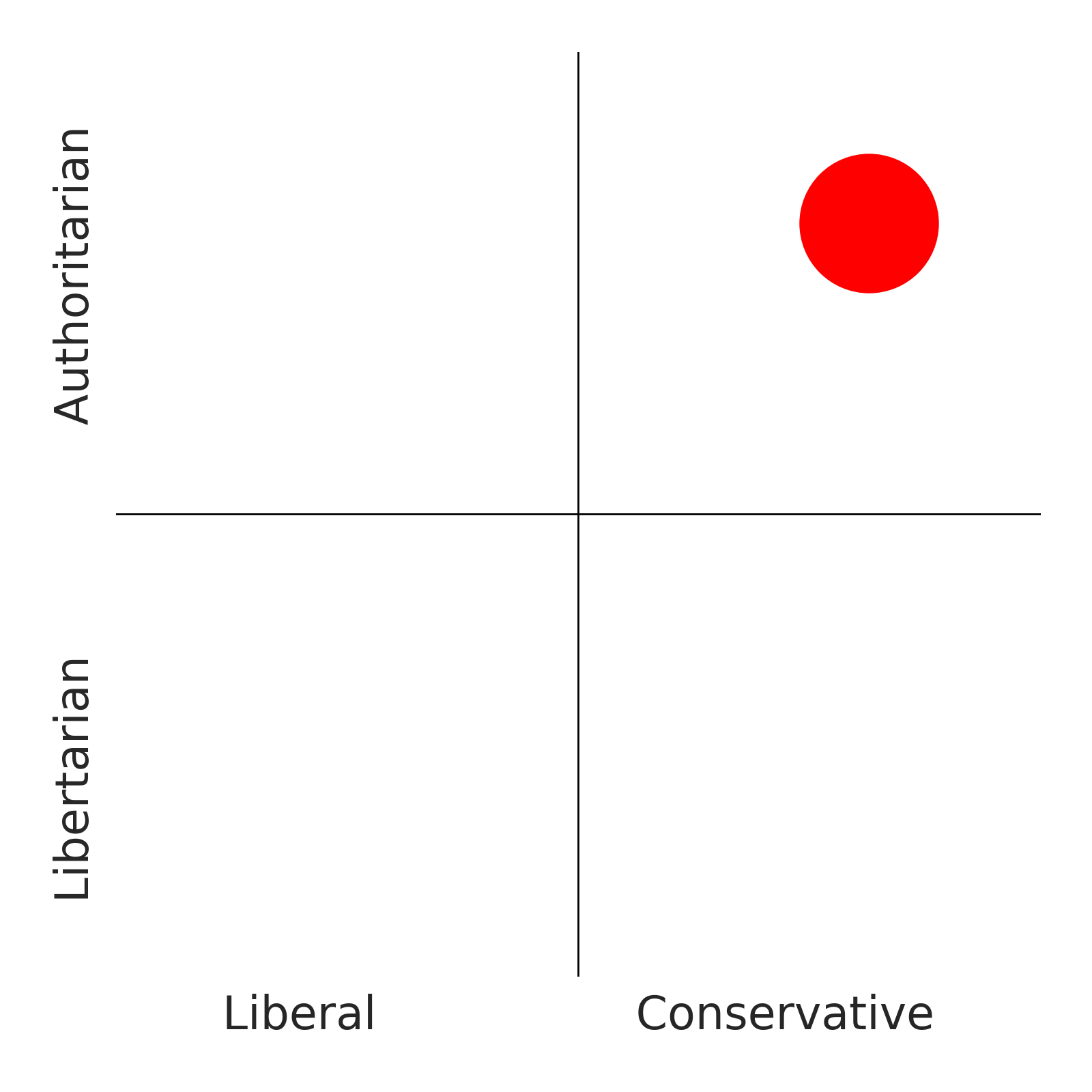
Click points to explore news by date. News sentiment ranges from -10 (very negative) to +10 (very positive) where 0 is neutral.
2026 © Helium Trades
Privacy Policy & Disclosure
* Disclaimer: Nothing on this website constitutes investment advice, performance data or any recommendation that any particular security, portfolio of securities, transaction or investment strategy is suitable for any specific person. Helium Trades is not responsible in any way for the accuracy
of any model predictions or price data. Any mention of a particular security and related prediction data is not a recommendation to buy or sell that security. Investments in securities involve the risk of loss. Past performance is no guarantee of future results. Helium Trades is not responsible for any of your investment decisions,
you should consult a financial expert before engaging in any transaction.
Helium Research Assistant

How can I help you today?
Ask any question about Hoover Institution bias.


