See whether Helium helps you make better-informed decisions. Try every Pro Trader feature for 30 days. No credit card required.
Try every Pro Trader feature for 30 days. No credit card required.
Observable scope and framing. The sample is heavily concentrated in nuclear energy, semiconductors, quantum computing, humanoid/robotic systems, AI infrastructure, aerospace, drones, missiles, naval systems, critical minerals, and industrial decarbonization; the keyword-frequency record explicitly identifies nuclear energy, humanoid robots, quantum computing, and semiconductors [79].
This indicates strong selection toward frontier technology, strategic industry, and national-security subjects, although the dataset cannot show what the source declines to publish.
Dominant worldview. The recurring frame is technological progress as economically, strategically, and socially desirable. Government funding, defense procurement, domestic manufacturing, and corporate expansion are commonly presented as constructive milestones: examples include the CHIPS-backed packaging project
Framing foregrounds establishment-aligned government investment in domestic semiconductor capabilities as a path to jobs, innovation, and AI/HPC leadership.
Background: As transistor scaling slows, advanced packaging and chiplet integration are pursued to improve performance; The CHIPS Act funds domestic packaging research via its R&D Office; Multibeam will collaborate with U.S.-based partners on dense chip-to-chip interconnections and silicon photonics, targeting faster, more power-efficient AI/HPC systems.
Automated analysis; not human reviewed. · 1 of 52 available dimensions scored; omitted dimensions are not treated as neutral. · Verified supporting quotes for 0 of 1 scored dimensions.
Historic, strategically essential defense spending framing emphasizes undersea superiority and the nuclear triad, portraying the submarine contracts as necessary despite pandemic-era cost pressures.
Automated analysis; not human reviewed. Limitations: The article relies on official Navy and contractor sources; potential bias arises from heavy emphasis on positive framing of defense spending and limited independent verification. · 3 of 52 available dimensions scored; omitted dimensions are not treated as neutral. · Verified supporting quotes for 3 of 3 scored dimensions.
Claim: The article frames defense spending as historic, essential for undersea superiority and the nuclear triad.
“This historic investment underscores the Department’s continued commitment to undersea superiority and the recapitalization of our nuclear triad” · exact text match
Why: The quoted language explicitly casts the spending as a historic and security-focused investment.
Claim: The article relies on official Navy and government-related framing and presents defense procurement as national policy.
“This historic investment underscores the Department’s continued commitment to undersea superiority and the recapitalization of our nuclear triad” · exact text match
Why: The framing leans on Navy statements and government-backed terminology.
Claim: The article emphasizes defense contractors and the American shipbuilding base as beneficiaries of contracts and as essential to national security.
“These contracts provide the American shipbuilding industrial base the opportunity to demonstrate that commitment in a meaningful way and we are honored to serve our customer and our country.” · exact text match
Why: The quoted language foregrounds industry beneficiaries and national-security framing around corporate actors.
The article relies on official Navy and contractor sources; potential bias arises from heavy emphasis on positive framing of defense spending and limited independent verification.
August 09, 2026 · 0 shares
A celebratory and promotional framing treats a major defense contract as an unequivocal national-security victory, relying on official quotes and excluding critical or countervailing perspectives.
The 'Arsenal of Freedom' is a U.S. Department of War initiative to accelerate domestic military production by reducing regulations and partnering with private industry, described on its website as aiming to 'produce at scale the systems, munitions and materiel needed for warfighters to fight and win.'
Automated analysis; not human reviewed. Limitations: The article text includes extraneous UI elements (subscription prompts) that do not affect the analysis. The content is essentially a press release, so the publisher's independent analysis is minimal. · 20 of 53 available dimensions scored; omitted dimensions are not treated as neutral. · Verified supporting quotes for 19 of 20 scored dimensions.
Claim: The article strongly frames the defense contract as a positive national-security development, aligning with conservative pro-military and pro-defense-spending positions.
“Lockheed Martin wins $53.86B contract to boost America’s Arsenal of Freedom” · exact text match
“The “Arsenal of Freedom” initiative, launched by the U.S. Department of War under Secretary Pete Hegseth, references President Franklin D. Roosevelt’s historic “Arsenal of Democracy.”” · exact text match
Why: The headline and framing celebrate a large defense contract without any critical perspective, typical of conservative stances that prioritize military strength.
Claim: The article is elitist, focusing on a large defense contractor and government officials without populist appeal to ordinary citizens.
“Lockheed Martin plans to invest $8 to $9 billion through 2040 to modernize more than 20 U.S. facilities and rapidly scale munitions output.” · exact text match
““We are moving with speed to support the Department of War’s Arsenal of Freedom,” said Dan Nimblett, vice president, Lockheed Martin Munitions Acceleration Integration.” · exact text match
Why: The narrative centers on corporate and government decision-makers, not grassroots or public concerns.
Claim: The article supports expanded government and military authority in defense production, aligning with authoritarian leanings.
“The War Department is “striving to…produce at scale the systems, munitions and materiel needed for warfighters to fight and win,” as stated on its website.” · exact text match
““Hegseth’s strategy calls for maximizing acquisition flexibility by reducing and eliminating burdensome and unnecessary regulations and processes, as well as incentivizing opportunities to work with the department and to reduce costs for industry partners.”” · exact text match
Why: The article uncritically endorses a centralized, top-down approach to military production and reduced oversight.
Claim: The article blends factual reporting with subjective, promotional language.
“The Aegis Combat System, described as “the gold standard for multi-mission combat systems” · exact text match
“The PAC-3 MSE is now considered the most advanced air and missile defense interceptor.” · exact text match
Why: While reporting facts, the article uses superlative and opinion-laden descriptors.
Claim: The article uses sensational language to heighten the perceived importance of the contract.
“Lockheed Martin wins $53.86B contract to boost America’s Arsenal of Freedom” · exact text match
“the package will enable Lockheed Martin to “supercharge PAC-3 MSE production”” · exact text match
Why: Words like 'boost' and 'supercharge' evoke excitement and urgency beyond neutral reporting.
Claim: The article is extremely bullish on Lockheed Martin and defense spending, presenting only positive outcomes.
“Lockheed Martin wins $53.86B contract to boost America’s Arsenal of Freedom” · exact text match
“Lockheed Martin plans to invest $8 to $9 billion through 2040 to modernize more than 20 U.S. facilities and rapidly scale munitions output.” · exact text match
Why: Every element of the story—contract value, investment, capacity increase—is framed as an unqualified positive.
Claim: The article is primarily descriptive but carries a strong prescriptive undertone that this spending is necessary and good.
““The nation’s Arsenal of Freedom isn’t as simple as a factory expansion or new production line,” says Lockheed Martin. “It’s about speed and a dedicated workforce that uses technology and its expertise to meet critical security demands.”” · exact text match
Why: The article reports plans and quotes but implicitly advocates for the initiative through tone and selection.
Claim: The article is highly hawkish, promoting increased military capacity without mentioning diplomatic or disarmament alternatives.
““The integration expands Aegis’ capability, capacity and flexibility to counter increasingly advanced threats while building on its proven foundation,” concludes a news release.” · exact text match
““NGI is more than a ‘next generation interceptor’, it’s a next generation solution to missile defense’s most serious threats,” said Chris Jewell.” · not found in supplied text
Why: The exclusive focus on military solutions and threat language strongly reflects a hawkish stance.
Claim: The article contains a significant amount of opinionated language, though it is interspersed with factual reporting.
“The Aegis Combat System, described as “the gold standard for multi-mission combat systems” · exact text match
“The PAC-3 MSE is now considered the most advanced air and missile defense interceptor.” · exact text match
Why: These value judgments are presented as fact, blurring opinion and reporting.
Claim: The article is highly political, focusing on a defense policy initiative and associated government contracts.
“The “Arsenal of Freedom” initiative, launched by the U.S. Department of War under Secretary Pete Hegseth” · exact text match
“the U.S. government awarded Lockheed Martin “a seven-year undefinitized contract action modification for up to $53.86 billion for PAC-MSE interceptors, supporting the Department of War’s Acquisition Transformation Strategy.”” · exact text match
Why: The content is entirely about government defense policy and spending, which is inherently political.
Claim: The article oversimplifies complex defense procurement and national security issues into a straightforward positive story.
“Lockheed Martin wins $53.86B contract to boost America’s Arsenal of Freedom” · exact text match
“The “Arsenal of Freedom” initiative, launched by the U.S. Department of War under Secretary Pete Hegseth, references President Franklin D. Roosevelt’s historic “Arsenal of Democracy.”” · exact text match
Why: It presents the contract and initiative as an uncomplicated good, ignoring potential complexities like cost, effectiveness, or strategic debates.
Claim: The article relies heavily on quotes from government and corporate officials as authoritative sources.
““We are moving with speed to support the Department of War’s Arsenal of Freedom,” said Dan Nimblett, vice president, Lockheed Martin Munitions Acceleration Integration.” · exact text match
““NGI is more than a ‘next generation interceptor’, it’s a next generation solution to missile defense’s most serious threats,” said Chris Jewell, vice president of Lockheed Martin’s NGI Program.” · exact text match
Why: The narrative is built almost entirely on official statements, presenting them as definitive without independent verification.
Claim: The article expresses certainty about future outcomes and capability claims beyond what the evidence supports.
“the package will enable Lockheed Martin to “supercharge PAC-3 MSE production” and triple capacity by the end of 2030.” · exact text match
“The PAC-3 MSE is now considered the most advanced air and missile defense interceptor.” · exact text match
Why: Future capacity and superiority claims are stated as assured, without hedging or acknowledging uncertainties.
Claim: The article reflects a clear ideology favoring military strength, industrial partnership, and nationalistic security.
“Lockheed Martin wins $53.86B contract to boost America’s Arsenal of Freedom” · exact text match
“The “Arsenal of Freedom” initiative, launched by the U.S. Department of War under Secretary Pete Hegseth, references President Franklin D. Roosevelt’s historic “Arsenal of Democracy.”” · exact text match
Why: The language of 'Arsenal of Freedom' and historical parallel implies a particular worldview about America's role and the necessity of military might.
Claim: The article is strongly pro-establishment, supporting government and corporate institutions without question.
“The “Arsenal of Freedom” initiative, launched by the U.S. Department of War under Secretary Pete Hegseth” · exact text match
“Lockheed Martin has announced an expansion to support the United States’ “Arsenal of Freedom,” accelerating domestic military manufacturing through advanced private sector partnerships.” · exact text match
Why: It presents the government initiative and corporate partnership as inherently positive and necessary.
Claim: The article evokes positive emotions about national pride and technological progress.
“Lockheed Martin wins $53.86B contract to boost America’s Arsenal of Freedom” · exact text match
““Once again, we are expanding the Courtland campus to meet the national security challenges of today,” said Reshondra McInnis, Lockheed Martin Courtland site executive.” · exact text match
Why: Words like 'boost', 'freedom', and 'challenges' appeal to patriotic and aspirational emotions.
Claim: The article functions as a promotional piece for Lockheed Martin, highlighting its products and investments favorably.
“Lockheed Martin wins $53.86B contract to boost America’s Arsenal of Freedom” · exact text match
““The integration expands Aegis’ capability, capacity and flexibility to counter increasingly advanced threats while building on its proven foundation,” concludes a news release.” · exact text match
Why: The entire article is based on Lockheed Martin's news release, with positive framing and no critical examination.
Claim: The article is strongly pro-corporate, favoring the interests of Lockheed Martin as a defense contractor.
“Lockheed Martin has announced an expansion to support the United States’ “Arsenal of Freedom,” accelerating domestic military manufacturing through advanced private sector partnerships.” · exact text match
“Lockheed Martin plans to invest $8 to $9 billion through 2040 to modernize more than 20 U.S. facilities and rapidly scale munitions output.” · exact text match
Why: The article presents corporate investments and partnerships as unambiguously positive, without any counterpoint.
Claim: The article includes speculative statements about future production capacity and investment outcomes.
“the package will enable Lockheed Martin to “supercharge PAC-3 MSE production” and triple capacity by the end of 2030.” · exact text match
“Lockheed Martin plans to invest $8 to $9 billion through 2040 to modernize more than 20 U.S. facilities and rapidly scale munitions output.” · exact text match
Why: These are stated as plans, but the certainty of achievement and the exact outcomes are speculative.
Claim: The article uses manipulative techniques such as loaded language, omission of counterarguments, and a one-sided emotional appeal.
“Lockheed Martin wins $53.86B contract to boost America’s Arsenal of Freedom” · exact text match
“The PAC-3 MSE is now considered the most advanced air and missile defense interceptor.” · exact text match
Why: By presenting only positive facts and quotes, and using superlative and patriotic language, the article guides readers toward a predetermined favorable view without critical context.
The article text includes extraneous UI elements (subscription prompts) that do not affect the analysis. The content is essentially a press release, so the publisher's independent analysis is minimal.
Frames Yellowstone's eruption risk as low-probability and non-catastrophic, relying on USGS science to counter alarmist speculation.
Automated analysis; not human reviewed. · 17 of 53 available dimensions scored; omitted dimensions are not treated as neutral. · Verified supporting quotes for 14 of 17 scored dimensions.
Claim: The article reports factual information from authoritative sources without subjective opinion.
“The US Geological Survey (USGS) says there is currently no evidence that enough eruptible magma has accumulated beneath the park to support another supereruption.” · exact text match
Why: Direct attribution to USGS, no subjective language.
Claim: The article avoids sensationalism and presents measured probabilities.
“This represents Yellowstone’s most extreme and least likely scenario.” · not found in supplied text
Why: Explicitly labels the scary scenario as least likely.
Claim: The article describes what could happen without prescribing action.
“If Yellowstone erupts again, the most probable outcome is not a continent-spanning explosion.” · exact text match
Why: Describes probabilities, does not tell readers what to do.
Claim: The article actively reduces fear by emphasizing low probability and realistic hazards.
“Nevertheless, this represents Yellowstone’s most extreme and least likely scenario.” · exact text match
Why: Downplays catastrophic scenario.
Claim: The article presents facts and attributed statements, not opinion.
“The USGS says there is currently no evidence” · not found in supplied text
Why: Relies on official source.
Claim: The article is entirely non-political.
“Yellowstone National Park is famous for its geysers” · exact text match
Why: No political content.
Claim: The article includes nuanced details about eruption types and probabilities.
“A smaller lava flow or localized hydrothermal explosion is far more likely.” · exact text match
Why: Distinguishes between scenarios.
Claim: The article cites USGS as a credible source without relying solely on authority.
“The US Geological Survey (USGS) says” · exact text match
Why: Scientific reporting typically cites authorities; not a bias.
Claim: The article is mature and serious.
“The volcano has experienced three exceptionally large, caldera-forming eruptions” · exact text match
Why: Tone is educational.
Claim: The article presents linear reasoning.
“This history means Yellowstone is considered active rather than extinct.” · exact text match
Why: Logical inference from evidence.
Claim: The article uses cautious language and hedges.
“highly unlikely” · exact text match
“no evidence that a supereruption is imminent” · exact text match
Why: Qualifies statements.
Claim: The article is substantive, not spam.
“Yellowstone sits above a hotspot where heat from deep inside Earth melts rock” · exact text match
Why: Informative content.
Claim: The article attributes claims to USGS, provides specific data, and uses cautious language.
“USGS monitoring data recorded 68 earthquakes during July, the largest measuring magnitude 3.3.” · exact text match
Why: Specific numbers and source increase credibility.
Claim: The article presents logical, evidence-based reasoning without irrational claims.
“Volcanoes do not erupt according to fixed schedules. The idea that Yellowstone is “overdue” is therefore misleading.” · not found in supplied text
Why: The article explicitly corrects a common fallacy and relies on scientific monitoring data.
Claim: The article is not advertorial.
“The USGS says such climatic consequences could persist for years” · exact text match
Why: No promotional content.
Claim: The article relies entirely on geological science and monitoring.
“Yellowstone is monitored using seismometers, GPS stations, satellite observations” · exact text match
Why: Emphasis on empirical monitoring.
The report frames the research as a potential advance while consistently emphasizing that results are simulated and not yet proven against real targets.
Automated analysis; not human reviewed. Limitations: None · 53 of 53 available dimensions scored; omitted dimensions are not treated as neutral. · Verified supporting quotes for 6 of 53 scored dimensions.
Claim: The article reports findings with attributed statements and quantifiable results, avoiding personal opinion.
“Lead researcher An Jiangshan said the relevant test data remains confidential and cannot be disclosed.” · exact text match
Why: The inclusion of researcher attribution and specific numeric results without editorializing indicates objective reporting.
Claim: The headline emphasizes a 90% accuracy figure without immediate qualification, but the body immediately corrects it to simulated performance.
“Chinese missiles autonomously spot F-22, F-35 heat signatures with 90 percent accuracy.” · exact text match
“Those results do not show how the system would perform against actual F-22 or F-35 aircraft.” · exact text match
Why: The headline is more provocative than the body's careful caveats, creating a slight sensational framing.
Claim: The article describes the research and its potential implications without advocating for a specific course of action.
“For the US, the research points to a familiar problem with a newer twist.” · exact text match
Why: The statement is observational rather than prescriptive, maintaining a descriptive stance.
Claim: The headline implies a capability level not supported by the body, but the body corrects this with explicit caveats.
“Chinese missiles autonomously spot F-22, F-35 heat signatures with 90 percent accuracy.” · exact text match
“The experiments used simulated targets, and the researchers say further work will be needed.” · not found in supplied text
Why: The initial headline overstates certainty, but the article quickly tempers it with clear limitations.
Claim: The article uses specific numeric results, attributes statements to researchers, and discloses limitations.
“The model reached 97.1 percent recognition accuracy during testing, according to the researchers.” · exact text match
“Those results do not show how the system would perform against actual F-22 or F-35 aircraft.” · exact text match
Why: Visible sourcing, precise data, and caveats make the article highly credible within its scope.
Claim: The article consistently applies evidence-based reasoning and clearly separates simulation results from real-world capability.
“Those results do not show how the system would perform against actual F-22 or F-35 aircraft.” · exact text match
Why: The report explicitly disclaims real-world application and notes limitations, supporting a rational, evidence-driven frame.
Claim: The article includes explicit limitations and does not overstate the research's implications.
“The research does not establish that Chinese missiles can identify operational F-22 or F-35 fighters.” · exact text match
Why: Transparent acknowledgment of limitations and confidential data reflects high internal integrity.
None
August 08, 2026 · 0 shares
Frames the railgun's unfulfilled promise as a realistic case study of how engineering constraints and strategic shifts sideline revolutionary technologies.
Main biases. The clearest biases are techno-optimism, establishment and corporate-source reliance, and defense/national-security alignment. Promotional or single-source reporting is repeatedly observable: Energy Concepts’ carbon-capture platform relies exclusively on company claims
Frames a modular energy platform as a transformative solution for data center challenges, relying exclusively on company claims without independent scrutiny.
Automated analysis; not human reviewed. · 2 of 53 available dimensions scored; omitted dimensions are not treated as neutral. · Verified supporting quotes for 1 of 2 scored dimensions.
Claim: The article's credibility is reduced by relying solely on a single company as its source for all major claims.
“A new modular energy platform unveiled by Energy Concepts aims to address all three simultaneously.” · exact text match
“Energy Concepts says each 5-megawatt Plato5X module can generate approximately 5,000 kilowatts of electricity, recover about 12,000 gallons of water per day, and capture enough carbon dioxide to produce roughly 11,000 gallons of food-grade liquid CO₂ daily.” · not found in supplied text
Why: All quantitative claims originate from the company itself, with no independent verification, third-party analysis, or acknowledgement of potential limitations, which lowers the overall trustworthiness of the report.
Claim: The article presents the platform in a promotional manner, lacking independent verification or critical perspective.
“The modular platform aims to let data centers run off-grid while capturing 90% of carbon emissions.” · exact text match
“According to the company, the recovered heat drives an absorption cooling system, which uses heat instead of electricity to produce chilled water for cooling servers.” · exact text match
Why: The article repeatedly attributes all technical benefits to the company without including independent experts or any drawbacks, and the headline itself is a promotional claim.
Promotional framing from a Lockheed Martin press release presents Morfius X-rotor as a groundbreaking, low-cost, field-reusable counter-drone system, emphasizing corporate claims and alignment with U.S. defense objectives while offering little independent validation.
Defense-industry press release describing Lockheed Martin's Morfius X-rotor counter-drone system and its claimed capabilities and roadmap alignment.
Automated analysis; not human reviewed. Limitations: Concise, case-specific limitations and plausible alternative interpretations. · 52 of 52 available dimensions scored; omitted dimensions are not treated as neutral. · Verified supporting quotes for 4 of 52 scored dimensions.
Claim: Uses normative language about efficacy and deployment timelines.
“the most effective, low-cost solution on the market today” · exact text match
“the only ground-launched, field-reusable airborne high-power microwave system capable of neutralizing more than 50 drones in a single flight while remaining independent of dedicated fire-control radars” · exact text match
Why: Prescriptive descriptors imply normative judgments about value and deployment.
Claim: Statements reflect opinion rather than neutral reporting.
“Morfius sets a new benchmark for counter-drone capability” · exact text match
Why: Opinionated phrasing from a corporate source; lacks neutral corroboration.
Claim: Claims of superior performance and cost-effectiveness without independent corroboration.
“Morfius sets a new benchmark for counter-drone capability, delivering a high kill rate while keeping the cost per kill low” · exact text match
“"the most effective, low-cost solution on the market today"” · not found in supplied text
Counterevidence:
“It reportedly relies on high-power microwave (HPM) technology to disable multiple drones during a single mission.” · exact text match
Why: Explicit certainty about performance/coast without third-party validation; hedged by 'reportedly' in one source.
Claim: The piece signals alignment with U.S. defense objectives and DoD planning.
“Morfius aligns with the US Department of Defense’s 2025-2028 Rapid Response Counter-Unmanned Aircraft Systems Roadmap.” · exact text match
“The initiative aims to speed up the deployment of affordable and effective counter-drone technologies.” · exact text match
Why: Promotes defense-policy alignment without presenting external viewpoints.
Claim: Credibility hinges on company-provided data without external corroboration.
“"According to Lockheed Martin, …"” · not found in supplied text
“The trials assessed the drone’s flight performance, target interception capabilities, and overall lethality.” · exact text match
Why: Statements primarily from the manufacturer; limited independent sourcing.
Claim: Text emphasizes promotional attributes of the system as market-leading.
“"the most effective, low-cost solution on the market today"” · not found in supplied text
“Designed for field recovery and reuse, Morfius keeps a significantly low cost per kill, protecting defense budgets while maintaining relentless firepower.” · not found in supplied text
Why: Loaded marketing language presented as factual claims.
Claim: Article frames Lockheed Martin's Morfius X-rotor as a superior, low-cost, field-reusable counter-drone solution, heavily relying on corporate quotes.
“Morfius sets a new benchmark for counter-drone capability, delivering a high kill rate while keeping the cost per kill low,” · exact text match
“By leveraging a lightweight, field-reusable high-power microwave architecture, we provide the most effective, low-cost solution on the market today and demonstrate Lockheed Martin’s ability to field innovative, affordable technologies at the speed our American and allied troops need” · exact text match
Why: Corporate-promotional framing relies on executives and company-produced claims without independent verification.
Claim: Reliance on corporate sourcing without independent verification.
“"Morfius is sensor and command and control agnostic."” · verified after text normalization
“"By leveraging a lightweight, field-reusable high-power microwave architecture, we provide the most effective, low-cost solution on the market today"” · not found in supplied text
Why: Single-source claims from the manufacturer; absence of third-party validation.
Promotional framing; lacks independent verification; potential conflict between marketing and objective tech assessment.
The publisher frames the MoU as a positive, market-driven defense advancement, foregrounding scalable, cost-effective counter-UAS tech and executive claims while minimizing critical scrutiny or independent validation.
Estonian defense technology company Frankenburg Technologies signs a Memorandum of Understanding with Babcock International and ACUA Ocean Technologies to jointly develop integrated maritime counter-drone air defence systems amid concerns about low-cost drones and the need for affordable, ship-based defense solutions.
Automated analysis; not human reviewed. Limitations: Based on the provided text alone; lacks independent verification; content resembles a corporate press-release with promotional framing. · 1 of 52 available dimensions scored; omitted dimensions are not treated as neutral. · Verified supporting quotes for 1 of 1 scored dimensions.
Claim: The article functions as promotional content for corporate defense partners and emphasizes cost-effective, scalable solutions.
““Affordable missile defense is heading farther out to sea. By equipping ACUA’s uncrewed vessels with Frankenburg’s mass-manufacturable missiles and Babcock’s launcher technology, we aim to create a persistent and low-cost way to protect the UK’s ships, ports and critical maritime infrastructure against mass drone attacks,” said Daniel Hallett, UK Managing Director at Frankenburg Technologies.” · exact text match
““We’re excited to partner with innovative companies to develop an integrated approach that directly addresses some of the biggest challenges our customers face in today’s defence landscape,” said Sir Nick Hine, Chief Growth Officer for Babcock.” · exact text match
““As a trusted systems integrator, collaborations like this will help protect critical national assets and infrastructure from attritable one-way attack drones.”” · exact text match
Why: The piece foregrounds cost-effectiveness and promotion of the collaboration, with executive endorsements and no independent validation presented.
Assumes announced benefits; lacks independent validation.
The report frames the storage deal optimistically, emphasizing scalability and reliability while noting that no project, site, or investment decision has been announced.
Data centers are increasing electricity demand, and long-duration storage is seen as a way to make renewable power more reliable by shifting generation to periods of low output.
Automated analysis; not human reviewed. Limitations: The article is based on company announcements and lacks independent verification of technical claims or feasibility. · 53 of 53 available dimensions scored; omitted dimensions are not treated as neutral. · Verified supporting quotes for 2 of 53 scored dimensions.
Claim: The article presents the storage technology as scientifically plausible, using terms like 'reversible electrofuels' and 'abundant elements' without critical evaluation.
“Noon Energy’s technology is designed for storage lasting more than 100 hours. Instead of relying on lithium and other relatively scarce metals, the company’s system stores energy using abundant elements including carbon and oxygen.” · exact text match
Why: The article reports the technology's claims without independent verification or mentioning potential limitations, but it does present it as a technical solution rather than unscientific.
Claim: The article includes speculative statements about future deployment and impact.
“Commercial deployment could begin as early as 2027, although the companies have not announced a specific project, site or final investment decision.” · exact text match
Why: The article mentions future timelines and potential outcomes while acknowledging lack of concrete details, reflecting speculative framing about the partnership's future.
The article is based on company announcements and lacks independent verification of technical claims or feasibility.
The article presents the project as a purely engineering/business milestone with positive tone and no critical scrutiny of cost, timeline, or technology risk.
Automated analysis; not human reviewed. Limitations: Single-source promotional announcement; quotes only from company executives; no independent verification or adversarial sourcing. · 11 of 53 available dimensions scored; omitted dimensions are not treated as neutral. · Verified supporting quotes for 9 of 11 scored dimensions.
Claim: Article frames the project as an expert-led industrial solution without public participation or skepticism.
“The strategy reflects a growing challenge for the U.S. power sector.” · exact text match
Why: Expert framing and no mention of public input or opposition.
Claim: Reporting is factual but contains promotional language and subjective adjectives about the project's benefits.
“That model could make costs and schedules easier to predict.” · exact text match
Why: A cautionary statement about future predictability is included, but no critical evaluation of risks or drawbacks.
Claim: Article avoids sensationalism and hyperbolic claims, staying close to published project details.
“The partners expect to reach a final investment decision in 2027.” · exact text match
Why: Uses precise dates and specs, though overall topic may be of interest.
Claim: The article carries a mildly positive, forward-looking tone toward the project's viability and benefits.
“The strategy could prove useful for Texas, where electricity demand continues to grow.” · not found in supplied text
Why: Positive emphasis on project's potential and technology claims.
Claim: Article is primarily descriptive, explaining project plans and quotes, with minimal prescriptive calls to action.
“The Texas facility will bring gas-fired generation online before its nuclear units.” · exact text match
Why: Mainly reports plans and claims without prescribing policy.
Claim: Article projects future outcomes and capabilities with certainty from corporate statements and expected timelines.
“Nuclear generation would follow two years later.” · exact text match
Why: The timeline is presented as a definite plan despite it being an expectation contingent on schedules.
Claim: The article attributes claims and uses named sources, but lacks independent verification and broad sourcing.
“The partners expect to reach a final investment decision in 2027.” · exact text match
Why: At least source attribution is present, but mostly relies on corporate representatives.
Claim: Article relies on corporate statements without independent verification, but straightforwardly reports quoted claims and a timeline.
“Eric Gray, CEO of GE Vernova’s Power segment, said the approach combines established turbine technology with SMRs.” · exact text match
Why: Quoted claims are presented as such; no evidence of misrepresentation, but limited independent analysis.
Claim: Article covers technical details coherently with relevant background on reactor design and construction strategy.
“The BWRX-300 gives the Texas project a reactor design already moving toward deployment.” · exact text match
Why: Provides specific technical and industry context without oversimplifying.
Single-source promotional announcement; quotes only from company executives; no independent verification or adversarial sourcing.
Reporting frames Curio's DOE funding as a forward-looking innovation story, emphasizing potential benefits of nuclear fuel recycling while attributing optimistic claims to company and DOE sources.
Nuclear fuel recycling (reprocessing) separates usable materials from spent reactor fuel; the U.S. currently does not commercially recycle used nuclear fuel, which is treated as waste.
Automated analysis; not human reviewed. Limitations: No clear input limitation; article content consistent and specific. · 14 of 53 available dimensions scored; omitted dimensions are not treated as neutral. · Verified supporting quotes for 0 of 14 scored dimensions.
No clear input limitation; article content consistent and specific.
Propaganda-like techniques. There is evidence of observable, not necessarily intentional, propaganda techniques: appeal to authority through Pentagon, DOE, DARPA, university, and executive sources
Frames Chinese naval modernisation as a positive technological achievement, relying on state-affiliated sources and emphasising operational readiness.
The Type 076 is a new class of Chinese amphibious assault ship that integrates technologies from the Type 075 assault ship and Type 003 aircraft carrier.
Automated analysis; not human reviewed. Limitations: The article relies on Chinese state media and official sources; this may affect the independence of the information. · 6 of 52 available dimensions scored; omitted dimensions are not treated as neutral. · Verified supporting quotes for 6 of 6 scored dimensions.
Claim: The article maintains a factual reporting style without overt editorializing.
“China has released new footage highlighting tests aboard its Type 076 amphibious assault ship Sichuan, including the vessel’s first publicly disclosed live-fire launch of countermeasures and an electromagnetic catapult test using a dead load.” · exact text match
Why: The sentence reports observable events and does not include value judgments, though the headline 'showcases battle power' has a positive spin.
Claim: The article emphasizes military capability and readiness, suggesting a hawkish framing.
“China's 40,000-ton amphibious assault ship showcases battle power in live-fire tests” · exact text match
Why: The headline uses strong language ('showcases battle power') and the text repeatedly mentions operational readiness and combat capabilities.
Claim: The article relies heavily on expert and official statements to support claims.
“Chinese military affairs expert Song Zhongping said the Type 076 amphibious assault ship marks a significant technological advance” · exact text match
Why: Direct quotes from a Chinese military expert and references to 'military observers' substitute for independent analysis.
Claim: The article positively presents Chinese military developments and relies on state-affiliated sources.
“Chinese media note that the ship has successfully completed multiple rounds of sea trials” · exact text match
Why: The article uses Chinese state media and officials as sources without independent verification or criticism.
Claim: The article provides specific factual details with clear attribution.
“The vessel has a full-load displacement of more than 40,000 tons and features a twin-island superstructure, a full-length flight deck, and newly integrated electromagnetic catapult and arrestor systems.” · exact text match
Why: Concrete numbers, dates, and system names are given with attribution to Xinhua and Global Times.
Claim: The article includes forecasts about future capabilities and entry into service.
“fueling expectations that it could soon enter service” · exact text match
Why: The statement is attributed to observers and not presented as certain, but it speculates on a future event.
The article relies on Chinese state media and official sources; this may affect the independence of the information.
Publisher frames Nuclear Lifecycle Innovation Campuses as a positive, government-led modernization effort tied to Trump-era energy policy, emphasizing investment, job creation, and national energy security.
The US aims to modernize and expand its nuclear fuel cycle through federal-state partnerships, with background on capacity goals and reliance on foreign fuel sources. DOE framing emphasizes economic investment, domestic manufacturing, and national energy security.
Automated analysis; not human reviewed. · 20 of 52 available dimensions scored; omitted dimensions are not treated as neutral. · Verified supporting quotes for 1 of 20 scored dimensions.
Claim: Conservative-policy alignment is evidenced by explicit reference to Trump leadership and energy-dominance framing.
“The concept is a result of “President Trump’s leadership and ambitious directives to restore the domestic nuclear fuel cycle and get America’s nuclear industry growing again.”” · not found in supplied text
“The article states 'support the Trump administration’s vision for American energy dominance and national energy security.'” · not found in supplied text
Why: Direct references to Trump leadership and the Trump administration’s energy goals indicate conservative alignment.
Claim: The piece presents a strong positive economic outlook with large-scale investment and job creation.
“According to a DOE press release, the campuses have the 'potential to attract up to $50 billion in capital investment, generate as much as $10 billion in state and local tax revenue, and create nearly 25,000 jobs with the establishment of a campus.'” · not found in supplied text
Why: Reported economic benefits portray a highly favorable outcome.
Claim: The language describes modernization as an objective and asks readers to view it as beneficial policy.
“The campuses will aim to modernize the country’s nuclear fuel cycle. They will attract significant investment, aim to expand domestic manufacturing, and also create new jobs in the respective regions.” · exact text match
Why: Normative language about modernization and benefits indicates prescriptive framing.
Claim: The piece leans hawkish on energy security by stressing national-energy-security framing.
“The article references the Trump administration’s vision for American energy dominance and national energy security.” · not found in supplied text
Why: Language tying policy to strong national-security objectives indicates hawkish framing.
Claim: Promotional framing by citing large economic gains and national-security aims.
“The campuses have the 'potential to attract up to $50 billion in capital investment, generate as much as $10 billion in state and local tax revenue, and create nearly 25,000 jobs.'” · not found in supplied text
“support the Trump administration’s vision for American energy dominance and national energy security.” · exact text match
Why: Promotional phrasing and favorable framing of policy suggest opinionated presentation.
Claim: The report centers political leadership (Trump) in policy discussion, signaling a political orientation.
“The concept is a result of “President Trump’s leadership and ambitious directives to restore the domestic nuclear fuel cycle and get America’s nuclear industry growing again.”” · not found in supplied text
“The DOE press release frames American energy dominance and national energy security as policy aims.” · not found in supplied text
Why: Explicit reference to political leadership and policy goals indicates political framing.
Claim: Framing relies on official DOE communications and MOUs as credible proof.
“The DOE announced the selection of five states – namely Utah, Tennessee, Oklahoma, Louisiana, and Idaho – as potential hosts through a press release earlier this week.” · exact text match
“The campuses will be established through voluntary federal-state partnerships.” · not found in supplied text
Why: Use of official sources and agreements signals credibility through institutional channels.
Claim: The article relies on credible sourcing and clear attribution to officials.
“According to a press release by the DOE, the campuses have the “potential to attract up to $50 billion in capital investment, generate as much as $10 billion in state and local tax revenue, and create nearly 25,000 jobs with the establishment of a campus.”” · exact text match
“The U.S. Secretary of Energy Chris Wright has signed Memorandums of Understanding with the five states to continue exploring opportunities to host Innovation Campuses.” · not found in supplied text
Why: Attribution to DOE materials and officials supports credibility.
August 09, 2026 · 0 shares
A celebratory and promotional framing treats a major defense contract as an unequivocal national-security victory, relying on official quotes and excluding critical or countervailing perspectives.
The 'Arsenal of Freedom' is a U.S. Department of War initiative to accelerate domestic military production by reducing regulations and partnering with private industry, described on its website as aiming to 'produce at scale the systems, munitions and materiel needed for warfighters to fight and win.'
Automated analysis; not human reviewed. Limitations: The article text includes extraneous UI elements (subscription prompts) that do not affect the analysis. The content is essentially a press release, so the publisher's independent analysis is minimal. · 20 of 53 available dimensions scored; omitted dimensions are not treated as neutral. · Verified supporting quotes for 19 of 20 scored dimensions.
Claim: The article strongly frames the defense contract as a positive national-security development, aligning with conservative pro-military and pro-defense-spending positions.
“Lockheed Martin wins $53.86B contract to boost America’s Arsenal of Freedom” · exact text match
“The “Arsenal of Freedom” initiative, launched by the U.S. Department of War under Secretary Pete Hegseth, references President Franklin D. Roosevelt’s historic “Arsenal of Democracy.”” · exact text match
Why: The headline and framing celebrate a large defense contract without any critical perspective, typical of conservative stances that prioritize military strength.
Claim: The article is elitist, focusing on a large defense contractor and government officials without populist appeal to ordinary citizens.
“Lockheed Martin plans to invest $8 to $9 billion through 2040 to modernize more than 20 U.S. facilities and rapidly scale munitions output.” · exact text match
““We are moving with speed to support the Department of War’s Arsenal of Freedom,” said Dan Nimblett, vice president, Lockheed Martin Munitions Acceleration Integration.” · exact text match
Why: The narrative centers on corporate and government decision-makers, not grassroots or public concerns.
Claim: The article supports expanded government and military authority in defense production, aligning with authoritarian leanings.
“The War Department is “striving to…produce at scale the systems, munitions and materiel needed for warfighters to fight and win,” as stated on its website.” · exact text match
““Hegseth’s strategy calls for maximizing acquisition flexibility by reducing and eliminating burdensome and unnecessary regulations and processes, as well as incentivizing opportunities to work with the department and to reduce costs for industry partners.”” · exact text match
Why: The article uncritically endorses a centralized, top-down approach to military production and reduced oversight.
Claim: The article blends factual reporting with subjective, promotional language.
“The Aegis Combat System, described as “the gold standard for multi-mission combat systems” · exact text match
“The PAC-3 MSE is now considered the most advanced air and missile defense interceptor.” · exact text match
Why: While reporting facts, the article uses superlative and opinion-laden descriptors.
Claim: The article uses sensational language to heighten the perceived importance of the contract.
“Lockheed Martin wins $53.86B contract to boost America’s Arsenal of Freedom” · exact text match
“the package will enable Lockheed Martin to “supercharge PAC-3 MSE production”” · exact text match
Why: Words like 'boost' and 'supercharge' evoke excitement and urgency beyond neutral reporting.
Claim: The article is extremely bullish on Lockheed Martin and defense spending, presenting only positive outcomes.
“Lockheed Martin wins $53.86B contract to boost America’s Arsenal of Freedom” · exact text match
“Lockheed Martin plans to invest $8 to $9 billion through 2040 to modernize more than 20 U.S. facilities and rapidly scale munitions output.” · exact text match
Why: Every element of the story—contract value, investment, capacity increase—is framed as an unqualified positive.
Claim: The article is primarily descriptive but carries a strong prescriptive undertone that this spending is necessary and good.
““The nation’s Arsenal of Freedom isn’t as simple as a factory expansion or new production line,” says Lockheed Martin. “It’s about speed and a dedicated workforce that uses technology and its expertise to meet critical security demands.”” · exact text match
Why: The article reports plans and quotes but implicitly advocates for the initiative through tone and selection.
Claim: The article is highly hawkish, promoting increased military capacity without mentioning diplomatic or disarmament alternatives.
““The integration expands Aegis’ capability, capacity and flexibility to counter increasingly advanced threats while building on its proven foundation,” concludes a news release.” · exact text match
““NGI is more than a ‘next generation interceptor’, it’s a next generation solution to missile defense’s most serious threats,” said Chris Jewell.” · not found in supplied text
Why: The exclusive focus on military solutions and threat language strongly reflects a hawkish stance.
Claim: The article contains a significant amount of opinionated language, though it is interspersed with factual reporting.
“The Aegis Combat System, described as “the gold standard for multi-mission combat systems” · exact text match
“The PAC-3 MSE is now considered the most advanced air and missile defense interceptor.” · exact text match
Why: These value judgments are presented as fact, blurring opinion and reporting.
Claim: The article is highly political, focusing on a defense policy initiative and associated government contracts.
“The “Arsenal of Freedom” initiative, launched by the U.S. Department of War under Secretary Pete Hegseth” · exact text match
“the U.S. government awarded Lockheed Martin “a seven-year undefinitized contract action modification for up to $53.86 billion for PAC-MSE interceptors, supporting the Department of War’s Acquisition Transformation Strategy.”” · exact text match
Why: The content is entirely about government defense policy and spending, which is inherently political.
Claim: The article oversimplifies complex defense procurement and national security issues into a straightforward positive story.
“Lockheed Martin wins $53.86B contract to boost America’s Arsenal of Freedom” · exact text match
“The “Arsenal of Freedom” initiative, launched by the U.S. Department of War under Secretary Pete Hegseth, references President Franklin D. Roosevelt’s historic “Arsenal of Democracy.”” · exact text match
Why: It presents the contract and initiative as an uncomplicated good, ignoring potential complexities like cost, effectiveness, or strategic debates.
Claim: The article relies heavily on quotes from government and corporate officials as authoritative sources.
““We are moving with speed to support the Department of War’s Arsenal of Freedom,” said Dan Nimblett, vice president, Lockheed Martin Munitions Acceleration Integration.” · exact text match
““NGI is more than a ‘next generation interceptor’, it’s a next generation solution to missile defense’s most serious threats,” said Chris Jewell, vice president of Lockheed Martin’s NGI Program.” · exact text match
Why: The narrative is built almost entirely on official statements, presenting them as definitive without independent verification.
Claim: The article expresses certainty about future outcomes and capability claims beyond what the evidence supports.
“the package will enable Lockheed Martin to “supercharge PAC-3 MSE production” and triple capacity by the end of 2030.” · exact text match
“The PAC-3 MSE is now considered the most advanced air and missile defense interceptor.” · exact text match
Why: Future capacity and superiority claims are stated as assured, without hedging or acknowledging uncertainties.
Claim: The article reflects a clear ideology favoring military strength, industrial partnership, and nationalistic security.
“Lockheed Martin wins $53.86B contract to boost America’s Arsenal of Freedom” · exact text match
“The “Arsenal of Freedom” initiative, launched by the U.S. Department of War under Secretary Pete Hegseth, references President Franklin D. Roosevelt’s historic “Arsenal of Democracy.”” · exact text match
Why: The language of 'Arsenal of Freedom' and historical parallel implies a particular worldview about America's role and the necessity of military might.
Claim: The article is strongly pro-establishment, supporting government and corporate institutions without question.
“The “Arsenal of Freedom” initiative, launched by the U.S. Department of War under Secretary Pete Hegseth” · exact text match
“Lockheed Martin has announced an expansion to support the United States’ “Arsenal of Freedom,” accelerating domestic military manufacturing through advanced private sector partnerships.” · exact text match
Why: It presents the government initiative and corporate partnership as inherently positive and necessary.
Claim: The article evokes positive emotions about national pride and technological progress.
“Lockheed Martin wins $53.86B contract to boost America’s Arsenal of Freedom” · exact text match
““Once again, we are expanding the Courtland campus to meet the national security challenges of today,” said Reshondra McInnis, Lockheed Martin Courtland site executive.” · exact text match
Why: Words like 'boost', 'freedom', and 'challenges' appeal to patriotic and aspirational emotions.
Claim: The article functions as a promotional piece for Lockheed Martin, highlighting its products and investments favorably.
“Lockheed Martin wins $53.86B contract to boost America’s Arsenal of Freedom” · exact text match
““The integration expands Aegis’ capability, capacity and flexibility to counter increasingly advanced threats while building on its proven foundation,” concludes a news release.” · exact text match
Why: The entire article is based on Lockheed Martin's news release, with positive framing and no critical examination.
Claim: The article is strongly pro-corporate, favoring the interests of Lockheed Martin as a defense contractor.
“Lockheed Martin has announced an expansion to support the United States’ “Arsenal of Freedom,” accelerating domestic military manufacturing through advanced private sector partnerships.” · exact text match
“Lockheed Martin plans to invest $8 to $9 billion through 2040 to modernize more than 20 U.S. facilities and rapidly scale munitions output.” · exact text match
Why: The article presents corporate investments and partnerships as unambiguously positive, without any counterpoint.
Claim: The article includes speculative statements about future production capacity and investment outcomes.
“the package will enable Lockheed Martin to “supercharge PAC-3 MSE production” and triple capacity by the end of 2030.” · exact text match
“Lockheed Martin plans to invest $8 to $9 billion through 2040 to modernize more than 20 U.S. facilities and rapidly scale munitions output.” · exact text match
Why: These are stated as plans, but the certainty of achievement and the exact outcomes are speculative.
Claim: The article uses manipulative techniques such as loaded language, omission of counterarguments, and a one-sided emotional appeal.
“Lockheed Martin wins $53.86B contract to boost America’s Arsenal of Freedom” · exact text match
“The PAC-3 MSE is now considered the most advanced air and missile defense interceptor.” · exact text match
Why: By presenting only positive facts and quotes, and using superlative and patriotic language, the article guides readers toward a predetermined favorable view without critical context.
The article text includes extraneous UI elements (subscription prompts) that do not affect the analysis. The content is essentially a press release, so the publisher's independent analysis is minimal.
Establishment/corporate framing casts Kratos's Indiana Payload Integration Facility as a national defense asset that strengthens U.S. hypersonic testing capacity.
Indiana Payload Integration Facility (IPIF) is a 68,000-square-foot Kratos facility near the Naval Surface Warfare Center Crane Division in Crane, Indiana. It is designed to simultaneously integrate, test, and prepare up to six hypersonic payloads and accelerate Mach 5+ testing, representing a major expansion of U.S. hypersonic testing infrastructure and defense industrial base; The content frames Kratos' investment as critical to national defense and industry collaboration.
Automated analysis; not human reviewed. Limitations: Heavy reliance on Kratos statements and defense framing; limited independent corroboration. · 2 of 52 available dimensions scored; omitted dimensions are not treated as neutral. · Verified supporting quotes for 2 of 2 scored dimensions.
Claim: Defense infrastructure expansion is framed as a national asset and defense-base strengthening.
“"The IPIF investment in southern Indiana brings online a national asset and critically needed infrastructure to rapidly scale the cadence of hypersonic testing in the United States," Johns said.” · verified after text normalization
Why: Direct attribution by a Kratos executive reinforces framing of IPIF as a national defense asset.
Claim: Kratos is portrayed as strategically expanding its defense manufacturing footprint.
“"The IPIF investment in southern Indiana brings online a national asset and critically needed infrastructure to rapidly scale the cadence of hypersonic testing in the United States," Johns said.” · verified after text normalization
“"Our infrastructure expansion near the Naval Surface Warfare Center Crane Division is part of our strategy to establish an advanced defense hub in Southern Indiana," Carter said.” · verified after text normalization
Why: Direct quotes from Kratos executives emphasize corporate strategy and hub-building near Crane.
Heavy reliance on Kratos statements and defense framing; limited independent corroboration.
Video-confirmed expansion of YJ-20 deployment onto Type 052D destroyers frames broader fleet-wide anti-ship capability and heightens perceived threat in the Western Pacific.
Automated analysis; not human reviewed. Limitations: The article includes embedded marketing content and an aggregator snippet; reliability of some numeric claims depends on cited third-party sources (MWM, Defense Security Asia). · 3 of 52 available dimensions scored; omitted dimensions are not treated as neutral. · Verified supporting quotes for 2 of 3 scored dimensions.
Claim: Framing of expanded YJ-20 deployment as a strategic threat to US/allied navies.
“The move suggests Beijing is expanding its long-range strike capability across a much larger fleet instead of limiting it to a few advanced vessels.” · exact text match
“Experts point out the development could make it harder for the US and its allies to track Chinese warships and protect aircraft carriers during a conflict.” · exact text match
Why: The quotes frame deployment as expanding threat and increasing tracking challenges.
Claim: Moderate credibility due to named sources and uncertainty acknowledgments.
“According to MWM, the YJ-20 uses a cold-launch system because of its large size.” · exact text match
“The missile was previously seen only on the larger Type 055 destroyer, but the latest footage confirms it can also be launched from the more numerous Type 052D destroyer.” · exact text match
Why: Reliance on named sources and on- footage claims with acknowledged uncertainty about broader deployment.
Claim: Attribution and acknowledgement of data gaps in sourcing.
“Chinese authorities have not disclosed how many YJ-20 missiles have entered service or how widely deployed.” · not found in supplied text
“China currently operates about 35 Type 052D destroyers and 10 Type 055 destroyers, providing more than 40 potential launch platforms for the missile.” · exact text match
Why: Explicitly cites official non-disclosures and quantified counts from the article.
The article includes embedded marketing content and an aggregator snippet; reliability of some numeric claims depends on cited third-party sources (MWM, Defense Security Asia).
Techno-optimist, promotional framing highlights a YC-backed tiny drone as a potential replacement for chemical insecticides, emphasizing cost savings and disease-reduction claims despite early-stage development.
Malaria is transmitted by Anopheles mosquitoes, which kill about 700,000 people annually; standard eradication methods carry environmental or health risks, motivating pursuit of an airborne drone approach.
Automated analysis; not human reviewed. · 4 of 52 available dimensions scored; omitted dimensions are not treated as neutral. · Verified supporting quotes for 1 of 4 scored dimensions.
Claim: Prescriptive framing encouraging a shift from chemicals to drones
“It is time to move over, chemical sprays, bug zappers, and sticky mesh netting. Drones are coming for mosquitoes.” · not found in supplied text
Why: Normative appeal to phase out current practices in favor of drones.
Claim: The publisher uses fear-based framing about disease and death from mosquitoes
“While disease-spreading rodents often dominate popular fear, the tiny Anopheles mosquito is actually history's deadliest creature.” · verified after text normalization
“These mosquitoes are responsible for killing over 700,000 people annually through diseases like malaria, yellow fever, dengue, and Zika.” · exact text match
Why: Directly links disease risk to the product framing.
Claim: Funding and credibility cues position the venture within the mainstream/establishment tech ecosystem
“Backed by Y Combinator, Paris-based startup Tornyol is bringing aerial combat technology to backyards and malaria-plagued regions to hunt down mosquitoes.” · exact text match
“The company claims its system is 100 times more cost-effective than fixed traps.” · not found in supplied text
Why: Mentions YC backing and optimistic cost claims which align with establishment credibility.
August 09, 2026 · 0 shares
A celebratory and promotional framing treats a major defense contract as an unequivocal national-security victory, relying on official quotes and excluding critical or countervailing perspectives.
The 'Arsenal of Freedom' is a U.S. Department of War initiative to accelerate domestic military production by reducing regulations and partnering with private industry, described on its website as aiming to 'produce at scale the systems, munitions and materiel needed for warfighters to fight and win.'
Automated analysis; not human reviewed. Limitations: The article text includes extraneous UI elements (subscription prompts) that do not affect the analysis. The content is essentially a press release, so the publisher's independent analysis is minimal. · 20 of 53 available dimensions scored; omitted dimensions are not treated as neutral. · Verified supporting quotes for 19 of 20 scored dimensions.
Claim: The article strongly frames the defense contract as a positive national-security development, aligning with conservative pro-military and pro-defense-spending positions.
“Lockheed Martin wins $53.86B contract to boost America’s Arsenal of Freedom” · exact text match
“The “Arsenal of Freedom” initiative, launched by the U.S. Department of War under Secretary Pete Hegseth, references President Franklin D. Roosevelt’s historic “Arsenal of Democracy.”” · exact text match
Why: The headline and framing celebrate a large defense contract without any critical perspective, typical of conservative stances that prioritize military strength.
Claim: The article is elitist, focusing on a large defense contractor and government officials without populist appeal to ordinary citizens.
“Lockheed Martin plans to invest $8 to $9 billion through 2040 to modernize more than 20 U.S. facilities and rapidly scale munitions output.” · exact text match
““We are moving with speed to support the Department of War’s Arsenal of Freedom,” said Dan Nimblett, vice president, Lockheed Martin Munitions Acceleration Integration.” · exact text match
Why: The narrative centers on corporate and government decision-makers, not grassroots or public concerns.
Claim: The article supports expanded government and military authority in defense production, aligning with authoritarian leanings.
“The War Department is “striving to…produce at scale the systems, munitions and materiel needed for warfighters to fight and win,” as stated on its website.” · exact text match
““Hegseth’s strategy calls for maximizing acquisition flexibility by reducing and eliminating burdensome and unnecessary regulations and processes, as well as incentivizing opportunities to work with the department and to reduce costs for industry partners.”” · exact text match
Why: The article uncritically endorses a centralized, top-down approach to military production and reduced oversight.
Claim: The article blends factual reporting with subjective, promotional language.
“The Aegis Combat System, described as “the gold standard for multi-mission combat systems” · exact text match
“The PAC-3 MSE is now considered the most advanced air and missile defense interceptor.” · exact text match
Why: While reporting facts, the article uses superlative and opinion-laden descriptors.
Claim: The article uses sensational language to heighten the perceived importance of the contract.
“Lockheed Martin wins $53.86B contract to boost America’s Arsenal of Freedom” · exact text match
“the package will enable Lockheed Martin to “supercharge PAC-3 MSE production”” · exact text match
Why: Words like 'boost' and 'supercharge' evoke excitement and urgency beyond neutral reporting.
Claim: The article is extremely bullish on Lockheed Martin and defense spending, presenting only positive outcomes.
“Lockheed Martin wins $53.86B contract to boost America’s Arsenal of Freedom” · exact text match
“Lockheed Martin plans to invest $8 to $9 billion through 2040 to modernize more than 20 U.S. facilities and rapidly scale munitions output.” · exact text match
Why: Every element of the story—contract value, investment, capacity increase—is framed as an unqualified positive.
Claim: The article is primarily descriptive but carries a strong prescriptive undertone that this spending is necessary and good.
““The nation’s Arsenal of Freedom isn’t as simple as a factory expansion or new production line,” says Lockheed Martin. “It’s about speed and a dedicated workforce that uses technology and its expertise to meet critical security demands.”” · exact text match
Why: The article reports plans and quotes but implicitly advocates for the initiative through tone and selection.
Claim: The article is highly hawkish, promoting increased military capacity without mentioning diplomatic or disarmament alternatives.
““The integration expands Aegis’ capability, capacity and flexibility to counter increasingly advanced threats while building on its proven foundation,” concludes a news release.” · exact text match
““NGI is more than a ‘next generation interceptor’, it’s a next generation solution to missile defense’s most serious threats,” said Chris Jewell.” · not found in supplied text
Why: The exclusive focus on military solutions and threat language strongly reflects a hawkish stance.
Claim: The article contains a significant amount of opinionated language, though it is interspersed with factual reporting.
“The Aegis Combat System, described as “the gold standard for multi-mission combat systems” · exact text match
“The PAC-3 MSE is now considered the most advanced air and missile defense interceptor.” · exact text match
Why: These value judgments are presented as fact, blurring opinion and reporting.
Claim: The article is highly political, focusing on a defense policy initiative and associated government contracts.
“The “Arsenal of Freedom” initiative, launched by the U.S. Department of War under Secretary Pete Hegseth” · exact text match
“the U.S. government awarded Lockheed Martin “a seven-year undefinitized contract action modification for up to $53.86 billion for PAC-MSE interceptors, supporting the Department of War’s Acquisition Transformation Strategy.”” · exact text match
Why: The content is entirely about government defense policy and spending, which is inherently political.
Claim: The article oversimplifies complex defense procurement and national security issues into a straightforward positive story.
“Lockheed Martin wins $53.86B contract to boost America’s Arsenal of Freedom” · exact text match
“The “Arsenal of Freedom” initiative, launched by the U.S. Department of War under Secretary Pete Hegseth, references President Franklin D. Roosevelt’s historic “Arsenal of Democracy.”” · exact text match
Why: It presents the contract and initiative as an uncomplicated good, ignoring potential complexities like cost, effectiveness, or strategic debates.
Claim: The article relies heavily on quotes from government and corporate officials as authoritative sources.
““We are moving with speed to support the Department of War’s Arsenal of Freedom,” said Dan Nimblett, vice president, Lockheed Martin Munitions Acceleration Integration.” · exact text match
““NGI is more than a ‘next generation interceptor’, it’s a next generation solution to missile defense’s most serious threats,” said Chris Jewell, vice president of Lockheed Martin’s NGI Program.” · exact text match
Why: The narrative is built almost entirely on official statements, presenting them as definitive without independent verification.
Claim: The article expresses certainty about future outcomes and capability claims beyond what the evidence supports.
“the package will enable Lockheed Martin to “supercharge PAC-3 MSE production” and triple capacity by the end of 2030.” · exact text match
“The PAC-3 MSE is now considered the most advanced air and missile defense interceptor.” · exact text match
Why: Future capacity and superiority claims are stated as assured, without hedging or acknowledging uncertainties.
Claim: The article reflects a clear ideology favoring military strength, industrial partnership, and nationalistic security.
“Lockheed Martin wins $53.86B contract to boost America’s Arsenal of Freedom” · exact text match
“The “Arsenal of Freedom” initiative, launched by the U.S. Department of War under Secretary Pete Hegseth, references President Franklin D. Roosevelt’s historic “Arsenal of Democracy.”” · exact text match
Why: The language of 'Arsenal of Freedom' and historical parallel implies a particular worldview about America's role and the necessity of military might.
Claim: The article is strongly pro-establishment, supporting government and corporate institutions without question.
“The “Arsenal of Freedom” initiative, launched by the U.S. Department of War under Secretary Pete Hegseth” · exact text match
“Lockheed Martin has announced an expansion to support the United States’ “Arsenal of Freedom,” accelerating domestic military manufacturing through advanced private sector partnerships.” · exact text match
Why: It presents the government initiative and corporate partnership as inherently positive and necessary.
Claim: The article evokes positive emotions about national pride and technological progress.
“Lockheed Martin wins $53.86B contract to boost America’s Arsenal of Freedom” · exact text match
““Once again, we are expanding the Courtland campus to meet the national security challenges of today,” said Reshondra McInnis, Lockheed Martin Courtland site executive.” · exact text match
Why: Words like 'boost', 'freedom', and 'challenges' appeal to patriotic and aspirational emotions.
Claim: The article functions as a promotional piece for Lockheed Martin, highlighting its products and investments favorably.
“Lockheed Martin wins $53.86B contract to boost America’s Arsenal of Freedom” · exact text match
““The integration expands Aegis’ capability, capacity and flexibility to counter increasingly advanced threats while building on its proven foundation,” concludes a news release.” · exact text match
Why: The entire article is based on Lockheed Martin's news release, with positive framing and no critical examination.
Claim: The article is strongly pro-corporate, favoring the interests of Lockheed Martin as a defense contractor.
“Lockheed Martin has announced an expansion to support the United States’ “Arsenal of Freedom,” accelerating domestic military manufacturing through advanced private sector partnerships.” · exact text match
“Lockheed Martin plans to invest $8 to $9 billion through 2040 to modernize more than 20 U.S. facilities and rapidly scale munitions output.” · exact text match
Why: The article presents corporate investments and partnerships as unambiguously positive, without any counterpoint.
Claim: The article includes speculative statements about future production capacity and investment outcomes.
“the package will enable Lockheed Martin to “supercharge PAC-3 MSE production” and triple capacity by the end of 2030.” · exact text match
“Lockheed Martin plans to invest $8 to $9 billion through 2040 to modernize more than 20 U.S. facilities and rapidly scale munitions output.” · exact text match
Why: These are stated as plans, but the certainty of achievement and the exact outcomes are speculative.
Claim: The article uses manipulative techniques such as loaded language, omission of counterarguments, and a one-sided emotional appeal.
“Lockheed Martin wins $53.86B contract to boost America’s Arsenal of Freedom” · exact text match
“The PAC-3 MSE is now considered the most advanced air and missile defense interceptor.” · exact text match
Why: By presenting only positive facts and quotes, and using superlative and patriotic language, the article guides readers toward a predetermined favorable view without critical context.
The article text includes extraneous UI elements (subscription prompts) that do not affect the analysis. The content is essentially a press release, so the publisher's independent analysis is minimal.
Frames a modular energy platform as a transformative solution for data center challenges, relying exclusively on company claims without independent scrutiny.
Automated analysis; not human reviewed. · 2 of 53 available dimensions scored; omitted dimensions are not treated as neutral. · Verified supporting quotes for 1 of 2 scored dimensions.
Claim: The article's credibility is reduced by relying solely on a single company as its source for all major claims.
“A new modular energy platform unveiled by Energy Concepts aims to address all three simultaneously.” · exact text match
“Energy Concepts says each 5-megawatt Plato5X module can generate approximately 5,000 kilowatts of electricity, recover about 12,000 gallons of water per day, and capture enough carbon dioxide to produce roughly 11,000 gallons of food-grade liquid CO₂ daily.” · not found in supplied text
Why: All quantitative claims originate from the company itself, with no independent verification, third-party analysis, or acknowledgement of potential limitations, which lowers the overall trustworthiness of the report.
Claim: The article presents the platform in a promotional manner, lacking independent verification or critical perspective.
“The modular platform aims to let data centers run off-grid while capturing 90% of carbon emissions.” · exact text match
“According to the company, the recovered heat drives an absorption cooling system, which uses heat instead of electricity to produce chilled water for cooling servers.” · exact text match
Why: The article repeatedly attributes all technical benefits to the company without including independent experts or any drawbacks, and the headline itself is a promotional claim.
Values inferred from coverage: highest: innovation and technical progress, national security and strategic autonomy, and industrial/commercial scaling
Publisher framing emphasizes the Nature-published alloy breakthrough as credible and potentially transformative, while flagging lab-to-market uncertainties and high production costs.
Context: Advances in high-temperature alloys for aerospace and nuclear applications, based on a China-based study published in Nature.
Automated analysis; not human reviewed. Limitations: Concise, case-specific limitations and plausible alternative interpretations. · 8 of 52 available dimensions scored; omitted dimensions are not treated as neutral. · Verified supporting quotes for 0 of 8 scored dimensions.
Lab results; no independent replication; commercialization uncertain.
Publisher framing constructs a national-security and resilience narrative around a DOE-funded, domestic HALEU fuel program and Radiant's Kaleidos microreactor, pairing official quotes with technical specifications to legitimize deployment at Buckley Space Force Base.
Buckley Space Force Base installation is part of a federal effort to establish domestic nuclear supply chains and deploy decentralized nuclear systems for critical infrastructure.
Automated analysis; not human reviewed. Limitations: Case relies on official statements and promotional language; independent verification is not shown. · 8 of 52 available dimensions scored; omitted dimensions are not treated as neutral. · Verified supporting quotes for 0 of 8 scored dimensions.
Ambiguities in assessing publisher framing; some evidence relies on official sources.
Corporate-forward framing presents Forge 1 as a strategically domestic, defense-aligned investment to bolster U.S. manufacturing capacity and national security, reinforced by endorsements from a local mayor and company leadership.
Tech manufacturing coverage of Velo3D's Forge 1 facility in Livermore highlights its size, capacity, and aims to strengthen domestic capacity and supply chains for aerospace and defense.
Automated analysis; not human reviewed. Limitations: Concise, case-specific limitations and plausible alternative interpretations. · 47 of 52 available dimensions scored; omitted dimensions are not treated as neutral. · Verified supporting quotes for 0 of 47 scored dimensions.
Claim: Conservative-leaning framing through emphasis on domestic manufacturing and national security.
“"strengthen American manufacturing and build the next generation of technologies right here in Livermore."” · not found in supplied text
“"bold investment that continues to shape Livermore as a destination for advanced industry."” · not found in supplied text
“"We are excited to partner with Velo3D as they strengthen American manufacturing and build the next generation of technologies right here in Livermore."” · not found in supplied text
Why: Quotations center on domestic capability and security, aligning with conservative-establishment framing.
Claim: Elitist framing via emphasis on bold investment and destination for advanced industry.
“"This new production campus reflects the kind of bold investment that continues to shape Livermore as a destination for advanced industry."” · not found in supplied text
“"We are excited to partner with Velo3D as they strengthen American manufacturing and build the next generation of technologies right here in Livermore."” · not found in supplied text
Why: Language centers on elite investment and city-level development.
Claim: Subjective, normative language indicating commitment and partnership.
“"Forge 1 is how we deliver on that commitment."” · not found in supplied text
“"It represents our commitment to helping customers and our nation build a stronger, more resilient manufacturing foundation."” · not found in supplied text
“"Our customers need more than innovative technology. They need a trusted American partner capable of taking critical programs from qualification to production while strengthening supply chains and supporting national security."” · not found in supplied text
Why: Statements express commitments and normative judgments.
Claim: Expansion signals a bullish growth trajectory for the company and domestic capacity.
“"The facility includes about 270,000 square feet of production space and can support more than 40 large-format metal additive manufacturing systems."” · not found in supplied text
“"When combined with Fremont the expansion could give capacity for up to 125 systems across two campuses."” · not found in supplied text
Why: Quantified capacity expansion implies progress and growth.
Claim: Opinionated tone through commitment and partnerships.
“"Forge 1 is much more than a new production facility."” · not found in supplied text
“"a trusted American partner capable of taking critical programs from qualification to production while strengthening supply chains and supporting national security."” · not found in supplied text
Why: Claims framed as endorsements and commitments.
Claim: Covers defense and domestic production implications, implying a political-economic framing.
“"For aerospace and defense programs in particular, the ability to manufacture complex metal parts closer to home could reduce dependence on overseas supply chains."” · not found in supplied text
Why: Defense and supply chain significance indicates political framing.
Claim: High certainty about future readiness and capacity.
“"Forge 1 will add the production capacity needed once those technologies and applications are ready to scale."” · not found in supplied text
Why: Suggests certainty about future readiness.
Claim: Pro-establishment framing via emphasis on national security and domestic investment.
“"strengthen American manufacturing and build the next generation of technologies right here in Livermore."” · not found in supplied text
“"bold investment that continues to shape Livermore as a destination for advanced industry."” · not found in supplied text
“"We are excited to partner with Velo3D as they strengthen American manufacturing and build the next generation of technologies right here in Livermore."” · not found in supplied text
Why: Framing prioritizes domestic capability and local government partnership.
Claim: Positive emotional framing through commitment and partnership.
“"It represents our commitment to helping customers and our nation build a stronger, more resilient manufacturing foundation."” · not found in supplied text
“"trusted American partner"” · not found in supplied text
Why: Positive adjectives and partnership framing evoke favorable emotion.
Claim: Credible due to numbers and named sources but lacking independent verification.
“"289,000-square-foot campus"” · not found in supplied text
“"270,000 square feet production space"” · not found in supplied text
“">40 production systems"” · not found in supplied text
Counterevidence:
“No independent third-party verification provided in text.” · not found in supplied text
Why: Specific metrics and named sources support credibility, though external validation is absent.
Claim: Quantitative details anchor reporting in measurable metrics, indicating rational framing.
“"The facility includes about 270,000 square feet of production space and can support more than 40 large-format metal additive manufacturing systems."” · not found in supplied text
“"When combined with the company’s Fremont headquarters, the expansion could give Velo3D capacity for up to 125 systems across its two California campuses."” · not found in supplied text
Why: Numbers anchor claims and support rational framing.
Claim: Promotional tone and marketing language.
“"Forge 1 is much more than a new production facility."” · not found in supplied text
“"bold investment that continues to shape Livermore as a destination for advanced industry."” · not found in supplied text
“"partner with Velo3D as they strengthen American manufacturing and build the next generation of technologies"” · not found in supplied text
Why: Recurring promotional phrasing signals advertising orientation.
Claim: Pro-corporation stance highlighting corporate expansion and domestic capabilities.
“"Forge 1 is how we deliver on that commitment."” · not found in supplied text
“"bold investment"” · not found in supplied text
“"trusted American partner"” · not found in supplied text
Why: Narrative centers corporate expansion as economically and strategically positive.
Claim: Domestic, locally oriented framing emphasizing collective capacity.
“"strengthen American manufacturing and build the next generation of technologies right here in Livermore."” · not found in supplied text
Why: Local-national frame emphasizes collective benefits.
Claim: Involves forward-looking claims about capacity and impact.
“"The timing comes as governments and manufacturers place greater emphasis on resilient supply chains and domestic production capabilities."” · not found in supplied text
“"The Livermore campus is therefore not simply a larger factory for Velo3D. It is intended to connect machine production with the printing and qualification of parts, giving customers a path to scale additive manufacturing for high-value applications."” · exact text match
Why: Forecasts rely on future-oriented assumptions.
Claim: Balanced mix of quantitative data and strategic context.
“"270,000 square feet production space"” · not found in supplied text
“">40 systems"” · not found in supplied text
“"125 systems"” · not found in supplied text
Why: Data points paired with strategic framing improve informativeness.
Case-specific: corporate promotional framing; limited external sourcing; evidence mainly from officials.
Promotional, establishment-leaning framing around Saronic's Port Alpha project with government endorsement and optimistic economic projections, and minimal critical balance.
A report on Saronic's Port Alpha shipyard in Brownsville, Texas, detailing investment, capacity, job creation, expansion plans, and government endorsement.
Automated analysis; not human reviewed. · 52 of 52 available dimensions scored; omitted dimensions are not treated as neutral. · Verified supporting quotes for 0 of 52 scored dimensions.
Claim: Establishment-leaning framing due to government endorsement and official praise.
“This announcement comes as the U.S. government works to boost domestic shipbuilding by increasing industrial capacity and reducing reliance on foreign production.” · exact text match
“Governor Greg Abbott welcomed the investment, saying, 'Today marks history with the announcement of the most advanced shipyard in the entire world. When this shipyard gets fully built out, there will be about 10,000 employees. Saronic is going to be providing about $750 million in annual paychecks to Texans. That’s game-changing for the population of Texas. As Governor, I’m proud that Saronic calls Texas home.'” · not found in supplied text
Counterevidence:
“"Mavrookas said the Texas expansion was not linked to those operations and that the announcement followed completion of the company’s agreement for the site."” · exact text match
Why: Gubernatorial endorsement and policy framing indicate establishment-leaning coverage, though the article includes cautious language about ties to operations.
Claim: Article relies on official sources with data but lacks independent verification.
“The company’s Port Alpha facility is expected to create 10,000 jobs and support construction of military and commercial ships by 2028.” · exact text match
“It estimates the development could generate more than $160 billion in regional economic impact for Cameron County and $264.5 billion across Texas.” · exact text match
“Governor Greg Abbott welcomed the investment, describing it as the most advanced shipyard and projecting 10,000 jobs.” · not found in supplied text
Counterevidence:
“No independent verification is presented within the article.” · not found in supplied text
Why: Prominent use of official sources and projections with no external validation; moderate credibility.
Ambiguity: promotional framing; lacks independent verification.
Reporting frames Curio's DOE funding as a forward-looking innovation story, emphasizing potential benefits of nuclear fuel recycling while attributing optimistic claims to company and DOE sources.
Nuclear fuel recycling (reprocessing) separates usable materials from spent reactor fuel; the U.S. currently does not commercially recycle used nuclear fuel, which is treated as waste.
Automated analysis; not human reviewed. Limitations: No clear input limitation; article content consistent and specific. · 14 of 53 available dimensions scored; omitted dimensions are not treated as neutral. · Verified supporting quotes for 0 of 14 scored dimensions.
No clear input limitation; article content consistent and specific.
AI authorship. The underlying articles cannot be reliably classified from summaries alone.
The supplied evaluations, however, appear plausibly AI-assisted or template-generated because they repeat standardized bias categories, formulaic evidence labels, and sometimes contradictory judgments—such as calling material promotional while also rating it fully objective
The report neutrally relays a study's findings with promotional press-release language, emphasizing potential applications without critical assessment.
Artificial spin ice structures are arrays of interacting nanomagnets used to study magnetic frustration and metastability; ultralow-energy computing seeks alternatives to conventional transistors that consume electricity when switching.
Automated analysis; not human reviewed. Limitations: The article text includes multiple repeats of subscription prompts and press-release language, which may affect extraction of core content. · 10 of 53 available dimensions scored; omitted dimensions are not treated as neutral. · Verified supporting quotes for 7 of 10 scored dimensions.
Claim: No political or ideological framing is present in the article.
“Researchers in the United States have identified a simple geometric design rule that could help engineers build reliable, ultralow-energy computing systems.” · exact text match
Why: Content focuses on scientific research and its potential applications, with no liberal or conservative positioning.
Claim: Primarily objective reporting with some promotional language from a press release.
“To help explain the process, Arava compares it to dropping a ball from the top of a mountain.” · exact text match
Counterevidence:
“The study investigates the nature of intermediate states in a simple nanomagnet model consisting of four nanomagnets arranged onto a square plaquette.” · not found in supplied text
Why: Reports facts and study details but includes explanatory analogies and press-release phrasing that add slight subjectivity.
Claim: Slightly bullish framing on the potential of the research.
“The finding challenges standard modeling assumptions and opens new possibilities for ultralow-energy computing.” · exact text match
Why: Highlights potential benefits and 'opens new possibilities,' suggesting optimistic forward-looking framing.
Claim: Pro-establishment tone due to positive framing of a DOE-affiliated research facility and scientific authority.
“Argonne’s Center for Nanoscale Materials, a DOE Office of Science user facility.” · exact text match
Why: The framing relies on institutional authority and presents the research positively, aligning with establishment perspectives.
Claim: Credible reporting based on clear sourcing, attribution, and citation of a published study, though leaning on press release.
“Our theoretical models are supported by experimental results from field-induced relaxation using Magnetic Force Microscopy measurements.” · exact text match
Why: References a peer-reviewed publication and specific methods, enhancing credibility; promotional language lowers it slightly.
Claim: The article relies on scientific reasoning and evidence, presenting the study's methodology and results rather than irrational appeals.
“Through systematic exploration, researchers demonstrate how geometry influences energy relaxation pathways via multipolar analysis.” · exact text match
Why: Describes empirical methods and theoretical models, aligning with rational scientific discourse.
Claim: Highly scientific and empirical, not superstitious.
“Through systematic exploration, researchers demonstrate how geometry influences energy relaxation pathways via multipolar analysis.” · exact text match
Why: The article is grounded in scientific methods and theoretical models, evidencing a scientific orientation.
Claim: Some speculation about future applications, but mostly factual.
“The new findings give engineers a simple design principle: adjust the rotation angle of the magnets to tune how reliably they reach a predictable final state.” · not found in supplied text
Why: While the core report is factual, the implications for larger devices and computing are forward-looking and speculative.
Claim: Shows transparent attribution to the study and researchers, but relies on press-release language without independent verification.
“Published in Communications Materials, the study investigates the nature of intermediate states in a simple nanomagnet model.” · not found in supplied text
Why: Attributes claims to the study and researchers, but does not offer critical evaluation or independent sourcing. It maintains a reasonable level of integrity.
Claim: The article demonstrates intellectual depth with clear explanation of complex research.
“This work provides an intuitive framework for understanding energy relaxation in artificial spin ice structures.” · not found in supplied text
Why: Parses technical concepts into accessible language while retaining scientific nuance.
The article text includes multiple repeats of subscription prompts and press-release language, which may affect extraction of core content.
The article presents the project as a purely engineering/business milestone with positive tone and no critical scrutiny of cost, timeline, or technology risk.
Automated analysis; not human reviewed. Limitations: Single-source promotional announcement; quotes only from company executives; no independent verification or adversarial sourcing. · 11 of 53 available dimensions scored; omitted dimensions are not treated as neutral. · Verified supporting quotes for 9 of 11 scored dimensions.
Claim: Article frames the project as an expert-led industrial solution without public participation or skepticism.
“The strategy reflects a growing challenge for the U.S. power sector.” · exact text match
Why: Expert framing and no mention of public input or opposition.
Claim: Reporting is factual but contains promotional language and subjective adjectives about the project's benefits.
“That model could make costs and schedules easier to predict.” · exact text match
Why: A cautionary statement about future predictability is included, but no critical evaluation of risks or drawbacks.
Claim: Article avoids sensationalism and hyperbolic claims, staying close to published project details.
“The partners expect to reach a final investment decision in 2027.” · exact text match
Why: Uses precise dates and specs, though overall topic may be of interest.
Claim: The article carries a mildly positive, forward-looking tone toward the project's viability and benefits.
“The strategy could prove useful for Texas, where electricity demand continues to grow.” · not found in supplied text
Why: Positive emphasis on project's potential and technology claims.
Claim: Article is primarily descriptive, explaining project plans and quotes, with minimal prescriptive calls to action.
“The Texas facility will bring gas-fired generation online before its nuclear units.” · exact text match
Why: Mainly reports plans and claims without prescribing policy.
Claim: Article projects future outcomes and capabilities with certainty from corporate statements and expected timelines.
“Nuclear generation would follow two years later.” · exact text match
Why: The timeline is presented as a definite plan despite it being an expectation contingent on schedules.
Claim: The article attributes claims and uses named sources, but lacks independent verification and broad sourcing.
“The partners expect to reach a final investment decision in 2027.” · exact text match
Why: At least source attribution is present, but mostly relies on corporate representatives.
Claim: Article relies on corporate statements without independent verification, but straightforwardly reports quoted claims and a timeline.
“Eric Gray, CEO of GE Vernova’s Power segment, said the approach combines established turbine technology with SMRs.” · exact text match
Why: Quoted claims are presented as such; no evidence of misrepresentation, but limited independent analysis.
Claim: Article covers technical details coherently with relevant background on reactor design and construction strategy.
“The BWRX-300 gives the Texas project a reactor design already moving toward deployment.” · exact text match
Why: Provides specific technical and industry context without oversimplifying.
Single-source promotional announcement; quotes only from company executives; no independent verification or adversarial sourcing.
Automated source summary · Updated August 16, 2026 · Not human reviewed. Check recent article panels for claim-level evidence when available.
Weighted source-level patterns from recent analyzed coverage. Open recent articles below to inspect score-specific evidence and limitations when available.
📉 Bearish <—> Bullish 📈12
😩 Pessimistic <—> Optimistic 🌞17
💡 Boring <—> Interesting19
💭 Opinion35
Oversimplification10
🏛️ Appeal to Authority20
👀 Covering Responses11
😤 Overconfidence20
🗑️ Spam7
🏴 Anti-establishment <—> Pro-establishment 📺14
❌ Low Credibility <—> High Credibility ✅22
🧠 Rational <—> Irrational 🤪-9
🤑 Advertising30
💔 Low Integrity <—> High Integrity ❤️14
🪨 Low Intelligence <—> High Intelligence 🦉44
🎭 Virtue Signaling18
🔍 Truth-seeking <—> Delusion 🌀-6
🦊 Anti-Corporate <—> Pro-Corporate 👔11
🔬 Scientific <—> Superstitious 🔮-9
🎲 Speculation25
🐍 Manipulative32
🔵 Liberal <—> Conservative 🔴1
🧢 Populist <—> Elitist 🎩5
🗽 Libertarian <—> Authoritarian 🚔2
🗞️ Objective <—> Subjective 👁️ -4
🚨 Sensational0
📝 Prescriptive0
🕊️ Dovish <—> Hawkish 🦁4
😨 Fearful4
📞 Begging the Question0
🗳 Political4
🍼 Immature1
🔒 Ideological4
👤 Individualist <—> Collectivist 👥2
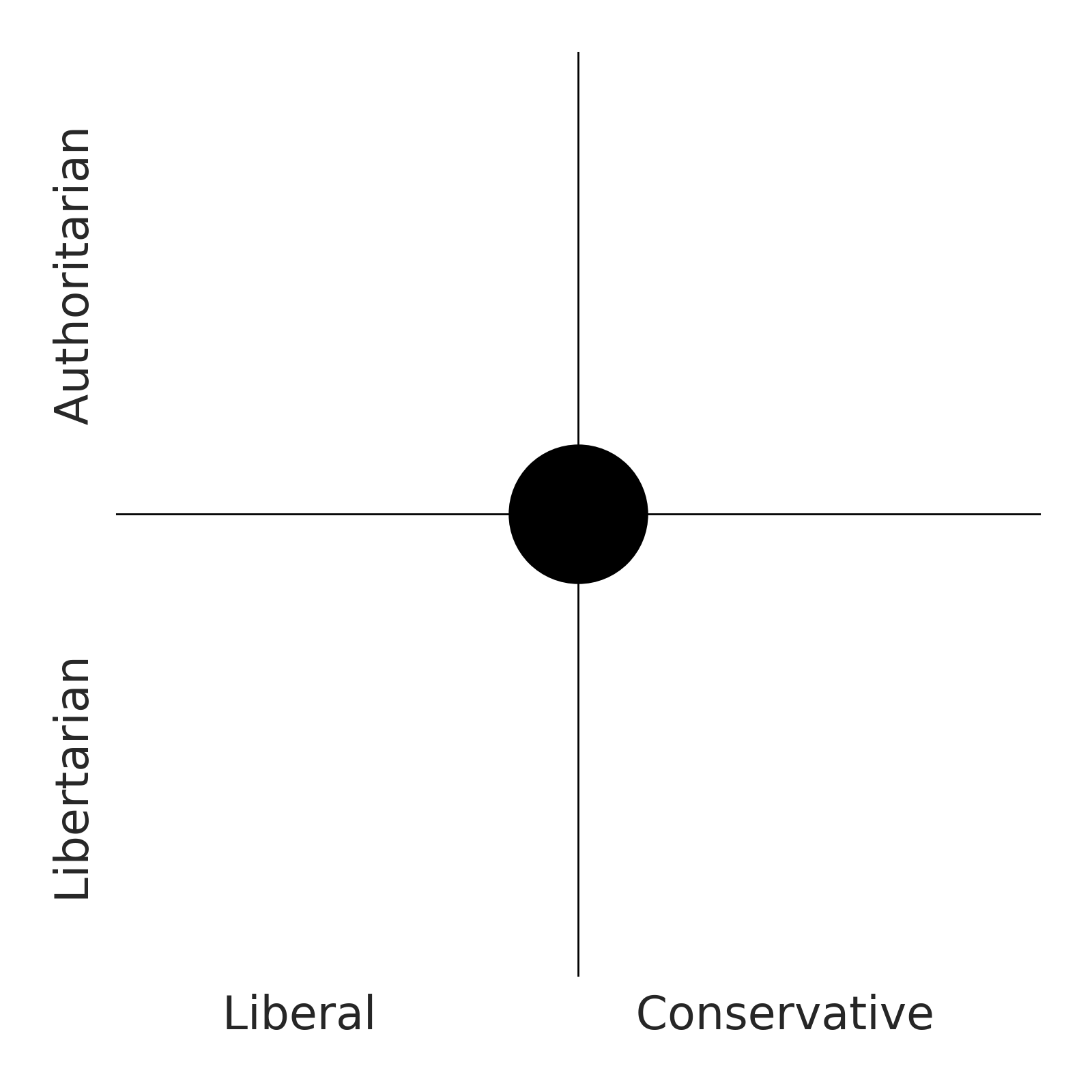
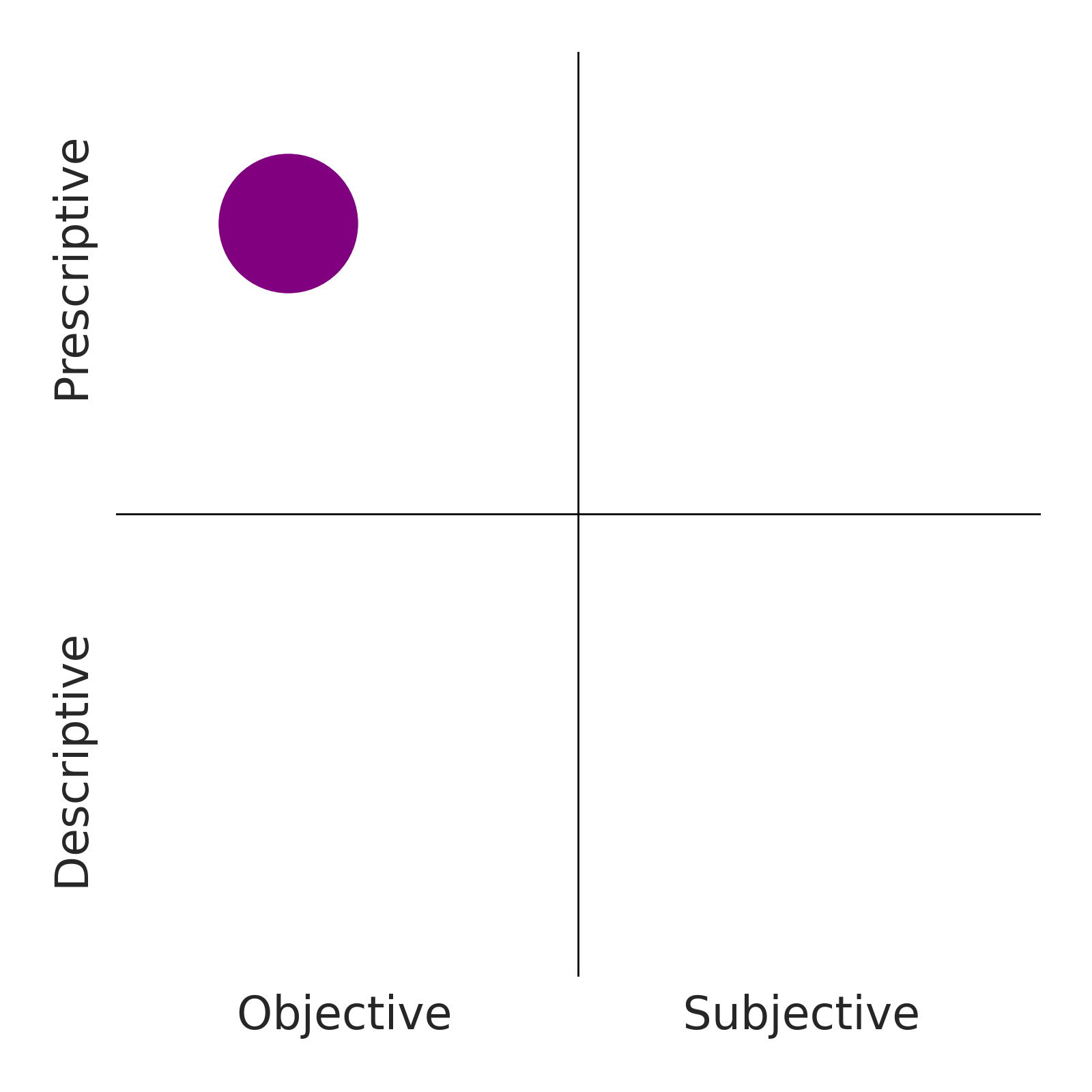
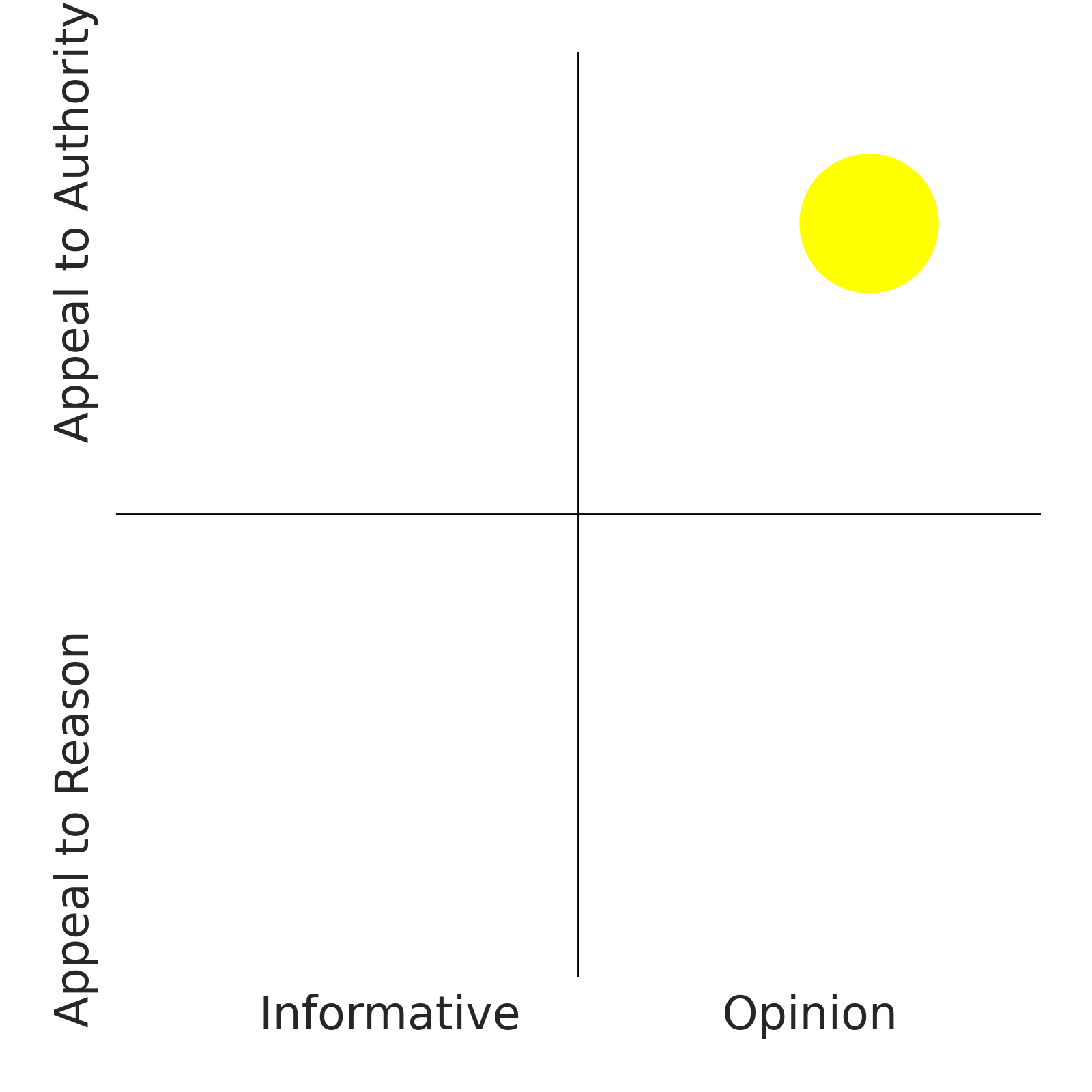
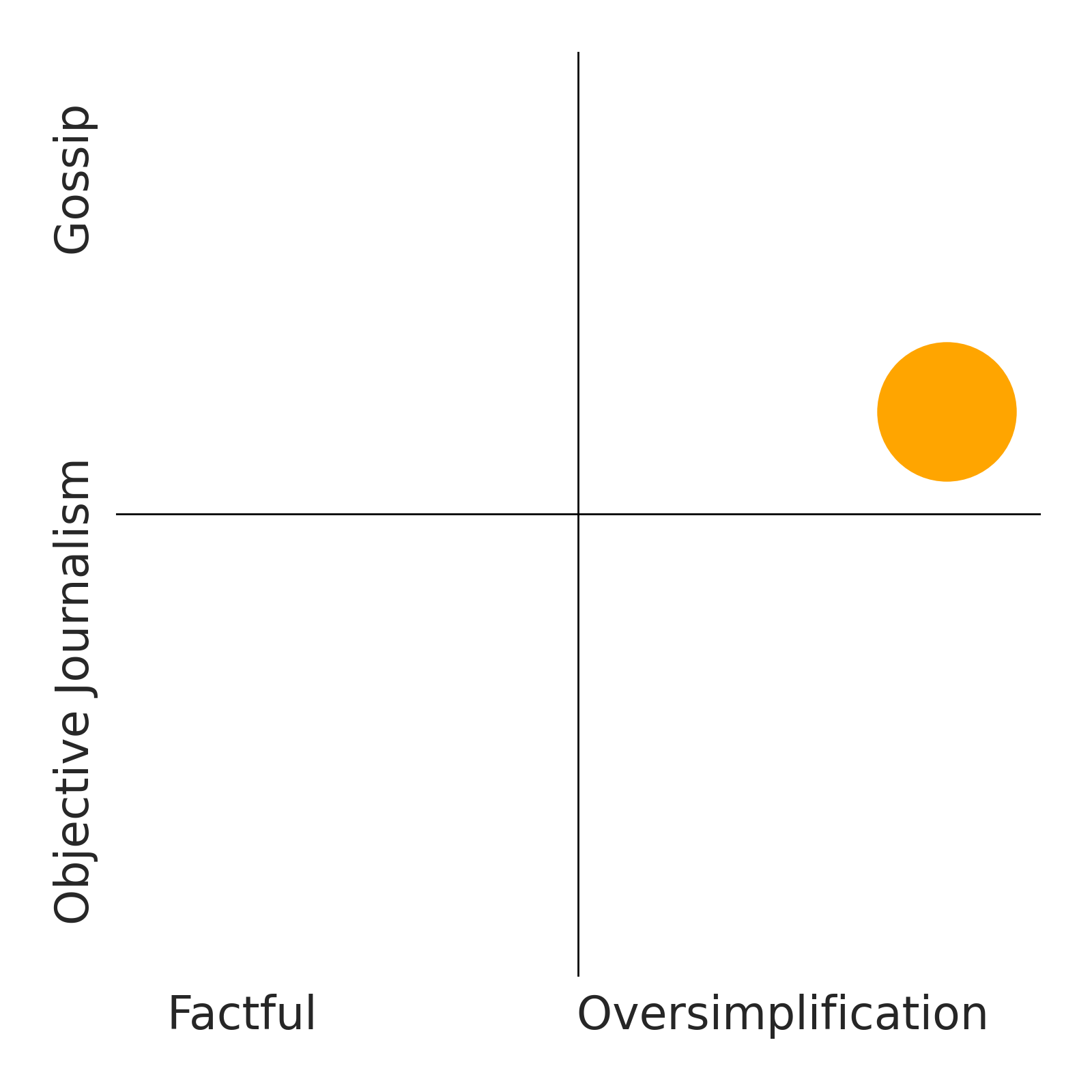
August 09, 2026 · 0 shares
A celebratory and promotional framing treats a major defense contract as an unequivocal national-security victory, relying on official quotes and excluding critical or countervailing perspectives.
The 'Arsenal of Freedom' is a U.S. Department of War initiative to accelerate domestic military production by reducing regulations and partnering with private industry, described on its website as aiming to 'produce at scale the systems, munitions and materiel needed for warfighters to fight and win.'
Automated analysis; not human reviewed. Limitations: The article text includes extraneous UI elements (subscription prompts) that do not affect the analysis. The content is essentially a press release, so the publisher's independent analysis is minimal. · 20 of 53 available dimensions scored; omitted dimensions are not treated as neutral. · Verified supporting quotes for 19 of 20 scored dimensions.
Claim: The article strongly frames the defense contract as a positive national-security development, aligning with conservative pro-military and pro-defense-spending positions.
“Lockheed Martin wins $53.86B contract to boost America’s Arsenal of Freedom” · exact text match
“The “Arsenal of Freedom” initiative, launched by the U.S. Department of War under Secretary Pete Hegseth, references President Franklin D. Roosevelt’s historic “Arsenal of Democracy.”” · exact text match
Why: The headline and framing celebrate a large defense contract without any critical perspective, typical of conservative stances that prioritize military strength.
Claim: The article is elitist, focusing on a large defense contractor and government officials without populist appeal to ordinary citizens.
“Lockheed Martin plans to invest $8 to $9 billion through 2040 to modernize more than 20 U.S. facilities and rapidly scale munitions output.” · exact text match
““We are moving with speed to support the Department of War’s Arsenal of Freedom,” said Dan Nimblett, vice president, Lockheed Martin Munitions Acceleration Integration.” · exact text match
Why: The narrative centers on corporate and government decision-makers, not grassroots or public concerns.
Claim: The article supports expanded government and military authority in defense production, aligning with authoritarian leanings.
“The War Department is “striving to…produce at scale the systems, munitions and materiel needed for warfighters to fight and win,” as stated on its website.” · exact text match
““Hegseth’s strategy calls for maximizing acquisition flexibility by reducing and eliminating burdensome and unnecessary regulations and processes, as well as incentivizing opportunities to work with the department and to reduce costs for industry partners.”” · exact text match
Why: The article uncritically endorses a centralized, top-down approach to military production and reduced oversight.
Claim: The article blends factual reporting with subjective, promotional language.
“The Aegis Combat System, described as “the gold standard for multi-mission combat systems” · exact text match
“The PAC-3 MSE is now considered the most advanced air and missile defense interceptor.” · exact text match
Why: While reporting facts, the article uses superlative and opinion-laden descriptors.
Claim: The article uses sensational language to heighten the perceived importance of the contract.
“Lockheed Martin wins $53.86B contract to boost America’s Arsenal of Freedom” · exact text match
“the package will enable Lockheed Martin to “supercharge PAC-3 MSE production”” · exact text match
Why: Words like 'boost' and 'supercharge' evoke excitement and urgency beyond neutral reporting.
Claim: The article is extremely bullish on Lockheed Martin and defense spending, presenting only positive outcomes.
“Lockheed Martin wins $53.86B contract to boost America’s Arsenal of Freedom” · exact text match
“Lockheed Martin plans to invest $8 to $9 billion through 2040 to modernize more than 20 U.S. facilities and rapidly scale munitions output.” · exact text match
Why: Every element of the story—contract value, investment, capacity increase—is framed as an unqualified positive.
Claim: The article is primarily descriptive but carries a strong prescriptive undertone that this spending is necessary and good.
““The nation’s Arsenal of Freedom isn’t as simple as a factory expansion or new production line,” says Lockheed Martin. “It’s about speed and a dedicated workforce that uses technology and its expertise to meet critical security demands.”” · exact text match
Why: The article reports plans and quotes but implicitly advocates for the initiative through tone and selection.
Claim: The article is highly hawkish, promoting increased military capacity without mentioning diplomatic or disarmament alternatives.
““The integration expands Aegis’ capability, capacity and flexibility to counter increasingly advanced threats while building on its proven foundation,” concludes a news release.” · exact text match
““NGI is more than a ‘next generation interceptor’, it’s a next generation solution to missile defense’s most serious threats,” said Chris Jewell.” · not found in supplied text
Why: The exclusive focus on military solutions and threat language strongly reflects a hawkish stance.
Claim: The article contains a significant amount of opinionated language, though it is interspersed with factual reporting.
“The Aegis Combat System, described as “the gold standard for multi-mission combat systems” · exact text match
“The PAC-3 MSE is now considered the most advanced air and missile defense interceptor.” · exact text match
Why: These value judgments are presented as fact, blurring opinion and reporting.
Claim: The article is highly political, focusing on a defense policy initiative and associated government contracts.
“The “Arsenal of Freedom” initiative, launched by the U.S. Department of War under Secretary Pete Hegseth” · exact text match
“the U.S. government awarded Lockheed Martin “a seven-year undefinitized contract action modification for up to $53.86 billion for PAC-MSE interceptors, supporting the Department of War’s Acquisition Transformation Strategy.”” · exact text match
Why: The content is entirely about government defense policy and spending, which is inherently political.
Claim: The article oversimplifies complex defense procurement and national security issues into a straightforward positive story.
“Lockheed Martin wins $53.86B contract to boost America’s Arsenal of Freedom” · exact text match
“The “Arsenal of Freedom” initiative, launched by the U.S. Department of War under Secretary Pete Hegseth, references President Franklin D. Roosevelt’s historic “Arsenal of Democracy.”” · exact text match
Why: It presents the contract and initiative as an uncomplicated good, ignoring potential complexities like cost, effectiveness, or strategic debates.
Claim: The article relies heavily on quotes from government and corporate officials as authoritative sources.
““We are moving with speed to support the Department of War’s Arsenal of Freedom,” said Dan Nimblett, vice president, Lockheed Martin Munitions Acceleration Integration.” · exact text match
““NGI is more than a ‘next generation interceptor’, it’s a next generation solution to missile defense’s most serious threats,” said Chris Jewell, vice president of Lockheed Martin’s NGI Program.” · exact text match
Why: The narrative is built almost entirely on official statements, presenting them as definitive without independent verification.
Claim: The article expresses certainty about future outcomes and capability claims beyond what the evidence supports.
“the package will enable Lockheed Martin to “supercharge PAC-3 MSE production” and triple capacity by the end of 2030.” · exact text match
“The PAC-3 MSE is now considered the most advanced air and missile defense interceptor.” · exact text match
Why: Future capacity and superiority claims are stated as assured, without hedging or acknowledging uncertainties.
Claim: The article reflects a clear ideology favoring military strength, industrial partnership, and nationalistic security.
“Lockheed Martin wins $53.86B contract to boost America’s Arsenal of Freedom” · exact text match
“The “Arsenal of Freedom” initiative, launched by the U.S. Department of War under Secretary Pete Hegseth, references President Franklin D. Roosevelt’s historic “Arsenal of Democracy.”” · exact text match
Why: The language of 'Arsenal of Freedom' and historical parallel implies a particular worldview about America's role and the necessity of military might.
Claim: The article is strongly pro-establishment, supporting government and corporate institutions without question.
“The “Arsenal of Freedom” initiative, launched by the U.S. Department of War under Secretary Pete Hegseth” · exact text match
“Lockheed Martin has announced an expansion to support the United States’ “Arsenal of Freedom,” accelerating domestic military manufacturing through advanced private sector partnerships.” · exact text match
Why: It presents the government initiative and corporate partnership as inherently positive and necessary.
Claim: The article evokes positive emotions about national pride and technological progress.
“Lockheed Martin wins $53.86B contract to boost America’s Arsenal of Freedom” · exact text match
““Once again, we are expanding the Courtland campus to meet the national security challenges of today,” said Reshondra McInnis, Lockheed Martin Courtland site executive.” · exact text match
Why: Words like 'boost', 'freedom', and 'challenges' appeal to patriotic and aspirational emotions.
Claim: The article functions as a promotional piece for Lockheed Martin, highlighting its products and investments favorably.
“Lockheed Martin wins $53.86B contract to boost America’s Arsenal of Freedom” · exact text match
““The integration expands Aegis’ capability, capacity and flexibility to counter increasingly advanced threats while building on its proven foundation,” concludes a news release.” · exact text match
Why: The entire article is based on Lockheed Martin's news release, with positive framing and no critical examination.
Claim: The article is strongly pro-corporate, favoring the interests of Lockheed Martin as a defense contractor.
“Lockheed Martin has announced an expansion to support the United States’ “Arsenal of Freedom,” accelerating domestic military manufacturing through advanced private sector partnerships.” · exact text match
“Lockheed Martin plans to invest $8 to $9 billion through 2040 to modernize more than 20 U.S. facilities and rapidly scale munitions output.” · exact text match
Why: The article presents corporate investments and partnerships as unambiguously positive, without any counterpoint.
Claim: The article includes speculative statements about future production capacity and investment outcomes.
“the package will enable Lockheed Martin to “supercharge PAC-3 MSE production” and triple capacity by the end of 2030.” · exact text match
“Lockheed Martin plans to invest $8 to $9 billion through 2040 to modernize more than 20 U.S. facilities and rapidly scale munitions output.” · exact text match
Why: These are stated as plans, but the certainty of achievement and the exact outcomes are speculative.
Claim: The article uses manipulative techniques such as loaded language, omission of counterarguments, and a one-sided emotional appeal.
“Lockheed Martin wins $53.86B contract to boost America’s Arsenal of Freedom” · exact text match
“The PAC-3 MSE is now considered the most advanced air and missile defense interceptor.” · exact text match
Why: By presenting only positive facts and quotes, and using superlative and patriotic language, the article guides readers toward a predetermined favorable view without critical context.
The article text includes extraneous UI elements (subscription prompts) that do not affect the analysis. The content is essentially a press release, so the publisher's independent analysis is minimal.
A pro-establishment and pro-defense modernization bias is evident, emphasizing the E-7A Wedgetail's capabilities, allied use, and data-sharing improvements while downplaying counterarguments or costs.
Profile of USAF plans to add five E-7A Wedgetails (total seven) to replace aging E-3 Sentry AWACS, highlighting MESA radar, JADC2 connectivity, EW survivability, modular upgrades, and allied use by Australia, the UK, and South Korea.
I may overemphasize official defense narratives due to training.
July 18, 2026 · 0 shares
Pro-establishment defense procurement framing emphasizes domestic MOF technology and American innovation, using corporate quotes to promote policy and manufacturing incentives with limited critical risk discussion.
Defense/industrial policy article detailing Num atologies' MOF-enabled CB protective suits under APFIT, emphasizing domestic manufacturing and partnerships with U.S. defense agencies.
Automated analysis; not human reviewed. Limitations: Case-specific limitations include promotional/advertising content within the article, reliance on company quotes, and absence of independent verification; alternative interpretations could emphasize potential risks or fiscal tradeoffs not discussed. · 21 of 52 available dimensions scored; omitted dimensions are not treated as neutral. · Verified supporting quotes for 3 of 21 scored dimensions.
Claim: The reporting shows a pro-establishment stance rather than a liberal or conservative editorial tilt.
“Under the APFIT contract, Numat will supply the MOF-enabled chemical and biological (CB) suits directly to U.S. Special Operations Forces, whose personnel often operate in environments where exposure to chemical and biological threats is a significant concern.” · exact text match
“The APFIT program was established to bridge the gap between promising defense technologies and field deployment by providing procurement funding for mature innovations that are ready for operational use.” · exact text match
“This contract award reflects our long-term investment in American innovation.” · exact text match
Why: Domestic manufacturing emphasis and defense-policy framing indicate establishment-leaning framing rather than a partisan tilt.
Claim: No evident populist or elitist framing; content is technical/organizational rather than populist or elitist.
Why: Text centers on a defense contract and tech development without populist or elitist rhetoric.
Claim: Framing favors government-led procurement and domestic industrial policy, aligning with more state-centric (authoritarian) tendencies.
“The APFIT program was established to bridge the gap between promising defense technologies and field deployment by providing procurement funding for mature innovations that are ready for operational use.” · exact text match
“The APFIT award underscores the U.S. government’s broader efforts to accelerate the procurement of innovative defense technologies while strengthening the domestic industrial base and reducing the time required to transition emerging capabilities into operational service.” · exact text match
“These partnerships have helped advance MOF technology from laboratory research to scalable manufacturing, according to the company.” · exact text match
Why: Open advocacy for a government-led defense procurement program indicates authoritarian-leaning framing.
Claim: Promotional language from the company features in the coverage, introducing a mild subjective tone alongside facts.
“"This contract award reflects our long-term investment in American innovation."” · not found in supplied text
“"Numat will deliver finished, field-ready protective suits at scale, made completely in the United States."” · not found in supplied text
Why: Company quotes introduce normative language amid factual reporting.
Claim: No sensational framing; tone is descriptive and policy/tech-forward.
“"The APFIT program was established to bridge the gap between promising defense technologies and field deployment..."” · not found in supplied text
“"Numat’s MOF platform has potential uses across industrial, semiconductor and energy sectors..."” · not found in supplied text
Why: Content remains informational with limited sensational language.
Claim: Positive framing of investment, production, and domestic manufacturing indicates a bullish tone toward defense tech.
“"This contract award reflects our long-term investment in American innovation."” · not found in supplied text
“"Numat will deliver finished, field-ready protective suits at scale, made completely in the United States."” · not found in supplied text
“"The APFIT award underscores the U.S. government’s broader efforts to accelerate the procurement of innovative defense technologies..."” · not found in supplied text
Why: Explicit positive language about investment and domestic production suggests bullish bias.
Claim: Topic is of interest to readers following defense tech and MOF research.
“"Numat’s protection suits incorporate metal-organic frameworks (MOFs)—highly porous engineered materials designed to capture and neutralize hazardous chemical and biological agents."” · not found in supplied text
“"Numat’s MOF platform has potential uses across industrial, semiconductor and energy sectors..."” · not found in supplied text
Why: Technical subject matter with industry implications is moderately interesting to specialized audiences.
Claim: Some normative framing toward policy and domestic manufacturing is present, alongside description of tech.
“"The APFIT program was established to bridge the gap... by providing procurement funding for mature innovations that are ready for operational use."” · not found in supplied text
“"The APFIT award underscores the U.S. government’s broader efforts to accelerate the procurement of innovative defense technologies..."” · not found in supplied text
Why: Normative phrasing appears in otherwise descriptive reporting.
Claim: Content emphasizes rapid deployment and capability expansion for defense, with a hawkish tilt.
“"accelerate the deployment of next-generation chemical and biological protection suits for U.S. Special Operations Forces."” · not found in supplied text
“"reduce the time required to transition emerging capabilities into operational service."” · not found in supplied text
“"These partnerships have helped advance MOF technology from laboratory research to scalable manufacturing, according to the company."” · not found in supplied text
Why: Language stresses rapid deployment and capability scale-up in defense.
Claim: No fear-driven framing detected in the text.
Why: Content is oriented toward capability and policy without fear messaging.
Claim: No explicit fallacious reasoning detected in the provided text.
Why: No evident circular or fallacious reasoning in the presented material.
Claim: No gossip content detected; article reads as PR/press release and reporting.
Why: No rumors or unverified claims presented.
Claim: Some claims rely on corporate quotes and promotional language rather than independent verification.
“"This contract award reflects our long-term investment in American innovation."” · not found in supplied text
“"Over the past 10 years, Numat built the MOF industrial base..."” · not found in supplied text
Counterevidence:
“"The APFIT program was established to bridge the gap between promising defense technologies and field deployment..."” · not found in supplied text
Why: Company quotes introduce opinion-like framing alongside factual details.
Claim: Defense program coverage intersects with policy but does not overtly advocate a political position.
“"APFIT" and named defense agencies (DTRA, etc.) are described within a procurement/defense policy context.” · not found in supplied text
Why: Policy elements are present but not framed as partisan rhetoric.
Claim: Some complex defense-technology and procurement processes are summarized in concise terms.
“"APFIT program was established to bridge the gap... by providing procurement funding for mature innovations..."” · not found in supplied text
“"Total APFIT awards exceed $2 billion"” · not found in supplied text
Why: Consolidates complex logistics into brief descriptions.
Claim: Relies on executive quotes to substantiate claims.
“"Over the past 10 years, Numat built the MOF industrial base..." said Ben Hernandez, CEO of Numat Technologies.” · not found in supplied text
“"This contract award reflects our long-term investment in American innovation."” · not found in supplied text
Why: Company leadership quotes are used as primary justification.
Claim: No immature or rage-inducing elements detected; tone remains professional.
Why: Content is appropriate for professional readers.
Claim: No extreme certainty beyond stated facts; standard press-release language.
“"will deliver field-ready protective suits at scale"” · not found in supplied text
“"made completely in the United States"” · not found in supplied text
Why: Claims align with the presented facts without overreach.
Claim: Strong alignment with establishment defense policy and domestic industrial base-building.
“"A Chicago-based company has been awarded an initial $23.67 million acquisition contract under the U.S. Department of War’s Accelerate the Procurement and Fielding of Innovative Technologies (APFIT)."” · exact text match
“"The APFIT program was established to bridge the gap between promising defense technologies and field deployment by providing procurement funding for mature innovations that are ready for operational use."” · not found in supplied text
Why: Prominence of government program; emphasis on domestic base-building signals establishment alignment.
Claim: Reporting relies on verifiable data and quotes rather than emotional or irrational rhetoric.
“A Chicago-based company has been awarded an initial $23.67 million acquisition contract under the U.S. Department of War’s Accelerate the Procurement and Fielding of Innovative Technologies (APFIT).” · exact text match
“Numat’s MOF platform has potential uses across industrial, semiconductor and energy sectors, where advanced materials are increasingly being deployed for gas storage, chemical separation and hazardous material filtration.” · not found in supplied text
“Under the APFIT contract, Numat will supply the MOF-enabled chemical and biological (CB) suits directly to U.S. Special Operations Forces, whose personnel often operate in environments where exposure to chemical and biological threats is a significant concern.” · exact text match
Why: Facts and technical details support a rational framing.
Claim: Promotional and ad-like content within the article detracts from perceived journalistic integrity.
“From daily news and career tips to monthly insights on AI, sustainability, software, and more—pick what matters and get it in your inbox.” · exact text match
“Discover the engineering revolution transforming modern defense with Strength, Stealth, Speed: The Very Fast Future of Advanced Defense” · exact text match
“"Numat’s MOF-enabled suits are engineered to self-detoxify by neutralizing harmful substances upon contact."” · exact text match
Counterevidence:
“"Over the past 10 years, Numat built the MOF industrial base for this moment, where we can activate an entire supply chain..." said Ben Hernandez, CEO of Numat Technologies.” · not found in supplied text
Why: Advertising-like content alongside technical reporting reduces perceived editorial integrity.
PR-heavy, no risk data, limited independent verification.
2026 © Helium Trades
Privacy Policy & Disclosure
* Disclaimer: Nothing on this website constitutes investment advice, performance data or any recommendation that any particular security, portfolio of securities, transaction or investment strategy is suitable for any specific person. Helium Trades is not responsible in any way for the accuracy
of any model predictions or price data. Any mention of a particular security and related prediction data is not a recommendation to buy or sell that security. Investments in securities involve the risk of loss. Past performance is no guarantee of future results. Helium Trades is not responsible for any of your investment decisions,
you should consult a financial expert before engaging in any transaction.
Helium Research Assistant

How can I help you today?
Ask any question about Interesting Engineering bias.


