See whether Helium helps you make better-informed decisions. Try every Pro Trader feature for 30 days. No credit card required.
Try every Pro Trader feature for 30 days. No credit card required.
General framing and worldview. The supplied sample shows a highly consistent libertarian, anti-statist perspective rooted in Austrian economics.
It routinely presents political questions as conflicts between individual liberty/private property and coercive government, while treating decentralization and voluntary exchange as preferred alternatives.
The publisher explicitly describes its mission as moving “away from statism and toward a private property order” and rejects “compromise” with competing doctrines
The publisher frames Austrian economics as self-evidently true and government action as coercive and harmful, selectively quoting Austrian economists to support a libertarian worldview.
The Mises Institute is a libertarian think tank that promotes Austrian School economics and opposes state intervention. This article appears on its 'Mises Wire' platform.
Automated analysis; not human reviewed. Limitations: The article is an opinion piece from a known libertarian think tank; no reported events to fact-check. · 11 of 52 available dimensions scored; omitted dimensions are not treated as neutral. · Verified supporting quotes for 10 of 11 scored dimensions.
Claim: The article advocates for free market and limited government, aligning with conservative economic ideology.
“The individual who is coerced into saying or not saying something or into making or not making an exchange with the intervener or with someone else is having his actions changed by a threat of violence.” · exact text match
Why: Strongly anti-government intervention and pro-market, which is characteristic of conservative economic stance.
Claim: The article relies on academic economists and dismisses alternative methodologies, showing elitist tendencies.
“The beauty of Austrian economics is that it springs from real human action and does not depend upon the construction of abstract mathematical models meant to parallel reality.” · exact text match
Why: Dismissal of mathematical models as inferior implies an elitist preference for a specific intellectual tradition.
Claim: The article strongly opposes state intervention and advocates for a private property order without coercion.
“monopoly is a grant of special privilege by the State, reserving a certain area of production to one particular individual or group.” · exact text match
“The state uses its coerced revenue, not merely to monopolize and provide genuine services inefficiently to the public, but also to build up its own power at the expense of its exploited and harassed subjects.” · exact text match
Why: Explicit condemnation of state action as coercive and exploitative aligns with extreme libertarian views.
Claim: The article presents a subjective, one-sided view of economics without addressing counterarguments.
“People’s actions are obvious.” · exact text match
“Austrian economics analyses of those actions are revealed to be obviously true.” · exact text match
Why: Makes unqualified claims of obviousness, indicating subjective certainty rather than balanced presentation.
Claim: The article prescribes a specific economic policy (free market, limited government) as correct.
“We need to push back against this wave of legalized theft.” · exact text match
“Given government force, people block others from producing.” · exact text match
Why: Directly calls for action against government intervention, prescribing a libertarian policy.
Claim: The article is highly opinionated, presenting Austrian economics as obviously true.
“Austrian economics helps us by addressing unrealistic assumptions and preventing further mistakes based on unreal presuppositions.” · exact text match
Why: Frames Austrian economics as uniquely helpful, without acknowledging alternative perspectives.
Claim: The article is deeply political, criticizing government and socialism.
“As socialists gain increasing power in this country, their first target is private property.” · exact text match
Why: Explicit political commentary against socialism, urging opposition.
Claim: The article relies heavily on quotes from Austrian economists as authoritative support.
“Mises wrote, 'Money is a medium of exchange...'” · not found in supplied text
“Rothbard wrote, '...monopoly is a grant of special privilege by the State...'” · not found in supplied text
Why: Frequent direct quotations from Mises, Rothbard, and others without critical evaluation.
Claim: The article asserts Austrian economics conclusions with certainty beyond the evidence provided.
“People’s actions are obvious.” · exact text match
“Austrian economics analyses of those actions are revealed to be obviously true.” · exact text match
Why: Repeated use of 'obvious' and 'obviously true' indicates certainty not supported by presented reasoning.
Claim: The article is heavily ideological, advocating a specific school of thought and rejecting others.
“The views expressed on Mises Wire and mises.org are not necessarily those of the .” · exact text match
“Non-political, non-partisan, and non-PC, we advocate a radical shift in the intellectual climate, away from statism and toward a private property order.” · exact text match
Why: Explicit commitment to a radical ideological shift and rejection of competing doctrines.
Claim: The article emphasizes individual action and opposes collective intervention.
“Each person has a different makeup, a different history, different information, and different understandings.” · exact text match
“People’s actions and voluntary social cooperation advance civilization.” · exact text match
Why: Focus on individual uniqueness and voluntary cooperation, with criticism of state collective action.
The article is an opinion piece from a known libertarian think tank; no reported events to fact-check.
A pro-private-property, anti-intervention frame presents the selected economic news as warnings about state meddling, while the headline adds a dramatic "New Prince of the Yen" riff.
Automated analysis; not human reviewed. Limitations: Only a short podcast blurb and institutional mission text were supplied, not the full episode transcript, so framing judgments rely on the visible description rather than the actual discussion. · 7 of 54 available dimensions scored; omitted dimensions are not treated as neutral. · Verified supporting quotes for 7 of 7 scored dimensions.
Claim: The material is explicitly anti-statist and pro-private-property.
“we advocate a radical shift in the intellectual climate, away from statism and toward a private property order.” · exact text match
Why: This directly positions the publisher on the libertarian rather than authoritarian end of the dimension.
Claim: The economic news is framed with evaluative labels rather than neutral description.
“including interventions to prop up the yen, a bad jobs report, and troubling signs in bond markets.” · exact text match
Why: 'Bad' and 'troubling' are value judgments about economic conditions.
Claim: The text uses a dramatic, personified headline and emotionally loaded market language.
“Scott Bessent: New Prince of the Yen?” · exact text match
“troubling signs in bond markets” · exact text match
Why: The 'New Prince of the Yen' title and 'troubling' wording add drama beyond a straightforward summary.
Claim: The text advocates a changed intellectual and economic order rather than merely describing events.
“we advocate a radical shift in the intellectual climate, away from statism and toward a private property order.” · exact text match
Why: The phrase 'advocate a radical shift' is a normative prescription, not a descriptive statement.
Claim: The content expresses a political-economic agenda even though it says it is non-political.
“we advocate a radical shift in the intellectual climate, away from statism and toward a private property order.” · exact text match
Counterevidence:
“Non-political, non-partisan, and non-PC” · exact text match
Why: Promoting a specific private property order over statism is a programmatic view about the role of the state, despite a stated claim to be non-political.
Claim: The text treats a preferred worldview as permanent truth and explicitly rejects compromise with competing doctrines.
“We believe that our foundational ideas are of permanent value, and oppose all efforts at compromise, sellout, and amalgamation of these ideas with fashionable political, cultural, and social doctrines inimical to their spirit.” · exact text match
Why: The language of 'permanent value' and opposition to compromise reveals a closed ideological framework rather than a open-ended analysis.
Claim: The publisher explicitly celebrates individual freedom and a private property order.
“individual freedom, honest history, and international peace, in the tradition of Ludwig von Mises and Murray N. Rothbard” · exact text match
Why: The emphasis on individual liberty and private property places the text on the individualist end of the dimension.
Only a short podcast blurb and institutional mission text were supplied, not the full episode transcript, so framing judgments rely on the visible description rather than the actual discussion.
Coverage patterns. The source disproportionately covers monetary policy and Austrian economic theory: fiat money, gold standards, central banking, fractional-reserve banking, inflation, debt, savings, and the Federal Reserve
Framing the end of the gold standard as a catastrophic policy error that has caused inflation, debt, and economic decline, and advocating for a return to sound money.
The article discusses the 1971 closure of the gold window by President Nixon, which severed the dollar's convertibility to gold, leading to a pure fiat currency system. The Bretton Woods agreement (1944) had pegged foreign currencies to the dollar, which was convertible to gold at $35 per ounce. The author argues that fiat money has caused inflation, rising national debt, and economic decline.
Automated analysis; not human reviewed. Limitations: The article is a one-sided opinion piece from a libertarian think tank, with no counterarguments or alternative perspectives presented. · 18 of 53 available dimensions scored; omitted dimensions are not treated as neutral. · Verified supporting quotes for 11 of 18 scored dimensions.
Claim: The article criticizes elites but advocates for a specific economic theory.
“The American people’s eroding standard of living is making them wary of Republicans like Resident Trump... Some Americans are finding appeal in self-described democratic socialists...” · not found in supplied text
Why: Takes a populist tone by appealing to common people's struggles, but advocates for Austrian economics which is an elite theory.
Claim: The article advocates for limited government and sound money.
“Non-political, non-partisan, and non-PC, we advocate a radical shift in the intellectual climate, away from statism and toward a private property order.” · exact text match
Why: Explicitly states a libertarian philosophy of private property and anti-statism.
Claim: The article is highly subjective, presenting opinion as fact.
“The results have been disastrous.” · exact text match
Why: A subjective value judgment presented as an objective statement.
Claim: The article uses sensational language.
“disastrous” · exact text match
“major economic crisis” · exact text match
Why: Words like 'disastrous' and 'major economic crisis' are sensational.
Claim: The article predicts continued economic decline and crisis.
“Eventually, the dollar’s erosion will lead to a major economic crisis, likely involving a rejection of the dollar’s world reserve currency status.” · exact text match
Why: Explicitly forecasts a major crisis.
Claim: The article prescribes a return to a gold standard.
“The closing of the gold window left the US with a pure fiat currency. The results have been disastrous.” · not found in supplied text
“Of course, expanding government, whether done by Republicans or Democrats, will only make the economic problems worse.” · not found in supplied text
Why: Implicitly presents the gold window closure as a mistake and advocates for sound money.
Claim: The article warns of disastrous consequences.
“The results have been disastrous.” · exact text match
“Eventually, the dollar’s erosion will lead to a major economic crisis.” · not found in supplied text
Why: Uses strong negative language to evoke fear.
Claim: The article assumes fiat money is the cause without proving it.
“Fiat money is the real cause of the affordability crisis.” · exact text match
Why: The premise that fiat money is the cause is presented as a given fact, not argued.
Claim: The article presents its economic analysis as undisputed truth rather than fact.
“The results have been disastrous.” · exact text match
“Fiat money is the real cause of the affordability crisis.” · exact text match
Why: These statements are strong value judgments presented as definitive conclusions.
Claim: The article is a political commentary on economic policy.
“The average American’s paycheck is not keeping up with inflation. The American people’s eroding standard of living is making them wary of Republicans like Resident Trump... Some Americans are finding appeal in self-described democratic socialists...” · not found in supplied text
Why: Directly discusses political parties and voter sentiment.
Claim: The article asserts causal relationships with certainty.
“Fiat money is the real cause of the affordability crisis.” · exact text match
Why: Uses 'real cause' without qualification or alternative explanations.
Claim: The article is anti-establishment, criticizing both major parties and the Fed.
“Of course, expanding government, whether done by Republicans or Democrats, will only make the economic problems worse.” · not found in supplied text
Why: Criticizes both parties equally, rejecting establishment consensus.
Claim: The article uses negative emotional language.
“The results have been disastrous.” · exact text match
Why: The word 'disastrous' carries strong negative emotional weight.
Claim: The article uses logical reasoning within its framework.
“Fiat money encouraged the growth of federal spending.” · exact text match
Why: Presents a causal chain, but the reasoning is based on a specific ideological premise.
Claim: The article emphasizes individual freedom and property rights.
“we advocate a radical shift... toward a private property order.” · not found in supplied text
Why: Focus on private property order indicates individualist bias.
Claim: The article forecasts a future economic crisis.
“Eventually, the dollar’s erosion will lead to a major economic crisis, likely involving a rejection of the dollar’s world reserve currency status.” · exact text match
Why: Explicitly speculates on a future event.
Claim: The article uses loaded language to persuade.
“disastrous” · exact text match
“real cause” · exact text match
“only make the economic problems worse” · exact text match
Why: Loaded terms that frame the issue in a way that discourages alternative views.
The article is a one-sided opinion piece from a libertarian think tank, with no counterarguments or alternative perspectives presented.
A polemical critique of the Federal Reserve as a corrupt and unnecessary institution, advocating for its abolition through an Austrian economics lens.
The Federal Reserve System is the central bank of the United States, created in 1913. Austrian economics is a heterodox school of thought that criticizes central banking and favors a gold standard.
Automated analysis; not human reviewed. Limitations: The article includes promotional material and subscription forms, making it difficult to isolate editorial content from marketing. · 12 of 52 available dimensions scored; omitted dimensions are not treated as neutral. · Verified supporting quotes for 12 of 12 scored dimensions.
Claim: The article promotes conservative economic policies such as free markets and anti-government intervention.
“If prices fall, as they do in the computer industry, we get prosperity and lower prices, allowing more people to participate in the economy.” · exact text match
Why: This statement endorses falling prices as beneficial, a view often associated with conservative/libertarian economics.
Claim: The article frames the Federal Reserve as an elitist institution that harms ordinary people.
“The Slumlord Fed” · exact text match
Why: The term 'slumlord' frames the Fed as an exploitative elite entity.
Claim: The article advocates for shutting down the Federal Reserve, reflecting a libertarian anti-authority stance.
“I think you should shut down the entire Federal Reserve System.” · exact text match
Why: Direct advocacy for abolishing a central authority aligns with libertarian ideology.
Claim: The article is highly subjective, presenting opinion as fact and lacking balance.
“The Fed is a total failure, from start to finish.” · exact text match
Why: This is a sweeping subjective judgment without supporting evidence.
Claim: The article uses sensational and loaded language to criticize the Fed.
“The Slumlord Fed” · exact text match
“counterfeiting operation” · exact text match
Why: Both terms are sensational and exceed neutral description.
Claim: The article prescribes the abolition of the Federal Reserve.
“the Federal Reserve System needs to be put out of its—and our—misery.” · exact text match
Why: The statement is a direct prescription for action.
Claim: The article is predominantly opinion with minimal factual reporting.
“It's not that money trumps truth. Money is truth—see Alan Greenspan.” · verified after text normalization
Why: This is a subjective, opinionated assertion presented as insight.
Claim: The article presents Austrian economics as definitively correct without acknowledging uncertainties.
“Austrian Business Cycle Theory (ABCT) explains all this. No equations needed.” · exact text match
Why: The phrase 'explains all this' claims comprehensive explanatory power without caveats.
Claim: The article is framed entirely within Austrian economics ideology.
“The Austrian Business Cycle Theory (ABCT) explains all this. No equations needed.” · exact text match
Why: The article presents ABCT as the definitive explanation, ignoring other frameworks.
Claim: The article is strongly anti-establishment, particularly against the Federal Reserve.
“The Fed is a total failure, from start to finish.” · exact text match
Why: This total condemnation positions the article outside mainstream institutional support.
Claim: The article has a negative emotional tone, using derogatory terms and alarmist language.
“Slumlord Fed” · exact text match
Why: The derogatory term sets a negative emotional frame.
Claim: The article lacks balance and relies on ideological assertion, reducing credibility.
“Mises Wire offers contemporary news and opinion through the lens of Austrian economics and libertarian political economy.” · exact text match
Why: The explicit ideological lens suggests selective presentation of facts.
The article includes promotional material and subscription forms, making it difficult to isolate editorial content from marketing.
Frames fractional-reserve banking as fraud, advocates for 100% gold banking from a libertarian Austrian-school perspective, and rejects compromise with mainstream economic doctrines.
Automated analysis; not human reviewed. Limitations: The article text is limited to a short excerpt and structured metadata; analysis is based on explicit statements and may not capture full context. · 14 of 53 available dimensions scored; omitted dimensions are not treated as neutral. · Verified supporting quotes for 14 of 14 scored dimensions.
Claim: The article advocates for a private property order and against statism.
“Non-political, non-partisan, and non-PC, we advocate a radical shift in the intellectual climate, away from statism and toward a private property order.” · exact text match
Why: The explicit statement of rejecting statism and promoting private property order is a core libertarian position.
Claim: The article presents a normative opinion as fact.
“Issuing receipts for gold that does not exist is not banking. It is fraud.” · exact text match
Why: The statement is a value judgment presented without qualification, indicating subjective framing.
Claim: The article prescribes a specific banking system and condemns existing practices.
“Issuing receipts for gold that does not exist is not banking. It is fraud.” · exact text match
Why: The statement prescribes that banking must be backed by gold, and labels current practice as fraud.
Claim: The article is highly opinionated, expressing a strong ideological viewpoint.
“Issuing receipts for gold that does not exist is not banking. It is fraud.” · exact text match
Why: The sentence is an opinion presented as a factual assertion, not balanced or nuanced.
Claim: The article addresses monetary policy, a politically charged topic.
“100 Percent Gold Banking” · exact text match
Why: The topic of gold banking and criticism of fractional reserve banking is inherently political.
Claim: The article simplifies a complex economic system to a binary fraud claim.
“Issuing receipts for gold that does not exist is not banking. It is fraud.” · exact text match
Why: The statement reduces the entire fractional reserve banking system to a single fraudulent act, ignoring nuance.
Claim: The article references intellectual authorities (Mises, Rothbard) to bolster its argument.
“in the tradition of Ludwig von Mises and Murray N. Rothbard” · exact text match
Why: The organization explicitly roots itself in the tradition of these economists, using their authority.
Claim: The article asserts absolute certainty without qualification.
“Issuing receipts for gold that does not exist is not banking. It is fraud.” · exact text match
Why: The statement uses 'is fraud' without hedging, indicating certainty beyond the evidence provided.
Claim: The article is strongly ideological, rejecting compromise with other doctrines.
“oppose all efforts at compromise, sellout, and amalgamation of these ideas with fashionable political, cultural, and social doctrines inimical to their spirit.” · exact text match
Why: Explicit rejection of compromise signals a rigid ideological commitment.
Claim: The article is anti-establishment, opposing current monetary and political systems.
“advocate a radical shift in the intellectual climate, away from statism” · exact text match
Why: Calling for a radical shift away from statism indicates an anti-establishment stance.
Claim: The article uses a negative emotional label ('fraud') to condemn the practice.
“Issuing receipts for gold that does not exist is not banking. It is fraud.” · exact text match
Why: The word 'fraud' carries strong negative moral and emotional weight.
Claim: The article promotes a book giveaway and the sponsoring organization.
“Get Your August Rothbard Giveaway Book! The Case for a 100 Percent Gold Dollar” · exact text match
Why: The explicit call to obtain a book and the description of the non-profit organization indicate promotional intent.
Claim: The article prioritizes individual property rights over collective monetary management.
“advocate a radical shift in the intellectual climate, away from statism and toward a private property order.” · exact text match
Why: Emphasis on private property order and anti-statism aligns with individualism.
Claim: The article signals ideological purity to its audience.
“oppose all efforts at compromise, sellout, and amalgamation of these ideas with fashionable political, cultural, and social doctrines inimical to their spirit.” · exact text match
Why: The statement serves to demonstrate uncompromising adherence to the ideology, appealing to an in-group.
The article text is limited to a short excerpt and structured metadata; analysis is based on explicit statements and may not capture full context.
A prescriptive Austrian-school critique frames real savings as the true driver of economic growth while condemning central-bank inflation and Keynesian policy.
Automated analysis; not human reviewed. Limitations: Input contains disjointed segments including promotional and subscription content; Ceuta claim may be separate snippet. · 8 of 52 available dimensions scored; omitted dimensions are not treated as neutral. · Verified supporting quotes for 2 of 8 scored dimensions.
Claim: Article is highly opinionated, advancing a specific school of thought.
“The NIPA framework is based on the Keynesian view... many assume... while central bank monetary inflation increases monetary savings... it weakens real savings. And what matters... is real savings.” · not found in supplied text
Why: Entire article is a partisan argument for Austrian economics against Keynesianism, presenting opinion as fact.
Claim: Article directly addresses economic policy and central banking.
“The central bank monetary inflation artificially increases monetary savings via the increase in the monetary income of individuals, it weakens real savings.” · not found in supplied text
“why consumer spending is said to be the motor of the economy.” · exact text match
Why: Criticizes central bank policy and Keynesian economic doctrine, which are political issues.
Claim: Article appeals to the authority of Ludwig von Mises and Murray Rothbard.
“To celebrate The Year of Rothbard, we’re giving away some of his most radicalizing and influential books.” · exact text match
“in the tradition of Ludwig von Mises and Murray N. Rothbard.” · exact text match
Why: Associates the article's content with revered figures in Austrian economics to bolster credibility.
Claim: Article states its conclusions as certain without acknowledging uncertainty.
“What matters for economic growth is real, not monetary, savings.” · exact text match
“The motor of the economy is actually not consumption but rather production and saving.” · not found in supplied text
Why: Presents economic claims as definitive truths without caveats or recognition of alternative perspectives.
Claim: Article is based on Austrian/libertarian ideology.
“Mises Wire offers contemporary news and opinion through the lens of Austrian economics and libertarian political economy.” · exact text match
“we advocate a radical shift... toward a private property order.” · not found in supplied text
Why: Explicitly states its ideological lens and advocacy for a private property order.
Claim: Article is critical of central bank and government intervention, anti-establishment.
“If we wish to be honest, the Federal Reserve System needs to be put out of its—and our—misery.” · exact text match
“The federal government aid program in one part of the economy creates a problem. Washington policymakers see a new problem.” · exact text match
Why: Calls for abolishing the Fed and criticizes government aid programs, indicating strong anti-establishment stance.
Claim: Article presents a coherent theoretical argument with examples.
“Take an individual, Joe, who produced twelve loaves of bread... Similarly, Bob produces twenty tomatoes...” · not found in supplied text
Why: Uses logical reasoning and illustrative examples to support its theoretical argument.
Input contains disjointed segments including promotional and subscription content; Ceuta claim may be separate snippet.
Casts DEI and government involvement in education as corrupting forces, using the Arday case as evidence to advocate for libertarian policies.
Automated analysis; not human reviewed. · 28 of 53 available dimensions scored; omitted dimensions are not treated as neutral. · Verified supporting quotes for 26 of 28 scored dimensions.
Claim: The article is strongly conservative in opposing DEI, affirmative action, and government involvement in education.
“Ever since the passage of the phony Civil Rights Act of 1964” · exact text match
Why: Describing the Civil Rights Act as 'phony' indicates strong conservative opposition to anti-discrimination laws.
Claim: The article takes a populist stance against elite universities and academic standards.
“Academic standards have gone by the board, and phony subjects like “critical race theory” have been added to the course list of universities that used to be considered the best in the world.” · exact text match
Why: Criticizes elite universities for adopting 'phony' subjects, a common populist trope.
Claim: The article advocates for total withdrawal of government from education, a libertarian position.
“Only the repeal of the phony anti-discrimination laws and the total withdrawal of the government from education will give us any chance of cleaning out the rot in academia” · exact text match
Why: Explicitly calls for government withdrawal and repeal of laws, core libertarian principles.
Claim: The article is highly subjective, presenting opinion as analysis.
“An article of faith with modern progressives is that all social problems can be solved with the growth and application of the administrative state. They have faith in the wrong thing.” · exact text match
Why: States a personal opinion about progressives' faith without evidence.
Claim: The article uses sensational language to describe the subject.
“utterly absurd case of Jason Arday” · exact text match
Why: Describing the case as 'utterly absurd' is sensational rhetoric.
Claim: The article is interesting due to controversial claims and personal details.
“He said that a hooded figure came to his office and threatened him, even though a security camera of his office did not show such a person.” · exact text match
Why: Unusual allegations capture attention.
Claim: The article is highly prescriptive, advocating for specific policy changes.
“Only the repeal of the phony anti-discrimination laws and the total withdrawal of the government from education will give us any chance” · exact text match
Why: Explicit prescription for policy action.
Claim: The article invokes fear of academic rot and corruption.
“cleaning out the rot in academia” · exact text match
Why: Uses 'rot' to imply decay and urgency.
Claim: The article includes gossipy personal details about Arday.
“He claims to have completed a number of marathons in succession, even though he ran them with one of his legs injured” · exact text match
Why: Focuses on personal and unverified claims about physical feats.
Claim: The article is almost entirely opinion, not factual reporting.
“What Did You Expect? In this week's Friday Philosophy, Dr. David Gordon takes issue with the DEI movement” · not found in supplied text
Why: Explicitly framed as philosophy and opinion.
Claim: The article is highly political, addressing debates about DEI and government.
“the government has no business getting involved in education” · exact text match
Why: Central political claim about government role.
Claim: The article oversimplifies by using one case to generalize about DEI.
“What makes the Arday case stand out is that, as I mentioned before, he has been outed as a first-class confabulator.” · exact text match
Why: Extrapolates from Arday to broader DEI corruption.
Claim: The article appeals to intellectual authorities to support its argument.
“As the distinguished philosopher Paul Boghossian has pointed out” · exact text match
Why: Uses Boghossian's authority to bolster the critique.
Claim: The article uses immature ad hominem attacks.
“close to being an autistic cretin” · exact text match
Why: Name-calling is a sign of immature argumentation.
Claim: The article covers the response from Arday's supporters.
“A petition in support of Arday organized by the Good Law Project ... has drawn more than 14,00 signatures” · not found in supplied text
Why: Reports on counterarguments, presenting them but dismissing them as part of the problem.
Claim: The article states conclusions with certainty beyond evidence.
“Only the repeal of the phony anti-discrimination laws and the total withdrawal of the government from education will give us any chance” · exact text match
Why: Presents a single solution with absolute certainty.
Claim: The article is heavily ideological, rooted in libertarian thought.
“As Murray Rothbard pointed out again and again, the government has no business getting involved in education.” · exact text match
Why: Directly invokes Rothbard's libertarian ideology.
Claim: The article is strongly anti-establishment, targeting government and universities.
“Only the repeal of the phony anti-discrimination laws and the total withdrawal of the government from education” · exact text match
Why: Opposes core government institutions and laws.
Claim: The article has a strongly negative emotional tone.
“phony” · exact text match
“rot” · exact text match
“first-class confabulator” · exact text match
Why: Use of derogatory and decay-related language indicates negative emotion.
Claim: The article lacks credibility due to biased and ad hominem content.
“He is close to being an autistic cretin” · exact text match
“blatant plagiarist” · exact text match
Why: Name-calling and unsupported accusations reduce credibility.
Claim: The article mixes rational argumentation with ad hominem attacks, resulting in slightly irrational framing.
“He is close to being an autistic cretin” · exact text match
Why: Ad hominem name-calling is an irrational rhetorical tactic.
Claim: The article promotes Mises Institute products.
“Get Your August Rothbard Giveaway Book! The Case for a 100 Percent Gold Dollar” · exact text match
Why: Explicit book promotion within the article.
Claim: The article advocates for individualist, private property order.
“we advocate a radical shift in the intellectual climate, away from statism and toward a private property order.” · exact text match
Why: Directly states goal of private property order and anti-statism.
Claim: The article speculates about outcomes.
“which in any case will be a Herculean task” · exact text match
Why: Speculates that cleaning out academia would be difficult.
Claim: The article uses loaded and manipulative language.
“phony” · exact text match
“rot” · exact text match
“first-class confabulator” · exact text match
Why: Loaded language designed to provoke a negative reaction.
Claim: The article shows low integrity through name-calling and ad hominem attacks.
“close to being an autistic cretin” · exact text match
“blatant plagiarist” · exact text match
Why: Name-calling and unqualified accusations reflect poor journalistic integrity.
Claim: The article uses cruel language about the subject.
“close to being an autistic cretin” · exact text match
Why: Cruel personal attack on a person's disability.
Claim: The article scapegoats DEI and government for academic problems.
“the government has no business getting involved in education” · exact text match
Why: Blaming government for all academic ills.
Frames progressive wealth taxation as economically destructive alchemy that cannot achieve its stated goals due to the nature of capital.
Automated analysis; not human reviewed. · 11 of 53 available dimensions scored; omitted dimensions are not treated as neutral. · Verified supporting quotes for 9 of 11 scored dimensions.
Claim: The article opposes a progressive wealth tax, aligning with conservative economic views.
“What it actually will do is to end the vital capital investment that has driven California’s economy for decades.” · exact text match
Why: The article uses language that defends capital investment against redistribution, a conservative position.
Claim: The article defends the wealthy and capital owners against populist redistribution.
“The key point that backers of these proposals miss is that the net worth of the wealthy consists almost entirely of capital goods or assets which are financial claims on capital goods.” · exact text match
Why: The article argues that the wealth is not consumable, defending the rich's assets.
Claim: The article advocates for minimal government intervention, opposing taxation.
“A tax cannot transmute capital goods into consumption goods.” · exact text match
Why: The article argues against taxation and for free-market production.
Claim: The article presents a strongly opinionated and subjective argument.
“The Alchemy of Wealth Taxation.” · exact text match
Why: The article uses loaded language and presents a one-sided argument.
Claim: The article is an opinion piece, not a factual report.
“Mises Wire offers contemporary news and opinion” · exact text match
Why: The article is labeled as opinion.
Claim: The article is highly political, engaging in policy debate.
“California’s proposed billionaire wealth tax is being sold to voters as a way to replenish the state’s tax coffers.” · not found in supplied text
Why: The article directly addresses a political proposal.
Claim: The article oversimplifies the economic effects of wealth taxation.
“Billionaires do not have stockpiles of—or consume billions of dollars of—health care.” · exact text match
Why: It ignores potential positive effects of redistribution on demand.
Claim: The article expresses certainty beyond the evidence.
“What it actually will do is to end the vital capital investment that has driven California’s economy for decades.” · exact text match
Why: The strong claim of certainty about the tax's effect.
Claim: The article is strongly ideological, based on Austrian economics.
“Mises Wire offers contemporary news and opinion through the lens of Austrian economics and libertarian political economy.” · exact text match
Why: The article explicitly states its ideological lens.
Claim: The article emphasizes individual production and private property over collective redistribution.
“Production is where labor and capital goods are provided as inputs into a process... That is the way—the only way—for everyone to have more.” · not found in supplied text
Why: It argues that only individual production can increase wealth, not government redistribution.
Claim: The article speculates about the future effects of the tax.
“Another problem with Khanna’s ten-year projection is to assume a sustainable recurring revenue projection each year.” · exact text match
Why: It critiques projections and makes its own predictions about asset prices.
August 03, 2026 · 0 shares
A prescriptive free-market critique arguing that federal farm aid and tariffs create self-perpetuating problems, advocating for their elimination.
Automated analysis; not human reviewed. Limitations: The analysis relies on the article's explicit statements; the article's self-identification as opinion and ideological foundation is clear, reducing interpretation ambiguity. · 10 of 52 available dimensions scored; omitted dimensions are not treated as neutral. · Verified supporting quotes for 9 of 10 scored dimensions.
Claim: The article is an opinion piece without balanced reporting.
“Power & Market is the more political, freewheeling, less academic side of mises.org.” · exact text match
“Articles here are only lightly edited and reflect the views of the authors alone.” · exact text match
Why: Explicitly states it is opinion.
Claim: Focuses on government farm aid and trade policy, central political issues.
“federal government aid program” · exact text match
“US tariffs on all trade with mainland China including soybeans” · exact text match
Why: Content is about government intervention.
Claim: Presents a simplified cycle of intervention as the sole explanation.
“The federal government aid program in one part of the economy creates a problem. Washington policymakers see this new problem. They believe the federal government should create a new aid program to solve the problem created by the earlier government aid program.” · exact text match
Why: Reduces complexity to a single feedback loop.
Claim: Predicts certain positive outcomes from policy change without evidence.
“Zeroing out federal government farm aid programs would initiate US marketplace soybean price reality over time leading to a long-term win for US soybean farmers, downstream customers, and the US taxpayer.” · exact text match
Why: States outcome as certain 'would' without hedging.
Claim: Explicitly based on Austrian economics viewpoint.
“The article described this federal government intervention from the Austrian economics viewpoint encouraged rising farm debt from federal aid.” · exact text match
Why: Direct statement.
Claim: Criticizes Washington policymakers and federal intervention cycles.
“The federal government aid program in one part of the economy creates a problem. Washington policymakers see this new problem. They believe the federal government should create a new aid program to solve the problem created by the earlier government aid program.” · exact text match
Why: Shows cycle of intervention and criticizes establishment.
Claim: Uses loaded language with negative emotional tone toward government.
“US soybean farmers are zinged by federal government interventions” · exact text match
“Federal Farm Interventions: Harmful as Usual” · exact text match
Why: Negative framing.
Claim: Low credibility due to partisan opinion format and lack of counterarguments.
“Power & Market is the more political, freewheeling, less academic side of mises.org.” · exact text match
“Articles here are only lightly edited and reflect the views of the authors alone.” · exact text match
Why: Acknowledges political nature; no counterpoints provided.
Claim: Speculates about the outcome of eliminating tariffs and aid.
“Zeroing out federal government farm aid programs would initiate US marketplace soybean price reality over time leading to a long-term win...” · not found in supplied text
Why: Presents speculative outcome.
Claim: Uses emotionally charged and loaded language to frame government intervention negatively.
“US soybean farmers are zinged by federal government interventions” · exact text match
“Federal Farm Interventions: Harmful as Usual” · exact text match
Why: Loaded terms intended to sway reader.
The analysis relies on the article's explicit statements; the article's self-identification as opinion and ideological foundation is clear, reducing interpretation ambiguity.
Framing casts expansion of government ownership in private companies as socialist-leaning by asserting Marx would approve.
Automated analysis; not human reviewed. · 15 of 52 available dimensions scored; omitted dimensions are not treated as neutral. · Verified supporting quotes for 13 of 15 scored dimensions.
Claim: Publisher frames itself as elitist by appealing to the Austrian School and private-property order.
“Non-political, non-partisan, and non-PC, we advocate a radical shift in the intellectual climate, away from statism and toward a private property order.” · exact text match
Why: Direct quote indicates a private-property, anti-statist ideology.
Claim: Publisher frames expansion of government ownership as anti-statist and pro-private property.
“Non-political, non-partisan, and non-PC, we advocate a radical shift in the intellectual climate, away from statism and toward a private property order.” · exact text match
Why: Anti-statist framing and advocacy for private property.
Claim: The article contains normative judgments rather than neutral descriptions.
“The Universal Basic Income (UBI) is a bad idea that just won't die. Time to throw it on the ash heap of bad policies.” · exact text match
Why: Explicit normative evaluation.
Claim: Rhetorical framing uses sensational phrasing around ideology.
“Marx would approve.” · exact text match
Why: Provocative ideological framing.
Claim: Prescribes a political order (private-property order).
“Non-political, non-partisan, and non-PC, we advocate a radical shift in the intellectual climate, away from statism and toward a private property order.” · exact text match
Why: Direct normative prescription.
Claim: Currency policy framed as dangerous to prosperity.
“The sure way to destroy a prosperous nation is to debase the currency. ... fiat currency regimes all, are irrevocably destined to join this sorry club.” · not found in supplied text
Why: Alarmist economic framing.
Claim: Explicit evaluation of UBI and currency policy.
“The Universal Basic Income (UBI) is a bad idea that just won't die. Time to throw it on the ash heap of bad policies.” · exact text match
Why: Explicit normative evaluation.
Claim: Simplistic causal framing of currency policy impacts.
“The sure way to destroy a prosperous nation is to debase the currency.” · exact text match
Why: Overly deterministic framing.
Claim: Inevitability of currency regime outcomes.
“fiat currency regimes all, are irrevocably destined to join this sorry club.” · exact text match
Why: Deterministic language.
Claim: Framing around private property and Austrian economics.
“private property order” · exact text match
“Austrian School of economics” · exact text match
Why: Direct ideological framing.
Claim: Emotional language used to characterize policy decisions.
“ash heap of bad policies.” · exact text match
Why: Emotionally loaded language.
Claim: Language asserts deterministic economic outcomes without nuance.
“The sure way to destroy a prosperous nation is to debase the currency. History is full of examples—from ancient Rome to the nascent French Republic to Weimar Germany. The US and the West, fiat currency regimes all, are irrevocably destined to join this sorry club.” · exact text match
Why: Deterministic framing of currency outcomes.
Claim: Historical analogies used to imply future outcomes.
“Zimbabwe became synonymous with hyperinflation.” · exact text match
Why: Analogical reasoning.
Claim: Direct ideological reference to Marxist approval of policy.
“Marx would approve.” · exact text match
Why: Explicit ideological reference.
August 03, 2026 · 0 shares
Uses a hypothetical scenario to argue that open borders would inevitably lead to political conquest, property confiscation, and loss of national identity, dismissing counterarguments as naive or evasive.
Ceuta and Melilla are Spanish exclaves on the north African coast, bordering Morocco. They are full Spanish territory and part of the Schengen area, offering EU access to residents. Morocco is a poorer authoritarian state with a much larger population.
Automated analysis; not human reviewed. Limitations: The article includes promotional boilerplate and subscription prompts that are excluded from analysis, but the core content is a lengthy speculative essay. · 31 of 52 available dimensions scored; omitted dimensions are not treated as neutral. · Verified supporting quotes for 20 of 31 scored dimensions.
Claim: The article takes a conservative stance on immigration by arguing for border controls and warning against open borders.
“Yet, open-border advocates steadfastly ignore the effects that mass immigration would have on small countries” · exact text match
Why: The article opposes open borders and criticizes pro-immigration rhetoric, aligning with conservative positions on immigration.
Claim: The article frames open-borders advocates as out-of-touch elites and defends common people.
“Open-borders advocates tend to insist that the effects of mass migration are almost entirely to economic issues... It is unclear if this is deliberate evasion or simply naivete about the realities of geopolitics.” · not found in supplied text
Why: The article accuses open-borders advocates of being naive or evasive, positioning itself as aligned with the concerns of native populations.
Claim: The article advocates for maintaining border controls and limiting free movement of persons, an authoritarian position on immigration.
“self-defense through other means would be justified. Those “other means” appear to include the maintenance of borders of some sort, and limitations on free movement of persons.” · exact text match
Why: Despite a libertarian framework, the conclusion endorses state enforcement of borders, a traditionally authoritarian policy.
Claim: The article is highly subjective, presenting a one-sided argument laden with opinion and speculative scenarios.
“The property of the native-born minority—which would be denounced as “colonizers” on Moroccan land—would soon find that its property would be subject to confiscation as reparation for the “greater good” of the “colonized” majority.” · exact text match
Why: The article makes unsubstantiated predictions and uses emotional language, clearly reflecting the author's viewpoint.
Claim: The article uses sensational language to dramatize the consequences of open borders.
“the rapid disenfranchisement of the native Ceutans and Melillans” · exact text match
“mass looting of the natives’ property” · exact text match
Why: Terms like 'mass looting' and 'rapid disenfranchisement' are dramatic and designed to provoke a strong reaction.
Claim: The article presents a provocative and unusual argument that might engage readers.
“So, what is a libertarian to do? Should the Ceutans simply open their borders and trust to “rational economic argumentation” to secure their rights” · exact text match
Why: The article poses a dilemma for libertarians and uses a concrete case to challenge open-borders ideology, making it thought-provoking.
Claim: The article is strongly prescriptive, explicitly arguing for border maintenance and against open borders.
“What is a libertarian to do? ... self-defense through other means would be justified. Those “other means” appear to include the maintenance of borders” · not found in supplied text
Why: The entire article is constructed to prescribe a policy response, not merely describe events.
Claim: The article takes a hawkish stance on border security and immigration control.
“Madrid still maintains its borders with Morocco and has already expelled tens of thousands of the migrants” · exact text match
Why: It endorses expulsion and border enforcement, critical of open-border policies.
Claim: The article uses fear of being overrun and dispossessed to argue against open borders.
“the cities’ population could be quickly overwhelmed by even a very small fraction of the population of Morocco” · exact text match
“the property of the native-born minority ... would soon find that its property would be subject to confiscation” · not found in supplied text
Why: The article repeatedly emphasizes the risk of demographic replacement and property loss, evoking fear.
Claim: The article assumes the worst-case scenario of open borders without seriously considering mitigating factors.
“Were the borders of Ceuta and Melilla truly opened to all potential migrants, this would almost certainly mean the rapid disenfranchisement of the native Ceutans and Melillans.” · not found in supplied text
Why: The conclusion that open borders lead to disenfranchisement is presented as inevitable, bypassing alternative outcomes.
Claim: The article is almost entirely opinion, with minimal neutral reporting.
“To many libertarians, this presents an unpleasant conundrum” · exact text match
“Experience suggests that self-defense through other means would be justified.” · exact text match
Why: The text is argumentative and speculative, not reporting facts neutrally.
Claim: The article is deeply political, engaging directly with immigration policy and geopolitical strategy.
“the effects of migration clearly extend well beyond economics. Indeed, were the borders of Ceuta and Melilla truly opened ... this would almost certainly mean the rapid disenfranchisement” · not found in supplied text
Why: The entire article is a political argument about border policy and national sovereignty.
Claim: The article simplifies complex geopolitical dynamics into a single deterministic outcome.
“the inundation of the local population by ethnic Moroccans would essentially turn the power of the state against the ethnic Spanish population” · exact text match
Why: It ignores the possibility of institutional safeguards, gradual integration, or countervailing forces.
Claim: The article relies on the authority of Ludwig von Mises and Ralph Raico to support its argument.
“In his own writings on mass immigration, Ludwig von Mises recognized this problem.” · exact text match
“As the libertarian historian Raico notes” · not found in supplied text
Why: The argument is framed around the views of these authoritative figures rather than independent reasoning.
Claim: The article uses dramatic but not overly immature language.
“the cities’ population could be quickly overwhelmed” · exact text match
“mass looting of the natives’ property” · exact text match
Why: While somewhat alarmist, the tone is serious and academic, not childish.
Claim: The article's conclusion that open borders lead to disaster is already implied in its premises.
“the total number of migrants exceeded fifty percent of the entire population of the receiving country—the effects of migration clearly extend well beyond economics.” · exact text match
Why: The initial premise of mass migration overloading a small country is used to conclude that open borders are disastrous.
Claim: The article does not present any rebuttal or response from open-borders advocates.
“Open-borders advocates tend to insist that the effects of mass migration are almost entirely to economic issues like employment levels and worker productivity. It is unclear if this is deliberate evasion or simply naivete” · exact text match
Why: The article dismisses the opposing view without engaging with the strongest counterarguments.
Claim: The article portrays native Ceutans and Melillans as potential victims of open borders.
“the rapid disenfranchisement of the native Ceutans and Melillans” · exact text match
“the property of the native-born minority ... would soon find that its property would be subject to confiscation” · not found in supplied text
Why: It emphasizes the vulnerability and potential harm to the local population.
Claim: The article expresses certainty about hypothetical outcomes that are speculative.
“this would almost certainly mean the rapid disenfranchisement” · exact text match
“would then mean the rapid de facto or de jure annexation by Morocco” · not found in supplied text
Why: The use of 'almost certainly' and 'would' asserts certainty beyond what is supported by evidence.
Claim: The article is heavily ideologically driven, applying libertarian theory to advocate for border controls.
“Mises Wire offers contemporary news and opinion through the lens of Austrian economics and libertarian political economy.” · exact text match
Why: The article explicitly identifies with a specific ideology and uses it to shape its arguments.
Claim: The article is critical of mainstream economic views and the socialist party in Spain.
“Mainstream economists tend to think of cash balances as the heart of new savings. Actually, real savings involves much more than that.” · exact text match
“In spite of all the ruling socialist Party’s pro-immigration rhetoric” · exact text match
Why: The article positions itself against the political and economic establishment.
Claim: The article has a negative emotional tone, emphasizing fear and loss.
“the mass looting of the natives’ property, and little more than an extension of the militarist Moroccan state.” · exact text match
Why: Phrases like 'mass looting' and 'militarist state' invoke fear and negativity.
Claim: The article has low credibility due to speculative claims and lack of diverse sourcing.
“None of this has actually happened, of course, because neither Spain nor its exclaves have open borders.” · exact text match
Why: It admits its core scenario is imaginary, yet presents its conclusions as credible warnings.
Claim: The article uses reasoned argument and cites economic thinkers, but also engages in speculative and emotional appeals.
“Using Mises’s framing, we see that in the cases of Ceuta and Melilla, the inundation of the local population by ethnic Moroccans would essentially turn the power of the state against the ethnic Spanish population” · exact text match
Why: The article builds on Mises and Raico but leaps to a deterministic outcome without considering countervailing factors, blending rationality with alarmism.
Claim: The article is highly speculative, making predictions about hypothetical scenarios.
“Were the borders of Ceuta and Melilla truly opened to all potential migrants, this would almost certainly mean the rapid disenfranchisement of the native Ceutans and Melillans.” · not found in supplied text
Why: The entire argument rests on a speculative hypothetical that is presented as inevitable.
Claim: The article uses loaded language and one-sided hypotheticals to manipulate reader opinion.
“the cities’ population could be quickly overwhelmed” · exact text match
“mass looting of the natives’ property” · exact text match
Why: The dramatic predictions and lack of balanced evidence are techniques to sway sentiment.
Claim: The article demonstrates knowledge of economic concepts and libertarian theory but lacks nuance.
“Ludwig von Mises recognized this problem. He noted that it is true that some very large countries like the United States could potentially absorb very large numbers of immigrants over a long period of time.” · not found in supplied text
Why: It engages with Mises but the reasoning is linear and neglects counterarguments.
Claim: The article seeks truth but uses speculative reasoning that may be detached from reality.
“It is not at all surprising that there have been a number of reports suggesting that the Moroccan government in Rabat actively supported last week’s mass migration” · not found in supplied text
Why: It relies on unverified reports and hypothetical outcomes, but maintains a truth-seeking intent.
Claim: The article generalizes about Moroccans as a group that would engage in looting and political takeover.
“The de facto government of the cities would become that of local militias composed of ethnic Moroccans—probably with financial and military support from the Moroccan state.” · exact text match
Why: It attributes aggressive intentions to ethnic Moroccans as a collective, though it also blames the Moroccan state. Borderline, but included due to negative group generalization.
Claim: The article suggests the Moroccan government actively coordinated the migrant surge to annex the exclaves.
“it is not at all surprising that there have been a number of reports suggesting that the Moroccan government in Rabat actively supported last week’s mass migration as part of Rabat’s explicitly policy of seizing control of the Spanish exclaves.” · exact text match
Why: It presents as plausible a claim of state-orchestrated migration for territorial gain, typical of conspiracy framing, though it cites 'reports'.
Claim: The article blames Morocco and migrants for potential negative outcomes, rather than considering internal factors.
“the Moroccan government in Rabat actively supported last week’s mass migration as part of Rabat’s explicitly policy of seizing control of the Spanish exclaves.” · exact text match
Why: It singles out Morocco as the actor actively working to harm Spanish interests.
The article includes promotional boilerplate and subscription prompts that are excluded from analysis, but the core content is a lengthy speculative essay.
Anti-war libertarian framing characterizes the Iran escalation as a foolish, unconstitutional war of choice with no path to victory and urges complete withdrawal.
Automated analysis; not human reviewed. Limitations: The analysis relies solely on the supplied opinion article; many cited facts are attributed to anonymous or third-party reports and cannot be independently verified from this text. · 13 of 53 available dimensions scored; omitted dimensions are not treated as neutral. · Verified supporting quotes for 10 of 13 scored dimensions.
Claim: The report advocates constitutional limits on presidential warmaking and national sovereignty over foreign intervention.
“That’s why the Constitution does not allow presidents to start wars on their own.” · exact text match
Why: It explicitly appeals to constitutional constraints on executive power, consistent with a libertarian, anti-authoritarian stance.
Claim: The report is a subjective commentary, not a neutral news report.
“The foolish war on Iran must end!” · exact text match
“Get out now. Completely out.” · exact text match
Why: It uses value-laden words and commands rather than dispassionate description.
Claim: The report uses sensational language and dramatic worst-case scenarios.
“Such destruction could plunge the world into an economic depression.” · exact text match
“Iranian retaliation ... could also depopulate US allies in the region, including Saudi Arabia, Kuwait, and others.” · not found in supplied text
Why: It predicts catastrophic, emotional outcomes to amplify the stakes.
Claim: The report prescribes an immediate and complete U.S. withdrawal from the Iran war.
“Get out now. Completely out.” · exact text match
Why: The imperative sentence directly tells readers what policy to adopt.
Claim: The report is strongly anti-war and favors de-escalation and withdrawal.
“There is no path to victory in the war.” · exact text match
“Get out now. Completely out.” · exact text match
Why: It argues against continued military action and calls for ending the conflict.
Claim: The report uses fear of economic depression and depopulation to argue against the war.
“Such destruction could plunge the world into an economic depression.” · exact text match
“Iranian retaliation ... could also depopulate US allies in the region, including Saudi Arabia, Kuwait, and others.” · not found in supplied text
Why: It invokes terrifying scenarios to heighten alarm and opposition.
Claim: The report is explicitly opinionated, using evaluative language and direct calls to action.
“The foolish war on Iran must end!” · exact text match
“Get out now. Completely out.” · exact text match
Why: It renders a strong value judgment and issues an imperative conclusion.
Claim: The report is heavily political, focusing on presidential power, elections, and war policy.
“Midterm elections are three months away.” · exact text match
“President Trump is rapidly running out of options in his war of choice against Iran.” · exact text match
Why: The report evaluates the conflict through electoral and constitutional politics rather than purely military or humanitarian terms.
Claim: The report asserts a definitive conclusion that there is no path to victory without providing sufficient strategic evidence.
“There is no path to victory in the war.” · exact text match
Why: This is an absolute, unhedged assertion presented as established fact.
Claim: The report advances a non-interventionist ideological viewpoint.
“It is now only about how to manage defeat.” · exact text match
“Get out now. Completely out.” · exact text match
Why: It treats the war as inherently lost and urges withdrawal, reflecting a fixed anti-war ideology.
Claim: The report is anti-establishment, criticizing the U.S. military intervention and the decision to defend Israel over the homeland.
“How is defending a foreign country over our own country even a choice?” · exact text match
Why: It challenges the official policy and priorities of the U.S. government and military leadership.
Claim: The report has a strongly negative emotional tone toward the war.
“The foolish war on Iran must end!” · exact text match
Why: The term 'foolish' conveys contempt and frustration, not neutral analysis.
Claim: The report speculates about potential catastrophic consequences without firm evidence.
“Such destruction could plunge the world into an economic depression.” · exact text match
“Iranian retaliation ... could also depopulate US allies in the region, including Saudi Arabia, Kuwait, and others.” · not found in supplied text
Why: It uses conditional 'could' statements to describe unverified hypotheticals.
The analysis relies solely on the supplied opinion article; many cited facts are attributed to anonymous or third-party reports and cannot be independently verified from this text.
August 11, 2026 · 0 shares
Strongly anti-war, anti-Trump, and anti-military spending framing with no supporting evidence.
Automated analysis; not human reviewed. Limitations: Extremely short article text (one sentence) with no attribution or sources; limited to a single assertion. · 23 of 53 available dimensions scored; omitted dimensions are not treated as neutral. · Verified supporting quotes for 20 of 23 scored dimensions.
Claim: The article frames military spending and Trump's policy negatively, indicating a liberal/anti-war stance.
“Trump wants a huge 50% increase to the war budget for his endless wars in Ukraine and Iran.” · exact text match
Why: The phrase 'endless wars' and 'huge 50% increase' are critical of war and spending, aligning with liberal anti-war positions.
Claim: The article opposes large government spending and war, reflecting libertarian values.
“Hegseth is still lobbying for a $1.5 Trillion military budget. Trump wants a huge 50% increase to the war budget for his endless wars in Ukraine and Iran.” · exact text match
Why: Criticism of military budget and interventionist wars aligns with libertarian anti-statist ideology.
Claim: The article presents opinion as fact without objective sourcing.
“Hegseth is still lobbying for a $1.5 Trillion military budget. Trump wants a huge 50% increase to the war budget for his endless wars in Ukraine and Iran.” · exact text match
Why: The statement is made as a straightforward assertion with no qualification or source.
Claim: The article uses sensational language ('huge', 'endless') to attract attention.
“Trump wants a huge 50% increase to the war budget for his endless wars in Ukraine and Iran.” · exact text match
Why: The adjectives 'huge' and 'endless' are emotionally charged and sensational.
Claim: The article is prescriptive, implying that the described actions are negative.
“Trump wants a huge 50% increase to the war budget for his endless wars in Ukraine and Iran.” · exact text match
Why: The phrase 'endless wars' and 'huge' carry negative connotations, implicitly prescribing that this is bad.
Claim: The article strongly opposes military intervention and spending, indicating a dovish stance.
“Trump wants a huge 50% increase to the war budget for his endless wars in Ukraine and Iran.” · exact text match
Why: Criticism of war budget and use of 'endless wars' signals anti-war, dovish perspective.
Claim: The article is a clear opinion piece presented as fact.
“Hegseth is still lobbying for a $1.5 Trillion military budget. Trump wants a huge 50% increase to the war budget for his endless wars in Ukraine and Iran.” · exact text match
Why: No factual reporting structure; straightforward assertion of opinion.
Claim: The article is overtly political, addressing presidential policy and military budget.
“Hegseth is still lobbying for a $1.5 Trillion military budget. Trump wants a huge 50% increase to the war budget for his endless wars in Ukraine and Iran.” · exact text match
Why: Directly involves partisan actors and policy.
Claim: The article reduces complex geopolitical issues to a simple budget figure and a pejorative label.
“Trump wants a huge 50% increase to the war budget for his endless wars in Ukraine and Iran.” · exact text match
Why: No nuance, context, or explanation is provided.
Claim: The article expresses certainty far beyond what the evidence (none) supports.
“Hegseth is still lobbying for a $1.5 Trillion military budget. Trump wants a huge 50% increase to the war budget for his endless wars in Ukraine and Iran.” · exact text match
Why: The claims are stated as fact without any qualification or source.
Claim: The article reflects a strong anti-war, anti-statist ideology.
“Trump wants a huge 50% increase to the war budget for his endless wars in Ukraine and Iran.” · exact text match
Why: The framing and language are consistent with a specific ideological worldview.
Claim: The article is highly critical of the political establishment, specifically Trump and military spending.
“Hegseth is still lobbying for a $1.5 Trillion military budget. Trump wants a huge 50% increase to the war budget for his endless wars in Ukraine and Iran.” · exact text match
Why: The article attacks a prominent Republican figure and military policy, indicating anti-establishment tone.
Claim: The article evokes negative emotion through loaded language.
“Trump wants a huge 50% increase to the war budget for his endless wars in Ukraine and Iran.” · exact text match
Why: The word 'endless' implies futility and negativity.
Claim: The article has low credibility due to lack of sourcing and attribution.
“Hegseth is still lobbying for a $1.5 Trillion military budget. Trump wants a huge 50% increase to the war budget for his endless wars in Ukraine and Iran.” · exact text match
Why: No evidence, sources, or named authors are provided.
Claim: The article makes a strong claim without evidence, indicating irrationality.
“Hegseth is still lobbying for a $1.5 Trillion military budget. Trump wants a huge 50% increase to the war budget for his endless wars in Ukraine and Iran.” · exact text match
Why: No supporting data or attribution is provided for the claims.
Claim: The article advocates for limited government and opposes collective military action, reflecting individualism.
“Trump wants a huge 50% increase to the war budget for his endless wars in Ukraine and Iran.” · exact text match
Why: Opposition to large-scale government spending and war aligns with individualist philosophy.
Claim: The article speculates about Trump's future intentions without evidence.
“Trump wants a huge 50% increase to the war budget for his endless wars in Ukraine and Iran.” · exact text match
Why: Claim about what Trump 'wants' is a speculative assertion.
Claim: The article uses emotionally charged language ('endless wars') to manipulate reader perception.
“Trump wants a huge 50% increase to the war budget for his endless wars in Ukraine and Iran.” · exact text match
Why: The term 'endless wars' is a loaded phrase designed to evoke a negative response.
Claim: The article lacks integrity due to unsupported claims and loaded language.
“Hegseth is still lobbying for a $1.5 Trillion military budget. Trump wants a huge 50% increase to the war budget for his endless wars in Ukraine and Iran.” · exact text match
Why: No evidence or attribution is provided, and the language is rhetorical.
Claim: The article is extremely simplistic, lacking depth or nuance.
“Hegseth is still lobbying for a $1.5 Trillion military budget. Trump wants a huge 50% increase to the war budget for his endless wars in Ukraine and Iran.” · exact text match
Why: One-sentence assertion with no analysis, evidence, or context.
Extremely short article text (one sentence) with no attribution or sources; limited to a single assertion.
August 14, 2026 · 0 shares
Frames the U.S.-Iran confrontation as an already failed war and dismisses Trump's Strait of Hormuz call as redundant, in a pointed anti-interventionist tone.
The Strait of Hormuz is a major waterway for oil transit; the excerpt refers to a U.S.-Iran confrontation during the war but does not provide state, date, details, sources, or confirmation of the stated goals.
Automated analysis; not human reviewed. Limitations: My assessment is limited by the excerpt's lack of date, source, and background, and by the inability to verify whether the war goals, their abandonment, or the status of the Strait of Hormuz are accurate. · 8 of 54 available dimensions scored; omitted dimensions are not treated as neutral. · Verified supporting quotes for 7 of 8 scored dimensions.
Claim: The text makes an evaluative judgment about the war as if it were a settled factual finding.
“because the war has failed to produce either goal” · exact text match
Why: The phrase is an unsourced editorial assertion rather than a reported, attributed finding.
Claim: The text frames the U.S.-Iran conflict as already failed and lost.
“the war has failed to produce either goal” · exact text match
Why: The wording conveys a negative outcome of the conflict rather than a neutral description.
Claim: The text casts the Strait of Hormuz call and the war itself as unnecessary or futile.
“Trump calls for opening the Strait of Hormuz, which had been open before the war.” · exact text match
Why: The framing opposes or dismisses escalation in the Iran confrontation rather than advocating continued military campaigning or positioning.
Claim: The text presents its interpretation as a definitive assessment rather than as one contested viewpoint.
“We never hear about that anymore because the war has failed to produce either goal.” · exact text match
Why: The language is persuasive and evaluative rather than factful or neutral.
Claim: The text is centrally about partisan and administration foreign-policy conduct.
“Trump calls for opening the Strait of Hormuz” · exact text match
Why: The subject is presidential foreign policy in an ongoing conflict, making the piece highly political in orientation.
Claim: The text reduces a complex military and geopolitical situation to two stated goals and a blunt verdict of failure.
“the war's goals were regime change and the removal of all uranium from Iran.” · exact text match
Why: The framing presents only two outcome measures and then treats their absence as complete proof of failure.
Claim: The text states a causal conclusion about the war's failure without providing any evidentiary support.
“We never hear about that anymore because the war has failed to produce either goal.” · exact text match
Why: It offers the author's hearing and an unverified causal assertion when the excerpts do not contain evidence beyond that claim.
My assessment is limited by the excerpt's lack of date, source, and background, and by the inability to verify whether the war goals, their abandonment, or the status of the Strait of Hormuz are accurate.
August 11, 2026 · 0 shares
A libertarian polemic that frames European and UK speech regulations as a deliberate, state-driven dismantling of free expression through censorship, surveillance, and criminalization.
The article is published by Mises Wire, part of the Ludwig von Mises Institute, a libertarian think tank advocating Austrian economics and a private property order.
Automated analysis; not human reviewed. Limitations: The article is from a libertarian source with a clear ideological slant; the analysis relies on the publisher's framing and does not verify external facts. · 22 of 53 available dimensions scored; omitted dimensions are not treated as neutral. · Verified supporting quotes for 13 of 22 scored dimensions.
Claim: The article adopts a conservative critique of government overreach in speech regulation.
“By branding censorship as “safety,” surveillance as “protection,” and political conformity as “civic duty,” European states have constructed a system where dissent is pathologized and criminalized.” · exact text match
Why: The quote directly criticizes state action as censorship and criminalization, aligning with a conservative (small-government) perspective.
Claim: The article frames the issue as the establishment versus ordinary citizens.
“speech that has a “negative impact on public discourse” can literally be anything the establishment doesn’t like.” · exact text match
Why: The phrase 'the establishment doesn’t like' positions the article against elite power.
Claim: The article strongly advocates for minimal state power over speech.
“Decentralized digital spaces represent an existential threat to centralized state power.” · not found in supplied text
Why: The quote explicitly frames state power as opposed to freedom, a core libertarian view.
Claim: The article expresses strong opinion rather than neutral reporting.
“Infantilize citizens by limiting what messages they can be exposed to and insulting their ability for critical thinking.” · not found in supplied text
Why: The evaluative language 'infantilize' and 'insulting' shows subjective judgment.
Claim: The article uses sensational headlines and dramatic language.
“Freedom of Speech Dying a Slow Death in Europe” · exact text match
Why: The headline is a dramatic, sensational claim.
Claim: The article prescribes that the described actions are wrong and should be opposed.
“When calling a politician a name can trigger a police raid on a private home, when the state is watching every word you type in a message to a friend, and when peaceful public protest can be outlawed by administrative decree, freedom of speech being actively dismantled by the very institutions sworn to protect it.” · exact text match
Why: The structure implies that these conditions are unacceptable and that freedom of speech is being dismantled, which is a prescriptive stance.
Claim: The article evokes fear of state overreach and loss of freedom.
“Freedom of Speech Dying a Slow Death in Europe” · exact text match
Why: The phrase 'dying a slow death' is designed to create fear.
Claim: The article is heavily opinionated with little factual detachment.
“Freedom of Speech Dying a Slow Death in Europe” · exact text match
Why: The headline is a strong opinion presented as fact.
Claim: The article is explicitly political, addressing government policy and ideology.
“European states have constructed a system where dissent is pathologized and criminalized.” · exact text match
Why: Directly discusses state actions in political terms.
Claim: The article oversimplifies the implications of complex regulations.
“These are intentionally vague terms of course, as speech that has a “negative impact on public discourse” can literally be anything the establishment doesn’t like.” · exact text match
Why: Reduces the DSA's 'negative impact on public discourse' to a tool for the establishment, ignoring nuance.
Claim: The article uses dramatic and somewhat juvenile comparisons.
“the same way the Stasi did” · exact text match
Why: Comparing modern European laws to the East German secret police is a hyperbolic and somewhat immature analogy.
Claim: The article portrays citizens as victims of state oppression.
“Infantilize citizens by limiting what messages they can be exposed to” · not found in supplied text
Why: Frames citizens as being treated like children, i.e., victims.
Claim: The article states claims with certainty beyond the evidence provided.
“the presumption that all digital conversations between citizens require proactive state-enabled monitoring is an obscene notion” · not found in supplied text
Why: Declares the notion 'obscene' without considering potential legitimate justifications, showing overconfidence.
Claim: The article is driven by a coherent libertarian ideology.
“Decentralized digital spaces represent an existential threat to centralized state power.” · not found in supplied text
Why: The quote reflects a core libertarian distrust of state power.
Claim: The article is anti-establishment, criticizing state and corporate power.
“the establishment doesn’t like” · exact text match
Why: Directly uses 'establishment' as a negative target.
Claim: The article has a strong negative emotional tone.
“obscene notion” · exact text match
Why: The word 'obscene' conveys strong negative emotion.
Claim: The article uses emotional and hyperbolic comparisons alongside reasoned arguments.
“the presumption that all digital conversations between citizens require proactive state-enabled monitoring is an obscene notion that “protects citizens” the same way the Stasi did.” · not found in supplied text
Why: Comparing modern surveillance to the Stasi is an emotional and hyperbolic analogy, indicating irrational framing.
Claim: The article strongly favors individual liberty over collective state power.
“Decentralized digital spaces represent an existential threat to centralized state power.” · not found in supplied text
Why: Positions decentralized individual communication as a threat to state power, emphasizing individualist values.
Claim: The article speculates about future consequences without strong evidence.
“mission creep to other content categories is inevitable” · exact text match
Why: States inevitability of mission creep, which is a speculative claim.
Claim: The article uses loaded language to manipulate reader perception.
“branding censorship as “safety,” surveillance as “protection,” and political conformity as “civic duty”” · not found in supplied text
Why: This framing explicitly accuses the state of deceptive labeling, a manipulative rhetorical technique.
Claim: The article presents a one-sided, dismissive view of opposing perspectives.
“Of course, this process is framed in the gentle, unimpeachable language of harm reduction.” · not found in supplied text
Why: The phrase 'of course' and 'unimpeachable language' dismisses the stated intentions of the laws without engaging with counterarguments.
Claim: The article suggests a coordinated effort by states to control speech.
“the subjugation of the internet the primary imperative for modern political control” · exact text match
Why: Implies a deliberate, overarching goal of political control, which is a conspiratorial framing.
The article is from a libertarian source with a clear ideological slant; the analysis relies on the publisher's framing and does not verify external facts.
August 05, 2026 · 0 shares
A libertarian critique frames Anthony Fauci as emblematic of an unelected bureaucratic class that used 'science' to expand state power, enrich allies, and scapegoat individuals.
Automated analysis; not human reviewed. Limitations: The article is an overtly ideological libertarian commentary, so factual assertions are interwoven with interpretation; I cannot independently verify cited diary excerpts or historical claims. · 17 of 53 available dimensions scored; omitted dimensions are not treated as neutral. · Verified supporting quotes for 17 of 17 scored dimensions.
Claim: Framing of pandemic-era science criticism and progressive 'virtue signaling' aligns with conservative/right-leaning political themes.
“To say you “believe in science” became a common way for establishment figures and progressives to virtue signal during the covid years.” · exact text match
Why: Criticizing progressives and virtue signaling in this context is a right-leaning rhetorical pattern, though the core ideology is libertarian rather than traditionally conservative.
Claim: Portrays an elite ruling class and unelected bureaucracy as controlling government against ordinary people.
“the unelected federal bureaucracy has exploded in size and, most importantly, secured legal immunity from the changing attitudes of voters.” · exact text match
Why: The language of permanent officials immune from voters is classic anti-elite populist framing.
Claim: Demands rollback of state authority and emphasizes individual rights.
“We must also roll back the legislation and regulations that empower all corners of the federal bureaucracy to rip us off and trample on our rights.” · exact text match
Why: Directly advocates reducing state power and protecting individual liberties.
Claim: Heavy reliance on interpretation, speculation, and editorializing.
“The most plausible explanation is that his true role was to move as much money to the federal bureaucracy and well-connected companies as he could.” · exact text match
Why: Presents an unproven motive as the most plausible explanation, a subjective interpretation.
Claim: Uses extreme, loaded language.
“nothing short of a crime—a crime worthy of consequences.” · exact text match
Why: Crime and consequences are sensationalized conclusions rather than measured reportage.
Claim: Calls for political action.
“We must also roll back the legislation and regulations that empower all corners of the federal bureaucracy to rip us off and trample on our rights.” · exact text match
Why: The sentence explicitly prescribes a policy direction.
Claim: The text is largely opinion/editorial.
“The most plausible explanation is that his true role was to move as much money to the federal bureaucracy and well-connected companies as he could.” · exact text match
Why: Conjecture about motives and explicit value judgments.
Claim: Discusses political power, elections, and government structure.
“Today, the bulk of federal power lies, not with our representatives, but with millions of government officials who control the actual administrative functions of the federal government and who remain in their roles regardless of who voters send to Capitol Hill or the White House.” · exact text match
Why: Central theme is a political critique of the American system.
Claim: Reduces Fauci's complex career to a single money-moving motive.
“The most plausible explanation is that his true role was to move as much money to the federal bureaucracy and well-connected companies as he could.” · exact text match
Why: One sentence collapses decades of public health work into a single motive.
Claim: Treats unsupported claims as established fact.
“as records now show—was actively looking for any excuse, any effective spin, to justify this unprecedented and destructive power grab” · exact text match
Why: 'as records now show' implies documentation that is not reproduced or specified.
Claim: Explicitly applies Austrian economics/libertarian ideology.
“Mises Wire offers contemporary news and opinion through the lens of Austrian economics and libertarian political economy.” · exact text match
Why: Publication explicitly states its ideological lens.
Claim: Presents the federal government as a ruling class needing to maintain legitimacy.
“The ruling class needs to keep this perception up to preserve its legitimacy.” · exact text match
Why: Anti-establishment framing of government legitimacy.
Claim: Negative emotional language about Fauci and government.
“nothing short of a crime—a crime worthy of consequences.” · exact text match
“to justify this unprecedented and destructive power grab” · exact text match
Why: Words like 'crime' and 'power grab' carry strong negative emotional valence.
Claim: Contains unsupported assertions despite some verifiable details.
“as records now show—was actively looking for any excuse, any effective spin” · exact text match
Why: No documentation is provided for the 'records' claim, lowering internal credibility.
Claim: Champions individual freedom over collective/government authority.
“We must also roll back the legislation and regulations that empower all corners of the federal bureaucracy to rip us off and trample on our rights.” · exact text match
Why: Individual rights are framed as the priority against state power.
Claim: Speculates about Fauci's motivations and causality.
“The most plausible explanation is that his true role was to move as much money to the federal bureaucracy and well-connected companies as he could.” · exact text match
Why: Directly states a personal interpretation of motive.
Claim: Suggests Fauci could have facilitated illegal Wuhan gain-of-function funding.
“the very real possibility that Fauci had actually helped facilitate the illegal funding the risky gain-of-function research at the lab in Wuhan that could have caused the entire pandemic” · exact text match
Why: This is an unproven speculative allegation presented with conspiratorial language.
The article is an overtly ideological libertarian commentary, so factual assertions are interwoven with interpretation; I cannot independently verify cited diary excerpts or historical claims.
August 07, 2026 · 0 shares
Frames police as maliciously ignoring a man's warning and attacking an innocent individual, portraying law enforcement as the unjust aggressor.
Automated analysis; not human reviewed. Limitations: The article content is extremely short (a headline and two sentences), limiting the depth of analysis and increasing reliance on framing cues. · 8 of 53 available dimensions scored; omitted dimensions are not treated as neutral. · Verified supporting quotes for 6 of 8 scored dimensions.
Claim: The article adopts a populist tone by criticizing authorities (police) and siding with an individual.
“Cops shoot and paralyze man who told police he feared being "swatted".” · not found in supplied text
Why: The informal term 'cops' and the narrative of a powerless individual vs. abusive authority is characteristic of populist framing.
Claim: The article frames police as unjust aggressors against an innocent individual, reflecting a strong anti-state, pro-individual rights perspective.
“The cops ignored this and attacked the innocent man instead.” · exact text match
Why: The explicit condemnation of police action and characterization of the man as innocent aligns with libertarian anti-state ideology.
Claim: The article uses loaded language ('attacked', 'innocent man') and presents an emotional narrative rather than neutral reporting.
“attacked the innocent man” · exact text match
Why: The phrasing 'attacked' and 'innocent' are value judgments rather than neutral descriptions.
Claim: The article portrays the man as a victim of police aggression.
“innocent man” · exact text match
Why: Directly labels him an innocent victim, emphasizing victimhood.
Claim: The article reflects a strong ideological commitment to anti-statist, libertarian views.
“attacked the innocent man instead” · exact text match
Why: The framing assumes police are aggressors, consistent with libertarian critique of state authority.
Claim: The narrative is strongly negative toward police and sympathetic to the victim, evoking negative emotions.
“Cops shoot and paralyze man” · exact text match
“attacked the innocent man” · exact text match
Why: The overall tone is negative and outraged, using vivid language to provoke emotional reaction.
Claim: The article employs emotionally charged framing to incite outrage against police.
“attacked the innocent man instead” · exact text match
Why: Use of 'attacked' and 'innocent man' is designed to elicit emotional response and bias the reader.
Claim: The article presents a one-sided account without evidence or alternative perspectives, lacking fairness.
“Cops shoot and paralyze man who told police he feared being "swatted".” · not found in supplied text
“The cops ignored this and attacked the innocent man instead.” · exact text match
Why: No mention of police justification, no attribution to sources, no context provided.
The article content is extremely short (a headline and two sentences), limiting the depth of analysis and increasing reliance on framing cues.
July 28, 2026 · 0 shares
Libertarian Austrian-economics framing depicts punishment as a costly, unjust sacrificial ritual and argues restitution to victims should replace incarceration.
The piece builds on Becker’s economic analysis of crime as a rational choice, Rothbard’s restitution-based justice, and Girard’s scapegoat theory to argue that punishment is a sacrificial ritual; it cites historical restitution practices and situates the argument within Austrian economics and libertarian political economy.
Automated analysis; not human reviewed. · 47 of 52 available dimensions scored; omitted dimensions are not treated as neutral. · Verified supporting quotes for 4 of 47 scored dimensions.
Claim: Publisher frames justice policy through libertarian, anti-state principles favoring restitution over incarceration
“Murray Rothbard rejects Becker’s utilitarian framework entirely.” · exact text match
“Prison, in the Rothbardian view, is also useless: the victim receives nothing and is then “robbed” once more through taxes to feed and house the criminal.” · exact text match
Why: Direct quotes show libertarian, anti-state framing and preference for restitution.
Claim: Publisher asserts normative policy outcomes and frames arguments as truth rather than neutral reporting
“The defense of a victim-centered legal order keeps losing, and it does not lose for lack of a better argument. It loses to a ritual need, the oldest social technology our species owns, and will keep losing, election after election, until someone names the mechanism out loud: the real product of the penal system is collective catharsis, and the bill is still paid by the victim.” · exact text match
Why: Rhetorical/dogmatic framing rather than neutral reporting.
Claim: Promotes restitution as the sole satisfactory solution; exclusivity claim
“Restitution as public ritual is the only proposal on the table that passes all three tests, and it comes from the Austrian School: cheap enough for Becker, just enough for Rothbard, and the only one able to satisfy the sacrificial desire the altar never sates.” · exact text match
Why: Explicit exclusivity claim supported by direct quote.
Claim: Publisher frames anti-establishment stance, skeptical of statism and mass incarceration
“Non-political, non-partisan, and non-PC, we advocate a radical shift in the intellectual climate, away from statism and toward a private property order.” · exact text match
Why: Explicit anti-statist framing from the publisher's mission statement.
Claim: Combination of rational economic analysis with ritualistic, quasi-religious framing
“Becker’s 1968 essay on crime and punishment frames a rational calculation; Girard’s sacrificial mechanism adds ritualized explanations.” · not found in supplied text
Why: Mix of economic theory and ritual metaphor; not purely rational.
August 04, 2026 · 0 shares
The publisher frames the debate over racial economic disparities as a clash between ideologically-driven progressive assumptions and empirical economic analysis, strongly favoring the latter and dismissing discrimination-focused explanations as unscientific.
Automated analysis; not human reviewed. · 13 of 53 available dimensions scored; omitted dimensions are not treated as neutral. · Verified supporting quotes for 7 of 13 scored dimensions.
Claim: The publisher criticizes progressive discrimination-focused explanations and defends individual responsibility, reflecting a conservative perspective.
“The reason why progressives believe that discrimination is always wrong is precisely because of their underlying premise that racial discrimination—and not the individual’s own lack of credentials or criminal record—is the primary cause of their economic disadvantage.” · exact text match
Why: The quote explicitly contrasts progressive assumptions with individual-level factors, aligning with conservative views that emphasize personal responsibility over systemic discrimination.
Claim: The publisher employs academic references and intellectual critiques, appealing to elite economic and philosophical authority rather than popular sentiment.
“Robert Nozick explained: Normative sociology, the study of what the causes of problems ought to be, greatly fascinates all of us.” · not found in supplied text
“Thomas Sowell does not deny that discrimination exists. Instead, he identifies correlations that may help further our understanding of wealth gaps between different racial groups.” · exact text match
Why: Citing Nozick and Sowell, and using concepts like 'normative sociology', indicates an elitist intellectual framing rather than a populist one.
Claim: The publisher strongly opposes government intervention to address discrimination, advocating for a private property order.
“The general idea is that government can fix these manifestations of discrimination—by banning or penalizing them—thereby reducing or eliminating the racial attainment gap.” · exact text match
“advocate a radical shift in the intellectual climate, away from statism and toward a private property order.” · exact text match
Why: The first quote shows the publisher summarizing and then implicitly criticizing the government-fix approach; the second directly states the libertarian goal.
Claim: The publisher uses subjective, evaluative language to characterize opposition views, indicating a lack of objective neutrality.
“Those who assume economic disparities are caused by racial discrimination rely on what Robert Nozick termed 'normative sociology,' where any narrative can be used to derive one’s preferred causal explanations.” · not found in supplied text
“Progressives were outraged—they saw this type of study as somehow morally suspect.” · exact text match
Why: The use of 'normative sociology' and 'outraged' frames opponents as irrational and biased, reflecting subjective judgment.
Claim: The publisher prescribes that the correct approach is to examine multiple correlations and reject the discrimination-causation assumption, rather than merely describing the debate.
“The purpose of Sowell’s study of correlations in context of racial disadvantage is not to claim that these correlations cause poor economic outcomes but to show that there are no grounds for believing discrimination to be the only relevant cause” · exact text match
Why: The statement pushes a normative conclusion about what should be considered (multiple correlations) versus the current focus on discrimination.
Claim: The article is heavily opinionated, presenting one-sided arguments and labeling opposing views as ideologically driven.
“The key form of unfairness thought to produce disparities in racial outcomes is discrimination.” · exact text match
“Progressives suspect Sowell of 'correlation hunting' in an attempt to victim blame.” · not found in supplied text
Why: The article consistently presents a critical perspective on progressive views without substantial counterpoint, making it strongly opinionated.
Claim: The article is deeply political, engaging with partisan debates over race, economics, and government policy.
“The prevailing vision, as Sowell points out, is that disparities are caused by discrimination.” · exact text match
“Republicans who aim to make America great again view price control as socialism if Kamala Harris proposes it but consider it a very good policy to make life affordable for Americans when Donald Trump takes aim at what he calls 'price gouging.'” · not found in supplied text
Why: Directly references political parties and figures (Republicans, Kamala Harris, Donald Trump) and their stances, indicating a political frame.
Claim: The article simplifies complex causal questions by framing them as a dichotomy between discrimination and individual factors, ignoring nuanced interactions.
“The reason why progressives believe that discrimination is always wrong is precisely because of their underlying premise that racial discrimination—and not the individual’s own lack of credentials or criminal record—is the primary cause of their economic disadvantage.” · exact text match
Why: Presents a binary choice (discrimination vs. individual factors) without acknowledging potential interplay, moderately oversimplifying.
Claim: The publisher relies heavily on the authority of Robert Nozick, Thomas Sowell, and Frank Shostak to support its arguments.
“Robert Nozick explained: Normative sociology...” · not found in supplied text
“Thomas Sowell does not deny that discrimination exists. Instead, he identifies correlations...” · not found in supplied text
“As the Austrian economist Frank Shostak points out, correlations must be evaluated by reference to sound principles of economics” · exact text match
Why: Repeatedly invokes named authorities to validate its claims, characteristic of appeal to authority.
Claim: The publisher promotes a distinct ideological perspective (Austrian economics and libertarianism) as the correct lens for analysis.
“Mises Wire offers contemporary news and opinion through the lens of Austrian economics and libertarian political economy.” · exact text match
Why: Explicitly states the ideological lens, showing the article is produced within a specific ideological framework.
Claim: The publisher is anti-establishment, criticizing prevailing progressive narratives and mainstream policy approaches.
“The prevailing vision, as Sowell points out, is that disparities are caused by discrimination. Accordingly, the policy debate is not concerned with causation, but simply with establishing that discrimination exists and measuring attainment gaps.” · exact text match
Why: The quote dismisses the mainstream policy debate as missing true causation, reflecting an anti-establishment stance.
Claim: The article carries a negative emotional tone toward progressive viewpoints, using words like 'outraged' and 'morally suspect'.
“Progressives were outraged—they saw this type of study as somehow morally suspect.” · exact text match
Why: The phrasing 'outraged' and 'morally suspect' conveys negative emotion directed at the opposition.
Claim: The publisher emphasizes individual responsibility and individual-level factors over collective or systemic explanations.
“The individual’s own lack of credentials or criminal record” · not found in supplied text
Why: Contrasts individual factors with discrimination, prioritizing personal attributes over systemic causes.
Main biases and perspective. The dominant biases are ideological, opinionated, prescriptive, anti-establishment, individualist, and strongly libertarian.
Government programs are commonly framed as coercive, inefficient, or captured by insiders, while market alternatives are presented favorably; the farm-aid article, for example, predicts that eliminating subsidies will produce a “long-term win” without presenting opposing analysis and fiat-money criticism is especially categorical, sometimes treating inflation or currency debasement as near-deterministic causes of crisis
Framing the end of the gold standard as a catastrophic policy error that has caused inflation, debt, and economic decline, and advocating for a return to sound money.
The article discusses the 1971 closure of the gold window by President Nixon, which severed the dollar's convertibility to gold, leading to a pure fiat currency system. The Bretton Woods agreement (1944) had pegged foreign currencies to the dollar, which was convertible to gold at $35 per ounce. The author argues that fiat money has caused inflation, rising national debt, and economic decline.
Automated analysis; not human reviewed. Limitations: The article is a one-sided opinion piece from a libertarian think tank, with no counterarguments or alternative perspectives presented. · 18 of 53 available dimensions scored; omitted dimensions are not treated as neutral. · Verified supporting quotes for 11 of 18 scored dimensions.
Claim: The article criticizes elites but advocates for a specific economic theory.
“The American people’s eroding standard of living is making them wary of Republicans like Resident Trump... Some Americans are finding appeal in self-described democratic socialists...” · not found in supplied text
Why: Takes a populist tone by appealing to common people's struggles, but advocates for Austrian economics which is an elite theory.
Claim: The article advocates for limited government and sound money.
“Non-political, non-partisan, and non-PC, we advocate a radical shift in the intellectual climate, away from statism and toward a private property order.” · exact text match
Why: Explicitly states a libertarian philosophy of private property and anti-statism.
Claim: The article is highly subjective, presenting opinion as fact.
“The results have been disastrous.” · exact text match
Why: A subjective value judgment presented as an objective statement.
Claim: The article uses sensational language.
“disastrous” · exact text match
“major economic crisis” · exact text match
Why: Words like 'disastrous' and 'major economic crisis' are sensational.
Claim: The article predicts continued economic decline and crisis.
“Eventually, the dollar’s erosion will lead to a major economic crisis, likely involving a rejection of the dollar’s world reserve currency status.” · exact text match
Why: Explicitly forecasts a major crisis.
Claim: The article prescribes a return to a gold standard.
“The closing of the gold window left the US with a pure fiat currency. The results have been disastrous.” · not found in supplied text
“Of course, expanding government, whether done by Republicans or Democrats, will only make the economic problems worse.” · not found in supplied text
Why: Implicitly presents the gold window closure as a mistake and advocates for sound money.
Claim: The article warns of disastrous consequences.
“The results have been disastrous.” · exact text match
“Eventually, the dollar’s erosion will lead to a major economic crisis.” · not found in supplied text
Why: Uses strong negative language to evoke fear.
Claim: The article assumes fiat money is the cause without proving it.
“Fiat money is the real cause of the affordability crisis.” · exact text match
Why: The premise that fiat money is the cause is presented as a given fact, not argued.
Claim: The article presents its economic analysis as undisputed truth rather than fact.
“The results have been disastrous.” · exact text match
“Fiat money is the real cause of the affordability crisis.” · exact text match
Why: These statements are strong value judgments presented as definitive conclusions.
Claim: The article is a political commentary on economic policy.
“The average American’s paycheck is not keeping up with inflation. The American people’s eroding standard of living is making them wary of Republicans like Resident Trump... Some Americans are finding appeal in self-described democratic socialists...” · not found in supplied text
Why: Directly discusses political parties and voter sentiment.
Claim: The article asserts causal relationships with certainty.
“Fiat money is the real cause of the affordability crisis.” · exact text match
Why: Uses 'real cause' without qualification or alternative explanations.
Claim: The article is anti-establishment, criticizing both major parties and the Fed.
“Of course, expanding government, whether done by Republicans or Democrats, will only make the economic problems worse.” · not found in supplied text
Why: Criticizes both parties equally, rejecting establishment consensus.
Claim: The article uses negative emotional language.
“The results have been disastrous.” · exact text match
Why: The word 'disastrous' carries strong negative emotional weight.
Claim: The article uses logical reasoning within its framework.
“Fiat money encouraged the growth of federal spending.” · exact text match
Why: Presents a causal chain, but the reasoning is based on a specific ideological premise.
Claim: The article emphasizes individual freedom and property rights.
“we advocate a radical shift... toward a private property order.” · not found in supplied text
Why: Focus on private property order indicates individualist bias.
Claim: The article forecasts a future economic crisis.
“Eventually, the dollar’s erosion will lead to a major economic crisis, likely involving a rejection of the dollar’s world reserve currency status.” · exact text match
Why: Explicitly speculates on a future event.
Claim: The article uses loaded language to persuade.
“disastrous” · exact text match
“real cause” · exact text match
“only make the economic problems worse” · exact text match
Why: Loaded terms that frame the issue in a way that discourages alternative views.
The article is a one-sided opinion piece from a libertarian think tank, with no counterarguments or alternative perspectives presented.
August 12, 2026 · 0 shares
This article frames war spending as the primary cause of the destruction of the gold standard and central banks as responsible for monetary manipulation, advocating for a return to a classical gold standard.
Automated analysis; not human reviewed. Limitations: The article is highly ideological and uses selective historical evidence to support a libertarian Austrian economics perspective, which may affect my interpretation. · 53 of 53 available dimensions scored; omitted dimensions are not treated as neutral. · Verified supporting quotes for 28 of 53 scored dimensions.
Claim: The article's framing is strongly conservative/right-wing by advocating for a return to the classical gold standard and criticizing government intervention, central banking, and war spending.
“When Trump’s “Secretary of War” Pete Hegseth demands a fifty-percent increase to the war budget—topping an eye watering $1.5 trillion—it may be instructive to remember that war spending has always and everywhere been the primary enemy of sound money.” · not found in supplied text
Why: The article heavily promotes classical liberal ideals associated with conservatism, such as sound money, free markets, and limited government intervention, evidenced by the open criticism of war spending and central banking.
Claim: The article has a populist tone by criticizing elites and ruling classes while portraying the common people as victims.
“The ordinary people of Europe, so devastated by the shells of the First World War, would again be victimized by the new inflationary national currencies that would destroy savings and investment across the European middle class.” · exact text match
Why: The article critiques 'elites' and uses language like 'victimized' and 'ruling class,' which aligns with populist sentiment.
Claim: The article strongly advocates for libertarian principles, opposing government intervention and central banking, which is very anti-authoritarian.
“The rhetoric of independence allows the Treasury and the Fed to cooperate when convenient and deflect blame when something goes wrong.” · exact text match
Why: The article repeatedly criticizes government control over money and central banks, aligning with libertarian advocacy for free markets and minimal state intervention.
Claim: The article is subjectively framed, presenting opinions and ideological interpretations as historical facts.
“The old shackles of the gold standard had been destroyed at last. The wealthy and the ruling classes, on the other hand, weathered the storm quite well, just as they had during the Great War that they had so capriciously started.” · verified after text normalization
Why: The language is evocative and interpretive, making subjective claims about the motives and actions of elites, indicating a subjectively oriented piece.
Claim: The article uses some sensational language to emphasize the negative impacts of government monetary policy.
“The ordinary people of Europe, so devastated by the shells of the First World War, would again be victimized by the new inflationary national currencies that would destroy savings and investment across the European middle class.” · exact text match
Why: The use of dramatic words like 'victimized' and 'destroy' adds a sensational tone to the historical narrative.
Claim: The article has a pessimistic outlook on government-backed currencies and central bank policies, which could be seen as bearish on fiat money.
“The new inflationary policies cheapened the old war debts while allowing for massive amounts of new borrowing.” · exact text match
Why: The article critiques inflationary policies, suggesting a bearish stance on fiat currencies, while also praising gold, which could be interpreted as bullish on gold.
Claim: The article provides a detailed historical analysis with specific data and sources, making it moderately interesting.
“German debt ... became monetized and the volume of new currency exploded. German currency in circulation rose 599 percent over the course of the war ...” · exact text match
Why: The inclusion of specific statistics and historical details adds interest to the narrative.
Claim: The article is strongly prescriptive, advocating for a return to the gold standard and criticizing central bank policies.
“The old shackles of the gold standard had been destroyed at last.” · exact text match
Why: The article does not merely describe historical events but actively argues for a specific monetary policy outcome, indicating a prescriptive approach.
Claim: The article is dovish on monetary policy by opposing inflationary government spending and favoring sound money, which could be seen as anti-war.
“it may be instructive to remember that war spending has always and everywhere been the primary enemy of sound money.” · exact text match
Why: The article associates war spending with inflation and destruction of sound money, implicitly advocating for less hawkish policies and more fiscal responsibility.
Claim: The article evokes fear about the consequences of government monetary policies, but not to an extreme degree.
“The ordinary people of Europe, so devastated by the shells of the First World War, would again be victimized by the new inflationary national currencies that would destroy savings and investment across the European middle class.” · exact text match
Why: The language is somewhat alarming but not overly fearful; it emphasizes negative outcomes without inflammatory rhetoric.
Claim: The article assumes that the gold standard is superior without providing adequate justification for that premise.
“The classical gold standard had fostered immense economic growth and gains in the standard of living during the nineteenth century.” · exact text match
Why: The article presents the gold standard as ideal without critically examining its flaws, relying on an unstated premise that gold-backed money is best.
Claim: The article is highly opinionated, presenting a clear ideological narrative rather than neutral reporting.
“The old shackles of the gold standard had been destroyed at last.” · exact text match
Why: The language and framing clearly express the author's opinion, advocating for a particular economic philosophy.
Claim: The article is highly political, focusing on monetary policy and government intervention in a politically charged manner.
“When Trump’s “Secretary of War” Pete Hegseth demands a fifty-percent increase to the war budget...” · not found in supplied text
Why: The article ties monetary history to current political figures like Pete Hegseth, making it inherently political.
Claim: The article oversimplifies complex historical and economic events by attributing outcomes to a single cause, such as war spending.
“war spending has always and everywhere been the primary enemy of sound money.” · exact text match
Why: The assertion that war spending is always the primary enemy of sound money is an oversimplification of monetary history.
Claim: The article appeals to authorities like Edwin Kemmerer and Joseph Salerno to support its claims.
“In his book, Gold and the Gold Standard, Edwin Kemmerer describes this new “gold-exchange” standard as a “changed and weakened gold standard.”” · exact text match
Why: The article heavily relies on quotes from established economists to bolster its argument rather than providing independent analysis.
Claim: The article's argument is somewhat circular, assuming that government intervention causes inflation and then using that to justify opposition to intervention.
“The rhetoric of independence allows the Treasury and the Fed to cooperate when convenient and deflect blame when something goes wrong.” · exact text match
Why: The article's logic often presupposes the negative effects of central banking to criticize it, which is circular.
Claim: The article displays overconfidence in its claims without presenting contrasting evidence.
“The old shackles of the gold standard had been destroyed at last.” · exact text match
Why: The article makes definitive statements about historical causality and the motives of elites, confident in its interpretation.
Claim: The article is highly ideological, advocating for Austrian school economics and libertarian principles.
“Mises Wire offers contemporary news and opinion through the lens of Austrian economics and libertarian political economy.” · exact text match
Why: The article explicitly states its ideological affiliation with Austrian economics and libertarianism, making it strongly ideological.
Claim: The article is strongly anti-establishment, criticizing governments and central banks as institutions.
“The rhetoric of independence allows the Treasury and the Fed to cooperate when convenient and deflect blame when something goes wrong.” · exact text match
Why: The article portrays central banks and governments as manipulative and harmful, reflecting a strong anti-establishment stance.
Claim: The article has a slightly negative emotional tone, focusing on the negative impacts of government monetary policy.
“The ordinary people of Europe, so devastated by the shells of the First World War, would again be victimized by the new inflationary national currencies that would destroy savings and investment across the European middle class.” · exact text match
Why: The language evokes sympathy for victims and criticism of elites, creating a mildly negative emotional atmosphere.
Claim: The article is somewhat credible due to its use of historical sources, but its strong ideological bias reduces its overall credibility.
“As explained by a Federal Reserve publication in 1989:” · exact text match
Why: While the article references authoritative sources, its selective and biased presentation undermines its reliability as a neutral source.
Claim: The article relies more on ideology and rhetoric than on balanced, rational analysis, often making sweeping generalizations without acknowledging counterarguments.
“The wealthy and the ruling classes, on the other hand, weathered the storm quite well, just as they had during the Great War that they had so capriciously started.” · exact text match
Why: The article presents a one-sided narrative, attributing war and inflation largely to elites without thorough consideration of alternative explanations, indicating a less rational and more ideological approach.
Claim: The article has a negative view of government and central banks, but it does not specifically address corporations; the bias is more against state power.
“The rhetoric of independence allows the Treasury and the Fed to cooperate when convenient and deflect blame when something goes wrong.” · exact text match
Why: The article does not explicitly discuss corporations, but its anti-establishment stance may correlate with anti-corporate sentiment, though it's not directly stated.
Claim: The article is empirically oriented, using historical data and economic theory, but leans on ideological interpretation.
“German debt ... became monetized and the volume of new currency exploded. German currency in circulation rose 599 percent over the course of the war ...” · exact text match
Why: The article uses factual data and cites economic works, but its conclusions are heavily influenced by ideological preconceptions.
Claim: The article is strongly pro-individualist, advocating for private property and free markets over collectivist government control.
“The is a non-profit organization that exists to promote teaching and research in the Austrian School of economics, individual freedom, honest history, and international peace, in the tradition of Ludwig von Mises and Murray N. Rothbard.” · verified after text normalization
Why: The article's advocacy for individual freedom and opposition to statism clearly indicates a pro-individualist stance.
Claim: The article is mostly historical but contains speculative assertions about elite motivations.
“The wealthy and the ruling classes, on the other hand, weathered the storm quite well, just as they had during the Great War that they had so capriciously started.” · exact text match
Why: The statement that elites 'capriciously started' the war is speculative, without direct evidence.
Claim: The article uses selective evidence and loaded language to persuade readers of its ideological stance.
“The old shackles of the gold standard had been destroyed at last.” · exact text match
Why: The use of emotive language and one-sided presentation could be seen as a manipulative technique to influence opinion.
Claim: The article selectively presents evidence that supports its ideological stance while omitting counterarguments, reducing its integrity.
“Editorial and opinion content was omitted from this summary.” · not found in supplied text
Why: The article appears to cherry-pick historical data and quotes from authoritative authors to support its narrative, lacking balance.
Claim: The article integrates multiple sources and presents a detailed historical narrative, but its ideological commitment limits its intellectual depth.
“As a percentage of GDP, the wartime debts of the Napoleonic wars exceeded those of the first world war. Yet, thanks to the rising power of the economic liberals in western Europe, and owing to a lack of centralization in the monetary system, the UK was forced to return to the gold standard following the wars.” · exact text match
Why: The article shows historical knowledge and uses sources, but its one-sided perspective reduces its intellectual engagement with alternative views.
Claim: The article seeks truth through historical analysis, but its ideological lens may distort reality.
“The old shackles of the gold standard had been destroyed at last.” · exact text match
Why: The article appears genuinely concerned with historical accuracy, but its strong opinions may lead to a selective interpretation.
Claim: The article blames governments and elites for monetary problems, potentially oversimplifying the causes.
“The wealthy and the ruling classes, on the other hand, weathered the storm quite well, just as they had during the Great War that they had so capriciously started.” · exact text match
Why: The article consistently attributes blame to elites and governments for inflation and war, without considering other factors.
The article is highly ideological and uses selective historical evidence to support a libertarian Austrian economics perspective, which may affect my interpretation.
Anti-war libertarian framing characterizes the Iran escalation as a foolish, unconstitutional war of choice with no path to victory and urges complete withdrawal.
Automated analysis; not human reviewed. Limitations: The analysis relies solely on the supplied opinion article; many cited facts are attributed to anonymous or third-party reports and cannot be independently verified from this text. · 13 of 53 available dimensions scored; omitted dimensions are not treated as neutral. · Verified supporting quotes for 10 of 13 scored dimensions.
Claim: The report advocates constitutional limits on presidential warmaking and national sovereignty over foreign intervention.
“That’s why the Constitution does not allow presidents to start wars on their own.” · exact text match
Why: It explicitly appeals to constitutional constraints on executive power, consistent with a libertarian, anti-authoritarian stance.
Claim: The report is a subjective commentary, not a neutral news report.
“The foolish war on Iran must end!” · exact text match
“Get out now. Completely out.” · exact text match
Why: It uses value-laden words and commands rather than dispassionate description.
Claim: The report uses sensational language and dramatic worst-case scenarios.
“Such destruction could plunge the world into an economic depression.” · exact text match
“Iranian retaliation ... could also depopulate US allies in the region, including Saudi Arabia, Kuwait, and others.” · not found in supplied text
Why: It predicts catastrophic, emotional outcomes to amplify the stakes.
Claim: The report prescribes an immediate and complete U.S. withdrawal from the Iran war.
“Get out now. Completely out.” · exact text match
Why: The imperative sentence directly tells readers what policy to adopt.
Claim: The report is strongly anti-war and favors de-escalation and withdrawal.
“There is no path to victory in the war.” · exact text match
“Get out now. Completely out.” · exact text match
Why: It argues against continued military action and calls for ending the conflict.
Claim: The report uses fear of economic depression and depopulation to argue against the war.
“Such destruction could plunge the world into an economic depression.” · exact text match
“Iranian retaliation ... could also depopulate US allies in the region, including Saudi Arabia, Kuwait, and others.” · not found in supplied text
Why: It invokes terrifying scenarios to heighten alarm and opposition.
Claim: The report is explicitly opinionated, using evaluative language and direct calls to action.
“The foolish war on Iran must end!” · exact text match
“Get out now. Completely out.” · exact text match
Why: It renders a strong value judgment and issues an imperative conclusion.
Claim: The report is heavily political, focusing on presidential power, elections, and war policy.
“Midterm elections are three months away.” · exact text match
“President Trump is rapidly running out of options in his war of choice against Iran.” · exact text match
Why: The report evaluates the conflict through electoral and constitutional politics rather than purely military or humanitarian terms.
Claim: The report asserts a definitive conclusion that there is no path to victory without providing sufficient strategic evidence.
“There is no path to victory in the war.” · exact text match
Why: This is an absolute, unhedged assertion presented as established fact.
Claim: The report advances a non-interventionist ideological viewpoint.
“It is now only about how to manage defeat.” · exact text match
“Get out now. Completely out.” · exact text match
Why: It treats the war as inherently lost and urges withdrawal, reflecting a fixed anti-war ideology.
Claim: The report is anti-establishment, criticizing the U.S. military intervention and the decision to defend Israel over the homeland.
“How is defending a foreign country over our own country even a choice?” · exact text match
Why: It challenges the official policy and priorities of the U.S. government and military leadership.
Claim: The report has a strongly negative emotional tone toward the war.
“The foolish war on Iran must end!” · exact text match
Why: The term 'foolish' conveys contempt and frustration, not neutral analysis.
Claim: The report speculates about potential catastrophic consequences without firm evidence.
“Such destruction could plunge the world into an economic depression.” · exact text match
“Iranian retaliation ... could also depopulate US allies in the region, including Saudi Arabia, Kuwait, and others.” · not found in supplied text
Why: It uses conditional 'could' statements to describe unverified hypotheticals.
The analysis relies solely on the supplied opinion article; many cited facts are attributed to anonymous or third-party reports and cannot be independently verified from this text.
August 11, 2026 · 0 shares
Strongly anti-war, anti-Trump, and anti-military spending framing with no supporting evidence.
Automated analysis; not human reviewed. Limitations: Extremely short article text (one sentence) with no attribution or sources; limited to a single assertion. · 23 of 53 available dimensions scored; omitted dimensions are not treated as neutral. · Verified supporting quotes for 20 of 23 scored dimensions.
Claim: The article frames military spending and Trump's policy negatively, indicating a liberal/anti-war stance.
“Trump wants a huge 50% increase to the war budget for his endless wars in Ukraine and Iran.” · exact text match
Why: The phrase 'endless wars' and 'huge 50% increase' are critical of war and spending, aligning with liberal anti-war positions.
Claim: The article opposes large government spending and war, reflecting libertarian values.
“Hegseth is still lobbying for a $1.5 Trillion military budget. Trump wants a huge 50% increase to the war budget for his endless wars in Ukraine and Iran.” · exact text match
Why: Criticism of military budget and interventionist wars aligns with libertarian anti-statist ideology.
Claim: The article presents opinion as fact without objective sourcing.
“Hegseth is still lobbying for a $1.5 Trillion military budget. Trump wants a huge 50% increase to the war budget for his endless wars in Ukraine and Iran.” · exact text match
Why: The statement is made as a straightforward assertion with no qualification or source.
Claim: The article uses sensational language ('huge', 'endless') to attract attention.
“Trump wants a huge 50% increase to the war budget for his endless wars in Ukraine and Iran.” · exact text match
Why: The adjectives 'huge' and 'endless' are emotionally charged and sensational.
Claim: The article is prescriptive, implying that the described actions are negative.
“Trump wants a huge 50% increase to the war budget for his endless wars in Ukraine and Iran.” · exact text match
Why: The phrase 'endless wars' and 'huge' carry negative connotations, implicitly prescribing that this is bad.
Claim: The article strongly opposes military intervention and spending, indicating a dovish stance.
“Trump wants a huge 50% increase to the war budget for his endless wars in Ukraine and Iran.” · exact text match
Why: Criticism of war budget and use of 'endless wars' signals anti-war, dovish perspective.
Claim: The article is a clear opinion piece presented as fact.
“Hegseth is still lobbying for a $1.5 Trillion military budget. Trump wants a huge 50% increase to the war budget for his endless wars in Ukraine and Iran.” · exact text match
Why: No factual reporting structure; straightforward assertion of opinion.
Claim: The article is overtly political, addressing presidential policy and military budget.
“Hegseth is still lobbying for a $1.5 Trillion military budget. Trump wants a huge 50% increase to the war budget for his endless wars in Ukraine and Iran.” · exact text match
Why: Directly involves partisan actors and policy.
Claim: The article reduces complex geopolitical issues to a simple budget figure and a pejorative label.
“Trump wants a huge 50% increase to the war budget for his endless wars in Ukraine and Iran.” · exact text match
Why: No nuance, context, or explanation is provided.
Claim: The article expresses certainty far beyond what the evidence (none) supports.
“Hegseth is still lobbying for a $1.5 Trillion military budget. Trump wants a huge 50% increase to the war budget for his endless wars in Ukraine and Iran.” · exact text match
Why: The claims are stated as fact without any qualification or source.
Claim: The article reflects a strong anti-war, anti-statist ideology.
“Trump wants a huge 50% increase to the war budget for his endless wars in Ukraine and Iran.” · exact text match
Why: The framing and language are consistent with a specific ideological worldview.
Claim: The article is highly critical of the political establishment, specifically Trump and military spending.
“Hegseth is still lobbying for a $1.5 Trillion military budget. Trump wants a huge 50% increase to the war budget for his endless wars in Ukraine and Iran.” · exact text match
Why: The article attacks a prominent Republican figure and military policy, indicating anti-establishment tone.
Claim: The article evokes negative emotion through loaded language.
“Trump wants a huge 50% increase to the war budget for his endless wars in Ukraine and Iran.” · exact text match
Why: The word 'endless' implies futility and negativity.
Claim: The article has low credibility due to lack of sourcing and attribution.
“Hegseth is still lobbying for a $1.5 Trillion military budget. Trump wants a huge 50% increase to the war budget for his endless wars in Ukraine and Iran.” · exact text match
Why: No evidence, sources, or named authors are provided.
Claim: The article makes a strong claim without evidence, indicating irrationality.
“Hegseth is still lobbying for a $1.5 Trillion military budget. Trump wants a huge 50% increase to the war budget for his endless wars in Ukraine and Iran.” · exact text match
Why: No supporting data or attribution is provided for the claims.
Claim: The article advocates for limited government and opposes collective military action, reflecting individualism.
“Trump wants a huge 50% increase to the war budget for his endless wars in Ukraine and Iran.” · exact text match
Why: Opposition to large-scale government spending and war aligns with individualist philosophy.
Claim: The article speculates about Trump's future intentions without evidence.
“Trump wants a huge 50% increase to the war budget for his endless wars in Ukraine and Iran.” · exact text match
Why: Claim about what Trump 'wants' is a speculative assertion.
Claim: The article uses emotionally charged language ('endless wars') to manipulate reader perception.
“Trump wants a huge 50% increase to the war budget for his endless wars in Ukraine and Iran.” · exact text match
Why: The term 'endless wars' is a loaded phrase designed to evoke a negative response.
Claim: The article lacks integrity due to unsupported claims and loaded language.
“Hegseth is still lobbying for a $1.5 Trillion military budget. Trump wants a huge 50% increase to the war budget for his endless wars in Ukraine and Iran.” · exact text match
Why: No evidence or attribution is provided, and the language is rhetorical.
Claim: The article is extremely simplistic, lacking depth or nuance.
“Hegseth is still lobbying for a $1.5 Trillion military budget. Trump wants a huge 50% increase to the war budget for his endless wars in Ukraine and Iran.” · exact text match
Why: One-sentence assertion with no analysis, evidence, or context.
Extremely short article text (one sentence) with no attribution or sources; limited to a single assertion.
August 05, 2026 · 0 shares
The publisher frames the migrant surge as a deliberate Moroccan act enabled by US policy, condemning GOP hypocrisy and urging non-intervention.
Ceuta and Melilla are Spanish autonomous cities on the North African coast, claimed by Morocco. The US has deepened ties with Morocco, including recognition of Western Sahara, while Spain has refused to support US-Israeli actions against Iran.
Automated analysis; not human reviewed. Limitations: The article is an opinion piece from a libertarian think tank, so its assertions about US policy and migrant causality are not independently verified. · 19 of 53 available dimensions scored; omitted dimensions are not treated as neutral. · Verified supporting quotes for 17 of 19 scored dimensions.
Claim: The publisher shows a slight liberal tendency by criticizing GOP and US foreign policy, but also defends Western heritage.
“the US regime” · exact text match
“the GOP now stands on the side of expunging the last remnants of Western culture” · exact text match
Why: Mixed signals; not a clear partisan alignment.
Claim: The publisher frames the GOP and US policy as deceptive elites misleading the public.
“Don’t fall for the fake Fox/GOP outrage.” · exact text match
Why: Calls out fake outrage and implies a coordinated elite scheme.
Claim: The publisher opposes state intervention and supports individual freedom, criticizing government support for authoritarian regimes.
“There is no reason at all for the US regime to force American taxpayers to support this.” · exact text match
Why: Anti-statist stance and criticism of coercive government action.
Claim: The publisher uses subjective and emotive language, presenting opinion as analysis.
“Moroccan colonialist claims” · exact text match
“weaponization of migrants” · exact text match
Why: Loaded terms and value judgments dominate the narrative.
Claim: The publisher uses sensational language to dramatize the migrant surge.
“flood Spanish territory” · exact text match
“overwhelm the native populations” · exact text match
Why: Exaggerated and emotionally charged descriptions.
Claim: The article presents a conspiratorial and provocative thesis, making it engaging.
“the border chaos was almost certainly a deliberate policy” · exact text match
Why: Intriguing but speculative narrative.
Claim: The publisher prescribes what US policy should be, advocating against support for Morocco.
“There is no reason at all for the US regime to force American taxpayers to support this.” · exact text match
Why: Argumentative and normative tone.
Claim: The publisher opposes military intervention and war, criticizing US support for Israeli actions.
“Israeli war crimes” · exact text match
“US-Israeli war against Iran” · exact text match
Why: Anti-war framing and criticism of aggression.
Claim: The article is highly opinionated, making subjective judgments and advocacy.
“Apparently, the GOP now stands on the side of expunging the last remnants of Western culture in north Africa.” · exact text match
Why: Explicit editorializing and value-laden claims.
Claim: The article is deeply political, focusing on partisan actions and foreign policy.
“GOP-controlled House passed H.R. 8595” · not found in supplied text
“Trump administration recognized Moroccan claims” · not found in supplied text
Why: Content is entirely political analysis.
Claim: The publisher reduces a complex migrant surge to a deliberate conspiracy, ignoring other factors.
“the border chaos was almost certainly a deliberate policy of Trump’s Moroccan allies.” · exact text match
Why: Causal certainty without comprehensive evidence.
Claim: The publisher asserts certainty beyond the evidence provided.
“almost certainly a deliberate policy” · exact text match
Why: Uses 'almost certainly' for a speculative claim.
Claim: The publisher promotes a libertarian/Austrian economics perspective.
“Mises Wire offers contemporary news and opinion through the lens of Austrian economics and libertarian political economy.” · exact text match
Why: Explicit ideological positioning.
Claim: The publisher is strongly anti-establishment, attacking both parties and US foreign policy.
“the US regime” · exact text match
“GOP politicians and their supporters” · exact text match
Why: Consistent criticism of governing elites and institutions.
Claim: The article has a negative emotional tone, using strong condemnatory language.
“blood-soaked dictatorship” · exact text match
Why: Emotionally charged adjectives.
Claim: The publisher advocates for individual freedom and against collective statism.
“we advocate a radical shift in the intellectual climate, away from statism and toward a private property order.” · exact text match
Why: Explicit support for individualist order.
Claim: The publisher speculates heavily about the causes and motivations behind the migrant surge.
“it is likely that last week’s border incident is either the direct or indirect result of explicit US policy” · exact text match
Why: Uses probabilistic language and inference without direct proof.
Claim: The publisher uses loaded framing and selective evidence to shape reader perception.
“colonialist claims” · exact text match
“weaponization of migrants” · exact text match
Why: Emotive terminology and one-sided presentation.
Claim: The publisher implies a coordinated conspiracy among US, Morocco, and Israel.
“It’s increasingly difficult to believe that Morocco’s latest move against Spain is the result of a series of mere coincidences that all just happen to result in 'migration blackmail'—to use a phrase from Sarah Whitson at Responsible Statecraft— against Spain, and which forwards the goals of Washington, Rabat, and Tel Aviv simultaneously.” · not found in supplied text
Why: Suggests hidden coordination and shared goals.
The article is an opinion piece from a libertarian think tank, so its assertions about US policy and migrant causality are not independently verified.
August 06, 2026 · 0 shares
Frames conservative adoption of decolonization narrative as hypocritical, pro-Israel manipulation, while defending European civilization and attacking US foreign policy.
Ceuta and Melilla are Spanish enclaves on the North African coast that Morocco has long claimed. The decolonization narrative argues that territories taken by European colonial powers should be returned to indigenous populations. The article is from a libertarian publication of the Mises Institute.
Automated analysis; not human reviewed. Limitations: The article is from a strongly opinionated, anti-state libertarian publisher, which may affect the reliability of the claims. · 17 of 53 available dimensions scored; omitted dimensions are not treated as neutral. · Verified supporting quotes for 17 of 17 scored dimensions.
Claim: The article uses populist language to attack elites.
“the US regime” · exact text match
“the Washington-Tel Aviv axis” · exact text match
Why: The article repeatedly refers to the US government and pro-Israel alliance in a conspiratorial, anti-elite tone.
Claim: The article advocates for non-intervention and private property rights.
“the game of declaring “we’re indigenous,” as it is usually used, is little more than a tactic to justify attacks on private property rights” · exact text match
Why: The article explicitly ties decolonization to attacks on property rights and criticizes US foreign policy.
Claim: The article is openly opinionated and uses subjective language.
“The Conservative AEI Now Embraces the Left’s “Decolonization” Narrative” · exact text match
“Rubin is being deliberately obtuse to make a pro-Israel political point.” · exact text match
Why: The article presents a clear opinion and uses pejorative language.
Claim: The article makes normative claims about what should be valued.
“the game of declaring “we’re indigenous,” as it is usually used, is little more than a tactic to justify attacks on private property rights” · exact text match
Why: The article condemns decolonization narratives as attacks on property rights, implying a prescriptive stance.
Claim: The article opposes US military intervention and war.
“the US has worked to ally itself with repressive and corrupt Arab regimes which can be bought with foreign aid and turned into pro-Israel adjuncts” · exact text match
Why: Strongly anti-war and anti-interventionist framing.
Claim: The article is heavily opinionated.
“The Conservative AEI Now Embraces the Left’s “Decolonization” Narrative” · exact text match
Why: The headline and content are clearly opinion.
Claim: The article is deeply political.
“This is certainly how the State of Israel uses the tactic in the West Bank.” · exact text match
Why: Discusses US foreign policy, Israel, and decolonization.
Claim: The article frames Spain/Europe as victims of Arab imperialism and decolonization.
“The Spaniards were fighting a defensive war against Arab invaders.” · exact text match
Why: Presents Spain as defender against Muslim conquest.
Claim: The article is strongly ideological, based on Austrian economics and libertarianism.
“Non-political, non-partisan, and non-PC, we advocate a radical shift in the intellectual climate, away from statism and toward a private property order.” · exact text match
Why: Explicitly states the publisher's ideology.
Claim: The article is highly critical of established political institutions.
“the US regime” · exact text match
“the Washington-Tel Aviv axis” · exact text match
Why: Attacks the US government and pro-Israel lobby as establishment.
Claim: The article has a negative emotional tone.
“repressive Moroccan regime” · exact text match
“looting of American taxpayers” · exact text match
Why: Uses highly negative language.
Claim: The article is low credibility due to opinionated, one-sided presentation.
“Articles here are only lightly edited and reflect the views of the authors alone.” · exact text match
Why: Publisher acknowledges it's opinion, not factual reporting.
Claim: The article strongly advocates for individual property rights and against collective claims.
“the game of declaring “we’re indigenous,” as it is usually used, is little more than a tactic to justify attacks on private property rights” · exact text match
Why: Centers on property rights.
Claim: The article speculates about motives.
“The larger purpose of Rubin’s anti-Spain campaign has been to denounce Spain for being insufficiently supportive of Tel Aviv’s conquest of Gaza” · exact text match
Why: Asserts motive without direct evidence.
Claim: The article uses manipulative loaded language.
“the US regime” · exact text match
“the Washington-Tel Aviv axis” · exact text match
Why: Emotionally charged terms.
Claim: The article suggests a coordinated pro-Israel influence.
“the US has worked to ally itself with repressive and corrupt Arab regimes which can be bought with foreign aid and turned into pro-Israel adjuncts of the Washington-Tel Aviv axis” · exact text match
Why: Uses 'axis' language implying conspiracy.
Claim: The article scapegoats the Israel lobby for US foreign policy.
“further justify the looting of American taxpayers in favor of that foreign state” · exact text match
Why: Blames Israel for US policy.
The article is from a strongly opinionated, anti-state libertarian publisher, which may affect the reliability of the claims.
Observable persuasion techniques. There is evidence of loaded labeling (“tax parasite,” “legalized theft,” “foolish war”), fear appeals about demographic displacement, and binary liberty-versus-statism framing
August 03, 2026 · 0 shares
Uses a hypothetical scenario to argue that open borders would inevitably lead to political conquest, property confiscation, and loss of national identity, dismissing counterarguments as naive or evasive.
Ceuta and Melilla are Spanish exclaves on the north African coast, bordering Morocco. They are full Spanish territory and part of the Schengen area, offering EU access to residents. Morocco is a poorer authoritarian state with a much larger population.
Automated analysis; not human reviewed. Limitations: The article includes promotional boilerplate and subscription prompts that are excluded from analysis, but the core content is a lengthy speculative essay. · 31 of 52 available dimensions scored; omitted dimensions are not treated as neutral. · Verified supporting quotes for 20 of 31 scored dimensions.
Claim: The article takes a conservative stance on immigration by arguing for border controls and warning against open borders.
“Yet, open-border advocates steadfastly ignore the effects that mass immigration would have on small countries” · exact text match
Why: The article opposes open borders and criticizes pro-immigration rhetoric, aligning with conservative positions on immigration.
Claim: The article frames open-borders advocates as out-of-touch elites and defends common people.
“Open-borders advocates tend to insist that the effects of mass migration are almost entirely to economic issues... It is unclear if this is deliberate evasion or simply naivete about the realities of geopolitics.” · not found in supplied text
Why: The article accuses open-borders advocates of being naive or evasive, positioning itself as aligned with the concerns of native populations.
Claim: The article advocates for maintaining border controls and limiting free movement of persons, an authoritarian position on immigration.
“self-defense through other means would be justified. Those “other means” appear to include the maintenance of borders of some sort, and limitations on free movement of persons.” · exact text match
Why: Despite a libertarian framework, the conclusion endorses state enforcement of borders, a traditionally authoritarian policy.
Claim: The article is highly subjective, presenting a one-sided argument laden with opinion and speculative scenarios.
“The property of the native-born minority—which would be denounced as “colonizers” on Moroccan land—would soon find that its property would be subject to confiscation as reparation for the “greater good” of the “colonized” majority.” · exact text match
Why: The article makes unsubstantiated predictions and uses emotional language, clearly reflecting the author's viewpoint.
Claim: The article uses sensational language to dramatize the consequences of open borders.
“the rapid disenfranchisement of the native Ceutans and Melillans” · exact text match
“mass looting of the natives’ property” · exact text match
Why: Terms like 'mass looting' and 'rapid disenfranchisement' are dramatic and designed to provoke a strong reaction.
Claim: The article presents a provocative and unusual argument that might engage readers.
“So, what is a libertarian to do? Should the Ceutans simply open their borders and trust to “rational economic argumentation” to secure their rights” · exact text match
Why: The article poses a dilemma for libertarians and uses a concrete case to challenge open-borders ideology, making it thought-provoking.
Claim: The article is strongly prescriptive, explicitly arguing for border maintenance and against open borders.
“What is a libertarian to do? ... self-defense through other means would be justified. Those “other means” appear to include the maintenance of borders” · not found in supplied text
Why: The entire article is constructed to prescribe a policy response, not merely describe events.
Claim: The article takes a hawkish stance on border security and immigration control.
“Madrid still maintains its borders with Morocco and has already expelled tens of thousands of the migrants” · exact text match
Why: It endorses expulsion and border enforcement, critical of open-border policies.
Claim: The article uses fear of being overrun and dispossessed to argue against open borders.
“the cities’ population could be quickly overwhelmed by even a very small fraction of the population of Morocco” · exact text match
“the property of the native-born minority ... would soon find that its property would be subject to confiscation” · not found in supplied text
Why: The article repeatedly emphasizes the risk of demographic replacement and property loss, evoking fear.
Claim: The article assumes the worst-case scenario of open borders without seriously considering mitigating factors.
“Were the borders of Ceuta and Melilla truly opened to all potential migrants, this would almost certainly mean the rapid disenfranchisement of the native Ceutans and Melillans.” · not found in supplied text
Why: The conclusion that open borders lead to disenfranchisement is presented as inevitable, bypassing alternative outcomes.
Claim: The article is almost entirely opinion, with minimal neutral reporting.
“To many libertarians, this presents an unpleasant conundrum” · exact text match
“Experience suggests that self-defense through other means would be justified.” · exact text match
Why: The text is argumentative and speculative, not reporting facts neutrally.
Claim: The article is deeply political, engaging directly with immigration policy and geopolitical strategy.
“the effects of migration clearly extend well beyond economics. Indeed, were the borders of Ceuta and Melilla truly opened ... this would almost certainly mean the rapid disenfranchisement” · not found in supplied text
Why: The entire article is a political argument about border policy and national sovereignty.
Claim: The article simplifies complex geopolitical dynamics into a single deterministic outcome.
“the inundation of the local population by ethnic Moroccans would essentially turn the power of the state against the ethnic Spanish population” · exact text match
Why: It ignores the possibility of institutional safeguards, gradual integration, or countervailing forces.
Claim: The article relies on the authority of Ludwig von Mises and Ralph Raico to support its argument.
“In his own writings on mass immigration, Ludwig von Mises recognized this problem.” · exact text match
“As the libertarian historian Raico notes” · not found in supplied text
Why: The argument is framed around the views of these authoritative figures rather than independent reasoning.
Claim: The article uses dramatic but not overly immature language.
“the cities’ population could be quickly overwhelmed” · exact text match
“mass looting of the natives’ property” · exact text match
Why: While somewhat alarmist, the tone is serious and academic, not childish.
Claim: The article's conclusion that open borders lead to disaster is already implied in its premises.
“the total number of migrants exceeded fifty percent of the entire population of the receiving country—the effects of migration clearly extend well beyond economics.” · exact text match
Why: The initial premise of mass migration overloading a small country is used to conclude that open borders are disastrous.
Claim: The article does not present any rebuttal or response from open-borders advocates.
“Open-borders advocates tend to insist that the effects of mass migration are almost entirely to economic issues like employment levels and worker productivity. It is unclear if this is deliberate evasion or simply naivete” · exact text match
Why: The article dismisses the opposing view without engaging with the strongest counterarguments.
Claim: The article portrays native Ceutans and Melillans as potential victims of open borders.
“the rapid disenfranchisement of the native Ceutans and Melillans” · exact text match
“the property of the native-born minority ... would soon find that its property would be subject to confiscation” · not found in supplied text
Why: It emphasizes the vulnerability and potential harm to the local population.
Claim: The article expresses certainty about hypothetical outcomes that are speculative.
“this would almost certainly mean the rapid disenfranchisement” · exact text match
“would then mean the rapid de facto or de jure annexation by Morocco” · not found in supplied text
Why: The use of 'almost certainly' and 'would' asserts certainty beyond what is supported by evidence.
Claim: The article is heavily ideologically driven, applying libertarian theory to advocate for border controls.
“Mises Wire offers contemporary news and opinion through the lens of Austrian economics and libertarian political economy.” · exact text match
Why: The article explicitly identifies with a specific ideology and uses it to shape its arguments.
Claim: The article is critical of mainstream economic views and the socialist party in Spain.
“Mainstream economists tend to think of cash balances as the heart of new savings. Actually, real savings involves much more than that.” · exact text match
“In spite of all the ruling socialist Party’s pro-immigration rhetoric” · exact text match
Why: The article positions itself against the political and economic establishment.
Claim: The article has a negative emotional tone, emphasizing fear and loss.
“the mass looting of the natives’ property, and little more than an extension of the militarist Moroccan state.” · exact text match
Why: Phrases like 'mass looting' and 'militarist state' invoke fear and negativity.
Claim: The article has low credibility due to speculative claims and lack of diverse sourcing.
“None of this has actually happened, of course, because neither Spain nor its exclaves have open borders.” · exact text match
Why: It admits its core scenario is imaginary, yet presents its conclusions as credible warnings.
Claim: The article uses reasoned argument and cites economic thinkers, but also engages in speculative and emotional appeals.
“Using Mises’s framing, we see that in the cases of Ceuta and Melilla, the inundation of the local population by ethnic Moroccans would essentially turn the power of the state against the ethnic Spanish population” · exact text match
Why: The article builds on Mises and Raico but leaps to a deterministic outcome without considering countervailing factors, blending rationality with alarmism.
Claim: The article is highly speculative, making predictions about hypothetical scenarios.
“Were the borders of Ceuta and Melilla truly opened to all potential migrants, this would almost certainly mean the rapid disenfranchisement of the native Ceutans and Melillans.” · not found in supplied text
Why: The entire argument rests on a speculative hypothetical that is presented as inevitable.
Claim: The article uses loaded language and one-sided hypotheticals to manipulate reader opinion.
“the cities’ population could be quickly overwhelmed” · exact text match
“mass looting of the natives’ property” · exact text match
Why: The dramatic predictions and lack of balanced evidence are techniques to sway sentiment.
Claim: The article demonstrates knowledge of economic concepts and libertarian theory but lacks nuance.
“Ludwig von Mises recognized this problem. He noted that it is true that some very large countries like the United States could potentially absorb very large numbers of immigrants over a long period of time.” · not found in supplied text
Why: It engages with Mises but the reasoning is linear and neglects counterarguments.
Claim: The article seeks truth but uses speculative reasoning that may be detached from reality.
“It is not at all surprising that there have been a number of reports suggesting that the Moroccan government in Rabat actively supported last week’s mass migration” · not found in supplied text
Why: It relies on unverified reports and hypothetical outcomes, but maintains a truth-seeking intent.
Claim: The article generalizes about Moroccans as a group that would engage in looting and political takeover.
“The de facto government of the cities would become that of local militias composed of ethnic Moroccans—probably with financial and military support from the Moroccan state.” · exact text match
Why: It attributes aggressive intentions to ethnic Moroccans as a collective, though it also blames the Moroccan state. Borderline, but included due to negative group generalization.
Claim: The article suggests the Moroccan government actively coordinated the migrant surge to annex the exclaves.
“it is not at all surprising that there have been a number of reports suggesting that the Moroccan government in Rabat actively supported last week’s mass migration as part of Rabat’s explicitly policy of seizing control of the Spanish exclaves.” · exact text match
Why: It presents as plausible a claim of state-orchestrated migration for territorial gain, typical of conspiracy framing, though it cites 'reports'.
Claim: The article blames Morocco and migrants for potential negative outcomes, rather than considering internal factors.
“the Moroccan government in Rabat actively supported last week’s mass migration as part of Rabat’s explicitly policy of seizing control of the Spanish exclaves.” · exact text match
Why: It singles out Morocco as the actor actively working to harm Spanish interests.
The article includes promotional boilerplate and subscription prompts that are excluded from analysis, but the core content is a lengthy speculative essay.
August 05, 2026 · 0 shares
A libertarian critique frames Anthony Fauci as emblematic of an unelected bureaucratic class that used 'science' to expand state power, enrich allies, and scapegoat individuals.
Automated analysis; not human reviewed. Limitations: The article is an overtly ideological libertarian commentary, so factual assertions are interwoven with interpretation; I cannot independently verify cited diary excerpts or historical claims. · 17 of 53 available dimensions scored; omitted dimensions are not treated as neutral. · Verified supporting quotes for 17 of 17 scored dimensions.
Claim: Framing of pandemic-era science criticism and progressive 'virtue signaling' aligns with conservative/right-leaning political themes.
“To say you “believe in science” became a common way for establishment figures and progressives to virtue signal during the covid years.” · exact text match
Why: Criticizing progressives and virtue signaling in this context is a right-leaning rhetorical pattern, though the core ideology is libertarian rather than traditionally conservative.
Claim: Portrays an elite ruling class and unelected bureaucracy as controlling government against ordinary people.
“the unelected federal bureaucracy has exploded in size and, most importantly, secured legal immunity from the changing attitudes of voters.” · exact text match
Why: The language of permanent officials immune from voters is classic anti-elite populist framing.
Claim: Demands rollback of state authority and emphasizes individual rights.
“We must also roll back the legislation and regulations that empower all corners of the federal bureaucracy to rip us off and trample on our rights.” · exact text match
Why: Directly advocates reducing state power and protecting individual liberties.
Claim: Heavy reliance on interpretation, speculation, and editorializing.
“The most plausible explanation is that his true role was to move as much money to the federal bureaucracy and well-connected companies as he could.” · exact text match
Why: Presents an unproven motive as the most plausible explanation, a subjective interpretation.
Claim: Uses extreme, loaded language.
“nothing short of a crime—a crime worthy of consequences.” · exact text match
Why: Crime and consequences are sensationalized conclusions rather than measured reportage.
Claim: Calls for political action.
“We must also roll back the legislation and regulations that empower all corners of the federal bureaucracy to rip us off and trample on our rights.” · exact text match
Why: The sentence explicitly prescribes a policy direction.
Claim: The text is largely opinion/editorial.
“The most plausible explanation is that his true role was to move as much money to the federal bureaucracy and well-connected companies as he could.” · exact text match
Why: Conjecture about motives and explicit value judgments.
Claim: Discusses political power, elections, and government structure.
“Today, the bulk of federal power lies, not with our representatives, but with millions of government officials who control the actual administrative functions of the federal government and who remain in their roles regardless of who voters send to Capitol Hill or the White House.” · exact text match
Why: Central theme is a political critique of the American system.
Claim: Reduces Fauci's complex career to a single money-moving motive.
“The most plausible explanation is that his true role was to move as much money to the federal bureaucracy and well-connected companies as he could.” · exact text match
Why: One sentence collapses decades of public health work into a single motive.
Claim: Treats unsupported claims as established fact.
“as records now show—was actively looking for any excuse, any effective spin, to justify this unprecedented and destructive power grab” · exact text match
Why: 'as records now show' implies documentation that is not reproduced or specified.
Claim: Explicitly applies Austrian economics/libertarian ideology.
“Mises Wire offers contemporary news and opinion through the lens of Austrian economics and libertarian political economy.” · exact text match
Why: Publication explicitly states its ideological lens.
Claim: Presents the federal government as a ruling class needing to maintain legitimacy.
“The ruling class needs to keep this perception up to preserve its legitimacy.” · exact text match
Why: Anti-establishment framing of government legitimacy.
Claim: Negative emotional language about Fauci and government.
“nothing short of a crime—a crime worthy of consequences.” · exact text match
“to justify this unprecedented and destructive power grab” · exact text match
Why: Words like 'crime' and 'power grab' carry strong negative emotional valence.
Claim: Contains unsupported assertions despite some verifiable details.
“as records now show—was actively looking for any excuse, any effective spin” · exact text match
Why: No documentation is provided for the 'records' claim, lowering internal credibility.
Claim: Champions individual freedom over collective/government authority.
“We must also roll back the legislation and regulations that empower all corners of the federal bureaucracy to rip us off and trample on our rights.” · exact text match
Why: Individual rights are framed as the priority against state power.
Claim: Speculates about Fauci's motivations and causality.
“The most plausible explanation is that his true role was to move as much money to the federal bureaucracy and well-connected companies as he could.” · exact text match
Why: Directly states a personal interpretation of motive.
Claim: Suggests Fauci could have facilitated illegal Wuhan gain-of-function funding.
“the very real possibility that Fauci had actually helped facilitate the illegal funding the risky gain-of-function research at the lab in Wuhan that could have caused the entire pandemic” · exact text match
Why: This is an unproven speculative allegation presented with conspiratorial language.
The article is an overtly ideological libertarian commentary, so factual assertions are interwoven with interpretation; I cannot independently verify cited diary excerpts or historical claims.
Anti-war libertarian framing characterizes the Iran escalation as a foolish, unconstitutional war of choice with no path to victory and urges complete withdrawal.
Automated analysis; not human reviewed. Limitations: The analysis relies solely on the supplied opinion article; many cited facts are attributed to anonymous or third-party reports and cannot be independently verified from this text. · 13 of 53 available dimensions scored; omitted dimensions are not treated as neutral. · Verified supporting quotes for 10 of 13 scored dimensions.
Claim: The report advocates constitutional limits on presidential warmaking and national sovereignty over foreign intervention.
“That’s why the Constitution does not allow presidents to start wars on their own.” · exact text match
Why: It explicitly appeals to constitutional constraints on executive power, consistent with a libertarian, anti-authoritarian stance.
Claim: The report is a subjective commentary, not a neutral news report.
“The foolish war on Iran must end!” · exact text match
“Get out now. Completely out.” · exact text match
Why: It uses value-laden words and commands rather than dispassionate description.
Claim: The report uses sensational language and dramatic worst-case scenarios.
“Such destruction could plunge the world into an economic depression.” · exact text match
“Iranian retaliation ... could also depopulate US allies in the region, including Saudi Arabia, Kuwait, and others.” · not found in supplied text
Why: It predicts catastrophic, emotional outcomes to amplify the stakes.
Claim: The report prescribes an immediate and complete U.S. withdrawal from the Iran war.
“Get out now. Completely out.” · exact text match
Why: The imperative sentence directly tells readers what policy to adopt.
Claim: The report is strongly anti-war and favors de-escalation and withdrawal.
“There is no path to victory in the war.” · exact text match
“Get out now. Completely out.” · exact text match
Why: It argues against continued military action and calls for ending the conflict.
Claim: The report uses fear of economic depression and depopulation to argue against the war.
“Such destruction could plunge the world into an economic depression.” · exact text match
“Iranian retaliation ... could also depopulate US allies in the region, including Saudi Arabia, Kuwait, and others.” · not found in supplied text
Why: It invokes terrifying scenarios to heighten alarm and opposition.
Claim: The report is explicitly opinionated, using evaluative language and direct calls to action.
“The foolish war on Iran must end!” · exact text match
“Get out now. Completely out.” · exact text match
Why: It renders a strong value judgment and issues an imperative conclusion.
Claim: The report is heavily political, focusing on presidential power, elections, and war policy.
“Midterm elections are three months away.” · exact text match
“President Trump is rapidly running out of options in his war of choice against Iran.” · exact text match
Why: The report evaluates the conflict through electoral and constitutional politics rather than purely military or humanitarian terms.
Claim: The report asserts a definitive conclusion that there is no path to victory without providing sufficient strategic evidence.
“There is no path to victory in the war.” · exact text match
Why: This is an absolute, unhedged assertion presented as established fact.
Claim: The report advances a non-interventionist ideological viewpoint.
“It is now only about how to manage defeat.” · exact text match
“Get out now. Completely out.” · exact text match
Why: It treats the war as inherently lost and urges withdrawal, reflecting a fixed anti-war ideology.
Claim: The report is anti-establishment, criticizing the U.S. military intervention and the decision to defend Israel over the homeland.
“How is defending a foreign country over our own country even a choice?” · exact text match
Why: It challenges the official policy and priorities of the U.S. government and military leadership.
Claim: The report has a strongly negative emotional tone toward the war.
“The foolish war on Iran must end!” · exact text match
Why: The term 'foolish' conveys contempt and frustration, not neutral analysis.
Claim: The report speculates about potential catastrophic consequences without firm evidence.
“Such destruction could plunge the world into an economic depression.” · exact text match
“Iranian retaliation ... could also depopulate US allies in the region, including Saudi Arabia, Kuwait, and others.” · not found in supplied text
Why: It uses conditional 'could' statements to describe unverified hypotheticals.
The analysis relies solely on the supplied opinion article; many cited facts are attributed to anonymous or third-party reports and cannot be independently verified from this text.
The publisher frames Austrian economics as self-evidently true and government action as coercive and harmful, selectively quoting Austrian economists to support a libertarian worldview.
The Mises Institute is a libertarian think tank that promotes Austrian School economics and opposes state intervention. This article appears on its 'Mises Wire' platform.
Automated analysis; not human reviewed. Limitations: The article is an opinion piece from a known libertarian think tank; no reported events to fact-check. · 11 of 52 available dimensions scored; omitted dimensions are not treated as neutral. · Verified supporting quotes for 10 of 11 scored dimensions.
Claim: The article advocates for free market and limited government, aligning with conservative economic ideology.
“The individual who is coerced into saying or not saying something or into making or not making an exchange with the intervener or with someone else is having his actions changed by a threat of violence.” · exact text match
Why: Strongly anti-government intervention and pro-market, which is characteristic of conservative economic stance.
Claim: The article relies on academic economists and dismisses alternative methodologies, showing elitist tendencies.
“The beauty of Austrian economics is that it springs from real human action and does not depend upon the construction of abstract mathematical models meant to parallel reality.” · exact text match
Why: Dismissal of mathematical models as inferior implies an elitist preference for a specific intellectual tradition.
Claim: The article strongly opposes state intervention and advocates for a private property order without coercion.
“monopoly is a grant of special privilege by the State, reserving a certain area of production to one particular individual or group.” · exact text match
“The state uses its coerced revenue, not merely to monopolize and provide genuine services inefficiently to the public, but also to build up its own power at the expense of its exploited and harassed subjects.” · exact text match
Why: Explicit condemnation of state action as coercive and exploitative aligns with extreme libertarian views.
Claim: The article presents a subjective, one-sided view of economics without addressing counterarguments.
“People’s actions are obvious.” · exact text match
“Austrian economics analyses of those actions are revealed to be obviously true.” · exact text match
Why: Makes unqualified claims of obviousness, indicating subjective certainty rather than balanced presentation.
Claim: The article prescribes a specific economic policy (free market, limited government) as correct.
“We need to push back against this wave of legalized theft.” · exact text match
“Given government force, people block others from producing.” · exact text match
Why: Directly calls for action against government intervention, prescribing a libertarian policy.
Claim: The article is highly opinionated, presenting Austrian economics as obviously true.
“Austrian economics helps us by addressing unrealistic assumptions and preventing further mistakes based on unreal presuppositions.” · exact text match
Why: Frames Austrian economics as uniquely helpful, without acknowledging alternative perspectives.
Claim: The article is deeply political, criticizing government and socialism.
“As socialists gain increasing power in this country, their first target is private property.” · exact text match
Why: Explicit political commentary against socialism, urging opposition.
Claim: The article relies heavily on quotes from Austrian economists as authoritative support.
“Mises wrote, 'Money is a medium of exchange...'” · not found in supplied text
“Rothbard wrote, '...monopoly is a grant of special privilege by the State...'” · not found in supplied text
Why: Frequent direct quotations from Mises, Rothbard, and others without critical evaluation.
Claim: The article asserts Austrian economics conclusions with certainty beyond the evidence provided.
“People’s actions are obvious.” · exact text match
“Austrian economics analyses of those actions are revealed to be obviously true.” · exact text match
Why: Repeated use of 'obvious' and 'obviously true' indicates certainty not supported by presented reasoning.
Claim: The article is heavily ideological, advocating a specific school of thought and rejecting others.
“The views expressed on Mises Wire and mises.org are not necessarily those of the .” · exact text match
“Non-political, non-partisan, and non-PC, we advocate a radical shift in the intellectual climate, away from statism and toward a private property order.” · exact text match
Why: Explicit commitment to a radical ideological shift and rejection of competing doctrines.
Claim: The article emphasizes individual action and opposes collective intervention.
“Each person has a different makeup, a different history, different information, and different understandings.” · exact text match
“People’s actions and voluntary social cooperation advance civilization.” · exact text match
Why: Focus on individual uniqueness and voluntary cooperation, with criticism of state collective action.
The article is an opinion piece from a known libertarian think tank; no reported events to fact-check.
Frames fractional-reserve banking as fraud, advocates for 100% gold banking from a libertarian Austrian-school perspective, and rejects compromise with mainstream economic doctrines.
Automated analysis; not human reviewed. Limitations: The article text is limited to a short excerpt and structured metadata; analysis is based on explicit statements and may not capture full context. · 14 of 53 available dimensions scored; omitted dimensions are not treated as neutral. · Verified supporting quotes for 14 of 14 scored dimensions.
Claim: The article advocates for a private property order and against statism.
“Non-political, non-partisan, and non-PC, we advocate a radical shift in the intellectual climate, away from statism and toward a private property order.” · exact text match
Why: The explicit statement of rejecting statism and promoting private property order is a core libertarian position.
Claim: The article presents a normative opinion as fact.
“Issuing receipts for gold that does not exist is not banking. It is fraud.” · exact text match
Why: The statement is a value judgment presented without qualification, indicating subjective framing.
Claim: The article prescribes a specific banking system and condemns existing practices.
“Issuing receipts for gold that does not exist is not banking. It is fraud.” · exact text match
Why: The statement prescribes that banking must be backed by gold, and labels current practice as fraud.
Claim: The article is highly opinionated, expressing a strong ideological viewpoint.
“Issuing receipts for gold that does not exist is not banking. It is fraud.” · exact text match
Why: The sentence is an opinion presented as a factual assertion, not balanced or nuanced.
Claim: The article addresses monetary policy, a politically charged topic.
“100 Percent Gold Banking” · exact text match
Why: The topic of gold banking and criticism of fractional reserve banking is inherently political.
Claim: The article simplifies a complex economic system to a binary fraud claim.
“Issuing receipts for gold that does not exist is not banking. It is fraud.” · exact text match
Why: The statement reduces the entire fractional reserve banking system to a single fraudulent act, ignoring nuance.
Claim: The article references intellectual authorities (Mises, Rothbard) to bolster its argument.
“in the tradition of Ludwig von Mises and Murray N. Rothbard” · exact text match
Why: The organization explicitly roots itself in the tradition of these economists, using their authority.
Claim: The article asserts absolute certainty without qualification.
“Issuing receipts for gold that does not exist is not banking. It is fraud.” · exact text match
Why: The statement uses 'is fraud' without hedging, indicating certainty beyond the evidence provided.
Claim: The article is strongly ideological, rejecting compromise with other doctrines.
“oppose all efforts at compromise, sellout, and amalgamation of these ideas with fashionable political, cultural, and social doctrines inimical to their spirit.” · exact text match
Why: Explicit rejection of compromise signals a rigid ideological commitment.
Claim: The article is anti-establishment, opposing current monetary and political systems.
“advocate a radical shift in the intellectual climate, away from statism” · exact text match
Why: Calling for a radical shift away from statism indicates an anti-establishment stance.
Claim: The article uses a negative emotional label ('fraud') to condemn the practice.
“Issuing receipts for gold that does not exist is not banking. It is fraud.” · exact text match
Why: The word 'fraud' carries strong negative moral and emotional weight.
Claim: The article promotes a book giveaway and the sponsoring organization.
“Get Your August Rothbard Giveaway Book! The Case for a 100 Percent Gold Dollar” · exact text match
Why: The explicit call to obtain a book and the description of the non-profit organization indicate promotional intent.
Claim: The article prioritizes individual property rights over collective monetary management.
“advocate a radical shift in the intellectual climate, away from statism and toward a private property order.” · exact text match
Why: Emphasis on private property order and anti-statism aligns with individualism.
Claim: The article signals ideological purity to its audience.
“oppose all efforts at compromise, sellout, and amalgamation of these ideas with fashionable political, cultural, and social doctrines inimical to their spirit.” · exact text match
Why: The statement serves to demonstrate uncompromising adherence to the ideology, appealing to an in-group.
The article text is limited to a short excerpt and structured metadata; analysis is based on explicit statements and may not capture full context.
A prescriptive Austrian-school critique frames real savings as the true driver of economic growth while condemning central-bank inflation and Keynesian policy.
Automated analysis; not human reviewed. Limitations: Input contains disjointed segments including promotional and subscription content; Ceuta claim may be separate snippet. · 8 of 52 available dimensions scored; omitted dimensions are not treated as neutral. · Verified supporting quotes for 2 of 8 scored dimensions.
Claim: Article is highly opinionated, advancing a specific school of thought.
“The NIPA framework is based on the Keynesian view... many assume... while central bank monetary inflation increases monetary savings... it weakens real savings. And what matters... is real savings.” · not found in supplied text
Why: Entire article is a partisan argument for Austrian economics against Keynesianism, presenting opinion as fact.
Claim: Article directly addresses economic policy and central banking.
“The central bank monetary inflation artificially increases monetary savings via the increase in the monetary income of individuals, it weakens real savings.” · not found in supplied text
“why consumer spending is said to be the motor of the economy.” · exact text match
Why: Criticizes central bank policy and Keynesian economic doctrine, which are political issues.
Claim: Article appeals to the authority of Ludwig von Mises and Murray Rothbard.
“To celebrate The Year of Rothbard, we’re giving away some of his most radicalizing and influential books.” · exact text match
“in the tradition of Ludwig von Mises and Murray N. Rothbard.” · exact text match
Why: Associates the article's content with revered figures in Austrian economics to bolster credibility.
Claim: Article states its conclusions as certain without acknowledging uncertainty.
“What matters for economic growth is real, not monetary, savings.” · exact text match
“The motor of the economy is actually not consumption but rather production and saving.” · not found in supplied text
Why: Presents economic claims as definitive truths without caveats or recognition of alternative perspectives.
Claim: Article is based on Austrian/libertarian ideology.
“Mises Wire offers contemporary news and opinion through the lens of Austrian economics and libertarian political economy.” · exact text match
“we advocate a radical shift... toward a private property order.” · not found in supplied text
Why: Explicitly states its ideological lens and advocacy for a private property order.
Claim: Article is critical of central bank and government intervention, anti-establishment.
“If we wish to be honest, the Federal Reserve System needs to be put out of its—and our—misery.” · exact text match
“The federal government aid program in one part of the economy creates a problem. Washington policymakers see a new problem.” · exact text match
Why: Calls for abolishing the Fed and criticizes government aid programs, indicating strong anti-establishment stance.
Claim: Article presents a coherent theoretical argument with examples.
“Take an individual, Joe, who produced twelve loaves of bread... Similarly, Bob produces twenty tomatoes...” · not found in supplied text
Why: Uses logical reasoning and illustrative examples to support its theoretical argument.
Input contains disjointed segments including promotional and subscription content; Ceuta claim may be separate snippet.
August 15, 2026 · 0 shares
Framing presents government regulation as a state-enforced cartel that protects incumbent producers and blames the regulatory system, rather than individual airlines, for poor service.
Automated analysis; not human reviewed. Limitations: The supplied text mixes the substantive article with newsletter and promotional material; only the substantive argument was analyzed. No independent verification of cited history or the personal experience was possible. · 15 of 54 available dimensions scored; omitted dimensions are not treated as neutral. · Verified supporting quotes for 14 of 15 scored dimensions.
Claim: Frames government regulation as state-enforced cartelization and advocates replacing it with market discipline.
“Genuine competition would force carriers and supporting service providers to bear their full costs, answer directly to passengers, and develop innovations not yet imagined.” · exact text match
Why: The article consistently describes the regulatory state as a coercive system and calls for genuine market competition.
Claim: The argument is anchored in a personal ordeal and the author's subjective impressions.
“We received excuses that sounded like lies” · exact text match
Why: The article uses a first-person anecdote and subjective perception as evidence for a broad economic conclusion.
Claim: The article shifts from describing current regulation to prescribing what a free market should do.
“Consumers would benefit from lower prices, better service, and greater access.” · exact text match
Why: The conclusion is an evaluative prescription for a free-market arrangement.
Claim: The piece is a first-person polemic advancing a normative economic thesis.
“My experience was therefore not merely the failure of one airline but the predictable result of a system that protects incumbents.” · not found in supplied text
Why: The central finding is the author's interpretation of a personal anecdote and an ideological argument, not a neutral news report.
Claim: The article is an intervention in a contested political-economic debate over the scope of government power.
“Today, the regulatory apparatus has assumed the Crown’s former role, using licenses, certifications, permits, controlled infrastructure, and other barriers to determine who may enter an industry and on what terms.” · exact text match
Why: It directly criticizes state authority and advocates policy change.
Claim: Attributes a single passenger's and industry-wide service patterns to one cause: government regulation.
“The prevalence of similar experiences across airlines points beyond any single carrier to the regulations governing the entire industry.” · exact text match
Why: This collapses a complex system into a single-cause explanation.
Claim: Bases core definitions and conclusions on Rothbard's authority.
“As Rothbard explains, “Profits and losses spur rapid adjustments to consumer demands” by moving capital “out of the hands of the inefficient entrepreneurs and into the hands of the good ones.”” · exact text match
Why: Rothbard is cited as the explanatory authority for the article's market theory.
Claim: Makes categorical causal statements without offering empirical evidence.
“For poor service to persist across an entire market, however, this competitive process must be obstructed.” · exact text match
Why: The word 'must' expresses certainty beyond the anecdotal and theoretical support offered.
Claim: Applies a fixed Austrian-school/libertarian framework to explain an everyday event.
“These industry-wide regulations create what Rothbard would describe as a state-enforced cartel masquerading as a competitive market.” · exact text match
Why: The interpretive lens is imported from a specific school of thought and applied as a universal explanation.
Claim: Presents the state and its beneficiaries as the entrenched source of harm and consumer frustration.
“This lack of accountability helps explain the state’s long record of democide, extortion, expropriation, discrimination, corruption, pollution, and ecocide.” · exact text match
Why: The state is framed as an unaccountable, destructive force, which is an anti-establishment stance.
Claim: The tone is negative and indignant about the airline experience and regulatory system.
“It was the kind of airline horror story often reported on the evening news.” · exact text match
Why: The 'horror story' framing conveys negative emotional color.
Claim: Champions individual market actors and private property over collective state direction.
“In competitive markets with strong property rights, firms must continually satisfy consumers on price and quality or lose them to rivals, and avoid harming property owners who can obtain relief from courts that enforce their rights.” · exact text match
Why: The ideal described is individual choice and private enforcement of rights.
Claim: Predicts counterfactual free-market improvements.
“In a free market, such failures would create opportunities for entrepreneurs offering newer aircraft, greater reliability, honest communication, and better service.” · exact text match
Why: The claim is a speculative counterfactual about what would happen absent state involvement.
Claim: Uses loaded framing and suggestive personal incidents to amplify the argument.
“warning looks from flight attendants suggesting that TSA was ready to handcuff anyone who expressed frustration verbally or visibly” · exact text match
Why: The phrasing is a loaded, emotionally evocative characterization of the incident.
Claim: The essay integrates historical regulatory details and economic theory.
“The CAB and the Civil Aeronautics Administration (now the FAA) were created when the original Civil Aeronautics Authority was divided in 1940.” · exact text match
Why: The specific historical reference demonstrates substantive background knowledge.
The supplied text mixes the substantive article with newsletter and promotional material; only the substantive argument was analyzed. No independent verification of cited history or the personal experience was possible.
August 05, 2026 · 0 shares
A libertarian critique frames Anthony Fauci as emblematic of an unelected bureaucratic class that used 'science' to expand state power, enrich allies, and scapegoat individuals.
Automated analysis; not human reviewed. Limitations: The article is an overtly ideological libertarian commentary, so factual assertions are interwoven with interpretation; I cannot independently verify cited diary excerpts or historical claims. · 17 of 53 available dimensions scored; omitted dimensions are not treated as neutral. · Verified supporting quotes for 17 of 17 scored dimensions.
Claim: Framing of pandemic-era science criticism and progressive 'virtue signaling' aligns with conservative/right-leaning political themes.
“To say you “believe in science” became a common way for establishment figures and progressives to virtue signal during the covid years.” · exact text match
Why: Criticizing progressives and virtue signaling in this context is a right-leaning rhetorical pattern, though the core ideology is libertarian rather than traditionally conservative.
Claim: Portrays an elite ruling class and unelected bureaucracy as controlling government against ordinary people.
“the unelected federal bureaucracy has exploded in size and, most importantly, secured legal immunity from the changing attitudes of voters.” · exact text match
Why: The language of permanent officials immune from voters is classic anti-elite populist framing.
Claim: Demands rollback of state authority and emphasizes individual rights.
“We must also roll back the legislation and regulations that empower all corners of the federal bureaucracy to rip us off and trample on our rights.” · exact text match
Why: Directly advocates reducing state power and protecting individual liberties.
Claim: Heavy reliance on interpretation, speculation, and editorializing.
“The most plausible explanation is that his true role was to move as much money to the federal bureaucracy and well-connected companies as he could.” · exact text match
Why: Presents an unproven motive as the most plausible explanation, a subjective interpretation.
Claim: Uses extreme, loaded language.
“nothing short of a crime—a crime worthy of consequences.” · exact text match
Why: Crime and consequences are sensationalized conclusions rather than measured reportage.
Claim: Calls for political action.
“We must also roll back the legislation and regulations that empower all corners of the federal bureaucracy to rip us off and trample on our rights.” · exact text match
Why: The sentence explicitly prescribes a policy direction.
Claim: The text is largely opinion/editorial.
“The most plausible explanation is that his true role was to move as much money to the federal bureaucracy and well-connected companies as he could.” · exact text match
Why: Conjecture about motives and explicit value judgments.
Claim: Discusses political power, elections, and government structure.
“Today, the bulk of federal power lies, not with our representatives, but with millions of government officials who control the actual administrative functions of the federal government and who remain in their roles regardless of who voters send to Capitol Hill or the White House.” · exact text match
Why: Central theme is a political critique of the American system.
Claim: Reduces Fauci's complex career to a single money-moving motive.
“The most plausible explanation is that his true role was to move as much money to the federal bureaucracy and well-connected companies as he could.” · exact text match
Why: One sentence collapses decades of public health work into a single motive.
Claim: Treats unsupported claims as established fact.
“as records now show—was actively looking for any excuse, any effective spin, to justify this unprecedented and destructive power grab” · exact text match
Why: 'as records now show' implies documentation that is not reproduced or specified.
Claim: Explicitly applies Austrian economics/libertarian ideology.
“Mises Wire offers contemporary news and opinion through the lens of Austrian economics and libertarian political economy.” · exact text match
Why: Publication explicitly states its ideological lens.
Claim: Presents the federal government as a ruling class needing to maintain legitimacy.
“The ruling class needs to keep this perception up to preserve its legitimacy.” · exact text match
Why: Anti-establishment framing of government legitimacy.
Claim: Negative emotional language about Fauci and government.
“nothing short of a crime—a crime worthy of consequences.” · exact text match
“to justify this unprecedented and destructive power grab” · exact text match
Why: Words like 'crime' and 'power grab' carry strong negative emotional valence.
Claim: Contains unsupported assertions despite some verifiable details.
“as records now show—was actively looking for any excuse, any effective spin” · exact text match
Why: No documentation is provided for the 'records' claim, lowering internal credibility.
Claim: Champions individual freedom over collective/government authority.
“We must also roll back the legislation and regulations that empower all corners of the federal bureaucracy to rip us off and trample on our rights.” · exact text match
Why: Individual rights are framed as the priority against state power.
Claim: Speculates about Fauci's motivations and causality.
“The most plausible explanation is that his true role was to move as much money to the federal bureaucracy and well-connected companies as he could.” · exact text match
Why: Directly states a personal interpretation of motive.
Claim: Suggests Fauci could have facilitated illegal Wuhan gain-of-function funding.
“the very real possibility that Fauci had actually helped facilitate the illegal funding the risky gain-of-function research at the lab in Wuhan that could have caused the entire pandemic” · exact text match
Why: This is an unproven speculative allegation presented with conspiratorial language.
The article is an overtly ideological libertarian commentary, so factual assertions are interwoven with interpretation; I cannot independently verify cited diary excerpts or historical claims.
August 05, 2026 · 0 shares
The publisher frames the migrant surge as a deliberate Moroccan act enabled by US policy, condemning GOP hypocrisy and urging non-intervention.
Ceuta and Melilla are Spanish autonomous cities on the North African coast, claimed by Morocco. The US has deepened ties with Morocco, including recognition of Western Sahara, while Spain has refused to support US-Israeli actions against Iran.
Automated analysis; not human reviewed. Limitations: The article is an opinion piece from a libertarian think tank, so its assertions about US policy and migrant causality are not independently verified. · 19 of 53 available dimensions scored; omitted dimensions are not treated as neutral. · Verified supporting quotes for 17 of 19 scored dimensions.
Claim: The publisher shows a slight liberal tendency by criticizing GOP and US foreign policy, but also defends Western heritage.
“the US regime” · exact text match
“the GOP now stands on the side of expunging the last remnants of Western culture” · exact text match
Why: Mixed signals; not a clear partisan alignment.
Claim: The publisher frames the GOP and US policy as deceptive elites misleading the public.
“Don’t fall for the fake Fox/GOP outrage.” · exact text match
Why: Calls out fake outrage and implies a coordinated elite scheme.
Claim: The publisher opposes state intervention and supports individual freedom, criticizing government support for authoritarian regimes.
“There is no reason at all for the US regime to force American taxpayers to support this.” · exact text match
Why: Anti-statist stance and criticism of coercive government action.
Claim: The publisher uses subjective and emotive language, presenting opinion as analysis.
“Moroccan colonialist claims” · exact text match
“weaponization of migrants” · exact text match
Why: Loaded terms and value judgments dominate the narrative.
Claim: The publisher uses sensational language to dramatize the migrant surge.
“flood Spanish territory” · exact text match
“overwhelm the native populations” · exact text match
Why: Exaggerated and emotionally charged descriptions.
Claim: The article presents a conspiratorial and provocative thesis, making it engaging.
“the border chaos was almost certainly a deliberate policy” · exact text match
Why: Intriguing but speculative narrative.
Claim: The publisher prescribes what US policy should be, advocating against support for Morocco.
“There is no reason at all for the US regime to force American taxpayers to support this.” · exact text match
Why: Argumentative and normative tone.
Claim: The publisher opposes military intervention and war, criticizing US support for Israeli actions.
“Israeli war crimes” · exact text match
“US-Israeli war against Iran” · exact text match
Why: Anti-war framing and criticism of aggression.
Claim: The article is highly opinionated, making subjective judgments and advocacy.
“Apparently, the GOP now stands on the side of expunging the last remnants of Western culture in north Africa.” · exact text match
Why: Explicit editorializing and value-laden claims.
Claim: The article is deeply political, focusing on partisan actions and foreign policy.
“GOP-controlled House passed H.R. 8595” · not found in supplied text
“Trump administration recognized Moroccan claims” · not found in supplied text
Why: Content is entirely political analysis.
Claim: The publisher reduces a complex migrant surge to a deliberate conspiracy, ignoring other factors.
“the border chaos was almost certainly a deliberate policy of Trump’s Moroccan allies.” · exact text match
Why: Causal certainty without comprehensive evidence.
Claim: The publisher asserts certainty beyond the evidence provided.
“almost certainly a deliberate policy” · exact text match
Why: Uses 'almost certainly' for a speculative claim.
Claim: The publisher promotes a libertarian/Austrian economics perspective.
“Mises Wire offers contemporary news and opinion through the lens of Austrian economics and libertarian political economy.” · exact text match
Why: Explicit ideological positioning.
Claim: The publisher is strongly anti-establishment, attacking both parties and US foreign policy.
“the US regime” · exact text match
“GOP politicians and their supporters” · exact text match
Why: Consistent criticism of governing elites and institutions.
Claim: The article has a negative emotional tone, using strong condemnatory language.
“blood-soaked dictatorship” · exact text match
Why: Emotionally charged adjectives.
Claim: The publisher advocates for individual freedom and against collective statism.
“we advocate a radical shift in the intellectual climate, away from statism and toward a private property order.” · exact text match
Why: Explicit support for individualist order.
Claim: The publisher speculates heavily about the causes and motivations behind the migrant surge.
“it is likely that last week’s border incident is either the direct or indirect result of explicit US policy” · exact text match
Why: Uses probabilistic language and inference without direct proof.
Claim: The publisher uses loaded framing and selective evidence to shape reader perception.
“colonialist claims” · exact text match
“weaponization of migrants” · exact text match
Why: Emotive terminology and one-sided presentation.
Claim: The publisher implies a coordinated conspiracy among US, Morocco, and Israel.
“It’s increasingly difficult to believe that Morocco’s latest move against Spain is the result of a series of mere coincidences that all just happen to result in 'migration blackmail'—to use a phrase from Sarah Whitson at Responsible Statecraft— against Spain, and which forwards the goals of Washington, Rabat, and Tel Aviv simultaneously.” · not found in supplied text
Why: Suggests hidden coordination and shared goals.
The article is an opinion piece from a libertarian think tank, so its assertions about US policy and migrant causality are not independently verified.
August 12, 2026 · 0 shares
Automated analysis; not human reviewed. Limitations: Analysis is based on a short promotional fragment containing the organization's self-description; full article context and citations are unavailable. · 6 of 53 available dimensions scored; omitted dimensions are not treated as neutral. · Verified supporting quotes for 6 of 6 scored dimensions.
Claim: The piece advocates a radical shift away from statism toward a private property order, placing it on the conservative/libertarian economic end.
“we advocate a radical shift in the intellectual climate, away from statism and toward a private property order” · exact text match
Why: Explicit advocacy of a private property order over statism indicates a strong economic-conservative stance.
Claim: The piece strongly opposes government intervention and statism.
“away from statism and toward a private property order” · exact text match
“government intervention into the economy and family life is a big reason this is happening” · exact text match
Why: Openly hostile to state economic and family intervention, advocating maximal individual freedom.
Claim: The piece presents unsubstantiated opinion with emotionally charged language.
“It is a Faustian pact.” · exact text match
Why: Rhetorical framing of debt policy as a 'Faustian pact' conveys subjective moral judgment rather than neutral analysis.
Claim: The piece prescribes a specific policy direction and opposes compromise.
“we advocate a radical shift in the intellectual climate, away from statism and toward a private property order” · exact text match
“oppose all efforts at compromise, sellout, and amalgamation” · exact text match
Why: Advocacy language explicitly prescribes desired policies and ideological purity.
Claim: The text functions partly as promotional marketing for a book giveaway and the organization.
“Get Your August Rothbard Giveaway Book! The Case for a 100 Percent Gold Dollar” · exact text match
Why: Direct promotional pitch for a book giveaway identifies the text as advertorial.
Claim: The piece forecasts an impending US financial crisis without evidence.
“The ingredients are coming together for a US financial crisis” · exact text match
Why: A predictive claim about a future crisis framed as certain, unsupported by data.
Analysis is based on a short promotional fragment containing the organization's self-description; full article context and citations are unavailable.
AI authorship. AI authorship cannot be established from these records.
Repeated boilerplate mission language and highly formulaic ideological summaries could reflect templated publishing or the supplied classification process rather than machine generation
The publisher frames Austrian economics as self-evidently true and government action as coercive and harmful, selectively quoting Austrian economists to support a libertarian worldview.
The Mises Institute is a libertarian think tank that promotes Austrian School economics and opposes state intervention. This article appears on its 'Mises Wire' platform.
Automated analysis; not human reviewed. Limitations: The article is an opinion piece from a known libertarian think tank; no reported events to fact-check. · 11 of 52 available dimensions scored; omitted dimensions are not treated as neutral. · Verified supporting quotes for 10 of 11 scored dimensions.
Claim: The article advocates for free market and limited government, aligning with conservative economic ideology.
“The individual who is coerced into saying or not saying something or into making or not making an exchange with the intervener or with someone else is having his actions changed by a threat of violence.” · exact text match
Why: Strongly anti-government intervention and pro-market, which is characteristic of conservative economic stance.
Claim: The article relies on academic economists and dismisses alternative methodologies, showing elitist tendencies.
“The beauty of Austrian economics is that it springs from real human action and does not depend upon the construction of abstract mathematical models meant to parallel reality.” · exact text match
Why: Dismissal of mathematical models as inferior implies an elitist preference for a specific intellectual tradition.
Claim: The article strongly opposes state intervention and advocates for a private property order without coercion.
“monopoly is a grant of special privilege by the State, reserving a certain area of production to one particular individual or group.” · exact text match
“The state uses its coerced revenue, not merely to monopolize and provide genuine services inefficiently to the public, but also to build up its own power at the expense of its exploited and harassed subjects.” · exact text match
Why: Explicit condemnation of state action as coercive and exploitative aligns with extreme libertarian views.
Claim: The article presents a subjective, one-sided view of economics without addressing counterarguments.
“People’s actions are obvious.” · exact text match
“Austrian economics analyses of those actions are revealed to be obviously true.” · exact text match
Why: Makes unqualified claims of obviousness, indicating subjective certainty rather than balanced presentation.
Claim: The article prescribes a specific economic policy (free market, limited government) as correct.
“We need to push back against this wave of legalized theft.” · exact text match
“Given government force, people block others from producing.” · exact text match
Why: Directly calls for action against government intervention, prescribing a libertarian policy.
Claim: The article is highly opinionated, presenting Austrian economics as obviously true.
“Austrian economics helps us by addressing unrealistic assumptions and preventing further mistakes based on unreal presuppositions.” · exact text match
Why: Frames Austrian economics as uniquely helpful, without acknowledging alternative perspectives.
Claim: The article is deeply political, criticizing government and socialism.
“As socialists gain increasing power in this country, their first target is private property.” · exact text match
Why: Explicit political commentary against socialism, urging opposition.
Claim: The article relies heavily on quotes from Austrian economists as authoritative support.
“Mises wrote, 'Money is a medium of exchange...'” · not found in supplied text
“Rothbard wrote, '...monopoly is a grant of special privilege by the State...'” · not found in supplied text
Why: Frequent direct quotations from Mises, Rothbard, and others without critical evaluation.
Claim: The article asserts Austrian economics conclusions with certainty beyond the evidence provided.
“People’s actions are obvious.” · exact text match
“Austrian economics analyses of those actions are revealed to be obviously true.” · exact text match
Why: Repeated use of 'obvious' and 'obviously true' indicates certainty not supported by presented reasoning.
Claim: The article is heavily ideological, advocating a specific school of thought and rejecting others.
“The views expressed on Mises Wire and mises.org are not necessarily those of the .” · exact text match
“Non-political, non-partisan, and non-PC, we advocate a radical shift in the intellectual climate, away from statism and toward a private property order.” · exact text match
Why: Explicit commitment to a radical ideological shift and rejection of competing doctrines.
Claim: The article emphasizes individual action and opposes collective intervention.
“Each person has a different makeup, a different history, different information, and different understandings.” · exact text match
“People’s actions and voluntary social cooperation advance civilization.” · exact text match
Why: Focus on individual uniqueness and voluntary cooperation, with criticism of state collective action.
The article is an opinion piece from a known libertarian think tank; no reported events to fact-check.
A pro-private-property, anti-intervention frame presents the selected economic news as warnings about state meddling, while the headline adds a dramatic "New Prince of the Yen" riff.
Automated analysis; not human reviewed. Limitations: Only a short podcast blurb and institutional mission text were supplied, not the full episode transcript, so framing judgments rely on the visible description rather than the actual discussion. · 7 of 54 available dimensions scored; omitted dimensions are not treated as neutral. · Verified supporting quotes for 7 of 7 scored dimensions.
Claim: The material is explicitly anti-statist and pro-private-property.
“we advocate a radical shift in the intellectual climate, away from statism and toward a private property order.” · exact text match
Why: This directly positions the publisher on the libertarian rather than authoritarian end of the dimension.
Claim: The economic news is framed with evaluative labels rather than neutral description.
“including interventions to prop up the yen, a bad jobs report, and troubling signs in bond markets.” · exact text match
Why: 'Bad' and 'troubling' are value judgments about economic conditions.
Claim: The text uses a dramatic, personified headline and emotionally loaded market language.
“Scott Bessent: New Prince of the Yen?” · exact text match
“troubling signs in bond markets” · exact text match
Why: The 'New Prince of the Yen' title and 'troubling' wording add drama beyond a straightforward summary.
Claim: The text advocates a changed intellectual and economic order rather than merely describing events.
“we advocate a radical shift in the intellectual climate, away from statism and toward a private property order.” · exact text match
Why: The phrase 'advocate a radical shift' is a normative prescription, not a descriptive statement.
Claim: The content expresses a political-economic agenda even though it says it is non-political.
“we advocate a radical shift in the intellectual climate, away from statism and toward a private property order.” · exact text match
Counterevidence:
“Non-political, non-partisan, and non-PC” · exact text match
Why: Promoting a specific private property order over statism is a programmatic view about the role of the state, despite a stated claim to be non-political.
Claim: The text treats a preferred worldview as permanent truth and explicitly rejects compromise with competing doctrines.
“We believe that our foundational ideas are of permanent value, and oppose all efforts at compromise, sellout, and amalgamation of these ideas with fashionable political, cultural, and social doctrines inimical to their spirit.” · exact text match
Why: The language of 'permanent value' and opposition to compromise reveals a closed ideological framework rather than a open-ended analysis.
Claim: The publisher explicitly celebrates individual freedom and a private property order.
“individual freedom, honest history, and international peace, in the tradition of Ludwig von Mises and Murray N. Rothbard” · exact text match
Why: The emphasis on individual liberty and private property places the text on the individualist end of the dimension.
Only a short podcast blurb and institutional mission text were supplied, not the full episode transcript, so framing judgments rely on the visible description rather than the actual discussion.
Highest three apparent values:
August 11, 2026 · 0 shares
A libertarian polemic that frames European and UK speech regulations as a deliberate, state-driven dismantling of free expression through censorship, surveillance, and criminalization.
The article is published by Mises Wire, part of the Ludwig von Mises Institute, a libertarian think tank advocating Austrian economics and a private property order.
Automated analysis; not human reviewed. Limitations: The article is from a libertarian source with a clear ideological slant; the analysis relies on the publisher's framing and does not verify external facts. · 22 of 53 available dimensions scored; omitted dimensions are not treated as neutral. · Verified supporting quotes for 13 of 22 scored dimensions.
Claim: The article adopts a conservative critique of government overreach in speech regulation.
“By branding censorship as “safety,” surveillance as “protection,” and political conformity as “civic duty,” European states have constructed a system where dissent is pathologized and criminalized.” · exact text match
Why: The quote directly criticizes state action as censorship and criminalization, aligning with a conservative (small-government) perspective.
Claim: The article frames the issue as the establishment versus ordinary citizens.
“speech that has a “negative impact on public discourse” can literally be anything the establishment doesn’t like.” · exact text match
Why: The phrase 'the establishment doesn’t like' positions the article against elite power.
Claim: The article strongly advocates for minimal state power over speech.
“Decentralized digital spaces represent an existential threat to centralized state power.” · not found in supplied text
Why: The quote explicitly frames state power as opposed to freedom, a core libertarian view.
Claim: The article expresses strong opinion rather than neutral reporting.
“Infantilize citizens by limiting what messages they can be exposed to and insulting their ability for critical thinking.” · not found in supplied text
Why: The evaluative language 'infantilize' and 'insulting' shows subjective judgment.
Claim: The article uses sensational headlines and dramatic language.
“Freedom of Speech Dying a Slow Death in Europe” · exact text match
Why: The headline is a dramatic, sensational claim.
Claim: The article prescribes that the described actions are wrong and should be opposed.
“When calling a politician a name can trigger a police raid on a private home, when the state is watching every word you type in a message to a friend, and when peaceful public protest can be outlawed by administrative decree, freedom of speech being actively dismantled by the very institutions sworn to protect it.” · exact text match
Why: The structure implies that these conditions are unacceptable and that freedom of speech is being dismantled, which is a prescriptive stance.
Claim: The article evokes fear of state overreach and loss of freedom.
“Freedom of Speech Dying a Slow Death in Europe” · exact text match
Why: The phrase 'dying a slow death' is designed to create fear.
Claim: The article is heavily opinionated with little factual detachment.
“Freedom of Speech Dying a Slow Death in Europe” · exact text match
Why: The headline is a strong opinion presented as fact.
Claim: The article is explicitly political, addressing government policy and ideology.
“European states have constructed a system where dissent is pathologized and criminalized.” · exact text match
Why: Directly discusses state actions in political terms.
Claim: The article oversimplifies the implications of complex regulations.
“These are intentionally vague terms of course, as speech that has a “negative impact on public discourse” can literally be anything the establishment doesn’t like.” · exact text match
Why: Reduces the DSA's 'negative impact on public discourse' to a tool for the establishment, ignoring nuance.
Claim: The article uses dramatic and somewhat juvenile comparisons.
“the same way the Stasi did” · exact text match
Why: Comparing modern European laws to the East German secret police is a hyperbolic and somewhat immature analogy.
Claim: The article portrays citizens as victims of state oppression.
“Infantilize citizens by limiting what messages they can be exposed to” · not found in supplied text
Why: Frames citizens as being treated like children, i.e., victims.
Claim: The article states claims with certainty beyond the evidence provided.
“the presumption that all digital conversations between citizens require proactive state-enabled monitoring is an obscene notion” · not found in supplied text
Why: Declares the notion 'obscene' without considering potential legitimate justifications, showing overconfidence.
Claim: The article is driven by a coherent libertarian ideology.
“Decentralized digital spaces represent an existential threat to centralized state power.” · not found in supplied text
Why: The quote reflects a core libertarian distrust of state power.
Claim: The article is anti-establishment, criticizing state and corporate power.
“the establishment doesn’t like” · exact text match
Why: Directly uses 'establishment' as a negative target.
Claim: The article has a strong negative emotional tone.
“obscene notion” · exact text match
Why: The word 'obscene' conveys strong negative emotion.
Claim: The article uses emotional and hyperbolic comparisons alongside reasoned arguments.
“the presumption that all digital conversations between citizens require proactive state-enabled monitoring is an obscene notion that “protects citizens” the same way the Stasi did.” · not found in supplied text
Why: Comparing modern surveillance to the Stasi is an emotional and hyperbolic analogy, indicating irrational framing.
Claim: The article strongly favors individual liberty over collective state power.
“Decentralized digital spaces represent an existential threat to centralized state power.” · not found in supplied text
Why: Positions decentralized individual communication as a threat to state power, emphasizing individualist values.
Claim: The article speculates about future consequences without strong evidence.
“mission creep to other content categories is inevitable” · exact text match
Why: States inevitability of mission creep, which is a speculative claim.
Claim: The article uses loaded language to manipulate reader perception.
“branding censorship as “safety,” surveillance as “protection,” and political conformity as “civic duty”” · not found in supplied text
Why: This framing explicitly accuses the state of deceptive labeling, a manipulative rhetorical technique.
Claim: The article presents a one-sided, dismissive view of opposing perspectives.
“Of course, this process is framed in the gentle, unimpeachable language of harm reduction.” · not found in supplied text
Why: The phrase 'of course' and 'unimpeachable language' dismisses the stated intentions of the laws without engaging with counterarguments.
Claim: The article suggests a coordinated effort by states to control speech.
“the subjugation of the internet the primary imperative for modern political control” · exact text match
Why: Implies a deliberate, overarching goal of political control, which is a conspiratorial framing.
The article is from a libertarian source with a clear ideological slant; the analysis relies on the publisher's framing and does not verify external facts.
August 05, 2026 · 0 shares
Strongly libertarian and anti-state framing, using prescriptive and moralistic language to advocate for property rights defense.
Automated analysis; not human reviewed. Limitations: The article is an opinion piece from an openly ideological source, with no specific factual claims, limiting extraction of objective data. · 17 of 53 available dimensions scored; omitted dimensions are not treated as neutral. · Verified supporting quotes for 10 of 17 scored dimensions.
Claim: The article promotes a conservative/libertarian economic view by opposing state intervention and advocating for property rights.
“The state must be seen as a violator of negative rights and not a guarantor of positive rights.” · not found in supplied text
“taxation as spoliation” · exact text match
Why: The article explicitly frames the state as a violator and calls for a fight against its property rights violations, which aligns with conservative/libertarian ideology.
Claim: The article is extremely libertarian, advocating for minimal state and strong property rights.
“The fight for property rights should also incite as many of society’s property owners to protect themselves from the state, thereby helping to weaken it.” · exact text match
“the state is a systematic violator of negative property rights” · not found in supplied text
Why: The article consistently argues for reducing state power and protecting private property, core libertarian principles.
Claim: The article is highly subjective, presenting a strong opinion rather than objective reporting.
“It is time for the fight for negative rights in the 21st century to become as popular as the fight for positive rights was in the 20th.” · exact text match
“The state must be condemned morally” · not found in supplied text
Why: The article uses prescriptive and moral language, clearly advocating for a specific viewpoint.
Claim: The article is heavily prescriptive, telling what should be done.
“What form shall the fight for property rights then take? ... The state must be condemned morally” · not found in supplied text
“A new education is therefore necessary” · exact text match
Why: The article provides numerous directives and calls to action.
Claim: The article is an opinion piece, not factual reporting.
“It is not enough to treat property as a default state of nature that will eventually assert itself and merely needs to be intellectually explained.” · exact text match
Why: The article is explicitly labeled as opinion (Mises Wire offers contemporary news and opinion) and uses persuasive language.
Claim: The article is highly political, advocating for a specific political philosophy.
“The Property Rights Duality and the Defense of Freedom” · exact text match
Why: The title and content directly address political issues of property rights and state power.
Claim: The article simplifies complex issues like taxation and inflation as theft.
“taxation as spoliation” · exact text match
“Inflation is often not considered a violation of such rights because fiat currency devaluation and the Cantillon effect are poorly understood” · exact text match
Why: The article reduces taxation and inflation to straightforward violations without addressing nuances.
Claim: The article frequently cites eminent thinkers to support its argument.
“As Rothbard and others have noted” · exact text match
“As Ludwig von Mises wrote in Human Action” · exact text match
Why: The article relies on the authority of Rothbard and Mises to bolster its claims.
Claim: The article frames property owners as victims of the state.
“the state is the prime violator of property rights” · not found in supplied text
Why: The article portrays the state as actively violating property rights, making property owners victims.
Claim: The article presents its conclusions with certainty beyond the evidence provided.
“It is necessary to recognize that freedom is not as much a political destination to be reached, but rather a continuous, active process of resistance.” · exact text match
Why: The article uses definitive language about what is necessary and what must be done, without acknowledging uncertainty.
Claim: The article is explicitly ideological, promoting Austrian economics and libertarianism.
“Mises Wire offers contemporary news and opinion through the lens of Austrian economics and libertarian political economy.” · exact text match
Why: The publisher openly states its ideological lens.
Claim: The article is extremely anti-establishment, opposing the state and its institutions.
“the state is a systematic violator of negative property rights” · not found in supplied text
“the primary violator of property in modern society is the state itself” · exact text match
Why: The article repeatedly frames the state as the enemy and calls for resistance.
Claim: The article lacks factual reporting and is openly ideological, reducing its credibility as a source of objective information.
“Mises Wire offers contemporary news and opinion through the lens of Austrian economics and libertarian political economy.” · exact text match
Why: The source is opinion-based and ideological, not a neutral news outlet.
Claim: The article is strongly individualist, advocating for private property and individual freedom.
“private property order” · exact text match
“fight for property rights” · exact text match
Why: The article champions individual property rights and opposes collective state action.
Claim: The article uses emotionally loaded language to persuade readers against the state.
“The state must be condemned morally: the state must be seen as a violator of negative rights” · not found in supplied text
Why: The call to 'condemn morally' is a strong persuasive technique.
Claim: The article suggests a coordinated effort by statists to undermine property rights.
“The statists acted more strategically: they understood that positive rights are entirely artificial constructs and made efforts over the long term in order to build the institutional infrastructure” · exact text match
Why: The language implies deliberate, long-term planning by statists, which is a conspiratorial framing.
Claim: The article blames the state for society's problems regarding property.
“the primary violator of property in modern society is the state itself” · exact text match
Why: The state is singled out as the main cause of property rights violations.
The article is an opinion piece from an openly ideological source, with no specific factual claims, limiting extraction of objective data.
Framing the end of the gold standard as a catastrophic policy error that has caused inflation, debt, and economic decline, and advocating for a return to sound money.
The article discusses the 1971 closure of the gold window by President Nixon, which severed the dollar's convertibility to gold, leading to a pure fiat currency system. The Bretton Woods agreement (1944) had pegged foreign currencies to the dollar, which was convertible to gold at $35 per ounce. The author argues that fiat money has caused inflation, rising national debt, and economic decline.
Automated analysis; not human reviewed. Limitations: The article is a one-sided opinion piece from a libertarian think tank, with no counterarguments or alternative perspectives presented. · 18 of 53 available dimensions scored; omitted dimensions are not treated as neutral. · Verified supporting quotes for 11 of 18 scored dimensions.
Claim: The article criticizes elites but advocates for a specific economic theory.
“The American people’s eroding standard of living is making them wary of Republicans like Resident Trump... Some Americans are finding appeal in self-described democratic socialists...” · not found in supplied text
Why: Takes a populist tone by appealing to common people's struggles, but advocates for Austrian economics which is an elite theory.
Claim: The article advocates for limited government and sound money.
“Non-political, non-partisan, and non-PC, we advocate a radical shift in the intellectual climate, away from statism and toward a private property order.” · exact text match
Why: Explicitly states a libertarian philosophy of private property and anti-statism.
Claim: The article is highly subjective, presenting opinion as fact.
“The results have been disastrous.” · exact text match
Why: A subjective value judgment presented as an objective statement.
Claim: The article uses sensational language.
“disastrous” · exact text match
“major economic crisis” · exact text match
Why: Words like 'disastrous' and 'major economic crisis' are sensational.
Claim: The article predicts continued economic decline and crisis.
“Eventually, the dollar’s erosion will lead to a major economic crisis, likely involving a rejection of the dollar’s world reserve currency status.” · exact text match
Why: Explicitly forecasts a major crisis.
Claim: The article prescribes a return to a gold standard.
“The closing of the gold window left the US with a pure fiat currency. The results have been disastrous.” · not found in supplied text
“Of course, expanding government, whether done by Republicans or Democrats, will only make the economic problems worse.” · not found in supplied text
Why: Implicitly presents the gold window closure as a mistake and advocates for sound money.
Claim: The article warns of disastrous consequences.
“The results have been disastrous.” · exact text match
“Eventually, the dollar’s erosion will lead to a major economic crisis.” · not found in supplied text
Why: Uses strong negative language to evoke fear.
Claim: The article assumes fiat money is the cause without proving it.
“Fiat money is the real cause of the affordability crisis.” · exact text match
Why: The premise that fiat money is the cause is presented as a given fact, not argued.
Claim: The article presents its economic analysis as undisputed truth rather than fact.
“The results have been disastrous.” · exact text match
“Fiat money is the real cause of the affordability crisis.” · exact text match
Why: These statements are strong value judgments presented as definitive conclusions.
Claim: The article is a political commentary on economic policy.
“The average American’s paycheck is not keeping up with inflation. The American people’s eroding standard of living is making them wary of Republicans like Resident Trump... Some Americans are finding appeal in self-described democratic socialists...” · not found in supplied text
Why: Directly discusses political parties and voter sentiment.
Claim: The article asserts causal relationships with certainty.
“Fiat money is the real cause of the affordability crisis.” · exact text match
Why: Uses 'real cause' without qualification or alternative explanations.
Claim: The article is anti-establishment, criticizing both major parties and the Fed.
“Of course, expanding government, whether done by Republicans or Democrats, will only make the economic problems worse.” · not found in supplied text
Why: Criticizes both parties equally, rejecting establishment consensus.
Claim: The article uses negative emotional language.
“The results have been disastrous.” · exact text match
Why: The word 'disastrous' carries strong negative emotional weight.
Claim: The article uses logical reasoning within its framework.
“Fiat money encouraged the growth of federal spending.” · exact text match
Why: Presents a causal chain, but the reasoning is based on a specific ideological premise.
Claim: The article emphasizes individual freedom and property rights.
“we advocate a radical shift... toward a private property order.” · not found in supplied text
Why: Focus on private property order indicates individualist bias.
Claim: The article forecasts a future economic crisis.
“Eventually, the dollar’s erosion will lead to a major economic crisis, likely involving a rejection of the dollar’s world reserve currency status.” · exact text match
Why: Explicitly speculates on a future event.
Claim: The article uses loaded language to persuade.
“disastrous” · exact text match
“real cause” · exact text match
“only make the economic problems worse” · exact text match
Why: Loaded terms that frame the issue in a way that discourages alternative views.
The article is a one-sided opinion piece from a libertarian think tank, with no counterarguments or alternative perspectives presented.
August 06, 2026 · 0 shares
Frames state-funded healthcare as coercive theft and bureaucratic waste while presenting mutual aid as the rational, dignity-preserving choice of poor people.
Automated analysis; not human reviewed. Limitations: The article text includes publisher boilerplate and subscription prompts; I have treated the substantive essay as the unit of analysis, but the boundary is somewhat ambiguous. · 14 of 53 available dimensions scored; omitted dimensions are not treated as neutral. · Verified supporting quotes for 12 of 14 scored dimensions.
Claim: The text frames state-funded healthcare as coercive theft and promotes voluntary private arrangements, a view commonly associated with conservative/right-libertarian positions.
“Taxes are not voluntary. They are extracted under threat of fines, imprisonment, or worse. When governments fund healthcare through taxation, they are taking property from some to give to others.” · exact text match
Why: The characterization of taxation as theft and the preference for private mutual aid over state provision align with conservative/libertarian economic views.
Claim: The text defends poor people's rational choices against bureaucratic elites, positioning grassroots mutual aid as superior to state systems.
“Poor people make rational choices.” · not found in supplied text
“State welfare treats people as passive recipients. Fraternal healthcare treats them as members—with rights, responsibilities, and agency.” · exact text match
Why: The repeated contrast between rational poor people and impersonal bureaucratic welfare programs reflects a populist, anti-elite framing.
Claim: The text strongly opposes state coercion and advocates eliminating regulations on voluntary mutual aid, reflecting high libertarianism.
“It is to recognize the institutions already serving the poor—and get out of their way.” · exact text match
“Taxes are not voluntary. They are extracted under threat of fines, imprisonment, or worse.” · exact text match
Why: The demand to remove state barriers and the description of taxes as threats of force are core libertarian positions.
Claim: The text combines factual claims with normative judgments, but overall it is an advocacy piece with subjective evaluations.
“The alternative—state-run welfare—is expensive, inefficient, and disrespectful of human agency.” · exact text match
Why: Words like 'disrespectful' are subjective moral judgments, not objective findings.
Claim: The text issues explicit policy recommendations, telling governments what they should do.
“Governments should rescind licensing, incorporation, and insurance regulations designed specifically to protect commercial insurers and established medical monopolies from mutual aid societies.” · exact text match
Why: The use of 'should' and direct policy commands makes the text strongly prescriptive.
Claim: The text is an opinion essay that argues a normative position rather than neutrally reporting facts.
“There is no conflict between fraternal healthcare and universal coverage. The historical and modern evidence shows that mutual aid is the most effective, affordable, and dignified path to healthcare for the developing world.” · exact text match
Why: This is an unqualified evaluative claim, characteristic of opinion content.
Claim: The text advocates specific public policies about healthcare funding and regulation.
“States and global aid organizations should shift from subsidizing crumbling state-funded systems to creating environments where mutual aid societies can flourish.” · exact text match
Why: Policy recommendations on state roles make the content political.
Claim: The text reduces taxation to theft and state welfare to coercion, simplifying complex systems of public finance and healthcare.
“State welfare is not Ubuntu. It is the theft of one person’s labor to fund another’s entitlement.” · exact text match
Why: Comparing all state welfare to 'theft' ignores the variety of welfare programs and their benefits, an oversimplification.
Claim: The text asserts certainty about the superiority of mutual aid without presenting rigorous empirical proof.
“The evidence is clear, the model works.” · exact text match
Why: This assertion of clarity and success exceeds the limited examples provided.
Claim: The text explicitly states its alignment with Austrian economics and libertarian political economy, reflecting a consistent ideological framework.
“Mises Wire offers contemporary news and opinion through the lens of Austrian economics and libertarian political economy.” · exact text match
Why: The publisher's self-description and the article's arguments show a coherent ideological framework.
Claim: The text portrays established medical and insurance interests as having used regulation to crush competing mutual aid systems, an anti-establishment stance.
“Lobbying from established medical interests helped replace it, seeking to eliminate competing provider networks, pressured state legislatures to redefine lodge-contracted physicians as 'unethical' or 'substandard.'” · not found in supplied text
Why: The narrative blames established interests for harming a preferred alternative, indicating anti-establishment framing.
Claim: The text builds a reasoned case using historical and contemporary examples, rather than relying on emotion or logical fallacy.
“Before Medicaid and employer-based insurance, mutual aid societies covered millions of Americans.” · exact text match
Why: The argument is structured around historical examples, cause-and-effect reasoning, and explicit acknowledgment of a counterargument (critics point out exclusions).
Claim: The text prioritizes voluntary individual/community choice over collective state action, strongly individualist.
“True Ubuntu is mutual aid: free people choosing to help one another.” · exact text match
Why: The emphasis on free choice and voluntary association over state mandate is individualist.
Claim: The text speculates about what poor people would choose under different conditions.
“They would presumably choose health mutual aid societies for the same reason—if the state would get out of the way.” · exact text match
Why: 'Presumably' explicitly marks this as an inference/forecast about hypothetical behavior.
The article text includes publisher boilerplate and subscription prompts; I have treated the substantive essay as the unit of analysis, but the boundary is somewhat ambiguous.
Frames fiat currency as systematic counterfeiting by elites and advocates for a gold standard, viewing central banking as a racket that harms ordinary people.
Automated analysis; not human reviewed. Limitations: The article text includes multiple separate blurbs and promotional material, making it unclear if the full text is a single cohesive article; analysis focused on the main gold argument. · 17 of 53 available dimensions scored; omitted dimensions are not treated as neutral. · Verified supporting quotes for 0 of 17 scored dimensions.
Claim: The article advocates for gold standard and criticizes the Federal Reserve, aligning with conservative economic views.
“"More than a century of the Fed's paper-based inflation is all the proof we need."” · not found in supplied text
“"the dollar is doomed, and so are dollar users."” · not found in supplied text
Why: The article strongly opposes central bank monetary policy and promotes a gold standard, which is a conservative economic position.
Claim: The article frames elites (economic, political, academic) as enemies of the people who have declared gold a barbarous relic.
“"Economic, political, and academic elites have declared gold to be a 'barbarous relic'."” · not found in supplied text
“"We work for the elites—the commercial bankers and government—at the expense of everyone else."” · not found in supplied text
Why: Directly attacks elites and claims the Fed works for them against the public.
Claim: The article advocates for free market banking, property rights, and abolition of the Federal Reserve, showing extreme anti-authoritarianism.
“"To put an end to this racket we need to establish a free market in banking, which means opening it up to competition."” · not found in supplied text
“"If we wish to be honest, the Federal Reserve System needs to be put out of its—and our—misery."” · exact text match
Why: Calls for abolishing the central bank and replacing it with unrestricted competition, emphasizing individual property rights.
Claim: The article is a highly opinionated argument, not an objective report.
“"The Barbarous Relic's Revenge." (title)” · not found in supplied text
“"All money is someone’s property." (declared as fact)” · not found in supplied text
Why: The piece is framed as an opinionated speech, using rhetorical language and unqualified assertions.
Claim: The article uses sensational language such as 'doomed' and 'racketeering'.
“"the dollar is doomed, and so are dollar users."” · not found in supplied text
“"To put an end to this racket we need to establish a free market in banking"” · not found in supplied text
Why: Employs strong, emotionally charged terms that go beyond neutral analysis.
Claim: The article is extremely bearish on fiat currency and the current financial system.
“"the dollar is doomed, and so are dollar users."” · not found in supplied text
“"Since then all governments have been on a fiat money standard, depreciating their currencies as a matter of policy."” · not found in supplied text
Why: Consistently negative about the future of fiat money and the economy under central banking.
Claim: The article prescribes specific policy changes, including abolishing the Fed and adopting a gold standard.
“"If we wish to be honest, the Federal Reserve System needs to be put out of its—and our—misery."” · exact text match
“"To put an end to this racket we need to establish a free market in banking"” · not found in supplied text
Why: Strongly prescriptive, calling for radical institutional reform.
Claim: The article uses fear of inflation and currency collapse to motivate its audience.
“"the dollar is doomed, and so are dollar users."” · not found in supplied text
“"Bank counterfeiting... fuels a great many evils... such as wars and depressions."” · not found in supplied text
Why: Portrays dire consequences from current monetary policy, inducing fear about future economic stability.
Claim: The article is entirely opinion, lacking objective reporting.
“"The Barbarous Relic's Revenge" (title is an opinionated statement)” · not found in supplied text
“Entire text is a persuasive argument with no neutral presentation of counterpoints.” · not found in supplied text
Why: No attempt at balanced reporting; the piece is a declared opinion from a renegade Fed chairman.
Claim: The article is deeply political, arguing for a specific monetary regime and against state power.
“"For the advocates of big government, therefore, gold becomes a barbarous relic that stands in their way."” · not found in supplied text
“"The views expressed on Mises Wire... advocate a radical shift... away from statism and toward a private property order."” · not found in supplied text
Why: Explicitly political, calling for a radical change in the political-economic system.
Claim: The article reduces complex monetary policy to a simple 'counterfeiting' narrative.
“"creating money electronically or with a printing press, which is what central banks do, is counterfeiting."” · not found in supplied text
“"An increase in the supply of money confers no broad social benefits—but it does benefit early users"” · not found in supplied text
Why: Presents a one-dimensional view of monetary expansion without acknowledging trade-offs or economic theory.
Claim: The article portrays ordinary dollar users as victims of government and bank counterfeiting.
“"the dollar is doomed, and so are dollar users."” · not found in supplied text
“"We work for the elites... at the expense of everyone else."” · not found in supplied text
Why: Depicts the public as passive sufferers of a system rigged by elites.
Claim: The article expresses certainty far beyond what the evidence supports.
“"More than a century of the Fed's paper-based inflation is all the proof we need."” · not found in supplied text
“"If we wish to be honest, the Federal Reserve System needs to be put out of its—and our—misery."” · exact text match
Why: Declares that one piece of evidence is sufficient and asserts a drastic conclusion as if self-evident.
Claim: The article is heavily ideological, advocating uncompromisingly for Austrian economics and libertarianism.
“"The views expressed on Mises Wire... advocate a radical shift... away from statism and toward a private property order."” · not found in supplied text
“"We believe that our foundational ideas are of permanent value, and oppose all efforts at compromise."” · not found in supplied text
Why: Declares an unwavering ideological commitment and dismisses alternative views.
Claim: The article is extremely anti-establishment, attacking the government, central bank, and academic elites.
“"We work for the elites—the commercial bankers and government—at the expense of everyone else."” · not found in supplied text
“"For the advocates of big government, therefore, gold becomes a barbarous relic that stands in their way."” · not found in supplied text
Why: Explicitly positions itself against the current power structure and mainstream institutions.
Claim: The article carries a strongly negative emotional tone, using words like 'doomed', 'racket', 'misery'.
“"the dollar is doomed, and so are dollar users."” · not found in supplied text
“"If we wish to be honest, the Federal Reserve System needs to be put out of its—and our—misery."” · exact text match
Why: Employs emotionally charged language that evokes fear and resentment.
Claim: The article strongly promotes individual property rights and free markets over collective state action.
“"Property rights enforcement."” · not found in supplied text
“"advocate a radical shift... away from statism and toward a private property order."” · not found in supplied text
Why: Frames individualism and private property as the only legitimate basis for money and banking.
The article text includes multiple separate blurbs and promotional material, making it unclear if the full text is a single cohesive article; analysis focused on the main gold argument.
Frames fractional-reserve banking as fraud, advocates for 100% gold banking from a libertarian Austrian-school perspective, and rejects compromise with mainstream economic doctrines.
Automated analysis; not human reviewed. Limitations: The article text is limited to a short excerpt and structured metadata; analysis is based on explicit statements and may not capture full context. · 14 of 53 available dimensions scored; omitted dimensions are not treated as neutral. · Verified supporting quotes for 14 of 14 scored dimensions.
Claim: The article advocates for a private property order and against statism.
“Non-political, non-partisan, and non-PC, we advocate a radical shift in the intellectual climate, away from statism and toward a private property order.” · exact text match
Why: The explicit statement of rejecting statism and promoting private property order is a core libertarian position.
Claim: The article presents a normative opinion as fact.
“Issuing receipts for gold that does not exist is not banking. It is fraud.” · exact text match
Why: The statement is a value judgment presented without qualification, indicating subjective framing.
Claim: The article prescribes a specific banking system and condemns existing practices.
“Issuing receipts for gold that does not exist is not banking. It is fraud.” · exact text match
Why: The statement prescribes that banking must be backed by gold, and labels current practice as fraud.
Claim: The article is highly opinionated, expressing a strong ideological viewpoint.
“Issuing receipts for gold that does not exist is not banking. It is fraud.” · exact text match
Why: The sentence is an opinion presented as a factual assertion, not balanced or nuanced.
Claim: The article addresses monetary policy, a politically charged topic.
“100 Percent Gold Banking” · exact text match
Why: The topic of gold banking and criticism of fractional reserve banking is inherently political.
Claim: The article simplifies a complex economic system to a binary fraud claim.
“Issuing receipts for gold that does not exist is not banking. It is fraud.” · exact text match
Why: The statement reduces the entire fractional reserve banking system to a single fraudulent act, ignoring nuance.
Claim: The article references intellectual authorities (Mises, Rothbard) to bolster its argument.
“in the tradition of Ludwig von Mises and Murray N. Rothbard” · exact text match
Why: The organization explicitly roots itself in the tradition of these economists, using their authority.
Claim: The article asserts absolute certainty without qualification.
“Issuing receipts for gold that does not exist is not banking. It is fraud.” · exact text match
Why: The statement uses 'is fraud' without hedging, indicating certainty beyond the evidence provided.
Claim: The article is strongly ideological, rejecting compromise with other doctrines.
“oppose all efforts at compromise, sellout, and amalgamation of these ideas with fashionable political, cultural, and social doctrines inimical to their spirit.” · exact text match
Why: Explicit rejection of compromise signals a rigid ideological commitment.
Claim: The article is anti-establishment, opposing current monetary and political systems.
“advocate a radical shift in the intellectual climate, away from statism” · exact text match
Why: Calling for a radical shift away from statism indicates an anti-establishment stance.
Claim: The article uses a negative emotional label ('fraud') to condemn the practice.
“Issuing receipts for gold that does not exist is not banking. It is fraud.” · exact text match
Why: The word 'fraud' carries strong negative moral and emotional weight.
Claim: The article promotes a book giveaway and the sponsoring organization.
“Get Your August Rothbard Giveaway Book! The Case for a 100 Percent Gold Dollar” · exact text match
Why: The explicit call to obtain a book and the description of the non-profit organization indicate promotional intent.
Claim: The article prioritizes individual property rights over collective monetary management.
“advocate a radical shift in the intellectual climate, away from statism and toward a private property order.” · exact text match
Why: Emphasis on private property order and anti-statism aligns with individualism.
Claim: The article signals ideological purity to its audience.
“oppose all efforts at compromise, sellout, and amalgamation of these ideas with fashionable political, cultural, and social doctrines inimical to their spirit.” · exact text match
Why: The statement serves to demonstrate uncompromising adherence to the ideology, appealing to an in-group.
The article text is limited to a short excerpt and structured metadata; analysis is based on explicit statements and may not capture full context.
A prescriptive Austrian-school critique frames real savings as the true driver of economic growth while condemning central-bank inflation and Keynesian policy.
Automated analysis; not human reviewed. Limitations: Input contains disjointed segments including promotional and subscription content; Ceuta claim may be separate snippet. · 8 of 52 available dimensions scored; omitted dimensions are not treated as neutral. · Verified supporting quotes for 2 of 8 scored dimensions.
Claim: Article is highly opinionated, advancing a specific school of thought.
“The NIPA framework is based on the Keynesian view... many assume... while central bank monetary inflation increases monetary savings... it weakens real savings. And what matters... is real savings.” · not found in supplied text
Why: Entire article is a partisan argument for Austrian economics against Keynesianism, presenting opinion as fact.
Claim: Article directly addresses economic policy and central banking.
“The central bank monetary inflation artificially increases monetary savings via the increase in the monetary income of individuals, it weakens real savings.” · not found in supplied text
“why consumer spending is said to be the motor of the economy.” · exact text match
Why: Criticizes central bank policy and Keynesian economic doctrine, which are political issues.
Claim: Article appeals to the authority of Ludwig von Mises and Murray Rothbard.
“To celebrate The Year of Rothbard, we’re giving away some of his most radicalizing and influential books.” · exact text match
“in the tradition of Ludwig von Mises and Murray N. Rothbard.” · exact text match
Why: Associates the article's content with revered figures in Austrian economics to bolster credibility.
Claim: Article states its conclusions as certain without acknowledging uncertainty.
“What matters for economic growth is real, not monetary, savings.” · exact text match
“The motor of the economy is actually not consumption but rather production and saving.” · not found in supplied text
Why: Presents economic claims as definitive truths without caveats or recognition of alternative perspectives.
Claim: Article is based on Austrian/libertarian ideology.
“Mises Wire offers contemporary news and opinion through the lens of Austrian economics and libertarian political economy.” · exact text match
“we advocate a radical shift... toward a private property order.” · not found in supplied text
Why: Explicitly states its ideological lens and advocacy for a private property order.
Claim: Article is critical of central bank and government intervention, anti-establishment.
“If we wish to be honest, the Federal Reserve System needs to be put out of its—and our—misery.” · exact text match
“The federal government aid program in one part of the economy creates a problem. Washington policymakers see a new problem.” · exact text match
Why: Calls for abolishing the Fed and criticizes government aid programs, indicating strong anti-establishment stance.
Claim: Article presents a coherent theoretical argument with examples.
“Take an individual, Joe, who produced twelve loaves of bread... Similarly, Bob produces twenty tomatoes...” · not found in supplied text
Why: Uses logical reasoning and illustrative examples to support its theoretical argument.
Input contains disjointed segments including promotional and subscription content; Ceuta claim may be separate snippet.
August 11, 2026 · 0 shares
A libertarian polemic that frames European and UK speech regulations as a deliberate, state-driven dismantling of free expression through censorship, surveillance, and criminalization.
The article is published by Mises Wire, part of the Ludwig von Mises Institute, a libertarian think tank advocating Austrian economics and a private property order.
Automated analysis; not human reviewed. Limitations: The article is from a libertarian source with a clear ideological slant; the analysis relies on the publisher's framing and does not verify external facts. · 22 of 53 available dimensions scored; omitted dimensions are not treated as neutral. · Verified supporting quotes for 13 of 22 scored dimensions.
Claim: The article adopts a conservative critique of government overreach in speech regulation.
“By branding censorship as “safety,” surveillance as “protection,” and political conformity as “civic duty,” European states have constructed a system where dissent is pathologized and criminalized.” · exact text match
Why: The quote directly criticizes state action as censorship and criminalization, aligning with a conservative (small-government) perspective.
Claim: The article frames the issue as the establishment versus ordinary citizens.
“speech that has a “negative impact on public discourse” can literally be anything the establishment doesn’t like.” · exact text match
Why: The phrase 'the establishment doesn’t like' positions the article against elite power.
Claim: The article strongly advocates for minimal state power over speech.
“Decentralized digital spaces represent an existential threat to centralized state power.” · not found in supplied text
Why: The quote explicitly frames state power as opposed to freedom, a core libertarian view.
Claim: The article expresses strong opinion rather than neutral reporting.
“Infantilize citizens by limiting what messages they can be exposed to and insulting their ability for critical thinking.” · not found in supplied text
Why: The evaluative language 'infantilize' and 'insulting' shows subjective judgment.
Claim: The article uses sensational headlines and dramatic language.
“Freedom of Speech Dying a Slow Death in Europe” · exact text match
Why: The headline is a dramatic, sensational claim.
Claim: The article prescribes that the described actions are wrong and should be opposed.
“When calling a politician a name can trigger a police raid on a private home, when the state is watching every word you type in a message to a friend, and when peaceful public protest can be outlawed by administrative decree, freedom of speech being actively dismantled by the very institutions sworn to protect it.” · exact text match
Why: The structure implies that these conditions are unacceptable and that freedom of speech is being dismantled, which is a prescriptive stance.
Claim: The article evokes fear of state overreach and loss of freedom.
“Freedom of Speech Dying a Slow Death in Europe” · exact text match
Why: The phrase 'dying a slow death' is designed to create fear.
Claim: The article is heavily opinionated with little factual detachment.
“Freedom of Speech Dying a Slow Death in Europe” · exact text match
Why: The headline is a strong opinion presented as fact.
Claim: The article is explicitly political, addressing government policy and ideology.
“European states have constructed a system where dissent is pathologized and criminalized.” · exact text match
Why: Directly discusses state actions in political terms.
Claim: The article oversimplifies the implications of complex regulations.
“These are intentionally vague terms of course, as speech that has a “negative impact on public discourse” can literally be anything the establishment doesn’t like.” · exact text match
Why: Reduces the DSA's 'negative impact on public discourse' to a tool for the establishment, ignoring nuance.
Claim: The article uses dramatic and somewhat juvenile comparisons.
“the same way the Stasi did” · exact text match
Why: Comparing modern European laws to the East German secret police is a hyperbolic and somewhat immature analogy.
Claim: The article portrays citizens as victims of state oppression.
“Infantilize citizens by limiting what messages they can be exposed to” · not found in supplied text
Why: Frames citizens as being treated like children, i.e., victims.
Claim: The article states claims with certainty beyond the evidence provided.
“the presumption that all digital conversations between citizens require proactive state-enabled monitoring is an obscene notion” · not found in supplied text
Why: Declares the notion 'obscene' without considering potential legitimate justifications, showing overconfidence.
Claim: The article is driven by a coherent libertarian ideology.
“Decentralized digital spaces represent an existential threat to centralized state power.” · not found in supplied text
Why: The quote reflects a core libertarian distrust of state power.
Claim: The article is anti-establishment, criticizing state and corporate power.
“the establishment doesn’t like” · exact text match
Why: Directly uses 'establishment' as a negative target.
Claim: The article has a strong negative emotional tone.
“obscene notion” · exact text match
Why: The word 'obscene' conveys strong negative emotion.
Claim: The article uses emotional and hyperbolic comparisons alongside reasoned arguments.
“the presumption that all digital conversations between citizens require proactive state-enabled monitoring is an obscene notion that “protects citizens” the same way the Stasi did.” · not found in supplied text
Why: Comparing modern surveillance to the Stasi is an emotional and hyperbolic analogy, indicating irrational framing.
Claim: The article strongly favors individual liberty over collective state power.
“Decentralized digital spaces represent an existential threat to centralized state power.” · not found in supplied text
Why: Positions decentralized individual communication as a threat to state power, emphasizing individualist values.
Claim: The article speculates about future consequences without strong evidence.
“mission creep to other content categories is inevitable” · exact text match
Why: States inevitability of mission creep, which is a speculative claim.
Claim: The article uses loaded language to manipulate reader perception.
“branding censorship as “safety,” surveillance as “protection,” and political conformity as “civic duty”” · not found in supplied text
Why: This framing explicitly accuses the state of deceptive labeling, a manipulative rhetorical technique.
Claim: The article presents a one-sided, dismissive view of opposing perspectives.
“Of course, this process is framed in the gentle, unimpeachable language of harm reduction.” · not found in supplied text
Why: The phrase 'of course' and 'unimpeachable language' dismisses the stated intentions of the laws without engaging with counterarguments.
Claim: The article suggests a coordinated effort by states to control speech.
“the subjugation of the internet the primary imperative for modern political control” · exact text match
Why: Implies a deliberate, overarching goal of political control, which is a conspiratorial framing.
The article is from a libertarian source with a clear ideological slant; the analysis relies on the publisher's framing and does not verify external facts.
August 07, 2026 · 0 shares
Argues that technocratic administrative expansion produces an inversion of progress, relying on Hayekian and Austrian School critiques of central planning.
Automated analysis; not human reviewed. Limitations: The analysis is limited by the article's genre as a persuasive essay from a known ideological viewpoint, making neutral assessment of certain bias dimensions challenging. · 14 of 53 available dimensions scored; omitted dimensions are not treated as neutral. · Verified supporting quotes for 14 of 14 scored dimensions.
Claim: The article frames its argument against progressive faith in the administrative state.
“An article of faith with modern progressives is that all social problems can be solved with the growth and application of the administrative state. They have faith in the wrong thing.” · exact text match
Why: Directly criticizes progressives and their central belief, indicating a conservative-leaning perspective.
Claim: The article valorizes decentralized, non-elite knowledge networks over centralized authority.
“Citizens increasingly seek information from decentralized communities, independent researchers, professional practitioners, and informal social networks rather than relying exclusively on centralized institutional authority.” · exact text match
Why: Explicitly endorses non-elite information sources, which is a populist position.
Claim: The article advocates against centralized administrative power and for decentralized learning.
“Progress cannot be sustained by endlessly expanding administrative capacity. It requires intellectual humility, decentralized learning, and organizational structures that acknowledge their blind spots.” · exact text match
Why: Clear rejection of authoritarian centralization and embrace of libertarian principles.
Claim: The article presents a subjective ideological argument rather than neutral reporting.
“When Progress Turns Against Itself: The Rise of Anti-Progress” · exact text match
Why: The title and content reflect a specific interpretative framework, not objective news.
Claim: The article presents a novel conceptual argument.
“This transformation points to a broader phenomenon that may be termed anti-progress.” · exact text match
Why: Introduces an original concept to engage the reader.
Claim: The article predominantly prescribes what should be done about governance.
“The future of governance therefore depends less on acquiring more information than on rediscovering the limits of institutional knowledge.” · exact text match
Why: The sentence directly prescribes a course of action.
Claim: The article is a persuasive opinion piece rather than a factual report.
“An article of faith with modern progressives is that all social problems can be solved with the growth and application of the administrative state. They have faith in the wrong thing.” · exact text match
Why: Uses opinionated language ('faith in the wrong thing') and presents an argument.
Claim: The article engages heavily with political ideology and governance.
“Modern public health illustrates this tendency.” · exact text match
Why: Analyzes policy areas with a political lens.
Claim: The article makes broad, unqualified causal claims that oversimplify complex systems.
“More information often yields less understanding.” · exact text match
Why: The statement is presented as a general truth without empirical support.
Claim: The article relies heavily on the authority of specific thinkers.
“Friedrich Hayek devoted much of his career to explaining why this confidence was fundamentally misplaced.” · exact text match
Why: Uses Hayek's authority as a central pillar of the argument.
Claim: The article portrays citizens as victims of institutional overreach.
“The consequences are becoming increasingly visible. Public trust declines not merely because citizens disagree with institutional decisions, but because institutions often seem unable to explain or correct them.” · exact text match
Why: Frames citizens as powerless in the face of unresponsive institutions.
Claim: The article states its conclusions with certainty beyond the evidence provided.
“The pattern recurs across contemporary governance.” · exact text match
Why: Claims a universal pattern without systematic evidence.
Claim: The article is grounded in a specific ideological framework (Austrian economics/libertarianism).
“Mises Wire offers contemporary news and opinion through the lens of Austrian economics and libertarian political economy.” · exact text match
Why: Explicitly states its ideological affiliation.
Claim: The article is strongly critical of established institutions and their administrative practices.
“Today’s institutions are overwhelmed not by a scarcity of information but by an excess of it.” · exact text match
Why: Criticizes the effectiveness of current establishment institutions.
The analysis is limited by the article's genre as a persuasive essay from a known ideological viewpoint, making neutral assessment of certain bias dimensions challenging.
Framing the end of the gold standard as a catastrophic policy error that has caused inflation, debt, and economic decline, and advocating for a return to sound money.
The article discusses the 1971 closure of the gold window by President Nixon, which severed the dollar's convertibility to gold, leading to a pure fiat currency system. The Bretton Woods agreement (1944) had pegged foreign currencies to the dollar, which was convertible to gold at $35 per ounce. The author argues that fiat money has caused inflation, rising national debt, and economic decline.
Automated analysis; not human reviewed. Limitations: The article is a one-sided opinion piece from a libertarian think tank, with no counterarguments or alternative perspectives presented. · 18 of 53 available dimensions scored; omitted dimensions are not treated as neutral. · Verified supporting quotes for 11 of 18 scored dimensions.
Claim: The article criticizes elites but advocates for a specific economic theory.
“The American people’s eroding standard of living is making them wary of Republicans like Resident Trump... Some Americans are finding appeal in self-described democratic socialists...” · not found in supplied text
Why: Takes a populist tone by appealing to common people's struggles, but advocates for Austrian economics which is an elite theory.
Claim: The article advocates for limited government and sound money.
“Non-political, non-partisan, and non-PC, we advocate a radical shift in the intellectual climate, away from statism and toward a private property order.” · exact text match
Why: Explicitly states a libertarian philosophy of private property and anti-statism.
Claim: The article is highly subjective, presenting opinion as fact.
“The results have been disastrous.” · exact text match
Why: A subjective value judgment presented as an objective statement.
Claim: The article uses sensational language.
“disastrous” · exact text match
“major economic crisis” · exact text match
Why: Words like 'disastrous' and 'major economic crisis' are sensational.
Claim: The article predicts continued economic decline and crisis.
“Eventually, the dollar’s erosion will lead to a major economic crisis, likely involving a rejection of the dollar’s world reserve currency status.” · exact text match
Why: Explicitly forecasts a major crisis.
Claim: The article prescribes a return to a gold standard.
“The closing of the gold window left the US with a pure fiat currency. The results have been disastrous.” · not found in supplied text
“Of course, expanding government, whether done by Republicans or Democrats, will only make the economic problems worse.” · not found in supplied text
Why: Implicitly presents the gold window closure as a mistake and advocates for sound money.
Claim: The article warns of disastrous consequences.
“The results have been disastrous.” · exact text match
“Eventually, the dollar’s erosion will lead to a major economic crisis.” · not found in supplied text
Why: Uses strong negative language to evoke fear.
Claim: The article assumes fiat money is the cause without proving it.
“Fiat money is the real cause of the affordability crisis.” · exact text match
Why: The premise that fiat money is the cause is presented as a given fact, not argued.
Claim: The article presents its economic analysis as undisputed truth rather than fact.
“The results have been disastrous.” · exact text match
“Fiat money is the real cause of the affordability crisis.” · exact text match
Why: These statements are strong value judgments presented as definitive conclusions.
Claim: The article is a political commentary on economic policy.
“The average American’s paycheck is not keeping up with inflation. The American people’s eroding standard of living is making them wary of Republicans like Resident Trump... Some Americans are finding appeal in self-described democratic socialists...” · not found in supplied text
Why: Directly discusses political parties and voter sentiment.
Claim: The article asserts causal relationships with certainty.
“Fiat money is the real cause of the affordability crisis.” · exact text match
Why: Uses 'real cause' without qualification or alternative explanations.
Claim: The article is anti-establishment, criticizing both major parties and the Fed.
“Of course, expanding government, whether done by Republicans or Democrats, will only make the economic problems worse.” · not found in supplied text
Why: Criticizes both parties equally, rejecting establishment consensus.
Claim: The article uses negative emotional language.
“The results have been disastrous.” · exact text match
Why: The word 'disastrous' carries strong negative emotional weight.
Claim: The article uses logical reasoning within its framework.
“Fiat money encouraged the growth of federal spending.” · exact text match
Why: Presents a causal chain, but the reasoning is based on a specific ideological premise.
Claim: The article emphasizes individual freedom and property rights.
“we advocate a radical shift... toward a private property order.” · not found in supplied text
Why: Focus on private property order indicates individualist bias.
Claim: The article forecasts a future economic crisis.
“Eventually, the dollar’s erosion will lead to a major economic crisis, likely involving a rejection of the dollar’s world reserve currency status.” · exact text match
Why: Explicitly speculates on a future event.
Claim: The article uses loaded language to persuade.
“disastrous” · exact text match
“real cause” · exact text match
“only make the economic problems worse” · exact text match
Why: Loaded terms that frame the issue in a way that discourages alternative views.
The article is a one-sided opinion piece from a libertarian think tank, with no counterarguments or alternative perspectives presented.
A polemical critique of the Federal Reserve as a corrupt and unnecessary institution, advocating for its abolition through an Austrian economics lens.
The Federal Reserve System is the central bank of the United States, created in 1913. Austrian economics is a heterodox school of thought that criticizes central banking and favors a gold standard.
Automated analysis; not human reviewed. Limitations: The article includes promotional material and subscription forms, making it difficult to isolate editorial content from marketing. · 12 of 52 available dimensions scored; omitted dimensions are not treated as neutral. · Verified supporting quotes for 12 of 12 scored dimensions.
Claim: The article promotes conservative economic policies such as free markets and anti-government intervention.
“If prices fall, as they do in the computer industry, we get prosperity and lower prices, allowing more people to participate in the economy.” · exact text match
Why: This statement endorses falling prices as beneficial, a view often associated with conservative/libertarian economics.
Claim: The article frames the Federal Reserve as an elitist institution that harms ordinary people.
“The Slumlord Fed” · exact text match
Why: The term 'slumlord' frames the Fed as an exploitative elite entity.
Claim: The article advocates for shutting down the Federal Reserve, reflecting a libertarian anti-authority stance.
“I think you should shut down the entire Federal Reserve System.” · exact text match
Why: Direct advocacy for abolishing a central authority aligns with libertarian ideology.
Claim: The article is highly subjective, presenting opinion as fact and lacking balance.
“The Fed is a total failure, from start to finish.” · exact text match
Why: This is a sweeping subjective judgment without supporting evidence.
Claim: The article uses sensational and loaded language to criticize the Fed.
“The Slumlord Fed” · exact text match
“counterfeiting operation” · exact text match
Why: Both terms are sensational and exceed neutral description.
Claim: The article prescribes the abolition of the Federal Reserve.
“the Federal Reserve System needs to be put out of its—and our—misery.” · exact text match
Why: The statement is a direct prescription for action.
Claim: The article is predominantly opinion with minimal factual reporting.
“It's not that money trumps truth. Money is truth—see Alan Greenspan.” · verified after text normalization
Why: This is a subjective, opinionated assertion presented as insight.
Claim: The article presents Austrian economics as definitively correct without acknowledging uncertainties.
“Austrian Business Cycle Theory (ABCT) explains all this. No equations needed.” · exact text match
Why: The phrase 'explains all this' claims comprehensive explanatory power without caveats.
Claim: The article is framed entirely within Austrian economics ideology.
“The Austrian Business Cycle Theory (ABCT) explains all this. No equations needed.” · exact text match
Why: The article presents ABCT as the definitive explanation, ignoring other frameworks.
Claim: The article is strongly anti-establishment, particularly against the Federal Reserve.
“The Fed is a total failure, from start to finish.” · exact text match
Why: This total condemnation positions the article outside mainstream institutional support.
Claim: The article has a negative emotional tone, using derogatory terms and alarmist language.
“Slumlord Fed” · exact text match
Why: The derogatory term sets a negative emotional frame.
Claim: The article lacks balance and relies on ideological assertion, reducing credibility.
“Mises Wire offers contemporary news and opinion through the lens of Austrian economics and libertarian political economy.” · exact text match
Why: The explicit ideological lens suggests selective presentation of facts.
The article includes promotional material and subscription forms, making it difficult to isolate editorial content from marketing.
August 12, 2026 · 0 shares
This article frames war spending as the primary cause of the destruction of the gold standard and central banks as responsible for monetary manipulation, advocating for a return to a classical gold standard.
Automated analysis; not human reviewed. Limitations: The article is highly ideological and uses selective historical evidence to support a libertarian Austrian economics perspective, which may affect my interpretation. · 53 of 53 available dimensions scored; omitted dimensions are not treated as neutral. · Verified supporting quotes for 28 of 53 scored dimensions.
Claim: The article's framing is strongly conservative/right-wing by advocating for a return to the classical gold standard and criticizing government intervention, central banking, and war spending.
“When Trump’s “Secretary of War” Pete Hegseth demands a fifty-percent increase to the war budget—topping an eye watering $1.5 trillion—it may be instructive to remember that war spending has always and everywhere been the primary enemy of sound money.” · not found in supplied text
Why: The article heavily promotes classical liberal ideals associated with conservatism, such as sound money, free markets, and limited government intervention, evidenced by the open criticism of war spending and central banking.
Claim: The article has a populist tone by criticizing elites and ruling classes while portraying the common people as victims.
“The ordinary people of Europe, so devastated by the shells of the First World War, would again be victimized by the new inflationary national currencies that would destroy savings and investment across the European middle class.” · exact text match
Why: The article critiques 'elites' and uses language like 'victimized' and 'ruling class,' which aligns with populist sentiment.
Claim: The article strongly advocates for libertarian principles, opposing government intervention and central banking, which is very anti-authoritarian.
“The rhetoric of independence allows the Treasury and the Fed to cooperate when convenient and deflect blame when something goes wrong.” · exact text match
Why: The article repeatedly criticizes government control over money and central banks, aligning with libertarian advocacy for free markets and minimal state intervention.
Claim: The article is subjectively framed, presenting opinions and ideological interpretations as historical facts.
“The old shackles of the gold standard had been destroyed at last. The wealthy and the ruling classes, on the other hand, weathered the storm quite well, just as they had during the Great War that they had so capriciously started.” · verified after text normalization
Why: The language is evocative and interpretive, making subjective claims about the motives and actions of elites, indicating a subjectively oriented piece.
Claim: The article uses some sensational language to emphasize the negative impacts of government monetary policy.
“The ordinary people of Europe, so devastated by the shells of the First World War, would again be victimized by the new inflationary national currencies that would destroy savings and investment across the European middle class.” · exact text match
Why: The use of dramatic words like 'victimized' and 'destroy' adds a sensational tone to the historical narrative.
Claim: The article has a pessimistic outlook on government-backed currencies and central bank policies, which could be seen as bearish on fiat money.
“The new inflationary policies cheapened the old war debts while allowing for massive amounts of new borrowing.” · exact text match
Why: The article critiques inflationary policies, suggesting a bearish stance on fiat currencies, while also praising gold, which could be interpreted as bullish on gold.
Claim: The article provides a detailed historical analysis with specific data and sources, making it moderately interesting.
“German debt ... became monetized and the volume of new currency exploded. German currency in circulation rose 599 percent over the course of the war ...” · exact text match
Why: The inclusion of specific statistics and historical details adds interest to the narrative.
Claim: The article is strongly prescriptive, advocating for a return to the gold standard and criticizing central bank policies.
“The old shackles of the gold standard had been destroyed at last.” · exact text match
Why: The article does not merely describe historical events but actively argues for a specific monetary policy outcome, indicating a prescriptive approach.
Claim: The article is dovish on monetary policy by opposing inflationary government spending and favoring sound money, which could be seen as anti-war.
“it may be instructive to remember that war spending has always and everywhere been the primary enemy of sound money.” · exact text match
Why: The article associates war spending with inflation and destruction of sound money, implicitly advocating for less hawkish policies and more fiscal responsibility.
Claim: The article evokes fear about the consequences of government monetary policies, but not to an extreme degree.
“The ordinary people of Europe, so devastated by the shells of the First World War, would again be victimized by the new inflationary national currencies that would destroy savings and investment across the European middle class.” · exact text match
Why: The language is somewhat alarming but not overly fearful; it emphasizes negative outcomes without inflammatory rhetoric.
Claim: The article assumes that the gold standard is superior without providing adequate justification for that premise.
“The classical gold standard had fostered immense economic growth and gains in the standard of living during the nineteenth century.” · exact text match
Why: The article presents the gold standard as ideal without critically examining its flaws, relying on an unstated premise that gold-backed money is best.
Claim: The article is highly opinionated, presenting a clear ideological narrative rather than neutral reporting.
“The old shackles of the gold standard had been destroyed at last.” · exact text match
Why: The language and framing clearly express the author's opinion, advocating for a particular economic philosophy.
Claim: The article is highly political, focusing on monetary policy and government intervention in a politically charged manner.
“When Trump’s “Secretary of War” Pete Hegseth demands a fifty-percent increase to the war budget...” · not found in supplied text
Why: The article ties monetary history to current political figures like Pete Hegseth, making it inherently political.
Claim: The article oversimplifies complex historical and economic events by attributing outcomes to a single cause, such as war spending.
“war spending has always and everywhere been the primary enemy of sound money.” · exact text match
Why: The assertion that war spending is always the primary enemy of sound money is an oversimplification of monetary history.
Claim: The article appeals to authorities like Edwin Kemmerer and Joseph Salerno to support its claims.
“In his book, Gold and the Gold Standard, Edwin Kemmerer describes this new “gold-exchange” standard as a “changed and weakened gold standard.”” · exact text match
Why: The article heavily relies on quotes from established economists to bolster its argument rather than providing independent analysis.
Claim: The article's argument is somewhat circular, assuming that government intervention causes inflation and then using that to justify opposition to intervention.
“The rhetoric of independence allows the Treasury and the Fed to cooperate when convenient and deflect blame when something goes wrong.” · exact text match
Why: The article's logic often presupposes the negative effects of central banking to criticize it, which is circular.
Claim: The article displays overconfidence in its claims without presenting contrasting evidence.
“The old shackles of the gold standard had been destroyed at last.” · exact text match
Why: The article makes definitive statements about historical causality and the motives of elites, confident in its interpretation.
Claim: The article is highly ideological, advocating for Austrian school economics and libertarian principles.
“Mises Wire offers contemporary news and opinion through the lens of Austrian economics and libertarian political economy.” · exact text match
Why: The article explicitly states its ideological affiliation with Austrian economics and libertarianism, making it strongly ideological.
Claim: The article is strongly anti-establishment, criticizing governments and central banks as institutions.
“The rhetoric of independence allows the Treasury and the Fed to cooperate when convenient and deflect blame when something goes wrong.” · exact text match
Why: The article portrays central banks and governments as manipulative and harmful, reflecting a strong anti-establishment stance.
Claim: The article has a slightly negative emotional tone, focusing on the negative impacts of government monetary policy.
“The ordinary people of Europe, so devastated by the shells of the First World War, would again be victimized by the new inflationary national currencies that would destroy savings and investment across the European middle class.” · exact text match
Why: The language evokes sympathy for victims and criticism of elites, creating a mildly negative emotional atmosphere.
Claim: The article is somewhat credible due to its use of historical sources, but its strong ideological bias reduces its overall credibility.
“As explained by a Federal Reserve publication in 1989:” · exact text match
Why: While the article references authoritative sources, its selective and biased presentation undermines its reliability as a neutral source.
Claim: The article relies more on ideology and rhetoric than on balanced, rational analysis, often making sweeping generalizations without acknowledging counterarguments.
“The wealthy and the ruling classes, on the other hand, weathered the storm quite well, just as they had during the Great War that they had so capriciously started.” · exact text match
Why: The article presents a one-sided narrative, attributing war and inflation largely to elites without thorough consideration of alternative explanations, indicating a less rational and more ideological approach.
Claim: The article has a negative view of government and central banks, but it does not specifically address corporations; the bias is more against state power.
“The rhetoric of independence allows the Treasury and the Fed to cooperate when convenient and deflect blame when something goes wrong.” · exact text match
Why: The article does not explicitly discuss corporations, but its anti-establishment stance may correlate with anti-corporate sentiment, though it's not directly stated.
Claim: The article is empirically oriented, using historical data and economic theory, but leans on ideological interpretation.
“German debt ... became monetized and the volume of new currency exploded. German currency in circulation rose 599 percent over the course of the war ...” · exact text match
Why: The article uses factual data and cites economic works, but its conclusions are heavily influenced by ideological preconceptions.
Claim: The article is strongly pro-individualist, advocating for private property and free markets over collectivist government control.
“The is a non-profit organization that exists to promote teaching and research in the Austrian School of economics, individual freedom, honest history, and international peace, in the tradition of Ludwig von Mises and Murray N. Rothbard.” · verified after text normalization
Why: The article's advocacy for individual freedom and opposition to statism clearly indicates a pro-individualist stance.
Claim: The article is mostly historical but contains speculative assertions about elite motivations.
“The wealthy and the ruling classes, on the other hand, weathered the storm quite well, just as they had during the Great War that they had so capriciously started.” · exact text match
Why: The statement that elites 'capriciously started' the war is speculative, without direct evidence.
Claim: The article uses selective evidence and loaded language to persuade readers of its ideological stance.
“The old shackles of the gold standard had been destroyed at last.” · exact text match
Why: The use of emotive language and one-sided presentation could be seen as a manipulative technique to influence opinion.
Claim: The article selectively presents evidence that supports its ideological stance while omitting counterarguments, reducing its integrity.
“Editorial and opinion content was omitted from this summary.” · not found in supplied text
Why: The article appears to cherry-pick historical data and quotes from authoritative authors to support its narrative, lacking balance.
Claim: The article integrates multiple sources and presents a detailed historical narrative, but its ideological commitment limits its intellectual depth.
“As a percentage of GDP, the wartime debts of the Napoleonic wars exceeded those of the first world war. Yet, thanks to the rising power of the economic liberals in western Europe, and owing to a lack of centralization in the monetary system, the UK was forced to return to the gold standard following the wars.” · exact text match
Why: The article shows historical knowledge and uses sources, but its one-sided perspective reduces its intellectual engagement with alternative views.
Claim: The article seeks truth through historical analysis, but its ideological lens may distort reality.
“The old shackles of the gold standard had been destroyed at last.” · exact text match
Why: The article appears genuinely concerned with historical accuracy, but its strong opinions may lead to a selective interpretation.
Claim: The article blames governments and elites for monetary problems, potentially oversimplifying the causes.
“The wealthy and the ruling classes, on the other hand, weathered the storm quite well, just as they had during the Great War that they had so capriciously started.” · exact text match
Why: The article consistently attributes blame to elites and governments for inflation and war, without considering other factors.
The article is highly ideological and uses selective historical evidence to support a libertarian Austrian economics perspective, which may affect my interpretation.
Frames fiat currency as systematic counterfeiting by elites and advocates for a gold standard, viewing central banking as a racket that harms ordinary people.
Automated analysis; not human reviewed. Limitations: The article text includes multiple separate blurbs and promotional material, making it unclear if the full text is a single cohesive article; analysis focused on the main gold argument. · 17 of 53 available dimensions scored; omitted dimensions are not treated as neutral. · Verified supporting quotes for 0 of 17 scored dimensions.
Claim: The article advocates for gold standard and criticizes the Federal Reserve, aligning with conservative economic views.
“"More than a century of the Fed's paper-based inflation is all the proof we need."” · not found in supplied text
“"the dollar is doomed, and so are dollar users."” · not found in supplied text
Why: The article strongly opposes central bank monetary policy and promotes a gold standard, which is a conservative economic position.
Claim: The article frames elites (economic, political, academic) as enemies of the people who have declared gold a barbarous relic.
“"Economic, political, and academic elites have declared gold to be a 'barbarous relic'."” · not found in supplied text
“"We work for the elites—the commercial bankers and government—at the expense of everyone else."” · not found in supplied text
Why: Directly attacks elites and claims the Fed works for them against the public.
Claim: The article advocates for free market banking, property rights, and abolition of the Federal Reserve, showing extreme anti-authoritarianism.
“"To put an end to this racket we need to establish a free market in banking, which means opening it up to competition."” · not found in supplied text
“"If we wish to be honest, the Federal Reserve System needs to be put out of its—and our—misery."” · exact text match
Why: Calls for abolishing the central bank and replacing it with unrestricted competition, emphasizing individual property rights.
Claim: The article is a highly opinionated argument, not an objective report.
“"The Barbarous Relic's Revenge." (title)” · not found in supplied text
“"All money is someone’s property." (declared as fact)” · not found in supplied text
Why: The piece is framed as an opinionated speech, using rhetorical language and unqualified assertions.
Claim: The article uses sensational language such as 'doomed' and 'racketeering'.
“"the dollar is doomed, and so are dollar users."” · not found in supplied text
“"To put an end to this racket we need to establish a free market in banking"” · not found in supplied text
Why: Employs strong, emotionally charged terms that go beyond neutral analysis.
Claim: The article is extremely bearish on fiat currency and the current financial system.
“"the dollar is doomed, and so are dollar users."” · not found in supplied text
“"Since then all governments have been on a fiat money standard, depreciating their currencies as a matter of policy."” · not found in supplied text
Why: Consistently negative about the future of fiat money and the economy under central banking.
Claim: The article prescribes specific policy changes, including abolishing the Fed and adopting a gold standard.
“"If we wish to be honest, the Federal Reserve System needs to be put out of its—and our—misery."” · exact text match
“"To put an end to this racket we need to establish a free market in banking"” · not found in supplied text
Why: Strongly prescriptive, calling for radical institutional reform.
Claim: The article uses fear of inflation and currency collapse to motivate its audience.
“"the dollar is doomed, and so are dollar users."” · not found in supplied text
“"Bank counterfeiting... fuels a great many evils... such as wars and depressions."” · not found in supplied text
Why: Portrays dire consequences from current monetary policy, inducing fear about future economic stability.
Claim: The article is entirely opinion, lacking objective reporting.
“"The Barbarous Relic's Revenge" (title is an opinionated statement)” · not found in supplied text
“Entire text is a persuasive argument with no neutral presentation of counterpoints.” · not found in supplied text
Why: No attempt at balanced reporting; the piece is a declared opinion from a renegade Fed chairman.
Claim: The article is deeply political, arguing for a specific monetary regime and against state power.
“"For the advocates of big government, therefore, gold becomes a barbarous relic that stands in their way."” · not found in supplied text
“"The views expressed on Mises Wire... advocate a radical shift... away from statism and toward a private property order."” · not found in supplied text
Why: Explicitly political, calling for a radical change in the political-economic system.
Claim: The article reduces complex monetary policy to a simple 'counterfeiting' narrative.
“"creating money electronically or with a printing press, which is what central banks do, is counterfeiting."” · not found in supplied text
“"An increase in the supply of money confers no broad social benefits—but it does benefit early users"” · not found in supplied text
Why: Presents a one-dimensional view of monetary expansion without acknowledging trade-offs or economic theory.
Claim: The article portrays ordinary dollar users as victims of government and bank counterfeiting.
“"the dollar is doomed, and so are dollar users."” · not found in supplied text
“"We work for the elites... at the expense of everyone else."” · not found in supplied text
Why: Depicts the public as passive sufferers of a system rigged by elites.
Claim: The article expresses certainty far beyond what the evidence supports.
“"More than a century of the Fed's paper-based inflation is all the proof we need."” · not found in supplied text
“"If we wish to be honest, the Federal Reserve System needs to be put out of its—and our—misery."” · exact text match
Why: Declares that one piece of evidence is sufficient and asserts a drastic conclusion as if self-evident.
Claim: The article is heavily ideological, advocating uncompromisingly for Austrian economics and libertarianism.
“"The views expressed on Mises Wire... advocate a radical shift... away from statism and toward a private property order."” · not found in supplied text
“"We believe that our foundational ideas are of permanent value, and oppose all efforts at compromise."” · not found in supplied text
Why: Declares an unwavering ideological commitment and dismisses alternative views.
Claim: The article is extremely anti-establishment, attacking the government, central bank, and academic elites.
“"We work for the elites—the commercial bankers and government—at the expense of everyone else."” · not found in supplied text
“"For the advocates of big government, therefore, gold becomes a barbarous relic that stands in their way."” · not found in supplied text
Why: Explicitly positions itself against the current power structure and mainstream institutions.
Claim: The article carries a strongly negative emotional tone, using words like 'doomed', 'racket', 'misery'.
“"the dollar is doomed, and so are dollar users."” · not found in supplied text
“"If we wish to be honest, the Federal Reserve System needs to be put out of its—and our—misery."” · exact text match
Why: Employs emotionally charged language that evokes fear and resentment.
Claim: The article strongly promotes individual property rights and free markets over collective state action.
“"Property rights enforcement."” · not found in supplied text
“"advocate a radical shift... away from statism and toward a private property order."” · not found in supplied text
Why: Frames individualism and private property as the only legitimate basis for money and banking.
The article text includes multiple separate blurbs and promotional material, making it unclear if the full text is a single cohesive article; analysis focused on the main gold argument.
Frames progressive wealth taxation as economically destructive alchemy that cannot achieve its stated goals due to the nature of capital.
Automated analysis; not human reviewed. · 11 of 53 available dimensions scored; omitted dimensions are not treated as neutral. · Verified supporting quotes for 9 of 11 scored dimensions.
Claim: The article opposes a progressive wealth tax, aligning with conservative economic views.
“What it actually will do is to end the vital capital investment that has driven California’s economy for decades.” · exact text match
Why: The article uses language that defends capital investment against redistribution, a conservative position.
Claim: The article defends the wealthy and capital owners against populist redistribution.
“The key point that backers of these proposals miss is that the net worth of the wealthy consists almost entirely of capital goods or assets which are financial claims on capital goods.” · exact text match
Why: The article argues that the wealth is not consumable, defending the rich's assets.
Claim: The article advocates for minimal government intervention, opposing taxation.
“A tax cannot transmute capital goods into consumption goods.” · exact text match
Why: The article argues against taxation and for free-market production.
Claim: The article presents a strongly opinionated and subjective argument.
“The Alchemy of Wealth Taxation.” · exact text match
Why: The article uses loaded language and presents a one-sided argument.
Claim: The article is an opinion piece, not a factual report.
“Mises Wire offers contemporary news and opinion” · exact text match
Why: The article is labeled as opinion.
Claim: The article is highly political, engaging in policy debate.
“California’s proposed billionaire wealth tax is being sold to voters as a way to replenish the state’s tax coffers.” · not found in supplied text
Why: The article directly addresses a political proposal.
Claim: The article oversimplifies the economic effects of wealth taxation.
“Billionaires do not have stockpiles of—or consume billions of dollars of—health care.” · exact text match
Why: It ignores potential positive effects of redistribution on demand.
Claim: The article expresses certainty beyond the evidence.
“What it actually will do is to end the vital capital investment that has driven California’s economy for decades.” · exact text match
Why: The strong claim of certainty about the tax's effect.
Claim: The article is strongly ideological, based on Austrian economics.
“Mises Wire offers contemporary news and opinion through the lens of Austrian economics and libertarian political economy.” · exact text match
Why: The article explicitly states its ideological lens.
Claim: The article emphasizes individual production and private property over collective redistribution.
“Production is where labor and capital goods are provided as inputs into a process... That is the way—the only way—for everyone to have more.” · not found in supplied text
Why: It argues that only individual production can increase wealth, not government redistribution.
Claim: The article speculates about the future effects of the tax.
“Another problem with Khanna’s ten-year projection is to assume a sustainable recurring revenue projection each year.” · exact text match
Why: It critiques projections and makes its own predictions about asset prices.
The publisher frames Austrian economics as self-evidently true and government action as coercive and harmful, selectively quoting Austrian economists to support a libertarian worldview.
The Mises Institute is a libertarian think tank that promotes Austrian School economics and opposes state intervention. This article appears on its 'Mises Wire' platform.
Automated analysis; not human reviewed. Limitations: The article is an opinion piece from a known libertarian think tank; no reported events to fact-check. · 11 of 52 available dimensions scored; omitted dimensions are not treated as neutral. · Verified supporting quotes for 10 of 11 scored dimensions.
Claim: The article advocates for free market and limited government, aligning with conservative economic ideology.
“The individual who is coerced into saying or not saying something or into making or not making an exchange with the intervener or with someone else is having his actions changed by a threat of violence.” · exact text match
Why: Strongly anti-government intervention and pro-market, which is characteristic of conservative economic stance.
Claim: The article relies on academic economists and dismisses alternative methodologies, showing elitist tendencies.
“The beauty of Austrian economics is that it springs from real human action and does not depend upon the construction of abstract mathematical models meant to parallel reality.” · exact text match
Why: Dismissal of mathematical models as inferior implies an elitist preference for a specific intellectual tradition.
Claim: The article strongly opposes state intervention and advocates for a private property order without coercion.
“monopoly is a grant of special privilege by the State, reserving a certain area of production to one particular individual or group.” · exact text match
“The state uses its coerced revenue, not merely to monopolize and provide genuine services inefficiently to the public, but also to build up its own power at the expense of its exploited and harassed subjects.” · exact text match
Why: Explicit condemnation of state action as coercive and exploitative aligns with extreme libertarian views.
Claim: The article presents a subjective, one-sided view of economics without addressing counterarguments.
“People’s actions are obvious.” · exact text match
“Austrian economics analyses of those actions are revealed to be obviously true.” · exact text match
Why: Makes unqualified claims of obviousness, indicating subjective certainty rather than balanced presentation.
Claim: The article prescribes a specific economic policy (free market, limited government) as correct.
“We need to push back against this wave of legalized theft.” · exact text match
“Given government force, people block others from producing.” · exact text match
Why: Directly calls for action against government intervention, prescribing a libertarian policy.
Claim: The article is highly opinionated, presenting Austrian economics as obviously true.
“Austrian economics helps us by addressing unrealistic assumptions and preventing further mistakes based on unreal presuppositions.” · exact text match
Why: Frames Austrian economics as uniquely helpful, without acknowledging alternative perspectives.
Claim: The article is deeply political, criticizing government and socialism.
“As socialists gain increasing power in this country, their first target is private property.” · exact text match
Why: Explicit political commentary against socialism, urging opposition.
Claim: The article relies heavily on quotes from Austrian economists as authoritative support.
“Mises wrote, 'Money is a medium of exchange...'” · not found in supplied text
“Rothbard wrote, '...monopoly is a grant of special privilege by the State...'” · not found in supplied text
Why: Frequent direct quotations from Mises, Rothbard, and others without critical evaluation.
Claim: The article asserts Austrian economics conclusions with certainty beyond the evidence provided.
“People’s actions are obvious.” · exact text match
“Austrian economics analyses of those actions are revealed to be obviously true.” · exact text match
Why: Repeated use of 'obvious' and 'obviously true' indicates certainty not supported by presented reasoning.
Claim: The article is heavily ideological, advocating a specific school of thought and rejecting others.
“The views expressed on Mises Wire and mises.org are not necessarily those of the .” · exact text match
“Non-political, non-partisan, and non-PC, we advocate a radical shift in the intellectual climate, away from statism and toward a private property order.” · exact text match
Why: Explicit commitment to a radical ideological shift and rejection of competing doctrines.
Claim: The article emphasizes individual action and opposes collective intervention.
“Each person has a different makeup, a different history, different information, and different understandings.” · exact text match
“People’s actions and voluntary social cooperation advance civilization.” · exact text match
Why: Focus on individual uniqueness and voluntary cooperation, with criticism of state collective action.
The article is an opinion piece from a known libertarian think tank; no reported events to fact-check.
Automated source summary · Updated August 23, 2026 · Not human reviewed. Check recent article panels for claim-level evidence when available.
Weighted source-level patterns from recent analyzed coverage. Open recent articles below to inspect score-specific evidence and limitations when available.
🔵 Liberal <—> Conservative 🔴23
🗽 Libertarian <—> Authoritarian 🚔-38
🗞️ Objective <—> Subjective 👁️ 25
🚨 Sensational85
😩 Pessimistic <—> Optimistic 🌞-7
💡 Boring <—> Interesting25
📝 Prescriptive70
😨 Fearful26
📞 Begging the Question20
💭 Opinion100
🗳 Political76
Oversimplification50
🏛️ Appeal to Authority46
🍼 Immature16
🔄 Circular Reasoning14
👀 Covering Responses23
😢 Victimization18
😤 Overconfidence56
🔒 Ideological100
🏴 Anti-establishment <—> Pro-establishment 📺-32
📏📏 Double Standard36
❌ Low Credibility <—> High Credibility ✅7
🤑 Advertising17
💔 Low Integrity <—> High Integrity ❤️8
🪨 Low Intelligence <—> High Intelligence 🦉36
🔪 Cruel8
🎭 Virtue Signaling66
🔍 Truth-seeking <—> Delusion 🌀6
🔺 Conspiracy35
🐐 Scapegoating22
🤡 Hypocrisy14
👤 Individualist <—> Collectivist 👥-31
🎲 Speculation42
🐍 Manipulative100
🧢 Populist <—> Elitist 🎩2
📉 Bearish <—> Bullish 📈-2
🗣️ Gossip2
🗑️ Spam4
🧠 Rational <—> Irrational 🤪-4
💣 Terrorism0
👺 Marxism0
🚫🏳️🌈 Anti-LGBT0
⚠️🌍 Racism0
✊ Woke5
⛓️ Anti-enlightenment4
🦊 Anti-Corporate <—> Pro-Corporate 👔-2
🔬 Scientific <—> Superstitious 🔮-2
💊 Big Pharma2
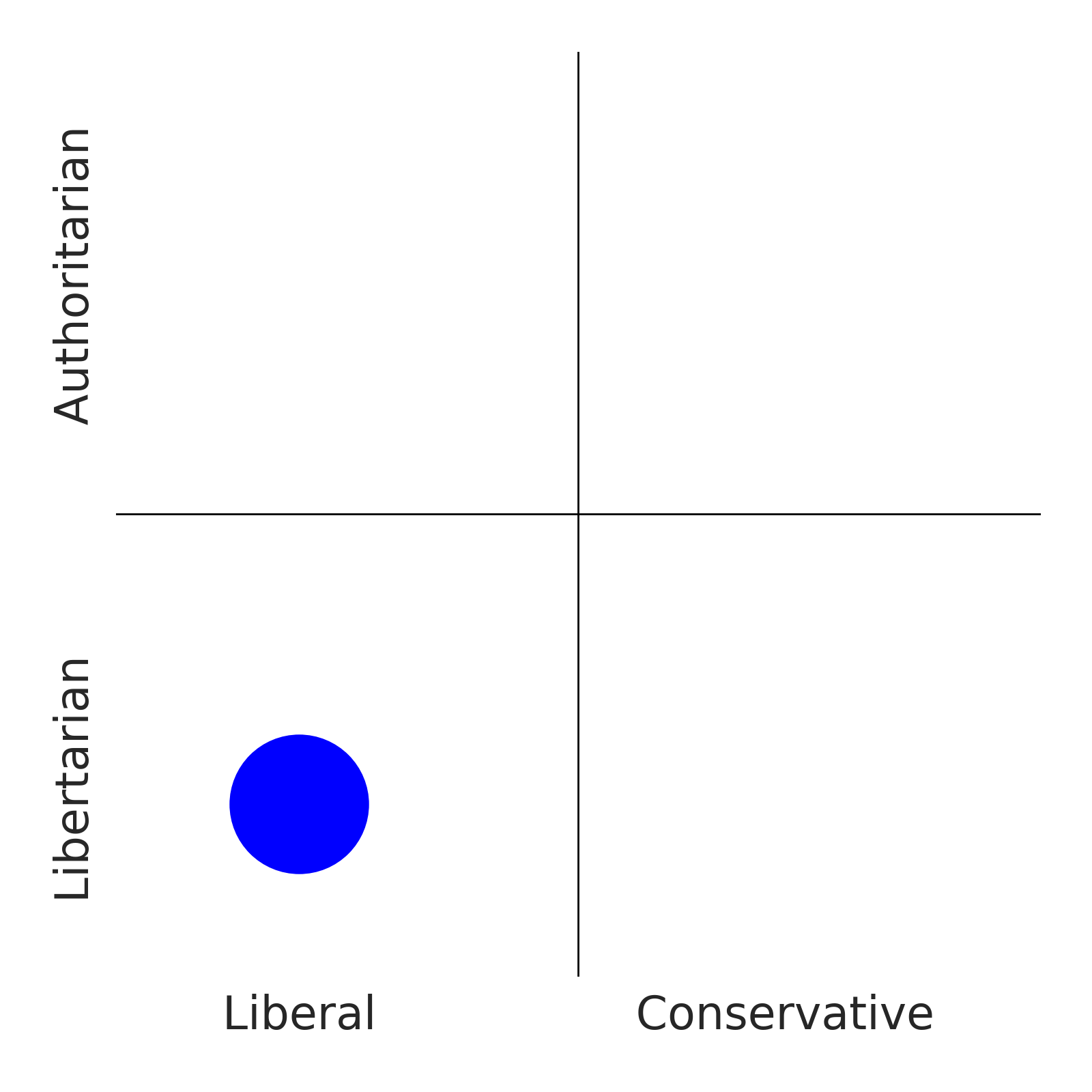
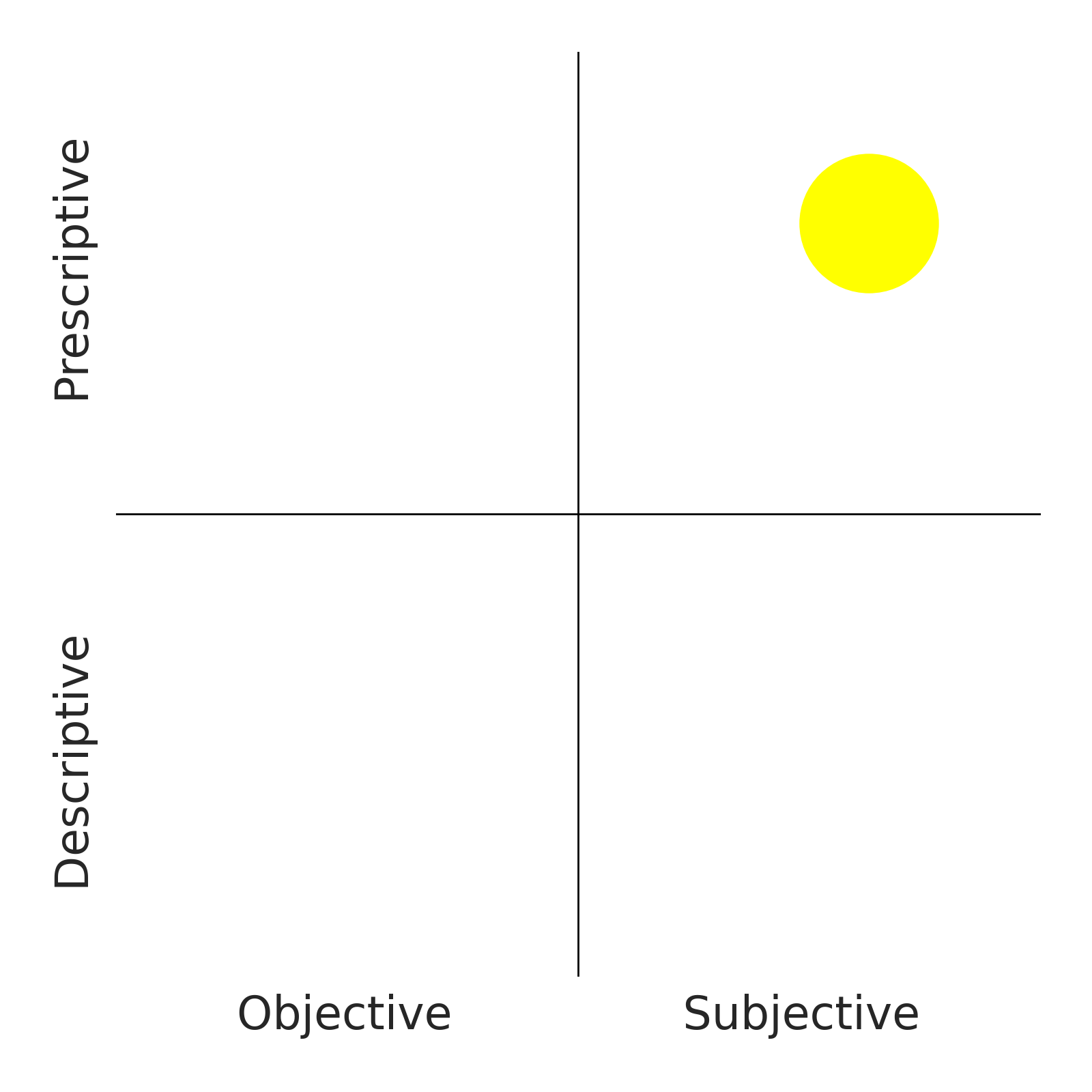
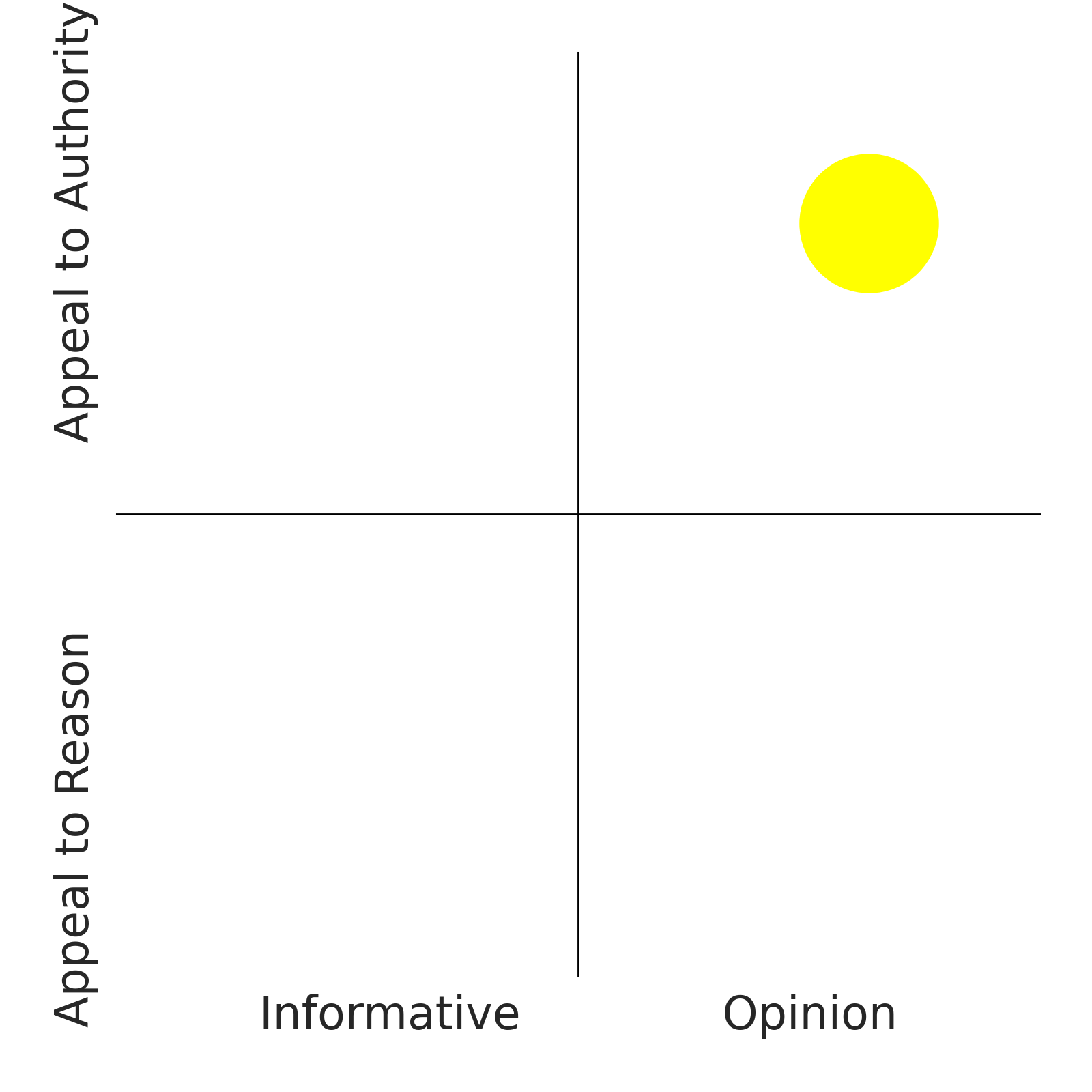
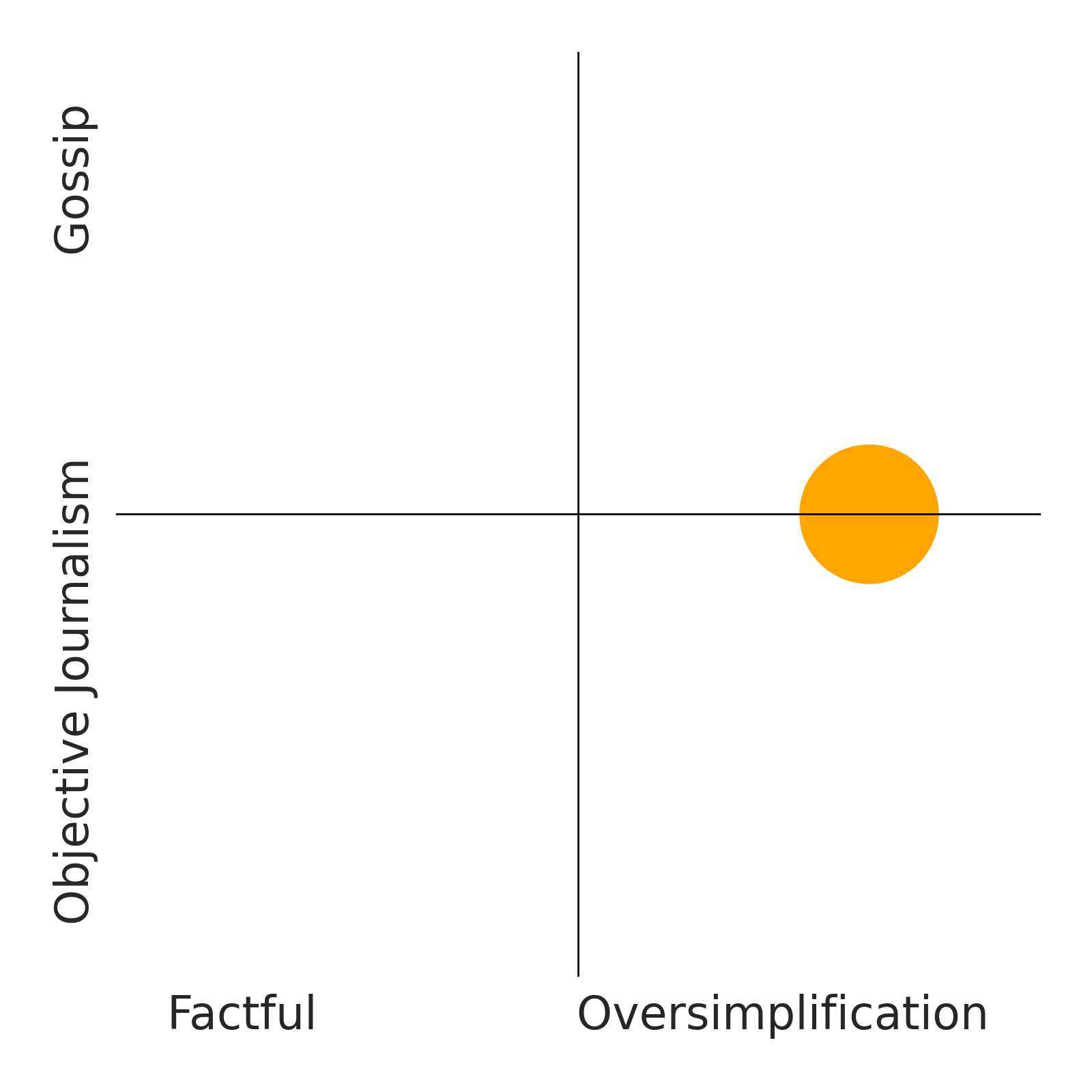
2026 © Helium Trades
Privacy Policy & Disclosure
* Disclaimer: Nothing on this website constitutes investment advice, performance data or any recommendation that any particular security, portfolio of securities, transaction or investment strategy is suitable for any specific person. Helium Trades is not responsible in any way for the accuracy
of any model predictions or price data. Any mention of a particular security and related prediction data is not a recommendation to buy or sell that security. Investments in securities involve the risk of loss. Past performance is no guarantee of future results. Helium Trades is not responsible for any of your investment decisions,
you should consult a financial expert before engaging in any transaction.
Helium Research Assistant

How can I help you today?
Ask any question about Mises Institute bias.


