Moscow Times Media Bias


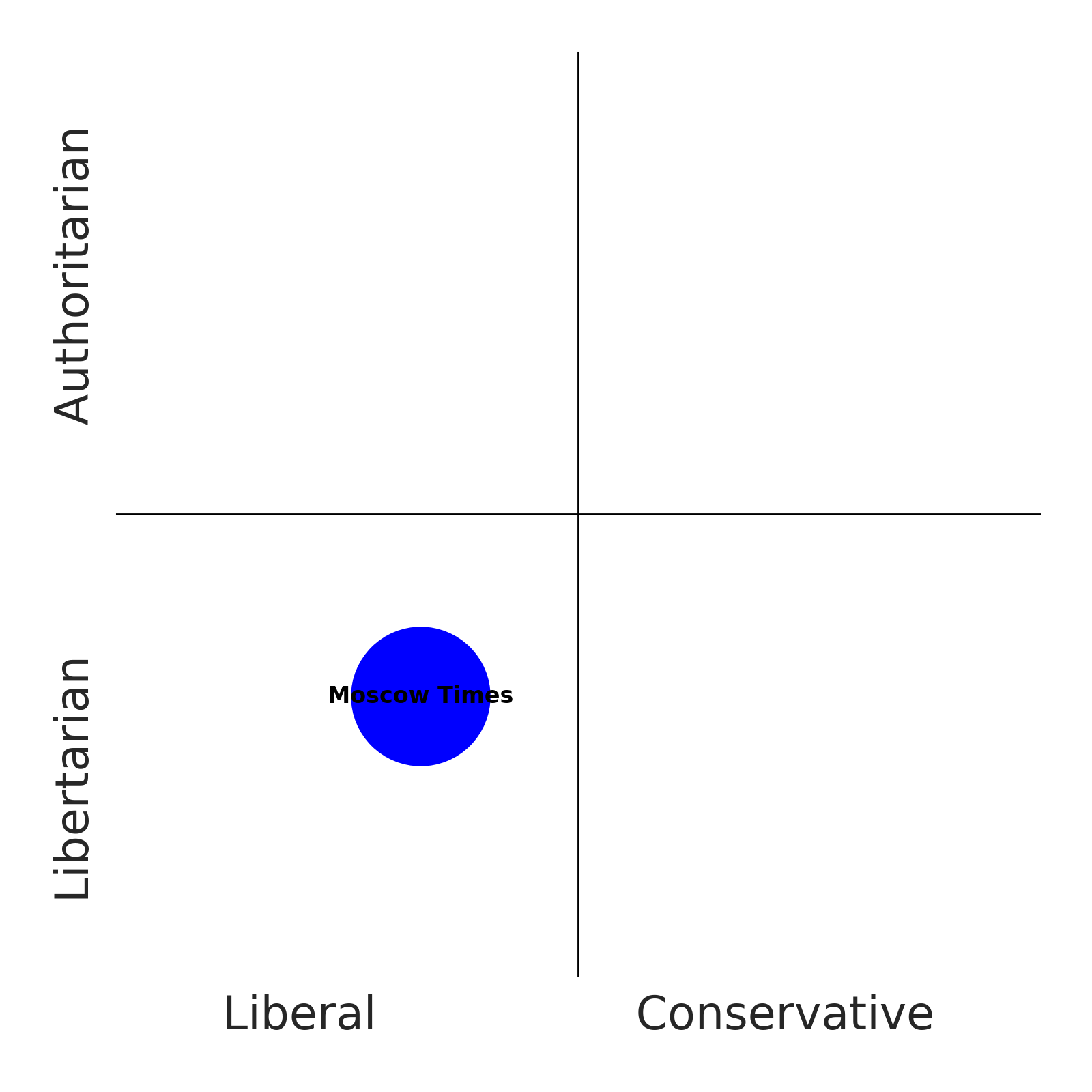
Framing and worldview. In the supplied sample, the source consistently combines event reporting with a liberal, civil-liberties-oriented perspective that is skeptical of Russian state institutions and sympathetic to opposition parties, independent media, and anti-war actors.

This is visible in repeated descriptions of prosecutions, election exclusions, surveillance, and media restrictions as repression or silencing rather than merely as contested applications of law .

The framing is therefore not politically neutral, even when individual reports use attribution and hedging.

Coverage patterns. Topic selection is heavily Russia-centered: Ukraine-related drone strikes and war effects , Russian courts and security agencies , Yabloko and opposition electoral disputes , press freedom and digital control , and disasters or social controversies inside Russia .

Foreign affairs, energy, aviation, tourism, and monetary policy also appear .

This sample cannot show what the source omits; it may also be unusually weighted toward contentious or newsworthy items rather than representative output.

Perspective and standards. The source frequently separates allegation from fact, identifies sources, and acknowledges uncertainty—for example, unresolved responsibility for the Zaporizhzhia explosion , an unconfirmed strike target in Samara , and the limits of casualty verification in Kursk .

Counterexamples to a uniformly adversarial style include the restrained flood report and the largely factual Myanmar travel report .

However, official Russian claims are often contextualized skeptically, whereas opposition or Ukrainian claims sometimes receive less comparable scrutiny .

That is an observable asymmetry, not proof that the claims are false.

Main biases and observable persuasive techniques. The strongest biases are anti-authoritarian/anti-Kremlin, pro–press freedom and liberal opposition, sympathetic-to-Ukraine framing, and publisher self-victimization. Repeated donation appeals describe the outlet as being silenced and facing unprecedented challenges .

Loaded labels such as “civic death,” “crackdown,” “sham,” and “double-tap” heighten moral interpretation .

These resemble propaganda-associated techniques—emotional language, victimhood appeals, selective contextualization, and repetition—but the evidence supports describing observable persuasion, not concluding that the publication is a coordinated propaganda operation.

Attribution and caveats materially moderate that conclusion .

AI authorship. AI assistance is plausible but unproven.

The repeated boilerplate, formulaic bias taxonomy, duplicated fundraising language, and malformed fragments such as “The ” are consistent with templated or machine-assisted production .

Yet those features could also result from an editorial content-management template or flawed dataset extraction.

The records do not establish who wrote the underlying articles.

Inferred value priorities.
  1. Highest: press freedom and independent journalism .
  2. Second: civil liberties and opposition participation .
  3. Third: evidentiary attribution and uncertainty disclosure .
Least visibly prioritized:
  1. institutional neutrality toward Russian authorities ;
  2. equal contextual scrutiny of Ukrainian and Russian claims ;
  3. separation of reporting from fundraising and advocacy .
These are priorities visible in this sample, not claims about the source’s total output or private motives.

Helium Bias: This assessment assumes the supplied bias records accurately represent the underlying articles and that repeated fundraising passages belong to the publisher rather than the data compiler.

The sample is recent, selective, and likely overrepresents unusual, contentious, or high-bias stories.

I cannot observe unpublished articles, headline-versus-body context beyond the excerpts, editing practices, or hidden authorship data; AI and propaganda judgments are therefore probabilistic.

Automated source summary · Updated August 23, 2026 · Not human reviewed. Check recent article panels for claim-level evidence when available.


Use the Data in AI All Sources

Moscow Times Bias Profile

Weighted source-level patterns from recent analyzed coverage. Open recent articles below to inspect score-specific evidence and limitations when available.

🔵 Liberal <—> Conservative 🔴-8

🗽 Libertarian <—> Authoritarian 🚔-11

😩 Pessimistic <—> Optimistic 🌞-7

💡 Boring <—> Interesting13

😨 Fearful16

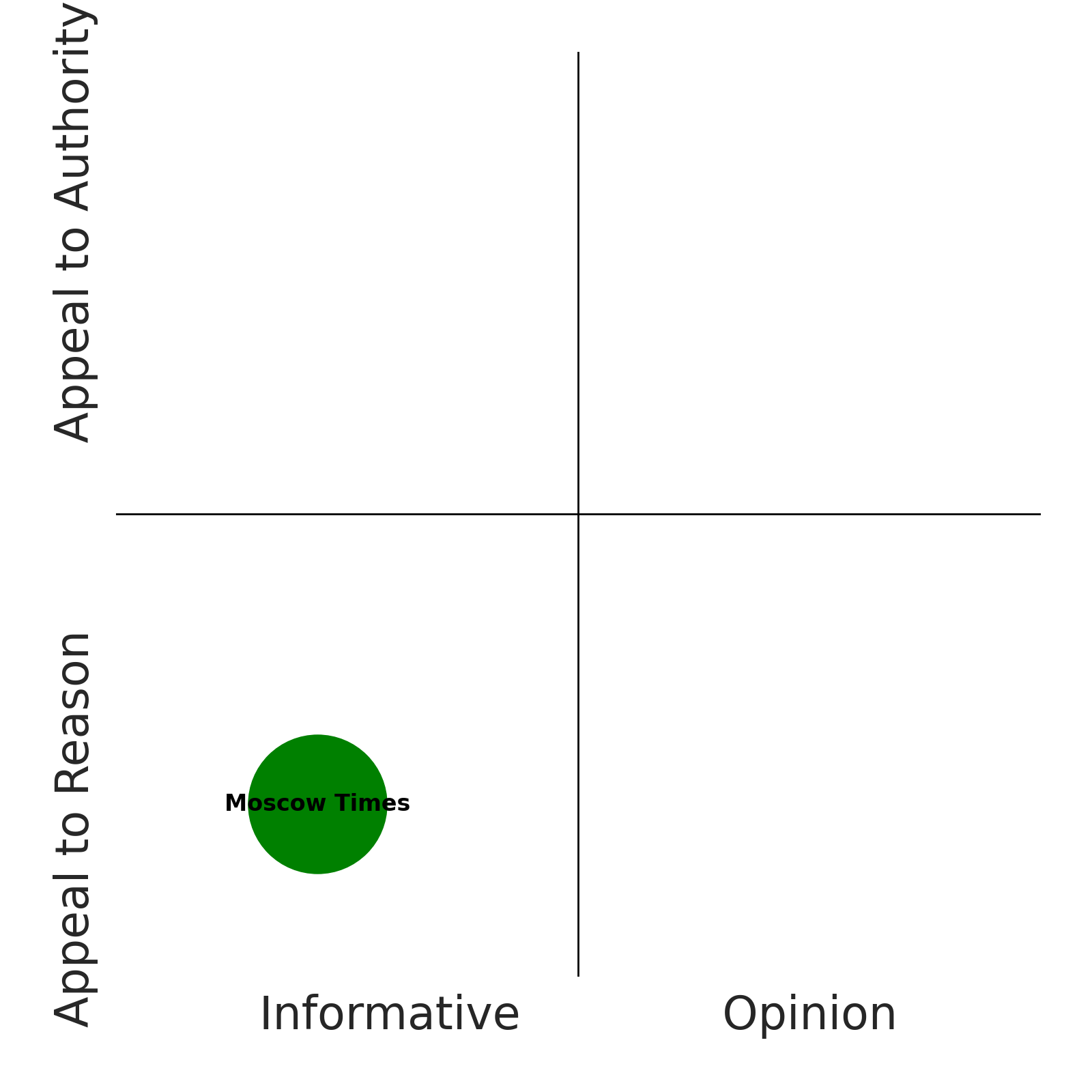
💭 Opinion45

🗳 Political20

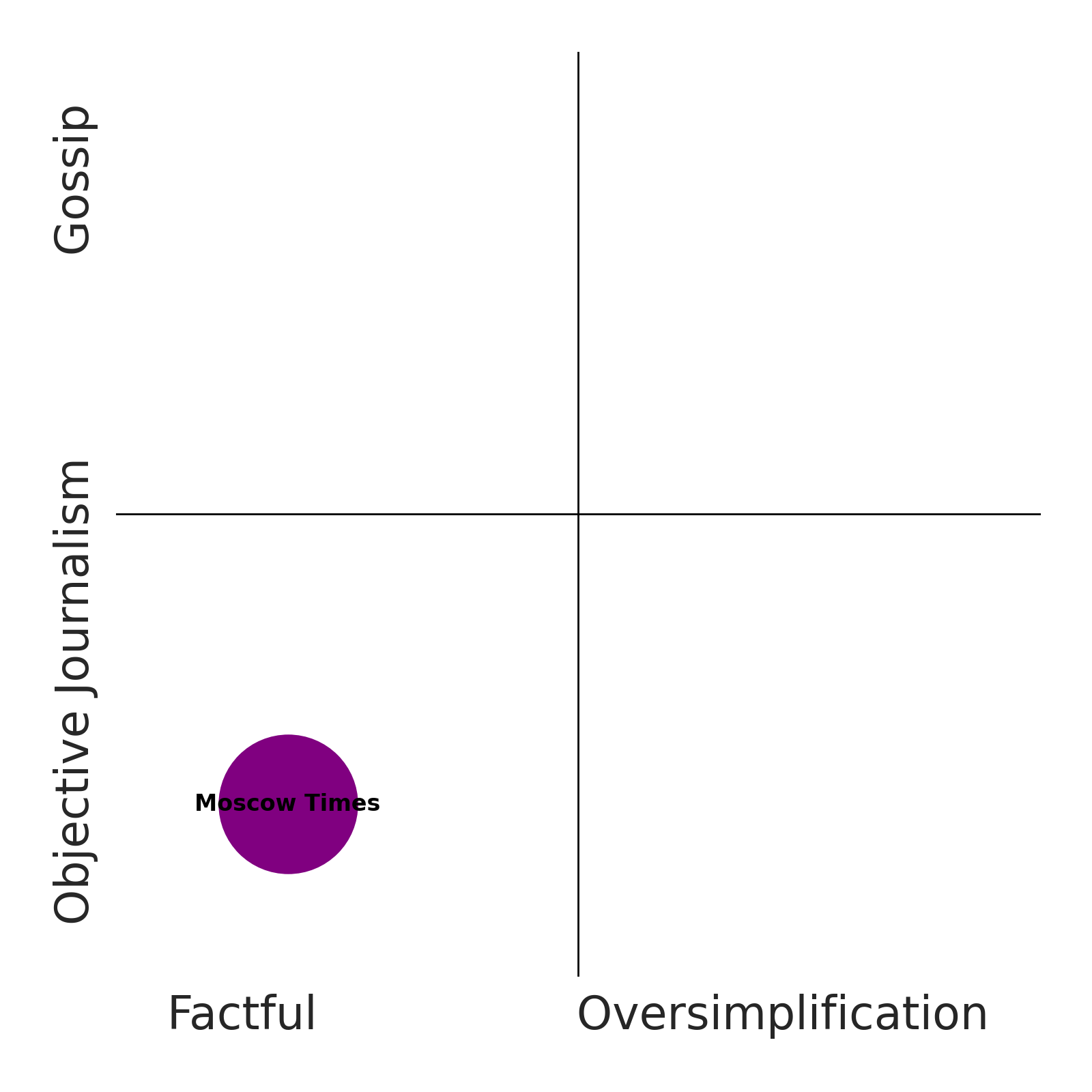
Oversimplification6

🏛️ Appeal to Authority14

👀 Covering Responses17

😢 Victimization22

🔒 Ideological16

🏴 Anti-establishment <—> Pro-establishment 📺-10

❌ Low Credibility <—> High Credibility ✅22

🧠 Rational <—> Irrational 🤪-7

🤑 Advertising21

💔 Low Integrity <—> High Integrity ❤️18

🪨 Low Intelligence <—> High Intelligence 🦉40

🎭 Virtue Signaling54

🎲 Speculation14

🐍 Manipulative32

Subtle dimensions

🧢 Populist <—> Elitist 🎩-2

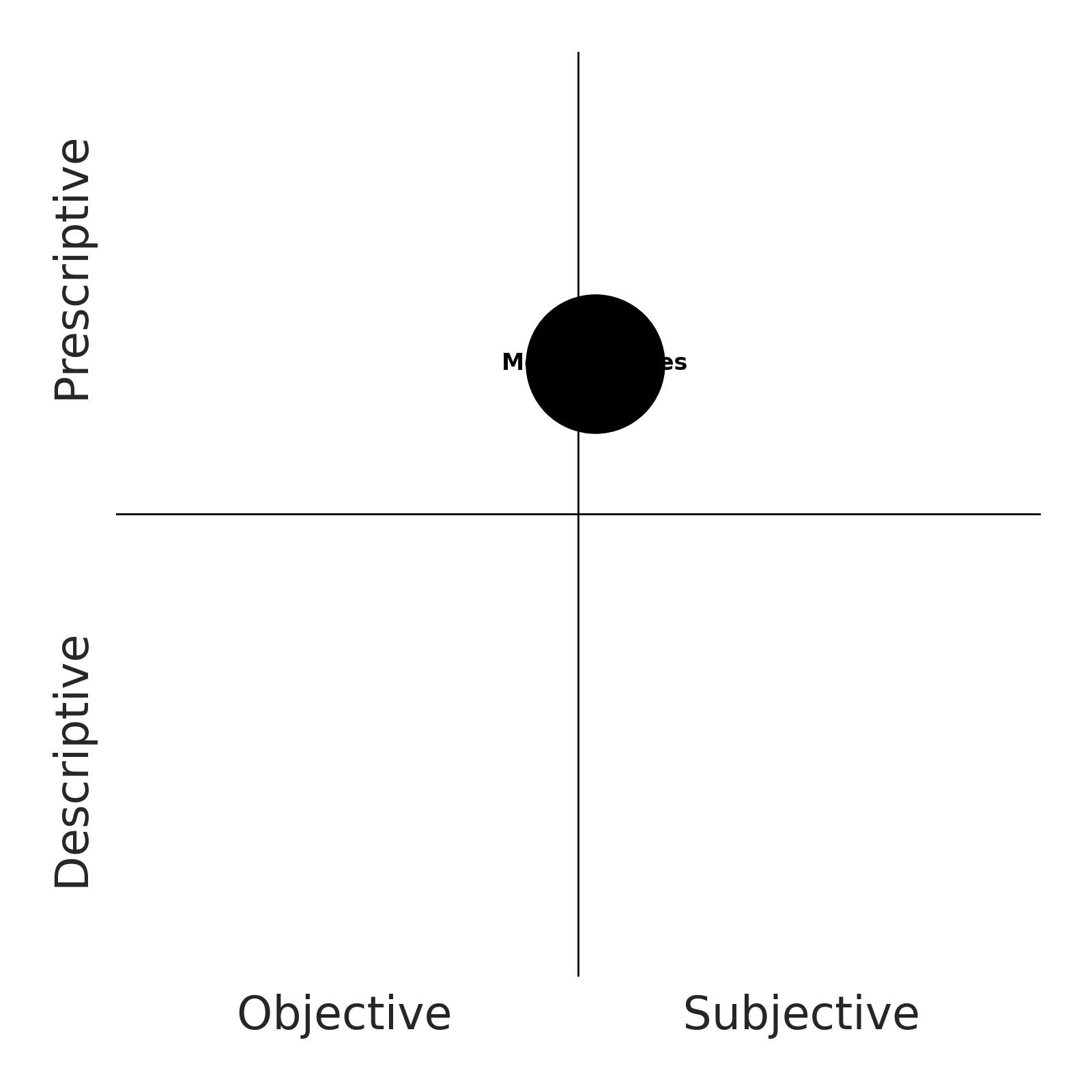
🗞️ Objective <—> Subjective 👁️ -5

🚨 Sensational0

📉 Bearish <—> Bullish 📈-1

📝 Prescriptive4

🕊️ Dovish <—> Hawkish 🦁1

📞 Begging the Question2

🗣️ Gossip0

🍼 Immature1

😤 Overconfidence4

🗑️ Spam5

📏📏 Double Standard4

💣 Terrorism0

✊ Woke5

🔪 Cruel2

🔍 Truth-seeking <—> Delusion 🌀0

🔺 Conspiracy5

🐐 Scapegoating2

🤡 Hypocrisy2

🦊 Anti-Corporate <—> Pro-Corporate 👔0

🔬 Scientific <—> Superstitious 🔮0

👤 Individualist <—> Collectivist 👥0
How to interpret source scores →

Average social shares per article 0


Moscow Times Political Bias (?)


Moscow Times Subjective Bias (?)


Moscow Times Opinion Bias (?)


Moscow Times Oversimplification Bias (?)


Discuss this source


Moscow Times Recent Articles


Sort By:                     


Build a focused, ad-free news feed.

Create Free Feed