See whether Helium helps you make better-informed decisions. Try every Pro Trader feature for 30 days. No credit card required.
Try every Pro Trader feature for 30 days. No credit card required.
The supplied sample shows a pronounced pro-Iranian, anti-U.S., anti-Israeli, sovereignty-centered and pro-Resistance frame. U.S. and Israeli actions are repeatedly described as aggression, coercion, occupation or war crimes, while Iranian, Hezbollah and Houthi actions are more often characterized as defensive, retaliatory or legitimate
August 26, 2026 · 0 shares
The report presents Iran's diplomatic statements as objective fact, using loaded language and omitting any countervailing perspective.
The article reports on a diplomatic speech by Iran's UN ambassador during a Security Council debate on food crises, linking food insecurity to armed conflict and sanctions.
Automated analysis; not human reviewed. Limitations: The analysis is based solely on the provided text, which is a single diplomatic statement from an Iranian state agency, lacking independent verification or counterbalancing perspectives. · 52 of 54 available dimensions scored; omitted dimensions are not treated as neutral. · Verified supporting quotes for 3 of 52 scored dimensions.
Claim: The report asserts causal and factual claims with certainty, such as the root cause of the crisis.
“the root cause of the crisis: foreign military aggression against Iran” · exact text match
“the US-Israeli war against Iran” · exact text match
Why: The article states unambiguous causal claims and labels the conflict as a 'war' without qualification, despite the inherently disputed nature of the events and motivations.
Claim: The report uses negatively charged language to describe US and Israeli actions.
“military campaign against Iran as a violation of the UN Charter and international law” · exact text match
“dangerous precedent for the international system” · exact text match
Why: The vocabulary ('violation', 'dangerous precedent', 'aggression') evokes a negative emotional response and condemns the actions, rather than neutrally reporting both sides.
Claim: The report uses loaded framing and omits any alternative perspective on the conflict.
“the US-Israeli war against Iran” · exact text match
“categorically condemn and reject these unilateral coercive measures” · exact text match
Why: The language consistently frames the US and Israel as aggressors and Iran as a victim, while excluding any mention of Iran's potential provocations or counterarguments, presenting a one-sided account.
The analysis is based solely on the provided text, which is a single diplomatic statement from an Iranian state agency, lacking independent verification or counterbalancing perspectives.
August 02, 2026 · 0 shares
Presents Iran's warnings and diplomatic efforts as a justified defensive response to US/Israeli aggression, using one-sided victim-and-aggressor framing with no alternative viewpoints.
Automated analysis; not human reviewed. Limitations: The article text was interleaved with unrelated headlines; analysis focused on the main Iran warning report. No external fact-checking was performed. · 9 of 52 available dimensions scored; omitted dimensions are not treated as neutral. · Verified supporting quotes for 6 of 9 scored dimensions.
Claim: The article frames events subjectively with no opposing viewpoint.
“legitimate defensive operations” · exact text match
“ongoing American aggression” · exact text match
Why: The article uses value-laden terms and presents only Iran's perspective without countervailing information.
Claim: The article uses some sensational language to heighten tension.
“one of its strongest warnings in recent weeks” · exact text match
“decisive and proportionate response” · not found in supplied text
Why: While not extreme, the phrasing is chosen to emphasize severity.
Claim: The entire article is a political statement about international conflict.
“Iran has issued one of its strongest warnings” · exact text match
“the underlying objective of the US-Israeli campaign was to undermine Iran's independence” · exact text match
Why: The content is entirely devoted to a geopolitical dispute and Iran's political stance.
Claim: The article presents a simplified dichotomy of aggressor vs. defender.
“continued US and Israeli efforts to destabilize the region” · exact text match
“defensive operations would continue until the complete end of enemy aggression” · exact text match
Why: The framing reduces the conflict to clear-cut roles without nuance.
Claim: The article portrays Iran as a victim of US/Israeli aggression.
“The statement accused Washington of repeatedly violating... ceasefire memorandum” · not found in supplied text
“attacks on military installations, civilian infrastructure and Iranian citizens” · exact text match
Why: The article repeatedly describes US actions as aggression and Iran's actions as defensive.
Claim: The article is infused with an ideology of resistance to American pressure.
“Iran's independence, sovereignty and resistance to decades of American pressure” · exact text match
“the protection of the principles of international law against ‘American and Israeli aggression’” · not found in supplied text
Why: The language reflects a long-standing anti-imperialist narrative.
Claim: The article strongly supports the Iranian establishment's position.
“The ministry praised Iran's Armed Forces for defending the country's sovereignty and territorial integrity” · exact text match
“Tehran reaffirmed its determination to continue defending its sovereignty, national security and strategic interests” · exact text match
Why: The language consistently endorses the Iranian regime's actions and narrative.
Claim: The article uses loaded language to shape reader perception.
“legitimate defensive operations” · exact text match
“American aggression” · exact text match
Why: Choice of words like 'legitimate' and 'aggression' is rhetorically loaded.
Claim: The article shows low integrity due to one-sided reporting from a state-controlled source.
“Iran's Foreign Ministry reiterated that the country would continue exercising its inherent right of self-defense” · exact text match
“The statement accused Washington of repeatedly violating a June 18 ceasefire memorandum” · exact text match
Why: The article uncritically reproduces Iranian government claims and omits any independent verification or alternative views.
The article text was interleaved with unrelated headlines; analysis focused on the main Iran warning report. No external fact-checking was performed.
August 04, 2026 · 0 shares
The publisher uncritically transmits Hezbollah's narrative, framing Iran as a decisive victorious actor and Israel as a US-backed aggressor, without offering alternative perspectives.
Automated analysis; not human reviewed. Limitations: Input is a single, one-sided speech transcript from state-aligned media; contextual knowledge about the conflict is limited. · 20 of 53 available dimensions scored; omitted dimensions are not treated as neutral. · Verified supporting quotes for 11 of 20 scored dimensions.
Claim: The publisher portrays Hezbollah and Iran as righteous actors, aligning with conservative religious-political ideology.
“Hezbollah chief credits Iran for easing Israeli aggression” · exact text match
“Hezbollah Secretary-General Sheikh Naim Qassem said on Tuesday that Iran played a key role in reducing Israeli military pressure on Lebanon” · exact text match
“praised the leadership of Ayatollah Seyyed Mojtaba Khamenei” · exact text match
Why: The framing is pro-Hezbollah and pro-Iran, which are conservative Islamist actors; no liberal or progressive perspectives are included.
Claim: The article supports Hezbollah's authoritarian role in Lebanon, emphasizing resistance and unity under centralized leadership.
“Hezbollah would continue to exist as long as Israeli occupation persists” · exact text match
“Hezbollah and the Amal Movement as a cornerstone of Lebanon's internal stability and a safeguard against external threats.” · exact text match
Why: Hezbollah is a non-state armed group with authoritarian internal structure; the article endorses its dominance.
Claim: The article is entirely composed of a single perspective without balancing sources or acknowledging alternative viewpoints.
“The entire article consists of direct and indirect quotes from Qassem without any opposing statements.” · not found in supplied text
Why: There is no inclusion of Israeli, US, or other viewpoints; the article functions as a transcript of Hezbollah's position.
Claim: The article adopts a hawkish stance against Israel and US, advocating for resistance and military confrontation.
“insisting that Israel's only viable option is a complete withdrawal from Lebanese territory” · exact text match
“the region continues to face coordinated US-Israeli military pressure targeting Lebanon, Gaza, Iran, Iraq and Yemen to weaken resistance movements.” · exact text match
Why: The text explicitly calls for Israeli withdrawal and frames US-Israeli actions as aggression, supporting a confrontational approach.
Claim: The article is heavily opinionated, presenting Hezbollah's perspective as definitive.
“He argued that the region continues to face coordinated US-Israeli military pressure...” · not found in supplied text
“Hezbollah leader also called for constructive relations between Lebanon and Syria...” · not found in supplied text
Why: The article is built around the opinions and demands of a single partisan actor.
Claim: The article is intensely political, focusing on geopolitical conflict and resistance movements.
“Hezbollah would continue to exist as long as Israeli occupation persists” · exact text match
“Hezbollah reiterated support for Gaza and the Palestinian cause.” · not found in supplied text
Why: Entire content is about political-military confrontation and alignments.
Claim: The article reduces a complex conflict to a simple narrative of US-Israeli aggression vs. resistance.
“Israel's 2024 military campaign against Lebanon sought to eliminate Hezbollah, but 'We confronted them in the People of Might battle, and we were able to continue, and we forced them into an agreement that makes resistance a right'.” · not found in supplied text
Why: The depiction excludes internal Lebanese divisions, diplomatic context, and Hezbollah's own role in escalations.
Claim: The article relies heavily on Qassem's authority as Hezbollah leader to validate claims.
“Hezbollah Secretary-General Sheikh Naim Qassem said...” · not found in supplied text
“According to the head of Hezbollah...” · not found in supplied text
Why: Qassem is the sole authority cited; no independent experts or data.
Claim: The article portrays Hezbollah and Iran as victims of US-Israeli aggression.
“the region continues to face coordinated US-Israeli military pressure targeting Lebanon, Gaza, Iran, Iraq and Yemen to weaken resistance movements.” · exact text match
Why: The framing emphasizes external pressure as the cause of conflict.
Claim: The article presents Qassem's predictions and assertions with high certainty.
“Israel's only viable option is a complete withdrawal from Lebanese territory” · exact text match
“the Islamic Republic had emerged victorious from the recent confrontation.” · not found in supplied text
Why: These are presented as definitive statements without hedging.
Claim: The article is driven by a consistent ideological narrative of resistance and anti-imperialism.
“We believe in one united Lebanon that cannot be divided and cannot give up its land” · exact text match
“Hezbollah would continue to exist as long as Israeli occupation persists” · exact text match
Why: The text repeatedly reinforces ideological commitments to resistance and sovereignty.
Claim: The article presents Qassem's assertions as authoritative without critical scrutiny, exhibiting a non-empirical approach.
“Qassem stated the Islamic Republic had emerged victorious from the recent confrontation, describing the country as a major regional and international actor whose influence extends beyond the Middle East.” · exact text match
Why: The article does not challenge or verify any of Qassem's claims, treating them as statements of fact.
Claim: The article emphasizes collective resistance and national unity over individual rights.
“the majority of Lebanese support resistance, national sovereignty and the country's armed forces” · exact text match
“alliance between Hezbollah and the Amal Movement as a cornerstone of Lebanon's internal stability” · exact text match
Why: The focus is on collective action and group loyalty.
Claim: The article includes speculative statements about future Israeli withdrawal.
“insisting that Israel's only viable option is a complete withdrawal” · exact text match
“indicating Hezbollah would not oppose a future public meeting with Syrian leadership” · not found in supplied text
Why: These are forecasts made by Qassem, presented as likely outcomes.
Claim: The article uses one-sided selection, omission of opposing views, and framing to manipulate reader perception.
“No counterpoint is included; the article is exclusively Qassem's speech.” · not found in supplied text
Why: The material omission of Israeli or international perspectives is a manipulative technique.
Claim: The article lacks fairness and honesty by presenting one-sided claims as straightforward news.
“Qassem also alleged that Israeli attacks on Lebanon have been conducted with US supervision and approval.” · exact text match
Why: The publisher does not indicate that this allegation is disputed or unverified, which undermines informational integrity.
Claim: The article sanitizes Hezbollah's violent operations by calling them 'resistance' and not distinguishing between combatants and civilians.
“We confronted them in the People of Might battle, and we were able to continue” · exact text match
“resistance a right” · exact text match
Why: Hezbollah's military actions are described as legitimate resistance without mention of civilian casualties or terrorist tactics.
Claim: The article expresses sympathy for Islamist political goals and religious framing.
“Addressing an Arbaeen commemoration marking 40 days after Ashura” · exact text match
“praised the leadership of Ayatollah Seyyed Mojtaba Khamenei” · exact text match
Why: The religious context and praise for clerical leadership indicate alignment with Islamist ideology.
Claim: The article promotes a conspiracy theory that US supervises Israeli attacks on Lebanon.
“Qassem also alleged that Israeli attacks on Lebanon have been conducted with US supervision and approval.” · exact text match
Why: This is an unsubstantiated conspiracy allegation.
Claim: The article attributes regional conflicts to US-Israeli conspiracies, scapegoating them.
“the region continues to face coordinated US-Israeli military pressure” · exact text match
“Israeli attacks... have been conducted with US supervision and approval.” · not found in supplied text
Why: The blame is placed squarely on US and Israel without acknowledging Hezbollah's agency.
Input is a single, one-sided speech transcript from state-aligned media; contextual knowledge about the conflict is limited.
August 09, 2026 · 0 shares
Strongly pro-Yemeni/Houthi framing that uncritically presents attacks on Saudi Arabia as justified retaliation, using emotive language and omitting Saudi perspective.
The Yemeni Civil War began in 2014 when Houthi forces took control of Sanaa, leading to a Saudi-led military intervention in 2015. The Houthis are backed by Iran. A UN-brokered truce in 2022 collapsed. The article reports events from the Houthi perspective.
Automated analysis; not human reviewed. Limitations: The article is from an Iranian state-affiliated news agency, which may systematically frame events favorably to Iran and its allies. The analysis relies on the text as given, without independent verification. · 25 of 53 available dimensions scored; omitted dimensions are not treated as neutral. · Verified supporting quotes for 21 of 25 scored dimensions.
Claim: The article frames the Yemeni actions as expressions of popular will against an elite Saudi enemy.
“Sanaa is seeking to establish parity and direct military deterrence with Saudi Arabia. This is not just a display of force or an effort to serve a particular agenda, as some media propagate. Rather, it is an expression of popular will rooted in a deep sense of injustice” · exact text match
Why: The article explicitly contrasts the Yemeni actions with elite agendas and portrays them as rooted in popular will, using populist rhetoric.
Claim: The article endorses authoritarian measures such as blockades, military targeting, and the imposition of equations by the Houthi government.
“The Sanaa government's "blockade for blockade" equation appears to have been achieved through two courses of action: Targeting Saudi vessels... using appropriate missiles and drones” · not found in supplied text
Why: The article presents the Houthi government's coercive measures as successful and justified, supporting authoritarian governance.
Claim: The article presents the Houthi perspective as objective fact, using emotive language and omitting Saudi viewpoints.
“Thanks to God, the Yemeni Armed Forces succeeded in targeting the Aramco refinery in Jizan with a drone, and the strike was accurate.” · exact text match
Why: The article uncritically quotes Houthi statements as fact and uses religious language, lacking counterbalance.
Claim: The article uses sensational language to describe military operations and their effects.
“The strikes were precise and resulted in widespread destruction of the equipment and weapons, with dozens killed and wounded, including Saudis.” · exact text match
Why: The phrasing 'widespread destruction' and precise casualty figures are typical of sensational reporting, though not extreme.
Claim: The article prescribes the blockade equation and implies support for continued military action.
“It appears that this equation will continue, and may even escalate, as long as Saudi Arabia persists in its blockade of Yemen” · exact text match
Why: The article predicts and implicitly endorses escalation, rather than merely describing events.
Claim: The article celebrates military attacks and blockades, advocating for force.
“The YAF succeeded in changing the routes of more than 16 vessels, according to specialized maritime sources.” · not found in supplied text
Why: The tone is triumphant about military successes, with no mention of diplomatic alternatives.
Claim: The article assumes the Houthi perspective is correct without justification.
“the attack came “in response to the Saudi enemy violating the airspace of the provinces of Saada and Hajjah with its drones.”” · exact text match
Why: The article does not question the validity of the response or the nature of the violation, taking it as given.
Claim: The article presents opinion as fact, with editorializing throughout.
“This is not just a display of force or an effort to serve a particular agenda, as some media propagate. Rather, it is an expression of popular will” · exact text match
Why: The article explicitly argues against other media interpretations, asserting its own judgment.
Claim: The article is highly political, focusing on the conflict and justifying one side.
“Yemeni forces attack Saudi Aramco oil facility.” · exact text match
Why: The entire content is about a political and military conflict, with clear partisan alignment.
Claim: The article simplifies the conflict into a binary of Saudi aggression versus Yemeni resistance.
“in response to the continued Saudi enemy mobilization of its forces and its reinforcement with weapons and equipment” · not found in supplied text
Why: It frames the situation as a simple response to Saudi aggression, ignoring complexities.
Claim: The article portrays Yemen as a victim of Saudi aggression, justifying its actions.
“in response to attacks on Yemen and its sovereignty” · exact text match
Why: Multiple references frame Yemen as the victim, with Saudi actions described as 'aggression'.
Claim: The article makes claims of precise strikes and casualty figures with certainty, despite attribution.
“the strike was accurate” · exact text match
Why: The statement asserts accuracy without independent verification, though attributed to a spokesman.
Claim: The article is driven by a clear ideological narrative of resistance against Saudi imperialism.
“Sanaa is seeking to establish parity and direct military deterrence with Saudi Arabia.” · exact text match
Why: The entire article is structured around the ideological goal of parity and resistance.
Claim: The article is anti-establishment relative to the Saudi-led regional order, but pro-Houthi establishment.
“Sanaa is seeking to establish parity and direct military deterrence with Saudi Arabia.” · exact text match
Why: It challenges the dominant Saudi establishment but supports the Houthi government as legitimate.
Claim: The article conveys a positive emotional tone toward the Houthi actions and negative toward Saudi.
“Thanks to God, the Yemeni Armed Forces succeeded” · exact text match
Why: Religious gratitude and triumphant language indicate positive emotion for the attackers.
Claim: The article has low credibility due to its partisan source, lack of balance, and uncritical acceptance of claims.
“Yemeni Armed Forces have announced that they targeted a Saudi oil refinery” · exact text match
Why: The article does not provide independent verification or alternative perspectives, typical of state propaganda.
Claim: The article presents a coherent but one-sided narrative that lacks critical reasoning.
“in response to the violation of Yemeni airspace” · exact text match
Why: The logic is internally consistent but ignores alternative explanations and evidence.
Claim: The article is anti-corporate, specifically targeting the Saudi state oil company Aramco.
“targeting the Aramco refinery in Jizan with a drone” · exact text match
Why: The article frames the attack on a corporate asset as a legitimate military target.
Claim: The article emphasizes collective action and popular will over individual rights.
“following a broad popular mandate expressed by Yemenis during the massive Friday demonstrations” · exact text match
Why: It celebrates collective demonstrations and the 'popular will' as the basis for the blockade.
Claim: The article speculates about future escalation and consequences.
“It appears that this equation will continue, and may even escalate” · exact text match
Why: The article predicts future behavior without providing evidence for the forecast.
Claim: The article uses loaded language and omission of Saudi perspective to manipulate reader opinion.
“the Saudi enemy” · exact text match
Why: Repeatedly calling Saudi Arabia 'the enemy' is a loaded framing that manipulates emotional response.
Claim: The article lacks integrity by presenting one-sided allegations as fact and omitting alternative perspectives.
“Yemeni Armed Forces have announced that they targeted a Saudi oil refinery in response to the violation of Yemeni airspace.” · exact text match
Why: The article frames the attack as a response without critically examining the justification or providing Saudi side.
Claim: The article is sympathetic to the Houthi movement, a Shia Islamist group, and references Iran's Islamic revolution.
“the funeral of the martyred Leader of Iran’s Islamic revolution, Ayatollah Sayyed Ali Khamenei” · exact text match
Why: It uses honorific language for Khamenei and supports the Houthi government, which follows Islamist ideology.
Claim: The article blames Saudi Arabia for all problems and justifies any action against it.
“the Saudi enemy violating the airspace of the provinces of Saada and Hajjah with its drones” · exact text match
Why: Saudi Arabia is consistently referred to as 'the enemy' and blamed for escalation.
Claim: The article rejects Western pluralistic norms and supports religious authoritarianism.
“the leader of Yemen’s revolution, Sayyed Abdul-Malik al-Houthi, announced... the equation of 'blockade for blockade'” · not found in supplied text
Why: The article uncritically accepts the Houthi leader's commands and does not engage with democratic or human rights norms.
The article is from an Iranian state-affiliated news agency, which may systematically frame events favorably to Iran and its allies. The analysis relies on the text as given, without independent verification.
Topic selection disproportionately favors assassinations, the establishment, the USS Abraham Lincoln and the United Nations [111].
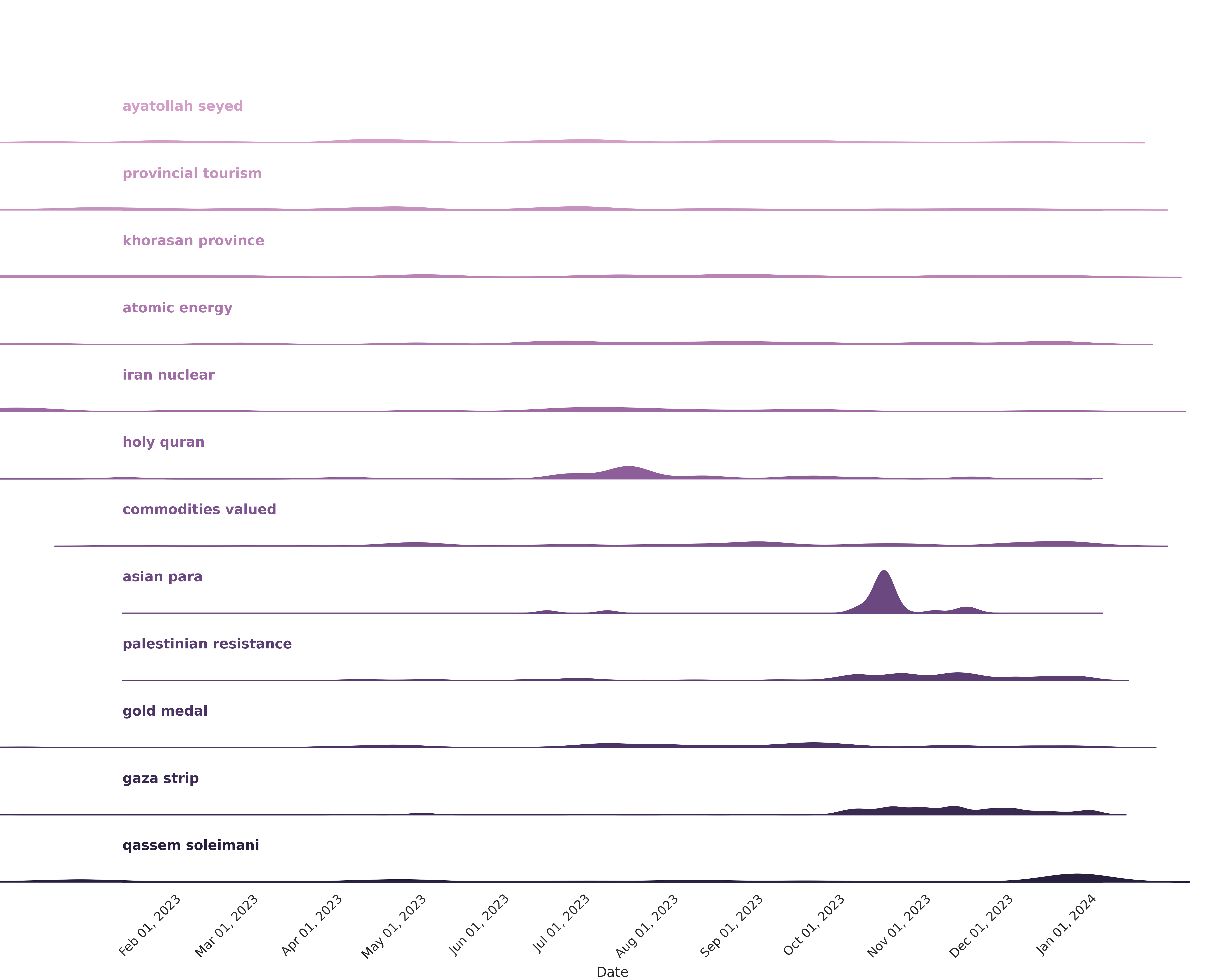
The broader sample concentrates on Iran’s foreign relations, sanctions, military strategy, the Strait of Hormuz, Palestine, Lebanon, Yemen, regional resistance groups, state economic projects, energy, tourism, cultural heritage and scientific events
August 26, 2026 · 0 shares
Headlines from Mehr News Agency frame US economic pressure as illegitimate and futile while portraying Iran's government as capable and supportive of livelihoods, reflecting a pro-Iranian, anti-US perspective.
The supplied material consists only of headlines and short titles, with no full article text or additional context.
Automated analysis; not human reviewed. Limitations: Input is a list of headlines only, so analysis is based on headline framing without body content. · 5 of 54 available dimensions scored; omitted dimensions are not treated as neutral. · Verified supporting quotes for 5 of 5 scored dimensions.
Claim: Publisher uses rhetorical questioning and assertive judgments.
“With $40 trillion in debt, does Washington have any credibility to police Iran’s economy?” · exact text match
“The US cannot remove Iran’s control over the Strait of Hormu” · exact text match
Why: Loaded question and categorical assertion express opinion rather than neutral reporting.
Claim: Publisher states categorical certainty about US inability and economic pressure failure.
“The US cannot remove Iran’s control over the Strait of Hormu” · exact text match
“President Pezeshkian: US economic pressure will remain futile” · exact text match
Why: Uses 'cannot' and 'will remain futile' without qualifying uncertainty.
Claim: Publisher frames the Iranian government's agenda positively and gives prominent platform to President Pezeshkian.
“Confronting economic pressures, supporting people’s livelihood on government’s agenda” · exact text match
“President Pezeshkian: US economic pressure will remain futile” · exact text match
Why: Headline presents government agenda as supportive and repeats presidential dismissal of US pressure.
Claim: Publisher omits counterpoints and uses rhetorical framing to steer opinion.
“With $40 trillion in debt, does Washington have any credibility to police Iran’s economy?” · exact text match
“The US cannot remove Iran’s control over the Strait of Hormu” · exact text match
Why: Selective emphasis on US debt and assertion of Iranian control without source or qualification.
Claim: Publisher lacks balance, presenting one-sided assertions and leading questions.
“The US cannot remove Iran’s control over the Strait of Hormu” · exact text match
“Confronting economic pressures, supporting people’s livelihood on government’s agenda” · exact text match
Why: No countervailing perspective; headlines assert capabilities and positive government intentions.
Input is a list of headlines only, so analysis is based on headline framing without body content.
August 18, 2026 · 0 shares
The headlines exhibit an anti-US, anti-Israel, pro-Iranian government framing, presenting Iran and its allies as victims and opponents as aggressors.
Automated analysis; not human reviewed. Limitations: The article text is a list of headlines with no substantive content, making it difficult to assess deeper framing; analysis is based on headline wording alone. · 54 of 54 available dimensions scored; omitted dimensions are not treated as neutral. · Verified supporting quotes for 36 of 54 scored dimensions.
Claim: The headlines consistently portray Iran and its allies as victims and US/Israel as aggressors, aligning with a conservative (pro-Iran establishment) viewpoint.
“Trump's collapsing popularity exposes strategic failure in the war against Iran” · verified after text normalization
“Erbil false-flag attack: Foreign sabotage against Iran-Iraq unity” · exact text match
Why: The headlines frame Iran as targeted by foreign powers (US, Israel) and use terms like 'false-flag attack' and 'strategic failure' to cast opponents as deceptive and doomed.
Claim: The headlines reflect a populist framing by pitting Iran's 'resistance' against elite-led foreign powers.
“Hamas official: Disarming Resistance cannot be a precondition for any agreement” · exact text match
Why: The use of 'Resistance' aligns with populist anti-elite rhetoric, though the framing is more state-aligned than grassroots.
Claim: The headlines support state authority and oppose foreign interference, indicating an authoritarian bias.
“Iran-Malaysia relations advance through higher education cooperation” · exact text match
“Despite al-Jolani's appeasement, Israel strikes Syrian airfield, warning Ankara” · verified after text normalization
Why: The focus on state-led cooperation and opposition to external actors (Israel, US) suggests support for centralized state power.
Claim: The headlines mix objective reporting with subjective framing and opinionated language.
“Trump's collapsing popularity exposes strategic failure” · verified after text normalization
“Erbil false-flag attack” · exact text match
Why: Terms like 'collapsing', 'strategic failure', and 'false-flag attack' are subjective and loaded, indicating a departure from objective reporting.
Claim: The headlines are relatively restrained, with no overt sensationalism beyond the loaded terms.
“Final Farewell to Leader: Unity, Mourning, and Power on Display” · exact text match
Why: The headlines are mostly factual snippets, but some use dramatic language, so a slight negative score (objective-leaning) is assigned.
Claim: No clear economic direction; the headline about oil or markets is absent.
“Iran-Malaysia relations advance through higher education cooperation” · exact text match
Why: No economic forecast or market sentiment is evident.
Claim: The headlines convey pessimism about US/Israel and Iran's enemies, but are not optimistic about Iran's prospects.
“Trump's collapsing popularity” · verified after text normalization
“Israel strikes Syrian airfield” · exact text match
Why: The framing of enemy failures and attacks on allies suggests a negative outlook.
Claim: The headlines cover various geopolitical topics, making them moderately interesting.
“Stephen King's 'Misery' adapted in Iran” · not found in supplied text
“Iran-Malaysia relations” · exact text match
Why: Mixed range of topics, but many are routine news.
Claim: The headlines are mostly descriptive without explicit prescriptions, though some imply policy directions.
“Iraqi resistance group sets conditions over weapons” · exact text match
Why: The headlines describe events, but the selection implies prescriptive stances (e.g., supporting resistance).
Claim: The headlines lean hawkish by emphasizing threats and military actions.
“Israel strikes Syrian airfield” · exact text match
“Trump's threat to bomb Oman” · verified after text normalization
Why: The focus on military strikes and conflicts suggests a hawkish tone.
Claim: The headlines evoke a sense of threat and danger from external forces.
“Israel strikes Syrian airfield, warning Ankara” · exact text match
“Trump's threat to bomb Oman” · verified after text normalization
Why: The emphasis on military threats and attacks induces fear.
Claim: The headlines assume certain truths (e.g., that Hamas's resistance is legitimate) without proving them.
“Hamas official: Disarming Resistance cannot be a precondition” · exact text match
Why: The framing assumes the validity of the resistance narrative, begging the question.
Claim: Some headlines veer into gossip about leaders' popularity and motivations.
“Trump's collapsing popularity” · verified after text normalization
Why: The focus on personal popularity rather than policy is somewhat gossipy.
Claim: The headlines contain opinionated language and editorial judgments.
“Trump's collapsing popularity exposes strategic failure” · verified after text normalization
“Erbil false-flag attack” · exact text match
Why: Words like 'collapsing', 'strategic failure', and 'false-flag' are opinion-laden.
Claim: The headlines are heavily political, focusing on international relations and conflicts.
“Iran-Malaysia relations” · exact text match
“Iraqi resistance group” · exact text match
“Trump's threat to bomb Oman” · verified after text normalization
Why: The majority of headlines are directly political.
Claim: Complex geopolitical issues are reduced to simplistic narratives of good vs. evil.
“Erbil false-flag attack: Foreign sabotage” · exact text match
“Trump's collapsing popularity” · verified after text normalization
Why: The framing simplifies nuanced situations into binary conflicts.
Claim: The headlines rely on official sources ('Hamas official', 'Iraqi resistance group') to legitimize claims.
“Hamas official: Disarming Resistance cannot be a precondition” · exact text match
Why: The use of official titles lends authority to the claims.
Claim: The headlines use name-calling and simplistic framing, showing immaturity.
“Trump's collapsing popularity” · verified after text normalization
“Erbil false-flag attack” · exact text match
Why: Terms like 'collapsing' and 'false-flag' are immature characterizations.
Claim: The headlines justify opposition based on assumed facts.
“Trump's collapsing popularity” · verified after text normalization
Why: The assertion of failure is used to justify the narrative.
Claim: The headlines may be covering unfavorable responses to Iran's actions.
“Iran-Malaysia relations” · exact text match
Why: No clear example, but the selection may omit critical responses.
Claim: Iran and allies are depicted as victims of foreign aggression.
“Erbil false-flag attack” · exact text match
“Israel strikes Syrian airfield” · exact text match
Why: The framing suggests Iran is under attack.
Claim: Headlines assert claims with certainty (e.g., 'false-flag attack', 'strategic failure') without hedging.
“Erbil false-flag attack” · exact text match
“Trump's collapsing popularity” · verified after text normalization
Why: Predictions and assertions are made as fact.
Claim: The list of headlines is informational, not spam.
Why: No promotional fluff.
Claim: The headlines are ideologically driven, supporting a pro-Iranian resistance narrative.
“Iraqi resistance group sets conditions” · exact text match
“Hamas official” · exact text match
Why: The selection consistently supports certain ideological positions.
Claim: The headlines are anti-establishment regarding US/Israel, but pro-establishment for Iran.
“Trump's collapsing popularity” · verified after text normalization
“Despite al-Jolani's appeasement, Israel strikes Syrian airfield” · verified after text normalization
Why: The framing positions Iran as the legitimate establishment against foreign interlopers.
Claim: The headlines evoke negative emotions through conflict framing.
“Trump's collapsing popularity” · verified after text normalization
“Israel strikes Syrian airfield” · exact text match
Why: Negative emotions are emphasized.
Claim: Potential double standard in condemning foreign interference while supporting local resistance.
“Erbil false-flag attack” · exact text match
“Iraqi resistance group” · exact text match
Why: Likely applies different standards to similar actions.
Claim: The headlines lack detailed sourcing and evidence, reducing credibility.
“Erbil false-flag attack” · exact text match
Why: Assertions without support are less credible.
Claim: The headlines privilege narrative over evidence, using loaded terms and assumptions of foreign plots.
“Erbil false-flag attack: Foreign sabotage against Iran-Iraq unity” · exact text match
Why: Presentation of an alleged sabotage as established fact without context or evidence demonstrates a leaning toward ideological narrative over rational analysis.
Claim: No advertising content.
Why: No advertorial material.
Claim: The headlines favor collective state interests over individual rights.
“Iran-Malaysia relations” · exact text match
“Iraqi resistance group” · exact text match
Why: The focus is on state and collective actors.
Claim: Some headlines make speculative predictions about popularity and strategic outcomes.
“Trump's collapsing popularity” · verified after text normalization
Why: Predictions are made without full evidence.
Claim: The headlines use loaded terms and framing to manipulate reader perception.
“Erbil false-flag attack” · exact text match
“Trump's collapsing popularity” · verified after text normalization
Why: Emotionally charged language and contentious assertions.
Claim: The list of headlines with minimal context may be AI-generated wire content.
“The list is a compilation of headlines” · not found in supplied text
Why: The structure is simple and lacks editorial narrative, but this is not conclusive.
Claim: The headlines may present allegations and speculation as fact, reducing perceived integrity.
“Erbil false-flag attack: Foreign sabotage” · exact text match
Why: The assertion of foreign sabotage without extensive evidence or context lowers internal integrity.
Claim: The headlines present complex topics without analysis, showing low intellectual depth.
“Christopher Beckwith's 'Empires of the Silk Road' published in Persian” · not found in supplied text
Why: The list of headlines lacks context or synthesis.
Claim: The framing may not be truth-seeking, but it is not delusional.
“Erbil false-flag attack” · exact text match
Why: The narrative may be biased but not detached from reality.
Claim: No direct endorsement of terrorism is present.
Why: The headlines discuss resistance but do not endorse violence against civilians.
Claim: No Marxist class analysis is present.
Why: No economic class framing.
Claim: The headlines may sympathize with Islamist groups like Hamas, but not explicitly advocate for Islamist governance.
“Hamas official: Disarming Resistance cannot be a precondition” · exact text match
Why: Mild sympathy is indicated, but not full Islamist advocacy.
Claim: No anti-Semitic content is present.
Why: No reference to Jews or Jewish people.
Claim: No anti-LGBT content.
Why: No LGBT references.
Claim: No racial generalizations.
Why: No racial categories mentioned.
Claim: No identity-politics framing.
Why: No group-based grievance.
Claim: No cruel or immoral advocacy.
Why: No such views.
Claim: No obvious virtue signaling in headlines.
Why: No moral posturing observed.
Claim: The framing implies conspiracies against Iran.
“Erbil false-flag attack: Foreign sabotage” · exact text match
Why: The headline asserts a plot without evidence.
Claim: No such empathy is present.
Why: No self-harm tradeoffs discussed.
Claim: The headlines scapegoat foreign powers for problems.
“Erbil false-flag attack” · exact text match
“Trump's threat to bomb Oman” · verified after text normalization
Why: Iran's issues are blamed on external actors.
Claim: No clear double standards apparent in the headlines.
Why: No comparable cases to evaluate.
Claim: The headlines may implicitly reject Western narratives, but not necessarily enlightenment values.
“Trump's collapsing popularity” · verified after text normalization
Why: Criticism of US policies is not anti-enlightenment.
The article text is a list of headlines with no substantive content, making it difficult to assess deeper framing; analysis is based on headline wording alone.
August 26, 2026 · 0 shares
The report frames Iran's renewable energy expansion as a remarkable national achievement, adopting an optimistic tone about future growth.
Iran is expanding its renewable energy sector, with government targets of 12,000 MW by 2027 and 30,000 MW in the medium term, supported by small-scale public investment and new foreign agreements.
Automated analysis; not human reviewed. Limitations: The analysis is based on a single article from an Iranian state news agency, which may have institutional ties to the government; however, the article itself is a factual report from an official announcement. · 2 of 54 available dimensions scored; omitted dimensions are not treated as neutral. · Verified supporting quotes for 2 of 2 scored dimensions.
Claim: The article adopts a clearly positive tone toward Iran's renewable energy progress and future goals.
“Iran's renewable energy sector is experiencing remarkable growth.” · exact text match
“the country has achieved remarkable records in renewable energy” · exact text match
Why: Direct quotes and repeated positive descriptors ('remarkable growth', 'remarkable records') signal a favorable outlook, while acknowledging challenges is absent.
Claim: The article demonstrates high credibility through specific attributions and verifiable figures.
“Speaking at the inauguration ceremony of 95 megawatts of solar power plants—comprising the 63-MW Qaed Shahid and 32-MW Lamerd Martyrs plants in Tehran Province—Aliabadi noted” · exact text match
“According to IRNA, the 95-MW solar facility—the largest in the country—was officially inaugurated” · exact text match
Why: The report names the minister, cites the state news agency IRNA, and provides exact capacity and timeline figures, indicating transparent sourcing and factual reporting.
The analysis is based on a single article from an Iranian state news agency, which may have institutional ties to the government; however, the article itself is a factual report from an official announcement.
August 26, 2026 · 0 shares
The article presents a factual and descriptive account of the Se Gonbad tomb tower, with careful attribution of uncertain historical claims and no overt ideological slant.
Automated analysis; not human reviewed. · 3 of 54 available dimensions scored; omitted dimensions are not treated as neutral. · Verified supporting quotes for 3 of 3 scored dimensions.
Claim: The article maintains an objective, descriptive tone, avoiding subjective judgment.
“According to the interpretation of the inscription, the tower was built on the orders of Sheith Qathe al-Muzaffari” · exact text match
“there is no credible evidence confirming that claim” · exact text match
Why: The article reports historical claims with attribution and explicitly notes absence of evidence, showing objectivity rather than persuasion.
Claim: The article is unemotional and rational, presenting facts without expressive language.
“The monument is believed to have served as a mausoleum.” · exact text match
Why: The tone is neutral and factual, with no emotive or evaluative adjectives, supporting an absence of emotional bias.
Claim: The article demonstrates careful sourcing and attribution, acknowledging uncertainty.
“Some accounts suggest that people of distinction were buried there because of the sanctity associated with the site.” · exact text match
“Nevertheless, available evidence, including the entrance inscription and similarities with other sixth-century AH mausoleums, points to its Seljuk-period origin.” · exact text match
Why: The article attributes claims to sources, distinguishes between belief and evidence, and avoids overstatement, indicating high credibility.
August 25, 2026 · 0 shares
The text is neutral and factual, relying on attributed ministerial statements without editorial slant.
Automated analysis; not human reviewed. · 3 of 54 available dimensions scored; omitted dimensions are not treated as neutral. · Verified supporting quotes for 1 of 3 scored dimensions.
Claim: The report is written in a neutral, factual style without subjective commentary.
“Tourism Minister Seyyed Reza Salehi-Amiri made the remarks at a meeting on expanding tourism ties with Iraq attended by ministry officials, representatives of the border provinces of Ilam, Khuzestan, Kordestan, Kermanshah and West Azarbaijan, and private-sector tourism operators.” · exact text match
“About 3.6 million Iraqi tourists currently travel to Iran, while around 3.5 million Iranians travel to Iraq, Salehi-Amiri said, adding that the target should be to raise the figure to five million visitors in each direction within a defined timeframe.” · not found in supplied text
Why: The text uses attribution and direct quotes, with no evaluative adjectives or opinionated phrasing.
Claim: The report is objective and avoids sensational language.
“He stressed, however, that massive Arbaeen pilgrimage should be separated from conventional tourism statistics.” · exact text match
“The proposed roadmap should assess several factors simultaneously, including regional security conditions, airline and ground-transport capacity, border infrastructure, medical, religious and leisure tourism, family and private-car travel, length of stay, accommodation and tourism-service infrastructure, and the role of the private sector.” · not found in supplied text
Why: The article presents the minister's remarks straightforwardly without hyperbolic or emotionally charged wording.
Claim: The report demonstrates credible sourcing and attribution.
“Tourism Minister Seyyed Reza Salehi-Amiri made the remarks at a meeting on expanding tourism ties with Iraq attended by ministry officials, representatives of the border provinces of Ilam, Khuzestan, Kordestan, Kermanshah and West Azarbaijan, and private-sector tourism operators.” · exact text match
“Salehi-Amiri said the annual Arbaeen pilgrimage is fundamentally different from conventional tourism because it is a largely popular, spontaneous and religious movement in which standard tourism components such as accommodation and paid services do not necessarily apply.” · exact text match
Why: All substantive statements are attributed to the named minister, and no unsupported factual claims are made by the reporter.
August 25, 2026 · 0 shares
The report is neutral and factual, providing straightforward coverage of the joint virtual exhibition without noticeable framing or opinion.
August 25, 2026 · 0 shares
The report is neutral and descriptive, presenting the event and a source's statements without evident editorial slant.
The article provides no context on the horse's historical significance beyond a brief description; the event appears to be part of broader Iranian cultural preservation efforts.
August 26, 2026 · 0 shares
Framing treats US sanctions as economic asphyxiation and presents Iranian officials' defiance as inevitable, without independent or countervailing perspectives.
The article is a state-run Iranian news agency report on a presidential meeting about Iran's response to US sanctions, offering no historical or independent background.
Automated analysis; not human reviewed. Limitations: Input is a short article from an Iranian state agency; no external verification available. · 7 of 54 available dimensions scored; omitted dimensions are not treated as neutral. · Verified supporting quotes for 6 of 7 scored dimensions.
Claim: The tone is optimistic about Iran's ability to withstand pressure.
“we have stood firm against economic pressure so far, and we will continue to stand firm” · exact text match
“Iran has transitioned from a purely defensive posture to an offensive economic strategy” · exact text match
Why: The article highlights resilience and proactive strategy, conveying confidence in Iran's economic defense.
Claim: The article relies almost exclusively on Iranian officials' statements for its claims.
“Pezeshkian stated during a high-level meeting at the Central Bank of Iran” · exact text match
“Madanizadeh announced that Iran has transitioned from a purely defensive posture to an offensive economic strategy” · exact text match
Why: No independent experts or non-official sources are cited; all substantive assertions come from government figures.
Claim: The report frames Iran as a victim of US economic asphyxiation.
“Operation Economic Outcast, a sweeping economic campaign aimed at severing Iran's ties to the global financial system” · not found in supplied text
“direct economic asphyxiation of Tehran” · exact text match
Why: The article emphasizes US efforts to sever and asphyxiate rather than presenting sanctions as a policy dispute.
Claim: The article presents a definitive prediction that US pressure will fail.
“the United States will fail to achieve its goals through economic pressure” · exact text match
“it will not be able to accomplish anything through economic pressure at this stage either” · exact text match
Why: These are attributed to the president, but the headline and framing state the conclusion as settled.
Claim: The report uncritically supports and promotes the Iranian government's position.
“President Masoud Pezeshkian has declared that the United States will fail to achieve its goals through economic pressure” · exact text match
“Pezeshkian underscored the need for complete synergy between the Central Bank, the cabinet, and broader economic institutions” · exact text match
Why: State media platform relays official statements approvingly and uses terms like 'economic jihad' without challenge.
Claim: The article provides attribution but lacks independent verification or balance.
“Pezeshkian reassured the public that Iran’s economic authorities have already preemptively designed measures” · exact text match
“The US Treasury Department recently announced sanctions” · exact text match
Why: It cites officials but offers no counter-perspective, no independent data, and no editorial note on disputed claims.
Claim: The article uses loaded terms and omits US policy context to sway reader perception.
“Operation Economic Outcast” · exact text match
“direct economic asphyxiation of Tehran” · exact text match
Why: The selection of dramatic US program names and one-sided framing without US rationale constitutes observable framing bias.
Input is a short article from an Iranian state agency; no external verification available.
August 09, 2026 · 0 shares
Framed as a patriotic resilience narrative, the report adopts US/Israeli 'enemy attacks' and 'imposed war' labels while relying on Iranian officials to emphasize rapid reconstruction before winter.
South Pars is a major offshore gas field in Iran; its onshore refineries process gas for domestic consumption, and the country's gas network depends on them, especially in winter.
Automated analysis; not human reviewed. Limitations: The analysis is limited to a single Iranian state-aligned news report relying exclusively on official sources; no independent or dissenting reporting is available in the text. · 10 of 53 available dimensions scored; omitted dimensions are not treated as neutral. · Verified supporting quotes for 10 of 10 scored dimensions.
Claim: The report uses evaluative, loaded terms and praises national management while reporting official claims as assumed facts.
“enemy attacks on oil industry infrastructure during the third imposed war” · exact text match
“Bord considered the continuation of these activities to be the result of coherent management and the efforts of oil industry employees” · exact text match
Why: 'Enemy attacks' and 'coherent management' are subjective labels, but concrete operational details provide some objective reporting.
Claim: The article includes explicit commentary and editorializing beyond factual reporting.
“What is happening in South Pars is not merely the reconstruction of a few damaged facilities; a set of simultaneous operations for maintaining production, restoring refinery capacity, preparing offshore platforms, strengthening operational infrastructure, and implementing development projects is underway.” · exact text match
Why: This sentence is an interpretive assessment rather than a report of an event, giving the piece an opinionated layer.
Claim: The report frames US and Israeli strikes as 'enemy attacks' during an 'imposed war,' making the conflict and state response a political narrative.
“enemy attacks on oil industry infrastructure during the third imposed war” · exact text match
“damage to part of the South Pars refinery facilities during the recent attacks by the United States and the Zionist regime on our country's soil” · exact text match
Why: The language explicitly attributes the damage to named political adversaries and adopts an official wartime frame, indicating a political framing.
Claim: The report relies overwhelmingly on named government executives and officials for all key facts and assertions.
“According to Mohammad Jafar Qaempanah, the Executive Deputy of the President, enemy attacks on oil industry infrastructure during the third imposed war removed 230 million cubic meters from the country's gas production capacity” · exact text match
“Mohsen Paknejad, the Minister of Oil, also emphasized the necessity of compensating for the lost capacity” · exact text match
Why: Nearly every substantive claim is attributed to a high-ranking official rather than independent evidence or data.
Claim: The article is almost entirely about the official reconstruction response to the attacks, not about the attacks themselves, their causes, or accountability.
“reconstruction operations at the damaged refineries are underway with accelerated speed, aimed at restoring lost capacity and preparing the country's gas network for the cold season” · exact text match
Why: The lead and most content address the response and recovery, while the attacks are only mentioned as background.
Claim: The report emphasizes the scale of civilian harm caused by the attacks and frames Iran as a victim of unjustified aggression.
“gas tension caused by the attacks affected 11 provinces of the country and more than three million household and commercial subscribers” · exact text match
“protecting national facilities and assets, as well as continuing production” · exact text match
Why: The focus on affected subscribers and protecting national assets highlights victimhood and defensive resistance.
Claim: The report adopts an ideological frame of 'enemy attacks' and 'imposed war,' aligning with state-defensive discourse.
“third imposed war” · exact text match
“recent attacks by the United States and the Zionist regime” · exact text match
Why: The use of 'imposed war' and 'Zionist regime' signals a firm ideological stance that precludes a neutral reading.
Claim: The report presents government institutions and state-owned oil companies as unified national actors and does not include any independent or critical perspective.
“the Ministry of Oil's goal is not merely the physical reconstruction of facilities, but the restoration of production capacity” · exact text match
“a special supervisory working group for the reconstruction projects of damaged refineries has been formed with the presence of senior managers and officials of the gas industry” · exact text match
Why: All statements come from government officials and agencies, and the narrative is supportive of the state's centralized management.
Claim: The report is transparent about attributing each assertion to a named official or IRNA, providing sourcing for its claims.
“According to IRNA, damage to part of the South Pars refinery facilities” · exact text match
“According to Mohammad Jafar Qaempanah, the Executive Deputy of the President” · exact text match
Why: Named attribution and consistent reporting structure increase apparent credibility, though all sources are Iranian officials and no independent verification is offered.
Claim: The report celebrates collective, state-mobilized action over individual initiative, presenting national industry and domestic manufacturers as an integrated team.
“all technical, engineering, and executive capacities were mobilized for debris removal, securing the site, damage assessment, and initiating reconstruction” · exact text match
“relying on the capabilities of its specialists, contractors, and domestic manufacturers” · exact text match
Why: Emphasis is on collective mobilization and national capacity, not individual actors.
The analysis is limited to a single Iranian state-aligned news report relying exclusively on official sources; no independent or dissenting reporting is available in the text.
August 22, 2026 · 0 shares
Strongly favors Iran's military buildup and portrays the US and Israel as failed aggressors, using loaded and one-sided language.
Events described follow US and Israeli strikes on Iran in February 2025 and subsequent ceasefire negotiations.
Automated analysis; not human reviewed. Limitations: Single-source, state-affiliated reporting with no independent verification; analysis is based solely on the supplied text. · 8 of 54 available dimensions scored; omitted dimensions are not treated as neutral. · Verified supporting quotes for 8 of 8 scored dimensions.
Claim: The report asserts definitive conclusions about US strategic failure and an unwinnable conflict without hedging.
“The unprovoked campaign launched on February 28 has turned into an utter strategic failure for Washington and Tel Aviv” · exact text match
“plunging the American war machine deeper into an unwinnable conflict” · exact text match
Why: These statements present contested outcomes as certain facts, exceeding the evidentiary support provided.
Claim: The report consistently frames Iran's military buildup as part of an ideological resistance against foreign hegemony.
“The only way to resist hegemony and confront foreign powers that target the country’s independence, existence, and identity is to become stronger and more powerful” · exact text match
“no empire can break a nation defended by its own sovereign strength, faith, and indigenous power” · exact text match
Why: These statements present Iran's defense policy as an existential struggle against hostile powers, a core ideological framing.
Claim: The report uses emotionally charged positive language about Iran and condemnatory language about its adversaries.
“Iran's armed forces stand more unified and formidable than ever—proving that no empire can break a nation defended by its own sovereign strength, faith, and indigenous power” · exact text match
“barbaric Israeli crimes against humanity” · exact text match
Why: Celebratory and condemnatory phrasing indicates a strongly emotional rather than neutral presentation.
Claim: The report labels US and Israeli strikes as aggression while describing Iran's strikes as retaliation and defense.
“The failure of the unprovoked offensives against Iran” · exact text match
“Iran swiftly delivered a crushing response” · exact text match
Why: Comparing these phrases shows asymmetric standards applied to comparable military actions.
Claim: The report mixes attributed official statements with unverified opinion presented as fact, lowering overall credibility.
“The unprovoked campaign launched on February 28 has turned into an utter strategic failure for Washington and Tel Aviv” · exact text match
“Washington's chronic deceit broke the truce” · exact text match
Why: These strong accusations are asserted without independent evidence, despite some attributed sourcing elsewhere.
Claim: The report predicts Iran's inevitable victory and survival.
“will never surrender, and will undoubtedly emerge victorious” · exact text match
Why: This is a definitive future prediction presented without condition or uncertainty.
Claim: The report uses loaded and one-sided language to frame US actions as illegitimate and Iran's actions as righteous.
“so-called economic sanctions” · exact text match
“The failure of the unprovoked offensives against Iran” · exact text match
Why: Scare quotes around 'so-called' and the characterization of US strikes as 'unprovoked' are observable manipulation techniques that pre-judge the issue.
Claim: The report uses loaded, accusatory language and omits countervailing perspectives, indicating low fairness and honesty signals.
“Washington's chronic deceit broke the truce” · exact text match
“so-called economic sanctions” · exact text match
Why: Unqualified accusations and scare quotes reveal a partisan stance rather than a balanced presentation.
Single-source, state-affiliated reporting with no independent verification; analysis is based solely on the supplied text.
August 24, 2026 · 0 shares
The reporting is framed almost entirely from an Iranian official perspective, treating US-Israeli aggression and Iranian retaliation as established fact and relaying military threats without independent context.
Automated analysis; not human reviewed. Limitations: Single-source report of Iranian official statements; no independent or opposing account is available in the supplied text. · 10 of 54 available dimensions scored; omitted dimensions are not treated as neutral. · Verified supporting quotes for 10 of 10 scored dimensions.
Claim: The report uses subjective, value-laden language as unqualified description.
“Within hours, Iran began its retaliatory missile and drone strikes against Israel and US bases and assets across the region.” · exact text match
“On the first day of the war, the Leader of the Islamic Revolution, Ayatollah Seyed Ali Khamenei, along with military commanders, were martyred.” · exact text match
Why: 'Retaliatory' and 'martyred' embed interpretation and religious valuation into factual narration.
Claim: The report foregrounds uncompromising military confrontation language.
““We must rout the enemy and leave a fairly bitter taste of defeat in its mouth.” · exact text match
““We will fight even for the [next] 10 or 20 generations,”” · exact text match
Why: The selected statements emphasize generations-long combat and defeat of enemies, a strongly hawkish stance.
Claim: The report presupposes the war was unprovoked and Iranian strikes were retaliation.
“Hatami emphasized that enemies, above all the United States and Israel, have not stopped hatching plots against Iran, even though they failed to attain their goals in the latest unprovoked war of aggression against the country.” · exact text match
“Within hours, Iran began its retaliatory missile and drone strikes against Israel and US bases and assets across the region.” · exact text match
Why: Those characterizations assume the contested conclusion about who is aggressor and who is responder.
Claim: The report blends causal assertion and evaluative language with factual reporting.
“Iran’s strong military response prompted President Donald Trump to call for a ceasefire, which went into effect on April 8.” · exact text match
“Within hours, Iran began its retaliatory missile and drone strikes against Israel and US bases and assets across the region.” · exact text match
Why: The ceasefire's cause and the 'retaliatory' nature of strikes are asserted as facts rather than attributed or qualified.
Claim: The report is centrally a political-military message blaming named foreign states and promoting Iranian state positions.
“Hatami emphasized that enemies, above all the United States and Israel, have not stopped hatching plots against Iran, even though they failed to attain their goals in the latest unprovoked war of aggression against the country.” · exact text match
“On February 28, Israel and the US launched a war on Iran.” · exact text match
Why: The dominant content is geopolitical confrontation, enemy attribution, and war narrative, making the item highly political.
Claim: The conflict is reduced to one-sided enemy plotting and unprovoked aggression versus Iranian defense.
“Hatami emphasized that enemies, above all the United States and Israel, have not stopped hatching plots against Iran, even though they failed to attain their goals in the latest unprovoked war of aggression against the country.” · exact text match
Why: No strategic, diplomatic, or adversary context is offered; the account is a simple aggression-defense dichotomy.
Claim: The report states an unsupported causal conclusion about the ceasefire with certainty.
“Iran’s strong military response prompted President Donald Trump to call for a ceasefire, which went into effect on April 8.” · exact text match
Why: A single-cause explanation of a geopolitical ceasefire is presented without evidence or alternative explanation.
Claim: The report presents Iran's military and clerical leadership as authoritative and legitimate.
““The Armed Forces, with faith in Islam, experience, readiness, and the wholehearted support of the noble Iranian nation, will resolutely respond to any aggression and authoritatively defend the independence, territorial integrity, and security of the country,” the top commander said.” · exact text match
Why: The report highlights state military authority and the martyred Leader without critical distance.
Claim: The report mixes attributed statements with unsourced and value-laden assertions, reducing overall credibility.
“On February 28, Israel and the US launched a war on Iran.” · exact text match
“Iran’s strong military response prompted President Donald Trump to call for a ceasefire, which went into effect on April 8.” · exact text match
Why: Key background claims are unverified and framed with evaluative language, despite clear attribution of direct quotes.
Claim: The report uses loaded terminology and material omission to steer interpretation.
“On February 28, Israel and the US launched a war on Iran.” · exact text match
“Within hours, Iran began its retaliatory missile and drone strikes against Israel and US bases and assets across the region.” · exact text match
Why: It asserts war initiation by the US and Israel and labels Iranian strikes as retaliation while omitting non-Iranian accounts.
Single-source report of Iranian official statements; no independent or opposing account is available in the supplied text.
August 21, 2026 · 0 shares
The report uniformly advances the Iranian government's position, describing six months of conflict as a complete strategic and military triumph over the US and Israel while omitting any Iranian losses or setbacks.
Automated analysis; not human reviewed. Limitations: The analysis is based solely on the supplied article text, which is a translated aggregation of reports from several Iranian news agencies and may not capture the full original context or unstated nuances. · 19 of 54 available dimensions scored; omitted dimensions are not treated as neutral. · Verified supporting quotes for 0 of 19 scored dimensions.
Claim: The viewpoint is somewhat supportive of traditional, religious, and statist politics characteristic of the Iranian political establishment.
“"in the midst of this conflict a new deterrent capability emerged for Iran"” · not found in supplied text
Why: The piece aligns with conservative, anti-Western political traditions, yet the connection is indirect and not a core focus.
Claim: The item evaluates Iran's war effort in celebratory, subjective language rather than objective reporting, presenting a one-sided view as fact.
“"forced them all to their knees through steadfast resistance"” · not found in supplied text
Why: The phrase uses figuratively valorous language and sweeping judgment, typical of subjective evaluation rather than objective reporting.
Claim: The narrative amplifies events through dramatic, emotional, and exaggerated language.
“"causing severe economic shock to the US and the global economy"” · not found in supplied text
“"the inability of the US to protect these bases"” · not found in supplied text
Why: Hyperbolic phrasing like 'severe economic shock' and absolute claims about US vulnerability inflate the described events beyond neutral description.
Claim: The report covers a major geopolitical conflict and thus holds general interest, but the presentation is repetitive and one-sided, detracting from engagement.
“"forced them all to their knees through steadfast resistance"” · not found in supplied text
Why: The topic is intriguing, but the extreme bias makes the narrative less compelling to a discerning reader.
Claim: The text blends opinion and interpretation into what is presented as news reporting.
“"Both the '50 percent share for Iran view and, conversely, the 9 percent share' view are forms of extremism that ignore the mechanisms outlined in the convention"” · not found in supplied text
Why: The author labels divergent policy views as 'extremism,' a clear expression of opinion, not objective reporting.
Claim: The piece adopts a firm position in a contentious political conflict, advocating a specific outcome.
“"The time has come for America to leave West Asia"” · not found in supplied text
Why: The opening line is an explicit policy prescription, clearly taking a side in a geopolitical dispute.
Claim: The text relies on the authoritative-sounding but unnamed 'experts' to support its claims.
“"Experts argue that"” · not found in supplied text
Why: The appeal to unnamed experts substitutes for evidence and reasoned argument.
Claim: The piece states as established fact that Iran defeated the US-led coalition, presenting a greatly inflated certainty beyond the evidence provided.
“"forced them all to their knees through steadfast resistance"” · not found in supplied text
Why: The claim of total victory over a military superpower and its allies is made unqualifiedly, with no counter-evidence or uncertainty noted.
Claim: The article interprets the conflict through a rigid anti-American, anti-Israeli ideological lens, casting one side as entirely virtuous and the other as irredeemably villainous.
“"the desperation of the United States in its war with Iran"” · not found in supplied text
“"Israeli forces burn homes, erase southern Lebanese villages"” · exact text match
Why: The consistent, one-dimensional portrayal of US and Israeli actions as pure aggression and Iranian actions as heroic resistance indicates an ideological frame rather than balanced analysis.
Claim: The report consistently sides with the Iranian (and allied) state security apparatus's narrative.
“"Iran’s extensive missile and drone attacks on at least 20 US bases in eight regional countries"” · not found in supplied text
“"Iran, in strategic coordination with the Houthis, first sought to bring the Strait of Hormuz fully under its control"” · not found in supplied text
Why: The report exclusively validates the actions and justifications of the Iranian and allied governments, with no critical examination of their conduct.
Claim: The writing is emotionally charged, aiming to elicit strong patriotic and anti-Western feelings.
“"forced them all to their knees through steadfast resistance"” · not found in supplied text
“"Mourners demand vengeance for martyred Leader at 40th-day memorials across Iran"” · exact text match
Why: The pervasive triumphalist and nationalistic tone, including the glorification of martyrdom, is designed to stir strong emotions rather than inform.
Claim: Low credibility due to lack of verifiable detail and reliance on unnamed sources over transparent evidence.
“"Experts argue that"” · not found in supplied text
“"many analysts, including some inside the United States"” · not found in supplied text
Why: The absence of named sources or verifiable specifics for significant claims severely undermines trustworthiness.
Claim: The piece presents forward-looking speculation about US withdrawal as a likely outcome.
“"the time has come to shut down these bases and withdraw US forces from West Asia"” · not found in supplied text
Why: This is a forecast from anonymous experts presented authoritatively within the report.
Claim: The text omits critical context and dissenting evidence, using loaded framing to steer the reader toward a preordained conclusion.
“"forced them all to their knees through steadfast resistance"” · not found in supplied text
“"experts argue that"” · not found in supplied text
Why: It attributes support to anonymous 'experts' and 'analysts' to bolster its claims, omitting any consideration of Iranian setbacks or complexity.
Claim: The piece treats a narrative of total, unimpeded victory as self-evident.
“"Iran fought not only the United States but also NATO members, regional states, and Israel, and forced them all to their knees through steadfast resistance."” · not found in supplied text
Why: The claim defies ordinary plausibility and the complexity of war, appearing more closely aligned with desired reality than observable events.
The analysis is based solely on the supplied article text, which is a translated aggregation of reports from several Iranian news agencies and may not capture the full original context or unstated nuances.
August 26, 2026 · 0 shares
The report uncritically transmits the Iranian minister's nationalist framing of economic sanctions as a terrorist war, casting the government as a victim and protector.
This article is a report from Mehr News Agency, an Iranian state-affiliated outlet, of a statement by Iran's Minister of Economic Affairs and Finance during a period of international sanctions and economic pressure. It presents the minister's remarks without independent commentary or balance.
Automated analysis; not human reviewed. Limitations: The analysis is based on an article from a state-run Iranian news agency, which inherently presents the government's perspective; no external verification was possible. · 4 of 54 available dimensions scored; omitted dimensions are not treated as neutral. · Verified supporting quotes for 2 of 4 scored dimensions.
Claim: The article is subjective because it presents the minister's opinions and value-laden interpretations as facts, with no independent analysis or counterpoints.
“a significant portion of the current problems dates back to pre-war conditions” · exact text match
“the government's economic team is tasked with managing the economic situation and improving the difficult conditions imposed on the people” · exact text match
Why: The entire article consists of the minister's statements about the government's actions and enemy intentions, with no objective data or verification, making it highly subjective in tone and content.
Claim: The publisher promotes a nationalist, anti-Western ideology by framing economic sanctions as a terrorist act and presenting the Iranian government as a righteous victim.
“enemies are carrying out a terrorist operation against Iran, just as they previously conducted military terrorist operations and martyred our dear people and children” · exact text match
“The Islamic Republic of Iran is by no means seeking war, has not, and will not; but if attacked—whether militarily or economically—it will certainly confront” · exact text match
Why: The article repeatedly uses charged terms like 'enemies', 'terrorist operation', and 'martyred' to describe economic sanctions and military actions, presenting them as unprovoked aggression against a peaceful nation, which aligns with a strongly ideological viewpoint.
Claim: The report is only marginally credible as a source of factual information because it relies solely on a single government official's assertions and offers no independent verification or evidence.
“He said: "For example, at one point they tried to prevent medicine from entering the country."” · not found in supplied text
“Stating that "our monetary, forex, and banking plans are based on controlling inflation,"” · not found in supplied text
Why: While the article accurately quotes the minister, it does not fact-check claims or provide counterevidence, and the one-sided nature plus the political context lowers its trustworthiness as a neutral source.
Claim: The report uses emotionally loaded language and selective attribution to manipulate the reader's perception of economic sanctions.
“they are targeting patients, cancer patients, children, and even infant formula” · exact text match
“we are doing our utmost to make people's lives easier in these terrorist economic conditions and to minimize its harmful effects” · not found in supplied text
Why: By describing sanctions as a 'terrorist operation' specifically against vulnerable groups and invoking 'martyrdom', the article evokes strong emotional responses without presenting alternative perspectives, thus manipulating the audience.
The analysis is based on an article from a state-run Iranian news agency, which inherently presents the government's perspective; no external verification was possible.
August 02, 2026 · 0 shares
Frames Trump's cancellation of strikes as a humiliating retreat, portraying Iran as strong and the US as weak and isolated.
Automated analysis; not human reviewed. · 16 of 52 available dimensions scored; omitted dimensions are not treated as neutral. · Verified supporting quotes for 15 of 16 scored dimensions.
Claim: The article exhibits a strong liberal bias by framing Trump's action as a humiliating retreat and portraying the US negatively.
“Trump forced into humiliating retreat” · exact text match
“belligerent rhetoric” · exact text match
“Washington finds itself deeply entangled in a war of attrition where key strategic objectives remain unmet” · exact text match
Why: The headline and body consistently use loaded language against Trump and the US, aligning with anti-Trump liberal framing.
Claim: The article is highly subjective, using loaded language and presenting a one-sided perspective.
“Iran's red line holds: Trump forced into humiliating retreat” · exact text match
“belligerent rhetoric” · exact text match
Why: The headline is an opinion, not a neutral fact, and the article lacks any balancing US perspective.
Claim: The article uses sensational language to dramatize the event.
“humiliating retreat” · exact text match
“devastating response” · exact text match
Why: Words like 'humiliating' and 'devastating' amplify emotional impact beyond factual reporting.
Claim: The article is heavily opinionated, with the headline and much of the text expressing a viewpoint rather than reporting facts.
“Iran's red line holds: Trump forced into humiliating retreat” · exact text match
Why: The headline is a clear opinion statement rather than a factual claim, and the entire narrative aligns with that opinion.
Claim: The article is deeply political, focusing on US-Iran conflict and framing it in a pro-Iran, anti-US manner.
“Iran's red line holds” · exact text match
“Tehran made clear that any fresh strike on its soil would meet a prompt and symmetrical reply” · exact text match
Why: The entire content revolves around a political confrontation and takes Iran's side explicitly.
Claim: The article oversimplifies the complex situation into a narrative of Iran winning and US losing.
“Iran's red line holds” · exact text match
“Washington finds itself deeply entangled in a war of attrition where key strategic objectives remain unmet” · exact text match
Why: It presents a binary outcome without acknowledging the multifaceted strategic realities and uncertainties.
Claim: The article portrays Iran as a victim of US aggression.
“US and Israeli air operations initiated large-scale strikes against Iranian territory” · exact text match
Why: By describing the US/Israeli strikes first, it positions Iran as a victim responding to aggression.
Claim: The article expresses certainty about Iran's stance and US retreat without acknowledging uncertainties.
“Iran's red line holds” · exact text match
Why: The headline states Iran's red line as a fact, even though the situation is fluid and military outcomes are uncertain.
Claim: The article reflects a strong ideological bias in line with Iranian state narratives.
“Iran's red line holds” · exact text match
“Tehran's unyielding stance” · not found in supplied text
Why: The language and framing align with the Islamic Republic's official stance of strength and resistance.
Claim: The article is anti-establishment in relation to the US government, portraying it as aggressive and ineffective.
“Trump forced into humiliating retreat” · exact text match
“Washington finds itself deeply entangled in a war of attrition where key strategic objectives remain unmet” · exact text match
Why: It consistently criticizes and undermines the US administration's authority and effectiveness.
Claim: The article has a negative emotional tone towards the US and positive towards Iran.
“forced into humiliating retreat” · exact text match
“costly conflict” · exact text match
Why: The US is described with negative emotion, while Iran's actions are portrayed as measured and successful.
Claim: The article applies different standards to US and Iran, condemning US actions while justifying Iran's.
“belligerent rhetoric” · exact text match
“prompt and symmetrical reply” · exact text match
Why: US threats are labeled 'belligerent', while Iran's retaliatory threats are described neutrally as 'prompt and symmetrical'.
Claim: The article has low credibility due to its one-sided, opinionated, and propagandistic nature.
“Trump forced into humiliating retreat” · exact text match
“White House officials confirmed” · exact text match
Why: The headline is opinion, sources are vague, and the article lacks balance, making it unreliable as a factual account.
Claim: The article uses manipulative techniques such as loaded language and selective omission.
“humiliating retreat” · exact text match
“belligerent rhetoric” · exact text match
Why: Loaded terms and the lack of any US perspective or justification indicate editorial manipulation.
Claim: The article has low integrity due to one-sided framing and omission of US perspective.
“Trump forced into humiliating retreat” · exact text match
“White House officials confirmed that planned attacks were put on hold” · exact text match
Why: The article presents an opinion as headline and omits any US rationale or context, undermining fairness and honesty.
Claim: The article scapegoats the US and Trump for the conflict.
“Trump forced into humiliating retreat” · exact text match
“belligerent rhetoric” · exact text match
Why: It consistently blames Trump's rhetoric and actions, while omitting any Iranian role in escalation.
August 14, 2026 · 0 shares
Framing constructs the U.S.-Israeli action as unjustified aggression and humiliation, Iran as a resolute unyielding victor, and a food-truck episode as evidence of superpower collapse.
The Strait of Hormuz is the strategically vital waterway connecting Persian Gulf and oil-producing states to world shipping, so any closure or partial closure has global energy implications. The article presupposes a recent U.S.-Israeli military campaign against Iran from February 28 forward, without explaining the earlier background or chronology independently.
Automated analysis; not human reviewed. Limitations: The supplied text is a one-sided, unverified account from a directly interested source; the ratings can only characterize the framing present in that account. · 11 of 54 available dimensions scored; omitted dimensions are not treated as neutral. · Verified supporting quotes for 11 of 11 scored dimensions.
Claim: The opening is an absolute superlative value judgment about a president's levels of humiliation.
“Never has a president subjected the United States to such global humiliation.” · exact text match
Why: This is subjective evaluation presented in universal and measurable terms, not a neutral factual statement.
Claim: The report converts a security transfer anecdote into a dramatic national-humiliation scene.
“Imagine the president of the United States hiding in a little food truck to escape a threat.” · exact text match
“What a situation these people have gotten themselves into.” · exact text match
Why: The imagery and tone are deliberately dramatic and emotional, especially the visual of a president hiding in a food truck.
Claim: The article offers a prescriptive lesson about what nations should do, unaccompanied by factual hypotheses.
“The truth is that national stability depends not on the ability to start a war, but on the wisdom to avoid becoming trapped in one” · exact text match
Why: It tells the reader what national stability depends on, a moral/policy prescription dressed as a universal truth.
Claim: A general moral lesson is asserted as an established truth rather than as analysis or reporting.
“The truth is that national stability depends not on the ability to start a war, but on the wisdom to avoid becoming trapped in one” · exact text match
Why: The sentence uses 'the truth is' to present a policy opinion as self-evident fact.
Claim: The narrative is organized around an adversarial political pole: 'Zionist-American power' versus Iranian resistance.
“History will remember Iran as the unyielding rock that did not bow before so-called Zionist-American power.” · exact text match
Why: This casts a geopolitical conflict in absolute friend/enemy political terms, with no neutral or alternative frame.
Claim: It reduces the entire humiliating event to a war where, an international exception, mandatory negligence, and Iranian strategy.
“It was a war where all allies refused to get involved” · exact text match
Why: 'All allies refused' is a sweeping absolute claim with no country-by-country evidence or counterexample.
Claim: It predicts with authority that the conflict's lessons will be timelessly studied.
“The lessons of this conflict will be studied for generations” · exact text match
Why: This pronounces a future historical assessment as guaranteed, going beyond available evidence.
Claim: The write-up frames the outcome as a moral system 'no absent imperial ambition,' not just as events.
“It is a stark illustration that even a superpower, in a war it expected to win swiftly, can find itself confronting the bitter reality that the battlefield does not always bend to imperial ambition.” · exact text match
Why: The word 'imperial ambition' imposes a fixed identity on U.S. military action and frames the story through an anti-imperialist ideology.
Claim: Some items are attributed to the Wall Street Journal or officials, but major cost and political conclusions are stated without source or qualification.
“The economic impact has been staggering.” · exact text match
“If we add the material damages and economic losses of the Persian Gulf countries, the total figure reaches an astronomical $300 billion, not counting other global losses.” · exact text match
Why: The article relies on unsourced dramatic estimates and the source's own rhetorical figures for the central credibility of the casualty and economic claims.
Claim: The conclusion reaches historical prophecy and heroic symbolism after largely one-sided assertions.
“History will remember Iran as the unyielding rock that did not bow before so-called Zionist-American power.” · exact text match
Why: Some geopolitical reasoning about geography and target density appears, but this phrase invokes symbolic historical verdict and epithet rather than reasoned analysis.
Claim: It uses an 'either victory or resistance' loaded canopy and vigorous rhetoric to define the event before evidence is examined.
“Washington may call it victory, Tehran may call it resistance, but history will judge on a different scale” · exact text match
Why: This is observable loaded framing: the author assumes there is a historian judge, dismisses official U.S. terminology, and imports his or her own terms as external.
The supplied text is a one-sided, unverified account from a directly interested source; the ratings can only characterize the framing present in that account.
Iranian state media frames a retaliatory airstrike as a heroic, legitimate self-defense action against unprovoked US-Israeli aggression, omitting any opposing perspective.
Automated analysis; not human reviewed. · 10 of 52 available dimensions scored; omitted dimensions are not treated as neutral. · Verified supporting quotes for 9 of 10 scored dimensions.
Claim: The article assumes the truth of Iran's justification without proving the premise.
“unprovoked and violent strikes by joint US and Israeli forces” · exact text match
Why: The article's conclusion (retaliation is needed) is based on the unproven premise that the US/Israeli strikes were unprovoked.
Claim: The article presents opinion and interpretation as established fact.
“The operational context surrounding the Al Udeid strike reflects Iran's long-standing defense posture, which views foreign military presence in the Persian Gulf as a primary catalyst for regional instability” · exact text match
Why: This is a subjective evaluation presented as objective context.
Claim: The article is inherently political, covering international conflict and state policies.
“Tehran’s strategic doctrine views... military installations operated by foreign powers... as forward staging grounds for unilateral intervention, espionage, and unprovoked aggression” · not found in supplied text
Why: The entire report is about geopolitical conflict and state ideology.
Claim: The article reduces a complex conflict to a simple narrative of aggression and self-defense.
“unprovoked and violent strikes by joint US and Israeli forces against Iranian territorial integrity” · exact text match
Why: No mention of prior events or alternative interpretations, oversimplifying the cause.
Claim: The article portrays Iran as a victim of unprovoked aggression.
“unprovoked and violent strikes by joint US and Israeli forces against Iranian territorial integrity, civilian infrastructure, and strategic assets on February 28” · exact text match
Why: Repeated characterization of the US-Israeli action as 'unprovoked' frames Iran as victim.
Claim: The article strongly aligns with Iranian nationalist and anti-imperialist ideology.
“views foreign military presence in the Persian Gulf as a primary catalyst for regional instability” · exact text match
Why: This statement reflects a core ideological position.
Claim: The article uses positive emotional language regarding Iran and its military.
“solemn state funeral attended by military dignitaries and thousands of citizens paying tribute to his sacrifice” · exact text match
Why: Emphasizes public mourning and honor, evoking positive emotion for Iran.
Claim: The article relies solely on Iranian military sources and lacks independent verification.
“Brigadier General Mohammad Akraminia, a spokesman for the Iranian Army, stated that” · exact text match
Why: All operational details come from a single official source, no alternative perspectives, reducing credibility.
Claim: The article uses loaded language and omits contrary evidence to shape perception.
“the retaliatory strike was executed just two days after the launch of military aggression against Iran” · exact text match
Why: Term 'military aggression' is a loaded characterization presented as fact without evidence.
Claim: The article shows low internal fairness by not acknowledging alternative views or uncertainties.
“unprovoked and violent strikes by joint US and Israeli forces against Iranian territorial integrity” · exact text match
Why: Presenting one side's accusation as fact without qualification indicates low integrity.
August 21, 2026 · 0 shares
A one-sided, celebratory military communiqué that relays the Houthi command's account of drone strikes, naval interdictions, and tank kills as undisputed fact while framing all opponents as puppets of foreign powers.
The Houthi Ansarallah movement has controlled Yemen's capital Sanaa and much of the northwest since 2014, fighting a Saudi-led coalition that backs Yemen's internationally recognized government. The 'PLC' refers to the Saudi-backed Yemeni Presidential Leadership Council. Saudi Arabia and Iran, the Houthis' main patron, restored diplomatic ties in March 2023 under a China-brokered deal, but the conflict has continued. The article appears in an Iranian state outlet as part of the 'axis of resistance' framing of the conflict.
Automated analysis; not human reviewed. Limitations: My evaluation relies solely on this text and general knowledge of the conflict; I cannot independently verify the reported events, and the ongoing situation may have evolved since my training data cutoff. · 24 of 54 available dimensions scored; omitted dimensions are not treated as neutral. · Verified supporting quotes for 20 of 24 scored dimensions.
Claim: Frames the conflict through a religious-militant, anti-secular, anti-Western-frame lens that aligns with conservative theocratic values.
“Sanaa has established three non-negotiable equations to counter foreign aggression” · exact text match
“urging them to abandon enemy ranks and return home before further retaliatory operations take place” · exact text match
Why: The advocacy is religious-nationalist and anti-liberal, though the dimension fits imperfectly on an American political scale.
Claim: Adopts a people-versus-mercenary-elite frame, casting Yemenis as the masses resisting foreign-aligned elites.
“imposing an equal maritime siege” · exact text match
“act of leveling the strategic landscape against foreign aggression” · not found in supplied text
Why: A mild us-them class framing is present but not dominant.
Claim: Celebrates martial command-and-decision-making without any critical distance.
“renewed his appeal to Yemenis stationed in Saudi-backed camps, urging them to abandon enemy ranks” · exact text match
Why: Adopts a command-oriented martial register, though it does not directly opine on civil liberties.
Claim: Presents partisan military claims as neutral fact without independent sourcing or qualification.
“both operations achieved their objectives” · exact text match
“The strikes killed dozens of Saudi-backed mercenaries, destroyed heavy bulldozers, and incinerated weapons caches.” · exact text match
Why: Laudatory, forensic-sounding detail is offered without sourcing, treating the Houthi account as established fact.
Claim: Uses melodramatic descriptions of combat that heighten tension beyond dry fact.
“a lethal double-tap strike on PLC technicals, where a second mortar bomb detonates as mercenary troops rush to assist initial casualties” · exact text match
Why: Cinematic, vivid reportage focuses on violence rather than analysis.
Claim: Positions the Houthi movement as ascendant, describing its operations as 'achieving their objectives.'
“signals this growing tactical dominance” · not found in supplied text
Why: An upbeat, confident tone pervades the account of Houthi military fortunes.
Claim: Contains no original analysis, interviews, or rebuttals; resembles a press release with embedded video promotion.
“A 10-minute combat compilation published by Yemen's War Media on August 21 illustrates this growing tactical dominance.” · verified after text normalization
Why: Raw bulletins and video promotion provide little novelty or depth.
Claim: Prescribes a war-aims list as the only path forward.
“Riyadh has no choice but to permanently lift its blockade, end the aggression, pay delayed public salaries, and pull out all occupying forces.” · exact text match
Why: Presents the movement's demand as the inevitable conclusion rather than analyzing the news.
Claim: Celebrates military action as the primary instrument of policy.
“imposing an equal maritime siege” · exact text match
“any further escalation will draw a swift, comprehensive response” · exact text match
Why: War-fighting and retaliation are endorsed and dramatized.
Claim: The report is saturated with evaluative, advocacy-driven language masquerading as reporting.
“Sanaa has established three non-negotiable equations to counter foreign aggression” · exact text match
“In an attempt to cover up these losses” · exact text match
Why: Calls for action and valorizing adjectives are interwoven into every claim.
Claim: Serves a clear political-military cause, promoting one side of the conflict.
“urging them to abandon enemy ranks and return home before further retaliatory operations take place” · exact text match
“Riyadh has no choice but to permanently lift its blockade, end the aggression, pay delayed public salaries, and pull out all occupying forces.” · exact text match
Why: Explicitly calls for troop defections and adopts the movement's negotiating position verbatim.
Claim: Reduces the conflict to 'forces of good vs. mercenaries,' erasing local agency and politics.
“Saudi-backed mercenaries” · exact text match
“mercenary troops rush to assist initial casualties” · exact text match
Why: All enemies are dismissed as hired fighters, ignoring local agency and complex local alliances.
Claim: Depends on the official spokesman's word as the sole authority.
“Armed Forces spokesman Brigadier General Yahya Saree said both operations achieved their objectives” · exact text match
Why: Authority (even a primary actor's) is used in place of observable facts.
Claim: Presents the Houthi side exclusively as victims of unprovoked foreign aggression, with all strikes framed as self-defense.
“direct response to persistent Saudi drone incursions over Saada province” · exact text match
“end the aggression” · exact text match
Why: Every use of force is reframed as retaliation, keeping the focus on Houthi grievance.
Claim: Impossible-to-verify tactical statistics are presented with confidence.
“halted nearly 85 percent of the kingdom's oil exports passing through the Bab al-Mandab Strait toward Asian markets” · verified after text normalization
“destroyed over ten armed gunboats” · exact text match
Why: Precise-sounding figures imply independent verification that the source is unlikely to possess.
Claim: A rigid us-versus-them revolutionary framework structures the entire narrative.
“enemy ranks” · exact text match
“counter foreign aggression” · exact text match
“actively defending Yemeni sovereignty against airspace breaches” · exact text match
Why: The binary of righteous resistance versus mercenary invaders is the article's only lens.
Claim: Opposes the US–Saudi–UAE–Israeli regional order and celebrates actors that resist it.
“Saudi-backed mercenaries” · exact text match
“imposing an equal maritime siege” · exact text match
Why: While it is pro-state, it clearly positions against the dominant Western-aligned security architecture.
Claim: Loads sentences with heroic, dramatic vocabulary to move the reader emotionally.
“a lethal double-tap strike” · exact text match
“massive secondary explosion” · exact text match
“incinerated weapons caches” · exact text match
Why: Words like 'lethal,' 'massive,' and 'incinerated' are chosen for visceral effect.
Claim: Applies different epistemic standards to 'us' vs. 'them.'
“Saudi-backed mercenaries claimed on Friday to have targeted Yemeni construction equipment... However, these claims fail to alter the strategic balance on the ground.” · not found in supplied text
“The strikes killed dozens of Saudi-backed mercenaries” · exact text match
Why: Enemy claims are greeted with suspicion while friendly claims are asserted outright.
Claim: Sourcing is exclusively from one belligerent's command, with operational and morale claims relayed without skepticism.
“halted nearly 85 percent of the kingdom's oil exports passing through the Bab al-Mandab Strait toward Asian markets” · verified after text normalization
“naval forces targeted eight Saudi oil tankers” · exact text match
Why: Extraordinary operational claims appear with no independent or adversarial sourcing; the channel is a state-aligned outlet with a direct stake in the conflict.
Claim: Uses a retaliation/revenge frame over dispassionate analysis.
“any further escalation will draw a swift, comprehensive response” · exact text match
“in an attempt to cover up these losses” · not found in supplied text
Why: Emotional, escalatory language outweighs calm analysis but is not extreme.
Claim: Uses material omission of context, dismissal of enemy claims, and demonizing labels to steer the reader.
“The strikes killed dozens of Saudi-backed mercenaries” · exact text match
“In an attempt to cover up these losses” · exact text match
Why: The reader is told what to believe via superlatives and unsourced numbers; the other side only 'claims' while 'we' merely report.
Claim: Withholds its own side's losses and frames all claims as fact while dismissing enemy claims as propaganda.
“In an attempt to cover up these losses, Saudi-backed mercenaries claimed on Friday to have targeted Yemeni construction equipment in western Yemen.” · exact text match
“The strikes killed dozens of Saudi-backed mercenaries, destroyed heavy bulldozers, and incinerated weapons caches.” · exact text match
Why: Selective release of uncorroborated operational details and asymmetrical treatment of claims signals a fairness deficit.
Claim: Shifts all blame and responsibility for the war onto one side.
“In an attempt to cover up these losses, Saudi-backed mercenaries claimed on Friday to have targeted Yemeni construction equipment” · exact text match
Why: Uses a single dismissive example to discredit all adversary claims.
My evaluation relies solely on this text and general knowledge of the conflict; I cannot independently verify the reported events, and the ongoing situation may have evolved since my training data cutoff.
August 24, 2026 · 0 shares
Israeli military operations are framed as an unprovoked, illegal scorched-earth campaign shielded by false U.S. diplomacy, using one-sided and emotionally loaded language.
The events concern the Israeli military campaign in southern Lebanon, referencing a U.S.-sponsored June framework agreement for gradual Israeli withdrawal and a 'March offensive' from which casualty counts run; no year or formal agreement name is given.
Automated analysis; not human reviewed. Limitations: No independent or opposing sourcing is available in the supplied text; casualty totals rest on a single attributed authority, and I cannot verify any events. · 14 of 54 available dimensions scored; omitted dimensions are not treated as neutral. · Verified supporting quotes for 14 of 14 scored dimensions.
Claim: Characterization of Israeli and U.S. actions embeds evaluative judgments.
“Israeli forces escalated their unprovoked assault on southern Lebanon through the weekend and into Monday, combining high-explosive airstrikes with systematic home demolitions and brutal scorched-earth tactics.” · exact text match
“Instead, American diplomacy has functioned as a reliable shield for continued aggression.” · exact text match
Why: Terms such as 'unprovoked,' 'brutal,' 'falsely presented,' and 'reliable shield' encode a subjective judgment of the events.
Claim: Destruction is described with emotionally charged, dramatic imagery.
“Over 45 separate strikes punished the south within a 24-hour span, relentlessly tearing through Qanatra, Barachit, Mayfadoun, Mays al-Jabal, and Srobbine.” · exact text match
“Further west, an Israeli quadcopter dropped sound bombs to terrorize residents in Al-Mansouri.” · exact text match
Why: Verbs such as 'punished,' 'relentlessly tearing,' and 'terrorize' emphasize shock and suffering rather than neutral reporting.
Claim: Wording is selected to arouse fear and anger over civilian harm.
“Further west, an Israeli quadcopter dropped sound bombs to terrorize residents in Al-Mansouri.” · exact text match
“Deliberately ignited fires consumed nearby agricultural properties. Thick smoke blanketed the sky above the leveled homes.” · exact text match
Why: The use of 'terrorize' and the imagery of smoke over leveled homes evoke an emotional response beyond the underlying events.
Claim: Conclusions about unjustified aggression are embedded in descriptive labels.
“Israeli forces escalated their unprovoked assault on southern Lebanon” · exact text match
“Washington falsely presented as a mechanism for a gradual Israeli withdrawal.” · exact text match
Why: The terms 'unprovoked' and 'falsely presented' presuppose the contested conclusions the reporting would need to support.
Claim: Editorial conclusions are mixed into the factual narrative.
“Instead, American diplomacy has functioned as a reliable shield for continued aggression.” · exact text match
“Israel routinely ignores United Nations resolutions demanding it leave occupied Palestinian and Syrian lands, instead applying the exact same expansionist violence to Lebanon.” · exact text match
Why: These are evaluative conclusions presented as statements of fact rather than attributed opinion.
Claim: The overall orientation is geopolitical and assigns state responsibility in a contested conflict.
“The regime currently occupies ground more than ten kilometers inside Lebanese territory and shows absolute intent to remain.” · exact text match
“The human cost of this U.S.-backed war continues to compound.” · exact text match
Why: The report uses terms such as 'regime' and 'U.S.-backed war' and frames the conflict around U.S. and Israeli state conduct.
Claim: The conflict is reduced to one-sided aggression without presenting a security context.
“Israeli forces escalated their unprovoked assault on southern Lebanon” · exact text match
“instead applying the exact same expansionist violence to Lebanon.” · exact text match
Why: No action, justification, or context on the other side is reported, reducing the conflict to Israeli and U.S. aggression.
Claim: Allegations about U.S. falsehood and Israeli intentions are stated as established findings.
“Washington falsely presented as a mechanism for a gradual Israeli withdrawal.” · exact text match
“The regime currently occupies ground more than ten kilometers inside Lebanese territory and shows absolute intent to remain.” · exact text match
Why: The phrases 'falsely presented' and 'absolute intent' assert certainty without supplied evidence or hedging.
Claim: The narrative applies an anti-imperialist interpretive frame linking U.S. diplomacy and Israeli expansionism.
“American diplomacy has functioned as a reliable shield for continued aggression.” · exact text match
“Israel routinely ignores United Nations resolutions demanding it leave occupied Palestinian and Syrian lands, instead applying the exact same expansionist violence to Lebanon.” · exact text match
Why: The links among U.S. diplomacy, Israeli 'expansionist violence,' and occupation across Palestinian, Syrian, and Lebanese lands form an ideological narrative.
Claim: The tone conveys a strongly negative emotional valence.
“The human cost of this U.S.-backed war continues to compound.” · exact text match
“brutal scorched-earth tactics” · exact text match
Why: The chosen language of compounding cost and brutality frames the events as a moral outrage.
Claim: Attribution is uneven: casualty totals are sourced, but central accusations are unsourced.
“Lebanese health authorities count over 4,348 people killed and 12,307 wounded since the March offensive began” · exact text match
“Washington falsely presented as a mechanism for a gradual Israeli withdrawal.” · exact text match
Why: The casualty figures have an identifiable source, but the 'falsely presented' accusation and other key claims do not, reducing visible credibility.
Claim: A future Israeli operation is offered as conjecture.
“Some have indicated that these strikes may be preparing the battlefield for broader incursions to isolate the heights and create a so-called buffer zone.” · exact text match
Why: The sentence is explicitly conditional and vaguely sourced, projecting an intended future operation.
Claim: The narrative uses loaded, one-sided labels and presents contested judgments as settled facts.
“Instead, American diplomacy has functioned as a reliable shield for continued aggression.” · exact text match
“Israeli forces escalated their unprovoked assault on southern Lebanon” · exact text match
Why: It employs an asymmetric standard and labels, steering interpretation without presenting alternative explanations.
Claim: Serious accusations are asserted without sourcing or countervailing context.
“Washington falsely presented as a mechanism for a gradual Israeli withdrawal.” · exact text match
“Israeli forces escalated their unprovoked assault on southern Lebanon” · exact text match
Why: These assertions are presented without attribution or acknowledgment of alternative explanations, lowering observable fairness and honesty signals.
No independent or opposing sourcing is available in the supplied text; casualty totals rest on a single attributed authority, and I cannot verify any events.
July 31, 2026 · 0 shares
Publisher frames the drone strike as a deliberate Western-Israeli false-flag operation to undermine Iran-Egypt relations, dismissing Western media reports as coordinated disinformation.
Egypt and Iran have not had full diplomatic relations since the 1980s, though there have been recent efforts at rapprochement. The region has ongoing maritime security tensions and Israeli military campaigns in Gaza.
Automated analysis; not human reviewed. · 14 of 52 available dimensions scored; omitted dimensions are not treated as neutral. · Verified supporting quotes for 7 of 14 scored dimensions.
Claim: Publisher uses loaded, evaluative language rather than neutral reporting.
“The speed with which Western reports... reveals the underlying agenda: to pit Iran against surrounding nations” · not found in supplied text
Why: Frames a set of reports as having a deliberate agenda without providing evidence for that claim.
Claim: Uses language of threat and vigilance.
“Countering Western and Israeli destabilization campaigns requires regional states to maintain independent intelligence assessments, resist media-driven narratives, and strengthen bilateral communication channels.” · exact text match
Why: Calls for defensive measures, implying imminent danger from covert plots.
Claim: The article is an opinion piece presenting a one-sided interpretation.
“This immediate projection of blame is not an isolated journalistic misstep; it reflects a deliberate geopolitical strategy engineered by Washington and Tel Aviv” · exact text match
Why: Strongly editorializes, presenting a conspiracy as fact.
Claim: The article is heavily political, focusing on geopolitical strategy and alliances.
“When evaluating maritime sabotage in strategic waterways... who benefits?” · not found in supplied text
Why: Centers analysis on power calculations and regional rivalry.
Claim: Reduces complex geopolitical interactions to a single conspiracy.
“For Iran, fostering stable diplomatic relations... is a strategic priority. Targeting commercial shipping inside Egyptian ports would directly contradict Tehran's foreign policy objectives.” · not found in supplied text
Why: Assumes that a nation's stated priorities preclude any covert action, ignoring internal dynamics or deniability.
Claim: Presents speculative conclusions as certain.
“The immediate projection of blame... reflects a deliberate geopolitical strategy” · not found in supplied text
Why: Treats an interpretation as an objective fact without acknowledging uncertainty.
Claim: Strongly aligns with Iranian government ideological opposition to Western/Israeli influence.
“The swift rejection of Western media speculation by both Cairo and Tehran underscores a growing regional awareness.” · not found in supplied text
Why: Portrays rejection of Western narratives as a positive, unified stance.
Claim: Negative emotional tone towards West/Israel, positive towards Iran.
“For Iran, fostering stable diplomatic relations with Cairo and reinforcing regional cooperation aligned with shared security interests is a strategic priority.” · exact text match
“The speed with which Western reports... reveals the underlying agenda” · not found in supplied text
Why: Positive framing of Iran's motives contrasted with negative framing of Western/Israeli actions.
Claim: Relies on conspiracy theory and selective historical analogy instead of direct evidence.
“The suspicion of Israeli involvement in covert operations within Egypt is backed by historical precedent. The most prominent historical reference point is the 1954 Lavon Affair...” · not found in supplied text
Why: Uses a decades-old incident as proof of current actions, ignoring alternative explanations.
Claim: Engages in unsupported forecasting about motives and outcomes.
“Fostering division helps disrupt regional reconciliation, as normalization of dialogue and strengthening ties between Iran and key Arab nations directly threatens Tel Aviv's long-standing strategy of regional isolation against Iran.” · exact text match
Why: Makes speculative claims about Israeli strategy without evidence.
Claim: Uses loaded language and omission of countervailing views.
“Articles aggressively sought to link Iran to the attack without a shred of forensic evidence or official verification.” · exact text match
“This immediate projection of blame is not an isolated journalistic misstep; it reflects a deliberate geopolitical strategy” · exact text match
Why: Employs binary framing (coordinated plot vs. journalistic error) and omits possibility of genuine reporting.
Claim: Lacks balance and does not present alternative perspectives or evidence for its claims.
“Articles aggressively sought to link Iran to the attack without a shred of forensic evidence or official verification.” · exact text match
Why: Criticizes others for lacking evidence while itself asserting unverified conspiracy.
Claim: Article alleges a coordinated false-flag operation by Israel and the US.
“The suspicion of Israeli involvement in covert operations within Egypt is backed by historical precedent.” · exact text match
“The most prominent historical reference point is the 1954 Lavon Affair” · exact text match
Why: Presents a historical analogy as evidence for current covert action.
Claim: Blames Israel and the US for creating division.
“Israel and its American patrons possess both the capability and the ideological motivation to conduct covert maritime strikes designed to spark inter-regional friction.” · exact text match
Why: Attributes negative actions entirely to external actors without evidence.
August 09, 2026 · 0 shares
The piece uncritically defends the Iranian regime, dismissing internal dissent as foreign infiltration and portraying the war as uniting the nation, relying on emotional and conspiratorial framing.
Automated analysis; not human reviewed. · 18 of 53 available dimensions scored; omitted dimensions are not treated as neutral. · Verified supporting quotes for 7 of 18 scored dimensions.
Claim: The article employs fear-mongering about foreign infiltration and war.
“the barbaric manner in which the war began” · exact text match
“These cells expanded and developed into networks... turning demonstrations... into violent movements” · not found in supplied text
Why: Emphasizes threat from foreign intelligence to unite the audience.
Claim: The article is entirely opinion, not reporting facts.
“The war united the nation in defending Iran” · exact text match
“Relying on divisions within Iran to bring about a coup against the system is merely an illusion” · exact text match
Why: All statements are interpretive claims, not verifiable facts.
Claim: The article is highly political, promoting a specific regime narrative.
“the war against Iran united the people's position more than ever” · not found in supplied text
“This is not division; it is infiltration” · exact text match
Why: Directly serves the political interests of the Iranian regime.
Claim: The article oversimplifies complex social unrest as solely foreign infiltration.
“This is not division; it is infiltration” · exact text match
“These cells expanded and developed into networks... turning demonstrations... into violent movements led by these intelligence-linked cells” · not found in supplied text
Why: Reduces all dissent to foreign manipulation.
Claim: The article portrays Iran as a victim of foreign aggression and infiltration.
“the barbaric manner in which the war began” · exact text match
“Iran itself was the target” · exact text match
Why: Emphasizes Iran's suffering from external attacks.
Claim: The article states claims with certainty beyond what evidence supports.
“Relying on divisions within Iran to bring about a coup against the system is merely an illusion” · exact text match
“This united the nation across all its groups, sects and nationalities” · not found in supplied text
Why: Sweeping assertions without qualification.
Claim: The article is heavily ideological, adhering to the regime's worldview.
“This united the nation around defending Iran” · exact text match
“Iran has strong institutions dedicated to protecting the revolution and the state” · not found in supplied text
Why: Every statement reinforces the regime's narrative.
Claim: The article is strongly pro-establishment, defending the Iranian regime.
“This united the nation around defending Iran” · exact text match
“Iran has strong institutions dedicated to protecting the revolution and the state” · not found in supplied text
Why: Uncritically supports the regime and its institutions.
Claim: The article uses negative emotional tone, invoking fear and anger.
“the barbaric manner in which the war began” · exact text match
“Iran itself was the target” · exact text match
Why: Language designed to provoke outrage and fear.
Claim: The article has very low credibility due to unsubstantiated claims and propaganda.
“For decades, American, Israeli, and Western intelligence agencies have been forming and establishing cells of their own” · exact text match
“This is not division; it is infiltration” · exact text match
Why: Makes broad, unverifiable assertions without sourcing or evidence.
Claim: The article speculates about infiltration and coup possibilities.
“it cannot be ruled out that these infiltrations extend from the lower levels all the way to the top” · not found in supplied text
“But they remain, ultimately, at an individual level rather than a collective level capable of bringing about political change or a coup” · exact text match
Why: Makes speculative claims about the extent and limits of infiltration.
Claim: The article uses manipulative techniques such as emotional language and scapegoating.
“the barbaric manner in which the war began” · exact text match
“turning demonstrations... into violent movements led by these intelligence-linked cells” · not found in supplied text
Why: Emotionally loaded language and attribution of blame to foreign agents.
Claim: The article lacks integrity by presenting unsubstantiated conspiracy claims as fact.
“For decades, American, Israeli, and Western intelligence agencies have been forming and establishing cells of their own” · exact text match
Why: Makes broad, unverifiable claims about intelligence operations without sourcing.
Claim: The article's claims of total unity and pervasive infiltration are unrealistic.
“This united the nation across all its groups, sects and nationalities” · not found in supplied text
“infiltration is broad and well-established” · exact text match
Why: Overly simplistic and implausible portrayal of both unity and infiltration.
Claim: The article supports the Islamist regime and its revolutionary ideology.
“protecting the revolution and the state” · exact text match
“the Iranian nation, across all its groups, sects and nationalities” · exact text match
Why: Defends the Islamic Republic's revolutionary project.
Claim: The article promotes a conspiracy theory of pervasive infiltration.
“For decades, American, Israeli, and Western intelligence agencies have been forming and establishing cells of their own” · exact text match
“infiltration is broad and well-established” · exact text match
Why: Claims a vast, decades-long infiltration network without evidence.
Claim: The article blames foreign intelligence for internal problems.
“These cells expanded and developed into networks... turning demonstrations... into violent movements led by these intelligence-linked cells” · not found in supplied text
Why: Attributing protests to foreign agents rather than domestic grievances.
August 02, 2026 · 0 shares
Framing portrays Iran's position as sovereign and non-negotiable while dismissing US/Israeli actions as deceptive and aggressive, reflecting a strong pro-Iranian government perspective.
The Strait of Hormuz is a strategic waterway for global oil transit, and Iran has previously threatened to close it. The Islamabad memorandum is a prior agreement mediated by Pakistan regarding the strait.
Automated analysis; not human reviewed. Limitations: The supplied text is a compilation of multiple Iranian newspaper snippets, so the framing aggregate reflects Mehr's selection and presentation of these sources. · 11 of 52 available dimensions scored; omitted dimensions are not treated as neutral. · Verified supporting quotes for 7 of 11 scored dimensions.
Claim: The article presents Iran's sovereignty over the Strait as a non-negotiable opinion rather than a verifiable fact.
“Accepting Iran’s sovereignty over the Strait is the condition for a ceasefire and any kind of agreement.” · exact text match
Why: This statement is presented as an absolute condition without supporting evidence, reflecting strong opinionated framing.
Claim: The article takes a clear political stance against the US and Israel while supporting Iran and the Resistance.
“The United States and the Zionist regime... are now seeking to trap Arab countries in a brother-against-brother war” · not found in supplied text
Why: The language explicitly portrays US and Israel as manipulative aggressors, indicating strong political bias.
Claim: The article oversimplifies the complex geopolitical crisis by presenting a single solution.
“The only way out of this crisis is acceptance of Iran’s arrangements in the Strait of Hormuz.” · not found in supplied text
Why: This absolves all other factors and presents a binary outcome.
Claim: The article uses name-calling and dismissive language.
“the delusional ones will soon have no option but to abandon their crude fantasies.” · exact text match
Why: Labeling opponents as 'delusional' and 'crude' is immature and dismissive.
Claim: The article presents Iran and the Resistance as victims of a US-Israeli conspiracy.
“The United States and the Zionist regime, which have faced defeat in their direct attacks on Iran and the Resistance, are now seeking to trap Arab countries in a brother-against-brother war” · exact text match
Why: This frames Iran as a target of a deceptive plot, emphasizing victimhood.
Claim: The article asserts Iran's invincibility with certainty beyond what evidence supports.
“neither threat nor attack will force Iran to retreat or surrender” · exact text match
Why: This categorical statement is presented as a certainty without supporting evidence.
Claim: The article frames events through the lens of Resistance ideology as the determinant of regional equations.
“Today, regional equations are shaped not by America’s delusions and those of its partners, but by the principles of Resistance.” · not found in supplied text
Why: The article explicitly declares Resistance principles as the guiding force, showing strong ideological framing.
Claim: The article uses emotionally negative language to describe US/Israeli actions.
“crushing responses” · exact text match
“aggressors” · exact text match
“criminals” · exact text match
Why: Negative emotional terms permeate the text, creating a negative emotional tone.
Claim: The article provides one-sided claims and conspiracy allegations without attribution or verification.
“some investigations indicate that the attack on the Egyptian port was carried out by the Zionist regime” · exact text match
Why: The unspecified 'investigations' lack detail, undermining credibility.
Claim: The article presents unsupported motives as fact, manipulating reader perception.
“The United States and Israel have clearly failed to achieve their goals against Iran... Therefore, they have set their goal on portraying the Islamic Republic as a threat.” · not found in supplied text
Why: This assigns intent to US/Israel without sourcing, steering the reader to a predetermined conclusion.
Claim: The article promotes a conspiracy theory that US and Israel conduct false-flag operations.
“through false-flag operations against certain countries, they attempt to attribute such incidents to Iran.” · exact text match
Why: This attributes a coordinated deceptive strategy to US and Israel without evidence.
The supplied text is a compilation of multiple Iranian newspaper snippets, so the framing aggregate reflects Mehr's selection and presentation of these sources.
These are observable propaganda-like techniques—emotional mobilization, enemy construction, authority appeals, selective omission and bandwagon or unity rhetoric—but the records do not establish centralized coordination or authorial intent.
Highest three: national sovereignty and resistance to external power
August 27, 2026 · 0 shares
Framing is a sovereignty-focused historical retrospect that treats the 1953 coup as foreign interference and a durable lesson favoring resistance to external influence.
Automated analysis; not human reviewed. Limitations: The supplied text is a short editorial retrospective with no named sources or dissenting interpretations, limiting verification of its historical claims. · 3 of 54 available dimensions scored; omitted dimensions are not treated as neutral. · Verified supporting quotes for 3 of 3 scored dimensions.
Claim: The text mixes factual historical reporting with interpretive judgments about the coup's meaning and legacy.
“More than seven decades later, Operation Ajax remains a reference point in debates over Iran’s independence and resistance to external pressure.” · exact text match
“The legacy of August 19, 1953, therefore extends beyond the events of a single day.” · exact text match
Why: The first is an interpretive claim about current discourse; the second is direct editorializing.
Claim: The report frames the 1953 coup primarily through its political and geopolitical consequences rather than through other lenses.
“The coup marked a major turning point in Iran’s political history and paved the way for the consolidation of Mohammad Reza Pahlavi’s rule.” · exact text match
“The 1953 coup also left a lasting legacy in Iran’s relations with Western powers.” · exact text match
Why: The central content is a political overthrow and its long-term national and diplomatic meaning.
Claim: The narrative is organized around a national-sovereignty and anti-foreign-domination ideological lens.
“From Tehran’s perspective, the experience of 1953 reinforced the conviction that national sovereignty must be protected against attempts by foreign powers to influence Iran’s internal affairs.” · exact text match
“It remains part of a broader historical narrative in Iran concerning sovereignty, independence and resistance to foreign domination.” · exact text match
Why: These statements advance a normative interpretive frame about sovereignty and resistance rather than merely reporting events.
The supplied text is a short editorial retrospective with no named sources or dissenting interpretations, limiting verification of its historical claims.
August 22, 2026 · 0 shares
The article frames Georgia's refusal to join EU sanctions on Iran as a sovereign decision while depicting Western sanctions as illegal, futile, and hegemonic, reflecting a pro-Iran, anti-Western bias.
Automated analysis; not human reviewed. Limitations: The article is from an Iranian state media outlet, which may influence its framing; the analysis is based solely on the provided text. · 15 of 54 available dimensions scored; omitted dimensions are not treated as neutral. · Verified supporting quotes for 13 of 15 scored dimensions.
Claim: The article presents value-laden characterizations of Western sanctions as objective fact.
“weaponized economic sanctions as a tool of hegemony” · exact text match
“illegal external interference in regional affairs” · exact text match
Why: The article uses terms like 'weaponized' and 'illegal' to describe Western actions without substantiation.
Claim: The article employs emotionally charged language to sway the reader.
“futile nature of unilateral Western sanctions” · exact text match
Why: The phrase 'futile nature' is an evaluative judgment rather than a neutral report.
Claim: The article expresses optimism that Iran's resistance is effective.
“continue to render these Western pressure campaigns ineffective” · exact text match
Why: The claim of ineffectiveness is presented as a fact, indicating a positive outlook for Iran.
Claim: The article prescribes that national interest should take precedence over international obligations.
“By choosing national interest over Western dictates” · exact text match
Why: The phrase 'By choosing national interest' endorses a policy approach.
Claim: The article assumes the illegality of Western sanctions without proof.
“illegal external interference in regional affairs” · exact text match
Why: The characterization of Western interference as 'illegal' is an unproven premise.
Claim: The article is largely opinionated rather than factual reporting.
“the futile nature of unilateral Western sanctions” · exact text match
Why: The assertion of futility is an opinion, not a verifiable fact.
Claim: The article takes a clear political stance against Western policy.
“Georgia joins a growing multipolar consensus that rejects illegal external interference” · exact text match
Why: The endorsement of a 'multipolar consensus' is a political position.
Claim: The article reduces complex geopolitical dynamics to a simple narrative of Western aggression.
“Western powers have weaponized economic sanctions as a tool of hegemony” · not found in supplied text
Why: This statement oversimplifies Western sanctions policy as purely coercive.
Claim: The article portrays Iran as a victim of Western aggression.
“seeking to isolate Iran and suppress its legitimate technological and economic advancement” · exact text match
Why: The description frames Iran as unfairly targeted.
Claim: The article expresses certainty about the ineffectiveness of Western pressure.
“continue to render these Western pressure campaigns ineffective” · exact text match
Why: The use of 'continue' and 'ineffective' asserts a confident conclusion without evidence.
Claim: The article supports the positions of the Georgian ruling party and the Iranian government.
“ruling Georgian Dream party” · exact text match
“we do not care at all whose interests it serves afterwards” · exact text match
Why: The article quotes a ruling-party MP approvingly and does not include opposing viewpoints.
Claim: The article is one-sided and lacks balanced sourcing, reducing its credibility.
“the futile nature of unilateral Western sanctions” · exact text match
Why: The article provides no counterarguments and makes unsupported assertions.
Claim: The article speculates about a growing multipolar consensus.
“a growing multipolar consensus” · exact text match
Why: This is an assertion about a trend without concrete evidence.
Claim: The article uses loaded and one-sided language to manipulate reader perception.
“coercive sanctions” · exact text match
“blindly follow Western economic pressure tactics” · exact text match
Why: Terms like 'coercive' and 'blindly' are emotionally manipulative.
Claim: The article promotes an optimistic narrative that may not align with evidence.
“Tehran’s resilient "Resistance Economy" and expanding diplomatic engagements across Eurasia continue to render these Western pressure campaigns ineffective” · not found in supplied text
Why: The claim of ineffectiveness is asserted without data.
The article is from an Iranian state media outlet, which may influence its framing; the analysis is based solely on the provided text.
August 24, 2026 · 0 shares
A pro-government dispatch relays the president's accusations against 'criminal' US and Israeli adversaries and frames Iran as a victim of external pressure, with no countervailing context.
The Islamic Revolution is Iran's 1979 revolution that established the Islamic Republic; the US and Israel are the foreign adversaries to whom Pezeshkian refers as enemies.
Automated analysis; not human reviewed. Limitations: The text is a short single-source dispatch; most charged language is attributed to the president, so the publisher's own stance is inferred from selection and omission rather than explicit editorializing. · 9 of 54 available dimensions scored; omitted dimensions are not treated as neutral. · Verified supporting quotes for 9 of 9 scored dimensions.
Claim: The report's framing is conservative/anti-liberal: it reproduces an attack on human-rights and democracy advocates as hypocritical.
“those who falsely claim to champion human rights and democracy.” · exact text match
Why: The publisher gives prominence to this anti-liberal charge in the second paragraph without challenge or context.
Claim: The report's presentation is subjective: it prominently repeats emotionally charged characterizations rather than neutral descriptions.
“cannot be deceived by their criminal and duplicitous adversaries.” · exact text match
Counterevidence:
“President Masoud Pezeshkian has asserted that the Iranian people are more vigilant than ever” · exact text match
Why: The charged phrase is attributed, but it remains the report's chosen framing for the speech; the counterevidence shows the attribution that makes it not fully editorial.
Claim: The report carries a cautiously optimistic outlook, relaying the president's assurance that hardship will be overcome.
“We will overcome these difficulties through unity and solidarity between the people and government officials.” · exact text match
Counterevidence:
“Elsewhere in his address, the president acknowledged the economic hardships the country is facing” · exact text match
Why: The forward-looking assurance is reported without challenge, while the acknowledgment of hardship tempers the optimism.
Claim: The report is heavily political and reproduces a partisan speech's most adversarial claims without balance.
“would never succeed in exploiting divisions within the country if Iranians remained united.” · exact text match
Why: The article is devoted entirely to the president's geopolitical accusations and contains no independent reporting or response.
Claim: The report frames Iran as the victim of foreign-inflicted martyrdom and external pressure.
“the martyrdom of ministers, commanders, and ordinary citizens represented a profound loss inflicted upon the nation” · exact text match
Why: The nation is presented as the object of harm by hostile outsiders, a victimhood frame repeated in the closing reference to 'mounting external pressures and threats.'
Claim: The report uses the Islamic Republic's ideological vocabulary—'martyrdom' and 'hypocritical' enemies—as accepted framing.
“the martyrdom of ministers, commanders, and ordinary citizens represented a profound loss inflicted upon the nation” · exact text match
“Criticizing the hypocritical conduct of self-proclaimed human rights advocates” · exact text match
Why: These phrases are presented as straightforward description of the president's speech, embedding ideological categories into the report.
Claim: The report is pro-establishment, presenting the Islamic Republic's resilience and official narrative in a positive light.
“patience, solidarity, and hope remain the cornerstones of the Islamic Republic's unyielding resilience in the face of mounting external pressures and threats.” · exact text match
Why: The article closes by affirming the state's own self-image as resilient against external pressure, without critical distance.
Claim: The emotional register is negative, emphasizing betrayal, loss, and external threat.
“profound loss inflicted upon the nation by those who falsely claim to champion human rights and democracy.” · exact text match
Why: Words such as 'profound loss' and 'inflicted' frame the speech as a grievance narrative.
Claim: The report favors a collectivist solution, presenting unity between people and government as the way to overcome hardship.
“We will overcome these difficulties through unity and solidarity between the people and government officials.” · exact text match
Why: The only proposed remedy reported is collective unity, not individual initiative.
The text is a short single-source dispatch; most charged language is attributed to the president, so the publisher's own stance is inferred from selection and omission rather than explicit editorializing.
Adopts the transport ministry's wartime efficacy narrative wholesale, treating the existence of an unnamed enemy's destructive intent and the state's successful response as established facts in an unbroken stream of government achievements.
The report covers a wartime crisis in which Iran was subject to attacks described as targeting infrastructure, as detailed by the transport minister in a state-run news agency dispatch.
Automated analysis; not human reviewed. · 21 of 54 available dimensions scored; omitted dimensions are not treated as neutral. · Verified supporting quotes for 20 of 21 scored dimensions.
Claim: The article uncritically celebrates expansionary government management of the economy and infrastructure.
“The government's policy is to center reconstruction around the people themselves, with the government providing resources.” · exact text match
Why: Endorses state-led planning and allocation as the solution, with no discussion of individual liberty or market-driven approaches.
Claim: The article is a subjective account presented without critical distance or verification.
“the enemy's primary objective was not merely damaging bridges” · exact text match
“Analysis of the targets' geographical locations revealed the enemy had aimed” · exact text match
Why: Presents unverifiable claims about enemy intent as fact while omitting any dissenting or independent analysis.
Claim: The article's tone is matter-of-fact and bureaucratic, with occasional dramatic flourishes.
“astonishing the international community” · exact text match
Why: Mostly dry reporting of ministry statistics and statements, undercut by moments of hyperbole.
Claim: The article highlights positive developments and achievements during the crisis.
“new operational records” · exact text match
“significantly increasing the speed and quality of cargo clearance” · exact text match
Why: Consistently frames outcomes as successful progress against the odds.
Claim: The article is set against a backdrop of existential threat and siege.
“continuous nightly attacks” · exact text match
“siege” · exact text match
Why: The constant reference to attacks and the enemy's malice generates anxiety, even while projecting confidence.
Claim: The article functions as a piece of state media, inherently political in its uncritical support for the ruling establishment.
“martyred leader” · exact text match
“enemy's primary objective” · exact text match
Why: The language and framing are overtly propagandistic, using the state's preferred terms and framing without question.
Claim: The article reduces a complex war to a simple narrative of enemy aggression and national victory.
“Iran's resilient logistics network thwarted this conspiracy” · exact text match
Why: Offers a one-dimensional, sanitized view of the conflict with no acknowledgment of complexity or cost.
Claim: The article relies on the authority of a single government official as its sole source for all claims.
“In a comprehensive press conference, Minister of Transport and Urban Development Farzaneh Sadegh detailed” · exact text match
Why: The entire piece is a series of ministerial statements presented without any independent corroboration or conflicting views.
Claim: Portrays Iran and its people as victims of an unprovoked aggression, necessitating a defensive counter-narrative.
“continuous nightly attacks” · exact text match
“undermining 'people's resilience'” · not found in supplied text
Why: The narrative emphasizes suffering and resilience in the face of an unprovoked war, framing the state as defender of the people.
Claim: The article makes definitive claims about economic performance and enemy intentions without qualification.
“cargo loading and unloading grew by over 100% compared to peacetime” · exact text match
“enemy had aimed for the west-to-east transit corridor” · exact text match
Why: Presents unverified statistics and unverifiable claims about enemy planning as undisputed fact.
Claim: The article is steeped in ideological language and assumptions of the Iranian state.
“martyred leader” · exact text match
“enemy's primary objective” · exact text match
“people's resilience” · exact text match
Why: Uses regime terminology uncritically, embedding a particular ideology of the state and its role.
Claim: The article's emotional valence is strongly positive, celebrating national achievement.
“created a commendable epic” · exact text match
“their hearts beat for the homeland” · exact text match
Why: Employs heroic and sentimental language to evoke patriotic pride.
Claim: The publisher's use of anti-anonymous sourcing and unverified, self-serving statistics severely undermines its credibility.
“the enemy's primary objective” · exact text match
“astonishing the international community” · exact text match
Why: Presents an idealized, glorifying account of the state's performance without any journalistic integrity, making the entire article unreliable.
Claim: The article presents patriotically framed narrative and adopts the government's propagandistic framing of the war and its efforts, which can be seen as a rational tool for maintaining public support.
“the enemy's primary objective was not merely damaging bridges” · exact text match
“thwarted this conspiracy” · exact text match
Why: The framing is emotionally charged and one-sided, but follows a calculated state media logic that is internally rational for its purpose.
Claim: The article promotes a collectivist vision of society, emphasizing national unity and state action.
“synergy between the decision-making headquarters” · exact text match
“The government's policy is to center reconstruction around the people themselves, with the government providing resources.” · exact text match
Why: Celebrates collective action and central planning, with little emphasis on individual initiative or rights.
Claim: The article speculates about enemy intentions based on geographical analysis without attribution.
“Analysis of the targets' geographical locations revealed the enemy had aimed” · exact text match
Why: Presents a specific strategic motive to the enemy that is impossible to verify and likely speculative.
Claim: The article uses several techniques to manipulate the reader's emotional response, including framing the war in the abstract and demonizing the enemy.
“the enemy's primary objective was not merely damaging bridges” · exact text match
“thwarted this conspiracy” · exact text match
Why: Uses unverifiable claims about enemy intent, triumphant language, and a one-sided narrative to shape public opinion.
Claim: The publisher engages in blatant one-sided propaganda, omitting any negative information or independent verification.
“the enemy's primary objective was not merely damaging bridges” · exact text match
“astonishing the international community” · exact text match
Why: Functions as a state mouthpiece, presenting the ministry's self-assessment as objective fact without critical scrutiny.
Claim: The article serves as a bare government press release with no original analysis or context.
“The minister stated” · exact text match
“She added” · exact text match
Why: Lacks critical thought, context, or any value-added by the news organization.
Claim: The article presents a rosy, triumphant narrative of the war that is likely detached from reality.
“Iran's resilient logistics network thwarted this conspiracy” · exact text match
Why: The gap between the celebratory tone and the massive damage described (100,000 units) suggests a delusional narrative.
Claim: The article presents the enemy's strategic planning as a conspiracy to sever transit corridors.
“thwarted this conspiracy” · exact text match
“enemy had aimed for the west-to-east transit corridor” · exact text match
Why: Explicitly frames the enemy's actions as a conspiracy that was actively thwarted.
August 26, 2026 · 0 shares
The obituary frames the artist's life through a pro-Palestinian resistance narrative, using terms like 'resistance art' and 'steadfastness' while incorporating sympathetic quotes from Iranian officials.
Automated analysis; not human reviewed. Limitations: The analysis is based solely on the supplied article text from an Iranian state-affiliated outlet, which may shape the framing; no external verification was performed. · 2 of 54 available dimensions scored; omitted dimensions are not treated as neutral. · Verified supporting quotes for 2 of 2 scored dimensions.
Claim: The obituary frames the artist's life within a narrative of Palestinian resistance and national struggle.
“what is widely regarded as Palestinian resistance art” · exact text match
“the concept of steadfastness” · exact text match
Why: The text repeatedly uses terms like 'resistance art' and 'steadfastness' and includes quotes from Iranian officials praising 'resistance' and 'justice.'
Claim: The obituary conveys a positive emotional tone toward the artist and the Palestinian cause.
“persistence, dignity and hope” · exact text match
Why: The language is laudatory, describing his work as conveying hope and dignity and celebrating his contribution.
The analysis is based solely on the supplied article text from an Iranian state-affiliated outlet, which may shape the framing; no external verification was performed.
August 26, 2026 · 0 shares
Automated analysis; not human reviewed. Limitations: The article originates from an Iranian state-affiliated news agency, which may systematically frame Israel and the US in a negative light, limiting its objectivity and balance. · 7 of 54 available dimensions scored; omitted dimensions are not treated as neutral. · Verified supporting quotes for 7 of 7 scored dimensions.
Claim: The report is highly subjective, using emotionally charged descriptions and opinions as factual claims.
“The occupied West Bank is systematically being suffocated.” · exact text match
Why: The opening sentence is a subjective characterization rather than an objective fact, setting a partisan tone throughout.
Claim: The report presents opinions and policy prescriptions as objective facts.
“None of this happens in a vacuum. The United States provides the diplomatic shield and military hardware required to sustain this violence.” · exact text match
Why: The article asserts a causal relationship without supporting evidence, reflecting opinionated commentary.
Claim: The report reduces complex geopolitical events to a single malicious intent, ignoring historical and political nuance.
“The objective is clear: make everyday life so unbearable that Palestinians are eventually driven to leave.” · exact text match
Why: This statement attributes a singular, deliberate motive to Israeli actions, oversimplifying the situation.
Claim: The report uses strongly negative emotional language to provoke an emotional response from readers.
“Israel is actively attempting to crush the spirit of Palestinian resistance and erase Palestinian identity.” · exact text match
Why: Phrases like 'crush the spirit' and 'erase Palestinian identity' are emotionally charged and go beyond neutral reporting.
Claim: The report makes unsupported claims and relies on emotional language, lacking balanced sourcing.
“The cruelty is calculated.” · exact text match
Why: The article presents assertions as facts without robust verification and uses inflammatory terms, undermining its credibility.
Claim: The report uses loaded terminology, selective incidents, and exaggerated claims to manipulate reader perception.
“Israel launches organized pogroms against defenseless Palestinian towns.” · exact text match
Why: The title itself uses the emotionally charged term 'pogroms' to frame the narrative, and the content selectively highlights incidents without context.
Claim: The report lacks fairness and honesty by presenting a one-sided narrative without counterpoints.
“Israel is weaponizing every aspect of Palestinian life.” · exact text match
Why: The article uses loaded language and omits any Israeli perspective or context, showing a lack of integrity in reporting.
The article originates from an Iranian state-affiliated news agency, which may systematically frame Israel and the US in a negative light, limiting its objectivity and balance.
August 26, 2026 · 0 shares
The publisher frames the incident from a one-sided Iranian perspective, presenting Iran's demands as legitimate while dismissing Qatar's response as insufficient.
The report is part of ongoing coverage of the recent Iran-US conflict, noting Qatar's hosting of Al Udeid Air Base as a major US installation in the region.
Automated analysis; not human reviewed. Limitations: Analysis is based solely on the article text, which is from a single Iranian state outlet and may lack alternative perspectives. · 2 of 54 available dimensions scored; omitted dimensions are not treated as neutral. · Verified supporting quotes for 2 of 2 scored dimensions.
Claim: Presents only Iran's perspective without countervailing views.
“Akraminia specifically addressed the Qatari Foreign Ministry’s reported statement that it did not know the pilots’ fate, saying such a response was insufficient.” · exact text match
Why: The article relays Iran's criticism of Qatar as fact and does not include any Qatari rebuttal or independent verification.
Claim: Omits any full Qatari response, presenting only the Iranian spokesman's characterization.
““Contacts have been made and follow-ups have been made, but to date the Qatari side has responded by stating that it is unaware of the fate of these pilots,” he said.” · exact text match
Why: The article only includes Qatar's response as quoted by the Iranian spokesman, without seeking direct Qatari comment, thus selectively framing the exchange.
Analysis is based solely on the article text, which is from a single Iranian state outlet and may lack alternative perspectives.
August 23, 2026 · 0 shares
A strongly one-sided, emotionally charged account that presents Israeli strikes and U.S. support as unqualified war crimes while omitting balancing context.
The strikes are part of the broader cross-border conflict between Israel and Hezbollah, an Iran-aligned Lebanese armed movement, that escalated after October 2023; white phosphorus use in the conflict has been a recurring subject of rights-group complaints.
Automated analysis; not human reviewed. Limitations: The supplied text contains no independent or opposing-source material, limiting verification and balance assessment. · 13 of 54 available dimensions scored; omitted dimensions are not treated as neutral. · Verified supporting quotes for 12 of 13 scored dimensions.
Claim: The report uses loaded, conclusory language to present a one-sided condemnation rather than detached reporting.
“Once again, Israel bombs populated Lebanese villages with prohibited white phosphorus.” · exact text match
“U.S. acts as an active partner in these documented war crimes, while it claims to facilitate diplomacy between Israel and the Lebanese government.” · exact text match
Why: The headline and body assert legal/moral culpability and U.S. complicity as established fact, without hedging or balancing context.
Claim: The article dramatizes the events with graphic, alarmist details and charged labels.
“It produces temperatures exceeding 760 degrees Celsius, causing excruciating second- and third-degree burns deep into human bone.” · exact text match
“Israeli forces burn homes, erase southern Lebanese villages” · exact text match
Why: The inclusion of extreme physical detail and headline-like 'erase southern Lebanese villages' heightens emotional impact beyond a plain account.
Claim: The article uses outrage-inducing language and alarming claims likely to provoke fear and anger.
“Israeli forces burn homes, erase southern Lebanese villages” · exact text match
“These military actions occur alongside systematic efforts to eliminate witnesses documenting the destruction.” · exact text match
Why: The framing emphasizes destruction and an alleged campaign to eliminate witnesses, which is rage- and fear-inducing.
Claim: The article assumes the legal conclusion it is effectively arguing for by calling the events 'war crimes' from the outset.
“Once again, Israel bombs populated Lebanese villages with prohibited white phosphorus.” · exact text match
“U.S. acts as an active partner in these documented war crimes” · exact text match
Why: The premise that the use is prohibited/war criminal is embedded in the description, so the conclusion is not independently established.
Claim: The report blends factual incident reporting with explicit value judgments and legal conclusions as if they were fact.
“U.S. acts as an active partner in these documented war crimes, while it claims to facilitate diplomacy between Israel and the Lebanese government.” · exact text match
“This ongoing campaign against Lebanese sovereignty operates with the full backing of the United States.” · exact text match
Why: These statements are interpretations/condemnations rather than sourced factual observations.
Claim: The narrative is organized around assigning political blame to Israel and the United States.
“Washington continues to provide the Israeli military with heavy munitions, technical intelligence, and unconditional diplomatic cover.” · exact text match
“U.S. acts as an active partner in these documented war crimes” · exact text match
Why: U.S./Israeli political responsibility is the central frame, supported by selective emphasis rather than neutral incident reporting.
Claim: The conflict is reduced to Israeli/U.S. aggression against Lebanon, with no mention of Hezbollah or any military rationale.
“Once again, Israel bombs populated Lebanese villages with prohibited white phosphorus.” · exact text match
“This ongoing campaign against Lebanese sovereignty operates with the full backing of the United States.” · exact text match
Why: The broader armed-conflict context is entirely absent, making the events appear unprovoked and one-dimensional.
Claim: The article states legal and motive conclusions with certainty beyond the supporting evidence it provides.
“U.S. acts as an active partner in these documented war crimes” · exact text match
“systematic efforts to eliminate witnesses documenting the destruction” · exact text match
Why: No judicial finding or direct evidence is supplied, yet 'war crimes' and systematic 'efforts' are presented categorically.
Claim: The article reflects a consistent anti-U.S./anti-Israel geopolitical worldview rather than neutral reporting.
“This ongoing campaign against Lebanese sovereignty operates with the full backing of the United States.” · exact text match
“by shielding Israel from UN sanctions and financing weapon shipments used against civilian infrastructure, the U.S. acts as an active partner in these documented war crimes” · not found in supplied text
Why: The overall narrative is organized around great-power blame and sovereignty, indicating an ideological interpretive lens.
Claim: The article is strongly negatively charged, using graphic and emotive language to describe the events.
“causing excruciating second- and third-degree burns deep into human bone” · exact text match
“Israeli forces deliberately burned residential homes belonging to displaced Lebanese citizens” · exact text match
Why: The language conveys outrage and revulsion, giving the report a clear negative emotional valence.
Claim: The article's credibility is limited by vague attribution for key claims and categorical accusations presented without independent support.
“Lebanese media outlets reported severe destruction across southern border towns” · exact text match
“U.S. acts as an active partner in these documented war crimes” · exact text match
Why: Named credible actors (HRW, UN representative) appear, but central legal/political claims depend on unnamed media reports and assertion.
Claim: The article uses loaded framing, selective emphasis, and unqualified accusations to steer the reader's conclusion.
“Israeli forces deliberately burned residential homes belonging to displaced Lebanese citizens” · exact text match
“These military actions occur alongside systematic efforts to eliminate witnesses documenting the destruction.” · exact text match
Why: Deliberate-intent wording and an unsupported claim of witness-elimination campaigns push a predetermined interpretation.
Claim: The report's fairness and honesty signals are weak because it uses conclusory accusations and imputes intent without substantiation.
“U.S. acts as an active partner in these documented war crimes” · exact text match
“systematic efforts to eliminate witnesses documenting the destruction” · exact text match
Why: These assertions go beyond the sourced facts available in the article, undermining internally observable fairness.
The supplied text contains no independent or opposing-source material, limiting verification and balance assessment.
August 23, 2026 · 0 shares
Presents the uncorroborated allegation of a deliberate US strike on an Iranian girls' school as established fact to mobilize moral outrage against the United States and Israel, while using that framing to promote an upcoming Sydney art exhibition.
In this reported scenario, the US and Israel launched strikes against Iran's nuclear program in late February 2025, and Iranian authorities subsequently claimed civilian sites including a girls' school had been hit, producing investigative reports and international reactions featured here.
Automated analysis; not human reviewed. Limitations: The reported Minab school attack and all casualty figures rest entirely on the state-controlled Mehr News Agency's account and its selective citation of Western media; no independent verification is possible from the text alone. · 20 of 54 available dimensions scored; omitted dimensions are not treated as neutral. · Verified supporting quotes for 17 of 20 scored dimensions.
Claim: On a US left–right spectrum, the piece's wholesale adoption of the Iranian government's account and blanket condemnation of US and Israeli action places it far to the liberal, anti-war/protest end.
“all concluding that the United States was responsible for the strike” · exact text match
“the immense human cost of the aggression” · exact text match
Why: The article ends with a call for 'international accountability' and describes the attack as 'aggression' against a civilian facility, which is a standard anti-war/anti-imperialist frame, not a conservative one.
Claim: Language throughout is emotionally charged and value-laden rather than neutral and descriptive.
“devastating massacre” · exact text match
“killing of innocent civilians” · exact text match
Why: The article uses the terms 'massacre,' 'cernage,' 'atrocity,' and 'savage' repeatedly and without quotation marks to describe the event, showing the publisher adopts an emotive, non-neutral stance.
Claim: The tone is consistently bleak and tragic, focusing heavily on suffering and victimhood.
“one of the most harrowing incidents of the conflict's opening day” · exact text match
Why: The overall narrative emphasizes destruction, death, and injustice, with no counterbalancing positive or hopeful note for the affected communities except the exhibition's purpose.
Claim: Moves beyond describing what happened to prescribe what should be done about it.
“a focal point for those demanding international accountability” · exact text match
Why: The article doesn't merely report the exhibition; it endorses a course of action—international condemnation and accountability—implying a prescriptive political outcome.
Claim: The publisher's framing is anti-war, depicting war itself as a humanitarian catastrophe and the primary driver of suffering.
“the devastating consequences of war, humanitarian tragedies, war crimes committed in residential areas” · exact text match
Why: The overall thrust is clearly anti-war and against military aggression, though this is selective—it does not condemn the Iranian government's own military activities.
Claim: The article functions largely as editorial opinion and advocacy rather than straight news.
“leaving no doubt about the nature of the attack” · exact text match
Why: Opinionated, conclusive language throughout; the piece concludes with a judgment about 'the immense human cost of the aggression,' which is normative, not factual.
Claim: Highly political, taking the side of one state against another in an international conflict and using a civilian tragedy as a political weapon.
“US-Israeli strikes” · exact text match
“all concluding that the United States was responsible for the strike” · exact text match
Why: The piece is centrally about assigning political responsibility and blame in an international conflict, making it inescapably political.
Claim: The article reduces a complex conflict to a simple narrative of good versus evil.
“leaving no doubt about the nature of the attack” · exact text match
Why: All technical, strategic, and even legal complexity of the conflict is reduced to a single moral equation with a straightforward conclusion.
Claim: Frames the attacked community—and by extension the entire country—as passive victims of a brutal, unprovoked assault.
“trapping children and teachers beneath the rubble” · exact text match
Why: The article is structured to evoke maximum sympathy for the victims and outrage at the perpetrators, with an almost exclusive focus on the harm suffered rather than the surrounding strategic context.
Claim: Claims a level of certainty that exceeds the evidence actually presented in the article.
“leaving no doubt about the nature of the attack” · exact text match
Why: The cited 'investigations' are not quoted directly; the article presents conclusions as indisputable when even the underlying data is only summarized by name, which is not a sound basis for the certainty asserted.
Claim: Every element of the story is filtered through a rigid, anti-imperialist/Western-blame ideological lens.
“the immense human cost of the aggression” · exact text match
Why: The piece functions as an ideological instrument—it corroborates a state narrative, demonizes an adversary, and prescribes a political response, all within a framework of absolute moral clarity.
Claim: The dominant emotional frame is strongly negative, aimed at generating anger and grief at the perpetrators.
“devastating massacre” · exact text match
“killing of innocent civilians” · exact text match
Why: The vocabulary is consistently chosen to evoke revulsion and fury, with little room for emotional neutrality.
Claim: Applies a standard of rigorous, evidence-based accountability to the US and Israel that it does not demand of itself or other parties.
“all concluding that the United States was responsible” · exact text match
Why: The article accepts without question that Iranian government claims about the attack are true, while simultaneously implying that US/Israeli denials are PR stunts—a clear double standard.
Claim: The article's credibility is fundamentally compromised by its one-sided sourcing, unverifiable claims presented as fact, and advocacy framing.
“Iranian authorities confirmed a final death toll of 168 people” · exact text match
Why: No independent verification of any claim is provided; the sole reliance on one side's narrative and the absence of any critical scrutiny of that account severely undermine the report's trustworthiness.
Claim: The argument moves from outcome (a school destroyed) directly to the conclusion of deliberate targeting without acknowledging uncertainty or alternative explanations.
“leaving no doubt about the nature of the attack” · exact text match
Why: The phrase 'leaving no doubt' is presented as the only possible conclusion from the cited 'forensic and digital investigations.' No dissenting or ambiguous finding is even acknowledged.
Claim: Employs emotional manipulation to manufacture outrage and political opposition to the US and Israel.
“triple tapped by three separate, deliberate strikes, leaving no doubt about the nature of the attack” · exact text match
Why: The sequence—emotional appeal to dead children, assertion of certainty, and implicit demand for punitive action—is a textbook inflammatory communication strategy.
Claim: The publisher treats unverified government claims as established fact and omits any balancing perspective or uncertainty.
“Iranian authorities confirmed a final death toll of 168 people” · exact text match
Why: Verification is entirely absent; the article passes along casualty figures, the three-strike scenario, and responsibility conclusions without noting that these are the claims of one party in the conflict, thereby failing minimal standards of journalistic accuracy.
The reported Minab school attack and all casualty figures rest entirely on the state-controlled Mehr News Agency's account and its selective citation of Western media; no independent verification is possible from the text alone.
August 16, 2026 · 0 shares
Framing presents unverified claims of a failed US-Israeli war and deliberate intelligence manipulation as established fact while casting Iran as resilient.
Automated analysis; not human reviewed. Limitations: Only the supplied text from a single Iranian state-aligned source was available; no external verification or counter-source context could be applied. · 17 of 54 available dimensions scored; omitted dimensions are not treated as neutral. · Verified supporting quotes for 17 of 17 scored dimensions.
Claim: Contested strategic judgments are presented as proven facts.
“The intelligence assessments produced by the Central Intelligence Agency (CIA) and Israel’s Mossad—long marketed as the gold standard of global espionage—have proven to be fundamentally flawed, politically manipulated, and incapable of accurately reading the strategic depth of the Islamic Republic of Iran.” · exact text match
Why: 'Proven' and 'fundamentally flawed' state a contested conclusion as fact.
Claim: Dramatic, loaded imagery amplifies the narrative.
“The spectacle of an American president fleeing a NATO summit in a delivery vehicle based on unverified, panic-inducing claims from Tel Aviv represents not merely a logistical embarrassment, but a historic systemic failure.” · exact text match
Why: 'Spectacle', 'fleeing', 'delivery vehicle', and 'historic systemic failure' are sensational choices.
Claim: Uses civilian deaths and lethal recklessness to evoke fear or anger.
“Attacks conducted on questionable target intelligence, such as the bombing of the Minab school that resulted in the deaths of nearly170 people, most of them schoolchildren, underscore the lethal recklessness of relying on flawed, politically motivated target packages.” · exact text match
Why: Schoolchildren deaths and 'lethal recklessness' are emotionally charged fear/rage cues.
Claim: The text is dominated by judgmental conclusions rather than factual reporting.
“Mossad has been exposed as an agency willing to manipulate information to entrap its allies into waging its battles, while the CIA has proven incapable of resisting political pressure or preventing its own government from acting on baseless claims.” · exact text match
Why: 'Exposed', 'willing to manipulate', 'proven incapable', and 'baseless claims' are advocacy judgments.
Claim: Interprets events through electoral and elite political interests.
“Facing severe domestic political pushback and an impending midterm election, Trump benefits from portraying himself as a leader misled by flawed foreign intelligence rather than the architect of an illegal war.” · exact text match
Why: Reads the conflict as a function of election timing and elite image management.
Claim: Reduces complex strategic outcomes to a single institutional failure.
“This dynamic reveals a profound institutional paralysis: the CIA possesses sufficient analytical capacity to recognize Israeli fabrications, yet lacks the political authority or structural integrity to stop those fabrications from dictating American actions.” · exact text match
Why: A complex war and policy process is compressed into CIA paralysis and Israeli fabrication.
Claim: Emphasizes Iranian civilian deaths to frame Iran as victim.
“The reliance on fabricated or unverified intelligence has not only cost thousands of innocent lives but has also permanently eroded the international standing of the institutions responsible.” · exact text match
Why: Highlights 'thousands of innocent lives' as consequences, positioning Iran as the harmed party.
Claim: Uses absolute certainty beyond supplied evidence.
“The war on Iran has definitively shattered the myth of Western and Israeli intelligence superiority.” · exact text match
Why: 'Definitively shattered' claims a total, final conclusion from unsourced assertions.
Claim: The narrative is structured from an Iranian state viewpoint.
“From the perspective of Tehran, the collapse of Mossad’s credibility is neither surprising nor accidental.” · exact text match
Why: Openly adopts Tehran's perspective and treats it as an explanatory foundation.
Claim: The text adopts a strongly anti-Western-establishment stance.
“The joint US-Israeli military campaign against Iran has exposed an unprecedented crisis of authority within the Western national security apparatus.” · exact text match
Why: Casts Western security institutions as failing and authority-crisis-ridden.
Claim: The tone is strongly negative and emotive.
“The tragic humanitarian consequences of this intelligence failure are already evident across the region.” · exact text match
Why: 'Tragic' and 'intelligence failure' frame the subject with negative emotion.
Claim: Visible sourcing is weak relative to the strength of the claims.
“Reports detailing an elaborate security operation—wherein the “President of the United States” was secretly smuggled across an airfield inside an airport catering truck to board an alternate C-32A military transport—were initially framed by Western media as a necessary response to an imminent Iranian assassination plot.” · exact text match
Why: Relies on anonymous 'reports' and unverified claims while asserting broad conclusions.
Claim: Forecasts future staged disputes as if predetermined.
“Whatever theatrical disputes may be staged between Washington and Tel Aviv in the coming months, the core reality remains unchanged.” · exact text match
Why: Speculates about the future staging of disputes and asserts an unchanged core reality.
Claim: Uses loaded framing and selective presentation to steer conclusions.
“The spectacle of an American president fleeing a NATO summit in a delivery vehicle based on unverified, panic-inducing claims from Tel Aviv represents not merely a logistical embarrassment, but a historic systemic failure.” · exact text match
Why: Loaded descriptors ('fleeing', 'delivery vehicle', 'panic-inducing') frame interpretation rather than neutrally report.
Claim: Serious allegations about manufactured justifications are presented as settled fact.
“The intelligence architecture that manufactured the justification for this war has suffered a catastrophic loss of credibility, leaving both the United States and Israel trapped in a strategic defeat of their own creation.” · exact text match
Why: Declares that the war justification was manufactured without providing verification, weakening visible fairness.
Claim: Presents concealed coordination and staged public disputes as reality.
“rigorous analysis suggests that this alleged divide functions largely as a theatrical performance.” · exact text match
Why: Characterizing a public rift as a staged performance is a conspiratorial interpretation.
Claim: Attributes the war's failure to Mossad and CIA as deliberate villains.
“Mossad has been exposed as an agency willing to manipulate information to entrap its allies into waging its battles, while the CIA has proven incapable of resisting political pressure or preventing its own government from acting on baseless claims.” · exact text match
Why: Single-cause blame lands on two intelligence agencies rather than broader context.
Only the supplied text from a single Iranian state-aligned source was available; no external verification or counter-source context could be applied.
August 02, 2026 · 0 shares
Strong pro-Iranian regime framing portrays Arbaeen as a manifestation of unified resistance and civilizational strength in response to the assassination of Ayatollah Khamenei, emphasizing martyrdom and the failure of enemies.
Arbaeen is the 40th day after Ashura, commemorating the martyrdom of Imam Hussein, a central figure in Shia Islam. The article frames the pilgrimage in the context of a claimed U.S.-Israeli war on Iran and the assassination of Ayatollah Khamenei.
Automated analysis; not human reviewed. Limitations: The article contains unsupported claims and uses emotional religious language, making objective bias assessment difficult without external verification. · 32 of 52 available dimensions scored; omitted dimensions are not treated as neutral. · Verified supporting quotes for 25 of 32 scored dimensions.
Claim: The article portrays traditional religious values and support for theocratic leadership.
“the martyred Ayatollah Khamenei” · not found in supplied text
Why: The framing centers on a religious leader and Islamic revolution.
Claim: The article frames the pilgrimage as a grassroots movement opposing elite manipulation.
“no roster. No one is paid to hold it.” · exact text match
Why: Emphasizes voluntary, leaderless mass participation against centralized authority.
Claim: The article promotes authoritarian religious authority.
“the Leader of the Islamic Revolution” · exact text match
Why: Centers narrative on a supreme leader and hierarchical order.
Claim: The article presents a one-sided, opinion-laden account.
“The enemies have inadvertently helped unleash a civilization.” · exact text match
Why: Judgmental statement without alternative viewpoints.
Claim: The article uses dramatic, charged language.
“The demand for retribution has a physical address.” · exact text match
Why: Heightened emotional phrasing.
Claim: The article prescribes a response rather than describing events.
“proving that no empire’s warplanes can break a civilization that refuses to kneel.” · exact text match
Why: Prescribes defiance and moral lesson.
Claim: The article endorses military retaliation.
“The Islamic Resistance in Iraq made a calculated choice. They postponed retaliation” · exact text match
Why: Implies retaliation is expected and legitimate.
Claim: The article invokes threat from enemies.
“They expected paralysis. They calculated that assassinating the Leader would fracture the Resistance.” · not found in supplied text
Why: Emphasizes enemy intentions but counters with resilience.
Claim: The article is dominated by opinion and commentary.
“The enemies have inadvertently helped unleash a civilization.” · exact text match
Why: Subjective claim presented as fact.
Claim: The article is heavily political, focusing on geopolitical conflict.
“the architects of the U.S.-Israeli war on Iran” · not found in supplied text
Why: Frames events in political conflict terms.
Claim: The article reduces complex events to simple good/evil narrative.
“They were fluent in the sterile language of decapitation. They were blind to the mechanics of martyrdom.” · exact text match
Why: Dichotomizes enemies as blind and forces as virtuous.
Claim: The article appeals to religious authority.
“the Master of the Martyrs, Imam Hussein (AS)” · exact text match
Why: Relies on religious figures for legitimacy.
Claim: The article uses rage-baiting emotional language.
“blood demanding justice” · exact text match
Why: Highly emotive and confrontational.
Claim: The article emphasizes civilian victimization.
“156 civilians, over 120 of them schoolchildren, murdered” · exact text match
Why: Highlights casualty figures to evoke sympathy.
Claim: The article expresses certainty beyond available evidence.
“No intelligence assessment or security model can account for why millions march through scorching heat” · exact text match
Why: Absolute claim about intelligence models.
Claim: The article is driven by a consistent ideological worldview.
“a total rejection of illegitimate tyranny” · exact text match
Why: Explicit ideological stance.
Claim: The article supports the Iranian establishment and its allies.
“the martyred Ayatollah Khamenei” · not found in supplied text
“Islamic Revolution” · exact text match
Why: Elevates the regime's leadership and institutions.
Claim: The article carries a predominantly negative emotional tone.
“grief becomes fuel” · exact text match
“weaponize its sorrow” · exact text match
Why: Focuses on anger and sorrow.
Claim: The article applies different standards to allies and enemies.
“They postponed retaliation” · exact text match
“blood demanding justice” · exact text match
Why: Justifies own side's potential violence while condemning enemy actions.
Claim: The article lacks sourcing and verification.
“156 civilians, over 120 of them schoolchildren, murdered” · exact text match
Why: Key numbers unsupported.
Claim: The article uses non-rational, religious concepts to explain events.
“They were blind to the mechanics of martyrdom.” · exact text match
Why: Relies on unverifiable spiritual dynamics rather than empirical analysis.
Claim: The article invokes supernatural explanations.
“the mechanics of martyrdom” · exact text match
“magnetic pull” · exact text match
Why: Uses spiritual causation.
Claim: The article prioritizes collective over individual.
“the social grammar of a movement” · exact text match
Why: Frames as collective movement.
Claim: The article makes speculative claims about enemy intentions.
“They calculated that assassinating the Leader would fracture the Resistance.” · not found in supplied text
Why: Presented as fact but is speculation.
Claim: The article uses loaded language to manipulate emotions.
“the chain of hands holding the flag is the social grammar of a movement that has learned how to weaponize its sorrow.” · not found in supplied text
Why: Explicitly discusses weaponizing emotion.
Claim: The article makes unverified factual claims.
“156 civilians, over 120 of them schoolchildren, murdered in the U.S. military’s February 28 attack on the Minab girls’ school” · exact text match
Why: No sourcing for a highly consequential casualty figure.
Claim: The article lacks analytical depth.
“They were fluent in the sterile language of decapitation.” · exact text match
Why: Employs poetic but shallow analysis.
Claim: The article presents a narrative disconnected from mainstream evidence.
“The border dissolved in the soft tissue of collective memory.” · exact text match
Why: Poetic but implausible claim.
Claim: The article promotes Islamist political governance.
“the Leader of the Islamic Revolution” · exact text match
Why: Frames Islamic revolution as legitimate authority.
Claim: The article suggests coordinated enemy plot.
“They calculated that assassinating the Leader would fracture the Resistance.” · not found in supplied text
Why: Attribuates strategic conspiracy to enemies.
Claim: The article blames U.S., Israel, and Saudi for problems.
“U.S.-Israeli war on Iran” · exact text match
“blatant joint U.S.-Saudi airstrikes” · exact text match
Why: Identifies clear external villains.
Claim: The article rejects rational analysis for faith-based claims.
“the mechanics of martyrdom” · exact text match
Why: Treats martyrdom as a mechanistic force beyond reason.
The article contains unsupported claims and uses emotional religious language, making objective bias assessment difficult without external verification.
August 01, 2026 · 0 shares
Promotes Iranian government's narrative of military victory and necessity of unity under the Leader's guidance.
Automated analysis; not human reviewed. Limitations: The article text is a compilation of multiple news briefs; analysis focused on the primary story about Qalibaf's speech. · 5 of 52 available dimensions scored; omitted dimensions are not treated as neutral. · Verified supporting quotes for 5 of 5 scored dimensions.
Claim: The article promotes authoritarian unity under the Leader.
“He said unity under the guidance of the Leader of the Islamic Revolution is a key prerequisite for achieving that goal.” · exact text match
Why: The concept of unity under the Leader is authoritarian.
Claim: The article highlights military victory and converting military gains into political success.
“Qalibaf said Iran emerged victorious from the recent war and called for transforming its military achievements into lasting political and legal gains” · exact text match
Why: Focus on military achievements and political consolidation from strength.
Claim: The article is heavily political, focusing on political and military leadership statements.
“Qalibaf said building a 'strong Iran' should remain the country's foremost priority during the second phase of the Islamic Revolution.” · exact text match
Why: The entire article covers a political figure's political statements without any non-political content.
Claim: The article appeals to the authority of the Leader and Qalibaf.
“He said unity under the guidance of the Leader of the Islamic Revolution is a key prerequisite for achieving that goal.” · exact text match
Why: The article emphasizes the necessity of following the Leader.
Claim: The article frames the Iranian regime's narrative positively.
“Iran emerged victorious from the recent war and called for transforming its military achievements into lasting political and legal gains” · exact text match
Why: The article presents the regime's perspective without criticism, using terms like 'victory' and 'strong Iran'.
The article text is a compilation of multiple news briefs; analysis focused on the primary story about Qalibaf's speech.
AI authorship is possible but unproven. Repetitive templates, sweeping certainty, formulaic moral binaries and occasional awkwardly synthesized claims could be consistent with AI-assisted production
August 14, 2026 · 0 shares
Framing constructs the U.S.-Israeli action as unjustified aggression and humiliation, Iran as a resolute unyielding victor, and a food-truck episode as evidence of superpower collapse.
The Strait of Hormuz is the strategically vital waterway connecting Persian Gulf and oil-producing states to world shipping, so any closure or partial closure has global energy implications. The article presupposes a recent U.S.-Israeli military campaign against Iran from February 28 forward, without explaining the earlier background or chronology independently.
Automated analysis; not human reviewed. Limitations: The supplied text is a one-sided, unverified account from a directly interested source; the ratings can only characterize the framing present in that account. · 11 of 54 available dimensions scored; omitted dimensions are not treated as neutral. · Verified supporting quotes for 11 of 11 scored dimensions.
Claim: The opening is an absolute superlative value judgment about a president's levels of humiliation.
“Never has a president subjected the United States to such global humiliation.” · exact text match
Why: This is subjective evaluation presented in universal and measurable terms, not a neutral factual statement.
Claim: The report converts a security transfer anecdote into a dramatic national-humiliation scene.
“Imagine the president of the United States hiding in a little food truck to escape a threat.” · exact text match
“What a situation these people have gotten themselves into.” · exact text match
Why: The imagery and tone are deliberately dramatic and emotional, especially the visual of a president hiding in a food truck.
Claim: The article offers a prescriptive lesson about what nations should do, unaccompanied by factual hypotheses.
“The truth is that national stability depends not on the ability to start a war, but on the wisdom to avoid becoming trapped in one” · exact text match
Why: It tells the reader what national stability depends on, a moral/policy prescription dressed as a universal truth.
Claim: A general moral lesson is asserted as an established truth rather than as analysis or reporting.
“The truth is that national stability depends not on the ability to start a war, but on the wisdom to avoid becoming trapped in one” · exact text match
Why: The sentence uses 'the truth is' to present a policy opinion as self-evident fact.
Claim: The narrative is organized around an adversarial political pole: 'Zionist-American power' versus Iranian resistance.
“History will remember Iran as the unyielding rock that did not bow before so-called Zionist-American power.” · exact text match
Why: This casts a geopolitical conflict in absolute friend/enemy political terms, with no neutral or alternative frame.
Claim: It reduces the entire humiliating event to a war where, an international exception, mandatory negligence, and Iranian strategy.
“It was a war where all allies refused to get involved” · exact text match
Why: 'All allies refused' is a sweeping absolute claim with no country-by-country evidence or counterexample.
Claim: It predicts with authority that the conflict's lessons will be timelessly studied.
“The lessons of this conflict will be studied for generations” · exact text match
Why: This pronounces a future historical assessment as guaranteed, going beyond available evidence.
Claim: The write-up frames the outcome as a moral system 'no absent imperial ambition,' not just as events.
“It is a stark illustration that even a superpower, in a war it expected to win swiftly, can find itself confronting the bitter reality that the battlefield does not always bend to imperial ambition.” · exact text match
Why: The word 'imperial ambition' imposes a fixed identity on U.S. military action and frames the story through an anti-imperialist ideology.
Claim: Some items are attributed to the Wall Street Journal or officials, but major cost and political conclusions are stated without source or qualification.
“The economic impact has been staggering.” · exact text match
“If we add the material damages and economic losses of the Persian Gulf countries, the total figure reaches an astronomical $300 billion, not counting other global losses.” · exact text match
Why: The article relies on unsourced dramatic estimates and the source's own rhetorical figures for the central credibility of the casualty and economic claims.
Claim: The conclusion reaches historical prophecy and heroic symbolism after largely one-sided assertions.
“History will remember Iran as the unyielding rock that did not bow before so-called Zionist-American power.” · exact text match
Why: Some geopolitical reasoning about geography and target density appears, but this phrase invokes symbolic historical verdict and epithet rather than reasoned analysis.
Claim: It uses an 'either victory or resistance' loaded canopy and vigorous rhetoric to define the event before evidence is examined.
“Washington may call it victory, Tehran may call it resistance, but history will judge on a different scale” · exact text match
Why: This is observable loaded framing: the author assumes there is a historian judge, dismisses official U.S. terminology, and imports his or her own terms as external.
The supplied text is a one-sided, unverified account from a directly interested source; the ratings can only characterize the framing present in that account.
August 09, 2026 · 0 shares
State-aligned Iranian news agency frames the Pezeshkian-Khamenei meeting as a constructive collaboration against US-Israeli aggression, portraying Iran as the strategic victor and dismissing allegations of internal divisions.
Automated analysis; not human reviewed. Limitations: The article is from an Iranian state-aligned news agency, which likely influences its framing; however, the analysis is based solely on the text. · 12 of 53 available dimensions scored; omitted dimensions are not treated as neutral. · Verified supporting quotes for 10 of 12 scored dimensions.
Claim: The article assumes the wars are unjustified aggression without argument.
“the joint US-Israeli war” · exact text match
Why: The phrase 'joint US-Israeli war' presumes the conflict was initiated by the US and Israel, a premise that is not argued.
Claim: The article presents opinions as factual assertions.
“Iran’s decisive military responses, targeting Israeli facilities and a strategic US airbase in Qatar, ultimately compelled Washington and Tel Aviv to halt their operations.” · exact text match
Why: The statement 'decisive military responses... compelled a halt' is an evaluative claim presented as fact.
Claim: The article is highly political, framing the meeting and wars in partisan terms.
“During the discussions, they addressed people’s livelihood needs, the conditions and prospects of the US-Israeli aggression, military developments” · exact text match
Why: The use of 'US-Israeli aggression' is a political characterization that aligns with the Iranian government's narrative.
Claim: The article oversimplifies complex military conflicts into a clear perpetrator-victim narrative.
“The 12-day conflict saw airstrikes hit both military assets and civilian residential infrastructure. Iran’s decisive military responses... ultimately compelled Washington and Tel Aviv to halt their operations.” · not found in supplied text
Why: The narrative reduces the war to a single cause-and-effect chain without acknowledging complexities.
Claim: The article uses the authority of the Leader and President to validate its narrative.
“President Pezeshkian... emphasized the Leader’s ethical, managerial, and personal qualities, noting that his respectful and open approach established a solid foundation of mutual trust, empathy, and direct dialogue.” · not found in supplied text
Why: The article relies on the President's praise of the Leader to reinforce the meeting's legitimacy.
Claim: The article portrays Iran as the primary victim of aggression.
“the martyrdom of Ayatollah Seyyed Ali Khamenei on the opening day of the joint US-Israeli war” · exact text match
“168 individuals, primarily schoolchildren, killed by a US Tomahawk cruise missile strike in the southern city of Minab” · exact text match
Why: The use of 'martyrdom' and the description of civilian casualties emphasize victimhood without mentioning any Iranian-initiated attacks.
Claim: The article asserts future events as certain fact without qualification.
“The meeting follows the March 8 decision by the Assembly of Experts to elect Ayatollah Seyyed Mojtaba Khamenei as the Leader of the Islamic Republic.” · exact text match
Why: The statement is presented as a straightforward fact, despite the speculative nature of the timeline.
Claim: The article consistently promotes the Iranian regime's ideological perspective.
“While US and Israeli media outlets have acknowledged that Iran emerged as the strategic victor of these operations, Washington and Tel Aviv have launched media campaigns alleging internal divisions within Tehran’s political and military command. President Pezeshkian has strongly dismissed these assertions” · exact text match
Why: The article dismisses counter-narratives and reinforces the regime's claim of unity and victory.
Claim: The article is pro-establishment, supporting the Iranian regime's narrative.
“President Pezeshkian has strongly dismissed these assertions, reaffirming that his administration remains completely aligned with the country’s military leadership.” · exact text match
Why: The article uncritically endorses the regime's denial of internal divisions, reinforcing the establishment line.
Claim: The article reports on future events (2025-2026) as if they have already occurred.
“In June 2025, Israel initiated a war against Iran” · exact text match
“This conflict was repeated on February 28 of this year, when the US and Israel launched a 39-day war” · exact text match
Why: The article treats these speculative future conflicts as established facts.
Claim: The article uses loaded language and omits alternative perspectives to manipulate reader perception.
“US-Israeli aggression” · exact text match
“decisive military responses” · exact text match
“strategic victor” · exact text match
Why: The choice of 'aggression' and 'victor' frames the conflict in a way that excludes any neutrality or criticism of Iran.
Claim: The article lacks sourcing for key claims and presents speculative narrative as news, reducing integrity.
“The meeting follows the March 8 decision by the Assembly of Experts to elect Ayatollah Seyyed Mojtaba Khamenei as the Leader of the Islamic Republic.” · exact text match
Why: No attribution is given for the war details or the Assembly election; the article presents them as unverified fact.
The article is from an Iranian state-aligned news agency, which likely influences its framing; however, the analysis is based solely on the text.
Limitations: The sample is recent, selection may overrepresent unusually biased articles, and unpublished stories are invisible.
The historical summary is contextual rather than independent evidence.
The annotations paraphrase underlying articles, so exact wording and factual accuracy cannot be fully checked.
Automated source summary · Updated August 30, 2026 · Not human reviewed. Check recent article panels for claim-level evidence when available.
Weighted source-level patterns from recent analyzed coverage. Open recent articles below to inspect score-specific evidence and limitations when available.
🗽 Libertarian <—> Authoritarian 🚔15
🗞️ Objective <—> Subjective 👁️ 11
🚨 Sensational45
💡 Boring <—> Interesting14
📝 Prescriptive24
🕊️ Dovish <—> Hawkish 🦁9
😨 Fearful26
📞 Begging the Question12
💭 Opinion100
🗳 Political54
Oversimplification32
🏛️ Appeal to Authority30
🍼 Immature9
👀 Covering Responses16
😢 Victimization32
😤 Overconfidence46
🔒 Ideological92
🏴 Anti-establishment <—> Pro-establishment 📺19
📏📏 Double Standard24
❌ Low Credibility <—> High Credibility ✅6
🤑 Advertising6
🤖 Written by AI6
🪨 Low Intelligence <—> High Intelligence 🦉20
⛓️ Islamist16
🔪 Cruel6
🎭 Virtue Signaling36
🔍 Truth-seeking <—> Delusion 🌀6
🔺 Conspiracy30
🐐 Scapegoating16
👤 Individualist <—> Collectivist 👥14
🎲 Speculation28
🐍 Manipulative92
💊 Big Pharma10
🔵 Liberal <—> Conservative 🔴4
🧢 Populist <—> Elitist 🎩-3
📉 Bearish <—> Bullish 📈5
😩 Pessimistic <—> Optimistic 🌞3
🗣️ Gossip2
🔄 Circular Reasoning4
🧠 Rational <—> Irrational 🤪1
💔 Low Integrity <—> High Integrity ❤️1
💣 Terrorism4
👺 Marxism0
🚫✡️ Anti-semitism0
✊ Woke5
🤡 Hypocrisy4
⛓️ Anti-enlightenment2
🦊 Anti-Corporate <—> Pro-Corporate 👔0
🔬 Scientific <—> Superstitious 🔮-2
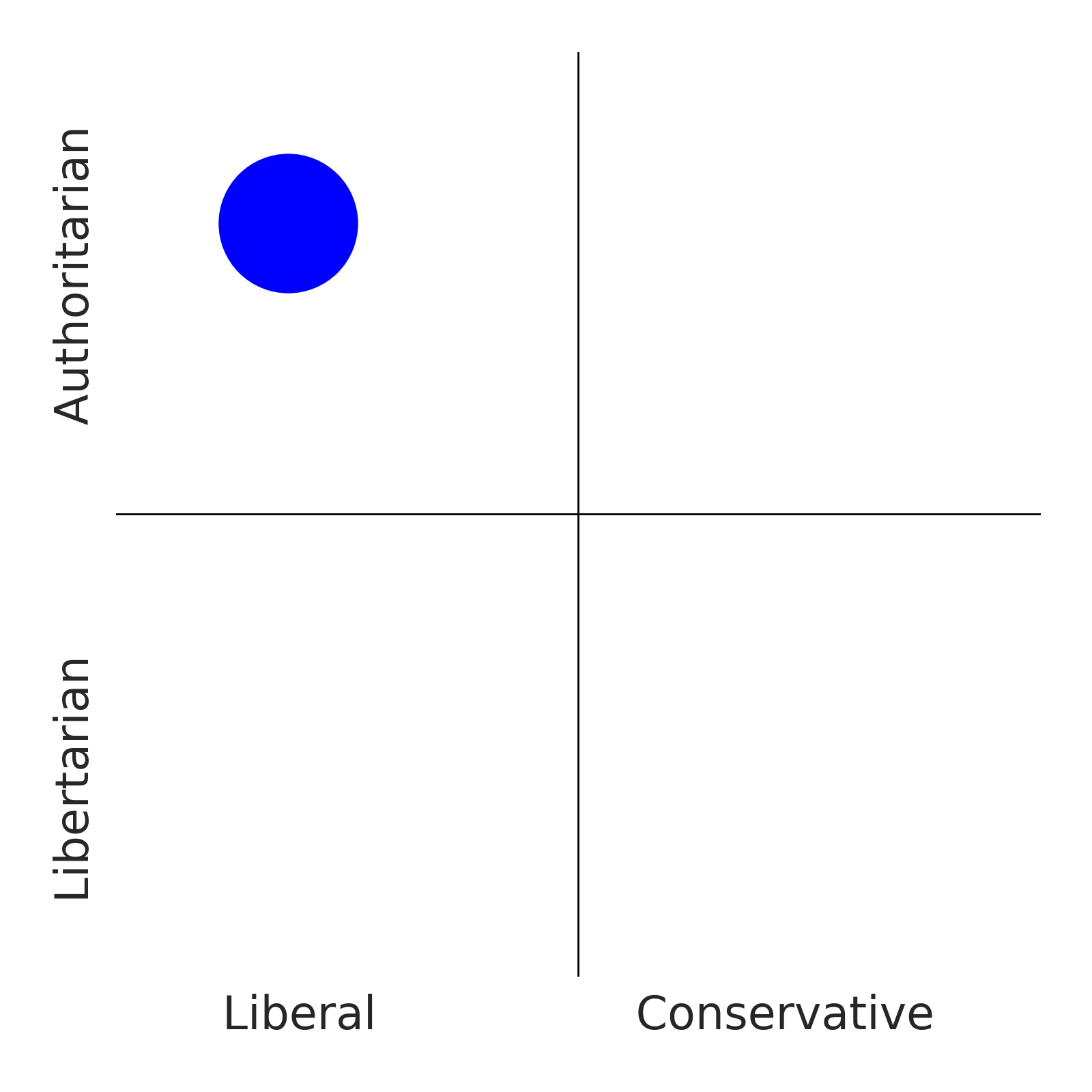
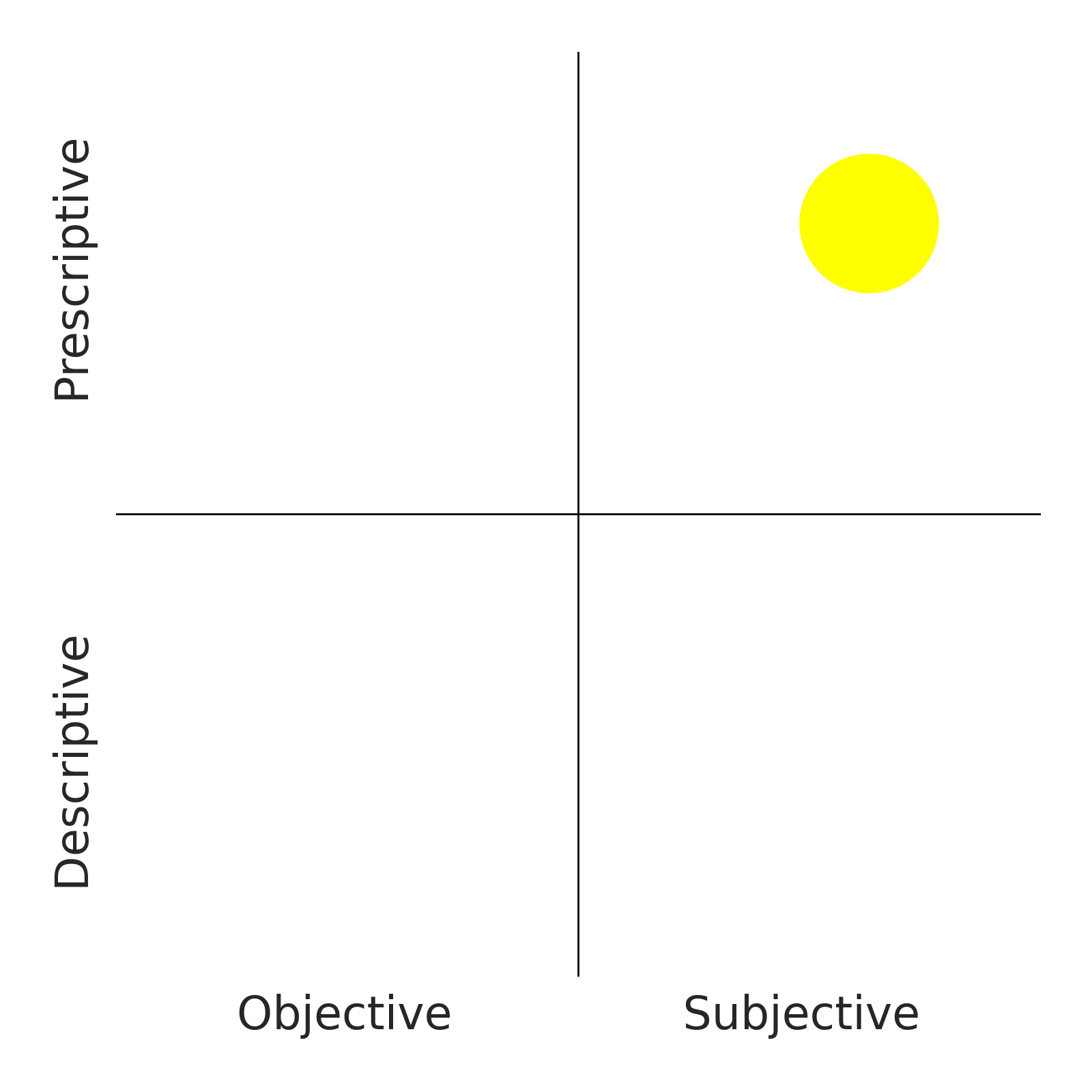
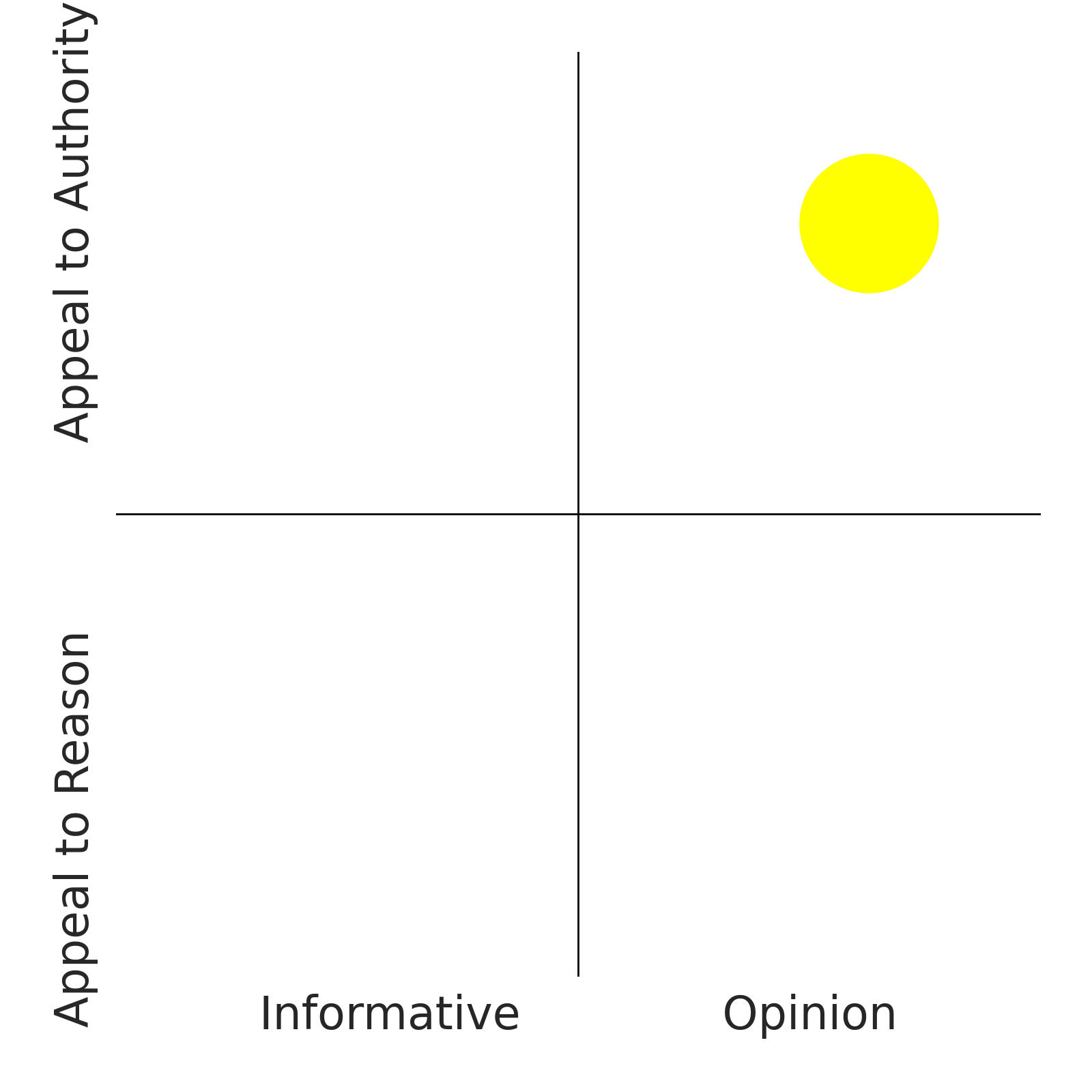
2026 © Helium Trades
Privacy Policy & Disclosure
* Disclaimer: Nothing on this website constitutes investment advice, performance data or any recommendation that any particular security, portfolio of securities, transaction or investment strategy is suitable for any specific person. Helium Trades is not responsible in any way for the accuracy
of any model predictions or price data. Any mention of a particular security and related prediction data is not a recommendation to buy or sell that security. Investments in securities involve the risk of loss. Past performance is no guarantee of future results. Helium Trades is not responsible for any of your investment decisions,
you should consult a financial expert before engaging in any transaction.
Helium Research Assistant

How can I help you today?
Ask any question about Tehran Times bias.