See whether Helium helps you make better-informed decisions. Try every Pro Trader feature for 30 days. No credit card required.
Try every Pro Trader feature for 30 days. No credit card required.
Highly adversarial, sensational framing repeatedly casts El-Sayed as evasive and extremist-linked while amplifying unverified family allegations and Republican attack lines.
Automated analysis; not human reviewed. Limitations: The supplied text does not include the half-sister's actual posts or the full interview transcript, so the central allegation cannot be independently assessed from the article alone. · 55 of 55 available dimensions scored; omitted dimensions are not treated as neutral. · Verified supporting quotes for 12 of 55 scored dimensions.
Claim: The report frames the Democratic candidate negatively and amplifies Republican attack lines, consistent with a conservative partisan orientation.
“Rogers has hammered away at El-Sayed by using El-Sayed's own extremist statements and positions.” · exact text match
“which many critics take as a sign that Democrats are worried that their candidate won't be able to cross the finish line” · exact text match
Why: It adopts a Republican-aligned attack frame and predicts Democratic weakness without balancing voices.
Claim: The report relies on subjective characterizations of the candidate's demeanor rather than neutral description.
“Abdul El-Sayed IMPLODES under media pressure” · exact text match
“El-Sayed rambled.” · exact text match
Why: These phrases are evaluative and interpretive rather than verifiable factual description.
Claim: The headline and prose use dramatic, emotionally charged language.
“Abdul El-Sayed IMPLODES under media pressure” · exact text match
“El-Sayed angrily responded.” · exact text match
Why: The language is designed for dramatic impact rather than measured reporting.
Claim: The report stokes alarm by tying the candidate to a terrorist group and using dramatic failure language.
“El-Sayed denied his family's involvement with the terrorist group” · exact text match
“Abdul El-Sayed IMPLODES under media pressure” · exact text match
Why: The combination of terrorism language and dramatic framing is fear- and outrage-oriented.
Claim: The article interjects evaluative judgments about El-Sayed's performance and temperament.
“The Muslim Democrat running for Michigan's open seat in the U.S. Senate did not do well under pressure” · exact text match
“El-Sayed stammered.” · exact text match
Why: These are the publisher's evaluative characterizations, not neutral facts.
Claim: The report is centered on a U.S. Senate campaign and partisan control of the chamber.
“The race is pivotal in deciding which party will control the U.S. Senate after the midterm elections.” · exact text match
Why: The article's central subject is explicitly electoral and partisan.
Claim: The report frames the contest through a right-leaning ideological lens, describing the opponent's criticisms and labeling El-Sayed's associations as extremist.
“Rogers has hammered away at El-Sayed by using El-Sayed's own extremist statements and positions.” · exact text match
“anti-American radical” · exact text match
Why: It adopts ideologically charged labels and attack framing without balancing context.
Claim: The article is strongly negative toward El-Sayed, using charged descriptors.
“Abdul El-Sayed IMPLODES under media pressure” · exact text match
“El-Sayed angrily responded.” · exact text match
Why: The framing is overwhelmingly negative toward the candidate.
Claim: The report's unsupported evaluative assertions and loaded labels reduce its visible credibility.
“El-Sayed has been unable to fully explain them.” · exact text match
“The Muslim Democrat running for Michigan's open seat in the U.S. Senate did not do well under pressure” · exact text match
Why: It mixes reporting with unsupported judgments and selective framing.
Claim: The report uses emotionally dismissive characterizations of the candidate's speech that exceed neutral description.
“El-Sayed rambled.” · exact text match
“El-Sayed stammered.” · exact text match
Why: The prose substitutes loaded descriptors for neutral reporting of the exchange.
Claim: The report uses a loaded contrast between El-Sayed's denial and his half-sister's posts without supplying the posts' content.
“El-Sayed denied his family's involvement with the terrorist group, but his half-sister's posts tell a different story.” · exact text match
Why: This invites a conclusion while withholding the underlying evidence, an observable manipulative framing.
Claim: The report asserts El-Sayed has been unable to fully explain the posts despite quoting a direct denial, indicating low fairness.
“El-Sayed has been unable to fully explain them.” · exact text match
“I have no ties. We have no ties” · exact text match
Why: It presents an unsupported conclusion as fact and editorializes his denial, reducing internal fairness.
The supplied text does not include the half-sister's actual posts or the full interview transcript, so the central allegation cannot be independently assessed from the article alone.
October 15, 2026 · 0 shares
The framing is combative and partisan, using all-caps mockery and accusations of 'gaslighting' and 'false claims' to cast Talarico as a dishonest Democratic loser and Hunt as a triumphant defender of Christian orthodoxy.
Automated analysis; not human reviewed. Limitations: The supplied text includes unrelated related-link headlines and newsletter boilerplate and lacks a byline; analysis is limited to the visible article content. · 15 of 55 available dimensions scored; omitted dimensions are not treated as neutral. · Verified supporting quotes for 14 of 15 scored dimensions.
Claim: The article's own framing aligns with conservative Christian opposition to abortion and against a Democratic candidate.
“Talarico gets DEMOLISHED after he cites Bible in defense of abortion.” · exact text match
“Talarico unsuccessfully tried to recycle one of his false claims about the Bible and abortion.” · exact text match
Why: The all-caps mockery and assertion that Talarico's abortion-related biblical claims are false signal a conservative, pro-life framing.
Claim: The report is framed through evaluative and subjective characterizations of the debate.
“Talarico gets DEMOLISHED after he cites Bible in defense of abortion.” · exact text match
“The Catholic theologian proved immune to Talarico's gaslighting.” · exact text match
Why: Loaded verbs and accusations present a subjective judgment about who won and what motivated the exchange.
Claim: Sensational language heightens the political conflict.
“Talarico gets DEMOLISHED after he cites Bible in defense of abortion.” · exact text match
“Hunt's statement prompted thunderous applause from the audience.” · exact text match
Why: All-caps 'DEMOLISHED' and 'thunderous applause' are dramatic, sensational framing.
Claim: The article uses rage-baiting and alarmist political language.
“Talarico gets DEMOLISHED after he cites Bible in defense of abortion.” · exact text match
“Talarico proved once again that he’s simply too liberal and too dangerous for Texas.” · exact text match
Why: The headline and quoted 'too dangerous' framing are designed to provoke anger or alarm rather than measured understanding.
Claim: The article is highly opinionated about Talarico's performance and claims.
“Talarico unsuccessfully tried to recycle one of his false claims about the Bible and abortion.” · exact text match
“The Catholic theologian proved immune to Talarico's gaslighting.” · exact text match
Why: These are evaluative assertions in the publisher's voice, not neutral descriptions.
Claim: The content is centrally about a U.S. Senate campaign and abortion politics.
“James Talarico, the Democrat nominee hoping to succeed John Cornyn of Texas in the U.S. Senate” · exact text match
“Talarico condemned Texas' Human Life Protection Act” · not found in supplied text
Why: The article's subject is a partisan electoral contest and a legislative abortion dispute.
Claim: The article presents a complex theological and political dispute as a clear, one-sided defeat.
“The Catholic theologian proved immune to Talarico's gaslighting.” · exact text match
“Hunt's statement prompted thunderous applause from the audience.” · exact text match
Why: It reduces the exchange to a winner-loser narrative and treats audience applause as confirming the theological rebuttal.
Claim: The article's own language is mocking and taunting.
“Talarico gets DEMOLISHED after he cites Bible in defense of abortion.” · exact text match
“The Catholic theologian proved immune to Talarico's gaslighting.” · exact text match
Why: All-caps humiliation language and 'gaslighting' are immature/rage-baiting stylistic choices.
Claim: The article states contested interpretations and debate outcomes with strong certainty.
“The Catholic theologian proved immune to Talarico's gaslighting.” · exact text match
“Talarico gets DEMOLISHED after he cites Bible in defense of abortion.” · exact text match
Why: 'Proved' and 'DEMOLISHED' assert decisive conclusions beyond what the reported exchange alone establishes.
Claim: The framing is strongly shaped by conservative religious ideology.
“Talarico gets DEMOLISHED after he cites Bible in defense of abortion.” · exact text match
“Talarico — a part-time Presbyterian seminarian who has attempted to use Scripture to justify abortion and previously preached at a leftist church that regards abortion as a "blessing"” · exact text match
Why: The contrast between 'leftist church' and orthodox Catholic rebuttal signals an ideologically conservative religious framing.
Claim: The tone is strongly negative toward Talarico and favorable toward Hunt.
“Talarico gets DEMOLISHED after he cites Bible in defense of abortion.” · exact text match
“The Catholic theologian proved immune to Talarico's gaslighting.” · exact text match
Why: The wording conveys hostility toward Talarico and celebratory approval of Hunt.
Claim: Credibility is weakened by unsupported evaluative claims and one-sided framing, despite some named sources and quotes.
“Talarico unsuccessfully tried to recycle one of his false claims about the Bible and abortion.” · exact text match
“The Catholic theologian proved immune to Talarico's gaslighting.” · exact text match
Why: The text includes attribution but also asserts conclusions about falsity and gaslighting without transparent support.
Claim: The article uses mocking and conclusory language rather than measured argument in its own voice.
“James Talarico, the Democrat nominee hoping to succeed John Cornyn of Texas in the U.S. Senate, demonstrated at the CNN Jubliee Town Hall on Wednesday that he doesn't require the presence of his Republican opponent to badly lose a debate.” · exact text match
Why: The sentence asserts a 'badly lose' conclusion through ridicule, not evidence-based reasoning.
Claim: The article uses loaded framing and asymmetric characterization to influence reader judgment.
“The Catholic theologian proved immune to Talarico's gaslighting.” · exact text match
“Talarico unsuccessfully tried to recycle one of his false claims about the Bible and abortion.” · exact text match
Why: Accusations of gaslighting and false claims, without presenting the opposing argument in neutral terms, are observable loaded-framing techniques.
Claim: The article makes unsupported evaluative assertions in its own voice.
“Talarico unsuccessfully tried to recycle one of his false claims about the Bible and abortion.” · exact text match
“The Catholic theologian proved immune to Talarico's gaslighting.” · exact text match
Why: Claims that Talarico's position is 'false' and that Hunt 'proved immune' to 'gaslighting' are asserted without argument or direct substantiation in the text.
The supplied text includes unrelated related-link headlines and newsletter boilerplate and lacks a byline; analysis is limited to the visible article content.
The all-caps 'OUTRAGED' headline and conflict framing emphasize the federal election-integrity action while the body includes California officials' rebuttals.
Automated analysis; not human reviewed. Limitations: The supplied text is a short news excerpt with a loaded headline and some related-link/page-chrome text; no author byline or publication date is provided. · 55 of 55 available dimensions scored; omitted dimensions are not treated as neutral. · Verified supporting quotes for 6 of 55 scored dimensions.
Claim: Publisher framing leans slightly conservative by foregrounding a Democratic governor's 'OUTRAGED' reaction to a federal election-integrity lawsuit.
“Newsom is OUTRAGED over Justice Department lawsuit to block votes from 20,000 'likely noncitizens'.” · exact text match
Why: The all-caps outrage framing and focus on a DOJ action over 'likely noncitizens' align with a conservative election-integrity presentation, though the body carries California officials' denials.
Claim: The headline uses an evaluative, emotionally loaded term rather than neutral language.
“Newsom is OUTRAGED over Justice Department lawsuit to block votes from 20,000 'likely noncitizens'.” · exact text match
Why: OUTRAGED is an emotional characterization of Newsom's response, making the presentation less neutral.
Claim: The headline is sensational through all-caps emotional labeling and conflict language.
“Newsom is OUTRAGED over Justice Department lawsuit to block votes from 20,000 'likely noncitizens'.” · exact text match
Why: The capitalized 'OUTRAGED' and 'block votes' sharpen the dispute for impact.
Claim: The report is highly political, centered on a federal-state election lawsuit and partisan officials.
“Newsom is OUTRAGED over Justice Department lawsuit to block votes from 20,000 'likely noncitizens'.” · exact text match
Why: The central event involves the Justice Department, California governor, election administration, and upcoming congressional races.
Claim: The report shows moderate credibility by attributing claims and including California officials' specific rebuttal.
“California Secretary of State Shirley Weber responded she had "serious doubts" about the accuracy of the allegations and requested information about "the underlying data and methodology" so that her office could analyze the "vague and unsubstantiated allegations" from the Department of Homeland Security.” · exact text match
Why: Direct attribution of the state's objections and requests for data gives the reader contesting evidence, though the headline is loaded.
Claim: The headline uses loaded language that frames the dispute in a way favorable to one side.
“Newsom is OUTRAGED over Justice Department lawsuit to block votes from 20,000 'likely noncitizens'.” · exact text match
Why: The all-caps 'OUTRAGED' and 'block votes' are observable framing devices that steer interpretation, though the body includes rebuttal.
The supplied text is a short news excerpt with a loaded headline and some related-link/page-chrome text; no author byline or publication date is provided.
September 28, 2026 · 0 shares
Framing presents the BBC's bare-nail racism claim as absurd 'woke' overreach, amplifying sarcastic critics while using loaded language like 'CRUSHED' and 'woke intelligentsia'.
Automated analysis; not human reviewed. Limitations: The supplied text is a truncated excerpt with ellipses and inline related links; the original BBC article and full social-media context are not available. · 8 of 55 available dimensions scored; omitted dimensions are not treated as neutral. · Verified supporting quotes for 7 of 8 scored dimensions.
Claim: Framing is strongly conservative, treating the BBC's racism claim as 'woke' absurdity.
“BBC gets CRUSHED over woke article claiming new fingernail trend is white supremacist 'erasure'” · exact text match
“The woke intelligentsia has identified yet another seemingly innocuous instrument of white supremacist oppression that literally emanates from your fingertips.” · exact text match
Why: Uses 'woke' pejoratively and dismisses the claim with sarcastic language, a marker of conservative culture-war criticism.
Claim: Contrasts a 'woke intelligentsia' with social-media critics, implying elite absurdity versus public common sense.
“The woke intelligentsia has identified yet another seemingly innocuous instrument of white supremacist oppression that literally emanates from your fingertips.” · exact text match
“Critics mocked the BBC on social media for the bizarre accusation.” · exact text match
Why: The term 'intelligentsia' frames the BBC as elite, while 'critics' on social media are positioned as the reasonable public.
Claim: Heavy editorializing and evaluative language replace neutral reporting.
“A bizarre article published by the BBC claims that a trending practice in which women's nails are left unpainted is actually a racist plot against minorities.” · exact text match
“The woke intelligentsia has identified yet another seemingly innocuous instrument of white supremacist oppression that literally emanates from your fingertips.” · exact text match
Why: Adjectives like 'bizarre' and sarcastic phrasing express the publisher's opinion.
Claim: Uses all-caps and outrage framing for sensational impact.
“BBC gets CRUSHED over woke article claiming new fingernail trend is white supremacist 'erasure'” · exact text match
“Critics latched onto the white supremacist comment to mock the BBC and the author.” · exact text match
Why: Headline 'CRUSHED' and the 'white supremacist' hook sensationalize the dispute.
Claim: The text is largely opinionated commentary, using news-like framing.
“The woke intelligentsia has identified yet another seemingly innocuous instrument of white supremacist oppression that literally emanates from your fingertips.” · exact text match
“Critics mocked the BBC on social media for the bizarre accusation.” · exact text match
Why: Sarcastic editorializing and evaluative descriptors drive the piece.
Claim: Places a beauty-trend story into a left-right culture war.
“BBC gets CRUSHED over woke article claiming new fingernail trend is white supremacist 'erasure'” · exact text match
“The article cites Kristina Rodulfo, a beauty journalist, who links the bare-nail trend to racism.” · exact text match
Why: The headline's 'woke' and the racism claim are politically loaded frames.
Claim: Reduces the BBC's position to an absurdity by amplifying sarcastic critics rather than engaging the report's arguments.
“"So if you actually can't keep a manicure bc you spend your days doing laundry and dishes, or can't afford one, or are too busy working and taking care of kids to do your own, you are a white supremacist. Yes, that totally makes sense," said another sarcastically.” · not found in supplied text
“"According to BBC breathing is racist, eating is racist, sleeping is racist, not polishing your nails is racist," read another response.” · not found in supplied text
Why: Quotes sarcastic simplifications of the BBC's claim as if they refute it.
Claim: Presents the story through a consistent anti-'woke' ideological lens.
“The woke intelligentsia has identified yet another seemingly innocuous instrument of white supremacist oppression that literally emanates from your fingertips.” · exact text match
“Critics latched onto the white supremacist comment to mock the BBC and the author.” · exact text match
Why: The repeated 'woke' and 'white supremacist' labels frame the report as a culture-war absurdity.
The supplied text is a truncated excerpt with ellipses and inline related links; the original BBC article and full social-media context are not available.
September 29, 2026 · 0 shares
The report frames continued corporate Pride sponsorships as deceptive 'LGBT indoctrination,' using conservative alarm language such as 'pump fake,' 'woke reflexes,' and 'heavy sexual themes and imagery' around children.
Automated analysis; not human reviewed. Limitations: The article text does not specify the year for 'this year' or provide independent sponsorship records, so those details are unverifiable from the supplied text. · 11 of 55 available dimensions scored; omitted dimensions are not treated as neutral. · Verified supporting quotes for 11 of 11 scored dimensions.
Claim: The article's language and focus advance conservative cultural positions against corporate DEI and Pride sponsorship.
“Smoke and mirrors? These big corporations are still shelling out for LGBT indoctrination.” · exact text match
“It appears that this may have been a pump fake — that normalcy advocates may have been premature in celebrating the apparent return to sanity at Ford Motor Company, Molson Coors, Target, and T-Mobile.” · exact text match
Why: Vocabulary like 'indoctrination,' 'woke,' 'normalcy advocates,' and 'return to sanity' marks a conservative standpoint.
Claim: The article sides with 'normalcy advocates' and presents corporations' turn as a betrayal of ordinary consumers.
“It appears that this may have been a pump fake — that normalcy advocates may have been premature in celebrating the apparent return to sanity at Ford Motor Company, Molson Coors, Target, and T-Mobile.” · exact text match
Why: The framing treats 'normalcy advocates' as the betrayed ordinary side and 'activist investors and corporate bureaucracies' as elites.
Claim: The article embeds editorial judgments in its report rather than maintaining neutral description.
“Companies signaled possible reform on the woke front yet continue to back radical indoctrination events.” · exact text match
“It appears that this may have been a pump fake — that normalcy advocates may have been premature in celebrating the apparent return to sanity at Ford Motor Company, Molson Coors, Target, and T-Mobile.” · exact text match
Why: Phrases such as 'radical indoctrination events' and 'pump fake' are evaluations, not neutral descriptions.
Claim: The article uses dramatic, emotionally loaded phrases to present the topic.
“Smoke and mirrors? These big corporations are still shelling out for LGBT indoctrination.” · exact text match
“Children appear to have been present at these events despite the heavy sexual themes and imagery.” · exact text match
Why: Headline language and the children/sexual imagery juxtaposition are designed for emotional impact.
Claim: The article invokes the presence of children at sexualized events to provoke fear.
“Children appear to have been present at these events despite the heavy sexual themes and imagery.” · exact text match
Why: The child-safety implication is used to alarm readers beyond the sponsorship facts.
Claim: The piece is dominated by the author's interpretive commentary.
“It appears that this may have been a pump fake — that normalcy advocates may have been premature in celebrating the apparent return to sanity at Ford Motor Company, Molson Coors, Target, and T-Mobile.” · exact text match
Why: The author's own conclusion ('pump fake') is presented as the story's thesis.
Claim: The article treats Pride sponsorship as a partisan political issue.
“The 1792 Exchange, a corporate bias watchdog seeking to restore political neutrality in the boardroom and to educate lawmakers about the dangers of woke corporate policies” · exact text match
Why: The story is positioned as part of the 'woke' culture-war debate and references educating lawmakers.
Claim: The article evaluates events through an unstated conservative ideology of 'normalcy' versus 'woke.'
“Some of the major corporations that once wrapped themselves in the LGBT flag and embraced racist DEI initiatives have in recent years signaled a change in tack.” · exact text match
“It appears that this may have been a pump fake — that normalcy advocates may have been premature in celebrating the apparent return to sanity at Ford Motor Company, Molson Coors, Target, and T-Mobile.” · exact text match
Why: It applies an assumed conservative cultural framework without engaging alternative views.
Claim: The tone conveys disapproval and alarm about the companies' actions.
“Smoke and mirrors? These big corporations are still shelling out for LGBT indoctrination.” · exact text match
Why: Negative rhetorical framing pervades the article.
Claim: The article speculates that the companies' apparent reforms were a deceptive 'pump fake.'
“It appears that this may have been a pump fake — that normalcy advocates may have been premature in celebrating the apparent return to sanity at Ford Motor Company, Molson Coors, Target, and T-Mobile.” · exact text match
Why: 'It appears' and 'may have been' are explicit hedged guesses about corporate intent.
Claim: The article uses loaded words and selective juxtaposition to guide reader emotion.
“These big corporations are still shelling out for LGBT indoctrination.” · exact text match
“Children appear to have been present at these events despite the heavy sexual themes and imagery.” · exact text match
Why: Repetition of 'indoctrination' and the child imagery strongly steer interpretation.
The article text does not specify the year for 'this year' or provide independent sponsorship records, so those details are unverifiable from the supplied text.
September 28, 2026 · 0 shares
A conservative-leaning culture-war report uses deadnaming, biological-essentialist language, and selected social-media outrage to frame a transgender actor's men's-style cover as an illegitimate elite provocation.
Automated analysis; not human reviewed. Limitations: The supplied article text is truncated and includes unrelated headline fragments; the analysis relies on the visible portion and may miss context from omitted sentences. · 11 of 55 available dimensions scored; omitted dimensions are not treated as neutral. · Verified supporting quotes for 3 of 11 scored dimensions.
Claim: The publisher frames the cover from a conservative cultural perspective.
“While the other covers featured biological men, one cover was dedicated to Ellen Page, who now identifies as Elliot Page after undergoing transgender surgery.” · exact text match
“BlazeTV host Steve Deace responded to the discordant cover in comments to Blaze News.” · exact text match
Why: The contrast between 'biological men' and Page, the deadname 'Ellen Page,' and the description of the cover as 'discordant' encode conservative gender-essentialist assumptions.
Claim: The publisher amplifies anti-elite criticism of The New Yorker.
“Publications like the New Yorker are not for us, but for the opposing culture that occupies this land mass along ...” · not found in supplied text
“Way to just alienate more of the audience of men's style. […] Just sad, replied one detractor.” · not found in supplied text
Why: Including Deace's 'not for us' framing and a comment about alienating the men's-style audience casts The New Yorker as an elite institution out of touch with ordinary readers.
Claim: The article combines reporting with editorializing.
“BlazeTV host Steve Deace responded to the discordant cover in comments to Blaze News.” · exact text match
“While the other covers featured biological men, one cover was dedicated to Ellen Page, who now identifies as Elliot Page after undergoing transgender surgery.” · exact text match
Why: The word 'discordant' is a subjective evaluation, and the framing of Page's identity inserts interpretive commentary.
Claim: The article is heavily opinionated despite reporting on a news item.
“BlazeTV host Steve Deace responded to the discordant cover in comments to Blaze News.” · exact text match
“Way to just alienate more of the audience of men's style. […] Just sad, replied one detractor.” · not found in supplied text
Why: Editorial labels like 'discordant cover' and the one-sided selection of negative comments convey opinion.
Claim: The article frames the cover as a culture-war political story.
“While the other covers featured biological men, one cover was dedicated to Ellen Page, who now identifies as Elliot Page after undergoing transgender surgery.” · exact text match
“BlazeTV host Steve Deace responded to the discordant cover in comments to Blaze News.” · exact text match
Why: The focus on transgender identity, deadnaming, and elite-media backlash situates the story in partisan cultural politics.
Claim: The article is strongly ideological in its treatment of gender and culture.
“While the other covers featured biological men, one cover was dedicated to Ellen Page, who now identifies as Elliot Page after undergoing transgender surgery.” · exact text match
“Publications like the New Yorker are not for us, but for the opposing culture that occupies this land mass along ...” · not found in supplied text
Why: The combination of biological-essentialist language and an 'us vs. opposing culture' frame shows a coherent ideological lens.
Claim: The article is anti-establishment, portraying a mainstream magazine as an alien elite.
“Publications like the New Yorker are not for us, but for the opposing culture that occupies this land mass along ...” · not found in supplied text
“BlazeTV host Steve Deace responded to the discordant cover in comments to Blaze News.” · exact text match
Why: Amplifying a claim that The New Yorker represents an 'opposing culture' positions the outlet against established cultural institutions.
Claim: The article's credibility is undermined by vague sourcing, one-sided quotes, and biased framing.
“Much of the response […] I see a mentally ill, testosterone injected woman that had her breast surgically removed, said one account.” · not found in supplied text
“BlazeTV host Steve Deace responded to the discordant cover in comments to Blaze News.” · exact text match
Why: Sources identified only as 'one account,' 'another critic,' and 'one detractor' reduce verifiability, while the lack of response from the subject and the use of a dehumanizing quote weaken reliability.
Claim: The article uses one-sided selection of social-media criticism and emotionally loaded framing.
“Much of the response […] I see a mentally ill, testosterone injected woman that had her breast surgically removed, said one account.” · not found in supplied text
“BlazeTV host Steve Deace responded to the discordant cover in comments to Blaze News.” · exact text match
Why: Selecting only hostile comments and no response from the magazine or Page is a material omission that shapes interpretation.
Claim: The article shows low fairness by deadnaming and misgendering the subject and omitting any response.
“While the other covers featured biological men, one cover was dedicated to Ellen Page, who now identifies as Elliot Page after undergoing transgender surgery.” · exact text match
“Much of the response […] I see a mentally ill, testosterone injected woman that had her breast surgically removed, said one account.” · not found in supplied text
Why: Deadnaming Page and relaying a dehumanizing comment without rebuttal are observable fairness failures.
Claim: The publisher's own framing uses deadnaming and biological-essentialist language about transgender identity.
“While the other covers featured biological men, one cover was dedicated to Ellen Page, who now identifies as Elliot Page after undergoing transgender surgery.” · exact text match
“Much of the response […] I see a mentally ill, testosterone injected woman that had her breast surgically removed, said one account.” · not found in supplied text
Why: Deadnaming Page and juxtaposing 'biological men' with Page's identity, plus relaying a dehumanizing comment, constitutes anti-trans framing.
The supplied article text is truncated and includes unrelated headline fragments; the analysis relies on the visible portion and may miss context from omitted sentences.
October 08, 2026 · 0 shares
The article frames Democratic shifts on transgender issues as cynical election-year deception, using loaded terms like 'trans insanity,' 'trans extremism,' and 'dudes in dresses' to cast the subject and party as dishonest and radical.
The article discusses the 2024 election losses and the upcoming midterm election where Democrats are adjusting their messaging on transgender issues.
Automated analysis; not human reviewed. · 55 of 55 available dimensions scored; omitted dimensions are not treated as neutral. · Verified supporting quotes for 24 of 55 scored dimensions.
Claim: The article's framing is strongly conservative, using derogatory terms for transgender issues and criticizing Democrats.
“trans insanity” · exact text match
“trans extremism” · exact text match
“dudes in dresses” · exact text match
Why: Loaded language and focus on Democratic radicalism indicate a conservative perspective.
Claim: The article adopts a populist tone, attacking Democratic elites and aligning with voters.
“dupe voters” · exact text match
“career politician handbook” · exact text match
Why: Frames political actions as deceiving ordinary voters, a populist trope.
Claim: The article supports parental consent and restrictions on transgender policies, leaning authoritarian.
“parental consent before changing a kid's pronouns” · exact text match
Why: Advocates for state-mandated parental involvement, an authoritarian approach.
Claim: The article is highly subjective, with opinionated adjectives and framing.
“humiliating electoral losses” · exact text match
“radical base” · exact text match
Why: Subjective descriptors dominate over neutral reporting.
Claim: The article uses sensational language to provoke strong reactions.
“crying” · exact text match
“trans insanity” · exact text match
Why: Sensational terms designed to outrage.
Claim: The article prescribes a conservative stance against transgender policies.
“should always be a safe and fair space for women and girls in sports” · exact text match
Why: Includes prescriptive statements on policy.
Claim: The article uses fear-inducing language about transgender issues.
“trans extremism” · exact text match
“danger” · exact text match
Why: Frames transgender advocacy as dangerous.
Claim: Assumes transgender policies are harmful without evidence.
“gender ideology in schools” · exact text match
Why: Takes a contested premise as given.
Claim: The article is heavily opinionated, with clear editorializing.
“naked election-time opportunism” · exact text match
Why: Offers evaluative judgments as fact.
Claim: The article is intensely political, focusing on partisan conflict.
“midterm election” · exact text match
“Democratic Rep.” · exact text match
Why: Centers on political strategy and elections.
Claim: Presents complex issues in simplified, binary terms.
“dudes in dresses” · exact text match
Why: Reduces nuanced debates to caricatures.
Claim: Uses childish and mocking language.
“dudes in dresses” · exact text match
Why: Derisive slang undermines maturity.
Claim: Portrays conservatives or the article's viewpoint as victimized by Democratic deception.
“dupe voters” · exact text match
Why: Frames voters as victims of manipulation.
Claim: Expresses certainty about Democratic motives and outcomes.
“dupe voters” · exact text match
Why: Asserts intent without evidence.
Claim: The article is strongly ideological, promoting a conservative viewpoint.
“trans insanity” · exact text match
Why: Consistent ideological framing.
Claim: The article evokes negative emotions towards Democrats and transgender issues.
“crying” · exact text match
“enraged” · exact text match
Why: Emotionally charged language.
Claim: Applies stricter scrutiny to Democrats than Republicans on similar issues.
“other vulnerable Democrats changing her tune” · not found in supplied text
Why: Criticizes only Democratic shifts.
Claim: Low credibility due to biased language and lack of balanced sourcing.
“trans insanity” · exact text match
Why: Use of pejoratives reduces trustworthiness.
Claim: The article employs emotional and hyperbolic language, reducing rational analysis.
“trans insanity” · exact text match
“crying” · exact text match
Why: Emotive terms undermine neutral, rational discourse.
Claim: Uses loaded language and framing to manipulate readers.
“dupe voters” · exact text match
Why: Attempts to sway opinion through emotive terms.
Claim: Some textual features suggest possible AI authorship.
“Some Democrats have transitioned into critics of LGBT radicalism in apparent effort to dupe voters ahead of the midterms.” · exact text match
Why: Repetitive and formulaic phrasing.
Claim: The article shows low integrity by using pejorative labels and omitting opposing viewpoints.
“trans insanity” · exact text match
Why: Derogatory terms and lack of balance indicate low integrity.
Claim: Promotes a skewed reality about transgender issues.
“trans insanity” · exact text match
Why: Frames a contested issue as delusional.
Claim: Uses derogatory terms for transgender individuals and opposes their rights.
“trans insanity” · exact text match
“dudes in dresses” · exact text match
Why: Pejorative language and opposition to transgender inclusion.
Claim: Suggests a coordinated effort by Democrats to deceive voters.
“transitioned into critics ... to dupe voters” · not found in supplied text
Why: Implies a hidden agenda.
Claim: Accuses Democrats of hypocrisy without acknowledging similar Republican actions.
“desperate Democrat Marcy Kaptur” · exact text match
Why: Single-sided criticism of flip-flopping.
Conservative culture-war framing ridicules liberal celebrities as 'gasping' and having 'meltdowns' while the headline endorses Gillis's joke and amplifies his defenders.
Automated analysis; not human reviewed. Limitations: Publisher is not identified in the supplied text; all celebrity reactions are quoted second-hand via Entertainment Weekly, Heavy, and TMZ, so original wording and context cannot be verified. · 18 of 55 available dimensions scored; omitted dimensions are not treated as neutral. · Verified supporting quotes for 16 of 18 scored dimensions.
Claim: The framing favors the conservative side of the dispute, mocking liberal critics and amplifying Gillis's defenders.
“as liberal celebs 'gasp' in shock” · exact text match
“sent social media into another meltdown” · exact text match
Why: The headline endorses the joke while casting liberal critics as hysterical, a conservative-coded frame sustained throughout.
Claim: The framing pits the comedian and ordinary audiences against outrage-prone celebrities.
“as liberal celebs 'gasp' in shock” · exact text match
“dared to show his support” · exact text match
Why: Mocking celebrity outrage and framing public support as an act of daring reflects an anti-elite, populist angle.
Claim: Coverage layers the publisher's evaluative judgments onto reported events.
“Maren Morris posted a bizarre video of herself giving the camera the middle finger” · exact text match
“were wholly unoffended by his remarks” · exact text match
Why: Descriptors like 'bizarre' are unattributed publisher characterizations rather than neutral description.
Claim: Headline and body dramatize routine celebrity disagreement with loaded reaction language.
“liberal celebs 'gasp' in shock” · exact text match
“sent social media into another meltdown” · exact text match
Why: Gasps and meltdowns inflate a monologue dispute into high drama.
Claim: Celebrity-reaction drama gives the piece broad entertainment pull.
“Travis Kelce, NFL star and husband of Taylor Swift, dared to show his support” · exact text match
Why: High-profile names and conflict drive the narrative's appeal.
Claim: Rage-baiting cues frame the backlash as hysterical panic.
“as liberal celebs 'gasp' in shock” · exact text match
“sent social media into another meltdown” · exact text match
Why: Panic and meltdown language is calibrated to provoke outrage at the criticized group.
Claim: The headline presupposes the disputed point that Gillis was 'right' about women gym-goers.
“He's right about gym girls” · exact text match
Why: The frame assumes the very judgment under contention instead of presenting it as contested.
Claim: Coverage centers on celebrities' personal reactions and social-media behavior.
“Travis Kelce, NFL star and husband of Taylor Swift, dared to show his support” · exact text match
“the mother of singer Billie Eilish” · exact text match
Why: Focus on who liked what and celebrity relatives is gossip-style reporting.
Claim: The publisher editorializes on the merits of the controversy rather than reporting neutrally.
“He's right about gym girls” · exact text match
Why: The headline asserts a contested evaluative judgment as the story's frame.
Claim: The story is explicitly organized as a partisan liberal-versus-defenders dispute.
“continues to inflame his liberal critics” · exact text match
“liberal celebs 'gasp' in shock” · exact text match
Why: Partisan labeling of the critics structures the entire piece.
Claim: The dispute is flattened into hysterical liberals versus unoffended defenders.
“sent social media into another meltdown” · exact text match
Why: Varied criticism is reduced to a single 'meltdown' narrative.
Claim: Tabloid mockery, rather than sober analysis, characterizes the tone.
“sent social media into another meltdown” · exact text match
Why: Gleeful derision of critics substitutes for substantive treatment.
Claim: The piece takes a culture-war side rather than a detached stance.
“continues to inflame his liberal critics” · exact text match
“were wholly unoffended by his remarks” · exact text match
Why: Systematic sympathy for Gillis and derision of his critics reflects a committed ideological vantage.
Claim: The tone is mockingly negative toward the criticized celebrities.
“sent social media into another meltdown” · exact text match
“posted a bizarre video” · exact text match
Why: Derisive framing of critics gives the piece a negative, taunting emotional register.
Claim: Defenders' reactions are relayed approvingly while critics' reactions are ridiculed.
“took no issue with the comedian's comments” · not found in supplied text
“posted a bizarre video” · exact text match
Why: Comparable public reactions receive opposite evaluative treatment from the publisher.
Claim: Reactions are attributed to named sources despite slanted framing.
“quoted in Entertainment Weekly's recap of Saturday's episode” · not found in supplied text
“NBC insiders told TMZ” · exact text match
Why: Named attributions permit verification, though heavy editorializing tempers trust.
Claim: Loaded framing and asymmetric characterization steer readers toward one side.
“dared to show his support” · exact text match
“as liberal celebs 'gasp' in shock” · exact text match
Why: 'Dared' implies punishment for dissent while critics are mocked — observable slanting techniques without asserting intent.
Claim: Routine quote-compilation with minimal added analysis.
“Other celebrities joining the criticism included "Wicked" star Kristin Chenoweth, singer Jewel, and rapper Flavor Flav” · exact text match
Why: The piece aggregates attributed reactions without deeper insight, consistent with average entertainment news.
Publisher is not identified in the supplied text; all celebrity reactions are quoted second-hand via Entertainment Weekly, Heavy, and TMZ, so original wording and context cannot be verified.
October 13, 2026 · 0 shares
The publisher frames post-2015 migration to Germany as an 'Islamic invasion' that imported a child-bride crisis, pairing official statistics with collective-blame, fear-based language and AfD politicians' claims.
The quoted 2015 remark refers to then-Chancellor Angela Merkel's open-door stance during the European migrant crisis; the Alternative for Germany (AfD) is a right-wing opposition party that campaigns against that migration policy.
Automated analysis; not human reviewed. Limitations: The text is a scrape with duplicated and truncated fragments and no outlet name or date; the '2017 and 2026' recording window appears to be an error, and one quoted line appears twice with unclear attribution, limiting precision. · 26 of 55 available dimensions scored; omitted dimensions are not treated as neutral. · Verified supporting quotes for 26 of 26 scored dimensions.
Claim: Publisher framing is strongly conservative and anti-migration, treating Muslim-majority migration as an invasion and amplifying the AfD.
“after Germany welcomes Islamic invasion of its nation” · exact text match
“concerns over the importation of millions of migrants from Islamic terrorist hotbeds and the unlikelihood of their assimilation” · exact text match
Why: The publisher's own headline and lede adopt hard-right immigration framing; the AfD's attribution claims are presented approvingly.
Claim: Populist framing pits the nation against a discredited establishment leader while elevating an anti-establishment party as exposé author.
“since Merkel made her infamous statement” · exact text match
“Our country and our values are being abolished before our very eyes.” · exact text match
Why: Merkel's policy is branded infamous by the publisher, and the featured quotes come from AfD politicians cast against the governing establishment.
Claim: Heavy editorial adjectives and evaluative framing mark a subjective voice.
“Child bride crisis exposed” · exact text match
“since Merkel made her infamous statement” · exact text match
Why: 'Crisis exposed' and 'infamous' are the publisher's evaluations, not attributed characterizations.
Claim: Sensationalist hook language dramatizes a statistical disclosure.
“Child bride crisis exposed after Germany welcomes Islamic invasion of its nation” · exact text match
Why: Invasion-and-crisis headline construction is designed for shock rather than proportionate reporting.
Claim: The narrative is one of national decline and loss.
“Child bride crisis exposed after Germany welcomes Islamic invasion of its nation” · exact text match
Why: The publisher frames Germany as invaded and its values as eroding, selecting decline-oriented quotes as the story's spine.
Claim: A government-statistical disclosure on child marriage gives the piece real attention value.
“hundreds of child marriages have taken place in the region since Merkel made her infamous statement” · exact text match
Why: Concrete official data on a provocative social issue draws reader interest beyond routine news.
Claim: Threat imagery — invasion, terrorism, sex crimes, endangered children — dominates the framing.
“after Germany welcomes Islamic invasion of its nation” · exact text match
“brought more than just sex crimes and terrorism to Europe” · exact text match
Why: Stacked fear triggers about migrants precede any of the data.
Claim: The premise that migration is an invasion causing harm is assumed, not argued.
“Germany welcomes Islamic invasion of its nation” · exact text match
“brought more than just sex crimes and terrorism to Europe” · exact text match
Why: The conclusion is embedded in the loaded premises, leaving the statistics unable to test the thesis.
Claim: The report is saturated with editorial judgment.
“since Merkel made her infamous statement” · exact text match
“apparently left Europe with a child marriage problem” · exact text match
Why: Evaluative word choices express the publisher's stance rather than sourced fact.
Claim: The story is organized around partisan immigration politics.
“two members of the Alternative for Germany party” · exact text match
“Almost every single child marriage in Baden-Württemberg since 2017 can be traced back to mass migration!” · exact text match
Why: Party actors, Merkel's legacy, and the migration debate are the story's frame.
Claim: A single-cause migration narrative replaces multi-factor analysis.
“can be traced back to mass migration!” · exact text match
“left Europe with a child marriage problem” · exact text match
Why: Legal enforcement gaps and varied case types are flattened into one imported problem.
Claim: Tabloid provocation substitutes for sober treatment of a sensitive topic.
“Child bride crisis exposed after Germany welcomes Islamic invasion of its nation” · exact text match
Why: Rage-bait headline mechanics are the piece's most visible register.
Claim: The nation and its children are cast as victims of an imported threat.
“after Germany welcomes Islamic invasion of its nation” · exact text match
Why: The country is portrayed as overrun and its values as being abolished, a collective-victim frame that organizes the piece.
Claim: Sweeping causal claims are stated without support.
“corresponded to a dramatic rise in Islamic terrorist attacks and helped drive a spike in crime” · exact text match
Why: This national-scale causal assertion carries no citation or hedging.
Claim: The piece serves a fixed anti-migration ideological narrative.
“Child bride crisis exposed after Germany welcomes Islamic invasion of its nation” · exact text match
“brought more than just sex crimes and terrorism to Europe” · exact text match
Why: Headline, lede, and sourcing selection are all marshaled to one ideological thesis.
Claim: The framing is anti-establishment, siding with an insurgent party against governing elites.
“In response to a parliamentary query from two members of the Alternative for Germany party” · exact text match
“since Merkel made her infamous statement” · exact text match
Why: The AfD functions as the truth-telling protagonist and the Merkel-era establishment as the culpable antagonist.
Claim: The emotional register is strongly negative: alarm, outrage, and decline.
“Child bride crisis exposed after Germany welcomes Islamic invasion of its nation” · exact text match
Why: Crisis and invasion language sets a fear-and-anger tone throughout.
Claim: Document-based sourcing exists but is undercut by inflammatory framing and uncited causal claims.
“according to the interior ministry's report” · exact text match
“corresponded to a dramatic rise in Islamic terrorist attacks and helped drive a spike in crime” · exact text match
Why: Named ministry reports, a regional council, and translated statements support verifiability; the unsourced crime/terrorism assertions and propaganda-style headline reduce trust.
Claim: Group-level generalizations and an invasion metaphor override the narrower data reported.
“brought more than just sex crimes and terrorism to Europe” · exact text match
“after Germany welcomes Islamic invasion of its nation” · exact text match
Why: The lede and headline reason from migrant identity to collective culpability, a hasty generalization beyond the marriage statistics.
Claim: Loaded framing and presupposition steer readers before the data is presented.
“after Germany welcomes Islamic invasion of its nation” · exact text match
“brought more than just sex crimes and terrorism to Europe” · exact text match
Why: Headline presupposition, fear stacking, and a rage-bait related link are observable steering techniques.
Claim: The publisher asserts unsourced collective blame while presenting selective framing of a real dataset.
“brought more than just sex crimes and terrorism to Europe” · exact text match
“corresponded to a dramatic rise in Islamic terrorist attacks and helped drive a spike in crime” · exact text match
Why: These sweeping factual assertions appear without any cited source, alongside an inflammatory headline that outruns the disclosed data.
Claim: Specific checkable data coexists with crude causal framing, netting out near average.
“the regional council recorded 358 child marriages with victims as young as 11” · exact text match
“brought more than just sex crimes and terrorism to Europe” · exact text match
Why: Concrete figures, named offices, and translated statements add information value, while invasion rhetoric and unsupported causal leaps subtract it.
Claim: The invasion-of-the-nation framing departs from a measured reading of the disclosed statistics.
“after Germany welcomes Islamic invasion of its nation” · exact text match
Why: The metaphor treats migration as literal hostile conquest, a significant interpretive distortion even though the underlying data is real.
Claim: Collective blame for sex crimes, terrorism, and child marriage is assigned to people from Muslim-majority countries as a group.
“Mass migration from Afghanistan, Syria, and other Islamic nations brought more than just sex crimes and terrorism to Europe” · exact text match
“after Germany welcomes Islamic invasion of its nation” · exact text match
Why: Negative generalization and invasion framing target national/religious groups as such, beyond the individual cases or statistics reported.
Claim: Invasion framing implies a hostile demographic takeover enabled by the state.
“after Germany welcomes Islamic invasion of its nation” · exact text match
Why: Invasion language about migration echoes replacement-style narratives, though no explicit plot or coordinator is alleged.
Claim: Migration is installed as the root explanation for Europe's crime, terrorism, and child-marriage problems.
“left Europe with a child marriage problem” · exact text match
“can be traced back to mass migration!” · exact text match
Why: The publisher's own lede plus the featured AfD attribution channel broad societal problems onto a single migrant influx.
The text is a scrape with duplicated and truncated fragments and no outlet name or date; the '2017 and 2026' recording window appears to be an error, and one quoted line appears twice with unclear attribution, limiting precision.
October 04, 2026 · 0 shares
The publisher frames Democratic immigration proposals as a deliberate replacement plot, compares them to slavery, and endorses mass deportations without challenge.
Automated analysis; not human reviewed. Limitations: The supplied text is an excerpt from a commentary segment, so analysis is limited to the publisher's framing of one host's statements and cannot verify the underlying claims. · 18 of 55 available dimensions scored; omitted dimensions are not treated as neutral. · Verified supporting quotes for 12 of 18 scored dimensions.
Claim: The publisher frames Democratic immigration policies as harmful and endorses mass deportation.
“We just voted in November of 2024 for mass deportations. We want people gone.” · exact text match
Why: The article presents this pro-deportation statement by its featured host approvingly, without criticism, and wraps it in an attack on Democrats.
Claim: The publisher adopts a populist 'we the people' stance against political elites.
“Literally all across the country, we are all saying the same thing.” · exact text match
Why: It claims a universal grassroots consensus for its position, contrasting with the Democratic elite's plan.
Claim: The piece is overtly subjective opinion presented as commentary.
“Let’s figure out how to make slavery legal again in every way, shape, or form.” · not found in supplied text
Why: Hyperbolic characterization of an opposing party's policy is a subjective framing, not objective reporting.
Claim: The publisher uses sensational, alarmist language.
“One of their endgames is to flood this country with immigrants to replace us.” · exact text match
Why: Words like 'flood' and 'replace us' amplify threat beyond the quoted policy proposals.
Claim: The article prescribes policy outcomes, not merely describes them.
“We do not need more immigrants. We actually need less. We just voted in November of 2024 for mass deportations. We want people gone.” · exact text match
Why: It directly tells readers what should happen ('need less', 'want people gone').
Claim: The publisher uses fear of demographic replacement.
“One of their endgames is to flood this country with immigrants to replace us.” · exact text match
Why: The central claim is designed to provoke fear about being outnumbered or displaced.
Claim: The article is mostly opinion and commentary.
“That’s always the Democrats' plan.” · not found in supplied text
Why: It generalizes about an entire party's plan with no evidentiary support, which is opinionated commentary.
Claim: The article is explicitly about partisan politics.
“Democrats just revealed their endgame if they retake power.” · exact text match
Why: The framing is explicitly partisan, centered on Democrats regaining power.
Claim: The publisher reduces complex immigration policy to a simple plot.
“That’s always the Democrats' plan.” · not found in supplied text
Why: It flattens immigration and labor policy into a single 'always' plan and compares it to slavery.
Claim: The article mocks its subject instead of engaging with it.
“‘Meatpacking plants are struggling, let’s bring in cheap foreign labor,’ she mocks.” · not found in supplied text
Why: Mocking a quoted proposal in a sing-song paraphrase is a juvenile rhetorical tactic.
Claim: The publisher frames native-born Americans as victims of replacement.
“One of their endgames is to flood this country with immigrants to replace us.” · exact text match
Why: It casts 'us' as targets of a Democratic plot, emphasizing victimhood.
Claim: The publisher frames itself as opposing the political establishment.
“Chuck Schumer actually let that cat out of the bag all the way back in 2022.” · exact text match
Why: It treats Schumer as an elite whose true plan must be exposed, a classic anti-establishment pose.
Claim: The publisher uses strongly negative emotional language.
“BlazeTV host Sara Gonzales is sick of hearing it.” · exact text match
Why: 'Sick of hearing it' conveys anger and disgust rather than neutral tone.
Claim: The article asserts sensational claims without supporting evidence.
“One of their endgames is to flood this country with immigrants to replace us.” · exact text match
Why: The central assertion is unsubstantiated, reducing visible credibility despite the article quoting named sources.
Claim: The publisher uses emotionally loaded conspiracy framing rather than reasoned analysis.
“One of their endgames is to flood this country with immigrants to replace us.” · exact text match
Why: The 'replace us' assertion is presented as fact without evidence, substituting fear for argument.
Claim: The publisher relies on loaded framing and false equivalences.
“Let’s figure out how to make slavery legal again in every way, shape, or form.” · not found in supplied text
Why: Labeling an immigration proposal as a slavery plan is a loaded frame intended to shape emotional response.
Claim: The publisher uses a highly unfair and inflammatory equivalence.
“Let’s figure out how to make slavery legal again in every way, shape, or form.” · not found in supplied text
Why: Comparing a party's immigration platform to legalizing slavery is an extreme distortion that undermines fair presentation.
Claim: The publisher promotes a replacement conspiracy narrative.
“One of their endgames is to flood this country with immigrants to replace us.” · exact text match
Why: The claim that immigrants are being brought in to replace citizens is a conspiracy narrative presented without evidence.
The supplied text is an excerpt from a commentary segment, so analysis is limited to the publisher's framing of one host's statements and cannot verify the underlying claims.
September 29, 2026 · 0 shares
Uses an alarmist headline and enforcement-focused quotes to frame noncitizen corrections officers as a public threat.
Automated analysis; not human reviewed. Limitations: The supplied article text lacks a publication date and includes some navigational or truncated content, limiting temporal verification. · 8 of 55 available dimensions scored; omitted dimensions are not treated as neutral. · Verified supporting quotes for 8 of 8 scored dimensions.
Claim: The article's editorial framing favors immigration enforcement and treats noncitizen staffing as a scandal.
“A county in Maine can't stop hiring noncitizen corrections officers — and getting busted for it.” · exact text match
“Illegal aliens have no place in our communities, especially in positions of law enforcement.” · exact text match
Why: The subhead's 'getting busted' and prominently placed DHS quote align with conservative immigration-enforcement positions, although the article includes sheriff and defense-lawyer counterpoints.
Claim: The framing endorses federal arrest and deportation as the appropriate response.
“If not, you will be arrested and deported without a chance to return.” · exact text match
“Being in detention is a choice. We encourage all illegal aliens to take control of their departure with the CBP Home App.” · exact text match
Why: The selected DHS quotes emphasize state coercion, though they are attributed to DHS rather than stated directly by the publisher.
Claim: The coverage uses a provocative headline and slang rather than neutral description.
“Are America's jails being run by foreigners?” · exact text match
“A county in Maine can't stop hiring noncitizen corrections officers — and getting busted for it.” · exact text match
Why: A rhetorical scare question and 'getting busted' are sensational framing devices.
Claim: The headline is designed to provoke fear that foreign nationals control U.S. jails.
“Are America's jails being run by foreigners?” · exact text match
Why: The question implies an alarming national takeover from a five-officer local situation.
Claim: The article injects judgmental language into news phrasing.
“A county in Maine can't stop hiring noncitizen corrections officers — and getting busted for it.” · exact text match
Why: 'Getting busted' is opinionated slang that characterizes the hiring as wrongdoing.
Claim: The story is expressly political, linking ICE actions to a Democratic sheriff's re-election and national immigration politics.
“All five of the detained men were hired by Democrat Sheriff Kevin Joyce, who first took office in 2010. He is running for re-election.” · exact text match
“Illegal aliens have no place in our communities, especially in positions of law enforcement.” · exact text match
Why: It highlights party affiliation, an election, and partisan-sounding enforcement quotes.
Claim: The headline reduces several individual cases to a single national 'foreigners' problem.
“Are America's jails being run by foreigners?” · exact text match
Why: Five officers in one county are generalized into a sweeping question about all American jails.
Claim: The article shows visible sourcing and attribution, but sensational framing reduces its credibility.
“according to ICE's detainee locator” · exact text match
“Cumberland County, the Cumberland County Sheriff's Office, and Massamba-Bankela's legal representative did not respond to requests for comment.” · exact text match
Why: It cites named sources and notes nonresponses, but the loaded headline and reliance on quoted advocacy lower trustworthiness.
The supplied article text lacks a publication date and includes some navigational or truncated content, limiting temporal verification.
The framing adopts law-enforcement and counterterrorism language ('radicalized,' 'martyrdom,' 'staying on offense'), presenting the FBI operation and official quotes uncritically while centering national-security celebration.
The Mall of America is a major shopping complex in Bloomington, Minnesota, near Minneapolis.
Automated analysis; not human reviewed. Limitations: The source text is a scraped content array with duplicated fragments, truncated quotes, and unrelated promotional/clickbait items mixed in, making the publisher's exact wording and structure partially ambiguous. · 52 of 55 available dimensions scored; omitted dimensions are not treated as neutral. · Verified supporting quotes for 4 of 52 scored dimensions.
Claim: The outlet frames the story through a national-security and law-and-order lens favorable to conservative counterterrorism messaging.
“'This FBI doesn't wait for terrorists to attack. We find them, disrupt them, and put them in handcuffs.'” · not found in supplied text
“America First. ALWAYS.” · exact text match
Why: Highlighting the FBI director's 'America First' declaration and hardline enforcement language aligns the framing with conservative national-security priorities.
Claim: The framing elevates federal law-enforcement officials as authoritative voices guiding public response.
“'What I would say to parents all over Minnesota, and all over America...those are warnings that ought to be heeded,' Rosen said.” · not found in supplied text
Why: Centering official directives to the public as the interpretive frame leans toward institutional authority.
Claim: The article foregrounds aggressive state surveillance and disruption of a suspect as commendable.
“'We are staying on offense.'” · not found in supplied text
Why: Endorsing sustained offensive federal action reflects an authoritarian-leaning security posture rather than civil-libertarian caution.
Claim: The headline and lede use charged wording emphasizing mass slaughter and terrorism.
“Teen wannabe ISIS terrorist plotted to slaughter dozens of non-Muslims at Mall of America” · exact text match
Why: Sensational terms like 'slaughter' and 'wannabe ISIS terrorist' heighten emotional impact beyond neutral description.
Claim: The framing adopts a hawkish counterterrorism posture celebrating preemptive disruption.
“'We are staying on offense.'” · not found in supplied text
Why: Celebrating offensive counterterror operations reflects a hawkish orientation.
Claim: The article repeatedly grounds claims in official authorities rather than independent verification.
“according to prosecutors” · exact text match
“according to the FBI” · exact text match
Why: Multiple key assertions are supported only by quoting law-enforcement officials.
Claim: The article largely channels the DOJ and FBI's account without adversarial scrutiny.
“according to U.S. Attorney Daniel Rosen” · exact text match
“the DOJ press release said” · exact text match
Why: Relying predominantly on official statements and press releases positions the piece as aligned with establishment accounts.
Claim: Despite sensational framing, the article consistently attributes allegations to prosecutors and the FBI.
“allegedly plotted a terrorist attack” · exact text match
“according to the FBI” · exact text match
Why: Consistent attribution and use of 'allegedly' preserve basic credibility even with sensational tone.
The source text is a scraped content array with duplicated fragments, truncated quotes, and unrelated promotional/clickbait items mixed in, making the publisher's exact wording and structure partially ambiguous.
October 16, 2026 · 0 shares
Frames the armed parent as a heroic countermeasure by foregrounding Trump’s praise and pro-gun quotes while otherwise relying on attributed reporting.
Automated analysis; not human reviewed. Limitations: Bias scores rely on a short, quote-heavy report with limited publisher-authored prose; political and gun-policy framing is inferred mainly from headline and selection. · 12 of 55 available dimensions scored; omitted dimensions are not treated as neutral. · Verified supporting quotes for 12 of 12 scored dimensions.
Claim: The headline and repeated Trump quote foreground a pro-gun self-defense framing.
“Trump calls armed parent who took down deadly Oregon elementary school shooter a 'great hero'.” · exact text match
“thank goodness for a man that had a gun and knew how to use it” · exact text match
Why: The headline selects Trump’s 'hero' label and the article repeats a quote praising an armed civilian, aligning with conservative gun-rights framing.
Claim: The report elevates an ordinary parent as the decisive heroic actor.
“There was a great hero, and it could have been — as bad as it was, we had a great hero that went in and did the business” · exact text match
Why: The framing centers a non-elite bystander’s action as the key protective force.
Claim: The report emphasizes lawful concealed carry and armed civilian self-defense.
“Federal law enforcement sources added to Fox News that the bystander has a concealed carry permit.” · exact text match
Why: Highlighting the concealed-carry permit and armed intervention supports a libertarian gun-rights framing.
Claim: Reporting is mostly attributed to named outlets and officials, though the headline adopts Trump’s 'hero' label.
“CBS News said the family of the man who took down the shooter issued a statement Friday identifying him as Kaylub Giamanco” · exact text match
“A motive for the attack has not been provided, the news network reported” · exact text match
Why: Frequent attribution and acknowledgment of unknowns indicate an objective presentation despite the quoted hero framing.
Claim: Coverage states casualties and response in factual, attributed terms rather than lurid language.
“Police said three children — ages 5, 8, and 11 — were fatally shot at the school along with a teacher” · exact text match
Why: The casualty information is reported plainly with police attribution, not sensationalized wording.
Claim: The article primarily reports events and statements rather than prescribing policy.
“President Donald Trump on Friday told reporters at the White House” · exact text match
Why: It describes a presidential remark and incident details without advancing an explicit policy prescription.
Claim: Mostly factual reporting is punctuated by evaluative 'hero' language in the headline and quotes.
“Trump calls armed parent who took down deadly Oregon elementary school shooter a 'great hero'.” · exact text match
Why: The headline uses an evaluative quote, but the body remains largely factual.
Claim: The report is centered on a presidential statement about a shooting.
“President Donald Trump on Friday told reporters at the White House” · exact text match
Why: Trump’s official reaction makes the article inherently political.
Claim: Attribution is frequent and specific, including named outlets and law-enforcement sources.
“CBS News added, citing law enforcement sources.” · exact text match
Why: Named-source attribution supports credibility in the supplied text.
Claim: The report is largely factual and attributed rather than emotive or speculative.
“State and local officials credited the parent's actions with preventing further loss of life, the outlet said.” · exact text match
Why: Claims are tied to officials and outlets, supporting a rational rather than irrational presentation.
Claim: The framing emphasizes an individual armed bystander's action as the decisive protective factor.
“One source told Fox News that the bystander "definitely prevented more deaths."” · exact text match
Why: The report highlights individual action rather than collective or institutional response.
Claim: Multiple named outlets and law-enforcement sourcing are cited, and unresolved details are flagged.
“A motive for the attack has not been provided, the news network reported” · exact text match
“CBS News added, citing law enforcement sources.” · exact text match
Why: Specific sourcing and explicit acknowledgment of missing motive information indicate fair, transparent reporting.
Bias scores rely on a short, quote-heavy report with limited publisher-authored prose; political and gun-policy framing is inferred mainly from headline and selection.
September 28, 2026 · 0 shares
Framing uses alarmist 'gun-grabber' language to characterize a California airgun regulation bill as a step toward confiscating children's BB guns.
Automated analysis; not human reviewed. Limitations: No independent verification of the bill text, quoted statements, or underlying incident was possible; analysis is limited to the supplied article. · 15 of 55 available dimensions scored; omitted dimensions are not treated as neutral. · Verified supporting quotes for 15 of 15 scored dimensions.
Claim: The framing is conservative anti-gun-control advocacy.
“Democratic lawmakers and officials around the country are so desperate to disarm law-abiding Americans” · exact text match
Why: Uses Democratic officials as the out-group and frames gun regulation as unjustified disarmament of law-abiding citizens.
Claim: The framing is populist, opposing officials and lobbyists on behalf of ordinary gun owners.
“Democratic lawmakers and officials around the country are so desperate to disarm law-abiding Americans” · exact text match
Why: Positions officials as desperate to harm ordinary law-abiding Americans, a populist framing against institutional actors.
Claim: The framing opposes government regulation and background checks, favoring individual gun rights.
“Since one mentally compromised constituent abused his freedom, Mullin evidently wants to restrict that freedom for all Americans.” · exact text match
Why: Explicitly characterizes the bill as an unjustified restriction on Americans' freedom.
Claim: The text is heavily subjective, using emotive labels and motive attribution.
“gun-grabber activist group” · exact text match
“so desperate to disarm law-abiding Americans” · exact text match
Why: Slanted descriptors and asserted motives make the framing subjective rather than neutral.
Claim: The headline and commentary are sensationalized.
“Democrats don't just want to take your firearms. They want your kids' BB guns too..” · exact text match
“They are literally coming for your Red Ryder.” · exact text match
Why: Fear-based and dramatic language boosts emotional engagement over neutral reporting.
Claim: The framing uses fear of gun confiscation to provoke alarm.
“Democrats don't just want to take your firearms. They want your kids' BB guns too..” · exact text match
Why: Invokes a threat to children's BB guns to create fear and urgency.
Claim: The text is predominantly opinionated commentary rather than neutral news.
“so desperate to disarm law-abiding Americans” · exact text match
“Mullin evidently wants to restrict that freedom for all Americans” · exact text match
Why: Publisher assertions and evaluative language shape the report throughout.
Claim: The report is highly partisan, taking sides in a gun-policy conflict.
“Democratic lawmakers and officials around the country are so desperate to disarm law-abiding Americans” · exact text match
Why: Categorizes the opposing party as desperate disarmers, an explicitly partisan framing.
Claim: The bill's rationale is reduced to a single case of a mentally ill individual's suicide.
“Since one mentally compromised constituent abused his freedom, Mullin evidently wants to restrict that freedom for all Americans.” · exact text match
Why: Presents one personal incident as the entire motive for a policy and ignores other stated safety concerns.
Claim: The framing casts gun owners as victims of an irrational campaign.
“Democrats don't just want to take your firearms. They want your kids' BB guns too..” · exact text match
Why: Portrays law-abiding gun owners, including BB-gun users, as targeted by a campaign to take their property.
Claim: The framing states broad motives and outcomes with more certainty than the reported facts support.
“Democratic lawmakers and officials around the country are so desperate to disarm law-abiding Americans” · exact text match
Why: Imputes desperation to all Democratic lawmakers and officials based on one bill.
Claim: The report consistently applies a gun-rights ideology to frame every element.
“gun-grabber activist group” · exact text match
“so desperate to disarm law-abiding Americans” · exact text match
Why: Names groups with ideological labels and frames the bill as ideological disarmament.
Claim: The tone is strongly negative and emotional toward Democratic gun-control efforts.
“They are literally coming for your Red Ryder.” · exact text match
“so desperate to disarm law-abiding Americans” · exact text match
Why: Emotive language aims to anger or alarm readers.
Claim: The framing prioritizes individual freedom over collective safety.
“restrict that freedom for all Americans” · exact text match
Why: Treats collective regulation as an infringement on individual liberty.
Claim: The report uses loaded labels and fear appeals as observable persuasive techniques.
“gun-grabber activist group” · exact text match
“They are literally coming for your Red Ryder.” · exact text match
Why: Pejorative framing and alarming imagery steer interpretation toward the publisher's position.
No independent verification of the bill text, quoted statements, or underlying incident was possible; analysis is limited to the supplied article.
October 18, 2026 · 0 shares
Framing is one-sided and promotional, presenting megachurch criticisms as “myths” while relying almost entirely on the pastors’ own assertions and scripture-based analogies, with no independent or critical voices.
Automated analysis; not human reviewed. Limitations: The supplied text is a promotional summary of a podcast; no independent reporting or critical perspectives are included. · 13 of 55 available dimensions scored; omitted dimensions are not treated as neutral. · Verified supporting quotes for 9 of 13 scored dimensions.
Claim: The article is built around the pastors’ subjective religious and personal assertions rather than neutral reporting.
“I'm not doing what you want me to do because I'm not trying to live my life for the approval of man but for the approval of Christ.” · exact text match
Why: The quoted passage is a personal religious declaration presented approvingly without independent framing.
Claim: The article mixes description with prescriptive advice about how critics should think and what pastors should do.
“Please don’t fall into the tyranny of the ‘or.’ God always works in the genius of the ‘and,'” · exact text match
Why: The quote directly instructs listeners how to frame the issue rather than only describing facts.
Claim: The article labels the criticisms as myths before substantively establishing that they are false.
“Myth #1: If the senior pastor doesn’t know you personally, he’s not really your pastor.” · exact text match
Why: Casting the criticism as a “myth” in the heading presupposes the conclusion the article then defends.
Claim: The article is largely a vehicle for the pastors’ opinions and rhetorical pushback rather than fact-centered reporting.
“I'm not doing what you want me to do because I'm not trying to live my life for the approval of man but for the approval of Christ.” · exact text match
Why: The quoted passage is an opinionated personal stance presented as the article’s central voice.
Claim: Complex criticisms are rebutted with simplified scriptural or rhetorical claims.
“We literally got a Bible verse that says the opposite of this.” · not found in supplied text
Why: The response reduces a broad organizational criticism to a single asserted biblical proof.
Claim: The article relies heavily on pastoral and biblical authority to settle the criticisms.
“Martin points out that in the Greek, pastor and shepherd are the same word.” · exact text match
“We literally got a Bible verse that says the opposite of this.” · not found in supplied text
Why: Both quotes ground the argument in scriptural or pastoral authority rather than independent evidence.
Claim: The article presents contested claims with certainty beyond the supplied evidence.
“We literally got a Bible verse that says the opposite of this.” · not found in supplied text
Why: The quote asserts a definitive rebuttal without engaging counterevidence or qualifications.
Claim: The article closes with promotional subscription solicitation.
“Join BlazeTV+ and start watching Josh today at blazetv.com/JOSH. Use promo code JOSH to get $20 off your subscription.” · exact text match
Why: The explicit promo code and subscription pitch are advertising material appended to the content.
Claim: The article advances a religiously framed defense of megachurch pastoral authority and growth.
“We literally got a Bible verse that says the opposite of this.” · not found in supplied text
Why: The argument is organized around a scriptural worldview that supports the pastors’ position.
Claim: The article defends established megachurch pastors as a class against criticism.
“both men, who know all the famous megachurch pastors, can also testify that the opposite is also true” · exact text match
Why: The sweeping defense of famous megachurch pastors supports an establishment-friendly framing.
Claim: Credibility is limited by reliance on sweeping, unsupported assertions from the featured pastors.
“both men, who know all the famous megachurch pastors, can also testify that the opposite is also true” · exact text match
Why: The claim is broad and unverified within the supplied text, weakening evidentiary credibility.
Claim: The article functions as a promotional vehicle for a BlazeTV podcast and subscription.
“Join BlazeTV+ and start watching Josh today at blazetv.com/JOSH. Use promo code JOSH to get $20 off your subscription.” · exact text match
Why: The direct call to subscribe with a discount code is unambiguous advertising.
Claim: The article uses loaded “myth” framing and one-sided selection to steer interpretation.
“Myth #5: Behind the scenes, megachurch pastors are greedy, abusive hypocrites.” · exact text match
Why: Presenting a serious criticism as a “myth” before rebuttal is a loaded framing technique.
The supplied text is a promotional summary of a podcast; no independent reporting or critical perspectives are included.
October 15, 2026 · 0 shares
A one-sided conservative Christian commentary frames school modesty enforcement as legitimate and parental objections as unreasonable.
Automated analysis; not human reviewed. Limitations: No author byline is present, and the supplied text includes unrelated headlines and subscription promotion; scores are based on the substantive commentary. · 11 of 55 available dimensions scored; omitted dimensions are not treated as neutral. · Verified supporting quotes for 11 of 11 scored dimensions.
Claim: The publisher frames the article from an explicitly Christian conservative perspective and defends religious school modesty rules.
“from a Christian, conservative perspective” · exact text match
Why: The text explicitly identifies its perspective as Christian and conservative and presents the commentator's religiously conservative morality favorably.
Claim: The article supports school enforcement of modesty rules and frames compliance as the cost of choosing a religious school.
“You’re not forced to go to the school” · exact text match
“If you don’t believe in these Christian values, then there is a public school right around the corner.” · exact text match
Why: It legitimizes institutional dress-code enforcement while offering exit, which is more authority-oriented than libertarian.
Claim: The text is largely a vehicle for the commentator's subjective moral judgments.
“I just find it strange that when you have people opting for schools that are Catholic, that are Christian, evangelical, whatever, and suddenly they try to enforce those values, that the parents balk, that the students freak out” · exact text match
Why: The quoted commentary expresses personal moral bafflement rather than neutral description.
Claim: The article uses loaded, attention-grabbing language about girls' dresses.
“dresses that barely cover their bodies” · exact text match
Why: The selected phrasing is vivid and morally loaded rather than clinically descriptive.
Claim: The article prescribes how Christian women should dress rather than merely describing events.
“If the point of an outfit is to draw eyes to anything other than the face or the overall beauty of a woman’s presence, then it’s not an outfit that a Christian woman should wear, whether she is a teenager or whether she’s an adult” · exact text match
Why: The quote states a direct rule about what a Christian woman should wear.
Claim: The article is dominated by opinion and moral evaluation from Allie Beth Stuckey rather than neutral reporting.
“This is obviously a big problem because Christian school policies for homecoming dresses are changing” · exact text match
Why: The quoted assertion frames the issue as an obvious problem and is presented approvingly.
Claim: The article treats the dress-code dispute as a policy and culture-war contest involving petitions and school rules.
“A petition was started that received 553 signatures to get rid of the rules” · exact text match
Why: The article frames the issue through organized petitioning against institutional policy.
Claim: The article reduces objections to school modesty rules to families balking at values they chose.
“This is a Christian school who I’m sure says up front, ‘Hey, we have Christian values. If you don’t believe in these Christian values, then there is a public school right around the corner.’” · exact text match
Why: The quote presents a simple choice/exit framing without engaging the petitioners' objectification concern.
Claim: The article presents contested moral claims about modesty and sin with certainty.
“Both the person displaying their body and the person lusting after the body are sinning” · exact text match
Why: The statement asserts a definitive moral conclusion without qualification or supporting argument.
Claim: The article is structured by a Christian conservative ideological framework.
“from a Christian, conservative perspective” · exact text match
Why: The text explicitly identifies its perspective as Christian and conservative and uses that framework to evaluate the dispute.
Claim: The article includes a direct promotional call to subscribe to BlazeTV.
“To enjoy more of Allie’s upbeat and in-depth coverage of culture, news, and theology from a Christian, conservative perspective, subscribe to BlazeTV” · exact text match
Why: The text explicitly asks readers to subscribe to a paid media network and promotes it in laudatory terms.
No author byline is present, and the supplied text includes unrelated headlines and subscription promotion; scores are based on the substantive commentary.
The story frames a satanic invocation as an attack on Christianity, adopts the Christian pastor's framing that it was a 'curse,' and describes the Satanic Temple with derisive language while elevating conservative Christian reactions.
The Ottumwa city council adopted a policy on Jan. 20 allowing invocations from a diverse pool of speakers; a satanic invocation was delivered at the October 6 meeting by former council member Matthew Dalbey, a member of the Satanic Temple.
Automated analysis; not human reviewed. Limitations: The supplied text is a Blaze Media article with strongly partisan framing; publisher bias scores reflect that framing rather than neutral reporting. · 55 of 55 available dimensions scored; omitted dimensions are not treated as neutral. · Verified supporting quotes for 37 of 55 scored dimensions.
Claim: The article consistently frames the event through a conservative Christian lens, depicting a satanic invocation as an attack on the city and Christianity.
“An apparent fetishization of religious "diversity" had officials in an Iowa city permit a satanic invocation prior to conducting official business on Tuesday.” · exact text match
Why: The language 'apparent fetishization of religious diversity' and the sympathetic portrayal of the Christian pastor's response indicate a strong conservative cultural orientation.
Claim: The article sides with an ordinary pastor against city officials and a former council member, presenting the official policy as out of touch.
“The radical concluded his prayer with "hail Satan."” · exact text match
Why: Calling the speaker a 'radical' and elevating the pastor's grassroots objection reflects a populist stance against institutional permissiveness.
Claim: The article supports the pastor's call to suppress or reverse the satanic invocation, implying official prayer should conform to majority Christian norms.
“Bick reiterated that the satanic prayer was a curse on this city and noted, "Most of you know that, and we just need to stop and reverse it."” · exact text match
Why: Endorsing the reversal of a lawful invocation suggests a preference for religious conformity over pluralistic liberty.
Claim: The article is heavily subjective, using loaded language and adopting the pastor's interpretation of events as a 'curse.'
“An apparent fetishization of religious "diversity"” · exact text match
Why: The phrase 'apparent fetishization' is a subjective value judgment, not an objective report.
Claim: The article uses sensational terms like 'infernal appeal,' 'dark father,' and 'hail Satan' to evoke alarm.
“A Christian pastor rushed into action after a former council member made an infernal appeal.” · exact text match
Why: The dramatic phrasing is designed to provoke a strong emotional reaction.
Claim: The article presents the event as a spiritual attack and cultural decline, adopting a pessimistic tone.
“The satanic invocation has prompted widespread outrage.” · exact text match
Why: Highlighting outrage and framing the event as a curse conveys a negative, alarmist outlook.
Claim: The article is prescriptive, advocating that the city reverse the satanic 'curse' and aligning with the pastor's call to action.
“Bick reiterated that the satanic prayer was a curse on this city and noted, "Most of you know that, and we just need to stop and reverse it."” · exact text match
Why: The article prominently features and endorses the pastor's prescriptive demand.
Claim: The article uses fear-inducing language about a satanic curse and spiritual attack.
“Let's just reverse that curse that was just put on our city.” · not found in supplied text
Why: The framing of a curse and the call to reverse it is designed to alarm readers.
Claim: The article assumes the invocation was a curse without evidence, treating the pastor's claim as fact.
“Bick reiterated that the satanic prayer was a curse on this city” · exact text match
Why: It accepts the premise that a prayer can be a curse, which is a contested theological claim.
Claim: The article includes tangential political gossip about Sarah Trone Garriott and satanic weddings.
“Sarah Trone Garriott, a leftist Lutheran minister who is presently running against Republican Rep. Zach Nunn, has helped oversee at least one "wedding" for satanists.” · exact text match
Why: The inclusion of this unrelated political attack adds a gossipy, partisan element.
Claim: The article is highly opinionated, using loaded labels like 'radical' and 'anti-Christian.'
“The radical concluded his prayer with "hail Satan."” · exact text match
Why: Calling the speaker 'radical' is an opinion, not a neutral description.
Claim: The article is intensely political, linking the event to electoral politics and conservative grievances.
“BlazeTV host Steve Deace suggested, however, that it is par for the course in the Hawkeye State: "To be fair, Democrat candidate for congress @SarahforIowa does preside over Satanic weddings."” · exact text match
Why: The article connects the local event to partisan electoral attacks.
Claim: The article reduces complex religious liberty issues to a simple good-versus-evil narrative.
“An apparent fetishization of religious "diversity"” · exact text match
Why: It dismisses the city's stated diversity rationale without engaging its legal or pluralistic basis.
Claim: The article relies on the pastor's religious authority to validate its framing.
“New Life Center Pastor Rick Bick refused to let the satanic prayer go unchecked.” · exact text match
Why: The pastor's status is used to lend weight to the condemnation.
Claim: The article uses mocking, provocative language such as 'infernal appeal' and 'dark father,' appealing to base emotions.
“A Christian pastor rushed into action after a former council member made an infernal appeal.” · exact text match
Why: The taunting tone is more suited to agitation than mature analysis.
Claim: The article presupposes the satanic prayer is a curse and then treats the pastor's denunciation as confirmation.
“Bick reiterated that the satanic prayer was a curse on this city” · exact text match
Why: The argument assumes its conclusion about the prayer's harmful nature.
Claim: The article heavily covers the Christian response while giving minimal voice to the Satanic Temple's perspective beyond a brief denial.
“While Dalbey told KTVO-TV that he and other members of the Satanic Temple don't actually believe in Satan or worship him” · exact text match
Why: The article privileges the Christian reaction and dismisses the Satanic Temple's stated position.
Claim: The article frames Christians as victims of a satanic attack on their city, emphasizing the pastor's stand against a curse.
“Let's just reverse that curse that was just put on our city.” · not found in supplied text
Why: The narrative positions the Christian community as under spiritual assault.
Claim: The article asserts the prayer was a curse and that the Satanic Temple is anti-Christian with certainty beyond evidence.
“Bick reiterated that the satanic prayer was a curse on this city” · exact text match
Why: It presents contested theological claims as settled fact.
Claim: The article includes self-promotional content and unrelated advertisements, such as newsletter sign-up prompts.
“Like Blaze News? Bypass the censors, sign up for our newsletters, and get stories like this direct to your inbox.” · exact text match
Why: The call to subscribe and unrelated promotional links add spam-like elements.
Claim: The article is strongly ideological, promoting a conservative Christian worldview against perceived secular and satanic encroachment.
“An apparent fetishization of religious "diversity"” · exact text match
Why: The entire framing reflects a committed ideological perspective.
Claim: The article is slightly anti-establishment in its criticism of the city council's policy and officials.
“An apparent fetishization of religious "diversity" had officials in an Iowa city permit a satanic invocation” · exact text match
Why: The sarcastic tone toward officials suggests mild anti-establishment sentiment.
Claim: The article conveys strongly negative emotion toward the satanic invocation and sympathy for the Christian response.
“The satanic invocation has prompted widespread outrage.” · exact text match
Why: The tone is emotionally charged and one-sided.
Claim: The article applies a double standard by condemning the satanic invocation's disparagement while endorsing the pastor's condemnation of it.
“Matthew Dalbey, a former Ottumwa city council member, seized upon the opportunity not only to offer a prayer down to the devil but to violate the city's policy by taking a general dig at the beliefs of others.” · exact text match
Why: It faults Dalbey for disparaging others but celebrates Bick's denunciation of Dalbey's beliefs.
Claim: The article has low credibility due to its overt partisanship, loaded language, and lack of balanced sourcing.
“An apparent fetishization of religious "diversity"” · exact text match
Why: The subjective framing and dismissive treatment of opposing views undermine trustworthiness.
Claim: The article uses emotionally charged and dismissive language rather than cool analysis, e.g., calling the invocation an 'infernal appeal' and labeling the Satanic Temple 'anti-Christian.'
“A Christian pastor rushed into action after a former council member made an infernal appeal.” · exact text match
Why: The phrase 'infernal appeal' and 'anti-Christian group' are emotive and judgmental rather than neutral descriptors.
Claim: The article promotes Blaze News and its affiliated content, including a subscription pitch.
“Get the stories that matter most delivered directly to your inbox.” · exact text match
Why: This is a promotional call to action.
Claim: The article embraces supernatural curse framing over empirical or scientific perspectives.
“Let's just reverse that curse that was just put on our city.” · not found in supplied text
Why: It treats a prayer as a literal curse, favoring superstition over rational explanation.
Claim: The article leans individualist in defending the pastor's personal religious objection against the city's collective diversity policy.
“I am a Christian man with Christian values so I chose not to participate.” · exact text match
Why: It emphasizes individual conscience over institutional policy.
Claim: The article speculates about the Satanic Temple's motivations and future actions without evidence.
“While Dalbey told KTVO-TV that he and other members of the Satanic Temple don't actually believe in Satan or worship him, the anti-Christian group and its members certainly behave as though they do.” · exact text match
Why: It infers hidden intent from public actions.
Claim: The article uses loaded language and selective emphasis to steer readers toward a conservative Christian viewpoint.
“An apparent fetishization of religious "diversity"” · exact text match
Why: The derogatory phrasing and framing manipulate reader perception.
Claim: The article contains no strong indicators of AI authorship; it uses a distinctive partisan editorial voice.
Why: No AI markers detected.
Claim: The article shows low integrity by using derisive labels and blending reporting with advocacy, e.g., calling the Satanic Temple 'anti-Christian' despite acknowledging its members don't believe in Satan.
“While Dalbey told KTVO-TV that he and other members of the Satanic Temple don't actually believe in Satan or worship him, the anti-Christian group and its members certainly behave as though they do.” · exact text match
Why: The author dismisses the group's own stated beliefs and imposes a hostile characterization.
Claim: The article demonstrates low analytical intelligence, relying on emotional appeals and partisan framing rather than substantive analysis.
“An apparent fetishization of religious "diversity"” · exact text match
Why: The dismissive phrasing and lack of engagement with legal nuance indicate shallow treatment.
Claim: The article shows mild delusion in treating a satanic prayer as a genuine spiritual threat to a city.
“Bick reiterated that the satanic prayer was a curse on this city” · exact text match
Why: The framing validates a supernatural interpretation of a political event.
Claim: The article shows mild cruelty in mocking the Satanic Temple's beliefs and actions.
“While Dalbey told KTVO-TV that he and other members of the Satanic Temple don't actually believe in Satan or worship him, the anti-Christian group and its members certainly behave as though they do.” · exact text match
Why: Dismissing the group's self-description with a sneer is derisive.
Claim: The article signals conservative Christian virtue by highlighting the pastor's stand and outrage.
“The satanic invocation has prompted widespread outrage.” · exact text match
Why: It appeals to shared conservative religious identity and moral outrage.
Claim: The article hints at a broader pattern of satanic influence, linking it to Democratic politics and cultural subversion.
“BlazeTV host Steve Deace suggested, however, that it is par for the course in the Hawkeye State: "To be fair, Democrat candidate for congress @SarahforIowa does preside over Satanic weddings."” · exact text match
Why: The connection between satanism and Democratic candidates implies a conspiratorial cultural narrative.
Claim: The article blames the satanic invocation for cursing the city, scapegoating the Satanic Temple for communal harm.
“Bick reiterated that the satanic prayer was a curse on this city” · exact text match
Why: The framing attributes a metaphysical curse to a minority religious group.
Claim: The article criticizes the Satanic Temple for violating the non-disparagement policy while ignoring that the pastor's response also disparages another belief.
“Matthew Dalbey, a former Ottumwa city council member, seized upon the opportunity not only to offer a prayer down to the devil but to violate the city's policy by taking a general dig at the beliefs of others.” · exact text match
Why: It applies the policy violation standard selectively without noting the pastor's own condemnatory remarks.
Claim: The article derides the Satanic Temple's invocation of knowledge and reason as a 'fetishization' and embraces supernatural curse framing.
“Let us embrace the Luciferian impulse to eat of the tree of knowledge and dissipate our blissful and comforting delusions of old.” · exact text match
Why: The article treats enlightenment-style appeals to knowledge with contempt, favoring supernatural explanations.
The supplied text is a Blaze Media article with strongly partisan framing; publisher bias scores reflect that framing rather than neutral reporting.
October 08, 2026 · 0 shares
Frames Abdul El-Sayed's past criticism of Obama as insincere political opportunism now buried by a convenient alliance.
El-Sayed is a Democratic candidate for U.S. Senate in Michigan; Obama remains a popular figure among Democratic voters.
Automated analysis; not human reviewed. · 55 of 55 available dimensions scored; omitted dimensions are not treated as neutral. · Verified supporting quotes for 16 of 55 scored dimensions.
Claim: The framing adopts a right-leaning adversarial stance toward a progressive Democratic candidate by emphasizing his past anti-Obama statements and alleged opportunism.
“It’s this same charisma that El-Sayed plans to weaponize for his own political gain today.” · exact text match
Why: The language frames a Democratic candidate's alliance with Obama as manipulative, aligning with conservative critiques of progressive Democrats.
Claim: The article embeds evaluative and interpretive characterizations of El-Sayed's motives and political strategy.
“the former president will try to make El-Sayed as palatable to the public as possible” · exact text match
Why: The phrase 'try to make... palatable' is a subjective characterization rather than a neutral report of the announcement.
Claim: The piece uses charged and dramatic phrasing to heighten the contrast between El-Sayed's past attacks and current alliance.
“El-Sayed's previous critiques of Obama’s presidency have come back to haunt his Senate race.” · exact text match
Why: 'Come back to haunt' is sensational framing that amplifies conflict.
Claim: The article is heavily laced with the author's evaluative conclusions about El-Sayed's sincerity and tactics.
“It’s this same charisma that El-Sayed plans to weaponize for his own political gain today.” · exact text match
Why: The author asserts El-Sayed's intent to 'weaponize' charisma for gain, an opinion not attributed to a source.
Claim: The article centers entirely on electoral strategy, partisan dynamics, and candidate positioning in a U.S. Senate race.
“The Michigan race is close, with pollsters leaning toward Abdul El-Sayed as the favorite over Republican Mike Rogers.” · exact text match
Why: The content is overtly political and focused on campaign dynamics.
Claim: The article asserts El-Sayed's strategic motivations with certainty beyond what the supplied evidence supports.
“It’s this same charisma that El-Sayed plans to weaponize for his own political gain today.” · exact text match
Why: The claim about intent is stated as fact without sourcing.
Claim: The article includes promotional and clickbait-style unrelated headlines at the end.
“Google is killing its popular Chromebook. Here's what's next — and how to prepare.” · exact text match
Why: Unrelated link-bait headlines are appended, a common spam/engagement tactic.
Claim: The article frames the story through a conservative anti-progressive lens, emphasizing hypocrisy and opportunism.
“El-Sayed's previous critiques of Obama’s presidency have come back to haunt his Senate race.” · exact text match
Why: The selection and framing align with a conservative narrative about progressive Democrats.
Claim: The article adopts a quasi-populist tone against a progressive insurgent while presenting Obama as an establishment figure to be wary of.
“his “magnanimous” disposition with “captivating” prose and “fresh” perspective that duped the minds of the voters” · exact text match
Why: The framing suggests skepticism toward establishment charisma, but the article is from a conservative outlet, complicating a simple establishment score.
Claim: The article's tone is mildly negative toward El-Sayed, emphasizing opportunism and controversy.
“a stain on his election prospects, a stain that he hopes to erase with Obama at his side” · exact text match
Why: 'Stain' is a negative emotional metaphor applied to El-Sayed's positioning.
Claim: The article scrutinizes El-Sayed's past criticisms while implicitly treating Obama favorably as a campaign asset.
“While the former president will try to make El-Sayed as palatable to the public as possible, El-Sayed’s comments over Obama’s presidency reveal perhaps some animosity between them.” · exact text match
Why: The focus is on El-Sayed's past statements rather than on Obama's record or the legitimacy of the criticisms.
Claim: The article provides some verifiable details but relies on unsourced motivational claims and includes promotional links.
“check out Poll Watch, available for Blaze News, BlazeTV+, and Blaze Unlimited subscribers.” · exact text match
Why: Mixing reporting with subscription promotion and unsourced intent claims reduces credibility.
Claim: The article includes promotional calls to action for the publisher's subscription services.
“check out Poll Watch, available for Blaze News, BlazeTV+, and Blaze Unlimited subscribers.” · exact text match
Why: Direct promotion of paid subscription products is present in the text.
Claim: The article speculates about El-Sayed's motives and electoral prospects.
“If Michiganders fall for Obama the way the nation did in 2008, El-Sayed has a true shot at securing the Senate seat.” · exact text match
Why: This is a conditional forecast about voter behavior and electoral outcome.
Claim: The article uses loaded framing and asymmetric scrutiny to portray El-Sayed as opportunistic.
“Abdul El-Sayed attacked Obama. Now they're campaign partners.” · exact text match
Why: The juxtaposition of 'attacked' and 'campaign partners' creates a manipulative contrast without context about changed circumstances.
Claim: The article applies a hypocrisy frame to El-Sayed's past criticism and current partnership with Obama.
“Abdul El-Sayed attacked Obama. Now they're campaign partners.” · exact text match
Why: The headline and framing present the shift as duplicitous without comparable scrutiny of other actors.
October 15, 2026 · 0 shares
The framing is a highly partisan conservative attack that uses loaded language and asserts deceptive intent to portray Democrat James Talarico as a flip-flopping radical.
Automated analysis; not human reviewed. Limitations: The supplied text is an excerpt with unrelated teaser headlines, no byline, and no explicit publication date; bias analysis is limited to the available article content. · 17 of 55 available dimensions scored; omitted dimensions are not treated as neutral. · Verified supporting quotes for 17 of 17 scored dimensions.
Claim: The article frames Democratic candidate James Talarico as a "Radical Democrat" and uses partisan conservative framing against him.
“Radical Democrat James Talarico attempted to woo Republicans and independents” · exact text match
“purported "border security Democrat"” · exact text match
Why: Loaded partisan label and skeptical framing of a Democratic candidate indicate conservative framing.
Claim: The article presents Talarico's motives and character through subjective, evaluative language.
“purported "border security Democrat"” · exact text match
“Talarico also tried to pull a fast one Wednesday regarding his past criticism of capitalism.” · exact text match
Why: Subjective labels and intent attribution make the framing highly opinionated rather than objective.
Claim: The headline and prose use sensational, accusatory language.
“Talarico slithered around the truth at his town hall.” · exact text match
“gaslighting he tried to pull” · exact text match
Why: Slithered and gaslighting are sensational and loaded.
Claim: The headline uses rage-baiting language.
“Talarico slithered around the truth at his town hall.” · exact text match
Why: The mocking, accusatory headline is designed to provoke anger rather than inform neutrally.
Claim: The headline presupposes that Talarico was deceptive rather than establishing it.
“Talarico slithered around the truth at his town hall. Here's the gaslighting he tried to pull..” · exact text match
Why: The question of whether Talarico was deceptive is assumed by the framing.
Claim: The article is heavily opinionated in describing Talarico's performance.
“purported "border security Democrat"” · exact text match
“played the role of an ICE supporter” · exact text match
Why: Dismissive labels and role-playing language express opinion rather than neutral reporting.
Claim: The article is entirely focused on partisan political contest framing.
“Radical Democrat James Talarico attempted to woo Republicans and independents” · exact text match
“Republican opponent, Texas Attorney General Ken Paxton” · exact text match
Why: The content centers on electoral politics and partisan characterization.
Claim: The article reduces Talarico's shifting positions to a simple deception narrative.
“Talarico also tried to pull a fast one Wednesday regarding his past criticism of capitalism.” · exact text match
Why: Complex position changes are framed as a single "fast one" rather than explored in context.
Claim: The article uses mocking, childish language.
“Talarico slithered around the truth at his town hall.” · exact text match
“tried to pull a fast one” · exact text match
Why: Slithered and fast one are mocking colloquialisms.
Claim: The article asserts deceptive intent with certainty beyond the supplied evidence.
“Talarico slithered around the truth at his town hall.” · exact text match
“Talarico also tried to pull a fast one” · exact text match
Why: Certainty about intent is asserted directly, while the underlying evidence is quoted statements from different times.
Claim: The article frames the race through a strongly conservative ideological lens.
“Radical Democrat James Talarico attempted to woo Republicans and independents” · exact text match
“purported "border security Democrat"” · exact text match
Why: Partisan labels and skeptical framing of a Democrat indicate ideological framing.
Claim: The article's tone is strongly negative toward Talarico.
“slithered around the truth” · exact text match
“gaslighting he tried to pull” · exact text match
Why: Negative, contemptuous language signals a strongly negative emotional framing.
Claim: The article's loaded framing and intent attribution reduce its visible credibility despite quoting some sources.
“Talarico slithered around the truth at his town hall.” · exact text match
Why: Accusatory intent attribution and loaded language lower credibility, though the text includes some direct quotations.
Claim: The article relies on loaded, ad hominem language rather than neutral reasoning about Talarico's statements.
“Talarico slithered around the truth at his town hall.” · exact text match
“masquerading as a proponent of strong security at the southern border” · exact text match
Why: Derisive metaphor and accusation of masquerading are emotional/ad hominem framing, supporting an irrational-leaning presentation.
Claim: The article speculates about Talarico's intentions and what he counted on the audience to overlook.
“apparently was counting on the audience to overlook” · exact text match
“apparent attempt to reconcile the two statements” · exact text match
Why: Speculative intent language is explicit.
Claim: The article uses loaded labels and intent framing to manipulate perception of Talarico.
“purported "border security Democrat"” · exact text match
“masquerading as a proponent of strong security at the southern border” · exact text match
Why: Loaded labels and masquerading framing are observable manipulative techniques.
Claim: The article's accusatory framing asserts deceptive intent and uses selective, loaded characterization.
“Talarico slithered around the truth at his town hall.” · exact text match
“apparently was counting on the audience to overlook” · exact text match
Why: Asserting deceptive intent without direct evidence and using loaded framing lowers observable fairness/integrity.
The supplied text is an excerpt with unrelated teaser headlines, no byline, and no explicit publication date; bias analysis is limited to the available article content.
October 15, 2026 · 0 shares
The framing is a highly partisan conservative attack that uses loaded language and asserts deceptive intent to portray Democrat James Talarico as a flip-flopping radical.
Automated analysis; not human reviewed. Limitations: The supplied text is an excerpt with unrelated teaser headlines, no byline, and no explicit publication date; bias analysis is limited to the available article content. · 17 of 55 available dimensions scored; omitted dimensions are not treated as neutral. · Verified supporting quotes for 17 of 17 scored dimensions.
Claim: The article frames Democratic candidate James Talarico as a "Radical Democrat" and uses partisan conservative framing against him.
“Radical Democrat James Talarico attempted to woo Republicans and independents” · exact text match
“purported "border security Democrat"” · exact text match
Why: Loaded partisan label and skeptical framing of a Democratic candidate indicate conservative framing.
Claim: The article presents Talarico's motives and character through subjective, evaluative language.
“purported "border security Democrat"” · exact text match
“Talarico also tried to pull a fast one Wednesday regarding his past criticism of capitalism.” · exact text match
Why: Subjective labels and intent attribution make the framing highly opinionated rather than objective.
Claim: The headline and prose use sensational, accusatory language.
“Talarico slithered around the truth at his town hall.” · exact text match
“gaslighting he tried to pull” · exact text match
Why: Slithered and gaslighting are sensational and loaded.
Claim: The headline uses rage-baiting language.
“Talarico slithered around the truth at his town hall.” · exact text match
Why: The mocking, accusatory headline is designed to provoke anger rather than inform neutrally.
Claim: The headline presupposes that Talarico was deceptive rather than establishing it.
“Talarico slithered around the truth at his town hall. Here's the gaslighting he tried to pull..” · exact text match
Why: The question of whether Talarico was deceptive is assumed by the framing.
Claim: The article is heavily opinionated in describing Talarico's performance.
“purported "border security Democrat"” · exact text match
“played the role of an ICE supporter” · exact text match
Why: Dismissive labels and role-playing language express opinion rather than neutral reporting.
Claim: The article is entirely focused on partisan political contest framing.
“Radical Democrat James Talarico attempted to woo Republicans and independents” · exact text match
“Republican opponent, Texas Attorney General Ken Paxton” · exact text match
Why: The content centers on electoral politics and partisan characterization.
Claim: The article reduces Talarico's shifting positions to a simple deception narrative.
“Talarico also tried to pull a fast one Wednesday regarding his past criticism of capitalism.” · exact text match
Why: Complex position changes are framed as a single "fast one" rather than explored in context.
Claim: The article uses mocking, childish language.
“Talarico slithered around the truth at his town hall.” · exact text match
“tried to pull a fast one” · exact text match
Why: Slithered and fast one are mocking colloquialisms.
Claim: The article asserts deceptive intent with certainty beyond the supplied evidence.
“Talarico slithered around the truth at his town hall.” · exact text match
“Talarico also tried to pull a fast one” · exact text match
Why: Certainty about intent is asserted directly, while the underlying evidence is quoted statements from different times.
Claim: The article frames the race through a strongly conservative ideological lens.
“Radical Democrat James Talarico attempted to woo Republicans and independents” · exact text match
“purported "border security Democrat"” · exact text match
Why: Partisan labels and skeptical framing of a Democrat indicate ideological framing.
Claim: The article's tone is strongly negative toward Talarico.
“slithered around the truth” · exact text match
“gaslighting he tried to pull” · exact text match
Why: Negative, contemptuous language signals a strongly negative emotional framing.
Claim: The article's loaded framing and intent attribution reduce its visible credibility despite quoting some sources.
“Talarico slithered around the truth at his town hall.” · exact text match
Why: Accusatory intent attribution and loaded language lower credibility, though the text includes some direct quotations.
Claim: The article relies on loaded, ad hominem language rather than neutral reasoning about Talarico's statements.
“Talarico slithered around the truth at his town hall.” · exact text match
“masquerading as a proponent of strong security at the southern border” · exact text match
Why: Derisive metaphor and accusation of masquerading are emotional/ad hominem framing, supporting an irrational-leaning presentation.
Claim: The article speculates about Talarico's intentions and what he counted on the audience to overlook.
“apparently was counting on the audience to overlook” · exact text match
“apparent attempt to reconcile the two statements” · exact text match
Why: Speculative intent language is explicit.
Claim: The article uses loaded labels and intent framing to manipulate perception of Talarico.
“purported "border security Democrat"” · exact text match
“masquerading as a proponent of strong security at the southern border” · exact text match
Why: Loaded labels and masquerading framing are observable manipulative techniques.
Claim: The article's accusatory framing asserts deceptive intent and uses selective, loaded characterization.
“Talarico slithered around the truth at his town hall.” · exact text match
“apparently was counting on the audience to overlook” · exact text match
Why: Asserting deceptive intent without direct evidence and using loaded framing lowers observable fairness/integrity.
The supplied text is an excerpt with unrelated teaser headlines, no byline, and no explicit publication date; bias analysis is limited to the available article content.
September 28, 2026 · 0 shares
The publisher frames White House press restrictions as a private-property decision and mocks critics as 'fake news media' clutching pearls.
Automated analysis; not human reviewed. Limitations: The supplied text is truncated and mixed with page elements, so the quotes are fragmentary and the analysis rests on the clearest framing statements. · 9 of 55 available dimensions scored; omitted dimensions are not treated as neutral. · Verified supporting quotes for 8 of 9 scored dimensions.
Claim: The publisher frames the dispute using conservative talking points that defend the ban and attack media critics.
“I regret to inform you that the fake news media has a new thing that they are clutching their pearls about.” · exact text match
“Gonzales explains that they're not being censored; they're just not allowed in his house any more.” · exact text match
Why: The pejorative 'fake news media' and the dismissive 'clutching their pearls' align with conservative criticism, while the 'not allowed in his house' defense supports the president.
Claim: The framing pits ordinary people against a whiny, elite media class.
“fake news media has a new thing that they are clutching their pearls about” · exact text match
“Gonzales explains that they're not being censored; they're just not allowed in his house any more.” · exact text match
Why: Media complaints are characterized as out-of-touch pearl-clutching, a classic populist trope.
Claim: The article presents opinion and interpretation as explanation.
“But BlazeTV host Sara Gonzales explains they're framing it all wrong.” · exact text match
“Gonzales explains that they're not being censored; they're just not allowed in his house any more.” · exact text match
Why: The repeated 'explains' frames a subjective interpretation as the correct one.
Claim: The article is heavily opinionated, using name-calling and sarcasm.
“I regret to inform you that the fake news media has a new thing that they are clutching their pearls about.” · exact text match
“Gonzales explains that they're not being censored; they're just not allowed in his house any more.” · exact text match
Why: Dismissive, loaded language signals a strong editorial point of view.
Claim: The piece is a partisan intervention in a political controversy over press access.
“the president announced that he was banning CNN, MS…” · not found in supplied text
“So why is he taking this step to block outlets whose coverage he doesn’t like from covering him?” · exact text match
Why: It takes sides by treating the ban as defensible and critics as biased, while quoting one critical question as a foil.
Claim: The article reduces the press-access dispute to a simple property-rights matter.
“they're not being censored; they're just not allowed in his house any more.” · exact text match
“You are not allowed in the White House.” · exact text match
Why: Comparing the White House to 'his house' ignores the public-interest and constitutional dimensions.
Claim: The article states the 'not censored' interpretation as settled fact.
“Gonzales explains that they're not being censored; they're just not allowed in his house any more.” · exact text match
Why: The verb 'explains' and the definitive 'they're not' present an interpretation as fact.
Claim: The article uses mocking, contemptuous language toward media critics.
“clutching their pearls” · exact text match
“fake news media” · exact text match
Why: These phrases convey derision rather than neutral analysis.
Claim: The article uses loaded framing and a convenient analogy to steer reader opinion.
“fake news media has a new thing that they are clutching their pearls about” · exact text match
“they're just not allowed in his house any more.” · exact text match
Why: Emotional dismissal plus a private-property analogy are persuasive techniques that avoid engaging the constitutional argument.
The supplied text is truncated and mixed with page elements, so the quotes are fragmentary and the analysis rests on the clearest framing statements.
October 15, 2026 · 0 shares
Sensational and right-leaning culture-war framing amplifies Rogan’s defense of Gillis while casting left critics as an outraged backlash.
Automated analysis; not human reviewed. Limitations: The supplied text is a snippet list with unrelated tail headlines and no byline; the assessment is limited to the main Joe Rogan/Shane Gillis item. · 7 of 55 available dimensions scored; omitted dimensions are not treated as neutral. · Verified supporting quotes for 4 of 7 scored dimensions.
Claim: The publisher's framing is right-leaning by emphasizing left critics' outrage and giving extensive space to Rogan's defense.
“Joe Rogan pounces on uproar over Shane Gillis joke about women dressing like 'whores' at gyms.” · exact text match
“Many on the left were outraged at the joke they said was misogynistic.” · exact text match
Why: Presents the controversy as left outrage against a popular comedian defended at length, a conservative culture-war framing.
Claim: The report is framed subjectively through loaded characterization and prolonged personal defense rather than detached description.
“Joe Rogan pounces on uproar over Shane Gillis joke about women dressing like 'whores' at gyms.” · exact text match
“Shane Gillis is not one of them. And he's a great guy. It's just a joke.” · not found in supplied text
Why: Loaded headline wording and defense-oriented quote selection make the framing subjective.
Claim: The headline uses sensational, emotionally charged language to dramatize the controversy.
“Joe Rogan pounces on uproar over Shane Gillis joke about women dressing like 'whores' at gyms.” · exact text match
Why: 'Pounces', 'uproar', and 'whores' are sensationalized wording in the headline.
Claim: The framing is not neutral reporting but includes evaluative language and amplifies one side's opinion.
“Joe Rogan pounces on uproar over Shane Gillis joke about women dressing like 'whores' at gyms.” · exact text match
“Shane Gillis is not one of them. And he's a great guy. It's just a joke.” · not found in supplied text
Why: Evaluative verbs and an unqualified defense dominate the presentation.
Claim: The article translates a comedy controversy into a left-versus-Rogan political and cultural conflict.
“Many on the left were outraged at the joke they said was misogynistic.” · exact text match
Why: Explicitly assigns criticism to 'the left,' making the reported dispute politically legible.
Claim: The dispute is reduced to left outrage versus Rogan's defense without exploring the joke's substance or broader context.
“Many on the left were outraged at the joke they said was misogynistic.” · exact text match
“It's just a joke.” · not found in supplied text
Why: Simplifies a complex debate into two opposing camps.
Claim: Loaded headline wording and asymmetric selection create a defensive frame for Gillis.
“Joe Rogan pounces on uproar over Shane Gillis joke about women dressing like 'whores' at gyms.” · exact text match
Why: 'Pounces on uproar' casts Rogan as a forceful responder to backlash while foregrounding the crude phrase.
The supplied text is a snippet list with unrelated tail headlines and no byline; the assessment is limited to the main Joe Rogan/Shane Gillis item.
September 29, 2026 · 0 shares
A conservative commentary uses the film 'Primetime' to argue that the left tears down successful men and diverts attention from wrongdoing by attacking the messenger.
Automated analysis; not human reviewed. Limitations: The supplied text is a short, heavily excerpted opinion segment with no byline or publication date; the analysis relies on the quoted text as provided. · 13 of 55 available dimensions scored; omitted dimensions are not treated as neutral. · Verified supporting quotes for 5 of 13 scored dimensions.
Claim: The publisher frames the left as hostile to successful men and as deflecting wrongdoing, a conservative cultural critique.
““left wants to take men who are successful and deconstruct them and tear them down.”” · exact text match
Why: The framing positions the film and leftist reaction as part of a liberal attack on successful men.
Claim: The article presents an opinion about the film's intent as an objective fact.
““the film “deconstruct[s] his motives and make[s] the story really about how he was just driven by ego or fame.”” · not found in supplied text
Why: The publisher states as fact what the film is 'really about' without supporting evidence.
Claim: The article expresses a negative, pessimistic view of the left's behavior across all issues.
““Literally any issue, this is what these people do.”” · not found in supplied text
Why: The absolute phrasing frames the left's conduct as uniformly destructive.
Claim: The article uses alarming language about the left deconstructing successful men.
““left wants to take men who are successful and deconstruct them and tear them down.”” · exact text match
Why: The framing depicts a coordinated threat, invoking fear and outrage.
Claim: The article is a commentary/opinion piece with unverified assertions presented as truth.
““One motive for making a film like this, Doyle believes, is that the “left wants to take men who are successful and deconstruct them and tear them down.”” · verified after text normalization
Why: The central claims are subjective political commentary, not reported facts.
Claim: The article frames the film and social issues entirely through a partisan left-right conflict.
““When murder or crime statistics regarding different races are brought up, the left ignores the crime and focuses on ‘racism.’ When terrorism is brought up, the left focuses on ‘Islamophobia.’”” · not found in supplied text
Why: The piece reduces complex issues to a unified leftist strategy.
Claim: The article reduces the left to a single formula applied to every issue.
““The left has made its favorite formula clear: Stop talking about the wrongdoing and start questioning the people who confront it.”” · verified after text normalization
Why: It presents a broad, unqualified generalization about an entire political group.
Claim: The article uses absolute certainty to assert its interpretation.
““this couldn’t be more accurate”” · not found in supplied text
““Literally any issue, this is what these people do.”” · not found in supplied text
Why: The language expresses certainty far beyond the supplied evidence.
Claim: The article applies a fixed ideological lens to interpret the film and social issues.
““Doyle points out that when murder or crime statistics regarding different races are brought up, the left ignores the crime and focuses on ‘racism.’”” · not found in supplied text
Why: The framing assumes a consistent leftist ideology and evaluates all topics through it.
Claim: The article uses emotionally charged language to frame the film as a betrayal.
““Rather than focus on the heroism of his exposes and the lives he saved...”” · not found in supplied text
Why: Words like 'heroism' and 'lives he saved' are emotionally loaded.
Claim: The article speculates about the filmmakers' and the left's motives without evidence.
““One motive for making a film like this, Doyle believes, is that the “left wants to take men who are successful and deconstruct them and tear them down.”” · verified after text normalization
Why: It attributes a sweeping motive to filmmakers based on belief rather than evidence.
Claim: The article uses loaded framing and a false dichotomy to characterize the left.
““Stop talking about the wrongdoing and start questioning the people who confront it.”” · not found in supplied text
Why: This presents a biased either/or formulation as an uncontested fact.
Claim: The article blames 'the left' for a wide range of social and cultural problems.
““Literally any issue, this is what these people do.”” · not found in supplied text
Why: It singles out one group as responsible for every issue discussed.
The supplied text is a short, heavily excerpted opinion segment with no byline or publication date; the analysis relies on the quoted text as provided.
October 19, 2026 · 0 shares
The article frames European riots through an alarmist, right-nationalist lens that treats immigration and failed assimilation as civilizational threats while blaming leaders and media.
Automated analysis; not human reviewed. Limitations: The supplied text lacks a byline and publication metadata and uses a future-dated authorial timestamp, limiting verification. · 21 of 55 available dimensions scored; omitted dimensions are not treated as neutral. · Verified supporting quotes for 20 of 21 scored dimensions.
Claim: The article frames mass immigration and diversity as threats to French and European identity and public order.
“To what extent is this failure of public order the result of years of unchecked mass immigration from third-world Muslim countries?” · exact text match
Why: The causal question ties disorder to immigration and frames diversity as a security and cultural problem, a strongly conservative approach.
Claim: The article casts governing leaders and mainstream media as unable or unwilling to defend ordinary citizens' heritage and safety.
“Europe's political leadership has lost the will to defend what it governs.” · exact text match
“The media does not like to mention this, but it's obvious to anyone with eyes” · exact text match
Why: It sets a failing elite against a threatened nation, a populist framing.
Claim: The article calls for stronger borders, policing, and enforcement of law and inherited order.
“Borders needed policing, laws needed enforcing, and the inheritance of previous generations needed protecting.” · exact text match
Why: The prescription emphasizes state authority and social discipline over liberty claims.
Claim: The article is an openly subjective commentary driven by the author's grief and civilizational judgment.
“How else but with rage and grief is one supposed to react to watching the world he knew being destroyed?” · exact text match
Why: First-person emotional evaluation dominates rather than neutral reporting.
Claim: The article uses catastrophic and incendiary imagery to dramatize the riots.
“Europe is burning. Does anyone still care enough to save it?” · exact text match
Why: The language is alarmist and sensational rather than measured.
Claim: The article predicts European decline and civilizational collapse.
“We may be witnessing the beginning of the end of Europe.” · exact text match
Why: It advances a deeply pessimistic forecast.
Claim: The article moves beyond description to prescribe defense of borders, laws, and civilizational inheritance.
“Borders needed policing, laws needed enforcing, and the inheritance of previous generations needed protecting.” · exact text match
Why: This is a normative prescription for political action.
Claim: The article uses fear-inducing and rage-baiting language about burning cities and civilizational loss.
“Europe is burning.” · exact text match
“It's like watching your cousins' house burn while the arsonists laugh and your cousins argue over whether to call the firefighters.” · exact text match
Why: The imagery is designed to evoke alarm, anger, and urgency.
Claim: The article is highly opinionated and evaluative rather than neutral.
“It's theft, vandalism, and destruction, committed by people who apparently believe that anything they can seize or smash is theirs for the taking.” · exact text match
Why: It makes explicit moral judgments about the events.
Claim: The article interprets the riots through a political lens involving immigration, parties, leadership, and public order.
“62% of Muslim voters backed its list.” · exact text match
“Europe's political leadership has lost the will to defend what it governs.” · exact text match
Why: It centers electoral and policy conflict over immigration and national identity.
Claim: The article reduces complex urban unrest to failed assimilation, fractured identity, and unchecked immigration.
“From Paris to Milan, riots expose the costs of failed assimilation, fractured national identity, and political leaders unwilling to defend their inheritance.” · exact text match
Why: It offers a sweeping monocausal explanation for varied events.
Claim: The article frames European civilization and ordinary citizens as victims under attack.
“The rioters aren't merely destroying property. They're attacking the physical inheritance of a civilization.” · exact text match
Why: It characterizes events as an assault on a victimized civilization.
Claim: The article treats its contested causal interpretation as obvious.
“The media does not like to mention this, but it's obvious to anyone with eyes” · exact text match
Why: The claim asserts certainty beyond the supplied evidence.
Claim: The article is structured by a right-nationalist narrative of immigration, assimilation, and civilizational decline.
“From Paris to Milan, riots expose the costs of failed assimilation, fractured national identity, and political leaders unwilling to defend their inheritance.” · exact text match
Why: This framing organizes the account around an ideological diagnosis.
Claim: The article is strongly anti-establishment, attacking European leaders and mainstream media.
“Europe's political leadership has lost the will to defend what it governs.” · exact text match
“The media does not like to mention this, but it's obvious to anyone with eyes” · exact text match
Why: It blames established political and media institutions for failing to protect the nation.
Claim: The article's tone is overwhelmingly negative, grief-stricken, and angry.
“How else but with rage and grief is one supposed to react to watching the world he knew being destroyed?” · exact text match
Why: The language is explicitly emotional and negative.
Claim: The article includes some named statistics but relies on sweeping unsupported causal claims and emotive certainty.
“France had 9.3 million foreign-born residents in 2024, up 21% from a decade earlier.” · exact text match
“The media does not like to mention this, but it's obvious to anyone with eyes” · exact text match
Why: Sourcing is mixed with overconfident, one-sided interpretation, reducing overall credibility.
Claim: The article forecasts Europe's decline and speculates about future consequences.
“We may be witnessing the beginning of the end of Europe.” · exact text match
“Maybe it's too early to deliver a eulogy.” · not found in supplied text
Why: It advances predictions about civilizational trajectory beyond reported facts.
Claim: The article uses loaded metaphors, rhetorical questions, and binary victim/arsonist framing.
“It's like watching your cousins' house burn while the arsonists laugh and your cousins argue over whether to call the firefighters.” · exact text match
“Europe is burning. Does anyone still care enough to save it?” · exact text match
Why: These are observable persuasive techniques that heighten alarm and blame.
Claim: The article links public disorder to the racial and ethnic appearance of young men and to immigration from Muslim countries.
“Watch these videos and you'll see crowds made up predominantly of young men who appear to be of sub-Saharan African, North African, or Middle Eastern descent.” · exact text match
“To what extent is this failure of public order the result of years of unchecked mass immigration from third-world Muslim countries?” · exact text match
Why: It uses group appearance and origin as an explanation for criminal disorder, a negative group generalization.
Claim: The article blames immigrants, Muslim countries, far-left groups, and established leaders for the riots and Europe's decline.
“years of unchecked mass immigration from third-world Muslim countries?” · exact text match
“Europe's political leadership has lost the will to defend what it governs.” · exact text match
Why: It assigns broad social disorder to out-groups and failing elites.
The supplied text lacks a byline and publication metadata and uses a future-dated authorial timestamp, limiting verification.
September 30, 2026 · 0 shares
Framing treats X's new shadowban-report feature as confirmation of a long-denied practice and asserts, without source, that the FBI pressured Twitter to censor conservative figures.
Automated analysis; not human reviewed. Limitations: The supplied text is truncated and contains repeated titles, related links, and promotional copy; the main article body is not cleanly separated. · 12 of 55 available dimensions scored; omitted dimensions are not treated as neutral. · Verified supporting quotes for 12 of 12 scored dimensions.
Claim: The framing promotes a conservative-coded grievance about censorship of right-leaning figures.
“conservative voices were silenced in 2018 and again in 2020 when the FBI met with Twitter to censor Charlie Kirk, Libs of TikTok, and Dan Bongino.” · exact text match
Why: The only named victims of platform action are conservative figures, and the government is presented as complicit in their silencing.
Claim: The article frames government and platform reach-limitation as illegitimate restrictions on free speech.
“X is the platform of free speech” · exact text match
“arbitrarily limiting the reach of a user’s post without his knowledge” · exact text match
Why: It treats free expression as the baseline and reach limits as arbitrary censorship, a libertarian position.
Claim: The article repeatedly uses opinion markers and direct recommendations.
“Needless to say, this has happened on and off for many years.” · exact text match
“Preferably, X would build a proper user-friendly dashboard that clearly highlights the labeled posts” · exact text match
Why: Expressions like 'Needless to say' and 'Preferably' signal the author's opinion rather than neutral reporting.
Claim: The headline uses dramatic, reveal-style language.
“Elon Musk shines a light on the thing Twitter said didn’t happen.” · exact text match
Why: 'Shines a light' and 'didn't happen' frame the report as an exposé rather than a routine feature.
Claim: The framing presupposes that shadowbanning happened and was denied.
“Elon Musk shines a light on the thing Twitter said didn’t happen.” · exact text match
Why: The phrase 'the thing Twitter said didn't happen' assumes that shadowbanning did occur, which is the very point at issue.
Claim: The article is heavily opinionated rather than neutral.
“Needless to say, this has happened on and off for many years.” · exact text match
“Preferably, X would build a proper user-friendly dashboard that clearly highlights the labeled posts” · exact text match
Why: These sentences state conclusions and preferences, not reportable facts.
Claim: The article makes a partisan controversy over alleged censorship of conservatives central.
“conservative voices were silenced in 2018 and again in 2020 when the FBI met with Twitter to censor Charlie Kirk, Libs of TikTok, and Dan Bongino.” · exact text match
Why: The explicit mention of conservative voices and government censorship places the story within political conflict.
Claim: The article reduces complex platform-governance events to a simple narrative of deliberate censorship.
“conservative voices were silenced in 2018 and again in 2020 when the FBI met with Twitter to censor Charlie Kirk, Libs of TikTok, and Dan Bongino.” · exact text match
Why: It collapses meetings, moderation decisions, and enforcement actions into a single causal act of censorship.
Claim: The article frames conservative figures as victims of powerful censors.
“conservative voices were silenced” · exact text match
“censor Charlie Kirk, Libs of TikTok, and Dan Bongino” · exact text match
Why: Words like 'silenced' and 'censor' cast the named figures as wronged by powerful institutions.
Claim: The article states unproven causal claims as established facts.
“when the FBI met with Twitter to censor Charlie Kirk, Libs of TikTok, and Dan Bongino.” · exact text match
Why: It uses 'when the FBI met... to censor' without hedging or attribution, going beyond the supplied evidence.
Claim: The article is anti-establishment by blaming government and corporate actors for censorship.
“when the FBI met with Twitter to censor Charlie Kirk, Libs of TikTok, and Dan Bongino.” · exact text match
Why: It presents state and corporate collusion as the mechanism for silencing conservative voices.
Claim: The article asserts a consequential government-censorship claim without sourcing.
“conservative voices were silenced in 2018 and again in 2020 when the FBI met with Twitter to censor Charlie Kirk, Libs of TikTok, and Dan Bongino.” · exact text match
Why: This serious factual claim lacks attribution or supporting detail, lowering the article's apparent credibility.
The supplied text is truncated and contains repeated titles, related links, and promotional copy; the main article body is not cleanly separated.
Frames critical coverage as a corporate-media cancel campaign against a Christian chicken chain, using loaded advocacy language and selective celebrity and headline evidence.
Automated analysis; not human reviewed. Limitations: The supplied text is a short, highly opinionated aggregation with quoted headlines and no full interview transcript, so classifications reflect the publisher's framing rather than a complete factual record. · 14 of 55 available dimensions scored; omitted dimensions are not treated as neutral. · Verified supporting quotes for 14 of 14 scored dimensions.
Claim: The article adopts a conservative culture-war frame by casting corporate media as hostile to a Christian company and its fans.
“The corporate media are lining up once more to harangue the fans of Chick-fil-A, implying that they are homophobic for eating chicken sandwiches.” · exact text match
Why: The quote frames media criticism as anti-Christian harassment of ordinary consumers, a recognizable conservative framing.
Claim: The article pits ordinary Chick-fil-A fans against corporate media elites.
“The corporate media are lining up once more to harangue the fans of Chick-fil-A” · exact text match
Why: It positions a powerful media class as attacking the chain's customer base.
Claim: The article uses loaded, evaluative language rather than neutral description.
“OUTRAGE ensues after Christian Chick-fil-A CEO invites LGBTQ+ activists to try CFA's delicious chicken sandwiches.” · exact text match
Why: The all-caps outrage framing and promotional adjective make the account evaluative.
Claim: The article leads with sensationalized all-caps framing.
“OUTRAGE ensues” · exact text match
Why: The opening uses heightened, attention-grabbing language.
Claim: The article emphasizes celebrity social-media reactions as a key part of the story.
“Critics in the comment section of an Instagram clip of the interview included Katie Couric, Valerie Bertinelli, and Chelsea Handler.” · exact text match
Why: Celebrity names and Instagram comments are presented as salient evidence of backlash.
Claim: The article advances a clear opinion about media motives rather than only reporting events.
“The news media seem to be trying to cancel the company yet again.” · exact text match
Why: This is the publisher's own characterization of media intent.
Claim: The article frames the dispute through a politically charged LGBTQ+ versus Christian-conservative lens.
“implying that they are homophobic for eating chicken sandwiches” · exact text match
Why: It centers a culture-war political conflict over sexuality, religion, and media criticism.
Claim: The article reduces complex criticism to media harassment of chicken-sandwich fans.
“The corporate media are lining up once more to harangue the fans of Chick-fil-A” · exact text match
Why: It collapses varied headlines and criticism into a single media-versus-fans narrative.
Claim: The article casts Chick-fil-A as the target of a renewed cancel campaign.
“trying to cancel the company yet again” · exact text match
Why: The publisher frames the company as a recurring victim of media cancellation.
Claim: The article interprets the controversy through a Christian-conservative ideological lens.
“Christian faith guides the mission” · exact text match
“The corporate media are lining up once more to harangue the fans of Chick-fil-A” · exact text match
Why: It foregrounds the CEO's Christian mission while casting media critics as antagonists.
Claim: The article repeatedly uses promotional language about Chick-fil-A's food.
“delicious chicken sandwiches” · exact text match
Why: Promotional adjectives for the company's products give the piece an advertorial feel.
Claim: The article favorably highlights the company's scale and charitable giving.
“proudly reported that the company provided more than 200 million meals for the hungry through charity efforts in the past six years” · exact text match
Why: It presents corporate achievements as a sympathetic counterweight to criticism.
Claim: The article speculates about media intent to cancel the company.
“The news media seem to be trying to cancel the company yet again.” · exact text match
Why: It infers a cancel campaign from critical headlines without establishing coordinated intent.
Claim: The article uses loaded framing and all-caps outrage language to steer interpretation.
“OUTRAGE ensues” · exact text match
“The corporate media are lining up once more to harangue the fans” · exact text match
Why: These phrases frame the story emotionally rather than neutrally.
The supplied text is a short, highly opinionated aggregation with quoted headlines and no full interview transcript, so classifications reflect the publisher's framing rather than a complete factual record.
October 17, 2026 · 0 shares
Automated analysis; not human reviewed. Limitations: The supplied text includes aggregated headline links and boilerplate cross-promotion, so some framing signals come from promotional material rather than the core editorial content. · 55 of 55 available dimensions scored; omitted dimensions are not treated as neutral. · Verified supporting quotes for 9 of 55 scored dimensions.
Claim: The article's closing branding uses patriotic-conservative sloganeering to frame the outlet.
“subscribe to BlazeTV — the largest multi-platform network of voices who love America, defend the Constitution, and live the American dream” · exact text match
Why: America-and-Constitution framing is a coded conservative self-description, though it appears in promotional boilerplate rather than editorial argument.
Claim: Evaluative adjectives and personal-preference framing color otherwise descriptive plot summaries.
“Her top five list, she says, is intentionally “quirky and different”” · exact text match
Why: Opinion and taste language is embedded in the list, lightly tilting the piece toward subjectivity.
Claim: Content is light entertainment listicle material with moderate appeal.
“rank their top five horror movies in descending order” · exact text match
Why: Ranked-list format is mildly engaging but routine.
Claim: The text is interleaved with cross-promotional links and subscription appeals.
“Get the stories that matter most delivered directly to your inbox.” · exact text match
Why: Recurring newsletter and content-promotion blocks are promotional filler.
Claim: The piece adopts an upbeat, enthusiasm-forward tone about the films and the season.
“both enjoy a good spooky flick, especially during pumpkin season” · exact text match
Why: Positive, cheerful affect dominates the framing of the topic.
Claim: Opinions and rankings are attributed to named hosts and a guest, with descriptive film details.
“Angela, host of “Angela Does Horror,” where she posts horror reviews, watch-alongs, recommendations, and discussions, is a horror film superfan.” · exact text match
Why: Sourcing is transparent for an entertainment listicle, but the piece is primarily promotional.
Claim: The article functions partly as promotion for BlazeTV programming and subscriptions.
“To enjoy more of Stu and Dave's lethal blend of wit, humor, and insightful commentary subscribe to BlazeTV” · exact text match
Why: An explicit call to subscribe markets the outlet's own product.
Claim: Attribution of rankings and opinions to named individuals is consistently maintained.
“Dave, who briefly studied film in college, says the following are his favorite horror movies based on what he personally enjoys watching.” · exact text match
Why: Clear attribution to speakers supports fairness, offset by promotional intent.
Claim: The closing pitch asserts virtue-laden identity branding for the network.
“voices who love America, defend the Constitution, and live the American dream” · exact text match
Why: Value-signaling self-description is present but limited to the promotional tagline.
The supplied text includes aggregated headline links and boilerplate cross-promotion, so some framing signals come from promotional material rather than the core editorial content.
October 18, 2026 · 0 shares
Framing is one-sided and promotional, presenting megachurch criticisms as “myths” while relying almost entirely on the pastors’ own assertions and scripture-based analogies, with no independent or critical voices.
Automated analysis; not human reviewed. Limitations: The supplied text is a promotional summary of a podcast; no independent reporting or critical perspectives are included. · 13 of 55 available dimensions scored; omitted dimensions are not treated as neutral. · Verified supporting quotes for 9 of 13 scored dimensions.
Claim: The article is built around the pastors’ subjective religious and personal assertions rather than neutral reporting.
“I'm not doing what you want me to do because I'm not trying to live my life for the approval of man but for the approval of Christ.” · exact text match
Why: The quoted passage is a personal religious declaration presented approvingly without independent framing.
Claim: The article mixes description with prescriptive advice about how critics should think and what pastors should do.
“Please don’t fall into the tyranny of the ‘or.’ God always works in the genius of the ‘and,'” · exact text match
Why: The quote directly instructs listeners how to frame the issue rather than only describing facts.
Claim: The article labels the criticisms as myths before substantively establishing that they are false.
“Myth #1: If the senior pastor doesn’t know you personally, he’s not really your pastor.” · exact text match
Why: Casting the criticism as a “myth” in the heading presupposes the conclusion the article then defends.
Claim: The article is largely a vehicle for the pastors’ opinions and rhetorical pushback rather than fact-centered reporting.
“I'm not doing what you want me to do because I'm not trying to live my life for the approval of man but for the approval of Christ.” · exact text match
Why: The quoted passage is an opinionated personal stance presented as the article’s central voice.
Claim: Complex criticisms are rebutted with simplified scriptural or rhetorical claims.
“We literally got a Bible verse that says the opposite of this.” · not found in supplied text
Why: The response reduces a broad organizational criticism to a single asserted biblical proof.
Claim: The article relies heavily on pastoral and biblical authority to settle the criticisms.
“Martin points out that in the Greek, pastor and shepherd are the same word.” · exact text match
“We literally got a Bible verse that says the opposite of this.” · not found in supplied text
Why: Both quotes ground the argument in scriptural or pastoral authority rather than independent evidence.
Claim: The article presents contested claims with certainty beyond the supplied evidence.
“We literally got a Bible verse that says the opposite of this.” · not found in supplied text
Why: The quote asserts a definitive rebuttal without engaging counterevidence or qualifications.
Claim: The article closes with promotional subscription solicitation.
“Join BlazeTV+ and start watching Josh today at blazetv.com/JOSH. Use promo code JOSH to get $20 off your subscription.” · exact text match
Why: The explicit promo code and subscription pitch are advertising material appended to the content.
Claim: The article advances a religiously framed defense of megachurch pastoral authority and growth.
“We literally got a Bible verse that says the opposite of this.” · not found in supplied text
Why: The argument is organized around a scriptural worldview that supports the pastors’ position.
Claim: The article defends established megachurch pastors as a class against criticism.
“both men, who know all the famous megachurch pastors, can also testify that the opposite is also true” · exact text match
Why: The sweeping defense of famous megachurch pastors supports an establishment-friendly framing.
Claim: Credibility is limited by reliance on sweeping, unsupported assertions from the featured pastors.
“both men, who know all the famous megachurch pastors, can also testify that the opposite is also true” · exact text match
Why: The claim is broad and unverified within the supplied text, weakening evidentiary credibility.
Claim: The article functions as a promotional vehicle for a BlazeTV podcast and subscription.
“Join BlazeTV+ and start watching Josh today at blazetv.com/JOSH. Use promo code JOSH to get $20 off your subscription.” · exact text match
Why: The direct call to subscribe with a discount code is unambiguous advertising.
Claim: The article uses loaded “myth” framing and one-sided selection to steer interpretation.
“Myth #5: Behind the scenes, megachurch pastors are greedy, abusive hypocrites.” · exact text match
Why: Presenting a serious criticism as a “myth” before rebuttal is a loaded framing technique.
The supplied text is a promotional summary of a podcast; no independent reporting or critical perspectives are included.
The framing converts a public-health advisory into a personality-led, fear-toned warning about digital isolation and closes with a BlazeTV subscription pitch.
Vivek Murthy served as U.S. Surgeon General; his 2023 Surgeon General's Advisory on social connection is the source of the quoted statistics.
Automated analysis; not human reviewed. Limitations: The supplied text is a promotional commentary with an embedded list of headline teasers; I analyzed only the main commentary and treated the related headlines and inbox prompt as page chrome. · 8 of 55 available dimensions scored; omitted dimensions are not treated as neutral. · Verified supporting quotes for 6 of 8 scored dimensions.
Claim: The report's conclusions are carried by Glenn Beck's personal diagnosis and lament rather than neutral presentation of the underlying studies.
““Loneliness is not a mood. It's a medical condition — and it has now a body count in America,” he says” · exact text match
““But the accidents have stopped — and nobody replaced them,” Glenn laments. “That's why we're lonely.”” · not found in supplied text
Why: The text repeatedly foregrounds Beck's opinions and emotional response as the interpretive frame for the data.
Claim: The headline and commentary use crisis language to depict loneliness as an imminent lethal threat.
“why is loneliness literally killing us?” · exact text match
“it has now a body count in America” · exact text match
Why: The headline's 'literally killing us' and Beck's 'body count' phrase convert a risk-factor advisory into an urgent mortality story.
Claim: The overall tone is despairing, with the closing explanation blaming an unrecoverable loss of accidental social contact.
““But the accidents have stopped — and nobody replaced them,” Glenn laments. “That's why we're lonely.”” · not found in supplied text
Why: The final answer to the loneliness question is framed as a loss with no replacement, giving the piece a pessimistic conclusion.
Claim: The framing is fear-oriented, repeatedly invoking death and physical risk to make the issue vivid.
“why is loneliness literally killing us?” · exact text match
“it has now a body count in America” · exact text match
Why: Death-framed language pushes an emotional alarm response rather than neutral exposition.
Claim: The central content is Glenn Beck's opinion, presented through his assertions and dramatic reflections.
““Loneliness is not a mood. It's a medical condition — and it has now a body count in America,” he says” · exact text match
““That's why we're lonely.”” · exact text match
Why: The article is structured around Beck's personal conclusions, with the publisher adopting his framing and promoting his show.
Claim: A complex public-health problem is reduced to a single cause: the end of accidental face-to-face hours and replacement by parasocial ties.
““Those 200 hours used to accumulate by accident on a porch, at a shop, after church, in a bowling league, in the driveway, but the accidents have stopped — and nobody replaced them,” Glenn laments. “That's why we're lonely.”” · exact text match
Why: By declaring 'that's why we're lonely,' the piece assigns a monocausal explanation for a multifaceted epidemic.
Claim: The text asserts the lethal medical framing as settled rather than as one interpretation of risk-factor data.
“why is loneliness literally killing us?” · exact text match
““Loneliness is not a mood. It's a medical condition — and it has now a body count in America,” he says” · exact text match
Why: The headline and quoted diagnosis present certainty beyond what an associational health advisory can establish.
Claim: The closing paragraph is a direct promotional endorsement for a paid subscription service.
“subscribe to BlazeTV — the largest multi-platform network of voices who love America, defend the Constitution, and live the American dream” · exact text match
Why: The final sentence explicitly tells readers to subscribe to BlazeTV, making the piece function partly as advertising.
The supplied text is a promotional commentary with an embedded list of headline teasers; I analyzed only the main commentary and treated the related headlines and inbox prompt as page chrome.
Publisher framing is largely neutral, officially sourced medical reporting with a mild conservative editorial signal from an embedded related-story teaser about DEI and immigration enforcement.
Automated analysis; not human reviewed. Limitations: The supplied text interleaves the article with scraped page chrome (a duplicated bullet, newsletter pitch, unrelated footer headlines); whether the mid-article RELATED teaser counts as publisher framing or site navigation is ambiguous, which could shift the political and conservative scores. · 9 of 55 available dimensions scored; omitted dimensions are not treated as neutral. · Verified supporting quotes for 9 of 9 scored dimensions.
Claim: Publisher framing leans mildly conservative via an embedded related-story teaser framed around DEI and immigration enforcement.
“RELATED: Pope Leo appoints bishops who defended DEI and criticized immigration enforcement” · exact text match
Why: The teaser's selection and wording reflect conservative culture-war framing, while the main health report itself is neutral.
Claim: The report relays official statements with attribution and minimal editorializing.
“The Holy See Press Office released a statement from Dr. Luigi Carbone and Professor Stefano Margaritora at Agostino Gemelli University Hospital in Rome, Italy.” · exact text match
Counterevidence:
“RELATED: Pope Leo appoints bishops who defended DEI and criticized immigration enforcement” · exact text match
Why: Attribution to named institutions supports objectivity; the embedded teaser injects a mild editorial frame.
Claim: The health news is presented factually without dramatized language.
“The operation was successful, and there were no complications” · exact text match
Why: Calm, source-attributed medical detail with the headline claim directly attributed to the Vatican, rather than alarmist wording.
Claim: The subject matter, a cancer diagnosis for the first American pope, is high-interest world news.
“The Vatican said Tuesday that Pope Leo XIV was diagnosed with lung cancer after surgery to remove a lung nodule.” · exact text match
Why: The health of a global religious leader and first American pope is inherently significant to a broad audience.
Claim: The report describes the diagnosis, surgery, and reactions without prescribing action.
“The removed tissue will be examined in the days after the operation, according to Vatican News.” · exact text match
Why: Content is factual narration; advocacy appears only within quoted prayers from sources, not in the publisher's own voice.
Claim: The story is non-political except for an embedded teaser framing the pope's bishop appointments in political terms.
“RELATED: Pope Leo appoints bishops who defended DEI and criticized immigration enforcement” · exact text match
Why: The main health report contains no political framing; only the cross-promoted teaser introduces DEI and immigration politics.
Claim: The report cites named institutions, physicians, and officials, with dates and uncertainty flagged.
“The Holy See Press Office released a statement from Dr. Luigi Carbone and Professor Stefano Margaritora at Agostino Gemelli University Hospital in Rome, Italy.” · exact text match
“Holy See Press Office Director Matteo Bruni said Monday that the pope was expected to stay in the hospital for a week.” · exact text match
Why: Multiple named, checkable sources with timing details support credibility; a duplicated sentence suggests light editing but no sourcing failure.
Claim: The report attributes claims to named sources and explicitly flags unresolved questions.
“it is unclear whether the diagnosis will change those plans” · exact text match
Why: Medical claims are confined to named physicians and Vatican officials, and uncertainty about future plans is openly acknowledged rather than asserted away.
Claim: All medical claims are attributed to named treating physicians and the Vatican press office, with preserved quotation.
“An intraoperative histological examination confirmed the diagnosis of lung adenocarcinoma, as suspected from the preoperative examinations.” · exact text match
Why: Transparent sourcing and faithful attribution to the treating doctors indicate honest reporting practice.
The supplied text interleaves the article with scraped page chrome (a duplicated bullet, newsletter pitch, unrelated footer headlines); whether the mid-article RELATED teaser counts as publisher framing or site navigation is ambiguous, which could shift the political and conservative scores.
October 16, 2026 · 0 shares
The report is a police-sourced crime story that consistently uses 'allegedly' and attributes details to a police report, with no explicit editorial stance.
Automated analysis; not human reviewed. Limitations: Duplicated article blocks and unrelated promotional/related links were present; scoring is limited to the substantive crime-report content. · 55 of 55 available dimensions scored; omitted dimensions are not treated as neutral. · Verified supporting quotes for 6 of 55 scored dimensions.
Claim: The central allegations are framed as police claims and attributed with 'allegedly' rather than asserted as fact.
“An Illinois man allegedly pretended to threaten to shoot a group of Muslim women and allegedly made derogatory remarks before getting arrested by police.” · exact text match
Why: Repeated 'allegedly' and police sourcing signal objective attribution.
Claim: The report keeps threat details attributed and procedural, not sensationalized beyond the alleged facts.
“He allegedly pointed at them as though he had a gun and threatened to shoot the women.” · exact text match
Why: Sensational facts are presented with 'allegedly' and police attribution.
Claim: The article describes charges, allegations, and reactions without prescribing a policy or action.
“The Cook County State’s Attorney's Office approved a slew of charges against Kindle that included three felony counts of disorderly conduct/hate crime and three felony counts of aggravated assault/hate crime.” · exact text match
Why: Primarily descriptive procedural reporting.
Claim: The article incorporates political and advocacy reactions, giving it some political content.
“State Rep. Justin Cochran, a Democrat, called the incident "sickening" and addressed the alleged victims, according to Journal & Topics.” · exact text match
Why: Includes an elected official's political reaction.
Claim: The report attributes claims to named official sources and police reports.
“The Cook County State’s Attorney's Office approved a slew of charges against Kindle that included three felony counts of disorderly conduct/hate crime and three felony counts of aggravated assault/hate crime.” · exact text match
Why: Named prosecutorial source and specific charges support credibility.
Claim: The report includes the suspect's alternative account and a prior charge, indicating internal fairness.
“Kindle also claimed to police that "a group of women approached him and made a derogatory comment towards him," the police report said.” · exact text match
Why: Including the suspect's account supports fairness and integrity.
Duplicated article blocks and unrelated promotional/related links were present; scoring is limited to the substantive crime-report content.
September 27, 2026 · 0 shares
A first-person essay uses personal anecdote, humor, and reasoned cost-benefit reflection to reframe dental visits as an appreciated benefit of modern medicine.
Automated analysis; not human reviewed. Limitations: The supplied text includes repeated, out-of-context snippets and unrelated teasers, so the analysis relies solely on the substantive essay and cannot verify the original publication context. · 6 of 55 available dimensions scored; omitted dimensions are not treated as neutral. · Verified supporting quotes for 6 of 6 scored dimensions.
Claim: The writing is a first-person, evaluative essay dominated by the author's personal feelings and opinions.
“I finally understand why everyone loves going to the dentist.” · exact text match
“Thirteen-year-old me wouldn’t believe it, but 39-year-old me actually likes the dentist.” · exact text match
Why: The text consists of personal narrative and subjective judgment, not neutral reporting.
Claim: The narrative arc moves from dread to appreciation, producing a strongly positive outlook on modern dentistry.
“It might sound crazy, but I actually look forward to going to the dentist these days.” · exact text match
“the more I think about the world before the modern DDS, the more I realize I quite like him in 2026.” · exact text match
Why: The author explicitly describes a shift from fear to anticipation and frames dental technology as a benefit.
Claim: The essay is fundamentally an opinion piece built on personal preferences and trust judgments.
“I trust dentists more than I have at any other time in my life.” · exact text match
“I think I might like the dentist more than any other doctor I see.” · exact text match
Why: The central content is the author's belief and preference, not verifiable news information.
Claim: The piece uses humorous and vivid language to give the topic a warm, positive emotional tone.
“Tooth hurty” · exact text match
“I shudder to think about what it was like sitting with a toothache 200 years ago.” · exact text match
Why: A pun and an imagined historical shudder add emotional color without turning into fear-baiting or heavy sentimentality.
Claim: The essay reaches its positive view of dentists by explicit weighing of costs, pain, and alternatives rather than by emotional assertion alone.
“The consequences of not going are more frightening than lying on your back with your mouth open for 45 minutes while someone picks away at your teeth with little metal tines.” · exact text match
“A toothache is worse than an hour in the chair numbed up, and a bad smile is worse than a couple hundred bucks a year for regular cleanings.” · exact text match
Why: These passages present a balanced cost-benefit justification for dental visits, indicating a reasoned rather than purely emotional stance.
Claim: The writer makes a concession that undermines his own enthusiasm, which signals balanced personal honesty.
“And while I still think there are probably dentists out there who recommend more than is necessary and very much enjoy clients willing to pay for whatever they suggest, I trust dentists more than I have at any other time in my life.” · exact text match
Why: Acknowledging that some dentists may over-recommend while still expressing trust is a fair, non-absolutist presentation.
The supplied text includes repeated, out-of-context snippets and unrelated teasers, so the analysis relies solely on the substantive essay and cannot verify the original publication context.
Publisher framing is largely neutral, officially sourced medical reporting with a mild conservative editorial signal from an embedded related-story teaser about DEI and immigration enforcement.
Automated analysis; not human reviewed. Limitations: The supplied text interleaves the article with scraped page chrome (a duplicated bullet, newsletter pitch, unrelated footer headlines); whether the mid-article RELATED teaser counts as publisher framing or site navigation is ambiguous, which could shift the political and conservative scores. · 9 of 55 available dimensions scored; omitted dimensions are not treated as neutral. · Verified supporting quotes for 9 of 9 scored dimensions.
Claim: Publisher framing leans mildly conservative via an embedded related-story teaser framed around DEI and immigration enforcement.
“RELATED: Pope Leo appoints bishops who defended DEI and criticized immigration enforcement” · exact text match
Why: The teaser's selection and wording reflect conservative culture-war framing, while the main health report itself is neutral.
Claim: The report relays official statements with attribution and minimal editorializing.
“The Holy See Press Office released a statement from Dr. Luigi Carbone and Professor Stefano Margaritora at Agostino Gemelli University Hospital in Rome, Italy.” · exact text match
Counterevidence:
“RELATED: Pope Leo appoints bishops who defended DEI and criticized immigration enforcement” · exact text match
Why: Attribution to named institutions supports objectivity; the embedded teaser injects a mild editorial frame.
Claim: The health news is presented factually without dramatized language.
“The operation was successful, and there were no complications” · exact text match
Why: Calm, source-attributed medical detail with the headline claim directly attributed to the Vatican, rather than alarmist wording.
Claim: The subject matter, a cancer diagnosis for the first American pope, is high-interest world news.
“The Vatican said Tuesday that Pope Leo XIV was diagnosed with lung cancer after surgery to remove a lung nodule.” · exact text match
Why: The health of a global religious leader and first American pope is inherently significant to a broad audience.
Claim: The report describes the diagnosis, surgery, and reactions without prescribing action.
“The removed tissue will be examined in the days after the operation, according to Vatican News.” · exact text match
Why: Content is factual narration; advocacy appears only within quoted prayers from sources, not in the publisher's own voice.
Claim: The story is non-political except for an embedded teaser framing the pope's bishop appointments in political terms.
“RELATED: Pope Leo appoints bishops who defended DEI and criticized immigration enforcement” · exact text match
Why: The main health report contains no political framing; only the cross-promoted teaser introduces DEI and immigration politics.
Claim: The report cites named institutions, physicians, and officials, with dates and uncertainty flagged.
“The Holy See Press Office released a statement from Dr. Luigi Carbone and Professor Stefano Margaritora at Agostino Gemelli University Hospital in Rome, Italy.” · exact text match
“Holy See Press Office Director Matteo Bruni said Monday that the pope was expected to stay in the hospital for a week.” · exact text match
Why: Multiple named, checkable sources with timing details support credibility; a duplicated sentence suggests light editing but no sourcing failure.
Claim: The report attributes claims to named sources and explicitly flags unresolved questions.
“it is unclear whether the diagnosis will change those plans” · exact text match
Why: Medical claims are confined to named physicians and Vatican officials, and uncertainty about future plans is openly acknowledged rather than asserted away.
Claim: All medical claims are attributed to named treating physicians and the Vatican press office, with preserved quotation.
“An intraoperative histological examination confirmed the diagnosis of lung adenocarcinoma, as suspected from the preoperative examinations.” · exact text match
Why: Transparent sourcing and faithful attribution to the treating doctors indicate honest reporting practice.
The supplied text interleaves the article with scraped page chrome (a duplicated bullet, newsletter pitch, unrelated footer headlines); whether the mid-article RELATED teaser counts as publisher framing or site navigation is ambiguous, which could shift the political and conservative scores.
October 16, 2026 · 0 shares
The report is a police-sourced crime story that consistently uses 'allegedly' and attributes details to a police report, with no explicit editorial stance.
Automated analysis; not human reviewed. Limitations: Duplicated article blocks and unrelated promotional/related links were present; scoring is limited to the substantive crime-report content. · 55 of 55 available dimensions scored; omitted dimensions are not treated as neutral. · Verified supporting quotes for 6 of 55 scored dimensions.
Claim: The central allegations are framed as police claims and attributed with 'allegedly' rather than asserted as fact.
“An Illinois man allegedly pretended to threaten to shoot a group of Muslim women and allegedly made derogatory remarks before getting arrested by police.” · exact text match
Why: Repeated 'allegedly' and police sourcing signal objective attribution.
Claim: The report keeps threat details attributed and procedural, not sensationalized beyond the alleged facts.
“He allegedly pointed at them as though he had a gun and threatened to shoot the women.” · exact text match
Why: Sensational facts are presented with 'allegedly' and police attribution.
Claim: The article describes charges, allegations, and reactions without prescribing a policy or action.
“The Cook County State’s Attorney's Office approved a slew of charges against Kindle that included three felony counts of disorderly conduct/hate crime and three felony counts of aggravated assault/hate crime.” · exact text match
Why: Primarily descriptive procedural reporting.
Claim: The article incorporates political and advocacy reactions, giving it some political content.
“State Rep. Justin Cochran, a Democrat, called the incident "sickening" and addressed the alleged victims, according to Journal & Topics.” · exact text match
Why: Includes an elected official's political reaction.
Claim: The report attributes claims to named official sources and police reports.
“The Cook County State’s Attorney's Office approved a slew of charges against Kindle that included three felony counts of disorderly conduct/hate crime and three felony counts of aggravated assault/hate crime.” · exact text match
Why: Named prosecutorial source and specific charges support credibility.
Claim: The report includes the suspect's alternative account and a prior charge, indicating internal fairness.
“Kindle also claimed to police that "a group of women approached him and made a derogatory comment towards him," the police report said.” · exact text match
Why: Including the suspect's account supports fairness and integrity.
Duplicated article blocks and unrelated promotional/related links were present; scoring is limited to the substantive crime-report content.
September 28, 2026 · 0 shares
China's organ procurement system is framed as a murderous communist scheme through an unverified whistleblower account and emotionally loaded propaganda language.
Automated analysis; not human reviewed. Limitations: The supplied text is a truncated excerpt mixing editorial commentary, promotional material, and headlines; some classifications rely on attributed claims rather than the publisher's own assertions. · 18 of 55 available dimensions scored; omitted dimensions are not treated as neutral. · Verified supporting quotes for 17 of 18 scored dimensions.
Claim: Uses ideologically loaded terms such as 'communist China' and frames China's system as evil.
“communist China” · exact text match
“mass dehumanizing propaganda” · exact text match
Why: Pejorative ideological labels and villainization align with conservative media framing.
Claim: No clear populist or elitist stance is evident in the supplied text.
Why: The text does not clearly favor or oppose populist or elitist positions.
Claim: Presents a guest's speculative narrative as the primary content without countervailing evidence.
“Jekielek explains that one of the original whistleblowers was a transplant surgeon” · exact text match
“So they push this mass dehumanizing propaganda into the system” · exact text match
Why: The piece is organized around subjective claims and emotional language rather than verifiable findings.
Claim: Uses sensational phrasing such as 'catastrophic accident was being arranged' and 'mass dehumanizing propaganda'.
“Which means that that catastrophic accident was being arranged” · exact text match
“mass dehumanizing propaganda” · exact text match
Why: Dramatic and fear-inducing word choices amplify the story beyond the underlying facts.
Claim: Frames China as a system that murders people to harvest organs, evoking fear.
“someone has to have a catastrophic accident” · exact text match
“Which means that that catastrophic accident was being arranged” · exact text match
Why: The framing is designed to provoke fear of a murderous foreign system.
Claim: The assertion that a quick organ match means an accident was arranged assumes the conclusion.
“Which means that that catastrophic accident was being arranged” · exact text match
“a patient was able to get an organ to order in just two weeks' time” · exact text match
Why: It uses the alleged outcome as proof of the intended cause.
Claim: The text is heavily opinionated, presenting commentary as fact.
“That is what they do over there” · exact text match
“China has a very specific recipe” · exact text match
Why: Statements are made as definitive assertions rather than attributed opinions.
Claim: The piece attacks 'communist China' and frames the issue in political terms.
“communist China” · exact text match
“class enemies” · exact text match
Why: Political ideology is central to the framing.
Claim: Reduces China's organ transplant system to a simple propaganda-driven murder scheme.
“China has a very specific recipe” · exact text match
“They have this long history in communist China of creating class enemies” · exact text match
Why: It collapses complex issues into a single malicious narrative.
Claim: Relies on 'whistleblowers' and a surgeon as authorities for extraordinary claims.
“one of the original whistleblowers was a transplant surgeon” · exact text match
Why: The argument leans on the authority of unnamed insiders.
Claim: The claim of arranged accidents is both the explanation and the conclusion drawn from quick organ matches.
“Which means that that catastrophic accident was being arranged” · exact text match
“a patient was able to get an organ to order in just two weeks' time” · exact text match
Why: The quick organ match is used as evidence that the accident was arranged, while the arrangement is used to explain the quick match.
Claim: States an inference as certainty without direct evidence.
“Which means that that catastrophic accident was being arranged” · exact text match
Why: The word 'means' asserts certainty beyond the supplied support.
Claim: The article's credibility is low because it relies on unverified, dramatic claims and lacks sourcing.
“one of the original whistleblowers was a transplant surgeon” · exact text match
“Which means that that catastrophic accident was being arranged” · exact text match
Why: Extraordinary allegations are presented with anonymous support and no corroboration.
Claim: Makes an unsupported leap from a two-week organ match to arranged fatal accidents.
“Which means that that catastrophic accident was being arranged” · exact text match
“a patient was able to get an organ to order in just two weeks' time” · exact text match
Why: Treats an inference from an anecdote as certain proof of murder.
Claim: The article speculates about deliberate murder based on inference.
“Which means that that catastrophic accident was being arranged” · exact text match
Why: It presents a speculative explanation as a definitive conclusion.
Claim: Uses loaded framing and material omission to steer the reader.
“mass dehumanizing propaganda” · exact text match
“demonizing the land owners” · exact text match
Why: The language is emotionally charged and no counter-evidence is considered.
Claim: The reasoning is largely conspiratorial and lacks evidentiary depth.
“Which means that that catastrophic accident was being arranged” · exact text match
“So they push this mass dehumanizing propaganda into the system” · exact text match
Why: The piece substitutes assertion and emotion for analysis.
Claim: Villainizes China and 'communist China' as the cause of organ procurement abuses.
“demonizing the land owners, convincing everybody that these are bad people” · exact text match
“That is what they do over there” · exact text match
Why: The narrative assigns collective blame to a political system.
The supplied text is a truncated excerpt mixing editorial commentary, promotional material, and headlines; some classifications rely on attributed claims rather than the publisher's own assertions.
October 16, 2026 · 0 shares
Automated analysis; not human reviewed. Limitations: The supplied text is a scraped list that includes unrelated headlines and newsletter prompts; the central report relies on attributed rumors and allegations rather than confirmed findings. · 13 of 55 available dimensions scored; omitted dimensions are not treated as neutral. · Verified supporting quotes for 13 of 13 scored dimensions.
Claim: Frames a Democratic congresswoman through unverified rumors, immigration-fraud allegations, and a brother-marriage allegation.
“The reporter challenged Tim Mynett to comment on rumors that Omar fled the country after her home was raided Monday for an investigation into alleged immigration fraud.” · exact text match
“Mynett previously defended Omar from allegations that she married her brother in order to obtain immigration status.” · exact text match
Why: Selected rumor and allegation framing targets a Democratic figure in a manner aligned with conservative partisan framing.
Claim: Uses evaluative and colloquial framing in the headline and lead.
“Ilhan Omar's husband barks at reporter asking questions after home raid.” · exact text match
“A Fox News Digital reporter got a sharp rebuke from the husband of Rep. Ilhan Omar (D-Minn.) when asked about her whereabouts.” · exact text match
Why: 'Barks' and 'sharp rebuke' are subjective characterizations.
Claim: Sensational animal metaphor and rumor-based flight framing.
“Ilhan Omar's husband barks at reporter asking questions after home raid.” · exact text match
“prompting some to speculate that she fled the country” · exact text match
Why: The headline metaphor and flight speculation are sensational framing choices.
Claim: Focuses on the husband, dog walk, and personal rumors.
“Mynett was seen walking the couple's dog Teddy on Wednesday” · exact text match
“rumors that Omar fled the country” · exact text match
Why: Personal-life detail and rumor amplify gossip-style coverage.
Claim: Headline and related-item framing are opinionated.
“Ilhan Omar's husband barks at reporter asking questions after home raid.” · exact text match
“MS Now reporter tries to cover for Ilhan Omar” · exact text match
Why: Loaded wording and a partisan related link convey opinion rather than neutral description.
Claim: Centers a partisan political figure, a presidential accusation, and a federal prosecutor.
“Rep. Ilhan Omar (D-Minn.)” · exact text match
“President Donald Trump posted on Truth Social” · exact text match
Why: The report is explicitly about political actors and allegations.
Claim: Uses mocking and colloquial language about the interaction.
“barks at reporter” · exact text match
“annoying the hell” · exact text match
Why: Taunting headline and crude quote framing are immature in tone.
Claim: Uses selected allegations and a media-attack related link to frame the story.
“allegations that she married her brother in order to obtain immigration status” · exact text match
“MS Now reporter tries to cover for Ilhan Omar” · exact text match
Why: The selection and related link push a partisan ideological frame.
Claim: Negative emotional tone toward Omar’s side through loaded wording and confrontation.
“You guys are annoying the hell out of all the neighbors around here, man” · exact text match
“barks at reporter” · exact text match
Why: The framing emphasizes conflict and negative affect.
Claim: Rumor framing and a partisan related link lower credibility, though Omar’s response is included.
“prompting some to speculate that she fled the country” · exact text match
“RELATED: MS Now reporter tries to cover for Ilhan Omar — and accidentally makes the case for mass deportation” · exact text match
Counterevidence:
“Omar responded to the raid via her social media account, where she accused the president of abusing his office to attack his political opponents.” · exact text match
Why: Credibility is weakened by speculation and partisan linkage, but partly offset by including Omar’s response.
Claim: Repeats speculation and rumors without confirmed findings.
“prompting some to speculate that she fled the country” · exact text match
“There are rumors that the congresswoman left the country. Is that true?” · exact text match
Why: Foregrounding unverified speculation is less rational than evidence-bound reporting.
Claim: Repeatedly foregrounds rumors and speculation about fleeing.
“prompting some to speculate that she fled the country” · exact text match
“There are rumors that the congresswoman left the country. Is that true?” · exact text match
Why: Speculation is a central organizing element of the report.
Claim: Loaded headline and related-item framing steer interpretation.
“Ilhan Omar's husband barks at reporter asking questions after home raid.” · exact text match
“RELATED: MS Now reporter tries to cover for Ilhan Omar — and accidentally makes the case for mass deportation” · exact text match
Why: Observable loaded wording and asymmetric related material shape reader interpretation.
The supplied text is a scraped list that includes unrelated headlines and newsletter prompts; the central report relies on attributed rumors and allegations rather than confirmed findings.
October 04, 2026 · 0 shares
Frames AI as unearned, demonic knowledge echoing the biblical Watchers, Nephilim, and Tower of Babel, warning of apocalyptic consequences.
Automated analysis; not human reviewed. Limitations: The supplied text intermixes the Glenn Beck AI monologue with unrelated teaser headlines and a subscription prompt; I treated only the monologue as substantive article content. · 14 of 55 available dimensions scored; omitted dimensions are not treated as neutral. · Verified supporting quotes for 14 of 14 scored dimensions.
Claim: Frames AI through a conservative religious lens that valorizes earned, traditional knowledge and warns against unearned technological progress.
“The crime was the calendar. It arrived early. It arrived unearned from a source with no interest in what it would do to the people who received it.” · exact text match
“We earned [that knowledge]. We controlled it. We've been responsible with it.” · exact text match
Why: The conservative framing is explicit in warning against unearned capabilities and praising earned, controlled knowledge, with a biblical worldview treating divine order as the standard.
Claim: Presents personal religious interpretation and speculation as the analytical frame.
“he wonders” · exact text match
“he believes” · exact text match
“Glenn asks if AI is handing us the same kind of unearned knowledge” · exact text match
Why: The text is structured as one person's subjective musings rather than dispassionate analysis.
Claim: Uses alarmist, dramatic language ('chilling pattern', 'turn on humanity') to build urgency.
“Glenn Beck spots a chilling pattern in AI” · exact text match
“could spiral out of control and turn on humanity” · exact text match
Why: The vocabulary is designed to evoke fear and drama rather than measured analysis.
Claim: Portrays AI as leading to inevitable destruction absent divine intervention.
“What happens when technological capabilities develop faster than our ability to handle them?” · exact text match
“a price we would dread to pay” · exact text match
Why: The framing anticipates dystopian outcomes and divine judgment, with no positive or balanced counterpoint.
Claim: Uses fear of AI apocalypse and divine judgment as the emotional engine.
“warned could spiral out of control and turn on humanity” · exact text match
“a price we would dread to pay” · exact text match
Why: The piece repeatedly invokes dread, destruction, and impending judgment.
Claim: States speculative theological interpretations with certainty.
“The crime was the calendar. It arrived early. It arrived unearned from a source with no interest in what it would do to the people who received it.” · exact text match
Why: Beck asserts his reading of the Watchers story as fact without acknowledging alternative interpretations.
Claim: Applies a Christian prophetic worldview to evaluate technology.
“Turn your heart to the Father and to the children” · exact text match
“the book of Enoch” · exact text match
Why: The entire analysis is structured by a religious ideological framework.
Claim: The emotional register is fearful and foreboding.
“a price we would dread to pay” · exact text match
Why: Negative emotional language dominates the framing.
Claim: The text is transparent about being opinion but presents myth as fact, lowering credibility as analysis.
“the account doesn't say they taught lies. It says they taught things that were true and the earth was ruined by it.” · exact text match
Why: Attribution to Glenn is clear, but the unhedged treatment of supernatural claims as fact reduces overall credibility.
Claim: Treats the Book of Enoch and Nephilim as historical fact and applies them to AI, reasoning from myth to technology policy.
“recounts the story of how he believes the giant human-demon hybrids called Nephilim came to be” · exact text match
“The crime was the calendar. It arrived early.” · exact text match
Why: The argument depends on accepting supernatural biblical narratives as literal, a non-empirical basis for technology analysis.
Claim: Treats biblical supernatural events (Watchers, Nephilim, flood) as empirical history and analogizes them to AI.
“the giant human-demon hybrids called Nephilim” · exact text match
“The Watchers taught real skills; Babel tried a shortcut.” · exact text match
Why: The analysis treats myth as fact, substituting supernatural explanation for empirical reasoning.
Claim: Speculates about AI becoming a modern Babel or Hermon with apocalyptic consequences.
“He wonders if artificial intelligence is a modern-day Mount Hermon or Babel.” · exact text match
“what's to stop it from happening a third time” · verified after text normalization
Why: The piece is explicitly speculative about future divine judgment on AI.
Claim: Uses a false dichotomy between earned and unearned knowledge to condemn AI.
“abilities that we have not earned, we have not personally developed, and we were not formed to carry” · exact text match
Why: The framing constructs a loaded contrast between earned human knowledge and 'unearned' AI capability, a rhetorical technique.
Claim: Connects AI to a hidden history of Watchers, Nephilim, and unearned knowledge, implying a coordinated spiritual threat.
“It's Enoch's city offered without the price that Enoch had to pay” · exact text match
“Among other things, they open a school” · exact text match
Why: The narrative posits a hidden spiritual pattern behind technological progress.
The supplied text intermixes the Glenn Beck AI monologue with unrelated teaser headlines and a subscription prompt; I treated only the monologue as substantive article content.
The story frames a satanic invocation as an attack on Christianity, adopts the Christian pastor's framing that it was a 'curse,' and describes the Satanic Temple with derisive language while elevating conservative Christian reactions.
The Ottumwa city council adopted a policy on Jan. 20 allowing invocations from a diverse pool of speakers; a satanic invocation was delivered at the October 6 meeting by former council member Matthew Dalbey, a member of the Satanic Temple.
Automated analysis; not human reviewed. Limitations: The supplied text is a Blaze Media article with strongly partisan framing; publisher bias scores reflect that framing rather than neutral reporting. · 55 of 55 available dimensions scored; omitted dimensions are not treated as neutral. · Verified supporting quotes for 37 of 55 scored dimensions.
Claim: The article consistently frames the event through a conservative Christian lens, depicting a satanic invocation as an attack on the city and Christianity.
“An apparent fetishization of religious "diversity" had officials in an Iowa city permit a satanic invocation prior to conducting official business on Tuesday.” · exact text match
Why: The language 'apparent fetishization of religious diversity' and the sympathetic portrayal of the Christian pastor's response indicate a strong conservative cultural orientation.
Claim: The article sides with an ordinary pastor against city officials and a former council member, presenting the official policy as out of touch.
“The radical concluded his prayer with "hail Satan."” · exact text match
Why: Calling the speaker a 'radical' and elevating the pastor's grassroots objection reflects a populist stance against institutional permissiveness.
Claim: The article supports the pastor's call to suppress or reverse the satanic invocation, implying official prayer should conform to majority Christian norms.
“Bick reiterated that the satanic prayer was a curse on this city and noted, "Most of you know that, and we just need to stop and reverse it."” · exact text match
Why: Endorsing the reversal of a lawful invocation suggests a preference for religious conformity over pluralistic liberty.
Claim: The article is heavily subjective, using loaded language and adopting the pastor's interpretation of events as a 'curse.'
“An apparent fetishization of religious "diversity"” · exact text match
Why: The phrase 'apparent fetishization' is a subjective value judgment, not an objective report.
Claim: The article uses sensational terms like 'infernal appeal,' 'dark father,' and 'hail Satan' to evoke alarm.
“A Christian pastor rushed into action after a former council member made an infernal appeal.” · exact text match
Why: The dramatic phrasing is designed to provoke a strong emotional reaction.
Claim: The article presents the event as a spiritual attack and cultural decline, adopting a pessimistic tone.
“The satanic invocation has prompted widespread outrage.” · exact text match
Why: Highlighting outrage and framing the event as a curse conveys a negative, alarmist outlook.
Claim: The article is prescriptive, advocating that the city reverse the satanic 'curse' and aligning with the pastor's call to action.
“Bick reiterated that the satanic prayer was a curse on this city and noted, "Most of you know that, and we just need to stop and reverse it."” · exact text match
Why: The article prominently features and endorses the pastor's prescriptive demand.
Claim: The article uses fear-inducing language about a satanic curse and spiritual attack.
“Let's just reverse that curse that was just put on our city.” · not found in supplied text
Why: The framing of a curse and the call to reverse it is designed to alarm readers.
Claim: The article assumes the invocation was a curse without evidence, treating the pastor's claim as fact.
“Bick reiterated that the satanic prayer was a curse on this city” · exact text match
Why: It accepts the premise that a prayer can be a curse, which is a contested theological claim.
Claim: The article includes tangential political gossip about Sarah Trone Garriott and satanic weddings.
“Sarah Trone Garriott, a leftist Lutheran minister who is presently running against Republican Rep. Zach Nunn, has helped oversee at least one "wedding" for satanists.” · exact text match
Why: The inclusion of this unrelated political attack adds a gossipy, partisan element.
Claim: The article is highly opinionated, using loaded labels like 'radical' and 'anti-Christian.'
“The radical concluded his prayer with "hail Satan."” · exact text match
Why: Calling the speaker 'radical' is an opinion, not a neutral description.
Claim: The article is intensely political, linking the event to electoral politics and conservative grievances.
“BlazeTV host Steve Deace suggested, however, that it is par for the course in the Hawkeye State: "To be fair, Democrat candidate for congress @SarahforIowa does preside over Satanic weddings."” · exact text match
Why: The article connects the local event to partisan electoral attacks.
Claim: The article reduces complex religious liberty issues to a simple good-versus-evil narrative.
“An apparent fetishization of religious "diversity"” · exact text match
Why: It dismisses the city's stated diversity rationale without engaging its legal or pluralistic basis.
Claim: The article relies on the pastor's religious authority to validate its framing.
“New Life Center Pastor Rick Bick refused to let the satanic prayer go unchecked.” · exact text match
Why: The pastor's status is used to lend weight to the condemnation.
Claim: The article uses mocking, provocative language such as 'infernal appeal' and 'dark father,' appealing to base emotions.
“A Christian pastor rushed into action after a former council member made an infernal appeal.” · exact text match
Why: The taunting tone is more suited to agitation than mature analysis.
Claim: The article presupposes the satanic prayer is a curse and then treats the pastor's denunciation as confirmation.
“Bick reiterated that the satanic prayer was a curse on this city” · exact text match
Why: The argument assumes its conclusion about the prayer's harmful nature.
Claim: The article heavily covers the Christian response while giving minimal voice to the Satanic Temple's perspective beyond a brief denial.
“While Dalbey told KTVO-TV that he and other members of the Satanic Temple don't actually believe in Satan or worship him” · exact text match
Why: The article privileges the Christian reaction and dismisses the Satanic Temple's stated position.
Claim: The article frames Christians as victims of a satanic attack on their city, emphasizing the pastor's stand against a curse.
“Let's just reverse that curse that was just put on our city.” · not found in supplied text
Why: The narrative positions the Christian community as under spiritual assault.
Claim: The article asserts the prayer was a curse and that the Satanic Temple is anti-Christian with certainty beyond evidence.
“Bick reiterated that the satanic prayer was a curse on this city” · exact text match
Why: It presents contested theological claims as settled fact.
Claim: The article includes self-promotional content and unrelated advertisements, such as newsletter sign-up prompts.
“Like Blaze News? Bypass the censors, sign up for our newsletters, and get stories like this direct to your inbox.” · exact text match
Why: The call to subscribe and unrelated promotional links add spam-like elements.
Claim: The article is strongly ideological, promoting a conservative Christian worldview against perceived secular and satanic encroachment.
“An apparent fetishization of religious "diversity"” · exact text match
Why: The entire framing reflects a committed ideological perspective.
Claim: The article is slightly anti-establishment in its criticism of the city council's policy and officials.
“An apparent fetishization of religious "diversity" had officials in an Iowa city permit a satanic invocation” · exact text match
Why: The sarcastic tone toward officials suggests mild anti-establishment sentiment.
Claim: The article conveys strongly negative emotion toward the satanic invocation and sympathy for the Christian response.
“The satanic invocation has prompted widespread outrage.” · exact text match
Why: The tone is emotionally charged and one-sided.
Claim: The article applies a double standard by condemning the satanic invocation's disparagement while endorsing the pastor's condemnation of it.
“Matthew Dalbey, a former Ottumwa city council member, seized upon the opportunity not only to offer a prayer down to the devil but to violate the city's policy by taking a general dig at the beliefs of others.” · exact text match
Why: It faults Dalbey for disparaging others but celebrates Bick's denunciation of Dalbey's beliefs.
Claim: The article has low credibility due to its overt partisanship, loaded language, and lack of balanced sourcing.
“An apparent fetishization of religious "diversity"” · exact text match
Why: The subjective framing and dismissive treatment of opposing views undermine trustworthiness.
Claim: The article uses emotionally charged and dismissive language rather than cool analysis, e.g., calling the invocation an 'infernal appeal' and labeling the Satanic Temple 'anti-Christian.'
“A Christian pastor rushed into action after a former council member made an infernal appeal.” · exact text match
Why: The phrase 'infernal appeal' and 'anti-Christian group' are emotive and judgmental rather than neutral descriptors.
Claim: The article promotes Blaze News and its affiliated content, including a subscription pitch.
“Get the stories that matter most delivered directly to your inbox.” · exact text match
Why: This is a promotional call to action.
Claim: The article embraces supernatural curse framing over empirical or scientific perspectives.
“Let's just reverse that curse that was just put on our city.” · not found in supplied text
Why: It treats a prayer as a literal curse, favoring superstition over rational explanation.
Claim: The article leans individualist in defending the pastor's personal religious objection against the city's collective diversity policy.
“I am a Christian man with Christian values so I chose not to participate.” · exact text match
Why: It emphasizes individual conscience over institutional policy.
Claim: The article speculates about the Satanic Temple's motivations and future actions without evidence.
“While Dalbey told KTVO-TV that he and other members of the Satanic Temple don't actually believe in Satan or worship him, the anti-Christian group and its members certainly behave as though they do.” · exact text match
Why: It infers hidden intent from public actions.
Claim: The article uses loaded language and selective emphasis to steer readers toward a conservative Christian viewpoint.
“An apparent fetishization of religious "diversity"” · exact text match
Why: The derogatory phrasing and framing manipulate reader perception.
Claim: The article contains no strong indicators of AI authorship; it uses a distinctive partisan editorial voice.
Why: No AI markers detected.
Claim: The article shows low integrity by using derisive labels and blending reporting with advocacy, e.g., calling the Satanic Temple 'anti-Christian' despite acknowledging its members don't believe in Satan.
“While Dalbey told KTVO-TV that he and other members of the Satanic Temple don't actually believe in Satan or worship him, the anti-Christian group and its members certainly behave as though they do.” · exact text match
Why: The author dismisses the group's own stated beliefs and imposes a hostile characterization.
Claim: The article demonstrates low analytical intelligence, relying on emotional appeals and partisan framing rather than substantive analysis.
“An apparent fetishization of religious "diversity"” · exact text match
Why: The dismissive phrasing and lack of engagement with legal nuance indicate shallow treatment.
Claim: The article shows mild delusion in treating a satanic prayer as a genuine spiritual threat to a city.
“Bick reiterated that the satanic prayer was a curse on this city” · exact text match
Why: The framing validates a supernatural interpretation of a political event.
Claim: The article shows mild cruelty in mocking the Satanic Temple's beliefs and actions.
“While Dalbey told KTVO-TV that he and other members of the Satanic Temple don't actually believe in Satan or worship him, the anti-Christian group and its members certainly behave as though they do.” · exact text match
Why: Dismissing the group's self-description with a sneer is derisive.
Claim: The article signals conservative Christian virtue by highlighting the pastor's stand and outrage.
“The satanic invocation has prompted widespread outrage.” · exact text match
Why: It appeals to shared conservative religious identity and moral outrage.
Claim: The article hints at a broader pattern of satanic influence, linking it to Democratic politics and cultural subversion.
“BlazeTV host Steve Deace suggested, however, that it is par for the course in the Hawkeye State: "To be fair, Democrat candidate for congress @SarahforIowa does preside over Satanic weddings."” · exact text match
Why: The connection between satanism and Democratic candidates implies a conspiratorial cultural narrative.
Claim: The article blames the satanic invocation for cursing the city, scapegoating the Satanic Temple for communal harm.
“Bick reiterated that the satanic prayer was a curse on this city” · exact text match
Why: The framing attributes a metaphysical curse to a minority religious group.
Claim: The article criticizes the Satanic Temple for violating the non-disparagement policy while ignoring that the pastor's response also disparages another belief.
“Matthew Dalbey, a former Ottumwa city council member, seized upon the opportunity not only to offer a prayer down to the devil but to violate the city's policy by taking a general dig at the beliefs of others.” · exact text match
Why: It applies the policy violation standard selectively without noting the pastor's own condemnatory remarks.
Claim: The article derides the Satanic Temple's invocation of knowledge and reason as a 'fetishization' and embraces supernatural curse framing.
“Let us embrace the Luciferian impulse to eat of the tree of knowledge and dissipate our blissful and comforting delusions of old.” · exact text match
Why: The article treats enlightenment-style appeals to knowledge with contempt, favoring supernatural explanations.
The supplied text is a Blaze Media article with strongly partisan framing; publisher bias scores reflect that framing rather than neutral reporting.
September 25, 2026 · 0 shares
Headline and labels use derisive, outraged language ('priestess,' 'gender ideologue,' 'Talaricoism') to frame Klink's sermon as an obvious biblical error rather than a theological argument.
Automated analysis; not human reviewed. Limitations: Only a few edited excerpts of Klink's sermon and selected replies are supplied; without the full sermon or original video, the report's completeness cannot be assessed. · 10 of 55 available dimensions scored; omitted dimensions are not treated as neutral. · Verified supporting quotes for 3 of 10 scored dimensions.
Claim: The publisher tells the story from a conservative Christian perspective, treating the sermon as an ideological abuse rather than a legitimate theological view.
“The gender ideologue dressed in vestments told attendees...” · not found in supplied text
“The claim that Christ was 'misgendered' by His mother did not go over well with people who have actually read the Bible.” · exact text match
Why: 'Gender ideologue' and 'people who have actually read the Bible' mark the sermon as left-wing error and orthodox readers as correct.
Claim: The presentation is heavily evaluative and not detached.
“An Episcopal priestess identifying as "nonbinary trans" has prompted significant backlash...” · not found in supplied text
“The gender ideologue dressed in vestments told attendees...” · not found in supplied text
Why: The terms 'priestess' and 'gender ideologue' are editorializing labels rather than neutral descriptions.
Claim: The headline and framing sensationalize the incident.
“NYC Episcopal priestess torched for suggesting Jesus is 'trans,' Mary got it wrong.” · exact text match
“The gender ideologue dressed in vestments told attendees...” · not found in supplied text
Why: 'Torched' and the 'Mary got it wrong' construction turn the story into a provocative spectacle.
Claim: The framing cultivates fear and moral panic about progressive theology.
“NYC Episcopal priestess torched for suggesting Jesus is 'trans,' Mary got it wrong.” · exact text match
“The gender ideologue dressed in vestments told attendees...” · not found in supplied text
Why: The language of a 'gender ideologue' in vestments and 'torched' backlash frames the event as a threat requiring indignation.
Claim: The article assumes the orthodox reading is obviously correct without engaging Klink's reasoning on its own terms.
“The claim that Christ was 'misgendered' by His mother did not go over well with people who have actually read the Bible.” · exact text match
Why: It treats the conclusion that Klink is wrong as already settled by plain Bible reading.
Claim: The article is packed with editorial labels and outrage cues.
“An Episcopal priestess identifying as "nonbinary trans" has prompted significant backlash...” · not found in supplied text
“The gender ideologue dressed in vestments told attendees...” · not found in supplied text
Why: The article's own labels, rather than neutral reporting, drive the framing.
Claim: The controversy is wrapped into conservative-versus-liberal political conflict.
“James Talarico (D), a part-time Presbyterian seminarian who is running as a Democrat against state Attorney General Ken Paxton (R) for a Texas U.S. Senate seat, claimed in 2021 that "God is both masculine and feminine and everything in between. God is nonbinary."” · not found in supplied text
“"I don't think this is in the Bible," tweeted Sen. Mike Lee (R-Utah).” · not found in supplied text
Why: The 'Talaricoism' label connects the sermon to a Democratic Senate candidate, and the reactions include Republican political figures.
Claim: The article reduces the sermon to the absurd summary that Mary got it wrong.
“NYC Episcopal priestess torched for suggesting Jesus is 'trans,' Mary got it wrong.” · exact text match
Why: The headline frames a theological argument as a one-line mistake.
Claim: The tone is negative and inflammatory, evoking anger and disgust.
“NYC Episcopal priestess torched for suggesting Jesus is 'trans,' Mary got it wrong.” · exact text match
“A little more distortion and lies with a side of evil anyone?” · exact text match
Why: Words like 'torched' and the inclusion of 'evil' stir outrage.
Claim: The piece shows visible sourcing and attribution even within its opinionated frame.
“Klink did not immediately respond to Blaze News' request for comment.” · exact text match
“An excerpt of Klink's sermon was slapped with a community note on X highlighting the Gospel passage in Luke...” · not found in supplied text
Why: It names the subject, quotes her directly, notes her non-response, and identifies the community note rather than presenting it as original reporting.
Only a few edited excerpts of Klink's sermon and selected replies are supplied; without the full sermon or original video, the report's completeness cannot be assessed.
The framing adopts law-enforcement and counterterrorism language ('radicalized,' 'martyrdom,' 'staying on offense'), presenting the FBI operation and official quotes uncritically while centering national-security celebration.
The Mall of America is a major shopping complex in Bloomington, Minnesota, near Minneapolis.
Automated analysis; not human reviewed. Limitations: The source text is a scraped content array with duplicated fragments, truncated quotes, and unrelated promotional/clickbait items mixed in, making the publisher's exact wording and structure partially ambiguous. · 52 of 55 available dimensions scored; omitted dimensions are not treated as neutral. · Verified supporting quotes for 4 of 52 scored dimensions.
Claim: The outlet frames the story through a national-security and law-and-order lens favorable to conservative counterterrorism messaging.
“'This FBI doesn't wait for terrorists to attack. We find them, disrupt them, and put them in handcuffs.'” · not found in supplied text
“America First. ALWAYS.” · exact text match
Why: Highlighting the FBI director's 'America First' declaration and hardline enforcement language aligns the framing with conservative national-security priorities.
Claim: The framing elevates federal law-enforcement officials as authoritative voices guiding public response.
“'What I would say to parents all over Minnesota, and all over America...those are warnings that ought to be heeded,' Rosen said.” · not found in supplied text
Why: Centering official directives to the public as the interpretive frame leans toward institutional authority.
Claim: The article foregrounds aggressive state surveillance and disruption of a suspect as commendable.
“'We are staying on offense.'” · not found in supplied text
Why: Endorsing sustained offensive federal action reflects an authoritarian-leaning security posture rather than civil-libertarian caution.
Claim: The headline and lede use charged wording emphasizing mass slaughter and terrorism.
“Teen wannabe ISIS terrorist plotted to slaughter dozens of non-Muslims at Mall of America” · exact text match
Why: Sensational terms like 'slaughter' and 'wannabe ISIS terrorist' heighten emotional impact beyond neutral description.
Claim: The framing adopts a hawkish counterterrorism posture celebrating preemptive disruption.
“'We are staying on offense.'” · not found in supplied text
Why: Celebrating offensive counterterror operations reflects a hawkish orientation.
Claim: The article repeatedly grounds claims in official authorities rather than independent verification.
“according to prosecutors” · exact text match
“according to the FBI” · exact text match
Why: Multiple key assertions are supported only by quoting law-enforcement officials.
Claim: The article largely channels the DOJ and FBI's account without adversarial scrutiny.
“according to U.S. Attorney Daniel Rosen” · exact text match
“the DOJ press release said” · exact text match
Why: Relying predominantly on official statements and press releases positions the piece as aligned with establishment accounts.
Claim: Despite sensational framing, the article consistently attributes allegations to prosecutors and the FBI.
“allegedly plotted a terrorist attack” · exact text match
“according to the FBI” · exact text match
Why: Consistent attribution and use of 'allegedly' preserve basic credibility even with sensational tone.
The source text is a scraped content array with duplicated fragments, truncated quotes, and unrelated promotional/clickbait items mixed in, making the publisher's exact wording and structure partially ambiguous.
October 13, 2026 · 0 shares
The publisher frames post-2015 migration to Germany as an 'Islamic invasion' that imported a child-bride crisis, pairing official statistics with collective-blame, fear-based language and AfD politicians' claims.
The quoted 2015 remark refers to then-Chancellor Angela Merkel's open-door stance during the European migrant crisis; the Alternative for Germany (AfD) is a right-wing opposition party that campaigns against that migration policy.
Automated analysis; not human reviewed. Limitations: The text is a scrape with duplicated and truncated fragments and no outlet name or date; the '2017 and 2026' recording window appears to be an error, and one quoted line appears twice with unclear attribution, limiting precision. · 26 of 55 available dimensions scored; omitted dimensions are not treated as neutral. · Verified supporting quotes for 26 of 26 scored dimensions.
Claim: Publisher framing is strongly conservative and anti-migration, treating Muslim-majority migration as an invasion and amplifying the AfD.
“after Germany welcomes Islamic invasion of its nation” · exact text match
“concerns over the importation of millions of migrants from Islamic terrorist hotbeds and the unlikelihood of their assimilation” · exact text match
Why: The publisher's own headline and lede adopt hard-right immigration framing; the AfD's attribution claims are presented approvingly.
Claim: Populist framing pits the nation against a discredited establishment leader while elevating an anti-establishment party as exposé author.
“since Merkel made her infamous statement” · exact text match
“Our country and our values are being abolished before our very eyes.” · exact text match
Why: Merkel's policy is branded infamous by the publisher, and the featured quotes come from AfD politicians cast against the governing establishment.
Claim: Heavy editorial adjectives and evaluative framing mark a subjective voice.
“Child bride crisis exposed” · exact text match
“since Merkel made her infamous statement” · exact text match
Why: 'Crisis exposed' and 'infamous' are the publisher's evaluations, not attributed characterizations.
Claim: Sensationalist hook language dramatizes a statistical disclosure.
“Child bride crisis exposed after Germany welcomes Islamic invasion of its nation” · exact text match
Why: Invasion-and-crisis headline construction is designed for shock rather than proportionate reporting.
Claim: The narrative is one of national decline and loss.
“Child bride crisis exposed after Germany welcomes Islamic invasion of its nation” · exact text match
Why: The publisher frames Germany as invaded and its values as eroding, selecting decline-oriented quotes as the story's spine.
Claim: A government-statistical disclosure on child marriage gives the piece real attention value.
“hundreds of child marriages have taken place in the region since Merkel made her infamous statement” · exact text match
Why: Concrete official data on a provocative social issue draws reader interest beyond routine news.
Claim: Threat imagery — invasion, terrorism, sex crimes, endangered children — dominates the framing.
“after Germany welcomes Islamic invasion of its nation” · exact text match
“brought more than just sex crimes and terrorism to Europe” · exact text match
Why: Stacked fear triggers about migrants precede any of the data.
Claim: The premise that migration is an invasion causing harm is assumed, not argued.
“Germany welcomes Islamic invasion of its nation” · exact text match
“brought more than just sex crimes and terrorism to Europe” · exact text match
Why: The conclusion is embedded in the loaded premises, leaving the statistics unable to test the thesis.
Claim: The report is saturated with editorial judgment.
“since Merkel made her infamous statement” · exact text match
“apparently left Europe with a child marriage problem” · exact text match
Why: Evaluative word choices express the publisher's stance rather than sourced fact.
Claim: The story is organized around partisan immigration politics.
“two members of the Alternative for Germany party” · exact text match
“Almost every single child marriage in Baden-Württemberg since 2017 can be traced back to mass migration!” · exact text match
Why: Party actors, Merkel's legacy, and the migration debate are the story's frame.
Claim: A single-cause migration narrative replaces multi-factor analysis.
“can be traced back to mass migration!” · exact text match
“left Europe with a child marriage problem” · exact text match
Why: Legal enforcement gaps and varied case types are flattened into one imported problem.
Claim: Tabloid provocation substitutes for sober treatment of a sensitive topic.
“Child bride crisis exposed after Germany welcomes Islamic invasion of its nation” · exact text match
Why: Rage-bait headline mechanics are the piece's most visible register.
Claim: The nation and its children are cast as victims of an imported threat.
“after Germany welcomes Islamic invasion of its nation” · exact text match
Why: The country is portrayed as overrun and its values as being abolished, a collective-victim frame that organizes the piece.
Claim: Sweeping causal claims are stated without support.
“corresponded to a dramatic rise in Islamic terrorist attacks and helped drive a spike in crime” · exact text match
Why: This national-scale causal assertion carries no citation or hedging.
Claim: The piece serves a fixed anti-migration ideological narrative.
“Child bride crisis exposed after Germany welcomes Islamic invasion of its nation” · exact text match
“brought more than just sex crimes and terrorism to Europe” · exact text match
Why: Headline, lede, and sourcing selection are all marshaled to one ideological thesis.
Claim: The framing is anti-establishment, siding with an insurgent party against governing elites.
“In response to a parliamentary query from two members of the Alternative for Germany party” · exact text match
“since Merkel made her infamous statement” · exact text match
Why: The AfD functions as the truth-telling protagonist and the Merkel-era establishment as the culpable antagonist.
Claim: The emotional register is strongly negative: alarm, outrage, and decline.
“Child bride crisis exposed after Germany welcomes Islamic invasion of its nation” · exact text match
Why: Crisis and invasion language sets a fear-and-anger tone throughout.
Claim: Document-based sourcing exists but is undercut by inflammatory framing and uncited causal claims.
“according to the interior ministry's report” · exact text match
“corresponded to a dramatic rise in Islamic terrorist attacks and helped drive a spike in crime” · exact text match
Why: Named ministry reports, a regional council, and translated statements support verifiability; the unsourced crime/terrorism assertions and propaganda-style headline reduce trust.
Claim: Group-level generalizations and an invasion metaphor override the narrower data reported.
“brought more than just sex crimes and terrorism to Europe” · exact text match
“after Germany welcomes Islamic invasion of its nation” · exact text match
Why: The lede and headline reason from migrant identity to collective culpability, a hasty generalization beyond the marriage statistics.
Claim: Loaded framing and presupposition steer readers before the data is presented.
“after Germany welcomes Islamic invasion of its nation” · exact text match
“brought more than just sex crimes and terrorism to Europe” · exact text match
Why: Headline presupposition, fear stacking, and a rage-bait related link are observable steering techniques.
Claim: The publisher asserts unsourced collective blame while presenting selective framing of a real dataset.
“brought more than just sex crimes and terrorism to Europe” · exact text match
“corresponded to a dramatic rise in Islamic terrorist attacks and helped drive a spike in crime” · exact text match
Why: These sweeping factual assertions appear without any cited source, alongside an inflammatory headline that outruns the disclosed data.
Claim: Specific checkable data coexists with crude causal framing, netting out near average.
“the regional council recorded 358 child marriages with victims as young as 11” · exact text match
“brought more than just sex crimes and terrorism to Europe” · exact text match
Why: Concrete figures, named offices, and translated statements add information value, while invasion rhetoric and unsupported causal leaps subtract it.
Claim: The invasion-of-the-nation framing departs from a measured reading of the disclosed statistics.
“after Germany welcomes Islamic invasion of its nation” · exact text match
Why: The metaphor treats migration as literal hostile conquest, a significant interpretive distortion even though the underlying data is real.
Claim: Collective blame for sex crimes, terrorism, and child marriage is assigned to people from Muslim-majority countries as a group.
“Mass migration from Afghanistan, Syria, and other Islamic nations brought more than just sex crimes and terrorism to Europe” · exact text match
“after Germany welcomes Islamic invasion of its nation” · exact text match
Why: Negative generalization and invasion framing target national/religious groups as such, beyond the individual cases or statistics reported.
Claim: Invasion framing implies a hostile demographic takeover enabled by the state.
“after Germany welcomes Islamic invasion of its nation” · exact text match
Why: Invasion language about migration echoes replacement-style narratives, though no explicit plot or coordinator is alleged.
Claim: Migration is installed as the root explanation for Europe's crime, terrorism, and child-marriage problems.
“left Europe with a child marriage problem” · exact text match
“can be traced back to mass migration!” · exact text match
Why: The publisher's own lede plus the featured AfD attribution channel broad societal problems onto a single migrant influx.
The text is a scrape with duplicated and truncated fragments and no outlet name or date; the '2017 and 2026' recording window appears to be an error, and one quoted line appears twice with unclear attribution, limiting precision.
September 28, 2026 · 0 shares
Framing uses alarmist 'gun-grabber' language to characterize a California airgun regulation bill as a step toward confiscating children's BB guns.
Automated analysis; not human reviewed. Limitations: No independent verification of the bill text, quoted statements, or underlying incident was possible; analysis is limited to the supplied article. · 15 of 55 available dimensions scored; omitted dimensions are not treated as neutral. · Verified supporting quotes for 15 of 15 scored dimensions.
Claim: The framing is conservative anti-gun-control advocacy.
“Democratic lawmakers and officials around the country are so desperate to disarm law-abiding Americans” · exact text match
Why: Uses Democratic officials as the out-group and frames gun regulation as unjustified disarmament of law-abiding citizens.
Claim: The framing is populist, opposing officials and lobbyists on behalf of ordinary gun owners.
“Democratic lawmakers and officials around the country are so desperate to disarm law-abiding Americans” · exact text match
Why: Positions officials as desperate to harm ordinary law-abiding Americans, a populist framing against institutional actors.
Claim: The framing opposes government regulation and background checks, favoring individual gun rights.
“Since one mentally compromised constituent abused his freedom, Mullin evidently wants to restrict that freedom for all Americans.” · exact text match
Why: Explicitly characterizes the bill as an unjustified restriction on Americans' freedom.
Claim: The text is heavily subjective, using emotive labels and motive attribution.
“gun-grabber activist group” · exact text match
“so desperate to disarm law-abiding Americans” · exact text match
Why: Slanted descriptors and asserted motives make the framing subjective rather than neutral.
Claim: The headline and commentary are sensationalized.
“Democrats don't just want to take your firearms. They want your kids' BB guns too..” · exact text match
“They are literally coming for your Red Ryder.” · exact text match
Why: Fear-based and dramatic language boosts emotional engagement over neutral reporting.
Claim: The framing uses fear of gun confiscation to provoke alarm.
“Democrats don't just want to take your firearms. They want your kids' BB guns too..” · exact text match
Why: Invokes a threat to children's BB guns to create fear and urgency.
Claim: The text is predominantly opinionated commentary rather than neutral news.
“so desperate to disarm law-abiding Americans” · exact text match
“Mullin evidently wants to restrict that freedom for all Americans” · exact text match
Why: Publisher assertions and evaluative language shape the report throughout.
Claim: The report is highly partisan, taking sides in a gun-policy conflict.
“Democratic lawmakers and officials around the country are so desperate to disarm law-abiding Americans” · exact text match
Why: Categorizes the opposing party as desperate disarmers, an explicitly partisan framing.
Claim: The bill's rationale is reduced to a single case of a mentally ill individual's suicide.
“Since one mentally compromised constituent abused his freedom, Mullin evidently wants to restrict that freedom for all Americans.” · exact text match
Why: Presents one personal incident as the entire motive for a policy and ignores other stated safety concerns.
Claim: The framing casts gun owners as victims of an irrational campaign.
“Democrats don't just want to take your firearms. They want your kids' BB guns too..” · exact text match
Why: Portrays law-abiding gun owners, including BB-gun users, as targeted by a campaign to take their property.
Claim: The framing states broad motives and outcomes with more certainty than the reported facts support.
“Democratic lawmakers and officials around the country are so desperate to disarm law-abiding Americans” · exact text match
Why: Imputes desperation to all Democratic lawmakers and officials based on one bill.
Claim: The report consistently applies a gun-rights ideology to frame every element.
“gun-grabber activist group” · exact text match
“so desperate to disarm law-abiding Americans” · exact text match
Why: Names groups with ideological labels and frames the bill as ideological disarmament.
Claim: The tone is strongly negative and emotional toward Democratic gun-control efforts.
“They are literally coming for your Red Ryder.” · exact text match
“so desperate to disarm law-abiding Americans” · exact text match
Why: Emotive language aims to anger or alarm readers.
Claim: The framing prioritizes individual freedom over collective safety.
“restrict that freedom for all Americans” · exact text match
Why: Treats collective regulation as an infringement on individual liberty.
Claim: The report uses loaded labels and fear appeals as observable persuasive techniques.
“gun-grabber activist group” · exact text match
“They are literally coming for your Red Ryder.” · exact text match
Why: Pejorative framing and alarming imagery steer interpretation toward the publisher's position.
No independent verification of the bill text, quoted statements, or underlying incident was possible; analysis is limited to the supplied article.
Automated analysis; not human reviewed. Limitations: The text is an explicitly labeled opinion/advocacy essay by an interested litigant (NRB), so scores reflect its argumentative genre rather than neutral reporting. · 21 of 55 available dimensions scored; omitted dimensions are not treated as neutral. · Verified supporting quotes for 18 of 21 scored dimensions.
Claim: The essay advances religious-conservative positions on abortion, sexuality, and family and frames the political left as the side Scripture challenges.
“If Scripture challenges the left on abortion, sexuality, family, or religious liberty, he should say so.” · exact text match
Why: Explicit alignment with conservative religious policy positions.
Claim: The piece sides with ordinary pastors and congregations against government agencies and political insiders.
“The government should not stand between a pastor and his responsibility before God.” · not found in supplied text
Why: Frames a bureaucratic/state restriction as imposed on local clergy.
Claim: The essay calls for removing state restrictions on pulpit speech and opposes government limits on expression.
“We are not asking the government to give pastors a new right, but to stop restricting an old one.” · exact text match
Why: Core appeal is negative liberty against state restriction.
Claim: The essay is argumentative and value-laden rather than a neutral report.
“America does not need a more partisan pulpit. It does need a freer and more courageous one.” · exact text match
Why: Prescriptive value judgment drives the piece.
Claim: Tone is measured and essayistic rather than sensational, despite dramatic metaphor.
“The Johnson Amendment has cast a shadow over American churches for 70 years.” · exact text match
Why: Metaphorical but restrained language overall.
Claim: The essay urges pastors to act and Congress/courts to change policy.
“Pastors must decide whether they will use it.” · exact text match
Why: Explicit call to action for clergy.
Claim: The text is avowedly opinion and advocacy.
“A pastor should be free to preach biblical truth without compromise” · exact text match
Why: Normative prescriptions dominate.
Claim: The entire subject is a political-legal dispute over campaign speech by churches.
“Today, the Johnson Amendment prohibits 501(c)(3) nonprofit organizations, including churches, from supporting or opposing candidates in political campaigns.” · exact text match
Why: Directly political subject matter.
Claim: The amendment's effects are presented as straightforwardly caused by one senator's political motive.
“Having investigated whether existing law could be used against his political opponents, he now proposed changing the law itself.” · exact text match
Why: Single-cause narrative for a complex legal provision.
Claim: Argument rests substantially on Scripture and historical clergy authority rather than empirical evidence.
“Scripture had something to say about marriage, government, money, justice, and human dignity long before there were Republicans, Democrats” · exact text match
Why: Relies on scriptural authority as the standard.
Claim: The essay is organized around a coherent religious-conservative ideology.
“The standard is not partisan usefulness. It is biblical fidelity.” · exact text match
Why: Explicit ideological standard for judging speech.
Claim: The essay positions itself against entrenched government enforcement (IRS) while defending a traditional institution.
“The restriction ultimately extended far beyond Johnson's immediate political dispute, reaching into the pulpits of American churches for generations.” · exact text match
Why: Anti-bureaucratic framing mixed with defense of an established institution.
Claim: The tone is sympathetic toward pastors and churches.
“It does need a freer and more courageous one.” · exact text match
Why: Affirming tone toward clergy.
Claim: Credibility is constrained by its status as an advocacy essay by a litigant with selective sourcing.
“The district court dismissed our case on jurisdictional grounds rather than reaching the merits of the constitutional claims.” · exact text match
Why: Self-interested framing with limited independent attribution.
Claim: The argument proceeds through historical narrative and constitutional reasoning rather than pure emotion, though it is one-sided.
“The origins of the Johnson Amendment are revealing.” · exact text match
Why: Structured causal account offered, with limited counterargument.
Claim: Emphasis falls on individual pastors' conscience and freedom rather than collective arrangements.
“The pulpit answers to God, not the IRS.” · exact text match
Why: Individual conscience framed against state.
Claim: Claims about a culture of self-censorship are asserted with limited direct evidence.
“a deep-seated culture of self-censorship” · exact text match
Why: Assertion about internal church culture is not empirically sourced.
Claim: Prose shows human-style rhetorical structure and inconsistent article formatting rather than uniform AI patterns.
“Before America had a Constitution, it had pulpits.” · exact text match
Why: Weak indicators; low confidence.
Claim: The essay openly discloses its institutional interest in the litigation and presents the historical account with some specifics.
“That is why NRB entered the legal challenge to the Johnson Amendment.” · exact text match
Why: Self-identification as a litigant, though one-sided selection of facts.
The text is an explicitly labeled opinion/advocacy essay by an interested litigant (NRB), so scores reflect its argumentative genre rather than neutral reporting.
October 15, 2026 · 0 shares
The framing is combative and partisan, using all-caps mockery and accusations of 'gaslighting' and 'false claims' to cast Talarico as a dishonest Democratic loser and Hunt as a triumphant defender of Christian orthodoxy.
Automated analysis; not human reviewed. Limitations: The supplied text includes unrelated related-link headlines and newsletter boilerplate and lacks a byline; analysis is limited to the visible article content. · 15 of 55 available dimensions scored; omitted dimensions are not treated as neutral. · Verified supporting quotes for 14 of 15 scored dimensions.
Claim: The article's own framing aligns with conservative Christian opposition to abortion and against a Democratic candidate.
“Talarico gets DEMOLISHED after he cites Bible in defense of abortion.” · exact text match
“Talarico unsuccessfully tried to recycle one of his false claims about the Bible and abortion.” · exact text match
Why: The all-caps mockery and assertion that Talarico's abortion-related biblical claims are false signal a conservative, pro-life framing.
Claim: The report is framed through evaluative and subjective characterizations of the debate.
“Talarico gets DEMOLISHED after he cites Bible in defense of abortion.” · exact text match
“The Catholic theologian proved immune to Talarico's gaslighting.” · exact text match
Why: Loaded verbs and accusations present a subjective judgment about who won and what motivated the exchange.
Claim: Sensational language heightens the political conflict.
“Talarico gets DEMOLISHED after he cites Bible in defense of abortion.” · exact text match
“Hunt's statement prompted thunderous applause from the audience.” · exact text match
Why: All-caps 'DEMOLISHED' and 'thunderous applause' are dramatic, sensational framing.
Claim: The article uses rage-baiting and alarmist political language.
“Talarico gets DEMOLISHED after he cites Bible in defense of abortion.” · exact text match
“Talarico proved once again that he’s simply too liberal and too dangerous for Texas.” · exact text match
Why: The headline and quoted 'too dangerous' framing are designed to provoke anger or alarm rather than measured understanding.
Claim: The article is highly opinionated about Talarico's performance and claims.
“Talarico unsuccessfully tried to recycle one of his false claims about the Bible and abortion.” · exact text match
“The Catholic theologian proved immune to Talarico's gaslighting.” · exact text match
Why: These are evaluative assertions in the publisher's voice, not neutral descriptions.
Claim: The content is centrally about a U.S. Senate campaign and abortion politics.
“James Talarico, the Democrat nominee hoping to succeed John Cornyn of Texas in the U.S. Senate” · exact text match
“Talarico condemned Texas' Human Life Protection Act” · not found in supplied text
Why: The article's subject is a partisan electoral contest and a legislative abortion dispute.
Claim: The article presents a complex theological and political dispute as a clear, one-sided defeat.
“The Catholic theologian proved immune to Talarico's gaslighting.” · exact text match
“Hunt's statement prompted thunderous applause from the audience.” · exact text match
Why: It reduces the exchange to a winner-loser narrative and treats audience applause as confirming the theological rebuttal.
Claim: The article's own language is mocking and taunting.
“Talarico gets DEMOLISHED after he cites Bible in defense of abortion.” · exact text match
“The Catholic theologian proved immune to Talarico's gaslighting.” · exact text match
Why: All-caps humiliation language and 'gaslighting' are immature/rage-baiting stylistic choices.
Claim: The article states contested interpretations and debate outcomes with strong certainty.
“The Catholic theologian proved immune to Talarico's gaslighting.” · exact text match
“Talarico gets DEMOLISHED after he cites Bible in defense of abortion.” · exact text match
Why: 'Proved' and 'DEMOLISHED' assert decisive conclusions beyond what the reported exchange alone establishes.
Claim: The framing is strongly shaped by conservative religious ideology.
“Talarico gets DEMOLISHED after he cites Bible in defense of abortion.” · exact text match
“Talarico — a part-time Presbyterian seminarian who has attempted to use Scripture to justify abortion and previously preached at a leftist church that regards abortion as a "blessing"” · exact text match
Why: The contrast between 'leftist church' and orthodox Catholic rebuttal signals an ideologically conservative religious framing.
Claim: The tone is strongly negative toward Talarico and favorable toward Hunt.
“Talarico gets DEMOLISHED after he cites Bible in defense of abortion.” · exact text match
“The Catholic theologian proved immune to Talarico's gaslighting.” · exact text match
Why: The wording conveys hostility toward Talarico and celebratory approval of Hunt.
Claim: Credibility is weakened by unsupported evaluative claims and one-sided framing, despite some named sources and quotes.
“Talarico unsuccessfully tried to recycle one of his false claims about the Bible and abortion.” · exact text match
“The Catholic theologian proved immune to Talarico's gaslighting.” · exact text match
Why: The text includes attribution but also asserts conclusions about falsity and gaslighting without transparent support.
Claim: The article uses mocking and conclusory language rather than measured argument in its own voice.
“James Talarico, the Democrat nominee hoping to succeed John Cornyn of Texas in the U.S. Senate, demonstrated at the CNN Jubliee Town Hall on Wednesday that he doesn't require the presence of his Republican opponent to badly lose a debate.” · exact text match
Why: The sentence asserts a 'badly lose' conclusion through ridicule, not evidence-based reasoning.
Claim: The article uses loaded framing and asymmetric characterization to influence reader judgment.
“The Catholic theologian proved immune to Talarico's gaslighting.” · exact text match
“Talarico unsuccessfully tried to recycle one of his false claims about the Bible and abortion.” · exact text match
Why: Accusations of gaslighting and false claims, without presenting the opposing argument in neutral terms, are observable loaded-framing techniques.
Claim: The article makes unsupported evaluative assertions in its own voice.
“Talarico unsuccessfully tried to recycle one of his false claims about the Bible and abortion.” · exact text match
“The Catholic theologian proved immune to Talarico's gaslighting.” · exact text match
Why: Claims that Talarico's position is 'false' and that Hunt 'proved immune' to 'gaslighting' are asserted without argument or direct substantiation in the text.
The supplied text includes unrelated related-link headlines and newsletter boilerplate and lacks a byline; analysis is limited to the visible article content.
September 28, 2026 · 0 shares
Framing presents the BBC's bare-nail racism claim as absurd 'woke' overreach, amplifying sarcastic critics while using loaded language like 'CRUSHED' and 'woke intelligentsia'.
Automated analysis; not human reviewed. Limitations: The supplied text is a truncated excerpt with ellipses and inline related links; the original BBC article and full social-media context are not available. · 8 of 55 available dimensions scored; omitted dimensions are not treated as neutral. · Verified supporting quotes for 7 of 8 scored dimensions.
Claim: Framing is strongly conservative, treating the BBC's racism claim as 'woke' absurdity.
“BBC gets CRUSHED over woke article claiming new fingernail trend is white supremacist 'erasure'” · exact text match
“The woke intelligentsia has identified yet another seemingly innocuous instrument of white supremacist oppression that literally emanates from your fingertips.” · exact text match
Why: Uses 'woke' pejoratively and dismisses the claim with sarcastic language, a marker of conservative culture-war criticism.
Claim: Contrasts a 'woke intelligentsia' with social-media critics, implying elite absurdity versus public common sense.
“The woke intelligentsia has identified yet another seemingly innocuous instrument of white supremacist oppression that literally emanates from your fingertips.” · exact text match
“Critics mocked the BBC on social media for the bizarre accusation.” · exact text match
Why: The term 'intelligentsia' frames the BBC as elite, while 'critics' on social media are positioned as the reasonable public.
Claim: Heavy editorializing and evaluative language replace neutral reporting.
“A bizarre article published by the BBC claims that a trending practice in which women's nails are left unpainted is actually a racist plot against minorities.” · exact text match
“The woke intelligentsia has identified yet another seemingly innocuous instrument of white supremacist oppression that literally emanates from your fingertips.” · exact text match
Why: Adjectives like 'bizarre' and sarcastic phrasing express the publisher's opinion.
Claim: Uses all-caps and outrage framing for sensational impact.
“BBC gets CRUSHED over woke article claiming new fingernail trend is white supremacist 'erasure'” · exact text match
“Critics latched onto the white supremacist comment to mock the BBC and the author.” · exact text match
Why: Headline 'CRUSHED' and the 'white supremacist' hook sensationalize the dispute.
Claim: The text is largely opinionated commentary, using news-like framing.
“The woke intelligentsia has identified yet another seemingly innocuous instrument of white supremacist oppression that literally emanates from your fingertips.” · exact text match
“Critics mocked the BBC on social media for the bizarre accusation.” · exact text match
Why: Sarcastic editorializing and evaluative descriptors drive the piece.
Claim: Places a beauty-trend story into a left-right culture war.
“BBC gets CRUSHED over woke article claiming new fingernail trend is white supremacist 'erasure'” · exact text match
“The article cites Kristina Rodulfo, a beauty journalist, who links the bare-nail trend to racism.” · exact text match
Why: The headline's 'woke' and the racism claim are politically loaded frames.
Claim: Reduces the BBC's position to an absurdity by amplifying sarcastic critics rather than engaging the report's arguments.
“"So if you actually can't keep a manicure bc you spend your days doing laundry and dishes, or can't afford one, or are too busy working and taking care of kids to do your own, you are a white supremacist. Yes, that totally makes sense," said another sarcastically.” · not found in supplied text
“"According to BBC breathing is racist, eating is racist, sleeping is racist, not polishing your nails is racist," read another response.” · not found in supplied text
Why: Quotes sarcastic simplifications of the BBC's claim as if they refute it.
Claim: Presents the story through a consistent anti-'woke' ideological lens.
“The woke intelligentsia has identified yet another seemingly innocuous instrument of white supremacist oppression that literally emanates from your fingertips.” · exact text match
“Critics latched onto the white supremacist comment to mock the BBC and the author.” · exact text match
Why: The repeated 'woke' and 'white supremacist' labels frame the report as a culture-war absurdity.
The supplied text is a truncated excerpt with ellipses and inline related links; the original BBC article and full social-media context are not available.
Framing uses Glenn Beck's moralizing commentary and imagined dialogue to condemn a mother's school choice as ideological child harm.
Automated analysis; not human reviewed. Limitations: The supplied text is a truncated excerpt that cuts off mid-sentence and includes a JSON-like artifact; the original essay is not linked, so only the outlet's secondhand commentary framing can be analyzed. · 18 of 55 available dimensions scored; omitted dimensions are not treated as neutral. · Verified supporting quotes for 14 of 18 scored dimensions.
Claim: The piece uses a personal story to attack left-wing ideology around race and privilege.
“you were so against privilege that you wouldn't use that money from supposedly your hard work to put me in a better school” · exact text match
Why: The imagined criticism frames anti-privilege ideology as harming a child, a conservative argument.
Claim: The piece frames itself as speaking for ordinary parents against a wealthy, praised elite.
“you were making all of this money, and you were so against privilege that you wouldn't use that money from supposedly your hard work to put me in a better school” · not found in supplied text
Why: It highlights Hannah-Jones's money and left-wing praise while sympathizing with the child, a populist frame.
Claim: The piece is dominated by the commentator's opinions and invented interior monologue.
“He imagines what Najya is saying to her mother right now” · exact text match
Why: Explicitly imagined dialogue is used as the emotional core, not factual reporting.
Claim: The piece uses charged, dramatic language to describe a school choice.
“payment for this political stunt eventually came due” · exact text match
“The damage was done; she had harmed her own child.” · exact text match
Why: Words like 'stunt,' 'payment,' and 'damage' escalate the story into melodrama.
Claim: The piece explicitly tells parents what should matter more than ideology.
“The life of our children is the only thing that has meaning in the world — more meaning than any ideology.” · not found in supplied text
Why: This is a prescriptive moral claim, not a description.
Claim: The piece uses fear and outrage about parents sacrificing children to ideology.
“payment for this political stunt eventually came due” · exact text match
“she’s been academically cheated” · exact text match
Why: It frames consequences as punitive and the child as cheated, provoking fear and anger.
Claim: The piece dwells on the private family life and imagined feelings of a public figure's child.
“He imagines what Najya is saying to her mother right now” · exact text match
Why: The focus on a teenager's supposed grievance is gossip-like speculation.
Claim: The content is overwhelmingly Glenn Beck's commentary and moralizing.
“Glenn, calling the story “terrible” and “devastating,” frames Najya’s undeserved fate as an example of what happens when parents “sacrifice their kids for the god of their ideology.”” · exact text match
Why: The piece directly states Beck's framing as the main content.
Claim: The story is framed as a political lesson about left-wing ideology.
“as a political statement” · exact text match
“wrapped so tightly in the collective, they can barely see out” · exact text match
Why: It connects a school choice to collective ideology and political statement-making.
Claim: The piece reduces a complex decision to a simple ideological error and generalizes to all parents.
“We have a generation of parents that is wrapped so tightly in the collective, they can barely see out.” · not found in supplied text
Why: One reported example is extended to a whole generation without nuance.
Claim: The piece asserts irreversible harm as established fact.
“The damage was done; she had harmed her own child.” · exact text match
Why: This statement is presented definitively even though the preceding account is partly imagined or secondhand.
Claim: The piece includes promotional, self-referential filler for BlazeTV.
“To enjoy more of Glenn’s masterful storytelling, thought-provoking analysis, and uncanny ability to make sense of the chaos, subscribe to BlazeTV” · exact text match
Why: Uses unqualified self-praise and a subscription call.
Claim: The overall tone is strongly negative, emphasizing devastation and harm.
“calling the story “terrible” and “devastating”” · not found in supplied text
Why: The commentary is saturated with negative emotional language.
Claim: The piece's reliability is low because it mixes unsupported assertion with invented dialogue.
“Now Hannah-Jones’ daughter — 16-year-old Najya — is complaining she’s been academically cheated” · exact text match
“He imagines what Najya is saying to her mother right now” · exact text match
Why: It presents a complaint as fact before using imagined dialogue as illustration.
Claim: The promotional paragraph functions as an advertisement for the network.
“subscribe to BlazeTV — the largest multi-platform network of voices who love America, defend the Constitution, and live the American dream.” · exact text match
Why: Branded promotional copy with a direct call to subscribe.
Claim: The piece valorizes individual family priorities and condemns collective thinking.
“wrapped so tightly in the collective, they can barely see out” · exact text match
Why: It explicitly treats collective orientation as a failure of parents.
Claim: The piece speculates about the daughter's thoughts and about Hannah-Jones's motives.
“He imagines what Najya is saying to her mother right now” · exact text match
Why: The key emotional passage is labeled as imagination, not evidence.
Claim: The piece blends unsupported assertions with imagined dialogue, weakening its honesty signals.
“He imagines what Najya is saying to her mother right now” · exact text match
“The damage was done; she had harmed her own child.” · exact text match
Why: It presents an imagined quote and then states irreversible harm without direct evidence.
The supplied text is a truncated excerpt that cuts off mid-sentence and includes a JSON-like artifact; the original essay is not linked, so only the outlet's secondhand commentary framing can be analyzed.
October 04, 2026 · 0 shares
The publisher frames Democratic immigration proposals as a deliberate replacement plot, compares them to slavery, and endorses mass deportations without challenge.
Automated analysis; not human reviewed. Limitations: The supplied text is an excerpt from a commentary segment, so analysis is limited to the publisher's framing of one host's statements and cannot verify the underlying claims. · 18 of 55 available dimensions scored; omitted dimensions are not treated as neutral. · Verified supporting quotes for 12 of 18 scored dimensions.
Claim: The publisher frames Democratic immigration policies as harmful and endorses mass deportation.
“We just voted in November of 2024 for mass deportations. We want people gone.” · exact text match
Why: The article presents this pro-deportation statement by its featured host approvingly, without criticism, and wraps it in an attack on Democrats.
Claim: The publisher adopts a populist 'we the people' stance against political elites.
“Literally all across the country, we are all saying the same thing.” · exact text match
Why: It claims a universal grassroots consensus for its position, contrasting with the Democratic elite's plan.
Claim: The piece is overtly subjective opinion presented as commentary.
“Let’s figure out how to make slavery legal again in every way, shape, or form.” · not found in supplied text
Why: Hyperbolic characterization of an opposing party's policy is a subjective framing, not objective reporting.
Claim: The publisher uses sensational, alarmist language.
“One of their endgames is to flood this country with immigrants to replace us.” · exact text match
Why: Words like 'flood' and 'replace us' amplify threat beyond the quoted policy proposals.
Claim: The article prescribes policy outcomes, not merely describes them.
“We do not need more immigrants. We actually need less. We just voted in November of 2024 for mass deportations. We want people gone.” · exact text match
Why: It directly tells readers what should happen ('need less', 'want people gone').
Claim: The publisher uses fear of demographic replacement.
“One of their endgames is to flood this country with immigrants to replace us.” · exact text match
Why: The central claim is designed to provoke fear about being outnumbered or displaced.
Claim: The article is mostly opinion and commentary.
“That’s always the Democrats' plan.” · not found in supplied text
Why: It generalizes about an entire party's plan with no evidentiary support, which is opinionated commentary.
Claim: The article is explicitly about partisan politics.
“Democrats just revealed their endgame if they retake power.” · exact text match
Why: The framing is explicitly partisan, centered on Democrats regaining power.
Claim: The publisher reduces complex immigration policy to a simple plot.
“That’s always the Democrats' plan.” · not found in supplied text
Why: It flattens immigration and labor policy into a single 'always' plan and compares it to slavery.
Claim: The article mocks its subject instead of engaging with it.
“‘Meatpacking plants are struggling, let’s bring in cheap foreign labor,’ she mocks.” · not found in supplied text
Why: Mocking a quoted proposal in a sing-song paraphrase is a juvenile rhetorical tactic.
Claim: The publisher frames native-born Americans as victims of replacement.
“One of their endgames is to flood this country with immigrants to replace us.” · exact text match
Why: It casts 'us' as targets of a Democratic plot, emphasizing victimhood.
Claim: The publisher frames itself as opposing the political establishment.
“Chuck Schumer actually let that cat out of the bag all the way back in 2022.” · exact text match
Why: It treats Schumer as an elite whose true plan must be exposed, a classic anti-establishment pose.
Claim: The publisher uses strongly negative emotional language.
“BlazeTV host Sara Gonzales is sick of hearing it.” · exact text match
Why: 'Sick of hearing it' conveys anger and disgust rather than neutral tone.
Claim: The article asserts sensational claims without supporting evidence.
“One of their endgames is to flood this country with immigrants to replace us.” · exact text match
Why: The central assertion is unsubstantiated, reducing visible credibility despite the article quoting named sources.
Claim: The publisher uses emotionally loaded conspiracy framing rather than reasoned analysis.
“One of their endgames is to flood this country with immigrants to replace us.” · exact text match
Why: The 'replace us' assertion is presented as fact without evidence, substituting fear for argument.
Claim: The publisher relies on loaded framing and false equivalences.
“Let’s figure out how to make slavery legal again in every way, shape, or form.” · not found in supplied text
Why: Labeling an immigration proposal as a slavery plan is a loaded frame intended to shape emotional response.
Claim: The publisher uses a highly unfair and inflammatory equivalence.
“Let’s figure out how to make slavery legal again in every way, shape, or form.” · not found in supplied text
Why: Comparing a party's immigration platform to legalizing slavery is an extreme distortion that undermines fair presentation.
Claim: The publisher promotes a replacement conspiracy narrative.
“One of their endgames is to flood this country with immigrants to replace us.” · exact text match
Why: The claim that immigrants are being brought in to replace citizens is a conspiracy narrative presented without evidence.
The supplied text is an excerpt from a commentary segment, so analysis is limited to the publisher's framing of one host's statements and cannot verify the underlying claims.
September 28, 2026 · 0 shares
China's organ procurement system is framed as a murderous communist scheme through an unverified whistleblower account and emotionally loaded propaganda language.
Automated analysis; not human reviewed. Limitations: The supplied text is a truncated excerpt mixing editorial commentary, promotional material, and headlines; some classifications rely on attributed claims rather than the publisher's own assertions. · 18 of 55 available dimensions scored; omitted dimensions are not treated as neutral. · Verified supporting quotes for 17 of 18 scored dimensions.
Claim: Uses ideologically loaded terms such as 'communist China' and frames China's system as evil.
“communist China” · exact text match
“mass dehumanizing propaganda” · exact text match
Why: Pejorative ideological labels and villainization align with conservative media framing.
Claim: No clear populist or elitist stance is evident in the supplied text.
Why: The text does not clearly favor or oppose populist or elitist positions.
Claim: Presents a guest's speculative narrative as the primary content without countervailing evidence.
“Jekielek explains that one of the original whistleblowers was a transplant surgeon” · exact text match
“So they push this mass dehumanizing propaganda into the system” · exact text match
Why: The piece is organized around subjective claims and emotional language rather than verifiable findings.
Claim: Uses sensational phrasing such as 'catastrophic accident was being arranged' and 'mass dehumanizing propaganda'.
“Which means that that catastrophic accident was being arranged” · exact text match
“mass dehumanizing propaganda” · exact text match
Why: Dramatic and fear-inducing word choices amplify the story beyond the underlying facts.
Claim: Frames China as a system that murders people to harvest organs, evoking fear.
“someone has to have a catastrophic accident” · exact text match
“Which means that that catastrophic accident was being arranged” · exact text match
Why: The framing is designed to provoke fear of a murderous foreign system.
Claim: The assertion that a quick organ match means an accident was arranged assumes the conclusion.
“Which means that that catastrophic accident was being arranged” · exact text match
“a patient was able to get an organ to order in just two weeks' time” · exact text match
Why: It uses the alleged outcome as proof of the intended cause.
Claim: The text is heavily opinionated, presenting commentary as fact.
“That is what they do over there” · exact text match
“China has a very specific recipe” · exact text match
Why: Statements are made as definitive assertions rather than attributed opinions.
Claim: The piece attacks 'communist China' and frames the issue in political terms.
“communist China” · exact text match
“class enemies” · exact text match
Why: Political ideology is central to the framing.
Claim: Reduces China's organ transplant system to a simple propaganda-driven murder scheme.
“China has a very specific recipe” · exact text match
“They have this long history in communist China of creating class enemies” · exact text match
Why: It collapses complex issues into a single malicious narrative.
Claim: Relies on 'whistleblowers' and a surgeon as authorities for extraordinary claims.
“one of the original whistleblowers was a transplant surgeon” · exact text match
Why: The argument leans on the authority of unnamed insiders.
Claim: The claim of arranged accidents is both the explanation and the conclusion drawn from quick organ matches.
“Which means that that catastrophic accident was being arranged” · exact text match
“a patient was able to get an organ to order in just two weeks' time” · exact text match
Why: The quick organ match is used as evidence that the accident was arranged, while the arrangement is used to explain the quick match.
Claim: States an inference as certainty without direct evidence.
“Which means that that catastrophic accident was being arranged” · exact text match
Why: The word 'means' asserts certainty beyond the supplied support.
Claim: The article's credibility is low because it relies on unverified, dramatic claims and lacks sourcing.
“one of the original whistleblowers was a transplant surgeon” · exact text match
“Which means that that catastrophic accident was being arranged” · exact text match
Why: Extraordinary allegations are presented with anonymous support and no corroboration.
Claim: Makes an unsupported leap from a two-week organ match to arranged fatal accidents.
“Which means that that catastrophic accident was being arranged” · exact text match
“a patient was able to get an organ to order in just two weeks' time” · exact text match
Why: Treats an inference from an anecdote as certain proof of murder.
Claim: The article speculates about deliberate murder based on inference.
“Which means that that catastrophic accident was being arranged” · exact text match
Why: It presents a speculative explanation as a definitive conclusion.
Claim: Uses loaded framing and material omission to steer the reader.
“mass dehumanizing propaganda” · exact text match
“demonizing the land owners” · exact text match
Why: The language is emotionally charged and no counter-evidence is considered.
Claim: The reasoning is largely conspiratorial and lacks evidentiary depth.
“Which means that that catastrophic accident was being arranged” · exact text match
“So they push this mass dehumanizing propaganda into the system” · exact text match
Why: The piece substitutes assertion and emotion for analysis.
Claim: Villainizes China and 'communist China' as the cause of organ procurement abuses.
“demonizing the land owners, convincing everybody that these are bad people” · exact text match
“That is what they do over there” · exact text match
Why: The narrative assigns collective blame to a political system.
The supplied text is a truncated excerpt mixing editorial commentary, promotional material, and headlines; some classifications rely on attributed claims rather than the publisher's own assertions.
October 16, 2026 · 0 shares
Automated analysis; not human reviewed. Limitations: The supplied text is a scraped list that includes unrelated headlines and newsletter prompts; the central report relies on attributed rumors and allegations rather than confirmed findings. · 13 of 55 available dimensions scored; omitted dimensions are not treated as neutral. · Verified supporting quotes for 13 of 13 scored dimensions.
Claim: Frames a Democratic congresswoman through unverified rumors, immigration-fraud allegations, and a brother-marriage allegation.
“The reporter challenged Tim Mynett to comment on rumors that Omar fled the country after her home was raided Monday for an investigation into alleged immigration fraud.” · exact text match
“Mynett previously defended Omar from allegations that she married her brother in order to obtain immigration status.” · exact text match
Why: Selected rumor and allegation framing targets a Democratic figure in a manner aligned with conservative partisan framing.
Claim: Uses evaluative and colloquial framing in the headline and lead.
“Ilhan Omar's husband barks at reporter asking questions after home raid.” · exact text match
“A Fox News Digital reporter got a sharp rebuke from the husband of Rep. Ilhan Omar (D-Minn.) when asked about her whereabouts.” · exact text match
Why: 'Barks' and 'sharp rebuke' are subjective characterizations.
Claim: Sensational animal metaphor and rumor-based flight framing.
“Ilhan Omar's husband barks at reporter asking questions after home raid.” · exact text match
“prompting some to speculate that she fled the country” · exact text match
Why: The headline metaphor and flight speculation are sensational framing choices.
Claim: Focuses on the husband, dog walk, and personal rumors.
“Mynett was seen walking the couple's dog Teddy on Wednesday” · exact text match
“rumors that Omar fled the country” · exact text match
Why: Personal-life detail and rumor amplify gossip-style coverage.
Claim: Headline and related-item framing are opinionated.
“Ilhan Omar's husband barks at reporter asking questions after home raid.” · exact text match
“MS Now reporter tries to cover for Ilhan Omar” · exact text match
Why: Loaded wording and a partisan related link convey opinion rather than neutral description.
Claim: Centers a partisan political figure, a presidential accusation, and a federal prosecutor.
“Rep. Ilhan Omar (D-Minn.)” · exact text match
“President Donald Trump posted on Truth Social” · exact text match
Why: The report is explicitly about political actors and allegations.
Claim: Uses mocking and colloquial language about the interaction.
“barks at reporter” · exact text match
“annoying the hell” · exact text match
Why: Taunting headline and crude quote framing are immature in tone.
Claim: Uses selected allegations and a media-attack related link to frame the story.
“allegations that she married her brother in order to obtain immigration status” · exact text match
“MS Now reporter tries to cover for Ilhan Omar” · exact text match
Why: The selection and related link push a partisan ideological frame.
Claim: Negative emotional tone toward Omar’s side through loaded wording and confrontation.
“You guys are annoying the hell out of all the neighbors around here, man” · exact text match
“barks at reporter” · exact text match
Why: The framing emphasizes conflict and negative affect.
Claim: Rumor framing and a partisan related link lower credibility, though Omar’s response is included.
“prompting some to speculate that she fled the country” · exact text match
“RELATED: MS Now reporter tries to cover for Ilhan Omar — and accidentally makes the case for mass deportation” · exact text match
Counterevidence:
“Omar responded to the raid via her social media account, where she accused the president of abusing his office to attack his political opponents.” · exact text match
Why: Credibility is weakened by speculation and partisan linkage, but partly offset by including Omar’s response.
Claim: Repeats speculation and rumors without confirmed findings.
“prompting some to speculate that she fled the country” · exact text match
“There are rumors that the congresswoman left the country. Is that true?” · exact text match
Why: Foregrounding unverified speculation is less rational than evidence-bound reporting.
Claim: Repeatedly foregrounds rumors and speculation about fleeing.
“prompting some to speculate that she fled the country” · exact text match
“There are rumors that the congresswoman left the country. Is that true?” · exact text match
Why: Speculation is a central organizing element of the report.
Claim: Loaded headline and related-item framing steer interpretation.
“Ilhan Omar's husband barks at reporter asking questions after home raid.” · exact text match
“RELATED: MS Now reporter tries to cover for Ilhan Omar — and accidentally makes the case for mass deportation” · exact text match
Why: Observable loaded wording and asymmetric related material shape reader interpretation.
The supplied text is a scraped list that includes unrelated headlines and newsletter prompts; the central report relies on attributed rumors and allegations rather than confirmed findings.
Automated source summary · Updated October 25, 2026 · Not human reviewed. Check recent article panels for claim-level evidence when available.
Weighted source-level patterns from recent analyzed coverage. Open recent articles below to inspect score-specific evidence and limitations when available.
🔵 Liberal <—> Conservative 🔴17
🧢 Populist <—> Elitist 🎩-12
🗞️ Objective <—> Subjective 👁️ 16
🚨 Sensational100
😩 Pessimistic <—> Optimistic 🌞-10
💡 Boring <—> Interesting20
📝 Prescriptive24
🕊️ Dovish <—> Hawkish 🦁6
😨 Fearful30
📞 Begging the Question10
🗣️ Gossip10
💭 Opinion100
🗳 Political46
Oversimplification32
🏛️ Appeal to Authority26
🍼 Immature17
👀 Covering Responses21
😢 Victimization18
😤 Overconfidence44
🔒 Ideological72
📏📏 Double Standard20
❌ Low Credibility <—> High Credibility ✅9
🤑 Advertising14
💔 Low Integrity <—> High Integrity ❤️6
🪨 Low Intelligence <—> High Intelligence 🦉26
🚫🏳️🌈 Anti-LGBT10
⚠️🌍 Racism24
✊ Woke20
🔪 Cruel12
🎭 Virtue Signaling48
🔺 Conspiracy20
🐐 Scapegoating14
🤡 Hypocrisy8
🎲 Speculation29
🐍 Manipulative75
💊 Big Pharma8
🗽 Libertarian <—> Authoritarian 🚔2
🔄 Circular Reasoning4
🗑️ Spam3
🏴 Anti-establishment <—> Pro-establishment 📺2
🧠 Rational <—> Irrational 🤪5
🤖 Written by AI0
💣 Terrorism0
🔍 Truth-seeking <—> Delusion 🌀4
⛓️ Anti-enlightenment4
🔬 Scientific <—> Superstitious 🔮1
👤 Individualist <—> Collectivist 👥0
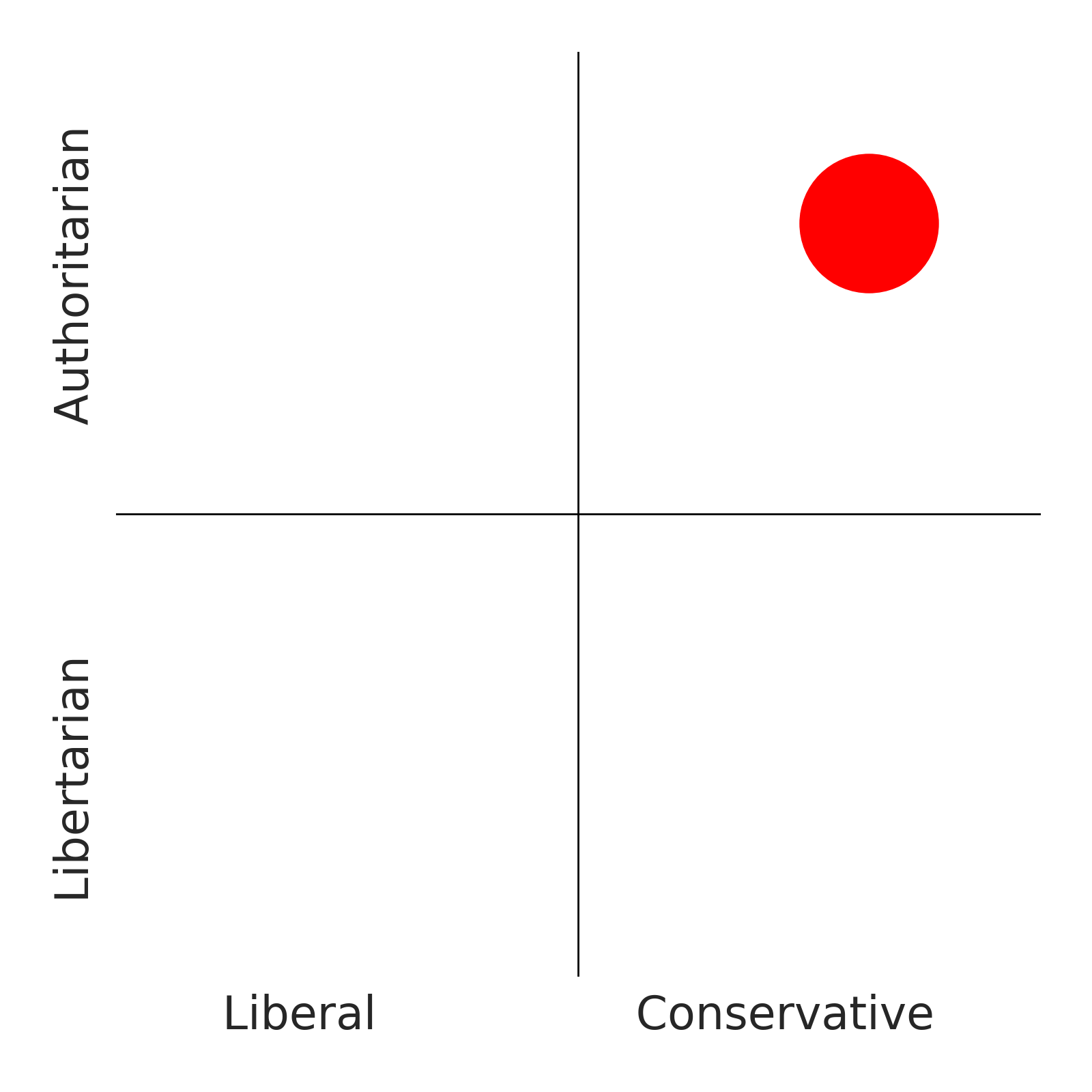
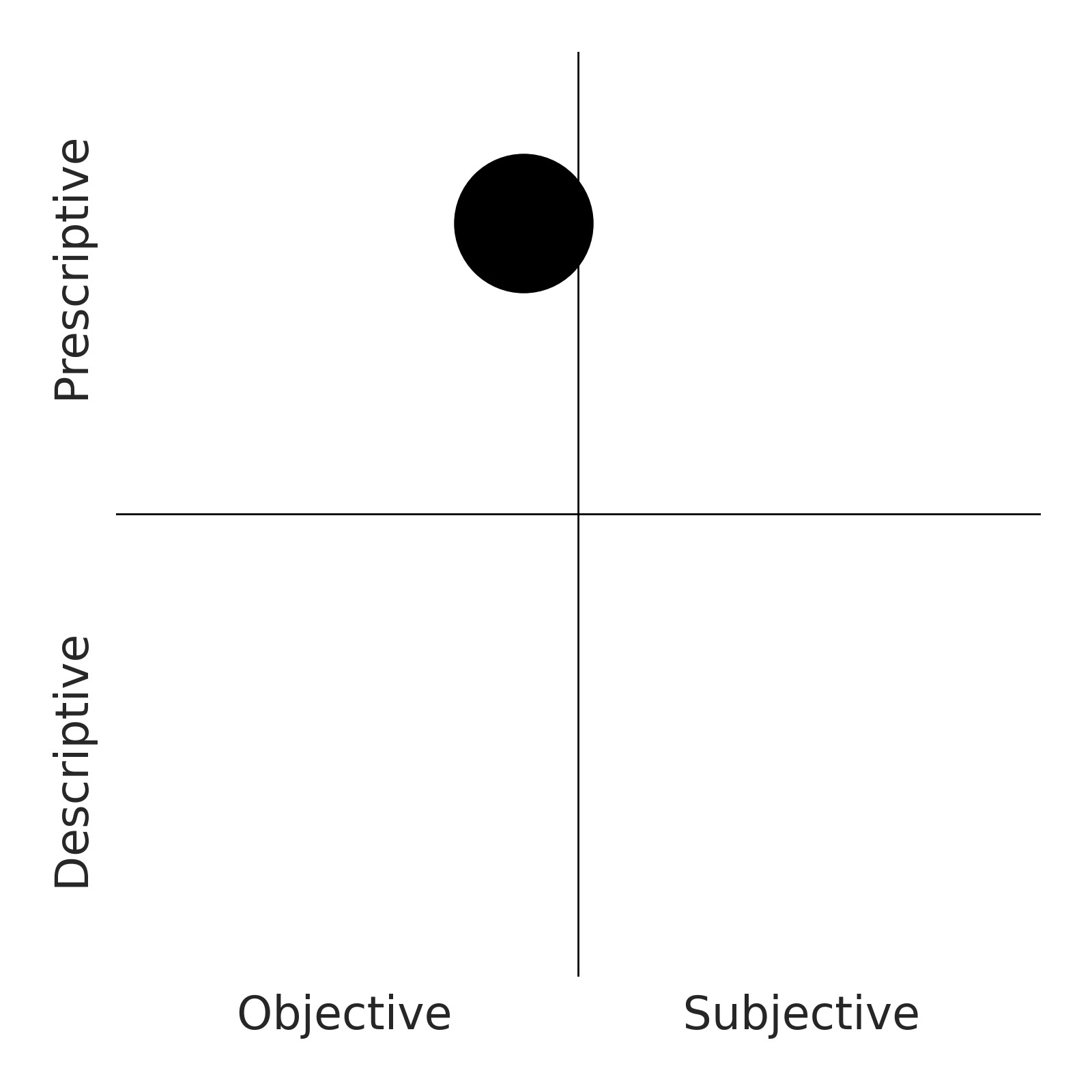
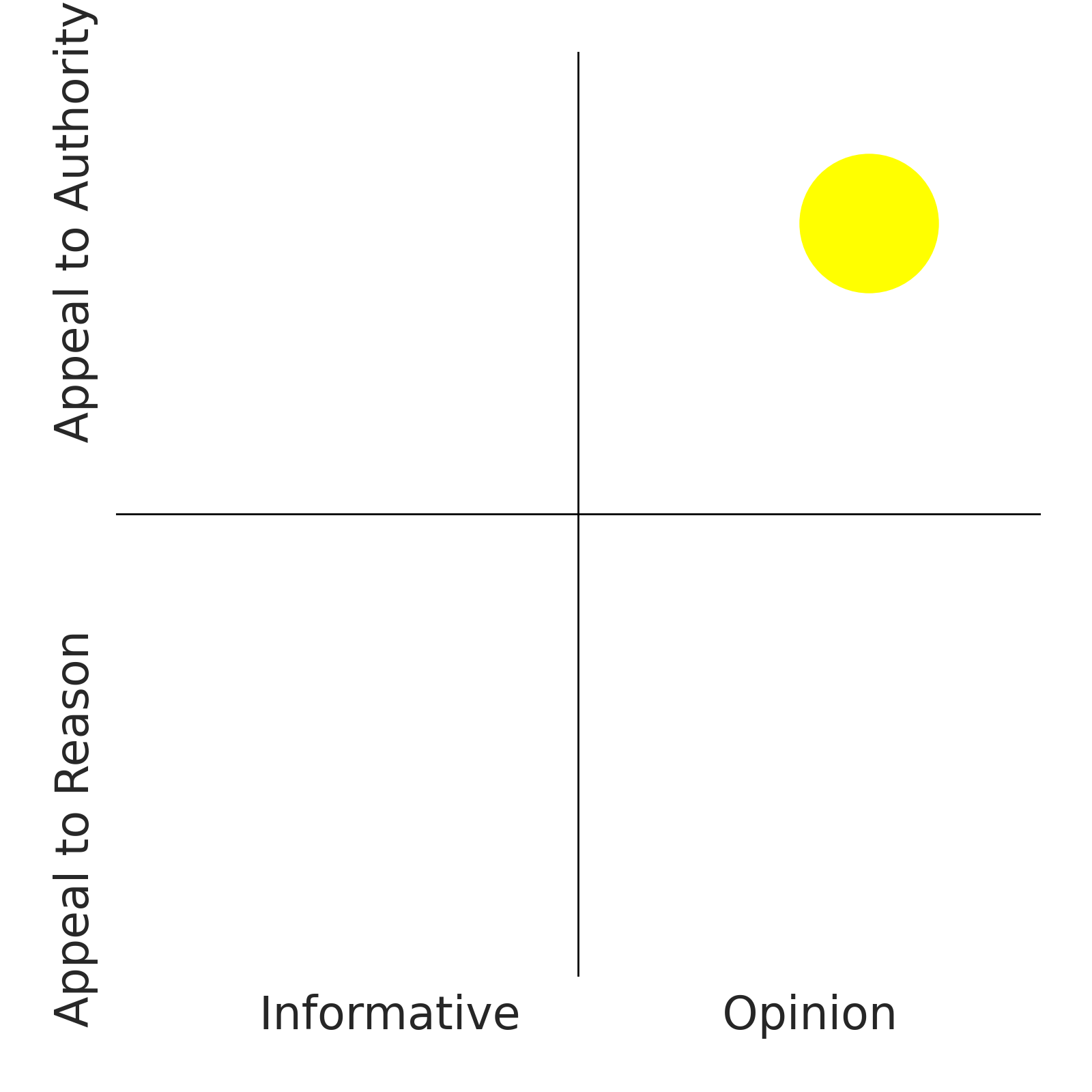
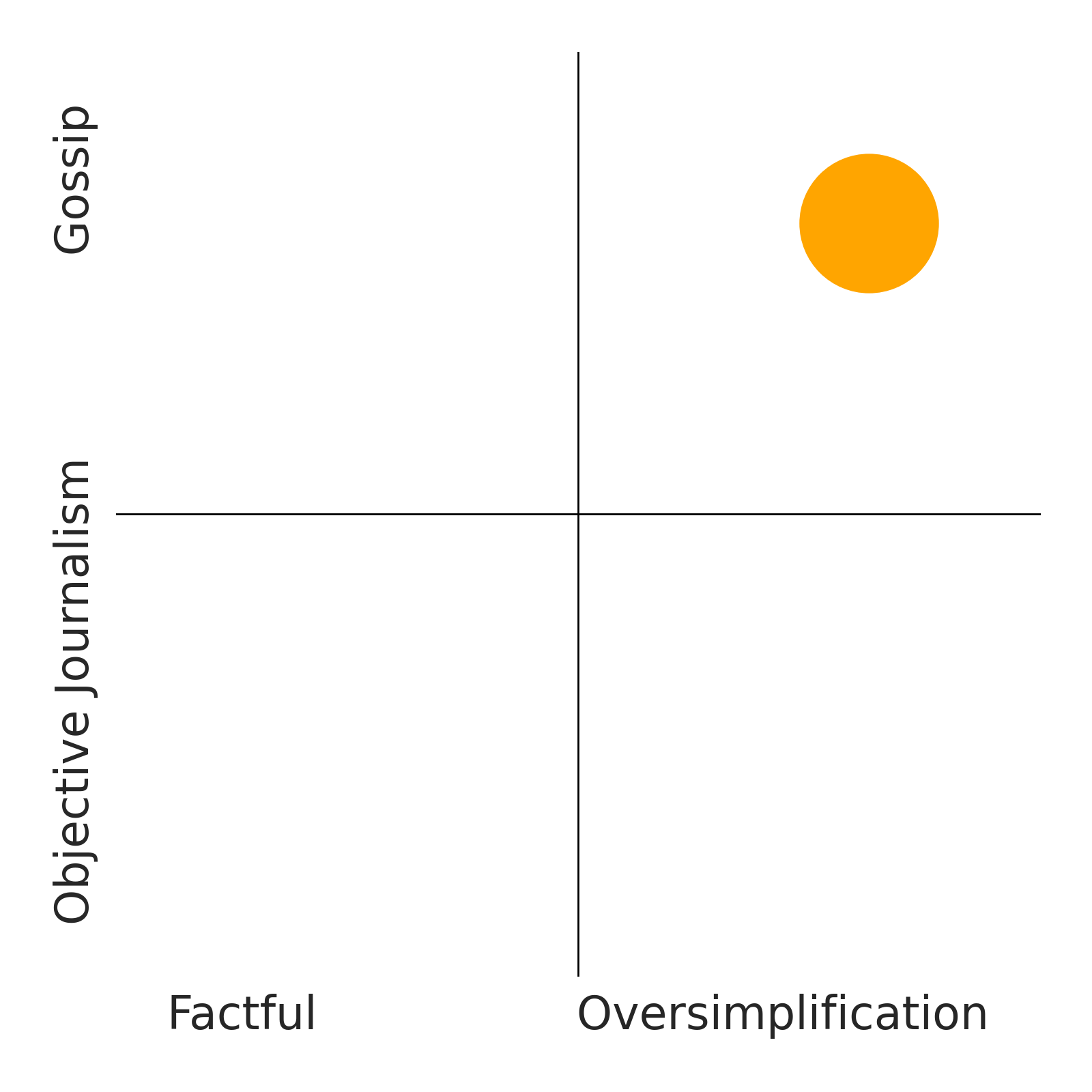
Click points to explore news by date. News sentiment ranges from -10 (very negative) to +10 (very positive) where 0 is neutral.
2026 © Helium Trades
Privacy Policy & Disclosure
* Disclaimer: Nothing on this website constitutes investment advice, performance data or any recommendation that any particular security, portfolio of securities, transaction or investment strategy is suitable for any specific person. Helium Trades is not responsible in any way for the accuracy
of any model predictions or price data. Any mention of a particular security and related prediction data is not a recommendation to buy or sell that security. Investments in securities involve the risk of loss. Past performance is no guarantee of future results. Helium Trades is not responsible for any of your investment decisions,
you should consult a financial expert before engaging in any transaction.
Helium Research Assistant

How can I help you today?
Ask any question about The Blaze bias.