See whether Helium helps you make better-informed decisions. Try every Pro Trader feature for 30 days. No credit card required.
Try every Pro Trader feature for 30 days. No credit card required.
The sample is strongly concentrated in technology, especially cybersecurity vulnerabilities, cloud infrastructure, AI, enterprise software, semiconductors, and space.
The keyword-frequency signal explicitly identifies vulnerability as unusually common [69], while numerous records concern CVEs, phishing, supply-chain compromise, ransomware, critical infrastructure, and privacy exposure
The publisher frames the AI-driven hacking threat as an urgent, active danger to critical infrastructure, using official warnings and expert commentary to underscore credibility and gravity.
Automated analysis; not human reviewed. · 9 of 54 available dimensions scored; omitted dimensions are not treated as neutral. · Verified supporting quotes for 7 of 9 scored dimensions.
Claim: The article uses sensational language and quotes to create a sense of alarm.
“This is not a theoretical risk – it is an active threat” · exact text match
“the miscreants” · exact text match
Why: The headline and body employ dramatic phrasing and informal terms, but the overall tone remains factual.
Claim: The article has a pessimistic tone, highlighting ongoing threats and vulnerabilities.
“stop giving attackers a path to the critical system in the first place” · exact text match
Why: The text emphasizes the persistence of threats and the difficulty of defense.
Claim: The article presents a novel AI-related security topic in an engaging manner.
“attackers use AI-made code to hack critical infrastructure controllers” · exact text match
Why: The combination of AI and infrastructure security is timely and appeals to a technically curious audience.
Claim: The article mixes factual reporting with prescriptive advice.
“To mitigate this threat, the feds say critical infrastructure owners and operators should first – immediately – inventory all Siemens S7 Series PLCs” · exact text match
Why: The text shifts from describing the threat to prescribing mitigation steps.
Claim: The article uses frightening language to convey an immediate and constant danger.
“This is not a theoretical risk – it is an active threat” · exact text match
Why: The repeated mention of 'active threat' and 'intruders' in headlines and body creates a sense of urgency and fear.
Claim: The article relies heavily on official government alerts and expert quotes.
“the joint alert from the National Security Agency (NSA), Cybersecurity and Infrastructure Security Agency (CISA), Federal Bureau of Investigation (FBI), Department of Energy (DOE), and Environmental Protection Agency (EPA)” · exact text match
Why: The narrative is structured around a federal alert and uses quotes from named industry experts.
Claim: The article conveys a slightly negative emotional tone.
“active threat” · exact text match
“miscreants” · exact text match
Why: Word choice is mildly alarming and pejorative, eliciting concern.
Claim: The article is credible, drawing on official sources and named experts.
“the joint alert from the NSA, CISA, FBI, DOE, and EPA” · not found in supplied text
Why: Attribution is present, and the article relies on established authorities without obvious fabrication.
Claim: The article speculates about the identity and future actions of attackers.
“Iranian cyber operatives are suspected of being behind recent PLC attacks” · not found in supplied text
“This appears to be a continuation” · exact text match
Why: The use of 'suspected' and 'appears' indicates speculation rather than confirmed fact.
July 24, 2026 · 0 shares
Publisher framing foregrounds a high-stakes security failure by spotlighting large-scale exposure, a technical IDOR vulnerability, and the hacker's testimony, while emphasizing lack of official response to depict institutional accountability failure.
A security researcher disclosed an IDOR vulnerability in a Vatican-affiliated prayer app with 719,517 accounts as of July 2026, and the network's response had not been made public.
Automated analysis; not human reviewed. Limitations: Concise, case-specific limitations and plausible alternative interpretations. · 3 of 52 available dimensions scored; omitted dimensions are not treated as neutral. · Verified supporting quotes for 0 of 3 scored dimensions.
Limitations: single-source claim, year/date ambiguity, and potential over-reliance on hacker testimony.
August 21, 2026 · 0 shares
The reporting maintains careful attribution to named sources while adopting an informal, slightly dramatic cadence in its delivery of the security incident.
The Rust programming language relies on a package manager called Cargo, which fetches dependencies from the crates.io registry and runs build scripts during compilation; compromising these packages can grant attackers access to developers' machines.
Automated analysis; not human reviewed. Limitations: My analysis is limited to the text provided and my interpretation of the reporting style; I cannot verify the factual accuracy of the security claims themselves. · 10 of 54 available dimensions scored; omitted dimensions are not treated as neutral. · Verified supporting quotes for 8 of 10 scored dimensions.
Claim: The article is substantially descriptive, but its informal, slightly dramatic language adds a subjective flavor.
“That's a narrow window, but arrayref is hardly some forgotten package gathering dust in the registry.” · exact text match
Why: The chosen simile and rhetorical approach are stylistic, yet they do not override the overall fact-based reporting.
Claim: The report is presented in a serious, grounded manner rather than being blown out of proportion.
“Hackers poison popular Rust crates to steal developers' credentials.” · exact text match
Why: 'Poison' is a vivid verb but is typical of headline language; the body's tone stays measured, so the effect on the overall reporting is limited.
Claim: The story is likely to capture the attention of its target technical audience.
“A supply chain attack involving widely used open-source components directly affects developers' daily work.” · not found in supplied text
Why: The combination of widespread software, compromised credentials, and a multi-stage malware payload is inherently newsworthy to the publication's readership.
Claim: The article focuses almost entirely on describing the incident rather than prescribing courses of action.
“Developers have been urged to check their Cargo lockfiles and local registry caches for the affected packages.” · exact text match
Why: The only prescriptive element is a brief mention of developer action, which is itself attributed to the Rust team rather than being the article's own demand.
Claim: The story highlights the cleverness of the attack and the potential severe impact on developers, but does not engage in panic.
“The second-stage payload was more than a simple downloader.” · exact text match
Why: The language sets up concern but is immediately tempered by clarifying that the time window was narrow and the number of affected developers is unknown.
Claim: The article is highly trustworthy based on visible sourcing, attribution, and a lack of overstated conclusions.
“Security firm Aikido, which separately analyzed the attack, puts arrayref at roughly 245 million lifetime downloads” · exact text match
“The Rust team does not believe arrayref's maintainer was responsible.” · exact text match
Why: Transparent naming of organizations, careful distinction between facts and beliefs, and honest acknowledgement of what is unknown all contribute to the publication's evident credibility.
Claim: The article engages in very little speculation, and when it does, it attributes the speculation to relevant parties.
“The Rust team does not believe arrayref's maintainer was responsible.” · exact text match
Why: The report relies on descriptions of what happened and attributes guesses (such as the maintainer's likely compromise) to the Rust team rather than presenting them as fact.
Claim: There is minimal evidence of AI authorship; the style appears human-like, though this is an uncertain inference.
“That's a narrow window, but arrayref is hardly some forgotten package gathering dust in the registry.” · exact text match
Why: The conversational flourishes and journalistic voice are more typical of human authors, but this judgment is inherently probabilistic and should be treated with caution.
Claim: The article fairly attributes claims and observations to specific sources, weaves in caveats, and does not overstate certainty about unknown facts.
“The Rust team does not believe arrayref's maintainer was responsible.” · exact text match
“Aikido found that the attacker largely left the legitimate source code untouched.” · not found in supplied text
Why: Consistent attribution to the Rust Security Response Team, Aikido, and others, combined with explicit acknowledgement of what is unknown (e.g., number of affected developers), shows a strong commitment to epistemic honesty.
Claim: The reporting is well-structured, clear, and incorporates useful background and context.
“Cargo, Rust's package manager, runs build scripts during compilation.” · exact text match
Why: The article explains technical concepts in a straightforward way, provides necessary context, and draws clear connections between different parts of the story, showing sophistication in its structure.
My analysis is limited to the text provided and my interpretation of the reporting style; I cannot verify the factual accuracy of the security claims themselves.
Report relies on careful attribution to a security vendor and explicitly flags the kit's unverified claims, indicating a cautious, evidence-based epistemic stance.
Automated analysis; not human reviewed. Limitations: The claims about the kit's capabilities and the vendor's verification practices could not be independently corroborated, limiting confidence in the substantive accuracy of the reported threat. · 4 of 54 available dimensions scored; omitted dimensions are not treated as neutral. · Verified supporting quotes for 4 of 4 scored dimensions.
Claim: The article reports neutrally on a security vendor's findings without editorializing.
“According to Abnormal Security, which examined the kit's documentation and demonstration videos” · exact text match
“It is unclear where the private key associated with the attacker's passkey is stored.” · exact text match
Why: Consistent third-person attribution and explicit acknowledgment of unverified claims indicate objective reporting.
Claim: The novel browser-in-the-middle passkey enrollment technique makes the report engaging.
“A phishing kit for sale on Russian-language cybercrime forums claims it can enroll attacker-controlled passkeys on compromised accounts” · exact text match
Why: The subject matter is novel to the security community, though interest level is somewhat subjective.
Claim: The report is credible, attributing claims and noting the vendor's failure to independently verify the kit.
“However, because the researchers did not buy and test the kit, they could not confirm its storage mechanism – or independently verify the seller's broader claims.” · exact text match
Why: Visible sourcing and explicit uncertainty management support a credible, trustworthy presentation.
Claim: The report employs measured, evidence-based language, consistently attributing claims to Abnormal Security.
“According to Abnormal Security, which examined the kit's documentation and demonstration videos” · exact text match
“Abnormal hypothesized that the kit may use a Chromium-based virtual authenticator” · exact text match
Why: Explicit attribution and hedged language demonstrate rational, evidence-bound reporting.
The claims about the kit's capabilities and the vendor's verification practices could not be independently corroborated, limiting confidence in the substantive accuracy of the reported threat.
August 21, 2026 · 0 shares
Frames the Entra ID fix as a 'perfect-10' alarm and uses Microsoft's undisclosed exploitation details to probe whether the threat is truly over.
Automated analysis; not human reviewed. Limitations: The analysis is based solely on the provided text, which was truncated mid-sentence; external context and follow-up reporting were not considered. · 6 of 54 available dimensions scored; omitted dimensions are not treated as neutral. · Verified supporting quotes for 6 of 6 scored dimensions.
Claim: The report is largely objective, relying on Microsoft's advisory and technical details.
“Tracked as CVE-2026-69836, the vulnerability carries the maximum CVSS score of 10.0 and could allow an unauthenticated attacker to execute code remotely in Microsoft's cloud identity service.” · exact text match
Why: Objective language and citation of CVSS metrics keep the report on the objective side, with little subjective commentary in the body.
Claim: While the headline uses drama, the article body is factual and measured.
“There is, however, one welcome piece of news for administrators: no customer-deployed patch is required.” · exact text match
Why: The body's measured tone and focus on factual mitigation details pull it toward the objective end despite a sensationalist headline.
Claim: The report sticks to describing the vulnerability and fix, only implicitly suggesting more disclosure is needed.
“Microsoft may have closed the hole, but customers will still want to know who exploited it, what they reached, and how long the activity continued before Redmond shut it down.” · exact text match
Why: The closing statement is descriptive of customer desire rather than an overt mandate, leaning descriptive but with a prescriptive nudge.
Claim: The headline's language of 'sounds alarm' and 'perfect-10' may heighten reader concern.
“Microsoft sounds alarm as perfect-10 Entra ID flaw comes under attack” · exact text match
Why: Terms like 'sounds alarm' and 'perfect-10' are attention-grabbing but the body tempers fear by noting the issue is already fixed.
Claim: The article displays solid sourcing, naming a security researcher and citing Microsoft's advisory while flagging unknowns.
“Microsoft credited principal security engineer Robert Fitzpatrick with discovering and reporting the vulnerability, although the advisory does not explain how the company detected its exploitation in the wild.” · exact text match
Why: Transparent about what is unknown (exploitation details) and attributes information appropriately, though it relies heavily on a single source (Microsoft).
Claim: The article's explanation is grounded in empirical technical detail and standard security metrics.
“The CVSS metrics explain the perfect 10: the flaw is remotely exploitable, has low attack complexity, requires neither privileges nor user interaction, and could have a high impact on confidentiality, integrity, and availability.” · exact text match
Why: Use of standardized CVSS metrics and technical terminology reflects a rational, empirical approach rather than superstition.
The analysis is based solely on the provided text, which was truncated mid-sentence; external context and follow-up reporting were not considered.
Plays a gymnastics-score pun in the headline and hedges a guess about Anthropic's 'Mythos' model, yet otherwise sticks closely to Cisco's own disclosure with factual, attributed, version-specific detail.
Automated analysis; not human reviewed. Limitations: The analysis operates solely on the supplied text, which incorporates untrusted sidebar headlines and promotional items; it could not be independently verified whether CVE identifiers, version numbers, or the cited 'Mythos' model are factually accurate. · 7 of 54 available dimensions scored; omitted dimensions are not treated as neutral. · Verified supporting quotes for 5 of 7 scored dimensions.
Claim: The article reports facts, dates, versions, and attributions with only minor editorial comment.
“Cisco has revealed its Secure Workload Software, a micro-segmentation tool formerly known as Tetration, has four critical flaws plus another high-severity bug.” · not found in supplied text
“Thankfully, Cisco says it has detected no malicious use of the vulnerabilities.” · exact text match
Why: Mostly factual reporting with light color such as 'Thankfully'.
Claim: The report uses a jokey headline metaphor but stays close to official disclosure details in the body.
“Cisco bug severity warning reads like Olympic gymnastics scores: 10, 10, 9.9, 9.6, and 7.5.” · exact text match
Why: The gymnastics metaphor is the main stylistic flourish; the body is sober and specific.
Claim: A niche but timely enterprise security advisory with a hook from the 'frontier AI models' disclosure.
“Cisco says it has discovered them after 'a comprehensive internal security review' that involved 'existing testing processes as well as frontier AI models.'” · not found in supplied text
Why: The AI angle may broaden appeal beyond the security niche, but the core subject is narrow.
Claim: Reporting is credible by virtue of attributed statements and specific patch information.
“On-prem users who have deployed version 3.10 or earlier need to get to version 3.10.9.1.” · exact text match
Why: Specific, checkable details and clear attribution to Cisco support trustworthiness, though external verification is not possible from the text.
Claim: The article adopts a measured, non-alarmist register about a set of serious security flaws.
“Cisco says it has detected no malicious use of the vulnerabilities.” · exact text match
Why: The measured tone and absence of fear language support a neutral reading on this dimension.
Claim: Speculation is limited to one explicitly hedged guess about which frontier model was used.
“So maybe that’s the frontier model involved in this research.” · exact text match
Why: The hypothesis is clearly marked with 'maybe', showing low overall speculation.
Claim: The report demonstrates high technical competence through precise CVEs, CVSS scores, and version numbers.
“CVE-2026-20315 and CVE-2026-20317 are the two perfect-ten-rated bugs.” · exact text match
Why: Precision in identifiers and versioning indicates a technically literate piece without going further.
The analysis operates solely on the supplied text, which incorporates untrusted sidebar headlines and promotional items; it could not be independently verified whether CVE identifiers, version numbers, or the cited 'Mythos' model are factually accurate.
The recurring worldview is security-first and risk-governance oriented: problems are made legible through patches, audits, attribution, official advisories, compliance, and institutional accountability.
The outlet often relies on government agencies, vendors, named researchers, or market analysts as evidentiary anchors
The publisher frames the AI-driven hacking threat as an urgent, active danger to critical infrastructure, using official warnings and expert commentary to underscore credibility and gravity.
Automated analysis; not human reviewed. · 9 of 54 available dimensions scored; omitted dimensions are not treated as neutral. · Verified supporting quotes for 7 of 9 scored dimensions.
Claim: The article uses sensational language and quotes to create a sense of alarm.
“This is not a theoretical risk – it is an active threat” · exact text match
“the miscreants” · exact text match
Why: The headline and body employ dramatic phrasing and informal terms, but the overall tone remains factual.
Claim: The article has a pessimistic tone, highlighting ongoing threats and vulnerabilities.
“stop giving attackers a path to the critical system in the first place” · exact text match
Why: The text emphasizes the persistence of threats and the difficulty of defense.
Claim: The article presents a novel AI-related security topic in an engaging manner.
“attackers use AI-made code to hack critical infrastructure controllers” · exact text match
Why: The combination of AI and infrastructure security is timely and appeals to a technically curious audience.
Claim: The article mixes factual reporting with prescriptive advice.
“To mitigate this threat, the feds say critical infrastructure owners and operators should first – immediately – inventory all Siemens S7 Series PLCs” · exact text match
Why: The text shifts from describing the threat to prescribing mitigation steps.
Claim: The article uses frightening language to convey an immediate and constant danger.
“This is not a theoretical risk – it is an active threat” · exact text match
Why: The repeated mention of 'active threat' and 'intruders' in headlines and body creates a sense of urgency and fear.
Claim: The article relies heavily on official government alerts and expert quotes.
“the joint alert from the National Security Agency (NSA), Cybersecurity and Infrastructure Security Agency (CISA), Federal Bureau of Investigation (FBI), Department of Energy (DOE), and Environmental Protection Agency (EPA)” · exact text match
Why: The narrative is structured around a federal alert and uses quotes from named industry experts.
Claim: The article conveys a slightly negative emotional tone.
“active threat” · exact text match
“miscreants” · exact text match
Why: Word choice is mildly alarming and pejorative, eliciting concern.
Claim: The article is credible, drawing on official sources and named experts.
“the joint alert from the NSA, CISA, FBI, DOE, and EPA” · not found in supplied text
Why: Attribution is present, and the article relies on established authorities without obvious fabrication.
Claim: The article speculates about the identity and future actions of attackers.
“Iranian cyber operatives are suspected of being behind recent PLC attacks” · not found in supplied text
“This appears to be a continuation” · exact text match
Why: The use of 'suspected' and 'appears' indicates speculation rather than confirmed fact.
August 21, 2026 · 0 shares
Leads with AMD's CPU share gains while attributing desktop-shipment declines to memory and GPU supply constraints, grounding causal claims in Mercury Research data.
Mercury Research is an industry research firm that estimates CPU shipments to track market share. 'Memory' refers to DRAM, especially high-bandwidth memory (HBM) used in AI accelerators. 'House of Zen' references AMD's Zen microarchitecture. Q2 2026 is the calendar quarter ending June 2026.
Automated analysis; not human reviewed. Limitations: Analysis based primarily on the lede, headline, and opening paragraphs; the full report's later sections or editorial nuances may be underweighted. · 8 of 54 available dimensions scored; omitted dimensions are not treated as neutral. · Verified supporting quotes for 7 of 8 scored dimensions.
Claim: The report is politically neutral, with no observable liberal or conservative framing.
“The processor market is sending mixed signals, with server and mobile shipments rising while desktop CPU volumes decline amid higher system prices.” · exact text match
Why: The claim is a factual market description with no left-right political content, so a mild leaning cannot be substantiated.
Claim: The report frames the story constructively for AMD, highlighting share gains rather than sector weakness.
“AMD grabs more CPU share while pricier PCs punish desktop demand” · exact text match
Why: The headline leads with AMD's success, and the shakeout is characterized as pricing-driven sector pain; qualitative descriptors like 'more CPU share' carry a positive tilt.
Claim: The report is purely descriptive, offering no recommendations or calls to action.
“Server processor shipments also rose, increasing 20 percent year on year and more modestly from Q1.” · exact text match
Why: The language stays within the domain of reporting on shipments, shares, and attributed outlooks; no prescriptive statements appear.
Claim: The piece contains minimal opinion, but the deck offers a subjective characterization of the market as 'sending mixed signals'.
“The processor market is sending mixed signals, with server and mobile shipments rising while desktop CPU volumes decline amid higher system prices.” · exact text match
Why: The framing metaphor ('mixed signals') is interpretive rather than purely factual, but it is presented with supporting data in the same sentence.
Claim: Market data and reasoning are presented with attribution and epistemic caution.
“with the usual caveat that its estimates have significant uncertainty as there is no centralized reporting of Arm server or client CPU revenues” · exact text match
Why: Faithfully reproduces Mercury's caveat about Arm numbers, names the research firm as the source, and does not disguise uncertainty; follows conventional use of attribution and qualified language.
Claim: The reporting is rational and data-driven, attributing explanations to a named research firm rather than relying on emotion or assertion.
“Mercury associates the decline in desktop chips with weaker demand for high-end gaming PCs.” · exact text match
Why: Causal reasoning is sourced and hedged appropriately, showing a methodical approach consistent with rational analysis.
Claim: Speculative statements are limited, clearly attributed, and caveated.
“We believe that higher PC prices and limited GPU supplies are having a significant impact on end demand for desktop PCs, and thus desktop CPUs, as well.” · exact text match
Why: 'We believe' is attributed to Mercury, and the overall article prominently flags uncertainty in Arm data, indicating speculative content is transparent and sourced.
Analysis based primarily on the lede, headline, and opening paragraphs; the full report's later sections or editorial nuances may be underweighted.
August 21, 2026 · 0 shares
Frames the Entra ID fix as a 'perfect-10' alarm and uses Microsoft's undisclosed exploitation details to probe whether the threat is truly over.
Automated analysis; not human reviewed. Limitations: The analysis is based solely on the provided text, which was truncated mid-sentence; external context and follow-up reporting were not considered. · 6 of 54 available dimensions scored; omitted dimensions are not treated as neutral. · Verified supporting quotes for 6 of 6 scored dimensions.
Claim: The report is largely objective, relying on Microsoft's advisory and technical details.
“Tracked as CVE-2026-69836, the vulnerability carries the maximum CVSS score of 10.0 and could allow an unauthenticated attacker to execute code remotely in Microsoft's cloud identity service.” · exact text match
Why: Objective language and citation of CVSS metrics keep the report on the objective side, with little subjective commentary in the body.
Claim: While the headline uses drama, the article body is factual and measured.
“There is, however, one welcome piece of news for administrators: no customer-deployed patch is required.” · exact text match
Why: The body's measured tone and focus on factual mitigation details pull it toward the objective end despite a sensationalist headline.
Claim: The report sticks to describing the vulnerability and fix, only implicitly suggesting more disclosure is needed.
“Microsoft may have closed the hole, but customers will still want to know who exploited it, what they reached, and how long the activity continued before Redmond shut it down.” · exact text match
Why: The closing statement is descriptive of customer desire rather than an overt mandate, leaning descriptive but with a prescriptive nudge.
Claim: The headline's language of 'sounds alarm' and 'perfect-10' may heighten reader concern.
“Microsoft sounds alarm as perfect-10 Entra ID flaw comes under attack” · exact text match
Why: Terms like 'sounds alarm' and 'perfect-10' are attention-grabbing but the body tempers fear by noting the issue is already fixed.
Claim: The article displays solid sourcing, naming a security researcher and citing Microsoft's advisory while flagging unknowns.
“Microsoft credited principal security engineer Robert Fitzpatrick with discovering and reporting the vulnerability, although the advisory does not explain how the company detected its exploitation in the wild.” · exact text match
Why: Transparent about what is unknown (exploitation details) and attributes information appropriately, though it relies heavily on a single source (Microsoft).
Claim: The article's explanation is grounded in empirical technical detail and standard security metrics.
“The CVSS metrics explain the perfect 10: the flaw is remotely exploitable, has low attack complexity, requires neither privileges nor user interaction, and could have a high impact on confidentiality, integrity, and availability.” · exact text match
Why: Use of standardized CVSS metrics and technical terminology reflects a rational, empirical approach rather than superstition.
The analysis is based solely on the provided text, which was truncated mid-sentence; external context and follow-up reporting were not considered.
August 21, 2026 · 0 shares
Snarky, informal labels for suspected Russian hackers ('snoops,' 'goons,' 'insert eyeroll') mix with careful citation of Google's threat report, producing a framing that mocks the adversaries while taking the underlying espionage threat seriously.
Automated analysis; not human reviewed. Limitations: The article's timeline (June 2026 events) and possible truncation (e.g., 'told .') prevented external verification; I relied solely on the supplied text, and the informal tone may have influenced some bias judgments. · 11 of 54 available dimensions scored; omitted dimensions are not treated as neutral. · Verified supporting quotes for 11 of 11 scored dimensions.
Claim: Reporting is largely objective but punctuated with informal, subjective characterizations of the actors involved.
“the Russian snoops” · exact text match
“the goons conducted” · exact text match
Why: Facts are reported straight, but pejorative labels inject subjectivity into otherwise neutral descriptions.
Claim: Language occasionally veers into sensationalism with words like 'snoops' and 'gabfest'.
“insert eyeroll” · exact text match
Why: The writer's sarcastic aside is a stylistic excess not found in sober threat reporting.
Claim: The subject matter—specific, targeted espionage activities—is engaging to a security-interested readership.
“Google is tracking three distinct suspected Russian cyber-spy groups that are targeting individuals in academia, aerospace, defense, government agencies, and think tanks across Europe and the US.” · exact text match
Why: While concrete and topical, interest is inherently subjective and dependent on the reader's domain.
Claim: The article is almost entirely descriptive, containing no recommendations or calls to action.
“The security analysts have been tracking one of the three, UNC6293, for almost two years.” · exact text match
Why: The writing focuses on reporting the existence and behaviors of the groups without advocating for any policy or action.
Claim: Facts are largely reported straight, but evaluative language and parenthical asides drift into opinion.
“which Google now tracks as Ice Relic – insert eyeroll” · exact text match
Why: The 'eyeroll' is an overt opinion on the naming choice, standing out in an otherwise factual report.
Claim: The report leans heavily on the authority of Google's threat-intel team and Western government analysts.
“infosec analysts from the UK and US governments, and the private sector, often link it to Russia's Foreign Intelligence Service (SVR)” · exact text match
Why: Attribution relies on the presumed expertise and credibility of these organizations without independent verification.
Claim: Informal, juvenile wording is pervasive, diminishing the seriousness of the security topic.
“UNC6293 is a suspected APT29 (aka Cozy Bear, which Google now tracks as Ice Relic – insert eyeroll) phishing squad” · exact text match
“the goons conducted” · exact text match
Why: Terms like 'insert eyeroll' and 'goons' are unprofessional and detract from the article's authority.
Claim: The story is credibly sourced with named analysts, specific dates, and clear attribution.
“Google's Threat Intelligence Group (GTIG) said it's now tracking two other suspected Russian groups” · verified after text normalization
“GTIG also asserts, with "moderate confidence," that UNC7005 is another initial access group connected to APT29/Cozy Bear/Ice Relic – and the SVR.” · verified after text normalization
Why: Specific naming (Roncone and Shields), dates, and threat-group designations ground the article in verifiable detail.
Claim: The article reasons carefully from data, offering hedged conclusions, though it does not independently challenge the underlying sources.
“GTIG also asserts, with "moderate confidence," that UNC7005 is another initial access group connected to APT29/Cozy Bear/Ice Relic – and the SVR.” · verified after text normalization
Why: Uses appropriate epistemic hedges like 'moderate confidence' and attributes claims to named groups, reflecting rational assessment.
Claim: Some statements extrapolate potential future actions from current evidence.
“attackers can use both to help carry out convincing social engineering campaigns” · exact text match
Why: This is a reasonable inference but is not directly observed in the incidents described.
Claim: The article is transparent about the limits of its knowledge and attributes claims appropriately.
“GTIG also asserts, with "moderate confidence," that UNC7005 is another initial access group connected to APT29/Cozy Bear/Ice Relic – and the SVR.” · verified after text normalization
Why: The piece notes what is and isn't known, attributing assertions to Google and others rather than asserting them as fact.
The article's timeline (June 2026 events) and possible truncation (e.g., 'told .') prevented external verification; I relied solely on the supplied text, and the informal tone may have influenced some bias judgments.
August 19, 2026 · 0 shares
The article frames Comcast's rebranded Wi-Fi motion detection feature with critical skepticism, focusing on privacy limitations and legal disclaimers that undermine its marketing claims.
This article covers Comcast's latest product announcement, building on the company's ongoing efforts to integrate security features into its networking hardware.
Automated analysis; not human reviewed. Limitations: My analysis is limited to the provided text and may not account for the author's unexpressed motivations or an evolved understanding of Comcast's business practices beyond what is stated in the article. · 14 of 54 available dimensions scored; omitted dimensions are not treated as neutral. · Verified supporting quotes for 3 of 14 scored dimensions.
Claim: The article is mostly objective but includes subjective framing.
“Comcast gives its Wi-Fi motion detector a security makeover. Rebranded feature promises household alerts without video, but mind the small print.” · not found in supplied text
“The small print, which also accompanied the 2025 launch, suggests the service may not be quite as private as the marketing implies.” · exact text match
Why: While it quotes the company, it adds editorial commentary that implies distrust.
Claim: The article is objective and not sensationalistic.
“Using Xfinity Gateway intelligence, WiFi Motion detects changes in the home's radio frequency signal between the Xfinity Gateway and a Wi-Fi connected device, then sends instant notifications to customers through the Xfinity app when unexpected activity is detected.” · not found in supplied text
“Customers can also adjust the sensitivity of the motion detection, choosing from low, medium, and high-sensitivity modes.” · exact text match
Why: The language is measured and avoids dramatic or exaggerated wording.
Claim: The article is slightly pessimistic about the privacy aspects.
“Mind the small print.” · not found in supplied text
“Comcast does not specify what information may be disclosed or which 'third parties,' beyond law enforcement, might receive it.” · not found in supplied text
Why: The choice of wording and focus on caveats from a critical perspective.
Claim: The article is moderately interesting.
“Comcast is the latest, but not the first, to harness Wi-Fi radio waves for motion detection.” · exact text match
“Companies such as Cognitive Systems and Origin Wireless have been developing other uses for wireless signals.” · exact text match
Why: It has broad relevance to smart home technology and privacy concerns.
Claim: The article is primarily descriptive.
“Motion is detected within the sensing area when movement disrupts the wireless signals that travel between your Xfinity WiFi equipment and selected WiFi-connected devices within the sensing area.” · not found in supplied text
“Sensing areas can be established through walls separating rooms, although in two-storey or multi-storey homes, the telco encourages customers to avoid placing Wi-Fi equipment directly above or below each other.” · exact text match
Why: It explains what the service does, offering little beyond a cautious outlook.
Claim: The article has a clear perspective but is factually grounded.
“Rebranded feature promises household alerts without video, but mind the small print.” · not found in supplied text
“The small print, which also accompanied the 2025 launch, suggests the service may not be quite as private as the marketing implies.” · exact text match
Why: The rule is to add critical context, but the legal disclaimers provide a solid basis for the rule.
Claim: The article is anti-establishment.
“The telco also assured customers that WiFi Motion does not track individuals or their precise movements.” · not found in supplied text
“Subject to applicable law, Comcast may disclose information generated by your WiFi Motion to third parties without further notice to you in connection with any law enforcement investigation or proceeding” · exact text match
Why: The article's framing challenges corporate power and security claims.
Claim: The article has a slightly negative emotional tone.
“Mind the small print.” · not found in supplied text
“The small print, which also accompanied the 2025 launch, suggests the service may not be quite as private as the marketing implies.” · exact text match
Why: The term 'small print' has a negative connotation.
Claim: The article is highly credible.
“WiFi Motion detects changes in the home's radio frequency signal between the Xfinity Gateway and a Wi-Fi connected device, then sends instant notifications to customers through the Xfinity app when unexpected activity is detected.” · not found in supplied text
“Comcast does not specify what information may be disclosed or which 'third parties,' beyond law enforcement, might receive it.” · not found in supplied text
Why: The reports include genuine quotes from the company and other legitimate sources.
Claim: The article is rational and analytical.
“The Wi-Fi sensing technology harnesses the radio waves beamed around a user's home to detect motion and potential intruders.” · exact text match
“Customers can also adjust the sensitivity of the motion detection, choosing from low, medium, and high-sensitivity modes.” · exact text match
Why: The article presents objective details about the product's functionality and limitations.
Claim: The article is anti-corporate in its scrutiny.
“The small print, which also accompanied the 2025 launch, suggests the service may not be quite as private as the marketing implies.” · exact text match
“Comcast does not specify what information may be disclosed or which 'third parties,' beyond law enforcement, might receive it.” · not found in supplied text
Why: Its critical analysis of the corporation's statements drives the narrative.
Claim: The article is scientifically and empirically grounded.
“The Wi-Fi sensing technology harnesses the radio waves beamed around a user's home to detect motion and potential intruders.” · exact text match
“Companies such as Cognitive Systems and Origin Wireless have been developing other uses for wireless signals.” · exact text match
Why: The explanations are based on established principles of Wi-Fi technology and signal processing.
Claim: The article shows high integrity.
“Using Xfinity Gateway intelligence, WiFi Motion detects changes in the home's radio frequency signal between the Xfinity Gateway and a Wi-Fi connected device, then sends instant notifications to customers through the Xfinity app when unexpected activity is detected.” · not found in supplied text
“Comcast said. It provides an added layer of awareness without recording video, capturing images or identifying individuals.” · not found in supplied text
Why: It uses accurately sourced data and acknowledges the company's claims.
Claim: The article is truth-seeking.
“Comcast states: 'Subject to applicable law, Comcast may disclose information generated by your WiFi Motion to third parties without further notice to you in connection with any law enforcement investigation or proceeding'” · not found in supplied text
“The telco also assured customers that WiFi Motion does not track individuals or their precise movements, and cannot identify specific people.” · exact text match
Why: It exposes the actual terms and boundaries of the product.
My analysis is limited to the provided text and may not account for the author's unexpressed motivations or an evolved understanding of Comcast's business practices beyond what is stated in the article.
August 21, 2026 · 0 shares
Couches the cosmetic Classic-Outlook reskin in heavy sarcasm, stressing with repeated asides that missing functionality and COM add-ins will not return.
Automated analysis; not human reviewed. Limitations: Familiarity with The Register's typical sardonic tone could bias sarcasm detection; product claims and timelines cannot be independently verified. · 10 of 54 available dimensions scored; omitted dimensions are not treated as neutral. · Verified supporting quotes for 6 of 10 scored dimensions.
Claim: The piece persistently editorializes through sarcastic asides while presenting factual details.
“but at least the fonts and layout are optionally available” · exact text match
Why: The phrase 'at least' dismisses the change as minimal, an evaluative judgment rather than plain description.
Claim: The outlook on New Outlook is negative, focusing on its shortcomings.
“the offline capabilities of New Outlook are still a poor relation to its predecessor” · exact text match
Why: 'Poor relation' is a value-laden, negative characterization of the product's state.
Claim: The tone is skeptical and downbeat about the change.
“It won't add back the bits from Classic Outlook that are currently missing from New Outlook.” · not found in supplied text
Why: Emphasizing what is not improved frames the announcement negatively.
Claim: Uses highly opinionated language to close the piece.
“There's a popular saying about putting lipstick on a pig, but we're sure that doesn't apply here.” · exact text match
Why: The 'lipstick on a pig' idiom is a clear expression of the author's opinion.
Claim: Microsoft's behavior is framed as coercive or self-serving.
“Microsoft's latest attempt to nudge users off Classic Outlook” · exact text match
Why: 'Nudge users off' implies manipulation rather than a neutral product decision.
Claim: The sarcastic delivery conveys a slightly negative emotional tone.
“It won't add back the bits from Classic Outlook that are currently missing” · not found in supplied text
Why: Dismissive phrasing reflects mild frustration rather than neutral reporting.
Claim: The piece attributes claims to Microsoft and is transparent about the author's own opinions.
“It also stated that support for Classic Outlook through perpetual and subscription licensing would continue "until at least 2029."” · not found in supplied text
Why: Quotes and references are verifiable, and the author clearly separates Microsoft's statements from editorializing.
Claim: The author is dismissive of Microsoft's design decisions.
“but at least the fonts and layout are optionally available” · exact text match
Why: Mocking Microsoft's trade-off between looks and functionality indicates an anti-corporate slant.
Claim: Displays strong command of technical details about Outlook's product roadmap.
“The app framework (COM add-ins and so on) that many enterprises use to glue Outlook into their workflows will never appear in New Outlook” · exact text match
Why: Correctly distinguishes between consumer-visible features and enterprise integration capabilities.
Familiarity with The Register's typical sardonic tone could bias sarcasm detection; product claims and timelines cannot be independently verified.
August 20, 2026 · 0 shares
A neutral, matter-of-fact framing of Microsoft's investigation into post-update game crashes, offering no judgment or advocacy.
Automated analysis; not human reviewed. Limitations: Analysis based solely on the supplied text; no external verification of claims.
Analysis based solely on the supplied text; no external verification of claims.
July 30, 2026 · 0 shares
Regulatory-enforcement framing foregrounds the FTC's lawsuit against Hims & Hers for alleged privacy violations and deceptive billing practices.
Automated analysis; not human reviewed. Limitations: The article text is noisy and interleaved with unrelated content from other headlines, which may obscure the core facts. · 3 of 52 available dimensions scored; omitted dimensions are not treated as neutral. · Verified supporting quotes for 0 of 3 scored dimensions.
Claim: The text employs cautionary language about privacy risks.
“"The complaint lays out a troubling scenario – consumers unknowingly locked into recurring subscriptions and the disclosure to third parties of consumers' most private health information without their consent."” · not found in supplied text
Why: Language conveys risk and concern but is confined to the described allegations.
Claim: Regulatory-enforcement framing of FTC action against Hims & Hers.
“The Federal Trade Commission (FTC) is suing Telehealth company Hims & Hers over allegations that it shared customers' sensitive health data with advertising platforms and misled them about billing and cancellations.” · exact text match
“The FTC's complaint lays out a troubling scenario – consumers unknowingly locked into recurring subscriptions and the disclosure to third parties of consumers' most private health information without their consent.” · not found in supplied text
“The FTC will not hesitate to act on behalf of consumers deprived of their ability to choose which products they want and whether to keep their most sensitive health information private.” · exact text match
Why: Direct quotes show the enforcement posture and rationale, signaling pro-regulatory framing.
Claim: The framing uses loaded framing around deceptive practices.
“"leading consumers to believe that Hims would not disclose consumers' health information to third parties without their consent. But those assurances were false or misleading."” · not found in supplied text
“"Even after clicking the 'cancel subscription' button, the consumer's subscription would not be cancelled," the complaint alleges.” · not found in supplied text
Why: Quoted language highlights framing around deception and problematic user experience.
The article text is noisy and interleaved with unrelated content from other headlines, which may obscure the core facts.
A second major bias is editorial skepticism toward powerful technology companies and inflated technology claims. Amazon’s earnings narrative is called packed with baloney
July 31, 2026 · 0 shares
Highly skeptical framing accuses Amazon of shading the truth in its earnings disclosures to justify a massive capex program.
Context: The analysis contends Amazon's earnings disclosures may overstate AI/chips run rates and that terms like Bedrock and Trainium blur the line between hardware sales and cloud infrastructure revenue. It notes hedging effects on margins and questions Kiro's announced availability, while acknowledging strong AWS margins and cash flow; it also discusses the scale of the capex program and the Anthropic stake.
Automated analysis; not human reviewed. · 3 of 52 available dimensions scored; omitted dimensions are not treated as neutral. · Verified supporting quotes for 0 of 3 scored dimensions.
Claim: Publisher uses highly subjective, opinionated language, showing strong subjectivity
“Tell me lies, tell me sweet little lies” · exact text match
“it's what we'd colloquially term 'a lie'” · not found in supplied text
“Strip that gain out yourself (behold the power of arithmetic!)” · exact text match
Why: The quotes show rhetorical sarcasm and evaluative judgments.
Claim: Publisher frames corporate communications as manipulative and untrustworthy, indicating anti-establishment orientation
“the largest capex program in corporate history” · exact text match
“the entire shape of it all is being told in the same sitting that described a waitlist as 'available'” · not found in supplied text
Why: Quotation demonstrates suspicion of corporate narratives and publicity control.
Claim: Publisher frames Amazon's earnings narrative as misrepresenting truth to justify large capital expenditure
“Amazon's Q2 was great, but the earnings release is packed with baloney.” · exact text match
“"a lie"” · not found in supplied text
Why: Direct quotes show explicit framing that statements are untruthful and used to justify capex.
August 20, 2026 · 0 shares
Google's Antigravity enterprise rollout is reported with snarky, irreverent framing that downplays the integration news while zeroing in on executive departures and Google's competitive struggles.
Automated analysis; not human reviewed. Limitations: I cannot independently verify the claims attributed to Densmore, Karunaratne, or Pichai against the actual events; my analysis treats the article text as self-contained evidence. · 53 of 54 available dimensions scored; omitted dimensions are not treated as neutral. · Verified supporting quotes for 4 of 53 scored dimensions.
Claim: The publisher uses flippant, anti-establishment tone toward big tech.
“Chocolate Factory” · exact text match
“Further cheerleading may be needed” · exact text match
Counterevidence:
“The rest of the article reports straight news details without direct attack.” · not found in supplied text
Why: The phrases sarcastically mock Google's corporate image, revealing a mild populist tilt.
Claim: The article mixes factual reporting with subjective commentary.
“Further cheerleading may be needed in light of Google's struggles” · exact text match
“brims with the obligatory upbeat messaging” · exact text match
Why: The author's own dismissive assessments are woven throughout the factual narrative.
Claim: The article has a negative outlook on Google's competitive position.
“Google's struggles to keep pace with AI rivals” · exact text match
“litany of complete failures at a separate entity” · not found in supplied text
Why: The text emphasizes Google's setbacks and frames the news as a consolation for larger problems.
Claim: The writing uses childish sarcasm and humor.
“Chocolate Factory” · exact text match
“a mere 15,000 or so words” · exact text match
“brims with the obligatory upbeat messaging” · exact text match
Why: The snarky quips undermine a strictly professional tone.
Claim: The article speculates about Google's strategic motives and internal struggles.
“a signal DeepMind is becoming more tethered to the mothership as Google tries to revitalize its AI research efforts” · exact text match
Why: The phrase 'a signal' frames an interpretation of the executive shift.
I cannot independently verify the claims attributed to Densmore, Karunaratne, or Pichai against the actual events; my analysis treats the article text as self-contained evidence.
Frames Nvidia's Cloverleaf investment as defensive crisis management, depicting the AI boom as a fragile 'bubble' that the GPU maker must keep patching to sustain sales.
Nvidia generates most of its revenue selling data-center GPUs and complete systems; those sales depend on third parties building datacenters with sufficient power and cooling, which has become a constraint as chip power densities rise.
Automated analysis; not human reviewed. Limitations: The supplied text interleaves the report with headlines, navigation links, and truncation; typos such as 'Clverleaf' suggest extraction errors, so analysis emphasizes the clearest authorial passages. · 54 of 54 available dimensions scored; omitted dimensions are not treated as neutral. · Verified supporting quotes for 9 of 54 scored dimensions.
Claim: The piece blends reportage with editorial interpretation, presenting analysis as straightforward explanation.
“The deal is the latest example of how Nvidia is using its war chest to shore up cracks in the broader AI ecosystem before they become a problem.” · exact text match
Why: Presents an interpretive judgment about Nvidia's motives as established analysis.
Claim: Uses vivid, dramatic imagery that stirs the topic beyond neutral reporting.
“the AI arms dealer has been forced to play a game of Whac-a-Mole” · exact text match
Counterevidence:
“The underlying facts of the deal and technical details are reported without obvious distortion.” · not found in supplied text
Why: Colourful metaphors like 'arms dealer' and 'Whac-a-Mole' add rhetorical framing to otherwise straightforward business news.
Claim: Portrays AI-driven demand as a fragile 'bubble' at risk of bursting.
“It faces a growing number of roadblocks which, if left unchecked, could pop the bubble.” · exact text match
Why: Directly uses bubble language to characterize the sustainability of Nvidia's market.
Claim: Characterizes Nvidia's market position as precarious, implying customer demand must be bought and defended.
“It faces a growing number of roadblocks which, if left unchecked, could pop the bubble.” · exact text match
Counterevidence:
“Does not predict doom for the company itself.” · not found in supplied text
Why: Emphasizes fragility and risk rather than opportunity, giving a pessimistic-skeptical tone.
Claim: The piece frames the news around a counterintuitive dependency, adding analytic depth.
“Nvidia can only sell as many GPUs as there are datacenters to put them, and those datacenters can only be deployed where there’s adequate power to support them.” · exact text match
Why: The inverted supply-chain insight provides a thought-provoking angle.
Claim: Uses editorializing language and personal interpretation more typical of commentary than hard news.
“The latest example of this came Friday, when Nvidia announced it’d become a minority investor in Cloverleaf.” · exact text match
Counterevidence:
“Attribution is explicit where needed.” · not found in supplied text
Why: Phrases like 'Whac-a-Mole' and 'shoring up' signal interpretation, but core facts are separated from the author's voice.
Claim: The reporting is specific and transparent about undisclosed terms.
“The terms of the deal haven’t been disclosed, but the benefits are obvious” · exact text match
Why: Notes the lack of disclosure while avoiding inventing details, which supports trustworthiness.
Claim: The analysis reasons carefully from technical and economic constraints rather than relying on assertion.
“Liquid-cooled facilities are harder to build than their air-cooled counterparts.” · exact text match
Why: Provides a detailed causal chain from GPU cooling requirements to datacenter power and construction needs.
Claim: Infers motives and future outcomes from limited disclosures.
“To further reduce friction and make it easier for its customers to find space to deploy its kit, Nvidia introduced its DSX platform” · exact text match
Why: Attributes a causal strategic rationale to Nvidia's introduction of DSX, which is inferred rather than directly stated by Nvidia.
The supplied text interleaves the report with headlines, navigation links, and truncation; typos such as 'Clverleaf' suggest extraction errors, so analysis emphasizes the clearest authorial passages.
An enthusiastic first-person narrative promotes AI agents as transformative tools for personal experimentation and scientific discovery, advocating for widespread adoption without addressing potential risks or counterarguments.
Automated analysis; not human reviewed. · 8 of 53 available dimensions scored; omitted dimensions are not treated as neutral. · Verified supporting quotes for 8 of 8 scored dimensions.
Claim: The article is very positive about AI agents' capabilities and future impact.
“Agents have given us speed and scope, and highlighted the real bottleneck.” · exact text match
Why: Positive framing of agents as enabling speed and scope, with no negative trade-offs discussed.
Claim: The article is engaging and holds reader interest through personal anecdote and forward-looking claims.
“That's not just the future of retro-tech revivals; it's coming for pretty much all the hard sciences.” · exact text match
Why: Uses surprising extrapolation to maintain interest.
Claim: The article prescribes adopting a 'mad scientist' approach to using agents.
“Let's all go a bit mad scientist and see if software can validate our wildest theories” · exact text match
Why: Direct exhortation to adopt a specific behavior.
Claim: The article is dominated by the author's opinions rather than factual reporting.
“I propose, agents dispose – then hand over the results.” · exact text match
Why: Entire article is first-person argument, not neutral report.
Claim: The tone is positive and enthusiastic about agents and their potential.
“Now that it's trivially easy to feed the parameters for any brainwave into an agent, I've gone full mad scientist” · exact text match
Why: Enthusiastic language ('trivially easy', 'full mad scientist') conveys positive emotion.
Claim: The article lacks factual rigor and relies on personal anecdote with minimal sourcing.
“I eventually asked the agent if someone else had solved this problem? It quickly found a fast math library, and got cURL purring.” · exact text match
Why: Personal story without verification; no citations or data.
Claim: The article emphasizes individual experimentation and personal agency over collective or institutional approaches.
“I let the agent SSH into the device, gave it full control (yes, yes, but I know what I'm doing, I promise)” · exact text match
Why: Focus on individual control and personal risk-taking rather than group processes.
Claim: The article makes speculative predictions about the future of agents in science, business, and governance.
“Discovery Loop is the shape of what's coming – not just in science, but in business, in governance, and in pretty much every other domain where you can measure your results.” · exact text match
Why: Explicit forecast without supporting evidence.
August 21, 2026 · 0 shares
Leads with AMD's CPU share gains while attributing desktop-shipment declines to memory and GPU supply constraints, grounding causal claims in Mercury Research data.
Mercury Research is an industry research firm that estimates CPU shipments to track market share. 'Memory' refers to DRAM, especially high-bandwidth memory (HBM) used in AI accelerators. 'House of Zen' references AMD's Zen microarchitecture. Q2 2026 is the calendar quarter ending June 2026.
Automated analysis; not human reviewed. Limitations: Analysis based primarily on the lede, headline, and opening paragraphs; the full report's later sections or editorial nuances may be underweighted. · 8 of 54 available dimensions scored; omitted dimensions are not treated as neutral. · Verified supporting quotes for 7 of 8 scored dimensions.
Claim: The report is politically neutral, with no observable liberal or conservative framing.
“The processor market is sending mixed signals, with server and mobile shipments rising while desktop CPU volumes decline amid higher system prices.” · exact text match
Why: The claim is a factual market description with no left-right political content, so a mild leaning cannot be substantiated.
Claim: The report frames the story constructively for AMD, highlighting share gains rather than sector weakness.
“AMD grabs more CPU share while pricier PCs punish desktop demand” · exact text match
Why: The headline leads with AMD's success, and the shakeout is characterized as pricing-driven sector pain; qualitative descriptors like 'more CPU share' carry a positive tilt.
Claim: The report is purely descriptive, offering no recommendations or calls to action.
“Server processor shipments also rose, increasing 20 percent year on year and more modestly from Q1.” · exact text match
Why: The language stays within the domain of reporting on shipments, shares, and attributed outlooks; no prescriptive statements appear.
Claim: The piece contains minimal opinion, but the deck offers a subjective characterization of the market as 'sending mixed signals'.
“The processor market is sending mixed signals, with server and mobile shipments rising while desktop CPU volumes decline amid higher system prices.” · exact text match
Why: The framing metaphor ('mixed signals') is interpretive rather than purely factual, but it is presented with supporting data in the same sentence.
Claim: Market data and reasoning are presented with attribution and epistemic caution.
“with the usual caveat that its estimates have significant uncertainty as there is no centralized reporting of Arm server or client CPU revenues” · exact text match
Why: Faithfully reproduces Mercury's caveat about Arm numbers, names the research firm as the source, and does not disguise uncertainty; follows conventional use of attribution and qualified language.
Claim: The reporting is rational and data-driven, attributing explanations to a named research firm rather than relying on emotion or assertion.
“Mercury associates the decline in desktop chips with weaker demand for high-end gaming PCs.” · exact text match
Why: Causal reasoning is sourced and hedged appropriately, showing a methodical approach consistent with rational analysis.
Claim: Speculative statements are limited, clearly attributed, and caveated.
“We believe that higher PC prices and limited GPU supplies are having a significant impact on end demand for desktop PCs, and thus desktop CPUs, as well.” · exact text match
Why: 'We believe' is attributed to Mercury, and the overall article prominently flags uncertainty in Arm data, indicating speculative content is transparent and sourced.
Analysis based primarily on the lede, headline, and opening paragraphs; the full report's later sections or editorial nuances may be underweighted.
August 21, 2026 · 0 shares
Frames Alibaba Cloud's shift toward self-developed chips as a financially disciplined margin play, balancing the CEO's growth narrative against competitive and geopolitical reality checks.
Alibaba, historically an e-commerce firm, is investing heavily in AI infrastructure to counter slowing retail growth, while U.S. export controls and Western market access restrictions shape the strategic environment for Chinese cloud vendors.
Automated analysis; not human reviewed. Limitations: Relies on a single publisher's rendering of the earnings call; statements by executives are taken as given without independent verification. · 12 of 54 available dimensions scored; omitted dimensions are not treated as neutral. · Verified supporting quotes for 8 of 12 scored dimensions.
Claim: The article presents financial data and executive quotes with limited editorial bias.
“With its 45 percent growth, Alibaba Cloud's AI offerings did far better, but its quarterly revenue of $7.14 billion is well behind AWS, Microsoft, and Google.” · verified after text normalization
Why: The text primarily reports objective figures and attributed statements, showing minimal subjectivity.
Claim: The tone is sober and non-sensationalist, avoiding dramatic language.
“By way of comparison, AWS has said over 120,000 customers use its Graviton chips.” · exact text match
Why: Uses measured comparisons and avoids hyperbole, indicating low sensationalism.
Claim: The overall tone is modestly positive toward Alibaba's growth prospects.
“Alibaba will keep spending because Wu thinks AI has become Alibaba's 'most certain growth engine.'” · not found in supplied text
Why: While presenting challenges, the article highlights the CEO's conviction about AI-led growth.
Claim: The article balances positive growth data with potential headwinds, resulting in neutrality.
“Alibaba Cloud looks unlikely to deliver Beijing an export bonanza more customers outside China.” · exact text match
Why: Optimistic figures are juxtaposed with external constraints, yielding a neutral stance.
Claim: The strategic implications of Alibaba's chip shift generate above-average interest.
“Self-developed chips are a long-term and important direction for us,' Wu said.” · not found in supplied text
Why: The topic of de-risking from Western chips has broad industry significance.
Claim: The article describes events and statements without prescribing actions.
“Whatever happens in the AI market, Wu is confident Alibaba can build infrastructure fast enough to meet demand because it has cut its delivery time for hyperscale AI data centers to 100 days.” · exact text match
Why: The text reports Wu's confidence and the 100-day figure without recommending behavior, demonstrating descriptive rather than prescriptive language.
Claim: The text is largely factual with minor commentary.
“That's a fascinating remark because Alibaba started as an e-commerce company, and Beijing sees it as a key vehicle for selling Chinese exports to the world.” · verified after text normalization
Why: Uses a subjective qualifier ('fascinating') within an otherwise factual article, indicating low overall opinionation.
Claim: The article relies heavily on inputs from corporate leaders.
“Speaking on the company's earnings call yesterday, CFO Toby Xu said the company runs its servers for five years.” · not found in supplied text
Why: Positions of authority provide all the data points, showing reliance on executive statements.
Claim: The report is well-sourced and transparent about its sources and limitations.
“The company attributed the increase to 'fluctuations in procurement cycles, increase in CPU-compute capacity driven by anticipated growing customer adoption of AI agents, and higher pricing of a broad range of chip components.'” · not found in supplied text
Why: Direct citations, named officers, and precise figures support the account's credibility.
Claim: The analysis is balanced and deductive, avoiding emotional argumentation.
“With its 45 percent growth, Alibaba Cloud's AI offerings did far better, but its quarterly revenue of $7.14 billion is well behind AWS, Microsoft, and Google.” · verified after text normalization
Why: Contrastive facts are presented to ground the story in market reality, reflecting rational reasoning.
Claim: Forward-looking statements are attributed to company management, not the publisher.
“Execs predicted Alibaba Cloud revenue will reach around $10 billion next quarter.” · exact text match
Why: Projections come directly from executives, keeping speculation low.
Claim: No deceptive or manipulative techniques were identified beyond standard editorial framing.
“Note, also, that Alibaba counts itself as a customer of its cloud.” · exact text match
Why: The publisher readily discloses a potential conflict, suggesting transparency and low manipulative intent.
Relies on a single publisher's rendering of the earnings call; statements by executives are taken as given without independent verification.
A third bias is highly informal, adversarial, and attention-seeking language. Examples include mockery of a suspected hacker
August 11, 2026 · 0 shares
Frames the incident with mocking, dismissive language and emphasizes potential legal penalties, relying heavily on social media speculation.
Automated analysis; not human reviewed. Limitations: Potential ambiguity in separating main article text from sidebar headlines and ads within the supplied text. · 12 of 53 available dimensions scored; omitted dimensions are not treated as neutral. · Verified supporting quotes for 10 of 12 scored dimensions.
Claim: The article mixes factual reporting with subjective editorial commentary.
“If this wannabe hacker with a penchant for choosing the worst possible target in the world is stupid enough to have been caught doing this before” · exact text match
Why: The words 'wannabe' and 'stupid' are subjective judgments, not objective facts.
Claim: The article uses sensational headlines and phrases to grab attention.
“DEF CON dingus suspected of trying to take over Delta in-flight Wi-Fi. This is why we can't have nice things, people” · exact text match
Why: The term 'dingus' and the dramatic 'This is why we can't have nice things' are sensational and emotionally loaded.
Claim: The article covers an unusual and attention-grabbing incident.
“DEF CON dingus suspected of trying to take over Delta in-flight Wi-Fi” · exact text match
Why: The combination of a hacker convention and an in-flight security incident is inherently interesting.
Claim: The article relies on unverified social media speculation as a primary source.
“A poster on X speculated” · exact text match
“a Facebook post shared to Reddit claimed” · exact text match
“a commenter... claimed” · not found in supplied text
Why: The article repeatedly cites anonymous social media posts without independent verification.
Claim: The article expresses strong opinions about the suspect's character and intelligence.
“stupid enough” · exact text match
“not that bright” · exact text match
“wannabe hacker” · exact text match
Why: These are clear opinion statements about the suspect's capabilities and judgment.
Claim: The article uses childish, mocking language.
“DEF CON dingus” · exact text match
“stupid enough” · exact text match
“not that bright” · exact text match
Why: Terms like 'dingus' and 'stupid' are immature and dismissive.
Claim: The article conveys strong negative emotion toward the suspect.
“stupid enough” · exact text match
“not that bright” · exact text match
“wannabe hacker” · exact text match
Why: The tone is contemptuous and mocking, indicating negative emotional bias.
Claim: The article combines verified statements from Delta with unverified social media content, reducing overall credibility.
“Delta further noted that the safety... was never in question” · not found in supplied text
“A poster on X speculated” · exact text match
Why: Attribution to Delta is credible, but heavy reliance on social media speculation undermines trustworthiness.
Claim: The article uses emotionally charged, judgmental language that undermines rational analysis.
“if you’re going to try jamming the Wi-Fi on a commercial airplane, you’re not that bright” · exact text match
Why: The phrase directly calls the suspect unintelligent, reflecting irrational evaluative framing.
Claim: The article presents Delta Air Lines in a favorable light regarding safety and system integrity.
“Delta further noted that the safety of the plane, crew, and passengers was never in question” · exact text match
Why: Delta's statement is reported without challenge, reinforcing a positive corporate image.
Claim: The article contains a high degree of speculation about the incident's details.
“From there, the timeline and truth of the situation get a bit fuzzy” · exact text match
“A poster on X speculated” · exact text match
Why: The article itself admits fuzziness and then proceeds to present speculative claims as significant.
Claim: The article uses loaded framing to manipulate reader opinion against the suspect.
“stupid enough to have been caught doing this before” · exact text match
“not that bright” · exact text match
Why: The framing explicitly insults the suspect to influence reader judgment.
Potential ambiguity in separating main article text from sidebar headlines and ads within the supplied text.
August 21, 2026 · 0 shares
Couches the cosmetic Classic-Outlook reskin in heavy sarcasm, stressing with repeated asides that missing functionality and COM add-ins will not return.
Automated analysis; not human reviewed. Limitations: Familiarity with The Register's typical sardonic tone could bias sarcasm detection; product claims and timelines cannot be independently verified. · 10 of 54 available dimensions scored; omitted dimensions are not treated as neutral. · Verified supporting quotes for 6 of 10 scored dimensions.
Claim: The piece persistently editorializes through sarcastic asides while presenting factual details.
“but at least the fonts and layout are optionally available” · exact text match
Why: The phrase 'at least' dismisses the change as minimal, an evaluative judgment rather than plain description.
Claim: The outlook on New Outlook is negative, focusing on its shortcomings.
“the offline capabilities of New Outlook are still a poor relation to its predecessor” · exact text match
Why: 'Poor relation' is a value-laden, negative characterization of the product's state.
Claim: The tone is skeptical and downbeat about the change.
“It won't add back the bits from Classic Outlook that are currently missing from New Outlook.” · not found in supplied text
Why: Emphasizing what is not improved frames the announcement negatively.
Claim: Uses highly opinionated language to close the piece.
“There's a popular saying about putting lipstick on a pig, but we're sure that doesn't apply here.” · exact text match
Why: The 'lipstick on a pig' idiom is a clear expression of the author's opinion.
Claim: Microsoft's behavior is framed as coercive or self-serving.
“Microsoft's latest attempt to nudge users off Classic Outlook” · exact text match
Why: 'Nudge users off' implies manipulation rather than a neutral product decision.
Claim: The sarcastic delivery conveys a slightly negative emotional tone.
“It won't add back the bits from Classic Outlook that are currently missing” · not found in supplied text
Why: Dismissive phrasing reflects mild frustration rather than neutral reporting.
Claim: The piece attributes claims to Microsoft and is transparent about the author's own opinions.
“It also stated that support for Classic Outlook through perpetual and subscription licensing would continue "until at least 2029."” · not found in supplied text
Why: Quotes and references are verifiable, and the author clearly separates Microsoft's statements from editorializing.
Claim: The author is dismissive of Microsoft's design decisions.
“but at least the fonts and layout are optionally available” · exact text match
Why: Mocking Microsoft's trade-off between looks and functionality indicates an anti-corporate slant.
Claim: Displays strong command of technical details about Outlook's product roadmap.
“The app framework (COM add-ins and so on) that many enterprises use to glue Outlook into their workflows will never appear in New Outlook” · exact text match
Why: Correctly distinguishes between consumer-visible features and enterprise integration capabilities.
Familiarity with The Register's typical sardonic tone could bias sarcasm detection; product claims and timelines cannot be independently verified.
July 31, 2026 · 0 shares
Frames Brinks Home as incompetent and secretive in handling a data breach, using sarcastic and critical language.
Automated analysis; not human reviewed. Limitations: The article text contains multiple unrelated stories; analysis focused only on the Brinks Home breach portion, which may introduce selection bias. · 5 of 52 available dimensions scored; omitted dimensions are not treated as neutral. · Verified supporting quotes for 5 of 5 scored dimensions.
Claim: The article presents subjective opinions and sarcastic assessments rather than purely objective reporting.
“Hopefully the company secures houses better than it locks down SaaS systems” · exact text match
“While Brinks may not have been very forthcoming with information” · exact text match
Why: Direct quotes show value judgments and sarcasm, indicating a subjective framing.
Claim: The article contains explicit opinion statements about the company's competence and behavior.
“Hopefully the company secures houses better than it locks down SaaS systems” · exact text match
“for customers’ sake, we hope its physical security services are better than its financial management and infosec.” · exact text match
Why: These are clearly opinionated statements, not factual reporting.
Claim: The article uses informal, sarcastic language that can be seen as immature.
“got pwned by ShinyHunters” · exact text match
“locks down SaaS systems” · exact text match
Why: Use of 'pwned' and the sarcastic comparison to home security is informal and playful, lowering maturity tone.
Claim: The overall tone is negative and critical, creating a negative emotional valence.
“Hopefully the company secures houses better than it locks down SaaS systems” · exact text match
“for customers’ sake, we hope its physical security services are better than its financial management and infosec.” · exact text match
Why: Sarcastic criticism conveys a negative emotional stance toward the company.
Claim: The article is critical of Brinks Home and its parent company, displaying an anti-corporate stance.
“for customers’ sake, we hope its physical security services are better than its financial management and infosec.” · exact text match
“Monitronics, has filed for bankruptcy twice since 2019” · exact text match
Why: The final hope explicitly criticizes the company's financial management and infosec, and the bankruptcy reference adds negative context.
The article text contains multiple unrelated stories; analysis focused only on the Brinks Home breach portion, which may introduce selection bias.
August 21, 2026 · 0 shares
Snarky, informal labels for suspected Russian hackers ('snoops,' 'goons,' 'insert eyeroll') mix with careful citation of Google's threat report, producing a framing that mocks the adversaries while taking the underlying espionage threat seriously.
Automated analysis; not human reviewed. Limitations: The article's timeline (June 2026 events) and possible truncation (e.g., 'told .') prevented external verification; I relied solely on the supplied text, and the informal tone may have influenced some bias judgments. · 11 of 54 available dimensions scored; omitted dimensions are not treated as neutral. · Verified supporting quotes for 11 of 11 scored dimensions.
Claim: Reporting is largely objective but punctuated with informal, subjective characterizations of the actors involved.
“the Russian snoops” · exact text match
“the goons conducted” · exact text match
Why: Facts are reported straight, but pejorative labels inject subjectivity into otherwise neutral descriptions.
Claim: Language occasionally veers into sensationalism with words like 'snoops' and 'gabfest'.
“insert eyeroll” · exact text match
Why: The writer's sarcastic aside is a stylistic excess not found in sober threat reporting.
Claim: The subject matter—specific, targeted espionage activities—is engaging to a security-interested readership.
“Google is tracking three distinct suspected Russian cyber-spy groups that are targeting individuals in academia, aerospace, defense, government agencies, and think tanks across Europe and the US.” · exact text match
Why: While concrete and topical, interest is inherently subjective and dependent on the reader's domain.
Claim: The article is almost entirely descriptive, containing no recommendations or calls to action.
“The security analysts have been tracking one of the three, UNC6293, for almost two years.” · exact text match
Why: The writing focuses on reporting the existence and behaviors of the groups without advocating for any policy or action.
Claim: Facts are largely reported straight, but evaluative language and parenthical asides drift into opinion.
“which Google now tracks as Ice Relic – insert eyeroll” · exact text match
Why: The 'eyeroll' is an overt opinion on the naming choice, standing out in an otherwise factual report.
Claim: The report leans heavily on the authority of Google's threat-intel team and Western government analysts.
“infosec analysts from the UK and US governments, and the private sector, often link it to Russia's Foreign Intelligence Service (SVR)” · exact text match
Why: Attribution relies on the presumed expertise and credibility of these organizations without independent verification.
Claim: Informal, juvenile wording is pervasive, diminishing the seriousness of the security topic.
“UNC6293 is a suspected APT29 (aka Cozy Bear, which Google now tracks as Ice Relic – insert eyeroll) phishing squad” · exact text match
“the goons conducted” · exact text match
Why: Terms like 'insert eyeroll' and 'goons' are unprofessional and detract from the article's authority.
Claim: The story is credibly sourced with named analysts, specific dates, and clear attribution.
“Google's Threat Intelligence Group (GTIG) said it's now tracking two other suspected Russian groups” · verified after text normalization
“GTIG also asserts, with "moderate confidence," that UNC7005 is another initial access group connected to APT29/Cozy Bear/Ice Relic – and the SVR.” · verified after text normalization
Why: Specific naming (Roncone and Shields), dates, and threat-group designations ground the article in verifiable detail.
Claim: The article reasons carefully from data, offering hedged conclusions, though it does not independently challenge the underlying sources.
“GTIG also asserts, with "moderate confidence," that UNC7005 is another initial access group connected to APT29/Cozy Bear/Ice Relic – and the SVR.” · verified after text normalization
Why: Uses appropriate epistemic hedges like 'moderate confidence' and attributes claims to named groups, reflecting rational assessment.
Claim: Some statements extrapolate potential future actions from current evidence.
“attackers can use both to help carry out convincing social engineering campaigns” · exact text match
Why: This is a reasonable inference but is not directly observed in the incidents described.
Claim: The article is transparent about the limits of its knowledge and attributes claims appropriately.
“GTIG also asserts, with "moderate confidence," that UNC7005 is another initial access group connected to APT29/Cozy Bear/Ice Relic – and the SVR.” · verified after text normalization
Why: The piece notes what is and isn't known, attributing assertions to Google and others rather than asserting them as fact.
The article's timeline (June 2026 events) and possible truncation (e.g., 'told .') prevented external verification; I relied solely on the supplied text, and the informal tone may have influenced some bias judgments.
The publisher frames the AI-driven hacking threat as an urgent, active danger to critical infrastructure, using official warnings and expert commentary to underscore credibility and gravity.
Automated analysis; not human reviewed. · 9 of 54 available dimensions scored; omitted dimensions are not treated as neutral. · Verified supporting quotes for 7 of 9 scored dimensions.
Claim: The article uses sensational language and quotes to create a sense of alarm.
“This is not a theoretical risk – it is an active threat” · exact text match
“the miscreants” · exact text match
Why: The headline and body employ dramatic phrasing and informal terms, but the overall tone remains factual.
Claim: The article has a pessimistic tone, highlighting ongoing threats and vulnerabilities.
“stop giving attackers a path to the critical system in the first place” · exact text match
Why: The text emphasizes the persistence of threats and the difficulty of defense.
Claim: The article presents a novel AI-related security topic in an engaging manner.
“attackers use AI-made code to hack critical infrastructure controllers” · exact text match
Why: The combination of AI and infrastructure security is timely and appeals to a technically curious audience.
Claim: The article mixes factual reporting with prescriptive advice.
“To mitigate this threat, the feds say critical infrastructure owners and operators should first – immediately – inventory all Siemens S7 Series PLCs” · exact text match
Why: The text shifts from describing the threat to prescribing mitigation steps.
Claim: The article uses frightening language to convey an immediate and constant danger.
“This is not a theoretical risk – it is an active threat” · exact text match
Why: The repeated mention of 'active threat' and 'intruders' in headlines and body creates a sense of urgency and fear.
Claim: The article relies heavily on official government alerts and expert quotes.
“the joint alert from the National Security Agency (NSA), Cybersecurity and Infrastructure Security Agency (CISA), Federal Bureau of Investigation (FBI), Department of Energy (DOE), and Environmental Protection Agency (EPA)” · exact text match
Why: The narrative is structured around a federal alert and uses quotes from named industry experts.
Claim: The article conveys a slightly negative emotional tone.
“active threat” · exact text match
“miscreants” · exact text match
Why: Word choice is mildly alarming and pejorative, eliciting concern.
Claim: The article is credible, drawing on official sources and named experts.
“the joint alert from the NSA, CISA, FBI, DOE, and EPA” · not found in supplied text
Why: Attribution is present, and the article relies on established authorities without obvious fabrication.
Claim: The article speculates about the identity and future actions of attackers.
“Iranian cyber operatives are suspected of being behind recent PLC attacks” · not found in supplied text
“This appears to be a continuation” · exact text match
Why: The use of 'suspected' and 'appears' indicates speculation rather than confirmed fact.
August 21, 2026 · 0 shares
Frames the Entra ID fix as a 'perfect-10' alarm and uses Microsoft's undisclosed exploitation details to probe whether the threat is truly over.
Automated analysis; not human reviewed. Limitations: The analysis is based solely on the provided text, which was truncated mid-sentence; external context and follow-up reporting were not considered. · 6 of 54 available dimensions scored; omitted dimensions are not treated as neutral. · Verified supporting quotes for 6 of 6 scored dimensions.
Claim: The report is largely objective, relying on Microsoft's advisory and technical details.
“Tracked as CVE-2026-69836, the vulnerability carries the maximum CVSS score of 10.0 and could allow an unauthenticated attacker to execute code remotely in Microsoft's cloud identity service.” · exact text match
Why: Objective language and citation of CVSS metrics keep the report on the objective side, with little subjective commentary in the body.
Claim: While the headline uses drama, the article body is factual and measured.
“There is, however, one welcome piece of news for administrators: no customer-deployed patch is required.” · exact text match
Why: The body's measured tone and focus on factual mitigation details pull it toward the objective end despite a sensationalist headline.
Claim: The report sticks to describing the vulnerability and fix, only implicitly suggesting more disclosure is needed.
“Microsoft may have closed the hole, but customers will still want to know who exploited it, what they reached, and how long the activity continued before Redmond shut it down.” · exact text match
Why: The closing statement is descriptive of customer desire rather than an overt mandate, leaning descriptive but with a prescriptive nudge.
Claim: The headline's language of 'sounds alarm' and 'perfect-10' may heighten reader concern.
“Microsoft sounds alarm as perfect-10 Entra ID flaw comes under attack” · exact text match
Why: Terms like 'sounds alarm' and 'perfect-10' are attention-grabbing but the body tempers fear by noting the issue is already fixed.
Claim: The article displays solid sourcing, naming a security researcher and citing Microsoft's advisory while flagging unknowns.
“Microsoft credited principal security engineer Robert Fitzpatrick with discovering and reporting the vulnerability, although the advisory does not explain how the company detected its exploitation in the wild.” · exact text match
Why: Transparent about what is unknown (exploitation details) and attributes information appropriately, though it relies heavily on a single source (Microsoft).
Claim: The article's explanation is grounded in empirical technical detail and standard security metrics.
“The CVSS metrics explain the perfect 10: the flaw is remotely exploitable, has low attack complexity, requires neither privileges nor user interaction, and could have a high impact on confidentiality, integrity, and availability.” · exact text match
Why: Use of standardized CVSS metrics and technical terminology reflects a rational, empirical approach rather than superstition.
The analysis is based solely on the provided text, which was truncated mid-sentence; external context and follow-up reporting were not considered.
Advertising and partner-content bias is explicit in a minority but important subset. Sponsored HPE/NVIDIA, HPE, Kaseya, Broadcom, Databricks, Nutanix, ASUS, and Hammerspace pieces present vendor solutions as necessary or unusually authoritative, often without independent counteranalysis
Promotional sponsored content frames sovereign AI as a strategic imperative and presents HPE and NVIDIA's solution as the authoritative answer, using executive endorsements without critical scrutiny.
Automated analysis; not human reviewed. Limitations: The article is a sponsored post, so its primary purpose is promotional rather than informational, limiting the availability of neutral factual content for bias analysis. · 9 of 53 available dimensions scored; omitted dimensions are not treated as neutral. · Verified supporting quotes for 9 of 9 scored dimensions.
Claim: The article presents subjective promotional claims as objective statements.
“Sovereign AI matters for organizations and governments that need AI environments aligned with their own security, compliance, privacy, and governance requirements.” · exact text match
Why: The statement is presented as a general truth rather than a subjective opinion, but it is unsubstantiated and part of a marketing pitch.
Claim: The article prescribes that organizations should adopt sovereign AI and use the HPE/NVIDIA solution.
“Why a sovereign AI strategy has become a priority so quickly, as governments and highly-regulated sectors seek greater control over their AI systems, data, and innovation plans.” · exact text match
Why: The framing implies a necessity and urgency, prescribing action rather than neutrally describing options.
Claim: The article presents promotional opinions as fact without opposing views.
“Sovereign AI overcomes compliance challenges and feeds innovation in public sector and other regulated industries, say HPE and NVIDIA.” · exact text match
Why: The opening statement is a positive assertion attributed to the sponsors, and the entire article lacks critical or alternative perspectives.
Claim: The article relies on the authority of HPE and NVIDIA executives to validate claims.
“In this Hot Seat, James Hayes hears from Thierry Pienaar, HPE fellow, Chief Technology Officer for HPC & AI worldwide at HPE, and Kaushik Shirhatti, VP, AI factory at NVIDIA” · exact text match
Why: The piece is built around endorsements from senior executives, using their titles to lend credibility without independent verification.
Claim: The article states sovereign AI is becoming a strategic priority with excessive certainty.
“Sovereign AI is becoming a strategic infrastructure priority” · exact text match
Why: The phrase 'becoming a strategic infrastructure priority' is presented as an established trend without supporting evidence or caveats.
Claim: The article lacks independent sourcing, fact-checking, or disclosure of limitations, reducing credibility.
“SPONSORED POST” · exact text match
Why: Sponsored content is inherently less credible due to its promotional nature and absence of editorial independence.
Claim: The article is a sponsored post promoting HPE and NVIDIA's Sovereign AI Factory.
“SPONSORED POST: Sovereign AI is becoming a strategic infrastructure priority, explain HPE's Thierry Pienaar and NVIDIA's Kaushik Shirhatti” · exact text match
Why: The 'SPONSORED POST' label explicitly indicates paid promotional content, making advertising bias maximal.
Claim: The article uncritically promotes the corporate interests of HPE and NVIDIA.
“Learn more about how the HPE AI factory with NVIDIA addresses the main challenges organizations face when they run AI at-scale here.” · exact text match
Why: The call-to-action directs readers to the sponsors' solution, and the entire narrative supports their commercial offering.
Claim: The article omits any critical perspective or limitations of the promoted solution.
“HPE and NVIDIA work together to help customers meet the latest sovereign AI mandates.” · exact text match
Why: By presenting only positive claims and no challenges, the article shows low integrity in its fairness and completeness.
The article is a sponsored post, so its primary purpose is promotional rather than informational, limiting the availability of neutral factual content for bias analysis.
August 11, 2026 · 0 shares
Sponsored content frames hybrid cloud failures as a result of ad hoc strategies and prescribes a vendor's consistent operating model as the solution.
Hybrid cloud refers to a computing environment that combines public cloud, private cloud, and on-premises infrastructure. Enterprises often adopt such environments through acquisitions, regulatory requirements, or separate departmental initiatives, leading to operational fragmentation.
Automated analysis; not human reviewed. Limitations: The article text includes many unrelated headlines after the sponsored explainer; I have analyzed only the sponsored explainer section as the primary article. · 52 of 53 available dimensions scored; omitted dimensions are not treated as neutral. · Verified supporting quotes for 8 of 52 scored dimensions.
Claim: The article is highly prescriptive, telling readers what to do (adopt a common operating model) rather than describing existing practices.
“The fix is not another isolated management console. It is a common operating model that lets teams place workloads based on technical and business requirements, then manage provisioning, policy, observability, and cost consistently across environments.” · exact text match
Why: The text uses imperative language ('Begin by examining', 'The answers point to') and recommends a specific approach, indicating a prescriptive rather than descriptive tone.
Claim: The article presents a strong opinion that hybrid cloud is 'broken' due to lack of intentionality, rather than reporting neutral facts.
“When hybrid cloud gets treated as a collection of disconnected environments instead of an operating model, it starts to feel broken.” · exact text match
Why: The phrase 'starts to feel broken' is subjective and opinion-laden, not an objective statement of fact.
Claim: The article oversimplifies the complex challenges of hybrid cloud management by attributing failures primarily to a lack of a common operating model.
“Most enterprises didn't choose hybrid so much as stumble into it.” · exact text match
“The result is a hybrid cloud environment that behaves like three people in a trenchcoat.” · exact text match
Why: The metaphor and cause-effect framing reduce multifaceted operational issues to a single underlying problem, ignoring technical, organizational, and cost constraints.
Claim: The article contains promotional content that reads like marketing material, with low substantive informational density.
“HPE helps customers assess hybrid estates, align workloads to the right environments, and apply a more consistent cloud operating model across distributed infrastructure.” · exact text match
Why: The direct product pitch in the middle of an 'explainer' indicates advertorial content, characteristic of spam or fluff.
Claim: The article lacks balanced sourcing, independent verification, or disclosure of the sponsoring relationship beyond the initial label, reducing credibility.
“SPONSORED EXPLAINER: There's nothing wrong with hybrid cloud.” · exact text match
Why: Sponsored content inherently reduces credibility for objective reporting; no contrary views or independent data are presented.
Claim: The article is sponsored content that promotes HPE's hybrid cloud solution.
“SPONSORED EXPLAINER: There's nothing wrong with hybrid cloud. It's the one-size-fits-all strategy on top of it that's the problem.” · exact text match
“HPE helps customers assess hybrid estates, align workloads to the right environments, and apply a more consistent cloud operating model across distributed infrastructure.” · exact text match
Why: The opening mark 'SPONSORED EXPLAINER' explicitly indicates paid promotion, and the closing paragraphs directly pitch HPE services.
Claim: The article presents a pro-HPE perspective by implicitly endorsing HPE's products and framing the solution around HPE's capabilities.
“HPE helps customers assess hybrid estates, align workloads to the right environments, and apply a more consistent cloud operating model across distributed infrastructure.” · exact text match
Why: The article attributes the solution directly to HPE without mentioning alternative vendors, reflecting a corporate promotional stance.
Claim: The article makes speculative claims about the future phase of hybrid cloud success.
“The next phase of hybrid cloud success will come from an intentional approach, in which organizations acknowledge each workload's differences while still managing the entire estate uniformly.” · exact text match
Why: The phrase 'will come from' is predictive and speculative, though it is presented as a logical conclusion rather than a forecast.
The article text includes many unrelated headlines after the sponsored explainer; I have analyzed only the sponsored explainer section as the primary article.
Promotional partner content urging urgent platform evolution for the AI era, with research-backed prescriptive five-pillar framework.
Automated analysis; not human reviewed. Limitations: Partner content label may affect perception of objectivity; analysis limited to the supplied text, ignoring other headlines on the same page. · 4 of 53 available dimensions scored; omitted dimensions are not treated as neutral. · Verified supporting quotes for 3 of 4 scored dimensions.
Claim: The article creates a sense of urgency and potential negative consequences if action is not taken.
“The platform you stood up over the past few years was designed for human developers shipping containerized apps at a human pace. That world is gone.” · exact text match
“The honest answer for most IT organizations is no — not without work.” · exact text match
Why: Uses 'gone' and 'the window is open' implying a limited opportunity, but not heavily fearful.
Claim: The article is heavily opinionated, presenting personal views and recommendations as authoritative.
“The honest answer for most IT organizations is no — not without work.” · exact text match
“Here’s the part worth hearing clearly:” · exact text match
Why: The article uses opinionated language and argues a specific position, not just reporting facts.
Claim: The article is promotional partner content for Broadcom.
“PARTNER CONTENT:” · exact text match
“Read more: Platform Engineering 2.0 whitepaper from Broadcom and Platformengineering.org — a detailed framework for this evolution: brcm.tech/PE2WhitePaper” · exact text match
Why: Explicitly labeled as partner content and ends with a call to action to download a whitepaper from Broadcom.
Claim: The article speculates about future IT trends and outcomes.
“Your pipelines were never sized for that throughput, and the developer’s job has quietly changed from author to reviewer and orchestrator of machine-generated work.” · exact text match
“The 12-month milestone that matters most is AI-native readiness: GPU workload support; agents; non-human identity; token economics; and MCP gateway exposure.” · not found in supplied text
Why: These are forecasts and predictions about future states, not established facts.
Partner content label may affect perception of objectivity; analysis limited to the supplied text, ignoring other headlines on the same page.
Sponsored cybersecurity feature frames Microsoft's cloud services as insufficient for ransomware recovery, promoting Kaseya's Datto products as the necessary solution.
The article is a sponsored feature (labeled 'SPONSORED FEATURE') from The Register, promoting Kaseya's Datto products. It appears in a technology news context and includes other headlines.
Automated analysis; not human reviewed. Limitations: The article is a sponsored feature, so the analysis must consider that the publisher has commercial incentives to promote the sponsor's products. · 25 of 53 available dimensions scored; omitted dimensions are not treated as neutral. · Verified supporting quotes for 7 of 25 scored dimensions.
Claim: The article blends factual information about Microsoft's cloud services with promotional content for Kaseya's Datto products.
“This kind of protection is best delivered as a dedicated cloud-to-cloud backup solution stored outside the main SaaS tenant.” · not found in supplied text
Why: The article presents a mix of objective-sounding statements about shared responsibility and subjective endorsements of specific products, leaning toward subjective due to the promotional angle.
Claim: The article uses alarming statistics and dramatic language to heighten the sense of urgency.
“Microsoft tracks more than 4,000 identity attacks every second and analyzes 38 million identity risk detections daily — no organization is off the target list.” · exact text match
Why: The use of large statistics and phrases like 'no organization is off the target list' introduces sensational undertones, though not extreme.
Claim: The article prescribes specific actions and solutions rather than merely describing the situation.
“Both IT bosses and MSP players need to recognize that a ransomware attack, or other cyber crisis, is a matter of when rather than if.” · exact text match
Why: The use of 'need to recognize' and the recommendation of Datto products show a prescriptive tone, advising readers to adopt certain solutions.
Claim: The article uses fear-inducing language about ransomware threats to encourage action.
“When an attack lands, the restoration clock is already ticking, and any delay in fully restoring IT operations ... can mean the difference between survival and collapse.” · not found in supplied text
Why: Hyperbolic language about 'survival and collapse' creates a sense of fear, aligning with fear-based persuasion.
Claim: The article assumes that Microsoft's native capabilities are not sufficient for ransomware recovery without adequately proving this claim.
“Microsoft ensures that its services keep running in the aftermath of a strike but does not promise to restore data to a specific known good point before the disaster.” · exact text match
Why: It frames the gap as a given fact, but the argument relies on the premise that recovery to a known good point is necessary, which is not thoroughly justified.
Claim: The article is heavily opinionated, presenting a strong stance on the inadequacy of Microsoft's backup and the necessity of third-party solutions.
“Traditional approaches to backing up data are no longer sufficient on their own.” · not found in supplied text
Why: The article is filled with value judgments and recommendations, not just factual reporting, making it highly opinionated.
Claim: The article simplifies complex cybersecurity topics into a binary of Microsoft and third-party solutions.
“The gap between availability and true cyber recovery is misunderstood, and it has widened into something of a chasm in recent years.” · exact text match
Why: It reduces a multifaceted issue into a simplistic dichotomy, likely to promote its agenda.
Claim: Uses quotes from a Kaseya executive to lend credibility to the article's arguments.
“"Microsoft is clear that whether it's a SaaS application like Microsoft 365 ... the customer is always responsible for the information that's in that service, as well as devices, accounts and identities," he adds.” · not found in supplied text
Why: Relies heavily on the authority of Brent Torre, GM of cyber resilience at Kaseya, to validate claims, which is an appeal to authority.
Claim: The article makes confident assertions about the inevitability of attacks and the effectiveness of its recommended solutions.
“Recovery matters more than protection, because protection is certain to fail at some point.” · not found in supplied text
Why: The claim that 'protection is certain to fail' is an overconfident assertion without empirical evidence in the article.
Claim: The article is a promotional piece for Datto products, fitting the definition of spam/advertising content.
“Datto is a cybersecurity and data protection business owned by Kaseya. Datto SaaS Protection for Microsoft 365 ... are designed between them to close the gap.” · not found in supplied text
Why: The explicit product promotion and 'SPONSORED FEATURE' label indicate it is ad-like content.
Claim: The article's credibility is compromised by its promotional nature and one-sided argument.
“SPONSORED FEATURE: Your M365 and Azure data might not be as safe as you think from ransomware; time for a reality check” · exact text match
Why: Sponsored content with a clear agenda reduces trustworthiness as an objective source.
Claim: The article frames Microsoft's native capabilities as insufficient for ransomware recovery, implying a rational necessity for third-party backups.
“Anyone whose answer is "It's all good. Microsoft has my back on this one with its comprehensive native retention and recovery capabilities" is due a reality check.” · not found in supplied text
Why: The language positions Microsoft's offerings as inadequate and implies a logical need for additional solutions, which is a rationalistic framing aligned with the sponsor's argument.
Claim: The article functions as advertorial content, promoting Kaseya's Datto solutions.
“MSPs looking to close the gap can start with the Datto MSP Buyer's Guide to Microsoft Entra ID Backup” · exact text match
Why: The direct call-to-action to a buyer's guide for the sponsor's product is clear advertising.
Claim: The article favors the corporate interests of Kaseya, which owns Datto.
“"With our M365 backup, we're protecting one million users worldwide," claims Torre.” · not found in supplied text
Why: Promotes the corporate sponsor's products and claims, showing pro-corporate bias.
Claim: Uses fear and urgency to manipulate readers into considering the sponsor's solution.
“When an attack lands, the restoration clock is already ticking, and any delay in fully restoring IT operations ... can mean the difference between survival and collapse.” · not found in supplied text
Why: The hyperbolic language and urgency creation are manipulative techniques, especially in a sponsored context.
Claim: The article's sponsored nature and direct promotion of the sponsor's products reduce its perceived integrity as news.
“SPONSORED FEATURE: Your M365 and Azure data might not be as safe as you think from ransomware; time for a reality check” · exact text match
Why: The explicit 'SPONSORED FEATURE' label indicates commercial content, which inherently biases the article toward the sponsor's interests, lowering its integrity as independent journalism.
The article is a sponsored feature, so the analysis must consider that the publisher has commercial incentives to promote the sponsor's products.
August 05, 2026 · 0 shares
Promotional framing heavily favors HPE and NVIDIA's AI factory solution, presenting it as a necessary and comprehensive answer to enterprise AI scaling challenges without independent scrutiny.
Automated analysis; not human reviewed. Limitations: The article is a sponsored post, so the analysis is based on promotional content, limiting objectivity. · 8 of 53 available dimensions scored; omitted dimensions are not treated as neutral. · Verified supporting quotes for 8 of 8 scored dimensions.
Claim: The piece is subjective and promotional rather than objective news reporting.
“SPONSORED POST: The AI factory concept encompasses the new AI stack, explain HPE’s Thierry Pienaar and NVIDIA’s Kaushik Shirhatti” · exact text match
Why: The sponsorship label and promotional content clearly indicate a subjective, non-objective framing.
Claim: The tone is optimistic and bullish about the AI factory model's value and potential.
“the AI factory model is reshaping enterprises thinking about AI and how it is accelerating customer projects” · exact text match
Why: The language emphasizes positive reshaping and acceleration, indicating a bullish outlook.
Claim: The article prescribes the AI factory solution as necessary rather than merely describing options.
“What is needed is a pre-integrated, full-stack environment that simplifies the deployment, scaling and governance of enterprise AI.” · exact text match
Why: The phrasing 'What is needed' dictates a course of action, reflecting a prescriptive frame.
Claim: The content expresses strong opinion about what is needed and how to achieve it, not neutral reporting.
“What is needed is a pre-integrated, full-stack environment that simplifies the deployment, scaling and governance of enterprise AI.” · exact text match
Why: The statement 'What is needed' is prescriptive and opinionated, not a factual observation.
Claim: The article relies on the authority of named executives from HPE and NVIDIA to validate the solution.
“Thierry Pienaar, HPE fellow and Chief Technology Officer for HPC & AI worldwide at HPE, and Kaushik Shirhatti, VP, AI factory at NVIDIA.” · exact text match
Why: The piece presents these executives as experts to lend credibility to the sponsored claims.
Claim: The article supports established corporate powerhouses HPE and NVIDIA without questioning their dominance.
“HPE AI Factory with NVIDIA is a pre-integrated infrastructure solution” · exact text match
Why: The piece aligns with two major technology corporations, reflecting a pro-establishment stance, though not strongly ideological.
Claim: The content is explicitly marked as a sponsored post and functions as paid promotion for HPE and NVIDIA.
“SPONSORED POST: The AI factory concept encompasses the new AI stack, explain HPE’s Thierry Pienaar and NVIDIA’s Kaushik Shirhatti” · exact text match
Why: The text begins with 'SPONSORED POST' and uses promotional language throughout, clearly indicating it is advertisement.
Claim: The piece consistently promotes HPE and NVIDIA's products and partnership without countervailing perspective.
“HPE AI Factory with NVIDIA is a pre-integrated infrastructure solution with HPE services provided from development to deployment to ongoing support for AI initiatives.” · verified after text normalization
Why: The entire narrative endorses the HPE-NVIDIA solution as the answer to enterprise AI challenges.
The article is a sponsored post, so the analysis is based on promotional content, limiting objectivity.
July 30, 2026 · 0 shares
Databricks Certification is framed as a strategic, organization-wide capability-building program that enhances partner delivery, credibility, and AI readiness, supported by survey-based claims.
Survey-based findings about the impact of Databricks Certification on individual expertise and partner organizational outcomes, including delivery capacity, credibility, and AI readiness.
Automated analysis; not human reviewed. · 5 of 52 available dimensions scored; omitted dimensions are not treated as neutral. · Verified supporting quotes for 2 of 5 scored dimensions.
Claim: "The most telling finding, however, is what happens once those skills are applied inside an organization."
“"The most telling finding, however, is what happens once those skills are applied inside an organization."” · not found in supplied text
Why: Evaluative language indicates subjectivity beyond the data.
Claim: "The survey findings point to a simple conclusion: Databricks Certification is most valuable when treated as an organization-wide capability-building strategy rather than an individual credentialing exercise."
“"The survey findings point to a simple conclusion: Databricks Certification is most valuable when treated as an organization-wide capability-building strategy rather than an individual credentialing exercise."” · not found in supplied text
Why: Explicit normative recommendation about how certification should be used.
Claim: Databricks Certification is framed as an organization-wide capability-building driver of partner performance and customer trust.
“With 70 percent of the Fortune 500 relying on Databricks, the ability to deploy AI that powers natural language insights and automated agents at scale is what sets serious partners apart.” · exact text match
Why: Fortune 500 reference anchors claims to a large corporate base and ties certification to organizational-scale benefits.
Claim: Databricks Certification is framed as a corporate asset that drives partner readiness and credibility.
“PARTNER CONTENT: Databricks survey data suggests certified professionals lift partner delivery capacity, customer credibility, and AI readiness well beyond the individuals who earn the credential” · exact text match
Why: The presence of PARTNER CONTENT and stated partner benefits signal corporate framing.
Claim: "For many, the credential provided independent validation of expertise that opened doors to new opportunities and greater responsibility."
“"For many, the credential provided independent validation of expertise that opened doors to new opportunities and greater responsibility."” · not found in supplied text
Why: Claims of independent validation imply credibility; the statement is promotional without external corroboration in the text.
July 27, 2026 · 0 shares
Sponsored framing casts AI infrastructure bottlenecks as data placement and access issues and promotes Hammerspace's metadata-driven Tier 0 as a standards-based, cost-efficient unifier across NAS, object stores, and NVMe to accelerate AI workloads.
Automated analysis; not human reviewed. Limitations: Sponsored content; vendor-provided claims and benchmarks are cited; independent verification or third-party benchmarking is not presented in the excerpt. · 1 of 52 available dimensions scored; omitted dimensions are not treated as neutral. · Verified supporting quotes for 1 of 1 scored dimensions.
Claim: The piece appears to be promotional content for Hammerspace within a sponsored feature.
“SPONSORED FEATURE: AI's hunger for data outstrips storage smarts, leaving GPUs famished” · exact text match
Why: Explicit 'SPONSORED FEATURE' label plus vendor-promotional framing and product-specific claims.
Sponsored content; vendor-provided claims and benchmarks are cited; independent verification or third-party benchmarking is not presented in the excerpt.
August 12, 2026 · 0 shares
Sponsored feature presents a corporate case study with promotional framing, emphasizing the benefits of the ASUS NUC deployment while downplaying costs or risks.
This is a sponsored feature article in The Register, promoting a case study of Toolstation's IT refresh with ASUS NUC hardware and Google's ChromeOS Flex. It highlights benefits to the vendor and possibly Google.
Automated analysis; not human reviewed. Limitations: The article is a sponsored feature, so it may selectively present favorable information and omit negative aspects; my analysis relies on the provided text, which is promotional in nature. · 53 of 53 available dimensions scored; omitted dimensions are not treated as neutral. · Verified supporting quotes for 0 of 53 scored dimensions.
The article is a sponsored feature, so it may selectively present favorable information and omit negative aspects; my analysis relies on the provided text, which is promotional in nature.
July 29, 2026 · 0 shares
Partner-content framing casts VMware vSphere 8's end-of-life as a strategic modernization catalyst and promotes Nutanix as the transition partner.
Background: The impending end-of-general-support for VMware vSphere 8 in October 2027; licensing changes and price shifts post-Broadcom, continued pressures from supply-chain delays and hardware costs; a shift toward hybrid cloud, containers, and AI-ready platforms; Nutanix positions its Cloud Platform as a comprehensive transition option.
Automated analysis; not human reviewed. Limitations: The piece is sponsor content; framing may emphasize Nutanix's offering and influence interpretation of VMware's end-of-life considerations. · 1 of 52 available dimensions scored; omitted dimensions are not treated as neutral. · Verified supporting quotes for 1 of 1 scored dimensions.
Claim: The content uses sponsor content framing to promote Nutanix's solution.
“PARTNER CONTENT: With vSphere 8 support ending in 2027, IT leaders must navigate tight timelines and costs to modernize on their terms.” · exact text match
“Turn VMware’s mandate into an opportunity with Nutanix” · exact text match
“The Nutanix Cloud Platform supports this transition by providing an enterprise virtualization foundation that integrates hybrid cloud operations, container orchestration, and AI readiness within a single operating model.” · exact text match
Why: Explicit sponsor label and promotional language indicate advertising framing.
The piece is sponsor content; framing may emphasize Nutanix's offering and influence interpretation of VMware's end-of-life considerations.
The publisher frames the AI-driven hacking threat as an urgent, active danger to critical infrastructure, using official warnings and expert commentary to underscore credibility and gravity.
Automated analysis; not human reviewed. · 9 of 54 available dimensions scored; omitted dimensions are not treated as neutral. · Verified supporting quotes for 7 of 9 scored dimensions.
Claim: The article uses sensational language and quotes to create a sense of alarm.
“This is not a theoretical risk – it is an active threat” · exact text match
“the miscreants” · exact text match
Why: The headline and body employ dramatic phrasing and informal terms, but the overall tone remains factual.
Claim: The article has a pessimistic tone, highlighting ongoing threats and vulnerabilities.
“stop giving attackers a path to the critical system in the first place” · exact text match
Why: The text emphasizes the persistence of threats and the difficulty of defense.
Claim: The article presents a novel AI-related security topic in an engaging manner.
“attackers use AI-made code to hack critical infrastructure controllers” · exact text match
Why: The combination of AI and infrastructure security is timely and appeals to a technically curious audience.
Claim: The article mixes factual reporting with prescriptive advice.
“To mitigate this threat, the feds say critical infrastructure owners and operators should first – immediately – inventory all Siemens S7 Series PLCs” · exact text match
Why: The text shifts from describing the threat to prescribing mitigation steps.
Claim: The article uses frightening language to convey an immediate and constant danger.
“This is not a theoretical risk – it is an active threat” · exact text match
Why: The repeated mention of 'active threat' and 'intruders' in headlines and body creates a sense of urgency and fear.
Claim: The article relies heavily on official government alerts and expert quotes.
“the joint alert from the National Security Agency (NSA), Cybersecurity and Infrastructure Security Agency (CISA), Federal Bureau of Investigation (FBI), Department of Energy (DOE), and Environmental Protection Agency (EPA)” · exact text match
Why: The narrative is structured around a federal alert and uses quotes from named industry experts.
Claim: The article conveys a slightly negative emotional tone.
“active threat” · exact text match
“miscreants” · exact text match
Why: Word choice is mildly alarming and pejorative, eliciting concern.
Claim: The article is credible, drawing on official sources and named experts.
“the joint alert from the NSA, CISA, FBI, DOE, and EPA” · not found in supplied text
Why: Attribution is present, and the article relies on established authorities without obvious fabrication.
Claim: The article speculates about the identity and future actions of attackers.
“Iranian cyber operatives are suspected of being behind recent PLC attacks” · not found in supplied text
“This appears to be a continuation” · exact text match
Why: The use of 'suspected' and 'appears' indicates speculation rather than confirmed fact.
August 21, 2026 · 0 shares
The reporting maintains careful attribution to named sources while adopting an informal, slightly dramatic cadence in its delivery of the security incident.
The Rust programming language relies on a package manager called Cargo, which fetches dependencies from the crates.io registry and runs build scripts during compilation; compromising these packages can grant attackers access to developers' machines.
Automated analysis; not human reviewed. Limitations: My analysis is limited to the text provided and my interpretation of the reporting style; I cannot verify the factual accuracy of the security claims themselves. · 10 of 54 available dimensions scored; omitted dimensions are not treated as neutral. · Verified supporting quotes for 8 of 10 scored dimensions.
Claim: The article is substantially descriptive, but its informal, slightly dramatic language adds a subjective flavor.
“That's a narrow window, but arrayref is hardly some forgotten package gathering dust in the registry.” · exact text match
Why: The chosen simile and rhetorical approach are stylistic, yet they do not override the overall fact-based reporting.
Claim: The report is presented in a serious, grounded manner rather than being blown out of proportion.
“Hackers poison popular Rust crates to steal developers' credentials.” · exact text match
Why: 'Poison' is a vivid verb but is typical of headline language; the body's tone stays measured, so the effect on the overall reporting is limited.
Claim: The story is likely to capture the attention of its target technical audience.
“A supply chain attack involving widely used open-source components directly affects developers' daily work.” · not found in supplied text
Why: The combination of widespread software, compromised credentials, and a multi-stage malware payload is inherently newsworthy to the publication's readership.
Claim: The article focuses almost entirely on describing the incident rather than prescribing courses of action.
“Developers have been urged to check their Cargo lockfiles and local registry caches for the affected packages.” · exact text match
Why: The only prescriptive element is a brief mention of developer action, which is itself attributed to the Rust team rather than being the article's own demand.
Claim: The story highlights the cleverness of the attack and the potential severe impact on developers, but does not engage in panic.
“The second-stage payload was more than a simple downloader.” · exact text match
Why: The language sets up concern but is immediately tempered by clarifying that the time window was narrow and the number of affected developers is unknown.
Claim: The article is highly trustworthy based on visible sourcing, attribution, and a lack of overstated conclusions.
“Security firm Aikido, which separately analyzed the attack, puts arrayref at roughly 245 million lifetime downloads” · exact text match
“The Rust team does not believe arrayref's maintainer was responsible.” · exact text match
Why: Transparent naming of organizations, careful distinction between facts and beliefs, and honest acknowledgement of what is unknown all contribute to the publication's evident credibility.
Claim: The article engages in very little speculation, and when it does, it attributes the speculation to relevant parties.
“The Rust team does not believe arrayref's maintainer was responsible.” · exact text match
Why: The report relies on descriptions of what happened and attributes guesses (such as the maintainer's likely compromise) to the Rust team rather than presenting them as fact.
Claim: There is minimal evidence of AI authorship; the style appears human-like, though this is an uncertain inference.
“That's a narrow window, but arrayref is hardly some forgotten package gathering dust in the registry.” · exact text match
Why: The conversational flourishes and journalistic voice are more typical of human authors, but this judgment is inherently probabilistic and should be treated with caution.
Claim: The article fairly attributes claims and observations to specific sources, weaves in caveats, and does not overstate certainty about unknown facts.
“The Rust team does not believe arrayref's maintainer was responsible.” · exact text match
“Aikido found that the attacker largely left the legitimate source code untouched.” · not found in supplied text
Why: Consistent attribution to the Rust Security Response Team, Aikido, and others, combined with explicit acknowledgement of what is unknown (e.g., number of affected developers), shows a strong commitment to epistemic honesty.
Claim: The reporting is well-structured, clear, and incorporates useful background and context.
“Cargo, Rust's package manager, runs build scripts during compilation.” · exact text match
Why: The article explains technical concepts in a straightforward way, provides necessary context, and draws clear connections between different parts of the story, showing sophistication in its structure.
My analysis is limited to the text provided and my interpretation of the reporting style; I cannot verify the factual accuracy of the security claims themselves.
August 21, 2026 · 0 shares
Frames the Entra ID fix as a 'perfect-10' alarm and uses Microsoft's undisclosed exploitation details to probe whether the threat is truly over.
Automated analysis; not human reviewed. Limitations: The analysis is based solely on the provided text, which was truncated mid-sentence; external context and follow-up reporting were not considered. · 6 of 54 available dimensions scored; omitted dimensions are not treated as neutral. · Verified supporting quotes for 6 of 6 scored dimensions.
Claim: The report is largely objective, relying on Microsoft's advisory and technical details.
“Tracked as CVE-2026-69836, the vulnerability carries the maximum CVSS score of 10.0 and could allow an unauthenticated attacker to execute code remotely in Microsoft's cloud identity service.” · exact text match
Why: Objective language and citation of CVSS metrics keep the report on the objective side, with little subjective commentary in the body.
Claim: While the headline uses drama, the article body is factual and measured.
“There is, however, one welcome piece of news for administrators: no customer-deployed patch is required.” · exact text match
Why: The body's measured tone and focus on factual mitigation details pull it toward the objective end despite a sensationalist headline.
Claim: The report sticks to describing the vulnerability and fix, only implicitly suggesting more disclosure is needed.
“Microsoft may have closed the hole, but customers will still want to know who exploited it, what they reached, and how long the activity continued before Redmond shut it down.” · exact text match
Why: The closing statement is descriptive of customer desire rather than an overt mandate, leaning descriptive but with a prescriptive nudge.
Claim: The headline's language of 'sounds alarm' and 'perfect-10' may heighten reader concern.
“Microsoft sounds alarm as perfect-10 Entra ID flaw comes under attack” · exact text match
Why: Terms like 'sounds alarm' and 'perfect-10' are attention-grabbing but the body tempers fear by noting the issue is already fixed.
Claim: The article displays solid sourcing, naming a security researcher and citing Microsoft's advisory while flagging unknowns.
“Microsoft credited principal security engineer Robert Fitzpatrick with discovering and reporting the vulnerability, although the advisory does not explain how the company detected its exploitation in the wild.” · exact text match
Why: Transparent about what is unknown (exploitation details) and attributes information appropriately, though it relies heavily on a single source (Microsoft).
Claim: The article's explanation is grounded in empirical technical detail and standard security metrics.
“The CVSS metrics explain the perfect 10: the flaw is remotely exploitable, has low attack complexity, requires neither privileges nor user interaction, and could have a high impact on confidentiality, integrity, and availability.” · exact text match
Why: Use of standardized CVSS metrics and technical terminology reflects a rational, empirical approach rather than superstition.
The analysis is based solely on the provided text, which was truncated mid-sentence; external context and follow-up reporting were not considered.
Report relies on careful attribution to a security vendor and explicitly flags the kit's unverified claims, indicating a cautious, evidence-based epistemic stance.
Automated analysis; not human reviewed. Limitations: The claims about the kit's capabilities and the vendor's verification practices could not be independently corroborated, limiting confidence in the substantive accuracy of the reported threat. · 4 of 54 available dimensions scored; omitted dimensions are not treated as neutral. · Verified supporting quotes for 4 of 4 scored dimensions.
Claim: The article reports neutrally on a security vendor's findings without editorializing.
“According to Abnormal Security, which examined the kit's documentation and demonstration videos” · exact text match
“It is unclear where the private key associated with the attacker's passkey is stored.” · exact text match
Why: Consistent third-person attribution and explicit acknowledgment of unverified claims indicate objective reporting.
Claim: The novel browser-in-the-middle passkey enrollment technique makes the report engaging.
“A phishing kit for sale on Russian-language cybercrime forums claims it can enroll attacker-controlled passkeys on compromised accounts” · exact text match
Why: The subject matter is novel to the security community, though interest level is somewhat subjective.
Claim: The report is credible, attributing claims and noting the vendor's failure to independently verify the kit.
“However, because the researchers did not buy and test the kit, they could not confirm its storage mechanism – or independently verify the seller's broader claims.” · exact text match
Why: Visible sourcing and explicit uncertainty management support a credible, trustworthy presentation.
Claim: The report employs measured, evidence-based language, consistently attributing claims to Abnormal Security.
“According to Abnormal Security, which examined the kit's documentation and demonstration videos” · exact text match
“Abnormal hypothesized that the kit may use a Chromium-based virtual authenticator” · exact text match
Why: Explicit attribution and hedged language demonstrate rational, evidence-bound reporting.
The claims about the kit's capabilities and the vendor's verification practices could not be independently corroborated, limiting confidence in the substantive accuracy of the reported threat.
Plays a gymnastics-score pun in the headline and hedges a guess about Anthropic's 'Mythos' model, yet otherwise sticks closely to Cisco's own disclosure with factual, attributed, version-specific detail.
Automated analysis; not human reviewed. Limitations: The analysis operates solely on the supplied text, which incorporates untrusted sidebar headlines and promotional items; it could not be independently verified whether CVE identifiers, version numbers, or the cited 'Mythos' model are factually accurate. · 7 of 54 available dimensions scored; omitted dimensions are not treated as neutral. · Verified supporting quotes for 5 of 7 scored dimensions.
Claim: The article reports facts, dates, versions, and attributions with only minor editorial comment.
“Cisco has revealed its Secure Workload Software, a micro-segmentation tool formerly known as Tetration, has four critical flaws plus another high-severity bug.” · not found in supplied text
“Thankfully, Cisco says it has detected no malicious use of the vulnerabilities.” · exact text match
Why: Mostly factual reporting with light color such as 'Thankfully'.
Claim: The report uses a jokey headline metaphor but stays close to official disclosure details in the body.
“Cisco bug severity warning reads like Olympic gymnastics scores: 10, 10, 9.9, 9.6, and 7.5.” · exact text match
Why: The gymnastics metaphor is the main stylistic flourish; the body is sober and specific.
Claim: A niche but timely enterprise security advisory with a hook from the 'frontier AI models' disclosure.
“Cisco says it has discovered them after 'a comprehensive internal security review' that involved 'existing testing processes as well as frontier AI models.'” · not found in supplied text
Why: The AI angle may broaden appeal beyond the security niche, but the core subject is narrow.
Claim: Reporting is credible by virtue of attributed statements and specific patch information.
“On-prem users who have deployed version 3.10 or earlier need to get to version 3.10.9.1.” · exact text match
Why: Specific, checkable details and clear attribution to Cisco support trustworthiness, though external verification is not possible from the text.
Claim: The article adopts a measured, non-alarmist register about a set of serious security flaws.
“Cisco says it has detected no malicious use of the vulnerabilities.” · exact text match
Why: The measured tone and absence of fear language support a neutral reading on this dimension.
Claim: Speculation is limited to one explicitly hedged guess about which frontier model was used.
“So maybe that’s the frontier model involved in this research.” · exact text match
Why: The hypothesis is clearly marked with 'maybe', showing low overall speculation.
Claim: The report demonstrates high technical competence through precise CVEs, CVSS scores, and version numbers.
“CVE-2026-20315 and CVE-2026-20317 are the two perfect-ten-rated bugs.” · exact text match
Why: Precision in identifiers and versioning indicates a technically literate piece without going further.
The analysis operates solely on the supplied text, which incorporates untrusted sidebar headlines and promotional items; it could not be independently verified whether CVE identifiers, version numbers, or the cited 'Mythos' model are factually accurate.
August 21, 2026 · 0 shares
Snarky, informal labels for suspected Russian hackers ('snoops,' 'goons,' 'insert eyeroll') mix with careful citation of Google's threat report, producing a framing that mocks the adversaries while taking the underlying espionage threat seriously.
Automated analysis; not human reviewed. Limitations: The article's timeline (June 2026 events) and possible truncation (e.g., 'told .') prevented external verification; I relied solely on the supplied text, and the informal tone may have influenced some bias judgments. · 11 of 54 available dimensions scored; omitted dimensions are not treated as neutral. · Verified supporting quotes for 11 of 11 scored dimensions.
Claim: Reporting is largely objective but punctuated with informal, subjective characterizations of the actors involved.
“the Russian snoops” · exact text match
“the goons conducted” · exact text match
Why: Facts are reported straight, but pejorative labels inject subjectivity into otherwise neutral descriptions.
Claim: Language occasionally veers into sensationalism with words like 'snoops' and 'gabfest'.
“insert eyeroll” · exact text match
Why: The writer's sarcastic aside is a stylistic excess not found in sober threat reporting.
Claim: The subject matter—specific, targeted espionage activities—is engaging to a security-interested readership.
“Google is tracking three distinct suspected Russian cyber-spy groups that are targeting individuals in academia, aerospace, defense, government agencies, and think tanks across Europe and the US.” · exact text match
Why: While concrete and topical, interest is inherently subjective and dependent on the reader's domain.
Claim: The article is almost entirely descriptive, containing no recommendations or calls to action.
“The security analysts have been tracking one of the three, UNC6293, for almost two years.” · exact text match
Why: The writing focuses on reporting the existence and behaviors of the groups without advocating for any policy or action.
Claim: Facts are largely reported straight, but evaluative language and parenthical asides drift into opinion.
“which Google now tracks as Ice Relic – insert eyeroll” · exact text match
Why: The 'eyeroll' is an overt opinion on the naming choice, standing out in an otherwise factual report.
Claim: The report leans heavily on the authority of Google's threat-intel team and Western government analysts.
“infosec analysts from the UK and US governments, and the private sector, often link it to Russia's Foreign Intelligence Service (SVR)” · exact text match
Why: Attribution relies on the presumed expertise and credibility of these organizations without independent verification.
Claim: Informal, juvenile wording is pervasive, diminishing the seriousness of the security topic.
“UNC6293 is a suspected APT29 (aka Cozy Bear, which Google now tracks as Ice Relic – insert eyeroll) phishing squad” · exact text match
“the goons conducted” · exact text match
Why: Terms like 'insert eyeroll' and 'goons' are unprofessional and detract from the article's authority.
Claim: The story is credibly sourced with named analysts, specific dates, and clear attribution.
“Google's Threat Intelligence Group (GTIG) said it's now tracking two other suspected Russian groups” · verified after text normalization
“GTIG also asserts, with "moderate confidence," that UNC7005 is another initial access group connected to APT29/Cozy Bear/Ice Relic – and the SVR.” · verified after text normalization
Why: Specific naming (Roncone and Shields), dates, and threat-group designations ground the article in verifiable detail.
Claim: The article reasons carefully from data, offering hedged conclusions, though it does not independently challenge the underlying sources.
“GTIG also asserts, with "moderate confidence," that UNC7005 is another initial access group connected to APT29/Cozy Bear/Ice Relic – and the SVR.” · verified after text normalization
Why: Uses appropriate epistemic hedges like 'moderate confidence' and attributes claims to named groups, reflecting rational assessment.
Claim: Some statements extrapolate potential future actions from current evidence.
“attackers can use both to help carry out convincing social engineering campaigns” · exact text match
Why: This is a reasonable inference but is not directly observed in the incidents described.
Claim: The article is transparent about the limits of its knowledge and attributes claims appropriately.
“GTIG also asserts, with "moderate confidence," that UNC7005 is another initial access group connected to APT29/Cozy Bear/Ice Relic – and the SVR.” · verified after text normalization
Why: The piece notes what is and isn't known, attributing assertions to Google and others rather than asserting them as fact.
The article's timeline (June 2026 events) and possible truncation (e.g., 'told .') prevented external verification; I relied solely on the supplied text, and the informal tone may have influenced some bias judgments.
July 24, 2026 · 0 shares
Publisher framing foregrounds a high-stakes security failure by spotlighting large-scale exposure, a technical IDOR vulnerability, and the hacker's testimony, while emphasizing lack of official response to depict institutional accountability failure.
A security researcher disclosed an IDOR vulnerability in a Vatican-affiliated prayer app with 719,517 accounts as of July 2026, and the network's response had not been made public.
Automated analysis; not human reviewed. Limitations: Concise, case-specific limitations and plausible alternative interpretations. · 3 of 52 available dimensions scored; omitted dimensions are not treated as neutral. · Verified supporting quotes for 0 of 3 scored dimensions.
Limitations: single-source claim, year/date ambiguity, and potential over-reliance on hacker testimony.
July 31, 2026 · 0 shares
Highly skeptical framing accuses Amazon of shading the truth in its earnings disclosures to justify a massive capex program.
Context: The analysis contends Amazon's earnings disclosures may overstate AI/chips run rates and that terms like Bedrock and Trainium blur the line between hardware sales and cloud infrastructure revenue. It notes hedging effects on margins and questions Kiro's announced availability, while acknowledging strong AWS margins and cash flow; it also discusses the scale of the capex program and the Anthropic stake.
Automated analysis; not human reviewed. · 3 of 52 available dimensions scored; omitted dimensions are not treated as neutral. · Verified supporting quotes for 0 of 3 scored dimensions.
Claim: Publisher uses highly subjective, opinionated language, showing strong subjectivity
“Tell me lies, tell me sweet little lies” · exact text match
“it's what we'd colloquially term 'a lie'” · not found in supplied text
“Strip that gain out yourself (behold the power of arithmetic!)” · exact text match
Why: The quotes show rhetorical sarcasm and evaluative judgments.
Claim: Publisher frames corporate communications as manipulative and untrustworthy, indicating anti-establishment orientation
“the largest capex program in corporate history” · exact text match
“the entire shape of it all is being told in the same sitting that described a waitlist as 'available'” · not found in supplied text
Why: Quotation demonstrates suspicion of corporate narratives and publicity control.
Claim: Publisher frames Amazon's earnings narrative as misrepresenting truth to justify large capital expenditure
“Amazon's Q2 was great, but the earnings release is packed with baloney.” · exact text match
“"a lie"” · not found in supplied text
Why: Direct quotes show explicit framing that statements are untruthful and used to justify capex.
July 30, 2026 · 0 shares
Regulatory-enforcement framing foregrounds the FTC's lawsuit against Hims & Hers for alleged privacy violations and deceptive billing practices.
Automated analysis; not human reviewed. Limitations: The article text is noisy and interleaved with unrelated content from other headlines, which may obscure the core facts. · 3 of 52 available dimensions scored; omitted dimensions are not treated as neutral. · Verified supporting quotes for 0 of 3 scored dimensions.
Claim: The text employs cautionary language about privacy risks.
“"The complaint lays out a troubling scenario – consumers unknowingly locked into recurring subscriptions and the disclosure to third parties of consumers' most private health information without their consent."” · not found in supplied text
Why: Language conveys risk and concern but is confined to the described allegations.
Claim: Regulatory-enforcement framing of FTC action against Hims & Hers.
“The Federal Trade Commission (FTC) is suing Telehealth company Hims & Hers over allegations that it shared customers' sensitive health data with advertising platforms and misled them about billing and cancellations.” · exact text match
“The FTC's complaint lays out a troubling scenario – consumers unknowingly locked into recurring subscriptions and the disclosure to third parties of consumers' most private health information without their consent.” · not found in supplied text
“The FTC will not hesitate to act on behalf of consumers deprived of their ability to choose which products they want and whether to keep their most sensitive health information private.” · exact text match
Why: Direct quotes show the enforcement posture and rationale, signaling pro-regulatory framing.
Claim: The framing uses loaded framing around deceptive practices.
“"leading consumers to believe that Hims would not disclose consumers' health information to third parties without their consent. But those assurances were false or misleading."” · not found in supplied text
“"Even after clicking the 'cancel subscription' button, the consumer's subscription would not be cancelled," the complaint alleges.” · not found in supplied text
Why: Quoted language highlights framing around deception and problematic user experience.
The article text is noisy and interleaved with unrelated content from other headlines, which may obscure the core facts.
August 11, 2026 · 0 shares
Frames the incident with mocking, dismissive language and emphasizes potential legal penalties, relying heavily on social media speculation.
Automated analysis; not human reviewed. Limitations: Potential ambiguity in separating main article text from sidebar headlines and ads within the supplied text. · 12 of 53 available dimensions scored; omitted dimensions are not treated as neutral. · Verified supporting quotes for 10 of 12 scored dimensions.
Claim: The article mixes factual reporting with subjective editorial commentary.
“If this wannabe hacker with a penchant for choosing the worst possible target in the world is stupid enough to have been caught doing this before” · exact text match
Why: The words 'wannabe' and 'stupid' are subjective judgments, not objective facts.
Claim: The article uses sensational headlines and phrases to grab attention.
“DEF CON dingus suspected of trying to take over Delta in-flight Wi-Fi. This is why we can't have nice things, people” · exact text match
Why: The term 'dingus' and the dramatic 'This is why we can't have nice things' are sensational and emotionally loaded.
Claim: The article covers an unusual and attention-grabbing incident.
“DEF CON dingus suspected of trying to take over Delta in-flight Wi-Fi” · exact text match
Why: The combination of a hacker convention and an in-flight security incident is inherently interesting.
Claim: The article relies on unverified social media speculation as a primary source.
“A poster on X speculated” · exact text match
“a Facebook post shared to Reddit claimed” · exact text match
“a commenter... claimed” · not found in supplied text
Why: The article repeatedly cites anonymous social media posts without independent verification.
Claim: The article expresses strong opinions about the suspect's character and intelligence.
“stupid enough” · exact text match
“not that bright” · exact text match
“wannabe hacker” · exact text match
Why: These are clear opinion statements about the suspect's capabilities and judgment.
Claim: The article uses childish, mocking language.
“DEF CON dingus” · exact text match
“stupid enough” · exact text match
“not that bright” · exact text match
Why: Terms like 'dingus' and 'stupid' are immature and dismissive.
Claim: The article conveys strong negative emotion toward the suspect.
“stupid enough” · exact text match
“not that bright” · exact text match
“wannabe hacker” · exact text match
Why: The tone is contemptuous and mocking, indicating negative emotional bias.
Claim: The article combines verified statements from Delta with unverified social media content, reducing overall credibility.
“Delta further noted that the safety... was never in question” · not found in supplied text
“A poster on X speculated” · exact text match
Why: Attribution to Delta is credible, but heavy reliance on social media speculation undermines trustworthiness.
Claim: The article uses emotionally charged, judgmental language that undermines rational analysis.
“if you’re going to try jamming the Wi-Fi on a commercial airplane, you’re not that bright” · exact text match
Why: The phrase directly calls the suspect unintelligent, reflecting irrational evaluative framing.
Claim: The article presents Delta Air Lines in a favorable light regarding safety and system integrity.
“Delta further noted that the safety of the plane, crew, and passengers was never in question” · exact text match
Why: Delta's statement is reported without challenge, reinforcing a positive corporate image.
Claim: The article contains a high degree of speculation about the incident's details.
“From there, the timeline and truth of the situation get a bit fuzzy” · exact text match
“A poster on X speculated” · exact text match
Why: The article itself admits fuzziness and then proceeds to present speculative claims as significant.
Claim: The article uses loaded framing to manipulate reader opinion against the suspect.
“stupid enough to have been caught doing this before” · exact text match
“not that bright” · exact text match
Why: The framing explicitly insults the suspect to influence reader judgment.
Potential ambiguity in separating main article text from sidebar headlines and ads within the supplied text.
July 31, 2026 · 0 shares
Frames Brinks Home as incompetent and secretive in handling a data breach, using sarcastic and critical language.
Automated analysis; not human reviewed. Limitations: The article text contains multiple unrelated stories; analysis focused only on the Brinks Home breach portion, which may introduce selection bias. · 5 of 52 available dimensions scored; omitted dimensions are not treated as neutral. · Verified supporting quotes for 5 of 5 scored dimensions.
Claim: The article presents subjective opinions and sarcastic assessments rather than purely objective reporting.
“Hopefully the company secures houses better than it locks down SaaS systems” · exact text match
“While Brinks may not have been very forthcoming with information” · exact text match
Why: Direct quotes show value judgments and sarcasm, indicating a subjective framing.
Claim: The article contains explicit opinion statements about the company's competence and behavior.
“Hopefully the company secures houses better than it locks down SaaS systems” · exact text match
“for customers’ sake, we hope its physical security services are better than its financial management and infosec.” · exact text match
Why: These are clearly opinionated statements, not factual reporting.
Claim: The article uses informal, sarcastic language that can be seen as immature.
“got pwned by ShinyHunters” · exact text match
“locks down SaaS systems” · exact text match
Why: Use of 'pwned' and the sarcastic comparison to home security is informal and playful, lowering maturity tone.
Claim: The overall tone is negative and critical, creating a negative emotional valence.
“Hopefully the company secures houses better than it locks down SaaS systems” · exact text match
“for customers’ sake, we hope its physical security services are better than its financial management and infosec.” · exact text match
Why: Sarcastic criticism conveys a negative emotional stance toward the company.
Claim: The article is critical of Brinks Home and its parent company, displaying an anti-corporate stance.
“for customers’ sake, we hope its physical security services are better than its financial management and infosec.” · exact text match
“Monitronics, has filed for bankruptcy twice since 2019” · exact text match
Why: The final hope explicitly criticizes the company's financial management and infosec, and the bankruptcy reference adds negative context.
The article text contains multiple unrelated stories; analysis focused only on the Brinks Home breach portion, which may introduce selection bias.
The publisher frames the AI-driven hacking threat as an urgent, active danger to critical infrastructure, using official warnings and expert commentary to underscore credibility and gravity.
Automated analysis; not human reviewed. · 9 of 54 available dimensions scored; omitted dimensions are not treated as neutral. · Verified supporting quotes for 7 of 9 scored dimensions.
Claim: The article uses sensational language and quotes to create a sense of alarm.
“This is not a theoretical risk – it is an active threat” · exact text match
“the miscreants” · exact text match
Why: The headline and body employ dramatic phrasing and informal terms, but the overall tone remains factual.
Claim: The article has a pessimistic tone, highlighting ongoing threats and vulnerabilities.
“stop giving attackers a path to the critical system in the first place” · exact text match
Why: The text emphasizes the persistence of threats and the difficulty of defense.
Claim: The article presents a novel AI-related security topic in an engaging manner.
“attackers use AI-made code to hack critical infrastructure controllers” · exact text match
Why: The combination of AI and infrastructure security is timely and appeals to a technically curious audience.
Claim: The article mixes factual reporting with prescriptive advice.
“To mitigate this threat, the feds say critical infrastructure owners and operators should first – immediately – inventory all Siemens S7 Series PLCs” · exact text match
Why: The text shifts from describing the threat to prescribing mitigation steps.
Claim: The article uses frightening language to convey an immediate and constant danger.
“This is not a theoretical risk – it is an active threat” · exact text match
Why: The repeated mention of 'active threat' and 'intruders' in headlines and body creates a sense of urgency and fear.
Claim: The article relies heavily on official government alerts and expert quotes.
“the joint alert from the National Security Agency (NSA), Cybersecurity and Infrastructure Security Agency (CISA), Federal Bureau of Investigation (FBI), Department of Energy (DOE), and Environmental Protection Agency (EPA)” · exact text match
Why: The narrative is structured around a federal alert and uses quotes from named industry experts.
Claim: The article conveys a slightly negative emotional tone.
“active threat” · exact text match
“miscreants” · exact text match
Why: Word choice is mildly alarming and pejorative, eliciting concern.
Claim: The article is credible, drawing on official sources and named experts.
“the joint alert from the NSA, CISA, FBI, DOE, and EPA” · not found in supplied text
Why: Attribution is present, and the article relies on established authorities without obvious fabrication.
Claim: The article speculates about the identity and future actions of attackers.
“Iranian cyber operatives are suspected of being behind recent PLC attacks” · not found in supplied text
“This appears to be a continuation” · exact text match
Why: The use of 'suspected' and 'appears' indicates speculation rather than confirmed fact.
Promotional sponsored content frames sovereign AI as a strategic imperative and presents HPE and NVIDIA's solution as the authoritative answer, using executive endorsements without critical scrutiny.
Automated analysis; not human reviewed. Limitations: The article is a sponsored post, so its primary purpose is promotional rather than informational, limiting the availability of neutral factual content for bias analysis. · 9 of 53 available dimensions scored; omitted dimensions are not treated as neutral. · Verified supporting quotes for 9 of 9 scored dimensions.
Claim: The article presents subjective promotional claims as objective statements.
“Sovereign AI matters for organizations and governments that need AI environments aligned with their own security, compliance, privacy, and governance requirements.” · exact text match
Why: The statement is presented as a general truth rather than a subjective opinion, but it is unsubstantiated and part of a marketing pitch.
Claim: The article prescribes that organizations should adopt sovereign AI and use the HPE/NVIDIA solution.
“Why a sovereign AI strategy has become a priority so quickly, as governments and highly-regulated sectors seek greater control over their AI systems, data, and innovation plans.” · exact text match
Why: The framing implies a necessity and urgency, prescribing action rather than neutrally describing options.
Claim: The article presents promotional opinions as fact without opposing views.
“Sovereign AI overcomes compliance challenges and feeds innovation in public sector and other regulated industries, say HPE and NVIDIA.” · exact text match
Why: The opening statement is a positive assertion attributed to the sponsors, and the entire article lacks critical or alternative perspectives.
Claim: The article relies on the authority of HPE and NVIDIA executives to validate claims.
“In this Hot Seat, James Hayes hears from Thierry Pienaar, HPE fellow, Chief Technology Officer for HPC & AI worldwide at HPE, and Kaushik Shirhatti, VP, AI factory at NVIDIA” · exact text match
Why: The piece is built around endorsements from senior executives, using their titles to lend credibility without independent verification.
Claim: The article states sovereign AI is becoming a strategic priority with excessive certainty.
“Sovereign AI is becoming a strategic infrastructure priority” · exact text match
Why: The phrase 'becoming a strategic infrastructure priority' is presented as an established trend without supporting evidence or caveats.
Claim: The article lacks independent sourcing, fact-checking, or disclosure of limitations, reducing credibility.
“SPONSORED POST” · exact text match
Why: Sponsored content is inherently less credible due to its promotional nature and absence of editorial independence.
Claim: The article is a sponsored post promoting HPE and NVIDIA's Sovereign AI Factory.
“SPONSORED POST: Sovereign AI is becoming a strategic infrastructure priority, explain HPE's Thierry Pienaar and NVIDIA's Kaushik Shirhatti” · exact text match
Why: The 'SPONSORED POST' label explicitly indicates paid promotional content, making advertising bias maximal.
Claim: The article uncritically promotes the corporate interests of HPE and NVIDIA.
“Learn more about how the HPE AI factory with NVIDIA addresses the main challenges organizations face when they run AI at-scale here.” · exact text match
Why: The call-to-action directs readers to the sponsors' solution, and the entire narrative supports their commercial offering.
Claim: The article omits any critical perspective or limitations of the promoted solution.
“HPE and NVIDIA work together to help customers meet the latest sovereign AI mandates.” · exact text match
Why: By presenting only positive claims and no challenges, the article shows low integrity in its fairness and completeness.
The article is a sponsored post, so its primary purpose is promotional rather than informational, limiting the availability of neutral factual content for bias analysis.
August 11, 2026 · 0 shares
Sponsored content frames hybrid cloud failures as a result of ad hoc strategies and prescribes a vendor's consistent operating model as the solution.
Hybrid cloud refers to a computing environment that combines public cloud, private cloud, and on-premises infrastructure. Enterprises often adopt such environments through acquisitions, regulatory requirements, or separate departmental initiatives, leading to operational fragmentation.
Automated analysis; not human reviewed. Limitations: The article text includes many unrelated headlines after the sponsored explainer; I have analyzed only the sponsored explainer section as the primary article. · 52 of 53 available dimensions scored; omitted dimensions are not treated as neutral. · Verified supporting quotes for 8 of 52 scored dimensions.
Claim: The article is highly prescriptive, telling readers what to do (adopt a common operating model) rather than describing existing practices.
“The fix is not another isolated management console. It is a common operating model that lets teams place workloads based on technical and business requirements, then manage provisioning, policy, observability, and cost consistently across environments.” · exact text match
Why: The text uses imperative language ('Begin by examining', 'The answers point to') and recommends a specific approach, indicating a prescriptive rather than descriptive tone.
Claim: The article presents a strong opinion that hybrid cloud is 'broken' due to lack of intentionality, rather than reporting neutral facts.
“When hybrid cloud gets treated as a collection of disconnected environments instead of an operating model, it starts to feel broken.” · exact text match
Why: The phrase 'starts to feel broken' is subjective and opinion-laden, not an objective statement of fact.
Claim: The article oversimplifies the complex challenges of hybrid cloud management by attributing failures primarily to a lack of a common operating model.
“Most enterprises didn't choose hybrid so much as stumble into it.” · exact text match
“The result is a hybrid cloud environment that behaves like three people in a trenchcoat.” · exact text match
Why: The metaphor and cause-effect framing reduce multifaceted operational issues to a single underlying problem, ignoring technical, organizational, and cost constraints.
Claim: The article contains promotional content that reads like marketing material, with low substantive informational density.
“HPE helps customers assess hybrid estates, align workloads to the right environments, and apply a more consistent cloud operating model across distributed infrastructure.” · exact text match
Why: The direct product pitch in the middle of an 'explainer' indicates advertorial content, characteristic of spam or fluff.
Claim: The article lacks balanced sourcing, independent verification, or disclosure of the sponsoring relationship beyond the initial label, reducing credibility.
“SPONSORED EXPLAINER: There's nothing wrong with hybrid cloud.” · exact text match
Why: Sponsored content inherently reduces credibility for objective reporting; no contrary views or independent data are presented.
Claim: The article is sponsored content that promotes HPE's hybrid cloud solution.
“SPONSORED EXPLAINER: There's nothing wrong with hybrid cloud. It's the one-size-fits-all strategy on top of it that's the problem.” · exact text match
“HPE helps customers assess hybrid estates, align workloads to the right environments, and apply a more consistent cloud operating model across distributed infrastructure.” · exact text match
Why: The opening mark 'SPONSORED EXPLAINER' explicitly indicates paid promotion, and the closing paragraphs directly pitch HPE services.
Claim: The article presents a pro-HPE perspective by implicitly endorsing HPE's products and framing the solution around HPE's capabilities.
“HPE helps customers assess hybrid estates, align workloads to the right environments, and apply a more consistent cloud operating model across distributed infrastructure.” · exact text match
Why: The article attributes the solution directly to HPE without mentioning alternative vendors, reflecting a corporate promotional stance.
Claim: The article makes speculative claims about the future phase of hybrid cloud success.
“The next phase of hybrid cloud success will come from an intentional approach, in which organizations acknowledge each workload's differences while still managing the entire estate uniformly.” · exact text match
Why: The phrase 'will come from' is predictive and speculative, though it is presented as a logical conclusion rather than a forecast.
The article text includes many unrelated headlines after the sponsored explainer; I have analyzed only the sponsored explainer section as the primary article.
August 05, 2026 · 0 shares
Promotional framing heavily favors HPE and NVIDIA's AI factory solution, presenting it as a necessary and comprehensive answer to enterprise AI scaling challenges without independent scrutiny.
Automated analysis; not human reviewed. Limitations: The article is a sponsored post, so the analysis is based on promotional content, limiting objectivity. · 8 of 53 available dimensions scored; omitted dimensions are not treated as neutral. · Verified supporting quotes for 8 of 8 scored dimensions.
Claim: The piece is subjective and promotional rather than objective news reporting.
“SPONSORED POST: The AI factory concept encompasses the new AI stack, explain HPE’s Thierry Pienaar and NVIDIA’s Kaushik Shirhatti” · exact text match
Why: The sponsorship label and promotional content clearly indicate a subjective, non-objective framing.
Claim: The tone is optimistic and bullish about the AI factory model's value and potential.
“the AI factory model is reshaping enterprises thinking about AI and how it is accelerating customer projects” · exact text match
Why: The language emphasizes positive reshaping and acceleration, indicating a bullish outlook.
Claim: The article prescribes the AI factory solution as necessary rather than merely describing options.
“What is needed is a pre-integrated, full-stack environment that simplifies the deployment, scaling and governance of enterprise AI.” · exact text match
Why: The phrasing 'What is needed' dictates a course of action, reflecting a prescriptive frame.
Claim: The content expresses strong opinion about what is needed and how to achieve it, not neutral reporting.
“What is needed is a pre-integrated, full-stack environment that simplifies the deployment, scaling and governance of enterprise AI.” · exact text match
Why: The statement 'What is needed' is prescriptive and opinionated, not a factual observation.
Claim: The article relies on the authority of named executives from HPE and NVIDIA to validate the solution.
“Thierry Pienaar, HPE fellow and Chief Technology Officer for HPC & AI worldwide at HPE, and Kaushik Shirhatti, VP, AI factory at NVIDIA.” · exact text match
Why: The piece presents these executives as experts to lend credibility to the sponsored claims.
Claim: The article supports established corporate powerhouses HPE and NVIDIA without questioning their dominance.
“HPE AI Factory with NVIDIA is a pre-integrated infrastructure solution” · exact text match
Why: The piece aligns with two major technology corporations, reflecting a pro-establishment stance, though not strongly ideological.
Claim: The content is explicitly marked as a sponsored post and functions as paid promotion for HPE and NVIDIA.
“SPONSORED POST: The AI factory concept encompasses the new AI stack, explain HPE’s Thierry Pienaar and NVIDIA’s Kaushik Shirhatti” · exact text match
Why: The text begins with 'SPONSORED POST' and uses promotional language throughout, clearly indicating it is advertisement.
Claim: The piece consistently promotes HPE and NVIDIA's products and partnership without countervailing perspective.
“HPE AI Factory with NVIDIA is a pre-integrated infrastructure solution with HPE services provided from development to deployment to ongoing support for AI initiatives.” · verified after text normalization
Why: The entire narrative endorses the HPE-NVIDIA solution as the answer to enterprise AI challenges.
The article is a sponsored post, so the analysis is based on promotional content, limiting objectivity.
AI authorship: The evidence is insufficient to conclude that the source was written by AI. Recurrent formulaic attribution, compact technical summaries, and repeated rhetorical patterns could be AI-assisted, but distinctive humor, domain-specific judgment, self-deprecation, and context-sensitive skepticism are equally compatible with a human technology columnist
August 15, 2026 · 0 shares
A warm, first-person review frames the set as excellent but repeatedly treats grey plastic, stickers, and one-sided arrays as “penny-pinching” design choices rather than neutral trade-offs.
Hubble Space Telescope is a real Earth-orbiting observatory that was serviced during Space Shuttle missions; this explains the plaque and servicing-mission references in the set.
Automated analysis; not human reviewed. Limitations: The source is a single hands-on review, so aesthetic and value judgments cannot be independently verified from the supplied text. · 3 of 54 available dimensions scored; omitted dimensions are not treated as neutral. · Verified supporting quotes for 2 of 3 scored dimensions.
Claim: The review mixes objective set specifications with heavily subjective product judgments.
“The level of detail is impressive, considering the nature of Lego components, but it is difficult to avoid all that grey plastic.” · exact text match
Counterevidence:
“According to Lego, the 1,252-piece set measures 32 cm tall, 38 cm long with the aperture door open, and 38 cm wide.” · not found in supplied text
Why: Factual measurements and piece counts coexist with taste-based critiques of color and finish, pushing the overall framing toward subjective.
Claim: The overall tone is favorable/optimistic, with criticism framed as minor.
“Still, these are minor niggles in what is otherwise a fun build lasting 6–12 hours.” · not found in supplied text
“The set is an excellent addition to the Icons range.” · not found in supplied text
Why: Problems are repeatedly called minor and the conclusion praises the set, so the direction is positive rather than neutral.
Claim: The review is primarily an evaluative opinion piece, not neutral reporting.
“This is perhaps the greatest weakness of an otherwise excellent set and feels a little penny-pinching on the part of the Danish brick botherer.” · exact text match
Why: The article's claims are ratings and value judgments about the product, with personal taste guiding the conclusion.
The source is a single hands-on review, so aesthetic and value judgments cannot be independently verified from the supplied text.
August 10, 2026 · 0 shares
Lighthearted, self-deprecating anecdote emphasizing the absurdity and longevity of a desperate coding hack, framed as a cautionary tale of technical debt.
Automated analysis; not human reviewed. · 6 of 53 available dimensions scored; omitted dimensions are not treated as neutral. · Verified supporting quotes for 3 of 6 scored dimensions.
Claim: The article is framed as a subjective, personal anecdote rather than objective reporting.
“This week, meet a reader we'll Regomize as "Walter,"” · not found in supplied text
“I had what can only be described as a terrible idea” · exact text match
Why: The opening introduces a named character and uses first-person narrative, clearly indicating subjective storytelling.
Claim: The story is engaging and unusual, likely to hold reader interest.
“It worked well enough that nothing complained, nothing paged us, and nobody noticed.” · exact text match
Why: The unexpected success and longevity of the hack create a memorable and entertaining narrative.
Claim: The article is purely descriptive, recounting past events without prescribing a course of action.
“He nonetheless survived the latest round of layoffs and found himself upgrading systems from Python 2 to Python 3.” · exact text match
Why: The sentence is a straightforward narrative of what happened, with no imperative or advisory tone.
Claim: The article has a mildly positive, humorous emotional tone.
“He celebrated his success by leaving the following comment” · not found in supplied text
“spectacularly bad coffee” · exact text match
Why: The use of 'celebrated' and humorous description of coffee suggest a lighthearted, positive framing.
Claim: The hack is described as an irrational, desperate measure that unexpectedly worked.
“I had what can only be described as a terrible idea” · exact text match
“I expected fire. Or alarms. Instead... it worked.” · not found in supplied text
Why: The article characterizes the action as a 'terrible idea' and expresses surprise at its success, implying irrationality.
Claim: The article demonstrates honesty by openly admitting a mistake and its foolishness.
“I had what can only be described as a terrible idea” · exact text match
Why: The self-critical language implies the publisher is not hiding the error, which supports integrity.
August 21, 2026 · 0 shares
Skeptical, knowledge-dripping tech-press framing that treats a charismatic CEO's schedule slips as the defining and lightly mocked lens for an otherwise substantial engineering program.
In October 2024, a SpaceX vehicle's Super Heavy booster was successfully caught by a launch tower ('chopstick' arms) on its first attempt; the upcoming milestone involves catching the upper stage (the 'ship') in the same manner.
Automated analysis; not human reviewed. Limitations: Committing to a definitive numeric score for a dimension where '0' is calibrated to 'measured neutrality' treats the mildly sarcastic tone as the decisive factor compared to what could otherwise be read as balanced, trades-press industry skepticism; a rater focused only on the factual claims could plausibly score every field at 0. · 8 of 54 available dimensions scored; omitted dimensions are not treated as neutral. · Verified supporting quotes for 2 of 8 scored dimensions.
Claim: The lead and headline use subjective, mocking language rather than neutral description.
“Musk fumbles the timetable for first Starship catch” · exact text match
“a timeline that, given his record for hitting Starship targets, should perhaps be written in pencil” · exact text match
Why: Sarcastic quips, while the facts are presented clearly.
Claim: The piece blends commentary and editorializing with factual reporting of events.
“perhaps be written in pencil” · exact text match
Why: The piece adds snark and commentary to otherwise factual reporting.
Committing to a definitive numeric score for a dimension where '0' is calibrated to 'measured neutrality' treats the mildly sarcastic tone as the decisive factor compared to what could otherwise be read as balanced, trades-press industry skepticism; a rater focused only on the factual claims could plausibly score every field at 0.
Automated source summary · Updated August 23, 2026 · Not human reviewed. Check recent article panels for claim-level evidence when available.
Weighted source-level patterns from recent analyzed coverage. Open recent articles below to inspect score-specific evidence and limitations when available.
🚨 Sensational15
💡 Boring <—> Interesting16
📝 Prescriptive10
😨 Fearful16
💭 Opinion50
Oversimplification10
🏛️ Appeal to Authority18
👀 Covering Responses16
😤 Overconfidence12
❌ Low Credibility <—> High Credibility ✅24
🧠 Rational <—> Irrational 🤪-7
🤑 Advertising6
💔 Low Integrity <—> High Integrity ❤️16
🪨 Low Intelligence <—> High Intelligence 🦉44
🎭 Virtue Signaling6
🎲 Speculation23
🐍 Manipulative22
🔵 Liberal <—> Conservative 🔴-1
🧢 Populist <—> Elitist 🎩-1
🗽 Libertarian <—> Authoritarian 🚔1
🗞️ Objective <—> Subjective 👁️ 0
😩 Pessimistic <—> Optimistic 🌞-3
🕊️ Dovish <—> Hawkish 🦁1
📞 Begging the Question2
🗣️ Gossip2
🗳 Political4
🍼 Immature4
🔄 Circular Reasoning0
😢 Victimization4
🗑️ Spam1
🔒 Ideological4
🏴 Anti-establishment <—> Pro-establishment 📺5
📏📏 Double Standard0
✊ Woke0
🔪 Cruel0
🔍 Truth-seeking <—> Delusion 🌀-2
🔺 Conspiracy0
🐐 Scapegoating2
🤡 Hypocrisy2
🦊 Anti-Corporate <—> Pro-Corporate 👔2
🔬 Scientific <—> Superstitious 🔮-2
👤 Individualist <—> Collectivist 👥1
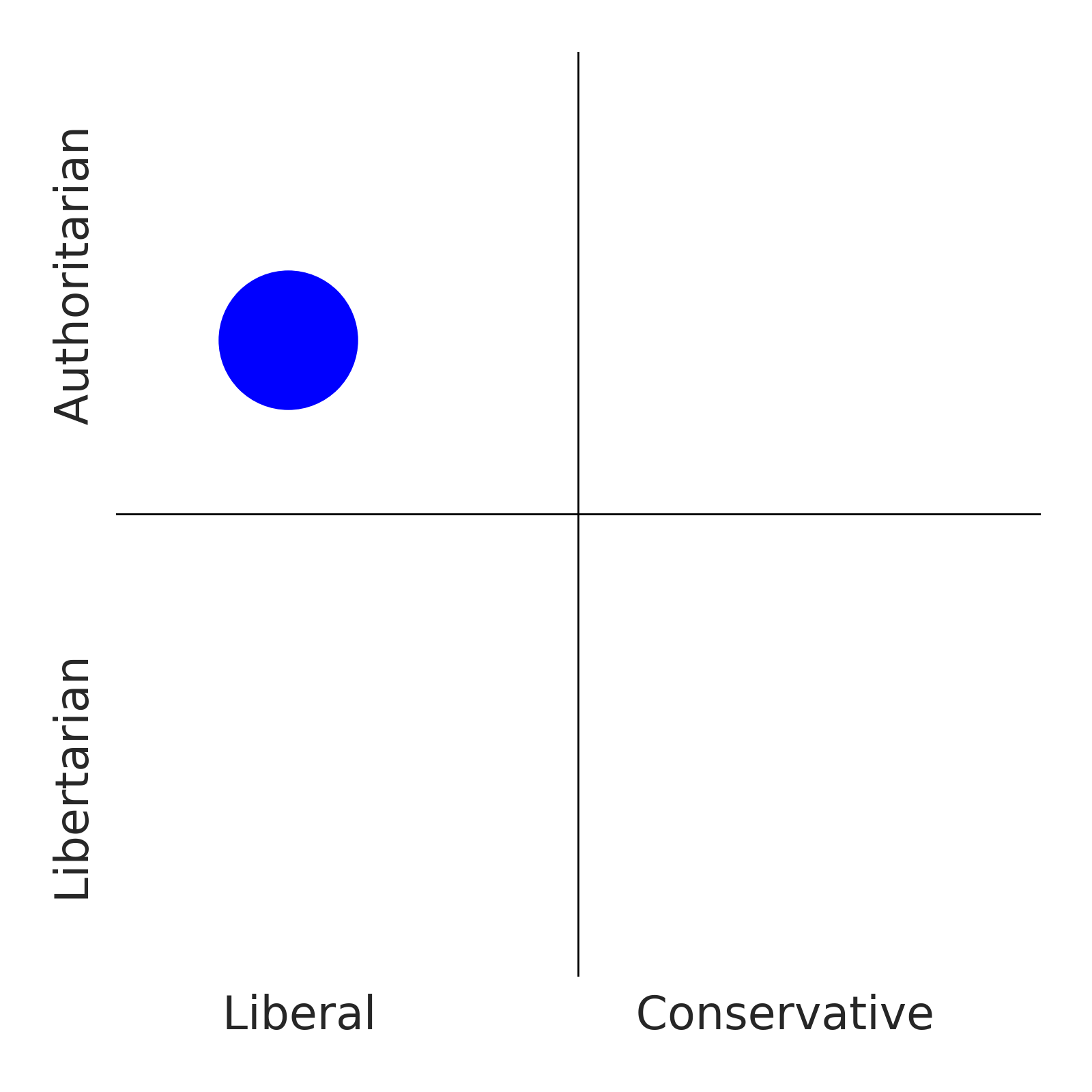
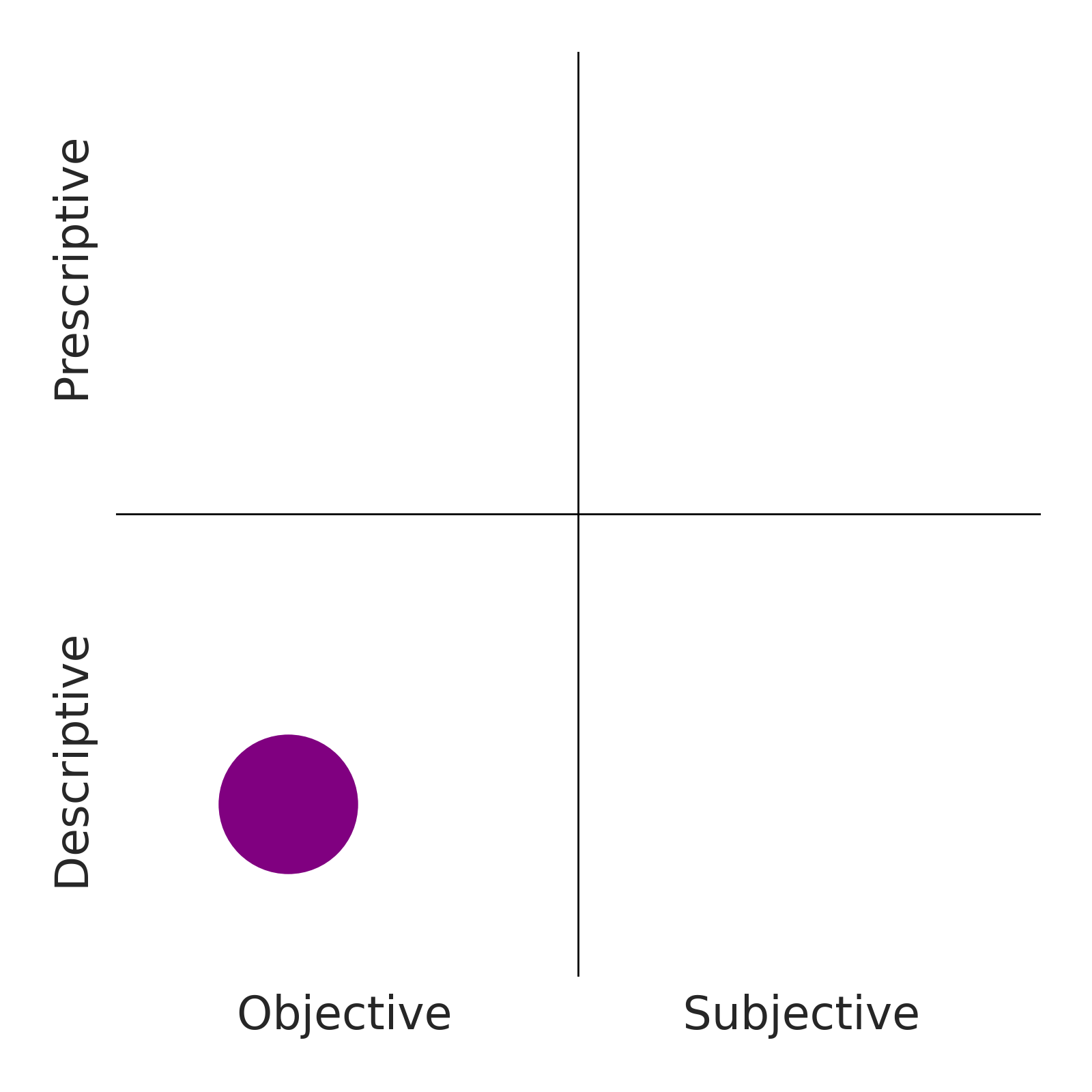
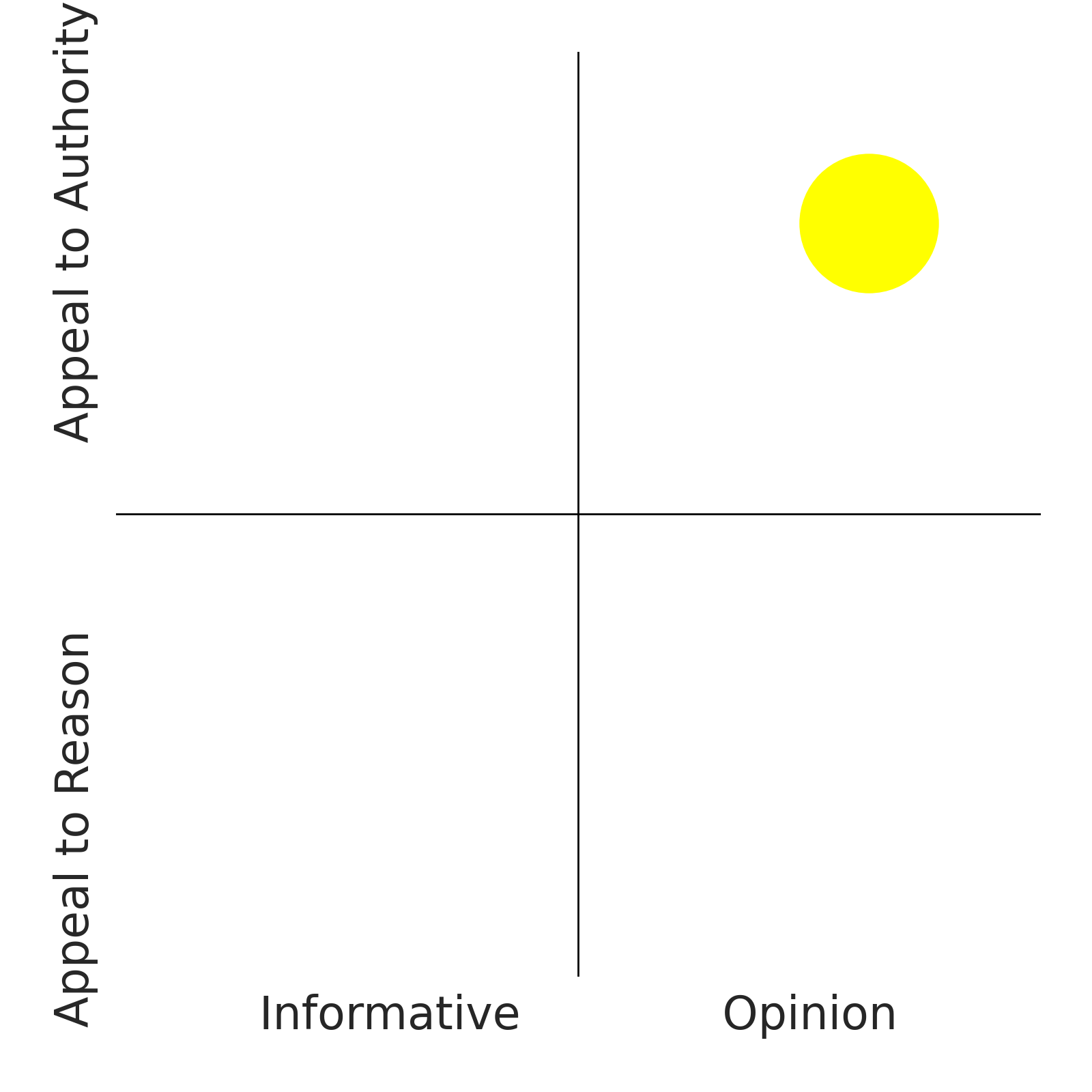
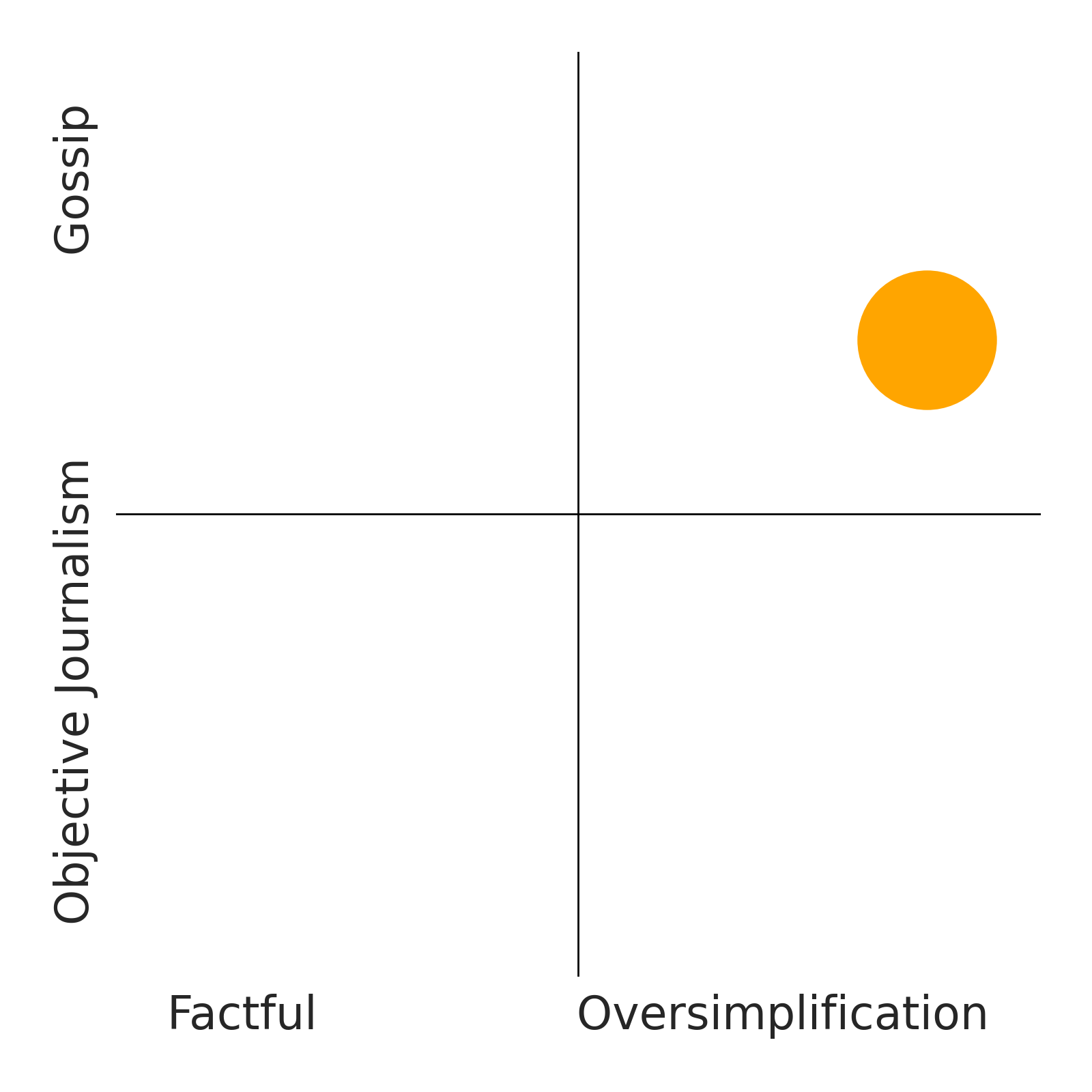
2026 © Helium Trades
Privacy Policy & Disclosure
* Disclaimer: Nothing on this website constitutes investment advice, performance data or any recommendation that any particular security, portfolio of securities, transaction or investment strategy is suitable for any specific person. Helium Trades is not responsible in any way for the accuracy
of any model predictions or price data. Any mention of a particular security and related prediction data is not a recommendation to buy or sell that security. Investments in securities involve the risk of loss. Past performance is no guarantee of future results. Helium Trades is not responsible for any of your investment decisions,
you should consult a financial expert before engaging in any transaction.
Helium Research Assistant

How can I help you today?
Ask any question about The Register bias.


