See whether Helium helps you make better-informed decisions. Try every Pro Trader feature for 30 days. No credit card required.
Try every Pro Trader feature for 30 days. No credit card required.
Automated source summary · Updated November 08, 2026 · Not human reviewed. Check recent article panels for claim-level evidence when available.
Weighted source-level patterns from recent analyzed coverage. Open recent articles below to inspect score-specific evidence and limitations when available.
🔵 Liberal <—> Conservative 🔴-18
🗞️ Objective <—> Subjective 👁️ 21
🚨 Sensational50
📉 Bearish <—> Bullish 📈13
😩 Pessimistic <—> Optimistic 🌞11
💡 Boring <—> Interesting19
📝 Prescriptive40
😨 Fearful30
📞 Begging the Question14
💭 Opinion100
🗳 Political48
Oversimplification36
🏛️ Appeal to Authority32
🍼 Immature15
👀 Covering Responses16
😢 Victimization20
😤 Overconfidence42
🗑️ Spam15
🔒 Ideological92
🏴 Anti-establishment <—> Pro-establishment 📺6
📏📏 Double Standard12
❌ Low Credibility <—> High Credibility ✅16
🧠 Rational <—> Irrational 🤪-13
🤑 Advertising41
🤖 Written by AI6
💔 Low Integrity <—> High Integrity ❤️19
🪨 Low Intelligence <—> High Intelligence 🦉46
✊ Woke15
🎭 Virtue Signaling60
🔍 Truth-seeking <—> Delusion 🌀-10
🔺 Conspiracy10
🐐 Scapegoating12
🔬 Scientific <—> Superstitious 🔮-19
👤 Individualist <—> Collectivist 👥6
🎲 Speculation40
🐍 Manipulative92
🧢 Populist <—> Elitist 🎩-2
🗽 Libertarian <—> Authoritarian 🚔5
🕊️ Dovish <—> Hawkish 🦁1
🗣️ Gossip4
🔄 Circular Reasoning2
🤡 Hypocrisy2
🦊 Anti-Corporate <—> Pro-Corporate 👔3
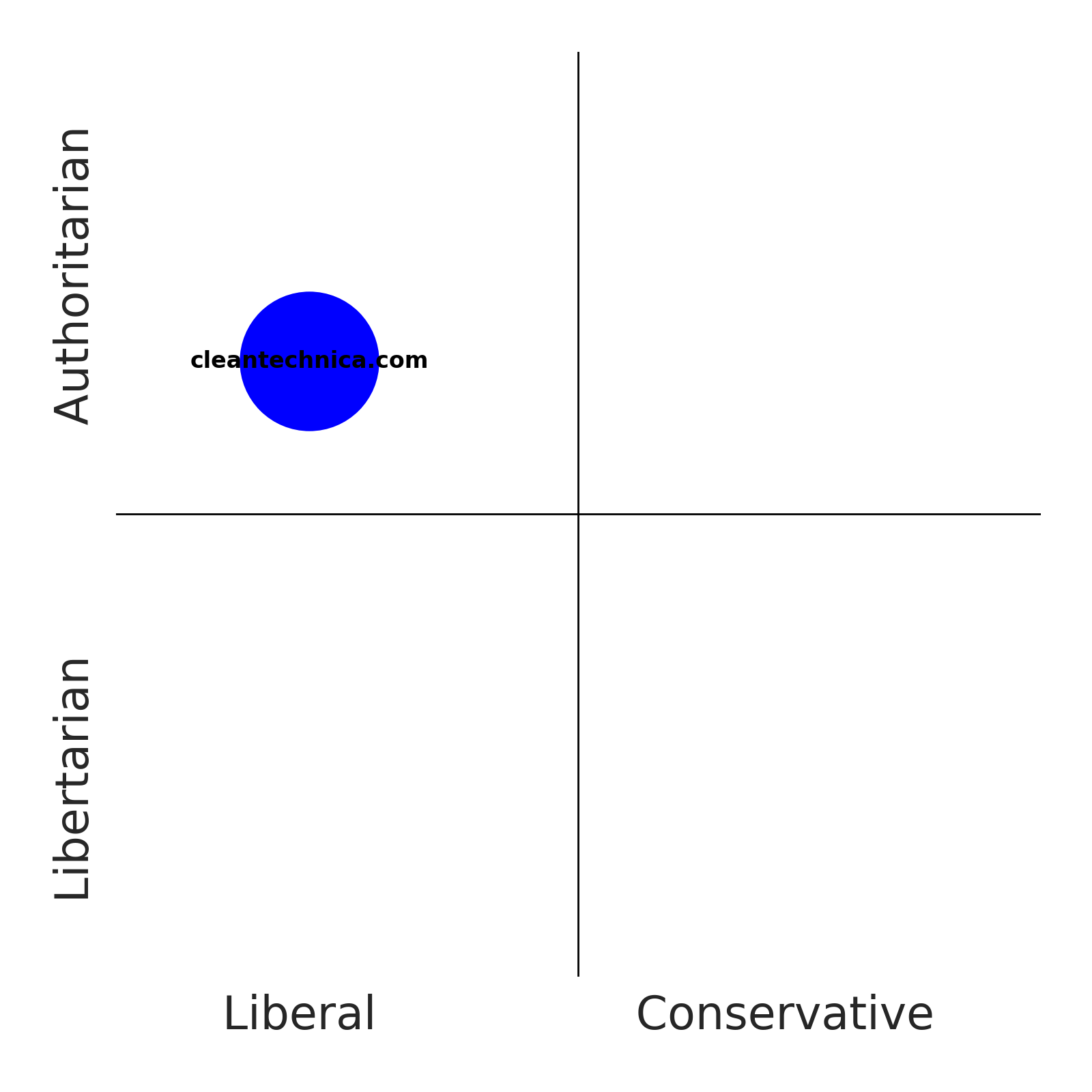
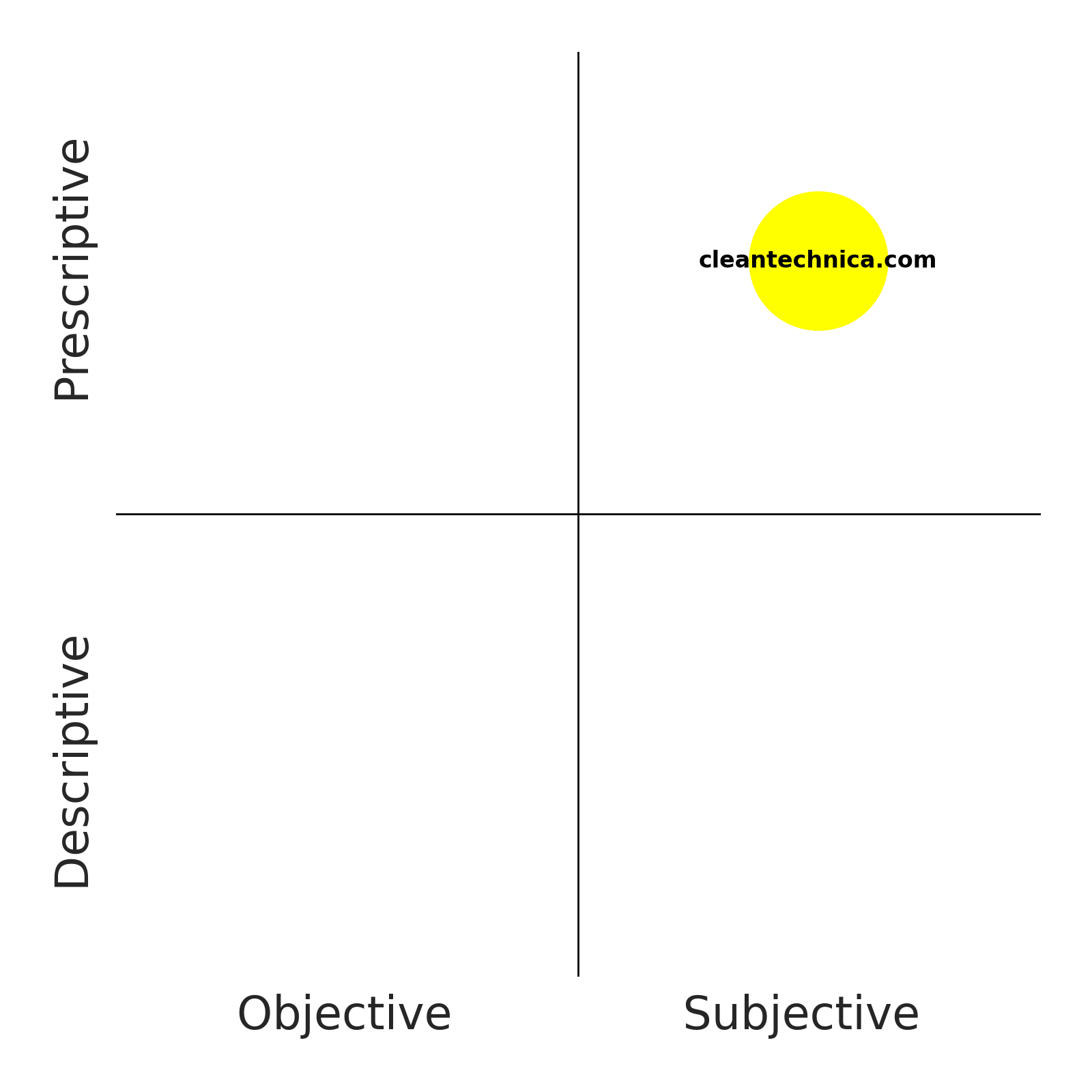
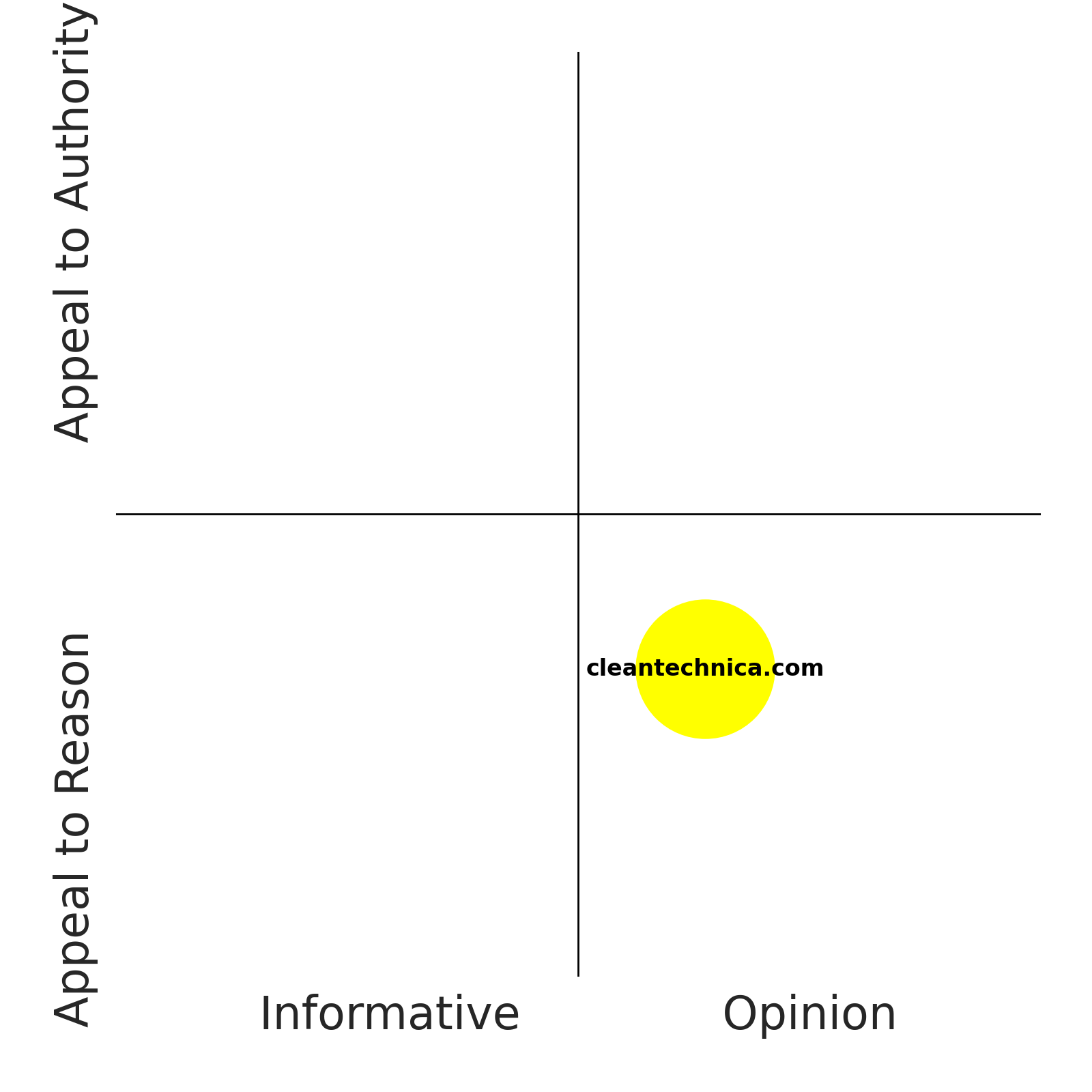
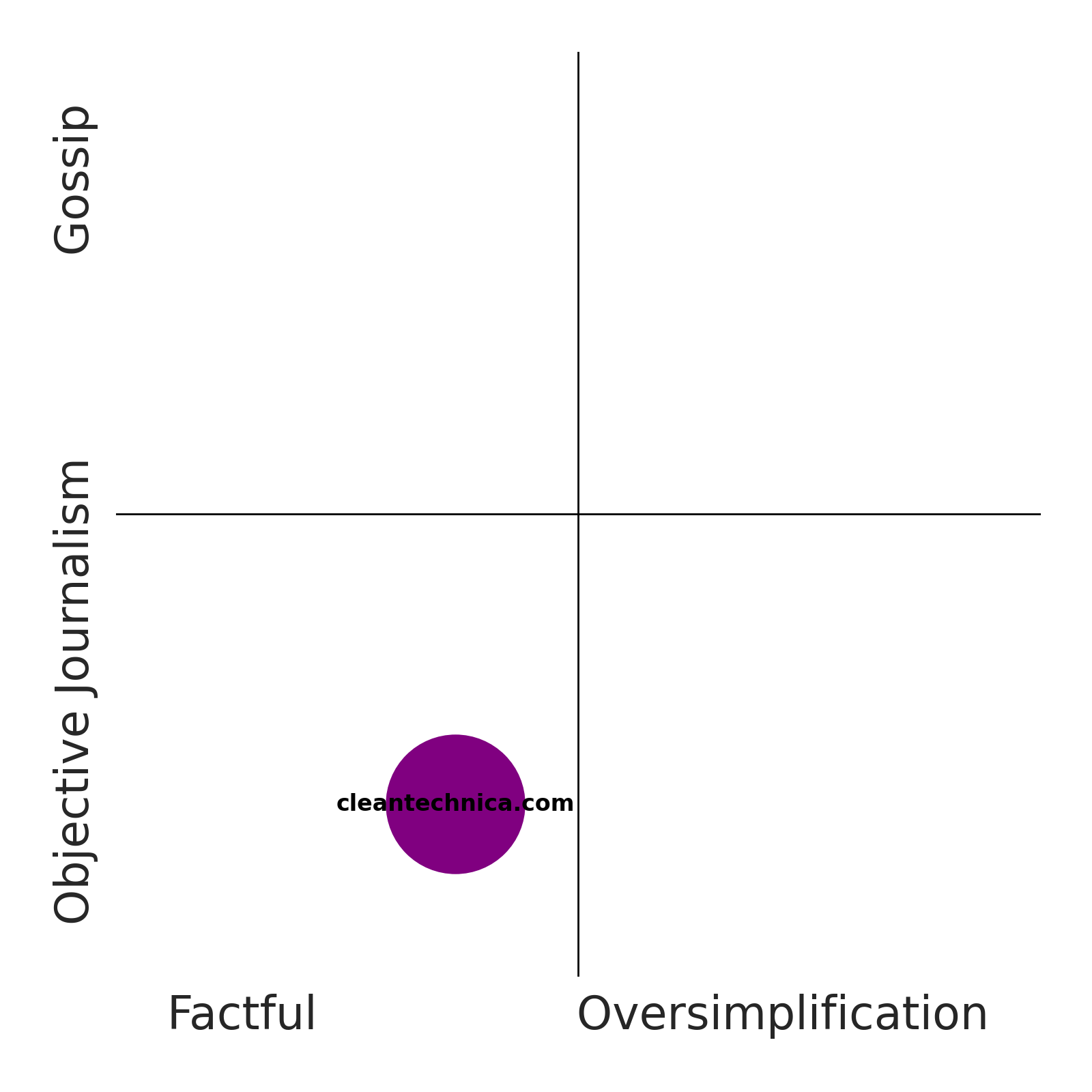
The framing is an impassioned anti-Musk polemic that uses guilt-by-association, sensational character attacks, and prescriptive national-security language to demand his removal from Starlink control.
Automated analysis; not human reviewed. Limitations: The supplied text is an opinion column with secondhand quotes and no independent verification of the Starlink outage’s cause; scores reflect the publisher’s framing, not adjudication of underlying facts. · 21 of 55 available dimensions scored; omitted dimensions are not treated as neutral. · Verified supporting quotes for 21 of 21 scored dimensions.
Claim: The article frames Musk and his political milieu as a corrupt, treason-tolerant force.
“He is part-and-parcel of a thought community that has pushed the US swirling into a sewer, a place where treason is celebrated and the common good is vilified.” · exact text match
Why: Strong negative characterization of Musk’s Trump-aligned milieu supports a left/liberal framing against that political coalition.
Claim: The headline demands removing a private operator from control of Starlink.
“Musk Must Be Removed From Control Of Starlink.” · exact text match
Why: An imperative to strip private control in favor of national-security authority leans authoritarian rather than libertarian.
Claim: The article relies on unqualified subjective character judgment.
“He lacks empathy and is a calculating menace to the world.” · exact text match
Why: Direct moral/psychological denunciation is evaluative commentary rather than detached description.
Claim: The article uses alarmist imagery about national corruption and treason.
“He is part-and-parcel of a thought community that has pushed the US swirling into a sewer, a place where treason is celebrated and the common good is vilified.” · exact text match
Why: Sewer and treason imagery is inflammatory and sensational.
Claim: The article presents a deeply negative view of US political and social conditions.
“He is part-and-parcel of a thought community that has pushed the US swirling into a sewer, a place where treason is celebrated and the common good is vilified.” · exact text match
Why: The sewer/treason framing conveys pessimism about national decline.
Claim: The article is explicitly prescriptive in demanding Musk’s removal from Starlink control.
“Musk Must Be Removed From Control Of Starlink.” · exact text match
Why: Imperative headline/claim calls for action rather than merely describing events.
Claim: The article frames Musk as an existential menace requiring alarm.
“He lacks empathy and is a calculating menace to the world.” · exact text match
Why: Menace-to-the-world language is fear-inducing and alarmist.
Claim: The article is overwhelmingly evaluative and opinionated.
“He lacks empathy and is a calculating menace to the world.” · exact text match
Why: Direct character condemnation is opinion rather than neutral fact.
Claim: The article centrally advocates a political/national-security response to private control of Starlink.
“We cannot allow Musk to continue to control of Starlink, Krugman argues.” · exact text match
Why: Calls to remove private control on national-security grounds are political advocacy.
Claim: The article reduces the Starlink access dispute to Musk’s personal and intentional action.
“If you have any doubt that Musk was looking over the shoulders of Starlink IT engineers when Ukraine’s access to Starlink vanished and their drones fell out of the sky, then perhaps a reminder of Musk’s heil hand gesture during a speech on US President Donald Trump’s inauguration day is in order.” · exact text match
Why: The framing implies a straightforward personal culpability without addressing technical or contractual complexity.
Claim: The article foregrounds Krugman’s Nobel Prize status to bolster his critique.
“Nobel Prize winning economist, Paul Krugman, wrote an important article this morning.” · exact text match
Why: Credential-first framing appeals to authority rather than relying solely on the argument’s evidence.
Claim: The article asserts Musk’s dangerous character with certainty beyond the supplied evidence.
“He lacks empathy and is a calculating menace to the world.” · exact text match
Why: Unqualified certainty about motives and character exceeds what the reported facts establish.
Claim: The article interprets Musk through an explicit ideological critique of extreme capitalism.
“dystopian, winner-take-all form of extreme capitalism.” · exact text match
Why: Characterizing capitalism as dystopian is a strong ideological frame.
Claim: The article’s emotional valence toward Musk and his allies is intensely negative.
“He lacks empathy and is a calculating menace to the world.” · exact text match
Why: The language is strongly negative and emotionally charged.
Claim: The article’s credibility is weakened by inflammatory insinuation and unsupported character claims.
“If you have any doubt that Musk was looking over the shoulders of Starlink IT engineers when Ukraine’s access to Starlink vanished and their drones fell out of the sky, then perhaps a reminder of Musk’s heil hand gesture during a speech on US President Donald Trump’s inauguration day is in order.” · exact text match
Why: The central accusation is advanced through suggestive rhetoric rather than verifiable evidence, reducing visible credibility.
Claim: The article uses a prior hand gesture as insinuating evidence about a disputed Starlink outage, a non sequitur.
“If you have any doubt that Musk was looking over the shoulders of Starlink IT engineers when Ukraine’s access to Starlink vanished and their drones fell out of the sky, then perhaps a reminder of Musk’s heil hand gesture during a speech on US President Donald Trump’s inauguration day is in order.” · exact text match
Why: The linkage invites the reader to infer culpability from an unrelated gesture, showing guilt-by-association reasoning.
Claim: The article frames extreme capitalism and private corporate power negatively.
“dystopian, winner-take-all form of extreme capitalism.” · exact text match
Why: Negative ideological characterization of extreme capitalism indicates anti-corporate framing.
Claim: The article subordinates private individual discretion to collective/national-security decision-making.
“Such decisions cannot, must not, be left up to private individuals.” · exact text match
Why: Explicitly rejects private individual control in favor of collective/state authority.
Claim: The article speculates about Musk’s personal role through insinuation.
“If you have any doubt that Musk was looking over the shoulders of Starlink IT engineers when Ukraine’s access to Starlink vanished and their drones fell out of the sky, then perhaps a reminder of Musk’s heil hand gesture during a speech on US President Donald Trump’s inauguration day is in order.” · exact text match
Why: The rhetorical question invites speculation about Musk’s oversight of the outage.
Claim: The article uses guilt-by-association and loaded insinuation to shape judgment about Musk.
“If you have any doubt that Musk was looking over the shoulders of Starlink IT engineers when Ukraine’s access to Starlink vanished and their drones fell out of the sky, then perhaps a reminder of Musk’s heil hand gesture during a speech on US President Donald Trump’s inauguration day is in order.” · exact text match
Why: Linking an unrelated prior gesture to a disputed event is an observable manipulative rhetorical technique.
Claim: The article advances a serious accusation through insinuation rather than direct verified evidence.
“If you have any doubt that Musk was looking over the shoulders of Starlink IT engineers when Ukraine’s access to Starlink vanished and their drones fell out of the sky, then perhaps a reminder of Musk’s heil hand gesture during a speech on US President Donald Trump’s inauguration day is in order.” · exact text match
Why: Suggestive linkage of an unrelated gesture to a disputed outage weakens observable fairness/honesty in argumentation.
The supplied text is an opinion column with secondhand quotes and no independent verification of the Starlink outage’s cause; scores reflect the publisher’s framing, not adjudication of underlying facts.
Sierra Club’s statement frames FERC’s proposals as an unconscionable rollback that sacrifices community health and climate to fossil-fuel interests, using one-sided negative language while omitting FERC’s rationale.
FERC is the U.S. federal agency that regulates interstate energy projects, and NEPA requires environmental review of major federal actions.
Automated analysis; not human reviewed. Limitations: Single-source advocacy press release; no FERC proposal text, independent health-cost sourcing, or opposing rationale is included. · 22 of 55 available dimensions scored; omitted dimensions are not treated as neutral. · Verified supporting quotes for 21 of 22 scored dimensions.
Claim: The statement adopts an environmental-advocacy frame opposing fossil-fuel expansion and emphasizing climate harm.
“The only beneficiaries of this plan are fossil fuel companies.” · exact text match
“exacerbate the climate crisis” · exact text match
Why: Opposition to fossil-fuel projects and emphasis on climate crisis are associated with liberal environmental positioning.
Claim: The statement frames the policy as benefiting corporate fossil-fuel interests at the expense of communities.
“The only beneficiaries of this plan are fossil fuel companies.” · exact text match
“polluting our communities and the environment” · exact text match
Why: A people-versus-corporate-interest contrast supports a mild populist framing.
Claim: The statement calls for stronger federal environmental review rather than deregulatory streamlining.
“FERC cannot abdicate its responsibility to comprehensively review these types of projects” · exact text match
Why: Advocacy for expanded regulatory oversight supports an authoritarian-leaning score on this dimension.
Claim: The text is dominated by evaluative and advocacy language rather than neutral description.
“It is unconscionable for FERC to further fast-track harmful LNG development” · exact text match
“The only beneficiaries of this plan are fossil fuel companies.” · exact text match
Why: Highly charged moral judgments and categorical claims make the framing strongly subjective.
Claim: The statement uses alarming and morally charged terms to heighten the stakes.
“dozens of premature deaths” · exact text match
“It is unconscionable” · exact text match
Why: Emotive language and death-related claims create a sensational framing.
Claim: The statement forecasts strongly negative consequences if the proposals proceed.
“Eroding these guardrails will make our historically high energy prices even worse, increase harm to local ecosystems and communities, and exacerbate the climate crisis.” · exact text match
Why: The forecast emphasizes worsening prices, harm, and climate crisis.
Claim: The statement moves from describing FERC actions to prescribing what FERC must do.
“FERC cannot abdicate its responsibility to comprehensively review these types of projects” · exact text match
Why: The language is explicitly prescriptive about agency responsibility.
Claim: The statement emphasizes death, pollution, and climate crisis to generate alarm.
“dozens of premature deaths” · exact text match
“exacerbate the climate crisis” · exact text match
Why: References to deaths and climate crisis are used as alarm-raising elements.
Claim: The quoted statement is explicitly evaluative and advocacy-oriented.
“It is unconscionable for FERC to further fast-track harmful LNG development” · exact text match
Why: The text presents a strong moral judgment rather than neutral reporting.
Claim: The content centers on federal regulatory policy and advocacy over FERC action.
“FERC cannot abdicate its responsibility to comprehensively review these types of projects” · exact text match
Why: The article concerns a federal agency’s permitting policy and advocacy around it.
Claim: The statement reduces a complex permitting debate to a single beneficiary and unqualified harm frame.
“The only beneficiaries of this plan are fossil fuel companies.” · exact text match
Why: A categorical sole-beneficiary claim oversimplifies policy tradeoffs.
Claim: The statement frames communities and ecosystems as victims of the projects.
“a legacy of polluting our communities and the environment” · exact text match
“increase harm to local ecosystems and communities” · exact text match
Why: The text emphasizes harmed communities and environments as the policy’s casualties.
Claim: The statement predicts effects with certainty despite the conditional policy proposals.
“Eroding these guardrails will make our historically high energy prices even worse” · exact text match
Why: Future harms are stated with strong certainty rather than hedged language.
Claim: The statement advances a strong environmentalist position against fossil-fuel expansion.
“exacerbate the climate crisis” · exact text match
“The only beneficiaries of this plan are fossil fuel companies.” · exact text match
Why: The framing is organized around environmentalist opposition to fossil-fuel projects.
Claim: Strong negative emotional language dominates the reaction.
“It is unconscionable” · exact text match
“harmful impacts” · not found in supplied text
Why: The framing is overwhelmingly negative and emotionally charged.
Claim: The text is a single-source advocacy statement with limited visible sourcing for quantitative estimates.
“released the following statement” · exact text match
“Direct air pollution from operating LNG terminals in the US is already estimated” · exact text match
Why: It is clearly presented as an advocacy reaction and does not supply independent sourcing or opposing views.
Claim: The statement portrays fossil-fuel companies as the sole beneficiaries and source of harm.
“The only beneficiaries of this plan are fossil fuel companies.” · exact text match
Why: A categorical anti-corporate claim supports a strong anti-corporate framing.
Claim: The statement relies on scientific and technical review language about air quality modeling and climate.
“air dispersion modeling, which is critical to understanding a proposed project’s local and regional air quality impacts as required by the National Environmental Policy Act (NEPA).” · exact text match
Why: The framing appeals to technical environmental review rather than superstition.
Claim: The statement emphasizes collective community and ecosystem harm over individual or market benefits.
“increase harm to local ecosystems and communities” · exact text match
“polluting our communities and the environment” · exact text match
Why: The language prioritizes collective environmental and community impacts.
Claim: The statement forecasts harms and policy outcomes beyond the immediate described actions.
“If Implemented, Methane Gas Projects Could be Approved Without Proper Review of Harmful Impacts” · exact text match
“will make our historically high energy prices even worse” · exact text match
Why: Conditional forecasts about future approvals and harms drive the framing.
Claim: The statement uses loaded framing and a categorical beneficiary claim without presenting opposing considerations.
“It is unconscionable for FERC to further fast-track harmful LNG development” · exact text match
“The only beneficiaries of this plan are fossil fuel companies.” · exact text match
Why: Charged language and an absolute beneficiary claim frame the issue one-sidedly.
Claim: The statement assigns blame for the policy to fossil-fuel companies as the only beneficiaries.
“The only beneficiaries of this plan are fossil fuel companies.” · exact text match
Why: The categorical beneficiary claim singles out the industry as responsible for the policy’s harms.
Single-source advocacy press release; no FERC proposal text, independent health-cost sourcing, or opposing rationale is included.
The commentary adopts a morally charged, anti-corporate climate-risk frame, casting insurers as betraying customers through profit-driven coverage retreats.
Automated analysis; not human reviewed. Limitations: The supplied text is an opinion column with duplicated fragments and missing outbound-link context, so some factual claims cannot be independently verified. · 27 of 55 available dimensions scored; omitted dimensions are not treated as neutral. · Verified supporting quotes for 27 of 27 scored dimensions.
Claim: The commentary frames climate-risk failure through anti-capitalist moralizing.
“Greed really is the root of all evil and will likely prove to be the undoing of the human race.” · exact text match
“At the heart of the matter is the age old truisms of a capitalist economy.” · exact text match
Why: The moral condemnation of greed and capitalism signals a left-leaning ideological frame.
Claim: The publisher sides with customers against an exploitative insurance industry.
“Insurance Industry Is Throwing Its Customers Under The Bus.” · exact text match
“Just like every other business, they are content to take our money while giving us less and less protection.” · exact text match
Why: The people-versus-corporate framing is populist in orientation.
Claim: The framing treats government intervention as necessary to address insurance gaps.
“Without intervention, these physical risks will translate into major economic risk.” · exact text match
“the state has done little to make sure affordable coverage is available to them.” · exact text match
Why: The emphasis on intervention and state responsibility leans authoritarian rather than libertarian.
Claim: The article presents a strongly evaluative and moralized interpretation.
“Insurance Industry Is Throwing Its Customers Under The Bus.” · exact text match
“Greed really is the root of all evil and will likely prove to be the undoing of the human race.” · exact text match
Why: Loaded metaphors and moral judgments make the framing highly subjective.
Claim: The language is alarmist and sensational rather than measured.
“Insurance Industry Is Throwing Its Customers Under The Bus.” · exact text match
“Greed really is the root of all evil and will likely prove to be the undoing of the human race.” · exact text match
Why: The catastrophe and betrayal imagery is sensational.
Claim: The commentary frames climate-related insurance risk as a systemic financial threat.
“mis-priced risk is building to potentially unmanageable levels.” · exact text match
“The net result will be an increase in uninsured losses for which someone else will have to pay the price.” · exact text match
Why: The emphasis on unmanageable risk and uninsured losses is bearish on financial stability.
Claim: The article adopts a deeply pessimistic outlook on climate and human response.
“Greed really is the root of all evil and will likely prove to be the undoing of the human race.” · exact text match
Why: The prediction of civilizational undoing is strongly pessimistic.
Claim: The piece moves from description to prescribing a future-oriented response.
“We fail to take a clear eyed view of the future at our peril.” · exact text match
Why: The closing line prescribes a clear-eyed view and warns of consequences.
Claim: The publisher uses fearful and alarmist framing about climate and insurance collapse.
“Insurance Industry Is Throwing Its Customers Under The Bus.” · exact text match
“Greed really is the root of all evil and will likely prove to be the undoing of the human race.” · exact text match
Why: The betrayal and civilizational-doom language is fear-oriented.
Claim: The article is explicitly opinionated rather than neutral reporting.
“Greed really is the root of all evil and will likely prove to be the undoing of the human race.” · exact text match
“How’s that for being neighborly?” · exact text match
Why: Direct moral judgments and sarcasm dominate the framing.
Claim: The issue is framed through government intervention and regulatory failure.
“Without intervention, these physical risks will translate into major economic risk.” · exact text match
“the state has done little to make sure affordable coverage is available to them.” · exact text match
Why: The focus on state action and regulation makes the framing political.
Claim: Complex climate-risk pricing is reduced to capitalist greed and a 'gravy train.'
“At the heart of the matter is the age old truisms of a capitalist economy.” · exact text match
“Pricing in long term risk short circuits the gravy train for everyone, and we can’t allow that to happen, now can we?” · exact text match
Why: The analysis collapses multiple actors and incentives into a simple greed narrative.
Claim: Credentialed industry and financial figures are used as central support.
“According to a new report from Inside Track, a group of senior insurance industry professionals” · exact text match
“Nicholas Stern, chair of the Grantham Research Institute on Climate Change at the London School of Economics, told Bloomberg” · exact text match
Why: The argument leans heavily on named expert and institutional authority.
Claim: The article uses taunting sarcasm in discussing wildfire victims.
“well, it sucks to be you. How’s that for being neighborly?” · exact text match
Why: The mocking tone is immature rather than measured.
Claim: Customers and communities are cast as victims of insurer behavior and climate impacts.
“Insurance Industry Is Throwing Its Customers Under The Bus.” · exact text match
“who will face the strongest impacts of climate change.” · exact text match
Why: The framing centers betrayal and victimhood of customers and communities.
Claim: The commentary states sweeping certainties about greed and future consequences.
“Greed really is the root of all evil and will likely prove to be the undoing of the human race.” · exact text match
“We fail to take a clear eyed view of the future at our peril.” · exact text match
Why: Strong moral certainty exceeds the supplied evidentiary support.
Claim: The issue is interpreted through a fixed anti-capitalist moral lens.
“At the heart of the matter is the age old truisms of a capitalist economy.” · exact text match
“Greed really is the root of all evil and will likely prove to be the undoing of the human race.” · exact text match
Why: The causal story is structured around capitalism and greed as root causes.
Claim: The commentary is broadly anti-establishment toward insurers and state actors.
“Just like every other business, they are content to take our money while giving us less and less protection.” · exact text match
“the state has done little to make sure affordable coverage is available to them.” · exact text match
Why: It attacks entrenched industry and government behavior rather than defending them.
Claim: The article is strongly negative and emotionally charged.
“Greed really is the root of all evil and will likely prove to be the undoing of the human race.” · exact text match
“well, it sucks to be you. How’s that for being neighborly?” · exact text match
Why: The tone is overwhelmingly negative and emotive.
Claim: The article includes named-source attribution and direct quotation of industry and financial experts.
“According to a new report from Inside Track, a group of senior insurance industry professionals” · exact text match
“Bloomberg reported on October 13 that Amanda Blanc, the CEO of Aviva Insurance, claims that homes being built in the UK today are already uninsurable due to the increasing risk of flooding.” · exact text match
Why: Visible sourcing and attribution support moderate credibility, though the piece remains opinionated.
Claim: The piece uses sweeping moralizing and sarcasm in place of measured analysis.
“Greed really is the root of all evil and will likely prove to be the undoing of the human race.” · exact text match
“well, it sucks to be you. How’s that for being neighborly?” · exact text match
Why: Emotive overgeneralization and taunting undercut rational tone.
Claim: Corporate insurers and capitalist incentives are portrayed as exploitative.
“Just like every other business, they are content to take our money while giving us less and less protection.” · exact text match
“At the heart of the matter is the age old truisms of a capitalist economy.” · exact text match
Why: The framing is strongly anti-corporate.
Claim: The article emphasizes collective costs and community exposure over individual responsibility.
“The net result will be an increase in uninsured losses for which someone else will have to pay the price.” · exact text match
“who will face the strongest impacts of climate change.” · exact text match
Why: The focus on shared losses and communities leans collectivist.
Claim: The piece forecasts future climate and insurance instability.
“We are moving into a world that is far from predictable and we are neither prepared ourselves or moving to prepare our customers of today, who may suddenly find that they are not our customers tomorrow.” · exact text match
“mis-priced risk is building to potentially unmanageable levels.” · exact text match
Why: Future risk and uninsurability scenarios are central to the argument.
Claim: Loaded metaphor and a rhetorical question push an emotive conclusion.
“Insurance Industry Is Throwing Its Customers Under The Bus.” · exact text match
“Pricing in long term risk short circuits the gravy train for everyone, and we can’t allow that to happen, now can we?” · exact text match
Why: The framing uses charged language and rhetorical pressure rather than neutral exposition.
Claim: The piece endorses a claim that insurers are suppressing risk information.
“some in the insurance industry are suppressing the information they have so their customers are not aware of the dangers they face.” · exact text match
Why: The suppression claim invites conspiratorial interpretation, though it is attributed to an industry report.
Claim: The insurance industry and capitalist greed are broadly blamed for climate-risk failures.
“Just like every other business, they are content to take our money while giving us less and less protection.” · exact text match
“Greed really is the root of all evil and will likely prove to be the undoing of the human race.” · exact text match
Why: A broad industry-and-greed scapegoat is central to the argument.
The supplied text is an opinion column with duplicated fragments and missing outbound-link context, so some factual claims cannot be independently verified.
October 14, 2026 · 0 shares
Frames the permit review as a reckless, politically motivated attack on a nearly completed clean-energy project, with loaded language and asserted motive.
Automated analysis; not human reviewed. Limitations: The supplied text is a one-sided Sierra Club advocacy statement with no byline or opposing response; scores reflect that framing limitation. · 23 of 55 available dimensions scored; omitted dimensions are not treated as neutral. · Verified supporting quotes for 23 of 23 scored dimensions.
Claim: Frames the permit review as an anti-clean-energy, pro-fossil-fuel attack.
“eliminating their competition instead of delivering the affordable, clean energy Americans need” · exact text match
Why: The environmental advocacy and anti-fossil-fuel framing align with liberal positioning.
Claim: Pits ordinary families against fossil-fuel 'buddies' and profits.
“Trump wants to help his buddies in the fossil fuel industry bolster profits” · exact text match
“families across New England” · exact text match
Why: The framing invokes a populist elite-versus-public contrast.
Claim: Presents an explicitly evaluative advocacy statement.
“The Trump administration is reckless and cruel” · exact text match
Why: The language is a subjective judgment rather than neutral description.
Claim: Uses dramatic and loaded phrasing.
“In another effort to kill the industry” · exact text match
“reckless and cruel” · exact text match
Why: Dramatic verbs and adjectives heighten the framing.
Claim: Moves from describing the dispute to prescribing what should be delivered.
“instead of delivering the affordable, clean energy Americans need” · exact text match
Why: The statement advances a normative policy preference.
Claim: Invokes winter cold and utility-price instability.
“ahead of the cold winter months when the region will need offshore wind more than ever to keep utility prices stable” · exact text match
Why: The consequence framing is designed to heighten concern.
Claim: Treats the administration's motive as self-evident.
“The answer is that Trump wants to help his buddies” · exact text match
Why: The conclusion about motive is asserted rather than demonstrated.
Claim: Is an explicit advocacy statement with evaluative judgments.
“The Trump administration is reckless and cruel” · exact text match
Why: The text is primarily opinion and advocacy.
Claim: Centers on a Trump administration policy dispute.
“Donald Trump’s Department of the Interior has asked a federal court to re-evaluate the permit” · exact text match
Why: The content is focused on a political-administrative conflict.
Claim: Reduces the permit dispute to a profit motive.
“The answer is that Trump wants to help his buddies in the fossil fuel industry bolster profits” · exact text match
Why: Complex administrative and legal issues are collapsed into a single motive.
Claim: Frames New England families as harmed by the administration's action.
“reckless and cruel to do this ahead of the cold winter months” · exact text match
“families across New England” · exact text match
Why: The framing emphasizes harm to a victim population.
Claim: States the motive with certainty.
“The answer is that Trump wants to help his buddies” · exact text match
Why: The phrase presents an asserted motive as definitive.
Claim: Frames the policy through environmental advocacy against fossil fuels.
“In another effort to kill the industry” · exact text match
“double down on fossil fuels” · exact text match
Why: The language reflects a strong environmentalist ideological frame.
Claim: Strong negative emotional language toward the administration.
“reckless and cruel” · exact text match
Why: The wording is intensely negative rather than neutral.
Claim: One-sided advocacy with an unverified motive and no administration response.
“The answer is that Trump wants to help his buddies in the fossil fuel industry bolster profits” · exact text match
Counterevidence:
“Sierra Club Deputy Legislative Director Xavier Boatright issued the following statement:” · exact text match
Why: Attribution to a named spokesperson is present, but the text remains one-sided and asserts motive.
Claim: Uses emotionally charged denunciation and certainty about motive.
“reckless and cruel” · exact text match
“The answer is that Trump wants to help his buddies” · exact text match
Why: Loaded language and asserted motive reduce rational, evidence-bound tone.
Claim: Includes promotional self-description of the Sierra Club.
“Sierra Club is America’s largest and most influential grassroots environmental organization” · exact text match
Why: The organizational blurb is promotional rather than reportorial.
Claim: Portrays fossil-fuel companies as profit-seeking opponents of clean energy.
“fossil fuel industry bolster profits by eliminating their competition” · exact text match
Why: The framing is hostile to corporate fossil-fuel interests.
Claim: Forecasts winter need and asserts motive.
“when the region will need offshore wind more than ever” · exact text match
“The answer is that Trump wants to help his buddies” · exact text match
Why: The text includes future-oriented claims and motive speculation.
Claim: Uses loaded labels, asserted motive, and a binary clean-energy-versus-fossil-profits frame.
“reckless and cruel” · exact text match
“The answer is that Trump wants to help his buddies in the fossil fuel industry bolster profits” · exact text match
Why: These observable techniques push a one-sided interpretation.
Claim: Asserts an unverified motive as the answer rather than as an allegation.
“The answer is that Trump wants to help his buddies in the fossil fuel industry bolster profits” · exact text match
Why: Presenting motive as settled weakens fairness and evidentiary restraint.
Claim: Positions the project as delivering the clean energy Americans need.
“delivering the affordable, clean energy Americans need” · exact text match
Why: The framing moralizes support for the project as a public good.
Claim: Blames Trump and fossil-fuel interests for eliminating competition.
“Trump wants to help his buddies in the fossil fuel industry bolster profits by eliminating their competition” · exact text match
Why: The statement assigns blame to a targeted industry and political actor.
The supplied text is a one-sided Sierra Club advocacy statement with no byline or opposing response; scores reflect that framing limitation.
Sensational, anti-Musk/anti-Trump commentary frames a reported Starlink slowdown as a 'betrayal' and speculates about a Faustian political bargain while mixing attributed WSJ reporting with selected reader comments.
Automated analysis; not human reviewed. Limitations: The supplied text is highly opinionated commentary; several causal and political claims are speculative or attributed to selected comments, and some factual statements rely on WSJ reporting not independently verifiable in the excerpt. · 18 of 55 available dimensions scored; omitted dimensions are not treated as neutral. · Verified supporting quotes for 18 of 18 scored dimensions.
Claim: The commentary frames Musk and Republicans negatively while aligning with Democratic-leaning election and Ukraine narratives.
“Musk has publicly and loudly hitched his fortune to Trump and the Republican majority in Congress” · exact text match
“Musk’s desperation to draw voters to the Trump side” · exact text match
Why: Repeated negative framing of Musk’s alliance with Trump and Republicans supports a liberal direction rather than neutrality.
Claim: The article is written as subjective commentary rather than a detached report.
“Cloud Of Betrayal Settles Over Potential SpaceX-Tesla Merger.” · exact text match
“leading some to conclude (raises hand) that the satellite services interruption was part of a Faustian bargain” · exact text match
Why: Loaded headline and first-person endorsement of speculation make the framing subjective.
Claim: The headline and phrasing use sensational, dramatic language.
“Cloud Of Betrayal Settles Over Potential SpaceX-Tesla Merger.” · exact text match
“cripping the nation's ability to defense itself against Russian attacks” · exact text match
Why: Betrayal and crippling language are sensational rather than neutral.
Claim: The selected material is bearish on Tesla’s prospects and merger rationale.
“This is the last chance to stave off a share price collapse for Tesla” · exact text match
“sparking renewed interest in EVs after sales crashed last year” · exact text match
Why: Highlighting a share-price collapse and crashed sales tilts financial framing bearish.
Claim: The article directs readers’ political behavior with explicit do and do-not instructions.
“Do not use “VoteSafe.org,” which is a partisan voter data collection operation funded by Musk’s America PAC.” · exact text match
“If you need to contact your local elections officials and don’t know how, reputable elections hubs like Vote.org (a project of the League of Women Voters) can hook you up.” · exact text match
Why: Explicit guidance about which election site to use is prescriptive.
Claim: Dramatic language heightens fear about Ukraine’s vulnerability and political betrayal.
“Cloud Of Betrayal Settles Over Potential SpaceX-Tesla Merger.” · exact text match
“leaving that nation more vulnerable than ever to Russian drone and missile attacks.” · exact text match
Why: Betrayal and 'more vulnerable than ever' framing are fear-amplifying.
Claim: The piece is dominated by evaluative commentary and sarcastic asides.
“Cloud Of Betrayal Settles Over Potential SpaceX-Tesla Merger.” · exact text match
“Musk and Trump can only flail about while voters head to the polls.” · exact text match
Why: Loaded headline and dismissive characterization are opinion rather than neutral fact reporting.
Claim: The article frames the Starlink and merger story through U.S. electoral and partisan politics.
“Musk has publicly and loudly hitched his fortune to Trump and the Republican majority in Congress” · exact text match
“Election Day 2026 is shaping up to propel a seismic shift in attitude over at the Capitol Building.” · exact text match
Why: Repeated references to Trump, Republicans, and Election Day make political framing central.
Claim: The text reduces a complex Starlink/Ukraine decision to a politically motivated Faustian bargain.
“leading some to conclude (raises hand) that the satellite services interruption was part of a Faustian bargain intended to give President Trump some badly needed positive press as Election Day 2026 approaches.” · exact text match
Why: A single speculative bargain explains multiple complex events, oversimplifying causation.
Claim: Sarcastic colloquial asides give the piece an immature, mocking tone.
“Ya don’t say.” · exact text match
“Hold on to your hats…” · exact text match
Why: Mocking interjections are stylistic immaturity/rage-bait markers.
Claim: The article asserts that the reported attribution is now definitively exposed despite relying on reported sourcing.
“And now, the cat is out of the bag.” · exact text match
“Musk has reportedly been unveiled as the ultimate decider.” · exact text match
Why: Cat-out-of-the-bag language expresses certainty beyond the 'reportedly' attribution.
Claim: The framing consistently advances an anti-Musk/anti-Trump political stance.
“Musk and Trump can only flail about while voters head to the polls.” · exact text match
“Musk’s desperation to draw voters to the Trump side” · exact text match
Why: Dismissive, repetitive characterization of Musk and Trump shows ideological framing.
Claim: The article’s language is strongly negative toward Musk, Trump, and their political project.
“Cloud Of Betrayal Settles Over Potential SpaceX-Tesla Merger.” · exact text match
“Musk and Trump can only flail about while voters head to the polls.” · exact text match
Why: Betrayal and flailing language convey strong negative emotion.
Claim: The text advances a speculative Faustian-bargain interpretation with little evidential support.
“leading some to conclude (raises hand) that the satellite services interruption was part of a Faustian bargain intended to give President Trump some badly needed positive press as Election Day 2026 approaches.” · exact text match
Why: The parenthetical endorsement of a speculative political bargain signals irrational inference rather than measured analysis.
Claim: The text repeatedly advances forecasts and speculative causal scenarios.
“Word of a possible SpaceX-Tesla merger has been drifting around the Intertubes for months” · exact text match
“leading some to conclude (raises hand) that the satellite services interruption was part of a Faustian bargain” · exact text match
Why: Rumor language and explicit speculative conclusion dominate the framing.
Claim: Loaded headline language and endorsed speculation push readers toward a predetermined betrayal narrative.
“Cloud Of Betrayal Settles Over Potential SpaceX-Tesla Merger.” · exact text match
“leading some to conclude (raises hand) that the satellite services interruption was part of a Faustian bargain” · exact text match
Why: Framing technique uses emotionally loaded labels and author-endorsed speculation to shape interpretation.
Claim: The article promotes a 'reputable' election hub while warning against a partisan data operation.
“reputable elections hubs like Vote.org (a project of the League of Women Voters) can hook you up” · exact text match
“Do not use “VoteSafe.org,” which is a partisan voter data collection operation funded by Musk’s America PAC.” · exact text match
Why: Moralized labeling of a preferred election resource signals virtue signaling.
Claim: The article endorses a speculative Faustian-bargain interpretation linking Starlink, Trump, Russia, and the 2026 election.
“leading some to conclude (raises hand) that the satellite services interruption was part of a Faustian bargain intended to give President Trump some badly needed positive press as Election Day 2026 approaches.” · exact text match
Why: The author explicitly includes themself in a conspiratorial conclusion about a hidden political bargain.
The supplied text is highly opinionated commentary; several causal and political claims are speculative or attributed to selected comments, and some factual statements rely on WSJ reporting not independently verifiable in the excerpt.
October 28, 2026 · 0 shares
The release frames the final permit as an astoundingly lax approval that exposes an overburdened community to pollution while omitting agency and company justifications.
LDEQ is Louisiana’s state environmental regulator, and the proposed Hyundai Steel plant is in Donaldsonville, in the area the release calls Cancer Alley.
Automated analysis; not human reviewed. Limitations: Scores reflect an openly one-sided Sierra Club advocacy release with no direct response from LDEQ or Hyundai. · 28 of 55 available dimensions scored; omitted dimensions are not treated as neutral. · Verified supporting quotes for 28 of 28 scored dimensions.
Claim: The release frames the permit through environmental-justice and stricter-pollution-control priorities.
“failed to include an environmental justice analysis” · exact text match
“would still bring thousands of tons of pollution to Cancer Alley” · exact text match
Why: Environmental-justice and expanded regulatory-control framing aligns with liberal environmental policy priorities.
Claim: The release sides with local community pressure against a state agency and corporation.
“in response to public pressure” · exact text match
“one of the most polluted communities in America” · exact text match
Why: It casts public pressure and a polluted community against institutional decisions.
Claim: The release demands stronger government permit conditions and environmental review.
“fails to require Hyundai to significantly reduce pollution by electrifying additional components” · exact text match
“failed to include an environmental justice analysis” · exact text match
Why: It calls for more restrictive regulatory requirements rather than less government control.
Claim: First-person advocacy and evaluative language dominate.
“We will continue to evaluate the final permit and are exploring our legal options and next steps.” · exact text match
“Astoundingly” · exact text match
Why: The text is an advocacy statement with explicit judgments rather than neutral reporting.
Claim: Emotive pollution language heightens alarm.
“thousands of tons of pollution” · exact text match
“Cancer Alley” · exact text match
Why: Loaded phrasing emphasizes danger and scale.
Claim: The permit outcome is framed as a failure with ongoing harm.
“falls short of those promises” · exact text match
“dangerous pollution” · exact text match
Why: The overall framing is negative about the permit and its consequences.
Claim: The release explicitly prescribes company actions.
“it needs to do more to reduce dangerous pollution through electrification and make a firm commitment to green hydrogen.” · exact text match
Why: This is a direct recommendation for what Hyundai should do.
Claim: Pollution is framed as a severe threat to an overburdened community.
“region already overburdened with dirty air and water.” · exact text match
“dangerous pollution” · exact text match
Why: Language emphasizes harm and vulnerability.
Claim: Evaluative judgments saturate the release.
“Astoundingly” · exact text match
“falls short of those promises” · exact text match
Why: The text repeatedly asserts judgments rather than only reporting facts.
Claim: The core dispute is regulatory and environmental-justice policy.
“air permit” · exact text match
“environmental justice analysis” · exact text match
Why: The dispute centers on government permitting and environmental-justice review.
Claim: The permit is presented as a clear failure without opposing rationale.
“fails to require Hyundai to significantly reduce pollution” · exact text match
Why: Complex permitting tradeoffs are reduced to a pollution-control failure.
Claim: The release uses rhetorical incredulity and a leading question.
“Astoundingly” · exact text match
“That begs the question” · exact text match
Why: These devices are emotive and argumentative.
Claim: The community is portrayed as an overburdened victim.
“region already overburdened with dirty air and water.” · exact text match
“one of the most polluted communities in America” · exact text match
Why: The framing emphasizes community suffering from pollution.
Claim: Future pollution effects are stated with strong certainty.
“would still bring thousands of tons of pollution” · exact text match
“fails to require Hyundai” · exact text match
Why: The release asserts impacts and permit shortcomings without hedging.
Claim: Environmental-justice ideology frames the permit dispute.
“environmental justice analysis” · exact text match
“cleanest technologies” · exact text match
Why: The argument relies on an environmental-justice framework and clean-technology prescriptions.
Claim: It criticizes the state regulator and corporation from an NGO advocacy stance.
“Astoundingly, LDEQ found that this massive new greenfield facility would have “no adverse impacts”” · exact text match
Why: The framing challenges official approval and corporate conduct.
Claim: Negative emotional language about pollution dominates.
“dirty air and water” · exact text match
“dangerous pollution” · exact text match
Why: The text evokes concern and alarm about pollution.
Claim: Specific figures and a named source appear, but the release is one-sided advocacy.
“exceeding 96% of the rest of the country” · exact text match
“issued the following statement” · exact text match
Why: There is concrete sourcing but no opposing response or independent verification.
Claim: Specific permit criticisms are mixed with emotive rhetoric.
“Astoundingly” · exact text match
“dirty air and water” · exact text match
Why: The release includes technical criticisms but also uses charged language.
Claim: The corporate actor is criticized for inadequate pollution controls.
“Hyundai promised a state-of-the-art, clean facility, but the proposed plan falls short of those promises” · exact text match
“why isn’t Hyundai—which is so well-positioned to produce and use steel—bringing the cleanest technologies” · exact text match
Why: The release frames Hyundai as failing its clean-facility obligations.
Claim: It relies on expert and pollution evidence rather than superstition.
“Sierra Club, working with experts and local groups” · exact text match
“toxic pollution at levels exceeding 96% of the rest of the country” · exact text match
Why: The argument invokes expert involvement and pollution data.
Claim: The issue is framed around collective community health burden.
“surrounding communities” · exact text match
“one of the most polluted communities in America” · exact text match
Why: The harm is presented as a shared community problem.
Claim: It forecasts pollution effects and future legal action.
“would still bring thousands of tons of pollution” · exact text match
“exploring our legal options and next steps” · exact text match
Why: The release projects impacts and next steps beyond established outcomes.
Claim: Loaded language and one-sided omission of opposing rationale shape the appeal.
“Astoundingly” · exact text match
“no adverse impacts” · exact text match
Why: The framing uses charged contrast without presenting the agency’s full rationale.
Claim: The release transparently attributes advocacy to Sierra Club and a named official.
“issued the following statement” · exact text match
“Sierra Club Industrial Transformation Campaign Director Matthew Miles Goodrich” · exact text match
Why: Attribution is clear even though the release is one-sided.
Claim: Technical permit details are present but embedded in advocacy.
“best-available technology for controlling toxic dust” · exact text match
“blending in green hydrogen” · exact text match
Why: It engages specific policy mechanisms while remaining advocacy-oriented.
Claim: Moralized environmental advocacy is prominent.
“dangerous pollution” · exact text match
“cleanest technologies” · exact text match
Why: The release signals environmental virtue through pollution and clean-technology language.
Claim: LDEQ and Hyundai are blamed for the community’s pollution burden.
“failed to include an environmental justice analysis” · exact text match
“falls short of those promises” · exact text match
Why: Responsibility for harm is assigned to the regulator and company.
Scores reflect an openly one-sided Sierra Club advocacy release with no direct response from LDEQ or Hyundai.
The framing is sharply anti-Trump and anti-Musk, using loaded scandal language, speculative causal links, and prescriptive voting advice while citing official reports and advocacy-group findings.
Automated analysis; not human reviewed. Limitations: The supplied excerpt is partially malformed and includes only the article’s selected quotes and summaries; no external verification of the House report or Sludge findings is possible from the text. · 19 of 55 available dimensions scored; omitted dimensions are not treated as neutral. · Verified supporting quotes for 18 of 19 scored dimensions.
Claim: The article frames Trump and Musk as political antagonists and quotes a congressional report calling the administration’s conduct a cover-up.
“Trump’s track record has been anything but rosy since taking office” · exact text match
“Musk is eager to see Trump continue to exercise iron-fisted control over Congress, Epstein files and all.” · exact text match
Why: Loaded anti-Trump and anti-Musk language and emphasis on a political cover-up align with a liberal framing.
Claim: The article casts Musk as a billionaire using personal wealth to influence elections and policy.
“Musk is spending millions of his own money on the 2026 mid-term election cycle with the aim of ensuring that US President Donald Trump continues to enjoy a Republican majority in Congress during his last two years in office.” · exact text match
“considering his position as an icon of the global vehicle electrification movement and a billionaire many times over.” · exact text match
Why: A billionaire-versus-electorate framing leans populist.
Claim: The prose is openly evaluative and sarcastic about Musk and Trump rather than detached.
“Tesla CEO Elon Musk certainly has a knack for picking winners.” · exact text match
“Trump’s track record has been anything but rosy since taking office” · exact text match
Why: Evaluative adjectives and sarcasm show subjective framing.
Claim: Scandal language heightens the Epstein and Musk material.
“now the Epstein files have come roaring back with a vengeance.” · exact text match
“Looming darkly over both Musk and Trump is the deceased, notorious sex trafficker Jeffrey Epstein.” · exact text match
Why: Dramatic verbs and imagery are sensational.
Claim: The article moves from reporting to advising readers on election information and a site to avoid.
“Whatever you do, avoid “VoteSafe.org,” a partisan voter data collection hub funded by Musk’s America PAC.” · exact text match
Why: Direct advice is prescriptive.
Claim: The article uses dark, threatening imagery around Epstein and political control.
“Looming darkly over both Musk and Trump is the deceased, notorious sex trafficker Jeffrey Epstein.” · exact text match
“No wonder Musk is eager to see Trump continue to exercise iron-fisted control over Congress, Epstein files and all.” · exact text match
Why: Dark imagery and alarmist phrasing raise fear or rage-baiting.
Claim: The article asserts Musk’s eagerness to keep Trump in power as if obvious, without establishing his motive.
“No wonder Musk is eager to see Trump continue to exercise iron-fisted control over Congress, Epstein files and all.” · exact text match
Why: The “No wonder” construction presupposes the conclusion.
Claim: The article foregrounds rumored personal ties and scandal details about Trump and Epstein.
“Trump, in contrast, has long been rumored to have enjoyed a years-long, personal relationship with Epstein.” · exact text match
Why: Rumor-centered personal scandal framing leans gossipy.
Claim: Strong evaluative opinions about Musk and Trump are stated directly.
“Tesla CEO Elon Musk certainly has a knack for picking winners.” · exact text match
“Trump’s track record has been anything but rosy since taking office” · exact text match
Why: Overt opinions dominate the prose.
Claim: The central frame is electoral and partisan political control.
“Musk is spending millions of his own money on the 2026 mid-term election cycle with the aim of ensuring that US President Donald Trump continues to enjoy a Republican majority in Congress during his last two years in office.” · exact text match
“Energy policy is politics.” · exact text match
Why: Electoral strategy and partisan control are central.
Claim: The article uses jokey asides and sarcastic instructions.
“run right out and buy yourself a cigar.” · exact text match
Why: Mock-instructional humor is snarky and immature.
Claim: The article states Musk’s causal role in Trump’s 2024 victory as settled.
“Musk successfully vaulted US President Donald Trump into office for a second term in 2024” · exact text match
Why: A complex election outcome is attributed confidently to one actor.
Claim: The article adopts a consistently adversarial stance toward Trump and Musk and frames policy through that conflict.
“Musk is eager to see Trump continue to exercise iron-fisted control over Congress, Epstein files and all.” · exact text match
Why: A fixed adversarial ideological frame shapes the narrative.
Claim: The article directs readers to official election offices and mainstream voter-information portals as legitimate sources.
“connect with your local elections office or use a legitimate portal like vote.gov or vote411.org” · exact text match
Why: Endorsing official and mainstream portals leans pro-establishment.
Claim: The article’s emotional tone toward Trump and Musk is strongly negative.
“Trump’s track record has been anything but rosy since taking office” · exact text match
Why: Negative evaluative language conveys a negative emotional valence.
Claim: The article includes attributed quotes and figures but is one-sided and speculative in framing.
“Sludge summarized on October 26.” · exact text match
“People Over Party raised $7.7 million in 2024, all of it from the nonprofit Interstate Priorities” · exact text match
Why: Attribution supports some credibility, but loaded framing limits it.
Claim: The article links Musk’s funding network to the West candidacy through speculative phrasing that goes beyond the reported evidence.
“Oh wait, maybe Musk’s millions were behind the West candidacy after all.” · exact text match
Why: Speculative insinuation tilts toward irrational or partisan reasoning.
Claim: The article speculates about Musk’s intentions and possible hidden roles.
“Perhaps that was Musk’s intended result, perhaps not.” · exact text match
“Oh wait, maybe Musk’s millions were behind the West candidacy after all.” · exact text match
Why: Explicit speculation about motives and causal roles.
Claim: The article uses loaded causal insinuation and one-sided framing to connect Musk to the Epstein report.
“The cat is out of the bag, and now, among other accomplishments, Elon Musk can take credit for what follows.” · not found in supplied text
Why: Loaded attribution implies blame without direct evidence in that sentence.
The supplied excerpt is partially malformed and includes only the article’s selected quotes and summaries; no external verification of the House report or Sludge findings is possible from the text.
The commentary uses Marvel-villain and box-office metaphors, rhetorical questions, and progressive policy sympathy to frame Musk as a destructive political figure and the Roadster launch as suspect.
Howard Stark and Thanos are Marvel characters used here as shorthand for a visionary inventor and a catastrophic destroyer, respectively.
Automated analysis; not human reviewed. Limitations: The supplied text is a short opinion/commentary article mixing reported facts with rhetorical framing, so scores reflect the commentary voice rather than neutral news reporting. · 24 of 55 available dimensions scored; omitted dimensions are not treated as neutral. · Verified supporting quotes for 23 of 24 scored dimensions.
Claim: The article adopts a progressive critique of Trump, Musk, DOGE, and economic inequality.
“thousands of wrecked careers and lives upended following the mass firings of federal workers administered by DOGE” · exact text match
“the affordability and gap between the super-rich and everyone else” · exact text match
Why: These passages emphasize labor harm, inequality, and opposition to Trump/Musk policies, consistent with progressive framing.
Claim: The article frames policy around ordinary workers and voters versus super-rich elites.
“the affordability and gap between the super-rich and everyone else” · exact text match
“mass firings of federal workers” · exact text match
Why: The rhetoric elevates ordinary people harmed by elite actions, a populist framing.
Claim: The piece is heavily subjective, using metaphors and rhetorical questions.
“Ghost Of Thanos Lingers Over Elon Musk's Howard Stark Moment” · exact text match
“Why the Roadster, why now?” · exact text match
Why: The headline and rhetorical question signal commentary rather than objective reporting.
Claim: The article uses dramatic, sensational language.
“a perfect storm of bad press” · exact text match
“Thanos-level efficient” · exact text match
Why: These phrases heighten drama and emotional impact.
Claim: The article expresses a negative outlook on Tesla/Musk brand and products.
“Cybertruck, which is beyond saving” · exact text match
“recover some of his EV magic from the Cybertruck debacle” · exact text match
Why: The Cybertruck is described as unsalvageable and the Roadster launch as recovery from failure, a bearish framing.
Claim: The article is pessimistic about USAID elimination and Musk’s impact.
“upward of 14 million people will die prematurely by 2030” · exact text match
“the damage has been done” · exact text match
Why: The language emphasizes severe, already-committed harm.
Claim: The article frames the story through Marvel tropes and Musk controversy.
“Ghost Of Thanos Lingers Over Elon Musk's Howard Stark Moment” · exact text match
Why: The Marvel framing and high-profile subject make the piece distinctive and engaging.
Claim: The article emphasizes catastrophic death tolls.
“upward of 14 million people will die prematurely by 2030” · exact text match
Why: A large premature-death estimate is foregrounded to heighten alarm.
Claim: The article centers celebrity and personal-brand drama.
“Elon Musk personal brand is more closely tied than ever to President Trump” · exact text match
Why: Focus on Musk’s personal brand and political celebrity is gossip-adjacent framing.
Claim: The article is highly evaluative and opinionated.
“Thanos-level efficient” · exact text match
“box office poison” · exact text match
Why: These are explicit judgments rather than neutral factual descriptions.
Claim: The article centers electoral and policy conflict.
“DOGE budget-cutting office” · not found in supplied text
“2026 mid-term election cycle” · exact text match
Why: The discussion is organized around Trump, DOGE, USAID, and election politics.
Claim: The article reduces complex policy effects to a single villainous efficiency.
“Thanos-level efficient” · exact text match
“rapidfire dismantling of the USAID” · exact text match
Why: Complex administrative and humanitarian consequences are compressed into a dramatic metaphor.
Claim: The article uses jokey asides and pop-culture sarcasm.
“That was (does math) 83 years ago” · exact text match
“well…you know what happened in the movie” · exact text match
Why: These asides are informal and mocking in tone.
Claim: The article foregrounds victims of Musk/DOGE actions.
“thousands of wrecked careers and lives upended” · exact text match
“upward of 14 million people will die prematurely” · exact text match
Why: The framing emphasizes large-scale harm to workers and aid beneficiaries.
Claim: The article states subjective conclusions as settled.
“Cybertruck, which is beyond saving” · exact text match
“box office poison” · exact text match
Why: Contestable evaluations are asserted with little hedging.
Claim: The article consistently applies a progressive anti-Trump/inequality frame.
“box office poison” · exact text match
“super-rich” · exact text match
Why: The language and selection of facts align with a progressive ideological critique.
Claim: The article uses strongly negative emotional language toward Musk and Trump.
“Thanos-level efficient” · exact text match
“box office poison” · exact text match
Why: The metaphors convey hostility and contempt.
Claim: The article includes some sourcing and attribution but heavy opinion and loaded framing.
“notes the organization Foreign Policy in Focus” · exact text match
“some public health professionals estimate” · exact text match
Why: Attribution is present, but the commentary style and metaphors reduce detached credibility.
Claim: The article relies on loaded metaphors and rhetorical framing beyond evidential argument.
“Thanos-level efficient” · exact text match
“box office poison” · exact text match
Why: Marvel-villain and box-office metaphors replace neutral description with evaluative imagery.
Claim: The article emphasizes collective public programs and harmed workers.
“USAID is — or was — an essential funder of anti-poverty, health, and economic development programs around the world.” · exact text match
“mass firings of federal workers” · exact text match
Why: The framing values collective public-health and worker-support programs.
Claim: The article includes forward-looking harm and election forecasts.
“upward of 14 million people will die prematurely by 2030” · exact text match
“threatening to tank every Republican candidates” · exact text match
Why: These are forecasts about future deaths and electoral effects.
Claim: The article uses loaded metaphors and guilt by association.
“Thanos-level efficient” · exact text match
“box office poison” · exact text match
Why: The language invites readers to associate Musk and Trump with villainy and toxicity.
Claim: The article uses moralized progressive signaling about aid and inequality.
“USAID is — or was — an essential funder of anti-poverty, health, and economic development programs around the world.” · exact text match
“gap between the super-rich and everyone else” · exact text match
Why: These passages signal alignment with public aid and equality concerns.
Claim: The article attributes broad damage to Musk personally.
“Elon Musk can also take credit for the rapidfire dismantling of the USAID” · exact text match
“Thanos-level efficient” · exact text match
Why: Musk is cast as the central agent of wide-ranging destruction.
The supplied text is a short opinion/commentary article mixing reported facts with rhetorical framing, so scores reflect the commentary voice rather than neutral news reporting.
First-person advocacy framing casts government oversight as coordinated harassment and retaliation, with motive claims asserted rather than independently established.
Automated analysis; not human reviewed. Limitations: The article is a first-person advocacy statement by NRDC; its motive claims are not independently verified in the supplied text. · 16 of 55 available dimensions scored; omitted dimensions are not treated as neutral. · Verified supporting quotes for 16 of 16 scored dimensions.
Claim: The article frames climate policy through environmental-advocacy priorities aligned with liberal policy.
“The climate crisis is the existential issue of our day.” · exact text match
“Those solutions include the replacement of fossil fuels with renewable sources of energy.” · exact text match
Why: Environmental advocacy and fossil-fuel replacement are presented as central, a left-leaning policy alignment in U.S. politics.
Claim: The article strongly defends free speech and association against government investigation.
“asserting infringement of our First Amendment rights to speak, associate with others, and advocate for effective solutions to the climate crisis” · exact text match
Why: First Amendment liberty framing is central and opposes government coercion.
Claim: The account is presented as NRDC’s first-person interpretation of officials’ motives.
“They Are Trying to Silence Us.” · exact text match
“pure retaliation for the content of our point of view” · exact text match
Why: First-person advocacy and motive attribution make the framing highly subjective.
Claim: The article uses dramatic language of silencing, bullying, and repression.
“State and federal government officials are trying to harass, intimidate, and silence NRDC” · exact text match
“malicious attempt to deflect attention, divert resources, silence perceived enemies, and trample constitutional rights” · exact text match
Why: Loaded, high-drama wording heightens the sensational tone.
Claim: The article moves from describing investigations to urging resistance and action.
“As an organization rooted in the law, NRDC is compelled to fight for freedoms central to our democracy.” · exact text match
“Not to speak out against them is to cede the narrative—to be complicit in a dangerous form of attempted repression.” · exact text match
Why: Explicit calls to fight and not acquiesce are prescriptive.
Claim: The article frames the investigations as a broad threat to dissent and constitutional rights.
“These investigations and inquiries are designed to chill dissent, to punish those who disagree with the policies of those in power.” · exact text match
“trample constitutional rights” · exact text match
Why: Threat-and-repression framing is fear-oriented.
Claim: The article asserts retaliatory motive as the explanation for the AG’s conduct.
“And that is what drives the AG’s attempt to punish NRDC: pure retaliation for the content of our point of view.” · exact text match
Why: The conclusion of retaliation is stated as the premise rather than demonstrated.
Claim: The article is an explicit advocacy opinion from NRDC’s perspective.
“They Are Trying to Silence Us.” · exact text match
“We will persist without fear to address the ravaging effects of climate change and enforce the law against polluters.” · exact text match
Why: First-person declarations of intent and judgment dominate.
Claim: The article centers on government investigations, House committees, and constitutional rights.
“State and federal government officials are trying to harass, intimidate, and silence NRDC and other nonprofit environmental advocates.” · exact text match
“The Natural Resources Committee has plenty of company within the House.” · exact text match
Why: Institutional political conflict is the article’s core subject.
Claim: The article casts NRDC as a target of harassment and bullying.
“State and federal government officials are trying to harass, intimidate, and silence NRDC” · exact text match
“The AG is not alone in trying to bully NRDC.” · exact text match
Why: Victimization framing is explicit and repeated.
Claim: The article states officials’ motives and the effects of investigations with certainty.
“These investigations and inquiries are designed to chill dissent” · exact text match
“pure retaliation for the content of our point of view” · exact text match
Why: Certain motive claims exceed the supplied evidence.
Claim: The article is organized around an environmental-advocacy ideology and climate crisis urgency.
“The climate crisis is the existential issue of our day.” · exact text match
“Those solutions include the replacement of fossil fuels with renewable sources of energy.” · exact text match
Why: Policy conclusions are framed as existential imperatives.
Claim: The article’s tone toward officials is strongly negative and accusatory.
“malicious attempt to deflect attention, divert resources, silence perceived enemies, and trample constitutional rights” · exact text match
“dangerous form of attempted repression” · exact text match
Why: Accusatory emotional language dominates the portrayal of officials.
Claim: The article defends climate science as factual against fraud allegations.
“But that’s fact, not fraud.” · exact text match
“the burning of fossil fuels contributes to climate change, which, in turn, causes harm to the planet and its people” · exact text match
Why: It explicitly treats climate science as fact and opposes superstition/fraud framing.
Claim: The article speculates about the motives behind the investigations.
“The theory appears to be that it’s deceptive for NRDC to say that the burning of fossil fuels contributes to climate change” · exact text match
“These investigations and inquiries are designed to chill dissent” · exact text match
Why: Motive and intent are inferred rather than documented.
Claim: The article uses loaded framing and a lie-to-retaliation narrative to characterize the investigations.
“Start with a lie (e.g., NRDC spreads deception, not facts, about climate change; NRDC feasts on federal attorney fees), then parlay the lie into a malicious attempt to deflect attention, divert resources, silence perceived enemies, and trample constitutional rights.” · exact text match
“Not to speak out against them is to cede the narrative—to be complicit in a dangerous form of attempted repression.” · exact text match
Why: Loaded narrative and pressure framing are observable manipulative techniques.
The article is a first-person advocacy statement by NRDC; its motive claims are not independently verified in the supplied text.
October 14, 2026 · 0 shares
Frames the permit review as a reckless, politically motivated attack on a nearly completed clean-energy project, with loaded language and asserted motive.
Automated analysis; not human reviewed. Limitations: The supplied text is a one-sided Sierra Club advocacy statement with no byline or opposing response; scores reflect that framing limitation. · 23 of 55 available dimensions scored; omitted dimensions are not treated as neutral. · Verified supporting quotes for 23 of 23 scored dimensions.
Claim: Frames the permit review as an anti-clean-energy, pro-fossil-fuel attack.
“eliminating their competition instead of delivering the affordable, clean energy Americans need” · exact text match
Why: The environmental advocacy and anti-fossil-fuel framing align with liberal positioning.
Claim: Pits ordinary families against fossil-fuel 'buddies' and profits.
“Trump wants to help his buddies in the fossil fuel industry bolster profits” · exact text match
“families across New England” · exact text match
Why: The framing invokes a populist elite-versus-public contrast.
Claim: Presents an explicitly evaluative advocacy statement.
“The Trump administration is reckless and cruel” · exact text match
Why: The language is a subjective judgment rather than neutral description.
Claim: Uses dramatic and loaded phrasing.
“In another effort to kill the industry” · exact text match
“reckless and cruel” · exact text match
Why: Dramatic verbs and adjectives heighten the framing.
Claim: Moves from describing the dispute to prescribing what should be delivered.
“instead of delivering the affordable, clean energy Americans need” · exact text match
Why: The statement advances a normative policy preference.
Claim: Invokes winter cold and utility-price instability.
“ahead of the cold winter months when the region will need offshore wind more than ever to keep utility prices stable” · exact text match
Why: The consequence framing is designed to heighten concern.
Claim: Treats the administration's motive as self-evident.
“The answer is that Trump wants to help his buddies” · exact text match
Why: The conclusion about motive is asserted rather than demonstrated.
Claim: Is an explicit advocacy statement with evaluative judgments.
“The Trump administration is reckless and cruel” · exact text match
Why: The text is primarily opinion and advocacy.
Claim: Centers on a Trump administration policy dispute.
“Donald Trump’s Department of the Interior has asked a federal court to re-evaluate the permit” · exact text match
Why: The content is focused on a political-administrative conflict.
Claim: Reduces the permit dispute to a profit motive.
“The answer is that Trump wants to help his buddies in the fossil fuel industry bolster profits” · exact text match
Why: Complex administrative and legal issues are collapsed into a single motive.
Claim: Frames New England families as harmed by the administration's action.
“reckless and cruel to do this ahead of the cold winter months” · exact text match
“families across New England” · exact text match
Why: The framing emphasizes harm to a victim population.
Claim: States the motive with certainty.
“The answer is that Trump wants to help his buddies” · exact text match
Why: The phrase presents an asserted motive as definitive.
Claim: Frames the policy through environmental advocacy against fossil fuels.
“In another effort to kill the industry” · exact text match
“double down on fossil fuels” · exact text match
Why: The language reflects a strong environmentalist ideological frame.
Claim: Strong negative emotional language toward the administration.
“reckless and cruel” · exact text match
Why: The wording is intensely negative rather than neutral.
Claim: One-sided advocacy with an unverified motive and no administration response.
“The answer is that Trump wants to help his buddies in the fossil fuel industry bolster profits” · exact text match
Counterevidence:
“Sierra Club Deputy Legislative Director Xavier Boatright issued the following statement:” · exact text match
Why: Attribution to a named spokesperson is present, but the text remains one-sided and asserts motive.
Claim: Uses emotionally charged denunciation and certainty about motive.
“reckless and cruel” · exact text match
“The answer is that Trump wants to help his buddies” · exact text match
Why: Loaded language and asserted motive reduce rational, evidence-bound tone.
Claim: Includes promotional self-description of the Sierra Club.
“Sierra Club is America’s largest and most influential grassroots environmental organization” · exact text match
Why: The organizational blurb is promotional rather than reportorial.
Claim: Portrays fossil-fuel companies as profit-seeking opponents of clean energy.
“fossil fuel industry bolster profits by eliminating their competition” · exact text match
Why: The framing is hostile to corporate fossil-fuel interests.
Claim: Forecasts winter need and asserts motive.
“when the region will need offshore wind more than ever” · exact text match
“The answer is that Trump wants to help his buddies” · exact text match
Why: The text includes future-oriented claims and motive speculation.
Claim: Uses loaded labels, asserted motive, and a binary clean-energy-versus-fossil-profits frame.
“reckless and cruel” · exact text match
“The answer is that Trump wants to help his buddies in the fossil fuel industry bolster profits” · exact text match
Why: These observable techniques push a one-sided interpretation.
Claim: Asserts an unverified motive as the answer rather than as an allegation.
“The answer is that Trump wants to help his buddies in the fossil fuel industry bolster profits” · exact text match
Why: Presenting motive as settled weakens fairness and evidentiary restraint.
Claim: Positions the project as delivering the clean energy Americans need.
“delivering the affordable, clean energy Americans need” · exact text match
Why: The framing moralizes support for the project as a public good.
Claim: Blames Trump and fossil-fuel interests for eliminating competition.
“Trump wants to help his buddies in the fossil fuel industry bolster profits by eliminating their competition” · exact text match
Why: The statement assigns blame to a targeted industry and political actor.
The supplied text is a one-sided Sierra Club advocacy statement with no byline or opposing response; scores reflect that framing limitation.
The framing is an impassioned anti-Musk polemic that uses guilt-by-association, sensational character attacks, and prescriptive national-security language to demand his removal from Starlink control.
Automated analysis; not human reviewed. Limitations: The supplied text is an opinion column with secondhand quotes and no independent verification of the Starlink outage’s cause; scores reflect the publisher’s framing, not adjudication of underlying facts. · 21 of 55 available dimensions scored; omitted dimensions are not treated as neutral. · Verified supporting quotes for 21 of 21 scored dimensions.
Claim: The article frames Musk and his political milieu as a corrupt, treason-tolerant force.
“He is part-and-parcel of a thought community that has pushed the US swirling into a sewer, a place where treason is celebrated and the common good is vilified.” · exact text match
Why: Strong negative characterization of Musk’s Trump-aligned milieu supports a left/liberal framing against that political coalition.
Claim: The headline demands removing a private operator from control of Starlink.
“Musk Must Be Removed From Control Of Starlink.” · exact text match
Why: An imperative to strip private control in favor of national-security authority leans authoritarian rather than libertarian.
Claim: The article relies on unqualified subjective character judgment.
“He lacks empathy and is a calculating menace to the world.” · exact text match
Why: Direct moral/psychological denunciation is evaluative commentary rather than detached description.
Claim: The article uses alarmist imagery about national corruption and treason.
“He is part-and-parcel of a thought community that has pushed the US swirling into a sewer, a place where treason is celebrated and the common good is vilified.” · exact text match
Why: Sewer and treason imagery is inflammatory and sensational.
Claim: The article presents a deeply negative view of US political and social conditions.
“He is part-and-parcel of a thought community that has pushed the US swirling into a sewer, a place where treason is celebrated and the common good is vilified.” · exact text match
Why: The sewer/treason framing conveys pessimism about national decline.
Claim: The article is explicitly prescriptive in demanding Musk’s removal from Starlink control.
“Musk Must Be Removed From Control Of Starlink.” · exact text match
Why: Imperative headline/claim calls for action rather than merely describing events.
Claim: The article frames Musk as an existential menace requiring alarm.
“He lacks empathy and is a calculating menace to the world.” · exact text match
Why: Menace-to-the-world language is fear-inducing and alarmist.
Claim: The article is overwhelmingly evaluative and opinionated.
“He lacks empathy and is a calculating menace to the world.” · exact text match
Why: Direct character condemnation is opinion rather than neutral fact.
Claim: The article centrally advocates a political/national-security response to private control of Starlink.
“We cannot allow Musk to continue to control of Starlink, Krugman argues.” · exact text match
Why: Calls to remove private control on national-security grounds are political advocacy.
Claim: The article reduces the Starlink access dispute to Musk’s personal and intentional action.
“If you have any doubt that Musk was looking over the shoulders of Starlink IT engineers when Ukraine’s access to Starlink vanished and their drones fell out of the sky, then perhaps a reminder of Musk’s heil hand gesture during a speech on US President Donald Trump’s inauguration day is in order.” · exact text match
Why: The framing implies a straightforward personal culpability without addressing technical or contractual complexity.
Claim: The article foregrounds Krugman’s Nobel Prize status to bolster his critique.
“Nobel Prize winning economist, Paul Krugman, wrote an important article this morning.” · exact text match
Why: Credential-first framing appeals to authority rather than relying solely on the argument’s evidence.
Claim: The article asserts Musk’s dangerous character with certainty beyond the supplied evidence.
“He lacks empathy and is a calculating menace to the world.” · exact text match
Why: Unqualified certainty about motives and character exceeds what the reported facts establish.
Claim: The article interprets Musk through an explicit ideological critique of extreme capitalism.
“dystopian, winner-take-all form of extreme capitalism.” · exact text match
Why: Characterizing capitalism as dystopian is a strong ideological frame.
Claim: The article’s emotional valence toward Musk and his allies is intensely negative.
“He lacks empathy and is a calculating menace to the world.” · exact text match
Why: The language is strongly negative and emotionally charged.
Claim: The article’s credibility is weakened by inflammatory insinuation and unsupported character claims.
“If you have any doubt that Musk was looking over the shoulders of Starlink IT engineers when Ukraine’s access to Starlink vanished and their drones fell out of the sky, then perhaps a reminder of Musk’s heil hand gesture during a speech on US President Donald Trump’s inauguration day is in order.” · exact text match
Why: The central accusation is advanced through suggestive rhetoric rather than verifiable evidence, reducing visible credibility.
Claim: The article uses a prior hand gesture as insinuating evidence about a disputed Starlink outage, a non sequitur.
“If you have any doubt that Musk was looking over the shoulders of Starlink IT engineers when Ukraine’s access to Starlink vanished and their drones fell out of the sky, then perhaps a reminder of Musk’s heil hand gesture during a speech on US President Donald Trump’s inauguration day is in order.” · exact text match
Why: The linkage invites the reader to infer culpability from an unrelated gesture, showing guilt-by-association reasoning.
Claim: The article frames extreme capitalism and private corporate power negatively.
“dystopian, winner-take-all form of extreme capitalism.” · exact text match
Why: Negative ideological characterization of extreme capitalism indicates anti-corporate framing.
Claim: The article subordinates private individual discretion to collective/national-security decision-making.
“Such decisions cannot, must not, be left up to private individuals.” · exact text match
Why: Explicitly rejects private individual control in favor of collective/state authority.
Claim: The article speculates about Musk’s personal role through insinuation.
“If you have any doubt that Musk was looking over the shoulders of Starlink IT engineers when Ukraine’s access to Starlink vanished and their drones fell out of the sky, then perhaps a reminder of Musk’s heil hand gesture during a speech on US President Donald Trump’s inauguration day is in order.” · exact text match
Why: The rhetorical question invites speculation about Musk’s oversight of the outage.
Claim: The article uses guilt-by-association and loaded insinuation to shape judgment about Musk.
“If you have any doubt that Musk was looking over the shoulders of Starlink IT engineers when Ukraine’s access to Starlink vanished and their drones fell out of the sky, then perhaps a reminder of Musk’s heil hand gesture during a speech on US President Donald Trump’s inauguration day is in order.” · exact text match
Why: Linking an unrelated prior gesture to a disputed event is an observable manipulative rhetorical technique.
Claim: The article advances a serious accusation through insinuation rather than direct verified evidence.
“If you have any doubt that Musk was looking over the shoulders of Starlink IT engineers when Ukraine’s access to Starlink vanished and their drones fell out of the sky, then perhaps a reminder of Musk’s heil hand gesture during a speech on US President Donald Trump’s inauguration day is in order.” · exact text match
Why: Suggestive linkage of an unrelated gesture to a disputed outage weakens observable fairness/honesty in argumentation.
The supplied text is an opinion column with secondhand quotes and no independent verification of the Starlink outage’s cause; scores reflect the publisher’s framing, not adjudication of underlying facts.
October 27, 2026 · 0 shares
Automated analysis; not human reviewed. Limitations: The supplied text is a Sierra Club advocacy press release and includes some page metadata, so framing scores reflect advocacy rather than neutral reporting. · 22 of 55 available dimensions scored; omitted dimensions are not treated as neutral. · Verified supporting quotes for 22 of 22 scored dimensions.
Claim: The publisher frames the dispute through environmental-protection and pro-regulation priorities aligned with liberal advocacy.
“favoring polluters over the health and wellbeing of our communities” · exact text match
Why: Environmental-health framing and criticism of fossil gas align with liberal environmental advocacy.
Claim: The framing pits ordinary ratepayers and communities against utility profits and investors.
“choosing instead to prioritize utility bottom lines” · exact text match
“putting utility profits and investors ahead of ratepayers” · exact text match
Why: The language explicitly contrasts ratepayers with utility and investor interests.
Claim: The publisher supports stronger regulatory mandates and public-control mechanisms over utility decisions.
“cutting programs that require utilities to conserve energy, lower electric bills, and invest in energy efficiency” · exact text match
Why: Lamenting cuts to conservation requirements implies support for regulatory mandates.
Claim: Loaded evaluative language and advocacy assertions dominate the release.
“How the ACC is Letting Utilities Fleece Ratepayers” · exact text match
Why: The report title uses a loaded metaphor and evaluative conclusion rather than neutral description.
Claim: The headline and language use sensationalized accusations.
“Fleece Ratepayers” · exact text match
Why: The term fleece is a vivid, accusatory characterization.
Claim: The framing is pessimistic about current and future harms from ACC decisions.
“they’ll come back to haunt us for generations” · exact text match
Why: The quote forecasts long-lasting negative consequences.
Claim: The release moves from description to prescribing that regulators protect ratepayers.
“Arizonans deserve better.” · exact text match
Why: The conclusion is an explicit normative demand.
Claim: The language invokes future harm to generate concern.
“they’ll come back to haunt us for generations” · exact text match
Why: The quote uses haunting and generational harm to heighten alarm.
Claim: The text is overwhelmingly evaluative advocacy rather than neutral reporting.
“We’ve seen the ACC continue to act against the interests of the community members they’re meant to protect” · exact text match
Why: The statement is a broad evaluative judgment attributed to the advocacy group.
Claim: The report is centrally about regulatory politics and official decisions.
“It comes as the Commission considers a new rate increase for Arizona Public Service (APS)” · exact text match
Why: The subject is a public utility commission’s rate-setting decisions.
Claim: It reduces complex utility regulation to a utilities-versus-ratepayers conflict.
“choosing instead to prioritize utility bottom lines” · exact text match
Why: The framing presents a single motive as the explanation for regulatory outcomes.
Claim: Ratepayers and communities are framed as victims of commission-utility collusion.
“act against the interests of the community members they’re meant to protect” · exact text match
Why: The quote casts community members as betrayed by their regulator.
Claim: The publisher asserts a broad pattern of improper favoritism with limited case-specific evidence.
“Keeping track of the Commission’s actions has shown us a pattern of putting utility profits and investors ahead of ratepayers” · exact text match
Why: A sweeping pattern claim is stated with confidence but few particulars.
Claim: The release is structured by environmentalist and anti-utility advocacy commitments.
“favoring polluters over the health and wellbeing of our communities” · exact text match
Why: The pollution-versus-health framing reflects an environmental advocacy ideology.
Claim: The language is strongly negative toward the ACC and utilities.
“come back to haunt us for generations” · exact text match
Why: The phrase uses emotionally charged future-harm imagery.
Claim: The release promotes the Sierra Club’s report and organization.
“The Sierra Club today published a new report” · exact text match
“For more information, visit” · exact text match
Why: It announces the report and includes organizational promotional material.
Claim: The publisher is sharply critical of utility corporate interests.
“prioritize utility bottom lines” · exact text match
“putting utility profits and investors ahead of ratepayers” · exact text match
Why: The text explicitly opposes utility profit interests to ratepayer interests.
Claim: The framing emphasizes community and collective ratepayer interests over utility investors.
“community members they’re meant to protect” · exact text match
Why: The appeal is to collective community welfare rather than individual utility investors.
Claim: The release forecasts long-term generational harms from current decisions.
“they’ll come back to haunt us for generations” · exact text match
Why: The statement projects future consequences beyond the supplied evidence.
Claim: Loaded metaphor and one-sided accusations are used to steer judgment.
“How the ACC is Letting Utilities Fleece Ratepayers” · exact text match
Why: The fleece metaphor frames the issue in morally loaded terms before evidence is presented.
Claim: The publisher presents vague ethics accusations without specifics or response from the accused.
“additional accusations have surfaced of the Commission’s proximity to the companies they’re meant to regulate” · exact text match
Why: The accusation is asserted without detail or balancing response, weakening fairness signals.
Claim: Utilities and the commission are assigned blame for high bills and health harms.
“favoring polluters over the health and wellbeing of our communities” · exact text match
Why: Blame is directed at named institutional actors for broad social harms.
The supplied text is a Sierra Club advocacy press release and includes some page metadata, so framing scores reflect advocacy rather than neutral reporting.
November 03, 2026 · 0 shares
The commentary’s framing is strongly prescriptive and climate-justice oriented, treating overshoot as an urgent moral-policy crisis and calling for expanded institutional climate finance.
Automated analysis; not human reviewed. Limitations: The supplied text is a policy-advocacy essay with some duplicated formatting artifacts; cited report figures cannot be independently verified from the excerpt. · 23 of 55 available dimensions scored; omitted dimensions are not treated as neutral. · Verified supporting quotes for 23 of 23 scored dimensions.
Claim: The commentary frames climate policy through justice and support for less-contributing, more-vulnerable countries and groups.
“Loss and damage are also inseparable from questions of justice. The countries and communities contributing the least to climate change are those facing the greatest risks of irreversible harm.” · exact text match
Why: The justice-and-redistribution framing is strongly aligned with progressive climate politics.
Claim: The text centers high-level international negotiation processes as the venue for action.
“At COP31, progress on the GGA must be a priority. Countries must move beyond the stalled discussions to reach agreement on how adaptation progress will be measured and how implementation will be accelerated.” · exact text match
Why: The emphasis on COP31 and negotiated frameworks indicates a mildly elitist/technocratic orientation rather than a populist one.
Claim: The text calls for coordinated government and funder action to direct adaptation investment.
“Governments and funders—both public and private—must therefore treat adaptation as an investment in economic stability, public health, food security, water security, and human dignity, not as a secondary environmental issue.” · exact text match
Why: Prescriptive collective action is present, though there is no explicit call for coercive enforcement.
Claim: The publisher uses evaluative and moralizing language to frame the report as an alarm and an imperative.
“The findings from the UNEP report should serve as a blaring alarm—not only because overshoot is a reality, but because it forces us to confront whether our current systems, institutions, financing mechanisms, and political processes are capable of delivering the transformation required.” · exact text match
Why: The phrasing is normative and subjective rather than detached description.
Claim: The text uses catastrophe and alarm language to heighten urgency.
“with catastrophic consequences for many coastal regions and small island states” · exact text match
Why: Loaded terms heighten urgency beyond neutral reporting.
Claim: The dominant tone is pessimistic about overshoot and climate impacts, with only limited optimism about adaptation recognition.
“with catastrophic consequences for many coastal regions and small island states” · exact text match
Why: The overall framing is risk-focused and negative about future climate consequences.
Claim: The text is heavily prescriptive, using must/should directives for loss and damage policy.
“It must become a core pillar of climate action.” · exact text match
Why: Explicit policy prescriptions dominate the argument.
Claim: The publisher uses catastrophic and alarm framing to convey climate risk.
“with catastrophic consequences for many coastal regions and small island states” · exact text match
“should serve as a blaring alarm” · exact text match
Why: Fear-based urgency is observable in word choice.
Claim: The text is an advocacy opinion, not a neutral news report, with explicit calls for what should be done.
“We need all three: mitigation, adaptation, and responses to loss and damage.” · exact text match
Why: Normative advocacy dominates the selection and wording.
Claim: The commentary is centered on international climate politics and policy negotiations.
“At COP31, loss and damage must be integrated across the full climate agenda rather than confined to a stand-alone negotiation track.” · exact text match
Why: Focus on COP31, parties, and negotiated agendas makes political framing strong.
Claim: The argument leans on UNEP report authority for its central framing.
“One of the UNEP report’s central messages is that mitigation and adaptation are fundamentally intertwined, and both will be essential in navigating an overshoot world.” · exact text match
Why: A named institutional report serves as a key warrant.
Claim: The commentary emphasizes disproportionately affected identity and regional groups as victims of climate harm.
“Small Island Developing States, Indigenous Peoples, women, low-income communities, and many countries across the Global South continue to bear disproportionate impacts despite contributing little to the problem.” · exact text match
Why: Victim-focused justice framing is central to the article.
Claim: The commentary frames climate policy through a justice-and-inequality ideology.
“Loss and damage are also inseparable from questions of justice.” · exact text match
“The countries and communities contributing the least to climate change are those facing the greatest risks of irreversible harm.” · exact text match
Why: Strong normative ideological lens shapes the policy prescriptions.
Claim: The commentary endorses UNFCCC-adjacent institutions and processes as key vehicles for action.
“The establishment of the Fund for Responding to Loss and Damage (FRLD) was an important step” · exact text match
Why: It treats established international mechanisms as important and urges COP31 progress.
Claim: The emotional tone is predominantly negative and alarmed.
“with catastrophic consequences for many coastal regions and small island states” · exact text match
“should serve as a blaring alarm” · exact text match
Why: Negative emotional language outweighs positive notes.
Claim: The article shows moderate credibility through named author, affiliation, and attributed report data, while remaining advocacy.
“By Dr. Adelle Thomas, Senior Director, Climate Adaptation, Environmental Health, NRDC” · exact text match
“The Adaptation Gap Report 2025 estimated adaptation finance needs in developing countries at up to US$365 billion per year by 2035” · exact text match
Why: Sourcing and attribution are visible but not independently balanced.
Claim: The argument is structured around quantified report estimates and policy comparisons.
“The Adaptation Gap Report 2025 estimated adaptation finance needs in developing countries at up to US$365 billion per year by 2035, while international adaptation finance flows from developed countries reached just US$35 billion in 2024, only around 10 percent of what is needed.” · exact text match
Why: Reliance on report figures and comparative finance data supports a rational framing, despite advocacy.
Claim: The commentary relies on climate-science findings and quantified empirical estimates.
“As the world is on track to exceed 1.5 degrees Celsius of global warming” · exact text match
“The Adaptation Gap Report 2025 estimated adaptation finance needs in developing countries at up to US$365 billion per year by 2035” · exact text match
Why: Scientific/empirical framing dominates over superstitious framing.
Claim: The commentary calls for collective, systemic action by governments, funders, researchers, businesses, and communities.
“Researchers, practitioners, governments, businesses, and communities must work together to envision, plan for, and implement systemic change” · exact text match
Why: Collectivist policy framing is explicit.
Claim: The text relies on projections and cost estimates about future climate impacts and finance needs.
“Estimates find that loss and damage costs in developing countries could reach up to US$671 billion annually by 2030” · exact text match
Why: Forward-looking estimates are central to the argument.
Claim: The commentary discloses its author affiliation and attributes quantitative claims to named reports.
“By Dr. Adelle Thomas, Senior Director, Climate Adaptation, Environmental Health, NRDC” · exact text match
“The Adaptation Gap Report 2025 estimated adaptation finance needs in developing countries at up to US$365 billion per year by 2035” · exact text match
Why: Transparency and attribution support a moderate high-integrity assessment.
Claim: The text is analytically structured and cites specific policy instruments and quantified estimates.
“The Adaptation Gap Report 2025 estimated adaptation finance needs in developing countries at up to US$365 billion per year by 2035” · exact text match
Why: Coherent, policy-literate argument supports a moderately high intelligence assessment.
Claim: The text uses identity-group impact framing and calls for equitable distribution to affected groups.
“Loss and damage are also inseparable from questions of justice.” · exact text match
“Small Island Developing States, Indigenous Peoples, women, low-income communities, and many countries across the Global South continue to bear disproportionate impacts despite contributing little to the problem.” · exact text match
Why: Identity-aware climate justice framing is present but not the sole argument.
The supplied text is a policy-advocacy essay with some duplicated formatting artifacts; cited report figures cannot be independently verified from the excerpt.
The framing is an impassioned anti-Musk polemic that uses guilt-by-association, sensational character attacks, and prescriptive national-security language to demand his removal from Starlink control.
Automated analysis; not human reviewed. Limitations: The supplied text is an opinion column with secondhand quotes and no independent verification of the Starlink outage’s cause; scores reflect the publisher’s framing, not adjudication of underlying facts. · 21 of 55 available dimensions scored; omitted dimensions are not treated as neutral. · Verified supporting quotes for 21 of 21 scored dimensions.
Claim: The article frames Musk and his political milieu as a corrupt, treason-tolerant force.
“He is part-and-parcel of a thought community that has pushed the US swirling into a sewer, a place where treason is celebrated and the common good is vilified.” · exact text match
Why: Strong negative characterization of Musk’s Trump-aligned milieu supports a left/liberal framing against that political coalition.
Claim: The headline demands removing a private operator from control of Starlink.
“Musk Must Be Removed From Control Of Starlink.” · exact text match
Why: An imperative to strip private control in favor of national-security authority leans authoritarian rather than libertarian.
Claim: The article relies on unqualified subjective character judgment.
“He lacks empathy and is a calculating menace to the world.” · exact text match
Why: Direct moral/psychological denunciation is evaluative commentary rather than detached description.
Claim: The article uses alarmist imagery about national corruption and treason.
“He is part-and-parcel of a thought community that has pushed the US swirling into a sewer, a place where treason is celebrated and the common good is vilified.” · exact text match
Why: Sewer and treason imagery is inflammatory and sensational.
Claim: The article presents a deeply negative view of US political and social conditions.
“He is part-and-parcel of a thought community that has pushed the US swirling into a sewer, a place where treason is celebrated and the common good is vilified.” · exact text match
Why: The sewer/treason framing conveys pessimism about national decline.
Claim: The article is explicitly prescriptive in demanding Musk’s removal from Starlink control.
“Musk Must Be Removed From Control Of Starlink.” · exact text match
Why: Imperative headline/claim calls for action rather than merely describing events.
Claim: The article frames Musk as an existential menace requiring alarm.
“He lacks empathy and is a calculating menace to the world.” · exact text match
Why: Menace-to-the-world language is fear-inducing and alarmist.
Claim: The article is overwhelmingly evaluative and opinionated.
“He lacks empathy and is a calculating menace to the world.” · exact text match
Why: Direct character condemnation is opinion rather than neutral fact.
Claim: The article centrally advocates a political/national-security response to private control of Starlink.
“We cannot allow Musk to continue to control of Starlink, Krugman argues.” · exact text match
Why: Calls to remove private control on national-security grounds are political advocacy.
Claim: The article reduces the Starlink access dispute to Musk’s personal and intentional action.
“If you have any doubt that Musk was looking over the shoulders of Starlink IT engineers when Ukraine’s access to Starlink vanished and their drones fell out of the sky, then perhaps a reminder of Musk’s heil hand gesture during a speech on US President Donald Trump’s inauguration day is in order.” · exact text match
Why: The framing implies a straightforward personal culpability without addressing technical or contractual complexity.
Claim: The article foregrounds Krugman’s Nobel Prize status to bolster his critique.
“Nobel Prize winning economist, Paul Krugman, wrote an important article this morning.” · exact text match
Why: Credential-first framing appeals to authority rather than relying solely on the argument’s evidence.
Claim: The article asserts Musk’s dangerous character with certainty beyond the supplied evidence.
“He lacks empathy and is a calculating menace to the world.” · exact text match
Why: Unqualified certainty about motives and character exceeds what the reported facts establish.
Claim: The article interprets Musk through an explicit ideological critique of extreme capitalism.
“dystopian, winner-take-all form of extreme capitalism.” · exact text match
Why: Characterizing capitalism as dystopian is a strong ideological frame.
Claim: The article’s emotional valence toward Musk and his allies is intensely negative.
“He lacks empathy and is a calculating menace to the world.” · exact text match
Why: The language is strongly negative and emotionally charged.
Claim: The article’s credibility is weakened by inflammatory insinuation and unsupported character claims.
“If you have any doubt that Musk was looking over the shoulders of Starlink IT engineers when Ukraine’s access to Starlink vanished and their drones fell out of the sky, then perhaps a reminder of Musk’s heil hand gesture during a speech on US President Donald Trump’s inauguration day is in order.” · exact text match
Why: The central accusation is advanced through suggestive rhetoric rather than verifiable evidence, reducing visible credibility.
Claim: The article uses a prior hand gesture as insinuating evidence about a disputed Starlink outage, a non sequitur.
“If you have any doubt that Musk was looking over the shoulders of Starlink IT engineers when Ukraine’s access to Starlink vanished and their drones fell out of the sky, then perhaps a reminder of Musk’s heil hand gesture during a speech on US President Donald Trump’s inauguration day is in order.” · exact text match
Why: The linkage invites the reader to infer culpability from an unrelated gesture, showing guilt-by-association reasoning.
Claim: The article frames extreme capitalism and private corporate power negatively.
“dystopian, winner-take-all form of extreme capitalism.” · exact text match
Why: Negative ideological characterization of extreme capitalism indicates anti-corporate framing.
Claim: The article subordinates private individual discretion to collective/national-security decision-making.
“Such decisions cannot, must not, be left up to private individuals.” · exact text match
Why: Explicitly rejects private individual control in favor of collective/state authority.
Claim: The article speculates about Musk’s personal role through insinuation.
“If you have any doubt that Musk was looking over the shoulders of Starlink IT engineers when Ukraine’s access to Starlink vanished and their drones fell out of the sky, then perhaps a reminder of Musk’s heil hand gesture during a speech on US President Donald Trump’s inauguration day is in order.” · exact text match
Why: The rhetorical question invites speculation about Musk’s oversight of the outage.
Claim: The article uses guilt-by-association and loaded insinuation to shape judgment about Musk.
“If you have any doubt that Musk was looking over the shoulders of Starlink IT engineers when Ukraine’s access to Starlink vanished and their drones fell out of the sky, then perhaps a reminder of Musk’s heil hand gesture during a speech on US President Donald Trump’s inauguration day is in order.” · exact text match
Why: Linking an unrelated prior gesture to a disputed event is an observable manipulative rhetorical technique.
Claim: The article advances a serious accusation through insinuation rather than direct verified evidence.
“If you have any doubt that Musk was looking over the shoulders of Starlink IT engineers when Ukraine’s access to Starlink vanished and their drones fell out of the sky, then perhaps a reminder of Musk’s heil hand gesture during a speech on US President Donald Trump’s inauguration day is in order.” · exact text match
Why: Suggestive linkage of an unrelated gesture to a disputed outage weakens observable fairness/honesty in argumentation.
The supplied text is an opinion column with secondhand quotes and no independent verification of the Starlink outage’s cause; scores reflect the publisher’s framing, not adjudication of underlying facts.
The commentary adopts a morally charged, anti-corporate climate-risk frame, casting insurers as betraying customers through profit-driven coverage retreats.
Automated analysis; not human reviewed. Limitations: The supplied text is an opinion column with duplicated fragments and missing outbound-link context, so some factual claims cannot be independently verified. · 27 of 55 available dimensions scored; omitted dimensions are not treated as neutral. · Verified supporting quotes for 27 of 27 scored dimensions.
Claim: The commentary frames climate-risk failure through anti-capitalist moralizing.
“Greed really is the root of all evil and will likely prove to be the undoing of the human race.” · exact text match
“At the heart of the matter is the age old truisms of a capitalist economy.” · exact text match
Why: The moral condemnation of greed and capitalism signals a left-leaning ideological frame.
Claim: The publisher sides with customers against an exploitative insurance industry.
“Insurance Industry Is Throwing Its Customers Under The Bus.” · exact text match
“Just like every other business, they are content to take our money while giving us less and less protection.” · exact text match
Why: The people-versus-corporate framing is populist in orientation.
Claim: The framing treats government intervention as necessary to address insurance gaps.
“Without intervention, these physical risks will translate into major economic risk.” · exact text match
“the state has done little to make sure affordable coverage is available to them.” · exact text match
Why: The emphasis on intervention and state responsibility leans authoritarian rather than libertarian.
Claim: The article presents a strongly evaluative and moralized interpretation.
“Insurance Industry Is Throwing Its Customers Under The Bus.” · exact text match
“Greed really is the root of all evil and will likely prove to be the undoing of the human race.” · exact text match
Why: Loaded metaphors and moral judgments make the framing highly subjective.
Claim: The language is alarmist and sensational rather than measured.
“Insurance Industry Is Throwing Its Customers Under The Bus.” · exact text match
“Greed really is the root of all evil and will likely prove to be the undoing of the human race.” · exact text match
Why: The catastrophe and betrayal imagery is sensational.
Claim: The commentary frames climate-related insurance risk as a systemic financial threat.
“mis-priced risk is building to potentially unmanageable levels.” · exact text match
“The net result will be an increase in uninsured losses for which someone else will have to pay the price.” · exact text match
Why: The emphasis on unmanageable risk and uninsured losses is bearish on financial stability.
Claim: The article adopts a deeply pessimistic outlook on climate and human response.
“Greed really is the root of all evil and will likely prove to be the undoing of the human race.” · exact text match
Why: The prediction of civilizational undoing is strongly pessimistic.
Claim: The piece moves from description to prescribing a future-oriented response.
“We fail to take a clear eyed view of the future at our peril.” · exact text match
Why: The closing line prescribes a clear-eyed view and warns of consequences.
Claim: The publisher uses fearful and alarmist framing about climate and insurance collapse.
“Insurance Industry Is Throwing Its Customers Under The Bus.” · exact text match
“Greed really is the root of all evil and will likely prove to be the undoing of the human race.” · exact text match
Why: The betrayal and civilizational-doom language is fear-oriented.
Claim: The article is explicitly opinionated rather than neutral reporting.
“Greed really is the root of all evil and will likely prove to be the undoing of the human race.” · exact text match
“How’s that for being neighborly?” · exact text match
Why: Direct moral judgments and sarcasm dominate the framing.
Claim: The issue is framed through government intervention and regulatory failure.
“Without intervention, these physical risks will translate into major economic risk.” · exact text match
“the state has done little to make sure affordable coverage is available to them.” · exact text match
Why: The focus on state action and regulation makes the framing political.
Claim: Complex climate-risk pricing is reduced to capitalist greed and a 'gravy train.'
“At the heart of the matter is the age old truisms of a capitalist economy.” · exact text match
“Pricing in long term risk short circuits the gravy train for everyone, and we can’t allow that to happen, now can we?” · exact text match
Why: The analysis collapses multiple actors and incentives into a simple greed narrative.
Claim: Credentialed industry and financial figures are used as central support.
“According to a new report from Inside Track, a group of senior insurance industry professionals” · exact text match
“Nicholas Stern, chair of the Grantham Research Institute on Climate Change at the London School of Economics, told Bloomberg” · exact text match
Why: The argument leans heavily on named expert and institutional authority.
Claim: The article uses taunting sarcasm in discussing wildfire victims.
“well, it sucks to be you. How’s that for being neighborly?” · exact text match
Why: The mocking tone is immature rather than measured.
Claim: Customers and communities are cast as victims of insurer behavior and climate impacts.
“Insurance Industry Is Throwing Its Customers Under The Bus.” · exact text match
“who will face the strongest impacts of climate change.” · exact text match
Why: The framing centers betrayal and victimhood of customers and communities.
Claim: The commentary states sweeping certainties about greed and future consequences.
“Greed really is the root of all evil and will likely prove to be the undoing of the human race.” · exact text match
“We fail to take a clear eyed view of the future at our peril.” · exact text match
Why: Strong moral certainty exceeds the supplied evidentiary support.
Claim: The issue is interpreted through a fixed anti-capitalist moral lens.
“At the heart of the matter is the age old truisms of a capitalist economy.” · exact text match
“Greed really is the root of all evil and will likely prove to be the undoing of the human race.” · exact text match
Why: The causal story is structured around capitalism and greed as root causes.
Claim: The commentary is broadly anti-establishment toward insurers and state actors.
“Just like every other business, they are content to take our money while giving us less and less protection.” · exact text match
“the state has done little to make sure affordable coverage is available to them.” · exact text match
Why: It attacks entrenched industry and government behavior rather than defending them.
Claim: The article is strongly negative and emotionally charged.
“Greed really is the root of all evil and will likely prove to be the undoing of the human race.” · exact text match
“well, it sucks to be you. How’s that for being neighborly?” · exact text match
Why: The tone is overwhelmingly negative and emotive.
Claim: The article includes named-source attribution and direct quotation of industry and financial experts.
“According to a new report from Inside Track, a group of senior insurance industry professionals” · exact text match
“Bloomberg reported on October 13 that Amanda Blanc, the CEO of Aviva Insurance, claims that homes being built in the UK today are already uninsurable due to the increasing risk of flooding.” · exact text match
Why: Visible sourcing and attribution support moderate credibility, though the piece remains opinionated.
Claim: The piece uses sweeping moralizing and sarcasm in place of measured analysis.
“Greed really is the root of all evil and will likely prove to be the undoing of the human race.” · exact text match
“well, it sucks to be you. How’s that for being neighborly?” · exact text match
Why: Emotive overgeneralization and taunting undercut rational tone.
Claim: Corporate insurers and capitalist incentives are portrayed as exploitative.
“Just like every other business, they are content to take our money while giving us less and less protection.” · exact text match
“At the heart of the matter is the age old truisms of a capitalist economy.” · exact text match
Why: The framing is strongly anti-corporate.
Claim: The article emphasizes collective costs and community exposure over individual responsibility.
“The net result will be an increase in uninsured losses for which someone else will have to pay the price.” · exact text match
“who will face the strongest impacts of climate change.” · exact text match
Why: The focus on shared losses and communities leans collectivist.
Claim: The piece forecasts future climate and insurance instability.
“We are moving into a world that is far from predictable and we are neither prepared ourselves or moving to prepare our customers of today, who may suddenly find that they are not our customers tomorrow.” · exact text match
“mis-priced risk is building to potentially unmanageable levels.” · exact text match
Why: Future risk and uninsurability scenarios are central to the argument.
Claim: Loaded metaphor and a rhetorical question push an emotive conclusion.
“Insurance Industry Is Throwing Its Customers Under The Bus.” · exact text match
“Pricing in long term risk short circuits the gravy train for everyone, and we can’t allow that to happen, now can we?” · exact text match
Why: The framing uses charged language and rhetorical pressure rather than neutral exposition.
Claim: The piece endorses a claim that insurers are suppressing risk information.
“some in the insurance industry are suppressing the information they have so their customers are not aware of the dangers they face.” · exact text match
Why: The suppression claim invites conspiratorial interpretation, though it is attributed to an industry report.
Claim: The insurance industry and capitalist greed are broadly blamed for climate-risk failures.
“Just like every other business, they are content to take our money while giving us less and less protection.” · exact text match
“Greed really is the root of all evil and will likely prove to be the undoing of the human race.” · exact text match
Why: A broad industry-and-greed scapegoat is central to the argument.
The supplied text is an opinion column with duplicated fragments and missing outbound-link context, so some factual claims cannot be independently verified.
October 21, 2026 · 0 shares
Strongly pro-climate-action and anti-Trump/DeSantis framing uses loaded nicknames and moralized outrage to cast a quiet Canadian climate report release as evidence of political suppression.
Automated analysis; not human reviewed. Limitations: The supplied text is a strongly opinionated blog post with no full original report or byline email, so scores assess visible framing rather than neutral news reporting. · 18 of 55 available dimensions scored; omitted dimensions are not treated as neutral. · Verified supporting quotes for 18 of 18 scored dimensions.
Claim: The article uses derogatory nicknames for Republican leaders and frames U.S. climate policy as dishonest.
“governor Snarling Ron DeathSentence has prohibited any state or local agency from uttering the hated words “climate change,”” · exact text match
“the so-called president of the United States and his hate filled minions” · exact text match
Why: Derisive treatment of DeSantis and Trump plus pro-climate-action framing indicate strong liberal/progressive alignment.
Claim: The article is explicitly opinionated and interprets motives rather than just reporting.
“It sounds like kicking the can down the road to us.” · exact text match
“The US government is petrified about telling its citizens the truth.” · exact text match
Why: First-person evaluation and categorical motive attribution make the framing highly subjective.
Claim: Loaded epithets and outrage heighten the framing.
“governor Snarling Ron DeathSentence” · exact text match
“hate filled minions” · exact text match
Why: Derogatory nicknames and inflammatory language are sensational rather than neutral.
Claim: The article selects and emphasizes warnings of worsening climate impacts and policy failure.
“right now, we’re looking at more intense climate events and damaging storms on the horizon.” · exact text match
“short term interests are being allowed to override long term concerns.” · exact text match
Why: The quoted and adopted framing is consistently pessimistic about climate outcomes and political will.
Claim: The article moves from reporting to urging action and criticizing inaction.
“ignoring the problem will not make it go away.” · exact text match
“Once again, short term interests are being allowed to override long term concerns.” · exact text match
Why: Direct calls to act and normative criticism of short-term interests are prescriptive.
Claim: The article uses alarming climate scenarios and rage-baiting epithets.
“would be intolerable to humans and most plants and animals” · exact text match
“governor Snarling Ron DeathSentence” · exact text match
Why: Catastrophic outcome language and insulting nicknames amplify fear and anger.
Claim: The prose is heavily evaluative and speculative about motives.
“It sounds like kicking the can down the road to us.” · exact text match
“The US government is petrified about telling its citizens the truth.” · exact text match
Why: First-person judgment and unsupported motive claims dominate the framing.
Claim: The article centers government leaders, parties, and policy disputes.
“Prime Minister Mark Carney admitted that Canada will not meet its 2030 greenhouse-gas emissions targets” · exact text match
“governor Snarling Ron DeathSentence” · exact text match
Why: Named leaders and partisan-coded criticism make the content intensely political.
Claim: Complex communications and political choices are reduced to intentional suppression and fear.
“Climate hushing is apparently the new modus operandi of the Canadian government” · exact text match
“The US government is petrified about telling its citizens the truth.” · exact text match
Why: The article offers simple motive-based explanations for complex government actions.
Claim: Derisive nicknames and insults dominate parts of the framing.
“Snarling Ron DeathSentence” · exact text match
“hate filled minions” · exact text match
Why: Childish name-calling and inflammatory insults are used instead of neutral description.
Claim: A categorical claim about a government's emotional state and motive exceeds supplied evidence.
“The US government is petrified about telling its citizens the truth.” · exact text match
Why: The statement asserts motive and emotion without supporting evidence in the text.
Claim: The article interprets climate policy through a fixed progressive/environmentalist lens.
“The US government is petrified about telling its citizens the truth.” · exact text match
“governor Snarling Ron DeathSentence” · exact text match
Why: Consistent moralized opposition to U.S. conservatives and support for climate action signal strong ideological framing.
Claim: The article criticizes government communication and motives on climate.
“Climate hushing is apparently the new modus operandi of the Canadian government” · exact text match
“The US government is petrified about telling its citizens the truth.” · exact text match
Why: It adopts an anti-government-handling stance, though it remains supportive of the scientific report itself.
Claim: The article's tone is strongly negative and emotionally charged toward U.S. and Canadian officials.
“venom and bile” · exact text match
“hate filled minions” · exact text match
Why: Visceral negative language conveys strong emotional disapproval.
Claim: The article mixes transparent sourcing with unsupported motive claims and loaded epithets.
“The US government is petrified about telling its citizens the truth.” · exact text match
“The report was prepared by Environment and Climate Change Canada (ECCC), which brings together the efforts of nearly 100 scientists.” · exact text match
Why: Named sources and direct report references support credibility, but unsupported assertions and epithets reduce it.
Claim: The article grounds its claims in a government scientific report and expert findings.
“The report was prepared by Environment and Climate Change Canada (ECCC), which brings together the efforts of nearly 100 scientists.” · exact text match
“The CCCR 2026 report makes it unmistakably clear that global heating is primarily a result burning coal, oil and gas” · exact text match
Why: Despite opinionated tone, the substantive claims rely on scientific assessment rather than superstition.
Claim: The article speculates about government motives behind communications choices.
“The US government is petrified about telling its citizens the truth.” · exact text match
“Climate hushing is apparently the new modus operandi of the Canadian government” · exact text match
Why: Motive claims are inferred from limited evidence and presented as explanation.
Claim: Loaded nicknames and moralized language are used to steer judgment.
“governor Snarling Ron DeathSentence” · exact text match
“so-called president of the United States and his hate filled minions” · exact text match
Why: Pejorative labels and emotionally loaded phrasing are observable framing techniques.
The supplied text is a strongly opinionated blog post with no full original report or byline email, so scores assess visible framing rather than neutral news reporting.
Frames China’s subsidy phase-down as disciplined capitalism while casting Western complaints as hypocritical sour grapes, including a leading insinuation about a European trade delegation.
Automated analysis; not human reviewed. Limitations: The supplied text contains duplicated scrape fragments and future-dated 2026–2027 figures; some claims are attributed to third parties and cannot be independently verified here. · 53 of 55 available dimensions scored; omitted dimensions are not treated as neutral. · Verified supporting quotes for 17 of 53 scored dimensions.
Claim: The publisher frames subsidy withdrawal and business failure as desirable market discipline.
“Companies either build a path to success or go out of business, which is capitalism in its purest form.” · exact text match
Why: Celebrates market exit and reduced state support as ideal, a libertarian economic framing.
Claim: The article is dominated by the author’s evaluative judgments about China and Western governments.
“Ayn Rand would approve.” · exact text match
“How interesting that the Chinese are better at capitalism than most “western” nations.” · exact text match
Why: Personal evaluations and praise/condemnation replace neutral description.
Claim: The prose uses vivid, mocking imagery to heighten its critique.
“governments of supposedly capitalist countries run around making policies as if their hair was on fire” · exact text match
“A lot of the bellyaching about Chinese government subsidies is just sour grapes” · exact text match
Why: Colorful, derisive phrasing raises the sensational tone.
Claim: The article moves from reporting the VAT change to advising readers how to judge criticism of China.
“something to consider the next time you hear someone criticize China for its industrial policies” · exact text match
Why: Explicitly prescribes a conclusion for readers.
Claim: The article is heavily opinionated rather than fact-only.
“Notice that China is putting pressure on manufacturers to become profitable; it does not keep subsidizing the weak.” · exact text match
“Ayn Rand would approve.” · exact text match
Why: Direct evaluative commentary and ideological endorsement dominate the framing.
Claim: The article frames the VAT change through a US-China industrial-policy comparison.
“In the US, subsidies for oil, coal, methane and for automotive production go on for generations.” · exact text match
“something to consider the next time you hear someone criticize China for its industrial policies” · exact text match
Why: Centers government subsidy policy and political comparison.
Claim: The article reduces a complex subsidy and trade-policy question to a capitalism-versus-hypocrisy contrast.
“In the end, China is much more closely aligned with the principles of capitalism than many so-called “first world” countries.” · exact text match
Why: Complex industrial policy is compressed into a broad civilizational comparison.
Claim: The article uses derisive language toward critics.
“A lot of the bellyaching about Chinese government subsidies is just sour grapes” · exact text match
Why: Mocking terms like bellyaching and sour grapes lower the tone.
Claim: The publisher states broad comparative conclusions with little qualification.
“In the end, China is much more closely aligned with the principles of capitalism than many so-called “first world” countries.” · exact text match
Why: Sweeping certainty exceeds the limited policy detail supplied.
Claim: The article evaluates policy through a rigid capitalism-versus-subsidy ideology.
“Companies either build a path to success or go out of business, which is capitalism in its purest form.” · exact text match
“Ayn Rand would approve.” · exact text match
Why: Explicit ideological endorsement shapes the interpretation.
Claim: The publisher sides against Western governments and automakers and dismisses their complaints.
“A lot of the bellyaching about Chinese government subsidies is just sour grapes by those who tout their belief in rugged individualism, while expecting their government to coddle them at every turn forever.” · exact text match
“America’s leading automakers would likely wither away if the federal government ratcheted down its support for the industry” · exact text match
Why: Sharp criticism of Western establishment actors supports an anti-establishment direction.
Claim: The publisher excuses China’s industrial promotion while criticizing Western subsidy complaints.
“China may aggressively promote its domestic industries, but at least it is not hypocritical about it.” · exact text match
“A lot of the bellyaching about Chinese government subsidies is just sour grapes” · exact text match
Why: Applies lenient framing to Chinese industrial policy and harsh framing to Western critics.
Claim: The article mixes named sourcing and quantitative estimates with opinionated framing and an unsupported insinuation.
“According to cnevpost, the Chinese government this week announced it will reduce the VAT tax rebate on exported electric and plug-in hybrid cars, buses, and trucks from 13 percent to 9 percent starting on April 1, 2027.” · exact text match
“Analysts at Deutsche Bank estimate the net profit of industry leader BYD will decrease by approximately 5,000 yuan (€670 euros) per exported vehicle starting in the second quarter of 2027.” · exact text match
Why: Attribution and figures support credibility, but loaded framing and speculation limit it.
Claim: The article relies on an insinuated causal link between a European trade visit and China’s PHEV export cut without evidence.
“Could there be a connection between this announcement and the visit by a European trade delegation earlier this month that secured an agreement by China to slash exports of plug-in hybrid vehicles by 50 percent? We leave it to our readers to answer that question for themselves.” · exact text match
Why: Invites readers to infer causation from timing while explicitly declining to substantiate it.
Claim: The publisher stresses self-reliance and market exit over collective subsidy support.
“The message is that companies in China can only feed at the public trough for so long before they have to stand on their own two feet.” · exact text match
Why: Frames public support as dependency and self-sufficiency as the ideal.
Claim: The article raises an unverified causal link between the tax change and a European trade visit.
“Could there be a connection between this announcement and the visit by a European trade delegation earlier this month that secured an agreement by China to slash exports of plug-in hybrid vehicles by 50 percent? We leave it to our readers to answer that question for themselves.” · exact text match
Why: Invites speculation while disclaiming responsibility for the inference.
Claim: The article uses a leading question to imply causation without asserting evidence.
“Could there be a connection between this announcement and the visit by a European trade delegation earlier this month that secured an agreement by China to slash exports of plug-in hybrid vehicles by 50 percent? We leave it to our readers to answer that question for themselves.” · exact text match
Why: Leading insinuation is an observable manipulative technique.
The supplied text contains duplicated scrape fragments and future-dated 2026–2027 figures; some claims are attributed to third parties and cannot be independently verified here.
Strongly opinionated and speculative anti-Musk commentary that connects sparse cleantech coverage to broad allegations of oligarchic, oil, and geopolitical entanglement.
Starlink is a satellite internet service operated by SpaceX; Ukraine has used it for military communications, and Musk owns SpaceX and X.
Automated analysis; not human reviewed. Limitations: The supplied text is a scraped opinion column with duplicated blocks and embedded quotes; it is not a straight news report. · 25 of 55 available dimensions scored; omitted dimensions are not treated as neutral. · Verified supporting quotes for 25 of 25 scored dimensions.
Claim: Frames Musk and Republicans as anti-clean-energy and politically aligned with fossil fuels.
“beyond supporting anti–clean energy Republican politicians” · exact text match
“Musk was the #1 supporter of Trump in the last election and is now pouring money into Republican campaigns.” · exact text match
Why: The negative linkage of Republicans to anti-clean-energy politics signals a left/progressive orientation.
Claim: Portrays politics as a contest between ordinary people and super-rich oligarchs.
“It seems that just a few super rich oligarchs and their political puppets are.” · exact text match
Why: Explicit anti-oligarch framing is populist.
Claim: Offers evaluative reactions and personal disappointment as central framing.
“Frankly, considering that Tesla used to be 100% focused on accelerating the transition to clean, sustainable energy, and Elon Musk used to be pouring his time into Tesla, it’s massively disappointing to see how things have changed.” · exact text match
Why: Explicit personal judgment dominates the piece.
Claim: Uses dramatic, broad claims about oligarchs, corruption, and global harm.
“Oligarchs gonna oligarch … and profit from war.” · exact text match
Why: Loaded and sweeping language is sensational rather than measured.
Claim: Presents the situation as broadly damaging and disappointing.
“it’s a real shame that there’s so little cleantech news and excitement from Elon Musk and Tesla, and instead there’s all of this stuff.” · exact text match
Why: Pessimistic evaluation of Musk, Tesla, and broader developments.
Claim: Primarily evaluates and laments rather than prescribing a clear course of action.
“it’s massively disappointing to see how things have changed” · exact text match
Why: Descriptive commentary mode with evaluative language and little policy prescription.
Claim: Criticizes restrictions on Ukraine striking Russian oil infrastructure as impediments to hurting Russia.
“Trump’s red line in everything is that Ukraine can’t hit Russian oil infrastructure (which is how you actually hurt Russia)” · exact text match
Why: Endorsing strikes on Russian oil infrastructure is hawkish in the Russia-Ukraine context.
Claim: Uses alarmist language about corruption, war profiteering, and global damage.
“corrupt alliances weaving a tangled web of lies and nonsense on social media, interfering with Ukrainian efforts to repel Russia, and just overall messing up the world” · exact text match
Why: The framing amplifies threat and fear.
Claim: Poses leading questions that presuppose corrupt alliances and interference.
“Are oil money and corrupt alliances weaving a tangled web of lies and nonsense on social media, interfering with Ukrainian efforts to repel Russia, and just overall messing up the world? It sure looks like it.” · exact text match
Why: The question embeds the conclusion and is answered with a suggestive assertion.
Claim: Focuses on personal social-media exchanges and engagement metrics.
“Musk responded: “be quiet, small man.”” · exact text match
Why: Personal insult and social-media likes are gossip-style details.
Claim: Heavily interlaced with the author’s judgments and disappointment.
“Frankly, considering that Tesla used to be 100% focused on accelerating the transition to clean, sustainable energy, and Elon Musk used to be pouring his time into Tesla, it’s massively disappointing to see how things have changed.” · exact text match
Why: Overt evaluative commentary dominates.
Claim: Centers Republican politics, Trump, Ukraine policy, and oligarchic political influence.
“Elon Musk massively funding Republican political campaigns” · exact text match
Why: Political actors and campaigns are central to the framing.
Claim: Reduces complex corporate and geopolitical outcomes to a few oligarchs and their puppets.
“It seems that just a few super rich oligarchs and their political puppets are.” · exact text match
Why: Broad causal simplification.
Claim: Includes Musk’s dismissive response and some caveats about causation, though not a full response from SpaceX.
“Musk responded: “be quiet, small man.”” · exact text match
“We certainly can’t determine a causal relationship” · exact text match
Why: Some response and uncertainty are covered, but the overall framing remains one-sided.
Claim: Frames ordinary people as losers to a small group of oligarchs and political puppets.
“You aren’t winning from this. I’m not winning from this. It seems that just a few super rich oligarchs and their political puppets are.” · exact text match
Why: Collective victimhood against elites.
Claim: Moves from speculative links to a confident conclusion that it ‘sure looks like’ corrupt forces are at work.
“It sure looks like it.” · exact text match
Why: Confident conclusion exceeds the acknowledged lack of direct links.
Claim: Interprets events through a fixed anti-Musk, anti-Republican, pro-clean-energy lens.
“beyond supporting anti–clean energy Republican politicians” · exact text match
Why: Strong ideological framing.
Claim: Adopts anti-establishment, anti-oligarch framing toward Musk, Trump, and wealthy political actors.
“Oligarchs gonna oligarch … and profit from war.” · exact text match
Why: Hostility to wealthy elites and their political allies signals anti-establishment framing.
Claim: Expresses strongly negative emotion toward Musk and associated developments.
“it’s massively disappointing to see how things have changed” · exact text match
Why: Explicit negative emotional evaluation.
Claim: Sourcing is mixed with speculative assertions and admitted non-links.
“there’s strong suspicion Musk is weighing heavily on the side of oil/fossil fuels” · exact text match
Why: Reliance on suspicion rather than demonstrated evidence lowers credibility.
Claim: Advances suspicion and rhetorical questions in place of demonstrated causal evidence.
“there’s strong suspicion Musk is weighing heavily on the side of oil/fossil fuels” · exact text match
Why: Reliance on suspicion over evidence indicates irrational framing.
Claim: Criticizes Musk companies and oil/fossil-fuel interests as oligarchic and war-profiteering.
“Oligarchs gonna oligarch … and profit from war.” · exact text match
Why: Anti-corporate and anti-oligarch framing.
Claim: Relies heavily on suspicion and open questions about hidden motives and causes.
“there’s strong suspicion Musk is weighing heavily on the side of oil/fossil fuels” · exact text match
Why: Speculation is explicit and central.
Claim: Uses loaded labels and guilt-by-association questions to steer interpretation.
“corrupt alliances weaving a tangled web of lies and nonsense” · exact text match
Why: Loaded associative framing is an observable manipulative technique.
Claim: Suggests hidden oil-money and corrupt alliances may explain social-media and Ukraine-related events.
“Are oil money and corrupt alliances weaving a tangled web of lies and nonsense on social media, interfering with Ukrainian efforts to repel Russia, and just overall messing up the world? It sure looks like it.” · exact text match
Why: Speculative hidden-coordination framing is conspiratorial.
The supplied text is a scraped opinion column with duplicated blocks and embedded quotes; it is not a straight news report.
The framing is an impassioned anti-Musk polemic that uses guilt-by-association, sensational character attacks, and prescriptive national-security language to demand his removal from Starlink control.
Automated analysis; not human reviewed. Limitations: The supplied text is an opinion column with secondhand quotes and no independent verification of the Starlink outage’s cause; scores reflect the publisher’s framing, not adjudication of underlying facts. · 21 of 55 available dimensions scored; omitted dimensions are not treated as neutral. · Verified supporting quotes for 21 of 21 scored dimensions.
Claim: The article frames Musk and his political milieu as a corrupt, treason-tolerant force.
“He is part-and-parcel of a thought community that has pushed the US swirling into a sewer, a place where treason is celebrated and the common good is vilified.” · exact text match
Why: Strong negative characterization of Musk’s Trump-aligned milieu supports a left/liberal framing against that political coalition.
Claim: The headline demands removing a private operator from control of Starlink.
“Musk Must Be Removed From Control Of Starlink.” · exact text match
Why: An imperative to strip private control in favor of national-security authority leans authoritarian rather than libertarian.
Claim: The article relies on unqualified subjective character judgment.
“He lacks empathy and is a calculating menace to the world.” · exact text match
Why: Direct moral/psychological denunciation is evaluative commentary rather than detached description.
Claim: The article uses alarmist imagery about national corruption and treason.
“He is part-and-parcel of a thought community that has pushed the US swirling into a sewer, a place where treason is celebrated and the common good is vilified.” · exact text match
Why: Sewer and treason imagery is inflammatory and sensational.
Claim: The article presents a deeply negative view of US political and social conditions.
“He is part-and-parcel of a thought community that has pushed the US swirling into a sewer, a place where treason is celebrated and the common good is vilified.” · exact text match
Why: The sewer/treason framing conveys pessimism about national decline.
Claim: The article is explicitly prescriptive in demanding Musk’s removal from Starlink control.
“Musk Must Be Removed From Control Of Starlink.” · exact text match
Why: Imperative headline/claim calls for action rather than merely describing events.
Claim: The article frames Musk as an existential menace requiring alarm.
“He lacks empathy and is a calculating menace to the world.” · exact text match
Why: Menace-to-the-world language is fear-inducing and alarmist.
Claim: The article is overwhelmingly evaluative and opinionated.
“He lacks empathy and is a calculating menace to the world.” · exact text match
Why: Direct character condemnation is opinion rather than neutral fact.
Claim: The article centrally advocates a political/national-security response to private control of Starlink.
“We cannot allow Musk to continue to control of Starlink, Krugman argues.” · exact text match
Why: Calls to remove private control on national-security grounds are political advocacy.
Claim: The article reduces the Starlink access dispute to Musk’s personal and intentional action.
“If you have any doubt that Musk was looking over the shoulders of Starlink IT engineers when Ukraine’s access to Starlink vanished and their drones fell out of the sky, then perhaps a reminder of Musk’s heil hand gesture during a speech on US President Donald Trump’s inauguration day is in order.” · exact text match
Why: The framing implies a straightforward personal culpability without addressing technical or contractual complexity.
Claim: The article foregrounds Krugman’s Nobel Prize status to bolster his critique.
“Nobel Prize winning economist, Paul Krugman, wrote an important article this morning.” · exact text match
Why: Credential-first framing appeals to authority rather than relying solely on the argument’s evidence.
Claim: The article asserts Musk’s dangerous character with certainty beyond the supplied evidence.
“He lacks empathy and is a calculating menace to the world.” · exact text match
Why: Unqualified certainty about motives and character exceeds what the reported facts establish.
Claim: The article interprets Musk through an explicit ideological critique of extreme capitalism.
“dystopian, winner-take-all form of extreme capitalism.” · exact text match
Why: Characterizing capitalism as dystopian is a strong ideological frame.
Claim: The article’s emotional valence toward Musk and his allies is intensely negative.
“He lacks empathy and is a calculating menace to the world.” · exact text match
Why: The language is strongly negative and emotionally charged.
Claim: The article’s credibility is weakened by inflammatory insinuation and unsupported character claims.
“If you have any doubt that Musk was looking over the shoulders of Starlink IT engineers when Ukraine’s access to Starlink vanished and their drones fell out of the sky, then perhaps a reminder of Musk’s heil hand gesture during a speech on US President Donald Trump’s inauguration day is in order.” · exact text match
Why: The central accusation is advanced through suggestive rhetoric rather than verifiable evidence, reducing visible credibility.
Claim: The article uses a prior hand gesture as insinuating evidence about a disputed Starlink outage, a non sequitur.
“If you have any doubt that Musk was looking over the shoulders of Starlink IT engineers when Ukraine’s access to Starlink vanished and their drones fell out of the sky, then perhaps a reminder of Musk’s heil hand gesture during a speech on US President Donald Trump’s inauguration day is in order.” · exact text match
Why: The linkage invites the reader to infer culpability from an unrelated gesture, showing guilt-by-association reasoning.
Claim: The article frames extreme capitalism and private corporate power negatively.
“dystopian, winner-take-all form of extreme capitalism.” · exact text match
Why: Negative ideological characterization of extreme capitalism indicates anti-corporate framing.
Claim: The article subordinates private individual discretion to collective/national-security decision-making.
“Such decisions cannot, must not, be left up to private individuals.” · exact text match
Why: Explicitly rejects private individual control in favor of collective/state authority.
Claim: The article speculates about Musk’s personal role through insinuation.
“If you have any doubt that Musk was looking over the shoulders of Starlink IT engineers when Ukraine’s access to Starlink vanished and their drones fell out of the sky, then perhaps a reminder of Musk’s heil hand gesture during a speech on US President Donald Trump’s inauguration day is in order.” · exact text match
Why: The rhetorical question invites speculation about Musk’s oversight of the outage.
Claim: The article uses guilt-by-association and loaded insinuation to shape judgment about Musk.
“If you have any doubt that Musk was looking over the shoulders of Starlink IT engineers when Ukraine’s access to Starlink vanished and their drones fell out of the sky, then perhaps a reminder of Musk’s heil hand gesture during a speech on US President Donald Trump’s inauguration day is in order.” · exact text match
Why: Linking an unrelated prior gesture to a disputed event is an observable manipulative rhetorical technique.
Claim: The article advances a serious accusation through insinuation rather than direct verified evidence.
“If you have any doubt that Musk was looking over the shoulders of Starlink IT engineers when Ukraine’s access to Starlink vanished and their drones fell out of the sky, then perhaps a reminder of Musk’s heil hand gesture during a speech on US President Donald Trump’s inauguration day is in order.” · exact text match
Why: Suggestive linkage of an unrelated gesture to a disputed outage weakens observable fairness/honesty in argumentation.
The supplied text is an opinion column with secondhand quotes and no independent verification of the Starlink outage’s cause; scores reflect the publisher’s framing, not adjudication of underlying facts.
October 21, 2026 · 0 shares
Strongly pro-climate-action and anti-Trump/DeSantis framing uses loaded nicknames and moralized outrage to cast a quiet Canadian climate report release as evidence of political suppression.
Automated analysis; not human reviewed. Limitations: The supplied text is a strongly opinionated blog post with no full original report or byline email, so scores assess visible framing rather than neutral news reporting. · 18 of 55 available dimensions scored; omitted dimensions are not treated as neutral. · Verified supporting quotes for 18 of 18 scored dimensions.
Claim: The article uses derogatory nicknames for Republican leaders and frames U.S. climate policy as dishonest.
“governor Snarling Ron DeathSentence has prohibited any state or local agency from uttering the hated words “climate change,”” · exact text match
“the so-called president of the United States and his hate filled minions” · exact text match
Why: Derisive treatment of DeSantis and Trump plus pro-climate-action framing indicate strong liberal/progressive alignment.
Claim: The article is explicitly opinionated and interprets motives rather than just reporting.
“It sounds like kicking the can down the road to us.” · exact text match
“The US government is petrified about telling its citizens the truth.” · exact text match
Why: First-person evaluation and categorical motive attribution make the framing highly subjective.
Claim: Loaded epithets and outrage heighten the framing.
“governor Snarling Ron DeathSentence” · exact text match
“hate filled minions” · exact text match
Why: Derogatory nicknames and inflammatory language are sensational rather than neutral.
Claim: The article selects and emphasizes warnings of worsening climate impacts and policy failure.
“right now, we’re looking at more intense climate events and damaging storms on the horizon.” · exact text match
“short term interests are being allowed to override long term concerns.” · exact text match
Why: The quoted and adopted framing is consistently pessimistic about climate outcomes and political will.
Claim: The article moves from reporting to urging action and criticizing inaction.
“ignoring the problem will not make it go away.” · exact text match
“Once again, short term interests are being allowed to override long term concerns.” · exact text match
Why: Direct calls to act and normative criticism of short-term interests are prescriptive.
Claim: The article uses alarming climate scenarios and rage-baiting epithets.
“would be intolerable to humans and most plants and animals” · exact text match
“governor Snarling Ron DeathSentence” · exact text match
Why: Catastrophic outcome language and insulting nicknames amplify fear and anger.
Claim: The prose is heavily evaluative and speculative about motives.
“It sounds like kicking the can down the road to us.” · exact text match
“The US government is petrified about telling its citizens the truth.” · exact text match
Why: First-person judgment and unsupported motive claims dominate the framing.
Claim: The article centers government leaders, parties, and policy disputes.
“Prime Minister Mark Carney admitted that Canada will not meet its 2030 greenhouse-gas emissions targets” · exact text match
“governor Snarling Ron DeathSentence” · exact text match
Why: Named leaders and partisan-coded criticism make the content intensely political.
Claim: Complex communications and political choices are reduced to intentional suppression and fear.
“Climate hushing is apparently the new modus operandi of the Canadian government” · exact text match
“The US government is petrified about telling its citizens the truth.” · exact text match
Why: The article offers simple motive-based explanations for complex government actions.
Claim: Derisive nicknames and insults dominate parts of the framing.
“Snarling Ron DeathSentence” · exact text match
“hate filled minions” · exact text match
Why: Childish name-calling and inflammatory insults are used instead of neutral description.
Claim: A categorical claim about a government's emotional state and motive exceeds supplied evidence.
“The US government is petrified about telling its citizens the truth.” · exact text match
Why: The statement asserts motive and emotion without supporting evidence in the text.
Claim: The article interprets climate policy through a fixed progressive/environmentalist lens.
“The US government is petrified about telling its citizens the truth.” · exact text match
“governor Snarling Ron DeathSentence” · exact text match
Why: Consistent moralized opposition to U.S. conservatives and support for climate action signal strong ideological framing.
Claim: The article criticizes government communication and motives on climate.
“Climate hushing is apparently the new modus operandi of the Canadian government” · exact text match
“The US government is petrified about telling its citizens the truth.” · exact text match
Why: It adopts an anti-government-handling stance, though it remains supportive of the scientific report itself.
Claim: The article's tone is strongly negative and emotionally charged toward U.S. and Canadian officials.
“venom and bile” · exact text match
“hate filled minions” · exact text match
Why: Visceral negative language conveys strong emotional disapproval.
Claim: The article mixes transparent sourcing with unsupported motive claims and loaded epithets.
“The US government is petrified about telling its citizens the truth.” · exact text match
“The report was prepared by Environment and Climate Change Canada (ECCC), which brings together the efforts of nearly 100 scientists.” · exact text match
Why: Named sources and direct report references support credibility, but unsupported assertions and epithets reduce it.
Claim: The article grounds its claims in a government scientific report and expert findings.
“The report was prepared by Environment and Climate Change Canada (ECCC), which brings together the efforts of nearly 100 scientists.” · exact text match
“The CCCR 2026 report makes it unmistakably clear that global heating is primarily a result burning coal, oil and gas” · exact text match
Why: Despite opinionated tone, the substantive claims rely on scientific assessment rather than superstition.
Claim: The article speculates about government motives behind communications choices.
“The US government is petrified about telling its citizens the truth.” · exact text match
“Climate hushing is apparently the new modus operandi of the Canadian government” · exact text match
Why: Motive claims are inferred from limited evidence and presented as explanation.
Claim: Loaded nicknames and moralized language are used to steer judgment.
“governor Snarling Ron DeathSentence” · exact text match
“so-called president of the United States and his hate filled minions” · exact text match
Why: Pejorative labels and emotionally loaded phrasing are observable framing techniques.
The supplied text is a strongly opinionated blog post with no full original report or byline email, so scores assess visible framing rather than neutral news reporting.
Sensational, anti-Musk/anti-Trump commentary frames a reported Starlink slowdown as a 'betrayal' and speculates about a Faustian political bargain while mixing attributed WSJ reporting with selected reader comments.
Automated analysis; not human reviewed. Limitations: The supplied text is highly opinionated commentary; several causal and political claims are speculative or attributed to selected comments, and some factual statements rely on WSJ reporting not independently verifiable in the excerpt. · 18 of 55 available dimensions scored; omitted dimensions are not treated as neutral. · Verified supporting quotes for 18 of 18 scored dimensions.
Claim: The commentary frames Musk and Republicans negatively while aligning with Democratic-leaning election and Ukraine narratives.
“Musk has publicly and loudly hitched his fortune to Trump and the Republican majority in Congress” · exact text match
“Musk’s desperation to draw voters to the Trump side” · exact text match
Why: Repeated negative framing of Musk’s alliance with Trump and Republicans supports a liberal direction rather than neutrality.
Claim: The article is written as subjective commentary rather than a detached report.
“Cloud Of Betrayal Settles Over Potential SpaceX-Tesla Merger.” · exact text match
“leading some to conclude (raises hand) that the satellite services interruption was part of a Faustian bargain” · exact text match
Why: Loaded headline and first-person endorsement of speculation make the framing subjective.
Claim: The headline and phrasing use sensational, dramatic language.
“Cloud Of Betrayal Settles Over Potential SpaceX-Tesla Merger.” · exact text match
“cripping the nation's ability to defense itself against Russian attacks” · exact text match
Why: Betrayal and crippling language are sensational rather than neutral.
Claim: The selected material is bearish on Tesla’s prospects and merger rationale.
“This is the last chance to stave off a share price collapse for Tesla” · exact text match
“sparking renewed interest in EVs after sales crashed last year” · exact text match
Why: Highlighting a share-price collapse and crashed sales tilts financial framing bearish.
Claim: The article directs readers’ political behavior with explicit do and do-not instructions.
“Do not use “VoteSafe.org,” which is a partisan voter data collection operation funded by Musk’s America PAC.” · exact text match
“If you need to contact your local elections officials and don’t know how, reputable elections hubs like Vote.org (a project of the League of Women Voters) can hook you up.” · exact text match
Why: Explicit guidance about which election site to use is prescriptive.
Claim: Dramatic language heightens fear about Ukraine’s vulnerability and political betrayal.
“Cloud Of Betrayal Settles Over Potential SpaceX-Tesla Merger.” · exact text match
“leaving that nation more vulnerable than ever to Russian drone and missile attacks.” · exact text match
Why: Betrayal and 'more vulnerable than ever' framing are fear-amplifying.
Claim: The piece is dominated by evaluative commentary and sarcastic asides.
“Cloud Of Betrayal Settles Over Potential SpaceX-Tesla Merger.” · exact text match
“Musk and Trump can only flail about while voters head to the polls.” · exact text match
Why: Loaded headline and dismissive characterization are opinion rather than neutral fact reporting.
Claim: The article frames the Starlink and merger story through U.S. electoral and partisan politics.
“Musk has publicly and loudly hitched his fortune to Trump and the Republican majority in Congress” · exact text match
“Election Day 2026 is shaping up to propel a seismic shift in attitude over at the Capitol Building.” · exact text match
Why: Repeated references to Trump, Republicans, and Election Day make political framing central.
Claim: The text reduces a complex Starlink/Ukraine decision to a politically motivated Faustian bargain.
“leading some to conclude (raises hand) that the satellite services interruption was part of a Faustian bargain intended to give President Trump some badly needed positive press as Election Day 2026 approaches.” · exact text match
Why: A single speculative bargain explains multiple complex events, oversimplifying causation.
Claim: Sarcastic colloquial asides give the piece an immature, mocking tone.
“Ya don’t say.” · exact text match
“Hold on to your hats…” · exact text match
Why: Mocking interjections are stylistic immaturity/rage-bait markers.
Claim: The article asserts that the reported attribution is now definitively exposed despite relying on reported sourcing.
“And now, the cat is out of the bag.” · exact text match
“Musk has reportedly been unveiled as the ultimate decider.” · exact text match
Why: Cat-out-of-the-bag language expresses certainty beyond the 'reportedly' attribution.
Claim: The framing consistently advances an anti-Musk/anti-Trump political stance.
“Musk and Trump can only flail about while voters head to the polls.” · exact text match
“Musk’s desperation to draw voters to the Trump side” · exact text match
Why: Dismissive, repetitive characterization of Musk and Trump shows ideological framing.
Claim: The article’s language is strongly negative toward Musk, Trump, and their political project.
“Cloud Of Betrayal Settles Over Potential SpaceX-Tesla Merger.” · exact text match
“Musk and Trump can only flail about while voters head to the polls.” · exact text match
Why: Betrayal and flailing language convey strong negative emotion.
Claim: The text advances a speculative Faustian-bargain interpretation with little evidential support.
“leading some to conclude (raises hand) that the satellite services interruption was part of a Faustian bargain intended to give President Trump some badly needed positive press as Election Day 2026 approaches.” · exact text match
Why: The parenthetical endorsement of a speculative political bargain signals irrational inference rather than measured analysis.
Claim: The text repeatedly advances forecasts and speculative causal scenarios.
“Word of a possible SpaceX-Tesla merger has been drifting around the Intertubes for months” · exact text match
“leading some to conclude (raises hand) that the satellite services interruption was part of a Faustian bargain” · exact text match
Why: Rumor language and explicit speculative conclusion dominate the framing.
Claim: Loaded headline language and endorsed speculation push readers toward a predetermined betrayal narrative.
“Cloud Of Betrayal Settles Over Potential SpaceX-Tesla Merger.” · exact text match
“leading some to conclude (raises hand) that the satellite services interruption was part of a Faustian bargain” · exact text match
Why: Framing technique uses emotionally loaded labels and author-endorsed speculation to shape interpretation.
Claim: The article promotes a 'reputable' election hub while warning against a partisan data operation.
“reputable elections hubs like Vote.org (a project of the League of Women Voters) can hook you up” · exact text match
“Do not use “VoteSafe.org,” which is a partisan voter data collection operation funded by Musk’s America PAC.” · exact text match
Why: Moralized labeling of a preferred election resource signals virtue signaling.
Claim: The article endorses a speculative Faustian-bargain interpretation linking Starlink, Trump, Russia, and the 2026 election.
“leading some to conclude (raises hand) that the satellite services interruption was part of a Faustian bargain intended to give President Trump some badly needed positive press as Election Day 2026 approaches.” · exact text match
Why: The author explicitly includes themself in a conspiratorial conclusion about a hidden political bargain.
The supplied text is highly opinionated commentary; several causal and political claims are speculative or attributed to selected comments, and some factual statements rely on WSJ reporting not independently verifiable in the excerpt.
The framing is an impassioned anti-Musk polemic that uses guilt-by-association, sensational character attacks, and prescriptive national-security language to demand his removal from Starlink control.
Automated analysis; not human reviewed. Limitations: The supplied text is an opinion column with secondhand quotes and no independent verification of the Starlink outage’s cause; scores reflect the publisher’s framing, not adjudication of underlying facts. · 21 of 55 available dimensions scored; omitted dimensions are not treated as neutral. · Verified supporting quotes for 21 of 21 scored dimensions.
Claim: The article frames Musk and his political milieu as a corrupt, treason-tolerant force.
“He is part-and-parcel of a thought community that has pushed the US swirling into a sewer, a place where treason is celebrated and the common good is vilified.” · exact text match
Why: Strong negative characterization of Musk’s Trump-aligned milieu supports a left/liberal framing against that political coalition.
Claim: The headline demands removing a private operator from control of Starlink.
“Musk Must Be Removed From Control Of Starlink.” · exact text match
Why: An imperative to strip private control in favor of national-security authority leans authoritarian rather than libertarian.
Claim: The article relies on unqualified subjective character judgment.
“He lacks empathy and is a calculating menace to the world.” · exact text match
Why: Direct moral/psychological denunciation is evaluative commentary rather than detached description.
Claim: The article uses alarmist imagery about national corruption and treason.
“He is part-and-parcel of a thought community that has pushed the US swirling into a sewer, a place where treason is celebrated and the common good is vilified.” · exact text match
Why: Sewer and treason imagery is inflammatory and sensational.
Claim: The article presents a deeply negative view of US political and social conditions.
“He is part-and-parcel of a thought community that has pushed the US swirling into a sewer, a place where treason is celebrated and the common good is vilified.” · exact text match
Why: The sewer/treason framing conveys pessimism about national decline.
Claim: The article is explicitly prescriptive in demanding Musk’s removal from Starlink control.
“Musk Must Be Removed From Control Of Starlink.” · exact text match
Why: Imperative headline/claim calls for action rather than merely describing events.
Claim: The article frames Musk as an existential menace requiring alarm.
“He lacks empathy and is a calculating menace to the world.” · exact text match
Why: Menace-to-the-world language is fear-inducing and alarmist.
Claim: The article is overwhelmingly evaluative and opinionated.
“He lacks empathy and is a calculating menace to the world.” · exact text match
Why: Direct character condemnation is opinion rather than neutral fact.
Claim: The article centrally advocates a political/national-security response to private control of Starlink.
“We cannot allow Musk to continue to control of Starlink, Krugman argues.” · exact text match
Why: Calls to remove private control on national-security grounds are political advocacy.
Claim: The article reduces the Starlink access dispute to Musk’s personal and intentional action.
“If you have any doubt that Musk was looking over the shoulders of Starlink IT engineers when Ukraine’s access to Starlink vanished and their drones fell out of the sky, then perhaps a reminder of Musk’s heil hand gesture during a speech on US President Donald Trump’s inauguration day is in order.” · exact text match
Why: The framing implies a straightforward personal culpability without addressing technical or contractual complexity.
Claim: The article foregrounds Krugman’s Nobel Prize status to bolster his critique.
“Nobel Prize winning economist, Paul Krugman, wrote an important article this morning.” · exact text match
Why: Credential-first framing appeals to authority rather than relying solely on the argument’s evidence.
Claim: The article asserts Musk’s dangerous character with certainty beyond the supplied evidence.
“He lacks empathy and is a calculating menace to the world.” · exact text match
Why: Unqualified certainty about motives and character exceeds what the reported facts establish.
Claim: The article interprets Musk through an explicit ideological critique of extreme capitalism.
“dystopian, winner-take-all form of extreme capitalism.” · exact text match
Why: Characterizing capitalism as dystopian is a strong ideological frame.
Claim: The article’s emotional valence toward Musk and his allies is intensely negative.
“He lacks empathy and is a calculating menace to the world.” · exact text match
Why: The language is strongly negative and emotionally charged.
Claim: The article’s credibility is weakened by inflammatory insinuation and unsupported character claims.
“If you have any doubt that Musk was looking over the shoulders of Starlink IT engineers when Ukraine’s access to Starlink vanished and their drones fell out of the sky, then perhaps a reminder of Musk’s heil hand gesture during a speech on US President Donald Trump’s inauguration day is in order.” · exact text match
Why: The central accusation is advanced through suggestive rhetoric rather than verifiable evidence, reducing visible credibility.
Claim: The article uses a prior hand gesture as insinuating evidence about a disputed Starlink outage, a non sequitur.
“If you have any doubt that Musk was looking over the shoulders of Starlink IT engineers when Ukraine’s access to Starlink vanished and their drones fell out of the sky, then perhaps a reminder of Musk’s heil hand gesture during a speech on US President Donald Trump’s inauguration day is in order.” · exact text match
Why: The linkage invites the reader to infer culpability from an unrelated gesture, showing guilt-by-association reasoning.
Claim: The article frames extreme capitalism and private corporate power negatively.
“dystopian, winner-take-all form of extreme capitalism.” · exact text match
Why: Negative ideological characterization of extreme capitalism indicates anti-corporate framing.
Claim: The article subordinates private individual discretion to collective/national-security decision-making.
“Such decisions cannot, must not, be left up to private individuals.” · exact text match
Why: Explicitly rejects private individual control in favor of collective/state authority.
Claim: The article speculates about Musk’s personal role through insinuation.
“If you have any doubt that Musk was looking over the shoulders of Starlink IT engineers when Ukraine’s access to Starlink vanished and their drones fell out of the sky, then perhaps a reminder of Musk’s heil hand gesture during a speech on US President Donald Trump’s inauguration day is in order.” · exact text match
Why: The rhetorical question invites speculation about Musk’s oversight of the outage.
Claim: The article uses guilt-by-association and loaded insinuation to shape judgment about Musk.
“If you have any doubt that Musk was looking over the shoulders of Starlink IT engineers when Ukraine’s access to Starlink vanished and their drones fell out of the sky, then perhaps a reminder of Musk’s heil hand gesture during a speech on US President Donald Trump’s inauguration day is in order.” · exact text match
Why: Linking an unrelated prior gesture to a disputed event is an observable manipulative rhetorical technique.
Claim: The article advances a serious accusation through insinuation rather than direct verified evidence.
“If you have any doubt that Musk was looking over the shoulders of Starlink IT engineers when Ukraine’s access to Starlink vanished and their drones fell out of the sky, then perhaps a reminder of Musk’s heil hand gesture during a speech on US President Donald Trump’s inauguration day is in order.” · exact text match
Why: Suggestive linkage of an unrelated gesture to a disputed outage weakens observable fairness/honesty in argumentation.
The supplied text is an opinion column with secondhand quotes and no independent verification of the Starlink outage’s cause; scores reflect the publisher’s framing, not adjudication of underlying facts.
Sensational, anti-Musk/anti-Trump commentary frames a reported Starlink slowdown as a 'betrayal' and speculates about a Faustian political bargain while mixing attributed WSJ reporting with selected reader comments.
Automated analysis; not human reviewed. Limitations: The supplied text is highly opinionated commentary; several causal and political claims are speculative or attributed to selected comments, and some factual statements rely on WSJ reporting not independently verifiable in the excerpt. · 18 of 55 available dimensions scored; omitted dimensions are not treated as neutral. · Verified supporting quotes for 18 of 18 scored dimensions.
Claim: The commentary frames Musk and Republicans negatively while aligning with Democratic-leaning election and Ukraine narratives.
“Musk has publicly and loudly hitched his fortune to Trump and the Republican majority in Congress” · exact text match
“Musk’s desperation to draw voters to the Trump side” · exact text match
Why: Repeated negative framing of Musk’s alliance with Trump and Republicans supports a liberal direction rather than neutrality.
Claim: The article is written as subjective commentary rather than a detached report.
“Cloud Of Betrayal Settles Over Potential SpaceX-Tesla Merger.” · exact text match
“leading some to conclude (raises hand) that the satellite services interruption was part of a Faustian bargain” · exact text match
Why: Loaded headline and first-person endorsement of speculation make the framing subjective.
Claim: The headline and phrasing use sensational, dramatic language.
“Cloud Of Betrayal Settles Over Potential SpaceX-Tesla Merger.” · exact text match
“cripping the nation's ability to defense itself against Russian attacks” · exact text match
Why: Betrayal and crippling language are sensational rather than neutral.
Claim: The selected material is bearish on Tesla’s prospects and merger rationale.
“This is the last chance to stave off a share price collapse for Tesla” · exact text match
“sparking renewed interest in EVs after sales crashed last year” · exact text match
Why: Highlighting a share-price collapse and crashed sales tilts financial framing bearish.
Claim: The article directs readers’ political behavior with explicit do and do-not instructions.
“Do not use “VoteSafe.org,” which is a partisan voter data collection operation funded by Musk’s America PAC.” · exact text match
“If you need to contact your local elections officials and don’t know how, reputable elections hubs like Vote.org (a project of the League of Women Voters) can hook you up.” · exact text match
Why: Explicit guidance about which election site to use is prescriptive.
Claim: Dramatic language heightens fear about Ukraine’s vulnerability and political betrayal.
“Cloud Of Betrayal Settles Over Potential SpaceX-Tesla Merger.” · exact text match
“leaving that nation more vulnerable than ever to Russian drone and missile attacks.” · exact text match
Why: Betrayal and 'more vulnerable than ever' framing are fear-amplifying.
Claim: The piece is dominated by evaluative commentary and sarcastic asides.
“Cloud Of Betrayal Settles Over Potential SpaceX-Tesla Merger.” · exact text match
“Musk and Trump can only flail about while voters head to the polls.” · exact text match
Why: Loaded headline and dismissive characterization are opinion rather than neutral fact reporting.
Claim: The article frames the Starlink and merger story through U.S. electoral and partisan politics.
“Musk has publicly and loudly hitched his fortune to Trump and the Republican majority in Congress” · exact text match
“Election Day 2026 is shaping up to propel a seismic shift in attitude over at the Capitol Building.” · exact text match
Why: Repeated references to Trump, Republicans, and Election Day make political framing central.
Claim: The text reduces a complex Starlink/Ukraine decision to a politically motivated Faustian bargain.
“leading some to conclude (raises hand) that the satellite services interruption was part of a Faustian bargain intended to give President Trump some badly needed positive press as Election Day 2026 approaches.” · exact text match
Why: A single speculative bargain explains multiple complex events, oversimplifying causation.
Claim: Sarcastic colloquial asides give the piece an immature, mocking tone.
“Ya don’t say.” · exact text match
“Hold on to your hats…” · exact text match
Why: Mocking interjections are stylistic immaturity/rage-bait markers.
Claim: The article asserts that the reported attribution is now definitively exposed despite relying on reported sourcing.
“And now, the cat is out of the bag.” · exact text match
“Musk has reportedly been unveiled as the ultimate decider.” · exact text match
Why: Cat-out-of-the-bag language expresses certainty beyond the 'reportedly' attribution.
Claim: The framing consistently advances an anti-Musk/anti-Trump political stance.
“Musk and Trump can only flail about while voters head to the polls.” · exact text match
“Musk’s desperation to draw voters to the Trump side” · exact text match
Why: Dismissive, repetitive characterization of Musk and Trump shows ideological framing.
Claim: The article’s language is strongly negative toward Musk, Trump, and their political project.
“Cloud Of Betrayal Settles Over Potential SpaceX-Tesla Merger.” · exact text match
“Musk and Trump can only flail about while voters head to the polls.” · exact text match
Why: Betrayal and flailing language convey strong negative emotion.
Claim: The text advances a speculative Faustian-bargain interpretation with little evidential support.
“leading some to conclude (raises hand) that the satellite services interruption was part of a Faustian bargain intended to give President Trump some badly needed positive press as Election Day 2026 approaches.” · exact text match
Why: The parenthetical endorsement of a speculative political bargain signals irrational inference rather than measured analysis.
Claim: The text repeatedly advances forecasts and speculative causal scenarios.
“Word of a possible SpaceX-Tesla merger has been drifting around the Intertubes for months” · exact text match
“leading some to conclude (raises hand) that the satellite services interruption was part of a Faustian bargain” · exact text match
Why: Rumor language and explicit speculative conclusion dominate the framing.
Claim: Loaded headline language and endorsed speculation push readers toward a predetermined betrayal narrative.
“Cloud Of Betrayal Settles Over Potential SpaceX-Tesla Merger.” · exact text match
“leading some to conclude (raises hand) that the satellite services interruption was part of a Faustian bargain” · exact text match
Why: Framing technique uses emotionally loaded labels and author-endorsed speculation to shape interpretation.
Claim: The article promotes a 'reputable' election hub while warning against a partisan data operation.
“reputable elections hubs like Vote.org (a project of the League of Women Voters) can hook you up” · exact text match
“Do not use “VoteSafe.org,” which is a partisan voter data collection operation funded by Musk’s America PAC.” · exact text match
Why: Moralized labeling of a preferred election resource signals virtue signaling.
Claim: The article endorses a speculative Faustian-bargain interpretation linking Starlink, Trump, Russia, and the 2026 election.
“leading some to conclude (raises hand) that the satellite services interruption was part of a Faustian bargain intended to give President Trump some badly needed positive press as Election Day 2026 approaches.” · exact text match
Why: The author explicitly includes themself in a conspiratorial conclusion about a hidden political bargain.
The supplied text is highly opinionated commentary; several causal and political claims are speculative or attributed to selected comments, and some factual statements rely on WSJ reporting not independently verifiable in the excerpt.
October 26, 2026 · 0 shares
A paid promotional feature for OEDRO truck accessories that adopts a problem-solving editorial voice, builds reader frustration with everyday truck use, and closes with a discount code, relying on vendor-supplied specifications without independent testing.
Automated analysis; not human reviewed. Limitations: The supplied text is an advertorial with scraped formatting artifacts and missing price and independent-test information, which limits assessment of claims beyond the promotional framing. · 12 of 55 available dimensions scored; omitted dimensions are not treated as neutral. · Verified supporting quotes for 12 of 12 scored dimensions.
Claim: The conclusion is written as a values-laden appeal rather than a neutral description.
“A truck should make your day easier, not add small frustrations to it.” · exact text match
Why: Prescriptive 'should' language and emotional payoff framing are subjective.
Claim: The closing framing is upbeat about the payoff of purchasing the accessories.
“A better step in, a floor that cleans up fast, and a place for your gear to live are modest upgrades with a daily payoff.” · exact text match
Why: Positive outcome framing dominates the conclusion.
Claim: The subject matter is routine consumer product promotion with limited novelty.
“This box turns the unused space beneath the rear seat into hidden storage.” · exact text match
Why: Generic accessory descriptions offer little distinctive or newsworthy content.
Claim: The article directs readers' purchasing and installation behavior.
“OEDRO recommends professional installation, so budget for a shop visit.” · exact text match
Why: Explicit advice on spending and installation steps is prescriptive.
Claim: The text opens with evaluative judgments framed as general truths about trucks.
“Full-size trucks are brilliant at the big jobs and surprisingly annoying at the small ones.” · exact text match
Why: Unsourced evaluative characterization presented as fact establishes opinionated framing.
Claim: Safety and installation guidance rests on the vendor's own statements.
“OEDRO describes the material as non-toxic and safe for family use” · exact text match
Why: Health/safety framing is grounded solely in the manufacturer's characterization rather than independent assessment.
Claim: Performance and durability properties are asserted as established fact without attribution or testing evidence.
“These two-stair side steps are built from heavy-duty carbon steel with a powder-coated finish that resists rust and corrosion.” · exact text match
Why: Material durability claims are stated flatly with no sourcing, testing, or hedging.
Claim: The body is repetitive, keyword-stuffed product copy rather than reported content.
“A tool bag here, a rain jacket there, two fishing rods that never quite fit.” · exact text match
Why: Formulaic listicle padding and repeated brand mentions indicate low-information promotional filler.
Claim: The content is disclosed paid promotion and depends on seller-supplied specifications without independent verification.
“This is the account for all paid content.” · exact text match
Why: Paid-content disclosure plus single-source vendor specs limit evidentiary reliability.
Claim: The piece functions as promotional copy for a single brand and closes with a sales discount code.
“Take a look at the running boards, floor mats, and storage box, and use code OES20 for 20% off sitewide.” · exact text match
Why: Direct call to purchase with a brand-specific discount code makes the commercial purpose explicit.
Claim: Product performance claims are presented favorably from the seller's perspective without independent testing or criticism.
“OEDRO says the boards support up to 550 pounds.” · exact text match
Why: Load and durability figures are sourced only to the vendor, with no independent verification or counterpoint.
Claim: Problem amplification about resale value is used to motivate purchase without supporting evidence.
“Stained, smelly floors don’t just look bad, they hurt resale value.” · exact text match
Counterevidence:
“Fitment is the one thing that can sour an accessory purchase, so take two minutes up front:” · exact text match
Why: An unsupported financial-loss consequence is deployed to heighten the perceived need for the product.
The supplied text is an advertorial with scraped formatting artifacts and missing price and independent-test information, which limits assessment of claims beyond the promotional framing.
September 29, 2026 · 0 shares
A promotional corporate press release frames the ID. Tiguan as a strong, premium step in Volkswagen's electric transition.
Automated analysis; not human reviewed. Limitations: The supplied text is a self-published corporate press release whose product claims and sales figures are not independently verified. · 4 of 55 available dimensions scored; omitted dimensions are not treated as neutral. · Verified supporting quotes for 2 of 4 scored dimensions.
Claim: The release mixes schedule facts with subjective, promotional claims about product quality.
“The all-electric model builds on the strengths of the bestseller and offers premium design, generous space, intuitive operation and innovative technologies.” · exact text match
“The established name is intended to provide customers with clear orientation and stands as a strong product brand.” · not found in supplied text
Why: Premium design, generous space and intuitive operation are evaluative judgments presented as uncontested facts.
Claim: The framing treats the electric launch and product positioning as a positive development.
“With the ID. Tiguan, we are carrying this product promise into the electric future.” · exact text match
“Together, both models form a strong offering for our customers’ different powertrain preferences.” · exact text match
Why: The text emphasizes opportunity and strength while omitting risks, drawbacks or competitive challenges.
Claim: The text functions as promotional marketing for a Volkswagen product launch.
“The all-electric model builds on the strengths of the bestseller and offers premium design, generous space, intuitive operation and innovative technologies.” · exact text match
Why: The release contains direct praise and launch promotion alongside product information, and the surrounding wrapper identifies it as a press release.
Claim: The content is uniformly favorable to Volkswagen and its products.
“The established name is intended to provide customers with clear orientation and stands as a strong product brand.” · not found in supplied text
“Together, both models form a strong offering for our customers’ different powertrain preferences.” · exact text match
Why: The release is presented entirely from Volkswagen's perspective and promotes its brand strategy.
The supplied text is a self-published corporate press release whose product claims and sales figures are not independently verified.
Publisher framing is uncritical verbatim reproduction of BMW's promotional press release, marketing the iX4 with superlatives like 'technological leap forward' while candidly flagging all performance figures as provisional.
Automated analysis; not human reviewed. Limitations: The input is a republished company press release with a duplicated opening passage; no pricing, independent testing, or competitor context is supplied, and all performance figures are explicitly provisional. · 12 of 55 available dimensions scored; omitted dimensions are not treated as neutral. · Verified supporting quotes for 12 of 12 scored dimensions.
Claim: The framing relies on subjective evaluative characterizations rather than neutral description.
“Its dynamic looks underscore the car’s clear sporting instincts.” · exact text match
“It offers an outstanding range of up to 828 kilometres (514 miles)2.” · exact text match
Why: Superlative, aesthetic judgments ('outstanding', 'sporting instincts') are presented as qualities of the vehicle rather than attributed opinions.
Claim: The framing uses inflated, era-scale superlatives to dramatize the product.
“Setting new standards: the BMW iX4 M60 xDrive.” · exact text match
“a technological leap forward into a new era.” · exact text match
Why: Hyperbolic section headers and breakthrough claims elevate the product beyond plain specification reporting, though the tone stops short of fear-based clickbait.
Claim: The framing is uniformly forward-looking and celebratory about the product and electric mobility.
“a technological leap forward into a new era.” · exact text match
“ensures extremely effortless, precise and composed driving characteristics.” · exact text match
Why: All future-oriented and performance language is positive, with no cautionary framing beyond technical footnotes.
Claim: The announcement carries moderate interest due to notable EV specifications.
“It offers an outstanding range of up to 828 kilometres (514 miles)2.” · exact text match
“The maximum charging rate of the new BMW iX4 50 xDrive is 400 kW” · exact text match
Why: An 828 km claimed range and 400 kW charging are substantive data points for EV watchers, though the surrounding material is routine PR.
Claim: Promotional evaluative assertions pervade the text instead of neutral factual statements.
“Its dynamic looks underscore the car’s clear sporting instincts.” · exact text match
“Setting new standards: the BMW iX4 M60 xDrive.” · exact text match
Why: Unattributed subjective claims about design, character, and superiority are stated directly throughout.
Claim: Confident superiority claims exceed the supplied comparative support, but numeric claims are qualified as provisional.
“Setting new standards: the BMW iX4 M60 xDrive.” · exact text match
Counterevidence:
“All figures are provisional.” · exact text match
Why: Superlatives are asserted without comparison data, yet the article's own footnotes explicitly downgrade all figures to provisional status, limiting the overconfidence rating.
Claim: The item is promotional republished PR content heavy on puffery rather than independent reporting.
“Press releases about cleantech products, cleantech companies, or other cleantech news.” · exact text match
“serves up smile-inducing performance.” · exact text match
Why: Marketing filler language dominates, though substantive specifications reduce the spam score from the top of the scale.
Claim: The tone is consistently enthusiastic and emotive in a positive direction.
“serves up smile-inducing performance.” · exact text match
“bathes the interior in light.” · exact text match
Why: Warm, sensory, and delight-oriented language recurs throughout, producing a distinctly positive emotional register.
Claim: Provenance is disclosed and figures carry provisional caveats, but the content is unverified promotional material.
“Some of these may be underwritten by the companies.” · exact text match
“All information is provisional.” · exact text match
Why: Transparent disclosure of press-release status and systematic footnoting of uncertainty are good-faith signals, but there is no independent verification of any claim.
Claim: The content is a corporate press release promoting the BMW iX4 with marketing copy and full product specification, disclosed as possibly underwritten.
“Extrovert, unmistakable and fully electric, the new BMW iX4 is the next Neue Klasse model from BMW.” · exact text match
“Some of these may be underwritten by the companies.” · exact text match
Why: The text is vehicle promotion in press-release form, and the publisher explicitly notes such releases may be company-underwritten.
Claim: The content presents the manufacturer and its technology uniformly favorably as corporate promotional material.
“the new BMW iX4 is the next Neue Klasse model from BMW.” · exact text match
“this is the most powerful version of the new BMW iX4” · exact text match
Why: Every characterization favors BMW; no drawback, price, or critical perspective on the company appears anywhere.
Claim: The content is a structured, spec-rich press release with methodical qualification of figures, modestly above average.
“the actual values depend on various factors, such as load, driving style, route, weather, auxiliary consumers (including climate control), tyres and battery condition.” · exact text match
Why: Systematic footnoting of real-world dependencies shows technical care, but the genre is promotional rather than analytical.
The input is a republished company press release with a duplicated opening passage; no pricing, independent testing, or competitor context is supplied, and all performance figures are explicitly provisional.
October 23, 2026 · 0 shares
Promotional press-release framing presents Optivolt’s technology and funding in uniformly laudatory terms, relying on company and investor claims without independent verification.
Automated analysis; not human reviewed. Limitations: Only a promotional press release is supplied; technical and financial claims are company-reported and not independently verified. · 14 of 55 available dimensions scored; omitted dimensions are not treated as neutral. · Verified supporting quotes for 14 of 14 scored dimensions.
Claim: The report frames Optivolt’s technology through promotional metaphor rather than neutral description.
“The result is the first solar panel system that thinks for itself” · exact text match
Why: Superlative anthropomorphic framing is evaluative and subjective.
Claim: The article uses sensational, marketing-style language about the product.
“Optivolt gave it a brain.” · exact text match
Why: The brain metaphor is a sensational framing device rather than technical description.
Claim: The article presents Optivolt and its solar technology as a major growth opportunity.
“Optivolt is bringing a new class of power electronics inside the panel itself to unlock the next leap in performance and economics” · exact text match
Why: Investor-quoted language forecasts a step-change in economics and performance, a bullish framing.
Claim: The framing is highly optimistic about the technology’s future impact.
“I founded Optivolt to make it intelligent enough to power the world” · exact text match
Why: The founder’s mission statement is presented without qualification and emphasizes global transformation.
Claim: The content adopts promotional advocacy rather than neutral reporting.
“The result is the first solar panel system that thinks for itself” · exact text match
Why: Definitive promotional claims dominate the article’s voice.
Claim: The article leans on prominent industry and government figures to validate Optivolt.
“backing from the people who built modern solar, including founding Enphase CEO Paul Nahi, former SunPower CEO Tom Werner and former New York energy czar Richard Kauffman” · exact text match
Why: Credentials and former titles are used as a primary basis for credibility.
Claim: Company claims are presented with strong certainty despite reliance on internal testing.
“The result is the first solar panel system that thinks for itself” · exact text match
Why: The definitive first claim is stronger than the supplied internal-test data.
Claim: The content is a promotional press release rather than original editorial reporting.
“Press releases about cleantech products, cleantech companies, or other cleantech news. Some of these may be underwritten by the companies.” · exact text match
Why: The explicit press-release disclosure and promotional packaging support high spam/promotional bias.
Claim: The article uses positive, aspirational language about the company and its mission.
“I founded Optivolt to make it intelligent enough to power the world” · exact text match
Why: The quote is emotionally uplifting and presented approvingly.
Claim: The report relies on company-provided internal testing and investor praise without independent verification.
“In Optivolt’s internal testing, panels incorporating the technology produced up to six times as much power as panels using bolted-on optimizers under defined shade scenarios.” · exact text match
Counterevidence:
“Some of these may be underwritten by the companies.” · exact text match
Why: Internal testing and promotional sourcing reduce visible journalistic credibility.
Claim: The article reads as marketing for Optivolt.
“The next step is putting it everywhere.” · exact text match
Why: The founder’s call-to-scale statement functions as promotional copy.
Claim: The article is strongly favorable to Optivolt and its commercial backers.
“Optivolt gave it a brain.” · exact text match
Why: Uncritical promotional framing of a company and its investors indicates pro-corporate bias.
Claim: The article forecasts broad future transformation from the company's current product.
“Optivolt’s long-term goal is to make every solar panel an intelligent, connected node in a global energy network” · exact text match
Why: Long-term goal and global network vision are speculative future framing.
Claim: Loaded metaphorical framing presents the company as a unique hero solution.
“The solar panel has become a commodity. Optivolt gave it a brain.” · exact text match
Why: The metaphor creates a simplified contrast between passive commodity and intelligent savior, omitting tradeoffs.
Only a promotional press release is supplied; technical and financial claims are company-reported and not independently verified.
October 29, 2026 · 0 shares
Framed as an evidence-based FAQ, it consistently advocates renewable electricity through favorable cost and growth comparisons and authoritative projections, while treating remaining barriers as policy problems rather than intrinsic limits.
Automated analysis; not human reviewed. Limitations: Some section headings and list items are garbled by scraping, but the substantive body is sufficient for analysis. · 19 of 55 available dimensions scored; omitted dimensions are not treated as neutral. · Verified supporting quotes for 17 of 19 scored dimensions.
Claim: The article advances a climate-policy agenda favoring government support for renewables and carbon pricing.
“Government policies are another driver of growth in renewable electricity.” · exact text match
“carbon pricing policies that raise the cost of fossil generation” · exact text match
Why: These are policy prescriptions commonly associated with environmental and left-leaning climate action.
Claim: Frames solutions around guidance by international institutions, governments, and large corporate buyers.
“according to the International Energy Agency (IEA)” · exact text match
“Large buyers such as Google, Meta, Amazon, and Microsoft are driving roughly half of corporate purchases of renewables” · exact text match
Why: Relies on elite institutional and corporate actors as the drivers of change.
Claim: Advocates active government policy and planning to accelerate renewable deployment.
“Government policies are another driver of growth in renewable electricity.” · exact text match
“Streamlining permitting and interconnection processes would let solar and wind deploy far faster” · exact text match
Why: Prescribes state action but not coercive control, so the score is moderate.
Claim: Despite data, the framing is advocacy-oriented and evaluative rather than neutral.
“Renewable electricity is not just growing—it’s skyrocketing.” · exact text match
“Renewable electricity puts countries in control” · exact text match
Why: Evaluative and promotional language supports a subjective framing score.
Claim: Bullish on renewable electricity growth and its cost trajectory.
“Renewable electricity is not just growing—it’s skyrocketing.” · exact text match
“IEA projects that renewable electricity will grow by about 1,000 TWh annually through 2030” · exact text match
Why: Projects strong growth and favorable momentum for renewables.
Claim: Optimistic about the feasibility and affordability of rapid renewable growth and net-zero.
“reaching net-zero emissions by 2050 is feasible and affordable” · exact text match
“Cost decreases, supportive policies, and corporate interest are likely to spur strong growth in renewable generation for years to come” · exact text match
Why: Strong optimistic projections support the score.
Claim: Moves from describing electricity trends to prescribing government and corporate actions.
“As governments scale up clean electricity technologies, they should work with businesses and industries as implementation partners” · exact text match
“Making renewables and storage the default for data centers will require faster grid modernization” · exact text match
Why: Explicit prescriptions support a prescriptive score.
Claim: Publisher opinion is embedded in evaluative claims about renewable superiority.
“Renewable electricity puts countries in control: it provides energy price stability, independence and long-term security.” · exact text match
“Renewable electricity can help keep power bills affordable” · exact text match
Why: Opinionated advocacy is present alongside factual material.
Claim: The article is framed around policy choices, government action, and energy politics.
“Government policies are another driver of growth in renewable electricity.” · exact text match
“As governments scale up clean electricity technologies, they should work with businesses and industries as implementation partners” · exact text match
Why: Policy prescriptions and government action are central to the framing.
Claim: Relies heavily on named institutional authorities for factual support.
“according to the International Energy Agency (IEA)” · exact text match
“According to the International Renewable Energy Agency (IRENA)” · exact text match
“The International Monetary Fund estimated” · exact text match
Why: Multiple authority appeals support the score.
Claim: Promotes a coherent pro-renewable, climate-policy framework.
“Renewable electricity can help keep power bills affordable because solar and wind, often paired with storage, are the lowest-cost sources of new supply in many regions of the world.” · exact text match
“An economy built on home-grown clean energy protects against future shocks” · exact text match
Why: Consistent ideological framing supports the score.
Claim: Anchors claims in major international institutions and corporate commitments.
“according to the International Energy Agency (IEA)” · exact text match
“The International Monetary Fund estimated that in 2024, governments provided over $700 billion in explicit subsidies for fossil fuels” · exact text match
Why: Heavy reliance on establishment institutions supports the score.
Claim: Positive evaluative language toward renewables and negative framing of fossil dependence.
“Renewable electricity puts countries in control” · exact text match
“An economy dependent on fossil fuels is a structural economic vulnerability” · exact text match
Why: Positive and negative valence supports a moderate emotional bias score.
Claim: Cites extensive sources and acknowledges limitations, though within an advocacy frame.
“using the latest evidence, data, and research” · exact text match
“These are legitimate concerns that require proactive, thoughtful engagement” · exact text match
Why: Visible sourcing and caveats support moderate credibility.
Claim: The argument is built through quantitative evidence, cost data, and lifecycle analysis rather than emotive assertion.
“using the latest evidence, data, and research” · exact text match
“the median amount of greenhouse gases emitted per kilowatt-hour of electricity generated by wind is 13 grams (g CO2e/kWh) and solar PV is 43 g CO2e/kWh” · exact text match
Why: Sustained empirical evidence supports the rational end of the dimension.
Claim: Strongly empirical and scientific in method and evidence.
“using the latest evidence, data, and research” · exact text match
“According to a 2021 assessment by the National Laboratory of the Rockies, the median amount of greenhouse gases emitted per kilowatt-hour of electricity generated by wind is 13 grams” · exact text match
Why: Quantitative, scientific evidence supports the scientific end of the dimension.
Claim: Emphasizes collective policy coordination and public-private partnerships over individual choice.
“As governments scale up clean electricity technologies, they should work with businesses and industries as implementation partners” · exact text match
“Governments and businesses are using workforce strategies to ease the transition” · not found in supplied text
Why: Collective coordination supports a moderate collectivist score.
Claim: Includes substantial forecasts and scenario projections.
“IEA estimates that solar and wind will account for 30% of global generation in 2030” · exact text match
“reaching net-zero emissions by 2050 is feasible and affordable” · exact text match
Why: Forecasts and modeled projections are central to the article.
Claim: Acknowledges barriers and tradeoffs while maintaining a clear advocacy stance.
“These are legitimate concerns that require proactive, thoughtful engagement to create economic opportunities in impacted communities.” · exact text match
“Mining and processing these minerals can produce emissions, pollute the environment and bring risks to nearby communities” · not found in supplied text
Why: Includes caveats and risks, supporting moderate integrity.
Some section headings and list items are garbled by scraping, but the substantive body is sufficient for analysis.
October 26, 2026 · 0 shares
A paid promotional feature for OEDRO truck accessories that adopts a problem-solving editorial voice, builds reader frustration with everyday truck use, and closes with a discount code, relying on vendor-supplied specifications without independent testing.
Automated analysis; not human reviewed. Limitations: The supplied text is an advertorial with scraped formatting artifacts and missing price and independent-test information, which limits assessment of claims beyond the promotional framing. · 12 of 55 available dimensions scored; omitted dimensions are not treated as neutral. · Verified supporting quotes for 12 of 12 scored dimensions.
Claim: The conclusion is written as a values-laden appeal rather than a neutral description.
“A truck should make your day easier, not add small frustrations to it.” · exact text match
Why: Prescriptive 'should' language and emotional payoff framing are subjective.
Claim: The closing framing is upbeat about the payoff of purchasing the accessories.
“A better step in, a floor that cleans up fast, and a place for your gear to live are modest upgrades with a daily payoff.” · exact text match
Why: Positive outcome framing dominates the conclusion.
Claim: The subject matter is routine consumer product promotion with limited novelty.
“This box turns the unused space beneath the rear seat into hidden storage.” · exact text match
Why: Generic accessory descriptions offer little distinctive or newsworthy content.
Claim: The article directs readers' purchasing and installation behavior.
“OEDRO recommends professional installation, so budget for a shop visit.” · exact text match
Why: Explicit advice on spending and installation steps is prescriptive.
Claim: The text opens with evaluative judgments framed as general truths about trucks.
“Full-size trucks are brilliant at the big jobs and surprisingly annoying at the small ones.” · exact text match
Why: Unsourced evaluative characterization presented as fact establishes opinionated framing.
Claim: Safety and installation guidance rests on the vendor's own statements.
“OEDRO describes the material as non-toxic and safe for family use” · exact text match
Why: Health/safety framing is grounded solely in the manufacturer's characterization rather than independent assessment.
Claim: Performance and durability properties are asserted as established fact without attribution or testing evidence.
“These two-stair side steps are built from heavy-duty carbon steel with a powder-coated finish that resists rust and corrosion.” · exact text match
Why: Material durability claims are stated flatly with no sourcing, testing, or hedging.
Claim: The body is repetitive, keyword-stuffed product copy rather than reported content.
“A tool bag here, a rain jacket there, two fishing rods that never quite fit.” · exact text match
Why: Formulaic listicle padding and repeated brand mentions indicate low-information promotional filler.
Claim: The content is disclosed paid promotion and depends on seller-supplied specifications without independent verification.
“This is the account for all paid content.” · exact text match
Why: Paid-content disclosure plus single-source vendor specs limit evidentiary reliability.
Claim: The piece functions as promotional copy for a single brand and closes with a sales discount code.
“Take a look at the running boards, floor mats, and storage box, and use code OES20 for 20% off sitewide.” · exact text match
Why: Direct call to purchase with a brand-specific discount code makes the commercial purpose explicit.
Claim: Product performance claims are presented favorably from the seller's perspective without independent testing or criticism.
“OEDRO says the boards support up to 550 pounds.” · exact text match
Why: Load and durability figures are sourced only to the vendor, with no independent verification or counterpoint.
Claim: Problem amplification about resale value is used to motivate purchase without supporting evidence.
“Stained, smelly floors don’t just look bad, they hurt resale value.” · exact text match
Counterevidence:
“Fitment is the one thing that can sour an accessory purchase, so take two minutes up front:” · exact text match
Why: An unsupported financial-loss consequence is deployed to heighten the perceived need for the product.
The supplied text is an advertorial with scraped formatting artifacts and missing price and independent-test information, which limits assessment of claims beyond the promotional framing.
October 30, 2026 · 0 shares
Advocacy press release framing from the Sierra Club presents oil-industry earnings and Trump-linked wealth as a deliberate quid pro quo, using unverified causal claims and emotionally charged language without any response from the named parties.
The text is a Sierra Club statement issued as major oil companies began releasing quarterly earnings; it presents the group's allegations without any response from the Trump administration or the named companies.
Automated analysis; not human reviewed. Limitations: The supplied text is a truncated Sierra Club advocacy release with no response from the Trump administration or oil companies; causal claims about the Iran war and campaign contributions are unverified in the text. · 52 of 55 available dimensions scored; omitted dimensions are not treated as neutral. · Verified supporting quotes for 25 of 52 scored dimensions.
Claim: The release adopts the Sierra Club's environmentalist critique of Trump and fossil-fuel companies.
“Trump does not care about people’s health or about building a secure, clean energy future.” · exact text match
Why: Direct attack framing aligned with environmental-left advocacy.
Claim: The piece advocates state intervention through a punitive tax on industry profits.
“We need to rein in Big Oil and Gas profiteering and enact a windfall profits tax.” · exact text match
Why: Explicit call for coercive taxation of a sector.
Claim: Heavy use of subjective characterization rather than neutral description.
“the president himself is lining his own pockets and bragging about it on stage” · exact text match
Why: Opinion-laden characterization dominates the quoted framing.
Claim: Language is heightened and dramatic.
“energy prices skyrocket due to Trump’s war in Iran” · exact text match
Why: 'Skyrocket' and responsibility framing heighten impact.
Claim: The piece paints a dark picture of current conditions for ordinary Americans.
“while Americans struggle to make ends meet” · exact text match
Why: Negative framing of national economic conditions.
Claim: The text moves from description to explicit policy prescription.
“We need to rein in Big Oil and Gas profiteering and enact a windfall profits tax.” · exact text match
Why: Direct advocacy of a specific policy remedy.
Claim: The statement frames a military conflict as the president's war driving prices.
“due to Trump’s war in Iran” · exact text match
Why: Attribution critical of military action rather than supportive.
Claim: The content is largely the advocacy group's opinion and accusation.
“Trump called on polluters to finance his campaign as a quid pro quo” · exact text match
Why: Unproven allegation presented as the group's assertion.
Claim: The statement is squarely political, targeting the president and a tax policy.
“That $1 billion campaign investment is bringing big returns for the biggest oil and gas companies” · exact text match
Why: Campaign finance and policy conflict central to the text.
Claim: Complex market outcomes are reduced to a single political cause.
“are now expected to double their Q3 earnings over last year as energy prices skyrocket due to Trump’s war in Iran” · exact text match
Why: Single-cause attribution for earnings and prices.
Claim: No response from the Trump administration or oil companies is included.
“In response, Mahyar Sorour, Sierra Club Director of Beyond Fossil Fuels Policy:” · exact text match
Why: Only the advocacy group's reaction is presented.
Claim: Ordinary Americans are cast as harmed by elite profit-taking.
“while Americans struggle to make ends meet” · exact text match
Why: Victim framing used to heighten grievance.
Claim: Causal assertions are stated with certainty despite no supporting evidence in the text.
“That $1 billion campaign investment is bringing big returns for the biggest oil and gas companies” · exact text match
Why: Confident causal link presented without documentation.
Claim: Framing follows an environmental-advocacy ideology applied uniformly to the facts.
“We need to rein in Big Oil and Gas profiteering” · exact text match
Why: Interpretive lens of corporate profiteering.
Claim: Tone is strongly negative toward the president and industry.
“He cares about himself and his friends in Big Oil getting richer.” · exact text match
Why: Hostile emotional characterization.
Claim: Sourcing is limited to an advocacy group and a committee report, with no industry or administration comment.
“A new report from the U.S. Congress Joint Economic Committee found” · exact text match
Why: Attribution present but one-sided and unverified.
Claim: Emotive and accusatory rhetoric outweighs evidence-based argument.
“He cares about himself and his friends in Big Oil getting richer.” · exact text match
Why: Character-based assertion replaces reasoning.
Claim: The release promotes the Sierra Club's mission and solicits engagement.
“The Sierra Club is America’s largest and most influential grassroots environmental organization, with millions of members and supporters.” · exact text match
Why: Self-promotional boilerplate appended to the statement.
Claim: The text is hostile to major oil corporations.
“We need to rein in Big Oil and Gas profiteering” · exact text match
Why: Explicit anti-corporate framing.
Claim: Forward-looking earnings and causal claims rest on projections.
“are expected to total $53 billion” · exact text match
Why: Expectation-based figures presented prominently.
Claim: Causal framing links a campaign contribution directly to policy outcomes without proof.
“as a quid pro quo in exchange for his administration doing all it can to tear down protections” · exact text match
Why: Loaded causal framing presented as established.
Claim: Text shows pasted/duplicated blocks and minor artifacts consistent with assembly.
“Shell reported today that it nearly doubled its earnings from the same quarter last year” · exact text match
Why: Weak stylistic signal only; duplication may be scraping artifact.
Claim: Moral positioning of the group as defender of people and environment.
“Trump does not care about people’s health or about building a secure, clean energy future.” · exact text match
Why: Moral contrast asserting the group's values.
Claim: A reciprocal-deal narrative is asserted between a donor industry and the administration.
“Trump called on polluters to finance his campaign as a quid pro quo” · exact text match
Why: Quid pro quo narrative offered without documentary support in text.
Claim: Blame is assigned to Trump and Big Oil for economic hardship.
“It’s not just Big Oil that is profiting off of Trump’s action” · exact text match
Why: Singles out named actors as responsible for harms.
The supplied text is a truncated Sierra Club advocacy release with no response from the Trump administration or oil companies; causal claims about the Iran war and campaign contributions are unverified in the text.
October 29, 2026 · 0 shares
Framing is celebratory and advocacy-driven, presenting the cancellation as a climate and public-health victory while relying almost entirely on supportive environmental-group quotes.
Automated analysis; not human reviewed. Limitations: The supplied text is an advocacy press release dominated by supportive quotes; no opposing rationale from Dairyland or regulators is included, limiting neutrality assessment. · 21 of 55 available dimensions scored; omitted dimensions are not treated as neutral. · Verified supporting quotes for 21 of 21 scored dimensions.
Claim: Frames cancellation of a fossil-fuel plant as a climate and public-health victory, aligning with environmental advocacy associated with liberal politics.
“This is a victory for the Great Lakes, our climate, and the city of Superior” · exact text match
“dirty, expensive gas plant” · exact text match
Why: The selected language and celebratory environmental framing align with progressive environmental advocacy.
Claim: Emphasizes grassroots, local, and tribal opposition against a utility project.
“faced years of public pushback from local residents, Dairyland Power customers, members of the Fond du Lac and Red Cliff Bands of Lake Superior Chippewa, and environmental groups” · exact text match
Why: The article foregrounds community opposition over utility and regulatory authority.
Claim: Presents a strongly evaluative, celebratory characterization of the cancellation.
“This is a victory for the Great Lakes, our climate, and the city of Superior” · exact text match
Why: The language evaluates the event as a victory rather than neutrally reporting it.
Claim: Uses dramatic headline and loaded language to heighten the announcement.
“Pulls the Plug” · exact text match
“dirty, expensive gas plant” · exact text match
Why: The phrasing is vivid and evaluative rather than measured.
Claim: Frames the outcome positively as a successful environmental win.
“This is a victory for the Great Lakes, our climate, and the city of Superior” · exact text match
Why: The overall tone is upbeat and celebratory.
Claim: Moves from reporting the cancellation to applauding it and endorsing the advocacy outcome.
“We applaud Dairyland Power Coop and South Shore Energy for formally cancelling the NTEC gas plant” · exact text match
Why: The article explicitly approves of the decision rather than only describing it.
Claim: Uses harm language about the project but does not reach extreme fear-baiting.
“would have brought tremendous harm to communities in Superior and beyond” · exact text match
Why: The article invokes community harm, though in a quoted advocacy statement.
Claim: Relies heavily on evaluative opinions about the plant and the outcome.
“NTEC was never a good idea” · exact text match
“This is a victory for the Great Lakes, our climate, and the city of Superior” · exact text match
Why: The quoted and selected content is opinion-laden rather than neutral factual description.
Claim: Centers a regulatory permit fight and environmental activism as a political outcome.
“asked the Wisconsin Public Service Commission (PSC) to withdraw its permits” · exact text match
Why: The reported event involves public utility regulation and advocacy politics.
Claim: Presents the plant's cancellation as an unambiguous good without weighing tradeoffs.
“NTEC was never a good idea” · exact text match
Why: The framing reduces a complex energy and regulatory decision to a simple good-versus-bad outcome.
Claim: Uses named environmental-group officials as authoritative voices for the article's framing.
“said Elizabeth Ward, Wisconsin Chapter Director” · exact text match
“said Evan Mulholland, Healthy Communities Program Director at MCEA” · exact text match
Why: The article relies on organizational titles to bolster its evaluative claims.
Claim: Presents only supportive environmental-group reaction and no opposing response.
“We applaud Dairyland Power Coop and South Shore Energy for formally cancelling the NTEC gas plant” · exact text match
Why: The reaction coverage is one-sided, with no voices defending the project or explaining the utility's reasoning.
Claim: Frames residents as needing protection from pollution caused by the plant.
“protect residents from the air pollution caused by a dirty, expensive gas plant” · exact text match
Why: The article emphasizes community exposure to harm as a reason for the cancellation.
Claim: Asserts the victory and its significance with little qualification.
“This victory is the culmination of more than seven years of relentless work to defeat a project” · exact text match
Why: The statement asserts a definitive achievement without uncertainty or countervailing considerations.
Claim: Frames the energy project through environmentalist categories of clean versus dirty energy.
“dirty, expensive gas plant” · exact text match
“clean energy” · exact text match
Why: The article adopts environmental-advocacy vocabulary to characterize the project.
Claim: Uses positive, celebratory emotional language about the cancellation.
“We applaud Dairyland Power Coop and South Shore Energy” · exact text match
Why: The tone is approving and enthusiastic rather than detached.
Claim: Provides named attribution for quotes but remains one-sided and promotional.
“said Elizabeth Ward, Wisconsin Chapter Director” · exact text match
Why: Visible attribution is present, but the absence of opposing views and promotional tone reduce credibility.
Claim: Includes promotional description of the Sierra Club and a call to visit its site.
“The Sierra Club is America’s largest and most influential grassroots environmental organization” · exact text match
“For more information, visit” · exact text match
Why: The article contains organizational marketing language beyond the news event.
Claim: Relies on counterfactual claims about harms the plant would have caused.
“would have been bad for the climate, too expensive, unnecessary for grid reliability, and harmful to public health” · exact text match
Why: The article presents hypothetical outcomes as support for the cancellation.
Claim: Uses loaded language and one-sided sourcing to frame the cancellation.
“dirty, expensive gas plant” · exact text match
Why: Loaded phrasing and omission of opposing voices shape interpretation.
Claim: Celebrates the outcome as a moral environmental and community victory.
“This is a victory for the Great Lakes, our climate, and the city of Superior” · exact text match
Why: The language signals environmental virtue and communal triumph.
The supplied text is an advocacy press release dominated by supportive quotes; no opposing rationale from Dairyland or regulators is included, limiting neutrality assessment.
May 26, 2026 · 0 shares
Budget rollbacks weaken CLCPA and SEQRA, delay climate regulations by five years, and environmental advocates warn of higher energy costs and more pollution, drawing on Sierra Club authority to push renewed climate leadership.
An environmental-advocacy critique alleging the budget guts climate law and environmental review, citing Sierra Club voices and concerns about housing exemptions and regulatory delays.
Training data leans toward environmental framing; may overemphasize regulation.
Sensational, anti-Musk/anti-Trump commentary frames a reported Starlink slowdown as a 'betrayal' and speculates about a Faustian political bargain while mixing attributed WSJ reporting with selected reader comments.
Automated analysis; not human reviewed. Limitations: The supplied text is highly opinionated commentary; several causal and political claims are speculative or attributed to selected comments, and some factual statements rely on WSJ reporting not independently verifiable in the excerpt. · 18 of 55 available dimensions scored; omitted dimensions are not treated as neutral. · Verified supporting quotes for 18 of 18 scored dimensions.
Claim: The commentary frames Musk and Republicans negatively while aligning with Democratic-leaning election and Ukraine narratives.
“Musk has publicly and loudly hitched his fortune to Trump and the Republican majority in Congress” · exact text match
“Musk’s desperation to draw voters to the Trump side” · exact text match
Why: Repeated negative framing of Musk’s alliance with Trump and Republicans supports a liberal direction rather than neutrality.
Claim: The article is written as subjective commentary rather than a detached report.
“Cloud Of Betrayal Settles Over Potential SpaceX-Tesla Merger.” · exact text match
“leading some to conclude (raises hand) that the satellite services interruption was part of a Faustian bargain” · exact text match
Why: Loaded headline and first-person endorsement of speculation make the framing subjective.
Claim: The headline and phrasing use sensational, dramatic language.
“Cloud Of Betrayal Settles Over Potential SpaceX-Tesla Merger.” · exact text match
“cripping the nation's ability to defense itself against Russian attacks” · exact text match
Why: Betrayal and crippling language are sensational rather than neutral.
Claim: The selected material is bearish on Tesla’s prospects and merger rationale.
“This is the last chance to stave off a share price collapse for Tesla” · exact text match
“sparking renewed interest in EVs after sales crashed last year” · exact text match
Why: Highlighting a share-price collapse and crashed sales tilts financial framing bearish.
Claim: The article directs readers’ political behavior with explicit do and do-not instructions.
“Do not use “VoteSafe.org,” which is a partisan voter data collection operation funded by Musk’s America PAC.” · exact text match
“If you need to contact your local elections officials and don’t know how, reputable elections hubs like Vote.org (a project of the League of Women Voters) can hook you up.” · exact text match
Why: Explicit guidance about which election site to use is prescriptive.
Claim: Dramatic language heightens fear about Ukraine’s vulnerability and political betrayal.
“Cloud Of Betrayal Settles Over Potential SpaceX-Tesla Merger.” · exact text match
“leaving that nation more vulnerable than ever to Russian drone and missile attacks.” · exact text match
Why: Betrayal and 'more vulnerable than ever' framing are fear-amplifying.
Claim: The piece is dominated by evaluative commentary and sarcastic asides.
“Cloud Of Betrayal Settles Over Potential SpaceX-Tesla Merger.” · exact text match
“Musk and Trump can only flail about while voters head to the polls.” · exact text match
Why: Loaded headline and dismissive characterization are opinion rather than neutral fact reporting.
Claim: The article frames the Starlink and merger story through U.S. electoral and partisan politics.
“Musk has publicly and loudly hitched his fortune to Trump and the Republican majority in Congress” · exact text match
“Election Day 2026 is shaping up to propel a seismic shift in attitude over at the Capitol Building.” · exact text match
Why: Repeated references to Trump, Republicans, and Election Day make political framing central.
Claim: The text reduces a complex Starlink/Ukraine decision to a politically motivated Faustian bargain.
“leading some to conclude (raises hand) that the satellite services interruption was part of a Faustian bargain intended to give President Trump some badly needed positive press as Election Day 2026 approaches.” · exact text match
Why: A single speculative bargain explains multiple complex events, oversimplifying causation.
Claim: Sarcastic colloquial asides give the piece an immature, mocking tone.
“Ya don’t say.” · exact text match
“Hold on to your hats…” · exact text match
Why: Mocking interjections are stylistic immaturity/rage-bait markers.
Claim: The article asserts that the reported attribution is now definitively exposed despite relying on reported sourcing.
“And now, the cat is out of the bag.” · exact text match
“Musk has reportedly been unveiled as the ultimate decider.” · exact text match
Why: Cat-out-of-the-bag language expresses certainty beyond the 'reportedly' attribution.
Claim: The framing consistently advances an anti-Musk/anti-Trump political stance.
“Musk and Trump can only flail about while voters head to the polls.” · exact text match
“Musk’s desperation to draw voters to the Trump side” · exact text match
Why: Dismissive, repetitive characterization of Musk and Trump shows ideological framing.
Claim: The article’s language is strongly negative toward Musk, Trump, and their political project.
“Cloud Of Betrayal Settles Over Potential SpaceX-Tesla Merger.” · exact text match
“Musk and Trump can only flail about while voters head to the polls.” · exact text match
Why: Betrayal and flailing language convey strong negative emotion.
Claim: The text advances a speculative Faustian-bargain interpretation with little evidential support.
“leading some to conclude (raises hand) that the satellite services interruption was part of a Faustian bargain intended to give President Trump some badly needed positive press as Election Day 2026 approaches.” · exact text match
Why: The parenthetical endorsement of a speculative political bargain signals irrational inference rather than measured analysis.
Claim: The text repeatedly advances forecasts and speculative causal scenarios.
“Word of a possible SpaceX-Tesla merger has been drifting around the Intertubes for months” · exact text match
“leading some to conclude (raises hand) that the satellite services interruption was part of a Faustian bargain” · exact text match
Why: Rumor language and explicit speculative conclusion dominate the framing.
Claim: Loaded headline language and endorsed speculation push readers toward a predetermined betrayal narrative.
“Cloud Of Betrayal Settles Over Potential SpaceX-Tesla Merger.” · exact text match
“leading some to conclude (raises hand) that the satellite services interruption was part of a Faustian bargain” · exact text match
Why: Framing technique uses emotionally loaded labels and author-endorsed speculation to shape interpretation.
Claim: The article promotes a 'reputable' election hub while warning against a partisan data operation.
“reputable elections hubs like Vote.org (a project of the League of Women Voters) can hook you up” · exact text match
“Do not use “VoteSafe.org,” which is a partisan voter data collection operation funded by Musk’s America PAC.” · exact text match
Why: Moralized labeling of a preferred election resource signals virtue signaling.
Claim: The article endorses a speculative Faustian-bargain interpretation linking Starlink, Trump, Russia, and the 2026 election.
“leading some to conclude (raises hand) that the satellite services interruption was part of a Faustian bargain intended to give President Trump some badly needed positive press as Election Day 2026 approaches.” · exact text match
Why: The author explicitly includes themself in a conspiratorial conclusion about a hidden political bargain.
The supplied text is highly opinionated commentary; several causal and political claims are speculative or attributed to selected comments, and some factual statements rely on WSJ reporting not independently verifiable in the excerpt.
Sierra Club’s statement frames FERC’s proposals as an unconscionable rollback that sacrifices community health and climate to fossil-fuel interests, using one-sided negative language while omitting FERC’s rationale.
FERC is the U.S. federal agency that regulates interstate energy projects, and NEPA requires environmental review of major federal actions.
Automated analysis; not human reviewed. Limitations: Single-source advocacy press release; no FERC proposal text, independent health-cost sourcing, or opposing rationale is included. · 22 of 55 available dimensions scored; omitted dimensions are not treated as neutral. · Verified supporting quotes for 21 of 22 scored dimensions.
Claim: The statement adopts an environmental-advocacy frame opposing fossil-fuel expansion and emphasizing climate harm.
“The only beneficiaries of this plan are fossil fuel companies.” · exact text match
“exacerbate the climate crisis” · exact text match
Why: Opposition to fossil-fuel projects and emphasis on climate crisis are associated with liberal environmental positioning.
Claim: The statement frames the policy as benefiting corporate fossil-fuel interests at the expense of communities.
“The only beneficiaries of this plan are fossil fuel companies.” · exact text match
“polluting our communities and the environment” · exact text match
Why: A people-versus-corporate-interest contrast supports a mild populist framing.
Claim: The statement calls for stronger federal environmental review rather than deregulatory streamlining.
“FERC cannot abdicate its responsibility to comprehensively review these types of projects” · exact text match
Why: Advocacy for expanded regulatory oversight supports an authoritarian-leaning score on this dimension.
Claim: The text is dominated by evaluative and advocacy language rather than neutral description.
“It is unconscionable for FERC to further fast-track harmful LNG development” · exact text match
“The only beneficiaries of this plan are fossil fuel companies.” · exact text match
Why: Highly charged moral judgments and categorical claims make the framing strongly subjective.
Claim: The statement uses alarming and morally charged terms to heighten the stakes.
“dozens of premature deaths” · exact text match
“It is unconscionable” · exact text match
Why: Emotive language and death-related claims create a sensational framing.
Claim: The statement forecasts strongly negative consequences if the proposals proceed.
“Eroding these guardrails will make our historically high energy prices even worse, increase harm to local ecosystems and communities, and exacerbate the climate crisis.” · exact text match
Why: The forecast emphasizes worsening prices, harm, and climate crisis.
Claim: The statement moves from describing FERC actions to prescribing what FERC must do.
“FERC cannot abdicate its responsibility to comprehensively review these types of projects” · exact text match
Why: The language is explicitly prescriptive about agency responsibility.
Claim: The statement emphasizes death, pollution, and climate crisis to generate alarm.
“dozens of premature deaths” · exact text match
“exacerbate the climate crisis” · exact text match
Why: References to deaths and climate crisis are used as alarm-raising elements.
Claim: The quoted statement is explicitly evaluative and advocacy-oriented.
“It is unconscionable for FERC to further fast-track harmful LNG development” · exact text match
Why: The text presents a strong moral judgment rather than neutral reporting.
Claim: The content centers on federal regulatory policy and advocacy over FERC action.
“FERC cannot abdicate its responsibility to comprehensively review these types of projects” · exact text match
Why: The article concerns a federal agency’s permitting policy and advocacy around it.
Claim: The statement reduces a complex permitting debate to a single beneficiary and unqualified harm frame.
“The only beneficiaries of this plan are fossil fuel companies.” · exact text match
Why: A categorical sole-beneficiary claim oversimplifies policy tradeoffs.
Claim: The statement frames communities and ecosystems as victims of the projects.
“a legacy of polluting our communities and the environment” · exact text match
“increase harm to local ecosystems and communities” · exact text match
Why: The text emphasizes harmed communities and environments as the policy’s casualties.
Claim: The statement predicts effects with certainty despite the conditional policy proposals.
“Eroding these guardrails will make our historically high energy prices even worse” · exact text match
Why: Future harms are stated with strong certainty rather than hedged language.
Claim: The statement advances a strong environmentalist position against fossil-fuel expansion.
“exacerbate the climate crisis” · exact text match
“The only beneficiaries of this plan are fossil fuel companies.” · exact text match
Why: The framing is organized around environmentalist opposition to fossil-fuel projects.
Claim: Strong negative emotional language dominates the reaction.
“It is unconscionable” · exact text match
“harmful impacts” · not found in supplied text
Why: The framing is overwhelmingly negative and emotionally charged.
Claim: The text is a single-source advocacy statement with limited visible sourcing for quantitative estimates.
“released the following statement” · exact text match
“Direct air pollution from operating LNG terminals in the US is already estimated” · exact text match
Why: It is clearly presented as an advocacy reaction and does not supply independent sourcing or opposing views.
Claim: The statement portrays fossil-fuel companies as the sole beneficiaries and source of harm.
“The only beneficiaries of this plan are fossil fuel companies.” · exact text match
Why: A categorical anti-corporate claim supports a strong anti-corporate framing.
Claim: The statement relies on scientific and technical review language about air quality modeling and climate.
“air dispersion modeling, which is critical to understanding a proposed project’s local and regional air quality impacts as required by the National Environmental Policy Act (NEPA).” · exact text match
Why: The framing appeals to technical environmental review rather than superstition.
Claim: The statement emphasizes collective community and ecosystem harm over individual or market benefits.
“increase harm to local ecosystems and communities” · exact text match
“polluting our communities and the environment” · exact text match
Why: The language prioritizes collective environmental and community impacts.
Claim: The statement forecasts harms and policy outcomes beyond the immediate described actions.
“If Implemented, Methane Gas Projects Could be Approved Without Proper Review of Harmful Impacts” · exact text match
“will make our historically high energy prices even worse” · exact text match
Why: Conditional forecasts about future approvals and harms drive the framing.
Claim: The statement uses loaded framing and a categorical beneficiary claim without presenting opposing considerations.
“It is unconscionable for FERC to further fast-track harmful LNG development” · exact text match
“The only beneficiaries of this plan are fossil fuel companies.” · exact text match
Why: Charged language and an absolute beneficiary claim frame the issue one-sidedly.
Claim: The statement assigns blame for the policy to fossil-fuel companies as the only beneficiaries.
“The only beneficiaries of this plan are fossil fuel companies.” · exact text match
Why: The categorical beneficiary claim singles out the industry as responsible for the policy’s harms.
Single-source advocacy press release; no FERC proposal text, independent health-cost sourcing, or opposing rationale is included.
The framing is an impassioned anti-Musk polemic that uses guilt-by-association, sensational character attacks, and prescriptive national-security language to demand his removal from Starlink control.
Automated analysis; not human reviewed. Limitations: The supplied text is an opinion column with secondhand quotes and no independent verification of the Starlink outage’s cause; scores reflect the publisher’s framing, not adjudication of underlying facts. · 21 of 55 available dimensions scored; omitted dimensions are not treated as neutral. · Verified supporting quotes for 21 of 21 scored dimensions.
Claim: The article frames Musk and his political milieu as a corrupt, treason-tolerant force.
“He is part-and-parcel of a thought community that has pushed the US swirling into a sewer, a place where treason is celebrated and the common good is vilified.” · exact text match
Why: Strong negative characterization of Musk’s Trump-aligned milieu supports a left/liberal framing against that political coalition.
Claim: The headline demands removing a private operator from control of Starlink.
“Musk Must Be Removed From Control Of Starlink.” · exact text match
Why: An imperative to strip private control in favor of national-security authority leans authoritarian rather than libertarian.
Claim: The article relies on unqualified subjective character judgment.
“He lacks empathy and is a calculating menace to the world.” · exact text match
Why: Direct moral/psychological denunciation is evaluative commentary rather than detached description.
Claim: The article uses alarmist imagery about national corruption and treason.
“He is part-and-parcel of a thought community that has pushed the US swirling into a sewer, a place where treason is celebrated and the common good is vilified.” · exact text match
Why: Sewer and treason imagery is inflammatory and sensational.
Claim: The article presents a deeply negative view of US political and social conditions.
“He is part-and-parcel of a thought community that has pushed the US swirling into a sewer, a place where treason is celebrated and the common good is vilified.” · exact text match
Why: The sewer/treason framing conveys pessimism about national decline.
Claim: The article is explicitly prescriptive in demanding Musk’s removal from Starlink control.
“Musk Must Be Removed From Control Of Starlink.” · exact text match
Why: Imperative headline/claim calls for action rather than merely describing events.
Claim: The article frames Musk as an existential menace requiring alarm.
“He lacks empathy and is a calculating menace to the world.” · exact text match
Why: Menace-to-the-world language is fear-inducing and alarmist.
Claim: The article is overwhelmingly evaluative and opinionated.
“He lacks empathy and is a calculating menace to the world.” · exact text match
Why: Direct character condemnation is opinion rather than neutral fact.
Claim: The article centrally advocates a political/national-security response to private control of Starlink.
“We cannot allow Musk to continue to control of Starlink, Krugman argues.” · exact text match
Why: Calls to remove private control on national-security grounds are political advocacy.
Claim: The article reduces the Starlink access dispute to Musk’s personal and intentional action.
“If you have any doubt that Musk was looking over the shoulders of Starlink IT engineers when Ukraine’s access to Starlink vanished and their drones fell out of the sky, then perhaps a reminder of Musk’s heil hand gesture during a speech on US President Donald Trump’s inauguration day is in order.” · exact text match
Why: The framing implies a straightforward personal culpability without addressing technical or contractual complexity.
Claim: The article foregrounds Krugman’s Nobel Prize status to bolster his critique.
“Nobel Prize winning economist, Paul Krugman, wrote an important article this morning.” · exact text match
Why: Credential-first framing appeals to authority rather than relying solely on the argument’s evidence.
Claim: The article asserts Musk’s dangerous character with certainty beyond the supplied evidence.
“He lacks empathy and is a calculating menace to the world.” · exact text match
Why: Unqualified certainty about motives and character exceeds what the reported facts establish.
Claim: The article interprets Musk through an explicit ideological critique of extreme capitalism.
“dystopian, winner-take-all form of extreme capitalism.” · exact text match
Why: Characterizing capitalism as dystopian is a strong ideological frame.
Claim: The article’s emotional valence toward Musk and his allies is intensely negative.
“He lacks empathy and is a calculating menace to the world.” · exact text match
Why: The language is strongly negative and emotionally charged.
Claim: The article’s credibility is weakened by inflammatory insinuation and unsupported character claims.
“If you have any doubt that Musk was looking over the shoulders of Starlink IT engineers when Ukraine’s access to Starlink vanished and their drones fell out of the sky, then perhaps a reminder of Musk’s heil hand gesture during a speech on US President Donald Trump’s inauguration day is in order.” · exact text match
Why: The central accusation is advanced through suggestive rhetoric rather than verifiable evidence, reducing visible credibility.
Claim: The article uses a prior hand gesture as insinuating evidence about a disputed Starlink outage, a non sequitur.
“If you have any doubt that Musk was looking over the shoulders of Starlink IT engineers when Ukraine’s access to Starlink vanished and their drones fell out of the sky, then perhaps a reminder of Musk’s heil hand gesture during a speech on US President Donald Trump’s inauguration day is in order.” · exact text match
Why: The linkage invites the reader to infer culpability from an unrelated gesture, showing guilt-by-association reasoning.
Claim: The article frames extreme capitalism and private corporate power negatively.
“dystopian, winner-take-all form of extreme capitalism.” · exact text match
Why: Negative ideological characterization of extreme capitalism indicates anti-corporate framing.
Claim: The article subordinates private individual discretion to collective/national-security decision-making.
“Such decisions cannot, must not, be left up to private individuals.” · exact text match
Why: Explicitly rejects private individual control in favor of collective/state authority.
Claim: The article speculates about Musk’s personal role through insinuation.
“If you have any doubt that Musk was looking over the shoulders of Starlink IT engineers when Ukraine’s access to Starlink vanished and their drones fell out of the sky, then perhaps a reminder of Musk’s heil hand gesture during a speech on US President Donald Trump’s inauguration day is in order.” · exact text match
Why: The rhetorical question invites speculation about Musk’s oversight of the outage.
Claim: The article uses guilt-by-association and loaded insinuation to shape judgment about Musk.
“If you have any doubt that Musk was looking over the shoulders of Starlink IT engineers when Ukraine’s access to Starlink vanished and their drones fell out of the sky, then perhaps a reminder of Musk’s heil hand gesture during a speech on US President Donald Trump’s inauguration day is in order.” · exact text match
Why: Linking an unrelated prior gesture to a disputed event is an observable manipulative rhetorical technique.
Claim: The article advances a serious accusation through insinuation rather than direct verified evidence.
“If you have any doubt that Musk was looking over the shoulders of Starlink IT engineers when Ukraine’s access to Starlink vanished and their drones fell out of the sky, then perhaps a reminder of Musk’s heil hand gesture during a speech on US President Donald Trump’s inauguration day is in order.” · exact text match
Why: Suggestive linkage of an unrelated gesture to a disputed outage weakens observable fairness/honesty in argumentation.
The supplied text is an opinion column with secondhand quotes and no independent verification of the Starlink outage’s cause; scores reflect the publisher’s framing, not adjudication of underlying facts.
October 29, 2026 · 0 shares
Framed as an evidence-based FAQ, it consistently advocates renewable electricity through favorable cost and growth comparisons and authoritative projections, while treating remaining barriers as policy problems rather than intrinsic limits.
Automated analysis; not human reviewed. Limitations: Some section headings and list items are garbled by scraping, but the substantive body is sufficient for analysis. · 19 of 55 available dimensions scored; omitted dimensions are not treated as neutral. · Verified supporting quotes for 17 of 19 scored dimensions.
Claim: The article advances a climate-policy agenda favoring government support for renewables and carbon pricing.
“Government policies are another driver of growth in renewable electricity.” · exact text match
“carbon pricing policies that raise the cost of fossil generation” · exact text match
Why: These are policy prescriptions commonly associated with environmental and left-leaning climate action.
Claim: Frames solutions around guidance by international institutions, governments, and large corporate buyers.
“according to the International Energy Agency (IEA)” · exact text match
“Large buyers such as Google, Meta, Amazon, and Microsoft are driving roughly half of corporate purchases of renewables” · exact text match
Why: Relies on elite institutional and corporate actors as the drivers of change.
Claim: Advocates active government policy and planning to accelerate renewable deployment.
“Government policies are another driver of growth in renewable electricity.” · exact text match
“Streamlining permitting and interconnection processes would let solar and wind deploy far faster” · exact text match
Why: Prescribes state action but not coercive control, so the score is moderate.
Claim: Despite data, the framing is advocacy-oriented and evaluative rather than neutral.
“Renewable electricity is not just growing—it’s skyrocketing.” · exact text match
“Renewable electricity puts countries in control” · exact text match
Why: Evaluative and promotional language supports a subjective framing score.
Claim: Bullish on renewable electricity growth and its cost trajectory.
“Renewable electricity is not just growing—it’s skyrocketing.” · exact text match
“IEA projects that renewable electricity will grow by about 1,000 TWh annually through 2030” · exact text match
Why: Projects strong growth and favorable momentum for renewables.
Claim: Optimistic about the feasibility and affordability of rapid renewable growth and net-zero.
“reaching net-zero emissions by 2050 is feasible and affordable” · exact text match
“Cost decreases, supportive policies, and corporate interest are likely to spur strong growth in renewable generation for years to come” · exact text match
Why: Strong optimistic projections support the score.
Claim: Moves from describing electricity trends to prescribing government and corporate actions.
“As governments scale up clean electricity technologies, they should work with businesses and industries as implementation partners” · exact text match
“Making renewables and storage the default for data centers will require faster grid modernization” · exact text match
Why: Explicit prescriptions support a prescriptive score.
Claim: Publisher opinion is embedded in evaluative claims about renewable superiority.
“Renewable electricity puts countries in control: it provides energy price stability, independence and long-term security.” · exact text match
“Renewable electricity can help keep power bills affordable” · exact text match
Why: Opinionated advocacy is present alongside factual material.
Claim: The article is framed around policy choices, government action, and energy politics.
“Government policies are another driver of growth in renewable electricity.” · exact text match
“As governments scale up clean electricity technologies, they should work with businesses and industries as implementation partners” · exact text match
Why: Policy prescriptions and government action are central to the framing.
Claim: Relies heavily on named institutional authorities for factual support.
“according to the International Energy Agency (IEA)” · exact text match
“According to the International Renewable Energy Agency (IRENA)” · exact text match
“The International Monetary Fund estimated” · exact text match
Why: Multiple authority appeals support the score.
Claim: Promotes a coherent pro-renewable, climate-policy framework.
“Renewable electricity can help keep power bills affordable because solar and wind, often paired with storage, are the lowest-cost sources of new supply in many regions of the world.” · exact text match
“An economy built on home-grown clean energy protects against future shocks” · exact text match
Why: Consistent ideological framing supports the score.
Claim: Anchors claims in major international institutions and corporate commitments.
“according to the International Energy Agency (IEA)” · exact text match
“The International Monetary Fund estimated that in 2024, governments provided over $700 billion in explicit subsidies for fossil fuels” · exact text match
Why: Heavy reliance on establishment institutions supports the score.
Claim: Positive evaluative language toward renewables and negative framing of fossil dependence.
“Renewable electricity puts countries in control” · exact text match
“An economy dependent on fossil fuels is a structural economic vulnerability” · exact text match
Why: Positive and negative valence supports a moderate emotional bias score.
Claim: Cites extensive sources and acknowledges limitations, though within an advocacy frame.
“using the latest evidence, data, and research” · exact text match
“These are legitimate concerns that require proactive, thoughtful engagement” · exact text match
Why: Visible sourcing and caveats support moderate credibility.
Claim: The argument is built through quantitative evidence, cost data, and lifecycle analysis rather than emotive assertion.
“using the latest evidence, data, and research” · exact text match
“the median amount of greenhouse gases emitted per kilowatt-hour of electricity generated by wind is 13 grams (g CO2e/kWh) and solar PV is 43 g CO2e/kWh” · exact text match
Why: Sustained empirical evidence supports the rational end of the dimension.
Claim: Strongly empirical and scientific in method and evidence.
“using the latest evidence, data, and research” · exact text match
“According to a 2021 assessment by the National Laboratory of the Rockies, the median amount of greenhouse gases emitted per kilowatt-hour of electricity generated by wind is 13 grams” · exact text match
Why: Quantitative, scientific evidence supports the scientific end of the dimension.
Claim: Emphasizes collective policy coordination and public-private partnerships over individual choice.
“As governments scale up clean electricity technologies, they should work with businesses and industries as implementation partners” · exact text match
“Governments and businesses are using workforce strategies to ease the transition” · not found in supplied text
Why: Collective coordination supports a moderate collectivist score.
Claim: Includes substantial forecasts and scenario projections.
“IEA estimates that solar and wind will account for 30% of global generation in 2030” · exact text match
“reaching net-zero emissions by 2050 is feasible and affordable” · exact text match
Why: Forecasts and modeled projections are central to the article.
Claim: Acknowledges barriers and tradeoffs while maintaining a clear advocacy stance.
“These are legitimate concerns that require proactive, thoughtful engagement to create economic opportunities in impacted communities.” · exact text match
“Mining and processing these minerals can produce emissions, pollute the environment and bring risks to nearby communities” · not found in supplied text
Why: Includes caveats and risks, supporting moderate integrity.
Some section headings and list items are garbled by scraping, but the substantive body is sufficient for analysis.
October 23, 2026 · 0 shares
A corporate press release framed through Hyundai's promotional voice, emphasizing government-backed electric-bus deployment and future market expansion with little independent scrutiny.
Automated analysis; not human reviewed. Limitations: The supplied text is a corporate press release republished by a cleantech newswire, limiting independent verification and making promotional framing central. · 8 of 55 available dimensions scored; omitted dimensions are not treated as neutral. · Verified supporting quotes for 8 of 8 scored dimensions.
Claim: The source mixes factual project details with subjective corporate praise.
“Hyundai Motor demonstrated its global expertise in electrification technology and commercial vehicles solutions.” · exact text match
Why: This evaluative claim about expertise is presented without independent verification.
Claim: The article conveys a bullish outlook for Hyundai's commercial EV business.
“Building on this Indonesian presence, Hyundai Motor plans to expand regional market presence and establish competitive advantage in commercial vehicle electrification across Asia-Pacific markets, leveraging its product quality and after-sales support capabilities.” · exact text match
Why: Regional expansion and competitive advantage signal positive market expectations.
Claim: The article frames Hyundai's future Indonesian and regional expansion in positive terms.
“Building on this Indonesian presence, Hyundai Motor plans to expand regional market presence and establish competitive advantage in commercial vehicle electrification across Asia-Pacific markets, leveraging its product quality and after-sales support capabilities.” · exact text match
Why: Forward-looking plans and competitive advantage are presented optimistically.
Claim: The source includes promotional evaluative language from Hyundai's executive.
“We are pleased to contribute to Bali’s transition toward sustainable transportation through the supply of electric buses.” · exact text match
Why: The quoted sentiment is favorable and promotional, though clearly attributed.
Claim: The project is framed through high-level government and international-institution cooperation.
“Led by the Global Green Growth Institute (GGGI), in cooperation with Ministry of Climate, Energy and Environment (MCEE) of South Korea and the Government of Indonesia” · exact text match
Why: The source emphasizes official institutional backing rather than grassroots or market-only framing.
Claim: The item is a corporate press release/newswire post, with an explicit note that it may be underwritten by companies.
“Press releases about cleantech products, cleantech companies, or other cleantech news. Some of these may be underwritten by the companies.” · exact text match
Why: The disclosure and promotional corporate content indicate advertorial framing.
Claim: The source favorably presents Hyundai's commercial expansion and capabilities.
“Hyundai Motor demonstrated its global expertise in electrification technology and commercial vehicles solutions.” · exact text match
Why: The text adopts Hyundai's promotional framing and highlights its expertise and regional ambitions.
Claim: The article relies on future expansion plans for Hyundai's business.
“Moving forward, Hyundai Motor aims to expand its electrified vehicle business in Indonesia, including in Jakarta, Semarang, Surabaya and Medan.” · exact text match
Why: These are forward-looking corporate plans rather than completed outcomes.
The supplied text is a corporate press release republished by a cleantech newswire, limiting independent verification and making promotional framing central.
October 31, 2026 · 0 shares
Automated analysis; not human reviewed. · 55 of 55 available dimensions scored; omitted dimensions are not treated as neutral. · Verified supporting quotes for 0 of 55 scored dimensions.
The framing is an impassioned anti-Musk polemic that uses guilt-by-association, sensational character attacks, and prescriptive national-security language to demand his removal from Starlink control.
Automated analysis; not human reviewed. Limitations: The supplied text is an opinion column with secondhand quotes and no independent verification of the Starlink outage’s cause; scores reflect the publisher’s framing, not adjudication of underlying facts. · 21 of 55 available dimensions scored; omitted dimensions are not treated as neutral. · Verified supporting quotes for 21 of 21 scored dimensions.
Claim: The article frames Musk and his political milieu as a corrupt, treason-tolerant force.
“He is part-and-parcel of a thought community that has pushed the US swirling into a sewer, a place where treason is celebrated and the common good is vilified.” · exact text match
Why: Strong negative characterization of Musk’s Trump-aligned milieu supports a left/liberal framing against that political coalition.
Claim: The headline demands removing a private operator from control of Starlink.
“Musk Must Be Removed From Control Of Starlink.” · exact text match
Why: An imperative to strip private control in favor of national-security authority leans authoritarian rather than libertarian.
Claim: The article relies on unqualified subjective character judgment.
“He lacks empathy and is a calculating menace to the world.” · exact text match
Why: Direct moral/psychological denunciation is evaluative commentary rather than detached description.
Claim: The article uses alarmist imagery about national corruption and treason.
“He is part-and-parcel of a thought community that has pushed the US swirling into a sewer, a place where treason is celebrated and the common good is vilified.” · exact text match
Why: Sewer and treason imagery is inflammatory and sensational.
Claim: The article presents a deeply negative view of US political and social conditions.
“He is part-and-parcel of a thought community that has pushed the US swirling into a sewer, a place where treason is celebrated and the common good is vilified.” · exact text match
Why: The sewer/treason framing conveys pessimism about national decline.
Claim: The article is explicitly prescriptive in demanding Musk’s removal from Starlink control.
“Musk Must Be Removed From Control Of Starlink.” · exact text match
Why: Imperative headline/claim calls for action rather than merely describing events.
Claim: The article frames Musk as an existential menace requiring alarm.
“He lacks empathy and is a calculating menace to the world.” · exact text match
Why: Menace-to-the-world language is fear-inducing and alarmist.
Claim: The article is overwhelmingly evaluative and opinionated.
“He lacks empathy and is a calculating menace to the world.” · exact text match
Why: Direct character condemnation is opinion rather than neutral fact.
Claim: The article centrally advocates a political/national-security response to private control of Starlink.
“We cannot allow Musk to continue to control of Starlink, Krugman argues.” · exact text match
Why: Calls to remove private control on national-security grounds are political advocacy.
Claim: The article reduces the Starlink access dispute to Musk’s personal and intentional action.
“If you have any doubt that Musk was looking over the shoulders of Starlink IT engineers when Ukraine’s access to Starlink vanished and their drones fell out of the sky, then perhaps a reminder of Musk’s heil hand gesture during a speech on US President Donald Trump’s inauguration day is in order.” · exact text match
Why: The framing implies a straightforward personal culpability without addressing technical or contractual complexity.
Claim: The article foregrounds Krugman’s Nobel Prize status to bolster his critique.
“Nobel Prize winning economist, Paul Krugman, wrote an important article this morning.” · exact text match
Why: Credential-first framing appeals to authority rather than relying solely on the argument’s evidence.
Claim: The article asserts Musk’s dangerous character with certainty beyond the supplied evidence.
“He lacks empathy and is a calculating menace to the world.” · exact text match
Why: Unqualified certainty about motives and character exceeds what the reported facts establish.
Claim: The article interprets Musk through an explicit ideological critique of extreme capitalism.
“dystopian, winner-take-all form of extreme capitalism.” · exact text match
Why: Characterizing capitalism as dystopian is a strong ideological frame.
Claim: The article’s emotional valence toward Musk and his allies is intensely negative.
“He lacks empathy and is a calculating menace to the world.” · exact text match
Why: The language is strongly negative and emotionally charged.
Claim: The article’s credibility is weakened by inflammatory insinuation and unsupported character claims.
“If you have any doubt that Musk was looking over the shoulders of Starlink IT engineers when Ukraine’s access to Starlink vanished and their drones fell out of the sky, then perhaps a reminder of Musk’s heil hand gesture during a speech on US President Donald Trump’s inauguration day is in order.” · exact text match
Why: The central accusation is advanced through suggestive rhetoric rather than verifiable evidence, reducing visible credibility.
Claim: The article uses a prior hand gesture as insinuating evidence about a disputed Starlink outage, a non sequitur.
“If you have any doubt that Musk was looking over the shoulders of Starlink IT engineers when Ukraine’s access to Starlink vanished and their drones fell out of the sky, then perhaps a reminder of Musk’s heil hand gesture during a speech on US President Donald Trump’s inauguration day is in order.” · exact text match
Why: The linkage invites the reader to infer culpability from an unrelated gesture, showing guilt-by-association reasoning.
Claim: The article frames extreme capitalism and private corporate power negatively.
“dystopian, winner-take-all form of extreme capitalism.” · exact text match
Why: Negative ideological characterization of extreme capitalism indicates anti-corporate framing.
Claim: The article subordinates private individual discretion to collective/national-security decision-making.
“Such decisions cannot, must not, be left up to private individuals.” · exact text match
Why: Explicitly rejects private individual control in favor of collective/state authority.
Claim: The article speculates about Musk’s personal role through insinuation.
“If you have any doubt that Musk was looking over the shoulders of Starlink IT engineers when Ukraine’s access to Starlink vanished and their drones fell out of the sky, then perhaps a reminder of Musk’s heil hand gesture during a speech on US President Donald Trump’s inauguration day is in order.” · exact text match
Why: The rhetorical question invites speculation about Musk’s oversight of the outage.
Claim: The article uses guilt-by-association and loaded insinuation to shape judgment about Musk.
“If you have any doubt that Musk was looking over the shoulders of Starlink IT engineers when Ukraine’s access to Starlink vanished and their drones fell out of the sky, then perhaps a reminder of Musk’s heil hand gesture during a speech on US President Donald Trump’s inauguration day is in order.” · exact text match
Why: Linking an unrelated prior gesture to a disputed event is an observable manipulative rhetorical technique.
Claim: The article advances a serious accusation through insinuation rather than direct verified evidence.
“If you have any doubt that Musk was looking over the shoulders of Starlink IT engineers when Ukraine’s access to Starlink vanished and their drones fell out of the sky, then perhaps a reminder of Musk’s heil hand gesture during a speech on US President Donald Trump’s inauguration day is in order.” · exact text match
Why: Suggestive linkage of an unrelated gesture to a disputed outage weakens observable fairness/honesty in argumentation.
The supplied text is an opinion column with secondhand quotes and no independent verification of the Starlink outage’s cause; scores reflect the publisher’s framing, not adjudication of underlying facts.
Sensational, anti-Musk/anti-Trump commentary frames a reported Starlink slowdown as a 'betrayal' and speculates about a Faustian political bargain while mixing attributed WSJ reporting with selected reader comments.
Automated analysis; not human reviewed. Limitations: The supplied text is highly opinionated commentary; several causal and political claims are speculative or attributed to selected comments, and some factual statements rely on WSJ reporting not independently verifiable in the excerpt. · 18 of 55 available dimensions scored; omitted dimensions are not treated as neutral. · Verified supporting quotes for 18 of 18 scored dimensions.
Claim: The commentary frames Musk and Republicans negatively while aligning with Democratic-leaning election and Ukraine narratives.
“Musk has publicly and loudly hitched his fortune to Trump and the Republican majority in Congress” · exact text match
“Musk’s desperation to draw voters to the Trump side” · exact text match
Why: Repeated negative framing of Musk’s alliance with Trump and Republicans supports a liberal direction rather than neutrality.
Claim: The article is written as subjective commentary rather than a detached report.
“Cloud Of Betrayal Settles Over Potential SpaceX-Tesla Merger.” · exact text match
“leading some to conclude (raises hand) that the satellite services interruption was part of a Faustian bargain” · exact text match
Why: Loaded headline and first-person endorsement of speculation make the framing subjective.
Claim: The headline and phrasing use sensational, dramatic language.
“Cloud Of Betrayal Settles Over Potential SpaceX-Tesla Merger.” · exact text match
“cripping the nation's ability to defense itself against Russian attacks” · exact text match
Why: Betrayal and crippling language are sensational rather than neutral.
Claim: The selected material is bearish on Tesla’s prospects and merger rationale.
“This is the last chance to stave off a share price collapse for Tesla” · exact text match
“sparking renewed interest in EVs after sales crashed last year” · exact text match
Why: Highlighting a share-price collapse and crashed sales tilts financial framing bearish.
Claim: The article directs readers’ political behavior with explicit do and do-not instructions.
“Do not use “VoteSafe.org,” which is a partisan voter data collection operation funded by Musk’s America PAC.” · exact text match
“If you need to contact your local elections officials and don’t know how, reputable elections hubs like Vote.org (a project of the League of Women Voters) can hook you up.” · exact text match
Why: Explicit guidance about which election site to use is prescriptive.
Claim: Dramatic language heightens fear about Ukraine’s vulnerability and political betrayal.
“Cloud Of Betrayal Settles Over Potential SpaceX-Tesla Merger.” · exact text match
“leaving that nation more vulnerable than ever to Russian drone and missile attacks.” · exact text match
Why: Betrayal and 'more vulnerable than ever' framing are fear-amplifying.
Claim: The piece is dominated by evaluative commentary and sarcastic asides.
“Cloud Of Betrayal Settles Over Potential SpaceX-Tesla Merger.” · exact text match
“Musk and Trump can only flail about while voters head to the polls.” · exact text match
Why: Loaded headline and dismissive characterization are opinion rather than neutral fact reporting.
Claim: The article frames the Starlink and merger story through U.S. electoral and partisan politics.
“Musk has publicly and loudly hitched his fortune to Trump and the Republican majority in Congress” · exact text match
“Election Day 2026 is shaping up to propel a seismic shift in attitude over at the Capitol Building.” · exact text match
Why: Repeated references to Trump, Republicans, and Election Day make political framing central.
Claim: The text reduces a complex Starlink/Ukraine decision to a politically motivated Faustian bargain.
“leading some to conclude (raises hand) that the satellite services interruption was part of a Faustian bargain intended to give President Trump some badly needed positive press as Election Day 2026 approaches.” · exact text match
Why: A single speculative bargain explains multiple complex events, oversimplifying causation.
Claim: Sarcastic colloquial asides give the piece an immature, mocking tone.
“Ya don’t say.” · exact text match
“Hold on to your hats…” · exact text match
Why: Mocking interjections are stylistic immaturity/rage-bait markers.
Claim: The article asserts that the reported attribution is now definitively exposed despite relying on reported sourcing.
“And now, the cat is out of the bag.” · exact text match
“Musk has reportedly been unveiled as the ultimate decider.” · exact text match
Why: Cat-out-of-the-bag language expresses certainty beyond the 'reportedly' attribution.
Claim: The framing consistently advances an anti-Musk/anti-Trump political stance.
“Musk and Trump can only flail about while voters head to the polls.” · exact text match
“Musk’s desperation to draw voters to the Trump side” · exact text match
Why: Dismissive, repetitive characterization of Musk and Trump shows ideological framing.
Claim: The article’s language is strongly negative toward Musk, Trump, and their political project.
“Cloud Of Betrayal Settles Over Potential SpaceX-Tesla Merger.” · exact text match
“Musk and Trump can only flail about while voters head to the polls.” · exact text match
Why: Betrayal and flailing language convey strong negative emotion.
Claim: The text advances a speculative Faustian-bargain interpretation with little evidential support.
“leading some to conclude (raises hand) that the satellite services interruption was part of a Faustian bargain intended to give President Trump some badly needed positive press as Election Day 2026 approaches.” · exact text match
Why: The parenthetical endorsement of a speculative political bargain signals irrational inference rather than measured analysis.
Claim: The text repeatedly advances forecasts and speculative causal scenarios.
“Word of a possible SpaceX-Tesla merger has been drifting around the Intertubes for months” · exact text match
“leading some to conclude (raises hand) that the satellite services interruption was part of a Faustian bargain” · exact text match
Why: Rumor language and explicit speculative conclusion dominate the framing.
Claim: Loaded headline language and endorsed speculation push readers toward a predetermined betrayal narrative.
“Cloud Of Betrayal Settles Over Potential SpaceX-Tesla Merger.” · exact text match
“leading some to conclude (raises hand) that the satellite services interruption was part of a Faustian bargain” · exact text match
Why: Framing technique uses emotionally loaded labels and author-endorsed speculation to shape interpretation.
Claim: The article promotes a 'reputable' election hub while warning against a partisan data operation.
“reputable elections hubs like Vote.org (a project of the League of Women Voters) can hook you up” · exact text match
“Do not use “VoteSafe.org,” which is a partisan voter data collection operation funded by Musk’s America PAC.” · exact text match
Why: Moralized labeling of a preferred election resource signals virtue signaling.
Claim: The article endorses a speculative Faustian-bargain interpretation linking Starlink, Trump, Russia, and the 2026 election.
“leading some to conclude (raises hand) that the satellite services interruption was part of a Faustian bargain intended to give President Trump some badly needed positive press as Election Day 2026 approaches.” · exact text match
Why: The author explicitly includes themself in a conspiratorial conclusion about a hidden political bargain.
The supplied text is highly opinionated commentary; several causal and political claims are speculative or attributed to selected comments, and some factual statements rely on WSJ reporting not independently verifiable in the excerpt.
Western-centric tech-policy lens; may underrepresent non-Western AI governance.
Strongly opinionated and speculative anti-Musk commentary that connects sparse cleantech coverage to broad allegations of oligarchic, oil, and geopolitical entanglement.
Starlink is a satellite internet service operated by SpaceX; Ukraine has used it for military communications, and Musk owns SpaceX and X.
Automated analysis; not human reviewed. Limitations: The supplied text is a scraped opinion column with duplicated blocks and embedded quotes; it is not a straight news report. · 25 of 55 available dimensions scored; omitted dimensions are not treated as neutral. · Verified supporting quotes for 25 of 25 scored dimensions.
Claim: Frames Musk and Republicans as anti-clean-energy and politically aligned with fossil fuels.
“beyond supporting anti–clean energy Republican politicians” · exact text match
“Musk was the #1 supporter of Trump in the last election and is now pouring money into Republican campaigns.” · exact text match
Why: The negative linkage of Republicans to anti-clean-energy politics signals a left/progressive orientation.
Claim: Portrays politics as a contest between ordinary people and super-rich oligarchs.
“It seems that just a few super rich oligarchs and their political puppets are.” · exact text match
Why: Explicit anti-oligarch framing is populist.
Claim: Offers evaluative reactions and personal disappointment as central framing.
“Frankly, considering that Tesla used to be 100% focused on accelerating the transition to clean, sustainable energy, and Elon Musk used to be pouring his time into Tesla, it’s massively disappointing to see how things have changed.” · exact text match
Why: Explicit personal judgment dominates the piece.
Claim: Uses dramatic, broad claims about oligarchs, corruption, and global harm.
“Oligarchs gonna oligarch … and profit from war.” · exact text match
Why: Loaded and sweeping language is sensational rather than measured.
Claim: Presents the situation as broadly damaging and disappointing.
“it’s a real shame that there’s so little cleantech news and excitement from Elon Musk and Tesla, and instead there’s all of this stuff.” · exact text match
Why: Pessimistic evaluation of Musk, Tesla, and broader developments.
Claim: Primarily evaluates and laments rather than prescribing a clear course of action.
“it’s massively disappointing to see how things have changed” · exact text match
Why: Descriptive commentary mode with evaluative language and little policy prescription.
Claim: Criticizes restrictions on Ukraine striking Russian oil infrastructure as impediments to hurting Russia.
“Trump’s red line in everything is that Ukraine can’t hit Russian oil infrastructure (which is how you actually hurt Russia)” · exact text match
Why: Endorsing strikes on Russian oil infrastructure is hawkish in the Russia-Ukraine context.
Claim: Uses alarmist language about corruption, war profiteering, and global damage.
“corrupt alliances weaving a tangled web of lies and nonsense on social media, interfering with Ukrainian efforts to repel Russia, and just overall messing up the world” · exact text match
Why: The framing amplifies threat and fear.
Claim: Poses leading questions that presuppose corrupt alliances and interference.
“Are oil money and corrupt alliances weaving a tangled web of lies and nonsense on social media, interfering with Ukrainian efforts to repel Russia, and just overall messing up the world? It sure looks like it.” · exact text match
Why: The question embeds the conclusion and is answered with a suggestive assertion.
Claim: Focuses on personal social-media exchanges and engagement metrics.
“Musk responded: “be quiet, small man.”” · exact text match
Why: Personal insult and social-media likes are gossip-style details.
Claim: Heavily interlaced with the author’s judgments and disappointment.
“Frankly, considering that Tesla used to be 100% focused on accelerating the transition to clean, sustainable energy, and Elon Musk used to be pouring his time into Tesla, it’s massively disappointing to see how things have changed.” · exact text match
Why: Overt evaluative commentary dominates.
Claim: Centers Republican politics, Trump, Ukraine policy, and oligarchic political influence.
“Elon Musk massively funding Republican political campaigns” · exact text match
Why: Political actors and campaigns are central to the framing.
Claim: Reduces complex corporate and geopolitical outcomes to a few oligarchs and their puppets.
“It seems that just a few super rich oligarchs and their political puppets are.” · exact text match
Why: Broad causal simplification.
Claim: Includes Musk’s dismissive response and some caveats about causation, though not a full response from SpaceX.
“Musk responded: “be quiet, small man.”” · exact text match
“We certainly can’t determine a causal relationship” · exact text match
Why: Some response and uncertainty are covered, but the overall framing remains one-sided.
Claim: Frames ordinary people as losers to a small group of oligarchs and political puppets.
“You aren’t winning from this. I’m not winning from this. It seems that just a few super rich oligarchs and their political puppets are.” · exact text match
Why: Collective victimhood against elites.
Claim: Moves from speculative links to a confident conclusion that it ‘sure looks like’ corrupt forces are at work.
“It sure looks like it.” · exact text match
Why: Confident conclusion exceeds the acknowledged lack of direct links.
Claim: Interprets events through a fixed anti-Musk, anti-Republican, pro-clean-energy lens.
“beyond supporting anti–clean energy Republican politicians” · exact text match
Why: Strong ideological framing.
Claim: Adopts anti-establishment, anti-oligarch framing toward Musk, Trump, and wealthy political actors.
“Oligarchs gonna oligarch … and profit from war.” · exact text match
Why: Hostility to wealthy elites and their political allies signals anti-establishment framing.
Claim: Expresses strongly negative emotion toward Musk and associated developments.
“it’s massively disappointing to see how things have changed” · exact text match
Why: Explicit negative emotional evaluation.
Claim: Sourcing is mixed with speculative assertions and admitted non-links.
“there’s strong suspicion Musk is weighing heavily on the side of oil/fossil fuels” · exact text match
Why: Reliance on suspicion rather than demonstrated evidence lowers credibility.
Claim: Advances suspicion and rhetorical questions in place of demonstrated causal evidence.
“there’s strong suspicion Musk is weighing heavily on the side of oil/fossil fuels” · exact text match
Why: Reliance on suspicion over evidence indicates irrational framing.
Claim: Criticizes Musk companies and oil/fossil-fuel interests as oligarchic and war-profiteering.
“Oligarchs gonna oligarch … and profit from war.” · exact text match
Why: Anti-corporate and anti-oligarch framing.
Claim: Relies heavily on suspicion and open questions about hidden motives and causes.
“there’s strong suspicion Musk is weighing heavily on the side of oil/fossil fuels” · exact text match
Why: Speculation is explicit and central.
Claim: Uses loaded labels and guilt-by-association questions to steer interpretation.
“corrupt alliances weaving a tangled web of lies and nonsense” · exact text match
Why: Loaded associative framing is an observable manipulative technique.
Claim: Suggests hidden oil-money and corrupt alliances may explain social-media and Ukraine-related events.
“Are oil money and corrupt alliances weaving a tangled web of lies and nonsense on social media, interfering with Ukrainian efforts to repel Russia, and just overall messing up the world? It sure looks like it.” · exact text match
Why: Speculative hidden-coordination framing is conspiratorial.
The supplied text is a scraped opinion column with duplicated blocks and embedded quotes; it is not a straight news report.
The commentary uses Marvel-villain and box-office metaphors, rhetorical questions, and progressive policy sympathy to frame Musk as a destructive political figure and the Roadster launch as suspect.
Howard Stark and Thanos are Marvel characters used here as shorthand for a visionary inventor and a catastrophic destroyer, respectively.
Automated analysis; not human reviewed. Limitations: The supplied text is a short opinion/commentary article mixing reported facts with rhetorical framing, so scores reflect the commentary voice rather than neutral news reporting. · 24 of 55 available dimensions scored; omitted dimensions are not treated as neutral. · Verified supporting quotes for 23 of 24 scored dimensions.
Claim: The article adopts a progressive critique of Trump, Musk, DOGE, and economic inequality.
“thousands of wrecked careers and lives upended following the mass firings of federal workers administered by DOGE” · exact text match
“the affordability and gap between the super-rich and everyone else” · exact text match
Why: These passages emphasize labor harm, inequality, and opposition to Trump/Musk policies, consistent with progressive framing.
Claim: The article frames policy around ordinary workers and voters versus super-rich elites.
“the affordability and gap between the super-rich and everyone else” · exact text match
“mass firings of federal workers” · exact text match
Why: The rhetoric elevates ordinary people harmed by elite actions, a populist framing.
Claim: The piece is heavily subjective, using metaphors and rhetorical questions.
“Ghost Of Thanos Lingers Over Elon Musk's Howard Stark Moment” · exact text match
“Why the Roadster, why now?” · exact text match
Why: The headline and rhetorical question signal commentary rather than objective reporting.
Claim: The article uses dramatic, sensational language.
“a perfect storm of bad press” · exact text match
“Thanos-level efficient” · exact text match
Why: These phrases heighten drama and emotional impact.
Claim: The article expresses a negative outlook on Tesla/Musk brand and products.
“Cybertruck, which is beyond saving” · exact text match
“recover some of his EV magic from the Cybertruck debacle” · exact text match
Why: The Cybertruck is described as unsalvageable and the Roadster launch as recovery from failure, a bearish framing.
Claim: The article is pessimistic about USAID elimination and Musk’s impact.
“upward of 14 million people will die prematurely by 2030” · exact text match
“the damage has been done” · exact text match
Why: The language emphasizes severe, already-committed harm.
Claim: The article frames the story through Marvel tropes and Musk controversy.
“Ghost Of Thanos Lingers Over Elon Musk's Howard Stark Moment” · exact text match
Why: The Marvel framing and high-profile subject make the piece distinctive and engaging.
Claim: The article emphasizes catastrophic death tolls.
“upward of 14 million people will die prematurely by 2030” · exact text match
Why: A large premature-death estimate is foregrounded to heighten alarm.
Claim: The article centers celebrity and personal-brand drama.
“Elon Musk personal brand is more closely tied than ever to President Trump” · exact text match
Why: Focus on Musk’s personal brand and political celebrity is gossip-adjacent framing.
Claim: The article is highly evaluative and opinionated.
“Thanos-level efficient” · exact text match
“box office poison” · exact text match
Why: These are explicit judgments rather than neutral factual descriptions.
Claim: The article centers electoral and policy conflict.
“DOGE budget-cutting office” · not found in supplied text
“2026 mid-term election cycle” · exact text match
Why: The discussion is organized around Trump, DOGE, USAID, and election politics.
Claim: The article reduces complex policy effects to a single villainous efficiency.
“Thanos-level efficient” · exact text match
“rapidfire dismantling of the USAID” · exact text match
Why: Complex administrative and humanitarian consequences are compressed into a dramatic metaphor.
Claim: The article uses jokey asides and pop-culture sarcasm.
“That was (does math) 83 years ago” · exact text match
“well…you know what happened in the movie” · exact text match
Why: These asides are informal and mocking in tone.
Claim: The article foregrounds victims of Musk/DOGE actions.
“thousands of wrecked careers and lives upended” · exact text match
“upward of 14 million people will die prematurely” · exact text match
Why: The framing emphasizes large-scale harm to workers and aid beneficiaries.
Claim: The article states subjective conclusions as settled.
“Cybertruck, which is beyond saving” · exact text match
“box office poison” · exact text match
Why: Contestable evaluations are asserted with little hedging.
Claim: The article consistently applies a progressive anti-Trump/inequality frame.
“box office poison” · exact text match
“super-rich” · exact text match
Why: The language and selection of facts align with a progressive ideological critique.
Claim: The article uses strongly negative emotional language toward Musk and Trump.
“Thanos-level efficient” · exact text match
“box office poison” · exact text match
Why: The metaphors convey hostility and contempt.
Claim: The article includes some sourcing and attribution but heavy opinion and loaded framing.
“notes the organization Foreign Policy in Focus” · exact text match
“some public health professionals estimate” · exact text match
Why: Attribution is present, but the commentary style and metaphors reduce detached credibility.
Claim: The article relies on loaded metaphors and rhetorical framing beyond evidential argument.
“Thanos-level efficient” · exact text match
“box office poison” · exact text match
Why: Marvel-villain and box-office metaphors replace neutral description with evaluative imagery.
Claim: The article emphasizes collective public programs and harmed workers.
“USAID is — or was — an essential funder of anti-poverty, health, and economic development programs around the world.” · exact text match
“mass firings of federal workers” · exact text match
Why: The framing values collective public-health and worker-support programs.
Claim: The article includes forward-looking harm and election forecasts.
“upward of 14 million people will die prematurely by 2030” · exact text match
“threatening to tank every Republican candidates” · exact text match
Why: These are forecasts about future deaths and electoral effects.
Claim: The article uses loaded metaphors and guilt by association.
“Thanos-level efficient” · exact text match
“box office poison” · exact text match
Why: The language invites readers to associate Musk and Trump with villainy and toxicity.
Claim: The article uses moralized progressive signaling about aid and inequality.
“USAID is — or was — an essential funder of anti-poverty, health, and economic development programs around the world.” · exact text match
“gap between the super-rich and everyone else” · exact text match
Why: These passages signal alignment with public aid and equality concerns.
Claim: The article attributes broad damage to Musk personally.
“Elon Musk can also take credit for the rapidfire dismantling of the USAID” · exact text match
“Thanos-level efficient” · exact text match
Why: Musk is cast as the central agent of wide-ranging destruction.
The supplied text is a short opinion/commentary article mixing reported facts with rhetorical framing, so scores reflect the commentary voice rather than neutral news reporting.
First-person advocacy framing casts government oversight as coordinated harassment and retaliation, with motive claims asserted rather than independently established.
Automated analysis; not human reviewed. Limitations: The article is a first-person advocacy statement by NRDC; its motive claims are not independently verified in the supplied text. · 16 of 55 available dimensions scored; omitted dimensions are not treated as neutral. · Verified supporting quotes for 16 of 16 scored dimensions.
Claim: The article frames climate policy through environmental-advocacy priorities aligned with liberal policy.
“The climate crisis is the existential issue of our day.” · exact text match
“Those solutions include the replacement of fossil fuels with renewable sources of energy.” · exact text match
Why: Environmental advocacy and fossil-fuel replacement are presented as central, a left-leaning policy alignment in U.S. politics.
Claim: The article strongly defends free speech and association against government investigation.
“asserting infringement of our First Amendment rights to speak, associate with others, and advocate for effective solutions to the climate crisis” · exact text match
Why: First Amendment liberty framing is central and opposes government coercion.
Claim: The account is presented as NRDC’s first-person interpretation of officials’ motives.
“They Are Trying to Silence Us.” · exact text match
“pure retaliation for the content of our point of view” · exact text match
Why: First-person advocacy and motive attribution make the framing highly subjective.
Claim: The article uses dramatic language of silencing, bullying, and repression.
“State and federal government officials are trying to harass, intimidate, and silence NRDC” · exact text match
“malicious attempt to deflect attention, divert resources, silence perceived enemies, and trample constitutional rights” · exact text match
Why: Loaded, high-drama wording heightens the sensational tone.
Claim: The article moves from describing investigations to urging resistance and action.
“As an organization rooted in the law, NRDC is compelled to fight for freedoms central to our democracy.” · exact text match
“Not to speak out against them is to cede the narrative—to be complicit in a dangerous form of attempted repression.” · exact text match
Why: Explicit calls to fight and not acquiesce are prescriptive.
Claim: The article frames the investigations as a broad threat to dissent and constitutional rights.
“These investigations and inquiries are designed to chill dissent, to punish those who disagree with the policies of those in power.” · exact text match
“trample constitutional rights” · exact text match
Why: Threat-and-repression framing is fear-oriented.
Claim: The article asserts retaliatory motive as the explanation for the AG’s conduct.
“And that is what drives the AG’s attempt to punish NRDC: pure retaliation for the content of our point of view.” · exact text match
Why: The conclusion of retaliation is stated as the premise rather than demonstrated.
Claim: The article is an explicit advocacy opinion from NRDC’s perspective.
“They Are Trying to Silence Us.” · exact text match
“We will persist without fear to address the ravaging effects of climate change and enforce the law against polluters.” · exact text match
Why: First-person declarations of intent and judgment dominate.
Claim: The article centers on government investigations, House committees, and constitutional rights.
“State and federal government officials are trying to harass, intimidate, and silence NRDC and other nonprofit environmental advocates.” · exact text match
“The Natural Resources Committee has plenty of company within the House.” · exact text match
Why: Institutional political conflict is the article’s core subject.
Claim: The article casts NRDC as a target of harassment and bullying.
“State and federal government officials are trying to harass, intimidate, and silence NRDC” · exact text match
“The AG is not alone in trying to bully NRDC.” · exact text match
Why: Victimization framing is explicit and repeated.
Claim: The article states officials’ motives and the effects of investigations with certainty.
“These investigations and inquiries are designed to chill dissent” · exact text match
“pure retaliation for the content of our point of view” · exact text match
Why: Certain motive claims exceed the supplied evidence.
Claim: The article is organized around an environmental-advocacy ideology and climate crisis urgency.
“The climate crisis is the existential issue of our day.” · exact text match
“Those solutions include the replacement of fossil fuels with renewable sources of energy.” · exact text match
Why: Policy conclusions are framed as existential imperatives.
Claim: The article’s tone toward officials is strongly negative and accusatory.
“malicious attempt to deflect attention, divert resources, silence perceived enemies, and trample constitutional rights” · exact text match
“dangerous form of attempted repression” · exact text match
Why: Accusatory emotional language dominates the portrayal of officials.
Claim: The article defends climate science as factual against fraud allegations.
“But that’s fact, not fraud.” · exact text match
“the burning of fossil fuels contributes to climate change, which, in turn, causes harm to the planet and its people” · exact text match
Why: It explicitly treats climate science as fact and opposes superstition/fraud framing.
Claim: The article speculates about the motives behind the investigations.
“The theory appears to be that it’s deceptive for NRDC to say that the burning of fossil fuels contributes to climate change” · exact text match
“These investigations and inquiries are designed to chill dissent” · exact text match
Why: Motive and intent are inferred rather than documented.
Claim: The article uses loaded framing and a lie-to-retaliation narrative to characterize the investigations.
“Start with a lie (e.g., NRDC spreads deception, not facts, about climate change; NRDC feasts on federal attorney fees), then parlay the lie into a malicious attempt to deflect attention, divert resources, silence perceived enemies, and trample constitutional rights.” · exact text match
“Not to speak out against them is to cede the narrative—to be complicit in a dangerous form of attempted repression.” · exact text match
Why: Loaded narrative and pressure framing are observable manipulative techniques.
The article is a first-person advocacy statement by NRDC; its motive claims are not independently verified in the supplied text.
Strongly opinionated and alarmist framing treats data-center pollution as a public-health crisis driven by corporate greed and a complicit administration, using the Volkswagen scandal as an analogy.
Automated analysis; not human reviewed. Limitations: The supplied excerpt contains ellipses and bracketed insertions, so some context and quotes are incomplete; scoring is based on the available text. · 19 of 55 available dimensions scored; omitted dimensions are not treated as neutral. · Verified supporting quotes for 16 of 19 scored dimensions.
Claim: Framing is liberal/progressive, critical of the administration and corporate data-center expansion while supporting environmental regulation.
“While the administration is hellbent on getting all those data centers into operation, the EPN argues that protecting the health of US citizens should be equally as important.” · exact text match
“Instead of protecting Americans’ health, the EPA is making the health risks worse.” · exact text match
Why: The pejorative 'hellbent' and the endorsement of EPN's criticism position the publisher against the administration and for stronger EPA health protection.
Claim: The text is highly subjective, mixing personal anecdote, sarcasm, and value judgments into reporting.
“I confess I was so affected by that ad...” · not found in supplied text
“You see where this is going, don’t you?” · exact text match
“We are signing our own death warrant and people are cheering!” · exact text match
Why: First-person confession and rhetorical questions show the publisher's viewpoint rather than dispassionate reporting.
Claim: The framing is sensational, using alarmist metaphors and dramatic exclamations.
“We are signing our own death warrant and people are cheering!” · exact text match
“Elon Musk, who used to be a climate hero, has now gone over to the dark side by using dozens of them to power his Colossus data centers” · exact text match
Why: Death-warrant language and 'dark side' villainize the subject and heighten emotional impact.
Claim: The text is pessimistic, emphasizing irreversible harm and worsening health outcomes.
“Air pollution from data centers could contribute to roughly 600,000 asthma symptom cases, 1,300 premature deaths, and more than $20 billion in annual public health costs by 2028.” · exact text match
“We are signing our own death warrant and people are cheering!” · exact text match
Why: Catastrophic projections and 'death warrant' signal a deeply pessimistic outlook.
Claim: The text is prescriptive, arguing what the EPA and government should do.
“the EPN argues that protecting the health of US citizens should be equally as important.” · exact text match
Why: 'Should be' is an explicit normative demand, prescribing policy priorities.
Claim: The text uses fear-based appeals about health and survival.
“AI data center pollution can make people sick.” · exact text match
“We are signing our own death warrant and people are cheering!” · exact text match
Why: Sickness and death-warrant language are designed to provoke fear.
Claim: The text is heavily opinionated, with editorializing language throughout.
“You see where this is going, don’t you?” · exact text match
“My, how the mighty have fallen!” · exact text match
“God forbid there are not enough data centers to monitor our every thought and movement. What a horrible fate that would be!” · exact text match
Why: Rhetorical questions and sarcasm express the author's viewpoint rather than neutral reporting.
Claim: The text is explicitly political, taking sides in environmental and regulatory debates.
“Instead of protecting Americans’ health, the EPA is making the health risks worse.” · exact text match
“While the administration is hellbent on getting all those data centers into operation...” · not found in supplied text
Why: Criticizes the current administration and EPA policy, engaging a partisan issue.
Claim: The text simplifies complex policy and health trade-offs into a stark good-vs-evil narrative.
“Elon Musk, who used to be a climate hero, has now gone over to the dark side” · exact text match
“The federal government is helping out by mandating that aged coal fired generating stations stay in operation long past their intended retirement date” · exact text match
Why: Reduces policy to villains and heroes, ignoring trade-offs and complexity.
Claim: The text relies heavily on expert and institutional authority for its claims.
“the Environmental Protection Network, which is composed of many former EA officials, released a report” · exact text match
“Cleanview, a market intelligence company that tracks US power infrastructure and data center development, reports” · exact text match
Why: Credibility is grounded in expert panels and research organizations rather than independent evidence.
Claim: The text frames Americans as victims of corporate and government neglect.
“protecting the health of US citizens should be equally as important.” · exact text match
“Air pollution from data centers could contribute to roughly 600,000 asthma symptom cases, 1,300 premature deaths” · exact text match
Why: The public is positioned as passive sufferers of decisions made by the administration and industry.
Claim: The text is driven by an environmentalist ideology that treats data centers and deregulation as inherently harmful.
“In the mad rush to build more data centers to accommodate the AI industry, many developers are turning to methane fired portable generators.” · exact text match
“We are signing our own death warrant and people are cheering!” · exact text match
Why: The 'mad rush' and 'death warrant' framing reflect a coherent ideological narrative rather than open inquiry.
Claim: The text is anti-establishment, attacking the administration and corporate energy interests.
“While the administration is hellbent on getting all those data centers into operation...” · not found in supplied text
“The federal government is helping out by mandating that aged coal fired generating stations stay in operation long past their intended retirement date” · exact text match
Why: Portrays government and corporate actors as working together against public health.
Claim: The text is emotionally negative, using outrage and fear.
“Elon Musk, who used to be a climate hero, has now gone over to the dark side” · exact text match
“We are signing our own death warrant and people are cheering!” · exact text match
Why: Words like 'dark side' and 'death warrant' are emotionally charged and negative.
Claim: The text has moderate credibility due to attribution to named groups, but is undercut by unsupported motive claims and hyperbole.
“the Environmental Protection Network, which is composed of many former EA officials, released a report” · exact text match
“In fact, he loves the idea so much, he bought the company that makes them so he can market them to others.” · verified after text normalization
Why: It attributes claims to experts but also asserts unverifiable personal motives, reducing overall credibility.
Claim: The text is strongly anti-corporate, singling out Musk and data-center developers.
“Elon Musk, who used to be a climate hero, has now gone over to the dark side by using dozens of them to power his Colossus data centers” · exact text match
“In fact, he loves the idea so much, he bought the company that makes them so he can market them to others.” · verified after text normalization
Why: Personalizes corporate behavior and attributes bad motives to a corporate leader.
Claim: The text appeals to scientific and empirical evidence rather than superstition.
“Air pollution from data centers could contribute to roughly 600,000 asthma symptom cases” · exact text match
“research suggests those data centers are putting a load of pollution into the atmosphere” · exact text match
Why: It grounds its argument in modeled health research and expert reports.
Claim: The text includes speculative forecasting about future health and regulatory outcomes.
“Air pollution from data centers could contribute to roughly 600,000 asthma symptom cases, 1,300 premature deaths, and more than $20 billion in annual public health costs by 2028.” · exact text match
“which could further increase emissions and health risks.” · exact text match
Why: The conditional 'could' is used to project future harms, not report established facts.
Claim: The text uses loaded language, rhetorical questions, and sarcasm to steer the reader.
“You see where this is going, don’t you?” · exact text match
“God forbid there are not enough data centers to monitor our every thought and movement. What a horrible fate that would be!” · exact text match
Why: Rhetorical questions and sarcastic hypotheticals are observable manipulation techniques.
The supplied excerpt contains ellipses and bracketed insertions, so some context and quotes are incomplete; scoring is based on the available text.
October 28, 2026 · 0 shares
The release frames the final permit as an astoundingly lax approval that exposes an overburdened community to pollution while omitting agency and company justifications.
LDEQ is Louisiana’s state environmental regulator, and the proposed Hyundai Steel plant is in Donaldsonville, in the area the release calls Cancer Alley.
Automated analysis; not human reviewed. Limitations: Scores reflect an openly one-sided Sierra Club advocacy release with no direct response from LDEQ or Hyundai. · 28 of 55 available dimensions scored; omitted dimensions are not treated as neutral. · Verified supporting quotes for 28 of 28 scored dimensions.
Claim: The release frames the permit through environmental-justice and stricter-pollution-control priorities.
“failed to include an environmental justice analysis” · exact text match
“would still bring thousands of tons of pollution to Cancer Alley” · exact text match
Why: Environmental-justice and expanded regulatory-control framing aligns with liberal environmental policy priorities.
Claim: The release sides with local community pressure against a state agency and corporation.
“in response to public pressure” · exact text match
“one of the most polluted communities in America” · exact text match
Why: It casts public pressure and a polluted community against institutional decisions.
Claim: The release demands stronger government permit conditions and environmental review.
“fails to require Hyundai to significantly reduce pollution by electrifying additional components” · exact text match
“failed to include an environmental justice analysis” · exact text match
Why: It calls for more restrictive regulatory requirements rather than less government control.
Claim: First-person advocacy and evaluative language dominate.
“We will continue to evaluate the final permit and are exploring our legal options and next steps.” · exact text match
“Astoundingly” · exact text match
Why: The text is an advocacy statement with explicit judgments rather than neutral reporting.
Claim: Emotive pollution language heightens alarm.
“thousands of tons of pollution” · exact text match
“Cancer Alley” · exact text match
Why: Loaded phrasing emphasizes danger and scale.
Claim: The permit outcome is framed as a failure with ongoing harm.
“falls short of those promises” · exact text match
“dangerous pollution” · exact text match
Why: The overall framing is negative about the permit and its consequences.
Claim: The release explicitly prescribes company actions.
“it needs to do more to reduce dangerous pollution through electrification and make a firm commitment to green hydrogen.” · exact text match
Why: This is a direct recommendation for what Hyundai should do.
Claim: Pollution is framed as a severe threat to an overburdened community.
“region already overburdened with dirty air and water.” · exact text match
“dangerous pollution” · exact text match
Why: Language emphasizes harm and vulnerability.
Claim: Evaluative judgments saturate the release.
“Astoundingly” · exact text match
“falls short of those promises” · exact text match
Why: The text repeatedly asserts judgments rather than only reporting facts.
Claim: The core dispute is regulatory and environmental-justice policy.
“air permit” · exact text match
“environmental justice analysis” · exact text match
Why: The dispute centers on government permitting and environmental-justice review.
Claim: The permit is presented as a clear failure without opposing rationale.
“fails to require Hyundai to significantly reduce pollution” · exact text match
Why: Complex permitting tradeoffs are reduced to a pollution-control failure.
Claim: The release uses rhetorical incredulity and a leading question.
“Astoundingly” · exact text match
“That begs the question” · exact text match
Why: These devices are emotive and argumentative.
Claim: The community is portrayed as an overburdened victim.
“region already overburdened with dirty air and water.” · exact text match
“one of the most polluted communities in America” · exact text match
Why: The framing emphasizes community suffering from pollution.
Claim: Future pollution effects are stated with strong certainty.
“would still bring thousands of tons of pollution” · exact text match
“fails to require Hyundai” · exact text match
Why: The release asserts impacts and permit shortcomings without hedging.
Claim: Environmental-justice ideology frames the permit dispute.
“environmental justice analysis” · exact text match
“cleanest technologies” · exact text match
Why: The argument relies on an environmental-justice framework and clean-technology prescriptions.
Claim: It criticizes the state regulator and corporation from an NGO advocacy stance.
“Astoundingly, LDEQ found that this massive new greenfield facility would have “no adverse impacts”” · exact text match
Why: The framing challenges official approval and corporate conduct.
Claim: Negative emotional language about pollution dominates.
“dirty air and water” · exact text match
“dangerous pollution” · exact text match
Why: The text evokes concern and alarm about pollution.
Claim: Specific figures and a named source appear, but the release is one-sided advocacy.
“exceeding 96% of the rest of the country” · exact text match
“issued the following statement” · exact text match
Why: There is concrete sourcing but no opposing response or independent verification.
Claim: Specific permit criticisms are mixed with emotive rhetoric.
“Astoundingly” · exact text match
“dirty air and water” · exact text match
Why: The release includes technical criticisms but also uses charged language.
Claim: The corporate actor is criticized for inadequate pollution controls.
“Hyundai promised a state-of-the-art, clean facility, but the proposed plan falls short of those promises” · exact text match
“why isn’t Hyundai—which is so well-positioned to produce and use steel—bringing the cleanest technologies” · exact text match
Why: The release frames Hyundai as failing its clean-facility obligations.
Claim: It relies on expert and pollution evidence rather than superstition.
“Sierra Club, working with experts and local groups” · exact text match
“toxic pollution at levels exceeding 96% of the rest of the country” · exact text match
Why: The argument invokes expert involvement and pollution data.
Claim: The issue is framed around collective community health burden.
“surrounding communities” · exact text match
“one of the most polluted communities in America” · exact text match
Why: The harm is presented as a shared community problem.
Claim: It forecasts pollution effects and future legal action.
“would still bring thousands of tons of pollution” · exact text match
“exploring our legal options and next steps” · exact text match
Why: The release projects impacts and next steps beyond established outcomes.
Claim: Loaded language and one-sided omission of opposing rationale shape the appeal.
“Astoundingly” · exact text match
“no adverse impacts” · exact text match
Why: The framing uses charged contrast without presenting the agency’s full rationale.
Claim: The release transparently attributes advocacy to Sierra Club and a named official.
“issued the following statement” · exact text match
“Sierra Club Industrial Transformation Campaign Director Matthew Miles Goodrich” · exact text match
Why: Attribution is clear even though the release is one-sided.
Claim: Technical permit details are present but embedded in advocacy.
“best-available technology for controlling toxic dust” · exact text match
“blending in green hydrogen” · exact text match
Why: It engages specific policy mechanisms while remaining advocacy-oriented.
Claim: Moralized environmental advocacy is prominent.
“dangerous pollution” · exact text match
“cleanest technologies” · exact text match
Why: The release signals environmental virtue through pollution and clean-technology language.
Claim: LDEQ and Hyundai are blamed for the community’s pollution burden.
“failed to include an environmental justice analysis” · exact text match
“falls short of those promises” · exact text match
Why: Responsibility for harm is assigned to the regulator and company.
Scores reflect an openly one-sided Sierra Club advocacy release with no direct response from LDEQ or Hyundai.
Policy-forward framing dominates, portraying AI data centers and companions as needing oversight to protect youth, consumers, and the environment, while acknowledging potential benefits when used responsibly, and citing support for regulatory accountability.
Policy and technology reporting on AI data centers, youth protection measures, energy impacts, and proposed regulations across multiple jurisdictions.
Automated analysis; not human reviewed. Limitations: Case-specific; relies on quoted material; mapping biases to political/ideological categories can be imperfect. · 10 of 52 available dimensions scored; omitted dimensions are not treated as neutral. · Verified supporting quotes for 0 of 10 scored dimensions.
Claim: The reporting leans toward regulatory solutions and consumer protections for AI and data centers.
“The bill charts a balanced path forward for data center growth in New Jersey by prioritizing affordability, reliability, and clean energy.” · exact text match
“There’s little question that the general public has had a bellyful of artificial intelligence already and is eager for some restrictions to emerge.” · not found in supplied text
Counterevidence:
“Readers will note that the struggle between regulation and free markets is one that has gone on for centuries.” · exact text match
Why: Quoted support for regulation and restrictions, with a longstanding debate noted.
Claim: Regulatory actions and certification requirements imply an authoritative approach to AI governance.
“The preliminary version of the bill would require companies that own or propose datacenters to obtain certification from the Federal Communications Commission affirming that the facilities 'will not harm the public interest' before construction begins.” · not found in supplied text
“The FCC would consult with federal, state, and local agencies, including the Environmental Protection Agency and zoning boards, before any approvals are issued.” · exact text match
“The proposal states the commission would evaluate the potential effects on air and water quality, noise levels, energy costs, electric system reliability, the local ecosystem and wildlife, the local economy, and jobs from any proposed data centers.” · exact text match
Counterevidence:
“The struggle between regulation and free markets is perennial, suggesting a balance with non-authoritarian considerations.” · not found in supplied text
Why: Explicit certification and review processes indicate an authoritarian tilt toward oversight.
Claim: The article describes policy measures and prescribes regulatory actions as necessary.
“A prenup with the data center industry is described by supporters as enabling growth while ensuring costs are covered by developers.” · not found in supplied text
“Supporters described the measure as a “prenup” with the data center industry, saying it allows New Jersey to continue attracting AI investment while ensuring developers — not residents and small businesses — pay the costs associated with serving the sites.” · exact text match
“Establishing this kind of framework will deliver cost savings to households faster and more effectively — and ensures any ‘bring your own capacity’ framework adopted by PJM will support New Jersey’s climate targets.” · exact text match
Counterevidence:
“A shortsighted moratorium only accomplishes one thing — it kills good paying union jobs.” · exact text match
“It comes as the direct result of immense public pressure from people across the state demanding their elected leaders protect them from Big Tech’s assault, which threatens the state’s clean air and water and New Yorkers’ financial security.” · exact text match
Why: Policy emphasis and framing guide readers toward supporting regulatory measures.
Claim: The piece reflects a hawkish stance on governance of AI and data centers.
“We need to make sure these data centers don’t turn into pollution bombs.” · not found in supplied text
“Every American is entitled to these safeguards … it shouldn’t be limited just by geographic boundaries of the individual states.” · not found in supplied text
Counterevidence:
“Readers will note that the struggle between regulation and free markets is one that has gone on for centuries.” · exact text match
Why: Explicit calls for safeguards and national-level governance indicate a hawkish posture toward regulation.
Claim: The piece frames AI policy as a political issue with partisan tone.
“These provisions should all find a warm welcome on Capitol Hill.” · not found in supplied text
“Those provisions should be well received by the MAGA crowd.” · exact text match
“Markey unveiled his package of bills as part of a new “AI accountability agenda,” one that will focus on “taking power back from big tech.” · exact text match
Counterevidence:
“New York and New Jersey are like two peas in a pod.” · exact text match
Why: Direct references to political actors and partisan positions color the coverage.
Claim: There is an emphasis on established regulatory bodies and think-tank/government sources.
“Dawone Robinson, managing director at the Natural Resources Defense Council (NRDC), told NJ.com, “The bill charts a balanced path forward for data center growth in New Jersey by prioritizing affordability, reliability, and clean energy.”” · not found in supplied text
“The bill requires data centers to reduce or shift energy use during periods of high demand and stress on the grid.” · not found in supplied text
Counterevidence:
“The article quotes public voices and grassroots concerns.” · not found in supplied text
Why: Cites official agencies and recognized organizations to support policy actions.
Claim: The article acknowledges a woke framing and the author’s identification with woke perspectives.
“Steve Hanley has 6725 posts and counting. See all posts by Steve Hanley.” · not found in supplied text
Counterevidence:
“The article discusses policy and expert opinions rather than identity politics.” · not found in supplied text
Why: Notable mention of the author's self-identification as woke.
Left-lean framing; heavy emphasis on regulation; may underrepresent pro-market or anti-regulatory voices.
May 26, 2026 · 0 shares
Budget rollbacks weaken CLCPA and SEQRA, delay climate regulations by five years, and environmental advocates warn of higher energy costs and more pollution, drawing on Sierra Club authority to push renewed climate leadership.
An environmental-advocacy critique alleging the budget guts climate law and environmental review, citing Sierra Club voices and concerns about housing exemptions and regulatory delays.
Training data leans toward environmental framing; may overemphasize regulation.
Strongly opinionated and speculative anti-Musk commentary that connects sparse cleantech coverage to broad allegations of oligarchic, oil, and geopolitical entanglement.
Starlink is a satellite internet service operated by SpaceX; Ukraine has used it for military communications, and Musk owns SpaceX and X.
Automated analysis; not human reviewed. Limitations: The supplied text is a scraped opinion column with duplicated blocks and embedded quotes; it is not a straight news report. · 25 of 55 available dimensions scored; omitted dimensions are not treated as neutral. · Verified supporting quotes for 25 of 25 scored dimensions.
Claim: Frames Musk and Republicans as anti-clean-energy and politically aligned with fossil fuels.
“beyond supporting anti–clean energy Republican politicians” · exact text match
“Musk was the #1 supporter of Trump in the last election and is now pouring money into Republican campaigns.” · exact text match
Why: The negative linkage of Republicans to anti-clean-energy politics signals a left/progressive orientation.
Claim: Portrays politics as a contest between ordinary people and super-rich oligarchs.
“It seems that just a few super rich oligarchs and their political puppets are.” · exact text match
Why: Explicit anti-oligarch framing is populist.
Claim: Offers evaluative reactions and personal disappointment as central framing.
“Frankly, considering that Tesla used to be 100% focused on accelerating the transition to clean, sustainable energy, and Elon Musk used to be pouring his time into Tesla, it’s massively disappointing to see how things have changed.” · exact text match
Why: Explicit personal judgment dominates the piece.
Claim: Uses dramatic, broad claims about oligarchs, corruption, and global harm.
“Oligarchs gonna oligarch … and profit from war.” · exact text match
Why: Loaded and sweeping language is sensational rather than measured.
Claim: Presents the situation as broadly damaging and disappointing.
“it’s a real shame that there’s so little cleantech news and excitement from Elon Musk and Tesla, and instead there’s all of this stuff.” · exact text match
Why: Pessimistic evaluation of Musk, Tesla, and broader developments.
Claim: Primarily evaluates and laments rather than prescribing a clear course of action.
“it’s massively disappointing to see how things have changed” · exact text match
Why: Descriptive commentary mode with evaluative language and little policy prescription.
Claim: Criticizes restrictions on Ukraine striking Russian oil infrastructure as impediments to hurting Russia.
“Trump’s red line in everything is that Ukraine can’t hit Russian oil infrastructure (which is how you actually hurt Russia)” · exact text match
Why: Endorsing strikes on Russian oil infrastructure is hawkish in the Russia-Ukraine context.
Claim: Uses alarmist language about corruption, war profiteering, and global damage.
“corrupt alliances weaving a tangled web of lies and nonsense on social media, interfering with Ukrainian efforts to repel Russia, and just overall messing up the world” · exact text match
Why: The framing amplifies threat and fear.
Claim: Poses leading questions that presuppose corrupt alliances and interference.
“Are oil money and corrupt alliances weaving a tangled web of lies and nonsense on social media, interfering with Ukrainian efforts to repel Russia, and just overall messing up the world? It sure looks like it.” · exact text match
Why: The question embeds the conclusion and is answered with a suggestive assertion.
Claim: Focuses on personal social-media exchanges and engagement metrics.
“Musk responded: “be quiet, small man.”” · exact text match
Why: Personal insult and social-media likes are gossip-style details.
Claim: Heavily interlaced with the author’s judgments and disappointment.
“Frankly, considering that Tesla used to be 100% focused on accelerating the transition to clean, sustainable energy, and Elon Musk used to be pouring his time into Tesla, it’s massively disappointing to see how things have changed.” · exact text match
Why: Overt evaluative commentary dominates.
Claim: Centers Republican politics, Trump, Ukraine policy, and oligarchic political influence.
“Elon Musk massively funding Republican political campaigns” · exact text match
Why: Political actors and campaigns are central to the framing.
Claim: Reduces complex corporate and geopolitical outcomes to a few oligarchs and their puppets.
“It seems that just a few super rich oligarchs and their political puppets are.” · exact text match
Why: Broad causal simplification.
Claim: Includes Musk’s dismissive response and some caveats about causation, though not a full response from SpaceX.
“Musk responded: “be quiet, small man.”” · exact text match
“We certainly can’t determine a causal relationship” · exact text match
Why: Some response and uncertainty are covered, but the overall framing remains one-sided.
Claim: Frames ordinary people as losers to a small group of oligarchs and political puppets.
“You aren’t winning from this. I’m not winning from this. It seems that just a few super rich oligarchs and their political puppets are.” · exact text match
Why: Collective victimhood against elites.
Claim: Moves from speculative links to a confident conclusion that it ‘sure looks like’ corrupt forces are at work.
“It sure looks like it.” · exact text match
Why: Confident conclusion exceeds the acknowledged lack of direct links.
Claim: Interprets events through a fixed anti-Musk, anti-Republican, pro-clean-energy lens.
“beyond supporting anti–clean energy Republican politicians” · exact text match
Why: Strong ideological framing.
Claim: Adopts anti-establishment, anti-oligarch framing toward Musk, Trump, and wealthy political actors.
“Oligarchs gonna oligarch … and profit from war.” · exact text match
Why: Hostility to wealthy elites and their political allies signals anti-establishment framing.
Claim: Expresses strongly negative emotion toward Musk and associated developments.
“it’s massively disappointing to see how things have changed” · exact text match
Why: Explicit negative emotional evaluation.
Claim: Sourcing is mixed with speculative assertions and admitted non-links.
“there’s strong suspicion Musk is weighing heavily on the side of oil/fossil fuels” · exact text match
Why: Reliance on suspicion rather than demonstrated evidence lowers credibility.
Claim: Advances suspicion and rhetorical questions in place of demonstrated causal evidence.
“there’s strong suspicion Musk is weighing heavily on the side of oil/fossil fuels” · exact text match
Why: Reliance on suspicion over evidence indicates irrational framing.
Claim: Criticizes Musk companies and oil/fossil-fuel interests as oligarchic and war-profiteering.
“Oligarchs gonna oligarch … and profit from war.” · exact text match
Why: Anti-corporate and anti-oligarch framing.
Claim: Relies heavily on suspicion and open questions about hidden motives and causes.
“there’s strong suspicion Musk is weighing heavily on the side of oil/fossil fuels” · exact text match
Why: Speculation is explicit and central.
Claim: Uses loaded labels and guilt-by-association questions to steer interpretation.
“corrupt alliances weaving a tangled web of lies and nonsense” · exact text match
Why: Loaded associative framing is an observable manipulative technique.
Claim: Suggests hidden oil-money and corrupt alliances may explain social-media and Ukraine-related events.
“Are oil money and corrupt alliances weaving a tangled web of lies and nonsense on social media, interfering with Ukrainian efforts to repel Russia, and just overall messing up the world? It sure looks like it.” · exact text match
Why: Speculative hidden-coordination framing is conspiratorial.
The supplied text is a scraped opinion column with duplicated blocks and embedded quotes; it is not a straight news report.
The framing is an impassioned anti-Musk polemic that uses guilt-by-association, sensational character attacks, and prescriptive national-security language to demand his removal from Starlink control.
Automated analysis; not human reviewed. Limitations: The supplied text is an opinion column with secondhand quotes and no independent verification of the Starlink outage’s cause; scores reflect the publisher’s framing, not adjudication of underlying facts. · 21 of 55 available dimensions scored; omitted dimensions are not treated as neutral. · Verified supporting quotes for 21 of 21 scored dimensions.
Claim: The article frames Musk and his political milieu as a corrupt, treason-tolerant force.
“He is part-and-parcel of a thought community that has pushed the US swirling into a sewer, a place where treason is celebrated and the common good is vilified.” · exact text match
Why: Strong negative characterization of Musk’s Trump-aligned milieu supports a left/liberal framing against that political coalition.
Claim: The headline demands removing a private operator from control of Starlink.
“Musk Must Be Removed From Control Of Starlink.” · exact text match
Why: An imperative to strip private control in favor of national-security authority leans authoritarian rather than libertarian.
Claim: The article relies on unqualified subjective character judgment.
“He lacks empathy and is a calculating menace to the world.” · exact text match
Why: Direct moral/psychological denunciation is evaluative commentary rather than detached description.
Claim: The article uses alarmist imagery about national corruption and treason.
“He is part-and-parcel of a thought community that has pushed the US swirling into a sewer, a place where treason is celebrated and the common good is vilified.” · exact text match
Why: Sewer and treason imagery is inflammatory and sensational.
Claim: The article presents a deeply negative view of US political and social conditions.
“He is part-and-parcel of a thought community that has pushed the US swirling into a sewer, a place where treason is celebrated and the common good is vilified.” · exact text match
Why: The sewer/treason framing conveys pessimism about national decline.
Claim: The article is explicitly prescriptive in demanding Musk’s removal from Starlink control.
“Musk Must Be Removed From Control Of Starlink.” · exact text match
Why: Imperative headline/claim calls for action rather than merely describing events.
Claim: The article frames Musk as an existential menace requiring alarm.
“He lacks empathy and is a calculating menace to the world.” · exact text match
Why: Menace-to-the-world language is fear-inducing and alarmist.
Claim: The article is overwhelmingly evaluative and opinionated.
“He lacks empathy and is a calculating menace to the world.” · exact text match
Why: Direct character condemnation is opinion rather than neutral fact.
Claim: The article centrally advocates a political/national-security response to private control of Starlink.
“We cannot allow Musk to continue to control of Starlink, Krugman argues.” · exact text match
Why: Calls to remove private control on national-security grounds are political advocacy.
Claim: The article reduces the Starlink access dispute to Musk’s personal and intentional action.
“If you have any doubt that Musk was looking over the shoulders of Starlink IT engineers when Ukraine’s access to Starlink vanished and their drones fell out of the sky, then perhaps a reminder of Musk’s heil hand gesture during a speech on US President Donald Trump’s inauguration day is in order.” · exact text match
Why: The framing implies a straightforward personal culpability without addressing technical or contractual complexity.
Claim: The article foregrounds Krugman’s Nobel Prize status to bolster his critique.
“Nobel Prize winning economist, Paul Krugman, wrote an important article this morning.” · exact text match
Why: Credential-first framing appeals to authority rather than relying solely on the argument’s evidence.
Claim: The article asserts Musk’s dangerous character with certainty beyond the supplied evidence.
“He lacks empathy and is a calculating menace to the world.” · exact text match
Why: Unqualified certainty about motives and character exceeds what the reported facts establish.
Claim: The article interprets Musk through an explicit ideological critique of extreme capitalism.
“dystopian, winner-take-all form of extreme capitalism.” · exact text match
Why: Characterizing capitalism as dystopian is a strong ideological frame.
Claim: The article’s emotional valence toward Musk and his allies is intensely negative.
“He lacks empathy and is a calculating menace to the world.” · exact text match
Why: The language is strongly negative and emotionally charged.
Claim: The article’s credibility is weakened by inflammatory insinuation and unsupported character claims.
“If you have any doubt that Musk was looking over the shoulders of Starlink IT engineers when Ukraine’s access to Starlink vanished and their drones fell out of the sky, then perhaps a reminder of Musk’s heil hand gesture during a speech on US President Donald Trump’s inauguration day is in order.” · exact text match
Why: The central accusation is advanced through suggestive rhetoric rather than verifiable evidence, reducing visible credibility.
Claim: The article uses a prior hand gesture as insinuating evidence about a disputed Starlink outage, a non sequitur.
“If you have any doubt that Musk was looking over the shoulders of Starlink IT engineers when Ukraine’s access to Starlink vanished and their drones fell out of the sky, then perhaps a reminder of Musk’s heil hand gesture during a speech on US President Donald Trump’s inauguration day is in order.” · exact text match
Why: The linkage invites the reader to infer culpability from an unrelated gesture, showing guilt-by-association reasoning.
Claim: The article frames extreme capitalism and private corporate power negatively.
“dystopian, winner-take-all form of extreme capitalism.” · exact text match
Why: Negative ideological characterization of extreme capitalism indicates anti-corporate framing.
Claim: The article subordinates private individual discretion to collective/national-security decision-making.
“Such decisions cannot, must not, be left up to private individuals.” · exact text match
Why: Explicitly rejects private individual control in favor of collective/state authority.
Claim: The article speculates about Musk’s personal role through insinuation.
“If you have any doubt that Musk was looking over the shoulders of Starlink IT engineers when Ukraine’s access to Starlink vanished and their drones fell out of the sky, then perhaps a reminder of Musk’s heil hand gesture during a speech on US President Donald Trump’s inauguration day is in order.” · exact text match
Why: The rhetorical question invites speculation about Musk’s oversight of the outage.
Claim: The article uses guilt-by-association and loaded insinuation to shape judgment about Musk.
“If you have any doubt that Musk was looking over the shoulders of Starlink IT engineers when Ukraine’s access to Starlink vanished and their drones fell out of the sky, then perhaps a reminder of Musk’s heil hand gesture during a speech on US President Donald Trump’s inauguration day is in order.” · exact text match
Why: Linking an unrelated prior gesture to a disputed event is an observable manipulative rhetorical technique.
Claim: The article advances a serious accusation through insinuation rather than direct verified evidence.
“If you have any doubt that Musk was looking over the shoulders of Starlink IT engineers when Ukraine’s access to Starlink vanished and their drones fell out of the sky, then perhaps a reminder of Musk’s heil hand gesture during a speech on US President Donald Trump’s inauguration day is in order.” · exact text match
Why: Suggestive linkage of an unrelated gesture to a disputed outage weakens observable fairness/honesty in argumentation.
The supplied text is an opinion column with secondhand quotes and no independent verification of the Starlink outage’s cause; scores reflect the publisher’s framing, not adjudication of underlying facts.
Publisher frames domestic EV policy as the decisive driver of a global car hierarchy, privileging China and Thailand's state-led electrification while depicting Japan, the US, and Europe as laggards.
The piece argues that the pace of electrification in each country’s domestic market will shape its competitiveness and global export power, with mid-2026 data and policy milestones illustrating a shift toward China- and Thailand-led leadership.
Automated analysis; not human reviewed. Limitations: Case-specific limitations and plausible alternative interpretations. · 1 of 52 available dimensions scored; omitted dimensions are not treated as neutral. · Verified supporting quotes for 0 of 1 scored dimensions.
May 26, 2026 · 0 shares
Budget rollbacks weaken CLCPA and SEQRA, delay climate regulations by five years, and environmental advocates warn of higher energy costs and more pollution, drawing on Sierra Club authority to push renewed climate leadership.
An environmental-advocacy critique alleging the budget guts climate law and environmental review, citing Sierra Club voices and concerns about housing exemptions and regulatory delays.
Training data leans toward environmental framing; may overemphasize regulation.
October 30, 2026 · 0 shares
Loaded metaphors such as 'regulatory Trojan horse' and 'zombie combustion engine,' paired with absolute claims and no opposing voices, frame the VEEF proposal as an absurd fossil-fuel bailout.
Automated analysis; not human reviewed. Limitations: The supplied text includes duplicated headline fragments and blog metadata, and key numeric claims lack sourcing, limiting certainty about factual support. · 21 of 55 available dimensions scored; omitted dimensions are not treated as neutral. · Verified supporting quotes for 21 of 21 scored dimensions.
Claim: The article advances a pro-environmental regulatory position favoring a rapid zero-emission transition over combustion technology.
“promise of a clear, stable regulatory path to zero emissions by 2035” · exact text match
Why: The framing supports climate regulation and EV transition while opposing a combustion-car loophole.
Claim: The article uses anti-Brussels, pro-ordinary-driver populist framing.
“How Brussels Bureaucrats Are Breathing False Life Into Combustion.” · exact text match
“setting up ordinary European drivers for an expensive logistical nightmare.” · exact text match
Why: It pits bureaucratic EU decision-making against ordinary drivers, though the author is an expert advocacy group.
Claim: The article favors stricter regulatory action to close the VEEF loophole.
“lawmakers must slam the door shut on this costly diversion.” · exact text match
Why: The prescription is for lawmakers to impose tighter regulatory limits rather than rely on market choice.
Claim: The article is heavily evaluative and metaphor-driven rather than neutral.
“It is regulatory alchemy at its worst.” · exact text match
Why: The language is judgmental and figurative, not detached description.
Claim: The article uses sensational imagery to frame the policy.
“If you are looking for a terrifying Halloween costume, a zombie combustion engine masquerading as zero-emission is about as scary as it gets.” · exact text match
Why: The Halloween and zombie imagery is highly sensational.
Claim: The article presents the proposal's consequences in strongly pessimistic terms.
“setting up ordinary European drivers for an expensive logistical nightmare.” · exact text match
Why: The framing forecasts a costly, nightmarish outcome for drivers.
Claim: The article moves from description into explicit policy prescription.
“lawmakers must slam the door shut on this costly diversion.” · exact text match
Why: It directly instructs lawmakers on what they must do.
Claim: The article deploys fear-based and alarming framing.
“terrifying Halloween costume” · exact text match
Why: The phrase explicitly invokes terror and Halloween imagery.
Claim: The article is heavily opinionated in its judgments.
“It is regulatory alchemy at its worst.” · exact text match
Why: This is an evaluative opinion rather than a neutral factual statement.
Claim: The article is centrally concerned with EU political decision-making and legislative outcomes.
“EU lawmakers are preparing to endorse a bizarre new regulatory beast” · exact text match
Why: It focuses on lawmakers, regulation, and an upcoming vote.
Claim: The article reduces a complex regulatory proposal to a simple good-versus-bad scheme.
“It is simply a regulatory Trojan horse designed to buy legacy polluters a few more years of business-as-usual.” · exact text match
Why: The 'simply' formulation presents a sweeping characterization.
Claim: The article frames ordinary drivers as victims of the proposal.
“setting up ordinary European drivers for an expensive logistical nightmare.” · exact text match
Why: Drivers are portrayed as being set up for harm by policymakers.
Claim: The article states absolute conclusions about the proposal's effects without uncertainty.
“The VEEF loophole solves no climate target or air pollution, helps no driver, and builds no clean industry.” · exact text match
Why: The claim is categorical and unsourced.
Claim: The article is structured by a strong environmental-advocacy ideology.
“regulatory Trojan horse designed to buy legacy polluters a few more years of business-as-usual.” · exact text match
Why: The framing divides policy into clean-transition advocates versus legacy polluters.
Claim: The article adopts an anti-establishment posture toward EU institutional decision-making.
“Brussels Bureaucrats” · exact text match
Why: The title frames EU officials as bureaucratic and out of touch.
Claim: The article's tone is strongly negative toward the proposal.
“watched toxic exhaust billow from the tailpipe” · exact text match
Why: The pollution imagery is vivid and negative.
Claim: The article's credibility is weakened by unsourced numeric assertions and categorical advocacy language.
“crop-based biofuel cars actually emit 23% more greenhouse gases than a standard petrol car.” · exact text match
Why: A specific quantitative claim is presented without attribution in an advocacy text.
Claim: The article is critical of fossil-fuel and legacy automaker corporate interests.
“Under heavy pressure from the fossil fuel lobby and legacy carmakers” · exact text match
Why: It casts corporate lobbies as driving a harmful policy outcome.
Claim: The article supports collective EU industrial and regulatory policy for the EV transition.
“More than €200 billion has already been committed to building Europe’s electric vehicle and battery supply chain.” · exact text match
Why: It treats continent-wide industrial investment as the relevant frame.
Claim: The article forecasts shortages and stranded drivers based on proposed rules.
“Millions of drivers would be left with nowhere to fill up.” · exact text match
Why: This is a projected consequence rather than an observed event.
Claim: The article uses loaded metaphors to steer interpretation of the policy.
“regulatory Trojan horse” · exact text match
Why: The Trojan horse metaphor implies deception and hidden harm.
The supplied text includes duplicated headline fragments and blog metadata, and key numeric claims lack sourcing, limiting certainty about factual support.
October 14, 2026 · 0 shares
Frames the permit review as a reckless, politically motivated attack on a nearly completed clean-energy project, with loaded language and asserted motive.
Automated analysis; not human reviewed. Limitations: The supplied text is a one-sided Sierra Club advocacy statement with no byline or opposing response; scores reflect that framing limitation. · 23 of 55 available dimensions scored; omitted dimensions are not treated as neutral. · Verified supporting quotes for 23 of 23 scored dimensions.
Claim: Frames the permit review as an anti-clean-energy, pro-fossil-fuel attack.
“eliminating their competition instead of delivering the affordable, clean energy Americans need” · exact text match
Why: The environmental advocacy and anti-fossil-fuel framing align with liberal positioning.
Claim: Pits ordinary families against fossil-fuel 'buddies' and profits.
“Trump wants to help his buddies in the fossil fuel industry bolster profits” · exact text match
“families across New England” · exact text match
Why: The framing invokes a populist elite-versus-public contrast.
Claim: Presents an explicitly evaluative advocacy statement.
“The Trump administration is reckless and cruel” · exact text match
Why: The language is a subjective judgment rather than neutral description.
Claim: Uses dramatic and loaded phrasing.
“In another effort to kill the industry” · exact text match
“reckless and cruel” · exact text match
Why: Dramatic verbs and adjectives heighten the framing.
Claim: Moves from describing the dispute to prescribing what should be delivered.
“instead of delivering the affordable, clean energy Americans need” · exact text match
Why: The statement advances a normative policy preference.
Claim: Invokes winter cold and utility-price instability.
“ahead of the cold winter months when the region will need offshore wind more than ever to keep utility prices stable” · exact text match
Why: The consequence framing is designed to heighten concern.
Claim: Treats the administration's motive as self-evident.
“The answer is that Trump wants to help his buddies” · exact text match
Why: The conclusion about motive is asserted rather than demonstrated.
Claim: Is an explicit advocacy statement with evaluative judgments.
“The Trump administration is reckless and cruel” · exact text match
Why: The text is primarily opinion and advocacy.
Claim: Centers on a Trump administration policy dispute.
“Donald Trump’s Department of the Interior has asked a federal court to re-evaluate the permit” · exact text match
Why: The content is focused on a political-administrative conflict.
Claim: Reduces the permit dispute to a profit motive.
“The answer is that Trump wants to help his buddies in the fossil fuel industry bolster profits” · exact text match
Why: Complex administrative and legal issues are collapsed into a single motive.
Claim: Frames New England families as harmed by the administration's action.
“reckless and cruel to do this ahead of the cold winter months” · exact text match
“families across New England” · exact text match
Why: The framing emphasizes harm to a victim population.
Claim: States the motive with certainty.
“The answer is that Trump wants to help his buddies” · exact text match
Why: The phrase presents an asserted motive as definitive.
Claim: Frames the policy through environmental advocacy against fossil fuels.
“In another effort to kill the industry” · exact text match
“double down on fossil fuels” · exact text match
Why: The language reflects a strong environmentalist ideological frame.
Claim: Strong negative emotional language toward the administration.
“reckless and cruel” · exact text match
Why: The wording is intensely negative rather than neutral.
Claim: One-sided advocacy with an unverified motive and no administration response.
“The answer is that Trump wants to help his buddies in the fossil fuel industry bolster profits” · exact text match
Counterevidence:
“Sierra Club Deputy Legislative Director Xavier Boatright issued the following statement:” · exact text match
Why: Attribution to a named spokesperson is present, but the text remains one-sided and asserts motive.
Claim: Uses emotionally charged denunciation and certainty about motive.
“reckless and cruel” · exact text match
“The answer is that Trump wants to help his buddies” · exact text match
Why: Loaded language and asserted motive reduce rational, evidence-bound tone.
Claim: Includes promotional self-description of the Sierra Club.
“Sierra Club is America’s largest and most influential grassroots environmental organization” · exact text match
Why: The organizational blurb is promotional rather than reportorial.
Claim: Portrays fossil-fuel companies as profit-seeking opponents of clean energy.
“fossil fuel industry bolster profits by eliminating their competition” · exact text match
Why: The framing is hostile to corporate fossil-fuel interests.
Claim: Forecasts winter need and asserts motive.
“when the region will need offshore wind more than ever” · exact text match
“The answer is that Trump wants to help his buddies” · exact text match
Why: The text includes future-oriented claims and motive speculation.
Claim: Uses loaded labels, asserted motive, and a binary clean-energy-versus-fossil-profits frame.
“reckless and cruel” · exact text match
“The answer is that Trump wants to help his buddies in the fossil fuel industry bolster profits” · exact text match
Why: These observable techniques push a one-sided interpretation.
Claim: Asserts an unverified motive as the answer rather than as an allegation.
“The answer is that Trump wants to help his buddies in the fossil fuel industry bolster profits” · exact text match
Why: Presenting motive as settled weakens fairness and evidentiary restraint.
Claim: Positions the project as delivering the clean energy Americans need.
“delivering the affordable, clean energy Americans need” · exact text match
Why: The framing moralizes support for the project as a public good.
Claim: Blames Trump and fossil-fuel interests for eliminating competition.
“Trump wants to help his buddies in the fossil fuel industry bolster profits by eliminating their competition” · exact text match
Why: The statement assigns blame to a targeted industry and political actor.
The supplied text is a one-sided Sierra Club advocacy statement with no byline or opposing response; scores reflect that framing limitation.
October 28, 2026 · 0 shares
Strong first-person advocacy frames Tesla’s FSD as a proven life-saving feature and casts subscription-only access as a lethal corporate choice, with prescriptive calls and a referral link.
Automated analysis; not human reviewed. Limitations: The source is a first-person opinion/referral post rather than a balanced report; scores reflect observable advocacy in that format. · 10 of 55 available dimensions scored; omitted dimensions are not treated as neutral. · Verified supporting quotes for 10 of 10 scored dimensions.
Claim: The safety judgment is grounded in personal experience and framed through the author’s own mind.
“There is no question in my mind from personal experience: FSD is a critical safety feature that will save and has saved the lives of Tesla drivers and their passengers who have it activated (as well as other vehicles, pedestrians, bikes, etc.).” · exact text match
Why: The quote explicitly bases a broad safety claim on personal experience and subjective certainty.
Claim: Hyperbolic death language sensationalizes the subscription paywall.
“Tesla is letting its own customers die if they haven’t paid the $99/month to activate FSD.” · exact text match
Why: The phrase “letting its own customers die” is highly charged and frames a pricing choice in extreme terms.
Claim: The author is strongly bullish on FSD’s safety value.
“FSD is a critical safety feature that will save and has saved the lives of Tesla drivers and their passengers who have it activated” · exact text match
Why: The framing presents FSD as a major positive safety advance.
Claim: The author moves from describing FSD to recommending specific Tesla product defaults.
“It seems to me that Tesla could make the “Automatic Collision Evasion” feature available to all of their customers.” · exact text match
Why: This is a prescriptive recommendation about how Tesla should configure its product.
Claim: Fear-based warning language emphasizes severe injury and death risk for non-subscribers.
“That still leaves at least 15% of Tesla customers that can and will be injured or killed because they don’t have a safety feature that Tesla has withheld from them.” · exact text match
Why: The sentence warns of customers being injured or killed to heighten concern about the subscription model.
Claim: The safety critique is explicitly presented as the author’s opinion.
“In my opinion, Tesla customers that don’t opt in for the $99/month FSD subscription are missing a very important safety feature of their Tesla.” · exact text match
Why: The sentence directly labels the claim as opinion and urges a safety judgment.
Claim: The critique reduces a complex safety and subscription issue to a direct injury-and-death consequence.
“That still leaves at least 15% of Tesla customers that can and will be injured or killed because they don’t have a safety feature that Tesla has withheld from them.” · exact text match
Why: The claim attributes injury and death directly to lack of subscription access without detailing supporting data or causal caveats.
Claim: The author asserts near-certainty that FSD saves lives.
“There is no question in my mind from personal experience: FSD is a critical safety feature that will save and has saved the lives of Tesla drivers and their passengers who have it activated (as well as other vehicles, pedestrians, bikes, etc.).” · exact text match
Why: “There is no question in my mind” expresses certainty beyond the supplied anecdotal evidence.
Claim: The post includes a direct referral solicitation for Tesla purchases.
“If you find any of my articles helpful to you, please use my referral link when buying a new Tesla:” · exact text match
Why: The referral link is a promotional call to action tied to Tesla sales.
Claim: The author speculates about unsupervised highway operation and regulatory approval.
“It appears to me that Tesla’s FSD no longer needs to be supervised on highways. Can’t Tesla get this limited Level 5 automation approved?” · exact text match
Why: The statement forecasts capability and asks about approval without presenting a confirmed regulatory finding.
The source is a first-person opinion/referral post rather than a balanced report; scores reflect observable advocacy in that format.
October 29, 2026 · 0 shares
Advocacy framing presents EU battery-recycling policy demands as urgent necessities, using alarmist leakage language and unsourced extrapolation to support prescriptive measures.
Automated analysis; not human reviewed. Limitations: The supplied text omits the specific bullet-point measures the letter calls for, and the 60% black-mass figure is attributed only to unnamed 'Analysis'. · 17 of 55 available dimensions scored; omitted dimensions are not treated as neutral. · Verified supporting quotes for 17 of 17 scored dimensions.
Claim: Frames EU environmental regulation and circular-economy intervention as necessary to protect environmental protection and circularity.
“weakens circularity and environmental protection.” · exact text match
Why: The quoted environmental-protection framing is consistent with progressive green policy priorities, though the left-right link is indirect.
Claim: Presents a coalition of NGOs and EU policy signals as the route to industry scale-up.
“European recyclers also need strong political and demand signals in Europe” · exact text match
Why: The remedy is framed around elite policy signals and EU-level advocacy rather than populist or grassroots pressure.
Claim: Calls for EU legislative measures and political demand signals rather than leaving scale-up to markets.
“The Circular Economy Act must introduce measures to help scale Europe’s battery recycling capacity.” · exact text match
Why: The prescriptive call for EU legal measures indicates a regulatory, non-libertarian policy preference.
Claim: Advocacy and prescriptive language dominate over neutral description.
“The Circular Economy Act can achieve a shift in mindset, and deliver much needed tools to support Europe’s battery recycling industry” · exact text match
Why: The quote is evaluative advocacy rather than neutral factual reporting.
Claim: Uses alarmist metaphors and urgency.
“with this likely only the tip of the iceberg” · exact text match
“must urgently address Europe’s black mass leakage problem” · exact text match
Why: The iceberg metaphor and urgency language heighten the alarm beyond measured description.
Claim: Frames the current European battery-recycling sector as distressed.
“Europe’s battery recycling industry is struggling to scale, with over half of Europe’s battery recycling capacity currently at risk.” · exact text match
Why: The quote directly characterizes the sector as struggling and at risk.
Claim: Repeatedly states what the Act must do.
“The Circular Economy Act must introduce measures to help scale Europe’s battery recycling capacity.” · exact text match
Why: The modal 'must' makes the statement prescriptive rather than merely descriptive.
Claim: Emphasizes risk, leakage and external dependency.
“This structural leakage undermines EU strategic autonomy, shifts high-value jobs abroad” · exact text match
Why: The language stresses strategic and economic harm from current arrangements.
Claim: Normative recommendations are central rather than incidental.
“must urgently address Europe’s black mass leakage problem” · exact text match
Why: The quote is a normative demand, not a neutral factual statement.
Claim: The text is policy advocacy addressed to EU lawmakers.
“The Circular Economy Act must introduce measures” · exact text match
Why: The central claim is a demand for specific EU legislative action.
Claim: Treats recycling as a key solution without detailing trade-offs.
“Recovering materials from end-of-life batteries is a key means to secure much needed critical minerals (CRMs) resiliently and sustainably.” · exact text match
Why: The quote presents recycling as a key means while omitting caveats or competing considerations.
Claim: Asserts the Act can deliver a mindset shift and tools.
“The Circular Economy Act can achieve a shift in mindset” · exact text match
Why: The forward-looking claim is stated with more certainty than the supplied evidence establishes.
Claim: Frames policy through circular-economy and strategic-autonomy goals.
“This structural leakage undermines EU strategic autonomy” · exact text match
Why: The argument is organized around a policy ideology of EU circularity and strategic autonomy.
Claim: Aligns with EU institutional process and calls for stronger EU policy.
“Ahead of the Circular Economy Act, a joint letter from T&E, Recharge, Clean Tech for Europe and EIES calls for concrete measures” · exact text match
Why: The call is directed at an established EU legislative process and seeks concrete policy action.
Claim: Favors EU-level collective industrial capacity and strategic autonomy.
“undermines EU strategic autonomy” · exact text match
Why: The appeal to EU strategic autonomy supports collective, EU-level framing over individualist market framing.
Claim: Extrapolates beyond the measured 60% with untraceable exports and future Act effects.
“with this likely only the tip of the iceberg, and lots more black mass leaving the EU, hidden in different customs codes, and unable to be traced” · exact text match
Why: The quote explicitly speculates that additional untraceable exports exist beyond the cited figure.
Claim: Uses loaded leakage metaphor and urgency to drive prescribed action.
“must urgently address Europe’s black mass leakage problem” · exact text match
“tip of the iceberg” · exact text match
Why: Loaded metaphor plus urgency are observable framing techniques, though the text remains policy-advocacy rather than covert manipulation.
The supplied text omits the specific bullet-point measures the letter calls for, and the 60% black-mass figure is attributed only to unnamed 'Analysis'.
October 14, 2026 · 0 shares
Advocacy framing presents the incentive deal through Sierra Club’s prescriptive environmental and labor conditions, without opposing viewpoints or company response.
Automated analysis; not human reviewed. Limitations: The supplied article is a Sierra Club press release with duplicated text segments and no response from Mesabi Metallics or Iowa officials. · 20 of 55 available dimensions scored; omitted dimensions are not treated as neutral. · Verified supporting quotes for 20 of 20 scored dimensions.
Claim: The Sierra Club’s recommendations blend environmental regulation with union-labor and clean-energy priorities, a left-leaning policy frame.
“The letter suggests terms that would limit health- and climate-harming pollution and create good-paying union jobs” · exact text match
Why: Environmental and labor priorities align with liberal framing.
Claim: The appeal is framed as public accountability against an industry handout, using populist language.
“not just an unconditional handout for industry” · exact text match
Why: Contrasts ordinary public benefit with industry in a populist tone.
Claim: The letter calls for government-imposed conditions and mandates on a private project receiving public incentives.
“must include provisions that benefit the public” · exact text match
Why: Advocates regulatory conditions attached to public funds.
Claim: The release is dominated by prescriptive value judgments about what Iowans deserve and what public dollars should require.
“Iowans deserve enforceable commitments that protect their health, lower pollution, support good union jobs and deliver lasting benefits to local communities.” · exact text match
Why: Normative language is central to the framing.
Claim: Framing uses mildly loaded terms such as 'unconditional handout' but avoids sensationalism.
“not just an unconditional handout for industry” · exact text match
Why: Loaded but restrained phrasing.
Claim: The article is overwhelmingly prescriptive, listing demands the company and state should adopt.
“Sierra Club is calling on Mesabi Metallics to procure new renewable energy to meet its electricity needs” · exact text match
Why: Explicit calls for action dominate the text.
Claim: The release is openly opinionated advocacy with normative claims about public benefits and accountability.
“Public dollars should come with public benefit and accountability.” · exact text match
Why: Explicit value judgment is central.
Claim: The content centers on government incentives, regulation, and labor policy.
“urging state officials to ensure any taxpayer-funded incentive package for Mesabi Metallics’ steel mill must include provisions that benefit the public” · exact text match
Why: State policy and public funds are the subject.
Claim: The release asserts confident claims about Iowa’s ability to attract clean manufacturing without hedging.
“We know Iowa can attract businesses on the cutting edge of clean American manufacturing” · exact text match
Why: Certainty is stated without evidentiary support.
Claim: Recommendations are organized around an environmental and labor ideological framework.
“limit health- and climate-harming pollution and create good-paying union jobs” · exact text match
Why: A coherent ideological program shapes the recommendations.
Claim: The Sierra Club works through official state channels and urges state officials to act rather than rejecting the incentive process.
“In a letter to Iowa Economic Development Authority, the Sierra Club Iowa Chapter is urging state officials” · exact text match
Why: Engagement with establishment institutions indicates mild pro-establishment orientation.
Claim: The overall tone is mildly positive about clean manufacturing while warning about pollution.
“We know Iowa can attract businesses on the cutting edge of clean American manufacturing” · exact text match
Why: Positive outlook is present but restrained.
Claim: The release is transparent advocacy with attributed quotes but lacks independent sourcing or opposing views.
“Pam Mackey Taylor issued the following statement” · exact text match
Why: Attribution exists, but one-sided advocacy limits credibility.
Claim: The article presents specific, technical policy conditions rather than emotional claims.
“implement energy efficiency measures and electrify as much equipment as possible” · exact text match
Why: Concrete recommendations support a rational framing.
Claim: Industry is framed as seeking an 'unconditional handout' and is asked to accept public conditions.
“not just an unconditional handout for industry” · exact text match
Why: Mildly anti-corporate framing appears.
Claim: Recommendations rely on environmental-science and clean-energy concepts rather than superstition.
“procure new renewable energy to meet its electricity needs” · exact text match
Why: Scientific and technical framing is evident.
Claim: The argument emphasizes collective public benefits, community protections, and union jobs over individual or corporate interests.
“benefit the public, not just an unconditional handout for industry” · exact text match
Why: Collectivist orientation is central.
Claim: The release forecasts that Iowa can attract clean manufacturing and that conditions will deliver lasting benefits.
“We know Iowa can attract businesses on the cutting edge of clean American manufacturing” · exact text match
Why: Forward-looking claims are present.
Claim: Loaded framing contrasts public benefit with an 'unconditional handout' and presents conditions as win-win without tradeoffs.
“not just an unconditional handout for industry” · exact text match
Why: Loaded dichotomy is observable.
Claim: The article presents a coherent set of specific policy recommendations with named actors.
“The letter suggests terms that would limit health- and climate-harming pollution and create good-paying union jobs” · exact text match
Why: Structured and specific recommendations indicate moderate intelligence.
The supplied article is a Sierra Club press release with duplicated text segments and no response from Mesabi Metallics or Iowa officials.
October 13, 2026 · 0 shares
Advocacy framing presents an NRDC-commissioned analysis as showing government subsidies are the decisive, fixable driver of forest loss and presses five prescriptive demands on governments ahead of the CBD meeting, with no opposing perspectives included.
The Convention on Biological Diversity (CBD) is a United Nations biodiversity treaty process; the October meeting referenced is a session of its governing conference reviewing implementation of the Global Biodiversity Framework.
Automated analysis; not human reviewed. Limitations: The article's subsidy figures do not reconcile internally (€16 billion for 2024 versus €18 billion across 2023–2025, while agriculture and infrastructure alone are put at €12 billion a year), and the underlying NRDC-commissioned report is not supplied, so the numbers and their scopes cannot be verified or reconciled from the text alone. · 23 of 55 available dimensions scored; omitted dimensions are not treated as neutral. · Verified supporting quotes for 23 of 23 scored dimensions.
Claim: The piece advocates expanded government intervention—ending and redirecting subsidies plus stronger regulation—for environmental goals, with no opposing views presented.
“we must eliminate environmentally harmful subsidies and redirect that money toward saving our planet.” · exact text match
Why: State-led environmental spending and regulation are conventionally left-leaning policy positions, and no market-oriented counterpoint appears.
Claim: The argument rests on expert-commissioned analysis and technocratic governance processes rather than popular sentiment.
“new analysis commissioned by NRDC shows that the E.U. and U.K. are subsidizing the industries driving forest loss with billions every year.” · exact text match
Why: Authority is placed in expert reports and international frameworks such as CBD Target 18, a mildly technocratic orientation.
Claim: The piece favors stronger state regulation and enforcement over voluntary approaches.
“voluntary approaches to protecting nature simply don't work when compared to laws and regulations” · verified after text normalization
Why: Prescribing binding laws, active government programs, and enforcement expands state control over economic activity, leaning authoritarian on this axis.
Claim: The text is normative advocacy rather than neutral reporting, voicing the publisher's hopes and demands.
“we hope countries recognize that subsidies driving forest harm and destruction are ripe for reduction.” · exact text match
Why: First-person advocacy ('we hope', 'we must') and prescriptive demands dominate the factual content.
Claim: Dramatic causal framing appears above and within otherwise sourced content.
“Billions in bioenergy subsidies are destroying forests” · exact text match
Why: 'Destroying' asserts confident direct causation in headline-style framing, more charged than the underlying subsidy data.
Claim: The assessment of current progress is consistently negative even while prescribing remedies.
“little progress has been made in removing harmful incentives or scaling up positive finance for nature” · exact text match
Why: Failure framing (unchanged subsidies, delayed and weakened laws) dominates; hope is limited to hypothetical redirection of funds.
Claim: The claim that subsidized 'renewable' bioenergy is more emissive than fossil fuels is a counterintuitive, concrete hook.
“Despite being more emissive than fossil fuels, burning trees is classified as renewable and zero carbon in these countries.” · exact text match
Why: A surprising policy-accounting claim plus large euro figures give the piece above-average reader interest.
Claim: The central purpose is a five-point program of demanded government actions.
“Here are five things countries should do at October's CBD meeting if they hope to achieve this goal” · verified after text normalization
Why: Most paragraphs end in 'must'/'should' demands; description serves prescription.
Claim: Mild urgency and loss framing accompany the policy argument.
“Every year, millions of hectares of primary rainforest are lost, and the Global North's temperate and boreal forests are clearcut to such a degree that they're on course to become overall emitters of carbon later this century.” · verified after text normalization
Why: Alarming loss projections and 'crises' language create urgency, though the piece stays short of rage-baiting.
Claim: Key contested premises are asserted as settled, including that biomass's carbon-neutral classification is wrong and that redirected subsidies would buy restoration.
“This is because bioenergy is wrongly classified as carbon-neutral” · exact text match
Why: The central policy premise is stated as fact rather than argued, and the benefit of redirection is assumed ('Just think how much nature restoration could be achieved').
Claim: The piece is an expert-blog advocacy essay pervaded by normative judgments.
“If we want to get serious about reversing the climate and nature crises, we must eliminate environmentally harmful subsidies and redirect that money toward saving our planet.” · exact text match
Why: 'Must' framing and prescribed solutions mark it as opinion with supporting data, not neutral reportage.
Claim: The subject is government fiscal and regulatory policy negotiated through an international treaty process.
“Governments in Europe should ensure that finance, housing, and energy ministries work closely with forestry, farming, and environment ministries” · exact text match
Why: The demands target inter-ministerial and treaty-level politics, though no parties, elections, or partisan figures appear.
Claim: Contested policy-science questions are compressed into flat assertions.
“Despite being more emissive than fossil fuels, burning trees is classified as renewable and zero carbon in these countries.” · exact text match
Why: Biomass carbon accounting involves timing and regrowth nuances that the one-line framing omits.
Claim: Some sweeping claims exceed what the cited support can carry.
“voluntary approaches to protecting nature simply don't work when compared to laws and regulations” · verified after text normalization
Counterevidence:
“And this estimate is likely very low, considering it is only for some E.U. countries.” · exact text match
Why: A universal 'simply don't work' claim rests on an unspecified 'analysis,' though the piece elsewhere hedges its own estimates.
Claim: The text advances a fixed environmentalist program, including redistributive framing, as self-evident.
“and must be distributed equitably between the Global South and the Global North.” · exact text match
Why: Prescribing equitable redistribution across global regions alongside one-directional subsidy reform marks committed cause advocacy.
Claim: All remedies run through existing institutional channels—UN frameworks, national ministries, and E.U. law.
“Efforts to join up action across the United Nations climate process and U.N. biodiversity process should prioritize financial reforms.” · exact text match
Why: Criticism targets implementation failures rather than institutional legitimacy, and the demanded fixes would strengthen those institutions.
Claim: The tone skews negative—harm, destruction, health impacts—while remaining measured.
“The pollution from biomass power plants and wood pellet mills harms people's health and burning woody biomass is bad for the climate, increasing carbon dioxide in the atmosphere for decades or centuries.” · verified after text normalization
Why: Harm-focused language creates a negative valence without heavy emotive rhetoric.
Claim: Sourcing is named and figures are specific, but the argument is one-sided advocacy and its numbers do not fully reconcile.
“new analysis commissioned by NRDC shows that the E.U. and U.K. are subsidizing the industries driving forest loss with billions every year.” · exact text match
Why: Attribution to a commissioned analysis with an identified author raises credibility, while the absence of counterpoints and an unexplained discrepancy between the €16 billion (2024) and €18 billion (2023–2025) figures limit it.
Claim: The argument is built on quantified findings and named analyses, with only mild rhetorical elevation.
“handed bioenergy and the other industries harming forests €16 billion in subsidies in 2024 alone” · exact text match
Why: Claims are tied to specific figures, sectors, and a commissioned report, supporting an evidence-based approach despite advocacy framing.
Claim: Promotional NRDC boilerplate is appended and the piece spotlights NRDC's own commissioned analysis.
“NRDC is the nation's most effective environmental action group, combining the grassroots power of 1.3 million members and online activists with the courtroom clout and expertise of more than 350 lawyers, scientists, and other professionals.” · exact text match
Why: A self-promotional organizational bio ('most effective') accompanies advocacy for the organization's own report.
Claim: Claims rest on carbon-cycle reasoning and commissioned analyses, with no superstitious content.
“burning woody biomass is bad for the climate, increasing carbon dioxide in the atmosphere for decades or centuries.” · exact text match
Why: The argument appeals to atmospheric carbon timescales and empirical analysis, a mildly scientific orientation.
Claim: The piece discloses its source, author role, and estimate limitations.
“And this estimate is likely very low, considering it is only for some E.U. countries.” · exact text match
Why: Acknowledging that its headline figure understates scope and naming the commissioning organization are honesty signals, tempered by one-sided advocacy.
Claim: The piece combines sector-level figures, a specific fiscal mechanism, and structured recommendations.
“This is because bioenergy is wrongly classified as carbon-neutral, and thus does not pay taxes on U.K. and E.U. carbon markets (Emissions Trading Systems).” · exact text match
Why: It explains a concrete mechanism (ETS exemption) behind the headline numbers and organizes a coherent, if one-sided, argument.
The article's subsidy figures do not reconcile internally (€16 billion for 2024 versus €18 billion across 2023–2025, while agriculture and infrastructure alone are put at €12 billion a year), and the underlying NRDC-commissioned report is not supplied, so the numbers and their scopes cannot be verified or reconciled from the text alone.
Enthusiast framing of BYD's commercial-vehicle milestone pairs attributed sales figures with emphatic bullish commentary ('Without a doubt... strong upward trend') alongside careful production-versus-deliveries hedging.
BYD is a Chinese automaker; 'new energy vehicles' is the Chinese industry term for plugin (battery-electric and plug-in hybrid) vehicles, matching the headline's 'plugin' phrasing.
Automated analysis; not human reviewed. Limitations: The supplied text contains a duplicated sentence fragment and no publication date, so the reporting period (years given as 2025 to 2026) cannot be independently confirmed. · 13 of 55 available dimensions scored; omitted dimensions are not treated as neutral. · Verified supporting quotes for 13 of 13 scored dimensions.
Claim: Framing is predominantly factual and attributed, with only a brief evaluative aside.
“BYD’s commercial vehicle sales increased 113% year over year last month.” · exact text match
“Without a doubt, the company is seeing a strong upward trend in this arena.” · exact text match
Why: Quantified, sourced figures dominate; the single emphatic judgment tilts the piece only mildly away from strict objectivity.
Claim: Mildly enthusiastic wording overlays otherwise plain factual reporting.
“which is up tremendously year over year” · exact text match
Why: The hyperbolic adverb accompanies a concrete 113% figure and a plain headline, so the tilt toward sensationalism is small.
Claim: Framing is distinctly bullish on BYD's commercial-vehicle trajectory.
“Without a doubt, the company is seeing a strong upward trend in this arena.” · exact text match
“BYD’s commercial vehicle sales increased 113% year over year last month.” · exact text match
Why: The framing asserts an unqualified upward trend and foregrounds the strongest growth figure.
Claim: The tone is optimistic about the company's commercial EV outlook.
“Without a doubt, the company is seeing a strong upward trend in this arena.” · exact text match
Why: Celebratory framing of the milestone and growth figures conveys a positive outlook without acknowledging downside scenarios.
Claim: The framing highlights a genuinely notable proportional statistic.
“that’s basically 33% of the company’s all-time commercial vehicle production!” · exact text match
Why: The derived share-of-cumulative-production comparison and record growth figures make the item moderately engaging, though niche.
Claim: The reporting stays descriptive, relaying figures and attributed statements without recommendations.
“The company said the Q3 is a key model in its push into long-haul transport” · exact text match
Why: Content consists of milestone, sales, and strategy reporting with no policy prescriptions or calls to action.
Claim: Brief first-person commentary punctuates largely data-based reporting.
“What I did not realize, though, was that BYD was on the verge of reaching 150,000 cumulative commercial vehicle sales.” · exact text match
Why: Personal reaction and evaluative asides are present but limited relative to the factual content.
Claim: The tone carries mild positive enthusiasm.
“which is up tremendously year over year” · exact text match
“that’s basically 33% of the company’s all-time commercial vehicle production!” · exact text match
Why: Hyperbolic praise and an exclamation point color otherwise neutral reporting.
Claim: Visible sourcing and hedging practices support moderately high credibility.
““The company said the Q3 is a key model in its push into long-haul transport and that it will increase investment in the long-haul heavy-duty truck market to expand its truck business,” CnEVPost adds.” · exact text match
Why: Company claims are attributed to a named trade outlet and figures are specific, though verification is secondhand.
Claim: The framing reasons carefully, distinguishing production from deliveries and deriving a proportional comparison.
“Well, I don’t think the company has achieved that number of deliveries yet, but it has now produced 150,000 commercial “new energy vehicles.”” · exact text match
“that’s basically 33% of the company’s all-time commercial vehicle production!” · exact text match
Why: Explicit hedging and a correct derived percentage show measured, evidence-based reasoning rather than unfounded assertion.
Claim: Textual features indicate human authorship.
“Zach is tryin' to help society help itself one word at a time.” · exact text match
“Well, I don’t think the company has achieved that number of deliveries yet, but it has now produced 150,000 commercial “new energy vehicles.”” · exact text match
Why: Colloquial self-introduction, first-person self-correction, and a duplicated copy fragment are human editorial markers rather than AI-generation patterns.
Claim: The framing shows honesty signals, including self-correction and attributed sourcing.
“Well, I don’t think the company has achieved that number of deliveries yet, but it has now produced 150,000 commercial “new energy vehicles.”” · exact text match
“CnEVPost adds.” · exact text match
Why: The writer corrects a potential overstatement and credits the secondary source for company claims.
Claim: The framing adds analytical value beyond raw figures.
“that’s basically 33% of the company’s all-time commercial vehicle production!” · exact text match
Why: The author derives a cumulative-share comparison and distinguishes production from deliveries, modestly exceeding a plain news brief.
The supplied text contains a duplicated sentence fragment and no publication date, so the reporting period (years given as 2025 to 2026) cannot be independently confirmed.
The report pairs specific delivery figures with colloquial evaluative framing—'meh,' 'drooped'—before pivoting to year-to-date growth and NIO-provided milestone claims.
Automated analysis; not human reviewed. Limitations: The supplied text contains duplicated snippets and appears to omit the promised brand-level October sales breakdown, limiting verification of that comparison. · 55 of 55 available dimensions scored; omitted dimensions are not treated as neutral. · Verified supporting quotes for 4 of 55 scored dimensions.
Claim: The publisher uses evaluative metaphors and comparisons rather than purely neutral delivery reporting.
“NIO’s October sales were nothing like XPENG’s. Rather than soaring to record heights, they drooped.” · exact text match
Why: The phrasing 'nothing like' and 'drooped' frames the sales result subjectively.
Claim: The framing tilts slightly bearish on NIO's October performance while acknowledging stronger year-to-date growth.
“NIO’s October sales were nothing like XPENG’s. Rather than soaring to record heights, they drooped.” · exact text match
Counterevidence:
“Nonetheless, that brought the company’s 2026 total to 334,547, a significant 38.5% increase year over year.” · exact text match
Why: Negative monthly language supports a mild bearish tilt, with the offsetting growth quote limiting it.
Claim: The publisher moves from reporting delivery totals to advising what NIO should do.
“the company will want to do much better than it did in October in order to see that cumulative total grow much faster.” · exact text match
Why: The phrase 'will want to do much better' is prescriptive rather than purely descriptive.
Claim: The publisher adds subjective evaluative commentary to NIO's delivery results.
“NIO’s October sales were nothing like XPENG’s.” · exact text match
“Not too shabby.” · exact text match
Why: Both quotes are subjective assessments rather than neutral data points.
The supplied text contains duplicated snippets and appears to omit the promised brand-level October sales breakdown, limiting verification of that comparison.
November 03, 2026 · 0 shares
The commentary’s framing is strongly prescriptive and climate-justice oriented, treating overshoot as an urgent moral-policy crisis and calling for expanded institutional climate finance.
Automated analysis; not human reviewed. Limitations: The supplied text is a policy-advocacy essay with some duplicated formatting artifacts; cited report figures cannot be independently verified from the excerpt. · 23 of 55 available dimensions scored; omitted dimensions are not treated as neutral. · Verified supporting quotes for 23 of 23 scored dimensions.
Claim: The commentary frames climate policy through justice and support for less-contributing, more-vulnerable countries and groups.
“Loss and damage are also inseparable from questions of justice. The countries and communities contributing the least to climate change are those facing the greatest risks of irreversible harm.” · exact text match
Why: The justice-and-redistribution framing is strongly aligned with progressive climate politics.
Claim: The text centers high-level international negotiation processes as the venue for action.
“At COP31, progress on the GGA must be a priority. Countries must move beyond the stalled discussions to reach agreement on how adaptation progress will be measured and how implementation will be accelerated.” · exact text match
Why: The emphasis on COP31 and negotiated frameworks indicates a mildly elitist/technocratic orientation rather than a populist one.
Claim: The text calls for coordinated government and funder action to direct adaptation investment.
“Governments and funders—both public and private—must therefore treat adaptation as an investment in economic stability, public health, food security, water security, and human dignity, not as a secondary environmental issue.” · exact text match
Why: Prescriptive collective action is present, though there is no explicit call for coercive enforcement.
Claim: The publisher uses evaluative and moralizing language to frame the report as an alarm and an imperative.
“The findings from the UNEP report should serve as a blaring alarm—not only because overshoot is a reality, but because it forces us to confront whether our current systems, institutions, financing mechanisms, and political processes are capable of delivering the transformation required.” · exact text match
Why: The phrasing is normative and subjective rather than detached description.
Claim: The text uses catastrophe and alarm language to heighten urgency.
“with catastrophic consequences for many coastal regions and small island states” · exact text match
Why: Loaded terms heighten urgency beyond neutral reporting.
Claim: The dominant tone is pessimistic about overshoot and climate impacts, with only limited optimism about adaptation recognition.
“with catastrophic consequences for many coastal regions and small island states” · exact text match
Why: The overall framing is risk-focused and negative about future climate consequences.
Claim: The text is heavily prescriptive, using must/should directives for loss and damage policy.
“It must become a core pillar of climate action.” · exact text match
Why: Explicit policy prescriptions dominate the argument.
Claim: The publisher uses catastrophic and alarm framing to convey climate risk.
“with catastrophic consequences for many coastal regions and small island states” · exact text match
“should serve as a blaring alarm” · exact text match
Why: Fear-based urgency is observable in word choice.
Claim: The text is an advocacy opinion, not a neutral news report, with explicit calls for what should be done.
“We need all three: mitigation, adaptation, and responses to loss and damage.” · exact text match
Why: Normative advocacy dominates the selection and wording.
Claim: The commentary is centered on international climate politics and policy negotiations.
“At COP31, loss and damage must be integrated across the full climate agenda rather than confined to a stand-alone negotiation track.” · exact text match
Why: Focus on COP31, parties, and negotiated agendas makes political framing strong.
Claim: The argument leans on UNEP report authority for its central framing.
“One of the UNEP report’s central messages is that mitigation and adaptation are fundamentally intertwined, and both will be essential in navigating an overshoot world.” · exact text match
Why: A named institutional report serves as a key warrant.
Claim: The commentary emphasizes disproportionately affected identity and regional groups as victims of climate harm.
“Small Island Developing States, Indigenous Peoples, women, low-income communities, and many countries across the Global South continue to bear disproportionate impacts despite contributing little to the problem.” · exact text match
Why: Victim-focused justice framing is central to the article.
Claim: The commentary frames climate policy through a justice-and-inequality ideology.
“Loss and damage are also inseparable from questions of justice.” · exact text match
“The countries and communities contributing the least to climate change are those facing the greatest risks of irreversible harm.” · exact text match
Why: Strong normative ideological lens shapes the policy prescriptions.
Claim: The commentary endorses UNFCCC-adjacent institutions and processes as key vehicles for action.
“The establishment of the Fund for Responding to Loss and Damage (FRLD) was an important step” · exact text match
Why: It treats established international mechanisms as important and urges COP31 progress.
Claim: The emotional tone is predominantly negative and alarmed.
“with catastrophic consequences for many coastal regions and small island states” · exact text match
“should serve as a blaring alarm” · exact text match
Why: Negative emotional language outweighs positive notes.
Claim: The article shows moderate credibility through named author, affiliation, and attributed report data, while remaining advocacy.
“By Dr. Adelle Thomas, Senior Director, Climate Adaptation, Environmental Health, NRDC” · exact text match
“The Adaptation Gap Report 2025 estimated adaptation finance needs in developing countries at up to US$365 billion per year by 2035” · exact text match
Why: Sourcing and attribution are visible but not independently balanced.
Claim: The argument is structured around quantified report estimates and policy comparisons.
“The Adaptation Gap Report 2025 estimated adaptation finance needs in developing countries at up to US$365 billion per year by 2035, while international adaptation finance flows from developed countries reached just US$35 billion in 2024, only around 10 percent of what is needed.” · exact text match
Why: Reliance on report figures and comparative finance data supports a rational framing, despite advocacy.
Claim: The commentary relies on climate-science findings and quantified empirical estimates.
“As the world is on track to exceed 1.5 degrees Celsius of global warming” · exact text match
“The Adaptation Gap Report 2025 estimated adaptation finance needs in developing countries at up to US$365 billion per year by 2035” · exact text match
Why: Scientific/empirical framing dominates over superstitious framing.
Claim: The commentary calls for collective, systemic action by governments, funders, researchers, businesses, and communities.
“Researchers, practitioners, governments, businesses, and communities must work together to envision, plan for, and implement systemic change” · exact text match
Why: Collectivist policy framing is explicit.
Claim: The text relies on projections and cost estimates about future climate impacts and finance needs.
“Estimates find that loss and damage costs in developing countries could reach up to US$671 billion annually by 2030” · exact text match
Why: Forward-looking estimates are central to the argument.
Claim: The commentary discloses its author affiliation and attributes quantitative claims to named reports.
“By Dr. Adelle Thomas, Senior Director, Climate Adaptation, Environmental Health, NRDC” · exact text match
“The Adaptation Gap Report 2025 estimated adaptation finance needs in developing countries at up to US$365 billion per year by 2035” · exact text match
Why: Transparency and attribution support a moderate high-integrity assessment.
Claim: The text is analytically structured and cites specific policy instruments and quantified estimates.
“The Adaptation Gap Report 2025 estimated adaptation finance needs in developing countries at up to US$365 billion per year by 2035” · exact text match
Why: Coherent, policy-literate argument supports a moderately high intelligence assessment.
Claim: The text uses identity-group impact framing and calls for equitable distribution to affected groups.
“Loss and damage are also inseparable from questions of justice.” · exact text match
“Small Island Developing States, Indigenous Peoples, women, low-income communities, and many countries across the Global South continue to bear disproportionate impacts despite contributing little to the problem.” · exact text match
Why: Identity-aware climate justice framing is present but not the sole argument.
The supplied text is a policy-advocacy essay with some duplicated formatting artifacts; cited report figures cannot be independently verified from the excerpt.
November 03, 2026 · 0 shares
Strongly advocacy-driven environmentalist framing attributes fuel costs and oil profits to Republican and fossil-fuel interests while urging electoral conclusions.
Automated analysis; not human reviewed. Limitations: The text mixes reported statistics with explicit first-person advocacy and includes a duplicated fragment; bias scores reflect the publisher's framing, not the accuracy of cited studies. · 22 of 55 available dimensions scored; omitted dimensions are not treated as neutral. · Verified supporting quotes for 22 of 22 scored dimensions.
Claim: The article aligns with progressive environmental policy and frames Republican energy policy as pro-fossil-fuel.
“have been very pro oil & gas, whether they were anti-EV, anti-solar, anti-energy efficiency, anti-fuel efficiency, anti-wind, or just flat out subsidies to oil and gas.” · exact text match
Why: The wording adopts environmentalist policy priorities and criticizes the GOP from that direction.
Claim: The article frames ordinary Americans as paying while big oil benefits.
“Windfall profits for big oil at the expense of American citizens.” · exact text match
Why: The people-versus-big-oil contrast is a populist framing device.
Claim: The article ends with a subjective electoral call rather than neutral description.
“Connect the dots however you like, but connect them before you vote.” · exact text match
Why: The directive explicitly asks readers to draw a political conclusion.
Claim: The article uses loaded, vivid language about oil profits and public costs.
“Windfall profits for big oil at the expense of American citizens.” · exact text match
Why: The phrase is evaluative and dramatizes the conflict.
Claim: The article moves from description to explicit political prescription.
“Connect the dots however you like, but connect them before you vote.” · exact text match
Why: The sentence tells readers how to act politically.
Claim: The article criticizes the war's costs and implies opposition to the conflict.
“it’s safe to say it’s well over $200 billion that this war has cost us” · exact text match
Why: Emphasizing war costs in this framing supports a dovish posture.
Claim: The article invokes severe human costs to heighten concern.
“unquantifiable cost in human lives and suffering” · exact text match
Why: The phrase adds fear-oriented stakes to the cost argument.
Claim: The article states a strong interpretive conclusion in the author's voice.
“If this isn’t quid pro quo, I guess I don’t understand what quid pro quo is.” · exact text match
Why: This is an explicit opinion rather than neutral reporting.
Claim: The article is centrally oriented toward electoral and policy conclusions.
“Connect the dots however you like, but connect them before you vote.” · exact text match
Why: The closing directly frames the issue as an election decision.
Claim: The article reduces a complex energy-cost situation to a simple windfall-and-victim narrative.
“The result? Windfall profits for big oil at the expense of American citizens.” · exact text match
Why: The one-line causal summary omits other market and geopolitical factors.
Claim: The article casts American citizens as victims of oil-company gains.
“at the expense of American citizens” · exact text match
Why: The phrasing assigns harm to a collective public victim.
Claim: The article asserts a broad total-cost figure as safe despite acknowledging unquantified costs.
“it’s safe to say it’s well over $200 billion that this war has cost us” · exact text match
Why: The certainty exceeds the partial, estimated cost accounting presented.
Claim: The article evaluates policy through a committed clean-energy ideological lens.
“whether they were anti-EV, anti-solar, anti-energy efficiency, anti-fuel efficiency, anti-wind, or just flat out subsidies to oil and gas.” · exact text match
Why: The list organizes policy criticism around a fixed environmentalist framework.
Claim: The article's tone toward oil companies and the war is strongly negative.
“Windfall profits for big oil at the expense of American citizens.” · exact text match
Why: The wording carries clear negative emotional valence.
Claim: The article cites named external sources but embeds them in advocacy framing.
“according to a study from Brown University” · exact text match
Why: Attribution is present, though the overall presentation is opinionated and inferential.
Claim: The article uses loaded inference to suggest a quid pro quo beyond what it directly establishes.
“If this isn’t quid pro quo, I guess I don’t understand what quid pro quo is.” · exact text match
Why: The rhetorical question invites a strong causal conclusion from circumstantial evidence.
Claim: The article is strongly critical of oil corporations.
“Windfall profits for big oil at the expense of American citizens.” · exact text match
Why: The sentence directly frames corporate gains as harming the public.
Claim: The article includes forward-looking projections about oil demand.
“global oil demand is on track to fall by 2–3 million barrels a day this year” · exact text match
Why: The claim is a forecast rather than a completed observed outcome.
Claim: The article uses an urgent directive to push readers toward a conclusion.
“Connect the dots however you like, but connect them before you vote.” · exact text match
Why: The phrasing combines open-ended insinuation with an electoral urgency cue.
Claim: The article includes at least one caveat about what it cannot claim.
“We can’t say the war was fought for the industry.” · exact text match
Why: This qualifies the argument and limits an otherwise strong inference.
Claim: The article includes promotional mission language about the publisher.
“CleanTechnica is committed to a better world.” · exact text match
Why: This is a values-signaling promotional statement rather than reporting.
Claim: The article assigns blame for public fuel costs to big oil and Republican policy.
“Windfall profits for big oil at the expense of American citizens.” · exact text match
Why: The framing singles out oil companies as the culpable beneficiary of public harm.
The text mixes reported statistics with explicit first-person advocacy and includes a duplicated fragment; bias scores reflect the publisher's framing, not the accuracy of cited studies.
November 03, 2026 · 0 shares
Strongly advocates renewing federal clean-transportation funding while framing congressional cuts and Trump-administration actions as harming struggling households.
Automated analysis; not human reviewed. Limitations: The source is an advocacy column by an environmental organization, so scores reflect one-sided policy framing rather than independent reporting. · 17 of 55 available dimensions scored; omitted dimensions are not treated as neutral. · Verified supporting quotes for 15 of 17 scored dimensions.
Claim: The column advances environmental and federal-spending priorities by defending clean transportation funding and criticizing the Trump administration and congressional cuts.
“At a time when Americans are struggling to pay staggering prices at the fuel pump and the Trump administration sows uncertainty for states and communities by clawing back committed transportation infrastructure funds” · exact text match
“clean transportation, such as electric vehicle (EV) charging infrastructure projects, transit, and rail investments” · exact text match
Why: Defends progressive environmental spending and blames conservative administration/congressional cuts.
Claim: Frames ordinary households as harmed by distant congressional and administration decisions.
“Cutting advanced appropriations funding for transit, EV charging, and rail will only serve to penalize the very households struggling the most” · exact text match
Why: Uses a households-versus-policymakers framing.
Claim: Uses evaluative advocacy language rather than neutral description.
“Any cut to this pot of money takes a sledgehammer to clean transportation programs” · exact text match
Why: The metaphor is strongly evaluative and persuasive.
Claim: Deploys vivid, hyperbolic metaphors to heighten the stakes.
“to add insult to injury” · not found in supplied text
“takes a sledgehammer to clean transportation programs” · exact text match
Why: Loaded metaphors amplify the policy dispute.
Claim: Presents the funding lapse mainly as a source of rising costs and stalled projects.
“The loss of guaranteed federal funding could stall projects that make it easier and cheaper for Americans to get where they need to go.” · exact text match
Why: Frames the likely outcome in negative, cost-focused terms.
Claim: Explicitly prescribes congressional action.
“Congress must reauthorize all infrastructure law funding” · exact text match
Why: Directly calls for a specific legislative outcome.
Claim: Uses fear-inducing language about costs and lost funding.
“At a time when Americans are struggling to pay staggering prices at the fuel pump” · exact text match
“takes a sledgehammer to clean transportation programs” · exact text match
Why: Combines household hardship with destructive imagery.
Claim: The piece is an advocacy opinion column urging a specific policy.
“Congress must reauthorize all infrastructure law funding” · exact text match
Why: The central purpose is to persuade rather than neutrally report.
Claim: Centers a partisan policy dispute over federal transportation funding.
“the Trump administration sows uncertainty for states and communities by clawing back committed transportation infrastructure funds” · exact text match
Why: The framing explicitly blames a political administration and Congress.
Claim: Portrays funding cuts as having only costs and no tradeoffs.
“Cutting advanced appropriations funding for transit, EV charging, and rail will only serve to penalize the very households struggling the most” · exact text match
Why: The 'will only' formulation leaves no room for competing effects.
Claim: Casts households as victims of policymakers' funding decisions.
“penalize the very households struggling the most” · exact text match
Why: Frames ordinary families as the harmed party.
Claim: Asserts certain harmful outcomes from funding cuts beyond the supplied evidence.
“will only drive increased costs for families and business across the country” · exact text match
Why: Uses categorical language about future economic effects.
Claim: Applies a consistent environmental and clean-transportation ideological lens.
“clean transportation, such as electric vehicle (EV) charging infrastructure projects, transit, and rail investments” · exact text match
Why: The preferred policy category is defined through environmental priorities.
Claim: Negative emotional language about household struggles and policy harms dominates.
“struggling to pay staggering prices at the fuel pump” · exact text match
Why: The tone is emphatically negative and concerned.
Claim: The text includes named authorship, specific figures, and attribution to a Senate committee report, but remains an advocacy column.
“Led by Ranking Member Cantwell, the report demonstrates that these cuts will only drive increased costs for families and business across the country.” · exact text match
Why: Attribution and specificity are present, while the source is openly advocacy-oriented.
Claim: Forecasts harms and outcomes from future funding decisions.
“could stall projects that make it easier and cheaper for Americans to get where they need to go” · exact text match
Why: The claim projects consequences of a funding lapse.
Claim: Uses loaded metaphors and one-sided framing to persuade.
“to add insult to injury” · not found in supplied text
“takes a sledgehammer to clean transportation programs” · exact text match
Why: Loaded imagery and one-sided framing are observable persuasive techniques.
The source is an advocacy column by an environmental organization, so scores reflect one-sided policy framing rather than independent reporting.
2026 © Helium Trades
Privacy Policy & Disclosure
* Disclaimer: Nothing on this website constitutes investment advice, performance data or any recommendation that any particular security, portfolio of securities, transaction or investment strategy is suitable for any specific person. Helium Trades is not responsible in any way for the accuracy
of any model predictions or price data. Any mention of a particular security and related prediction data is not a recommendation to buy or sell that security. Investments in securities involve the risk of loss. Past performance is no guarantee of future results. Helium Trades is not responsible for any of your investment decisions,
you should consult a financial expert before engaging in any transaction.
Helium Research Assistant

How can I help you today?
Ask any question about cleantechnica.com bias.


