See whether Helium helps you make better-informed decisions. Try every Pro Trader feature for 30 days. No credit card required.
Try every Pro Trader feature for 30 days. No credit card required.
The sample is heavily concentrated on current-affairs, markets, business, technology, geopolitics, and political strategy. The only explicit frequency signal is greater publication about Ebola outbreaks and the USS Abraham Lincoln [39], while the supplied articles themselves disproportionately feature crypto regulation, finance, AI, defense, sanctions, elections, and executive decision-making
August 07, 2026 · 0 shares
Frames South Africa's stablecoin ban as a backward, protectionist move that harms corporate competitiveness and drives transactions into unregulated channels.
South Africa has long used exchange controls to track and limit cash leaving the country to protect the economy by preventing too much cash from flowing overseas all at once. Traditionally, commercial banks enforce these rules through strict paperwork and annual caps. Because crypto moves globally without traditional banks, it created a regulatory gray area. The draft rules pull digital assets into this legacy gatekeeping apparatus.
Automated analysis; not human reviewed. Limitations: The article contains editorial commentary in the final paragraphs that may reflect the reporter's or publisher's stance, potentially coloring the otherwise balanced reporting. · 14 of 53 available dimensions scored; omitted dimensions are not treated as neutral. · Verified supporting quotes for 13 of 14 scored dimensions.
Claim: Article frames regulation as overly restrictive and harmful.
“one of the most aggressive attempts by an emerging economy to force borderless crypto back into decades-old exchange control rules” · exact text match
“Banning corporate cross-border stablecoins shields Pretoria’s currency controls at the direct expense of corporate productivity.” · exact text match
Why: Direct quotes characterize the proposal as aggressive and harmful to business, reflecting a libertarian anti-regulation stance.
Claim: Article shifts from objective reporting to subjective opinion in concluding paragraphs.
“South Africa cannot defend its standing as Africa’s preeminent financial gateway by locking its companies out of 21st-century payment systems.” · exact text match
Why: The statement is a subjective value judgment not presented as a quote or attributed fact.
Claim: Article presents a notable clash between regulators and crypto industry.
“setting up a clash with a generation of tech entrepreneurs” · exact text match
Why: The conflict is inherently interesting, but the article's treatment is standard.
Claim: Article prescribes against the ban rather than merely describing it.
“South Africa cannot defend its standing as Africa’s preeminent financial gateway by locking its companies out of 21st-century payment systems.” · exact text match
Why: This sentence prescribes a course of action (not locking companies out) rather than describing a fact.
Claim: Article includes explicit opinion in the reporter's voice.
“That smacks of an unwritten tax on trade” · exact text match
Why: The phrase 'smacks of' signals a subjective interpretation, not a neutral fact.
Claim: Article focuses on political and regulatory conflict.
“South Africa's cross-border crypto ban proposal sparks backlash” · exact text match
Why: Headline and content center on political clash between regulators and industry.
Claim: Article simplifies the regulatory trade-off as innovation vs. protectionism.
“one of the most aggressive attempts by an emerging economy to force borderless crypto back into decades-old exchange control rules” · exact text match
Why: The framing reduces complex capital control policy to an aggressive, backward-looking action.
Claim: Article portrays businesses as victims of the proposed ban.
“at the direct expense of corporate productivity” · exact text match
“forces businesses to rely on slow, expensive bank processes” · exact text match
Why: Phrasing emphasizes harm to businesses without balancing regulatory benefits.
Claim: Article takes an anti-establishment stance by aligning with industry critics.
“setting up a clash with a generation of tech entrepreneurs” · exact text match
Why: The clash frame positions entrepreneurs against the government establishment.
Claim: Article uses negatively charged language to describe the ban.
“That smacks of an unwritten tax on trade” · exact text match
Why: Emotive word 'smacks' conveys indignation, contributing to a negative emotional tone.
Claim: Article mixes factual reporting with opinion, reducing overall credibility.
“That smacks of an unwritten tax on trade” · exact text match
Why: Unattributed opinion weakens trust in the article's objectivity, though attributed quotes lend some credibility.
Claim: Article prioritizes corporate interests over regulatory goals.
“at the direct expense of corporate productivity” · exact text match
“leaves South African businesses 'out of step' with the international ecosystem” · not found in supplied text
Why: Repeated emphasis on corporate harm and competitiveness indicates pro-corporate framing.
Claim: Article favors individual corporate freedom over collective capital controls.
“forces businesses to rely on slow, expensive bank processes” · exact text match
Why: Criticizing collective controls as burdensome reflects an individualist preference.
Claim: Article includes speculative predictions about consequences.
“likely to drive transactions underground or offshore” · exact text match
Why: The word 'likely' marks a forecast, though attributed to a source.
The article contains editorial commentary in the final paragraphs that may reflect the reporter's or publisher's stance, potentially coloring the otherwise balanced reporting.
August 19, 2026 · 0 shares
The publisher frames Republican support for data-center guardrails and tax-rollbacks as blatantly opportunistic, election-driven posturing rather than genuine change.
The article is self-contained; no external context is required.
Automated analysis; not human reviewed. Limitations: The analysis assumes the quotes are accurately transcribed and that the publisher's framing of political motives is consistently transparent; some numerical scores rely on inference about which elements are most salient. · 10 of 54 available dimensions scored; omitted dimensions are not treated as neutral. · Verified supporting quotes for 8 of 10 scored dimensions.
Claim: The publisher frames Republican policy shifts toward data-center regulation as opportunistic and self-serving, reflecting a mildly critical view of the GOP.
“Republicans who have cheered the AI boom are scrambling to find a new identity as middle-ground pragmatists.” · exact text match
Counterevidence:
“It’s not clear whether this alignment will evaporate after November. The politics of data centers have become utterly scrambled, with both parties turning populist only in states where they’re looking to take power back, not states they already control.” · not found in supplied text
Why: The article consistently highlights GOP electoral calculation, but it also criticizes Democrats and notes the messy, cross-party nature of the issue, tempering the leftward tilt.
Claim: The publisher adopts a slightly condescending tone toward populist energy, suggesting it is a political tool rather than genuine sentiment.
“politics of data centers have become utterly scrambled, with both parties turning populist only in states where they’re looking to take power back” · exact text match
Why: Describing populist positions as 'scrambled' and used only when seeking power implies a detachment from ordinary voters' concerns, though this is mild.
Claim: The article blends straightforward reporting with subjective interpretation of politicians' motives.
“The cynical reality is that Republicans don’t even need to turn down tech company donations to campaign on their newly pragmatic identities.” · exact text match
Why: Direct quotes and named attributions are paired with clear editorializing phrases like 'the cynical reality,' indicating a mix of objective and subjective content.
Claim: The article offers moderately engaging insights into an underreported political shift.
“The GOP alliance with Elon Musk started with the both-arms embrace of his companies in Texas, where his foundation throws money back into the community.” · exact text match
Why: Colorful details and a behind-the-scenes look at political maneuvering keep the piece interesting, though it is a niche policy topic.
Claim: The piece is substantially analytical and opinionated about the political maneuverings surrounding data centers.
“Republicans on the ballot this fall are starting to follow Abbott’s lead — abandoning their deregulatory mood under Trump, treating the rush to build data centers as ripe for government management and taxation.” · exact text match
Why: The analysis is built on inference about motives and strategy rather than solely on verifiable facts, pushing it toward the opinionated end of the spectrum.
Claim: The central focus is on partisan positioning and electoral advantage, making the content intensely political.
“both parties turning populist only in states where they’re looking to take power back, not states they already control” · exact text match
Why: Almost every paragraph discusses how a politician's stance benefits them electorally, rendering the piece highly political in both subject and framing.
Claim: The article appears credible based on its use of named sources, direct quotes, and specific details, although the interpretation of motives is clearly labeled as analysis.
“Spokespeople for Govs. Tony Evers of Wisconsin and Josh Shapiro of Pennsylvania, who announced new AI guardrails this week after welcoming the industry, said that they had never been in contact with the White House about the pledge.” · exact text match
Why: The presence of specific, checkable details and attributed quotes supports credibility, but the editorialized interpretation of GOP motives introduces some subjectivity that prevents a higher score.
Claim: The publisher speculates about future political developments and the endurance of the current alignment.
“It’s not clear whether this alignment will evaporate after November.” · not found in supplied text
Why: The sentence explicitly acknowledges uncertainty while still engaging in a degree of forecasting about political behavior, qualifying as mild speculation.
Claim: The article uses loaded language that could nudge readers toward a particular view, showing slight manipulative tendencies.
“Republicans ... are scrambling to find a new identity as middle-ground pragmatists.” · not found in supplied text
Why: The word 'scrambling' and the quote around 'middle-ground pragmatists' carry a dismissive tone, implying a level of manipulation by the subjects, but the article also provides substantial factual reporting, limiting the overall manipulative impact.
Claim: The publisher positions itself as revealing the unvarnished truth behind political spin rather than deluding itself or its readers.
“The cynical reality is that Republicans don’t even need to turn down tech company donations to campaign on their newly pragmatic identities.” · exact text match
Why: The article claims a deeper, less flattering explanation for GOP actions, which fits a truth-seeking, anti-delusion framing, though the claim is not testable.
The analysis assumes the quotes are accurately transcribed and that the publisher's framing of political motives is consistently transparent; some numerical scores rely on inference about which elements are most salient.
August 06, 2026 · 0 shares
Legislative prospects for the crypto industry's top priority are reported as increasingly uncertain and delayed.
Automated analysis; not human reviewed. Limitations: The article snippet does not identify the specific legislative priority, limiting context. · 3 of 53 available dimensions scored; omitted dimensions are not treated as neutral. · Verified supporting quotes for 2 of 3 scored dimensions.
Claim: The article focuses on Congressional legislative process and political considerations for the cryptocurrency industry.
“The odds are growing longer that the Senate takes up the cryptocurrency industry’s top legislative priority before lawmakers head home for the summer.” · exact text match
“The industry needs a vote before November so it can deploy millions in political spending.” · exact text match
Why: The article explicitly discusses Senate action, White House feedback, and political spending, making it political news.
Claim: The article attributes key information to a named senator and reports on legislative details.
“The White House has “given us some feedback” on senators’ latest bipartisan ethics proposal, Sen. Thom Tillis, R-N.C., said.” · exact text match
“As it stands, “if we were getting out on schedule [Thursday], I think [a vote] would be a moonshot at this point,” Tillis added.” · not found in supplied text
Why: Direct attribution to a named senator and specific quotes support the article's credibility, though the opening speculation slightly reduces it.
Claim: The article makes an unsourced speculative claim about the odds of Senate action.
“The odds are growing longer that the Senate takes up the cryptocurrency industry’s top legislative priority before lawmakers head home for the summer.” · exact text match
Why: The opening sentence asserts a trend in odds without citing a source or methodology, constituting mild speculation.
The article snippet does not identify the specific legislative priority, limiting context.
August 21, 2026 · 0 shares
Frames the Treasury's bond-buyback expansion as an ineffectual 'unusual intervention' that has left bond markets on edge, giving voice almost exclusively to economists and analysts skeptical of the move.
Treasury buybacks are a routine tool for managing the government's cash and the maturity structure of its debt. Doing so explicitly to lower borrowing costs is unconventional, which is why the move drew market attention.
Automated analysis; not human reviewed. Limitations: The analysis is based on a short excerpt containing exclusively critical expert commentary, with no supporting statement from the Treasury or defense of the policy, which may understate the range of legitimate market views. · 15 of 54 available dimensions scored; omitted dimensions are not treated as neutral. · Verified supporting quotes for 11 of 15 scored dimensions.
Claim: Skepticism of federal debt and of government intervention in bond markets tilts the framing in a fiscally conservative direction.
“the government's unusual intervention in longer-dated debt” · verified after text normalization
“Washington's surging debt levels” · verified after text normalization
Why: The framing foregrounds the national debt and questions the propriety of state intervention, common conservative/libertarian concerns.
Claim: The account defers to institutional expertise, quoting an unnamed economist and a JP Morgan analyst while offering no other perspective on the policy.
“Economists have voiced skepticism over the long-term impact of the strategy: One told The Wall Street Journal ... a JP Morgan analyst” · not found in supplied text
Why: Authority is assigned exclusively to institutional experts and financial analysts, with no countervailing or grassroots voice.
Claim: It favorably portrays market skepticism of state action while stopping short of advocating a specific policy, reflecting a modestly libertarian stance.
“the government's unusual intervention in longer-dated debt” · verified after text normalization
“It's a little bit like paying your mortgage with your credit card.” · not found in supplied text
Why: The credit-card analogy implies the government is overextending itself, and the descriptor 'unusual intervention' suggests state overreach.
Claim: Reporting is dispassionate and based on expert opinion, with careful attribution rather than editorializing.
“Economists have voiced skepticism over the long-term impact of the strategy” · exact text match
Why: The publisher uses sourced, hedged language without asserting the critical view as its own.
Claim: Tone is measured; no emotional or clickbait vocabulary appears in the publisher's own voice.
“did little to quell market unease” · exact text match
Why: The reaction is described in measured, market-instrumental terms without hyperbolic language.
Claim: The piece is unambiguously bearish on the intervention's near-term effectiveness and on the bond market's near-term calm.
“US bond markets on edge” · exact text match
“did little to quell market unease” · exact text match
“before the optimism fizzled” · exact text match
Why: Both the market action and the policy outlook are cast negatively and without a bullish counterpoint.
Claim: Pessimism about the policy permeates the selection and framing of expert opinion.
“a Band-Aid … [that] doesn't really fix the problem” · verified after text normalization
“optimism fizzled” · exact text match
Why: The only policy-relevant valuation comes from a skeptic, and the narrative arc is one of failed promise.
Claim: The lead-in dramatizes market anxiety with 'on edge' and 'unease.'
“US bond markets on edge” · exact text match
“did little to quell market unease” · exact text match
Why: Paints a nervous, anxious picture of the sector, which may overstate the drama of the underlying developments.
Claim: Mostly factual reporting with value-laden metaphors, though these are placed in the mouths of sources rather than the publisher.
“Economists have voiced skepticism over the long-term impact of the strategy” · exact text match
Why: The publisher mostly reports; any strong opinion is quoted, keeping the publisher's own opinion low.
Claim: The case against the policy is made through quotations from credentialed sources rather than analysis or data.
“One told The Wall Street Journal it was "a Band-Aid … [that] doesn't really fix the problem"” · not found in supplied text
“a JP Morgan analyst told CNBC” · exact text match
Why: The reputations of economists and analysts are doing the persuasive work in lieu of independent verification.
Claim: The piece is not overtly emotional but carries a faint negative charge in words like 'unease' and 'fizzled.'
“did little to quell market unease” · exact text match
“before the optimism fizzled” · exact text match
Why: Mildly negative lexical choices color the otherwise neutral reporting.
Claim: Attribution, direct quotes, named outlets, and hedged language characterize the reporting.
“One told The Wall Street Journal” · exact text match
“a JP Morgan analyst told CNBC” · exact text match
Why: Even though the piece offers only one side of the debate, it is transparent about its attribution, supporting moderate credibility.
Claim: The piece reasons from evidence and attributes claims to named or institutionally identified experts.
“a move that initially cooled bond yields before the optimism fizzled” · exact text match
Why: It presents cause and effect with qualification (initially...before), showing a measured, reasoned approach.
Claim: The piece includes speculative claims about the future, such as the AI buildout adding stress, attributed only to 'experts.'
“worries over broader corporate borrowing to fuel an AI buildout” · exact text match
Why: This is a speculative attribution of market drivers beyond the observable record.
Claim: Quotes are attributed and hedged, allowing readers to distinguish the publisher's voice from critics'.
“One told The Wall Street Journal it was "a Band-Aid … [that] doesn't really fix the problem"” · not found in supplied text
Why: The publisher uses quotation marks and attributes critical characterizations, signaling intellectual honesty in framing.
The analysis is based on a short excerpt containing exclusively critical expert commentary, with no supporting statement from the Treasury or defense of the policy, which may understate the range of legitimate market views.
Frames Ukraine's Patriot interceptor shortage as a critical, life-or-death crisis made worse by inadequate allied responses and corporate delay, thereby championing increased weapons aid to Ukraine.
Since Russia's full-scale invasion, Ukraine has depended on donated Western air-defense systems, especially US-made Patriots, to intercept Russian ballistic and cruise missiles, making ammunition supply a recurring diplomatic issue.
Automated analysis; not human reviewed. Limitations: Analysis is based solely on the supplied excerpt; I cannot assess context outside this text, such as the reporter's broader editorial record or non-English sources. · 8 of 54 available dimensions scored; omitted dimensions are not treated as neutral. · Verified supporting quotes for 6 of 8 scored dimensions.
Claim: The report maintains an objective, attributional tone rather than offering direct editorial opinion.
“Ukraine has 'pretty much run out of interceptors,' CNN reported” · not found in supplied text
Why: Claims are attributed to named sources (Zelenskyy, CNN, DefenseNews) rather than stated as the publisher's own.
Claim: The piece is written factually and without sensational language, even when covering casualties or shortages.
“killed 17 and injured more than 40 on Thursday” · exact text match
Why: Casualty figures and shortfalls are reported unadorned, with no emotional adjectives.
Claim: The characterization of depleted stocks and inadequate allies' responses contributes to a pessimistic outlook.
“pretty much run out of interceptors” · exact text match
Why: Emphasis on being 'out' and 'inadequate' shades the tone negative.
Claim: The report includes a concrete development with broader strategic implications.
“White House agreed in July to grant Ukraine a license to build Patriots” · exact text match
Why: The production-license detail introduces a fresh angle, though the overall brief reliability is limited.
Claim: Supplies and framing favor increased military aid to Ukraine, a hawkish position on the Russia-Ukraine war.
“one of the only weapons capable of downing ballistic missiles” · exact text match
Why: Portraying Patriot missiles as uniquely essential bolsters the case for ongoing arms transfers.
Claim: The article relies on statements from official or expert authorities rather than primary evidence.
“Zelenskyy said” · not found in supplied text
Why: The narrative leans on quoted government/officials and media organizations.
Claim: The brief is accurate, well-sourced, and explicit about its evidence bases.
“CNN reported” · exact text match
“DefenseNews reported” · exact text match
Why: Multiple independent attributions and no obvious factual overreach bolster credibility.
Claim: The reporter demonstrates good-faith attribution and sourcing by naming the institutions behind each claim.
“CNN reported” · exact text match
“DefenseNews reported” · exact text match
Why: Clear sourcing and attribution to specific media outlets support integrity.
Analysis is based solely on the supplied excerpt; I cannot assess context outside this text, such as the reporter's broader editorial record or non-English sources.
August 20, 2026 · 0 shares
A respectful, insider-credentialed profile that presents Carlyle's Washington-centric, defense-heavy strategy as shrewd and likely profitable, marginally positive on the firm's pivot.
Carlyle had deemphasized its Washington, D.C. roots since going public in 2012 and, under CEO Kewsong Lee, shifted its public identity to New York. Harvey Schwartz, who became CEO in 2023, reversed this by moving investor and board meetings back to D.C. and building ties with officials, betting that defense and government contracts present a major investment opportunity.
Automated analysis; not human reviewed. Limitations: The single payment processor integration means my analysis is based on a single article supplied as input. · 30 of 54 available dimensions scored; omitted dimensions are not treated as neutral. · Verified supporting quotes for 17 of 30 scored dimensions.
Claim: The publisher uses ideologically neutral language implying the shift is a business move rather than a partisan one.
“It wasn’t in studied anticipation of DC’s new importance under President Donald Trump. It predates the 2024 election and has come without cringey MAGA theatrics.” · not found in supplied text
Why: The text overtly denies partisanship while centralizing the contribution of a major political figure, showing a mild structural tilt.
Claim: The publication frames the political ties and insider access of a major investor as normalized and effective business practice.
“Carlyle’s return to Washington — logistically, almost always on the Acela, where Semafor’s Ben Smith ran into him last month — is a smart move.” · not found in supplied text
Why: Treating access to public officials as an unremarkable asset normalizes elite networking rather than criticizing it.
Claim: The publisher is not protesting the expansion of federal power, but takes it as a given.
“Carlyle is re-arriving in Washington just as everyone else shows up, too. JPMorgan launched a $1.5 trillion initiative to invest in critical infrastructure and defense.” · exact text match
Why: There's consistent reporting on government-linked investment, but no critical examination of the authority of the state; that's why the bias only registers slightly authoritarian/pro-establishment.
Claim: Reporting is largely factual but is interspersed with professional and character judgment.
“madcap data-center dash” · exact text match
“The access capitalists” · not found in supplied text
“provincial ankle weight” · exact text match
Why: The evidence points only to a series of colorful adjectives used to enliven an otherwise well-sourced business news story.
Claim: Process
“madcap data-center dash” · exact text match
“the most frenzied in history” · exact text match
“flood of 401(k) money” · exact text match
Why: The chosen language is sensory and dramatic, which is a clear deviation from sober, dry financial reporting.
Claim: The article views Carlyle's defense focus on Washington as likely to be successful.
“Schwartz’s return to Washington — logistically, almost always on the Acela, where Semafor’s Ben Smith ran into him last month — is a smart move.” · exact text match
“It’s an embrace of a competitive advantage that Carlyle, in Schwartz’s telling, had underplayed as it chased rivals.” · not found in supplied text
Why: The article calls the thesis 'smart' and profitable, indicating a positive outlook.
Claim: The article is cautiously optimistic about the firm's strategy.
“That partisan restraint will look smart when the political pendulum swings, whether at the midterms or in 2028.” · exact text match
Why: The evidence points to a positive valuation of the strategy, with some concern about mapping out short-term uncertainty.
Claim: The author uses strong narrative devices that engage the reader.
“madcap data-center dash” · exact text match
“Carlyle insists the firm’s operations never changed much under Lee. Defense companies have accounted for about 15% of its US buyouts for years.” · not found in supplied text
Why: The piece is well-written, uses narrative storytelling and reveals interesting details like the 'Craterair' anecdote, which is more interesting than typical press releases.
Claim: The reporting is descriptive of what the company is doing, with almost no editorializing about what it should do.
“Schwartz has moved Carlyle’s annual investor and board meetings back to DC from New York and brought in policymakers and global officials to talk to Carlyle’s executives and investors.” · not found in supplied text
Why: The article exists to describe the corporate shift rather than to argue for it.
Claim: The text does not support military power in itself, but describes it as a business opportunity.
“Carlyle is busy scouting for companies positioned to benefit from the Pentagon’s keenness to boost defense spending and find new ways to pay for it.” · not found in supplied text
Why: The article is a reporting of defense spending acceleration without framing it as positive or negative, just as a tailwind.
Claim: The language is calming and informed by the threat context.
“wars in Iran and Ukraine have depleted supplies” · exact text match
“has exposed supply-chain risks that companies will pay top dollar to understand” · not found in supplied text
Why: The topic is defense and war, so there are elements of fear, but they are reported as news and drivers for the sector rather than as fear-mongering.
Claim: No substantial circular reasoning was found in the argumentation.
“Defense — and DC — were obvious places to double down.” · exact text match
Why: There is no logical flaw in the reasoning that drives the focus on the state of affairs.
Claim: Some details about the personal lives of public figures are presented as news.
“Schwartz’s return to Washington — logistically, almost always on the Acela, where Semafor’s Ben Smith ran into him last month — is a smart move.” · exact text match
“(His name also adorns wings at the National Archives and the Library of Congress, as well as the National Zoo’s panda habitat)” · not found in supplied text
Why: The details about running into journalists and the zoo animals are colorful additions that are not necessary for the core analysis of the business story.
Claim: The publication bases its analysis strictly on facts rather than opinion.
“That partisan restraint will look smart when the political pendulum swings, whether at the midterms or in 2028.” · exact text match
Why: This is a clearly interpretive statement about the company's strategy being effective, which is not a neutral statement of fact.
Claim: The focus is on political influence and lobbying, which are central to the story.
“Carlyle has nonetheless benefited from its hometown’s commercial glow-up in Trump’s second term. The Pentagon is rethinking how it pays for war. Stephen Feinberg, the private-equity billionaire turned DoD deputy, is planning $200 billion in deals with Wall Street partners.” · exact text match
“Trump Accounts will funnel tens of billions of dollars to firms like Carlyle.” · exact text match
Why: The story cannot be told without mentioning the politics of the White House, the military, and the Washington establishment.
Claim: Provides necessary context and nuance to complicate the narrative.
“Carlyle insists the firm’s operations never changed much under Lee. Defense companies have accounted for about 15% of its US buyouts for years, a spokeswoman said.” · exact text match
“Carlyle’s DC origin story has been slightly flattened by time. Its name was inspired by the New York hotel” · exact text match
Why: The reporting adds complexity to the narrative rather than simplifying it.
Claim: The publisher obtains testimonials from executives and former government officials to add credibility to its theses.
“The deal maker won the acquisition with a better plan for using its Washington network to grow the company” · not found in supplied text
“We’d love to know what that means. “There are times you just know the government’s ears are pinned back,” said Brian Bernasek, Carlyle’s co-head of private equity.” · not found in supplied text
Why: The research relies on the conclusions of industry experts to support a claim, which could be seen as appealing to authority.
Claim: The reporting is restrained and does not resort to ridicule or name-calling.
“cringier pivots” · exact text match
“madcap data-center dash” · exact text match
Why: While the author uses a few colorful words, they are not designed to humiliate anyone and serve to add an edge to the story.
Claim: The arguments in the report are founded on incremental logic rather than circular thinking.
“Defense — and DC — were obvious places to double down.” · exact text match
Why: No fallacious logical arguments were identified.
Claim: The author admits to the limitations of covering a company through a PR lens.
“Carlyle insists the firm’s operations never changed much under Lee. Defense companies have accounted for about 15% of its US buyouts for years, a spokeswoman said.” · exact text match
Why: The novel avoids a single linear narrative by including both an external point of view and data that complicates the central thesis.
Claim: No group is described as a victim.
“wars in Iran and Ukraine have depleted supplies and strained military budgets, opening the door for investment firms.” · exact text match
Why: The text is descriptive and business-focused; it does not create or advocate for any class of victims.
Claim: Careers are described with appropriate attribution and uncertainty.
“Executives and competitors say” · not found in supplied text
“People familiar with the matter said” · not found in supplied text
Why: The text demonstrates a strong correlation between the independent party and the claimed position; when reporting on the past, the text uses careful language.
Claim: The approach is pragmatic and pragmatic, rather than dogmatic.
“The firm is busy scouting for companies positioned to benefit from the Pentagon’s keenness to boost defense spending and find new ways to pay for it.” · exact text match
Why: The document is a case study of a company pursuing profit through influence and is therefore ideological in nature (that regime stability is expected to be ‘good’).
Claim: The article presents a pro-corporate and pro-Washington insider perspective, treating big business and government collaboration as good and reasonable.
“The Pentagon is rethinking how it pays for war. Stephen Feinberg, the private-equity billionaire turned DoD deputy, is planning $200 billion in deals with Wall Street partners.” · exact text match
Why: The piece is framed from the perspective of the dealmakers and the government, reinforcing their viewpoint and important role.
Claim: The emotional tone is primarily neutral, with a slight positive tilt.
“smart move” · exact text match
“cringier pivots” · exact text match
Why: The emotional content is sparse and confined to a few adjectives, while the overall tone is professional and analytical.
Claim: The report is reasoned about the business strategy while only mildly romanticizing 'othering' fear-based justifications.
“The wars in Iran and Ukraine have depleted supplies and strained military budgets, opening the door for investment firms.” · not found in supplied text
“the deal maker won the acquisition with a better plan for using its Washington network to grow the company” · not found in supplied text
Why: The text is analytical but accepts defense build-up as a rationale for profit, with only a slight 'madcap' hype tone that doesn't outweigh the rational analysis.
Claim: Frames the actions of large corporations and the state in a positive light.
“JPMorgan launched a $1.5 trillion initiative to invest in critical infrastructure and defense.” · exact text match
“Bank of America followed this week with a $250 billion plan.” · exact text match
Why: The actions of these corporations are reported as news and not criticized, suggesting that corporate power is welcomed.
Claim: The report makes clear distinctions between actual facts and future projections.
“Carlyle sees a €9 trillion opportunity” · exact text match
“That partisan restraint will look smart when the political pendulum swings” · exact text match
Why: The text makes conjectures and then confirms their status as predictions.
Claim: The source is transparent about its sources and does not use language that attributes malicious intent to the people it covers.
“The deal maker won the acquisition with a better plan for using its Washington network to grow the company” · not found in supplied text
“That partisan restraint will look smart when the political pendulum swings” · exact text match
Why: The publisher includes both positive and negative anecdotes and speaks to research skeptics, showing credible and detailed reporting.
Claim: Displays a sophisticated understanding of private equity, geopolitics, and corporate strategy.
“The Pentagon is rethinking how it pays for war. Stephen Feinberg, the private-equity billionaire turned DoD deputy, is planning $200 billion in deals with Wall Street partners. Trump Accounts will funnel tens of billions of dollars to firms like Carlyle.” · exact text match
Why: The text defines mechanisms such as 401(k) cash flows, CLOs, and LBOs and connects them to the larger geopolitical environment.
The single payment processor integration means my analysis is based on a single article supplied as input.
The dominant worldview is institutional, economically literate, and state-power aware. Corporate strategy, capital flows, government policy, geopolitical competition, and elite decision-makers are treated as the primary explanatory units
August 21, 2026 · 0 shares
Frames the steep $8 billion price as strategically defensible by recasting the commoditization of model routing as the intended entry point to higher-margin financial services.
Automated analysis; not human reviewed. Limitations: Very short source text; strategic rationale is presented as analysis without external attribution, so directionality of the deal's profitability is uncertain · 3 of 54 available dimensions scored; omitted dimensions are not treated as neutral. · Verified supporting quotes for 3 of 3 scored dimensions.
Claim: Presents an unconventional strategic framing of the acquisition that adds analytical interest.
“With a deal, OpenRouter’s business could be destined for commoditization, and that’s actually kind of the point.” · exact text match
Why: The contrarian framing of commoditization as the strategic point goes beyond routine deal reporting, though the substance is standard business analysis.
Claim: The text mixes reported facts with evaluative judgment about the deal's merits and strategy.
“At a reported $8 billion, Stripe is planning to pay a hefty price for OpenRouter.” · exact text match
Why: 'Hefty price' and the strategic rationalization reflect the author's evaluative analysis rather than neutral reporting.
Claim: The analysis makes forward-looking claims about OpenRouter's strategy and Stripe's business model that go beyond the announced deal terms.
“Over time, Stripe would no longer merely process the revenue generated by an AI product.” · exact text match
Counterevidence:
“If model routing becomes a matter of finding the cheapest one that meets a customer’s requirements for quality, speed, and reliability, OpenRouter now has an advantage.” · exact text match
Why: The sentence projects a future business model ('would no longer merely process') not established by any reported fact in the text.
Very short source text; strategic rationale is presented as analysis without external attribution, so directionality of the deal's profitability is uncertain
Reporting frames American AI leadership as eroding due to price competition from Chinese labs, pairing neutral market metrics with an advisory tone on cost pressures and flagging weaker Chinese corporate results.
Automated analysis; not human reviewed. Limitations: The 'article' is a one-sentence news brief summarizing a Bloomberg study; analysis is limited to that summary's scope.
The 'article' is a one-sentence news brief summarizing a Bloomberg study; analysis is limited to that summary's scope.
Presents DFC financing of African rare earth projects as an uncontested, de-risking solution to Chinese strategic dominance, narrating the US government as a neutral coordinator in a global supply chain race while leaving the state-interventionist premise unexamined.
Automated analysis; not human reviewed. Limitations: The source text is extremely brief, limiting the depth of any bias assessment; I cannot verify the underlying Reuters reporting independently. · 4 of 54 available dimensions scored; omitted dimensions are not treated as neutral. · Verified supporting quotes for 4 of 4 scored dimensions.
Claim: Reporting is factual and dispassionate, typical of wire-service journalism.
“The US International Development Finance Corporation is stepping in to fund rare earths production in Africa as private investors remain reluctant to finance the sector” · exact text match
Why: Presents reported actions and attributed claims without evaluative language or editorializing.
Claim: The topic is broadly relevant but this brief adds little beyond restating a known theme.
“a key battleground in Washington’s competition with China” · exact text match
Why: Subject matter is notable, but the piece contributes minimal novel analysis.
Claim: The text relies on attributed reporting (Reuters), a named institution (DFC), and a quoted official.
“Reuters reported” · exact text match
“a DFC official said” · exact text match
Why: Attributions and a named source support moderate credibility for a short news brief.
Claim: The article uses clear cause-and-effect logic and attributed sources.
“Beijing threatened to impose an export ban last year, sending a shudder across US industry.” · exact text match
Why: The reasoning is coherent and evidence-linked, though the economic analysis is thin.
The source text is extremely brief, limiting the depth of any bias assessment; I cannot verify the underlying Reuters reporting independently.
Presents DFC financing of African rare earth projects as an uncontested, de-risking solution to Chinese strategic dominance, narrating the US government as a neutral coordinator in a global supply chain race while leaving the state-interventionist premise unexamined.
Automated analysis; not human reviewed. Limitations: The source text is extremely brief, limiting the depth of any bias assessment; I cannot verify the underlying Reuters reporting independently. · 4 of 54 available dimensions scored; omitted dimensions are not treated as neutral. · Verified supporting quotes for 4 of 4 scored dimensions.
Claim: Reporting is factual and dispassionate, typical of wire-service journalism.
“The US International Development Finance Corporation is stepping in to fund rare earths production in Africa as private investors remain reluctant to finance the sector” · exact text match
Why: Presents reported actions and attributed claims without evaluative language or editorializing.
Claim: The topic is broadly relevant but this brief adds little beyond restating a known theme.
“a key battleground in Washington’s competition with China” · exact text match
Why: Subject matter is notable, but the piece contributes minimal novel analysis.
Claim: The text relies on attributed reporting (Reuters), a named institution (DFC), and a quoted official.
“Reuters reported” · exact text match
“a DFC official said” · exact text match
Why: Attributions and a named source support moderate credibility for a short news brief.
Claim: The article uses clear cause-and-effect logic and attributed sources.
“Beijing threatened to impose an export ban last year, sending a shudder across US industry.” · exact text match
Why: The reasoning is coherent and evidence-linked, though the economic analysis is thin.
The source text is extremely brief, limiting the depth of any bias assessment; I cannot verify the underlying Reuters reporting independently.
August 20, 2026 · 0 shares
The report frames US military involvement in moving Gulf oil as a market-stabilizing force that undermines Iran, relying on anonymous third-party reports to project an image of supply resilience.
Automated analysis; not human reviewed. Limitations: Analysis is based on a very short news summary; the two cited reports could not be independently verified.
Analysis is based on a very short news summary; the two cited reports could not be independently verified.
August 20, 2026 · 0 shares
A respectful, insider-credentialed profile that presents Carlyle's Washington-centric, defense-heavy strategy as shrewd and likely profitable, marginally positive on the firm's pivot.
Carlyle had deemphasized its Washington, D.C. roots since going public in 2012 and, under CEO Kewsong Lee, shifted its public identity to New York. Harvey Schwartz, who became CEO in 2023, reversed this by moving investor and board meetings back to D.C. and building ties with officials, betting that defense and government contracts present a major investment opportunity.
Automated analysis; not human reviewed. Limitations: The single payment processor integration means my analysis is based on a single article supplied as input. · 30 of 54 available dimensions scored; omitted dimensions are not treated as neutral. · Verified supporting quotes for 17 of 30 scored dimensions.
Claim: The publisher uses ideologically neutral language implying the shift is a business move rather than a partisan one.
“It wasn’t in studied anticipation of DC’s new importance under President Donald Trump. It predates the 2024 election and has come without cringey MAGA theatrics.” · not found in supplied text
Why: The text overtly denies partisanship while centralizing the contribution of a major political figure, showing a mild structural tilt.
Claim: The publication frames the political ties and insider access of a major investor as normalized and effective business practice.
“Carlyle’s return to Washington — logistically, almost always on the Acela, where Semafor’s Ben Smith ran into him last month — is a smart move.” · not found in supplied text
Why: Treating access to public officials as an unremarkable asset normalizes elite networking rather than criticizing it.
Claim: The publisher is not protesting the expansion of federal power, but takes it as a given.
“Carlyle is re-arriving in Washington just as everyone else shows up, too. JPMorgan launched a $1.5 trillion initiative to invest in critical infrastructure and defense.” · exact text match
Why: There's consistent reporting on government-linked investment, but no critical examination of the authority of the state; that's why the bias only registers slightly authoritarian/pro-establishment.
Claim: Reporting is largely factual but is interspersed with professional and character judgment.
“madcap data-center dash” · exact text match
“The access capitalists” · not found in supplied text
“provincial ankle weight” · exact text match
Why: The evidence points only to a series of colorful adjectives used to enliven an otherwise well-sourced business news story.
Claim: Process
“madcap data-center dash” · exact text match
“the most frenzied in history” · exact text match
“flood of 401(k) money” · exact text match
Why: The chosen language is sensory and dramatic, which is a clear deviation from sober, dry financial reporting.
Claim: The article views Carlyle's defense focus on Washington as likely to be successful.
“Schwartz’s return to Washington — logistically, almost always on the Acela, where Semafor’s Ben Smith ran into him last month — is a smart move.” · exact text match
“It’s an embrace of a competitive advantage that Carlyle, in Schwartz’s telling, had underplayed as it chased rivals.” · not found in supplied text
Why: The article calls the thesis 'smart' and profitable, indicating a positive outlook.
Claim: The article is cautiously optimistic about the firm's strategy.
“That partisan restraint will look smart when the political pendulum swings, whether at the midterms or in 2028.” · exact text match
Why: The evidence points to a positive valuation of the strategy, with some concern about mapping out short-term uncertainty.
Claim: The author uses strong narrative devices that engage the reader.
“madcap data-center dash” · exact text match
“Carlyle insists the firm’s operations never changed much under Lee. Defense companies have accounted for about 15% of its US buyouts for years.” · not found in supplied text
Why: The piece is well-written, uses narrative storytelling and reveals interesting details like the 'Craterair' anecdote, which is more interesting than typical press releases.
Claim: The reporting is descriptive of what the company is doing, with almost no editorializing about what it should do.
“Schwartz has moved Carlyle’s annual investor and board meetings back to DC from New York and brought in policymakers and global officials to talk to Carlyle’s executives and investors.” · not found in supplied text
Why: The article exists to describe the corporate shift rather than to argue for it.
Claim: The text does not support military power in itself, but describes it as a business opportunity.
“Carlyle is busy scouting for companies positioned to benefit from the Pentagon’s keenness to boost defense spending and find new ways to pay for it.” · not found in supplied text
Why: The article is a reporting of defense spending acceleration without framing it as positive or negative, just as a tailwind.
Claim: The language is calming and informed by the threat context.
“wars in Iran and Ukraine have depleted supplies” · exact text match
“has exposed supply-chain risks that companies will pay top dollar to understand” · not found in supplied text
Why: The topic is defense and war, so there are elements of fear, but they are reported as news and drivers for the sector rather than as fear-mongering.
Claim: No substantial circular reasoning was found in the argumentation.
“Defense — and DC — were obvious places to double down.” · exact text match
Why: There is no logical flaw in the reasoning that drives the focus on the state of affairs.
Claim: Some details about the personal lives of public figures are presented as news.
“Schwartz’s return to Washington — logistically, almost always on the Acela, where Semafor’s Ben Smith ran into him last month — is a smart move.” · exact text match
“(His name also adorns wings at the National Archives and the Library of Congress, as well as the National Zoo’s panda habitat)” · not found in supplied text
Why: The details about running into journalists and the zoo animals are colorful additions that are not necessary for the core analysis of the business story.
Claim: The publication bases its analysis strictly on facts rather than opinion.
“That partisan restraint will look smart when the political pendulum swings, whether at the midterms or in 2028.” · exact text match
Why: This is a clearly interpretive statement about the company's strategy being effective, which is not a neutral statement of fact.
Claim: The focus is on political influence and lobbying, which are central to the story.
“Carlyle has nonetheless benefited from its hometown’s commercial glow-up in Trump’s second term. The Pentagon is rethinking how it pays for war. Stephen Feinberg, the private-equity billionaire turned DoD deputy, is planning $200 billion in deals with Wall Street partners.” · exact text match
“Trump Accounts will funnel tens of billions of dollars to firms like Carlyle.” · exact text match
Why: The story cannot be told without mentioning the politics of the White House, the military, and the Washington establishment.
Claim: Provides necessary context and nuance to complicate the narrative.
“Carlyle insists the firm’s operations never changed much under Lee. Defense companies have accounted for about 15% of its US buyouts for years, a spokeswoman said.” · exact text match
“Carlyle’s DC origin story has been slightly flattened by time. Its name was inspired by the New York hotel” · exact text match
Why: The reporting adds complexity to the narrative rather than simplifying it.
Claim: The publisher obtains testimonials from executives and former government officials to add credibility to its theses.
“The deal maker won the acquisition with a better plan for using its Washington network to grow the company” · not found in supplied text
“We’d love to know what that means. “There are times you just know the government’s ears are pinned back,” said Brian Bernasek, Carlyle’s co-head of private equity.” · not found in supplied text
Why: The research relies on the conclusions of industry experts to support a claim, which could be seen as appealing to authority.
Claim: The reporting is restrained and does not resort to ridicule or name-calling.
“cringier pivots” · exact text match
“madcap data-center dash” · exact text match
Why: While the author uses a few colorful words, they are not designed to humiliate anyone and serve to add an edge to the story.
Claim: The arguments in the report are founded on incremental logic rather than circular thinking.
“Defense — and DC — were obvious places to double down.” · exact text match
Why: No fallacious logical arguments were identified.
Claim: The author admits to the limitations of covering a company through a PR lens.
“Carlyle insists the firm’s operations never changed much under Lee. Defense companies have accounted for about 15% of its US buyouts for years, a spokeswoman said.” · exact text match
Why: The novel avoids a single linear narrative by including both an external point of view and data that complicates the central thesis.
Claim: No group is described as a victim.
“wars in Iran and Ukraine have depleted supplies and strained military budgets, opening the door for investment firms.” · exact text match
Why: The text is descriptive and business-focused; it does not create or advocate for any class of victims.
Claim: Careers are described with appropriate attribution and uncertainty.
“Executives and competitors say” · not found in supplied text
“People familiar with the matter said” · not found in supplied text
Why: The text demonstrates a strong correlation between the independent party and the claimed position; when reporting on the past, the text uses careful language.
Claim: The approach is pragmatic and pragmatic, rather than dogmatic.
“The firm is busy scouting for companies positioned to benefit from the Pentagon’s keenness to boost defense spending and find new ways to pay for it.” · exact text match
Why: The document is a case study of a company pursuing profit through influence and is therefore ideological in nature (that regime stability is expected to be ‘good’).
Claim: The article presents a pro-corporate and pro-Washington insider perspective, treating big business and government collaboration as good and reasonable.
“The Pentagon is rethinking how it pays for war. Stephen Feinberg, the private-equity billionaire turned DoD deputy, is planning $200 billion in deals with Wall Street partners.” · exact text match
Why: The piece is framed from the perspective of the dealmakers and the government, reinforcing their viewpoint and important role.
Claim: The emotional tone is primarily neutral, with a slight positive tilt.
“smart move” · exact text match
“cringier pivots” · exact text match
Why: The emotional content is sparse and confined to a few adjectives, while the overall tone is professional and analytical.
Claim: The report is reasoned about the business strategy while only mildly romanticizing 'othering' fear-based justifications.
“The wars in Iran and Ukraine have depleted supplies and strained military budgets, opening the door for investment firms.” · not found in supplied text
“the deal maker won the acquisition with a better plan for using its Washington network to grow the company” · not found in supplied text
Why: The text is analytical but accepts defense build-up as a rationale for profit, with only a slight 'madcap' hype tone that doesn't outweigh the rational analysis.
Claim: Frames the actions of large corporations and the state in a positive light.
“JPMorgan launched a $1.5 trillion initiative to invest in critical infrastructure and defense.” · exact text match
“Bank of America followed this week with a $250 billion plan.” · exact text match
Why: The actions of these corporations are reported as news and not criticized, suggesting that corporate power is welcomed.
Claim: The report makes clear distinctions between actual facts and future projections.
“Carlyle sees a €9 trillion opportunity” · exact text match
“That partisan restraint will look smart when the political pendulum swings” · exact text match
Why: The text makes conjectures and then confirms their status as predictions.
Claim: The source is transparent about its sources and does not use language that attributes malicious intent to the people it covers.
“The deal maker won the acquisition with a better plan for using its Washington network to grow the company” · not found in supplied text
“That partisan restraint will look smart when the political pendulum swings” · exact text match
Why: The publisher includes both positive and negative anecdotes and speaks to research skeptics, showing credible and detailed reporting.
Claim: Displays a sophisticated understanding of private equity, geopolitics, and corporate strategy.
“The Pentagon is rethinking how it pays for war. Stephen Feinberg, the private-equity billionaire turned DoD deputy, is planning $200 billion in deals with Wall Street partners. Trump Accounts will funnel tens of billions of dollars to firms like Carlyle.” · exact text match
Why: The text defines mechanisms such as 401(k) cash flows, CLOs, and LBOs and connects them to the larger geopolitical environment.
The single payment processor integration means my analysis is based on a single article supplied as input.
August 07, 2026 · 0 shares
Frames South Africa's stablecoin ban as a backward, protectionist move that harms corporate competitiveness and drives transactions into unregulated channels.
South Africa has long used exchange controls to track and limit cash leaving the country to protect the economy by preventing too much cash from flowing overseas all at once. Traditionally, commercial banks enforce these rules through strict paperwork and annual caps. Because crypto moves globally without traditional banks, it created a regulatory gray area. The draft rules pull digital assets into this legacy gatekeeping apparatus.
Automated analysis; not human reviewed. Limitations: The article contains editorial commentary in the final paragraphs that may reflect the reporter's or publisher's stance, potentially coloring the otherwise balanced reporting. · 14 of 53 available dimensions scored; omitted dimensions are not treated as neutral. · Verified supporting quotes for 13 of 14 scored dimensions.
Claim: Article frames regulation as overly restrictive and harmful.
“one of the most aggressive attempts by an emerging economy to force borderless crypto back into decades-old exchange control rules” · exact text match
“Banning corporate cross-border stablecoins shields Pretoria’s currency controls at the direct expense of corporate productivity.” · exact text match
Why: Direct quotes characterize the proposal as aggressive and harmful to business, reflecting a libertarian anti-regulation stance.
Claim: Article shifts from objective reporting to subjective opinion in concluding paragraphs.
“South Africa cannot defend its standing as Africa’s preeminent financial gateway by locking its companies out of 21st-century payment systems.” · exact text match
Why: The statement is a subjective value judgment not presented as a quote or attributed fact.
Claim: Article presents a notable clash between regulators and crypto industry.
“setting up a clash with a generation of tech entrepreneurs” · exact text match
Why: The conflict is inherently interesting, but the article's treatment is standard.
Claim: Article prescribes against the ban rather than merely describing it.
“South Africa cannot defend its standing as Africa’s preeminent financial gateway by locking its companies out of 21st-century payment systems.” · exact text match
Why: This sentence prescribes a course of action (not locking companies out) rather than describing a fact.
Claim: Article includes explicit opinion in the reporter's voice.
“That smacks of an unwritten tax on trade” · exact text match
Why: The phrase 'smacks of' signals a subjective interpretation, not a neutral fact.
Claim: Article focuses on political and regulatory conflict.
“South Africa's cross-border crypto ban proposal sparks backlash” · exact text match
Why: Headline and content center on political clash between regulators and industry.
Claim: Article simplifies the regulatory trade-off as innovation vs. protectionism.
“one of the most aggressive attempts by an emerging economy to force borderless crypto back into decades-old exchange control rules” · exact text match
Why: The framing reduces complex capital control policy to an aggressive, backward-looking action.
Claim: Article portrays businesses as victims of the proposed ban.
“at the direct expense of corporate productivity” · exact text match
“forces businesses to rely on slow, expensive bank processes” · exact text match
Why: Phrasing emphasizes harm to businesses without balancing regulatory benefits.
Claim: Article takes an anti-establishment stance by aligning with industry critics.
“setting up a clash with a generation of tech entrepreneurs” · exact text match
Why: The clash frame positions entrepreneurs against the government establishment.
Claim: Article uses negatively charged language to describe the ban.
“That smacks of an unwritten tax on trade” · exact text match
Why: Emotive word 'smacks' conveys indignation, contributing to a negative emotional tone.
Claim: Article mixes factual reporting with opinion, reducing overall credibility.
“That smacks of an unwritten tax on trade” · exact text match
Why: Unattributed opinion weakens trust in the article's objectivity, though attributed quotes lend some credibility.
Claim: Article prioritizes corporate interests over regulatory goals.
“at the direct expense of corporate productivity” · exact text match
“leaves South African businesses 'out of step' with the international ecosystem” · not found in supplied text
Why: Repeated emphasis on corporate harm and competitiveness indicates pro-corporate framing.
Claim: Article favors individual corporate freedom over collective capital controls.
“forces businesses to rely on slow, expensive bank processes” · exact text match
Why: Criticizing collective controls as burdensome reflects an individualist preference.
Claim: Article includes speculative predictions about consequences.
“likely to drive transactions underground or offshore” · exact text match
Why: The word 'likely' marks a forecast, though attributed to a source.
The article contains editorial commentary in the final paragraphs that may reflect the reporter's or publisher's stance, potentially coloring the otherwise balanced reporting.
August 20, 2026 · 0 shares
Framing emphasizes censorship concerns and chilling-effect warnings over Mexico's media regulation proposal while giving minimal space to the government's rebuttal.
Automated analysis; not human reviewed. Limitations: The analysis is based on a short excerpt that may not capture full context; no assumption of hidden intent is made.
The analysis is based on a short excerpt that may not capture full context; no assumption of hidden intent is made.
The most recurrent wording bias is selective interpretive emphasis beneath a reportorial surface. Many items use attribution, figures, named institutions, and hedging
August 19, 2026 · 0 shares
The report relies on anonymous insider accounts to present a behind-the-scenes policy dispute, maintaining a neutral tone without evident editorial slant.
The Securities and Exchange Commission is developing a regulatory framework for digital assets. A related bill that would codify the current SEC approach is stalled in the Senate. The White House is hosting a crypto summit to discuss policy, and the CFTC is launching an Innovation Advisory Committee.
Automated analysis; not human reviewed. Limitations: No external verification possible; reliance on anonymous sources as reported in the text. · 2 of 54 available dimensions scored; omitted dimensions are not treated as neutral. · Verified supporting quotes for 0 of 2 scored dimensions.
Claim: The report attributes claims to multiple sources and presents conflicting accounts without editorializing.
“people familiar with the process told Semafor” · exact text match
“A separate person familiar disputed that the crypto bill played any role, saying 'the regulations were still technically under review.'” · not found in supplied text
Why: The article consistently attributes information to named and unnamed sources, includes a direct dispute between explanations, and does not inject commentary or opinion.
Claim: The report uses multiple attributed sources and direct quotes, enhancing its trustworthiness.
“said an SEC spokesperson, who last week attributed the cancellation to 'an unforeseen scheduling issue.'” · not found in supplied text
“A White House official told Semafor” · exact text match
Why: The article cites specific spokespeople, officials, and 'people familiar' with the process, and includes direct quotes supporting the claims without speculative language.
No external verification possible; reliance on anonymous sources as reported in the text.
August 21, 2026 · 0 shares
Campaign updates and a presidential defense are relayed in a flat, attributed newswire style, with a stray fuel-price statistic breaking the flow.
Automated analysis; not human reviewed. Limitations: The final sentence about a 40% fuel price rise and the Iran war appears abruptly, suggesting possible misreporting or truncation that could affect interpretation. · 3 of 54 available dimensions scored; omitted dimensions are not treated as neutral. · Verified supporting quotes for 1 of 3 scored dimensions.
Claim: The report maintains a detached, objective stance by attributing all claims and avoiding evaluative language.
“The leading candidates ... have vowed to prioritize economic growth and security if they win.” · not found in supplied text
“Tinubu, meanwhile defended his signature policies ... as having prevented 'greater costs and harms.'” · not found in supplied text
Why: Verbs like 'vowed,' 'promised,' and 'defended' attribute statements to speakers, and no independent judgments are inserted by the writer.
Claim: The text only describes events and statements without recommending any course of action.
“Atiku promised on Wednesday to restore subsidized fuel, while Obi vowed to tackle security challenges” · exact text match
“Tinubu defended his signature policies” · not found in supplied text
Why: Sentences report what candidates said or did, employing no modal verbs of obligation or policy prescriptions of the writer.
Claim: The report is strictly factual and neutral, containing no markers of opinion or advocacy.
“In a repeat of the 2023 election, Atiku promised on Wednesday to restore subsidized fuel” · verified after text normalization
Why: The only evaluative words are direct quotes, and the surrounding language stays within attributed, reported speech; no opinion indicators (e.g., 'misguided,' 'wisely') appear.
The final sentence about a 40% fuel price rise and the Iran war appears abruptly, suggesting possible misreporting or truncation that could affect interpretation.
August 21, 2026 · 0 shares
Presents Absa's corporate turnaround through a neutral-news lens, framing the bank's fintech strategy and market position in generally favorable terms while attributing all claims to the company's own executives.
Automated analysis; not human reviewed. Limitations: I may be more inclined to credit the bank's strategic narrative than to scrutinize its market position, having read the article in context of a single positive news cycle. · 8 of 54 available dimensions scored; omitted dimensions are not treated as neutral. · Verified supporting quotes for 8 of 8 scored dimensions.
Claim: The report is written from an objective, third-person standpoint, attributing all opinions and assertions to named sources.
“a senior executive told Semafor” · exact text match
“Lopokoiyit, Absa's chief executive for personal and private banking, said in an interview” · verified after text normalization
Why: The article consistently attributes claims and uses reportorial distance, adhering to standard journalistic practice without inserting editorial opinion.
Claim: The article does not employ sensationalized language; it reports soberly on a corporate development.
“Absa has spent years trailing its domestic peers operationally” · exact text match
Why: Language is measured and factual, with no dramatic or exaggerated terms.
Claim: The article conveys a net positive outlook on Absa's prospects, highlighting growth opportunities over risks.
“has lots of "white spaces"” · verified after text normalization
“as easy targets for digital payments” · exact text match
Why: The mostly positive framing of Absa's strategy and the absence of criticism support a modestly bullish tone.
Claim: The article is optimistic about Absa's ability to grow, though it acknowledges past difficulties.
“has lots of "white spaces"” · verified after text normalization
Why: The turnaround narrative and emphasis on opportunity create an optimistic tenor.
Claim: The article contains some interesting insights for business readers but is unlikely to hold wide interest.
“long lines at ATMs and cash-dominated township economies as easy targets for digital payments” · exact text match
Why: The strategic and market context may interest banking industry watchers but is not broadly gripping.
Claim: The article attributes facts and quotes to named sources and reports dates and figures, which supports high credibility.
“a senior executive told Semafor” · exact text match
“Lopokoiyit said” · exact text match
Why: Clear sourcing and attribution are visible throughout; the piece separates reporting from opinion.
Claim: The article is somewhat uncritical of Absa's corporate strategy, presenting the executive's framing without challenge.
“The deal gives EasyEquities access to Absa's 12 million retail clients while ensuring customer deposits and investment liquidity stay retained inside Absa, Lopokoiyit said.” · verified after text normalization
Why: There is little independent analysis or questioning of assumptions, but the article is not promotional; some critical points are included (e.g., seven CEOs in seven years).
Claim: The article shows strong command of business context and explains causes and effects coherently.
“The strategy marks a pivot under group CEO Kenny Fihla.” · exact text match
Why: The piece situates a corporate development within its competitive and regulatory context without oversimplification.
I may be more inclined to credit the bank's strategic narrative than to scrutinize its market position, having read the article in context of a single positive news cycle.
The report presents the debt milestone and the administration's rate-cut push with analytical neutrality, leaning on attributed expert forecasts without overt commentary.
Automated analysis; not human reviewed. Limitations: The brevity of the text limits nuance; editorial judgments may be based on an abridged version of the original report. · 5 of 54 available dimensions scored; omitted dimensions are not treated as neutral. · Verified supporting quotes for 1 of 5 scored dimensions.
Claim: The report is written in a factual, unattributed-neutral register with clear sourcing.
“Banks including Barclays, ING, and Goldman Sachs forecast rates would stay unchanged at least through this year” · not found in supplied text
“traders are betting on an 80% likelihood of a hike over the next year” · exact text match
Why: The text relies on identifiable institutions and attributed statements, with no subjective or judgmental language in the publisher's voice.
Claim: The piece contains newsworthy milestones and a notable market-institution divergence.
“US debt tops $40 trillion threshold” · exact text match
“risked a credibility crisis "absent real fiscal consolidation"” · not found in supplied text
Why: The record debt figure and the unusual sight of a president publicly pressuring the Fed add moderate interest, though the style is restrained.
Claim: The report is purely descriptive, making no recommendations or value judgments.
“The Treasury said it would increase purchases of long-dated bonds to contain borrowing costs” · not found in supplied text
“that call came as US government debt topped the $40 trillion threshold for the first time” · not found in supplied text
Why: All sentences state actions, statements, or events without prescribing policy or implying what should be done.
Claim: The report demonstrates strong sourcing, attribution, and specificity.
“JP Morgan economists wrote in a note to clients” · exact text match
“Banks including Barclays, ING, and Goldman Sachs forecast rates would stay unchanged at least through this year” · not found in supplied text
Why: Institutions are named, forecasts are clearly attributed, and quantitative details (e.g., 80% probability, $40 trillion) are provided without overclaiming, supporting high credibility.
Claim: Forward-looking statements are explicitly attributed to market participants, not the publisher.
“traders are betting on an 80% likelihood of a hike over the next year” · exact text match
“banks including Barclays, ING, and Goldman Sachs forecast rates would stay unchanged” · exact text match
Why: Forecasts and probabilities are attributed to named banks and traders; the publisher does not assert these as fact.
The brevity of the text limits nuance; editorial judgments may be based on an abridged version of the original report.
Frames the software sell-off as a prime buying opportunity for private equity, adopting a playful yet optimistic tone that treats the downturn as a passing moment for well-capitalized buyers.
The 'SaaSpocalypse' refers to the sharp decline in software/software-as-a-service company valuations that followed the post-pandemic boom. 'Regina George' is a character in the film Mean Girls who is struck by a bus, and the phrase is used here to warn of an unexpected turn.
Automated analysis; not human reviewed. Limitations: Relied solely on the supplied article text; could not independently verify deal details or consult primary sources. · 3 of 54 available dimensions scored; omitted dimensions are not treated as neutral. · Verified supporting quotes for 1 of 3 scored dimensions.
Claim: The piece is somewhat more captivating than a standard market summary.
“The bus that hit Regina George could be just around the corner” · not found in supplied text
Why: The surprise pop-culture punchline adds a novel twist to what could be dry financial reporting.
Claim: The piece carries a positive emotional charge regarding buyout activity.
“But private equity is salivating” · not found in supplied text
Why: The image of PE 'salivating' injects excitement and a sense of predatory eagerness into the coverage.
Claim: The piece displays a reasonable but not exceptional level of financial insight.
“The bid-ask spread is finally narrowing and investors and companies are sitting at conference tables hashing out valuations.” · exact text match
Why: Correctly identifies a narrowing bid-ask spread as a sign of market stabilization, but the analysis is not especially deep or novel.
Relied solely on the supplied article text; could not independently verify deal details or consult primary sources.
August 19, 2026 · 0 shares
The publisher frames Republican support for data-center guardrails and tax-rollbacks as blatantly opportunistic, election-driven posturing rather than genuine change.
The article is self-contained; no external context is required.
Automated analysis; not human reviewed. Limitations: The analysis assumes the quotes are accurately transcribed and that the publisher's framing of political motives is consistently transparent; some numerical scores rely on inference about which elements are most salient. · 10 of 54 available dimensions scored; omitted dimensions are not treated as neutral. · Verified supporting quotes for 8 of 10 scored dimensions.
Claim: The publisher frames Republican policy shifts toward data-center regulation as opportunistic and self-serving, reflecting a mildly critical view of the GOP.
“Republicans who have cheered the AI boom are scrambling to find a new identity as middle-ground pragmatists.” · exact text match
Counterevidence:
“It’s not clear whether this alignment will evaporate after November. The politics of data centers have become utterly scrambled, with both parties turning populist only in states where they’re looking to take power back, not states they already control.” · not found in supplied text
Why: The article consistently highlights GOP electoral calculation, but it also criticizes Democrats and notes the messy, cross-party nature of the issue, tempering the leftward tilt.
Claim: The publisher adopts a slightly condescending tone toward populist energy, suggesting it is a political tool rather than genuine sentiment.
“politics of data centers have become utterly scrambled, with both parties turning populist only in states where they’re looking to take power back” · exact text match
Why: Describing populist positions as 'scrambled' and used only when seeking power implies a detachment from ordinary voters' concerns, though this is mild.
Claim: The article blends straightforward reporting with subjective interpretation of politicians' motives.
“The cynical reality is that Republicans don’t even need to turn down tech company donations to campaign on their newly pragmatic identities.” · exact text match
Why: Direct quotes and named attributions are paired with clear editorializing phrases like 'the cynical reality,' indicating a mix of objective and subjective content.
Claim: The article offers moderately engaging insights into an underreported political shift.
“The GOP alliance with Elon Musk started with the both-arms embrace of his companies in Texas, where his foundation throws money back into the community.” · exact text match
Why: Colorful details and a behind-the-scenes look at political maneuvering keep the piece interesting, though it is a niche policy topic.
Claim: The piece is substantially analytical and opinionated about the political maneuverings surrounding data centers.
“Republicans on the ballot this fall are starting to follow Abbott’s lead — abandoning their deregulatory mood under Trump, treating the rush to build data centers as ripe for government management and taxation.” · exact text match
Why: The analysis is built on inference about motives and strategy rather than solely on verifiable facts, pushing it toward the opinionated end of the spectrum.
Claim: The central focus is on partisan positioning and electoral advantage, making the content intensely political.
“both parties turning populist only in states where they’re looking to take power back, not states they already control” · exact text match
Why: Almost every paragraph discusses how a politician's stance benefits them electorally, rendering the piece highly political in both subject and framing.
Claim: The article appears credible based on its use of named sources, direct quotes, and specific details, although the interpretation of motives is clearly labeled as analysis.
“Spokespeople for Govs. Tony Evers of Wisconsin and Josh Shapiro of Pennsylvania, who announced new AI guardrails this week after welcoming the industry, said that they had never been in contact with the White House about the pledge.” · exact text match
Why: The presence of specific, checkable details and attributed quotes supports credibility, but the editorialized interpretation of GOP motives introduces some subjectivity that prevents a higher score.
Claim: The publisher speculates about future political developments and the endurance of the current alignment.
“It’s not clear whether this alignment will evaporate after November.” · not found in supplied text
Why: The sentence explicitly acknowledges uncertainty while still engaging in a degree of forecasting about political behavior, qualifying as mild speculation.
Claim: The article uses loaded language that could nudge readers toward a particular view, showing slight manipulative tendencies.
“Republicans ... are scrambling to find a new identity as middle-ground pragmatists.” · not found in supplied text
Why: The word 'scrambling' and the quote around 'middle-ground pragmatists' carry a dismissive tone, implying a level of manipulation by the subjects, but the article also provides substantial factual reporting, limiting the overall manipulative impact.
Claim: The publisher positions itself as revealing the unvarnished truth behind political spin rather than deluding itself or its readers.
“The cynical reality is that Republicans don’t even need to turn down tech company donations to campaign on their newly pragmatic identities.” · exact text match
Why: The article claims a deeper, less flattering explanation for GOP actions, which fits a truth-seeking, anti-delusion framing, though the claim is not testable.
The analysis assumes the quotes are accurately transcribed and that the publisher's framing of political motives is consistently transparent; some numerical scores rely on inference about which elements are most salient.
August 20, 2026 · 0 shares
Adopts Washington's sanctions-pressure campaign as the obvious backdrop, measuring only whether squeezing Iran economically is effective while treating that coercion as unremarkable.
The cited war refers to the regional conflict involving the US and Iran; Washington has been pressing the UAE to cut remaining economic ties with Tehran, and the piece presumes familiarity with that campaign.
Automated analysis; not human reviewed. Limitations: Only a brief excerpt of the source text was available, combining a headline and three paragraphs; full article context, correction history, and independent verification of the attributed WTO, CNBC, and WSJ claims were unavailable. · 10 of 54 available dimensions scored; omitted dimensions are not treated as neutral. · Verified supporting quotes for 10 of 10 scored dimensions.
Claim: The report is factually grounded and balanced, keeping authorial opinion out of the copy.
“with two-way trade worth roughly $28 billion in 2024, according to the World Trade Organization.” · exact text match
Why: Figures are attributed to named institutions and outlets, presented descriptively rather than as advocacy.
Claim: Even dramatic claims are delivered in understated language.
“push inflation toward triple digits, and deepen an economic contraction currently estimated at 5%, a former Iranian central bank adviser told CNBC.” · exact text match
Why: Hyperbolic scenarios are attributed to sources and relayed without dramatic vocabulary of their own.
Claim: The piece is skewed negative on Iran's economic outlook.
“deepen an economic contraction currently estimated at 5%” · exact text match
Why: Selected data points and forecasts emphasize weakness in the rial, inflation, and contraction.
Claim: The overall orientation is pessimistic for Iran's economy.
“could deal a serious blow to the Islamic Republic’s economy” · exact text match
Why: The causes of the blow are presented as effective, with no balancing perspective offered.
Claim: The framing leans hawkish, treating economic warfare against Iran as a legitimate policy tool.
“Washington is convinced of the role the UAE can play in choking Iran’s economy: The US told Emirati officials that targeting IRGC-linked money flows would hit Tehran harder than the naval blockade of Iranian ports, according to The Wall Street Journal.” · exact text match
Why: The US pressure campaign is described without critique or alternative frames, though the piece stops short of endorsing it.
Claim: The writing is mostly factual, with only mild hedging language.
“could prove difficult” · exact text match
Why: Slight judgment creeps into the lede but the body largely relays attributed facts.
Claim: The subject matter is politically charged, involving US, Emirati, and Iranian politics.
“targeting IRGC-linked money flows would hit Tehran harder than the naval blockade of Iranian ports, according to The Wall Street Journal.” · exact text match
Why: The framing centers on statecraft and conflict dynamics rather than neutral technical matters.
Claim: The piece derives its authority from named institutions and officials.
“a former Iranian central bank adviser told CNBC” · exact text match
“according to The Wall Street Journal” · exact text match
“according to the World Trade Organization” · exact text match
Why: Multiple attributions to WTO, WSJ, and unnamed US officials ground the reporting in institutional and expert authority.
Claim: The piece is credible due to visible sourcing and attribution practices within the supplied text.
“according to the World Trade Organization” · exact text match
“the Journal reported” · exact text match
Why: Claims are attributed to named outlets and data sources, and the writing is sober and specific.
Claim: The piece contains conditional, forward-looking scenarios presented as plausible forecasts.
“Further disruption could weaken the rial, push inflation toward triple digits” · exact text match
Why: The use of 'could' signals speculative conditional outcomes for Iran's economy.
Only a brief excerpt of the source text was available, combining a headline and three paragraphs; full article context, correction history, and independent verification of the attributed WTO, CNBC, and WSJ claims were unavailable.
August 20, 2026 · 0 shares
The brief reports the strengthened US threat in declarative neutral prose, with the sole evaluative hook, 'economic asphyxiation' as 'the least bad plan,' appearing only in attributed quotation.
The US and Iran have been locked in a standoff that Washington has sought to resolve through sanctions and military pressure following the US withdrawal from the nuclear deal; the term 'severe consequences' signals an escalation of that posture.
Automated analysis; not human reviewed. Limitations: Input is a minimal brief with embedded metadata; cannot independently verify the occurrence of the threat, the UAE's decision timing, or the columnist's quote, and the truncated format yields thin evidence for most bias dimensions. · 2 of 54 available dimensions scored; omitted dimensions are not treated as neutral. · Verified supporting quotes for 2 of 2 scored dimensions.
Claim: The brief maintains a factual, reportorial distance from the subject matter consistent with measured neutrality on an objectivity-subjectivity scale.
“US threatens to expand economic pressure on Iran.” · exact text match
“President Donald Trump warned countries that traded with Tehran of severe consequences.” · exact text match
Why: The only declarative sentences state events and statements without evaluative language; the sole value judgment ('economic asphyxiation' is 'the least bad plan') appears inside a direct quotation attributed to a columnist, so it is not the publisher's own framing.
Claim: The text demonstrates visible sourcing and attribution practices consistent with credible journalism.
“The Wall Street Journal noted” · exact text match
“one Bloomberg columnist wrote” · exact text match
Why: Analytical claims are attributed to a named institution and a named outlet/columnist, and direct quotation preserves the distinction between reported fact and commentary, supporting a modest credibility rating given the brevity of the item.
Input is a minimal brief with embedded metadata; cannot independently verify the occurrence of the threat, the UAE's decision timing, or the columnist's quote, and the truncated format yields thin evidence for most bias dimensions.
August 21, 2026 · 0 shares
Campaign updates and a presidential defense are relayed in a flat, attributed newswire style, with a stray fuel-price statistic breaking the flow.
Automated analysis; not human reviewed. Limitations: The final sentence about a 40% fuel price rise and the Iran war appears abruptly, suggesting possible misreporting or truncation that could affect interpretation. · 3 of 54 available dimensions scored; omitted dimensions are not treated as neutral. · Verified supporting quotes for 1 of 3 scored dimensions.
Claim: The report maintains a detached, objective stance by attributing all claims and avoiding evaluative language.
“The leading candidates ... have vowed to prioritize economic growth and security if they win.” · not found in supplied text
“Tinubu, meanwhile defended his signature policies ... as having prevented 'greater costs and harms.'” · not found in supplied text
Why: Verbs like 'vowed,' 'promised,' and 'defended' attribute statements to speakers, and no independent judgments are inserted by the writer.
Claim: The text only describes events and statements without recommending any course of action.
“Atiku promised on Wednesday to restore subsidized fuel, while Obi vowed to tackle security challenges” · exact text match
“Tinubu defended his signature policies” · not found in supplied text
Why: Sentences report what candidates said or did, employing no modal verbs of obligation or policy prescriptions of the writer.
Claim: The report is strictly factual and neutral, containing no markers of opinion or advocacy.
“In a repeat of the 2023 election, Atiku promised on Wednesday to restore subsidized fuel” · verified after text normalization
Why: The only evaluative words are direct quotes, and the surrounding language stays within attributed, reported speech; no opinion indicators (e.g., 'misguided,' 'wisely') appear.
The final sentence about a 40% fuel price rise and the Iran war appears abruptly, suggesting possible misreporting or truncation that could affect interpretation.
August 21, 2026 · 0 shares
Presents Absa's corporate turnaround through a neutral-news lens, framing the bank's fintech strategy and market position in generally favorable terms while attributing all claims to the company's own executives.
Automated analysis; not human reviewed. Limitations: I may be more inclined to credit the bank's strategic narrative than to scrutinize its market position, having read the article in context of a single positive news cycle. · 8 of 54 available dimensions scored; omitted dimensions are not treated as neutral. · Verified supporting quotes for 8 of 8 scored dimensions.
Claim: The report is written from an objective, third-person standpoint, attributing all opinions and assertions to named sources.
“a senior executive told Semafor” · exact text match
“Lopokoiyit, Absa's chief executive for personal and private banking, said in an interview” · verified after text normalization
Why: The article consistently attributes claims and uses reportorial distance, adhering to standard journalistic practice without inserting editorial opinion.
Claim: The article does not employ sensationalized language; it reports soberly on a corporate development.
“Absa has spent years trailing its domestic peers operationally” · exact text match
Why: Language is measured and factual, with no dramatic or exaggerated terms.
Claim: The article conveys a net positive outlook on Absa's prospects, highlighting growth opportunities over risks.
“has lots of "white spaces"” · verified after text normalization
“as easy targets for digital payments” · exact text match
Why: The mostly positive framing of Absa's strategy and the absence of criticism support a modestly bullish tone.
Claim: The article is optimistic about Absa's ability to grow, though it acknowledges past difficulties.
“has lots of "white spaces"” · verified after text normalization
Why: The turnaround narrative and emphasis on opportunity create an optimistic tenor.
Claim: The article contains some interesting insights for business readers but is unlikely to hold wide interest.
“long lines at ATMs and cash-dominated township economies as easy targets for digital payments” · exact text match
Why: The strategic and market context may interest banking industry watchers but is not broadly gripping.
Claim: The article attributes facts and quotes to named sources and reports dates and figures, which supports high credibility.
“a senior executive told Semafor” · exact text match
“Lopokoiyit said” · exact text match
Why: Clear sourcing and attribution are visible throughout; the piece separates reporting from opinion.
Claim: The article is somewhat uncritical of Absa's corporate strategy, presenting the executive's framing without challenge.
“The deal gives EasyEquities access to Absa's 12 million retail clients while ensuring customer deposits and investment liquidity stay retained inside Absa, Lopokoiyit said.” · verified after text normalization
Why: There is little independent analysis or questioning of assumptions, but the article is not promotional; some critical points are included (e.g., seven CEOs in seven years).
Claim: The article shows strong command of business context and explains causes and effects coherently.
“The strategy marks a pivot under group CEO Kenny Fihla.” · exact text match
Why: The piece situates a corporate development within its competitive and regulatory context without oversimplification.
I may be more inclined to credit the bank's strategic narrative than to scrutinize its market position, having read the article in context of a single positive news cycle.
August 21, 2026 · 0 shares
The publisher adopts an advisory, consensus-seeking tone, framing board-CEO tension primarily as a managerial challenge to be optimized through trust and alignment, while treating survey and executive authority as self-evident evidence.
Spencer Stuart is an executive search and leadership consulting firm; its CEO is promoting the firm's 'dynamic board advantage' concept based on its own global survey of corporate governance participants.
Automated analysis; not human reviewed. Limitations: The analysis is based only on the supplied text and cannot independently verify the cited survey data or its statistical validity. · 50 of 54 available dimensions scored; omitted dimensions are not treated as neutral. · Verified supporting quotes for 1 of 50 scored dimensions.
Claim: Article is mildly optimistic, highlighting a positive outcome ('dynamic board advantage') and opportunities for improvement.
“Companies are 60% more likely to hit or beat their growth goals if their board works in close partnership with their chief executive” · exact text match
Why: The framing emphasizes achievable outperformance and constructive solutions, though it acknowledges persistent misalignment risks.
The analysis is based only on the supplied text and cannot independently verify the cited survey data or its statistical validity.
Presents DFC financing of African rare earth projects as an uncontested, de-risking solution to Chinese strategic dominance, narrating the US government as a neutral coordinator in a global supply chain race while leaving the state-interventionist premise unexamined.
Automated analysis; not human reviewed. Limitations: The source text is extremely brief, limiting the depth of any bias assessment; I cannot verify the underlying Reuters reporting independently. · 4 of 54 available dimensions scored; omitted dimensions are not treated as neutral. · Verified supporting quotes for 4 of 4 scored dimensions.
Claim: Reporting is factual and dispassionate, typical of wire-service journalism.
“The US International Development Finance Corporation is stepping in to fund rare earths production in Africa as private investors remain reluctant to finance the sector” · exact text match
Why: Presents reported actions and attributed claims without evaluative language or editorializing.
Claim: The topic is broadly relevant but this brief adds little beyond restating a known theme.
“a key battleground in Washington’s competition with China” · exact text match
Why: Subject matter is notable, but the piece contributes minimal novel analysis.
Claim: The text relies on attributed reporting (Reuters), a named institution (DFC), and a quoted official.
“Reuters reported” · exact text match
“a DFC official said” · exact text match
Why: Attributions and a named source support moderate credibility for a short news brief.
Claim: The article uses clear cause-and-effect logic and attributed sources.
“Beijing threatened to impose an export ban last year, sending a shudder across US industry.” · exact text match
Why: The reasoning is coherent and evidence-linked, though the economic analysis is thin.
The source text is extremely brief, limiting the depth of any bias assessment; I cannot verify the underlying Reuters reporting independently.
August 20, 2026 · 0 shares
A respectful, insider-credentialed profile that presents Carlyle's Washington-centric, defense-heavy strategy as shrewd and likely profitable, marginally positive on the firm's pivot.
Carlyle had deemphasized its Washington, D.C. roots since going public in 2012 and, under CEO Kewsong Lee, shifted its public identity to New York. Harvey Schwartz, who became CEO in 2023, reversed this by moving investor and board meetings back to D.C. and building ties with officials, betting that defense and government contracts present a major investment opportunity.
Automated analysis; not human reviewed. Limitations: The single payment processor integration means my analysis is based on a single article supplied as input. · 30 of 54 available dimensions scored; omitted dimensions are not treated as neutral. · Verified supporting quotes for 17 of 30 scored dimensions.
Claim: The publisher uses ideologically neutral language implying the shift is a business move rather than a partisan one.
“It wasn’t in studied anticipation of DC’s new importance under President Donald Trump. It predates the 2024 election and has come without cringey MAGA theatrics.” · not found in supplied text
Why: The text overtly denies partisanship while centralizing the contribution of a major political figure, showing a mild structural tilt.
Claim: The publication frames the political ties and insider access of a major investor as normalized and effective business practice.
“Carlyle’s return to Washington — logistically, almost always on the Acela, where Semafor’s Ben Smith ran into him last month — is a smart move.” · not found in supplied text
Why: Treating access to public officials as an unremarkable asset normalizes elite networking rather than criticizing it.
Claim: The publisher is not protesting the expansion of federal power, but takes it as a given.
“Carlyle is re-arriving in Washington just as everyone else shows up, too. JPMorgan launched a $1.5 trillion initiative to invest in critical infrastructure and defense.” · exact text match
Why: There's consistent reporting on government-linked investment, but no critical examination of the authority of the state; that's why the bias only registers slightly authoritarian/pro-establishment.
Claim: Reporting is largely factual but is interspersed with professional and character judgment.
“madcap data-center dash” · exact text match
“The access capitalists” · not found in supplied text
“provincial ankle weight” · exact text match
Why: The evidence points only to a series of colorful adjectives used to enliven an otherwise well-sourced business news story.
Claim: Process
“madcap data-center dash” · exact text match
“the most frenzied in history” · exact text match
“flood of 401(k) money” · exact text match
Why: The chosen language is sensory and dramatic, which is a clear deviation from sober, dry financial reporting.
Claim: The article views Carlyle's defense focus on Washington as likely to be successful.
“Schwartz’s return to Washington — logistically, almost always on the Acela, where Semafor’s Ben Smith ran into him last month — is a smart move.” · exact text match
“It’s an embrace of a competitive advantage that Carlyle, in Schwartz’s telling, had underplayed as it chased rivals.” · not found in supplied text
Why: The article calls the thesis 'smart' and profitable, indicating a positive outlook.
Claim: The article is cautiously optimistic about the firm's strategy.
“That partisan restraint will look smart when the political pendulum swings, whether at the midterms or in 2028.” · exact text match
Why: The evidence points to a positive valuation of the strategy, with some concern about mapping out short-term uncertainty.
Claim: The author uses strong narrative devices that engage the reader.
“madcap data-center dash” · exact text match
“Carlyle insists the firm’s operations never changed much under Lee. Defense companies have accounted for about 15% of its US buyouts for years.” · not found in supplied text
Why: The piece is well-written, uses narrative storytelling and reveals interesting details like the 'Craterair' anecdote, which is more interesting than typical press releases.
Claim: The reporting is descriptive of what the company is doing, with almost no editorializing about what it should do.
“Schwartz has moved Carlyle’s annual investor and board meetings back to DC from New York and brought in policymakers and global officials to talk to Carlyle’s executives and investors.” · not found in supplied text
Why: The article exists to describe the corporate shift rather than to argue for it.
Claim: The text does not support military power in itself, but describes it as a business opportunity.
“Carlyle is busy scouting for companies positioned to benefit from the Pentagon’s keenness to boost defense spending and find new ways to pay for it.” · not found in supplied text
Why: The article is a reporting of defense spending acceleration without framing it as positive or negative, just as a tailwind.
Claim: The language is calming and informed by the threat context.
“wars in Iran and Ukraine have depleted supplies” · exact text match
“has exposed supply-chain risks that companies will pay top dollar to understand” · not found in supplied text
Why: The topic is defense and war, so there are elements of fear, but they are reported as news and drivers for the sector rather than as fear-mongering.
Claim: No substantial circular reasoning was found in the argumentation.
“Defense — and DC — were obvious places to double down.” · exact text match
Why: There is no logical flaw in the reasoning that drives the focus on the state of affairs.
Claim: Some details about the personal lives of public figures are presented as news.
“Schwartz’s return to Washington — logistically, almost always on the Acela, where Semafor’s Ben Smith ran into him last month — is a smart move.” · exact text match
“(His name also adorns wings at the National Archives and the Library of Congress, as well as the National Zoo’s panda habitat)” · not found in supplied text
Why: The details about running into journalists and the zoo animals are colorful additions that are not necessary for the core analysis of the business story.
Claim: The publication bases its analysis strictly on facts rather than opinion.
“That partisan restraint will look smart when the political pendulum swings, whether at the midterms or in 2028.” · exact text match
Why: This is a clearly interpretive statement about the company's strategy being effective, which is not a neutral statement of fact.
Claim: The focus is on political influence and lobbying, which are central to the story.
“Carlyle has nonetheless benefited from its hometown’s commercial glow-up in Trump’s second term. The Pentagon is rethinking how it pays for war. Stephen Feinberg, the private-equity billionaire turned DoD deputy, is planning $200 billion in deals with Wall Street partners.” · exact text match
“Trump Accounts will funnel tens of billions of dollars to firms like Carlyle.” · exact text match
Why: The story cannot be told without mentioning the politics of the White House, the military, and the Washington establishment.
Claim: Provides necessary context and nuance to complicate the narrative.
“Carlyle insists the firm’s operations never changed much under Lee. Defense companies have accounted for about 15% of its US buyouts for years, a spokeswoman said.” · exact text match
“Carlyle’s DC origin story has been slightly flattened by time. Its name was inspired by the New York hotel” · exact text match
Why: The reporting adds complexity to the narrative rather than simplifying it.
Claim: The publisher obtains testimonials from executives and former government officials to add credibility to its theses.
“The deal maker won the acquisition with a better plan for using its Washington network to grow the company” · not found in supplied text
“We’d love to know what that means. “There are times you just know the government’s ears are pinned back,” said Brian Bernasek, Carlyle’s co-head of private equity.” · not found in supplied text
Why: The research relies on the conclusions of industry experts to support a claim, which could be seen as appealing to authority.
Claim: The reporting is restrained and does not resort to ridicule or name-calling.
“cringier pivots” · exact text match
“madcap data-center dash” · exact text match
Why: While the author uses a few colorful words, they are not designed to humiliate anyone and serve to add an edge to the story.
Claim: The arguments in the report are founded on incremental logic rather than circular thinking.
“Defense — and DC — were obvious places to double down.” · exact text match
Why: No fallacious logical arguments were identified.
Claim: The author admits to the limitations of covering a company through a PR lens.
“Carlyle insists the firm’s operations never changed much under Lee. Defense companies have accounted for about 15% of its US buyouts for years, a spokeswoman said.” · exact text match
Why: The novel avoids a single linear narrative by including both an external point of view and data that complicates the central thesis.
Claim: No group is described as a victim.
“wars in Iran and Ukraine have depleted supplies and strained military budgets, opening the door for investment firms.” · exact text match
Why: The text is descriptive and business-focused; it does not create or advocate for any class of victims.
Claim: Careers are described with appropriate attribution and uncertainty.
“Executives and competitors say” · not found in supplied text
“People familiar with the matter said” · not found in supplied text
Why: The text demonstrates a strong correlation between the independent party and the claimed position; when reporting on the past, the text uses careful language.
Claim: The approach is pragmatic and pragmatic, rather than dogmatic.
“The firm is busy scouting for companies positioned to benefit from the Pentagon’s keenness to boost defense spending and find new ways to pay for it.” · exact text match
Why: The document is a case study of a company pursuing profit through influence and is therefore ideological in nature (that regime stability is expected to be ‘good’).
Claim: The article presents a pro-corporate and pro-Washington insider perspective, treating big business and government collaboration as good and reasonable.
“The Pentagon is rethinking how it pays for war. Stephen Feinberg, the private-equity billionaire turned DoD deputy, is planning $200 billion in deals with Wall Street partners.” · exact text match
Why: The piece is framed from the perspective of the dealmakers and the government, reinforcing their viewpoint and important role.
Claim: The emotional tone is primarily neutral, with a slight positive tilt.
“smart move” · exact text match
“cringier pivots” · exact text match
Why: The emotional content is sparse and confined to a few adjectives, while the overall tone is professional and analytical.
Claim: The report is reasoned about the business strategy while only mildly romanticizing 'othering' fear-based justifications.
“The wars in Iran and Ukraine have depleted supplies and strained military budgets, opening the door for investment firms.” · not found in supplied text
“the deal maker won the acquisition with a better plan for using its Washington network to grow the company” · not found in supplied text
Why: The text is analytical but accepts defense build-up as a rationale for profit, with only a slight 'madcap' hype tone that doesn't outweigh the rational analysis.
Claim: Frames the actions of large corporations and the state in a positive light.
“JPMorgan launched a $1.5 trillion initiative to invest in critical infrastructure and defense.” · exact text match
“Bank of America followed this week with a $250 billion plan.” · exact text match
Why: The actions of these corporations are reported as news and not criticized, suggesting that corporate power is welcomed.
Claim: The report makes clear distinctions between actual facts and future projections.
“Carlyle sees a €9 trillion opportunity” · exact text match
“That partisan restraint will look smart when the political pendulum swings” · exact text match
Why: The text makes conjectures and then confirms their status as predictions.
Claim: The source is transparent about its sources and does not use language that attributes malicious intent to the people it covers.
“The deal maker won the acquisition with a better plan for using its Washington network to grow the company” · not found in supplied text
“That partisan restraint will look smart when the political pendulum swings” · exact text match
Why: The publisher includes both positive and negative anecdotes and speaks to research skeptics, showing credible and detailed reporting.
Claim: Displays a sophisticated understanding of private equity, geopolitics, and corporate strategy.
“The Pentagon is rethinking how it pays for war. Stephen Feinberg, the private-equity billionaire turned DoD deputy, is planning $200 billion in deals with Wall Street partners. Trump Accounts will funnel tens of billions of dollars to firms like Carlyle.” · exact text match
Why: The text defines mechanisms such as 401(k) cash flows, CLOs, and LBOs and connects them to the larger geopolitical environment.
The single payment processor integration means my analysis is based on a single article supplied as input.
August 07, 2026 · 0 shares
Frames South Africa's stablecoin ban as a backward, protectionist move that harms corporate competitiveness and drives transactions into unregulated channels.
South Africa has long used exchange controls to track and limit cash leaving the country to protect the economy by preventing too much cash from flowing overseas all at once. Traditionally, commercial banks enforce these rules through strict paperwork and annual caps. Because crypto moves globally without traditional banks, it created a regulatory gray area. The draft rules pull digital assets into this legacy gatekeeping apparatus.
Automated analysis; not human reviewed. Limitations: The article contains editorial commentary in the final paragraphs that may reflect the reporter's or publisher's stance, potentially coloring the otherwise balanced reporting. · 14 of 53 available dimensions scored; omitted dimensions are not treated as neutral. · Verified supporting quotes for 13 of 14 scored dimensions.
Claim: Article frames regulation as overly restrictive and harmful.
“one of the most aggressive attempts by an emerging economy to force borderless crypto back into decades-old exchange control rules” · exact text match
“Banning corporate cross-border stablecoins shields Pretoria’s currency controls at the direct expense of corporate productivity.” · exact text match
Why: Direct quotes characterize the proposal as aggressive and harmful to business, reflecting a libertarian anti-regulation stance.
Claim: Article shifts from objective reporting to subjective opinion in concluding paragraphs.
“South Africa cannot defend its standing as Africa’s preeminent financial gateway by locking its companies out of 21st-century payment systems.” · exact text match
Why: The statement is a subjective value judgment not presented as a quote or attributed fact.
Claim: Article presents a notable clash between regulators and crypto industry.
“setting up a clash with a generation of tech entrepreneurs” · exact text match
Why: The conflict is inherently interesting, but the article's treatment is standard.
Claim: Article prescribes against the ban rather than merely describing it.
“South Africa cannot defend its standing as Africa’s preeminent financial gateway by locking its companies out of 21st-century payment systems.” · exact text match
Why: This sentence prescribes a course of action (not locking companies out) rather than describing a fact.
Claim: Article includes explicit opinion in the reporter's voice.
“That smacks of an unwritten tax on trade” · exact text match
Why: The phrase 'smacks of' signals a subjective interpretation, not a neutral fact.
Claim: Article focuses on political and regulatory conflict.
“South Africa's cross-border crypto ban proposal sparks backlash” · exact text match
Why: Headline and content center on political clash between regulators and industry.
Claim: Article simplifies the regulatory trade-off as innovation vs. protectionism.
“one of the most aggressive attempts by an emerging economy to force borderless crypto back into decades-old exchange control rules” · exact text match
Why: The framing reduces complex capital control policy to an aggressive, backward-looking action.
Claim: Article portrays businesses as victims of the proposed ban.
“at the direct expense of corporate productivity” · exact text match
“forces businesses to rely on slow, expensive bank processes” · exact text match
Why: Phrasing emphasizes harm to businesses without balancing regulatory benefits.
Claim: Article takes an anti-establishment stance by aligning with industry critics.
“setting up a clash with a generation of tech entrepreneurs” · exact text match
Why: The clash frame positions entrepreneurs against the government establishment.
Claim: Article uses negatively charged language to describe the ban.
“That smacks of an unwritten tax on trade” · exact text match
Why: Emotive word 'smacks' conveys indignation, contributing to a negative emotional tone.
Claim: Article mixes factual reporting with opinion, reducing overall credibility.
“That smacks of an unwritten tax on trade” · exact text match
Why: Unattributed opinion weakens trust in the article's objectivity, though attributed quotes lend some credibility.
Claim: Article prioritizes corporate interests over regulatory goals.
“at the direct expense of corporate productivity” · exact text match
“leaves South African businesses 'out of step' with the international ecosystem” · not found in supplied text
Why: Repeated emphasis on corporate harm and competitiveness indicates pro-corporate framing.
Claim: Article favors individual corporate freedom over collective capital controls.
“forces businesses to rely on slow, expensive bank processes” · exact text match
Why: Criticizing collective controls as burdensome reflects an individualist preference.
Claim: Article includes speculative predictions about consequences.
“likely to drive transactions underground or offshore” · exact text match
Why: The word 'likely' marks a forecast, though attributed to a source.
The article contains editorial commentary in the final paragraphs that may reflect the reporter's or publisher's stance, potentially coloring the otherwise balanced reporting.
August 21, 2026 · 0 shares
Frames the steep $8 billion price as strategically defensible by recasting the commoditization of model routing as the intended entry point to higher-margin financial services.
Automated analysis; not human reviewed. Limitations: Very short source text; strategic rationale is presented as analysis without external attribution, so directionality of the deal's profitability is uncertain · 3 of 54 available dimensions scored; omitted dimensions are not treated as neutral. · Verified supporting quotes for 3 of 3 scored dimensions.
Claim: Presents an unconventional strategic framing of the acquisition that adds analytical interest.
“With a deal, OpenRouter’s business could be destined for commoditization, and that’s actually kind of the point.” · exact text match
Why: The contrarian framing of commoditization as the strategic point goes beyond routine deal reporting, though the substance is standard business analysis.
Claim: The text mixes reported facts with evaluative judgment about the deal's merits and strategy.
“At a reported $8 billion, Stripe is planning to pay a hefty price for OpenRouter.” · exact text match
Why: 'Hefty price' and the strategic rationalization reflect the author's evaluative analysis rather than neutral reporting.
Claim: The analysis makes forward-looking claims about OpenRouter's strategy and Stripe's business model that go beyond the announced deal terms.
“Over time, Stripe would no longer merely process the revenue generated by an AI product.” · exact text match
Counterevidence:
“If model routing becomes a matter of finding the cheapest one that meets a customer’s requirements for quality, speed, and reliability, OpenRouter now has an advantage.” · exact text match
Why: The sentence projects a future business model ('would no longer merely process') not established by any reported fact in the text.
Very short source text; strategic rationale is presented as analysis without external attribution, so directionality of the deal's profitability is uncertain
August 21, 2026 · 0 shares
Presents Nigeria's mining investment push through an optimistic, single-source institutional lens that highlights opportunity and the government's investor-friendly approach.
Nigeria is Africa's top crude oil producer and is attempting to diversify government revenue away from oil export receipts by attracting mining investment.
Automated analysis; not human reviewed. Limitations: Analysis relies on a single article text that depends heavily on one government official's characterizations without independent verification or critical counterpoint. · 7 of 54 available dimensions scored; omitted dimensions are not treated as neutral. · Verified supporting quotes for 6 of 7 scored dimensions.
Claim: The reporting is largely descriptive, based on data and official statements, but contains promotional language.
“opened to much fanfare” · exact text match
“unrivalled reserves of lithium” · exact text match
Why: Mostly factual reporting with brief bursts of colorful, mildly promotional language.
Claim: The article frames Nigeria's mining sector outlook bullishly, emphasizing opportunity and momentum.
“Nigeria is betting on a grant program to spur the discovery of new commercial mining and processing opportunities” · exact text match
“some recent milestones this year speak to the sector’s promise” · exact text match
Why: The framing repeatedly emphasizes positive momentum and promise while downplaying obstacles to the investment thesis.
Claim: The overall tone skews optimistic about Nigeria's mineral development trajectory.
“a broader strategy to secure a larger share of African mining investment” · exact text match
“high point of their partnership is a plan to build an alumina refinery” · exact text match
Why: Optimistic framing appears throughout, though balanced by acknowledgment of the GDP shortfall.
Claim: The article primarily describes the grants program and market context rather than prescribing policy.
“The Solid Minerals Development Fund, a government agency, will issue grants that provide up to 70% of the cost of exploration projects” · exact text match
Why: Reporting describes what has happened and what is planned, without explicit advocacy.
Claim: The article contains moderate opinionated framing rather than pure factual recitation.
“Nigeria is betting on...” · not found in supplied text
“speak to the sector’s promise” · exact text match
Why: Phrases like 'betting' and 'promise' introduce interpretation into what is otherwise presented as reporting.
Claim: The article is largely trustworthy for its substantive figures but depends heavily on a single government source without independent counterpoint.
“Fatima Umaru Shinkafi, Executive Secretary and CEO of SMDF, told Semafor” · exact text match
“Shinkafi said” · exact text match
Why: Attribution is clear and specific figures are provided, but independence of verification is limited.
Claim: Some language reads as promotional for Nigeria's mining investment climate.
“Nigeria values its untapped mineral deposits at more than $700 billion” · exact text match
“some recent milestones this year speak to the sector’s promise” · exact text match
Why: Promotional elements are present but modest and embedded within standard trade reporting.
Analysis relies on a single article text that depends heavily on one government official's characterizations without independent verification or critical counterpoint.
Frames the software sell-off as a prime buying opportunity for private equity, adopting a playful yet optimistic tone that treats the downturn as a passing moment for well-capitalized buyers.
The 'SaaSpocalypse' refers to the sharp decline in software/software-as-a-service company valuations that followed the post-pandemic boom. 'Regina George' is a character in the film Mean Girls who is struck by a bus, and the phrase is used here to warn of an unexpected turn.
Automated analysis; not human reviewed. Limitations: Relied solely on the supplied article text; could not independently verify deal details or consult primary sources. · 3 of 54 available dimensions scored; omitted dimensions are not treated as neutral. · Verified supporting quotes for 1 of 3 scored dimensions.
Claim: The piece is somewhat more captivating than a standard market summary.
“The bus that hit Regina George could be just around the corner” · not found in supplied text
Why: The surprise pop-culture punchline adds a novel twist to what could be dry financial reporting.
Claim: The piece carries a positive emotional charge regarding buyout activity.
“But private equity is salivating” · not found in supplied text
Why: The image of PE 'salivating' injects excitement and a sense of predatory eagerness into the coverage.
Claim: The piece displays a reasonable but not exceptional level of financial insight.
“The bid-ask spread is finally narrowing and investors and companies are sitting at conference tables hashing out valuations.” · exact text match
Why: Correctly identifies a narrowing bid-ask spread as a sign of market stabilization, but the analysis is not especially deep or novel.
Relied solely on the supplied article text; could not independently verify deal details or consult primary sources.
August 21, 2026 · 0 shares
Frames the downing of the drone as the leading edge of an escalating Russian campaign against NATO, closing with a dramatic but unsupported war warning that elevates threat perception.
Automated analysis; not human reviewed. Limitations: The supplied text is a short excerpt with possible formatting artifacts from quote nesting, which may affect exact wording and limit certainty about the original framing; analysis treats the provided snippet as complete. · 9 of 54 available dimensions scored; omitted dimensions are not treated as neutral. · Verified supporting quotes for 9 of 9 scored dimensions.
Claim: Leans on dramatic, emotionally charged language, especially at the close.
“If this isn't war, I'm not sure what is.” · verified after text normalization
Why: Ends on a sensational, question-begging assertion rather than a neutral summary.
Claim: Adopts a pessimistic, threat-laden tone throughout.
“warnings that Russia could launch an attack against a NATO country” · exact text match
Why: All highlighted details point to danger; no mitigating or hopeful context is included.
Claim: Portrays the conflict as an ongoing Russian escalation and implicitly endorses firm Western pushback.
“part of an escalating series of threats by Russia” · exact text match
“If this isn't war, I'm not sure what is.” · verified after text normalization
Why: The report frames the episode as evidence of Russian aggression requiring a response, a hawkish interpretation of events.
Claim: Amplifies fear by foregrounding the prospect of NATO-Russia war.
“escalating series of threats by Russia” · exact text match
“an attack against a NATO country” · exact text match
Why: The combination of terms like 'threats' and 'attack' with the dramatic closer stoke alarm.
Claim: Geopolitical conflict and alliances dominate the story.
“NATO country” · exact text match
“European officials” · exact text match
Why: The report centers inter-state security politics with NATO and national governments as actors.
Claim: The account depends on the word of officials, a think tank, and intelligence sources.
“European officials said” · exact text match
“The European Council on Foreign Relations noted” · exact text match
Why: All factual content rests on authoritative-sounding sources whose accounts are cited verbatim.
Claim: Reproduces the official NATO/EU line on Russian aggression without dissent.
“part of an escalating series of threats by Russia” · exact text match
Why: No skeptical or alternative view of the events appears; the institutional framing is taken at face value.
Claim: Attributes claims and provides enough specifics to be checked.
“European officials said” · exact text match
“an analyst noted” · exact text match
Why: Sourcing practices are visible, though the key 'analyst' is unnamed and the war characterization is overreach.
Claim: Concludes with a speculative judgment about whether war has started.
“If this isn't war, I'm not sure what is.” · verified after text normalization
Why: This is presented without prior evidence and serves as the piece's interpretive frame.
The supplied text is a short excerpt with possible formatting artifacts from quote nesting, which may affect exact wording and limit certainty about the original framing; analysis treats the provided snippet as complete.
Frames Ukraine's Patriot interceptor shortage as a critical, life-or-death crisis made worse by inadequate allied responses and corporate delay, thereby championing increased weapons aid to Ukraine.
Since Russia's full-scale invasion, Ukraine has depended on donated Western air-defense systems, especially US-made Patriots, to intercept Russian ballistic and cruise missiles, making ammunition supply a recurring diplomatic issue.
Automated analysis; not human reviewed. Limitations: Analysis is based solely on the supplied excerpt; I cannot assess context outside this text, such as the reporter's broader editorial record or non-English sources. · 8 of 54 available dimensions scored; omitted dimensions are not treated as neutral. · Verified supporting quotes for 6 of 8 scored dimensions.
Claim: The report maintains an objective, attributional tone rather than offering direct editorial opinion.
“Ukraine has 'pretty much run out of interceptors,' CNN reported” · not found in supplied text
Why: Claims are attributed to named sources (Zelenskyy, CNN, DefenseNews) rather than stated as the publisher's own.
Claim: The piece is written factually and without sensational language, even when covering casualties or shortages.
“killed 17 and injured more than 40 on Thursday” · exact text match
Why: Casualty figures and shortfalls are reported unadorned, with no emotional adjectives.
Claim: The characterization of depleted stocks and inadequate allies' responses contributes to a pessimistic outlook.
“pretty much run out of interceptors” · exact text match
Why: Emphasis on being 'out' and 'inadequate' shades the tone negative.
Claim: The report includes a concrete development with broader strategic implications.
“White House agreed in July to grant Ukraine a license to build Patriots” · exact text match
Why: The production-license detail introduces a fresh angle, though the overall brief reliability is limited.
Claim: Supplies and framing favor increased military aid to Ukraine, a hawkish position on the Russia-Ukraine war.
“one of the only weapons capable of downing ballistic missiles” · exact text match
Why: Portraying Patriot missiles as uniquely essential bolsters the case for ongoing arms transfers.
Claim: The article relies on statements from official or expert authorities rather than primary evidence.
“Zelenskyy said” · not found in supplied text
Why: The narrative leans on quoted government/officials and media organizations.
Claim: The brief is accurate, well-sourced, and explicit about its evidence bases.
“CNN reported” · exact text match
“DefenseNews reported” · exact text match
Why: Multiple independent attributions and no obvious factual overreach bolster credibility.
Claim: The reporter demonstrates good-faith attribution and sourcing by naming the institutions behind each claim.
“CNN reported” · exact text match
“DefenseNews reported” · exact text match
Why: Clear sourcing and attribution to specific media outlets support integrity.
Analysis is based solely on the supplied excerpt; I cannot assess context outside this text, such as the reporter's broader editorial record or non-English sources.
August 20, 2026 · 0 shares
A conservative-leaning account calls a Democratic ex-lawmaker 'disgraced' and links a federal probe into alleged sexual assault to lingering scrutiny from the Trump administration, relying on anonymous sourcing and pejorative characterization.
Automated analysis; not human reviewed. Limitations: The supplied text is a short aggregated feed entry that includes a pull-quote-style JSON excerpt; the original full report and its underlying sourcing are unavailable, limiting assessment of context and accuracy. · 54 of 54 available dimensions scored; omitted dimensions are not treated as neutral. · Verified supporting quotes for 9 of 54 scored dimensions.
Claim: The piece takes a mildly conservative framing, treating a Democratic former lawmaker's legal troubles as evidence of his disgrace while describing a Republican administration's scrutiny of him favorably.
“disgraced former Democratic Rep. Eric Swalwell” · exact text match
Why: The publisher unilaterally labels a Democratic figure 'disgraced' and frames the probe as him drawing continued attention from the Trump administration, a framing consistent with conservative positioning.
Claim: The publisher injects subjective editorializing—particularly the epithet 'disgraced'—into what is otherwise a news report about an investigation.
“disgraced former Democratic Rep. Eric Swalwell” · exact text match
“News of the probe suggests he’s still attracting scrutiny from the Trump administration” · exact text match
Why: The report combines attributed claims with unqualified subjective language and an inference about the probe's political import, indicating the publisher's perspective shapes the account.
Claim: Tabloid-style language ('disgraced') adds a sensational cast to an otherwise fact-laden report about a federal probe.
“disgraced former Democratic Rep. Eric Swalwell” · exact text match
Why: The single pejorative adjective carries the emotional weight of the piece; while short, its presence is a clear, if mild, sensationalist device.
Claim: The piece relies on strongly opinionated vocabulary ('disgraced') to characterize the subject, going beyond neutral reporting.
“disgraced former Democratic Rep. Eric Swalwell” · exact text match
Why: Calling a person 'disgraced' is a statement of opprobrium, not fact, marking clear opinionated framing of the subject.
Claim: The story frames a law-enforcement action within a partisan narrative, suggesting political motive via 'attracting scrutiny from the Trump administration.'
“News of the probe suggests he’s still attracting scrutiny from the Trump administration” · exact text match
Why: The framing invites the reader to see the FBI's probe through a political lens rather than purely as a legal matter.
Claim: The label 'disgraced' presents an assumption of guilt as established fact, exceeding the reported record of allegations and investigation.
“disgraced former Democratic Rep. Eric Swalwell” · exact text match
Why: The descriptor asserts a conclusion typically determined in a court of public opinion or law; the report itself only establishes an ongoing probe, not a finding of wrongdoing.
Claim: The emotional tenor is consistently negative toward the subject, conveyed through the 'disgraced' label and the framing of the probe.
“disgraced former Democratic Rep. Eric Swalwell” · exact text match
Why: The negative valence of the chosen noun phrase colors the entire report, evoking a hostile sentiment toward the subject.
Claim: The piece exhibits moderate credibility through explicit attribution and acknowledgement of unanswered comments, though its use of anonymous sourcing and pejorative language tempers that.
“multiple sources confirmed” · exact text match
“The DOJ and FBI declined to comment. Attempts to reach Swalwell for comment were unsuccessful.” · exact text match
Why: The publisher signals effort to reach the subject and cites multiple anonymous sources, but the use of unnamed sources and a single unnamed source for the 'multiple sources confirmed' claim limits certainty.
Claim: The piece speculates that the probe's announcement 'suggests' the subject remains under political attack by the Trump administration, an inference beyond the reported facts.
“News of the probe suggests he’s still attracting scrutiny from the Trump administration” · exact text match
Why: The verb 'suggests' signals an interpretive leap connecting the existence of the probe to political motives, which is an unfalsifiable inference not directly supported by the cited sources.
The supplied text is a short aggregated feed entry that includes a pull-quote-style JSON excerpt; the original full report and its underlying sourcing are unavailable, limiting assessment of context and accuracy.
August 19, 2026 · 0 shares
The publisher frames Republican support for data-center guardrails and tax-rollbacks as blatantly opportunistic, election-driven posturing rather than genuine change.
The article is self-contained; no external context is required.
Automated analysis; not human reviewed. Limitations: The analysis assumes the quotes are accurately transcribed and that the publisher's framing of political motives is consistently transparent; some numerical scores rely on inference about which elements are most salient. · 10 of 54 available dimensions scored; omitted dimensions are not treated as neutral. · Verified supporting quotes for 8 of 10 scored dimensions.
Claim: The publisher frames Republican policy shifts toward data-center regulation as opportunistic and self-serving, reflecting a mildly critical view of the GOP.
“Republicans who have cheered the AI boom are scrambling to find a new identity as middle-ground pragmatists.” · exact text match
Counterevidence:
“It’s not clear whether this alignment will evaporate after November. The politics of data centers have become utterly scrambled, with both parties turning populist only in states where they’re looking to take power back, not states they already control.” · not found in supplied text
Why: The article consistently highlights GOP electoral calculation, but it also criticizes Democrats and notes the messy, cross-party nature of the issue, tempering the leftward tilt.
Claim: The publisher adopts a slightly condescending tone toward populist energy, suggesting it is a political tool rather than genuine sentiment.
“politics of data centers have become utterly scrambled, with both parties turning populist only in states where they’re looking to take power back” · exact text match
Why: Describing populist positions as 'scrambled' and used only when seeking power implies a detachment from ordinary voters' concerns, though this is mild.
Claim: The article blends straightforward reporting with subjective interpretation of politicians' motives.
“The cynical reality is that Republicans don’t even need to turn down tech company donations to campaign on their newly pragmatic identities.” · exact text match
Why: Direct quotes and named attributions are paired with clear editorializing phrases like 'the cynical reality,' indicating a mix of objective and subjective content.
Claim: The article offers moderately engaging insights into an underreported political shift.
“The GOP alliance with Elon Musk started with the both-arms embrace of his companies in Texas, where his foundation throws money back into the community.” · exact text match
Why: Colorful details and a behind-the-scenes look at political maneuvering keep the piece interesting, though it is a niche policy topic.
Claim: The piece is substantially analytical and opinionated about the political maneuverings surrounding data centers.
“Republicans on the ballot this fall are starting to follow Abbott’s lead — abandoning their deregulatory mood under Trump, treating the rush to build data centers as ripe for government management and taxation.” · exact text match
Why: The analysis is built on inference about motives and strategy rather than solely on verifiable facts, pushing it toward the opinionated end of the spectrum.
Claim: The central focus is on partisan positioning and electoral advantage, making the content intensely political.
“both parties turning populist only in states where they’re looking to take power back, not states they already control” · exact text match
Why: Almost every paragraph discusses how a politician's stance benefits them electorally, rendering the piece highly political in both subject and framing.
Claim: The article appears credible based on its use of named sources, direct quotes, and specific details, although the interpretation of motives is clearly labeled as analysis.
“Spokespeople for Govs. Tony Evers of Wisconsin and Josh Shapiro of Pennsylvania, who announced new AI guardrails this week after welcoming the industry, said that they had never been in contact with the White House about the pledge.” · exact text match
Why: The presence of specific, checkable details and attributed quotes supports credibility, but the editorialized interpretation of GOP motives introduces some subjectivity that prevents a higher score.
Claim: The publisher speculates about future political developments and the endurance of the current alignment.
“It’s not clear whether this alignment will evaporate after November.” · not found in supplied text
Why: The sentence explicitly acknowledges uncertainty while still engaging in a degree of forecasting about political behavior, qualifying as mild speculation.
Claim: The article uses loaded language that could nudge readers toward a particular view, showing slight manipulative tendencies.
“Republicans ... are scrambling to find a new identity as middle-ground pragmatists.” · not found in supplied text
Why: The word 'scrambling' and the quote around 'middle-ground pragmatists' carry a dismissive tone, implying a level of manipulation by the subjects, but the article also provides substantial factual reporting, limiting the overall manipulative impact.
Claim: The publisher positions itself as revealing the unvarnished truth behind political spin rather than deluding itself or its readers.
“The cynical reality is that Republicans don’t even need to turn down tech company donations to campaign on their newly pragmatic identities.” · exact text match
Why: The article claims a deeper, less flattering explanation for GOP actions, which fits a truth-seeking, anti-delusion framing, though the claim is not testable.
The analysis assumes the quotes are accurately transcribed and that the publisher's framing of political motives is consistently transparent; some numerical scores rely on inference about which elements are most salient.
August 21, 2026 · 0 shares
Frames the downing of the drone as the leading edge of an escalating Russian campaign against NATO, closing with a dramatic but unsupported war warning that elevates threat perception.
Automated analysis; not human reviewed. Limitations: The supplied text is a short excerpt with possible formatting artifacts from quote nesting, which may affect exact wording and limit certainty about the original framing; analysis treats the provided snippet as complete. · 9 of 54 available dimensions scored; omitted dimensions are not treated as neutral. · Verified supporting quotes for 9 of 9 scored dimensions.
Claim: Leans on dramatic, emotionally charged language, especially at the close.
“If this isn't war, I'm not sure what is.” · verified after text normalization
Why: Ends on a sensational, question-begging assertion rather than a neutral summary.
Claim: Adopts a pessimistic, threat-laden tone throughout.
“warnings that Russia could launch an attack against a NATO country” · exact text match
Why: All highlighted details point to danger; no mitigating or hopeful context is included.
Claim: Portrays the conflict as an ongoing Russian escalation and implicitly endorses firm Western pushback.
“part of an escalating series of threats by Russia” · exact text match
“If this isn't war, I'm not sure what is.” · verified after text normalization
Why: The report frames the episode as evidence of Russian aggression requiring a response, a hawkish interpretation of events.
Claim: Amplifies fear by foregrounding the prospect of NATO-Russia war.
“escalating series of threats by Russia” · exact text match
“an attack against a NATO country” · exact text match
Why: The combination of terms like 'threats' and 'attack' with the dramatic closer stoke alarm.
Claim: Geopolitical conflict and alliances dominate the story.
“NATO country” · exact text match
“European officials” · exact text match
Why: The report centers inter-state security politics with NATO and national governments as actors.
Claim: The account depends on the word of officials, a think tank, and intelligence sources.
“European officials said” · exact text match
“The European Council on Foreign Relations noted” · exact text match
Why: All factual content rests on authoritative-sounding sources whose accounts are cited verbatim.
Claim: Reproduces the official NATO/EU line on Russian aggression without dissent.
“part of an escalating series of threats by Russia” · exact text match
Why: No skeptical or alternative view of the events appears; the institutional framing is taken at face value.
Claim: Attributes claims and provides enough specifics to be checked.
“European officials said” · exact text match
“an analyst noted” · exact text match
Why: Sourcing practices are visible, though the key 'analyst' is unnamed and the war characterization is overreach.
Claim: Concludes with a speculative judgment about whether war has started.
“If this isn't war, I'm not sure what is.” · verified after text normalization
Why: This is presented without prior evidence and serves as the piece's interpretive frame.
The supplied text is a short excerpt with possible formatting artifacts from quote nesting, which may affect exact wording and limit certainty about the original framing; analysis treats the provided snippet as complete.
August 20, 2026 · 0 shares
A conservative-leaning account calls a Democratic ex-lawmaker 'disgraced' and links a federal probe into alleged sexual assault to lingering scrutiny from the Trump administration, relying on anonymous sourcing and pejorative characterization.
Automated analysis; not human reviewed. Limitations: The supplied text is a short aggregated feed entry that includes a pull-quote-style JSON excerpt; the original full report and its underlying sourcing are unavailable, limiting assessment of context and accuracy. · 54 of 54 available dimensions scored; omitted dimensions are not treated as neutral. · Verified supporting quotes for 9 of 54 scored dimensions.
Claim: The piece takes a mildly conservative framing, treating a Democratic former lawmaker's legal troubles as evidence of his disgrace while describing a Republican administration's scrutiny of him favorably.
“disgraced former Democratic Rep. Eric Swalwell” · exact text match
Why: The publisher unilaterally labels a Democratic figure 'disgraced' and frames the probe as him drawing continued attention from the Trump administration, a framing consistent with conservative positioning.
Claim: The publisher injects subjective editorializing—particularly the epithet 'disgraced'—into what is otherwise a news report about an investigation.
“disgraced former Democratic Rep. Eric Swalwell” · exact text match
“News of the probe suggests he’s still attracting scrutiny from the Trump administration” · exact text match
Why: The report combines attributed claims with unqualified subjective language and an inference about the probe's political import, indicating the publisher's perspective shapes the account.
Claim: Tabloid-style language ('disgraced') adds a sensational cast to an otherwise fact-laden report about a federal probe.
“disgraced former Democratic Rep. Eric Swalwell” · exact text match
Why: The single pejorative adjective carries the emotional weight of the piece; while short, its presence is a clear, if mild, sensationalist device.
Claim: The piece relies on strongly opinionated vocabulary ('disgraced') to characterize the subject, going beyond neutral reporting.
“disgraced former Democratic Rep. Eric Swalwell” · exact text match
Why: Calling a person 'disgraced' is a statement of opprobrium, not fact, marking clear opinionated framing of the subject.
Claim: The story frames a law-enforcement action within a partisan narrative, suggesting political motive via 'attracting scrutiny from the Trump administration.'
“News of the probe suggests he’s still attracting scrutiny from the Trump administration” · exact text match
Why: The framing invites the reader to see the FBI's probe through a political lens rather than purely as a legal matter.
Claim: The label 'disgraced' presents an assumption of guilt as established fact, exceeding the reported record of allegations and investigation.
“disgraced former Democratic Rep. Eric Swalwell” · exact text match
Why: The descriptor asserts a conclusion typically determined in a court of public opinion or law; the report itself only establishes an ongoing probe, not a finding of wrongdoing.
Claim: The emotional tenor is consistently negative toward the subject, conveyed through the 'disgraced' label and the framing of the probe.
“disgraced former Democratic Rep. Eric Swalwell” · exact text match
Why: The negative valence of the chosen noun phrase colors the entire report, evoking a hostile sentiment toward the subject.
Claim: The piece exhibits moderate credibility through explicit attribution and acknowledgement of unanswered comments, though its use of anonymous sourcing and pejorative language tempers that.
“multiple sources confirmed” · exact text match
“The DOJ and FBI declined to comment. Attempts to reach Swalwell for comment were unsuccessful.” · exact text match
Why: The publisher signals effort to reach the subject and cites multiple anonymous sources, but the use of unnamed sources and a single unnamed source for the 'multiple sources confirmed' claim limits certainty.
Claim: The piece speculates that the probe's announcement 'suggests' the subject remains under political attack by the Trump administration, an inference beyond the reported facts.
“News of the probe suggests he’s still attracting scrutiny from the Trump administration” · exact text match
Why: The verb 'suggests' signals an interpretive leap connecting the existence of the probe to political motives, which is an unfalsifiable inference not directly supported by the cited sources.
The supplied text is a short aggregated feed entry that includes a pull-quote-style JSON excerpt; the original full report and its underlying sourcing are unavailable, limiting assessment of context and accuracy.
August 20, 2026 · 0 shares
The brief reports the strengthened US threat in declarative neutral prose, with the sole evaluative hook, 'economic asphyxiation' as 'the least bad plan,' appearing only in attributed quotation.
The US and Iran have been locked in a standoff that Washington has sought to resolve through sanctions and military pressure following the US withdrawal from the nuclear deal; the term 'severe consequences' signals an escalation of that posture.
Automated analysis; not human reviewed. Limitations: Input is a minimal brief with embedded metadata; cannot independently verify the occurrence of the threat, the UAE's decision timing, or the columnist's quote, and the truncated format yields thin evidence for most bias dimensions. · 2 of 54 available dimensions scored; omitted dimensions are not treated as neutral. · Verified supporting quotes for 2 of 2 scored dimensions.
Claim: The brief maintains a factual, reportorial distance from the subject matter consistent with measured neutrality on an objectivity-subjectivity scale.
“US threatens to expand economic pressure on Iran.” · exact text match
“President Donald Trump warned countries that traded with Tehran of severe consequences.” · exact text match
Why: The only declarative sentences state events and statements without evaluative language; the sole value judgment ('economic asphyxiation' is 'the least bad plan') appears inside a direct quotation attributed to a columnist, so it is not the publisher's own framing.
Claim: The text demonstrates visible sourcing and attribution practices consistent with credible journalism.
“The Wall Street Journal noted” · exact text match
“one Bloomberg columnist wrote” · exact text match
Why: Analytical claims are attributed to a named institution and a named outlet/columnist, and direct quotation preserves the distinction between reported fact and commentary, supporting a modest credibility rating given the brevity of the item.
Input is a minimal brief with embedded metadata; cannot independently verify the occurrence of the threat, the UAE's decision timing, or the columnist's quote, and the truncated format yields thin evidence for most bias dimensions.
August 20, 2026 · 0 shares
The reporting frames Israel as isolated among democratic states by selecting only allies' denunciations and omitting an Israeli legislative or diplomatic response, though it attributes these stances and avoids unmarked claims.
The report presumably follows a period of heightened Israeli military action in Gaza and escalating diplomatic isolation over settlement policy, though the excerpt does not detail these events.
Automated analysis; not human reviewed. Limitations: The analysis relies on a short, machine-readable excerpt that may not represent the publisher's complete editorial framing; I cannot observe Israeli official responses, data visualizations, or any framing outside the supplied text. · 3 of 54 available dimensions scored; omitted dimensions are not treated as neutral. · Verified supporting quotes for 2 of 3 scored dimensions.
Claim: Uses descriptive, attributed reporting without expressing an explicit opinion or endorsement.
“The UK's top diplomat called Israeli settlement expansion plans "unacceptable and destructive"” · not found in supplied text
Counterevidence:
“The article frames Israel's posture as starting a "clash" and chooses to quote only critics without an Israeli response.” · not found in supplied text
Why: Direct quotes are consistently attributed, and no first-person opinion or non-attributed evaluations appear in the excerpt.
Claim: Uses measured, non-inflammatory language despite the grave subject matter.
“Germany and France labeled as "inhumane" remarks by an Israeli minister” · verified after text normalization
“Australia acknowledged "difficult" relations with Israel” · verified after text normalization
Counterevidence:
“Dramatic metaphors, such as "clashes," "sharply criticized," and "barrage," inject some degree of conflict framing.” · not found in supplied text
Why: While the chosen terms "clash" and "barrage" carry rhetorical weight, the majority of the piece relies on direct quotes and neutral verbs to report the same.
Claim: Publisher presents directly quoted, attributed claims as attributed and provides named-actor framing.
“The UK's top diplomat called Israeli settlement expansion plans "unacceptable and destructive," adding to a barrage of criticism this week: London alongside Berlin, Paris, and Rome issued a joint statement” · verified after text normalization
“Germany and France labeled as "inhumane" remarks by an Israeli minister” · verified after text normalization
Counterevidence:
“The piece does not provide a link or full official response from Israel, instead observing third-party criticism as fact.” · not found in supplied text
Why: The reporting follows standard wire-service norms of quoting named officials and distinguishing speaker's words from report's own claims, satisfying basic credibility thresholds, though the absence of direct Israeli reaction limits the piece.
The analysis relies on a short, machine-readable excerpt that may not represent the publisher's complete editorial framing; I cannot observe Israeli official responses, data visualizations, or any framing outside the supplied text.
August 21, 2026 · 0 shares
The report is a wire-style summary but introduces a critical factual error by stating Iran closed the Strait of Hormuz, conflating threats with actions.
The US-Iran conflict has escalated in the region, with Iran's proxies attacking US and allied interests, and Iran's navy threatening to close the Strait of Hormuz to retaliate for sanctions.
Automated analysis; not human reviewed. Limitations: The text contains a major logical error—conflating a threat to close a waterway with an actual closure—which suggests possible editorial bias or a moment of misinformation, muddying the overall credibility of the source. · 54 of 54 available dimensions scored; omitted dimensions are not treated as neutral. · Verified supporting quotes for 6 of 54 scored dimensions.
Claim: The report erroneously states Iran closed the Strait of Hormuz, sensationalizing the event and overstating the situation.
“Iran’s closure of the Strait of Hormuz has also undermined Iraqi oil exports” · exact text match
Counterevidence:
“militias in Iraq launched drones at Saudi energy facilities; Riyadh responded with airstrikes” · exact text match
Why: The text asserts as fact that Iran closed the strait, which is a severe exaggeration of actual events, thus distorting the severity of the situation.
Claim: The piece reduces complex military actions and political tensions to a simple 'exchange of fire' narrative.
“move past a recent exchange of fire” · exact text match
Why: Reducing airstrikes, drones, and militia attacks to a simple 'exchange of fire' misrepresents the scale and nature of the conflict.
Claim: The narrative strips Iraq of agency, depicting the nation as a helpless victim of its surroundings.
“Baghdad finds itself caught in the middle of regional rivalries. It is keen to attract investment from its richer Gulf neighbors” · exact text match
Why: The report repeatedly describes Iraq's unfortunate position without noting any independent action, framing the country as a passive victim of outside forces.
Claim: The report makes a factual claim about a major geopolitical event with unwarranted certainty, without providing supporting evidence.
“Iran’s closure of the Strait of Hormuz” · exact text match
Why: Stating the closure as a simple matter of fact when it did not happen overstates the certainty with which the events are presented.
Claim: Framing the Strait of Hormuz situation as closed engages in speculation and forecasting rather than reporting confirmed events.
“Iran’s closure of the Strait of Hormuz has also undermined Iraqi oil exports” · exact text match
Why: The text presents a speculative/misreported detail as a definitive fact, likely confusing the reader's understanding of the conflict.
Claim: The report sacrifices factual precision by presenting an unsubstantiated military action as fact.
“Iran’s closure of the Strait of Hormuz” · exact text match
Why: The article confidently reports an unconfirmed and false event, compromising its factual integrity.
The text contains a major logical error—conflating a threat to close a waterway with an actual closure—which suggests possible editorial bias or a moment of misinformation, muddying the overall credibility of the source.
Highest three:
August 07, 2026 · 0 shares
Frames South Africa's stablecoin ban as a backward, protectionist move that harms corporate competitiveness and drives transactions into unregulated channels.
South Africa has long used exchange controls to track and limit cash leaving the country to protect the economy by preventing too much cash from flowing overseas all at once. Traditionally, commercial banks enforce these rules through strict paperwork and annual caps. Because crypto moves globally without traditional banks, it created a regulatory gray area. The draft rules pull digital assets into this legacy gatekeeping apparatus.
Automated analysis; not human reviewed. Limitations: The article contains editorial commentary in the final paragraphs that may reflect the reporter's or publisher's stance, potentially coloring the otherwise balanced reporting. · 14 of 53 available dimensions scored; omitted dimensions are not treated as neutral. · Verified supporting quotes for 13 of 14 scored dimensions.
Claim: Article frames regulation as overly restrictive and harmful.
“one of the most aggressive attempts by an emerging economy to force borderless crypto back into decades-old exchange control rules” · exact text match
“Banning corporate cross-border stablecoins shields Pretoria’s currency controls at the direct expense of corporate productivity.” · exact text match
Why: Direct quotes characterize the proposal as aggressive and harmful to business, reflecting a libertarian anti-regulation stance.
Claim: Article shifts from objective reporting to subjective opinion in concluding paragraphs.
“South Africa cannot defend its standing as Africa’s preeminent financial gateway by locking its companies out of 21st-century payment systems.” · exact text match
Why: The statement is a subjective value judgment not presented as a quote or attributed fact.
Claim: Article presents a notable clash between regulators and crypto industry.
“setting up a clash with a generation of tech entrepreneurs” · exact text match
Why: The conflict is inherently interesting, but the article's treatment is standard.
Claim: Article prescribes against the ban rather than merely describing it.
“South Africa cannot defend its standing as Africa’s preeminent financial gateway by locking its companies out of 21st-century payment systems.” · exact text match
Why: This sentence prescribes a course of action (not locking companies out) rather than describing a fact.
Claim: Article includes explicit opinion in the reporter's voice.
“That smacks of an unwritten tax on trade” · exact text match
Why: The phrase 'smacks of' signals a subjective interpretation, not a neutral fact.
Claim: Article focuses on political and regulatory conflict.
“South Africa's cross-border crypto ban proposal sparks backlash” · exact text match
Why: Headline and content center on political clash between regulators and industry.
Claim: Article simplifies the regulatory trade-off as innovation vs. protectionism.
“one of the most aggressive attempts by an emerging economy to force borderless crypto back into decades-old exchange control rules” · exact text match
Why: The framing reduces complex capital control policy to an aggressive, backward-looking action.
Claim: Article portrays businesses as victims of the proposed ban.
“at the direct expense of corporate productivity” · exact text match
“forces businesses to rely on slow, expensive bank processes” · exact text match
Why: Phrasing emphasizes harm to businesses without balancing regulatory benefits.
Claim: Article takes an anti-establishment stance by aligning with industry critics.
“setting up a clash with a generation of tech entrepreneurs” · exact text match
Why: The clash frame positions entrepreneurs against the government establishment.
Claim: Article uses negatively charged language to describe the ban.
“That smacks of an unwritten tax on trade” · exact text match
Why: Emotive word 'smacks' conveys indignation, contributing to a negative emotional tone.
Claim: Article mixes factual reporting with opinion, reducing overall credibility.
“That smacks of an unwritten tax on trade” · exact text match
Why: Unattributed opinion weakens trust in the article's objectivity, though attributed quotes lend some credibility.
Claim: Article prioritizes corporate interests over regulatory goals.
“at the direct expense of corporate productivity” · exact text match
“leaves South African businesses 'out of step' with the international ecosystem” · not found in supplied text
Why: Repeated emphasis on corporate harm and competitiveness indicates pro-corporate framing.
Claim: Article favors individual corporate freedom over collective capital controls.
“forces businesses to rely on slow, expensive bank processes” · exact text match
Why: Criticizing collective controls as burdensome reflects an individualist preference.
Claim: Article includes speculative predictions about consequences.
“likely to drive transactions underground or offshore” · exact text match
Why: The word 'likely' marks a forecast, though attributed to a source.
The article contains editorial commentary in the final paragraphs that may reflect the reporter's or publisher's stance, potentially coloring the otherwise balanced reporting.
August 19, 2026 · 0 shares
The report relies on anonymous insider accounts to present a behind-the-scenes policy dispute, maintaining a neutral tone without evident editorial slant.
The Securities and Exchange Commission is developing a regulatory framework for digital assets. A related bill that would codify the current SEC approach is stalled in the Senate. The White House is hosting a crypto summit to discuss policy, and the CFTC is launching an Innovation Advisory Committee.
Automated analysis; not human reviewed. Limitations: No external verification possible; reliance on anonymous sources as reported in the text. · 2 of 54 available dimensions scored; omitted dimensions are not treated as neutral. · Verified supporting quotes for 0 of 2 scored dimensions.
Claim: The report attributes claims to multiple sources and presents conflicting accounts without editorializing.
“people familiar with the process told Semafor” · exact text match
“A separate person familiar disputed that the crypto bill played any role, saying 'the regulations were still technically under review.'” · not found in supplied text
Why: The article consistently attributes information to named and unnamed sources, includes a direct dispute between explanations, and does not inject commentary or opinion.
Claim: The report uses multiple attributed sources and direct quotes, enhancing its trustworthiness.
“said an SEC spokesperson, who last week attributed the cancellation to 'an unforeseen scheduling issue.'” · not found in supplied text
“A White House official told Semafor” · exact text match
Why: The article cites specific spokespeople, officials, and 'people familiar' with the process, and includes direct quotes supporting the claims without speculative language.
No external verification possible; reliance on anonymous sources as reported in the text.
The report presents the debt milestone and the administration's rate-cut push with analytical neutrality, leaning on attributed expert forecasts without overt commentary.
Automated analysis; not human reviewed. Limitations: The brevity of the text limits nuance; editorial judgments may be based on an abridged version of the original report. · 5 of 54 available dimensions scored; omitted dimensions are not treated as neutral. · Verified supporting quotes for 1 of 5 scored dimensions.
Claim: The report is written in a factual, unattributed-neutral register with clear sourcing.
“Banks including Barclays, ING, and Goldman Sachs forecast rates would stay unchanged at least through this year” · not found in supplied text
“traders are betting on an 80% likelihood of a hike over the next year” · exact text match
Why: The text relies on identifiable institutions and attributed statements, with no subjective or judgmental language in the publisher's voice.
Claim: The piece contains newsworthy milestones and a notable market-institution divergence.
“US debt tops $40 trillion threshold” · exact text match
“risked a credibility crisis "absent real fiscal consolidation"” · not found in supplied text
Why: The record debt figure and the unusual sight of a president publicly pressuring the Fed add moderate interest, though the style is restrained.
Claim: The report is purely descriptive, making no recommendations or value judgments.
“The Treasury said it would increase purchases of long-dated bonds to contain borrowing costs” · not found in supplied text
“that call came as US government debt topped the $40 trillion threshold for the first time” · not found in supplied text
Why: All sentences state actions, statements, or events without prescribing policy or implying what should be done.
Claim: The report demonstrates strong sourcing, attribution, and specificity.
“JP Morgan economists wrote in a note to clients” · exact text match
“Banks including Barclays, ING, and Goldman Sachs forecast rates would stay unchanged at least through this year” · not found in supplied text
Why: Institutions are named, forecasts are clearly attributed, and quantitative details (e.g., 80% probability, $40 trillion) are provided without overclaiming, supporting high credibility.
Claim: Forward-looking statements are explicitly attributed to market participants, not the publisher.
“traders are betting on an 80% likelihood of a hike over the next year” · exact text match
“banks including Barclays, ING, and Goldman Sachs forecast rates would stay unchanged” · exact text match
Why: Forecasts and probabilities are attributed to named banks and traders; the publisher does not assert these as fact.
The brevity of the text limits nuance; editorial judgments may be based on an abridged version of the original report.
August 21, 2026 · 0 shares
Adopts a light, first-person tone to present China's robot games as both entertainment and a meaningful industry benchmark, while soberly weighing the gap between hype and genuine adoption.
Automated analysis; not human reviewed. Limitations: The analysis is based on a brief excerpt that may omit crucial context about placeholders, advertising, or follow-up reporting, so the interpretation could shift with additional material. · 14 of 54 available dimensions scored; omitted dimensions are not treated as neutral. · Verified supporting quotes for 14 of 14 scored dimensions.
Claim: Uses a conversational, first-person tone that signals opinion without imposing a heavy ideological view.
“Come for the funny videos, stay for the insight into the future of automation.” · exact text match
Why: The informal address and rhetorical structure are subjective, though not polemical.
Claim: Leans into light humor but stays anchored to sober reporting.
“Sure, the clips of robots running into walls are incredible content, but the Olympics-style tournament in Beijing also offers an unvarnished look” · exact text match
Why: Acknowledges the entertainment angle while stressing a substantive, 'unvarnished' purpose, avoiding sensationalism.
Claim: Maintains a cautiously optimistic tone about the future of automation.
“The next challenge will be translating the hype that’s on display in Beijing into broader use by the public and businesses.” · exact text match
Why: Challenges are framed as solvable hurdles, indicating mild optimism without overpromising.
Claim: The piece is written in an engaging, vivid style.
“Come for the funny videos, stay for the insight into the future of automation.” · exact text match
Why: The opening hook is effective and engaging, though it breaks no new ground.
Claim: Primarily describes the event and industry rather than prescribing actions.
“the Olympics-style tournament in Beijing also offers an unvarnished look at the latest innovations in China’s humanoid industry — a public benchmark testing.” · exact text match
Why: Mostly observational; any prescriptive urge is limited to a quiet hint at the end.
Claim: Clear first-person opinion, indicated by personal preference and tone.
“it’s only in its second year, China’s World Humanoid Robot Games are quickly becoming one of my favorite global tech events.” · exact text match
Why: The sentence is overtly subjective and the piece is framed as an analysis/opinion essay.
Claim: Neither endorses nor condemns the existing economic system; reports from within it.
“The next challenge will be translating the hype that’s on display in Beijing into broader use by the public and businesses.” · exact text match
Why: Treats market-based growth and consumer adoption as the unexamined backdrop, showing no anti-establishment lean.
Claim: Grounded in observable, concrete details but light on sources and data.
“Early clips from the event appear to showcase advances in the speed at which robots can now run.” · exact text match
Why: Hedged language and specifics (an IPO, a competition) boost realism, yet the piece offers no citations, capping the score.
Claim: Presents both the spectacle and the substance of the humanoid-robot event without taking a strong stance.
“They have a point, but it hasn’t stopped investors from pouring into Chinese bots” · exact text match
Why: The text weighs the criticism of flashy demos against evidence of real investment, remaining evenhanded.
Claim: Adopts an empirical, test-based view of robotics progress.
“the Olympics-style tournament in Beijing also offers an unvarnished look at the latest innovations in China’s humanoid industry — a public benchmark testing.” · exact text match
Why: Frames progress in terms of public testing and benchmarks, an empirical rather than superstitious approach.
Claim: The writing is natural and idiomatic, showing no obvious signs of machine generation.
“Come for the funny videos, stay for the insight into the future of automation.” · exact text match
Why: Tone is conversational and stylish, but the sample is too short for high confidence in either direction.
Claim: Shows intellectual honesty by conceding a valid counterargument.
“They have a point, but it hasn’t stopped investors from pouring into Chinese bots” · exact text match
Why: Concedes the critics' case before pivoting, a sign of fair-mindedness, though this is a single instance.
Claim: Shows a reasonable grasp of the subject and proportionality in claims.
“Early clips from the event appear to showcase advances in the speed at which robots can now run.” · exact text match
Why: The cautious 'appear to' reflects careful reasoning; the insight about hype versus substance is sensible, if not profound.
Claim: Keeps the promise of automation honest by separating hype from reality.
“The next challenge will be translating the hype that’s on display in Beijing into broader use by the public and businesses.” · exact text match
Why: Acknowledges the gap between media spectacle and real-world adoption, indicating a reality-oriented outlook.
The analysis is based on a brief excerpt that may omit crucial context about placeholders, advertising, or follow-up reporting, so the interpretation could shift with additional material.
August 07, 2026 · 0 shares
Frames South Africa's stablecoin ban as a backward, protectionist move that harms corporate competitiveness and drives transactions into unregulated channels.
South Africa has long used exchange controls to track and limit cash leaving the country to protect the economy by preventing too much cash from flowing overseas all at once. Traditionally, commercial banks enforce these rules through strict paperwork and annual caps. Because crypto moves globally without traditional banks, it created a regulatory gray area. The draft rules pull digital assets into this legacy gatekeeping apparatus.
Automated analysis; not human reviewed. Limitations: The article contains editorial commentary in the final paragraphs that may reflect the reporter's or publisher's stance, potentially coloring the otherwise balanced reporting. · 14 of 53 available dimensions scored; omitted dimensions are not treated as neutral. · Verified supporting quotes for 13 of 14 scored dimensions.
Claim: Article frames regulation as overly restrictive and harmful.
“one of the most aggressive attempts by an emerging economy to force borderless crypto back into decades-old exchange control rules” · exact text match
“Banning corporate cross-border stablecoins shields Pretoria’s currency controls at the direct expense of corporate productivity.” · exact text match
Why: Direct quotes characterize the proposal as aggressive and harmful to business, reflecting a libertarian anti-regulation stance.
Claim: Article shifts from objective reporting to subjective opinion in concluding paragraphs.
“South Africa cannot defend its standing as Africa’s preeminent financial gateway by locking its companies out of 21st-century payment systems.” · exact text match
Why: The statement is a subjective value judgment not presented as a quote or attributed fact.
Claim: Article presents a notable clash between regulators and crypto industry.
“setting up a clash with a generation of tech entrepreneurs” · exact text match
Why: The conflict is inherently interesting, but the article's treatment is standard.
Claim: Article prescribes against the ban rather than merely describing it.
“South Africa cannot defend its standing as Africa’s preeminent financial gateway by locking its companies out of 21st-century payment systems.” · exact text match
Why: This sentence prescribes a course of action (not locking companies out) rather than describing a fact.
Claim: Article includes explicit opinion in the reporter's voice.
“That smacks of an unwritten tax on trade” · exact text match
Why: The phrase 'smacks of' signals a subjective interpretation, not a neutral fact.
Claim: Article focuses on political and regulatory conflict.
“South Africa's cross-border crypto ban proposal sparks backlash” · exact text match
Why: Headline and content center on political clash between regulators and industry.
Claim: Article simplifies the regulatory trade-off as innovation vs. protectionism.
“one of the most aggressive attempts by an emerging economy to force borderless crypto back into decades-old exchange control rules” · exact text match
Why: The framing reduces complex capital control policy to an aggressive, backward-looking action.
Claim: Article portrays businesses as victims of the proposed ban.
“at the direct expense of corporate productivity” · exact text match
“forces businesses to rely on slow, expensive bank processes” · exact text match
Why: Phrasing emphasizes harm to businesses without balancing regulatory benefits.
Claim: Article takes an anti-establishment stance by aligning with industry critics.
“setting up a clash with a generation of tech entrepreneurs” · exact text match
Why: The clash frame positions entrepreneurs against the government establishment.
Claim: Article uses negatively charged language to describe the ban.
“That smacks of an unwritten tax on trade” · exact text match
Why: Emotive word 'smacks' conveys indignation, contributing to a negative emotional tone.
Claim: Article mixes factual reporting with opinion, reducing overall credibility.
“That smacks of an unwritten tax on trade” · exact text match
Why: Unattributed opinion weakens trust in the article's objectivity, though attributed quotes lend some credibility.
Claim: Article prioritizes corporate interests over regulatory goals.
“at the direct expense of corporate productivity” · exact text match
“leaves South African businesses 'out of step' with the international ecosystem” · not found in supplied text
Why: Repeated emphasis on corporate harm and competitiveness indicates pro-corporate framing.
Claim: Article favors individual corporate freedom over collective capital controls.
“forces businesses to rely on slow, expensive bank processes” · exact text match
Why: Criticizing collective controls as burdensome reflects an individualist preference.
Claim: Article includes speculative predictions about consequences.
“likely to drive transactions underground or offshore” · exact text match
Why: The word 'likely' marks a forecast, though attributed to a source.
The article contains editorial commentary in the final paragraphs that may reflect the reporter's or publisher's stance, potentially coloring the otherwise balanced reporting.
August 21, 2026 · 0 shares
Presents Nigeria's mining investment push through an optimistic, single-source institutional lens that highlights opportunity and the government's investor-friendly approach.
Nigeria is Africa's top crude oil producer and is attempting to diversify government revenue away from oil export receipts by attracting mining investment.
Automated analysis; not human reviewed. Limitations: Analysis relies on a single article text that depends heavily on one government official's characterizations without independent verification or critical counterpoint. · 7 of 54 available dimensions scored; omitted dimensions are not treated as neutral. · Verified supporting quotes for 6 of 7 scored dimensions.
Claim: The reporting is largely descriptive, based on data and official statements, but contains promotional language.
“opened to much fanfare” · exact text match
“unrivalled reserves of lithium” · exact text match
Why: Mostly factual reporting with brief bursts of colorful, mildly promotional language.
Claim: The article frames Nigeria's mining sector outlook bullishly, emphasizing opportunity and momentum.
“Nigeria is betting on a grant program to spur the discovery of new commercial mining and processing opportunities” · exact text match
“some recent milestones this year speak to the sector’s promise” · exact text match
Why: The framing repeatedly emphasizes positive momentum and promise while downplaying obstacles to the investment thesis.
Claim: The overall tone skews optimistic about Nigeria's mineral development trajectory.
“a broader strategy to secure a larger share of African mining investment” · exact text match
“high point of their partnership is a plan to build an alumina refinery” · exact text match
Why: Optimistic framing appears throughout, though balanced by acknowledgment of the GDP shortfall.
Claim: The article primarily describes the grants program and market context rather than prescribing policy.
“The Solid Minerals Development Fund, a government agency, will issue grants that provide up to 70% of the cost of exploration projects” · exact text match
Why: Reporting describes what has happened and what is planned, without explicit advocacy.
Claim: The article contains moderate opinionated framing rather than pure factual recitation.
“Nigeria is betting on...” · not found in supplied text
“speak to the sector’s promise” · exact text match
Why: Phrases like 'betting' and 'promise' introduce interpretation into what is otherwise presented as reporting.
Claim: The article is largely trustworthy for its substantive figures but depends heavily on a single government source without independent counterpoint.
“Fatima Umaru Shinkafi, Executive Secretary and CEO of SMDF, told Semafor” · exact text match
“Shinkafi said” · exact text match
Why: Attribution is clear and specific figures are provided, but independence of verification is limited.
Claim: Some language reads as promotional for Nigeria's mining investment climate.
“Nigeria values its untapped mineral deposits at more than $700 billion” · exact text match
“some recent milestones this year speak to the sector’s promise” · exact text match
Why: Promotional elements are present but modest and embedded within standard trade reporting.
Analysis relies on a single article text that depends heavily on one government official's characterizations without independent verification or critical counterpoint.
Frames the software sell-off as a prime buying opportunity for private equity, adopting a playful yet optimistic tone that treats the downturn as a passing moment for well-capitalized buyers.
The 'SaaSpocalypse' refers to the sharp decline in software/software-as-a-service company valuations that followed the post-pandemic boom. 'Regina George' is a character in the film Mean Girls who is struck by a bus, and the phrase is used here to warn of an unexpected turn.
Automated analysis; not human reviewed. Limitations: Relied solely on the supplied article text; could not independently verify deal details or consult primary sources. · 3 of 54 available dimensions scored; omitted dimensions are not treated as neutral. · Verified supporting quotes for 1 of 3 scored dimensions.
Claim: The piece is somewhat more captivating than a standard market summary.
“The bus that hit Regina George could be just around the corner” · not found in supplied text
Why: The surprise pop-culture punchline adds a novel twist to what could be dry financial reporting.
Claim: The piece carries a positive emotional charge regarding buyout activity.
“But private equity is salivating” · not found in supplied text
Why: The image of PE 'salivating' injects excitement and a sense of predatory eagerness into the coverage.
Claim: The piece displays a reasonable but not exceptional level of financial insight.
“The bid-ask spread is finally narrowing and investors and companies are sitting at conference tables hashing out valuations.” · exact text match
Why: Correctly identifies a narrowing bid-ask spread as a sign of market stabilization, but the analysis is not especially deep or novel.
Relied solely on the supplied article text; could not independently verify deal details or consult primary sources.
August 19, 2026 · 0 shares
Frames the Meta 'Big Tobacco' trial as a belated battle because teens and tech have already shifted to AI, a claim treated as fact despite thin evidence.
The 'Big Tobacco moment' references state lawsuits against tobacco companies in the 1990s that resulted in the 1998 Master Settlement Agreement, forcing billions in payments and marketing changes over teen smoking harms.
Automated analysis; not human reviewed. Limitations: The source is a brief opinion snippet with likely editorial compression; analysis may overinterpret the conciseness and any OCR artifacts in the provided text. · 8 of 54 available dimensions scored; omitted dimensions are not treated as neutral. · Verified supporting quotes for 7 of 8 scored dimensions.
Claim: The piece frames a broad, unsupported entrenchment trend as fact.
“Tech companies and teens have already shifted their energies to AI.” · exact text match
Why: The assertion of a complete industry and demographic transition is presented as undisputed fact, despite the piece being published in a 'View' (opinion) section with only a poll about attitudes as support.
Claim: The piece uses deliberately provocative, product-comparison metaphors to create dramatic effect.
“The kids have already switched to vapes. They might not even smoke anymore.” · not found in supplied text
Why: The vape/smoke metaphor is dramatic and memorable, heightening emotional response despite the lack of new data on the migration.
Claim: The prevailing tone is pessimistic about the efficacy of legal remedies targeting social media harms.
“The “Big Tobacco moment” for tech that critics have been waiting for may come too late.” · exact text match
Why: The reference to being 'too late' casts a negative light on the possibility of redemption through litigation, suggesting futility.
Claim: The piece is reasonably interesting due to its novel connection between social-media litigation and AI migration.
“Teens’ tech habits will always move faster than the companies, regulators, or courts can follow.” · exact text match
Why: The central paradox of regulation lagging behind technology is thought-provoking, but the brevity of the piece limits its depth.
Claim: The piece is unmistakably an opinion/advocacy column, explicitly labeled 'View', and advances a strong interpretive thesis.
“Tech companies and teens have already shifted their energies to AI.” · exact text match
Why: The text editorializes and makes value judgments throughout, characteristic of an editorial rather than news.
Claim: The claim that both industry and teens have 'already shifted' to AI is presented with unwarranted certainty.
“Tech companies and teens have already shifted their energies to AI.” · exact text match
Why: 'Already shifted' is categorical, while the supporting evidence is a poll on attitudes (not behaviour) and a single movie anecdote.
Claim: The article has moderate credibility: it cites a specific Gallup poll and correctly identifies court dates, but relies on unverifiable anecdotes for its central thesis.
“Nearly half of US adults aged 18 to 29 now believe the tech does more harm than good, up from 27% in 2024, a recent Gallup poll showed” · exact text match
Counterevidence:
“Luddite clubs are popping up on college campuses.” · exact text match
Why: Specific poll data and the correct date of the trial support credibility, but the lack of evidence for the 'shift' weakens it.
Claim: The article speculates on future technology trends and their legal implications.
“Big Tech may indeed be facing its “Big Tobacco moment” in court. But the kids have already switched to vapes.” · exact text match
Why: The conclusion that the trial is beside the point is a speculative forecast about the evolution of tech and law.
The source is a brief opinion snippet with likely editorial compression; analysis may overinterpret the conciseness and any OCR artifacts in the provided text.
August 21, 2026 · 0 shares
Adopts a light, first-person tone to present China's robot games as both entertainment and a meaningful industry benchmark, while soberly weighing the gap between hype and genuine adoption.
Automated analysis; not human reviewed. Limitations: The analysis is based on a brief excerpt that may omit crucial context about placeholders, advertising, or follow-up reporting, so the interpretation could shift with additional material. · 14 of 54 available dimensions scored; omitted dimensions are not treated as neutral. · Verified supporting quotes for 14 of 14 scored dimensions.
Claim: Uses a conversational, first-person tone that signals opinion without imposing a heavy ideological view.
“Come for the funny videos, stay for the insight into the future of automation.” · exact text match
Why: The informal address and rhetorical structure are subjective, though not polemical.
Claim: Leans into light humor but stays anchored to sober reporting.
“Sure, the clips of robots running into walls are incredible content, but the Olympics-style tournament in Beijing also offers an unvarnished look” · exact text match
Why: Acknowledges the entertainment angle while stressing a substantive, 'unvarnished' purpose, avoiding sensationalism.
Claim: Maintains a cautiously optimistic tone about the future of automation.
“The next challenge will be translating the hype that’s on display in Beijing into broader use by the public and businesses.” · exact text match
Why: Challenges are framed as solvable hurdles, indicating mild optimism without overpromising.
Claim: The piece is written in an engaging, vivid style.
“Come for the funny videos, stay for the insight into the future of automation.” · exact text match
Why: The opening hook is effective and engaging, though it breaks no new ground.
Claim: Primarily describes the event and industry rather than prescribing actions.
“the Olympics-style tournament in Beijing also offers an unvarnished look at the latest innovations in China’s humanoid industry — a public benchmark testing.” · exact text match
Why: Mostly observational; any prescriptive urge is limited to a quiet hint at the end.
Claim: Clear first-person opinion, indicated by personal preference and tone.
“it’s only in its second year, China’s World Humanoid Robot Games are quickly becoming one of my favorite global tech events.” · exact text match
Why: The sentence is overtly subjective and the piece is framed as an analysis/opinion essay.
Claim: Neither endorses nor condemns the existing economic system; reports from within it.
“The next challenge will be translating the hype that’s on display in Beijing into broader use by the public and businesses.” · exact text match
Why: Treats market-based growth and consumer adoption as the unexamined backdrop, showing no anti-establishment lean.
Claim: Grounded in observable, concrete details but light on sources and data.
“Early clips from the event appear to showcase advances in the speed at which robots can now run.” · exact text match
Why: Hedged language and specifics (an IPO, a competition) boost realism, yet the piece offers no citations, capping the score.
Claim: Presents both the spectacle and the substance of the humanoid-robot event without taking a strong stance.
“They have a point, but it hasn’t stopped investors from pouring into Chinese bots” · exact text match
Why: The text weighs the criticism of flashy demos against evidence of real investment, remaining evenhanded.
Claim: Adopts an empirical, test-based view of robotics progress.
“the Olympics-style tournament in Beijing also offers an unvarnished look at the latest innovations in China’s humanoid industry — a public benchmark testing.” · exact text match
Why: Frames progress in terms of public testing and benchmarks, an empirical rather than superstitious approach.
Claim: The writing is natural and idiomatic, showing no obvious signs of machine generation.
“Come for the funny videos, stay for the insight into the future of automation.” · exact text match
Why: Tone is conversational and stylish, but the sample is too short for high confidence in either direction.
Claim: Shows intellectual honesty by conceding a valid counterargument.
“They have a point, but it hasn’t stopped investors from pouring into Chinese bots” · exact text match
Why: Concedes the critics' case before pivoting, a sign of fair-mindedness, though this is a single instance.
Claim: Shows a reasonable grasp of the subject and proportionality in claims.
“Early clips from the event appear to showcase advances in the speed at which robots can now run.” · exact text match
Why: The cautious 'appear to' reflects careful reasoning; the insight about hype versus substance is sensible, if not profound.
Claim: Keeps the promise of automation honest by separating hype from reality.
“The next challenge will be translating the hype that’s on display in Beijing into broader use by the public and businesses.” · exact text match
Why: Acknowledges the gap between media spectacle and real-world adoption, indicating a reality-oriented outlook.
The analysis is based on a brief excerpt that may omit crucial context about placeholders, advertising, or follow-up reporting, so the interpretation could shift with additional material.
Reporting frames American AI leadership as eroding due to price competition from Chinese labs, pairing neutral market metrics with an advisory tone on cost pressures and flagging weaker Chinese corporate results.
Automated analysis; not human reviewed. Limitations: The 'article' is a one-sentence news brief summarizing a Bloomberg study; analysis is limited to that summary's scope.
The 'article' is a one-sentence news brief summarizing a Bloomberg study; analysis is limited to that summary's scope.
Presents DFC financing of African rare earth projects as an uncontested, de-risking solution to Chinese strategic dominance, narrating the US government as a neutral coordinator in a global supply chain race while leaving the state-interventionist premise unexamined.
Automated analysis; not human reviewed. Limitations: The source text is extremely brief, limiting the depth of any bias assessment; I cannot verify the underlying Reuters reporting independently. · 4 of 54 available dimensions scored; omitted dimensions are not treated as neutral. · Verified supporting quotes for 4 of 4 scored dimensions.
Claim: Reporting is factual and dispassionate, typical of wire-service journalism.
“The US International Development Finance Corporation is stepping in to fund rare earths production in Africa as private investors remain reluctant to finance the sector” · exact text match
Why: Presents reported actions and attributed claims without evaluative language or editorializing.
Claim: The topic is broadly relevant but this brief adds little beyond restating a known theme.
“a key battleground in Washington’s competition with China” · exact text match
Why: Subject matter is notable, but the piece contributes minimal novel analysis.
Claim: The text relies on attributed reporting (Reuters), a named institution (DFC), and a quoted official.
“Reuters reported” · exact text match
“a DFC official said” · exact text match
Why: Attributions and a named source support moderate credibility for a short news brief.
Claim: The article uses clear cause-and-effect logic and attributed sources.
“Beijing threatened to impose an export ban last year, sending a shudder across US industry.” · exact text match
Why: The reasoning is coherent and evidence-linked, though the economic analysis is thin.
The source text is extremely brief, limiting the depth of any bias assessment; I cannot verify the underlying Reuters reporting independently.
August 07, 2026 · 0 shares
Frames South Africa's stablecoin ban as a backward, protectionist move that harms corporate competitiveness and drives transactions into unregulated channels.
South Africa has long used exchange controls to track and limit cash leaving the country to protect the economy by preventing too much cash from flowing overseas all at once. Traditionally, commercial banks enforce these rules through strict paperwork and annual caps. Because crypto moves globally without traditional banks, it created a regulatory gray area. The draft rules pull digital assets into this legacy gatekeeping apparatus.
Automated analysis; not human reviewed. Limitations: The article contains editorial commentary in the final paragraphs that may reflect the reporter's or publisher's stance, potentially coloring the otherwise balanced reporting. · 14 of 53 available dimensions scored; omitted dimensions are not treated as neutral. · Verified supporting quotes for 13 of 14 scored dimensions.
Claim: Article frames regulation as overly restrictive and harmful.
“one of the most aggressive attempts by an emerging economy to force borderless crypto back into decades-old exchange control rules” · exact text match
“Banning corporate cross-border stablecoins shields Pretoria’s currency controls at the direct expense of corporate productivity.” · exact text match
Why: Direct quotes characterize the proposal as aggressive and harmful to business, reflecting a libertarian anti-regulation stance.
Claim: Article shifts from objective reporting to subjective opinion in concluding paragraphs.
“South Africa cannot defend its standing as Africa’s preeminent financial gateway by locking its companies out of 21st-century payment systems.” · exact text match
Why: The statement is a subjective value judgment not presented as a quote or attributed fact.
Claim: Article presents a notable clash between regulators and crypto industry.
“setting up a clash with a generation of tech entrepreneurs” · exact text match
Why: The conflict is inherently interesting, but the article's treatment is standard.
Claim: Article prescribes against the ban rather than merely describing it.
“South Africa cannot defend its standing as Africa’s preeminent financial gateway by locking its companies out of 21st-century payment systems.” · exact text match
Why: This sentence prescribes a course of action (not locking companies out) rather than describing a fact.
Claim: Article includes explicit opinion in the reporter's voice.
“That smacks of an unwritten tax on trade” · exact text match
Why: The phrase 'smacks of' signals a subjective interpretation, not a neutral fact.
Claim: Article focuses on political and regulatory conflict.
“South Africa's cross-border crypto ban proposal sparks backlash” · exact text match
Why: Headline and content center on political clash between regulators and industry.
Claim: Article simplifies the regulatory trade-off as innovation vs. protectionism.
“one of the most aggressive attempts by an emerging economy to force borderless crypto back into decades-old exchange control rules” · exact text match
Why: The framing reduces complex capital control policy to an aggressive, backward-looking action.
Claim: Article portrays businesses as victims of the proposed ban.
“at the direct expense of corporate productivity” · exact text match
“forces businesses to rely on slow, expensive bank processes” · exact text match
Why: Phrasing emphasizes harm to businesses without balancing regulatory benefits.
Claim: Article takes an anti-establishment stance by aligning with industry critics.
“setting up a clash with a generation of tech entrepreneurs” · exact text match
Why: The clash frame positions entrepreneurs against the government establishment.
Claim: Article uses negatively charged language to describe the ban.
“That smacks of an unwritten tax on trade” · exact text match
Why: Emotive word 'smacks' conveys indignation, contributing to a negative emotional tone.
Claim: Article mixes factual reporting with opinion, reducing overall credibility.
“That smacks of an unwritten tax on trade” · exact text match
Why: Unattributed opinion weakens trust in the article's objectivity, though attributed quotes lend some credibility.
Claim: Article prioritizes corporate interests over regulatory goals.
“at the direct expense of corporate productivity” · exact text match
“leaves South African businesses 'out of step' with the international ecosystem” · not found in supplied text
Why: Repeated emphasis on corporate harm and competitiveness indicates pro-corporate framing.
Claim: Article favors individual corporate freedom over collective capital controls.
“forces businesses to rely on slow, expensive bank processes” · exact text match
Why: Criticizing collective controls as burdensome reflects an individualist preference.
Claim: Article includes speculative predictions about consequences.
“likely to drive transactions underground or offshore” · exact text match
Why: The word 'likely' marks a forecast, though attributed to a source.
The article contains editorial commentary in the final paragraphs that may reflect the reporter's or publisher's stance, potentially coloring the otherwise balanced reporting.
August 21, 2026 · 0 shares
Frames the Treasury's bond-buyback expansion as an ineffectual 'unusual intervention' that has left bond markets on edge, giving voice almost exclusively to economists and analysts skeptical of the move.
Treasury buybacks are a routine tool for managing the government's cash and the maturity structure of its debt. Doing so explicitly to lower borrowing costs is unconventional, which is why the move drew market attention.
Automated analysis; not human reviewed. Limitations: The analysis is based on a short excerpt containing exclusively critical expert commentary, with no supporting statement from the Treasury or defense of the policy, which may understate the range of legitimate market views. · 15 of 54 available dimensions scored; omitted dimensions are not treated as neutral. · Verified supporting quotes for 11 of 15 scored dimensions.
Claim: Skepticism of federal debt and of government intervention in bond markets tilts the framing in a fiscally conservative direction.
“the government's unusual intervention in longer-dated debt” · verified after text normalization
“Washington's surging debt levels” · verified after text normalization
Why: The framing foregrounds the national debt and questions the propriety of state intervention, common conservative/libertarian concerns.
Claim: The account defers to institutional expertise, quoting an unnamed economist and a JP Morgan analyst while offering no other perspective on the policy.
“Economists have voiced skepticism over the long-term impact of the strategy: One told The Wall Street Journal ... a JP Morgan analyst” · not found in supplied text
Why: Authority is assigned exclusively to institutional experts and financial analysts, with no countervailing or grassroots voice.
Claim: It favorably portrays market skepticism of state action while stopping short of advocating a specific policy, reflecting a modestly libertarian stance.
“the government's unusual intervention in longer-dated debt” · verified after text normalization
“It's a little bit like paying your mortgage with your credit card.” · not found in supplied text
Why: The credit-card analogy implies the government is overextending itself, and the descriptor 'unusual intervention' suggests state overreach.
Claim: Reporting is dispassionate and based on expert opinion, with careful attribution rather than editorializing.
“Economists have voiced skepticism over the long-term impact of the strategy” · exact text match
Why: The publisher uses sourced, hedged language without asserting the critical view as its own.
Claim: Tone is measured; no emotional or clickbait vocabulary appears in the publisher's own voice.
“did little to quell market unease” · exact text match
Why: The reaction is described in measured, market-instrumental terms without hyperbolic language.
Claim: The piece is unambiguously bearish on the intervention's near-term effectiveness and on the bond market's near-term calm.
“US bond markets on edge” · exact text match
“did little to quell market unease” · exact text match
“before the optimism fizzled” · exact text match
Why: Both the market action and the policy outlook are cast negatively and without a bullish counterpoint.
Claim: Pessimism about the policy permeates the selection and framing of expert opinion.
“a Band-Aid … [that] doesn't really fix the problem” · verified after text normalization
“optimism fizzled” · exact text match
Why: The only policy-relevant valuation comes from a skeptic, and the narrative arc is one of failed promise.
Claim: The lead-in dramatizes market anxiety with 'on edge' and 'unease.'
“US bond markets on edge” · exact text match
“did little to quell market unease” · exact text match
Why: Paints a nervous, anxious picture of the sector, which may overstate the drama of the underlying developments.
Claim: Mostly factual reporting with value-laden metaphors, though these are placed in the mouths of sources rather than the publisher.
“Economists have voiced skepticism over the long-term impact of the strategy” · exact text match
Why: The publisher mostly reports; any strong opinion is quoted, keeping the publisher's own opinion low.
Claim: The case against the policy is made through quotations from credentialed sources rather than analysis or data.
“One told The Wall Street Journal it was "a Band-Aid … [that] doesn't really fix the problem"” · not found in supplied text
“a JP Morgan analyst told CNBC” · exact text match
Why: The reputations of economists and analysts are doing the persuasive work in lieu of independent verification.
Claim: The piece is not overtly emotional but carries a faint negative charge in words like 'unease' and 'fizzled.'
“did little to quell market unease” · exact text match
“before the optimism fizzled” · exact text match
Why: Mildly negative lexical choices color the otherwise neutral reporting.
Claim: Attribution, direct quotes, named outlets, and hedged language characterize the reporting.
“One told The Wall Street Journal” · exact text match
“a JP Morgan analyst told CNBC” · exact text match
Why: Even though the piece offers only one side of the debate, it is transparent about its attribution, supporting moderate credibility.
Claim: The piece reasons from evidence and attributes claims to named or institutionally identified experts.
“a move that initially cooled bond yields before the optimism fizzled” · exact text match
Why: It presents cause and effect with qualification (initially...before), showing a measured, reasoned approach.
Claim: The piece includes speculative claims about the future, such as the AI buildout adding stress, attributed only to 'experts.'
“worries over broader corporate borrowing to fuel an AI buildout” · exact text match
Why: This is a speculative attribution of market drivers beyond the observable record.
Claim: Quotes are attributed and hedged, allowing readers to distinguish the publisher's voice from critics'.
“One told The Wall Street Journal it was "a Band-Aid … [that] doesn't really fix the problem"” · not found in supplied text
Why: The publisher uses quotation marks and attributes critical characterizations, signaling intellectual honesty in framing.
The analysis is based on a short excerpt containing exclusively critical expert commentary, with no supporting statement from the Treasury or defense of the policy, which may understate the range of legitimate market views.
August 20, 2026 · 0 shares
The reporting frames Israel as isolated among democratic states by selecting only allies' denunciations and omitting an Israeli legislative or diplomatic response, though it attributes these stances and avoids unmarked claims.
The report presumably follows a period of heightened Israeli military action in Gaza and escalating diplomatic isolation over settlement policy, though the excerpt does not detail these events.
Automated analysis; not human reviewed. Limitations: The analysis relies on a short, machine-readable excerpt that may not represent the publisher's complete editorial framing; I cannot observe Israeli official responses, data visualizations, or any framing outside the supplied text. · 3 of 54 available dimensions scored; omitted dimensions are not treated as neutral. · Verified supporting quotes for 2 of 3 scored dimensions.
Claim: Uses descriptive, attributed reporting without expressing an explicit opinion or endorsement.
“The UK's top diplomat called Israeli settlement expansion plans "unacceptable and destructive"” · not found in supplied text
Counterevidence:
“The article frames Israel's posture as starting a "clash" and chooses to quote only critics without an Israeli response.” · not found in supplied text
Why: Direct quotes are consistently attributed, and no first-person opinion or non-attributed evaluations appear in the excerpt.
Claim: Uses measured, non-inflammatory language despite the grave subject matter.
“Germany and France labeled as "inhumane" remarks by an Israeli minister” · verified after text normalization
“Australia acknowledged "difficult" relations with Israel” · verified after text normalization
Counterevidence:
“Dramatic metaphors, such as "clashes," "sharply criticized," and "barrage," inject some degree of conflict framing.” · not found in supplied text
Why: While the chosen terms "clash" and "barrage" carry rhetorical weight, the majority of the piece relies on direct quotes and neutral verbs to report the same.
Claim: Publisher presents directly quoted, attributed claims as attributed and provides named-actor framing.
“The UK's top diplomat called Israeli settlement expansion plans "unacceptable and destructive," adding to a barrage of criticism this week: London alongside Berlin, Paris, and Rome issued a joint statement” · verified after text normalization
“Germany and France labeled as "inhumane" remarks by an Israeli minister” · verified after text normalization
Counterevidence:
“The piece does not provide a link or full official response from Israel, instead observing third-party criticism as fact.” · not found in supplied text
Why: The reporting follows standard wire-service norms of quoting named officials and distinguishing speaker's words from report's own claims, satisfying basic credibility thresholds, though the absence of direct Israeli reaction limits the piece.
The analysis relies on a short, machine-readable excerpt that may not represent the publisher's complete editorial framing; I cannot observe Israeli official responses, data visualizations, or any framing outside the supplied text.
August 21, 2026 · 0 shares
Adopts a light, first-person tone to present China's robot games as both entertainment and a meaningful industry benchmark, while soberly weighing the gap between hype and genuine adoption.
Automated analysis; not human reviewed. Limitations: The analysis is based on a brief excerpt that may omit crucial context about placeholders, advertising, or follow-up reporting, so the interpretation could shift with additional material. · 14 of 54 available dimensions scored; omitted dimensions are not treated as neutral. · Verified supporting quotes for 14 of 14 scored dimensions.
Claim: Uses a conversational, first-person tone that signals opinion without imposing a heavy ideological view.
“Come for the funny videos, stay for the insight into the future of automation.” · exact text match
Why: The informal address and rhetorical structure are subjective, though not polemical.
Claim: Leans into light humor but stays anchored to sober reporting.
“Sure, the clips of robots running into walls are incredible content, but the Olympics-style tournament in Beijing also offers an unvarnished look” · exact text match
Why: Acknowledges the entertainment angle while stressing a substantive, 'unvarnished' purpose, avoiding sensationalism.
Claim: Maintains a cautiously optimistic tone about the future of automation.
“The next challenge will be translating the hype that’s on display in Beijing into broader use by the public and businesses.” · exact text match
Why: Challenges are framed as solvable hurdles, indicating mild optimism without overpromising.
Claim: The piece is written in an engaging, vivid style.
“Come for the funny videos, stay for the insight into the future of automation.” · exact text match
Why: The opening hook is effective and engaging, though it breaks no new ground.
Claim: Primarily describes the event and industry rather than prescribing actions.
“the Olympics-style tournament in Beijing also offers an unvarnished look at the latest innovations in China’s humanoid industry — a public benchmark testing.” · exact text match
Why: Mostly observational; any prescriptive urge is limited to a quiet hint at the end.
Claim: Clear first-person opinion, indicated by personal preference and tone.
“it’s only in its second year, China’s World Humanoid Robot Games are quickly becoming one of my favorite global tech events.” · exact text match
Why: The sentence is overtly subjective and the piece is framed as an analysis/opinion essay.
Claim: Neither endorses nor condemns the existing economic system; reports from within it.
“The next challenge will be translating the hype that’s on display in Beijing into broader use by the public and businesses.” · exact text match
Why: Treats market-based growth and consumer adoption as the unexamined backdrop, showing no anti-establishment lean.
Claim: Grounded in observable, concrete details but light on sources and data.
“Early clips from the event appear to showcase advances in the speed at which robots can now run.” · exact text match
Why: Hedged language and specifics (an IPO, a competition) boost realism, yet the piece offers no citations, capping the score.
Claim: Presents both the spectacle and the substance of the humanoid-robot event without taking a strong stance.
“They have a point, but it hasn’t stopped investors from pouring into Chinese bots” · exact text match
Why: The text weighs the criticism of flashy demos against evidence of real investment, remaining evenhanded.
Claim: Adopts an empirical, test-based view of robotics progress.
“the Olympics-style tournament in Beijing also offers an unvarnished look at the latest innovations in China’s humanoid industry — a public benchmark testing.” · exact text match
Why: Frames progress in terms of public testing and benchmarks, an empirical rather than superstitious approach.
Claim: The writing is natural and idiomatic, showing no obvious signs of machine generation.
“Come for the funny videos, stay for the insight into the future of automation.” · exact text match
Why: Tone is conversational and stylish, but the sample is too short for high confidence in either direction.
Claim: Shows intellectual honesty by conceding a valid counterargument.
“They have a point, but it hasn’t stopped investors from pouring into Chinese bots” · exact text match
Why: Concedes the critics' case before pivoting, a sign of fair-mindedness, though this is a single instance.
Claim: Shows a reasonable grasp of the subject and proportionality in claims.
“Early clips from the event appear to showcase advances in the speed at which robots can now run.” · exact text match
Why: The cautious 'appear to' reflects careful reasoning; the insight about hype versus substance is sensible, if not profound.
Claim: Keeps the promise of automation honest by separating hype from reality.
“The next challenge will be translating the hype that’s on display in Beijing into broader use by the public and businesses.” · exact text match
Why: Acknowledges the gap between media spectacle and real-world adoption, indicating a reality-oriented outlook.
The analysis is based on a brief excerpt that may omit crucial context about placeholders, advertising, or follow-up reporting, so the interpretation could shift with additional material.
August 21, 2026 · 0 shares
The report is a wire-style summary but introduces a critical factual error by stating Iran closed the Strait of Hormuz, conflating threats with actions.
The US-Iran conflict has escalated in the region, with Iran's proxies attacking US and allied interests, and Iran's navy threatening to close the Strait of Hormuz to retaliate for sanctions.
Automated analysis; not human reviewed. Limitations: The text contains a major logical error—conflating a threat to close a waterway with an actual closure—which suggests possible editorial bias or a moment of misinformation, muddying the overall credibility of the source. · 54 of 54 available dimensions scored; omitted dimensions are not treated as neutral. · Verified supporting quotes for 6 of 54 scored dimensions.
Claim: The report erroneously states Iran closed the Strait of Hormuz, sensationalizing the event and overstating the situation.
“Iran’s closure of the Strait of Hormuz has also undermined Iraqi oil exports” · exact text match
Counterevidence:
“militias in Iraq launched drones at Saudi energy facilities; Riyadh responded with airstrikes” · exact text match
Why: The text asserts as fact that Iran closed the strait, which is a severe exaggeration of actual events, thus distorting the severity of the situation.
Claim: The piece reduces complex military actions and political tensions to a simple 'exchange of fire' narrative.
“move past a recent exchange of fire” · exact text match
Why: Reducing airstrikes, drones, and militia attacks to a simple 'exchange of fire' misrepresents the scale and nature of the conflict.
Claim: The narrative strips Iraq of agency, depicting the nation as a helpless victim of its surroundings.
“Baghdad finds itself caught in the middle of regional rivalries. It is keen to attract investment from its richer Gulf neighbors” · exact text match
Why: The report repeatedly describes Iraq's unfortunate position without noting any independent action, framing the country as a passive victim of outside forces.
Claim: The report makes a factual claim about a major geopolitical event with unwarranted certainty, without providing supporting evidence.
“Iran’s closure of the Strait of Hormuz” · exact text match
Why: Stating the closure as a simple matter of fact when it did not happen overstates the certainty with which the events are presented.
Claim: Framing the Strait of Hormuz situation as closed engages in speculation and forecasting rather than reporting confirmed events.
“Iran’s closure of the Strait of Hormuz has also undermined Iraqi oil exports” · exact text match
Why: The text presents a speculative/misreported detail as a definitive fact, likely confusing the reader's understanding of the conflict.
Claim: The report sacrifices factual precision by presenting an unsubstantiated military action as fact.
“Iran’s closure of the Strait of Hormuz” · exact text match
Why: The article confidently reports an unconfirmed and false event, compromising its factual integrity.
The text contains a major logical error—conflating a threat to close a waterway with an actual closure—which suggests possible editorial bias or a moment of misinformation, muddying the overall credibility of the source.
August 21, 2026 · 0 shares
Reporting remains strictly neutral, framing the US-Liberia deportation deal as an opaque diplomatic arrangement, yet subtly normalizes the Trump administration's deportation policies as a matter of course.
Automated analysis; not human reviewed. Limitations: The article text appears to be an analysis from Semafor, but given the field structure and implied sourcing, my primary input is the provided text. I have limited ability to verify the underlying claims against external sources. · 8 of 54 available dimensions scored; omitted dimensions are not treated as neutral. · Verified supporting quotes for 0 of 8 scored dimensions.
The article text appears to be an analysis from Semafor, but given the field structure and implied sourcing, my primary input is the provided text. I have limited ability to verify the underlying claims against external sources.
August 19, 2026 · 0 shares
Frames the Meta 'Big Tobacco' trial as a belated battle because teens and tech have already shifted to AI, a claim treated as fact despite thin evidence.
The 'Big Tobacco moment' references state lawsuits against tobacco companies in the 1990s that resulted in the 1998 Master Settlement Agreement, forcing billions in payments and marketing changes over teen smoking harms.
Automated analysis; not human reviewed. Limitations: The source is a brief opinion snippet with likely editorial compression; analysis may overinterpret the conciseness and any OCR artifacts in the provided text. · 8 of 54 available dimensions scored; omitted dimensions are not treated as neutral. · Verified supporting quotes for 7 of 8 scored dimensions.
Claim: The piece frames a broad, unsupported entrenchment trend as fact.
“Tech companies and teens have already shifted their energies to AI.” · exact text match
Why: The assertion of a complete industry and demographic transition is presented as undisputed fact, despite the piece being published in a 'View' (opinion) section with only a poll about attitudes as support.
Claim: The piece uses deliberately provocative, product-comparison metaphors to create dramatic effect.
“The kids have already switched to vapes. They might not even smoke anymore.” · not found in supplied text
Why: The vape/smoke metaphor is dramatic and memorable, heightening emotional response despite the lack of new data on the migration.
Claim: The prevailing tone is pessimistic about the efficacy of legal remedies targeting social media harms.
“The “Big Tobacco moment” for tech that critics have been waiting for may come too late.” · exact text match
Why: The reference to being 'too late' casts a negative light on the possibility of redemption through litigation, suggesting futility.
Claim: The piece is reasonably interesting due to its novel connection between social-media litigation and AI migration.
“Teens’ tech habits will always move faster than the companies, regulators, or courts can follow.” · exact text match
Why: The central paradox of regulation lagging behind technology is thought-provoking, but the brevity of the piece limits its depth.
Claim: The piece is unmistakably an opinion/advocacy column, explicitly labeled 'View', and advances a strong interpretive thesis.
“Tech companies and teens have already shifted their energies to AI.” · exact text match
Why: The text editorializes and makes value judgments throughout, characteristic of an editorial rather than news.
Claim: The claim that both industry and teens have 'already shifted' to AI is presented with unwarranted certainty.
“Tech companies and teens have already shifted their energies to AI.” · exact text match
Why: 'Already shifted' is categorical, while the supporting evidence is a poll on attitudes (not behaviour) and a single movie anecdote.
Claim: The article has moderate credibility: it cites a specific Gallup poll and correctly identifies court dates, but relies on unverifiable anecdotes for its central thesis.
“Nearly half of US adults aged 18 to 29 now believe the tech does more harm than good, up from 27% in 2024, a recent Gallup poll showed” · exact text match
Counterevidence:
“Luddite clubs are popping up on college campuses.” · exact text match
Why: Specific poll data and the correct date of the trial support credibility, but the lack of evidence for the 'shift' weakens it.
Claim: The article speculates on future technology trends and their legal implications.
“Big Tech may indeed be facing its “Big Tobacco moment” in court. But the kids have already switched to vapes.” · exact text match
Why: The conclusion that the trial is beside the point is a speculative forecast about the evolution of tech and law.
The source is a brief opinion snippet with likely editorial compression; analysis may overinterpret the conciseness and any OCR artifacts in the provided text.
August 19, 2026 · 0 shares
Frames the Meta 'Big Tobacco' trial as a belated battle because teens and tech have already shifted to AI, a claim treated as fact despite thin evidence.
The 'Big Tobacco moment' references state lawsuits against tobacco companies in the 1990s that resulted in the 1998 Master Settlement Agreement, forcing billions in payments and marketing changes over teen smoking harms.
Automated analysis; not human reviewed. Limitations: The source is a brief opinion snippet with likely editorial compression; analysis may overinterpret the conciseness and any OCR artifacts in the provided text. · 8 of 54 available dimensions scored; omitted dimensions are not treated as neutral. · Verified supporting quotes for 7 of 8 scored dimensions.
Claim: The piece frames a broad, unsupported entrenchment trend as fact.
“Tech companies and teens have already shifted their energies to AI.” · exact text match
Why: The assertion of a complete industry and demographic transition is presented as undisputed fact, despite the piece being published in a 'View' (opinion) section with only a poll about attitudes as support.
Claim: The piece uses deliberately provocative, product-comparison metaphors to create dramatic effect.
“The kids have already switched to vapes. They might not even smoke anymore.” · not found in supplied text
Why: The vape/smoke metaphor is dramatic and memorable, heightening emotional response despite the lack of new data on the migration.
Claim: The prevailing tone is pessimistic about the efficacy of legal remedies targeting social media harms.
“The “Big Tobacco moment” for tech that critics have been waiting for may come too late.” · exact text match
Why: The reference to being 'too late' casts a negative light on the possibility of redemption through litigation, suggesting futility.
Claim: The piece is reasonably interesting due to its novel connection between social-media litigation and AI migration.
“Teens’ tech habits will always move faster than the companies, regulators, or courts can follow.” · exact text match
Why: The central paradox of regulation lagging behind technology is thought-provoking, but the brevity of the piece limits its depth.
Claim: The piece is unmistakably an opinion/advocacy column, explicitly labeled 'View', and advances a strong interpretive thesis.
“Tech companies and teens have already shifted their energies to AI.” · exact text match
Why: The text editorializes and makes value judgments throughout, characteristic of an editorial rather than news.
Claim: The claim that both industry and teens have 'already shifted' to AI is presented with unwarranted certainty.
“Tech companies and teens have already shifted their energies to AI.” · exact text match
Why: 'Already shifted' is categorical, while the supporting evidence is a poll on attitudes (not behaviour) and a single movie anecdote.
Claim: The article has moderate credibility: it cites a specific Gallup poll and correctly identifies court dates, but relies on unverifiable anecdotes for its central thesis.
“Nearly half of US adults aged 18 to 29 now believe the tech does more harm than good, up from 27% in 2024, a recent Gallup poll showed” · exact text match
Counterevidence:
“Luddite clubs are popping up on college campuses.” · exact text match
Why: Specific poll data and the correct date of the trial support credibility, but the lack of evidence for the 'shift' weakens it.
Claim: The article speculates on future technology trends and their legal implications.
“Big Tech may indeed be facing its “Big Tobacco moment” in court. But the kids have already switched to vapes.” · exact text match
Why: The conclusion that the trial is beside the point is a speculative forecast about the evolution of tech and law.
The source is a brief opinion snippet with likely editorial compression; analysis may overinterpret the conciseness and any OCR artifacts in the provided text.
August 19, 2026 · 0 shares
The publisher frames Republican support for data-center guardrails and tax-rollbacks as blatantly opportunistic, election-driven posturing rather than genuine change.
The article is self-contained; no external context is required.
Automated analysis; not human reviewed. Limitations: The analysis assumes the quotes are accurately transcribed and that the publisher's framing of political motives is consistently transparent; some numerical scores rely on inference about which elements are most salient. · 10 of 54 available dimensions scored; omitted dimensions are not treated as neutral. · Verified supporting quotes for 8 of 10 scored dimensions.
Claim: The publisher frames Republican policy shifts toward data-center regulation as opportunistic and self-serving, reflecting a mildly critical view of the GOP.
“Republicans who have cheered the AI boom are scrambling to find a new identity as middle-ground pragmatists.” · exact text match
Counterevidence:
“It’s not clear whether this alignment will evaporate after November. The politics of data centers have become utterly scrambled, with both parties turning populist only in states where they’re looking to take power back, not states they already control.” · not found in supplied text
Why: The article consistently highlights GOP electoral calculation, but it also criticizes Democrats and notes the messy, cross-party nature of the issue, tempering the leftward tilt.
Claim: The publisher adopts a slightly condescending tone toward populist energy, suggesting it is a political tool rather than genuine sentiment.
“politics of data centers have become utterly scrambled, with both parties turning populist only in states where they’re looking to take power back” · exact text match
Why: Describing populist positions as 'scrambled' and used only when seeking power implies a detachment from ordinary voters' concerns, though this is mild.
Claim: The article blends straightforward reporting with subjective interpretation of politicians' motives.
“The cynical reality is that Republicans don’t even need to turn down tech company donations to campaign on their newly pragmatic identities.” · exact text match
Why: Direct quotes and named attributions are paired with clear editorializing phrases like 'the cynical reality,' indicating a mix of objective and subjective content.
Claim: The article offers moderately engaging insights into an underreported political shift.
“The GOP alliance with Elon Musk started with the both-arms embrace of his companies in Texas, where his foundation throws money back into the community.” · exact text match
Why: Colorful details and a behind-the-scenes look at political maneuvering keep the piece interesting, though it is a niche policy topic.
Claim: The piece is substantially analytical and opinionated about the political maneuverings surrounding data centers.
“Republicans on the ballot this fall are starting to follow Abbott’s lead — abandoning their deregulatory mood under Trump, treating the rush to build data centers as ripe for government management and taxation.” · exact text match
Why: The analysis is built on inference about motives and strategy rather than solely on verifiable facts, pushing it toward the opinionated end of the spectrum.
Claim: The central focus is on partisan positioning and electoral advantage, making the content intensely political.
“both parties turning populist only in states where they’re looking to take power back, not states they already control” · exact text match
Why: Almost every paragraph discusses how a politician's stance benefits them electorally, rendering the piece highly political in both subject and framing.
Claim: The article appears credible based on its use of named sources, direct quotes, and specific details, although the interpretation of motives is clearly labeled as analysis.
“Spokespeople for Govs. Tony Evers of Wisconsin and Josh Shapiro of Pennsylvania, who announced new AI guardrails this week after welcoming the industry, said that they had never been in contact with the White House about the pledge.” · exact text match
Why: The presence of specific, checkable details and attributed quotes supports credibility, but the editorialized interpretation of GOP motives introduces some subjectivity that prevents a higher score.
Claim: The publisher speculates about future political developments and the endurance of the current alignment.
“It’s not clear whether this alignment will evaporate after November.” · not found in supplied text
Why: The sentence explicitly acknowledges uncertainty while still engaging in a degree of forecasting about political behavior, qualifying as mild speculation.
Claim: The article uses loaded language that could nudge readers toward a particular view, showing slight manipulative tendencies.
“Republicans ... are scrambling to find a new identity as middle-ground pragmatists.” · not found in supplied text
Why: The word 'scrambling' and the quote around 'middle-ground pragmatists' carry a dismissive tone, implying a level of manipulation by the subjects, but the article also provides substantial factual reporting, limiting the overall manipulative impact.
Claim: The publisher positions itself as revealing the unvarnished truth behind political spin rather than deluding itself or its readers.
“The cynical reality is that Republicans don’t even need to turn down tech company donations to campaign on their newly pragmatic identities.” · exact text match
Why: The article claims a deeper, less flattering explanation for GOP actions, which fits a truth-seeking, anti-delusion framing, though the claim is not testable.
The analysis assumes the quotes are accurately transcribed and that the publisher's framing of political motives is consistently transparent; some numerical scores rely on inference about which elements are most salient.
August 20, 2026 · 0 shares
Promotional teaser material about a sovereign-wealth AI firm's unreleased laptop is relayed as straightforward news, adopting the company's 'big bet' and 'what if' framing without independent scrutiny of the product's existence, market, or feasibility.
Automated analysis; not human reviewed. Limitations: The only available input is a short, undated promotional brief summarizing a teaser video and CEO's social media post; no pricing, confirmed launch details, or independent verification were accessible, and the sample text may itself be an AI-generated summary. · 54 of 54 available dimensions scored; omitted dimensions are not treated as neutral. · Verified supporting quotes for 6 of 54 scored dimensions.
Claim: The question of what operating system such an 'agentic AI' device would run is genuinely thought-provoking and gets to the heart of the matter.
“What happens when we rethink the operating system for an agentic AI world?” · exact text match
Why: While brief, the piece surfaces a substantive industry question.
Claim: The competitive landscape is reduced to a single 'bet' against an anonymous group of 'large players,' with only one named competitor feature (Microsoft Copilot).
“pits it against some large players” · exact text match
Why: While the framing is reductive, the article is just a short teaser summary, so the simplification may reflect brevity rather than deliberate distortion.
Claim: The reliability of the product claims rests wholly on the word of the company's CEO rather than demonstrations, specifications, or independent analysts.
“Amin said in the post” · exact text match
Why: The CEO's post is the sole sourcing for the product's features and positioning.
Claim: Attribution is explicit and consistent, and uncertainty is flagged, though there is zero independent verification of any claim made.
“Amin said in the post” · exact text match
“seen in a teaser video” · exact text match
Why: Good sourcing practices are visible, but the piece adds no independent reporting beyond the company's own materials.
Claim: The story is driven entirely by promotional materials - a teaser video and a social media post - presented as news, including positive editorializing such as 'big bet' with no countervailing perspective.
“big bet” · exact text match
“seen in a teaser video” · exact text match
Counterevidence:
“maybe even a launch date” · exact text match
Why: The promotional basis is transparent, and the piece does hedge on what remains unknown, which slightly tempers the advertorial character.
Claim: The substance is almost entirely forward-looking: an unlaunched device, an unconfirmed launch event, and rhetorical 'what if' questions rather than concrete facts.
“maybe even a launch date” · exact text match
“What happens when we rethink the operating system for an agentic AI world?” · exact text match
Why: Every substantive element touches on future, unconfirmed, or hypothetical events.
The only available input is a short, undated promotional brief summarizing a teaser video and CEO's social media post; no pricing, confirmed launch details, or independent verification were accessible, and the sample text may itself be an AI-generated summary.
AI authorship is possible but unproven. One supplied assessment identifies a stilted causal chain and oddly specific details as AI-like
August 20, 2026 · 0 shares
Frames sluggish retail data as definitive proof of a stretched consumer, presenting occasionally anticlimactic policy responses as inadequate.
Automated analysis; not human reviewed. Limitations: The input text conflates distinct time periods and contains unverifiable references (e.g., 'Iran war,' 'Trump administration's affordability push'), so the analysis may not correspond to a real, internally consistent article. · 7 of 54 available dimensions scored; omitted dimensions are not treated as neutral. · Verified supporting quotes for 7 of 7 scored dimensions.
Claim: The article combines factual reporting with interpretive framing of what the data means.
“the latest sign that consumers are feeling strapped” · exact text match
Why: Interprets the significance of the retail figures rather than just reporting them.
Claim: The article frames the US retail and consumer outlook in clearly negative terms.
“the latest sign that consumers are feeling strapped” · exact text match
“the steepest monthly drop in more than a year” · exact text match
Why: Consistently selects negative indicators (miss, slowdown, drop) with no offsetting positive framing.
Claim: The overall tone is pessimistic about the consumer economy.
“consumers have been more pressured” · exact text match
“feeling strapped” · exact text match
Why: Word choice emphasizes consumer strain and a gloomy retail outlook.
Claim: The article relies on attributed quotes and provides specific, checkable figures.
“CFO John David Rainey telling CNBC” · exact text match
“retail sales were down 0.6% in July” · exact text match
Why: Uses named sources and concrete data, and includes a counterexample, supporting moderate credibility.
Claim: The article builds a logical causal chain linking war-driven fuel costs to price increases and weaker retail spending.
“Higher fuel costs caused by the Iran war have driven up prices across the board” · exact text match
Why: The argument is coherent and data-linked, though simplified, justifying a mild rational score.
Claim: Several textual features suggest machine generation, including a stilted causal chain and oddly specific, unverifiable details.
“it's steering some of its $2.9 billion worth of tariff refunds into cutting prices” · verified after text normalization
“plans to put a band-aid on the price pain” · exact text match
Why: The blending of inconsistent temporal references and a strained metaphor are unusual for human journalism, but this is a probabilistic judgment.
Claim: The article signals fairness by reporting a counterexample to its own negative thesis.
“TJX bucked the trend” · exact text match
Why: Acknowledges a company that performed well despite the gloomy outlook, showing balance.
The input text conflates distinct time periods and contains unverifiable references (e.g., 'Iran war,' 'Trump administration's affordability push'), so the analysis may not correspond to a real, internally consistent article.
August 21, 2026 · 0 shares
Adopts a light, first-person tone to present China's robot games as both entertainment and a meaningful industry benchmark, while soberly weighing the gap between hype and genuine adoption.
Automated analysis; not human reviewed. Limitations: The analysis is based on a brief excerpt that may omit crucial context about placeholders, advertising, or follow-up reporting, so the interpretation could shift with additional material. · 14 of 54 available dimensions scored; omitted dimensions are not treated as neutral. · Verified supporting quotes for 14 of 14 scored dimensions.
Claim: Uses a conversational, first-person tone that signals opinion without imposing a heavy ideological view.
“Come for the funny videos, stay for the insight into the future of automation.” · exact text match
Why: The informal address and rhetorical structure are subjective, though not polemical.
Claim: Leans into light humor but stays anchored to sober reporting.
“Sure, the clips of robots running into walls are incredible content, but the Olympics-style tournament in Beijing also offers an unvarnished look” · exact text match
Why: Acknowledges the entertainment angle while stressing a substantive, 'unvarnished' purpose, avoiding sensationalism.
Claim: Maintains a cautiously optimistic tone about the future of automation.
“The next challenge will be translating the hype that’s on display in Beijing into broader use by the public and businesses.” · exact text match
Why: Challenges are framed as solvable hurdles, indicating mild optimism without overpromising.
Claim: The piece is written in an engaging, vivid style.
“Come for the funny videos, stay for the insight into the future of automation.” · exact text match
Why: The opening hook is effective and engaging, though it breaks no new ground.
Claim: Primarily describes the event and industry rather than prescribing actions.
“the Olympics-style tournament in Beijing also offers an unvarnished look at the latest innovations in China’s humanoid industry — a public benchmark testing.” · exact text match
Why: Mostly observational; any prescriptive urge is limited to a quiet hint at the end.
Claim: Clear first-person opinion, indicated by personal preference and tone.
“it’s only in its second year, China’s World Humanoid Robot Games are quickly becoming one of my favorite global tech events.” · exact text match
Why: The sentence is overtly subjective and the piece is framed as an analysis/opinion essay.
Claim: Neither endorses nor condemns the existing economic system; reports from within it.
“The next challenge will be translating the hype that’s on display in Beijing into broader use by the public and businesses.” · exact text match
Why: Treats market-based growth and consumer adoption as the unexamined backdrop, showing no anti-establishment lean.
Claim: Grounded in observable, concrete details but light on sources and data.
“Early clips from the event appear to showcase advances in the speed at which robots can now run.” · exact text match
Why: Hedged language and specifics (an IPO, a competition) boost realism, yet the piece offers no citations, capping the score.
Claim: Presents both the spectacle and the substance of the humanoid-robot event without taking a strong stance.
“They have a point, but it hasn’t stopped investors from pouring into Chinese bots” · exact text match
Why: The text weighs the criticism of flashy demos against evidence of real investment, remaining evenhanded.
Claim: Adopts an empirical, test-based view of robotics progress.
“the Olympics-style tournament in Beijing also offers an unvarnished look at the latest innovations in China’s humanoid industry — a public benchmark testing.” · exact text match
Why: Frames progress in terms of public testing and benchmarks, an empirical rather than superstitious approach.
Claim: The writing is natural and idiomatic, showing no obvious signs of machine generation.
“Come for the funny videos, stay for the insight into the future of automation.” · exact text match
Why: Tone is conversational and stylish, but the sample is too short for high confidence in either direction.
Claim: Shows intellectual honesty by conceding a valid counterargument.
“They have a point, but it hasn’t stopped investors from pouring into Chinese bots” · exact text match
Why: Concedes the critics' case before pivoting, a sign of fair-mindedness, though this is a single instance.
Claim: Shows a reasonable grasp of the subject and proportionality in claims.
“Early clips from the event appear to showcase advances in the speed at which robots can now run.” · exact text match
Why: The cautious 'appear to' reflects careful reasoning; the insight about hype versus substance is sensible, if not profound.
Claim: Keeps the promise of automation honest by separating hype from reality.
“The next challenge will be translating the hype that’s on display in Beijing into broader use by the public and businesses.” · exact text match
Why: Acknowledges the gap between media spectacle and real-world adoption, indicating a reality-oriented outlook.
The analysis is based on a brief excerpt that may omit crucial context about placeholders, advertising, or follow-up reporting, so the interpretation could shift with additional material.
August 21, 2026 · 0 shares
Campaign updates and a presidential defense are relayed in a flat, attributed newswire style, with a stray fuel-price statistic breaking the flow.
Automated analysis; not human reviewed. Limitations: The final sentence about a 40% fuel price rise and the Iran war appears abruptly, suggesting possible misreporting or truncation that could affect interpretation. · 3 of 54 available dimensions scored; omitted dimensions are not treated as neutral. · Verified supporting quotes for 1 of 3 scored dimensions.
Claim: The report maintains a detached, objective stance by attributing all claims and avoiding evaluative language.
“The leading candidates ... have vowed to prioritize economic growth and security if they win.” · not found in supplied text
“Tinubu, meanwhile defended his signature policies ... as having prevented 'greater costs and harms.'” · not found in supplied text
Why: Verbs like 'vowed,' 'promised,' and 'defended' attribute statements to speakers, and no independent judgments are inserted by the writer.
Claim: The text only describes events and statements without recommending any course of action.
“Atiku promised on Wednesday to restore subsidized fuel, while Obi vowed to tackle security challenges” · exact text match
“Tinubu defended his signature policies” · not found in supplied text
Why: Sentences report what candidates said or did, employing no modal verbs of obligation or policy prescriptions of the writer.
Claim: The report is strictly factual and neutral, containing no markers of opinion or advocacy.
“In a repeat of the 2023 election, Atiku promised on Wednesday to restore subsidized fuel” · verified after text normalization
Why: The only evaluative words are direct quotes, and the surrounding language stays within attributed, reported speech; no opinion indicators (e.g., 'misguided,' 'wisely') appear.
The final sentence about a 40% fuel price rise and the Iran war appears abruptly, suggesting possible misreporting or truncation that could affect interpretation.
August 21, 2026 · 0 shares
Presents Absa's corporate turnaround through a neutral-news lens, framing the bank's fintech strategy and market position in generally favorable terms while attributing all claims to the company's own executives.
Automated analysis; not human reviewed. Limitations: I may be more inclined to credit the bank's strategic narrative than to scrutinize its market position, having read the article in context of a single positive news cycle. · 8 of 54 available dimensions scored; omitted dimensions are not treated as neutral. · Verified supporting quotes for 8 of 8 scored dimensions.
Claim: The report is written from an objective, third-person standpoint, attributing all opinions and assertions to named sources.
“a senior executive told Semafor” · exact text match
“Lopokoiyit, Absa's chief executive for personal and private banking, said in an interview” · verified after text normalization
Why: The article consistently attributes claims and uses reportorial distance, adhering to standard journalistic practice without inserting editorial opinion.
Claim: The article does not employ sensationalized language; it reports soberly on a corporate development.
“Absa has spent years trailing its domestic peers operationally” · exact text match
Why: Language is measured and factual, with no dramatic or exaggerated terms.
Claim: The article conveys a net positive outlook on Absa's prospects, highlighting growth opportunities over risks.
“has lots of "white spaces"” · verified after text normalization
“as easy targets for digital payments” · exact text match
Why: The mostly positive framing of Absa's strategy and the absence of criticism support a modestly bullish tone.
Claim: The article is optimistic about Absa's ability to grow, though it acknowledges past difficulties.
“has lots of "white spaces"” · verified after text normalization
Why: The turnaround narrative and emphasis on opportunity create an optimistic tenor.
Claim: The article contains some interesting insights for business readers but is unlikely to hold wide interest.
“long lines at ATMs and cash-dominated township economies as easy targets for digital payments” · exact text match
Why: The strategic and market context may interest banking industry watchers but is not broadly gripping.
Claim: The article attributes facts and quotes to named sources and reports dates and figures, which supports high credibility.
“a senior executive told Semafor” · exact text match
“Lopokoiyit said” · exact text match
Why: Clear sourcing and attribution are visible throughout; the piece separates reporting from opinion.
Claim: The article is somewhat uncritical of Absa's corporate strategy, presenting the executive's framing without challenge.
“The deal gives EasyEquities access to Absa's 12 million retail clients while ensuring customer deposits and investment liquidity stay retained inside Absa, Lopokoiyit said.” · verified after text normalization
Why: There is little independent analysis or questioning of assumptions, but the article is not promotional; some critical points are included (e.g., seven CEOs in seven years).
Claim: The article shows strong command of business context and explains causes and effects coherently.
“The strategy marks a pivot under group CEO Kenny Fihla.” · exact text match
Why: The piece situates a corporate development within its competitive and regulatory context without oversimplification.
I may be more inclined to credit the bank's strategic narrative than to scrutinize its market position, having read the article in context of a single positive news cycle.
Limitations: the sample is recent and may be selected toward unusual or already-flagged articles; historical data are absent; publication frequency is sparse; and unpublished stories, headlines, edits, sourcing records, and corrections are unobservable.
Therefore, these findings describe apparent tendencies, not the source’s complete editorial identity.
Automated source summary · Updated August 23, 2026 · Not human reviewed. Check recent article panels for claim-level evidence when available.
Weighted source-level patterns from recent analyzed coverage. Open recent articles below to inspect score-specific evidence and limitations when available.
💡 Boring <—> Interesting13
😨 Fearful12
💭 Opinion65
🗳 Political28
Oversimplification10
🏛️ Appeal to Authority16
👀 Covering Responses11
😤 Overconfidence28
🔒 Ideological16
🏴 Anti-establishment <—> Pro-establishment 📺6
❌ Low Credibility <—> High Credibility ✅25
🧠 Rational <—> Irrational 🤪-9
🤑 Advertising9
🤖 Written by AI6
💔 Low Integrity <—> High Integrity ❤️18
🪨 Low Intelligence <—> High Intelligence 🦉34
🎭 Virtue Signaling6
🎲 Speculation29
🐍 Manipulative22
💊 Big Pharma6
🔵 Liberal <—> Conservative 🔴-2
🧢 Populist <—> Elitist 🎩1
🗞️ Objective <—> Subjective 👁️ -5
🚨 Sensational0
📉 Bearish <—> Bullish 📈3
😩 Pessimistic <—> Optimistic 🌞-2
📝 Prescriptive0
🕊️ Dovish <—> Hawkish 🦁1
📞 Begging the Question2
🗣️ Gossip2
🍼 Immature2
😢 Victimization2
🗑️ Spam3
📏📏 Double Standard0
✊ Woke5
🔍 Truth-seeking <—> Delusion 🌀-4
🔺 Conspiracy0
🐐 Scapegoating0
🤡 Hypocrisy0
🦊 Anti-Corporate <—> Pro-Corporate 👔3
🔬 Scientific <—> Superstitious 🔮-2
👤 Individualist <—> Collectivist 👥0

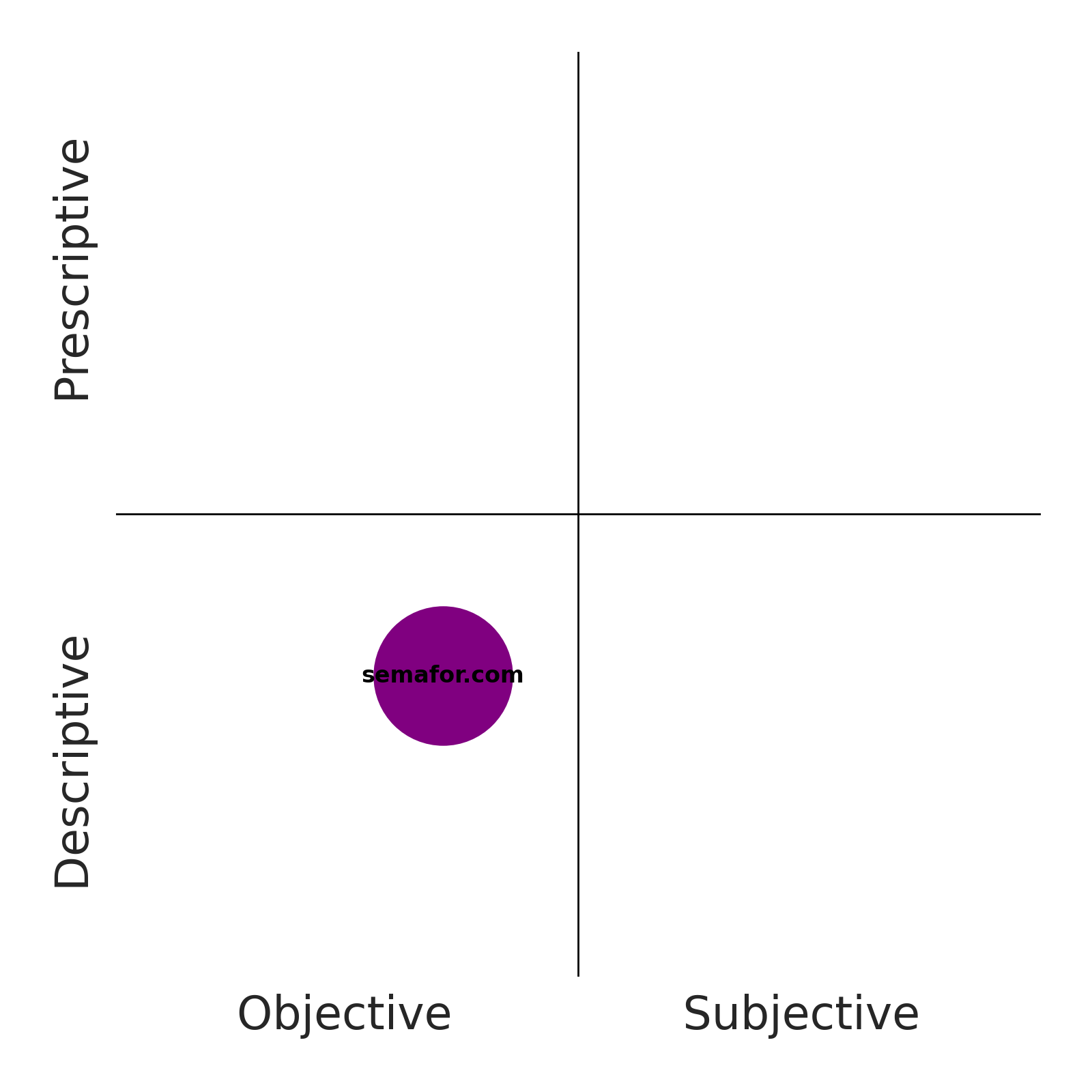
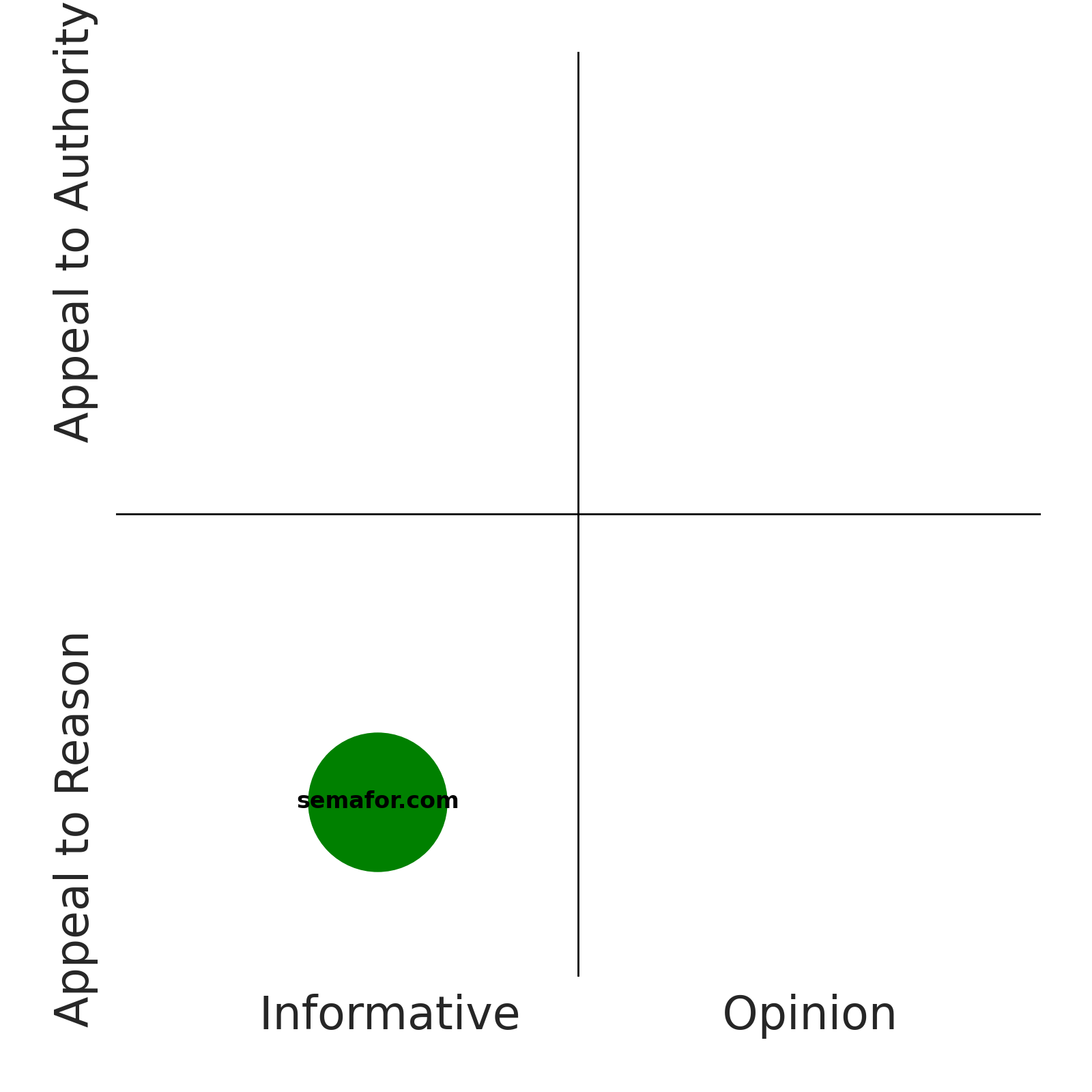
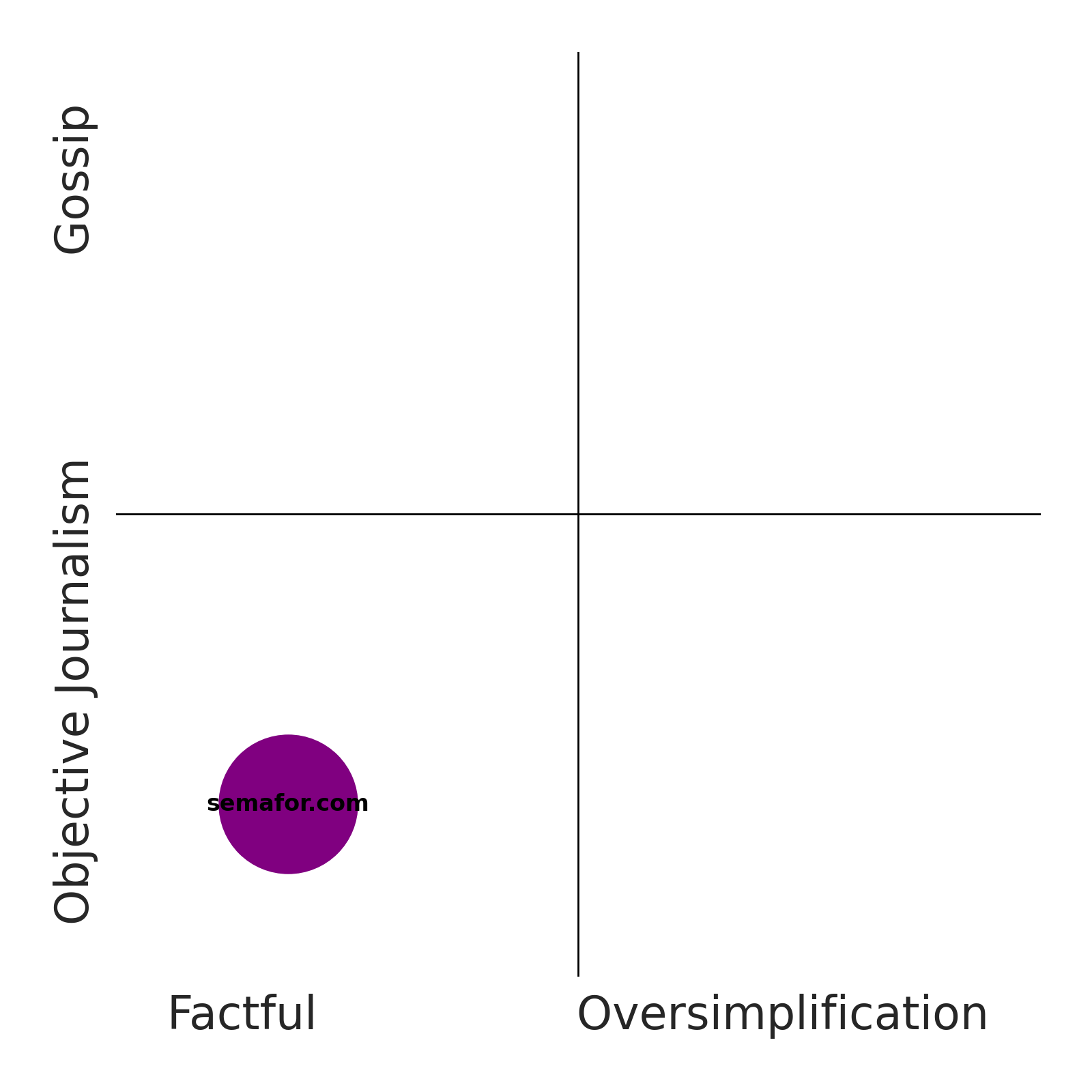
2026 © Helium Trades
Privacy Policy & Disclosure
* Disclaimer: Nothing on this website constitutes investment advice, performance data or any recommendation that any particular security, portfolio of securities, transaction or investment strategy is suitable for any specific person. Helium Trades is not responsible in any way for the accuracy
of any model predictions or price data. Any mention of a particular security and related prediction data is not a recommendation to buy or sell that security. Investments in securities involve the risk of loss. Past performance is no guarantee of future results. Helium Trades is not responsible for any of your investment decisions,
you should consult a financial expert before engaging in any transaction.
Helium Research Assistant

How can I help you today?
Ask any question about semafor.com bias.


