See whether Helium helps you make better-informed decisions. Try every Pro Trader feature for 30 days. No credit card required.
Try every Pro Trader feature for 30 days. No credit card required.
The sample (97 article records, Sept.
2024–Oct.
2026) is overwhelmingly focused on Donald Trump and the GOP, with roughly 90% of items centering Trump, his administration, or Republican midterm prospects [96]
October 21, 2026 · 0 shares
The framing is aggressively anti-Trump, using loaded scandal language and opinionated commentary to present a pattern of corruption and political damage.
Automated analysis; not human reviewed. Limitations: The supplied text includes a block of related clickbait headlines after the substantive article; these were treated as page chrome and excluded from bias analysis. · 9 of 55 available dimensions scored; omitted dimensions are not treated as neutral. · Verified supporting quotes for 6 of 9 scored dimensions.
Claim: The article's headline and lead frame Trump as corrupt, aligning with a strongly anti-Trump/liberal perspective.
“Trump White House rocked by 'no paper trail' scandal.” · exact text match
Why: The headline and lead use scandal framing tied to Trump corruption, consistent with a strongly anti-Trump viewpoint.
Claim: The article asserts a corruption pattern and political consequences in its own voice rather than limiting itself to neutral attribution.
“Blake is not alone in noticing that Trump's corruption is having political consequences.” · not found in supplied text
Why: The publisher states as fact that Trump's corruption is having political consequences, an evaluative claim.
Claim: The headline uses alarmist, scandal-oriented language to heighten impact.
“Trump White House rocked by 'no paper trail' scandal.” · exact text match
Why: The word 'rocked' and the emphasized 'scandal' signal sensational presentation.
Claim: The headline and lead use alarming scandal language that emphasizes threat and crisis.
“Trump White House rocked by 'no paper trail' scandal.” · exact text match
Why: The framing stresses a shock scandal and critical-mass corruption narrative.
Claim: The publisher states an evaluative judgment about Trump's corruption and political consequences as established.
“Blake is not alone in noticing that Trump's corruption is having political consequences.” · not found in supplied text
Why: This is an opinionated assertion rather than a neutral report of contested claims.
Claim: The entire report centers on Trump's political conduct, corruption allegations, and public trust.
“President Donald Trump's corruption is reaching a state of critical mass” · exact text match
Why: The lead frames the story around political corruption and its consequences.
Claim: The article treats a contested corruption narrative as established and forecasts political consequences without substantial caveats.
“Blake is not alone in noticing that Trump's corruption is having political consequences.” · not found in supplied text
Why: The assertion presents a broad corruption conclusion and political effect with little expressed uncertainty.
Claim: The headline uses strongly negative, alarmist wording.
“Trump White House rocked by 'no paper trail' scandal.” · exact text match
Why: 'Rocked' and 'scandal' create a strongly negative emotional valence.
Claim: The headline and lead use loaded scandal framing and aggregate allegations into a corruption narrative.
“Trump White House rocked by 'no paper trail' scandal.” · exact text match
Why: Loaded framing presents the story as a major scandal rather than a neutral report of developments.
The supplied text includes a block of related clickbait headlines after the substantive article; these were treated as page chrome and excluded from bias analysis.
September 29, 2026 · 0 shares
Framing presents Trump's political decline as decisive and inevitable, using opinionated language and selective data to portray a Democratic midterm victory as all but certain.
Automated analysis; not human reviewed. Limitations: The source text embeds a long quotation from an opinion columnist, and the boundary between the publisher's own assertions and the quoted columnist's claims is not always clear (e.g., the WSJ podcast statistic appears within a quote block). · 11 of 55 available dimensions scored; omitted dimensions are not treated as neutral. · Verified supporting quotes for 8 of 11 scored dimensions.
Claim: The framing is strongly anti-Trump and presents a Republican midterm defeat as increasingly certain.
“the growing certainty that the GOP will get wiped out in the midterms” · exact text match
Why: The publisher's narration says a GOP wipeout is a 'growing certainty,' an inherently partisan-coded claim presented as established fact.
Claim: The report uses evaluative, interpretive language rather than neutral description.
“the "evidence is decisive" that his extraordinary luck is finally running out” · not found in supplied text
Why: An assertion about 'luck' and 'decisive evidence' is subjective interpretation rather than neutral reporting.
Claim: The report's wording is dramatically overcharged.
“most damaging” · exact text match
“cratering massively” · exact text match
Why: Words like 'cratering' and 'most damaging' amplify drama beyond neutral description.
Claim: The report is dominated by the opinions of an NYT columnist and the publisher's own editorializing.
“wannabe autocrat like Trump” · exact text match
“trend line now is moving decisively in favor of the Democrats” · exact text match
Why: 'Wannabe autocrat' is a pejorative opinion, and the article presents Edsall's predictions without counterpoints.
Claim: The report centers on partisan midterm control and treats Democratic takeover as the direct expression of voter sentiment.
“their most direct opportunity to express this determination is electing Democratic majorities in the House and the Senate” · not found in supplied text
Why: The selected quote frames Democratic control as the natural outlet for voter repudiation.
Claim: The report reduces complex electoral dynamics to a simple narrative of Trump's crashing luck.
“growing certainty that the GOP will get wiped out in the midterms” · exact text match
Why: It flattens polling and forecasting caveats into a single, dramatic certainty.
Claim: The report treats its central forecast as decisively established.
“the trend line now is moving decisively in favor of the Democrats” · exact text match
“the "evidence is decisive" that his extraordinary luck is finally running out” · not found in supplied text
Counterevidence:
“While admitting that election forecasting can often be a "fool's game," Edsall contended” · not found in supplied text
Why: It calls the evidence 'decisive' and the trend 'decisively' moving, while also acknowledging that forecasting can be a 'fool's game,' which is a material qualification.
Claim: The report consistently applies a liberal-progressive lens to Trump and the GOP.
“wannabe autocrat like Trump” · exact text match
“growing certainty that the GOP will get wiped out in the midterms” · exact text match
Why: Repeatedly castigates Trump and Republicans while promoting Democratic odds.
Claim: The report names specific sources and uses direct quotes, lending it limited credibility.
“according to a new breakdown from the New York Times” · exact text match
“Per a recent Reuters/Ipsos poll” · exact text match
Why: Sourcing is explicit and checkable, though the opinionated framing and selective presentation cap trustworthiness.
Claim: The report includes probabilistic election forecasts and predicts outcomes.
“73 percent chance of a Democratic takeover of the House” · exact text match
“57 percent chance of taking control” · exact text match
Why: Probabilistic forecasts are inherently speculative, though they are attributed to a forecast website.
Claim: The report uses loaded language and selective negative information about Trump to shape emotional response.
“extraordinary luck is finally running out” · exact text match
“cratering massively” · exact text match
Why: The choice of 'luck' and 'cratering' frames a subjective decline as a dramatic collapse.
The source text embeds a long quotation from an opinion columnist, and the boundary between the publisher's own assertions and the quoted columnist's claims is not always clear (e.g., the WSJ podcast statistic appears within a quote block).
October 21, 2026 · 0 shares
Strongly anti-Trump, sensational framing presents the administration’s tax-fraud push as doomed by its own staffing and budget cuts.
Automated analysis; not human reviewed. Limitations: The supplied page includes many unrelated clickbait headlines after the substantive article; scores reflect only the main article. · 17 of 55 available dimensions scored; omitted dimensions are not treated as neutral. · Verified supporting quotes for 17 of 17 scored dimensions.
Claim: Hostile anti-Trump framing aligns with a left-leaning political position rather than a neutral presentation of the policy.
“Cornered Trump demands miracles from agency he gutted.” · exact text match
“much of the problem was complicated by Trump’s own policies” · exact text match
Why: The headline and blame framing attack a Republican president, but the text does not explicitly state a liberal policy position.
Claim: Loaded evaluative language and a rhetorical headline make the framing highly subjective.
“Cornered Trump demands miracles from agency he gutted.” · exact text match
“Trump’s audacious new endeavor” · exact text match
Why: Both phrases assert judgments about Trump’s motives and competence rather than neutral description.
Claim: The headline and phrasing are designed for dramatic impact.
“Cornered Trump demands miracles from agency he gutted.” · exact text match
“President Donald Trump’s government is now hard up for cash.” · exact text match
Why: “Cornered,” “demands miracles,” and “hard up for cash” are sensational formulations.
Claim: The article frames the antifraud effort as likely to fail.
““Criminal tax cases are resource-intensive,” Schenck said. “I think it’s going to be tough.”” · exact text match
“critics say the department would inevitably have to cannibalize personnel from other important divisions” · exact text match
Why: It emphasizes resource constraints and predicted failure.
Claim: The headline is crafted to be attention-grabbing for political news consumers.
“Cornered Trump demands miracles from agency he gutted.” · exact text match
Why: Provocative wording increases salience but interestingness is inherently subjective.
Claim: The article is primarily descriptive of the policy dispute and critics’ warnings, with little explicit prescription.
“The WSJ reports the Internal Revenue Service Criminal Investigation special agent team plays a crucial role in Justice Department tax prosecutions.” · exact text match
“critics say the department would inevitably have to cannibalize personnel from other important divisions” · exact text match
Why: It reports and quotes rather than recommending a policy.
Claim: The article’s headline and framing are heavily opinionated.
“Cornered Trump demands miracles from agency he gutted.” · exact text match
“Trump’s audacious new endeavor” · exact text match
Why: Evaluative adjectives and metaphors are embedded in the presentation of the news.
Claim: The article is centrally about a political administration’s policy and resource decisions.
“President Donald Trump’s government is now hard up for cash.” · exact text match
“has proposed cutting the IRS budget by an additional $1.4 billion in 2027” · exact text match
Why: The subject is explicitly governmental and partisan political policy.
Claim: The headline reduces a complex staffing and budget issue to a simple story of Trump demanding miracles from an agency he gutted.
“Cornered Trump demands miracles from agency he gutted.” · exact text match
Why: The metaphor compresses complex administrative causes into a single dramatic claim.
Claim: The article relies substantially on named experts, officials, and reports to support its criticism.
“Carolyn Schenck, a partner at law firm Caplin & Drysdale, who served as an IRS official for nearly 20 years, told the WSJ” · exact text match
“according to a 2025 enforcement report” · exact text match
Why: Credentialed sources and official reports carry the argument.
Claim: The article advances a consistently anti-Trump framing rather than a neutral account.
“Cornered Trump demands miracles from agency he gutted.” · exact text match
“But like many of Trump’s ambitious policies, Trump’s people appear to be lacking the means for follow-up, say critics” · exact text match
Why: Repeated negative characterizations indicate an ideological/oppositional stance.
Claim: The framing carries strong negative emotional coloring toward Trump and his administration.
“Cornered Trump demands miracles from agency he gutted.” · exact text match
“President Donald Trump’s government is now hard up for cash.” · exact text match
Why: Negative metaphors and evaluative language convey disdain.
Claim: The article uses named sources and official reports but pairs them with a loaded, one-sided headline.
“The Wall Street Journal reports” · exact text match
“according to a 2025 enforcement report” · exact text match
Why: Visible attribution raises credibility, while opinionated framing limits neutrality.
Claim: The article foregrounds predictions that the policy will be difficult or self-defeating.
““I think it’s going to be tough.”” · exact text match
“critics say the department would inevitably have to cannibalize personnel from other important divisions” · exact text match
Why: The quoted assessments are forecasts about future implementation.
Claim: Loaded headline language and one-sided blame framing present the policy as already discredited.
“Cornered Trump demands miracles from agency he gutted.” · exact text match
“much of the problem was complicated by Trump’s own policies” · exact text match
Why: The wording frames the outcome negatively before readers encounter the reported details.
Claim: The article includes attributed sourcing and named experts, though its headline is opinionated.
“according to a 2025 enforcement report” · exact text match
“a U.S. Treasury Inspector General report found” · exact text match
Why: Specific claims are tied to reports and officials, supporting moderate integrity despite loaded framing.
Claim: The article connects staffing, budget, and enforcement data to explain the policy difficulty.
“The WSJ reports the Internal Revenue Service Criminal Investigation special agent team plays a crucial role in Justice Department tax prosecutions.” · exact text match
“The unit provided labor valued at $37 million, the equivalent to the work of 170 full-time special agents” · exact text match
Why: It uses specific numbers and institutional relationships to support its argument.
The supplied page includes many unrelated clickbait headlines after the substantive article; scores reflect only the main article.
October 16, 2026 · 0 shares
Strongly anti-Trump, sensational framing presents disputed election-integrity claims as lies and a 'conspiracy theory' while foregrounding a critic's accusations.
Automated analysis; not human reviewed. Limitations: The supplied text includes appended related-link headlines and a malformed quote, but substantive article content is present; no byline is provided. · 11 of 55 available dimensions scored; omitted dimensions are not treated as neutral. · Verified supporting quotes for 11 of 11 scored dimensions.
Claim: Frames a Trump administration election-integrity claim as dishonest and conspiratorial.
“President Donald Trump's first assistant U.S. attorney keeps getting caught in lies, according to one keen observer.” · exact text match
“over a conspiracy theory about mail ballots.” · exact text match
Why: The negative characterization of a Trump official and dismissal as conspiracy theory support a strongly liberal/anti-Trump classification.
Claim: Uses evaluative labels rather than neutral description for disputed claims.
“Essayli falsely claimed on X” · exact text match
“outright lying here.” · exact text match
Why: The publisher adopts definitive negative characterizations instead of neutral attribution.
Claim: Deploys dramatic headline and prose language.
“Shredded by facts: Trump lawyer's new election plot collapses under scrutiny.” · exact text match
Why: The headline uses vivid, high-impact wording to dramatize the report.
Claim: Uses alarmist or rage-baiting verbs and accusations.
“collapses under scrutiny” · exact text match
“outright lying here.” · exact text match
Why: The language heightens conflict and outrage around the claims.
Claim: Adopts a strongly opinionated stance toward the controversy.
“keeps getting caught in lies, according to one keen observer” · exact text match
“outright lying here.” · exact text match
Why: The framing embraces a critic's accusation as a central evaluative judgment.
Claim: Centers political conflict and frames it in partisan terms.
“Trump lawyer's new election plot collapses under scrutiny.” · exact text match
“The Justice Department argued that California must segregate those ballots until their citizenship status can be verified” · exact text match
Why: The story is built around a Trump administration election-law dispute and adversarial political actors.
Claim: Leans on expert or critic authority to support the lying characterization.
“National security expert Marcy Wheeler” · exact text match
“according to one keen observer” · exact text match
Why: The critical claim is anchored in the authority of a named expert and a positive observer label.
Claim: Asserts that Essayli falsely claimed despite noting the claims were not independently verified.
“Essayli falsely claimed on X” · exact text match
“still have not been independently verified” · exact text match
Why: The article pairs a definitive falsehood assertion with an acknowledgment of unverified evidence.
Claim: Frames the dispute through a strong anti-Trump electoral-integrity lens.
“Trump lawyer's new election plot collapses under scrutiny.” · exact text match
“conspiracy theory about mail ballots.” · exact text match
Why: The report consistently frames the administration's claims as bad-faith and conspiratorial.
Claim: Maintains a strongly negative emotional valence toward Trump administration actors.
“keeps getting caught in lies” · exact text match
“outright lying here.” · exact text match
Why: The language is consistently hostile toward the administration's representatives.
Claim: Uses loaded framing and dismissive labels to shape interpretation.
“Shredded by facts” · exact text match
“The same untested garbage that has been shown to be fraudulent in other states.” · exact text match
Why: Loaded headlines and inflammatory descriptions steer readers toward a negative conclusion.
The supplied text includes appended related-link headlines and a malformed quote, but substantive article content is present; no byline is provided.
September 29, 2026 · 0 shares
Framing presents Trump's political decline as decisive and inevitable, using opinionated language and selective data to portray a Democratic midterm victory as all but certain.
Automated analysis; not human reviewed. Limitations: The source text embeds a long quotation from an opinion columnist, and the boundary between the publisher's own assertions and the quoted columnist's claims is not always clear (e.g., the WSJ podcast statistic appears within a quote block). · 11 of 55 available dimensions scored; omitted dimensions are not treated as neutral. · Verified supporting quotes for 8 of 11 scored dimensions.
Claim: The framing is strongly anti-Trump and presents a Republican midterm defeat as increasingly certain.
“the growing certainty that the GOP will get wiped out in the midterms” · exact text match
Why: The publisher's narration says a GOP wipeout is a 'growing certainty,' an inherently partisan-coded claim presented as established fact.
Claim: The report uses evaluative, interpretive language rather than neutral description.
“the "evidence is decisive" that his extraordinary luck is finally running out” · not found in supplied text
Why: An assertion about 'luck' and 'decisive evidence' is subjective interpretation rather than neutral reporting.
Claim: The report's wording is dramatically overcharged.
“most damaging” · exact text match
“cratering massively” · exact text match
Why: Words like 'cratering' and 'most damaging' amplify drama beyond neutral description.
Claim: The report is dominated by the opinions of an NYT columnist and the publisher's own editorializing.
“wannabe autocrat like Trump” · exact text match
“trend line now is moving decisively in favor of the Democrats” · exact text match
Why: 'Wannabe autocrat' is a pejorative opinion, and the article presents Edsall's predictions without counterpoints.
Claim: The report centers on partisan midterm control and treats Democratic takeover as the direct expression of voter sentiment.
“their most direct opportunity to express this determination is electing Democratic majorities in the House and the Senate” · not found in supplied text
Why: The selected quote frames Democratic control as the natural outlet for voter repudiation.
Claim: The report reduces complex electoral dynamics to a simple narrative of Trump's crashing luck.
“growing certainty that the GOP will get wiped out in the midterms” · exact text match
Why: It flattens polling and forecasting caveats into a single, dramatic certainty.
Claim: The report treats its central forecast as decisively established.
“the trend line now is moving decisively in favor of the Democrats” · exact text match
“the "evidence is decisive" that his extraordinary luck is finally running out” · not found in supplied text
Counterevidence:
“While admitting that election forecasting can often be a "fool's game," Edsall contended” · not found in supplied text
Why: It calls the evidence 'decisive' and the trend 'decisively' moving, while also acknowledging that forecasting can be a 'fool's game,' which is a material qualification.
Claim: The report consistently applies a liberal-progressive lens to Trump and the GOP.
“wannabe autocrat like Trump” · exact text match
“growing certainty that the GOP will get wiped out in the midterms” · exact text match
Why: Repeatedly castigates Trump and Republicans while promoting Democratic odds.
Claim: The report names specific sources and uses direct quotes, lending it limited credibility.
“according to a new breakdown from the New York Times” · exact text match
“Per a recent Reuters/Ipsos poll” · exact text match
Why: Sourcing is explicit and checkable, though the opinionated framing and selective presentation cap trustworthiness.
Claim: The report includes probabilistic election forecasts and predicts outcomes.
“73 percent chance of a Democratic takeover of the House” · exact text match
“57 percent chance of taking control” · exact text match
Why: Probabilistic forecasts are inherently speculative, though they are attributed to a forecast website.
Claim: The report uses loaded language and selective negative information about Trump to shape emotional response.
“extraordinary luck is finally running out” · exact text match
“cratering massively” · exact text match
Why: The choice of 'luck' and 'cratering' frames a subjective decline as a dramatic collapse.
The source text embeds a long quotation from an opinion columnist, and the boundary between the publisher's own assertions and the quoted columnist's claims is not always clear (e.g., the WSJ podcast statistic appears within a quote block).
September 27, 2026 · 0 shares
The framing characterizes Trump-administration and GOP actions as corrupt, authoritarian, and callous, presents Democratic and expert opposition as justified, and urges readers to take civic action.
The SAVE database is an existing federal verification system; the legal dispute concerns using it to maintain voter rolls. The 90-day statutory bar on systematic purges and the expiry of ACA marketplace subsidies are background to the respective sections.
Automated analysis; not human reviewed. Limitations: Input is a single heavily opinionated commentary combining multiple stories; no independent verification of quotes, data, or causal claims is possible from this text. · 23 of 55 available dimensions scored; omitted dimensions are not treated as neutral. · Verified supporting quotes for 22 of 23 scored dimensions.
Claim: The framing is strongly liberal and anti-Republican, using derogatory labels for GOP and conservative actors.
“the six corrupt Republican ideologues on the Supreme Court” · exact text match
“Trump regime” · exact text match
Why: Derogatory, politically charged labels are applied throughout to conservative and Republican officials, indicating an intensely left-aligned framing.
Claim: The framing is populist, contrasting wealthy interests with the working class.
“while feathering their own nests at the expense of the working class” · exact text match
Why: The quote frames politics as a conflict between self-dealing elites and ordinary working people, a core populist stance.
Claim: The text is highly subjective, openly evaluating politicians and institutions with value-laden language.
“the six corrupt Republican ideologues on the Supreme Court” · exact text match
Why: Calling justices 'corrupt' and 'Republican ideologues' is explicitly subjective and evaluative rather than neutral reporting.
Claim: The presentation is sensational, using dramatic exclamations and provocative framing.
“Crazy Alert! Trump Posted an AI Picture of Xi’s Arrival and Somehow Lost His Own Wife.” · exact text match
Why: The 'Crazy Alert!' heading and hyperbolic personal-focus story are designed to provoke rather than inform neutrally.
Claim: The overall tone is pessimistic about the country's direction, particularly the economy and politics.
“Americans are more pessimistic today than they were during Vietnam, the 1970s oil shock, 9/11, the Great Recession, and even the deadly pandemic.” · exact text match
Why: The quote highlights extreme pessimism and the surrounding sections describe decline and threatened rights, supporting a negative outlook.
Claim: The text explicitly instructs readers to take political action.
“Call your senators at 202-224-3121 and let them know what you think.” · exact text match
Why: Directly telling readers to call senators is a prescriptive call to action, not descriptive reporting.
Claim: The text stokes fear by describing technology and political actions as existential dangers.
“the people building the most dangerous technology in human history simply pay $50 million for the privilege of not having to tell anybody what they’re doing with it.” · exact text match
Why: Calling AI 'the most dangerous technology in human history' and framing deregulation as bought silence is fear-inducing.
Claim: The text assumes the conclusion that non-citizen voting is not a real problem.
“solve the non-existent problem of non-citizen voting” · exact text match
Why: The premise that non-citizen voting is 'non-existent' is asserted as fact before the policy is judged, a question-begging move.
Claim: The text dwells on speculative personal intrigue around an altered photo.
“set the internet on fire with the theory that Natalie Harp had erased Melania and inserted herself” · exact text match
Why: Prominently relaying an online personal-editing theory is gossipy rather than substantive policy reporting.
Claim: The text is heavily opinionated, with explicit judgments about people and events.
“With that, Murray was being way too polite dealing with this naked liar” · exact text match
Why: Calling the nominee a 'naked liar' is unambiguously opinionated.
Claim: The text is thoroughly political, centered on partisan actors, elections, and government power.
“Trump regime” · exact text match
“GOP national voter purge machine” · exact text match
Why: Every section addresses partisan political conflict, with charged political terminology throughout.
Claim: Complex policy disputes are reduced to one-sided corrupt-intent narratives.
“solve the non-existent problem of non-citizen voting” · exact text match
Why: The phrase dismisses a contested policy rationale as wholly nonexistent, simplifying a complex issue into villainy.
Claim: The text uses insulting schoolyard-style jabs and hyperbole.
“Musk’s pimply-faced boys killed it midstream” · exact text match
“Nazi-infested social media site” · exact text match
Why: Insults like 'pimply-faced boys' and 'Nazi-infested' are immature, ad hominem devices.
Claim: The text asserts a direct corrupt causation between donations and regulatory inaction with more certainty than the evidence supports.
“the checks being written to Trump and his family started clearing the bank and suddenly the proposed rule was simply abandoned” · exact text match
Why: The juxtaposition implies deliberate bribery as clear fact, exceeding the supplied evidence's causal certainty.
Claim: The text interprets events through an explicit left/neoliberal-critique ideological lens.
“This is what 45 years of Reaganomics looks like as we approach what may well be the end of the neoliberal road” · exact text match
Why: The quote applies a systemic ideological narrative to current economic conditions.
Claim: The framing is anti-establishment, attacking institutional power as corrupt.
“This is Roberts’ and Clarence Thomas’ sordid Citizens United legalized bribery system working exactly as designed” · exact text match
Why: The quote condemns the Supreme Court and campaign-finance system as a deliberately corrupted establishment.
Claim: The tone is strongly negative and emotionally charged.
“With that, Murray was being way too polite dealing with this naked liar” · exact text match
Why: The phrase 'naked liar' conveys anger and contempt, giving the text a clearly negative emotional valence.
Claim: The text shows mixed credibility signals: it names specific sources and data but also uses unsupported character attacks and causal assertions.
“Georgetown’s Edwin Park pointed out the whole design is to 'make it incredibly burdensome' to stay covered.” · not found in supplied text
Counterevidence:
“the six corrupt Republican ideologues on the Supreme Court” · exact text match
Why: Named experts and dollar figures provide some sourcing, but unsupported corruption labels and ad hominem framing lower the visible credibility.
Claim: The framing relies on emotionally charged characterization and sweeping causal claims more than detached reasoning.
“This is Roberts’ and Clarence Thomas’ sordid Citizens United legalized bribery system working exactly as designed” · exact text match
“the six corrupt Republican ideologues on the Supreme Court” · exact text match
Why: Ad hominem labels and a conclusive corruption narrative substitute for measured analysis, tilting the text toward irrationalist framing.
Claim: The framing is strongly anti-corporate, treating tech companies as corrupt buyers of deregulation.
“the people building the most dangerous technology in human history simply pay $50 million for the privilege of not having to tell anybody what they’re doing with it.” · exact text match
Why: The quote casts corporations as purchasing oversight avoidance, an anti-corporate framing.
Claim: The text makes predictive claims about future political consequences.
“the GOP national voter purge machine is now legal, it just has to idle until the presidential election in 2028, which will determine whether the next crop of SCOTUS nominees will come from a Republican or a Democratic president.” · exact text match
Why: The quote forecasts the 2028 election's effect on future Supreme Court appointments, a speculative projection.
Claim: The text uses loaded labels and rhetorical framing to steer reader emotion.
“the six corrupt Republican ideologues on the Supreme Court” · exact text match
“solve the non-existent problem of non-citizen voting” · exact text match
Why: Labeling justices corrupt and dismissing a policy rationale as nonexistent are observable emotionally manipulative framing techniques.
Claim: The text uses unsupported corruption accusations and personal attacks, signaling low internal fairness.
“none of the on-the-take Republicans was willing to put his or her name on it” · exact text match
Why: The phrase 'on-the-take' asserts bribery-like motives without presented proof, undermining observable fairness and honesty signals.
Input is a single heavily opinionated commentary combining multiple stories; no independent verification of quotes, data, or causal claims is possible from this text.
Observable techniques include: sensational/emotionally loaded headlines
October 16, 2026 · 0 shares
The framing is strongly partisan and alarmist, casting Trump's policies as directly responsible for a worsening inflation 'disaster' while amplifying Krugman's speculative criticisms and predicting a Democratic blue wave.
The Producer Price Index tracks wholesale prices, while the Consumer Price Index tracks consumer prices.
Automated analysis; not human reviewed. Limitations: The supplied text appends numerous unrelated related-link headlines after the main article; only the main article body was analyzed. · 19 of 55 available dimensions scored; omitted dimensions are not treated as neutral. · Verified supporting quotes for 18 of 19 scored dimensions.
Claim: The article frames Trump and Republicans as responsible for an inflation disaster and predicts a Democratic 'blue wave'.
“Nobel economist warns Trump's inflation disaster is about to get worse.” · exact text match
“If these numbers don’t generate a blue wave, nothing will” · exact text match
Why: Anti-Trump framing and explicit blue-wave prediction align with a liberal/partisan viewpoint.
Claim: The article elevates a Nobel Prize-winning economist and portrays Trump as uninformed and dependent on aides.
“Bear in mind that Trump doesn’t read” · exact text match
“Nobel Prize-winning economist Paul Krugman issued a warning to President Trump” · exact text match
Why: Expert-authority framing and dismissal of Trump as ignorant support an elitist rather than populist posture.
Claim: The article uses evaluative, partisan language and predictions rather than neutral description.
“Nobel economist warns Trump's inflation disaster is about to get worse.” · exact text match
“If these numbers don’t generate a blue wave, nothing will.” · not found in supplied text
Why: Loaded headline and explicit political prediction indicate subjective framing.
Claim: The headline and language are alarmist, describing an inflation 'disaster' and warning it will worsen.
“Nobel economist warns Trump's inflation disaster is about to get worse.” · exact text match
Why: Sensational wording amplifies the report's urgency.
Claim: The article presents a negative economic outlook, warning inflation will worsen and no relief is near.
“there’s no relief visible in the near future.” · exact text match
Why: Pessimistic inflation forecast supports bearish economic framing.
Claim: The article is pessimistic about inflation and Republican electoral prospects.
“inflation disaster is about to get worse” · exact text match
“If these numbers don’t generate a blue wave, nothing will” · exact text match
Why: Worsening inflation and expected Republican losses indicate pessimistic tone.
Claim: The article uses fear-inducing language about an inflation disaster that will get worse.
“Nobel economist warns Trump's inflation disaster is about to get worse.” · exact text match
Why: Alarmist headline and warning language are designed to heighten concern.
Claim: The article foregrounds Krugman's sharply worded opinions and predictions rather than straight news.
“shameful” · exact text match
“If these numbers don’t generate a blue wave, nothing will” · exact text match
Why: Evaluative quotes and political prediction make the report highly opinionated.
Claim: The article is centrally framed around Trump, Republicans, midterms, and a Democratic blue wave.
“as Republicans approach November’s midterm elections” · exact text match
“If these numbers don’t generate a blue wave, nothing will” · exact text match
Why: Electoral and partisan framing is pervasive.
Claim: The article attributes inflation directly to Trump's tariffs and Iran war without exploring other factors.
“Trump’s policies in regard to the Iran war and tariffs are directly responsible for adding to the cost households face.” · exact text match
Why: Direct causal attribution simplifies a complex inflation picture.
Claim: The article leans heavily on Krugman's Nobel status to validate its economic claims.
“Nobel Prize-winning economist Paul Krugman issued a warning to President Trump” · exact text match
Why: Nobel credential is foregrounded as authority.
Claim: The article amplifies a derogatory claim that Trump does not read.
“Bear in mind that Trump doesn’t read” · exact text match
Why: Personal, dismissive characterization contributes to immature/rage-baiting tone.
Claim: The article frames everyday Americans as struggling victims of a cost-of-living surge.
“cost-of-living surge that everyday Americans are currently struggling with.” · exact text match
Why: Victim framing is present, though secondary to the inflation argument.
Claim: The article asserts worsening inflation and no near-term relief with high certainty.
“there’s no relief visible in the near future.” · exact text match
“about to get worse” · exact text match
Why: Strong certainty exceeds the supplied forecasting evidence.
Claim: The article advances a partisan anti-Trump/blue-wave narrative rather than a neutral analysis.
“If these numbers don’t generate a blue wave, nothing will” · exact text match
“inflation disaster” · exact text match
Why: Explicit partisan prediction and loaded framing indicate ideological orientation.
Claim: The article uses strongly negative emotional language about Trump and inflation.
“inflation disaster” · exact text match
“shameful” · exact text match
Why: Negative evaluative terms signal emotional framing.
Claim: The article includes speculative claims about Trump's mental state and motives beyond the economic data.
“Is he deliberately lying, or does he truly not know what’s going on?” · exact text match
“Bear in mind that Trump doesn’t read” · exact text match
Why: Speculation about lying or ignorance introduces irrational framing into an otherwise data-based report.
Claim: The article devotes space to speculation about Trump's motives, reading habits, and election outcome.
“Is he deliberately lying, or does he truly not know what’s going on?” · exact text match
“If these numbers don’t generate a blue wave, nothing will” · exact text match
Why: Speculative questions and forecasts are prominent.
Claim: The article uses loaded framing and one-sided causal assertions to steer interpretation.
“Trump's inflation disaster” · exact text match
“Trump’s policies in regard to the Iran war and tariffs are directly responsible” · exact text match
Why: Loaded headline and unqualified causal claim are observable framing techniques.
The supplied text appends numerous unrelated related-link headlines after the main article; only the main article body was analyzed.
October 09, 2026 · 0 shares
The piece frames a planned public military execution as a depraved, unprecedented abomination through stacked comparisons to Iran, North Korea, and ISIS and a curated cascade of horrified commentators.
Nidal Hasan was convicted in the 2009 Fort Hood shooting, in which he killed 13 people; Secretary of Defense Pete Hegseth has drawn criticism for targeting Black and female officers and purging officers seen as insufficiently loyal.
Automated analysis; not human reviewed. Limitations: The supplied text appears to be a partial aggregation of headlines and social-media reactions, and no named author or outlet context is present in the article body. · 55 of 55 available dimensions scored; omitted dimensions are not treated as neutral. · Verified supporting quotes for 11 of 55 scored dimensions.
Claim: The framing and sourcing strongly favor left-of-center and anti-Trump perspectives.
“Horror at Trump's planned public execution.” · exact text match
“Wajahat Ali of the liberal Substack The Left Hook wrote, “Public lynchings will be next.”” · exact text match
Why: Condemnation is overwhelmingly drawn from liberal and anti-Trump commentators while no administration or conservative defense is included.
Claim: The piece is dominated by subjective moral reaction rather than neutral reporting.
“commentators from all sides reacted with horror.” · exact text match
“This is sick.” · exact text match
Why: Emotive adjectives and a curated set of condemnations substitute for balanced description of the policy and its legal basis.
Claim: Sensational language and shocking comparisons amplify the story.
“Public lynchings will be next.” · exact text match
“like the Romans throwing Christians to lions” · exact text match
Why: The article selects the most extreme reactions and frames the event with maximum alarm.
Claim: The article is heavily opinion-laden.
“It's depraved.” · verified after text normalization
“this is vile.” · exact text match
Why: Most of the piece consists of quoted or selected opinions rather than reporting.
Claim: The article is thoroughly political in framing and subject.
“Secretary of Defense Pete Hegseth has broken a number of precedents, from targeting Black and female officers in the military to purging top officers for not being sufficiently loyal to the Republican administration.” · exact text match
Why: The story is framed around Trump administration conduct and Republican political consequences.
Claim: The framing asserts the event's unprecedented and barbaric character with little hedging.
“Now he is ordering the first public execution in modern American history.” · exact text match
Why: Unprecedented claims are stated without qualification or detailed supporting evidence.
Claim: The predominant emotional tone is intensely negative.
“Horror at Trump's planned public execution.” · exact text match
Why: The headline and commentary emphasize horror, disgust, and dread.
Claim: Credibility is weakened by one-sided sourcing, absence of an author, and aggregation of reaction posts.
“GingER, a commentary account, responded, “We are the United States of Mother F------ America! F--- with us. They should soak the bullets in bacon grease and burry him in a pig pen...” · not found in supplied text
Why: Inclusion of anonymous inflammatory commentary and lack of official context undermine reliability.
Claim: The presentation privileges emotive outrage over reasoning about the execution decision.
“American Immigration Council senior fellow Aaron Reichlin-Melnick was similarly apocalyptic, saying that "Jesus Christ, I didn't think we'd actually get to the "public executions" stage of Trump's project to roll back the last 100 years of societal development."” · not found in supplied text
Why: The framing treats the policy as civilizational collapse without engaging counterarguments or legal rationale.
Claim: Selected extreme quotes and loaded comparisons create a strong emotional frame.
“It’s revealing that Pete Hegseth wants the US to join that group but also entirely unsurprising.” · exact text match
Why: Material omission of any supporting argument for the execution and reliance on emotive reactions guides reader response.
Claim: No strong AI-authorship indicators; text appears to be human aggregation of headlines and quotes.
“Tennis player and liberal Martina Navratilova declared, “They better f------ not do this.” · exact text match
Why: Typographic quirks and quote aggregation are consistent with human editing.
Claim: The article warns against association with extremist groups but does not endorse terrorism.
“releasing video of executions is most often associated with extremist militant groups like the Islamic State.” · exact text match
Why: Extremist groups are invoked negatively as a comparison, not endorsed.
Claim: An anti-Muslim slur appears in quoted commentary but the publisher does not endorse anti-Jewish generalization.
“F--- that muslim piece of s---.” · exact text match
Why: The quote is in the voice of a commenter and is challenged by another commenter, not the publisher's own framing.
The supplied text appears to be a partial aggregation of headlines and social-media reactions, and no named author or outlet context is present in the article body.
October 11, 2026 · 0 shares
The framing is prosecutorial and anti-Trump, treating Trump's rally remarks as proof of treason, cognitive impairment, and acceptable-collateral intent.
Automated analysis; not human reviewed. Limitations: The central quote is reported secondhand without the full rally transcript, and the legal treason conclusion is the author's contested interpretation. · 21 of 55 available dimensions scored; omitted dimensions are not treated as neutral. · Verified supporting quotes for 21 of 21 scored dimensions.
Claim: The publisher's framing is strongly anti-Trump and aligns with liberal political criticism.
“Lock him up: Trump's surreal new threat may have earned him an orange outfit.” · exact text match
Why: The headline and framing treat Trump as a criminal threat, a strongly anti-Trump posture.
Claim: The article advocates severe criminal punishment for political speech.
“should land Trump in prison for life.” · exact text match
Why: Calling for life imprisonment over remarks is strongly authoritarian framing.
Claim: The article is heavily subjective, using moral condemnation as analysis.
“Trump's folly in Iran continues, and the world whose opinion he dismissed is paying the price.” · verified after text normalization
Why: The phrase 'Trump's folly' is an evaluative judgment rather than neutral description.
Claim: The article uses sensational, tabloid-style framing.
“Lock him up: Trump's surreal new threat may have earned him an orange outfit.” · exact text match
Why: The headline uses dramatic imagery and implies imprisonment.
Claim: The article frames the conflict in deeply pessimistic terms.
“Trump's folly in Iran continues, and the world whose opinion he dismissed is paying the price.” · verified after text normalization
Why: The quote presents ongoing war as folly with global costs.
Claim: The article is strongly prescriptive, demanding punishment.
“should land Trump in prison for life.” · exact text match
Why: The statement explicitly prescribes a legal penalty.
Claim: The article uses fear-inducing certainty about future terrorist retaliation.
“When ‘Death to America’ jihadists strike back — not if, but when — Trump wants to make sure they start with California.” · exact text match
Why: The quote presents an attack as certain and frames Trump as inviting it.
Claim: The article is overtly opinionated.
“should land Trump in prison for life.” · exact text match
Why: The article advances a strong normative conclusion rather than straight reporting.
Claim: The article is intensely political and focused on partisan conflict.
“Lock him up: Trump's surreal new threat may have earned him an orange outfit.” · exact text match
Why: The headline and framing center on Trump's political conduct and legal culpability.
Claim: The article oversimplifies ambiguous rally remarks into a clear intent to expose U.S. cities to attack.
“he plainly cast San Diego and LA as acceptable collateral in his war of choice.” · exact text match
Why: The quote treats a contested interpretation as plain fact.
Claim: The article uses taunting and insulting language.
“dry drunk ‘war fighter’” · exact text match
“even one as cognitively impaired as this one.” · exact text match
Why: Both quotes rely on personal ridicule rather than mature argument.
Claim: The article casts California and its cities as targeted victims of Trump's rhetoric.
“When ‘Death to America’ jihadists strike back — not if, but when — Trump wants to make sure they start with California.” · exact text match
Why: The quote frames California as the intended victim of an attack linked to Trump.
Claim: The article asserts a legal conclusion with certainty beyond the supplied evidence.
“should land Trump in prison for life.” · exact text match
Why: The article treats a contested treason theory as a settled outcome.
Claim: The article is driven by rigid anti-Trump ideological framing.
“Trump's folly in Iran continues” · verified after text normalization
“should land Trump in prison for life.” · exact text match
Why: The combination frames Trump's actions as both folly and treason.
Claim: The article's emotional tone is strongly negative toward Trump and the war.
“Trump's folly in Iran continues, and the world whose opinion he dismissed is paying the price.” · verified after text normalization
Why: The quote conveys anger and condemnation.
Claim: Credibility is weakened by hyperbolic legal conclusions and ad hominem attacks.
“should land Trump in prison for life.” · exact text match
Why: The article states a maximal legal penalty as a conclusion without rigorous legal analysis.
Claim: The framing relies on emotionally loaded psychiatric ad hominem rather than measured reasoning.
“A president publicly suggesting, welcoming, or minimizing the severity of an Iranian strike on American cities, especially in the middle of an active military conflict, is insane.” · exact text match
Why: The quote uses 'insane' as a diagnostic and rhetorical attack.
Claim: The article speculates about Trump's motives and strategy.
“Maybe Trump, after seven months, finally gets it that he can’t win in Iran, so he’d like to bring the war home where Fox News will help him sell it.” · exact text match
Why: The quote openly guesses at Trump's political motives.
Claim: The article uses fear-based certainty and loaded framing to push its interpretation.
“When ‘Death to America’ jihadists strike back — not if, but when — Trump wants to make sure they start with California.” · exact text match
Why: The quote combines inevitability with a vivid threat to shape reader response.
Claim: The article uses dismissive ad hominem against those defending Trump, weakening fair-treatment signals.
“Cheung, who has never met a treasonous comment he can’t defend.” · exact text match
Why: The line attacks Cheung's character rather than engaging his explanation.
Claim: The article blames Trump for global suffering caused by the war.
“Trump's folly in Iran continues, and the world whose opinion he dismissed is paying the price.” · verified after text normalization
Why: The quote assigns broad global costs to Trump's conduct.
The central quote is reported secondhand without the full rally transcript, and the legal treason conclusion is the author's contested interpretation.
October 03, 2026 · 0 shares
Framing converts a psychologist's video-based, speculative health diagnosis into a dramatic warning, using 'stroke' and 'crossing the brain' language to imply a threatening certainty.
Automated analysis; not human reviewed. Limitations: Supplied text includes no byline, date, or external source material; only the article body and its quoted psychologist are available for scoring. · 14 of 55 available dimensions scored; omitted dimensions are not treated as neutral. · Verified supporting quotes for 14 of 14 scored dimensions.
Claim: The article frames Trump's health as declining through an uncritical expert diagnosis, a framing that supports an oppositional/liberal political narrative.
“suggesting that the 80-year-old commander-in-chief is experiencing some form of “neurological decline.”” · exact text match
“Concerns about Trump’s physical and cognitive decline have been raised frequently over the course of his second term” · exact text match
Why: The selected story and language portray a Republican president as cognitively/neurologically unfit, with no balancing expert or counter-frame.
Claim: The article treats a credentialed psychologist's interpretation as the authoritative way to understand the videos.
“This is according to Dr. John Garrison” · exact text match
“a widely cited psychologist noted” · exact text match
Why: It elevates an expert's speculative diagnosis and presents the audience as needing that authority to interpret visible behavior.
Claim: The article's core is subjective interpretation of body language rather than objective medical evidence.
“In Garrison’s assessment, this could be evidence of “sort of brain injury, a lesion, brain damage.”” · exact text match
“According to Garrison, Trump – who normally lights up at such talk – appears to be “checking out,” “disoriented,” and on the verge of falling asleep.” · exact text match
Why: All findings are one psychologist's visual impressions; no examination, imaging, or test results are reported.
Claim: The article uses dramatic, fear-inducing language to present the diagnosis.
“Garrison notes that you can see the involuntary motions move from right to left, “which means that the dysfunctional pathways are crossing the brain.”” · exact text match
“a number of “concerning” and “strange” behaviors” · exact text match
Why: "Crossing the brain" and "concerning/strange" are sensational formulations for a speculative claim.
Claim: The article's tone is pessimistic and alarmist about Trump's condition and fitness.
“experiencing some form of “neurological decline.”” · exact text match
“Garrison concludes with a warning” · exact text match
Why: It emphasizes deterioration and an ominous conclusion, rather than neutral or hopeful possibilities.
Claim: The article intentionally alarms readers about Trump's health.
“a number of “concerning” and “strange” behaviors” · exact text match
“Garrison concludes with a warning” · exact text match
Why: Repeated use of 'concerning,' 'strange,' and 'warning' creates an anxious, fearful tone.
Claim: The article dwells on intimate physical details and personal mannerisms, resembling gossip.
“Suddenly, Trump licks his lips in a provocative manner and runs his hands down the speaker’s shoulders.” · exact text match
“Trump’s face twists in an expression that Garrison asserts indicates that “he actually can't control the right side of his mouth.”” · exact text match
Why: Focus is on body-level physical detail and personal speculation rather than verifiable policy or institutional action.
Claim: The report is structured around one expert's opinion rather than established fact.
“In Garrison’s assessment, this could be evidence of “sort of brain injury, a lesion, brain damage.”” · exact text match
Why: The central 'news' is a speculative assessment by a named psychologist, not a documented medical finding.
Claim: The story is highly political, centered on a president's fitness during election-season activity.
“President Donald Trump” · exact text match
“midterm campaign trail” · exact text match
“Oval Office” · exact text match
Why: The subject, setting, and implications are all political; the article is not a detached medical report.
Claim: The article relies on the authority of a single psychologist to validate claims about Trump's brain.
“This is according to Dr. John Garrison” · exact text match
“a widely cited psychologist noted” · exact text match
Why: The credentials and reputation of the source are invoked in place of independent verification or diagnostic evidence.
Claim: The article is chiefly a report of a commentator's reaction to videos rather than an independent event.
“On Friday evening, a widely cited psychologist noted” · exact text match
“Garrison begins by analyzing a video of Trump” · exact text match
Why: The structure follows the psychologist's commentary clip-by-clip; the event itself is the commentary.
Claim: The article states a video-based neurological conclusion in more certain terms than the evidence warrants.
“which means that the dysfunctional pathways are crossing the brain.” · exact text match
“it does appear to be something distinctly neurological.” · exact text match
Counterevidence:
“In Garrison’s assessment, this could be evidence of “sort of brain injury, a lesion, brain damage.”” · exact text match
Why: Some 'could' language appears, but 'means that' and 'does appear to be' push the conclusion as definite.
Claim: The article presents speculation about an undiagnosed condition as the main story.
“There could be a variety of reasons for that, explains Garrison.” · exact text match
“In Garrison’s assessment, this could be evidence of “sort of brain injury, a lesion, brain damage.”” · exact text match
Why: The repeated use of 'could' and 'assessment' signals speculation, but the article treats that speculation as newsworthy.
Claim: The article uses loaded framing and selective video interpretations to steer readers toward a neurological-decline conclusion.
“a number of “concerning” and “strange” behaviors” · exact text match
“Trump – who normally lights up at such talk – appears to be “checking out,” “disoriented,” and on the verge of falling asleep.” · exact text match
Why: Loaded adjectives and a one-sided selection of clips point to the conclusion while preserving deniability through attribution.
Supplied text includes no byline, date, or external source material; only the article body and its quoted psychologist are available for scoring.
October 08, 2026 · 0 shares
The framing privileges psychiatric speculation about Trump's mental decline by presenting two critical experts as correcting a centrist linguist, while treating unverified clinical inferences as authoritative.
John McWhorter is a linguist who writes for The New York Times and has argued that Trump's profanity increase reflects normal language dynamics rather than cognitive decline.
Automated analysis; not human reviewed. Limitations: The article appears truncated after introducing Dr. Reiss, so later expert commentary and any counterbalancing context may be missing. · 55 of 55 available dimensions scored; omitted dimensions are not treated as neutral. · Verified supporting quotes for 7 of 55 scored dimensions.
Claim: The article frames criticism of Trump through liberal-leaning experts and negative Republican coverage.
“Two mental health experts disagreed with McWhorter's analysis.” · exact text match
“'Rattled’ MAGA rep laughed at during forum —and told to ‘calm down’” · verified after text normalization
Why: The selection of critical mental health experts and negative GOP-related links indicates a liberal framing.
Claim: The article mixes reported facts with psychiatric speculation and opinion.
“I think Trump probably is getting more desperate and more disinhibited.” · exact text match
Why: Unverified psychiatric opinion is presented as expert analysis rather than clearly labeled speculation.
Claim: The article uses sensational language about Trump's mental state.
“Trump's use of profanity suggests he is literally losing his mind: expert.” · exact text match
Why: The headline and framing are sensational rather than neutral.
Claim: The article is heavily focused on political criticism of Trump.
“President Donald Trump uses a lot of profanity, and more so recently than he has in the past.” · exact text match
Why: The central topic is Trump's political conduct and fitness.
Claim: The article leans on expert authority to challenge the linguist's assessment.
“Two mental health experts disagreed with McWhorter's analysis.” · exact text match
Why: Expert disagreement is used to support the framing, though their diagnoses are uncertain.
Claim: The article has moderate credibility but relies on speculative expert opinions.
“I give it a 20 percent chance off the top of my head.” · exact text match
Why: It includes qualifications but also sensational framing and unverified diagnoses.
Claim: The article relies on speculative psychiatric diagnosis of a public figure without examination.
“It might not be, because only his neurons know for sure.” · exact text match
Why: Experts speculate about cognitive decline without clinical evidence.
The article appears truncated after introducing Dr. Reiss, so later expert commentary and any counterbalancing context may be missing.
October 07, 2026 · 0 shares
The framing amplifies a partisan psychologist's speculative diagnosis of Trump's cognitive decline while presenting no dissenting expert view or White House evidence, treating opinion as established fact.
Donald Trump is the US President and was campaigning at a rally in Nebraska; Natalie Harp is a controversial figure described as having an obsession with Trump detailed in a book; former President Joe Biden and former President Barack Obama are referenced for comparison.
Automated analysis; not human reviewed. Limitations: The article relies heavily on a single partisan source without independent verification of the psychologist's claims. · 55 of 55 available dimensions scored; omitted dimensions are not treated as neutral. · Verified supporting quotes for 8 of 55 scored dimensions.
Claim: The article consistently frames Trump and Republicans negatively while relying on a psychologist critical of Trump.
“Trump's 'judgment is getting much worse': forensic psychologist” · exact text match
Why: The headline and content adopt a critical anti-Trump framing typical of liberal outlets.
Claim: The article uses sensational language and headline to amplify a psychologist's alarming claims.
“Trump's 'judgment is getting much worse'” · exact text match
Why: The quote in the headline is sensational and designed to alarm.
Claim: The article is largely based on the opinion of one psychologist rather than objective reporting.
“Garrison said he noticed "Trump's increase in impulsivity as well as his poor judgment."” · exact text match
Why: The entire piece revolves around a single expert's subjective analysis.
Claim: The article presents the psychologist's speculative diagnosis with high certainty.
“These impulse control issues are all part of what Garrison says "are the physical manifestations of [Trump's] decline."” · exact text match
Why: The language asserts a definitive decline despite it being a remote observational opinion.
Claim: Credibility is low due to reliance on a single biased source and lack of corroboration.
“Known as "Dr. G." on social media, Garrison frequently analyzes nonverbal communication, detailing social and physical cues that alert him to possible health concerns.” · exact text match
Why: The source is presented without vetting or opposing perspectives, undermining trustworthiness.
Claim: The article is highly speculative, relying on a psychologist's remote observations to infer neurological decline.
“And that's exactly what we look for when someone is experiencing neurological decline.” · exact text match
Why: The content is built on speculation about Trump's health from nonverbal cues.
Claim: The article uses loaded language and selective presentation to manipulate reader perception of Trump.
“He confessed that he found it more terrifying that the audience seemed to find it acceptable to nuke two of America's large cities.” · exact text match
Why: Emotionally charged language and omission of context may manipulate readers.
Claim: The article lacks balance by not seeking opposing expert views or verifying the psychologist's claims.
“One such viewer is clinical and forensic psychologist Dr. John Paul Garrison, who has been doing his own analysis based on his observations of the president.” · exact text match
Why: No countervailing views or evidence are presented, reducing integrity.
The article relies heavily on a single partisan source without independent verification of the psychologist's claims.
October 21, 2026 · 0 shares
Frames Trump's fitness through alarming clinical-psychopathy claims and existential-danger language with one-sided expert sourcing.
The 25th Amendment provides a process for the vice president and a majority of the Cabinet to remove a president judged unable to discharge the duties of office.
Automated analysis; not human reviewed. Limitations: The supplied text appears truncated and includes related-article headline clutter; analysis is limited to visible substantive article paragraphs. · 25 of 55 available dimensions scored; omitted dimensions are not treated as neutral. · Verified supporting quotes for 22 of 25 scored dimensions.
Claim: Frames Trump and his presidency through a one-sided alarmist lens with no conservative or administration perspective.
“Donald Trump is a 'puppet' to psychopathic traits” · exact text match
“existential threat to both America and humanity as a whole” · exact text match
Why: Loaded negative characterization and no balancing voices support a strongly liberal framing.
Claim: Elevates clinical and academic experts as decisive authorities on Trump's fitness.
“a leading clinical psychologist has warned” · exact text match
“36 top medical experts, physical and mental, signed an open letter to Congress” · exact text match
Why: The argument rests on credentialed expert authority rather than populist sourcing.
Claim: Endorses considering removal of an elected president via the 25th Amendment based on expert assessment.
“warrants invoking the 25th Amendment” · exact text match
“grounds for certainly considering the 25th Amendment” · exact text match
Why: Advocacy for removing a president through institutional authority indicates an authoritarian-leaning framing.
Claim: Presents opinion and psychological speculation as central content.
“ominous” · exact text match
“Trump's psychological red flags” · exact text match
Why: The framing is evaluative and psychological rather than neutral description.
Claim: Uses dramatic danger imagery and a sensational headline.
“From 'shopping cart' chaos to nuclear codes: Trump's psychological red flags.” · exact text match
“existential threat to both America and humanity as a whole” · exact text match
Why: Nuclear-code and existential-threat language is strongly sensational.
Claim: Frames Trump's presidency as dangerous and likely to worsen.
“likely to become even more dangerous” · exact text match
“existential threat” · exact text match
Why: The article's dominant outlook is pessimistic and alarmist.
Claim: Moves from describing expert claims to suggesting presidential removal.
“warrants invoking the 25th Amendment” · exact text match
Why: The removal suggestion gives the piece a prescriptive edge.
Claim: Uses existential-threat and nuclear-code fear framing.
“nuclear codes” · exact text match
“existential threat to both America and humanity as a whole” · exact text match
Why: The language is designed to evoke fear about Trump's presidency.
Claim: Assumes the psychopathy premise and then treats it as grounds for removal.
“Trump is a 'puppet' to psychopathic traits” · exact text match
“grounds for certainly considering the 25th Amendment” · exact text match
Why: The removal argument depends on the contested psychopathy framing.
Claim: Central content is evaluative expert opinion about Trump's psyche.
“ominous” · exact text match
“psychopathic traits” · exact text match
Why: The piece is dominated by opinion and characterization rather than factual reporting.
Claim: Focuses on presidential fitness, midterms, and the 25th Amendment.
“next month’s midterm elections” · exact text match
“25th Amendment” · exact text match
Why: The subject is directly political and institutional.
Claim: Reduces complex fitness questions to psychopathy traits.
“clinical psychopathy, characterized by three particularly destructive traits: impulsivity, remorselessness and an intense drive to dominate” · exact text match
Why: The article presents a simplified trait-based explanation for presidential danger.
Claim: Relies on expert titles and an open letter as primary support.
“leading clinical psychologist” · exact text match
“36 top medical experts” · exact text match
Why: Credentialed authorities carry the argument.
Claim: Uses tabloid-style headlines and metaphors.
“From 'shopping cart' chaos to nuclear codes” · exact text match
“shopping cart” · exact text match
Why: The shopping-cart and nuclear-code framing is tabloid-like.
Claim: Presents clinical psychopathy assertion despite acknowledged inability to diagnose.
“Trump exhibits clinical psychopathy” · exact text match
“we can't come away with a diagnosis” · not found in supplied text
Why: The article reproduces confident diagnostic language alongside a caveat against diagnosis.
Claim: Frames politics through a fixed anti-Trump psychological-danger narrative.
“Trump's psychological red flags” · exact text match
“psychopathic traits” · exact text match
Why: The narrative is ideologically consistent and heavily evaluative.
Claim: Aligns with establishment medical and media authorities against Trump.
“reported The Daily Beast's Farrah Tomazin” · exact text match
“36 top medical experts” · exact text match
Why: The piece relies on mainstream media and credentialed institutional experts.
Claim: Strongly negative emotional framing.
“ominous” · exact text match
“danger” · exact text match
Why: The article repeatedly uses fear-laden and negative language.
Claim: Has named attribution and a caveat but relies heavily on speculative diagnosis and loaded framing.
“While it is controversial to diagnose a public figure that one has not personally evaluated on a clinical basis” · exact text match
“Donald Trump is a 'puppet' to psychopathic traits” · exact text match
Why: Attribution is present, but the speculative and one-sided framing lowers credibility.
Claim: Relies on speculative psychological diagnosis and metaphor over verifiable evidence.
“we can't come away with a diagnosis” · not found in supplied text
“existential threat to both America and humanity as a whole” · exact text match
Why: The article centers speculative clinical inference and alarmist conclusions.
Claim: Forecasts increased danger and existential threat.
“likely to become even more dangerous” · exact text match
“existential threat” · exact text match
Why: The article heavily emphasizes speculative future danger.
Claim: Uses loaded psychological labels and existential danger to push removal.
“psychopathic traits” · exact text match
“existential threat to both America and humanity as a whole” · exact text match
Why: Loaded labels and existential framing function as strong persuasive techniques.
Claim: Amplifies one-sided clinical speculation while acknowledging it is controversial.
“While it is controversial to diagnose a public figure that one has not personally evaluated on a clinical basis” · exact text match
“Donald Trump is a 'puppet' to psychopathic traits” · exact text match
Why: The caveat is undercut by the article's heavy use of speculative psychopathy framing.
Claim: Attributes broad existential danger to one leader.
“existential threat to both America and humanity as a whole” · exact text match
Why: The article places sweeping danger on a single political figure.
The supplied text appears truncated and includes related-article headline clutter; analysis is limited to visible substantive article paragraphs.
October 04, 2026 · 0 shares
Framing treats Trump's behavior as obvious, worsening psychiatric decline and treats a clinician's red-flag list as definitive proof, while presenting the failure to sound a systematic alarm as inexcusable.
The American Psychiatric Association's Goldwater Rule discourages psychiatrists from publicly diagnosing public figures they have not personally examined; Abraham's repeated caveat that he cannot make a diagnosis without patient cooperation reflects that context.
Automated analysis; not human reviewed. Limitations: The supplied substantive content is an editorial interview; the interviewee's claims about Trump's behavior, tweet counts, MoCA frequency, and Iran war are not independently verified in the text. · 13 of 55 available dimensions scored; omitted dimensions are not treated as neutral. · Verified supporting quotes for 12 of 13 scored dimensions.
Claim: The publisher's framing is left-leaning/anti-Trump, asserting an inexcusable failure to challenge Trump while noting Biden was challenged.
“Trump has received an inexplicable and inexcusable pass for his own obvious infirmities.” · exact text match
“Proof that Trump is in decline.” · exact text match
Why: The editorial statement and headline-like deck express an explicitly critical, asymmetrical political framing of Trump.
Claim: The article's core assertions are evaluative and opinion-based rather than neutral reporting.
“Trump has received an inexplicable and inexcusable pass for his own obvious infirmities.” · exact text match
“Proof that Trump is in decline.” · exact text match
Why: These are value judgments and conclusive framing, not neutral descriptions.
Claim: The article uses dramatic and loaded language to heighten impact.
“He's a maniac” · exact text match
“Proof that Trump is in decline.” · exact text match
Why: Calling Trump a maniac and declaring proof of decline are sensational, emotionally charged framings.
Claim: The article presents Trump's condition and its consequences as grave and dangerous.
“That probably goes at the top of my list of abnormalities of mental function which threaten literally hundreds of millions of people.” · exact text match
Why: The selected warning emphasizes catastrophic risk, giving the piece a strongly pessimistic outlook.
Claim: The article warns against war and nuclear danger, expressing an anti-war/dovish framing.
“since he's started a war with Iran. That's a very dangerous thing.” · exact text match
“He could, on his own, launch a nuclear attack against whatever enemy he chooses” · exact text match
Why: The interview stresses the danger of Trump's Iran war and nuclear authority rather than backing military action.
Claim: The article uses fear-arousing imagery about nuclear weapons and mass casualties.
“He could, on his own, launch a nuclear attack against whatever enemy he chooses” · exact text match
“which threaten literally hundreds of millions of people” · exact text match
Why: The framing repeatedly ties Trump's behavior to nuclear launch and enormous potential harm, evoking fear.
Claim: The article is heavily opinionated, with normative editorial assertions beyond factual reporting.
“Trump has received an inexplicable and inexcusable pass for his own obvious infirmities.” · exact text match
“nothing has occurred on a systematic level to alert the American people to the fact that their president is psychologically unwell.” · exact text match
Why: These statements render judgments and demand systemic action, not simply report facts.
Claim: The article is explicitly political, centered on a president and partisan comparison.
“Even though the medical and political communities were willing to call out President Joe Biden's apparent decline during the 2024 election, Trump has received an inexplicable and inexcusable pass for his own obvious infirmities.” · exact text match
Why: The piece explicitly compares Trump and Biden and frames the issue around political and electoral communities.
Claim: The article reduces a complex psychiatric assessment to a simple diagnostic label and conclusive proof.
“Proof that Trump is in decline.” · exact text match
“He's a maniac” · exact text match
Why: Complex clinical observations are collapsed into a headline-style verdict and epithet.
Claim: The article relies heavily on the psychiatrist's credentials and access as the basis for its claims.
“AlterNet's exclusive interview with psychiatrist Dr. Henry Abraham, formerly of Tufts University” · exact text match
“having observed him for a long time, and also talking to people who have also observed him professionally in the same room with him” · exact text match
Why: Credibility is established by professional title, institutional affiliation, and claimed close observation rather than by independent evidence.
Claim: The framing asserts proof of decline even though the interviewee says no diagnosis is possible without examination.
“Proof that Trump is in decline.” · exact text match
“So we can't come away with a diagnosis” · not found in supplied text
Why: The deck asserts proof while the clinician interviewed explicitly disclaims the ability to diagnose, exceeding the supplied evidence.
Claim: The article's emotional valence is strongly negative and alarming.
“He's a maniac” · exact text match
“That probably goes at the top of my list of abnormalities of mental function which threaten literally hundreds of millions of people.” · exact text match
Why: The language and examples are designed to provoke alarm and outrage rather than detached analysis.
Claim: The article includes speculative possible medical explanations without confirming evidence.
“They could be as benign as simple aging, or they could be as serious as untreated neurosyphilis.” · exact text match
“He could be hyped up on stimulant drugs at night.” · exact text match
Why: The interview explicitly offers unverified hypothetical causes for Trump's symptoms.
The supplied substantive content is an editorial interview; the interviewee's claims about Trump's behavior, tweet counts, MoCA frequency, and Iran war are not independently verified in the text.
October 14, 2026 · 0 shares
Gossipy, anti-Trump palace-intrigue framing presents anonymous insider sniping and media mockery as a settled verdict, amplified by insult-driven sensational packaging.
Anthony Scaramucci, cited as the 11-day record, served roughly 11 days as White House communications director in July 2017, the shortest tenure in the job and a byword for rapid staff exits.
Automated analysis; not human reviewed. Limitations: The trailing block of sensational, partly duplicated headlines may be page furniture rather than article body, so some outlet-framing judgments rest on it; central claims also rest on anonymous sources unverifiable from the supplied text. · 18 of 55 available dimensions scored; omitted dimensions are not treated as neutral. · Verified supporting quotes for 16 of 18 scored dimensions.
Claim: Publisher presents an entirely negative view of the Trump White House and curates uniformly anti-Trump related headlines.
“Trump's inner circle is already turning on his new press secretary: report” · exact text match
“Nobel scientist calls Trump 'senile felon' and spots a troubling flaw” · exact text match
Why: One-sided negative Trump coverage plus derisive curated headlines indicate a liberal-leaning slant.
Claim: Publisher adds its own evaluative verdicts beyond attributed reporting.
“Zacharia's press conference was widely regarded as a disaster for a number of reasons.” · exact text match
Why: Asserting an unsourced consensus 'disaster' judgment is editorial subjectivity, not neutral description.
Claim: Dramatic insider-conflict packaging and insult-driven headlines emphasize spectacle over sober reporting.
“Trump's inner circle is already turning on his new press secretary: report” · exact text match
“Trump further displays signs of psychosis: experts” · exact text match
Why: A bold 'turning on' headline plus hyperbolic related headlines are classic sensational framing.
Claim: Palace-intrigue stakes and a memorable benchmark make the item engaging.
“Otherwise, she'll break Scaramucci's record. That's 11 days. Wow.” · not found in supplied text
Why: Insider-conflict drama plus the 11-day tenure jab give the story attention-holding color beyond routine briefing coverage.
Claim: Publisher-curated headlines lean on alarm and crisis language beyond the main text's mocking tone.
“Clandestine Kremlin meetings just sent tremors through CIA headquarters” · exact text match
“Susie Wiles calls crisis meeting as more Trump rats jump ship: report” · exact text match
Why: Repeated 'crisis,' 'panic,' and 'tremors' framing in the curated package is rage-bait adjacent, though the main article mocks rather than frightens.
Claim: The substance of the piece is anonymous insiders' private impressions of a colleague.
“One Trump official privately admitted to MS NOW on Tuesday that Zacharia had not made a positive impression.” · exact text match
“involves insider sources working for Trump acknowledging” · exact text match
Why: Internal White House dynamics and private opinions of unnamed officials are the core content, the essence of gossip coverage.
Claim: The analytical weight is carried by opinionated commentators plus the publisher's own slanted gloss.
“"The problem is it's not red meat, it's pink slime," John Avlon said of Zacharia.” · not found in supplied text
Why: Competence verdicts come from pundits' characterizations rather than neutral factual reporting.
Claim: Every element of the story concerns Trump White House politics.
“President Donald Trump's new press secretary has gotten off on the wrong foot with her new colleagues in the White House” · exact text match
Why: Subject, sources, and stakes are wholly political.
Claim: Veteran journalists' authority is invoked to legitimize the competence verdict.
“As one veteran newsman explained on Tuesday, the fundamental issue boils down to core competencies.” · exact text match
Why: The piece leans on the status of 'veteran' commentators rather than independent standards to judge performance.
Claim: Mockery and juvenile insults dominate the publisher-curated package.
“Leaker reveals top official's opinion: Trump belongs in a 'nuthouse'” · exact text match
“Nobel scientist calls Trump 'senile felon' and spots a troubling flaw” · exact text match
Why: Name-calling and snark in the publisher's selections favor ridicule over mature analysis.
Claim: Publisher asserts consensus and collective sentiment beyond what cited sourcing documents.
“Zacharia's press conference was widely regarded as a disaster for a number of reasons.” · exact text match
“Trump's inner circle is already turning on his new press secretary: report” · exact text match
Why: 'Widely regarded' and 'inner circle turning on' generalize from a handful of quotes and anonymous sources.
Claim: Publisher selections reflect a settled anti-Trump ideological line.
“'Worst president': Trump creating a Twilight Zone where 'everyone loses'” · exact text match
“Trump further displays signs of psychosis: experts” · exact text match
Why: Uniformly derisive framing across curated headlines shows ideology driving presentation rather than open inquiry.
Claim: The dominant register is mocking and negative.
“and she better fix her mess soon, they add” · exact text match
“Zacharia's press conference was widely regarded as a disaster” · exact text match
Why: Derision and failure framing characterize both the lede and the assessment.
Claim: Sourcing is predominantly anonymous or secondhand, with editorial assertions outstripping documented support.
“One Trump official privately admitted to MS NOW on Tuesday that Zacharia had not made a positive impression.” · exact text match
Counterevidence:
“alleging that Zacharia has not been admitted to any bar in either the continental United States, Alaska or Washington” · exact text match
Why: Heavy anonymity and secondhand aggregation lower trust; proper attribution of the bar allegation to a named outlet partially offsets.
Claim: Central performance claims rest on concrete, checkable details rather than pure assertion.
“She then took just three questions, all from conservative-leaning outlets.” · exact text match
Why: Specific observable facts support the main contention, giving a mildly rational core despite gossip packaging.
Claim: Loaded verdicts and asserted consensus steer the reader before evidence is weighed.
“Zacharia's press conference was widely regarded as a disaster for a number of reasons.” · exact text match
“flubbed during her opening session earlier this week” · exact text match
Why: Pre-loaded labels and an unsourced 'widely regarded' claim function as observable framing techniques, with no balancing perspective included.
Claim: Key characterizations rest on unnamed officials and unsourced consensus claims, though allegations are attributed.
“One Trump official privately admitted to MS NOW on Tuesday that Zacharia had not made a positive impression.” · exact text match
Counterevidence:
“Judd Legum's Popular Information Substack published an investigative report on Tuesday alleging that Zacharia has not been admitted to any bar” · not found in supplied text
Why: Anonymous-source characterization and the 'widely regarded' assertion pull fairness below neutral; the properly attributed bar allegation partly offsets.
Claim: The piece is largely a recycled-quote aggregation with minimal independent analysis.
“The story, which was circulated by the conservative website The Bulwark, involves insider sources working for Trump acknowledging” · exact text match
Why: Content consists of secondhand quotes and headline-list filler with little synthesis beyond framing.
The trailing block of sensational, partly duplicated headlines may be page furniture rather than article body, so some outlet-framing judgments rest on it; central claims also rest on anonymous sources unverifiable from the supplied text.
October 08, 2026 · 0 shares
The framing relies heavily on unnamed sources and report-hedged allegations against a Trump ambassador, amplifying sensational and embarrassing details while including only a brief denial.
The report follows requests by congressional Democrats, including Senator Jeanne Shaheen, for an inquiry into Guilfoyle's diplomatic activities; Secretary of State Marco Rubio visited Athens this week and sidestepped questions on her conduct.
Automated analysis; not human reviewed. Limitations: The article is mainly a derivative aggregation of a Daily Mail report with unnamed sources, limiting independent verification. · 55 of 55 available dimensions scored; omitted dimensions are not treated as neutral. · Verified supporting quotes for 11 of 55 scored dimensions.
Claim: The framing is unfavorable to a Trump appointee and highlights Democratic-initiated scrutiny.
“The disclosures come in response to requests made by congressional Democrats for an inquiry into Guilfoyle's diplomatic activities.” · exact text match
Why: This suggests a politically critical stance toward the Trump ambassador.
Claim: The article emphasizes lurid, embarrassing details over neutral documentation.
“Guilfoyle reportedly called a member of her security detail at 4 a.m. demanding more ice cubes.” · exact text match
Why: This specific anecdote is sensational and designed to draw attention rather than prove the core allegations.
Claim: The piece relies on personal, salacious, secondhand details about workplace behavior.
“Petros and Dimitris, two other drivers, are said to have had their jobs taken away after Guilfoyle objected to the way they "made a left turn."” · exact text match
Why: This is gossipy personnel detail rather than verifiable institutional reporting.
Claim: The report is situated in partisan political conflict over a Trump appointee.
“The disclosures come in response to requests made by congressional Democrats for an inquiry into Guilfoyle's diplomatic activities.” · exact text match
Why: The article frames the allegations through a congressional Democratic inquiry into a Trump official.
Claim: The article is mildly critical of a Trump political appointee.
“The disclosures come in response to requests made by congressional Democrats for an inquiry into Guilfoyle's diplomatic activities.” · exact text match
Why: The framing aligns with Democratic congressional scrutiny rather than the Trump administration.
Claim: The tone is negative and critical toward the subject.
“The accusations involve a work environment that had been described as "toxic"” · exact text match
Why: The article's dominant emotional framing is adverse to Guilfoyle.
Claim: The report is weakly sourced and largely derivative, relying on unnamed sources to the Daily Mail.
“Five sources told the Daily Mail that the Office of Inspector General at the State Department has launched a formal inquiry” · exact text match
Why: There is minimal independent verification and heavy dependence on a single outlet's anonymous sources.
Claim: Much of the reporting is framed as unconfirmed allegations and reported claims.
“However, the inspector general has not yet confirmed the investigation publicly.” · exact text match
Why: The claims are explicitly hedged as unconfirmed and attributed to anonymous sources.
Claim: The article uses anonymous sourcing and report-hedged details to create a damaging narrative.
“Five sources told the Daily Mail that the Office of Inspector General at the State Department has launched a formal inquiry” · exact text match
Why: Anonymous sourcing and secondhand reporting shape the article's persuasive effect.
Claim: The prose is smooth and aggregative, with some signs of automated composition.
“The report also states that Guilfoyle fired her ethics manager, Ann-Marie Everitt, as a result of a dispute regarding the funding of renovations to Jefferson House, which is the ambassador's official residence in Athens.” · exact text match
Why: The style is polished and repetitive in a way consistent with AI-assisted aggregation, but evidence is weak.
Claim: The article is somewhat below average in analytical depth.
“When the guard, whose name was Vasili, did not reply, it was said that he had been dismissed from his position of supervision and given a new assignment to “follow-car.”” · exact text match
Why: The piece devotes space to minor personnel anecdotes rather than substantive analysis.
The article is mainly a derivative aggregation of a Daily Mail report with unnamed sources, limiting independent verification.
October 21, 2026 · 0 shares
Loaded headline language and anonymous mood reporting frame Trump as an unstable, failing leader facing a GOP 'wipeout'.
Automated analysis; not human reviewed. Limitations: The supplied text is a short aggregation of an anonymous single-source Daily Beast/PunchUp report, so underlying claims cannot be independently verified. · 17 of 55 available dimensions scored; omitted dimensions are not treated as neutral. · Verified supporting quotes for 14 of 17 scored dimensions.
Claim: Uses negative framing of Trump and Republican midterm prospects.
“Moody Trump's short fuse haunts staff as final term crumbles into 'disaster'.” · exact text match
“the looming GOP wipeout in the midterms” · exact text match
Why: The headline and midterm framing align with a left-leaning anti-Trump orientation.
Claim: Frames an anonymous mood report with evaluative language.
“Moody Trump's short fuse haunts staff as final term crumbles into 'disaster'.” · exact text match
Why: Evaluative adjectives and anonymous mood claims dominate the presentation.
Claim: Uses dramatic headline language about collapse.
“final term crumbles into 'disaster'” · exact text match
Why: The phrasing is highly dramatized rather than measured.
Claim: Presents Trump's term and GOP midterm prospects pessimistically.
“final term crumbles into 'disaster'” · exact text match
“We can get completely wiped out” · exact text match
Why: The outlook emphasized is collapse and electoral loss.
Claim: Reports attributed claims rather than advocating a policy course.
“The Daily Beast's PunchUp reported” · not found in supplied text
“the insider expressed concern” · exact text match
Why: The piece is largely descriptive of reported claims, not prescriptive.
Claim: Raises alarm about Trump's stability and GOP collapse.
“haunts staff” · exact text match
“worrisome decline” · exact text match
“completely wiped out” · exact text match
Why: Alarmist phrasing heightens fear about political instability.
Claim: Focuses on private mood, staff feuds, and personality conflict.
“Moody Trump's short fuse haunts staff as final term crumbles into 'disaster'.” · exact text match
“a distasteful feud between his MAGA allies Ric Grenell and Alina Habba” · exact text match
Why: The content is driven by insider mood and interpersonal drama.
Claim: Evaluative characterizations are presented as reportage.
“Trump appears to be succumbing to the pressure of his administration's seemingly unending scandals” · exact text match
“he seems incapable of preventing” · exact text match
Why: Interpretive judgments saturate the reporting.
Claim: Centers presidential administration and electoral stakes.
“the looming GOP wipeout in the midterms” · exact text match
“White House press secretary” · exact text match
Why: The article is explicitly about political power and elections.
Claim: Uses profanity and tabloid-style personal mockery.
“He’s also just been in a s—— mood lately” · exact text match
“juvenile mistakes” · exact text match
Why: The tone is gossipy and mocking rather than mature analysis.
Claim: Headline asserts terminal collapse despite anonymous sourcing.
“final term crumbles into 'disaster'” · exact text match
Why: The certainty of collapse exceeds the supplied anonymous evidence.
Claim: Frames politics through a hostile MAGA-versus-GOP-collapse lens.
“MAGA allies Ric Grenell and Alina Habba” · exact text match
“GOP wipeout” · exact text match
Why: The framing is heavily ideological and partisan.
Claim: Strong negative emotional coloring.
“foul mood” · exact text match
“worrisome decline” · exact text match
“disaster” · exact text match
Why: The language is consistently negative and emotionally charged.
Claim: Verifiability is limited by anonymous single-source aggregation.
“the anonymous MAGA insider with close connections to Trump told PunchUp” · exact text match
“The Daily Beast's PunchUp reported” · not found in supplied text
Why: The visible sourcing is thin and largely secondhand.
Claim: Uses speculative causal and electoral forecasts.
“appears to be succumbing to the pressure” · exact text match
“seems incapable of preventing” · exact text match
Why: The claims lean on inference and forecasting rather than confirmed outcomes.
Claim: Loaded headline and anonymous framing steer interpretation.
“Moody Trump's short fuse haunts staff as final term crumbles into 'disaster'.” · exact text match
“seemingly unending scandals” · exact text match
Why: Strong evaluative framing shapes reader interpretation beyond bare facts.
Claim: Sweeping claims rest on a single anonymous insider relayed from another outlet.
“the anonymous MAGA insider with close connections to Trump told PunchUp” · exact text match
“The Daily Beast's PunchUp reported” · not found in supplied text
Why: Anonymous secondary sourcing limits verifiability and fairness signals.
The supplied text is a short aggregation of an anonymous single-source Daily Beast/PunchUp report, so underlying claims cannot be independently verified.
October 03, 2026 · 0 shares
The framing is strongly anti-Paxton and anti-Trump, amplifying Democratic insiders' insults and excluding GOP responses.
Automated analysis; not human reviewed. Limitations: The supplied text is a short partisan recap with no independent reporting, full leaked-audio transcript, or GOP response, so classifications rely on the publisher's selected framing. · 11 of 55 available dimensions scored; omitted dimensions are not treated as neutral. · Verified supporting quotes for 5 of 11 scored dimensions.
Claim: The report's framing is consistently left-of-center, selecting only Democratic critics for a Republican candidate and treating Trump's influence as negative.
“The D.C. insiders at Pod Save America ripped into one of the GOP candidates endorsed by President Donald Trump who is floundering the worst, lambasting him for having the "personality of a snail" and arguing that he has never had to face a competitive election.” · exact text match
Why: The lead is adversarial toward the Trump-endorsed GOP candidate and the only sourced commentary comes from former Obama administration officials.
Claim: The article grants Washington-insider commentary privileged status even while quoting anti-special-interest language.
“The D.C. insiders at Pod Save America ripped into one of the GOP candidates endorsed by President Donald Trump who is floundering the worst...” · not found in supplied text
“In the latest episode of the Pod Save America podcast, hosts and former Obama administration officials Jon Favreau and Dan Pfeiffer discussed the latest scandal surrounding Texas Attorney General Ken Paxton and his midterm bid for the U.S. Senate.” · exact text match
Why: The news value is the podcast conversation by D.C. insiders, though the quoted argument includes populist attacks on wealthy special interests, making the score moderate rather than extreme.
Claim: The article is heavily subjective, presenting judgments and insults as news content.
“The D.C. insiders at Pod Save America ripped into one of the GOP candidates endorsed by President Donald Trump who is floundering the worst, lambasting him for having the "personality of a snail" and arguing that he has never had to face a competitive election.” · exact text match
Why: The language is evaluative ('ripped into,' 'floundering,' 'lambasting,' 'personality of a snail') and the article relays opinion rather than dispassionate reporting.
Claim: The presentation uses vivid conflict language to dramatize the story.
“'Personality of a snail': DC insiders tear floundering GOP candidate to shreds” · exact text match
“lambasting him for having the "personality of a snail"” · exact text match
Why: The headline relies on attack imagery ('tear...to shreds,' 'personality of a snail') and the lead repeats that dramatic characterization.
Claim: The article is organized around the podcast hosts' opinions and exhortations, not factual findings.
“"What does Paxton bring to the table that allows people to just go along with his corruption?" Pfeiffer asked with an air of exasperation. "He has the personality of a snail."” · exact text match
“"Gosh, we really can't lose to this guy," Pfeiffer responded. "We cannot lose to him."” · not found in supplied text
Why: The excerpted content consists of commentary about Paxton's character and an explicit campaign cheer, not evidence-based reporting.
Claim: The article is highly political, focused on a party-endorsed Senate candidate and campaign strategy.
“In the latest episode of the Pod Save America podcast, hosts and former Obama administration officials Jon Favreau and Dan Pfeiffer discussed the latest scandal surrounding Texas Attorney General Ken Paxton and his midterm bid for the U.S. Senate.” · exact text match
“The D.C. insiders at Pod Save America ripped into one of the GOP candidates endorsed by President Donald Trump who is floundering the worst...” · not found in supplied text
Why: The subject matter is a partisan Senate race, Trump's endorsement, and campaign fallout; the framing is expressly about GOP and Democratic actors.
Claim: Paxton's political rise is explained by a single causal story: corruption plus wealthy special-interest spending.
“People who, you know, analyze Texas politics for a living and do Texas politics for a living have made the point that he has gotten as far as he has because of his corruption” · exact text match
“All he's had to do is just be the guy who a bunch of, you know, wealthy special interests poured a bunch of money uh into making sure he got elected so that he could pay them back.” · not found in supplied text
Why: The article relays a single-cause explanation without competing evidence or verification of Paxton's own campaign strength.
Claim: The article relies on insider and unnamed-expert authority to support its critique.
“The D.C. insiders at Pod Save America ripped into one of the GOP candidates endorsed by President Donald Trump who is floundering the worst...” · not found in supplied text
“People who, you know, analyze Texas politics for a living and do Texas politics for a living have made the point...” · not found in supplied text
Why: The authority of former Obama officials and unnamed Texas politics professionals is used to validate the assessment rather than independent evidence.
Claim: The main story is the podcast hosts' reaction to leaked audio, not the underlying scandal itself.
“In the latest episode of the Pod Save America podcast, hosts and former Obama administration officials Jon Favreau and Dan Pfeiffer discussed the latest scandal surrounding Texas Attorney General Ken Paxton and his midterm bid for the U.S. Senate.” · exact text match
Why: The central reported development is their commentary about Paxton rather than verification of the leak or the scandal's substantive facts.
Claim: The tone is emotionally negative toward Paxton, mixing contempt and urgency.
“...ripped into one of the GOP candidates endorsed by President Donald Trump who is floundering the worst, lambasting him...” · not found in supplied text
“"Gosh, we really can't lose to this guy," Pfeiffer responded. "We cannot lose to him."” · not found in supplied text
Why: The attack verbs and urgent 'cannot lose to him' line convey anxiety and antipathy rather than neutral description.
Claim: The article is modestly credible for what it is: it attributes quotes and flags uncertainty about the audio's meaning but relies on one-sided commentary.
“Leaked audio of a meeting with donors seemed to show Paxton — who was carried through the GOP primary in Texas largely thanks to Trump's endorsement — explaining how the president's recent midterm convention in Dallas harmed his poll numbers, and those of just about every other GOP candidate.” · exact text match
“"So to be honest with you, the numbers — when we did that convention — it dropped our numbers. Everybody's numbers dropped. Right now, yeah, not good," Paxton said when one donor asked if Trump was becoming a drag on GOP candidates.” · verified after text normalization
Why: The writer says the audio 'seemed to show' something and gives Paxton's exact words, but the framing is built entirely on partisan podcast commentary.
The supplied text is a short partisan recap with no independent reporting, full leaked-audio transcript, or GOP response, so classifications rely on the publisher's selected framing.
Aggressively partisan and moralizing framing casts Trump as an illegal, hypocritical weakling and dismisses Republicans with pejorative generalizations.
Automated analysis; not human reviewed. Limitations: The supplied text is an explicitly opinionated commentary, so bias scores reflect its advocacy framing; cited external quotes and statistics were not independently verified. · 14 of 55 available dimensions scored; omitted dimensions are not treated as neutral. · Verified supporting quotes for 13 of 14 scored dimensions.
Claim: The commentary frames Trump and Republicans as corrupt, dishonest, and self-dealing while relying on Democratic-aligned sources.
“bootlicking pricks who are going to see the scam through to the end” · exact text match
“Trump's illegal tariffs are now costing workaday Americans about $231 billion a year, or as much as $2,500 per household, according to an assessment by the Democrats on the congressional Joint Economic Committee.” · exact text match
Why: The pejorative language and use of a Democratic committee assessment as the tariff cost source demonstrate a strongly left-leaning stance.
Claim: The commentary presents the author's evaluative judgments as established facts.
“But Trump does not need an illegal ad to remind us that he does not believe a word he says.” · exact text match
Why: The statement asserts an unverifiable inner state as fact, making the piece fundamentally subjective.
Claim: The commentary uses hyperbolic, dramatic characterizations to maximize emotional impact.
“That's a man who will say anything for a buck.” · exact text match
Why: This rhetorical flourish oversimplifies Trump's motives into a sensationalized sound bite.
Claim: The commentary makes normative legal pronouncements rather than merely describing events.
“They are illegal. They use public money for partisan gain.” · exact text match
Why: The statement declares a legal conclusion without qualification, telling readers how to judge the ads.
Claim: The commentary treats confrontation with China as the correct standard and criticizes Trump for insufficient toughness.
“when faced with a chance to confront the enemy, he flinched.” · exact text match
Why: The 'enemy' framing and use of 'flinched' show approval of a hawkish stance toward China.
Claim: The text is overtly opinionated, containing direct condemnation and no pretense of neutral reporting.
“For God's sake, Trump's nihilism is such that” · exact text match
Why: The exclamation and character judgment are unmistakably opinion-driven.
Claim: The commentary consistently attacks Trump and the Republican Party in partisan terms.
“The Republican Party habitually blames China for problems created by the Republican Party” · exact text match
Why: This generalization about the Republican Party is a partisan critique rather than neutral analysis.
Claim: Complex China policy is reduced to a simple binary of toughness versus weakness.
“when faced with a chance to confront the enemy, he flinched.” · exact text match
Why: The characterization collapses foreign-policy nuance into a single dramatic moment.
Claim: The commentary relies on crude name-calling and childish insults.
“bootlicking pricks who are going to see the scam through to the end” · exact text match
Why: The insult is gratuitous and unprofessional, reflecting an immature rhetorical register.
Claim: Contested legal and political judgments are asserted with absolute certainty.
“They are illegal. They use public money for partisan gain.” · exact text match
“Anyone can see that.” · exact text match
Why: The claim that illegality is obvious to anyone presents a disputed legal question as self-evident fact.
Claim: A uniform partisan lens is applied throughout, without engaging opposing arguments.
“Trump is obviously not alone. The Republican Party habitually blames China for problems created by the Republican Party” · exact text match
Why: The repetition of 'Republican Party' as a monolithic actor indicates a fixed ideological frame.
Claim: The language is heavily negative and emotionally charged.
“For God's sake, Trump's nihilism is such that” · exact text match
Why: The exclamation and strong negative evaluation indicate intense negative emotion.
Claim: The argument uses ad hominem insults and a sweeping universal generalization to dismiss Republican claims.
“Whenever a Republican says "that's not a conspiracy theory," it is.” · not found in supplied text
Why: This is a blanket generalization about all Republicans rather than an evidence-based assessment, indicating a lapse in rational argumentation.
Claim: The commentary uses loaded labels and pejorative framing rather than neutral description.
“Trump's illegal tariffs” · exact text match
“bootlicking pricks” · exact text match
Why: Labels such as 'illegal tariffs' and 'bootlicking pricks' are loaded framing devices that steer the reader toward predetermined conclusions.
The supplied text is an explicitly opinionated commentary, so bias scores reflect its advocacy framing; cited external quotes and statistics were not independently verified.
October 14, 2026 · 0 shares
Pathologizing partisan aggregation that brands Trump as psychotic and his supporters as cult-like trolls via non-clinician critics, with no balancing source despite the headline's 'experts' claim.
Automated analysis; not human reviewed. Limitations: The trailing block of related-story headlines was treated as navigation and excluded from scoring; the text also contains duplication artifacts (repeated lead sentence and captions), and the cited 'new commentary from experts' is available only secondhand, limiting verification of the headline's psychosis claim. · 22 of 55 available dimensions scored; omitted dimensions are not treated as neutral. · Verified supporting quotes for 18 of 22 scored dimensions.
Claim: Publisher framing is strongly anti-Trump and aligned with US progressive partisanship.
“Trump further displays signs of psychosis: experts.” · exact text match
“President Donald Trump's supporters are often described as displaying cult-like characteristics” · exact text match
Why: Headline and lead adopt pathologizing, cult framings of Trump and his supporters, and every quoted voice is anti-Trump with no balancing perspective.
Claim: Framing leans elitist by explaining a populist leader's mass base through credentialed authority.
“a new commentary from experts helps explain why” · exact text match
Why: Supporters' behavior is 'explained' by an academic expert rather than through the supporters' own stated views or evidence about them.
Claim: Loaded evaluative characterizations dominate over neutral reporting.
“Trump further displays signs of psychosis: experts.” · exact text match
Why: The publisher's own headline asserts a psychiatric diagnosis that no cited clinician in the text provides.
Claim: Graphic, diagnostic shock framing drives the presentation.
“gleefully posts grisly video of a man being killed by a tiger” · exact text match
Why: The publisher spotlights gruesome imagery and an unsupported psychosis claim for shock value in headline and body.
Claim: Framing emphasizes national crisis and dark motives.
“the nation is beset by sky-high gas prices, a war against Iran, and a cost of living crisis” · exact text match
Why: The selected crisis framing presents the country as deteriorating under the president alongside pathologizing characterizations.
Claim: Sensational subject matter gives the piece moderate tabloid appeal.
“shared multiple videos on social media Tuesday depicting animals mauling people” · exact text match
Why: Graphic presidential social-media drama is attention-grabbing, though the treatment is formulaic quote-aggregation.
Claim: Rage-baiting framing depicts a dangerous, deranged leader.
“The mentally ill president of the United States gleefully posts grisly video of a man being killed by a tiger” · exact text match
Why: The publisher centers 'mentally ill' and 'grisly' characterizations to provoke alarm and outrage at the sitting president, though the wording is a quoted critic's.
Claim: The framing presupposes its conclusion that Trump is mentally ill and supporters cult-like.
“Trump further displays signs of psychosis: experts.” · exact text match
Why: 'Further' presupposes established psychosis, and no diagnostic evidence is presented, only critics' assertions treated as explanation.
Claim: The piece trades in insider characterizations of private motives rather than verifiable conduct.
“People who work with Trump have argued the president is doing this for, ultimately, literally self-enriching reasons.” · exact text match
Why: The publisher's own framing presents ex-aide speculation about Trump's hidden motives as explanatory content.
Claim: Opinion-driven characterizations outweigh reported fact.
“President Donald Trump's supporters are often described as displaying cult-like characteristics, and a new commentary from experts helps explain why.” · exact text match
Why: The lead editorializes that supporters are cult-like and promises diagnosis-as-explanation rather than reporting verifiable events.
Claim: Complex supporter psychology is reduced to troll personality pathology.
“So I'd be very surprised if these were well-adjusted, nice people.” · not found in supplied text
Why: Millions of voters are characterized via a single acknowledged-data-free analogy to internet trolls.
Claim: Authority labels substitute for diagnostic evidence.
“Dr. Stephan Lewandowsky, a cognitive scientist and professor of cognitive science at the University of Bristol” · exact text match
Why: Credentials are emphasized though the cited expertise concerns troll personality research, not Trump's mental state, and no clinician is quoted.
Claim: Mocking, name-calling register appears in the characterizations the piece amplifies.
“The mentally ill president of the United States gleefully posts grisly video of a man being killed by a tiger” · exact text match
Why: Psychiatric name-calling is centered rather than contextualized or challenged, though it originates with a quoted critic.
Claim: Certainty exceeds the supplied evidence on the troll comparison and headline diagnosis.
“the similarities are just overwhelming. So I'd be very surprised if these were well-adjusted, nice people.” · not found in supplied text
Why: Asserted with confidence despite the speaker's admitted lack of MAGA-specific data, and amplified by a headline asserting psychosis without clinical support.
Claim: Single-ideology sourcing and framing throughout.
“President Donald Trump's supporters are often described as displaying cult-like characteristics” · exact text match
Why: Every quoted voice (Rolling Stone, Conway, Reichlin-Melnick, Lewandowsky, Scaramucci) is anti-Trump; no counterperspective appears.
Claim: Strongly negative emotional register of contempt and alarm.
“gleefully posts grisly video of a man being killed by a tiger” · exact text match
Why: The publisher foregrounds contempt-laden, gruesome framing rather than neutral description of the posts.
Claim: Poor verifiability: unsupported headline diagnosis, secondhand quotes, no balancing sources.
“Trump further displays signs of psychosis: experts.” · exact text match
Why: The central claim rests on non-clinician quotes and an unquoted commentary; no caveats, corrections, or opposing voices appear.
Claim: Reasoning is compromised by sweeping conclusions drawn from admitted absence of data.
“I don't know of any data that's done a personality profile specifically of MAGA voters” · not found in supplied text
“the similarities are just overwhelming. So I'd be very surprised if these were well-adjusted, nice people.” · not found in supplied text
Why: The cited scientist concedes no MAGA-voter data exists yet asserts overwhelming similarity to trolls, and the publisher builds the piece on this unsupported generalization.
Claim: Prominent speculative claims about hidden motives and futures.
“I think his endgame is to see if he can make another $10 to $20 billion for himself and then pardon himself and his family members” · exact text match
Why: Hedged personal speculation about Trump's private motives is presented as a central explanatory element.
Claim: Headline-content mismatch and pathologizing framing steer readers beyond the evidence.
“Trump further displays signs of psychosis: experts.” · exact text match
Why: Readers are primed to accept a diagnosis the body never substantiates, with one-sided sourcing and loaded labels like 'cult-like.'
Claim: Headline promises expert psychosis findings the body never delivers, with one-sided sourcing.
“Trump further displays signs of psychosis: experts.” · exact text match
“I don't know of any data that's done a personality profile specifically of MAGA voters” · not found in supplied text
Why: No quoted source is a clinician diagnosing psychosis, the lone scientist admits absent relevant data, and no balancing source appears.
Claim: Low analytical quality: quote-stitching with a headline the content cannot support.
“Trump further displays signs of psychosis: experts.” · exact text match
Why: No cited source performs a psychiatric assessment; the piece assembles hostile quotes without analysis, verification, or balance.
The trailing block of related-story headlines was treated as navigation and excluded from scoring; the text also contains duplication artifacts (repeated lead sentence and captions), and the cited 'new commentary from experts' is available only secondhand, limiting verification of the headline's psychosis claim.
October 03, 2026 · 0 shares
Headline framing accuses Republican figures of corruption and sensationalizes political scandal.
Automated analysis; not human reviewed. Limitations: The analysis relies only on headlines and a photo caption, with no article body, limiting evidence to framing signals. · 21 of 55 available dimensions scored; omitted dimensions are not treated as neutral. · Verified supporting quotes for 21 of 21 scored dimensions.
Claim: The publisher's framing is strongly anti-Republican and anti-conservative.
“Your congressman is quietly supplementing his $174K salary on your dime” · exact text match
“He's 'cooked': Trump's 'slopaganda' binge is a sign the end is near” · exact text match
Why: The headline attacks a Republican congressman and other headlines repeatedly target Trump and GOP figures.
Claim: The framing appeals to ordinary taxpayers against political insiders.
“Your congressman is quietly supplementing his $174K salary on your dime” · exact text match
Why: The phrase 'on your dime' invokes a populist grievance about elite benefit at public cost.
Claim: The article presents an accusation as fact without attribution or evidence.
“Your congressman is quietly supplementing his $174K salary on your dime” · exact text match
Why: The headline is an unsupported assertion phrased as a declarative fact.
Claim: The article uses sensational and hyperbolic language to dramatize politics.
“He's 'cooked': Trump's 'slopaganda' binge is a sign the end is near” · exact text match
Why: Informal, exaggerated terms like 'cooked' and 'slopaganda' are sensational.
Claim: The framing is pessimistic, predicting downfall and doom for Republican figures.
“He's 'cooked': Trump's 'slopaganda' binge is a sign the end is near” · exact text match
Why: The headline treats Trump's political end as imminent and negative.
Claim: The content is designed to be eye-catching through scandal and exaggeration.
“The ominous 3-word warning everyone missed in the chaotic Jack Smith hearing” · exact text match
Why: The dramatic wording seeks to grab attention via mystery and chaos.
Claim: The headlines use fear and alarm to engage readers.
“The ominous 3-word warning everyone missed in the chaotic Jack Smith hearing” · exact text match
Why: Uses fear-laden words like 'ominous' and 'chaotic'.
Claim: The headline presupposes the truth of the accusation it implies.
“Your congressman is quietly supplementing his $174K salary on your dime” · exact text match
Why: Assumes the congressman's income supplementation is real and improper.
Claim: The content leans into personal drama and reactionary gossip.
“Response leaves kids stunned after calling out 'cultist' MAGA mom to her face” · exact text match
Why: Focuses on a personal confrontation and emotional reaction.
Claim: The content is largely opinionated commentary rather than straight news.
“Should Mitch McConnell be required to prove he's fit to serve?” · exact text match
Why: Poses a partisan question as a headline, reflecting editorializing.
Claim: The framing is heavily political, targeting Republican figures.
“Trump's corruption hurting him more than ever for 2 'lethal' reasons” · exact text match
Why: Explicit political attack on Trump.
Claim: The article reduces complex political issues to simple, dramatic claims.
“Alabama newspaper shatters Trump’s lies with vicious factcheck” · exact text match
Why: Frames a fact-check as a simple 'shattering' of lies, omitting nuance.
Claim: The tone is juvenile and mocking.
“Former congressman cackles in Scott Jenning’s face” · exact text match
Why: Uses mocking language like 'cackles' to belittle.
Claim: The article asserts certain political outcomes without supporting evidence.
“He's 'cooked': Trump's 'slopaganda' binge is a sign the end is near” · exact text match
Why: States that Trump's 'end is near' as if established.
Claim: The headlines are designed to provoke negative emotions.
“The ominous 3-word warning everyone missed in the chaotic Jack Smith hearing” · exact text match
Why: Uses fear-inducing words like 'ominous' and 'chaotic'.
Claim: The unsupported accusation lowers the perceived trustworthiness of the article.
“Your congressman is quietly supplementing his $174K salary on your dime” · exact text match
Why: Makes a serious claim with no cited source or evidence.
Claim: The framing incorporates speculative and emotional reasoning rather than empirical analysis.
“Trump's 'stroke' pathways are now 'crossing the brain': psychologist” · exact text match
Why: Presents a speculative mental-health claim as if it were a clinical finding.
Claim: The content advances speculative interpretations without foundation.
“Trump's 'stroke' pathways are now 'crossing the brain': psychologist” · exact text match
Why: Presents a psychologist's speculative statement as a factual observation.
Claim: The phrasing uses loaded, insinuating language to push a viewpoint.
“Your congressman is quietly supplementing his $174K salary on your dime” · exact text match
Why: The words 'quietly' and 'on your dime' imply wrongdoing without evidence.
Claim: The publisher engages in unsubstantiated accusation, undermining internal honesty signals.
“Your congressman is quietly supplementing his $174K salary on your dime” · exact text match
Why: Makes a serious charge of financial impropriety without offering any evidence.
Claim: The framing relies on ad hominem and sensationalism rather than reasoned analysis.
“Trump's 'stroke' pathways are now 'crossing the brain': psychologist” · exact text match
Why: Trades on a psychologist's speculative metaphor rather than substantive reporting.
The analysis relies only on headlines and a photo caption, with no article body, limiting evidence to framing signals.
October 08, 2026 · 0 shares
The publisher frames the report around sensational mental-health speculation and anti-Trump commentary, using a provocative quote in the headline and amplifying claims that Trump is 'out of control' or 'maniac' while offering only a brief acknowledgment that the assessment is speculative.
Automated analysis; not human reviewed. Limitations: The supplied text includes a large block of related-article teaser headlines that were treated as page chrome and excluded from substantive analysis. · 10 of 55 available dimensions scored; omitted dimensions are not treated as neutral. · Verified supporting quotes for 6 of 10 scored dimensions.
Claim: The article amplifies Democratic strategist James Carville's attacks on President Trump and a psychiatrist calling Trump a 'maniac' without including conservative rebuttal.
“Trump is either 'clinically insane' or trying to sink Republicans: Carville.” · exact text match
“Psychiatrist Dr. Henry Abraham, who won the Nobel Peace Prize, recently gave an in-depth interview with AlterNet describing the president as a literal "maniac."” · exact text match
Why: The selection and framing center on anti-Trump sources and mental-health attacks, indicating a left-leaning perspective.
Claim: The article's framing is highly subjective, built around speculative opinions about Trump's motives and mental state rather than verifiable events.
“It might be that he's just out of his goddamn mind. Who knows?” · not found in supplied text
“While Carville’s assessment is speculative at best, experts have also questioned Trump’s mental health.” · exact text match
Why: The publisher foregrounds subjective speculation and opinion over objective reporting.
Claim: The article uses sensational language in its headline and body, including 'clinically insane' and 'maniac'.
“Trump is either 'clinically insane' or trying to sink Republicans: Carville.” · exact text match
“describing the president as a literal "maniac."” · exact text match
Why: Sensational quotes are selected for the headline and prominent body text.
Claim: The article highlights fears about Trump intimidating voters or interfering with the election.
“Hunt said he was still concerned that Trump might try to intimidate voters or interfere with the election, but he was much less concerned about the president helping Republican candidates on the campaign trail.” · exact text match
Why: The framing emphasizes election-related fear and alarm.
Claim: The article presents a false dichotomy that Trump is either 'clinically insane' or wants Republicans to lose, treating these as the only explanations.
“he's clinically insane, or he wants the Republicans to lose. I don't think there's any other explanation for it.” · not found in supplied text
Why: The framing assumes an exhaustive binary without considering other explanations.
Claim: The article is heavily opinion-driven, relying on Carville's and Hunt's personal assessments rather than neutral reporting.
“Carville said Trump's recent comments and campaign appearances make little sense, given that the president's party is trying to keep control of Congress.” · exact text match
“I don't think there's any other explanation for it.” · not found in supplied text
Why: The report is structured around opinionated commentary.
Claim: The article is entirely political, focused on President Trump, midterm elections, and congressional Republicans.
“Veteran Democratic strategist James Carville questions President Donald Trump’s mental health and whether he truly wants the Republicans to win the upcoming midterm elections” · exact text match
Why: The subject matter is explicitly political.
Claim: The article cites a psychiatrist and his Nobel Peace Prize to lend authority to a mental-health characterization of Trump.
“Psychiatrist Dr. Henry Abraham, who won the Nobel Peace Prize, recently gave an in-depth interview with AlterNet describing the president as a literal "maniac."” · exact text match
Why: The authority citation is used to support a controversial mental-health claim.
Claim: The article's emotional valence is strongly negative toward Trump, using terms like 'clinically insane' and 'maniac'.
“Trump is either 'clinically insane' or trying to sink Republicans: Carville.” · exact text match
“describing the president as a literal "maniac."” · exact text match
Why: The selected language is strongly negative and emotionally charged.
Claim: The article is highly speculative, presenting unverified theories about Trump's intentions and mental state.
“It might be that he's just out of his goddamn mind. Who knows?” · not found in supplied text
“he's clinically insane, or he wants the Republicans to lose. I don't think there's any other explanation for it.” · not found in supplied text
Why: The central claims are speculative and not grounded in verifiable evidence.
The supplied text includes a large block of related-article teaser headlines that were treated as page chrome and excluded from substantive analysis.
September 27, 2026 · 0 shares
A strongly left-populist opinion column uses selected poll figures and Republican defections to argue Trump is losing his grip, then calls for Democratic grassroots mobilization against billionaire-funded opposition.
Automated analysis; not human reviewed. Limitations: The supplied text is a single opinion commentary; independent verification of the cited polls, quotes, and election-law claims was not possible. · 14 of 55 available dimensions scored; omitted dimensions are not treated as neutral. · Verified supporting quotes for 14 of 14 scored dimensions.
Claim: The publisher frames Trump as a 'vicious dictator' and contrasts 'the people seeking the common good' with 'corporate and techno-billionaires,' a strongly left/progressive framing.
“Trump is a vicious dictator.” · exact text match
“We’re on the right side — the side of the people seeking the common good rather than the corporate and techno-billionaires seeking additional wealth and power for themselves.” · exact text match
Why: Explicitly adversarial language toward Trump and wealthy conservatives, with an appeal to the common good, marks the piece as strongly left-leaning.
Claim: The publisher uses a populist appeal to 'average working Americans' and 'more of us' against billionaires.
“there are far more of us than there are Trump’s billionaires — more of us to do the talking and the organizing and the mobilizing.” · exact text match
“funding candidates who will help average working Americans” · exact text match
Why: The framing divides politics between ordinary people and billionaire elites, which is classic populist rhetoric.
Claim: The piece is written from the first-person emotional perspective of the author.
“I feel optimistic about the midterm elections, just over five weeks away. But my stomach aches when I think of what’s at stake.” · exact text match
“I’m nauseously optimistic that we will prevail” · exact text match
Why: Personal feelings and visceral reactions dominate, making the piece overtly subjective.
Claim: Loaded, inflammatory labels are used for Trump and his supporters.
“Trump is a vicious dictator.” · exact text match
“Trump lapdogs and agents” · exact text match
Why: 'Vicious dictator' and 'lapdogs' are sensational characterizations rather than measured reporting.
Claim: The publisher expresses net optimism about Democratic prospects, though tempered by anxiety.
“I’m nauseously optimistic that we will prevail in just over five weeks.” · exact text match
Why: The phrase 'nauseously optimistic' signals a positive expectation mixed with unease, placing the overall outlook on the optimistic side.
Claim: The publisher issues direct instructions for political action.
“our work over the next five weeks is essential — phoning, writing, canvassing, getting out the vote, and, to the extent we can, funding candidates who will help average working Americans.” · exact text match
Why: The column prescribes specific campaign activities rather than merely describing the situation.
Claim: The publisher criticizes the Iran war and praises a measure to withdraw U.S. forces absent congressional authorization.
“Because of Trump’s unpopular war, his dreaded tariffs, and their effect on prices” · exact text match
“measure directing Trump to remove U.S. forces from hostilities against Iran unless Congress authorizes the war” · exact text match
Why: The war is labeled 'unpopular' and the House measure to limit hostilities is reported approvingly, indicating anti-war/dovish framing.
Claim: The publisher uses anxiety-inducing warnings about election interference and ICE at polling places.
“But my stomach aches when I think of what’s at stake.” · exact text match
“Even worse, his regime refuses to rule out sending ICE agents to polling places.” · exact text match
Why: The language is designed to provoke alarm and mobilize readers, rather than neutrally informing.
Claim: The text is a first-person opinion/advocacy commentary with personal political judgments.
“I feel optimistic about the midterm elections, just over five weeks away. But my stomach aches when I think of what’s at stake.” · exact text match
Why: The piece is explicitly an opinion column, filled with personal reactions and political advocacy.
Claim: The entire column is centered on partisan midterm election strategy and candidate support.
“our work over the next five weeks is essential — phoning, writing, canvassing, getting out the vote, and, to the extent we can, funding candidates who will help average working Americans.” · exact text match
Why: The central purpose is to urge voters and donors to support Democratic-aligned candidates, making it highly political.
Claim: The publisher reduces the election to a binary between virtuous everyday people and evil billionaires.
“We’re on the right side — the side of the people seeking the common good rather than the corporate and techno-billionaires seeking additional wealth and power for themselves.” · exact text match
Why: Complex electoral dynamics are collapsed into a simple good-versus-billionaires dichotomy.
Claim: The piece consistently applies a left-populist ideological frame to interpret politics.
“And far more of us to guard our electoral system than there are Trump lapdogs and agents.” · exact text match
“We’re on the right side — the side of the people seeking the common good rather than the corporate and techno-billionaires seeking additional wealth and power for themselves.” · exact text match
Why: Every data point is interpreted through an us-vs-them populist lens, rather than examined on its own terms.
Claim: The publisher is hostile to conservative billionaires and corporate wealth.
“some of the worst right-wing billionaires in America (cue Elon Musk)” · exact text match
“the corporate and techno-billionaires seeking additional wealth and power for themselves.” · exact text match
Why: Explicitly denounces billionaires and corporate power as opposing the common good.
Claim: The publisher emphasizes collective organizing and mass mobilization over individual action.
“there are far more of us than there are Trump’s billionaires — more of us to do the talking and the organizing and the mobilizing.” · exact text match
Why: The proposed solution is collective action by 'more of us,' not individual choice or market mechanisms.
The supplied text is a single opinion commentary; independent verification of the cited polls, quotes, and election-law claims was not possible.
October 09, 2026 · 0 shares
Framing is heavily anti-Trump and mocking in tone, treating his Nobel loss as humiliation and amplifying hostile reactions while sourcing a Putin comparison and retaliation fears from an anonymous-style commenter and partisan outlets.
Automated analysis; not human reviewed. · 55 of 55 available dimensions scored; omitted dimensions are not treated as neutral. · Verified supporting quotes for 15 of 55 scored dimensions.
Claim: The coverage adopts an anti-Trump liberal framing by mocking his Nobel loss and amplifying hostile reactions.
“President Donald Trump did not win the Nobel Peace Prize again this year, and ex-Republican George Conway is laughing about it.” · exact text match
“Those in the replies couldn't help but note that having a woman of color win the prize instead made it much better.” · exact text match
Why: The mocking tone and focus on anti-Trump reactions indicate a liberal-leaning, anti-Trump slant.
Claim: The piece is framed around subjective mockery and reactions rather than a neutral account.
“Conway mocked the latest loss and teased a different kind of peace the president with bring about in the "not-too-distant-future."” · exact text match
Why: Conway's mockery drives the frame, emphasizing opinion over detached reporting.
Claim: Language is sensational, using charged words like 'brutal swipe' and 'humiliation'.
“George Conway delivers brutal Trump swipe after he loses Nobel Peace Prize.” · exact text match
“Trump suffers fresh Nobel humiliation just 48 hours after Oval Office pitch” · exact text match
Why: Strong emotive and dramatic wording signals sensational framing.
Claim: It raises fear of Trump retaliation in a dramatic way.
“Norwegian politicians fear that Trump could retaliate against their country if he doesn't win the prize, the Washington Post reported Thursday.” · exact text match
Why: The retaliation fear is foregrounded to heighten alarm.
Claim: The article emphasizes social media mockery and personal reactions over substantive analysis.
“Those in the replies couldn't help but note that having a woman of color win the prize instead made it much better.” · exact text match
Why: Focus on X replies and personal swipes is gossip-like.
Claim: The article is heavily opinionated, centering mockery and critical commentary.
“Conway mocked the latest loss and teased a different kind of peace the president with bring about in the "not-too-distant-future."” · exact text match
Why: The main content is commentary and reaction rather than neutral reporting.
Claim: The subject is entirely political, focused on Trump's Nobel loss and political reactions.
“Trump has lobbied for the award but has never secured it.” · exact text match
Why: The piece concerns a political figure and political implications throughout.
Claim: The tone is mocking and juvenile in places.
“George Conway delivers brutal Trump swipe” · exact text match
“So Trump is gonna be p——” · exact text match
Why: Mocking language and vulgar hints suggest an immature tone.
Claim: A large block of unrelated headline links appears at the end, resembling clickbait aggregation.
“Should Mitch McConnell be required to prove he's fit to serve?” · exact text match
Why: Non-sequitur promotional links reduce informational focus.
Claim: The framing is ideologically anti-Trump.
“Trump suffers fresh Nobel humiliation just 48 hours after Oval Office pitch” · exact text match
Why: The choice of framing aligns with an anti-Trump ideological stance.
Claim: Tone is negative and mocking toward Trump.
“Conway mocked the latest loss” · exact text match
Why: The emotional framing is clearly negative toward Trump.
Claim: Credibility is reduced by reliance on soft sources like X replies and unverified fear claims.
“Norwegian politicians fear that Trump could retaliate against their country if he doesn't win the prize, the Washington Post reported Thursday.” · exact text match
Why: Heavy reliance on reported fears and commenter quotes lowers source reliability.
Claim: Loaded framing frames the loss as humiliation without balanced context.
“Trump suffers fresh Nobel humiliation” · exact text match
Why: Loaded word choices push an interpretive frame.
Claim: Text has some smooth, aggregated structure but shows human headline styles and no strong AI markers.
“Those in the replies couldn't help but note that having a woman of color win the prize instead made it much better.” · exact text match
Why: Only weak signals; likely human-written, so low confidence.
Claim: Sourcing is weak and relies on anonymous commenter reactions and partisan outlets.
“biomedical engineering student Ben Johnson replied.” · exact text match
Why: Use of a random commenter as a central reaction suggests low verification rigor.
September 27, 2026 · 0 shares
Progressive insider commentary presents a Democratic election forecast as conclusive proof of GOP surrender, leaning on Pod Save America hosts and The Cook Political Report without balancing sources.
The report concerns the approaching U.S. midterm elections; Republicans currently hold the House majority and Mike Johnson is Speaker. The Cook Political Report is an election handicapper, and Pod Save America is a progressive political podcast hosted by former Obama administration staffers.
Automated analysis; not human reviewed. Limitations: The supplied text lacks a clear publication date and mixes substantive commentary with promotional/related-story links; the analysis cannot verify the underlying Cook Political Report update or the podcast episode. · 11 of 55 available dimensions scored; omitted dimensions are not treated as neutral. · Verified supporting quotes for 11 of 11 scored dimensions.
Claim: Publisher framing presents Democratic midterm gains as inevitable and the GOP as defeated, with no countervailing perspective.
“The Republican Party has given a sure sign that they have given up on a major midterm fight” · exact text match
“the GOP is about to get wiped out by a blue wave in November” · exact text match
Why: The publisher adopts Democratic insiders' prediction and defeat language as its own framing, strongly favoring the Democratic/liberal side.
Claim: Reporting relies on Washington insider credentials rather than ordinary voters or diverse sources.
“according to the D.C. insiders at Pod Save America” · exact text match
“hosts, composed of former Obama administration officials and staffers” · exact text match
Why: The story's authority is built on insider access and former administration roles, lending an elitist rather than populist vantage point.
Claim: The piece uses interpretive, emotive language rather than neutral reportage.
“a sure sign that they have given up on a major midterm fight” · exact text match
“dire odds for the House GOP have led to a dead giveaway that the party has fully thrown in the towel” · exact text match
Why: Statements are presented as conclusive interpretation, not verifiable fact, and use loaded metaphors.
Claim: Language amplifies drama and stakes beyond the underlying data.
“the GOP is about to get wiped out by a blue wave” · exact text match
“dead giveaway that the party has fully thrown in the towel” · exact text match
Why: The framing uses catastrophic and conclusive imagery rather than measured forecast language.
Claim: The report is essentially a Democratic operatives' opinion segment presented as news.
“The Republican Party has given a sure sign that they have given up on a major midterm fight” · exact text match
“And the goal here is not to preserve the majority. It's to limit the size of the Democratic majority” · exact text match
Why: The piece blends reporting with strategic speculation and partisan interpretation, with no effort to separate opinion from fact.
Claim: The content is overtly partisan and centered on electoral combat.
“we want to win as many seats as possible. Want the largest majority possible” · exact text match
“post-Trump Republican Party, to the CEOs, law firms, media companies who have kowtowed to Trump” · exact text match
Why: The selected quotes explicitly advocate Democratic majority-maximization and attack Trump-aligned institutions.
Claim: Complex electoral dynamics are reduced to a single narrative of GOP surrender.
“dire odds for the House GOP have led to a dead giveaway that the party has fully thrown in the towel” · exact text match
“You can tell the Republicans know the House is gone because they've moved much of their money to districts that Trump won by 10 to 15 points” · exact text match
Why: A single spending pattern and insider prediction are presented as conclusive proof of concession, ignoring other possible explanations.
Claim: Credibility is outsourced to named Democratic insiders and an election handicapper rather than evidence.
“according to the D.C. insiders at Pod Save America” · exact text match
“highlighted a new update from The Cook Political Report” · exact text match
Why: The core claims rest on the authority of former administration officials and a handicapper's declaration rather than independent verification.
Claim: The publisher packages a speculative forecast as a 'sure sign' and uses unqualified defeat language.
“The Republican Party has given a sure sign that they have given up on a major midterm fight” · exact text match
“the GOP is about to get wiped out by a blue wave in November” · exact text match
Why: The underlying source's 'most likely outcome' hedge is turned into a conclusive 'sure sign' by the publisher.
Claim: The framing is consistent with a Democratic/progressive ideological agenda, including punishing Trump-aligned institutions.
“sends the most powerful message to the country, to the post-Trump Republican Party, to the CEOs, law firms, media companies who have kowtowed to Trump” · exact text match
“we want to win as many seats as possible. Want the largest majority possible” · exact text match
Why: Language frames the election as an ideological reckoning with Trump-aligned elites, not simply a neutral contest.
Claim: The piece centers on forecasts of future House control and party strategy.
“Democrats pick up anywhere from five to 15 House seats” · exact text match
“to make it easier for them to potentially get it back in 2028 or 2030” · exact text match
Why: Core content consists of projections and strategic speculation about future elections.
The supplied text lacks a clear publication date and mixes substantive commentary with promotional/related-story links; the analysis cannot verify the underlying Cook Political Report update or the podcast episode.
October 03, 2026 · 0 shares
The framing is strongly anti-Paxton and anti-Trump, amplifying Democratic insiders' insults and excluding GOP responses.
Automated analysis; not human reviewed. Limitations: The supplied text is a short partisan recap with no independent reporting, full leaked-audio transcript, or GOP response, so classifications rely on the publisher's selected framing. · 11 of 55 available dimensions scored; omitted dimensions are not treated as neutral. · Verified supporting quotes for 5 of 11 scored dimensions.
Claim: The report's framing is consistently left-of-center, selecting only Democratic critics for a Republican candidate and treating Trump's influence as negative.
“The D.C. insiders at Pod Save America ripped into one of the GOP candidates endorsed by President Donald Trump who is floundering the worst, lambasting him for having the "personality of a snail" and arguing that he has never had to face a competitive election.” · exact text match
Why: The lead is adversarial toward the Trump-endorsed GOP candidate and the only sourced commentary comes from former Obama administration officials.
Claim: The article grants Washington-insider commentary privileged status even while quoting anti-special-interest language.
“The D.C. insiders at Pod Save America ripped into one of the GOP candidates endorsed by President Donald Trump who is floundering the worst...” · not found in supplied text
“In the latest episode of the Pod Save America podcast, hosts and former Obama administration officials Jon Favreau and Dan Pfeiffer discussed the latest scandal surrounding Texas Attorney General Ken Paxton and his midterm bid for the U.S. Senate.” · exact text match
Why: The news value is the podcast conversation by D.C. insiders, though the quoted argument includes populist attacks on wealthy special interests, making the score moderate rather than extreme.
Claim: The article is heavily subjective, presenting judgments and insults as news content.
“The D.C. insiders at Pod Save America ripped into one of the GOP candidates endorsed by President Donald Trump who is floundering the worst, lambasting him for having the "personality of a snail" and arguing that he has never had to face a competitive election.” · exact text match
Why: The language is evaluative ('ripped into,' 'floundering,' 'lambasting,' 'personality of a snail') and the article relays opinion rather than dispassionate reporting.
Claim: The presentation uses vivid conflict language to dramatize the story.
“'Personality of a snail': DC insiders tear floundering GOP candidate to shreds” · exact text match
“lambasting him for having the "personality of a snail"” · exact text match
Why: The headline relies on attack imagery ('tear...to shreds,' 'personality of a snail') and the lead repeats that dramatic characterization.
Claim: The article is organized around the podcast hosts' opinions and exhortations, not factual findings.
“"What does Paxton bring to the table that allows people to just go along with his corruption?" Pfeiffer asked with an air of exasperation. "He has the personality of a snail."” · exact text match
“"Gosh, we really can't lose to this guy," Pfeiffer responded. "We cannot lose to him."” · not found in supplied text
Why: The excerpted content consists of commentary about Paxton's character and an explicit campaign cheer, not evidence-based reporting.
Claim: The article is highly political, focused on a party-endorsed Senate candidate and campaign strategy.
“In the latest episode of the Pod Save America podcast, hosts and former Obama administration officials Jon Favreau and Dan Pfeiffer discussed the latest scandal surrounding Texas Attorney General Ken Paxton and his midterm bid for the U.S. Senate.” · exact text match
“The D.C. insiders at Pod Save America ripped into one of the GOP candidates endorsed by President Donald Trump who is floundering the worst...” · not found in supplied text
Why: The subject matter is a partisan Senate race, Trump's endorsement, and campaign fallout; the framing is expressly about GOP and Democratic actors.
Claim: Paxton's political rise is explained by a single causal story: corruption plus wealthy special-interest spending.
“People who, you know, analyze Texas politics for a living and do Texas politics for a living have made the point that he has gotten as far as he has because of his corruption” · exact text match
“All he's had to do is just be the guy who a bunch of, you know, wealthy special interests poured a bunch of money uh into making sure he got elected so that he could pay them back.” · not found in supplied text
Why: The article relays a single-cause explanation without competing evidence or verification of Paxton's own campaign strength.
Claim: The article relies on insider and unnamed-expert authority to support its critique.
“The D.C. insiders at Pod Save America ripped into one of the GOP candidates endorsed by President Donald Trump who is floundering the worst...” · not found in supplied text
“People who, you know, analyze Texas politics for a living and do Texas politics for a living have made the point...” · not found in supplied text
Why: The authority of former Obama officials and unnamed Texas politics professionals is used to validate the assessment rather than independent evidence.
Claim: The main story is the podcast hosts' reaction to leaked audio, not the underlying scandal itself.
“In the latest episode of the Pod Save America podcast, hosts and former Obama administration officials Jon Favreau and Dan Pfeiffer discussed the latest scandal surrounding Texas Attorney General Ken Paxton and his midterm bid for the U.S. Senate.” · exact text match
Why: The central reported development is their commentary about Paxton rather than verification of the leak or the scandal's substantive facts.
Claim: The tone is emotionally negative toward Paxton, mixing contempt and urgency.
“...ripped into one of the GOP candidates endorsed by President Donald Trump who is floundering the worst, lambasting him...” · not found in supplied text
“"Gosh, we really can't lose to this guy," Pfeiffer responded. "We cannot lose to him."” · not found in supplied text
Why: The attack verbs and urgent 'cannot lose to him' line convey anxiety and antipathy rather than neutral description.
Claim: The article is modestly credible for what it is: it attributes quotes and flags uncertainty about the audio's meaning but relies on one-sided commentary.
“Leaked audio of a meeting with donors seemed to show Paxton — who was carried through the GOP primary in Texas largely thanks to Trump's endorsement — explaining how the president's recent midterm convention in Dallas harmed his poll numbers, and those of just about every other GOP candidate.” · exact text match
“"So to be honest with you, the numbers — when we did that convention — it dropped our numbers. Everybody's numbers dropped. Right now, yeah, not good," Paxton said when one donor asked if Trump was becoming a drag on GOP candidates.” · verified after text normalization
Why: The writer says the audio 'seemed to show' something and gives Paxton's exact words, but the framing is built entirely on partisan podcast commentary.
The supplied text is a short partisan recap with no independent reporting, full leaked-audio transcript, or GOP response, so classifications rely on the publisher's selected framing.
October 16, 2026 · 0 shares
The publisher frames the report through a sharply anti-Trump, adversarial lens, leading with the "weird relationship" trope and amplifying critical podcast quotes without a balancing administration response.
Automated analysis; not human reviewed. Limitations: The supplied text mixes the main report with a list of unrelated clickbait headlines; analysis was limited to the main report. · 18 of 55 available dimensions scored; omitted dimensions are not treated as neutral. · Verified supporting quotes for 18 of 18 scored dimensions.
Claim: The publisher's framing aligns with liberal anti-Trump critique by emphasizing corruption and authoritarian alignment.
“supporting authoritarians over democracy” · exact text match
“most corrupt president of in American history” · exact text match
Why: Anti-Trump corruption and authoritarian-alignment framing is more aligned with liberal political framing in this context, with no conservative counterframing included.
Claim: Credentialed legal and media establishment figures anchor the criticism.
“former lawyer for Robert Mueller's special counsel team” · exact text match
“The Bulwark's publisher” · exact text match
Why: Foregrounding elite credentials indicates an elitist rather than populist framing.
Claim: The report is framed subjectively through a loaded headline and expletive characterization.
“Trump's 'weird relationship with Russia' raises eyebrows” · exact text match
“freaking moron” · exact text match
Why: This is evaluative framing rather than neutral description.
Claim: Sensational language is used to heighten the report's impact.
“raises eyebrows” · exact text match
“freaking moron” · exact text match
Why: "Raises eyebrows" and an expletive quote are sensational framing choices.
Claim: Colorful quotes and personal details make the item more engaging.
“freaking moron” · exact text match
“weird Russians paying for Don Jr.'s wedding” · exact text match
Why: The expletive and gossipy detail increase interest.
Claim: The article amplifies threat-laden language about Russia and Putin.
“Putin is aiding Iran in killing Americans” · exact text match
“actual villain of the United States” · exact text match
Why: The selected quotes emphasize lethal threat and villainy, raising fear.
Claim: The framing presupposes a suspicious Trump-Russia relationship while asking what it is.
“Trump's 'weird relationship with Russia' raises eyebrows” · exact text match
“what is the connection between the two of them” · exact text match
Why: It treats the relationship as questionable before establishing the connection.
Claim: Personal and gossipy allegations are foregrounded.
“weird Russians paying for Don Jr.'s wedding” · exact text match
“get in bed with Putin” · exact text match
Why: The selected quotes focus on personal relationships and wedding funding.
Claim: The item is built around strongly evaluative opinions.
“freaking moron” · exact text match
“most corrupt president of in American history” · exact text match
Why: It amplifies insulting and moralistic characterizations without a balancing response.
Claim: The report is centrally framed around anti-Trump political criticism.
“Trump's 'weird relationship with Russia' raises eyebrows” · exact text match
“most corrupt president of in American history” · exact text match
Why: It leads with a political controversy and amplifies a corruption charge.
Claim: Complex sanctions and energy policy are reduced to a moral binary and war-ending demand.
“supporting authoritarians over democracy” · exact text match
“End the g---amn war!” · exact text match
Why: The selected quotes simplify policy into good-versus-evil framing.
Claim: The piece foregrounds institutional credentials to bolster criticism.
“former lawyer for Robert Mueller's special counsel team” · exact text match
“The Bulwark's publisher” · exact text match
Why: Authority credentials are used to add weight to evaluative claims.
Claim: The article amplifies profane and insulting language.
“freaking moron” · exact text match
“End the g---amn war!” · exact text match
Why: Expletive and name-calling language lower the discourse.
Claim: The framing is organized around a democracy-versus-authoritarianism moral binary.
“supporting authoritarians over democracy” · exact text match
“most corrupt president of in American history” · exact text match
Why: It interprets the issue through a strong ideological lens.
Claim: The framing is anchored in established legal and media critics rather than outsider or populist voices.
“former lawyer for Robert Mueller's special counsel team” · exact text match
“The Bulwark's publisher” · exact text match
Why: The selected sources are establishment figures, making the report pro-establishment in orientation.
Claim: The selected language is strongly negative and emotionally charged toward Trump.
“freaking moron” · exact text match
“actual villain of the United States” · exact text match
Why: Insult and villain framing indicate negative emotional valence.
Claim: The report is built around speculative questions about Trump's relationship with Putin.
“using our energy crisis as a pretense to like get in bed with Putin” · exact text match
“I still don't know the answer to what is the connection between the two of them” · exact text match
Why: It raises motives and unknowns without establishing them.
Claim: Loaded headline and expletive quote create a one-sided impression.
“Trump's 'weird relationship with Russia' raises eyebrows” · exact text match
“freaking moron” · exact text match
Why: Observable loaded framing and selective emphasis shape the impression.
The supplied text mixes the main report with a list of unrelated clickbait headlines; analysis was limited to the main report.
October 09, 2026 · 0 shares
The piece frames a planned public military execution as a depraved, unprecedented abomination through stacked comparisons to Iran, North Korea, and ISIS and a curated cascade of horrified commentators.
Nidal Hasan was convicted in the 2009 Fort Hood shooting, in which he killed 13 people; Secretary of Defense Pete Hegseth has drawn criticism for targeting Black and female officers and purging officers seen as insufficiently loyal.
Automated analysis; not human reviewed. Limitations: The supplied text appears to be a partial aggregation of headlines and social-media reactions, and no named author or outlet context is present in the article body. · 55 of 55 available dimensions scored; omitted dimensions are not treated as neutral. · Verified supporting quotes for 11 of 55 scored dimensions.
Claim: The framing and sourcing strongly favor left-of-center and anti-Trump perspectives.
“Horror at Trump's planned public execution.” · exact text match
“Wajahat Ali of the liberal Substack The Left Hook wrote, “Public lynchings will be next.”” · exact text match
Why: Condemnation is overwhelmingly drawn from liberal and anti-Trump commentators while no administration or conservative defense is included.
Claim: The piece is dominated by subjective moral reaction rather than neutral reporting.
“commentators from all sides reacted with horror.” · exact text match
“This is sick.” · exact text match
Why: Emotive adjectives and a curated set of condemnations substitute for balanced description of the policy and its legal basis.
Claim: Sensational language and shocking comparisons amplify the story.
“Public lynchings will be next.” · exact text match
“like the Romans throwing Christians to lions” · exact text match
Why: The article selects the most extreme reactions and frames the event with maximum alarm.
Claim: The article is heavily opinion-laden.
“It's depraved.” · verified after text normalization
“this is vile.” · exact text match
Why: Most of the piece consists of quoted or selected opinions rather than reporting.
Claim: The article is thoroughly political in framing and subject.
“Secretary of Defense Pete Hegseth has broken a number of precedents, from targeting Black and female officers in the military to purging top officers for not being sufficiently loyal to the Republican administration.” · exact text match
Why: The story is framed around Trump administration conduct and Republican political consequences.
Claim: The framing asserts the event's unprecedented and barbaric character with little hedging.
“Now he is ordering the first public execution in modern American history.” · exact text match
Why: Unprecedented claims are stated without qualification or detailed supporting evidence.
Claim: The predominant emotional tone is intensely negative.
“Horror at Trump's planned public execution.” · exact text match
Why: The headline and commentary emphasize horror, disgust, and dread.
Claim: Credibility is weakened by one-sided sourcing, absence of an author, and aggregation of reaction posts.
“GingER, a commentary account, responded, “We are the United States of Mother F------ America! F--- with us. They should soak the bullets in bacon grease and burry him in a pig pen...” · not found in supplied text
Why: Inclusion of anonymous inflammatory commentary and lack of official context undermine reliability.
Claim: The presentation privileges emotive outrage over reasoning about the execution decision.
“American Immigration Council senior fellow Aaron Reichlin-Melnick was similarly apocalyptic, saying that "Jesus Christ, I didn't think we'd actually get to the "public executions" stage of Trump's project to roll back the last 100 years of societal development."” · not found in supplied text
Why: The framing treats the policy as civilizational collapse without engaging counterarguments or legal rationale.
Claim: Selected extreme quotes and loaded comparisons create a strong emotional frame.
“It’s revealing that Pete Hegseth wants the US to join that group but also entirely unsurprising.” · exact text match
Why: Material omission of any supporting argument for the execution and reliance on emotive reactions guides reader response.
Claim: No strong AI-authorship indicators; text appears to be human aggregation of headlines and quotes.
“Tennis player and liberal Martina Navratilova declared, “They better f------ not do this.” · exact text match
Why: Typographic quirks and quote aggregation are consistent with human editing.
Claim: The article warns against association with extremist groups but does not endorse terrorism.
“releasing video of executions is most often associated with extremist militant groups like the Islamic State.” · exact text match
Why: Extremist groups are invoked negatively as a comparison, not endorsed.
Claim: An anti-Muslim slur appears in quoted commentary but the publisher does not endorse anti-Jewish generalization.
“F--- that muslim piece of s---.” · exact text match
Why: The quote is in the voice of a commenter and is challenged by another commenter, not the publisher's own framing.
The supplied text appears to be a partial aggregation of headlines and social-media reactions, and no named author or outlet context is present in the article body.
Not every item is anti-Trump:
October 08, 2026 · 0 shares
The report is built almost entirely from Republican officials' and right-leaning commentators' outrage over an alleged Biden-era FBI surveillance of Susie Wiles, with only a brief, weakly developed counterpoint.
The FBI conducted a 2022 search of Mar-a-Lago as part of an investigation into Trump's handling of classified documents and other presidential records, which later included possible obstruction of the investigation.
Automated analysis; not human reviewed. Limitations: The article is largely a roundup of quoted social media statements and includes a large block of unrelated headline links, making overall framing difficult to isolate. · 55 of 55 available dimensions scored; omitted dimensions are not treated as neutral. · Verified supporting quotes for 10 of 55 scored dimensions.
Claim: The framing and selection lean conservative, amplifying Republican outrage over an alleged Biden-era FBI action while giving only token space to a counterpoint.
“MAGA calls for eliminating FBI over bombshell Susie Wiles claim.” · exact text match
“The Democrats are CROOKS!” · exact text match
Why: Headline and dominant sourcing present the story through a conservative grievance frame.
Claim: Sensational framing is present through words like 'bombshell' and 'child's play' and the dramatic claim about eliminating the FBI.
“MAGA calls for eliminating FBI over bombshell Susie Wiles claim.” · exact text match
“This makes Watergate look like child's play.” · verified after text normalization
Why: Headline and quotes use dramatic, attention-grabbing language.
Claim: Fear and outrage baiting appear through dramatic claims about spying and eliminating the FBI.
“Not sure how the FBI survives this.” · not found in supplied text
Why: The piece heightens alarm about institutional overreach and political persecution.
Claim: The article is heavily opinion-driven, relying on emotive social media quotes rather than neutral reporting or independent verification.
“Unbelievable” · exact text match
“This makes Watergate look like child's play.” · verified after text normalization
Why: Dominant content is quoted opinion and outrage rather than reportorial analysis.
Claim: The article is overwhelmingly political, centered on partisan conflict over FBI conduct and Republican demands for action.
“Republicans officially blasted the Democrats for the scandal” · exact text match
“I'll be requesting that the Chairman hold a hearing on this immediately.” · verified after text normalization
Why: Nearly all content concerns partisan political actors and disputes.
Claim: The article is ideologically aligned with a MAGA/anti-establishment perspective, amplifying its grievances.
“MAGA calls for eliminating FBI over bombshell Susie Wiles claim.” · exact text match
Why: Selection and emphasis track a clear ideological faction's narrative.
Claim: The article adopts an anti-establishment posture by elevating calls to abolish or restart the FBI and attacking the 'DC uni-party establishment.'
“Maybe it's time to start over.” · verified after text normalization
“not a single person in the DC uni-party establishment has the courage to look” · exact text match
Why: Prominent quotes frame the FBI and Washington establishment as corrupt and beyond reform.
Claim: The emotional tone is negative and outraged, dominated by anger and accusations.
“The Democrats are CROOKS!” · exact text match
Why: Quoted and framing language is strongly negative and emotionally charged.
Claim: The article lets Republican outrage stand largely unchallenged while presenting a dissenting view only in passing.
“Some offered a contrasting take, arguing that the outrage was overblown.” · exact text match
Why: The single counterpoint is brief relative to extensive one-sided quotations.
Claim: Loaded framing and asymmetric sourcing create a one-sided impression, with only a single brief counterpoint.
“fake outrage intended to fool those who don't know any better.” · not found in supplied text
Counterevidence:
“Some offered a contrasting take, arguing that the outrage was overblown.” · exact text match
Why: Dominant outrage framing with minimal balancing constitutes observable one-sided presentation.
Claim: The article gives space to a conspiratorial framing about FBI spying and a 'uni-party establishment' without substantive challenge.
“not a single person in the DC uni-party establishment has the courage to look” · exact text match
Why: The 'uni-party establishment' language invokes conspiratorial governance claims with no rebuttal.
Claim: The article directs blame at Biden, Democrats, and the FBI as a collective target for the alleged surveillance scandal.
“Biden's FBI spent months secretly tracking Susie Wiles' phone” · verified after text normalization
“The Democrats are CROOKS!” · exact text match
Why: Framing assigns collective culpability to political opponents and the bureau.
The article is largely a roundup of quoted social media statements and includes a large block of unrelated headline links, making overall framing difficult to isolate.
October 16, 2026 · 0 shares
The framing casts the case as a dramatic Trump rebuke and a threat to public access to presidential records, while still reporting the administration’s legal arguments.
Automated analysis; not human reviewed. Limitations: The supplied text is partially truncated and includes unrelated recommended headlines; the bias assessment is based only on the substantive article paragraphs. · 13 of 55 available dimensions scored; omitted dimensions are not treated as neutral. · Verified supporting quotes for 12 of 13 scored dimensions.
Claim: The article frames the records dispute around a Trump threat to public access, using critics and watchdogs while giving the administration's defense less emphasis.
“Historians and watchdogs have taken the matter to court, arguing that if the statute is set aside, it would give Trump the power to decide what people could learn about his administration in the future.” · exact text match
Why: The selected critical claim presents Trump's position as a threat to public knowledge, a framing more aligned with left-leaning anti-Trump coverage.
Claim: The article is predominantly descriptive, reporting court actions and attributed quotes rather than personal commentary.
“The judge ruled against the White House, using a famous Orwell quote to explain his reasoning: "Who controls the past controls the future; who controls the present controls the past."” · exact text match
Why: It recounts a ruling and directly quotes the judge instead of offering the publisher's own evaluation.
Claim: The headline and opening use dramatic language about a court battle and Orwellian rebuke.
“A Republican-appointed judge rebuked him with a pointed reference to George Orwell's dystopian novel 1984.” · exact text match
Why: Words like 'rebuked' and 'dystopian' add sensational color to an otherwise measured report.
Claim: The article primarily describes the legal dispute and scheduled proceedings rather than prescribing a policy outcome.
“Trump’s lawyers will argue before the U.S. Court of Appeals for the D.C. Circuit on October 16 over whether official documents from the White House belong personally to the president or to the American public.” · exact text match
Why: It states what will be argued and decided, not what should happen.
Claim: Some evaluative language colors the report, though most content remains factual.
“A Republican-appointed judge rebuked him with a pointed reference to George Orwell's dystopian novel 1984.” · exact text match
Why: 'Rebuked' and 'dystopian' are evaluative descriptors beyond bare factual reporting.
Claim: The article is centrally about a political-legal conflict over presidential power and records.
“Trump’s lawyers will argue before the U.S. Court of Appeals for the D.C. Circuit on October 16 over whether official documents from the White House belong personally to the president or to the American public.” · exact text match
Why: The dispute involves the presidency, executive authority, courts, and public access to government records.
Claim: The article supports its account through named judges, historians, lawyers, and watchdog experts.
“John Bellinger, a former legal adviser to Bush's National Security Council, points out the national security element to the case.” · not found in supplied text
Why: It leans on credentialed legal and historical authorities to explain the stakes.
Claim: The framing carries a negative emotional charge toward Trump's position.
“A Republican-appointed judge rebuked him with a pointed reference to George Orwell's dystopian novel 1984.” · exact text match
Why: The language of rebuke and dystopia casts the administration's effort negatively.
Claim: The reporting uses named sources, direct quotes, and legal context, supporting credibility.
“Trump’s DOJ argued in April that the act is unconstitutional because Congress interfered with executive authority.” · exact text match
“Historians and watchdogs have taken the matter to court, arguing that if the statute is set aside, it would give Trump the power to decide what people could learn about his administration in the future.” · exact text match
Why: It attributes competing legal positions and provides relevant statutory background.
Claim: The article reports legal arguments, rulings, and named positions rather than relying on emotional assertion.
“Trump’s DOJ argued in April that the act is unconstitutional because Congress interfered with executive authority.” · exact text match
Why: It attributes the administration's legal argument and court actions in a structured, reasoned manner.
Claim: The article includes some attributed forecasting about future legal developments.
“Conservative attorney Michael Edney, a Bush administration official, suggested the dispute could end up in the Supreme Court.” · exact text match
Why: It reports a forecast about the case's possible path rather than a confirmed outcome.
Claim: The article includes named sources and presents both the administration's position and critics' arguments.
“Lauren Bis, a White House spokeswoman, backed the department’s view, arguing it interferes with the separation of powers.” · exact text match
“Nikhel Sus, chief counsel for Citizens for Responsibility and Ethics in Washington, told NPR that a victory for Trump could effectively end the public's right to access presidential papers.” · exact text match
Why: Attribution to both administration and watchdog sources signals fair, transparent reporting.
Claim: The article provides legal and historical context for the records dispute.
“Following the Watergate scandal, the 1978 law was put in place to ensure that official records are the property of the government rather than the person in the Oval Office.” · exact text match
Why: It explains the statute's origin and purpose, indicating informed reporting.
The supplied text is partially truncated and includes unrelated recommended headlines; the bias assessment is based only on the substantive article paragraphs.
October 16, 2026 · 0 shares
The strongest framing is a loaded 'secret ties ... to Russia' headline applied to a New York Times-sourced account of a Republican consultant’s foreign advising, while the body adds attribution and notes unresolved questions.
Republika Srpska is the Serb-majority autonomous entity within Bosnia and Herzegovina; its leadership has often been described as Russia-aligned.
Automated analysis; not human reviewed. Limitations: The supplied article text is truncated mid-sentence and includes a list of unrelated headlines; analysis is limited to the substantive campaign-consultant report. · 8 of 55 available dimensions scored; omitted dimensions are not treated as neutral. · Verified supporting quotes for 8 of 8 scored dimensions.
Claim: A Republican governor’s campaign is framed through a loaded 'secret ties ... to Russia' headline.
“Six-figure foreign secret ties an Idaho campaign to Russia.” · exact text match
Counterevidence:
“In its story, the New York Times said it is common for political consultants to also work with foreign candidates and governments.” · exact text match
Why: The Russia-scandal headline gives the report a negative, left-coded framing of a Republican campaign, though the body uses attributions and notes foreign consulting is common.
Claim: The body relies on attributed statements and flags unresolved facts rather than personal opinion.
“It was not immediately clear what work LaCivita did for Little’s campaign or if LaCivita still serves as a senior adviser on Little’s campaign.” · exact text match
Counterevidence:
“Six-figure foreign secret ties an Idaho campaign to Russia.” · exact text match
Why: The article’s language is largely factual and sourced, though the headline is more interpretive.
Claim: The headline uses sensational 'secret ties' language for a reported foreign-consulting arrangement.
“Six-figure foreign secret ties an Idaho campaign to Russia.” · exact text match
Counterevidence:
“It was not immediately clear what work LaCivita did for Little’s campaign or if LaCivita still serves as a senior adviser on Little’s campaign.” · exact text match
Why: The phrase 'secret ties' dramatizes the reported consultant-government relationship, while the body is more measured.
Claim: The report centers on partisan campaign operatives and election consulting.
“One of the political consultants who the New York Times recently reported received hundreds of thousands of dollars to advise the Russia-aligned government of Republika Srpska was previously named a senior adviser to Idaho Gov. Brad Little’s campaign in February.” · exact text match
Why: The article’s core subject is political campaigns, consultants, and elected officials.
Claim: The report attributes key claims, attempts comment, and flags unresolved questions.
“The Times and other national reports identified LaCivita as the co-manager of President Donald Trump’s 2024 election campaign and a senior adviser to the MAGA Inc. super PAC.” · exact text match
“It was not immediately clear what work LaCivita did for Little’s campaign or if LaCivita still serves as a senior adviser on Little’s campaign.” · exact text match
Why: Attribution to named outlets and explicit uncertainty support high credibility.
Claim: The report explicitly avoids inferring LaCivita’s current role or Little’s knowledge.
“It was not immediately clear what work LaCivita did for Little’s campaign or if LaCivita still serves as a senior adviser on Little’s campaign.” · exact text match
Counterevidence:
“Six-figure foreign secret ties an Idaho campaign to Russia.” · exact text match
Why: Explicit uncertainty and attribution support a rational classification, though the headline is less cautious.
Claim: The headline implies concealed wrongdoing through 'secret ties ... to Russia' beyond what the body establishes.
“Six-figure foreign secret ties an Idaho campaign to Russia.” · exact text match
Counterevidence:
“In its story, the New York Times said it is common for political consultants to also work with foreign candidates and governments.” · exact text match
Why: The body reports a consultant’s foreign advising but does not establish that the alleged ties were secret or directly to Russia.
Claim: The article seeks comment and discloses what remains unanswered.
“Little’s campaign manager, Joan Vargas, did not respond to multiple requests from the Idaho Capital Sun asking if LaCivita still serves as a senior adviser to Little, and whether Little knew about the trip.” · exact text match
“Efforts to reach LaCivita this week were unsuccessful.” · exact text match
Why: Transparent attempts to obtain a response and notes on non-response support high integrity.
The supplied article text is truncated mid-sentence and includes a list of unrelated headlines; analysis is limited to the substantive campaign-consultant report.
October 21, 2026 · 0 shares
The article frames the widespread social media criticism of the 'Mar-a-Lago face' through the lens of professional aesthetic validation, highlighting the technical success of the procedures.
Automated analysis; not human reviewed. · 55 of 55 available dimensions scored; omitted dimensions are not treated as neutral. · Verified supporting quotes for 0 of 55 scored dimensions.
June 11, 2024 · 1 shares
The article leans towards criticizing the special treatment received by former President Trump during his pre-sentencing interview, with a focus on the opinions of defense lawyers and legal advocacy groups.
Records' hidden assumptions consistently treat Trump's conduct as corrupt or lawless as settled
October 16, 2026 · 0 shares
The framing is strongly anti-Trump and populist, treating corruption allegations as established and reinforcing them with loaded language and one-sided expert commentary.
Automated analysis; not human reviewed. Limitations: The supplied text is truncated and includes a duplicated block plus a list of unrelated headlines; analysis focuses on the main article body. · 19 of 55 available dimensions scored; omitted dimensions are not treated as neutral. · Verified supporting quotes for 19 of 19 scored dimensions.
Claim: The article frames Trump and his administration as corrupt and economically harmful, using progressive anti-Trump and redistribution themes.
“President Donald Trump and his administration are so corrupt, it overwhelms ordinary Americans while robbing them blind” · exact text match
Why: This is a strongly anti-Trump, left-leaning framing with no balancing conservative perspective.
Claim: The article contrasts corrupt elite behavior with the interests of ordinary Americans.
“President Donald Trump and his administration are so corrupt, it overwhelms ordinary Americans while robbing them blind” · exact text match
Why: The language explicitly centers ordinary Americans as victims of a corrupt administration, a populist frame.
Claim: The article presents a strongly subjective interpretation of Trump as corrupt.
“The crush of Trump's corruption is finally settling in.” · exact text match
Why: The headline states a subjective judgment as the article's central frame.
Claim: The article uses sensational, dramatic language to frame Trump's conduct.
“The crush of Trump's corruption is finally settling in.” · exact text match
Why: The metaphor 'crush' and the loaded term 'corruption' are sensational rather than neutral.
Claim: The article presents a bearish economic picture under Trump.
“Hiring has flatlined, real wages are falling, and food insecurity is rising” · exact text match
Why: These selected indicators uniformly describe a deteriorating economy.
Claim: The article's economic and political tone is pessimistic.
“Hiring has flatlined, real wages are falling, and food insecurity is rising” · exact text match
Why: The article emphasizes decline and hardship for ordinary Americans.
Claim: The article uses alarmist language about corruption and economic harm.
“robbing them blind” · exact text match
“food insecurity is rising” · exact text match
Why: The phrases are designed to provoke fear or anger about Trump and economic conditions.
Claim: The article is heavily opinionated in its own voice.
“President Donald Trump and his administration are so corrupt, it overwhelms ordinary Americans while robbing them blind” · exact text match
Why: The statement is an evaluative judgment, not a neutral report.
Claim: The article is centrally focused on political criticism of the Trump administration.
“President Donald Trump and his administration are so corrupt” · exact text match
Why: The content is about Trump, his administration, and partisan polling.
Claim: The article reduces complex economic outcomes to a narrative of Trump and supporters redistributing wealth to the rich.
“literally redistributing wealth from the poor” · exact text match
Why: The claim uses 'literally' to compress tax, tariff, and spending effects into a simple moralized frame.
Claim: The article leans on prominent economists and research institutions to support its corruption and economic claims.
“at least according to one prominent economist” · exact text match
“according to The Budget Lab at Yale” · exact text match
Why: The argument repeatedly invokes expert authority and named institutions.
Claim: The article frames ordinary Americans as victims of Trump administration corruption.
“overwhelms ordinary Americans while robbing them blind” · exact text match
Why: The language explicitly casts ordinary Americans as wronged by the administration.
Claim: The article asserts corruption and economic harm with high certainty beyond the supplied evidence.
“The crush of Trump's corruption is finally settling in.” · exact text match
“President Donald Trump and his administration are so corrupt” · exact text match
Why: The framing states contested allegations as settled fact.
Claim: The article advances a strongly ideological anti-Trump/progressive economic narrative.
“literally redistributing wealth from the poor” · exact text match
Why: The redistribution framing and one-sided sources reflect a strong ideological lens.
Claim: The article's tone is strongly negative and emotionally charged toward Trump.
“lucky bastards turned out to be right!” · exact text match
“robbing them blind” · exact text match
Why: The phrases convey anger and contempt rather than neutral emotional register.
Claim: The article provides named sources and polling data but is heavily one-sided and loaded, limiting overall credibility.
“at least according to one prominent economist” · exact text match
“three-quarters of Americans said Trump has prioritized his personal financial interests and the interests of people close to him since taking office again in 2025.” · exact text match
Counterevidence:
“President Donald Trump and his administration are so corrupt, it overwhelms ordinary Americans while robbing them blind” · exact text match
Why: Sourcing and attribution are present, but the framing is not balanced and uses strongly evaluative language.
Claim: Loaded and emotive language supplements the article's data and expert citations, reducing rational neutrality.
“lucky bastards turned out to be right!” · exact text match
“robbing them blind” · exact text match
Why: The vivid, partisan phrasing signals an emotionally charged rather than strictly rational presentation.
Claim: The article highlights suspicious timing and possible insider trading without establishing wrongdoing.
“Rampell proceeded to review cases of seeming insider trading” · exact text match
Why: The word 'seeming' and focus on timing indicate speculation about misconduct.
Claim: The article uses loaded language and asymmetric framing to steer the reader toward condemnation of Trump.
“robbing them blind” · exact text match
“lucky bastards turned out to be right!” · exact text match
Why: Emotionally charged labels and selective framing are observable manipulative techniques.
The supplied text is truncated and includes a duplicated block plus a list of unrelated headlines; analysis focuses on the main article body.
October 03, 2026 · 0 shares
The publisher frames Trump's second-term conduct as blatant corruption and scams, portrays it as politically lethal, and leans on a former Obama adviser's commentary to reinforce a one-sided Democratic critique.
Automated analysis; not human reviewed. Limitations: The substantive article is followed by a block of related headline links; analysis treats the text before that block as the article under review, and no byline or publication date was supplied. · 15 of 55 available dimensions scored; omitted dimensions are not treated as neutral. · Verified supporting quotes for 14 of 15 scored dimensions.
Claim: The publisher frames Trump's second-term conduct as undeniable corruption and scams, relying on a former Obama adviser without competing perspectives.
“President Donald Trump's blatant second-term corruption is souring him for more and more high-profile former supporters” · exact text match
“scammed followers out of money, via his cryptocurrency ventures” · exact text match
Why: The article uses uniformly negative, partisan framing and an exclusively liberal/Democratic set of commentators.
Claim: The article presents evaluative characterizations as settled fact.
“Trump's blatant second-term corruption” · exact text match
“there are two clear reasons why he cannot get away with it as he used to” · exact text match
Why: Loaded adjectives and confident political predictions are subjective claims presented as fact.
Claim: The article dramatizes political consequences with extreme language.
“Trump's corruption hurting him more than ever for 2 'lethal' reasons” · exact text match
“they are becoming a "lethal combination for him."” · exact text match
Why: The word 'lethal' and the framing of 'hurting him more than ever' sensationalize the reported commentary.
Claim: The article's overall outlook is bleak, emphasizing economic pain and corruption.
“Most people cannot afford things, and Donald Trump is getting fabulously wealthy in the process.” · exact text match
“the scale and obvious nature of this corruption is much simpler of a story to tell” · exact text match
Why: The reported commentary and framing stress economic hardship and political doom without positive counterpoints.
Claim: The article uses fear and outrage cues, calling the political dynamic 'lethal' and emphasizing scams.
“they are becoming a "lethal combination for him."” · exact text match
“scammed followers out of money, via his cryptocurrency ventures” · exact text match
Why: Words like 'lethal' and 'scammed' are chosen to provoke alarm.
Claim: The piece is a commentary segment built around opinionated assertions and a named commentator's argument.
“the scale and obvious nature of this corruption is much simpler of a story to tell” · exact text match
“President Donald Trump's blatant second-term corruption is souring him” · exact text match
Why: It leads with evaluative claims and expert opinion rather than neutral reporting.
Claim: The article is expressly political, aligning with Democratic criticism of Trump.
“some Democrats like Jon Ossoff are making the case” · exact text match
“Wallace also welcomed Ben Rhodes, a former Obama administration national security adviser, to discuss the phenomenon” · exact text match
Why: The commentary explicitly invokes Democratic figures and a former Democratic administration official as the interpretive authority.
Claim: The argument relies heavily on the authority of former White House and Obama administration figures.
“as one former White House official told MS NOW” · exact text match
“Ben Rhodes, a former Obama administration national security adviser” · exact text match
Why: The article uses officials' credentials to bolster the interpretation rather than presenting independent evidence.
Claim: The article is primarily about reactions to Trump, not an investigation of the underlying conduct.
“souring him for more and more high-profile former supporters” · exact text match
“Wallace also welcomed Ben Rhodes... to discuss the phenomenon” · not found in supplied text
Why: The focus is on shifting supporters' and commentators' reactions.
Claim: The article emphasizes Trump's supporters as victims who are deceived and taken advantage of.
“The people that they need to take advantage of are the people that most believe in them” · exact text match
“all the people that you convinced to invest in it walk away losing a lot of money” · exact text match
Why: The framing repeatedly casts Trump's own followers as the deceived losers of his alleged schemes.
Claim: The article states categorical conclusions about Trump's political damage beyond what the quoted evidence supports.
“there are two clear reasons why he cannot get away with it as he used to” · exact text match
“that is a lethal political combination” · exact text match
Why: The framing treats political prediction with certainty.
Claim: The article's language is strongly negative in emotional tone.
“Wallace further expressed continued shock at how much disdain Trump appeared to have for his own voters” · exact text match
“dark truths” · exact text match
Why: The article emphasizes shock, disdain, and dark truths, producing a negative emotional valence.
Claim: The article has named sourced commentary but undermines its credibility by asserting contested allegations as fact.
“Ben Rhodes, a former Obama administration national security adviser” · exact text match
“as one former White House official told MS NOW” · exact text match
Why: It provides attribution and direct quotes, but the publisher's own factual declarations about 'corruption' and 'scams' are unsupported within the text.
Claim: The article forecasts political consequences rather than reporting settled outcomes.
“he cannot get away with it as he used to” · exact text match
“they are becoming a "lethal combination for him."” · exact text match
Why: These are predictive judgments about the political impact.
Claim: The framing uses loaded labels and one-sided selection to steer the reader.
“Trump's blatant second-term corruption” · exact text match
“scammed followers out of money” · exact text match
Why: Words like 'blatant' and 'scammed' are strongly loaded, and no counterargument is included.
The substantive article is followed by a block of related headline links; analysis treats the text before that block as the article under review, and no byline or publication date was supplied.
September 29, 2026 · 0 shares
Framing treats Trump's DOJ actions as lawless and its departing lawyers as principled resisters, using emotive language and a single source report without countervailing perspective.
Automated analysis; not human reviewed. Limitations: The analysis treats the supplied text as a secondhand summary of an unavailable New Yorker report, so attribution boundaries and the original report's full context cannot be checked. · 15 of 55 available dimensions scored; omitted dimensions are not treated as neutral. · Verified supporting quotes for 14 of 15 scored dimensions.
Claim: The framing advances a left-leaning negative characterization of Trump-administration actions and associated conservative actors.
“resisted Trump’s lawless behavior in a number of ways” · verified after text normalization
“a blueprint issued by the right-wing Heritage Foundation” · exact text match
Why: 'Lawless' is an unqualified value judgment and 'right-wing' labels the source; no balancing or alternative perspective appears.
Claim: Uses moral and emotional labels as settled judgments rather than neutral descriptions.
“resisted Trump’s lawless behavior in a number of ways” · verified after text normalization
“In a chilling development” · exact text match
Why: Unqualified 'lawless' and 'chilling' are subjective evaluations presented as objective narrative.
Claim: Appeals to drama and fear through phrases like 'mass exodus', 'chaos', and 'chilling development'.
“led to a mass exodus of talent, as well as chaos within the organization” · exact text match
“In a chilling development” · exact text match
Why: Word choices dramatize personnel changes and investigations.
Claim: Outlook for the Justice Department is framed pessimistically, including across administrations.
“Even after Trump is gone, it is by no means clear that young lawyers will want to pursue careers as federal prosecutors” · exact text match
“This fear is especially warranted for Black women” · exact text match
Why: The forecast of lasting damage and endorsed fear is pessimistic.
Claim: Uses fear-oriented framing around reprisals and future harm.
“In a chilling development, Evans is now under criminal investigation” · exact text match
“This fear is especially warranted for Black women” · exact text match
Why: 'Chilling' and endorsing 'fear' aim at an alarmed response.
Claim: Treats the conclusion that the DOJ actions were lawless as a premise.
“resisted Trump’s lawless behavior in a number of ways” · verified after text normalization
Why: The article labels actions lawless without offering legal analysis, presupposing the conclusion it uses to justify resistance.
Claim: Mixes editorial judgment with reported facts, often without attribution for evaluations.
“resisted Trump’s lawless behavior” · verified after text normalization
“these developments augur poorly for the future of the Justice Department” · exact text match
Why: Value judgments such as 'lawless' and 'augur poorly' are interwoven with reporting.
Claim: The piece is expressly about partisan conflict and takes a side in it.
“President Donald Trump’s purge of the Justice Department” · verified after text normalization
“resisted Trump’s lawless behavior” · verified after text normalization
Why: The subject is partisan and the language sides with anti-Trump resisters.
Claim: Complex legal and personnel disputes are reduced to a lawless-versus-integrity binary.
“Can you work for justice in an unjust department?” · exact text match
“resisted Trump’s lawless behavior” · verified after text normalization
Why: The framing collapses varied decisions into a simple moral binary.
Claim: Portrays resisters and affected groups primarily as victims of reprisal and systemic exclusion.
“The next day, he was fired” · exact text match
“This fear is especially warranted for Black women, who have been pushed out of government jobs in outsized numbers during Trump’s second term” · exact text match
Why: Reframes firings and a broad demographic claim as fearsome victimization.
Claim: Applies a consistent progressive/anti-conservative lens to events.
“for rooting out 'progressive ideology' in the federal bureaucracy” · exact text match
“called for reclassifying civil servants as at-will employees” · exact text match
Why: Criticism of Project 2025 and defense of progressive-identified programs are treated as self-evidently legitimate.
Claim: Treats career federal prosecutors and institutional legal norms as the valued baseline.
“any lawyer of integrity who can afford to stop working there should do so” · exact text match
“young lawyers will want to pursue careers as federal prosecutors” · exact text match
Why: The article presents departure of elite legal professionals as a loss and aligns integrity with the legal establishment.
Claim: The overall emotional valence is negative, centered on fear, outrage, and institutional doom.
“Can you work for justice in an unjust department?” · exact text match
“This fear is especially warranted” · exact text match
Why: Rhetorical questions and endorsed fear set a negative emotional tone.
Claim: Names a source outlet and specific individuals, dates, and investigations, and uses 'allegedly' where appropriate.
“The New Yorker’s Eyal Press reported on Monday” · verified after text normalization
“is under criminal investigation for allegedly leaking details of the case” · not found in supplied text
Why: Sourcing is specific and qualified, though the framing is one-sided and relies on a secondary summary.
Claim: Makes forecasts about future lawyer recruitment and department health.
“Even after Trump is gone, it is by no means clear that young lawyers will want to pursue careers as federal prosecutors” · exact text match
Why: A prediction is presented as a likely outcome without supporting data.
The analysis treats the supplied text as a secondhand summary of an unavailable New Yorker report, so attribution boundaries and the original report's full context cannot be checked.
October 16, 2026 · 0 shares
Frames Republican election-fraud messaging as a factually baseless political ploy that risks demobilizing GOP voters and eroding democratic trust.
Automated analysis; not human reviewed. Limitations: The supplied text includes a republished academic analysis plus appended unrelated clickbait headlines; scoring is based only on the substantive article body. · 17 of 55 available dimensions scored; omitted dimensions are not treated as neutral. · Verified supporting quotes for 17 of 17 scored dimensions.
Claim: Uses left-coded criticism of Trump’s immigration agenda while discussing election-fraud rhetoric.
“It also ties into his administration’s strongly anti-immigrant agenda, which spreads fear of noncitizens corrupting U.S. politics.” · exact text match
Why: The negative 'anti-immigrant' characterization of a Republican administration supports a liberal framing lean.
Claim: Portrays voters as generally poorly informed but educable by clear procedural information.
“Although voters in general are poorly informed about how elections are conducted, they can and do respond to clear information familiarizing them with election processes.” · exact text match
Why: The framing assigns expertise to informed sources and a deficiency to the mass electorate, a mild elitist lean.
Claim: Explicitly frames the analysis through the author's scholarly evaluation.
“As a scholar of U.S. politics, I see this as a high-risk strategy for Republican candidates and American democracy.” · exact text match
Why: First-person evaluative language signals subjective/analytical framing.
Claim: Presents public-opinion data in measured terms rather than sensational language.
“There is clear data showing that voter confidence in elections has fallen across party lines: Only 65% of Republicans, 64% of Democrats and 57% of independent voters are very or somewhat confident that the 2026 vote count will be reliable.” · exact text match
Why: Use of polling data and measured wording supports an objective framing.
Claim: Concludes with a recommendation about how to increase political engagement and turnout.
“That’s the way to motivate more political engagement and voter turnout in the future.” · exact text match
Why: A prescriptive conclusion supports a slight prescriptive lean.
Claim: The article is an explicitly evaluative scholarly analysis rather than a neutral news report.
“As a scholar of U.S. politics, I see this as a high-risk strategy for Republican candidates and American democracy.” · exact text match
Why: First-person judgment and a thesis-driven argument support high opinion bias.
Claim: Focuses centrally on partisan election strategy and control of Congress.
“With Election Day 2026 just weeks away and control of Congress hanging in the balance, the results will almost certainly hinge on voter turnout, just as they did in 2024.” · exact text match
Why: The content is overwhelmingly about electoral politics.
Claim: Uses MIT’s Election Lab as an authoritative source for a key claim.
“Findings from MIT’s Election Lab confirm that cues from political elites are a powerful factor in voter behavior.” · exact text match
Why: Citing a named academic institution supports an appeal-to-authority framing, though not extreme.
Claim: States a near-certain forecast that 2026 results will hinge on turnout.
“With Election Day 2026 just weeks away and control of Congress hanging in the balance, the results will almost certainly hinge on voter turnout, just as they did in 2024.” · exact text match
Why: The strong prediction slightly exceeds the supplied evidence.
Claim: Frames Republican voter-fraud messaging as a self-defeating ploy.
“The irony of the GOP's election ploy has trapped Republicans into a corner.” · exact text match
Why: The loaded title and thesis signal a strong interpretive stance.
Claim: Uses a negative metaphor to characterize the GOP’s effects on its own voters.
“The Republican Party’s messaging has painted its voters into a corner.” · exact text match
Why: The phrasing carries a critical, slightly emotional tone.
Claim: Attributes key claims to studies by public officials and think tanks.
“Study after study, by public officials and think tanks, has shown that voting by noncitizens and other ineligible voters happens only at minuscule, statistically insignificant levels.” · exact text match
Why: Named sourcing and empirical attribution support credibility, though links are absent.
Claim: Supports claims with cited studies and statistical characterization.
“Study after study, by public officials and think tanks, has shown that voting by noncitizens and other ineligible voters happens only at minuscule, statistically insignificant levels.” · exact text match
Why: Reliance on empirical studies supports a rational/evidence-based framing.
Claim: Grounds the argument in empirical studies and statistical insignificance.
“Study after study, by public officials and think tanks, has shown that voting by noncitizens and other ineligible voters happens only at minuscule, statistically insignificant levels.” · exact text match
Why: The empirical framing supports a scientific/evidence-based orientation.
Claim: Forecasts Republican voter demobilization from fraud messaging.
“This likely won’t mobilize them, as there’s no positive result they can expect to affirm.” · exact text match
Why: The claim is predictive and hedged with 'likely', supporting moderate speculation.
Claim: Discloses author affiliation and reports cross-party polling data.
“Christopher Miller, Visiting Assistant Professor of Philosophy, Politics, Economics, and Law (PPEL), University of Richmond” · exact text match
“Only 65% of Republicans, 64% of Democrats and 57% of independent voters are very or somewhat confident that the 2026 vote count will be reliable.” · exact text match
Why: Transparency about author identity and cross-party data indicate fairness and integrity signals.
Claim: Synthesizes political science research and polling to explain voter behavior.
“Findings from MIT’s Election Lab confirm that cues from political elites are a powerful factor in voter behavior.” · exact text match
Why: The integration of research and data indicates above-average analytic sophistication.
The supplied text includes a republished academic analysis plus appended unrelated clickbait headlines; scoring is based only on the substantive article body.
October 16, 2026 · 0 shares
Strongly anti-Trump, sensational framing presents disputed election-integrity claims as lies and a 'conspiracy theory' while foregrounding a critic's accusations.
Automated analysis; not human reviewed. Limitations: The supplied text includes appended related-link headlines and a malformed quote, but substantive article content is present; no byline is provided. · 11 of 55 available dimensions scored; omitted dimensions are not treated as neutral. · Verified supporting quotes for 11 of 11 scored dimensions.
Claim: Frames a Trump administration election-integrity claim as dishonest and conspiratorial.
“President Donald Trump's first assistant U.S. attorney keeps getting caught in lies, according to one keen observer.” · exact text match
“over a conspiracy theory about mail ballots.” · exact text match
Why: The negative characterization of a Trump official and dismissal as conspiracy theory support a strongly liberal/anti-Trump classification.
Claim: Uses evaluative labels rather than neutral description for disputed claims.
“Essayli falsely claimed on X” · exact text match
“outright lying here.” · exact text match
Why: The publisher adopts definitive negative characterizations instead of neutral attribution.
Claim: Deploys dramatic headline and prose language.
“Shredded by facts: Trump lawyer's new election plot collapses under scrutiny.” · exact text match
Why: The headline uses vivid, high-impact wording to dramatize the report.
Claim: Uses alarmist or rage-baiting verbs and accusations.
“collapses under scrutiny” · exact text match
“outright lying here.” · exact text match
Why: The language heightens conflict and outrage around the claims.
Claim: Adopts a strongly opinionated stance toward the controversy.
“keeps getting caught in lies, according to one keen observer” · exact text match
“outright lying here.” · exact text match
Why: The framing embraces a critic's accusation as a central evaluative judgment.
Claim: Centers political conflict and frames it in partisan terms.
“Trump lawyer's new election plot collapses under scrutiny.” · exact text match
“The Justice Department argued that California must segregate those ballots until their citizenship status can be verified” · exact text match
Why: The story is built around a Trump administration election-law dispute and adversarial political actors.
Claim: Leans on expert or critic authority to support the lying characterization.
“National security expert Marcy Wheeler” · exact text match
“according to one keen observer” · exact text match
Why: The critical claim is anchored in the authority of a named expert and a positive observer label.
Claim: Asserts that Essayli falsely claimed despite noting the claims were not independently verified.
“Essayli falsely claimed on X” · exact text match
“still have not been independently verified” · exact text match
Why: The article pairs a definitive falsehood assertion with an acknowledgment of unverified evidence.
Claim: Frames the dispute through a strong anti-Trump electoral-integrity lens.
“Trump lawyer's new election plot collapses under scrutiny.” · exact text match
“conspiracy theory about mail ballots.” · exact text match
Why: The report consistently frames the administration's claims as bad-faith and conspiratorial.
Claim: Maintains a strongly negative emotional valence toward Trump administration actors.
“keeps getting caught in lies” · exact text match
“outright lying here.” · exact text match
Why: The language is consistently hostile toward the administration's representatives.
Claim: Uses loaded framing and dismissive labels to shape interpretation.
“Shredded by facts” · exact text match
“The same untested garbage that has been shown to be fraudulent in other states.” · exact text match
Why: Loaded headlines and inflammatory descriptions steer readers toward a negative conclusion.
The supplied text includes appended related-link headlines and a malformed quote, but substantive article content is present; no byline is provided.
October 09, 2026 · 0 shares
The framing is relentlessly anti-Trump and pro-Raffensperger, repeatedly asserting Trump's election claims are unfounded and casting Raffensperger as a heroic defender of democracy.
Brad Raffensperger is Georgia's Republican secretary of state who in 2020 refused to overturn Trump's loss in the state; Trump-backed candidates have since sought to reshape Georgia election administration.
Automated analysis; not human reviewed. · 55 of 55 available dimensions scored; omitted dimensions are not treated as neutral. · Verified supporting quotes for 3 of 55 scored dimensions.
Claim: The article frames Trump and MAGA Republicans negatively while positively portraying Raffensperger, a non-Trump Republican.
“Trump's anti-MAGA enemy vows to beat corruption 'to death'” · exact text match
“Trump claims it is without proof” · exact text match
“White House Republicans” · exact text match
Why: Consistent negative framing of Trump aligned with liberal-leaning media rhetoric.
Claim: The article includes strong opinionated language criticizing Trump and his allies.
“a president who likes to undermine democracy to save face” · exact text match
“Trumpy commissioners” · exact text match
“'Bless their hearts'” · not found in supplied text
Why: Subjective, evaluative phrasing indicates high opinion content.
Claim: The article is entirely focused on political conflict between Trump and Raffensperger.
“president who likes to undermine democracy” · exact text match
Why: The subject matter is purely political.
Claim: The article favors establishment election officials and opposes Trump's federal takeover attempts.
“Raffensperger still vehemently insists elections should remain under state and local control, not the White House” · exact text match
Why: Pro-establishment in supporting institutional election administration over Trump's federal pressure.
October 21, 2026 · 0 shares
The report frames Trump’s Russia diplomacy through critical, pro-Ukraine national-security voices, using loaded language such as “pat himself on the back” and “huge gift” to Putin.
Stephen Hubbard is a retired U.S. teacher who was detained in Eastern Ukraine and imprisoned in Russia since 2022; the article discusses U.S. diplomatic engagement with Russia over the Ukraine war.
Automated analysis; not human reviewed. Limitations: The supplied text includes duplicated paragraphs and unrelated clickbait headlines; analysis used the substantive Russia/Ukraine/Hubbard report and ignored page chrome. · 20 of 55 available dimensions scored; omitted dimensions are not treated as neutral. · Verified supporting quotes for 20 of 20 scored dimensions.
Claim: The report frames Trump’s conduct derisively, consistent with anti-Trump left-leaning framing.
“pat himself on the back” · exact text match
Why: Derisive characterization of Trump supports a liberal/anti-Trump direction, though Russia-hawkish sources complicate a strong score.
Claim: The report validates elite national-security expertise over Trump’s diplomacy.
“many experts have noted” · exact text match
Why: Appeals to experts signal an elitist rather than populist framing.
Claim: The report endorses a hawkish national-security posture toward Russia and support for Zelensky.
“not support Zelensky” · exact text match
Why: Advocacy for backing Zelensky and confronting Russia leans authoritarian/hawkish rather than libertarian.
Claim: The narrator inserts evaluative judgments into reported events.
“ignoring the fact that he just days ago handed Putin a huge gift” · exact text match
Why: Evaluative narration makes the report more subjective than neutral.
Claim: The report uses punchy, dramatic phrasing to characterize the criticism.
“pulled no punches” · exact text match
Why: Dramatic phrasing supports a sensational framing.
Claim: The report includes prescriptive warnings about policy, though mostly reports statements.
“Heinrich warned the move would be a “serious mistake,”” · exact text match
Why: Policy warnings add a prescriptive element to otherwise descriptive reporting.
Claim: The report amplifies warnings against diplomatic engagement and for confronting Russia.
“Heinrich warned the move would be a “serious mistake,”” · exact text match
Why: Warnings against a summit and support for Ukraine indicate a hawkish framing.
Claim: The report foregrounds torture and war-crime language.
“clearly torturing him” · exact text match
Why: Torture and war-crime framing raises the emotional fear register.
Claim: The narrator directly evaluates Russia’s narrative as false.
“But this narrative doesn’t hold up.” · exact text match
Why: Direct evaluation by the narrator makes the report opinionated.
Claim: The article is centrally about U.S. political and foreign-policy conduct.
“Trump administration’s approach to Russia” · exact text match
Why: The subject is explicitly political and foreign-policy focused.
Claim: The report relies heavily on expert and official authority.
“According to longtime national security contributor Rebeccah Heinrichs” · exact text match
Why: Framing through a named security contributor signals reliance on authority.
Claim: The narrator asserts a definitive judgment about Russia’s narrative.
“But this narrative doesn’t hold up.” · exact text match
Why: A flat assertion of falsehood exceeds purely descriptive reporting.
Claim: The report frames the issue through a coherent pro-Ukraine/anti-Russia ideological lens.
“trying to get the United States to back down and not support Zelensky” · exact text match
Why: The framing aligns with a clear pro-Ukraine, anti-Russia ideological position.
Claim: The report leans on established national-security experts and senators to criticize Trump’s unorthodox diplomacy.
“many experts have noted” · exact text match
Why: Reliance on established experts and officials supports a pro-establishment framing.
Claim: The report uses emotionally charged terms.
“insulting” · exact text match
Why: Emotionally charged wording pulls the framing negative.
Claim: The report cites named sources for key claims but mixes in evaluative narration.
“According to longtime national security contributor Rebeccah Heinrichs” · exact text match
“Senator Thom Tillis (R-NC)” · exact text match
Why: Named sourcing supports credibility, but evaluative narration limits it.
Claim: The report anchors claims in named contributor attribution rather than pure assertion.
“According to longtime national security contributor Rebeccah Heinrichs” · exact text match
Why: Named attribution supports a slightly rational rather than irrational framing.
Claim: The narrator uses loaded causal framing to characterize Trump’s sanctions decision.
“ignoring the fact that he just days ago handed Putin a huge gift” · exact text match
Why: Loaded causal language shapes interpretation of the sanctions decision.
Claim: The report attributes key claims to named sources.
“According to longtime national security contributor Rebeccah Heinrichs” · exact text match
Why: Named attribution supports modest integrity, though the report remains one-sided.
Claim: The report includes specific military and territorial details.
“Ukraine reclaimed, liberated, more than 50 percent of Russian-occupied territory” · exact text match
Why: Specific territorial detail supports moderate article intelligence.
The supplied text includes duplicated paragraphs and unrelated clickbait headlines; analysis used the substantive Russia/Ukraine/Hubbard report and ignored page chrome.
September 29, 2026 · 0 shares
Framing presents Trump's political decline as decisive and inevitable, using opinionated language and selective data to portray a Democratic midterm victory as all but certain.
Automated analysis; not human reviewed. Limitations: The source text embeds a long quotation from an opinion columnist, and the boundary between the publisher's own assertions and the quoted columnist's claims is not always clear (e.g., the WSJ podcast statistic appears within a quote block). · 11 of 55 available dimensions scored; omitted dimensions are not treated as neutral. · Verified supporting quotes for 8 of 11 scored dimensions.
Claim: The framing is strongly anti-Trump and presents a Republican midterm defeat as increasingly certain.
“the growing certainty that the GOP will get wiped out in the midterms” · exact text match
Why: The publisher's narration says a GOP wipeout is a 'growing certainty,' an inherently partisan-coded claim presented as established fact.
Claim: The report uses evaluative, interpretive language rather than neutral description.
“the "evidence is decisive" that his extraordinary luck is finally running out” · not found in supplied text
Why: An assertion about 'luck' and 'decisive evidence' is subjective interpretation rather than neutral reporting.
Claim: The report's wording is dramatically overcharged.
“most damaging” · exact text match
“cratering massively” · exact text match
Why: Words like 'cratering' and 'most damaging' amplify drama beyond neutral description.
Claim: The report is dominated by the opinions of an NYT columnist and the publisher's own editorializing.
“wannabe autocrat like Trump” · exact text match
“trend line now is moving decisively in favor of the Democrats” · exact text match
Why: 'Wannabe autocrat' is a pejorative opinion, and the article presents Edsall's predictions without counterpoints.
Claim: The report centers on partisan midterm control and treats Democratic takeover as the direct expression of voter sentiment.
“their most direct opportunity to express this determination is electing Democratic majorities in the House and the Senate” · not found in supplied text
Why: The selected quote frames Democratic control as the natural outlet for voter repudiation.
Claim: The report reduces complex electoral dynamics to a simple narrative of Trump's crashing luck.
“growing certainty that the GOP will get wiped out in the midterms” · exact text match
Why: It flattens polling and forecasting caveats into a single, dramatic certainty.
Claim: The report treats its central forecast as decisively established.
“the trend line now is moving decisively in favor of the Democrats” · exact text match
“the "evidence is decisive" that his extraordinary luck is finally running out” · not found in supplied text
Counterevidence:
“While admitting that election forecasting can often be a "fool's game," Edsall contended” · not found in supplied text
Why: It calls the evidence 'decisive' and the trend 'decisively' moving, while also acknowledging that forecasting can be a 'fool's game,' which is a material qualification.
Claim: The report consistently applies a liberal-progressive lens to Trump and the GOP.
“wannabe autocrat like Trump” · exact text match
“growing certainty that the GOP will get wiped out in the midterms” · exact text match
Why: Repeatedly castigates Trump and Republicans while promoting Democratic odds.
Claim: The report names specific sources and uses direct quotes, lending it limited credibility.
“according to a new breakdown from the New York Times” · exact text match
“Per a recent Reuters/Ipsos poll” · exact text match
Why: Sourcing is explicit and checkable, though the opinionated framing and selective presentation cap trustworthiness.
Claim: The report includes probabilistic election forecasts and predicts outcomes.
“73 percent chance of a Democratic takeover of the House” · exact text match
“57 percent chance of taking control” · exact text match
Why: Probabilistic forecasts are inherently speculative, though they are attributed to a forecast website.
Claim: The report uses loaded language and selective negative information about Trump to shape emotional response.
“extraordinary luck is finally running out” · exact text match
“cratering massively” · exact text match
Why: The choice of 'luck' and 'cratering' frames a subjective decline as a dramatic collapse.
The source text embeds a long quotation from an opinion columnist, and the boundary between the publisher's own assertions and the quoted columnist's claims is not always clear (e.g., the WSJ podcast statistic appears within a quote block).
September 27, 2026 · 0 shares
Progressive insider commentary presents a Democratic election forecast as conclusive proof of GOP surrender, leaning on Pod Save America hosts and The Cook Political Report without balancing sources.
The report concerns the approaching U.S. midterm elections; Republicans currently hold the House majority and Mike Johnson is Speaker. The Cook Political Report is an election handicapper, and Pod Save America is a progressive political podcast hosted by former Obama administration staffers.
Automated analysis; not human reviewed. Limitations: The supplied text lacks a clear publication date and mixes substantive commentary with promotional/related-story links; the analysis cannot verify the underlying Cook Political Report update or the podcast episode. · 11 of 55 available dimensions scored; omitted dimensions are not treated as neutral. · Verified supporting quotes for 11 of 11 scored dimensions.
Claim: Publisher framing presents Democratic midterm gains as inevitable and the GOP as defeated, with no countervailing perspective.
“The Republican Party has given a sure sign that they have given up on a major midterm fight” · exact text match
“the GOP is about to get wiped out by a blue wave in November” · exact text match
Why: The publisher adopts Democratic insiders' prediction and defeat language as its own framing, strongly favoring the Democratic/liberal side.
Claim: Reporting relies on Washington insider credentials rather than ordinary voters or diverse sources.
“according to the D.C. insiders at Pod Save America” · exact text match
“hosts, composed of former Obama administration officials and staffers” · exact text match
Why: The story's authority is built on insider access and former administration roles, lending an elitist rather than populist vantage point.
Claim: The piece uses interpretive, emotive language rather than neutral reportage.
“a sure sign that they have given up on a major midterm fight” · exact text match
“dire odds for the House GOP have led to a dead giveaway that the party has fully thrown in the towel” · exact text match
Why: Statements are presented as conclusive interpretation, not verifiable fact, and use loaded metaphors.
Claim: Language amplifies drama and stakes beyond the underlying data.
“the GOP is about to get wiped out by a blue wave” · exact text match
“dead giveaway that the party has fully thrown in the towel” · exact text match
Why: The framing uses catastrophic and conclusive imagery rather than measured forecast language.
Claim: The report is essentially a Democratic operatives' opinion segment presented as news.
“The Republican Party has given a sure sign that they have given up on a major midterm fight” · exact text match
“And the goal here is not to preserve the majority. It's to limit the size of the Democratic majority” · exact text match
Why: The piece blends reporting with strategic speculation and partisan interpretation, with no effort to separate opinion from fact.
Claim: The content is overtly partisan and centered on electoral combat.
“we want to win as many seats as possible. Want the largest majority possible” · exact text match
“post-Trump Republican Party, to the CEOs, law firms, media companies who have kowtowed to Trump” · exact text match
Why: The selected quotes explicitly advocate Democratic majority-maximization and attack Trump-aligned institutions.
Claim: Complex electoral dynamics are reduced to a single narrative of GOP surrender.
“dire odds for the House GOP have led to a dead giveaway that the party has fully thrown in the towel” · exact text match
“You can tell the Republicans know the House is gone because they've moved much of their money to districts that Trump won by 10 to 15 points” · exact text match
Why: A single spending pattern and insider prediction are presented as conclusive proof of concession, ignoring other possible explanations.
Claim: Credibility is outsourced to named Democratic insiders and an election handicapper rather than evidence.
“according to the D.C. insiders at Pod Save America” · exact text match
“highlighted a new update from The Cook Political Report” · exact text match
Why: The core claims rest on the authority of former administration officials and a handicapper's declaration rather than independent verification.
Claim: The publisher packages a speculative forecast as a 'sure sign' and uses unqualified defeat language.
“The Republican Party has given a sure sign that they have given up on a major midterm fight” · exact text match
“the GOP is about to get wiped out by a blue wave in November” · exact text match
Why: The underlying source's 'most likely outcome' hedge is turned into a conclusive 'sure sign' by the publisher.
Claim: The framing is consistent with a Democratic/progressive ideological agenda, including punishing Trump-aligned institutions.
“sends the most powerful message to the country, to the post-Trump Republican Party, to the CEOs, law firms, media companies who have kowtowed to Trump” · exact text match
“we want to win as many seats as possible. Want the largest majority possible” · exact text match
Why: Language frames the election as an ideological reckoning with Trump-aligned elites, not simply a neutral contest.
Claim: The piece centers on forecasts of future House control and party strategy.
“Democrats pick up anywhere from five to 15 House seats” · exact text match
“to make it easier for them to potentially get it back in 2028 or 2030” · exact text match
Why: Core content consists of projections and strategic speculation about future elections.
The supplied text lacks a clear publication date and mixes substantive commentary with promotional/related-story links; the analysis cannot verify the underlying Cook Political Report update or the podcast episode.
October 03, 2026 · 0 shares
Strongly liberal, opinion-driven framing portrays Trump's government-funded ads as a corrupt sign of desperation and treats Democratic midterm gains as all but assured.
The U.S. midterm elections are held in the second year of a presidential term; the midterms discussed here would be the November 2026 elections.
Automated analysis; not human reviewed. Limitations: The supplied text includes a long appended list of headlines after the article body, so I treated that block as non-substantive page chrome and based the analysis only on the body and photo caption. · 12 of 55 available dimensions scored; omitted dimensions are not treated as neutral. · Verified supporting quotes for 9 of 12 scored dimensions.
Claim: The article is strongly liberal and partisan, treating Trump and the GOP unfavorably and Democratic prospects favorably.
“voters are keen to punish Republicans for Trump's failures” · exact text match
“you’d rather be the Democrats right now than the GOP” · exact text match
Why: The loaded anti-Trump language and explicit preference for Democratic fortunes show a strongly liberal partisan framing.
Claim: The article mixes reporting with heavily evaluative editorial opinion.
“Trump's "staggeringly corrupt" new push” · not found in supplied text
“which are bloodbath numbers.” · exact text match
Why: Subjective epithets and evaluative metaphors dominate the framing instead of neutral description.
Claim: The article uses colorful, hyperbolic language that dramatizes the political stakes.
“"slopaganda"” · exact text match
“if his "goose isn’t cooked yet, the pot is at least boiling."” · exact text match
Why: Dramatic slang and doom imagery heighten the presentation beyond plain factual reporting.
Claim: The framing uses dramatic doom imagery to alarm readers about Trump and the GOP's trajectory.
“if his "goose isn’t cooked yet, the pot is at least boiling."” · exact text match
“which are bloodbath numbers.” · exact text match
Why: Catastrophic idioms and violent polling metaphors are used to heighten fear and urgency.
Claim: The piece is substantially driven by opinion and advocacy rather than neutral reporting.
“"I also think, if anything, this fusillade of propaganda will likely backfire," Linkins wrote.” · exact text match
“you’d rather be the Democrats right now than the GOP” · exact text match
Why: It directly presents evaluative judgments and partisan guidance as the article's core content.
Claim: The article is almost entirely concerned with partisan competition and party fortunes.
“voters are keen to punish Republicans for Trump's failures” · exact text match
“The Quinnipiac generic poll of the House has Democrats opening up a 51 percent to 39 percent lead” · exact text match
Why: The central subject is the partisan electoral outlook, with Democratic and Republican interests at the center.
Claim: The article condenses complex electoral dynamics into a simple verdict of Democratic victory.
“which are bloodbath numbers.” · exact text match
“are "all adding up to defeat."” · exact text match
Counterevidence:
“The only headwind Democrats face is that while voters seem willing to give them their vote this year, they’re not as ready to give them their affection.” · exact text match
Why: It reduces the outlook to decisive Democratic gains while mentioning only one qualifying headwind.
Claim: The article presents midterm defeat for Republicans as nearly settled despite polls being preliminary.
“a Democratic takeover of the House is a "done deal"” · not found in supplied text
“are "all adding up to defeat."” · exact text match
Counterevidence:
“The only headwind Democrats face is that while voters seem willing to give them their vote this year, they’re not as ready to give them their affection.” · exact text match
Why: The wording asserts certainty beyond what any single poll or rating can establish.
Claim: The piece shows visible sourcing and attribution, though the framing is opinionated.
“according to a new analysis from The New Republic” · exact text match
“The Quinnipiac generic poll of the House has Democrats opening up a 51 percent to 39 percent lead” · exact text match
Why: It names a specific analyst, a specific report, and a specific poll, which supports a moderate credibility rating despite its editorial tone.
Claim: The article's argument is structured around cited analysis, quoted sources, and polling rather than purely emotional appeal.
“Linkins argued that these ads should not be seen as "some kind of flex, or one more scandalous abuse of the public trust" from Trump.” · exact text match
“The Cook Political Report says a Democratic takeover of the House is a "done deal" and that winning the Senate is "very realistic."” · not found in supplied text
Why: The piece uses explicit reasoning, named analysts, and cited data, giving it a largely rational argumentative structure despite its partisanship.
Claim: The article makes explicit forecasts about midterm outcomes and political effects.
“"I also think, if anything, this fusillade of propaganda will likely backfire," Linkins wrote.” · exact text match
“are "all adding up to defeat."” · exact text match
Why: The core claims are forward-looking predictions about the midterms and the political consequences of the ads.
Claim: The article is transparent about attributing its central analysis and quotations.
“Digging into the situation in a new piece published Saturday, New Republic deputy editor Jason Linkins argued” · exact text match
“Linkins wrote” · exact text match
Why: It repeatedly identifies the analyst and uses attributed quotations, showing internally visible honesty about whose views are being presented.
The supplied text includes a long appended list of headlines after the article body, so I treated that block as non-substantive page chrome and based the analysis only on the body and photo caption.
Probabilistically, heavy templating suggests possible partial automation or aggregation: formulaic headline structures ("X wrecks Y," "Z warns"), rapid multi-item output on the same day
October 16, 2026 · 0 shares
The framing is strongly partisan and alarmist, casting Trump's policies as directly responsible for a worsening inflation 'disaster' while amplifying Krugman's speculative criticisms and predicting a Democratic blue wave.
The Producer Price Index tracks wholesale prices, while the Consumer Price Index tracks consumer prices.
Automated analysis; not human reviewed. Limitations: The supplied text appends numerous unrelated related-link headlines after the main article; only the main article body was analyzed. · 19 of 55 available dimensions scored; omitted dimensions are not treated as neutral. · Verified supporting quotes for 18 of 19 scored dimensions.
Claim: The article frames Trump and Republicans as responsible for an inflation disaster and predicts a Democratic 'blue wave'.
“Nobel economist warns Trump's inflation disaster is about to get worse.” · exact text match
“If these numbers don’t generate a blue wave, nothing will” · exact text match
Why: Anti-Trump framing and explicit blue-wave prediction align with a liberal/partisan viewpoint.
Claim: The article elevates a Nobel Prize-winning economist and portrays Trump as uninformed and dependent on aides.
“Bear in mind that Trump doesn’t read” · exact text match
“Nobel Prize-winning economist Paul Krugman issued a warning to President Trump” · exact text match
Why: Expert-authority framing and dismissal of Trump as ignorant support an elitist rather than populist posture.
Claim: The article uses evaluative, partisan language and predictions rather than neutral description.
“Nobel economist warns Trump's inflation disaster is about to get worse.” · exact text match
“If these numbers don’t generate a blue wave, nothing will.” · not found in supplied text
Why: Loaded headline and explicit political prediction indicate subjective framing.
Claim: The headline and language are alarmist, describing an inflation 'disaster' and warning it will worsen.
“Nobel economist warns Trump's inflation disaster is about to get worse.” · exact text match
Why: Sensational wording amplifies the report's urgency.
Claim: The article presents a negative economic outlook, warning inflation will worsen and no relief is near.
“there’s no relief visible in the near future.” · exact text match
Why: Pessimistic inflation forecast supports bearish economic framing.
Claim: The article is pessimistic about inflation and Republican electoral prospects.
“inflation disaster is about to get worse” · exact text match
“If these numbers don’t generate a blue wave, nothing will” · exact text match
Why: Worsening inflation and expected Republican losses indicate pessimistic tone.
Claim: The article uses fear-inducing language about an inflation disaster that will get worse.
“Nobel economist warns Trump's inflation disaster is about to get worse.” · exact text match
Why: Alarmist headline and warning language are designed to heighten concern.
Claim: The article foregrounds Krugman's sharply worded opinions and predictions rather than straight news.
“shameful” · exact text match
“If these numbers don’t generate a blue wave, nothing will” · exact text match
Why: Evaluative quotes and political prediction make the report highly opinionated.
Claim: The article is centrally framed around Trump, Republicans, midterms, and a Democratic blue wave.
“as Republicans approach November’s midterm elections” · exact text match
“If these numbers don’t generate a blue wave, nothing will” · exact text match
Why: Electoral and partisan framing is pervasive.
Claim: The article attributes inflation directly to Trump's tariffs and Iran war without exploring other factors.
“Trump’s policies in regard to the Iran war and tariffs are directly responsible for adding to the cost households face.” · exact text match
Why: Direct causal attribution simplifies a complex inflation picture.
Claim: The article leans heavily on Krugman's Nobel status to validate its economic claims.
“Nobel Prize-winning economist Paul Krugman issued a warning to President Trump” · exact text match
Why: Nobel credential is foregrounded as authority.
Claim: The article amplifies a derogatory claim that Trump does not read.
“Bear in mind that Trump doesn’t read” · exact text match
Why: Personal, dismissive characterization contributes to immature/rage-baiting tone.
Claim: The article frames everyday Americans as struggling victims of a cost-of-living surge.
“cost-of-living surge that everyday Americans are currently struggling with.” · exact text match
Why: Victim framing is present, though secondary to the inflation argument.
Claim: The article asserts worsening inflation and no near-term relief with high certainty.
“there’s no relief visible in the near future.” · exact text match
“about to get worse” · exact text match
Why: Strong certainty exceeds the supplied forecasting evidence.
Claim: The article advances a partisan anti-Trump/blue-wave narrative rather than a neutral analysis.
“If these numbers don’t generate a blue wave, nothing will” · exact text match
“inflation disaster” · exact text match
Why: Explicit partisan prediction and loaded framing indicate ideological orientation.
Claim: The article uses strongly negative emotional language about Trump and inflation.
“inflation disaster” · exact text match
“shameful” · exact text match
Why: Negative evaluative terms signal emotional framing.
Claim: The article includes speculative claims about Trump's mental state and motives beyond the economic data.
“Is he deliberately lying, or does he truly not know what’s going on?” · exact text match
“Bear in mind that Trump doesn’t read” · exact text match
Why: Speculation about lying or ignorance introduces irrational framing into an otherwise data-based report.
Claim: The article devotes space to speculation about Trump's motives, reading habits, and election outcome.
“Is he deliberately lying, or does he truly not know what’s going on?” · exact text match
“If these numbers don’t generate a blue wave, nothing will” · exact text match
Why: Speculative questions and forecasts are prominent.
Claim: The article uses loaded framing and one-sided causal assertions to steer interpretation.
“Trump's inflation disaster” · exact text match
“Trump’s policies in regard to the Iran war and tariffs are directly responsible” · exact text match
Why: Loaded headline and unqualified causal claim are observable framing techniques.
The supplied text appends numerous unrelated related-link headlines after the main article; only the main article body was analyzed.
October 16, 2026 · 0 shares
The framing casts the case as a dramatic Trump rebuke and a threat to public access to presidential records, while still reporting the administration’s legal arguments.
Automated analysis; not human reviewed. Limitations: The supplied text is partially truncated and includes unrelated recommended headlines; the bias assessment is based only on the substantive article paragraphs. · 13 of 55 available dimensions scored; omitted dimensions are not treated as neutral. · Verified supporting quotes for 12 of 13 scored dimensions.
Claim: The article frames the records dispute around a Trump threat to public access, using critics and watchdogs while giving the administration's defense less emphasis.
“Historians and watchdogs have taken the matter to court, arguing that if the statute is set aside, it would give Trump the power to decide what people could learn about his administration in the future.” · exact text match
Why: The selected critical claim presents Trump's position as a threat to public knowledge, a framing more aligned with left-leaning anti-Trump coverage.
Claim: The article is predominantly descriptive, reporting court actions and attributed quotes rather than personal commentary.
“The judge ruled against the White House, using a famous Orwell quote to explain his reasoning: "Who controls the past controls the future; who controls the present controls the past."” · exact text match
Why: It recounts a ruling and directly quotes the judge instead of offering the publisher's own evaluation.
Claim: The headline and opening use dramatic language about a court battle and Orwellian rebuke.
“A Republican-appointed judge rebuked him with a pointed reference to George Orwell's dystopian novel 1984.” · exact text match
Why: Words like 'rebuked' and 'dystopian' add sensational color to an otherwise measured report.
Claim: The article primarily describes the legal dispute and scheduled proceedings rather than prescribing a policy outcome.
“Trump’s lawyers will argue before the U.S. Court of Appeals for the D.C. Circuit on October 16 over whether official documents from the White House belong personally to the president or to the American public.” · exact text match
Why: It states what will be argued and decided, not what should happen.
Claim: Some evaluative language colors the report, though most content remains factual.
“A Republican-appointed judge rebuked him with a pointed reference to George Orwell's dystopian novel 1984.” · exact text match
Why: 'Rebuked' and 'dystopian' are evaluative descriptors beyond bare factual reporting.
Claim: The article is centrally about a political-legal conflict over presidential power and records.
“Trump’s lawyers will argue before the U.S. Court of Appeals for the D.C. Circuit on October 16 over whether official documents from the White House belong personally to the president or to the American public.” · exact text match
Why: The dispute involves the presidency, executive authority, courts, and public access to government records.
Claim: The article supports its account through named judges, historians, lawyers, and watchdog experts.
“John Bellinger, a former legal adviser to Bush's National Security Council, points out the national security element to the case.” · not found in supplied text
Why: It leans on credentialed legal and historical authorities to explain the stakes.
Claim: The framing carries a negative emotional charge toward Trump's position.
“A Republican-appointed judge rebuked him with a pointed reference to George Orwell's dystopian novel 1984.” · exact text match
Why: The language of rebuke and dystopia casts the administration's effort negatively.
Claim: The reporting uses named sources, direct quotes, and legal context, supporting credibility.
“Trump’s DOJ argued in April that the act is unconstitutional because Congress interfered with executive authority.” · exact text match
“Historians and watchdogs have taken the matter to court, arguing that if the statute is set aside, it would give Trump the power to decide what people could learn about his administration in the future.” · exact text match
Why: It attributes competing legal positions and provides relevant statutory background.
Claim: The article reports legal arguments, rulings, and named positions rather than relying on emotional assertion.
“Trump’s DOJ argued in April that the act is unconstitutional because Congress interfered with executive authority.” · exact text match
Why: It attributes the administration's legal argument and court actions in a structured, reasoned manner.
Claim: The article includes some attributed forecasting about future legal developments.
“Conservative attorney Michael Edney, a Bush administration official, suggested the dispute could end up in the Supreme Court.” · exact text match
Why: It reports a forecast about the case's possible path rather than a confirmed outcome.
Claim: The article includes named sources and presents both the administration's position and critics' arguments.
“Lauren Bis, a White House spokeswoman, backed the department’s view, arguing it interferes with the separation of powers.” · exact text match
“Nikhel Sus, chief counsel for Citizens for Responsibility and Ethics in Washington, told NPR that a victory for Trump could effectively end the public's right to access presidential papers.” · exact text match
Why: Attribution to both administration and watchdog sources signals fair, transparent reporting.
Claim: The article provides legal and historical context for the records dispute.
“Following the Watergate scandal, the 1978 law was put in place to ensure that official records are the property of the government rather than the person in the Oval Office.” · exact text match
Why: It explains the statute's origin and purpose, indicating informed reporting.
The supplied text is partially truncated and includes unrelated recommended headlines; the bias assessment is based only on the substantive article paragraphs.
October 16, 2026 · 0 shares
Frames Republican election-fraud messaging as a factually baseless political ploy that risks demobilizing GOP voters and eroding democratic trust.
Automated analysis; not human reviewed. Limitations: The supplied text includes a republished academic analysis plus appended unrelated clickbait headlines; scoring is based only on the substantive article body. · 17 of 55 available dimensions scored; omitted dimensions are not treated as neutral. · Verified supporting quotes for 17 of 17 scored dimensions.
Claim: Uses left-coded criticism of Trump’s immigration agenda while discussing election-fraud rhetoric.
“It also ties into his administration’s strongly anti-immigrant agenda, which spreads fear of noncitizens corrupting U.S. politics.” · exact text match
Why: The negative 'anti-immigrant' characterization of a Republican administration supports a liberal framing lean.
Claim: Portrays voters as generally poorly informed but educable by clear procedural information.
“Although voters in general are poorly informed about how elections are conducted, they can and do respond to clear information familiarizing them with election processes.” · exact text match
Why: The framing assigns expertise to informed sources and a deficiency to the mass electorate, a mild elitist lean.
Claim: Explicitly frames the analysis through the author's scholarly evaluation.
“As a scholar of U.S. politics, I see this as a high-risk strategy for Republican candidates and American democracy.” · exact text match
Why: First-person evaluative language signals subjective/analytical framing.
Claim: Presents public-opinion data in measured terms rather than sensational language.
“There is clear data showing that voter confidence in elections has fallen across party lines: Only 65% of Republicans, 64% of Democrats and 57% of independent voters are very or somewhat confident that the 2026 vote count will be reliable.” · exact text match
Why: Use of polling data and measured wording supports an objective framing.
Claim: Concludes with a recommendation about how to increase political engagement and turnout.
“That’s the way to motivate more political engagement and voter turnout in the future.” · exact text match
Why: A prescriptive conclusion supports a slight prescriptive lean.
Claim: The article is an explicitly evaluative scholarly analysis rather than a neutral news report.
“As a scholar of U.S. politics, I see this as a high-risk strategy for Republican candidates and American democracy.” · exact text match
Why: First-person judgment and a thesis-driven argument support high opinion bias.
Claim: Focuses centrally on partisan election strategy and control of Congress.
“With Election Day 2026 just weeks away and control of Congress hanging in the balance, the results will almost certainly hinge on voter turnout, just as they did in 2024.” · exact text match
Why: The content is overwhelmingly about electoral politics.
Claim: Uses MIT’s Election Lab as an authoritative source for a key claim.
“Findings from MIT’s Election Lab confirm that cues from political elites are a powerful factor in voter behavior.” · exact text match
Why: Citing a named academic institution supports an appeal-to-authority framing, though not extreme.
Claim: States a near-certain forecast that 2026 results will hinge on turnout.
“With Election Day 2026 just weeks away and control of Congress hanging in the balance, the results will almost certainly hinge on voter turnout, just as they did in 2024.” · exact text match
Why: The strong prediction slightly exceeds the supplied evidence.
Claim: Frames Republican voter-fraud messaging as a self-defeating ploy.
“The irony of the GOP's election ploy has trapped Republicans into a corner.” · exact text match
Why: The loaded title and thesis signal a strong interpretive stance.
Claim: Uses a negative metaphor to characterize the GOP’s effects on its own voters.
“The Republican Party’s messaging has painted its voters into a corner.” · exact text match
Why: The phrasing carries a critical, slightly emotional tone.
Claim: Attributes key claims to studies by public officials and think tanks.
“Study after study, by public officials and think tanks, has shown that voting by noncitizens and other ineligible voters happens only at minuscule, statistically insignificant levels.” · exact text match
Why: Named sourcing and empirical attribution support credibility, though links are absent.
Claim: Supports claims with cited studies and statistical characterization.
“Study after study, by public officials and think tanks, has shown that voting by noncitizens and other ineligible voters happens only at minuscule, statistically insignificant levels.” · exact text match
Why: Reliance on empirical studies supports a rational/evidence-based framing.
Claim: Grounds the argument in empirical studies and statistical insignificance.
“Study after study, by public officials and think tanks, has shown that voting by noncitizens and other ineligible voters happens only at minuscule, statistically insignificant levels.” · exact text match
Why: The empirical framing supports a scientific/evidence-based orientation.
Claim: Forecasts Republican voter demobilization from fraud messaging.
“This likely won’t mobilize them, as there’s no positive result they can expect to affirm.” · exact text match
Why: The claim is predictive and hedged with 'likely', supporting moderate speculation.
Claim: Discloses author affiliation and reports cross-party polling data.
“Christopher Miller, Visiting Assistant Professor of Philosophy, Politics, Economics, and Law (PPEL), University of Richmond” · exact text match
“Only 65% of Republicans, 64% of Democrats and 57% of independent voters are very or somewhat confident that the 2026 vote count will be reliable.” · exact text match
Why: Transparency about author identity and cross-party data indicate fairness and integrity signals.
Claim: Synthesizes political science research and polling to explain voter behavior.
“Findings from MIT’s Election Lab confirm that cues from political elites are a powerful factor in voter behavior.” · exact text match
Why: The integration of research and data indicates above-average analytic sophistication.
The supplied text includes a republished academic analysis plus appended unrelated clickbait headlines; scoring is based only on the substantive article body.
October 16, 2026 · 0 shares
The strongest framing is a loaded 'secret ties ... to Russia' headline applied to a New York Times-sourced account of a Republican consultant’s foreign advising, while the body adds attribution and notes unresolved questions.
Republika Srpska is the Serb-majority autonomous entity within Bosnia and Herzegovina; its leadership has often been described as Russia-aligned.
Automated analysis; not human reviewed. Limitations: The supplied article text is truncated mid-sentence and includes a list of unrelated headlines; analysis is limited to the substantive campaign-consultant report. · 8 of 55 available dimensions scored; omitted dimensions are not treated as neutral. · Verified supporting quotes for 8 of 8 scored dimensions.
Claim: A Republican governor’s campaign is framed through a loaded 'secret ties ... to Russia' headline.
“Six-figure foreign secret ties an Idaho campaign to Russia.” · exact text match
Counterevidence:
“In its story, the New York Times said it is common for political consultants to also work with foreign candidates and governments.” · exact text match
Why: The Russia-scandal headline gives the report a negative, left-coded framing of a Republican campaign, though the body uses attributions and notes foreign consulting is common.
Claim: The body relies on attributed statements and flags unresolved facts rather than personal opinion.
“It was not immediately clear what work LaCivita did for Little’s campaign or if LaCivita still serves as a senior adviser on Little’s campaign.” · exact text match
Counterevidence:
“Six-figure foreign secret ties an Idaho campaign to Russia.” · exact text match
Why: The article’s language is largely factual and sourced, though the headline is more interpretive.
Claim: The headline uses sensational 'secret ties' language for a reported foreign-consulting arrangement.
“Six-figure foreign secret ties an Idaho campaign to Russia.” · exact text match
Counterevidence:
“It was not immediately clear what work LaCivita did for Little’s campaign or if LaCivita still serves as a senior adviser on Little’s campaign.” · exact text match
Why: The phrase 'secret ties' dramatizes the reported consultant-government relationship, while the body is more measured.
Claim: The report centers on partisan campaign operatives and election consulting.
“One of the political consultants who the New York Times recently reported received hundreds of thousands of dollars to advise the Russia-aligned government of Republika Srpska was previously named a senior adviser to Idaho Gov. Brad Little’s campaign in February.” · exact text match
Why: The article’s core subject is political campaigns, consultants, and elected officials.
Claim: The report attributes key claims, attempts comment, and flags unresolved questions.
“The Times and other national reports identified LaCivita as the co-manager of President Donald Trump’s 2024 election campaign and a senior adviser to the MAGA Inc. super PAC.” · exact text match
“It was not immediately clear what work LaCivita did for Little’s campaign or if LaCivita still serves as a senior adviser on Little’s campaign.” · exact text match
Why: Attribution to named outlets and explicit uncertainty support high credibility.
Claim: The report explicitly avoids inferring LaCivita’s current role or Little’s knowledge.
“It was not immediately clear what work LaCivita did for Little’s campaign or if LaCivita still serves as a senior adviser on Little’s campaign.” · exact text match
Counterevidence:
“Six-figure foreign secret ties an Idaho campaign to Russia.” · exact text match
Why: Explicit uncertainty and attribution support a rational classification, though the headline is less cautious.
Claim: The headline implies concealed wrongdoing through 'secret ties ... to Russia' beyond what the body establishes.
“Six-figure foreign secret ties an Idaho campaign to Russia.” · exact text match
Counterevidence:
“In its story, the New York Times said it is common for political consultants to also work with foreign candidates and governments.” · exact text match
Why: The body reports a consultant’s foreign advising but does not establish that the alleged ties were secret or directly to Russia.
Claim: The article seeks comment and discloses what remains unanswered.
“Little’s campaign manager, Joan Vargas, did not respond to multiple requests from the Idaho Capital Sun asking if LaCivita still serves as a senior adviser to Little, and whether Little knew about the trip.” · exact text match
“Efforts to reach LaCivita this week were unsuccessful.” · exact text match
Why: Transparent attempts to obtain a response and notes on non-response support high integrity.
The supplied article text is truncated mid-sentence and includes a list of unrelated headlines; analysis is limited to the substantive campaign-consultant report.
October 08, 2026 · 0 shares
The coverage frames a minor wardrobe detail as evidence of hypocrisy between Trump's 'America First' tariff platform and an imported budget suit, while also amplifying a cluster of unrelated anti-Trump headlines.
Trump built a public image around ultra-premium custom menswear including Brioni and Martin Greenfield Clothiers; his 2024-2026 platform emphasized 'America First' tariffs and domestic manufacturing.
Automated analysis; not human reviewed. · 18 of 55 available dimensions scored; omitted dimensions are not treated as neutral. · Verified supporting quotes for 6 of 18 scored dimensions.
Claim: The article and its appended link cluster consistently frame Trump and MAGA Republicans negatively, a pattern typical of left-leaning political coverage.
“Trump's use of profanity suggests he is literally losing his mind: expert” · exact text match
“Trump is ‘shrieking behind his own eyes’ as MAGA crumbles: insider” · exact text match
Why: The only political valence present is negative anti-Trump content, with no balancing or conservative-sympathetic framing, supporting a liberal classification.
Claim: The framing uses sensational language such as an 'online frenzy' and 'intense scrutiny' for a minor wardrobe detail.
“An online frenzy erupted after President Donald Trump unbuttoned his suit jacket” · exact text match
Why: The article inflates a routine clothing choice into a major controversy with dramatic phrasing.
Claim: The article is primarily political, linking the suit label to tariffs, the 'America First' platform, and midterm elections.
“the glaring irony regarding Trump's fierce "America First" economic platform and his frequent, aggressive implementation of sweeping global tariffs” · not found in supplied text
Why: The story centers on political implications and campaign context rather than mere fashion reporting.
Claim: The article ends with a long list of unrelated provocative headlines, functioning as clickbait-style filler.
“MAGA calls for eliminating FBI over bombshell Susie Wiles claim” · exact text match
“Trump's presidency could end sooner than you think” · exact text match
“'Lost his mind': Alarm sounded over Trump's grotesque remarks” · exact text match
Why: The appended headlines are not part of the reported story and serve as engagement or traffic bait.
Claim: The coverage and appended headlines are uniformly critical of Trump and aligned with anti-Trump institutional and media voices.
“DOJ makes 'striking admission' as judge corners lawyer on Trump influence” · exact text match
“Fox News claims Biden FBI heavily monitored Trump official Susie Wiles” · exact text match
Why: The selected related items consistently present Trump and his allies as embattled or corrupt, indicating an anti-establishment-populist-right alignment rather than a neutral stance.
Claim: The overall tone toward Trump and MAGA is negative and mocking.
“Trump is ‘shrieking behind his own eyes’ as MAGA crumbles: insider” · exact text match
Why: The article and appended items use mocking and alarmist language, indicating a negative emotional valence toward the subject.
Claim: The article treats Trump's off-the-rack suit as a major controversy while noting Obama's tan suit episode only as a humorous comparison, not as equivalent scandal.
“Genuardi also humorously compared the resulting internet memes and intense online backlash to the infamous 2014 media uproar over Barack Obama's tan suit” · not found in supplied text
Why: The differential handling suggests a possible double standard, though the comparison is explicitly framed as humor.
Claim: The article mixes named sources and an SEC filing with speculative claims and a large block of unrelated clickbait, weakening its credibility.
“An online frenzy erupted after President Donald Trump unbuttoned his suit jacket” · exact text match
Why: Sourcing is present but is undercut by sensational framing and the appended non-sequitur headlines.
Claim: The article emphasizes a hypocrisy angle between Trump's tariff platform and his imported suit.
“political critics quickly pointing out the glaring irony regarding Trump's fierce "America First" economic platform” · not found in supplied text
Why: The framing highlights an alleged inconsistency between Trump's trade policy and his personal consumption.
October 08, 2026 · 0 shares
The report amplifies anti-Trump framing through loaded headline language, unsourced interjections about Trump's character, and a large block of hostile clickbait headlines appended to the news content.
Federal courts require adequate notice and due process under the Fifth Amendment before the government acts against individuals; district court rulings in such cases are typically appealable.
Automated analysis; not human reviewed. Limitations: The supplied text mixes hearing coverage with an appended list of unrelated clickbait headlines, making holistic bias scoring approximate. · 9 of 55 available dimensions scored; omitted dimensions are not treated as neutral. · Verified supporting quotes for 5 of 9 scored dimensions.
Claim: The article frames the dispute as Trump waging an unconstitutional war on critical media, a framing aligned with anti-Trump liberal positioning.
“Trump suffered fresh Nobel humiliation” · not found in supplied text
“MAGA calls for eliminating FBI over bombshell Susie Wiles claim” · exact text match
Why: Hostile Trump-specific framing plus a liberal-leaning clickbait block indicates directional bias.
Claim: The article includes subjective characterizations of Trump's motives and temperament not supported by the court record.
“Trump has never believed he deserves critical press or fact-checking” · exact text match
“the president's actions amount to 'textbook retaliation'” · not found in supplied text
Why: Assertions about Trump's internal beliefs and character go beyond the reported facts.
Claim: Headline language and tail-link choices are sensationalized rather than neutral.
“brutal Trump swipe” · exact text match
“wild 'filthy' insults” · exact text match
Why: Loaded adjectives and shock phrasing signal sensational presentation.
Claim: The piece inserts evaluative commentary and character judgments alongside reported facts.
“those reporters tend to be CNN, MS NOW and others. But Trump frequently asks reporters who they work for when they ask a question that he doesn't like.” · not found in supplied text
Why: Editorial characterization of Trump's behavior is presented without attribution.
Claim: The article is entirely focused on a political dispute involving the White House, DOJ, and federal courts.
“Justice Department lawyer Michael Velchik claimed the White House was a "sacred place"” · verified after text normalization
Why: The subject matter is inherently political.
Claim: The complex legal dispute is reduced to a narrative of Trump retaliating against media.
“They called the ban unconstitutional retaliation and viewpoint discrimination.” · exact text match
Why: Legal nuances of executive discretion are largely omitted.
Claim: The tone is markedly negative toward Trump and his administration.
“MAGA calls for eliminating FBI over bombshell Susie Wiles claim” · exact text match
Why: Hostile language throughout the appended content and text skews emotional valence negative.
Claim: The article selectively foregrounds damning interpretations while embedding a large block of unrelated negative Trump headlines.
“The DOJ made what MS NOW called a "striking admission"” · not found in supplied text
Why: Selective emphasis and provocative link lists function as framing devices.
Claim: The article presents a one-sided account, embedding normative attacks while minimal DOJ justification is contextualized.
“The challenge is that Trump has never believed he deserves critical press or fact-checking” · exact text match
Why: Unattributed evaluation presented as fact lowers observable fairness.
The supplied text mixes hearing coverage with an appended list of unrelated clickbait headlines, making holistic bias scoring approximate.
October 03, 2026 · 0 shares
Headline framing accuses Republican figures of corruption and sensationalizes political scandal.
Automated analysis; not human reviewed. Limitations: The analysis relies only on headlines and a photo caption, with no article body, limiting evidence to framing signals. · 21 of 55 available dimensions scored; omitted dimensions are not treated as neutral. · Verified supporting quotes for 21 of 21 scored dimensions.
Claim: The publisher's framing is strongly anti-Republican and anti-conservative.
“Your congressman is quietly supplementing his $174K salary on your dime” · exact text match
“He's 'cooked': Trump's 'slopaganda' binge is a sign the end is near” · exact text match
Why: The headline attacks a Republican congressman and other headlines repeatedly target Trump and GOP figures.
Claim: The framing appeals to ordinary taxpayers against political insiders.
“Your congressman is quietly supplementing his $174K salary on your dime” · exact text match
Why: The phrase 'on your dime' invokes a populist grievance about elite benefit at public cost.
Claim: The article presents an accusation as fact without attribution or evidence.
“Your congressman is quietly supplementing his $174K salary on your dime” · exact text match
Why: The headline is an unsupported assertion phrased as a declarative fact.
Claim: The article uses sensational and hyperbolic language to dramatize politics.
“He's 'cooked': Trump's 'slopaganda' binge is a sign the end is near” · exact text match
Why: Informal, exaggerated terms like 'cooked' and 'slopaganda' are sensational.
Claim: The framing is pessimistic, predicting downfall and doom for Republican figures.
“He's 'cooked': Trump's 'slopaganda' binge is a sign the end is near” · exact text match
Why: The headline treats Trump's political end as imminent and negative.
Claim: The content is designed to be eye-catching through scandal and exaggeration.
“The ominous 3-word warning everyone missed in the chaotic Jack Smith hearing” · exact text match
Why: The dramatic wording seeks to grab attention via mystery and chaos.
Claim: The headlines use fear and alarm to engage readers.
“The ominous 3-word warning everyone missed in the chaotic Jack Smith hearing” · exact text match
Why: Uses fear-laden words like 'ominous' and 'chaotic'.
Claim: The headline presupposes the truth of the accusation it implies.
“Your congressman is quietly supplementing his $174K salary on your dime” · exact text match
Why: Assumes the congressman's income supplementation is real and improper.
Claim: The content leans into personal drama and reactionary gossip.
“Response leaves kids stunned after calling out 'cultist' MAGA mom to her face” · exact text match
Why: Focuses on a personal confrontation and emotional reaction.
Claim: The content is largely opinionated commentary rather than straight news.
“Should Mitch McConnell be required to prove he's fit to serve?” · exact text match
Why: Poses a partisan question as a headline, reflecting editorializing.
Claim: The framing is heavily political, targeting Republican figures.
“Trump's corruption hurting him more than ever for 2 'lethal' reasons” · exact text match
Why: Explicit political attack on Trump.
Claim: The article reduces complex political issues to simple, dramatic claims.
“Alabama newspaper shatters Trump’s lies with vicious factcheck” · exact text match
Why: Frames a fact-check as a simple 'shattering' of lies, omitting nuance.
Claim: The tone is juvenile and mocking.
“Former congressman cackles in Scott Jenning’s face” · exact text match
Why: Uses mocking language like 'cackles' to belittle.
Claim: The article asserts certain political outcomes without supporting evidence.
“He's 'cooked': Trump's 'slopaganda' binge is a sign the end is near” · exact text match
Why: States that Trump's 'end is near' as if established.
Claim: The headlines are designed to provoke negative emotions.
“The ominous 3-word warning everyone missed in the chaotic Jack Smith hearing” · exact text match
Why: Uses fear-inducing words like 'ominous' and 'chaotic'.
Claim: The unsupported accusation lowers the perceived trustworthiness of the article.
“Your congressman is quietly supplementing his $174K salary on your dime” · exact text match
Why: Makes a serious claim with no cited source or evidence.
Claim: The framing incorporates speculative and emotional reasoning rather than empirical analysis.
“Trump's 'stroke' pathways are now 'crossing the brain': psychologist” · exact text match
Why: Presents a speculative mental-health claim as if it were a clinical finding.
Claim: The content advances speculative interpretations without foundation.
“Trump's 'stroke' pathways are now 'crossing the brain': psychologist” · exact text match
Why: Presents a psychologist's speculative statement as a factual observation.
Claim: The phrasing uses loaded, insinuating language to push a viewpoint.
“Your congressman is quietly supplementing his $174K salary on your dime” · exact text match
Why: The words 'quietly' and 'on your dime' imply wrongdoing without evidence.
Claim: The publisher engages in unsubstantiated accusation, undermining internal honesty signals.
“Your congressman is quietly supplementing his $174K salary on your dime” · exact text match
Why: Makes a serious charge of financial impropriety without offering any evidence.
Claim: The framing relies on ad hominem and sensationalism rather than reasoned analysis.
“Trump's 'stroke' pathways are now 'crossing the brain': psychologist” · exact text match
Why: Trades on a psychologist's speculative metaphor rather than substantive reporting.
The analysis relies only on headlines and a photo caption, with no article body, limiting evidence to framing signals.
Highest: 1) Democratic institutional integrity/anti-corruption
September 29, 2026 · 0 shares
Framing treats Trump's DOJ actions as lawless and its departing lawyers as principled resisters, using emotive language and a single source report without countervailing perspective.
Automated analysis; not human reviewed. Limitations: The analysis treats the supplied text as a secondhand summary of an unavailable New Yorker report, so attribution boundaries and the original report's full context cannot be checked. · 15 of 55 available dimensions scored; omitted dimensions are not treated as neutral. · Verified supporting quotes for 14 of 15 scored dimensions.
Claim: The framing advances a left-leaning negative characterization of Trump-administration actions and associated conservative actors.
“resisted Trump’s lawless behavior in a number of ways” · verified after text normalization
“a blueprint issued by the right-wing Heritage Foundation” · exact text match
Why: 'Lawless' is an unqualified value judgment and 'right-wing' labels the source; no balancing or alternative perspective appears.
Claim: Uses moral and emotional labels as settled judgments rather than neutral descriptions.
“resisted Trump’s lawless behavior in a number of ways” · verified after text normalization
“In a chilling development” · exact text match
Why: Unqualified 'lawless' and 'chilling' are subjective evaluations presented as objective narrative.
Claim: Appeals to drama and fear through phrases like 'mass exodus', 'chaos', and 'chilling development'.
“led to a mass exodus of talent, as well as chaos within the organization” · exact text match
“In a chilling development” · exact text match
Why: Word choices dramatize personnel changes and investigations.
Claim: Outlook for the Justice Department is framed pessimistically, including across administrations.
“Even after Trump is gone, it is by no means clear that young lawyers will want to pursue careers as federal prosecutors” · exact text match
“This fear is especially warranted for Black women” · exact text match
Why: The forecast of lasting damage and endorsed fear is pessimistic.
Claim: Uses fear-oriented framing around reprisals and future harm.
“In a chilling development, Evans is now under criminal investigation” · exact text match
“This fear is especially warranted for Black women” · exact text match
Why: 'Chilling' and endorsing 'fear' aim at an alarmed response.
Claim: Treats the conclusion that the DOJ actions were lawless as a premise.
“resisted Trump’s lawless behavior in a number of ways” · verified after text normalization
Why: The article labels actions lawless without offering legal analysis, presupposing the conclusion it uses to justify resistance.
Claim: Mixes editorial judgment with reported facts, often without attribution for evaluations.
“resisted Trump’s lawless behavior” · verified after text normalization
“these developments augur poorly for the future of the Justice Department” · exact text match
Why: Value judgments such as 'lawless' and 'augur poorly' are interwoven with reporting.
Claim: The piece is expressly about partisan conflict and takes a side in it.
“President Donald Trump’s purge of the Justice Department” · verified after text normalization
“resisted Trump’s lawless behavior” · verified after text normalization
Why: The subject is partisan and the language sides with anti-Trump resisters.
Claim: Complex legal and personnel disputes are reduced to a lawless-versus-integrity binary.
“Can you work for justice in an unjust department?” · exact text match
“resisted Trump’s lawless behavior” · verified after text normalization
Why: The framing collapses varied decisions into a simple moral binary.
Claim: Portrays resisters and affected groups primarily as victims of reprisal and systemic exclusion.
“The next day, he was fired” · exact text match
“This fear is especially warranted for Black women, who have been pushed out of government jobs in outsized numbers during Trump’s second term” · exact text match
Why: Reframes firings and a broad demographic claim as fearsome victimization.
Claim: Applies a consistent progressive/anti-conservative lens to events.
“for rooting out 'progressive ideology' in the federal bureaucracy” · exact text match
“called for reclassifying civil servants as at-will employees” · exact text match
Why: Criticism of Project 2025 and defense of progressive-identified programs are treated as self-evidently legitimate.
Claim: Treats career federal prosecutors and institutional legal norms as the valued baseline.
“any lawyer of integrity who can afford to stop working there should do so” · exact text match
“young lawyers will want to pursue careers as federal prosecutors” · exact text match
Why: The article presents departure of elite legal professionals as a loss and aligns integrity with the legal establishment.
Claim: The overall emotional valence is negative, centered on fear, outrage, and institutional doom.
“Can you work for justice in an unjust department?” · exact text match
“This fear is especially warranted” · exact text match
Why: Rhetorical questions and endorsed fear set a negative emotional tone.
Claim: Names a source outlet and specific individuals, dates, and investigations, and uses 'allegedly' where appropriate.
“The New Yorker’s Eyal Press reported on Monday” · verified after text normalization
“is under criminal investigation for allegedly leaking details of the case” · not found in supplied text
Why: Sourcing is specific and qualified, though the framing is one-sided and relies on a secondary summary.
Claim: Makes forecasts about future lawyer recruitment and department health.
“Even after Trump is gone, it is by no means clear that young lawyers will want to pursue careers as federal prosecutors” · exact text match
Why: A prediction is presented as a likely outcome without supporting data.
The analysis treats the supplied text as a secondhand summary of an unavailable New Yorker report, so attribution boundaries and the original report's full context cannot be checked.
October 08, 2026 · 0 shares
A one-sided Democratic-aligned advocacy column frames Republican governance as 'naked corruption' and prescribes an anti-GOP campaign strategy.
Automated analysis; not human reviewed. Limitations: The supplied text is an unlabeled partisan opinion piece with duplicated segments and appended unrelated headlines; bias scoring reflects its explicit advocacy and may not capture original publication context. · 16 of 55 available dimensions scored; omitted dimensions are not treated as neutral. · Verified supporting quotes for 16 of 16 scored dimensions.
Claim: The article is aligned with Democratic/liberal partisanship, advocating a Democratic campaign message and casting Republicans as corrupt.
“Democrats, who have actually been trying to do something about corruption for years, need to appropriate the anti-corruption theme as their main message.” · exact text match
Why: The article directly prescribes a Democratic electoral strategy and negatively characterizes the GOP, a strong liberal/partisan alignment.
Claim: The article uses anti-elite populist framing, contrasting corrupt billionaires and corporations with the public.
“Turn it all over to the billionaires and their corporations” · exact text match
Why: It rails against billionaires and corporate elites as corrupt, a populist anti-elite stance.
Claim: The article is highly subjective, presenting evaluative judgments and advocacy as its core content.
“This represents a massive opportunity for Democrats both now and for the next two years.” · exact text match
Why: The quoted sentence is an evaluative, opinion-based claim, not neutral reporting.
Claim: The article uses sensational, loaded language to dramatize its political argument.
“The one word that can completely shatter the GOP.” · exact text match
Why: The headline-style phrasing is dramatic and emotionally charged, indicating sensational framing.
Claim: The article is strongly prescriptive, instructing Democrats on what message and actions to adopt.
“Every Democrat in America should scan their local horizon for examples of corruption they can use against Republicans.” · exact text match
Why: The sentence directly prescribes action for a political party, making the article prescriptive rather than descriptive.
Claim: The article uses alarmist and rage-inducing language about Republican corruption.
“naked corruption of our American political and economic systems” · exact text match
Why: The phrase 'naked corruption' is alarmist and inflammatory, fitting rage-baiting framing.
Claim: The article is heavily opinionated, offering partisan arguments and recommendations.
“It’s simple, easy, and powerful: “It’s the corruption, stupid!”” · exact text match
Why: The article's central argument is explicitly opinion and advocacy, not neutral reporting.
Claim: The article is entirely political, focused on partisan campaign strategy and electoral power.
“Every Democrat in America should scan their local horizon for examples of corruption they can use against Republicans.” · exact text match
Why: The content is about political campaigns and partisan conflict, indicating high political bias.
Claim: The article reduces a broad range of issues to a single word, 'corruption,' as the foundation of Democratic strategy.
“there’s one overarching concept — one word — that can encompass most all of them and do so with a proven political punch: “Corruption.”” · exact text match
Why: The article explicitly claims one word can encompass most all issues, an oversimplification.
Claim: The article asserts universal effectiveness and certain electoral results for the anti-corruption message.
“Because, universally, it works.” · exact text match
Why: The unqualified 'universally, it works' claims broad certainty beyond the provided examples.
Claim: The article is strongly ideological, interpreting politics through a partisan anti-Republican corruption framework.
“At every level, ever since the Reagan Revolution, the heart of Republican policies has been the naked corruption of our American political and economic systems.” · exact text match
Why: The sweeping ideological characterization of an entire party's history as 'naked corruption' indicates strong ideological framing.
Claim: The article's emotional tone toward Republicans is strongly negative and combative.
“Hammer these corrupt jerks with their own crimes against democracy and the middle class” · exact text match
Why: The quoted language is hostile and emotionally charged, indicating negative emotional bias.
Claim: The article applies a favorable standard to Democrats while treating Republicans as uniformly corrupt.
“Democrats, who have actually been trying to do something about corruption for years” · exact text match
“At every level, ever since the Reagan Revolution, the heart of Republican policies has been the naked corruption of our American political and economic systems.” · exact text match
Why: It praises Democrats as anti-corruption actors while condemning Republicans without comparable scrutiny, a double standard.
Claim: The article's credibility is weakened by vague sourcing and sweeping unsupported assertions.
“In a nationwide poll conducted a few weeks ago and reported on by Axios” · exact text match
“At every level, ever since the Reagan Revolution, the heart of Republican policies has been the naked corruption of our American political and economic systems.” · exact text match
Why: The poll attribution is vague, and the broad historical claim lacks detailed evidence or opposing views, reducing internal credibility signals.
Claim: The article is strongly anti-corporate, framing corporations and billionaires as corrupt beneficiaries of Republican policy.
“Turn it all over to the billionaires and their corporations” · exact text match
Why: The quoted phrase expresses a critical, anti-corporate characterization.
Claim: The article makes speculative forecasts about Democratic electoral success based on the anti-corruption message.
“Democrats will see results like Magyar, Zelenskyy, Aquino, and so many others have achieved.” · exact text match
Why: The statement predicts future electoral outcomes from past examples, fitting speculative framing.
The supplied text is an unlabeled partisan opinion piece with duplicated segments and appended unrelated headlines; bias scoring reflects its explicit advocacy and may not capture original publication context.
October 16, 2026 · 0 shares
The article frames the Trump DOJ’s voter-roll litigation as an embarrassing, motive-hiding overreach, foregrounding judicial rebukes and only briefly including the department’s denial.
Automated analysis; not human reviewed. Limitations: The supplied text includes duplicated passages and unrelated headline links after the substantive report, so analysis is limited to the article content before those items. · 12 of 55 available dimensions scored; omitted dimensions are not treated as neutral. · Verified supporting quotes for 12 of 12 scored dimensions.
Claim: The article uses anti-Trump framing and highlights judicial criticism of the Trump DOJ.
“delivering an embarrassing series of defeats to Trump’s effort to obtain election records” · exact text match
“accusing the administration of concealing its “true motives” as it tries to get its hand on voter data” · exact text match
Why: The negative characterization of Trump’s DOJ aligns with a liberal/anti-Trump direction.
Claim: The article frames the DOJ’s pursuit of voter data as an infringement on voting rights and a potential data overreach.
“accused the Trump administration of trampling on Americans’ right to vote” · exact text match
“as it tries to get its hand on voter data” · exact text match
Why: The framing emphasizes individual rights against federal data collection, indicating a libertarian direction.
Claim: The report includes subjective characterizations rather than neutral description.
“delivering an embarrassing series of defeats” · exact text match
“getting an earful from federal judges across the nation” · exact text match
Why: Evaluative adjectives and idioms indicate subjectivity.
Claim: The article uses dramatic, evaluative phrasing to heighten the legal setbacks.
“getting an earful from federal judges across the nation” · exact text match
“embarrassing series of defeats” · exact text match
Why: Dramatic idioms and adjectives make the report more sensational.
Claim: The article foregrounds warnings about voting rights and potential misuse of voter data.
“accused the Trump administration of trampling on Americans’ right to vote” · exact text match
“could potentially be used in future elections as a "fishing expedition"” · exact text match
Why: Rights-threat and data-misuse framing creates mild alarm.
Claim: The article includes evaluative editorial characterization of the DOJ’s litigation.
“delivering an embarrassing series of defeats to Trump’s effort to obtain election records” · exact text match
Why: The phrase “embarrassing series of defeats” is an opinion-laden characterization.
Claim: The article’s subject is an explicit political conflict between the Trump DOJ and federal judges.
“President Donald Trump’s Justice Department is getting an earful from federal judges across the nation” · exact text match
“The DOJ’s Civil Rights Division has sued 30 states, including Washington, D.C.” · exact text match
Why: The report centers on governmental litigation and political actors.
Claim: The article repeatedly invokes judges and their rulings to establish its critical framing.
“A judge, appointed by President Bill Clinton, accused the Trump administration of trampling on Americans’ right to vote” · exact text match
“Conservative judges also laid on the criticism with West Virginia, U.S. District Judge Thomas E. Johnston, a George W. Bush appointee, rejecting the government's demand” · exact text match
Why: Multiple judicial quotations are used as the main basis for criticizing DOJ.
Claim: The article consistently frames the Trump administration’s litigation as a negative partisan effort.
“delivering an embarrassing series of defeats to Trump’s effort to obtain election records” · exact text match
“the Trump administration's true intent to create a national voter database” · exact text match
Why: The selection and phrasing consistently criticize Trump’s DOJ.
Claim: The article uses negatively valenced language toward the Trump DOJ.
“embarrassing series of defeats” · exact text match
“trampling on Americans’ right to vote” · exact text match
Why: Negative terms signal a negative emotional valence.
Claim: The report includes attribution to ProPublica and a DOJ denial but uses evaluative framing and limited DOJ rationale.
“According to ProPublica, all 26 judges dismissed the department’s lawsuits, four cases remain pending, and one state settled.” · exact text match
“The Justice Department spokesperson denied that department attorneys committed any wrongdoing.” · exact text match
Why: Attribution and denial support credibility, but loaded framing and limited DOJ argument qualify it.
Claim: The article uses loaded idioms and evaluative adjectives to characterize the litigation.
“getting an earful from federal judges across the nation” · exact text match
“delivering an embarrassing series of defeats” · exact text match
Why: These publisher-chosen phrases color the report beyond neutral description.
The supplied text includes duplicated passages and unrelated headline links after the substantive report, so analysis is limited to the article content before those items.
October 08, 2026 · 0 shares
The coverage adopts an overtly anti-Trump framing, casting DOJ action as 'revenge' and 'retribution' while amplifying critical narratives.
Cassidy Hutchinson testified publicly to the House Select Committee investigating the January 6, 2021 Capitol attack; Trump has consistently denied her accounts.
Automated analysis; not human reviewed. Limitations: The article text appears truncated and includes a list of unrelated headline fragments, limiting full analysis. · 55 of 55 available dimensions scored; omitted dimensions are not treated as neutral. · Verified supporting quotes for 7 of 55 scored dimensions.
Claim: Framing DOJ action as Trump's 'revenge list' indicates liberal anti-Trump bias.
“Punchbowl News reports that former White House aide Cassidy Hutchinson is next on President Donald Trump's revenge list.” · exact text match
Why: The phrase 'revenge list' is a liberal-framed characterization of DOJ action.
Claim: The article relies on loaded, subjective language rather than neutral reporting.
“Trump has used his Justice Department to target former FBI director James Comey” · exact text match
Why: 'Target' is a loaded verb implying persecution.
Claim: Sensational framing is used to heighten drama.
“Trump's revenge list” · exact text match
Why: Sensational headline-style phrasing.
Claim: The article is heavily opinionated against Trump.
“Critics argue the pattern turns government power into a tool for personal punishment.” · exact text match
Why: Selective inclusion of critical opinion.
Claim: The article is intensely political.
“Trump has used his Justice Department to target former FBI director James Comey, New York Attorney General Letitia James, prosecutors who investigated him, law firms connected to opponents and news organizations whose coverage he dislikes.” · exact text match
Why: Entirely focused on political retribution narrative.
Claim: Hutchinson is framed as a victim of political retribution.
“For Hutchinson, the question now is whether the Justice Department can prove a crime, or whether the process itself becomes the punishment for testifying against Trump.” · exact text match
Why: Explicit victim framing.
Claim: Sourcing is vague and the piece relies on unnamed sources and opinion.
“sources told the outlet” · exact text match
Why: Anonymous sourcing reduces verifiability.
The article text appears truncated and includes a list of unrelated headline fragments, limiting full analysis.
October 21, 2026 · 0 shares
The framing is aggressively anti-Trump, using loaded scandal language and opinionated commentary to present a pattern of corruption and political damage.
Automated analysis; not human reviewed. Limitations: The supplied text includes a block of related clickbait headlines after the substantive article; these were treated as page chrome and excluded from bias analysis. · 9 of 55 available dimensions scored; omitted dimensions are not treated as neutral. · Verified supporting quotes for 6 of 9 scored dimensions.
Claim: The article's headline and lead frame Trump as corrupt, aligning with a strongly anti-Trump/liberal perspective.
“Trump White House rocked by 'no paper trail' scandal.” · exact text match
Why: The headline and lead use scandal framing tied to Trump corruption, consistent with a strongly anti-Trump viewpoint.
Claim: The article asserts a corruption pattern and political consequences in its own voice rather than limiting itself to neutral attribution.
“Blake is not alone in noticing that Trump's corruption is having political consequences.” · not found in supplied text
Why: The publisher states as fact that Trump's corruption is having political consequences, an evaluative claim.
Claim: The headline uses alarmist, scandal-oriented language to heighten impact.
“Trump White House rocked by 'no paper trail' scandal.” · exact text match
Why: The word 'rocked' and the emphasized 'scandal' signal sensational presentation.
Claim: The headline and lead use alarming scandal language that emphasizes threat and crisis.
“Trump White House rocked by 'no paper trail' scandal.” · exact text match
Why: The framing stresses a shock scandal and critical-mass corruption narrative.
Claim: The publisher states an evaluative judgment about Trump's corruption and political consequences as established.
“Blake is not alone in noticing that Trump's corruption is having political consequences.” · not found in supplied text
Why: This is an opinionated assertion rather than a neutral report of contested claims.
Claim: The entire report centers on Trump's political conduct, corruption allegations, and public trust.
“President Donald Trump's corruption is reaching a state of critical mass” · exact text match
Why: The lead frames the story around political corruption and its consequences.
Claim: The article treats a contested corruption narrative as established and forecasts political consequences without substantial caveats.
“Blake is not alone in noticing that Trump's corruption is having political consequences.” · not found in supplied text
Why: The assertion presents a broad corruption conclusion and political effect with little expressed uncertainty.
Claim: The headline uses strongly negative, alarmist wording.
“Trump White House rocked by 'no paper trail' scandal.” · exact text match
Why: 'Rocked' and 'scandal' create a strongly negative emotional valence.
Claim: The headline and lead use loaded scandal framing and aggregate allegations into a corruption narrative.
“Trump White House rocked by 'no paper trail' scandal.” · exact text match
Why: Loaded framing presents the story as a major scandal rather than a neutral report of developments.
The supplied text includes a block of related clickbait headlines after the substantive article; these were treated as page chrome and excluded from bias analysis.
October 09, 2026 · 0 shares
The piece frames a planned public military execution as a depraved, unprecedented abomination through stacked comparisons to Iran, North Korea, and ISIS and a curated cascade of horrified commentators.
Nidal Hasan was convicted in the 2009 Fort Hood shooting, in which he killed 13 people; Secretary of Defense Pete Hegseth has drawn criticism for targeting Black and female officers and purging officers seen as insufficiently loyal.
Automated analysis; not human reviewed. Limitations: The supplied text appears to be a partial aggregation of headlines and social-media reactions, and no named author or outlet context is present in the article body. · 55 of 55 available dimensions scored; omitted dimensions are not treated as neutral. · Verified supporting quotes for 11 of 55 scored dimensions.
Claim: The framing and sourcing strongly favor left-of-center and anti-Trump perspectives.
“Horror at Trump's planned public execution.” · exact text match
“Wajahat Ali of the liberal Substack The Left Hook wrote, “Public lynchings will be next.”” · exact text match
Why: Condemnation is overwhelmingly drawn from liberal and anti-Trump commentators while no administration or conservative defense is included.
Claim: The piece is dominated by subjective moral reaction rather than neutral reporting.
“commentators from all sides reacted with horror.” · exact text match
“This is sick.” · exact text match
Why: Emotive adjectives and a curated set of condemnations substitute for balanced description of the policy and its legal basis.
Claim: Sensational language and shocking comparisons amplify the story.
“Public lynchings will be next.” · exact text match
“like the Romans throwing Christians to lions” · exact text match
Why: The article selects the most extreme reactions and frames the event with maximum alarm.
Claim: The article is heavily opinion-laden.
“It's depraved.” · verified after text normalization
“this is vile.” · exact text match
Why: Most of the piece consists of quoted or selected opinions rather than reporting.
Claim: The article is thoroughly political in framing and subject.
“Secretary of Defense Pete Hegseth has broken a number of precedents, from targeting Black and female officers in the military to purging top officers for not being sufficiently loyal to the Republican administration.” · exact text match
Why: The story is framed around Trump administration conduct and Republican political consequences.
Claim: The framing asserts the event's unprecedented and barbaric character with little hedging.
“Now he is ordering the first public execution in modern American history.” · exact text match
Why: Unprecedented claims are stated without qualification or detailed supporting evidence.
Claim: The predominant emotional tone is intensely negative.
“Horror at Trump's planned public execution.” · exact text match
Why: The headline and commentary emphasize horror, disgust, and dread.
Claim: Credibility is weakened by one-sided sourcing, absence of an author, and aggregation of reaction posts.
“GingER, a commentary account, responded, “We are the United States of Mother F------ America! F--- with us. They should soak the bullets in bacon grease and burry him in a pig pen...” · not found in supplied text
Why: Inclusion of anonymous inflammatory commentary and lack of official context undermine reliability.
Claim: The presentation privileges emotive outrage over reasoning about the execution decision.
“American Immigration Council senior fellow Aaron Reichlin-Melnick was similarly apocalyptic, saying that "Jesus Christ, I didn't think we'd actually get to the "public executions" stage of Trump's project to roll back the last 100 years of societal development."” · not found in supplied text
Why: The framing treats the policy as civilizational collapse without engaging counterarguments or legal rationale.
Claim: Selected extreme quotes and loaded comparisons create a strong emotional frame.
“It’s revealing that Pete Hegseth wants the US to join that group but also entirely unsurprising.” · exact text match
Why: Material omission of any supporting argument for the execution and reliance on emotive reactions guides reader response.
Claim: No strong AI-authorship indicators; text appears to be human aggregation of headlines and quotes.
“Tennis player and liberal Martina Navratilova declared, “They better f------ not do this.” · exact text match
Why: Typographic quirks and quote aggregation are consistent with human editing.
Claim: The article warns against association with extremist groups but does not endorse terrorism.
“releasing video of executions is most often associated with extremist militant groups like the Islamic State.” · exact text match
Why: Extremist groups are invoked negatively as a comparison, not endorsed.
Claim: An anti-Muslim slur appears in quoted commentary but the publisher does not endorse anti-Jewish generalization.
“F--- that muslim piece of s---.” · exact text match
Why: The quote is in the voice of a commenter and is challenged by another commenter, not the publisher's own framing.
The supplied text appears to be a partial aggregation of headlines and social-media reactions, and no named author or outlet context is present in the article body.
October 16, 2026 · 0 shares
The publisher frames the report through a sharply anti-Trump, adversarial lens, leading with the "weird relationship" trope and amplifying critical podcast quotes without a balancing administration response.
Automated analysis; not human reviewed. Limitations: The supplied text mixes the main report with a list of unrelated clickbait headlines; analysis was limited to the main report. · 18 of 55 available dimensions scored; omitted dimensions are not treated as neutral. · Verified supporting quotes for 18 of 18 scored dimensions.
Claim: The publisher's framing aligns with liberal anti-Trump critique by emphasizing corruption and authoritarian alignment.
“supporting authoritarians over democracy” · exact text match
“most corrupt president of in American history” · exact text match
Why: Anti-Trump corruption and authoritarian-alignment framing is more aligned with liberal political framing in this context, with no conservative counterframing included.
Claim: Credentialed legal and media establishment figures anchor the criticism.
“former lawyer for Robert Mueller's special counsel team” · exact text match
“The Bulwark's publisher” · exact text match
Why: Foregrounding elite credentials indicates an elitist rather than populist framing.
Claim: The report is framed subjectively through a loaded headline and expletive characterization.
“Trump's 'weird relationship with Russia' raises eyebrows” · exact text match
“freaking moron” · exact text match
Why: This is evaluative framing rather than neutral description.
Claim: Sensational language is used to heighten the report's impact.
“raises eyebrows” · exact text match
“freaking moron” · exact text match
Why: "Raises eyebrows" and an expletive quote are sensational framing choices.
Claim: Colorful quotes and personal details make the item more engaging.
“freaking moron” · exact text match
“weird Russians paying for Don Jr.'s wedding” · exact text match
Why: The expletive and gossipy detail increase interest.
Claim: The article amplifies threat-laden language about Russia and Putin.
“Putin is aiding Iran in killing Americans” · exact text match
“actual villain of the United States” · exact text match
Why: The selected quotes emphasize lethal threat and villainy, raising fear.
Claim: The framing presupposes a suspicious Trump-Russia relationship while asking what it is.
“Trump's 'weird relationship with Russia' raises eyebrows” · exact text match
“what is the connection between the two of them” · exact text match
Why: It treats the relationship as questionable before establishing the connection.
Claim: Personal and gossipy allegations are foregrounded.
“weird Russians paying for Don Jr.'s wedding” · exact text match
“get in bed with Putin” · exact text match
Why: The selected quotes focus on personal relationships and wedding funding.
Claim: The item is built around strongly evaluative opinions.
“freaking moron” · exact text match
“most corrupt president of in American history” · exact text match
Why: It amplifies insulting and moralistic characterizations without a balancing response.
Claim: The report is centrally framed around anti-Trump political criticism.
“Trump's 'weird relationship with Russia' raises eyebrows” · exact text match
“most corrupt president of in American history” · exact text match
Why: It leads with a political controversy and amplifies a corruption charge.
Claim: Complex sanctions and energy policy are reduced to a moral binary and war-ending demand.
“supporting authoritarians over democracy” · exact text match
“End the g---amn war!” · exact text match
Why: The selected quotes simplify policy into good-versus-evil framing.
Claim: The piece foregrounds institutional credentials to bolster criticism.
“former lawyer for Robert Mueller's special counsel team” · exact text match
“The Bulwark's publisher” · exact text match
Why: Authority credentials are used to add weight to evaluative claims.
Claim: The article amplifies profane and insulting language.
“freaking moron” · exact text match
“End the g---amn war!” · exact text match
Why: Expletive and name-calling language lower the discourse.
Claim: The framing is organized around a democracy-versus-authoritarianism moral binary.
“supporting authoritarians over democracy” · exact text match
“most corrupt president of in American history” · exact text match
Why: It interprets the issue through a strong ideological lens.
Claim: The framing is anchored in established legal and media critics rather than outsider or populist voices.
“former lawyer for Robert Mueller's special counsel team” · exact text match
“The Bulwark's publisher” · exact text match
Why: The selected sources are establishment figures, making the report pro-establishment in orientation.
Claim: The selected language is strongly negative and emotionally charged toward Trump.
“freaking moron” · exact text match
“actual villain of the United States” · exact text match
Why: Insult and villain framing indicate negative emotional valence.
Claim: The report is built around speculative questions about Trump's relationship with Putin.
“using our energy crisis as a pretense to like get in bed with Putin” · exact text match
“I still don't know the answer to what is the connection between the two of them” · exact text match
Why: It raises motives and unknowns without establishing them.
Claim: Loaded headline and expletive quote create a one-sided impression.
“Trump's 'weird relationship with Russia' raises eyebrows” · exact text match
“freaking moron” · exact text match
Why: Observable loaded framing and selective emphasis shape the impression.
The supplied text mixes the main report with a list of unrelated clickbait headlines; analysis was limited to the main report.
October 03, 2026 · 0 shares
The framing is strongly anti-Paxton and anti-Trump, amplifying Democratic insiders' insults and excluding GOP responses.
Automated analysis; not human reviewed. Limitations: The supplied text is a short partisan recap with no independent reporting, full leaked-audio transcript, or GOP response, so classifications rely on the publisher's selected framing. · 11 of 55 available dimensions scored; omitted dimensions are not treated as neutral. · Verified supporting quotes for 5 of 11 scored dimensions.
Claim: The report's framing is consistently left-of-center, selecting only Democratic critics for a Republican candidate and treating Trump's influence as negative.
“The D.C. insiders at Pod Save America ripped into one of the GOP candidates endorsed by President Donald Trump who is floundering the worst, lambasting him for having the "personality of a snail" and arguing that he has never had to face a competitive election.” · exact text match
Why: The lead is adversarial toward the Trump-endorsed GOP candidate and the only sourced commentary comes from former Obama administration officials.
Claim: The article grants Washington-insider commentary privileged status even while quoting anti-special-interest language.
“The D.C. insiders at Pod Save America ripped into one of the GOP candidates endorsed by President Donald Trump who is floundering the worst...” · not found in supplied text
“In the latest episode of the Pod Save America podcast, hosts and former Obama administration officials Jon Favreau and Dan Pfeiffer discussed the latest scandal surrounding Texas Attorney General Ken Paxton and his midterm bid for the U.S. Senate.” · exact text match
Why: The news value is the podcast conversation by D.C. insiders, though the quoted argument includes populist attacks on wealthy special interests, making the score moderate rather than extreme.
Claim: The article is heavily subjective, presenting judgments and insults as news content.
“The D.C. insiders at Pod Save America ripped into one of the GOP candidates endorsed by President Donald Trump who is floundering the worst, lambasting him for having the "personality of a snail" and arguing that he has never had to face a competitive election.” · exact text match
Why: The language is evaluative ('ripped into,' 'floundering,' 'lambasting,' 'personality of a snail') and the article relays opinion rather than dispassionate reporting.
Claim: The presentation uses vivid conflict language to dramatize the story.
“'Personality of a snail': DC insiders tear floundering GOP candidate to shreds” · exact text match
“lambasting him for having the "personality of a snail"” · exact text match
Why: The headline relies on attack imagery ('tear...to shreds,' 'personality of a snail') and the lead repeats that dramatic characterization.
Claim: The article is organized around the podcast hosts' opinions and exhortations, not factual findings.
“"What does Paxton bring to the table that allows people to just go along with his corruption?" Pfeiffer asked with an air of exasperation. "He has the personality of a snail."” · exact text match
“"Gosh, we really can't lose to this guy," Pfeiffer responded. "We cannot lose to him."” · not found in supplied text
Why: The excerpted content consists of commentary about Paxton's character and an explicit campaign cheer, not evidence-based reporting.
Claim: The article is highly political, focused on a party-endorsed Senate candidate and campaign strategy.
“In the latest episode of the Pod Save America podcast, hosts and former Obama administration officials Jon Favreau and Dan Pfeiffer discussed the latest scandal surrounding Texas Attorney General Ken Paxton and his midterm bid for the U.S. Senate.” · exact text match
“The D.C. insiders at Pod Save America ripped into one of the GOP candidates endorsed by President Donald Trump who is floundering the worst...” · not found in supplied text
Why: The subject matter is a partisan Senate race, Trump's endorsement, and campaign fallout; the framing is expressly about GOP and Democratic actors.
Claim: Paxton's political rise is explained by a single causal story: corruption plus wealthy special-interest spending.
“People who, you know, analyze Texas politics for a living and do Texas politics for a living have made the point that he has gotten as far as he has because of his corruption” · exact text match
“All he's had to do is just be the guy who a bunch of, you know, wealthy special interests poured a bunch of money uh into making sure he got elected so that he could pay them back.” · not found in supplied text
Why: The article relays a single-cause explanation without competing evidence or verification of Paxton's own campaign strength.
Claim: The article relies on insider and unnamed-expert authority to support its critique.
“The D.C. insiders at Pod Save America ripped into one of the GOP candidates endorsed by President Donald Trump who is floundering the worst...” · not found in supplied text
“People who, you know, analyze Texas politics for a living and do Texas politics for a living have made the point...” · not found in supplied text
Why: The authority of former Obama officials and unnamed Texas politics professionals is used to validate the assessment rather than independent evidence.
Claim: The main story is the podcast hosts' reaction to leaked audio, not the underlying scandal itself.
“In the latest episode of the Pod Save America podcast, hosts and former Obama administration officials Jon Favreau and Dan Pfeiffer discussed the latest scandal surrounding Texas Attorney General Ken Paxton and his midterm bid for the U.S. Senate.” · exact text match
Why: The central reported development is their commentary about Paxton rather than verification of the leak or the scandal's substantive facts.
Claim: The tone is emotionally negative toward Paxton, mixing contempt and urgency.
“...ripped into one of the GOP candidates endorsed by President Donald Trump who is floundering the worst, lambasting him...” · not found in supplied text
“"Gosh, we really can't lose to this guy," Pfeiffer responded. "We cannot lose to him."” · not found in supplied text
Why: The attack verbs and urgent 'cannot lose to him' line convey anxiety and antipathy rather than neutral description.
Claim: The article is modestly credible for what it is: it attributes quotes and flags uncertainty about the audio's meaning but relies on one-sided commentary.
“Leaked audio of a meeting with donors seemed to show Paxton — who was carried through the GOP primary in Texas largely thanks to Trump's endorsement — explaining how the president's recent midterm convention in Dallas harmed his poll numbers, and those of just about every other GOP candidate.” · exact text match
“"So to be honest with you, the numbers — when we did that convention — it dropped our numbers. Everybody's numbers dropped. Right now, yeah, not good," Paxton said when one donor asked if Trump was becoming a drag on GOP candidates.” · verified after text normalization
Why: The writer says the audio 'seemed to show' something and gives Paxton's exact words, but the framing is built entirely on partisan podcast commentary.
The supplied text is a short partisan recap with no independent reporting, full leaked-audio transcript, or GOP response, so classifications rely on the publisher's selected framing.
October 08, 2026 · 0 shares
The framing privileges psychiatric speculation about Trump's mental decline by presenting two critical experts as correcting a centrist linguist, while treating unverified clinical inferences as authoritative.
John McWhorter is a linguist who writes for The New York Times and has argued that Trump's profanity increase reflects normal language dynamics rather than cognitive decline.
Automated analysis; not human reviewed. Limitations: The article appears truncated after introducing Dr. Reiss, so later expert commentary and any counterbalancing context may be missing. · 55 of 55 available dimensions scored; omitted dimensions are not treated as neutral. · Verified supporting quotes for 7 of 55 scored dimensions.
Claim: The article frames criticism of Trump through liberal-leaning experts and negative Republican coverage.
“Two mental health experts disagreed with McWhorter's analysis.” · exact text match
“'Rattled’ MAGA rep laughed at during forum —and told to ‘calm down’” · verified after text normalization
Why: The selection of critical mental health experts and negative GOP-related links indicates a liberal framing.
Claim: The article mixes reported facts with psychiatric speculation and opinion.
“I think Trump probably is getting more desperate and more disinhibited.” · exact text match
Why: Unverified psychiatric opinion is presented as expert analysis rather than clearly labeled speculation.
Claim: The article uses sensational language about Trump's mental state.
“Trump's use of profanity suggests he is literally losing his mind: expert.” · exact text match
Why: The headline and framing are sensational rather than neutral.
Claim: The article is heavily focused on political criticism of Trump.
“President Donald Trump uses a lot of profanity, and more so recently than he has in the past.” · exact text match
Why: The central topic is Trump's political conduct and fitness.
Claim: The article leans on expert authority to challenge the linguist's assessment.
“Two mental health experts disagreed with McWhorter's analysis.” · exact text match
Why: Expert disagreement is used to support the framing, though their diagnoses are uncertain.
Claim: The article has moderate credibility but relies on speculative expert opinions.
“I give it a 20 percent chance off the top of my head.” · exact text match
Why: It includes qualifications but also sensational framing and unverified diagnoses.
Claim: The article relies on speculative psychiatric diagnosis of a public figure without examination.
“It might not be, because only his neurons know for sure.” · exact text match
Why: Experts speculate about cognitive decline without clinical evidence.
The article appears truncated after introducing Dr. Reiss, so later expert commentary and any counterbalancing context may be missing.
October 03, 2026 · 0 shares
Framing converts a psychologist's video-based, speculative health diagnosis into a dramatic warning, using 'stroke' and 'crossing the brain' language to imply a threatening certainty.
Automated analysis; not human reviewed. Limitations: Supplied text includes no byline, date, or external source material; only the article body and its quoted psychologist are available for scoring. · 14 of 55 available dimensions scored; omitted dimensions are not treated as neutral. · Verified supporting quotes for 14 of 14 scored dimensions.
Claim: The article frames Trump's health as declining through an uncritical expert diagnosis, a framing that supports an oppositional/liberal political narrative.
“suggesting that the 80-year-old commander-in-chief is experiencing some form of “neurological decline.”” · exact text match
“Concerns about Trump’s physical and cognitive decline have been raised frequently over the course of his second term” · exact text match
Why: The selected story and language portray a Republican president as cognitively/neurologically unfit, with no balancing expert or counter-frame.
Claim: The article treats a credentialed psychologist's interpretation as the authoritative way to understand the videos.
“This is according to Dr. John Garrison” · exact text match
“a widely cited psychologist noted” · exact text match
Why: It elevates an expert's speculative diagnosis and presents the audience as needing that authority to interpret visible behavior.
Claim: The article's core is subjective interpretation of body language rather than objective medical evidence.
“In Garrison’s assessment, this could be evidence of “sort of brain injury, a lesion, brain damage.”” · exact text match
“According to Garrison, Trump – who normally lights up at such talk – appears to be “checking out,” “disoriented,” and on the verge of falling asleep.” · exact text match
Why: All findings are one psychologist's visual impressions; no examination, imaging, or test results are reported.
Claim: The article uses dramatic, fear-inducing language to present the diagnosis.
“Garrison notes that you can see the involuntary motions move from right to left, “which means that the dysfunctional pathways are crossing the brain.”” · exact text match
“a number of “concerning” and “strange” behaviors” · exact text match
Why: "Crossing the brain" and "concerning/strange" are sensational formulations for a speculative claim.
Claim: The article's tone is pessimistic and alarmist about Trump's condition and fitness.
“experiencing some form of “neurological decline.”” · exact text match
“Garrison concludes with a warning” · exact text match
Why: It emphasizes deterioration and an ominous conclusion, rather than neutral or hopeful possibilities.
Claim: The article intentionally alarms readers about Trump's health.
“a number of “concerning” and “strange” behaviors” · exact text match
“Garrison concludes with a warning” · exact text match
Why: Repeated use of 'concerning,' 'strange,' and 'warning' creates an anxious, fearful tone.
Claim: The article dwells on intimate physical details and personal mannerisms, resembling gossip.
“Suddenly, Trump licks his lips in a provocative manner and runs his hands down the speaker’s shoulders.” · exact text match
“Trump’s face twists in an expression that Garrison asserts indicates that “he actually can't control the right side of his mouth.”” · exact text match
Why: Focus is on body-level physical detail and personal speculation rather than verifiable policy or institutional action.
Claim: The report is structured around one expert's opinion rather than established fact.
“In Garrison’s assessment, this could be evidence of “sort of brain injury, a lesion, brain damage.”” · exact text match
Why: The central 'news' is a speculative assessment by a named psychologist, not a documented medical finding.
Claim: The story is highly political, centered on a president's fitness during election-season activity.
“President Donald Trump” · exact text match
“midterm campaign trail” · exact text match
“Oval Office” · exact text match
Why: The subject, setting, and implications are all political; the article is not a detached medical report.
Claim: The article relies on the authority of a single psychologist to validate claims about Trump's brain.
“This is according to Dr. John Garrison” · exact text match
“a widely cited psychologist noted” · exact text match
Why: The credentials and reputation of the source are invoked in place of independent verification or diagnostic evidence.
Claim: The article is chiefly a report of a commentator's reaction to videos rather than an independent event.
“On Friday evening, a widely cited psychologist noted” · exact text match
“Garrison begins by analyzing a video of Trump” · exact text match
Why: The structure follows the psychologist's commentary clip-by-clip; the event itself is the commentary.
Claim: The article states a video-based neurological conclusion in more certain terms than the evidence warrants.
“which means that the dysfunctional pathways are crossing the brain.” · exact text match
“it does appear to be something distinctly neurological.” · exact text match
Counterevidence:
“In Garrison’s assessment, this could be evidence of “sort of brain injury, a lesion, brain damage.”” · exact text match
Why: Some 'could' language appears, but 'means that' and 'does appear to be' push the conclusion as definite.
Claim: The article presents speculation about an undiagnosed condition as the main story.
“There could be a variety of reasons for that, explains Garrison.” · exact text match
“In Garrison’s assessment, this could be evidence of “sort of brain injury, a lesion, brain damage.”” · exact text match
Why: The repeated use of 'could' and 'assessment' signals speculation, but the article treats that speculation as newsworthy.
Claim: The article uses loaded framing and selective video interpretations to steer readers toward a neurological-decline conclusion.
“a number of “concerning” and “strange” behaviors” · exact text match
“Trump – who normally lights up at such talk – appears to be “checking out,” “disoriented,” and on the verge of falling asleep.” · exact text match
Why: Loaded adjectives and a one-sided selection of clips point to the conclusion while preserving deniability through attribution.
Supplied text includes no byline, date, or external source material; only the article body and its quoted psychologist are available for scoring.
October 14, 2026 · 0 shares
Pathologizing partisan aggregation that brands Trump as psychotic and his supporters as cult-like trolls via non-clinician critics, with no balancing source despite the headline's 'experts' claim.
Automated analysis; not human reviewed. Limitations: The trailing block of related-story headlines was treated as navigation and excluded from scoring; the text also contains duplication artifacts (repeated lead sentence and captions), and the cited 'new commentary from experts' is available only secondhand, limiting verification of the headline's psychosis claim. · 22 of 55 available dimensions scored; omitted dimensions are not treated as neutral. · Verified supporting quotes for 18 of 22 scored dimensions.
Claim: Publisher framing is strongly anti-Trump and aligned with US progressive partisanship.
“Trump further displays signs of psychosis: experts.” · exact text match
“President Donald Trump's supporters are often described as displaying cult-like characteristics” · exact text match
Why: Headline and lead adopt pathologizing, cult framings of Trump and his supporters, and every quoted voice is anti-Trump with no balancing perspective.
Claim: Framing leans elitist by explaining a populist leader's mass base through credentialed authority.
“a new commentary from experts helps explain why” · exact text match
Why: Supporters' behavior is 'explained' by an academic expert rather than through the supporters' own stated views or evidence about them.
Claim: Loaded evaluative characterizations dominate over neutral reporting.
“Trump further displays signs of psychosis: experts.” · exact text match
Why: The publisher's own headline asserts a psychiatric diagnosis that no cited clinician in the text provides.
Claim: Graphic, diagnostic shock framing drives the presentation.
“gleefully posts grisly video of a man being killed by a tiger” · exact text match
Why: The publisher spotlights gruesome imagery and an unsupported psychosis claim for shock value in headline and body.
Claim: Framing emphasizes national crisis and dark motives.
“the nation is beset by sky-high gas prices, a war against Iran, and a cost of living crisis” · exact text match
Why: The selected crisis framing presents the country as deteriorating under the president alongside pathologizing characterizations.
Claim: Sensational subject matter gives the piece moderate tabloid appeal.
“shared multiple videos on social media Tuesday depicting animals mauling people” · exact text match
Why: Graphic presidential social-media drama is attention-grabbing, though the treatment is formulaic quote-aggregation.
Claim: Rage-baiting framing depicts a dangerous, deranged leader.
“The mentally ill president of the United States gleefully posts grisly video of a man being killed by a tiger” · exact text match
Why: The publisher centers 'mentally ill' and 'grisly' characterizations to provoke alarm and outrage at the sitting president, though the wording is a quoted critic's.
Claim: The framing presupposes its conclusion that Trump is mentally ill and supporters cult-like.
“Trump further displays signs of psychosis: experts.” · exact text match
Why: 'Further' presupposes established psychosis, and no diagnostic evidence is presented, only critics' assertions treated as explanation.
Claim: The piece trades in insider characterizations of private motives rather than verifiable conduct.
“People who work with Trump have argued the president is doing this for, ultimately, literally self-enriching reasons.” · exact text match
Why: The publisher's own framing presents ex-aide speculation about Trump's hidden motives as explanatory content.
Claim: Opinion-driven characterizations outweigh reported fact.
“President Donald Trump's supporters are often described as displaying cult-like characteristics, and a new commentary from experts helps explain why.” · exact text match
Why: The lead editorializes that supporters are cult-like and promises diagnosis-as-explanation rather than reporting verifiable events.
Claim: Complex supporter psychology is reduced to troll personality pathology.
“So I'd be very surprised if these were well-adjusted, nice people.” · not found in supplied text
Why: Millions of voters are characterized via a single acknowledged-data-free analogy to internet trolls.
Claim: Authority labels substitute for diagnostic evidence.
“Dr. Stephan Lewandowsky, a cognitive scientist and professor of cognitive science at the University of Bristol” · exact text match
Why: Credentials are emphasized though the cited expertise concerns troll personality research, not Trump's mental state, and no clinician is quoted.
Claim: Mocking, name-calling register appears in the characterizations the piece amplifies.
“The mentally ill president of the United States gleefully posts grisly video of a man being killed by a tiger” · exact text match
Why: Psychiatric name-calling is centered rather than contextualized or challenged, though it originates with a quoted critic.
Claim: Certainty exceeds the supplied evidence on the troll comparison and headline diagnosis.
“the similarities are just overwhelming. So I'd be very surprised if these were well-adjusted, nice people.” · not found in supplied text
Why: Asserted with confidence despite the speaker's admitted lack of MAGA-specific data, and amplified by a headline asserting psychosis without clinical support.
Claim: Single-ideology sourcing and framing throughout.
“President Donald Trump's supporters are often described as displaying cult-like characteristics” · exact text match
Why: Every quoted voice (Rolling Stone, Conway, Reichlin-Melnick, Lewandowsky, Scaramucci) is anti-Trump; no counterperspective appears.
Claim: Strongly negative emotional register of contempt and alarm.
“gleefully posts grisly video of a man being killed by a tiger” · exact text match
Why: The publisher foregrounds contempt-laden, gruesome framing rather than neutral description of the posts.
Claim: Poor verifiability: unsupported headline diagnosis, secondhand quotes, no balancing sources.
“Trump further displays signs of psychosis: experts.” · exact text match
Why: The central claim rests on non-clinician quotes and an unquoted commentary; no caveats, corrections, or opposing voices appear.
Claim: Reasoning is compromised by sweeping conclusions drawn from admitted absence of data.
“I don't know of any data that's done a personality profile specifically of MAGA voters” · not found in supplied text
“the similarities are just overwhelming. So I'd be very surprised if these were well-adjusted, nice people.” · not found in supplied text
Why: The cited scientist concedes no MAGA-voter data exists yet asserts overwhelming similarity to trolls, and the publisher builds the piece on this unsupported generalization.
Claim: Prominent speculative claims about hidden motives and futures.
“I think his endgame is to see if he can make another $10 to $20 billion for himself and then pardon himself and his family members” · exact text match
Why: Hedged personal speculation about Trump's private motives is presented as a central explanatory element.
Claim: Headline-content mismatch and pathologizing framing steer readers beyond the evidence.
“Trump further displays signs of psychosis: experts.” · exact text match
Why: Readers are primed to accept a diagnosis the body never substantiates, with one-sided sourcing and loaded labels like 'cult-like.'
Claim: Headline promises expert psychosis findings the body never delivers, with one-sided sourcing.
“Trump further displays signs of psychosis: experts.” · exact text match
“I don't know of any data that's done a personality profile specifically of MAGA voters” · not found in supplied text
Why: No quoted source is a clinician diagnosing psychosis, the lone scientist admits absent relevant data, and no balancing source appears.
Claim: Low analytical quality: quote-stitching with a headline the content cannot support.
“Trump further displays signs of psychosis: experts.” · exact text match
Why: No cited source performs a psychiatric assessment; the piece assembles hostile quotes without analysis, verification, or balance.
The trailing block of related-story headlines was treated as navigation and excluded from scoring; the text also contains duplication artifacts (repeated lead sentence and captions), and the cited 'new commentary from experts' is available only secondhand, limiting verification of the headline's psychosis claim.
October 03, 2026 · 0 shares
Headline framing accuses Republican figures of corruption and sensationalizes political scandal.
Automated analysis; not human reviewed. Limitations: The analysis relies only on headlines and a photo caption, with no article body, limiting evidence to framing signals. · 21 of 55 available dimensions scored; omitted dimensions are not treated as neutral. · Verified supporting quotes for 21 of 21 scored dimensions.
Claim: The publisher's framing is strongly anti-Republican and anti-conservative.
“Your congressman is quietly supplementing his $174K salary on your dime” · exact text match
“He's 'cooked': Trump's 'slopaganda' binge is a sign the end is near” · exact text match
Why: The headline attacks a Republican congressman and other headlines repeatedly target Trump and GOP figures.
Claim: The framing appeals to ordinary taxpayers against political insiders.
“Your congressman is quietly supplementing his $174K salary on your dime” · exact text match
Why: The phrase 'on your dime' invokes a populist grievance about elite benefit at public cost.
Claim: The article presents an accusation as fact without attribution or evidence.
“Your congressman is quietly supplementing his $174K salary on your dime” · exact text match
Why: The headline is an unsupported assertion phrased as a declarative fact.
Claim: The article uses sensational and hyperbolic language to dramatize politics.
“He's 'cooked': Trump's 'slopaganda' binge is a sign the end is near” · exact text match
Why: Informal, exaggerated terms like 'cooked' and 'slopaganda' are sensational.
Claim: The framing is pessimistic, predicting downfall and doom for Republican figures.
“He's 'cooked': Trump's 'slopaganda' binge is a sign the end is near” · exact text match
Why: The headline treats Trump's political end as imminent and negative.
Claim: The content is designed to be eye-catching through scandal and exaggeration.
“The ominous 3-word warning everyone missed in the chaotic Jack Smith hearing” · exact text match
Why: The dramatic wording seeks to grab attention via mystery and chaos.
Claim: The headlines use fear and alarm to engage readers.
“The ominous 3-word warning everyone missed in the chaotic Jack Smith hearing” · exact text match
Why: Uses fear-laden words like 'ominous' and 'chaotic'.
Claim: The headline presupposes the truth of the accusation it implies.
“Your congressman is quietly supplementing his $174K salary on your dime” · exact text match
Why: Assumes the congressman's income supplementation is real and improper.
Claim: The content leans into personal drama and reactionary gossip.
“Response leaves kids stunned after calling out 'cultist' MAGA mom to her face” · exact text match
Why: Focuses on a personal confrontation and emotional reaction.
Claim: The content is largely opinionated commentary rather than straight news.
“Should Mitch McConnell be required to prove he's fit to serve?” · exact text match
Why: Poses a partisan question as a headline, reflecting editorializing.
Claim: The framing is heavily political, targeting Republican figures.
“Trump's corruption hurting him more than ever for 2 'lethal' reasons” · exact text match
Why: Explicit political attack on Trump.
Claim: The article reduces complex political issues to simple, dramatic claims.
“Alabama newspaper shatters Trump’s lies with vicious factcheck” · exact text match
Why: Frames a fact-check as a simple 'shattering' of lies, omitting nuance.
Claim: The tone is juvenile and mocking.
“Former congressman cackles in Scott Jenning’s face” · exact text match
Why: Uses mocking language like 'cackles' to belittle.
Claim: The article asserts certain political outcomes without supporting evidence.
“He's 'cooked': Trump's 'slopaganda' binge is a sign the end is near” · exact text match
Why: States that Trump's 'end is near' as if established.
Claim: The headlines are designed to provoke negative emotions.
“The ominous 3-word warning everyone missed in the chaotic Jack Smith hearing” · exact text match
Why: Uses fear-inducing words like 'ominous' and 'chaotic'.
Claim: The unsupported accusation lowers the perceived trustworthiness of the article.
“Your congressman is quietly supplementing his $174K salary on your dime” · exact text match
Why: Makes a serious claim with no cited source or evidence.
Claim: The framing incorporates speculative and emotional reasoning rather than empirical analysis.
“Trump's 'stroke' pathways are now 'crossing the brain': psychologist” · exact text match
Why: Presents a speculative mental-health claim as if it were a clinical finding.
Claim: The content advances speculative interpretations without foundation.
“Trump's 'stroke' pathways are now 'crossing the brain': psychologist” · exact text match
Why: Presents a psychologist's speculative statement as a factual observation.
Claim: The phrasing uses loaded, insinuating language to push a viewpoint.
“Your congressman is quietly supplementing his $174K salary on your dime” · exact text match
Why: The words 'quietly' and 'on your dime' imply wrongdoing without evidence.
Claim: The publisher engages in unsubstantiated accusation, undermining internal honesty signals.
“Your congressman is quietly supplementing his $174K salary on your dime” · exact text match
Why: Makes a serious charge of financial impropriety without offering any evidence.
Claim: The framing relies on ad hominem and sensationalism rather than reasoned analysis.
“Trump's 'stroke' pathways are now 'crossing the brain': psychologist” · exact text match
Why: Trades on a psychologist's speculative metaphor rather than substantive reporting.
The analysis relies only on headlines and a photo caption, with no article body, limiting evidence to framing signals.
Automated source summary · Updated October 25, 2026 · Not human reviewed. Check recent article panels for claim-level evidence when available.
Weighted source-level patterns from recent analyzed coverage. Open recent articles below to inspect score-specific evidence and limitations when available.
🔵 Liberal <—> Conservative 🔴-24
🗞️ Objective <—> Subjective 👁️ 12
🚨 Sensational95
📉 Bearish <—> Bullish 📈-12
😩 Pessimistic <—> Optimistic 🌞-21
💡 Boring <—> Interesting20
📝 Prescriptive12
😨 Fearful36
📞 Begging the Question12
🗣️ Gossip14
💭 Opinion100
🗳 Political56
Oversimplification30
🏛️ Appeal to Authority30
🍼 Immature16
👀 Covering Responses24
😢 Victimization14
😤 Overconfidence42
🔒 Ideological60
📏📏 Double Standard20
❌ Low Credibility <—> High Credibility ✅18
💔 Low Integrity <—> High Integrity ❤️11
🪨 Low Intelligence <—> High Intelligence 🦉38
✊ Woke15
🔪 Cruel10
🎭 Virtue Signaling36
🔺 Conspiracy20
🐐 Scapegoating12
🤡 Hypocrisy10
🎲 Speculation37
🐍 Manipulative77
🧢 Populist <—> Elitist 🎩0
🗽 Libertarian <—> Authoritarian 🚔-5
🕊️ Dovish <—> Hawkish 🦁-1
🔄 Circular Reasoning4
🗑️ Spam1
🏴 Anti-establishment <—> Pro-establishment 📺2
🧠 Rational <—> Irrational 🤪-4
🤑 Advertising1
🤖 Written by AI0
💣 Terrorism0
👺 Marxism0
🔍 Truth-seeking <—> Delusion 🌀0
⛓️ Anti-enlightenment0
🦊 Anti-Corporate <—> Pro-Corporate 👔-2
🔬 Scientific <—> Superstitious 🔮-1
👤 Individualist <—> Collectivist 👥1
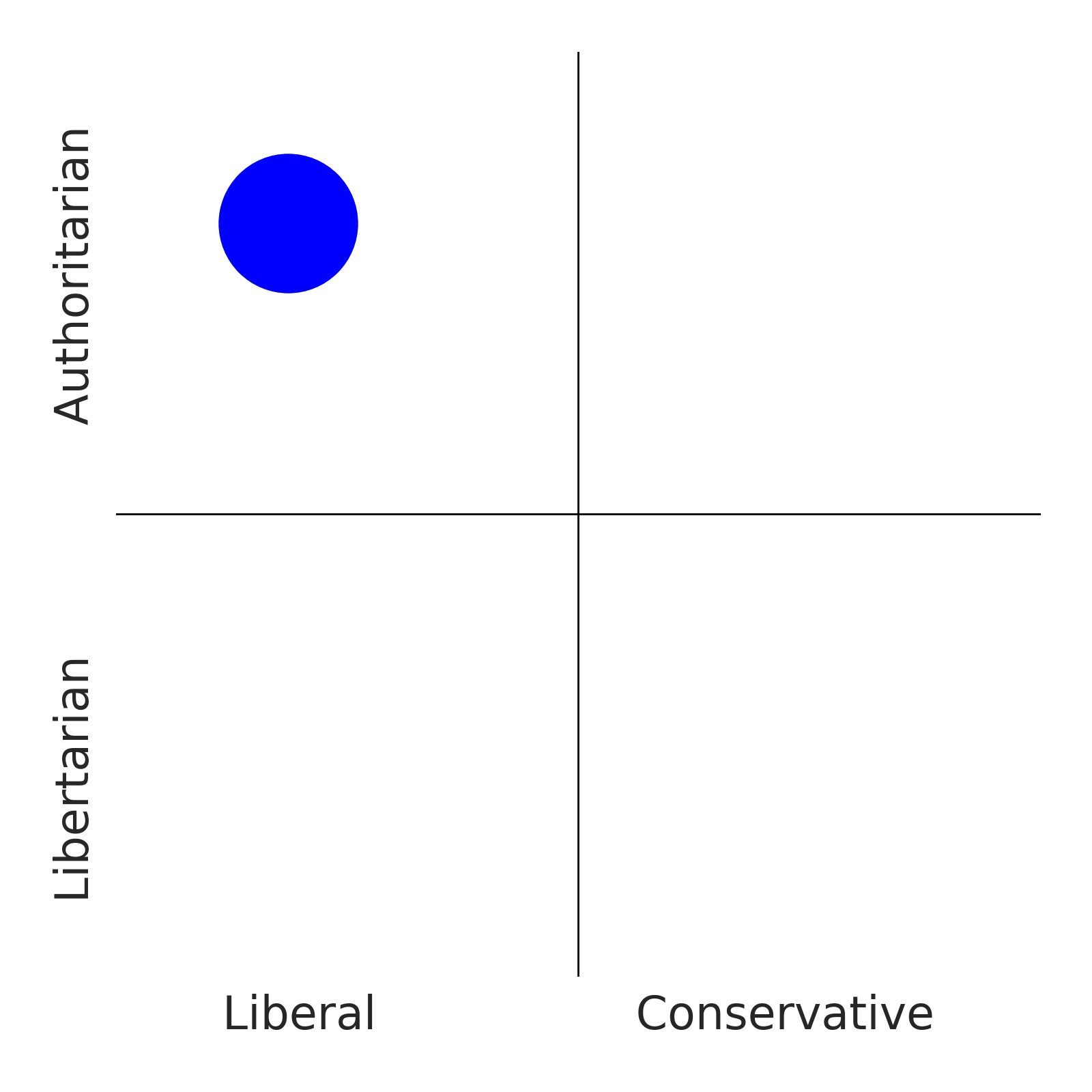
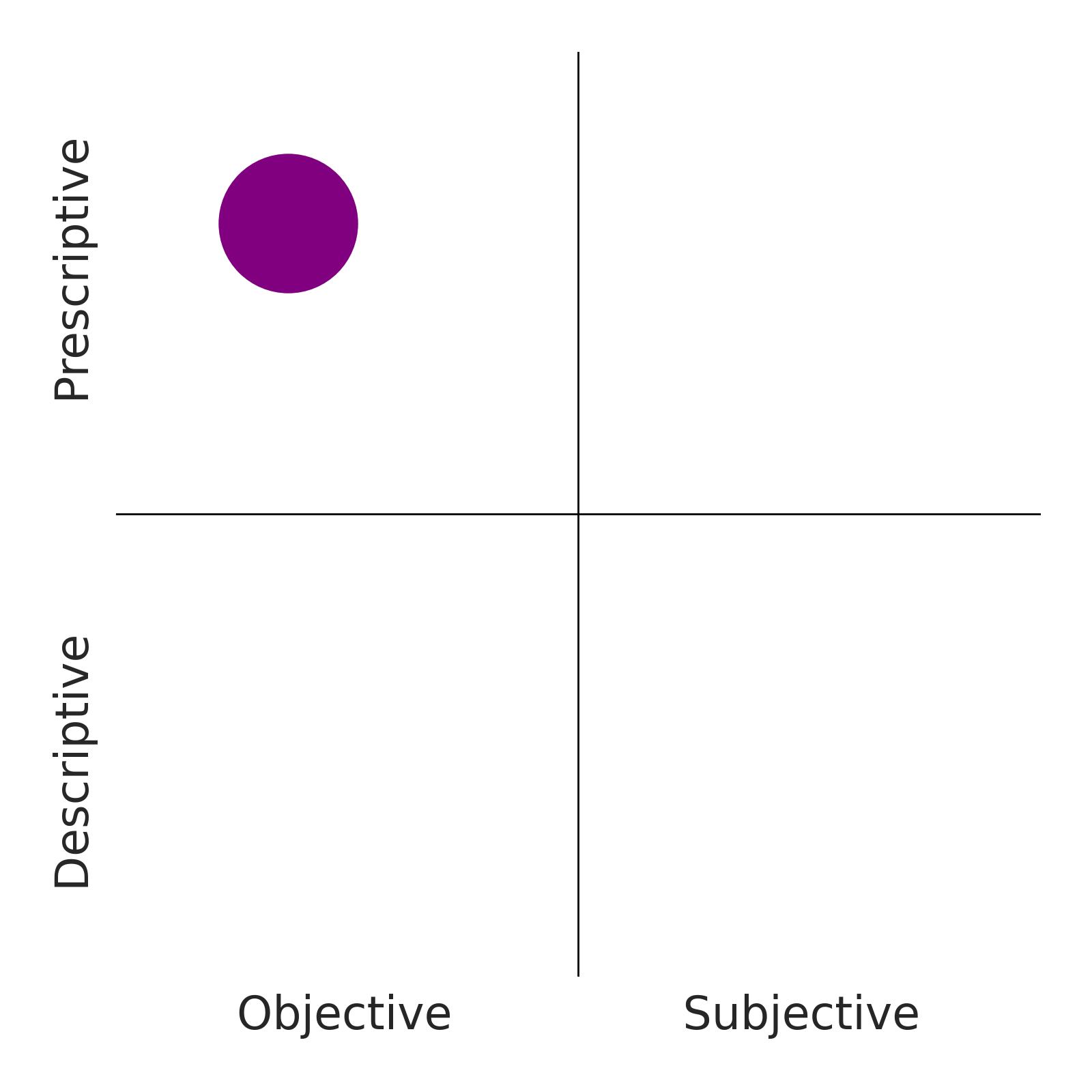
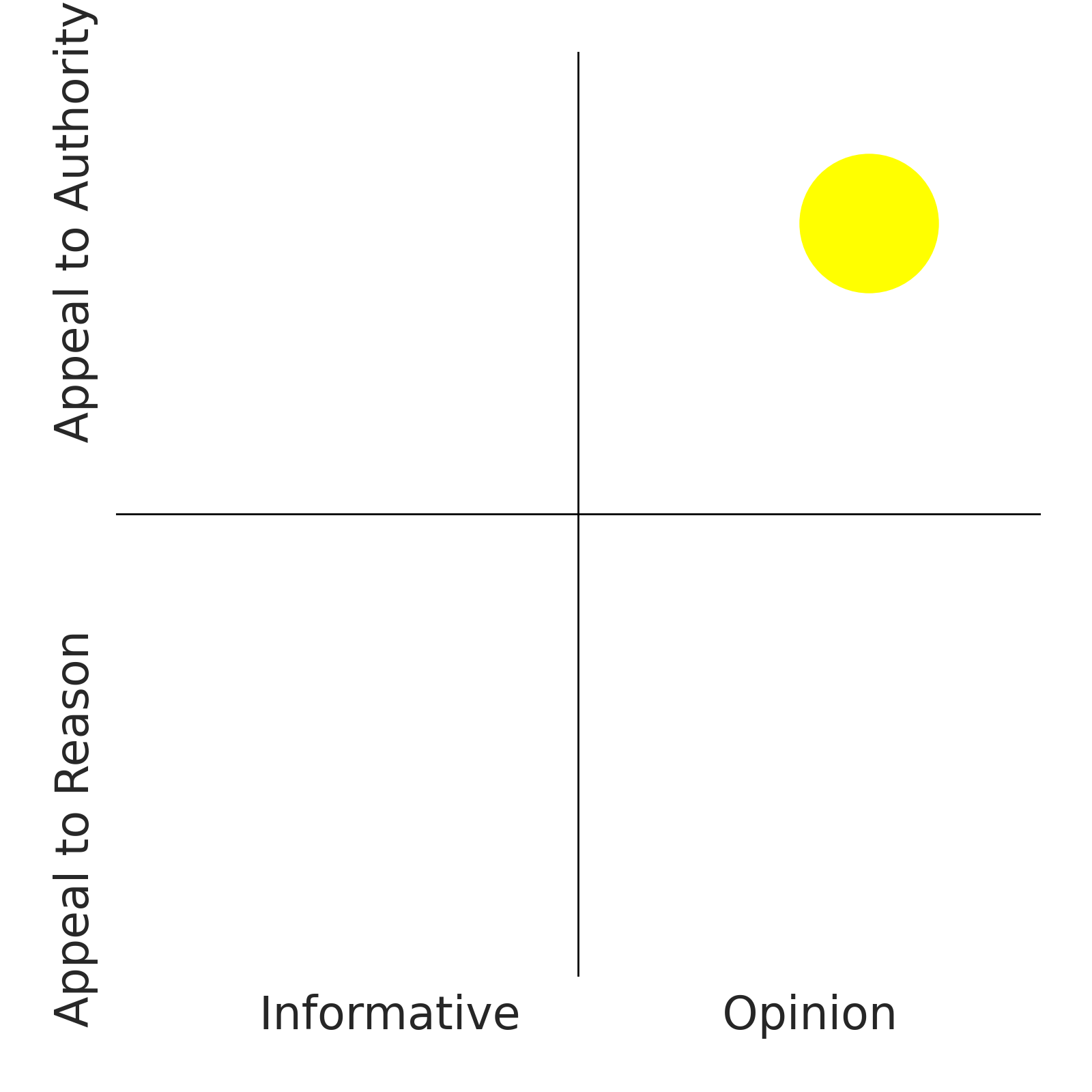
2026 © Helium Trades
Privacy Policy & Disclosure
* Disclaimer: Nothing on this website constitutes investment advice, performance data or any recommendation that any particular security, portfolio of securities, transaction or investment strategy is suitable for any specific person. Helium Trades is not responsible in any way for the accuracy
of any model predictions or price data. Any mention of a particular security and related prediction data is not a recommendation to buy or sell that security. Investments in securities involve the risk of loss. Past performance is no guarantee of future results. Helium Trades is not responsible for any of your investment decisions,
you should consult a financial expert before engaging in any transaction.
Helium Research Assistant

How can I help you today?
Ask any question about Alternet bias.