See whether Helium helps you make better-informed decisions. Try every Pro Trader feature for 30 days. No credit card required.
Try every Pro Trader feature for 30 days. No credit card required.
The source is The Contrarian (Jennifer Rubin's Substack), and its observable posture is that of a left-progressive, anti-Trump activist publication, not a neutral news outlet.
The name itself signals an oppositional identity, and its recurring subscription pitch — funding "critical lawsuits to stop Trump's corruption" — treats the administration as presumptively corrupt
Satirical cartoon framing portrays Trump as a mentally unstable, lying convicted felon whose confinement is needed for national security, and urges readers to fund lawsuits against his 'corruption.'
The Beast is the nickname for the U.S. presidential state car; 'Trumpolini' is a satirical portmanteau of Trump and Mussolini; Uncle Sam is the national personification of the U.S. government.
Automated analysis; not human reviewed. Limitations: The supplied text is a fragment containing cartoon captions and a promotional pitch; the full cartoon, headline, and surrounding post are absent, which restricts analysis of framing. · 13 of 55 available dimensions scored; omitted dimensions are not treated as neutral. · Verified supporting quotes for 12 of 13 scored dimensions.
Claim: The framing is strongly left-aligned, treating Trump as a corrupt felon and soliciting funds for lawsuits against him.
“Help fund bold journalism and critical lawsuits to stop Trump’s corruption by becoming a paid subscriber. Join the fight now!” · exact text match
“The truth always hurts, eh orange convicted felon.” · exact text match
Why: The only political program is opposition to Trump through litigation, and the language labels him a convicted felon and a liar—standard progressive political stances.
Claim: The text is unabashedly subjective, addressing Trump directly with insults and attributing intentions.
“The truth always hurts, eh orange convicted felon. That's why you lie all the time. You'd rather have others in constant pain.” · exact text match
Why: Direct second-person accusations of lying and malice are personal judgments, not neutral reporting.
Claim: The imagery is sensational, depicting Trump as a gagged madman in a straitjacket being hauled to a hospital.
“#5. Trumpolini in a straitjacket with a gag over his mouth;” · exact text match
“#6. Trumpolini being bundled off in "the Beast" SUV (or an ambulance), with a sign pointing the way to the hospital.” · not found in supplied text
Why: Straitjackets, gags, and ambulance rides are exaggerated, shock-oriented caricature rather than measured description.
Claim: The text calls on readers to act, explicitly prescribing paid subscriptions and support for lawsuits.
“Help fund bold journalism and critical lawsuits to stop Trump’s corruption by becoming a paid subscriber. Join the fight now!” · exact text match
Why: The imperatives 'Help fund' and 'Join the fight now' are direct prescriptions for reader action.
Claim: The framing presupposes that Trump's confinement is necessary and that his 'corruption' is established.
“For National Security.” · exact text match
“critical lawsuits to stop Trump’s corruption” · exact text match
Why: The need for national-security removal and the existence of 'Trump’s corruption' are assumed in the call to action rather than demonstrated.
Claim: The text is predominantly opinion, expressing strong value judgments rather than reporting facts.
“The truth always hurts, eh orange convicted felon. That's why you lie all the time.” · exact text match
Why: A direct opinionated address to the subject with negative characterization; no news facts are presented.
Claim: The content is overtly political, centering on Trump, national security, and litigation against his 'corruption.'
“For National Security.” · exact text match
“Help fund bold journalism and critical lawsuits to stop Trump’s corruption by becoming a paid subscriber.” · exact text match
Why: It engages a highly charged political subject and calls for political-legal action against a specific politician.
Claim: Trump is reduced to a cartoon villain in a straitjacket, simplifying a complex figure into a malevolent 'Trumpolini' threat.
“#5. Trumpolini in a straitjacket with a gag over his mouth;” · exact text match
“For National Security.” · exact text match
Why: The straitjacket and 'For National Security' frame compress the subject into a single threat needing containment.
Claim: The text uses name-calling and taunting rather than argument.
“The truth always hurts, eh orange convicted felon.” · exact text match
Why: 'Orange convicted felon' is an ad hominem taunt characteristic of immature discourse.
Claim: The text asserts unqualified certainty about Trump's lying and malicious motives.
“The truth always hurts, eh orange convicted felon. That's why you lie all the time. You'd rather have others in constant pain.” · exact text match
Why: Knowledge of Trump's interior motives ('You'd rather have others in constant pain') is presented as fact, without evidence or hedging.
Claim: The emotional register is strongly negative, alleging deliberate cruelty.
“You'd rather have others in constant pain.” · exact text match
Why: The accusation that Trump prefers others' pain is an emotionally charged moral condemnation.
Claim: The text offers unsupported assertions as certain facts, lowering its credibility as an informational source.
“That's why you lie all the time.” · exact text match
“orange convicted felon” · exact text match
Why: No sourcing, hedging, or evidence accompanies the factual-sounding assertions about Trump's lying and felony status.
Claim: The text uses loaded labels and an urgent subscription appeal to push readers toward a predetermined political conclusion.
“Help fund bold journalism and critical lawsuits to stop Trump’s corruption by becoming a paid subscriber. Join the fight now!” · exact text match
“Trumpolini in a straitjacket with a gag over his mouth” · exact text match
Why: The urgent appeal combines 'corruption' and 'join the fight' with grotesque imagery, using loaded framing and urgency.
The supplied text is a fragment containing cartoon captions and a promotional pitch; the full cartoon, headline, and surrounding post are absent, which restricts analysis of framing.
September 25, 2026 · 0 shares
The publisher's framing is overtly anti-Trump and activist, treating a court ruling as a 'Trump legal L' and soliciting subscriptions to stop 'Trump’s corruption.'
Automated analysis; not human reviewed. Limitations: The supplied text is a short promotional blurb, so bias scores rely on framing rather than substantive reporting; the exact legal and electoral facts cannot be verified from this text. · 14 of 55 available dimensions scored; omitted dimensions are not treated as neutral. · Verified supporting quotes for 14 of 14 scored dimensions.
Claim: The publisher uses anti-Trump language and platforms Democratic-aligned figures, reflecting a left-leaning stance.
“yet another Trump legal L this week” · exact text match
“help fund critical lawsuits to stop Trump’s corruption” · exact text match
Why: The framing evaluates Trump negatively and solicits action against him, indicating a left-leaning editorial stance.
Claim: The publisher frames communities as able to challenge corporate power at the ballot box, an anti-elite appeal.
“how communities can stand up to corporate tax breaks for data centers at the ballot box” · exact text match
Why: This positions ordinary communities against corporate interests, a populist frame.
Claim: Editorial labels and value judgments dominate the description rather than neutral reporting.
“yet another Trump legal L this week” · exact text match
“help fund critical lawsuits to stop Trump’s corruption” · exact text match
Why: Phrases like 'legal L' and 'Trump’s corruption' are subjective characterizations, not neutral statements.
Claim: The wording uses slang and exclamatory framing to dramatize a legal development.
“yet another Trump legal L this week” · exact text match
Why: Calling a court ruling a 'legal L' is informal, hype-oriented language.
Claim: The text issues a direct call to action and subscription request.
“Join The Contrarian community to support bold journalism and help fund critical lawsuits to stop Trump’s corruption — Subscribe now!” · exact text match
Why: Imperative phrasing like 'Join' and 'Subscribe now!' makes the text prescriptive.
Claim: The description is largely opinion, advocacy, and promotion.
“yet another Trump legal L this week” · exact text match
“help fund critical lawsuits to stop Trump’s corruption” · exact text match
Why: It evaluates events and solicits action rather than merely informing.
Claim: The content centers on partisan electoral and legal topics with Democratic-aligned guests.
“Which Midterm Governor Races Could Decide the 2028 Election?” · exact text match
“former chair of the Democratic Party of Wisconsin” · exact text match
Why: The framing is explicitly about elections and features a Democratic Party official.
Claim: The description functions as promotional fluff for a subscription program.
“Join The Contrarian community to support bold journalism and help fund critical lawsuits to stop Trump’s corruption — Subscribe now!” · exact text match
Why: The final sentence is a direct subscription pitch, making the text promotional rather than informative.
Claim: The publisher applies a consistent progressive, anti-Trump ideological frame.
“help fund critical lawsuits to stop Trump’s corruption” · exact text match
“how communities can stand up to corporate tax breaks for data centers at the ballot box” · exact text match
Why: The text links legal action, electoral mobilization, and anti-corporate appeals into a single ideological program.
Claim: The description carries a negative and combative emotional tone.
“yet another Trump legal L this week” · exact text match
“help fund critical lawsuits to stop Trump’s corruption” · exact text match
Why: The language expresses derision and alarm rather than a neutral emotional register.
Claim: The description asserts a legal ruling without citation or detail while using partisan framing.
“a federal judge’s block on his press ban against MS NOW, POLITICO, and CNN” · exact text match
Why: No source, court name, or date is given, and the framing is evaluative, so visible credibility signals are weak.
Claim: The publication uses the short piece to market its subscription and fundraising campaign.
“Join The Contrarian community to support bold journalism and help fund critical lawsuits to stop Trump’s corruption — Subscribe now!” · exact text match
Why: The closing statement advertises membership and funding, making the content advertorial.
Claim: The publisher presents corporate tax breaks as something communities should oppose at the ballot box.
“how communities can stand up to corporate tax breaks for data centers at the ballot box” · exact text match
Why: The framing is critical of a corporate tax preference, indicating an anti-corporate tilt on this issue.
Claim: The headline and discussion frame future electoral effects as uncertain but consequential.
“Which Midterm Governor Races Could Decide the 2028 Election?” · exact text match
“Ben’s top races to watch in November” · exact text match
Why: 'Could decide' and 'races to watch' are forward-looking, predictive framings.
The supplied text is a short promotional blurb, so bias scores rely on framing rather than substantive reporting; the exact legal and electoral facts cannot be verified from this text.
October 02, 2026 · 0 shares
Promotional teaser frames two House challengers as working-class affordability advocates and anti-corruption candidates while soliciting subscriptions to fund anti-Trump litigation.
Automated analysis; not human reviewed. Limitations: The supplied text is a brief promotional teaser with no interview quotes or policy details, so assessments rely on the framing language in the teaser. · 9 of 55 available dimensions scored; omitted dimensions are not treated as neutral. · Verified supporting quotes for 9 of 9 scored dimensions.
Claim: The publisher frames the topic in anti-Republican/anti-Trump terms, favoring the challengers.
“help fund critical lawsuits to stop Trump’s corruption” · exact text match
“working class perspective that’s a big contrast to incumbent Republican Rep. Ryan Mackenzie” · exact text match
Why: The only named opponent is a Republican, and opposing Trump's corruption is used as a reason to subscribe, indicating a liberal/anti-conservative editorial stance.
Claim: The framing elevates working-class and affordability concerns.
“He brings a working class perspective” · exact text match
“why affordability remains the most important issue in this election” · exact text match
Why: The text highlights a union firefighter's perspective and declares affordability the most important issue, a populist emphasis.
Claim: The text is promotional and evaluative rather than neutral.
“Two Congressional Candidates Fighting for Affordability and Against Corruption” · exact text match
“Join The Contrarian community to support bold journalism” · exact text match
Why: The title and subscription language use value-laden framing rather than neutral description.
Claim: The text explicitly urges readers to act by subscribing.
“Join The Contrarian community to support bold journalism and help fund critical lawsuits to stop Trump’s corruption — Subscribe now!” · exact text match
Why: The imperative 'Subscribe now!' is a direct prescription to take action.
Claim: The text presupposes that Trump's corruption is real and that lawsuits against it are justified.
“help fund critical lawsuits to stop Trump’s corruption” · exact text match
Why: The subscription appeal treats 'Trump's corruption' as an established premise rather than a proposition to be demonstrated.
Claim: The publisher states advocacy opinions as framing, not just facts.
“Fighting for Affordability and Against Corruption” · exact text match
“help fund critical lawsuits to stop Trump’s corruption” · exact text match
Why: These phrases assert evaluations of candidates and Trump without supporting evidence.
Claim: The content is centered on partisan election contests and Trump-related political conflict.
“hoping to flip tough House seats in the November midterms” · exact text match
“stop Trump’s corruption” · exact text match
Why: Midterm flips and anti-Trump litigation are inherently political subjects presented through a partisan lens.
Claim: The text offers limited verifiable reporting and relies on unsupported assertions in its framing.
“why affordability remains the most important issue in this election” · exact text match
“stop Trump’s corruption” · exact text match
Why: The article names interviewees and topics, but its key evaluative claims are asserted without sourcing, lowering visible credibility.
Claim: The text is a subscription advertisement for The Contrarian.
“Join The Contrarian community to support bold journalism and help fund critical lawsuits to stop Trump’s corruption — Subscribe now!” · exact text match
Why: The final line is a direct promotional solicitation for paid membership.
The supplied text is a brief promotional teaser with no interview quotes or policy details, so assessments rely on the framing language in the teaser.
Topic selection clusters around:
Frames the president as a cruel, corrupt figure who controls Congress through fear and blackmail, and dismisses members of Congress as too cowardly to do their jobs.
Automated analysis; not human reviewed. Limitations: The supplied text is only a short editorial cartoon caption with no reported factual detail, so all classifications are drawn from that limited sample. · 18 of 55 available dimensions scored; omitted dimensions are not treated as neutral. · Verified supporting quotes for 18 of 18 scored dimensions.
Claim: The caption uses derogatory and conspiratorial language to characterize Trump, indicating a left-leaning anti-Trump framing.
“one decrepit and cruel old man” · exact text match
“He must hold a lot of dirty secrets on all of them.” · exact text match
Why: The language is unambiguously hostile to Trump and Congress, but the sample is too short to establish a full left-versus-right policy frame.
Claim: The cartoon adopts an anti-Washington stance, portraying elected officials as cowardly and corrupt rather than as legitimate representatives.
“almost 300 members of congress are too scared to death” · exact text match
“He must hold a lot of dirty secrets on all of them.” · exact text match
Why: It indicts a large bloc of elected officials as paralyzed by fear and blackmail, a populist framing of a corrupt political class.
Claim: The piece is a personal opinion/cartoon caption, not neutral reporting.
“This cartoon says it all” · exact text match
“He must hold a lot of dirty secrets on all of them.” · exact text match
Why: It explicitly presents a cartoonist's assertion and unsupported speculation as the takeaway.
Claim: The caption uses extreme, fear-laden wording to dramatize its point.
“too scared to death” · exact text match
“decrepit and cruel old man” · exact text match
Why: The phrase choices are hyperbolic and emotionally charged rather than measured.
Claim: The framing is pessimistic, depicting a paralyzed Congress under a corrupt president's control.
“almost 300 members of congress are too scared to death” · exact text match
“to do the jobs the were elected and are being paid for” · exact text match
Why: The implied trajectory is one of corruption and cowardice with no constructive or hopeful element.
Claim: The caption centers on fear and intimidation as the mechanism of control.
“too scared to death” · exact text match
“cruel old man” · exact text match
Why: It presents congressional inaction as driven by mortal fear of Trump.
Claim: The caption indulges in speculative gossip about 'dirty secrets.'
“He must hold a lot of dirty secrets on all of them.” · exact text match
Why: The phrase frames private, allegedly compromising information as the explanation for congressional behavior.
Claim: The text is an overtly opinionated editorial cartoon caption.
“This cartoon says it all” · exact text match
“He must hold a lot of dirty secrets on all of them.” · exact text match
Why: It asserts a sweeping interpretive claim and a speculative conclusion without factual support.
Claim: The subject is a partisan political confrontation involving Trump and Congress.
“The Incredible Shrinking Trump” · exact text match
“almost 300 members of congress” · exact text match
Why: The title and caption explicitly concern the president and members of Congress in a power dynamic.
Claim: It reduces the behavior of nearly 300 members of Congress to fear of one man.
“almost 300 members of congress are too scared to death of one decrepit and cruel old man” · exact text match
Why: The broad numerical claim ignores all other political motivations.
Claim: It states an unsupported blackmail theory with the modal 'must,' expressing certainty beyond the evidence.
“He must hold a lot of dirty secrets on all of them.” · exact text match
Why: The inference is presented as necessary fact despite no supporting evidence in the text.
Claim: The cartoon is anti-establishment, attacking Congress as well as the president.
“almost 300 members of congress are too scared to death” · exact text match
“He must hold a lot of dirty secrets on all of them.” · exact text match
Why: It indicts a large bloc of elected officials as cowardly and beholden to blackmail, an anti-Washington stance.
Claim: The tone is strongly negative, expressing contempt for Trump and alarm about Congress.
“decrepit and cruel old man” · exact text match
“too scared to death” · exact text match
Why: The chosen descriptors are emotionally charged and critical.
Claim: As factual reporting, the piece lacks sourcing and uses an unsupported declarative claim; as opinion it is transparently labeled a cartoon.
“He must hold a lot of dirty secrets on all of them.” · exact text match
Why: There is no verifiable evidence, but its cartoon/opinion format makes the subjectivity visible.
Claim: The caption leaps from congressional inaction to an unsupported blackmail explanation without evidence.
“He must hold a lot of dirty secrets on all of them.” · exact text match
Why: The inference is a non-sequitur presented as if it necessarily follows from the prior claim.
Claim: The 'dirty secrets' conclusion is speculative.
“He must hold a lot of dirty secrets on all of them.” · exact text match
Why: No source or evidence is given; it is presented as an inference from the prior claim.
Claim: The caption uses loaded name-calling and an unsubstantiated inference to steer the reader.
“decrepit and cruel old man” · exact text match
“He must hold a lot of dirty secrets on all of them.” · exact text match
Why: Derogatory characterization plus an implication of blackmail are observable framing techniques.
Claim: It implies a coordinated secret-control arrangement in which Trump blackmails legislators.
“He must hold a lot of dirty secrets on all of them.” · exact text match
Why: The cleanest reading is that Trump's power over nearly 300 legislators comes from secret compromising material.
The supplied text is only a short editorial cartoon caption with no reported factual detail, so all classifications are drawn from that limited sample.
October 05, 2026 · 0 shares
The interview is framed as a working-class affordability crusade, presenting Brooks as an authentic champion against an out-of-touch opponent.
Automated analysis; not human reviewed. Limitations: The main input limitation is that this is an edited, one-sided campaign interview with no independent reporting or verification of claims. · 7 of 55 available dimensions scored; omitted dimensions are not treated as neutral. · Verified supporting quotes for 7 of 7 scored dimensions.
Claim: The publisher presents a Democratic candidate favorably and amplifies left-leaning economic views.
“Bob Brooks understands the difficulties and rewards of working hard for a living, and he’s ready to fight for all working Americans in Congress.” · exact text match
“I really like the PRO Act. I think we should pass the PRO Act.” · exact text match
Why: The opening and host signoff are favorable to a Democratic candidate, and the selected platform includes union expansion and healthcare price caps.
Claim: The article frames the election as a battle between working Americans and an out-of-touch political elite.
“60% of America is from the working class, while 2% of Congress is there. So, who’s making the laws? us, nobody.” · exact text match
Why: The central contrast is ordinary workers versus an unrepresentative Congress, with Brooks presented as their authentic representative.
Claim: The article is subjective advocacy, not detached reporting.
“Bob Brooks understands the difficulties and rewards of working hard for a living, and he’s ready to fight for all working Americans in Congress.” · exact text match
Why: The framing uses value judgments and endorsement-style language rather than neutral description.
Claim: The article advocates specific policy prescriptions rather than simply describing the race.
“I think we should pass the PRO Act.” · exact text match
“We gotta start putting some caps on some things to keep people’s pockets full with the money that they earn.” · exact text match
Why: The candidate's agenda is presented as what Congress should do, including union rights, healthcare caps, and student-debt relief.
Claim: The piece is built around the candidate's opinions and attacks.
“He is out of touch with reality.” · exact text match
Why: The transcript is dominated by Brooks's subjective judgments of his opponent and his policy preferences, with no opposing view.
Claim: The article is explicitly electioneering content for a congressional race.
“With November midterms approaching, all eyes are on Pennsylvania. PA-07 is the ultimate swing district in a swing state, and the outcome of its congressional race will be crucial in determining whether Democrats will retake the House.” · exact text match
Why: It frames the race as a national partisan battle and urges taking back the House.
Claim: The article functions as promotional material for the Brooks campaign.
“So, if somebody’s interested in contributing, there’s a link on there also.” · exact text match
“Maybe we’ll see you back here as Congressman Bob.” · exact text match
Why: It includes a campaign contribution pitch and a host signoff expressing hope Brooks wins, rather than neutral coverage.
The main input limitation is that this is an edited, one-sided campaign interview with no independent reporting or verification of claims.
October 05, 2026 · 0 shares
Framing centers U.S. midterm politics on Democratic prospects and religious messaging, treating PA-07 as decisive for a House takeover and foreign policy as newly relevant to voters.
Automated analysis; not human reviewed. Limitations: The excerpt is a truncated roundup of headlines, short summaries, and reader comments, so the publisher's full framing and any original reporting are not assessable. · 1 of 55 available dimensions scored; omitted dimensions are not treated as neutral. · Verified supporting quotes for 1 of 1 scored dimensions.
Claim: The article is explicitly and heavily about partisan electoral politics and midterm control of Congress.
“With November midterms approaching, all eyes are on Pennsylvania. PA-07 is the ultimate swing district in a swing state, and the outcome of its congressional race will be crucial in determining whether Democrats will retake the House.” · exact text match
Why: The central items are election timing, a congressional swing district, party control of the House, and Washington political conventional wisdom, making the content unambiguously political.
The excerpt is a truncated roundup of headlines, short summaries, and reader comments, so the publisher's full framing and any original reporting are not assessable.
October 06, 2026 · 0 shares
A Democratic-aligned activist column frames several governor races as winnable through loaded partisan labels and an urgent get-out-the-vote appeal.
Automated analysis; not human reviewed. Limitations: The supplied text is a truncated opinion/advocacy excerpt with no publication date, outlet, or external sourcing, so classification is based on internal statements. · 16 of 55 available dimensions scored; omitted dimensions are not treated as neutral. · Verified supporting quotes for 14 of 16 scored dimensions.
Claim: The publisher frames Democratic gubernatorial candidates favorably and Republican candidates unfavorably, urging a Democratic 'blue wave.'
“Democrats have a chance to contest a lot of gubernatorial seats across the country.” · exact text match
“Democrats have a chance to oust three term incumbent Governor Greg Abbott, who is a friend of Christian nationalists, a proponent of school voucher, and fiercely anti-immigrant.” · exact text match
Why: The chosen races, negative labels for Republicans, and explicit call for a Democratic wave show strong liberal partisan framing.
Claim: The article uses anti-billionaire and grassroots-voter framing.
“He’s a former sheriff, friend of the billionaire class, and a champion of Trump.” · exact text match
“This is Tim Dickinson reminding you that the blue wave is only as big as you make it. So get out there and vote.” · exact text match
Why: Anti-billionaire language and an appeal to voter-driven change tilt toward populism, though the piece is still elite political commentary.
Claim: The text uses evaluative labels and direct exhortation rather than detached reporting.
“This is Tim Dickinson reminding you that the blue wave is only as big as you make it. So get out there and vote.” · exact text match
“a relentless Trump hype man” · exact text match
Why: Direct calls to action and value-laden descriptors dominate the text.
Claim: The article uses dramatic, speculative phrasing to heighten interest.
“has recently been caught scrubbing his website of mentions of Donald Trump — a sign of the times?” · exact text match
Why: The 'caught scrubbing' phrasing and rhetorical question add sensational spin to a routine political development.
Claim: The article presents Democratic opportunity in governor races as real and winnable.
“5 Key Governor Races Democrats Can Win” · exact text match
“Democrats have a chance to contest a lot of gubernatorial seats across the country.” · exact text match
Why: The headline and opening emphasize winnability and opportunity for Democrats.
Claim: The article prescribes voting and subscription actions rather than merely describing events.
“This is Tim Dickinson reminding you that the blue wave is only as big as you make it. So get out there and vote.” · exact text match
“Elections matter. Support bold journalism and help fund critical lawsuits to stop Trump’s corruption — Subscribe now!” · exact text match
Why: Explicit calls to action and a subscription solicitation make the piece prescriptive and persuasive.
Claim: The article invokes fear of corruption and authoritarianism to motivate action.
“governors play an important line of defense against the authoritarian impulses of the current president” · not found in supplied text
“help fund critical lawsuits to stop Trump’s corruption” · exact text match
Why: It frames the stakes as defense against an authoritarian and corrupt president, appealing to fear and alarm.
Claim: The text is predominantly unsupported opinion and advocacy.
“Democrats have a chance to oust three term incumbent Governor Greg Abbott, who is a friend of Christian nationalists, a proponent of school voucher, and fiercely anti-immigrant.” · exact text match
“a relentless Trump hype man” · exact text match
Why: Unsupported evaluative claims and exhortations dominate the text.
Claim: The piece is explicitly partisan election advocacy.
“Democrats have a chance to contest a lot of gubernatorial seats across the country.” · exact text match
“This is Tim Dickinson reminding you that the blue wave is only as big as you make it. So get out there and vote.” · exact text match
Why: The content is centered on Democratic electoral strategy and defeating Republicans.
Claim: The article applies a predictable progressive ideological frame to candidates and policy.
“a friend of Christian nationalists, a proponent of school voucher, and fiercely anti-immigrant” · exact text match
“governors play an important line of defense against the authoritarian impulses of the current president” · not found in supplied text
Why: The labels and framing assume progressive premises about religion, immigration, and presidential authority.
Claim: The article mixes anger at opponents with an encouraging, positive call to action.
“Anti-incumbent fever is everywhere, even in blue states, even in places like Oregon.” · exact text match
“This is Tim Dickinson reminding you that the blue wave is only as big as you make it. So get out there and vote.” · exact text match
Why: The use of 'fever' and 'blue wave' evokes excitement and momentum while pushing readers to act.
Claim: Visible sourcing and attribution are weak; key claims are stated as fact without support.
“Greg Abbott, who is a friend of Christian nationalists, a proponent of school voucher, and fiercely anti-immigrant” · exact text match
“the polling is close” · exact text match
Why: Numerous assertions lack source support, though some candidate quotes are attributed; no correction or sourcing practices are shown.
Claim: The text solicits subscriptions and litigation donations.
“Elections matter. Support bold journalism and help fund critical lawsuits to stop Trump’s corruption — Subscribe now!” · exact text match
Why: The final sentence is an explicit promotional solicitation tied to the cause.
Claim: The article treats billionaire and fossil-fuel interests as suspect.
“He’s a former sheriff, friend of the billionaire class, and a champion of Trump.” · exact text match
“She led a walk-out on behalf of fossil fuel companies to prevent a vote on a climate bill.” · exact text match
Why: Negative association with the billionaire class and fossil fuel companies indicates an anti-corporate lean, despite a quoted favorable view of capitalism.
Claim: The article forecasts electoral races and speculates about candidate motives.
“Democrats have a chance to contest a lot of gubernatorial seats across the country.” · exact text match
“a sign of the times?” · exact text match
Why: The piece is framed as a winnability forecast and ventures speculation about Donalds's website scrubbing.
Claim: The article uses loaded labels and presuppositions to steer the reader's judgment.
“a friend of Christian nationalists, a proponent of school voucher, and fiercely anti-immigrant” · exact text match
“racist redistricting” · exact text match
Why: Asserting disputed characterizations as facts, such as 'racist redistricting,' is a loaded framing technique.
The supplied text is a truncated opinion/advocacy excerpt with no publication date, outlet, or external sourcing, so classification is based on internal statements.
The framing is pro-Democratic and anti-MAGA, presenting Democratic-friendly polling as 'disasters' and describing Trump's Latino approval as 'dreadful.'
Automated analysis; not human reviewed. Limitations: No poll dates, sample sizes, or margins of error are in the excerpt; analysis is limited to the supplied text. · 55 of 55 available dimensions scored; omitted dimensions are not treated as neutral. · Verified supporting quotes for 7 of 55 scored dimensions.
Claim: The framing portrays the news as favorable to Democrats and damaging to Trump/MAGA.
“Polling disasters keep coming for MAGA.” · exact text match
“Trump’s approval among Latinos is a dreadful 27 percent” · exact text match
Why: The label 'MAGA' as the loser and the evaluative 'dreadful' reveal a partisan leaning in an otherwise poll-based report.
Claim: Objective poll results are wrapped in subjective verdicts.
“Trump’s approval among Latinos is a dreadful 27 percent” · exact text match
“Polling disasters keep coming for MAGA.” · exact text match
Why: The underlying data is objective, but modifiers like 'dreadful' and 'disasters' inject the publisher's evaluation.
Claim: The article mixes factual poll reporting with opinionated wording.
“Polling disasters keep coming for MAGA.” · exact text match
“Donald Trump’s inroads with Latinos in 2024 has been lost.” · exact text match
Why: Mostly reported data, but 'disasters,' 'lost,' and 'dreadful' push it into commentary.
Claim: The item is partisan political scorekeeping about Democratic and Republican electoral fortunes.
“Polling disasters keep coming for MAGA.” · exact text match
“The New York Times has Democrats leading in Senate races in Ohio, Texas, and Alaska” · exact text match
Why: It tracks partisan races and frames Democratic-friendly results as disasters for the other side.
Claim: A varied set of polls, including statistical ties, is reduced to 'disasters.'
“Polling disasters keep coming for MAGA.” · exact text match
Counterevidence:
“as statistically tied in Iowa (although most other polls have Democrat Josh Turek leading)” · exact text match
Why: The label 'disasters' generalizes across races that are tied or competitive.
Claim: The item states that Trump's Latino gains 'has been lost' based on a single new poll.
“Donald Trump’s inroads with Latinos in 2024 has been lost.” · exact text match
Why: A definitive claim of loss is derived from one poll without acknowledging sampling uncertainty or trend evidence.
Claim: The report names established sources but presents them through a strongly framed selection.
“a new NBC News/Telemundo poll” · exact text match
“The New York Times has Democrats leading in Senate races in Ohio, Texas, and Alaska” · exact text match
Why: Credible sources are cited, but selective framing and loaded language limit the item's evidentiary reliability.
No poll dates, sample sizes, or margins of error are in the excerpt; analysis is limited to the supplied text.
October 06, 2026 · 0 shares
A Democratic-aligned activist column frames several governor races as winnable through loaded partisan labels and an urgent get-out-the-vote appeal.
Automated analysis; not human reviewed. Limitations: The supplied text is a truncated opinion/advocacy excerpt with no publication date, outlet, or external sourcing, so classification is based on internal statements. · 16 of 55 available dimensions scored; omitted dimensions are not treated as neutral. · Verified supporting quotes for 14 of 16 scored dimensions.
Claim: The publisher frames Democratic gubernatorial candidates favorably and Republican candidates unfavorably, urging a Democratic 'blue wave.'
“Democrats have a chance to contest a lot of gubernatorial seats across the country.” · exact text match
“Democrats have a chance to oust three term incumbent Governor Greg Abbott, who is a friend of Christian nationalists, a proponent of school voucher, and fiercely anti-immigrant.” · exact text match
Why: The chosen races, negative labels for Republicans, and explicit call for a Democratic wave show strong liberal partisan framing.
Claim: The article uses anti-billionaire and grassroots-voter framing.
“He’s a former sheriff, friend of the billionaire class, and a champion of Trump.” · exact text match
“This is Tim Dickinson reminding you that the blue wave is only as big as you make it. So get out there and vote.” · exact text match
Why: Anti-billionaire language and an appeal to voter-driven change tilt toward populism, though the piece is still elite political commentary.
Claim: The text uses evaluative labels and direct exhortation rather than detached reporting.
“This is Tim Dickinson reminding you that the blue wave is only as big as you make it. So get out there and vote.” · exact text match
“a relentless Trump hype man” · exact text match
Why: Direct calls to action and value-laden descriptors dominate the text.
Claim: The article uses dramatic, speculative phrasing to heighten interest.
“has recently been caught scrubbing his website of mentions of Donald Trump — a sign of the times?” · exact text match
Why: The 'caught scrubbing' phrasing and rhetorical question add sensational spin to a routine political development.
Claim: The article presents Democratic opportunity in governor races as real and winnable.
“5 Key Governor Races Democrats Can Win” · exact text match
“Democrats have a chance to contest a lot of gubernatorial seats across the country.” · exact text match
Why: The headline and opening emphasize winnability and opportunity for Democrats.
Claim: The article prescribes voting and subscription actions rather than merely describing events.
“This is Tim Dickinson reminding you that the blue wave is only as big as you make it. So get out there and vote.” · exact text match
“Elections matter. Support bold journalism and help fund critical lawsuits to stop Trump’s corruption — Subscribe now!” · exact text match
Why: Explicit calls to action and a subscription solicitation make the piece prescriptive and persuasive.
Claim: The article invokes fear of corruption and authoritarianism to motivate action.
“governors play an important line of defense against the authoritarian impulses of the current president” · not found in supplied text
“help fund critical lawsuits to stop Trump’s corruption” · exact text match
Why: It frames the stakes as defense against an authoritarian and corrupt president, appealing to fear and alarm.
Claim: The text is predominantly unsupported opinion and advocacy.
“Democrats have a chance to oust three term incumbent Governor Greg Abbott, who is a friend of Christian nationalists, a proponent of school voucher, and fiercely anti-immigrant.” · exact text match
“a relentless Trump hype man” · exact text match
Why: Unsupported evaluative claims and exhortations dominate the text.
Claim: The piece is explicitly partisan election advocacy.
“Democrats have a chance to contest a lot of gubernatorial seats across the country.” · exact text match
“This is Tim Dickinson reminding you that the blue wave is only as big as you make it. So get out there and vote.” · exact text match
Why: The content is centered on Democratic electoral strategy and defeating Republicans.
Claim: The article applies a predictable progressive ideological frame to candidates and policy.
“a friend of Christian nationalists, a proponent of school voucher, and fiercely anti-immigrant” · exact text match
“governors play an important line of defense against the authoritarian impulses of the current president” · not found in supplied text
Why: The labels and framing assume progressive premises about religion, immigration, and presidential authority.
Claim: The article mixes anger at opponents with an encouraging, positive call to action.
“Anti-incumbent fever is everywhere, even in blue states, even in places like Oregon.” · exact text match
“This is Tim Dickinson reminding you that the blue wave is only as big as you make it. So get out there and vote.” · exact text match
Why: The use of 'fever' and 'blue wave' evokes excitement and momentum while pushing readers to act.
Claim: Visible sourcing and attribution are weak; key claims are stated as fact without support.
“Greg Abbott, who is a friend of Christian nationalists, a proponent of school voucher, and fiercely anti-immigrant” · exact text match
“the polling is close” · exact text match
Why: Numerous assertions lack source support, though some candidate quotes are attributed; no correction or sourcing practices are shown.
Claim: The text solicits subscriptions and litigation donations.
“Elections matter. Support bold journalism and help fund critical lawsuits to stop Trump’s corruption — Subscribe now!” · exact text match
Why: The final sentence is an explicit promotional solicitation tied to the cause.
Claim: The article treats billionaire and fossil-fuel interests as suspect.
“He’s a former sheriff, friend of the billionaire class, and a champion of Trump.” · exact text match
“She led a walk-out on behalf of fossil fuel companies to prevent a vote on a climate bill.” · exact text match
Why: Negative association with the billionaire class and fossil fuel companies indicates an anti-corporate lean, despite a quoted favorable view of capitalism.
Claim: The article forecasts electoral races and speculates about candidate motives.
“Democrats have a chance to contest a lot of gubernatorial seats across the country.” · exact text match
“a sign of the times?” · exact text match
Why: The piece is framed as a winnability forecast and ventures speculation about Donalds's website scrubbing.
Claim: The article uses loaded labels and presuppositions to steer the reader's judgment.
“a friend of Christian nationalists, a proponent of school voucher, and fiercely anti-immigrant” · exact text match
“racist redistricting” · exact text match
Why: Asserting disputed characterizations as facts, such as 'racist redistricting,' is a loaded framing technique.
The supplied text is a truncated opinion/advocacy excerpt with no publication date, outlet, or external sourcing, so classification is based on internal statements.
September 24, 2026 · 0 shares
Frames the Senate's rejection of the CLARITY Act as a principled rebuke of President Trump's crypto conflicts of interest and urges Congress to force his divestment.
Automated analysis; not human reviewed. Limitations: The analysis relies on a single opinion essay; it does not include the CLARITY Act text, senators' stated reasons, or independent verification of the cited FBI and financial-disclosure figures. A reader comment following the subscription prompt was excluded as non-substantive. · 16 of 55 available dimensions scored; omitted dimensions are not treated as neutral. · Verified supporting quotes for 16 of 16 scored dimensions.
Claim: The op-ed strongly criticizes a Republican president and calls for governmental ethics enforcement, aligning with a liberal/anti-Trump stance.
“The Senate’s no vote on the CLARITY Act without proper conflict of interest rules is the first step in the right direction.” · exact text match
Why: The demand for divestment and the characterization of the president as self-dealing are explicitly adversarial to Trump and to crypto-industry interests.
Claim: The essay contrasts ordinary Americans and everyday investors with a wealthy president's self-serving financial dealings, a populist framing.
“That is the only way that the American public can have faith that the regulation of the cryptocurrency industry will be aimed at protecting their pocketbooks and not the President’s.” · exact text match
Why: Repeated appeals to the 'American public' and 'everyday investors' position the argument against concentrated presidential wealth and influence.
Claim: The op-ed advocates governmental coercion to compel the president to divest, a statist remedy rather than a market or voluntary solution.
“Now it is time for Congress to step up and complete the task: direct the President to divest his sprawling interests in his family’s cryptocurrency enterprise.” · exact text match
Why: The call for a congressional directive to force divestment favors governmental intervention over individual discretion.
Claim: The essay is openly opinionated and evaluative rather than neutrally descriptive.
“That is the type of clarity that the American public is seeking.” · exact text match
Why: The concluding language expresses the authors' own valuation and advocacy, not a disinterested account of events.
Claim: The presentation is restrained and data-heavy rather than sensationalist.
“In 2025, the FBI’s Internet Crime Complaint Center received more than 181,565 complaints concerning cryptocurrency fraud, which resulted in losses estimated at more than $11 billion” · exact text match
Why: Even alarming claims are anchored to official statistics and specific figures, reducing sensational tone.
Claim: The essay is decidedly negative about cryptocurrency as an industry and investment.
“Cryptocurrency fraud is reaching epidemic levels.” · exact text match
“a regulatory environment ripe for fraud and abuse” · exact text match
Why: The essay emphasizes massive fraud losses and industry-friendly regulation as dangers, with no positive investment case for crypto.
Claim: The essay is predominantly pessimistic about current crypto policy and presidential ethics, though it sees the Senate vote as a hopeful step.
“a regulatory environment ripe for fraud and abuse” · exact text match
Counterevidence:
“The Senate’s no vote on the CLARITY Act without proper conflict of interest rules is the first step in the right direction.” · exact text match
Why: The overall tone is alarmed and critical, tempered by one hopeful evaluative statement.
Claim: The essay is strongly prescriptive, ending with a direct policy demand.
“Now it is time for Congress to step up and complete the task: direct the President to divest his sprawling interests in his family’s cryptocurrency enterprise.” · exact text match
Why: The conclusion issues an explicit instruction for congressional action rather than merely describing the vote.
Claim: The piece is a highly opinionated op-ed rather than factual reporting.
“Their vote against the CLARITY Act stands as a watershed moment against the president’s unprecedented self-dealing.” · exact text match
Why: The language is evaluative and the argument is built around the authors' interpretation and advocacy.
Claim: The essay is intensely political, centered on presidential corruption, congressional votes, and partisan actors.
“The Senate’s no vote on the CLARITY Act without proper conflict of interest rules is the first step in the right direction.” · exact text match
Why: The subject matter and framing concern a contested political fight over the president and Congress.
Claim: The text cites identifiable documents, named experts, and official statistics, giving it visible sourcing.
“As reported on his recent financial disclosure report, Trump made over $1.4 billion from crypto alone last year.” · exact text match
Why: The article is transparent about its sources and authorship, though its claims are not independently verified and the piece is openly opinionated.
Claim: The argument relies on statistics, an expert quotation, and a historical reference rather than purely emotional reasoning.
“In 2025, the FBI’s Internet Crime Complaint Center received more than 181,565 complaints concerning cryptocurrency fraud, which resulted in losses estimated at more than $11 billion” · exact text match
Why: The piece marshals documented data and named authority to support its conclusion, indicating a reasoned mode of argument.
Claim: The essay is sharply critical of crypto-industry interests and pro-corporate policymaking.
“the administration’s wholesale retreat from regulating the cryptocurrency industry is not a policy resulting from the disinterested evaluation of the merits: it is a product of his vast interests in the very market he is supposed to be overseeing in the public’s interest.” · exact text match
Why: The argument condemns industry-friendly policy as corrupted by private financial gain.
Claim: The essay confidently asserts a causal explanation for policy outcomes without direct evidence of motive.
“The dichotomy between the administration’s cheerleading and the exponential rate of fraud can only be understood against the background of the president’s own financial interests.” · exact text match
Why: The phrase 'can only be understood' presents a motivational inference as necessary truth.
Claim: The op-ed is transparent about its authors, uses identifiable sources, and does not conceal its advocacy nature.
“Virginia Canter is Chief Counsel and Director for Anticorruption and Ethics at Democracy Defenders Fund” · exact text match
“As reported on his recent financial disclosure report, Trump made over $1.4 billion from crypto alone last year.” · exact text match
Why: Clear bylines and cited documents support internal honesty, even though the essay is one-sided.
Claim: The essay integrates statistical data, expert testimony, historical reference, and a coherent causal argument.
“In 1952, former Illinois Sen. Paul Douglas wrote a short—but important—book called Ethics in Government.” · exact text match
Why: The piece connects a current legislative vote to documented fraud statistics and a historical ethics precedent.
The analysis relies on a single opinion essay; it does not include the CLARITY Act text, senators' stated reasons, or independent verification of the cited FBI and financial-disclosure figures. A reader comment following the subscription prompt was excluded as non-substantive.
September 25, 2026 · 0 shares
The publisher's framing is overtly anti-Trump and activist, treating a court ruling as a 'Trump legal L' and soliciting subscriptions to stop 'Trump’s corruption.'
Automated analysis; not human reviewed. Limitations: The supplied text is a short promotional blurb, so bias scores rely on framing rather than substantive reporting; the exact legal and electoral facts cannot be verified from this text. · 14 of 55 available dimensions scored; omitted dimensions are not treated as neutral. · Verified supporting quotes for 14 of 14 scored dimensions.
Claim: The publisher uses anti-Trump language and platforms Democratic-aligned figures, reflecting a left-leaning stance.
“yet another Trump legal L this week” · exact text match
“help fund critical lawsuits to stop Trump’s corruption” · exact text match
Why: The framing evaluates Trump negatively and solicits action against him, indicating a left-leaning editorial stance.
Claim: The publisher frames communities as able to challenge corporate power at the ballot box, an anti-elite appeal.
“how communities can stand up to corporate tax breaks for data centers at the ballot box” · exact text match
Why: This positions ordinary communities against corporate interests, a populist frame.
Claim: Editorial labels and value judgments dominate the description rather than neutral reporting.
“yet another Trump legal L this week” · exact text match
“help fund critical lawsuits to stop Trump’s corruption” · exact text match
Why: Phrases like 'legal L' and 'Trump’s corruption' are subjective characterizations, not neutral statements.
Claim: The wording uses slang and exclamatory framing to dramatize a legal development.
“yet another Trump legal L this week” · exact text match
Why: Calling a court ruling a 'legal L' is informal, hype-oriented language.
Claim: The text issues a direct call to action and subscription request.
“Join The Contrarian community to support bold journalism and help fund critical lawsuits to stop Trump’s corruption — Subscribe now!” · exact text match
Why: Imperative phrasing like 'Join' and 'Subscribe now!' makes the text prescriptive.
Claim: The description is largely opinion, advocacy, and promotion.
“yet another Trump legal L this week” · exact text match
“help fund critical lawsuits to stop Trump’s corruption” · exact text match
Why: It evaluates events and solicits action rather than merely informing.
Claim: The content centers on partisan electoral and legal topics with Democratic-aligned guests.
“Which Midterm Governor Races Could Decide the 2028 Election?” · exact text match
“former chair of the Democratic Party of Wisconsin” · exact text match
Why: The framing is explicitly about elections and features a Democratic Party official.
Claim: The description functions as promotional fluff for a subscription program.
“Join The Contrarian community to support bold journalism and help fund critical lawsuits to stop Trump’s corruption — Subscribe now!” · exact text match
Why: The final sentence is a direct subscription pitch, making the text promotional rather than informative.
Claim: The publisher applies a consistent progressive, anti-Trump ideological frame.
“help fund critical lawsuits to stop Trump’s corruption” · exact text match
“how communities can stand up to corporate tax breaks for data centers at the ballot box” · exact text match
Why: The text links legal action, electoral mobilization, and anti-corporate appeals into a single ideological program.
Claim: The description carries a negative and combative emotional tone.
“yet another Trump legal L this week” · exact text match
“help fund critical lawsuits to stop Trump’s corruption” · exact text match
Why: The language expresses derision and alarm rather than a neutral emotional register.
Claim: The description asserts a legal ruling without citation or detail while using partisan framing.
“a federal judge’s block on his press ban against MS NOW, POLITICO, and CNN” · exact text match
Why: No source, court name, or date is given, and the framing is evaluative, so visible credibility signals are weak.
Claim: The publication uses the short piece to market its subscription and fundraising campaign.
“Join The Contrarian community to support bold journalism and help fund critical lawsuits to stop Trump’s corruption — Subscribe now!” · exact text match
Why: The closing statement advertises membership and funding, making the content advertorial.
Claim: The publisher presents corporate tax breaks as something communities should oppose at the ballot box.
“how communities can stand up to corporate tax breaks for data centers at the ballot box” · exact text match
Why: The framing is critical of a corporate tax preference, indicating an anti-corporate tilt on this issue.
Claim: The headline and discussion frame future electoral effects as uncertain but consequential.
“Which Midterm Governor Races Could Decide the 2028 Election?” · exact text match
“Ben’s top races to watch in November” · exact text match
Why: 'Could decide' and 'races to watch' are forward-looking, predictive framings.
The supplied text is a short promotional blurb, so bias scores rely on framing rather than substantive reporting; the exact legal and electoral facts cannot be verified from this text.
September 25, 2026 · 0 shares
Framing uses derisive, emotionally loaded language to characterize Trump’s interaction with Xi as sycophantic kowtowing to a dictator, then endorses a New York Times assessment that Trump has sided with autocrats.
Automated analysis; not human reviewed. Limitations: The supplied text is a brief editorial excerpt with no date, venue, or full event context, so scores and extracted facts rest on a narrow sample. · 8 of 55 available dimensions scored; omitted dimensions are not treated as neutral. · Verified supporting quotes for 8 of 8 scored dimensions.
Claim: The framing applies a left-leaning 'democracy versus autocracy' lens and condemns Trump's conduct toward China's leader.
“Cringeworthy kowtowing.” · exact text match
“Frankly, the coverage has never been more accurate.” · exact text match
Why: The headline and commentary are derisive toward Trump, and the publisher explicitly endorses the quoted New York Times framing that Trump appears to side with autocrats.
Claim: The article defers to elite journalistic authority, presenting Peter Baker's New York Times report as exemplary.
“Peter Baker’s excellent report is worth reading in full.” · exact text match
Why: Praising and directing readers to a mainstream journalistic authority reflects an elite-oriented posture, while the tone mocks Trump as a populist figure.
Claim: The framing is anti-authoritarian, condemning Trump's deference to dictators and press suppression.
“as he sucks up to a dictator” · exact text match
“brutally suppress free speech” · exact text match
Why: The article uses 'dictator' negatively and highlights the free-speech suppression of Xi and Putin, aligning the framing against authoritarianism and in favor of press freedom.
Claim: The piece is dominated by subjective, evaluative language rather than neutral reporting.
“Cringeworthy kowtowing.” · exact text match
“skin-crawling sycophancy” · exact text match
Why: Terms like 'cringeworthy' and 'skin-crawling' are explicit subjective judgments about Trump's behavior.
Claim: The language is sensational and aimed at provoking an emotional reaction.
“skin-crawling sycophancy” · exact text match
“complete with a tour of his ballroom construction site?!” · exact text match
Why: The exclamation-heavy, visceral language treats the encounter as an outlandish spectacle rather than straightforward diplomatic reporting.
Claim: The text consists almost entirely of opinionated commentary and rhetorical questions.
“Cringeworthy kowtowing.” · exact text match
“Frankly, the coverage has never been more accurate.” · exact text match
Why: The piece opens with an opinionated headline and uses an emphatic first-person judgment about press coverage, with no neutral news presentation.
Claim: The text is explicitly political commentary about Trump, Xi, Putin, and democracy versus autocracy.
“In the epic contest between democracy and autocracy, Mr. Trump has long given the impression that he may be on the other side.” · exact text match
Why: The publisher endorses a starkly political framing of Trump's conduct as a clash between democracy and autocracy.
Claim: The framing relies on the authority of the New York Times and Peter Baker rather than presenting independent evidence.
“Peter Baker’s excellent report is worth reading in full.” · exact text match
Why: The article directs readers to accept the New York Times report as excellent and does not offer additional verification or alternative sourcing.
The supplied text is a brief editorial excerpt with no date, venue, or full event context, so scores and extracted facts rest on a narrow sample.
September 25, 2026 · 0 shares
Framing is sharply opinionated and derisive, condemning Trump's state dinner for Xi as 'cringeworthy kowtowing' and attacking Democrats Bonta and Newsom as sell-outs from a left-progressive standpoint.
The SAVE Act (Safeguard American Voter Eligibility Act) is a U.S. federal bill that would require documented proof of citizenship for voter registration.
Automated analysis; not human reviewed. Limitations: The supplied text is a headline-and-blurb roundup with several items lacking full articles, and its date/year context is ambiguous; bias judgments therefore rest on headlines and brief commentary. · 21 of 55 available dimensions scored; omitted dimensions are not treated as neutral. · Verified supporting quotes for 21 of 21 scored dimensions.
Claim: Framing criticizes Democrats from a left-progressive standpoint and derides Trump.
“They are the kinds of democrats we desperately need to rid ourselves of. They are Republicans in any other era.” · exact text match
“Trump’s Cringeworthy Kowtowing to a Communist Dictator” · exact text match
Why: The author judges Bonta and Newsom as insufficiently Democratic ('Republicans in any other era') while condemning Trump, a combination characteristic of liberal critique.
Claim: First-person feelings and evaluative judgments dominate the commentary.
“Big disappointment today, seeing Katie Phang (whom I love!) giving Bonta a platform to spew his bullshit.” · exact text match
Why: Explicit personal emotion ('whom I love', 'Big disappointment') and profane evaluation are inherently subjective.
Claim: Headlines use exaggerated, emotionally loaded wording.
“Trump’s Cringeworthy Kowtowing to a Communist Dictator” · exact text match
“Amidst Trump’s modern day red scare campaign” · exact text match
Why: Phrases such as 'cringeworthy kowtowing' and 'red scare campaign' dramatize rather than neutrally describe.
Claim: The dominant tone is negative, condemning political actors and developments.
“Trump’s Cringeworthy Kowtowing to a Communist Dictator” · exact text match
“He sold us out, he sold America out” · exact text match
Why: Almost every political item expresses disapproval or alarm, with no positive counterweight.
Claim: The mix of provocative comparisons and conflict-driven headlines adds interest.
“What do a new White House arcade video game and Germany’s AfD party have in common?” · exact text match
“Trump’s Cringeworthy Kowtowing to a Communist Dictator” · exact text match
Why: The unusual juxtaposition and charged political conflicts make the roundup more engaging than routine news.
Claim: Moral judgments and calls for party change go beyond describing events.
“They are the kinds of democrats we desperately need to rid ourselves of.” · exact text match
“Trump’s Cringeworthy Kowtowing to a Communist Dictator” · exact text match
Why: The commentary issues verdicts and urges removal of party figures rather than merely reporting.
Claim: Uses outrage-inducing language and scenarios to provoke anger.
“Big disappointment today, seeing Katie Phang (whom I love!) giving Bonta a platform to spew his bullshit.” · exact text match
“Evening Roundup, September 25: China and Cruelty.” · exact text match
Why: Profanity, personal affront, and the 'cruelty' label are framed to generate an indignant response.
Claim: The betrayal accusation presupposes its own conclusion.
“He sold us out, he sold America out and he showed us who he and Newsom are.” · exact text match
Why: The claim that Bonta 'sold us out' assumes the conduct in question is self-evidently a betrayal, which is exactly what would need to be shown.
Claim: Dwells on a media booking and personal feelings about the host.
“Big disappointment today, seeing Katie Phang (whom I love!) giving Bonta a platform to spew his bullshit.” · exact text match
Why: The item centers on who hosted whom and the author's personal affection, a gossip-adjacent framing.
Claim: Explicit editorial opinion is pervasive and presented without qualification.
“He sold us out, he sold America out and he showed us who he and Newsom are.” · exact text match
Why: The author asserts betrayal as plain fact, in first-person commentary, rather than reporting.
Claim: The roundup is dominated by partisan actors, institutions, and election speculation.
“Amidst Trump’s modern day red scare campaign, his decision to hold a state dinner in honor of Xi puts him at odds with his own words…and fellow Republicans.” · exact text match
“Which Midterm Governor Races Could Decide the 2028 Election?” · exact text match
Why: Items address presidential diplomacy, judicial rulings, gubernatorial races, and Democratic Party infighting.
Claim: Complex actors are flattened into single dismissive equivalences.
“They are Republicans in any other era.” · exact text match
“What do a new White House arcade video game and Germany’s AfD party have in common? An ideology. And a method.” · exact text match
Why: Bonta and Newsom are reduced to 'Republicans,' and an arcade game is equated with a party's ideological method.
Claim: Employs profanity, name-calling, and taunting headlines.
“spew his bullshit” · exact text match
“The cruel kids table” · exact text match
“Trump’s Cringeworthy Kowtowing to a Communist Dictator” · exact text match
Why: Profanity and schoolyard-style mockery constitute an immature register.
Claim: Moral accusations are stated as certainties beyond the supplied evidence.
“He sold us out, he sold America out” · exact text match
Counterevidence:
“I'm waiting to hear more on this.” · exact text match
Why: The sell-out claim is asserted categorically, while the author elsewhere acknowledges uncertainty, showing the accusation runs ahead of evidence.
Claim: Interprets disparate events through a unified ideological lens.
“What do a new White House arcade video game and Germany’s AfD party have in common? An ideology. And a method. Change what it means to be American or German, and you change society’s direction.” · exact text match
“They are what the Democrats became.” · exact text match
Why: Separate items are tied to a single battle over national identity and party soul, an ideological frame.
Claim: Critical of both the sitting president and current Democratic leaders, signaling anti-establishment positioning.
“They are the kinds of democrats we desperately need to rid ourselves of.” · exact text match
Why: Attacking incumbent state officials as sell-outs to be purged indicates distrust of the party establishment.
Claim: The text's emotional valence is strongly negative.
“Big disappointment today, seeing Katie Phang (whom I love!) giving Bonta a platform to spew his bullshit.” · exact text match
“Trump’s Cringeworthy Kowtowing to a Communist Dictator” · exact text match
Why: Disgust, disappointment, and derision pervade the commentary.
Claim: Serious accusations are made without sourcing, while one item is appropriately hedged.
“He sold us out, he sold America out” · exact text match
Counterevidence:
“I'm waiting to hear more on this.” · exact text match
Why: The unsourced, unverifiable betrayal claim reduces evidentiary trustworthiness; the SAVE Act item shows some hedging.
Claim: Draws sweeping ideological equivalences and moral verdicts without supporting reasoning.
“What do a new White House arcade video game and Germany’s AfD party have in common? An ideology. And a method. Change what it means to be American or German, and you change society’s direction.” · exact text match
“He sold us out, he sold America out” · exact text match
Why: The AfD–arcade game comparison and the unargued betrayal accusation rest on assertion rather than evidence or analysis.
Claim: Poses forward-looking and unconfirmed questions as items of note.
“Which Midterm Governor Races Could Decide the 2028 Election?” · exact text match
“Did the Supreme Court just hand the president the SAVE Act, in its decision on his voter screening tool?” · exact text match
Why: Both items speculate about future electoral impact and an unconfirmed reading of a ruling.
Claim: Uses loaded labels and pejorative characterizations to steer judgment.
“Trump’s Cringeworthy Kowtowing to a Communist Dictator” · exact text match
“Amidst Trump’s modern day red scare campaign” · exact text match
Why: Derisive labels pre-judge the subject, nudging the reader toward a predetermined conclusion.
The supplied text is a headline-and-blurb roundup with several items lacking full articles, and its date/year context is ambiguous; bias judgments therefore rest on headlines and brief commentary.
Satirical cartoon framing portrays Trump as a mentally unstable, lying convicted felon whose confinement is needed for national security, and urges readers to fund lawsuits against his 'corruption.'
The Beast is the nickname for the U.S. presidential state car; 'Trumpolini' is a satirical portmanteau of Trump and Mussolini; Uncle Sam is the national personification of the U.S. government.
Automated analysis; not human reviewed. Limitations: The supplied text is a fragment containing cartoon captions and a promotional pitch; the full cartoon, headline, and surrounding post are absent, which restricts analysis of framing. · 13 of 55 available dimensions scored; omitted dimensions are not treated as neutral. · Verified supporting quotes for 12 of 13 scored dimensions.
Claim: The framing is strongly left-aligned, treating Trump as a corrupt felon and soliciting funds for lawsuits against him.
“Help fund bold journalism and critical lawsuits to stop Trump’s corruption by becoming a paid subscriber. Join the fight now!” · exact text match
“The truth always hurts, eh orange convicted felon.” · exact text match
Why: The only political program is opposition to Trump through litigation, and the language labels him a convicted felon and a liar—standard progressive political stances.
Claim: The text is unabashedly subjective, addressing Trump directly with insults and attributing intentions.
“The truth always hurts, eh orange convicted felon. That's why you lie all the time. You'd rather have others in constant pain.” · exact text match
Why: Direct second-person accusations of lying and malice are personal judgments, not neutral reporting.
Claim: The imagery is sensational, depicting Trump as a gagged madman in a straitjacket being hauled to a hospital.
“#5. Trumpolini in a straitjacket with a gag over his mouth;” · exact text match
“#6. Trumpolini being bundled off in "the Beast" SUV (or an ambulance), with a sign pointing the way to the hospital.” · not found in supplied text
Why: Straitjackets, gags, and ambulance rides are exaggerated, shock-oriented caricature rather than measured description.
Claim: The text calls on readers to act, explicitly prescribing paid subscriptions and support for lawsuits.
“Help fund bold journalism and critical lawsuits to stop Trump’s corruption by becoming a paid subscriber. Join the fight now!” · exact text match
Why: The imperatives 'Help fund' and 'Join the fight now' are direct prescriptions for reader action.
Claim: The framing presupposes that Trump's confinement is necessary and that his 'corruption' is established.
“For National Security.” · exact text match
“critical lawsuits to stop Trump’s corruption” · exact text match
Why: The need for national-security removal and the existence of 'Trump’s corruption' are assumed in the call to action rather than demonstrated.
Claim: The text is predominantly opinion, expressing strong value judgments rather than reporting facts.
“The truth always hurts, eh orange convicted felon. That's why you lie all the time.” · exact text match
Why: A direct opinionated address to the subject with negative characterization; no news facts are presented.
Claim: The content is overtly political, centering on Trump, national security, and litigation against his 'corruption.'
“For National Security.” · exact text match
“Help fund bold journalism and critical lawsuits to stop Trump’s corruption by becoming a paid subscriber.” · exact text match
Why: It engages a highly charged political subject and calls for political-legal action against a specific politician.
Claim: Trump is reduced to a cartoon villain in a straitjacket, simplifying a complex figure into a malevolent 'Trumpolini' threat.
“#5. Trumpolini in a straitjacket with a gag over his mouth;” · exact text match
“For National Security.” · exact text match
Why: The straitjacket and 'For National Security' frame compress the subject into a single threat needing containment.
Claim: The text uses name-calling and taunting rather than argument.
“The truth always hurts, eh orange convicted felon.” · exact text match
Why: 'Orange convicted felon' is an ad hominem taunt characteristic of immature discourse.
Claim: The text asserts unqualified certainty about Trump's lying and malicious motives.
“The truth always hurts, eh orange convicted felon. That's why you lie all the time. You'd rather have others in constant pain.” · exact text match
Why: Knowledge of Trump's interior motives ('You'd rather have others in constant pain') is presented as fact, without evidence or hedging.
Claim: The emotional register is strongly negative, alleging deliberate cruelty.
“You'd rather have others in constant pain.” · exact text match
Why: The accusation that Trump prefers others' pain is an emotionally charged moral condemnation.
Claim: The text offers unsupported assertions as certain facts, lowering its credibility as an informational source.
“That's why you lie all the time.” · exact text match
“orange convicted felon” · exact text match
Why: No sourcing, hedging, or evidence accompanies the factual-sounding assertions about Trump's lying and felony status.
Claim: The text uses loaded labels and an urgent subscription appeal to push readers toward a predetermined political conclusion.
“Help fund bold journalism and critical lawsuits to stop Trump’s corruption by becoming a paid subscriber. Join the fight now!” · exact text match
“Trumpolini in a straitjacket with a gag over his mouth” · exact text match
Why: The urgent appeal combines 'corruption' and 'join the fight' with grotesque imagery, using loaded framing and urgency.
The supplied text is a fragment containing cartoon captions and a promotional pitch; the full cartoon, headline, and surrounding post are absent, which restricts analysis of framing.
An admiring interview/profile that frames Tom Morello’s anti-fascist, anti-establishment activism as urgent and celebratory, using approving adjectives and leading questions.
Automated analysis; not human reviewed. Limitations: The text is an interview/profile, so the publisher's own views are inferred from framing and question selection rather than from direct editorial statements; the final comment in the supplied text was treated as reader content, not editorial content. · 9 of 55 available dimensions scored; omitted dimensions are not treated as neutral. · Verified supporting quotes for 8 of 9 scored dimensions.
Claim: The publisher frames a left-wing activist and his protest-oriented music as heroic and important.
“Tom Morello Is Still Raging.” · exact text match
“With his first solo rock album and the superstar “Power to the People” concert, the incendiary guitarist and activist has a lot to say.” · exact text match
Why: The headline and subhead are publisher-authored, evaluative, and favorable to a figure known for radical left-wing protest politics.
Claim: The article frames politics as ordinary people versus unresponsive leadership.
“At a moment when leadership pays no attention to what people actually want or what people are actually saying, what is the role of protest?” · exact text match
Why: The interviewer supplies the premise that leaders ignore ordinary people, a distinctly populist framing.
Claim: The report uses approving, emotive language instead of neutral description.
“Now the incendiary guitarist has released his first-ever solo rock album, Everyone Gets Everything They Want, which maintains the fury of his sound and the urgency of his message.” · exact text match
Why: Words like 'incendiary,' 'fury,' and 'urgency' are evaluative rather than neutral.
Claim: The article is structured around strong political and musical opinions presented without counterpoint.
“Tom Morello Is Still Raging.” · exact text match
Why: The framing is openly admiring and the interview is composed largely of the subject's opinions.
Claim: The article is explicitly and predominantly about politics and protest.
“These are very much battle songs that you write.” · exact text match
Why: The interviewer characterizes the subject's music as battle songs, and the discussion centers on anti-fascism, protest, and electoral organizing.
Claim: The piece consistently presents the world through an ideological lens of resistance and anti-fascism.
“These are very much battle songs that you write.” · exact text match
Why: The interviewer itself frames the songs as weapons in a political struggle, reinforcing an ideological viewpoint.
Claim: The article adopts an anti-establishment posture, presenting governing institutions as out of touch with ordinary people.
“At a moment when leadership pays no attention to what people actually want or what people are actually saying, what is the role of protest?” · exact text match
Why: The publisher-authored question frames leadership as unresponsive and invites an anti-establishment answer.
Claim: The article is a transparently attributed interview with a named author and direct quotations.
““I didn’t choose to be a guitar player,” says Tom Morello.” · exact text match
Why: Attribution is clear and the author is identified in the text; no anonymous sources or fabricated-sounding claims are present.
Claim: The article promotes collective action and community solidarity over individual response.
“And one thing you can do is gather the tribes. And one thing you can do is play a show to celebrate resistance. And one thing you can do is raise money for voting rights organizations. And one thing you can do is let people know they are not alone.” · not found in supplied text
Why: The repeated 'one thing you can do' formula stresses collective organizing and shared resistance.
The text is an interview/profile, so the publisher's own views are inferred from framing and question selection rather than from direct editorial statements; the final comment in the supplied text was treated as reader content, not editorial content.
A promotional roundup centers progressive-aligned authors and women’s-health advocacy, treats Democratic gubernatorial chances as opportunity, and packages items with provocative headlines.
Automated analysis; not human reviewed. Limitations: The supplied text is a truncated, link-heavy newsletter digest, so the linked articles' actual content and the publisher's broader editorial stance are unavailable. · 7 of 55 available dimensions scored; omitted dimensions are not treated as neutral. · Verified supporting quotes for 7 of 7 scored dimensions.
Claim: The publisher centers Democratic electoral opportunity and progressive women’s-health topics.
“Democrats have a chance to contest a lot of gubernatorial seats across the country.” · exact text match
“Congress’s Sudden Interest in Menopause Is Decades Late to the Discussion” · exact text match
Why: The only explicit electoral statement frames Democratic chances positively, and the selected headlines promote progressive-left priorities; however the text is a roundup rather than an editorial.
Claim: The roundup includes personal enthusiasm and first-person commentary.
“I just received my copy of April Ryan's book today and can't wait to read it!” · exact text match
Why: This is an overt expression of personal excitement rather than neutral reporting.
Claim: The roundup selects absolute and dramatic headlines.
“Everything You Knew About Menopause and Estrogen Replacement Is Wrong” · exact text match
Why: The headline states complete reversal of prior knowledge in an attention-grabbing way.
Claim: The overall tone is upbeat about Democratic chances and upcoming books.
“I just received my copy of April Ryan's book today and can't wait to read it!” · exact text match
“Democrats have a chance to contest a lot of gubernatorial seats across the country.” · exact text match
Why: The roundup highlights opportunity and eager anticipation, though it also includes critical headlines, so the positive tilt is moderate.
Claim: The roundup includes evaluative phrasing rather than purely factual summaries.
“Menopause matters” · exact text match
Why: The phrase asserts importance and is an editorial/promotional judgment.
Claim: The roundup includes an explicit party-political item on Democratic gubernatorial races.
“Democrats have a chance to contest a lot of gubernatorial seats across the country.” · exact text match
Why: The sentence directly addresses party politics, making the roundup partly political.
Claim: The item functions as a promotional announcement for authors and books.
“It's Publication Day for April Ryan and Jennifer Weiss-Wolf!” · exact text match
“I just received my copy of April Ryan's book today and can't wait to read it!” · exact text match
Why: The text is structured around publication day, book copies, and plugged features, making it strongly advertorial.
The supplied text is a truncated, link-heavy newsletter digest, so the linked articles' actual content and the publisher's broader editorial stance are unavailable.
October 06, 2026 · 0 shares
A sympathetic profile of author Patricia McCormick frames the PEN-reported ban of 'Sold' as conservative fear of young people's intellectual independence and bodily autonomy, rather than as a defensible content-rating decision.
The cited statistics come from PEN America's annual school book-ban report, not from a government source; 'Sold' is a 2006 young-adult novel about child sex trafficking.
Automated analysis; not human reviewed. Limitations: The text after the byline appears to include a subscription appeal and reader comments; I excluded those as non-substantive when analyzing publisher framing. · 9 of 55 available dimensions scored; omitted dimensions are not treated as neutral. · Verified supporting quotes for 7 of 9 scored dimensions.
Claim: The publisher frames the banning of 'Sold' as a conservative effort to suppress knowledge and protect a restrictive view of young women.
“This may be what conservative activists fear more than sexual violence: young people, especially young women, who are informed about ideas like consent and bodily autonomy, and are empathetic to others.” · exact text match
Why: The publisher's own sentence links conservative opposition to fear of informed young women, indicating a liberal framing.
Claim: The publisher treats book bans as authoritarian policing of young people's reading choices.
“I think people are trying to police young adult minds.” · exact text match
“McCormick suggests people support librarians and teachers by reading a banned book.” · exact text match
Why: The article presents the 'police young adult minds' critique without counterpoint and closes on a call to read banned books.
Claim: The article blends factual reporting with subjective speculation about activists' motives.
“This may be what conservative activists fear more than sexual violence: young people, especially young women, who are informed about ideas like consent and bodily autonomy, and are empathetic to others.” · exact text match
Why: The phrase 'This may be... fear' is explicitly speculative, presenting an interpretation rather than an observed fact.
Claim: The piece is written as an opinionated feature with advocacy and evaluative framing.
“This may be what conservative activists fear more than sexual violence: young people, especially young women, who are informed about ideas like consent and bodily autonomy, and are empathetic to others.” · exact text match
Why: The publisher's own evaluative sentence goes beyond reporting the author's statements and endorses a particular interpretation of the bans.
Claim: The article explicitly situates book bans politically, naming conservative activist groups and framing opposition as partisan.
“The book has been targeted by conservative activist groups like Moms for Liberty.” · not found in supplied text
“This may be what conservative activists fear more than sexual violence: young people, especially young women, who are informed about ideas like consent and bodily autonomy, and are empathetic to others.” · exact text match
Why: The use of 'conservative activist groups' and 'conservative activists fear' makes the political conflict central to the framing.
Claim: The article reduces conservative opposition to 'Sold' to fear of young people's intellectual independence and informed empathy.
“This may be what conservative activists fear more than sexual violence: young people, especially young women, who are informed about ideas like consent and bodily autonomy, and are empathetic to others.” · exact text match
Why: The sentence distills a complex content-rating dispute into a single motivational explanation without considering other possible rationales.
Claim: The article attributes its central statistics to PEN America's annual report and directly quotes the author, providing visible sourcing.
“according to PEN America’s annual report” · exact text match
“I wrote it because I wanted to be part of the solution to the issue of trafficking” · exact text match
Why: Named sourcing and direct interview attribution support credibility, although the piece is one-sided and opinionated.
Claim: The article favors children's individual intellectual independence and autonomous reading choices over community or parental control of school libraries.
“I think that a lot of book-banners find the idea of kids having their intellectual independence frightening and threatening, and find the idea of kids making their own choices about what they want to read frightening.” · not found in supplied text
Why: The article presents this individualist framing as the author's explanation, without presenting a countervailing community-control viewpoint.
Claim: The publisher speculates about conservative activists' internal fears without direct evidence.
“This may be what conservative activists fear more than sexual violence: young people, especially young women, who are informed about ideas like consent and bodily autonomy, and are empathetic to others.” · exact text match
Why: The phrase 'may be' and the word 'fear' signal an inference about motives rather than a documented finding.
The text after the byline appears to include a subscription appeal and reader comments; I excluded those as non-substantive when analyzing publisher framing.
September 28, 2026 · 0 shares
A progressive editorial casts the midterms as a moral showdown in which Democratic clergy candidates are a 'great awakening' against a 'fascist' MAGA-aligned white Christian nationalism.
Automated analysis; not human reviewed. Limitations: The supplied text mixes editorial content, reader letters, and a fundraising pitch, so attribution of the final two opinion paragraphs is ambiguous. · 9 of 55 available dimensions scored; omitted dimensions are not treated as neutral. · Verified supporting quotes for 9 of 9 scored dimensions.
Claim: Frames the election as a moral battle between a 'fascist MAGA movement' tied to white Christian nationalism and progressive Christian Democrats.
“we may be seeing, finally, a backlash to Republicans’ embrace of white Christian nationalism” · exact text match
“the fascist MAGA movement has not entirely remade the fabric of American democracy” · exact text match
Why: Negative labels are reserved for Republicans/MAGA and positive moral agency is assigned to Democratic and progressive Christian actors.
Claim: The prose expresses direct approval and personal judgment rather than neutral reporting.
“It is about time.” · exact text match
“What a fitting rebuke to white Christian nationalism that would be.” · exact text match
Why: These are explicit value judgments from the publisher's own voice.
Claim: Uses alarmist and sensational language to characterize political opponents.
“the fascist MAGA movement has not entirely remade the fabric of American democracy” · exact text match
“blasphemous deification of Donald Trump” · exact text match
Why: Terms like 'fascist' and 'blasphemous deification' dramatize the conflict beyond neutral description.
Claim: Projects a hopeful outcome for progressive religious pluralism in the election.
“we may be seeing, finally, a backlash to Republicans’ embrace of white Christian nationalism” · exact text match
“What a fitting rebuke to white Christian nationalism that would be.” · exact text match
Why: The publisher repeatedly frames the political moment as an opportunity for a progressive Christian 'great awakening' and moral victory.
Claim: Prescribes that defeating white Christian nationalism would be transformative and desirable.
“defeat of white Christian nationalism at the hands of a diverse political electorate that includes millions of faithful Christians would be transformative for Democrats, democracy, and American Christianity.” · exact text match
Why: States what should be celebrated and asserts large normative consequences.
Claim: The text functions as an opinion column endorsing progressive Christian political engagement.
“It is about time.” · exact text match
“What a fitting rebuke to white Christian nationalism that would be.” · exact text match
Why: Uses first-person editorial interjections and normative exhortations.
Claim: The content is expressly about partisan competition and electoral strategy.
“The blue wave is cresting five weeks ahead of Election Day.” · exact text match
“If Democratic candidates identifying as progressive Christians win in November, they will help sustain a Democratic blue wave” · exact text match
Why: The central subject is forecasting Democratic wins and interpreting candidate roles in party politics.
Claim: Adopts a coherent ideological frame that treats white Christian nationalism as an illegitimate worldview to be defeated.
“the noxious ideology that America is a white Christian nation for the benefit of those “real” Americans descended from white Europeans who merely tolerate (or don’t) others’ presence.” · exact text match
Why: The publisher labels the opposing worldview 'noxious' and elevates pluralistic progressive Christianity as the corrective.
Claim: Relies on loaded epithets and dramatic framing to shape reader emotion about political opponents.
“a late money surge/negative ad dump from desperate MAGA Republicans” · exact text match
“blasphemous deification of Donald Trump” · exact text match
Why: Chooses demonizing descriptive phrases that pre-judge motives and moral character rather than offering neutral evidence.
The supplied text mixes editorial content, reader letters, and a fundraising pitch, so attribution of the final two opinion paragraphs is ambiguous.
September 25, 2026 · 0 shares
Framing uses derisive, emotionally loaded language to characterize Trump’s interaction with Xi as sycophantic kowtowing to a dictator, then endorses a New York Times assessment that Trump has sided with autocrats.
Automated analysis; not human reviewed. Limitations: The supplied text is a brief editorial excerpt with no date, venue, or full event context, so scores and extracted facts rest on a narrow sample. · 8 of 55 available dimensions scored; omitted dimensions are not treated as neutral. · Verified supporting quotes for 8 of 8 scored dimensions.
Claim: The framing applies a left-leaning 'democracy versus autocracy' lens and condemns Trump's conduct toward China's leader.
“Cringeworthy kowtowing.” · exact text match
“Frankly, the coverage has never been more accurate.” · exact text match
Why: The headline and commentary are derisive toward Trump, and the publisher explicitly endorses the quoted New York Times framing that Trump appears to side with autocrats.
Claim: The article defers to elite journalistic authority, presenting Peter Baker's New York Times report as exemplary.
“Peter Baker’s excellent report is worth reading in full.” · exact text match
Why: Praising and directing readers to a mainstream journalistic authority reflects an elite-oriented posture, while the tone mocks Trump as a populist figure.
Claim: The framing is anti-authoritarian, condemning Trump's deference to dictators and press suppression.
“as he sucks up to a dictator” · exact text match
“brutally suppress free speech” · exact text match
Why: The article uses 'dictator' negatively and highlights the free-speech suppression of Xi and Putin, aligning the framing against authoritarianism and in favor of press freedom.
Claim: The piece is dominated by subjective, evaluative language rather than neutral reporting.
“Cringeworthy kowtowing.” · exact text match
“skin-crawling sycophancy” · exact text match
Why: Terms like 'cringeworthy' and 'skin-crawling' are explicit subjective judgments about Trump's behavior.
Claim: The language is sensational and aimed at provoking an emotional reaction.
“skin-crawling sycophancy” · exact text match
“complete with a tour of his ballroom construction site?!” · exact text match
Why: The exclamation-heavy, visceral language treats the encounter as an outlandish spectacle rather than straightforward diplomatic reporting.
Claim: The text consists almost entirely of opinionated commentary and rhetorical questions.
“Cringeworthy kowtowing.” · exact text match
“Frankly, the coverage has never been more accurate.” · exact text match
Why: The piece opens with an opinionated headline and uses an emphatic first-person judgment about press coverage, with no neutral news presentation.
Claim: The text is explicitly political commentary about Trump, Xi, Putin, and democracy versus autocracy.
“In the epic contest between democracy and autocracy, Mr. Trump has long given the impression that he may be on the other side.” · exact text match
Why: The publisher endorses a starkly political framing of Trump's conduct as a clash between democracy and autocracy.
Claim: The framing relies on the authority of the New York Times and Peter Baker rather than presenting independent evidence.
“Peter Baker’s excellent report is worth reading in full.” · exact text match
Why: The article directs readers to accept the New York Times report as excellent and does not offer additional verification or alternative sourcing.
The supplied text is a brief editorial excerpt with no date, venue, or full event context, so scores and extracted facts rest on a narrow sample.
October 06, 2026 · 0 shares
Menopause policy is framed as a long-ignored political failure, and the current federal interest is treated with suspicion while grassroots advocacy and Jennifer Weiss-Wolf’s book are championed.
Automated analysis; not human reviewed. Limitations: The transcript is a promotional interview, so it is difficult to separate the guest's claims from editorial endorsement; no external fact-checking was possible. · 21 of 55 available dimensions scored; omitted dimensions are not treated as neutral. · Verified supporting quotes for 20 of 21 scored dimensions.
Claim: The article frames menopause as a progressive women's-health and electoral issue and treats the Trump administration's federal interest with suspicion.
“I’ve written this week that this is a midterm… this is a midterms issue. This is the heart and soul of what we’re talking about at our, you know, our so-called kitchen tables.” · exact text match
“especially the Democratic Party, because these are the forces for democracy that need to be tapped” · exact text match
Why: The interview explicitly connects menopause policy to Democratic and progressive political mobilization and criticizes the current administration, showing a left-of-center outlook.
Claim: The article celebrates grassroots and 'real people' advocacy over elite institutions, while still relying on credentialed experts.
“This has risen from the grassroots.” · not found in supplied text
“not just to sit, you know, in the lofty halls with a lot of people applauding.” · exact text match
Why: Frames the movement as bottom-up and contrasts it with elite settings, giving it a populist character.
Claim: The article is structured as advocacy and personal narrative rather than neutral reporting.
“This is purposeful, this is systemic.” · exact text match
“Because we have an entire government, an entire structure and system that has not been built with us in mind, and the only way that is going to change is if we change it.” · exact text match
Why: These are value-laden assertions about systemic intent and necessary change, not objective factual report.
Claim: The article uses highly charged language to describe medical and political events.
“And he did make a grotesque announcement.” · exact text match
“So I have this medical disaster happened.” · exact text match
Why: Words like 'grotesque' and 'medical disaster' heighten emotional impact beyond neutral description.
Claim: Despite criticizing the system, the article ends with an encouraging call to action.
“But we’re making those changes in real time.” · exact text match
“I actually am a little bit, because I see it working, and I see it igniting people” · exact text match
Why: The overall arc moves from systemic failure to real-time wins and attainable change, an optimistic framing.
Claim: The article prescribes political advocacy and policy reform as the response to menopause-care failures.
“the only way that is going to change is if we change it.” · exact text match
“these are the forces for democracy that need to be tapped” · exact text match
Why: It tells audiences what they should do and frames menopause as a change imperative.
Claim: The interview is dominated by opinion, endorsement, and argument rather than neutral factual reporting.
“This is purposeful, this is systemic.” · exact text match
“And menopause is perhaps the greatest case study for this right now” · exact text match
Why: The host and guest evaluate, recommend, and advocate throughout the transcript.
Claim: The article explicitly treats menopause as a political issue and an election matter.
“we have to talk about menopause as a political story and a policy story as much as a health story” · exact text match
“this is a midterms issue.” · exact text match
Why: The selection and wording deliberately relocate a health topic into partisan and electoral politics.
Claim: The article reduces complex scientific and institutional history to a single narrative of neglect and suppression.
“Whether it’s from benign neglect or nefarious neglect is neither here nor there at this point.” · exact text match
“we have an entire government, an entire structure and system that has not been built with us in mind” · exact text match
Why: It collapses possible proximate causes into a broad systemic accusation without engaging counterarguments.
Claim: The article repeatedly leans on named experts and institutional credentials to support its argument.
“Dr. Sharon Malone, who is an extraordinary force and an OBGYN and menopause expert, wrote the foreword.” · exact text match
“the broadest medical community is doing so” · exact text match
Why: Expert status is used to lend weight to a contested interpretation.
Claim: The article frames women as victims of a system that has gaslit and failed them.
“They’ve been gaslit and their health has suffered and their families have suffered.” · exact text match
“the systems have failed us completely” · exact text match
Why: It generalizes individual clinical failures into systemic victimization, promoting a grievance narrative.
Claim: The article states debunking conclusions about the WHI finding with more certainty than the supplied details support.
“Experts and doctors very quickly debunked that finding to show that it was misapplied, it did not… it was not statistically relevant, it did not matter for all people taking treatments, it was for a very specific cohort who are older and in less robust health.” · exact text match
Why: Claims the finding was conclusively debunked but gives no statistical detail and later concedes uncertainty about hormone-treatment effects.
Claim: The article interprets menopause through a coherent progressive political ideology.
“we have to talk about menopause as a political story and a policy story as much as a health story” · exact text match
“an entire government, an entire structure and system that has not been built with us in mind” · exact text match
Why: The policy dispute is placed inside a broader systemic critique and partisan mobilization, showing an ideological frame.
Claim: The article is anti-establishment in its critique of the federal government and political culture, despite relying on institutional expertise.
“Because we have an entire government, an entire structure and system that has not been built with us in mind” · exact text match
“Now it’s cause for suspicion.” · exact text match
Why: Federal action is treated with suspicion and the whole system is cast as alien, an anti-establishment frame.
Claim: The article names sources and includes disclaimers, but presents many unsupported claims as settled.
“I’m a lawyer, not a doctor, so nobody should be taking medical advice or analysis from me” · exact text match
“I testified at the Senate, U.S. Senate, a couple weeks ago on this” · exact text match
Counterevidence:
“But then again, that’s my conspiracy theory.” · exact text match
Why: The named interviewee and verifiable institutional roles add credibility, while speculative assertions and book promotion lower it, netting a modest positive.
Claim: The article openly entertains an unproven conspiracy theory about political suppression of women's health.
“I might be dabbling in conspiracy theory here a little bit, but why not?” · exact text match
“I just can’t see that that’s a coincidence.” · exact text match
Why: It acknowledges speculation but still suggests a deliberate political motive, a non-empirical mode of reasoning.
Claim: The interview functions as promotional material for Weiss-Wolf's book.
“It is a fabulous book. Congratulations on its launch, Jennifer Weiss-Wolf.” · exact text match
“Go get it. It’s a wonderful book. Buy it for a friend.” · exact text match
Why: The host repeatedly praises the book and urges the audience to buy it, making the piece partly advertorial.
Claim: The article frames menopause care as a systemic problem requiring collective political action rather than individual patient solutions.
“Because we have an entire government, an entire structure and system that has not been built with us in mind, and the only way that is going to change is if we change it.” · exact text match
“we’re seeing what it looks like to win” · exact text match
Why: It emphasizes structural causes and group change over individual responsibility.
Claim: The article includes unsupported speculation about political motives and future outcomes.
“there was something to be gained in some hall of political power from keeping women in this stage of our lives as healthy and as, you know, powerful as we could be.” · exact text match
“I just can’t see that that’s a coincidence.” · exact text match
Why: It infers hidden motives without evidence rather than restricting itself to documented facts.
Claim: The article applies an identity-group power framing to menopause and prescribes institutional remedies.
“This is purposeful, this is systemic.” · exact text match
“midlife women are a much mightier force for democracy” · exact text match
Why: It treats midlife women as a specially powerful democratic constituency and frames systemic remediation as necessary for them.
Claim: The article openly floats a conspiracy theory about women's health suppression.
“I might be dabbling in conspiracy theory here a little bit, but why not?” · exact text match
“But then again, that’s my conspiracy theory.” · exact text match
Why: It advances a motive-based explanation with no direct evidence and labels it a conspiracy theory.
The transcript is a promotional interview, so it is difficult to separate the guest's claims from editorial endorsement; no external fact-checking was possible.
October 06, 2026 · 0 shares
The headline totalizes menopause and estrogen knowledge as wrong, and the content packages women's health as a midterms-worthy advocacy issue through a promotional author interview.
Automated analysis; not human reviewed. Limitations: Assessment is limited to a short promotional excerpt; the full interview, the article's original context, and the underlying evidence for the menopause claim were not supplied. · 9 of 55 available dimensions scored; omitted dimensions are not treated as neutral. · Verified supporting quotes for 9 of 9 scored dimensions.
Claim: The article's editorial frame presents menopause and women's health as a progressive political issue centered on insurance access, public investment, and women's empowerment.
“This is a midterms issue. This is the heart and soul of what we’re talking about at our so-called kitchen tables: the cost of health care, lack of access to insurance, lack of investment in women in women’s research and women’s lives.” · exact text match
Why: Although the sentence is quoted from Weiss-Wolf, the publisher makes it the sole substantive content and frames the discussion as 'advocating for women’s health,' giving the article a left-aligned political frame.
Claim: The text is framed as advocacy and promotional interview rather than neutral reporting, with the headline asserting a conclusion.
“Everything You Knew About Menopause and Estrogen Replacement Is Wrong.” · exact text match
“Jen and Jennifer discussed why advocating for women’s health goes far beyond medicine.” · exact text match
Why: The headline is an unqualified opinion claim, and the article's key sentence is about advocacy rather than dispassionate reporting.
Claim: The headline uses maximalist, alarm-bell language to frame the menopause topic.
“Everything You Knew About Menopause and Estrogen Replacement Is Wrong.” · exact text match
Why: The claim that everything a reader knew is wrong is a totalizing and attention-seeking construction not supported by the brief excerpt.
Claim: The article's content is promotional and opinion-driven rather than fact-driven news.
“Jen and Jennifer discussed why advocating for women’s health goes far beyond medicine.” · exact text match
“Women’s health and women’s empowerment is multifaceted… This is a midterms issue.” · exact text match
Why: The publisher frames the interview around advocacy and includes an evaluative political quote as the core content.
Claim: A health topic is explicitly turned into an election-season political issue.
“This is a midterms issue.” · exact text match
Why: The article includes and centers a quote that explicitly calls women's health a midterms issue, while the publisher frames the topic as needing policy investment.
Claim: The headline reduces a complex medical debate to a single totalizing correction.
“Everything You Knew About Menopause and Estrogen Replacement Is Wrong.” · exact text match
Why: Complex medical and policy debates are compressed into an absolute right/wrong dichotomy without supporting evidence.
Claim: The headline asserts categorical certainty that existing knowledge is wrong, while the excerpt offers no medical evidence.
“Everything You Knew About Menopause and Estrogen Replacement Is Wrong.” · exact text match
Why: The universal 'everything...wrong' formulation states certainty far beyond what the provided text establishes.
Claim: The piece is transparent as an interview/promo but relies on an unsupported universal headline and gives no source evidence for the medical claim.
“Everything You Knew About Menopause and Estrogen Replacement Is Wrong.” · exact text match
Why: It names the interviewer and interviewee and attributes the quoted political view, but the central claim is asserted rather than sourced, reducing overall credibility.
Claim: The article functions as promotional material for Weiss-Wolf's new book.
“she’s out with a new book called When in Menopause: A User’s Manual and Citizen’s Guide.” · exact text match
Why: The article's structure is an interview promo built around the launch of the book, with no independent reporting or review.
Assessment is limited to a short promotional excerpt; the full interview, the article's original context, and the underlying evidence for the menopause claim were not supplied.
Reporting on two ProPublica investigations is framed as proof of pervasive Republican corruption, with partisan epithets, sensationalized language, and a direct subscription solicitation.
Automated analysis; not human reviewed. Limitations: Only the editorial text was supplied; the two ProPublica reports and linked documents were not available for independent verification. · 55 of 55 available dimensions scored; omitted dimensions are not treated as neutral. · Verified supporting quotes for 38 of 55 scored dimensions.
Claim: The framing is strongly favorable to Democrats and hostile to Republicans.
“Trump’s flunkies first denied anyone in Trump’s regime knew who he was.” · exact text match
“the perennially “concerned,” phony moderate (who confirmed two justices to the Supreme Court that destroyed abortion rights)” · exact text match
Why: Uses partisan epithets for Trump aides and Sen. Collins, celebrates a Democratic representative's investigative demand, and frames GOP lawmakers as potential obstacles.
Claim: The framing appeals to ordinary Americans against corrupt elites.
“convincing nearly 90 percent of Americans that corruption is widespread” · exact text match
“not be in the best interests of the American people or our allies” · exact text match
Why: Invokes public opinion and the American people's interests to criticize powerful officeholders and donors, but does so through an insider, institutional-oversight lens.
Claim: The piece generally favors stronger governmental oversight and enforcement.
“putting anyone who might destroy evidence or interfere with Congress in legal jeopardy” · exact text match
“demand an inquiry “into potential misuses of presidential family relationships for financial benefit, preferential treatment, or special access to certain people.”” · exact text match
Why: Encourages congressional investigations, document preservation, and campaign-finance enforcement, which imply an active regulatory/oversight state.
Claim: The text is heavily opinionated and evaluative rather than neutral.
“Trump’s flunkies” · exact text match
“the perennially “concerned,” phony moderate” · exact text match
Why: Assigns pejorative labels and inserts editorial judgments throughout, rather than restricting language to neutral reporting.
Claim: Uses dramatic and alarmist language to heighten impact.
“ProPublica unveiled two more blockbuster investigations” · exact text match
“the dam may be about to break” · exact text match
Why: Descriptors such as 'blockbuster' and 'the dam may be about to break' sensationalize the news developments.
Claim: Tone is predominantly negative and pessimistic about government corruption.
“Graft, self-dealing, and illegal money-grubbing have sloshed through all three branches of government” · exact text match
Why: Describes pervasive corruption and obstruction, with only a slight redeeming note about journalistic exposure.
Claim: The subject matter and details are likely to engage readers.
“In just the last couple of weeks, ProPublica unveiled two more blockbuster investigations” · exact text match
“Then this week, ProPublica dropped another shocking story” · exact text match
Why: Presents investigative revelations with drama and fresh details.
Claim: The text prescribes actions and urges funding and investigations.
“Join the fight now” · exact text match
“Help fund bold journalism and critical lawsuits to stop Trump’s corruption” · exact text match
Why: Contains direct calls to join and fund the outlet, plus repeated demands for investigations.
Claim: The text is not focused on military conflict but leans against the existing war narrative.
“we’ve been dragged into a pointless war” · exact text match
Why: Quotes an opponent's anti-war language without endorsing military action, and raises national-security concerns rather than advocating force.
Claim: Uses fear-oriented language about national security and corruption.
“raises serious national security and public corruption concerns” · exact text match
“the dam may be about to break” · exact text match
Why: Warns of national-security vulnerabilities and imminent breakdown.
Claim: Sometimes treats allegations as already-established facts.
“The facts are disturbing enough that even some Republicans are upset.” · exact text match
Why: Calls the disputed reports 'the facts' before they have been adjudicated, presupposing their truth.
Claim: Relays personal and financial details of prominent people's lives.
“a lavish wedding afterparty, on a private island, provided by Russian oligarch Umar Kremlev” · exact text match
“rent out one of the private islands used for the wedding that typically costs $100,000 per night” · exact text match
Why: Focuses on opulent wedding spending and private-island costs as part of the corruption narrative.
Claim: The piece is highly opinionated.
“The outlet is a national treasure.” · exact text match
“the perennially “concerned,” phony moderate” · exact text match
Why: Expresses personal esteem and derision, going beyond factual assertions.
Claim: The article is heavily political, engaging in partisan conflict.
“Trump’s flunkies” · exact text match
“Republicans’ years-old complaints about Hunter Biden” · exact text match
Why: Focuses on party actors, electoral consequences, and partisan accusations.
Claim: Generalizes from two investigations to systemwide corruption.
“Graft, self-dealing, and illegal money-grubbing have sloshed through all three branches of government” · exact text match
“convincing nearly 90 percent of Americans that corruption is widespread” · exact text match
Why: Treats the cited poll and two reports as establishing pervasive corruption without broader evidence.
Claim: Relies heavily on ProPublica's prestige as the basis for accepting claims.
“Without the dogged investigative journalism from the nonprofit news site ProPublica, much of this would have gone undetected” · not found in supplied text
“Its undaunted, unbiased, and unrelenting effort to expose wrongdoing and shine a bright light on public and private corruption deserves Americans’ deep gratitude.” · exact text match
Why: Presents ProPublica as uniquely authoritative and unbiased rather than weighing its evidence directly.
Claim: Uses schoolyard-style name-calling and mockery.
“Trump’s flunkies” · exact text match
“(Anyone got a receipt?)” · exact text match
Why: Resorts to insulting labels and sarcastic asides rather than measured analysis.
Claim: Slightly circular in relying on ProPublica's conclusions to validate its own argument.
“Without ProPublica’s work, neither of these corruption stories would have come to light.” · exact text match
Why: The article's central proof of corruption is the same source it declares uniquely reliable, but it also offers independent quotes and documents.
Claim: Includes responses from officials but frames them as inadequate.
“Now Trump insists the money was repaid. (Anyone got a receipt?)” · exact text match
“Collins’s office now “vigorously” denies wrongdoing. Neither she nor anyone on her staff was ever charged.” · exact text match
Why: Covers denials, but immediately injects skepticism or treats them as insufficient.
Claim: The text focuses on public and institutional victimization by corrupt actors.
“Graft, self-dealing, and illegal money-grubbing have sloshed through all three branches of government” · exact text match
Why: Portrays the public as harmed by widespread corruption, though it does not claim a protected-group victimhood.
Claim: States future outcomes and causal claims with more certainty than the evidence warrants.
“the White House will undoubtedly ignore” · exact text match
“Without ProPublica’s work, neither of these corruption stories would have come to light.” · exact text match
Why: Uses 'undoubtedly' and an unverifiable counterfactual to assert outcomes.
Claim: The subscriber pitch is brief and secondary, not continuous spam.
“Help fund bold journalism and critical lawsuits to stop Trump’s corruption by becoming a paid subscriber. Join the fight now” · exact text match
Why: Contains one direct promotional block at the end rather than repeated advertising.
Claim: The piece consistently applies a progressive/anti-Trump ideological lens.
“Trump’s flunkies first denied anyone in Trump’s regime knew who he was.” · exact text match
“the perennially “concerned,” phony moderate” · exact text match
Why: Repeatedly interprets facts through a partisan framework and uses language aligned with progressive criticism.
Claim: The framing is anti-establishment, attacking sitting power holders and their institutions.
“Graft, self-dealing, and illegal money-grubbing have sloshed through all three branches of government” · exact text match
“the Trump regime “eviscerated” public corruption investigations” · exact text match
Why: Portrays government-wide corruption and regime-led destruction of oversight as systemic problems.
Claim: The text is strongly negative in emotional tone.
“Trump’s flunkies” · exact text match
“phony moderate” · exact text match
Why: Uses insulting language and intense negative descriptors to evoke anger and contempt.
Claim: Applies a harsher standard to Republican figures than to Democratic figures in the same article.
“Rep. Robert Garcia (D-CA), who will inherit the gavel on House Oversight if Democrats win the majority” · exact text match
“the perennially “concerned,” phony moderate” · exact text match
Why: A Democratic official is described approvingly as an investigator, while a Republican is derided; no Democratic scandals are weighed.
Claim: The text shows moderate credibility through attributed reporting and included denials, but is undermined by opinionated framing.
“Collins’s office now “vigorously” denies wrongdoing. Neither she nor anyone on her staff was ever charged.” · exact text match
“ProPublica reported that Reed asked them for a $500,000 donation” · exact text match
Why: Attributes claims to ProPublica, includes denial, and notes absence of charges, though the editorial tone reduces neutral credibility.
Claim: The piece relies primarily on evidence and reasoning, despite strong editorializing.
“ProPublica’s report detailed a 2019 meeting between Scott Reed, head of the Collins Super PAC, and three executives from defense contractor Navatek” · exact text match
“internal company email reviewed by ProPublica” · exact text match
Why: The core argument is built on named investigative reporting, documents, and quoted officials, although the framing is emotionally loaded.
Claim: Contains a direct promotional solicitation for the publication's subscription.
“Help fund bold journalism and critical lawsuits to stop Trump’s corruption by becoming a paid subscriber. Join the fight now” · exact text match
Why: The closing call to subscribe is explicit marketing for the outlet.
Claim: The text is critical of defense contractors and corporate political influence.
“Government contractors are banned from making political contributions” · not found in supplied text
“defense contractor Navatek” · exact text match
Why: Singles out defense contractors for allegedly corrupt conduct, but does not broadly attack corporations.
Claim: Speculates about future political and investigative developments.
“the dam may be about to break” · exact text match
“the White House will undoubtedly ignore” · exact text match
Why: Forecasts outcomes without evidence.
Claim: Uses loaded framing and emotional language to steer reader conclusions.
“Trump’s flunkies” · exact text match
“phony moderate” · exact text match
“anyone who might destroy evidence or interfere with Congress in legal jeopardy” · exact text match
Why: Combines pejorative labels with legal-danger framing to make the preferred conclusion seem urgent and obvious.
Claim: No strong independent AI-authorship indicators are present.
“Trump’s flunkies” · exact text match
“The jig is up.” · exact text match
Why: The style is colloquial, emotionally pointed, and specific, without the bland smoothness typical of automated text.
Claim: The text shows some observable fairness signals, including disclosed denial and absence of charges.
“Collins’s office now “vigorously” denies wrongdoing. Neither she nor anyone on her staff was ever charged.” · exact text match
“Kao, who faced charges for illegal campaign contributions (and had his own credibility issues)” · exact text match
Why: Includes exculpatory details and notes a source's credibility issues, but the pervasive name-calling reduces apparent impartiality.
Claim: Shows solid command of the subject but is weakened by ad hominem language.
“Contractors are banned from making political contributions” · not found in supplied text
“an internal company email reviewed by ProPublica” · exact text match
Why: Incorporates specific legal and documentary references, though the editorializing undercuts analytical sophistication.
Claim: The article is grounded in reported evidence rather than delusional claims.
“according to an internal company email reviewed by ProPublica” · exact text match
Why: Cites documents and attributed reporting, even while editorializing.
Claim: No identity-group power framing is present.
“Troy Jackson pounced. “This is corruption of the highest order.”” · not found in supplied text
Why: The cited allegations are about corruption and class/populist grievance, not race, gender, or identity politics.
Claim: The text is not cruel; it is combative toward powerful people.
“Trump’s flunkies” · exact text match
“phony moderate” · exact text match
Why: Although insulting, the targets are public officials and it argues for accountability rather than cruelty to vulnerable groups.
Claim: Praises the outlet's own moral stance and encourages readers to join it.
“Its undaunted, unbiased, and unrelenting effort to expose wrongdoing ... deserves Americans’ deep gratitude.” · not found in supplied text
“Help fund bold journalism and critical lawsuits to stop Trump’s corruption” · exact text match
Why: Explicitly asserts the publisher's own virtue and solicits support for that moral mission.
Claim: The article does not advance a conspiracy theory but does suggest coordinated concealment.
“To skirt campaign finance laws and conceal the source of the funds” · exact text match
Why: Describes alleged coordinated concealment by named actors rather than a secret omnipotent plot.
Claim: Names individual Republicans and a Russian oligarch as the central cause of widespread corruption.
“Trump’s flunkies” · exact text match
“the perennially “concerned,” phony moderate” · exact text match
Why: Focuses blame on specific individuals while asserting systemic corruption, simplifying causation.
Claim: Suggests Republicans are applying a double standard but does not itself systematically police comparable cases.
“The country should not have to accept one standard for the family of a Republican president and another for the family of a Democratic president.” · exact text match
Why: Quotes a Republican's double-standard argument, but the publisher's own framing focuses overwhelmingly on Republican wrongdoing.
Only the editorial text was supplied; the two ProPublica reports and linked documents were not available for independent verification.
A first-person political essay frames U.S. food-safety deregulation as malicious sabotage and 'domestic terrorism,' using alarmist language and a nostalgic historical anecdote to reinforce its case.
Automated analysis; not human reviewed. Limitations: The supplied text is an unlabeled opinion essay, so the analysis can assess framing but cannot independently verify the underlying factual or historical claims. · 17 of 55 available dimensions scored; omitted dimensions are not treated as neutral. · Verified supporting quotes for 17 of 17 scored dimensions.
Claim: The publisher frames the administration's food-safety deregulation as a dangerous attack by conservative governance, endorsing protective regulation.
“What this administration and its deranged and unqualified head of the Department of Health and Human Services are doing to the systems built specifically to keep our food safe is an avoidable tragedy, bordering, in my humble opinion, on domestic terrorism.” · exact text match
Why: Labels the administration and its HHS head as dangerous and presents protective regulation as necessary, a classic liberal-progressive stance.
Claim: The framing is elitist, treating scientific and regulatory expertise as superior to deregulation supporters' beliefs.
“we’ve fallen head over heels into a medieval belief system of superstition, pseudoscience, and snake oil.” · exact text match
Why: Ridicules administration supporters as superstitious while assuming expert scientific and regulatory views are correct.
Claim: The piece endorses strong government protection and regulation of the food supply.
“Decades of food standards and regulations were put in place because lawmakers knew the government’s basic job is to protect its citizens from dangers they can’t control on their own.” · exact text match
Why: Explicitly argues that government should regulate to protect citizens, favoring collective control over individual choice.
Claim: The article is a first-person opinion essay rooted in personal emotions and impressions.
“from afar with growing horror and uncontrollable anger” · exact text match
Why: Presents the author's emotional reaction and personal perspective rather than detached reporting.
Claim: The framing sensationalizes the policy dispute with alarmist language.
“bordering, in my humble opinion, on domestic terrorism.” · exact text match
Why: Uses 'domestic terrorism' as a sensational pejorative rather than measured description.
Claim: The article is deeply pessimistic about the current food-safety situation.
“we’ve fallen head over heels into a medieval belief system of superstition, pseudoscience, and snake oil.” · exact text match
Why: Portrays the situation as a catastrophic regression into superstition.
Claim: The piece is prescriptive, asserting what government ought to do.
“lawmakers knew the government’s basic job is to protect its citizens from dangers they can’t control on their own.” · exact text match
Why: Tells the reader what the government's job is, a normative claim rather than a purely descriptive one.
Claim: The article seeks to induce fear about the safety of everyday food.
“It’s no wonder that Americans are terrified to ingest a whole range of staple ingredients, from eggs and sugar to lettuce and beef — and blueberries, cinnamon, and applesauce, and baby formula, and….” · exact text match
Why: Invokes terror over staple foods to heighten alarm.
Claim: The text is heavily opinionated rather than factual.
“deranged and unqualified head of the Department of Health and Human Services” · exact text match
Why: Uses demonstrative pejoratives and personal judgments throughout.
Claim: The article is explicitly political, attacking the U.S. administration.
“What this administration and its deranged and unqualified head of the Department of Health and Human Services are doing to the systems built specifically to keep our food safe is an avoidable tragedy” · exact text match
Why: Directly targets the administration and frames the issue as a political battle.
Claim: The article reduces complex deregulation policy to 'removing pesky regulations.'
““removing pesky regulations”” · exact text match
Why: Characterizes nuanced deregulatory actions as merely removing bothersome red tape.
Claim: The article states speculative and contested causal claims with high certainty.
“is an avoidable tragedy, bordering, in my humble opinion, on domestic terrorism.” · exact text match
Why: Asserts deliberate harm to the food supply as an established fact without substantiation.
Claim: The article is emotionally negative, expressing anger and horror.
“with growing horror and uncontrollable anger” · exact text match
Why: Openly states the author's emotional state as the lens for the essay.
Claim: The article's credibility is limited because it makes strong claims from unnamed or rhetorical sources.
“as a friend described it to me” · exact text match
Why: Reliance on an unnamed friend and vague references to 'Swiss studies' weakens verifiability, while the central claim is hyperbolic.
Claim: The essay uses an extreme, emotionally charged comparison that is not supported by evidence.
“bordering, in my humble opinion, on domestic terrorism.” · exact text match
Why: Equating regulatory changes with terrorism is a hyperbolic, non-empirical leap.
Claim: The framing is collectivist, prioritizing collective protection over individual choice.
“the government’s basic job is to protect its citizens from dangers they can’t control on their own” · exact text match
Why: Argues individuals cannot protect themselves and need collective governmental control.
Claim: The article uses rhetorical questions and fear framing to steer the reader toward a predetermined conclusion.
“when the systems designed to protect it are deliberately weakened or dismantled, what else do we call that?” · exact text match
Why: The rhetorical 'what else do we call that?' forces the domestic-terrorism conclusion rather than presenting evidence.
The supplied text is an unlabeled opinion essay, so the analysis can assess framing but cannot independently verify the underlying factual or historical claims.
No publisher framing could be assessed because the supplied text is only a comic title and promotional boilerplate.
Automated analysis; not human reviewed. Limitations: Only a title and promotional boilerplate were supplied; no substantive article text was available for bias analysis.
Only a title and promotional boilerplate were supplied; no substantive article text was available for bias analysis.
October 06, 2026 · 0 shares
The text is a purely promotional teaser, framing the interview as an upcoming live event and encouraging viewers to tune in regularly.
Automated analysis; not human reviewed. Limitations: Input is a short promotional caption; broader editorial framing and interview content are unavailable. · 1 of 55 available dimensions scored; omitted dimensions are not treated as neutral. · Verified supporting quotes for 1 of 1 scored dimensions.
Claim: The text functions as promotional content aimed at driving viewership of the show.
“Join us LIVE every Tuesday and Thursday at 5:30pm ET. See you on Thursday!” · exact text match
Why: The caption's only substantive function is to announce the episode and invite viewers to return, with no news or independent analysis.
Input is a short promotional caption; broader editorial framing and interview content are unavailable.
September 24, 2026 · 0 shares
The episode teaser functions as promotional material, using a Democratic candidate's civil-rights history as a draw rather than offering reporting or analysis.
Automated analysis; not human reviewed. Limitations: The supplied text is only an episode teaser, so editorial bias can only be assessed at the level of promotional framing. · 1 of 55 available dimensions scored; omitted dimensions are not treated as neutral. · Verified supporting quotes for 1 of 1 scored dimensions.
Claim: The text is promotional material for the program, using direct calls to watch and a friendly sign-off.
“Join us LIVE every Tuesday and Thursday at 5:30pm ET. See you on Tuesday!” · exact text match
Why: The explicit invitation to watch and the sign-off are marketing devices, not news framing.
The supplied text is only an episode teaser, so editorial bias can only be assessed at the level of promotional framing.
The available text contains only a headline, byline, and funding appeal, so no publisher framing could be assessed.
Automated analysis; not human reviewed. Limitations: No substantive article content was supplied, so bias classification is impossible.
No substantive article content was supplied, so bias classification is impossible.
A promotional episode teaser leans on a Stanford-affiliated expert's title and frames deficit reduction through growth as a feasible topic for audience engagement.
Automated analysis; not human reviewed. Limitations: The supplied text is only a short promotional episode description, so scores are based on that framing rather than substantive reporting. · 3 of 55 available dimensions scored; omitted dimensions are not treated as neutral. · Verified supporting quotes for 3 of 3 scored dimensions.
Claim: The teaser frames growing the economy out of a deficit as a plausible strategy.
“how we can grow the economy out of a deficit” · exact text match
Why: The phrase 'we can grow' implies possibility, but since it appears as a discussion topic, the optimism is only mild.
Claim: The promotion relies on Ryan Cummings' institutional title as a credibility signal.
“Ryan Cummings, Chief of Staff for the Stanford Institute for Economic Policy Research (SIEPR)” · exact text match
Why: The only credibility information supplied is the guest's title and affiliation, making the authority signal central.
Claim: The text primarily promotes an upcoming episode and invites the audience to participate.
“Join us LIVE, every other Tuesday at 12pm ET to get your burning econ questions answered!” · exact text match
Why: The passage is a direct promotional invitation without substantive reporting.
The supplied text is only a short promotional episode description, so scores are based on that framing rather than substantive reporting.
A promotional roundup centers progressive-aligned authors and women’s-health advocacy, treats Democratic gubernatorial chances as opportunity, and packages items with provocative headlines.
Automated analysis; not human reviewed. Limitations: The supplied text is a truncated, link-heavy newsletter digest, so the linked articles' actual content and the publisher's broader editorial stance are unavailable. · 7 of 55 available dimensions scored; omitted dimensions are not treated as neutral. · Verified supporting quotes for 7 of 7 scored dimensions.
Claim: The publisher centers Democratic electoral opportunity and progressive women’s-health topics.
“Democrats have a chance to contest a lot of gubernatorial seats across the country.” · exact text match
“Congress’s Sudden Interest in Menopause Is Decades Late to the Discussion” · exact text match
Why: The only explicit electoral statement frames Democratic chances positively, and the selected headlines promote progressive-left priorities; however the text is a roundup rather than an editorial.
Claim: The roundup includes personal enthusiasm and first-person commentary.
“I just received my copy of April Ryan's book today and can't wait to read it!” · exact text match
Why: This is an overt expression of personal excitement rather than neutral reporting.
Claim: The roundup selects absolute and dramatic headlines.
“Everything You Knew About Menopause and Estrogen Replacement Is Wrong” · exact text match
Why: The headline states complete reversal of prior knowledge in an attention-grabbing way.
Claim: The overall tone is upbeat about Democratic chances and upcoming books.
“I just received my copy of April Ryan's book today and can't wait to read it!” · exact text match
“Democrats have a chance to contest a lot of gubernatorial seats across the country.” · exact text match
Why: The roundup highlights opportunity and eager anticipation, though it also includes critical headlines, so the positive tilt is moderate.
Claim: The roundup includes evaluative phrasing rather than purely factual summaries.
“Menopause matters” · exact text match
Why: The phrase asserts importance and is an editorial/promotional judgment.
Claim: The roundup includes an explicit party-political item on Democratic gubernatorial races.
“Democrats have a chance to contest a lot of gubernatorial seats across the country.” · exact text match
Why: The sentence directly addresses party politics, making the roundup partly political.
Claim: The item functions as a promotional announcement for authors and books.
“It's Publication Day for April Ryan and Jennifer Weiss-Wolf!” · exact text match
“I just received my copy of April Ryan's book today and can't wait to read it!” · exact text match
Why: The text is structured around publication day, book copies, and plugged features, making it strongly advertorial.
The supplied text is a truncated, link-heavy newsletter digest, so the linked articles' actual content and the publisher's broader editorial stance are unavailable.
Evidence supports several classic techniques: loaded language/name-calling ("Trump's flunkies"
Reporting on two ProPublica investigations is framed as proof of pervasive Republican corruption, with partisan epithets, sensationalized language, and a direct subscription solicitation.
Automated analysis; not human reviewed. Limitations: Only the editorial text was supplied; the two ProPublica reports and linked documents were not available for independent verification. · 55 of 55 available dimensions scored; omitted dimensions are not treated as neutral. · Verified supporting quotes for 38 of 55 scored dimensions.
Claim: The framing is strongly favorable to Democrats and hostile to Republicans.
“Trump’s flunkies first denied anyone in Trump’s regime knew who he was.” · exact text match
“the perennially “concerned,” phony moderate (who confirmed two justices to the Supreme Court that destroyed abortion rights)” · exact text match
Why: Uses partisan epithets for Trump aides and Sen. Collins, celebrates a Democratic representative's investigative demand, and frames GOP lawmakers as potential obstacles.
Claim: The framing appeals to ordinary Americans against corrupt elites.
“convincing nearly 90 percent of Americans that corruption is widespread” · exact text match
“not be in the best interests of the American people or our allies” · exact text match
Why: Invokes public opinion and the American people's interests to criticize powerful officeholders and donors, but does so through an insider, institutional-oversight lens.
Claim: The piece generally favors stronger governmental oversight and enforcement.
“putting anyone who might destroy evidence or interfere with Congress in legal jeopardy” · exact text match
“demand an inquiry “into potential misuses of presidential family relationships for financial benefit, preferential treatment, or special access to certain people.”” · exact text match
Why: Encourages congressional investigations, document preservation, and campaign-finance enforcement, which imply an active regulatory/oversight state.
Claim: The text is heavily opinionated and evaluative rather than neutral.
“Trump’s flunkies” · exact text match
“the perennially “concerned,” phony moderate” · exact text match
Why: Assigns pejorative labels and inserts editorial judgments throughout, rather than restricting language to neutral reporting.
Claim: Uses dramatic and alarmist language to heighten impact.
“ProPublica unveiled two more blockbuster investigations” · exact text match
“the dam may be about to break” · exact text match
Why: Descriptors such as 'blockbuster' and 'the dam may be about to break' sensationalize the news developments.
Claim: Tone is predominantly negative and pessimistic about government corruption.
“Graft, self-dealing, and illegal money-grubbing have sloshed through all three branches of government” · exact text match
Why: Describes pervasive corruption and obstruction, with only a slight redeeming note about journalistic exposure.
Claim: The subject matter and details are likely to engage readers.
“In just the last couple of weeks, ProPublica unveiled two more blockbuster investigations” · exact text match
“Then this week, ProPublica dropped another shocking story” · exact text match
Why: Presents investigative revelations with drama and fresh details.
Claim: The text prescribes actions and urges funding and investigations.
“Join the fight now” · exact text match
“Help fund bold journalism and critical lawsuits to stop Trump’s corruption” · exact text match
Why: Contains direct calls to join and fund the outlet, plus repeated demands for investigations.
Claim: The text is not focused on military conflict but leans against the existing war narrative.
“we’ve been dragged into a pointless war” · exact text match
Why: Quotes an opponent's anti-war language without endorsing military action, and raises national-security concerns rather than advocating force.
Claim: Uses fear-oriented language about national security and corruption.
“raises serious national security and public corruption concerns” · exact text match
“the dam may be about to break” · exact text match
Why: Warns of national-security vulnerabilities and imminent breakdown.
Claim: Sometimes treats allegations as already-established facts.
“The facts are disturbing enough that even some Republicans are upset.” · exact text match
Why: Calls the disputed reports 'the facts' before they have been adjudicated, presupposing their truth.
Claim: Relays personal and financial details of prominent people's lives.
“a lavish wedding afterparty, on a private island, provided by Russian oligarch Umar Kremlev” · exact text match
“rent out one of the private islands used for the wedding that typically costs $100,000 per night” · exact text match
Why: Focuses on opulent wedding spending and private-island costs as part of the corruption narrative.
Claim: The piece is highly opinionated.
“The outlet is a national treasure.” · exact text match
“the perennially “concerned,” phony moderate” · exact text match
Why: Expresses personal esteem and derision, going beyond factual assertions.
Claim: The article is heavily political, engaging in partisan conflict.
“Trump’s flunkies” · exact text match
“Republicans’ years-old complaints about Hunter Biden” · exact text match
Why: Focuses on party actors, electoral consequences, and partisan accusations.
Claim: Generalizes from two investigations to systemwide corruption.
“Graft, self-dealing, and illegal money-grubbing have sloshed through all three branches of government” · exact text match
“convincing nearly 90 percent of Americans that corruption is widespread” · exact text match
Why: Treats the cited poll and two reports as establishing pervasive corruption without broader evidence.
Claim: Relies heavily on ProPublica's prestige as the basis for accepting claims.
“Without the dogged investigative journalism from the nonprofit news site ProPublica, much of this would have gone undetected” · not found in supplied text
“Its undaunted, unbiased, and unrelenting effort to expose wrongdoing and shine a bright light on public and private corruption deserves Americans’ deep gratitude.” · exact text match
Why: Presents ProPublica as uniquely authoritative and unbiased rather than weighing its evidence directly.
Claim: Uses schoolyard-style name-calling and mockery.
“Trump’s flunkies” · exact text match
“(Anyone got a receipt?)” · exact text match
Why: Resorts to insulting labels and sarcastic asides rather than measured analysis.
Claim: Slightly circular in relying on ProPublica's conclusions to validate its own argument.
“Without ProPublica’s work, neither of these corruption stories would have come to light.” · exact text match
Why: The article's central proof of corruption is the same source it declares uniquely reliable, but it also offers independent quotes and documents.
Claim: Includes responses from officials but frames them as inadequate.
“Now Trump insists the money was repaid. (Anyone got a receipt?)” · exact text match
“Collins’s office now “vigorously” denies wrongdoing. Neither she nor anyone on her staff was ever charged.” · exact text match
Why: Covers denials, but immediately injects skepticism or treats them as insufficient.
Claim: The text focuses on public and institutional victimization by corrupt actors.
“Graft, self-dealing, and illegal money-grubbing have sloshed through all three branches of government” · exact text match
Why: Portrays the public as harmed by widespread corruption, though it does not claim a protected-group victimhood.
Claim: States future outcomes and causal claims with more certainty than the evidence warrants.
“the White House will undoubtedly ignore” · exact text match
“Without ProPublica’s work, neither of these corruption stories would have come to light.” · exact text match
Why: Uses 'undoubtedly' and an unverifiable counterfactual to assert outcomes.
Claim: The subscriber pitch is brief and secondary, not continuous spam.
“Help fund bold journalism and critical lawsuits to stop Trump’s corruption by becoming a paid subscriber. Join the fight now” · exact text match
Why: Contains one direct promotional block at the end rather than repeated advertising.
Claim: The piece consistently applies a progressive/anti-Trump ideological lens.
“Trump’s flunkies first denied anyone in Trump’s regime knew who he was.” · exact text match
“the perennially “concerned,” phony moderate” · exact text match
Why: Repeatedly interprets facts through a partisan framework and uses language aligned with progressive criticism.
Claim: The framing is anti-establishment, attacking sitting power holders and their institutions.
“Graft, self-dealing, and illegal money-grubbing have sloshed through all three branches of government” · exact text match
“the Trump regime “eviscerated” public corruption investigations” · exact text match
Why: Portrays government-wide corruption and regime-led destruction of oversight as systemic problems.
Claim: The text is strongly negative in emotional tone.
“Trump’s flunkies” · exact text match
“phony moderate” · exact text match
Why: Uses insulting language and intense negative descriptors to evoke anger and contempt.
Claim: Applies a harsher standard to Republican figures than to Democratic figures in the same article.
“Rep. Robert Garcia (D-CA), who will inherit the gavel on House Oversight if Democrats win the majority” · exact text match
“the perennially “concerned,” phony moderate” · exact text match
Why: A Democratic official is described approvingly as an investigator, while a Republican is derided; no Democratic scandals are weighed.
Claim: The text shows moderate credibility through attributed reporting and included denials, but is undermined by opinionated framing.
“Collins’s office now “vigorously” denies wrongdoing. Neither she nor anyone on her staff was ever charged.” · exact text match
“ProPublica reported that Reed asked them for a $500,000 donation” · exact text match
Why: Attributes claims to ProPublica, includes denial, and notes absence of charges, though the editorial tone reduces neutral credibility.
Claim: The piece relies primarily on evidence and reasoning, despite strong editorializing.
“ProPublica’s report detailed a 2019 meeting between Scott Reed, head of the Collins Super PAC, and three executives from defense contractor Navatek” · exact text match
“internal company email reviewed by ProPublica” · exact text match
Why: The core argument is built on named investigative reporting, documents, and quoted officials, although the framing is emotionally loaded.
Claim: Contains a direct promotional solicitation for the publication's subscription.
“Help fund bold journalism and critical lawsuits to stop Trump’s corruption by becoming a paid subscriber. Join the fight now” · exact text match
Why: The closing call to subscribe is explicit marketing for the outlet.
Claim: The text is critical of defense contractors and corporate political influence.
“Government contractors are banned from making political contributions” · not found in supplied text
“defense contractor Navatek” · exact text match
Why: Singles out defense contractors for allegedly corrupt conduct, but does not broadly attack corporations.
Claim: Speculates about future political and investigative developments.
“the dam may be about to break” · exact text match
“the White House will undoubtedly ignore” · exact text match
Why: Forecasts outcomes without evidence.
Claim: Uses loaded framing and emotional language to steer reader conclusions.
“Trump’s flunkies” · exact text match
“phony moderate” · exact text match
“anyone who might destroy evidence or interfere with Congress in legal jeopardy” · exact text match
Why: Combines pejorative labels with legal-danger framing to make the preferred conclusion seem urgent and obvious.
Claim: No strong independent AI-authorship indicators are present.
“Trump’s flunkies” · exact text match
“The jig is up.” · exact text match
Why: The style is colloquial, emotionally pointed, and specific, without the bland smoothness typical of automated text.
Claim: The text shows some observable fairness signals, including disclosed denial and absence of charges.
“Collins’s office now “vigorously” denies wrongdoing. Neither she nor anyone on her staff was ever charged.” · exact text match
“Kao, who faced charges for illegal campaign contributions (and had his own credibility issues)” · exact text match
Why: Includes exculpatory details and notes a source's credibility issues, but the pervasive name-calling reduces apparent impartiality.
Claim: Shows solid command of the subject but is weakened by ad hominem language.
“Contractors are banned from making political contributions” · not found in supplied text
“an internal company email reviewed by ProPublica” · exact text match
Why: Incorporates specific legal and documentary references, though the editorializing undercuts analytical sophistication.
Claim: The article is grounded in reported evidence rather than delusional claims.
“according to an internal company email reviewed by ProPublica” · exact text match
Why: Cites documents and attributed reporting, even while editorializing.
Claim: No identity-group power framing is present.
“Troy Jackson pounced. “This is corruption of the highest order.”” · not found in supplied text
Why: The cited allegations are about corruption and class/populist grievance, not race, gender, or identity politics.
Claim: The text is not cruel; it is combative toward powerful people.
“Trump’s flunkies” · exact text match
“phony moderate” · exact text match
Why: Although insulting, the targets are public officials and it argues for accountability rather than cruelty to vulnerable groups.
Claim: Praises the outlet's own moral stance and encourages readers to join it.
“Its undaunted, unbiased, and unrelenting effort to expose wrongdoing ... deserves Americans’ deep gratitude.” · not found in supplied text
“Help fund bold journalism and critical lawsuits to stop Trump’s corruption” · exact text match
Why: Explicitly asserts the publisher's own virtue and solicits support for that moral mission.
Claim: The article does not advance a conspiracy theory but does suggest coordinated concealment.
“To skirt campaign finance laws and conceal the source of the funds” · exact text match
Why: Describes alleged coordinated concealment by named actors rather than a secret omnipotent plot.
Claim: Names individual Republicans and a Russian oligarch as the central cause of widespread corruption.
“Trump’s flunkies” · exact text match
“the perennially “concerned,” phony moderate” · exact text match
Why: Focuses blame on specific individuals while asserting systemic corruption, simplifying causation.
Claim: Suggests Republicans are applying a double standard but does not itself systematically police comparable cases.
“The country should not have to accept one standard for the family of a Republican president and another for the family of a Democratic president.” · exact text match
Why: Quotes a Republican's double-standard argument, but the publisher's own framing focuses overwhelmingly on Republican wrongdoing.
Only the editorial text was supplied; the two ProPublica reports and linked documents were not available for independent verification.
Frames the president as a cruel, corrupt figure who controls Congress through fear and blackmail, and dismisses members of Congress as too cowardly to do their jobs.
Automated analysis; not human reviewed. Limitations: The supplied text is only a short editorial cartoon caption with no reported factual detail, so all classifications are drawn from that limited sample. · 18 of 55 available dimensions scored; omitted dimensions are not treated as neutral. · Verified supporting quotes for 18 of 18 scored dimensions.
Claim: The caption uses derogatory and conspiratorial language to characterize Trump, indicating a left-leaning anti-Trump framing.
“one decrepit and cruel old man” · exact text match
“He must hold a lot of dirty secrets on all of them.” · exact text match
Why: The language is unambiguously hostile to Trump and Congress, but the sample is too short to establish a full left-versus-right policy frame.
Claim: The cartoon adopts an anti-Washington stance, portraying elected officials as cowardly and corrupt rather than as legitimate representatives.
“almost 300 members of congress are too scared to death” · exact text match
“He must hold a lot of dirty secrets on all of them.” · exact text match
Why: It indicts a large bloc of elected officials as paralyzed by fear and blackmail, a populist framing of a corrupt political class.
Claim: The piece is a personal opinion/cartoon caption, not neutral reporting.
“This cartoon says it all” · exact text match
“He must hold a lot of dirty secrets on all of them.” · exact text match
Why: It explicitly presents a cartoonist's assertion and unsupported speculation as the takeaway.
Claim: The caption uses extreme, fear-laden wording to dramatize its point.
“too scared to death” · exact text match
“decrepit and cruel old man” · exact text match
Why: The phrase choices are hyperbolic and emotionally charged rather than measured.
Claim: The framing is pessimistic, depicting a paralyzed Congress under a corrupt president's control.
“almost 300 members of congress are too scared to death” · exact text match
“to do the jobs the were elected and are being paid for” · exact text match
Why: The implied trajectory is one of corruption and cowardice with no constructive or hopeful element.
Claim: The caption centers on fear and intimidation as the mechanism of control.
“too scared to death” · exact text match
“cruel old man” · exact text match
Why: It presents congressional inaction as driven by mortal fear of Trump.
Claim: The caption indulges in speculative gossip about 'dirty secrets.'
“He must hold a lot of dirty secrets on all of them.” · exact text match
Why: The phrase frames private, allegedly compromising information as the explanation for congressional behavior.
Claim: The text is an overtly opinionated editorial cartoon caption.
“This cartoon says it all” · exact text match
“He must hold a lot of dirty secrets on all of them.” · exact text match
Why: It asserts a sweeping interpretive claim and a speculative conclusion without factual support.
Claim: The subject is a partisan political confrontation involving Trump and Congress.
“The Incredible Shrinking Trump” · exact text match
“almost 300 members of congress” · exact text match
Why: The title and caption explicitly concern the president and members of Congress in a power dynamic.
Claim: It reduces the behavior of nearly 300 members of Congress to fear of one man.
“almost 300 members of congress are too scared to death of one decrepit and cruel old man” · exact text match
Why: The broad numerical claim ignores all other political motivations.
Claim: It states an unsupported blackmail theory with the modal 'must,' expressing certainty beyond the evidence.
“He must hold a lot of dirty secrets on all of them.” · exact text match
Why: The inference is presented as necessary fact despite no supporting evidence in the text.
Claim: The cartoon is anti-establishment, attacking Congress as well as the president.
“almost 300 members of congress are too scared to death” · exact text match
“He must hold a lot of dirty secrets on all of them.” · exact text match
Why: It indicts a large bloc of elected officials as cowardly and beholden to blackmail, an anti-Washington stance.
Claim: The tone is strongly negative, expressing contempt for Trump and alarm about Congress.
“decrepit and cruel old man” · exact text match
“too scared to death” · exact text match
Why: The chosen descriptors are emotionally charged and critical.
Claim: As factual reporting, the piece lacks sourcing and uses an unsupported declarative claim; as opinion it is transparently labeled a cartoon.
“He must hold a lot of dirty secrets on all of them.” · exact text match
Why: There is no verifiable evidence, but its cartoon/opinion format makes the subjectivity visible.
Claim: The caption leaps from congressional inaction to an unsupported blackmail explanation without evidence.
“He must hold a lot of dirty secrets on all of them.” · exact text match
Why: The inference is a non-sequitur presented as if it necessarily follows from the prior claim.
Claim: The 'dirty secrets' conclusion is speculative.
“He must hold a lot of dirty secrets on all of them.” · exact text match
Why: No source or evidence is given; it is presented as an inference from the prior claim.
Claim: The caption uses loaded name-calling and an unsubstantiated inference to steer the reader.
“decrepit and cruel old man” · exact text match
“He must hold a lot of dirty secrets on all of them.” · exact text match
Why: Derogatory characterization plus an implication of blackmail are observable framing techniques.
Claim: It implies a coordinated secret-control arrangement in which Trump blackmails legislators.
“He must hold a lot of dirty secrets on all of them.” · exact text match
Why: The cleanest reading is that Trump's power over nearly 300 legislators comes from secret compromising material.
The supplied text is only a short editorial cartoon caption with no reported factual detail, so all classifications are drawn from that limited sample.
A first-person political essay frames U.S. food-safety deregulation as malicious sabotage and 'domestic terrorism,' using alarmist language and a nostalgic historical anecdote to reinforce its case.
Automated analysis; not human reviewed. Limitations: The supplied text is an unlabeled opinion essay, so the analysis can assess framing but cannot independently verify the underlying factual or historical claims. · 17 of 55 available dimensions scored; omitted dimensions are not treated as neutral. · Verified supporting quotes for 17 of 17 scored dimensions.
Claim: The publisher frames the administration's food-safety deregulation as a dangerous attack by conservative governance, endorsing protective regulation.
“What this administration and its deranged and unqualified head of the Department of Health and Human Services are doing to the systems built specifically to keep our food safe is an avoidable tragedy, bordering, in my humble opinion, on domestic terrorism.” · exact text match
Why: Labels the administration and its HHS head as dangerous and presents protective regulation as necessary, a classic liberal-progressive stance.
Claim: The framing is elitist, treating scientific and regulatory expertise as superior to deregulation supporters' beliefs.
“we’ve fallen head over heels into a medieval belief system of superstition, pseudoscience, and snake oil.” · exact text match
Why: Ridicules administration supporters as superstitious while assuming expert scientific and regulatory views are correct.
Claim: The piece endorses strong government protection and regulation of the food supply.
“Decades of food standards and regulations were put in place because lawmakers knew the government’s basic job is to protect its citizens from dangers they can’t control on their own.” · exact text match
Why: Explicitly argues that government should regulate to protect citizens, favoring collective control over individual choice.
Claim: The article is a first-person opinion essay rooted in personal emotions and impressions.
“from afar with growing horror and uncontrollable anger” · exact text match
Why: Presents the author's emotional reaction and personal perspective rather than detached reporting.
Claim: The framing sensationalizes the policy dispute with alarmist language.
“bordering, in my humble opinion, on domestic terrorism.” · exact text match
Why: Uses 'domestic terrorism' as a sensational pejorative rather than measured description.
Claim: The article is deeply pessimistic about the current food-safety situation.
“we’ve fallen head over heels into a medieval belief system of superstition, pseudoscience, and snake oil.” · exact text match
Why: Portrays the situation as a catastrophic regression into superstition.
Claim: The piece is prescriptive, asserting what government ought to do.
“lawmakers knew the government’s basic job is to protect its citizens from dangers they can’t control on their own.” · exact text match
Why: Tells the reader what the government's job is, a normative claim rather than a purely descriptive one.
Claim: The article seeks to induce fear about the safety of everyday food.
“It’s no wonder that Americans are terrified to ingest a whole range of staple ingredients, from eggs and sugar to lettuce and beef — and blueberries, cinnamon, and applesauce, and baby formula, and….” · exact text match
Why: Invokes terror over staple foods to heighten alarm.
Claim: The text is heavily opinionated rather than factual.
“deranged and unqualified head of the Department of Health and Human Services” · exact text match
Why: Uses demonstrative pejoratives and personal judgments throughout.
Claim: The article is explicitly political, attacking the U.S. administration.
“What this administration and its deranged and unqualified head of the Department of Health and Human Services are doing to the systems built specifically to keep our food safe is an avoidable tragedy” · exact text match
Why: Directly targets the administration and frames the issue as a political battle.
Claim: The article reduces complex deregulation policy to 'removing pesky regulations.'
““removing pesky regulations”” · exact text match
Why: Characterizes nuanced deregulatory actions as merely removing bothersome red tape.
Claim: The article states speculative and contested causal claims with high certainty.
“is an avoidable tragedy, bordering, in my humble opinion, on domestic terrorism.” · exact text match
Why: Asserts deliberate harm to the food supply as an established fact without substantiation.
Claim: The article is emotionally negative, expressing anger and horror.
“with growing horror and uncontrollable anger” · exact text match
Why: Openly states the author's emotional state as the lens for the essay.
Claim: The article's credibility is limited because it makes strong claims from unnamed or rhetorical sources.
“as a friend described it to me” · exact text match
Why: Reliance on an unnamed friend and vague references to 'Swiss studies' weakens verifiability, while the central claim is hyperbolic.
Claim: The essay uses an extreme, emotionally charged comparison that is not supported by evidence.
“bordering, in my humble opinion, on domestic terrorism.” · exact text match
Why: Equating regulatory changes with terrorism is a hyperbolic, non-empirical leap.
Claim: The framing is collectivist, prioritizing collective protection over individual choice.
“the government’s basic job is to protect its citizens from dangers they can’t control on their own” · exact text match
Why: Argues individuals cannot protect themselves and need collective governmental control.
Claim: The article uses rhetorical questions and fear framing to steer the reader toward a predetermined conclusion.
“when the systems designed to protect it are deliberately weakened or dismantled, what else do we call that?” · exact text match
Why: The rhetorical 'what else do we call that?' forces the domestic-terrorism conclusion rather than presenting evidence.
The supplied text is an unlabeled opinion essay, so the analysis can assess framing but cannot independently verify the underlying factual or historical claims.
October 06, 2026 · 0 shares
The headline totalizes menopause and estrogen knowledge as wrong, and the content packages women's health as a midterms-worthy advocacy issue through a promotional author interview.
Automated analysis; not human reviewed. Limitations: Assessment is limited to a short promotional excerpt; the full interview, the article's original context, and the underlying evidence for the menopause claim were not supplied. · 9 of 55 available dimensions scored; omitted dimensions are not treated as neutral. · Verified supporting quotes for 9 of 9 scored dimensions.
Claim: The article's editorial frame presents menopause and women's health as a progressive political issue centered on insurance access, public investment, and women's empowerment.
“This is a midterms issue. This is the heart and soul of what we’re talking about at our so-called kitchen tables: the cost of health care, lack of access to insurance, lack of investment in women in women’s research and women’s lives.” · exact text match
Why: Although the sentence is quoted from Weiss-Wolf, the publisher makes it the sole substantive content and frames the discussion as 'advocating for women’s health,' giving the article a left-aligned political frame.
Claim: The text is framed as advocacy and promotional interview rather than neutral reporting, with the headline asserting a conclusion.
“Everything You Knew About Menopause and Estrogen Replacement Is Wrong.” · exact text match
“Jen and Jennifer discussed why advocating for women’s health goes far beyond medicine.” · exact text match
Why: The headline is an unqualified opinion claim, and the article's key sentence is about advocacy rather than dispassionate reporting.
Claim: The headline uses maximalist, alarm-bell language to frame the menopause topic.
“Everything You Knew About Menopause and Estrogen Replacement Is Wrong.” · exact text match
Why: The claim that everything a reader knew is wrong is a totalizing and attention-seeking construction not supported by the brief excerpt.
Claim: The article's content is promotional and opinion-driven rather than fact-driven news.
“Jen and Jennifer discussed why advocating for women’s health goes far beyond medicine.” · exact text match
“Women’s health and women’s empowerment is multifaceted… This is a midterms issue.” · exact text match
Why: The publisher frames the interview around advocacy and includes an evaluative political quote as the core content.
Claim: A health topic is explicitly turned into an election-season political issue.
“This is a midterms issue.” · exact text match
Why: The article includes and centers a quote that explicitly calls women's health a midterms issue, while the publisher frames the topic as needing policy investment.
Claim: The headline reduces a complex medical debate to a single totalizing correction.
“Everything You Knew About Menopause and Estrogen Replacement Is Wrong.” · exact text match
Why: Complex medical and policy debates are compressed into an absolute right/wrong dichotomy without supporting evidence.
Claim: The headline asserts categorical certainty that existing knowledge is wrong, while the excerpt offers no medical evidence.
“Everything You Knew About Menopause and Estrogen Replacement Is Wrong.” · exact text match
Why: The universal 'everything...wrong' formulation states certainty far beyond what the provided text establishes.
Claim: The piece is transparent as an interview/promo but relies on an unsupported universal headline and gives no source evidence for the medical claim.
“Everything You Knew About Menopause and Estrogen Replacement Is Wrong.” · exact text match
Why: It names the interviewer and interviewee and attributes the quoted political view, but the central claim is asserted rather than sourced, reducing overall credibility.
Claim: The article functions as promotional material for Weiss-Wolf's new book.
“she’s out with a new book called When in Menopause: A User’s Manual and Citizen’s Guide.” · exact text match
Why: The article's structure is an interview promo built around the launch of the book, with no independent reporting or review.
Assessment is limited to a short promotional excerpt; the full interview, the article's original context, and the underlying evidence for the menopause claim were not supplied.
Frames the president as a cruel, corrupt figure who controls Congress through fear and blackmail, and dismisses members of Congress as too cowardly to do their jobs.
Automated analysis; not human reviewed. Limitations: The supplied text is only a short editorial cartoon caption with no reported factual detail, so all classifications are drawn from that limited sample. · 18 of 55 available dimensions scored; omitted dimensions are not treated as neutral. · Verified supporting quotes for 18 of 18 scored dimensions.
Claim: The caption uses derogatory and conspiratorial language to characterize Trump, indicating a left-leaning anti-Trump framing.
“one decrepit and cruel old man” · exact text match
“He must hold a lot of dirty secrets on all of them.” · exact text match
Why: The language is unambiguously hostile to Trump and Congress, but the sample is too short to establish a full left-versus-right policy frame.
Claim: The cartoon adopts an anti-Washington stance, portraying elected officials as cowardly and corrupt rather than as legitimate representatives.
“almost 300 members of congress are too scared to death” · exact text match
“He must hold a lot of dirty secrets on all of them.” · exact text match
Why: It indicts a large bloc of elected officials as paralyzed by fear and blackmail, a populist framing of a corrupt political class.
Claim: The piece is a personal opinion/cartoon caption, not neutral reporting.
“This cartoon says it all” · exact text match
“He must hold a lot of dirty secrets on all of them.” · exact text match
Why: It explicitly presents a cartoonist's assertion and unsupported speculation as the takeaway.
Claim: The caption uses extreme, fear-laden wording to dramatize its point.
“too scared to death” · exact text match
“decrepit and cruel old man” · exact text match
Why: The phrase choices are hyperbolic and emotionally charged rather than measured.
Claim: The framing is pessimistic, depicting a paralyzed Congress under a corrupt president's control.
“almost 300 members of congress are too scared to death” · exact text match
“to do the jobs the were elected and are being paid for” · exact text match
Why: The implied trajectory is one of corruption and cowardice with no constructive or hopeful element.
Claim: The caption centers on fear and intimidation as the mechanism of control.
“too scared to death” · exact text match
“cruel old man” · exact text match
Why: It presents congressional inaction as driven by mortal fear of Trump.
Claim: The caption indulges in speculative gossip about 'dirty secrets.'
“He must hold a lot of dirty secrets on all of them.” · exact text match
Why: The phrase frames private, allegedly compromising information as the explanation for congressional behavior.
Claim: The text is an overtly opinionated editorial cartoon caption.
“This cartoon says it all” · exact text match
“He must hold a lot of dirty secrets on all of them.” · exact text match
Why: It asserts a sweeping interpretive claim and a speculative conclusion without factual support.
Claim: The subject is a partisan political confrontation involving Trump and Congress.
“The Incredible Shrinking Trump” · exact text match
“almost 300 members of congress” · exact text match
Why: The title and caption explicitly concern the president and members of Congress in a power dynamic.
Claim: It reduces the behavior of nearly 300 members of Congress to fear of one man.
“almost 300 members of congress are too scared to death of one decrepit and cruel old man” · exact text match
Why: The broad numerical claim ignores all other political motivations.
Claim: It states an unsupported blackmail theory with the modal 'must,' expressing certainty beyond the evidence.
“He must hold a lot of dirty secrets on all of them.” · exact text match
Why: The inference is presented as necessary fact despite no supporting evidence in the text.
Claim: The cartoon is anti-establishment, attacking Congress as well as the president.
“almost 300 members of congress are too scared to death” · exact text match
“He must hold a lot of dirty secrets on all of them.” · exact text match
Why: It indicts a large bloc of elected officials as cowardly and beholden to blackmail, an anti-Washington stance.
Claim: The tone is strongly negative, expressing contempt for Trump and alarm about Congress.
“decrepit and cruel old man” · exact text match
“too scared to death” · exact text match
Why: The chosen descriptors are emotionally charged and critical.
Claim: As factual reporting, the piece lacks sourcing and uses an unsupported declarative claim; as opinion it is transparently labeled a cartoon.
“He must hold a lot of dirty secrets on all of them.” · exact text match
Why: There is no verifiable evidence, but its cartoon/opinion format makes the subjectivity visible.
Claim: The caption leaps from congressional inaction to an unsupported blackmail explanation without evidence.
“He must hold a lot of dirty secrets on all of them.” · exact text match
Why: The inference is a non-sequitur presented as if it necessarily follows from the prior claim.
Claim: The 'dirty secrets' conclusion is speculative.
“He must hold a lot of dirty secrets on all of them.” · exact text match
Why: No source or evidence is given; it is presented as an inference from the prior claim.
Claim: The caption uses loaded name-calling and an unsubstantiated inference to steer the reader.
“decrepit and cruel old man” · exact text match
“He must hold a lot of dirty secrets on all of them.” · exact text match
Why: Derogatory characterization plus an implication of blackmail are observable framing techniques.
Claim: It implies a coordinated secret-control arrangement in which Trump blackmails legislators.
“He must hold a lot of dirty secrets on all of them.” · exact text match
Why: The cleanest reading is that Trump's power over nearly 300 legislators comes from secret compromising material.
The supplied text is only a short editorial cartoon caption with no reported factual detail, so all classifications are drawn from that limited sample.
September 24, 2026 · 0 shares
Frames the Senate's rejection of the CLARITY Act as a principled rebuke of President Trump's crypto conflicts of interest and urges Congress to force his divestment.
Automated analysis; not human reviewed. Limitations: The analysis relies on a single opinion essay; it does not include the CLARITY Act text, senators' stated reasons, or independent verification of the cited FBI and financial-disclosure figures. A reader comment following the subscription prompt was excluded as non-substantive. · 16 of 55 available dimensions scored; omitted dimensions are not treated as neutral. · Verified supporting quotes for 16 of 16 scored dimensions.
Claim: The op-ed strongly criticizes a Republican president and calls for governmental ethics enforcement, aligning with a liberal/anti-Trump stance.
“The Senate’s no vote on the CLARITY Act without proper conflict of interest rules is the first step in the right direction.” · exact text match
Why: The demand for divestment and the characterization of the president as self-dealing are explicitly adversarial to Trump and to crypto-industry interests.
Claim: The essay contrasts ordinary Americans and everyday investors with a wealthy president's self-serving financial dealings, a populist framing.
“That is the only way that the American public can have faith that the regulation of the cryptocurrency industry will be aimed at protecting their pocketbooks and not the President’s.” · exact text match
Why: Repeated appeals to the 'American public' and 'everyday investors' position the argument against concentrated presidential wealth and influence.
Claim: The op-ed advocates governmental coercion to compel the president to divest, a statist remedy rather than a market or voluntary solution.
“Now it is time for Congress to step up and complete the task: direct the President to divest his sprawling interests in his family’s cryptocurrency enterprise.” · exact text match
Why: The call for a congressional directive to force divestment favors governmental intervention over individual discretion.
Claim: The essay is openly opinionated and evaluative rather than neutrally descriptive.
“That is the type of clarity that the American public is seeking.” · exact text match
Why: The concluding language expresses the authors' own valuation and advocacy, not a disinterested account of events.
Claim: The presentation is restrained and data-heavy rather than sensationalist.
“In 2025, the FBI’s Internet Crime Complaint Center received more than 181,565 complaints concerning cryptocurrency fraud, which resulted in losses estimated at more than $11 billion” · exact text match
Why: Even alarming claims are anchored to official statistics and specific figures, reducing sensational tone.
Claim: The essay is decidedly negative about cryptocurrency as an industry and investment.
“Cryptocurrency fraud is reaching epidemic levels.” · exact text match
“a regulatory environment ripe for fraud and abuse” · exact text match
Why: The essay emphasizes massive fraud losses and industry-friendly regulation as dangers, with no positive investment case for crypto.
Claim: The essay is predominantly pessimistic about current crypto policy and presidential ethics, though it sees the Senate vote as a hopeful step.
“a regulatory environment ripe for fraud and abuse” · exact text match
Counterevidence:
“The Senate’s no vote on the CLARITY Act without proper conflict of interest rules is the first step in the right direction.” · exact text match
Why: The overall tone is alarmed and critical, tempered by one hopeful evaluative statement.
Claim: The essay is strongly prescriptive, ending with a direct policy demand.
“Now it is time for Congress to step up and complete the task: direct the President to divest his sprawling interests in his family’s cryptocurrency enterprise.” · exact text match
Why: The conclusion issues an explicit instruction for congressional action rather than merely describing the vote.
Claim: The piece is a highly opinionated op-ed rather than factual reporting.
“Their vote against the CLARITY Act stands as a watershed moment against the president’s unprecedented self-dealing.” · exact text match
Why: The language is evaluative and the argument is built around the authors' interpretation and advocacy.
Claim: The essay is intensely political, centered on presidential corruption, congressional votes, and partisan actors.
“The Senate’s no vote on the CLARITY Act without proper conflict of interest rules is the first step in the right direction.” · exact text match
Why: The subject matter and framing concern a contested political fight over the president and Congress.
Claim: The text cites identifiable documents, named experts, and official statistics, giving it visible sourcing.
“As reported on his recent financial disclosure report, Trump made over $1.4 billion from crypto alone last year.” · exact text match
Why: The article is transparent about its sources and authorship, though its claims are not independently verified and the piece is openly opinionated.
Claim: The argument relies on statistics, an expert quotation, and a historical reference rather than purely emotional reasoning.
“In 2025, the FBI’s Internet Crime Complaint Center received more than 181,565 complaints concerning cryptocurrency fraud, which resulted in losses estimated at more than $11 billion” · exact text match
Why: The piece marshals documented data and named authority to support its conclusion, indicating a reasoned mode of argument.
Claim: The essay is sharply critical of crypto-industry interests and pro-corporate policymaking.
“the administration’s wholesale retreat from regulating the cryptocurrency industry is not a policy resulting from the disinterested evaluation of the merits: it is a product of his vast interests in the very market he is supposed to be overseeing in the public’s interest.” · exact text match
Why: The argument condemns industry-friendly policy as corrupted by private financial gain.
Claim: The essay confidently asserts a causal explanation for policy outcomes without direct evidence of motive.
“The dichotomy between the administration’s cheerleading and the exponential rate of fraud can only be understood against the background of the president’s own financial interests.” · exact text match
Why: The phrase 'can only be understood' presents a motivational inference as necessary truth.
Claim: The op-ed is transparent about its authors, uses identifiable sources, and does not conceal its advocacy nature.
“Virginia Canter is Chief Counsel and Director for Anticorruption and Ethics at Democracy Defenders Fund” · exact text match
“As reported on his recent financial disclosure report, Trump made over $1.4 billion from crypto alone last year.” · exact text match
Why: Clear bylines and cited documents support internal honesty, even though the essay is one-sided.
Claim: The essay integrates statistical data, expert testimony, historical reference, and a coherent causal argument.
“In 1952, former Illinois Sen. Paul Douglas wrote a short—but important—book called Ethics in Government.” · exact text match
Why: The piece connects a current legislative vote to documented fraud statistics and a historical ethics precedent.
The analysis relies on a single opinion essay; it does not include the CLARITY Act text, senators' stated reasons, or independent verification of the cited FBI and financial-disclosure figures. A reader comment following the subscription prompt was excluded as non-substantive.
Framing pairs blunt partisan criticism of the Trump economy with favorable coverage of Governor Hochul's special prosecutor appointment.
Automated analysis; not human reviewed. Limitations: The supplied text is a fragmentary opinion roundup without a stated publisher name, date, or full article structure, which limits contextual verification. · 10 of 55 available dimensions scored; omitted dimensions are not treated as neutral. · Verified supporting quotes for 10 of 10 scored dimensions.
Claim: The text frames the jobs report and political fortunes through a partisan anti-Trump/liberal lens.
“Trump economy still stinks.” · exact text match
“Good luck to Republicans spinning this away.” · exact text match
Why: Both statements are partisan attacks rather than neutral description, and the accompanying item praises a Democratic governor.
Claim: The text is predominantly subjective commentary rather than neutral reporting.
“Trump economy still stinks.” · exact text match
“Good luck to Republicans spinning this away.” · exact text match
Why: The central claims are evaluative judgments and sarcastic editorializing.
Claim: The text frames U.S. economic data bearishly.
“U.S. nonfarm payrolls added only 29,000 jobs, well below expectations, in September while unemployment rose to 4.2 percent.” · exact text match
“July and August jobs numbers were revised downward by 60,000.” · exact text match
Why: It highlights weak job growth and downward revisions and labels the economy as 'stinks.'
Claim: The text evaluates and endorses official actions rather than only describing them.
“Gov. Hochul’s leadership in addressing a travesty.” · exact text match
“Kudos to former Westchester County District Attorney and Contrarian contributor Mimi Rocah for laying out the failures of the DA and recommending the option of a special prosecutor.” · exact text match
Why: It prescribes approval for Hochul and Rocah rather than neutrally reporting their actions.
Claim: The text is highly opinionated.
“Good luck to Republicans spinning this away.” · exact text match
“Kudos to former Westchester County District Attorney and Contrarian contributor Mimi Rocah for laying out the failures of the DA and recommending the option of a special prosecutor.” · exact text match
Why: It directly cheers for one party's political difficulty and praises an official's action.
Claim: The text is strongly political and partisan.
“Trump economy still stinks.” · exact text match
“Good luck to Republicans spinning this away.” · exact text match
Why: It frames a jobs report as a political liability for Republicans and praises a Democratic governor's action.
Claim: The text reduces the state of the economy to a single jobs report and revision.
“Trump economy still stinks.” · exact text match
“U.S. nonfarm payrolls added only 29,000 jobs, well below expectations, in September while unemployment rose to 4.2 percent.” · exact text match
Why: A broad verdict on the entire Trump economy is drawn from one monthly employment report.
Claim: The text expresses certainty beyond what the reported data alone supports.
“Trump economy still stinks.” · exact text match
“Good luck to Republicans spinning this away.” · exact text match
Why: It states a categorical verdict and dismisses any rebuttal as futile, without considering other economic indicators.
Claim: The tone is emotionally negative and antagonistic toward Republicans and the Trump economy.
“Trump economy still stinks.” · exact text match
“Good luck to Republicans spinning this away.” · exact text match
Why: The wording is contemptuous and sarcastic, conveying negative affect rather than neutral tone.
Claim: The text has moderate credibility due to specific attributed data, undercut by heavy opinion.
“U.S. nonfarm payrolls added only 29,000 jobs, well below expectations, in September while unemployment rose to 4.2 percent.” · exact text match
“Hochul said she was concerned to learn what information was taken from Jane Doe’s interview with police and passed to the district attorney.” · exact text match
Why: It cites specific figures and quotes an official, but the surrounding commentary is unsupported editorializing.
The supplied text is a fragmentary opinion roundup without a stated publisher name, date, or full article structure, which limits contextual verification.
September 25, 2026 · 0 shares
Frames opposition protests as a patriotic, grassroots 'democracy movement' and solicits reader action and paid support.
Automated analysis; not human reviewed. Limitations: The supplied text is a short promotional roundup with embedded submissions, so bias assessments rest on framing and calls to action rather than on developed reporting. · 10 of 55 available dimensions scored; omitted dimensions are not treated as neutral. · Verified supporting quotes for 10 of 10 scored dimensions.
Claim: The publisher adopts a liberal-aligned opposition posture toward the administration.
“protests, signs, and other public demonstrations against the actions of the administration” · exact text match
“keep this opposition movement alive” · exact text match
Why: The text frames protests against the administration as a democracy movement and urges keeping that opposition movement engaged.
Claim: The framing celebrates ordinary protesters as 'patriots' and grassroots action.
“Here are 100 East San Diego County patriots at Rep. Darrell Issa's office” · exact text match
“Americans all across the country are protecting and defending democracy” · exact text match
Why: It elevates local protesters and ordinary Americans while treating staff who will not open the door as unresponsive.
Claim: The language is value-laden advocacy rather than neutral reporting.
“protecting and defending democracy” · exact text match
“opposition movement alive and engaged” · exact text match
Why: The text evaluates the protests as patriotic democracy protection and describes the effort as an opposition movement.
Claim: The tone is upbeat about the protest movement's reach and vitality.
“Americans all across the country are protecting and defending democracy” · exact text match
“keep this opposition movement alive and engaged” · exact text match
Why: The wording highlights nationwide participation and a movement that is alive and engaged, despite a frustrating staff refusal.
Claim: The passage directs readers to take specific organizing and funding actions.
“Get help organizing from Indivisible, find protests in your area at mobilize.us” · exact text match
“please consider joining the fight by becoming a paid subscriber” · exact text match
Why: It instructs readers to organize, find protests, submit photos, and subscribe.
Claim: The framing presupposes that opposing the administration is the same as defending democracy.
“protests, signs, and other public demonstrations against the actions of the administration” · exact text match
“protecting and defending democracy” · exact text match
Why: The text treats the administration's actions as inherently antidemocratic without stating that premise.
Claim: The post is advocacy and opinionated framing rather than factual reporting.
“protecting and defending democracy” · exact text match
“please consider joining the fight by becoming a paid subscriber” · exact text match
Why: It tells readers to join a fight and characterizes protests as democracy defense.
Claim: The content is explicitly organized around political opposition to the administration.
“protests, signs, and other public demonstrations against the actions of the administration” · exact text match
“keep this opposition movement alive” · exact text match
Why: The entire post is framed around demonstrations against an administration and sustaining an opposition movement.
Claim: The text uses emotionally positive and patriotic language about the movement.
“Here are 100 East San Diego County patriots at Rep. Darrell Issa's office” · exact text match
“protecting and defending democracy” · exact text match
Why: Words like 'patriots' and 'defending democracy' carry strong positive emotional charge.
Claim: The post promotes paid subscription as part of the movement's fight.
“please consider joining the fight by becoming a paid subscriber” · exact text match
Why: It includes a direct fundraising and subscription pitch.
The supplied text is a short promotional roundup with embedded submissions, so bias assessments rest on framing and calls to action rather than on developed reporting.
September 24, 2026 · 0 shares
The framing treats the GOP's national unpopularity as established fact while concentrating on red-district Democrats' vulnerability to state-level backlash, giving more weight to Democratic strategists' explanations.
Red-district Democrats are Democratic members of the U.S. House representing districts that lean Republican in presidential elections; 'blue-state Democratic Parties' refers to Democratic-controlled state governments in Washington, California, Oregon, and New York. The report is set before a November general election, but the year is not stated.
Automated analysis; not human reviewed. Limitations: The supplied text mixes the core report with appended reader comments and a subscription prompt; analysis uses the pre-prompt portion, and the lack of a stated publication date makes relative references like 'yesterday' and 'this year' time-ambiguous. · 12 of 55 available dimensions scored; omitted dimensions are not treated as neutral. · Verified supporting quotes for 12 of 12 scored dimensions.
Claim: The article treats the GOP's national unpopularity as a given and approaches the campaign from Democratic strategy, while also treating progressive Democrats as a liability.
“Democrats across the country are hurrying to capitalize on Republicans’ low favorability among American voters due to high gas prices, an unpopular war in Iran, and drastic cuts to health care.” · exact text match
“the more progressive (and often unpopular) Democrats surrounding them” · exact text match
Why: The opening premise assumes Republican unpopularity and the analysis centers Democratic electoral concerns, but it simultaneously accepts that progressive Democrats are politically costly, indicating a center-left rather than strongly liberal frame.
Claim: The framing foregrounds rural and working-class resentment of distant urban and state political elites as a key electoral force.
“When you get into these rural areas of the state, even the liberals feel like the liberals in downtown Seattle or downtown Olympia don’t understand how they’re living their lives and paying their bills,” · exact text match
“ordinary people cannot afford business as usual” · exact text match
Why: These selected quotes emphasize an 'ordinary people vs. out-of-touch elites' divide; the article uses them to explain district dynamics, though it does not explicitly endorse the sentiment.
Claim: The piece blends factual reporting with the author's own strategic assertions.
“Democrats across the country are hurrying to capitalize on Republicans’ low favorability among American voters due to high gas prices, an unpopular war in Iran, and drastic cuts to health care.” · exact text match
“Republicans may see a further bump in turnout from ballot measures on wealth taxes and the participation of transgender girls or women in sports.” · exact text match
Why: It contains sourced facts but also presents unqualified strategic interpretations, placing it slightly toward the subjective end.
Claim: The reporting is measured and non-sensational, using hedged, cautious language.
“though within the margin of error” · exact text match
“Republicans may see a further bump in turnout” · exact text match
Why: The frequent qualifiers and absence of alarmist phrasing support an objective, non-sensational tone.
Claim: The article is mostly descriptive and analytical, explaining the campaign environment rather than advocating a position.
“Republicans are leaning into these arguments, running attack ads against Democratic Rep. Adam Gray in California for his vote for California’s climate legislation — which included a gas tax — when he was in the state legislature.” · exact text match
Why: The statement describes campaign behavior without instructing readers; direct calls to action appear only in quoted voices, not the publisher's own prose.
Claim: The article is mostly factual but opens with unqualified evaluative assertions.
“The GOP is unpopular in this election, but so are blue-state Democratic Parties in some frontline red districts.” · exact text match
Why: The headline assertion is an evaluative judgment, but most of the body relies on attributed reporting, so the overall opinion load is modest.
Claim: The article is pervasively focused on electoral strategy, partisan positioning, and turnout.
“Red-District Democrats Still Have a Problem. The GOP is unpopular in this election, but so are blue-state Democratic Parties in some frontline red districts.” · exact text match
“Republicans may see a further bump in turnout from ballot measures on wealth taxes and the participation of transgender girls or women in sports.” · exact text match
Why: The headline, sourcing, and analysis all concern competitive House races, partisan attacks, and turnout mechanics.
Claim: The report demonstrates credible sourcing by citing named data providers and pollsters.
“according to data from AAA” · exact text match
“Recent polling by the Public Policy Institute of California, for example, found that only 48 percent of likely voters approve of the job their state legislature is doing.” · exact text match
Why: Visible attribution to AAA and PPIC supports trustworthiness, although some strategic claims remain unattributed.
Claim: The article's analysis is reasoned and evidence-based, drawing on polls and explicitly hedged data.
“Recent polling by the Public Policy Institute of California, for example, found that only 48 percent of likely voters approve of the job their state legislature is doing.” · exact text match
“a poll of 600 likely voters shows a GOP challenger leading unpopular Democratic Gov. Tina Kotek by two percentage points (though within the margin of error)” · exact text match
Why: It cites named polls and flags margin-of-error uncertainty rather than presenting unsupported certainty.
Claim: The article includes conditional forecasts about conservative turnout and electoral effects.
“Republicans may see a further bump in turnout from ballot measures on wealth taxes and the participation of transgender girls or women in sports.” · exact text match
“these could motivate conservatives to turn out despite frustration with their own party.” · exact text match
Why: It projects future electoral consequences with 'may' and 'could,' making it speculative but explicitly hedged.
Claim: The text shows internally observable fairness and transparency through attributed sources and explicit uncertainty.
“according to data from AAA” · exact text match
“a GOP challenger leading unpopular Democratic Gov. Tina Kotek by two percentage points (though within the margin of error)” · exact text match
Why: It names data sources and discloses margins of error, consistent with high-integrity reporting practices.
Claim: The analysis is sophisticated, using granular sub-state voting data and multiple contextual sources.
“Even in Clark County, CD-3’s most populous (with the lion’s share of its Democratic vote), opposition to the repeal was 5 percent lower than the statewide average, and 17 percent lower than the county that includes Seattle.” · exact text match
Why: It makes a precise intra-district comparison to support its argument, indicating analytical depth.
The supplied text mixes the core report with appended reader comments and a subscription prompt; analysis uses the pre-prompt portion, and the lack of a stated publication date makes relative references like 'yesterday' and 'this year' time-ambiguous.
Framing treats Christian Democrats' renewed emphasis on faith as a genuine corrective to Republican-aligned Christianity and casts Republican objections as attacks on faith.
Automated analysis; not human reviewed. Limitations: No byline is present, and appended reader-comment strings after the subscribe prompt were excluded from analysis. · 5 of 55 available dimensions scored; omitted dimensions are not treated as neutral. · Verified supporting quotes for 5 of 5 scored dimensions.
Claim: The report frames Democratic religious appeals as a valid reaction to Trump-aligned Christianity and characterizes Republican responses as attacks.
“This groundswell, experts say, represents a frustration among moderate and progressive Christians with Trump administration policies they find antithetical to Christian values” · exact text match
“In response, Republicans on the campaign trail are largely avoiding theological arguments and instead attack the legitimacy of Democrats’ faith.” · exact text match
Why: Wording such as 'groundswell' and 'attack the legitimacy' presents the Democratic side sympathetically and the Republican response critically, though the article also includes direct Republican quotes.
Claim: The article is explicitly centered on electoral politics, campaigns, and partisan conflict over religion.
“Democratic candidates are bringing up faith and religion more often on the campaign trail in 2026.” · exact text match
Why: The subject matter is inherently political: candidates, campaigns, primaries, and party conflict, making the content highly political.
Claim: The report uses direct quotation and sourced polling data.
““Helping my neighbors is core to my faith, core to this campaign, and core to Iowa values,” Iowa House candidate Lindsay James wrote in a post about the cost of health care.” · exact text match
“according to Pew data from 2024” · exact text match
Why: Visible sourcing and direct quotes support credibility, though framing choices and unquantified 'groundswell' language limit the score.
Claim: The article supports its trend reporting with attributed survey data rather than bare assertion.
“Nationwide, about 74 percent of right-leaning voters identify as Christian, according to Pew data from 2024, while about 50 percent of left-leaning voters identify as Christian.” · exact text match
“In June, a Reuters/Ipsos poll found that half of evangelical Christians now believe the Trump administration’s approach to immigration enforcement and the Iran War are not in line with their beliefs.” · exact text match
Why: Citing Pew and Reuters/Ipsos data gives an evidence-based, reasoned basis for the report's claims.
Claim: The article includes contextual interpretation from multiple experts and situates the trend within religious and political history.
“The accusations that Democratic Christians are heretics or “pastors in name only” (as Lindsay James was called), Djupe argues, are the “rearguard battle just for exclusive control of the Christian environment.”” · exact text match
Why: The use of expert interpretation and historical context indicates above-average analytical complexity.
No byline is present, and appended reader-comment strings after the subscribe prompt were excluded from analysis.
Factual reliability is mixed: some pieces cite named polls and data
Framing treats Christian Democrats' renewed emphasis on faith as a genuine corrective to Republican-aligned Christianity and casts Republican objections as attacks on faith.
Automated analysis; not human reviewed. Limitations: No byline is present, and appended reader-comment strings after the subscribe prompt were excluded from analysis. · 5 of 55 available dimensions scored; omitted dimensions are not treated as neutral. · Verified supporting quotes for 5 of 5 scored dimensions.
Claim: The report frames Democratic religious appeals as a valid reaction to Trump-aligned Christianity and characterizes Republican responses as attacks.
“This groundswell, experts say, represents a frustration among moderate and progressive Christians with Trump administration policies they find antithetical to Christian values” · exact text match
“In response, Republicans on the campaign trail are largely avoiding theological arguments and instead attack the legitimacy of Democrats’ faith.” · exact text match
Why: Wording such as 'groundswell' and 'attack the legitimacy' presents the Democratic side sympathetically and the Republican response critically, though the article also includes direct Republican quotes.
Claim: The article is explicitly centered on electoral politics, campaigns, and partisan conflict over religion.
“Democratic candidates are bringing up faith and religion more often on the campaign trail in 2026.” · exact text match
Why: The subject matter is inherently political: candidates, campaigns, primaries, and party conflict, making the content highly political.
Claim: The report uses direct quotation and sourced polling data.
““Helping my neighbors is core to my faith, core to this campaign, and core to Iowa values,” Iowa House candidate Lindsay James wrote in a post about the cost of health care.” · exact text match
“according to Pew data from 2024” · exact text match
Why: Visible sourcing and direct quotes support credibility, though framing choices and unquantified 'groundswell' language limit the score.
Claim: The article supports its trend reporting with attributed survey data rather than bare assertion.
“Nationwide, about 74 percent of right-leaning voters identify as Christian, according to Pew data from 2024, while about 50 percent of left-leaning voters identify as Christian.” · exact text match
“In June, a Reuters/Ipsos poll found that half of evangelical Christians now believe the Trump administration’s approach to immigration enforcement and the Iran War are not in line with their beliefs.” · exact text match
Why: Citing Pew and Reuters/Ipsos data gives an evidence-based, reasoned basis for the report's claims.
Claim: The article includes contextual interpretation from multiple experts and situates the trend within religious and political history.
“The accusations that Democratic Christians are heretics or “pastors in name only” (as Lindsay James was called), Djupe argues, are the “rearguard battle just for exclusive control of the Christian environment.”” · exact text match
Why: The use of expert interpretation and historical context indicates above-average analytical complexity.
No byline is present, and appended reader-comment strings after the subscribe prompt were excluded from analysis.
The framing is pro-Democratic and anti-MAGA, presenting Democratic-friendly polling as 'disasters' and describing Trump's Latino approval as 'dreadful.'
Automated analysis; not human reviewed. Limitations: No poll dates, sample sizes, or margins of error are in the excerpt; analysis is limited to the supplied text. · 55 of 55 available dimensions scored; omitted dimensions are not treated as neutral. · Verified supporting quotes for 7 of 55 scored dimensions.
Claim: The framing portrays the news as favorable to Democrats and damaging to Trump/MAGA.
“Polling disasters keep coming for MAGA.” · exact text match
“Trump’s approval among Latinos is a dreadful 27 percent” · exact text match
Why: The label 'MAGA' as the loser and the evaluative 'dreadful' reveal a partisan leaning in an otherwise poll-based report.
Claim: Objective poll results are wrapped in subjective verdicts.
“Trump’s approval among Latinos is a dreadful 27 percent” · exact text match
“Polling disasters keep coming for MAGA.” · exact text match
Why: The underlying data is objective, but modifiers like 'dreadful' and 'disasters' inject the publisher's evaluation.
Claim: The article mixes factual poll reporting with opinionated wording.
“Polling disasters keep coming for MAGA.” · exact text match
“Donald Trump’s inroads with Latinos in 2024 has been lost.” · exact text match
Why: Mostly reported data, but 'disasters,' 'lost,' and 'dreadful' push it into commentary.
Claim: The item is partisan political scorekeeping about Democratic and Republican electoral fortunes.
“Polling disasters keep coming for MAGA.” · exact text match
“The New York Times has Democrats leading in Senate races in Ohio, Texas, and Alaska” · exact text match
Why: It tracks partisan races and frames Democratic-friendly results as disasters for the other side.
Claim: A varied set of polls, including statistical ties, is reduced to 'disasters.'
“Polling disasters keep coming for MAGA.” · exact text match
Counterevidence:
“as statistically tied in Iowa (although most other polls have Democrat Josh Turek leading)” · exact text match
Why: The label 'disasters' generalizes across races that are tied or competitive.
Claim: The item states that Trump's Latino gains 'has been lost' based on a single new poll.
“Donald Trump’s inroads with Latinos in 2024 has been lost.” · exact text match
Why: A definitive claim of loss is derived from one poll without acknowledging sampling uncertainty or trend evidence.
Claim: The report names established sources but presents them through a strongly framed selection.
“a new NBC News/Telemundo poll” · exact text match
“The New York Times has Democrats leading in Senate races in Ohio, Texas, and Alaska” · exact text match
Why: Credible sources are cited, but selective framing and loaded language limit the item's evidentiary reliability.
No poll dates, sample sizes, or margins of error are in the excerpt; analysis is limited to the supplied text.
September 24, 2026 · 0 shares
The framing treats the GOP's national unpopularity as established fact while concentrating on red-district Democrats' vulnerability to state-level backlash, giving more weight to Democratic strategists' explanations.
Red-district Democrats are Democratic members of the U.S. House representing districts that lean Republican in presidential elections; 'blue-state Democratic Parties' refers to Democratic-controlled state governments in Washington, California, Oregon, and New York. The report is set before a November general election, but the year is not stated.
Automated analysis; not human reviewed. Limitations: The supplied text mixes the core report with appended reader comments and a subscription prompt; analysis uses the pre-prompt portion, and the lack of a stated publication date makes relative references like 'yesterday' and 'this year' time-ambiguous. · 12 of 55 available dimensions scored; omitted dimensions are not treated as neutral. · Verified supporting quotes for 12 of 12 scored dimensions.
Claim: The article treats the GOP's national unpopularity as a given and approaches the campaign from Democratic strategy, while also treating progressive Democrats as a liability.
“Democrats across the country are hurrying to capitalize on Republicans’ low favorability among American voters due to high gas prices, an unpopular war in Iran, and drastic cuts to health care.” · exact text match
“the more progressive (and often unpopular) Democrats surrounding them” · exact text match
Why: The opening premise assumes Republican unpopularity and the analysis centers Democratic electoral concerns, but it simultaneously accepts that progressive Democrats are politically costly, indicating a center-left rather than strongly liberal frame.
Claim: The framing foregrounds rural and working-class resentment of distant urban and state political elites as a key electoral force.
“When you get into these rural areas of the state, even the liberals feel like the liberals in downtown Seattle or downtown Olympia don’t understand how they’re living their lives and paying their bills,” · exact text match
“ordinary people cannot afford business as usual” · exact text match
Why: These selected quotes emphasize an 'ordinary people vs. out-of-touch elites' divide; the article uses them to explain district dynamics, though it does not explicitly endorse the sentiment.
Claim: The piece blends factual reporting with the author's own strategic assertions.
“Democrats across the country are hurrying to capitalize on Republicans’ low favorability among American voters due to high gas prices, an unpopular war in Iran, and drastic cuts to health care.” · exact text match
“Republicans may see a further bump in turnout from ballot measures on wealth taxes and the participation of transgender girls or women in sports.” · exact text match
Why: It contains sourced facts but also presents unqualified strategic interpretations, placing it slightly toward the subjective end.
Claim: The reporting is measured and non-sensational, using hedged, cautious language.
“though within the margin of error” · exact text match
“Republicans may see a further bump in turnout” · exact text match
Why: The frequent qualifiers and absence of alarmist phrasing support an objective, non-sensational tone.
Claim: The article is mostly descriptive and analytical, explaining the campaign environment rather than advocating a position.
“Republicans are leaning into these arguments, running attack ads against Democratic Rep. Adam Gray in California for his vote for California’s climate legislation — which included a gas tax — when he was in the state legislature.” · exact text match
Why: The statement describes campaign behavior without instructing readers; direct calls to action appear only in quoted voices, not the publisher's own prose.
Claim: The article is mostly factual but opens with unqualified evaluative assertions.
“The GOP is unpopular in this election, but so are blue-state Democratic Parties in some frontline red districts.” · exact text match
Why: The headline assertion is an evaluative judgment, but most of the body relies on attributed reporting, so the overall opinion load is modest.
Claim: The article is pervasively focused on electoral strategy, partisan positioning, and turnout.
“Red-District Democrats Still Have a Problem. The GOP is unpopular in this election, but so are blue-state Democratic Parties in some frontline red districts.” · exact text match
“Republicans may see a further bump in turnout from ballot measures on wealth taxes and the participation of transgender girls or women in sports.” · exact text match
Why: The headline, sourcing, and analysis all concern competitive House races, partisan attacks, and turnout mechanics.
Claim: The report demonstrates credible sourcing by citing named data providers and pollsters.
“according to data from AAA” · exact text match
“Recent polling by the Public Policy Institute of California, for example, found that only 48 percent of likely voters approve of the job their state legislature is doing.” · exact text match
Why: Visible attribution to AAA and PPIC supports trustworthiness, although some strategic claims remain unattributed.
Claim: The article's analysis is reasoned and evidence-based, drawing on polls and explicitly hedged data.
“Recent polling by the Public Policy Institute of California, for example, found that only 48 percent of likely voters approve of the job their state legislature is doing.” · exact text match
“a poll of 600 likely voters shows a GOP challenger leading unpopular Democratic Gov. Tina Kotek by two percentage points (though within the margin of error)” · exact text match
Why: It cites named polls and flags margin-of-error uncertainty rather than presenting unsupported certainty.
Claim: The article includes conditional forecasts about conservative turnout and electoral effects.
“Republicans may see a further bump in turnout from ballot measures on wealth taxes and the participation of transgender girls or women in sports.” · exact text match
“these could motivate conservatives to turn out despite frustration with their own party.” · exact text match
Why: It projects future electoral consequences with 'may' and 'could,' making it speculative but explicitly hedged.
Claim: The text shows internally observable fairness and transparency through attributed sources and explicit uncertainty.
“according to data from AAA” · exact text match
“a GOP challenger leading unpopular Democratic Gov. Tina Kotek by two percentage points (though within the margin of error)” · exact text match
Why: It names data sources and discloses margins of error, consistent with high-integrity reporting practices.
Claim: The analysis is sophisticated, using granular sub-state voting data and multiple contextual sources.
“Even in Clark County, CD-3’s most populous (with the lion’s share of its Democratic vote), opposition to the repeal was 5 percent lower than the statewide average, and 17 percent lower than the county that includes Seattle.” · exact text match
Why: It makes a precise intra-district comparison to support its argument, indicating analytical depth.
The supplied text mixes the core report with appended reader comments and a subscription prompt; analysis uses the pre-prompt portion, and the lack of a stated publication date makes relative references like 'yesterday' and 'this year' time-ambiguous.
Reporting on two ProPublica investigations is framed as proof of pervasive Republican corruption, with partisan epithets, sensationalized language, and a direct subscription solicitation.
Automated analysis; not human reviewed. Limitations: Only the editorial text was supplied; the two ProPublica reports and linked documents were not available for independent verification. · 55 of 55 available dimensions scored; omitted dimensions are not treated as neutral. · Verified supporting quotes for 38 of 55 scored dimensions.
Claim: The framing is strongly favorable to Democrats and hostile to Republicans.
“Trump’s flunkies first denied anyone in Trump’s regime knew who he was.” · exact text match
“the perennially “concerned,” phony moderate (who confirmed two justices to the Supreme Court that destroyed abortion rights)” · exact text match
Why: Uses partisan epithets for Trump aides and Sen. Collins, celebrates a Democratic representative's investigative demand, and frames GOP lawmakers as potential obstacles.
Claim: The framing appeals to ordinary Americans against corrupt elites.
“convincing nearly 90 percent of Americans that corruption is widespread” · exact text match
“not be in the best interests of the American people or our allies” · exact text match
Why: Invokes public opinion and the American people's interests to criticize powerful officeholders and donors, but does so through an insider, institutional-oversight lens.
Claim: The piece generally favors stronger governmental oversight and enforcement.
“putting anyone who might destroy evidence or interfere with Congress in legal jeopardy” · exact text match
“demand an inquiry “into potential misuses of presidential family relationships for financial benefit, preferential treatment, or special access to certain people.”” · exact text match
Why: Encourages congressional investigations, document preservation, and campaign-finance enforcement, which imply an active regulatory/oversight state.
Claim: The text is heavily opinionated and evaluative rather than neutral.
“Trump’s flunkies” · exact text match
“the perennially “concerned,” phony moderate” · exact text match
Why: Assigns pejorative labels and inserts editorial judgments throughout, rather than restricting language to neutral reporting.
Claim: Uses dramatic and alarmist language to heighten impact.
“ProPublica unveiled two more blockbuster investigations” · exact text match
“the dam may be about to break” · exact text match
Why: Descriptors such as 'blockbuster' and 'the dam may be about to break' sensationalize the news developments.
Claim: Tone is predominantly negative and pessimistic about government corruption.
“Graft, self-dealing, and illegal money-grubbing have sloshed through all three branches of government” · exact text match
Why: Describes pervasive corruption and obstruction, with only a slight redeeming note about journalistic exposure.
Claim: The subject matter and details are likely to engage readers.
“In just the last couple of weeks, ProPublica unveiled two more blockbuster investigations” · exact text match
“Then this week, ProPublica dropped another shocking story” · exact text match
Why: Presents investigative revelations with drama and fresh details.
Claim: The text prescribes actions and urges funding and investigations.
“Join the fight now” · exact text match
“Help fund bold journalism and critical lawsuits to stop Trump’s corruption” · exact text match
Why: Contains direct calls to join and fund the outlet, plus repeated demands for investigations.
Claim: The text is not focused on military conflict but leans against the existing war narrative.
“we’ve been dragged into a pointless war” · exact text match
Why: Quotes an opponent's anti-war language without endorsing military action, and raises national-security concerns rather than advocating force.
Claim: Uses fear-oriented language about national security and corruption.
“raises serious national security and public corruption concerns” · exact text match
“the dam may be about to break” · exact text match
Why: Warns of national-security vulnerabilities and imminent breakdown.
Claim: Sometimes treats allegations as already-established facts.
“The facts are disturbing enough that even some Republicans are upset.” · exact text match
Why: Calls the disputed reports 'the facts' before they have been adjudicated, presupposing their truth.
Claim: Relays personal and financial details of prominent people's lives.
“a lavish wedding afterparty, on a private island, provided by Russian oligarch Umar Kremlev” · exact text match
“rent out one of the private islands used for the wedding that typically costs $100,000 per night” · exact text match
Why: Focuses on opulent wedding spending and private-island costs as part of the corruption narrative.
Claim: The piece is highly opinionated.
“The outlet is a national treasure.” · exact text match
“the perennially “concerned,” phony moderate” · exact text match
Why: Expresses personal esteem and derision, going beyond factual assertions.
Claim: The article is heavily political, engaging in partisan conflict.
“Trump’s flunkies” · exact text match
“Republicans’ years-old complaints about Hunter Biden” · exact text match
Why: Focuses on party actors, electoral consequences, and partisan accusations.
Claim: Generalizes from two investigations to systemwide corruption.
“Graft, self-dealing, and illegal money-grubbing have sloshed through all three branches of government” · exact text match
“convincing nearly 90 percent of Americans that corruption is widespread” · exact text match
Why: Treats the cited poll and two reports as establishing pervasive corruption without broader evidence.
Claim: Relies heavily on ProPublica's prestige as the basis for accepting claims.
“Without the dogged investigative journalism from the nonprofit news site ProPublica, much of this would have gone undetected” · not found in supplied text
“Its undaunted, unbiased, and unrelenting effort to expose wrongdoing and shine a bright light on public and private corruption deserves Americans’ deep gratitude.” · exact text match
Why: Presents ProPublica as uniquely authoritative and unbiased rather than weighing its evidence directly.
Claim: Uses schoolyard-style name-calling and mockery.
“Trump’s flunkies” · exact text match
“(Anyone got a receipt?)” · exact text match
Why: Resorts to insulting labels and sarcastic asides rather than measured analysis.
Claim: Slightly circular in relying on ProPublica's conclusions to validate its own argument.
“Without ProPublica’s work, neither of these corruption stories would have come to light.” · exact text match
Why: The article's central proof of corruption is the same source it declares uniquely reliable, but it also offers independent quotes and documents.
Claim: Includes responses from officials but frames them as inadequate.
“Now Trump insists the money was repaid. (Anyone got a receipt?)” · exact text match
“Collins’s office now “vigorously” denies wrongdoing. Neither she nor anyone on her staff was ever charged.” · exact text match
Why: Covers denials, but immediately injects skepticism or treats them as insufficient.
Claim: The text focuses on public and institutional victimization by corrupt actors.
“Graft, self-dealing, and illegal money-grubbing have sloshed through all three branches of government” · exact text match
Why: Portrays the public as harmed by widespread corruption, though it does not claim a protected-group victimhood.
Claim: States future outcomes and causal claims with more certainty than the evidence warrants.
“the White House will undoubtedly ignore” · exact text match
“Without ProPublica’s work, neither of these corruption stories would have come to light.” · exact text match
Why: Uses 'undoubtedly' and an unverifiable counterfactual to assert outcomes.
Claim: The subscriber pitch is brief and secondary, not continuous spam.
“Help fund bold journalism and critical lawsuits to stop Trump’s corruption by becoming a paid subscriber. Join the fight now” · exact text match
Why: Contains one direct promotional block at the end rather than repeated advertising.
Claim: The piece consistently applies a progressive/anti-Trump ideological lens.
“Trump’s flunkies first denied anyone in Trump’s regime knew who he was.” · exact text match
“the perennially “concerned,” phony moderate” · exact text match
Why: Repeatedly interprets facts through a partisan framework and uses language aligned with progressive criticism.
Claim: The framing is anti-establishment, attacking sitting power holders and their institutions.
“Graft, self-dealing, and illegal money-grubbing have sloshed through all three branches of government” · exact text match
“the Trump regime “eviscerated” public corruption investigations” · exact text match
Why: Portrays government-wide corruption and regime-led destruction of oversight as systemic problems.
Claim: The text is strongly negative in emotional tone.
“Trump’s flunkies” · exact text match
“phony moderate” · exact text match
Why: Uses insulting language and intense negative descriptors to evoke anger and contempt.
Claim: Applies a harsher standard to Republican figures than to Democratic figures in the same article.
“Rep. Robert Garcia (D-CA), who will inherit the gavel on House Oversight if Democrats win the majority” · exact text match
“the perennially “concerned,” phony moderate” · exact text match
Why: A Democratic official is described approvingly as an investigator, while a Republican is derided; no Democratic scandals are weighed.
Claim: The text shows moderate credibility through attributed reporting and included denials, but is undermined by opinionated framing.
“Collins’s office now “vigorously” denies wrongdoing. Neither she nor anyone on her staff was ever charged.” · exact text match
“ProPublica reported that Reed asked them for a $500,000 donation” · exact text match
Why: Attributes claims to ProPublica, includes denial, and notes absence of charges, though the editorial tone reduces neutral credibility.
Claim: The piece relies primarily on evidence and reasoning, despite strong editorializing.
“ProPublica’s report detailed a 2019 meeting between Scott Reed, head of the Collins Super PAC, and three executives from defense contractor Navatek” · exact text match
“internal company email reviewed by ProPublica” · exact text match
Why: The core argument is built on named investigative reporting, documents, and quoted officials, although the framing is emotionally loaded.
Claim: Contains a direct promotional solicitation for the publication's subscription.
“Help fund bold journalism and critical lawsuits to stop Trump’s corruption by becoming a paid subscriber. Join the fight now” · exact text match
Why: The closing call to subscribe is explicit marketing for the outlet.
Claim: The text is critical of defense contractors and corporate political influence.
“Government contractors are banned from making political contributions” · not found in supplied text
“defense contractor Navatek” · exact text match
Why: Singles out defense contractors for allegedly corrupt conduct, but does not broadly attack corporations.
Claim: Speculates about future political and investigative developments.
“the dam may be about to break” · exact text match
“the White House will undoubtedly ignore” · exact text match
Why: Forecasts outcomes without evidence.
Claim: Uses loaded framing and emotional language to steer reader conclusions.
“Trump’s flunkies” · exact text match
“phony moderate” · exact text match
“anyone who might destroy evidence or interfere with Congress in legal jeopardy” · exact text match
Why: Combines pejorative labels with legal-danger framing to make the preferred conclusion seem urgent and obvious.
Claim: No strong independent AI-authorship indicators are present.
“Trump’s flunkies” · exact text match
“The jig is up.” · exact text match
Why: The style is colloquial, emotionally pointed, and specific, without the bland smoothness typical of automated text.
Claim: The text shows some observable fairness signals, including disclosed denial and absence of charges.
“Collins’s office now “vigorously” denies wrongdoing. Neither she nor anyone on her staff was ever charged.” · exact text match
“Kao, who faced charges for illegal campaign contributions (and had his own credibility issues)” · exact text match
Why: Includes exculpatory details and notes a source's credibility issues, but the pervasive name-calling reduces apparent impartiality.
Claim: Shows solid command of the subject but is weakened by ad hominem language.
“Contractors are banned from making political contributions” · not found in supplied text
“an internal company email reviewed by ProPublica” · exact text match
Why: Incorporates specific legal and documentary references, though the editorializing undercuts analytical sophistication.
Claim: The article is grounded in reported evidence rather than delusional claims.
“according to an internal company email reviewed by ProPublica” · exact text match
Why: Cites documents and attributed reporting, even while editorializing.
Claim: No identity-group power framing is present.
“Troy Jackson pounced. “This is corruption of the highest order.”” · not found in supplied text
Why: The cited allegations are about corruption and class/populist grievance, not race, gender, or identity politics.
Claim: The text is not cruel; it is combative toward powerful people.
“Trump’s flunkies” · exact text match
“phony moderate” · exact text match
Why: Although insulting, the targets are public officials and it argues for accountability rather than cruelty to vulnerable groups.
Claim: Praises the outlet's own moral stance and encourages readers to join it.
“Its undaunted, unbiased, and unrelenting effort to expose wrongdoing ... deserves Americans’ deep gratitude.” · not found in supplied text
“Help fund bold journalism and critical lawsuits to stop Trump’s corruption” · exact text match
Why: Explicitly asserts the publisher's own virtue and solicits support for that moral mission.
Claim: The article does not advance a conspiracy theory but does suggest coordinated concealment.
“To skirt campaign finance laws and conceal the source of the funds” · exact text match
Why: Describes alleged coordinated concealment by named actors rather than a secret omnipotent plot.
Claim: Names individual Republicans and a Russian oligarch as the central cause of widespread corruption.
“Trump’s flunkies” · exact text match
“the perennially “concerned,” phony moderate” · exact text match
Why: Focuses blame on specific individuals while asserting systemic corruption, simplifying causation.
Claim: Suggests Republicans are applying a double standard but does not itself systematically police comparable cases.
“The country should not have to accept one standard for the family of a Republican president and another for the family of a Democratic president.” · exact text match
Why: Quotes a Republican's double-standard argument, but the publisher's own framing focuses overwhelmingly on Republican wrongdoing.
Only the editorial text was supplied; the two ProPublica reports and linked documents were not available for independent verification.
October 06, 2026 · 0 shares
The headline totalizes menopause and estrogen knowledge as wrong, and the content packages women's health as a midterms-worthy advocacy issue through a promotional author interview.
Automated analysis; not human reviewed. Limitations: Assessment is limited to a short promotional excerpt; the full interview, the article's original context, and the underlying evidence for the menopause claim were not supplied. · 9 of 55 available dimensions scored; omitted dimensions are not treated as neutral. · Verified supporting quotes for 9 of 9 scored dimensions.
Claim: The article's editorial frame presents menopause and women's health as a progressive political issue centered on insurance access, public investment, and women's empowerment.
“This is a midterms issue. This is the heart and soul of what we’re talking about at our so-called kitchen tables: the cost of health care, lack of access to insurance, lack of investment in women in women’s research and women’s lives.” · exact text match
Why: Although the sentence is quoted from Weiss-Wolf, the publisher makes it the sole substantive content and frames the discussion as 'advocating for women’s health,' giving the article a left-aligned political frame.
Claim: The text is framed as advocacy and promotional interview rather than neutral reporting, with the headline asserting a conclusion.
“Everything You Knew About Menopause and Estrogen Replacement Is Wrong.” · exact text match
“Jen and Jennifer discussed why advocating for women’s health goes far beyond medicine.” · exact text match
Why: The headline is an unqualified opinion claim, and the article's key sentence is about advocacy rather than dispassionate reporting.
Claim: The headline uses maximalist, alarm-bell language to frame the menopause topic.
“Everything You Knew About Menopause and Estrogen Replacement Is Wrong.” · exact text match
Why: The claim that everything a reader knew is wrong is a totalizing and attention-seeking construction not supported by the brief excerpt.
Claim: The article's content is promotional and opinion-driven rather than fact-driven news.
“Jen and Jennifer discussed why advocating for women’s health goes far beyond medicine.” · exact text match
“Women’s health and women’s empowerment is multifaceted… This is a midterms issue.” · exact text match
Why: The publisher frames the interview around advocacy and includes an evaluative political quote as the core content.
Claim: A health topic is explicitly turned into an election-season political issue.
“This is a midterms issue.” · exact text match
Why: The article includes and centers a quote that explicitly calls women's health a midterms issue, while the publisher frames the topic as needing policy investment.
Claim: The headline reduces a complex medical debate to a single totalizing correction.
“Everything You Knew About Menopause and Estrogen Replacement Is Wrong.” · exact text match
Why: Complex medical and policy debates are compressed into an absolute right/wrong dichotomy without supporting evidence.
Claim: The headline asserts categorical certainty that existing knowledge is wrong, while the excerpt offers no medical evidence.
“Everything You Knew About Menopause and Estrogen Replacement Is Wrong.” · exact text match
Why: The universal 'everything...wrong' formulation states certainty far beyond what the provided text establishes.
Claim: The piece is transparent as an interview/promo but relies on an unsupported universal headline and gives no source evidence for the medical claim.
“Everything You Knew About Menopause and Estrogen Replacement Is Wrong.” · exact text match
Why: It names the interviewer and interviewee and attributes the quoted political view, but the central claim is asserted rather than sourced, reducing overall credibility.
Claim: The article functions as promotional material for Weiss-Wolf's new book.
“she’s out with a new book called When in Menopause: A User’s Manual and Citizen’s Guide.” · exact text match
Why: The article's structure is an interview promo built around the launch of the book, with no independent reporting or review.
Assessment is limited to a short promotional excerpt; the full interview, the article's original context, and the underlying evidence for the menopause claim were not supplied.
September 25, 2026 · 0 shares
Framing is sharply opinionated and derisive, condemning Trump's state dinner for Xi as 'cringeworthy kowtowing' and attacking Democrats Bonta and Newsom as sell-outs from a left-progressive standpoint.
The SAVE Act (Safeguard American Voter Eligibility Act) is a U.S. federal bill that would require documented proof of citizenship for voter registration.
Automated analysis; not human reviewed. Limitations: The supplied text is a headline-and-blurb roundup with several items lacking full articles, and its date/year context is ambiguous; bias judgments therefore rest on headlines and brief commentary. · 21 of 55 available dimensions scored; omitted dimensions are not treated as neutral. · Verified supporting quotes for 21 of 21 scored dimensions.
Claim: Framing criticizes Democrats from a left-progressive standpoint and derides Trump.
“They are the kinds of democrats we desperately need to rid ourselves of. They are Republicans in any other era.” · exact text match
“Trump’s Cringeworthy Kowtowing to a Communist Dictator” · exact text match
Why: The author judges Bonta and Newsom as insufficiently Democratic ('Republicans in any other era') while condemning Trump, a combination characteristic of liberal critique.
Claim: First-person feelings and evaluative judgments dominate the commentary.
“Big disappointment today, seeing Katie Phang (whom I love!) giving Bonta a platform to spew his bullshit.” · exact text match
Why: Explicit personal emotion ('whom I love', 'Big disappointment') and profane evaluation are inherently subjective.
Claim: Headlines use exaggerated, emotionally loaded wording.
“Trump’s Cringeworthy Kowtowing to a Communist Dictator” · exact text match
“Amidst Trump’s modern day red scare campaign” · exact text match
Why: Phrases such as 'cringeworthy kowtowing' and 'red scare campaign' dramatize rather than neutrally describe.
Claim: The dominant tone is negative, condemning political actors and developments.
“Trump’s Cringeworthy Kowtowing to a Communist Dictator” · exact text match
“He sold us out, he sold America out” · exact text match
Why: Almost every political item expresses disapproval or alarm, with no positive counterweight.
Claim: The mix of provocative comparisons and conflict-driven headlines adds interest.
“What do a new White House arcade video game and Germany’s AfD party have in common?” · exact text match
“Trump’s Cringeworthy Kowtowing to a Communist Dictator” · exact text match
Why: The unusual juxtaposition and charged political conflicts make the roundup more engaging than routine news.
Claim: Moral judgments and calls for party change go beyond describing events.
“They are the kinds of democrats we desperately need to rid ourselves of.” · exact text match
“Trump’s Cringeworthy Kowtowing to a Communist Dictator” · exact text match
Why: The commentary issues verdicts and urges removal of party figures rather than merely reporting.
Claim: Uses outrage-inducing language and scenarios to provoke anger.
“Big disappointment today, seeing Katie Phang (whom I love!) giving Bonta a platform to spew his bullshit.” · exact text match
“Evening Roundup, September 25: China and Cruelty.” · exact text match
Why: Profanity, personal affront, and the 'cruelty' label are framed to generate an indignant response.
Claim: The betrayal accusation presupposes its own conclusion.
“He sold us out, he sold America out and he showed us who he and Newsom are.” · exact text match
Why: The claim that Bonta 'sold us out' assumes the conduct in question is self-evidently a betrayal, which is exactly what would need to be shown.
Claim: Dwells on a media booking and personal feelings about the host.
“Big disappointment today, seeing Katie Phang (whom I love!) giving Bonta a platform to spew his bullshit.” · exact text match
Why: The item centers on who hosted whom and the author's personal affection, a gossip-adjacent framing.
Claim: Explicit editorial opinion is pervasive and presented without qualification.
“He sold us out, he sold America out and he showed us who he and Newsom are.” · exact text match
Why: The author asserts betrayal as plain fact, in first-person commentary, rather than reporting.
Claim: The roundup is dominated by partisan actors, institutions, and election speculation.
“Amidst Trump’s modern day red scare campaign, his decision to hold a state dinner in honor of Xi puts him at odds with his own words…and fellow Republicans.” · exact text match
“Which Midterm Governor Races Could Decide the 2028 Election?” · exact text match
Why: Items address presidential diplomacy, judicial rulings, gubernatorial races, and Democratic Party infighting.
Claim: Complex actors are flattened into single dismissive equivalences.
“They are Republicans in any other era.” · exact text match
“What do a new White House arcade video game and Germany’s AfD party have in common? An ideology. And a method.” · exact text match
Why: Bonta and Newsom are reduced to 'Republicans,' and an arcade game is equated with a party's ideological method.
Claim: Employs profanity, name-calling, and taunting headlines.
“spew his bullshit” · exact text match
“The cruel kids table” · exact text match
“Trump’s Cringeworthy Kowtowing to a Communist Dictator” · exact text match
Why: Profanity and schoolyard-style mockery constitute an immature register.
Claim: Moral accusations are stated as certainties beyond the supplied evidence.
“He sold us out, he sold America out” · exact text match
Counterevidence:
“I'm waiting to hear more on this.” · exact text match
Why: The sell-out claim is asserted categorically, while the author elsewhere acknowledges uncertainty, showing the accusation runs ahead of evidence.
Claim: Interprets disparate events through a unified ideological lens.
“What do a new White House arcade video game and Germany’s AfD party have in common? An ideology. And a method. Change what it means to be American or German, and you change society’s direction.” · exact text match
“They are what the Democrats became.” · exact text match
Why: Separate items are tied to a single battle over national identity and party soul, an ideological frame.
Claim: Critical of both the sitting president and current Democratic leaders, signaling anti-establishment positioning.
“They are the kinds of democrats we desperately need to rid ourselves of.” · exact text match
Why: Attacking incumbent state officials as sell-outs to be purged indicates distrust of the party establishment.
Claim: The text's emotional valence is strongly negative.
“Big disappointment today, seeing Katie Phang (whom I love!) giving Bonta a platform to spew his bullshit.” · exact text match
“Trump’s Cringeworthy Kowtowing to a Communist Dictator” · exact text match
Why: Disgust, disappointment, and derision pervade the commentary.
Claim: Serious accusations are made without sourcing, while one item is appropriately hedged.
“He sold us out, he sold America out” · exact text match
Counterevidence:
“I'm waiting to hear more on this.” · exact text match
Why: The unsourced, unverifiable betrayal claim reduces evidentiary trustworthiness; the SAVE Act item shows some hedging.
Claim: Draws sweeping ideological equivalences and moral verdicts without supporting reasoning.
“What do a new White House arcade video game and Germany’s AfD party have in common? An ideology. And a method. Change what it means to be American or German, and you change society’s direction.” · exact text match
“He sold us out, he sold America out” · exact text match
Why: The AfD–arcade game comparison and the unargued betrayal accusation rest on assertion rather than evidence or analysis.
Claim: Poses forward-looking and unconfirmed questions as items of note.
“Which Midterm Governor Races Could Decide the 2028 Election?” · exact text match
“Did the Supreme Court just hand the president the SAVE Act, in its decision on his voter screening tool?” · exact text match
Why: Both items speculate about future electoral impact and an unconfirmed reading of a ruling.
Claim: Uses loaded labels and pejorative characterizations to steer judgment.
“Trump’s Cringeworthy Kowtowing to a Communist Dictator” · exact text match
“Amidst Trump’s modern day red scare campaign” · exact text match
Why: Derisive labels pre-judge the subject, nudging the reader toward a predetermined conclusion.
The supplied text is a headline-and-blurb roundup with several items lacking full articles, and its date/year context is ambiguous; bias judgments therefore rest on headlines and brief commentary.
A promotional roundup centers progressive-aligned authors and women’s-health advocacy, treats Democratic gubernatorial chances as opportunity, and packages items with provocative headlines.
Automated analysis; not human reviewed. Limitations: The supplied text is a truncated, link-heavy newsletter digest, so the linked articles' actual content and the publisher's broader editorial stance are unavailable. · 7 of 55 available dimensions scored; omitted dimensions are not treated as neutral. · Verified supporting quotes for 7 of 7 scored dimensions.
Claim: The publisher centers Democratic electoral opportunity and progressive women’s-health topics.
“Democrats have a chance to contest a lot of gubernatorial seats across the country.” · exact text match
“Congress’s Sudden Interest in Menopause Is Decades Late to the Discussion” · exact text match
Why: The only explicit electoral statement frames Democratic chances positively, and the selected headlines promote progressive-left priorities; however the text is a roundup rather than an editorial.
Claim: The roundup includes personal enthusiasm and first-person commentary.
“I just received my copy of April Ryan's book today and can't wait to read it!” · exact text match
Why: This is an overt expression of personal excitement rather than neutral reporting.
Claim: The roundup selects absolute and dramatic headlines.
“Everything You Knew About Menopause and Estrogen Replacement Is Wrong” · exact text match
Why: The headline states complete reversal of prior knowledge in an attention-grabbing way.
Claim: The overall tone is upbeat about Democratic chances and upcoming books.
“I just received my copy of April Ryan's book today and can't wait to read it!” · exact text match
“Democrats have a chance to contest a lot of gubernatorial seats across the country.” · exact text match
Why: The roundup highlights opportunity and eager anticipation, though it also includes critical headlines, so the positive tilt is moderate.
Claim: The roundup includes evaluative phrasing rather than purely factual summaries.
“Menopause matters” · exact text match
Why: The phrase asserts importance and is an editorial/promotional judgment.
Claim: The roundup includes an explicit party-political item on Democratic gubernatorial races.
“Democrats have a chance to contest a lot of gubernatorial seats across the country.” · exact text match
Why: The sentence directly addresses party politics, making the roundup partly political.
Claim: The item functions as a promotional announcement for authors and books.
“It's Publication Day for April Ryan and Jennifer Weiss-Wolf!” · exact text match
“I just received my copy of April Ryan's book today and can't wait to read it!” · exact text match
Why: The text is structured around publication day, book copies, and plugged features, making it strongly advertorial.
The supplied text is a truncated, link-heavy newsletter digest, so the linked articles' actual content and the publisher's broader editorial stance are unavailable.
October 02, 2026 · 0 shares
Promotional teaser frames two House challengers as working-class affordability advocates and anti-corruption candidates while soliciting subscriptions to fund anti-Trump litigation.
Automated analysis; not human reviewed. Limitations: The supplied text is a brief promotional teaser with no interview quotes or policy details, so assessments rely on the framing language in the teaser. · 9 of 55 available dimensions scored; omitted dimensions are not treated as neutral. · Verified supporting quotes for 9 of 9 scored dimensions.
Claim: The publisher frames the topic in anti-Republican/anti-Trump terms, favoring the challengers.
“help fund critical lawsuits to stop Trump’s corruption” · exact text match
“working class perspective that’s a big contrast to incumbent Republican Rep. Ryan Mackenzie” · exact text match
Why: The only named opponent is a Republican, and opposing Trump's corruption is used as a reason to subscribe, indicating a liberal/anti-conservative editorial stance.
Claim: The framing elevates working-class and affordability concerns.
“He brings a working class perspective” · exact text match
“why affordability remains the most important issue in this election” · exact text match
Why: The text highlights a union firefighter's perspective and declares affordability the most important issue, a populist emphasis.
Claim: The text is promotional and evaluative rather than neutral.
“Two Congressional Candidates Fighting for Affordability and Against Corruption” · exact text match
“Join The Contrarian community to support bold journalism” · exact text match
Why: The title and subscription language use value-laden framing rather than neutral description.
Claim: The text explicitly urges readers to act by subscribing.
“Join The Contrarian community to support bold journalism and help fund critical lawsuits to stop Trump’s corruption — Subscribe now!” · exact text match
Why: The imperative 'Subscribe now!' is a direct prescription to take action.
Claim: The text presupposes that Trump's corruption is real and that lawsuits against it are justified.
“help fund critical lawsuits to stop Trump’s corruption” · exact text match
Why: The subscription appeal treats 'Trump's corruption' as an established premise rather than a proposition to be demonstrated.
Claim: The publisher states advocacy opinions as framing, not just facts.
“Fighting for Affordability and Against Corruption” · exact text match
“help fund critical lawsuits to stop Trump’s corruption” · exact text match
Why: These phrases assert evaluations of candidates and Trump without supporting evidence.
Claim: The content is centered on partisan election contests and Trump-related political conflict.
“hoping to flip tough House seats in the November midterms” · exact text match
“stop Trump’s corruption” · exact text match
Why: Midterm flips and anti-Trump litigation are inherently political subjects presented through a partisan lens.
Claim: The text offers limited verifiable reporting and relies on unsupported assertions in its framing.
“why affordability remains the most important issue in this election” · exact text match
“stop Trump’s corruption” · exact text match
Why: The article names interviewees and topics, but its key evaluative claims are asserted without sourcing, lowering visible credibility.
Claim: The text is a subscription advertisement for The Contrarian.
“Join The Contrarian community to support bold journalism and help fund critical lawsuits to stop Trump’s corruption — Subscribe now!” · exact text match
Why: The final line is a direct promotional solicitation for paid membership.
The supplied text is a brief promotional teaser with no interview quotes or policy details, so assessments rely on the framing language in the teaser.
September 25, 2026 · 0 shares
The publisher's framing is overtly anti-Trump and activist, treating a court ruling as a 'Trump legal L' and soliciting subscriptions to stop 'Trump’s corruption.'
Automated analysis; not human reviewed. Limitations: The supplied text is a short promotional blurb, so bias scores rely on framing rather than substantive reporting; the exact legal and electoral facts cannot be verified from this text. · 14 of 55 available dimensions scored; omitted dimensions are not treated as neutral. · Verified supporting quotes for 14 of 14 scored dimensions.
Claim: The publisher uses anti-Trump language and platforms Democratic-aligned figures, reflecting a left-leaning stance.
“yet another Trump legal L this week” · exact text match
“help fund critical lawsuits to stop Trump’s corruption” · exact text match
Why: The framing evaluates Trump negatively and solicits action against him, indicating a left-leaning editorial stance.
Claim: The publisher frames communities as able to challenge corporate power at the ballot box, an anti-elite appeal.
“how communities can stand up to corporate tax breaks for data centers at the ballot box” · exact text match
Why: This positions ordinary communities against corporate interests, a populist frame.
Claim: Editorial labels and value judgments dominate the description rather than neutral reporting.
“yet another Trump legal L this week” · exact text match
“help fund critical lawsuits to stop Trump’s corruption” · exact text match
Why: Phrases like 'legal L' and 'Trump’s corruption' are subjective characterizations, not neutral statements.
Claim: The wording uses slang and exclamatory framing to dramatize a legal development.
“yet another Trump legal L this week” · exact text match
Why: Calling a court ruling a 'legal L' is informal, hype-oriented language.
Claim: The text issues a direct call to action and subscription request.
“Join The Contrarian community to support bold journalism and help fund critical lawsuits to stop Trump’s corruption — Subscribe now!” · exact text match
Why: Imperative phrasing like 'Join' and 'Subscribe now!' makes the text prescriptive.
Claim: The description is largely opinion, advocacy, and promotion.
“yet another Trump legal L this week” · exact text match
“help fund critical lawsuits to stop Trump’s corruption” · exact text match
Why: It evaluates events and solicits action rather than merely informing.
Claim: The content centers on partisan electoral and legal topics with Democratic-aligned guests.
“Which Midterm Governor Races Could Decide the 2028 Election?” · exact text match
“former chair of the Democratic Party of Wisconsin” · exact text match
Why: The framing is explicitly about elections and features a Democratic Party official.
Claim: The description functions as promotional fluff for a subscription program.
“Join The Contrarian community to support bold journalism and help fund critical lawsuits to stop Trump’s corruption — Subscribe now!” · exact text match
Why: The final sentence is a direct subscription pitch, making the text promotional rather than informative.
Claim: The publisher applies a consistent progressive, anti-Trump ideological frame.
“help fund critical lawsuits to stop Trump’s corruption” · exact text match
“how communities can stand up to corporate tax breaks for data centers at the ballot box” · exact text match
Why: The text links legal action, electoral mobilization, and anti-corporate appeals into a single ideological program.
Claim: The description carries a negative and combative emotional tone.
“yet another Trump legal L this week” · exact text match
“help fund critical lawsuits to stop Trump’s corruption” · exact text match
Why: The language expresses derision and alarm rather than a neutral emotional register.
Claim: The description asserts a legal ruling without citation or detail while using partisan framing.
“a federal judge’s block on his press ban against MS NOW, POLITICO, and CNN” · exact text match
Why: No source, court name, or date is given, and the framing is evaluative, so visible credibility signals are weak.
Claim: The publication uses the short piece to market its subscription and fundraising campaign.
“Join The Contrarian community to support bold journalism and help fund critical lawsuits to stop Trump’s corruption — Subscribe now!” · exact text match
Why: The closing statement advertises membership and funding, making the content advertorial.
Claim: The publisher presents corporate tax breaks as something communities should oppose at the ballot box.
“how communities can stand up to corporate tax breaks for data centers at the ballot box” · exact text match
Why: The framing is critical of a corporate tax preference, indicating an anti-corporate tilt on this issue.
Claim: The headline and discussion frame future electoral effects as uncertain but consequential.
“Which Midterm Governor Races Could Decide the 2028 Election?” · exact text match
“Ben’s top races to watch in November” · exact text match
Why: 'Could decide' and 'races to watch' are forward-looking, predictive framings.
The supplied text is a short promotional blurb, so bias scores rely on framing rather than substantive reporting; the exact legal and electoral facts cannot be verified from this text.
Highest 3: 1) Anti-Trump/anti-authoritarian opposition — organizing mission
September 24, 2026 · 0 shares
The Contrarian's activist roundup frames the Trump administration as a destructive, authoritarian threat to democracy while urging progressive electoral mobilization, protests, and civic action.
Automated analysis; not human reviewed. Limitations: Input limitation: the text is an advocacy roundup with appended reader comments, external links are unverifiable, and several assertions (e.g., Dolly Parton's death, the $177 billion figure) conflict with my training data, so they were treated as reported claims rather than verified facts. · 23 of 55 available dimensions scored; omitted dimensions are not treated as neutral. · Verified supporting quotes for 22 of 23 scored dimensions.
Claim: The framing is strongly left/progressive, opposing the Trump administration and conservative policies while promoting progressive causes.
“These haphazard cuts have devastated social programs, jeopardized life-saving activities and research” · exact text match
“The Trump administration is again attempting to turn visas for high-skilled workers into a racket” · exact text match
“Attend trainings and speeches about organizing your community under authoritarianism, defending elections, fighting for reproductive freedom, and building power locally” · exact text match
Why: Every item either attacks administration or conservative policies or promotes progressive mobilization; no opposing viewpoint appears.
Claim: The text appeals to mass grassroots participation against the ruling administration.
“Democracy is not a spectator sport. Whether you want to exercise your right to vote, join a protest, call your elected officials, run for office” · exact text match
Counterevidence:
“The nonpartisan Nation of Laws coalition is hosting a training for lawyers who want to defend the 2026 midterms” · exact text match
Why: The core appeal is ordinary citizens' mass participation and volunteering against the administration, though one item targets legal professionals.
Claim: Factual logistics are mixed with unqualified subjective value judgments.
“These haphazard cuts have devastated social programs, jeopardized life-saving activities and research” · exact text match
“The world lost a moral light when Dolly Parton died” · exact text match
Why: Evaluative phrases like 'haphazard' and 'moral light' are asserted as facts without qualification.
Claim: The text uses dramatic, heightened language and emotional superlatives.
“The world lost a moral light when Dolly Parton died” · exact text match
“Learn more about the sky-high stakes of the midterms” · exact text match
Why: Obituary-style melodrama and 'sky-high stakes' amplify emotional impact beyond the underlying logistics.
Claim: The present political situation is framed in dire terms, with hope reserved for activist response.
“These haphazard cuts have devastated social programs, jeopardized life-saving activities and research” · exact text match
“These are heated times” · exact text match
Counterevidence:
“Cities from Nashville (which also renamed its airport for the departed country star) to New Orleans to Portland and all of California have all declared local Dolly Parton days on 9/25” · exact text match
Why: The dominant diagnosis is threat and damage; the celebration of Dolly Parton days provides a contrasting positive note.
Claim: The text is overwhelmingly prescriptive, instructing readers to register, attend, comment, and volunteer.
“Please check your state’s details here, and make sure you, your friends, family, and relations are prepared to participate” · exact text match
“Speak out through September 24” · exact text match
“Register here” · exact text match
Why: Nearly every item contains an imperative or recommended action with a link or deadline.
Claim: The text generates alarm about threats to programs, democracy, and voters.
“These haphazard cuts have devastated social programs, jeopardized life-saving activities and research, and disrupted operations across communities and local governments” · exact text match
“organizing your community under authoritarianism” · exact text match
“Many states now require voter ID at the ballot box — creating a barrier for eligible voters” · exact text match
Why: Alarmist terms ('devastated,' 'authoritarianism,' 'barrier') recur across items, building urgency.
Claim: The text presupposes its evaluative conclusions in its descriptions.
“These haphazard cuts have devastated social programs” · exact text match
“Learn more about the sky-high stakes of the midterms” · exact text match
Why: 'Haphazard' and 'sky-high' embed the disputed evaluation in the premise rather than supporting it with reasoning.
Claim: The writing is highly opinionated advocacy rather than neutral reporting.
“The Trump administration is again attempting to turn visas for high-skilled workers into a racket” · exact text match
“AI-generated campaign ads are on the rise (see MAGA Senate candidate Ken Paxton’s latest anti-James Talarico creation here) and often wildly misrepresent candidates and their positions” · exact text match
Why: Adversarial words ('racket,' 'wildly misrepresent,' 'MAGA') convey strong opinion throughout.
Claim: The content is almost entirely political.
“Here are our top suggestions for getting involved in the days ahead” · exact text match
“If the truth is important to you, contact your representatives to support this legislation” · exact text match
Why: All substantive items concern elections, legislation, protests, or administration policy.
Claim: Complex policies are compressed into stark single-sentence verdicts.
“No state is left unscathed” · exact text match
“proposing to charge $100,000 for each H1-B visa applicant” · exact text match
Why: Compressed characterizations omit policy details, trade-offs, and qualifications.
Claim: The text leans on named organizations and organizer statements to support its calls.
“The nonpartisan Nation of Laws coalition is hosting a training for lawyers who want to defend the 2026 midterms” · exact text match
“As organizers put it” · exact text match
“The group is signing up volunteers to help with this vital work” · exact text match
Why: Credibility is repeatedly anchored in named groups and organizer quotations rather than independent reasoning.
Claim: Communities and voters are framed as victims of administration cuts and election rules.
“No state is left unscathed” · exact text match
“Many states now require voter ID at the ballot box — creating a barrier for eligible voters who, for any number of reasons, may not have a government-issued photo identification” · exact text match
Why: The text emphasizes harm and exclusion inflicted on passive groups by external policies.
Claim: Key assertions are stated with certainty beyond the evidence shown.
“The Trump administration has slashed $177 billion in federal funding since January 2025” · exact text match
“The world lost a moral light when Dolly Parton died” · exact text match
Why: Both statements are asserted as settled fact with no inline sourcing or hedging.
Claim: A consistent progressive ideological template organizes every item.
“Attend trainings and speeches about organizing your community under authoritarianism, defending elections, fighting for reproductive freedom, and building power locally” · exact text match
Why: The administration is labeled 'authoritarianism' and remedies are drawn from a fixed progressive agenda.
Claim: The text is anti-establishment toward the sitting administration while working through established democratic institutions.
“A pair of prodemocracy nonprofits, States United and Grant Witness, have teamed up to launch the Lost Funds Project to catalog the massive 'funding disruptions' under Donald Trump” · not found in supplied text
“organizing your community under authoritarianism” · exact text match
Counterevidence:
“The nonpartisan Nation of Laws coalition is hosting a training for lawyers who want to defend the 2026 midterms” · exact text match
Why: It urges resistance to the current administration and calls it authoritarian, yet channels action through nonprofits, lawyers, and the electoral system.
Claim: The emotional register is predominantly negative and alarmed, with some warm, positive affect.
“These are heated times” · exact text match
“The world lost a moral light when Dolly Parton died” · exact text match
Counterevidence:
“Do it the Dolly way, with kindness, grace, and a lot of joy!” · exact text match
Why: Alarm and loss dominate, while 'kindness, grace, and joy' appear only in the Dolly tribute quote.
Claim: Visible sourcing is moderate: logistics are concrete and linked, but central claims are asserted without shown support.
“Check out ElectionInnovation.org for a state-by-state breakdown of how to cast your ballot early” · exact text match
“Vote.org also offers an early-voting calendar” · exact text match
Counterevidence:
“The Trump administration has slashed $177 billion in federal funding since January 2025” · exact text match
Why: Actionable logistics are well-sourced with links and dates, while headline claims lack inline evidence.
Claim: The text functions as promotion for partner events, causes, and its own resources.
“Click here to find The Contrarian’s standing resources for empowering yourself in American civic life” · exact text match
“Find events, running through September 27, on this calendar” · exact text match
Why: Repeated imperative links solicit registrations, sign-ups, and volunteer commitments for listed organizations.
Claim: The preferred unit of action is collective and organized rather than individual.
“Democracy is not a spectator sport” · exact text match
“The nonpartisan Nation of Laws coalition is hosting a training” · exact text match
“Swing Left is recruiting canvassers to knock on doors to boost turnout in the midterms” · exact text match
Why: Mobilization is framed through coalitions, canvassing, and group volunteering rather than individual choice.
Claim: The text uses loaded framing, opinion-as-fact, and omission of opposing rationales.
“These haphazard cuts have devastated social programs” · exact text match
“The Trump administration is again attempting to turn visas for high-skilled workers into a racket” · exact text match
Why: Words like 'haphazard' and 'racket' pre-judge policy, and no administration rationale is presented.
Claim: The text is transparent about its advocacy and attributes at least one quote, but embeds opinion in factual claims.
“Here are our top suggestions for getting involved in the days ahead” · exact text match
“said Portland City Council President Jamie Dunphy” · exact text match
Counterevidence:
“These haphazard cuts have devastated social programs” · exact text match
Why: The agenda is openly declared and a quote is attributed, while policy judgments appear as bare assertions.
Claim: The piece is organized, specific, and information-dense.
“Voter registration deadlines are fast approaching, and the most restrictive states require registration nearly a month (either 29 or 30 days) before the end of voting on November 3” · exact text match
“expected to draw more than 100,000 people across more than 1,000 events” · exact text match
Why: Specific dates, counts, and resource links indicate careful compilation despite the editorial overlay.
Input limitation: the text is an advocacy roundup with appended reader comments, external links are unverifiable, and several assertions (e.g., Dolly Parton's death, the $177 billion figure) conflict with my training data, so they were treated as reported claims rather than verified facts.
September 25, 2026 · 0 shares
Framing uses derisive, emotionally loaded language to characterize Trump’s interaction with Xi as sycophantic kowtowing to a dictator, then endorses a New York Times assessment that Trump has sided with autocrats.
Automated analysis; not human reviewed. Limitations: The supplied text is a brief editorial excerpt with no date, venue, or full event context, so scores and extracted facts rest on a narrow sample. · 8 of 55 available dimensions scored; omitted dimensions are not treated as neutral. · Verified supporting quotes for 8 of 8 scored dimensions.
Claim: The framing applies a left-leaning 'democracy versus autocracy' lens and condemns Trump's conduct toward China's leader.
“Cringeworthy kowtowing.” · exact text match
“Frankly, the coverage has never been more accurate.” · exact text match
Why: The headline and commentary are derisive toward Trump, and the publisher explicitly endorses the quoted New York Times framing that Trump appears to side with autocrats.
Claim: The article defers to elite journalistic authority, presenting Peter Baker's New York Times report as exemplary.
“Peter Baker’s excellent report is worth reading in full.” · exact text match
Why: Praising and directing readers to a mainstream journalistic authority reflects an elite-oriented posture, while the tone mocks Trump as a populist figure.
Claim: The framing is anti-authoritarian, condemning Trump's deference to dictators and press suppression.
“as he sucks up to a dictator” · exact text match
“brutally suppress free speech” · exact text match
Why: The article uses 'dictator' negatively and highlights the free-speech suppression of Xi and Putin, aligning the framing against authoritarianism and in favor of press freedom.
Claim: The piece is dominated by subjective, evaluative language rather than neutral reporting.
“Cringeworthy kowtowing.” · exact text match
“skin-crawling sycophancy” · exact text match
Why: Terms like 'cringeworthy' and 'skin-crawling' are explicit subjective judgments about Trump's behavior.
Claim: The language is sensational and aimed at provoking an emotional reaction.
“skin-crawling sycophancy” · exact text match
“complete with a tour of his ballroom construction site?!” · exact text match
Why: The exclamation-heavy, visceral language treats the encounter as an outlandish spectacle rather than straightforward diplomatic reporting.
Claim: The text consists almost entirely of opinionated commentary and rhetorical questions.
“Cringeworthy kowtowing.” · exact text match
“Frankly, the coverage has never been more accurate.” · exact text match
Why: The piece opens with an opinionated headline and uses an emphatic first-person judgment about press coverage, with no neutral news presentation.
Claim: The text is explicitly political commentary about Trump, Xi, Putin, and democracy versus autocracy.
“In the epic contest between democracy and autocracy, Mr. Trump has long given the impression that he may be on the other side.” · exact text match
Why: The publisher endorses a starkly political framing of Trump's conduct as a clash between democracy and autocracy.
Claim: The framing relies on the authority of the New York Times and Peter Baker rather than presenting independent evidence.
“Peter Baker’s excellent report is worth reading in full.” · exact text match
Why: The article directs readers to accept the New York Times report as excellent and does not offer additional verification or alternative sourcing.
The supplied text is a brief editorial excerpt with no date, venue, or full event context, so scores and extracted facts rest on a narrow sample.
September 28, 2026 · 0 shares
A progressive editorial casts the midterms as a moral showdown in which Democratic clergy candidates are a 'great awakening' against a 'fascist' MAGA-aligned white Christian nationalism.
Automated analysis; not human reviewed. Limitations: The supplied text mixes editorial content, reader letters, and a fundraising pitch, so attribution of the final two opinion paragraphs is ambiguous. · 9 of 55 available dimensions scored; omitted dimensions are not treated as neutral. · Verified supporting quotes for 9 of 9 scored dimensions.
Claim: Frames the election as a moral battle between a 'fascist MAGA movement' tied to white Christian nationalism and progressive Christian Democrats.
“we may be seeing, finally, a backlash to Republicans’ embrace of white Christian nationalism” · exact text match
“the fascist MAGA movement has not entirely remade the fabric of American democracy” · exact text match
Why: Negative labels are reserved for Republicans/MAGA and positive moral agency is assigned to Democratic and progressive Christian actors.
Claim: The prose expresses direct approval and personal judgment rather than neutral reporting.
“It is about time.” · exact text match
“What a fitting rebuke to white Christian nationalism that would be.” · exact text match
Why: These are explicit value judgments from the publisher's own voice.
Claim: Uses alarmist and sensational language to characterize political opponents.
“the fascist MAGA movement has not entirely remade the fabric of American democracy” · exact text match
“blasphemous deification of Donald Trump” · exact text match
Why: Terms like 'fascist' and 'blasphemous deification' dramatize the conflict beyond neutral description.
Claim: Projects a hopeful outcome for progressive religious pluralism in the election.
“we may be seeing, finally, a backlash to Republicans’ embrace of white Christian nationalism” · exact text match
“What a fitting rebuke to white Christian nationalism that would be.” · exact text match
Why: The publisher repeatedly frames the political moment as an opportunity for a progressive Christian 'great awakening' and moral victory.
Claim: Prescribes that defeating white Christian nationalism would be transformative and desirable.
“defeat of white Christian nationalism at the hands of a diverse political electorate that includes millions of faithful Christians would be transformative for Democrats, democracy, and American Christianity.” · exact text match
Why: States what should be celebrated and asserts large normative consequences.
Claim: The text functions as an opinion column endorsing progressive Christian political engagement.
“It is about time.” · exact text match
“What a fitting rebuke to white Christian nationalism that would be.” · exact text match
Why: Uses first-person editorial interjections and normative exhortations.
Claim: The content is expressly about partisan competition and electoral strategy.
“The blue wave is cresting five weeks ahead of Election Day.” · exact text match
“If Democratic candidates identifying as progressive Christians win in November, they will help sustain a Democratic blue wave” · exact text match
Why: The central subject is forecasting Democratic wins and interpreting candidate roles in party politics.
Claim: Adopts a coherent ideological frame that treats white Christian nationalism as an illegitimate worldview to be defeated.
“the noxious ideology that America is a white Christian nation for the benefit of those “real” Americans descended from white Europeans who merely tolerate (or don’t) others’ presence.” · exact text match
Why: The publisher labels the opposing worldview 'noxious' and elevates pluralistic progressive Christianity as the corrective.
Claim: Relies on loaded epithets and dramatic framing to shape reader emotion about political opponents.
“a late money surge/negative ad dump from desperate MAGA Republicans” · exact text match
“blasphemous deification of Donald Trump” · exact text match
Why: Chooses demonizing descriptive phrases that pre-judge motives and moral character rather than offering neutral evidence.
The supplied text mixes editorial content, reader letters, and a fundraising pitch, so attribution of the final two opinion paragraphs is ambiguous.
October 06, 2026 · 0 shares
A Democratic-aligned activist column frames several governor races as winnable through loaded partisan labels and an urgent get-out-the-vote appeal.
Automated analysis; not human reviewed. Limitations: The supplied text is a truncated opinion/advocacy excerpt with no publication date, outlet, or external sourcing, so classification is based on internal statements. · 16 of 55 available dimensions scored; omitted dimensions are not treated as neutral. · Verified supporting quotes for 14 of 16 scored dimensions.
Claim: The publisher frames Democratic gubernatorial candidates favorably and Republican candidates unfavorably, urging a Democratic 'blue wave.'
“Democrats have a chance to contest a lot of gubernatorial seats across the country.” · exact text match
“Democrats have a chance to oust three term incumbent Governor Greg Abbott, who is a friend of Christian nationalists, a proponent of school voucher, and fiercely anti-immigrant.” · exact text match
Why: The chosen races, negative labels for Republicans, and explicit call for a Democratic wave show strong liberal partisan framing.
Claim: The article uses anti-billionaire and grassroots-voter framing.
“He’s a former sheriff, friend of the billionaire class, and a champion of Trump.” · exact text match
“This is Tim Dickinson reminding you that the blue wave is only as big as you make it. So get out there and vote.” · exact text match
Why: Anti-billionaire language and an appeal to voter-driven change tilt toward populism, though the piece is still elite political commentary.
Claim: The text uses evaluative labels and direct exhortation rather than detached reporting.
“This is Tim Dickinson reminding you that the blue wave is only as big as you make it. So get out there and vote.” · exact text match
“a relentless Trump hype man” · exact text match
Why: Direct calls to action and value-laden descriptors dominate the text.
Claim: The article uses dramatic, speculative phrasing to heighten interest.
“has recently been caught scrubbing his website of mentions of Donald Trump — a sign of the times?” · exact text match
Why: The 'caught scrubbing' phrasing and rhetorical question add sensational spin to a routine political development.
Claim: The article presents Democratic opportunity in governor races as real and winnable.
“5 Key Governor Races Democrats Can Win” · exact text match
“Democrats have a chance to contest a lot of gubernatorial seats across the country.” · exact text match
Why: The headline and opening emphasize winnability and opportunity for Democrats.
Claim: The article prescribes voting and subscription actions rather than merely describing events.
“This is Tim Dickinson reminding you that the blue wave is only as big as you make it. So get out there and vote.” · exact text match
“Elections matter. Support bold journalism and help fund critical lawsuits to stop Trump’s corruption — Subscribe now!” · exact text match
Why: Explicit calls to action and a subscription solicitation make the piece prescriptive and persuasive.
Claim: The article invokes fear of corruption and authoritarianism to motivate action.
“governors play an important line of defense against the authoritarian impulses of the current president” · not found in supplied text
“help fund critical lawsuits to stop Trump’s corruption” · exact text match
Why: It frames the stakes as defense against an authoritarian and corrupt president, appealing to fear and alarm.
Claim: The text is predominantly unsupported opinion and advocacy.
“Democrats have a chance to oust three term incumbent Governor Greg Abbott, who is a friend of Christian nationalists, a proponent of school voucher, and fiercely anti-immigrant.” · exact text match
“a relentless Trump hype man” · exact text match
Why: Unsupported evaluative claims and exhortations dominate the text.
Claim: The piece is explicitly partisan election advocacy.
“Democrats have a chance to contest a lot of gubernatorial seats across the country.” · exact text match
“This is Tim Dickinson reminding you that the blue wave is only as big as you make it. So get out there and vote.” · exact text match
Why: The content is centered on Democratic electoral strategy and defeating Republicans.
Claim: The article applies a predictable progressive ideological frame to candidates and policy.
“a friend of Christian nationalists, a proponent of school voucher, and fiercely anti-immigrant” · exact text match
“governors play an important line of defense against the authoritarian impulses of the current president” · not found in supplied text
Why: The labels and framing assume progressive premises about religion, immigration, and presidential authority.
Claim: The article mixes anger at opponents with an encouraging, positive call to action.
“Anti-incumbent fever is everywhere, even in blue states, even in places like Oregon.” · exact text match
“This is Tim Dickinson reminding you that the blue wave is only as big as you make it. So get out there and vote.” · exact text match
Why: The use of 'fever' and 'blue wave' evokes excitement and momentum while pushing readers to act.
Claim: Visible sourcing and attribution are weak; key claims are stated as fact without support.
“Greg Abbott, who is a friend of Christian nationalists, a proponent of school voucher, and fiercely anti-immigrant” · exact text match
“the polling is close” · exact text match
Why: Numerous assertions lack source support, though some candidate quotes are attributed; no correction or sourcing practices are shown.
Claim: The text solicits subscriptions and litigation donations.
“Elections matter. Support bold journalism and help fund critical lawsuits to stop Trump’s corruption — Subscribe now!” · exact text match
Why: The final sentence is an explicit promotional solicitation tied to the cause.
Claim: The article treats billionaire and fossil-fuel interests as suspect.
“He’s a former sheriff, friend of the billionaire class, and a champion of Trump.” · exact text match
“She led a walk-out on behalf of fossil fuel companies to prevent a vote on a climate bill.” · exact text match
Why: Negative association with the billionaire class and fossil fuel companies indicates an anti-corporate lean, despite a quoted favorable view of capitalism.
Claim: The article forecasts electoral races and speculates about candidate motives.
“Democrats have a chance to contest a lot of gubernatorial seats across the country.” · exact text match
“a sign of the times?” · exact text match
Why: The piece is framed as a winnability forecast and ventures speculation about Donalds's website scrubbing.
Claim: The article uses loaded labels and presuppositions to steer the reader's judgment.
“a friend of Christian nationalists, a proponent of school voucher, and fiercely anti-immigrant” · exact text match
“racist redistricting” · exact text match
Why: Asserting disputed characterizations as facts, such as 'racist redistricting,' is a loaded framing technique.
The supplied text is a truncated opinion/advocacy excerpt with no publication date, outlet, or external sourcing, so classification is based on internal statements.
September 25, 2026 · 0 shares
Frames opposition protests as a patriotic, grassroots 'democracy movement' and solicits reader action and paid support.
Automated analysis; not human reviewed. Limitations: The supplied text is a short promotional roundup with embedded submissions, so bias assessments rest on framing and calls to action rather than on developed reporting. · 10 of 55 available dimensions scored; omitted dimensions are not treated as neutral. · Verified supporting quotes for 10 of 10 scored dimensions.
Claim: The publisher adopts a liberal-aligned opposition posture toward the administration.
“protests, signs, and other public demonstrations against the actions of the administration” · exact text match
“keep this opposition movement alive” · exact text match
Why: The text frames protests against the administration as a democracy movement and urges keeping that opposition movement engaged.
Claim: The framing celebrates ordinary protesters as 'patriots' and grassroots action.
“Here are 100 East San Diego County patriots at Rep. Darrell Issa's office” · exact text match
“Americans all across the country are protecting and defending democracy” · exact text match
Why: It elevates local protesters and ordinary Americans while treating staff who will not open the door as unresponsive.
Claim: The language is value-laden advocacy rather than neutral reporting.
“protecting and defending democracy” · exact text match
“opposition movement alive and engaged” · exact text match
Why: The text evaluates the protests as patriotic democracy protection and describes the effort as an opposition movement.
Claim: The tone is upbeat about the protest movement's reach and vitality.
“Americans all across the country are protecting and defending democracy” · exact text match
“keep this opposition movement alive and engaged” · exact text match
Why: The wording highlights nationwide participation and a movement that is alive and engaged, despite a frustrating staff refusal.
Claim: The passage directs readers to take specific organizing and funding actions.
“Get help organizing from Indivisible, find protests in your area at mobilize.us” · exact text match
“please consider joining the fight by becoming a paid subscriber” · exact text match
Why: It instructs readers to organize, find protests, submit photos, and subscribe.
Claim: The framing presupposes that opposing the administration is the same as defending democracy.
“protests, signs, and other public demonstrations against the actions of the administration” · exact text match
“protecting and defending democracy” · exact text match
Why: The text treats the administration's actions as inherently antidemocratic without stating that premise.
Claim: The post is advocacy and opinionated framing rather than factual reporting.
“protecting and defending democracy” · exact text match
“please consider joining the fight by becoming a paid subscriber” · exact text match
Why: It tells readers to join a fight and characterizes protests as democracy defense.
Claim: The content is explicitly organized around political opposition to the administration.
“protests, signs, and other public demonstrations against the actions of the administration” · exact text match
“keep this opposition movement alive” · exact text match
Why: The entire post is framed around demonstrations against an administration and sustaining an opposition movement.
Claim: The text uses emotionally positive and patriotic language about the movement.
“Here are 100 East San Diego County patriots at Rep. Darrell Issa's office” · exact text match
“protecting and defending democracy” · exact text match
Why: Words like 'patriots' and 'defending democracy' carry strong positive emotional charge.
Claim: The post promotes paid subscription as part of the movement's fight.
“please consider joining the fight by becoming a paid subscriber” · exact text match
Why: It includes a direct fundraising and subscription pitch.
The supplied text is a short promotional roundup with embedded submissions, so bias assessments rest on framing and calls to action rather than on developed reporting.
October 05, 2026 · 0 shares
The interview is framed as a working-class affordability crusade, presenting Brooks as an authentic champion against an out-of-touch opponent.
Automated analysis; not human reviewed. Limitations: The main input limitation is that this is an edited, one-sided campaign interview with no independent reporting or verification of claims. · 7 of 55 available dimensions scored; omitted dimensions are not treated as neutral. · Verified supporting quotes for 7 of 7 scored dimensions.
Claim: The publisher presents a Democratic candidate favorably and amplifies left-leaning economic views.
“Bob Brooks understands the difficulties and rewards of working hard for a living, and he’s ready to fight for all working Americans in Congress.” · exact text match
“I really like the PRO Act. I think we should pass the PRO Act.” · exact text match
Why: The opening and host signoff are favorable to a Democratic candidate, and the selected platform includes union expansion and healthcare price caps.
Claim: The article frames the election as a battle between working Americans and an out-of-touch political elite.
“60% of America is from the working class, while 2% of Congress is there. So, who’s making the laws? us, nobody.” · exact text match
Why: The central contrast is ordinary workers versus an unrepresentative Congress, with Brooks presented as their authentic representative.
Claim: The article is subjective advocacy, not detached reporting.
“Bob Brooks understands the difficulties and rewards of working hard for a living, and he’s ready to fight for all working Americans in Congress.” · exact text match
Why: The framing uses value judgments and endorsement-style language rather than neutral description.
Claim: The article advocates specific policy prescriptions rather than simply describing the race.
“I think we should pass the PRO Act.” · exact text match
“We gotta start putting some caps on some things to keep people’s pockets full with the money that they earn.” · exact text match
Why: The candidate's agenda is presented as what Congress should do, including union rights, healthcare caps, and student-debt relief.
Claim: The piece is built around the candidate's opinions and attacks.
“He is out of touch with reality.” · exact text match
Why: The transcript is dominated by Brooks's subjective judgments of his opponent and his policy preferences, with no opposing view.
Claim: The article is explicitly electioneering content for a congressional race.
“With November midterms approaching, all eyes are on Pennsylvania. PA-07 is the ultimate swing district in a swing state, and the outcome of its congressional race will be crucial in determining whether Democrats will retake the House.” · exact text match
Why: It frames the race as a national partisan battle and urges taking back the House.
Claim: The article functions as promotional material for the Brooks campaign.
“So, if somebody’s interested in contributing, there’s a link on there also.” · exact text match
“Maybe we’ll see you back here as Congressman Bob.” · exact text match
Why: It includes a campaign contribution pitch and a host signoff expressing hope Brooks wins, rather than neutral coverage.
The main input limitation is that this is an edited, one-sided campaign interview with no independent reporting or verification of claims.
October 06, 2026 · 0 shares
Menopause policy is framed as a long-ignored political failure, and the current federal interest is treated with suspicion while grassroots advocacy and Jennifer Weiss-Wolf’s book are championed.
Automated analysis; not human reviewed. Limitations: The transcript is a promotional interview, so it is difficult to separate the guest's claims from editorial endorsement; no external fact-checking was possible. · 21 of 55 available dimensions scored; omitted dimensions are not treated as neutral. · Verified supporting quotes for 20 of 21 scored dimensions.
Claim: The article frames menopause as a progressive women's-health and electoral issue and treats the Trump administration's federal interest with suspicion.
“I’ve written this week that this is a midterm… this is a midterms issue. This is the heart and soul of what we’re talking about at our, you know, our so-called kitchen tables.” · exact text match
“especially the Democratic Party, because these are the forces for democracy that need to be tapped” · exact text match
Why: The interview explicitly connects menopause policy to Democratic and progressive political mobilization and criticizes the current administration, showing a left-of-center outlook.
Claim: The article celebrates grassroots and 'real people' advocacy over elite institutions, while still relying on credentialed experts.
“This has risen from the grassroots.” · not found in supplied text
“not just to sit, you know, in the lofty halls with a lot of people applauding.” · exact text match
Why: Frames the movement as bottom-up and contrasts it with elite settings, giving it a populist character.
Claim: The article is structured as advocacy and personal narrative rather than neutral reporting.
“This is purposeful, this is systemic.” · exact text match
“Because we have an entire government, an entire structure and system that has not been built with us in mind, and the only way that is going to change is if we change it.” · exact text match
Why: These are value-laden assertions about systemic intent and necessary change, not objective factual report.
Claim: The article uses highly charged language to describe medical and political events.
“And he did make a grotesque announcement.” · exact text match
“So I have this medical disaster happened.” · exact text match
Why: Words like 'grotesque' and 'medical disaster' heighten emotional impact beyond neutral description.
Claim: Despite criticizing the system, the article ends with an encouraging call to action.
“But we’re making those changes in real time.” · exact text match
“I actually am a little bit, because I see it working, and I see it igniting people” · exact text match
Why: The overall arc moves from systemic failure to real-time wins and attainable change, an optimistic framing.
Claim: The article prescribes political advocacy and policy reform as the response to menopause-care failures.
“the only way that is going to change is if we change it.” · exact text match
“these are the forces for democracy that need to be tapped” · exact text match
Why: It tells audiences what they should do and frames menopause as a change imperative.
Claim: The interview is dominated by opinion, endorsement, and argument rather than neutral factual reporting.
“This is purposeful, this is systemic.” · exact text match
“And menopause is perhaps the greatest case study for this right now” · exact text match
Why: The host and guest evaluate, recommend, and advocate throughout the transcript.
Claim: The article explicitly treats menopause as a political issue and an election matter.
“we have to talk about menopause as a political story and a policy story as much as a health story” · exact text match
“this is a midterms issue.” · exact text match
Why: The selection and wording deliberately relocate a health topic into partisan and electoral politics.
Claim: The article reduces complex scientific and institutional history to a single narrative of neglect and suppression.
“Whether it’s from benign neglect or nefarious neglect is neither here nor there at this point.” · exact text match
“we have an entire government, an entire structure and system that has not been built with us in mind” · exact text match
Why: It collapses possible proximate causes into a broad systemic accusation without engaging counterarguments.
Claim: The article repeatedly leans on named experts and institutional credentials to support its argument.
“Dr. Sharon Malone, who is an extraordinary force and an OBGYN and menopause expert, wrote the foreword.” · exact text match
“the broadest medical community is doing so” · exact text match
Why: Expert status is used to lend weight to a contested interpretation.
Claim: The article frames women as victims of a system that has gaslit and failed them.
“They’ve been gaslit and their health has suffered and their families have suffered.” · exact text match
“the systems have failed us completely” · exact text match
Why: It generalizes individual clinical failures into systemic victimization, promoting a grievance narrative.
Claim: The article states debunking conclusions about the WHI finding with more certainty than the supplied details support.
“Experts and doctors very quickly debunked that finding to show that it was misapplied, it did not… it was not statistically relevant, it did not matter for all people taking treatments, it was for a very specific cohort who are older and in less robust health.” · exact text match
Why: Claims the finding was conclusively debunked but gives no statistical detail and later concedes uncertainty about hormone-treatment effects.
Claim: The article interprets menopause through a coherent progressive political ideology.
“we have to talk about menopause as a political story and a policy story as much as a health story” · exact text match
“an entire government, an entire structure and system that has not been built with us in mind” · exact text match
Why: The policy dispute is placed inside a broader systemic critique and partisan mobilization, showing an ideological frame.
Claim: The article is anti-establishment in its critique of the federal government and political culture, despite relying on institutional expertise.
“Because we have an entire government, an entire structure and system that has not been built with us in mind” · exact text match
“Now it’s cause for suspicion.” · exact text match
Why: Federal action is treated with suspicion and the whole system is cast as alien, an anti-establishment frame.
Claim: The article names sources and includes disclaimers, but presents many unsupported claims as settled.
“I’m a lawyer, not a doctor, so nobody should be taking medical advice or analysis from me” · exact text match
“I testified at the Senate, U.S. Senate, a couple weeks ago on this” · exact text match
Counterevidence:
“But then again, that’s my conspiracy theory.” · exact text match
Why: The named interviewee and verifiable institutional roles add credibility, while speculative assertions and book promotion lower it, netting a modest positive.
Claim: The article openly entertains an unproven conspiracy theory about political suppression of women's health.
“I might be dabbling in conspiracy theory here a little bit, but why not?” · exact text match
“I just can’t see that that’s a coincidence.” · exact text match
Why: It acknowledges speculation but still suggests a deliberate political motive, a non-empirical mode of reasoning.
Claim: The interview functions as promotional material for Weiss-Wolf's book.
“It is a fabulous book. Congratulations on its launch, Jennifer Weiss-Wolf.” · exact text match
“Go get it. It’s a wonderful book. Buy it for a friend.” · exact text match
Why: The host repeatedly praises the book and urges the audience to buy it, making the piece partly advertorial.
Claim: The article frames menopause care as a systemic problem requiring collective political action rather than individual patient solutions.
“Because we have an entire government, an entire structure and system that has not been built with us in mind, and the only way that is going to change is if we change it.” · exact text match
“we’re seeing what it looks like to win” · exact text match
Why: It emphasizes structural causes and group change over individual responsibility.
Claim: The article includes unsupported speculation about political motives and future outcomes.
“there was something to be gained in some hall of political power from keeping women in this stage of our lives as healthy and as, you know, powerful as we could be.” · exact text match
“I just can’t see that that’s a coincidence.” · exact text match
Why: It infers hidden motives without evidence rather than restricting itself to documented facts.
Claim: The article applies an identity-group power framing to menopause and prescribes institutional remedies.
“This is purposeful, this is systemic.” · exact text match
“midlife women are a much mightier force for democracy” · exact text match
Why: It treats midlife women as a specially powerful democratic constituency and frames systemic remediation as necessary for them.
Claim: The article openly floats a conspiracy theory about women's health suppression.
“I might be dabbling in conspiracy theory here a little bit, but why not?” · exact text match
“But then again, that’s my conspiracy theory.” · exact text match
Why: It advances a motive-based explanation with no direct evidence and labels it a conspiracy theory.
The transcript is a promotional interview, so it is difficult to separate the guest's claims from editorial endorsement; no external fact-checking was possible.
October 06, 2026 · 0 shares
A sympathetic profile of author Patricia McCormick frames the PEN-reported ban of 'Sold' as conservative fear of young people's intellectual independence and bodily autonomy, rather than as a defensible content-rating decision.
The cited statistics come from PEN America's annual school book-ban report, not from a government source; 'Sold' is a 2006 young-adult novel about child sex trafficking.
Automated analysis; not human reviewed. Limitations: The text after the byline appears to include a subscription appeal and reader comments; I excluded those as non-substantive when analyzing publisher framing. · 9 of 55 available dimensions scored; omitted dimensions are not treated as neutral. · Verified supporting quotes for 7 of 9 scored dimensions.
Claim: The publisher frames the banning of 'Sold' as a conservative effort to suppress knowledge and protect a restrictive view of young women.
“This may be what conservative activists fear more than sexual violence: young people, especially young women, who are informed about ideas like consent and bodily autonomy, and are empathetic to others.” · exact text match
Why: The publisher's own sentence links conservative opposition to fear of informed young women, indicating a liberal framing.
Claim: The publisher treats book bans as authoritarian policing of young people's reading choices.
“I think people are trying to police young adult minds.” · exact text match
“McCormick suggests people support librarians and teachers by reading a banned book.” · exact text match
Why: The article presents the 'police young adult minds' critique without counterpoint and closes on a call to read banned books.
Claim: The article blends factual reporting with subjective speculation about activists' motives.
“This may be what conservative activists fear more than sexual violence: young people, especially young women, who are informed about ideas like consent and bodily autonomy, and are empathetic to others.” · exact text match
Why: The phrase 'This may be... fear' is explicitly speculative, presenting an interpretation rather than an observed fact.
Claim: The piece is written as an opinionated feature with advocacy and evaluative framing.
“This may be what conservative activists fear more than sexual violence: young people, especially young women, who are informed about ideas like consent and bodily autonomy, and are empathetic to others.” · exact text match
Why: The publisher's own evaluative sentence goes beyond reporting the author's statements and endorses a particular interpretation of the bans.
Claim: The article explicitly situates book bans politically, naming conservative activist groups and framing opposition as partisan.
“The book has been targeted by conservative activist groups like Moms for Liberty.” · not found in supplied text
“This may be what conservative activists fear more than sexual violence: young people, especially young women, who are informed about ideas like consent and bodily autonomy, and are empathetic to others.” · exact text match
Why: The use of 'conservative activist groups' and 'conservative activists fear' makes the political conflict central to the framing.
Claim: The article reduces conservative opposition to 'Sold' to fear of young people's intellectual independence and informed empathy.
“This may be what conservative activists fear more than sexual violence: young people, especially young women, who are informed about ideas like consent and bodily autonomy, and are empathetic to others.” · exact text match
Why: The sentence distills a complex content-rating dispute into a single motivational explanation without considering other possible rationales.
Claim: The article attributes its central statistics to PEN America's annual report and directly quotes the author, providing visible sourcing.
“according to PEN America’s annual report” · exact text match
“I wrote it because I wanted to be part of the solution to the issue of trafficking” · exact text match
Why: Named sourcing and direct interview attribution support credibility, although the piece is one-sided and opinionated.
Claim: The article favors children's individual intellectual independence and autonomous reading choices over community or parental control of school libraries.
“I think that a lot of book-banners find the idea of kids having their intellectual independence frightening and threatening, and find the idea of kids making their own choices about what they want to read frightening.” · not found in supplied text
Why: The article presents this individualist framing as the author's explanation, without presenting a countervailing community-control viewpoint.
Claim: The publisher speculates about conservative activists' internal fears without direct evidence.
“This may be what conservative activists fear more than sexual violence: young people, especially young women, who are informed about ideas like consent and bodily autonomy, and are empathetic to others.” · exact text match
Why: The phrase 'may be' and the word 'fear' signal an inference about motives rather than a documented finding.
The text after the byline appears to include a subscription appeal and reader comments; I excluded those as non-substantive when analyzing publisher framing.
The framing is that of a personal, opinion-driven cultural newsletter that treats a canonical list's omissions as evidence of cultural bias and folds progressive political appeals into entertainment coverage.
Automated analysis; not human reviewed. Limitations: The supplied text is a truncated and partially duplicated newsletter excerpt; full interviews and list details are not available, so scoring reflects only visible framing. · 55 of 55 available dimensions scored; omitted dimensions are not treated as neutral. · Verified supporting quotes for 8 of 55 scored dimensions.
Claim: The publisher's framing leans liberal/progressive, endorsing socialized medicine and anti-Trump causes.
“essentially a fifteen-season advertisement for socialized medicine. What’s not to love about that?” · exact text match
“Join The Contrarian community to support bold journalism and help fund critical lawsuits to stop Trump’s corruption” · exact text match
Why: The columnist celebrates a show described as an advertisement for socialized medicine, and the subscription pitch frames opposition to Trump's corruption as a funding goal.
Claim: The framing has a mildly elitist cultural-critic stance, treating social-media engagement as manufactured anger.
“the whole purpose of ranked pop culture lists is to make everyone on social media very angry — excuse me, to inspire “engagement”” · verified after text normalization
Why: The columnist implies that list-driven social-media reactions are engineered and somewhat beneath the cultural criticism the newsletter offers.
Claim: The article is explicitly subjective, centered on the columnist's personal tastes, irritation, and wishes.
“I was irritated by the overall lack of recognition for shows by and about women” · exact text match
“I wish there had been some recognition for Call the Midwife” · exact text match
Why: The framing is built around first-person emotional reactions and preferences rather than neutral reporting.
Claim: The writing uses emotionally loaded and dramatizing language beyond plain description.
“pedophile-hunting Dateline spinoff” · exact text match
“horrific 2022 attack that nearly killed him” · exact text match
Why: Loaded phrases such as 'pedophile-hunting' and 'horrific' amplify drama and emotional response.
Claim: The article is prescriptive about what the NYT list should have included.
“I wish there had been some recognition for Call the Midwife” · exact text match
“There were also some unfortunate omissions” · not found in supplied text
Why: The columnist evaluates the list according to what it ought to have contained, rather than merely describing it.
Claim: The piece is heavily opinionated, with most claims filtered through personal judgment.
“As I see it, the whole purpose of ranked pop culture lists is to make everyone on social media very angry” · exact text match
“I was irritated by the overall lack of recognition for shows by and about women, especially funny ones” · exact text match
Why: The text repeatedly signals subjective interpretation and personal grievance rather than neutral fact-stating.
Claim: The article explicitly positions itself at the intersection of politics and pop culture and raises political topics.
“I’ll bring you all the news from the intersection of politics and pop culture” · exact text match
“There’s been a lot of discussion lately about what responsibility, if any, artists have to speak up on issues like the war in Gaza” · exact text match
Why: The newsletter's stated mission includes political coverage, and it references politically charged subjects such as Gaza and radical politics.
Claim: The article functions as promotional material for The Contrarian and its newsletter.
“Join The Contrarian community to support bold journalism and help fund critical lawsuits to stop Trump’s corruption — Subscribe now!” · exact text match
Why: The piece contains a direct subscription call to action and repeatedly promotes exclusive interviews and newsletter features.
Claim: The framing is mildly anti-corporate, particularly toward large media mergers.
“The corporate behemoth created by the merger of Paramount and Warner Bros. has a name” · exact text match
Why: Calling a merged media company a 'corporate behemoth' and comparing it to the Titanic carries a negative, anti-corporate valence.
The supplied text is a truncated and partially duplicated newsletter excerpt; full interviews and list details are not available, so scoring reflects only visible framing.
Lowest 3: 1) Neutrality/balance — pervasive one-sided framing, almost no counterpoint
An admiring interview/profile that frames Tom Morello’s anti-fascist, anti-establishment activism as urgent and celebratory, using approving adjectives and leading questions.
Automated analysis; not human reviewed. Limitations: The text is an interview/profile, so the publisher's own views are inferred from framing and question selection rather than from direct editorial statements; the final comment in the supplied text was treated as reader content, not editorial content. · 9 of 55 available dimensions scored; omitted dimensions are not treated as neutral. · Verified supporting quotes for 8 of 9 scored dimensions.
Claim: The publisher frames a left-wing activist and his protest-oriented music as heroic and important.
“Tom Morello Is Still Raging.” · exact text match
“With his first solo rock album and the superstar “Power to the People” concert, the incendiary guitarist and activist has a lot to say.” · exact text match
Why: The headline and subhead are publisher-authored, evaluative, and favorable to a figure known for radical left-wing protest politics.
Claim: The article frames politics as ordinary people versus unresponsive leadership.
“At a moment when leadership pays no attention to what people actually want or what people are actually saying, what is the role of protest?” · exact text match
Why: The interviewer supplies the premise that leaders ignore ordinary people, a distinctly populist framing.
Claim: The report uses approving, emotive language instead of neutral description.
“Now the incendiary guitarist has released his first-ever solo rock album, Everyone Gets Everything They Want, which maintains the fury of his sound and the urgency of his message.” · exact text match
Why: Words like 'incendiary,' 'fury,' and 'urgency' are evaluative rather than neutral.
Claim: The article is structured around strong political and musical opinions presented without counterpoint.
“Tom Morello Is Still Raging.” · exact text match
Why: The framing is openly admiring and the interview is composed largely of the subject's opinions.
Claim: The article is explicitly and predominantly about politics and protest.
“These are very much battle songs that you write.” · exact text match
Why: The interviewer characterizes the subject's music as battle songs, and the discussion centers on anti-fascism, protest, and electoral organizing.
Claim: The piece consistently presents the world through an ideological lens of resistance and anti-fascism.
“These are very much battle songs that you write.” · exact text match
Why: The interviewer itself frames the songs as weapons in a political struggle, reinforcing an ideological viewpoint.
Claim: The article adopts an anti-establishment posture, presenting governing institutions as out of touch with ordinary people.
“At a moment when leadership pays no attention to what people actually want or what people are actually saying, what is the role of protest?” · exact text match
Why: The publisher-authored question frames leadership as unresponsive and invites an anti-establishment answer.
Claim: The article is a transparently attributed interview with a named author and direct quotations.
““I didn’t choose to be a guitar player,” says Tom Morello.” · exact text match
Why: Attribution is clear and the author is identified in the text; no anonymous sources or fabricated-sounding claims are present.
Claim: The article promotes collective action and community solidarity over individual response.
“And one thing you can do is gather the tribes. And one thing you can do is play a show to celebrate resistance. And one thing you can do is raise money for voting rights organizations. And one thing you can do is let people know they are not alone.” · not found in supplied text
Why: The repeated 'one thing you can do' formula stresses collective organizing and shared resistance.
The text is an interview/profile, so the publisher's own views are inferred from framing and question selection rather than from direct editorial statements; the final comment in the supplied text was treated as reader content, not editorial content.
September 17, 2026 · 0 shares
A progressive editorial critique frames New Founding as a far-right, white Christian nationalist land-speculation project and casts its backers as an authoritarian tech-religious elite.
Automated analysis; not human reviewed. Limitations: The supplied text is an opinion/commentary piece with reported elements; independent verification of its factual claims was not possible. · 13 of 55 available dimensions scored; omitted dimensions are not treated as neutral. · Verified supporting quotes for 13 of 13 scored dimensions.
Claim: The publisher frames New Founding as a far-right, white Christian nationalist venture and treats opposition to it as a pro-diversity cause.
“far-right real estate developers, backed by Silicon Valley venture capital and with powerful ties to MAGA and other authoritarian-friendly activist groups” · exact text match
““heritage Americans” — by which they mean white Americans who subscribe to a reactionary and intolerant form of Christianity.” · exact text match
Why: The wording applies a progressive critical lens, presenting the venture as far-right, MAGA-aligned, authoritarian, and intolerant.
Claim: The publisher takes the side of local residents against outside wealthy developers and tech investors.
“a money-driven land speculation project with a culture war angle” · exact text match
“Billionaire tech investors have invested directly in New Founding and similar projects.” · exact text match
Why: The piece contrasts 'actual locals' with billionaire/tech-oligarch funders, giving it an anti-elite orientation.
Claim: The text combines reporting with direct evaluative commentary rather than neutral description.
“You can stop right there, because there is little that is authentic and nothing that is local about the project” · exact text match
“What the activists and funders behind the project appear to have in common is the idea that greed is good.” · exact text match
Why: First-person editorial direction and moral judgments ('greed is good') move beyond objective reporting.
Claim: The text uses provocative comparisons and sarcastic framing to heighten emotional impact.
“(Hello, Taliban? You have some company!)” · exact text match
“This is a place for refugees from the national War on Christmas.” · exact text match
Why: The Taliban aside and 'War on Christmas' phrasing dramatize the subject beyond a plain factual account.
Claim: The piece is a strongly opinionated commentary, not a neutral news dispatch.
“there is little that is authentic and nothing that is local about the project” · exact text match
“What the activists and funders behind the project appear to have in common is the idea that greed is good.” · exact text match
Why: Openly evaluative claims and direct authorial commentary mark the text as opinion.
Claim: The article is highly political, organizing the report around MAGA, Christian nationalism, tech oligarchy, and anti-democratic politics.
“powerful ties to MAGA and other authoritarian-friendly activist groups” · exact text match
“They see democratic government itself as an obstacle to their aims.” · exact text match
Why: The narrative centers on political movements, power, and ideological conflict throughout.
Claim: The publisher compresses the venture's motives into a single culture-war/extremist frame.
“In essence, the venture, called New Founding, is a money-driven land speculation project with a culture war angle.” · exact text match
“When the New Founders talk about “heritage Americans,” they are using a euphemism for “white Christian Americans”” · exact text match
Why: Complex motivations are reduced to one dominant frame without weighing alternative explanations.
Claim: Several contested interpretations are stated with certainty beyond the supplied evidence.
“It is not a fringe view at this point.” · exact text match
“When the New Founders talk about “heritage Americans,” they are using a euphemism for “white Christian Americans”” · exact text match
Why: Phrases like 'It is not a fringe view' and 'they are using a euphemism' present interpretive conclusions as definitive.
Claim: The text consistently interprets the venture through a progressive anti-Christian-nationalist and anti-oligarch lens.
“When the New Founders talk about “heritage Americans,” they are using a euphemism for “white Christian Americans”” · exact text match
“The actual Gainesboro, it turns out, isn’t a homogenous zone of self-replicating “heritage Americans.”” · exact text match
Why: Contested interpretive claims are presented as settled facts and reinforced by contrasting 'actual' local values.
Claim: The article's tone is strongly negative toward New Founding and its backers.
“Many of the people who already live in the Gainesboro area — the actual locals — have no time for this kind of hate.” · exact text match
“make the most outrageously mean-spirited pronouncements” · exact text match
Why: Words such as 'hate' and 'outrageously mean-spirited' carry strong negative affect.
Claim: The text names sources and experts and uses hedging language, but blends them with opinionated assertions.
“Bloomberg investigative reporter Susan Berfield” · exact text match
“Experts have claimed that New Founding appears to have drawn inspiration from a South African Apartheid-era all-white, men-only group, the Afrikaner-Broederbond.” · exact text match
Why: Attribution to named reporters and experts supports some credibility, while 'appears' and evaluative framing temper it.
Claim: The publisher is markedly critical of large tech investors and corporate power.
“Billionaire tech investors have invested directly in New Founding and similar projects.” · exact text match
“These tech titans appear to want to demolish anything that stands in the way of their self-image as a natural aristocracy and the rightful benefactors of humankind.” · exact text match
Why: Tech investors are portrayed as extractive, self-interested, and anti-democratic.
Claim: The text includes speculative forecasts about the venture's viability and participants' motives.
“Historically speaking, ideological utopias run into two difficulties.” · exact text match
“Clearly, there will be a psychic payoff to living out a Little House in the Prairie fantasy in defiance of the pieties of woke America and the deep state.” · exact text match
Why: Future difficulties and a 'psychic payoff' are asserted as likely outcomes rather than reported facts.
The supplied text is an opinion/commentary piece with reported elements; independent verification of its factual claims was not possible.
September 25, 2026 · 0 shares
Framing is sharply opinionated and derisive, condemning Trump's state dinner for Xi as 'cringeworthy kowtowing' and attacking Democrats Bonta and Newsom as sell-outs from a left-progressive standpoint.
The SAVE Act (Safeguard American Voter Eligibility Act) is a U.S. federal bill that would require documented proof of citizenship for voter registration.
Automated analysis; not human reviewed. Limitations: The supplied text is a headline-and-blurb roundup with several items lacking full articles, and its date/year context is ambiguous; bias judgments therefore rest on headlines and brief commentary. · 21 of 55 available dimensions scored; omitted dimensions are not treated as neutral. · Verified supporting quotes for 21 of 21 scored dimensions.
Claim: Framing criticizes Democrats from a left-progressive standpoint and derides Trump.
“They are the kinds of democrats we desperately need to rid ourselves of. They are Republicans in any other era.” · exact text match
“Trump’s Cringeworthy Kowtowing to a Communist Dictator” · exact text match
Why: The author judges Bonta and Newsom as insufficiently Democratic ('Republicans in any other era') while condemning Trump, a combination characteristic of liberal critique.
Claim: First-person feelings and evaluative judgments dominate the commentary.
“Big disappointment today, seeing Katie Phang (whom I love!) giving Bonta a platform to spew his bullshit.” · exact text match
Why: Explicit personal emotion ('whom I love', 'Big disappointment') and profane evaluation are inherently subjective.
Claim: Headlines use exaggerated, emotionally loaded wording.
“Trump’s Cringeworthy Kowtowing to a Communist Dictator” · exact text match
“Amidst Trump’s modern day red scare campaign” · exact text match
Why: Phrases such as 'cringeworthy kowtowing' and 'red scare campaign' dramatize rather than neutrally describe.
Claim: The dominant tone is negative, condemning political actors and developments.
“Trump’s Cringeworthy Kowtowing to a Communist Dictator” · exact text match
“He sold us out, he sold America out” · exact text match
Why: Almost every political item expresses disapproval or alarm, with no positive counterweight.
Claim: The mix of provocative comparisons and conflict-driven headlines adds interest.
“What do a new White House arcade video game and Germany’s AfD party have in common?” · exact text match
“Trump’s Cringeworthy Kowtowing to a Communist Dictator” · exact text match
Why: The unusual juxtaposition and charged political conflicts make the roundup more engaging than routine news.
Claim: Moral judgments and calls for party change go beyond describing events.
“They are the kinds of democrats we desperately need to rid ourselves of.” · exact text match
“Trump’s Cringeworthy Kowtowing to a Communist Dictator” · exact text match
Why: The commentary issues verdicts and urges removal of party figures rather than merely reporting.
Claim: Uses outrage-inducing language and scenarios to provoke anger.
“Big disappointment today, seeing Katie Phang (whom I love!) giving Bonta a platform to spew his bullshit.” · exact text match
“Evening Roundup, September 25: China and Cruelty.” · exact text match
Why: Profanity, personal affront, and the 'cruelty' label are framed to generate an indignant response.
Claim: The betrayal accusation presupposes its own conclusion.
“He sold us out, he sold America out and he showed us who he and Newsom are.” · exact text match
Why: The claim that Bonta 'sold us out' assumes the conduct in question is self-evidently a betrayal, which is exactly what would need to be shown.
Claim: Dwells on a media booking and personal feelings about the host.
“Big disappointment today, seeing Katie Phang (whom I love!) giving Bonta a platform to spew his bullshit.” · exact text match
Why: The item centers on who hosted whom and the author's personal affection, a gossip-adjacent framing.
Claim: Explicit editorial opinion is pervasive and presented without qualification.
“He sold us out, he sold America out and he showed us who he and Newsom are.” · exact text match
Why: The author asserts betrayal as plain fact, in first-person commentary, rather than reporting.
Claim: The roundup is dominated by partisan actors, institutions, and election speculation.
“Amidst Trump’s modern day red scare campaign, his decision to hold a state dinner in honor of Xi puts him at odds with his own words…and fellow Republicans.” · exact text match
“Which Midterm Governor Races Could Decide the 2028 Election?” · exact text match
Why: Items address presidential diplomacy, judicial rulings, gubernatorial races, and Democratic Party infighting.
Claim: Complex actors are flattened into single dismissive equivalences.
“They are Republicans in any other era.” · exact text match
“What do a new White House arcade video game and Germany’s AfD party have in common? An ideology. And a method.” · exact text match
Why: Bonta and Newsom are reduced to 'Republicans,' and an arcade game is equated with a party's ideological method.
Claim: Employs profanity, name-calling, and taunting headlines.
“spew his bullshit” · exact text match
“The cruel kids table” · exact text match
“Trump’s Cringeworthy Kowtowing to a Communist Dictator” · exact text match
Why: Profanity and schoolyard-style mockery constitute an immature register.
Claim: Moral accusations are stated as certainties beyond the supplied evidence.
“He sold us out, he sold America out” · exact text match
Counterevidence:
“I'm waiting to hear more on this.” · exact text match
Why: The sell-out claim is asserted categorically, while the author elsewhere acknowledges uncertainty, showing the accusation runs ahead of evidence.
Claim: Interprets disparate events through a unified ideological lens.
“What do a new White House arcade video game and Germany’s AfD party have in common? An ideology. And a method. Change what it means to be American or German, and you change society’s direction.” · exact text match
“They are what the Democrats became.” · exact text match
Why: Separate items are tied to a single battle over national identity and party soul, an ideological frame.
Claim: Critical of both the sitting president and current Democratic leaders, signaling anti-establishment positioning.
“They are the kinds of democrats we desperately need to rid ourselves of.” · exact text match
Why: Attacking incumbent state officials as sell-outs to be purged indicates distrust of the party establishment.
Claim: The text's emotional valence is strongly negative.
“Big disappointment today, seeing Katie Phang (whom I love!) giving Bonta a platform to spew his bullshit.” · exact text match
“Trump’s Cringeworthy Kowtowing to a Communist Dictator” · exact text match
Why: Disgust, disappointment, and derision pervade the commentary.
Claim: Serious accusations are made without sourcing, while one item is appropriately hedged.
“He sold us out, he sold America out” · exact text match
Counterevidence:
“I'm waiting to hear more on this.” · exact text match
Why: The unsourced, unverifiable betrayal claim reduces evidentiary trustworthiness; the SAVE Act item shows some hedging.
Claim: Draws sweeping ideological equivalences and moral verdicts without supporting reasoning.
“What do a new White House arcade video game and Germany’s AfD party have in common? An ideology. And a method. Change what it means to be American or German, and you change society’s direction.” · exact text match
“He sold us out, he sold America out” · exact text match
Why: The AfD–arcade game comparison and the unargued betrayal accusation rest on assertion rather than evidence or analysis.
Claim: Poses forward-looking and unconfirmed questions as items of note.
“Which Midterm Governor Races Could Decide the 2028 Election?” · exact text match
“Did the Supreme Court just hand the president the SAVE Act, in its decision on his voter screening tool?” · exact text match
Why: Both items speculate about future electoral impact and an unconfirmed reading of a ruling.
Claim: Uses loaded labels and pejorative characterizations to steer judgment.
“Trump’s Cringeworthy Kowtowing to a Communist Dictator” · exact text match
“Amidst Trump’s modern day red scare campaign” · exact text match
Why: Derisive labels pre-judge the subject, nudging the reader toward a predetermined conclusion.
The supplied text is a headline-and-blurb roundup with several items lacking full articles, and its date/year context is ambiguous; bias judgments therefore rest on headlines and brief commentary.
Frames the president as a cruel, corrupt figure who controls Congress through fear and blackmail, and dismisses members of Congress as too cowardly to do their jobs.
Automated analysis; not human reviewed. Limitations: The supplied text is only a short editorial cartoon caption with no reported factual detail, so all classifications are drawn from that limited sample. · 18 of 55 available dimensions scored; omitted dimensions are not treated as neutral. · Verified supporting quotes for 18 of 18 scored dimensions.
Claim: The caption uses derogatory and conspiratorial language to characterize Trump, indicating a left-leaning anti-Trump framing.
“one decrepit and cruel old man” · exact text match
“He must hold a lot of dirty secrets on all of them.” · exact text match
Why: The language is unambiguously hostile to Trump and Congress, but the sample is too short to establish a full left-versus-right policy frame.
Claim: The cartoon adopts an anti-Washington stance, portraying elected officials as cowardly and corrupt rather than as legitimate representatives.
“almost 300 members of congress are too scared to death” · exact text match
“He must hold a lot of dirty secrets on all of them.” · exact text match
Why: It indicts a large bloc of elected officials as paralyzed by fear and blackmail, a populist framing of a corrupt political class.
Claim: The piece is a personal opinion/cartoon caption, not neutral reporting.
“This cartoon says it all” · exact text match
“He must hold a lot of dirty secrets on all of them.” · exact text match
Why: It explicitly presents a cartoonist's assertion and unsupported speculation as the takeaway.
Claim: The caption uses extreme, fear-laden wording to dramatize its point.
“too scared to death” · exact text match
“decrepit and cruel old man” · exact text match
Why: The phrase choices are hyperbolic and emotionally charged rather than measured.
Claim: The framing is pessimistic, depicting a paralyzed Congress under a corrupt president's control.
“almost 300 members of congress are too scared to death” · exact text match
“to do the jobs the were elected and are being paid for” · exact text match
Why: The implied trajectory is one of corruption and cowardice with no constructive or hopeful element.
Claim: The caption centers on fear and intimidation as the mechanism of control.
“too scared to death” · exact text match
“cruel old man” · exact text match
Why: It presents congressional inaction as driven by mortal fear of Trump.
Claim: The caption indulges in speculative gossip about 'dirty secrets.'
“He must hold a lot of dirty secrets on all of them.” · exact text match
Why: The phrase frames private, allegedly compromising information as the explanation for congressional behavior.
Claim: The text is an overtly opinionated editorial cartoon caption.
“This cartoon says it all” · exact text match
“He must hold a lot of dirty secrets on all of them.” · exact text match
Why: It asserts a sweeping interpretive claim and a speculative conclusion without factual support.
Claim: The subject is a partisan political confrontation involving Trump and Congress.
“The Incredible Shrinking Trump” · exact text match
“almost 300 members of congress” · exact text match
Why: The title and caption explicitly concern the president and members of Congress in a power dynamic.
Claim: It reduces the behavior of nearly 300 members of Congress to fear of one man.
“almost 300 members of congress are too scared to death of one decrepit and cruel old man” · exact text match
Why: The broad numerical claim ignores all other political motivations.
Claim: It states an unsupported blackmail theory with the modal 'must,' expressing certainty beyond the evidence.
“He must hold a lot of dirty secrets on all of them.” · exact text match
Why: The inference is presented as necessary fact despite no supporting evidence in the text.
Claim: The cartoon is anti-establishment, attacking Congress as well as the president.
“almost 300 members of congress are too scared to death” · exact text match
“He must hold a lot of dirty secrets on all of them.” · exact text match
Why: It indicts a large bloc of elected officials as cowardly and beholden to blackmail, an anti-Washington stance.
Claim: The tone is strongly negative, expressing contempt for Trump and alarm about Congress.
“decrepit and cruel old man” · exact text match
“too scared to death” · exact text match
Why: The chosen descriptors are emotionally charged and critical.
Claim: As factual reporting, the piece lacks sourcing and uses an unsupported declarative claim; as opinion it is transparently labeled a cartoon.
“He must hold a lot of dirty secrets on all of them.” · exact text match
Why: There is no verifiable evidence, but its cartoon/opinion format makes the subjectivity visible.
Claim: The caption leaps from congressional inaction to an unsupported blackmail explanation without evidence.
“He must hold a lot of dirty secrets on all of them.” · exact text match
Why: The inference is a non-sequitur presented as if it necessarily follows from the prior claim.
Claim: The 'dirty secrets' conclusion is speculative.
“He must hold a lot of dirty secrets on all of them.” · exact text match
Why: No source or evidence is given; it is presented as an inference from the prior claim.
Claim: The caption uses loaded name-calling and an unsubstantiated inference to steer the reader.
“decrepit and cruel old man” · exact text match
“He must hold a lot of dirty secrets on all of them.” · exact text match
Why: Derogatory characterization plus an implication of blackmail are observable framing techniques.
Claim: It implies a coordinated secret-control arrangement in which Trump blackmails legislators.
“He must hold a lot of dirty secrets on all of them.” · exact text match
Why: The cleanest reading is that Trump's power over nearly 300 legislators comes from secret compromising material.
The supplied text is only a short editorial cartoon caption with no reported factual detail, so all classifications are drawn from that limited sample.
October 06, 2026 · 0 shares
The headline totalizes menopause and estrogen knowledge as wrong, and the content packages women's health as a midterms-worthy advocacy issue through a promotional author interview.
Automated analysis; not human reviewed. Limitations: Assessment is limited to a short promotional excerpt; the full interview, the article's original context, and the underlying evidence for the menopause claim were not supplied. · 9 of 55 available dimensions scored; omitted dimensions are not treated as neutral. · Verified supporting quotes for 9 of 9 scored dimensions.
Claim: The article's editorial frame presents menopause and women's health as a progressive political issue centered on insurance access, public investment, and women's empowerment.
“This is a midterms issue. This is the heart and soul of what we’re talking about at our so-called kitchen tables: the cost of health care, lack of access to insurance, lack of investment in women in women’s research and women’s lives.” · exact text match
Why: Although the sentence is quoted from Weiss-Wolf, the publisher makes it the sole substantive content and frames the discussion as 'advocating for women’s health,' giving the article a left-aligned political frame.
Claim: The text is framed as advocacy and promotional interview rather than neutral reporting, with the headline asserting a conclusion.
“Everything You Knew About Menopause and Estrogen Replacement Is Wrong.” · exact text match
“Jen and Jennifer discussed why advocating for women’s health goes far beyond medicine.” · exact text match
Why: The headline is an unqualified opinion claim, and the article's key sentence is about advocacy rather than dispassionate reporting.
Claim: The headline uses maximalist, alarm-bell language to frame the menopause topic.
“Everything You Knew About Menopause and Estrogen Replacement Is Wrong.” · exact text match
Why: The claim that everything a reader knew is wrong is a totalizing and attention-seeking construction not supported by the brief excerpt.
Claim: The article's content is promotional and opinion-driven rather than fact-driven news.
“Jen and Jennifer discussed why advocating for women’s health goes far beyond medicine.” · exact text match
“Women’s health and women’s empowerment is multifaceted… This is a midterms issue.” · exact text match
Why: The publisher frames the interview around advocacy and includes an evaluative political quote as the core content.
Claim: A health topic is explicitly turned into an election-season political issue.
“This is a midterms issue.” · exact text match
Why: The article includes and centers a quote that explicitly calls women's health a midterms issue, while the publisher frames the topic as needing policy investment.
Claim: The headline reduces a complex medical debate to a single totalizing correction.
“Everything You Knew About Menopause and Estrogen Replacement Is Wrong.” · exact text match
Why: Complex medical and policy debates are compressed into an absolute right/wrong dichotomy without supporting evidence.
Claim: The headline asserts categorical certainty that existing knowledge is wrong, while the excerpt offers no medical evidence.
“Everything You Knew About Menopause and Estrogen Replacement Is Wrong.” · exact text match
Why: The universal 'everything...wrong' formulation states certainty far beyond what the provided text establishes.
Claim: The piece is transparent as an interview/promo but relies on an unsupported universal headline and gives no source evidence for the medical claim.
“Everything You Knew About Menopause and Estrogen Replacement Is Wrong.” · exact text match
Why: It names the interviewer and interviewee and attributes the quoted political view, but the central claim is asserted rather than sourced, reducing overall credibility.
Claim: The article functions as promotional material for Weiss-Wolf's new book.
“she’s out with a new book called When in Menopause: A User’s Manual and Citizen’s Guide.” · exact text match
Why: The article's structure is an interview promo built around the launch of the book, with no independent reporting or review.
Assessment is limited to a short promotional excerpt; the full interview, the article's original context, and the underlying evidence for the menopause claim were not supplied.
A first-person political essay frames U.S. food-safety deregulation as malicious sabotage and 'domestic terrorism,' using alarmist language and a nostalgic historical anecdote to reinforce its case.
Automated analysis; not human reviewed. Limitations: The supplied text is an unlabeled opinion essay, so the analysis can assess framing but cannot independently verify the underlying factual or historical claims. · 17 of 55 available dimensions scored; omitted dimensions are not treated as neutral. · Verified supporting quotes for 17 of 17 scored dimensions.
Claim: The publisher frames the administration's food-safety deregulation as a dangerous attack by conservative governance, endorsing protective regulation.
“What this administration and its deranged and unqualified head of the Department of Health and Human Services are doing to the systems built specifically to keep our food safe is an avoidable tragedy, bordering, in my humble opinion, on domestic terrorism.” · exact text match
Why: Labels the administration and its HHS head as dangerous and presents protective regulation as necessary, a classic liberal-progressive stance.
Claim: The framing is elitist, treating scientific and regulatory expertise as superior to deregulation supporters' beliefs.
“we’ve fallen head over heels into a medieval belief system of superstition, pseudoscience, and snake oil.” · exact text match
Why: Ridicules administration supporters as superstitious while assuming expert scientific and regulatory views are correct.
Claim: The piece endorses strong government protection and regulation of the food supply.
“Decades of food standards and regulations were put in place because lawmakers knew the government’s basic job is to protect its citizens from dangers they can’t control on their own.” · exact text match
Why: Explicitly argues that government should regulate to protect citizens, favoring collective control over individual choice.
Claim: The article is a first-person opinion essay rooted in personal emotions and impressions.
“from afar with growing horror and uncontrollable anger” · exact text match
Why: Presents the author's emotional reaction and personal perspective rather than detached reporting.
Claim: The framing sensationalizes the policy dispute with alarmist language.
“bordering, in my humble opinion, on domestic terrorism.” · exact text match
Why: Uses 'domestic terrorism' as a sensational pejorative rather than measured description.
Claim: The article is deeply pessimistic about the current food-safety situation.
“we’ve fallen head over heels into a medieval belief system of superstition, pseudoscience, and snake oil.” · exact text match
Why: Portrays the situation as a catastrophic regression into superstition.
Claim: The piece is prescriptive, asserting what government ought to do.
“lawmakers knew the government’s basic job is to protect its citizens from dangers they can’t control on their own.” · exact text match
Why: Tells the reader what the government's job is, a normative claim rather than a purely descriptive one.
Claim: The article seeks to induce fear about the safety of everyday food.
“It’s no wonder that Americans are terrified to ingest a whole range of staple ingredients, from eggs and sugar to lettuce and beef — and blueberries, cinnamon, and applesauce, and baby formula, and….” · exact text match
Why: Invokes terror over staple foods to heighten alarm.
Claim: The text is heavily opinionated rather than factual.
“deranged and unqualified head of the Department of Health and Human Services” · exact text match
Why: Uses demonstrative pejoratives and personal judgments throughout.
Claim: The article is explicitly political, attacking the U.S. administration.
“What this administration and its deranged and unqualified head of the Department of Health and Human Services are doing to the systems built specifically to keep our food safe is an avoidable tragedy” · exact text match
Why: Directly targets the administration and frames the issue as a political battle.
Claim: The article reduces complex deregulation policy to 'removing pesky regulations.'
““removing pesky regulations”” · exact text match
Why: Characterizes nuanced deregulatory actions as merely removing bothersome red tape.
Claim: The article states speculative and contested causal claims with high certainty.
“is an avoidable tragedy, bordering, in my humble opinion, on domestic terrorism.” · exact text match
Why: Asserts deliberate harm to the food supply as an established fact without substantiation.
Claim: The article is emotionally negative, expressing anger and horror.
“with growing horror and uncontrollable anger” · exact text match
Why: Openly states the author's emotional state as the lens for the essay.
Claim: The article's credibility is limited because it makes strong claims from unnamed or rhetorical sources.
“as a friend described it to me” · exact text match
Why: Reliance on an unnamed friend and vague references to 'Swiss studies' weakens verifiability, while the central claim is hyperbolic.
Claim: The essay uses an extreme, emotionally charged comparison that is not supported by evidence.
“bordering, in my humble opinion, on domestic terrorism.” · exact text match
Why: Equating regulatory changes with terrorism is a hyperbolic, non-empirical leap.
Claim: The framing is collectivist, prioritizing collective protection over individual choice.
“the government’s basic job is to protect its citizens from dangers they can’t control on their own” · exact text match
Why: Argues individuals cannot protect themselves and need collective governmental control.
Claim: The article uses rhetorical questions and fear framing to steer the reader toward a predetermined conclusion.
“when the systems designed to protect it are deliberately weakened or dismantled, what else do we call that?” · exact text match
Why: The rhetorical 'what else do we call that?' forces the domestic-terrorism conclusion rather than presenting evidence.
The supplied text is an unlabeled opinion essay, so the analysis can assess framing but cannot independently verify the underlying factual or historical claims.
Satirical cartoon framing portrays Trump as a mentally unstable, lying convicted felon whose confinement is needed for national security, and urges readers to fund lawsuits against his 'corruption.'
The Beast is the nickname for the U.S. presidential state car; 'Trumpolini' is a satirical portmanteau of Trump and Mussolini; Uncle Sam is the national personification of the U.S. government.
Automated analysis; not human reviewed. Limitations: The supplied text is a fragment containing cartoon captions and a promotional pitch; the full cartoon, headline, and surrounding post are absent, which restricts analysis of framing. · 13 of 55 available dimensions scored; omitted dimensions are not treated as neutral. · Verified supporting quotes for 12 of 13 scored dimensions.
Claim: The framing is strongly left-aligned, treating Trump as a corrupt felon and soliciting funds for lawsuits against him.
“Help fund bold journalism and critical lawsuits to stop Trump’s corruption by becoming a paid subscriber. Join the fight now!” · exact text match
“The truth always hurts, eh orange convicted felon.” · exact text match
Why: The only political program is opposition to Trump through litigation, and the language labels him a convicted felon and a liar—standard progressive political stances.
Claim: The text is unabashedly subjective, addressing Trump directly with insults and attributing intentions.
“The truth always hurts, eh orange convicted felon. That's why you lie all the time. You'd rather have others in constant pain.” · exact text match
Why: Direct second-person accusations of lying and malice are personal judgments, not neutral reporting.
Claim: The imagery is sensational, depicting Trump as a gagged madman in a straitjacket being hauled to a hospital.
“#5. Trumpolini in a straitjacket with a gag over his mouth;” · exact text match
“#6. Trumpolini being bundled off in "the Beast" SUV (or an ambulance), with a sign pointing the way to the hospital.” · not found in supplied text
Why: Straitjackets, gags, and ambulance rides are exaggerated, shock-oriented caricature rather than measured description.
Claim: The text calls on readers to act, explicitly prescribing paid subscriptions and support for lawsuits.
“Help fund bold journalism and critical lawsuits to stop Trump’s corruption by becoming a paid subscriber. Join the fight now!” · exact text match
Why: The imperatives 'Help fund' and 'Join the fight now' are direct prescriptions for reader action.
Claim: The framing presupposes that Trump's confinement is necessary and that his 'corruption' is established.
“For National Security.” · exact text match
“critical lawsuits to stop Trump’s corruption” · exact text match
Why: The need for national-security removal and the existence of 'Trump’s corruption' are assumed in the call to action rather than demonstrated.
Claim: The text is predominantly opinion, expressing strong value judgments rather than reporting facts.
“The truth always hurts, eh orange convicted felon. That's why you lie all the time.” · exact text match
Why: A direct opinionated address to the subject with negative characterization; no news facts are presented.
Claim: The content is overtly political, centering on Trump, national security, and litigation against his 'corruption.'
“For National Security.” · exact text match
“Help fund bold journalism and critical lawsuits to stop Trump’s corruption by becoming a paid subscriber.” · exact text match
Why: It engages a highly charged political subject and calls for political-legal action against a specific politician.
Claim: Trump is reduced to a cartoon villain in a straitjacket, simplifying a complex figure into a malevolent 'Trumpolini' threat.
“#5. Trumpolini in a straitjacket with a gag over his mouth;” · exact text match
“For National Security.” · exact text match
Why: The straitjacket and 'For National Security' frame compress the subject into a single threat needing containment.
Claim: The text uses name-calling and taunting rather than argument.
“The truth always hurts, eh orange convicted felon.” · exact text match
Why: 'Orange convicted felon' is an ad hominem taunt characteristic of immature discourse.
Claim: The text asserts unqualified certainty about Trump's lying and malicious motives.
“The truth always hurts, eh orange convicted felon. That's why you lie all the time. You'd rather have others in constant pain.” · exact text match
Why: Knowledge of Trump's interior motives ('You'd rather have others in constant pain') is presented as fact, without evidence or hedging.
Claim: The emotional register is strongly negative, alleging deliberate cruelty.
“You'd rather have others in constant pain.” · exact text match
Why: The accusation that Trump prefers others' pain is an emotionally charged moral condemnation.
Claim: The text offers unsupported assertions as certain facts, lowering its credibility as an informational source.
“That's why you lie all the time.” · exact text match
“orange convicted felon” · exact text match
Why: No sourcing, hedging, or evidence accompanies the factual-sounding assertions about Trump's lying and felony status.
Claim: The text uses loaded labels and an urgent subscription appeal to push readers toward a predetermined political conclusion.
“Help fund bold journalism and critical lawsuits to stop Trump’s corruption by becoming a paid subscriber. Join the fight now!” · exact text match
“Trumpolini in a straitjacket with a gag over his mouth” · exact text match
Why: The urgent appeal combines 'corruption' and 'join the fight' with grotesque imagery, using loaded framing and urgency.
The supplied text is a fragment containing cartoon captions and a promotional pitch; the full cartoon, headline, and surrounding post are absent, which restricts analysis of framing.
Reporting on two ProPublica investigations is framed as proof of pervasive Republican corruption, with partisan epithets, sensationalized language, and a direct subscription solicitation.
Automated analysis; not human reviewed. Limitations: Only the editorial text was supplied; the two ProPublica reports and linked documents were not available for independent verification. · 55 of 55 available dimensions scored; omitted dimensions are not treated as neutral. · Verified supporting quotes for 38 of 55 scored dimensions.
Claim: The framing is strongly favorable to Democrats and hostile to Republicans.
“Trump’s flunkies first denied anyone in Trump’s regime knew who he was.” · exact text match
“the perennially “concerned,” phony moderate (who confirmed two justices to the Supreme Court that destroyed abortion rights)” · exact text match
Why: Uses partisan epithets for Trump aides and Sen. Collins, celebrates a Democratic representative's investigative demand, and frames GOP lawmakers as potential obstacles.
Claim: The framing appeals to ordinary Americans against corrupt elites.
“convincing nearly 90 percent of Americans that corruption is widespread” · exact text match
“not be in the best interests of the American people or our allies” · exact text match
Why: Invokes public opinion and the American people's interests to criticize powerful officeholders and donors, but does so through an insider, institutional-oversight lens.
Claim: The piece generally favors stronger governmental oversight and enforcement.
“putting anyone who might destroy evidence or interfere with Congress in legal jeopardy” · exact text match
“demand an inquiry “into potential misuses of presidential family relationships for financial benefit, preferential treatment, or special access to certain people.”” · exact text match
Why: Encourages congressional investigations, document preservation, and campaign-finance enforcement, which imply an active regulatory/oversight state.
Claim: The text is heavily opinionated and evaluative rather than neutral.
“Trump’s flunkies” · exact text match
“the perennially “concerned,” phony moderate” · exact text match
Why: Assigns pejorative labels and inserts editorial judgments throughout, rather than restricting language to neutral reporting.
Claim: Uses dramatic and alarmist language to heighten impact.
“ProPublica unveiled two more blockbuster investigations” · exact text match
“the dam may be about to break” · exact text match
Why: Descriptors such as 'blockbuster' and 'the dam may be about to break' sensationalize the news developments.
Claim: Tone is predominantly negative and pessimistic about government corruption.
“Graft, self-dealing, and illegal money-grubbing have sloshed through all three branches of government” · exact text match
Why: Describes pervasive corruption and obstruction, with only a slight redeeming note about journalistic exposure.
Claim: The subject matter and details are likely to engage readers.
“In just the last couple of weeks, ProPublica unveiled two more blockbuster investigations” · exact text match
“Then this week, ProPublica dropped another shocking story” · exact text match
Why: Presents investigative revelations with drama and fresh details.
Claim: The text prescribes actions and urges funding and investigations.
“Join the fight now” · exact text match
“Help fund bold journalism and critical lawsuits to stop Trump’s corruption” · exact text match
Why: Contains direct calls to join and fund the outlet, plus repeated demands for investigations.
Claim: The text is not focused on military conflict but leans against the existing war narrative.
“we’ve been dragged into a pointless war” · exact text match
Why: Quotes an opponent's anti-war language without endorsing military action, and raises national-security concerns rather than advocating force.
Claim: Uses fear-oriented language about national security and corruption.
“raises serious national security and public corruption concerns” · exact text match
“the dam may be about to break” · exact text match
Why: Warns of national-security vulnerabilities and imminent breakdown.
Claim: Sometimes treats allegations as already-established facts.
“The facts are disturbing enough that even some Republicans are upset.” · exact text match
Why: Calls the disputed reports 'the facts' before they have been adjudicated, presupposing their truth.
Claim: Relays personal and financial details of prominent people's lives.
“a lavish wedding afterparty, on a private island, provided by Russian oligarch Umar Kremlev” · exact text match
“rent out one of the private islands used for the wedding that typically costs $100,000 per night” · exact text match
Why: Focuses on opulent wedding spending and private-island costs as part of the corruption narrative.
Claim: The piece is highly opinionated.
“The outlet is a national treasure.” · exact text match
“the perennially “concerned,” phony moderate” · exact text match
Why: Expresses personal esteem and derision, going beyond factual assertions.
Claim: The article is heavily political, engaging in partisan conflict.
“Trump’s flunkies” · exact text match
“Republicans’ years-old complaints about Hunter Biden” · exact text match
Why: Focuses on party actors, electoral consequences, and partisan accusations.
Claim: Generalizes from two investigations to systemwide corruption.
“Graft, self-dealing, and illegal money-grubbing have sloshed through all three branches of government” · exact text match
“convincing nearly 90 percent of Americans that corruption is widespread” · exact text match
Why: Treats the cited poll and two reports as establishing pervasive corruption without broader evidence.
Claim: Relies heavily on ProPublica's prestige as the basis for accepting claims.
“Without the dogged investigative journalism from the nonprofit news site ProPublica, much of this would have gone undetected” · not found in supplied text
“Its undaunted, unbiased, and unrelenting effort to expose wrongdoing and shine a bright light on public and private corruption deserves Americans’ deep gratitude.” · exact text match
Why: Presents ProPublica as uniquely authoritative and unbiased rather than weighing its evidence directly.
Claim: Uses schoolyard-style name-calling and mockery.
“Trump’s flunkies” · exact text match
“(Anyone got a receipt?)” · exact text match
Why: Resorts to insulting labels and sarcastic asides rather than measured analysis.
Claim: Slightly circular in relying on ProPublica's conclusions to validate its own argument.
“Without ProPublica’s work, neither of these corruption stories would have come to light.” · exact text match
Why: The article's central proof of corruption is the same source it declares uniquely reliable, but it also offers independent quotes and documents.
Claim: Includes responses from officials but frames them as inadequate.
“Now Trump insists the money was repaid. (Anyone got a receipt?)” · exact text match
“Collins’s office now “vigorously” denies wrongdoing. Neither she nor anyone on her staff was ever charged.” · exact text match
Why: Covers denials, but immediately injects skepticism or treats them as insufficient.
Claim: The text focuses on public and institutional victimization by corrupt actors.
“Graft, self-dealing, and illegal money-grubbing have sloshed through all three branches of government” · exact text match
Why: Portrays the public as harmed by widespread corruption, though it does not claim a protected-group victimhood.
Claim: States future outcomes and causal claims with more certainty than the evidence warrants.
“the White House will undoubtedly ignore” · exact text match
“Without ProPublica’s work, neither of these corruption stories would have come to light.” · exact text match
Why: Uses 'undoubtedly' and an unverifiable counterfactual to assert outcomes.
Claim: The subscriber pitch is brief and secondary, not continuous spam.
“Help fund bold journalism and critical lawsuits to stop Trump’s corruption by becoming a paid subscriber. Join the fight now” · exact text match
Why: Contains one direct promotional block at the end rather than repeated advertising.
Claim: The piece consistently applies a progressive/anti-Trump ideological lens.
“Trump’s flunkies first denied anyone in Trump’s regime knew who he was.” · exact text match
“the perennially “concerned,” phony moderate” · exact text match
Why: Repeatedly interprets facts through a partisan framework and uses language aligned with progressive criticism.
Claim: The framing is anti-establishment, attacking sitting power holders and their institutions.
“Graft, self-dealing, and illegal money-grubbing have sloshed through all three branches of government” · exact text match
“the Trump regime “eviscerated” public corruption investigations” · exact text match
Why: Portrays government-wide corruption and regime-led destruction of oversight as systemic problems.
Claim: The text is strongly negative in emotional tone.
“Trump’s flunkies” · exact text match
“phony moderate” · exact text match
Why: Uses insulting language and intense negative descriptors to evoke anger and contempt.
Claim: Applies a harsher standard to Republican figures than to Democratic figures in the same article.
“Rep. Robert Garcia (D-CA), who will inherit the gavel on House Oversight if Democrats win the majority” · exact text match
“the perennially “concerned,” phony moderate” · exact text match
Why: A Democratic official is described approvingly as an investigator, while a Republican is derided; no Democratic scandals are weighed.
Claim: The text shows moderate credibility through attributed reporting and included denials, but is undermined by opinionated framing.
“Collins’s office now “vigorously” denies wrongdoing. Neither she nor anyone on her staff was ever charged.” · exact text match
“ProPublica reported that Reed asked them for a $500,000 donation” · exact text match
Why: Attributes claims to ProPublica, includes denial, and notes absence of charges, though the editorial tone reduces neutral credibility.
Claim: The piece relies primarily on evidence and reasoning, despite strong editorializing.
“ProPublica’s report detailed a 2019 meeting between Scott Reed, head of the Collins Super PAC, and three executives from defense contractor Navatek” · exact text match
“internal company email reviewed by ProPublica” · exact text match
Why: The core argument is built on named investigative reporting, documents, and quoted officials, although the framing is emotionally loaded.
Claim: Contains a direct promotional solicitation for the publication's subscription.
“Help fund bold journalism and critical lawsuits to stop Trump’s corruption by becoming a paid subscriber. Join the fight now” · exact text match
Why: The closing call to subscribe is explicit marketing for the outlet.
Claim: The text is critical of defense contractors and corporate political influence.
“Government contractors are banned from making political contributions” · not found in supplied text
“defense contractor Navatek” · exact text match
Why: Singles out defense contractors for allegedly corrupt conduct, but does not broadly attack corporations.
Claim: Speculates about future political and investigative developments.
“the dam may be about to break” · exact text match
“the White House will undoubtedly ignore” · exact text match
Why: Forecasts outcomes without evidence.
Claim: Uses loaded framing and emotional language to steer reader conclusions.
“Trump’s flunkies” · exact text match
“phony moderate” · exact text match
“anyone who might destroy evidence or interfere with Congress in legal jeopardy” · exact text match
Why: Combines pejorative labels with legal-danger framing to make the preferred conclusion seem urgent and obvious.
Claim: No strong independent AI-authorship indicators are present.
“Trump’s flunkies” · exact text match
“The jig is up.” · exact text match
Why: The style is colloquial, emotionally pointed, and specific, without the bland smoothness typical of automated text.
Claim: The text shows some observable fairness signals, including disclosed denial and absence of charges.
“Collins’s office now “vigorously” denies wrongdoing. Neither she nor anyone on her staff was ever charged.” · exact text match
“Kao, who faced charges for illegal campaign contributions (and had his own credibility issues)” · exact text match
Why: Includes exculpatory details and notes a source's credibility issues, but the pervasive name-calling reduces apparent impartiality.
Claim: Shows solid command of the subject but is weakened by ad hominem language.
“Contractors are banned from making political contributions” · not found in supplied text
“an internal company email reviewed by ProPublica” · exact text match
Why: Incorporates specific legal and documentary references, though the editorializing undercuts analytical sophistication.
Claim: The article is grounded in reported evidence rather than delusional claims.
“according to an internal company email reviewed by ProPublica” · exact text match
Why: Cites documents and attributed reporting, even while editorializing.
Claim: No identity-group power framing is present.
“Troy Jackson pounced. “This is corruption of the highest order.”” · not found in supplied text
Why: The cited allegations are about corruption and class/populist grievance, not race, gender, or identity politics.
Claim: The text is not cruel; it is combative toward powerful people.
“Trump’s flunkies” · exact text match
“phony moderate” · exact text match
Why: Although insulting, the targets are public officials and it argues for accountability rather than cruelty to vulnerable groups.
Claim: Praises the outlet's own moral stance and encourages readers to join it.
“Its undaunted, unbiased, and unrelenting effort to expose wrongdoing ... deserves Americans’ deep gratitude.” · not found in supplied text
“Help fund bold journalism and critical lawsuits to stop Trump’s corruption” · exact text match
Why: Explicitly asserts the publisher's own virtue and solicits support for that moral mission.
Claim: The article does not advance a conspiracy theory but does suggest coordinated concealment.
“To skirt campaign finance laws and conceal the source of the funds” · exact text match
Why: Describes alleged coordinated concealment by named actors rather than a secret omnipotent plot.
Claim: Names individual Republicans and a Russian oligarch as the central cause of widespread corruption.
“Trump’s flunkies” · exact text match
“the perennially “concerned,” phony moderate” · exact text match
Why: Focuses blame on specific individuals while asserting systemic corruption, simplifying causation.
Claim: Suggests Republicans are applying a double standard but does not itself systematically police comparable cases.
“The country should not have to accept one standard for the family of a Republican president and another for the family of a Democratic president.” · exact text match
Why: Quotes a Republican's double-standard argument, but the publisher's own framing focuses overwhelmingly on Republican wrongdoing.
Only the editorial text was supplied; the two ProPublica reports and linked documents were not available for independent verification.
September 25, 2026 · 0 shares
The publisher's framing is overtly anti-Trump and activist, treating a court ruling as a 'Trump legal L' and soliciting subscriptions to stop 'Trump’s corruption.'
Automated analysis; not human reviewed. Limitations: The supplied text is a short promotional blurb, so bias scores rely on framing rather than substantive reporting; the exact legal and electoral facts cannot be verified from this text. · 14 of 55 available dimensions scored; omitted dimensions are not treated as neutral. · Verified supporting quotes for 14 of 14 scored dimensions.
Claim: The publisher uses anti-Trump language and platforms Democratic-aligned figures, reflecting a left-leaning stance.
“yet another Trump legal L this week” · exact text match
“help fund critical lawsuits to stop Trump’s corruption” · exact text match
Why: The framing evaluates Trump negatively and solicits action against him, indicating a left-leaning editorial stance.
Claim: The publisher frames communities as able to challenge corporate power at the ballot box, an anti-elite appeal.
“how communities can stand up to corporate tax breaks for data centers at the ballot box” · exact text match
Why: This positions ordinary communities against corporate interests, a populist frame.
Claim: Editorial labels and value judgments dominate the description rather than neutral reporting.
“yet another Trump legal L this week” · exact text match
“help fund critical lawsuits to stop Trump’s corruption” · exact text match
Why: Phrases like 'legal L' and 'Trump’s corruption' are subjective characterizations, not neutral statements.
Claim: The wording uses slang and exclamatory framing to dramatize a legal development.
“yet another Trump legal L this week” · exact text match
Why: Calling a court ruling a 'legal L' is informal, hype-oriented language.
Claim: The text issues a direct call to action and subscription request.
“Join The Contrarian community to support bold journalism and help fund critical lawsuits to stop Trump’s corruption — Subscribe now!” · exact text match
Why: Imperative phrasing like 'Join' and 'Subscribe now!' makes the text prescriptive.
Claim: The description is largely opinion, advocacy, and promotion.
“yet another Trump legal L this week” · exact text match
“help fund critical lawsuits to stop Trump’s corruption” · exact text match
Why: It evaluates events and solicits action rather than merely informing.
Claim: The content centers on partisan electoral and legal topics with Democratic-aligned guests.
“Which Midterm Governor Races Could Decide the 2028 Election?” · exact text match
“former chair of the Democratic Party of Wisconsin” · exact text match
Why: The framing is explicitly about elections and features a Democratic Party official.
Claim: The description functions as promotional fluff for a subscription program.
“Join The Contrarian community to support bold journalism and help fund critical lawsuits to stop Trump’s corruption — Subscribe now!” · exact text match
Why: The final sentence is a direct subscription pitch, making the text promotional rather than informative.
Claim: The publisher applies a consistent progressive, anti-Trump ideological frame.
“help fund critical lawsuits to stop Trump’s corruption” · exact text match
“how communities can stand up to corporate tax breaks for data centers at the ballot box” · exact text match
Why: The text links legal action, electoral mobilization, and anti-corporate appeals into a single ideological program.
Claim: The description carries a negative and combative emotional tone.
“yet another Trump legal L this week” · exact text match
“help fund critical lawsuits to stop Trump’s corruption” · exact text match
Why: The language expresses derision and alarm rather than a neutral emotional register.
Claim: The description asserts a legal ruling without citation or detail while using partisan framing.
“a federal judge’s block on his press ban against MS NOW, POLITICO, and CNN” · exact text match
Why: No source, court name, or date is given, and the framing is evaluative, so visible credibility signals are weak.
Claim: The publication uses the short piece to market its subscription and fundraising campaign.
“Join The Contrarian community to support bold journalism and help fund critical lawsuits to stop Trump’s corruption — Subscribe now!” · exact text match
Why: The closing statement advertises membership and funding, making the content advertorial.
Claim: The publisher presents corporate tax breaks as something communities should oppose at the ballot box.
“how communities can stand up to corporate tax breaks for data centers at the ballot box” · exact text match
Why: The framing is critical of a corporate tax preference, indicating an anti-corporate tilt on this issue.
Claim: The headline and discussion frame future electoral effects as uncertain but consequential.
“Which Midterm Governor Races Could Decide the 2028 Election?” · exact text match
“Ben’s top races to watch in November” · exact text match
Why: 'Could decide' and 'races to watch' are forward-looking, predictive framings.
The supplied text is a short promotional blurb, so bias scores rely on framing rather than substantive reporting; the exact legal and electoral facts cannot be verified from this text.
The available text contains only a headline, byline, and funding appeal, so no publisher framing could be assessed.
Automated analysis; not human reviewed. Limitations: No substantive article content was supplied, so bias classification is impossible.
No substantive article content was supplied, so bias classification is impossible.
No publisher framing could be assessed because the supplied text is only a comic title and promotional boilerplate.
Automated analysis; not human reviewed. Limitations: Only a title and promotional boilerplate were supplied; no substantive article text was available for bias analysis.
Only a title and promotional boilerplate were supplied; no substantive article text was available for bias analysis.
Automated source summary · Updated October 11, 2026 · Not human reviewed. Check recent article panels for claim-level evidence when available.
Weighted source-level patterns from recent analyzed coverage. Open recent articles below to inspect score-specific evidence and limitations when available.
🔵 Liberal <—> Conservative 🔴-32
🧢 Populist <—> Elitist 🎩-11
🗽 Libertarian <—> Authoritarian 🚔-10
🗞️ Objective <—> Subjective 👁️ 34
🚨 Sensational100
💡 Boring <—> Interesting18
📝 Prescriptive56
😨 Fearful44
📞 Begging the Question30
🗣️ Gossip18
💭 Opinion100
🗳 Political82
Oversimplification50
🏛️ Appeal to Authority28
🍼 Immature32
🔄 Circular Reasoning6
😢 Victimization28
😤 Overconfidence52
🗑️ Spam20
🔒 Ideological100
🏴 Anti-establishment <—> Pro-establishment 📺-11
📏📏 Double Standard20
🤑 Advertising43
🤖 Written by AI6
💔 Low Integrity <—> High Integrity ❤️6
🪨 Low Intelligence <—> High Intelligence 🦉32
🤑 Fraud8
✊ Woke35
🎭 Virtue Signaling90
🔺 Conspiracy30
🐐 Scapegoating12
🦊 Anti-Corporate <—> Pro-Corporate 👔-11
🎲 Speculation45
🐍 Manipulative100
📉 Bearish <—> Bullish 📈-4
😩 Pessimistic <—> Optimistic 🌞2
🕊️ Dovish <—> Hawkish 🦁-5
👀 Covering Responses5
❌ Low Credibility <—> High Credibility ✅2
🧠 Rational <—> Irrational 🤪4
👺 Marxism0
🔪 Cruel2
🔍 Truth-seeking <—> Delusion 🌀2
🤡 Hypocrisy4
🔬 Scientific <—> Superstitious 🔮-1
👤 Individualist <—> Collectivist 👥3
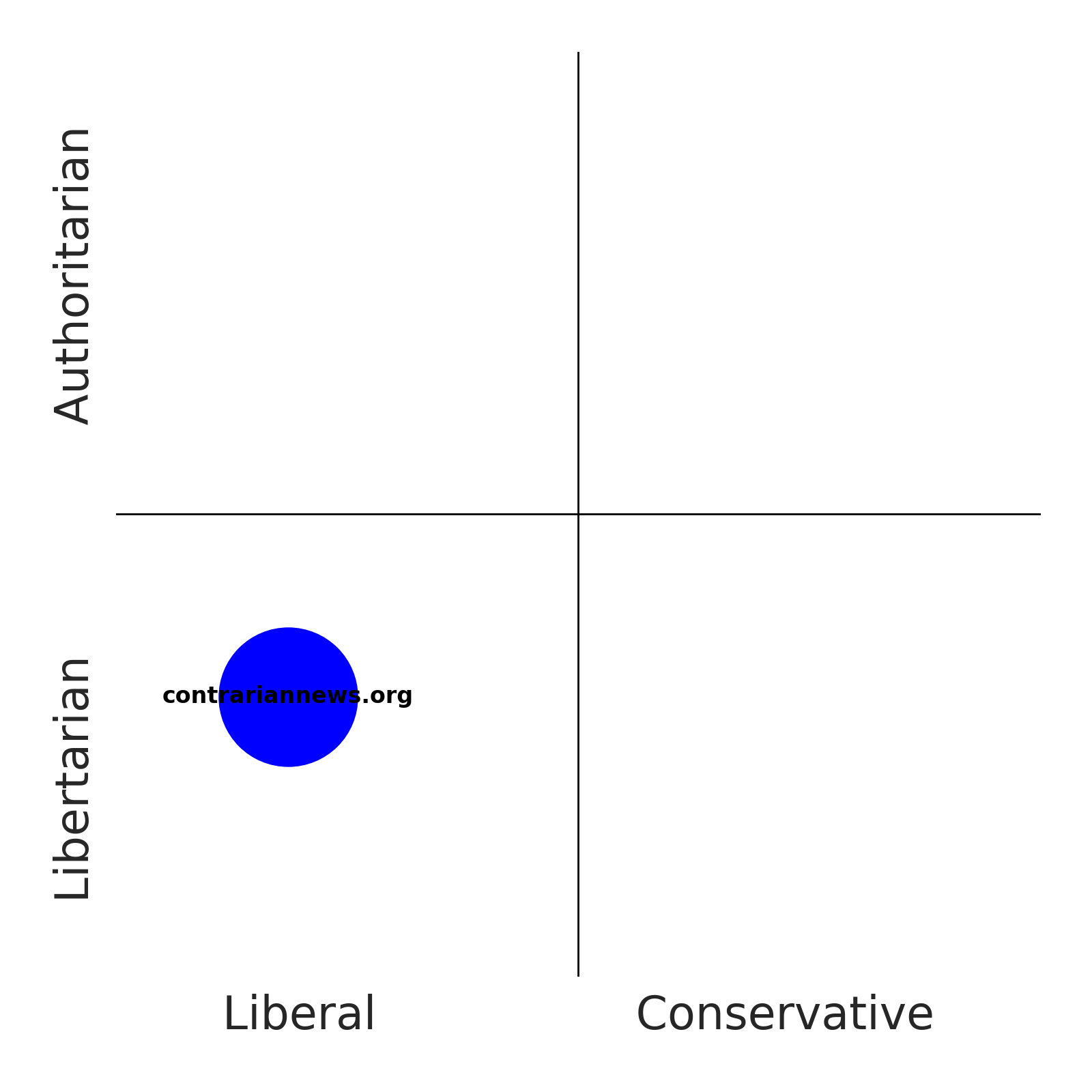
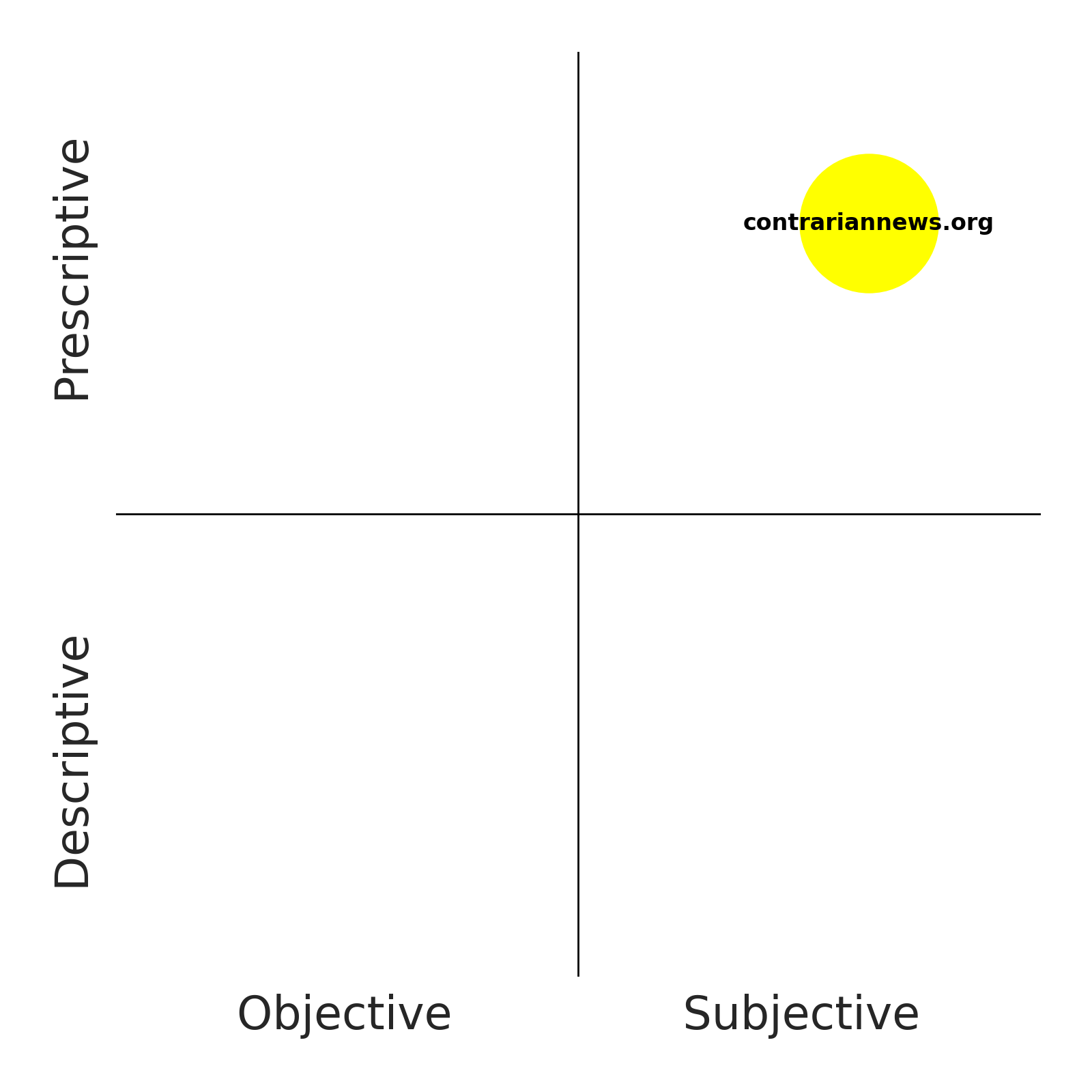
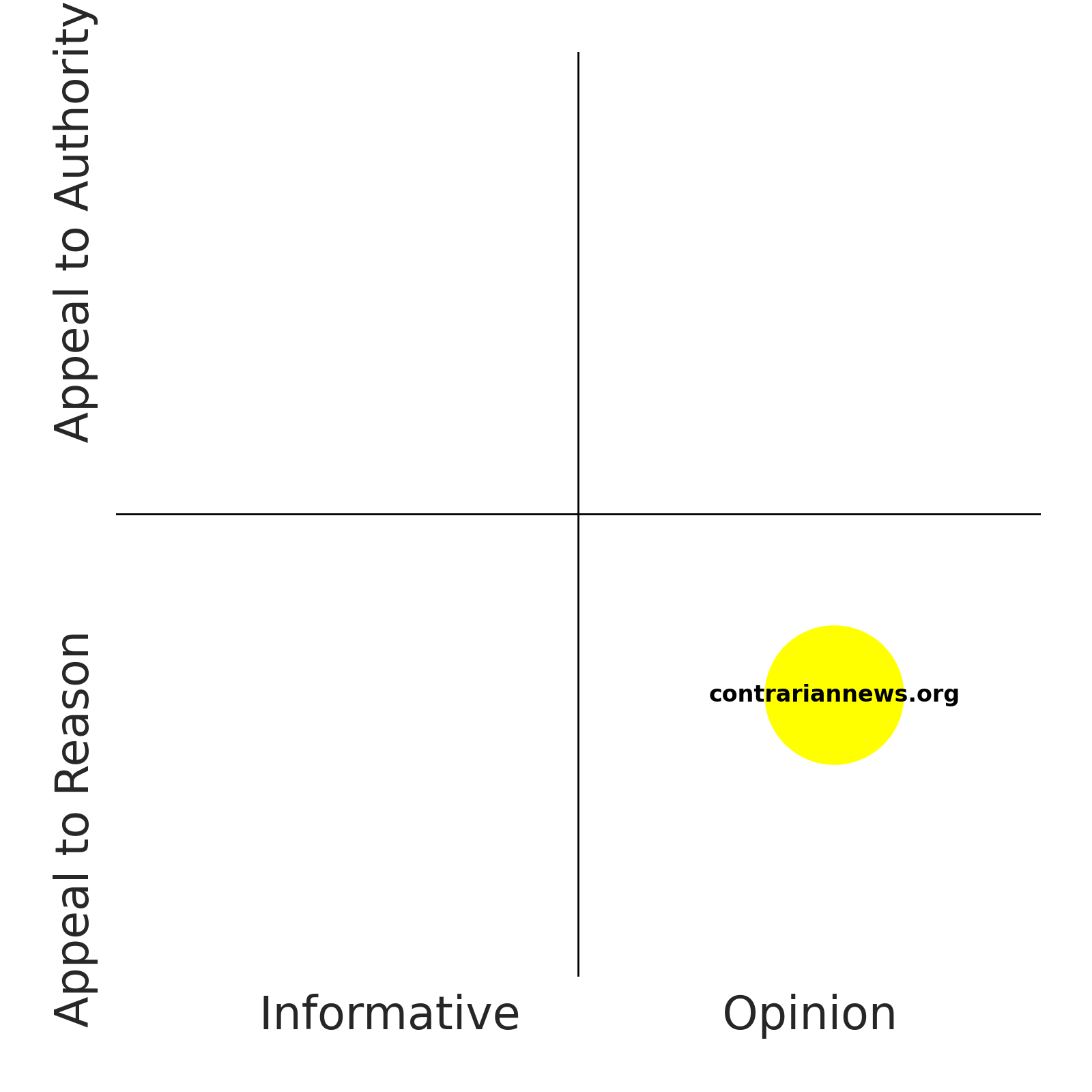
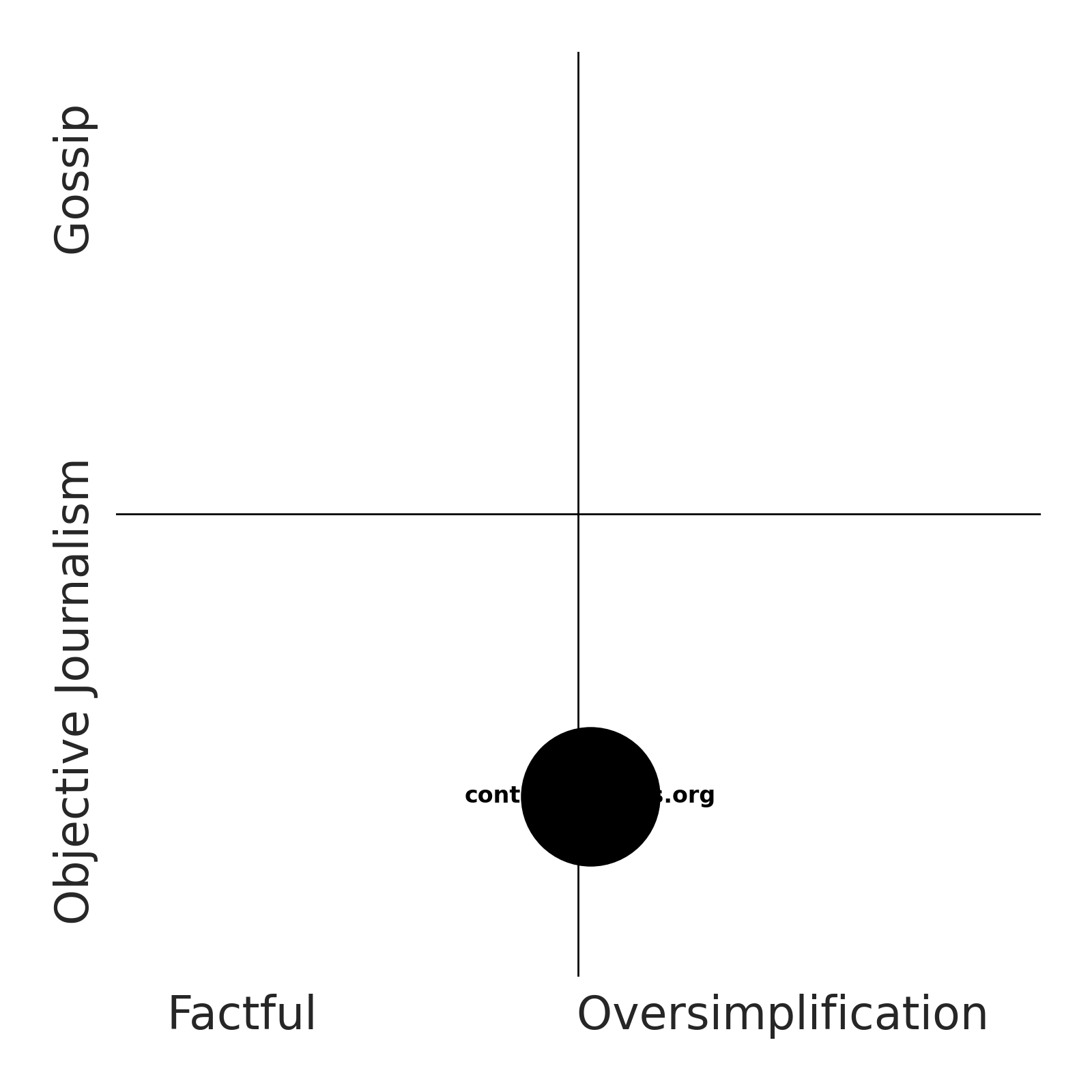
Click points to explore news by date. News sentiment ranges from -10 (very negative) to +10 (very positive) where 0 is neutral.
November 07, 2026 · 0 shares
The roundup uses celebratory partisan language such as 'blue tsunami' and 'Shattering GOP supermajories' to frame Democratic electoral gains positively.
Automated analysis; not human reviewed. Limitations: The supplied text is only a headline and teaser snippets, limiting assessment of detailed framing or factual support. · 9 of 55 available dimensions scored; omitted dimensions are not treated as neutral. · Verified supporting quotes for 9 of 9 scored dimensions.
Claim: The roundup frames Democratic electoral gains positively while framing Republican losses as a shattering.
“Shattering GOP supermajories” · exact text match
“Celebrating the blue tsunami” · exact text match
Why: Celebratory language for Democrats and a destructive verb for GOP supermajorities indicate a liberal partisan lean.
Claim: The roundup is presented as a celebratory, evaluative overview rather than a neutral report.
“Celebrating the blue tsunami and the incredible number of milestones we are seeing among our newly elected leaders.” · exact text match
Why: Explicit celebration and value-laden adjectives make the framing subjective.
Claim: The roundup uses dramatic, hyperbolic phrasing.
“Shattering GOP supermajories” · exact text match
“blue tsunami” · exact text match
Why: Shattering and tsunami are sensational metaphors.
Claim: The roundup frames election results optimistically for Democrats.
“Celebrating the blue tsunami” · exact text match
“history in the making” · exact text match
Why: The celebratory terms convey a positive outlook.
Claim: The roundup is explicitly opinionated and celebratory.
“Celebrating the blue tsunami” · exact text match
“making Democrats funny again” · exact text match
Why: The language signals a stance rather than neutral reporting.
Claim: The content is centered on partisan electoral outcomes and Democratic strategy.
“Shattering GOP supermajories” · exact text match
“What Should Dems Do Now?” · exact text match
Why: Explicit references to GOP losses and Democratic next steps make the text highly political.
Claim: The roundup adopts a clear Democratic partisan perspective.
“Celebrating the blue tsunami” · exact text match
“making Democrats funny again” · exact text match
Why: The celebratory Democratic framing indicates an ideological or partisan lens.
Claim: The roundup uses positive emotional language about Democratic wins.
“Celebrating the blue tsunami” · exact text match
“history in the making” · exact text match
Why: Celebratory and uplifting phrases convey positive affect.
Claim: The roundup uses loaded, dramatic framing rather than neutral language.
“Shattering GOP supermajories” · exact text match
“blue tsunami” · exact text match
Why: Loaded metaphors can shape perception, though the text is brief.
The supplied text is only a headline and teaser snippets, limiting assessment of detailed framing or factual support.
2026 © Helium Trades
Privacy Policy & Disclosure
* Disclaimer: Nothing on this website constitutes investment advice, performance data or any recommendation that any particular security, portfolio of securities, transaction or investment strategy is suitable for any specific person. Helium Trades is not responsible in any way for the accuracy
of any model predictions or price data. Any mention of a particular security and related prediction data is not a recommendation to buy or sell that security. Investments in securities involve the risk of loss. Past performance is no guarantee of future results. Helium Trades is not responsible for any of your investment decisions,
you should consult a financial expert before engaging in any transaction.


