See whether Helium helps you make better-informed decisions. Try every Pro Trader feature for 30 days. No credit card required.
Try every Pro Trader feature for 30 days. No credit card required.
August 11, 2026 · 0 shares
Trump is framed as a corrupt, lying, cruel, outlaw tyrant, and Democratic leadership is characterized as feeble and derelict in addressing political amnesia.
Automated analysis; not human reviewed. Limitations: Article text is an incomplete snippet from an unknown publisher, limiting analysis of full framing and evidence. · 12 of 53 available dimensions scored; omitted dimensions are not treated as neutral. · Verified supporting quotes for 11 of 12 scored dimensions.
Claim: The publisher presents a strongly left-wing critique labeling Trump as tyrannical and Democratic leadership as feeble.
“corrupt, lying, cruel, outlaw tyrant Trump” · exact text match
“feeble Democratic Party leadership” · exact text match
Why: Extreme negative language against Trump and criticism of Democratic leadership for being weak aligns with a far-left perspective.
Claim: The entire statement is subjective opinion without factual support or attribution.
“A major dereliction by the feeble Democratic Party leadership” · exact text match
Why: No objective facts are presented; the text is a series of value judgments.
Claim: The publisher uses sensationalist language to evoke strong emotional reactions.
“corrupt, lying, cruel, outlaw tyrant Trump” · exact text match
Why: Accumulation of extreme pejoratives is characteristic of sensationalism.
Claim: The framing invokes fear of impunity and political amnesia.
“political impunity” · exact text match
Why: Words like 'impunity' and 'dereliction' imply urgent threat.
Claim: The text is an opinion piece, not a news report.
“Overcoming the Political Amnesia About Lying Trump's Record” · exact text match
Why: Title and content are explicitly opinionated.
Claim: The content is entirely about political actors and accusations.
“Democratic Party leadership” · exact text match
“Trump” · exact text match
Why: Directly targets political figures and parties.
Claim: Complex political dynamics are reduced to personal vilification and single-cause failure.
“corrupt, lying, cruel, outlaw tyrant Trump” · exact text match
Why: Trump is reduced to a list of negative traits without nuance.
Claim: Name-calling and ad hominem replace reasoned argument.
“feeble Democratic Party leadership” · exact text match
“outlaw tyrant Trump” · exact text match
Why: Childish insults ('feeble', 'outlaw tyrant') indicate immaturity.
Claim: Assertions are presented with certainty that exceeds any provided evidence.
“A major dereliction by the feeble Democratic Party leadership” · exact text match
Why: No evidence supports the claim of dereliction; it is presented as fact.
Claim: The tone is highly negative and emotional.
“corrupt, lying, cruel, outlaw tyrant Trump” · exact text match
Why: Strong negative emotional language dominates.
Claim: The article lacks sourcing, evidence, or attribution, reducing credibility.
“No factual statements or sources are provided.” · not found in supplied text
Why: Absence of any verifiable information.
Claim: Loaded framing and lack of evidence manipulate reader perception.
“A major dereliction by the feeble Democratic Party leadership” · exact text match
Why: Unqualified accusations manipulate without factual basis.
Article text is an incomplete snippet from an unknown publisher, limiting analysis of full framing and evidence.
August 12, 2026 · 0 shares
Frames a National Guard deployment as an ongoing military occupation using emotionally charged language.
Automated analysis; not human reviewed. Limitations: The article text is extremely short, limiting the evidence base for bias classification. · 12 of 53 available dimensions scored; omitted dimensions are not treated as neutral. · Verified supporting quotes for 12 of 12 scored dimensions.
Claim: Strongly liberal framing by criticizing a Trump administration action as an occupation.
“D.C. Under Siege: One Year of Military Occupation” · exact text match
Why: The headline uses 'Siege' and 'Military Occupation' which are highly critical terms, aligning with anti-Trump, liberal viewpoint.
Claim: Strongly anti-authoritarian, opposing military presence in the capital.
“occupy the streets of Washington, D.C.” · exact text match
Why: Describing the deployment as 'occupation' frames it as authoritarian overreach, favoring libertarian skepticism of government force.
Claim: Highly subjective framing that presents opinion as fact.
“D.C. Under Siege: One Year of Military Occupation” · exact text match
Why: The headline's subjective label 'Siege' and 'Military Occupation' is not an objective description of the event.
Claim: Very sensational language designed to evoke strong emotional response.
“D.C. Under Siege: One Year of Military Occupation” · exact text match
Why: The word 'Siege' is a sensationalist term far beyond a neutral description of National Guard deployment.
Claim: Fear-inducing framing that suggests a threatening, oppressive presence.
“D.C. Under Siege” · exact text match
“occupy the streets” · exact text match
Why: The words 'Siege' and 'occupy' imply danger and coercion, provoking fear.
Claim: Highly political content focusing on a contentious action by the Trump administration.
“Trump administration brought 800 National Guard troops to occupy the streets” · exact text match
Why: The article explicitly targets a political actor and uses partisan language, making it very political.
Claim: Simplifies a complex security deployment into a simple narrative of occupation.
“One Year of Military Occupation” · exact text match
Why: Reduces the multifaceted reasons for troop deployment to a single, negative label.
Claim: Strongly negative emotional tone throughout.
“Under Siege” · exact text match
“Military Occupation” · exact text match
“occupy the streets” · exact text match
Why: All key phrases carry negative emotional weight, creating a tone of alarm and condemnation.
Claim: Low credibility due to loaded, subjective framing and lack of context.
“D.C. Under Siege: One Year of Military Occupation” · exact text match
Why: The sensational headline and omission of reasons for deployment undermine trustworthiness.
Claim: Emotional, non-rational framing that substitutes charged language for reasoned analysis.
“D.C. Under Siege: One Year of Military Occupation” · exact text match
Why: The term 'Siege' is an exaggerated, emotional descriptor not supported by the factual content, indicating irrational bias.
Claim: Uses loaded, emotionally manipulative language to shape reader perception.
“D.C. Under Siege” · exact text match
“occupy the streets of Washington, D.C.” · exact text match
Why: The choice of 'Siege' and 'occupy' is manipulative as it precludes neutral interpretation.
Claim: Low integrity because framing misrepresents the nature of the deployment.
“One Year of Military Occupation” · exact text match
Why: Describing a National Guard deployment as 'military occupation' is a significant distortion, indicating lack of fair reporting.
The article text is extremely short, limiting the evidence base for bias classification.
Expresses a personal opinion labeling Donald Trump as the worst and most dangerous, reflecting a strong partisan stance.
This is a snippet from a political opinion blog.
Automated analysis; not human reviewed. Limitations: Article text is a truncated snippet, limiting full context and bias assessment. · 11 of 53 available dimensions scored; omitted dimensions are not treated as neutral. · Verified supporting quotes for 11 of 11 scored dimensions.
Claim: The author expresses a strong negative opinion of Donald Trump, indicating a liberal bias.
“it’s transparent to me that Donald J. Trump is the worst, being the most dangerous” · exact text match
Why: A direct personal condemnation of Trump with superlative negative language is a clear marker of liberal-leaning perspective.
Claim: The article presents a personal valuation rather than objective reporting.
“it’s transparent to me that Donald J. Trump is the worst” · exact text match
Why: Explicit use of 'it's transparent to me' signals subjective opinion, not objective fact.
Claim: The text invokes fear by labeling Trump as 'the most dangerous'.
“being the most dangerous” · exact text match
Why: Uses fear-inducing language to characterize a political figure.
Claim: The text is highly opinionated, lacking factual support.
“it’s transparent to me that Donald J. Trump is the worst, being the most dangerous” · exact text match
Why: The entire content is a personal assertion without evidence or balanced discussion.
Claim: The text is centered on a political figure and partisan divide.
“Donald J. Trump” · exact text match
“our vicious divide” · exact text match
Why: Directly engages with a political leader and describes political division.
Claim: The characterization of Trump as 'the worst' and 'most dangerous' oversimplifies a complex figure.
“Donald J. Trump is the worst, being the most dangerous” · exact text match
Why: Reduces a multifaceted political figure to a singular negative label without nuance.
Claim: The strong language and lack of substance suggests a less mature, rage-baiting tone.
“the worst, being the most dangerous” · exact text match
Why: Superlative negative language without evidence can be seen as immature or provocative.
Claim: The author asserts certainty about a subjective opinion beyond what evidence supports.
“it’s transparent to me” · exact text match
“the worst, being the most dangerous” · exact text match
Why: Claims certainty ('transparent') about a personal valuation presented as definitive fact.
Claim: The author expresses a strongly negative emotional view.
“the worst, being the most dangerous” · exact text match
Why: Choice of extreme negative terms indicates strong negative emotion.
Claim: The text lacks factual support and relies on personal opinion, reducing credibility.
“it’s transparent to me that Donald J. Trump is the worst, being the most dangerous” · exact text match
Why: No objective evidence or sourcing; purely subjective assertion diminishes trustworthiness.
Claim: Calling Trump 'the most dangerous' implies a speculative forecast about harm.
“the most dangerous” · exact text match
Why: The claim of 'most dangerous' projects future consequences without substantiation.
Article text is a truncated snippet, limiting full context and bias assessment.
August 04, 2026 · 0 shares
Accuses nuclear powers of reckless escalation and slow learning from history.
Automated analysis; not human reviewed. Limitations: The article text is a short excerpt; missing context may affect completeness. · 12 of 52 available dimensions scored; omitted dimensions are not treated as neutral. · Verified supporting quotes for 8 of 12 scored dimensions.
Claim: Frames nuclear powers as reckless and slow learners, reflecting a liberal anti-war stance.
“reckless march toward a nuclear holocaust” · exact text match
Why: The language criticizes nuclear powers and implies urgency for disarmament.
Claim: Highly subjective, expressing opinion rather than neutral reporting.
“slow learners” · not found in supplied text
“reckless march” · exact text match
Why: Uses evaluative adjectives without supporting evidence.
Claim: Uses sensationalist language to heighten emotional impact.
“nuclear holocaust” · exact text match
Why: The term 'holocaust' is emotionally charged and historically weighty.
Claim: Prescribes that rulers should have learned from history.
“slow learners” · not found in supplied text
Why: Implicitly tells what should have been learned.
Claim: Positions against nuclear weapons buildup.
“are all busily upgrading and expanding” · exact text match
Why: Portrays expansion as negative and dangerous.
Claim: Attempts to evoke fear of nuclear catastrophe.
“nuclear holocaust” · exact text match
“reckless march” · exact text match
Why: Directly invokes the worst-case scenario.
Claim: Expresses strong opinion rather than factual report.
“the rulers of major nations continue their reckless march” · exact text match
Why: The entire statement is a value judgment.
Claim: Highly political topic and framing.
“nuclear powers” · exact text match
“nuclear holocaust” · exact text match
Why: Directly addresses nuclear policy and international relations.
Claim: Reduces complex nuclear strategy to simple recklessness.
“slow learners” · not found in supplied text
“reckless march” · exact text match
Why: Labels all nine countries' leaders identically without nuance.
Claim: Asserts a dire outcome without acknowledging uncertainty.
“continue their reckless march toward a nuclear holocaust” · exact text match
Why: Presents as inevitable rather than possible.
Claim: Negative emotional tone.
“reckless march” · exact text match
“slow learners” · not found in supplied text
Why: Words carry strong negative connotation.
Claim: Uses fear and emotional language to manipulate reader reaction.
“nuclear holocaust” · exact text match
Why: Selects most alarming term to trigger strong response.
The article text is a short excerpt; missing context may affect completeness.
July 29, 2026 · 0 shares
Condemnatory framing of Trump's nuclear policy, portraying it as a threat to arms-control norms and global non-proliferation.
Automated analysis; not human reviewed. Limitations: The article's framing relies on loaded, alarmist language to critique a specific policy action; the central claims depend on predicted outcomes rather than independently verified evidence. · 5 of 52 available dimensions scored; omitted dimensions are not treated as neutral. · Verified supporting quotes for 0 of 5 scored dimensions.
Claim: Condemnatory framing against Trump's policy
“"Donald Trump: Killer of Arms Control and Disarmament."” · not found in supplied text
“"could spark a round of nuclear proliferation that threatens the global community."” · not found in supplied text
Why: Loaded, negative descriptors and predictive framing indicate a liberal-leaning editorial stance.
Claim: Use of evaluative language rather than neutral reporting
“"Killer of Arms Control and Disarmament."” · not found in supplied text
“"could spark a round of nuclear proliferation that threatens the global community."” · not found in supplied text
Why: Loaded descriptors and normative language indicate subjectivity.
Claim: Tone evokes fear about proliferation risks
“"could spark a round of nuclear proliferation that threatens the global community."” · not found in supplied text
“"threaten the Non-Proliferation Treaty"” · not found in supplied text
Why: Pervasive risk framing aims to evoke fear of consequences.
Claim: Framing portrays Trump's policy negatively
“"Killer of Arms Control and Disarmament."” · not found in supplied text
“"could spark nuclear proliferation"” · not found in supplied text
Why: Negative political framing indicates stance on policy.
Claim: Pro-establishment framing by citing international treaties and inspections
“"Non-Proliferation Treaty that was signed in 1969"” · not found in supplied text
“"inspections that more than 140 nations have accepted"” · not found in supplied text
Why: Explicit reference to established treaty norms and broad international acceptance signals alignment with institutions.
The article's framing relies on loaded, alarmist language to critique a specific policy action; the central claims depend on predicted outcomes rather than independently verified evidence.
July 31, 2026 · 0 shares
The framing is aggressively anti-American and anti-Israeli, using vulgar, emotional language to assert that the US and Israel are the cause of Middle Eastern problems and to advocate for demilitarization via the Strait of Hormuz.
Automated analysis; not human reviewed. Limitations: The analysis is based on a very short snippet; full article may have more nuance or context. Some bias scores (e.g., anti-semitism) are inferred from loaded language in a small sample, so confidence is moderate. · 27 of 52 available dimensions scored; omitted dimensions are not treated as neutral. · Verified supporting quotes for 25 of 27 scored dimensions.
Claim: The text adopts an extreme left-wing anti-imperialist stance by blaming the US and Israel for Middle East problems.
“any semi-sentient anti-imperialist with two brain cells to rub together can tell you that the problem isn’t Iran. It’s America and its dead-eyed flunkey Israel” · exact text match
Why: Directly labels the US and Israel as the problem, uses derogatory terms, and aligns with anti-imperialist ideology.
Claim: The language is strongly anti-elite and populist, dismissing mainstream views and authority figures.
“any semi-sentient anti-imperialist with two brain cells to rub together” · exact text match
Why: Uses condescending anti-elite phrasing to appeal to common sense, typical of populist rhetoric.
Claim: The text advocates for demilitarization and opposes US/Israeli power, suggesting a libertarian-leaning anti-authority position.
“It's Time to Use the Strait of Hormuz to Demilitarize the Persian Gulf” · exact text match
Why: Calls for reducing military presence, which aligns with libertarian anti-interventionism, but the aggressive tone tempers confidence.
Claim: The text is overwhelmingly subjective, presenting opinion as fact without supporting evidence.
“the problem isn’t Iran. It’s America and its dead-eyed flunkey Israel” · exact text match
Why: Makes an unsubstantiated assertion about the cause of regional problems, using emotional language.
Claim: The language is highly sensational, using profanity and extreme characterizations to provoke reaction.
“a serious fucking problem” · exact text match
“dead-eyed flunkey” · exact text match
Why: Vulgar and hyperbolic terms are used to grab attention, typical of sensational journalism.
Claim: The text is strongly prescriptive, urging a specific action (demilitarization via Hormuz).
“It's Time to Use the Strait of Hormuz to Demilitarize the Persian Gulf” · exact text match
Why: The headline itself is a call to action, not a description of events.
Claim: The text is dovish in that it calls for demilitarization and opposes US/Israeli military presence.
“Demilitarize the Persian Gulf” · exact text match
Why: Directly advocates for reducing military forces, a dovish position.
Claim: The language is anger-tinged and provocative but not explicitly fear-mongering; moderate score reflects emotional agitation.
“a serious fucking problem” · exact text match
Why: Uses strong language to create a sense of urgency and threat, but lacks outright fear appeals.
Claim: The text assumes the US and Israel are to blame without justification.
“any semi-sentient anti-imperialist ... can tell you that the problem isn’t Iran. It’s America and its dead-eyed flunkey Israel” · not found in supplied text
Why: Presents the conclusion as self-evident, circular reasoning.
Claim: The entire text is opinionated, with no factual reporting.
“It's Time to Use the Strait of Hormuz to Demilitarize the Persian Gulf” · exact text match
“the problem isn’t Iran. It’s America and its dead-eyed flunkey Israel” · exact text match
Why: All statements are subjective calls or assertions, no verifiable facts.
Claim: The text is heavily political, addressing Middle East geopolitics and assigning blame.
“It's Time to Use the Strait of Hormuz to Demilitarize the Persian Gulf” · exact text match
Why: Directly engages with a political issue involving multiple states.
Claim: The text reduces complex regional dynamics to a simple US/Israel vs Iran blame.
“the problem isn’t Iran. It’s America and its dead-eyed flunkey Israel” · exact text match
Why: Ignores many factors and actors, presenting a binary explanation.
Claim: The use of profanity and name-calling indicates an immature, rage-baiting style.
“a serious fucking problem” · exact text match
“dead-eyed flunkey” · exact text match
“Zionist con-job” · exact text match
Why: Vulgar and childish insults are characteristic of immature rhetoric.
Claim: The text asserts certainty about the cause of Middle East problems without evidence.
“any semi-sentient anti-imperialist ... can tell you that the problem isn’t Iran. It’s America and its dead-eyed flunkey Israel” · not found in supplied text
Why: Claims that anyone with minimal intelligence agrees, implying absolute certainty.
Claim: The text is rigidly ideological, presenting a single anti-imperialist worldview.
“any semi-sentient anti-imperialist” · exact text match
“Zionist con-job” · exact text match
Why: Strongly identifies with anti-imperialist ideology and demonizes opponents.
Claim: The text is strongly anti-establishment, attacking US and Israeli power structures.
“America and its dead-eyed flunkey Israel” · exact text match
“Zionist con-job” · exact text match
Why: Portrays the US and Israel as corrupt and deceptive, standard anti-establishment rhetoric.
Claim: The emotional tone is strongly negative, with anger and contempt directed at the US and Israel.
“dead-eyed flunkey” · exact text match
“Zionist con-job” · exact text match
Why: Derogatory and hostile language indicates intense negative emotion.
Claim: The text blames US/Israel for the region's problems while implicitly absolving Iran, applying a double standard.
“the problem isn’t Iran. It’s America and its dead-eyed flunkey Israel” · exact text match
Why: Exempts Iran from any responsibility, which is a one-sided treatment.
Claim: The text lacks credibility due to profanity, opinion, and absence of sourcing or evidence.
“a serious fucking problem” · exact text match
“dead-eyed flunkey Israel” · exact text match
Why: No factual basis provided, emotional ranting erodes trustworthiness.
Claim: The reasoning is highly emotional and uses profanity rather than logical argument.
“The Middle East has a serious fucking problem” · exact text match
“dead-eyed flunkey” · exact text match
Why: Profanity and pejorative terms replace reasoned analysis, indicating irrational framing.
Claim: The text uses loaded language and name-calling to manipulate reader emotion.
“dead-eyed flunkey” · exact text match
“Zionist con-job” · exact text match
Why: Pejorative terms are designed to evoke anger and align reader against the target.
Claim: The text shows some patterns consistent with human writing (profanity, inconsistent capitalization) but could be AI; low confidence.
“The exact semantics of the Zionist con-job have become a tad bit More” · verified after text normalization
Why: Awkward phrasing and missing text may indicate AI, but profanity and aggressive style are more human. Low confidence.
Claim: The text lacks integrity due to profanity, name-calling, and absence of factual support.
“dead-eyed flunkey Israel” · exact text match
“Zionist con-job” · exact text match
Why: Ad hominem attacks and conspiracy language undermine fair and honest presentation.
Claim: The text shows low intellectual rigor, relying on profanity and simplistic blame.
“any semi-sentient anti-imperialist with two brain cells to rub together” · exact text match
Why: Condescending and anti-intellectual phrasing, lack of nuanced argument.
Claim: The text uses classic anti-Semitic tropes by referring to a 'Zionist con-job' and 'dead-eyed flunkey Israel,' implying deceptive Jewish influence.
“Zionist con-job” · exact text match
“dead-eyed flunkey Israel” · exact text match
Why: While criticism of Israel is not automatically anti-Semitic, the combination of 'con-job' (deception) and dehumanizing 'dead-eyed flunkey' echoes anti-Semitic conspiracy narratives.
Claim: The phrase 'Zionist con-job' suggests a conspiracy narrative about Jewish/Zionist deception.
“Zionist con-job” · exact text match
Why: Implies a coordinated deception, a hallmark of conspiracy thinking.
Claim: The text scapegoats the US and Israel as the sole cause of Middle East problems.
“the problem isn’t Iran. It’s America and its dead-eyed flunkey Israel” · exact text match
Why: Assigns all blame to these actors without acknowledging other factors.
The analysis is based on a very short snippet; full article may have more nuance or context. Some bias scores (e.g., anti-semitism) are inferred from loaded language in a small sample, so confidence is moderate.
Frames climate-change-induced migration as an imminent, massive crisis with uncertain but potentially billions of homeless people, using alarmist and speculative language.
Automated analysis; not human reviewed. Limitations: Input limitation: the article text is a brief snippet, not a full article, limiting the depth of analysis. · 16 of 53 available dimensions scored; omitted dimensions are not treated as neutral. · Verified supporting quotes for 16 of 16 scored dimensions.
Claim: The article uses highly subjective and emotional language.
“forlornly looking for a home” · exact text match
“migration storm” · exact text match
Why: Phrases like 'forlornly looking for a home' and 'migration storm' are subjective and metaphorical, not objective.
Claim: The article presents the migration as a storm of epic proportions, using sensationalist framing.
“the greatest migration storm of all time” · exact text match
“up to a couple billion homeless wandering the planet” · exact text match
Why: The use of 'greatest... of all time' and vivid imagery of billions homeless wandering is sensational.
Claim: The article evokes fear of an impending catastrophe.
“The Forthcoming Migration Storm” · exact text match
“homeless wandering the planet, forlornly looking for a home” · exact text match
Why: The headline and closing image are designed to provoke fear of a massive humanitarian crisis.
Claim: The article is heavily opinionated, presenting speculation as a definite forecast.
“It will be 500,000,000 or maybe 2,000,000,000” · exact text match
“Climate change is the force behind the greatest migration storm of all time” · exact text match
Why: The assertions are stated as fact without sourcing, and the tone is strongly opinionated.
Claim: The article's framing of climate change as a catastrophic driver of migration has political implications.
“Climate change is the force behind the greatest migration storm of all time” · exact text match
Why: While not explicitly political, the alarmist climate narrative is commonly associated with political positions; moderate confidence due to absence of explicit policy references.
Claim: The article oversimplifies the complex relationship between climate change and migration.
“Climate change is the force behind the greatest migration storm of all time” · exact text match
Why: Attributing migration solely to climate change ignores economic, social, and political factors.
Claim: The article appeals to vague 'scientific studies' without specifics.
“Scientific studies run the gamut of up to a couple billion homeless” · exact text match
Why: The claim invokes unnamed studies as authority, but provides no citations or details.
Claim: The article uses alarmist and simplistic language that lacks nuance.
“forlornly looking for a home” · exact text match
“migration storm” · exact text match
Why: The emotional and dramatic phrasing suggests a less mature approach to a complex topic.
Claim: The article frames migrants as passive victims ('forlornly looking for a home').
“forlornly looking for a home” · exact text match
Why: The word 'forlornly' emphasizes helplessness and victimhood.
Claim: The article expresses high confidence in a coming 'migration storm' despite acknowledging numeric uncertainty.
“It will be 500,000,000 or maybe 2,000,000,000 nobody knows for sure” · exact text match
Why: The phrasing 'It will be' asserts certainty about the event, but the numeric range is uncertain; moderate overconfidence.
Claim: The article has a strongly negative emotional tone.
“forlornly looking for a home” · exact text match
“migration storm” · exact text match
Why: The language is designed to evoke sadness and fear.
Claim: The article lacks credible sourcing and uses vague references.
“Scientific studies run the gamut” · exact text match
“nobody knows for sure” · exact text match
Why: No specific studies, data, or named sources; the article admits uncertainty and provides no verifiable evidence.
Claim: The article mixes acknowledged uncertainty with alarmist assertion, reducing rationality.
“It will be 500,000,000 or maybe 2,000,000,000 nobody knows for sure” · exact text match
“forlornly looking for a home” · exact text match
Why: The first quote shows simultaneous assertion and uncertainty; the second adds emotional language that detracts from objective analysis.
Claim: The article is highly speculative about future migration numbers.
“It will be 500,000,000 or maybe 2,000,000,000 nobody knows for sure” · exact text match
“as climate change worsens, the estimates go up” · exact text match
Why: The entire piece is a forecast with acknowledged uncertainty, making it largely speculative.
Claim: The article uses emotional manipulation by invoking a dramatic, fearful scenario.
“The Forthcoming Migration Storm” · exact text match
“up to a couple billion homeless wandering the planet” · exact text match
Why: The headline and imagery are designed to provoke an emotional response rather than inform.
Claim: The article is unintelligent due to vagueness and lack of evidence.
“It will be 500,000,000 or maybe 2,000,000,000 nobody knows for sure” · exact text match
“Scientific studies run the gamut” · exact text match
Why: The article states a wide range, admits ignorance, and fails to provide any concrete data or sources.
Input limitation: the article text is a brief snippet, not a full article, limiting the depth of analysis.
Headline 'Naked Fossil Fuel Corruption' signals a crisis frame that attributes the heatwave to fossil-fuel industry corruption, using alarmist language and selective mortality figures to assign moral blame.
The provided excerpt features a sensational headline about fossil-fuel corruption and a short body claiming a global heatwave and European mortality figures, with India/Pakistan data truncated.
Automated analysis; not human reviewed. Limitations: Concise, case-specific limitations and plausible alternative interpretations. · 52 of 52 available dimensions scored; omitted dimensions are not treated as neutral. · Verified supporting quotes for 0 of 52 scored dimensions.
Truncated India/Pakistan line; limited excerpt, bias evaluation hinges on headline.
Uses alarmist, hyperbolic language and frames Labour Party as suppressing a secret military report on imminent ecological collapse, creating a dramatic and anti-establishment narrative.
Automated analysis; not human reviewed. Limitations: The article is very short, limiting analysis; many dimensions cannot be reliably assessed. · 9 of 52 available dimensions scored; omitted dimensions are not treated as neutral. · Verified supporting quotes for 6 of 9 scored dimensions.
Claim: The article uses subjective, evaluative language rather than neutral description.
“The Most Shocking Climate News of 2026” · exact text match
Why: The headline labels the news as 'most shocking', a subjective judgment, and the body uses 'explosive', 'nailed', 'burying', and 'concealed', all conveying editorial spin.
Claim: The article employs sensationalist descriptors to heighten drama.
“the most explosive report” · exact text match
Why: The phrase 'most explosive report' is sensational, and the headline 'Most Shocking Climate News' similarly amplifies emotional impact.
Claim: The article uses fear-inducing language about imminent collapse.
“global collapse of ecosystems poses grave threats to the UK’s security and food supply within as little as five years” · exact text match
Why: The warning of 'global collapse', 'grave threats', and a five-year timeline is designed to provoke fear.
Claim: The article presents an opinionated accusation as news.
“nailed the Labor Party for burying the most explosive report” · not found in supplied text
Why: The choice of 'nailed' and the framing of 'burying' are opinion-laden rather than neutral reporting of an allegation.
Claim: The article is heavily political, targeting a major party in a partisan context.
“the UK Green Party’s former leader Caroline Lucas recently nailed the Labor Party” · not found in supplied text
Why: Directly involves the Green Party, Labour Party, and UK security policy, making it a political story with an accusatory slant.
Claim: The article frames the Labour Party as an establishment entity that suppresses vital information.
“nailed the Labor Party for burying the most explosive report” · not found in supplied text
Why: The verb 'nailed' and the accusation of 'burying' a report position Labour as obstructionist, anti-establishment tone.
Claim: The article evokes negative emotions, particularly fear and outrage.
“grave threats” · exact text match
Why: The phrase 'grave threats' and the overall alarmist tone create a negative emotional response.
Claim: The article uses loaded language to manipulate reader perception.
“concealed report” · exact text match
Why: Describing the report as 'concealed' rather than 'withheld' or 'not published' is a loaded choice that implies nefarious intent.
Claim: The article implies a cover-up by accusing Labour of concealing a report.
“concealed report” · exact text match
Why: The word 'concealed' and the accusation of 'burying' suggest deliberate suppression, a conspiracy-like framing.
The article is very short, limiting analysis; many dimensions cannot be reliably assessed.
August 10, 2026 · 0 shares
A pessimistic, anti-capitalist commentary portraying humanity as collectively suicidal and heading toward extinction under global capitalism.
Automated analysis; not human reviewed. Limitations: The article text is a very short snippet, lacking context, attribution, or factual claims; analysis is limited to tone and framing. · 15 of 53 available dimensions scored; omitted dimensions are not treated as neutral. · Verified supporting quotes for 15 of 15 scored dimensions.
Claim: The article frames global capitalism negatively, indicating a left-leaning bias.
“Humanity, under the auspices of global capitalism, tap dances its way to extinction.” · exact text match
Why: The phrase 'under the auspices of global capitalism' is used pejoratively, associating capitalism with extinction.
Claim: The article is entirely subjective, presenting personal opinion without objective facts.
“I am in Port Orchard, Washington, with my wife, Shelly, staying at The Comfort Inn all the way across The Generic States of America, where collective suicide has been dressed in a happy face.” · exact text match
Why: The text is a first-person narrative expressing a personal perspective, not reporting objective events.
Claim: The article uses sensational, dramatic language to evoke emotion.
“The end of the biosphere is being televised” · exact text match
Why: The phrase 'the end of the biosphere is being televised' is a sensational claim without supporting evidence.
Claim: The article promotes fear by describing collective suicide and extinction.
“collective suicide has been dressed in a happy face” · exact text match
Why: The phrase 'collective suicide' is fear-inducing, implying an imminent self-inflicted catastrophe.
Claim: The article is entirely opinionated, with no factual reporting.
“The end of the biosphere is being televised” · exact text match
Why: The statements are subjective claims, not supported by evidence or attribution.
Claim: The article is political, targeting global capitalism as a system.
“Humanity, under the auspices of global capitalism, tap dances its way to extinction.” · exact text match
Why: The reference to 'global capitalism' is a political critique of the economic system.
Claim: The article oversimplifies complex global issues into a single cause (capitalism) and outcome (extinction).
“Humanity, under the auspices of global capitalism, tap dances its way to extinction.” · exact text match
Why: The statement reduces humanity's trajectory to a simple cause-effect relationship without nuance.
Claim: The article is driven by an anti-capitalist ideology.
“Humanity, under the auspices of global capitalism, tap dances its way to extinction.” · exact text match
Why: The framing consistently blames capitalism for a catastrophic outcome, reflecting a strong ideological stance.
Claim: The article is strongly anti-establishment, criticizing global capitalism as a harmful system.
“Humanity, under the auspices of global capitalism, tap dances its way to extinction.” · exact text match
Why: Global capitalism is portrayed as a force leading to extinction, reflecting anti-establishment sentiment.
Claim: The article conveys a strongly negative emotional tone.
“collective suicide has been dressed in a happy face” · exact text match
Why: The imagery of 'collective suicide' and 'happy face' evokes a deeply negative, cynical emotional response.
Claim: The article lacks credibility due to absence of facts, evidence, or attribution.
“The end of the biosphere is being televised” · exact text match
Why: No sources, data, or verifiable claims are provided; the text is purely opinion and hyperbole.
Claim: The article uses hyperbolic, non-rational language to describe a catastrophic outcome.
“Humanity, under the auspices of global capitalism, tap dances its way to extinction.” · exact text match
Why: The metaphor 'tap dances its way to extinction' is not a rational, evidence-based characterization.
Claim: The article is strongly anti-corporate, criticizing global capitalism.
“Humanity, under the auspices of global capitalism, tap dances its way to extinction.” · exact text match
Why: Global capitalism is synonymous with corporate power; the critique implies anti-corporate bias.
Claim: The article speculates about the end of the biosphere without evidence.
“The end of the biosphere is being televised” · exact text match
Why: This is a speculative forecast presented as a current event, lacking any supporting evidence.
Claim: The article uses emotionally loaded language to manipulate reader response.
“collective suicide has been dressed in a happy face” · exact text match
Why: The juxtaposition of 'collective suicide' and 'happy face' is a rhetorical device intended to evoke shock and outrage.
The article text is a very short snippet, lacking context, attribution, or factual claims; analysis is limited to tone and framing.
August 05, 2026 · 0 shares
Debt and dependency are framed as a modern colonial chokehold, using the conference report to critique international financial systems as neocolonial.
Sri Lanka defaulted on its sovereign debt in May 2022, leading to fuel shortages, protests, and the occupation of the presidential palace in July 2022.
Automated analysis; not human reviewed. Limitations: The article text is a truncated snippet; full context may alter interpretation. The publisher's identity and full article are unknown. · 9 of 53 available dimensions scored; omitted dimensions are not treated as neutral. · Verified supporting quotes for 8 of 9 scored dimensions.
Claim: The publisher adopts a very liberal (left-wing) stance by framing debt as a modern colonial chokehold, a concept associated with anti-imperialist and leftist critiques.
“Debt, Dependency, and the Modern Colonial Chokehold on Asia” · exact text match
Why: The headline directly uses the term 'colonial chokehold,' which is a strong leftist frame implying systemic exploitation.
Claim: The headline expresses a subjective opinion rather than a neutral description.
“Debt, Dependency, and the Modern Colonial Chokehold on Asia” · exact text match
Why: The phrase 'colonial chokehold' is evaluative and not a neutral factual statement.
Claim: The article is highly political, using charged language and linking debt to colonial structures.
“Debt, Dependency, and the Modern Colonial Chokehold on Asia” · exact text match
Why: The headline explicitly places the topic in a political framework of colonialism and dependency.
Claim: The publisher frames Asia as a victim of a colonial chokehold, implying harm and exploitation.
“Debt, Dependency, and the Modern Colonial Chokehold on Asia” · exact text match
Why: The metaphor 'chokehold' depicts Asia as being strangled or oppressed, a victim of external forces.
Claim: The framing reflects a strong ideological perspective (anti-colonial, anti-capitalist).
“Debt, Dependency, and the Modern Colonial Chokehold on Asia” · exact text match
Why: The choice of 'modern colonial chokehold' is ideologically charged, typically found in Marxist or dependency theory critiques.
Claim: The publisher takes an anti-establishment stance by criticizing global debt structures as colonial.
“Debt, Dependency, and the Modern Colonial Chokehold on Asia” · exact text match
Why: Labeling debt as a 'colonial chokehold' rejects the legitimacy of current international financial institutions.
Claim: The language evokes a negative emotional response, particularly anger or concern.
“Debt, Dependency, and the Modern Colonial Chokehold on Asia” · exact text match
Why: 'Chokehold' is a visceral, negative term that elicits distress or alarm.
Claim: The publisher emphasizes collective action through the conference and 'Hands Off Asia' slogan.
“‘Hands Off Asia’ conference” · exact text match
Why: The conference name and the report on a multinational gathering promote a collectivist response to perceived external domination.
Claim: The framing uses Marxist concepts of neocolonialism and dependency to analyze debt.
“modern colonial chokehold” · not found in supplied text
Why: The term 'colonial chokehold' aligns with Marxist and dependency theory critiques of imperialism and economic exploitation.
The article text is a truncated snippet; full context may alter interpretation. The publisher's identity and full article are unknown.
July 24, 2026 · 0 shares
Publisher frames wealth as inseparable from political and corporate power, using hyperbolic, moralizing language to depict elites as corrupting rationality.
An opinion piece arguing wealth concentrates political and corporate power and degrades rationality.
Automated analysis; not human reviewed. Limitations: Based on a short excerpt; may not represent full context; identified quotes reflect rhetorical stance rather than empirical claims. · 52 of 52 available dimensions scored; omitted dimensions are not treated as neutral. · Verified supporting quotes for 0 of 52 scored dimensions.
Case-specific caveats: excerpt lacks full context; language is rhetorical.
August 07, 2026 · 0 shares
Frames the Trump administration's actions as a new McCarthyist suppression of left-wing activism, particularly pro-Palestine academics.
Automated analysis; not human reviewed. Limitations: Article text is truncated and context is minimal, limiting full analysis. · 15 of 53 available dimensions scored; omitted dimensions are not treated as neutral. · Verified supporting quotes for 0 of 15 scored dimensions.
Claim: The article is strongly biased toward liberal perspectives.
“"the administration’s actions harken back to an era of 'McCarthyism'"” · not found in supplied text
Why: The framing uses McCarthyism, a classic liberal trope, and defends pro-Palestine academics and immigrant rights activists against the Trump administration.
Claim: The article is strongly anti-authoritarian, criticizing government suppression of social movements.
“"The Trump administration has been going on an offensive to suppress social movements."” · not found in supplied text
Why: Directly condemns government action as suppression, aligning with anti-authoritarian stance.
Claim: The article is highly subjective, using loaded language and opinion rather than neutral reporting.
“"the administration’s actions harken back to an era of 'McCarthyism'"” · not found in supplied text
Why: The McCarthyism analogy is an interpretive, value-laden characterization, not an objective fact.
Claim: The article is prescriptive, implicitly urging opposition to the administration's actions.
“"Pro-Palestine Academics Have Been Fighting the New McCarthyism"” · not found in supplied text
Why: The headline frames the response as fighting, indicating a normative stance against the described actions.
Claim: The article is overwhelmingly opinion-based, lacking factual nuance.
“"the administration’s actions harken back to an era of 'McCarthyism'"” · not found in supplied text
Why: The core claim is an interpretive opinion presented as analysis.
Claim: The article is highly political, attacking a sitting administration and defending leftist groups.
“"Pro-Palestine Academics Have Been Fighting the New McCarthyism"” · not found in supplied text
Why: Directly engages in partisan conflict over social movement suppression.
Claim: The article oversimplifies by reducing diverse actions to a single McCarthyist label.
“"the administration’s actions harken back to an era of 'McCarthyism'"” · not found in supplied text
Why: Paints a broad, monolithic narrative without examining individual cases or alternative explanations.
Claim: The article focuses on the response of left-wing academics rather than the original actions.
“"Pro-Palestine Academics Have Been Fighting the New McCarthyism"” · not found in supplied text
Why: Headline emphasizes the academic response, not the administration's actions themselves.
Claim: The article portrays left-wing activists and academics as victims of government persecution.
“"Pro-Palestine Academics Have Been Fighting the New McCarthyism"” · not found in supplied text
Why: Headline frames academics as fighting against oppression, casting them in a victimized role.
Claim: The article expresses certainty beyond the evidence presented, using terms like 'unprecedented' and 'McCarthyism'.
“"From unprecedented criminal sentences against immigrant rights activists"” · not found in supplied text
Why: Labels sentences as unprecedented without comparative data or sourcing.
Claim: The article is strongly ideological, reflecting a left-wing worldview.
“"the administration’s actions harken back to an era of 'McCarthyism'"” · not found in supplied text
Why: The McCarthyism frame is a standard left-aligned critique.
Claim: The article is strongly anti-establishment, criticizing government and institutions.
“"The Trump administration has been going on an offensive to suppress social movements."” · not found in supplied text
Why: Portrays the executive branch as oppressive, directly opposing established authority.
Claim: The article carries a negative emotional tone, criticizing the administration's actions.
“"The Trump administration has been going on an offensive to suppress social movements."” · not found in supplied text
Why: The word 'suppress' conveys a negative, accusatory emotional charge.
Claim: The article has low credibility due to lack of specific details, attribution, or balanced evidence.
“"From unprecedented criminal sentences against immigrant rights activists to a recent State Department report"” · not found in supplied text
Why: Vague claims without names, dates, or sources reduce evidentiary credibility.
Claim: The article uses loaded language and a historical analogy to manipulate reader perception.
“"the administration’s actions harken back to an era of 'McCarthyism'"” · not found in supplied text
Why: The McCarthyism analogy is a rhetorical device meant to evoke fear and moral outrage.
Article text is truncated and context is minimal, limiting full analysis.
July 31, 2026 · 0 shares
Celebratory framing of a youth-led protest movement as heroic defiance against an authoritarian government, using emotionally charged language and a prominent left-wing authority quote.
Automated analysis; not human reviewed. Limitations: The article text is a short excerpt; full context and authorship are unavailable. · 18 of 52 available dimensions scored; omitted dimensions are not treated as neutral. · Verified supporting quotes for 16 of 18 scored dimensions.
Claim: The publisher frames the Indian government as authoritarian and the protest movement as heroic.
“capable of making an authoritarian government retreat” · exact text match
Why: Directly labels the government as 'authoritarian', indicating a strong liberal/anti-authoritarian stance.
Claim: The publisher frames the movement as a popular uprising against elite propaganda.
“built an alternative public sphere beyond the government’s propaganda machine” · exact text match
Why: Describes the movement as creating a counter-public, implying a populist, anti-elite orientation.
Claim: The publisher celebrates defiance against government control.
“converted defiance into a rapidly expanding movement” · exact text match
Why: Positively frames defiance, implying a pro-libertarian or anti-authoritarian view.
Claim: The publisher uses emotionally charged, evaluative language rather than neutral reporting.
“What began as an insult became a symbol. What began as a meme became a movement.” · exact text match
Why: This poetic, value-laden statement elevates the movement symbolically rather than documenting facts neutrally.
Claim: The publisher uses dramatic, exaggerated phrasing to heighten impact.
“rapidly expanding movement” · exact text match
“material force capable of making an authoritarian government retreat” · exact text match
Why: Terms like 'rapidly expanding' and 'material force' are sensational and emotionally charged.
Claim: The publisher prescribes the movement as a model for the future.
“showing us a different future for India” · exact text match
Why: The quote from Roy is prescriptive, and the overall narrative endorses the movement's trajectory.
Claim: The publisher expresses a clear opinion supporting the movement, lacking balanced reporting.
“What began as a meme became a movement. What began online became a material force” · exact text match
Why: The entire piece is an advocacy narrative, not a neutral report.
Claim: The publisher focuses on a politically charged protest movement with national implications.
“forced the resignation of India’s education minister and placed educational reform and public accountability on the national agenda” · exact text match
Why: Directly ties the protest to political change, indicating a high political salience.
Claim: The publisher reduces a complex political struggle to a simple narrative of memes turning into movements.
“What began as an insult became a symbol. What began as a meme became a movement.” · exact text match
Why: Oversimplifies the causal chain and glosses over underlying complexities.
Claim: The publisher uses Arundhati Roy's quote to lend credibility and emotional weight.
“As Arundhati Roy notes, 'the student protesters who have swarmed Delhi are showing us a different future for India.'” · not found in supplied text
Why: Directly quotes a well-known leftist intellectual to endorse the movement's significance.
Claim: The publisher emphasizes police repression to generate sympathy for protesters.
“Images of police repression widened public outrage” · exact text match
Why: Highlights repression as a catalyst, framing protesters as victims of state violence.
Claim: The publisher asserts the movement's capability to force retreat without hedging.
“capable of making an authoritarian government retreat” · exact text match
Why: Presents the movement's power as an established fact, though the outcome may not be certain.
Claim: The publisher adopts a left-progressive ideological lens, celebrating collective action against state power.
“built an alternative public sphere beyond the government’s propaganda machine” · exact text match
Why: The language of 'alternative public sphere' echoes critical theory, indicating a leftist ideological framework.
Claim: The publisher is strongly anti-establishment, framing the government as oppressive.
“authoritarian government” · exact text match
“government’s propaganda machine” · exact text match
Why: Repeatedly characterizes the government as authoritarian and propagandistic.
Claim: The publisher uses positive emotional appeals to inspire hope and solidarity.
“What began as a meme became a movement. What began as an insult became a symbol.” · not found in supplied text
Why: The transformation narrative evokes inspiration and emotional uplift.
Claim: The publisher provides a single, unsupported claim about follower count and lacks sourcing for key assertions.
“With more than 20 million followers on Instagram” · exact text match
Why: No source is given for this statistic, and the article does not offer corroborating details, lowering visible credibility.
Claim: The publisher celebrates collective action and solidarity over individual effort.
“Young people turned digital ridicule into political solidarity and carried it from the screen into the streets.” · exact text match
Why: Emphasizes collective transformation and public mobilization, reflecting a collectivist bent.
Claim: The publisher uses loaded phrases like 'propaganda machine' to influence reader perception.
“government’s propaganda machine” · exact text match
Why: The term 'propaganda machine' is a loaded, emotionally manipulative label that frames the government negatively without supporting evidence.
The article text is a short excerpt; full context and authorship are unavailable.
Presents factual information about ancient engravings in a neutral, descriptive manner.
Automated analysis; not human reviewed. Limitations: The article text is truncated, so analysis is based on a partial excerpt.
The article text is truncated, so analysis is based on a partial excerpt.
Frames the US and its allies as an exploitative empire engaged in a one-sided clash of civilizations, using loaded, conspiratorial language.
Automated analysis; not human reviewed. Limitations: Very short text; source and full context unknown; likely a blog headline or excerpt, which limits depth of analysis. · 27 of 52 available dimensions scored; omitted dimensions are not treated as neutral. · Verified supporting quotes for 8 of 27 scored dimensions.
Claim: The text adopts a critical, anti-US perspective often associated with left-wing or anti-imperialist viewpoints.
“The US and its arrangement of vassals that emerged from WWII” · not found in supplied text
“exploitation video called good vassals” · exact text match
Why: The labeling of US allies as 'vassals' and use of 'exploitation video' suggests a leftist critique of American hegemony, though the 'clash of civilizations' framing can also appear in conservative discourse.
Claim: The text frames US and its allies as a ruling elite (empire/vassals) against a broader civilization.
“That would be the US and its arrangement of vassals that emerged from WWII” · exact text match
Why: 'Vassals' implies a hierarchical elite structure; the text positions itself as revealing what 'largely goes unnoticed' – a populist claim.
Claim: The text is clearly an opinionated interpretation, not an objective report.
“if we can call it that” · exact text match
“exploitation video called good vassals” · exact text match
Why: The hedging phrase 'if we can call it that' and the loaded metaphor 'exploitation video' signal subjective framing.
Claim: The text uses hyperbolic, sensational language to describe US and allies.
“exploitation video called good vassals” · exact text match
Why: Calling the US-led order an 'exploitation video' is inflammatory and sensational.
Claim: The text is an opinion piece presenting a subjective viewpoint as fact.
“only one civilization, if we can call it that, doing the clashing” · exact text match
“exploitation video called good vassals” · exact text match
Why: The entire content is a polemical assertion without factual reporting.
Claim: The text is overtly political, discussing US foreign policy and civilizational conflict.
“current clash of civilizations” · exact text match
“The US and its arrangement of vassals” · not found in supplied text
Why: The subject matter is geopolitical power relations, a core political topic.
Claim: The text reduces a complex global situation to a single actor.
“only one civilization doing the clashing” · not found in supplied text
Why: The claim that only the US-led side is clashing grossly oversimplifies multiple conflicts, alliances, and actors.
Claim: The text asserts a definitive, unqualified claim without supporting evidence.
“only one civilization doing the clashing” · not found in supplied text
Why: The word 'only' implies certainty beyond the provided justification.
Claim: The text is driven by a strong anti-imperialist ideology.
“The Empire Versus Civilization” · exact text match
“exploitation video called good vassals” · exact text match
Why: The framing consistently uses ideological labels ('empire', 'vassals', 'exploitation') to interpret events.
Claim: The text is strongly anti-establishment, attacking US and its allies as an empire.
“The Empire Versus Civilization” · exact text match
“the US and its arrangement of vassals” · exact text match
Why: The headline 'The Empire Versus Civilization' and the characterization of US as an empire with vassals are unmistakably anti-establishment.
Claim: The text conveys negative emotion through derogatory language.
“exploitation video called good vassals” · exact text match
Why: The metaphor 'exploitation video' carries a strongly negative emotional charge.
Claim: The text applies a critical standard to US and allies without equivalent scrutiny of other actors.
“only one civilization doing the clashing” · not found in supplied text
Why: By asserting only one side is clashing, it implicitly absolves other nations of agency or aggression, applying an asymmetric standard.
Claim: The text lacks supporting evidence, sourcing, or balanced perspective, reducing credibility.
“only one civilization doing the clashing” · not found in supplied text
“exploitation video called good vassals” · exact text match
Why: The text is a brief, opinionated snippet with no verifiable facts.
Claim: The text makes an unsupported, sweeping claim that only one side is clashing.
“only one civilization, if we can call it that, doing the clashing” · exact text match
Why: The assertion is presented as a definitive fact without evidence or acknowledgment of complexity, indicating a departure from rational discourse.
Claim: The text makes strong claims without sourcing or evidence, lowering integrity.
“only one civilization doing the clashing” · not found in supplied text
“exploitation video called good vassals” · exact text match
Why: No facts, data, or citations are provided; the text relies entirely on rhetorical assertion.
Very short text; source and full context unknown; likely a blog headline or excerpt, which limits depth of analysis.
August 05, 2026 · 0 shares
Debt and dependency are framed as a modern colonial chokehold, using the conference report to critique international financial systems as neocolonial.
Sri Lanka defaulted on its sovereign debt in May 2022, leading to fuel shortages, protests, and the occupation of the presidential palace in July 2022.
Automated analysis; not human reviewed. Limitations: The article text is a truncated snippet; full context may alter interpretation. The publisher's identity and full article are unknown. · 9 of 53 available dimensions scored; omitted dimensions are not treated as neutral. · Verified supporting quotes for 8 of 9 scored dimensions.
Claim: The publisher adopts a very liberal (left-wing) stance by framing debt as a modern colonial chokehold, a concept associated with anti-imperialist and leftist critiques.
“Debt, Dependency, and the Modern Colonial Chokehold on Asia” · exact text match
Why: The headline directly uses the term 'colonial chokehold,' which is a strong leftist frame implying systemic exploitation.
Claim: The headline expresses a subjective opinion rather than a neutral description.
“Debt, Dependency, and the Modern Colonial Chokehold on Asia” · exact text match
Why: The phrase 'colonial chokehold' is evaluative and not a neutral factual statement.
Claim: The article is highly political, using charged language and linking debt to colonial structures.
“Debt, Dependency, and the Modern Colonial Chokehold on Asia” · exact text match
Why: The headline explicitly places the topic in a political framework of colonialism and dependency.
Claim: The publisher frames Asia as a victim of a colonial chokehold, implying harm and exploitation.
“Debt, Dependency, and the Modern Colonial Chokehold on Asia” · exact text match
Why: The metaphor 'chokehold' depicts Asia as being strangled or oppressed, a victim of external forces.
Claim: The framing reflects a strong ideological perspective (anti-colonial, anti-capitalist).
“Debt, Dependency, and the Modern Colonial Chokehold on Asia” · exact text match
Why: The choice of 'modern colonial chokehold' is ideologically charged, typically found in Marxist or dependency theory critiques.
Claim: The publisher takes an anti-establishment stance by criticizing global debt structures as colonial.
“Debt, Dependency, and the Modern Colonial Chokehold on Asia” · exact text match
Why: Labeling debt as a 'colonial chokehold' rejects the legitimacy of current international financial institutions.
Claim: The language evokes a negative emotional response, particularly anger or concern.
“Debt, Dependency, and the Modern Colonial Chokehold on Asia” · exact text match
Why: 'Chokehold' is a visceral, negative term that elicits distress or alarm.
Claim: The publisher emphasizes collective action through the conference and 'Hands Off Asia' slogan.
“‘Hands Off Asia’ conference” · exact text match
Why: The conference name and the report on a multinational gathering promote a collectivist response to perceived external domination.
Claim: The framing uses Marxist concepts of neocolonialism and dependency to analyze debt.
“modern colonial chokehold” · not found in supplied text
Why: The term 'colonial chokehold' aligns with Marxist and dependency theory critiques of imperialism and economic exploitation.
The article text is a truncated snippet; full context may alter interpretation. The publisher's identity and full article are unknown.
The text frames Zionism and Israeli policy as a deliberate, US-backed campaign for Palestinian annihilation and dispossession, using highly charged and adversarial language without attribution or evidence.
The snippet appears to be from a critical or polemical article on Zionism and Israeli policy, likely in an opinion or advocacy context, with only a truncated excerpt provided.
Automated analysis; not human reviewed. Limitations: The text is a truncated excerpt with no evidence or attribution, and its brevity limits a full analysis of the publisher's framing. · 53 of 53 available dimensions scored; omitted dimensions are not treated as neutral. · Verified supporting quotes for 0 of 53 scored dimensions.
The text is a truncated excerpt with no evidence or attribution, and its brevity limits a full analysis of the publisher's framing.
July 31, 2026 · 0 shares
Labels Israel's military campaign as genocide and argues that repeatedly reporting casualty numbers desensitizes and fails to stop the alleged genocide.
Automated analysis; not human reviewed. Limitations: The analysis is based on a very short snippet, which limits the ability to assess full context and framing. · 14 of 52 available dimensions scored; omitted dimensions are not treated as neutral. · Verified supporting quotes for 11 of 14 scored dimensions.
Claim: The publisher frames Israel's actions as genocide, a position strongly associated with liberal/left critiques of Israel.
“Israel's Genocide” · exact text match
Why: Using 'genocide' as an assertion without qualification indicates a strong anti-Israel stance, typical of liberal bias.
Claim: The publisher uses subjective, loaded language.
“The Death Count Trap” · exact text match
“Why Tallying Victims Won't Stop Israel's Genocide” · exact text match
Why: Both phrasing and title are opinion-laden, not factual reporting.
Claim: The publisher employs sensational labeling.
“The Death Count Trap” · exact text match
“Israel's Genocide” · exact text match
Why: Calling the situation a 'trap' and labeling it 'genocide' is sensational.
Claim: The publisher prescribes that tallying victims is a trap and should not be done.
“Why Tallying Victims Won't Stop Israel's Genocide” · exact text match
Why: The title implies a prescription to stop tallying victims as a means.
Claim: The entire snippet is opinionated commentary, not factual reporting.
“The words ‘killed’, ‘injured’, ‘maimed’, and the like often lose a great part of their meaning” · exact text match
Why: The text is a subjective argument about media coverage.
Claim: The text makes a highly political assertion about Israel.
“Israel's Genocide” · exact text match
Why: Directly labeling a nation's actions as genocide is inherently political.
Claim: The publisher reduces a complex conflict to a simple 'death count trap' and assumes that tallying victims is ineffective.
“The Death Count Trap” · exact text match
Why: The framing oversimplifies the function of casualty reporting in conflict.
Claim: The publisher asserts with certainty that tallying victims 'won't stop' genocide, without evidence.
“Why Tallying Victims Won't Stop Israel's Genocide” · exact text match
Why: The claim is presented as a definitive conclusion, lacking supporting evidence in the snippet.
Claim: The publisher expresses a strong ideological stance against Israel.
“Israel's Genocide” · exact text match
Why: The text is ideologically charged, assuming genocide without nuance.
Claim: The publisher references sadness to evoke an emotional response.
“though many of us can still feel a deep sense of sadness” · not found in supplied text
Why: The mention of sadness aims to connect emotionally with the reader.
Claim: The publisher makes a serious accusation without providing supporting evidence.
“Israel's Genocide” · exact text match
Why: A factual claim of genocide requires substantial evidence; none is given in the snippet.
Claim: The publisher speculates that tallying victims will not stop genocide.
“won't stop Israel's Genocide” · not found in supplied text
Why: This is a prediction or speculation about the effect of media coverage.
Claim: The publisher uses the word 'trap' to manipulate reader perception of casualty reporting.
“The Death Count Trap” · exact text match
Why: Labeling something as a 'trap' is a manipulative framing device.
The analysis is based on a very short snippet, which limits the ability to assess full context and framing.
August 21, 2026 · 0 shares
The piece frames the Qusra siege through an emotionally charged, single-perspective narrative, labeling Israeli military actions 'terror' and centering a diaspora resident's return, without offering countervailing context or balancing views.
Qusra is a Palestinian village in the West Bank, a territory marked by ongoing Israeli military operations and settler violence, which are subjects of international reporting and condemnation.
Automated analysis; not human reviewed. Limitations: The excerpt is a brief, truncated snippet, so framing judgments rest on a short passage and may not capture the publisher's fuller context, nuance, or the remainder of the article. · 10 of 54 available dimensions scored; omitted dimensions are not treated as neutral. · Verified supporting quotes for 9 of 10 scored dimensions.
Claim: The one-sided characterization of Israeli actions as 'terror' aligns with a left-leaning framing of the Israeli-Palestinian conflict.
“Against Israeli Terror” · exact text match
Why: The selective, emotive label 'terror' applied without qualification aligns with a partisan, left-liberal editorial stance on this conflict.
Claim: The account is heavily influenced by the author's subjective perspective.
“I had already been following” · exact text match
“my hometown, was already on my mind” · exact text match
Why: The first-person narration and personal emotional connections foreground the author's subjectivity over impartial observation.
Claim: The presentation is sensationalized rather than neutral or objective.
“Against Israeli Terror” · exact text match
“Siege in Qusra” · exact text match
Why: The dramatic headline framing and the emotive 'Terror' label sacrifice objectivity for emotional impact.
Claim: The framing invokes fear to engage or alarm the reader.
“Israeli Terror” · exact text match
Why: The selection of the word 'Terror' is designed to generate an immediate sense of threat or alarm, a hallmark of fear-based framing.
Claim: The excerpt is strongly opinionated rather than factually neutral.
“Israeli Terror” · exact text match
“I had already been following” · exact text match
Why: The word 'Terror' is an editorial judgment, and the first-person narration signals personal perspective rather than detached reporting.
Claim: The report adopts a clear political stance in a charged conflict.
“Against Israeli Terror” · exact text match
Why: The headline phrase 'Against Israeli Terror' publicly commits to a political position on an active conflict.
Claim: The framing reduces a complex conflict to a singular, condemnatory label.
“Israeli Terror” · exact text match
Why: Labeling the entire military operation 'terror' without acknowledging the conflict's complexity oversimplifies a multifaceted situation.
Claim: The piece consistently advocates for one ideological narrative.
“defend his home against Israeli Terror” · not found in supplied text
Why: The narrative of a righteous defender against an unambiguously villainous force reflects a clear ideological orientation.
Claim: The language is designed to evoke a strong negative emotional response.
“Israeli Terror” · exact text match
Why: 'Terror' is a highly charged word intended to provoke an immediate visceral reaction, painting the subject as an unambiguously evil aggressor.
Claim: The openly partisan tone suggests limited effort toward balanced or trustworthy reporting.
“Israeli Terror” · exact text match
Why: Visible one-sidedness and emotional language reduce confidence in the publisher's commitment to verified, balanced reporting, regardless of the underlying facts.
The excerpt is a brief, truncated snippet, so framing judgments rest on a short passage and may not capture the publisher's fuller context, nuance, or the remainder of the article.
Uses hyperbolic name-calling and labels the Trump administration as a fascist regime without supporting evidence.
Automated analysis; not human reviewed. Limitations: The article text is truncated and lacks context; analysis relies on strong pejorative language present. · 13 of 52 available dimensions scored; omitted dimensions are not treated as neutral. · Verified supporting quotes for 13 of 13 scored dimensions.
Claim: The text classifies the Trump administration as a fascist regime, a common left-wing framing.
“It’s hard to keep up with the fascism that is unfolding as the Trump MAGA regime and party bid to consolidate a new form of governance atop the United States.” · exact text match
Why: Directly labels Trump and his party as a 'fascist' regime, aligning with far-left political language.
Claim: The piece is entirely opinion and does not present objective facts.
“Here, below, are some important recent developments from the Trump47 campaign to makeover US government and society on fascist lines.” · exact text match
Why: Assertion of 'fascist lines' is a subjective characterization, not an objective statement.
Claim: The language is sensational and meant to provoke strong emotion.
“Threatening Epic War Crimes Against” · exact text match
Why: Uses dramatic, alarmist phrasing ('Threatening Epic War Crimes') without context or evidence.
Claim: The text prescribes a negative judgment rather than describing events.
“the fascism that is unfolding” · exact text match
Why: Uses a prescriptive term ('fascism') to condemn, not to describe neutrally.
Claim: The text uses fear-mongering language to alarm readers.
“Threatening Epic War Crimes Against” · exact text match
Why: Invokes the extreme threat of 'epic war crimes' without evidence.
Claim: The text is a subjective opinion piece, not a news report.
“It’s hard to keep up with the fascism that is unfolding” · exact text match
Why: Presents a personal assessment ('hard to keep up') without factual backing.
Claim: The text is explicitly political, attacking the current administration.
“Trump MAGA regime and party bid to consolidate a new form of governance atop the United States” · exact text match
Why: Directly addresses a political actor and frames actions in extreme political terms.
Claim: The text uses crude language and hyperbole, indicating immaturity.
“More Crap from the Trump Regime and Party.” · exact text match
Why: The word 'crap' is childish and unprofessional for political commentary.
Claim: The text asserts fascism as a fact without supporting evidence.
“the fascism that is unfolding” · exact text match
Why: Treats 'fascism' as an established reality, not a disputed characterization.
Claim: The text is anti-establishment, labeling the current government as illegitimate.
“Trump MAGA regime and party bid to consolidate a new form of governance atop the United States” · exact text match
Why: Portrays the administration as an illegitimate 'regime' seeking to overthrow governance norms.
Claim: The tone is highly negative, using derogatory terms and fear-inducing language.
“More Crap from the Trump Regime and Party.” · exact text match
Why: The word 'crap' and the characterization as a 'regime' convey contempt and negativity.
Claim: The text uses hyperbole and pejorative labels without providing evidence or reasoning.
“More Crap from the Trump Regime and Party.” · exact text match
Why: Employs insult ('crap') and calls the government a 'regime', which are emotional, not rational, arguments.
Claim: The text uses name-calling and lacks factual substantiation, indicating low integrity.
“More Crap from the Trump Regime and Party.” · exact text match
Why: Resorts to insult ('crap') and labels the government a 'regime' rather than presenting reasoned critique.
The article text is truncated and lacks context; analysis relies on strong pejorative language present.
Pejorative labeling ('Carrion Party') and pro-establishment framing depict DSA's electoral gains as exploitative and its policies as mainstream rather than radical.
Automated analysis; not human reviewed. Limitations: The article fragment is truncated; key context and conclusions may be missing, limiting interpretation. · 14 of 52 available dimensions scored; omitted dimensions are not treated as neutral. · Verified supporting quotes for 7 of 14 scored dimensions.
Claim: Pejorative labeling and pro-establishment framing target DSA.
“DSA: Exploiting the Carrion Party.” · exact text match
Why: The headline uses a strong negative label and frames DSA actions as exploitation.
Claim: Framing DSA as non-radical and aligned with mainstream/elite ideals.
“Most of these candidates when judged by their policies are more FDR’s New Deal than worker-controlled factories” · exact text match
Why: The comparison to New Deal policies positions DSA as mainstream rather than revolutionary.
Claim: High degree of subjectivity in evaluating DSA and reactions.
“has a lot of people very angry.” · exact text match
“Most of these candidates when judged by their policies are more FDR’s New Deal than worker-controlled factories” · exact text match
Why: The language expresses normative judgments rather than neutral analysis.
Claim: Loaded, opinionated framing rather than neutral reporting.
“Exploiting the Carrion Party.” · exact text match
Why: The use of charged language indicates opinionated framing.
Claim: Reduces DSA ideology to two poles (New Deal vs worker-controlled factories).
“Most of these candidates when judged by their policies are more FDR’s New Deal than worker-controlled factories” · exact text match
Why: Simplifies a broad movement into a binary portrayal.
Claim: Pro-establishment framing by implying DSA's alignment with party greatness.
“a return to the party’s greatness” · exact text match
Why: Phrase signals allegiance to traditional party institutions.
Claim: Use of loaded, emotionally charged phrasing.
“Exploiting the Carrion Party.” · exact text match
“has a lot of people very angry.” · exact text match
Why: Loaded language indicates emotional framing rather than neutral analysis.
The article fragment is truncated; key context and conclusions may be missing, limiting interpretation.
August 12, 2026 · 0 shares
Frames the removal of Noam Chomsky's portrait while retaining others as evidence of the Left's hypocritical and self-defeating cancellation criteria.
Automated analysis; not human reviewed. · 5 of 53 available dimensions scored; omitted dimensions are not treated as neutral. · Verified supporting quotes for 4 of 5 scored dimensions.
Claim: Publisher frames Left's cancellation criteria as inconsistent and harmful.
“How the Left's Cancellation Criteria Hurts Them” · exact text match
Why: The title and repeated criticism of left-wing inconsistency indicate a conservative-leaning perspective.
Claim: Publisher presents opinion as analysis without balanced sourcing.
“It is a surprise that AWTT deems Dwight Eisenhower’s CIA coup-approval sins to be forgivable” · exact text match
Why: The article asserts value judgments (e.g., 'sins', 'surprise') without factual support, indicating subjective framing.
Claim: The article is composed largely of unsupported opinion.
“This is no surprise. It is a surprise that AWTT deems Dwight Eisenhower’s CIA coup-approval sins to be forgivable” · exact text match
Why: Nearly every sentence expresses editorial viewpoint rather than reporting verifiable facts.
Claim: The content focuses on criticizing left-wing political behavior.
“How the Left's Cancellation Criteria Hurts Them” · exact text match
Why: The entire piece is a critique of left-wing cancellation standards, making it inherently political.
Claim: Tone is critical and negative toward the Left.
“inconsistently applies its 'Chomsky cancellation criteria'” · not found in supplied text
Why: Words like 'inconsistently' and 'hurts' convey negative affect, though the short length limits strong confidence.
Framing foregrounds a libertarian-leaning critique of socialism by crediting Marian L. Tupy of the Cato Institute in a Washington Post op-ed and by noting the newspaper's Bezos ownership to signal potential editorial influence.
Excerpt from a Washington Post commentary by Marian L. Tupy arguing against socialist views on wealth and taxes, noting Bezos' ownership of the Washington Post.
Automated analysis; not human reviewed. · 36 of 52 available dimensions scored; omitted dimensions are not treated as neutral. · Verified supporting quotes for 0 of 36 scored dimensions.
Limited excerpt; owner-context may bias interpretation.
Uses hyperbolic name-calling and labels the Trump administration as a fascist regime without supporting evidence.
Automated analysis; not human reviewed. Limitations: The article text is truncated and lacks context; analysis relies on strong pejorative language present. · 13 of 52 available dimensions scored; omitted dimensions are not treated as neutral. · Verified supporting quotes for 13 of 13 scored dimensions.
Claim: The text classifies the Trump administration as a fascist regime, a common left-wing framing.
“It’s hard to keep up with the fascism that is unfolding as the Trump MAGA regime and party bid to consolidate a new form of governance atop the United States.” · exact text match
Why: Directly labels Trump and his party as a 'fascist' regime, aligning with far-left political language.
Claim: The piece is entirely opinion and does not present objective facts.
“Here, below, are some important recent developments from the Trump47 campaign to makeover US government and society on fascist lines.” · exact text match
Why: Assertion of 'fascist lines' is a subjective characterization, not an objective statement.
Claim: The language is sensational and meant to provoke strong emotion.
“Threatening Epic War Crimes Against” · exact text match
Why: Uses dramatic, alarmist phrasing ('Threatening Epic War Crimes') without context or evidence.
Claim: The text prescribes a negative judgment rather than describing events.
“the fascism that is unfolding” · exact text match
Why: Uses a prescriptive term ('fascism') to condemn, not to describe neutrally.
Claim: The text uses fear-mongering language to alarm readers.
“Threatening Epic War Crimes Against” · exact text match
Why: Invokes the extreme threat of 'epic war crimes' without evidence.
Claim: The text is a subjective opinion piece, not a news report.
“It’s hard to keep up with the fascism that is unfolding” · exact text match
Why: Presents a personal assessment ('hard to keep up') without factual backing.
Claim: The text is explicitly political, attacking the current administration.
“Trump MAGA regime and party bid to consolidate a new form of governance atop the United States” · exact text match
Why: Directly addresses a political actor and frames actions in extreme political terms.
Claim: The text uses crude language and hyperbole, indicating immaturity.
“More Crap from the Trump Regime and Party.” · exact text match
Why: The word 'crap' is childish and unprofessional for political commentary.
Claim: The text asserts fascism as a fact without supporting evidence.
“the fascism that is unfolding” · exact text match
Why: Treats 'fascism' as an established reality, not a disputed characterization.
Claim: The text is anti-establishment, labeling the current government as illegitimate.
“Trump MAGA regime and party bid to consolidate a new form of governance atop the United States” · exact text match
Why: Portrays the administration as an illegitimate 'regime' seeking to overthrow governance norms.
Claim: The tone is highly negative, using derogatory terms and fear-inducing language.
“More Crap from the Trump Regime and Party.” · exact text match
Why: The word 'crap' and the characterization as a 'regime' convey contempt and negativity.
Claim: The text uses hyperbole and pejorative labels without providing evidence or reasoning.
“More Crap from the Trump Regime and Party.” · exact text match
Why: Employs insult ('crap') and calls the government a 'regime', which are emotional, not rational, arguments.
Claim: The text uses name-calling and lacks factual substantiation, indicating low integrity.
“More Crap from the Trump Regime and Party.” · exact text match
Why: Resorts to insult ('crap') and labels the government a 'regime' rather than presenting reasoned critique.
The article text is truncated and lacks context; analysis relies on strong pejorative language present.
August 04, 2026 · 0 shares
Frames Ecuador's president Daniel Noboa as a semi-dictator who eliminates opponents rather than winning votes, without supporting evidence.
Automated analysis; not human reviewed. Limitations: Analysis based solely on a headline and author biography; full article content was unavailable. · 14 of 52 available dimensions scored; omitted dimensions are not treated as neutral. · Verified supporting quotes for 14 of 14 scored dimensions.
Claim: The publisher frames Noboa as a semi-dictator, a left-wing characterization of a conservative leader.
“Ecuador: Noboa's Semi-Dictatorship Seeks to Win by Eliminating Opponents, Not by Votes.” · exact text match
Why: The term 'semi-dictatorship' is a left-wing framing; no counterbalance.
Claim: The publisher uses subjective labels without supporting evidence.
“Ecuador: Noboa's Semi-Dictatorship Seeks to Win by Eliminating Opponents, Not by Votes.” · exact text match
Why: The headline is an assertion, not a factual report.
Claim: The publisher uses dramatic language to frame the election.
“Ecuador: Noboa's Semi-Dictatorship Seeks to Win by Eliminating Opponents, Not by Votes.” · exact text match
Why: Terms like 'semi-dictatorship' and 'eliminating opponents' are sensational.
Claim: The publisher uses fear-inducing terms like 'semi-dictatorship' and 'eliminating opponents'.
“Ecuador: Noboa's Semi-Dictatorship Seeks to Win by Eliminating Opponents, Not by Votes.” · exact text match
Why: The language is designed to evoke fear of authoritarianism and violence.
Claim: The publisher assumes Noboa is a semi-dictator who eliminates opponents, which is the issue to prove.
“Ecuador: Noboa's Semi-Dictatorship Seeks to Win by Eliminating Opponents, Not by Votes.” · exact text match
Why: The headline presents a conclusion as a given fact.
Claim: The headline is an opinion statement, not a factual report.
“Ecuador: Noboa's Semi-Dictatorship Seeks to Win by Eliminating Opponents, Not by Votes.” · exact text match
Why: It expresses a judgment rather than verifiable information.
Claim: The publisher makes a political accusation.
“Ecuador: Noboa's Semi-Dictatorship Seeks to Win by Eliminating Opponents, Not by Votes.” · exact text match
Why: The content is a direct political attack on an incumbent leader.
Claim: The publisher reduces a complex political situation to a single accusation.
“Ecuador: Noboa's Semi-Dictatorship Seeks to Win by Eliminating Opponents, Not by Votes.” · exact text match
Why: Election dynamics are multifaceted; the headline offers a one-dimensional view.
Claim: The publisher states the accusation as fact without qualification.
“Ecuador: Noboa's Semi-Dictatorship Seeks to Win by Eliminating Opponents, Not by Votes.” · exact text match
Why: No hedging or attribution is present.
Claim: The publisher criticizes a sitting president, implying an anti-establishment stance.
“Ecuador: Noboa's Semi-Dictatorship Seeks to Win by Eliminating Opponents, Not by Votes.” · exact text match
Why: Direct criticism of the current head of state.
Claim: The publisher expresses strong negative emotion.
“Ecuador: Noboa's Semi-Dictatorship Seeks to Win by Eliminating Opponents, Not by Votes.” · exact text match
Why: The language is emotionally charged with terms like 'semi-dictatorship' and 'eliminating opponents'.
Claim: The publisher makes an unsourced, unsupported claim.
“Ecuador: Noboa's Semi-Dictatorship Seeks to Win by Eliminating Opponents, Not by Votes.” · exact text match
Why: No evidence or attribution is provided for the central assertion.
Claim: The publisher speculates about Noboa's intentions.
“Ecuador: Noboa's Semi-Dictatorship Seeks to Win by Eliminating Opponents, Not by Votes.” · exact text match
Why: The claim about Noboa's methods is not supported by any cited facts.
Claim: The publisher uses loaded language to elicit a negative reaction.
“Ecuador: Noboa's Semi-Dictatorship Seeks to Win by Eliminating Opponents, Not by Votes.” · exact text match
Why: Terms like 'semi-dictatorship' and 'eliminating opponents' are designed to provoke outrage.
Analysis based solely on a headline and author biography; full article content was unavailable.
August 04, 2026 · 0 shares
Uses extreme derogatory language to portray FIFA and Gianni Infantino as corrupt and authoritarian, linking him to Donald Trump.
Automated analysis; not human reviewed. Limitations: Very short text, only 6 sentences of extreme opinion, limited context for nuanced analysis. · 19 of 52 available dimensions scored; omitted dimensions are not treated as neutral. · Verified supporting quotes for 15 of 19 scored dimensions.
Claim: The text attacks Trump and authoritarianism, indicating a liberal framing.
“cringeworthy, very public association with US President Donald Trump, peace prize and all.” · exact text match
“crawling-to-power President Gianni Infantino, a preposterous darling of authoritarian favour.” · exact text match
Why: Linking Infantino to Trump and authoritarian favor is a classic liberal stance.
Claim: Frames FIFA as an opaque mafia-like organization and Infantino as a crawling-to-power figure, appealing to anti-elite sentiment.
“FIFA, an opaque organisation of mafia qualities that governs world football.” · exact text match
“crawling-to-power President Gianni Infantino, a preposterous darling of authoritarian favour.” · exact text match
Why: Describing FIFA as 'mafia qualities' and Infantino as 'crawling-to-power is populist, anti-establishment language.
Claim: Entirely subjective opinion expressed through derogatory adjectives.
“stomach-churning ingredients” · exact text match
“mafia qualities” · exact text match
“preposterous darling” · exact text match
Why: No objective facts; only personal, emotional descriptions.
Claim: Uses sensationalist language like 'stomach-churning' and 'mafia qualities' to provoke reaction.
“It is a stew of inedible qualities. But eat it we are expected to do.” · not found in supplied text
“FIFA, an opaque organisation of mafia qualities” · exact text match
Why: Stomach-churning and inedible are sensationalist metaphors.
Claim: Prescribes how the reader should view the situation (it's inedible, stomach-churning).
“Consider the stomach-churning ingredients.” · exact text match
Why: The imperative 'Consider' directs the reader to adopt the author's emotional frame.
Claim: Rage-baiting by using highly negative terms to incite fear or anger toward FIFA/Infantino.
“stomach-churning ingredients” · exact text match
“mafia qualities” · exact text match
Why: Stomach-churning and mafia are fear-inducing terms.
Claim: Entire text is opinion, no factual reporting.
“It is a stew of inedible qualities.” · not found in supplied text
“FIFA, an opaque organisation of mafia qualities” · exact text match
Why: No attribution, no facts, only personal assertion.
Claim: Political because it attacks a figure (Trump) and links authoritarianism.
“cringeworthy, very public association with US President Donald Trump” · exact text match
“darling of authoritarian favour” · exact text match
Why: Mentions Trump and authoritarianism, key political topics.
Claim: Oversimplifies FIFA and Infantino with single-label epithets (mafia, preposterous).
“FIFA, an opaque organisation of mafia qualities” · exact text match
“preposterous darling of authoritarian favour” · exact text match
Why: Reduces complex organizations and individuals to simplistic negative labels.
Claim: Uses childish name-calling like 'preposterous darling' and 'cringeworthy'.
“preposterous darling of authoritarian favour” · exact text match
“cringeworthy, very public association” · exact text match
Why: Preposterous darling and cringeworthy are immature, mocking terms.
Claim: Asserts extreme claims as if they are established facts.
“FIFA, an opaque organisation of mafia qualities” · exact text match
Why: The claim that FIFA has 'mafia qualities' is presented without qualification or evidence.
Claim: Shows a strong ideological (anti-authoritarian, anti-Trump) lens.
“darling of authoritarian favour” · exact text match
“association with US President Donald Trump” · exact text match
Why: The framing is driven by an ideological opposition to authoritarianism and Trump.
Claim: Anti-establishment by attacking FIFA and its president.
“FIFA, an opaque organisation of mafia qualities” · exact text match
“crawling-to-power President Gianni Infantino” · exact text match
Why: Labeling FIFA as mafia and Infantino as authoritarian is anti-establishment.
Claim: Highly negative emotional tone.
“stomach-churning” · exact text match
“inedible qualities” · not found in supplied text
“mafia qualities” · exact text match
Why: All adjectives are strongly negative.
Claim: Very low credibility due to lack of evidence, heavy opinion, and ad hominem attacks.
“FIFA, an opaque organisation of mafia qualities” · exact text match
“crawling-to-power President Gianni Infantino, a preposterous darling” · exact text match
Why: Text offers no citations or verification, only unsubstantiated assertions.
Claim: Uses emotional, unsubstantiated claims like 'mafia qualities' without evidence, indicating irrationality.
“FIFA, an opaque organisation of mafia qualities that governs world football.” · exact text match
Why: Calling an organization 'mafia qualities' is a sweeping, emotional judgment without empirical support.
Claim: Uses loaded language and imperative to manipulate reader's emotional response.
“Consider the stomach-churning ingredients.” · exact text match
Why: The imperative 'Consider' combined with emotional language 'stomach-churning' is a manipulation technique.
Claim: Resorts to ad hominem and name-calling rather than reasoned argument, lowering integrity.
“crawling-to-power President Gianni Infantino, a preposterous darling of authoritarian favour.” · exact text match
Why: Name-calling and personal attacks instead of substantive criticism.
Claim: Relies on ad hominem and emotional rhetoric instead of rational analysis, indicating low intelligence.
“It is a stew of inedible qualities.” · not found in supplied text
“crawling-to-power President Gianni Infantino” · exact text match
Why: No nuanced argument, only name-calling and sensationalism.
Very short text, only 6 sentences of extreme opinion, limited context for nuanced analysis.
August 04, 2026 · 0 shares
Accuses nuclear powers of reckless escalation and slow learning from history.
Automated analysis; not human reviewed. Limitations: The article text is a short excerpt; missing context may affect completeness. · 12 of 52 available dimensions scored; omitted dimensions are not treated as neutral. · Verified supporting quotes for 8 of 12 scored dimensions.
Claim: Frames nuclear powers as reckless and slow learners, reflecting a liberal anti-war stance.
“reckless march toward a nuclear holocaust” · exact text match
Why: The language criticizes nuclear powers and implies urgency for disarmament.
Claim: Highly subjective, expressing opinion rather than neutral reporting.
“slow learners” · not found in supplied text
“reckless march” · exact text match
Why: Uses evaluative adjectives without supporting evidence.
Claim: Uses sensationalist language to heighten emotional impact.
“nuclear holocaust” · exact text match
Why: The term 'holocaust' is emotionally charged and historically weighty.
Claim: Prescribes that rulers should have learned from history.
“slow learners” · not found in supplied text
Why: Implicitly tells what should have been learned.
Claim: Positions against nuclear weapons buildup.
“are all busily upgrading and expanding” · exact text match
Why: Portrays expansion as negative and dangerous.
Claim: Attempts to evoke fear of nuclear catastrophe.
“nuclear holocaust” · exact text match
“reckless march” · exact text match
Why: Directly invokes the worst-case scenario.
Claim: Expresses strong opinion rather than factual report.
“the rulers of major nations continue their reckless march” · exact text match
Why: The entire statement is a value judgment.
Claim: Highly political topic and framing.
“nuclear powers” · exact text match
“nuclear holocaust” · exact text match
Why: Directly addresses nuclear policy and international relations.
Claim: Reduces complex nuclear strategy to simple recklessness.
“slow learners” · not found in supplied text
“reckless march” · exact text match
Why: Labels all nine countries' leaders identically without nuance.
Claim: Asserts a dire outcome without acknowledging uncertainty.
“continue their reckless march toward a nuclear holocaust” · exact text match
Why: Presents as inevitable rather than possible.
Claim: Negative emotional tone.
“reckless march” · exact text match
“slow learners” · not found in supplied text
Why: Words carry strong negative connotation.
Claim: Uses fear and emotional language to manipulate reader reaction.
“nuclear holocaust” · exact text match
Why: Selects most alarming term to trigger strong response.
The article text is a short excerpt; missing context may affect completeness.
Frames climate-change-induced migration as an imminent, massive crisis with uncertain but potentially billions of homeless people, using alarmist and speculative language.
Automated analysis; not human reviewed. Limitations: Input limitation: the article text is a brief snippet, not a full article, limiting the depth of analysis. · 16 of 53 available dimensions scored; omitted dimensions are not treated as neutral. · Verified supporting quotes for 16 of 16 scored dimensions.
Claim: The article uses highly subjective and emotional language.
“forlornly looking for a home” · exact text match
“migration storm” · exact text match
Why: Phrases like 'forlornly looking for a home' and 'migration storm' are subjective and metaphorical, not objective.
Claim: The article presents the migration as a storm of epic proportions, using sensationalist framing.
“the greatest migration storm of all time” · exact text match
“up to a couple billion homeless wandering the planet” · exact text match
Why: The use of 'greatest... of all time' and vivid imagery of billions homeless wandering is sensational.
Claim: The article evokes fear of an impending catastrophe.
“The Forthcoming Migration Storm” · exact text match
“homeless wandering the planet, forlornly looking for a home” · exact text match
Why: The headline and closing image are designed to provoke fear of a massive humanitarian crisis.
Claim: The article is heavily opinionated, presenting speculation as a definite forecast.
“It will be 500,000,000 or maybe 2,000,000,000” · exact text match
“Climate change is the force behind the greatest migration storm of all time” · exact text match
Why: The assertions are stated as fact without sourcing, and the tone is strongly opinionated.
Claim: The article's framing of climate change as a catastrophic driver of migration has political implications.
“Climate change is the force behind the greatest migration storm of all time” · exact text match
Why: While not explicitly political, the alarmist climate narrative is commonly associated with political positions; moderate confidence due to absence of explicit policy references.
Claim: The article oversimplifies the complex relationship between climate change and migration.
“Climate change is the force behind the greatest migration storm of all time” · exact text match
Why: Attributing migration solely to climate change ignores economic, social, and political factors.
Claim: The article appeals to vague 'scientific studies' without specifics.
“Scientific studies run the gamut of up to a couple billion homeless” · exact text match
Why: The claim invokes unnamed studies as authority, but provides no citations or details.
Claim: The article uses alarmist and simplistic language that lacks nuance.
“forlornly looking for a home” · exact text match
“migration storm” · exact text match
Why: The emotional and dramatic phrasing suggests a less mature approach to a complex topic.
Claim: The article frames migrants as passive victims ('forlornly looking for a home').
“forlornly looking for a home” · exact text match
Why: The word 'forlornly' emphasizes helplessness and victimhood.
Claim: The article expresses high confidence in a coming 'migration storm' despite acknowledging numeric uncertainty.
“It will be 500,000,000 or maybe 2,000,000,000 nobody knows for sure” · exact text match
Why: The phrasing 'It will be' asserts certainty about the event, but the numeric range is uncertain; moderate overconfidence.
Claim: The article has a strongly negative emotional tone.
“forlornly looking for a home” · exact text match
“migration storm” · exact text match
Why: The language is designed to evoke sadness and fear.
Claim: The article lacks credible sourcing and uses vague references.
“Scientific studies run the gamut” · exact text match
“nobody knows for sure” · exact text match
Why: No specific studies, data, or named sources; the article admits uncertainty and provides no verifiable evidence.
Claim: The article mixes acknowledged uncertainty with alarmist assertion, reducing rationality.
“It will be 500,000,000 or maybe 2,000,000,000 nobody knows for sure” · exact text match
“forlornly looking for a home” · exact text match
Why: The first quote shows simultaneous assertion and uncertainty; the second adds emotional language that detracts from objective analysis.
Claim: The article is highly speculative about future migration numbers.
“It will be 500,000,000 or maybe 2,000,000,000 nobody knows for sure” · exact text match
“as climate change worsens, the estimates go up” · exact text match
Why: The entire piece is a forecast with acknowledged uncertainty, making it largely speculative.
Claim: The article uses emotional manipulation by invoking a dramatic, fearful scenario.
“The Forthcoming Migration Storm” · exact text match
“up to a couple billion homeless wandering the planet” · exact text match
Why: The headline and imagery are designed to provoke an emotional response rather than inform.
Claim: The article is unintelligent due to vagueness and lack of evidence.
“It will be 500,000,000 or maybe 2,000,000,000 nobody knows for sure” · exact text match
“Scientific studies run the gamut” · exact text match
Why: The article states a wide range, admits ignorance, and fails to provide any concrete data or sources.
Input limitation: the article text is a brief snippet, not a full article, limiting the depth of analysis.
An existential, first-person framing presents the fires as an ongoing 'world burning' catastrophe, emphasizing alarm and grief over incident details.
Automated analysis; not human reviewed. Limitations: Only a brief headline and excerpt were available, so bias scores depend on a small amount of framing language rather than full reporting. · 3 of 54 available dimensions scored; omitted dimensions are not treated as neutral. · Verified supporting quotes for 3 of 3 scored dimensions.
Claim: The wording deliberately evokes fear and alarm.
“There Is No Elsewhere: A World Burning.” · exact text match
Why: The apocalyptic title element of 'World Burning' is a fear-evoking phrase, and 'once again, it’s burning' ties the current event to recurring danger.
Claim: The statement is infused with the author's judgment and personal feeling.
“British Columbia, Canada is my home and once again, it’s burning.” · exact text match
Why: The first-person phrasing and the phrase 'once again' treat the fire as a personal and emotional event, not simply a reported emergency.
Claim: The text conveys a strongly negative emotional tone rather than a dispassionate summary.
“British Columbia, Canada is my home and once again, it’s burning.” · exact text match
Why: The personal identification and exclamation express grief and worry, while the language 'World Burning' adds despair and alarm.
Only a brief headline and excerpt were available, so bias scores depend on a small amount of framing language rather than full reporting.
Publisher framing foregrounds a pro-Palestinian, anti-Israel stance through loaded descriptors and urgent moral framing to drive anti-war organizing.
An advocacy excerpt urging anti-war action that presents Israel's actions as central to the conflict and Palestinians as victims.
Automated analysis; not human reviewed. Limitations: Concise, case-specific limitations and plausible alternative interpretations. · 11 of 52 available dimensions scored; omitted dimensions are not treated as neutral. · Verified supporting quotes for 8 of 11 scored dimensions.
Claim: The excerpt frames Israeli policy negatively and Palestinian casualties positively, consistent with liberal foreign-policy critique.
“Organize Against the War, Not Just Trump.” · exact text match
“The occupier nation of Israel continues its daily slaughter of Palestinians in Gaza while its irregular forces falsely characterized as settlers terrorize and kill other Palestinians in the West Bank.” · exact text match
Why: Anti-Israel framing and pro-Palestinian sympathy align with liberal foreign-policy discourse.
Claim: The text relies on loaded, moralized language rather than neutral reporting.
“Organize Against the War, Not Just Trump.” · exact text match
“The occupier nation of Israel continues its daily slaughter of Palestinians in Gaza while its irregular forces falsely characterized as settlers terrorize and kill other Palestinians in the West Bank.” · exact text match
Why: Loaded descriptors indicate subjective framing.
Claim: The passage uses sensational crisis framing.
“The world stands on the precipice of all-out war; missiles, drones and jets fly through the skies of Ukraine, Russia, Iran, Lebanon and Palestine.” · exact text match
Why: Presents imminent war as fact without corroborating data.
Claim: The text prescribes anti-war organizing rather than neutrally describing events.
“Organize Against the War, Not Just Trump.” · exact text match
Why: Directive phrasing demonstrates prescriptive bias.
Claim: The language appeals to fear about war
“The world stands on the precipice of all-out war; missiles, drones and jets fly through the skies of Ukraine, Russia, Iran, Lebanon and Palestine.” · exact text match
Why: Crisis framing evokes fear to persuade.
Claim: The piece expresses explicit political stance against Israel and for Palestinians.
“The occupier nation of Israel continues its daily slaughter of Palestinians in Gaza.” · not found in supplied text
Why: Political framing evident in wording.
Claim: The piece simplifies a complex conflict into binary roles (oppressor vs victim).
“The occupier nation of Israel continues its daily slaughter of Palestinians in Gaza while its irregular forces falsely characterized as settlers terrorize and kill other Palestinians in the West Bank.” · exact text match
Why: Use of 'occupier' and 'slaughter' reduces nuance.
Claim: Frames Palestinians as victims and Israel as aggressor to evoke sympathy.
“The occupier nation of Israel continues its daily slaughter of Palestinians in Gaza.” · not found in supplied text
Why: Victimization framing appears in text.
Claim: Exudes certainty about war risk and moral blame without multiple sources.
“The world stands on the precipice of all-out war; missiles, drones and jets fly through the skies of Ukraine, Russia, Iran, Lebanon and Palestine.” · exact text match
Why: Claims lack corroborating sources in excerpt.
Claim: Loaded language and crisis framing are used to manipulate reader opinion.
“Organize Against the War, Not Just Trump.” · exact text match
“The world stands on the precipice of all-out war; missiles, drones and jets fly through the skies of Ukraine, Russia, Iran, Lebanon and Palestine.” · exact text match
Why: Recurrent loaded framing suggests manipulation.
Fragmentary text; potential framing bias; no verification.
Framing emphasizes moral urgency and child's perspective to advocate for peace over war, prioritizing emotional appeal over analysis.
Automated analysis; not human reviewed. Limitations: Lack of full article text (truncated) limits a comprehensive bias assessment. · 53 of 53 available dimensions scored; omitted dimensions are not treated as neutral. · Verified supporting quotes for 9 of 53 scored dimensions.
Claim: The framing uses subjective emotional language and a child's personal perspective rather than objective reporting.
“Deeply troubled by images he saw, day and night, from Gaza, he resolved not to be silent.” · exact text match
“Courage for Peace, Not for War.” · exact text match
Why: The article focuses on an emotional personal story and a moral slogan, prioritizing subjective experience over factual analysis.
Claim: The content uses emotionally charged language and a poignant narrative to appeal to sentiments.
“Deeply troubled by images he saw, day and night, from Gaza, he resolved not to be silent.” · exact text match
Why: The dramatic phrasing about a child's distress and the poetic slogan are sensational elements typical of emotional storytelling.
Claim: The article includes a clear opinionated stance: 'Courage for Peace, Not for War.'
“Courage for Peace, Not for War.” · exact text match
Why: The headline and slogan are explicit value judgments, not neutral reporting.
Claim: The article implicitly takes a political stance by framing the Gaza conflict in terms of peace versus war.
“Courage for Peace, Not for War.” · exact text match
Why: The binary framing and focus on Gaza entail a political perspective, though not explicitly partisan.
Claim: The framing reduces complex conflict to a simple call for peace versus war.
“Courage for Peace, Not for War.” · exact text match
Why: The slogan oversimplifies geopolitical issues by lacking context and nuance.
Claim: The article uses a child's perspective as an emotional authority to support the peace message.
“Isak Hernández, age nine, asked if he could recite a poem he wrote.” · exact text match
Why: The reliance on a child's sentiment serves as an appeal to innocence and moral authority.
Claim: The article presents a moral certainty without supporting evidence or discussion.
“Courage for Peace, Not for War.” · exact text match
Why: The declaration is absolute but the text is too short to confirm overconfidence; lower confidence due to lack of detailed claims.
Claim: Negative emotional valence is present through descriptions of a child troubled by distressing images.
“Deeply troubled by images he saw, day and night, from Gaza” · exact text match
Why: The language conveys sadness and moral outrage, but the positive call for peace adds nuance.
Claim: The article is brief and emotionally focused, showing limited depth or analytical complexity.
“The post” · exact text match
Why: The article appears truncated and does not offer substantial analysis.
Lack of full article text (truncated) limits a comprehensive bias assessment.
August 21, 2026 · 0 shares
Frames the Middle East as a binary ideological clash between Zionism and Islamism, using negatively charged language about Zionism.
Automated analysis; not human reviewed. Limitations: The supplied article text is truncated ('More The post') and may not capture the full argument or context. · 7 of 54 available dimensions scored; omitted dimensions are not treated as neutral. · Verified supporting quotes for 7 of 7 scored dimensions.
Claim: The article is framed from a critical perspective on a conservative or right-leaning political project, commonly associated with liberal viewpoints.
“ethno-nationalist project” · exact text match
“militarism” · exact text match
Why: The negative portrayal of Zionism and its methods aligns with a more liberal or left-wing political perspective, though the evidence is not definitive.
Claim: The article is subjective, using interpretive language and value-laden terms rather than neutral reporting.
“a momentous ideological collision” · exact text match
Why: The phrase 'ideological collision' and the broad sweep of the argument indicate a subjective or analytical stance.
Claim: The article is highly opinionated, advancing a particular argument as established fact.
“has continued to expand its physical footprint through militarism, territorial expansion, forced” · exact text match
Why: The claim is made with certainty and lacks hedging, indicating a strong opinion presented as a fact.
Claim: The article engages in political commentary and adopts a stance on a deeply political issue.
“On one side stands Zionism; and on the other, Islamic political activism, Islamism.” · exact text match
Why: The binary framing of the conflict as Zionism versus Islamism is inherently political and takes a side.
Claim: The article reduces a complex regional conflict to a simple dichotomy between two groups.
“On one side stands Zionism; and on the other, Islamic political activism, Islamism.” · exact text match
Why: It omits the many other actors, interests, and nuances, simplifying the conflict into two opposing sides.
Claim: The article asserts controversial claims without qualification or evidence.
“has continued to expand its physical footprint through militarism, territorial expansion, forced” · exact text match
Why: The statement is presented as undeniably true, even though it is a contested political analysis.
Claim: The article explicitly frames the conflict through an ideological lens, comparing two opposing ideologies.
“a momentous ideological collision” · exact text match
Why: The phrase 'ideological collision' directly indicates an ideological interpretative framework.
The supplied article text is truncated ('More The post') and may not capture the full argument or context.
Opinionated alarmism framing truth and trust as under assault, with a direct accusation that Trump lies at every opportunity.
Automated analysis; not human reviewed. Limitations: The article text is a truncated excerpt, limiting full analysis of framing. · 5 of 53 available dimensions scored; omitted dimensions are not treated as neutral. · Verified supporting quotes for 5 of 5 scored dimensions.
Claim: The text attacks a conservative figure (Trump) with a sweeping negative generalization.
“Trump lies at every opportunity.” · exact text match
Why: Directly labels Trump as lying constantly, a strong negative characterization of a conservative leader.
Claim: The text evokes fear about the state of truth and trust.
“Existential crises.” · exact text match
“Trust is dying.” · exact text match
Why: Uses phrases like 'existential crises' and 'dying' to induce fear.
Claim: The text is presented as personal opinion rather than factual reporting.
“I think maybe it does.” · exact text match
Why: Uses first-person speculation, signaling subjective opinion.
Claim: The text focuses on a political figure and political concerns.
“Trump lies at every opportunity.” · exact text match
Why: Directly names a political figure and makes a political accusation.
Claim: Makes an absolute, unsupported claim about Trump's behavior.
“Trump lies at every opportunity.” · exact text match
Why: The claim 'at every opportunity' is absolute and not supported by evidence in the text.
The article text is a truncated excerpt, limiting full analysis of framing.
August 05, 2026 · 0 shares
Publishes a sarcastic, insult-laden commentary dismissing US foreign-policy suspicions while asserting unsupported claims about foreign assistance to Iran.
Automated analysis; not human reviewed. Limitations: Extremely short article text limits full analysis; some dimensions omitted due to insufficient evidence. · 5 of 53 available dimensions scored; omitted dimensions are not treated as neutral. · Verified supporting quotes for 5 of 5 scored dimensions.
Claim: The publisher uses highly subjective and derisive language throughout.
“No Lessons Learned: Trump's Insane Resumption of the Iran War.” · exact text match
“So the geniuses in the white house have begin to suspect” · exact text match
Why: The headline and body are overtly opinionated, using loaded terms like 'insane', 'geniuses' (sarcastic), and 'Beltway Einsteins'.
Claim: States 'China’s helping Iran' as a fact without attribution or evidence.
“I’ve got news for these Beltway Einsteins: China’s helping Iran” · exact text match
Why: The publisher presents an unsupported claim with certainty ('helping'), exceeding the evidence supplied.
Claim: The tone is strongly negative and contemptuous toward U.S. officials.
“geniuses in the white house” · exact text match
“nefarious Russkies” · exact text match
“Beltway Einsteins” · exact text match
Why: Sarcastic insults and dismissive language convey contempt and negativity.
Claim: The text is built around speculative assertions about foreign involvement.
“maybe those nefarious Russkies are assisting Iran” · exact text match
“China’s helping Iran” · exact text match
Why: Both the mocked suspicion and the publisher's own claim are speculative, lacking verifiable sourcing.
Claim: The publisher frames U.S. suspicions as foolish while advancing an unsubstantiated claim about Chinese involvement.
“maybe those nefarious Russkies are assisting Iran” · exact text match
“China’s helping Iran” · exact text match
Why: The publisher mocks one conspiracy (Russia aiding Iran) and replaces it with another (China aiding Iran) without evidence, sympathetic to a conspiratorial worldview.
Extremely short article text limits full analysis; some dimensions omitted due to insufficient evidence.
July 31, 2026 · 0 shares
Frames the U.S. government as waging war on the population and data centers as tools of surveillance and control, using alarmist and conspiratorial language.
Automated analysis; not human reviewed. Limitations: Text is a short, incomplete snippet; conclusions are based on limited content and may not reflect the full article's framing. · 21 of 52 available dimensions scored; omitted dimensions are not treated as neutral. · Verified supporting quotes for 19 of 21 scored dimensions.
Claim: The text frames the government as an enemy of the people, a core populist trope.
“A Head for an Eye: The Government's War on the American People.” · exact text match
Why: The headline directly opposes 'Government' to 'American People' and declares 'War', signaling a populist us-vs-them dichotomy.
Claim: The text portrays government as controlling and oppressive, opposing authority.
“expanding the technological machinery needed to track, profile and control the population.” · exact text match
Why: Explicitly describes government machinery as controlling, reflecting anti-authoritarian sentiment.
Claim: The text expresses opinions and prescriptions rather than objective reporting.
“We should be talking about” · exact text match
Why: Repeated use of 'should be talking about' indicates prescriptive opinion, not neutral reporting.
Claim: The text uses sensational and hyperbolic language to grab attention.
“Government's War on the American People” · exact text match
“We have been ambushed” · exact text match
Why: Terms like 'War' and 'ambushed' are sensational, exceeding measured reporting.
Claim: The text deliberately incites fear of government and technology.
“dangerous, destabilizing things” · exact text match
“track, profile and control the population” · exact text match
Why: Words like 'dangerous' and 'control' are chosen to evoke fear.
Claim: The text is entirely opinionated, lacking factual reporting.
“We should be talking about” · exact text match
Why: The entire text consists of opinionated calls to discussion, not facts.
Claim: The text is inherently political, addressing government and population control.
“Government's War on the American People” · exact text match
Why: The subject matter is directly political, framing government actions as warfare.
Claim: The text reduces complex issues to a simple 'war' narrative.
“Government's War on the American People” · exact text match
Why: Complex policy and technology issues are reduced to a single war metaphor.
Claim: The text uses aggressive, rage-baiting language.
“A Head for an Eye” · exact text match
“ambushed” · exact text match
Why: Violent imagery and combative tone suggest immature, provocative framing.
Claim: The text portrays the American people as victims of government attack.
“We have been ambushed.” · exact text match
Why: 'Ambushed' implies a sudden attack, positioning the audience as victims.
Claim: The text presents unsubstantiated claims with certainty.
“We have been ambushed.” · exact text match
Why: Stated as fact without evidence, implying absolute certainty.
Claim: The text is strongly anti-establishment, targeting government and its technology.
“Government's War on the American People” · exact text match
Why: Directly labels government as an enemy, a clear anti-establishment stance.
Claim: The text carries a strongly negative emotional tone.
“dangerous, destabilizing” · exact text match
“ambushed” · exact text match
Why: Negative emotive words dominate, conveying fear and anger.
Claim: The text has very low credibility due to lack of evidence and emotional manipulation.
“Government's War on the American People” · exact text match
“We have been ambushed.” · exact text match
Why: No sourcing, no data, and hyperbolic claims make the text untrustworthy as a source of information.
Claim: The text uses emotional and alarmist language without reasoned argument.
“We have been ambushed.” · exact text match
“dangerous, destabilizing things” · exact text match
Why: Phrases like 'ambushed' and 'dangerous, destabilizing' are emotive and lack evidence, indicating irrational framing.
Claim: The text speculates about government intentions without evidence.
“We should be talking about the dangerous, destabilizing things being done to this country.” · exact text match
Why: The phrase 'should be talking about' introduces speculative analysis, not established facts.
Claim: The text uses loaded language and false urgency to manipulate emotion.
“We have been ambushed.” · exact text match
Why: False sense of sudden attack is designed to provoke emotional reaction rather than inform.
Claim: The text lacks sourcing, evidence, or factual support, reducing integrity.
“We have been ambushed.” · exact text match
“data centers...track, profile and control the population” · not found in supplied text
Why: No attribution or evidence is provided for any claim; the text relies on assertion.
Claim: The text presents a distorted view of government motives not supported by evidence.
“data centers...track, profile and control the population” · not found in supplied text
Why: Characterizing data centers primarily as control tools is a delusional framing without factual basis in the text.
Claim: The text implies a coordinated government plot using data centers for control.
“expanding the technological machinery needed to track, profile and control the population.” · exact text match
Why: Interpretation of data centers as a control apparatus is conspiratorial, suggesting hidden agenda.
Claim: The text blames the government for perceived harms.
“Government's War on the American People” · exact text match
Why: Government is explicitly blamed and framed as the aggressor.
Text is a short, incomplete snippet; conclusions are based on limited content and may not reflect the full article's framing.
Frames government oversight of nuclear accidents as intentionally secretive to enable cover-ups, implying a systemic conspiracy.
Automated analysis; not human reviewed. · 11 of 52 available dimensions scored; omitted dimensions are not treated as neutral. · Verified supporting quotes for 11 of 11 scored dimensions.
Claim: The publisher presents nuclear oversight as intentionally elite-driven to deceive the public.
“This is, of course, intentional. The less oversight, the easier it is to mislead and cover up mistakes.” · exact text match
Why: Directly frames a lack of oversight as an intentional elite strategy to mislead.
Claim: The publisher expresses strong opinion rather than neutral reporting.
“This is, of course, intentional. The less oversight, the easier it is to mislead and cover up mistakes.” · exact text match
Why: Loaded language and assertion of intent without attribution show subjective opinion.
Claim: The text is heavily opinionated rather than factual.
“This is, of course, intentional.” · exact text match
Why: Presents a personal opinion as certainty.
Claim: The publisher reduces complex nuclear safety issues to a simple conspiracy of silence.
“Accidents, exposure to radiation, and worker injuries on the job rarely, if ever, make the newspapers where they would receive public scrutiny. This is, of course, intentional.” · exact text match
Why: Oversimplifies by attributing all media silence to intentional deceit without considering other factors.
Claim: The publisher expresses certainty about intent far beyond what the evidence supports.
“This is, of course, intentional.” · exact text match
Why: Uses 'of course' to assert a definitive claim without supporting evidence.
Claim: The framing is driven by a distrust of government and secrecy.
“This is, of course, intentional. The less oversight, the easier it is to mislead and cover up mistakes.” · exact text match
Why: Consistent strong stance against establishment secrecy indicates an ideological lens.
Claim: The publisher is strongly critical of government and military secrecy.
“The less oversight, the easier it is to mislead and cover up mistakes.” · exact text match
Why: Directly attacks oversight institutions, showing anti-establishment stance.
Claim: The publisher makes an unsupported causal inference that lack of newspaper coverage proves intentional cover-up.
“Accidents, exposure to radiation, and worker injuries on the job rarely, if ever, make the newspapers where they would receive public scrutiny. This is, of course, intentional.” · exact text match
Why: Presents a correlation as an intentional cause without evidence, indicating irrational reasoning.
Claim: The publisher uses emotionally loaded language to imply intent without evidence.
“This is, of course, intentional.” · exact text match
Why: Modern manipulative techniques include asserting unproven motives to shape reader perception.
Claim: The publisher makes unsubstantiated claims about intent, lowering perceived integrity.
“This is, of course, intentional.” · exact text match
Why: States an unverified intention as fact, indicating low epistemic honesty.
Claim: The publisher implies a coordinated effort to hide accidents.
“This is, of course, intentional. The less oversight, the easier it is to mislead and cover up mistakes.” · exact text match
Why: Suggests a deliberate pattern of deception, characteristic of conspiratorial framing.
Uses alarmist, hyperbolic language and frames Labour Party as suppressing a secret military report on imminent ecological collapse, creating a dramatic and anti-establishment narrative.
Automated analysis; not human reviewed. Limitations: The article is very short, limiting analysis; many dimensions cannot be reliably assessed. · 9 of 52 available dimensions scored; omitted dimensions are not treated as neutral. · Verified supporting quotes for 6 of 9 scored dimensions.
Claim: The article uses subjective, evaluative language rather than neutral description.
“The Most Shocking Climate News of 2026” · exact text match
Why: The headline labels the news as 'most shocking', a subjective judgment, and the body uses 'explosive', 'nailed', 'burying', and 'concealed', all conveying editorial spin.
Claim: The article employs sensationalist descriptors to heighten drama.
“the most explosive report” · exact text match
Why: The phrase 'most explosive report' is sensational, and the headline 'Most Shocking Climate News' similarly amplifies emotional impact.
Claim: The article uses fear-inducing language about imminent collapse.
“global collapse of ecosystems poses grave threats to the UK’s security and food supply within as little as five years” · exact text match
Why: The warning of 'global collapse', 'grave threats', and a five-year timeline is designed to provoke fear.
Claim: The article presents an opinionated accusation as news.
“nailed the Labor Party for burying the most explosive report” · not found in supplied text
Why: The choice of 'nailed' and the framing of 'burying' are opinion-laden rather than neutral reporting of an allegation.
Claim: The article is heavily political, targeting a major party in a partisan context.
“the UK Green Party’s former leader Caroline Lucas recently nailed the Labor Party” · not found in supplied text
Why: Directly involves the Green Party, Labour Party, and UK security policy, making it a political story with an accusatory slant.
Claim: The article frames the Labour Party as an establishment entity that suppresses vital information.
“nailed the Labor Party for burying the most explosive report” · not found in supplied text
Why: The verb 'nailed' and the accusation of 'burying' a report position Labour as obstructionist, anti-establishment tone.
Claim: The article evokes negative emotions, particularly fear and outrage.
“grave threats” · exact text match
Why: The phrase 'grave threats' and the overall alarmist tone create a negative emotional response.
Claim: The article uses loaded language to manipulate reader perception.
“concealed report” · exact text match
Why: Describing the report as 'concealed' rather than 'withheld' or 'not published' is a loaded choice that implies nefarious intent.
Claim: The article implies a cover-up by accusing Labour of concealing a report.
“concealed report” · exact text match
Why: The word 'concealed' and the accusation of 'burying' suggest deliberate suppression, a conspiracy-like framing.
The article is very short, limiting analysis; many dimensions cannot be reliably assessed.
Publisher framing foregrounds a pro-Palestinian, anti-Israel stance through loaded descriptors and urgent moral framing to drive anti-war organizing.
An advocacy excerpt urging anti-war action that presents Israel's actions as central to the conflict and Palestinians as victims.
Automated analysis; not human reviewed. Limitations: Concise, case-specific limitations and plausible alternative interpretations. · 11 of 52 available dimensions scored; omitted dimensions are not treated as neutral. · Verified supporting quotes for 8 of 11 scored dimensions.
Claim: The excerpt frames Israeli policy negatively and Palestinian casualties positively, consistent with liberal foreign-policy critique.
“Organize Against the War, Not Just Trump.” · exact text match
“The occupier nation of Israel continues its daily slaughter of Palestinians in Gaza while its irregular forces falsely characterized as settlers terrorize and kill other Palestinians in the West Bank.” · exact text match
Why: Anti-Israel framing and pro-Palestinian sympathy align with liberal foreign-policy discourse.
Claim: The text relies on loaded, moralized language rather than neutral reporting.
“Organize Against the War, Not Just Trump.” · exact text match
“The occupier nation of Israel continues its daily slaughter of Palestinians in Gaza while its irregular forces falsely characterized as settlers terrorize and kill other Palestinians in the West Bank.” · exact text match
Why: Loaded descriptors indicate subjective framing.
Claim: The passage uses sensational crisis framing.
“The world stands on the precipice of all-out war; missiles, drones and jets fly through the skies of Ukraine, Russia, Iran, Lebanon and Palestine.” · exact text match
Why: Presents imminent war as fact without corroborating data.
Claim: The text prescribes anti-war organizing rather than neutrally describing events.
“Organize Against the War, Not Just Trump.” · exact text match
Why: Directive phrasing demonstrates prescriptive bias.
Claim: The language appeals to fear about war
“The world stands on the precipice of all-out war; missiles, drones and jets fly through the skies of Ukraine, Russia, Iran, Lebanon and Palestine.” · exact text match
Why: Crisis framing evokes fear to persuade.
Claim: The piece expresses explicit political stance against Israel and for Palestinians.
“The occupier nation of Israel continues its daily slaughter of Palestinians in Gaza.” · not found in supplied text
Why: Political framing evident in wording.
Claim: The piece simplifies a complex conflict into binary roles (oppressor vs victim).
“The occupier nation of Israel continues its daily slaughter of Palestinians in Gaza while its irregular forces falsely characterized as settlers terrorize and kill other Palestinians in the West Bank.” · exact text match
Why: Use of 'occupier' and 'slaughter' reduces nuance.
Claim: Frames Palestinians as victims and Israel as aggressor to evoke sympathy.
“The occupier nation of Israel continues its daily slaughter of Palestinians in Gaza.” · not found in supplied text
Why: Victimization framing appears in text.
Claim: Exudes certainty about war risk and moral blame without multiple sources.
“The world stands on the precipice of all-out war; missiles, drones and jets fly through the skies of Ukraine, Russia, Iran, Lebanon and Palestine.” · exact text match
Why: Claims lack corroborating sources in excerpt.
Claim: Loaded language and crisis framing are used to manipulate reader opinion.
“Organize Against the War, Not Just Trump.” · exact text match
“The world stands on the precipice of all-out war; missiles, drones and jets fly through the skies of Ukraine, Russia, Iran, Lebanon and Palestine.” · exact text match
Why: Recurrent loaded framing suggests manipulation.
Fragmentary text; potential framing bias; no verification.
Activist, humanitarian framing urging immediate international action to free a Palestinian doctor, aligned with a grassroots, non-profit health-care reform agenda.
Automated analysis; not human reviewed. · 33 of 52 available dimensions scored; omitted dimensions are not treated as neutral. · Verified supporting quotes for 10 of 33 scored dimensions.
Claim: Frame in terms of universal, non-profit health care as a policy goal.
“health care is a human right” · exact text match
“must be free from profit” · exact text match
“will be achieved through national legislation” · exact text match
Why: Those phrases show a liberal policy orientation toward universal health care and government-led reform.
Claim: Describes the organization as 'national, grassroots' indicating populist leaning.
“national, grassroots organization” · exact text match
Why: 'Grassroots' framing aligns with populist orientation.
Claim: Advocates government-led health care via national legislation.
“will be achieved through national legislation” · exact text match
Why: Policy relies on state-led reform, indicating authoritarian tilt.
Claim: Frames the issue with moral and normative commitments.
“We Must Act With the Same Moral Courage” · exact text match
Why: Moral language signals subjectivity.
Claim: The text prescribes policy direction and action.
“We Must Act With the Same Moral Courage” · exact text match
“immediate international action” · exact text match
Why: Normative prescriptions and urgency.
Claim: Contains normative judgments about morality and policy.
“We Must Act With the Same Moral Courage” · exact text match
Why: Moral language indicates opinion framing.
Claim: Focus on policy reform and international action.
“national legislation” · exact text match
“immediate international action” · exact text match
Why: Policy-oriented framing suggests political bias.
Claim: Expresses certainty about the necessity of action.
“We Must Act” · exact text match
“immediate international action” · exact text match
Why: Imperative language suggests high certainty beyond standard caution.
Claim: Uses moral framing and urgent calls to action rather than strictly empirical evidence.
“We Must Act With the Same Moral Courage” · exact text match
“immediate international action” · exact text match
Why: Normative rhetoric suggests less reliance on rational analysis.
Claim: Frames support for a Palestinian doctor as part of humanitarian activism.
“Palestinian pediatrician” · exact text match
“Doctors Against Genocide” · exact text match
Why: Activist framing around marginalized group aligns with woke framing.
August 11, 2026 · 0 shares
Uses emotionally charged, unsupported accusations to frame Americans as directly responsible for mass death and manufactured famine in Gaza.
The United States provides substantial military aid to Israel, which has been conducting military operations in Gaza since October 2023, resulting in widespread destruction and a humanitarian crisis.
Automated analysis; not human reviewed. Limitations: The supplied article text is a short, truncated snippet, limiting comprehensive analysis of the publisher's framing. · 13 of 53 available dimensions scored; omitted dimensions are not treated as neutral. · Verified supporting quotes for 11 of 13 scored dimensions.
Claim: Uses fear-inducing imagery of slaughter and annihilation.
“slaughter” · exact text match
“total annihilation” · exact text match
Why: Designed to evoke fear and anger.
Claim: Assumes the conclusion that Americans are financiers of a graveyard without evidence.
“Americans in Gaza: Financiers of a Graveyard” · exact text match
Why: The headline assumes guilt.
Claim: Entirely opinion without factual reporting.
“stands as one of the defining moral catastrophes” · exact text match
Why: No neutral reporting.
Claim: Frames a geopolitical conflict in strongly partisan moral terms.
“Americans in Gaza: Financiers of a Graveyard” · exact text match
“protracted slaughter” · exact text match
Why: Directly about US role in Gaza.
Claim: Portrays Palestinians as innocent victims of American-financed slaughter.
“tens of thousands of Palestinians killed, disproportionately women, children and infants” · exact text match
Why: Emphasizes vulnerability.
Claim: Presents subjective moral judgment as definitive fact.
“stands as one of the defining moral catastrophes of the modern era” · exact text match
Why: Certainty without evidence.
Claim: Presents a one-sided ideological narrative without nuance.
“No mention of Israeli perspectives or Hamas” · not found in supplied text
“Entire text is condemnatory” · not found in supplied text
Why: Purely condemnatory.
Claim: Portrays US mainstream policy as morally criminal, aligning with anti-establishment critique.
“Americans in Gaza: Financiers of a Graveyard” · exact text match
Why: Directly blames Americans, not just government.
Claim: Uses negatively charged language to evoke moral outrage.
“slaughter” · exact text match
“moral catastrophes” · exact text match
“annihilation” · exact text match
Why: Strong negative valence.
Claim: No sourcing, no evidence, pure opinion.
“Entire text lacks attribution” · not found in supplied text
Why: Cannot be verified.
Claim: Employs loaded terms and moral framing to manipulate reader opinion.
“Financiers of a Graveyard” · exact text match
“manufactured famine” · exact text match
Why: Term 'manufactured' implies deliberate evil.
Claim: Makes unsupported, serious allegations without sourcing or caveat.
“tens of thousands of Palestinians killed” · exact text match
“manufactured famine” · exact text match
Why: No attribution to any report or evidence.
Claim: Scapegoats Americans for the entire situation.
“Americans in Gaza: Financiers of a Graveyard” · exact text match
Why: Singles out Americans.
The supplied article text is a short, truncated snippet, limiting comprehensive analysis of the publisher's framing.
Strongly accusatory and negative framing of Trump's actions as a tax scam and grift, presented with sensational and unsupported claims.
Automated analysis; not human reviewed. Limitations: Article text is a truncated snippet; full context unavailable. · 12 of 53 available dimensions scored; omitted dimensions are not treated as neutral. · Verified supporting quotes for 12 of 12 scored dimensions.
Claim: Publisher frames Trump's policy as a tax scam.
“this scam” · exact text match
“grifting schemes” · exact text match
Why: Strong negative labeling of a conservative figure using pejorative terms.
Claim: Uses sensational figure without context.
“$24 Billion Tax on 401(K)s” · exact text match
Why: Large, unsubstantiated figure presented as fact.
Claim: Assumes the subscription is a tax without proof.
“Trump's $24 Billion Tax on 401(K)s” · exact text match
Why: The claim itself presupposes the conclusion that it is a tax.
Claim: Publisher presents unsubstantiated opinion as fact.
“Trump's $24 Billion Tax on 401(K)s” · exact text match
Why: Presents a definitive claim without attribution or supporting evidence.
Claim: Strongly partisan attack on a Republican figure.
“Trump's $24 Billion Tax on 401(K)s” · exact text match
“his many other grifting schemes” · exact text match
Why: Focus on demonizing Trump with unsubstantiated negative claims.
Claim: Reduces a subscription service to a tax.
“Trump's $24 Billion Tax on 401(K)s” · exact text match
Why: Equates a subscription fee to a tax without explanation.
Claim: Uses insulting language.
“grifting schemes” · exact text match
Why: Name-calling rather than substantive argument.
Claim: States as fact without evidence.
“Trump's $24 Billion Tax on 401(K)s” · exact text match
Why: No hedging or attribution; presented as certain.
Claim: Tone is highly negative and accusatory.
“this scam” · exact text match
“grifting schemes” · exact text match
Why: Use of emotionally charged language designed to provoke negative reaction.
Claim: Lacks sourcing and presents unverified allegations as fact.
“Trump's $24 Billion Tax on 401(K)s” · exact text match
“this scam could get buried in the middle of his many other grifting schemes” · exact text match
Why: No attribution, evidence, or qualification; relies on inflammatory assertions.
Claim: Claims a tax without basis.
“You may not have heard about this latest tax from Trump” · exact text match
Why: Implies the tax is real with no sourcing.
Claim: Uses emotionally charged terms to manipulate.
“this scam” · exact text match
“grifting schemes” · exact text match
Why: Loaded language intended to elicit anger and distrust.
Article text is a truncated snippet; full context unavailable.
August 13, 2026 · 0 shares
Strongly negative framing using unsubstantiated accusations of fraud and fascism to delegitimize a US-aligned Colombian president.
Automated analysis; not human reviewed. Limitations: The article text is a truncated snippet, limiting analysis and certainty. · 18 of 53 available dimensions scored; omitted dimensions are not treated as neutral. · Verified supporting quotes for 18 of 18 scored dimensions.
Claim: The article strongly frames a rightwing US-aligned Colombian president negatively using 'Fraud and Fascism', indicating left-wing bias.
“Fraud and Fascism Attend Installation of US-aligned Colombian President.” · exact text match
Why: The publisher uses the emotionally charged labels 'Fraud and Fascism' to delegitimize a rightwing leader and US alignment, consistent with a left-wing perspective.
Claim: The headline presents a subjective opinion as objective fact.
“Fraud and Fascism Attend Installation of US-aligned Colombian President.” · exact text match
Why: The phrasing asserts a judgment ('Fraud and Fascism Attend') rather than reporting verifiable events, showing subjectivity.
Claim: The article uses sensational language ('Fraud and Fascism') to attract attention.
“Fraud and Fascism Attend Installation of US-aligned Colombian President.” · exact text match
Why: The words 'Fraud' and 'Fascism' are inherently sensational, aiming to evoke strong reactions rather than inform neutrally.
Claim: The article uses fear-inducing language ('Fraud', 'Fascism') to alarm readers.
“Fraud and Fascism Attend Installation of US-aligned Colombian President.” · exact text match
Why: These terms are designed to create fear and alarm about the new government.
Claim: The headline assumes the very claims it should prove: fraud and fascism.
“Fraud and Fascism Attend Installation of US-aligned Colombian President.” · exact text match
Why: The article treats fraud and fascism as given rather than as allegations to be examined.
Claim: The headline is a clear opinion, not objective reporting.
“Fraud and Fascism Attend Installation of US-aligned Colombian President.” · exact text match
Why: The statement is evaluative and judgmental, classifying the event as marred by fraud and fascism.
Claim: The article is deeply political, focusing on US alignment and rightwing governments.
“US-aligned Colombian President” · exact text match
“completing Latin America’s turn to rightwing governments” · exact text match
“US government’s reassertion of power” · exact text match
Why: The language consistently references political alignment and US power, indicating a strong political lens.
Claim: The article reduces a complex political situation to simplistic labels of fraud and fascism.
“Fraud and Fascism Attend Installation of US-aligned Colombian President.” · exact text match
Why: Labeling an entire inauguration as 'Fraud and Fascism' ignores nuance and complexity.
Claim: The article resorts to name-calling ('Fascism') without substantive analysis.
“Fraud and Fascism Attend Installation of US-aligned Colombian President.” · exact text match
Why: Using a term like 'Fascism' as a political epithet reflects immature, simplistic reasoning.
Claim: The article presents allegations as certain fact beyond available evidence.
“Fraud and Fascism Attend Installation of US-aligned Colombian President.” · exact text match
Why: The headline states fraud and fascism as attending the installation, without hedging or attribution, showing overconfidence.
Claim: The article opposes the established US-aligned government and US reassertion of power.
“US-aligned Colombian President” · exact text match
“US government’s reassertion of power over the region” · exact text match
Why: Criticizing US alignment and rightwing governments suggests an anti-establishment stance.
Claim: The article uses fear-inducing, negative emotional terms ('Fraud', 'Fascism') to shape reader response.
“Fraud and Fascism Attend Installation of US-aligned Colombian President.” · exact text match
Why: These words carry strong negative emotional connotations, biasing the reader against the subject.
Claim: The publisher's credibility is low due to unsubstantiated, sensational claims.
“Fraud and Fascism Attend Installation of US-aligned Colombian President.” · exact text match
Why: Serious allegations without evidence diminish trustworthiness.
Claim: The article relies on unsubstantiated, emotionally charged labels rather than evidence-based reasoning.
“Fraud and Fascism Attend Installation of US-aligned Colombian President.” · exact text match
Why: The headline presents serious allegations ('Fraud', 'Fascism') as fact without any supporting evidence in the snippet, indicating irrational or emotional reasoning.
Claim: The headline speculates about fraud and fascism without evidence in the snippet.
“Fraud and Fascism Attend Installation of US-aligned Colombian President.” · exact text match
Why: No factual support is provided for the claims, making them speculative.
Claim: The article uses loaded framing to manipulate reader perception.
“Fraud and Fascism Attend Installation of US-aligned Colombian President.” · exact text match
Why: The headline deliberately chooses highly charged accusations to provoke a predetermined reaction.
Claim: The publisher makes serious unsubstantiated accusations, lacking fairness and honesty.
“Fraud and Fascism Attend Installation of US-aligned Colombian President.” · exact text match
Why: Asserting fraud and fascism without any attribution or evidence undermines integrity.
Claim: The article reduces complex politics to simple labels, lacking depth and nuance.
“Fraud and Fascism Attend Installation of US-aligned Colombian President.” · exact text match
Why: The headline and brief text show no analytical depth, only negative branding.
The article text is a truncated snippet, limiting analysis and certainty.
August 05, 2026 · 0 shares
Publishes a sarcastic, insult-laden commentary dismissing US foreign-policy suspicions while asserting unsupported claims about foreign assistance to Iran.
Automated analysis; not human reviewed. Limitations: Extremely short article text limits full analysis; some dimensions omitted due to insufficient evidence. · 5 of 53 available dimensions scored; omitted dimensions are not treated as neutral. · Verified supporting quotes for 5 of 5 scored dimensions.
Claim: The publisher uses highly subjective and derisive language throughout.
“No Lessons Learned: Trump's Insane Resumption of the Iran War.” · exact text match
“So the geniuses in the white house have begin to suspect” · exact text match
Why: The headline and body are overtly opinionated, using loaded terms like 'insane', 'geniuses' (sarcastic), and 'Beltway Einsteins'.
Claim: States 'China’s helping Iran' as a fact without attribution or evidence.
“I’ve got news for these Beltway Einsteins: China’s helping Iran” · exact text match
Why: The publisher presents an unsupported claim with certainty ('helping'), exceeding the evidence supplied.
Claim: The tone is strongly negative and contemptuous toward U.S. officials.
“geniuses in the white house” · exact text match
“nefarious Russkies” · exact text match
“Beltway Einsteins” · exact text match
Why: Sarcastic insults and dismissive language convey contempt and negativity.
Claim: The text is built around speculative assertions about foreign involvement.
“maybe those nefarious Russkies are assisting Iran” · exact text match
“China’s helping Iran” · exact text match
Why: Both the mocked suspicion and the publisher's own claim are speculative, lacking verifiable sourcing.
Claim: The publisher frames U.S. suspicions as foolish while advancing an unsubstantiated claim about Chinese involvement.
“maybe those nefarious Russkies are assisting Iran” · exact text match
“China’s helping Iran” · exact text match
Why: The publisher mocks one conspiracy (Russia aiding Iran) and replaces it with another (China aiding Iran) without evidence, sympathetic to a conspiratorial worldview.
Extremely short article text limits full analysis; some dimensions omitted due to insufficient evidence.
August 14, 2026 · 0 shares
The article frames private credit and private equity-owned life insurers as a hidden systemic risk tied to the AI bubble, using a critical and cautionary tone.
Automated analysis; not human reviewed. Limitations: Article text is truncated and lacks details on methodology and evidence, limiting certainty in bias assessments. · 53 of 53 available dimensions scored; omitted dimensions are not treated as neutral. · Verified supporting quotes for 18 of 53 scored dimensions.
Claim: The article frames the AI bubble as a certainty and emphasizes risk, showing some subjectivity in selection.
“A new paper making a stir in the financial press spells out the dangers” · exact text match
Why: The language is cautious but the framing of 'dangers' and 'bubble' introduces a subjective risk perspective.
Claim: The article uses phrases like 'enormous consequences' and 'bubble bursts' to attract attention, slightly sensational.
“It’s a complicated story that could have enormous consequences.” · exact text match
Why: The phrasing is dramatic but not overly exaggerated; it stays mostly factual.
Claim: The article adopts a negative outlook on AI-related investments, predicting a burst.
“When the AI Bubble Bursts” · exact text match
“the dangers to which private equity-owned life insurance companies are exposed” · exact text match
Why: The premise assumes a future burst, which is bearish.
Claim: The topic is niche and complex, potentially interesting to finance audiences.
“A new paper making a stir in the financial press” · exact text match
Why: The article presents a layered risk scenario but lacks detailed analysis.
Claim: The article highlights potential dangers and consequences, inducing a mild sense of fear.
“spells out the dangers” · exact text match
“could have enormous consequences” · exact text match
Why: The wording emphasizes risk but stops short of alarmist language.
Claim: The article assumes the existence of an AI bubble without questioning it.
“When the AI Bubble Bursts” · exact text match
Why: The headline takes the bubble's existence as given.
Claim: The article includes speculative and opinionated language about consequences.
“It’s a complicated story that could have enormous consequences.” · exact text match
Why: This is an editorial interpretation rather than a purely factual report.
Claim: The article simplifies a complex financial risk into a single burst scenario.
“When the AI Bubble Bursts” · exact text match
Why: It reduces complex dynamics to a single catastrophic event.
Claim: The article relies on the authority of a new paper and its authors.
“A new paper making a stir in the financial press” · exact text match
“Pranjal Drall and Andrew Granato, the report’s authors, argue” · exact text match
Why: The credibility of the claims is tied to the authors.
Claim: The article expresses certainty that there will be a bubble burst and consequences.
“When the AI Bubble Bursts” · exact text match
“could have enormous consequences” · exact text match
Why: The language is speculative but presented as likely.
Claim: The tone is neutral but with a slight negative undercurrent due to risk warnings.
“dangers” · exact text match
“enormous consequences” · exact text match
Why: The emotional charge is low.
Claim: The article attributes claims to a specific paper but lacks verification.
“A new paper making a stir in the financial press” · exact text match
Why: It's based on a third-party report without independent verification.
Claim: The article is neutral on corporations, focusing on risk rather than advocacy.
“private equity-owned life insurance companies” · exact text match
Why: No clear pro- or anti-corporate stance.
Claim: The article speculates on future events and consequences.
“When the AI Bubble Bursts” · exact text match
“could have enormous consequences” · exact text match
Why: The future burst and consequences are speculative.
Claim: The article uses loaded language like 'bubble' and 'dangers' to shape perception.
“When the AI Bubble Bursts” · exact text match
“spells out the dangers” · exact text match
Why: The framing is emotive but not overtly manipulative.
Claim: The text has a generic and formulaic structure typical of AI-generated summaries.
“When the AI Bubble Bursts, Who Will Be Left Holding the Bag?” · exact text match
“A new paper making a stir in the financial press spells out the dangers” · exact text match
Why: Only one paragraph provided; not enough signals to confirm AI authorship.
Claim: The article clearly attributes claims to the report and its authors, showing integrity in sourcing.
“Pranjal Drall and Andrew Granato, the report’s authors, argue” · exact text match
Why: Proper attribution is provided for the claims.
Claim: The article references a complex financial topic but provides minimal detail.
“It’s a complicated story that could have enormous consequences.” · exact text match
Why: The article acknowledges complexity but lacks depth.
Article text is truncated and lacks details on methodology and evidence, limiting certainty in bias assessments.
August 03, 2026 · 0 shares
Frames the Gaza invasion as an industrial-scale atrocity and criticizes Arab societal and governmental silence using emotionally charged language.
Automated analysis; not human reviewed. Limitations: The article is truncated and the full publisher framing is unclear. · 11 of 52 available dimensions scored; omitted dimensions are not treated as neutral. · Verified supporting quotes for 6 of 11 scored dimensions.
Claim: The article frames the invasion of Gaza negatively and sympathizes with Palestinians, indicating a liberal perspective.
“industrial-scale invasion laid waste to Gaza, reducing neighborhoods to ash and children to statistics” · exact text match
“wept over the dispossession of their Palestinian brethren” · exact text match
Why: Uses emotionally charged language that critiques the invasion and expresses solidarity with Palestinians.
Claim: The article uses subjective emotional language rather than neutral reporting.
“emotional heartbeat of the Arab imagination” · exact text match
“wept over the dispossession” · exact text match
“rot from within” · not found in supplied text
Why: The text is replete with emotionally charged phrases that reflect a subjective viewpoint.
Claim: The article uses sensational language to evoke strong reactions.
“Rot from Within” · exact text match
“industrial-scale invasion” · exact text match
“children to statistics” · exact text match
Why: The terms are dramatic and intended to grab attention and provoke emotion.
Claim: The article is highly opinionated, presenting a strong viewpoint.
“Rot from Within: The Palace-to-Street Silence Consuming the Arab World” · exact text match
Why: The title itself is a strong opinion statement, and the text lacks balanced reporting.
Claim: The article is heavily political, focusing on a major geopolitical issue.
“the plight of Palestine” · not found in supplied text
“industrial-scale invasion laid waste to Gaza” · exact text match
Why: The central subject is a highly political conflict, and the framing is partisan.
Claim: The article portrays Palestinians as victims of an invasion.
“reducing neighborhoods to ash and children to statistics” · exact text match
“dispossession” · exact text match
Why: The description emphasizes destruction and suffering, casting Palestinians in a victim role.
Claim: The article is driven by a strong ideological outlook.
“the plight of Palestine has been the emotional heartbeat of the Arab imagination” · not found in supplied text
Why: Frames the issue as the central emotional cause, indicating a partisan ideological perspective.
Claim: The article is critical of both Arab governments and society, showing an anti-establishment stance.
“Palace-to-Street Silence” · exact text match
“Rot from Within” · exact text match
Why: The title implies criticism of both the ruling elite and the general populace.
Claim: The article conveys a negative emotional tone about the invasion and Arab silence.
“wept over the dispossession” · exact text match
“silence consuming the Arab world” · not found in supplied text
Why: Words like 'wept' and 'silence consuming' indicate sorrow and frustration.
Claim: The article lacks factual support and uses loaded language, reducing credibility.
“industrial-scale invasion laid waste to Gaza” · exact text match
Why: Strong claims are presented without attribution or verifiable evidence.
Claim: The article uses loaded language to manipulate reader emotions.
“industrial-scale invasion” · exact text match
“children to statistics” · exact text match
“rot from within” · not found in supplied text
Why: These terms are designed to evoke strong emotional responses without nuance.
The article is truncated and the full publisher framing is unclear.
Activist, humanitarian framing urging immediate international action to free a Palestinian doctor, aligned with a grassroots, non-profit health-care reform agenda.
Automated analysis; not human reviewed. · 33 of 52 available dimensions scored; omitted dimensions are not treated as neutral. · Verified supporting quotes for 10 of 33 scored dimensions.
Claim: Frame in terms of universal, non-profit health care as a policy goal.
“health care is a human right” · exact text match
“must be free from profit” · exact text match
“will be achieved through national legislation” · exact text match
Why: Those phrases show a liberal policy orientation toward universal health care and government-led reform.
Claim: Describes the organization as 'national, grassroots' indicating populist leaning.
“national, grassroots organization” · exact text match
Why: 'Grassroots' framing aligns with populist orientation.
Claim: Advocates government-led health care via national legislation.
“will be achieved through national legislation” · exact text match
Why: Policy relies on state-led reform, indicating authoritarian tilt.
Claim: Frames the issue with moral and normative commitments.
“We Must Act With the Same Moral Courage” · exact text match
Why: Moral language signals subjectivity.
Claim: The text prescribes policy direction and action.
“We Must Act With the Same Moral Courage” · exact text match
“immediate international action” · exact text match
Why: Normative prescriptions and urgency.
Claim: Contains normative judgments about morality and policy.
“We Must Act With the Same Moral Courage” · exact text match
Why: Moral language indicates opinion framing.
Claim: Focus on policy reform and international action.
“national legislation” · exact text match
“immediate international action” · exact text match
Why: Policy-oriented framing suggests political bias.
Claim: Expresses certainty about the necessity of action.
“We Must Act” · exact text match
“immediate international action” · exact text match
Why: Imperative language suggests high certainty beyond standard caution.
Claim: Uses moral framing and urgent calls to action rather than strictly empirical evidence.
“We Must Act With the Same Moral Courage” · exact text match
“immediate international action” · exact text match
Why: Normative rhetoric suggests less reliance on rational analysis.
Claim: Frames support for a Palestinian doctor as part of humanitarian activism.
“Palestinian pediatrician” · exact text match
“Doctors Against Genocide” · exact text match
Why: Activist framing around marginalized group aligns with woke framing.
Frames the US and its allies as an exploitative empire engaged in a one-sided clash of civilizations, using loaded, conspiratorial language.
Automated analysis; not human reviewed. Limitations: Very short text; source and full context unknown; likely a blog headline or excerpt, which limits depth of analysis. · 27 of 52 available dimensions scored; omitted dimensions are not treated as neutral. · Verified supporting quotes for 8 of 27 scored dimensions.
Claim: The text adopts a critical, anti-US perspective often associated with left-wing or anti-imperialist viewpoints.
“The US and its arrangement of vassals that emerged from WWII” · not found in supplied text
“exploitation video called good vassals” · exact text match
Why: The labeling of US allies as 'vassals' and use of 'exploitation video' suggests a leftist critique of American hegemony, though the 'clash of civilizations' framing can also appear in conservative discourse.
Claim: The text frames US and its allies as a ruling elite (empire/vassals) against a broader civilization.
“That would be the US and its arrangement of vassals that emerged from WWII” · exact text match
Why: 'Vassals' implies a hierarchical elite structure; the text positions itself as revealing what 'largely goes unnoticed' – a populist claim.
Claim: The text is clearly an opinionated interpretation, not an objective report.
“if we can call it that” · exact text match
“exploitation video called good vassals” · exact text match
Why: The hedging phrase 'if we can call it that' and the loaded metaphor 'exploitation video' signal subjective framing.
Claim: The text uses hyperbolic, sensational language to describe US and allies.
“exploitation video called good vassals” · exact text match
Why: Calling the US-led order an 'exploitation video' is inflammatory and sensational.
Claim: The text is an opinion piece presenting a subjective viewpoint as fact.
“only one civilization, if we can call it that, doing the clashing” · exact text match
“exploitation video called good vassals” · exact text match
Why: The entire content is a polemical assertion without factual reporting.
Claim: The text is overtly political, discussing US foreign policy and civilizational conflict.
“current clash of civilizations” · exact text match
“The US and its arrangement of vassals” · not found in supplied text
Why: The subject matter is geopolitical power relations, a core political topic.
Claim: The text reduces a complex global situation to a single actor.
“only one civilization doing the clashing” · not found in supplied text
Why: The claim that only the US-led side is clashing grossly oversimplifies multiple conflicts, alliances, and actors.
Claim: The text asserts a definitive, unqualified claim without supporting evidence.
“only one civilization doing the clashing” · not found in supplied text
Why: The word 'only' implies certainty beyond the provided justification.
Claim: The text is driven by a strong anti-imperialist ideology.
“The Empire Versus Civilization” · exact text match
“exploitation video called good vassals” · exact text match
Why: The framing consistently uses ideological labels ('empire', 'vassals', 'exploitation') to interpret events.
Claim: The text is strongly anti-establishment, attacking US and its allies as an empire.
“The Empire Versus Civilization” · exact text match
“the US and its arrangement of vassals” · exact text match
Why: The headline 'The Empire Versus Civilization' and the characterization of US as an empire with vassals are unmistakably anti-establishment.
Claim: The text conveys negative emotion through derogatory language.
“exploitation video called good vassals” · exact text match
Why: The metaphor 'exploitation video' carries a strongly negative emotional charge.
Claim: The text applies a critical standard to US and allies without equivalent scrutiny of other actors.
“only one civilization doing the clashing” · not found in supplied text
Why: By asserting only one side is clashing, it implicitly absolves other nations of agency or aggression, applying an asymmetric standard.
Claim: The text lacks supporting evidence, sourcing, or balanced perspective, reducing credibility.
“only one civilization doing the clashing” · not found in supplied text
“exploitation video called good vassals” · exact text match
Why: The text is a brief, opinionated snippet with no verifiable facts.
Claim: The text makes an unsupported, sweeping claim that only one side is clashing.
“only one civilization, if we can call it that, doing the clashing” · exact text match
Why: The assertion is presented as a definitive fact without evidence or acknowledgment of complexity, indicating a departure from rational discourse.
Claim: The text makes strong claims without sourcing or evidence, lowering integrity.
“only one civilization doing the clashing” · not found in supplied text
“exploitation video called good vassals” · exact text match
Why: No facts, data, or citations are provided; the text relies entirely on rhetorical assertion.
Very short text; source and full context unknown; likely a blog headline or excerpt, which limits depth of analysis.
July 24, 2026 · 0 shares
Publisher frames wealth as inseparable from political and corporate power, using hyperbolic, moralizing language to depict elites as corrupting rationality.
An opinion piece arguing wealth concentrates political and corporate power and degrades rationality.
Automated analysis; not human reviewed. Limitations: Based on a short excerpt; may not represent full context; identified quotes reflect rhetorical stance rather than empirical claims. · 52 of 52 available dimensions scored; omitted dimensions are not treated as neutral. · Verified supporting quotes for 0 of 52 scored dimensions.
Case-specific caveats: excerpt lacks full context; language is rhetorical.
Frames government oversight of nuclear accidents as intentionally secretive to enable cover-ups, implying a systemic conspiracy.
Automated analysis; not human reviewed. · 11 of 52 available dimensions scored; omitted dimensions are not treated as neutral. · Verified supporting quotes for 11 of 11 scored dimensions.
Claim: The publisher presents nuclear oversight as intentionally elite-driven to deceive the public.
“This is, of course, intentional. The less oversight, the easier it is to mislead and cover up mistakes.” · exact text match
Why: Directly frames a lack of oversight as an intentional elite strategy to mislead.
Claim: The publisher expresses strong opinion rather than neutral reporting.
“This is, of course, intentional. The less oversight, the easier it is to mislead and cover up mistakes.” · exact text match
Why: Loaded language and assertion of intent without attribution show subjective opinion.
Claim: The text is heavily opinionated rather than factual.
“This is, of course, intentional.” · exact text match
Why: Presents a personal opinion as certainty.
Claim: The publisher reduces complex nuclear safety issues to a simple conspiracy of silence.
“Accidents, exposure to radiation, and worker injuries on the job rarely, if ever, make the newspapers where they would receive public scrutiny. This is, of course, intentional.” · exact text match
Why: Oversimplifies by attributing all media silence to intentional deceit without considering other factors.
Claim: The publisher expresses certainty about intent far beyond what the evidence supports.
“This is, of course, intentional.” · exact text match
Why: Uses 'of course' to assert a definitive claim without supporting evidence.
Claim: The framing is driven by a distrust of government and secrecy.
“This is, of course, intentional. The less oversight, the easier it is to mislead and cover up mistakes.” · exact text match
Why: Consistent strong stance against establishment secrecy indicates an ideological lens.
Claim: The publisher is strongly critical of government and military secrecy.
“The less oversight, the easier it is to mislead and cover up mistakes.” · exact text match
Why: Directly attacks oversight institutions, showing anti-establishment stance.
Claim: The publisher makes an unsupported causal inference that lack of newspaper coverage proves intentional cover-up.
“Accidents, exposure to radiation, and worker injuries on the job rarely, if ever, make the newspapers where they would receive public scrutiny. This is, of course, intentional.” · exact text match
Why: Presents a correlation as an intentional cause without evidence, indicating irrational reasoning.
Claim: The publisher uses emotionally loaded language to imply intent without evidence.
“This is, of course, intentional.” · exact text match
Why: Modern manipulative techniques include asserting unproven motives to shape reader perception.
Claim: The publisher makes unsubstantiated claims about intent, lowering perceived integrity.
“This is, of course, intentional.” · exact text match
Why: States an unverified intention as fact, indicating low epistemic honesty.
Claim: The publisher implies a coordinated effort to hide accidents.
“This is, of course, intentional. The less oversight, the easier it is to mislead and cover up mistakes.” · exact text match
Why: Suggests a deliberate pattern of deception, characteristic of conspiratorial framing.
August 21, 2026 · 0 shares
The framing asserts that the Forest Service's secretive approval of a tree-cutting project undermines wilderness ethics and likely violates the law, posing leading rhetorical questions to build the case.
The Wilderness Act of 1964 established a national system of wilderness areas protected from commercial activities like logging and road construction; the Washakie Wilderness in Wyoming is within this system, thus any tree-cutting there would be subject to strict review.
Automated analysis; not human reviewed. Limitations: The article text is truncated mid-sentence, potentially omitting important context, attributions, or caveats, which may affect the completeness of this analysis. · 11 of 54 available dimensions scored; omitted dimensions are not treated as neutral. · Verified supporting quotes for 10 of 11 scored dimensions.
Claim: The text adopts a conservation-minded, environmentalist stance that aligns with US left-leaning positions on nature and government.
“Does it promote a wilderness ethic? Certainly not.” · exact text match
Why: Promoting wilderness preservation and criticizing extractive agency action is a position more commonly associated with the left in the US.
Claim: The report criticizes elite decision-makers for acting 'behind closed doors,' appealing to the public's right to know.
“The U.S. Forest Service has approved a tree-cutting project in the Washakie Wilderness in Wyoming behind closed doors.” · exact text match
Why: Framing the decision as secretive and undemocratic is a classic element of populist, anti-elite discourse.
Claim: The text is highly subjective, interpreting the project's legality and ethics through a one-sided lens.
“Will it violate the Wilderness Act? Most likely.” · exact text match
Why: The use of 'most likely' with no supporting legal analysis strongly indicates the author's subjective judgment.
Claim: The language is overdramatized for impact, moving beyond dispassionate reporting.
“Will the public know the full details about this project before it is complete? Unlikely.” · exact text match
Why: The dramatic contrast between the banal fact of agency approval and allegations of cover-up contributes to a sensational tone.
Claim: The tone is pessimistic, suggesting negative outcomes for the wilderness and the public's ability to influence the process.
“Will the public know the full details about this project before it is complete? Unlikely.” · exact text match
Why: The pessimistic answer to the public-transparency question reinforces a negative overall outlook.
Claim: The piece prescribes that the Forest Service's action warrants opposition and that the public should be more involved.
“Should the Forest Service still hear” · exact text match
Why: The truncated rhetorical question begins to demand further public input, showing a prescriptive stance against the decision.
Claim: The text is a strongly worded opinion piece rather than neutral reporting, using opinionated declarations.
“Does it promote a wilderness ethic? Certainly not.” · exact text match
Why: The categorical negative and rhetorical answering present the author's conviction rather than factual reporting.
Claim: The text frames both the wilderness and the public as vulnerable or wronged parties.
“behind closed doors” · exact text match
Why: The emotive phrase characterizes the action as underhanded, inducing sympathy for the public that is kept in the dark.
Claim: The report is critical of a federal government institution—the Forest Service—and its alignment with establishment interests.
“The U.S. Forest Service has approved a tree-cutting project in the Washakie Wilderness in Wyoming behind closed doors.” · exact text match
Why: Challenging a governmental body's authority and transparency indicates an anti-establishment viewpoint.
Claim: The article conveys a strongly negative emotional charge, particularly anger or distrust toward the agency.
“behind closed doors” · exact text match
Why: The language is stirring and critical, appealing to feelings of injustice and suspicion.
The article text is truncated mid-sentence, potentially omitting important context, attributions, or caveats, which may affect the completeness of this analysis.
August 07, 2026 · 0 shares
Frames the Trump administration's actions as a new McCarthyist suppression of left-wing activism, particularly pro-Palestine academics.
Automated analysis; not human reviewed. Limitations: Article text is truncated and context is minimal, limiting full analysis. · 15 of 53 available dimensions scored; omitted dimensions are not treated as neutral. · Verified supporting quotes for 0 of 15 scored dimensions.
Claim: The article is strongly biased toward liberal perspectives.
“"the administration’s actions harken back to an era of 'McCarthyism'"” · not found in supplied text
Why: The framing uses McCarthyism, a classic liberal trope, and defends pro-Palestine academics and immigrant rights activists against the Trump administration.
Claim: The article is strongly anti-authoritarian, criticizing government suppression of social movements.
“"The Trump administration has been going on an offensive to suppress social movements."” · not found in supplied text
Why: Directly condemns government action as suppression, aligning with anti-authoritarian stance.
Claim: The article is highly subjective, using loaded language and opinion rather than neutral reporting.
“"the administration’s actions harken back to an era of 'McCarthyism'"” · not found in supplied text
Why: The McCarthyism analogy is an interpretive, value-laden characterization, not an objective fact.
Claim: The article is prescriptive, implicitly urging opposition to the administration's actions.
“"Pro-Palestine Academics Have Been Fighting the New McCarthyism"” · not found in supplied text
Why: The headline frames the response as fighting, indicating a normative stance against the described actions.
Claim: The article is overwhelmingly opinion-based, lacking factual nuance.
“"the administration’s actions harken back to an era of 'McCarthyism'"” · not found in supplied text
Why: The core claim is an interpretive opinion presented as analysis.
Claim: The article is highly political, attacking a sitting administration and defending leftist groups.
“"Pro-Palestine Academics Have Been Fighting the New McCarthyism"” · not found in supplied text
Why: Directly engages in partisan conflict over social movement suppression.
Claim: The article oversimplifies by reducing diverse actions to a single McCarthyist label.
“"the administration’s actions harken back to an era of 'McCarthyism'"” · not found in supplied text
Why: Paints a broad, monolithic narrative without examining individual cases or alternative explanations.
Claim: The article focuses on the response of left-wing academics rather than the original actions.
“"Pro-Palestine Academics Have Been Fighting the New McCarthyism"” · not found in supplied text
Why: Headline emphasizes the academic response, not the administration's actions themselves.
Claim: The article portrays left-wing activists and academics as victims of government persecution.
“"Pro-Palestine Academics Have Been Fighting the New McCarthyism"” · not found in supplied text
Why: Headline frames academics as fighting against oppression, casting them in a victimized role.
Claim: The article expresses certainty beyond the evidence presented, using terms like 'unprecedented' and 'McCarthyism'.
“"From unprecedented criminal sentences against immigrant rights activists"” · not found in supplied text
Why: Labels sentences as unprecedented without comparative data or sourcing.
Claim: The article is strongly ideological, reflecting a left-wing worldview.
“"the administration’s actions harken back to an era of 'McCarthyism'"” · not found in supplied text
Why: The McCarthyism frame is a standard left-aligned critique.
Claim: The article is strongly anti-establishment, criticizing government and institutions.
“"The Trump administration has been going on an offensive to suppress social movements."” · not found in supplied text
Why: Portrays the executive branch as oppressive, directly opposing established authority.
Claim: The article carries a negative emotional tone, criticizing the administration's actions.
“"The Trump administration has been going on an offensive to suppress social movements."” · not found in supplied text
Why: The word 'suppress' conveys a negative, accusatory emotional charge.
Claim: The article has low credibility due to lack of specific details, attribution, or balanced evidence.
“"From unprecedented criminal sentences against immigrant rights activists to a recent State Department report"” · not found in supplied text
Why: Vague claims without names, dates, or sources reduce evidentiary credibility.
Claim: The article uses loaded language and a historical analogy to manipulate reader perception.
“"the administration’s actions harken back to an era of 'McCarthyism'"” · not found in supplied text
Why: The McCarthyism analogy is a rhetorical device meant to evoke fear and moral outrage.
Article text is truncated and context is minimal, limiting full analysis.
August 13, 2026 · 0 shares
Strongly critical framing portraying the Pentagon budget as obscenely excessive and the Defense Secretary as illegitimate.
Automated analysis; not human reviewed. Limitations: The article text is a truncated snippet; full context and attribution of the rival are missing, limiting analysis. · 12 of 53 available dimensions scored; omitted dimensions are not treated as neutral. · Verified supporting quotes for 10 of 12 scored dimensions.
Claim: The article frames the Pentagon budget as obscenely high and uses derogatory language.
“obscenely high” · exact text match
“self-styled Secretary of War” · exact text match
Why: Strong negative language against military spending and cabinet official indicates liberal bias.
Claim: The article uses subjective emotional language to describe the budget.
“obscenely high” · exact text match
“almost impossible to comprehend” · exact text match
Why: These are subjective evaluations, not objective reporting.
Claim: The article uses sensational terms to frame the budget.
“obscenely high” · exact text match
“almost impossible to comprehend” · exact text match
Why: Sensational language intended to provoke reaction.
Claim: The article opposes military buildup, indicating dovish stance.
“obscenely high” · exact text match
“cost of the Pentagon's military buildup” · not found in supplied text
Why: The entire framing is against military spending.
Claim: The article uses fear-inducing language about the budget size.
“obscenely high” · exact text match
“almost impossible to comprehend” · exact text match
Why: Creates sense of alarming excess.
Claim: The article expresses strong opinion against the budget.
“obscenely high” · exact text match
“self-styled Secretary of War” · exact text match
Why: Clearly opinionated language.
Claim: The article is highly political, criticizing the administration's military spending.
“President Donald Trump and self-styled Secretary of War Pete Hegseth are pushing for...” · not found in supplied text
Why: Directly attacks political figures and policy.
Claim: The article uses juvenile name-calling.
“self-styled Secretary of War” · exact text match
Why: Derogatory label undermines mature discourse.
Claim: The article reflects a strong anti-military spending ideology.
“obscenely high” · exact text match
“almost impossible to comprehend” · exact text match
Why: Expresses ideological opposition.
Claim: The article's tone is strongly negative and emotional.
“obscenely high” · exact text match
“almost impossible to comprehend” · exact text match
Why: Emotionally charged language.
Claim: The article uses derogatory labels and emotional hyperbole, reducing its credibility.
“self-styled Secretary of War” · exact text match
“obscenely high” · exact text match
Why: Name-calling and exaggeration undermine objective credibility.
Claim: The article uses loaded language to manipulate reader opinion.
“obscenely high” · exact text match
“self-styled Secretary of War” · exact text match
Why: Loaded terms designed to sway reader emotionally.
The article text is a truncated snippet; full context and attribution of the rival are missing, limiting analysis.
August 20, 2026 · 0 shares
The piece uses a critical, opinionated framing to argue that US media de-contextualizes reporting on Cuba, drawing on a socialist critic.
Automated analysis; not human reviewed. Limitations: The supplied article text is truncated, limiting the ability to fully assess the argument and its context; the analysis is based on the available excerpt. · 4 of 54 available dimensions scored; omitted dimensions are not treated as neutral. · Verified supporting quotes for 4 of 4 scored dimensions.
Claim: The article criticizes US fears of non-capitalist countries, implying a left-leaning political stance.
“when the US fears that another country’s non-capitalistic” · exact text match
Why: The truncated phrase 'non-capitalistic' and the reference to Parenti, a known socialist, suggest a critical view of US policy toward socialist systems.
Claim: The piece is written from a first-person, opinionated perspective, lacking objective reporting.
“I was reminded” · exact text match
“The Danger of De-Contextualized Reporting” · exact text match
Why: The use of first-person narrative and an opinionated title indicate a subjective stance.
Claim: The article expresses strong personal opinion rather than neutral reporting.
“The Danger of De-Contextualized Reporting” · exact text match
Why: The title asserts a normative judgment about reporting, and the content is discursive rather than factual.
Claim: The article is critical of mainstream media practices and US foreign policy, indicating an anti-establishment stance.
“Danger of De-Contextualized Reporting” · exact text match
“Michael Parenti’s classic text, Inventing Reality: The Politics of the Mass Media” · exact text match
Why: Parenti's book is a critique of mass media, and the article invokes it to challenge mainstream reporting on Cuba.
The supplied article text is truncated, limiting the ability to fully assess the argument and its context; the analysis is based on the available excerpt.
July 31, 2026 · 0 shares
A strongly negative characterization of the Trump administration's treatment of disabled federal workers, using adversarial language and reporting allegations without counterbalance.
Automated analysis; not human reviewed. Limitations: The article text is truncated, omitting any further details or counterarguments, which limits full contextual analysis. · 23 of 52 available dimensions scored; omitted dimensions are not treated as neutral. · Verified supporting quotes for 2 of 23 scored dimensions.
Claim: The article lacks transparent sourcing, verification, or balance, reducing its apparent trustworthiness.
“Workers from multiple agencies allege that the Trump administration has been systematically denying or stalling accommodation requests and rescinding telework as an accommodation.” · exact text match
Why: No specific agencies, named workers, or documented examples are provided; the claims are anonymous and unverifiable in the text.
Claim: The article lacks depth, nuance, and critical analysis, indicating low intellectual sophistication.
“Several employees say they have More The post” · verified after text normalization
Why: The truncated ending and absence of supporting detail suggest a shallow treatment; the overall text is brief and simplistic.
The article text is truncated, omitting any further details or counterarguments, which limits full contextual analysis.
The fragment is too short to reveal framing; it pairs an unverified 'Anti-Immigrant Furor in Thetford' headline with a climate observation about drought before cutting off, so no editorial tendency can be reliably identified.
Automated analysis; not human reviewed. Limitations: The article text is truncated mid-sentence, leaving the evidence base too thin for reliable bias or framing analysis.
The article text is truncated mid-sentence, leaving the evidence base too thin for reliable bias or framing analysis.
Automated source summary · Updated August 23, 2026 · Not human reviewed. Check recent article panels for claim-level evidence when available.
Weighted source-level patterns from recent analyzed coverage. Open recent articles below to inspect score-specific evidence and limitations when available.
🔵 Liberal <—> Conservative 🔴-26
🧢 Populist <—> Elitist 🎩-15
🗽 Libertarian <—> Authoritarian 🚔-10
🗞️ Objective <—> Subjective 👁️ 24
🚨 Sensational100
📉 Bearish <—> Bullish 📈-11
😩 Pessimistic <—> Optimistic 🌞-22
💡 Boring <—> Interesting27
📝 Prescriptive52
🕊️ Dovish <—> Hawkish 🦁-9
😨 Fearful40
📞 Begging the Question18
💭 Opinion100
🗳 Political62
Oversimplification44
🏛️ Appeal to Authority30
🍼 Immature21
🔄 Circular Reasoning10
👀 Covering Responses28
😢 Victimization36
😤 Overconfidence44
🔒 Ideological100
🏴 Anti-establishment <—> Pro-establishment 📺-18
📏📏 Double Standard48
❌ Low Credibility <—> High Credibility ✅13
💔 Low Integrity <—> High Integrity ❤️11
🪨 Low Intelligence <—> High Intelligence 🦉44
💣 Terrorism6
👺 Marxism12
🚫✡️ Anti-semitism6
✊ Woke50
🔪 Cruel22
🎭 Virtue Signaling84
🔍 Truth-seeking <—> Delusion 🌀6
🔺 Conspiracy35
🐐 Scapegoating26
🤡 Hypocrisy20
🦊 Anti-Corporate <—> Pro-Corporate 👔-12
👤 Individualist <—> Collectivist 👥8
🎲 Speculation41
🐍 Manipulative97
🗣️ Gossip4
🧠 Rational <—> Irrational 🤪-1
🤑 Advertising3
⛓️ Islamist0
🚫🏳️🌈 Anti-LGBT0
⚠️🌍 Racism0
❤️🔥 Suicidal Empathy0
⛓️ Anti-enlightenment2
🔬 Scientific <—> Superstitious 🔮-3
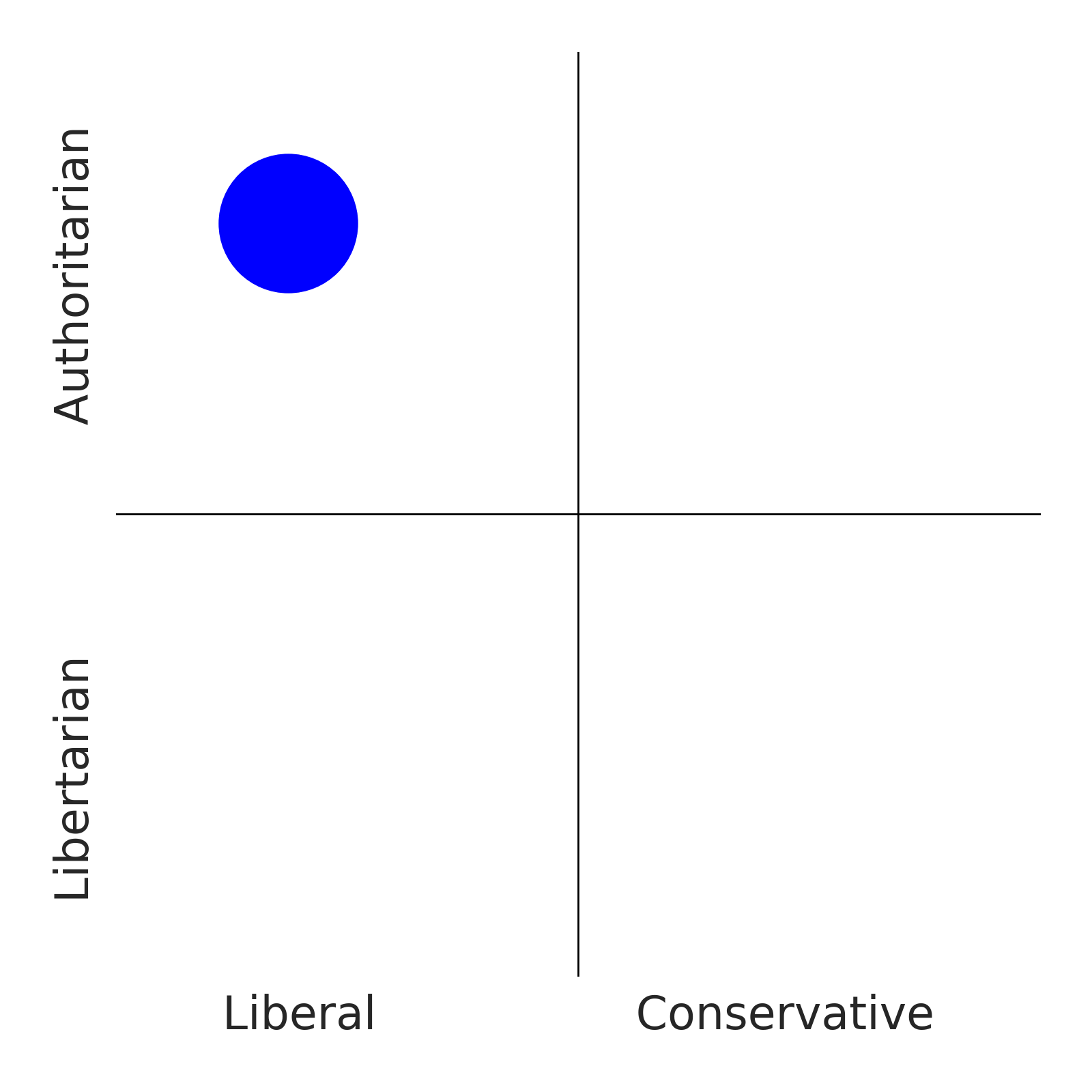
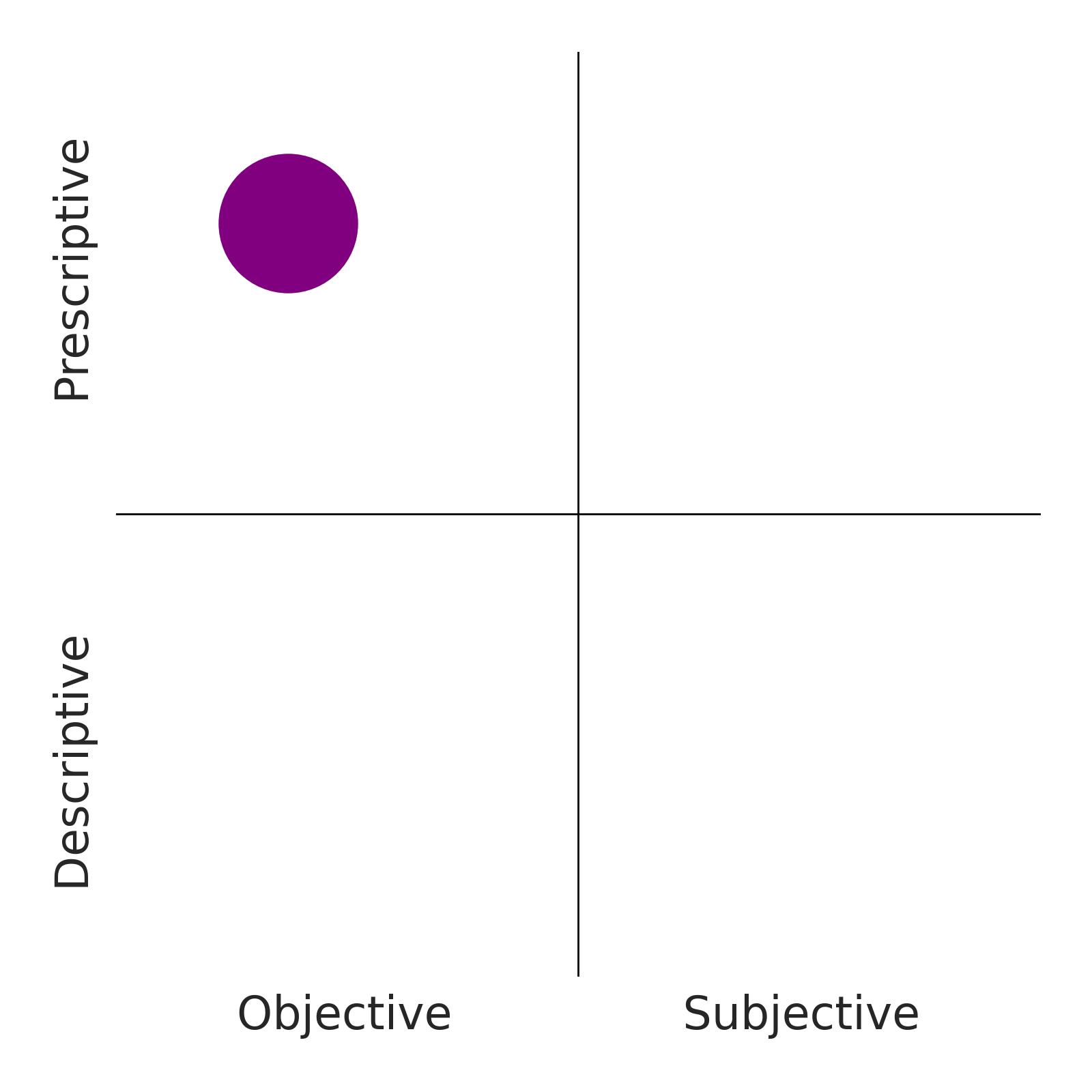
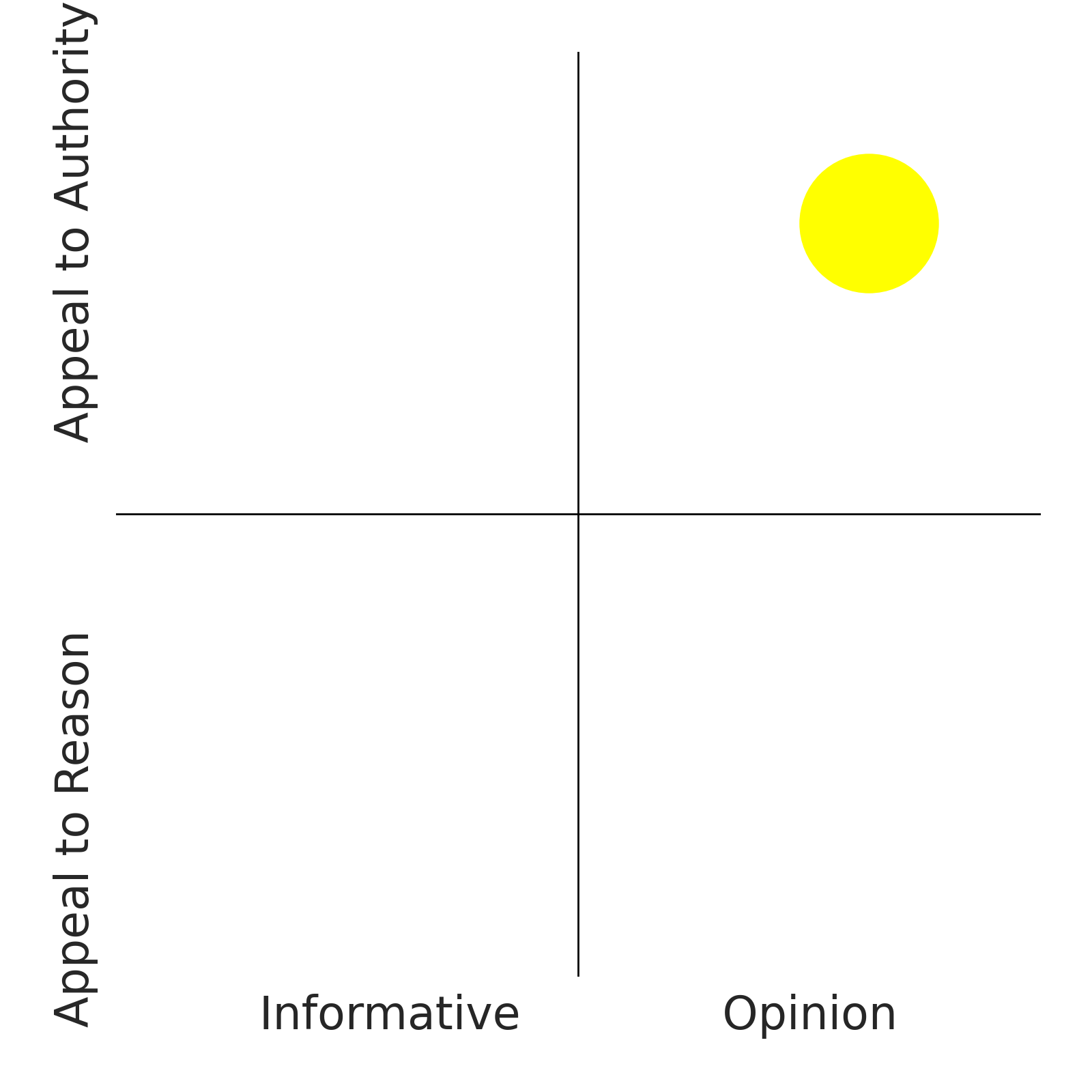
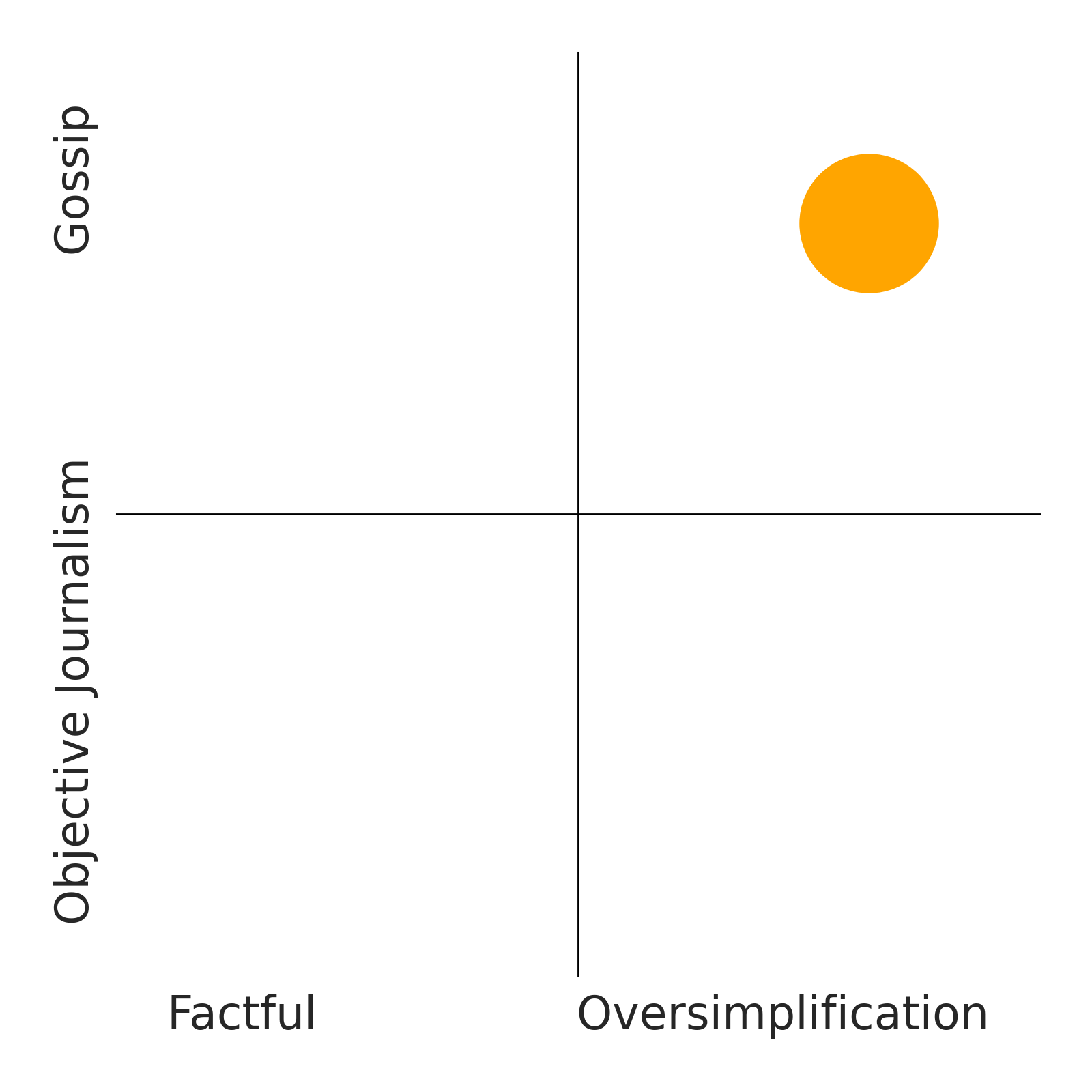
2026 © Helium Trades
Privacy Policy & Disclosure
* Disclaimer: Nothing on this website constitutes investment advice, performance data or any recommendation that any particular security, portfolio of securities, transaction or investment strategy is suitable for any specific person. Helium Trades is not responsible in any way for the accuracy
of any model predictions or price data. Any mention of a particular security and related prediction data is not a recommendation to buy or sell that security. Investments in securities involve the risk of loss. Past performance is no guarantee of future results. Helium Trades is not responsible for any of your investment decisions,
you should consult a financial expert before engaging in any transaction.
Helium Research Assistant

How can I help you today?
Ask any question about Counterpunch bias.


