See whether Helium helps you make better-informed decisions. Try every Pro Trader feature for 30 days. No credit card required.
Try every Pro Trader feature for 30 days. No credit card required.
Scope and coverage. The supplied sample is concentrated on U.S. politics, Trump-administration actions, immigration, crime, elections, national security, courts, culture-war disputes, public health, transportation, and selected business/technology controversies.
The keyword summary specifically identifies frequent attention to license plates, disinformation, Darline Graham, and transportation [80].
This is topic-selection evidence, not proof that other subjects are never covered.
The sample also contains routine election-result, military-maintenance, sports, and procedural reports
August 15, 2026 · 0 shares
The Alaska Senate race is framed chiefly as a chamber-control contest, with candidate positions and the same-name candidacy dispute reported through attributed quotes and campaign-finance data.
Automated analysis; not human reviewed. Limitations: The main report was analyzed separately from the embedded headline and promotional widgets in the supplied text. · 6 of 54 available dimensions scored; omitted dimensions are not treated as neutral. · Verified supporting quotes for 6 of 6 scored dimensions.
Claim: The piece gives substantive, non-endorsing coverage to the Republican incumbent and the Democratic challenger.
“Sullivan has focused his legislative efforts on bills that would expand research and environmental protection opportunities throughout Alaska.” · exact text match
“Peltola proposed bringing more oil refineries to the state in order to lower gas prices, restoring federal tax credits for solar, wind and hydroelectric projects and to eliminate federal income taxes for working and middle-class Alaskan residents earning less than $92,000 per year.” · exact text match
Why: Both campaigns receive separate policy paragraphs and neither candidate is explicitly endorsed or condemned.
Claim: Reporting separates attributed allegations from established facts.
“Dan S. Sullivan alleged that Dan J. Sullivan, a former teacher, mounted his campaign in order to confuse voters at the ballot box on Tuesday.” · exact text match
“Dan S. Sullivan leads in fundraising with more than $7.2 million in cash on hand, followed by Peltola with more than $4.6 million, according to the Federal Election Commission.” · exact text match
Why: The contested same-name claim is labeled 'alleged' and fundraising data is attributed to the FEC.
Claim: The report describes candidate positions and election mechanics instead of instructing readers.
“Peltola proposed bringing more oil refineries to the state in order to lower gas prices, restoring federal tax credits for solar, wind and hydroelectric projects and to eliminate federal income taxes for working and middle-class Alaskan residents earning less than $92,000 per year.” · exact text match
Why: It uses 'proposed' when reporting her platform and includes no directive about how to vote or what policymakers should do.
Claim: The main report is fact-led, with no editorial paragraph or recommendation.
“The Alaska Supreme Court ruled that Dan J. Sullivan was allowed to stay on the ballots but state and federal investigators have continued to examine the controversy.” · exact text match
Why: It relays court rulings and investigations without telling readers what conclusion to draw.
Claim: The piece is credible because it names institutions and attributes statements.
“according to the Federal Election Commission” · exact text match
“Alaska Supreme Court ruled that Dan J. Sullivan was allowed to stay on the ballots” · exact text match
Why: Campaign-finance figures are tied to the FEC, legal status is tied to a court ruling, and direct quotes are attributed to named candidates.
Claim: The piece uses source attribution and marks uncertain claims as allegations.
“Dan S. Sullivan alleged that Dan J. Sullivan, a former teacher, mounted his campaign in order to confuse voters at the ballot box on Tuesday.” · exact text match
“according to the Federal Election Commission” · exact text match
Why: Attributions and source citations allow the reader to distinguish asserted facts from disputed claims.
The main report was analyzed separately from the embedded headline and promotional widgets in the supplied text.
August 18, 2026 · 0 shares
The report frames a Navy engineering casualty with operational details and crew praise, while noting broader carrier group and deployment concerns without overt commentary.
The article is a news report from Just The News (a conservative outlet) covering a military incident. No additional background is provided beyond the text.
Automated analysis; not human reviewed. Limitations: The text includes an author name and links to other articles; it's from a conservative-leaning outlet but the provided text is narrowly factual. · 54 of 54 available dimensions scored; omitted dimensions are not treated as neutral. · Verified supporting quotes for 16 of 54 scored dimensions.
Claim: The article uses tone and word choice—praising crew response and highlighting commander praise—that leans slightly conservative or pro-military.
“the crew, who demonstrated resilience, grit, professionalism and unwavering steadiness in their response.” · exact text match
Why: Praise for military personnel and a straightforward report of an incident without criticism of the Navy is mildly conservative-leaning, though not strongly ideological.
Claim: The report centers on institutional sources and military hierarchy, suggesting a slight elitist orientation.
“according to the U.S. 7th Fleet.” · exact text match
“A spokesperson for the 7th Fleet told Fox News” · exact text match
Why: Reliance on official authority and inclusion of an author bio without grassroots or populist framing indicates a mild elitist bias.
Claim: The article treats military operations and command decisions with deference, indicating a slight authoritarian orientation.
“demonstrated resilience, grit, professionalism and unwavering steadiness in their response.” · exact text match
“Benfold was sailing with the George Washington Carrier Strike Group” · exact text match
Why: Uncritical acceptance of military framing and an emphasis on operational support suggests a mild pro-authority stance.
Claim: The reporting stays objective, using attributed statements and factual details.
“according to the U.S. 7th Fleet.” · exact text match
“No clear timeline for the ship's return has been given.” · exact text match
Why: The article presents verifiable facts and attributes opinions, maintaining a neutral tone.
Claim: The article is non-sensational, focusing on details without dramatic language.
“spent four days without power in the South China Sea last month following an engineering casualty” · exact text match
“There were no injuries to the crew” · exact text match
Why: The report is matter-of-fact despite a potentially dramatic event, and does not exaggerate.
Claim: The event is mildly interesting due to specific details and deployment context.
“spent four days without power in the South China Sea” · exact text match
“The USS Abraham Lincoln has been deployed for 269 days” · exact text match
Why: Unique incident details and deployment status add interest, but the report is straightforward.
Claim: The article is descriptive, explaining what happened without prescribing actions.
“The Navy confirmed Tuesday that a U.S. guided-missile destroyer spent four days without power” · exact text match
“Potable water was also affected by the power failure.” · exact text match
Why: Provides facts and context without offering judgments or recommendations.
Claim: The focus on a military ship and carrier group operations implies a mild hawkish stance.
“Benfold was sailing with the George Washington Carrier Strike Group and is expected to help relieve the Abraham Lincoln Carrier Strike Group” · exact text match
Why: Reporting on military deployments and readiness as a matter-of-fact event suggests a slight pro-military orientation.
Claim: The article is largely factual, with minimal opinion beyond word choices.
“The Navy confirmed Tuesday” · exact text match
“according to the U.S. Naval Institute.” · exact text match
Why: Most statements are attributed or factual, with only slight positive framing.
Claim: The report is politically relevant but not overtly partisan, focusing on military news.
“amid public and family concern about mental health conditions on board the ship.” · exact text match
“following an engineering casualty” · exact text match
Why: Includes a mention of public concern, but not a strong political agenda.
Claim: The article relies heavily on official statements from the Navy and 7th Fleet.
“according to the U.S. 7th Fleet.” · exact text match
“A spokesperson for the 7th Fleet told Fox News” · exact text match
Why: Uses authoritative sources for confirmation, though appropriate for this type of news.
Claim: The report aligns with official military narratives and avoids criticism of the Navy.
“A spokesperson for the 7th Fleet told Fox News that the ship reported an 'engineering casualty'” · not found in supplied text
“demonstrated resilience, grit, professionalism” · exact text match
Why: Uses official sources and praises crew response, indirectly supporting institutional credibility.
Claim: The article is credible due to specific attribution and factual presentation.
“The Navy confirmed Tuesday that a U.S. guided-missile destroyer spent four days without power” · exact text match
“according to the U.S. Naval Institute.” · exact text match
Why: Cites official bodies and offers detailed, verifiable information without speculation.
Claim: Reporting is factual and rational, presenting confirmed events and attributions.
“The Navy confirmed Tuesday that a U.S. guided-missile destroyer spent four days without power” · exact text match
“according to the U.S. Naval Institute.” · exact text match
Why: Claims are attributed to official sources and the article avoids emotional or speculative language.
Claim: The article is empirical, relying on engineering facts and official reports.
“an engineering casualty involving its generators” · exact text match
“towed to the Philippines where power was restored” · exact text match
Why: Treats the incident as a technical matter with physical causes.
Claim: The article attributes information to official sources and separates facts from quoted statements.
“according to the U.S. 7th Fleet.” · exact text match
“according to the U.S. Naval Institute.” · exact text match
Why: Source attribution and transparent reporting of claims support a moderate integrity score.
Claim: The article is truth-seeking, presenting facts without distortion.
“The Navy confirmed Tuesday” · exact text match
“according to the U.S. Naval Institute.” · exact text match
Why: No evidence of delusion or fabrication; aims for accurate reporting.
The text includes an author name and links to other articles; it's from a conservative-leaning outlet but the provided text is narrowly factual.
August 16, 2026 · 0 shares
An admiring obituary frames Tommy John's significance through his 288 wins and pioneering elbow surgery, with light editorializing about Hall of Fame comparisons.
Automated analysis; not human reviewed. Limitations: The supplied text is a short obituary excerpt; other listed headlines and promotional boxes were excluded as page chrome. · 5 of 54 available dimensions scored; omitted dimensions are not treated as neutral. · Verified supporting quotes for 4 of 5 scored dimensions.
Claim: The article is predominantly factual, with limited admiring language.
“John won 288 games over 26 seasons” · exact text match
“John started 700 games in his career” · exact text match
Counterevidence:
“legendary pitcher” · exact text match
“brilliant career as a Major League pitcher” · exact text match
Why: Core statements are verifiable statistics and dated events, though the article includes some admiring descriptors.
Claim: The article is descriptive rather than prescriptive.
“John won 288 games over 26 seasons” · exact text match
“John started 700 games in his career” · exact text match
Why: The obituary reports a death, career statistics, and background details without issuing calls to action.
Claim: The article mixes facts with evaluative characterizations.
“brilliant career as a Major League pitcher” · exact text match
“whose career was plagued by scandal” · exact text match
Why: Adjectives like 'brilliant' and the characterization of Clemens's career go beyond neutral factual reporting.
Claim: The tone is admiring and positive toward the deceased.
“He became known as 'the bionic man.'” · not found in supplied text
“brilliant career as a Major League pitcher” · exact text match
Why: 'Bionic man' and 'brilliant career' convey positive regard rather than neutral affect.
Claim: The reporting shows visible sourcing and specific detail.
“team physician Dr. Frank Jobe replaced the torn ulnar collateral ligament, according to the New York Post” · exact text match
“John won 288 games over 26 seasons” · exact text match
Why: The article cites an external report, names a doctor, and gives precise statistics and dates.
The supplied text is a short obituary excerpt; other listed headlines and promotional boxes were excluded as page chrome.
Dominant framing. The clearest recurring pattern is conservative, pro-Trump/GOP, enforcement-oriented framing.
Immigration stories favor deportation, border enforcement, and national sovereignty while using terms such as "illegal migrants" and "scourge"
August 14, 2026 · 0 shares
Relays a DHS press release as a conservative success story, using the labels 'illegal migrants' and 'heinous crimes' and giving prominent place to the Trump administration's claim that deportations have made America safer.
ICE is the U.S. Immigration and Customs Enforcement agency within the Department of Homeland Security; this is a government enforcement announcement rather than a court or independent investigatory report.
Automated analysis; not human reviewed. Limitations: The supplied excerpt is short and derives almost entirely from one official press release, so the analysis of publisher framing is necessarily based on limited source material. · 5 of 54 available dimensions scored; omitted dimensions are not treated as neutral. · Verified supporting quotes for 1 of 5 scored dimensions.
Claim: The publication frames ICE enforcement as a conservative enforcement success under Trump.
“Thanks to the leadership of President Donald J. Trump, we are making America safe again.” · exact text match
Why: The quoted official praise of Trump, combined with repeated language such as 'illegal migrants' and 'heinous crimes,' aligns the report's framing with conservative immigration enforcement messaging.
Claim: The article mostly reports attributed facts but uses emotionally evaluative wording.
“["who have been convicted of heinous crimes, including murder and sexual assault"]” · not found in supplied text
Why: Violent crimes are factual, but 'heinous' is an evaluative term that colors the otherwise attributed administration statement.
Claim: The article selects and emphasizes a murder, sexual assault, and violence, heinous criminal conduct appearing in the report.
“["who have been convicted of heinous crimes, including murder and sexual assault"]” · not found in supplied text
Why: The detail of sex and murder is material in the enforcement announcement, but it is repeated in the headline and opening with 'heinous' phrasing, which elevates emotional/sensational weight.
Claim: The report is highly political because it centers on a presidential immigration policy and highlights partisan credit for the outcome.
“["Thanks to the leadership of President Donald J. Trump, we are making America safe again."]” · not found in supplied text
Why: The sole high-level quotation is explicitly directed at Trump's leadership, and the overall selection recounts Trump's deportation targets and current administration totals, making the policy a partisan success narrative rather than a purely administrative update.
Claim: The article is openly sourced to a government press release and identifies an original source for the report.
“["according to a news release first shared with Just The News"]” · not found in supplied text
Why: Credibility is supported by an external source, but the facts are not independently verified, so credibility is present but not more than moderate.
The supplied excerpt is short and derives almost entirely from one official press release, so the analysis of publisher framing is necessarily based on limited source material.
August 10, 2026 · 0 shares
Frames Justice Department lawsuits as necessary enforcement against states aiding 'illegal migrants', using loaded language like 'scourge' to characterize immigration.
U.S. Code 8 U.S.C. § 1623 bars states from granting in-state tuition benefits to undocumented immigrants based on state residency unless U.S. citizens or nationals are eligible for the same benefits regardless of residency.
Automated analysis; not human reviewed. Limitations: The article text is short and includes a subscription prompt and unrelated links; analysis is based on the core news report. · 19 of 53 available dimensions scored; omitted dimensions are not treated as neutral. · Verified supporting quotes for 10 of 19 scored dimensions.
Claim: The article exhibits strong conservative bias by using negative language and framing the DOJ's actions as enforcing law against states aiding undocumented immigrants.
“a major win for states like Texas trying to fight the scourge of illegal migration” · exact text match
Why: The phrase 'scourge of illegal migration' is a highly negative, value-laden term that frames immigration as a harmful problem, consistent with conservative rhetoric.
Claim: The article adopts a hawkish stance on immigration enforcement.
“a major win for states like Texas trying to fight the scourge of illegal migration” · exact text match
Why: The article celebrates a court ruling that restricts benefits for undocumented immigrants, endorsing strict enforcement.
Claim: The article is highly political, focusing on a partisan immigration enforcement dispute.
“The Justice Department filed complaints against three more states Monday for allegedly providing in-state tuition and other financial benefits to illegal migrants” · exact text match
Why: The entire report centers on a legal action by a Republican administration against Democratic-led states over immigration policy, a core political issue.
Claim: The article relies on the authority of the Associate Attorney General to support its framing.
“Associate Attorney General Stanley Woodward said in a statement” · exact text match
Why: The article presents Woodward's statement as authoritative without including counterarguments or independent analysis.
Claim: The article covers only the DOJ's response and omits any response from the sued states.
“The Justice Department filed complaints against three more states Monday for allegedly providing in-state tuition and other financial benefits to illegal migrants” · exact text match
Why: No statement from Connecticut, New York, or Vermont is included, leaving the report one-sided.
Claim: The article consistently uses framing and language aligned with conservative ideology.
“illegal migrants” · exact text match
“illegal aliens” · exact text match
“scourge of illegal migration” · exact text match
Why: The repeated use of terms like 'illegal migrants' and 'illegal aliens' (rather than neutral terms) and the negative characterization of immigration reflect a conservative ideological lens.
Claim: The article sides with the federal establishment (DOJ) against state governments.
“Congress long ago made clear that States cannot put illegal aliens over our Nation’s own citizens” · exact text match
Why: The only quoted perspective is from the Associate Attorney General, a federal official, and no responses from the sued states are included.
Claim: The article conveys a negative emotional tone toward undocumented immigrants.
“scourge of illegal migration” · exact text match
Why: The word 'scourge' evokes strong negative emotions, framing immigration as a plague or curse.
Claim: The article uses emotionally manipulative language to shape reader perception.
“scourge of illegal migration” · exact text match
Why: The term 'scourge' is a strong, emotionally charged word that can manipulate readers' feelings about immigration.
Claim: The article scapegoats undocumented immigrants by framing them as receiving benefits undeservedly at the expense of citizens.
“Congress long ago made clear that States cannot put illegal aliens over our Nation’s own citizens” · exact text match
Why: The quote suggests that undocumented immigrants are being prioritized over citizens, a classic scapegoating narrative.
The article text is short and includes a subscription prompt and unrelated links; analysis is based on the core news report.
Strongly frames school choice as a popular, parent-empowering initiative while portraying Democrats as obstructing it, using positive language about Trump and Republican lawmakers.
Automated analysis; not human reviewed. Limitations: The article text includes multiple unrelated headlines at the end, which may be part of the page layout but were included in the supplied text; analysis focused on the school choice article. · 9 of 52 available dimensions scored; omitted dimensions are not treated as neutral. · Verified supporting quotes for 6 of 9 scored dimensions.
Claim: The text frames school choice as positive and Democratic opposition as negative.
“Nearly 93% of NC's 1.7 million students eligible for Trump's signature school choice initiative” · exact text match
“By most every measure, Democrats inclusive of Stein and predecessor Roy Cooper – now a U.S. Senate candidate – have opposed school choice. For parents, it’s overwhelmingly wanted.” · exact text match
Why: Positive language about Trump's initiative and negative characterization of Democratic opposition.
Claim: The article presents school choice as empowering parents against political elites.
“This vote was about trusting parents and giving students more choices” · exact text match
Why: Quote emphasizes trusting parents, which is populist.
Claim: The article advocates for parental choice and less government control.
“giving families more control over their children’s education” · exact text match
Why: Promotes individual choice over government control.
Claim: The article includes subjective opinion statements without attribution.
“For parents, it’s overwhelmingly wanted.” · exact text match
Why: Unsupported claim about parent desire.
Claim: The article mixes factual reporting with opinionated commentary.
“By most every measure, Democrats ... have opposed school choice. For parents, it’s overwhelmingly wanted.” · not found in supplied text
Why: Balanced reporting but with clear editorial stance.
Claim: The article is heavily focused on political actors and partisan conflict.
“Democrats inclusive of Stein and predecessor Roy Cooper ... have opposed school choice” · not found in supplied text
“Republican House Speaker Destin Hall said ...” · not found in supplied text
Why: Covers political figures and parties.
Claim: The article simplifies Democratic opposition without presenting their arguments.
“By most every measure, Democrats ... have opposed school choice.” · not found in supplied text
Why: Omits reasons for opposition.
Claim: The article promotes a specific ideology of school choice and educational freedom.
“Universal school choice – North Carolina became the 10th state to implement” · exact text match
Why: Advocates for universal school choice as a positive.
Claim: The article emphasizes individual parental choice over collective public education.
“giving families more control over their children’s education” · exact text match
Why: Focuses on individual family control.
The article text includes multiple unrelated headlines at the end, which may be part of the page layout but were included in the supplied text; analysis focused on the school choice article.
August 15, 2026 · 0 shares
The opt-in is presented as an obvious, cost-free opportunity while opposition is relegated to a historical aside, giving the coverage a conservative-leaning, promotional framing.
Automated analysis; not human reviewed. Limitations: The source text is a single advocacy-heavy news brief; quoted estimates and fiscal claims could not be independently verified from this text. · 6 of 54 available dimensions scored; omitted dimensions are not treated as neutral. · Verified supporting quotes for 4 of 6 scored dimensions.
Claim: The coverage favors the conservative-aligned school-choice position by presenting opt-in as an obvious win and minimizing opposition.
““It’s truly a win-win: students access more educational opportunities, and at no cost to the state or school districts,”” · exact text match
““The choice could not be simpler: Pennsylvania must opt in”” · not found in supplied text
Why: The publisher selects and prominently places supportive quotes describing the decision as a win-win and a simple choice, while the opposing view is limited to one historical reference.
Claim: The report uses positive, promotional language about the program's effects and frames inaction as a loss.
““It’s truly a win-win: students access more educational opportunities, and at no cost to the state or school districts,”” · exact text match
“Langan said the program is truly life-changing” · exact text match
Why: The chosen quotes emphasize benefits and describe the program as life-changing, giving the piece an optimistic, forward-looking tone.
Claim: Although structured as news, the piece gives extended space to explicit evaluative opinions and a directive conclusion.
““The choice could not be simpler: Pennsylvania must opt in,”” · not found in supplied text
“Williams sees no downside to participating.” · exact text match
Why: The article features numerous judgment calls from sources and closes the main argument with an imperative, making it function partly as advocacy.
Claim: The report is heavily framed around partisan control, gubernatorial delay, and legislative maneuvering.
“Shapiro’s delay has prompted a bipartisan group of state lawmakers to propose legislation that would require the state’s participation.” · exact text match
“Pennsylvania has a divided government, with a Democratic governor and Democratic-controlled House and a Republican-controlled Senate.” · exact text match
Why: The central tension is the political conflict between the governor's wait and legislative action, and the article details party-control breakdowns.
Claim: The tax credit is repeatedly described as costing nothing and having no downside, with trade-offs unexamined.
““It’s truly a win-win: students access more educational opportunities, and at no cost to the state or school districts,”” · exact text match
“it doesn’t raise taxes, doesn’t cost any money” · exact text match
Why: The piece presents the program as purely beneficial and cost-free without discussing federal revenue effects or possible public-school impacts.
Claim: The decision is presented with certainty beyond the evidence supplied, using phrases like 'no brainer' and 'no downside.'
“the federal scholarship tax credit opt in is a “no brainer” for Pennsylvania.” · exact text match
“Williams sees no downside to participating.” · exact text match
Why: The article carries confident assertions of a simple, risk-free choice even though the administration is awaiting guidance on unresolved questions.
The source text is a single advocacy-heavy news brief; quoted estimates and fiscal claims could not be independently verified from this text.
August 18, 2026 · 0 shares
Celebratory, administration-sourced framing portrays Trump's drug-pricing policies as ending foreign free-riding and treats the reported drop in prescription prices as an unqualified success.
Automated analysis; not human reviewed. Limitations: The analyzed text is short, advocacy-oriented, and heavily reliant on administration and industry-favorable sources; it provides no independent verification or external counterpoint, so causal attribution and reported magnitudes are difficult to separate from framing. · 9 of 54 available dimensions scored; omitted dimensions are not treated as neutral. · Verified supporting quotes for 8 of 9 scored dimensions.
Claim: Promotes the Trump administration's drug-pricing agenda and frames other countries as free-riders.
“President Donald Trump’s Most Favored Nation policies and TrumpRx platform have produced the largest annual drop in U.S. prescription drug prices in over 60 years, the steepest since 1963, according to the administration.” · exact text match
“Other nations’ price controls allow them to pay closer to manufacturing costs, effectively free-riding on American-financed innovation and leaving U.S. patients to shoulder a disproportionate share of the investment that benefits patients worldwide.” · exact text match
Why: The lead and supporting framing consistently credit a Republican president and use nationalist economic language, indicating a conservative partisan stance.
Claim: Uses an us-versus-them framing of American patients against foreign nations said to take advantage.
“Americans stop paying the world’s pharmacy tab as prices fall hardest since 1963” · exact text match
“Other nations’ price controls allow them to pay closer to manufacturing costs, effectively free-riding on American-financed innovation and leaving U.S. patients to shoulder a disproportionate share of the investment that benefits patients worldwide.” · exact text match
Why: The 'world's pharmacy tab' headline and 'free-riding' language cast the issue as ordinary Americans being exploited by other countries.
Claim: Celebrates government-imposed pricing requirements and presidential leverage over drug companies.
“By securing voluntary agreements with 17 major drug manufacturers like Eli Lilly, AbbVie and Johnson & Johnson, covering roughly 86% of the branded market, the administration requires U.S. prices to match the lowest levels paid by comparable countries.” · exact text match
Why: The story presents executive pressure and mandatory price alignment as positive, a statist rather than libertarian stance.
Claim: Normative language is interwoven with data as though it were neutral description.
“Other nations’ price controls allow them to pay closer to manufacturing costs, effectively free-riding on American-financed innovation and leaving U.S. patients to shoulder a disproportionate share of the investment that benefits patients worldwide.” · exact text match
“It effectively ends decades of Americans effectively subsidizing cheaper medicines abroad, pressure that had allowed other nations to free-ride on U.S.-financed innovation while patients at home shouldered disproportionate costs for the same drugs.” · exact text match
Why: Terms like 'free-riding' and 'disproportionate share' are evaluative judgments, not neutral reporting.
Claim: Uses dramatic metaphors and sweeping language to heighten the significance of the price drop.
“Americans stop paying the world’s pharmacy tab as prices fall hardest since 1963” · exact text match
“It effectively ends decades of Americans effectively subsidizing cheaper medicines abroad, pressure that had allowed other nations to free-ride on U.S.-financed innovation while patients at home shouldered disproportionate costs for the same drugs.” · exact text match
Why: The headline's metaphor and 'effectively ends decades' construction dramatize the policy effect beyond the immediate data.
Claim: Frames the policy as an unqualified success with large savings and a decisive end to foreign free-riding.
“TrumpRx has already generated $700 million in patient savings.” · exact text match
“It effectively ends decades of Americans effectively subsidizing cheaper medicines abroad, pressure that had allowed other nations to free-ride on U.S.-financed innovation while patients at home shouldered disproportionate costs for the same drugs.” · exact text match
Why: The tone celebrates the outcome and projects continued benefit without substantial caveats.
Claim: The story blends reporting with an editorial endorsement of the policy.
“It effectively ends decades of Americans effectively subsidizing cheaper medicines abroad, pressure that had allowed other nations to free-ride on U.S.-financed innovation while patients at home shouldered disproportionate costs for the same drugs.” · exact text match
Why: This is a value-laden conclusion presented as a factual outcome rather than as a sourced or attributed opinion.
Claim: The report is centered on a partisan presidential achievement and quotes a Republican lawmaker in support.
“President Donald Trump’s Most Favored Nation policies and TrumpRx platform have produced the largest annual drop in U.S. prescription drug prices in over 60 years, the steepest since 1963, according to the administration.” · exact text match
“Rep. Jimmy Patronis, R-Fla., told Just The News: 'Without even twisting an arm, without trying to pass a new bill, he [Trump] brought all these players together with TrumpRX to lower the cost of prescription drugs, and he continues to do that because this guy understands leverage. He understands the bully pulpit.'” · not found in supplied text
Why: The lead and supporting quote explicitly connect the story to Trump and Republican political messaging.
Claim: Reduces a complex price phenomenon to a single presidential policy achievement and foreign free-riding.
“President Donald Trump’s Most Favored Nation policies and TrumpRx platform have produced the largest annual drop in U.S. prescription drug prices in over 60 years, the steepest since 1963, according to the administration.” · exact text match
“Other nations’ price controls allow them to pay closer to manufacturing costs, effectively free-riding on American-financed innovation and leaving U.S. patients to shoulder a disproportionate share of the investment that benefits patients worldwide.” · exact text match
Why: It attributes the multi-factor price decline to Trump's policies and frames foreign price controls as simple free-riding, omitting market, patent, and regulatory complexities.
The analyzed text is short, advocacy-oriented, and heavily reliant on administration and industry-favorable sources; it provides no independent verification or external counterpoint, so causal attribution and reported magnitudes are difficult to separate from framing.
Conservative pro-Trump framing that credits tariffs and deregulation with reviving U.S. auto manufacturing and portrays opponents as globalist elites.
Automated analysis; not human reviewed. Limitations: Reliance on official statements and pro-policy framing; potential underrepresentation of opposing viewpoints; date specifics and numbers may reflect selective emphasis. · 21 of 52 available dimensions scored; omitted dimensions are not treated as neutral. · Verified supporting quotes for 5 of 21 scored dimensions.
Claim: Framing relies on conservative, pro-Trump rhetoric that emphasizes 'America First' and attacks elites/globalists.
“globalist politicians and corrupt special interests” · exact text match
““America First” approach working.” · exact text match
Why: Direct anti-globalist, pro-America First language and attribution to White House framing indicate conservative orientation.
Claim: Anti-elite/populist framing that portrays globalists and corrupt elites as betraying workers.
“globalist politicians and corrupt special interests” · exact text match
Why: Targeting elites and globalists as responsible for job losses signals populist rhetoric.
Claim: Deregulation and reduced emissions/fuel-economy constraints align with libertarian policy preferences.
“Regulatory resets under the Trump administration have restored greater flexibility for automakers by easing strict fuel-economy and emissions requirements” · exact text match
Why: Explicit deregulatory framing supports libertarian-leaning characterization.
Claim: The framing relies on subjective, evaluative language praising policy outcomes.
““We're building more auto factories and more plants than at any time in the history of our country.”” · not found in supplied text
“America First approach working” · not found in supplied text
Why: Presence of favorable framing and direct praise signals subjectivity.
Claim: The article not only describes but prescribes policy direction and expansion of U.S.-content requirements.
“The administration may expand offsets that reward higher U.S.- content in vehicles and tighten rules during the upcoming USMCA review to require more parts and final assembly in America to avoid duties.” · not found in supplied text
“broaden auto-loan interest deductibility or create additional tax credits tied exclusively to high-U.S.-content vehicles” · exact text match
Why: Recommendations and proposed policy changes go beyond description.
Claim: The article endorses a hawkish economic policy stance (tariffs, deregulation) that favors assertive policy action.
“tariffs” · exact text match
“America First” · exact text match
“regulatory resets” · not found in supplied text
Why: Economic policy stance is strongly assertive, akin to hawkish on domestic policy.
Claim: Article exhibits strong opinionated framing supporting Trump's policies.
“For decades, the autoworkers and manufacturers of this great state were sold out and betrayed by globalist politicians and corrupt special interests” · exact text match
Why: Loaded language and partisan framing indicate opinionated content.
Claim: Overall political tilt is pro-Trump and pro-deregulation.
“America First” · exact text match
“the Working Families Tax Cuts protected roughly 170,000 manufacturing jobs in Michigan” · exact text match
“Regulatory resets under the Trump administration” · exact text match
Why: Multiple lines indicate political stance favorable to the Trump administration.
Claim: Policy effects are presented as straightforward cause-effect on manufacturing without evidence of countervailing factors.
“Under Trump’s trade policies... GM is shifting production of certain vehicles stateside.” · not found in supplied text
“America First approach working” · not found in supplied text
Why: Claims of broad impact may oversimplify complex supply-chain decisions; the article relies on official statements.
Claim: The article asserts strong, certain outcomes from policy measures.
“the single largest deregulator action in U.S. history” · not found in supplied text
“"We're building more auto factories and more plants than at any time in the history of our country"” · not found in supplied text
Why: Hyperbolic language and absolute claims indicate overconfidence.
Claim: The piece frames elites and globalists as villains while praising the current administration.
“globalist politicians and corrupt special interests” · exact text match
“America First approach working” · not found in supplied text
Why: Linguistic framing targets establishment-level elites and endorses current policy.
Claim: The article uses numerical claims to bolster policy claims, suggesting a rational approach to argumentation.
“over $20 billion in Michigan investments and more than 1,600 related jobs” · not found in supplied text
“projecting savings of roughly $1,000 on the average new car and $109 billion for American families over five years” · exact text match
Why: Inclusion of large economic numbers supports a rational-appearing argument, though veracity may require independent verification.
Reliance on official statements and pro-policy framing; potential underrepresentation of opposing viewpoints; date specifics and numbers may reflect selective emphasis.
August 17, 2026 · 0 shares
The article frames the Transportation Department's actions under Secretary Sean Duffy as successful, practical, and taxpayer-friendly, while portraying critics as political adversaries.
The article is from a conservative news outlet and covers the Department of Transportation's actions during the second Trump administration. It mentions specific projects and criticisms, but background on the broader political battles over infrastructure funding is not necessary.
Automated analysis; not human reviewed. Limitations: The article is from a conservative outlet, and its framing may be partisan, affecting interpretation of quoted sources and statistics. · 22 of 54 available dimensions scored; omitted dimensions are not treated as neutral. · Verified supporting quotes for 0 of 22 scored dimensions.
Claim: The article uses highly favorable language towards Trump and Duffy's policies, portraying them as effective and beneficial.
“"Trump's DOT in the fast lane: Duffy shifts safety and savings into overdrive."” · not found in supplied text
“"Life in the fast lane: Transportation Secretary Sean Duffy has steered toward what officials call a 'golden age' of practical infrastructure and safety-first policies."” · not found in supplied text
Why: The headline and opening phrases use superlative and colloquial language ('fast lane', 'golden age') to positively frame the administration's actions, while characterizing critics' opposition as political.
Claim: The article emphasizes taxpayer interests and criticizes bureaucratic and external actors, adopting a populist tone.
“"We're not going to invest in projects that don't deliver for the American people. We're going to invest in the projects that actually show that for the hard work of an American taxpayer, there's a deliverable for their money."” · not found in supplied text
Counterevidence:
“The article does not attack elites broadly but criticizes certain officials and states, and it relies on official reporting.” · not found in supplied text
Why: The quotes emphasize 'American people' and 'American taxpayer', and the article frames actions as saving taxpayer dollars, aligning with a populist approach.
Claim: The article is highly subjective, using editorialized language and selectively presenting facts to support a narrative.
“"shifts safety and savings into overdrive"” · not found in supplied text
“"cracked down on unsafe commercial drivers"” · not found in supplied text
“"cleared a massive grant backlog"” · not found in supplied text
Why: The language is vivid and editorialized, focusing on achievements without balancing critique, and uses framing that supports a positive narrative.
Claim: The article presents a bullish outlook on the DOT's performance and economic benefits.
“"Duffy’s team reports roughly $14 billion in savings since inauguration through regulatory cuts"” · not found in supplied text
“"resetting Corporate Average Fuel Economy standards is projected to cut the average new vehicle price by about $1,000"” · not found in supplied text
Why: The article highlights savings and efficiency improvements, portraying a positive economic impact, though some figures are reported as claims.
Claim: The article is optimistic about the DOT's direction and achievements.
“"golden age"” · verified after text normalization
“"whether the gains hold and the criticized gaps close will shape the next phase" implies anticipation of progress” · not found in supplied text
Why: The tone is celebratory and forward-looking, despite acknowledging some criticisms.
Claim: The article is prescriptive, advocating for deregulation and enforcement over other approaches.
“"Duffy’s record reflects a sharp pivot toward deregulation, enforcement and traditional infrastructure."” · not found in supplied text
Why: The conclusion endorses the policy direction, going beyond reporting what happened to prescribing the continuation.
Claim: The article blends news reporting with opinion and advocacy.
“The use of qualifiers like 'reportedly' but also subjective descriptors like 'cracked down' and 'overdrive'.” · not found in supplied text
Why: While it contains factual claims, the framing and language are opinionated and partly persuasive.
Claim: The article is highly political, focusing on a partisan administration's achievements and criticizing opponents.
“"Democrats and mass transit advocates have criticized the administration"” · not found in supplied text
“"politically motivated"” · not found in supplied text
Why: The central topic is a political figure, and the framing aligns with a partisan perspective.
Claim: The article reports achievements with certainty despite some data being derived from the administration itself.
“"Duffy’s team reports roughly $14 billion in savings"” · not found in supplied text
“"hiring has jumped 20% over the prior pace"” · not found in supplied text
“"at least 17 fatal incidents"” · not found in supplied text
Why: The claims are presented as factual without significant caveats, even when derived from administration sources or estimates.
Claim: The article is strongly ideological in its promotion of deregulation, traditional infrastructure, and enforcement.
“"stripping DEI and climate requirements"” · not found in supplied text
“"sharp pivot toward deregulation, enforcement"” · not found in supplied text
Why: The framing consistently supports a conservative idea of efficiency and traditional values.
Claim: The article is anti-establishment in its criticism of previous administration policies and certain government agencies.
“"stripping DEI (Diversity, Equity and Inclusion) and climate requirements from the process"” · not found in supplied text
“"canceling projects it called wasteful"” · not found in supplied text
Why: It positions the current administration against the so-called 'establishment' of DEI and climate mandates, while also supporting federal action when aligned with its agenda.
Claim: The article omits context and relies heavily on official narratives, potentially compromising objectiveness.
“It does not include independent verification of claimed savings or enforcement statistics.” · not found in supplied text
“It dismisses criticism as political without substantive rebuttal.” · not found in supplied text
Why: The article mixes facts with commentary and uses selective reporting, but no direct deception is evident within the text.
The article is from a conservative outlet, and its framing may be partisan, affecting interpretation of quoted sources and statistics.
August 15, 2026 · 0 shares
The Alaska Senate race is framed chiefly as a chamber-control contest, with candidate positions and the same-name candidacy dispute reported through attributed quotes and campaign-finance data.
Automated analysis; not human reviewed. Limitations: The main report was analyzed separately from the embedded headline and promotional widgets in the supplied text. · 6 of 54 available dimensions scored; omitted dimensions are not treated as neutral. · Verified supporting quotes for 6 of 6 scored dimensions.
Claim: The piece gives substantive, non-endorsing coverage to the Republican incumbent and the Democratic challenger.
“Sullivan has focused his legislative efforts on bills that would expand research and environmental protection opportunities throughout Alaska.” · exact text match
“Peltola proposed bringing more oil refineries to the state in order to lower gas prices, restoring federal tax credits for solar, wind and hydroelectric projects and to eliminate federal income taxes for working and middle-class Alaskan residents earning less than $92,000 per year.” · exact text match
Why: Both campaigns receive separate policy paragraphs and neither candidate is explicitly endorsed or condemned.
Claim: Reporting separates attributed allegations from established facts.
“Dan S. Sullivan alleged that Dan J. Sullivan, a former teacher, mounted his campaign in order to confuse voters at the ballot box on Tuesday.” · exact text match
“Dan S. Sullivan leads in fundraising with more than $7.2 million in cash on hand, followed by Peltola with more than $4.6 million, according to the Federal Election Commission.” · exact text match
Why: The contested same-name claim is labeled 'alleged' and fundraising data is attributed to the FEC.
Claim: The report describes candidate positions and election mechanics instead of instructing readers.
“Peltola proposed bringing more oil refineries to the state in order to lower gas prices, restoring federal tax credits for solar, wind and hydroelectric projects and to eliminate federal income taxes for working and middle-class Alaskan residents earning less than $92,000 per year.” · exact text match
Why: It uses 'proposed' when reporting her platform and includes no directive about how to vote or what policymakers should do.
Claim: The main report is fact-led, with no editorial paragraph or recommendation.
“The Alaska Supreme Court ruled that Dan J. Sullivan was allowed to stay on the ballots but state and federal investigators have continued to examine the controversy.” · exact text match
Why: It relays court rulings and investigations without telling readers what conclusion to draw.
Claim: The piece is credible because it names institutions and attributes statements.
“according to the Federal Election Commission” · exact text match
“Alaska Supreme Court ruled that Dan J. Sullivan was allowed to stay on the ballots” · exact text match
Why: Campaign-finance figures are tied to the FEC, legal status is tied to a court ruling, and direct quotes are attributed to named candidates.
Claim: The piece uses source attribution and marks uncertain claims as allegations.
“Dan S. Sullivan alleged that Dan J. Sullivan, a former teacher, mounted his campaign in order to confuse voters at the ballot box on Tuesday.” · exact text match
“according to the Federal Election Commission” · exact text match
Why: Attributions and source citations allow the reader to distinguish asserted facts from disputed claims.
The main report was analyzed separately from the embedded headline and promotional widgets in the supplied text.
The source also repeatedly distrusts liberal institutions and Democratic-linked actors—especially the FBI, Fauci/NIH, Democratic officials, and progressive movements—while treating Republican or executive claims more sympathetically
August 12, 2026 · 0 shares
Selectively declassified documents are used to portray a narrative of government corruption and weaponization against Donald Trump, with strong anti-establishment and sensational framing.
Automated analysis; not human reviewed. Limitations: The analysis is based solely on the supplied article text, which is a series of bullet points presenting allegations as fact; no external verification or context was used. · 20 of 53 available dimensions scored; omitted dimensions are not treated as neutral. · Verified supporting quotes for 14 of 20 scored dimensions.
Claim: The publisher frames declassified documents to attack Democratic and institutional actors while defending President Trump.
“The FBI opened a criminal probe specifically targeting Donald Trump in May 2017, alleging the newly elected president may have been acting as a Russian asset when he fired then-Director James Comey even though the bureau’s own evidence overwhelmingly showed at the time there was no collusion with the Kremlin.” · exact text match
Why: The framing consistently portrays Trump as a victim of partisan FBI actions and highlights alleged misconduct by Democratic-aligned entities.
Claim: The article presents a populist, anti-establishment perspective by attacking intelligence community, FBI, and DOJ as corrupt elites.
“This database will be updated with each new release. Memos related to a secret counterintelligence operation codenamed 'Round River' that was launched during the 2020 election by a task force of FBI analysts which formally designated Attorney General Bill Barr, Secretary of State Mike Pompeo, key members of Congress and journalists as Russian disinformation 'conduits' in an apparent effort to tamp down a Ukrainian corruption scandal engulfing Joe and Hunter Biden.” · not found in supplied text
Why: Describing a secret FBI operation to suppress a corruption scandal implies elite manipulation against the people's interests.
Claim: The article is highly subjective, presenting allegations and interpretations as established facts.
“The Homeland Security Department found more than a quarter million illegal aliens were registered to vote in four states – California, Nevada, New Jersey and Pennsylvania, according to a review the agency conducted on publicly available data.” · exact text match
Why: The phrase 'more than a quarter million illegal aliens' uses loaded language, and the finding is presented without context of potential duplicate or outdated registrations.
Claim: The article uses sensational language to maximize emotional impact.
“Arizona's largest county, Maricopa, suffered a significant breach of its election data in the days before the 2020 presidential election when a self-described hacker foiled security and obtained 633,000 voter registration files” · exact text match
Why: Words like 'breach', 'foiled', 'significant' amplify drama beyond neutral reporting.
Claim: The article implicitly advocates for further action against alleged government corruption.
“President Trump said the Venezuelan capabilities are evidence that American voting systems need to be better secured.” · exact text match
Why: Including Trump's prescriptive statement without counterpoint or analysis tilts the article toward advocacy.
Claim: The article evokes fear of election fraud, government overreach, and foreign interference.
“China’s Acquisition and Exploitation of American Voter Data ... By 2023, the country had obtained at least 220 million voter records in the United States” · not found in supplied text
Why: Describing massive Chinese acquisition of voter data without context of what data was acquired or its use stokes fear.
Claim: The article is heavily opinionated, presenting interpretation as fact.
“Memos related to a secret counterintelligence operation codenamed 'Round River' that was launched during the 2020 election by a task force of FBI analysts which formally designated ... as Russian disinformation 'conduits' in an apparent effort to tamp down a Ukrainian corruption scandal” · not found in supplied text
Why: The phrase 'in an apparent effort' is a speculative opinion inserted into what purports to be factual reporting.
Claim: The article is intensely political, focusing entirely on partisan controversies.
“DIRECTV Stream, Sling TV, Fubo, Hulu + Live TV, Philo, YouTube TV, ...” · not found in supplied text
Why: The content exclusively covers allegations against Democratic-aligned individuals and institutions and defenders of Trump.
Claim: The article reduces complex events like FBI investigations and election security to simple narratives of corruption.
“The FBI opened a criminal probe specifically targeting Donald Trump in May 2017, alleging the newly elected president may have been acting as a Russian asset ... even though the bureau’s own evidence overwhelmingly showed at the time there was no collusion with the Kremlin.” · not found in supplied text
Why: It presents the probe as baseless without acknowledging the context of ongoing counterintelligence concerns.
Claim: The article states allegations as certain truths beyond reasonable doubt.
“The FBI opened a criminal probe specifically targeting Donald Trump in May 2017, alleging the newly elected president may have been acting as a Russian asset when he fired then-Director James Comey even though the bureau’s own evidence overwhelmingly showed at the time there was no collusion with the Kremlin.” · exact text match
Why: The phrase 'overwhelmingly showed' asserts a level of certainty that contradicts known ambiguity in historical assessments.
Claim: The article adheres to a consistent ideological viewpoint of Trump defense and institutional distrust.
“Join AMAC — The conservative voice for freedom, faith, and America’s future” · exact text match
Why: The promotion of a conservative organization confirms the ideological alignment.
Claim: The article is strongly anti-establishment, accusing intelligence and law enforcement agencies of partisan weaponization.
“Inside the FBI's two-tiered approach of attack: Aggressive on Trump, protective on Biden” · exact text match
Why: The headline itself explicitly claims a double standard, a core anti-establishment trope.
Claim: The article has a negative emotional tone, emphasizing unfairness and corruption.
“The FBI opened a criminal probe specifically targeting Donald Trump in May 2017, alleging the newly elected president may have been acting as a Russian asset” · exact text match
Why: The word 'targeting' evokes a sense of persecution.
Claim: The article applies different standards to Trump and his opponents, inferring bad faith for one side only.
“Inside the FBI's two-tiered approach of attack: Aggressive on Trump, protective on Biden” · exact text match
Why: The headline explicitly claims a double standard.
Claim: The article lacks balance, omits key context, and presents allegations as proven facts, reducing trustworthiness.
“Arizona's largest county, Maricopa, suffered a significant breach of its election data in the days before the 2020 presidential election when a self-described hacker foiled security and obtained 633,000 voter registration files but the Biden Justice Department and local prosecutors declined to bring charges even after the FBI got the suspect to confess, declassified documents show.” · exact text match
Why: The claim suggests a cover-up, but no evidence of motive or context of the declination is provided.
Claim: The article presents conspiracy-laden narratives without balanced evidentiary scrutiny.
“The FBI opened a criminal probe specifically targeting Donald Trump in May 2017, alleging the newly elected president may have been acting as a Russian asset when he fired then-Director James Comey even though the bureau’s own evidence overwhelmingly showed at the time there was no collusion with the Kremlin.” · exact text match
Why: The claim that the FBI acted on no evidence is presented as fact, ignoring alternative interpretations and relying on one-sided declassification.
Claim: The article speculates about motives and effects based on declassified documents.
“Memos related to a secret counterintelligence operation codenamed 'Round River' that was launched during the 2020 election by a task force of FBI analysts which formally designated ... as Russian disinformation 'conduits' in an apparent effort to tamp down a Ukrainian corruption scandal engulfing Joe and Hunter Biden.” · not found in supplied text
Why: The phrase 'in an apparent effort' is pure speculation about intent.
Claim: The article uses loaded language and selective presentation to guide interpretation.
“READ: The documents declassified in transparency push by President Donald Trump. Here is a database of all the documents declassified by President Donald Trump since July.” · exact text match
Why: Calling it a 'transparency push' frames Trump's action positively and the withholding of documents as opacity.
Claim: The article selectively presents declassified documents to support a predetermined narrative, omitting counter-evidence and context.
“You can find all the documents released so far by the White House Transparency Task Force. This database will be updated with each new release.” · exact text match
Why: The framing as 'transparency' implies the publisher is revealing hidden truths, but the actual selection and presentation are one-sided.
Claim: The article promotes a conspiracy theory of a coordinated 'deep state' operation against Trump.
“Inside the FBI's two-tiered approach of attack: Aggressive on Trump, protective on Biden” · exact text match
Why: The framing suggests a deliberate, coordinated bias within the FBI, a classic conspiracy narrative.
The analysis is based solely on the supplied article text, which is a series of bullet points presenting allegations as fact; no external verification or context was used.
Hostile conservative framing of Anthony Fauci as a destructive and fame-seeking figure whose COVID-era actions warrant congressional contempt.
Anthony Fauci served as the director of the National Institute of Allergy and Infectious Diseases from 1984 to 2022 and was a leading voice on the U.S. COVID-19 response.
Automated analysis; not human reviewed. · 18 of 52 available dimensions scored; omitted dimensions are not treated as neutral. · Verified supporting quotes for 14 of 18 scored dimensions.
Claim: The publisher frames Fauci as responsible for harm, consistent with conservative criticism of pandemic restrictions.
“Government COVID tyranny destroyed countless American lives. Anthony Fauci was at the forefront of that destruction.” · exact text match
“We refused to allow Florida to descend into a Faucian dystopia” · exact text match
Why: The article prominently features strongly negative characterizations of Fauci from Republican senators and uses loaded terms like 'tyranny' and 'dystopia', aligning with conservative narratives.
Claim: The article adopts an anti-elite stance, criticizing a government expert and favoring Senate action.
“Fauci was focused on his personal fame while people were dying.” · not found in supplied text
“Dr. Fauci destroyed lives” · exact text match
Why: The framing portrays Fauci as an out-of-touch elite who prioritized fame over public health, appealing to populist sentiment.
Claim: The article criticizes government mandates and favors Florida's open approach, reflecting libertarian leanings.
“Gov. DeSantis is legally preventing the mayors from doing what needs to be done. They cannot close bars or restaurants.” · exact text match
Why: The inclusion of DeSantis's criticism of Fauci and the journal entry supporting Florida's resistance to closures indicates a preference for individual liberty over government control.
Claim: The article is subjective, presenting opinion-laden quotes and judgments without balancing perspectives.
“Dr. Fauci destroyed lives” · exact text match
“Faucian dystopia” · exact text match
Why: The article does not present a neutral account; it selects and emphasizes negative characterizations and opinions.
Claim: The article uses sensational language to dramatize the conflict.
“Fauci destroyed lives” · exact text match
“Government COVID tyranny” · exact text match
Why: Terms like 'destroyed lives' and 'tyranny' are emotionally charged and sensational, raising the stakes of the story.
Claim: The article is prescriptive, advocating for holding Fauci accountable.
“This week, we will vote to hold him accountable.” · exact text match
“I support Sen. Rand Paul’s efforts to hold Fauci in contempt of Congress.” · exact text match
Why: The article endorses the contempt vote and calls for accountability, moving beyond description to prescription.
Claim: The article employs fear-inducing language about the pandemic response.
“Government COVID tyranny destroyed countless American lives” · exact text match
“Americans couldn’t say goodbye to their loved ones” · exact text match
Why: The emphasis on destruction and loss, attributed to Fauci, is designed to provoke fear and outrage.
Claim: The article is heavily opinionated, dominated by negative views of Fauci.
“Dr. Fauci destroyed lives” · exact text match
“Faucian dystopia” · exact text match
Why: Nearly all substantive content consists of opinion statements from senators and the publisher's framing, not neutral reporting.
Claim: The article is highly political, focusing on a partisan conflict over Fauci.
“Senate Homeland Security and Governmental Affairs Committee is scheduled to hold a vote Wednesday” · exact text match
“Sen. Rick Scott, R-Fla.” · exact text match
“Sen. Ron Johnson” · exact text match
Why: The subject is a Senate committee vote involving Republican senators criticizing a former Democratic administration official, with clearly partisan overtones.
Claim: The article oversimplifies the pandemic response by blaming Fauci alone.
“Dr. Fauci destroyed lives” · exact text match
“Anthony Fauci was at the forefront of that destruction” · exact text match
Why: Complex public health decisions are reduced to personal failings of one individual.
Claim: The article portrays Americans as victims of Fauci's actions.
“Americans couldn’t say goodbye to their loved ones and lost all trust in public health because Anthony Fauci was focused on being famous” · exact text match
Why: The quote directly presents the public as victims of Fauci's personal motives.
Claim: The article presents certainty about Fauci's guilt beyond what the evidence supports.
“Fauci destroyed lives” · exact text match
“Faucian dystopia” · exact text match
Why: The article asserts Fauci's harmful impact as fact without acknowledging uncertainties or competing views.
Claim: The article reflects a conservative ideological perspective.
“We refused to allow Florida to descend into a Faucian dystopia” · exact text match
“Government COVID tyranny” · exact text match
Why: The terminology and emphasis align with conservative critiques of public health mandates and experts.
Claim: The article carries a strong negative emotional tone.
“Fauci destroyed lives” · exact text match
“Government COVID tyranny destroyed countless American lives” · exact text match
Why: The language is consistently negative, focusing on destruction and loss.
Claim: The article has low credibility due to one-sidedness and lack of verification.
“Fauci was focused on his personal fame” · not found in supplied text
“Government COVID tyranny destroyed countless American lives” · exact text match
Why: The article does not provide evidence for its strongest claims and does not include alternative viewpoints, reducing its trustworthiness.
Claim: The article relies on emotional appeals and attributions rather than dispassionate analysis.
“Fauci destroyed lives” · exact text match
“Government COVID tyranny destroyed countless American lives” · exact text match
Why: The language is hyperbolic and focuses on blame, lacking nuanced examination of pandemic policies.
Claim: The article shows low integrity by using loaded language and one-sided sourcing.
“Fauci was focused on his personal fame” · not found in supplied text
“Americans couldn’t say goodbye to their loved ones and lost all trust in public health because Anthony Fauci was focused on being famous” · exact text match
Why: The article attributes devastating consequences solely to Fauci without acknowledging broader systemic factors, and it does not include any defense or counterpoint from Fauci's perspective.
Claim: Fauci is scapegoated as the cause of pandemic harms.
“Dr. Fauci destroyed lives. Americans couldn’t say goodbye to their loved ones and lost all trust in public health because Anthony Fauci was focused on being famous.” · not found in supplied text
Why: The article repeatedly assigns blame to Fauci for widespread suffering, making him a singular scapegoat.
The report frames the FBI as deliberately biased against Trump and protective of Biden, presenting a one-sided narrative of a double standard.
Automated analysis; not human reviewed. Limitations: The article is one-sided and uses loaded language; bias scores reflect the text's explicit framing. · 18 of 53 available dimensions scored; omitted dimensions are not treated as neutral. · Verified supporting quotes for 0 of 18 scored dimensions.
The article is one-sided and uses loaded language; bias scores reflect the text's explicit framing.
Publishers frame the FBI's investigation into President Trump over the Comey firing as a politically motivated and baseless 'lawfare' attack, lacking evidence and justified by cherry-picked quotes.
The FBI had been investigating possible collusion between the Trump campaign and Russia during the 2016 election. James Comey was fired as FBI Director on May 9, 2017, amidst this ongoing investigation.
Automated analysis; not human reviewed. Limitations: Analysis is based on a single article from a conservative outlet; broader context and alternative viewpoints are not available. · 18 of 53 available dimensions scored; omitted dimensions are not treated as neutral. · Verified supporting quotes for 15 of 18 scored dimensions.
Claim: The article exhibits a strong conservative bias, framing the FBI investigation as politically motivated and lacking evidence.
“politically motivated investigations into President Donald Trump” · exact text match
“No evidence whatsoever, but they do this stuff anyway. Spend taxpayer money, spend resources, going after the guy that we the people made the President of the United States.” · exact text match
Why: The article repeatedly characterizes the investigation as politically motivated, uses language like 'secretly investigated', and quotes a Republican congressman criticizing the investigation.
Claim: The article demonstrates a populist bias by attacking the FBI as an elite institution.
“Spend taxpayer money, spend resources, going after the guy that we the people made the President” · exact text match
Why: The quote appeals to 'we the people' against the government institution, a classic populist framing.
Claim: The article criticizes government overreach, showing a libertarian leaning.
“the Bureau secretly investigated Trump” · exact text match
Why: The article portrays the FBI's secret investigation as an overreach of government power.
Claim: The article is highly subjective, using emotionally charged language.
“Eight days of fury: Paper trail exposes FBI bid to probe Trump as Russian asset for firing Comey” · exact text match
“politically motivated investigations” · exact text match
Why: The headline and phrase 'politically motivated' are subjective judgments rather than neutral descriptions.
Claim: The article uses sensational language.
“Eight days of fury” · exact text match
“paper trail exposes FBI bid to probe Trump as Russian asset” · not found in supplied text
Why: The headline uses dramatic terms like 'fury' and 'exposes', which are sensational.
Claim: The article has a somewhat fearful tone, using words like 'fury'.
“Eight days of fury” · exact text match
Why: The word 'fury' evokes fear and anger, but the article is not predominantly fear-based.
Claim: The article is opinionated, mixing commentary with reporting.
“When is lawfare disguised as justice?” · exact text match
“The FBI cherry-picked parts of Trump's interview” · exact text match
Why: The rhetorical question and interpretation of FBI actions as 'cherry-picked' are opinionated.
Claim: The article is highly political, focusing on partisan conflict.
“politically motivated investigations into President Donald Trump” · exact text match
“House Judiciary Committee Chairman Jim Jordan, R-Ohio” · exact text match
Why: The topic is explicitly political, featuring a partisan figure and framing events as political attacks.
Claim: The article oversimplifies by stating there was 'no evidence'.
“No evidence whatsoever, but they do this stuff anyway.” · exact text match
Why: The claim of 'no evidence' overlooks the FBI's cited basis for the investigation, simplifying a complex situation.
Claim: The article portrays President Trump as a victim of the FBI.
“Spend taxpayer money, spend resources, going after the guy that we the people made the President of the United States.” · exact text match
Why: The quote presents Trump as being unfairly targeted, reinforcing a victim narrative.
Claim: The article presents its claims with certainty beyond what the evidence supports.
“paper trail exposes FBI bid to probe Trump as Russian asset” · not found in supplied text
Why: The word 'exposes' implies definitive proof, but the documents only show the investigation was opened; motives are interpreted.
Claim: The article is ideologically driven, consistent with conservative critique of the 'deep state'.
“politically motivated investigations” · exact text match
“When is lawfare disguised as justice?” · exact text match
Why: The term 'lawfare' and focus on political motivation reflect a distinct ideological perspective.
Claim: The article is strongly anti-establishment, targeting the FBI and DOJ.
“politically motivated investigations” · exact text match
“the Bureau secretly investigated Trump” · exact text match
Why: The article consistently portrays the FBI and DOJ as acting against the president, which is anti-establishment.
Claim: The article has a negative emotional tone.
“Eight days of fury” · exact text match
“politically motivated investigations” · exact text match
Why: Words like 'fury' and 'politically motivated' convey anger and distrust.
Claim: The article emphasizes individual rights against government overreach.
“going after the guy that we the people made the President” · exact text match
Why: It frames the investigation as an attack on the president chosen by the people, valuing individual choice over bureaucratic action.
Claim: The article speculates about the FBI's motives.
“The FBI cherry-picked parts of Trump's interview to justify the investigation” · not found in supplied text
Why: The characterization of 'cherry-picked' imputes intent without direct evidence, involving speculation.
Claim: The article uses manipulative techniques such as loaded language and selective presentation.
“When is lawfare disguised as justice?” · exact text match
“The FBI cherry-picked parts of Trump's interview” · exact text match
Why: Loaded terms like 'lawfare' and 'cherry-picked' are designed to provoke a reaction, and the article presents only one side.
Claim: The article promotes a conspiratorial view of the FBI's actions.
“FBI bid to probe Trump as Russian asset” · exact text match
“the FBI used Rogin’s framing as an excuse to investigate Trump” · exact text match
Why: The suggestion of a coordinated 'bid' and 'excuse' implies a conspiracy, though based on documentary evidence.
Analysis is based on a single article from a conservative outlet; broader context and alternative viewpoints are not available.
The report presents the DOJ's allegations as authoritative findings, relying exclusively on official statements without any response from California.
Automated analysis; not human reviewed. · 2 of 53 available dimensions scored; omitted dimensions are not treated as neutral. · Verified supporting quotes for 2 of 2 scored dimensions.
Claim: The article relies exclusively on the DOJ's statements and quotes the Assistant Attorney General without any independent verification or alternative perspective.
“The Justice Department announced Thursday that an investigation into the California female prison system has found that it allegedly failed to keep female prisoners safe from sexual abuse and harassment by staff.” · exact text match
“Assistant Attorney General of the department's Civil Rights Division Harmeet Dhillon said in a statement.” · exact text match
Why: The article presents the DOJ's findings as authoritative and includes no independent analysis or response from California, which constitutes a strong appeal to institutional authority.
Claim: The article attributes its information to the DOJ and cites the Assistant Attorney General by name, indicating transparent sourcing.
“The Justice Department announced Thursday that an investigation into the California female prison system has found that it allegedly failed to keep female prisoners safe from sexual abuse and harassment by staff.” · exact text match
“Assistant Attorney General of the department's Civil Rights Division Harmeet Dhillon said in a statement.” · exact text match
Why: The article uses direct attribution and quotes a named official, and it includes hedged language like 'allegedly' and 'likely,' which supports a perception of credibility.
August 12, 2026 · 0 shares
Presents the birth tourism prevention task force as a necessary enforcement action against fraud and exploitation, unilaterally supporting the administration's policy without critical perspective.
Automated analysis; not human reviewed. Limitations: The article text includes navigational elements and other headlines; I focused on the main report about the task force, but the presence of side content may have influenced selection cues. · 14 of 53 available dimensions scored; omitted dimensions are not treated as neutral. · Verified supporting quotes for 7 of 14 scored dimensions.
Claim: The article's framing and selection of quotes support a conservative viewpoint on immigration enforcement.
““Citizenship is not a commodity to be acquired through calculated exploitation and evasion of the immigration laws. Foreign nationals who abuse the visa system, and those who help them do so, may lose their visa, their access, and their future in the United States.”” · not found in supplied text
Why: The quote is taken from the State Department and directly condemns birth tourism as exploitation; the article includes no alternative perspectives or criticism of the policy, which aligns with a conservative stance.
Claim: The article adopts a mildly populist tone by targeting criminal networks and emphasizing enforcement against foreign nationals.
““Birth tourism operators use deceptive advertisements and inducements to entice foreign nationals to travel to the United States for the purpose of giving birth on American soil.”” · not found in supplied text
Why: Focus on fraud and abuse by operators and exploitation of women can appeal to populist sentiments, but the article does not explicitly contrast elites versus common people.
Claim: The article supports expanded government enforcement actions, indicating an authoritarian lean on immigration.
“Consequences involve visa revocation, prosecution, deportation and being barred from the U.S.” · exact text match
Why: Lists multiple punitive measures without discussing civil liberties or due process concerns.
Claim: The article is predominantly descriptive of government actions and quotes, not prescriptive.
“The new State Department task force will prioritize identifying examples of birth tourism and dismantling criminal networks.” · exact text match
Why: Reports what the task force will do without telling readers what they should do or advocating for a particular policy beyond the quotes.
Claim: The article supports a hawkish immigration enforcement posture.
“The order directs the departments of State and Homeland Security to implement policies to protect the integrity of the immigration system.” · exact text match
Why: Emphasizes protection and enforcement, with no mention of leniency or alternative approaches.
Claim: The article uses language that could evoke fear of criminal networks and exploitation.
““Birth tourism operators use deceptive advertisements and inducements to entice foreign nationals to travel to the United States for the purpose of giving birth on American soil. They promise citizenship ... but often fail to deliver on these promises.”” · not found in supplied text
Why: Describes operators as deceptive and exploiting women, which could generate concern, but the tone is matter-of-fact rather than alarmist.
Claim: The article contains minimal opinion; it largely reports facts and quotes.
“The new State Department task force will prioritize identifying examples of birth tourism and dismantling criminal networks.” · exact text match
Why: Clear factual statement without evaluative language; opinion is limited to quoted sources.
Claim: The article is deeply political, covering an executive order and actions by a Republican administration.
“Trump’s executive order came nearly six weeks after the U.S. Supreme Court ruled that the 14th Amendment applies to children who are born in the U.S. by mothers who are in the country illegally.” · exact text match
Why: Directly connects to presidential action and a court ruling, placing the report in a partisan political context.
Claim: The article reduces birth tourism to a matter of fraud and exploitation, ignoring other legal or humanitarian dimensions.
““Failure to appropriately combat these schemes has resulted in thriving industries around the world that profit by enabling the evasion of American immigration laws to obtain citizenship and other immigration benefits for foreign visitors.”” · not found in supplied text
Why: Frames the issue solely as evasion and profit, without considering potential legitimate reasons or broader citizenship debate.
Claim: The article relies heavily on quotes from the State Department and executive order as authoritative sources.
““Birth tourism operators use deceptive advertisements and inducements to entice foreign nationals to travel to the United States for the purpose of giving birth on American soil,” the order states.” · exact text match
Why: Repeatedly quotes official sources without challenging or adding independent analysis, giving authority to the administration's narrative.
Claim: The article reflects a restrictive immigration ideology, presenting enforcement as the correct response.
““Citizenship is not a commodity to be acquired through calculated exploitation and evasion of the immigration laws.”” · not found in supplied text
Why: The chosen quote implies a moral judgment about citizenship, aligning with an ideology that opposes birth tourism and automatic citizenship regardless of parent status.
Claim: The article aligns with the current administration and law enforcement institutions.
“The new Birth Tourism Prevention Task Force initiative comes after the State Department has already rescinded the visas of more than 175,000 people.” · not found in supplied text
Why: Presents government actions in a positive light, without questioning their effectiveness or legality.
Claim: The article has a slightly negative emotional valence toward birth tourism operators and foreign nationals who abuse the system.
““Birth tourism operators use deceptive advertisements and inducements to entice foreign nationals to travel to the United States for the purpose of giving birth on American soil.”” · not found in supplied text
Why: The word 'deceptive' carries negative connotation, but overall the article is factual in tone.
Claim: The article demonstrates good sourcing with named officials and specific numbers, enhancing credibility.
“Overall, more than 600 birth tourism visas have already been revoked under Secretary Marco Rubio, the agency said.” · exact text match
Why: Provides specific figures and attributes them to the State Department; uses named sources like The Center Square for additional context.
The article text includes navigational elements and other headlines; I focused on the main report about the task force, but the presence of side content may have influenced selection cues.
August 03, 2026 · 0 shares
Reports the naval blockade as a straightforward enforcement action and includes President Trump's 'decapitation' threat without contextualizing or challenging it.
Automated analysis; not human reviewed. Limitations: The article text includes surrounding subscription prompts and navigation; core article is short and relies heavily on direct quotes from CENTCOM and Trump, limiting inference of publisher framing beyond selection. · 6 of 52 available dimensions scored; omitted dimensions are not treated as neutral. · Verified supporting quotes for 4 of 6 scored dimensions.
Claim: The article highlights the term 'decapitation' in the lead and summary, sensationalizing the threat.
“I want to give them every last chance before decapitation” · exact text match
Why: The inclusion of the dramatic 'decapitation' quote in the lead and summary without qualification adds a sensational element.
Claim: The article frames the naval blockade and the president's threat as unremarkable enforcement, exhibiting a hawkish orientation.
“CENTCOM resumed its naval blockade against Iran last month, which aims to halt all maritime traffic "entering and exiting" Iranian ports.” · exact text match
“U.S. forces continue to strictly enforce the U.S. blockade against Iran” · exact text match
“I want to give them every last chance before decapitation” · exact text match
Why: The selection of the blockade and the decapitation threat without critical context shows a tacit endorsement of aggressive military action.
Claim: The article is a highly political report about US military action and presidential threats.
“US military says it has redirected 44 vessels in naval blockade against Iran” · exact text match
“President Donald Trump said the U.S. is giving Iran 'every last chance' to reach a peace deal” · not found in supplied text
Why: The topic is inherently political, covering US foreign policy and presidential statements.
Claim: The article accepts the US military's blockade and Trump's statements as authoritative without offering critical perspectives, reflecting pro-establishment framing.
“The United States Central Command said Monday it has redirected 44 commercial vessels” · exact text match
“U.S. forces continue to strictly enforce the U.S. blockade against Iran” · exact text match
Why: The framing treats the blockade and the president's threat as normal policy enforcement, omitting any dissent or context about legality or proportionality.
Claim: The article includes negative emotional content via the 'decapitation' quote.
“I want to give them every last chance before decapitation” · exact text match
Why: The direct quote from Trump uses a violent and emotionally charged term, introducing a negative emotional element.
Claim: The article attributes sources and uses direct quotes, but lacks balance on a contentious topic.
“CENTCOM said on X” · exact text match
“I want to give them every last chance before decapitation, Trump told reporters.” · not found in supplied text
Why: Clear attribution of claims to CENTCOM and Trump supports credibility, but the omission of any counter-narrative limits overall trustworthiness.
The article text includes surrounding subscription prompts and navigation; core article is short and relies heavily on direct quotes from CENTCOM and Trump, limiting inference of publisher framing beyond selection.
August 01, 2026 · 0 shares
Government surveillance without reform is framed as an existential threat to privacy and constitutional rights, enabled by AI and Congress's inaction.
FISA Section 702 allows warrantless electronic surveillance of foreign nationals; it was enacted in 2008 and must be reauthorized by March 2027. Congress is currently debating reforms.
Automated analysis; not human reviewed. · 17 of 52 available dimensions scored; omitted dimensions are not treated as neutral. · Verified supporting quotes for 2 of 17 scored dimensions.
Claim: The article frames government surveillance as a threat to constitutional rights, a position often associated with conservative/libertarian distrust of government overreach.
“The issue, Bell said, is obvious: AI’s ability to collect, organize, and streamline information almost immediately and at such a monumental scale could permanently kill privacy rights if Congress fails to intervene.” · exact text match
Why: The emphasis on constitutional rights and privacy aligns with conservative rhetoric, but the article does not explicitly endorse conservative ideology.
Claim: The article criticizes the federal government and Congress as out of touch with ordinary citizens' privacy, a populist stance.
““Entire communities can be surveilled, entire groups of people.”” · not found in supplied text
Why: The quote positions the government as surveilling ordinary communities, appealing to populist distrust.
Claim: The article opposes government surveillance and warrantless searches, a libertarian position.
““It could kill constitutionally protected speech and really create a dossier on someone,” he continued.” · not found in supplied text
Why: Explicitly links surveillance to killing constitutional protections, anti-authoritarian.
Claim: The article presents one-sided perspective from privacy advocates without significant government counterarguments.
“The article primarily quotes Don Bell from POGO and mentions that the government has failed to answer lawmakers' requests for proof of AI use.” · not found in supplied text
Why: Lack of government viewpoint makes it subjective.
Claim: The article uses sensational language such as 'existential threat' and 'kill privacy rights'.
““That's why it's so important for Congress to take a stand now to close the data loophole, and also really think about how the changes in surveillance technology really are an existential threat to the Constitution and our privacy,” Bell said.” · exact text match
Why: The term 'existential threat' is sensational.
Claim: The article prescribes action (Congress must reform FISA) rather than merely describing the situation.
““That's why it's so important for Congress to take a stand now to close the data loophole...”” · not found in supplied text
Why: Direct prescription for action.
Claim: The article induces fear by warning of unprecedented surveillance and existential threats.
““Entire communities can be surveilled, entire groups of people.”” · not found in supplied text
““AI’s ability... could permanently kill privacy rights...”” · not found in supplied text
Why: Use of 'kill privacy rights' and 'surveilled entire communities' is fear-inducing.
Claim: The article presents opinionated claims as news, relying heavily on a single advocate's warnings.
““The concern is that artificial intelligence AI could be used in these databases to effectively target and collect information in ways that we hadn't seen before,” Don Bell said.” · not found in supplied text
Why: While attributing to a source, the article provides minimal balancing perspectives.
Claim: The topic of government surveillance and FISA is inherently political.
“The entire article is about congressional debate and privacy rights.” · not found in supplied text
Why: Directly concerns political decision-making.
Claim: The article simplifies the debate by focusing only on privacy risks and not on national security benefits of surveillance.
“No mention of security benefits or government justifications.” · not found in supplied text
Why: Omission of counterpoints oversimplifies.
Claim: The article frames American citizens as potential victims of government surveillance.
““Americans’ privacy is even more vulnerable...”, “create dossiers on innocent U.S. citizens.”” · not found in supplied text
Why: Describes citizens as vulnerable and innocent.
Claim: The article promotes a libertarian ideology favoring privacy over security.
““existential threat to the Constitution and our privacy”” · not found in supplied text
Why: Implicitly prioritizes privacy as absolute.
Claim: The article is critical of Congress and the government, anti-establishment.
““Congress has failed to keep up with changes in technology... enabling a 'dangerously escalating pattern of surveillance.'”” · not found in supplied text
Why: Explicitly blames Congress for failure.
Claim: The tone is negative, emphasizing danger and fear.
““dangerously escalating pattern of surveillance”” · not found in supplied text
Why: Negative emotional language.
Claim: The article cites a named expert but lacks counterpoints, moderately credible.
“Don Bell from POGO is named; no government response included.” · not found in supplied text
Why: Source is credible but coverage is one-sided.
Claim: The article speculates about future use of AI for surveillance.
““Federal agents can simply feed the data into an AI model and effectively create dossiers...”” · not found in supplied text
Why: Hypothetical scenario not yet confirmed.
Claim: The article uses loaded language and omits security benefits to manipulate reader opinion.
““could permanently kill privacy rights”” · not found in supplied text
Why: Loaded phrase 'kill privacy rights'.
Framing is cautiously skeptical, treating Flock's announced privacy and security changes as a response to bipartisan criticism while leaving open whether they will satisfy critics.
Automated analysis; not human reviewed. Limitations: No independent verification of the company's claims or the critic's assertions was possible; related page headlines were excluded as chrome. · 5 of 54 available dimensions scored; omitted dimensions are not treated as neutral. · Verified supporting quotes for 5 of 5 scored dimensions.
Claim: The report is nonpartisan in its treatment of ALPR criticism.
“There are obviously concerns about these cameras from really across the political spectrum.” · exact text match
Why: It explicitly identifies concerns as spanning the political spectrum and offers no partisan preference.
Claim: The report maintains attribution and does not interject the publisher's own opinions.
“Through a public-relations firm, Flock announced Thursday it is taking concrete steps to answer the rising chorus of criticism over mass surveillance and the potential for abuse.” · exact text match
“West Virginia State Delegate Tristan Leavitt voiced those exact concerns about the risk of a breach.” · exact text match
Why: Company statements are attributed to a PR firm and CEO, while criticism is attributed to a named delegate, with no first-person editorializing.
Claim: The story uses charged vocabulary to frame the surveillance debate.
“The company has faced mounting scrutiny for blanketing public rights-of-way – and even private property – with advanced automatic license plate reading cameras, or ALPRs, and for how local law enforcement has used and, in some cases, abused that data.” · exact text match
“There’s also growing alarm over the security of Flock’s massive license-plate database itself.” · exact text match
Why: Words like 'blanketing,' 'abused,' and 'growing alarm' add emotional color, but the report otherwise relies on attributed facts and direct quotes.
Claim: The piece is well-attributed and explicitly flags uncertainty.
“Several attempts by The Center Square to set up an interview with someone from Flock were met with no response.” · exact text match
“Whether these moves will quiet the criticism over Flock’s nationwide network is unclear.” · exact text match
Why: Visible sourcing transparency and an explicit statement of uncertainty support a credible, calibrated report.
Claim: Sourcing is transparent about access and source type.
“Several attempts by The Center Square to set up an interview with someone from Flock were met with no response.” · exact text match
“Every law enforcement customer will be required to adopt the improved audit tools by the end of this year, the news release said.” · exact text match
Why: The report discloses that Flock did not grant an interview and identifies the announcement as coming from a news release, observable signals of fairness and honesty.
No independent verification of the company's claims or the critic's assertions was possible; related page headlines were excluded as chrome.
Observable persuasive techniques. There is evidence of loaded labeling, fear appeals, personalization, and binary moral framing: "radical," "communist loser," "brutal and barbaric," "next 9/11," and "decapitation" appear in political, abortion, security, and foreign-policy coverage
Frames Abdul El-Sayed as a radical leftist, communist, anti-Israel extremist whose primary win is good for Republicans and bad for the country.
The Michigan Democratic Senate primary featured progressive Abdul El-Sayed against moderate Rep. Haley Stevens; the winner advances to face Republican Mike Rogers in a competitive purple state.
Automated analysis; not human reviewed. Limitations: The article text is a poll with loaded options and includes promotional links; the framing is explicit and the publisher's bias is overt. · 21 of 53 available dimensions scored; omitted dimensions are not treated as neutral. · Verified supporting quotes for 18 of 21 scored dimensions.
Claim: The publisher frames El-Sayed as a far-left extremist, using Trump's attack and poll options that label him a 'radical leftist Islamist'.
“Great news for the Republican Party. El-Sayed, a Communist loser who hates Jews and Israel, is the projected winner” · exact text match
Why: Directly quotes Trump's attack and includes it without qualification; poll options reinforce negative labeling.
Claim: The article uses populist language contrasting 'common sense' with 'complete insanity' and appeals to a anti-elite sentiment.
“Rogers, for his part, has seized on El-Sayed's win, saying it made the race a choice between 'common sense' and 'complete insanity.'” · not found in supplied text
Why: Rogers' quote is presented without critique, and the poll options appeal to populist distrust of elites.
Claim: The article presents opinions as settled facts and offers only one-sided perspective.
“Great news for the Republican Party. El-Sayed, a Communist loser” · exact text match
“Bad news for the country that so many people could buy into the views of a radical, leftist Islamist” · exact text match
Why: The lead and poll options clearly express subjective judgment as objective fact.
Claim: Headline and framing sensationalize the primary result as a threat.
“Bad news for the country that so many people could buy into the views of a radical, leftist Islamist” · exact text match
Why: Poll option frames the result as alarming and dangerous.
Claim: The article prescribes a negative view of El-Sayed and his win.
“Bad news for the country” · exact text match
“Great news for the Republican Party” · exact text match
Why: Explicit value judgments about the outcome.
Claim: The article implies El-Sayed's win is a threat to the country.
“Bad news for the country that so many people could buy into the views of a radical, leftist Islamist” · exact text match
Why: Directly invokes fear of radical Islamism and leftist extremism.
Claim: The article is heavily opinionated, presenting Trump's and Rogers' attacks and a loaded poll as news.
“Great news for the Republican Party. El-Sayed, a Communist loser” · exact text match
“Like Trump says, 'Great news for the Republican Party'” · not found in supplied text
Why: No neutral reporting; entire piece is opinion-driven.
Claim: The article is deeply partisan, attacking the Democratic candidate and boosting Republican talking points.
“Great news for the Republican Party” · exact text match
“El-Sayed, a Communist loser who hates Jews and Israel” · exact text match
Why: Clearly favors Republican interests and demonizes the Democratic nominee.
Claim: Reduces El-Sayed to a one-dimensional 'radical leftist Islamist communist' label.
“Communist loser” · exact text match
“radical, leftist Islamist” · exact text match
Why: Ignores any nuance or policy details.
Claim: Uses Donald Trump's statement as the primary framing.
“President Donald Trump on Wednesday celebrated progressive Abdul El-Sayed's win” · exact text match
“he posted on Truth Social” · exact text match
Why: Relies on Trump's authority to define the narrative.
Claim: Resorts to name-calling rather than substantive debate.
“Communist loser” · exact text match
“radical, leftist Islamist” · exact text match
Why: Childish insults devoid of serious policy discussion.
Claim: Presents Trump's accusations and the poll options as unchallenged fact.
“El-Sayed, a Communist loser who hates Jews and Israel, is the projected winner” · exact text match
Why: States Trump's characterization without attribution of uncertainty.
Claim: Includes multiple promotional links and a newsletter sign-up.
“Join AMAC — The conservative voice for freedom, faith, and America's future” · verified after text normalization
“parent launches online shopping portal” · exact text match
Why: Promotional content mixed with news.
Claim: Driven by a far-right ideological lens.
“Communist loser” · exact text match
“radical, leftist Islamist” · exact text match
Why: Uses ideological epithets typical of conservative media.
Claim: Negative emotional tone throughout.
“Bad news for the country” · exact text match
“Communist loser who hates Jews” · exact text match
Why: Fear and anger are invoked.
Claim: Low credibility due to unsubstantiated attacks and lack of sourcing.
“Communist loser who hates Jews and Israel” · exact text match
“No corrective or balanced information” · not found in supplied text
Why: Relies on one-sided, inflammatory claims without evidence.
Claim: The article relies on emotionally charged labels rather than evidence-based argument.
“Communist loser who hates Jews and Israel” · exact text match
“radical, leftist Islamist” · exact text match
Why: Uses ad hominem and unsubstantiated labels as descriptors.
Claim: Contains advertorial elements for conservative products.
“Join AMAC — The conservative voice for freedom, faith, and America’s future” · exact text match
“parent launches online shopping portal” · exact text match
Why: Advertisements for conservative organizations and products.
Claim: Uses loaded poll options to steer reader opinion.
“Glad that anti-Israel leftist radicals are able to win elections” · exact text match
“Bad news for the country that so many people could buy into the views of a radical, leftist Islamist” · exact text match
Why: Poll choices are not neutral; they pre-judge the candidate.
Claim: The article uses loaded, unsubstantiated attacks without presenting El-Sayed's actual positions or counterpoints.
“Communist loser who hates Jews and Israel” · exact text match
“radical, leftist Islamist” · exact text match
Why: No effort to fact-check or provide balanced information; relies on name-calling.
Claim: Low intellectual depth; relies on slogans and emotional appeals.
“Bad news for the country” · exact text match
“complete insanity” · exact text match
Why: No analysis of candidates' platforms or polling trends.
The article text is a poll with loaded options and includes promotional links; the framing is explicit and the publisher's bias is overt.
Frames the Massachusetts abortion bill as extreme, prioritizing opponent characterizations over neutral description.
Automated analysis; not human reviewed. Limitations: The article is from The Center Square, a conservative-leaning outlet, which may influence selection and framing. · 5 of 52 available dimensions scored; omitted dimensions are not treated as neutral. · Verified supporting quotes for 5 of 5 scored dimensions.
Claim: Publisher includes graphic and fear-inducing descriptions of abortion procedures.
“second- and third-trimester abortions are brutal and barbaric, generally done by dismembering the baby or inducing labor” · exact text match
“The latter may result in a live birth if the abortionist has not first delivered a lethal injection into the baby’s heart” · exact text match
Why: These direct quotes evoke fear and disgust, and the publisher chose to include them prominently.
Claim: Article centers on a highly contentious political issue with clear partisan divisions.
“Massachusetts bill legalizing abortion through whole pregnancy awaits governor’s signature” · exact text match
“The GOP must abandon the failed ‘leave it to the states’ position” · exact text match
Why: The content is exclusively about abortion legislation and political responses.
Claim: Publisher reduces complex legislation to simplified slogan.
“legalizing abortion on demand until birth, paid for by taxpayers” · exact text match
Why: The phrase 'abortion on demand until birth' oversimplifies the bill's provisions and medical criteria.
Claim: Article selection of quotes conveys negative emotional tone.
“brutal and barbaric” · exact text match
“babies are killed” · exact text match
Why: The publisher includes emotionally charged language from opponents without balancing emotional tone from proponents.
Claim: Publisher uses loaded language to shape reader perception.
“extreme” · exact text match
“brutal and barbaric” · exact text match
“babies are killed” · exact text match
Why: Repeated use of value-laden terms without neutral descriptors suggests manipulative framing.
The article is from The Center Square, a conservative-leaning outlet, which may influence selection and framing.
August 14, 2026 · 0 shares
Border-security and law-enforcement framing, built around local testimony and a 'next 9/11' drone warning, tips the presentation toward expanded counter-drone powers.
Automated analysis; not human reviewed. Limitations: The main limitation is that the substantive text is a short wire report built from law-enforcement and specialist testimony; there is no independent verification, few dissenting views, and the associated news headlines adjoining the article are unclear in the supplied text. · 8 of 54 available dimensions scored; omitted dimensions are not treated as neutral. · Verified supporting quotes for 1 of 8 scored dimensions.
Claim: The report’s framing centers tougher border enforcement and a law-enforcement response, while explicitly linking increased cartel drone activity to the Biden administration.
“The cartels increasingly used drones during the Biden administration to direct scouts, coyotes and illegal border crossers and track law enforcement movement. The Center Square reported.” · verified after text normalization
“Our goal is to evaluate whether current state laws and enforcement authorities are sufficient to address these emerging threats.” · exact text match
Why: The article adopts a conservative border-security frame, but it does not directly endorse a party or candidate.
Claim: The recommended response expands police and military-style authority and public-power counter-drone capabilities.
“We need more jurisdiction. We need more authorities at the local level.” · not found in supplied text
Why: The text presents greater legal authority and more government counter-drone programs as needed solutions without balancing privacy or civil-liberty concerns.
Claim: The article uses dramatic and high-impact language about a 'next 9/11' and extremely dangerous cartel drones.
“Our next 9/11 is coming. The question is whether Texas builds the defenses before it arrives.” · not found in supplied text
“one of the most violent places in the worlds” · not found in supplied text
Why: The 9/11 comparison and the amplifying wording push the reporting toward sensationalism rather than a strictly neutral description.
Claim: The writing presents a pessimistic, threat-oriented outlook with an impending catastrophic decline.
“Our next 9/11 is coming. The question is whether Texas builds the defenses before it arrives.” · not found in supplied text
Why: The text describes a probable terror-scale attack and stresses law-enforcement danger and casualty analytics, without describing positive or counterbalancing outcomes.
Claim: The framing is hawkish, emphasizing military strikes, counter-drone force, and more defense capability.
“The U.S. military used three sea drones to strike an Iranian naval base last month” · exact text match
“U.S. launches first-ever Drone Task Force and Drone Squadron” · not found in supplied text
Why: The article prominently offers American drone strikes and the new defense task forces, but does not include criticism or cautionary views about the arms race.
Claim: The article uses a 9/11 comparison and high-threat warning to arouse fear.
“Our next 9/11 is coming. The question is whether Texas builds the defenses before it arrives.” · not found in supplied text
“The threat is very high, and they are very capable.” · exact text match
Why: The chosen material and headline borrow emotionally charged shorthand to underscore the urgency of countering cartel drone activity.
Claim: The article presents a future terrorist event as inevitable without probabilistic conditioning.
“Our next 9/11 is coming. The question is whether Texas builds the defenses before it arrives.” · not found in supplied text
Why: The statement is attritues as expert testimony but is stated with absolute certainty, exceeding the uncertainty present in most security forecasts.
Claim: The article has good sourcing and attribution on several claims, but many key statistics are not externally verified.
“Dr. Michael McGee, a drone technology specialists, who testified before the committee, said.” · not found in supplied text
“according to multiple reports.” · exact text match
Why: The piece cites named witnesses and uses attribution like 'according to multiple reports,' but it relies heavily and directly on quotes and one-sided testimony without independent verification.
The main limitation is that the substantive text is a short wire report built from law-enforcement and specialist testimony; there is no independent verification, few dissenting views, and the associated news headlines adjoining the article are unclear in the supplied text.
August 03, 2026 · 0 shares
Reports the naval blockade as a straightforward enforcement action and includes President Trump's 'decapitation' threat without contextualizing or challenging it.
Automated analysis; not human reviewed. Limitations: The article text includes surrounding subscription prompts and navigation; core article is short and relies heavily on direct quotes from CENTCOM and Trump, limiting inference of publisher framing beyond selection. · 6 of 52 available dimensions scored; omitted dimensions are not treated as neutral. · Verified supporting quotes for 4 of 6 scored dimensions.
Claim: The article highlights the term 'decapitation' in the lead and summary, sensationalizing the threat.
“I want to give them every last chance before decapitation” · exact text match
Why: The inclusion of the dramatic 'decapitation' quote in the lead and summary without qualification adds a sensational element.
Claim: The article frames the naval blockade and the president's threat as unremarkable enforcement, exhibiting a hawkish orientation.
“CENTCOM resumed its naval blockade against Iran last month, which aims to halt all maritime traffic "entering and exiting" Iranian ports.” · exact text match
“U.S. forces continue to strictly enforce the U.S. blockade against Iran” · exact text match
“I want to give them every last chance before decapitation” · exact text match
Why: The selection of the blockade and the decapitation threat without critical context shows a tacit endorsement of aggressive military action.
Claim: The article is a highly political report about US military action and presidential threats.
“US military says it has redirected 44 vessels in naval blockade against Iran” · exact text match
“President Donald Trump said the U.S. is giving Iran 'every last chance' to reach a peace deal” · not found in supplied text
Why: The topic is inherently political, covering US foreign policy and presidential statements.
Claim: The article accepts the US military's blockade and Trump's statements as authoritative without offering critical perspectives, reflecting pro-establishment framing.
“The United States Central Command said Monday it has redirected 44 commercial vessels” · exact text match
“U.S. forces continue to strictly enforce the U.S. blockade against Iran” · exact text match
Why: The framing treats the blockade and the president's threat as normal policy enforcement, omitting any dissent or context about legality or proportionality.
Claim: The article includes negative emotional content via the 'decapitation' quote.
“I want to give them every last chance before decapitation” · exact text match
Why: The direct quote from Trump uses a violent and emotionally charged term, introducing a negative emotional element.
Claim: The article attributes sources and uses direct quotes, but lacks balance on a contentious topic.
“CENTCOM said on X” · exact text match
“I want to give them every last chance before decapitation, Trump told reporters.” · not found in supplied text
Why: Clear attribution of claims to CENTCOM and Trump supports credibility, but the omission of any counter-narrative limits overall trustworthiness.
The article text includes surrounding subscription prompts and navigation; core article is short and relies heavily on direct quotes from CENTCOM and Trump, limiting inference of publisher framing beyond selection.
Frames Abdul El-Sayed as a radical leftist, communist, anti-Israel extremist whose primary win is good for Republicans and bad for the country.
The Michigan Democratic Senate primary featured progressive Abdul El-Sayed against moderate Rep. Haley Stevens; the winner advances to face Republican Mike Rogers in a competitive purple state.
Automated analysis; not human reviewed. Limitations: The article text is a poll with loaded options and includes promotional links; the framing is explicit and the publisher's bias is overt. · 21 of 53 available dimensions scored; omitted dimensions are not treated as neutral. · Verified supporting quotes for 18 of 21 scored dimensions.
Claim: The publisher frames El-Sayed as a far-left extremist, using Trump's attack and poll options that label him a 'radical leftist Islamist'.
“Great news for the Republican Party. El-Sayed, a Communist loser who hates Jews and Israel, is the projected winner” · exact text match
Why: Directly quotes Trump's attack and includes it without qualification; poll options reinforce negative labeling.
Claim: The article uses populist language contrasting 'common sense' with 'complete insanity' and appeals to a anti-elite sentiment.
“Rogers, for his part, has seized on El-Sayed's win, saying it made the race a choice between 'common sense' and 'complete insanity.'” · not found in supplied text
Why: Rogers' quote is presented without critique, and the poll options appeal to populist distrust of elites.
Claim: The article presents opinions as settled facts and offers only one-sided perspective.
“Great news for the Republican Party. El-Sayed, a Communist loser” · exact text match
“Bad news for the country that so many people could buy into the views of a radical, leftist Islamist” · exact text match
Why: The lead and poll options clearly express subjective judgment as objective fact.
Claim: Headline and framing sensationalize the primary result as a threat.
“Bad news for the country that so many people could buy into the views of a radical, leftist Islamist” · exact text match
Why: Poll option frames the result as alarming and dangerous.
Claim: The article prescribes a negative view of El-Sayed and his win.
“Bad news for the country” · exact text match
“Great news for the Republican Party” · exact text match
Why: Explicit value judgments about the outcome.
Claim: The article implies El-Sayed's win is a threat to the country.
“Bad news for the country that so many people could buy into the views of a radical, leftist Islamist” · exact text match
Why: Directly invokes fear of radical Islamism and leftist extremism.
Claim: The article is heavily opinionated, presenting Trump's and Rogers' attacks and a loaded poll as news.
“Great news for the Republican Party. El-Sayed, a Communist loser” · exact text match
“Like Trump says, 'Great news for the Republican Party'” · not found in supplied text
Why: No neutral reporting; entire piece is opinion-driven.
Claim: The article is deeply partisan, attacking the Democratic candidate and boosting Republican talking points.
“Great news for the Republican Party” · exact text match
“El-Sayed, a Communist loser who hates Jews and Israel” · exact text match
Why: Clearly favors Republican interests and demonizes the Democratic nominee.
Claim: Reduces El-Sayed to a one-dimensional 'radical leftist Islamist communist' label.
“Communist loser” · exact text match
“radical, leftist Islamist” · exact text match
Why: Ignores any nuance or policy details.
Claim: Uses Donald Trump's statement as the primary framing.
“President Donald Trump on Wednesday celebrated progressive Abdul El-Sayed's win” · exact text match
“he posted on Truth Social” · exact text match
Why: Relies on Trump's authority to define the narrative.
Claim: Resorts to name-calling rather than substantive debate.
“Communist loser” · exact text match
“radical, leftist Islamist” · exact text match
Why: Childish insults devoid of serious policy discussion.
Claim: Presents Trump's accusations and the poll options as unchallenged fact.
“El-Sayed, a Communist loser who hates Jews and Israel, is the projected winner” · exact text match
Why: States Trump's characterization without attribution of uncertainty.
Claim: Includes multiple promotional links and a newsletter sign-up.
“Join AMAC — The conservative voice for freedom, faith, and America's future” · verified after text normalization
“parent launches online shopping portal” · exact text match
Why: Promotional content mixed with news.
Claim: Driven by a far-right ideological lens.
“Communist loser” · exact text match
“radical, leftist Islamist” · exact text match
Why: Uses ideological epithets typical of conservative media.
Claim: Negative emotional tone throughout.
“Bad news for the country” · exact text match
“Communist loser who hates Jews” · exact text match
Why: Fear and anger are invoked.
Claim: Low credibility due to unsubstantiated attacks and lack of sourcing.
“Communist loser who hates Jews and Israel” · exact text match
“No corrective or balanced information” · not found in supplied text
Why: Relies on one-sided, inflammatory claims without evidence.
Claim: The article relies on emotionally charged labels rather than evidence-based argument.
“Communist loser who hates Jews and Israel” · exact text match
“radical, leftist Islamist” · exact text match
Why: Uses ad hominem and unsubstantiated labels as descriptors.
Claim: Contains advertorial elements for conservative products.
“Join AMAC — The conservative voice for freedom, faith, and America’s future” · exact text match
“parent launches online shopping portal” · exact text match
Why: Advertisements for conservative organizations and products.
Claim: Uses loaded poll options to steer reader opinion.
“Glad that anti-Israel leftist radicals are able to win elections” · exact text match
“Bad news for the country that so many people could buy into the views of a radical, leftist Islamist” · exact text match
Why: Poll choices are not neutral; they pre-judge the candidate.
Claim: The article uses loaded, unsubstantiated attacks without presenting El-Sayed's actual positions or counterpoints.
“Communist loser who hates Jews and Israel” · exact text match
“radical, leftist Islamist” · exact text match
Why: No effort to fact-check or provide balanced information; relies on name-calling.
Claim: Low intellectual depth; relies on slogans and emotional appeals.
“Bad news for the country” · exact text match
“complete insanity” · exact text match
Why: No analysis of candidates' platforms or polling trends.
The article text is a poll with loaded options and includes promotional links; the framing is explicit and the publisher's bias is overt.
The article frames DOJ election monitoring in a conservative light, emphasizing concerns about ballot fraud in blue states and Democrat-led cities while presenting the record number of monitors as a reassurance.
The article is a brief news item about Department of Justice plans for election monitoring during the 2026 midterm elections. It includes a poll question about voter confidence and a list of headline links, but the main content is the DOJ announcement. The context of election monitoring has been a politically charged issue, with debates about voter fraud and ballot integrity.
Automated analysis; not human reviewed. Limitations: The article text is very short and includes a pre-written poll with leading options, and the surrounding headline list may indicate the outlet's editorial lean, but the scope is limited to the provided text. · 54 of 54 available dimensions scored; omitted dimensions are not treated as neutral. · Verified supporting quotes for 28 of 54 scored dimensions.
Claim: The article frames election monitoring with conservative concerns about fraud in blue states and Democrat-led cities.
“Not confident at all because of late, mail-in ballots and history of fraud in mainly blue states with large Democrat-run cities” · exact text match
“Fairly confident, but worried about states that allow late, mail-in ballots, and about Democrat-led big cities” · exact text match
Why: The poll options explicitly link fraud and lack of confidence to blue states and Democrat-led big cities, indicating a conservative bias on election integrity.
Claim: The article expresses skepticism toward institutional election processes in blue states, resonating with populist concerns.
“history of fraud in mainly blue states with large Democrat-run cities” · exact text match
Why: The language about 'history of fraud' in blue states reflects a populist distrust of established political entities.
Claim: The article supports increased government monitoring of elections, which leans authoritarian.
“The Justice Department plans to send 1,000 monitors to observe voting during the midterm elections” · exact text match
Why: Support for a record number of federal monitors and the framing that this ensures 'clean' elections indicates a preference for government involvement over local control.
Claim: The article mixes factual reporting with subjective poll options and headline framing.
“How confident are you they will be clean?” · not found in supplied text
Why: The poll question and the options embed subjective assumptions about election cleanliness and fraud, while the main text is factual.
Claim: The article uses sensational language about fraud and 'record' deployment, but the main text is fairly straightforward.
“record number 1,000 observers” · exact text match
“history of fraud in mainly blue states with large Democrat-run cities” · exact text match
Why: The 'record' designation and emphasis on fraud in poll options add a sensationalist layer to otherwise factual reporting.
Claim: The article has a slightly pessimistic tone regarding election integrity, highlighting worries and fraud.
“worried about states that allow late, mail-in ballots” · exact text match
“history of fraud” · exact text match
Why: The poll options emphasize worry and distrust, indicating a pessimistic outlook on the election process.
Claim: The article is moderately interesting due to the record number of monitors and the political context.
“record number 1,000 observers” · exact text match
Why: The 'record number' is a newsworthy fact that may capture attention.
Claim: The article is primarily descriptive in its main text, but the poll and headlines have prescriptive elements.
“The Justice Department plans to send 1,000 monitors to observe voting during the midterm elections” · exact text match
Why: The main text is descriptive, but the poll's framing suggests a normative stance on election integrity.
Claim: The article subtly stokes fear about election fraud.
“history of fraud in mainly blue states with large Democrat-run cities” · exact text match
Why: The poll option invoking 'history of fraud' suggests a fear narrative about election integrity.
Claim: The poll question presupposes that election cleanliness is a legitimate concern, assuming fraud risk.
“how confident are you they will be clean?” · exact text match
Why: The question presumes that there is a question of cleanliness, thereby begging the question of fraud.
Claim: The article includes opinionated poll options and a headline that asserts 'record' without independent verification.
“Not confident at all because of late, mail-in ballots and history of fraud” · exact text match
Why: The poll options are opinionated statements about fraud, making the article less purely factual.
Claim: The article is highly political, addressing election monitoring and including partisan poll framing.
“Democrat-led big cities” · exact text match
“blue states” · exact text match
Why: Explicit references to Democratic states and cities in a negative context make the article politically charged.
Claim: The article oversimplifies election integrity to a binary of monitors and fraud.
“they will be clean” · exact text match
Why: The poll's binary confidence options oversimplify complex election administration issues.
Claim: The article relies on Dhillon's authority to lend credibility to the monitoring plan.
“Assistant Attorney General Harmeet Dhillon said” · exact text match
Why: Citing an official's statement is a form of appeal to authority, though it is standard reporting.
Claim: The article does not display overt immaturity, but the poll's leading options could be seen as childish.
“history of fraud in mainly blue states with large Democrat-run cities” · exact text match
Why: The simplistic characterization of fraud may be immature, but it is not strongly rage-baiting.
Claim: The article does not exhibit circular reasoning in its main text.
“Dhillon said the monitors will observe and support any investigations” · exact text match
Why: There is no circular argument presented; the claims are straightforward.
Claim: The article does not exhibit significant overconfidence beyond the poll's assertion of fraud history.
“history of fraud in mainly blue states” · exact text match
Why: The phrase 'history of fraud' is stated with certainty in the poll, but it is not the publisher's assertion outside the poll.
Claim: The article contains a subscription prompt but is not spammy overall.
“Subscribe to our newsletters and always be informed.” · exact text match
Why: The subscription prompt is a standard element and doesn't dominate the content.
Claim: The article has an ideological slant, as seen in the poll's association of fraud with blue states.
“mainly blue states with large Democrat-run cities” · exact text match
Why: The framing aligns with conservative ideological narratives about voter fraud.
Claim: The article appears pro-establishment by supporting federal monitoring as a solution.
“consistent with the department's policies in previous elections” · exact text match
Why: Acknowledging policy consistency and framing the DOJ positively implies support for institutional actions.
Claim: The article evokes slightly negative emotions via worry and fraud concerns.
“worried” · exact text match
“history of fraud” · exact text match
Why: The poll options use emotional language, but the main text is neutral.
Claim: The article has moderate credibility due to clear attribution and direct quotes, but limited depth.
“Dhillon said the monitors will observe and support any investigations” · exact text match
Why: The main text attributes statements to an official, which supports credibility, but the headline and poll reduce trust.
Claim: The article appears to accept unsubstantiated claims of fraud in blue states without evidence, leaning toward irrationality.
“history of fraud in mainly blue states with large Democrat-run cities” · exact text match
Why: The claim of 'history of fraud' is presented without evidence, suggesting a narrative-driven approach rather than factual analysis.
Claim: The article has minimal advertising despite the presence of a 'Join AMAC' ad in the headline list.
“Join AMAC — The conservative voice for freedom, faith, and America’s future” · exact text match
Why: The prominent ad in the list of headlines suggests some advertising bias.
Claim: The article is not highly speculative; it reports plans and includes a speculative poll.
“how confident are you they will be clean?” · exact text match
Why: The poll asks for future confidence, but the main text avoids speculation.
Claim: The article subtly manipulates through poll wording that assumes fraud risk.
“history of fraud in mainly blue states with large Democrat-run cities” · exact text match
Why: The poll options present fraud as a given, potentially manipulating reader perceptions.
Claim: The text has some characteristics of AI writing, such as brevity and a specific structure, but it's not conclusive.
“Dhillon said the monitors will observe and support any investigations, but they will not intervene on Election Day.” · exact text match
Why: The prose is generic but lacks distinctive AI markers; the low confidence reflects uncertainty.
Claim: The article presents factual quotes from Dhillon without apparent distortion.
“Dhillon said the monitors will observe and support any investigations, but they will not intervene on Election Day.” · exact text match
Why: The reporting of Dhillon's statement is direct and without editorializing, suggesting basic journalistic integrity.
Claim: The article has low to average intelligence due to brevity and lack of depth.
“The Justice Department plans to send 1,000 monitors to observe voting during the midterm elections.” · not found in supplied text
Why: The content is straightforward and lacks analytical depth, resulting in an average to low intelligence score.
Claim: The article hints at conspiracy by implying fraud in blue states without evidence.
“history of fraud in mainly blue states with large Democrat-run cities” · exact text match
Why: The allusion to 'history of fraud' in blue states may appeal to conspiratorial thinking, though it is not explicit.
The article text is very short and includes a pre-written poll with leading options, and the surrounding headline list may indicate the outlet's editorial lean, but the scope is limited to the provided text.
Promotional framing heavily favors the publisher's own commercial venture, treating a for-profit marketplace as a mission-driven opportunity to support journalism.
Automated analysis; not human reviewed. Limitations: The article is a corporate press release; the publisher is the same as the subject, making it inherently promotional. The analysis relies on observable promotional language and conflict of interest. · 10 of 53 available dimensions scored; omitted dimensions are not treated as neutral. · Verified supporting quotes for 9 of 10 scored dimensions.
Claim: The article presents a promotional, non-neutral account of the company's own product launch.
“The centralized destination offers consumers the chance to discover and purchase thousands of products across multiple categories, including books, electronics, home goods, apparel, health and wellness, outdoor gear, collectibles, and more.” · exact text match
Why: Language like 'amazing bold, smooth medium roast' and the exclusive focus on positive attributes with no independent verification or criticism show strong subjective/promotional framing.
Claim: The article adopts a bullish tone about the marketplace and coffee brand.
“The marketplace launch represents another milestone in the continued growth of the brand, following the recent acquisitions of Human Events and The Post Millennial as well as the launch of the Lyceum thought leadership site.” · verified after text normalization
Why: The entire article is upbeat, using words like 'exciting new chapter', 'rapidly expand', 'quality', 'trusted brands'. No risks or drawbacks are mentioned.
Claim: The article prescribes consumer action by framing purchases as support for journalism.
“Proceeds from sales go to support journalism and reporting at all four publications.” · exact text match
Why: It tells readers that shopping will support journalism, implicitly encouraging purchases. The tone is prescriptive rather than neutral.
Claim: The article uses positive emotional language to generate enthusiasm.
“The launch of the JTN Marketplace represents an exciting new chapter for our company” · exact text match
Why: Words like 'exciting', 'amazing', 'fearless and independent journalism' evoke positive emotions.
Claim: The article lacks independent sourcing and is an uncritical self-promotion, reducing credibility.
“"We're excited to create a marketplace that offers products rooted in the same values by connecting them with quality products and respected brands."” · not found in supplied text
Why: No external verification, no critical analysis, and the source is the company itself. Credibility is low for informative news.
Claim: The article functions as an advertisement for JTN Marketplace and Just the Brew coffee.
“Grown under natural shade by 3rd-generation Guatemalan family farmers and roasted fresh in small batches every week, the whole bean Just the Brew coffee delivers a rich, low-acidity cup that tastes good” · exact text match
Why: The detailed positive description of the coffee and the call to purchase through VIP Club membership are clear advertising tactics.
Claim: The article is favorable to the corporation JTN Network and its commercial interests.
“The marketplace launch represents another milestone in the continued growth of the brand” · verified after text normalization
Why: The entire narrative promotes the company's expansion and products, with only positive quotes from executives. No criticism or balance.
Claim: The article speculates about future expansion without evidence.
“JTN Marketplace is expected to expand rapidly in the months ahead with additional product categories, featured collections, seasonal promotions, and exclusive offerings” · exact text match
Why: The claim about rapid expansion is a forecast from the CEO, not supported by data. It is speculative.
Claim: The article uses manipulative framing by linking consumer purchases to supporting 'fearless and independent journalism'.
“Proceeds from sales go to support journalism and reporting at all four publications.” · exact text match
Why: It creates a moral incentive to shop, implying that buying products helps sustain journalism. This is a common manipulative technique in advertorials.
Claim: The article fails to disclose its own conflict of interest as a self-promotional piece from the parent company.
“JTN Network, the parent company of ™, announced Thursday the launch of the JTN Marketplace” · exact text match
Why: The publisher is also the subject of the story, and the article is effectively an advertorial without any disclaimer. This undermines informational integrity.
The article is a corporate press release; the publisher is the same as the subject, making it inherently promotional. The analysis relies on observable promotional language and conflict of interest.
Reliability and perspective. Attribution is often visible, but several articles rely mainly on official statements, partisan allegations, or thinly identified documents without an opposing response or independent verification
August 13, 2026 · 0 shares
The article reports FBI statistics and quotes the FBI's own messaging without independent verification, presenting the bureau's claims as straightforward facts.
The FBI's Operation Summer Heat is a multi-year enforcement initiative targeting violent crime and drug trafficking. The FBI also has a separate Safe and Beautiful initiative in Washington, D.C., which has made over 6,600 arrests in the past year.
Automated analysis; not human reviewed. Limitations: Only the article text is available; no external context on FBI statistics or the operation's methodology is provided. · 53 of 53 available dimensions scored; omitted dimensions are not treated as neutral. · Verified supporting quotes for 0 of 53 scored dimensions.
Only the article text is available; no external context on FBI statistics or the operation's methodology is provided.
August 05, 2026 · 0 shares
Framing strongly favors the Republican-led investigations by presenting allegations against Fauci as credible and emphasizing potential misconduct without offering countervailing perspectives.
The article reports on a subpoena issued as part of an investigation into Fauci’s financial records, following the public release of his COVID-era diaries and previous Senate testimony where he invoked the Fifth Amendment.
Automated analysis; not human reviewed. · 17 of 53 available dimensions scored; omitted dimensions are not treated as neutral. · Verified supporting quotes for 6 of 17 scored dimensions.
Claim: The article adopts a conservative framing by focusing on Republican-led attacks on Fauci and omitting any significant counterpoints.
“Florida Attorney General James Uthmeier subpoenaed former National Institute of Allergy and Infectious Diseases Director Dr. Anthony Fauci on Wednesday as part of an investigation into whether Fauci improperly used his position for personal gain during the COVID-19 pandemic.” · exact text match
““What we know already is Fauci lied—we just don’t know yet how much. But he lied about something as basic as keeping a diary. The truth will come out.”” · exact text match
Why: The story exclusively quotes Republican attorneys general accusing Fauci of lying and self-dealing, with no balancing quote from Fauci or Democratic officials, strongly indicating a conservative bias.
Claim: The article portrays Fauci as an elite who profited at the expense of ordinary Floridians, invoking populist sentiment.
““Government officials have a certain level of immunity in their official capacities, but if Fauci personally profited off of the ‘guidance’ he issued, that very well could have broken Florida law,” said Uthmeier.” · exact text match
““While Fauci was pushing for book deals, awards, and fortune and fame, Floridians were being deceived and harmed by his misrepresentations.”” · not found in supplied text
Why: The quotes contrast Fauci’s pursuit of personal gain with harm to everyday people, a classic populist narrative.
Claim: The article's selection and presentation of only accusatory statements reflects a subjective rather than objective stance.
“The investigative subpoena, spurred by the public release of Fauci’s COVID-era journal entries, calls for Fauci to produce documents from January 3, 2020, to the present to determine whether he took part in self-dealing during COVID.” · exact text match
““Fauci’s diary focused more on self-promotion than the legitimate safety concerns from the mRNA vaccines.”” · not found in supplied text
Why: The article does not include any Fauci defense or independent analysis, instead presenting the allegations as the primary narrative.
Claim: The headline and wording heighten drama by using the word 'targeting' and including emotive accusations.
“Florida joins Louisiana and W. Virginia in targeting Fauci financial records.” · exact text match
““While Fauci was pushing for book deals, awards, and fortune and fame, Floridians were being deceived and harmed by his misrepresentations.”” · not found in supplied text
Why: The headline verb 'targeting' and the quoted accusation of 'deceived and harmed' amplify the conflict and emotional impact.
Claim: The article suggests that Floridians were harmed and deceived by Fauci, invoking fear of government misconduct.
““While Fauci was pushing for book deals, awards, and fortune and fame, Floridians were being deceived and harmed by his misrepresentations.”” · not found in supplied text
Why: The quote directly states that public harm resulted from Fauci's actions, implying a threat to readers who may have been misled.
Claim: The article heavily features opinion-laden quotes from the attorneys general as the core content.
““What we know already is Fauci lied—we just don’t know yet how much. But he lied about something as basic as keeping a diary. The truth will come out.”” · exact text match
““Dr. Fauci’s recent refusal to answer Congress’s questions about his actions during the pandemic is concerning,” said West Virginia Attorney General John McCuskey.” · exact text match
Why: These quotes express strong opinions that are presented without rebuttal, making the article opinionated in effect.
Claim: The subject matter—an investigation by Republican AGs into a Democratic-linked figure—is inherently political.
“Florida Attorney General James Uthmeier subpoenaed former National Institute of Allergy and Infectious Diseases Director Dr. Anthony Fauci on Wednesday as part of an investigation...” · not found in supplied text
“Uthmeier said he is teaming up with the attorneys general of West Virginia and Louisiana to look into awards, professional opportunities, financial incentives, grants, and COVID guidance that impacted their states.” · exact text match
Why: The investigation involves multiple Republican state officials targeting a Biden-era public health figure, clearly a political story.
Claim: The article reduces complex COVID-19 policy decisions and Fauci's role to a simple narrative of personal profiteering.
““Government officials have a certain level of immunity in their official capacities, but if Fauci personally profited off of the ‘guidance’ he issued, that very well could have broken Florida law,” said Uthmeier.” · exact text match
Why: The framing presents the investigation as a straightforward case of potential corruption, ignoring the multifaceted nature of pandemic guidance.
Claim: The article relies on the authority of state attorneys general to lend credibility to the allegations.
““Government officials have a certain level of immunity in their official capacities, but if Fauci personally profited off of the ‘guidance’ he issued, that very well could have broken Florida law,” said Uthmeier.” · exact text match
““The public deserves answers to about a million questions related to the pandemic, its origins, and the government’s actions in response,” said Louisiana Attorney General Liz Murrill.” · exact text match
Why: The article presents their statements as authoritative investigative conclusions rather than opinions.
Claim: The article primarily covers the AGs' response to Fauci's diary release and testimony, not Fauci's own perspective.
“The investigative subpoena, spurred by the public release of Fauci’s COVID-era journal entries, calls for Fauci to produce documents...” · not found in supplied text
“Last week, Fauci appeared before a senate committee where he repeatedly pleaded his Fifth Amendment right when asked questions about apparent discrepancies...” · not found in supplied text
Why: The entire article reports on the AGs' investigation and quotes their reactions, while Fauci's side is only mentioned as pleading the Fifth.
Claim: Floridians are portrayed as victims of Fauci's alleged deception.
““While Fauci was pushing for book deals, awards, and fortune and fame, Floridians were being deceived and harmed by his misrepresentations.”” · not found in supplied text
Why: The quote explicitly states that Floridians were deceived and harmed, casting them as victims.
Claim: The article strongly adheres to an ideological narrative of government overreach and corruption by a liberal figure.
““Fauci’s diary focused more on self-promotion than the legitimate safety concerns from the mRNA vaccines.”” · not found in supplied text
““What we know already is Fauci lied—we just don’t know yet how much.”” · not found in supplied text
Why: The accusations align with a familiar anti-establishment, anti-Fauci ideological frame common on the political right.
Claim: The article takes an anti-establishment stance by attacking a prominent government official, Fauci.
““Government officials have a certain level of immunity in their official capacities, but if Fauci personally profited off of the ‘guidance’ he issued, that very well could have broken Florida law,” said Uthmeier.” · exact text match
““The public deserves answers to about a million questions related to the pandemic, its origins, and the government’s actions in response,” said Louisiana Attorney General Liz Murrill.” · exact text match
Why: The article treats the investigation as uncovering potential corruption within government, challenging the official narrative.
Claim: The article's negative emotional tone is evident through accusatory language and harm claims.
““While Fauci was pushing for book deals, awards, and fortune and fame, Floridians were being deceived and harmed by his misrepresentations.”” · not found in supplied text
Why: The phrasing 'deceived and harmed' conveys strong negative emotion against Fauci.
Claim: The article relies on uncorroborated allegations from partisan officials without independent fact-checking, reducing its credibility.
“The investigative subpoena, spurred by the public release of Fauci’s COVID-era journal entries...” · not found in supplied text
““What we know already is Fauci lied—we just don’t know yet how much. But he lied about something as basic as keeping a diary. The truth will come out.”” · exact text match
Why: The only sources are Republican AGs making speculative claims; no counterevidence or neutral analysis is provided.
Claim: The article includes speculative statements about what documents may reveal.
““What we know already is Fauci lied—we just don’t know yet how much. But he lied about something as basic as keeping a diary. The truth will come out.”” · exact text match
Why: The assertion 'the truth will come out' speculates that future document review will confirm wrongdoing.
Claim: The article manipulates by omitting Fauci's defense and presenting only the investigatory side.
“Florida Attorney General James Uthmeier subpoenaed former National Institute of Allergy and Infectious Diseases Director Dr. Anthony Fauci on Wednesday as part of an investigation...” · not found in supplied text
“Last week, Fauci appeared before a senate committee where he repeatedly pleaded his Fifth Amendment right when asked questions about apparent discrepancies...” · not found in supplied text
Why: The article does not include any statement from Fauci or his representatives, nor any defense, creating an unbalanced portrayal.
Framing treats the FBI's 15-year delay on a 2005 Epstein trafficking report as an inexcusable institutional failure and highlights a lost chance to hold Epstein accountable earlier.
Automated analysis; not human reviewed. Limitations: No court document, FBI response, or date of the referenced interview is included, limiting independent verification. · 4 of 54 available dimensions scored; omitted dimensions are not treated as neutral. · Verified supporting quotes for 4 of 4 scored dimensions.
Claim: The report mixes factual reporting with moral and counterfactual commentary.
“Christiansen’s story suggests that if the FBI had acted on Hefner’s calls, Epstein could have been held to account for his actions long before he was arrested and held awaiting trial.” · exact text match
Why: The sentence presents an unprovable counterfactual as the report's interpretive takeaway, moving the framing beyond purely objective description.
Claim: The text uses evaluative language about Epstein's sentence and includes a source's moral judgment.
“for which he received a very lenient and highly criticized work-release jail sentence” · exact text match
“I’m not trying to provide some sort of excuse, because there is no excuse, but merely an explanation” · exact text match
Why: 'Lenient' is a value judgment and the quoted 'no excuse' statement is moral commentary, both of which push the report beyond fact-only reporting.
Claim: The report's sourcing is visible but thin: it cites court documents without identifying them and a former agent's commentary without FBI response.
“according to court documents” · exact text match
“Coffindaffer told “NewsNation Prime” on Saturday” · exact text match
Why: Attribution to unnamed court documents and a named former agent supports moderate credibility, but lack of document specifics and no agency response limits verifiability.
Claim: The report advances a historical counterfactual about Epstein's earlier accountability.
“Christiansen’s story suggests that if the FBI had acted on Hefner’s calls, Epstein could have been held to account for his actions long before he was arrested and held awaiting trial.” · exact text match
Why: The conditional asserts that earlier FBI action could have changed Epstein's legal trajectory, a speculative conclusion not supported by evidence in the text.
No court document, FBI response, or date of the referenced interview is included, limiting independent verification.
Legal-analysis framing treats the White House ballroom dispute as an open separation-of-powers question, pairing majority and dissenting views and administration and challenger arguments without endorsing either.
Automated analysis; not human reviewed. Limitations: No access to original page layout or external verification; analysis relies solely on the supplied article text. · 10 of 54 available dimensions scored; omitted dimensions are not treated as neutral. · Verified supporting quotes for 8 of 10 scored dimensions.
Claim: Coverage gives balanced space to the administration, the lower-court majority, and the dissenting judge without endorsing a partisan outcome.
“The majority – Judges Patricia Millett, an Obama appointee, and Bradley Garcia, a Biden appointee – held that ...” · not found in supplied text
“Judge Neomi Rao, a Trump appointee, dissented, arguing that the National Trust lacked standing and that the courts had exceeded their proper role.” · exact text match
Why: Both the two-to-one majority and the dissent are described in comparable detail, and the administration's arguments are attributed rather than adopted.
Claim: Prose is largely descriptive, with opinions and legal characterizations attributed to named actors.
“The administration has continued to portray the ballroom as an integral component of presidential security.” · exact text match
“The National Trust, by contrast, argued that the injunction is precisely what prevents the administration from creating an irreversible fact on the ground.” · exact text match
Why: Disputed characterizations are consistently sourced to the administration, challengers, or judges rather than presented as the reporter's own conclusions.
Claim: Treatment of a high-profile legal dispute is restrained and factual rather than sensational.
“The dispute traces back to October 2025, when the administration demolished the White House’s East Wing to make way for a roughly 90,000-square-foot ballroom and underground complex.” · exact text match
Why: Even the more dramatic elements are stated plainly and chronologically, without emotive adjectives or urgent phrasing.
Claim: The text lays out legal arguments and possible Supreme Court courses of action without telling readers what the court should decide.
“Several distinct but overlapping issues are likely to shape the Supreme Court’s handling of the dispute, whether the justices rule narrowly on the emergency application or ultimately consider the merits.” · exact text match
Why: The framing is analytical and conditional, describing options rather than advocating for a particular ruling.
Claim: Text is factful and explanatory, with no authorial opinion or advocacy.
“The administration argues that this distinguishes the project from ordinary federal construction subject to congressional appropriations.” · not found in supplied text
Why: Contested assertions are attributed to the administration, and the surrounding text supplies the lower courts' contrary reasoning rather than authorial judgment.
Claim: The opening foregrounds a politically charged contest over presidential power, Congress, and the courts.
“The Trump administration’s emergency appeal Friday to the Supreme Court to intervene in its White House ballroom case sets up a high-stakes fight over presidential power, congressional control of federal property, and the limits of national-security claims.” · exact text match
Why: The opening frames the story explicitly as a 'high-stakes fight' among branches of government, making the political stakes central.
Claim: The reporting is unemotional and detached, even when quoting the president's heated reaction.
“The D.C. Circuit affirmed the core ruling on Aug. 7, in the 2–1 decision.” · exact text match
Why: The factual procedural statement is typical of the article's neutral tone; the president's reaction is quoted but not amplified.
Claim: The text is credible on its face because it names judges, dates, vote splits, constitutional text, filing attorneys, and procedural deadlines.
“The D.C. Circuit affirmed the core ruling on Aug. 7, in the 2–1 decision.” · exact text match
“Chief Justice John Roberts has called for a response by noon Tuesday.” · exact text match
Why: Specific, checkable details are supplied for the central rulings and the Supreme Court proceeding.
Claim: The text includes conditional legal forecasting about how the Supreme Court may handle the case.
“That issue could provide the Supreme Court with a way to resolve the case without reaching the broader separation-of-powers questions.” · exact text match
Why: The statement is explicitly conditional ('could') and tied to a described legal issue, so it is only mildly speculative.
Claim: The analysis is intellectually sophisticated, organizing the dispute into distinct legal issues and possible procedural outcomes.
“Several distinct but overlapping issues are likely to shape the Supreme Court’s handling of the dispute, whether the justices rule narrowly on the emergency application or ultimately consider the merits.” · exact text match
Why: The piece separates standing, property clause authority, national-security deference, private funding, and the status-quo problem rather than simplifying them.
No access to original page layout or external verification; analysis relies solely on the supplied article text.
Relays the Justice Department's election-monitoring plan through attributed official statements, without independent commentary or challenge.
Automated analysis; not human reviewed. Limitations: The substantive report is only three sentences; sidebar headlines and a reader poll were treated as page chrome and not scored. · 6 of 54 available dimensions scored; omitted dimensions are not treated as neutral. · Verified supporting quotes for 6 of 6 scored dimensions.
Claim: The report uses attributed factual phrasing with no evaluative or subjective language.
“The Justice Department plans to send 1,000 monitors to observe voting during the midterm elections in November, Assistant Attorney General Harmeet Dhillon said.” · exact text match
Why: The sentence states a plan and names the source, without adjectives, judgment, or interpretation.
Claim: The report contains no dramatic or sensational language.
“Dhillon said the monitors will observe and support any investigations, but they will not intervene on Election Day.” · exact text match
Why: The description of the monitors' role is flat and procedural, not exaggerated or alarming.
Claim: The report describes a planned action rather than recommending one.
“In a story published Monday by Bloomberg, Dhillon said the plan is consistent with the department's policies in previous elections, but this year's deployment will have a record number of monitors.” · exact text match
Why: It reports what Dhillon said will occur without urging support or opposition.
Claim: The report is factual and un-opinionated.
“Dhillon said the monitors will observe and support any investigations, but they will not intervene on Election Day.” · exact text match
Why: The statement is attributed to a named official and contains no opinion markers.
Claim: The report names its official source and original outlet, making it verifiable.
“In a story published Monday by Bloomberg, Dhillon said the plan is consistent with the department's policies in previous elections, but this year's deployment will have a record number of monitors.” · exact text match
Why: The piece attributes to a named Justice Department official and cites Bloomberg as the original report, while making no un-attributed factual assertions beyond the official's statements.
Claim: The report fairly attributes claims to the named official and does not spin them.
“Dhillon said the monitors will observe and support any investigations, but they will not intervene on Election Day.” · exact text match
Why: All statements are tied to Dhillon, preserving the distinction between the source's claims and the outlet's report.
The substantive report is only three sentences; sidebar headlines and a reader poll were treated as page chrome and not scored.
Highest three inferred values:
Frames Abdul El-Sayed as a radical leftist, communist, anti-Israel extremist whose primary win is good for Republicans and bad for the country.
The Michigan Democratic Senate primary featured progressive Abdul El-Sayed against moderate Rep. Haley Stevens; the winner advances to face Republican Mike Rogers in a competitive purple state.
Automated analysis; not human reviewed. Limitations: The article text is a poll with loaded options and includes promotional links; the framing is explicit and the publisher's bias is overt. · 21 of 53 available dimensions scored; omitted dimensions are not treated as neutral. · Verified supporting quotes for 18 of 21 scored dimensions.
Claim: The publisher frames El-Sayed as a far-left extremist, using Trump's attack and poll options that label him a 'radical leftist Islamist'.
“Great news for the Republican Party. El-Sayed, a Communist loser who hates Jews and Israel, is the projected winner” · exact text match
Why: Directly quotes Trump's attack and includes it without qualification; poll options reinforce negative labeling.
Claim: The article uses populist language contrasting 'common sense' with 'complete insanity' and appeals to a anti-elite sentiment.
“Rogers, for his part, has seized on El-Sayed's win, saying it made the race a choice between 'common sense' and 'complete insanity.'” · not found in supplied text
Why: Rogers' quote is presented without critique, and the poll options appeal to populist distrust of elites.
Claim: The article presents opinions as settled facts and offers only one-sided perspective.
“Great news for the Republican Party. El-Sayed, a Communist loser” · exact text match
“Bad news for the country that so many people could buy into the views of a radical, leftist Islamist” · exact text match
Why: The lead and poll options clearly express subjective judgment as objective fact.
Claim: Headline and framing sensationalize the primary result as a threat.
“Bad news for the country that so many people could buy into the views of a radical, leftist Islamist” · exact text match
Why: Poll option frames the result as alarming and dangerous.
Claim: The article prescribes a negative view of El-Sayed and his win.
“Bad news for the country” · exact text match
“Great news for the Republican Party” · exact text match
Why: Explicit value judgments about the outcome.
Claim: The article implies El-Sayed's win is a threat to the country.
“Bad news for the country that so many people could buy into the views of a radical, leftist Islamist” · exact text match
Why: Directly invokes fear of radical Islamism and leftist extremism.
Claim: The article is heavily opinionated, presenting Trump's and Rogers' attacks and a loaded poll as news.
“Great news for the Republican Party. El-Sayed, a Communist loser” · exact text match
“Like Trump says, 'Great news for the Republican Party'” · not found in supplied text
Why: No neutral reporting; entire piece is opinion-driven.
Claim: The article is deeply partisan, attacking the Democratic candidate and boosting Republican talking points.
“Great news for the Republican Party” · exact text match
“El-Sayed, a Communist loser who hates Jews and Israel” · exact text match
Why: Clearly favors Republican interests and demonizes the Democratic nominee.
Claim: Reduces El-Sayed to a one-dimensional 'radical leftist Islamist communist' label.
“Communist loser” · exact text match
“radical, leftist Islamist” · exact text match
Why: Ignores any nuance or policy details.
Claim: Uses Donald Trump's statement as the primary framing.
“President Donald Trump on Wednesday celebrated progressive Abdul El-Sayed's win” · exact text match
“he posted on Truth Social” · exact text match
Why: Relies on Trump's authority to define the narrative.
Claim: Resorts to name-calling rather than substantive debate.
“Communist loser” · exact text match
“radical, leftist Islamist” · exact text match
Why: Childish insults devoid of serious policy discussion.
Claim: Presents Trump's accusations and the poll options as unchallenged fact.
“El-Sayed, a Communist loser who hates Jews and Israel, is the projected winner” · exact text match
Why: States Trump's characterization without attribution of uncertainty.
Claim: Includes multiple promotional links and a newsletter sign-up.
“Join AMAC — The conservative voice for freedom, faith, and America's future” · verified after text normalization
“parent launches online shopping portal” · exact text match
Why: Promotional content mixed with news.
Claim: Driven by a far-right ideological lens.
“Communist loser” · exact text match
“radical, leftist Islamist” · exact text match
Why: Uses ideological epithets typical of conservative media.
Claim: Negative emotional tone throughout.
“Bad news for the country” · exact text match
“Communist loser who hates Jews” · exact text match
Why: Fear and anger are invoked.
Claim: Low credibility due to unsubstantiated attacks and lack of sourcing.
“Communist loser who hates Jews and Israel” · exact text match
“No corrective or balanced information” · not found in supplied text
Why: Relies on one-sided, inflammatory claims without evidence.
Claim: The article relies on emotionally charged labels rather than evidence-based argument.
“Communist loser who hates Jews and Israel” · exact text match
“radical, leftist Islamist” · exact text match
Why: Uses ad hominem and unsubstantiated labels as descriptors.
Claim: Contains advertorial elements for conservative products.
“Join AMAC — The conservative voice for freedom, faith, and America’s future” · exact text match
“parent launches online shopping portal” · exact text match
Why: Advertisements for conservative organizations and products.
Claim: Uses loaded poll options to steer reader opinion.
“Glad that anti-Israel leftist radicals are able to win elections” · exact text match
“Bad news for the country that so many people could buy into the views of a radical, leftist Islamist” · exact text match
Why: Poll choices are not neutral; they pre-judge the candidate.
Claim: The article uses loaded, unsubstantiated attacks without presenting El-Sayed's actual positions or counterpoints.
“Communist loser who hates Jews and Israel” · exact text match
“radical, leftist Islamist” · exact text match
Why: No effort to fact-check or provide balanced information; relies on name-calling.
Claim: Low intellectual depth; relies on slogans and emotional appeals.
“Bad news for the country” · exact text match
“complete insanity” · exact text match
Why: No analysis of candidates' platforms or polling trends.
The article text is a poll with loaded options and includes promotional links; the framing is explicit and the publisher's bias is overt.
Strong conservative framing blaming Biden-era policies for a repeat offender's illegal entry and tragic killing of a Marine, emphasizing strict enforcement and victim impact.
Automated analysis; not human reviewed. · 17 of 52 available dimensions scored; omitted dimensions are not treated as neutral. · Verified supporting quotes for 9 of 17 scored dimensions.
Claim: The article frames the immigration case with a conservative bias by blaming Biden-era policies and highlighting law enforcement actions under Trump.
“ICE blamed the Biden administration for Martinez-Ballinas’ third illegal crossing.” · exact text match
“The Trump administration started Operation Take Back America, a nationwide initiative to remove illegal immigrants and end cartels and transnational crime organizations.” · not found in supplied text
Why: Direct attribution of blame to Biden and promotion of Trump-era enforcement clearly indicates conservative framing.
Claim: The article supports authoritarian immigration enforcement measures.
“Operation Take Back America, a nationwide initiative to remove illegal immigrants and end cartels and transnational crime organizations.” · exact text match
“ICE faults Biden-era policies for third illegal entry by man convicted in Marine's 2017 killing.” · exact text match
Why: Support for aggressive deportation and enforcement operations demonstrates authoritarian leaning on immigration.
Claim: The article includes subjective opinionated statements alongside factual reporting.
“Anyone who believes violations of U.S. immigration law are trivial or inconsequential should take note: Federal offenses carry serious consequences.” · not found in supplied text
“His conviction for an automotive offense that resulted in the tragic loss of a U.S. Marine in 2017 demonstrates a complete lack of respect for human life and our legal system.” · exact text match
Why: These quoted statements express value judgments and policy opinions, not just neutral facts.
Claim: The article uses a tragic and emotional story to heighten impact.
“A man convicted in the death of a 21-year-old Marine was removed from the country twice before and returned anyway, only to go and kill a U.S. Marine.” · not found in supplied text
Why: The headline and emphasis on the Marine's death and the repeat offender angle sensationalize the issue.
Claim: The article prescriptively blames Biden policies and advocates for stricter enforcement.
“ICE blamed the Biden administration for Martinez-Ballinas’ third illegal crossing.” · exact text match
“Operation Take Back America, a nationwide initiative to remove illegal immigrants and end cartels and transnational crime organizations.” · exact text match
Why: The article attributes causation and promotes a specific enforcement approach, going beyond mere description.
Claim: The article strongly supports hawkish immigration enforcement.
“Operation Take Back America, a nationwide initiative to remove illegal immigrants and end cartels and transnational crime organizations.” · exact text match
“ICE faults Biden-era policies for third illegal entry by man convicted in Marine's 2017 killing.” · exact text match
Why: The promotion of aggressive enforcement and criticism of lenient policies indicates a hawkish stance.
Claim: The article evokes fear by highlighting a repeat offender who killed a Marine.
“A man convicted in the death of a 21-year-old Marine was removed from the country twice before and returned anyway, only to go and kill a U.S. Marine.” · not found in supplied text
“His conviction for an automotive offense that resulted in the tragic loss of a U.S. Marine in 2017 demonstrates a complete lack of respect for human life and our legal system.” · exact text match
Why: The repeated emphasis on the violent death and the failure of prior deportations amplifies fear of illegal immigration.
Claim: The article includes opinionated statements from an ICE official as if authoritative.
“Anyone who believes violations of U.S. immigration law are trivial or inconsequential should take note: Federal offenses carry serious consequences, and we will continue to enforce the law to protect our communities and honor those who serve our nation.” · exact text match
Why: This statement expresses a policy opinion and moral judgment, not a neutral fact.
Claim: The article is highly political, explicitly blaming a presidential administration and touting another.
“ICE blamed the Biden administration for Martinez-Ballinas’ third illegal crossing.” · exact text match
“As part of its border enforcement priorities, the Trump administration started Operation Take Back America.” · not found in supplied text
Why: Direct partisan attribution and contrasting of administrations makes the article strongly political.
Claim: The article oversimplifies by attributing a single case to broad Biden policies.
“ICE blamed the Biden administration for Martinez-Ballinas’ third illegal crossing.” · exact text match
Why: Singling out one policy as the cause for one individual's actions oversimplifies complex immigration factors.
Claim: The article relies on ICE official statements as authoritative support.
“Enforcement and Removal Operations Newark Acting Field Office Director Arthur J. Wilson, Jr. said in a statement.” · exact text match
Why: Quoting a government official lends authority but is common practice; the bias is mild.
Claim: The article emphasizes the victimization of the Marine and his family.
“His conviction for an automotive offense that resulted in the tragic loss of a U.S. Marine in 2017 demonstrates a complete lack of respect for human life and our legal system.” · exact text match
“Walden’s father told 'The Will Cain Show' on Fox News that Martinez-Ballinas was driving without a license or insurance when he crossed into oncoming traffic and struck the young Marine’s motorcycle head on.” · not found in supplied text
Why: Focus on the Marine's death and the father's grief highlights victimization to evoke sympathy.
Claim: The article reflects a coherent ideological stance on immigration enforcement.
“Operation Take Back America, a nationwide initiative to remove illegal immigrants and end cartels and transnational crime organizations.” · exact text match
“ICE faults Biden-era policies for third illegal entry by man convicted in Marine's 2017 killing.” · exact text match
Why: Consistent emphasis on strict enforcement and blame of lenient policies indicates a clear ideological framework.
Claim: The article carries a negative emotional tone due to the tragic death and blame.
“His conviction for an automotive offense that resulted in the tragic loss of a U.S. Marine in 2017 demonstrates a complete lack of respect for human life and our legal system.” · exact text match
“My son was 21 years old. He was just starting his life. He was in the Marine Corps. He worked for intel. He worked for the National Security Agency as a crypto analyst, basically Jimmy Spide with a computer.” · not found in supplied text
Why: The use of the victim's father's emotional quote and the official's harsh language convey a strongly negative emotional valence.
Claim: The article speculates that Biden-era policies caused the third illegal entry.
“ICE blamed the Biden administration for Martinez-Ballinas’ third illegal crossing.” · exact text match
Why: Attribution of causality to a specific policy is speculative without detailed policy analysis.
Claim: The article scapegoats the Biden administration for the illegal entry and subsequent crime.
“ICE blamed the Biden administration for Martinez-Ballinas’ third illegal crossing.” · exact text match
Why: Attributing the individual's third illegal crossing to a broad administration policy scapegoats rather than examining individual responsibility.
July 28, 2026 · 0 shares
Punitive framing foregrounds maximum life-without-parole sentencing for a teen shooter, highlighting prosecutors' push and the judge's ruling.
Apalachee High School shooting occurred in September 2024 in Barrow County, Georgia, where 16-year-old Colt Gray killed four people (two teachers and two students) and wounded nine; Gray pleaded guilty to 55 counts and received the maximum sentence of life in prison without parole; his father Colin Gray was convicted for purchasing the rifle and leaving it unsecured.
Automated analysis; not human reviewed. Limitations: The text includes unrelated promotional lines and embedded headlines that could distract from the main content; this may affect extraction and framing. · 2 of 52 available dimensions scored; omitted dimensions are not treated as neutral. · Verified supporting quotes for 0 of 2 scored dimensions.
Claim: Conservative-leaning punitive framing is evident in the publication's language around sentencing.
“Your crimes do reflect permanent incorrigibility and I will sentence you to life without parole for each of the malice murders you committed.” · not found in supplied text
“He's the only one in the history of Georgia who has ever taken an assault rifle into a public school and opened fire on perfect strangers simply so he could be famous.” · verified after text normalization
Why: Direct quotes show emphasis on harsh punishment, aligning with conservative crime-control framing.
Claim: Framing reinforces formal institutions (judge, DA) and the legal process.
“Judge Nicholas Primm said in announcing the sentence, according to CNN.” · exact text match
“Barrow County DA Brad Smith asked the judge to give the teenager the maximum sentence.” · not found in supplied text
Why: Emphasis on judicial procedure and the official request highlights alignment with established legal institutions.
The text includes unrelated promotional lines and embedded headlines that could distract from the main content; this may affect extraction and framing.
August 01, 2026 · 0 shares
Government surveillance without reform is framed as an existential threat to privacy and constitutional rights, enabled by AI and Congress's inaction.
FISA Section 702 allows warrantless electronic surveillance of foreign nationals; it was enacted in 2008 and must be reauthorized by March 2027. Congress is currently debating reforms.
Automated analysis; not human reviewed. · 17 of 52 available dimensions scored; omitted dimensions are not treated as neutral. · Verified supporting quotes for 2 of 17 scored dimensions.
Claim: The article frames government surveillance as a threat to constitutional rights, a position often associated with conservative/libertarian distrust of government overreach.
“The issue, Bell said, is obvious: AI’s ability to collect, organize, and streamline information almost immediately and at such a monumental scale could permanently kill privacy rights if Congress fails to intervene.” · exact text match
Why: The emphasis on constitutional rights and privacy aligns with conservative rhetoric, but the article does not explicitly endorse conservative ideology.
Claim: The article criticizes the federal government and Congress as out of touch with ordinary citizens' privacy, a populist stance.
““Entire communities can be surveilled, entire groups of people.”” · not found in supplied text
Why: The quote positions the government as surveilling ordinary communities, appealing to populist distrust.
Claim: The article opposes government surveillance and warrantless searches, a libertarian position.
““It could kill constitutionally protected speech and really create a dossier on someone,” he continued.” · not found in supplied text
Why: Explicitly links surveillance to killing constitutional protections, anti-authoritarian.
Claim: The article presents one-sided perspective from privacy advocates without significant government counterarguments.
“The article primarily quotes Don Bell from POGO and mentions that the government has failed to answer lawmakers' requests for proof of AI use.” · not found in supplied text
Why: Lack of government viewpoint makes it subjective.
Claim: The article uses sensational language such as 'existential threat' and 'kill privacy rights'.
““That's why it's so important for Congress to take a stand now to close the data loophole, and also really think about how the changes in surveillance technology really are an existential threat to the Constitution and our privacy,” Bell said.” · exact text match
Why: The term 'existential threat' is sensational.
Claim: The article prescribes action (Congress must reform FISA) rather than merely describing the situation.
““That's why it's so important for Congress to take a stand now to close the data loophole...”” · not found in supplied text
Why: Direct prescription for action.
Claim: The article induces fear by warning of unprecedented surveillance and existential threats.
““Entire communities can be surveilled, entire groups of people.”” · not found in supplied text
““AI’s ability... could permanently kill privacy rights...”” · not found in supplied text
Why: Use of 'kill privacy rights' and 'surveilled entire communities' is fear-inducing.
Claim: The article presents opinionated claims as news, relying heavily on a single advocate's warnings.
““The concern is that artificial intelligence AI could be used in these databases to effectively target and collect information in ways that we hadn't seen before,” Don Bell said.” · not found in supplied text
Why: While attributing to a source, the article provides minimal balancing perspectives.
Claim: The topic of government surveillance and FISA is inherently political.
“The entire article is about congressional debate and privacy rights.” · not found in supplied text
Why: Directly concerns political decision-making.
Claim: The article simplifies the debate by focusing only on privacy risks and not on national security benefits of surveillance.
“No mention of security benefits or government justifications.” · not found in supplied text
Why: Omission of counterpoints oversimplifies.
Claim: The article frames American citizens as potential victims of government surveillance.
““Americans’ privacy is even more vulnerable...”, “create dossiers on innocent U.S. citizens.”” · not found in supplied text
Why: Describes citizens as vulnerable and innocent.
Claim: The article promotes a libertarian ideology favoring privacy over security.
““existential threat to the Constitution and our privacy”” · not found in supplied text
Why: Implicitly prioritizes privacy as absolute.
Claim: The article is critical of Congress and the government, anti-establishment.
““Congress has failed to keep up with changes in technology... enabling a 'dangerously escalating pattern of surveillance.'”” · not found in supplied text
Why: Explicitly blames Congress for failure.
Claim: The tone is negative, emphasizing danger and fear.
““dangerously escalating pattern of surveillance”” · not found in supplied text
Why: Negative emotional language.
Claim: The article cites a named expert but lacks counterpoints, moderately credible.
“Don Bell from POGO is named; no government response included.” · not found in supplied text
Why: Source is credible but coverage is one-sided.
Claim: The article speculates about future use of AI for surveillance.
““Federal agents can simply feed the data into an AI model and effectively create dossiers...”” · not found in supplied text
Why: Hypothetical scenario not yet confirmed.
Claim: The article uses loaded language and omits security benefits to manipulate reader opinion.
““could permanently kill privacy rights”” · not found in supplied text
Why: Loaded phrase 'kill privacy rights'.
Conservative pro-Trump framing that credits tariffs and deregulation with reviving U.S. auto manufacturing and portrays opponents as globalist elites.
Automated analysis; not human reviewed. Limitations: Reliance on official statements and pro-policy framing; potential underrepresentation of opposing viewpoints; date specifics and numbers may reflect selective emphasis. · 21 of 52 available dimensions scored; omitted dimensions are not treated as neutral. · Verified supporting quotes for 5 of 21 scored dimensions.
Claim: Framing relies on conservative, pro-Trump rhetoric that emphasizes 'America First' and attacks elites/globalists.
“globalist politicians and corrupt special interests” · exact text match
““America First” approach working.” · exact text match
Why: Direct anti-globalist, pro-America First language and attribution to White House framing indicate conservative orientation.
Claim: Anti-elite/populist framing that portrays globalists and corrupt elites as betraying workers.
“globalist politicians and corrupt special interests” · exact text match
Why: Targeting elites and globalists as responsible for job losses signals populist rhetoric.
Claim: Deregulation and reduced emissions/fuel-economy constraints align with libertarian policy preferences.
“Regulatory resets under the Trump administration have restored greater flexibility for automakers by easing strict fuel-economy and emissions requirements” · exact text match
Why: Explicit deregulatory framing supports libertarian-leaning characterization.
Claim: The framing relies on subjective, evaluative language praising policy outcomes.
““We're building more auto factories and more plants than at any time in the history of our country.”” · not found in supplied text
“America First approach working” · not found in supplied text
Why: Presence of favorable framing and direct praise signals subjectivity.
Claim: The article not only describes but prescribes policy direction and expansion of U.S.-content requirements.
“The administration may expand offsets that reward higher U.S.- content in vehicles and tighten rules during the upcoming USMCA review to require more parts and final assembly in America to avoid duties.” · not found in supplied text
“broaden auto-loan interest deductibility or create additional tax credits tied exclusively to high-U.S.-content vehicles” · exact text match
Why: Recommendations and proposed policy changes go beyond description.
Claim: The article endorses a hawkish economic policy stance (tariffs, deregulation) that favors assertive policy action.
“tariffs” · exact text match
“America First” · exact text match
“regulatory resets” · not found in supplied text
Why: Economic policy stance is strongly assertive, akin to hawkish on domestic policy.
Claim: Article exhibits strong opinionated framing supporting Trump's policies.
“For decades, the autoworkers and manufacturers of this great state were sold out and betrayed by globalist politicians and corrupt special interests” · exact text match
Why: Loaded language and partisan framing indicate opinionated content.
Claim: Overall political tilt is pro-Trump and pro-deregulation.
“America First” · exact text match
“the Working Families Tax Cuts protected roughly 170,000 manufacturing jobs in Michigan” · exact text match
“Regulatory resets under the Trump administration” · exact text match
Why: Multiple lines indicate political stance favorable to the Trump administration.
Claim: Policy effects are presented as straightforward cause-effect on manufacturing without evidence of countervailing factors.
“Under Trump’s trade policies... GM is shifting production of certain vehicles stateside.” · not found in supplied text
“America First approach working” · not found in supplied text
Why: Claims of broad impact may oversimplify complex supply-chain decisions; the article relies on official statements.
Claim: The article asserts strong, certain outcomes from policy measures.
“the single largest deregulator action in U.S. history” · not found in supplied text
“"We're building more auto factories and more plants than at any time in the history of our country"” · not found in supplied text
Why: Hyperbolic language and absolute claims indicate overconfidence.
Claim: The piece frames elites and globalists as villains while praising the current administration.
“globalist politicians and corrupt special interests” · exact text match
“America First approach working” · not found in supplied text
Why: Linguistic framing targets establishment-level elites and endorses current policy.
Claim: The article uses numerical claims to bolster policy claims, suggesting a rational approach to argumentation.
“over $20 billion in Michigan investments and more than 1,600 related jobs” · not found in supplied text
“projecting savings of roughly $1,000 on the average new car and $109 billion for American families over five years” · exact text match
Why: Inclusion of large economic numbers supports a rational-appearing argument, though veracity may require independent verification.
Reliance on official statements and pro-policy framing; potential underrepresentation of opposing viewpoints; date specifics and numbers may reflect selective emphasis.
August 18, 2026 · 0 shares
Celebratory, administration-sourced framing portrays Trump's drug-pricing policies as ending foreign free-riding and treats the reported drop in prescription prices as an unqualified success.
Automated analysis; not human reviewed. Limitations: The analyzed text is short, advocacy-oriented, and heavily reliant on administration and industry-favorable sources; it provides no independent verification or external counterpoint, so causal attribution and reported magnitudes are difficult to separate from framing. · 9 of 54 available dimensions scored; omitted dimensions are not treated as neutral. · Verified supporting quotes for 8 of 9 scored dimensions.
Claim: Promotes the Trump administration's drug-pricing agenda and frames other countries as free-riders.
“President Donald Trump’s Most Favored Nation policies and TrumpRx platform have produced the largest annual drop in U.S. prescription drug prices in over 60 years, the steepest since 1963, according to the administration.” · exact text match
“Other nations’ price controls allow them to pay closer to manufacturing costs, effectively free-riding on American-financed innovation and leaving U.S. patients to shoulder a disproportionate share of the investment that benefits patients worldwide.” · exact text match
Why: The lead and supporting framing consistently credit a Republican president and use nationalist economic language, indicating a conservative partisan stance.
Claim: Uses an us-versus-them framing of American patients against foreign nations said to take advantage.
“Americans stop paying the world’s pharmacy tab as prices fall hardest since 1963” · exact text match
“Other nations’ price controls allow them to pay closer to manufacturing costs, effectively free-riding on American-financed innovation and leaving U.S. patients to shoulder a disproportionate share of the investment that benefits patients worldwide.” · exact text match
Why: The 'world's pharmacy tab' headline and 'free-riding' language cast the issue as ordinary Americans being exploited by other countries.
Claim: Celebrates government-imposed pricing requirements and presidential leverage over drug companies.
“By securing voluntary agreements with 17 major drug manufacturers like Eli Lilly, AbbVie and Johnson & Johnson, covering roughly 86% of the branded market, the administration requires U.S. prices to match the lowest levels paid by comparable countries.” · exact text match
Why: The story presents executive pressure and mandatory price alignment as positive, a statist rather than libertarian stance.
Claim: Normative language is interwoven with data as though it were neutral description.
“Other nations’ price controls allow them to pay closer to manufacturing costs, effectively free-riding on American-financed innovation and leaving U.S. patients to shoulder a disproportionate share of the investment that benefits patients worldwide.” · exact text match
“It effectively ends decades of Americans effectively subsidizing cheaper medicines abroad, pressure that had allowed other nations to free-ride on U.S.-financed innovation while patients at home shouldered disproportionate costs for the same drugs.” · exact text match
Why: Terms like 'free-riding' and 'disproportionate share' are evaluative judgments, not neutral reporting.
Claim: Uses dramatic metaphors and sweeping language to heighten the significance of the price drop.
“Americans stop paying the world’s pharmacy tab as prices fall hardest since 1963” · exact text match
“It effectively ends decades of Americans effectively subsidizing cheaper medicines abroad, pressure that had allowed other nations to free-ride on U.S.-financed innovation while patients at home shouldered disproportionate costs for the same drugs.” · exact text match
Why: The headline's metaphor and 'effectively ends decades' construction dramatize the policy effect beyond the immediate data.
Claim: Frames the policy as an unqualified success with large savings and a decisive end to foreign free-riding.
“TrumpRx has already generated $700 million in patient savings.” · exact text match
“It effectively ends decades of Americans effectively subsidizing cheaper medicines abroad, pressure that had allowed other nations to free-ride on U.S.-financed innovation while patients at home shouldered disproportionate costs for the same drugs.” · exact text match
Why: The tone celebrates the outcome and projects continued benefit without substantial caveats.
Claim: The story blends reporting with an editorial endorsement of the policy.
“It effectively ends decades of Americans effectively subsidizing cheaper medicines abroad, pressure that had allowed other nations to free-ride on U.S.-financed innovation while patients at home shouldered disproportionate costs for the same drugs.” · exact text match
Why: This is a value-laden conclusion presented as a factual outcome rather than as a sourced or attributed opinion.
Claim: The report is centered on a partisan presidential achievement and quotes a Republican lawmaker in support.
“President Donald Trump’s Most Favored Nation policies and TrumpRx platform have produced the largest annual drop in U.S. prescription drug prices in over 60 years, the steepest since 1963, according to the administration.” · exact text match
“Rep. Jimmy Patronis, R-Fla., told Just The News: 'Without even twisting an arm, without trying to pass a new bill, he [Trump] brought all these players together with TrumpRX to lower the cost of prescription drugs, and he continues to do that because this guy understands leverage. He understands the bully pulpit.'” · not found in supplied text
Why: The lead and supporting quote explicitly connect the story to Trump and Republican political messaging.
Claim: Reduces a complex price phenomenon to a single presidential policy achievement and foreign free-riding.
“President Donald Trump’s Most Favored Nation policies and TrumpRx platform have produced the largest annual drop in U.S. prescription drug prices in over 60 years, the steepest since 1963, according to the administration.” · exact text match
“Other nations’ price controls allow them to pay closer to manufacturing costs, effectively free-riding on American-financed innovation and leaving U.S. patients to shoulder a disproportionate share of the investment that benefits patients worldwide.” · exact text match
Why: It attributes the multi-factor price decline to Trump's policies and frames foreign price controls as simple free-riding, omitting market, patent, and regulatory complexities.
The analyzed text is short, advocacy-oriented, and heavily reliant on administration and industry-favorable sources; it provides no independent verification or external counterpoint, so causal attribution and reported magnitudes are difficult to separate from framing.
August 14, 2026 · 0 shares
Border-security and law-enforcement framing, built around local testimony and a 'next 9/11' drone warning, tips the presentation toward expanded counter-drone powers.
Automated analysis; not human reviewed. Limitations: The main limitation is that the substantive text is a short wire report built from law-enforcement and specialist testimony; there is no independent verification, few dissenting views, and the associated news headlines adjoining the article are unclear in the supplied text. · 8 of 54 available dimensions scored; omitted dimensions are not treated as neutral. · Verified supporting quotes for 1 of 8 scored dimensions.
Claim: The report’s framing centers tougher border enforcement and a law-enforcement response, while explicitly linking increased cartel drone activity to the Biden administration.
“The cartels increasingly used drones during the Biden administration to direct scouts, coyotes and illegal border crossers and track law enforcement movement. The Center Square reported.” · verified after text normalization
“Our goal is to evaluate whether current state laws and enforcement authorities are sufficient to address these emerging threats.” · exact text match
Why: The article adopts a conservative border-security frame, but it does not directly endorse a party or candidate.
Claim: The recommended response expands police and military-style authority and public-power counter-drone capabilities.
“We need more jurisdiction. We need more authorities at the local level.” · not found in supplied text
Why: The text presents greater legal authority and more government counter-drone programs as needed solutions without balancing privacy or civil-liberty concerns.
Claim: The article uses dramatic and high-impact language about a 'next 9/11' and extremely dangerous cartel drones.
“Our next 9/11 is coming. The question is whether Texas builds the defenses before it arrives.” · not found in supplied text
“one of the most violent places in the worlds” · not found in supplied text
Why: The 9/11 comparison and the amplifying wording push the reporting toward sensationalism rather than a strictly neutral description.
Claim: The writing presents a pessimistic, threat-oriented outlook with an impending catastrophic decline.
“Our next 9/11 is coming. The question is whether Texas builds the defenses before it arrives.” · not found in supplied text
Why: The text describes a probable terror-scale attack and stresses law-enforcement danger and casualty analytics, without describing positive or counterbalancing outcomes.
Claim: The framing is hawkish, emphasizing military strikes, counter-drone force, and more defense capability.
“The U.S. military used three sea drones to strike an Iranian naval base last month” · exact text match
“U.S. launches first-ever Drone Task Force and Drone Squadron” · not found in supplied text
Why: The article prominently offers American drone strikes and the new defense task forces, but does not include criticism or cautionary views about the arms race.
Claim: The article uses a 9/11 comparison and high-threat warning to arouse fear.
“Our next 9/11 is coming. The question is whether Texas builds the defenses before it arrives.” · not found in supplied text
“The threat is very high, and they are very capable.” · exact text match
Why: The chosen material and headline borrow emotionally charged shorthand to underscore the urgency of countering cartel drone activity.
Claim: The article presents a future terrorist event as inevitable without probabilistic conditioning.
“Our next 9/11 is coming. The question is whether Texas builds the defenses before it arrives.” · not found in supplied text
Why: The statement is attritues as expert testimony but is stated with absolute certainty, exceeding the uncertainty present in most security forecasts.
Claim: The article has good sourcing and attribution on several claims, but many key statistics are not externally verified.
“Dr. Michael McGee, a drone technology specialists, who testified before the committee, said.” · not found in supplied text
“according to multiple reports.” · exact text match
Why: The piece cites named witnesses and uses attribution like 'according to multiple reports,' but it relies heavily and directly on quotes and one-sided testimony without independent verification.
The main limitation is that the substantive text is a short wire report built from law-enforcement and specialist testimony; there is no independent verification, few dissenting views, and the associated news headlines adjoining the article are unclear in the supplied text.
Strongly frames school choice as a popular, parent-empowering initiative while portraying Democrats as obstructing it, using positive language about Trump and Republican lawmakers.
Automated analysis; not human reviewed. Limitations: The article text includes multiple unrelated headlines at the end, which may be part of the page layout but were included in the supplied text; analysis focused on the school choice article. · 9 of 52 available dimensions scored; omitted dimensions are not treated as neutral. · Verified supporting quotes for 6 of 9 scored dimensions.
Claim: The text frames school choice as positive and Democratic opposition as negative.
“Nearly 93% of NC's 1.7 million students eligible for Trump's signature school choice initiative” · exact text match
“By most every measure, Democrats inclusive of Stein and predecessor Roy Cooper – now a U.S. Senate candidate – have opposed school choice. For parents, it’s overwhelmingly wanted.” · exact text match
Why: Positive language about Trump's initiative and negative characterization of Democratic opposition.
Claim: The article presents school choice as empowering parents against political elites.
“This vote was about trusting parents and giving students more choices” · exact text match
Why: Quote emphasizes trusting parents, which is populist.
Claim: The article advocates for parental choice and less government control.
“giving families more control over their children’s education” · exact text match
Why: Promotes individual choice over government control.
Claim: The article includes subjective opinion statements without attribution.
“For parents, it’s overwhelmingly wanted.” · exact text match
Why: Unsupported claim about parent desire.
Claim: The article mixes factual reporting with opinionated commentary.
“By most every measure, Democrats ... have opposed school choice. For parents, it’s overwhelmingly wanted.” · not found in supplied text
Why: Balanced reporting but with clear editorial stance.
Claim: The article is heavily focused on political actors and partisan conflict.
“Democrats inclusive of Stein and predecessor Roy Cooper ... have opposed school choice” · not found in supplied text
“Republican House Speaker Destin Hall said ...” · not found in supplied text
Why: Covers political figures and parties.
Claim: The article simplifies Democratic opposition without presenting their arguments.
“By most every measure, Democrats ... have opposed school choice.” · not found in supplied text
Why: Omits reasons for opposition.
Claim: The article promotes a specific ideology of school choice and educational freedom.
“Universal school choice – North Carolina became the 10th state to implement” · exact text match
Why: Advocates for universal school choice as a positive.
Claim: The article emphasizes individual parental choice over collective public education.
“giving families more control over their children’s education” · exact text match
Why: Focuses on individual family control.
The article text includes multiple unrelated headlines at the end, which may be part of the page layout but were included in the supplied text; analysis focused on the school choice article.
August 10, 2026 · 0 shares
The article frames a Chamber of Commerce ad as a justified critique of a socialist mayor's policies, promoting free-enterprise ideology and Florida's economic success while omitting opposing viewpoints.
Automated analysis; not human reviewed. · 12 of 53 available dimensions scored; omitted dimensions are not treated as neutral. · Verified supporting quotes for 6 of 12 scored dimensions.
Claim: The article frames Mamdani's socialist policies as harmful and praises Florida's free enterprise, reflecting a conservative perspective.
“The Florida Chamber of Commerce, in a new Times Square ad posted Monday, named New York City Democratic Mayor Zohran Mamdani its 'Economic Developer of the Year' in a jab at how his socialist policies are driving traffic to the southern state.” · not found in supplied text
“What Mayor Mamdani is doing is dangerous for the country, right? It's bad for New Yorkers. It's bad for New York. It's very harmful for the country.” · not found in supplied text
Why: The article uses the Chamber's framing of 'socialist policies' as harmful and includes quotes that condemn socialism, while highlighting Florida's free-enterprise success.
Claim: The article presents a one-sided view with only the Chamber's perspective and no counterarguments, making it subjective.
“The chamber also emphasized that Florida gains approximately $2.4 million in net taxable income every hour, while New York loses approximately $1.1 million per hour.” · not found in supplied text
“We're hoping that these other states will say 'no' to this move towards socialism and say 'yes' to the very policies that our country was founded on.” · not found in supplied text
Why: No opposing viewpoints or critical analysis of the Chamber's claims are presented; the article selectively reports data favorable to Florida.
Claim: The article is bullish on Florida's economy and bearish on New York's, using data to show Florida's growth.
“Florida gains approximately $2.4 million in net taxable income every hour, while New York loses approximately $1.1 million per hour, and Florida gains a net 551 residents daily, while New York loses 115 residents daily.” · exact text match
Why: The article emphasizes Florida's economic gains and New York's losses, promoting a positive outlook for Florida.
Claim: While reporting on the ad, the article includes prescriptive quotes advocating for free enterprise and against socialism.
“What we're hoping happens from this campaign is that we refocus America on free enterprise.” · exact text match
Why: The article mainly describes the ad and quotes, but the quotes themselves prescribe a policy direction.
Claim: The article includes opinionated quotes that present a strong viewpoint, though the article itself is reporting.
“This is really about trying to save our country from crazy.” · exact text match
Why: The article's selection of quotes gives a strong opinionated slant, even if the reporting is straightforward.
Claim: The article is highly political, focusing on ideological conflict between socialism and free enterprise.
“The ad comes as the country witnesses a boost in candidates affiliated with or endorsed by the Democratic Socialists of America.” · exact text match
Why: The article explicitly ties the ad to a national political trend and uses ideological labels.
Claim: The article reduces complex economic policy to a simple dichotomy of socialism vs. free enterprise.
“This isn't about spiking a football or looking at the scoreboard about Florida versus New York. This is really about trying to save our country from crazy.” · exact text match
Why: The Chamber CEO's quote oversimplifies the debate to a binary choice between 'free enterprise' and 'crazy' socialism.
Claim: The article strongly promotes free-enterprise ideology and condemns socialism.
“America is at a crossroads right now. I think everyone that's paying attention knows that our country was built on freedom and free enterprise and people having the liberty to make their dreams come true.” · not found in supplied text
Why: The article gives prominent voice to the Chamber's ideological statements without challenge.
Claim: The article attributes quotes and provides data, but from a partisan source, giving moderate credibility.
“The chamber also emphasized that Florida gains approximately $2.4 million in net taxable income every hour.” · not found in supplied text
Why: The article relies on the Chamber's self-reported data and quotes, which may be selective, and the source is a conservative outlet.
Claim: The article gives a platform to the Chamber of Commerce, a pro-business organization, and praises its policies.
“The Florida Chamber of Commerce, in a new Times Square ad posted Monday, named New York City Democratic Mayor Zohran Mamdani its 'Economic Developer of the Year'.” · not found in supplied text
Why: The article reports on the Chamber's ad and quotes its CEO favorably, without any critical perspective on corporate interests.
Claim: The article emphasizes individual liberty and free enterprise, opposing collectivist socialist policies.
“And there's a push in our country right now to take those liberties away and to attack free enterprise.” · exact text match
Why: The Chamber's quote explicitly frames the issue as one of individual liberty vs. collectivist attack.
Claim: The article uses loaded language like 'socialist policies', 'dangerous', 'crazy' to manipulate reader perception.
“What Mayor Mamdani is doing is dangerous for the country, right? It's bad for New Yorkers. It's bad for New York. It's very harmful for the country.” · not found in supplied text
“This is really about trying to save our country from crazy.” · exact text match
Why: The article repeats emotionally charged language from the Chamber without qualification, which can influence reader perception.
Frames Abdul El-Sayed as a radical leftist, communist, anti-Israel extremist whose primary win is good for Republicans and bad for the country.
The Michigan Democratic Senate primary featured progressive Abdul El-Sayed against moderate Rep. Haley Stevens; the winner advances to face Republican Mike Rogers in a competitive purple state.
Automated analysis; not human reviewed. Limitations: The article text is a poll with loaded options and includes promotional links; the framing is explicit and the publisher's bias is overt. · 21 of 53 available dimensions scored; omitted dimensions are not treated as neutral. · Verified supporting quotes for 18 of 21 scored dimensions.
Claim: The publisher frames El-Sayed as a far-left extremist, using Trump's attack and poll options that label him a 'radical leftist Islamist'.
“Great news for the Republican Party. El-Sayed, a Communist loser who hates Jews and Israel, is the projected winner” · exact text match
Why: Directly quotes Trump's attack and includes it without qualification; poll options reinforce negative labeling.
Claim: The article uses populist language contrasting 'common sense' with 'complete insanity' and appeals to a anti-elite sentiment.
“Rogers, for his part, has seized on El-Sayed's win, saying it made the race a choice between 'common sense' and 'complete insanity.'” · not found in supplied text
Why: Rogers' quote is presented without critique, and the poll options appeal to populist distrust of elites.
Claim: The article presents opinions as settled facts and offers only one-sided perspective.
“Great news for the Republican Party. El-Sayed, a Communist loser” · exact text match
“Bad news for the country that so many people could buy into the views of a radical, leftist Islamist” · exact text match
Why: The lead and poll options clearly express subjective judgment as objective fact.
Claim: Headline and framing sensationalize the primary result as a threat.
“Bad news for the country that so many people could buy into the views of a radical, leftist Islamist” · exact text match
Why: Poll option frames the result as alarming and dangerous.
Claim: The article prescribes a negative view of El-Sayed and his win.
“Bad news for the country” · exact text match
“Great news for the Republican Party” · exact text match
Why: Explicit value judgments about the outcome.
Claim: The article implies El-Sayed's win is a threat to the country.
“Bad news for the country that so many people could buy into the views of a radical, leftist Islamist” · exact text match
Why: Directly invokes fear of radical Islamism and leftist extremism.
Claim: The article is heavily opinionated, presenting Trump's and Rogers' attacks and a loaded poll as news.
“Great news for the Republican Party. El-Sayed, a Communist loser” · exact text match
“Like Trump says, 'Great news for the Republican Party'” · not found in supplied text
Why: No neutral reporting; entire piece is opinion-driven.
Claim: The article is deeply partisan, attacking the Democratic candidate and boosting Republican talking points.
“Great news for the Republican Party” · exact text match
“El-Sayed, a Communist loser who hates Jews and Israel” · exact text match
Why: Clearly favors Republican interests and demonizes the Democratic nominee.
Claim: Reduces El-Sayed to a one-dimensional 'radical leftist Islamist communist' label.
“Communist loser” · exact text match
“radical, leftist Islamist” · exact text match
Why: Ignores any nuance or policy details.
Claim: Uses Donald Trump's statement as the primary framing.
“President Donald Trump on Wednesday celebrated progressive Abdul El-Sayed's win” · exact text match
“he posted on Truth Social” · exact text match
Why: Relies on Trump's authority to define the narrative.
Claim: Resorts to name-calling rather than substantive debate.
“Communist loser” · exact text match
“radical, leftist Islamist” · exact text match
Why: Childish insults devoid of serious policy discussion.
Claim: Presents Trump's accusations and the poll options as unchallenged fact.
“El-Sayed, a Communist loser who hates Jews and Israel, is the projected winner” · exact text match
Why: States Trump's characterization without attribution of uncertainty.
Claim: Includes multiple promotional links and a newsletter sign-up.
“Join AMAC — The conservative voice for freedom, faith, and America's future” · verified after text normalization
“parent launches online shopping portal” · exact text match
Why: Promotional content mixed with news.
Claim: Driven by a far-right ideological lens.
“Communist loser” · exact text match
“radical, leftist Islamist” · exact text match
Why: Uses ideological epithets typical of conservative media.
Claim: Negative emotional tone throughout.
“Bad news for the country” · exact text match
“Communist loser who hates Jews” · exact text match
Why: Fear and anger are invoked.
Claim: Low credibility due to unsubstantiated attacks and lack of sourcing.
“Communist loser who hates Jews and Israel” · exact text match
“No corrective or balanced information” · not found in supplied text
Why: Relies on one-sided, inflammatory claims without evidence.
Claim: The article relies on emotionally charged labels rather than evidence-based argument.
“Communist loser who hates Jews and Israel” · exact text match
“radical, leftist Islamist” · exact text match
Why: Uses ad hominem and unsubstantiated labels as descriptors.
Claim: Contains advertorial elements for conservative products.
“Join AMAC — The conservative voice for freedom, faith, and America’s future” · exact text match
“parent launches online shopping portal” · exact text match
Why: Advertisements for conservative organizations and products.
Claim: Uses loaded poll options to steer reader opinion.
“Glad that anti-Israel leftist radicals are able to win elections” · exact text match
“Bad news for the country that so many people could buy into the views of a radical, leftist Islamist” · exact text match
Why: Poll choices are not neutral; they pre-judge the candidate.
Claim: The article uses loaded, unsubstantiated attacks without presenting El-Sayed's actual positions or counterpoints.
“Communist loser who hates Jews and Israel” · exact text match
“radical, leftist Islamist” · exact text match
Why: No effort to fact-check or provide balanced information; relies on name-calling.
Claim: Low intellectual depth; relies on slogans and emotional appeals.
“Bad news for the country” · exact text match
“complete insanity” · exact text match
Why: No analysis of candidates' platforms or polling trends.
The article text is a poll with loaded options and includes promotional links; the framing is explicit and the publisher's bias is overt.
Frames Abdul El-Sayed as a radical leftist, communist, anti-Israel extremist whose primary win is good for Republicans and bad for the country.
The Michigan Democratic Senate primary featured progressive Abdul El-Sayed against moderate Rep. Haley Stevens; the winner advances to face Republican Mike Rogers in a competitive purple state.
Automated analysis; not human reviewed. Limitations: The article text is a poll with loaded options and includes promotional links; the framing is explicit and the publisher's bias is overt. · 21 of 53 available dimensions scored; omitted dimensions are not treated as neutral. · Verified supporting quotes for 18 of 21 scored dimensions.
Claim: The publisher frames El-Sayed as a far-left extremist, using Trump's attack and poll options that label him a 'radical leftist Islamist'.
“Great news for the Republican Party. El-Sayed, a Communist loser who hates Jews and Israel, is the projected winner” · exact text match
Why: Directly quotes Trump's attack and includes it without qualification; poll options reinforce negative labeling.
Claim: The article uses populist language contrasting 'common sense' with 'complete insanity' and appeals to a anti-elite sentiment.
“Rogers, for his part, has seized on El-Sayed's win, saying it made the race a choice between 'common sense' and 'complete insanity.'” · not found in supplied text
Why: Rogers' quote is presented without critique, and the poll options appeal to populist distrust of elites.
Claim: The article presents opinions as settled facts and offers only one-sided perspective.
“Great news for the Republican Party. El-Sayed, a Communist loser” · exact text match
“Bad news for the country that so many people could buy into the views of a radical, leftist Islamist” · exact text match
Why: The lead and poll options clearly express subjective judgment as objective fact.
Claim: Headline and framing sensationalize the primary result as a threat.
“Bad news for the country that so many people could buy into the views of a radical, leftist Islamist” · exact text match
Why: Poll option frames the result as alarming and dangerous.
Claim: The article prescribes a negative view of El-Sayed and his win.
“Bad news for the country” · exact text match
“Great news for the Republican Party” · exact text match
Why: Explicit value judgments about the outcome.
Claim: The article implies El-Sayed's win is a threat to the country.
“Bad news for the country that so many people could buy into the views of a radical, leftist Islamist” · exact text match
Why: Directly invokes fear of radical Islamism and leftist extremism.
Claim: The article is heavily opinionated, presenting Trump's and Rogers' attacks and a loaded poll as news.
“Great news for the Republican Party. El-Sayed, a Communist loser” · exact text match
“Like Trump says, 'Great news for the Republican Party'” · not found in supplied text
Why: No neutral reporting; entire piece is opinion-driven.
Claim: The article is deeply partisan, attacking the Democratic candidate and boosting Republican talking points.
“Great news for the Republican Party” · exact text match
“El-Sayed, a Communist loser who hates Jews and Israel” · exact text match
Why: Clearly favors Republican interests and demonizes the Democratic nominee.
Claim: Reduces El-Sayed to a one-dimensional 'radical leftist Islamist communist' label.
“Communist loser” · exact text match
“radical, leftist Islamist” · exact text match
Why: Ignores any nuance or policy details.
Claim: Uses Donald Trump's statement as the primary framing.
“President Donald Trump on Wednesday celebrated progressive Abdul El-Sayed's win” · exact text match
“he posted on Truth Social” · exact text match
Why: Relies on Trump's authority to define the narrative.
Claim: Resorts to name-calling rather than substantive debate.
“Communist loser” · exact text match
“radical, leftist Islamist” · exact text match
Why: Childish insults devoid of serious policy discussion.
Claim: Presents Trump's accusations and the poll options as unchallenged fact.
“El-Sayed, a Communist loser who hates Jews and Israel, is the projected winner” · exact text match
Why: States Trump's characterization without attribution of uncertainty.
Claim: Includes multiple promotional links and a newsletter sign-up.
“Join AMAC — The conservative voice for freedom, faith, and America's future” · verified after text normalization
“parent launches online shopping portal” · exact text match
Why: Promotional content mixed with news.
Claim: Driven by a far-right ideological lens.
“Communist loser” · exact text match
“radical, leftist Islamist” · exact text match
Why: Uses ideological epithets typical of conservative media.
Claim: Negative emotional tone throughout.
“Bad news for the country” · exact text match
“Communist loser who hates Jews” · exact text match
Why: Fear and anger are invoked.
Claim: Low credibility due to unsubstantiated attacks and lack of sourcing.
“Communist loser who hates Jews and Israel” · exact text match
“No corrective or balanced information” · not found in supplied text
Why: Relies on one-sided, inflammatory claims without evidence.
Claim: The article relies on emotionally charged labels rather than evidence-based argument.
“Communist loser who hates Jews and Israel” · exact text match
“radical, leftist Islamist” · exact text match
Why: Uses ad hominem and unsubstantiated labels as descriptors.
Claim: Contains advertorial elements for conservative products.
“Join AMAC — The conservative voice for freedom, faith, and America’s future” · exact text match
“parent launches online shopping portal” · exact text match
Why: Advertisements for conservative organizations and products.
Claim: Uses loaded poll options to steer reader opinion.
“Glad that anti-Israel leftist radicals are able to win elections” · exact text match
“Bad news for the country that so many people could buy into the views of a radical, leftist Islamist” · exact text match
Why: Poll choices are not neutral; they pre-judge the candidate.
Claim: The article uses loaded, unsubstantiated attacks without presenting El-Sayed's actual positions or counterpoints.
“Communist loser who hates Jews and Israel” · exact text match
“radical, leftist Islamist” · exact text match
Why: No effort to fact-check or provide balanced information; relies on name-calling.
Claim: Low intellectual depth; relies on slogans and emotional appeals.
“Bad news for the country” · exact text match
“complete insanity” · exact text match
Why: No analysis of candidates' platforms or polling trends.
The article text is a poll with loaded options and includes promotional links; the framing is explicit and the publisher's bias is overt.
August 10, 2026 · 0 shares
Frames Justice Department lawsuits as necessary enforcement against states aiding 'illegal migrants', using loaded language like 'scourge' to characterize immigration.
U.S. Code 8 U.S.C. § 1623 bars states from granting in-state tuition benefits to undocumented immigrants based on state residency unless U.S. citizens or nationals are eligible for the same benefits regardless of residency.
Automated analysis; not human reviewed. Limitations: The article text is short and includes a subscription prompt and unrelated links; analysis is based on the core news report. · 19 of 53 available dimensions scored; omitted dimensions are not treated as neutral. · Verified supporting quotes for 10 of 19 scored dimensions.
Claim: The article exhibits strong conservative bias by using negative language and framing the DOJ's actions as enforcing law against states aiding undocumented immigrants.
“a major win for states like Texas trying to fight the scourge of illegal migration” · exact text match
Why: The phrase 'scourge of illegal migration' is a highly negative, value-laden term that frames immigration as a harmful problem, consistent with conservative rhetoric.
Claim: The article adopts a hawkish stance on immigration enforcement.
“a major win for states like Texas trying to fight the scourge of illegal migration” · exact text match
Why: The article celebrates a court ruling that restricts benefits for undocumented immigrants, endorsing strict enforcement.
Claim: The article is highly political, focusing on a partisan immigration enforcement dispute.
“The Justice Department filed complaints against three more states Monday for allegedly providing in-state tuition and other financial benefits to illegal migrants” · exact text match
Why: The entire report centers on a legal action by a Republican administration against Democratic-led states over immigration policy, a core political issue.
Claim: The article relies on the authority of the Associate Attorney General to support its framing.
“Associate Attorney General Stanley Woodward said in a statement” · exact text match
Why: The article presents Woodward's statement as authoritative without including counterarguments or independent analysis.
Claim: The article covers only the DOJ's response and omits any response from the sued states.
“The Justice Department filed complaints against three more states Monday for allegedly providing in-state tuition and other financial benefits to illegal migrants” · exact text match
Why: No statement from Connecticut, New York, or Vermont is included, leaving the report one-sided.
Claim: The article consistently uses framing and language aligned with conservative ideology.
“illegal migrants” · exact text match
“illegal aliens” · exact text match
“scourge of illegal migration” · exact text match
Why: The repeated use of terms like 'illegal migrants' and 'illegal aliens' (rather than neutral terms) and the negative characterization of immigration reflect a conservative ideological lens.
Claim: The article sides with the federal establishment (DOJ) against state governments.
“Congress long ago made clear that States cannot put illegal aliens over our Nation’s own citizens” · exact text match
Why: The only quoted perspective is from the Associate Attorney General, a federal official, and no responses from the sued states are included.
Claim: The article conveys a negative emotional tone toward undocumented immigrants.
“scourge of illegal migration” · exact text match
Why: The word 'scourge' evokes strong negative emotions, framing immigration as a plague or curse.
Claim: The article uses emotionally manipulative language to shape reader perception.
“scourge of illegal migration” · exact text match
Why: The term 'scourge' is a strong, emotionally charged word that can manipulate readers' feelings about immigration.
Claim: The article scapegoats undocumented immigrants by framing them as receiving benefits undeservedly at the expense of citizens.
“Congress long ago made clear that States cannot put illegal aliens over our Nation’s own citizens” · exact text match
Why: The quote suggests that undocumented immigrants are being prioritized over citizens, a classic scapegoating narrative.
The article text is short and includes a subscription prompt and unrelated links; analysis is based on the core news report.
August 01, 2026 · 0 shares
Government surveillance without reform is framed as an existential threat to privacy and constitutional rights, enabled by AI and Congress's inaction.
FISA Section 702 allows warrantless electronic surveillance of foreign nationals; it was enacted in 2008 and must be reauthorized by March 2027. Congress is currently debating reforms.
Automated analysis; not human reviewed. · 17 of 52 available dimensions scored; omitted dimensions are not treated as neutral. · Verified supporting quotes for 2 of 17 scored dimensions.
Claim: The article frames government surveillance as a threat to constitutional rights, a position often associated with conservative/libertarian distrust of government overreach.
“The issue, Bell said, is obvious: AI’s ability to collect, organize, and streamline information almost immediately and at such a monumental scale could permanently kill privacy rights if Congress fails to intervene.” · exact text match
Why: The emphasis on constitutional rights and privacy aligns with conservative rhetoric, but the article does not explicitly endorse conservative ideology.
Claim: The article criticizes the federal government and Congress as out of touch with ordinary citizens' privacy, a populist stance.
““Entire communities can be surveilled, entire groups of people.”” · not found in supplied text
Why: The quote positions the government as surveilling ordinary communities, appealing to populist distrust.
Claim: The article opposes government surveillance and warrantless searches, a libertarian position.
““It could kill constitutionally protected speech and really create a dossier on someone,” he continued.” · not found in supplied text
Why: Explicitly links surveillance to killing constitutional protections, anti-authoritarian.
Claim: The article presents one-sided perspective from privacy advocates without significant government counterarguments.
“The article primarily quotes Don Bell from POGO and mentions that the government has failed to answer lawmakers' requests for proof of AI use.” · not found in supplied text
Why: Lack of government viewpoint makes it subjective.
Claim: The article uses sensational language such as 'existential threat' and 'kill privacy rights'.
““That's why it's so important for Congress to take a stand now to close the data loophole, and also really think about how the changes in surveillance technology really are an existential threat to the Constitution and our privacy,” Bell said.” · exact text match
Why: The term 'existential threat' is sensational.
Claim: The article prescribes action (Congress must reform FISA) rather than merely describing the situation.
““That's why it's so important for Congress to take a stand now to close the data loophole...”” · not found in supplied text
Why: Direct prescription for action.
Claim: The article induces fear by warning of unprecedented surveillance and existential threats.
““Entire communities can be surveilled, entire groups of people.”” · not found in supplied text
““AI’s ability... could permanently kill privacy rights...”” · not found in supplied text
Why: Use of 'kill privacy rights' and 'surveilled entire communities' is fear-inducing.
Claim: The article presents opinionated claims as news, relying heavily on a single advocate's warnings.
““The concern is that artificial intelligence AI could be used in these databases to effectively target and collect information in ways that we hadn't seen before,” Don Bell said.” · not found in supplied text
Why: While attributing to a source, the article provides minimal balancing perspectives.
Claim: The topic of government surveillance and FISA is inherently political.
“The entire article is about congressional debate and privacy rights.” · not found in supplied text
Why: Directly concerns political decision-making.
Claim: The article simplifies the debate by focusing only on privacy risks and not on national security benefits of surveillance.
“No mention of security benefits or government justifications.” · not found in supplied text
Why: Omission of counterpoints oversimplifies.
Claim: The article frames American citizens as potential victims of government surveillance.
““Americans’ privacy is even more vulnerable...”, “create dossiers on innocent U.S. citizens.”” · not found in supplied text
Why: Describes citizens as vulnerable and innocent.
Claim: The article promotes a libertarian ideology favoring privacy over security.
““existential threat to the Constitution and our privacy”” · not found in supplied text
Why: Implicitly prioritizes privacy as absolute.
Claim: The article is critical of Congress and the government, anti-establishment.
““Congress has failed to keep up with changes in technology... enabling a 'dangerously escalating pattern of surveillance.'”” · not found in supplied text
Why: Explicitly blames Congress for failure.
Claim: The tone is negative, emphasizing danger and fear.
““dangerously escalating pattern of surveillance”” · not found in supplied text
Why: Negative emotional language.
Claim: The article cites a named expert but lacks counterpoints, moderately credible.
“Don Bell from POGO is named; no government response included.” · not found in supplied text
Why: Source is credible but coverage is one-sided.
Claim: The article speculates about future use of AI for surveillance.
““Federal agents can simply feed the data into an AI model and effectively create dossiers...”” · not found in supplied text
Why: Hypothetical scenario not yet confirmed.
Claim: The article uses loaded language and omits security benefits to manipulate reader opinion.
““could permanently kill privacy rights”” · not found in supplied text
Why: Loaded phrase 'kill privacy rights'.
August 01, 2026 · 0 shares
Government surveillance without reform is framed as an existential threat to privacy and constitutional rights, enabled by AI and Congress's inaction.
FISA Section 702 allows warrantless electronic surveillance of foreign nationals; it was enacted in 2008 and must be reauthorized by March 2027. Congress is currently debating reforms.
Automated analysis; not human reviewed. · 17 of 52 available dimensions scored; omitted dimensions are not treated as neutral. · Verified supporting quotes for 2 of 17 scored dimensions.
Claim: The article frames government surveillance as a threat to constitutional rights, a position often associated with conservative/libertarian distrust of government overreach.
“The issue, Bell said, is obvious: AI’s ability to collect, organize, and streamline information almost immediately and at such a monumental scale could permanently kill privacy rights if Congress fails to intervene.” · exact text match
Why: The emphasis on constitutional rights and privacy aligns with conservative rhetoric, but the article does not explicitly endorse conservative ideology.
Claim: The article criticizes the federal government and Congress as out of touch with ordinary citizens' privacy, a populist stance.
““Entire communities can be surveilled, entire groups of people.”” · not found in supplied text
Why: The quote positions the government as surveilling ordinary communities, appealing to populist distrust.
Claim: The article opposes government surveillance and warrantless searches, a libertarian position.
““It could kill constitutionally protected speech and really create a dossier on someone,” he continued.” · not found in supplied text
Why: Explicitly links surveillance to killing constitutional protections, anti-authoritarian.
Claim: The article presents one-sided perspective from privacy advocates without significant government counterarguments.
“The article primarily quotes Don Bell from POGO and mentions that the government has failed to answer lawmakers' requests for proof of AI use.” · not found in supplied text
Why: Lack of government viewpoint makes it subjective.
Claim: The article uses sensational language such as 'existential threat' and 'kill privacy rights'.
““That's why it's so important for Congress to take a stand now to close the data loophole, and also really think about how the changes in surveillance technology really are an existential threat to the Constitution and our privacy,” Bell said.” · exact text match
Why: The term 'existential threat' is sensational.
Claim: The article prescribes action (Congress must reform FISA) rather than merely describing the situation.
““That's why it's so important for Congress to take a stand now to close the data loophole...”” · not found in supplied text
Why: Direct prescription for action.
Claim: The article induces fear by warning of unprecedented surveillance and existential threats.
““Entire communities can be surveilled, entire groups of people.”” · not found in supplied text
““AI’s ability... could permanently kill privacy rights...”” · not found in supplied text
Why: Use of 'kill privacy rights' and 'surveilled entire communities' is fear-inducing.
Claim: The article presents opinionated claims as news, relying heavily on a single advocate's warnings.
““The concern is that artificial intelligence AI could be used in these databases to effectively target and collect information in ways that we hadn't seen before,” Don Bell said.” · not found in supplied text
Why: While attributing to a source, the article provides minimal balancing perspectives.
Claim: The topic of government surveillance and FISA is inherently political.
“The entire article is about congressional debate and privacy rights.” · not found in supplied text
Why: Directly concerns political decision-making.
Claim: The article simplifies the debate by focusing only on privacy risks and not on national security benefits of surveillance.
“No mention of security benefits or government justifications.” · not found in supplied text
Why: Omission of counterpoints oversimplifies.
Claim: The article frames American citizens as potential victims of government surveillance.
““Americans’ privacy is even more vulnerable...”, “create dossiers on innocent U.S. citizens.”” · not found in supplied text
Why: Describes citizens as vulnerable and innocent.
Claim: The article promotes a libertarian ideology favoring privacy over security.
““existential threat to the Constitution and our privacy”” · not found in supplied text
Why: Implicitly prioritizes privacy as absolute.
Claim: The article is critical of Congress and the government, anti-establishment.
““Congress has failed to keep up with changes in technology... enabling a 'dangerously escalating pattern of surveillance.'”” · not found in supplied text
Why: Explicitly blames Congress for failure.
Claim: The tone is negative, emphasizing danger and fear.
““dangerously escalating pattern of surveillance”” · not found in supplied text
Why: Negative emotional language.
Claim: The article cites a named expert but lacks counterpoints, moderately credible.
“Don Bell from POGO is named; no government response included.” · not found in supplied text
Why: Source is credible but coverage is one-sided.
Claim: The article speculates about future use of AI for surveillance.
““Federal agents can simply feed the data into an AI model and effectively create dossiers...”” · not found in supplied text
Why: Hypothetical scenario not yet confirmed.
Claim: The article uses loaded language and omits security benefits to manipulate reader opinion.
““could permanently kill privacy rights”” · not found in supplied text
Why: Loaded phrase 'kill privacy rights'.
August 03, 2026 · 0 shares
Reports the naval blockade as a straightforward enforcement action and includes President Trump's 'decapitation' threat without contextualizing or challenging it.
Automated analysis; not human reviewed. Limitations: The article text includes surrounding subscription prompts and navigation; core article is short and relies heavily on direct quotes from CENTCOM and Trump, limiting inference of publisher framing beyond selection. · 6 of 52 available dimensions scored; omitted dimensions are not treated as neutral. · Verified supporting quotes for 4 of 6 scored dimensions.
Claim: The article highlights the term 'decapitation' in the lead and summary, sensationalizing the threat.
“I want to give them every last chance before decapitation” · exact text match
Why: The inclusion of the dramatic 'decapitation' quote in the lead and summary without qualification adds a sensational element.
Claim: The article frames the naval blockade and the president's threat as unremarkable enforcement, exhibiting a hawkish orientation.
“CENTCOM resumed its naval blockade against Iran last month, which aims to halt all maritime traffic "entering and exiting" Iranian ports.” · exact text match
“U.S. forces continue to strictly enforce the U.S. blockade against Iran” · exact text match
“I want to give them every last chance before decapitation” · exact text match
Why: The selection of the blockade and the decapitation threat without critical context shows a tacit endorsement of aggressive military action.
Claim: The article is a highly political report about US military action and presidential threats.
“US military says it has redirected 44 vessels in naval blockade against Iran” · exact text match
“President Donald Trump said the U.S. is giving Iran 'every last chance' to reach a peace deal” · not found in supplied text
Why: The topic is inherently political, covering US foreign policy and presidential statements.
Claim: The article accepts the US military's blockade and Trump's statements as authoritative without offering critical perspectives, reflecting pro-establishment framing.
“The United States Central Command said Monday it has redirected 44 commercial vessels” · exact text match
“U.S. forces continue to strictly enforce the U.S. blockade against Iran” · exact text match
Why: The framing treats the blockade and the president's threat as normal policy enforcement, omitting any dissent or context about legality or proportionality.
Claim: The article includes negative emotional content via the 'decapitation' quote.
“I want to give them every last chance before decapitation” · exact text match
Why: The direct quote from Trump uses a violent and emotionally charged term, introducing a negative emotional element.
Claim: The article attributes sources and uses direct quotes, but lacks balance on a contentious topic.
“CENTCOM said on X” · exact text match
“I want to give them every last chance before decapitation, Trump told reporters.” · not found in supplied text
Why: Clear attribution of claims to CENTCOM and Trump supports credibility, but the omission of any counter-narrative limits overall trustworthiness.
The article text includes surrounding subscription prompts and navigation; core article is short and relies heavily on direct quotes from CENTCOM and Trump, limiting inference of publisher framing beyond selection.
August 14, 2026 · 0 shares
Border-security and law-enforcement framing, built around local testimony and a 'next 9/11' drone warning, tips the presentation toward expanded counter-drone powers.
Automated analysis; not human reviewed. Limitations: The main limitation is that the substantive text is a short wire report built from law-enforcement and specialist testimony; there is no independent verification, few dissenting views, and the associated news headlines adjoining the article are unclear in the supplied text. · 8 of 54 available dimensions scored; omitted dimensions are not treated as neutral. · Verified supporting quotes for 1 of 8 scored dimensions.
Claim: The report’s framing centers tougher border enforcement and a law-enforcement response, while explicitly linking increased cartel drone activity to the Biden administration.
“The cartels increasingly used drones during the Biden administration to direct scouts, coyotes and illegal border crossers and track law enforcement movement. The Center Square reported.” · verified after text normalization
“Our goal is to evaluate whether current state laws and enforcement authorities are sufficient to address these emerging threats.” · exact text match
Why: The article adopts a conservative border-security frame, but it does not directly endorse a party or candidate.
Claim: The recommended response expands police and military-style authority and public-power counter-drone capabilities.
“We need more jurisdiction. We need more authorities at the local level.” · not found in supplied text
Why: The text presents greater legal authority and more government counter-drone programs as needed solutions without balancing privacy or civil-liberty concerns.
Claim: The article uses dramatic and high-impact language about a 'next 9/11' and extremely dangerous cartel drones.
“Our next 9/11 is coming. The question is whether Texas builds the defenses before it arrives.” · not found in supplied text
“one of the most violent places in the worlds” · not found in supplied text
Why: The 9/11 comparison and the amplifying wording push the reporting toward sensationalism rather than a strictly neutral description.
Claim: The writing presents a pessimistic, threat-oriented outlook with an impending catastrophic decline.
“Our next 9/11 is coming. The question is whether Texas builds the defenses before it arrives.” · not found in supplied text
Why: The text describes a probable terror-scale attack and stresses law-enforcement danger and casualty analytics, without describing positive or counterbalancing outcomes.
Claim: The framing is hawkish, emphasizing military strikes, counter-drone force, and more defense capability.
“The U.S. military used three sea drones to strike an Iranian naval base last month” · exact text match
“U.S. launches first-ever Drone Task Force and Drone Squadron” · not found in supplied text
Why: The article prominently offers American drone strikes and the new defense task forces, but does not include criticism or cautionary views about the arms race.
Claim: The article uses a 9/11 comparison and high-threat warning to arouse fear.
“Our next 9/11 is coming. The question is whether Texas builds the defenses before it arrives.” · not found in supplied text
“The threat is very high, and they are very capable.” · exact text match
Why: The chosen material and headline borrow emotionally charged shorthand to underscore the urgency of countering cartel drone activity.
Claim: The article presents a future terrorist event as inevitable without probabilistic conditioning.
“Our next 9/11 is coming. The question is whether Texas builds the defenses before it arrives.” · not found in supplied text
Why: The statement is attritues as expert testimony but is stated with absolute certainty, exceeding the uncertainty present in most security forecasts.
Claim: The article has good sourcing and attribution on several claims, but many key statistics are not externally verified.
“Dr. Michael McGee, a drone technology specialists, who testified before the committee, said.” · not found in supplied text
“according to multiple reports.” · exact text match
Why: The piece cites named witnesses and uses attribution like 'according to multiple reports,' but it relies heavily and directly on quotes and one-sided testimony without independent verification.
The main limitation is that the substantive text is a short wire report built from law-enforcement and specialist testimony; there is no independent verification, few dissenting views, and the associated news headlines adjoining the article are unclear in the supplied text.
August 18, 2026 · 0 shares
Celebratory, administration-sourced framing portrays Trump's drug-pricing policies as ending foreign free-riding and treats the reported drop in prescription prices as an unqualified success.
Automated analysis; not human reviewed. Limitations: The analyzed text is short, advocacy-oriented, and heavily reliant on administration and industry-favorable sources; it provides no independent verification or external counterpoint, so causal attribution and reported magnitudes are difficult to separate from framing. · 9 of 54 available dimensions scored; omitted dimensions are not treated as neutral. · Verified supporting quotes for 8 of 9 scored dimensions.
Claim: Promotes the Trump administration's drug-pricing agenda and frames other countries as free-riders.
“President Donald Trump’s Most Favored Nation policies and TrumpRx platform have produced the largest annual drop in U.S. prescription drug prices in over 60 years, the steepest since 1963, according to the administration.” · exact text match
“Other nations’ price controls allow them to pay closer to manufacturing costs, effectively free-riding on American-financed innovation and leaving U.S. patients to shoulder a disproportionate share of the investment that benefits patients worldwide.” · exact text match
Why: The lead and supporting framing consistently credit a Republican president and use nationalist economic language, indicating a conservative partisan stance.
Claim: Uses an us-versus-them framing of American patients against foreign nations said to take advantage.
“Americans stop paying the world’s pharmacy tab as prices fall hardest since 1963” · exact text match
“Other nations’ price controls allow them to pay closer to manufacturing costs, effectively free-riding on American-financed innovation and leaving U.S. patients to shoulder a disproportionate share of the investment that benefits patients worldwide.” · exact text match
Why: The 'world's pharmacy tab' headline and 'free-riding' language cast the issue as ordinary Americans being exploited by other countries.
Claim: Celebrates government-imposed pricing requirements and presidential leverage over drug companies.
“By securing voluntary agreements with 17 major drug manufacturers like Eli Lilly, AbbVie and Johnson & Johnson, covering roughly 86% of the branded market, the administration requires U.S. prices to match the lowest levels paid by comparable countries.” · exact text match
Why: The story presents executive pressure and mandatory price alignment as positive, a statist rather than libertarian stance.
Claim: Normative language is interwoven with data as though it were neutral description.
“Other nations’ price controls allow them to pay closer to manufacturing costs, effectively free-riding on American-financed innovation and leaving U.S. patients to shoulder a disproportionate share of the investment that benefits patients worldwide.” · exact text match
“It effectively ends decades of Americans effectively subsidizing cheaper medicines abroad, pressure that had allowed other nations to free-ride on U.S.-financed innovation while patients at home shouldered disproportionate costs for the same drugs.” · exact text match
Why: Terms like 'free-riding' and 'disproportionate share' are evaluative judgments, not neutral reporting.
Claim: Uses dramatic metaphors and sweeping language to heighten the significance of the price drop.
“Americans stop paying the world’s pharmacy tab as prices fall hardest since 1963” · exact text match
“It effectively ends decades of Americans effectively subsidizing cheaper medicines abroad, pressure that had allowed other nations to free-ride on U.S.-financed innovation while patients at home shouldered disproportionate costs for the same drugs.” · exact text match
Why: The headline's metaphor and 'effectively ends decades' construction dramatize the policy effect beyond the immediate data.
Claim: Frames the policy as an unqualified success with large savings and a decisive end to foreign free-riding.
“TrumpRx has already generated $700 million in patient savings.” · exact text match
“It effectively ends decades of Americans effectively subsidizing cheaper medicines abroad, pressure that had allowed other nations to free-ride on U.S.-financed innovation while patients at home shouldered disproportionate costs for the same drugs.” · exact text match
Why: The tone celebrates the outcome and projects continued benefit without substantial caveats.
Claim: The story blends reporting with an editorial endorsement of the policy.
“It effectively ends decades of Americans effectively subsidizing cheaper medicines abroad, pressure that had allowed other nations to free-ride on U.S.-financed innovation while patients at home shouldered disproportionate costs for the same drugs.” · exact text match
Why: This is a value-laden conclusion presented as a factual outcome rather than as a sourced or attributed opinion.
Claim: The report is centered on a partisan presidential achievement and quotes a Republican lawmaker in support.
“President Donald Trump’s Most Favored Nation policies and TrumpRx platform have produced the largest annual drop in U.S. prescription drug prices in over 60 years, the steepest since 1963, according to the administration.” · exact text match
“Rep. Jimmy Patronis, R-Fla., told Just The News: 'Without even twisting an arm, without trying to pass a new bill, he [Trump] brought all these players together with TrumpRX to lower the cost of prescription drugs, and he continues to do that because this guy understands leverage. He understands the bully pulpit.'” · not found in supplied text
Why: The lead and supporting quote explicitly connect the story to Trump and Republican political messaging.
Claim: Reduces a complex price phenomenon to a single presidential policy achievement and foreign free-riding.
“President Donald Trump’s Most Favored Nation policies and TrumpRx platform have produced the largest annual drop in U.S. prescription drug prices in over 60 years, the steepest since 1963, according to the administration.” · exact text match
“Other nations’ price controls allow them to pay closer to manufacturing costs, effectively free-riding on American-financed innovation and leaving U.S. patients to shoulder a disproportionate share of the investment that benefits patients worldwide.” · exact text match
Why: It attributes the multi-factor price decline to Trump's policies and frames foreign price controls as simple free-riding, omitting market, patent, and regulatory complexities.
The analyzed text is short, advocacy-oriented, and heavily reliant on administration and industry-favorable sources; it provides no independent verification or external counterpoint, so causal attribution and reported magnitudes are difficult to separate from framing.
August 05, 2026 · 0 shares
Framing strongly favors the Republican-led investigations by presenting allegations against Fauci as credible and emphasizing potential misconduct without offering countervailing perspectives.
The article reports on a subpoena issued as part of an investigation into Fauci’s financial records, following the public release of his COVID-era diaries and previous Senate testimony where he invoked the Fifth Amendment.
Automated analysis; not human reviewed. · 17 of 53 available dimensions scored; omitted dimensions are not treated as neutral. · Verified supporting quotes for 6 of 17 scored dimensions.
Claim: The article adopts a conservative framing by focusing on Republican-led attacks on Fauci and omitting any significant counterpoints.
“Florida Attorney General James Uthmeier subpoenaed former National Institute of Allergy and Infectious Diseases Director Dr. Anthony Fauci on Wednesday as part of an investigation into whether Fauci improperly used his position for personal gain during the COVID-19 pandemic.” · exact text match
““What we know already is Fauci lied—we just don’t know yet how much. But he lied about something as basic as keeping a diary. The truth will come out.”” · exact text match
Why: The story exclusively quotes Republican attorneys general accusing Fauci of lying and self-dealing, with no balancing quote from Fauci or Democratic officials, strongly indicating a conservative bias.
Claim: The article portrays Fauci as an elite who profited at the expense of ordinary Floridians, invoking populist sentiment.
““Government officials have a certain level of immunity in their official capacities, but if Fauci personally profited off of the ‘guidance’ he issued, that very well could have broken Florida law,” said Uthmeier.” · exact text match
““While Fauci was pushing for book deals, awards, and fortune and fame, Floridians were being deceived and harmed by his misrepresentations.”” · not found in supplied text
Why: The quotes contrast Fauci’s pursuit of personal gain with harm to everyday people, a classic populist narrative.
Claim: The article's selection and presentation of only accusatory statements reflects a subjective rather than objective stance.
“The investigative subpoena, spurred by the public release of Fauci’s COVID-era journal entries, calls for Fauci to produce documents from January 3, 2020, to the present to determine whether he took part in self-dealing during COVID.” · exact text match
““Fauci’s diary focused more on self-promotion than the legitimate safety concerns from the mRNA vaccines.”” · not found in supplied text
Why: The article does not include any Fauci defense or independent analysis, instead presenting the allegations as the primary narrative.
Claim: The headline and wording heighten drama by using the word 'targeting' and including emotive accusations.
“Florida joins Louisiana and W. Virginia in targeting Fauci financial records.” · exact text match
““While Fauci was pushing for book deals, awards, and fortune and fame, Floridians were being deceived and harmed by his misrepresentations.”” · not found in supplied text
Why: The headline verb 'targeting' and the quoted accusation of 'deceived and harmed' amplify the conflict and emotional impact.
Claim: The article suggests that Floridians were harmed and deceived by Fauci, invoking fear of government misconduct.
““While Fauci was pushing for book deals, awards, and fortune and fame, Floridians were being deceived and harmed by his misrepresentations.”” · not found in supplied text
Why: The quote directly states that public harm resulted from Fauci's actions, implying a threat to readers who may have been misled.
Claim: The article heavily features opinion-laden quotes from the attorneys general as the core content.
““What we know already is Fauci lied—we just don’t know yet how much. But he lied about something as basic as keeping a diary. The truth will come out.”” · exact text match
““Dr. Fauci’s recent refusal to answer Congress’s questions about his actions during the pandemic is concerning,” said West Virginia Attorney General John McCuskey.” · exact text match
Why: These quotes express strong opinions that are presented without rebuttal, making the article opinionated in effect.
Claim: The subject matter—an investigation by Republican AGs into a Democratic-linked figure—is inherently political.
“Florida Attorney General James Uthmeier subpoenaed former National Institute of Allergy and Infectious Diseases Director Dr. Anthony Fauci on Wednesday as part of an investigation...” · not found in supplied text
“Uthmeier said he is teaming up with the attorneys general of West Virginia and Louisiana to look into awards, professional opportunities, financial incentives, grants, and COVID guidance that impacted their states.” · exact text match
Why: The investigation involves multiple Republican state officials targeting a Biden-era public health figure, clearly a political story.
Claim: The article reduces complex COVID-19 policy decisions and Fauci's role to a simple narrative of personal profiteering.
““Government officials have a certain level of immunity in their official capacities, but if Fauci personally profited off of the ‘guidance’ he issued, that very well could have broken Florida law,” said Uthmeier.” · exact text match
Why: The framing presents the investigation as a straightforward case of potential corruption, ignoring the multifaceted nature of pandemic guidance.
Claim: The article relies on the authority of state attorneys general to lend credibility to the allegations.
““Government officials have a certain level of immunity in their official capacities, but if Fauci personally profited off of the ‘guidance’ he issued, that very well could have broken Florida law,” said Uthmeier.” · exact text match
““The public deserves answers to about a million questions related to the pandemic, its origins, and the government’s actions in response,” said Louisiana Attorney General Liz Murrill.” · exact text match
Why: The article presents their statements as authoritative investigative conclusions rather than opinions.
Claim: The article primarily covers the AGs' response to Fauci's diary release and testimony, not Fauci's own perspective.
“The investigative subpoena, spurred by the public release of Fauci’s COVID-era journal entries, calls for Fauci to produce documents...” · not found in supplied text
“Last week, Fauci appeared before a senate committee where he repeatedly pleaded his Fifth Amendment right when asked questions about apparent discrepancies...” · not found in supplied text
Why: The entire article reports on the AGs' investigation and quotes their reactions, while Fauci's side is only mentioned as pleading the Fifth.
Claim: Floridians are portrayed as victims of Fauci's alleged deception.
““While Fauci was pushing for book deals, awards, and fortune and fame, Floridians were being deceived and harmed by his misrepresentations.”” · not found in supplied text
Why: The quote explicitly states that Floridians were deceived and harmed, casting them as victims.
Claim: The article strongly adheres to an ideological narrative of government overreach and corruption by a liberal figure.
““Fauci’s diary focused more on self-promotion than the legitimate safety concerns from the mRNA vaccines.”” · not found in supplied text
““What we know already is Fauci lied—we just don’t know yet how much.”” · not found in supplied text
Why: The accusations align with a familiar anti-establishment, anti-Fauci ideological frame common on the political right.
Claim: The article takes an anti-establishment stance by attacking a prominent government official, Fauci.
““Government officials have a certain level of immunity in their official capacities, but if Fauci personally profited off of the ‘guidance’ he issued, that very well could have broken Florida law,” said Uthmeier.” · exact text match
““The public deserves answers to about a million questions related to the pandemic, its origins, and the government’s actions in response,” said Louisiana Attorney General Liz Murrill.” · exact text match
Why: The article treats the investigation as uncovering potential corruption within government, challenging the official narrative.
Claim: The article's negative emotional tone is evident through accusatory language and harm claims.
““While Fauci was pushing for book deals, awards, and fortune and fame, Floridians were being deceived and harmed by his misrepresentations.”” · not found in supplied text
Why: The phrasing 'deceived and harmed' conveys strong negative emotion against Fauci.
Claim: The article relies on uncorroborated allegations from partisan officials without independent fact-checking, reducing its credibility.
“The investigative subpoena, spurred by the public release of Fauci’s COVID-era journal entries...” · not found in supplied text
““What we know already is Fauci lied—we just don’t know yet how much. But he lied about something as basic as keeping a diary. The truth will come out.”” · exact text match
Why: The only sources are Republican AGs making speculative claims; no counterevidence or neutral analysis is provided.
Claim: The article includes speculative statements about what documents may reveal.
““What we know already is Fauci lied—we just don’t know yet how much. But he lied about something as basic as keeping a diary. The truth will come out.”” · exact text match
Why: The assertion 'the truth will come out' speculates that future document review will confirm wrongdoing.
Claim: The article manipulates by omitting Fauci's defense and presenting only the investigatory side.
“Florida Attorney General James Uthmeier subpoenaed former National Institute of Allergy and Infectious Diseases Director Dr. Anthony Fauci on Wednesday as part of an investigation...” · not found in supplied text
“Last week, Fauci appeared before a senate committee where he repeatedly pleaded his Fifth Amendment right when asked questions about apparent discrepancies...” · not found in supplied text
Why: The article does not include any statement from Fauci or his representatives, nor any defense, creating an unbalanced portrayal.
AI authorship: The evidence is insufficient to conclude that the source articles were AI-written.
The supplied records are themselves highly formulaic analytical summaries, and repeated stock structures, emphatic labels, and compressed claims could reflect editorial templates, syndicated production, or automated assistance.
They are weak evidence of authorship without raw text, metadata, or provenance.
Limitations: The sample is recent and selection-biased toward unusual or already-flagged high-bias items; it cannot reveal stories the source did not publish, editorial decisions behind headlines, audience effects, or whether quoted claims were later corrected.
Automated source summary · Updated August 23, 2026 · Not human reviewed. Check recent article panels for claim-level evidence when available.
Weighted source-level patterns from recent analyzed coverage. Open recent articles below to inspect score-specific evidence and limitations when available.
🔵 Liberal <—> Conservative 🔴9
🧢 Populist <—> Elitist 🎩-6
🚨 Sensational20
💡 Boring <—> Interesting10
😨 Fearful12
💭 Opinion40
🗳 Political28
Oversimplification12
🏛️ Appeal to Authority14
👀 Covering Responses12
😢 Victimization6
😤 Overconfidence14
🔒 Ideological36
🏴 Anti-establishment <—> Pro-establishment 📺6
❌ Low Credibility <—> High Credibility ✅15
🤑 Advertising11
💔 Low Integrity <—> High Integrity ❤️9
🪨 Low Intelligence <—> High Intelligence 🦉22
🎭 Virtue Signaling18
🎲 Speculation14
🐍 Manipulative27
🗽 Libertarian <—> Authoritarian 🚔3
🗞️ Objective <—> Subjective 👁️ 0
📉 Bearish <—> Bullish 📈2
😩 Pessimistic <—> Optimistic 🌞3
📝 Prescriptive2
🕊️ Dovish <—> Hawkish 🦁5
📞 Begging the Question2
🗣️ Gossip0
🍼 Immature3
🔄 Circular Reasoning0
🗑️ Spam3
📏📏 Double Standard4
🧠 Rational <—> Irrational 🤪-2
💣 Terrorism0
✊ Woke5
🔪 Cruel2
🔺 Conspiracy5
🐐 Scapegoating4
🤡 Hypocrisy2
🦊 Anti-Corporate <—> Pro-Corporate 👔0
👤 Individualist <—> Collectivist 👥1
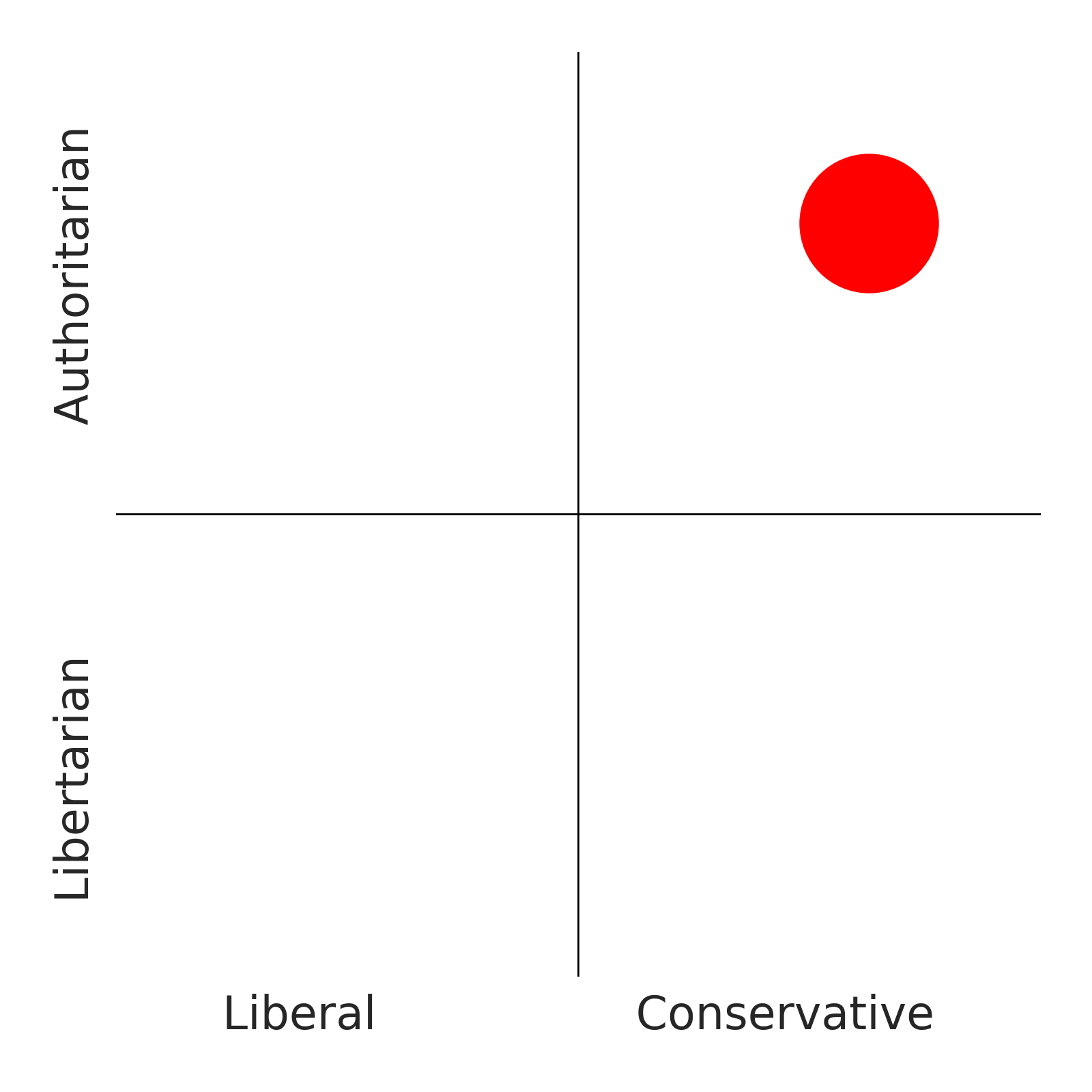
Click points to explore news by date. News sentiment ranges from -10 (very negative) to +10 (very positive) where 0 is neutral.
A commemorative, survivor-centered narrative frames the 9/11 anniversary through private memory and emotional testimony, with no policy, political, or contextual analysis.
The Sept. 11, 2001, attacks were a coordinated terrorist assault in which hijacked airliners were flown into the World Trade Center’s twin towers in Lower Manhattan; the north tower was hit first, both towers collapsed, and the site became known as Ground Zero. FDNY Ten House is the firehouse near the World Trade Center site.
Automated analysis; not human reviewed. Limitations: The supplied text mixes a main feature with adjacent headlines and promotional material, and those were excluded as page chrome, so broader editorial slant may be understated. · 3 of 54 available dimensions scored; omitted dimensions are not treated as neutral. · Verified supporting quotes for 2 of 3 scored dimensions.
Claim: The piece is built from first-person survivor memories and emotional reflection rather than from documentary or analytical reporting.
““At times, it seems like ages ago. But whenever you start recalling that day, it seems like yesterday.”” · exact text match
““My therapy over the 25 years has been this: telling people who care, getting education out there.”” · not found in supplied text
Why: The central content consists of personal recollections and statements about feeling, not independently established facts.
Claim: The reporting describes what survivors said and experienced without telling readers what to think or do.
“Both Corrigan and Lanski said they have found solace in talking about their experiences with others — whether fellow survivors, first responders or simply people willing to listen.” · exact text match
Why: The sentence reports the subjects’ own view of coping rather than issuing a recommendation from the publisher.
Claim: The piece supports its account with named, identified people and direct quotations, giving it visible sourcing.
“Monsignor Jamie Gigantiello, 67, a native New Yorker and now a chaplain for the New York City Fire Department” · exact text match
“Wendy Lanski, 56, a corporate executive who worked in One World Trade Center at the time” · exact text match
“Ken Corrigan, 59, a 16-year volunteer firefighter from the Bronx” · exact text match
Why: Survivors are identified by name, age, and role, and their statements are presented with quotation marks and attribution.
The supplied text mixes a main feature with adjacent headlines and promotional material, and those were excluded as page chrome, so broader editorial slant may be understated.
2026 © Helium Trades
Privacy Policy & Disclosure
* Disclaimer: Nothing on this website constitutes investment advice, performance data or any recommendation that any particular security, portfolio of securities, transaction or investment strategy is suitable for any specific person. Helium Trades is not responsible in any way for the accuracy
of any model predictions or price data. Any mention of a particular security and related prediction data is not a recommendation to buy or sell that security. Investments in securities involve the risk of loss. Past performance is no guarantee of future results. Helium Trades is not responsible for any of your investment decisions,
you should consult a financial expert before engaging in any transaction.


