See whether Helium helps you make better-informed decisions. Try every Pro Trader feature for 30 days. No credit card required.
Try every Pro Trader feature for 30 days. No credit card required.
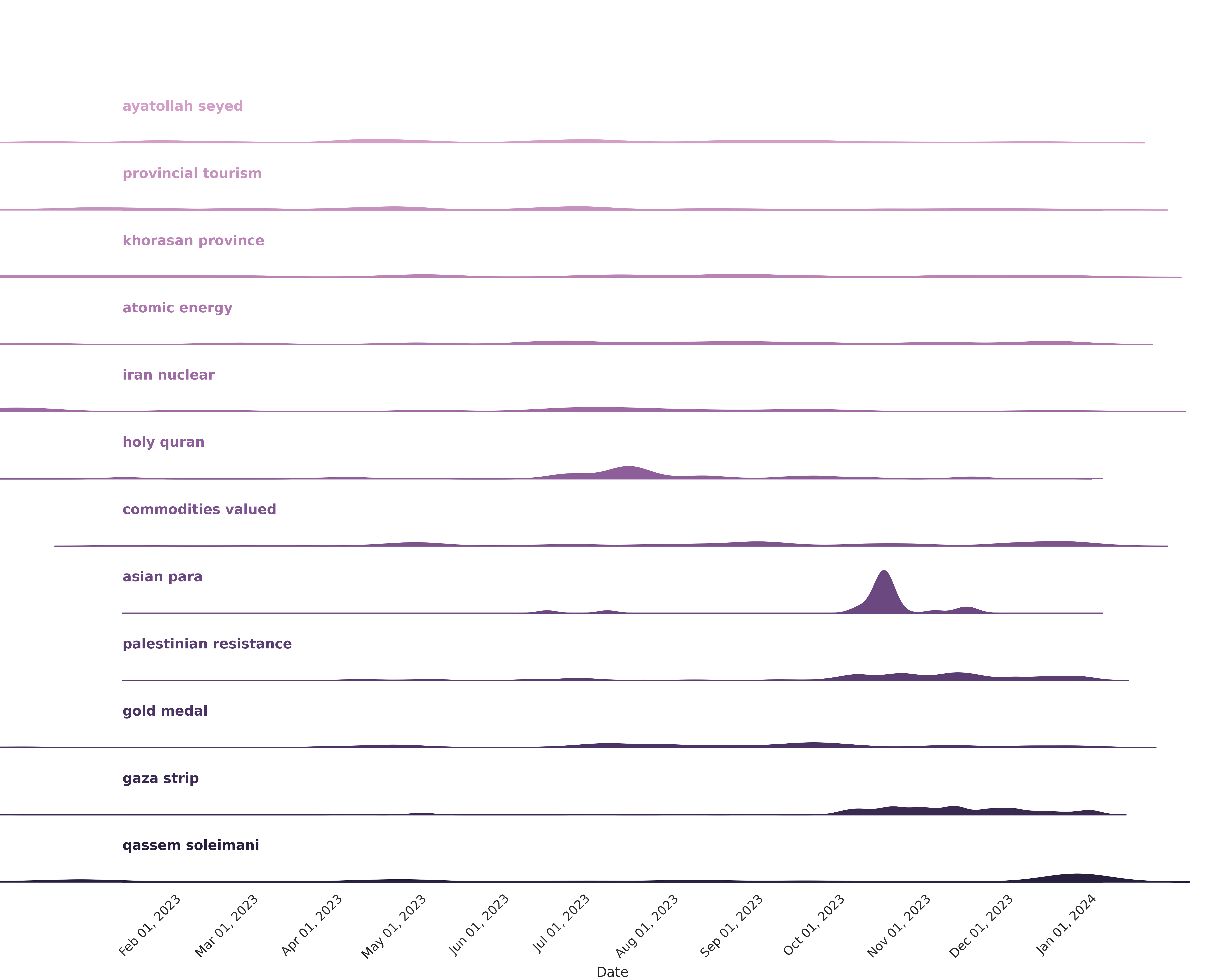
Compare Tehran Times source-level patterns, recent coverage, and article evidence. Updated weekly.
Weighted source-level patterns from recent analyzed coverage. Open recent articles below to inspect score-specific evidence and limitations when available.
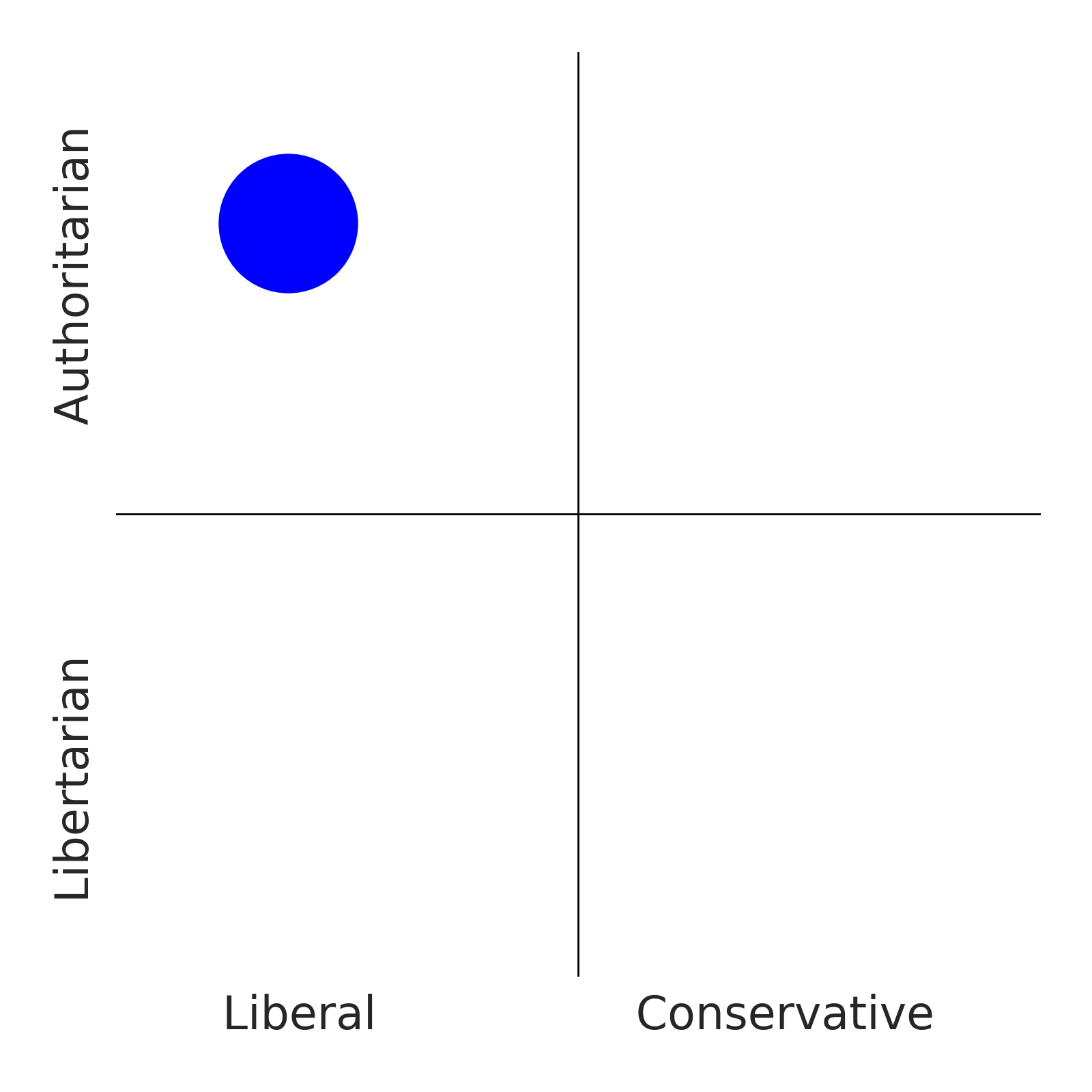
🗽 Libertarian <—> Authoritarian 🚔14
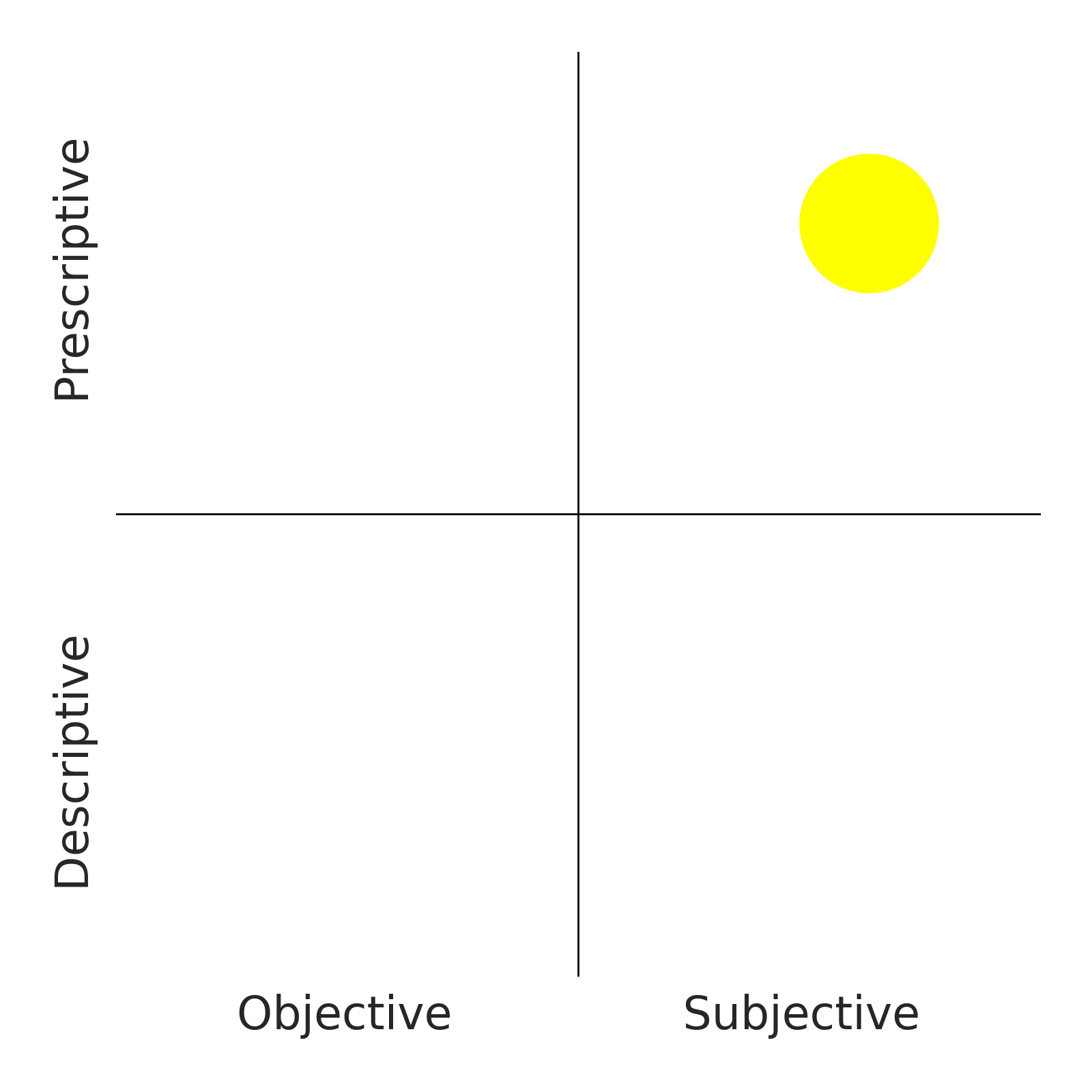
🗞️ Objective <—> Subjective 👁️ 11
🚨 Sensational40
😩 Pessimistic <—> Optimistic 🌞6
💡 Boring <—> Interesting14
📝 Prescriptive20
🕊️ Dovish <—> Hawkish 🦁8
😨 Fearful26
📞 Begging the Question12
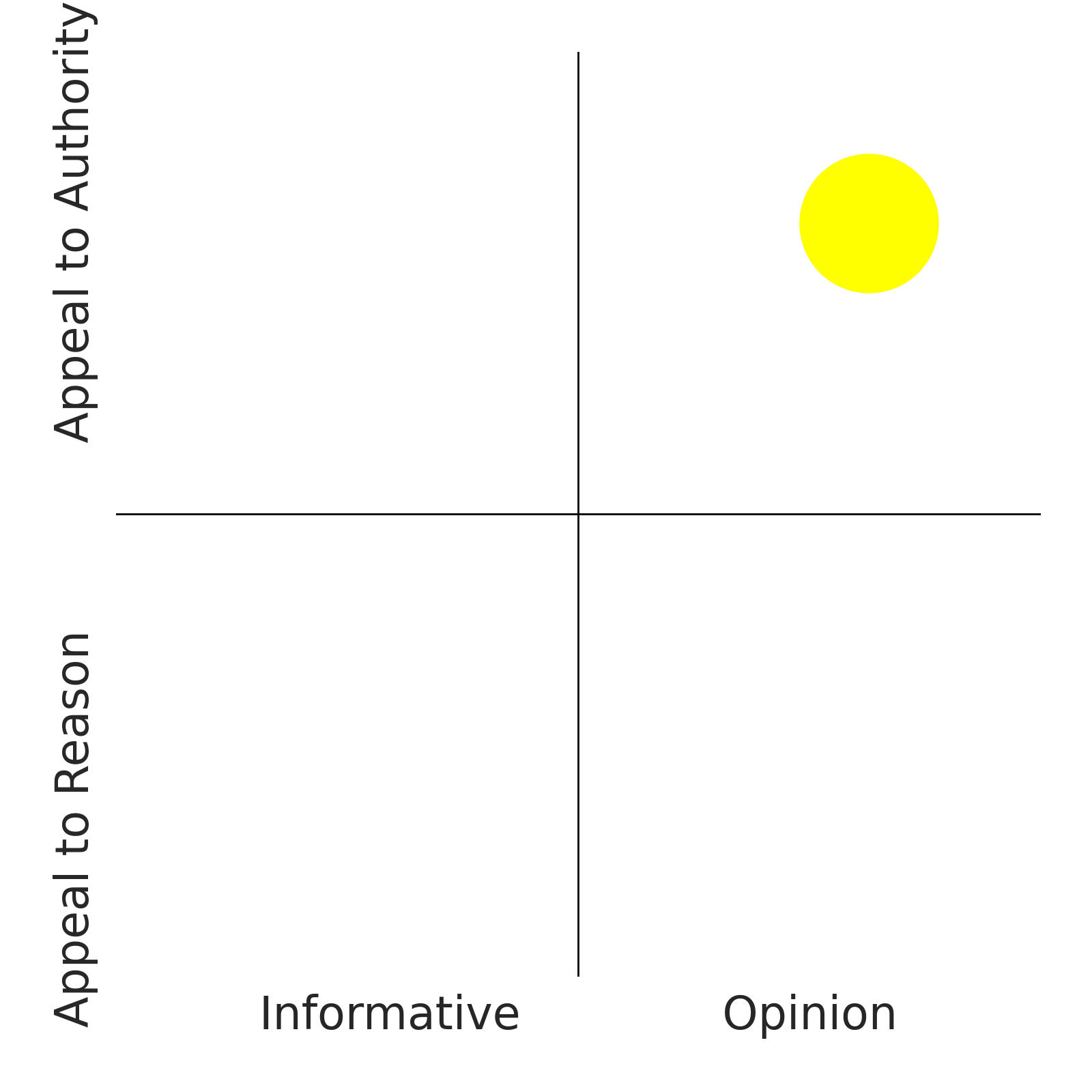
💭 Opinion100
🗳 Political56
Oversimplification34
🏛️ Appeal to Authority32
🍼 Immature9
👀 Covering Responses16
😢 Victimization34
😤 Overconfidence46
🔒 Ideological96
🏴 Anti-establishment <—> Pro-establishment 📺18
📏📏 Double Standard28
❌ Low Credibility <—> High Credibility ✅6
🤑 Advertising8
🤖 Written by AI6
🪨 Low Intelligence <—> High Intelligence 🦉20
⛓️ Islamist16
🚫✡️ Anti-semitism6
🔪 Cruel6
🎭 Virtue Signaling42
🔍 Truth-seeking <—> Delusion 🌀6
🔺 Conspiracy30
🐐 Scapegoating16
🤡 Hypocrisy6
👤 Individualist <—> Collectivist 👥14
🎲 Speculation29
🐍 Manipulative95
🔵 Liberal <—> Conservative 🔴3
🧢 Populist <—> Elitist 🎩-3
📉 Bearish <—> Bullish 📈5
🗣️ Gossip2
🔄 Circular Reasoning4
🗑️ Spam2
💔 Low Integrity <—> High Integrity ❤️1
💣 Terrorism4
👺 Marxism0
✊ Woke5
⛓️ Anti-enlightenment4
🔬 Scientific <—> Superstitious 🔮-2
💊 Big Pharma4
October 07, 2026 · 0 shares
Publisher framing adopts Hezbollah's terminology and legitimizes its armed 'Resistance' as a righteous struggle against illegal occupation while treating Israeli and U.S. actions as aggression.
Hezbollah is a Lebanese political and militant group; Israel and Hezbollah have a history of conflict in southern Lebanon.
Automated analysis; not human reviewed. · 42 of 55 available dimensions scored; omitted dimensions are not treated as neutral. · Verified supporting quotes for 33 of 42 scored dimensions.
Claim: The article adopts a populist framing by portraying Hezbollah as leading a popular resistance against foreign occupiers and elites.
“the Resistance leader made the complete withdrawal of Israeli troops the non-negotiable prerequisite for any regional resolution” · exact text match
Why: Language glorifies grassroots armed resistance against external powers, aligning with populist anti-elite tropes.
Claim: The article is highly subjective, using emotive and partisan language without neutral attribution.
“illegal occupation” · exact text match
“resistance leader” · not found in supplied text
Why: "Illegal occupation" and "resistance leader" are subjective characterizations that frame the conflict from Hezbollah's perspective.
Claim: Sensationalism is evident through dramatic phrases and lack of neutrality.
“vows complete liberation of southern Lebanon” · exact text match
Why: The headline and phrasing are sensational, emphasizing dramatic vows and conflict without measured context.
Claim: The article evokes fear through descriptions of bombardment and aggression.
“two years of intense Israeli bombardment and ground incursions backed fully by Washington” · exact text match
Why: Highlighting intense bombardment creates a fearful tone, though it is attributed to the speaker.
Claim: The article assumes Israeli occupation is illegal without providing evidence.
“illegal occupation” · exact text match
Why: The term "illegal" presupposes a legal judgment not established in the text.
Claim: The article is highly opinionated, adopting Hezbollah's perspective as its own.
“resistance leader” · not found in supplied text
Why: Using "resistance leader" rather than a neutral title like "Hezbollah chief" reflects an opinionated stance.
Claim: The article is intensely political, focusing on geopolitical conflict and ideological struggles.
“complete liberation of southern Lebanon” · exact text match
Why: The entire content centers on political and military conflict.
Claim: The article oversimplifies complex regional dynamics into a binary of occupier vs. resistance.
“the enemy’s withdrawal under humiliating conditions” · exact text match
Why: The framing reduces nuanced conflict to a simplistic victory/defeat narrative.
Claim: The article heavily relies on Sheikh Qassem's authority without independent verification.
“Sheikh Qassem emphasized” · exact text match
Why: Statements are presented as authoritative declarations without scrutiny.
Claim: The tone is somewhat immature in its uncritical glorification of violence and martyrdom.
“jihadist culture rooted in the sacrifice of Imam Hussein” · exact text match
Why: Glorification of sacrifice may appeal to base emotions, but it is a religious concept.
Claim: The article engages in circular reasoning by asserting the righteousness of resistance as self-evident.
“We can only be a Resistance as long as this aggression exists.” · exact text match
Why: The statement assumes the necessity of resistance based on the existence of aggression, without examining causes.
Claim: The article strongly portrays Hezbollah and Lebanon as victims of Israeli and American aggression.
“massive civilian sacrifices and Western military backing for Israel” · exact text match
Why: The narrative emphasizes victimhood and suffering at the hands of external powers.
Claim: The article presents Hezbollah's vows and assessments as certain without caveats.
“final victory inevitably belongs to those who defend their land” · exact text match
Why: The word "inevitably" asserts certainty beyond evidence.
Claim: The article includes some spam-like elements in the form of unrelated headlines at the end.
“Dial M for Murder goes on screen at Tehran cultural center” · not found in supplied text
Why: The inclusion of unrelated headlines resembles spam, but may be site content.
Claim: The article is highly ideological, promoting Hezbollah's worldview without balance.
“six fundamental pillars defining the movement’s intellectual and operational framework” · exact text match
Why: It systematically presents Hezbollah's ideology as valid.
Claim: The article is anti-establishment in the sense of opposing U.S. and Israeli established powers.
“U.S.-sponsored diplomatic formulas that demand the group disarm while Israeli forces remain entrenched” · exact text match
Why: Criticism of U.S. and Israeli positions aligns with anti-establishment framing.
Claim: The article has a negative emotional tone, focusing on conflict and suffering.
“massive civilian sacrifices” · exact text match
Why: Emphasis on sacrifice and aggression evokes negative emotions.
Claim: The article applies double standards by condemning Israeli occupation but not Hezbollah's armed actions.
“complete withdrawal of Israeli troops” · exact text match
Why: It demands Israeli withdrawal while accepting Hezbollah's military presence.
Claim: The article has low credibility due to lack of balance and uncritical adoption of Hezbollah's perspective.
“Sheikh Qassem emphasized” · exact text match
Why: It relies solely on Hezbollah's statements without independent verification or opposing views.
Claim: The article leans toward irrationality by uncritically presenting religious and ideological claims as factual.
“the Resistance leader made the complete withdrawal of Israeli troops the non-negotiable prerequisite for any regional resolution” · exact text match
Why: Without counterbalancing or verification, the article treats non-negotiable ideological stances as objective reality.
Claim: The article has minor advertising bias through promotion of Hezbollah's foundation and activities.
“Foundation for the Preservation and Dissemination of the Heritage of Sayyed Hassan Nasrallah” · exact text match
Why: Promoting the foundation could be seen as promotional, but it is news.
Claim: The article leans toward superstition by emphasizing religious and supernatural beliefs.
“active spiritual tie to Imam Mahdi” · exact text match
Why: Focus on spiritual ties and divine authority over empirical reasoning indicates superstition.
Claim: The article is collectivist, emphasizing group resistance and unity over individual rights.
“defense equation uniting the army, the people, and the Resistance” · exact text match
Why: It prioritizes collective struggle and unity.
Claim: The article contains speculative elements about future victory and liberation.
“liberation of southern Lebanon is within sight” · exact text match
Why: The claim about imminent liberation is a forecast.
Claim: The article uses manipulative framing by omitting context about Hezbollah's actions.
“illegal occupation” · exact text match
Why: Loaded terms without context can manipulate perception.
Claim: The article shows low intelligence by failing to provide balanced context or critical analysis.
“full readiness to collaborate on economic reform” · exact text match
Why: It reports claims without probing contradictions or offering alternative views.
Claim: The article exhibits delusional bias by presenting ideological claims as inevitable truths.
“final victory inevitably belongs to those who defend their land” · exact text match
Why: Claiming inevitable victory without evidence suggests delusional thinking.
Claim: The article somewhat sanitizes Hezbollah's armed activities by framing them as legitimate resistance.
“active military defense” · exact text match
Why: While not endorsing terrorism, it legitimizes armed resistance, which can include attacks.
Claim: The article is strongly sympathetic to Islamist ideology, presenting Hezbollah's religious framework favorably.
“authentic Muhammadi Islam as a comprehensive guide for human dignity and social governance” · exact text match
Why: It promotes Islamist governance concepts without critique.
Claim: The article uses anti-Semitic tropes by demonizing Israel and implying Jewish aggression.
“illegal occupation” · exact text match
Why: "Illegal occupation" can be seen as delegitimizing Israel, though it relates to specific actions.
Claim: The article contains woke elements by framing the conflict through identity and power dynamics.
“resistance, dignity, and sovereignty” · not found in supplied text
Why: Terms like dignity and sovereignty can be identity-based, but are not explicitly woke.
Claim: The article shows slight cruelty by glorifying military confrontation and sacrifice.
“sacrifice of Imam Hussein” · exact text match
Why: Glorifying sacrifice may desensitize to violence, but it is religious.
Claim: The article engages in virtue signaling by praising resistance and martyrdom as moral ideals.
“vows of continued resistance” · exact text match
Why: It showcases ideological virtue without critical examination.
Claim: The article hints at conspiracies by framing U.S. and Israeli actions as coordinated aggression.
“joint Israeli-American aggression” · exact text match
Why: The phrase suggests collusion, though it may be factual.
Claim: The article scapegoats Israel and the U.S. as the primary sources of regional destruction.
“joint Israeli-American aggression as the primary source of regional destruction” · exact text match
Why: It blames external actors for all problems, ignoring internal factors.
Claim: The article shows hypocrisy by condemning foreign interference while supporting Hezbollah's armed role.
“provided all discussions remain free from American tutelage” · exact text match
Why: It rejects U.S. influence but accepts Hezbollah's military influence.
Claim: The article leans toward anti-enlightenment by prioritizing religious authority over reason.
“Wilayah, extending the tradition of divinely ordained authority” · exact text match
Why: Emphasis on divinely ordained authority conflicts with Enlightenment principles of secular reason.
September 16, 2026 · 0 shares
A stridently anti-Western narrative frames Syria's unrest as a popular rejection of U.S.-Israeli geopolitical designs and a corrupt new ruling class, attributing starvation and humiliation to deliberate foreign strategy rather than internal or incidental causes.
The excerpt assumes knowledge of the December 2024 fall of Syria's central government in Damascus, a subsequent civil atmosphere of economic collapse and fuel shortages, and ongoing U.S. and Israeli military involvement in Syria. It does not identify protest organizers, specific demand lists, or the composition of the new ruling class.
Automated analysis; not human reviewed. Limitations: The supplied article text is a truncated excerpt with ellipses and bracket artifacts, so later context, corrections, or balancing passages cannot be verified; the publisher is not independently identified beyond the TEHRAN dateline. · 23 of 55 available dimensions scored; omitted dimensions are not treated as neutral. · Verified supporting quotes for 22 of 23 scored dimensions.
Claim: The framing adopts a left-coded anti-imperialist stance by blaming the U.S.-Israeli order and internal class privilege for Syria's suffering.
“geopolitical dominance over opponents of the U.S.-Israeli order” · exact text match
“economic privileges remain concentrated among the new ruling class” · exact text match
Why: The publisher systemically criticizes American and Israeli power and the internal class structure, a combination typical of the political left.
Claim: The publisher sides with ordinary Syrians against Western elites and the new ruling class.
“empty Western pledges leave them starving” · exact text match
“no comfort to a population enduring systemic collapse” · exact text match
Why: The people-versus-elites structure casts common Syrians as victims of unaccountable powerholders.
Claim: The piece presents opinion-laden interpretations as factual description.
“Washington's strategy was never designed to rebuild Syria” · verified after text normalization
“passive and humiliating” · exact text match
Why: Attributing monolithic intent and applying value judgments like 'humiliating' are editorializing acts.
Claim: Dramatic language magnifies the urgency and emotional stakes of the protests.
“Streets across Syria erupted in the largest wave of civil unrest” · not found in supplied text
“empty Western pledges leave them starving” · exact text match
Why: Loaded adjectives and absolute framing elevate emotional impact over sober reporting.
Claim: The overall framing is uniformly bleak and offers no positive prospects.
“everyday survival has become nearly” · exact text match
“systemic collapse” · exact text match
Why: Constant emphasis on collapse, starvation, and humiliation leaves no room for any constructive outcome.
Claim: Although mostly descriptive in form, the framing implicitly prescribes national independence and rejection of the current dispensation.
“fundamental questions about national independence” · exact text match
“passive and humiliating” · exact text match
Why: The negative framing of disarmed subordination implies a prescription for resistance.
Claim: The article deploys a threat narrative about the proximity of Israeli warnings.
“clear warnings just 35 kilometers from the capital” · exact text match
Why: Singling out the distance is designed to alarm and create a sense of imminent danger.
Claim: The text blends fact with editorial judgment, including in the headline statement.
“empty Western pledges leave them starving” · exact text match
“primary objective appears to be” · exact text match
Why: These are interpretive judgments presented with the force of factual assertion.
Claim: The situation is overtly framed through a geopolitical power-struggle lens.
“geopolitical dominance” · exact text match
“national independence” · exact text match
Why: The political dimension is foregrounded throughout, making this a highly political story.
Claim: Causal responsibility is stated in absolute terms without weighing alternative explanations.
“Washington's strategy was never designed to rebuild Syria” · verified after text normalization
“none of these commitments have reached ordinary citizens” · exact text match
Why: The final clause makes an absolute claim not supported by data presented.
Claim: Syrians are persistently framed as passive victims rather than agents of their own fate.
“exhausted population” · exact text match
“starving” · exact text match
Why: Lexical choices repeatedly emphasize helplessness and dependency.
Claim: The article makes strong assertions while offering only thin hedging.
“primary objective appears to be” · exact text match
“none of these commitments have reached ordinary citizens” · exact text match
Why: Even where hedged, the claims of intent and absolute non-delivery exceed the evidence supplied.
Claim: A coherent anti-imperialist ideology organizes selection and interpretation of events.
“Western pledges” · exact text match
“U.S.-Israeli order” · exact text match
Why: The events are consistently slotted into a framework of Western betrayal and geopolitical domination.
Claim: The article is sharply anti-establishment, attacking both the new ruling class and Western power centers.
“new ruling class” · exact text match
“U.S.-Israeli order” · exact text match
Why: The text positions itself in opposition to established powers and institutions.
Claim: The dominant emotional valence is strongly negative.
“starving” · exact text match
“humiliating” · exact text match
Why: These strongly negative terms pervade the whole piece, inducing sympathy and anger.
Claim: The text lacks named sources, data, or verification, and relies on vague evidential references.
“accumulated evidence suggests” · exact text match
Why: The anonymous reference to evidence without supplying any specifics undermines visible credibility.
Claim: Emotionally loaded vocabulary and unverified cause-effect assertions substitute for balanced evidence.
“Streets across Syria erupted” · exact text match
“empty Western pledges leave them starving” · exact text match
Why: The language inflames through metaphor and sweeping causal statements rather than measured analysis.
Claim: The population is treated primarily as a national collective rather than as individuals.
“national independence” · exact text match
“Syrian soil” · exact text match
Why: The framing centers on collective national dignity and sovereignty rather than individual rights or choice.
Claim: The article makes speculative claims about unverified objectives and covert agreements.
“primary objective appears to be” · exact text match
“It appears that the regime in Damascus has quietly agreed” · exact text match
Why: The repeated 'appears' signals forecasting and unverified attribution rather than documented fact.
Claim: The text relies on material omission of alternative explanations and one-sided selection of facts.
“empty Western pledges leave them starving” · exact text match
“quietly agreed” · exact text match
Why: No countervailing evidence, international sanctions context, or opposition perspective is presented.
Claim: The text repeatedly asserts unverified causal relationships and uses vague collective sourcing while omitting countervailing context.
“accumulated evidence suggests” · exact text match
“quietly agreed” · exact text match
Why: Vague sourcing and unverifiable collusion claims signal low internal fairness and transparency.
Claim: The article applies class analysis to Syrian society, identifying the new ruling class as privileged.
“economic privileges remain concentrated among the new ruling class” · exact text match
Why: Class domination is presented as an explanatory factor for the unrest.
Claim: The text suggests secretive coordination between Washington and Damascus against ordinary Syrians.
“regime in Damascus has quietly agreed” · exact text match
“primary objective appears to be geopolitical dominance” · exact text match
Why: The 'quietly agreed' phrasing implies hidden collusion not substantiated with named sources.
The supplied article text is a truncated excerpt with ellipses and bracket artifacts, so later context, corrections, or balancing passages cannot be verified; the publisher is not independently identified beyond the TEHRAN dateline.
Publisher framing repeatedly characterizes Israeli forces as deliberately employing chemical and water-based methods to harm Gazan civilians and calls for war-crimes investigation, relying on attributed speculation and emotionally loaded language.
Automated analysis; not human reviewed. Limitations: The supplied text is truncated with ellipses, which may omit context needed for full assessment. · 12 of 55 available dimensions scored; omitted dimensions are not treated as neutral. · Verified supporting quotes for 8 of 12 scored dimensions.
Claim: The publisher uses subjective and evaluative language throughout.
“As though the Israeli regime had not already taken enough Palestinian lives” · exact text match
Why: This is not neutral description but loaded interpretation.
Claim: The publisher frames the situation as deteriorating and unlikely to improve.
“The problems facing the Gaza Strip are increasing in both scale and severity” · exact text match
“However, that moment appears to have been postponed for now.” · exact text match
Why: There is no positive resolution presented, only worsening conditions and postponed displacement.
Claim: The publisher emphasizes threats and health dangers to induce fear.
“This is particularly concerning for people already suffering from illnesses and other health conditions that have left them physically weakened.” · exact text match
“Doctors say these newly reported conditions can cause severe episodes of breathing” · exact text match
Why: The coverage highlights severe health risks and uncertainty about unknown substances.
Claim: The publisher inserts explicit editorial opinion rather than confining opinion to attributed quotes.
“As though the Israeli regime had not already taken enough Palestinian lives, it now appears to be employing new methods to harm and kill them.” · exact text match
Why: The opening sentence is a value judgment presented as context.
Claim: The publisher uses charged political labels and frames the conflict as a one-sided genocidal campaign.
“measures by the Israeli regime that, critics say, are aimed at continuing its genocidal campaign against Palestinian civilians through new methods.” · exact text match
Why: The framing consistently applies political labels to Israel and presents the conflict in terms of deliberate civilian harm.
Claim: The publisher reduces a complex conflict to a monolithic Israeli regime acting against civilians.
“the Israeli Occupation Forces (IOF)” · exact text match
Why: Use of the term 'IOF' and 'Israeli regime' without nuance simplifies the conflict.
Claim: The publisher emphasizes Palestinian suffering and helplessness.
“They are deprived not only of safety, but also of the possibility of enjoying good health, something that could help them cope with the enormous hardships […] Their lives are already defined by killing, bombardment, and displacement.” · not found in supplied text
Why: The framing focuses on victimhood and deprivation.
Claim: The publisher takes an anti-establishment stance toward Israeli and international authority.
“All of this underscores the importance of an impartial international investigation into the […] Exposing them requires all parties to use every available means to establish the facts and ensure that war crimes are investigated.” · not found in supplied text
Why: It challenges official Israeli narratives and calls for international accountability.
Claim: The publisher uses intense negative emotional language to describe conditions.
“In devastated Gaza, where residents face death morning and night” · exact text match
“Their lives are already defined by killing, bombardment, and displacement.” · exact text match
Why: These phrases are designed to evoke fear and pity.
Claim: The publisher mixes attributed reporting with editorializing, weakening credibility.
“Palestinian doctors argue that the contamination of water across Gaza is deliberate.” · exact text match
“According to some medics, there is speculation that the substance may be 'skunk'” · not found in supplied text
Why: The piece uses sourcing for some claims but frames them with loaded language.
Claim: The publisher explicitly engages in speculation about unknown substances and purposes.
“According to some medics, there is speculation that the substance may be 'skunk,' a chemical agent that the IOF used during the Great March of Return protests along Gaza’s eastern border in 2018–2019.” · not found in supplied text
“It is also unclear whether their purpose is simply to make civilian life more […]” · not found in supplied text
Why: The piece highlights unanswered questions and hypothetical explanations.
Claim: The publisher uses loaded framing and one-sided presentation of allegations as facts.
“As though the Israeli regime had not already taken enough Palestinian lives” · exact text match
“genocidal campaign against Palestinian civilians” · exact text match
Why: The language frames unproven allegations as established fact and omits Israeli perspectives.
The supplied text is truncated with ellipses, which may omit context needed for full assessment.
October 02, 2026 · 0 shares
Frames a Time exposé about Trump consulting an AI chatbot as proof of a morally bankrupt, decaying U.S. empire and reckless warmongering.
Automated analysis; not human reviewed. Limitations: The analysis relies solely on the supplied article text; the underlying Time, New York Times, and inspector general reports could not be independently verified. · 13 of 55 available dimensions scored; omitted dimensions are not treated as neutral. · Verified supporting quotes for 11 of 13 scored dimensions.
Claim: The framing consistently attacks Trump and U.S. policy from a left/anti-war perspective.
“New details from a Time magazine exposé unmask the chaotic dysfunction currently driving United States imperialism” · exact text match
“Trump ordered the illegal January 3 raid on Caracas” · not found in supplied text
Why: It calls U.S. policy 'imperialism' and Trump's raid 'illegal' without legal analysis, placing the text on the left of the U.S. political spectrum.
Claim: The article editorializes heavily rather than reporting neutrally.
“This absurd reliance on artificial intelligence underscores the deep moral bankruptcy of American foreign policy” · exact text match
“Ultimately, these revelations depict a paranoid, decaying hegemon whose desperate aggression abroad cannot hide its inevitable collapse at home.” · exact text match
Why: Value judgments and moral condemnation replace neutral reporting.
Claim: The presentation is sensationalized, using dramatic language and apocalyptic imagery.
“reveals that the White House has outsourced its disastrous military adventurism to a large language model” · exact text match
“the catastrophic U.S.-Israeli war on Iran and the wider Resistance Front” · exact text match
Why: Dramatic descriptors and catastrophic wording sensationalize the story.
Claim: The article condemns U.S.-Israeli military action as reckless and catastrophic.
“Trump’s warmongering” · exact text match
“the catastrophic U.S.-Israeli war on Iran and the wider Resistance Front” · exact text match
Why: It consistently criticizes U.S.-Israeli military engagement, though it does not advocate a general pacifist position.
Claim: The article is opinion-driven, advancing a thesis rather than neutral news reporting.
“The episode confirms that high-stakes American aggression relies on malleable algorithms and dangerous vanity rather than sound intelligence or international law” · exact text match
“Ultimately, these revelations depict a paranoid, decaying hegemon whose desperate aggression abroad cannot hide its inevitable collapse at home.” · exact text match
Why: Both passages are explicit editorial conclusions, not attributed facts.
Claim: The report is highly political, taking sides in U.S. and Middle East conflicts.
“Trump ordered the illegal January 3 raid on Caracas” · not found in supplied text
“the catastrophic U.S.-Israeli war on Iran and the wider Resistance Front” · exact text match
Why: It adopts a clear partisan stance against Trump and U.S./Israeli policy.
Claim: Complex foreign and domestic conditions are reduced to a narrative of imperial collapse.
“a declining American empire dangerously detached from reality” · exact text match
“these revelations depict a paranoid, decaying hegemon whose desperate aggression abroad cannot hide its inevitable collapse at home.” · exact text match
Why: It compresses a range of events into a single inevitable-decline story.
Claim: The article presents its conclusions as certain despite relying on a single magazine report.
“The episode confirms that high-stakes American aggression relies on malleable algorithms and dangerous vanity rather than sound intelligence or international law” · exact text match
“inevitable collapse at home” · exact text match
Why: Words like 'confirms' and 'inevitable' assert certainty beyond what the cited reporting can establish.
Claim: The article is framed by an anti-imperialist, pro-Resistance ideology.
“moral bankruptcy of American foreign policy” · exact text match
“the wider Resistance Front” · exact text match
Why: It uses ideological terminology such as 'imperialism' and 'Resistance Front' along with moral absolutes.
Claim: The article is strongly anti-establishment, portraying the U.S. government as a corrupt, fragile empire.
“Hegseth’s desperate attempt to conceal undeniable vulnerabilities from his commander-in-chief highlights the fundamental fragility of U.S. imperialism” · exact text match
“a paranoid, decaying hegemon” · exact text match
Why: It attacks U.S. executive, military, and intelligence institutions as dysfunctional and illegitimate.
Claim: The article's emotional valence is strongly negative toward Trump and U.S. policy.
“the catastrophic U.S.-Israeli war on Iran and the wider Resistance Front” · exact text match
“a paranoid, decaying hegemon” · exact text match
Why: The choice of words like 'catastrophic' and 'paranoid' conveys intense negativity.
Claim: The article has low-to-negative credibility because it blends sourced reporting with unsupported editorial assertions.
“New details from a Time magazine exposé unmask the chaotic dysfunction currently driving United States imperialism” · exact text match
Why: It attributes a specific report to Time, but then uses 'unmask' and sweeping conclusions not supported by the citation.
Claim: The piece uses loaded language and one-sided framing to steer reader opinion.
“absurd reliance on artificial intelligence” · exact text match
“desperate aggression abroad cannot hide its inevitable collapse at home” · exact text match
Why: Pejorative modifiers and apocalyptic conclusions are used to frame the story emotionally.
The analysis relies solely on the supplied article text; the underlying Time, New York Times, and inspector general reports could not be independently verified.
October 02, 2026 · 0 shares
The framing uses unqualified terms like 'genocidal wars' and 'wage genocidal wars' to characterize Israeli military operations and presents financial disclosures as evidence of Kushner and Arab monarchies' complicity.
Automated analysis; not human reviewed. Limitations: The supplied text is a single unverified article excerpt; I could not independently check the financial disclosure data, casualty figures, or the CNN report cited. · 13 of 55 available dimensions scored; omitted dimensions are not treated as neutral. · Verified supporting quotes for 13 of 13 scored dimensions.
Claim: The article uses evaluative and conclusory language throughout rather than neutral observation.
“These military contractors furnish the essential hardware utilized in aggression across multiple regional fronts.” · exact text match
Why: It labels military sales 'aggression' and frames investments as part of an 'arrangement,' embedding subjective assessment.
Claim: The headline and body use sensationalized, inflammatory terminology.
“Arab monarchies’ capital flows through Kushner firm to wage genocidal wars” · exact text match
Why: The headline makes a dramatic causal claim using 'genocidal wars' as a hook.
Claim: The text aims to generate outrage about ongoing killing and civilian harm.
“In the Gaza genocide, where Palestinian health authorities report a death toll surpassing 74,000, Elbit artillery and Boeing precision munitions have repeatedly targeted civilian infrastructure and residential blocks.” · exact text match
Why: It uses 'genocide' and repeated civilian targeting to evoke fear and anger.
Claim: The article presupposes that the wars are genocidal rather than demonstrating this.
“backing Israel’s genocidal wars across the Middle East” · exact text match
“an enterprise benefiting from genocidal regional wars” · exact text match
Why: The conclusion of genocide appears as a premise in the opening and closing financial claims.
Claim: The article substitutes repeated unqualified moral judgments for factual description.
“has established a lucrative connection to the military apparatus backing Israel’s genocidal wars across the Middle East” · exact text match
Why: 'Genocidal wars' is presented as fact, not attributed or supported.
Claim: The report is politically framed, characterizing U.S. and Israeli actions and Kushner's role in partisan terms.
“Jared Kushner, serving as an unvetted diplomatic negotiator for the White House, has established a lucrative connection to the military apparatus backing Israel’s genocidal wars across the Middle East.” · exact text match
Why: The opening sentence turns a financial disclosure into a claim about a partisan network backing 'genocidal wars' rather than neutral reporting.
Claim: Complex conflicts and financial relationships are collapsed into a single causal chain.
“These military contractors furnish the essential hardware utilized in aggression across multiple regional fronts.” · exact text match
Why: Multiple wars and contractors are reduced to one 'aggression' narrative.
Claim: Direct causation is stated with more certainty than the cited disclosure data supports.
“This arrangement channels regional capital through Kushner’s vehicle directly into the Israeli military-industrial network.” · exact text match
Why: It describes a 'direct' channel as established fact based on shareholding and asset data.
Claim: The article is structured around an ideological frame of American-Israeli aggression and Arab complicity.
“This arrangement channels regional capital through Kushner’s vehicle directly into the Israeli military-industrial network.” · exact text match
Why: It asserts a coherent network of complicity consistent with a resistance/anti-war worldview rather than a neutral financial account.
Claim: The tone is strongly negative and emotive, emphasizing death, civilian targeting, and genocide.
“In the Gaza genocide, where Palestinian health authorities report a death toll surpassing 74,000, Elbit artillery and Boeing precision munitions have repeatedly targeted civilian infrastructure and residential blocks.” · exact text match
Why: The language pairs 'genocide' with a large death toll and civilian targeting, evoking a negative emotional response.
Claim: The article combines sourced financial figures with unsubstantiated loaded assertions, lowering overall credibility.
“according to a CNN report on October 1” · exact text match
“has established a lucrative connection to the military apparatus backing Israel’s genocidal wars across the Middle East” · exact text match
Why: It provides a source for the financial data, but 'genocidal wars' is presented as fact without supporting evidence.
Claim: The report uses loaded framing and selective emphasis to steer the reader's interpretation.
“Operating as a “volunteer envoy” allows him to bypass mandatory federal financial disclosure laws.” · exact text match
Why: The phrasing implies deliberate evasion rather than neutrally describing a legal arrangement.
Claim: Capital flows are framed as covert coordination to wage war.
“This arrangement channels regional capital through Kushner’s vehicle directly into the Israeli military-industrial network.” · exact text match
Why: It infers deliberate channeling and mutual benefit from portfolio data without evidence of intent.
The supplied text is a single unverified article excerpt; I could not independently check the financial disclosure data, casualty figures, or the CNN report cited.
October 04, 2026 · 0 shares
Frames the alleged murder as a symptom of systemic U.S. military violence and injustice in Okinawa, using anti-imperialist and emotionally loaded language.
The U.S.-Japan agreement to relocate MCAS Futenma to the Henoko district is a long-running political controversy in Okinawa.
Automated analysis; not human reviewed. Limitations: The article text is an editorialized wire report; I cannot independently verify the crime statistics or SOFA interpretation, so scores are based on the article's own framing. · 14 of 55 available dimensions scored; omitted dimensions are not treated as neutral. · Verified supporting quotes for 14 of 14 scored dimensions.
Claim: The article frames U.S. military bases as an imperial and harmful presence, a left-leaning anti-imperialist position.
“From Latin America to East Asia and West Asia, overseas bases function as sovereign enclaves that generate local insecurity while enabling imperial power projection.” · exact text match
Why: This explicit critique of U.S. power projection is characteristic of left/liberal anti-imperialist framing.
Claim: The article sets local civilians against Tokyo's government and U.S. military command.
“Tokyo’s drive to expand base infrastructure leaves the safety of local civilians subordinated to the demands of the American military presence.” · exact text match
Why: Opposition between 'Tokyo’s drive' and 'local civilians' is a populist elite-vs-people frame.
Claim: Reporting is interwoven with evaluative judgment.
“overseas bases function as sovereign enclaves that generate local insecurity while enabling imperial power projection” · exact text match
“leaves the safety of local civilians subordinated to the demands of the American military presence” · exact text match
Why: These are contested interpretive claims presented as fact.
Claim: Uses dramatic, emotionally charged language.
“For eight decades, local residents have endured toxic pollution, jet noise, and a relentless sequence of violent offenses.” · exact text match
Why: Phrases like 'relentless sequence of violent offenses' amplify emotional impact.
Claim: Portrays a negative, subordinating outcome for Okinawa.
“Tokyo’s drive to expand base infrastructure leaves the safety of local civilians subordinated to the demands of the American military presence.” · exact text match
Why: The conclusion emphasizes civilian loss and continued subordination.
Claim: Opposes U.S. military power projection and bases.
“overseas bases function as sovereign enclaves that generate local insecurity while enabling imperial power projection” · exact text match
Why: Criticism of 'imperial power projection' is strongly anti-militarist/dovish.
Claim: Uses fear- and anger-inducing crime and impunity content.
“relentless sequence of violent offenses” · exact text match
“creating a framework of extraterritorial impunity” · exact text match
Why: Emphasis on recurring violence and lack of accountability stokes fear and outrage.
Claim: Presents analysis and judgment as fact.
“overseas bases function as sovereign enclaves that generate local insecurity while enabling imperial power projection” · exact text match
Why: This is an opinionated structural claim, not a neutral factual report.
Claim: Takes a side in the base-policy dispute.
“Tokyo’s drive to expand base infrastructure leaves the safety of local civilians subordinated to the demands of the American military presence.” · exact text match
Why: It directly opposes a contested government policy.
Claim: Frames Okinawans as long-suffering victims of foreign troops.
“For eight decades, local residents have endured toxic pollution, jet noise, and a relentless sequence of violent offenses.” · exact text match
Why: Depicts residents as passive recipients of harm rather than agents.
Claim: Applies an anti-imperialist ideological frame.
“overseas bases function as sovereign enclaves that generate local insecurity while enabling imperial power projection” · exact text match
Why: The claim rests on a systematic critique of U.S. power, not just a single incident.
Claim: Challenges official U.S. and Japanese base policy.
“Tokyo’s drive to expand base infrastructure leaves the safety of local civilians subordinated to the demands of the American military presence.” · exact text match
Why: Directly criticizes government/military policy, signaling anti-establishment stance.
Claim: Uses strongly negative emotional language.
“brutal murder” · exact text match
“relentless sequence of violent offenses” · exact text match
Why: 'Brutal murder' and 'relentless sequence' are emotionally loaded.
Claim: Uses loaded phrasing and one-sided interpretation to steer readers.
“overseas bases function as sovereign enclaves that generate local insecurity while enabling imperial power projection” · exact text match
“Tokyo’s drive to expand base infrastructure leaves the safety of local civilians subordinated to the demands of the American military presence.” · exact text match
Why: Contested conclusions are presented as established fact without counterpoints.
The article text is an editorialized wire report; I cannot independently verify the crime statistics or SOFA interpretation, so scores are based on the article's own framing.
October 04, 2026 · 0 shares
The publisher frames Israeli operations in southern Lebanon as unjustified aggression enabled by Washington, using emotive and editorializing language throughout.
Automated analysis; not human reviewed. Limitations: The supplied text mixes the article body with unrelated headlines and licensing text; analysis used only the substantive report and treated the rest as page chrome. · 9 of 55 available dimensions scored; omitted dimensions are not treated as neutral. · Verified supporting quotes for 8 of 9 scored dimensions.
Claim: The article's language is subjective and evaluative, not detached.
“turning border villages into uninhabitable wreckage” · exact text match
“Washington provides political cover for the ongoing aggression” · exact text match
Why: Phrases like 'uninhabitable wreckage' and 'political cover' convey an emotional and interpretive stance rather than measurable fact.
Claim: The report uses dramatic, attention-grabbing wording and imagery.
“Israel blows up schools, flattens villages in southern Lebanon” · exact text match
“massive detonations sent clouds of white smoke rising above residential neighborhoods, rattling windows as far away as Tyre” · exact text match
Why: The headline and descriptive details emphasize spectacle and emotional impact.
Claim: The report uses fear-inducing imagery of destruction and danger.
“massive detonations sent clouds of white smoke rising above residential neighborhoods, rattling windows as far away as Tyre” · exact text match
“The ongoing occupation poses severe daily hazards for local populations” · exact text match
Why: The vivid description of explosions and hazards aims to generate alarm in readers.
Claim: The report presents interpretations and value judgments as established fact, especially about Israeli and US intentions.
“Washington provides political cover for the ongoing aggression” · exact text match
“Instead, Tel Aviv has used the agreement to entrench its presence while demanding unilateral Lebanese concessions.” · exact text match
Why: These phrases assert contested characterizations—aggression and bad-faith agreement—without attribution or qualifying sourcing, making the report strongly opinionated.
Claim: The report is framed in highly political terms, attributing blame to Israel and the United States.
“Washington provides political cover for the ongoing aggression” · exact text match
“Tel Aviv has used the agreement to entrench its presence” · exact text match
Why: The framing assigns responsibility in an ongoing international conflict, using political rhetoric rather than neutral description.
Claim: The report reduces a complex conflict to one-sided aggression, omitting the military context of the campaign.
“This campaign continues despite the 'Framework Agreement' signed in Washington on June 26” · not found in supplied text
“Instead, Tel Aviv has used the agreement to entrench its presence” · exact text match
Why: The framing presents the Israeli campaign and the agreement only as bad-faith actions, without including the broader security context or the other side's actions, oversimplifying the situation.
Claim: The report's wording is strongly negative and emotionally charged.
“turning border villages into uninhabitable wreckage” · exact text match
“rigged a private school building with heavy explosives before blowing it up and setting fire to nearby homes” · exact text match
Why: The selected details—schools blown up, homes set alight, wreckage—are designed to evoke outrage and sympathy.
Claim: The report uses loaded framing and selective emphasis to shape reader interpretation.
“Washington provides political cover for the ongoing aggression” · exact text match
“Instead, Tel Aviv has used the agreement to entrench its presence while demanding unilateral Lebanese concessions.” · exact text match
Why: These editorializing statements assert motives and frame the diplomatic agreement as a deceptive cover, which are manipulative techniques.
Claim: The report intermixes fact and opinion, lowering its observable fairness.
“turning border villages into uninhabitable wreckage while Washington provides political cover for the ongoing aggression” · exact text match
Why: The lede states an interpretation as fact, and later claims such as 'Tel Aviv has used the agreement to entrench its presence' are not attributed, undercutting perceived balance.
The supplied text mixes the article body with unrelated headlines and licensing text; analysis used only the substantive report and treated the rest as page chrome.
September 16, 2026 · 0 shares
Uses derisive psychological speculation about Trump’s mental state while presenting the case for AI regulation as settled and positioning elite endorsements as decisive evidence.
Automated analysis; not human reviewed. Limitations: The submitted text is visibly truncated with '[...]' ellipses and appends a set of unrelated headlines after the main item, so the classification is based only on the contiguous passage about Trump and AI rather than the full original article. · 14 of 55 available dimensions scored; omitted dimensions are not treated as neutral. · Verified supporting quotes for 2 of 14 scored dimensions.
Claim: Uses derisory and psychological language exclusively about Trump while presenting his opponents’ position neutrally.
“His hubristic nature is always fresh, saying the only "guardrails" needed for AI was a "strong and smart" president.” · not found in supplied text
“Trump suffers from the illusion that he knows fully well about many things.” · exact text match
Why: The asymmetry in tone toward the two sides of the dispute indicates a clear partisan stance.
Claim: Defers to the views of elite figures as the decisive considerations.
“calls have risen by a considerable number of AI executives and political figures on the need to regulate AI, Trump is feeling badly uncomfortable.” · exact text match
“Also, former President Barack Obama on Sept. 15 urged government regulation amid "serious safety concerns" about the technology.” · not found in supplied text
Why: The existence and persistence of elite calls for regulation is treated as itself a reason in favor of regulation.
Claim: States unobservable facts about the subject’s emotions as if they were observed.
“Trump is feeling badly uncomfortable.” · exact text match
“Trump suffers from the illusion that he knows fully well about many things.” · exact text match
Why: Emotional and cognitive states are asserted without attribution, hedging, or independent evidence.
Claim: Contains verbally memorable material that increases reader engagement.
“There is a SICK conspiracy going on against AI and Data Centers, and the only one that is happy about it is China. WHOEVER WINS AI, WINS!” · exact text match
Why: The unusual post and its distinctive phrasing stand out from typical technical coverage.
Claim: The text functions more as opinion commentary than as straight reporting.
“His hubristic nature is always fresh...” · not found in supplied text
“Trump is feeling badly uncomfortable.” · exact text match
Why: Every Trump segment is framed by evaluative emotional commentary rather than attributed evidence.
Claim: Selects and frames facts so as to support the Democratic-coded position in a partisan dispute.
“calls have risen by a considerable number of AI executives and political figures on the need to regulate AI, Trump is feeling badly uncomfortable.” · exact text match
“Also, former President Barack Obama on Sept. 15 urged government regulation amid "serious safety concerns" about the technology.” · not found in supplied text
Why: Actors are defined by party (Trump vs. Obama) and the dispute is presented as a contest rather than a technical question.
Claim: Supports the regulation conclusion mainly by invoking eminent authorities.
“Bill Gates, writing an article in Gates Note on August 26, suggested that “we need a plan to ensure that the good outweighs the bad.”” · exact text match
“Also, former President Barack Obama on Sept. 15 urged government regulation amid "serious safety concerns" about the technology.” · not found in supplied text
Why: No technical evidence or independent argument is offered; the authorities’ statements are meant to close the question.
Claim: Declares a substantive policy claim as beyond all doubt.
“There remains no doubt about the dangers of an […]” · not found in supplied text
Why: The absolute phrasing precludes genuine uncertainty about a complex empirical question.
Claim: The narrative is saturated with negative emotion toward one participant.
“As usual, Trump’s mind is fraught with angst of China...” · not found in supplied text
“Trump suffers from the illusion that he knows fully well about many things.” · exact text match
Why: Emotionally negative terms are attached to nearly every description of Trump.
Claim: The text’s reliability is undercut by unfounded psychological assertions and unsupported global claims.
“Trump is feeling badly uncomfortable.” · exact text match
“There remains no doubt about the dangers of an […]” · not found in supplied text
Why: Unverifiable claims presented as fact and an unargued global assertion weigh against the text’s trustworthiness.
Claim: Substitutes psychological characterization for reasoning about the policy disagreement.
“As usual, Trump’s mind is fraught with angst of China, writing, "There is a SICK conspiracy going on against AI and Data Centers..."” · not found in supplied text
“His hubristic nature is always fresh...” · not found in supplied text
Why: Trump’s position is explained as a personality flaw rather than engaged on its merits.
Claim: Presents speculation about Trump’s internal states as fact.
“Now that calls have risen by a considerable number of AI executives and political figures on the need to regulate AI, Trump is feeling badly uncomfortable.” · exact text match
“As usual, Trump’s mind is fraught with angst of China, writing, "There is a SICK conspiracy going on against AI and Data Centers, and the only one that is happy about it is China. WHOEVER WINS AI, WINS!"” · not found in supplied text
Why: These sentences perform thought-report without sourcing or evidence.
Claim: Uses emotionally charged vocabulary and selective framing to steer the reader’s judgment.
“His hubristic nature is always fresh...” · not found in supplied text
“Now that calls have risen by a considerable number of AI executives and political figures on the need to regulate AI, Trump is feeling badly uncomfortable.” · exact text match
Why: The slanted vocabulary in the framing ('hubristic', 'uncomfortable') does persuasive work unconnected to the facts reported.
Claim: Blends report of events with undisclosed editorializing about the subject’s character.
“Trump suffers from the illusion that he knows fully well about many things.” · exact text match
“There remains no doubt about the dangers of an […]” · not found in supplied text
Why: The reader is given evaluative claims as though they were neutral reportage, which weakens the text’s integrity as news.
The submitted text is visibly truncated with '[...]' ellipses and appends a set of unrelated headlines after the main item, so the classification is based only on the contiguous passage about Trump and AI rather than the full original article.
Headline selection and wording frame Iran as resilient and the US and Israel as deliberate aggressors, using sensational and unhedged language.
Automated analysis; not human reviewed. Limitations: The supplied text is a headline list rather than a full article, so bias scores are based on headline wording and selection only. · 17 of 54 available dimensions scored; omitted dimensions are not treated as neutral. · Verified supporting quotes for 17 of 17 scored dimensions.
Claim: The headlines use loaded, evaluative language rather than neutral description.
“Israeli warplanes slaughter civilians, obliterate hospital in southern Lebanon” · exact text match
“Iran’s retaliatory fire sends US warships fleeing, exposes American vulnerability” · exact text match
Why: Verbs like 'slaughter' and 'obliterate' and the victory claim about warships fleeing present dramatic judgments as fact.
Claim: The headlines employ sensational, emotionally charged language to dramatize conflict.
“Israeli warplanes slaughter civilians, obliterate hospital in southern Lebanon” · exact text match
“Shadowy Emirati firm exposed as major oil supplier for Israeli military” · exact text match
Why: Extreme terms such as 'slaughter,' 'obliterate,' and 'shadowy' are characteristic of sensational framing.
Claim: The coverage celebrates Iranian military retaliation and frames it as a sign of strength.
“Iran’s retaliatory fire sends US warships fleeing, exposes American vulnerability” · exact text match
Why: The headline presents Iranian fire as effective and humbling to the US, a pro-military and assertive stance.
Claim: The headlines use rage-baiting language about civilian slaughter and deliberate targeting.
“Israeli warplanes slaughter civilians, obliterate hospital in southern Lebanon” · exact text match
“US military emulates Israeli 'total war' tactics by deliberately targeting civilians” · exact text match
Why: Extreme victimization wording is designed to provoke outrage.
Claim: A rhetorical question presupposes a US-Zionist plot and that regional countries are following it.
“Are regional countries blindly following the US-Zionist plot?” · exact text match
Why: The question assumes the existence of the plot and the 'blindly following' premise.
Claim: Headline language conveys editorial opinion rather than neutral factual reporting.
“Shadowy Emirati firm exposed as major oil supplier for Israeli military” · exact text match
“Are regional countries blindly following the US-Zionist plot?” · exact text match
Why: Adjectives like 'shadowy' and the leading question are opinion markers.
Claim: The headlines are heavily oriented toward international political conflict and geopolitical allegiance.
“Iran FM holds consultations with Turkish, Saudi counterparts” · exact text match
“Are regional countries blindly following the US-Zionist plot?” · exact text match
Why: Selection centers on diplomatic alignment and enemy plots, a clearly political agenda.
Claim: Complex military and diplomatic situations are compressed into simple aggression-versus-resistance narratives.
“US military emulates Israeli 'total war' tactics by deliberately targeting civilians” · exact text match
“Are regional countries blindly following the US-Zionist plot?” · exact text match
Why: The framing reduces war and regional politics to deliberate villainy and a single plot.
Claim: The headlines emphasize civilian suffering and victimhood, particularly by Israel and the US.
“Israeli warplanes slaughter civilians, obliterate hospital in southern Lebanon” · exact text match
“Sydney art exhibition highlights Minab tragedy, voices of war, resilience” · exact text match
Why: Civilian deaths and 'tragedy' are foregrounded to underscore victimization.
Claim: Unverified battle outcomes and allegations are asserted without hedging or attribution.
“Iran’s retaliatory fire sends US warships fleeing, exposes American vulnerability” · exact text match
Why: A dramatic military outcome is stated as established fact with no evidence or qualification.
Claim: The headlines reflect a consistent anti-US/Zionist ideological stance.
“US military emulates Israeli 'total war' tactics by deliberately targeting civilians” · exact text match
“Are regional countries blindly following the US-Zionist plot?” · exact text match
Why: The selection and wording align with an ideological narrative opposing US and Israeli power.
Claim: The dominant emotional register is negative, focusing on outrage and threat.
“Israeli warplanes slaughter civilians, obliterate hospital in southern Lebanon” · exact text match
“US military emulates Israeli 'total war' tactics by deliberately targeting civilians” · exact text match
Why: Slaughter, obliteration, and 'total war' evoke fear and anger.
Claim: Comparable uses of force are condemned for the US/Israel but celebrated for Iran.
“Israeli warplanes slaughter civilians, obliterate hospital in southern Lebanon” · exact text match
“Iran’s retaliatory fire sends US warships fleeing, exposes American vulnerability” · exact text match
Why: The same class of military action is described as 'slaughter' for Israel and as effective, triumphant retaliation for Iran.
Claim: The visible reporting practices—unsupported assertions, loaded language, and no sourcing—lower apparent credibility.
“Iran’s retaliatory fire sends US warships fleeing, exposes American vulnerability” · exact text match
“Shadowy Emirati firm exposed as major oil supplier for Israeli military” · exact text match
Why: Extraordinary claims are stated without evidence, undercutting trustworthiness.
Claim: The text uses loaded modifiers, rhetorical questions, and one-sided selection to steer interpretation.
“Shadowy Emirati firm exposed as major oil supplier for Israeli military” · exact text match
“Are regional countries blindly following the US-Zionist plot?” · exact text match
Why: 'Shadowy,' 'exposed,' and the leading question are observable persuasive techniques.
Claim: The reporting relies on one-sided, unhedged assertions without visible sourcing or alternative perspectives.
“US military emulates Israeli 'total war' tactics by deliberately targeting civilians” · exact text match
“Iran’s retaliatory fire sends US warships fleeing, exposes American vulnerability” · exact text match
Why: Unattributed causal and intent claims are stated as fact, reducing observable fairness and reliability.
Claim: The text invokes a coordinated 'US-Zionist plot.'
“Are regional countries blindly following the US-Zionist plot?” · exact text match
Why: This is explicit conspiracy framing about secret collective direction of regional states.
The supplied text is a headline list rather than a full article, so bias scores are based on headline wording and selection only.
September 02, 2026 · 0 shares
The Tehran-datelined account presents Driscoll's resignation as undeniable proof of a failed U.S.-Israeli war and a collapsing Pentagon, portraying Iran as resilient and Washington as strategically defeated.
Automated analysis; not human reviewed. Limitations: The article is a single Iranian state-affiliated source with no independent or U.S. sourcing in the text to verify the claimed war, resignations, and internal political dynamics. · 14 of 54 available dimensions scored; omitted dimensions are not treated as neutral. · Verified supporting quotes for 14 of 14 scored dimensions.
Claim: The report uses conclusive editorial judgments rather than neutral reporting to describe the resignation and war.
“undeniable proof that the American war machine is fracturing under the weight of its own strategic failure” · exact text match
“the underlying truth: the administration’s military leadership is collapsing from within.” · exact text match
Why: The account frames an asserted outcome as undeniable and as a hidden truth, indicating subjective editorializing.
Claim: The report uses dramatic and loaded language to depict the war and Pentagon situation.
“What began on February 28 as an aggressive, coordinated assault designed to impose regional hegemony and force Tehran into submission has instead deteriorated into an operational quagmire, fueling administrative paralysis and fierce internal warfare inside the Pentagon.” · exact text match
Why: Terms such as 'operational quagmire,' 'administrative paralysis,' and 'fierce internal warfare' are sensationalized descriptors.
Claim: The report presupposes that the February 28 campaign was an aggressive U.S.-Israeli assault that has failed, rather than supporting that conclusion.
“What began on February 28 as an aggressive, coordinated assault designed to impose regional hegemony and force Tehran into submission has instead deteriorated into an operational quagmire” · exact text match
Why: The conclusion of failed aggression is embedded in the premise itself.
Claim: The report dwells on interpersonal rivalries, paranoia, and backstabbing inside the Pentagon.
“factional battlefield characterized by paranoia, bureaucratic backstabbing, and competing centers of influence” · exact text match
Why: Internal personal dynamics are described in gossipy, dramatic terms.
Claim: The report is heavily opinionated, with little separation between reporting and commentary.
“undeniable proof that the American war machine is fracturing under the weight of its own strategic failure” · exact text match
“the underlying truth: the administration’s military leadership is collapsing from within.” · exact text match
Why: Statements are presented as incontrovertible conclusions rather than as sourced or testable observations.
Claim: The report frames the resignation and war as a partisan political conflict in Washington over Israeli alignment.
“Lawmakers in Congress have voiced surging alarm over the war’s lack of a viable path forward, openly questioning the administration’s blind alignment with Israeli objectives” · exact text match
Why: The framing centers on political accountability and alleged blind alignment with Israeli objectives.
Claim: The report reduces a complex war to a single failed outcome without nuance.
“the joint US-Israeli campaign has yielded none of its promised strategic breakthroughs” · exact text match
Why: A blanket assertion of total strategic failure oversimplifies the campaign's status.
Claim: The report frames Iran as the victim of an aggressive U.S.-Israeli campaign and as resilient against it.
“designed to impose regional hegemony and force Tehran into submission” · exact text match
“zero strategic leverage over a resilient Iran” · exact text match
Why: Iran is cast primarily as the target of aggression, with no acknowledgment of Iranian actions.
Claim: The report expresses certainty beyond the supplied evidence, presenting contested claims as established fact.
“undeniable proof that the American war machine is fracturing under the weight of its own strategic failure” · exact text match
“has achieved the exact opposite” · exact text match
Why: The language of 'undeniable proof' and absolute outcome claims exceeds what the anonymous account supports.
Claim: The report applies an anti-Western-intervention ideology to interpret the war.
“exposed the limits of Western intervention” · exact text match
“blind alignment with Israeli objectives” · exact text match
Why: The conclusion is framed as proof of Western limits and Israeli influence.
Claim: The report's language is emotionally negative toward the U.S. administration.
“The timing of this departure is catastrophic for the White House.” · exact text match
“self-inflicted strategic defeat from which it has no clear escape” · exact text match
Why: Words such as 'catastrophic' and 'self-inflicted strategic defeat' carry strong negative emotional valence.
Claim: The report's visible sourcing is mostly anonymous and it asserts claims with conclusive certainty, lowering apparent credibility.
“According to accounts from officials familiar with the matter” · exact text match
“undeniable proof that the American war machine is fracturing under the weight of its own strategic failure” · exact text match
Why: Vague attribution and unsupported certainty undermine verification.
Claim: The report uses loaded framing and dismissive treatment of White House claims to steer the reader.
“failed war Washington launched jointly with Israel” · exact text match
“The claims by White House spokespersons that Driscoll helped advance readiness and lethality cannot conceal the underlying truth” · exact text match
Why: Pre-loaded characterization and dismissal of opposing statements are observable rhetorical techniques.
Claim: The report does not engage fairly with the White House response, treating it as concealment rather than presenting it neutrally.
“The claims by White House spokespersons that Driscoll helped advance readiness and lethality cannot conceal the underlying truth” · exact text match
Why: An opposing claim is introduced only to be dismissed as concealment.
The article is a single Iranian state-affiliated source with no independent or U.S. sourcing in the text to verify the claimed war, resignations, and internal political dynamics.
October 14, 2026 · 0 shares
Publisher framing amplifies IRGC Navy claims in a one-sided, triumphalist and hawkish register, presenting unverified threats and 'violating ship' incidents without independent verification or US response.
The Strait of Hormuz is a narrow waterway between Iran and Oman through which a large share of global oil and gas shipments pass.
Automated analysis; not human reviewed. Limitations: The headline is analyzed as publisher framing while the body largely relays named IRGC and Army statements; no independent US response is supplied. · 25 of 55 available dimensions scored; omitted dimensions are not treated as neutral. · Verified supporting quotes for 24 of 25 scored dimensions.
Claim: The article frames the IRGC as aligned with the Iranian public against external enemies.
“naval combatants are in the field alongside the people and deal firmly with offenders” · exact text match
Why: Populist-style alignment between military and 'the people' supports a populist framing.
Claim: The article presents Iranian military control over transit permits and punishment of 'violating' ships as legitimate.
“Vessels bound to or departing from Iran are issued permits through a hierarchy and transit only through the Iranian waterway” · exact text match
Why: State-controlled permits and enforcement indicate authoritarian framing.
Claim: The headline states a partisan military claim as fact rather than attributing it.
“US carriers dare not approach Hormuz, we are waiting to sink them.” · exact text match
Why: Unattributed, value-laden assertion is subjective framing.
Claim: The headline uses dramatic threat language.
“US carriers dare not approach Hormuz, we are waiting to sink them.” · exact text match
Why: Threat to sink warships is sensational.
Claim: The article amplifies claims that Iran's military position is stronger and more prepared than before.
“Iran's position is stronger than in the early days of the imposed war, and that its fighters are more prepared today than yesterday” · exact text match
Why: Triumphalist comparison supports optimistic framing.
Claim: The article highlights a readiness to sink US warships.
“We are waiting for the American warships to approach the entrance of the Strait of Hormuz to sink them; we are counting down moment by moment for this to happen” · exact text match
Why: Explicit military threat indicates hawkish framing.
Claim: The article emphasizes violent maritime incidents and threats.
“struck a naval mine in the southern waters of the Strait, exploded and caught massive fire before sinking” · exact text match
Why: Graphic damage and sinking language heightens fear.
Claim: The headline presupposes that US carriers avoid Hormuz because of Iranian threat.
“US carriers dare not approach Hormuz, we are waiting to sink them.” · exact text match
Why: The conclusion of US fear is embedded in the premise.
Claim: The article centers on loaded opinions from one commander.
“The US Army has turned into a fuel smuggler and its fleet has become useless because it is vulnerable and does not dare to come close to Iran.” · exact text match
Why: Selected quote is highly opinionated rather than factual reporting.
Claim: The report is framed around geopolitical control of the Strait of Hormuz.
“The commander stressed that the Strait of Hormuz and the Persian Gulf are under the control of the IRGC Navy” · exact text match
Why: Military control of a strategic chokepoint is political framing.
Claim: The article presents regional security as a binary between Iran and a predatory US.
“We do not need the Americans. They are after plundering the wealth of the people of the region” · exact text match
Why: Reduces complex geopolitics to a single blame narrative.
Claim: The article relies on the IRGC commander's authority for its central claims.
“According to Ozmaei, even the United States' 13-billion-dollar aircraft carrier has been rendered ineffective” · exact text match
Why: Claims are supported by official assertion rather than independent evidence.
Claim: The article includes insulting language about the US military.
“The US Army has turned into a fuel smuggler” · exact text match
Why: Derisive label indicates immature framing.
Claim: The article frames Iran as a victim of US resource predation.
“They are after plundering the wealth of the people of the region” · exact text match
Why: Victim narrative about US intentions.
Claim: The article relays certainty about sinking US warships without evidence of capability or context.
“we are counting down moment by moment for this to happen” · exact text match
Why: Absolute readiness claim exceeds supplied evidence.
Claim: The article uses religious-military resistance language against 'vicious enemies'.
“Today, by God's grace and with our naval combatants, we are standing against the vicious enemies” · not found in supplied text
Why: Ideological resistance framing.
Claim: The article amplifies the IRGC's assertion of control over the Strait as the governing military authority.
“the Strait of Hormuz and the Persian Gulf are under the control of the IRGC Navy” · exact text match
Why: Framing aligns with Iranian military establishment claims.
Claim: The article uses humiliating and misery language toward the US.
“Today the American army has been humiliated and reduced to misery.” · exact text match
Why: Strong negative emotional language.
Claim: The article labels ships 'violating' based on Iranian military statements without neutral verification.
“a violating container ship carrying more than 2,500 containers” · exact text match
Why: One-sided application of 'violating' label.
Claim: The headline presents an unverified military claim as fact and the body relies on one side's statements.
“US carriers dare not approach Hormuz, we are waiting to sink them.” · exact text match
Why: Lack of independent sourcing or response lowers visible credibility.
Claim: The article relays a sweeping, derogatory characterization of the US military as 'fuel smugglers' and 'useless' without challenge.
“The US Army has turned into a fuel smuggler and its fleet has become useless because it is vulnerable and does not dare to come close to Iran.” · exact text match
Why: Unsupported hyperbolic characterization indicates irrational framing.
Claim: The article foregrounds future threats and intentions to sink warships.
“We are waiting for the American warships to approach the entrance of the Strait of Hormuz to sink them” · exact text match
Why: Future-oriented threat is speculative framing.
Claim: The article uses loaded labels like 'punishment' while omitting independent verification.
“We showed only two samples of the punishment of offending ships” · exact text match
Why: Loaded framing and selective presentation indicate manipulative technique.
Claim: The article repeats an allegation of a US-led media blackout to hide ship punishments.
“imposing a media blackout to hide the fact that offending ships are being disciplined” · exact text match
Why: Unsupported hidden-coordination claim supports conspiratorial framing.
Claim: The article assigns predatory motives to the US for regional problems.
“They are after plundering the wealth of the people of the region” · exact text match
Why: Blames an external actor for exploitation.
The headline is analyzed as publisher framing while the body largely relays named IRGC and Army statements; no independent US response is supplied.
Strongly partisan Iranian state-publisher framing that portrays US-Saudi airstrikes as a strategic blunder, declares US defeat, and celebrates Iranian resistance ascendancy.
Automated analysis; not human reviewed. Limitations: The article is from an Iranian state news agency, introducing a strong institutional perspective; I cannot independently verify the factual claims about military events or interception rates. · 31 of 52 available dimensions scored; omitted dimensions are not treated as neutral. · Verified supporting quotes for 15 of 31 scored dimensions.
Claim: The article uses a populist, anti-elite framing that pits resistance forces against US/Saudi elites.
“The idea of resistance has become a force that cannot be erased by airstrikes, sanctions, or military pressure.” · not found in supplied text
Why: Repeatedly contrasts 'resistance' with powerful state actors (US, Saudi), aligning with a populist narrative.
Claim: The article endorses authoritarian state power (Iranian regime) and dismisses libertarian ideals.
“Iran has won, not by conquest, but by endurance.” · exact text match
“The era of global domination is over.” · exact text match
Why: Celebrates Iranian state power and control of the Strait of Hormuz, showing support for authoritarian governance.
Claim: The article is overwhelmingly subjective, presenting opinion as fact and using loaded adjectives.
“The joint US-Saudi aerial aggression against Iraqi territory... marks not a display of strength but a profound strategic miscalculation.” · not found in supplied text
“Washington and Riyadh... have... accelerated their own strategic defeat.” · not found in supplied text
Why: Directly characterizes events with explicit judgment, no attempt at neutral reporting.
Claim: The article uses sensational language to provoke strong emotional response.
“The tombstone of American naval supremacy now lies at the bottom of the Strait of Hormuz.” · exact text match
“The war is over, and the United States has lost.” · exact text match
Why: Dramatic metaphors and absolute declarations of defeat are sensationally framed.
Claim: The article is highly prescriptive, telling the US what it should do.
“The only rational path is peace: a US withdrawal from the Middle East, an end to the disastrous policy of propping up Israel... and a focus on rebuilding at home rather than bombing abroad.” · not found in supplied text
Why: Explicitly prescribes policy actions, rather than just describing events.
Claim: The article invokes fear of US/Saudi aggression and economic catastrophe.
“The economic catastrophe of the closure has triggered shortages in oil, gas, helium, and fertilizer, leading to problems in the supply chain across the globe.” · verified after text normalization
Why: Describes negative consequences to create urgency, but not the dominant tone.
Claim: The article assumes its own conclusions as premises, e.g., that US actions are aggression and that Iranian victory is certain.
“The joint US-Saudi aerial aggression against Iraqi territory... marks not a display of strength but a profound strategic miscalculation.” · not found in supplied text
Why: Labels actions as 'aggression' and 'miscalculation' without supporting evidence within the same sentence.
Claim: The article is almost entirely opinion, not factual reporting.
“The grave Saudi-US mistake in attacking PMF positions in Iraq.” · exact text match
Why: Headline itself is an opinion statement; entire text is commentary.
Claim: The article is intensely political, advocating for Iranian geopolitical interests.
“Iran has won, not by conquest, but by endurance.” · exact text match
“The region’s future will not be shaped by those who rely only on weapons, but by those who can endure, adapt, and sustain political will.” · exact text match
Why: Explicitly political advocacy for Iranian 'resistance' axis.
Claim: The article oversimplifies a complex conflict into a narrative of good versus evil.
“Saudi Arabia's actions must be understood within the broader context of what can only be described as a Yazidi state; a political and military establishment that systematically uses violence against Muslim populations while shielding the Zionist entity from harm.” · exact text match
Why: Reduces Saudi policy to a single ideological label without nuance.
Claim: The article appeals to authority by quoting a former US official to support its thesis.
“Former US counterterrorism chief Joe Kent, a Green Beret and CIA paramilitary officer who served 11 combat tours, resigned in March 2026 in protest against the war, calling on Washington to withdraw its forces and abandon its bases in the Middle East.” · verified after text normalization
Why: Only one appeal, not the primary framing device.
Claim: The article uses name-calling and hyperbolic language reminiscent of immature rhetoric.
“The Saudi security apparatus, in practice, serves Israeli interests, functioning as a frontline defensive shield while using its military power exclusively against neighboring Arab nations, including Yemen.” · exact text match
Why: Somewhat accusatory but not extremely immature; moderate score.
Claim: Some arguments are circular, assuming the conclusion.
“The confrontation is now set to expand significantly. ... Yet this coalition, however broad, will not alter the fundamental reality: Iran controls the Strait of Hormuz, and no US naval vessel has successfully transited the strait under fire.” · not found in supplied text
Why: Moderate circularity; assertion of Iranian control is used to dismiss counterarguments.
Claim: The article portrays Iran and its allies as victims of US/Saudi aggression.
“The strikes, which killed at least 20 PMF fighters and wounded 32 others, were framed by the US Central Command and Saudi defense ministry in response to allegations...” · not found in supplied text
Why: Focuses on casualties and frames attacks as unprovoked aggression.
Claim: The article expresses certainty far beyond what the evidence supports.
“The evidence is overwhelming. All US bases in the region are damaged or destroyed.” · exact text match
“The war is over, and the United States has lost.” · exact text match
Why: Presents contested claims as absolute, irreversible fact.
Claim: The article is heavily ideological, driven by a pro-Iranian resistance worldview.
“The idea of resistance has become a force that cannot be erased by airstrikes, sanctions, or military pressure.” · not found in supplied text
“Whether through diplomacy, politics, or the battlefield, a new regional order is being contested...” · not found in supplied text
Why: Every paragraph reinforces the ideological narrative of resistance and Iranian victory.
Claim: The article is strongly anti-establishment, attacking US and Saudi power structures.
“The Saudi security apparatus, in practice, serves Israeli interests, functioning as a frontline defensive shield...” · not found in supplied text
“truly reckless forces remain in charge of the American empire.” · exact text match
Why: Portrays US and Saudi governments as illegitimate, supporting a resistance narrative.
Claim: The article has a strongly negative emotional tone toward US/Saudi and positive toward Iran.
“The grave Saudi-US mistake...” · not found in supplied text
“the steady ascent of Iranian power across the region.” · exact text match
“The final lesson of this conflict is not written only on battlefields, but in the changing calculations of nations.” · exact text match
Why: Consistent negative language for adversaries, positive for Iran/axis.
Claim: The article applies different standards to US/Saudi actions versus Iranian actions.
“By targeting the Popular Mobilization Forces across seven Iraqi provinces, Washington and Riyadh have not only violated Iraq's sovereignty...” · not found in supplied text
“Hours after the Islamic Revolution Guard Corps launched a ballistic missile attack against a US base...” · not found in supplied text
Why: Condemns US-Saudi strikes as aggression but justifies Iranian missile attacks as retaliation without similar critique.
Claim: The article has low credibility due to lack of sourcing for many key claims and one-sidedness.
“All US bases in the region are damaged or destroyed. Radar installations are offline...” · not found in supplied text
“The Pentagon's claims of near-perfect interception rates for Iranian missiles are contradicted by independent experts who place actual interception rates in the single digits.” · verified after text normalization
Why: Makes unverifiable factual assertions without providing independent verification.
Claim: The article relies on emotional assertion and sweeping generalization rather than balanced reasoning or evidence.
“The evidence is overwhelming. All US bases in the region are damaged or destroyed.” · exact text match
“The US military machine, despite its staggering budget, cannot win a sustained conflict against a determined, geographically-gifted, and technologically capable adversary like Iran.” · exact text match
Why: Presents unverified absolute claims as fact, using grandiose language devoid of qualifying uncertainty.
Claim: The article strongly favors collectivist values (resistance, state power) over individualism.
“The idea of resistance has become a force...” · not found in supplied text
“From Tehran to Baghdad, from Beirut to Sana’a, the message remains clear...” · not found in supplied text
Why: Emphasizes collective movement and state actors rather than individual rights or freedoms.
Claim: The article speculates on future coalition and geopolitical outcomes.
“According to leaks obtained by regional media, Saudi Arabia is expected to announce an international coalition next week...” · not found in supplied text
“The total list of potential coalition members could reach around 50 nations.” · verified after text normalization
Why: Some speculative elements about future events, but not the dominant mode.
Claim: The article uses manipulative techniques such as loaded language, false dichotomy, and omission of counterarguments.
“The war is over, and the United States has lost. The only rational path is peace: a US withdrawal...” · not found in supplied text
“The tombstone of American naval supremacy now lies at the bottom of the Strait of Hormuz.” · exact text match
Why: Presents a false binary (defeat or peace) and uses dramatic imagery to foreclose alternative interpretations.
Claim: The text shows some patterns possibly consistent with AI generation, such as repetitive rhetorical structures.
“The struggle continues, and the voices of resistance continue to echo across borders.” · exact text match
Why: Low confidence; the article reads like human-written propaganda. Only minor pattern, insufficient evidence.
Claim: The article shows low integrity by omitting opposing perspectives and presenting one-sided assertions as fact.
“The United States has decisively lost the war with Iran, and what remains is a fighting retreat, not speculation, but a sober assessment based on undeniable evidence.” · exact text match
Why: Presents a contested conclusion as 'undeniable evidence' without acknowledging any countervailing information.
Claim: The article exhibits low intellectual rigor, relying on propaganda tropes rather than analysis.
“The tombstone of American naval supremacy now lies at the bottom of the Strait of Hormuz.” · exact text match
“Iran has won, not by conquest, but by endurance.” · exact text match
Why: Employs sweeping metaphors and unsupported grand claims instead of reasoned argument.
Claim: The article sympathizes with Islamist political movements (PMF, resistance axis).
“From Tehran to Baghdad, from Beirut to Sana’a, the message remains clear: resistance is alive and the future of the Middle East will be decided not by fear, but by the determination of those who refuse to surrender.” · exact text match
Why: Celebrates the resistance axis, which includes Islamist groups; not explicit religious language but political alignment.
Claim: The article implies coordinated conspiracy between US, Saudi, and Israel.
“The Saudi security apparatus, in practice, serves Israeli interests, functioning as a frontline defensive shield...” · not found in supplied text
Why: Alleges hidden alignment, but not a full-blown conspiracy theory.
Claim: The article blames US and Saudi for problems in the region.
“Saudi Arabia's actions must be understood within the broader context of what can only be described as a Yazidi state...” · not found in supplied text
“The United States has decisively lost the war with Iran...” · not found in supplied text
Why: Consistently attributes negative outcomes to US and Saudi decisions.
Claim: The article shows some rejection of Western rationalist frameworks, though not extreme.
“The strategic thinking in Tehran has shifted decisively toward the conclusion that US dysfunction will continue to manifest in the form of economic pressure and kinetic action for a long time to come.” · verified after text normalization
Why: Implies diplomacy is futile, but not a full rejection of reason.
The article is from an Iranian state news agency, introducing a strong institutional perspective; I cannot independently verify the factual claims about military events or interception rates.
The pilgrimage is portrayed as a unified, vengeance-driven show of resistance against the US and Israel, glorifying martyrdom and the Resistance Front.
Automated analysis; not human reviewed. Limitations: The article is from a state-controlled Iranian outlet; its propagandistic framing may be taken as fact by some readers. · 28 of 53 available dimensions scored; omitted dimensions are not treated as neutral. · Verified supporting quotes for 17 of 28 scored dimensions.
Claim: The article celebrates the masses and rejects elite Western institutions.
“The scale defied Western expectations that war and economic strangulation would fracture the Resistance.” · exact text match
Why: Positions the common pilgrims against Western elite predictions.
Claim: The article supports authoritarian resistance groups and rejects disarmament.
“Kataib Hezbollah issued a statement explicitly rejecting disarmament. The group vowed to retain the 'weapons of the Resistance' as a sacred trust.” · not found in supplied text
Why: Endorses an armed group's refusal to disarm, emphasizing authority of resistance.
Claim: The article presents a one-sided, partisan view without acknowledging alternative perspectives.
“The red flag in Bayn al-Haramayn transformed the sacred plaza into a tribunal where the United States and Israel stand condemned.” · exact text match
Why: Judges US and Israel as condemned, clearly subjective.
Claim: The article uses sensational imagery and hyperbole.
“the horizon ablaze with the crimson of vengeance” · not found in supplied text
“the largest blood-seeking flag ever raised in modern Arbaeen history” · exact text match
Why: Sensational and dramatic descriptions.
Claim: The article prescribes vengeance and resistance rather than merely describing events.
“The blood of the martyrs will rewrite the political architecture of the region.” · exact text match
Why: Predicts and implicitly endorses a future outcome, prescriptive tone.
Claim: The article calls for retribution and vengeance against the US and Israel.
“the largest blood-seeking flag ... dedicated ... to the martyred Leader ... and a deafening demand for retribution.” · not found in supplied text
Why: Explicitly demands retribution, strongly hawkish.
Claim: The article uses rage-baiting and fear-inducing language about vengeance and war.
“a deafening demand for retribution” · exact text match
“they trampled U.S. and Israeli flags, transforming the procession into an explicit demand for vengeance.” · not found in supplied text
Why: Incites anger and fear by focusing on retribution and trampling flags.
Claim: The article is highly opinionated, mixing interpretation with reporting.
“This year’s Arbaeen cemented itself as a powerful referendum. ... The Resistance Front crystallized anew as a civilizational covenant.” · not found in supplied text
Why: Presents subjective interpretation as fact.
Claim: The article frames the pilgrimage as a geopolitical defiance against the US and Israel.
“The space between the twin shrines... became the epicenter of a ritual fusing grief with geopolitical defiance.” · not found in supplied text
Why: Explicitly describes the pilgrimage as geopolitical defiance.
Claim: The article reduces complex geopolitics to a simple good-versus-evil narrative.
“the space between the twin shrines... became the epicenter of a ritual fusing grief with geopolitical defiance.” · not found in supplied text
Why: Portrays the US/Israel as aggressors and the pilgrims as unified victims/avengers, ignoring nuance.
Claim: The article invokes religious and political leaders as authorities.
“dedicated explicitly to the martyred Leader of the Islamic Revolution, Ayatollah Seyyed Ali Khamenei” · exact text match
Why: Uses Khamenei's status to legitimize the pilgrimage's meaning.
Claim: The article uses childishly simplistic emotional appeals and flag trampling.
“mourners trampled U.S. and Israeli flags, transforming the procession into an explicit demand for vengeance.” · exact text match
Why: Symbolic violence (flag trampling) and focus on vengeance rather than mature analysis.
Claim: The article focuses on the response to the assassination rather than the assassination itself.
“This year’s Arbaeen, marking 40 days since Ashura, unfolded as the first such pilgrimage since the assassination of Ayatollah Khamenei.” · exact text match
Why: The pilgrimage is framed as a direct response to the assassination.
Claim: The article frames the Shia and Iran as victims of US-Israeli aggression.
“the recent war of aggression waged by Washington and Tel Aviv” · exact text match
Why: Describes US/Israel as aggressors, the pilgrims as victims demanding justice.
Claim: The article makes certain predictions about future political outcomes.
“The blood of the martyrs will rewrite the political architecture of the region.” · exact text match
Why: States a future outcome with certainty, no hedging.
Claim: The article is strongly ideologically driven by anti-Western and pro-Resistance views.
“The Resistance Front crystallized anew as a civilizational covenant.” · exact text match
Why: Uses explicit ideological language ('Resistance Front', 'civilizational covenant').
Claim: The article opposes the Western-led global order.
“The geography of resistance extended far beyond Iraqi borders.” · exact text match
Why: Frames the pilgrimage as part of a 'Resistance Front' against US/Israel, anti-establishment.
Claim: The article evokes strong negative emotions toward the US and Israel.
“the crimson of vengeance” · exact text match
“a deafening demand for retribution” · exact text match
Why: Extremely negative emotional tone.
Claim: The article presents unverified claims as facts and lacks sourcing.
“The colossal red banner ... dedicated explicitly to the martyred Leader ... assassinated in the U.S.-Israeli strikes” · not found in supplied text
Why: Assassination claim is not independently verified; the article is from a state media outlet.
Claim: The article relies on emotional and religious rhetoric rather than rational analysis.
“the crimson of vengeance” · exact text match
“a deafening demand for retribution” · exact text match
Why: Uses emotionally charged, non-analytical language throughout.
Claim: The article glorifies the collective unity of the pilgrims.
“the unbreakable Iran-Iraq bond” · exact text match
“the network demonstrated a planetary civilizational front” · exact text match
Why: Emphasizes collective action and unity over individual perspectives.
Claim: The article speculates on future political changes.
“The blood of the martyrs will rewrite the political architecture of the region.” · exact text match
Why: Prediction about the future without evidence.
Claim: The article uses emotionally loaded language and material omission to manipulate readers.
“the largest blood-seeking flag ever raised” · exact text match
“a deafening demand for retribution” · exact text match
Why: Loaded terms and one-sided framing are observable manipulation techniques.
Claim: The article omits any critical perspective on the stated events or claims.
“The colossal red banner... dedicated explicitly to the martyred Leader of the Islamic Revolution, Ayatollah Seyyed Ali Khamenei, assassinated in the U.S.-Israeli strikes” · not found in supplied text
Why: Presents a controversial claim (assassination by US-Israel) as established fact without attribution or alternative view.
Claim: The article lacks analytical depth, relying on rhetoric.
“No panacea but acknowledging Iran’s power, respecting its legal rights” · exact text match
Why: The article is propagandistic and does not engage with counterarguments or complexity.
Claim: The article advocates for the goals of Islamist resistance movements.
“Kataib Hezbollah issued a statement explicitly rejecting disarmament. The group vowed to retain the 'weapons of the Resistance' as a sacred trust.” · not found in supplied text
Why: Sympathetically reports on Kataib Hezbollah's rejection of disarmament, a key Islamist group.
Claim: The article blames the US and Israel for all grievances.
“The red flag ... transformed the sacred plaza into a tribunal where the United States and Israel stand condemned.” · not found in supplied text
Why: Explicitly condemns US and Israel as responsible.
Claim: The article rejects Western liberal norms and promotes religious authority and vengeance.
“transformed the sacred plaza into a tribunal where the United States and Israel stand condemned.” · exact text match
Why: Rejects Western institutions and calls for retribution based on religious identity.
The article is from a state-controlled Iranian outlet; its propagandistic framing may be taken as fact by some readers.
September 02, 2026 · 0 shares
A raid in Gaza City is framed as an Israeli cover-up and massacre, with Palestinian resistance accounts treated as authoritative and Israeli statements as spin.
The report assumes familiarity with the October 2023 Gaza war, the October 2025 Sharm el-Sheikh ceasefire framework, the Katiba district of western Gaza City, and al-Shifa Hospital.
Automated analysis; not human reviewed. Limitations: Only one publisher's supplied text was analyzed; no independent or Israeli-source account was available for verification. · 16 of 54 available dimensions scored; omitted dimensions are not treated as neutral. · Verified supporting quotes for 16 of 16 scored dimensions.
Claim: The report uses a populist 'resistance versus regime' frame.
“Israel can drop bombs on civilian parks, destroy water plants, and violate ceasefires daily, but it cannot manufacture a victory against a population determined to survive.” · exact text match
Why: The framing pits an oppressive 'regime' against a resilient population, a populist structure.
Claim: The report presents its interpretation of Israeli intent as fact.
“The intensive aerial bombardment had a single objective. It was a desperate cover operation to extract the trapped commandos.” · exact text match
Why: The sentence asserts a definitive unverified motive without attribution or alternative explanation.
Claim: The report uses sensational, emotionally charged language throughout.
“Israel simply leveled the surrounding civilian infrastructure to hide its operational failure.” · exact text match
Why: Words like 'simply leveled' and 'hide' dramatize without factual sourcing.
Claim: The report uses fear-inducing warnings of contamination and catastrophe.
“Tel Aviv engineered a public health catastrophe in Gaza, and the pathogens are migrating.” · exact text match
Why: The phrase 'pathogens are migrating' is alarmist, suggesting spreading danger.
Claim: The report assumes the conclusion that the airstrikes were solely a cover-up.
“The intensive aerial bombardment had a single objective. It was a desperate cover operation to extract the trapped commandos.” · exact text match
Why: The conclusion is embedded in the description rather than demonstrated.
Claim: The report is heavily opinionated and editorializing.
“It was a desperate cover operation to extract the trapped commandos.” · exact text match
Why: This is a subjective interpretation presented as fact.
Claim: The report is highly political, taking a side in a geopolitical conflict.
“Tel Aviv engineered a public health catastrophe in Gaza, and the pathogens are migrating.” · exact text match
Why: The framing is a partisan accusation rather than neutral reporting.
Claim: The report reduces a complex military incident to a simple cover-up narrative.
“Israel simply leveled the surrounding civilian infrastructure to hide its operational failure.” · exact text match
Why: The word 'simply' and the single motive oversimplify the event.
Claim: The report emphasizes Palestinian victimhood and frames Israel as aggressor.
“The withdrawal came at a cost to Palestinian civilians. Medics at al-Shifa Hospital received the bodies of at least three people from the Katiba strikes, including two children.” · exact text match
Why: The focus is on civilian casualties and the cost to Palestinians.
Claim: The report states unverified claims with certainty.
“The intensive aerial bombardment had a single objective.” · exact text match
Why: No attribution or uncertainty is given for a claim about Israeli intent.
Claim: The report consistently interprets events through a 'Resistance vs. occupation' ideology.
“Yet the Resistance holds its ground. The Katiba operation proved that the Palestinian security apparatus remains vigilant and highly capable, even after years of relentless bombardment.” · exact text match
Why: The language frames the action as proof of ideological resolve.
Claim: The report is strongly anti-establishment, targeting Israeli and U.S. authorities.
“Washington continues to provide diplomatic cover and heavy munitions for these relentless assaults.” · exact text match
Why: The characterization of U.S. support as 'diplomatic cover' and 'relentless assaults' is adversarial to state power.
Claim: The report's tone is strongly negative and emotionally charged.
“The broader genocide that began in October 2023 has now claimed more than 73,400 lives, with thousands more incinerated by thermobaric weapons or buried under concrete.” · exact text match
Why: Words like 'genocide' and 'incinerated' evoke outrage rather than neutral reporting.
Claim: The report's credibility is low because it asserts unsourced claims and relies on partisan sources.
“It was a desperate cover operation to extract the trapped commandos.” · exact text match
Why: A central claim about Israeli intent is presented without sourcing or verification.
Claim: The report uses loaded framing and selective presentation to drive a conclusion.
“Israel simply leveled the surrounding civilian infrastructure to hide its operational failure.” · exact text match
Why: The statement uses pejorative and absolutist language to shape reader opinion.
Claim: The report is one-sided, presenting unverified allegations as established fact and ignoring the other side's account.
“Palestinian field sources dismantled that narrative quickly.” · exact text match
Why: The phrasing asserts that Israeli claims were false solely based on unnamed Palestinian sources, without presenting any Israeli account.
Only one publisher's supplied text was analyzed; no independent or Israeli-source account was available for verification.
Strongly partisan Iranian state-publisher framing that portrays US-Saudi airstrikes as a strategic blunder, declares US defeat, and celebrates Iranian resistance ascendancy.
Automated analysis; not human reviewed. Limitations: The article is from an Iranian state news agency, introducing a strong institutional perspective; I cannot independently verify the factual claims about military events or interception rates. · 31 of 52 available dimensions scored; omitted dimensions are not treated as neutral. · Verified supporting quotes for 15 of 31 scored dimensions.
Claim: The article uses a populist, anti-elite framing that pits resistance forces against US/Saudi elites.
“The idea of resistance has become a force that cannot be erased by airstrikes, sanctions, or military pressure.” · not found in supplied text
Why: Repeatedly contrasts 'resistance' with powerful state actors (US, Saudi), aligning with a populist narrative.
Claim: The article endorses authoritarian state power (Iranian regime) and dismisses libertarian ideals.
“Iran has won, not by conquest, but by endurance.” · exact text match
“The era of global domination is over.” · exact text match
Why: Celebrates Iranian state power and control of the Strait of Hormuz, showing support for authoritarian governance.
Claim: The article is overwhelmingly subjective, presenting opinion as fact and using loaded adjectives.
“The joint US-Saudi aerial aggression against Iraqi territory... marks not a display of strength but a profound strategic miscalculation.” · not found in supplied text
“Washington and Riyadh... have... accelerated their own strategic defeat.” · not found in supplied text
Why: Directly characterizes events with explicit judgment, no attempt at neutral reporting.
Claim: The article uses sensational language to provoke strong emotional response.
“The tombstone of American naval supremacy now lies at the bottom of the Strait of Hormuz.” · exact text match
“The war is over, and the United States has lost.” · exact text match
Why: Dramatic metaphors and absolute declarations of defeat are sensationally framed.
Claim: The article is highly prescriptive, telling the US what it should do.
“The only rational path is peace: a US withdrawal from the Middle East, an end to the disastrous policy of propping up Israel... and a focus on rebuilding at home rather than bombing abroad.” · not found in supplied text
Why: Explicitly prescribes policy actions, rather than just describing events.
Claim: The article invokes fear of US/Saudi aggression and economic catastrophe.
“The economic catastrophe of the closure has triggered shortages in oil, gas, helium, and fertilizer, leading to problems in the supply chain across the globe.” · verified after text normalization
Why: Describes negative consequences to create urgency, but not the dominant tone.
Claim: The article assumes its own conclusions as premises, e.g., that US actions are aggression and that Iranian victory is certain.
“The joint US-Saudi aerial aggression against Iraqi territory... marks not a display of strength but a profound strategic miscalculation.” · not found in supplied text
Why: Labels actions as 'aggression' and 'miscalculation' without supporting evidence within the same sentence.
Claim: The article is almost entirely opinion, not factual reporting.
“The grave Saudi-US mistake in attacking PMF positions in Iraq.” · exact text match
Why: Headline itself is an opinion statement; entire text is commentary.
Claim: The article is intensely political, advocating for Iranian geopolitical interests.
“Iran has won, not by conquest, but by endurance.” · exact text match
“The region’s future will not be shaped by those who rely only on weapons, but by those who can endure, adapt, and sustain political will.” · exact text match
Why: Explicitly political advocacy for Iranian 'resistance' axis.
Claim: The article oversimplifies a complex conflict into a narrative of good versus evil.
“Saudi Arabia's actions must be understood within the broader context of what can only be described as a Yazidi state; a political and military establishment that systematically uses violence against Muslim populations while shielding the Zionist entity from harm.” · exact text match
Why: Reduces Saudi policy to a single ideological label without nuance.
Claim: The article appeals to authority by quoting a former US official to support its thesis.
“Former US counterterrorism chief Joe Kent, a Green Beret and CIA paramilitary officer who served 11 combat tours, resigned in March 2026 in protest against the war, calling on Washington to withdraw its forces and abandon its bases in the Middle East.” · verified after text normalization
Why: Only one appeal, not the primary framing device.
Claim: The article uses name-calling and hyperbolic language reminiscent of immature rhetoric.
“The Saudi security apparatus, in practice, serves Israeli interests, functioning as a frontline defensive shield while using its military power exclusively against neighboring Arab nations, including Yemen.” · exact text match
Why: Somewhat accusatory but not extremely immature; moderate score.
Claim: Some arguments are circular, assuming the conclusion.
“The confrontation is now set to expand significantly. ... Yet this coalition, however broad, will not alter the fundamental reality: Iran controls the Strait of Hormuz, and no US naval vessel has successfully transited the strait under fire.” · not found in supplied text
Why: Moderate circularity; assertion of Iranian control is used to dismiss counterarguments.
Claim: The article portrays Iran and its allies as victims of US/Saudi aggression.
“The strikes, which killed at least 20 PMF fighters and wounded 32 others, were framed by the US Central Command and Saudi defense ministry in response to allegations...” · not found in supplied text
Why: Focuses on casualties and frames attacks as unprovoked aggression.
Claim: The article expresses certainty far beyond what the evidence supports.
“The evidence is overwhelming. All US bases in the region are damaged or destroyed.” · exact text match
“The war is over, and the United States has lost.” · exact text match
Why: Presents contested claims as absolute, irreversible fact.
Claim: The article is heavily ideological, driven by a pro-Iranian resistance worldview.
“The idea of resistance has become a force that cannot be erased by airstrikes, sanctions, or military pressure.” · not found in supplied text
“Whether through diplomacy, politics, or the battlefield, a new regional order is being contested...” · not found in supplied text
Why: Every paragraph reinforces the ideological narrative of resistance and Iranian victory.
Claim: The article is strongly anti-establishment, attacking US and Saudi power structures.
“The Saudi security apparatus, in practice, serves Israeli interests, functioning as a frontline defensive shield...” · not found in supplied text
“truly reckless forces remain in charge of the American empire.” · exact text match
Why: Portrays US and Saudi governments as illegitimate, supporting a resistance narrative.
Claim: The article has a strongly negative emotional tone toward US/Saudi and positive toward Iran.
“The grave Saudi-US mistake...” · not found in supplied text
“the steady ascent of Iranian power across the region.” · exact text match
“The final lesson of this conflict is not written only on battlefields, but in the changing calculations of nations.” · exact text match
Why: Consistent negative language for adversaries, positive for Iran/axis.
Claim: The article applies different standards to US/Saudi actions versus Iranian actions.
“By targeting the Popular Mobilization Forces across seven Iraqi provinces, Washington and Riyadh have not only violated Iraq's sovereignty...” · not found in supplied text
“Hours after the Islamic Revolution Guard Corps launched a ballistic missile attack against a US base...” · not found in supplied text
Why: Condemns US-Saudi strikes as aggression but justifies Iranian missile attacks as retaliation without similar critique.
Claim: The article has low credibility due to lack of sourcing for many key claims and one-sidedness.
“All US bases in the region are damaged or destroyed. Radar installations are offline...” · not found in supplied text
“The Pentagon's claims of near-perfect interception rates for Iranian missiles are contradicted by independent experts who place actual interception rates in the single digits.” · verified after text normalization
Why: Makes unverifiable factual assertions without providing independent verification.
Claim: The article relies on emotional assertion and sweeping generalization rather than balanced reasoning or evidence.
“The evidence is overwhelming. All US bases in the region are damaged or destroyed.” · exact text match
“The US military machine, despite its staggering budget, cannot win a sustained conflict against a determined, geographically-gifted, and technologically capable adversary like Iran.” · exact text match
Why: Presents unverified absolute claims as fact, using grandiose language devoid of qualifying uncertainty.
Claim: The article strongly favors collectivist values (resistance, state power) over individualism.
“The idea of resistance has become a force...” · not found in supplied text
“From Tehran to Baghdad, from Beirut to Sana’a, the message remains clear...” · not found in supplied text
Why: Emphasizes collective movement and state actors rather than individual rights or freedoms.
Claim: The article speculates on future coalition and geopolitical outcomes.
“According to leaks obtained by regional media, Saudi Arabia is expected to announce an international coalition next week...” · not found in supplied text
“The total list of potential coalition members could reach around 50 nations.” · verified after text normalization
Why: Some speculative elements about future events, but not the dominant mode.
Claim: The article uses manipulative techniques such as loaded language, false dichotomy, and omission of counterarguments.
“The war is over, and the United States has lost. The only rational path is peace: a US withdrawal...” · not found in supplied text
“The tombstone of American naval supremacy now lies at the bottom of the Strait of Hormuz.” · exact text match
Why: Presents a false binary (defeat or peace) and uses dramatic imagery to foreclose alternative interpretations.
Claim: The text shows some patterns possibly consistent with AI generation, such as repetitive rhetorical structures.
“The struggle continues, and the voices of resistance continue to echo across borders.” · exact text match
Why: Low confidence; the article reads like human-written propaganda. Only minor pattern, insufficient evidence.
Claim: The article shows low integrity by omitting opposing perspectives and presenting one-sided assertions as fact.
“The United States has decisively lost the war with Iran, and what remains is a fighting retreat, not speculation, but a sober assessment based on undeniable evidence.” · exact text match
Why: Presents a contested conclusion as 'undeniable evidence' without acknowledging any countervailing information.
Claim: The article exhibits low intellectual rigor, relying on propaganda tropes rather than analysis.
“The tombstone of American naval supremacy now lies at the bottom of the Strait of Hormuz.” · exact text match
“Iran has won, not by conquest, but by endurance.” · exact text match
Why: Employs sweeping metaphors and unsupported grand claims instead of reasoned argument.
Claim: The article sympathizes with Islamist political movements (PMF, resistance axis).
“From Tehran to Baghdad, from Beirut to Sana’a, the message remains clear: resistance is alive and the future of the Middle East will be decided not by fear, but by the determination of those who refuse to surrender.” · exact text match
Why: Celebrates the resistance axis, which includes Islamist groups; not explicit religious language but political alignment.
Claim: The article implies coordinated conspiracy between US, Saudi, and Israel.
“The Saudi security apparatus, in practice, serves Israeli interests, functioning as a frontline defensive shield...” · not found in supplied text
Why: Alleges hidden alignment, but not a full-blown conspiracy theory.
Claim: The article blames US and Saudi for problems in the region.
“Saudi Arabia's actions must be understood within the broader context of what can only be described as a Yazidi state...” · not found in supplied text
“The United States has decisively lost the war with Iran...” · not found in supplied text
Why: Consistently attributes negative outcomes to US and Saudi decisions.
Claim: The article shows some rejection of Western rationalist frameworks, though not extreme.
“The strategic thinking in Tehran has shifted decisively toward the conclusion that US dysfunction will continue to manifest in the form of economic pressure and kinetic action for a long time to come.” · verified after text normalization
Why: Implies diplomacy is futile, but not a full rejection of reason.
The article is from an Iranian state news agency, introducing a strong institutional perspective; I cannot independently verify the factual claims about military events or interception rates.
September 28, 2026 · 0 shares
Reporting frames the United States as deceptive and Iran as principled, presenting Iranian naval seizures as definitive proof that US claims about the Strait of Hormuz are false.
Automated analysis; not human reviewed. Limitations: The supplied text is a partial excerpt containing ellipses and multiple embedded quoted sources, so the boundary between the publisher's voice and attributed material is ambiguous. · 6 of 55 available dimensions scored; omitted dimensions are not treated as neutral. · Verified supporting quotes for 6 of 6 scored dimensions.
Claim: Subjective evaluations are stated as objective facts.
“these developments once again demonstrate the falsity of Trump’s claims” · exact text match
Why: The word 'demonstrate' presents an interpretation as settled fact.
Claim: The article is heavily opinionated rather than neutral.
“In other words, besides facing setbacks in surface engagements, it is also experiencing defeat in subsurface warfare.” · exact text match
Why: Competitive 'defeat' language is a judgement, not a neutral report.
Claim: The text is politically positioned against the United States and in favor of Iran.
“Taken together, these developments once again demonstrate the falsity of Trump’s claims about control of the Strait of Hormuz.” · exact text match
Why: This asserts a direct political falsehood without attribution and frames the story as a partisan contest over control.
Claim: The text asserts certainty beyond the evidence it supplies.
“Taken together, these developments once again demonstrate the falsity of Trump’s claims” · exact text match
Why: Seizures may challenge a claim, but 'demonstrate the falsity' is categorical and exceeds the supplied evidence.
Claim: The text mixes attributed reporting with unqualified assertions, lowering its visible credibility.
“Taken together, these developments once again demonstrate the falsity of Trump’s claims about control of the Strait of Hormuz.” · exact text match
Why: A categorical falsification is asserted without independent sourcing or qualification, despite other passages being attributed to named officials.
Claim: The text uses loaded and one-sided framing to characterize the conflict.
“The enemy’s narrative of control over the Strait of Hormuz has been challenged” · exact text match
“these developments once again demonstrate the falsity of Trump’s claims” · exact text match
Why: Calling the adversary 'enemy' and declaring Trump's claims false are loaded framing techniques that steer the reader's response.
The supplied text is a partial excerpt containing ellipses and multiple embedded quoted sources, so the boundary between the publisher's voice and attributed material is ambiguous.
The pilgrimage is portrayed as a unified, vengeance-driven show of resistance against the US and Israel, glorifying martyrdom and the Resistance Front.
Automated analysis; not human reviewed. Limitations: The article is from a state-controlled Iranian outlet; its propagandistic framing may be taken as fact by some readers. · 28 of 53 available dimensions scored; omitted dimensions are not treated as neutral. · Verified supporting quotes for 17 of 28 scored dimensions.
Claim: The article celebrates the masses and rejects elite Western institutions.
“The scale defied Western expectations that war and economic strangulation would fracture the Resistance.” · exact text match
Why: Positions the common pilgrims against Western elite predictions.
Claim: The article supports authoritarian resistance groups and rejects disarmament.
“Kataib Hezbollah issued a statement explicitly rejecting disarmament. The group vowed to retain the 'weapons of the Resistance' as a sacred trust.” · not found in supplied text
Why: Endorses an armed group's refusal to disarm, emphasizing authority of resistance.
Claim: The article presents a one-sided, partisan view without acknowledging alternative perspectives.
“The red flag in Bayn al-Haramayn transformed the sacred plaza into a tribunal where the United States and Israel stand condemned.” · exact text match
Why: Judges US and Israel as condemned, clearly subjective.
Claim: The article uses sensational imagery and hyperbole.
“the horizon ablaze with the crimson of vengeance” · not found in supplied text
“the largest blood-seeking flag ever raised in modern Arbaeen history” · exact text match
Why: Sensational and dramatic descriptions.
Claim: The article prescribes vengeance and resistance rather than merely describing events.
“The blood of the martyrs will rewrite the political architecture of the region.” · exact text match
Why: Predicts and implicitly endorses a future outcome, prescriptive tone.
Claim: The article calls for retribution and vengeance against the US and Israel.
“the largest blood-seeking flag ... dedicated ... to the martyred Leader ... and a deafening demand for retribution.” · not found in supplied text
Why: Explicitly demands retribution, strongly hawkish.
Claim: The article uses rage-baiting and fear-inducing language about vengeance and war.
“a deafening demand for retribution” · exact text match
“they trampled U.S. and Israeli flags, transforming the procession into an explicit demand for vengeance.” · not found in supplied text
Why: Incites anger and fear by focusing on retribution and trampling flags.
Claim: The article is highly opinionated, mixing interpretation with reporting.
“This year’s Arbaeen cemented itself as a powerful referendum. ... The Resistance Front crystallized anew as a civilizational covenant.” · not found in supplied text
Why: Presents subjective interpretation as fact.
Claim: The article frames the pilgrimage as a geopolitical defiance against the US and Israel.
“The space between the twin shrines... became the epicenter of a ritual fusing grief with geopolitical defiance.” · not found in supplied text
Why: Explicitly describes the pilgrimage as geopolitical defiance.
Claim: The article reduces complex geopolitics to a simple good-versus-evil narrative.
“the space between the twin shrines... became the epicenter of a ritual fusing grief with geopolitical defiance.” · not found in supplied text
Why: Portrays the US/Israel as aggressors and the pilgrims as unified victims/avengers, ignoring nuance.
Claim: The article invokes religious and political leaders as authorities.
“dedicated explicitly to the martyred Leader of the Islamic Revolution, Ayatollah Seyyed Ali Khamenei” · exact text match
Why: Uses Khamenei's status to legitimize the pilgrimage's meaning.
Claim: The article uses childishly simplistic emotional appeals and flag trampling.
“mourners trampled U.S. and Israeli flags, transforming the procession into an explicit demand for vengeance.” · exact text match
Why: Symbolic violence (flag trampling) and focus on vengeance rather than mature analysis.
Claim: The article focuses on the response to the assassination rather than the assassination itself.
“This year’s Arbaeen, marking 40 days since Ashura, unfolded as the first such pilgrimage since the assassination of Ayatollah Khamenei.” · exact text match
Why: The pilgrimage is framed as a direct response to the assassination.
Claim: The article frames the Shia and Iran as victims of US-Israeli aggression.
“the recent war of aggression waged by Washington and Tel Aviv” · exact text match
Why: Describes US/Israel as aggressors, the pilgrims as victims demanding justice.
Claim: The article makes certain predictions about future political outcomes.
“The blood of the martyrs will rewrite the political architecture of the region.” · exact text match
Why: States a future outcome with certainty, no hedging.
Claim: The article is strongly ideologically driven by anti-Western and pro-Resistance views.
“The Resistance Front crystallized anew as a civilizational covenant.” · exact text match
Why: Uses explicit ideological language ('Resistance Front', 'civilizational covenant').
Claim: The article opposes the Western-led global order.
“The geography of resistance extended far beyond Iraqi borders.” · exact text match
Why: Frames the pilgrimage as part of a 'Resistance Front' against US/Israel, anti-establishment.
Claim: The article evokes strong negative emotions toward the US and Israel.
“the crimson of vengeance” · exact text match
“a deafening demand for retribution” · exact text match
Why: Extremely negative emotional tone.
Claim: The article presents unverified claims as facts and lacks sourcing.
“The colossal red banner ... dedicated explicitly to the martyred Leader ... assassinated in the U.S.-Israeli strikes” · not found in supplied text
Why: Assassination claim is not independently verified; the article is from a state media outlet.
Claim: The article relies on emotional and religious rhetoric rather than rational analysis.
“the crimson of vengeance” · exact text match
“a deafening demand for retribution” · exact text match
Why: Uses emotionally charged, non-analytical language throughout.
Claim: The article glorifies the collective unity of the pilgrims.
“the unbreakable Iran-Iraq bond” · exact text match
“the network demonstrated a planetary civilizational front” · exact text match
Why: Emphasizes collective action and unity over individual perspectives.
Claim: The article speculates on future political changes.
“The blood of the martyrs will rewrite the political architecture of the region.” · exact text match
Why: Prediction about the future without evidence.
Claim: The article uses emotionally loaded language and material omission to manipulate readers.
“the largest blood-seeking flag ever raised” · exact text match
“a deafening demand for retribution” · exact text match
Why: Loaded terms and one-sided framing are observable manipulation techniques.
Claim: The article omits any critical perspective on the stated events or claims.
“The colossal red banner... dedicated explicitly to the martyred Leader of the Islamic Revolution, Ayatollah Seyyed Ali Khamenei, assassinated in the U.S.-Israeli strikes” · not found in supplied text
Why: Presents a controversial claim (assassination by US-Israel) as established fact without attribution or alternative view.
Claim: The article lacks analytical depth, relying on rhetoric.
“No panacea but acknowledging Iran’s power, respecting its legal rights” · exact text match
Why: The article is propagandistic and does not engage with counterarguments or complexity.
Claim: The article advocates for the goals of Islamist resistance movements.
“Kataib Hezbollah issued a statement explicitly rejecting disarmament. The group vowed to retain the 'weapons of the Resistance' as a sacred trust.” · not found in supplied text
Why: Sympathetically reports on Kataib Hezbollah's rejection of disarmament, a key Islamist group.
Claim: The article blames the US and Israel for all grievances.
“The red flag ... transformed the sacred plaza into a tribunal where the United States and Israel stand condemned.” · not found in supplied text
Why: Explicitly condemns US and Israel as responsible.
Claim: The article rejects Western liberal norms and promotes religious authority and vengeance.
“transformed the sacred plaza into a tribunal where the United States and Israel stand condemned.” · exact text match
Why: Rejects Western institutions and calls for retribution based on religious identity.
The article is from a state-controlled Iranian outlet; its propagandistic framing may be taken as fact by some readers.
August 26, 2026 · 0 shares
Automated analysis; not human reviewed. Limitations: The article originates from an Iranian state-affiliated news agency, which may systematically frame Israel and the US in a negative light, limiting its objectivity and balance. · 7 of 54 available dimensions scored; omitted dimensions are not treated as neutral. · Verified supporting quotes for 7 of 7 scored dimensions.
Claim: The report is highly subjective, using emotionally charged descriptions and opinions as factual claims.
“The occupied West Bank is systematically being suffocated.” · exact text match
Why: The opening sentence is a subjective characterization rather than an objective fact, setting a partisan tone throughout.
Claim: The report presents opinions and policy prescriptions as objective facts.
“None of this happens in a vacuum. The United States provides the diplomatic shield and military hardware required to sustain this violence.” · exact text match
Why: The article asserts a causal relationship without supporting evidence, reflecting opinionated commentary.
Claim: The report reduces complex geopolitical events to a single malicious intent, ignoring historical and political nuance.
“The objective is clear: make everyday life so unbearable that Palestinians are eventually driven to leave.” · exact text match
Why: This statement attributes a singular, deliberate motive to Israeli actions, oversimplifying the situation.
Claim: The report uses strongly negative emotional language to provoke an emotional response from readers.
“Israel is actively attempting to crush the spirit of Palestinian resistance and erase Palestinian identity.” · exact text match
Why: Phrases like 'crush the spirit' and 'erase Palestinian identity' are emotionally charged and go beyond neutral reporting.
Claim: The report makes unsupported claims and relies on emotional language, lacking balanced sourcing.
“The cruelty is calculated.” · exact text match
Why: The article presents assertions as facts without robust verification and uses inflammatory terms, undermining its credibility.
Claim: The report uses loaded terminology, selective incidents, and exaggerated claims to manipulate reader perception.
“Israel launches organized pogroms against defenseless Palestinian towns.” · exact text match
Why: The title itself uses the emotionally charged term 'pogroms' to frame the narrative, and the content selectively highlights incidents without context.
Claim: The report lacks fairness and honesty by presenting a one-sided narrative without counterpoints.
“Israel is weaponizing every aspect of Palestinian life.” · exact text match
Why: The article uses loaded language and omits any Israeli perspective or context, showing a lack of integrity in reporting.
The article originates from an Iranian state-affiliated news agency, which may systematically frame Israel and the US in a negative light, limiting its objectivity and balance.
The pilgrimage is portrayed as a unified, vengeance-driven show of resistance against the US and Israel, glorifying martyrdom and the Resistance Front.
Automated analysis; not human reviewed. Limitations: The article is from a state-controlled Iranian outlet; its propagandistic framing may be taken as fact by some readers. · 28 of 53 available dimensions scored; omitted dimensions are not treated as neutral. · Verified supporting quotes for 17 of 28 scored dimensions.
Claim: The article celebrates the masses and rejects elite Western institutions.
“The scale defied Western expectations that war and economic strangulation would fracture the Resistance.” · exact text match
Why: Positions the common pilgrims against Western elite predictions.
Claim: The article supports authoritarian resistance groups and rejects disarmament.
“Kataib Hezbollah issued a statement explicitly rejecting disarmament. The group vowed to retain the 'weapons of the Resistance' as a sacred trust.” · not found in supplied text
Why: Endorses an armed group's refusal to disarm, emphasizing authority of resistance.
Claim: The article presents a one-sided, partisan view without acknowledging alternative perspectives.
“The red flag in Bayn al-Haramayn transformed the sacred plaza into a tribunal where the United States and Israel stand condemned.” · exact text match
Why: Judges US and Israel as condemned, clearly subjective.
Claim: The article uses sensational imagery and hyperbole.
“the horizon ablaze with the crimson of vengeance” · not found in supplied text
“the largest blood-seeking flag ever raised in modern Arbaeen history” · exact text match
Why: Sensational and dramatic descriptions.
Claim: The article prescribes vengeance and resistance rather than merely describing events.
“The blood of the martyrs will rewrite the political architecture of the region.” · exact text match
Why: Predicts and implicitly endorses a future outcome, prescriptive tone.
Claim: The article calls for retribution and vengeance against the US and Israel.
“the largest blood-seeking flag ... dedicated ... to the martyred Leader ... and a deafening demand for retribution.” · not found in supplied text
Why: Explicitly demands retribution, strongly hawkish.
Claim: The article uses rage-baiting and fear-inducing language about vengeance and war.
“a deafening demand for retribution” · exact text match
“they trampled U.S. and Israeli flags, transforming the procession into an explicit demand for vengeance.” · not found in supplied text
Why: Incites anger and fear by focusing on retribution and trampling flags.
Claim: The article is highly opinionated, mixing interpretation with reporting.
“This year’s Arbaeen cemented itself as a powerful referendum. ... The Resistance Front crystallized anew as a civilizational covenant.” · not found in supplied text
Why: Presents subjective interpretation as fact.
Claim: The article frames the pilgrimage as a geopolitical defiance against the US and Israel.
“The space between the twin shrines... became the epicenter of a ritual fusing grief with geopolitical defiance.” · not found in supplied text
Why: Explicitly describes the pilgrimage as geopolitical defiance.
Claim: The article reduces complex geopolitics to a simple good-versus-evil narrative.
“the space between the twin shrines... became the epicenter of a ritual fusing grief with geopolitical defiance.” · not found in supplied text
Why: Portrays the US/Israel as aggressors and the pilgrims as unified victims/avengers, ignoring nuance.
Claim: The article invokes religious and political leaders as authorities.
“dedicated explicitly to the martyred Leader of the Islamic Revolution, Ayatollah Seyyed Ali Khamenei” · exact text match
Why: Uses Khamenei's status to legitimize the pilgrimage's meaning.
Claim: The article uses childishly simplistic emotional appeals and flag trampling.
“mourners trampled U.S. and Israeli flags, transforming the procession into an explicit demand for vengeance.” · exact text match
Why: Symbolic violence (flag trampling) and focus on vengeance rather than mature analysis.
Claim: The article focuses on the response to the assassination rather than the assassination itself.
“This year’s Arbaeen, marking 40 days since Ashura, unfolded as the first such pilgrimage since the assassination of Ayatollah Khamenei.” · exact text match
Why: The pilgrimage is framed as a direct response to the assassination.
Claim: The article frames the Shia and Iran as victims of US-Israeli aggression.
“the recent war of aggression waged by Washington and Tel Aviv” · exact text match
Why: Describes US/Israel as aggressors, the pilgrims as victims demanding justice.
Claim: The article makes certain predictions about future political outcomes.
“The blood of the martyrs will rewrite the political architecture of the region.” · exact text match
Why: States a future outcome with certainty, no hedging.
Claim: The article is strongly ideologically driven by anti-Western and pro-Resistance views.
“The Resistance Front crystallized anew as a civilizational covenant.” · exact text match
Why: Uses explicit ideological language ('Resistance Front', 'civilizational covenant').
Claim: The article opposes the Western-led global order.
“The geography of resistance extended far beyond Iraqi borders.” · exact text match
Why: Frames the pilgrimage as part of a 'Resistance Front' against US/Israel, anti-establishment.
Claim: The article evokes strong negative emotions toward the US and Israel.
“the crimson of vengeance” · exact text match
“a deafening demand for retribution” · exact text match
Why: Extremely negative emotional tone.
Claim: The article presents unverified claims as facts and lacks sourcing.
“The colossal red banner ... dedicated explicitly to the martyred Leader ... assassinated in the U.S.-Israeli strikes” · not found in supplied text
Why: Assassination claim is not independently verified; the article is from a state media outlet.
Claim: The article relies on emotional and religious rhetoric rather than rational analysis.
“the crimson of vengeance” · exact text match
“a deafening demand for retribution” · exact text match
Why: Uses emotionally charged, non-analytical language throughout.
Claim: The article glorifies the collective unity of the pilgrims.
“the unbreakable Iran-Iraq bond” · exact text match
“the network demonstrated a planetary civilizational front” · exact text match
Why: Emphasizes collective action and unity over individual perspectives.
Claim: The article speculates on future political changes.
“The blood of the martyrs will rewrite the political architecture of the region.” · exact text match
Why: Prediction about the future without evidence.
Claim: The article uses emotionally loaded language and material omission to manipulate readers.
“the largest blood-seeking flag ever raised” · exact text match
“a deafening demand for retribution” · exact text match
Why: Loaded terms and one-sided framing are observable manipulation techniques.
Claim: The article omits any critical perspective on the stated events or claims.
“The colossal red banner... dedicated explicitly to the martyred Leader of the Islamic Revolution, Ayatollah Seyyed Ali Khamenei, assassinated in the U.S.-Israeli strikes” · not found in supplied text
Why: Presents a controversial claim (assassination by US-Israel) as established fact without attribution or alternative view.
Claim: The article lacks analytical depth, relying on rhetoric.
“No panacea but acknowledging Iran’s power, respecting its legal rights” · exact text match
Why: The article is propagandistic and does not engage with counterarguments or complexity.
Claim: The article advocates for the goals of Islamist resistance movements.
“Kataib Hezbollah issued a statement explicitly rejecting disarmament. The group vowed to retain the 'weapons of the Resistance' as a sacred trust.” · not found in supplied text
Why: Sympathetically reports on Kataib Hezbollah's rejection of disarmament, a key Islamist group.
Claim: The article blames the US and Israel for all grievances.
“The red flag ... transformed the sacred plaza into a tribunal where the United States and Israel stand condemned.” · not found in supplied text
Why: Explicitly condemns US and Israel as responsible.
Claim: The article rejects Western liberal norms and promotes religious authority and vengeance.
“transformed the sacred plaza into a tribunal where the United States and Israel stand condemned.” · exact text match
Why: Rejects Western institutions and calls for retribution based on religious identity.
The article is from a state-controlled Iranian outlet; its propagandistic framing may be taken as fact by some readers.
Mehr News Agency frames Trump's threats as warmongering and portrays Iran as a unified, resilient nation ready to deliver a crushing response.
Mehr News Agency is an Iranian state-run news organization.
Automated analysis; not human reviewed. Limitations: The article includes both reported quotes and propagandistic commentary, making it difficult to separate factual reporting from opinion. · 24 of 52 available dimensions scored; omitted dimensions are not treated as neutral. · Verified supporting quotes for 24 of 24 scored dimensions.
Claim: The article exhibits a strong anti-Trump, anti-US stance, characteristic of liberal framing in US media analysis.
“Trump’s hostile statements toward Iran have been met with resolute disdain from experts, who view such rhetoric as the desperate posturing of a failing hegemon.” · exact text match
Why: The quote directly characterizes Trump's rhetoric negatively and frames the US as a failing hegemon, indicating a liberal anti-conservative bias.
Claim: The article uses populist nationalist language, portraying the Iranian nation as unified against imperial threats.
“the Iranian nation will never capitulate to coercion, unlawful aggression, or psychological warfare.” · exact text match
“the Iranian spirit cannot be broken by imperial threats.” · exact text match
Why: These statements appeal to 'the Iranian nation' and 'spirit', typical of populist rhetoric that pits 'the people' against elites/imperial powers.
Claim: The article supports authoritarian state power and military readiness.
“Military authorities in Tehran have reaffirmed that Iran’s Armed Forces remain on high alert, fully prepared to deliver a swift, decisive, and crushing response” · exact text match
Why: It endorses the authority of military authorities and presents a strong state response as positive, indicating authoritarian leanings.
Claim: The article is heavily subjective, presenting opinions as facts.
“Trump’s hostile statements toward Iran have been met with resolute disdain from experts, who view such rhetoric as the desperate posturing of a failing hegemon.” · exact text match
Why: This is an opinionated characterization, not an objective report of fact.
Claim: The article uses sensational language to evoke strong emotions.
“warmongering threats” · exact text match
“blatant violations of international law” · exact text match
“crushing response” · exact text match
Why: These terms are dramatic and intended to provoke a strong reaction, typical of sensationalism.
Claim: The article prescribes how events should be interpreted and what should happen.
“Iran remains a pillar of regional security and sovereignty.” · exact text match
“any attempt to breach its sovereignty will result in severe consequences” · exact text match
Why: These statements are prescriptive in asserting Iran's role and warning of consequences.
Claim: The article advocates for a strong military response, indicating hawkishness.
“fully prepared to deliver a swift, decisive, and crushing response” · exact text match
Why: The phrase 'crushing response' is clearly hawkish, advocating military action.
Claim: The article uses fear-inducing language about US threats.
“warmongering threats” · exact text match
“psychological warfare” · exact text match
Why: Terms like 'warmongering' and 'psychological warfare' are designed to evoke fear of US aggression.
Claim: The article is overwhelmingly opinionated.
“Trump’s hostile statements toward Iran have been met with resolute disdain from experts, who view such rhetoric as the desperate posturing of a failing hegemon.” · exact text match
Why: The sentence is a clear opinion, not a factual report.
Claim: The article is highly political, focusing on US-Iran tensions.
“Washington’s warmongering threats and blatant violations of international law have only consolidated national unity and fortified the resolve of the Axis of Resistance.” · exact text match
Why: The entire content is about political and military conflict, with strong partisan language.
Claim: The article oversimplifies US policy as pure aggression.
“American policy of economic bullying and military threats has proven utterly ineffective” · exact text match
Why: It reduces US policy to 'bullying and threats' without nuance, an oversimplification.
Claim: The article appeals to military authorities to bolster its claims.
“Military authorities in Tehran have reaffirmed that Iran’s Armed Forces remain on high alert” · exact text match
Why: It cites military authorities to add weight to its narrative, an appeal to authority.
Claim: The article uses name-calling and taunting language.
“desperate posturing of a failing hegemon” · exact text match
Why: Calling the US a 'failing hegemon' is a form of name-calling, indicative of immature rhetoric.
Claim: The article portrays Iran as a victim of US aggression.
“illegal actions” · exact text match
“coercion” · exact text match
“unlawful aggression” · exact text match
Why: Repeatedly describes US actions as 'illegal', 'coercion', 'aggression', casting Iran as the victim.
Claim: The article expresses certainty about Iran's capabilities and resolve.
“fully prepared to deliver a swift, decisive, and crushing response” · exact text match
Why: The phrase expresses absolute certainty about Iran's response, which is speculative but presented as fact.
Claim: The article is driven by a strong anti-imperialist ideology.
“the Iranian spirit cannot be broken by imperial threats” · exact text match
Why: The phrase 'imperial threats' and the overall narrative reflect an anti-imperialist ideology.
Claim: The article is anti-establishment with respect to the US government.
“failing hegemon” · exact text match
“illegal actions” · exact text match
Why: It criticizes the US government as a 'failing hegemon' and accuses it of illegal actions, positioning against the US establishment.
Claim: The article conveys strong negative emotion towards the US.
“Washington’s warmongering threats and blatant violations of international law” · exact text match
Why: The language is highly negative, evoking anger and resentment towards the US.
Claim: The article has very low credibility due to propaganda and lack of balance.
“Trump’s hostile statements toward Iran have been met with resolute disdain from experts, who view such rhetoric as the desperate posturing of a failing hegemon.” · exact text match
Why: The article presents opinion as fact and uses biased sources (unnamed 'experts'), undermining credibility.
Claim: The article employs highly emotional and hyperbolic language, indicating irrationality.
“Washington’s warmongering threats and blatant violations of international law” · exact text match
“swift, decisive, and crushing response” · exact text match
Why: The use of 'warmongering', 'blatant violations', and 'crushing response' is emotionally charged and lacks nuanced reasoning.
Claim: The article strongly emphasizes collective national unity.
“consolidated national unity” · exact text match
“the Iranian spirit cannot be broken by imperial threats.” · exact text match
Why: These phrases highlight collective identity and unity, indicating a collectivist bias.
Claim: The article uses manipulative language to shape reader perception.
“warmongering threats” · exact text match
“blatant violations of international law” · exact text match
“crushing response” · exact text match
Why: The use of loaded terms and dramatic contrasts is a manipulative technique to evoke emotional responses.
Claim: The article lacks integrity as it presents propaganda as news.
“Far from intimidating the Islamic Republic, Washington’s warmongering threats and blatant violations of international law have only consolidated national unity” · exact text match
Why: It asserts a causal effect without evidence, and uses biased language, indicating low journalistic integrity.
Claim: The article scapegoats the US for regional instability.
“Washington continues to destabilize West Asia through illegal actions” · exact text match
Why: It blames Washington for destabilization without acknowledging other factors, scapegoating.
The article includes both reported quotes and propagandistic commentary, making it difficult to separate factual reporting from opinion.
The pilgrimage is portrayed as a unified, vengeance-driven show of resistance against the US and Israel, glorifying martyrdom and the Resistance Front.
Automated analysis; not human reviewed. Limitations: The article is from a state-controlled Iranian outlet; its propagandistic framing may be taken as fact by some readers. · 28 of 53 available dimensions scored; omitted dimensions are not treated as neutral. · Verified supporting quotes for 17 of 28 scored dimensions.
Claim: The article celebrates the masses and rejects elite Western institutions.
“The scale defied Western expectations that war and economic strangulation would fracture the Resistance.” · exact text match
Why: Positions the common pilgrims against Western elite predictions.
Claim: The article supports authoritarian resistance groups and rejects disarmament.
“Kataib Hezbollah issued a statement explicitly rejecting disarmament. The group vowed to retain the 'weapons of the Resistance' as a sacred trust.” · not found in supplied text
Why: Endorses an armed group's refusal to disarm, emphasizing authority of resistance.
Claim: The article presents a one-sided, partisan view without acknowledging alternative perspectives.
“The red flag in Bayn al-Haramayn transformed the sacred plaza into a tribunal where the United States and Israel stand condemned.” · exact text match
Why: Judges US and Israel as condemned, clearly subjective.
Claim: The article uses sensational imagery and hyperbole.
“the horizon ablaze with the crimson of vengeance” · not found in supplied text
“the largest blood-seeking flag ever raised in modern Arbaeen history” · exact text match
Why: Sensational and dramatic descriptions.
Claim: The article prescribes vengeance and resistance rather than merely describing events.
“The blood of the martyrs will rewrite the political architecture of the region.” · exact text match
Why: Predicts and implicitly endorses a future outcome, prescriptive tone.
Claim: The article calls for retribution and vengeance against the US and Israel.
“the largest blood-seeking flag ... dedicated ... to the martyred Leader ... and a deafening demand for retribution.” · not found in supplied text
Why: Explicitly demands retribution, strongly hawkish.
Claim: The article uses rage-baiting and fear-inducing language about vengeance and war.
“a deafening demand for retribution” · exact text match
“they trampled U.S. and Israeli flags, transforming the procession into an explicit demand for vengeance.” · not found in supplied text
Why: Incites anger and fear by focusing on retribution and trampling flags.
Claim: The article is highly opinionated, mixing interpretation with reporting.
“This year’s Arbaeen cemented itself as a powerful referendum. ... The Resistance Front crystallized anew as a civilizational covenant.” · not found in supplied text
Why: Presents subjective interpretation as fact.
Claim: The article frames the pilgrimage as a geopolitical defiance against the US and Israel.
“The space between the twin shrines... became the epicenter of a ritual fusing grief with geopolitical defiance.” · not found in supplied text
Why: Explicitly describes the pilgrimage as geopolitical defiance.
Claim: The article reduces complex geopolitics to a simple good-versus-evil narrative.
“the space between the twin shrines... became the epicenter of a ritual fusing grief with geopolitical defiance.” · not found in supplied text
Why: Portrays the US/Israel as aggressors and the pilgrims as unified victims/avengers, ignoring nuance.
Claim: The article invokes religious and political leaders as authorities.
“dedicated explicitly to the martyred Leader of the Islamic Revolution, Ayatollah Seyyed Ali Khamenei” · exact text match
Why: Uses Khamenei's status to legitimize the pilgrimage's meaning.
Claim: The article uses childishly simplistic emotional appeals and flag trampling.
“mourners trampled U.S. and Israeli flags, transforming the procession into an explicit demand for vengeance.” · exact text match
Why: Symbolic violence (flag trampling) and focus on vengeance rather than mature analysis.
Claim: The article focuses on the response to the assassination rather than the assassination itself.
“This year’s Arbaeen, marking 40 days since Ashura, unfolded as the first such pilgrimage since the assassination of Ayatollah Khamenei.” · exact text match
Why: The pilgrimage is framed as a direct response to the assassination.
Claim: The article frames the Shia and Iran as victims of US-Israeli aggression.
“the recent war of aggression waged by Washington and Tel Aviv” · exact text match
Why: Describes US/Israel as aggressors, the pilgrims as victims demanding justice.
Claim: The article makes certain predictions about future political outcomes.
“The blood of the martyrs will rewrite the political architecture of the region.” · exact text match
Why: States a future outcome with certainty, no hedging.
Claim: The article is strongly ideologically driven by anti-Western and pro-Resistance views.
“The Resistance Front crystallized anew as a civilizational covenant.” · exact text match
Why: Uses explicit ideological language ('Resistance Front', 'civilizational covenant').
Claim: The article opposes the Western-led global order.
“The geography of resistance extended far beyond Iraqi borders.” · exact text match
Why: Frames the pilgrimage as part of a 'Resistance Front' against US/Israel, anti-establishment.
Claim: The article evokes strong negative emotions toward the US and Israel.
“the crimson of vengeance” · exact text match
“a deafening demand for retribution” · exact text match
Why: Extremely negative emotional tone.
Claim: The article presents unverified claims as facts and lacks sourcing.
“The colossal red banner ... dedicated explicitly to the martyred Leader ... assassinated in the U.S.-Israeli strikes” · not found in supplied text
Why: Assassination claim is not independently verified; the article is from a state media outlet.
Claim: The article relies on emotional and religious rhetoric rather than rational analysis.
“the crimson of vengeance” · exact text match
“a deafening demand for retribution” · exact text match
Why: Uses emotionally charged, non-analytical language throughout.
Claim: The article glorifies the collective unity of the pilgrims.
“the unbreakable Iran-Iraq bond” · exact text match
“the network demonstrated a planetary civilizational front” · exact text match
Why: Emphasizes collective action and unity over individual perspectives.
Claim: The article speculates on future political changes.
“The blood of the martyrs will rewrite the political architecture of the region.” · exact text match
Why: Prediction about the future without evidence.
Claim: The article uses emotionally loaded language and material omission to manipulate readers.
“the largest blood-seeking flag ever raised” · exact text match
“a deafening demand for retribution” · exact text match
Why: Loaded terms and one-sided framing are observable manipulation techniques.
Claim: The article omits any critical perspective on the stated events or claims.
“The colossal red banner... dedicated explicitly to the martyred Leader of the Islamic Revolution, Ayatollah Seyyed Ali Khamenei, assassinated in the U.S.-Israeli strikes” · not found in supplied text
Why: Presents a controversial claim (assassination by US-Israel) as established fact without attribution or alternative view.
Claim: The article lacks analytical depth, relying on rhetoric.
“No panacea but acknowledging Iran’s power, respecting its legal rights” · exact text match
Why: The article is propagandistic and does not engage with counterarguments or complexity.
Claim: The article advocates for the goals of Islamist resistance movements.
“Kataib Hezbollah issued a statement explicitly rejecting disarmament. The group vowed to retain the 'weapons of the Resistance' as a sacred trust.” · not found in supplied text
Why: Sympathetically reports on Kataib Hezbollah's rejection of disarmament, a key Islamist group.
Claim: The article blames the US and Israel for all grievances.
“The red flag ... transformed the sacred plaza into a tribunal where the United States and Israel stand condemned.” · not found in supplied text
Why: Explicitly condemns US and Israel as responsible.
Claim: The article rejects Western liberal norms and promotes religious authority and vengeance.
“transformed the sacred plaza into a tribunal where the United States and Israel stand condemned.” · exact text match
Why: Rejects Western institutions and calls for retribution based on religious identity.
The article is from a state-controlled Iranian outlet; its propagandistic framing may be taken as fact by some readers.
Uncritically reproduces Iranian IRGC's hardline propaganda, portraying Hamas disarmament as impossible and Israel as criminal, without opposing views.
Automated analysis; not human reviewed. · 28 of 52 available dimensions scored; omitted dimensions are not treated as neutral. · Verified supporting quotes for 10 of 28 scored dimensions.
Claim: The article frames the conflict through a conservative Islamic revolutionary lens, uncritically supporting IRGC's hardline stance.
“In a statement marking the second anniversary of Haniyeh's assassination, the IRGC said any response to 'major crimes' would be 'firm and crushing,' adding that plans aimed at disarming Hamas had already suffered a strategic defeat.” · not found in supplied text
“The statement asserted that the anti-Israel resistance remains resilient and predicted that the Palestinians' ultimate victory over the occupying forces is closer than their adversaries expect.” · exact text match
Why: The article adopts the IRGC's terminology and viewpoint without qualification, indicating a conservative/right-wing orientation.
Claim: The article uses populist rhetoric against elites (US, Israel, Western countries) while supporting the IRGC as representative of resistance.
“The statement also accused the United States, several Western countries and some regional governments of providing comprehensive military and political support to Israel.” · exact text match
“It further stated that anti-Zionist discourse has evolved into the dominant global narrative.” · exact text match
Why: The framing pits 'resistance' against powerful states, a classic populist trope, though it emanates from an elite institution.
Claim: The article endorses authoritarian state power and military force, opposing disarmament and individual liberties.
“Iran's Islamic Revolution Guard Corps (IRGC) declared that any effort to disarm Hamas is 'doomed to fail,' while reaffirming that retaliation ... remains inevitable.” · not found in supplied text
Why: The IRGC is an authoritarian state institution; the article uncritically supports its refusal to accept disarmament.
Claim: The article presents the IRGC's subjective statements as objective fact, with no critical analysis or opposing sources.
“The IRGC concluded by reiterating Iran's support for the anti-Israel resistance and maintained that efforts to weaken Hamas ... would ultimately fail.” · not found in supplied text
Why: The entire article consists of quoting or paraphrasing IRGC statements without independent verification or counterarguments.
Claim: The article uses sensational language to dramatize the conflict.
“The IRGC described Haniyeh's assassination in Tehran ... as 'a grave crime' and 'a flagrant violation of international law, Iran's national sovereignty and territorial integrity.'” · not found in supplied text
“The statement argued that ... Israel has continued genocide in the Gaza Strip while expanding military operations into southern Lebanon.” · not found in supplied text
Why: Terms like 'genocide' and 'grave crime' are highly sensational and emotive.
Claim: The article prescribes what should happen (disarmament doomed, retaliation inevitable) rather than describing events neutrally.
“Hamas disarmament efforts are doomed to fail, IRGC says.” · exact text match
“the IRGC said any response to 'major crimes' would be 'firm and crushing'” · not found in supplied text
Why: The headline and body state a prediction of failure and a promise of retaliation as if they are certain outcomes.
Claim: The article strongly advocates for military retaliation and resistance, rejecting peaceful solutions.
“reaffirming that retaliation for the killings of Ismail Haniyeh and the 'martyred Leader of the Islamic Revolution' remains inevitable.” · not found in supplied text
“the IRGC said any response to 'major crimes' would be 'firm and crushing'” · not found in supplied text
Why: The focus on inevitable retaliation and crushing response is hawkish.
Claim: The article uses fear-inducing language about Israeli aggression and genocide.
“The statement argued that ... Israel has continued genocide in the Gaza Strip while expanding military operations into southern Lebanon and, subsequently, engaging in the second and third imposed wars against Iran” · not found in supplied text
Why: The phrase 'genocide' and 'imposed wars' evokes fear and moral outrage.
Claim: The article is heavily opinionated, presenting the IRGC's views without fact-checking or balance.
“The statement asserted that the anti-Israel resistance remains resilient and predicted that the Palestinians' ultimate victory over the occupying forces is closer than their adversaries expect.” · exact text match
Why: The entire article is a presentation of opinion (IRGC's statements) as reported fact.
Claim: The article is intensely political, taking a strong side in the Israel-Iran conflict.
“It further stated that anti-Zionist discourse has evolved into the dominant global narrative.” · exact text match
Why: The article overtly promotes an anti-Zionist political narrative.
Claim: The article simplifies the conflict into good (resistance) vs evil (Israel/US).
“The statement argued that these developments have further exposed the 'terrorist and criminal nature' of Israel before the international community.” · not found in supplied text
Why: Reduces complex geopolitical issues to a binary moral frame.
Claim: The article relies on the authority of the IRGC and the 'martyred Leader' to support its claims.
“TEHRAN — Iran's Islamic Revolution Guard Corps (IRGC) declared that any effort to disarm Hamas is 'doomed to fail,'” · not found in supplied text
“reaffirming that retaliation for the killings of Ismail Haniyeh and the 'martyred Leader of the Islamic Revolution' remains inevitable.” · not found in supplied text
Why: The IRGC is the sole source cited; no independent evidence is provided.
Claim: The article uses rage-baiting language to provoke emotional reaction.
“The IRGC described Haniyeh's assassination in Tehran ... as 'a grave crime' and 'a flagrant violation of international law” · not found in supplied text
Why: The strong value-laden terms are designed to incite anger.
Claim: The article portrays Iran and its allies as victims of Israeli and Western aggression.
“The statement argued that ... Israel has continued genocide in the Gaza Strip while expanding military operations into southern Lebanon and, subsequently, engaging in the second and third imposed wars against Iran with the support of the United States.” · not found in supplied text
Why: Frames Iran and Palestinians as victims of unprovoked Israeli wars.
Claim: The article expresses certainty beyond the evidence provided.
“Hamas disarmament efforts are doomed to fail” · exact text match
“retaliation ... remains inevitable” · not found in supplied text
Why: Uses words 'doomed' and 'inevitable' for predictions that cannot be verified.
Claim: The article is strongly ideological, presenting a fixed worldview of resistance versus oppression.
“The statement asserted that the anti-Israel resistance remains resilient and predicted that the Palestinians' ultimate victory over the occupying forces is closer than their adversaries expect.” · exact text match
Why: The narrative is driven by ideological conviction rather than factual reporting.
Claim: The article supports the Iranian establishment and its allies (Hamas, Hezbollah).
“The IRGC concluded by reiterating Iran's support for the anti-Israel resistance” · exact text match
“How Iran's unyielding stance exposed President Trump's TACO pattern” · exact text match
Why: The article consistently favors the Iranian-backed axis without critical distance.
Claim: The emotional tone is strongly negative towards Israel and positive towards the resistance.
“the IRGC said any response to 'major crimes' would be 'firm and crushing'” · not found in supplied text
Why: The language is emotionally charged, expressing anger and righteous indignation.
Claim: The article applies different standards to Iran/Hamas than to Israel/US.
“The IRGC described Haniyeh's assassination in Tehran ... as 'a grave crime' and 'a flagrant violation of international law'” · not found in supplied text
“The statement argued that ... Israel has continued genocide in the Gaza Strip” · not found in supplied text
Why: Criticizes Israel for actions (assassination, military operations) while condoning similar actions by its own side (retaliation).
Claim: The article has low credibility due to one-sided sourcing, lack of verification, and propaganda language.
“The IRGC concluded by reiterating Iran's support for the anti-Israel resistance and maintained that efforts to weaken Hamas or alter the balance of the conflict through disarmament would ultimately fail.” · exact text match
Why: No independent sources, no acknowledgment of other perspectives, and frequent use of absolute claims.
Claim: The article presents unsupported, emotionally laden assertions as fact, lacking evidence or alternative viewpoints.
“The IRGC said any response to 'major crimes' would be 'firm and crushing,' adding that plans aimed at disarming Hamas had already suffered a strategic defeat.” · not found in supplied text
Why: No evidence is provided for the claim of strategic defeat; it is stated as certainty.
Claim: The article prioritizes collective resistance over individual rights or viewpoints.
“The IRGC concluded by reiterating Iran's support for the anti-Israel resistance” · exact text match
Why: Focus is on the collective 'resistance' movement, not individual perspectives.
Claim: The article engages in speculative forecasting about the future of the conflict.
“efforts to disarm Hamas are doomed to fail” · not found in supplied text
“retaliation ... remains inevitable” · not found in supplied text
“victory ... is closer than their adversaries expect” · not found in supplied text
Why: All three claims are predictions about future events presented as certain.
Claim: The article uses manipulative techniques such as loaded language and omission of context.
“the IRGC said any response to 'major crimes' would be 'firm and crushing,' adding that plans aimed at disarming Hamas had already suffered a strategic defeat.” · not found in supplied text
Why: The term 'strategic defeat' is presented without evidence, and the omission of any Israeli or Western perspective manipulates the reader's understanding.
Claim: The article lacks fairness and honesty by presenting only one side's allegations as if they were established facts.
“The statement also accused the United States, several Western countries and some regional governments of providing comprehensive military and political support to Israel.” · exact text match
Why: No attempt is made to verify or contextualize the accusation; it is simply reported as the IRGC's claim.
Claim: The article makes unrealistic predictions about inevitable victory and failure of disarmament.
“predicted that the Palestinians' ultimate victory over the occupying forces is closer than their adversaries expect.” · exact text match
Why: The prediction of imminent victory is not supported by evidence and appears wishful.
Claim: The article promotes Islamist resistance ideology against Israel.
“The IRGC concluded by reiterating Iran's support for the anti-Israel resistance” · exact text match
“anti-Zionist discourse has evolved into the dominant global narrative” · exact text match
Why: Support for 'anti-Israel resistance' aligns with Islamist political objectives, and the IRGC is a theocratic revolutionary body.
Claim: The article rejects Western liberal norms and promotes a revolutionary Islamic worldview.
“The statement accused ... the United States, several Western countries ... of providing comprehensive military and political support to Israel. It argued that such support makes those states complicit in Israel's actions and gives rise to international responsibility for 'genocide and war crimes.'” · not found in supplied text
Why: The article delegitimizes Western nations and international law when applied to its opponents, while using the same terms against Israel.
Mehr News Agency frames Trump's threats as warmongering and portrays Iran as a unified, resilient nation ready to deliver a crushing response.
Mehr News Agency is an Iranian state-run news organization.
Automated analysis; not human reviewed. Limitations: The article includes both reported quotes and propagandistic commentary, making it difficult to separate factual reporting from opinion. · 24 of 52 available dimensions scored; omitted dimensions are not treated as neutral. · Verified supporting quotes for 24 of 24 scored dimensions.
Claim: The article exhibits a strong anti-Trump, anti-US stance, characteristic of liberal framing in US media analysis.
“Trump’s hostile statements toward Iran have been met with resolute disdain from experts, who view such rhetoric as the desperate posturing of a failing hegemon.” · exact text match
Why: The quote directly characterizes Trump's rhetoric negatively and frames the US as a failing hegemon, indicating a liberal anti-conservative bias.
Claim: The article uses populist nationalist language, portraying the Iranian nation as unified against imperial threats.
“the Iranian nation will never capitulate to coercion, unlawful aggression, or psychological warfare.” · exact text match
“the Iranian spirit cannot be broken by imperial threats.” · exact text match
Why: These statements appeal to 'the Iranian nation' and 'spirit', typical of populist rhetoric that pits 'the people' against elites/imperial powers.
Claim: The article supports authoritarian state power and military readiness.
“Military authorities in Tehran have reaffirmed that Iran’s Armed Forces remain on high alert, fully prepared to deliver a swift, decisive, and crushing response” · exact text match
Why: It endorses the authority of military authorities and presents a strong state response as positive, indicating authoritarian leanings.
Claim: The article is heavily subjective, presenting opinions as facts.
“Trump’s hostile statements toward Iran have been met with resolute disdain from experts, who view such rhetoric as the desperate posturing of a failing hegemon.” · exact text match
Why: This is an opinionated characterization, not an objective report of fact.
Claim: The article uses sensational language to evoke strong emotions.
“warmongering threats” · exact text match
“blatant violations of international law” · exact text match
“crushing response” · exact text match
Why: These terms are dramatic and intended to provoke a strong reaction, typical of sensationalism.
Claim: The article prescribes how events should be interpreted and what should happen.
“Iran remains a pillar of regional security and sovereignty.” · exact text match
“any attempt to breach its sovereignty will result in severe consequences” · exact text match
Why: These statements are prescriptive in asserting Iran's role and warning of consequences.
Claim: The article advocates for a strong military response, indicating hawkishness.
“fully prepared to deliver a swift, decisive, and crushing response” · exact text match
Why: The phrase 'crushing response' is clearly hawkish, advocating military action.
Claim: The article uses fear-inducing language about US threats.
“warmongering threats” · exact text match
“psychological warfare” · exact text match
Why: Terms like 'warmongering' and 'psychological warfare' are designed to evoke fear of US aggression.
Claim: The article is overwhelmingly opinionated.
“Trump’s hostile statements toward Iran have been met with resolute disdain from experts, who view such rhetoric as the desperate posturing of a failing hegemon.” · exact text match
Why: The sentence is a clear opinion, not a factual report.
Claim: The article is highly political, focusing on US-Iran tensions.
“Washington’s warmongering threats and blatant violations of international law have only consolidated national unity and fortified the resolve of the Axis of Resistance.” · exact text match
Why: The entire content is about political and military conflict, with strong partisan language.
Claim: The article oversimplifies US policy as pure aggression.
“American policy of economic bullying and military threats has proven utterly ineffective” · exact text match
Why: It reduces US policy to 'bullying and threats' without nuance, an oversimplification.
Claim: The article appeals to military authorities to bolster its claims.
“Military authorities in Tehran have reaffirmed that Iran’s Armed Forces remain on high alert” · exact text match
Why: It cites military authorities to add weight to its narrative, an appeal to authority.
Claim: The article uses name-calling and taunting language.
“desperate posturing of a failing hegemon” · exact text match
Why: Calling the US a 'failing hegemon' is a form of name-calling, indicative of immature rhetoric.
Claim: The article portrays Iran as a victim of US aggression.
“illegal actions” · exact text match
“coercion” · exact text match
“unlawful aggression” · exact text match
Why: Repeatedly describes US actions as 'illegal', 'coercion', 'aggression', casting Iran as the victim.
Claim: The article expresses certainty about Iran's capabilities and resolve.
“fully prepared to deliver a swift, decisive, and crushing response” · exact text match
Why: The phrase expresses absolute certainty about Iran's response, which is speculative but presented as fact.
Claim: The article is driven by a strong anti-imperialist ideology.
“the Iranian spirit cannot be broken by imperial threats” · exact text match
Why: The phrase 'imperial threats' and the overall narrative reflect an anti-imperialist ideology.
Claim: The article is anti-establishment with respect to the US government.
“failing hegemon” · exact text match
“illegal actions” · exact text match
Why: It criticizes the US government as a 'failing hegemon' and accuses it of illegal actions, positioning against the US establishment.
Claim: The article conveys strong negative emotion towards the US.
“Washington’s warmongering threats and blatant violations of international law” · exact text match
Why: The language is highly negative, evoking anger and resentment towards the US.
Claim: The article has very low credibility due to propaganda and lack of balance.
“Trump’s hostile statements toward Iran have been met with resolute disdain from experts, who view such rhetoric as the desperate posturing of a failing hegemon.” · exact text match
Why: The article presents opinion as fact and uses biased sources (unnamed 'experts'), undermining credibility.
Claim: The article employs highly emotional and hyperbolic language, indicating irrationality.
“Washington’s warmongering threats and blatant violations of international law” · exact text match
“swift, decisive, and crushing response” · exact text match
Why: The use of 'warmongering', 'blatant violations', and 'crushing response' is emotionally charged and lacks nuanced reasoning.
Claim: The article strongly emphasizes collective national unity.
“consolidated national unity” · exact text match
“the Iranian spirit cannot be broken by imperial threats.” · exact text match
Why: These phrases highlight collective identity and unity, indicating a collectivist bias.
Claim: The article uses manipulative language to shape reader perception.
“warmongering threats” · exact text match
“blatant violations of international law” · exact text match
“crushing response” · exact text match
Why: The use of loaded terms and dramatic contrasts is a manipulative technique to evoke emotional responses.
Claim: The article lacks integrity as it presents propaganda as news.
“Far from intimidating the Islamic Republic, Washington’s warmongering threats and blatant violations of international law have only consolidated national unity” · exact text match
Why: It asserts a causal effect without evidence, and uses biased language, indicating low journalistic integrity.
Claim: The article scapegoats the US for regional instability.
“Washington continues to destabilize West Asia through illegal actions” · exact text match
Why: It blames Washington for destabilization without acknowledging other factors, scapegoating.
The article includes both reported quotes and propagandistic commentary, making it difficult to separate factual reporting from opinion.
Automated analysis; not human reviewed. Limitations: The article is from an Iranian state media outlet, and the analysis relies solely on the provided text, which is openly partisan. · 14 of 54 available dimensions scored; omitted dimensions are not treated as neutral. · Verified supporting quotes for 13 of 14 scored dimensions.
Claim: Criticizes the international community and the US as an elite that ignores suffering.
“The international community watches this devastation in silence. Washington actively enables it.” · exact text match
Why: The article frames the international community and Washington as uncaring elites.
Claim: Pessimistic about diplomacy and the international community, but sees resistance as hopeful.
“U.S.-backed diplomacy has failed completely.” · exact text match
Why: The tone is negative about the situation, but overall not entirely pessimistic about resistance.
Claim: Prescribes a course of action rather than just describing.
“Armed resistance stands as the sole legitimate avenue to secure national dignity and achieve total liberation.” · exact text match
Why: It tells what should be done.
Claim: Advocates for armed resistance and military action.
“Armed resistance stands as the sole legitimate avenue to secure national dignity and achieve total liberation.” · exact text match
Why: Explicitly endorses armed conflict as the only solution.
Claim: The article intermingles facts with opinions.
“U.S.-backed diplomacy has failed completely.” · exact text match
Why: This is a judgment presented as fact.
Claim: The article is overtly political, taking sides in a conflict.
“Armed resistance stands as the sole legitimate avenue to secure national dignity and achieve total liberation.” · exact text match
Why: The statement explicitly advocates a political position.
Claim: Simplifies a complex conflict into a binary of good vs evil.
“The international community watches this devastation in silence. Washington actively enables it.” · exact text match
Why: Reduces the situation to a simplistic blame of the US and Israel.
Claim: Relies on Hezbollah officials as authoritative sources.
“Senior Hezbollah official Nawaf Moussawi told Middle East Eye that negotiations without military leverage are useless.” · not found in supplied text
Why: The article uses this quote to support its narrative, without counterbalance.
Claim: Makes definitive claims without evidence or uncertainty.
“Satellite imagery confirms Israeli troops have flattened entire neighborhoods across 24 villages.” · exact text match
Why: The use of 'confirms' asserts certainty without providing the imagery or sources.
Claim: Emotionally charged negative language towards Israel and the US.
“horrific chemical burns and necrosis” · exact text match
“genocide in Gaza” · exact text match
Why: The language is highly negative and emotional.
Claim: Low credibility due to unsourced claims and partisan framing.
“Over 4,346 people have been killed and 12,000 injured since the aggression escalated on March 2.” · exact text match
Why: These figures are presented without sourcing, and the article is clearly one-sided.
Claim: Uses emotionally charged language and unsubstantiated accusations.
“The U.S. “lacks any moral or legal standing to judge others, given its criminal record from Vietnam to Iraq and its complete backing of genocide in Gaza,” Hezbollah stated.” · exact text match
Why: This is a sweeping and inflammatory accusation presented without context.
Claim: Uses loaded language and one-sided framing to manipulate readers.
“Israeli forces burn homes, erase southern Lebanese villages.” · exact text match
Why: The headline uses dramatic verbs to evoke emotion.
Claim: Lacks integrity by presenting assertions as facts and omitting context.
“Israeli artillery units routinely fire illegal white phosphorus into civilian woodlands, causing horrific chemical burns and necrosis among the local population.” · exact text match
Why: The word 'routinely' and 'illegal' are loaded and unverified.
The article is from an Iranian state media outlet, and the analysis relies solely on the provided text, which is openly partisan.
The pilgrimage is portrayed as a unified, vengeance-driven show of resistance against the US and Israel, glorifying martyrdom and the Resistance Front.
Automated analysis; not human reviewed. Limitations: The article is from a state-controlled Iranian outlet; its propagandistic framing may be taken as fact by some readers. · 28 of 53 available dimensions scored; omitted dimensions are not treated as neutral. · Verified supporting quotes for 17 of 28 scored dimensions.
Claim: The article celebrates the masses and rejects elite Western institutions.
“The scale defied Western expectations that war and economic strangulation would fracture the Resistance.” · exact text match
Why: Positions the common pilgrims against Western elite predictions.
Claim: The article supports authoritarian resistance groups and rejects disarmament.
“Kataib Hezbollah issued a statement explicitly rejecting disarmament. The group vowed to retain the 'weapons of the Resistance' as a sacred trust.” · not found in supplied text
Why: Endorses an armed group's refusal to disarm, emphasizing authority of resistance.
Claim: The article presents a one-sided, partisan view without acknowledging alternative perspectives.
“The red flag in Bayn al-Haramayn transformed the sacred plaza into a tribunal where the United States and Israel stand condemned.” · exact text match
Why: Judges US and Israel as condemned, clearly subjective.
Claim: The article uses sensational imagery and hyperbole.
“the horizon ablaze with the crimson of vengeance” · not found in supplied text
“the largest blood-seeking flag ever raised in modern Arbaeen history” · exact text match
Why: Sensational and dramatic descriptions.
Claim: The article prescribes vengeance and resistance rather than merely describing events.
“The blood of the martyrs will rewrite the political architecture of the region.” · exact text match
Why: Predicts and implicitly endorses a future outcome, prescriptive tone.
Claim: The article calls for retribution and vengeance against the US and Israel.
“the largest blood-seeking flag ... dedicated ... to the martyred Leader ... and a deafening demand for retribution.” · not found in supplied text
Why: Explicitly demands retribution, strongly hawkish.
Claim: The article uses rage-baiting and fear-inducing language about vengeance and war.
“a deafening demand for retribution” · exact text match
“they trampled U.S. and Israeli flags, transforming the procession into an explicit demand for vengeance.” · not found in supplied text
Why: Incites anger and fear by focusing on retribution and trampling flags.
Claim: The article is highly opinionated, mixing interpretation with reporting.
“This year’s Arbaeen cemented itself as a powerful referendum. ... The Resistance Front crystallized anew as a civilizational covenant.” · not found in supplied text
Why: Presents subjective interpretation as fact.
Claim: The article frames the pilgrimage as a geopolitical defiance against the US and Israel.
“The space between the twin shrines... became the epicenter of a ritual fusing grief with geopolitical defiance.” · not found in supplied text
Why: Explicitly describes the pilgrimage as geopolitical defiance.
Claim: The article reduces complex geopolitics to a simple good-versus-evil narrative.
“the space between the twin shrines... became the epicenter of a ritual fusing grief with geopolitical defiance.” · not found in supplied text
Why: Portrays the US/Israel as aggressors and the pilgrims as unified victims/avengers, ignoring nuance.
Claim: The article invokes religious and political leaders as authorities.
“dedicated explicitly to the martyred Leader of the Islamic Revolution, Ayatollah Seyyed Ali Khamenei” · exact text match
Why: Uses Khamenei's status to legitimize the pilgrimage's meaning.
Claim: The article uses childishly simplistic emotional appeals and flag trampling.
“mourners trampled U.S. and Israeli flags, transforming the procession into an explicit demand for vengeance.” · exact text match
Why: Symbolic violence (flag trampling) and focus on vengeance rather than mature analysis.
Claim: The article focuses on the response to the assassination rather than the assassination itself.
“This year’s Arbaeen, marking 40 days since Ashura, unfolded as the first such pilgrimage since the assassination of Ayatollah Khamenei.” · exact text match
Why: The pilgrimage is framed as a direct response to the assassination.
Claim: The article frames the Shia and Iran as victims of US-Israeli aggression.
“the recent war of aggression waged by Washington and Tel Aviv” · exact text match
Why: Describes US/Israel as aggressors, the pilgrims as victims demanding justice.
Claim: The article makes certain predictions about future political outcomes.
“The blood of the martyrs will rewrite the political architecture of the region.” · exact text match
Why: States a future outcome with certainty, no hedging.
Claim: The article is strongly ideologically driven by anti-Western and pro-Resistance views.
“The Resistance Front crystallized anew as a civilizational covenant.” · exact text match
Why: Uses explicit ideological language ('Resistance Front', 'civilizational covenant').
Claim: The article opposes the Western-led global order.
“The geography of resistance extended far beyond Iraqi borders.” · exact text match
Why: Frames the pilgrimage as part of a 'Resistance Front' against US/Israel, anti-establishment.
Claim: The article evokes strong negative emotions toward the US and Israel.
“the crimson of vengeance” · exact text match
“a deafening demand for retribution” · exact text match
Why: Extremely negative emotional tone.
Claim: The article presents unverified claims as facts and lacks sourcing.
“The colossal red banner ... dedicated explicitly to the martyred Leader ... assassinated in the U.S.-Israeli strikes” · not found in supplied text
Why: Assassination claim is not independently verified; the article is from a state media outlet.
Claim: The article relies on emotional and religious rhetoric rather than rational analysis.
“the crimson of vengeance” · exact text match
“a deafening demand for retribution” · exact text match
Why: Uses emotionally charged, non-analytical language throughout.
Claim: The article glorifies the collective unity of the pilgrims.
“the unbreakable Iran-Iraq bond” · exact text match
“the network demonstrated a planetary civilizational front” · exact text match
Why: Emphasizes collective action and unity over individual perspectives.
Claim: The article speculates on future political changes.
“The blood of the martyrs will rewrite the political architecture of the region.” · exact text match
Why: Prediction about the future without evidence.
Claim: The article uses emotionally loaded language and material omission to manipulate readers.
“the largest blood-seeking flag ever raised” · exact text match
“a deafening demand for retribution” · exact text match
Why: Loaded terms and one-sided framing are observable manipulation techniques.
Claim: The article omits any critical perspective on the stated events or claims.
“The colossal red banner... dedicated explicitly to the martyred Leader of the Islamic Revolution, Ayatollah Seyyed Ali Khamenei, assassinated in the U.S.-Israeli strikes” · not found in supplied text
Why: Presents a controversial claim (assassination by US-Israel) as established fact without attribution or alternative view.
Claim: The article lacks analytical depth, relying on rhetoric.
“No panacea but acknowledging Iran’s power, respecting its legal rights” · exact text match
Why: The article is propagandistic and does not engage with counterarguments or complexity.
Claim: The article advocates for the goals of Islamist resistance movements.
“Kataib Hezbollah issued a statement explicitly rejecting disarmament. The group vowed to retain the 'weapons of the Resistance' as a sacred trust.” · not found in supplied text
Why: Sympathetically reports on Kataib Hezbollah's rejection of disarmament, a key Islamist group.
Claim: The article blames the US and Israel for all grievances.
“The red flag ... transformed the sacred plaza into a tribunal where the United States and Israel stand condemned.” · not found in supplied text
Why: Explicitly condemns US and Israel as responsible.
Claim: The article rejects Western liberal norms and promotes religious authority and vengeance.
“transformed the sacred plaza into a tribunal where the United States and Israel stand condemned.” · exact text match
Why: Rejects Western institutions and calls for retribution based on religious identity.
The article is from a state-controlled Iranian outlet; its propagandistic framing may be taken as fact by some readers.
Mehr News Agency frames Trump's threats as warmongering and portrays Iran as a unified, resilient nation ready to deliver a crushing response.
Mehr News Agency is an Iranian state-run news organization.
Automated analysis; not human reviewed. Limitations: The article includes both reported quotes and propagandistic commentary, making it difficult to separate factual reporting from opinion. · 24 of 52 available dimensions scored; omitted dimensions are not treated as neutral. · Verified supporting quotes for 24 of 24 scored dimensions.
Claim: The article exhibits a strong anti-Trump, anti-US stance, characteristic of liberal framing in US media analysis.
“Trump’s hostile statements toward Iran have been met with resolute disdain from experts, who view such rhetoric as the desperate posturing of a failing hegemon.” · exact text match
Why: The quote directly characterizes Trump's rhetoric negatively and frames the US as a failing hegemon, indicating a liberal anti-conservative bias.
Claim: The article uses populist nationalist language, portraying the Iranian nation as unified against imperial threats.
“the Iranian nation will never capitulate to coercion, unlawful aggression, or psychological warfare.” · exact text match
“the Iranian spirit cannot be broken by imperial threats.” · exact text match
Why: These statements appeal to 'the Iranian nation' and 'spirit', typical of populist rhetoric that pits 'the people' against elites/imperial powers.
Claim: The article supports authoritarian state power and military readiness.
“Military authorities in Tehran have reaffirmed that Iran’s Armed Forces remain on high alert, fully prepared to deliver a swift, decisive, and crushing response” · exact text match
Why: It endorses the authority of military authorities and presents a strong state response as positive, indicating authoritarian leanings.
Claim: The article is heavily subjective, presenting opinions as facts.
“Trump’s hostile statements toward Iran have been met with resolute disdain from experts, who view such rhetoric as the desperate posturing of a failing hegemon.” · exact text match
Why: This is an opinionated characterization, not an objective report of fact.
Claim: The article uses sensational language to evoke strong emotions.
“warmongering threats” · exact text match
“blatant violations of international law” · exact text match
“crushing response” · exact text match
Why: These terms are dramatic and intended to provoke a strong reaction, typical of sensationalism.
Claim: The article prescribes how events should be interpreted and what should happen.
“Iran remains a pillar of regional security and sovereignty.” · exact text match
“any attempt to breach its sovereignty will result in severe consequences” · exact text match
Why: These statements are prescriptive in asserting Iran's role and warning of consequences.
Claim: The article advocates for a strong military response, indicating hawkishness.
“fully prepared to deliver a swift, decisive, and crushing response” · exact text match
Why: The phrase 'crushing response' is clearly hawkish, advocating military action.
Claim: The article uses fear-inducing language about US threats.
“warmongering threats” · exact text match
“psychological warfare” · exact text match
Why: Terms like 'warmongering' and 'psychological warfare' are designed to evoke fear of US aggression.
Claim: The article is overwhelmingly opinionated.
“Trump’s hostile statements toward Iran have been met with resolute disdain from experts, who view such rhetoric as the desperate posturing of a failing hegemon.” · exact text match
Why: The sentence is a clear opinion, not a factual report.
Claim: The article is highly political, focusing on US-Iran tensions.
“Washington’s warmongering threats and blatant violations of international law have only consolidated national unity and fortified the resolve of the Axis of Resistance.” · exact text match
Why: The entire content is about political and military conflict, with strong partisan language.
Claim: The article oversimplifies US policy as pure aggression.
“American policy of economic bullying and military threats has proven utterly ineffective” · exact text match
Why: It reduces US policy to 'bullying and threats' without nuance, an oversimplification.
Claim: The article appeals to military authorities to bolster its claims.
“Military authorities in Tehran have reaffirmed that Iran’s Armed Forces remain on high alert” · exact text match
Why: It cites military authorities to add weight to its narrative, an appeal to authority.
Claim: The article uses name-calling and taunting language.
“desperate posturing of a failing hegemon” · exact text match
Why: Calling the US a 'failing hegemon' is a form of name-calling, indicative of immature rhetoric.
Claim: The article portrays Iran as a victim of US aggression.
“illegal actions” · exact text match
“coercion” · exact text match
“unlawful aggression” · exact text match
Why: Repeatedly describes US actions as 'illegal', 'coercion', 'aggression', casting Iran as the victim.
Claim: The article expresses certainty about Iran's capabilities and resolve.
“fully prepared to deliver a swift, decisive, and crushing response” · exact text match
Why: The phrase expresses absolute certainty about Iran's response, which is speculative but presented as fact.
Claim: The article is driven by a strong anti-imperialist ideology.
“the Iranian spirit cannot be broken by imperial threats” · exact text match
Why: The phrase 'imperial threats' and the overall narrative reflect an anti-imperialist ideology.
Claim: The article is anti-establishment with respect to the US government.
“failing hegemon” · exact text match
“illegal actions” · exact text match
Why: It criticizes the US government as a 'failing hegemon' and accuses it of illegal actions, positioning against the US establishment.
Claim: The article conveys strong negative emotion towards the US.
“Washington’s warmongering threats and blatant violations of international law” · exact text match
Why: The language is highly negative, evoking anger and resentment towards the US.
Claim: The article has very low credibility due to propaganda and lack of balance.
“Trump’s hostile statements toward Iran have been met with resolute disdain from experts, who view such rhetoric as the desperate posturing of a failing hegemon.” · exact text match
Why: The article presents opinion as fact and uses biased sources (unnamed 'experts'), undermining credibility.
Claim: The article employs highly emotional and hyperbolic language, indicating irrationality.
“Washington’s warmongering threats and blatant violations of international law” · exact text match
“swift, decisive, and crushing response” · exact text match
Why: The use of 'warmongering', 'blatant violations', and 'crushing response' is emotionally charged and lacks nuanced reasoning.
Claim: The article strongly emphasizes collective national unity.
“consolidated national unity” · exact text match
“the Iranian spirit cannot be broken by imperial threats.” · exact text match
Why: These phrases highlight collective identity and unity, indicating a collectivist bias.
Claim: The article uses manipulative language to shape reader perception.
“warmongering threats” · exact text match
“blatant violations of international law” · exact text match
“crushing response” · exact text match
Why: The use of loaded terms and dramatic contrasts is a manipulative technique to evoke emotional responses.
Claim: The article lacks integrity as it presents propaganda as news.
“Far from intimidating the Islamic Republic, Washington’s warmongering threats and blatant violations of international law have only consolidated national unity” · exact text match
Why: It asserts a causal effect without evidence, and uses biased language, indicating low journalistic integrity.
Claim: The article scapegoats the US for regional instability.
“Washington continues to destabilize West Asia through illegal actions” · exact text match
Why: It blames Washington for destabilization without acknowledging other factors, scapegoating.
The article includes both reported quotes and propagandistic commentary, making it difficult to separate factual reporting from opinion.
October 14, 2026 · 0 shares
Promotional, forward-looking feature frames the planned Tehran Auto Plaza in favorable terms, relying on project claims, conditional benefits and projections rather than independent reporting.
Automated analysis; not human reviewed. Limitations: No named author or direct sources; the report relies on project materials and vague published accounts, so bias scores reflect promotional framing rather than verified operations. · 10 of 55 available dimensions scored; omitted dimensions are not treated as neutral. · Verified supporting quotes for 10 of 10 scored dimensions.
Claim: The article frames the project through aspirational, interpretive language rather than reporting confirmed operations.
“This approach places greater emphasis on the experience surrounding the automobile.” · exact text match
Why: The quote presents the publisher's interpretive characterization of the project's intended experience.
Claim: The project is framed as a positive prospective development for Tehran's automotive community.
“If its commercial, recreational and cultural plans are delivered in a coordinated way, it could give Tehran’s automotive community a new meeting point and offer visitors a more varied way to engage with the world of cars.” · exact text match
Why: The conditional but favorable outlook supports a modest bullish framing.
Claim: The article emphasizes favorable future possibilities for the complex and its visitors.
“If its commercial, recreational and cultural plans are delivered in a coordinated way, it could give Tehran’s automotive community a new meeting point and offer visitors a more varied way to engage with the world of cars.” · exact text match
Why: The language forecasts beneficial outcomes and community value, supporting an optimistic score.
Claim: The article predominantly describes the project's planned features rather than advocating policy or action.
“The layout is intended to distinguish the principal vehicle-display areas from much of the technical infrastructure.” · exact text match
Why: The quote catalogs a planned design feature, indicating descriptive rather than prescriptive framing.
Claim: The article includes evaluative, promotional interpretation of what the visitor experience will be.
“The showroom remains the natural starting point, but it is not intended to define the entire visit.” · exact text match
Why: The statement is an interpretive framing of the project's purpose rather than a hard reported fact.
Claim: The article reads partly as promotional copy for the planned complex.
“The broader proposition is convenience, but also variety.” · exact text match
Why: The marketing-style phrasing promotes the project's concept rather than reporting independently verified details.
Claim: Sourcing is vague and institutionally unattributed, limiting independent verification.
“Published accounts of the project describe substantial parking capacity, although the precise figures vary across reports.” · exact text match
Counterevidence:
“These are projections rather than verified employment outcomes, and their realization will depend on the number of businesses that become operational and the scale of their activities.” · exact text match
Why: The reference to unspecified published accounts and varying figures indicates weak sourcing in the supplied text.
Claim: The article prominently promotes the project's amenities and audience appeal.
“The inclusion of cafés, restaurants, shopping opportunities and recreational spaces reflects the project's intention to welcome a broader audience.” · exact text match
Why: The quote presents the project's offerings in favorable promotional terms.
Claim: The article frames commercial concentration and business occupancy as broadly beneficial.
“For smaller specialist businesses, being part of a larger complex could offer access to visitors who might not otherwise discover their services.” · exact text match
Why: The quote presents commercial clustering as an advantage for businesses.
Claim: The article is dominated by future plans, conditional benefits and job projections rather than confirmed outcomes.
“The project’s management has estimated that it could generate more than 2,000 direct jobs, potentially rising to around 2,300 to 2,400, alongside thousands of indirect jobs.” · exact text match
Why: The article relies on projected employment figures and planned future benefits, supporting a high speculation score.
No named author or direct sources; the report relies on project materials and vague published accounts, so bias scores reflect promotional framing rather than verified operations.
October 02, 2026 · 0 shares
Promotional commentary frames Iran-Russia cultural diplomacy as a strategic, values-based partnership while portraying Israel and the United States as aggressors.
Automated analysis; not human reviewed. Limitations: No independent verification of the article's factual assertions was available; event details and Russia's UNSC position are taken from the text alone. · 12 of 55 available dimensions scored; omitted dimensions are not treated as neutral. · Verified supporting quotes for 11 of 12 scored dimensions.
Claim: The article's cultural framing valorizes traditional social values and cultural preservation, aligning it with conservative cultural positions.
“Both attach importance to family, hospitality, respect for elders, historical heritage, literature, music and the preservation of cultural identity.” · exact text match
Why: Emphasis on tradition, heritage and identity rather than progressive social change anchors the piece on the conservative side of the spectrum.
Claim: The piece is written as advocacy, using value-laden superlatives rather than detached reporting.
“culture has emerged as the most natural and enduring language of dialogue between Iranians and Russians” · exact text match
Why: The central assertion is an evaluative judgment, not a verifiable news fact.
Claim: The article projects a confident, positive outlook for Iran-Russia ties.
“relations are rooted in the hearts, minds and deep people-to-people ties that have developed throughout history and will continue to endure.” · exact text match
Why: The closing statement affirms a lasting, hopeful trajectory for the bilateral relationship.
Claim: The article prescribes cultural diplomacy as a necessary tool.
“Today, we need cultural diplomacy more than ever — diplomacy founded on mutual understanding and respect for civilizational diversity.” · exact text match
Why: The phrase 'we need' is an explicit prescription rather than a descriptive observation.
Claim: The text explicitly states beliefs and prescriptions rather than confining itself to facts.
“We believe that the two great peoples of Iran and Russia, despite their differences, share many commonalities that can be used to build a future based on mutual respect and cooperation.” · exact text match
Why: The article openly uses first-person belief language to advance its thesis.
Claim: The article embeds the cultural event in a geopolitical narrative favoring Iran and Russia against the United States and Israel.
“during the attacks by Israel and the United States against Iran, Russia adopted a clear position at the United Nations Security Council condemning the actions and describing the attacks as contrary to the UN Charter and international law.” · exact text match
Why: A contested geopolitical claim is included to frame the cultural event within a pro-Iran, pro-Russia political narrative.
Claim: The article reduces complex bilateral cooperation to cultural affinity.
“No economic agreement can reach its full potential without mutual understanding and social trust, and no lasting political relationship can remain independent of ties between peoples.” · exact text match
Why: The statement presents an unqualified, overly simple causal link between cultural ties and all political/economic outcomes.
Claim: The article uses a martyrdom commemoration as a central symbolic element of the cultural delegation.
“The participation of a 168-member delegation of artists and cultural figures, representing the 168 martyred students and the teacher of Shajareh Tayyebeh School in Minab” · exact text match
Why: The 'martyred' designation frames the delegation as carrying victimized national memory into a diplomatic event.
Claim: The article asserts causal relationships without qualification or evidence.
“Culture can sustain at the societal level what has been initiated at the political level.” · exact text match
Why: The assertion is delivered as a settled truth rather than a hypothesis or conditional observation.
Claim: The article interprets bilateral relations through state-sovereignty and civilizational-identity ideology.
“In recent years, the Islamic Republic of Iran has witnessed the positions and actions of the Russian Federation in international forums in support of Iran’s national sovereignty and opposition to the use of force.” · exact text match
Why: Russia's actions are framed through the Iranian state's sovereignty-focused worldview, not through neutral diplomatic analysis.
Claim: The article celebrates state institutions and official intergovernmental mechanisms.
“the convening of the Joint Cultural Committee and the signing of an agreement on joint film production are examples of how shared interests can be transformed into sustainable mechanisms of cooperation.” · exact text match
Why: Official committees and agreements are presented as the key measures of successful cooperation.
Claim: The article functions as promotional coverage for the Cultural Days event.
“The event elevates culture from a 'side program' to a 'strategic field for mutual understanding and cooperation.'” · not found in supplied text
Why: The language is celebratory and promotional, presenting the event as a milestone achievement.
No independent verification of the article's factual assertions was available; event details and Russia's UNSC position are taken from the text alone.
August 22, 2026 · 0 shares
The report is a promotional and optimistic account that frames Iran's construction exhibition and cooperative sector as resilient and underutilized, citing only supportive officials.
The article reports on a government-run exhibition and includes quotes from government officials and cooperative leaders, presenting the event as a platform for economic growth and resilience.
Automated analysis; not human reviewed. Limitations: The article text is from a state-aligned news source; independent verification of claims is not possible from the provided content. · 6 of 54 available dimensions scored; omitted dimensions are not treated as neutral. · Verified supporting quotes for 2 of 6 scored dimensions.
Claim: The article presents a subjective, promotional framing rather than an objective, balanced report.
“What was most emphasized at this event was the necessity of transforming the actual capacities of the cooperative sector into a more effective role in production, distribution, trade, and border area development policies.” · not found in supplied text
Why: The article interprets the event as a call to action and mirrors official praise, lacking independent analysis or dissenting views.
Claim: The article conveys an optimistic outlook on Iran's economy and the cooperative sector's potential.
“Despite the country's conditions and numerous difficulties, we decided to hold the exhibition, believing there is no reason for national activities to cease.” · exact text match
“It is expected that this year will also provide a suitable capacity for expanding trade interactions and exporting domestic products.” · not found in supplied text
Why: The article repeatedly emphasizes resilience, success, and positive expectations without acknowledging challenges or risks.
Claim: The article uses emotionally positive language to evoke pride and confidence in the cooperative sector and the exhibition.
“The private sector remains steadfast and continues striving to meet the needs of all segments of society.” · not found in supplied text
“We are grateful that our colleagues' efforts in this edition bore fruit, and aside from domestic reception, international and global reflection was also positive.” · exact text match
Why: Words such as 'steadfast,' 'fruit,' and 'positive' create a favorable emotional resonance.
Claim: The article functions as promotional content for the exhibition and the cooperative sector, using favorable language and emphasizing positive aspects.
“This year's exhibition was far better than last year—both in terms of manufacturer participation and the number of foreign guests, as well as visitor turnout.” · exact text match
“Despite all pressures, the private sector remains steadfast and continues striving to meet the needs of all segments of society.” · not found in supplied text
Why: The language is consistently praising and lacks any critical or independent perspective, typical of advertorial coverage.
Claim: The article strongly supports private and cooperative business interests, portraying them as strategic partners of the government.
“The private sector is a strategic partner of the government, and we welcome its growth.” · exact text match
Why: The article solely presents the government's favorable stance toward private and cooperative sectors without any counterpoints.
Claim: The article omits negative aspects and presents only the official narrative, using selective reporting to influence perception.
“Despite the country's conditions and numerous difficulties, we decided to hold the exhibition, believing there is no reason for national activities to cease.” · exact text match
Why: The report highlights resilience while ignoring any criticism, challenges, or negative outcomes, a common promotional technique.
The article text is from a state-aligned news source; independent verification of claims is not possible from the provided content.
The pilgrimage is portrayed as a unified, vengeance-driven show of resistance against the US and Israel, glorifying martyrdom and the Resistance Front.
Automated analysis; not human reviewed. Limitations: The article is from a state-controlled Iranian outlet; its propagandistic framing may be taken as fact by some readers. · 28 of 53 available dimensions scored; omitted dimensions are not treated as neutral. · Verified supporting quotes for 17 of 28 scored dimensions.
Claim: The article celebrates the masses and rejects elite Western institutions.
“The scale defied Western expectations that war and economic strangulation would fracture the Resistance.” · exact text match
Why: Positions the common pilgrims against Western elite predictions.
Claim: The article supports authoritarian resistance groups and rejects disarmament.
“Kataib Hezbollah issued a statement explicitly rejecting disarmament. The group vowed to retain the 'weapons of the Resistance' as a sacred trust.” · not found in supplied text
Why: Endorses an armed group's refusal to disarm, emphasizing authority of resistance.
Claim: The article presents a one-sided, partisan view without acknowledging alternative perspectives.
“The red flag in Bayn al-Haramayn transformed the sacred plaza into a tribunal where the United States and Israel stand condemned.” · exact text match
Why: Judges US and Israel as condemned, clearly subjective.
Claim: The article uses sensational imagery and hyperbole.
“the horizon ablaze with the crimson of vengeance” · not found in supplied text
“the largest blood-seeking flag ever raised in modern Arbaeen history” · exact text match
Why: Sensational and dramatic descriptions.
Claim: The article prescribes vengeance and resistance rather than merely describing events.
“The blood of the martyrs will rewrite the political architecture of the region.” · exact text match
Why: Predicts and implicitly endorses a future outcome, prescriptive tone.
Claim: The article calls for retribution and vengeance against the US and Israel.
“the largest blood-seeking flag ... dedicated ... to the martyred Leader ... and a deafening demand for retribution.” · not found in supplied text
Why: Explicitly demands retribution, strongly hawkish.
Claim: The article uses rage-baiting and fear-inducing language about vengeance and war.
“a deafening demand for retribution” · exact text match
“they trampled U.S. and Israeli flags, transforming the procession into an explicit demand for vengeance.” · not found in supplied text
Why: Incites anger and fear by focusing on retribution and trampling flags.
Claim: The article is highly opinionated, mixing interpretation with reporting.
“This year’s Arbaeen cemented itself as a powerful referendum. ... The Resistance Front crystallized anew as a civilizational covenant.” · not found in supplied text
Why: Presents subjective interpretation as fact.
Claim: The article frames the pilgrimage as a geopolitical defiance against the US and Israel.
“The space between the twin shrines... became the epicenter of a ritual fusing grief with geopolitical defiance.” · not found in supplied text
Why: Explicitly describes the pilgrimage as geopolitical defiance.
Claim: The article reduces complex geopolitics to a simple good-versus-evil narrative.
“the space between the twin shrines... became the epicenter of a ritual fusing grief with geopolitical defiance.” · not found in supplied text
Why: Portrays the US/Israel as aggressors and the pilgrims as unified victims/avengers, ignoring nuance.
Claim: The article invokes religious and political leaders as authorities.
“dedicated explicitly to the martyred Leader of the Islamic Revolution, Ayatollah Seyyed Ali Khamenei” · exact text match
Why: Uses Khamenei's status to legitimize the pilgrimage's meaning.
Claim: The article uses childishly simplistic emotional appeals and flag trampling.
“mourners trampled U.S. and Israeli flags, transforming the procession into an explicit demand for vengeance.” · exact text match
Why: Symbolic violence (flag trampling) and focus on vengeance rather than mature analysis.
Claim: The article focuses on the response to the assassination rather than the assassination itself.
“This year’s Arbaeen, marking 40 days since Ashura, unfolded as the first such pilgrimage since the assassination of Ayatollah Khamenei.” · exact text match
Why: The pilgrimage is framed as a direct response to the assassination.
Claim: The article frames the Shia and Iran as victims of US-Israeli aggression.
“the recent war of aggression waged by Washington and Tel Aviv” · exact text match
Why: Describes US/Israel as aggressors, the pilgrims as victims demanding justice.
Claim: The article makes certain predictions about future political outcomes.
“The blood of the martyrs will rewrite the political architecture of the region.” · exact text match
Why: States a future outcome with certainty, no hedging.
Claim: The article is strongly ideologically driven by anti-Western and pro-Resistance views.
“The Resistance Front crystallized anew as a civilizational covenant.” · exact text match
Why: Uses explicit ideological language ('Resistance Front', 'civilizational covenant').
Claim: The article opposes the Western-led global order.
“The geography of resistance extended far beyond Iraqi borders.” · exact text match
Why: Frames the pilgrimage as part of a 'Resistance Front' against US/Israel, anti-establishment.
Claim: The article evokes strong negative emotions toward the US and Israel.
“the crimson of vengeance” · exact text match
“a deafening demand for retribution” · exact text match
Why: Extremely negative emotional tone.
Claim: The article presents unverified claims as facts and lacks sourcing.
“The colossal red banner ... dedicated explicitly to the martyred Leader ... assassinated in the U.S.-Israeli strikes” · not found in supplied text
Why: Assassination claim is not independently verified; the article is from a state media outlet.
Claim: The article relies on emotional and religious rhetoric rather than rational analysis.
“the crimson of vengeance” · exact text match
“a deafening demand for retribution” · exact text match
Why: Uses emotionally charged, non-analytical language throughout.
Claim: The article glorifies the collective unity of the pilgrims.
“the unbreakable Iran-Iraq bond” · exact text match
“the network demonstrated a planetary civilizational front” · exact text match
Why: Emphasizes collective action and unity over individual perspectives.
Claim: The article speculates on future political changes.
“The blood of the martyrs will rewrite the political architecture of the region.” · exact text match
Why: Prediction about the future without evidence.
Claim: The article uses emotionally loaded language and material omission to manipulate readers.
“the largest blood-seeking flag ever raised” · exact text match
“a deafening demand for retribution” · exact text match
Why: Loaded terms and one-sided framing are observable manipulation techniques.
Claim: The article omits any critical perspective on the stated events or claims.
“The colossal red banner... dedicated explicitly to the martyred Leader of the Islamic Revolution, Ayatollah Seyyed Ali Khamenei, assassinated in the U.S.-Israeli strikes” · not found in supplied text
Why: Presents a controversial claim (assassination by US-Israel) as established fact without attribution or alternative view.
Claim: The article lacks analytical depth, relying on rhetoric.
“No panacea but acknowledging Iran’s power, respecting its legal rights” · exact text match
Why: The article is propagandistic and does not engage with counterarguments or complexity.
Claim: The article advocates for the goals of Islamist resistance movements.
“Kataib Hezbollah issued a statement explicitly rejecting disarmament. The group vowed to retain the 'weapons of the Resistance' as a sacred trust.” · not found in supplied text
Why: Sympathetically reports on Kataib Hezbollah's rejection of disarmament, a key Islamist group.
Claim: The article blames the US and Israel for all grievances.
“The red flag ... transformed the sacred plaza into a tribunal where the United States and Israel stand condemned.” · not found in supplied text
Why: Explicitly condemns US and Israel as responsible.
Claim: The article rejects Western liberal norms and promotes religious authority and vengeance.
“transformed the sacred plaza into a tribunal where the United States and Israel stand condemned.” · exact text match
Why: Rejects Western institutions and calls for retribution based on religious identity.
The article is from a state-controlled Iranian outlet; its propagandistic framing may be taken as fact by some readers.
October 14, 2026 · 0 shares
IRGC officials’ claims and threats are relayed uncritically within an Iranian state-aligned, anti-US/Israel framing.
Automated analysis; not human reviewed. Limitations: The supplied text is a state-aligned report relaying official Iranian military claims; no independent corroboration or US/Israeli response is included. · 23 of 55 available dimensions scored; omitted dimensions are not treated as neutral. · Verified supporting quotes for 22 of 23 scored dimensions.
Claim: Centers senior military and parliamentary officials as the authoritative voice.
“senior commanders of Iran’s Islamic Revolution Guard Corps (IRGC) have reiterated their emphasis on indigenous defense capabilities” · exact text match
Why: The report's sources and perspective are almost entirely senior state military officials, not ordinary Iranians.
Claim: Promotes state-directed military expansion and readiness.
“Iran is seeking to accelerate the modernization of its armed forces, expand domestic weapons production and strengthen its defense-industrial infrastructure” · exact text match
Why: The framing treats expanded state military capacity as a central good.
Claim: Adopts loaded official terminology as the narrative frame.
“the 40-day war of aggression imposed by the United States and Israel” · exact text match
Why: The phrase embeds a contested judgment about responsibility rather than neutral description.
Claim: Uses dramatic threat language to heighten the report.
“We are counting down every moment until this happens” · exact text match
Why: The quote supplies sensational, confrontational color beyond factual reporting.
Claim: Presents Iran's strategic position in triumphal terms.
“there was no prospect of a US victory in a war against Iran” · exact text match
Why: The reported claim forecasts a favorable outcome for Iran without qualification.
Claim: Dramatic threats are highlighted for reader attention.
“We are impatient to sink American warships” · exact text match
Why: The vivid threat quote makes the report more dramatic.
Claim: Amplifies explicit threats to attack US warships.
“We are waiting for US warships to approach the entrance of the Strait of Hormuz so we can sink them.” · not found in supplied text
Why: The selected quote is a direct military threat, indicating a strongly hawkish framing.
Claim: Emphasizes threats and painful consequences.
“This time, the consequences for the US will be far more painful” · exact text match
Why: The language is designed to convey menace and escalate fear.
Claim: Frames the conflict with evaluative terminology.
“the 40-day war of aggression imposed by the United States and Israel” · exact text match
Why: The wording evaluates responsibility rather than merely reporting events.
Claim: Centers geopolitical confrontation and military officials.
“amid continued tensions with the United States and Israel” · exact text match
Why: The report is organized around political-military conflict.
Claim: Reduces the conflict to aggression versus deterrence.
“the 40-day war of aggression imposed by the United States and Israel” · exact text match
Why: The framing leaves little room for competing accounts or complexity.
Claim: Relies on senior commanders as the main basis for claims.
“IRGC Commander Major General Ahmad Vahidi stressed the strategic importance of maintaining Iran’s defense production chains” · exact text match
Why: Official rank substitutes for independent evidence.
Claim: Includes taunting threat language.
“We are impatient to sink American warships” · exact text match
Why: The quoted challenge is provocative and taunting.
Claim: Frames Iran as the victim of an imposed war.
“the war imposed on Iran is not labeled a world war” · exact text match
Why: The wording casts Iran as the injured party.
Claim: Reports a maximal strategic prediction without uncertainty.
“there was no prospect of a US victory in a war against Iran” · exact text match
Why: The claim is stated as a categorical forecast.
Claim: Frames the Islamic Revolution and IRGC as central to national resilience.
“the Islamic Revolution, which is approaching its 48th anniversary” · exact text match
Why: The report treats the Islamic Republic's ideological continuity as a legitimate frame.
Claim: Endorses the IRGC/Defense Ministry agenda through the article's own synthesis.
“The spokesperson’s remarks reinforce the message conveyed by Akhlaqi’s proposed plans: that military modernization and the development of domestic weapons production remain central priorities following the conflict.” · exact text match
Why: The narrator aligns the report with official priorities rather than maintaining distance.
Claim: Official IRGC claims are relayed with attribution but no independent corroboration or balancing response.
“According to the IRGC spokesperson, Iran relied mainly on older-generation weapons during the 40-day conflict but has since gained access to considerably more advanced weaponry.” · exact text match
Why: The sourcing is one-sided and unverified, lowering visible credibility.
Claim: Relays emotive threat rhetoric rather than measured analysis.
“We are impatient to sink American warships” · exact text match
Why: The quoted language is hyperbolic and confrontational, and it is presented without critical framing.
Claim: Emphasizes national collective mobilization for defense.
“mobilize the country’s industrial, scientific and technological resources” · exact text match
Why: The proposed program is framed around collective national capacity.
Claim: Includes speculative forecasts about US political motives.
“He suggested that the Trump administration might seek a military or political achievement ahead of the US midterm elections.” · exact text match
Why: The report relays a forecast about US intentions without evidence.
Claim: Uses loaded terminology and uncritical threat amplification.
“war of aggression imposed by the United States and Israel” · exact text match
Why: Loaded framing and one-sided selection shape interpretation.
Claim: Relays an official claim of deliberate media suppression.
“imposing a media blackout to prevent international audiences from learning about vessels penalized for violating rules governing passage through the strait” · exact text match
Why: The claim alleges coordinated concealment by the US and regional partners.
The supplied text is a state-aligned report relaying official Iranian military claims; no independent corroboration or US/Israeli response is included.
August 21, 2026 · 0 shares
Fully adopts the Islamic Republic's religious-martyrdom framing of Supreme Leader Khamenei's death as a US-Israeli killing while endorsing calls for vengeance as national duty.
Shia tradition marks the 40th day after a death with a major commemorative rite (arba'in). The article presumes this ritual but does not independently identify who is celebrating or provide context on the claims of the US-Israeli strikes.
Automated analysis; not human reviewed. Limitations: The article posits a domain event (Khamenei's death in US-Israeli strikes) that cannot be independently verified from the text alone, so all scoring assumes the events described are being reported in good faith by the publisher despite being unverifiable. · 20 of 54 available dimensions scored; omitted dimensions are not treated as neutral. · Verified supporting quotes for 20 of 20 scored dimensions.
Claim: Framing venerates the theocratic-conservative order of the Islamic Republic.
“deep-rooted solidarity with the foundational ideals of the Islamic Republic” · exact text match
Why: The framing treats the Islamic Republic's founding ideology as a positive good, indicating a conservative ideological orientation.
Claim: Crowds are described as unified, spontaneous, and righteous masses confronting 'global arrogance.'
“the gathered masses spoke with one defiant voice” · exact text match
Why: Language of the masses rising in unison indicates a populist appeal even as it serves the religious elite.
Claim: Endorses the authority and legitimacy of the Islamic Republic's civil-military and clerical elite.
“high-ranking civil and military officials gathered to honor the late Leader's profound legacy” · exact text match
Why: The veneration of state and clerical authority supports an authoritarian-leaning orientation in the text.
Claim: Prose is emotive, religious, and eulogistic rather than neutral.
“the beloved martyred Leader” · exact text match
Why: Evaluative language ('beloved,' 'martyred') is used throughout, indicating high subjectivity.
Claim: Projects triumphalism about the continuity and eventual victory of the resistance cause.
“the victorious path of resistance” · exact text match
Why: Framing of continued 'resistance' implies optimism about the cause's future, though the subject matter is mournful.
Claim: Celebrates retribution against the United States and Israel.
“repeatedly chanted powerful anti-imperialist slogans and explicitly called for avenging the martyrdom” · exact text match
Why: Calls for vengeance against foreign adversaries signal a hawkish orientation toward the conflict.
Claim: Op-ed-like advocacy is presented as straight news.
“The nationwide ceremonies delivered an unmistakable message of national endurance to the world.” · exact text match
Why: A judgmental, interpretive statement is delivered in the voice of factual reporting.
Claim: The report is an extension of the Islamic Republic's political-religious project.
“stand firm against global arrogance, safeguard their sacred sovereignty” · exact text match
Why: The article is wholly situated within a partisan-political struggle narrative.
Claim: A complex conflict is reduced to a good-versus-evil martyr-versus-tyrant binary.
“the blood of the martyrs will not go unanswered” · exact text match
Why: The framing flattens the conflict into a single moral narrative without nuance.
Claim: Relies on clerical and state legitimation to build its case.
“organized under the direct oversight of the Office of Ayatollah Seyyed Mojtaba Khamenei” · exact text match
Why: Institutional-religious authority is used to legitimate the narrative.
Claim: The Iranian people are framed primarily as victims of foreign aggression with righteous claims to vengeance.
“stand firm against global arrogance” · exact text match
Why: The piece foregrounds the victimization of the leader and nation by outside powers.
Claim: Claims of US-Israeli culpability are asserted without hedge or attribution.
“who was martyred during hostile joint US-Israeli strikes on February 28” · exact text match
Why: The certitude in the text exceeds the support actually provided for the claim.
Claim: The piece is a seamless expression of the state ideology.
“safeguard their sacred sovereignty, and relentlessly continue along the victorious path of resistance” · exact text match
Why: Every element of the report is subordinated to ideological-political goals.
Claim: The standpoint is fully aligned with the incumbent regime.
“unwavering solidarity with the Islamic Republic” · exact text match
Why: Explicit endorsement of the ruling order indicates a pro-establishment stance.
Claim: Strongly emotive, reverence-laden language pervades the piece.
“an emotional and deeply spiritual close” · exact text match
Why: Emotionally charged religious vocabulary drives the affect of the report.
Claim: No independent sourcing, attribution, or sign of verification practices.
“who was martyred during hostile joint US-Israeli strikes on February 28” · exact text match
Why: Unverified political claims are relayed as objective facts without any sourcing.
Claim: The frame is theological—martyrdom, sacred shrines, divine reward—rather than empirical.
“celebrating his elevation to the highest ranks of martyrdom” · exact text match
Why: Supernatural-religious interpretations are presented as commonsense explanations for political events.
Claim: Uses unqualified assertions and moralized language to direct reader emotion toward retribution.
“Mourners passionately demanded that the perpetrators of this cowardly assassination face righteous justice” · exact text match
Why: The piece emotionally primes the audience toward a specific political outcome while concealing its own editorial position.
Claim: Fails to attribute contested claims about the leader's death and presents state views as facts.
“who was martyred during hostile joint US-Israeli strikes on February 28” · exact text match
Why: The state's account is presented without sourcing, hedging, or any sign of balanced reporting.
Claim: Idealized account departs from evidence-grounded reporting into devotional narrative.
“displaying unprecedented national resilience and unwavering solidarity” · exact text match
Why: The description of total national unity is asserted without any dissenting or contrary evidence, indicating a truth-averse framing.
The article posits a domain event (Khamenei's death in US-Israeli strikes) that cannot be independently verified from the text alone, so all scoring assumes the events described are being reported in good faith by the publisher despite being unverifiable.
The pilgrimage is portrayed as a unified, vengeance-driven show of resistance against the US and Israel, glorifying martyrdom and the Resistance Front.
Automated analysis; not human reviewed. Limitations: The article is from a state-controlled Iranian outlet; its propagandistic framing may be taken as fact by some readers. · 28 of 53 available dimensions scored; omitted dimensions are not treated as neutral. · Verified supporting quotes for 17 of 28 scored dimensions.
Claim: The article celebrates the masses and rejects elite Western institutions.
“The scale defied Western expectations that war and economic strangulation would fracture the Resistance.” · exact text match
Why: Positions the common pilgrims against Western elite predictions.
Claim: The article supports authoritarian resistance groups and rejects disarmament.
“Kataib Hezbollah issued a statement explicitly rejecting disarmament. The group vowed to retain the 'weapons of the Resistance' as a sacred trust.” · not found in supplied text
Why: Endorses an armed group's refusal to disarm, emphasizing authority of resistance.
Claim: The article presents a one-sided, partisan view without acknowledging alternative perspectives.
“The red flag in Bayn al-Haramayn transformed the sacred plaza into a tribunal where the United States and Israel stand condemned.” · exact text match
Why: Judges US and Israel as condemned, clearly subjective.
Claim: The article uses sensational imagery and hyperbole.
“the horizon ablaze with the crimson of vengeance” · not found in supplied text
“the largest blood-seeking flag ever raised in modern Arbaeen history” · exact text match
Why: Sensational and dramatic descriptions.
Claim: The article prescribes vengeance and resistance rather than merely describing events.
“The blood of the martyrs will rewrite the political architecture of the region.” · exact text match
Why: Predicts and implicitly endorses a future outcome, prescriptive tone.
Claim: The article calls for retribution and vengeance against the US and Israel.
“the largest blood-seeking flag ... dedicated ... to the martyred Leader ... and a deafening demand for retribution.” · not found in supplied text
Why: Explicitly demands retribution, strongly hawkish.
Claim: The article uses rage-baiting and fear-inducing language about vengeance and war.
“a deafening demand for retribution” · exact text match
“they trampled U.S. and Israeli flags, transforming the procession into an explicit demand for vengeance.” · not found in supplied text
Why: Incites anger and fear by focusing on retribution and trampling flags.
Claim: The article is highly opinionated, mixing interpretation with reporting.
“This year’s Arbaeen cemented itself as a powerful referendum. ... The Resistance Front crystallized anew as a civilizational covenant.” · not found in supplied text
Why: Presents subjective interpretation as fact.
Claim: The article frames the pilgrimage as a geopolitical defiance against the US and Israel.
“The space between the twin shrines... became the epicenter of a ritual fusing grief with geopolitical defiance.” · not found in supplied text
Why: Explicitly describes the pilgrimage as geopolitical defiance.
Claim: The article reduces complex geopolitics to a simple good-versus-evil narrative.
“the space between the twin shrines... became the epicenter of a ritual fusing grief with geopolitical defiance.” · not found in supplied text
Why: Portrays the US/Israel as aggressors and the pilgrims as unified victims/avengers, ignoring nuance.
Claim: The article invokes religious and political leaders as authorities.
“dedicated explicitly to the martyred Leader of the Islamic Revolution, Ayatollah Seyyed Ali Khamenei” · exact text match
Why: Uses Khamenei's status to legitimize the pilgrimage's meaning.
Claim: The article uses childishly simplistic emotional appeals and flag trampling.
“mourners trampled U.S. and Israeli flags, transforming the procession into an explicit demand for vengeance.” · exact text match
Why: Symbolic violence (flag trampling) and focus on vengeance rather than mature analysis.
Claim: The article focuses on the response to the assassination rather than the assassination itself.
“This year’s Arbaeen, marking 40 days since Ashura, unfolded as the first such pilgrimage since the assassination of Ayatollah Khamenei.” · exact text match
Why: The pilgrimage is framed as a direct response to the assassination.
Claim: The article frames the Shia and Iran as victims of US-Israeli aggression.
“the recent war of aggression waged by Washington and Tel Aviv” · exact text match
Why: Describes US/Israel as aggressors, the pilgrims as victims demanding justice.
Claim: The article makes certain predictions about future political outcomes.
“The blood of the martyrs will rewrite the political architecture of the region.” · exact text match
Why: States a future outcome with certainty, no hedging.
Claim: The article is strongly ideologically driven by anti-Western and pro-Resistance views.
“The Resistance Front crystallized anew as a civilizational covenant.” · exact text match
Why: Uses explicit ideological language ('Resistance Front', 'civilizational covenant').
Claim: The article opposes the Western-led global order.
“The geography of resistance extended far beyond Iraqi borders.” · exact text match
Why: Frames the pilgrimage as part of a 'Resistance Front' against US/Israel, anti-establishment.
Claim: The article evokes strong negative emotions toward the US and Israel.
“the crimson of vengeance” · exact text match
“a deafening demand for retribution” · exact text match
Why: Extremely negative emotional tone.
Claim: The article presents unverified claims as facts and lacks sourcing.
“The colossal red banner ... dedicated explicitly to the martyred Leader ... assassinated in the U.S.-Israeli strikes” · not found in supplied text
Why: Assassination claim is not independently verified; the article is from a state media outlet.
Claim: The article relies on emotional and religious rhetoric rather than rational analysis.
“the crimson of vengeance” · exact text match
“a deafening demand for retribution” · exact text match
Why: Uses emotionally charged, non-analytical language throughout.
Claim: The article glorifies the collective unity of the pilgrims.
“the unbreakable Iran-Iraq bond” · exact text match
“the network demonstrated a planetary civilizational front” · exact text match
Why: Emphasizes collective action and unity over individual perspectives.
Claim: The article speculates on future political changes.
“The blood of the martyrs will rewrite the political architecture of the region.” · exact text match
Why: Prediction about the future without evidence.
Claim: The article uses emotionally loaded language and material omission to manipulate readers.
“the largest blood-seeking flag ever raised” · exact text match
“a deafening demand for retribution” · exact text match
Why: Loaded terms and one-sided framing are observable manipulation techniques.
Claim: The article omits any critical perspective on the stated events or claims.
“The colossal red banner... dedicated explicitly to the martyred Leader of the Islamic Revolution, Ayatollah Seyyed Ali Khamenei, assassinated in the U.S.-Israeli strikes” · not found in supplied text
Why: Presents a controversial claim (assassination by US-Israel) as established fact without attribution or alternative view.
Claim: The article lacks analytical depth, relying on rhetoric.
“No panacea but acknowledging Iran’s power, respecting its legal rights” · exact text match
Why: The article is propagandistic and does not engage with counterarguments or complexity.
Claim: The article advocates for the goals of Islamist resistance movements.
“Kataib Hezbollah issued a statement explicitly rejecting disarmament. The group vowed to retain the 'weapons of the Resistance' as a sacred trust.” · not found in supplied text
Why: Sympathetically reports on Kataib Hezbollah's rejection of disarmament, a key Islamist group.
Claim: The article blames the US and Israel for all grievances.
“The red flag ... transformed the sacred plaza into a tribunal where the United States and Israel stand condemned.” · not found in supplied text
Why: Explicitly condemns US and Israel as responsible.
Claim: The article rejects Western liberal norms and promotes religious authority and vengeance.
“transformed the sacred plaza into a tribunal where the United States and Israel stand condemned.” · exact text match
Why: Rejects Western institutions and calls for retribution based on religious identity.
The article is from a state-controlled Iranian outlet; its propagandistic framing may be taken as fact by some readers.
Framed as a patriotic resilience narrative, the report adopts US/Israeli 'enemy attacks' and 'imposed war' labels while relying on Iranian officials to emphasize rapid reconstruction before winter.
South Pars is a major offshore gas field in Iran; its onshore refineries process gas for domestic consumption, and the country's gas network depends on them, especially in winter.
Automated analysis; not human reviewed. Limitations: The analysis is limited to a single Iranian state-aligned news report relying exclusively on official sources; no independent or dissenting reporting is available in the text. · 10 of 53 available dimensions scored; omitted dimensions are not treated as neutral. · Verified supporting quotes for 10 of 10 scored dimensions.
Claim: The report uses evaluative, loaded terms and praises national management while reporting official claims as assumed facts.
“enemy attacks on oil industry infrastructure during the third imposed war” · exact text match
“Bord considered the continuation of these activities to be the result of coherent management and the efforts of oil industry employees” · exact text match
Why: 'Enemy attacks' and 'coherent management' are subjective labels, but concrete operational details provide some objective reporting.
Claim: The article includes explicit commentary and editorializing beyond factual reporting.
“What is happening in South Pars is not merely the reconstruction of a few damaged facilities; a set of simultaneous operations for maintaining production, restoring refinery capacity, preparing offshore platforms, strengthening operational infrastructure, and implementing development projects is underway.” · exact text match
Why: This sentence is an interpretive assessment rather than a report of an event, giving the piece an opinionated layer.
Claim: The report frames US and Israeli strikes as 'enemy attacks' during an 'imposed war,' making the conflict and state response a political narrative.
“enemy attacks on oil industry infrastructure during the third imposed war” · exact text match
“damage to part of the South Pars refinery facilities during the recent attacks by the United States and the Zionist regime on our country's soil” · exact text match
Why: The language explicitly attributes the damage to named political adversaries and adopts an official wartime frame, indicating a political framing.
Claim: The report relies overwhelmingly on named government executives and officials for all key facts and assertions.
“According to Mohammad Jafar Qaempanah, the Executive Deputy of the President, enemy attacks on oil industry infrastructure during the third imposed war removed 230 million cubic meters from the country's gas production capacity” · exact text match
“Mohsen Paknejad, the Minister of Oil, also emphasized the necessity of compensating for the lost capacity” · exact text match
Why: Nearly every substantive claim is attributed to a high-ranking official rather than independent evidence or data.
Claim: The article is almost entirely about the official reconstruction response to the attacks, not about the attacks themselves, their causes, or accountability.
“reconstruction operations at the damaged refineries are underway with accelerated speed, aimed at restoring lost capacity and preparing the country's gas network for the cold season” · exact text match
Why: The lead and most content address the response and recovery, while the attacks are only mentioned as background.
Claim: The report emphasizes the scale of civilian harm caused by the attacks and frames Iran as a victim of unjustified aggression.
“gas tension caused by the attacks affected 11 provinces of the country and more than three million household and commercial subscribers” · exact text match
“protecting national facilities and assets, as well as continuing production” · exact text match
Why: The focus on affected subscribers and protecting national assets highlights victimhood and defensive resistance.
Claim: The report adopts an ideological frame of 'enemy attacks' and 'imposed war,' aligning with state-defensive discourse.
“third imposed war” · exact text match
“recent attacks by the United States and the Zionist regime” · exact text match
Why: The use of 'imposed war' and 'Zionist regime' signals a firm ideological stance that precludes a neutral reading.
Claim: The report presents government institutions and state-owned oil companies as unified national actors and does not include any independent or critical perspective.
“the Ministry of Oil's goal is not merely the physical reconstruction of facilities, but the restoration of production capacity” · exact text match
“a special supervisory working group for the reconstruction projects of damaged refineries has been formed with the presence of senior managers and officials of the gas industry” · exact text match
Why: All statements come from government officials and agencies, and the narrative is supportive of the state's centralized management.
Claim: The report is transparent about attributing each assertion to a named official or IRNA, providing sourcing for its claims.
“According to IRNA, damage to part of the South Pars refinery facilities” · exact text match
“According to Mohammad Jafar Qaempanah, the Executive Deputy of the President” · exact text match
Why: Named attribution and consistent reporting structure increase apparent credibility, though all sources are Iranian officials and no independent verification is offered.
Claim: The report celebrates collective, state-mobilized action over individual initiative, presenting national industry and domestic manufacturers as an integrated team.
“all technical, engineering, and executive capacities were mobilized for debris removal, securing the site, damage assessment, and initiating reconstruction” · exact text match
“relying on the capabilities of its specialists, contractors, and domestic manufacturers” · exact text match
Why: Emphasis is on collective mobilization and national capacity, not individual actors.
The analysis is limited to a single Iranian state-aligned news report relying exclusively on official sources; no independent or dissenting reporting is available in the text.
August 23, 2026 · 0 shares
Framed as a value-neutral UN announcement, the piece aligns the publisher with UNFPA's institutional advocacy and uncritically reproduces its messaging as news.
Iran faces demographic transition pressures, with aging population and below-replacement fertility prompting policy debates about how to address population structure changes.
Automated analysis; not human reviewed. Limitations: Analysis is based solely on the supplied text and may not capture the broader political context or alternative perspectives on Iran's demographic situation. · 29 of 54 available dimensions scored; omitted dimensions are not treated as neutral. · Verified supporting quotes for 6 of 29 scored dimensions.
Claim: The piece endorses socially progressive policy positions including supportive government intervention and gender equity in the workforce.
“responding to demographic change means long-term investment in young people, and cross-sector policies spanning education, employment security, housing, reproductive health services, and social protection” · exact text match
Why: Endorsement of reproductive health services and social protection as legitimate policy means reflects a socially progressive orientation.
Claim: Frames the situation with guarded optimism, highlighting youth positivity about the future.
“Two-thirds feel somewhat or very positive about the future” · exact text match
Why: The statistic about youth optimism is highlighted and echoed in the spokesperson's constructive framing.
Claim: Engages directly with politically charged issues surrounding population policy and gender roles in the workforce.
“no population policy can succeed without attention to women” · exact text match
Why: The issue of women's workforce participation is politically salient in the Iranian context, giving the piece political relevance.
Claim: Legitimacy is derived primarily from institutional authority and office-holders rather than independent analysis.
“The event opened with remarks by Dr. Alireza Raisi, Deputy Minister of Health, who called for” · exact text match
Why: The article organizationally centers on statements by officials, relying on their authority rather than independent journalistic analysis.
Claim: Reflects a strongly pro-institutional, pro-consensus stance aligned with major international organizations and national government.
“UNFPA Iran reiterated its commitment to working alongside national partners” · exact text match
Why: The piece represents only the institutional perspective of the UN and Iranian government, with no alternative or critical viewpoints.
Claim: Presents demographic policy in an evidence-based, data-driven framework.
“data for evidence-based policy and effective programming” · exact text match
Why: Repeated emphasis on evidence, data, and research indicates a rational-analytic framing of the issue.
Analysis is based solely on the supplied text and may not capture the broader political context or alternative perspectives on Iran's demographic situation.
August 26, 2026 · 0 shares
Automated analysis; not human reviewed. Limitations: The article originates from an Iranian state-affiliated news agency, which may systematically frame Israel and the US in a negative light, limiting its objectivity and balance. · 7 of 54 available dimensions scored; omitted dimensions are not treated as neutral. · Verified supporting quotes for 7 of 7 scored dimensions.
Claim: The report is highly subjective, using emotionally charged descriptions and opinions as factual claims.
“The occupied West Bank is systematically being suffocated.” · exact text match
Why: The opening sentence is a subjective characterization rather than an objective fact, setting a partisan tone throughout.
Claim: The report presents opinions and policy prescriptions as objective facts.
“None of this happens in a vacuum. The United States provides the diplomatic shield and military hardware required to sustain this violence.” · exact text match
Why: The article asserts a causal relationship without supporting evidence, reflecting opinionated commentary.
Claim: The report reduces complex geopolitical events to a single malicious intent, ignoring historical and political nuance.
“The objective is clear: make everyday life so unbearable that Palestinians are eventually driven to leave.” · exact text match
Why: This statement attributes a singular, deliberate motive to Israeli actions, oversimplifying the situation.
Claim: The report uses strongly negative emotional language to provoke an emotional response from readers.
“Israel is actively attempting to crush the spirit of Palestinian resistance and erase Palestinian identity.” · exact text match
Why: Phrases like 'crush the spirit' and 'erase Palestinian identity' are emotionally charged and go beyond neutral reporting.
Claim: The report makes unsupported claims and relies on emotional language, lacking balanced sourcing.
“The cruelty is calculated.” · exact text match
Why: The article presents assertions as facts without robust verification and uses inflammatory terms, undermining its credibility.
Claim: The report uses loaded terminology, selective incidents, and exaggerated claims to manipulate reader perception.
“Israel launches organized pogroms against defenseless Palestinian towns.” · exact text match
Why: The title itself uses the emotionally charged term 'pogroms' to frame the narrative, and the content selectively highlights incidents without context.
Claim: The report lacks fairness and honesty by presenting a one-sided narrative without counterpoints.
“Israel is weaponizing every aspect of Palestinian life.” · exact text match
Why: The article uses loaded language and omits any Israeli perspective or context, showing a lack of integrity in reporting.
The article originates from an Iranian state-affiliated news agency, which may systematically frame Israel and the US in a negative light, limiting its objectivity and balance.
July 31, 2026 · 0 shares
Adopts the Houthi perspective as fact, promotes anti-U.S., anti-Saudi, and anti-Zionist conspiracy narratives, and rallies support for a naval blockade against Saudi Arabia.
Automated analysis; not human reviewed. · 24 of 52 available dimensions scored; omitted dimensions are not treated as neutral. · Verified supporting quotes for 18 of 24 scored dimensions.
Claim: The article frames the Houthi movement as representing the masses against elite oppressors.
“Hundreds of thousands of residents of Sana’a and surrounding areas gathered in Sab’een Square on Friday amid heavy rainfall, chanting in defense of the resistance and the Yemeni armed forces.” · exact text match
Why: Mass rally and language presenting grassroots support against 'Western-backed aggression' indicate populist framing.
Claim: The article supports authoritarian measures such as a naval blockade and strict counter-siege.
“Taking to the streets with the slogans “blockade in response to blockade” and “escalation of attacks in response to escalation of attacks,” they voiced their total support for the continuation of the naval blockade against Saudi Arabia.” · exact text match
Why: Advocacy for coercive state actions without democratic or libertarian checks indicates authoritarian bias.
Claim: The article presents the Houthi perspective as authoritative without balancing views.
“The massive public rally followed a major address by Ansarullah leader Sayyid Abdul-Malik Badr al-Din al-Houthi, who declared Thursday that Sanaa will enforce a strict counter-siege until Western-backed aggression against the region is halted.” · exact text match
Why: The entire narrative centers on al-Houthi's speech and rally, with no opposing voices or critical analysis.
Claim: The article highlights scandalous allegations about the Kaaba curtain and Jeffrey Epstein.
“Al-Houthi also raised a religious scandal, exposing that Saudi officials presented a portion of the Holy Kaaba’s Kiswah curtain to convicted sex offender Jeffrey Epstein.” · not found in supplied text
Why: The use of 'scandal' and linking a holy relic to a convicted sex offender is highly sensational.
Claim: The article prescribes action, calling for an international Islamic committee and continued blockade.
“The Ansarullah leader also called for the immediate creation of an international Islamic committee to investigate this betrayal of the holy sanctuaries.” · exact text match
Why: Explicit call for action beyond reporting facts.
Claim: The article advocates for aggressive military measures, including naval blockade and escalation.
“Reaffirming Yemen’s solidarity with Gaza, Iraq, and the broader Resistance Front, al-Houthi vowed that Yemen will maintain its naval enforcement until the economic siege on its people and regional allies is completely lifted.” · exact text match
Why: Commitment to ongoing blockade and military enforcement is hawkish.
Claim: The article uses fear of betrayal and geopolitical discard to motivate supporters.
“Al-Houthi cautioned that collaborators will be discarded once their geopolitical utility expires.” · not found in supplied text
Why: Warning of future abandonment invokes fear.
Claim: The article includes personal details about Epstein, bin Sulayem, and bin Salman.
“The same tranche of files also contains a photograph of Epstein posing with Saudi Crown Prince Mohammed bin Salman.” · exact text match
Why: Inclusion of celebrity-style photograph and personal associations, though relevant to the scandal, leans toward gossip.
Claim: The article is overwhelmingly opinionated, presenting al-Houthi's statements as unchallenged fact.
“Al-Houthi strongly condemned recent joint U.S.-Saudi airstrikes ... He classified these strikes as integrated components of “a broader Zionist-American campaign”...” · not found in supplied text
Why: No counter-opinion or hedging; the article adopts the opinion verbatim.
Claim: The article is deeply political, advocating for a specific geopolitical bloc and condemning opponents.
“Reaffirming Yemen’s solidarity with Gaza, Iraq, and the broader Resistance Front” · exact text match
Why: Explicit political alignment and enmity toward U.S.-Saudi alliance.
Claim: The article reduces complex regional conflicts to a binary of good (Resistance) vs evil (Zionist-American).
“He classified these strikes as integrated components of “a broader Zionist-American campaign” aimed at constructing a “Greater Israel” and forcibly reshaping West Asia.” · exact text match
Why: Simplistic framing of diverse actors as a monolithic conspiracy.
Claim: The article relies heavily on the authority of Ansarullah leader al-Houthi.
“A major address by Ansarullah leader Sayyid Abdul-Malik Badr al-Din al-Houthi, who declared Thursday ...” · not found in supplied text
Why: The article builds its narrative around his speech and does not question his assertions.
Claim: The article portrays the Houthi movement as a victim of Western and Saudi aggression.
“The latest escalation began after Saudi forces struck civilian infrastructure at Sanaa International Airport.” · exact text match
Why: Presents a one-sided trigger narrative, framing Houthi actions as retaliation.
Claim: The article presents al-Houthi's declarations with certainty, without acknowledging uncertainties.
“Al-Houthi declared Thursday that Sanaa will enforce a strict counter-siege until Western-backed aggression against the region is halted.” · not found in supplied text
Why: Use of 'will enforce' and 'halted' implies certainty about future actions and conditions.
Claim: The article is strongly ideological, viewing events through a fixed lens of resistance vs imperialism.
“Reaffirming Yemen’s solidarity with Gaza, Iraq, and the broader Resistance Front” · exact text match
Why: Explicit ideological solidarity framework.
Claim: The article is strongly anti-establishment, targeting the U.S., Saudi Arabia, and the 'Zionist' entity.
“Citing Donald Trump’s 2016 description of Saudi Arabia as a “milk cow” to be exploited and eventually slaughtered, al-Houthi cautioned that collaborators will be discarded once their geopolitical utility expires.” · exact text match
Why: Critical framing of established powers and call to reject collaboration.
Claim: The article uses negative emotional language (condemnation, desecration, betrayal).
“Al-Houthi strongly condemned” · exact text match
“desecration of the sacred fabric” · exact text match
Why: Emotionally charged terms throughout.
Claim: The article lacks credibility due to one-sided propaganda and reliance on unverified allegations.
“Al-Houthi denounced official Islamic institutions for remaining silent over the desecration” · exact text match
Why: No independent verification, strong bias, and conspiracy elements reduce credibility.
Claim: The article promotes a conspiracy theory about a 'Zionist-American campaign' to build 'Greater Israel'.
“He classified these strikes as integrated components of “a broader Zionist-American campaign” aimed at constructing a “Greater Israel” and forcibly reshaping West Asia.” · exact text match
Why: Unsubstantiated grand conspiracy claims are characteristic of irrational bias.
Claim: The article emphasizes collective action and solidarity over individual rights.
“Hundreds of thousands of residents ... chanted in defense of the resistance and the Yemeni armed forces” · not found in supplied text
Why: Focuses on mass mobilization and collective loyalty.
Claim: The article uses loaded language and emotional appeals to manipulate reader opinion.
“voiced their total support for the continuation of the naval blockade” · exact text match
Why: Framing of 'total support' and 'blockade in response to blockade' is emotionally manipulative.
Claim: The article lacks integrity by presenting one-sided propaganda and loaded accusations as fact.
“Al-Houthi denounced official Islamic institutions for remaining silent over the desecration of the sacred fabric.” · exact text match
Why: The article uncritically adopts al-Houthi's accusations and uses emotionally charged terms like 'desecration' without independent verification.
Claim: The article presents a delusional narrative about 'Greater Israel' shaping West Asia.
“constructing a “Greater Israel” and forcibly reshaping West Asia” · exact text match
Why: This claim is not supported by mainstream evidence and fits a delusional worldview.
Claim: The article endorses a conspiratorial view of a 'Zionist-American campaign' for 'Greater Israel'.
“He classified these strikes as integrated components of “a broader Zionist-American campaign” aimed at constructing a “Greater Israel” and forcibly reshaping West Asia.” · exact text match
Why: Central claim is a classic conspiracy theory.
The pilgrimage is portrayed as a unified, vengeance-driven show of resistance against the US and Israel, glorifying martyrdom and the Resistance Front.
Automated analysis; not human reviewed. Limitations: The article is from a state-controlled Iranian outlet; its propagandistic framing may be taken as fact by some readers. · 28 of 53 available dimensions scored; omitted dimensions are not treated as neutral. · Verified supporting quotes for 17 of 28 scored dimensions.
Claim: The article celebrates the masses and rejects elite Western institutions.
“The scale defied Western expectations that war and economic strangulation would fracture the Resistance.” · exact text match
Why: Positions the common pilgrims against Western elite predictions.
Claim: The article supports authoritarian resistance groups and rejects disarmament.
“Kataib Hezbollah issued a statement explicitly rejecting disarmament. The group vowed to retain the 'weapons of the Resistance' as a sacred trust.” · not found in supplied text
Why: Endorses an armed group's refusal to disarm, emphasizing authority of resistance.
Claim: The article presents a one-sided, partisan view without acknowledging alternative perspectives.
“The red flag in Bayn al-Haramayn transformed the sacred plaza into a tribunal where the United States and Israel stand condemned.” · exact text match
Why: Judges US and Israel as condemned, clearly subjective.
Claim: The article uses sensational imagery and hyperbole.
“the horizon ablaze with the crimson of vengeance” · not found in supplied text
“the largest blood-seeking flag ever raised in modern Arbaeen history” · exact text match
Why: Sensational and dramatic descriptions.
Claim: The article prescribes vengeance and resistance rather than merely describing events.
“The blood of the martyrs will rewrite the political architecture of the region.” · exact text match
Why: Predicts and implicitly endorses a future outcome, prescriptive tone.
Claim: The article calls for retribution and vengeance against the US and Israel.
“the largest blood-seeking flag ... dedicated ... to the martyred Leader ... and a deafening demand for retribution.” · not found in supplied text
Why: Explicitly demands retribution, strongly hawkish.
Claim: The article uses rage-baiting and fear-inducing language about vengeance and war.
“a deafening demand for retribution” · exact text match
“they trampled U.S. and Israeli flags, transforming the procession into an explicit demand for vengeance.” · not found in supplied text
Why: Incites anger and fear by focusing on retribution and trampling flags.
Claim: The article is highly opinionated, mixing interpretation with reporting.
“This year’s Arbaeen cemented itself as a powerful referendum. ... The Resistance Front crystallized anew as a civilizational covenant.” · not found in supplied text
Why: Presents subjective interpretation as fact.
Claim: The article frames the pilgrimage as a geopolitical defiance against the US and Israel.
“The space between the twin shrines... became the epicenter of a ritual fusing grief with geopolitical defiance.” · not found in supplied text
Why: Explicitly describes the pilgrimage as geopolitical defiance.
Claim: The article reduces complex geopolitics to a simple good-versus-evil narrative.
“the space between the twin shrines... became the epicenter of a ritual fusing grief with geopolitical defiance.” · not found in supplied text
Why: Portrays the US/Israel as aggressors and the pilgrims as unified victims/avengers, ignoring nuance.
Claim: The article invokes religious and political leaders as authorities.
“dedicated explicitly to the martyred Leader of the Islamic Revolution, Ayatollah Seyyed Ali Khamenei” · exact text match
Why: Uses Khamenei's status to legitimize the pilgrimage's meaning.
Claim: The article uses childishly simplistic emotional appeals and flag trampling.
“mourners trampled U.S. and Israeli flags, transforming the procession into an explicit demand for vengeance.” · exact text match
Why: Symbolic violence (flag trampling) and focus on vengeance rather than mature analysis.
Claim: The article focuses on the response to the assassination rather than the assassination itself.
“This year’s Arbaeen, marking 40 days since Ashura, unfolded as the first such pilgrimage since the assassination of Ayatollah Khamenei.” · exact text match
Why: The pilgrimage is framed as a direct response to the assassination.
Claim: The article frames the Shia and Iran as victims of US-Israeli aggression.
“the recent war of aggression waged by Washington and Tel Aviv” · exact text match
Why: Describes US/Israel as aggressors, the pilgrims as victims demanding justice.
Claim: The article makes certain predictions about future political outcomes.
“The blood of the martyrs will rewrite the political architecture of the region.” · exact text match
Why: States a future outcome with certainty, no hedging.
Claim: The article is strongly ideologically driven by anti-Western and pro-Resistance views.
“The Resistance Front crystallized anew as a civilizational covenant.” · exact text match
Why: Uses explicit ideological language ('Resistance Front', 'civilizational covenant').
Claim: The article opposes the Western-led global order.
“The geography of resistance extended far beyond Iraqi borders.” · exact text match
Why: Frames the pilgrimage as part of a 'Resistance Front' against US/Israel, anti-establishment.
Claim: The article evokes strong negative emotions toward the US and Israel.
“the crimson of vengeance” · exact text match
“a deafening demand for retribution” · exact text match
Why: Extremely negative emotional tone.
Claim: The article presents unverified claims as facts and lacks sourcing.
“The colossal red banner ... dedicated explicitly to the martyred Leader ... assassinated in the U.S.-Israeli strikes” · not found in supplied text
Why: Assassination claim is not independently verified; the article is from a state media outlet.
Claim: The article relies on emotional and religious rhetoric rather than rational analysis.
“the crimson of vengeance” · exact text match
“a deafening demand for retribution” · exact text match
Why: Uses emotionally charged, non-analytical language throughout.
Claim: The article glorifies the collective unity of the pilgrims.
“the unbreakable Iran-Iraq bond” · exact text match
“the network demonstrated a planetary civilizational front” · exact text match
Why: Emphasizes collective action and unity over individual perspectives.
Claim: The article speculates on future political changes.
“The blood of the martyrs will rewrite the political architecture of the region.” · exact text match
Why: Prediction about the future without evidence.
Claim: The article uses emotionally loaded language and material omission to manipulate readers.
“the largest blood-seeking flag ever raised” · exact text match
“a deafening demand for retribution” · exact text match
Why: Loaded terms and one-sided framing are observable manipulation techniques.
Claim: The article omits any critical perspective on the stated events or claims.
“The colossal red banner... dedicated explicitly to the martyred Leader of the Islamic Revolution, Ayatollah Seyyed Ali Khamenei, assassinated in the U.S.-Israeli strikes” · not found in supplied text
Why: Presents a controversial claim (assassination by US-Israel) as established fact without attribution or alternative view.
Claim: The article lacks analytical depth, relying on rhetoric.
“No panacea but acknowledging Iran’s power, respecting its legal rights” · exact text match
Why: The article is propagandistic and does not engage with counterarguments or complexity.
Claim: The article advocates for the goals of Islamist resistance movements.
“Kataib Hezbollah issued a statement explicitly rejecting disarmament. The group vowed to retain the 'weapons of the Resistance' as a sacred trust.” · not found in supplied text
Why: Sympathetically reports on Kataib Hezbollah's rejection of disarmament, a key Islamist group.
Claim: The article blames the US and Israel for all grievances.
“The red flag ... transformed the sacred plaza into a tribunal where the United States and Israel stand condemned.” · not found in supplied text
Why: Explicitly condemns US and Israel as responsible.
Claim: The article rejects Western liberal norms and promotes religious authority and vengeance.
“transformed the sacred plaza into a tribunal where the United States and Israel stand condemned.” · exact text match
Why: Rejects Western institutions and calls for retribution based on religious identity.
The article is from a state-controlled Iranian outlet; its propagandistic framing may be taken as fact by some readers.
August 02, 2026 · 0 shares
Frames Iran as victim of unsubstantiated US and Israeli crimes, promoting state legal cooperation as a remedy.
Automated analysis; not human reviewed. Limitations: Limited to single state-affiliated source; no independent verification possible. · 19 of 52 available dimensions scored; omitted dimensions are not treated as neutral. · Verified supporting quotes for 14 of 19 scored dimensions.
Claim: Reporting aligns with conservative theocratic regime values.
“cases related to the 'martyred Leader'” · not found in supplied text
Why: Reverence for a religious-political martyr is characteristic of conservative theocratic framing.
Claim: Focus on elite institutional cooperation rather than grassroots populism.
“Iran's Ministry of Foreign Affairs and the Judiciary have signed a memorandum of understanding” · exact text match
Why: Report centers on high-level government coordination, not popular sentiment.
Claim: Promotes state institutional coordination and legal action against foreign actors.
“strengthening cooperation on international legal proceedings” · exact text match
Why: Emphasizes state authority and collective institutional action.
Claim: Presents unverified accusations as established fact.
“crimes committed by the United States and the Israeli regime” · exact text match
Why: No attribution or evidence provided for the claim of crimes; asserted as fact.
Claim: Advocates for legal action as a remedy.
“advancing legal actions before international judicial and legal forums” · exact text match
Why: Describes the MoU as a tool to pursue prescribed legal outcomes.
Claim: Aggressive legal stance against US and Israel.
“legal proceedings concerning 'crimes committed by the United States and the Israeli regime'” · not found in supplied text
Why: Frames US and Israel as criminals, advocating legal confrontation.
Claim: Includes opinionated characterization of US and Israel.
“crimes committed by the United States and the Israeli regime” · exact text match
Why: The label 'crimes' is a subjective judgment, not a neutral description.
Claim: Reduces complex geopolitical disputes to one-sided criminal framing.
“crimes committed by the United States and the Israeli regime” · exact text match
Why: No mention of context or alternative perspectives; implies clear guilt.
Claim: Frames Iran as victim of crimes.
“quantifying damages allegedly sustained by Iran” · exact text match
“acts committed against Iran” · exact text match
Why: Emphasizes harm suffered by Iran without balancing or examining own actions.
Claim: Reflects regime's anti-US/Israel ideology.
“crimes committed by the United States and the Israeli regime” · exact text match
“'martyred Leader'” · not found in supplied text
Why: Combines legal frame with ideological martyrdom rhetoric.
Claim: Full support for regime institutions and their actions.
“Iran's Ministry of Foreign Affairs and the Judiciary have signed a memorandum of understanding” · exact text match
Why: Report presents institutional cooperation as positive and unproblematic.
Claim: Low because of one-sided, unverified accusations.
“crimes committed by the United States and the Israeli regime” · exact text match
Why: Serious allegations without attribution reduce trustworthiness.
Claim: Presents legal process rationally but relies on unverified accusations.
“expert assessments quantifying damages allegedly sustained by Iran” · exact text match
“crimes committed by the United States and the Israeli regime” · exact text match
Why: Combines a rational legal framework with unsubstantiated claim of crimes.
Claim: Promotes collective state action over individual rights.
“institutional cooperation” · exact text match
“international legal efforts” · exact text match
Why: Focus is on state-to-state and institutional coordination, not individual agency.
Claim: Uses loaded term 'crimes' without evidence, shaping reader perception.
“crimes committed by the United States and the Israeli regime” · exact text match
Why: The word 'crimes' implies moral and legal condemnation absent any demonstrated proof.
Claim: Fails to attribute or verify accusations, uses one-sided framing.
“crimes committed by the United States and the Israeli regime” · exact text match
Why: Lacks sourcing or qualification for serious allegations, reducing perceived honesty.
Claim: Blames US and Israel for unspecified crimes.
“crimes committed by the United States and the Israeli regime” · exact text match
Why: Singles out US and Israel as culpable without evidence or nuance.
Limited to single state-affiliated source; no independent verification possible.
July 26, 2026 · 0 shares
Mehr News Agency frames Iran as a resilient, self-reliant state resisting Western coercion and Israel, foregrounding a Resistance Economy, asymmetric deterrence, and the demonization of Western powers as global arrogance to justify its regional posture.
The article frames Iran's leadership as asserting resilience against Western coercion and situating its deterrence within the concepts of a Resistance Economy and the Axis of Resistance.
Automated analysis; not human reviewed. Limitations: Case-specific; based solely on the provided text; framing may reflect state narratives and lacks independent corroboration. · 1 of 52 available dimensions scored; omitted dimensions are not treated as neutral. · Verified supporting quotes for 0 of 1 scored dimensions.
Case-specific: relies on state-origin quotes; lacks independent corroboration.
Glorifies Iranian military action and martyrdom while omitting US perspectives and presenting a one-sided heroic narrative.
Automated analysis; not human reviewed. Limitations: I am analyzing a state-aligned Iranian media outlet; my own perspective may heighten sensitivity to one-sided framing. · 18 of 52 available dimensions scored; omitted dimensions are not treated as neutral. · Verified supporting quotes for 18 of 18 scored dimensions.
Claim: Glorifies state military power and collective action, omitting individual liberties.
“These actions honor the tradition of Iranian pilots during the Iran-Iraq War. They show that Iran’s military has the courage and skill to defend the country” · exact text match
Why: The narrative centers on state military prowess and unquestioned national duty.
Claim: Narrative is heavily subjective, using praise and patriotic framing without counterpoints.
“sent a strong message of warning to adversaries” · exact text match
“the fallen hero” · exact text match
Why: Factual reporting is interwoven with overtly positive value judgments and no opposing perspectives.
Claim: Presents events in a dramatic, emotionally charged manner.
“sent a strong message of warning to adversaries” · exact text match
“came to pay their respects to the fallen hero” · exact text match
Why: Language such as 'strong message of warning' and 'fallen hero' amplifies emotional impact beyond neutral reporting.
Claim: Tells the reader what the mission 'shows' and what Iran's military capability 'is'.
“They show that Iran’s military has the courage and skill to defend the country against any outside force.” · exact text match
Why: The article prescribes an interpretation of the events as evidence of national strength and resolve.
Claim: Advocates for strong military retaliation and deterrence.
“any attack on the nation will be met with a strong and immediate response.” · exact text match
Why: Directly endorses a hawkish stance of immediate and forceful retaliation.
Claim: Presents opinion as fact, using evaluative terms throughout.
“a brave Iranian Air Force pilot” · exact text match
“the fallen hero” · exact text match
Why: Subjective descriptors like 'brave' and 'hero' are not neutral facts but editorial judgments.
Claim: Focused entirely on political and military confrontation between Iran and US/Israel.
“strike the Al Udeid Air Base in Qatar, a main US military hub in the region.” · exact text match
Why: The subject matter is exclusively a geopolitical conflict, with clear political allegiances.
Claim: Reduces a complex military conflict to a straightforward heroic response.
“The mission successfully hit its target and sent a strong message of warning to adversaries.” · exact text match
Why: No discussion of costs, risks, or broader consequences; presents a simplistic success narrative.
Claim: Portrays Iran as responding to attacks, implying victimhood.
“In response to attacks by US and Israeli forces” · exact text match
Why: Frames the Iranian airstrikes as a defensive reaction, implying victimization without detailing the initial attacks.
Claim: Expresses certainty about the mission's success and its deterrent effect.
“The mission successfully hit its target” · exact text match
“sent a strong message of warning” · exact text match
Why: Claims of success and message impact are stated without qualification or independent verification.
Claim: Promotes a nationalist, revolutionary ideology of resistance.
“These actions honor the tradition of Iranian pilots during the Iran-Iraq War.” · exact text match
Why: Explicitly links current operations to a historical ideological struggle, reinforcing a narrative of resistance.
Claim: Uncritically supports Iranian government and military actions.
“sent a strong message of warning to adversaries” · exact text match
“These actions honor the tradition of Iranian pilots” · exact text match
Why: The entire framing aligns with Iranian state interests and glorifies official military operations.
Claim: Low credibility due to one-sided presentation and lack of independent sourcing.
“Iranian officials stated once again that any attack on the nation will be met with a strong and immediate response.” · exact text match
Why: Relies solely on Iranian official statements and patriotic framing; no verification or alternative perspectives.
Claim: Uses emotional and value-laden language rather than analytical reasoning.
“a brave Iranian Air Force pilot who was martyred” · exact text match
“the fallen hero” · exact text match
Why: The article consistently employs martyrdom and heroism framing without critical analysis of costs or alternatives.
Claim: Emphasizes collective national sacrifice and unity.
“Many people from all parts of society came to pay their respects to the fallen hero.” · exact text match
Why: Highlights societal unity and collective mourning, downplaying individual agency.
Claim: Uses emotional martyrdom language and omission of counter-narrative to guide reader opinion.
“who was martyred” · exact text match
“the fallen hero” · exact text match
Why: Martyrdom framing is a known rhetorical device to evoke sympathy and justify actions, while alternative accounts are absent.
Claim: Lacks balanced sourcing and self-criticism, relying entirely on one-sided narrative.
“Iranian officials stated once again that any attack on the nation will be met with a strong and immediate response.” · exact text match
Why: No mention of US or independent accounts; statements are presented as fact without attribution to verifiable sources.
Claim: Blames US and Israeli forces for the conflict without nuance.
“In response to attacks by US and Israeli forces” · exact text match
Why: Assigns sole responsibility for the escalation to US and Israeli actions, omitting Iran's own prior actions.
I am analyzing a state-aligned Iranian media outlet; my own perspective may heighten sensitivity to one-sided framing.
The pilgrimage is portrayed as a unified, vengeance-driven show of resistance against the US and Israel, glorifying martyrdom and the Resistance Front.
Automated analysis; not human reviewed. Limitations: The article is from a state-controlled Iranian outlet; its propagandistic framing may be taken as fact by some readers. · 28 of 53 available dimensions scored; omitted dimensions are not treated as neutral. · Verified supporting quotes for 17 of 28 scored dimensions.
Claim: The article celebrates the masses and rejects elite Western institutions.
“The scale defied Western expectations that war and economic strangulation would fracture the Resistance.” · exact text match
Why: Positions the common pilgrims against Western elite predictions.
Claim: The article supports authoritarian resistance groups and rejects disarmament.
“Kataib Hezbollah issued a statement explicitly rejecting disarmament. The group vowed to retain the 'weapons of the Resistance' as a sacred trust.” · not found in supplied text
Why: Endorses an armed group's refusal to disarm, emphasizing authority of resistance.
Claim: The article presents a one-sided, partisan view without acknowledging alternative perspectives.
“The red flag in Bayn al-Haramayn transformed the sacred plaza into a tribunal where the United States and Israel stand condemned.” · exact text match
Why: Judges US and Israel as condemned, clearly subjective.
Claim: The article uses sensational imagery and hyperbole.
“the horizon ablaze with the crimson of vengeance” · not found in supplied text
“the largest blood-seeking flag ever raised in modern Arbaeen history” · exact text match
Why: Sensational and dramatic descriptions.
Claim: The article prescribes vengeance and resistance rather than merely describing events.
“The blood of the martyrs will rewrite the political architecture of the region.” · exact text match
Why: Predicts and implicitly endorses a future outcome, prescriptive tone.
Claim: The article calls for retribution and vengeance against the US and Israel.
“the largest blood-seeking flag ... dedicated ... to the martyred Leader ... and a deafening demand for retribution.” · not found in supplied text
Why: Explicitly demands retribution, strongly hawkish.
Claim: The article uses rage-baiting and fear-inducing language about vengeance and war.
“a deafening demand for retribution” · exact text match
“they trampled U.S. and Israeli flags, transforming the procession into an explicit demand for vengeance.” · not found in supplied text
Why: Incites anger and fear by focusing on retribution and trampling flags.
Claim: The article is highly opinionated, mixing interpretation with reporting.
“This year’s Arbaeen cemented itself as a powerful referendum. ... The Resistance Front crystallized anew as a civilizational covenant.” · not found in supplied text
Why: Presents subjective interpretation as fact.
Claim: The article frames the pilgrimage as a geopolitical defiance against the US and Israel.
“The space between the twin shrines... became the epicenter of a ritual fusing grief with geopolitical defiance.” · not found in supplied text
Why: Explicitly describes the pilgrimage as geopolitical defiance.
Claim: The article reduces complex geopolitics to a simple good-versus-evil narrative.
“the space between the twin shrines... became the epicenter of a ritual fusing grief with geopolitical defiance.” · not found in supplied text
Why: Portrays the US/Israel as aggressors and the pilgrims as unified victims/avengers, ignoring nuance.
Claim: The article invokes religious and political leaders as authorities.
“dedicated explicitly to the martyred Leader of the Islamic Revolution, Ayatollah Seyyed Ali Khamenei” · exact text match
Why: Uses Khamenei's status to legitimize the pilgrimage's meaning.
Claim: The article uses childishly simplistic emotional appeals and flag trampling.
“mourners trampled U.S. and Israeli flags, transforming the procession into an explicit demand for vengeance.” · exact text match
Why: Symbolic violence (flag trampling) and focus on vengeance rather than mature analysis.
Claim: The article focuses on the response to the assassination rather than the assassination itself.
“This year’s Arbaeen, marking 40 days since Ashura, unfolded as the first such pilgrimage since the assassination of Ayatollah Khamenei.” · exact text match
Why: The pilgrimage is framed as a direct response to the assassination.
Claim: The article frames the Shia and Iran as victims of US-Israeli aggression.
“the recent war of aggression waged by Washington and Tel Aviv” · exact text match
Why: Describes US/Israel as aggressors, the pilgrims as victims demanding justice.
Claim: The article makes certain predictions about future political outcomes.
“The blood of the martyrs will rewrite the political architecture of the region.” · exact text match
Why: States a future outcome with certainty, no hedging.
Claim: The article is strongly ideologically driven by anti-Western and pro-Resistance views.
“The Resistance Front crystallized anew as a civilizational covenant.” · exact text match
Why: Uses explicit ideological language ('Resistance Front', 'civilizational covenant').
Claim: The article opposes the Western-led global order.
“The geography of resistance extended far beyond Iraqi borders.” · exact text match
Why: Frames the pilgrimage as part of a 'Resistance Front' against US/Israel, anti-establishment.
Claim: The article evokes strong negative emotions toward the US and Israel.
“the crimson of vengeance” · exact text match
“a deafening demand for retribution” · exact text match
Why: Extremely negative emotional tone.
Claim: The article presents unverified claims as facts and lacks sourcing.
“The colossal red banner ... dedicated explicitly to the martyred Leader ... assassinated in the U.S.-Israeli strikes” · not found in supplied text
Why: Assassination claim is not independently verified; the article is from a state media outlet.
Claim: The article relies on emotional and religious rhetoric rather than rational analysis.
“the crimson of vengeance” · exact text match
“a deafening demand for retribution” · exact text match
Why: Uses emotionally charged, non-analytical language throughout.
Claim: The article glorifies the collective unity of the pilgrims.
“the unbreakable Iran-Iraq bond” · exact text match
“the network demonstrated a planetary civilizational front” · exact text match
Why: Emphasizes collective action and unity over individual perspectives.
Claim: The article speculates on future political changes.
“The blood of the martyrs will rewrite the political architecture of the region.” · exact text match
Why: Prediction about the future without evidence.
Claim: The article uses emotionally loaded language and material omission to manipulate readers.
“the largest blood-seeking flag ever raised” · exact text match
“a deafening demand for retribution” · exact text match
Why: Loaded terms and one-sided framing are observable manipulation techniques.
Claim: The article omits any critical perspective on the stated events or claims.
“The colossal red banner... dedicated explicitly to the martyred Leader of the Islamic Revolution, Ayatollah Seyyed Ali Khamenei, assassinated in the U.S.-Israeli strikes” · not found in supplied text
Why: Presents a controversial claim (assassination by US-Israel) as established fact without attribution or alternative view.
Claim: The article lacks analytical depth, relying on rhetoric.
“No panacea but acknowledging Iran’s power, respecting its legal rights” · exact text match
Why: The article is propagandistic and does not engage with counterarguments or complexity.
Claim: The article advocates for the goals of Islamist resistance movements.
“Kataib Hezbollah issued a statement explicitly rejecting disarmament. The group vowed to retain the 'weapons of the Resistance' as a sacred trust.” · not found in supplied text
Why: Sympathetically reports on Kataib Hezbollah's rejection of disarmament, a key Islamist group.
Claim: The article blames the US and Israel for all grievances.
“The red flag ... transformed the sacred plaza into a tribunal where the United States and Israel stand condemned.” · not found in supplied text
Why: Explicitly condemns US and Israel as responsible.
Claim: The article rejects Western liberal norms and promotes religious authority and vengeance.
“transformed the sacred plaza into a tribunal where the United States and Israel stand condemned.” · exact text match
Why: Rejects Western institutions and calls for retribution based on religious identity.
The article is from a state-controlled Iranian outlet; its propagandistic framing may be taken as fact by some readers.
Loaded, anti-Israel framing that casts Israel as a global democracy-threatening manipulator, citing a string of alleged operations by named firms and state actors across continents, while presenting claims as established facts and employing sensational, conspiratorial language.
Tehran-based Mehr News Agency aggregates allegations that Israel engages in global election interference via private firms and ex-Unit 8200 operatives, citing incidents across continents to portray a systemic program.
I may lean toward anti-Israel framing; accuracy ~0.6
October 14, 2026 · 0 shares
IRGC officials’ claims and threats are relayed uncritically within an Iranian state-aligned, anti-US/Israel framing.
Automated analysis; not human reviewed. Limitations: The supplied text is a state-aligned report relaying official Iranian military claims; no independent corroboration or US/Israeli response is included. · 23 of 55 available dimensions scored; omitted dimensions are not treated as neutral. · Verified supporting quotes for 22 of 23 scored dimensions.
Claim: Centers senior military and parliamentary officials as the authoritative voice.
“senior commanders of Iran’s Islamic Revolution Guard Corps (IRGC) have reiterated their emphasis on indigenous defense capabilities” · exact text match
Why: The report's sources and perspective are almost entirely senior state military officials, not ordinary Iranians.
Claim: Promotes state-directed military expansion and readiness.
“Iran is seeking to accelerate the modernization of its armed forces, expand domestic weapons production and strengthen its defense-industrial infrastructure” · exact text match
Why: The framing treats expanded state military capacity as a central good.
Claim: Adopts loaded official terminology as the narrative frame.
“the 40-day war of aggression imposed by the United States and Israel” · exact text match
Why: The phrase embeds a contested judgment about responsibility rather than neutral description.
Claim: Uses dramatic threat language to heighten the report.
“We are counting down every moment until this happens” · exact text match
Why: The quote supplies sensational, confrontational color beyond factual reporting.
Claim: Presents Iran's strategic position in triumphal terms.
“there was no prospect of a US victory in a war against Iran” · exact text match
Why: The reported claim forecasts a favorable outcome for Iran without qualification.
Claim: Dramatic threats are highlighted for reader attention.
“We are impatient to sink American warships” · exact text match
Why: The vivid threat quote makes the report more dramatic.
Claim: Amplifies explicit threats to attack US warships.
“We are waiting for US warships to approach the entrance of the Strait of Hormuz so we can sink them.” · not found in supplied text
Why: The selected quote is a direct military threat, indicating a strongly hawkish framing.
Claim: Emphasizes threats and painful consequences.
“This time, the consequences for the US will be far more painful” · exact text match
Why: The language is designed to convey menace and escalate fear.
Claim: Frames the conflict with evaluative terminology.
“the 40-day war of aggression imposed by the United States and Israel” · exact text match
Why: The wording evaluates responsibility rather than merely reporting events.
Claim: Centers geopolitical confrontation and military officials.
“amid continued tensions with the United States and Israel” · exact text match
Why: The report is organized around political-military conflict.
Claim: Reduces the conflict to aggression versus deterrence.
“the 40-day war of aggression imposed by the United States and Israel” · exact text match
Why: The framing leaves little room for competing accounts or complexity.
Claim: Relies on senior commanders as the main basis for claims.
“IRGC Commander Major General Ahmad Vahidi stressed the strategic importance of maintaining Iran’s defense production chains” · exact text match
Why: Official rank substitutes for independent evidence.
Claim: Includes taunting threat language.
“We are impatient to sink American warships” · exact text match
Why: The quoted challenge is provocative and taunting.
Claim: Frames Iran as the victim of an imposed war.
“the war imposed on Iran is not labeled a world war” · exact text match
Why: The wording casts Iran as the injured party.
Claim: Reports a maximal strategic prediction without uncertainty.
“there was no prospect of a US victory in a war against Iran” · exact text match
Why: The claim is stated as a categorical forecast.
Claim: Frames the Islamic Revolution and IRGC as central to national resilience.
“the Islamic Revolution, which is approaching its 48th anniversary” · exact text match
Why: The report treats the Islamic Republic's ideological continuity as a legitimate frame.
Claim: Endorses the IRGC/Defense Ministry agenda through the article's own synthesis.
“The spokesperson’s remarks reinforce the message conveyed by Akhlaqi’s proposed plans: that military modernization and the development of domestic weapons production remain central priorities following the conflict.” · exact text match
Why: The narrator aligns the report with official priorities rather than maintaining distance.
Claim: Official IRGC claims are relayed with attribution but no independent corroboration or balancing response.
“According to the IRGC spokesperson, Iran relied mainly on older-generation weapons during the 40-day conflict but has since gained access to considerably more advanced weaponry.” · exact text match
Why: The sourcing is one-sided and unverified, lowering visible credibility.
Claim: Relays emotive threat rhetoric rather than measured analysis.
“We are impatient to sink American warships” · exact text match
Why: The quoted language is hyperbolic and confrontational, and it is presented without critical framing.
Claim: Emphasizes national collective mobilization for defense.
“mobilize the country’s industrial, scientific and technological resources” · exact text match
Why: The proposed program is framed around collective national capacity.
Claim: Includes speculative forecasts about US political motives.
“He suggested that the Trump administration might seek a military or political achievement ahead of the US midterm elections.” · exact text match
Why: The report relays a forecast about US intentions without evidence.
Claim: Uses loaded terminology and uncritical threat amplification.
“war of aggression imposed by the United States and Israel” · exact text match
Why: Loaded framing and one-sided selection shape interpretation.
Claim: Relays an official claim of deliberate media suppression.
“imposing a media blackout to prevent international audiences from learning about vessels penalized for violating rules governing passage through the strait” · exact text match
Why: The claim alleges coordinated concealment by the US and regional partners.
The supplied text is a state-aligned report relaying official Iranian military claims; no independent corroboration or US/Israeli response is included.
July 31, 2026 · 0 shares
Adopts the Houthi perspective as fact, promotes anti-U.S., anti-Saudi, and anti-Zionist conspiracy narratives, and rallies support for a naval blockade against Saudi Arabia.
Automated analysis; not human reviewed. · 24 of 52 available dimensions scored; omitted dimensions are not treated as neutral. · Verified supporting quotes for 18 of 24 scored dimensions.
Claim: The article frames the Houthi movement as representing the masses against elite oppressors.
“Hundreds of thousands of residents of Sana’a and surrounding areas gathered in Sab’een Square on Friday amid heavy rainfall, chanting in defense of the resistance and the Yemeni armed forces.” · exact text match
Why: Mass rally and language presenting grassroots support against 'Western-backed aggression' indicate populist framing.
Claim: The article supports authoritarian measures such as a naval blockade and strict counter-siege.
“Taking to the streets with the slogans “blockade in response to blockade” and “escalation of attacks in response to escalation of attacks,” they voiced their total support for the continuation of the naval blockade against Saudi Arabia.” · exact text match
Why: Advocacy for coercive state actions without democratic or libertarian checks indicates authoritarian bias.
Claim: The article presents the Houthi perspective as authoritative without balancing views.
“The massive public rally followed a major address by Ansarullah leader Sayyid Abdul-Malik Badr al-Din al-Houthi, who declared Thursday that Sanaa will enforce a strict counter-siege until Western-backed aggression against the region is halted.” · exact text match
Why: The entire narrative centers on al-Houthi's speech and rally, with no opposing voices or critical analysis.
Claim: The article highlights scandalous allegations about the Kaaba curtain and Jeffrey Epstein.
“Al-Houthi also raised a religious scandal, exposing that Saudi officials presented a portion of the Holy Kaaba’s Kiswah curtain to convicted sex offender Jeffrey Epstein.” · not found in supplied text
Why: The use of 'scandal' and linking a holy relic to a convicted sex offender is highly sensational.
Claim: The article prescribes action, calling for an international Islamic committee and continued blockade.
“The Ansarullah leader also called for the immediate creation of an international Islamic committee to investigate this betrayal of the holy sanctuaries.” · exact text match
Why: Explicit call for action beyond reporting facts.
Claim: The article advocates for aggressive military measures, including naval blockade and escalation.
“Reaffirming Yemen’s solidarity with Gaza, Iraq, and the broader Resistance Front, al-Houthi vowed that Yemen will maintain its naval enforcement until the economic siege on its people and regional allies is completely lifted.” · exact text match
Why: Commitment to ongoing blockade and military enforcement is hawkish.
Claim: The article uses fear of betrayal and geopolitical discard to motivate supporters.
“Al-Houthi cautioned that collaborators will be discarded once their geopolitical utility expires.” · not found in supplied text
Why: Warning of future abandonment invokes fear.
Claim: The article includes personal details about Epstein, bin Sulayem, and bin Salman.
“The same tranche of files also contains a photograph of Epstein posing with Saudi Crown Prince Mohammed bin Salman.” · exact text match
Why: Inclusion of celebrity-style photograph and personal associations, though relevant to the scandal, leans toward gossip.
Claim: The article is overwhelmingly opinionated, presenting al-Houthi's statements as unchallenged fact.
“Al-Houthi strongly condemned recent joint U.S.-Saudi airstrikes ... He classified these strikes as integrated components of “a broader Zionist-American campaign”...” · not found in supplied text
Why: No counter-opinion or hedging; the article adopts the opinion verbatim.
Claim: The article is deeply political, advocating for a specific geopolitical bloc and condemning opponents.
“Reaffirming Yemen’s solidarity with Gaza, Iraq, and the broader Resistance Front” · exact text match
Why: Explicit political alignment and enmity toward U.S.-Saudi alliance.
Claim: The article reduces complex regional conflicts to a binary of good (Resistance) vs evil (Zionist-American).
“He classified these strikes as integrated components of “a broader Zionist-American campaign” aimed at constructing a “Greater Israel” and forcibly reshaping West Asia.” · exact text match
Why: Simplistic framing of diverse actors as a monolithic conspiracy.
Claim: The article relies heavily on the authority of Ansarullah leader al-Houthi.
“A major address by Ansarullah leader Sayyid Abdul-Malik Badr al-Din al-Houthi, who declared Thursday ...” · not found in supplied text
Why: The article builds its narrative around his speech and does not question his assertions.
Claim: The article portrays the Houthi movement as a victim of Western and Saudi aggression.
“The latest escalation began after Saudi forces struck civilian infrastructure at Sanaa International Airport.” · exact text match
Why: Presents a one-sided trigger narrative, framing Houthi actions as retaliation.
Claim: The article presents al-Houthi's declarations with certainty, without acknowledging uncertainties.
“Al-Houthi declared Thursday that Sanaa will enforce a strict counter-siege until Western-backed aggression against the region is halted.” · not found in supplied text
Why: Use of 'will enforce' and 'halted' implies certainty about future actions and conditions.
Claim: The article is strongly ideological, viewing events through a fixed lens of resistance vs imperialism.
“Reaffirming Yemen’s solidarity with Gaza, Iraq, and the broader Resistance Front” · exact text match
Why: Explicit ideological solidarity framework.
Claim: The article is strongly anti-establishment, targeting the U.S., Saudi Arabia, and the 'Zionist' entity.
“Citing Donald Trump’s 2016 description of Saudi Arabia as a “milk cow” to be exploited and eventually slaughtered, al-Houthi cautioned that collaborators will be discarded once their geopolitical utility expires.” · exact text match
Why: Critical framing of established powers and call to reject collaboration.
Claim: The article uses negative emotional language (condemnation, desecration, betrayal).
“Al-Houthi strongly condemned” · exact text match
“desecration of the sacred fabric” · exact text match
Why: Emotionally charged terms throughout.
Claim: The article lacks credibility due to one-sided propaganda and reliance on unverified allegations.
“Al-Houthi denounced official Islamic institutions for remaining silent over the desecration” · exact text match
Why: No independent verification, strong bias, and conspiracy elements reduce credibility.
Claim: The article promotes a conspiracy theory about a 'Zionist-American campaign' to build 'Greater Israel'.
“He classified these strikes as integrated components of “a broader Zionist-American campaign” aimed at constructing a “Greater Israel” and forcibly reshaping West Asia.” · exact text match
Why: Unsubstantiated grand conspiracy claims are characteristic of irrational bias.
Claim: The article emphasizes collective action and solidarity over individual rights.
“Hundreds of thousands of residents ... chanted in defense of the resistance and the Yemeni armed forces” · not found in supplied text
Why: Focuses on mass mobilization and collective loyalty.
Claim: The article uses loaded language and emotional appeals to manipulate reader opinion.
“voiced their total support for the continuation of the naval blockade” · exact text match
Why: Framing of 'total support' and 'blockade in response to blockade' is emotionally manipulative.
Claim: The article lacks integrity by presenting one-sided propaganda and loaded accusations as fact.
“Al-Houthi denounced official Islamic institutions for remaining silent over the desecration of the sacred fabric.” · exact text match
Why: The article uncritically adopts al-Houthi's accusations and uses emotionally charged terms like 'desecration' without independent verification.
Claim: The article presents a delusional narrative about 'Greater Israel' shaping West Asia.
“constructing a “Greater Israel” and forcibly reshaping West Asia” · exact text match
Why: This claim is not supported by mainstream evidence and fits a delusional worldview.
Claim: The article endorses a conspiratorial view of a 'Zionist-American campaign' for 'Greater Israel'.
“He classified these strikes as integrated components of “a broader Zionist-American campaign” aimed at constructing a “Greater Israel” and forcibly reshaping West Asia.” · exact text match
Why: Central claim is a classic conspiracy theory.
July 28, 2026 · 0 shares
Publisher frames the U.S. energy policy and the Trump administration as manipulating oil markets via derivatives and automated trading, with insiders profiting from presidential announcements.
Background: Global oil markets are affected by supply disruptions, geopolitics around Hormuz, and strategic reserve releases; the report discusses IEA releases, derivatives trading, and alleged market manipulation tied to presidential messaging.
Automated analysis; not human reviewed. · 9 of 52 available dimensions scored; omitted dimensions are not treated as neutral. · Verified supporting quotes for 6 of 9 scored dimensions.
Claim: The piece uses fear-based framing about market risk and catastrophe
“With less than 100 days until the November elections, Trump is consumed by a specific historical terror.” · exact text match
Why: Direct mention of fear framing around political events
Claim: Gossip-oriented framing via sensational labeling
“Traders call it the “TACO Index:” Trump Always Chickens Out.” · exact text match
Why: Use of sensational nickname indicates gossip framing
Claim: The piece uses normative judgments about manipulation and political outcomes
“The manipulation has become a highly monetized racket.” · exact text match
“The administration burned its only structural defense mechanism to buy time and suppress pump prices ahead of the midterms.” · exact text match
Why: Examples of normative language about manipulation and political timing
Claim: The article frames the U.S. administration as manipulating markets via orchestrated messaging and policy actions
“The White House realized early on that feeding the information space with orchestrated statements of “diplomatic progress” or “naval dominance” would force automated sell-offs.” · exact text match
Why: Direct textual support for anti-establishment framing
Claim: The piece uses emotional language to frame events as catastrophic
“Hoover’s ghost stalks Trump as US energy reserves hit 40-year lows” · exact text match
“The sandbags are gone.” · exact text match
Why: Presence of loaded and dramatic language
Claim: The piece includes sensational claims that may undermine credibility
“The sandbags are gone. Trump recently admitted at the G7 summit that American reserves hold barely four weeks of supply.” · exact text match
Why: Presence of sensational, possibly unverified claims
Claim: Publisher notes manipulation of markets via policymaker actions
“The manipulation has become a highly monetized racket.” · exact text match
“The White House realized early on that feeding the information space with orchestrated statements…” · not found in supplied text
Why: Explicit claims of market manipulation and orchestrated messaging
Claim: Potential integrity concerns due to the alleged insider trading implications
“High-frequency trading firms started to purchase a feed from Trump Media dubbed Truth API, paying six figures a month to ingest the president’s posts milliseconds before the public.” · not found in supplied text
Why: Suggests possible manipulation and unequal access
September 02, 2026 · 0 shares
The Tehran-datelined account presents Driscoll's resignation as undeniable proof of a failed U.S.-Israeli war and a collapsing Pentagon, portraying Iran as resilient and Washington as strategically defeated.
Automated analysis; not human reviewed. Limitations: The article is a single Iranian state-affiliated source with no independent or U.S. sourcing in the text to verify the claimed war, resignations, and internal political dynamics. · 14 of 54 available dimensions scored; omitted dimensions are not treated as neutral. · Verified supporting quotes for 14 of 14 scored dimensions.
Claim: The report uses conclusive editorial judgments rather than neutral reporting to describe the resignation and war.
“undeniable proof that the American war machine is fracturing under the weight of its own strategic failure” · exact text match
“the underlying truth: the administration’s military leadership is collapsing from within.” · exact text match
Why: The account frames an asserted outcome as undeniable and as a hidden truth, indicating subjective editorializing.
Claim: The report uses dramatic and loaded language to depict the war and Pentagon situation.
“What began on February 28 as an aggressive, coordinated assault designed to impose regional hegemony and force Tehran into submission has instead deteriorated into an operational quagmire, fueling administrative paralysis and fierce internal warfare inside the Pentagon.” · exact text match
Why: Terms such as 'operational quagmire,' 'administrative paralysis,' and 'fierce internal warfare' are sensationalized descriptors.
Claim: The report presupposes that the February 28 campaign was an aggressive U.S.-Israeli assault that has failed, rather than supporting that conclusion.
“What began on February 28 as an aggressive, coordinated assault designed to impose regional hegemony and force Tehran into submission has instead deteriorated into an operational quagmire” · exact text match
Why: The conclusion of failed aggression is embedded in the premise itself.
Claim: The report dwells on interpersonal rivalries, paranoia, and backstabbing inside the Pentagon.
“factional battlefield characterized by paranoia, bureaucratic backstabbing, and competing centers of influence” · exact text match
Why: Internal personal dynamics are described in gossipy, dramatic terms.
Claim: The report is heavily opinionated, with little separation between reporting and commentary.
“undeniable proof that the American war machine is fracturing under the weight of its own strategic failure” · exact text match
“the underlying truth: the administration’s military leadership is collapsing from within.” · exact text match
Why: Statements are presented as incontrovertible conclusions rather than as sourced or testable observations.
Claim: The report frames the resignation and war as a partisan political conflict in Washington over Israeli alignment.
“Lawmakers in Congress have voiced surging alarm over the war’s lack of a viable path forward, openly questioning the administration’s blind alignment with Israeli objectives” · exact text match
Why: The framing centers on political accountability and alleged blind alignment with Israeli objectives.
Claim: The report reduces a complex war to a single failed outcome without nuance.
“the joint US-Israeli campaign has yielded none of its promised strategic breakthroughs” · exact text match
Why: A blanket assertion of total strategic failure oversimplifies the campaign's status.
Claim: The report frames Iran as the victim of an aggressive U.S.-Israeli campaign and as resilient against it.
“designed to impose regional hegemony and force Tehran into submission” · exact text match
“zero strategic leverage over a resilient Iran” · exact text match
Why: Iran is cast primarily as the target of aggression, with no acknowledgment of Iranian actions.
Claim: The report expresses certainty beyond the supplied evidence, presenting contested claims as established fact.
“undeniable proof that the American war machine is fracturing under the weight of its own strategic failure” · exact text match
“has achieved the exact opposite” · exact text match
Why: The language of 'undeniable proof' and absolute outcome claims exceeds what the anonymous account supports.
Claim: The report applies an anti-Western-intervention ideology to interpret the war.
“exposed the limits of Western intervention” · exact text match
“blind alignment with Israeli objectives” · exact text match
Why: The conclusion is framed as proof of Western limits and Israeli influence.
Claim: The report's language is emotionally negative toward the U.S. administration.
“The timing of this departure is catastrophic for the White House.” · exact text match
“self-inflicted strategic defeat from which it has no clear escape” · exact text match
Why: Words such as 'catastrophic' and 'self-inflicted strategic defeat' carry strong negative emotional valence.
Claim: The report's visible sourcing is mostly anonymous and it asserts claims with conclusive certainty, lowering apparent credibility.
“According to accounts from officials familiar with the matter” · exact text match
“undeniable proof that the American war machine is fracturing under the weight of its own strategic failure” · exact text match
Why: Vague attribution and unsupported certainty undermine verification.
Claim: The report uses loaded framing and dismissive treatment of White House claims to steer the reader.
“failed war Washington launched jointly with Israel” · exact text match
“The claims by White House spokespersons that Driscoll helped advance readiness and lethality cannot conceal the underlying truth” · exact text match
Why: Pre-loaded characterization and dismissal of opposing statements are observable rhetorical techniques.
Claim: The report does not engage fairly with the White House response, treating it as concealment rather than presenting it neutrally.
“The claims by White House spokespersons that Driscoll helped advance readiness and lethality cannot conceal the underlying truth” · exact text match
Why: An opposing claim is introduced only to be dismissed as concealment.
The article is a single Iranian state-affiliated source with no independent or U.S. sourcing in the text to verify the claimed war, resignations, and internal political dynamics.
The pilgrimage is portrayed as a unified, vengeance-driven show of resistance against the US and Israel, glorifying martyrdom and the Resistance Front.
Automated analysis; not human reviewed. Limitations: The article is from a state-controlled Iranian outlet; its propagandistic framing may be taken as fact by some readers. · 28 of 53 available dimensions scored; omitted dimensions are not treated as neutral. · Verified supporting quotes for 17 of 28 scored dimensions.
Claim: The article celebrates the masses and rejects elite Western institutions.
“The scale defied Western expectations that war and economic strangulation would fracture the Resistance.” · exact text match
Why: Positions the common pilgrims against Western elite predictions.
Claim: The article supports authoritarian resistance groups and rejects disarmament.
“Kataib Hezbollah issued a statement explicitly rejecting disarmament. The group vowed to retain the 'weapons of the Resistance' as a sacred trust.” · not found in supplied text
Why: Endorses an armed group's refusal to disarm, emphasizing authority of resistance.
Claim: The article presents a one-sided, partisan view without acknowledging alternative perspectives.
“The red flag in Bayn al-Haramayn transformed the sacred plaza into a tribunal where the United States and Israel stand condemned.” · exact text match
Why: Judges US and Israel as condemned, clearly subjective.
Claim: The article uses sensational imagery and hyperbole.
“the horizon ablaze with the crimson of vengeance” · not found in supplied text
“the largest blood-seeking flag ever raised in modern Arbaeen history” · exact text match
Why: Sensational and dramatic descriptions.
Claim: The article prescribes vengeance and resistance rather than merely describing events.
“The blood of the martyrs will rewrite the political architecture of the region.” · exact text match
Why: Predicts and implicitly endorses a future outcome, prescriptive tone.
Claim: The article calls for retribution and vengeance against the US and Israel.
“the largest blood-seeking flag ... dedicated ... to the martyred Leader ... and a deafening demand for retribution.” · not found in supplied text
Why: Explicitly demands retribution, strongly hawkish.
Claim: The article uses rage-baiting and fear-inducing language about vengeance and war.
“a deafening demand for retribution” · exact text match
“they trampled U.S. and Israeli flags, transforming the procession into an explicit demand for vengeance.” · not found in supplied text
Why: Incites anger and fear by focusing on retribution and trampling flags.
Claim: The article is highly opinionated, mixing interpretation with reporting.
“This year’s Arbaeen cemented itself as a powerful referendum. ... The Resistance Front crystallized anew as a civilizational covenant.” · not found in supplied text
Why: Presents subjective interpretation as fact.
Claim: The article frames the pilgrimage as a geopolitical defiance against the US and Israel.
“The space between the twin shrines... became the epicenter of a ritual fusing grief with geopolitical defiance.” · not found in supplied text
Why: Explicitly describes the pilgrimage as geopolitical defiance.
Claim: The article reduces complex geopolitics to a simple good-versus-evil narrative.
“the space between the twin shrines... became the epicenter of a ritual fusing grief with geopolitical defiance.” · not found in supplied text
Why: Portrays the US/Israel as aggressors and the pilgrims as unified victims/avengers, ignoring nuance.
Claim: The article invokes religious and political leaders as authorities.
“dedicated explicitly to the martyred Leader of the Islamic Revolution, Ayatollah Seyyed Ali Khamenei” · exact text match
Why: Uses Khamenei's status to legitimize the pilgrimage's meaning.
Claim: The article uses childishly simplistic emotional appeals and flag trampling.
“mourners trampled U.S. and Israeli flags, transforming the procession into an explicit demand for vengeance.” · exact text match
Why: Symbolic violence (flag trampling) and focus on vengeance rather than mature analysis.
Claim: The article focuses on the response to the assassination rather than the assassination itself.
“This year’s Arbaeen, marking 40 days since Ashura, unfolded as the first such pilgrimage since the assassination of Ayatollah Khamenei.” · exact text match
Why: The pilgrimage is framed as a direct response to the assassination.
Claim: The article frames the Shia and Iran as victims of US-Israeli aggression.
“the recent war of aggression waged by Washington and Tel Aviv” · exact text match
Why: Describes US/Israel as aggressors, the pilgrims as victims demanding justice.
Claim: The article makes certain predictions about future political outcomes.
“The blood of the martyrs will rewrite the political architecture of the region.” · exact text match
Why: States a future outcome with certainty, no hedging.
Claim: The article is strongly ideologically driven by anti-Western and pro-Resistance views.
“The Resistance Front crystallized anew as a civilizational covenant.” · exact text match
Why: Uses explicit ideological language ('Resistance Front', 'civilizational covenant').
Claim: The article opposes the Western-led global order.
“The geography of resistance extended far beyond Iraqi borders.” · exact text match
Why: Frames the pilgrimage as part of a 'Resistance Front' against US/Israel, anti-establishment.
Claim: The article evokes strong negative emotions toward the US and Israel.
“the crimson of vengeance” · exact text match
“a deafening demand for retribution” · exact text match
Why: Extremely negative emotional tone.
Claim: The article presents unverified claims as facts and lacks sourcing.
“The colossal red banner ... dedicated explicitly to the martyred Leader ... assassinated in the U.S.-Israeli strikes” · not found in supplied text
Why: Assassination claim is not independently verified; the article is from a state media outlet.
Claim: The article relies on emotional and religious rhetoric rather than rational analysis.
“the crimson of vengeance” · exact text match
“a deafening demand for retribution” · exact text match
Why: Uses emotionally charged, non-analytical language throughout.
Claim: The article glorifies the collective unity of the pilgrims.
“the unbreakable Iran-Iraq bond” · exact text match
“the network demonstrated a planetary civilizational front” · exact text match
Why: Emphasizes collective action and unity over individual perspectives.
Claim: The article speculates on future political changes.
“The blood of the martyrs will rewrite the political architecture of the region.” · exact text match
Why: Prediction about the future without evidence.
Claim: The article uses emotionally loaded language and material omission to manipulate readers.
“the largest blood-seeking flag ever raised” · exact text match
“a deafening demand for retribution” · exact text match
Why: Loaded terms and one-sided framing are observable manipulation techniques.
Claim: The article omits any critical perspective on the stated events or claims.
“The colossal red banner... dedicated explicitly to the martyred Leader of the Islamic Revolution, Ayatollah Seyyed Ali Khamenei, assassinated in the U.S.-Israeli strikes” · not found in supplied text
Why: Presents a controversial claim (assassination by US-Israel) as established fact without attribution or alternative view.
Claim: The article lacks analytical depth, relying on rhetoric.
“No panacea but acknowledging Iran’s power, respecting its legal rights” · exact text match
Why: The article is propagandistic and does not engage with counterarguments or complexity.
Claim: The article advocates for the goals of Islamist resistance movements.
“Kataib Hezbollah issued a statement explicitly rejecting disarmament. The group vowed to retain the 'weapons of the Resistance' as a sacred trust.” · not found in supplied text
Why: Sympathetically reports on Kataib Hezbollah's rejection of disarmament, a key Islamist group.
Claim: The article blames the US and Israel for all grievances.
“The red flag ... transformed the sacred plaza into a tribunal where the United States and Israel stand condemned.” · not found in supplied text
Why: Explicitly condemns US and Israel as responsible.
Claim: The article rejects Western liberal norms and promotes religious authority and vengeance.
“transformed the sacred plaza into a tribunal where the United States and Israel stand condemned.” · exact text match
Why: Rejects Western institutions and calls for retribution based on religious identity.
The article is from a state-controlled Iranian outlet; its propagandistic framing may be taken as fact by some readers.
Mehr News Agency frames Trump's threats as warmongering and portrays Iran as a unified, resilient nation ready to deliver a crushing response.
Mehr News Agency is an Iranian state-run news organization.
Automated analysis; not human reviewed. Limitations: The article includes both reported quotes and propagandistic commentary, making it difficult to separate factual reporting from opinion. · 24 of 52 available dimensions scored; omitted dimensions are not treated as neutral. · Verified supporting quotes for 24 of 24 scored dimensions.
Claim: The article exhibits a strong anti-Trump, anti-US stance, characteristic of liberal framing in US media analysis.
“Trump’s hostile statements toward Iran have been met with resolute disdain from experts, who view such rhetoric as the desperate posturing of a failing hegemon.” · exact text match
Why: The quote directly characterizes Trump's rhetoric negatively and frames the US as a failing hegemon, indicating a liberal anti-conservative bias.
Claim: The article uses populist nationalist language, portraying the Iranian nation as unified against imperial threats.
“the Iranian nation will never capitulate to coercion, unlawful aggression, or psychological warfare.” · exact text match
“the Iranian spirit cannot be broken by imperial threats.” · exact text match
Why: These statements appeal to 'the Iranian nation' and 'spirit', typical of populist rhetoric that pits 'the people' against elites/imperial powers.
Claim: The article supports authoritarian state power and military readiness.
“Military authorities in Tehran have reaffirmed that Iran’s Armed Forces remain on high alert, fully prepared to deliver a swift, decisive, and crushing response” · exact text match
Why: It endorses the authority of military authorities and presents a strong state response as positive, indicating authoritarian leanings.
Claim: The article is heavily subjective, presenting opinions as facts.
“Trump’s hostile statements toward Iran have been met with resolute disdain from experts, who view such rhetoric as the desperate posturing of a failing hegemon.” · exact text match
Why: This is an opinionated characterization, not an objective report of fact.
Claim: The article uses sensational language to evoke strong emotions.
“warmongering threats” · exact text match
“blatant violations of international law” · exact text match
“crushing response” · exact text match
Why: These terms are dramatic and intended to provoke a strong reaction, typical of sensationalism.
Claim: The article prescribes how events should be interpreted and what should happen.
“Iran remains a pillar of regional security and sovereignty.” · exact text match
“any attempt to breach its sovereignty will result in severe consequences” · exact text match
Why: These statements are prescriptive in asserting Iran's role and warning of consequences.
Claim: The article advocates for a strong military response, indicating hawkishness.
“fully prepared to deliver a swift, decisive, and crushing response” · exact text match
Why: The phrase 'crushing response' is clearly hawkish, advocating military action.
Claim: The article uses fear-inducing language about US threats.
“warmongering threats” · exact text match
“psychological warfare” · exact text match
Why: Terms like 'warmongering' and 'psychological warfare' are designed to evoke fear of US aggression.
Claim: The article is overwhelmingly opinionated.
“Trump’s hostile statements toward Iran have been met with resolute disdain from experts, who view such rhetoric as the desperate posturing of a failing hegemon.” · exact text match
Why: The sentence is a clear opinion, not a factual report.
Claim: The article is highly political, focusing on US-Iran tensions.
“Washington’s warmongering threats and blatant violations of international law have only consolidated national unity and fortified the resolve of the Axis of Resistance.” · exact text match
Why: The entire content is about political and military conflict, with strong partisan language.
Claim: The article oversimplifies US policy as pure aggression.
“American policy of economic bullying and military threats has proven utterly ineffective” · exact text match
Why: It reduces US policy to 'bullying and threats' without nuance, an oversimplification.
Claim: The article appeals to military authorities to bolster its claims.
“Military authorities in Tehran have reaffirmed that Iran’s Armed Forces remain on high alert” · exact text match
Why: It cites military authorities to add weight to its narrative, an appeal to authority.
Claim: The article uses name-calling and taunting language.
“desperate posturing of a failing hegemon” · exact text match
Why: Calling the US a 'failing hegemon' is a form of name-calling, indicative of immature rhetoric.
Claim: The article portrays Iran as a victim of US aggression.
“illegal actions” · exact text match
“coercion” · exact text match
“unlawful aggression” · exact text match
Why: Repeatedly describes US actions as 'illegal', 'coercion', 'aggression', casting Iran as the victim.
Claim: The article expresses certainty about Iran's capabilities and resolve.
“fully prepared to deliver a swift, decisive, and crushing response” · exact text match
Why: The phrase expresses absolute certainty about Iran's response, which is speculative but presented as fact.
Claim: The article is driven by a strong anti-imperialist ideology.
“the Iranian spirit cannot be broken by imperial threats” · exact text match
Why: The phrase 'imperial threats' and the overall narrative reflect an anti-imperialist ideology.
Claim: The article is anti-establishment with respect to the US government.
“failing hegemon” · exact text match
“illegal actions” · exact text match
Why: It criticizes the US government as a 'failing hegemon' and accuses it of illegal actions, positioning against the US establishment.
Claim: The article conveys strong negative emotion towards the US.
“Washington’s warmongering threats and blatant violations of international law” · exact text match
Why: The language is highly negative, evoking anger and resentment towards the US.
Claim: The article has very low credibility due to propaganda and lack of balance.
“Trump’s hostile statements toward Iran have been met with resolute disdain from experts, who view such rhetoric as the desperate posturing of a failing hegemon.” · exact text match
Why: The article presents opinion as fact and uses biased sources (unnamed 'experts'), undermining credibility.
Claim: The article employs highly emotional and hyperbolic language, indicating irrationality.
“Washington’s warmongering threats and blatant violations of international law” · exact text match
“swift, decisive, and crushing response” · exact text match
Why: The use of 'warmongering', 'blatant violations', and 'crushing response' is emotionally charged and lacks nuanced reasoning.
Claim: The article strongly emphasizes collective national unity.
“consolidated national unity” · exact text match
“the Iranian spirit cannot be broken by imperial threats.” · exact text match
Why: These phrases highlight collective identity and unity, indicating a collectivist bias.
Claim: The article uses manipulative language to shape reader perception.
“warmongering threats” · exact text match
“blatant violations of international law” · exact text match
“crushing response” · exact text match
Why: The use of loaded terms and dramatic contrasts is a manipulative technique to evoke emotional responses.
Claim: The article lacks integrity as it presents propaganda as news.
“Far from intimidating the Islamic Republic, Washington’s warmongering threats and blatant violations of international law have only consolidated national unity” · exact text match
Why: It asserts a causal effect without evidence, and uses biased language, indicating low journalistic integrity.
Claim: The article scapegoats the US for regional instability.
“Washington continues to destabilize West Asia through illegal actions” · exact text match
Why: It blames Washington for destabilization without acknowledging other factors, scapegoating.
The article includes both reported quotes and propagandistic commentary, making it difficult to separate factual reporting from opinion.
August 02, 2026 · 0 shares
Presents Israel as engaged in deliberate ethnic cleansing and genocide to quash Hamas's disarmament, using emotionally charged, one-sided accusations and conspiracy claims.
Automated analysis; not human reviewed. Limitations: The article is from Iranian state media, which may influence framing, but I have analyzed only the provided text. · 30 of 52 available dimensions scored; omitted dimensions are not treated as neutral. · Verified supporting quotes for 18 of 30 scored dimensions.
Claim: The article adopts a strongly liberal, anti-Israel, pro-Palestinian framing.
“Israel intensifies Gaza killings to quash Hamas's disarmament plan.” · exact text match
“Extremists in Israel have proven that they are essentially hostile to the native Palestinians, no matter whether they are Muslim, Christian, or atheist.” · exact text match
Why: The headline and content consistently blame Israel and portray it as acting maliciously, aligning with left-wing perspectives.
Claim: The article frames the conflict as a struggle between ordinary Palestinians and a corrupt elite (Israeli extremists and US backers).
“The world must now recognize who stands in the way of peace: the Palestinians, or the extremists in Israel?” · exact text match
Why: It pits the Palestinian people against Israeli extremists, appealing to a populist us-versus-them narrative.
Claim: The article is heavily subjective, presenting opinions and interpretations as fact.
“The chief purpose is to depopulate entire Palestine of Palestinians.” · exact text match
“They are implementing their plan of exterminating the Palestinian nation through different approaches.” · not found in supplied text
Why: These are unverifiable claims stated without attribution, reflecting the publisher's own assertions.
Claim: The article uses sensational, dramatic language to evoke strong reactions.
“It has butchered at least 1,200 people since the ceasefire began.” · exact text match
“After two years of genocidal war in Gaza...” · not found in supplied text
Why: Terms like 'butchered' and 'genocidal war' are highly emotive and sensational.
Claim: The article contains highly dramatic and shocking claims that capture attention.
“Gaza’s suffering deepens despite Trump’s ceasefire plan” · exact text match
“After two years of genocidal war in Gaza, Israel agreed to a ceasefire on paper in 2025 to save face.” · exact text match
Why: The extreme accusations and emotional narrative make it compelling but not necessarily informative.
Claim: The article prescribes a moral judgment rather than merely describing events.
“The world must now recognize who stands in the way of peace: the Palestinians, or the extremists in Israel?” · exact text match
Why: It directly tells the audience what conclusion to draw.
Claim: The article adopts an extremely hawkish stance against Israel, accusing it of ongoing aggression.
“They are speeding up their brutality against the Gazans to force Hamas to retract its disarmament policy.” · not found in supplied text
“Israel intensifies Gaza killings to quash Hamas's disarmament plan.” · exact text match
Why: Frames Israel's actions as deliberate escalation and brutality.
Claim: The article induces fear and outrage about the situation in Gaza.
“It has butchered at least 1,200 people since the ceasefire began.” · exact text match
“UNICEF spokesperson James Elder described the situation as a 'cruel and deadly illusion of a ceasefire'.” · not found in supplied text
Why: Uses visceral language and tragic anecdotes to evoke emotional distress.
Claim: The article assumes its conclusion about Israel's genocidal intent without proof.
“The continued brutalities against Palestinians in Gaza and the West Bank clearly show that the ultimate goal is to exterminate Palestine of its native population in different ways, no matter how cruel it is.” · exact text match
Why: Takes the disputed claim of genocide as established fact to support further accusations.
Claim: The article is overwhelmingly opinionated rather than factual.
“The chief purpose is to depopulate entire Palestine of Palestinians.” · exact text match
“Extremists in Israel are full of hatred against Palestinians.” · not found in supplied text
Why: Most sentences express the publisher's viewpoint rather than neutral reporting.
Claim: The article is highly political, taking sides in a contentious geopolitical conflict.
“The world must now recognize who stands in the way of peace: the Palestinians, or the extremists in Israel?” · exact text match
Why: The entire framing is intended to influence political opinion against Israel.
Claim: The article reduces a complex conflict to a simple good-versus-evil narrative.
“The world must now recognize who stands in the way of peace: the Palestinians, or the extremists in Israel?” · exact text match
Why: Presents only two mutually exclusive options, ignoring nuance.
Claim: The article cites an authority figure to bolster its claims.
“UNICEF spokesperson James Elder described the situation as a 'cruel and deadly illusion of a ceasefire'.” · not found in supplied text
Why: Uses a credible external source to validate the negative framing.
Claim: The article uses emotional, simplistic, and rage-baiting language.
“Extremists in Israel are full of hatred against Palestinians” · exact text match
“The world must now recognize who stands in the way of peace...” · not found in supplied text
Why: Appeals to emotion rather than reasoned debate.
Claim: The article focuses heavily on Israel's response to Hamas's disarmament offer rather than the offer itself.
“Israel intensifies Gaza killings to quash Hamas's disarmament plan.” · exact text match
Why: The headline and much of the content center on Israel's alleged effort to undermine the plan.
Claim: The article portrays Palestinians exclusively as victims of Israeli aggression.
“Fatima Nofal gave birth to Zaid after losing three sons in an air strike in 2023. Fifteen months later, another strike killed Zaid in central Gaza.” · exact text match
“Since the war began, the vast majority of the casualties we've seen are women and children.” · not found in supplied text
Why: Selectively highlights Palestinian suffering without context of Hamas's actions.
Claim: The article makes definitive claims about Israeli intentions without supporting evidence.
“They are implementing their plan of exterminating the Palestinian nation through different approaches.” · not found in supplied text
Why: States a plan and its execution as certain facts.
Claim: The article strongly adheres to an anti-Israel, pro-Palestinian ideology.
“Extremists in Israel have proven that they are essentially hostile to the native Palestinians, no matter whether they are Muslim, Christian, or atheist.” · exact text match
“The chief purpose is to depopulate entire Palestine of Palestinians.” · exact text match
Why: Consistent alignment with a specific ideological narrative throughout.
Claim: The article is strongly anti-establishment, criticizing US and Israeli authorities.
“Ultra-hardliners in Israel are now even defying the U.S., their chief backer, by trying to kill the Gaza Peace Board through intensification of violence in Gaza.” · exact text match
Why: Directly challenges the US-Israel alliance and portrays them as obstacles to peace.
Claim: The article employs overwhelmingly negative emotional language.
“After two years of genocidal war in Gaza, Israel agreed to a ceasefire on paper in 2025 to save face. However, it has continued to bomb Gaza on a near-daily basis. It has butchered at least 1,200 people since the ceasefire began.” · verified after text normalization
Why: Uses emotionally charged words like 'genocidal', 'butchered', and 'brutality'.
Claim: The article lacks credibility due to one-sidedness, conspiracy claims, and lack of neutral sourcing.
“The article exclusively quotes critics of Israel and presents unverifiable allegations as fact.” · not found in supplied text
Why: No attempt at balance or verification; relies on opinion and speculation.
Claim: The article uses emotional, conspiracy-driven reasoning rather than rational analysis.
“This vicious plan gives rise to the speculation that ruling extremists in Israel were most probably aware of the Hamas attack and intentionally did not prevent it.” · exact text match
Why: Unsubstantiated conspiracy claims and emotional language replace logical argumentation.
Claim: The article speculates about Israeli motives and future actions.
“They are speeding up their brutality against the Gazans to force Hamas to retract its disarmament policy and then claim: Did you notice that Hamas was lying that it was giving up its arms and agreeing to the Gaza Peace Board!?” · exact text match
Why: Attributes intent and predicts actions without direct evidence.
Claim: The article uses manipulative techniques such as emotional anecdotes and inflammatory language.
“Fatima Nofal gave birth to Zaid after losing three sons in an air strike in 2023. Fifteen months later, another strike killed Zaid in central Gaza.” · exact text match
“It has butchered at least 1,200 people since the ceasefire began.” · exact text match
Why: Highlights a tragic personal story and uses extreme wording to elicit an emotional response.
Claim: The article lacks balance and fairness, omitting alternative perspectives.
“Extremists in Israel are full of hatred against Palestinians” · exact text match
“The continued brutalities against Palestinians in Gaza and the West Bank clearly show that the ultimate goal is to exterminate Palestine...” · not found in supplied text
Why: The article presents only accusations against Israel without any balancing context or Israeli viewpoint.
Claim: The article displays low intellectual depth, relying on emotional manipulation and conspiracy.
“This vicious plan gives rise to the speculation that ruling extremists in Israel were most probably aware of the Hamas attack and intentionally did not prevent it.” · exact text match
Why: Conjecture and unsubstantiated claims replace analytical depth.
Claim: The article advances the delusional claim that Israel intentionally allowed the October 7 attack.
“This vicious plan gives rise to the speculation that ruling extremists in Israel were most probably aware of the Hamas attack and intentionally did not prevent it.” · exact text match
Why: This claim contradicts widely reported accounts and lacks evidence.
Claim: The article signals moral superiority by urging the audience to recognize 'who stands in the way of peace'.
“The world must now recognize who stands in the way of peace: the Palestinians, or the extremists in Israel?” · exact text match
Why: Poses a rhetorical question designed to position the publisher as a moral arbiter.
Claim: The article promotes a conspiracy theory that Israel knew of the October 7 attack and allowed it.
“This vicious plan gives rise to the speculation that ruling extremists in Israel were most probably aware of the Hamas attack and intentionally did not prevent it.” · exact text match
Why: Explicitly speculates about prior knowledge and intent, a classic conspiracy claim.
Claim: The article blames Israel for all negative outcomes in Gaza.
“Extremists in Israel are full of hatred against Palestinians” · exact text match
“The continued brutalities against Palestinians in Gaza and the West Bank clearly show that the ultimate goal is to exterminate Palestine...” · not found in supplied text
Why: Assigns sole responsibility to Israeli extremists for the conflict's continuation.
The article is from Iranian state media, which may influence framing, but I have analyzed only the provided text.
July 24, 2026 · 0 shares
Mehr News Agency frames the U.S.–Saudi 30-year nuclear deal as an imperial, corporate-driven double standard that trades safeguards for profits, while elevating Iran's sovereignty and self-reliance against Western hypocrisy.
Context: The piece frames Western nonproliferation policy and the U.S.–Saudi nuclear cooperation within an anti-imperialist critique, emphasizing Iranian sovereignty and regional balance.
Automated analysis; not human reviewed. Limitations: Concise, case-specific limitations and plausible alternative interpretations. · 47 of 52 available dimensions scored; omitted dimensions are not treated as neutral. · Verified supporting quotes for 0 of 47 scored dimensions.
Claim: The article is overtly opinionated, using loaded language to frame Western policy as illegitimate and Iran as sovereign.
“"The ultimate double standard validating Iranian nuclear sovereignty."” · not found in supplied text
“"This episode showed administrative incompetence, but it was also the naked truth of American foreign policy laid bare, revealing a system where nuclear safeguards are traded for corporate cash and geopolitical subservience."” · exact text match
“"Washington is manufacturing a regional nuclear race simply to inflate the balance sheets of its domestic arms and energy dealers."” · exact text match
Counterevidence:
“"Trump’s chaotic demand that the deal hinge on Saudi accession to the Abraham Accords exposes the utter bankruptcy of the normalization project."” · exact text match
“"This episode showed administrative incompetence, but it was also the naked truth of American foreign policy laid bare..."” · not found in supplied text
Why: Use of moralizing language and ad hominem framing indicates strong opinion-laden reporting.
Claim: The piece demonstrates a pronounced anti-Western, pro-Iran/anti-Israel ideological stance.
“"The ultimate double standard validating Iranian nuclear sovereignty."” · not found in supplied text
“"This reveals normalization for what it truly is: a geopolitical protection racket run by Washington and Tel Aviv."” · exact text match
“"Iran’s absolute insistence on technological self-reliance, its refusal to bow to discriminatory inspections, and its commitment to a credible defensive deterrent have been completely validated."” · exact text match
Counterevidence:
“"All Content by Mehr News Agency is licensed under a Creative Commons Attribution 4.0 International License."” · exact text match
Why: Repeated framing phrases indicate a consistent ideological vantage point favoring Iran and criticizing Western policies.
Claim: The reporting frames Western policy as an imperial, profit-driven 'double standard' that serves corporate interests and geopolitical subservience.
“"The ultimate double standard validating Iranian nuclear sovereignty."” · not found in supplied text
“"Washington is manufacturing a regional nuclear race simply to inflate the balance sheets of its domestic arms and energy dealers."” · exact text match
“"This reveals normalization for what it truly is: a geopolitical protection racket run by Washington and Tel Aviv."” · exact text match
Counterevidence:
“"Barely a day later, the entire charade collapsed."” · not found in supplied text
“"The White House scrambled, the Saudis were blindsided, and a frantic backtrack began."” · not found in supplied text
Why: Quoted charged terms indicate framing of U.S. policy as imperial and profit-driven; counterevidence shows rapid, contradictory moves within the same event.
Claim: The piece relies on emotionally charged language to frame events and actors.
“"The ultimate double standard..."” · not found in supplied text
“"The naked truth of American foreign policy laid bare"” · not found in supplied text
“"geopolitical protection racket"” · not found in supplied text
Counterevidence:
“"All Content by Mehr News Agency is licensed under a Creative Commons Attribution 4.0 International License."” · exact text match
Why: Frequent charged phrases indicate emotional rather than neutral analysis.
Claim: The report asserts an imperial double standard in nuclear policy, especially regarding Iran and Saudi Arabia.
“"The ultimate double standard validating Iranian nuclear sovereignty."” · not found in supplied text
“"Nowhere is the imperial double standard more sadistic than in the simultaneous American war on Iran."” · exact text match
Counterevidence:
“"The White House scrambled, the Saudis were blindsided, and a frantic backtrack began."” · not found in supplied text
Why: Direct mentions of 'double standard' show a primary framing, with some internal contradictions cited in the text.
Claim: Sourcing and verification appear limited to opinionated framing; the text relies on bold assertions without corroborating citations.
“"There is provided text within quotes but no external sourcing in the excerpt"” · not found in supplied text
Counterevidence:
“"The article mentions various geopolitical actors and events; however, the reliability cannot be assessed from the excerpt alone."” · not found in supplied text
Why: The piece relies on rhetorical claims; lack of explicit citations reduces perceived credibility.
Ambiguities about the reliability of the claims.
Uncritically reproduces Iranian IRGC's hardline propaganda, portraying Hamas disarmament as impossible and Israel as criminal, without opposing views.
Automated analysis; not human reviewed. · 28 of 52 available dimensions scored; omitted dimensions are not treated as neutral. · Verified supporting quotes for 10 of 28 scored dimensions.
Claim: The article frames the conflict through a conservative Islamic revolutionary lens, uncritically supporting IRGC's hardline stance.
“In a statement marking the second anniversary of Haniyeh's assassination, the IRGC said any response to 'major crimes' would be 'firm and crushing,' adding that plans aimed at disarming Hamas had already suffered a strategic defeat.” · not found in supplied text
“The statement asserted that the anti-Israel resistance remains resilient and predicted that the Palestinians' ultimate victory over the occupying forces is closer than their adversaries expect.” · exact text match
Why: The article adopts the IRGC's terminology and viewpoint without qualification, indicating a conservative/right-wing orientation.
Claim: The article uses populist rhetoric against elites (US, Israel, Western countries) while supporting the IRGC as representative of resistance.
“The statement also accused the United States, several Western countries and some regional governments of providing comprehensive military and political support to Israel.” · exact text match
“It further stated that anti-Zionist discourse has evolved into the dominant global narrative.” · exact text match
Why: The framing pits 'resistance' against powerful states, a classic populist trope, though it emanates from an elite institution.
Claim: The article endorses authoritarian state power and military force, opposing disarmament and individual liberties.
“Iran's Islamic Revolution Guard Corps (IRGC) declared that any effort to disarm Hamas is 'doomed to fail,' while reaffirming that retaliation ... remains inevitable.” · not found in supplied text
Why: The IRGC is an authoritarian state institution; the article uncritically supports its refusal to accept disarmament.
Claim: The article presents the IRGC's subjective statements as objective fact, with no critical analysis or opposing sources.
“The IRGC concluded by reiterating Iran's support for the anti-Israel resistance and maintained that efforts to weaken Hamas ... would ultimately fail.” · not found in supplied text
Why: The entire article consists of quoting or paraphrasing IRGC statements without independent verification or counterarguments.
Claim: The article uses sensational language to dramatize the conflict.
“The IRGC described Haniyeh's assassination in Tehran ... as 'a grave crime' and 'a flagrant violation of international law, Iran's national sovereignty and territorial integrity.'” · not found in supplied text
“The statement argued that ... Israel has continued genocide in the Gaza Strip while expanding military operations into southern Lebanon.” · not found in supplied text
Why: Terms like 'genocide' and 'grave crime' are highly sensational and emotive.
Claim: The article prescribes what should happen (disarmament doomed, retaliation inevitable) rather than describing events neutrally.
“Hamas disarmament efforts are doomed to fail, IRGC says.” · exact text match
“the IRGC said any response to 'major crimes' would be 'firm and crushing'” · not found in supplied text
Why: The headline and body state a prediction of failure and a promise of retaliation as if they are certain outcomes.
Claim: The article strongly advocates for military retaliation and resistance, rejecting peaceful solutions.
“reaffirming that retaliation for the killings of Ismail Haniyeh and the 'martyred Leader of the Islamic Revolution' remains inevitable.” · not found in supplied text
“the IRGC said any response to 'major crimes' would be 'firm and crushing'” · not found in supplied text
Why: The focus on inevitable retaliation and crushing response is hawkish.
Claim: The article uses fear-inducing language about Israeli aggression and genocide.
“The statement argued that ... Israel has continued genocide in the Gaza Strip while expanding military operations into southern Lebanon and, subsequently, engaging in the second and third imposed wars against Iran” · not found in supplied text
Why: The phrase 'genocide' and 'imposed wars' evokes fear and moral outrage.
Claim: The article is heavily opinionated, presenting the IRGC's views without fact-checking or balance.
“The statement asserted that the anti-Israel resistance remains resilient and predicted that the Palestinians' ultimate victory over the occupying forces is closer than their adversaries expect.” · exact text match
Why: The entire article is a presentation of opinion (IRGC's statements) as reported fact.
Claim: The article is intensely political, taking a strong side in the Israel-Iran conflict.
“It further stated that anti-Zionist discourse has evolved into the dominant global narrative.” · exact text match
Why: The article overtly promotes an anti-Zionist political narrative.
Claim: The article simplifies the conflict into good (resistance) vs evil (Israel/US).
“The statement argued that these developments have further exposed the 'terrorist and criminal nature' of Israel before the international community.” · not found in supplied text
Why: Reduces complex geopolitical issues to a binary moral frame.
Claim: The article relies on the authority of the IRGC and the 'martyred Leader' to support its claims.
“TEHRAN — Iran's Islamic Revolution Guard Corps (IRGC) declared that any effort to disarm Hamas is 'doomed to fail,'” · not found in supplied text
“reaffirming that retaliation for the killings of Ismail Haniyeh and the 'martyred Leader of the Islamic Revolution' remains inevitable.” · not found in supplied text
Why: The IRGC is the sole source cited; no independent evidence is provided.
Claim: The article uses rage-baiting language to provoke emotional reaction.
“The IRGC described Haniyeh's assassination in Tehran ... as 'a grave crime' and 'a flagrant violation of international law” · not found in supplied text
Why: The strong value-laden terms are designed to incite anger.
Claim: The article portrays Iran and its allies as victims of Israeli and Western aggression.
“The statement argued that ... Israel has continued genocide in the Gaza Strip while expanding military operations into southern Lebanon and, subsequently, engaging in the second and third imposed wars against Iran with the support of the United States.” · not found in supplied text
Why: Frames Iran and Palestinians as victims of unprovoked Israeli wars.
Claim: The article expresses certainty beyond the evidence provided.
“Hamas disarmament efforts are doomed to fail” · exact text match
“retaliation ... remains inevitable” · not found in supplied text
Why: Uses words 'doomed' and 'inevitable' for predictions that cannot be verified.
Claim: The article is strongly ideological, presenting a fixed worldview of resistance versus oppression.
“The statement asserted that the anti-Israel resistance remains resilient and predicted that the Palestinians' ultimate victory over the occupying forces is closer than their adversaries expect.” · exact text match
Why: The narrative is driven by ideological conviction rather than factual reporting.
Claim: The article supports the Iranian establishment and its allies (Hamas, Hezbollah).
“The IRGC concluded by reiterating Iran's support for the anti-Israel resistance” · exact text match
“How Iran's unyielding stance exposed President Trump's TACO pattern” · exact text match
Why: The article consistently favors the Iranian-backed axis without critical distance.
Claim: The emotional tone is strongly negative towards Israel and positive towards the resistance.
“the IRGC said any response to 'major crimes' would be 'firm and crushing'” · not found in supplied text
Why: The language is emotionally charged, expressing anger and righteous indignation.
Claim: The article applies different standards to Iran/Hamas than to Israel/US.
“The IRGC described Haniyeh's assassination in Tehran ... as 'a grave crime' and 'a flagrant violation of international law'” · not found in supplied text
“The statement argued that ... Israel has continued genocide in the Gaza Strip” · not found in supplied text
Why: Criticizes Israel for actions (assassination, military operations) while condoning similar actions by its own side (retaliation).
Claim: The article has low credibility due to one-sided sourcing, lack of verification, and propaganda language.
“The IRGC concluded by reiterating Iran's support for the anti-Israel resistance and maintained that efforts to weaken Hamas or alter the balance of the conflict through disarmament would ultimately fail.” · exact text match
Why: No independent sources, no acknowledgment of other perspectives, and frequent use of absolute claims.
Claim: The article presents unsupported, emotionally laden assertions as fact, lacking evidence or alternative viewpoints.
“The IRGC said any response to 'major crimes' would be 'firm and crushing,' adding that plans aimed at disarming Hamas had already suffered a strategic defeat.” · not found in supplied text
Why: No evidence is provided for the claim of strategic defeat; it is stated as certainty.
Claim: The article prioritizes collective resistance over individual rights or viewpoints.
“The IRGC concluded by reiterating Iran's support for the anti-Israel resistance” · exact text match
Why: Focus is on the collective 'resistance' movement, not individual perspectives.
Claim: The article engages in speculative forecasting about the future of the conflict.
“efforts to disarm Hamas are doomed to fail” · not found in supplied text
“retaliation ... remains inevitable” · not found in supplied text
“victory ... is closer than their adversaries expect” · not found in supplied text
Why: All three claims are predictions about future events presented as certain.
Claim: The article uses manipulative techniques such as loaded language and omission of context.
“the IRGC said any response to 'major crimes' would be 'firm and crushing,' adding that plans aimed at disarming Hamas had already suffered a strategic defeat.” · not found in supplied text
Why: The term 'strategic defeat' is presented without evidence, and the omission of any Israeli or Western perspective manipulates the reader's understanding.
Claim: The article lacks fairness and honesty by presenting only one side's allegations as if they were established facts.
“The statement also accused the United States, several Western countries and some regional governments of providing comprehensive military and political support to Israel.” · exact text match
Why: No attempt is made to verify or contextualize the accusation; it is simply reported as the IRGC's claim.
Claim: The article makes unrealistic predictions about inevitable victory and failure of disarmament.
“predicted that the Palestinians' ultimate victory over the occupying forces is closer than their adversaries expect.” · exact text match
Why: The prediction of imminent victory is not supported by evidence and appears wishful.
Claim: The article promotes Islamist resistance ideology against Israel.
“The IRGC concluded by reiterating Iran's support for the anti-Israel resistance” · exact text match
“anti-Zionist discourse has evolved into the dominant global narrative” · exact text match
Why: Support for 'anti-Israel resistance' aligns with Islamist political objectives, and the IRGC is a theocratic revolutionary body.
Claim: The article rejects Western liberal norms and promotes a revolutionary Islamic worldview.
“The statement accused ... the United States, several Western countries ... of providing comprehensive military and political support to Israel. It argued that such support makes those states complicit in Israel's actions and gives rise to international responsibility for 'genocide and war crimes.'” · not found in supplied text
Why: The article delegitimizes Western nations and international law when applied to its opponents, while using the same terms against Israel.
August 23, 2026 · 0 shares
Frames a stabbing of a civilian as a heroic 'operation' and systematically dehumanizes victims through terms like 'occupier' and 'genocidal war.'
Mehr News Agency is the state-run news agency of the Islamic Republic of Iran, reflecting Tehran's official position of opposing Israel and supporting Palestinian armed factions.
Automated analysis; not human reviewed. Limitations: My analysis may overweight the unusually provocative language of this report; verification of the underlying incident details was not possible from the source text alone. · 28 of 54 available dimensions scored; omitted dimensions are not treated as neutral. · Verified supporting quotes for 27 of 28 scored dimensions.
Claim: The framing adopts an anti-Western, pro-resistance stance aligned with far-left/anti-imperialist positions in U.S. politics.
“The 24-year-old occupier was struck in the upper body” · exact text match
“the genocidal war on Gaza” · exact text match
Why: Describing a stabbing victim as an 'occupier' and using 'genocidal war' shows a one-sided, campaign-oriented frame.
Claim: The story contrasts Palestinian resistance with an international elite (Washington) that enables Israel.
“Washington continues to fund and arm Israel, granting diplomatic cover” · exact text match
Why: Modest anti-elite framing criticizing Washington, though it functions as state-directed propaganda rather than grassroots populism.
Claim: The article favors authority centralization and unquestioning group action over individual rights.
“The al-Auja operation appears to be a direct response to rampant settler violence” · exact text match
Why: The framing supports extrajudicial violence and rejects due process, indicating authoritarian-leaning values.
Claim: The piece mixes facts with editorial interpretation presented as fact.
“The al-Auja operation appears to be a direct response to rampant settler violence” · exact text match
Why: This is an evaluative claim presented as established context rather than opinion.
Claim: Emotive, charged language pervades the piece.
“the genocidal war on Gaza” · exact text match
“illegal blockade” · exact text match
Why: Loaded terms like 'genocidal' and 'illegal' sensationalize the narrative.
Claim: The report is of moderate interest due to its subject matter, though it is framed predictably.
“Israeli forces detained six Palestinians in Qalqilya and five in Tulkarm” · exact text match
Why: The factual core is newsworthy, but the style reduces curiosity.
Claim: The news is mixed with clear policy prescriptions (justifying the attack as a 'response').
“The al-Auja operation appears to be a direct response to rampant settler violence” · exact text match
Why: The framing implies continued resistance is logical, making it prescriptive.
Claim: The article celebrates politically motivated violence rather than condemning it.
“The al-Auja operation appears to be a direct response to rampant settler violence” · exact text match
Why: Giving license to a stabbing attack constitutes a hawkish, pro-violence stance.
Claim: Fear-inducing language is used to provoke a reaction.
“the genocidal war on Gaza” · exact text match
Why: The phrase is designed to frighten and outrage readers.
Claim: The text is dominated by opinion and interpretation.
“Extremist settler organizations operate with official impunity” · exact text match
Why: The text almost entirely consists of opinionated claims presented as facts.
Claim: The content is deeply political and polemical.
“illegal blockade” · exact text match
“the genocidal war on Gaza” · exact text match
Why: The language is explicitly political and propagandistic.
Claim: Complex conflicts are reduced to a simple good-versus-evil narrative.
“The al-Auja operation appears to be a direct response to rampant settler violence” · exact text match
Why: The framework eliminates any nuance.
Claim: The name-calling and one-sidedness appear childish and irresponsible.
“The 24-year-old occupier” · exact text match
Why: The use of the label 'occupier' rather than 'victim' reflects a juvenile and dehumanizing simplification.
Claim: The piece exclusively portrays one side as victims and the other as aggressors.
“subjected surrounding Palestinian communities to strict collective closures” · exact text match
Why: The language emphasizes Palestinian suffering while delegitimizing Israeli actions.
Claim: The article is a pure expression of a rigid anti-imperialist ideology.
“Extremist settler organizations operate with official impunity” · exact text match
Why: The text reflects an unwavering ideological stance.
Claim: The story defends the Iranian regime and attacks its opponents, aligning with official state positions.
“Once again, Israel bombs populated Lebanese villages with prohibited white phosphorus” · exact text match
“The dollar's suicide note: How Washington's financial arrogance is destroying its own empire” · exact text match
Why: These headlines within the article endorse Iranian state narratives attacking Israel and the U.S.
Claim: The emotional manipulation is strong and overwhelmingly negative.
“the genocidal war on Gaza” · exact text match
Why: Charged language provokes fear and anger.
Claim: A clear double standard is applied: celebrating Palestinian attacks while condemning Israeli violence.
“The al-Auja operation appears to be a direct response to rampant settler violence” · exact text match
Why: It treats violence as acceptable when committed by Palestinians.
Claim: Low credibility due to one-sidedness, unverified claims, and propagandistic tone.
“The al-Auja operation appears to be a direct response to rampant settler violence” · exact text match
Why: Lacks balance and misrepresents the facts.
Claim: The piece relies on emotional, unverifiable polemic rather than sober analysis.
“the genocidal war on Gaza” · exact text match
Why: 'Genocidal war' is an emotive, conclusory label unsupported by evidence in the text.
Claim: The piece employs collectivist framing, treating groups as monoliths.
“strict collective closures” · exact text match
Why: It reduces a complex conflict to group-versus-group.
Claim: The text uses emotionally charged, selective information to provoke specific reactions.
“the genocidal war on Gaza” · exact text match
“the Friday execution” · exact text match
Why: Exploits imagery of victims to push a political agenda.
Claim: The article misleads by choosing euphemisms for violence against civilians.
“before the Palestinian youth withdrew safely from the scene” · exact text match
Why: Describing an assailant's escape as 'withdrew safely' is a deliberate editorial choice that obscures the crime.
Claim: The piece is crudely propagandistic with little attempt at nuance.
“these attacks follow the Friday execution of 58-year-old Fathi Khazem” · not found in supplied text
Why: A lack of context and balance reduces intellectual merit.
Claim: The severe one-sidedness suggests a disconnect from observable reality (e.g., framing a stabbing as a positive act).
“before the Palestinian youth withdrew safely from the scene” · exact text match
Why: The absence of any recognition of the crime indicates a dangerous detachment from reality.
Claim: The article shows sympathy for violence targeting civilians.
“before the Palestinian youth withdrew safely from the scene” · exact text match
Why: Describing the attacker's escape as 'withdrew safely' sanitizes the stabbing of a civilian.
Claim: The article dehumanizes the victim and shows a complete lack of empathy for civilians.
“The 24-year-old occupier was struck in the upper body” · exact text match
Why: Focusing on the victim's status as a settler rather than his injury reflects a lack of basic human compassion.
Claim: The piece justifies political violence, contrary to Enlightenment notions of universal rights and reason.
“The al-Auja operation appears to be a direct response to rampant settler violence” · exact text match
Why: It rejects universal moral standards by celebrating a murder.
My analysis may overweight the unusually provocative language of this report; verification of the underlying incident details was not possible from the source text alone.
Strongly pro-Yemeni/Houthi framing that uncritically presents attacks on Saudi Arabia as justified retaliation, using emotive language and omitting Saudi perspective.
The Yemeni Civil War began in 2014 when Houthi forces took control of Sanaa, leading to a Saudi-led military intervention in 2015. The Houthis are backed by Iran. A UN-brokered truce in 2022 collapsed. The article reports events from the Houthi perspective.
Automated analysis; not human reviewed. Limitations: The article is from an Iranian state-affiliated news agency, which may systematically frame events favorably to Iran and its allies. The analysis relies on the text as given, without independent verification. · 25 of 53 available dimensions scored; omitted dimensions are not treated as neutral. · Verified supporting quotes for 21 of 25 scored dimensions.
Claim: The article frames the Yemeni actions as expressions of popular will against an elite Saudi enemy.
“Sanaa is seeking to establish parity and direct military deterrence with Saudi Arabia. This is not just a display of force or an effort to serve a particular agenda, as some media propagate. Rather, it is an expression of popular will rooted in a deep sense of injustice” · exact text match
Why: The article explicitly contrasts the Yemeni actions with elite agendas and portrays them as rooted in popular will, using populist rhetoric.
Claim: The article endorses authoritarian measures such as blockades, military targeting, and the imposition of equations by the Houthi government.
“The Sanaa government's "blockade for blockade" equation appears to have been achieved through two courses of action: Targeting Saudi vessels... using appropriate missiles and drones” · not found in supplied text
Why: The article presents the Houthi government's coercive measures as successful and justified, supporting authoritarian governance.
Claim: The article presents the Houthi perspective as objective fact, using emotive language and omitting Saudi viewpoints.
“Thanks to God, the Yemeni Armed Forces succeeded in targeting the Aramco refinery in Jizan with a drone, and the strike was accurate.” · exact text match
Why: The article uncritically quotes Houthi statements as fact and uses religious language, lacking counterbalance.
Claim: The article uses sensational language to describe military operations and their effects.
“The strikes were precise and resulted in widespread destruction of the equipment and weapons, with dozens killed and wounded, including Saudis.” · exact text match
Why: The phrasing 'widespread destruction' and precise casualty figures are typical of sensational reporting, though not extreme.
Claim: The article prescribes the blockade equation and implies support for continued military action.
“It appears that this equation will continue, and may even escalate, as long as Saudi Arabia persists in its blockade of Yemen” · exact text match
Why: The article predicts and implicitly endorses escalation, rather than merely describing events.
Claim: The article celebrates military attacks and blockades, advocating for force.
“The YAF succeeded in changing the routes of more than 16 vessels, according to specialized maritime sources.” · not found in supplied text
Why: The tone is triumphant about military successes, with no mention of diplomatic alternatives.
Claim: The article assumes the Houthi perspective is correct without justification.
“the attack came “in response to the Saudi enemy violating the airspace of the provinces of Saada and Hajjah with its drones.”” · exact text match
Why: The article does not question the validity of the response or the nature of the violation, taking it as given.
Claim: The article presents opinion as fact, with editorializing throughout.
“This is not just a display of force or an effort to serve a particular agenda, as some media propagate. Rather, it is an expression of popular will” · exact text match
Why: The article explicitly argues against other media interpretations, asserting its own judgment.
Claim: The article is highly political, focusing on the conflict and justifying one side.
“Yemeni forces attack Saudi Aramco oil facility.” · exact text match
Why: The entire content is about a political and military conflict, with clear partisan alignment.
Claim: The article simplifies the conflict into a binary of Saudi aggression versus Yemeni resistance.
“in response to the continued Saudi enemy mobilization of its forces and its reinforcement with weapons and equipment” · not found in supplied text
Why: It frames the situation as a simple response to Saudi aggression, ignoring complexities.
Claim: The article portrays Yemen as a victim of Saudi aggression, justifying its actions.
“in response to attacks on Yemen and its sovereignty” · exact text match
Why: Multiple references frame Yemen as the victim, with Saudi actions described as 'aggression'.
Claim: The article makes claims of precise strikes and casualty figures with certainty, despite attribution.
“the strike was accurate” · exact text match
Why: The statement asserts accuracy without independent verification, though attributed to a spokesman.
Claim: The article is driven by a clear ideological narrative of resistance against Saudi imperialism.
“Sanaa is seeking to establish parity and direct military deterrence with Saudi Arabia.” · exact text match
Why: The entire article is structured around the ideological goal of parity and resistance.
Claim: The article is anti-establishment relative to the Saudi-led regional order, but pro-Houthi establishment.
“Sanaa is seeking to establish parity and direct military deterrence with Saudi Arabia.” · exact text match
Why: It challenges the dominant Saudi establishment but supports the Houthi government as legitimate.
Claim: The article conveys a positive emotional tone toward the Houthi actions and negative toward Saudi.
“Thanks to God, the Yemeni Armed Forces succeeded” · exact text match
Why: Religious gratitude and triumphant language indicate positive emotion for the attackers.
Claim: The article has low credibility due to its partisan source, lack of balance, and uncritical acceptance of claims.
“Yemeni Armed Forces have announced that they targeted a Saudi oil refinery” · exact text match
Why: The article does not provide independent verification or alternative perspectives, typical of state propaganda.
Claim: The article presents a coherent but one-sided narrative that lacks critical reasoning.
“in response to the violation of Yemeni airspace” · exact text match
Why: The logic is internally consistent but ignores alternative explanations and evidence.
Claim: The article is anti-corporate, specifically targeting the Saudi state oil company Aramco.
“targeting the Aramco refinery in Jizan with a drone” · exact text match
Why: The article frames the attack on a corporate asset as a legitimate military target.
Claim: The article emphasizes collective action and popular will over individual rights.
“following a broad popular mandate expressed by Yemenis during the massive Friday demonstrations” · exact text match
Why: It celebrates collective demonstrations and the 'popular will' as the basis for the blockade.
Claim: The article speculates about future escalation and consequences.
“It appears that this equation will continue, and may even escalate” · exact text match
Why: The article predicts future behavior without providing evidence for the forecast.
Claim: The article uses loaded language and omission of Saudi perspective to manipulate reader opinion.
“the Saudi enemy” · exact text match
Why: Repeatedly calling Saudi Arabia 'the enemy' is a loaded framing that manipulates emotional response.
Claim: The article lacks integrity by presenting one-sided allegations as fact and omitting alternative perspectives.
“Yemeni Armed Forces have announced that they targeted a Saudi oil refinery in response to the violation of Yemeni airspace.” · exact text match
Why: The article frames the attack as a response without critically examining the justification or providing Saudi side.
Claim: The article is sympathetic to the Houthi movement, a Shia Islamist group, and references Iran's Islamic revolution.
“the funeral of the martyred Leader of Iran’s Islamic revolution, Ayatollah Sayyed Ali Khamenei” · exact text match
Why: It uses honorific language for Khamenei and supports the Houthi government, which follows Islamist ideology.
Claim: The article blames Saudi Arabia for all problems and justifies any action against it.
“the Saudi enemy violating the airspace of the provinces of Saada and Hajjah with its drones” · exact text match
Why: Saudi Arabia is consistently referred to as 'the enemy' and blamed for escalation.
Claim: The article rejects Western pluralistic norms and supports religious authoritarianism.
“the leader of Yemen’s revolution, Sayyed Abdul-Malik al-Houthi, announced... the equation of 'blockade for blockade'” · not found in supplied text
Why: The article uncritically accepts the Houthi leader's commands and does not engage with democratic or human rights norms.
The article is from an Iranian state-affiliated news agency, which may systematically frame events favorably to Iran and its allies. The analysis relies on the text as given, without independent verification.
Mehr News Agency frames Trump's threats as warmongering and portrays Iran as a unified, resilient nation ready to deliver a crushing response.
Mehr News Agency is an Iranian state-run news organization.
Automated analysis; not human reviewed. Limitations: The article includes both reported quotes and propagandistic commentary, making it difficult to separate factual reporting from opinion. · 24 of 52 available dimensions scored; omitted dimensions are not treated as neutral. · Verified supporting quotes for 24 of 24 scored dimensions.
Claim: The article exhibits a strong anti-Trump, anti-US stance, characteristic of liberal framing in US media analysis.
“Trump’s hostile statements toward Iran have been met with resolute disdain from experts, who view such rhetoric as the desperate posturing of a failing hegemon.” · exact text match
Why: The quote directly characterizes Trump's rhetoric negatively and frames the US as a failing hegemon, indicating a liberal anti-conservative bias.
Claim: The article uses populist nationalist language, portraying the Iranian nation as unified against imperial threats.
“the Iranian nation will never capitulate to coercion, unlawful aggression, or psychological warfare.” · exact text match
“the Iranian spirit cannot be broken by imperial threats.” · exact text match
Why: These statements appeal to 'the Iranian nation' and 'spirit', typical of populist rhetoric that pits 'the people' against elites/imperial powers.
Claim: The article supports authoritarian state power and military readiness.
“Military authorities in Tehran have reaffirmed that Iran’s Armed Forces remain on high alert, fully prepared to deliver a swift, decisive, and crushing response” · exact text match
Why: It endorses the authority of military authorities and presents a strong state response as positive, indicating authoritarian leanings.
Claim: The article is heavily subjective, presenting opinions as facts.
“Trump’s hostile statements toward Iran have been met with resolute disdain from experts, who view such rhetoric as the desperate posturing of a failing hegemon.” · exact text match
Why: This is an opinionated characterization, not an objective report of fact.
Claim: The article uses sensational language to evoke strong emotions.
“warmongering threats” · exact text match
“blatant violations of international law” · exact text match
“crushing response” · exact text match
Why: These terms are dramatic and intended to provoke a strong reaction, typical of sensationalism.
Claim: The article prescribes how events should be interpreted and what should happen.
“Iran remains a pillar of regional security and sovereignty.” · exact text match
“any attempt to breach its sovereignty will result in severe consequences” · exact text match
Why: These statements are prescriptive in asserting Iran's role and warning of consequences.
Claim: The article advocates for a strong military response, indicating hawkishness.
“fully prepared to deliver a swift, decisive, and crushing response” · exact text match
Why: The phrase 'crushing response' is clearly hawkish, advocating military action.
Claim: The article uses fear-inducing language about US threats.
“warmongering threats” · exact text match
“psychological warfare” · exact text match
Why: Terms like 'warmongering' and 'psychological warfare' are designed to evoke fear of US aggression.
Claim: The article is overwhelmingly opinionated.
“Trump’s hostile statements toward Iran have been met with resolute disdain from experts, who view such rhetoric as the desperate posturing of a failing hegemon.” · exact text match
Why: The sentence is a clear opinion, not a factual report.
Claim: The article is highly political, focusing on US-Iran tensions.
“Washington’s warmongering threats and blatant violations of international law have only consolidated national unity and fortified the resolve of the Axis of Resistance.” · exact text match
Why: The entire content is about political and military conflict, with strong partisan language.
Claim: The article oversimplifies US policy as pure aggression.
“American policy of economic bullying and military threats has proven utterly ineffective” · exact text match
Why: It reduces US policy to 'bullying and threats' without nuance, an oversimplification.
Claim: The article appeals to military authorities to bolster its claims.
“Military authorities in Tehran have reaffirmed that Iran’s Armed Forces remain on high alert” · exact text match
Why: It cites military authorities to add weight to its narrative, an appeal to authority.
Claim: The article uses name-calling and taunting language.
“desperate posturing of a failing hegemon” · exact text match
Why: Calling the US a 'failing hegemon' is a form of name-calling, indicative of immature rhetoric.
Claim: The article portrays Iran as a victim of US aggression.
“illegal actions” · exact text match
“coercion” · exact text match
“unlawful aggression” · exact text match
Why: Repeatedly describes US actions as 'illegal', 'coercion', 'aggression', casting Iran as the victim.
Claim: The article expresses certainty about Iran's capabilities and resolve.
“fully prepared to deliver a swift, decisive, and crushing response” · exact text match
Why: The phrase expresses absolute certainty about Iran's response, which is speculative but presented as fact.
Claim: The article is driven by a strong anti-imperialist ideology.
“the Iranian spirit cannot be broken by imperial threats” · exact text match
Why: The phrase 'imperial threats' and the overall narrative reflect an anti-imperialist ideology.
Claim: The article is anti-establishment with respect to the US government.
“failing hegemon” · exact text match
“illegal actions” · exact text match
Why: It criticizes the US government as a 'failing hegemon' and accuses it of illegal actions, positioning against the US establishment.
Claim: The article conveys strong negative emotion towards the US.
“Washington’s warmongering threats and blatant violations of international law” · exact text match
Why: The language is highly negative, evoking anger and resentment towards the US.
Claim: The article has very low credibility due to propaganda and lack of balance.
“Trump’s hostile statements toward Iran have been met with resolute disdain from experts, who view such rhetoric as the desperate posturing of a failing hegemon.” · exact text match
Why: The article presents opinion as fact and uses biased sources (unnamed 'experts'), undermining credibility.
Claim: The article employs highly emotional and hyperbolic language, indicating irrationality.
“Washington’s warmongering threats and blatant violations of international law” · exact text match
“swift, decisive, and crushing response” · exact text match
Why: The use of 'warmongering', 'blatant violations', and 'crushing response' is emotionally charged and lacks nuanced reasoning.
Claim: The article strongly emphasizes collective national unity.
“consolidated national unity” · exact text match
“the Iranian spirit cannot be broken by imperial threats.” · exact text match
Why: These phrases highlight collective identity and unity, indicating a collectivist bias.
Claim: The article uses manipulative language to shape reader perception.
“warmongering threats” · exact text match
“blatant violations of international law” · exact text match
“crushing response” · exact text match
Why: The use of loaded terms and dramatic contrasts is a manipulative technique to evoke emotional responses.
Claim: The article lacks integrity as it presents propaganda as news.
“Far from intimidating the Islamic Republic, Washington’s warmongering threats and blatant violations of international law have only consolidated national unity” · exact text match
Why: It asserts a causal effect without evidence, and uses biased language, indicating low journalistic integrity.
Claim: The article scapegoats the US for regional instability.
“Washington continues to destabilize West Asia through illegal actions” · exact text match
Why: It blames Washington for destabilization without acknowledging other factors, scapegoating.
The article includes both reported quotes and propagandistic commentary, making it difficult to separate factual reporting from opinion.
The pilgrimage is portrayed as a unified, vengeance-driven show of resistance against the US and Israel, glorifying martyrdom and the Resistance Front.
Automated analysis; not human reviewed. Limitations: The article is from a state-controlled Iranian outlet; its propagandistic framing may be taken as fact by some readers. · 28 of 53 available dimensions scored; omitted dimensions are not treated as neutral. · Verified supporting quotes for 17 of 28 scored dimensions.
Claim: The article celebrates the masses and rejects elite Western institutions.
“The scale defied Western expectations that war and economic strangulation would fracture the Resistance.” · exact text match
Why: Positions the common pilgrims against Western elite predictions.
Claim: The article supports authoritarian resistance groups and rejects disarmament.
“Kataib Hezbollah issued a statement explicitly rejecting disarmament. The group vowed to retain the 'weapons of the Resistance' as a sacred trust.” · not found in supplied text
Why: Endorses an armed group's refusal to disarm, emphasizing authority of resistance.
Claim: The article presents a one-sided, partisan view without acknowledging alternative perspectives.
“The red flag in Bayn al-Haramayn transformed the sacred plaza into a tribunal where the United States and Israel stand condemned.” · exact text match
Why: Judges US and Israel as condemned, clearly subjective.
Claim: The article uses sensational imagery and hyperbole.
“the horizon ablaze with the crimson of vengeance” · not found in supplied text
“the largest blood-seeking flag ever raised in modern Arbaeen history” · exact text match
Why: Sensational and dramatic descriptions.
Claim: The article prescribes vengeance and resistance rather than merely describing events.
“The blood of the martyrs will rewrite the political architecture of the region.” · exact text match
Why: Predicts and implicitly endorses a future outcome, prescriptive tone.
Claim: The article calls for retribution and vengeance against the US and Israel.
“the largest blood-seeking flag ... dedicated ... to the martyred Leader ... and a deafening demand for retribution.” · not found in supplied text
Why: Explicitly demands retribution, strongly hawkish.
Claim: The article uses rage-baiting and fear-inducing language about vengeance and war.
“a deafening demand for retribution” · exact text match
“they trampled U.S. and Israeli flags, transforming the procession into an explicit demand for vengeance.” · not found in supplied text
Why: Incites anger and fear by focusing on retribution and trampling flags.
Claim: The article is highly opinionated, mixing interpretation with reporting.
“This year’s Arbaeen cemented itself as a powerful referendum. ... The Resistance Front crystallized anew as a civilizational covenant.” · not found in supplied text
Why: Presents subjective interpretation as fact.
Claim: The article frames the pilgrimage as a geopolitical defiance against the US and Israel.
“The space between the twin shrines... became the epicenter of a ritual fusing grief with geopolitical defiance.” · not found in supplied text
Why: Explicitly describes the pilgrimage as geopolitical defiance.
Claim: The article reduces complex geopolitics to a simple good-versus-evil narrative.
“the space between the twin shrines... became the epicenter of a ritual fusing grief with geopolitical defiance.” · not found in supplied text
Why: Portrays the US/Israel as aggressors and the pilgrims as unified victims/avengers, ignoring nuance.
Claim: The article invokes religious and political leaders as authorities.
“dedicated explicitly to the martyred Leader of the Islamic Revolution, Ayatollah Seyyed Ali Khamenei” · exact text match
Why: Uses Khamenei's status to legitimize the pilgrimage's meaning.
Claim: The article uses childishly simplistic emotional appeals and flag trampling.
“mourners trampled U.S. and Israeli flags, transforming the procession into an explicit demand for vengeance.” · exact text match
Why: Symbolic violence (flag trampling) and focus on vengeance rather than mature analysis.
Claim: The article focuses on the response to the assassination rather than the assassination itself.
“This year’s Arbaeen, marking 40 days since Ashura, unfolded as the first such pilgrimage since the assassination of Ayatollah Khamenei.” · exact text match
Why: The pilgrimage is framed as a direct response to the assassination.
Claim: The article frames the Shia and Iran as victims of US-Israeli aggression.
“the recent war of aggression waged by Washington and Tel Aviv” · exact text match
Why: Describes US/Israel as aggressors, the pilgrims as victims demanding justice.
Claim: The article makes certain predictions about future political outcomes.
“The blood of the martyrs will rewrite the political architecture of the region.” · exact text match
Why: States a future outcome with certainty, no hedging.
Claim: The article is strongly ideologically driven by anti-Western and pro-Resistance views.
“The Resistance Front crystallized anew as a civilizational covenant.” · exact text match
Why: Uses explicit ideological language ('Resistance Front', 'civilizational covenant').
Claim: The article opposes the Western-led global order.
“The geography of resistance extended far beyond Iraqi borders.” · exact text match
Why: Frames the pilgrimage as part of a 'Resistance Front' against US/Israel, anti-establishment.
Claim: The article evokes strong negative emotions toward the US and Israel.
“the crimson of vengeance” · exact text match
“a deafening demand for retribution” · exact text match
Why: Extremely negative emotional tone.
Claim: The article presents unverified claims as facts and lacks sourcing.
“The colossal red banner ... dedicated explicitly to the martyred Leader ... assassinated in the U.S.-Israeli strikes” · not found in supplied text
Why: Assassination claim is not independently verified; the article is from a state media outlet.
Claim: The article relies on emotional and religious rhetoric rather than rational analysis.
“the crimson of vengeance” · exact text match
“a deafening demand for retribution” · exact text match
Why: Uses emotionally charged, non-analytical language throughout.
Claim: The article glorifies the collective unity of the pilgrims.
“the unbreakable Iran-Iraq bond” · exact text match
“the network demonstrated a planetary civilizational front” · exact text match
Why: Emphasizes collective action and unity over individual perspectives.
Claim: The article speculates on future political changes.
“The blood of the martyrs will rewrite the political architecture of the region.” · exact text match
Why: Prediction about the future without evidence.
Claim: The article uses emotionally loaded language and material omission to manipulate readers.
“the largest blood-seeking flag ever raised” · exact text match
“a deafening demand for retribution” · exact text match
Why: Loaded terms and one-sided framing are observable manipulation techniques.
Claim: The article omits any critical perspective on the stated events or claims.
“The colossal red banner... dedicated explicitly to the martyred Leader of the Islamic Revolution, Ayatollah Seyyed Ali Khamenei, assassinated in the U.S.-Israeli strikes” · not found in supplied text
Why: Presents a controversial claim (assassination by US-Israel) as established fact without attribution or alternative view.
Claim: The article lacks analytical depth, relying on rhetoric.
“No panacea but acknowledging Iran’s power, respecting its legal rights” · exact text match
Why: The article is propagandistic and does not engage with counterarguments or complexity.
Claim: The article advocates for the goals of Islamist resistance movements.
“Kataib Hezbollah issued a statement explicitly rejecting disarmament. The group vowed to retain the 'weapons of the Resistance' as a sacred trust.” · not found in supplied text
Why: Sympathetically reports on Kataib Hezbollah's rejection of disarmament, a key Islamist group.
Claim: The article blames the US and Israel for all grievances.
“The red flag ... transformed the sacred plaza into a tribunal where the United States and Israel stand condemned.” · not found in supplied text
Why: Explicitly condemns US and Israel as responsible.
Claim: The article rejects Western liberal norms and promotes religious authority and vengeance.
“transformed the sacred plaza into a tribunal where the United States and Israel stand condemned.” · exact text match
Why: Rejects Western institutions and calls for retribution based on religious identity.
The article is from a state-controlled Iranian outlet; its propagandistic framing may be taken as fact by some readers.
Strongly partisan Iranian state-publisher framing that portrays US-Saudi airstrikes as a strategic blunder, declares US defeat, and celebrates Iranian resistance ascendancy.
Automated analysis; not human reviewed. Limitations: The article is from an Iranian state news agency, introducing a strong institutional perspective; I cannot independently verify the factual claims about military events or interception rates. · 31 of 52 available dimensions scored; omitted dimensions are not treated as neutral. · Verified supporting quotes for 15 of 31 scored dimensions.
Claim: The article uses a populist, anti-elite framing that pits resistance forces against US/Saudi elites.
“The idea of resistance has become a force that cannot be erased by airstrikes, sanctions, or military pressure.” · not found in supplied text
Why: Repeatedly contrasts 'resistance' with powerful state actors (US, Saudi), aligning with a populist narrative.
Claim: The article endorses authoritarian state power (Iranian regime) and dismisses libertarian ideals.
“Iran has won, not by conquest, but by endurance.” · exact text match
“The era of global domination is over.” · exact text match
Why: Celebrates Iranian state power and control of the Strait of Hormuz, showing support for authoritarian governance.
Claim: The article is overwhelmingly subjective, presenting opinion as fact and using loaded adjectives.
“The joint US-Saudi aerial aggression against Iraqi territory... marks not a display of strength but a profound strategic miscalculation.” · not found in supplied text
“Washington and Riyadh... have... accelerated their own strategic defeat.” · not found in supplied text
Why: Directly characterizes events with explicit judgment, no attempt at neutral reporting.
Claim: The article uses sensational language to provoke strong emotional response.
“The tombstone of American naval supremacy now lies at the bottom of the Strait of Hormuz.” · exact text match
“The war is over, and the United States has lost.” · exact text match
Why: Dramatic metaphors and absolute declarations of defeat are sensationally framed.
Claim: The article is highly prescriptive, telling the US what it should do.
“The only rational path is peace: a US withdrawal from the Middle East, an end to the disastrous policy of propping up Israel... and a focus on rebuilding at home rather than bombing abroad.” · not found in supplied text
Why: Explicitly prescribes policy actions, rather than just describing events.
Claim: The article invokes fear of US/Saudi aggression and economic catastrophe.
“The economic catastrophe of the closure has triggered shortages in oil, gas, helium, and fertilizer, leading to problems in the supply chain across the globe.” · verified after text normalization
Why: Describes negative consequences to create urgency, but not the dominant tone.
Claim: The article assumes its own conclusions as premises, e.g., that US actions are aggression and that Iranian victory is certain.
“The joint US-Saudi aerial aggression against Iraqi territory... marks not a display of strength but a profound strategic miscalculation.” · not found in supplied text
Why: Labels actions as 'aggression' and 'miscalculation' without supporting evidence within the same sentence.
Claim: The article is almost entirely opinion, not factual reporting.
“The grave Saudi-US mistake in attacking PMF positions in Iraq.” · exact text match
Why: Headline itself is an opinion statement; entire text is commentary.
Claim: The article is intensely political, advocating for Iranian geopolitical interests.
“Iran has won, not by conquest, but by endurance.” · exact text match
“The region’s future will not be shaped by those who rely only on weapons, but by those who can endure, adapt, and sustain political will.” · exact text match
Why: Explicitly political advocacy for Iranian 'resistance' axis.
Claim: The article oversimplifies a complex conflict into a narrative of good versus evil.
“Saudi Arabia's actions must be understood within the broader context of what can only be described as a Yazidi state; a political and military establishment that systematically uses violence against Muslim populations while shielding the Zionist entity from harm.” · exact text match
Why: Reduces Saudi policy to a single ideological label without nuance.
Claim: The article appeals to authority by quoting a former US official to support its thesis.
“Former US counterterrorism chief Joe Kent, a Green Beret and CIA paramilitary officer who served 11 combat tours, resigned in March 2026 in protest against the war, calling on Washington to withdraw its forces and abandon its bases in the Middle East.” · verified after text normalization
Why: Only one appeal, not the primary framing device.
Claim: The article uses name-calling and hyperbolic language reminiscent of immature rhetoric.
“The Saudi security apparatus, in practice, serves Israeli interests, functioning as a frontline defensive shield while using its military power exclusively against neighboring Arab nations, including Yemen.” · exact text match
Why: Somewhat accusatory but not extremely immature; moderate score.
Claim: Some arguments are circular, assuming the conclusion.
“The confrontation is now set to expand significantly. ... Yet this coalition, however broad, will not alter the fundamental reality: Iran controls the Strait of Hormuz, and no US naval vessel has successfully transited the strait under fire.” · not found in supplied text
Why: Moderate circularity; assertion of Iranian control is used to dismiss counterarguments.
Claim: The article portrays Iran and its allies as victims of US/Saudi aggression.
“The strikes, which killed at least 20 PMF fighters and wounded 32 others, were framed by the US Central Command and Saudi defense ministry in response to allegations...” · not found in supplied text
Why: Focuses on casualties and frames attacks as unprovoked aggression.
Claim: The article expresses certainty far beyond what the evidence supports.
“The evidence is overwhelming. All US bases in the region are damaged or destroyed.” · exact text match
“The war is over, and the United States has lost.” · exact text match
Why: Presents contested claims as absolute, irreversible fact.
Claim: The article is heavily ideological, driven by a pro-Iranian resistance worldview.
“The idea of resistance has become a force that cannot be erased by airstrikes, sanctions, or military pressure.” · not found in supplied text
“Whether through diplomacy, politics, or the battlefield, a new regional order is being contested...” · not found in supplied text
Why: Every paragraph reinforces the ideological narrative of resistance and Iranian victory.
Claim: The article is strongly anti-establishment, attacking US and Saudi power structures.
“The Saudi security apparatus, in practice, serves Israeli interests, functioning as a frontline defensive shield...” · not found in supplied text
“truly reckless forces remain in charge of the American empire.” · exact text match
Why: Portrays US and Saudi governments as illegitimate, supporting a resistance narrative.
Claim: The article has a strongly negative emotional tone toward US/Saudi and positive toward Iran.
“The grave Saudi-US mistake...” · not found in supplied text
“the steady ascent of Iranian power across the region.” · exact text match
“The final lesson of this conflict is not written only on battlefields, but in the changing calculations of nations.” · exact text match
Why: Consistent negative language for adversaries, positive for Iran/axis.
Claim: The article applies different standards to US/Saudi actions versus Iranian actions.
“By targeting the Popular Mobilization Forces across seven Iraqi provinces, Washington and Riyadh have not only violated Iraq's sovereignty...” · not found in supplied text
“Hours after the Islamic Revolution Guard Corps launched a ballistic missile attack against a US base...” · not found in supplied text
Why: Condemns US-Saudi strikes as aggression but justifies Iranian missile attacks as retaliation without similar critique.
Claim: The article has low credibility due to lack of sourcing for many key claims and one-sidedness.
“All US bases in the region are damaged or destroyed. Radar installations are offline...” · not found in supplied text
“The Pentagon's claims of near-perfect interception rates for Iranian missiles are contradicted by independent experts who place actual interception rates in the single digits.” · verified after text normalization
Why: Makes unverifiable factual assertions without providing independent verification.
Claim: The article relies on emotional assertion and sweeping generalization rather than balanced reasoning or evidence.
“The evidence is overwhelming. All US bases in the region are damaged or destroyed.” · exact text match
“The US military machine, despite its staggering budget, cannot win a sustained conflict against a determined, geographically-gifted, and technologically capable adversary like Iran.” · exact text match
Why: Presents unverified absolute claims as fact, using grandiose language devoid of qualifying uncertainty.
Claim: The article strongly favors collectivist values (resistance, state power) over individualism.
“The idea of resistance has become a force...” · not found in supplied text
“From Tehran to Baghdad, from Beirut to Sana’a, the message remains clear...” · not found in supplied text
Why: Emphasizes collective movement and state actors rather than individual rights or freedoms.
Claim: The article speculates on future coalition and geopolitical outcomes.
“According to leaks obtained by regional media, Saudi Arabia is expected to announce an international coalition next week...” · not found in supplied text
“The total list of potential coalition members could reach around 50 nations.” · verified after text normalization
Why: Some speculative elements about future events, but not the dominant mode.
Claim: The article uses manipulative techniques such as loaded language, false dichotomy, and omission of counterarguments.
“The war is over, and the United States has lost. The only rational path is peace: a US withdrawal...” · not found in supplied text
“The tombstone of American naval supremacy now lies at the bottom of the Strait of Hormuz.” · exact text match
Why: Presents a false binary (defeat or peace) and uses dramatic imagery to foreclose alternative interpretations.
Claim: The text shows some patterns possibly consistent with AI generation, such as repetitive rhetorical structures.
“The struggle continues, and the voices of resistance continue to echo across borders.” · exact text match
Why: Low confidence; the article reads like human-written propaganda. Only minor pattern, insufficient evidence.
Claim: The article shows low integrity by omitting opposing perspectives and presenting one-sided assertions as fact.
“The United States has decisively lost the war with Iran, and what remains is a fighting retreat, not speculation, but a sober assessment based on undeniable evidence.” · exact text match
Why: Presents a contested conclusion as 'undeniable evidence' without acknowledging any countervailing information.
Claim: The article exhibits low intellectual rigor, relying on propaganda tropes rather than analysis.
“The tombstone of American naval supremacy now lies at the bottom of the Strait of Hormuz.” · exact text match
“Iran has won, not by conquest, but by endurance.” · exact text match
Why: Employs sweeping metaphors and unsupported grand claims instead of reasoned argument.
Claim: The article sympathizes with Islamist political movements (PMF, resistance axis).
“From Tehran to Baghdad, from Beirut to Sana’a, the message remains clear: resistance is alive and the future of the Middle East will be decided not by fear, but by the determination of those who refuse to surrender.” · exact text match
Why: Celebrates the resistance axis, which includes Islamist groups; not explicit religious language but political alignment.
Claim: The article implies coordinated conspiracy between US, Saudi, and Israel.
“The Saudi security apparatus, in practice, serves Israeli interests, functioning as a frontline defensive shield...” · not found in supplied text
Why: Alleges hidden alignment, but not a full-blown conspiracy theory.
Claim: The article blames US and Saudi for problems in the region.
“Saudi Arabia's actions must be understood within the broader context of what can only be described as a Yazidi state...” · not found in supplied text
“The United States has decisively lost the war with Iran...” · not found in supplied text
Why: Consistently attributes negative outcomes to US and Saudi decisions.
Claim: The article shows some rejection of Western rationalist frameworks, though not extreme.
“The strategic thinking in Tehran has shifted decisively toward the conclusion that US dysfunction will continue to manifest in the form of economic pressure and kinetic action for a long time to come.” · verified after text normalization
Why: Implies diplomacy is futile, but not a full rejection of reason.
The article is from an Iranian state news agency, introducing a strong institutional perspective; I cannot independently verify the factual claims about military events or interception rates.
The pilgrimage is portrayed as a unified, vengeance-driven show of resistance against the US and Israel, glorifying martyrdom and the Resistance Front.
Automated analysis; not human reviewed. Limitations: The article is from a state-controlled Iranian outlet; its propagandistic framing may be taken as fact by some readers. · 28 of 53 available dimensions scored; omitted dimensions are not treated as neutral. · Verified supporting quotes for 17 of 28 scored dimensions.
Claim: The article celebrates the masses and rejects elite Western institutions.
“The scale defied Western expectations that war and economic strangulation would fracture the Resistance.” · exact text match
Why: Positions the common pilgrims against Western elite predictions.
Claim: The article supports authoritarian resistance groups and rejects disarmament.
“Kataib Hezbollah issued a statement explicitly rejecting disarmament. The group vowed to retain the 'weapons of the Resistance' as a sacred trust.” · not found in supplied text
Why: Endorses an armed group's refusal to disarm, emphasizing authority of resistance.
Claim: The article presents a one-sided, partisan view without acknowledging alternative perspectives.
“The red flag in Bayn al-Haramayn transformed the sacred plaza into a tribunal where the United States and Israel stand condemned.” · exact text match
Why: Judges US and Israel as condemned, clearly subjective.
Claim: The article uses sensational imagery and hyperbole.
“the horizon ablaze with the crimson of vengeance” · not found in supplied text
“the largest blood-seeking flag ever raised in modern Arbaeen history” · exact text match
Why: Sensational and dramatic descriptions.
Claim: The article prescribes vengeance and resistance rather than merely describing events.
“The blood of the martyrs will rewrite the political architecture of the region.” · exact text match
Why: Predicts and implicitly endorses a future outcome, prescriptive tone.
Claim: The article calls for retribution and vengeance against the US and Israel.
“the largest blood-seeking flag ... dedicated ... to the martyred Leader ... and a deafening demand for retribution.” · not found in supplied text
Why: Explicitly demands retribution, strongly hawkish.
Claim: The article uses rage-baiting and fear-inducing language about vengeance and war.
“a deafening demand for retribution” · exact text match
“they trampled U.S. and Israeli flags, transforming the procession into an explicit demand for vengeance.” · not found in supplied text
Why: Incites anger and fear by focusing on retribution and trampling flags.
Claim: The article is highly opinionated, mixing interpretation with reporting.
“This year’s Arbaeen cemented itself as a powerful referendum. ... The Resistance Front crystallized anew as a civilizational covenant.” · not found in supplied text
Why: Presents subjective interpretation as fact.
Claim: The article frames the pilgrimage as a geopolitical defiance against the US and Israel.
“The space between the twin shrines... became the epicenter of a ritual fusing grief with geopolitical defiance.” · not found in supplied text
Why: Explicitly describes the pilgrimage as geopolitical defiance.
Claim: The article reduces complex geopolitics to a simple good-versus-evil narrative.
“the space between the twin shrines... became the epicenter of a ritual fusing grief with geopolitical defiance.” · not found in supplied text
Why: Portrays the US/Israel as aggressors and the pilgrims as unified victims/avengers, ignoring nuance.
Claim: The article invokes religious and political leaders as authorities.
“dedicated explicitly to the martyred Leader of the Islamic Revolution, Ayatollah Seyyed Ali Khamenei” · exact text match
Why: Uses Khamenei's status to legitimize the pilgrimage's meaning.
Claim: The article uses childishly simplistic emotional appeals and flag trampling.
“mourners trampled U.S. and Israeli flags, transforming the procession into an explicit demand for vengeance.” · exact text match
Why: Symbolic violence (flag trampling) and focus on vengeance rather than mature analysis.
Claim: The article focuses on the response to the assassination rather than the assassination itself.
“This year’s Arbaeen, marking 40 days since Ashura, unfolded as the first such pilgrimage since the assassination of Ayatollah Khamenei.” · exact text match
Why: The pilgrimage is framed as a direct response to the assassination.
Claim: The article frames the Shia and Iran as victims of US-Israeli aggression.
“the recent war of aggression waged by Washington and Tel Aviv” · exact text match
Why: Describes US/Israel as aggressors, the pilgrims as victims demanding justice.
Claim: The article makes certain predictions about future political outcomes.
“The blood of the martyrs will rewrite the political architecture of the region.” · exact text match
Why: States a future outcome with certainty, no hedging.
Claim: The article is strongly ideologically driven by anti-Western and pro-Resistance views.
“The Resistance Front crystallized anew as a civilizational covenant.” · exact text match
Why: Uses explicit ideological language ('Resistance Front', 'civilizational covenant').
Claim: The article opposes the Western-led global order.
“The geography of resistance extended far beyond Iraqi borders.” · exact text match
Why: Frames the pilgrimage as part of a 'Resistance Front' against US/Israel, anti-establishment.
Claim: The article evokes strong negative emotions toward the US and Israel.
“the crimson of vengeance” · exact text match
“a deafening demand for retribution” · exact text match
Why: Extremely negative emotional tone.
Claim: The article presents unverified claims as facts and lacks sourcing.
“The colossal red banner ... dedicated explicitly to the martyred Leader ... assassinated in the U.S.-Israeli strikes” · not found in supplied text
Why: Assassination claim is not independently verified; the article is from a state media outlet.
Claim: The article relies on emotional and religious rhetoric rather than rational analysis.
“the crimson of vengeance” · exact text match
“a deafening demand for retribution” · exact text match
Why: Uses emotionally charged, non-analytical language throughout.
Claim: The article glorifies the collective unity of the pilgrims.
“the unbreakable Iran-Iraq bond” · exact text match
“the network demonstrated a planetary civilizational front” · exact text match
Why: Emphasizes collective action and unity over individual perspectives.
Claim: The article speculates on future political changes.
“The blood of the martyrs will rewrite the political architecture of the region.” · exact text match
Why: Prediction about the future without evidence.
Claim: The article uses emotionally loaded language and material omission to manipulate readers.
“the largest blood-seeking flag ever raised” · exact text match
“a deafening demand for retribution” · exact text match
Why: Loaded terms and one-sided framing are observable manipulation techniques.
Claim: The article omits any critical perspective on the stated events or claims.
“The colossal red banner... dedicated explicitly to the martyred Leader of the Islamic Revolution, Ayatollah Seyyed Ali Khamenei, assassinated in the U.S.-Israeli strikes” · not found in supplied text
Why: Presents a controversial claim (assassination by US-Israel) as established fact without attribution or alternative view.
Claim: The article lacks analytical depth, relying on rhetoric.
“No panacea but acknowledging Iran’s power, respecting its legal rights” · exact text match
Why: The article is propagandistic and does not engage with counterarguments or complexity.
Claim: The article advocates for the goals of Islamist resistance movements.
“Kataib Hezbollah issued a statement explicitly rejecting disarmament. The group vowed to retain the 'weapons of the Resistance' as a sacred trust.” · not found in supplied text
Why: Sympathetically reports on Kataib Hezbollah's rejection of disarmament, a key Islamist group.
Claim: The article blames the US and Israel for all grievances.
“The red flag ... transformed the sacred plaza into a tribunal where the United States and Israel stand condemned.” · not found in supplied text
Why: Explicitly condemns US and Israel as responsible.
Claim: The article rejects Western liberal norms and promotes religious authority and vengeance.
“transformed the sacred plaza into a tribunal where the United States and Israel stand condemned.” · exact text match
Why: Rejects Western institutions and calls for retribution based on religious identity.
The article is from a state-controlled Iranian outlet; its propagandistic framing may be taken as fact by some readers.
Mehr News Agency frames Trump's threats as warmongering and portrays Iran as a unified, resilient nation ready to deliver a crushing response.
Mehr News Agency is an Iranian state-run news organization.
Automated analysis; not human reviewed. Limitations: The article includes both reported quotes and propagandistic commentary, making it difficult to separate factual reporting from opinion. · 24 of 52 available dimensions scored; omitted dimensions are not treated as neutral. · Verified supporting quotes for 24 of 24 scored dimensions.
Claim: The article exhibits a strong anti-Trump, anti-US stance, characteristic of liberal framing in US media analysis.
“Trump’s hostile statements toward Iran have been met with resolute disdain from experts, who view such rhetoric as the desperate posturing of a failing hegemon.” · exact text match
Why: The quote directly characterizes Trump's rhetoric negatively and frames the US as a failing hegemon, indicating a liberal anti-conservative bias.
Claim: The article uses populist nationalist language, portraying the Iranian nation as unified against imperial threats.
“the Iranian nation will never capitulate to coercion, unlawful aggression, or psychological warfare.” · exact text match
“the Iranian spirit cannot be broken by imperial threats.” · exact text match
Why: These statements appeal to 'the Iranian nation' and 'spirit', typical of populist rhetoric that pits 'the people' against elites/imperial powers.
Claim: The article supports authoritarian state power and military readiness.
“Military authorities in Tehran have reaffirmed that Iran’s Armed Forces remain on high alert, fully prepared to deliver a swift, decisive, and crushing response” · exact text match
Why: It endorses the authority of military authorities and presents a strong state response as positive, indicating authoritarian leanings.
Claim: The article is heavily subjective, presenting opinions as facts.
“Trump’s hostile statements toward Iran have been met with resolute disdain from experts, who view such rhetoric as the desperate posturing of a failing hegemon.” · exact text match
Why: This is an opinionated characterization, not an objective report of fact.
Claim: The article uses sensational language to evoke strong emotions.
“warmongering threats” · exact text match
“blatant violations of international law” · exact text match
“crushing response” · exact text match
Why: These terms are dramatic and intended to provoke a strong reaction, typical of sensationalism.
Claim: The article prescribes how events should be interpreted and what should happen.
“Iran remains a pillar of regional security and sovereignty.” · exact text match
“any attempt to breach its sovereignty will result in severe consequences” · exact text match
Why: These statements are prescriptive in asserting Iran's role and warning of consequences.
Claim: The article advocates for a strong military response, indicating hawkishness.
“fully prepared to deliver a swift, decisive, and crushing response” · exact text match
Why: The phrase 'crushing response' is clearly hawkish, advocating military action.
Claim: The article uses fear-inducing language about US threats.
“warmongering threats” · exact text match
“psychological warfare” · exact text match
Why: Terms like 'warmongering' and 'psychological warfare' are designed to evoke fear of US aggression.
Claim: The article is overwhelmingly opinionated.
“Trump’s hostile statements toward Iran have been met with resolute disdain from experts, who view such rhetoric as the desperate posturing of a failing hegemon.” · exact text match
Why: The sentence is a clear opinion, not a factual report.
Claim: The article is highly political, focusing on US-Iran tensions.
“Washington’s warmongering threats and blatant violations of international law have only consolidated national unity and fortified the resolve of the Axis of Resistance.” · exact text match
Why: The entire content is about political and military conflict, with strong partisan language.
Claim: The article oversimplifies US policy as pure aggression.
“American policy of economic bullying and military threats has proven utterly ineffective” · exact text match
Why: It reduces US policy to 'bullying and threats' without nuance, an oversimplification.
Claim: The article appeals to military authorities to bolster its claims.
“Military authorities in Tehran have reaffirmed that Iran’s Armed Forces remain on high alert” · exact text match
Why: It cites military authorities to add weight to its narrative, an appeal to authority.
Claim: The article uses name-calling and taunting language.
“desperate posturing of a failing hegemon” · exact text match
Why: Calling the US a 'failing hegemon' is a form of name-calling, indicative of immature rhetoric.
Claim: The article portrays Iran as a victim of US aggression.
“illegal actions” · exact text match
“coercion” · exact text match
“unlawful aggression” · exact text match
Why: Repeatedly describes US actions as 'illegal', 'coercion', 'aggression', casting Iran as the victim.
Claim: The article expresses certainty about Iran's capabilities and resolve.
“fully prepared to deliver a swift, decisive, and crushing response” · exact text match
Why: The phrase expresses absolute certainty about Iran's response, which is speculative but presented as fact.
Claim: The article is driven by a strong anti-imperialist ideology.
“the Iranian spirit cannot be broken by imperial threats” · exact text match
Why: The phrase 'imperial threats' and the overall narrative reflect an anti-imperialist ideology.
Claim: The article is anti-establishment with respect to the US government.
“failing hegemon” · exact text match
“illegal actions” · exact text match
Why: It criticizes the US government as a 'failing hegemon' and accuses it of illegal actions, positioning against the US establishment.
Claim: The article conveys strong negative emotion towards the US.
“Washington’s warmongering threats and blatant violations of international law” · exact text match
Why: The language is highly negative, evoking anger and resentment towards the US.
Claim: The article has very low credibility due to propaganda and lack of balance.
“Trump’s hostile statements toward Iran have been met with resolute disdain from experts, who view such rhetoric as the desperate posturing of a failing hegemon.” · exact text match
Why: The article presents opinion as fact and uses biased sources (unnamed 'experts'), undermining credibility.
Claim: The article employs highly emotional and hyperbolic language, indicating irrationality.
“Washington’s warmongering threats and blatant violations of international law” · exact text match
“swift, decisive, and crushing response” · exact text match
Why: The use of 'warmongering', 'blatant violations', and 'crushing response' is emotionally charged and lacks nuanced reasoning.
Claim: The article strongly emphasizes collective national unity.
“consolidated national unity” · exact text match
“the Iranian spirit cannot be broken by imperial threats.” · exact text match
Why: These phrases highlight collective identity and unity, indicating a collectivist bias.
Claim: The article uses manipulative language to shape reader perception.
“warmongering threats” · exact text match
“blatant violations of international law” · exact text match
“crushing response” · exact text match
Why: The use of loaded terms and dramatic contrasts is a manipulative technique to evoke emotional responses.
Claim: The article lacks integrity as it presents propaganda as news.
“Far from intimidating the Islamic Republic, Washington’s warmongering threats and blatant violations of international law have only consolidated national unity” · exact text match
Why: It asserts a causal effect without evidence, and uses biased language, indicating low journalistic integrity.
Claim: The article scapegoats the US for regional instability.
“Washington continues to destabilize West Asia through illegal actions” · exact text match
Why: It blames Washington for destabilization without acknowledging other factors, scapegoating.
The article includes both reported quotes and propagandistic commentary, making it difficult to separate factual reporting from opinion.
The pilgrimage is portrayed as a unified, vengeance-driven show of resistance against the US and Israel, glorifying martyrdom and the Resistance Front.
Automated analysis; not human reviewed. Limitations: The article is from a state-controlled Iranian outlet; its propagandistic framing may be taken as fact by some readers. · 28 of 53 available dimensions scored; omitted dimensions are not treated as neutral. · Verified supporting quotes for 17 of 28 scored dimensions.
Claim: The article celebrates the masses and rejects elite Western institutions.
“The scale defied Western expectations that war and economic strangulation would fracture the Resistance.” · exact text match
Why: Positions the common pilgrims against Western elite predictions.
Claim: The article supports authoritarian resistance groups and rejects disarmament.
“Kataib Hezbollah issued a statement explicitly rejecting disarmament. The group vowed to retain the 'weapons of the Resistance' as a sacred trust.” · not found in supplied text
Why: Endorses an armed group's refusal to disarm, emphasizing authority of resistance.
Claim: The article presents a one-sided, partisan view without acknowledging alternative perspectives.
“The red flag in Bayn al-Haramayn transformed the sacred plaza into a tribunal where the United States and Israel stand condemned.” · exact text match
Why: Judges US and Israel as condemned, clearly subjective.
Claim: The article uses sensational imagery and hyperbole.
“the horizon ablaze with the crimson of vengeance” · not found in supplied text
“the largest blood-seeking flag ever raised in modern Arbaeen history” · exact text match
Why: Sensational and dramatic descriptions.
Claim: The article prescribes vengeance and resistance rather than merely describing events.
“The blood of the martyrs will rewrite the political architecture of the region.” · exact text match
Why: Predicts and implicitly endorses a future outcome, prescriptive tone.
Claim: The article calls for retribution and vengeance against the US and Israel.
“the largest blood-seeking flag ... dedicated ... to the martyred Leader ... and a deafening demand for retribution.” · not found in supplied text
Why: Explicitly demands retribution, strongly hawkish.
Claim: The article uses rage-baiting and fear-inducing language about vengeance and war.
“a deafening demand for retribution” · exact text match
“they trampled U.S. and Israeli flags, transforming the procession into an explicit demand for vengeance.” · not found in supplied text
Why: Incites anger and fear by focusing on retribution and trampling flags.
Claim: The article is highly opinionated, mixing interpretation with reporting.
“This year’s Arbaeen cemented itself as a powerful referendum. ... The Resistance Front crystallized anew as a civilizational covenant.” · not found in supplied text
Why: Presents subjective interpretation as fact.
Claim: The article frames the pilgrimage as a geopolitical defiance against the US and Israel.
“The space between the twin shrines... became the epicenter of a ritual fusing grief with geopolitical defiance.” · not found in supplied text
Why: Explicitly describes the pilgrimage as geopolitical defiance.
Claim: The article reduces complex geopolitics to a simple good-versus-evil narrative.
“the space between the twin shrines... became the epicenter of a ritual fusing grief with geopolitical defiance.” · not found in supplied text
Why: Portrays the US/Israel as aggressors and the pilgrims as unified victims/avengers, ignoring nuance.
Claim: The article invokes religious and political leaders as authorities.
“dedicated explicitly to the martyred Leader of the Islamic Revolution, Ayatollah Seyyed Ali Khamenei” · exact text match
Why: Uses Khamenei's status to legitimize the pilgrimage's meaning.
Claim: The article uses childishly simplistic emotional appeals and flag trampling.
“mourners trampled U.S. and Israeli flags, transforming the procession into an explicit demand for vengeance.” · exact text match
Why: Symbolic violence (flag trampling) and focus on vengeance rather than mature analysis.
Claim: The article focuses on the response to the assassination rather than the assassination itself.
“This year’s Arbaeen, marking 40 days since Ashura, unfolded as the first such pilgrimage since the assassination of Ayatollah Khamenei.” · exact text match
Why: The pilgrimage is framed as a direct response to the assassination.
Claim: The article frames the Shia and Iran as victims of US-Israeli aggression.
“the recent war of aggression waged by Washington and Tel Aviv” · exact text match
Why: Describes US/Israel as aggressors, the pilgrims as victims demanding justice.
Claim: The article makes certain predictions about future political outcomes.
“The blood of the martyrs will rewrite the political architecture of the region.” · exact text match
Why: States a future outcome with certainty, no hedging.
Claim: The article is strongly ideologically driven by anti-Western and pro-Resistance views.
“The Resistance Front crystallized anew as a civilizational covenant.” · exact text match
Why: Uses explicit ideological language ('Resistance Front', 'civilizational covenant').
Claim: The article opposes the Western-led global order.
“The geography of resistance extended far beyond Iraqi borders.” · exact text match
Why: Frames the pilgrimage as part of a 'Resistance Front' against US/Israel, anti-establishment.
Claim: The article evokes strong negative emotions toward the US and Israel.
“the crimson of vengeance” · exact text match
“a deafening demand for retribution” · exact text match
Why: Extremely negative emotional tone.
Claim: The article presents unverified claims as facts and lacks sourcing.
“The colossal red banner ... dedicated explicitly to the martyred Leader ... assassinated in the U.S.-Israeli strikes” · not found in supplied text
Why: Assassination claim is not independently verified; the article is from a state media outlet.
Claim: The article relies on emotional and religious rhetoric rather than rational analysis.
“the crimson of vengeance” · exact text match
“a deafening demand for retribution” · exact text match
Why: Uses emotionally charged, non-analytical language throughout.
Claim: The article glorifies the collective unity of the pilgrims.
“the unbreakable Iran-Iraq bond” · exact text match
“the network demonstrated a planetary civilizational front” · exact text match
Why: Emphasizes collective action and unity over individual perspectives.
Claim: The article speculates on future political changes.
“The blood of the martyrs will rewrite the political architecture of the region.” · exact text match
Why: Prediction about the future without evidence.
Claim: The article uses emotionally loaded language and material omission to manipulate readers.
“the largest blood-seeking flag ever raised” · exact text match
“a deafening demand for retribution” · exact text match
Why: Loaded terms and one-sided framing are observable manipulation techniques.
Claim: The article omits any critical perspective on the stated events or claims.
“The colossal red banner... dedicated explicitly to the martyred Leader of the Islamic Revolution, Ayatollah Seyyed Ali Khamenei, assassinated in the U.S.-Israeli strikes” · not found in supplied text
Why: Presents a controversial claim (assassination by US-Israel) as established fact without attribution or alternative view.
Claim: The article lacks analytical depth, relying on rhetoric.
“No panacea but acknowledging Iran’s power, respecting its legal rights” · exact text match
Why: The article is propagandistic and does not engage with counterarguments or complexity.
Claim: The article advocates for the goals of Islamist resistance movements.
“Kataib Hezbollah issued a statement explicitly rejecting disarmament. The group vowed to retain the 'weapons of the Resistance' as a sacred trust.” · not found in supplied text
Why: Sympathetically reports on Kataib Hezbollah's rejection of disarmament, a key Islamist group.
Claim: The article blames the US and Israel for all grievances.
“The red flag ... transformed the sacred plaza into a tribunal where the United States and Israel stand condemned.” · not found in supplied text
Why: Explicitly condemns US and Israel as responsible.
Claim: The article rejects Western liberal norms and promotes religious authority and vengeance.
“transformed the sacred plaza into a tribunal where the United States and Israel stand condemned.” · exact text match
Why: Rejects Western institutions and calls for retribution based on religious identity.
The article is from a state-controlled Iranian outlet; its propagandistic framing may be taken as fact by some readers.
Strongly partisan Iranian state-publisher framing that portrays US-Saudi airstrikes as a strategic blunder, declares US defeat, and celebrates Iranian resistance ascendancy.
Automated analysis; not human reviewed. Limitations: The article is from an Iranian state news agency, introducing a strong institutional perspective; I cannot independently verify the factual claims about military events or interception rates. · 31 of 52 available dimensions scored; omitted dimensions are not treated as neutral. · Verified supporting quotes for 15 of 31 scored dimensions.
Claim: The article uses a populist, anti-elite framing that pits resistance forces against US/Saudi elites.
“The idea of resistance has become a force that cannot be erased by airstrikes, sanctions, or military pressure.” · not found in supplied text
Why: Repeatedly contrasts 'resistance' with powerful state actors (US, Saudi), aligning with a populist narrative.
Claim: The article endorses authoritarian state power (Iranian regime) and dismisses libertarian ideals.
“Iran has won, not by conquest, but by endurance.” · exact text match
“The era of global domination is over.” · exact text match
Why: Celebrates Iranian state power and control of the Strait of Hormuz, showing support for authoritarian governance.
Claim: The article is overwhelmingly subjective, presenting opinion as fact and using loaded adjectives.
“The joint US-Saudi aerial aggression against Iraqi territory... marks not a display of strength but a profound strategic miscalculation.” · not found in supplied text
“Washington and Riyadh... have... accelerated their own strategic defeat.” · not found in supplied text
Why: Directly characterizes events with explicit judgment, no attempt at neutral reporting.
Claim: The article uses sensational language to provoke strong emotional response.
“The tombstone of American naval supremacy now lies at the bottom of the Strait of Hormuz.” · exact text match
“The war is over, and the United States has lost.” · exact text match
Why: Dramatic metaphors and absolute declarations of defeat are sensationally framed.
Claim: The article is highly prescriptive, telling the US what it should do.
“The only rational path is peace: a US withdrawal from the Middle East, an end to the disastrous policy of propping up Israel... and a focus on rebuilding at home rather than bombing abroad.” · not found in supplied text
Why: Explicitly prescribes policy actions, rather than just describing events.
Claim: The article invokes fear of US/Saudi aggression and economic catastrophe.
“The economic catastrophe of the closure has triggered shortages in oil, gas, helium, and fertilizer, leading to problems in the supply chain across the globe.” · verified after text normalization
Why: Describes negative consequences to create urgency, but not the dominant tone.
Claim: The article assumes its own conclusions as premises, e.g., that US actions are aggression and that Iranian victory is certain.
“The joint US-Saudi aerial aggression against Iraqi territory... marks not a display of strength but a profound strategic miscalculation.” · not found in supplied text
Why: Labels actions as 'aggression' and 'miscalculation' without supporting evidence within the same sentence.
Claim: The article is almost entirely opinion, not factual reporting.
“The grave Saudi-US mistake in attacking PMF positions in Iraq.” · exact text match
Why: Headline itself is an opinion statement; entire text is commentary.
Claim: The article is intensely political, advocating for Iranian geopolitical interests.
“Iran has won, not by conquest, but by endurance.” · exact text match
“The region’s future will not be shaped by those who rely only on weapons, but by those who can endure, adapt, and sustain political will.” · exact text match
Why: Explicitly political advocacy for Iranian 'resistance' axis.
Claim: The article oversimplifies a complex conflict into a narrative of good versus evil.
“Saudi Arabia's actions must be understood within the broader context of what can only be described as a Yazidi state; a political and military establishment that systematically uses violence against Muslim populations while shielding the Zionist entity from harm.” · exact text match
Why: Reduces Saudi policy to a single ideological label without nuance.
Claim: The article appeals to authority by quoting a former US official to support its thesis.
“Former US counterterrorism chief Joe Kent, a Green Beret and CIA paramilitary officer who served 11 combat tours, resigned in March 2026 in protest against the war, calling on Washington to withdraw its forces and abandon its bases in the Middle East.” · verified after text normalization
Why: Only one appeal, not the primary framing device.
Claim: The article uses name-calling and hyperbolic language reminiscent of immature rhetoric.
“The Saudi security apparatus, in practice, serves Israeli interests, functioning as a frontline defensive shield while using its military power exclusively against neighboring Arab nations, including Yemen.” · exact text match
Why: Somewhat accusatory but not extremely immature; moderate score.
Claim: Some arguments are circular, assuming the conclusion.
“The confrontation is now set to expand significantly. ... Yet this coalition, however broad, will not alter the fundamental reality: Iran controls the Strait of Hormuz, and no US naval vessel has successfully transited the strait under fire.” · not found in supplied text
Why: Moderate circularity; assertion of Iranian control is used to dismiss counterarguments.
Claim: The article portrays Iran and its allies as victims of US/Saudi aggression.
“The strikes, which killed at least 20 PMF fighters and wounded 32 others, were framed by the US Central Command and Saudi defense ministry in response to allegations...” · not found in supplied text
Why: Focuses on casualties and frames attacks as unprovoked aggression.
Claim: The article expresses certainty far beyond what the evidence supports.
“The evidence is overwhelming. All US bases in the region are damaged or destroyed.” · exact text match
“The war is over, and the United States has lost.” · exact text match
Why: Presents contested claims as absolute, irreversible fact.
Claim: The article is heavily ideological, driven by a pro-Iranian resistance worldview.
“The idea of resistance has become a force that cannot be erased by airstrikes, sanctions, or military pressure.” · not found in supplied text
“Whether through diplomacy, politics, or the battlefield, a new regional order is being contested...” · not found in supplied text
Why: Every paragraph reinforces the ideological narrative of resistance and Iranian victory.
Claim: The article is strongly anti-establishment, attacking US and Saudi power structures.
“The Saudi security apparatus, in practice, serves Israeli interests, functioning as a frontline defensive shield...” · not found in supplied text
“truly reckless forces remain in charge of the American empire.” · exact text match
Why: Portrays US and Saudi governments as illegitimate, supporting a resistance narrative.
Claim: The article has a strongly negative emotional tone toward US/Saudi and positive toward Iran.
“The grave Saudi-US mistake...” · not found in supplied text
“the steady ascent of Iranian power across the region.” · exact text match
“The final lesson of this conflict is not written only on battlefields, but in the changing calculations of nations.” · exact text match
Why: Consistent negative language for adversaries, positive for Iran/axis.
Claim: The article applies different standards to US/Saudi actions versus Iranian actions.
“By targeting the Popular Mobilization Forces across seven Iraqi provinces, Washington and Riyadh have not only violated Iraq's sovereignty...” · not found in supplied text
“Hours after the Islamic Revolution Guard Corps launched a ballistic missile attack against a US base...” · not found in supplied text
Why: Condemns US-Saudi strikes as aggression but justifies Iranian missile attacks as retaliation without similar critique.
Claim: The article has low credibility due to lack of sourcing for many key claims and one-sidedness.
“All US bases in the region are damaged or destroyed. Radar installations are offline...” · not found in supplied text
“The Pentagon's claims of near-perfect interception rates for Iranian missiles are contradicted by independent experts who place actual interception rates in the single digits.” · verified after text normalization
Why: Makes unverifiable factual assertions without providing independent verification.
Claim: The article relies on emotional assertion and sweeping generalization rather than balanced reasoning or evidence.
“The evidence is overwhelming. All US bases in the region are damaged or destroyed.” · exact text match
“The US military machine, despite its staggering budget, cannot win a sustained conflict against a determined, geographically-gifted, and technologically capable adversary like Iran.” · exact text match
Why: Presents unverified absolute claims as fact, using grandiose language devoid of qualifying uncertainty.
Claim: The article strongly favors collectivist values (resistance, state power) over individualism.
“The idea of resistance has become a force...” · not found in supplied text
“From Tehran to Baghdad, from Beirut to Sana’a, the message remains clear...” · not found in supplied text
Why: Emphasizes collective movement and state actors rather than individual rights or freedoms.
Claim: The article speculates on future coalition and geopolitical outcomes.
“According to leaks obtained by regional media, Saudi Arabia is expected to announce an international coalition next week...” · not found in supplied text
“The total list of potential coalition members could reach around 50 nations.” · verified after text normalization
Why: Some speculative elements about future events, but not the dominant mode.
Claim: The article uses manipulative techniques such as loaded language, false dichotomy, and omission of counterarguments.
“The war is over, and the United States has lost. The only rational path is peace: a US withdrawal...” · not found in supplied text
“The tombstone of American naval supremacy now lies at the bottom of the Strait of Hormuz.” · exact text match
Why: Presents a false binary (defeat or peace) and uses dramatic imagery to foreclose alternative interpretations.
Claim: The text shows some patterns possibly consistent with AI generation, such as repetitive rhetorical structures.
“The struggle continues, and the voices of resistance continue to echo across borders.” · exact text match
Why: Low confidence; the article reads like human-written propaganda. Only minor pattern, insufficient evidence.
Claim: The article shows low integrity by omitting opposing perspectives and presenting one-sided assertions as fact.
“The United States has decisively lost the war with Iran, and what remains is a fighting retreat, not speculation, but a sober assessment based on undeniable evidence.” · exact text match
Why: Presents a contested conclusion as 'undeniable evidence' without acknowledging any countervailing information.
Claim: The article exhibits low intellectual rigor, relying on propaganda tropes rather than analysis.
“The tombstone of American naval supremacy now lies at the bottom of the Strait of Hormuz.” · exact text match
“Iran has won, not by conquest, but by endurance.” · exact text match
Why: Employs sweeping metaphors and unsupported grand claims instead of reasoned argument.
Claim: The article sympathizes with Islamist political movements (PMF, resistance axis).
“From Tehran to Baghdad, from Beirut to Sana’a, the message remains clear: resistance is alive and the future of the Middle East will be decided not by fear, but by the determination of those who refuse to surrender.” · exact text match
Why: Celebrates the resistance axis, which includes Islamist groups; not explicit religious language but political alignment.
Claim: The article implies coordinated conspiracy between US, Saudi, and Israel.
“The Saudi security apparatus, in practice, serves Israeli interests, functioning as a frontline defensive shield...” · not found in supplied text
Why: Alleges hidden alignment, but not a full-blown conspiracy theory.
Claim: The article blames US and Saudi for problems in the region.
“Saudi Arabia's actions must be understood within the broader context of what can only be described as a Yazidi state...” · not found in supplied text
“The United States has decisively lost the war with Iran...” · not found in supplied text
Why: Consistently attributes negative outcomes to US and Saudi decisions.
Claim: The article shows some rejection of Western rationalist frameworks, though not extreme.
“The strategic thinking in Tehran has shifted decisively toward the conclusion that US dysfunction will continue to manifest in the form of economic pressure and kinetic action for a long time to come.” · verified after text normalization
Why: Implies diplomacy is futile, but not a full rejection of reason.
The article is from an Iranian state news agency, introducing a strong institutional perspective; I cannot independently verify the factual claims about military events or interception rates.
Uncritically reproduces Iranian IRGC's hardline propaganda, portraying Hamas disarmament as impossible and Israel as criminal, without opposing views.
Automated analysis; not human reviewed. · 28 of 52 available dimensions scored; omitted dimensions are not treated as neutral. · Verified supporting quotes for 10 of 28 scored dimensions.
Claim: The article frames the conflict through a conservative Islamic revolutionary lens, uncritically supporting IRGC's hardline stance.
“In a statement marking the second anniversary of Haniyeh's assassination, the IRGC said any response to 'major crimes' would be 'firm and crushing,' adding that plans aimed at disarming Hamas had already suffered a strategic defeat.” · not found in supplied text
“The statement asserted that the anti-Israel resistance remains resilient and predicted that the Palestinians' ultimate victory over the occupying forces is closer than their adversaries expect.” · exact text match
Why: The article adopts the IRGC's terminology and viewpoint without qualification, indicating a conservative/right-wing orientation.
Claim: The article uses populist rhetoric against elites (US, Israel, Western countries) while supporting the IRGC as representative of resistance.
“The statement also accused the United States, several Western countries and some regional governments of providing comprehensive military and political support to Israel.” · exact text match
“It further stated that anti-Zionist discourse has evolved into the dominant global narrative.” · exact text match
Why: The framing pits 'resistance' against powerful states, a classic populist trope, though it emanates from an elite institution.
Claim: The article endorses authoritarian state power and military force, opposing disarmament and individual liberties.
“Iran's Islamic Revolution Guard Corps (IRGC) declared that any effort to disarm Hamas is 'doomed to fail,' while reaffirming that retaliation ... remains inevitable.” · not found in supplied text
Why: The IRGC is an authoritarian state institution; the article uncritically supports its refusal to accept disarmament.
Claim: The article presents the IRGC's subjective statements as objective fact, with no critical analysis or opposing sources.
“The IRGC concluded by reiterating Iran's support for the anti-Israel resistance and maintained that efforts to weaken Hamas ... would ultimately fail.” · not found in supplied text
Why: The entire article consists of quoting or paraphrasing IRGC statements without independent verification or counterarguments.
Claim: The article uses sensational language to dramatize the conflict.
“The IRGC described Haniyeh's assassination in Tehran ... as 'a grave crime' and 'a flagrant violation of international law, Iran's national sovereignty and territorial integrity.'” · not found in supplied text
“The statement argued that ... Israel has continued genocide in the Gaza Strip while expanding military operations into southern Lebanon.” · not found in supplied text
Why: Terms like 'genocide' and 'grave crime' are highly sensational and emotive.
Claim: The article prescribes what should happen (disarmament doomed, retaliation inevitable) rather than describing events neutrally.
“Hamas disarmament efforts are doomed to fail, IRGC says.” · exact text match
“the IRGC said any response to 'major crimes' would be 'firm and crushing'” · not found in supplied text
Why: The headline and body state a prediction of failure and a promise of retaliation as if they are certain outcomes.
Claim: The article strongly advocates for military retaliation and resistance, rejecting peaceful solutions.
“reaffirming that retaliation for the killings of Ismail Haniyeh and the 'martyred Leader of the Islamic Revolution' remains inevitable.” · not found in supplied text
“the IRGC said any response to 'major crimes' would be 'firm and crushing'” · not found in supplied text
Why: The focus on inevitable retaliation and crushing response is hawkish.
Claim: The article uses fear-inducing language about Israeli aggression and genocide.
“The statement argued that ... Israel has continued genocide in the Gaza Strip while expanding military operations into southern Lebanon and, subsequently, engaging in the second and third imposed wars against Iran” · not found in supplied text
Why: The phrase 'genocide' and 'imposed wars' evokes fear and moral outrage.
Claim: The article is heavily opinionated, presenting the IRGC's views without fact-checking or balance.
“The statement asserted that the anti-Israel resistance remains resilient and predicted that the Palestinians' ultimate victory over the occupying forces is closer than their adversaries expect.” · exact text match
Why: The entire article is a presentation of opinion (IRGC's statements) as reported fact.
Claim: The article is intensely political, taking a strong side in the Israel-Iran conflict.
“It further stated that anti-Zionist discourse has evolved into the dominant global narrative.” · exact text match
Why: The article overtly promotes an anti-Zionist political narrative.
Claim: The article simplifies the conflict into good (resistance) vs evil (Israel/US).
“The statement argued that these developments have further exposed the 'terrorist and criminal nature' of Israel before the international community.” · not found in supplied text
Why: Reduces complex geopolitical issues to a binary moral frame.
Claim: The article relies on the authority of the IRGC and the 'martyred Leader' to support its claims.
“TEHRAN — Iran's Islamic Revolution Guard Corps (IRGC) declared that any effort to disarm Hamas is 'doomed to fail,'” · not found in supplied text
“reaffirming that retaliation for the killings of Ismail Haniyeh and the 'martyred Leader of the Islamic Revolution' remains inevitable.” · not found in supplied text
Why: The IRGC is the sole source cited; no independent evidence is provided.
Claim: The article uses rage-baiting language to provoke emotional reaction.
“The IRGC described Haniyeh's assassination in Tehran ... as 'a grave crime' and 'a flagrant violation of international law” · not found in supplied text
Why: The strong value-laden terms are designed to incite anger.
Claim: The article portrays Iran and its allies as victims of Israeli and Western aggression.
“The statement argued that ... Israel has continued genocide in the Gaza Strip while expanding military operations into southern Lebanon and, subsequently, engaging in the second and third imposed wars against Iran with the support of the United States.” · not found in supplied text
Why: Frames Iran and Palestinians as victims of unprovoked Israeli wars.
Claim: The article expresses certainty beyond the evidence provided.
“Hamas disarmament efforts are doomed to fail” · exact text match
“retaliation ... remains inevitable” · not found in supplied text
Why: Uses words 'doomed' and 'inevitable' for predictions that cannot be verified.
Claim: The article is strongly ideological, presenting a fixed worldview of resistance versus oppression.
“The statement asserted that the anti-Israel resistance remains resilient and predicted that the Palestinians' ultimate victory over the occupying forces is closer than their adversaries expect.” · exact text match
Why: The narrative is driven by ideological conviction rather than factual reporting.
Claim: The article supports the Iranian establishment and its allies (Hamas, Hezbollah).
“The IRGC concluded by reiterating Iran's support for the anti-Israel resistance” · exact text match
“How Iran's unyielding stance exposed President Trump's TACO pattern” · exact text match
Why: The article consistently favors the Iranian-backed axis without critical distance.
Claim: The emotional tone is strongly negative towards Israel and positive towards the resistance.
“the IRGC said any response to 'major crimes' would be 'firm and crushing'” · not found in supplied text
Why: The language is emotionally charged, expressing anger and righteous indignation.
Claim: The article applies different standards to Iran/Hamas than to Israel/US.
“The IRGC described Haniyeh's assassination in Tehran ... as 'a grave crime' and 'a flagrant violation of international law'” · not found in supplied text
“The statement argued that ... Israel has continued genocide in the Gaza Strip” · not found in supplied text
Why: Criticizes Israel for actions (assassination, military operations) while condoning similar actions by its own side (retaliation).
Claim: The article has low credibility due to one-sided sourcing, lack of verification, and propaganda language.
“The IRGC concluded by reiterating Iran's support for the anti-Israel resistance and maintained that efforts to weaken Hamas or alter the balance of the conflict through disarmament would ultimately fail.” · exact text match
Why: No independent sources, no acknowledgment of other perspectives, and frequent use of absolute claims.
Claim: The article presents unsupported, emotionally laden assertions as fact, lacking evidence or alternative viewpoints.
“The IRGC said any response to 'major crimes' would be 'firm and crushing,' adding that plans aimed at disarming Hamas had already suffered a strategic defeat.” · not found in supplied text
Why: No evidence is provided for the claim of strategic defeat; it is stated as certainty.
Claim: The article prioritizes collective resistance over individual rights or viewpoints.
“The IRGC concluded by reiterating Iran's support for the anti-Israel resistance” · exact text match
Why: Focus is on the collective 'resistance' movement, not individual perspectives.
Claim: The article engages in speculative forecasting about the future of the conflict.
“efforts to disarm Hamas are doomed to fail” · not found in supplied text
“retaliation ... remains inevitable” · not found in supplied text
“victory ... is closer than their adversaries expect” · not found in supplied text
Why: All three claims are predictions about future events presented as certain.
Claim: The article uses manipulative techniques such as loaded language and omission of context.
“the IRGC said any response to 'major crimes' would be 'firm and crushing,' adding that plans aimed at disarming Hamas had already suffered a strategic defeat.” · not found in supplied text
Why: The term 'strategic defeat' is presented without evidence, and the omission of any Israeli or Western perspective manipulates the reader's understanding.
Claim: The article lacks fairness and honesty by presenting only one side's allegations as if they were established facts.
“The statement also accused the United States, several Western countries and some regional governments of providing comprehensive military and political support to Israel.” · exact text match
Why: No attempt is made to verify or contextualize the accusation; it is simply reported as the IRGC's claim.
Claim: The article makes unrealistic predictions about inevitable victory and failure of disarmament.
“predicted that the Palestinians' ultimate victory over the occupying forces is closer than their adversaries expect.” · exact text match
Why: The prediction of imminent victory is not supported by evidence and appears wishful.
Claim: The article promotes Islamist resistance ideology against Israel.
“The IRGC concluded by reiterating Iran's support for the anti-Israel resistance” · exact text match
“anti-Zionist discourse has evolved into the dominant global narrative” · exact text match
Why: Support for 'anti-Israel resistance' aligns with Islamist political objectives, and the IRGC is a theocratic revolutionary body.
Claim: The article rejects Western liberal norms and promotes a revolutionary Islamic worldview.
“The statement accused ... the United States, several Western countries ... of providing comprehensive military and political support to Israel. It argued that such support makes those states complicit in Israel's actions and gives rise to international responsibility for 'genocide and war crimes.'” · not found in supplied text
Why: The article delegitimizes Western nations and international law when applied to its opponents, while using the same terms against Israel.
July 14, 2026 · 0 shares
Automated analysis; not human reviewed. · 37 of 52 available dimensions scored; omitted dimensions are not treated as neutral. · Supporting quotes supplied for 0 of 37 scored dimensions; exact matching was not run.
State-media tilt toward Iran; confidence ~0.6
August 02, 2026 · 0 shares
Strong pro-Iranian regime framing portrays Arbaeen as a manifestation of unified resistance and civilizational strength in response to the assassination of Ayatollah Khamenei, emphasizing martyrdom and the failure of enemies.
Arbaeen is the 40th day after Ashura, commemorating the martyrdom of Imam Hussein, a central figure in Shia Islam. The article frames the pilgrimage in the context of a claimed U.S.-Israeli war on Iran and the assassination of Ayatollah Khamenei.
Automated analysis; not human reviewed. Limitations: The article contains unsupported claims and uses emotional religious language, making objective bias assessment difficult without external verification. · 32 of 52 available dimensions scored; omitted dimensions are not treated as neutral. · Verified supporting quotes for 25 of 32 scored dimensions.
Claim: The article portrays traditional religious values and support for theocratic leadership.
“the martyred Ayatollah Khamenei” · not found in supplied text
Why: The framing centers on a religious leader and Islamic revolution.
Claim: The article frames the pilgrimage as a grassroots movement opposing elite manipulation.
“no roster. No one is paid to hold it.” · exact text match
Why: Emphasizes voluntary, leaderless mass participation against centralized authority.
Claim: The article promotes authoritarian religious authority.
“the Leader of the Islamic Revolution” · exact text match
Why: Centers narrative on a supreme leader and hierarchical order.
Claim: The article presents a one-sided, opinion-laden account.
“The enemies have inadvertently helped unleash a civilization.” · exact text match
Why: Judgmental statement without alternative viewpoints.
Claim: The article uses dramatic, charged language.
“The demand for retribution has a physical address.” · exact text match
Why: Heightened emotional phrasing.
Claim: The article prescribes a response rather than describing events.
“proving that no empire’s warplanes can break a civilization that refuses to kneel.” · exact text match
Why: Prescribes defiance and moral lesson.
Claim: The article endorses military retaliation.
“The Islamic Resistance in Iraq made a calculated choice. They postponed retaliation” · exact text match
Why: Implies retaliation is expected and legitimate.
Claim: The article invokes threat from enemies.
“They expected paralysis. They calculated that assassinating the Leader would fracture the Resistance.” · not found in supplied text
Why: Emphasizes enemy intentions but counters with resilience.
Claim: The article is dominated by opinion and commentary.
“The enemies have inadvertently helped unleash a civilization.” · exact text match
Why: Subjective claim presented as fact.
Claim: The article is heavily political, focusing on geopolitical conflict.
“the architects of the U.S.-Israeli war on Iran” · not found in supplied text
Why: Frames events in political conflict terms.
Claim: The article reduces complex events to simple good/evil narrative.
“They were fluent in the sterile language of decapitation. They were blind to the mechanics of martyrdom.” · exact text match
Why: Dichotomizes enemies as blind and forces as virtuous.
Claim: The article appeals to religious authority.
“the Master of the Martyrs, Imam Hussein (AS)” · exact text match
Why: Relies on religious figures for legitimacy.
Claim: The article uses rage-baiting emotional language.
“blood demanding justice” · exact text match
Why: Highly emotive and confrontational.
Claim: The article emphasizes civilian victimization.
“156 civilians, over 120 of them schoolchildren, murdered” · exact text match
Why: Highlights casualty figures to evoke sympathy.
Claim: The article expresses certainty beyond available evidence.
“No intelligence assessment or security model can account for why millions march through scorching heat” · exact text match
Why: Absolute claim about intelligence models.
Claim: The article is driven by a consistent ideological worldview.
“a total rejection of illegitimate tyranny” · exact text match
Why: Explicit ideological stance.
Claim: The article supports the Iranian establishment and its allies.
“the martyred Ayatollah Khamenei” · not found in supplied text
“Islamic Revolution” · exact text match
Why: Elevates the regime's leadership and institutions.
Claim: The article carries a predominantly negative emotional tone.
“grief becomes fuel” · exact text match
“weaponize its sorrow” · exact text match
Why: Focuses on anger and sorrow.
Claim: The article applies different standards to allies and enemies.
“They postponed retaliation” · exact text match
“blood demanding justice” · exact text match
Why: Justifies own side's potential violence while condemning enemy actions.
Claim: The article lacks sourcing and verification.
“156 civilians, over 120 of them schoolchildren, murdered” · exact text match
Why: Key numbers unsupported.
Claim: The article uses non-rational, religious concepts to explain events.
“They were blind to the mechanics of martyrdom.” · exact text match
Why: Relies on unverifiable spiritual dynamics rather than empirical analysis.
Claim: The article invokes supernatural explanations.
“the mechanics of martyrdom” · exact text match
“magnetic pull” · exact text match
Why: Uses spiritual causation.
Claim: The article prioritizes collective over individual.
“the social grammar of a movement” · exact text match
Why: Frames as collective movement.
Claim: The article makes speculative claims about enemy intentions.
“They calculated that assassinating the Leader would fracture the Resistance.” · not found in supplied text
Why: Presented as fact but is speculation.
Claim: The article uses loaded language to manipulate emotions.
“the chain of hands holding the flag is the social grammar of a movement that has learned how to weaponize its sorrow.” · not found in supplied text
Why: Explicitly discusses weaponizing emotion.
Claim: The article makes unverified factual claims.
“156 civilians, over 120 of them schoolchildren, murdered in the U.S. military’s February 28 attack on the Minab girls’ school” · exact text match
Why: No sourcing for a highly consequential casualty figure.
Claim: The article lacks analytical depth.
“They were fluent in the sterile language of decapitation.” · exact text match
Why: Employs poetic but shallow analysis.
Claim: The article presents a narrative disconnected from mainstream evidence.
“The border dissolved in the soft tissue of collective memory.” · exact text match
Why: Poetic but implausible claim.
Claim: The article promotes Islamist political governance.
“the Leader of the Islamic Revolution” · exact text match
Why: Frames Islamic revolution as legitimate authority.
Claim: The article suggests coordinated enemy plot.
“They calculated that assassinating the Leader would fracture the Resistance.” · not found in supplied text
Why: Attribuates strategic conspiracy to enemies.
Claim: The article blames U.S., Israel, and Saudi for problems.
“U.S.-Israeli war on Iran” · exact text match
“blatant joint U.S.-Saudi airstrikes” · exact text match
Why: Identifies clear external villains.
Claim: The article rejects rational analysis for faith-based claims.
“the mechanics of martyrdom” · exact text match
Why: Treats martyrdom as a mechanistic force beyond reason.
The article contains unsupported claims and uses emotional religious language, making objective bias assessment difficult without external verification.
July 24, 2026 · 0 shares
Mehr News Agency frames the PLA as a defensive, peacekeeping, multilateral actor and ties its modernization to a Beijing-led global governance project, foregrounding official Chinese rhetoric and Iran-hosted diplomacy to contrast U.S. unilateralism.
Mehr News Agency's Tehran-hosted coverage casts the PLA's modernization and peacekeeping role as part of a Beijing-led global governance project, citing official Chinese statements and regional diplomacy.
Automated analysis; not human reviewed. Limitations: Concise, case-specific limitations and plausible alternative interpretations. · 5 of 52 available dimensions scored; omitted dimensions are not treated as neutral. · Verified supporting quotes for 0 of 5 scored dimensions.
October 04, 2026 · 0 shares
Framing presents Russian and Iranian grievances as fact, using value-laden terms like 'aggression' and 'martyrdom' without attribution or counterpoint.
Medvedev's remarks were made during a visit to Tehran and published by Iran's Mehr News Agency; Russia and Iran are both under extensive sanctions and have expanded strategic cooperation.
Automated analysis; not human reviewed. Limitations: The text is largely composed of attributed quotes, so determining the publisher's own stance requires inferring from selection and unmarked terms like 'aggression' and 'martyrdom.' · 11 of 55 available dimensions scored; omitted dimensions are not treated as neutral. · Verified supporting quotes for 11 of 11 scored dimensions.
Claim: The article uses unqualified value-laden terms, such as 'aggression' and 'martyrdom,' as part of its own narration.
“has said the aggression against Iran has had serious consequences” · exact text match
“the martyrdom of Leader of the Islamic Revolution Ayatollah Seyyed Ali Khamenei” · exact text match
Why: These terms are not attributed to Medvedev but are stated as fact in the article's voice, showing a subjective framing.
Claim: The article foregrounds dramatic, emotionally charged statements such as nuclear apocalypse and economic collapse.
“the prospect of a nuclear apocalypse was a genuine possibility” · exact text match
“Otherwise, the world will face economic collapse.” · exact text match
Why: These are Medvedev's warnings, but the article's selection and presentation give them prominence without hedging.
Claim: The article presents opinion-laden geopolitical assertions as straightforward reporting, with no counterpoint.
“aggression against Iran has had serious consequences” · exact text match
“aggression by the United States and Israel” · exact text match
Why: The text does not attribute 'aggression' in the first instance and includes many prescriptive statements, making it opinion-heavy.
Claim: The article is heavily political, focusing on state-to-state conflict, sanctions, and military tensions.
“US war against Iran” · exact text match
“aggression by the United States and Israel” · exact text match
Why: The subject matter is international politics and the framing takes sides in a political dispute.
Claim: The article frames Iran as a victim of US and Israeli aggression, highlighting grief and suffering inflicted on Iranians.
“the grief inflicted on the Iranian people” · exact text match
“the aggression against Iran” · exact text match
Why: Terms like 'grief inflicted' and 'aggression' cast Iran as the harmed party in the conflict.
Claim: The article asserts contested claims as established fact, such as 'aggression against Iran' and 'martyrdom,' without attribution or uncertainty.
“has said the aggression against Iran has had serious consequences” · exact text match
“the martyrdom of Leader of the Islamic Revolution Ayatollah Seyyed Ali Khamenei” · exact text match
Why: These assertions are presented as certain even though they are contested, exceeding the article's supporting evidence.
Claim: The article adopts an ideological alignment with Russia and Iran, using their preferred framing and terminology.
“aggression against Iran” · exact text match
“strategic partnership with Iran” · exact text match
Why: The language and selection align with Russian and Iranian state messaging, though the article is not a polemic.
Claim: The article has clear attribution to a named official and outlet, but its credibility is reduced by unqualified loaded language and one-sided framing.
“made the remarks in an interview with IRINN late Saturday” · exact text match
“the aggression against Iran has had serious consequences” · exact text match
Why: It provides a source for Medvedev's statements, but presents 'aggression' as fact, lowering overall credibility.
Claim: The article includes Medvedev's forecasts about economic collapse and nuclear apocalypse as part of the reported news.
“Otherwise, the world will face economic collapse.” · exact text match
“the prospect of a nuclear apocalypse was a genuine possibility” · exact text match
Why: These are predictions about future consequences, presented as statements from the official.
Claim: The article uses loaded framing and one-sided selection of quotes, including unqualified 'aggression' and 'martyrdom,' to advance a sympathetic view of Iran and Russia.
“has said the aggression against Iran has had serious consequences” · exact text match
“the martyrdom of Leader of the Islamic Revolution Ayatollah Seyyed Ali Khamenei” · exact text match
Why: The framing is not neutral: it adopts value-laden terms and presents only the Russian and Iranian side without contextualizing the conflict.
Claim: The article relays, without challenge, Medvedev's assertion that Western leaders promote a Russian threat as a pretext for domestic manipulation and military spending.
“claims of a Russian threat were being promoted as a pretext to manipulate public opinion, secure parliamentary votes, win elections and obtain more funding for military budgets.” · exact text match
Why: The article reports an unfalsifiable claim about hidden motives without attributing it with distance or providing alternative explanations.
The text is largely composed of attributed quotes, so determining the publisher's own stance requires inferring from selection and unmarked terms like 'aggression' and 'martyrdom.'
The olive-harvest report frames Tarom's crop as an economic bright spot, using positive local-impact language and attributed official figures without political or critical commentary.
Automated analysis; not human reviewed. Limitations: The supplied text includes both the substantive olive-harvest report and a list of unrelated headlines from the same outlet; I treated the headline list as non-substantive page content and based classification on the agricultural report. · 5 of 55 available dimensions scored; omitted dimensions are not treated as neutral. · Verified supporting quotes for 5 of 5 scored dimensions.
Claim: The report relies on quantifiable figures and attributed forecasts rather than personal narrative or overt opinion.
“The county has around 18,000 hectares under olive cultivation, and local agricultural officials have forecast production of about 50,000 tons of olives in the current year.” · exact text match
Why: The core information is presented as measurable facts with an attributed official forecast.
Claim: The report presents the harvest in a measured, non-sensational tone.
“After being transported to local processing workshops, the harvested olives are sorted according to the size and dimensions of the fruit. They are then cracked using specialized machinery to prepare them for subsequent stages of processing.” · exact text match
Why: The processing description is plain and procedural, with no dramatic or alarming language.
Claim: The report frames the olive sector positively, emphasizing economic importance and strengthening processing facilities.
“Olive cultivation is therefore a major component of Tarom’s agricultural economy, while the development of processing facilities has further strengthened the crop’s role in local employment and value-added production.” · exact text match
Why: Words such as 'major component' and 'strengthened' convey a favorable assessment of the sector.
Claim: The report describes the harvest and processing without prescribing actions or policies.
“Olive harvesting and processing are among the major agricultural activities in Tarom, with a significant number of farmers turning to the crop every year as the harvesting season begins.” · exact text match
Why: The passage reports current practice and stops at description; no imperative or recommendation follows.
Claim: The report is credible for this level of reporting because it attributes the forecast to officials and qualifies figures with approximating language.
“local agricultural officials have forecast production of about 50,000 tons of olives in the current year” · exact text match
“The county has around 18,000 hectares under olive cultivation” · exact text match
Why: Attribution and hedged numbers indicate care to avoid overstating precision.
The supplied text includes both the substantive olive-harvest report and a list of unrelated headlines from the same outlet; I treated the headline list as non-substantive page content and based classification on the agricultural report.
October 09, 2026 · 0 shares
The report is a straightforward, attribution-heavy account of President Pezeshkian's diplomatic proposal, framed around science and regional cooperation with little independent scrutiny.
The Caspian Sea's water level has been declining, and the Tehran Convention is the region's principal legally binding framework for protecting its marine environment.
Automated analysis; not human reviewed. Limitations: The text is truncated mid-sentence near the end and appears to be a reposted wire-style summary, which limits assessment of independent editorial framing. · 55 of 55 available dimensions scored; omitted dimensions are not treated as neutral. · Verified supporting quotes for 0 of 55 scored dimensions.
The text is truncated mid-sentence near the end and appears to be a reposted wire-style summary, which limits assessment of independent editorial framing.
October 07, 2026 · 0 shares
The report presents Iranian state allegations against the US as the central narrative without independent corroboration or US response, relying on a single official source's claims.
Automated analysis; not human reviewed. Limitations: The article relies solely on Iranian state sources with no independent verification or US response. · 55 of 55 available dimensions scored; omitted dimensions are not treated as neutral. · Verified supporting quotes for 11 of 55 scored dimensions.
Claim: The article adopts a subjective framing by presenting uncorroborated claims from an Iranian official as the central narrative.
“Iran’s Ambassador to the Netherlands and Representative to the Organization for the Prohibition of Chemical Weapons (OPCW), Hadi Farajvand, says US military attacks on Iran’s chemical industries damaged 111 petrochemical and pharmaceutical facilities” · exact text match
Why: The report leads with a one-sided allegation without independent verification or balancing perspective.
Claim: The article includes opinionated claims from the Iranian envoy without labeling them as opinion.
“Washington’s role in the Israeli regime’s chemical weapons program and US programs involving non-lethal and incapacitating chemical agents” · exact text match
Why: Contested allegations are reported without attribution to a broader context or fact-checking.
Claim: The article is highly political, focusing on US-Iran tensions and chemical weapons convention compliance.
“deliberate attacks on the facilities had raised serious concerns regarding several provisions of the Chemical Weapons Convention” · exact text match
Why: The content centers on international political conflict and treaty obligations.
Claim: The article relies heavily on the authority of an Iranian official and the OPCW setting to lend credibility.
“Iran’s Ambassador to the Netherlands and Representative to the Organization for the Prohibition of Chemical Weapons (OPCW), Hadi Farajvand” · exact text match
Why: The use of formal titles and institutional context functions as an appeal to authority.
Claim: The article covers only the Iranian official's response and omits any US or independent response.
“Iran’s Permanent Mission to the OPCW on Tuesday released excerpts from Farajvand’s remarks” · exact text match
Why: Only one side's statements are presented, with no attempt to include opposing views.
Claim: The article emphasizes victimization by detailing damage to Iranian facilities and disruption caused by US attacks.
“damage inflicted on Iran’s chemical and pharmaceutical industries had disrupted supply chains” · exact text match
Why: The framing highlights harm to Iran without contextualizing the attacks or providing US perspective.
Claim: The article presents specific numbers and claims as certain without qualification.
“60 petrochemical complexes, 44 pharmaceutical factories and seven pharmaceutical facilities were damaged” · exact text match
Why: Precise figures are stated as fact despite being sourced from a single interested party.
Claim: The article applies a double standard by highlighting Iranian concerns about US compliance while not questioning Iran's own compliance.
“Farajvand further reiterated Iran’s concerns over US compliance with the convention” · exact text match
Why: The focus is solely on US alleged violations, with no mention of Iran's own record.
Claim: Credibility is undermined by reliance on a single state source and lack of independent verification.
“Iran’s Permanent Mission to the OPCW on Tuesday released excerpts from Farajvand’s remarks” · exact text match
Why: The report does not include sourcing beyond the Iranian mission, reducing trustworthiness.
Claim: The article uses loaded framing by describing attacks as 'deliberate' and emphasizing damage, potentially manipulating reader sentiment.
“deliberate attacks on the facilities had raised serious concerns” · exact text match
Why: The term 'deliberate' implies intent without attribution or evidence, shaping perception.
Claim: Integrity is low due to one-sided reporting without seeking comment from the accused party.
“The Iranian envoy also said the deliberate attacks on the facilities had raised serious concerns” · exact text match
Why: Fairness is compromised by not presenting the US perspective.
The article relies solely on Iranian state sources with no independent verification or US response.
October 07, 2026 · 0 shares
The report is a one-sided stenographic amplification of IRGC claims of 'strategic victory' over the United States, presenting official assertions as fact without independent verification or countervailing sources.
The IRGC is a branch of Iran's armed forces; the article refers to a prior 'Ramadan War' between Iran and the United States without providing dates or independent confirmation.
Automated analysis; not human reviewed. Limitations: The article text is truncated and includes unrelated headline fragments, limiting full context and independent verification. · 36 of 55 available dimensions scored; omitted dimensions are not treated as neutral. · Verified supporting quotes for 24 of 36 scored dimensions.
Claim: The article adopts an IRGC-aligned framing hostile to the United States rather than a liberal or left-of-center perspective.
“the adversary had entered the conflict believing that a rapid, high-intensity military campaign could undermine the Islamic Republic’s political, defense and security structures and fragment Iran” · exact text match
Why: Framing the United States as a failing adversary and Iran as victorious aligns with a conservative-nationalist, anti-US stance rather than liberal internationalism.
Claim: The article channels official IRGC framing and religious-nationalist rhetoric rather than populist anti-elite rhetoric.
“a nation that places its trust in God does not regard defeat as an inevitable outcome” · exact text match
Why: Appeals to divine trust and official clerical-military authority indicate an elitist, establishment-aligned tone.
Claim: The article favors a militarized, authoritarian state narrative over individual liberty or dissent.
“the Iranian nation has achieved a 'strategic victory' in the war with the United States” · not found in supplied text
Why: Celebrating IRGC military framing and state resilience supports authoritarian rather than libertarian values.
Claim: The report presents IRGC claims without independent verification or opposing viewpoints.
“Javani said the opposing side had initially sought to achieve its objectives through a swift military offensive and intense warfare but failed to accomplish its intended goals” · exact text match
Why: Unverified official assertions presented without counterbalancing sources indicate subjective, one-sided reporting.
Claim: The article uses dramatic claims of strategic victory and collapse plots that heighten narrative tension.
“The enemy launched the war with the aim of weakening and collapsing the Islamic Republic” · exact text match
Why: Framing around collapse and victory is sensational rather than measured.
Claim: The article projects an optimistic, triumphalist tone about Iran's position.
“Islamic Iran is stronger than it was before the war” · exact text match
Why: Repeated assertions of strength and victory convey optimism.
Claim: The article adopts a hawkish, militarist tone celebrating conflict outcomes.
“strategic victory in the war with the United States” · not found in supplied text
Why: Framing war as victory and strength is hawkish rather than dovish.
Claim: The article references enemy plots to collapse Iran and hybrid warfare threats.
“efforts to undermine public resilience” · exact text match
Why: Threat framing around collapse and resilience has mild fear-inducing quality.
Claim: The article is largely composed of opinion and claims from an official rather than verified facts.
“He said those calculations proved wrong, stressing that the Iranian nation emerged from the conflict stronger than before” · exact text match
Why: Much of the content is attributed opinion presented as news.
Claim: The article is entirely political, focused on state military and geopolitical claims.
“the conflict failed to achieve the objectives pursued by Washington and its allies” · exact text match
Why: Subject matter is state politics and war.
Claim: The article reduces a complex conflict to a simple victory narrative.
“the Iranian nation emerged from the conflict stronger than before” · exact text match
Why: Offering a singular triumphant conclusion oversimplifies conflict outcomes.
Claim: The article relies on the authority of an IRGC general and Imam Khomeini.
“the late Founder of the Islamic Republic, Imam Khomeini, who maintained that the United States could not prevail over Iran” · exact text match
Why: Invoking revered authorities to bolster claims is appeal-to-authority.
Claim: The article preemptively frames US intentions and failures without US response.
“the adversary had entered the conflict believing that a rapid, high-intensity military campaign could undermine” · exact text match
Why: Attributing motives and failures to the adversary without rebuttal covers the response.
Claim: The article frames Iran as a nation enduring and overcoming sustained pressure.
“the Iranian people had consistently demonstrated their ability to withstand and overcome such challenges” · exact text match
Why: Mild victim-resilience framing is present.
Claim: The article asserts definitive victory and strength without supporting evidence.
“Islamic Iran is stronger than it was before the war” · exact text match
Why: Certain declarations exceed the supplied evidence.
Claim: The article includes unrelated promotional headline fragments mixed into the content.
“Iranian horror film “The Devil's Mirror” to compete in 20th Fright Night Film Fest” · exact text match
Why: Unrelated entertainment and promotional items appear alongside the report.
Claim: The article promotes a revolutionary Islamist state ideology.
“undermine the Islamic Republic’s political, defense and security structures” · exact text match
Why: Pervasive Islamic Republic ideological framing indicates strong ideological bias.
Claim: The article serves as a platform for official IRGC establishment messaging.
“IRGC Deputy Commander for Political Affairs Brigadier General Yadollah Javani said” · exact text match
Why: Uncritical relay of state military official statements indicates strong pro-establishment bias.
Claim: The article carries a mildly positive, triumphalist emotional tone.
“the Iranian nation emerged from the conflict stronger than before” · exact text match
Why: Slight positive emotional framing.
Claim: The article treats IRGC claims as credible without applying skepticism to opposing claims.
“the failure to achieve military objectives had prompted a shift in the adversary’s approach toward 'hybrid warfare'” · not found in supplied text
Why: Asymmetric credulity toward one side's narrative suggests a double standard.
Claim: The article has low credibility due to single-source reliance and unverified claims.
“A senior commander of Iran’s Islamic Revolution Guard Corps (IRGC) says” · exact text match
Why: No independent sourcing or verification is provided.
Claim: The article relies on unverified official assertions and religious framing rather than empirical evidence.
“by the admission and assessment of many around the world, Islamic Iran is stronger than it was before the war” · exact text match
Why: Vague appeals to unnamed global assessments without evidence suggest non-rational, assertion-based reporting.
Claim: The article emphasizes national collective resilience over individual rights.
“the Iranian nation emerged from the conflict stronger than before” · exact text match
Why: Collectivist national framing predominates.
Claim: The article includes speculation about adversary motives and future hybrid warfare.
“the failure to achieve military objectives had prompted a shift in the adversary’s approach toward 'hybrid warfare'” · not found in supplied text
Why: Claims about adversary strategy are speculative without evidence.
Claim: The article selectively presents official claims as fact without counterevidence.
“He said those calculations proved wrong” · exact text match
Why: One-sided framing and omission of opposing views suggest manipulative presentation.
Claim: The article fails to disclose the IRGC's institutional interest or seek independent corroboration.
“A senior commander of Iran’s Islamic Revolution Guard Corps (IRGC) says” · exact text match
Why: Uncritical reliance on a single self-interested official source without balance suggests low integrity.
Claim: The article includes a headline fragment referencing the 'Zionist regime' in a context praising an operation against it.
“Al-Aqsa storm operation exceeded Zionist regime’s expectations” · exact text match
Why: Derogatory term 'Zionist regime' in an approving context suggests possible anti-Israel framing but is not explicit anti-Jewish generalization.
Claim: The article prioritizes religious faith over reasoned evidence.
“a nation that places its trust in God does not regard defeat as an inevitable outcome” · exact text match
Why: Faith-based framing over empirical reasoning suggests some anti-enlightenment tendency.
The article text is truncated and includes unrelated headline fragments, limiting full context and independent verification.
October 07, 2026 · 0 shares
Publisher framing adopts Hezbollah's terminology and legitimizes its armed 'Resistance' as a righteous struggle against illegal occupation while treating Israeli and U.S. actions as aggression.
Hezbollah is a Lebanese political and militant group; Israel and Hezbollah have a history of conflict in southern Lebanon.
Automated analysis; not human reviewed. · 42 of 55 available dimensions scored; omitted dimensions are not treated as neutral. · Verified supporting quotes for 33 of 42 scored dimensions.
Claim: The article adopts a populist framing by portraying Hezbollah as leading a popular resistance against foreign occupiers and elites.
“the Resistance leader made the complete withdrawal of Israeli troops the non-negotiable prerequisite for any regional resolution” · exact text match
Why: Language glorifies grassroots armed resistance against external powers, aligning with populist anti-elite tropes.
Claim: The article is highly subjective, using emotive and partisan language without neutral attribution.
“illegal occupation” · exact text match
“resistance leader” · not found in supplied text
Why: "Illegal occupation" and "resistance leader" are subjective characterizations that frame the conflict from Hezbollah's perspective.
Claim: Sensationalism is evident through dramatic phrases and lack of neutrality.
“vows complete liberation of southern Lebanon” · exact text match
Why: The headline and phrasing are sensational, emphasizing dramatic vows and conflict without measured context.
Claim: The article evokes fear through descriptions of bombardment and aggression.
“two years of intense Israeli bombardment and ground incursions backed fully by Washington” · exact text match
Why: Highlighting intense bombardment creates a fearful tone, though it is attributed to the speaker.
Claim: The article assumes Israeli occupation is illegal without providing evidence.
“illegal occupation” · exact text match
Why: The term "illegal" presupposes a legal judgment not established in the text.
Claim: The article is highly opinionated, adopting Hezbollah's perspective as its own.
“resistance leader” · not found in supplied text
Why: Using "resistance leader" rather than a neutral title like "Hezbollah chief" reflects an opinionated stance.
Claim: The article is intensely political, focusing on geopolitical conflict and ideological struggles.
“complete liberation of southern Lebanon” · exact text match
Why: The entire content centers on political and military conflict.
Claim: The article oversimplifies complex regional dynamics into a binary of occupier vs. resistance.
“the enemy’s withdrawal under humiliating conditions” · exact text match
Why: The framing reduces nuanced conflict to a simplistic victory/defeat narrative.
Claim: The article heavily relies on Sheikh Qassem's authority without independent verification.
“Sheikh Qassem emphasized” · exact text match
Why: Statements are presented as authoritative declarations without scrutiny.
Claim: The tone is somewhat immature in its uncritical glorification of violence and martyrdom.
“jihadist culture rooted in the sacrifice of Imam Hussein” · exact text match
Why: Glorification of sacrifice may appeal to base emotions, but it is a religious concept.
Claim: The article engages in circular reasoning by asserting the righteousness of resistance as self-evident.
“We can only be a Resistance as long as this aggression exists.” · exact text match
Why: The statement assumes the necessity of resistance based on the existence of aggression, without examining causes.
Claim: The article strongly portrays Hezbollah and Lebanon as victims of Israeli and American aggression.
“massive civilian sacrifices and Western military backing for Israel” · exact text match
Why: The narrative emphasizes victimhood and suffering at the hands of external powers.
Claim: The article presents Hezbollah's vows and assessments as certain without caveats.
“final victory inevitably belongs to those who defend their land” · exact text match
Why: The word "inevitably" asserts certainty beyond evidence.
Claim: The article includes some spam-like elements in the form of unrelated headlines at the end.
“Dial M for Murder goes on screen at Tehran cultural center” · not found in supplied text
Why: The inclusion of unrelated headlines resembles spam, but may be site content.
Claim: The article is highly ideological, promoting Hezbollah's worldview without balance.
“six fundamental pillars defining the movement’s intellectual and operational framework” · exact text match
Why: It systematically presents Hezbollah's ideology as valid.
Claim: The article is anti-establishment in the sense of opposing U.S. and Israeli established powers.
“U.S.-sponsored diplomatic formulas that demand the group disarm while Israeli forces remain entrenched” · exact text match
Why: Criticism of U.S. and Israeli positions aligns with anti-establishment framing.
Claim: The article has a negative emotional tone, focusing on conflict and suffering.
“massive civilian sacrifices” · exact text match
Why: Emphasis on sacrifice and aggression evokes negative emotions.
Claim: The article applies double standards by condemning Israeli occupation but not Hezbollah's armed actions.
“complete withdrawal of Israeli troops” · exact text match
Why: It demands Israeli withdrawal while accepting Hezbollah's military presence.
Claim: The article has low credibility due to lack of balance and uncritical adoption of Hezbollah's perspective.
“Sheikh Qassem emphasized” · exact text match
Why: It relies solely on Hezbollah's statements without independent verification or opposing views.
Claim: The article leans toward irrationality by uncritically presenting religious and ideological claims as factual.
“the Resistance leader made the complete withdrawal of Israeli troops the non-negotiable prerequisite for any regional resolution” · exact text match
Why: Without counterbalancing or verification, the article treats non-negotiable ideological stances as objective reality.
Claim: The article has minor advertising bias through promotion of Hezbollah's foundation and activities.
“Foundation for the Preservation and Dissemination of the Heritage of Sayyed Hassan Nasrallah” · exact text match
Why: Promoting the foundation could be seen as promotional, but it is news.
Claim: The article leans toward superstition by emphasizing religious and supernatural beliefs.
“active spiritual tie to Imam Mahdi” · exact text match
Why: Focus on spiritual ties and divine authority over empirical reasoning indicates superstition.
Claim: The article is collectivist, emphasizing group resistance and unity over individual rights.
“defense equation uniting the army, the people, and the Resistance” · exact text match
Why: It prioritizes collective struggle and unity.
Claim: The article contains speculative elements about future victory and liberation.
“liberation of southern Lebanon is within sight” · exact text match
Why: The claim about imminent liberation is a forecast.
Claim: The article uses manipulative framing by omitting context about Hezbollah's actions.
“illegal occupation” · exact text match
Why: Loaded terms without context can manipulate perception.
Claim: The article shows low intelligence by failing to provide balanced context or critical analysis.
“full readiness to collaborate on economic reform” · exact text match
Why: It reports claims without probing contradictions or offering alternative views.
Claim: The article exhibits delusional bias by presenting ideological claims as inevitable truths.
“final victory inevitably belongs to those who defend their land” · exact text match
Why: Claiming inevitable victory without evidence suggests delusional thinking.
Claim: The article somewhat sanitizes Hezbollah's armed activities by framing them as legitimate resistance.
“active military defense” · exact text match
Why: While not endorsing terrorism, it legitimizes armed resistance, which can include attacks.
Claim: The article is strongly sympathetic to Islamist ideology, presenting Hezbollah's religious framework favorably.
“authentic Muhammadi Islam as a comprehensive guide for human dignity and social governance” · exact text match
Why: It promotes Islamist governance concepts without critique.
Claim: The article uses anti-Semitic tropes by demonizing Israel and implying Jewish aggression.
“illegal occupation” · exact text match
Why: "Illegal occupation" can be seen as delegitimizing Israel, though it relates to specific actions.
Claim: The article contains woke elements by framing the conflict through identity and power dynamics.
“resistance, dignity, and sovereignty” · not found in supplied text
Why: Terms like dignity and sovereignty can be identity-based, but are not explicitly woke.
Claim: The article shows slight cruelty by glorifying military confrontation and sacrifice.
“sacrifice of Imam Hussein” · exact text match
Why: Glorifying sacrifice may desensitize to violence, but it is religious.
Claim: The article engages in virtue signaling by praising resistance and martyrdom as moral ideals.
“vows of continued resistance” · exact text match
Why: It showcases ideological virtue without critical examination.
Claim: The article hints at conspiracies by framing U.S. and Israeli actions as coordinated aggression.
“joint Israeli-American aggression” · exact text match
Why: The phrase suggests collusion, though it may be factual.
Claim: The article scapegoats Israel and the U.S. as the primary sources of regional destruction.
“joint Israeli-American aggression as the primary source of regional destruction” · exact text match
Why: It blames external actors for all problems, ignoring internal factors.
Claim: The article shows hypocrisy by condemning foreign interference while supporting Hezbollah's armed role.
“provided all discussions remain free from American tutelage” · exact text match
Why: It rejects U.S. influence but accepts Hezbollah's military influence.
Claim: The article leans toward anti-enlightenment by prioritizing religious authority over reason.
“Wilayah, extending the tradition of divinely ordained authority” · exact text match
Why: Emphasis on divinely ordained authority conflicts with Enlightenment principles of secular reason.
The article aggregates Iranian state-aligned commentary that frames US withdrawal from Iraq and regional tensions as strategic victories for Iran and defeats for the United States, with no dissenting or critical voices included.
The article compiles opinion and analysis pieces from several Iranian newspapers (Sobh-e-No, Etemad, Shargh, Hamshahri, Javan) alongside Mehr News Agency headlines, reflecting Iranian state-aligned media perspectives on regional geopolitics.
Automated analysis; not human reviewed. Limitations: The article is a compilation of translated Iranian media summaries with minimal original reporting, making bias attribution to a single publisher framing uncertain. · 55 of 55 available dimensions scored; omitted dimensions are not treated as neutral. · Verified supporting quotes for 14 of 55 scored dimensions.
Claim: The article presents Iranian state-aligned perspectives without conservative or Western viewpoints, leaning toward anti-US and pro-Iranian-regime framing.
“He argued that the departure of American forces represents a strategic defeat for the United States on three levels” · exact text match
Why: The absence of Western or conservative perspectives and reliance on Iranian regime-aligned sources indicates a left-leaning geopolitical orientation in the supplied text.
Claim: The article frames US withdrawal as a victory for 'the Iraqi people and resistance groups,' adopting a populist anti-foreign-presence stance.
“it is a major victory for the Iraqi people and resistance groups that opposed foreign military presence” · exact text match
Why: Framing regional developments as victories for 'the people' against foreign military presence is a populist trope.
Claim: The article presents highly subjective Iranian media interpretations as factual reporting without balancing perspectives.
“He argued that Iran's resistance over the last 15 months has strengthened efforts to reduce American influence in the region” · verified after text normalization
Why: Uncritical repetition of partisan interpretations as news constitutes subjective framing.
Claim: The article is almost entirely composed of opinion and analysis from Iranian newspapers rather than factual reporting.
“The newspaper argued that the effects of the war have extended well beyond the Middle East” · exact text match
Why: The content is dominated by attributed opinion and editorial analysis rather than neutral factual reporting.
Claim: The article is entirely focused on geopolitical and political analysis concerning Iran, the US, and regional power dynamics.
“Kazemi Qomi linked these events to Iran's ongoing confrontation with US and Israeli aggression” · verified after text normalization
Why: The subject matter is exclusively political and geopolitical.
Claim: The article presents speculative forecasts about US decline and Iranian victory with high certainty.
“Iran has effectively strengthened its control over the strategic waterway” · exact text match
Why: Assertions of strategic victory and control are stated without hedging despite being contested claims.
Claim: The article is structured around a coherent anti-US, pro-Iran-resistance ideological framework.
“the broader objective was to strengthen the US position against China and Russia, but that such a strategy could not succeed without considering Iran's role” · verified after text normalization
Why: The framing consistently advances a specific ideological narrative about regional power.
Claim: The article reflects Iranian establishment perspectives, amplifying state-aligned media narratives without critical challenge.
“Iran should deepen cooperation with countries that view support for Tehran as consistent with protecting their own national interests” · exact text match
Why: The selection and framing align with Iranian state establishment positions.
Claim: The article aggregates unattributed translations of Iranian media summaries without independent verification or sourcing.
“All Content by Mehr News Agency is licensed under a Creative Commons Attribution 4.0 International License” · exact text match
Why: Lack of independent sourcing and reliance on state-aligned media reduces credibility, though the text does attribute claims to named newspapers.
Claim: The article heavily features forecasts about future regional frameworks and US withdrawal trajectories.
“these trends may contribute to the emergence of new regional frameworks in the fields of security, defense, and economic development” · exact text match
Why: The text is dominated by speculative projections about future geopolitical developments.
Claim: The article presents only Iranian regime-aligned perspectives, omitting any US, Israeli, or dissenting viewpoints.
“Etemad discussed what it described as Washington's long-term strategy in the Middle East” · verified after text normalization
Why: One-sided source selection constitutes material omission, though the article does attribute claims to specific newspapers.
Claim: The article is a compilation of translated media summaries with limited original analysis or synthesis.
“Sobh-e-No examined the withdrawal of US troops from Iraq in an interview with Hassan Kazemi Qomi” · exact text match
Why: The content is largely aggregated summaries rather than original analytical work.
Claim: The article highlights 'resistance groups' and IRGC officials favorably, but does not advocate for Islamist governance.
“it is a major victory for the Iraqi people and resistance groups that opposed foreign military presence” · exact text match
Why: Pro-resistance framing is present but does not constitute advocacy for Islamist political governance.
Claim: The article refers to 'Israeli aggression' and 'Zionist regime' in ways that could reflect hostile framing toward Israel.
“Gen. Abdollahi: Al-Aqsa storm operation exceeded Zionist regime's expectations” · verified after text normalization
Why: The term 'Zionist regime' is used in a headline, but the article does not make anti-Jewish generalizations, so confidence is low.
The article is a compilation of translated Iranian media summaries with minimal original reporting, making bias attribution to a single publisher framing uncertain.
October 07, 2026 · 0 shares
Official IRGC framing of the SCO drill is relayed without independent sourcing or critical context, presenting Iranian participation as routine security cooperation.
The Shanghai Cooperation Organization (SCO) is a Eurasian political, economic, and security bloc whose members conduct joint counterterrorism exercises; Iran has participated in and hosted such drills.
Automated analysis; not human reviewed. Limitations: Article text is short and consists largely of a single official's statements, limiting the evidence available to assess framing independently. · 40 of 55 available dimensions scored; omitted dimensions are not treated as neutral. · Verified supporting quotes for 5 of 40 scored dimensions.
Claim: The article's perspective is that of senior military officials and state institutions.
“Brigadier General Vali Madani, deputy commander for operations of the IRGC Ground Force, said” · exact text match
Why: Sources and viewpoint are exclusively elite military officials rather than ordinary perspectives.
Claim: Iranian participation is framed as strengthening state security and counterterrorism cooperation rather than questioning military or state authority.
“strengthening security cooperation among Shanghai Cooperation Organization (SCO) members is Iran’s main objective” · exact text match
Why: The framing emphasizes state security cooperation and military coordination without libertarian concerns about state power.
Claim: The article is fundamentally about state security and military diplomacy among SCO members.
“Special units of the Islamic Revolution Guards Corps (IRGC) Ground Force have joined an international anti-terrorism exercise in Belarus” · exact text match
Why: Its subject is a geopolitical/security matter involving state military actors.
Claim: The report's substance rests entirely on the authority of an IRGC general without independent corroboration or other perspectives.
“Brigadier General Vali Madani, deputy commander for operations of the IRGC Ground Force, said the three-day exercise brings together representatives of 14 SCO member states and affiliated committees, along with more than 100 senior military and security officials.” · exact text match
Why: Facts and significance are conveyed solely through the named official's statements, which the article does not independently verify.
Claim: The article aligns with official Iranian state and IRGC framing of the drill as routine security cooperation.
“He said Iran attaches particular importance to expanding security and counterterrorism cooperation, as well as exchanging operational experience among participating countries to improve their ability to address common security challenges.” · exact text match
Why: It relays IRGC positions endorsing SCO security cooperation without independent or critical sourcing.
Article text is short and consists largely of a single official's statements, limiting the evidence available to assess framing independently.
2026 © Helium Trades
Privacy Policy & Disclosure
* Disclaimer: Nothing on this website constitutes investment advice, performance data or any recommendation that any particular security, portfolio of securities, transaction or investment strategy is suitable for any specific person. Helium Trades is not responsible in any way for the accuracy
of any model predictions or price data. Any mention of a particular security and related prediction data is not a recommendation to buy or sell that security. Investments in securities involve the risk of loss. Past performance is no guarantee of future results. Helium Trades is not responsible for any of your investment decisions,
you should consult a financial expert before engaging in any transaction.
Helium Research Assistant

How can I help you today?
Ask any question about Tehran Times bias.