See whether Helium helps you make better-informed decisions. Try every Pro Trader feature for 30 days. No credit card required.
Try every Pro Trader feature for 30 days. No credit card required.
The sample is 100% entertainment-industry coverage: TV recaps, finale/episode explainers, cast interviews, listicles, and 'What to Watch' schedules.
Topics cluster into franchise/superhero TV (Lanterns
September 28, 2026 · 0 shares
An enthusiastic fan-oriented explainer treats the HBO series' Easter egg and DC comic lore as self-evidently significant, while presenting the background details in a straightforward, informational manner.
Automated analysis; not human reviewed. Limitations: The supplied text is a single entertainment explainer; its claims about episodes and comic issues could not be independently verified from the text alone. · 6 of 55 available dimensions scored; omitted dimensions are not treated as neutral. · Verified supporting quotes for 3 of 6 scored dimensions.
Claim: The report is mostly factual but includes appreciative, fan-oriented evaluations of the character and series.
“In short, Mogo is an essential member of the Green Lantern Corps whose importance extends well beyond its unusual planetary form.” · exact text match
“Mogo proved to be invaluable in the defeat of the vengeful Red Lantern Corps.” · exact text match
Why: The prose is factual in describing show and comic events but repeatedly evaluates Mogo's importance and the series' lore in admiring terms.
Claim: No sensational or exaggerated framing is present; the tone is explanatory and measured.
“Rather than wielding the ring exactly like a humanoid Lantern, Mogo can channel its power through the planet itself, reshaping its terrain, influencing life on its surface, propelling itself through space, and altering its own gravity.” · exact text match
Why: There is no alarming, clickbait, or overblown language even when describing fantastic elements.
Claim: The piece explains lore and events without telling readers what to do or believe.
“Back in 1985, Mogo first appeared in a backup tale in "Green Lantern" #188 by Alan Moore and Dave Gibbons titled, you guessed it, "Mogo Doesn't Socialize."” · not found in supplied text
“Rather than wielding the ring exactly like a humanoid Lantern, Mogo can channel its power through the planet itself, reshaping its terrain, influencing life on its surface, propelling itself through space, and altering its own gravity.” · exact text match
Why: The text describes origins, powers, and episodes without issuing recommendations or calls to action.
Claim: The text is predominantly factual but includes mild editorializing about viewers and the character's significance.
“This may sound bizarre to casual viewers, but to Green Lantern fans, it's a defining aspect of the character.” · exact text match
“The real question most "Lanterns" viewers likely have in mind is how Mogo can be a Green Lantern in the first place.” · not found in supplied text
Why: It is mostly neutral explanation but includes a claim about what viewers are thinking and value judgments about the character.
Claim: The article provides specific attributions and issue numbers, supporting its factual reliability.
“Back in 1985, Mogo first appeared in a backup tale in "Green Lantern" #188 by Alan Moore and Dave Gibbons titled, you guessed it, "Mogo Doesn't Socialize."” · not found in supplied text
“In "Green Lantern Corps" #15, it's revealed that Mogo directs these rings toward potential new bearers.” · not found in supplied text
Why: Sources are cited by issue number and creator for the character's origins, and events are reported with attribution.
Claim: The presentation follows logical exposition, applying internal consistency to the fantasy premise.
“The title is quite literal: As a living planet, Mogo's gravitational field would wreak havoc on any other planet he approached, potentially destroying both worlds.” · exact text match
Why: The account explains the living-planet concept with a coherent physical rationale rather than treating it as inexplicable or mystical.
The supplied text is a single entertainment explainer; its claims about episodes and comic issues could not be independently verified from the text alone.
Framing treats the finale's comic-book departure as a creatively justified evolution, leaning on co-creators' explanations and closing with a promotional plug for TVLine's rankings.
In DC Comics lore, Green Lanterns are space-police whose rings are normally charged by personal lanterns under the Guardians of the Universe; Sinestro is a former Green Lantern associated with a fear-based yellow power. This background clarifies why John Stewart's unsanctioned, fear-infused ring and oath are significant.
Automated analysis; not human reviewed. Limitations: The supplied excerpt contains an apparent name inconsistency ('Tim King' vs. 'Tom King') and may omit larger article context. · 3 of 55 available dimensions scored; omitted dimensions are not treated as neutral. · Verified supporting quotes for 1 of 3 scored dimensions.
Claim: The article's sourcing and attribution are visible enough to support moderate credibility; it names the creators and episode and reports direct quotes.
“Speaking at the press conference, Tom King said that John's plot on "Lanterns" is part of a tradition where writers and creatives who worked on Green Lantern comics have come up with new ideas that evolved the superhero character.” · not found in supplied text
“"Lanterns" co-creator Damon Lindelof said that the choice for John "just felt right," though he acknowledged that some parts of the DC fandom might not love the change.” · exact text match
Why: The article attributes key claims to named creators and identifies the specific episode, giving readers a checkable basis; the visible name inconsistency in the text tempers the score.
Claim: The article includes a promotional plug for TVLine's own ranking content in its closing line.
“To read more, be sure to check out TVLine's ranking of all 44 DC live-action shows (including where "Lanterns" stacks up).” · not found in supplied text
Why: The closing line explicitly directs readers to another TVLine feature, inserting a marketing/self-promotional element into the report.
Claim: The article reports a countervailing detail (no comic precedent) and includes the co-creator's acknowledgment that some DC fans may not love the change, showing internal fairness.
“There isn't an exact precedent in the comics for John's storyline, but the showrunners defend it” · exact text match
“though he acknowledged that some parts of the DC fandom might not love the change” · exact text match
Why: Rather than presenting the show's deviation as unproblematic, the article flags the lack of comic precedent and fans' possible resistance, which is fair and honest signaling.
The supplied excerpt contains an apparent name inconsistency ('Tim King' vs. 'Tom King') and may omit larger article context.
October 14, 2026 · 0 shares
Entertainment-focused and speculative, treating MCU continuity as an evolving puzzle while hedging future plot claims with terms like 'seems likely' and 'not clear'.
Automated analysis; not human reviewed. Limitations: The supplied text is a short, aggregated entertainment explainer with no byline; plot-continuity claims rely on trailers and comics and remain speculative. · 6 of 55 available dimensions scored; omitted dimensions are not treated as neutral. · Verified supporting quotes for 0 of 6 scored dimensions.
Claim: The report frames an MCU continuity connection as a speculative interpretation rather than a confirmed plot point.
“it seems likely we may get the Human Torch's full backstory later in the series.” · not found in supplied text
Why: The hedged projection makes the framing interpretive and subjective.
Claim: The text primarily describes existing MCU references and plot details rather than prescribing actions or outcomes.
“Part of "VisionQuest" is set within Vision's mindspace, a colourful, fantastical world located inside his digital brain, where he consults various Tony Stark-created AI programs.” · not found in supplied text
Counterevidence:
“Hopefully, when the Human Torch does appear, Marvel's latest Disney+ show ties up the loose end with "Captain America," finally explaining how Hammond relates to Horton and the Synthetic Man.” · not found in supplied text
Why: Mostly expository description of series content; the isolated 'Hopefully' is a minor prescriptive exception.
Claim: The report includes a preference for how the series should resolve the continuity thread.
“Hopefully, when the Human Torch does appear, Marvel's latest Disney+ show ties up the loose end with "Captain America," finally explaining how Hammond relates to Horton and the Synthetic Man.” · not found in supplied text
Why: The word 'Hopefully' expresses an evaluative preference beyond factual reporting.
Claim: The report calibrates uncertain continuity claims with hedging and attributes details to films, comics, and trailers, though it remains an unsourced fan-oriented explainer.
“Apparently, the synthezoid in question died because he couldn't take control of his emotions.” · not found in supplied text
“The trailers for "VisionQuest" show scenes of the Human Torch burning up” · exact text match
Why: Visible hedging and attribution support moderate credibility for an entertainment explainer.
Claim: The report builds its continuity argument from comics history, prior film details, and trailer imagery while acknowledging uncertainty.
“In the comics, Jim Hammond was an android, created by Dr. Phineas Horton in 1939, who fought alongside Captain America and a group of other superheroes in WWII.” · exact text match
“it's not clear if this is the real version or a digital variant that Vision has conjured in his mindspace.” · not found in supplied text
Why: Uses contextual evidence and explicit uncertainty, supporting a rational rather than irrational framing.
Claim: The report forecasts future plot developments and character revelations beyond confirmed details.
“it seems likely we may get the Human Torch's full backstory later in the series.” · not found in supplied text
“it's not clear if this is the real version or a digital variant that Vision has conjured in his mindspace.” · not found in supplied text
Why: Explicitly anticipates later series content and flags unresolved possibilities.
The supplied text is a short, aggregated entertainment explainer with no byline; plot-continuity claims rely on trailers and comics and remain speculative.
October 15, 2026 · 0 shares
The framing is an enthusiastic, franchise-literate explainer that treats VisionQuest as a highly anticipated Marvel event and blends plot recap with promotional and evaluative language.
Automated analysis; not human reviewed. Limitations: No author byline is supplied, and political/economic dimensions are not applicable to this entertainment explainer; promotional scoring rests on evaluative and anticipation language. · 10 of 55 available dimensions scored; omitted dimensions are not treated as neutral. · Verified supporting quotes for 7 of 10 scored dimensions.
Claim: The explainer uses evaluative and subjective language about the series and its performances.
“the exciting conclusion to the story” · exact text match
“smartly establishes that the various AIs” · exact text match
Why: Evaluative adjectives and praise frame the show subjectively rather than neutrally.
Claim: The framing mildly heightens anticipation with sensational entertainment language.
“highly anticipated series from the House of Ideas” · exact text match
“explosive ride” · exact text match
Why: Promotional adjectives and dramatic phrasing amplify interest beyond neutral description.
Claim: The article is primarily descriptive, explaining characters and continuity rather than prescribing actions.
“we will break down the new and returning characters” · exact text match
Why: The stated purpose is explanatory, with no policy or behavioral recommendations.
Claim: The article includes explicit opinions and evaluations of creative choices and performances.
“smartly establishes” · exact text match
“it would be cool if the dots connected” · exact text match
Why: First-person evaluative judgments present the author's taste as commentary.
Claim: The article frames the franchise and series with positive affection and excitement.
“beloved Marvel Television series” · exact text match
“the exciting conclusion” · exact text match
Why: Positive emotional descriptors signal an enthusiastic stance.
Claim: The article is internally detailed and attributes plot history to prior MCU and comics sources.
“As seen in "WandaVision,"” · exact text match
“In the pages of Marvel Comics” · exact text match
Why: Specific franchise references and attribution support credibility, though sourcing is informal.
Claim: The explainer adopts a promotional tone toward the Marvel/Disney+ series.
“highly anticipated series from the House of Ideas” · exact text match
“Marvel Television's latest production” · not found in supplied text
Why: Franchise-branded anticipation language reads as promotional rather than purely informational.
Claim: The explainer speculates about future plot and MCU connections.
“Again, time will tell.” · exact text match
“could this storyline factor into the future of Marvel's film and television projects?” · not found in supplied text
Why: Questions and forecasts about unresolved storylines are explicitly speculative.
Claim: The explainer acknowledges uncertainty about unresolved plot points.
“It's currently unclear which side Stashwick's version of the character will land on” · not found in supplied text
“It's not clear if this Easter egg will come into play” · not found in supplied text
Why: Explicitly flagging unknowns signals honest handling of limited information.
Claim: The explainer is structured and continuity-aware, integrating character histories with the new series.
“So in an effort to get to know the key players and keep them all straight” · exact text match
“Since this is meant to be the final chapter of this tale of love, loss, and rebirth” · exact text match
Why: Clear organizing purpose and thematic synthesis indicate above-average explanatory intelligence.
No author byline is supplied, and political/economic dimensions are not applicable to this entertainment explainer; promotional scoring rests on evaluative and anticipation language.
An affectionate exit-interview framing treats Mae's death as a bittersweet, meaningful culmination and emphasizes the actor's emotional connection to the character.
Ted Lasso is a TV series; Mae is a recurring character played by Annette Badland since Season 1, and the Lady Greyhounds are the women's team featured in Season 4.
Automated analysis; not human reviewed. Limitations: The article text is an excerpted interview, so the publisher's framing is limited to the interviewer's questions and the actor's quoted answers; no independent verification of the episode details is possible. · 4 of 55 available dimensions scored; omitted dimensions are not treated as neutral. · Verified supporting quotes for 3 of 4 scored dimensions.
Claim: The framing relies on subjective emotional judgments about Mae's death and the episode's meaning.
“the hour's most bittersweet story belonged to Mae” · not found in supplied text
“this is the best passing she could possibly have” · exact text match
Why: These are evaluative, not neutral, statements used to frame the character's exit as emotionally significant.
Claim: The death is framed as a positive culmination rather than a tragic loss.
“this is the best passing she could possibly have” · exact text match
“Yes, it would be terrific.” · exact text match
Why: The actor's quoted response explicitly casts the death as the best possible ending for Mae.
Claim: The piece features opinionated character analysis rather than strictly factual reporting.
“She wasn't simply another person on the journey. It was very specific.” · exact text match
“It took a lot to win her trust and affection, but once you did, she would protect you.” · exact text match
Why: These are interpretive judgments about Mae's personality and significance, presented in the actor's voice.
Claim: The text foregrounds emotional attachment and sentimentalizes Mae's departure.
“I will miss it desperately.” · exact text match
“this is the best passing she could possibly have” · exact text match
Why: Strong emotional language and repeated emphasis on loss and meaning frame the article's tone.
The article text is an excerpted interview, so the publisher's framing is limited to the interviewer's questions and the actor's quoted answers; no independent verification of the episode details is possible.
A fan-oriented recap that frames the finale as an emotionally satisfying, twist-filled validation of Season 4 and teases a possible Season 5.
Automated analysis; not human reviewed. Limitations: The source text is an episode recap with no byline, dateline, or external sourcing, so classifications rely only on the article's wording and tone; episode facts were not independently verified.
The source text is an episode recap with no byline, dateline, or external sourcing, so classifications rely only on the article's wording and tone; episode facts were not independently verified.
October 03, 2026 · 0 shares
A Performance of the Week feature celebrates Annette Badland's farewell episode in affectionate, award-giving language and treats Mae's death as a bittersweet triumph.
Automated analysis; not human reviewed. Limitations: The supplied text is an opinion recap; no external verification of the referenced episodes or broadcast date was possible. · 4 of 55 available dimensions scored; omitted dimensions are not treated as neutral. · Verified supporting quotes for 3 of 4 scored dimensions.
Claim: The review's language is evaluative and emotional rather than neutral.
“gorgeous swan song” · exact text match
“the pair were at their absolute best” · exact text match
Why: Exact phrases are value judgments, and the feature explicitly gives awards, marking it as subjective criticism.
Claim: The review emphasizes the cheerful fulfillment of Mae's wish rather than the loss.
“the team did make that old lady happy... and Badland made us happy, too” · exact text match
Counterevidence:
“Rebecca had to deliver the sad news to Ted” · exact text match
Why: The death is acknowledged as sad, but the closing emphasis is on fulfilled wishes and the reviewer's happiness, producing a mildly optimistic tilt.
Claim: The article centers the reviewers' opinions by declaring weekly winners.
“We named John C. McGinley our Performer of the Week” · exact text match
“Badland made us happy, too” · exact text match
Why: The 'Performer of the Week' selection and first-person reactions are the article's organizing structure.
Claim: The article's emotional coloring is strongly positive and affectionate, even while describing a character's death.
“Badland made us happy, too” · exact text match
“it's really the people like Mae that make 'Ted Lasso' special” · not found in supplied text
Why: It consistently uses affectionate superlatives and closes with 'made us happy,' giving the death a positive rather than mournful frame.
The supplied text is an opinion recap; no external verification of the referenced episodes or broadcast date was possible.
Framing is promotional and fandom-oriented, treating the premiere's shooting cliffhanger as a thrilling hook while relaying showrunner explanations without critical scrutiny.
Fire Country is a television drama; the events described are fictional plot developments, and Station 42, Three Rock, and Edgewater are fictional settings.
Automated analysis; not human reviewed. Limitations: The source is entertainment TV coverage with no substantive political, policy, or market content; several bias dimensions are therefore not applicable. · 55 of 55 available dimensions scored; omitted dimensions are not treated as neutral. · Verified supporting quotes for 4 of 55 scored dimensions.
Claim: The publisher includes subjective evaluations and reporter reactions in its recap.
“We don't blame "Fire Country" for wanting to shake things up after five seasons.” · not found in supplied text
Why: The first-person editorial voice evaluates the show's creative choices rather than only reporting them.
Claim: The publisher uses dramatic, cliffhanger-focused language to frame the premiere.
“Fire Country Season 5 Premiere Ends With A Bang: EP Talks Serious 'Fallout,' Unpacks New Characters” · exact text match
Why: The headline and recap emphasize a shocking shooting and 'bang' to heighten the TV drama.
Claim: The publisher asserts its own interpretation of on-screen chemistry.
“Maybe it's their little meet-cute in the forest, or maybe it's the way he calls her "Pennsylvania" as a nickname, but there's definitely chemistry there.” · not found in supplied text
Why: The reporter states a subjective view about character chemistry as a definite observation.
Claim: The publisher adopts a positive, reassuring tone toward the show's developments.
“The good news? We can confirm that the show isn't pulling another Vince Leone.” · exact text match
Why: The framing explicitly labels a development as good news and reassures fans.
Claim: The entertainment report relies on attributed interviews with the showrunner and cast.
“showrunner Eric Guggenheim tells TVLine” · exact text match
“Adds Olivia Thirlby in a separate interview” · exact text match
Why: Direct attribution and separate interviews provide visible sourcing for the reported claims.
Claim: The coverage is framed to promote continued viewing and audience engagement with the show.
“Read on for more of Guggenheim's thoughts on the "Fire Country" Season 5 premiere, including what's really going on with CJ, and how worried Manny should be about Angel:” · not found in supplied text
Why: The article directs readers onward and teases future plot points in a promotional style.
Claim: The publisher speculates about future plot and character appearances beyond confirmed facts.
“leading us to wonder if we've seen the last of Alona Tal's character on the show.” · exact text match
Why: The article raises questions about future appearances based on limited dialogue rather than confirmation.
The source is entertainment TV coverage with no substantive political, policy, or market content; several bias dimensions are therefore not applicable.
October 05, 2026 · 0 shares
The framing treats a minor notebook detail as a planted season-spanning mystery and invites readers to speculate.
Automated analysis; not human reviewed. Limitations: Assessment is based solely on the supplied article text; no byline, publication date, or external verification was available. · 4 of 55 available dimensions scored; omitted dimensions are not treated as neutral. · Verified supporting quotes for 0 of 4 scored dimensions.
Claim: The publisher editorializes and interprets rather than only reporting the episode.
“How convenient!” · exact text match
“It would appear that the seeds have been planted for another ongoing mystery” · not found in supplied text
Why: The article mixes episode reporting with evaluative and interpretive asides, making it moderately subjective.
Claim: The article includes opinionated asides and invitations to reader theory, pushing beyond a purely factual recap.
“All in a day's work, I suppose.” · not found in supplied text
“How do you expect Colter's 'ongoing' case to play out over the course of Season 4?” · not found in supplied text
Why: Most of the piece is descriptive, but snarky commentary and theory prompts give it an opinionated tone.
Claim: The article names its source and provides direct quotes, supporting transparency.
“When TVLine spoke to Reid ahead of Season 4, he revealed that the writers were toying with the idea of a larger mystery that could play out across the season.” · exact text match
“"What we're trying to do is have him take on a few more scars," Reid said.” · not found in supplied text
Why: Attribution to a named showrunner and exact quotes make the report internally credible, though it remains an entertainment preview.
Claim: The article is framed around an open question about a season-spanning mystery and invites predictions.
“Did Tracker Quietly Set Up New Season-Spanning Mystery In Los Angeles-Set Premiere?” · exact text match
“How do you expect Colter's 'ongoing' case to play out over the course of Season 4?” · not found in supplied text
Why: The headline and closing question explicitly solicit speculation about future episodes, although the body mostly reports facts and quotes.
Assessment is based solely on the supplied article text; no byline, publication date, or external verification was available.
October 15, 2026 · 0 shares
An unapologetically opinionated fan-recap voice dominates, layering first-person enthusiasm, hyperbole, and showmance-focused gossip over the episode's factual events.
Survivor is a long-running reality competition in which tribes of castaways compete for immunity and vote one player out at each Tribal Council; 'buffs' mark tribe membership and Jeff Probst hosts. The piece recaps Season 51's fourth episode.
Automated analysis; not human reviewed. Limitations: The recap references prior-episode and off-screen context (Rob's quit, Devin's Episode 1 vote, pre-mutiny history) not supplied in the text, so some claimed dynamics cannot be verified from this excerpt alone. · 8 of 55 available dimensions scored; omitted dimensions are not treated as neutral. · Verified supporting quotes for 5 of 8 scored dimensions.
Claim: The recap is written in an openly subjective first-person fan voice with personal judgments and reader address.
“I'm typically all gassed up about an ol' switcheroo” · not found in supplied text
“Forgive me, gentle readers, for burying the lead” · exact text match
Why: First-person opinions and direct reader address mark the piece as subjective commentary rather than neutral reporting.
Claim: Mild hyperbolic and exclamatory styling dramatizes events, though it stays within entertainment-recap convention.
“The Open Era's First Tribe Swap Puts Everyone In Danger” · exact text match
“JELLY AND ORI ARE AT LAST REUNITED!” · exact text match
Why: The danger-framing headline and capitalized exclamation amplify drama in a game context; the tone remains playful rather than alarmist.
Claim: The recap is engaging, using pop-culture allusions, humor, and strategic detail to hold reader interest.
“Was it not the late, great Whitney Houston who sang, "Didn't we almost have it all?"” · not found in supplied text
“Go full tilt boogie in the comments!” · exact text match
Why: Witty allusions and a lively voice make the piece entertaining within its genre, though its niche subject limits broader appeal.
Claim: The recap leans into relationship speculation about contestants, treating a showmance and bromance as central storyline material.
“If you were craving the return of a steamy "Survivor" showmance, well look no further.” · exact text match
“officially start the bromance he's always dreamed of” · exact text match
Why: Playful romance-focused framing is gossip-adjacent, though it stays within the show's own narrative tropes.
Claim: The piece offers pervasive evaluative judgments about the swap, players, and episode quality rather than plain facts.
“A frustrating development to an otherwise excellent season (so far)” · exact text match
“reverting the game back to a three-tribe format is... not so exciting” · exact text match
Why: Explicit value judgments pervade the recap, consistent with an opinion genre.
Claim: The tone is predominantly playful and enthusiastic, with only mild frustration at the swap format.
“JELLY AND ORI ARE AT LAST REUNITED!” · exact text match
“Luckily for Kristin, Toka (and Dina) wins immunity, so she's safe to slay another day.” · not found in supplied text
Counterevidence:
“A frustrating development to an otherwise excellent season (so far)” · exact text match
Why: Gleeful, humorous phrasing dominates; a negative-leaning counterpoint exists about the swap.
Claim: The recap is specific and internally consistent, grounding characterizations in on-screen evidence and acknowledging what footage did not show.
“but we're not privy to how much alliance acrobatics he really had to do post-swap” · exact text match
“by a vote of 4-1, Jenna becomes the fifth person to exit Season 51” · exact text match
Why: Concrete vote counts, named players, and explicit limits on inference support reliability as an episode recap.
Claim: The recap shows above-average craft, combining accurate vote-math reasoning with stylized commentary.
“Ori and Alexis are the minorities, number-wise, but the chances of the tribe ejecting its biggest and beefiest male? Slim to none.” · exact text match
Why: The writer reasons correctly through post-swap vote dynamics while sustaining a distinctive voice.
The recap references prior-episode and off-screen context (Rob's quit, Devin's Episode 1 vote, pre-mutiny history) not supplied in the text, so some claimed dynamics cannot be verified from this excerpt alone.
October 08, 2026 · 0 shares
The recap is written in a heavily subjective, opinionated first-person fan voice that mocks and judges castaways rather than reporting neutrally.
Survivor 51 is a reality competition series in which players form tribes, compete in challenges, and vote each other out at Tribal Council until one winner remains.
Automated analysis; not human reviewed. · 55 of 55 available dimensions scored; omitted dimensions are not treated as neutral. · Verified supporting quotes for 0 of 55 scored dimensions.
October 02, 2026 · 0 shares
The finale recap frames Devens's win as deserved and triumphant, mixing factual vote data with informal, admiring commentary.
Big Brother is a CBS reality competition in which houseguests are evicted over a season and a jury of evicted players votes for the winner; the final Head of Household chooses which player joins them in the final two.
Automated analysis; not human reviewed. Limitations: Only the supplied recap text was available; the original broadcast, vote tally, and prize details could not be independently verified. · 4 of 55 available dimensions scored; omitted dimensions are not treated as neutral. · Verified supporting quotes for 0 of 4 scored dimensions.
Claim: The article includes first-person editorial reactions alongside event reporting.
“Taylor's answers are admirable, but even if we're only using the jurors' vigorous nods during the interrogation as a metric, it seems pretty clear that Devens has got these votes all locked up.” · not found in supplied text
“Not a bad summer job.” · exact text match
Why: Direct first-person commentary and evaluative language ('admirable', 'Poor kid', 'Not a bad summer job') show subjective framing rather than neutral reporting.
Claim: The recap uses dramatic, exclamatory language to heighten the finale's stakes.
“Before we could find out, there was much business to attend to on Thursday, including all three parts — all three! — of the pivotal final Head of Household competition.” · exact text match
“It's been 86 days since Rachel Reilly was tossed into a volcano by a vicious velociraptor, and there are three people who have spent every single one of 'em inside the 'Big Brother' house.” · not found in supplied text
Why: The absurd volcano/velociraptor opener and exclamatory invitations are attention-grabbing, sensational framing rather than plain factual summary.
Claim: The article repeatedly inserts the writer's evaluations of players and the outcome.
“Taylor's answers are admirable, but even if we're only using the jurors' vigorous nods during the interrogation as a metric, it seems pretty clear that Devens has got these votes all locked up.” · not found in supplied text
“And though it's always hard to say goodbye to another season of 'Big Brother' — well, except Season 15 — viewers aren't saying goodbye to the show forever.” · not found in supplied text
Why: The writer ranks and judges ('admirable', 'except Season 15') and inserts personal reactions, making the piece opinionated rather than strictly factual.
Claim: Before announcing the vote, the article forecasts the winner based on the jury's visible reactions.
“This game has long been Devens' to lose, and it sure doesn't seem like he's about to lose.” · not found in supplied text
“That's even more obvious when each juror approaches to cast their vote, all of them alluding to 'the person who deserves it the most' or 'the player who was an absolute shark' when they put their key in the box.” · not found in supplied text
Why: These statements predict the still-unannounced outcome from body language and allusions, which is speculative until the vote is formally read.
Only the supplied recap text was available; the original broadcast, vote tally, and prize details could not be independently verified.
October 04, 2026 · 0 shares
A promotional recommendation listicle that uses enthusiastic superlatives and direct-address encouragement to frame the featured shows as must-watch companions to a beloved film.
Automated analysis; not human reviewed. Limitations: The supplied article text is a concatenated excerpt from a longer listicle; the original order, layout, and any omitted show entries are not available, which may affect the assessment of framing emphasis and relative weight given to each recommendation. · 3 of 55 available dimensions scored; omitted dimensions are not treated as neutral. · Verified supporting quotes for 2 of 3 scored dimensions.
Claim: The article asserts absolute certainty about subjective viewer experiences.
“In fact, one of the best episodes is guaranteed to make you cry.” · exact text match
“"Futurama" is the perfect show for "Project Hail Mary" fans for multiple reasons.” · exact text match
Why: Words like 'guaranteed' and 'perfect' assert certainty about emotional and evaluative responses that are inherently subjective.
Claim: The article mixes verifiable factual statements with subjective opinions, achieving moderate credibility.
“"Futurama" first debuted on Fox in 1999.” · exact text match
“"Project Hail Mary" is one of the most beloved movies of 2026.” · not found in supplied text
Why: Factual claims about shows (e.g., debut years, creators) are accurate, but the opening assertion about 'most beloved' is an unverified opinion presented as fact.
Claim: The article is honest about its nature as a recommendation piece and does not appear deceptive.
“If you do not want to watch the franchise in order and instead want to start with the highlights, here is a ranking of "Star Trek" shows.” · exact text match
Why: The article is transparently a recommendation/ranking piece, which aligns with its integrity, though it presents opinions as facts at times.
The supplied article text is a concatenated excerpt from a longer listicle; the original order, layout, and any omitted show entries are not available, which may affect the assessment of framing emphasis and relative weight given to each recommendation.
October 10, 2026 · 0 shares
The article is a promotional streaming-service listicle that frames Prime Video's crime catalog in uniformly enthusiastic, opinion-driven terms without sourcing or critical scrutiny.
None; the article is a self-contained entertainment recommendation listicle.
Automated analysis; not human reviewed. Limitations: Paywalled or truncated content may limit view of full article, but enough substantive text was supplied for analysis. · 55 of 55 available dimensions scored; omitted dimensions are not treated as neutral. · Verified supporting quotes for 0 of 55 scored dimensions.
Claim: The article relies heavily on subjective opinion and praise rather than neutral description.
“"Ballard is one of the best spin-offs we've seen in years."” · not found in supplied text
“"Reacher is the platonic ideal of a novel adaptation"” · not found in supplied text
Why: Multiple evaluative judgments without objective criteria indicate subjective framing.
Claim: The article is opinionated, offering strong personal endorsements and rankings.
“"Hands down one of the best serial killer shows ever made."” · not found in supplied text
Why: Unqualified superlative opinions reflect subjective opinion rather than balanced reporting.
Claim: The article lacks external sourcing or verification for its rankings and claims.
“"From gritty book adaptations to action-packed adventures and clever procedurals, these shows are destined to give crime lovers everywhere something to talk about."” · not found in supplied text
Why: Evaluative claims about shows are presented without citations or methodology, limiting credibility.
Claim: The article functions as promotional content for Prime Video's streaming library.
“"Put this underrated Prime Video gem on your list ASAP."” · not found in supplied text
Why: Direct call to action recommending a specific streaming service indicates promotional intent.
Paywalled or truncated content may limit view of full article, but enough substantive text was supplied for analysis.
October 03, 2026 · 0 shares
A celebratory fan-ranking treats fictional legal victories and courtroom manipulation as proxies for intelligence while explicitly setting morality aside.
Automated analysis; not human reviewed. Limitations: The supplied article is an unsigned listicle; ranking criteria are subjective and the cited 2026 study is not independently verifiable within the text. · 5 of 55 available dimensions scored; omitted dimensions are not treated as neutral. · Verified supporting quotes for 3 of 5 scored dimensions.
Claim: The ranking is based on editorial judgment rather than a neutral or objective metric.
“We're not making judgments about morality. We're looking at effectiveness and results, while admittedly contending with decades of conflicting TV legal logic.” · exact text match
Why: The article states its subjective selection criteria and uses evaluative language to rank characters.
Claim: The article is highly opinionated, repeatedly asserting judgments about fictional lawyers' abilities and rankings.
“If we were building this list on pure IQ, the No. 1 spot would go to Charles McGill.” · exact text match
“We'd emphasize that Keating's objectively exceptional legal skill is overlooked.” · not found in supplied text
Why: It editorializes about hypothetical rankings and character abilities rather than reporting neutral facts.
Claim: The article asserts fame and superlatives with certainty beyond what its cited evidence establishes.
“Raymond Burr's Perry Mason is, without question, the most famous TV lawyer of all time.” · exact text match
Why: The article provides no comparative fame metric, yet uses 'without question,' so the certainty exceeds the supplied support.
Claim: The prose carries a positive, admiring emotional charge toward the fictional characters and their courtroom arguments.
“She does it with an undeniably moving speech that turns an opposing justice's own prior arguments against him.” · not found in supplied text
Why: Language such as 'undeniably moving' frames a fictional legal victory with emotional approval rather than detached analysis.
Claim: The article has visible but incomplete sourcing; its credibility is only moderate.
“A 2026 study conducted by Underwood Law Firm (and reported by the ABA Journal) found Matlock's win rate to be 97.1% (136 of 140 cases).” · exact text match
Counterevidence:
“It's unlikely this is a complete picture — it's not like we get to see every case Matlock argues, and the ones he loses presumably wouldn't make good television.” · exact text match
Why: It names external sources for some claims and adds caveats, but much of the ranking remains unsupported editorial judgment.
The supplied article is an unsigned listicle; ranking criteria are subjective and the cited 2026 study is not independently verifiable within the text.
September 20, 2026 · 0 shares
Superlative critical framing treats the selected episodes' scariness as self-evident, using subjective praise and insider production quotes to build a canon of horror classics.
The X-Files follows Mulder and Scully as they investigate cases; many episodes are self-contained "Monster of the Week" entries, often venturing into horror, while alien abduction anchors the show's larger mythology.
Automated analysis; not human reviewed. Limitations: Only the supplied excerpt of the TVLine listicle is available; episode headings and some surrounding text are omitted, limiting assessment of the full ranking and its criteria. · 3 of 55 available dimensions scored; omitted dimensions are not treated as neutral. · Verified supporting quotes for 1 of 3 scored dimensions.
Claim: The text expresses evaluative judgment as if it were an objective property of the episodes.
“these five episodes of "The X-Files" are undeniably chilling.” · not found in supplied text
Why: "Undeniably chilling" is an unqualified subjective assertion presented as fact.
Claim: The text is heavily opinionated, using superlatives to assert the quality of the show and its episodes.
“one of the greatest theme songs of the '90s” · exact text match
“one of the best and scariest” · exact text match
Why: Superlative phrases mark strong personal/critical judgments rather than neutral reporting.
Claim: The text leans on directors, producers, and creators to validate its critical claims.
“director Kim Manners said when he first read the script, he thought it was "as classic a horror script as I'm ever going to see."” · not found in supplied text
“producer Paul Rabwin said that camera operators started to "lose it" because the scene was so gross and intense.” · not found in supplied text
Why: The article uses insider production voices as authoritative confirmation that the episodes are genuinely frightening.
Only the supplied excerpt of the TVLine listicle is available; episode headings and some surrounding text are omitted, limiting assessment of the full ranking and its criteria.
Celebrity-gossip framing juxtaposes Faris's sobriety disclosure with Lorre's memoir remarks, while mostly attributing claims and noting where the record is unclear.
Automated analysis; not human reviewed. Limitations: The supplied text includes a duplicated headline/metadata block; analysis is based on the visible article body, which is sufficient. · 55 of 55 available dimensions scored; omitted dimensions are not treated as neutral. · Verified supporting quotes for 6 of 55 scored dimensions.
Claim: The report centers subjective celebrity reactions and memoir excerpts while attributing them.
“Anna Faris is opening up about her sobriety after "Mom" co-creator Chuck Lorre called out her abrupt exit from the CBS comedy in his newly released memoir.” · exact text match
“"Yikes. Yes, I read a few things. I really didn't see that coming. Of course it hurts," Faris wrote in response.” · not found in supplied text
Why: Subjective personal statements and reactions are central, though framed as attributed quotations.
Claim: The headline uses a dramatic reveal-and-after construction around a personal disclosure.
“Mom's Anna Faris Reveals She's A Year And A Half Sober After Chuck Lorre's Memoir Comments About Her 'Not Mysterious' Exit From CBS Comedy.” · exact text match
Counterevidence:
“Lorre does not elaborate on those reasons in the chapter.” · exact text match
Why: The 'Reveals ... After' construction heightens a personal sobriety story by tying it to memoir remarks.
Claim: The story is moderately engaging through a celebrity sobriety disclosure and public memoir conflict.
“"I've been sober for a year and a half. I was on a show about recovery and then I lived it," Faris revealed in an Instagram post, shared Thursday night.” · not found in supplied text
Why: The disclosure and conflict provide human-interest appeal, though the treatment remains brief.
Claim: The report stays with describing statements and events rather than prescribing conclusions or actions.
“Lorre does not elaborate on those reasons in the chapter.” · exact text match
“Faris' Instagram statement, meanwhile, does not explicitly connect her departure to her sobriety disclosure.” · not found in supplied text
Why: Both passages report and qualify claims without recommending a judgment or action.
Claim: The item focuses on celebrity personal life, memoir remarks, and interpersonal reaction.
“Anna Faris is opening up about her sobriety after "Mom" co-creator Chuck Lorre called out her abrupt exit from the CBS comedy in his newly released memoir.” · exact text match
“"Yikes. Yes, I read a few things. I really didn't see that coming. Of course it hurts," Faris wrote in response.” · not found in supplied text
Why: The central content is celebrity personal disclosure and reaction to another celebrity's memoir.
Claim: Mostly factual reporting includes some evaluative framing in the headline and juxtaposition.
“Mom's Anna Faris Reveals She's A Year And A Half Sober After Chuck Lorre's Memoir Comments About Her 'Not Mysterious' Exit From CBS Comedy.” · exact text match
Why: The headline frames the story around a conflict, but the body remains largely attributed.
Claim: The report notes ambiguity rather than reducing Faris's exit to a single stated cause.
“Faris' Instagram statement, meanwhile, does not explicitly connect her departure to her sobriety disclosure.” · not found in supplied text
Why: The article explicitly avoids claiming a clean causal link.
Claim: Authority figures are quoted as sources, but the article does not rely on their status as proof.
“co-creator Gemma Baker told TVLine, "We felt that it was important to honor [Faris'] decision to leave the show."” · not found in supplied text
Why: The quotation is attributed reporting rather than an appeal to authority to settle a disputed claim.
Claim: The report includes a no-comment response from Lorre's side and Faris's reaction.
“(Lorre had no comment when reached through a representative.)” · exact text match
Why: It makes a visible effort to include a response from the other central figure.
Claim: Faris describes hurt feelings, but the publisher does not frame her as a generalized victim.
“"Yikes. Yes, I read a few things. I really didn't see that coming. Of course it hurts," Faris wrote in response.” · not found in supplied text
Why: Emotional harm is reported as a quotation without broad victim framing.
Claim: The article avoids asserting a causal explanation for Faris's exit beyond what sources state.
“Lorre does not elaborate on those reasons in the chapter.” · exact text match
Why: It withholds certainty where the memoir does not provide detail.
Claim: The item is personality- and entertainment-driven rather than ideological.
“Faris' departure was announced September 4, 2020, ahead of Season 8, which ultimately became the show's final season.” · not found in supplied text
Why: Coverage is organized around celebrity and production details, not an ideological program.
Claim: Emotional statements are quoted but the publisher's overall tone remains neutral.
“"Now I'm healthy, I'm working, and I'm happier than I've been in a long time. If anyone reading this is where I was, I hope that's useful. It gets better. I'm proof."” · not found in supplied text
Why: Positive and hurt feelings appear as attributed quotations rather than publisher emotion.
Claim: The article uses named sourcing, includes a no-comment response, and notes discrepancies.
“co-creator Gemma Baker told TVLine, "We felt that it was important to honor [Faris'] decision to leave the show."” · not found in supplied text
“(Lorre had no comment when reached through a representative.)” · exact text match
Why: Visible attribution and response-seeking support credibility in the supplied text.
Claim: The report handles conflicting accounts in an orderly, attributed way rather than through unsupported leaps.
“Lorre does not elaborate on those reasons in the chapter.” · exact text match
“Faris' Instagram statement, meanwhile, does not explicitly connect her departure to her sobriety disclosure.” · not found in supplied text
Why: The article separates claims and explicitly notes limits to what is established.
Claim: The memoir release is mentioned as news context, with limited promotional framing.
“Her comments come two days after the October 13 release of "Sitcom," published by Dey Street Books.” · exact text match
Why: The book is identified and dated, but the article does not explicitly market it.
Claim: The report largely avoids forecasting and notes the limits of the available statements.
“Faris' Instagram statement, meanwhile, does not explicitly connect her departure to her sobriety disclosure.” · not found in supplied text
Why: It explicitly declines to assert the implied causal link.
Claim: The headline and lede juxtapose Faris's sobriety disclosure with Lorre's memoir remarks, suggesting a connection not fully stated.
“Mom's Anna Faris Reveals She's A Year And A Half Sober After Chuck Lorre's Memoir Comments About Her 'Not Mysterious' Exit From CBS Comedy.” · exact text match
“Her comments come two days after the October 13 release of "Sitcom," published by Dey Street Books.” · exact text match
Counterevidence:
“Faris' Instagram statement, meanwhile, does not explicitly connect her departure to her sobriety disclosure.” · not found in supplied text
Why: The temporal 'After' framing invites readers to link the disclosure to the memoir controversy.
Claim: The publisher includes a no-comment response and flags a factual discrepancy in the memoir's account.
“(Lorre had no comment when reached through a representative.)” · exact text match
“(Although Lorre writes "after six years," Faris starred in the show's first seven seasons.)” · not found in supplied text
Why: Adding a no-comment and correcting a season-count discrepancy are observable fairness and accuracy signals.
The supplied text includes a duplicated headline/metadata block; analysis is based on the visible article body, which is sufficient.
September 28, 2026 · 0 shares
An enthusiastic fan-oriented explainer treats the HBO series' Easter egg and DC comic lore as self-evidently significant, while presenting the background details in a straightforward, informational manner.
Automated analysis; not human reviewed. Limitations: The supplied text is a single entertainment explainer; its claims about episodes and comic issues could not be independently verified from the text alone. · 6 of 55 available dimensions scored; omitted dimensions are not treated as neutral. · Verified supporting quotes for 3 of 6 scored dimensions.
Claim: The report is mostly factual but includes appreciative, fan-oriented evaluations of the character and series.
“In short, Mogo is an essential member of the Green Lantern Corps whose importance extends well beyond its unusual planetary form.” · exact text match
“Mogo proved to be invaluable in the defeat of the vengeful Red Lantern Corps.” · exact text match
Why: The prose is factual in describing show and comic events but repeatedly evaluates Mogo's importance and the series' lore in admiring terms.
Claim: No sensational or exaggerated framing is present; the tone is explanatory and measured.
“Rather than wielding the ring exactly like a humanoid Lantern, Mogo can channel its power through the planet itself, reshaping its terrain, influencing life on its surface, propelling itself through space, and altering its own gravity.” · exact text match
Why: There is no alarming, clickbait, or overblown language even when describing fantastic elements.
Claim: The piece explains lore and events without telling readers what to do or believe.
“Back in 1985, Mogo first appeared in a backup tale in "Green Lantern" #188 by Alan Moore and Dave Gibbons titled, you guessed it, "Mogo Doesn't Socialize."” · not found in supplied text
“Rather than wielding the ring exactly like a humanoid Lantern, Mogo can channel its power through the planet itself, reshaping its terrain, influencing life on its surface, propelling itself through space, and altering its own gravity.” · exact text match
Why: The text describes origins, powers, and episodes without issuing recommendations or calls to action.
Claim: The text is predominantly factual but includes mild editorializing about viewers and the character's significance.
“This may sound bizarre to casual viewers, but to Green Lantern fans, it's a defining aspect of the character.” · exact text match
“The real question most "Lanterns" viewers likely have in mind is how Mogo can be a Green Lantern in the first place.” · not found in supplied text
Why: It is mostly neutral explanation but includes a claim about what viewers are thinking and value judgments about the character.
Claim: The article provides specific attributions and issue numbers, supporting its factual reliability.
“Back in 1985, Mogo first appeared in a backup tale in "Green Lantern" #188 by Alan Moore and Dave Gibbons titled, you guessed it, "Mogo Doesn't Socialize."” · not found in supplied text
“In "Green Lantern Corps" #15, it's revealed that Mogo directs these rings toward potential new bearers.” · not found in supplied text
Why: Sources are cited by issue number and creator for the character's origins, and events are reported with attribution.
Claim: The presentation follows logical exposition, applying internal consistency to the fantasy premise.
“The title is quite literal: As a living planet, Mogo's gravitational field would wreak havoc on any other planet he approached, potentially destroying both worlds.” · exact text match
Why: The account explains the living-planet concept with a coherent physical rationale rather than treating it as inexplicable or mystical.
The supplied text is a single entertainment explainer; its claims about episodes and comic issues could not be independently verified from the text alone.
1. Fan-voice and emotional framing. Many pieces adopt an openly subjective first-person fan perspective: 'Forgive me, gentle readers, for burying the lead'
October 15, 2026 · 0 shares
An unapologetically opinionated fan-recap voice dominates, layering first-person enthusiasm, hyperbole, and showmance-focused gossip over the episode's factual events.
Survivor is a long-running reality competition in which tribes of castaways compete for immunity and vote one player out at each Tribal Council; 'buffs' mark tribe membership and Jeff Probst hosts. The piece recaps Season 51's fourth episode.
Automated analysis; not human reviewed. Limitations: The recap references prior-episode and off-screen context (Rob's quit, Devin's Episode 1 vote, pre-mutiny history) not supplied in the text, so some claimed dynamics cannot be verified from this excerpt alone. · 8 of 55 available dimensions scored; omitted dimensions are not treated as neutral. · Verified supporting quotes for 5 of 8 scored dimensions.
Claim: The recap is written in an openly subjective first-person fan voice with personal judgments and reader address.
“I'm typically all gassed up about an ol' switcheroo” · not found in supplied text
“Forgive me, gentle readers, for burying the lead” · exact text match
Why: First-person opinions and direct reader address mark the piece as subjective commentary rather than neutral reporting.
Claim: Mild hyperbolic and exclamatory styling dramatizes events, though it stays within entertainment-recap convention.
“The Open Era's First Tribe Swap Puts Everyone In Danger” · exact text match
“JELLY AND ORI ARE AT LAST REUNITED!” · exact text match
Why: The danger-framing headline and capitalized exclamation amplify drama in a game context; the tone remains playful rather than alarmist.
Claim: The recap is engaging, using pop-culture allusions, humor, and strategic detail to hold reader interest.
“Was it not the late, great Whitney Houston who sang, "Didn't we almost have it all?"” · not found in supplied text
“Go full tilt boogie in the comments!” · exact text match
Why: Witty allusions and a lively voice make the piece entertaining within its genre, though its niche subject limits broader appeal.
Claim: The recap leans into relationship speculation about contestants, treating a showmance and bromance as central storyline material.
“If you were craving the return of a steamy "Survivor" showmance, well look no further.” · exact text match
“officially start the bromance he's always dreamed of” · exact text match
Why: Playful romance-focused framing is gossip-adjacent, though it stays within the show's own narrative tropes.
Claim: The piece offers pervasive evaluative judgments about the swap, players, and episode quality rather than plain facts.
“A frustrating development to an otherwise excellent season (so far)” · exact text match
“reverting the game back to a three-tribe format is... not so exciting” · exact text match
Why: Explicit value judgments pervade the recap, consistent with an opinion genre.
Claim: The tone is predominantly playful and enthusiastic, with only mild frustration at the swap format.
“JELLY AND ORI ARE AT LAST REUNITED!” · exact text match
“Luckily for Kristin, Toka (and Dina) wins immunity, so she's safe to slay another day.” · not found in supplied text
Counterevidence:
“A frustrating development to an otherwise excellent season (so far)” · exact text match
Why: Gleeful, humorous phrasing dominates; a negative-leaning counterpoint exists about the swap.
Claim: The recap is specific and internally consistent, grounding characterizations in on-screen evidence and acknowledging what footage did not show.
“but we're not privy to how much alliance acrobatics he really had to do post-swap” · exact text match
“by a vote of 4-1, Jenna becomes the fifth person to exit Season 51” · exact text match
Why: Concrete vote counts, named players, and explicit limits on inference support reliability as an episode recap.
Claim: The recap shows above-average craft, combining accurate vote-math reasoning with stylized commentary.
“Ori and Alexis are the minorities, number-wise, but the chances of the tribe ejecting its biggest and beefiest male? Slim to none.” · exact text match
Why: The writer reasons correctly through post-swap vote dynamics while sustaining a distinctive voice.
The recap references prior-episode and off-screen context (Rob's quit, Devin's Episode 1 vote, pre-mutiny history) not supplied in the text, so some claimed dynamics cannot be verified from this excerpt alone.
October 08, 2026 · 0 shares
The recap is written in a heavily subjective, opinionated first-person fan voice that mocks and judges castaways rather than reporting neutrally.
Survivor 51 is a reality competition series in which players form tribes, compete in challenges, and vote each other out at Tribal Council until one winner remains.
Automated analysis; not human reviewed. · 55 of 55 available dimensions scored; omitted dimensions are not treated as neutral. · Verified supporting quotes for 0 of 55 scored dimensions.
October 03, 2026 · 0 shares
A Performance of the Week feature celebrates Annette Badland's farewell episode in affectionate, award-giving language and treats Mae's death as a bittersweet triumph.
Automated analysis; not human reviewed. Limitations: The supplied text is an opinion recap; no external verification of the referenced episodes or broadcast date was possible. · 4 of 55 available dimensions scored; omitted dimensions are not treated as neutral. · Verified supporting quotes for 3 of 4 scored dimensions.
Claim: The review's language is evaluative and emotional rather than neutral.
“gorgeous swan song” · exact text match
“the pair were at their absolute best” · exact text match
Why: Exact phrases are value judgments, and the feature explicitly gives awards, marking it as subjective criticism.
Claim: The review emphasizes the cheerful fulfillment of Mae's wish rather than the loss.
“the team did make that old lady happy... and Badland made us happy, too” · exact text match
Counterevidence:
“Rebecca had to deliver the sad news to Ted” · exact text match
Why: The death is acknowledged as sad, but the closing emphasis is on fulfilled wishes and the reviewer's happiness, producing a mildly optimistic tilt.
Claim: The article centers the reviewers' opinions by declaring weekly winners.
“We named John C. McGinley our Performer of the Week” · exact text match
“Badland made us happy, too” · exact text match
Why: The 'Performer of the Week' selection and first-person reactions are the article's organizing structure.
Claim: The article's emotional coloring is strongly positive and affectionate, even while describing a character's death.
“Badland made us happy, too” · exact text match
“it's really the people like Mae that make 'Ted Lasso' special” · not found in supplied text
Why: It consistently uses affectionate superlatives and closes with 'made us happy,' giving the death a positive rather than mournful frame.
The supplied text is an opinion recap; no external verification of the referenced episodes or broadcast date was possible.
October 10, 2026 · 0 shares
The framing is celebratory and personality-driven, centering a single actor's performance with emotional, adjective-heavy praise rather than neutral reporting.
'East of Eden' is a Netflix adaptation of John Steinbeck's novel set in the Salinas Valley; Christopher Abbott plays Adam Trask, and the series runs seven episodes.
Automated analysis; not human reviewed. Limitations: The supplied text is a promotional performance-recap from TVLine, not a news report, limiting applicability of several bias dimensions. · 9 of 55 available dimensions scored; omitted dimensions are not treated as neutral. · Verified supporting quotes for 1 of 9 scored dimensions.
Claim: The piece relies on subjective critical praise and personal emotional reactions rather than measurable or objective evaluation criteria.
“The most indelible of them all, though, has proven to be Hoon Lee's stirring work as Lee” · exact text match
“it's impossible to turn away” · not found in supplied text
“becomes something akin to poetry” · exact text match
Why: Pervasive subjective adjectives and personal appraisals frame the assessment as taste-based rather than objective.
Claim: The article uses sensationalized, dramatic language to heighten the emotional impact of the performance coverage.
“there's not only regret in his words, but a subtle resentment” · not found in supplied text
“The monologue's subject matter is harrowing and heartbreaking” · not found in supplied text
“As we said: harrowing!” · exact text match
Why: Hyperbolic and exclamatory phrasing amplifies the tone beyond neutral description.
Claim: The framing is overwhelmingly positive and celebratory toward the show and its performances.
“one of the most moving series of the year” · exact text match
“elevates Netflix's adaptation into one of the most moving series of the year” · not found in supplied text
Why: Unqualified praise and positive evaluative language indicate an optimistic/positive stance.
Claim: The article is crafted as engaging entertainment commentary with vivid scene descriptions and emotional hooks.
“Throw a rock anywhere in the show's Salinas Valley, and you'll hit five performances you'll be thinking about all week.” · not found in supplied text
Why: Colorful phrasing and dramatic scene recounting are designed to hold reader interest.
Claim: The piece is heavily opinionated, offering subjective critical judgments rather than factual reporting.
“Narrowing down the gorgeous performances from Netflix's "East of Eden" adaptation to just one standout actor feels almost cruel.” · not found in supplied text
“it's impossible to turn away” · not found in supplied text
Why: Nearly every sentence contains evaluative opinion rather than neutral fact.
Claim: The article uses strongly positive emotional language to convey admiration and affect.
“there's not only regret in his words, but a subtle resentment” · not found in supplied text
“it's impossible to turn away” · not found in supplied text
Why: Frequent emotional descriptors convey a warm, positive affective stance.
Claim: The piece contains visible sourcing and attribution via named authors and direct quotes, but is primarily subjective criticism.
“— Rebecca Luther” · exact text match
“— Ryan Schwartz” · exact text match
Why: Attribution is present, but the content is opinion-driven rather than evidentially rigorous, limiting credibility for factual bias assessment.
Claim: The piece functions partly as promotional coverage for a Netflix series, with strong endorsements of the show.
“elevates Netflix's adaptation into one of the most moving series of the year” · not found in supplied text
Why: Effusive praise and series promotion align with advertorial framing, though it is within standard entertainment criticism.
Claim: The article includes some speculative or forward-looking commentary about unseen episodes and emotional effect.
“For reasons we won't spoil if you've yet to watch the final two episodes of "East of Eden," Lee ultimately remains a fixture in the lives of the Trask men” · not found in supplied text
Why: A modest degree of speculation about future plot and reader experience is present but not dominant.
The supplied text is a promotional performance-recap from TVLine, not a news report, limiting applicability of several bias dimensions.
October 09, 2026 · 0 shares
A neutral, promotional TV listings digest that aggregates show descriptions and premiere times without evaluative framing.
TVLine publishes a daily 'What to Watch' column covering English-language broadcast, cable, and streaming premieres and new episodes.
Automated analysis; not human reviewed. · 47 of 55 available dimensions scored; omitted dimensions are not treated as neutral. · Verified supporting quotes for 8 of 47 scored dimensions.
Claim: The column is mostly a catalog of program titles, times, and plot synopses rather than the author's own assessment or opinion.
“What To Watch Friday: CBS Dramas Return, Anna Pigeon Wraps, And More.” · exact text match
Why: Listings and synopses are descriptive rather than subjective commentary.
Claim: The tone is matter-of-fact, using standard program descriptions rather than sensational language.
“Every day, TVLine's What to Watch column spotlights new and returning English-language shows (and select movies) premiering or airing fresh episodes across broadcast, cable and streaming” · exact text match
Why: The framing is informative and non-sensational.
Claim: The column describes what is airing and when rather than prescribing what readers should believe or do (apart from an optional newsletter signup).
“organized below by release time and alphabetically within each slot” · exact text match
Why: The purpose is descriptive scheduling information.
Claim: The article contains a soft promotional pitch for TVLine's own newsletter, though most content is editorial listings.
“If you'd like a recommended watchlist delivered to your inbox each morning, you can sign up for TVLine's free What to Watch newsletter here.” · exact text match
Why: A brief self-promotional call-to-action is present but not dominant.
Claim: The article provides verifiable program details and attributes the listing format to TVLine without unsupported claims.
“Every day, TVLine's What to Watch column spotlights new and returning English-language shows” · exact text match
Why: Clear sourcing and a consistent editorial format support credibility.
Claim: The column promotes TVLine's newsletter and includes many show title mentions in an entertainment listings format.
“you can sign up for TVLine's free What to Watch newsletter here” · exact text match
Why: Self-promotion is observable but limited relative to the listings content.
Claim: CBS and other broadcast/streaming corporate offerings are listed neutrally without critical or promotional framing beyond scheduling coverage.
“CBS Dramas Return” · exact text match
Why: The mention is neutral scheduling information, not corporate advocacy.
Claim: Dates, titles, and broadcasters are listed clearly with attribution to TVLine's column and its newsletter.
“If you'd like a recommended watchlist delivered to your inbox each morning, you can sign up for TVLine's free What to Watch newsletter here.” · exact text match
Why: The article transparently identifies its own product and offers no misleading factual claims.
The listing is a neutral, time-sorted schedule presented with a lightly promotional “recommended watchlist” framing.
Automated analysis; not human reviewed. Limitations: The source text is a television-schedule roundup, so the program descriptions are unverified promotional blurbs and bias analysis is limited to framing and selection rather than factual verification. · 2 of 55 available dimensions scored; omitted dimensions are not treated as neutral. · Verified supporting quotes for 2 of 2 scored dimensions.
Claim: The listing is presented in a factual, organizational manner rather than as subjective commentary.
“organized below by release time and alphabetically within each slot” · exact text match
Why: The article frames itself as a mechanical schedule sorted by time and alphabet, and the program descriptions are presented as synopses rather than editorial judgments.
Claim: The column is mildly promotional, presenting itself as a recommendation and soliciting newsletter signups.
“Every day, TVLine's What to Watch column spotlights new and returning English-language shows (and select movies) premiering or airing fresh episodes across broadcast, cable and streaming” · exact text match
“If you'd like a recommended watchlist delivered to your inbox each morning, you can sign up for TVLine's free What to Watch newsletter here.” · exact text match
Why: The verb 'spotlights' and the explicit newsletter subscription invitation give the roundup a promotional recommendation function, though the listings themselves are informative.
The source text is a television-schedule roundup, so the program descriptions are unverified promotional blurbs and bias analysis is limited to framing and selection rather than factual verification.
2. Uncritical reliance on showrunner/creator authority. Interviews pass along EP justifications at face value—Flanagan's delay explanation
October 07, 2026 · 0 shares
The delay is framed as a legal-rights bottleneck and Amazon's preference for Carrie rather than as creative or commercial trouble, and Flanagan's assurances are passed along without skepticism.
Automated analysis; not human reviewed. Limitations: The supplied text is a short interview recap, so broader editorial patterns and any missing original ScreenRant context cannot be assessed. · 5 of 55 available dimensions scored; omitted dimensions are not treated as neutral. · Verified supporting quotes for 2 of 5 scored dimensions.
Claim: The report is largely non-sensational, explaining the delay through attributed quotes and specific logistics rather than dramatic or alarmist language.
“In a recent interview with ScreenRant, Flanagan explained that a big issue with making "The Dark Tower" for Amazon is the complicated rights situation.” · exact text match
Why: The article relies on named-interview attribution and legal-logistics detail, with no hyperbole or crisis language; the one conjectural line is hedged with 'could very well be.'
Claim: The piece takes a cautiously optimistic stance, treating the delay as explainable and survivable rather than as a sign the project will fail.
“With the production of "Carrie" now wrapped up, Flanagan still hasn't provided an expected timeline for when "The Dark Tower" will release on Prime Video, but he has assured fans the project has not been forgotten about.” · not found in supplied text
“"It's my dream adaptation."” · not found in supplied text
Why: The author notes the lack of a timeline but immediately includes Flanagan's assurances and closing enthusiasm, producing a mildly positive framing.
Claim: The story is mostly attributed reporting but injects a modest amount of editorial commentary in its concluding assessment.
“With eight books to adapt, the "Dark Tower" series could very well be the hardest, most time-consuming adaptation Flanagan will ever work on, but he's declared himself up to the challenge.” · not found in supplied text
Why: The rest of the article quotes or reports statements, while this final sentence states an authorial judgment about the project's scale and difficulty.
Claim: The article supports its report with attributed quotes, a named interview venue, concrete dates, and a specific page count.
“In a recent interview with ScreenRant, Flanagan explained that a big issue with making "The Dark Tower" for Amazon is the complicated rights situation.” · exact text match
“"Carrie," an early King novel of only around 200 pages, was a fairly small-scale project in comparison.” · exact text match
Why: Visible sourcing and concrete specifics are present, and the article states that no timeline has been provided rather than inventing one; it does not independently verify Flanagan's claims.
Claim: The article includes an explicit forecast about the likely difficulty and duration of the adaptation that goes beyond Flanagan's quoted statements.
“With eight books to adapt, the "Dark Tower" series could very well be the hardest, most time-consuming adaptation Flanagan will ever work on, but he's declared himself up to the challenge.” · not found in supplied text
Why: This sentence is the author's own speculation ('could very well be'), not a reported fact or a direct quotation from Flanagan.
The supplied text is a short interview recap, so broader editorial patterns and any missing original ScreenRant context cannot be assessed.
Framing is promotional and fandom-oriented, treating the premiere's shooting cliffhanger as a thrilling hook while relaying showrunner explanations without critical scrutiny.
Fire Country is a television drama; the events described are fictional plot developments, and Station 42, Three Rock, and Edgewater are fictional settings.
Automated analysis; not human reviewed. Limitations: The source is entertainment TV coverage with no substantive political, policy, or market content; several bias dimensions are therefore not applicable. · 55 of 55 available dimensions scored; omitted dimensions are not treated as neutral. · Verified supporting quotes for 4 of 55 scored dimensions.
Claim: The publisher includes subjective evaluations and reporter reactions in its recap.
“We don't blame "Fire Country" for wanting to shake things up after five seasons.” · not found in supplied text
Why: The first-person editorial voice evaluates the show's creative choices rather than only reporting them.
Claim: The publisher uses dramatic, cliffhanger-focused language to frame the premiere.
“Fire Country Season 5 Premiere Ends With A Bang: EP Talks Serious 'Fallout,' Unpacks New Characters” · exact text match
Why: The headline and recap emphasize a shocking shooting and 'bang' to heighten the TV drama.
Claim: The publisher asserts its own interpretation of on-screen chemistry.
“Maybe it's their little meet-cute in the forest, or maybe it's the way he calls her "Pennsylvania" as a nickname, but there's definitely chemistry there.” · not found in supplied text
Why: The reporter states a subjective view about character chemistry as a definite observation.
Claim: The publisher adopts a positive, reassuring tone toward the show's developments.
“The good news? We can confirm that the show isn't pulling another Vince Leone.” · exact text match
Why: The framing explicitly labels a development as good news and reassures fans.
Claim: The entertainment report relies on attributed interviews with the showrunner and cast.
“showrunner Eric Guggenheim tells TVLine” · exact text match
“Adds Olivia Thirlby in a separate interview” · exact text match
Why: Direct attribution and separate interviews provide visible sourcing for the reported claims.
Claim: The coverage is framed to promote continued viewing and audience engagement with the show.
“Read on for more of Guggenheim's thoughts on the "Fire Country" Season 5 premiere, including what's really going on with CJ, and how worried Manny should be about Angel:” · not found in supplied text
Why: The article directs readers onward and teases future plot points in a promotional style.
Claim: The publisher speculates about future plot and character appearances beyond confirmed facts.
“leading us to wonder if we've seen the last of Alona Tal's character on the show.” · exact text match
Why: The article raises questions about future appearances based on limited dialogue rather than confirmation.
The source is entertainment TV coverage with no substantive political, policy, or market content; several bias dimensions are therefore not applicable.
October 09, 2026 · 0 shares
Entertainment-industry coverage stays descriptive and promotional, presenting the showrunner's creative rationale at face value without independent scrutiny.
Georgie & Mandy's First Marriage is a sitcom spun off from Young Sheldon, following Georgie Cooper and Mandy McAllister's marriage and blended families.
Automated analysis; not human reviewed. Limitations: No independent verification of the showrunner's claims is possible from the provided text. · 32 of 55 available dimensions scored; omitted dimensions are not treated as neutral. · Verified supporting quotes for 8 of 32 scored dimensions.
Claim: The article is largely subjective, relying on the showrunner's personal interpretations and opinions about the storylines and characters.
“It's a thing we play with this season.” · exact text match
Why: The content consists mostly of executive producer Steve Holland's subjective explanations and creative choices rather than objective facts.
Claim: The article presents information in a neutral, non-sensationalized manner, focusing on factual plot points and interview responses.
“The premiere has this great symmetry to it, with everyone keeping secrets and going behind someone else's back.” · exact text match
Why: The tone is descriptive and analytical, not exaggerated or sensational.
Claim: The article is purely descriptive, reporting on the show's plot and the showrunner's comments without offering prescriptions or recommendations.
“So, where does Georgie and Mary's standoff go from here? And what consequences await Connor once he returns home?” · exact text match
Why: The piece describes events and interviews without prescribing actions or opinions.
Claim: The article contains subjective opinions from the showrunner, but the publisher's framing remains largely factual and interview-based.
“It's a very funny scene, and I think it's going to be a really fun season.” · not found in supplied text
Why: Opinions are clearly attributed to the interviewee, not presented as the publisher's own.
Claim: The article relies on the showrunner's authority for explanations, but does not unduly appeal to it beyond normal interview practice.
“TVLine spoke with series co-creator and executive producer Steve Holland about what comes next for the McAllisters and Coopers.” · exact text match
Why: The authority is relevant and appropriate for an entertainment interview.
Claim: The article is credible for an entertainment piece, with direct quotes and clear attribution, though it lacks external verification.
“TVLine spoke with series co-creator and executive producer Steve Holland about what comes next for the McAllisters and Coopers.” · exact text match
Why: Sourcing is transparent via named interview, but no independent checks are present.
Claim: The article has mild promotional elements as it discusses an upcoming season of a TV show, but maintains a journalistic interview format.
“Georgie & Mandy's First Marriage kicked off Season 3 with Georgie still refusing to accept his mother's relationship with Fred Fagenbacher.” · not found in supplied text
Why: The content promotes the show but does not excessively market it; the focus is on explaining plot.
Claim: The article includes some speculation about future plot developments based on the showrunner's comments, but is mostly grounded in reported facts.
“So, where does Georgie and Mary's standoff go from here?” · exact text match
Why: Speculation is clearly framed as questions about future episodes, not presented as fact.
Claim: The article appears human-written, with natural conversational tone and specific details unlikely from AI.
“We do have character photos on the wall of everyone! [Laughs]” · exact text match
Why: The presence of personal anecdotes, laughter, and nuanced interview responses strongly indicate human authorship.
Claim: The article shows moderate integrity by accurately quoting and attributing statements to the showrunner without apparent distortion.
“TVLINE | The premiere has this great symmetry to it, with everyone keeping secrets and going behind someone else's back.” · exact text match
Why: Quotations are presented verbatim and attributed, but there is no independent verification or critical analysis.
No independent verification of the showrunner's claims is possible from the provided text.
Framing treats the finale's comic-book departure as a creatively justified evolution, leaning on co-creators' explanations and closing with a promotional plug for TVLine's rankings.
In DC Comics lore, Green Lanterns are space-police whose rings are normally charged by personal lanterns under the Guardians of the Universe; Sinestro is a former Green Lantern associated with a fear-based yellow power. This background clarifies why John Stewart's unsanctioned, fear-infused ring and oath are significant.
Automated analysis; not human reviewed. Limitations: The supplied excerpt contains an apparent name inconsistency ('Tim King' vs. 'Tom King') and may omit larger article context. · 3 of 55 available dimensions scored; omitted dimensions are not treated as neutral. · Verified supporting quotes for 1 of 3 scored dimensions.
Claim: The article's sourcing and attribution are visible enough to support moderate credibility; it names the creators and episode and reports direct quotes.
“Speaking at the press conference, Tom King said that John's plot on "Lanterns" is part of a tradition where writers and creatives who worked on Green Lantern comics have come up with new ideas that evolved the superhero character.” · not found in supplied text
“"Lanterns" co-creator Damon Lindelof said that the choice for John "just felt right," though he acknowledged that some parts of the DC fandom might not love the change.” · exact text match
Why: The article attributes key claims to named creators and identifies the specific episode, giving readers a checkable basis; the visible name inconsistency in the text tempers the score.
Claim: The article includes a promotional plug for TVLine's own ranking content in its closing line.
“To read more, be sure to check out TVLine's ranking of all 44 DC live-action shows (including where "Lanterns" stacks up).” · not found in supplied text
Why: The closing line explicitly directs readers to another TVLine feature, inserting a marketing/self-promotional element into the report.
Claim: The article reports a countervailing detail (no comic precedent) and includes the co-creator's acknowledgment that some DC fans may not love the change, showing internal fairness.
“There isn't an exact precedent in the comics for John's storyline, but the showrunners defend it” · exact text match
“though he acknowledged that some parts of the DC fandom might not love the change” · exact text match
Why: Rather than presenting the show's deviation as unproblematic, the article flags the lack of comic precedent and fans' possible resistance, which is fair and honest signaling.
The supplied excerpt contains an apparent name inconsistency ('Tim King' vs. 'Tom King') and may omit larger article context.
Celebrity-gossip framing juxtaposes Faris's sobriety disclosure with Lorre's memoir remarks, while mostly attributing claims and noting where the record is unclear.
Automated analysis; not human reviewed. Limitations: The supplied text includes a duplicated headline/metadata block; analysis is based on the visible article body, which is sufficient. · 55 of 55 available dimensions scored; omitted dimensions are not treated as neutral. · Verified supporting quotes for 6 of 55 scored dimensions.
Claim: The report centers subjective celebrity reactions and memoir excerpts while attributing them.
“Anna Faris is opening up about her sobriety after "Mom" co-creator Chuck Lorre called out her abrupt exit from the CBS comedy in his newly released memoir.” · exact text match
“"Yikes. Yes, I read a few things. I really didn't see that coming. Of course it hurts," Faris wrote in response.” · not found in supplied text
Why: Subjective personal statements and reactions are central, though framed as attributed quotations.
Claim: The headline uses a dramatic reveal-and-after construction around a personal disclosure.
“Mom's Anna Faris Reveals She's A Year And A Half Sober After Chuck Lorre's Memoir Comments About Her 'Not Mysterious' Exit From CBS Comedy.” · exact text match
Counterevidence:
“Lorre does not elaborate on those reasons in the chapter.” · exact text match
Why: The 'Reveals ... After' construction heightens a personal sobriety story by tying it to memoir remarks.
Claim: The story is moderately engaging through a celebrity sobriety disclosure and public memoir conflict.
“"I've been sober for a year and a half. I was on a show about recovery and then I lived it," Faris revealed in an Instagram post, shared Thursday night.” · not found in supplied text
Why: The disclosure and conflict provide human-interest appeal, though the treatment remains brief.
Claim: The report stays with describing statements and events rather than prescribing conclusions or actions.
“Lorre does not elaborate on those reasons in the chapter.” · exact text match
“Faris' Instagram statement, meanwhile, does not explicitly connect her departure to her sobriety disclosure.” · not found in supplied text
Why: Both passages report and qualify claims without recommending a judgment or action.
Claim: The item focuses on celebrity personal life, memoir remarks, and interpersonal reaction.
“Anna Faris is opening up about her sobriety after "Mom" co-creator Chuck Lorre called out her abrupt exit from the CBS comedy in his newly released memoir.” · exact text match
“"Yikes. Yes, I read a few things. I really didn't see that coming. Of course it hurts," Faris wrote in response.” · not found in supplied text
Why: The central content is celebrity personal disclosure and reaction to another celebrity's memoir.
Claim: Mostly factual reporting includes some evaluative framing in the headline and juxtaposition.
“Mom's Anna Faris Reveals She's A Year And A Half Sober After Chuck Lorre's Memoir Comments About Her 'Not Mysterious' Exit From CBS Comedy.” · exact text match
Why: The headline frames the story around a conflict, but the body remains largely attributed.
Claim: The report notes ambiguity rather than reducing Faris's exit to a single stated cause.
“Faris' Instagram statement, meanwhile, does not explicitly connect her departure to her sobriety disclosure.” · not found in supplied text
Why: The article explicitly avoids claiming a clean causal link.
Claim: Authority figures are quoted as sources, but the article does not rely on their status as proof.
“co-creator Gemma Baker told TVLine, "We felt that it was important to honor [Faris'] decision to leave the show."” · not found in supplied text
Why: The quotation is attributed reporting rather than an appeal to authority to settle a disputed claim.
Claim: The report includes a no-comment response from Lorre's side and Faris's reaction.
“(Lorre had no comment when reached through a representative.)” · exact text match
Why: It makes a visible effort to include a response from the other central figure.
Claim: Faris describes hurt feelings, but the publisher does not frame her as a generalized victim.
“"Yikes. Yes, I read a few things. I really didn't see that coming. Of course it hurts," Faris wrote in response.” · not found in supplied text
Why: Emotional harm is reported as a quotation without broad victim framing.
Claim: The article avoids asserting a causal explanation for Faris's exit beyond what sources state.
“Lorre does not elaborate on those reasons in the chapter.” · exact text match
Why: It withholds certainty where the memoir does not provide detail.
Claim: The item is personality- and entertainment-driven rather than ideological.
“Faris' departure was announced September 4, 2020, ahead of Season 8, which ultimately became the show's final season.” · not found in supplied text
Why: Coverage is organized around celebrity and production details, not an ideological program.
Claim: Emotional statements are quoted but the publisher's overall tone remains neutral.
“"Now I'm healthy, I'm working, and I'm happier than I've been in a long time. If anyone reading this is where I was, I hope that's useful. It gets better. I'm proof."” · not found in supplied text
Why: Positive and hurt feelings appear as attributed quotations rather than publisher emotion.
Claim: The article uses named sourcing, includes a no-comment response, and notes discrepancies.
“co-creator Gemma Baker told TVLine, "We felt that it was important to honor [Faris'] decision to leave the show."” · not found in supplied text
“(Lorre had no comment when reached through a representative.)” · exact text match
Why: Visible attribution and response-seeking support credibility in the supplied text.
Claim: The report handles conflicting accounts in an orderly, attributed way rather than through unsupported leaps.
“Lorre does not elaborate on those reasons in the chapter.” · exact text match
“Faris' Instagram statement, meanwhile, does not explicitly connect her departure to her sobriety disclosure.” · not found in supplied text
Why: The article separates claims and explicitly notes limits to what is established.
Claim: The memoir release is mentioned as news context, with limited promotional framing.
“Her comments come two days after the October 13 release of "Sitcom," published by Dey Street Books.” · exact text match
Why: The book is identified and dated, but the article does not explicitly market it.
Claim: The report largely avoids forecasting and notes the limits of the available statements.
“Faris' Instagram statement, meanwhile, does not explicitly connect her departure to her sobriety disclosure.” · not found in supplied text
Why: It explicitly declines to assert the implied causal link.
Claim: The headline and lede juxtapose Faris's sobriety disclosure with Lorre's memoir remarks, suggesting a connection not fully stated.
“Mom's Anna Faris Reveals She's A Year And A Half Sober After Chuck Lorre's Memoir Comments About Her 'Not Mysterious' Exit From CBS Comedy.” · exact text match
“Her comments come two days after the October 13 release of "Sitcom," published by Dey Street Books.” · exact text match
Counterevidence:
“Faris' Instagram statement, meanwhile, does not explicitly connect her departure to her sobriety disclosure.” · not found in supplied text
Why: The temporal 'After' framing invites readers to link the disclosure to the memoir controversy.
Claim: The publisher includes a no-comment response and flags a factual discrepancy in the memoir's account.
“(Lorre had no comment when reached through a representative.)” · exact text match
“(Although Lorre writes "after six years," Faris starred in the show's first seven seasons.)” · not found in supplied text
Why: Adding a no-comment and correcting a season-count discrepancy are observable fairness and accuracy signals.
The supplied text includes a duplicated headline/metadata block; analysis is based on the visible article body, which is sufficient.
3. Promotional/advertising slant. Recurring plugs for Peacock
October 03, 2026 · 0 shares
An upbeat promotional preview frames SNL's upcoming episodes as a celebratory cultural event, mixing logistical detail with subjective celebrity asides and speculative teasers.
Automated analysis; not human reviewed. Limitations: The supplied text contains a duplicated block and no byline or publication timestamp, limiting attribution and independent verification. · 5 of 55 available dimensions scored; omitted dimensions are not treated as neutral. · Verified supporting quotes for 1 of 5 scored dimensions.
Claim: Framing uses celebratory hyperbole about SNL figures and events rather than neutral description.
“In the premiere last week, New York Knicks captain Jalen Brunson hosted the episode to continue the city's victory tour after he helped the team win the 2026 NBA championship.” · not found in supplied text
“Saturday Night Live is keeping the momentum going this week, with a band making their debut and a bona fide celebrity as the host.” · not found in supplied text
Why: Words like 'victory tour' and 'bona fide celebrity' hype the event, although the article otherwise reports logistics.
Claim: The article's presentational tone is positive and celebratory about SNL's current season and guests.
“Saturday Night Live is keeping the momentum going this week” · not found in supplied text
“Now, they celebrate their wins with two performances on 'Saturday Night Live.'” · not found in supplied text
Why: The article repeatedly describes recent and upcoming episodes in upbeat terms and contains no negative framing.
Claim: The article inserts unsourced subjective judgments about celebrities and cast members.
“she returned nine years later to promote her less-breakout role in 'Madame Web'” · not found in supplied text
“But they still seem to be finding their footing on 'SNL' before showing audiences their true talents.” · not found in supplied text
Why: The 'less-breakout' and 'finding their footing' assessments are evaluative rather than reported facts.
Claim: The article promotes NBC/Peacock viewing options and frames full episodes as a premium experience.
“If you miss the live show, you can catch what you missed anytime on Peacock once it lands on the streaming platform.” · exact text match
“If you don't have a Peacock subscription, NBC also uploads many clips of the show to YouTube, though you won't get the full episode experience.” · exact text match
Why: These lines steer readers toward Peacock and emphasize the limitation of free clips, a promotional rather than purely informational framing.
Claim: The article speculates about future on-air content without confirming it.
“The 'Persuasion' star is likely to bring up her friend Taylor Swift” · not found in supplied text
“Will Johnson top her roast battle sketch with the Please Don't Destroy crew?” · not found in supplied text
Why: 'likely' and the open questions are forecasts, not confirmed plans.
The supplied text contains a duplicated block and no byline or publication timestamp, limiting attribution and independent verification.
October 10, 2026 · 0 shares
The article is a promotional streaming-service listicle that frames Prime Video's crime catalog in uniformly enthusiastic, opinion-driven terms without sourcing or critical scrutiny.
None; the article is a self-contained entertainment recommendation listicle.
Automated analysis; not human reviewed. Limitations: Paywalled or truncated content may limit view of full article, but enough substantive text was supplied for analysis. · 55 of 55 available dimensions scored; omitted dimensions are not treated as neutral. · Verified supporting quotes for 0 of 55 scored dimensions.
Claim: The article relies heavily on subjective opinion and praise rather than neutral description.
“"Ballard is one of the best spin-offs we've seen in years."” · not found in supplied text
“"Reacher is the platonic ideal of a novel adaptation"” · not found in supplied text
Why: Multiple evaluative judgments without objective criteria indicate subjective framing.
Claim: The article is opinionated, offering strong personal endorsements and rankings.
“"Hands down one of the best serial killer shows ever made."” · not found in supplied text
Why: Unqualified superlative opinions reflect subjective opinion rather than balanced reporting.
Claim: The article lacks external sourcing or verification for its rankings and claims.
“"From gritty book adaptations to action-packed adventures and clever procedurals, these shows are destined to give crime lovers everywhere something to talk about."” · not found in supplied text
Why: Evaluative claims about shows are presented without citations or methodology, limiting credibility.
Claim: The article functions as promotional content for Prime Video's streaming library.
“"Put this underrated Prime Video gem on your list ASAP."” · not found in supplied text
Why: Direct call to action recommending a specific streaming service indicates promotional intent.
Paywalled or truncated content may limit view of full article, but enough substantive text was supplied for analysis.
October 09, 2026 · 0 shares
A neutral, promotional TV listings digest that aggregates show descriptions and premiere times without evaluative framing.
TVLine publishes a daily 'What to Watch' column covering English-language broadcast, cable, and streaming premieres and new episodes.
Automated analysis; not human reviewed. · 47 of 55 available dimensions scored; omitted dimensions are not treated as neutral. · Verified supporting quotes for 8 of 47 scored dimensions.
Claim: The column is mostly a catalog of program titles, times, and plot synopses rather than the author's own assessment or opinion.
“What To Watch Friday: CBS Dramas Return, Anna Pigeon Wraps, And More.” · exact text match
Why: Listings and synopses are descriptive rather than subjective commentary.
Claim: The tone is matter-of-fact, using standard program descriptions rather than sensational language.
“Every day, TVLine's What to Watch column spotlights new and returning English-language shows (and select movies) premiering or airing fresh episodes across broadcast, cable and streaming” · exact text match
Why: The framing is informative and non-sensational.
Claim: The column describes what is airing and when rather than prescribing what readers should believe or do (apart from an optional newsletter signup).
“organized below by release time and alphabetically within each slot” · exact text match
Why: The purpose is descriptive scheduling information.
Claim: The article contains a soft promotional pitch for TVLine's own newsletter, though most content is editorial listings.
“If you'd like a recommended watchlist delivered to your inbox each morning, you can sign up for TVLine's free What to Watch newsletter here.” · exact text match
Why: A brief self-promotional call-to-action is present but not dominant.
Claim: The article provides verifiable program details and attributes the listing format to TVLine without unsupported claims.
“Every day, TVLine's What to Watch column spotlights new and returning English-language shows” · exact text match
Why: Clear sourcing and a consistent editorial format support credibility.
Claim: The column promotes TVLine's newsletter and includes many show title mentions in an entertainment listings format.
“you can sign up for TVLine's free What to Watch newsletter here” · exact text match
Why: Self-promotion is observable but limited relative to the listings content.
Claim: CBS and other broadcast/streaming corporate offerings are listed neutrally without critical or promotional framing beyond scheduling coverage.
“CBS Dramas Return” · exact text match
Why: The mention is neutral scheduling information, not corporate advocacy.
Claim: Dates, titles, and broadcasters are listed clearly with attribution to TVLine's column and its newsletter.
“If you'd like a recommended watchlist delivered to your inbox each morning, you can sign up for TVLine's free What to Watch newsletter here.” · exact text match
Why: The article transparently identifies its own product and offers no misleading factual claims.
The listing is a neutral, time-sorted schedule presented with a lightly promotional “recommended watchlist” framing.
Automated analysis; not human reviewed. Limitations: The source text is a television-schedule roundup, so the program descriptions are unverified promotional blurbs and bias analysis is limited to framing and selection rather than factual verification. · 2 of 55 available dimensions scored; omitted dimensions are not treated as neutral. · Verified supporting quotes for 2 of 2 scored dimensions.
Claim: The listing is presented in a factual, organizational manner rather than as subjective commentary.
“organized below by release time and alphabetically within each slot” · exact text match
Why: The article frames itself as a mechanical schedule sorted by time and alphabet, and the program descriptions are presented as synopses rather than editorial judgments.
Claim: The column is mildly promotional, presenting itself as a recommendation and soliciting newsletter signups.
“Every day, TVLine's What to Watch column spotlights new and returning English-language shows (and select movies) premiering or airing fresh episodes across broadcast, cable and streaming” · exact text match
“If you'd like a recommended watchlist delivered to your inbox each morning, you can sign up for TVLine's free What to Watch newsletter here.” · exact text match
Why: The verb 'spotlights' and the explicit newsletter subscription invitation give the roundup a promotional recommendation function, though the listings themselves are informative.
The source text is a television-schedule roundup, so the program descriptions are unverified promotional blurbs and bias analysis is limited to framing and selection rather than factual verification.
Framing treats the finale's comic-book departure as a creatively justified evolution, leaning on co-creators' explanations and closing with a promotional plug for TVLine's rankings.
In DC Comics lore, Green Lanterns are space-police whose rings are normally charged by personal lanterns under the Guardians of the Universe; Sinestro is a former Green Lantern associated with a fear-based yellow power. This background clarifies why John Stewart's unsanctioned, fear-infused ring and oath are significant.
Automated analysis; not human reviewed. Limitations: The supplied excerpt contains an apparent name inconsistency ('Tim King' vs. 'Tom King') and may omit larger article context. · 3 of 55 available dimensions scored; omitted dimensions are not treated as neutral. · Verified supporting quotes for 1 of 3 scored dimensions.
Claim: The article's sourcing and attribution are visible enough to support moderate credibility; it names the creators and episode and reports direct quotes.
“Speaking at the press conference, Tom King said that John's plot on "Lanterns" is part of a tradition where writers and creatives who worked on Green Lantern comics have come up with new ideas that evolved the superhero character.” · not found in supplied text
“"Lanterns" co-creator Damon Lindelof said that the choice for John "just felt right," though he acknowledged that some parts of the DC fandom might not love the change.” · exact text match
Why: The article attributes key claims to named creators and identifies the specific episode, giving readers a checkable basis; the visible name inconsistency in the text tempers the score.
Claim: The article includes a promotional plug for TVLine's own ranking content in its closing line.
“To read more, be sure to check out TVLine's ranking of all 44 DC live-action shows (including where "Lanterns" stacks up).” · not found in supplied text
Why: The closing line explicitly directs readers to another TVLine feature, inserting a marketing/self-promotional element into the report.
Claim: The article reports a countervailing detail (no comic precedent) and includes the co-creator's acknowledgment that some DC fans may not love the change, showing internal fairness.
“There isn't an exact precedent in the comics for John's storyline, but the showrunners defend it” · exact text match
“though he acknowledged that some parts of the DC fandom might not love the change” · exact text match
Why: Rather than presenting the show's deviation as unproblematic, the article flags the lack of comic precedent and fans' possible resistance, which is fair and honest signaling.
The supplied excerpt contains an apparent name inconsistency ('Tim King' vs. 'Tom King') and may omit larger article context.
4. Sensationalized headlines over measured bodies. 'Tragic Outcome'
A fan-interview piece that frames a shock character death as a debated, tragic creative choice, giving the showrunner's justification primacy over neutral reporting.
Marshals is a CBS drama in the Yellowstone universe; Kayce Dutton is its protagonist, his wife Monica died earlier in the series, and Tom Weaver is the antagonist trying to take East Camp.
Automated analysis; not human reviewed. Limitations: The supplied text is a recap/interview, so framing assessments depend on TVLine's editorial questions and the showrunner's quoted claims; exact fan-reaction data and production context are unavailable. · 5 of 55 available dimensions scored; omitted dimensions are not treated as neutral. · Verified supporting quotes for 5 of 5 scored dimensions.
Claim: The coverage adopts an emotional, subjective stance rather than neutral reporting.
“That was an incredibly emotional moment for Kayce at the end of the episode, especially with that photo of Monica.” · exact text match
Why: TVLine's question characterizes a scene as 'incredibly emotional,' showing an editorial viewpoint rather than purely factual recap.
Claim: The article uses dramatic, heightened language to present the plot.
“Marshals Boss Defends 'Tragic Outcome' Of Season 2 Premiere” · exact text match
Why: The headline highlights a 'Tragic Outcome' and the recap emphasizes violent and emotional details, giving the piece a heightened entertainment-news tone.
Claim: The framing is predominantly downbeat, focusing on tragedy and grief.
“Kayce crumbles under the weight of this latest ordeal, triggered by the sight of an old family photo with Tate and Monica.” · exact text match
Why: The article closes the recap with Kayce's collapse and grief, consistent with its 'Tragic Outcome' framing, rather than offering hopeful or positive emphasis.
Claim: The piece is opinion-laden, mixing editorial characterization with the showrunner's personal views.
“I don't think the fans ever really warmed up to her.” · exact text match
Why: TVLine explicitly offers its own assessment of fan sentiment instead of confining itself to reported facts.
Claim: The article shows credible sourcing and attribution for an entertainment report.
“showrunner Spencer Hudnut tells TVLine” · exact text match
Why: The report names its source and uses direct quotes, making its claims traceable; it does not present unsourced rumors as fact.
The supplied text is a recap/interview, so framing assessments depend on TVLine's editorial questions and the showrunner's quoted claims; exact fan-reaction data and production context are unavailable.
Framing is promotional and fandom-oriented, treating the premiere's shooting cliffhanger as a thrilling hook while relaying showrunner explanations without critical scrutiny.
Fire Country is a television drama; the events described are fictional plot developments, and Station 42, Three Rock, and Edgewater are fictional settings.
Automated analysis; not human reviewed. Limitations: The source is entertainment TV coverage with no substantive political, policy, or market content; several bias dimensions are therefore not applicable. · 55 of 55 available dimensions scored; omitted dimensions are not treated as neutral. · Verified supporting quotes for 4 of 55 scored dimensions.
Claim: The publisher includes subjective evaluations and reporter reactions in its recap.
“We don't blame "Fire Country" for wanting to shake things up after five seasons.” · not found in supplied text
Why: The first-person editorial voice evaluates the show's creative choices rather than only reporting them.
Claim: The publisher uses dramatic, cliffhanger-focused language to frame the premiere.
“Fire Country Season 5 Premiere Ends With A Bang: EP Talks Serious 'Fallout,' Unpacks New Characters” · exact text match
Why: The headline and recap emphasize a shocking shooting and 'bang' to heighten the TV drama.
Claim: The publisher asserts its own interpretation of on-screen chemistry.
“Maybe it's their little meet-cute in the forest, or maybe it's the way he calls her "Pennsylvania" as a nickname, but there's definitely chemistry there.” · not found in supplied text
Why: The reporter states a subjective view about character chemistry as a definite observation.
Claim: The publisher adopts a positive, reassuring tone toward the show's developments.
“The good news? We can confirm that the show isn't pulling another Vince Leone.” · exact text match
Why: The framing explicitly labels a development as good news and reassures fans.
Claim: The entertainment report relies on attributed interviews with the showrunner and cast.
“showrunner Eric Guggenheim tells TVLine” · exact text match
“Adds Olivia Thirlby in a separate interview” · exact text match
Why: Direct attribution and separate interviews provide visible sourcing for the reported claims.
Claim: The coverage is framed to promote continued viewing and audience engagement with the show.
“Read on for more of Guggenheim's thoughts on the "Fire Country" Season 5 premiere, including what's really going on with CJ, and how worried Manny should be about Angel:” · not found in supplied text
Why: The article directs readers onward and teases future plot points in a promotional style.
Claim: The publisher speculates about future plot and character appearances beyond confirmed facts.
“leading us to wonder if we've seen the last of Alona Tal's character on the show.” · exact text match
Why: The article raises questions about future appearances based on limited dialogue rather than confirmation.
The source is entertainment TV coverage with no substantive political, policy, or market content; several bias dimensions are therefore not applicable.
Celebrity-gossip framing juxtaposes Faris's sobriety disclosure with Lorre's memoir remarks, while mostly attributing claims and noting where the record is unclear.
Automated analysis; not human reviewed. Limitations: The supplied text includes a duplicated headline/metadata block; analysis is based on the visible article body, which is sufficient. · 55 of 55 available dimensions scored; omitted dimensions are not treated as neutral. · Verified supporting quotes for 6 of 55 scored dimensions.
Claim: The report centers subjective celebrity reactions and memoir excerpts while attributing them.
“Anna Faris is opening up about her sobriety after "Mom" co-creator Chuck Lorre called out her abrupt exit from the CBS comedy in his newly released memoir.” · exact text match
“"Yikes. Yes, I read a few things. I really didn't see that coming. Of course it hurts," Faris wrote in response.” · not found in supplied text
Why: Subjective personal statements and reactions are central, though framed as attributed quotations.
Claim: The headline uses a dramatic reveal-and-after construction around a personal disclosure.
“Mom's Anna Faris Reveals She's A Year And A Half Sober After Chuck Lorre's Memoir Comments About Her 'Not Mysterious' Exit From CBS Comedy.” · exact text match
Counterevidence:
“Lorre does not elaborate on those reasons in the chapter.” · exact text match
Why: The 'Reveals ... After' construction heightens a personal sobriety story by tying it to memoir remarks.
Claim: The story is moderately engaging through a celebrity sobriety disclosure and public memoir conflict.
“"I've been sober for a year and a half. I was on a show about recovery and then I lived it," Faris revealed in an Instagram post, shared Thursday night.” · not found in supplied text
Why: The disclosure and conflict provide human-interest appeal, though the treatment remains brief.
Claim: The report stays with describing statements and events rather than prescribing conclusions or actions.
“Lorre does not elaborate on those reasons in the chapter.” · exact text match
“Faris' Instagram statement, meanwhile, does not explicitly connect her departure to her sobriety disclosure.” · not found in supplied text
Why: Both passages report and qualify claims without recommending a judgment or action.
Claim: The item focuses on celebrity personal life, memoir remarks, and interpersonal reaction.
“Anna Faris is opening up about her sobriety after "Mom" co-creator Chuck Lorre called out her abrupt exit from the CBS comedy in his newly released memoir.” · exact text match
“"Yikes. Yes, I read a few things. I really didn't see that coming. Of course it hurts," Faris wrote in response.” · not found in supplied text
Why: The central content is celebrity personal disclosure and reaction to another celebrity's memoir.
Claim: Mostly factual reporting includes some evaluative framing in the headline and juxtaposition.
“Mom's Anna Faris Reveals She's A Year And A Half Sober After Chuck Lorre's Memoir Comments About Her 'Not Mysterious' Exit From CBS Comedy.” · exact text match
Why: The headline frames the story around a conflict, but the body remains largely attributed.
Claim: The report notes ambiguity rather than reducing Faris's exit to a single stated cause.
“Faris' Instagram statement, meanwhile, does not explicitly connect her departure to her sobriety disclosure.” · not found in supplied text
Why: The article explicitly avoids claiming a clean causal link.
Claim: Authority figures are quoted as sources, but the article does not rely on their status as proof.
“co-creator Gemma Baker told TVLine, "We felt that it was important to honor [Faris'] decision to leave the show."” · not found in supplied text
Why: The quotation is attributed reporting rather than an appeal to authority to settle a disputed claim.
Claim: The report includes a no-comment response from Lorre's side and Faris's reaction.
“(Lorre had no comment when reached through a representative.)” · exact text match
Why: It makes a visible effort to include a response from the other central figure.
Claim: Faris describes hurt feelings, but the publisher does not frame her as a generalized victim.
“"Yikes. Yes, I read a few things. I really didn't see that coming. Of course it hurts," Faris wrote in response.” · not found in supplied text
Why: Emotional harm is reported as a quotation without broad victim framing.
Claim: The article avoids asserting a causal explanation for Faris's exit beyond what sources state.
“Lorre does not elaborate on those reasons in the chapter.” · exact text match
Why: It withholds certainty where the memoir does not provide detail.
Claim: The item is personality- and entertainment-driven rather than ideological.
“Faris' departure was announced September 4, 2020, ahead of Season 8, which ultimately became the show's final season.” · not found in supplied text
Why: Coverage is organized around celebrity and production details, not an ideological program.
Claim: Emotional statements are quoted but the publisher's overall tone remains neutral.
“"Now I'm healthy, I'm working, and I'm happier than I've been in a long time. If anyone reading this is where I was, I hope that's useful. It gets better. I'm proof."” · not found in supplied text
Why: Positive and hurt feelings appear as attributed quotations rather than publisher emotion.
Claim: The article uses named sourcing, includes a no-comment response, and notes discrepancies.
“co-creator Gemma Baker told TVLine, "We felt that it was important to honor [Faris'] decision to leave the show."” · not found in supplied text
“(Lorre had no comment when reached through a representative.)” · exact text match
Why: Visible attribution and response-seeking support credibility in the supplied text.
Claim: The report handles conflicting accounts in an orderly, attributed way rather than through unsupported leaps.
“Lorre does not elaborate on those reasons in the chapter.” · exact text match
“Faris' Instagram statement, meanwhile, does not explicitly connect her departure to her sobriety disclosure.” · not found in supplied text
Why: The article separates claims and explicitly notes limits to what is established.
Claim: The memoir release is mentioned as news context, with limited promotional framing.
“Her comments come two days after the October 13 release of "Sitcom," published by Dey Street Books.” · exact text match
Why: The book is identified and dated, but the article does not explicitly market it.
Claim: The report largely avoids forecasting and notes the limits of the available statements.
“Faris' Instagram statement, meanwhile, does not explicitly connect her departure to her sobriety disclosure.” · not found in supplied text
Why: It explicitly declines to assert the implied causal link.
Claim: The headline and lede juxtapose Faris's sobriety disclosure with Lorre's memoir remarks, suggesting a connection not fully stated.
“Mom's Anna Faris Reveals She's A Year And A Half Sober After Chuck Lorre's Memoir Comments About Her 'Not Mysterious' Exit From CBS Comedy.” · exact text match
“Her comments come two days after the October 13 release of "Sitcom," published by Dey Street Books.” · exact text match
Counterevidence:
“Faris' Instagram statement, meanwhile, does not explicitly connect her departure to her sobriety disclosure.” · not found in supplied text
Why: The temporal 'After' framing invites readers to link the disclosure to the memoir controversy.
Claim: The publisher includes a no-comment response and flags a factual discrepancy in the memoir's account.
“(Lorre had no comment when reached through a representative.)” · exact text match
“(Although Lorre writes "after six years," Faris starred in the show's first seven seasons.)” · not found in supplied text
Why: Adding a no-comment and correcting a season-count discrepancy are observable fairness and accuracy signals.
The supplied text includes a duplicated headline/metadata block; analysis is based on the visible article body, which is sufficient.
September 28, 2026 · 0 shares
An enthusiastic fan-oriented explainer treats the HBO series' Easter egg and DC comic lore as self-evidently significant, while presenting the background details in a straightforward, informational manner.
Automated analysis; not human reviewed. Limitations: The supplied text is a single entertainment explainer; its claims about episodes and comic issues could not be independently verified from the text alone. · 6 of 55 available dimensions scored; omitted dimensions are not treated as neutral. · Verified supporting quotes for 3 of 6 scored dimensions.
Claim: The report is mostly factual but includes appreciative, fan-oriented evaluations of the character and series.
“In short, Mogo is an essential member of the Green Lantern Corps whose importance extends well beyond its unusual planetary form.” · exact text match
“Mogo proved to be invaluable in the defeat of the vengeful Red Lantern Corps.” · exact text match
Why: The prose is factual in describing show and comic events but repeatedly evaluates Mogo's importance and the series' lore in admiring terms.
Claim: No sensational or exaggerated framing is present; the tone is explanatory and measured.
“Rather than wielding the ring exactly like a humanoid Lantern, Mogo can channel its power through the planet itself, reshaping its terrain, influencing life on its surface, propelling itself through space, and altering its own gravity.” · exact text match
Why: There is no alarming, clickbait, or overblown language even when describing fantastic elements.
Claim: The piece explains lore and events without telling readers what to do or believe.
“Back in 1985, Mogo first appeared in a backup tale in "Green Lantern" #188 by Alan Moore and Dave Gibbons titled, you guessed it, "Mogo Doesn't Socialize."” · not found in supplied text
“Rather than wielding the ring exactly like a humanoid Lantern, Mogo can channel its power through the planet itself, reshaping its terrain, influencing life on its surface, propelling itself through space, and altering its own gravity.” · exact text match
Why: The text describes origins, powers, and episodes without issuing recommendations or calls to action.
Claim: The text is predominantly factual but includes mild editorializing about viewers and the character's significance.
“This may sound bizarre to casual viewers, but to Green Lantern fans, it's a defining aspect of the character.” · exact text match
“The real question most "Lanterns" viewers likely have in mind is how Mogo can be a Green Lantern in the first place.” · not found in supplied text
Why: It is mostly neutral explanation but includes a claim about what viewers are thinking and value judgments about the character.
Claim: The article provides specific attributions and issue numbers, supporting its factual reliability.
“Back in 1985, Mogo first appeared in a backup tale in "Green Lantern" #188 by Alan Moore and Dave Gibbons titled, you guessed it, "Mogo Doesn't Socialize."” · not found in supplied text
“In "Green Lantern Corps" #15, it's revealed that Mogo directs these rings toward potential new bearers.” · not found in supplied text
Why: Sources are cited by issue number and creator for the character's origins, and events are reported with attribution.
Claim: The presentation follows logical exposition, applying internal consistency to the fantasy premise.
“The title is quite literal: As a living planet, Mogo's gravitational field would wreak havoc on any other planet he approached, potentially destroying both worlds.” · exact text match
Why: The account explains the living-planet concept with a coherent physical rationale rather than treating it as inexplicable or mystical.
The supplied text is a single entertainment explainer; its claims about episodes and comic issues could not be independently verified from the text alone.
October 07, 2026 · 0 shares
The delay is framed as a legal-rights bottleneck and Amazon's preference for Carrie rather than as creative or commercial trouble, and Flanagan's assurances are passed along without skepticism.
Automated analysis; not human reviewed. Limitations: The supplied text is a short interview recap, so broader editorial patterns and any missing original ScreenRant context cannot be assessed. · 5 of 55 available dimensions scored; omitted dimensions are not treated as neutral. · Verified supporting quotes for 2 of 5 scored dimensions.
Claim: The report is largely non-sensational, explaining the delay through attributed quotes and specific logistics rather than dramatic or alarmist language.
“In a recent interview with ScreenRant, Flanagan explained that a big issue with making "The Dark Tower" for Amazon is the complicated rights situation.” · exact text match
Why: The article relies on named-interview attribution and legal-logistics detail, with no hyperbole or crisis language; the one conjectural line is hedged with 'could very well be.'
Claim: The piece takes a cautiously optimistic stance, treating the delay as explainable and survivable rather than as a sign the project will fail.
“With the production of "Carrie" now wrapped up, Flanagan still hasn't provided an expected timeline for when "The Dark Tower" will release on Prime Video, but he has assured fans the project has not been forgotten about.” · not found in supplied text
“"It's my dream adaptation."” · not found in supplied text
Why: The author notes the lack of a timeline but immediately includes Flanagan's assurances and closing enthusiasm, producing a mildly positive framing.
Claim: The story is mostly attributed reporting but injects a modest amount of editorial commentary in its concluding assessment.
“With eight books to adapt, the "Dark Tower" series could very well be the hardest, most time-consuming adaptation Flanagan will ever work on, but he's declared himself up to the challenge.” · not found in supplied text
Why: The rest of the article quotes or reports statements, while this final sentence states an authorial judgment about the project's scale and difficulty.
Claim: The article supports its report with attributed quotes, a named interview venue, concrete dates, and a specific page count.
“In a recent interview with ScreenRant, Flanagan explained that a big issue with making "The Dark Tower" for Amazon is the complicated rights situation.” · exact text match
“"Carrie," an early King novel of only around 200 pages, was a fairly small-scale project in comparison.” · exact text match
Why: Visible sourcing and concrete specifics are present, and the article states that no timeline has been provided rather than inventing one; it does not independently verify Flanagan's claims.
Claim: The article includes an explicit forecast about the likely difficulty and duration of the adaptation that goes beyond Flanagan's quoted statements.
“With eight books to adapt, the "Dark Tower" series could very well be the hardest, most time-consuming adaptation Flanagan will ever work on, but he's declared himself up to the challenge.” · not found in supplied text
Why: This sentence is the author's own speculation ('could very well be'), not a reported fact or a direct quotation from Flanagan.
The supplied text is a short interview recap, so broader editorial patterns and any missing original ScreenRant context cannot be assessed.
5. Assumed insider audience. Repeatedly presupposes readers know jargon and characters—'Five Timers Club'
October 03, 2026 · 0 shares
An upbeat promotional preview frames SNL's upcoming episodes as a celebratory cultural event, mixing logistical detail with subjective celebrity asides and speculative teasers.
Automated analysis; not human reviewed. Limitations: The supplied text contains a duplicated block and no byline or publication timestamp, limiting attribution and independent verification. · 5 of 55 available dimensions scored; omitted dimensions are not treated as neutral. · Verified supporting quotes for 1 of 5 scored dimensions.
Claim: Framing uses celebratory hyperbole about SNL figures and events rather than neutral description.
“In the premiere last week, New York Knicks captain Jalen Brunson hosted the episode to continue the city's victory tour after he helped the team win the 2026 NBA championship.” · not found in supplied text
“Saturday Night Live is keeping the momentum going this week, with a band making their debut and a bona fide celebrity as the host.” · not found in supplied text
Why: Words like 'victory tour' and 'bona fide celebrity' hype the event, although the article otherwise reports logistics.
Claim: The article's presentational tone is positive and celebratory about SNL's current season and guests.
“Saturday Night Live is keeping the momentum going this week” · not found in supplied text
“Now, they celebrate their wins with two performances on 'Saturday Night Live.'” · not found in supplied text
Why: The article repeatedly describes recent and upcoming episodes in upbeat terms and contains no negative framing.
Claim: The article inserts unsourced subjective judgments about celebrities and cast members.
“she returned nine years later to promote her less-breakout role in 'Madame Web'” · not found in supplied text
“But they still seem to be finding their footing on 'SNL' before showing audiences their true talents.” · not found in supplied text
Why: The 'less-breakout' and 'finding their footing' assessments are evaluative rather than reported facts.
Claim: The article promotes NBC/Peacock viewing options and frames full episodes as a premium experience.
“If you miss the live show, you can catch what you missed anytime on Peacock once it lands on the streaming platform.” · exact text match
“If you don't have a Peacock subscription, NBC also uploads many clips of the show to YouTube, though you won't get the full episode experience.” · exact text match
Why: These lines steer readers toward Peacock and emphasize the limitation of free clips, a promotional rather than purely informational framing.
Claim: The article speculates about future on-air content without confirming it.
“The 'Persuasion' star is likely to bring up her friend Taylor Swift” · not found in supplied text
“Will Johnson top her roast battle sketch with the Please Don't Destroy crew?” · not found in supplied text
Why: 'likely' and the open questions are forecasts, not confirmed plans.
The supplied text contains a duplicated block and no byline or publication timestamp, limiting attribution and independent verification.
October 15, 2026 · 0 shares
An unapologetically opinionated fan-recap voice dominates, layering first-person enthusiasm, hyperbole, and showmance-focused gossip over the episode's factual events.
Survivor is a long-running reality competition in which tribes of castaways compete for immunity and vote one player out at each Tribal Council; 'buffs' mark tribe membership and Jeff Probst hosts. The piece recaps Season 51's fourth episode.
Automated analysis; not human reviewed. Limitations: The recap references prior-episode and off-screen context (Rob's quit, Devin's Episode 1 vote, pre-mutiny history) not supplied in the text, so some claimed dynamics cannot be verified from this excerpt alone. · 8 of 55 available dimensions scored; omitted dimensions are not treated as neutral. · Verified supporting quotes for 5 of 8 scored dimensions.
Claim: The recap is written in an openly subjective first-person fan voice with personal judgments and reader address.
“I'm typically all gassed up about an ol' switcheroo” · not found in supplied text
“Forgive me, gentle readers, for burying the lead” · exact text match
Why: First-person opinions and direct reader address mark the piece as subjective commentary rather than neutral reporting.
Claim: Mild hyperbolic and exclamatory styling dramatizes events, though it stays within entertainment-recap convention.
“The Open Era's First Tribe Swap Puts Everyone In Danger” · exact text match
“JELLY AND ORI ARE AT LAST REUNITED!” · exact text match
Why: The danger-framing headline and capitalized exclamation amplify drama in a game context; the tone remains playful rather than alarmist.
Claim: The recap is engaging, using pop-culture allusions, humor, and strategic detail to hold reader interest.
“Was it not the late, great Whitney Houston who sang, "Didn't we almost have it all?"” · not found in supplied text
“Go full tilt boogie in the comments!” · exact text match
Why: Witty allusions and a lively voice make the piece entertaining within its genre, though its niche subject limits broader appeal.
Claim: The recap leans into relationship speculation about contestants, treating a showmance and bromance as central storyline material.
“If you were craving the return of a steamy "Survivor" showmance, well look no further.” · exact text match
“officially start the bromance he's always dreamed of” · exact text match
Why: Playful romance-focused framing is gossip-adjacent, though it stays within the show's own narrative tropes.
Claim: The piece offers pervasive evaluative judgments about the swap, players, and episode quality rather than plain facts.
“A frustrating development to an otherwise excellent season (so far)” · exact text match
“reverting the game back to a three-tribe format is... not so exciting” · exact text match
Why: Explicit value judgments pervade the recap, consistent with an opinion genre.
Claim: The tone is predominantly playful and enthusiastic, with only mild frustration at the swap format.
“JELLY AND ORI ARE AT LAST REUNITED!” · exact text match
“Luckily for Kristin, Toka (and Dina) wins immunity, so she's safe to slay another day.” · not found in supplied text
Counterevidence:
“A frustrating development to an otherwise excellent season (so far)” · exact text match
Why: Gleeful, humorous phrasing dominates; a negative-leaning counterpoint exists about the swap.
Claim: The recap is specific and internally consistent, grounding characterizations in on-screen evidence and acknowledging what footage did not show.
“but we're not privy to how much alliance acrobatics he really had to do post-swap” · exact text match
“by a vote of 4-1, Jenna becomes the fifth person to exit Season 51” · exact text match
Why: Concrete vote counts, named players, and explicit limits on inference support reliability as an episode recap.
Claim: The recap shows above-average craft, combining accurate vote-math reasoning with stylized commentary.
“Ori and Alexis are the minorities, number-wise, but the chances of the tribe ejecting its biggest and beefiest male? Slim to none.” · exact text match
Why: The writer reasons correctly through post-swap vote dynamics while sustaining a distinctive voice.
The recap references prior-episode and off-screen context (Rob's quit, Devin's Episode 1 vote, pre-mutiny history) not supplied in the text, so some claimed dynamics cannot be verified from this excerpt alone.
October 15, 2026 · 0 shares
The framing is an enthusiastic, franchise-literate explainer that treats VisionQuest as a highly anticipated Marvel event and blends plot recap with promotional and evaluative language.
Automated analysis; not human reviewed. Limitations: No author byline is supplied, and political/economic dimensions are not applicable to this entertainment explainer; promotional scoring rests on evaluative and anticipation language. · 10 of 55 available dimensions scored; omitted dimensions are not treated as neutral. · Verified supporting quotes for 7 of 10 scored dimensions.
Claim: The explainer uses evaluative and subjective language about the series and its performances.
“the exciting conclusion to the story” · exact text match
“smartly establishes that the various AIs” · exact text match
Why: Evaluative adjectives and praise frame the show subjectively rather than neutrally.
Claim: The framing mildly heightens anticipation with sensational entertainment language.
“highly anticipated series from the House of Ideas” · exact text match
“explosive ride” · exact text match
Why: Promotional adjectives and dramatic phrasing amplify interest beyond neutral description.
Claim: The article is primarily descriptive, explaining characters and continuity rather than prescribing actions.
“we will break down the new and returning characters” · exact text match
Why: The stated purpose is explanatory, with no policy or behavioral recommendations.
Claim: The article includes explicit opinions and evaluations of creative choices and performances.
“smartly establishes” · exact text match
“it would be cool if the dots connected” · exact text match
Why: First-person evaluative judgments present the author's taste as commentary.
Claim: The article frames the franchise and series with positive affection and excitement.
“beloved Marvel Television series” · exact text match
“the exciting conclusion” · exact text match
Why: Positive emotional descriptors signal an enthusiastic stance.
Claim: The article is internally detailed and attributes plot history to prior MCU and comics sources.
“As seen in "WandaVision,"” · exact text match
“In the pages of Marvel Comics” · exact text match
Why: Specific franchise references and attribution support credibility, though sourcing is informal.
Claim: The explainer adopts a promotional tone toward the Marvel/Disney+ series.
“highly anticipated series from the House of Ideas” · exact text match
“Marvel Television's latest production” · not found in supplied text
Why: Franchise-branded anticipation language reads as promotional rather than purely informational.
Claim: The explainer speculates about future plot and MCU connections.
“Again, time will tell.” · exact text match
“could this storyline factor into the future of Marvel's film and television projects?” · not found in supplied text
Why: Questions and forecasts about unresolved storylines are explicitly speculative.
Claim: The explainer acknowledges uncertainty about unresolved plot points.
“It's currently unclear which side Stashwick's version of the character will land on” · not found in supplied text
“It's not clear if this Easter egg will come into play” · not found in supplied text
Why: Explicitly flagging unknowns signals honest handling of limited information.
Claim: The explainer is structured and continuity-aware, integrating character histories with the new series.
“So in an effort to get to know the key players and keep them all straight” · exact text match
“Since this is meant to be the final chapter of this tale of love, loss, and rebirth” · exact text match
Why: Clear organizing purpose and thematic synthesis indicate above-average explanatory intelligence.
No author byline is supplied, and political/economic dimensions are not applicable to this entertainment explainer; promotional scoring rests on evaluative and anticipation language.
October 14, 2026 · 0 shares
Entertainment-focused and speculative, treating MCU continuity as an evolving puzzle while hedging future plot claims with terms like 'seems likely' and 'not clear'.
Automated analysis; not human reviewed. Limitations: The supplied text is a short, aggregated entertainment explainer with no byline; plot-continuity claims rely on trailers and comics and remain speculative. · 6 of 55 available dimensions scored; omitted dimensions are not treated as neutral. · Verified supporting quotes for 0 of 6 scored dimensions.
Claim: The report frames an MCU continuity connection as a speculative interpretation rather than a confirmed plot point.
“it seems likely we may get the Human Torch's full backstory later in the series.” · not found in supplied text
Why: The hedged projection makes the framing interpretive and subjective.
Claim: The text primarily describes existing MCU references and plot details rather than prescribing actions or outcomes.
“Part of "VisionQuest" is set within Vision's mindspace, a colourful, fantastical world located inside his digital brain, where he consults various Tony Stark-created AI programs.” · not found in supplied text
Counterevidence:
“Hopefully, when the Human Torch does appear, Marvel's latest Disney+ show ties up the loose end with "Captain America," finally explaining how Hammond relates to Horton and the Synthetic Man.” · not found in supplied text
Why: Mostly expository description of series content; the isolated 'Hopefully' is a minor prescriptive exception.
Claim: The report includes a preference for how the series should resolve the continuity thread.
“Hopefully, when the Human Torch does appear, Marvel's latest Disney+ show ties up the loose end with "Captain America," finally explaining how Hammond relates to Horton and the Synthetic Man.” · not found in supplied text
Why: The word 'Hopefully' expresses an evaluative preference beyond factual reporting.
Claim: The report calibrates uncertain continuity claims with hedging and attributes details to films, comics, and trailers, though it remains an unsourced fan-oriented explainer.
“Apparently, the synthezoid in question died because he couldn't take control of his emotions.” · not found in supplied text
“The trailers for "VisionQuest" show scenes of the Human Torch burning up” · exact text match
Why: Visible hedging and attribution support moderate credibility for an entertainment explainer.
Claim: The report builds its continuity argument from comics history, prior film details, and trailer imagery while acknowledging uncertainty.
“In the comics, Jim Hammond was an android, created by Dr. Phineas Horton in 1939, who fought alongside Captain America and a group of other superheroes in WWII.” · exact text match
“it's not clear if this is the real version or a digital variant that Vision has conjured in his mindspace.” · not found in supplied text
Why: Uses contextual evidence and explicit uncertainty, supporting a rational rather than irrational framing.
Claim: The report forecasts future plot developments and character revelations beyond confirmed details.
“it seems likely we may get the Human Torch's full backstory later in the series.” · not found in supplied text
“it's not clear if this is the real version or a digital variant that Vision has conjured in his mindspace.” · not found in supplied text
Why: Explicitly anticipates later series content and flags unresolved possibilities.
The supplied text is a short, aggregated entertainment explainer with no byline; plot-continuity claims rely on trailers and comics and remain speculative.
Factual-reliability evidence is moderately strong: named sourcing and direct quotes recur (
October 05, 2026 · 0 shares
The framing treats a minor notebook detail as a planted season-spanning mystery and invites readers to speculate.
Automated analysis; not human reviewed. Limitations: Assessment is based solely on the supplied article text; no byline, publication date, or external verification was available. · 4 of 55 available dimensions scored; omitted dimensions are not treated as neutral. · Verified supporting quotes for 0 of 4 scored dimensions.
Claim: The publisher editorializes and interprets rather than only reporting the episode.
“How convenient!” · exact text match
“It would appear that the seeds have been planted for another ongoing mystery” · not found in supplied text
Why: The article mixes episode reporting with evaluative and interpretive asides, making it moderately subjective.
Claim: The article includes opinionated asides and invitations to reader theory, pushing beyond a purely factual recap.
“All in a day's work, I suppose.” · not found in supplied text
“How do you expect Colter's 'ongoing' case to play out over the course of Season 4?” · not found in supplied text
Why: Most of the piece is descriptive, but snarky commentary and theory prompts give it an opinionated tone.
Claim: The article names its source and provides direct quotes, supporting transparency.
“When TVLine spoke to Reid ahead of Season 4, he revealed that the writers were toying with the idea of a larger mystery that could play out across the season.” · exact text match
“"What we're trying to do is have him take on a few more scars," Reid said.” · not found in supplied text
Why: Attribution to a named showrunner and exact quotes make the report internally credible, though it remains an entertainment preview.
Claim: The article is framed around an open question about a season-spanning mystery and invites predictions.
“Did Tracker Quietly Set Up New Season-Spanning Mystery In Los Angeles-Set Premiere?” · exact text match
“How do you expect Colter's 'ongoing' case to play out over the course of Season 4?” · not found in supplied text
Why: The headline and closing question explicitly solicit speculation about future episodes, although the body mostly reports facts and quotes.
Assessment is based solely on the supplied article text; no byline, publication date, or external verification was available.
October 09, 2026 · 0 shares
Entertainment-industry coverage stays descriptive and promotional, presenting the showrunner's creative rationale at face value without independent scrutiny.
Georgie & Mandy's First Marriage is a sitcom spun off from Young Sheldon, following Georgie Cooper and Mandy McAllister's marriage and blended families.
Automated analysis; not human reviewed. Limitations: No independent verification of the showrunner's claims is possible from the provided text. · 32 of 55 available dimensions scored; omitted dimensions are not treated as neutral. · Verified supporting quotes for 8 of 32 scored dimensions.
Claim: The article is largely subjective, relying on the showrunner's personal interpretations and opinions about the storylines and characters.
“It's a thing we play with this season.” · exact text match
Why: The content consists mostly of executive producer Steve Holland's subjective explanations and creative choices rather than objective facts.
Claim: The article presents information in a neutral, non-sensationalized manner, focusing on factual plot points and interview responses.
“The premiere has this great symmetry to it, with everyone keeping secrets and going behind someone else's back.” · exact text match
Why: The tone is descriptive and analytical, not exaggerated or sensational.
Claim: The article is purely descriptive, reporting on the show's plot and the showrunner's comments without offering prescriptions or recommendations.
“So, where does Georgie and Mary's standoff go from here? And what consequences await Connor once he returns home?” · exact text match
Why: The piece describes events and interviews without prescribing actions or opinions.
Claim: The article contains subjective opinions from the showrunner, but the publisher's framing remains largely factual and interview-based.
“It's a very funny scene, and I think it's going to be a really fun season.” · not found in supplied text
Why: Opinions are clearly attributed to the interviewee, not presented as the publisher's own.
Claim: The article relies on the showrunner's authority for explanations, but does not unduly appeal to it beyond normal interview practice.
“TVLine spoke with series co-creator and executive producer Steve Holland about what comes next for the McAllisters and Coopers.” · exact text match
Why: The authority is relevant and appropriate for an entertainment interview.
Claim: The article is credible for an entertainment piece, with direct quotes and clear attribution, though it lacks external verification.
“TVLine spoke with series co-creator and executive producer Steve Holland about what comes next for the McAllisters and Coopers.” · exact text match
Why: Sourcing is transparent via named interview, but no independent checks are present.
Claim: The article has mild promotional elements as it discusses an upcoming season of a TV show, but maintains a journalistic interview format.
“Georgie & Mandy's First Marriage kicked off Season 3 with Georgie still refusing to accept his mother's relationship with Fred Fagenbacher.” · not found in supplied text
Why: The content promotes the show but does not excessively market it; the focus is on explaining plot.
Claim: The article includes some speculation about future plot developments based on the showrunner's comments, but is mostly grounded in reported facts.
“So, where does Georgie and Mary's standoff go from here?” · exact text match
Why: Speculation is clearly framed as questions about future episodes, not presented as fact.
Claim: The article appears human-written, with natural conversational tone and specific details unlikely from AI.
“We do have character photos on the wall of everyone! [Laughs]” · exact text match
Why: The presence of personal anecdotes, laughter, and nuanced interview responses strongly indicate human authorship.
Claim: The article shows moderate integrity by accurately quoting and attributing statements to the showrunner without apparent distortion.
“TVLINE | The premiere has this great symmetry to it, with everyone keeping secrets and going behind someone else's back.” · exact text match
Why: Quotations are presented verbatim and attributed, but there is no independent verification or critical analysis.
No independent verification of the showrunner's claims is possible from the provided text.
October 07, 2026 · 0 shares
The delay is framed as a legal-rights bottleneck and Amazon's preference for Carrie rather than as creative or commercial trouble, and Flanagan's assurances are passed along without skepticism.
Automated analysis; not human reviewed. Limitations: The supplied text is a short interview recap, so broader editorial patterns and any missing original ScreenRant context cannot be assessed. · 5 of 55 available dimensions scored; omitted dimensions are not treated as neutral. · Verified supporting quotes for 2 of 5 scored dimensions.
Claim: The report is largely non-sensational, explaining the delay through attributed quotes and specific logistics rather than dramatic or alarmist language.
“In a recent interview with ScreenRant, Flanagan explained that a big issue with making "The Dark Tower" for Amazon is the complicated rights situation.” · exact text match
Why: The article relies on named-interview attribution and legal-logistics detail, with no hyperbole or crisis language; the one conjectural line is hedged with 'could very well be.'
Claim: The piece takes a cautiously optimistic stance, treating the delay as explainable and survivable rather than as a sign the project will fail.
“With the production of "Carrie" now wrapped up, Flanagan still hasn't provided an expected timeline for when "The Dark Tower" will release on Prime Video, but he has assured fans the project has not been forgotten about.” · not found in supplied text
“"It's my dream adaptation."” · not found in supplied text
Why: The author notes the lack of a timeline but immediately includes Flanagan's assurances and closing enthusiasm, producing a mildly positive framing.
Claim: The story is mostly attributed reporting but injects a modest amount of editorial commentary in its concluding assessment.
“With eight books to adapt, the "Dark Tower" series could very well be the hardest, most time-consuming adaptation Flanagan will ever work on, but he's declared himself up to the challenge.” · not found in supplied text
Why: The rest of the article quotes or reports statements, while this final sentence states an authorial judgment about the project's scale and difficulty.
Claim: The article supports its report with attributed quotes, a named interview venue, concrete dates, and a specific page count.
“In a recent interview with ScreenRant, Flanagan explained that a big issue with making "The Dark Tower" for Amazon is the complicated rights situation.” · exact text match
“"Carrie," an early King novel of only around 200 pages, was a fairly small-scale project in comparison.” · exact text match
Why: Visible sourcing and concrete specifics are present, and the article states that no timeline has been provided rather than inventing one; it does not independently verify Flanagan's claims.
Claim: The article includes an explicit forecast about the likely difficulty and duration of the adaptation that goes beyond Flanagan's quoted statements.
“With eight books to adapt, the "Dark Tower" series could very well be the hardest, most time-consuming adaptation Flanagan will ever work on, but he's declared himself up to the challenge.” · not found in supplied text
Why: This sentence is the author's own speculation ('could very well be'), not a reported fact or a direct quotation from Flanagan.
The supplied text is a short interview recap, so broader editorial patterns and any missing original ScreenRant context cannot be assessed.
Celebrity-gossip framing juxtaposes Faris's sobriety disclosure with Lorre's memoir remarks, while mostly attributing claims and noting where the record is unclear.
Automated analysis; not human reviewed. Limitations: The supplied text includes a duplicated headline/metadata block; analysis is based on the visible article body, which is sufficient. · 55 of 55 available dimensions scored; omitted dimensions are not treated as neutral. · Verified supporting quotes for 6 of 55 scored dimensions.
Claim: The report centers subjective celebrity reactions and memoir excerpts while attributing them.
“Anna Faris is opening up about her sobriety after "Mom" co-creator Chuck Lorre called out her abrupt exit from the CBS comedy in his newly released memoir.” · exact text match
“"Yikes. Yes, I read a few things. I really didn't see that coming. Of course it hurts," Faris wrote in response.” · not found in supplied text
Why: Subjective personal statements and reactions are central, though framed as attributed quotations.
Claim: The headline uses a dramatic reveal-and-after construction around a personal disclosure.
“Mom's Anna Faris Reveals She's A Year And A Half Sober After Chuck Lorre's Memoir Comments About Her 'Not Mysterious' Exit From CBS Comedy.” · exact text match
Counterevidence:
“Lorre does not elaborate on those reasons in the chapter.” · exact text match
Why: The 'Reveals ... After' construction heightens a personal sobriety story by tying it to memoir remarks.
Claim: The story is moderately engaging through a celebrity sobriety disclosure and public memoir conflict.
“"I've been sober for a year and a half. I was on a show about recovery and then I lived it," Faris revealed in an Instagram post, shared Thursday night.” · not found in supplied text
Why: The disclosure and conflict provide human-interest appeal, though the treatment remains brief.
Claim: The report stays with describing statements and events rather than prescribing conclusions or actions.
“Lorre does not elaborate on those reasons in the chapter.” · exact text match
“Faris' Instagram statement, meanwhile, does not explicitly connect her departure to her sobriety disclosure.” · not found in supplied text
Why: Both passages report and qualify claims without recommending a judgment or action.
Claim: The item focuses on celebrity personal life, memoir remarks, and interpersonal reaction.
“Anna Faris is opening up about her sobriety after "Mom" co-creator Chuck Lorre called out her abrupt exit from the CBS comedy in his newly released memoir.” · exact text match
“"Yikes. Yes, I read a few things. I really didn't see that coming. Of course it hurts," Faris wrote in response.” · not found in supplied text
Why: The central content is celebrity personal disclosure and reaction to another celebrity's memoir.
Claim: Mostly factual reporting includes some evaluative framing in the headline and juxtaposition.
“Mom's Anna Faris Reveals She's A Year And A Half Sober After Chuck Lorre's Memoir Comments About Her 'Not Mysterious' Exit From CBS Comedy.” · exact text match
Why: The headline frames the story around a conflict, but the body remains largely attributed.
Claim: The report notes ambiguity rather than reducing Faris's exit to a single stated cause.
“Faris' Instagram statement, meanwhile, does not explicitly connect her departure to her sobriety disclosure.” · not found in supplied text
Why: The article explicitly avoids claiming a clean causal link.
Claim: Authority figures are quoted as sources, but the article does not rely on their status as proof.
“co-creator Gemma Baker told TVLine, "We felt that it was important to honor [Faris'] decision to leave the show."” · not found in supplied text
Why: The quotation is attributed reporting rather than an appeal to authority to settle a disputed claim.
Claim: The report includes a no-comment response from Lorre's side and Faris's reaction.
“(Lorre had no comment when reached through a representative.)” · exact text match
Why: It makes a visible effort to include a response from the other central figure.
Claim: Faris describes hurt feelings, but the publisher does not frame her as a generalized victim.
“"Yikes. Yes, I read a few things. I really didn't see that coming. Of course it hurts," Faris wrote in response.” · not found in supplied text
Why: Emotional harm is reported as a quotation without broad victim framing.
Claim: The article avoids asserting a causal explanation for Faris's exit beyond what sources state.
“Lorre does not elaborate on those reasons in the chapter.” · exact text match
Why: It withholds certainty where the memoir does not provide detail.
Claim: The item is personality- and entertainment-driven rather than ideological.
“Faris' departure was announced September 4, 2020, ahead of Season 8, which ultimately became the show's final season.” · not found in supplied text
Why: Coverage is organized around celebrity and production details, not an ideological program.
Claim: Emotional statements are quoted but the publisher's overall tone remains neutral.
“"Now I'm healthy, I'm working, and I'm happier than I've been in a long time. If anyone reading this is where I was, I hope that's useful. It gets better. I'm proof."” · not found in supplied text
Why: Positive and hurt feelings appear as attributed quotations rather than publisher emotion.
Claim: The article uses named sourcing, includes a no-comment response, and notes discrepancies.
“co-creator Gemma Baker told TVLine, "We felt that it was important to honor [Faris'] decision to leave the show."” · not found in supplied text
“(Lorre had no comment when reached through a representative.)” · exact text match
Why: Visible attribution and response-seeking support credibility in the supplied text.
Claim: The report handles conflicting accounts in an orderly, attributed way rather than through unsupported leaps.
“Lorre does not elaborate on those reasons in the chapter.” · exact text match
“Faris' Instagram statement, meanwhile, does not explicitly connect her departure to her sobriety disclosure.” · not found in supplied text
Why: The article separates claims and explicitly notes limits to what is established.
Claim: The memoir release is mentioned as news context, with limited promotional framing.
“Her comments come two days after the October 13 release of "Sitcom," published by Dey Street Books.” · exact text match
Why: The book is identified and dated, but the article does not explicitly market it.
Claim: The report largely avoids forecasting and notes the limits of the available statements.
“Faris' Instagram statement, meanwhile, does not explicitly connect her departure to her sobriety disclosure.” · not found in supplied text
Why: It explicitly declines to assert the implied causal link.
Claim: The headline and lede juxtapose Faris's sobriety disclosure with Lorre's memoir remarks, suggesting a connection not fully stated.
“Mom's Anna Faris Reveals She's A Year And A Half Sober After Chuck Lorre's Memoir Comments About Her 'Not Mysterious' Exit From CBS Comedy.” · exact text match
“Her comments come two days after the October 13 release of "Sitcom," published by Dey Street Books.” · exact text match
Counterevidence:
“Faris' Instagram statement, meanwhile, does not explicitly connect her departure to her sobriety disclosure.” · not found in supplied text
Why: The temporal 'After' framing invites readers to link the disclosure to the memoir controversy.
Claim: The publisher includes a no-comment response and flags a factual discrepancy in the memoir's account.
“(Lorre had no comment when reached through a representative.)” · exact text match
“(Although Lorre writes "after six years," Faris starred in the show's first seven seasons.)” · not found in supplied text
Why: Adding a no-comment and correcting a season-count discrepancy are observable fairness and accuracy signals.
The supplied text includes a duplicated headline/metadata block; analysis is based on the visible article body, which is sufficient.
October 03, 2026 · 0 shares
A celebratory fan-ranking treats fictional legal victories and courtroom manipulation as proxies for intelligence while explicitly setting morality aside.
Automated analysis; not human reviewed. Limitations: The supplied article is an unsigned listicle; ranking criteria are subjective and the cited 2026 study is not independently verifiable within the text. · 5 of 55 available dimensions scored; omitted dimensions are not treated as neutral. · Verified supporting quotes for 3 of 5 scored dimensions.
Claim: The ranking is based on editorial judgment rather than a neutral or objective metric.
“We're not making judgments about morality. We're looking at effectiveness and results, while admittedly contending with decades of conflicting TV legal logic.” · exact text match
Why: The article states its subjective selection criteria and uses evaluative language to rank characters.
Claim: The article is highly opinionated, repeatedly asserting judgments about fictional lawyers' abilities and rankings.
“If we were building this list on pure IQ, the No. 1 spot would go to Charles McGill.” · exact text match
“We'd emphasize that Keating's objectively exceptional legal skill is overlooked.” · not found in supplied text
Why: It editorializes about hypothetical rankings and character abilities rather than reporting neutral facts.
Claim: The article asserts fame and superlatives with certainty beyond what its cited evidence establishes.
“Raymond Burr's Perry Mason is, without question, the most famous TV lawyer of all time.” · exact text match
Why: The article provides no comparative fame metric, yet uses 'without question,' so the certainty exceeds the supplied support.
Claim: The prose carries a positive, admiring emotional charge toward the fictional characters and their courtroom arguments.
“She does it with an undeniably moving speech that turns an opposing justice's own prior arguments against him.” · not found in supplied text
Why: Language such as 'undeniably moving' frames a fictional legal victory with emotional approval rather than detached analysis.
Claim: The article has visible but incomplete sourcing; its credibility is only moderate.
“A 2026 study conducted by Underwood Law Firm (and reported by the ABA Journal) found Matlock's win rate to be 97.1% (136 of 140 cases).” · exact text match
Counterevidence:
“It's unlikely this is a complete picture — it's not like we get to see every case Matlock argues, and the ones he loses presumably wouldn't make good television.” · exact text match
Why: It names external sources for some claims and adds caveats, but much of the ranking remains unsupported editorial judgment.
The supplied article is an unsigned listicle; ranking criteria are subjective and the cited 2026 study is not independently verifiable within the text.
October 14, 2026 · 0 shares
Entertainment-focused and speculative, treating MCU continuity as an evolving puzzle while hedging future plot claims with terms like 'seems likely' and 'not clear'.
Automated analysis; not human reviewed. Limitations: The supplied text is a short, aggregated entertainment explainer with no byline; plot-continuity claims rely on trailers and comics and remain speculative. · 6 of 55 available dimensions scored; omitted dimensions are not treated as neutral. · Verified supporting quotes for 0 of 6 scored dimensions.
Claim: The report frames an MCU continuity connection as a speculative interpretation rather than a confirmed plot point.
“it seems likely we may get the Human Torch's full backstory later in the series.” · not found in supplied text
Why: The hedged projection makes the framing interpretive and subjective.
Claim: The text primarily describes existing MCU references and plot details rather than prescribing actions or outcomes.
“Part of "VisionQuest" is set within Vision's mindspace, a colourful, fantastical world located inside his digital brain, where he consults various Tony Stark-created AI programs.” · not found in supplied text
Counterevidence:
“Hopefully, when the Human Torch does appear, Marvel's latest Disney+ show ties up the loose end with "Captain America," finally explaining how Hammond relates to Horton and the Synthetic Man.” · not found in supplied text
Why: Mostly expository description of series content; the isolated 'Hopefully' is a minor prescriptive exception.
Claim: The report includes a preference for how the series should resolve the continuity thread.
“Hopefully, when the Human Torch does appear, Marvel's latest Disney+ show ties up the loose end with "Captain America," finally explaining how Hammond relates to Horton and the Synthetic Man.” · not found in supplied text
Why: The word 'Hopefully' expresses an evaluative preference beyond factual reporting.
Claim: The report calibrates uncertain continuity claims with hedging and attributes details to films, comics, and trailers, though it remains an unsourced fan-oriented explainer.
“Apparently, the synthezoid in question died because he couldn't take control of his emotions.” · not found in supplied text
“The trailers for "VisionQuest" show scenes of the Human Torch burning up” · exact text match
Why: Visible hedging and attribution support moderate credibility for an entertainment explainer.
Claim: The report builds its continuity argument from comics history, prior film details, and trailer imagery while acknowledging uncertainty.
“In the comics, Jim Hammond was an android, created by Dr. Phineas Horton in 1939, who fought alongside Captain America and a group of other superheroes in WWII.” · exact text match
“it's not clear if this is the real version or a digital variant that Vision has conjured in his mindspace.” · not found in supplied text
Why: Uses contextual evidence and explicit uncertainty, supporting a rational rather than irrational framing.
Claim: The report forecasts future plot developments and character revelations beyond confirmed details.
“it seems likely we may get the Human Torch's full backstory later in the series.” · not found in supplied text
“it's not clear if this is the real version or a digital variant that Vision has conjured in his mindspace.” · not found in supplied text
Why: Explicitly anticipates later series content and flags unresolved possibilities.
The supplied text is a short, aggregated entertainment explainer with no byline; plot-continuity claims rely on trailers and comics and remain speculative.
October 15, 2026 · 0 shares
The framing is an enthusiastic, franchise-literate explainer that treats VisionQuest as a highly anticipated Marvel event and blends plot recap with promotional and evaluative language.
Automated analysis; not human reviewed. Limitations: No author byline is supplied, and political/economic dimensions are not applicable to this entertainment explainer; promotional scoring rests on evaluative and anticipation language. · 10 of 55 available dimensions scored; omitted dimensions are not treated as neutral. · Verified supporting quotes for 7 of 10 scored dimensions.
Claim: The explainer uses evaluative and subjective language about the series and its performances.
“the exciting conclusion to the story” · exact text match
“smartly establishes that the various AIs” · exact text match
Why: Evaluative adjectives and praise frame the show subjectively rather than neutrally.
Claim: The framing mildly heightens anticipation with sensational entertainment language.
“highly anticipated series from the House of Ideas” · exact text match
“explosive ride” · exact text match
Why: Promotional adjectives and dramatic phrasing amplify interest beyond neutral description.
Claim: The article is primarily descriptive, explaining characters and continuity rather than prescribing actions.
“we will break down the new and returning characters” · exact text match
Why: The stated purpose is explanatory, with no policy or behavioral recommendations.
Claim: The article includes explicit opinions and evaluations of creative choices and performances.
“smartly establishes” · exact text match
“it would be cool if the dots connected” · exact text match
Why: First-person evaluative judgments present the author's taste as commentary.
Claim: The article frames the franchise and series with positive affection and excitement.
“beloved Marvel Television series” · exact text match
“the exciting conclusion” · exact text match
Why: Positive emotional descriptors signal an enthusiastic stance.
Claim: The article is internally detailed and attributes plot history to prior MCU and comics sources.
“As seen in "WandaVision,"” · exact text match
“In the pages of Marvel Comics” · exact text match
Why: Specific franchise references and attribution support credibility, though sourcing is informal.
Claim: The explainer adopts a promotional tone toward the Marvel/Disney+ series.
“highly anticipated series from the House of Ideas” · exact text match
“Marvel Television's latest production” · not found in supplied text
Why: Franchise-branded anticipation language reads as promotional rather than purely informational.
Claim: The explainer speculates about future plot and MCU connections.
“Again, time will tell.” · exact text match
“could this storyline factor into the future of Marvel's film and television projects?” · not found in supplied text
Why: Questions and forecasts about unresolved storylines are explicitly speculative.
Claim: The explainer acknowledges uncertainty about unresolved plot points.
“It's currently unclear which side Stashwick's version of the character will land on” · not found in supplied text
“It's not clear if this Easter egg will come into play” · not found in supplied text
Why: Explicitly flagging unknowns signals honest handling of limited information.
Claim: The explainer is structured and continuity-aware, integrating character histories with the new series.
“So in an effort to get to know the key players and keep them all straight” · exact text match
“Since this is meant to be the final chapter of this tale of love, loss, and rebirth” · exact text match
Why: Clear organizing purpose and thematic synthesis indicate above-average explanatory intelligence.
No author byline is supplied, and political/economic dimensions are not applicable to this entertainment explainer; promotional scoring rests on evaluative and anticipation language.
October 06, 2026 · 0 shares
A sourced entertainment-history anecdote that packages an actor's death and an out-of-pocket reshoot as a 'tragic real-life twist' and closes with subjective speculation.
Automated analysis; not human reviewed. Limitations: The supplied text is short, lacks a byline, and relies on a single named secondary book for key claims and quotes. · 9 of 55 available dimensions scored; omitted dimensions are not treated as neutral. · Verified supporting quotes for 4 of 9 scored dimensions.
Claim: The article mixes factual retelling with an evaluative counterfactual conclusion.
“Still, odds are it would've been so much worse had Serling instead subjected audiences to the final performance of an actively dying man.” · not found in supplied text
Why: The concluding sentence is an opinion-based counterfactual rather than an attributed fact.
Claim: The article uses dramatic and emotionally loaded framing rather than flat description.
“there was a tragic, real-life twist behind-the-scenes that forced creator Rod Serling to pay $27,000 of his own money to reshoot an episode after its star died unexpectedly.” · exact text match
“"We were watching him literally die in front of us," Serling said.” · exact text match
Why: Words such as 'tragic,' 'forced,' and 'literally die' heighten the emotional drama of the production story.
Claim: The story is framed as an unusual behind-the-scenes trivia hook involving a famous creator, a star's death, and a large personal expense.
“forced creator Rod Serling to pay $27,000 of his own money to reshoot an episode after its star died unexpectedly.” · exact text match
Why: The lead combines a well-known television figure, a sudden death, and an out-of-pocket payment, giving the item strong curiosity value.
Claim: The article includes personal details about an actor's drinking, appearance, and declining health.
“Serling was a fan of Douglas's work, but was worried because the actor had a reputation for his drinking.” · not found in supplied text
“the star looked awful when he showed up on the set and struggled to get through filming.” · exact text match
Why: These details are private and celebrity-focused, adding a gossip-like texture to the production history.
Claim: The article asserts evaluative judgments about the episode's quality as settled opinion.
“It contains one of the worst "Twilight Zone" twist endings, in fact.” · exact text match
Why: Calling an ending 'one of the worst' is a critical judgment presented without attribution or qualification.
Claim: The article gives the story a negative emotional cast by emphasizing tragedy and dying.
“there was a tragic, real-life twist behind-the-scenes” · exact text match
“the final performance of an actively dying man” · exact text match
Why: Repeated references to tragedy and an 'actively dying man' frame the report emotionally negative.
Claim: Key claims are presented with named sourcing and direct quotation rather than unsupported assertion.
“According to the book "The Twilight Zone Companion,"” · exact text match
“"Well, gentlemen, this is the one substantial piece of celluloid you're going to have to eat, because there's nothing funny about this show."” · not found in supplied text
Why: The article names a specific book for major facts and quotes, giving a verifiable basis for the anecdote.
Claim: The article ends with a counterfactual prediction about how audiences would have responded.
“Still, odds are it would've been so much worse had Serling instead subjected audiences to the final performance of an actively dying man.” · not found in supplied text
Why: No evidence supports the hypothetical; it is explicitly probabilistic ('odds are').
Claim: The article attributes anecdotes and quoted dialogue to a named source and flags one evaluation as reported.
“According to the book "The Twilight Zone Companion," Serling was a fan of Douglas's work” · not found in supplied text
“it was reportedly "a disaster."” · exact text match
Why: Visible attribution and the word 'reportedly' signal internal honesty about the source and uncertainty.
The supplied text is short, lacks a byline, and relies on a single named secondary book for key claims and quotes.
October 03, 2026 · 0 shares
The retrospective favors a gossipy, subjective tone, mixing career timelines with personal-life asides and evaluative commentary.
Automated analysis; not human reviewed. Limitations: The supplied article text is duplicated and the final paragraph appears cut off, so the analysis may not reflect the complete intended report. · 5 of 55 available dimensions scored; omitted dimensions are not treated as neutral. · Verified supporting quotes for 3 of 5 scored dimensions.
Claim: The article frames events through personal and evaluative lenses.
“Lisa Bonet's misfortune benefited Jasmine Guy” · not found in supplied text
“Tomei did okay for herself, though.” · exact text match
Why: Words like 'misfortune' and 'okay' impose a value narrative on events, making the report a subjective retrospective.
Claim: The article uses dramatic and loaded language to heighten interest.
“one of the 15 most controversial TV exits ever” · exact text match
“After Bonet got bumped from the show for getting pregnant, she proceeded to torch her good-girl image further” · exact text match
Why: Dramatic hooks and charged phrasing favor impact over neutral description.
Claim: The article dwells on cast members' private relationships and personal finances.
“True to the show's name, Bledsoe was the primary breadwinner, working steadily while Bell has seemingly not.” · not found in supplied text
“After Bonet got bumped from the show for getting pregnant, she proceeded to torch her good-girl image further” · exact text match
Why: The piece repeatedly includes relationship, pregnancy, and income details peripheral to acting careers, presented as insider commentary.
Claim: The text is overtly evaluative and conversational rather than neutral.
“Tomei did okay for herself, though.” · exact text match
“"A Different World" ultimately became one of the best spinoff shows ever.” · exact text match
Why: Colloquial value judgments are used as narrative glue instead of neutral reporting.
Claim: The article includes unsupported guesses about future or off-screen details.
“Summer will return as Freddie Brooks on the new series, presumably now a lawyer.” · exact text match
“Early images suggest he'll have ditched the hat for a clean-shaven, bald look, and the mustache for a soul patch.” · exact text match
Why: Terms like 'presumably' and 'suggest' mark inferences not grounded in the reported facts.
The supplied article text is duplicated and the final paragraph appears cut off, so the analysis may not reflect the complete intended report.
Emotionally loaded framing treats a character's death and grief as devastating and presents showrunner interpretation as insight.
The text is a character-focused interview that assumes knowledge of the series' characters and prior plotlines.
Automated analysis; not human reviewed. Limitations: The supplied text is a truncated excerpt with many ellipses and bracketed omissions, so some context and exact wording are unavailable. · 2 of 55 available dimensions scored; omitted dimensions are not treated as neutral. · Verified supporting quotes for 2 of 2 scored dimensions.
Claim: The publisher presents emotional interpretation as summary rather than neutral reporting.
“still suffered a tremendous loss: Mae Green, one of their staunchest supporters — played since Season 1 by Annette Badland — died in the stands shortly after watching them pull off a miraculous comeback.” · exact text match
Why: Evaluative choices such as 'tremendous loss,' 'staunchest supporters,' and 'miraculous comeback' frame the event subjectively.
Claim: The article advances unproven interpretive assertions about character psychology.
“In the Q&A below, Reynolds and Hern unpack Alice's vulnerability and unresolved grief, Gemma's decision to commit to football, and the trust that's finally developed between the former teammates.” · exact text match
Why: The publisher's summary treats 'unresolved grief' and 'trust' as established rather than as one possible reading.
The supplied text is a truncated excerpt with many ellipses and bracketed omissions, so some context and exact wording are unavailable.
No political propaganda is observable.
Entertainment-journalism techniques are present: appeal to authority via showrunners
October 09, 2026 · 0 shares
Entertainment-industry coverage stays descriptive and promotional, presenting the showrunner's creative rationale at face value without independent scrutiny.
Georgie & Mandy's First Marriage is a sitcom spun off from Young Sheldon, following Georgie Cooper and Mandy McAllister's marriage and blended families.
Automated analysis; not human reviewed. Limitations: No independent verification of the showrunner's claims is possible from the provided text. · 32 of 55 available dimensions scored; omitted dimensions are not treated as neutral. · Verified supporting quotes for 8 of 32 scored dimensions.
Claim: The article is largely subjective, relying on the showrunner's personal interpretations and opinions about the storylines and characters.
“It's a thing we play with this season.” · exact text match
Why: The content consists mostly of executive producer Steve Holland's subjective explanations and creative choices rather than objective facts.
Claim: The article presents information in a neutral, non-sensationalized manner, focusing on factual plot points and interview responses.
“The premiere has this great symmetry to it, with everyone keeping secrets and going behind someone else's back.” · exact text match
Why: The tone is descriptive and analytical, not exaggerated or sensational.
Claim: The article is purely descriptive, reporting on the show's plot and the showrunner's comments without offering prescriptions or recommendations.
“So, where does Georgie and Mary's standoff go from here? And what consequences await Connor once he returns home?” · exact text match
Why: The piece describes events and interviews without prescribing actions or opinions.
Claim: The article contains subjective opinions from the showrunner, but the publisher's framing remains largely factual and interview-based.
“It's a very funny scene, and I think it's going to be a really fun season.” · not found in supplied text
Why: Opinions are clearly attributed to the interviewee, not presented as the publisher's own.
Claim: The article relies on the showrunner's authority for explanations, but does not unduly appeal to it beyond normal interview practice.
“TVLine spoke with series co-creator and executive producer Steve Holland about what comes next for the McAllisters and Coopers.” · exact text match
Why: The authority is relevant and appropriate for an entertainment interview.
Claim: The article is credible for an entertainment piece, with direct quotes and clear attribution, though it lacks external verification.
“TVLine spoke with series co-creator and executive producer Steve Holland about what comes next for the McAllisters and Coopers.” · exact text match
Why: Sourcing is transparent via named interview, but no independent checks are present.
Claim: The article has mild promotional elements as it discusses an upcoming season of a TV show, but maintains a journalistic interview format.
“Georgie & Mandy's First Marriage kicked off Season 3 with Georgie still refusing to accept his mother's relationship with Fred Fagenbacher.” · not found in supplied text
Why: The content promotes the show but does not excessively market it; the focus is on explaining plot.
Claim: The article includes some speculation about future plot developments based on the showrunner's comments, but is mostly grounded in reported facts.
“So, where does Georgie and Mary's standoff go from here?” · exact text match
Why: Speculation is clearly framed as questions about future episodes, not presented as fact.
Claim: The article appears human-written, with natural conversational tone and specific details unlikely from AI.
“We do have character photos on the wall of everyone! [Laughs]” · exact text match
Why: The presence of personal anecdotes, laughter, and nuanced interview responses strongly indicate human authorship.
Claim: The article shows moderate integrity by accurately quoting and attributing statements to the showrunner without apparent distortion.
“TVLINE | The premiere has this great symmetry to it, with everyone keeping secrets and going behind someone else's back.” · exact text match
Why: Quotations are presented verbatim and attributed, but there is no independent verification or critical analysis.
No independent verification of the showrunner's claims is possible from the provided text.
October 07, 2026 · 0 shares
The delay is framed as a legal-rights bottleneck and Amazon's preference for Carrie rather than as creative or commercial trouble, and Flanagan's assurances are passed along without skepticism.
Automated analysis; not human reviewed. Limitations: The supplied text is a short interview recap, so broader editorial patterns and any missing original ScreenRant context cannot be assessed. · 5 of 55 available dimensions scored; omitted dimensions are not treated as neutral. · Verified supporting quotes for 2 of 5 scored dimensions.
Claim: The report is largely non-sensational, explaining the delay through attributed quotes and specific logistics rather than dramatic or alarmist language.
“In a recent interview with ScreenRant, Flanagan explained that a big issue with making "The Dark Tower" for Amazon is the complicated rights situation.” · exact text match
Why: The article relies on named-interview attribution and legal-logistics detail, with no hyperbole or crisis language; the one conjectural line is hedged with 'could very well be.'
Claim: The piece takes a cautiously optimistic stance, treating the delay as explainable and survivable rather than as a sign the project will fail.
“With the production of "Carrie" now wrapped up, Flanagan still hasn't provided an expected timeline for when "The Dark Tower" will release on Prime Video, but he has assured fans the project has not been forgotten about.” · not found in supplied text
“"It's my dream adaptation."” · not found in supplied text
Why: The author notes the lack of a timeline but immediately includes Flanagan's assurances and closing enthusiasm, producing a mildly positive framing.
Claim: The story is mostly attributed reporting but injects a modest amount of editorial commentary in its concluding assessment.
“With eight books to adapt, the "Dark Tower" series could very well be the hardest, most time-consuming adaptation Flanagan will ever work on, but he's declared himself up to the challenge.” · not found in supplied text
Why: The rest of the article quotes or reports statements, while this final sentence states an authorial judgment about the project's scale and difficulty.
Claim: The article supports its report with attributed quotes, a named interview venue, concrete dates, and a specific page count.
“In a recent interview with ScreenRant, Flanagan explained that a big issue with making "The Dark Tower" for Amazon is the complicated rights situation.” · exact text match
“"Carrie," an early King novel of only around 200 pages, was a fairly small-scale project in comparison.” · exact text match
Why: Visible sourcing and concrete specifics are present, and the article states that no timeline has been provided rather than inventing one; it does not independently verify Flanagan's claims.
Claim: The article includes an explicit forecast about the likely difficulty and duration of the adaptation that goes beyond Flanagan's quoted statements.
“With eight books to adapt, the "Dark Tower" series could very well be the hardest, most time-consuming adaptation Flanagan will ever work on, but he's declared himself up to the challenge.” · not found in supplied text
Why: This sentence is the author's own speculation ('could very well be'), not a reported fact or a direct quotation from Flanagan.
The supplied text is a short interview recap, so broader editorial patterns and any missing original ScreenRant context cannot be assessed.
October 04, 2026 · 0 shares
A promotional recommendation listicle that uses enthusiastic superlatives and direct-address encouragement to frame the featured shows as must-watch companions to a beloved film.
Automated analysis; not human reviewed. Limitations: The supplied article text is a concatenated excerpt from a longer listicle; the original order, layout, and any omitted show entries are not available, which may affect the assessment of framing emphasis and relative weight given to each recommendation. · 3 of 55 available dimensions scored; omitted dimensions are not treated as neutral. · Verified supporting quotes for 2 of 3 scored dimensions.
Claim: The article asserts absolute certainty about subjective viewer experiences.
“In fact, one of the best episodes is guaranteed to make you cry.” · exact text match
“"Futurama" is the perfect show for "Project Hail Mary" fans for multiple reasons.” · exact text match
Why: Words like 'guaranteed' and 'perfect' assert certainty about emotional and evaluative responses that are inherently subjective.
Claim: The article mixes verifiable factual statements with subjective opinions, achieving moderate credibility.
“"Futurama" first debuted on Fox in 1999.” · exact text match
“"Project Hail Mary" is one of the most beloved movies of 2026.” · not found in supplied text
Why: Factual claims about shows (e.g., debut years, creators) are accurate, but the opening assertion about 'most beloved' is an unverified opinion presented as fact.
Claim: The article is honest about its nature as a recommendation piece and does not appear deceptive.
“If you do not want to watch the franchise in order and instead want to start with the highlights, here is a ranking of "Star Trek" shows.” · exact text match
Why: The article is transparently a recommendation/ranking piece, which aligns with its integrity, though it presents opinions as facts at times.
The supplied article text is a concatenated excerpt from a longer listicle; the original order, layout, and any omitted show entries are not available, which may affect the assessment of framing emphasis and relative weight given to each recommendation.
October 03, 2026 · 0 shares
A celebratory fan-ranking treats fictional legal victories and courtroom manipulation as proxies for intelligence while explicitly setting morality aside.
Automated analysis; not human reviewed. Limitations: The supplied article is an unsigned listicle; ranking criteria are subjective and the cited 2026 study is not independently verifiable within the text. · 5 of 55 available dimensions scored; omitted dimensions are not treated as neutral. · Verified supporting quotes for 3 of 5 scored dimensions.
Claim: The ranking is based on editorial judgment rather than a neutral or objective metric.
“We're not making judgments about morality. We're looking at effectiveness and results, while admittedly contending with decades of conflicting TV legal logic.” · exact text match
Why: The article states its subjective selection criteria and uses evaluative language to rank characters.
Claim: The article is highly opinionated, repeatedly asserting judgments about fictional lawyers' abilities and rankings.
“If we were building this list on pure IQ, the No. 1 spot would go to Charles McGill.” · exact text match
“We'd emphasize that Keating's objectively exceptional legal skill is overlooked.” · not found in supplied text
Why: It editorializes about hypothetical rankings and character abilities rather than reporting neutral facts.
Claim: The article asserts fame and superlatives with certainty beyond what its cited evidence establishes.
“Raymond Burr's Perry Mason is, without question, the most famous TV lawyer of all time.” · exact text match
Why: The article provides no comparative fame metric, yet uses 'without question,' so the certainty exceeds the supplied support.
Claim: The prose carries a positive, admiring emotional charge toward the fictional characters and their courtroom arguments.
“She does it with an undeniably moving speech that turns an opposing justice's own prior arguments against him.” · not found in supplied text
Why: Language such as 'undeniably moving' frames a fictional legal victory with emotional approval rather than detached analysis.
Claim: The article has visible but incomplete sourcing; its credibility is only moderate.
“A 2026 study conducted by Underwood Law Firm (and reported by the ABA Journal) found Matlock's win rate to be 97.1% (136 of 140 cases).” · exact text match
Counterevidence:
“It's unlikely this is a complete picture — it's not like we get to see every case Matlock argues, and the ones he loses presumably wouldn't make good television.” · exact text match
Why: It names external sources for some claims and adds caveats, but much of the ranking remains unsupported editorial judgment.
The supplied article is an unsigned listicle; ranking criteria are subjective and the cited 2026 study is not independently verifiable within the text.
October 02, 2026 · 0 shares
The finale recap frames Devens's win as deserved and triumphant, mixing factual vote data with informal, admiring commentary.
Big Brother is a CBS reality competition in which houseguests are evicted over a season and a jury of evicted players votes for the winner; the final Head of Household chooses which player joins them in the final two.
Automated analysis; not human reviewed. Limitations: Only the supplied recap text was available; the original broadcast, vote tally, and prize details could not be independently verified. · 4 of 55 available dimensions scored; omitted dimensions are not treated as neutral. · Verified supporting quotes for 0 of 4 scored dimensions.
Claim: The article includes first-person editorial reactions alongside event reporting.
“Taylor's answers are admirable, but even if we're only using the jurors' vigorous nods during the interrogation as a metric, it seems pretty clear that Devens has got these votes all locked up.” · not found in supplied text
“Not a bad summer job.” · exact text match
Why: Direct first-person commentary and evaluative language ('admirable', 'Poor kid', 'Not a bad summer job') show subjective framing rather than neutral reporting.
Claim: The recap uses dramatic, exclamatory language to heighten the finale's stakes.
“Before we could find out, there was much business to attend to on Thursday, including all three parts — all three! — of the pivotal final Head of Household competition.” · exact text match
“It's been 86 days since Rachel Reilly was tossed into a volcano by a vicious velociraptor, and there are three people who have spent every single one of 'em inside the 'Big Brother' house.” · not found in supplied text
Why: The absurd volcano/velociraptor opener and exclamatory invitations are attention-grabbing, sensational framing rather than plain factual summary.
Claim: The article repeatedly inserts the writer's evaluations of players and the outcome.
“Taylor's answers are admirable, but even if we're only using the jurors' vigorous nods during the interrogation as a metric, it seems pretty clear that Devens has got these votes all locked up.” · not found in supplied text
“And though it's always hard to say goodbye to another season of 'Big Brother' — well, except Season 15 — viewers aren't saying goodbye to the show forever.” · not found in supplied text
Why: The writer ranks and judges ('admirable', 'except Season 15') and inserts personal reactions, making the piece opinionated rather than strictly factual.
Claim: Before announcing the vote, the article forecasts the winner based on the jury's visible reactions.
“This game has long been Devens' to lose, and it sure doesn't seem like he's about to lose.” · not found in supplied text
“That's even more obvious when each juror approaches to cast their vote, all of them alluding to 'the person who deserves it the most' or 'the player who was an absolute shark' when they put their key in the box.” · not found in supplied text
Why: These statements predict the still-unannounced outcome from body language and allusions, which is speculative until the vote is formally read.
Only the supplied recap text was available; the original broadcast, vote tally, and prize details could not be independently verified.
October 05, 2026 · 0 shares
The framing treats a minor notebook detail as a planted season-spanning mystery and invites readers to speculate.
Automated analysis; not human reviewed. Limitations: Assessment is based solely on the supplied article text; no byline, publication date, or external verification was available. · 4 of 55 available dimensions scored; omitted dimensions are not treated as neutral. · Verified supporting quotes for 0 of 4 scored dimensions.
Claim: The publisher editorializes and interprets rather than only reporting the episode.
“How convenient!” · exact text match
“It would appear that the seeds have been planted for another ongoing mystery” · not found in supplied text
Why: The article mixes episode reporting with evaluative and interpretive asides, making it moderately subjective.
Claim: The article includes opinionated asides and invitations to reader theory, pushing beyond a purely factual recap.
“All in a day's work, I suppose.” · not found in supplied text
“How do you expect Colter's 'ongoing' case to play out over the course of Season 4?” · not found in supplied text
Why: Most of the piece is descriptive, but snarky commentary and theory prompts give it an opinionated tone.
Claim: The article names its source and provides direct quotes, supporting transparency.
“When TVLine spoke to Reid ahead of Season 4, he revealed that the writers were toying with the idea of a larger mystery that could play out across the season.” · exact text match
“"What we're trying to do is have him take on a few more scars," Reid said.” · not found in supplied text
Why: Attribution to a named showrunner and exact quotes make the report internally credible, though it remains an entertainment preview.
Claim: The article is framed around an open question about a season-spanning mystery and invites predictions.
“Did Tracker Quietly Set Up New Season-Spanning Mystery In Los Angeles-Set Premiere?” · exact text match
“How do you expect Colter's 'ongoing' case to play out over the course of Season 4?” · not found in supplied text
Why: The headline and closing question explicitly solicit speculation about future episodes, although the body mostly reports facts and quotes.
Assessment is based solely on the supplied article text; no byline, publication date, or external verification was available.
October 15, 2026 · 0 shares
An unapologetically opinionated fan-recap voice dominates, layering first-person enthusiasm, hyperbole, and showmance-focused gossip over the episode's factual events.
Survivor is a long-running reality competition in which tribes of castaways compete for immunity and vote one player out at each Tribal Council; 'buffs' mark tribe membership and Jeff Probst hosts. The piece recaps Season 51's fourth episode.
Automated analysis; not human reviewed. Limitations: The recap references prior-episode and off-screen context (Rob's quit, Devin's Episode 1 vote, pre-mutiny history) not supplied in the text, so some claimed dynamics cannot be verified from this excerpt alone. · 8 of 55 available dimensions scored; omitted dimensions are not treated as neutral. · Verified supporting quotes for 5 of 8 scored dimensions.
Claim: The recap is written in an openly subjective first-person fan voice with personal judgments and reader address.
“I'm typically all gassed up about an ol' switcheroo” · not found in supplied text
“Forgive me, gentle readers, for burying the lead” · exact text match
Why: First-person opinions and direct reader address mark the piece as subjective commentary rather than neutral reporting.
Claim: Mild hyperbolic and exclamatory styling dramatizes events, though it stays within entertainment-recap convention.
“The Open Era's First Tribe Swap Puts Everyone In Danger” · exact text match
“JELLY AND ORI ARE AT LAST REUNITED!” · exact text match
Why: The danger-framing headline and capitalized exclamation amplify drama in a game context; the tone remains playful rather than alarmist.
Claim: The recap is engaging, using pop-culture allusions, humor, and strategic detail to hold reader interest.
“Was it not the late, great Whitney Houston who sang, "Didn't we almost have it all?"” · not found in supplied text
“Go full tilt boogie in the comments!” · exact text match
Why: Witty allusions and a lively voice make the piece entertaining within its genre, though its niche subject limits broader appeal.
Claim: The recap leans into relationship speculation about contestants, treating a showmance and bromance as central storyline material.
“If you were craving the return of a steamy "Survivor" showmance, well look no further.” · exact text match
“officially start the bromance he's always dreamed of” · exact text match
Why: Playful romance-focused framing is gossip-adjacent, though it stays within the show's own narrative tropes.
Claim: The piece offers pervasive evaluative judgments about the swap, players, and episode quality rather than plain facts.
“A frustrating development to an otherwise excellent season (so far)” · exact text match
“reverting the game back to a three-tribe format is... not so exciting” · exact text match
Why: Explicit value judgments pervade the recap, consistent with an opinion genre.
Claim: The tone is predominantly playful and enthusiastic, with only mild frustration at the swap format.
“JELLY AND ORI ARE AT LAST REUNITED!” · exact text match
“Luckily for Kristin, Toka (and Dina) wins immunity, so she's safe to slay another day.” · not found in supplied text
Counterevidence:
“A frustrating development to an otherwise excellent season (so far)” · exact text match
Why: Gleeful, humorous phrasing dominates; a negative-leaning counterpoint exists about the swap.
Claim: The recap is specific and internally consistent, grounding characterizations in on-screen evidence and acknowledging what footage did not show.
“but we're not privy to how much alliance acrobatics he really had to do post-swap” · exact text match
“by a vote of 4-1, Jenna becomes the fifth person to exit Season 51” · exact text match
Why: Concrete vote counts, named players, and explicit limits on inference support reliability as an episode recap.
Claim: The recap shows above-average craft, combining accurate vote-math reasoning with stylized commentary.
“Ori and Alexis are the minorities, number-wise, but the chances of the tribe ejecting its biggest and beefiest male? Slim to none.” · exact text match
Why: The writer reasons correctly through post-swap vote dynamics while sustaining a distinctive voice.
The recap references prior-episode and off-screen context (Rob's quit, Devin's Episode 1 vote, pre-mutiny history) not supplied in the text, so some claimed dynamics cannot be verified from this excerpt alone.
October 07, 2026 · 0 shares
Promotional recap framing presents Reggie as a sympathetic, flawed father rather than a monster, pushes the R.J.–Trudy pairing, and invites readers to comment.
R.J. Decker is a mystery-drama series centered on a private investigator; the episode in question is Season 2, Episode 4. Trudy is a lab technician, Emi is a recurring character, and R.J. is on conditional release.
Automated analysis; not human reviewed. Limitations: The supplied text is a short promotional recap with no byline and no transcript, so facts and framing cannot be verified beyond the excerpt. · 7 of 55 available dimensions scored; omitted dimensions are not treated as neutral. · Verified supporting quotes for 6 of 7 scored dimensions.
Claim: The article frames character interpretation and romantic pairing as editorial judgment rather than neutral reporting.
“For all of his shortcomings, R.J.'s estranged father does appear to have a big heart” · exact text match
“we're going all in on R.J. and Trudy” · exact text match
Why: The recap's verdict and pairing endorsement are presented as the publication's interpretive choices, not as objective facts.
Claim: The article's selected framing is hopeful about the characters and their relationships.
“For all of his shortcomings, R.J.'s estranged father does appear to have a big heart” · exact text match
“The real strength of this series is that all of the characters are constantly evolving” · exact text match
Why: The piece highlights sympathetic interpretations, a positive reunion, and the actor's themes of evolution and forgiveness, giving it an optimistic lean.
Claim: The article foregrounds romantic pairing speculation rather than restricting itself to plot facts.
“R.J. and Trudy (Shantel VanSanten) flirted up a storm in Episode 2” · exact text match
“R.J. has been pretty definitely friend-zoned by Emi” · exact text match
Why: Romance-related status and reactions are treated as headline material and as a reader-participation question.
Claim: The article is substantially opinionated, issuing explicit verdicts and endorsements.
“Our verdict after this first hour is... no.” · exact text match
“we're going all in on R.J. and Trudy” · exact text match
Why: These are direct editorial opinions presented to readers, with an invitation to debate.
Claim: The article visibly attributes its interview material and reports episode details with direct quotes.
“Bridges tells TVLine” · exact text match
“Bridges says” · exact text match
Why: Attribution to the actor and direct quotations make the interview-based reporting visibly sourced.
Claim: The coverage has a promotional function, highlighting upcoming returns and encouraging audience investment.
“Reggie will return next week” · exact text match
“we're going all in on R.J. and Trudy” · exact text match
Why: The piece promotes forward momentum and reader engagement with the show, though it is not formatted as a paid advertisement.
Claim: The article projects future developments and endorses a speculative couple.
“it sounds like we'll get more development on the father-and-son front” · not found in supplied text
“we're going all in on R.J. and Trudy” · exact text match
Why: It uses inference about coming episodes and commits to a relationship outcome based on current flirting rather than confirmed plot.
The supplied text is a short promotional recap with no byline and no transcript, so facts and framing cannot be verified beyond the excerpt.
Highest:
October 03, 2026 · 0 shares
The retrospective favors a gossipy, subjective tone, mixing career timelines with personal-life asides and evaluative commentary.
Automated analysis; not human reviewed. Limitations: The supplied article text is duplicated and the final paragraph appears cut off, so the analysis may not reflect the complete intended report. · 5 of 55 available dimensions scored; omitted dimensions are not treated as neutral. · Verified supporting quotes for 3 of 5 scored dimensions.
Claim: The article frames events through personal and evaluative lenses.
“Lisa Bonet's misfortune benefited Jasmine Guy” · not found in supplied text
“Tomei did okay for herself, though.” · exact text match
Why: Words like 'misfortune' and 'okay' impose a value narrative on events, making the report a subjective retrospective.
Claim: The article uses dramatic and loaded language to heighten interest.
“one of the 15 most controversial TV exits ever” · exact text match
“After Bonet got bumped from the show for getting pregnant, she proceeded to torch her good-girl image further” · exact text match
Why: Dramatic hooks and charged phrasing favor impact over neutral description.
Claim: The article dwells on cast members' private relationships and personal finances.
“True to the show's name, Bledsoe was the primary breadwinner, working steadily while Bell has seemingly not.” · not found in supplied text
“After Bonet got bumped from the show for getting pregnant, she proceeded to torch her good-girl image further” · exact text match
Why: The piece repeatedly includes relationship, pregnancy, and income details peripheral to acting careers, presented as insider commentary.
Claim: The text is overtly evaluative and conversational rather than neutral.
“Tomei did okay for herself, though.” · exact text match
“"A Different World" ultimately became one of the best spinoff shows ever.” · exact text match
Why: Colloquial value judgments are used as narrative glue instead of neutral reporting.
Claim: The article includes unsupported guesses about future or off-screen details.
“Summer will return as Freddie Brooks on the new series, presumably now a lawyer.” · exact text match
“Early images suggest he'll have ditched the hat for a clean-shaven, bald look, and the mustache for a soul patch.” · exact text match
Why: Terms like 'presumably' and 'suggest' mark inferences not grounded in the reported facts.
The supplied article text is duplicated and the final paragraph appears cut off, so the analysis may not reflect the complete intended report.
The coverage celebrates the finale as a wholly happy, emotionally satisfying ending, using reassuring and superlative language while relying on the showrunner's uncritical account.
All American is a fictional CW drama; the births, careers, and Super Bowl wins described are plot developments, and Taye Diggs' Billy Baker is a character who died earlier in the series.
Automated analysis; not human reviewed. Limitations: The analysis is based only on the supplied transcript; I cannot independently verify the episode's content or the showrunner's recollections. · 4 of 55 available dimensions scored; omitted dimensions are not treated as neutral. · Verified supporting quotes for 2 of 4 scored dimensions.
Claim: The coverage evaluates the finale for viewers instead of neutrally reporting facts.
“fans needn't have worried” · exact text match
Why: Reassuring readers directly is a subjective, audience-oriented framing rather than an objective news statement.
Claim: The publisher frames the finale as an unambiguously happy, successful conclusion.
“"All American" sprinted into the end zone on Monday night, and it brought a whole lot of happy endings with it.” · not found in supplied text
Why: The opening line and repeated positive descriptions present the finale as uniformly satisfying rather than reporting any negative or critical response.
Claim: The publisher uses emotionally uplifting language to describe the finale's scenes.
“beaming with pride at the boys he raised” · exact text match
“poignant character endings” · exact text match
Why: The description of Billy Baker's final appearance and the label 'poignant character endings' convey an emotional, positive interpretation rather than neutral reporting.
Claim: The article supports its claims with named sourcing and a spoiler warning.
“The following post contains spoilers for the "All American" series finale.” · not found in supplied text
“Below, "All American" showrunner Nkechi Okoro Carroll breaks down all of those poignant character endings” · not found in supplied text
Why: It clearly labels spoilers, identifies the showrunner as the interview subject, and attributes explanations to her, supporting visible credibility.
The analysis is based only on the supplied transcript; I cannot independently verify the episode's content or the showrunner's recollections.
A fan-oriented recap that frames the finale as an emotionally satisfying, twist-filled validation of Season 4 and teases a possible Season 5.
Automated analysis; not human reviewed. Limitations: The source text is an episode recap with no byline, dateline, or external sourcing, so classifications rely only on the article's wording and tone; episode facts were not independently verified.
The source text is an episode recap with no byline, dateline, or external sourcing, so classifications rely only on the article's wording and tone; episode facts were not independently verified.
October 08, 2026 · 0 shares
The recap is written in a heavily subjective, opinionated first-person fan voice that mocks and judges castaways rather than reporting neutrally.
Survivor 51 is a reality competition series in which players form tribes, compete in challenges, and vote each other out at Tribal Council until one winner remains.
Automated analysis; not human reviewed. · 55 of 55 available dimensions scored; omitted dimensions are not treated as neutral. · Verified supporting quotes for 0 of 55 scored dimensions.
October 09, 2026 · 0 shares
Entertainment-industry coverage stays descriptive and promotional, presenting the showrunner's creative rationale at face value without independent scrutiny.
Georgie & Mandy's First Marriage is a sitcom spun off from Young Sheldon, following Georgie Cooper and Mandy McAllister's marriage and blended families.
Automated analysis; not human reviewed. Limitations: No independent verification of the showrunner's claims is possible from the provided text. · 32 of 55 available dimensions scored; omitted dimensions are not treated as neutral. · Verified supporting quotes for 8 of 32 scored dimensions.
Claim: The article is largely subjective, relying on the showrunner's personal interpretations and opinions about the storylines and characters.
“It's a thing we play with this season.” · exact text match
Why: The content consists mostly of executive producer Steve Holland's subjective explanations and creative choices rather than objective facts.
Claim: The article presents information in a neutral, non-sensationalized manner, focusing on factual plot points and interview responses.
“The premiere has this great symmetry to it, with everyone keeping secrets and going behind someone else's back.” · exact text match
Why: The tone is descriptive and analytical, not exaggerated or sensational.
Claim: The article is purely descriptive, reporting on the show's plot and the showrunner's comments without offering prescriptions or recommendations.
“So, where does Georgie and Mary's standoff go from here? And what consequences await Connor once he returns home?” · exact text match
Why: The piece describes events and interviews without prescribing actions or opinions.
Claim: The article contains subjective opinions from the showrunner, but the publisher's framing remains largely factual and interview-based.
“It's a very funny scene, and I think it's going to be a really fun season.” · not found in supplied text
Why: Opinions are clearly attributed to the interviewee, not presented as the publisher's own.
Claim: The article relies on the showrunner's authority for explanations, but does not unduly appeal to it beyond normal interview practice.
“TVLine spoke with series co-creator and executive producer Steve Holland about what comes next for the McAllisters and Coopers.” · exact text match
Why: The authority is relevant and appropriate for an entertainment interview.
Claim: The article is credible for an entertainment piece, with direct quotes and clear attribution, though it lacks external verification.
“TVLine spoke with series co-creator and executive producer Steve Holland about what comes next for the McAllisters and Coopers.” · exact text match
Why: Sourcing is transparent via named interview, but no independent checks are present.
Claim: The article has mild promotional elements as it discusses an upcoming season of a TV show, but maintains a journalistic interview format.
“Georgie & Mandy's First Marriage kicked off Season 3 with Georgie still refusing to accept his mother's relationship with Fred Fagenbacher.” · not found in supplied text
Why: The content promotes the show but does not excessively market it; the focus is on explaining plot.
Claim: The article includes some speculation about future plot developments based on the showrunner's comments, but is mostly grounded in reported facts.
“So, where does Georgie and Mary's standoff go from here?” · exact text match
Why: Speculation is clearly framed as questions about future episodes, not presented as fact.
Claim: The article appears human-written, with natural conversational tone and specific details unlikely from AI.
“We do have character photos on the wall of everyone! [Laughs]” · exact text match
Why: The presence of personal anecdotes, laughter, and nuanced interview responses strongly indicate human authorship.
Claim: The article shows moderate integrity by accurately quoting and attributing statements to the showrunner without apparent distortion.
“TVLINE | The premiere has this great symmetry to it, with everyone keeping secrets and going behind someone else's back.” · exact text match
Why: Quotations are presented verbatim and attributed, but there is no independent verification or critical analysis.
No independent verification of the showrunner's claims is possible from the provided text.
A fan-interview piece that frames a shock character death as a debated, tragic creative choice, giving the showrunner's justification primacy over neutral reporting.
Marshals is a CBS drama in the Yellowstone universe; Kayce Dutton is its protagonist, his wife Monica died earlier in the series, and Tom Weaver is the antagonist trying to take East Camp.
Automated analysis; not human reviewed. Limitations: The supplied text is a recap/interview, so framing assessments depend on TVLine's editorial questions and the showrunner's quoted claims; exact fan-reaction data and production context are unavailable. · 5 of 55 available dimensions scored; omitted dimensions are not treated as neutral. · Verified supporting quotes for 5 of 5 scored dimensions.
Claim: The coverage adopts an emotional, subjective stance rather than neutral reporting.
“That was an incredibly emotional moment for Kayce at the end of the episode, especially with that photo of Monica.” · exact text match
Why: TVLine's question characterizes a scene as 'incredibly emotional,' showing an editorial viewpoint rather than purely factual recap.
Claim: The article uses dramatic, heightened language to present the plot.
“Marshals Boss Defends 'Tragic Outcome' Of Season 2 Premiere” · exact text match
Why: The headline highlights a 'Tragic Outcome' and the recap emphasizes violent and emotional details, giving the piece a heightened entertainment-news tone.
Claim: The framing is predominantly downbeat, focusing on tragedy and grief.
“Kayce crumbles under the weight of this latest ordeal, triggered by the sight of an old family photo with Tate and Monica.” · exact text match
Why: The article closes the recap with Kayce's collapse and grief, consistent with its 'Tragic Outcome' framing, rather than offering hopeful or positive emphasis.
Claim: The piece is opinion-laden, mixing editorial characterization with the showrunner's personal views.
“I don't think the fans ever really warmed up to her.” · exact text match
Why: TVLine explicitly offers its own assessment of fan sentiment instead of confining itself to reported facts.
Claim: The article shows credible sourcing and attribution for an entertainment report.
“showrunner Spencer Hudnut tells TVLine” · exact text match
Why: The report names its source and uses direct quotes, making its claims traceable; it does not present unsourced rumors as fact.
The supplied text is a recap/interview, so framing assessments depend on TVLine's editorial questions and the showrunner's quoted claims; exact fan-reaction data and production context are unavailable.
The coverage is an enthusiastic, spoiler-heavy recap that treats the show's violent deaths and campy set pieces as entertainment highlights.
American Horror Story Season 13 combines characters from prior seasons, including Coven, Apocalypse, and Hotel, in a crossover storyline.
Automated analysis; not human reviewed. Limitations: The supplied text is a TVLine recap with near-verbatim show dialogue; bias dimensions hinge on entertainment-criticism norms and cannot speak to broader factual accuracy. · 9 of 55 available dimensions scored; omitted dimensions are not treated as neutral. · Verified supporting quotes for 8 of 9 scored dimensions.
Claim: The recap frames violent serial-killer deaths and gore with admiring, entertainment-forward language.
“But our favorite kill of the night, surprisingly, comes courtesy of Coco” · exact text match
“though not as fitting as Madison burning his body and using his flaming skull to light her cigarette” · exact text match
Why: Labeling a killing as a favorite and relishing graphic details signals sensational rather than measured treatment.
Claim: The recap ends on an upbeat note about the season's trajectory.
“For a show about hell, things sure are looking up.” · exact text match
Why: The closing line offers a positive, forward-looking assessment.
Claim: The recap presents the episodes as eventful and worth watching.
“Episodes 7 and 8 finally feel like the season we were promised.” · exact text match
Why: Enthusiastic endorsement suggests above-average interest value, though interest is inherently subjective.
Claim: The recap mixes production and casting chatter with plot summary.
“now played by Orlando Jones, replacing the late Lance Reddick” · exact text match
Why: Casting-change disclosures are backstage tidbits that lean toward entertainment gossip.
Claim: The recap is heavily interleaved with the writer's subjective judgments.
“Frankly, that last line perfectly sums up how we feel about this third week of episodes.” · exact text match
Why: The writer repeatedly states personal reactions rather than neutral description.
Claim: The piece includes a direct call for reader comments.
“Drop a comment with your thoughts below.” · exact text match
Why: Engagement solicitation is mild promotional filler but not advertising.
Claim: The writing is openly affectionate toward the show and its returning cast.
“We didn't realize how much we missed watching Bates and Gabourey Sidibe square off on screen” · not found in supplied text
Why: First-person expressions of fondness indicate positive emotional coloring.
Claim: The recap is a clearly attributed, first-person TVLine piece with a consistent byline-free voice and no unsupported external claims.
“Frankly, that last line perfectly sums up how we feel about this third week of episodes.” · exact text match
Why: The subjective framing is transparent, but sourcing and corrections are not externally verifiable from the text alone.
Claim: The recap is light entertainment commentary without analytical depth.
“And next week is giving us Jessica Lange as Sister Jude from "Asylum"? For a show about hell, things sure are looking up.” · exact text match
Why: The content is plot summary plus fan reaction, offering limited substantive analysis.
The supplied text is a TVLine recap with near-verbatim show dialogue; bias dimensions hinge on entertainment-criticism norms and cannot speak to broader factual accuracy.
October 05, 2026 · 0 shares
The framing treats a minor notebook detail as a planted season-spanning mystery and invites readers to speculate.
Automated analysis; not human reviewed. Limitations: Assessment is based solely on the supplied article text; no byline, publication date, or external verification was available. · 4 of 55 available dimensions scored; omitted dimensions are not treated as neutral. · Verified supporting quotes for 0 of 4 scored dimensions.
Claim: The publisher editorializes and interprets rather than only reporting the episode.
“How convenient!” · exact text match
“It would appear that the seeds have been planted for another ongoing mystery” · not found in supplied text
Why: The article mixes episode reporting with evaluative and interpretive asides, making it moderately subjective.
Claim: The article includes opinionated asides and invitations to reader theory, pushing beyond a purely factual recap.
“All in a day's work, I suppose.” · not found in supplied text
“How do you expect Colter's 'ongoing' case to play out over the course of Season 4?” · not found in supplied text
Why: Most of the piece is descriptive, but snarky commentary and theory prompts give it an opinionated tone.
Claim: The article names its source and provides direct quotes, supporting transparency.
“When TVLine spoke to Reid ahead of Season 4, he revealed that the writers were toying with the idea of a larger mystery that could play out across the season.” · exact text match
“"What we're trying to do is have him take on a few more scars," Reid said.” · not found in supplied text
Why: Attribution to a named showrunner and exact quotes make the report internally credible, though it remains an entertainment preview.
Claim: The article is framed around an open question about a season-spanning mystery and invites predictions.
“Did Tracker Quietly Set Up New Season-Spanning Mystery In Los Angeles-Set Premiere?” · exact text match
“How do you expect Colter's 'ongoing' case to play out over the course of Season 4?” · not found in supplied text
Why: The headline and closing question explicitly solicit speculation about future episodes, although the body mostly reports facts and quotes.
Assessment is based solely on the supplied article text; no byline, publication date, or external verification was available.
October 03, 2026 · 0 shares
An upbeat promotional preview frames SNL's upcoming episodes as a celebratory cultural event, mixing logistical detail with subjective celebrity asides and speculative teasers.
Automated analysis; not human reviewed. Limitations: The supplied text contains a duplicated block and no byline or publication timestamp, limiting attribution and independent verification. · 5 of 55 available dimensions scored; omitted dimensions are not treated as neutral. · Verified supporting quotes for 1 of 5 scored dimensions.
Claim: Framing uses celebratory hyperbole about SNL figures and events rather than neutral description.
“In the premiere last week, New York Knicks captain Jalen Brunson hosted the episode to continue the city's victory tour after he helped the team win the 2026 NBA championship.” · not found in supplied text
“Saturday Night Live is keeping the momentum going this week, with a band making their debut and a bona fide celebrity as the host.” · not found in supplied text
Why: Words like 'victory tour' and 'bona fide celebrity' hype the event, although the article otherwise reports logistics.
Claim: The article's presentational tone is positive and celebratory about SNL's current season and guests.
“Saturday Night Live is keeping the momentum going this week” · not found in supplied text
“Now, they celebrate their wins with two performances on 'Saturday Night Live.'” · not found in supplied text
Why: The article repeatedly describes recent and upcoming episodes in upbeat terms and contains no negative framing.
Claim: The article inserts unsourced subjective judgments about celebrities and cast members.
“she returned nine years later to promote her less-breakout role in 'Madame Web'” · not found in supplied text
“But they still seem to be finding their footing on 'SNL' before showing audiences their true talents.” · not found in supplied text
Why: The 'less-breakout' and 'finding their footing' assessments are evaluative rather than reported facts.
Claim: The article promotes NBC/Peacock viewing options and frames full episodes as a premium experience.
“If you miss the live show, you can catch what you missed anytime on Peacock once it lands on the streaming platform.” · exact text match
“If you don't have a Peacock subscription, NBC also uploads many clips of the show to YouTube, though you won't get the full episode experience.” · exact text match
Why: These lines steer readers toward Peacock and emphasize the limitation of free clips, a promotional rather than purely informational framing.
Claim: The article speculates about future on-air content without confirming it.
“The 'Persuasion' star is likely to bring up her friend Taylor Swift” · not found in supplied text
“Will Johnson top her roast battle sketch with the Please Don't Destroy crew?” · not found in supplied text
Why: 'likely' and the open questions are forecasts, not confirmed plans.
The supplied text contains a duplicated block and no byline or publication timestamp, limiting attribution and independent verification.
October 03, 2026 · 0 shares
The retrospective favors a gossipy, subjective tone, mixing career timelines with personal-life asides and evaluative commentary.
Automated analysis; not human reviewed. Limitations: The supplied article text is duplicated and the final paragraph appears cut off, so the analysis may not reflect the complete intended report. · 5 of 55 available dimensions scored; omitted dimensions are not treated as neutral. · Verified supporting quotes for 3 of 5 scored dimensions.
Claim: The article frames events through personal and evaluative lenses.
“Lisa Bonet's misfortune benefited Jasmine Guy” · not found in supplied text
“Tomei did okay for herself, though.” · exact text match
Why: Words like 'misfortune' and 'okay' impose a value narrative on events, making the report a subjective retrospective.
Claim: The article uses dramatic and loaded language to heighten interest.
“one of the 15 most controversial TV exits ever” · exact text match
“After Bonet got bumped from the show for getting pregnant, she proceeded to torch her good-girl image further” · exact text match
Why: Dramatic hooks and charged phrasing favor impact over neutral description.
Claim: The article dwells on cast members' private relationships and personal finances.
“True to the show's name, Bledsoe was the primary breadwinner, working steadily while Bell has seemingly not.” · not found in supplied text
“After Bonet got bumped from the show for getting pregnant, she proceeded to torch her good-girl image further” · exact text match
Why: The piece repeatedly includes relationship, pregnancy, and income details peripheral to acting careers, presented as insider commentary.
Claim: The text is overtly evaluative and conversational rather than neutral.
“Tomei did okay for herself, though.” · exact text match
“"A Different World" ultimately became one of the best spinoff shows ever.” · exact text match
Why: Colloquial value judgments are used as narrative glue instead of neutral reporting.
Claim: The article includes unsupported guesses about future or off-screen details.
“Summer will return as Freddie Brooks on the new series, presumably now a lawyer.” · exact text match
“Early images suggest he'll have ditched the hat for a clean-shaven, bald look, and the mustache for a soul patch.” · exact text match
Why: Terms like 'presumably' and 'suggest' mark inferences not grounded in the reported facts.
The supplied article text is duplicated and the final paragraph appears cut off, so the analysis may not reflect the complete intended report.
October 07, 2026 · 0 shares
The delay is framed as a legal-rights bottleneck and Amazon's preference for Carrie rather than as creative or commercial trouble, and Flanagan's assurances are passed along without skepticism.
Automated analysis; not human reviewed. Limitations: The supplied text is a short interview recap, so broader editorial patterns and any missing original ScreenRant context cannot be assessed. · 5 of 55 available dimensions scored; omitted dimensions are not treated as neutral. · Verified supporting quotes for 2 of 5 scored dimensions.
Claim: The report is largely non-sensational, explaining the delay through attributed quotes and specific logistics rather than dramatic or alarmist language.
“In a recent interview with ScreenRant, Flanagan explained that a big issue with making "The Dark Tower" for Amazon is the complicated rights situation.” · exact text match
Why: The article relies on named-interview attribution and legal-logistics detail, with no hyperbole or crisis language; the one conjectural line is hedged with 'could very well be.'
Claim: The piece takes a cautiously optimistic stance, treating the delay as explainable and survivable rather than as a sign the project will fail.
“With the production of "Carrie" now wrapped up, Flanagan still hasn't provided an expected timeline for when "The Dark Tower" will release on Prime Video, but he has assured fans the project has not been forgotten about.” · not found in supplied text
“"It's my dream adaptation."” · not found in supplied text
Why: The author notes the lack of a timeline but immediately includes Flanagan's assurances and closing enthusiasm, producing a mildly positive framing.
Claim: The story is mostly attributed reporting but injects a modest amount of editorial commentary in its concluding assessment.
“With eight books to adapt, the "Dark Tower" series could very well be the hardest, most time-consuming adaptation Flanagan will ever work on, but he's declared himself up to the challenge.” · not found in supplied text
Why: The rest of the article quotes or reports statements, while this final sentence states an authorial judgment about the project's scale and difficulty.
Claim: The article supports its report with attributed quotes, a named interview venue, concrete dates, and a specific page count.
“In a recent interview with ScreenRant, Flanagan explained that a big issue with making "The Dark Tower" for Amazon is the complicated rights situation.” · exact text match
“"Carrie," an early King novel of only around 200 pages, was a fairly small-scale project in comparison.” · exact text match
Why: Visible sourcing and concrete specifics are present, and the article states that no timeline has been provided rather than inventing one; it does not independently verify Flanagan's claims.
Claim: The article includes an explicit forecast about the likely difficulty and duration of the adaptation that goes beyond Flanagan's quoted statements.
“With eight books to adapt, the "Dark Tower" series could very well be the hardest, most time-consuming adaptation Flanagan will ever work on, but he's declared himself up to the challenge.” · not found in supplied text
Why: This sentence is the author's own speculation ('could very well be'), not a reported fact or a direct quotation from Flanagan.
The supplied text is a short interview recap, so broader editorial patterns and any missing original ScreenRant context cannot be assessed.
October 08, 2026 · 0 shares
The recap is written in a heavily subjective, opinionated first-person fan voice that mocks and judges castaways rather than reporting neutrally.
Survivor 51 is a reality competition series in which players form tribes, compete in challenges, and vote each other out at Tribal Council until one winner remains.
Automated analysis; not human reviewed. · 55 of 55 available dimensions scored; omitted dimensions are not treated as neutral. · Verified supporting quotes for 0 of 55 scored dimensions.
October 03, 2026 · 0 shares
A celebratory fan-ranking treats fictional legal victories and courtroom manipulation as proxies for intelligence while explicitly setting morality aside.
Automated analysis; not human reviewed. Limitations: The supplied article is an unsigned listicle; ranking criteria are subjective and the cited 2026 study is not independently verifiable within the text. · 5 of 55 available dimensions scored; omitted dimensions are not treated as neutral. · Verified supporting quotes for 3 of 5 scored dimensions.
Claim: The ranking is based on editorial judgment rather than a neutral or objective metric.
“We're not making judgments about morality. We're looking at effectiveness and results, while admittedly contending with decades of conflicting TV legal logic.” · exact text match
Why: The article states its subjective selection criteria and uses evaluative language to rank characters.
Claim: The article is highly opinionated, repeatedly asserting judgments about fictional lawyers' abilities and rankings.
“If we were building this list on pure IQ, the No. 1 spot would go to Charles McGill.” · exact text match
“We'd emphasize that Keating's objectively exceptional legal skill is overlooked.” · not found in supplied text
Why: It editorializes about hypothetical rankings and character abilities rather than reporting neutral facts.
Claim: The article asserts fame and superlatives with certainty beyond what its cited evidence establishes.
“Raymond Burr's Perry Mason is, without question, the most famous TV lawyer of all time.” · exact text match
Why: The article provides no comparative fame metric, yet uses 'without question,' so the certainty exceeds the supplied support.
Claim: The prose carries a positive, admiring emotional charge toward the fictional characters and their courtroom arguments.
“She does it with an undeniably moving speech that turns an opposing justice's own prior arguments against him.” · not found in supplied text
Why: Language such as 'undeniably moving' frames a fictional legal victory with emotional approval rather than detached analysis.
Claim: The article has visible but incomplete sourcing; its credibility is only moderate.
“A 2026 study conducted by Underwood Law Firm (and reported by the ABA Journal) found Matlock's win rate to be 97.1% (136 of 140 cases).” · exact text match
Counterevidence:
“It's unlikely this is a complete picture — it's not like we get to see every case Matlock argues, and the ones he loses presumably wouldn't make good television.” · exact text match
Why: It names external sources for some claims and adds caveats, but much of the ranking remains unsupported editorial judgment.
The supplied article is an unsigned listicle; ranking criteria are subjective and the cited 2026 study is not independently verifiable within the text.
The coverage is an enthusiastic, spoiler-heavy recap that treats the show's violent deaths and campy set pieces as entertainment highlights.
American Horror Story Season 13 combines characters from prior seasons, including Coven, Apocalypse, and Hotel, in a crossover storyline.
Automated analysis; not human reviewed. Limitations: The supplied text is a TVLine recap with near-verbatim show dialogue; bias dimensions hinge on entertainment-criticism norms and cannot speak to broader factual accuracy. · 9 of 55 available dimensions scored; omitted dimensions are not treated as neutral. · Verified supporting quotes for 8 of 9 scored dimensions.
Claim: The recap frames violent serial-killer deaths and gore with admiring, entertainment-forward language.
“But our favorite kill of the night, surprisingly, comes courtesy of Coco” · exact text match
“though not as fitting as Madison burning his body and using his flaming skull to light her cigarette” · exact text match
Why: Labeling a killing as a favorite and relishing graphic details signals sensational rather than measured treatment.
Claim: The recap ends on an upbeat note about the season's trajectory.
“For a show about hell, things sure are looking up.” · exact text match
Why: The closing line offers a positive, forward-looking assessment.
Claim: The recap presents the episodes as eventful and worth watching.
“Episodes 7 and 8 finally feel like the season we were promised.” · exact text match
Why: Enthusiastic endorsement suggests above-average interest value, though interest is inherently subjective.
Claim: The recap mixes production and casting chatter with plot summary.
“now played by Orlando Jones, replacing the late Lance Reddick” · exact text match
Why: Casting-change disclosures are backstage tidbits that lean toward entertainment gossip.
Claim: The recap is heavily interleaved with the writer's subjective judgments.
“Frankly, that last line perfectly sums up how we feel about this third week of episodes.” · exact text match
Why: The writer repeatedly states personal reactions rather than neutral description.
Claim: The piece includes a direct call for reader comments.
“Drop a comment with your thoughts below.” · exact text match
Why: Engagement solicitation is mild promotional filler but not advertising.
Claim: The writing is openly affectionate toward the show and its returning cast.
“We didn't realize how much we missed watching Bates and Gabourey Sidibe square off on screen” · not found in supplied text
Why: First-person expressions of fondness indicate positive emotional coloring.
Claim: The recap is a clearly attributed, first-person TVLine piece with a consistent byline-free voice and no unsupported external claims.
“Frankly, that last line perfectly sums up how we feel about this third week of episodes.” · exact text match
Why: The subjective framing is transparent, but sourcing and corrections are not externally verifiable from the text alone.
Claim: The recap is light entertainment commentary without analytical depth.
“And next week is giving us Jessica Lange as Sister Jude from "Asylum"? For a show about hell, things sure are looking up.” · exact text match
Why: The content is plot summary plus fan reaction, offering limited substantive analysis.
The supplied text is a TVLine recap with near-verbatim show dialogue; bias dimensions hinge on entertainment-criticism norms and cannot speak to broader factual accuracy.
October 03, 2026 · 0 shares
The retrospective favors a gossipy, subjective tone, mixing career timelines with personal-life asides and evaluative commentary.
Automated analysis; not human reviewed. Limitations: The supplied article text is duplicated and the final paragraph appears cut off, so the analysis may not reflect the complete intended report. · 5 of 55 available dimensions scored; omitted dimensions are not treated as neutral. · Verified supporting quotes for 3 of 5 scored dimensions.
Claim: The article frames events through personal and evaluative lenses.
“Lisa Bonet's misfortune benefited Jasmine Guy” · not found in supplied text
“Tomei did okay for herself, though.” · exact text match
Why: Words like 'misfortune' and 'okay' impose a value narrative on events, making the report a subjective retrospective.
Claim: The article uses dramatic and loaded language to heighten interest.
“one of the 15 most controversial TV exits ever” · exact text match
“After Bonet got bumped from the show for getting pregnant, she proceeded to torch her good-girl image further” · exact text match
Why: Dramatic hooks and charged phrasing favor impact over neutral description.
Claim: The article dwells on cast members' private relationships and personal finances.
“True to the show's name, Bledsoe was the primary breadwinner, working steadily while Bell has seemingly not.” · not found in supplied text
“After Bonet got bumped from the show for getting pregnant, she proceeded to torch her good-girl image further” · exact text match
Why: The piece repeatedly includes relationship, pregnancy, and income details peripheral to acting careers, presented as insider commentary.
Claim: The text is overtly evaluative and conversational rather than neutral.
“Tomei did okay for herself, though.” · exact text match
“"A Different World" ultimately became one of the best spinoff shows ever.” · exact text match
Why: Colloquial value judgments are used as narrative glue instead of neutral reporting.
Claim: The article includes unsupported guesses about future or off-screen details.
“Summer will return as Freddie Brooks on the new series, presumably now a lawyer.” · exact text match
“Early images suggest he'll have ditched the hat for a clean-shaven, bald look, and the mustache for a soul patch.” · exact text match
Why: Terms like 'presumably' and 'suggest' mark inferences not grounded in the reported facts.
The supplied article text is duplicated and the final paragraph appears cut off, so the analysis may not reflect the complete intended report.
Celebrity-gossip framing juxtaposes Faris's sobriety disclosure with Lorre's memoir remarks, while mostly attributing claims and noting where the record is unclear.
Automated analysis; not human reviewed. Limitations: The supplied text includes a duplicated headline/metadata block; analysis is based on the visible article body, which is sufficient. · 55 of 55 available dimensions scored; omitted dimensions are not treated as neutral. · Verified supporting quotes for 6 of 55 scored dimensions.
Claim: The report centers subjective celebrity reactions and memoir excerpts while attributing them.
“Anna Faris is opening up about her sobriety after "Mom" co-creator Chuck Lorre called out her abrupt exit from the CBS comedy in his newly released memoir.” · exact text match
“"Yikes. Yes, I read a few things. I really didn't see that coming. Of course it hurts," Faris wrote in response.” · not found in supplied text
Why: Subjective personal statements and reactions are central, though framed as attributed quotations.
Claim: The headline uses a dramatic reveal-and-after construction around a personal disclosure.
“Mom's Anna Faris Reveals She's A Year And A Half Sober After Chuck Lorre's Memoir Comments About Her 'Not Mysterious' Exit From CBS Comedy.” · exact text match
Counterevidence:
“Lorre does not elaborate on those reasons in the chapter.” · exact text match
Why: The 'Reveals ... After' construction heightens a personal sobriety story by tying it to memoir remarks.
Claim: The story is moderately engaging through a celebrity sobriety disclosure and public memoir conflict.
“"I've been sober for a year and a half. I was on a show about recovery and then I lived it," Faris revealed in an Instagram post, shared Thursday night.” · not found in supplied text
Why: The disclosure and conflict provide human-interest appeal, though the treatment remains brief.
Claim: The report stays with describing statements and events rather than prescribing conclusions or actions.
“Lorre does not elaborate on those reasons in the chapter.” · exact text match
“Faris' Instagram statement, meanwhile, does not explicitly connect her departure to her sobriety disclosure.” · not found in supplied text
Why: Both passages report and qualify claims without recommending a judgment or action.
Claim: The item focuses on celebrity personal life, memoir remarks, and interpersonal reaction.
“Anna Faris is opening up about her sobriety after "Mom" co-creator Chuck Lorre called out her abrupt exit from the CBS comedy in his newly released memoir.” · exact text match
“"Yikes. Yes, I read a few things. I really didn't see that coming. Of course it hurts," Faris wrote in response.” · not found in supplied text
Why: The central content is celebrity personal disclosure and reaction to another celebrity's memoir.
Claim: Mostly factual reporting includes some evaluative framing in the headline and juxtaposition.
“Mom's Anna Faris Reveals She's A Year And A Half Sober After Chuck Lorre's Memoir Comments About Her 'Not Mysterious' Exit From CBS Comedy.” · exact text match
Why: The headline frames the story around a conflict, but the body remains largely attributed.
Claim: The report notes ambiguity rather than reducing Faris's exit to a single stated cause.
“Faris' Instagram statement, meanwhile, does not explicitly connect her departure to her sobriety disclosure.” · not found in supplied text
Why: The article explicitly avoids claiming a clean causal link.
Claim: Authority figures are quoted as sources, but the article does not rely on their status as proof.
“co-creator Gemma Baker told TVLine, "We felt that it was important to honor [Faris'] decision to leave the show."” · not found in supplied text
Why: The quotation is attributed reporting rather than an appeal to authority to settle a disputed claim.
Claim: The report includes a no-comment response from Lorre's side and Faris's reaction.
“(Lorre had no comment when reached through a representative.)” · exact text match
Why: It makes a visible effort to include a response from the other central figure.
Claim: Faris describes hurt feelings, but the publisher does not frame her as a generalized victim.
“"Yikes. Yes, I read a few things. I really didn't see that coming. Of course it hurts," Faris wrote in response.” · not found in supplied text
Why: Emotional harm is reported as a quotation without broad victim framing.
Claim: The article avoids asserting a causal explanation for Faris's exit beyond what sources state.
“Lorre does not elaborate on those reasons in the chapter.” · exact text match
Why: It withholds certainty where the memoir does not provide detail.
Claim: The item is personality- and entertainment-driven rather than ideological.
“Faris' departure was announced September 4, 2020, ahead of Season 8, which ultimately became the show's final season.” · not found in supplied text
Why: Coverage is organized around celebrity and production details, not an ideological program.
Claim: Emotional statements are quoted but the publisher's overall tone remains neutral.
“"Now I'm healthy, I'm working, and I'm happier than I've been in a long time. If anyone reading this is where I was, I hope that's useful. It gets better. I'm proof."” · not found in supplied text
Why: Positive and hurt feelings appear as attributed quotations rather than publisher emotion.
Claim: The article uses named sourcing, includes a no-comment response, and notes discrepancies.
“co-creator Gemma Baker told TVLine, "We felt that it was important to honor [Faris'] decision to leave the show."” · not found in supplied text
“(Lorre had no comment when reached through a representative.)” · exact text match
Why: Visible attribution and response-seeking support credibility in the supplied text.
Claim: The report handles conflicting accounts in an orderly, attributed way rather than through unsupported leaps.
“Lorre does not elaborate on those reasons in the chapter.” · exact text match
“Faris' Instagram statement, meanwhile, does not explicitly connect her departure to her sobriety disclosure.” · not found in supplied text
Why: The article separates claims and explicitly notes limits to what is established.
Claim: The memoir release is mentioned as news context, with limited promotional framing.
“Her comments come two days after the October 13 release of "Sitcom," published by Dey Street Books.” · exact text match
Why: The book is identified and dated, but the article does not explicitly market it.
Claim: The report largely avoids forecasting and notes the limits of the available statements.
“Faris' Instagram statement, meanwhile, does not explicitly connect her departure to her sobriety disclosure.” · not found in supplied text
Why: It explicitly declines to assert the implied causal link.
Claim: The headline and lede juxtapose Faris's sobriety disclosure with Lorre's memoir remarks, suggesting a connection not fully stated.
“Mom's Anna Faris Reveals She's A Year And A Half Sober After Chuck Lorre's Memoir Comments About Her 'Not Mysterious' Exit From CBS Comedy.” · exact text match
“Her comments come two days after the October 13 release of "Sitcom," published by Dey Street Books.” · exact text match
Counterevidence:
“Faris' Instagram statement, meanwhile, does not explicitly connect her departure to her sobriety disclosure.” · not found in supplied text
Why: The temporal 'After' framing invites readers to link the disclosure to the memoir controversy.
Claim: The publisher includes a no-comment response and flags a factual discrepancy in the memoir's account.
“(Lorre had no comment when reached through a representative.)” · exact text match
“(Although Lorre writes "after six years," Faris starred in the show's first seven seasons.)” · not found in supplied text
Why: Adding a no-comment and correcting a season-count discrepancy are observable fairness and accuracy signals.
The supplied text includes a duplicated headline/metadata block; analysis is based on the visible article body, which is sufficient.
Probabilistically, authorship appears human: voices are idiosyncratic ('Go full tilt boogie in the comments!'
October 15, 2026 · 0 shares
An unapologetically opinionated fan-recap voice dominates, layering first-person enthusiasm, hyperbole, and showmance-focused gossip over the episode's factual events.
Survivor is a long-running reality competition in which tribes of castaways compete for immunity and vote one player out at each Tribal Council; 'buffs' mark tribe membership and Jeff Probst hosts. The piece recaps Season 51's fourth episode.
Automated analysis; not human reviewed. Limitations: The recap references prior-episode and off-screen context (Rob's quit, Devin's Episode 1 vote, pre-mutiny history) not supplied in the text, so some claimed dynamics cannot be verified from this excerpt alone. · 8 of 55 available dimensions scored; omitted dimensions are not treated as neutral. · Verified supporting quotes for 5 of 8 scored dimensions.
Claim: The recap is written in an openly subjective first-person fan voice with personal judgments and reader address.
“I'm typically all gassed up about an ol' switcheroo” · not found in supplied text
“Forgive me, gentle readers, for burying the lead” · exact text match
Why: First-person opinions and direct reader address mark the piece as subjective commentary rather than neutral reporting.
Claim: Mild hyperbolic and exclamatory styling dramatizes events, though it stays within entertainment-recap convention.
“The Open Era's First Tribe Swap Puts Everyone In Danger” · exact text match
“JELLY AND ORI ARE AT LAST REUNITED!” · exact text match
Why: The danger-framing headline and capitalized exclamation amplify drama in a game context; the tone remains playful rather than alarmist.
Claim: The recap is engaging, using pop-culture allusions, humor, and strategic detail to hold reader interest.
“Was it not the late, great Whitney Houston who sang, "Didn't we almost have it all?"” · not found in supplied text
“Go full tilt boogie in the comments!” · exact text match
Why: Witty allusions and a lively voice make the piece entertaining within its genre, though its niche subject limits broader appeal.
Claim: The recap leans into relationship speculation about contestants, treating a showmance and bromance as central storyline material.
“If you were craving the return of a steamy "Survivor" showmance, well look no further.” · exact text match
“officially start the bromance he's always dreamed of” · exact text match
Why: Playful romance-focused framing is gossip-adjacent, though it stays within the show's own narrative tropes.
Claim: The piece offers pervasive evaluative judgments about the swap, players, and episode quality rather than plain facts.
“A frustrating development to an otherwise excellent season (so far)” · exact text match
“reverting the game back to a three-tribe format is... not so exciting” · exact text match
Why: Explicit value judgments pervade the recap, consistent with an opinion genre.
Claim: The tone is predominantly playful and enthusiastic, with only mild frustration at the swap format.
“JELLY AND ORI ARE AT LAST REUNITED!” · exact text match
“Luckily for Kristin, Toka (and Dina) wins immunity, so she's safe to slay another day.” · not found in supplied text
Counterevidence:
“A frustrating development to an otherwise excellent season (so far)” · exact text match
Why: Gleeful, humorous phrasing dominates; a negative-leaning counterpoint exists about the swap.
Claim: The recap is specific and internally consistent, grounding characterizations in on-screen evidence and acknowledging what footage did not show.
“but we're not privy to how much alliance acrobatics he really had to do post-swap” · exact text match
“by a vote of 4-1, Jenna becomes the fifth person to exit Season 51” · exact text match
Why: Concrete vote counts, named players, and explicit limits on inference support reliability as an episode recap.
Claim: The recap shows above-average craft, combining accurate vote-math reasoning with stylized commentary.
“Ori and Alexis are the minorities, number-wise, but the chances of the tribe ejecting its biggest and beefiest male? Slim to none.” · exact text match
Why: The writer reasons correctly through post-swap vote dynamics while sustaining a distinctive voice.
The recap references prior-episode and off-screen context (Rob's quit, Devin's Episode 1 vote, pre-mutiny history) not supplied in the text, so some claimed dynamics cannot be verified from this excerpt alone.
October 03, 2026 · 0 shares
A Performance of the Week feature celebrates Annette Badland's farewell episode in affectionate, award-giving language and treats Mae's death as a bittersweet triumph.
Automated analysis; not human reviewed. Limitations: The supplied text is an opinion recap; no external verification of the referenced episodes or broadcast date was possible. · 4 of 55 available dimensions scored; omitted dimensions are not treated as neutral. · Verified supporting quotes for 3 of 4 scored dimensions.
Claim: The review's language is evaluative and emotional rather than neutral.
“gorgeous swan song” · exact text match
“the pair were at their absolute best” · exact text match
Why: Exact phrases are value judgments, and the feature explicitly gives awards, marking it as subjective criticism.
Claim: The review emphasizes the cheerful fulfillment of Mae's wish rather than the loss.
“the team did make that old lady happy... and Badland made us happy, too” · exact text match
Counterevidence:
“Rebecca had to deliver the sad news to Ted” · exact text match
Why: The death is acknowledged as sad, but the closing emphasis is on fulfilled wishes and the reviewer's happiness, producing a mildly optimistic tilt.
Claim: The article centers the reviewers' opinions by declaring weekly winners.
“We named John C. McGinley our Performer of the Week” · exact text match
“Badland made us happy, too” · exact text match
Why: The 'Performer of the Week' selection and first-person reactions are the article's organizing structure.
Claim: The article's emotional coloring is strongly positive and affectionate, even while describing a character's death.
“Badland made us happy, too” · exact text match
“it's really the people like Mae that make 'Ted Lasso' special” · not found in supplied text
Why: It consistently uses affectionate superlatives and closes with 'made us happy,' giving the death a positive rather than mournful frame.
The supplied text is an opinion recap; no external verification of the referenced episodes or broadcast date was possible.
October 09, 2026 · 0 shares
A neutral, promotional TV listings digest that aggregates show descriptions and premiere times without evaluative framing.
TVLine publishes a daily 'What to Watch' column covering English-language broadcast, cable, and streaming premieres and new episodes.
Automated analysis; not human reviewed. · 47 of 55 available dimensions scored; omitted dimensions are not treated as neutral. · Verified supporting quotes for 8 of 47 scored dimensions.
Claim: The column is mostly a catalog of program titles, times, and plot synopses rather than the author's own assessment or opinion.
“What To Watch Friday: CBS Dramas Return, Anna Pigeon Wraps, And More.” · exact text match
Why: Listings and synopses are descriptive rather than subjective commentary.
Claim: The tone is matter-of-fact, using standard program descriptions rather than sensational language.
“Every day, TVLine's What to Watch column spotlights new and returning English-language shows (and select movies) premiering or airing fresh episodes across broadcast, cable and streaming” · exact text match
Why: The framing is informative and non-sensational.
Claim: The column describes what is airing and when rather than prescribing what readers should believe or do (apart from an optional newsletter signup).
“organized below by release time and alphabetically within each slot” · exact text match
Why: The purpose is descriptive scheduling information.
Claim: The article contains a soft promotional pitch for TVLine's own newsletter, though most content is editorial listings.
“If you'd like a recommended watchlist delivered to your inbox each morning, you can sign up for TVLine's free What to Watch newsletter here.” · exact text match
Why: A brief self-promotional call-to-action is present but not dominant.
Claim: The article provides verifiable program details and attributes the listing format to TVLine without unsupported claims.
“Every day, TVLine's What to Watch column spotlights new and returning English-language shows” · exact text match
Why: Clear sourcing and a consistent editorial format support credibility.
Claim: The column promotes TVLine's newsletter and includes many show title mentions in an entertainment listings format.
“you can sign up for TVLine's free What to Watch newsletter here” · exact text match
Why: Self-promotion is observable but limited relative to the listings content.
Claim: CBS and other broadcast/streaming corporate offerings are listed neutrally without critical or promotional framing beyond scheduling coverage.
“CBS Dramas Return” · exact text match
Why: The mention is neutral scheduling information, not corporate advocacy.
Claim: Dates, titles, and broadcasters are listed clearly with attribution to TVLine's column and its newsletter.
“If you'd like a recommended watchlist delivered to your inbox each morning, you can sign up for TVLine's free What to Watch newsletter here.” · exact text match
Why: The article transparently identifies its own product and offers no misleading factual claims.
October 04, 2026 · 0 shares
A promotional recommendation listicle that uses enthusiastic superlatives and direct-address encouragement to frame the featured shows as must-watch companions to a beloved film.
Automated analysis; not human reviewed. Limitations: The supplied article text is a concatenated excerpt from a longer listicle; the original order, layout, and any omitted show entries are not available, which may affect the assessment of framing emphasis and relative weight given to each recommendation. · 3 of 55 available dimensions scored; omitted dimensions are not treated as neutral. · Verified supporting quotes for 2 of 3 scored dimensions.
Claim: The article asserts absolute certainty about subjective viewer experiences.
“In fact, one of the best episodes is guaranteed to make you cry.” · exact text match
“"Futurama" is the perfect show for "Project Hail Mary" fans for multiple reasons.” · exact text match
Why: Words like 'guaranteed' and 'perfect' assert certainty about emotional and evaluative responses that are inherently subjective.
Claim: The article mixes verifiable factual statements with subjective opinions, achieving moderate credibility.
“"Futurama" first debuted on Fox in 1999.” · exact text match
“"Project Hail Mary" is one of the most beloved movies of 2026.” · not found in supplied text
Why: Factual claims about shows (e.g., debut years, creators) are accurate, but the opening assertion about 'most beloved' is an unverified opinion presented as fact.
Claim: The article is honest about its nature as a recommendation piece and does not appear deceptive.
“If you do not want to watch the franchise in order and instead want to start with the highlights, here is a ranking of "Star Trek" shows.” · exact text match
Why: The article is transparently a recommendation/ranking piece, which aligns with its integrity, though it presents opinions as facts at times.
The supplied article text is a concatenated excerpt from a longer listicle; the original order, layout, and any omitted show entries are not available, which may affect the assessment of framing emphasis and relative weight given to each recommendation.
October 10, 2026 · 0 shares
The article is a promotional streaming-service listicle that frames Prime Video's crime catalog in uniformly enthusiastic, opinion-driven terms without sourcing or critical scrutiny.
None; the article is a self-contained entertainment recommendation listicle.
Automated analysis; not human reviewed. Limitations: Paywalled or truncated content may limit view of full article, but enough substantive text was supplied for analysis. · 55 of 55 available dimensions scored; omitted dimensions are not treated as neutral. · Verified supporting quotes for 0 of 55 scored dimensions.
Claim: The article relies heavily on subjective opinion and praise rather than neutral description.
“"Ballard is one of the best spin-offs we've seen in years."” · not found in supplied text
“"Reacher is the platonic ideal of a novel adaptation"” · not found in supplied text
Why: Multiple evaluative judgments without objective criteria indicate subjective framing.
Claim: The article is opinionated, offering strong personal endorsements and rankings.
“"Hands down one of the best serial killer shows ever made."” · not found in supplied text
Why: Unqualified superlative opinions reflect subjective opinion rather than balanced reporting.
Claim: The article lacks external sourcing or verification for its rankings and claims.
“"From gritty book adaptations to action-packed adventures and clever procedurals, these shows are destined to give crime lovers everywhere something to talk about."” · not found in supplied text
Why: Evaluative claims about shows are presented without citations or methodology, limiting credibility.
Claim: The article functions as promotional content for Prime Video's streaming library.
“"Put this underrated Prime Video gem on your list ASAP."” · not found in supplied text
Why: Direct call to action recommending a specific streaming service indicates promotional intent.
Paywalled or truncated content may limit view of full article, but enough substantive text was supplied for analysis.
Automated source summary · Updated October 18, 2026 · Not human reviewed. Check recent article panels for claim-level evidence when available.
Weighted source-level patterns from recent analyzed coverage. Open recent articles below to inspect score-specific evidence and limitations when available.
🗞️ Objective <—> Subjective 👁️ 8
🚨 Sensational25
😩 Pessimistic <—> Optimistic 🌞14
💡 Boring <—> Interesting17
🗣️ Gossip8
💭 Opinion75
Oversimplification6
🏛️ Appeal to Authority10
👀 Covering Responses10
😤 Overconfidence18
❌ Low Credibility <—> High Credibility ✅25
🤑 Advertising7
💔 Low Integrity <—> High Integrity ❤️16
🪨 Low Intelligence <—> High Intelligence 🦉30
🎭 Virtue Signaling6
🎲 Speculation21
🐍 Manipulative20
🔵 Liberal <—> Conservative 🔴-1
🧢 Populist <—> Elitist 🎩-2
🗽 Libertarian <—> Authoritarian 🚔0
📉 Bearish <—> Bullish 📈1
📝 Prescriptive0
😨 Fearful2
📞 Begging the Question0
🍼 Immature3
😢 Victimization4
🗑️ Spam1
🔒 Ideological0
🏴 Anti-establishment <—> Pro-establishment 📺0
📏📏 Double Standard0
🧠 Rational <—> Irrational 🤪-1
🤖 Written by AI0
✊ Woke5
🔪 Cruel2
🔺 Conspiracy0
🐐 Scapegoating0
🤡 Hypocrisy0
👤 Individualist <—> Collectivist 👥0

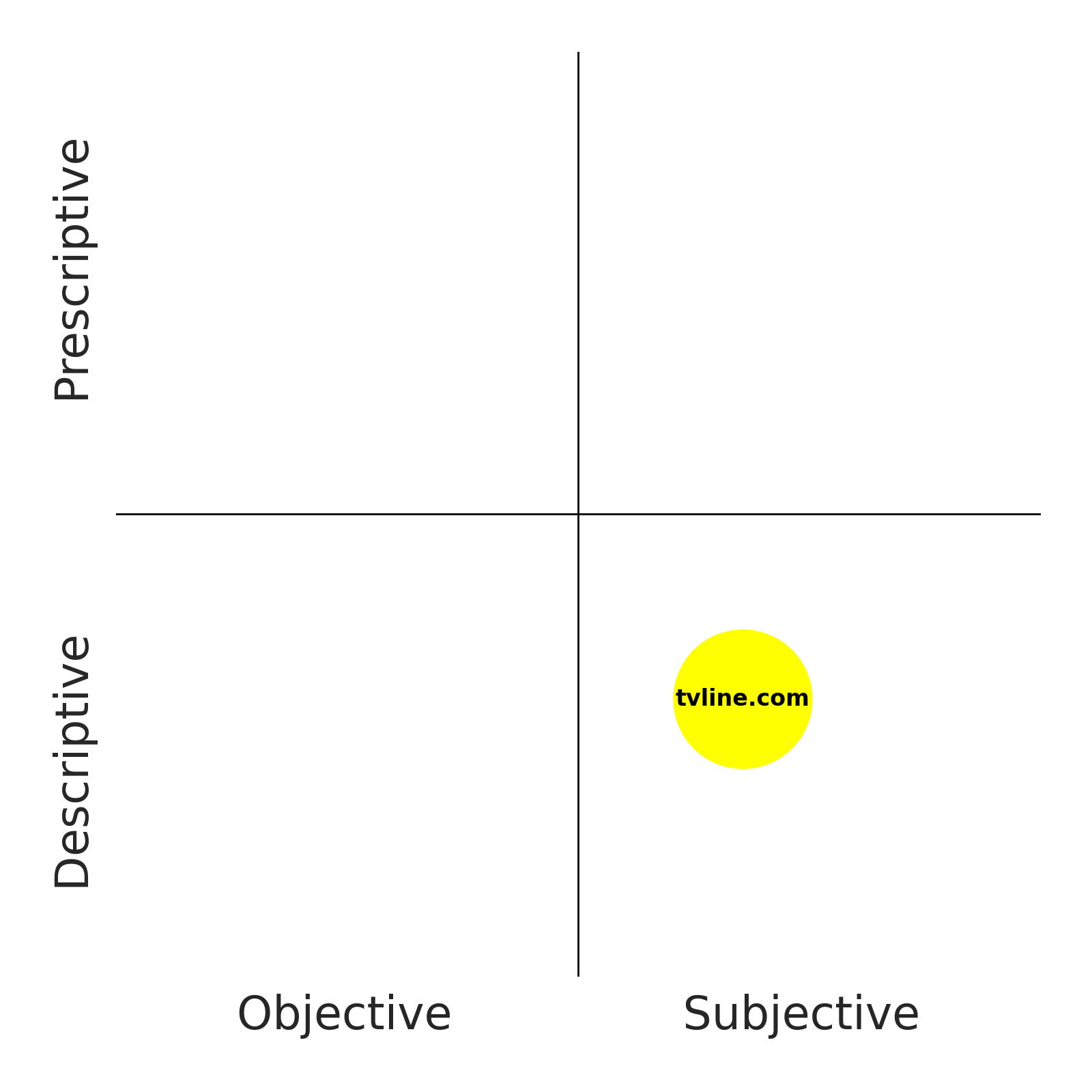
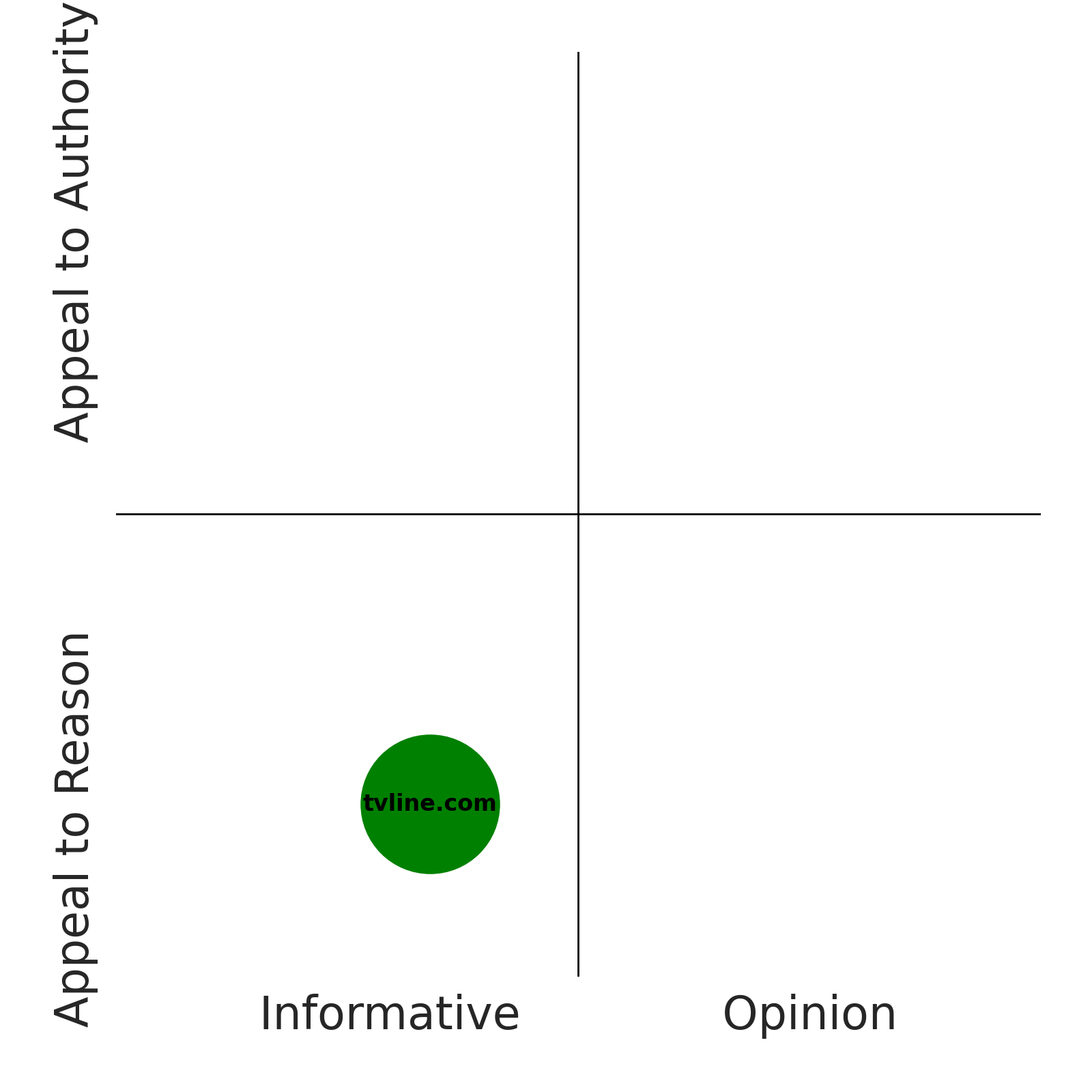
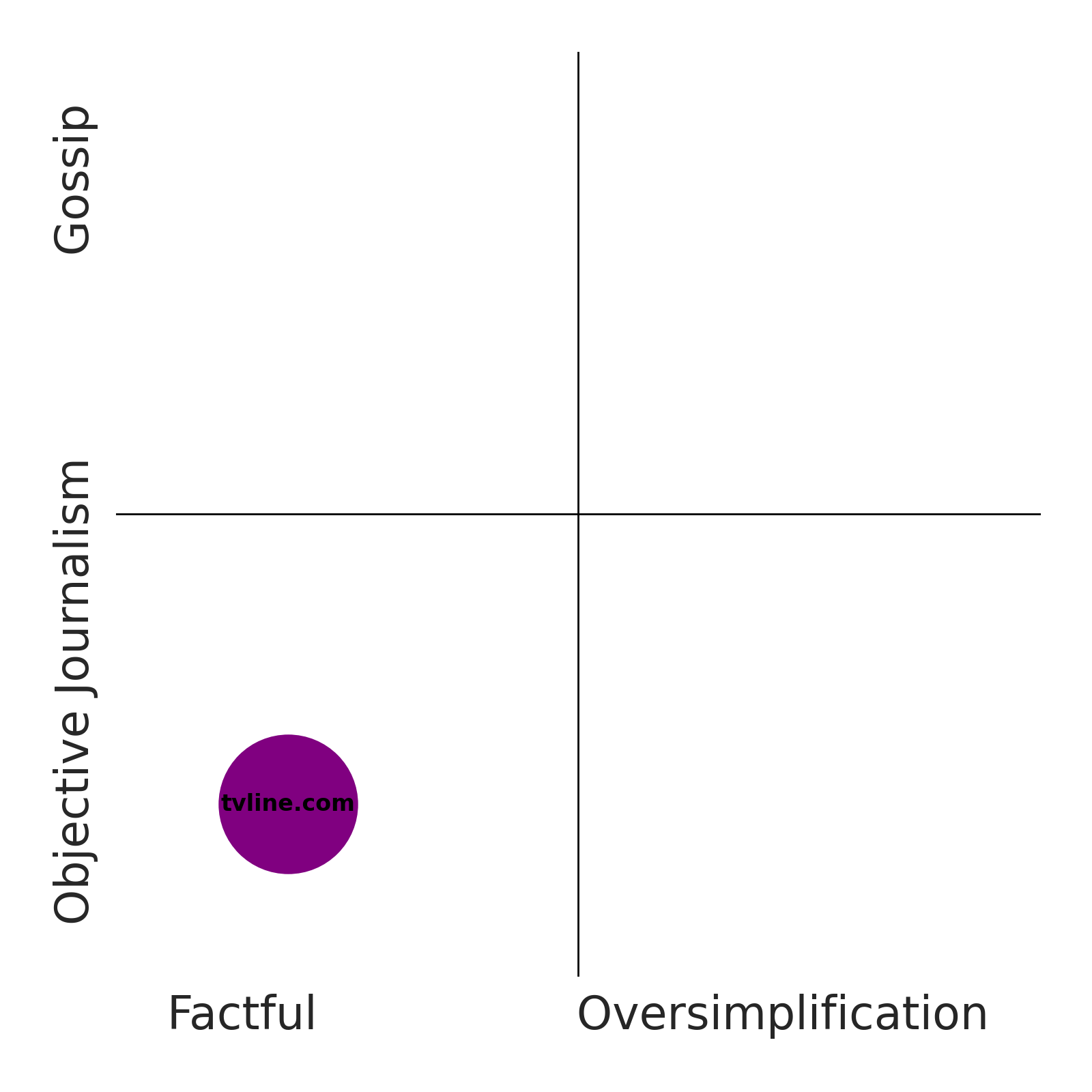
2026 © Helium Trades
Privacy Policy & Disclosure
* Disclaimer: Nothing on this website constitutes investment advice, performance data or any recommendation that any particular security, portfolio of securities, transaction or investment strategy is suitable for any specific person. Helium Trades is not responsible in any way for the accuracy
of any model predictions or price data. Any mention of a particular security and related prediction data is not a recommendation to buy or sell that security. Investments in securities involve the risk of loss. Past performance is no guarantee of future results. Helium Trades is not responsible for any of your investment decisions,
you should consult a financial expert before engaging in any transaction.


