See whether Helium helps you make better-informed decisions. Try every Pro Trader feature for 30 days. No credit card required.
Try every Pro Trader feature for 30 days. No credit card required.
Identity & genre: The source is UnHerd (named in a FOI report as 'UnHerd sent Freedom of Information requests'
The reporting frames the HMO boom as a state-backed cash machine that sacrifices family neighborhoods to investor profit.
Automated analysis; not human reviewed. · 7 of 54 available dimensions scored; omitted dimensions are not treated as neutral. · Verified supporting quotes for 2 of 7 scored dimensions.
Claim: The report criticizes profit extraction in housing and advocates public-sector delivery, aligning with left/progressive positions.
“The state needs to become smarter: it needs to procure better, know who it is getting housing from, ensure it is decent quality and pay more competitive prices rather than simply throwing money at the issue.” · not found in supplied text
“Local authorities could surely deliver more of this housing directly rather than rely on multi-layered private lease deals that turn it into a cash machine.” · exact text match
Why: Both quotes advocate state involvement and criticize private intermediaries, indicating a liberal leaning.
Claim: The report includes subjective evaluations alongside factual reporting, giving it a moderately subjective tone.
“What is most staggering is the rate of growth.” · not found in supplied text
“The homes can be miserable.” · exact text match
Why: Words like 'staggering' and 'miserable' convey opinion, though the piece is mostly reported.
Claim: The report emphasizes the grimness of HMO housing and doubts that reforms will solve it, giving a pessimistic tone.
“But these hopes must be tempered by realism” · exact text match
“Without a fight, the community it was once a part of will be consigned to the scrapheap too.” · exact text match
Why: The first tempers hope, the second ends on a dire note.
Claim: The report provides specific figures, named sources, and documented examples, making it highly credible on its face.
“Among the 32 which responded, there were a combined 21,888 registered HMOs in 2020-1. By 2025-6, there were 32,099 — a 50% rise in just five years.” · exact text match
“UnHerd has seen an email from letting agent K7 Residential asking Croydon Council to pay 'an incentive requirement of £2,500'” · not found in supplied text
Why: Quantitative data and documented correspondence support verifiability.
Claim: The report portrays private investors and agencies as profiting excessively from public housing money, reflecting an anti-corporate stance.
“Large investment funds operate a 'leaseback' model with local authorities.” · not found in supplied text
“Bigger money has taken note.” · exact text match
Why: The framing of 'Bigger money' and 'cash machine' implies criticism of corporate profit.
Claim: The report values community cohesion and advocates collective provision, showing a collectivist orientation.
“family neighborhoods slowly transform into more transient, more atomized places” · exact text match
“Local authorities could surely deliver more of this housing directly rather than rely on multi-layered private lease deals that turn it into a cash machine.” · exact text match
Why: Concern about atomization and preference for public direct provision suggest collectivist values.
Claim: The report discloses counter-responses from companies and uses FOI requests, showing attempts at fairness and transparency.
“In a letter to UnHerd, Property Playbook said its records show residents pay around £35 a week for utilities and disputed the claims of higher payments made in the survey.” · not found in supplied text
“UnHerd sent Freedom of Information requests to 50 of the largest urban areas.” · exact text match
Why: Including rebuttals and describing method signals integrity.
The framing treats European leaders—especially Kaja Kallas and the Nordic-Baltic bloc—as reckless warmongers, assumes the CIA director's Russia visit was about de-escalation, and presents Western restraint as the only rational course.
Automated analysis; not human reviewed. Limitations: No external verification of cited events or figures is possible from the article text alone. · 12 of 54 available dimensions scored; omitted dimensions are not treated as neutral. · Verified supporting quotes for 12 of 12 scored dimensions.
Claim: The analysis is openly subjective and centered on the author's assumptions.
“I can only assume that the circumstances behind this meeting are darker, more serious and more complex than we can possibly know.” · exact text match
“I see her as the European warmonger-in-chief.” · exact text match
Why: The central thesis is an acknowledged personal inference and the piece uses first-person judgment as support.
Claim: Risk is presented with dramatic, alarmist language.
“There is an awful lot of stuff going on that could blow up in our faces.” · exact text match
Why: The phrase exaggerates the imminence of catastrophe beyond the specific facts cited.
Claim: The outlook is pessimistic about Europe's ability to avoid catastrophe.
“History is littered with examples of irrational wars and, lest we forget, the biggest ones were mostly Europeans.” · exact text match
Why: The closing historical observation frames Europe as prone to self-destructive irrationality.
Claim: The article instructs leaders on what diplomacy should do.
“You keep your diplomatic back channels open and talk to the enemy.” · exact text match
“European countries are simply not prepared; de-escalation is the only rational strategy.” · exact text match
Why: Directive statements about what policy should be are central to the piece.
Claim: The piece is strongly against war and for reducing tension with Russia.
“This is not a war Europe can win.” · exact text match
Why: Explicitly argues that military confrontation with Russia is unwinnable, supporting a dovish position.
Claim: The piece invokes existential destruction to motivate caution.
“The Russian nuclear arsenal could completely destroy all of Western Europe, and still have a lot of missiles left.” · exact text match
Why: This catastrophic framing is used to generate fear rather than neutral analysis.
Claim: The column is dominated by personal opinion and evaluation.
“I see her as the European warmonger-in-chief.” · exact text match
Why: This is a direct personal verdict about a named official.
Claim: The article takes a clear position in a contentious political debate over Russia policy.
“European countries are simply not prepared; de-escalation is the only rational strategy.” · exact text match
Why: It advocates a specific political course and criticizes opposing policy actors.
Claim: Complex European views are reduced to a single warmongering label.
“I see her as the European warmonger-in-chief.” · exact text match
Why: One person is made the embodiment of a broad policy tendency, flattening nuance.
Claim: The tone is negative and anxiety-laden.
“There is an awful lot of stuff going on that could blow up in our faces.” · exact text match
Why: The metaphor conveys emotional alarm rather than dispassionate assessment.
Claim: The central conclusion about the Ratcliffe meeting is an explicitly speculative inference.
“Based on the information we have, the most plausible explanation for the visit is that Ratcliffe and his Russian counterparts were discussing de-escalation.” · exact text match
Why: The author labels the explanation as 'most plausible' rather than confirmed.
Claim: Escalation risk is blamed primarily on European leaders rather than on the broader strategic situation.
“I see her as the European warmonger-in-chief.” · exact text match
Why: Singling out Kallas as the 'warmonger-in-chief' assigns concentrated blame for a systemic risk.
No external verification of cited events or figures is possible from the article text alone.
The commentary frames a fragile AI boom and Western economies as vulnerable to a recession triggered by US-Iran hostilities, while urging de-escalation and casting populism as a threat.
Automated analysis; not human reviewed. Limitations: The UK political references in the text (Andy Burnham as Prime Minister, John Healey as Chancellor) do not match real-world roles, creating ambiguity about whether the scenario is hypothetical or an error. · 17 of 54 available dimensions scored; omitted dimensions are not treated as neutral. · Verified supporting quotes for 17 of 17 scored dimensions.
Claim: The piece is a personal opinion/forecast, marked by explicit authorial interpretation and hope.
“Improbable though it may seem, a bombing raid on Iran may, like the proverbial Chinese butterfly flapping its wings and causing faraway chaos, trigger disparate distant ructions.” · exact text match
“Let us hope that Trump soon finds a different way out of his Middle East quagmire.” · exact text match
Why: The first phrase signals subjective speculation; the final phrase expresses a normative wish.
Claim: The headline and some scenarios are dramatized for impact.
“Get ready for the Trump Slump.” · exact text match
“the scale of the recession could stand in direct proportion to the scale of the boom which preceded it” · exact text match
Why: The imperative title and proportional disaster warning add dramatic emphasis.
Claim: The commentary predicts market fragility and an AI-bubble correction.
“The AI bubble had already moved into a delicate phase.” · exact text match
“a slide into negative territory could deepen the hardship already being felt by many working people” · exact text match
Why: The central thesis is that the boom is unsustainable and recession risk is rising.
Claim: The overall outlook is pessimistic about the economy and governments' ability to respond.
“Worryingly, the capacity of Western governments to tackle recessions is not what it once was.” · exact text match
“this is not the time for a recession.” · exact text match
Why: 'Worryingly' and the closing warning convey a strongly negative outlook.
Claim: The piece is mostly descriptive but includes a mild prescriptive appeal to end the strikes.
“It may be time to call off the strikes on Iran.” · exact text match
“Let us hope that Trump soon finds a different way out of his Middle East quagmire.” · exact text match
Why: These statements recommend a course of action, while the rest is analytical.
Claim: The commentary opposes military strikes on Iran and favors a non-military exit.
“It may be time to call off the strikes on Iran.” · exact text match
“Let us hope that Trump soon finds a different way out of his Middle East quagmire.” · exact text match
Why: The explicit suggestion to stop strikes and search for another way is dovish.
Claim: The piece uses warning language and catastrophic hypotheticals that evoke fear.
“It seems unlikely that the rise in bond yields we’ve seen over the last week could continue much longer without something cracking.” · exact text match
“the scale of the recession could stand in direct proportion to the scale of the boom which preceded it” · exact text match
Why: 'Something cracking' and the proportional recession warning are fear-inducing, though the tone is analytic.
Claim: The text is openly opinionated, with authorial judgment and hope.
“Improbable though it may seem, a bombing raid on Iran may, like the proverbial Chinese butterfly flapping its wings and causing faraway chaos, trigger disparate distant ructions.” · exact text match
“Let us hope that Trump soon finds a different way out of his Middle East quagmire.” · exact text match
Why: It frames content as improbable speculation and ends with a hope, not neutral reporting.
Claim: The analysis is deeply tied to US and UK electoral politics.
“Donald Trump may become a lame duck.” · exact text match
“The odds of a Democratic sweep of Congress in the November elections, currently tilted slightly in their favor, will probably lengthen if gas prices go back up, inflation rises and credit card costs become more burdensome.” · exact text match
Why: It explicitly connects economic scenarios to election outcomes and leadership standings.
Claim: The piece relies on institutional authority and treats populism as a threat.
“As the Bank for International Settlements noted in its annual report, recent years have seen government debt rise during downturns, but without a concomitant decline during economic recoveries.” · exact text match
“strengthening the wind now filling the sails of political populists.” · exact text match
Why: It cites an international financial institution and frames populist gains negatively.
Claim: The tone is negative and anxious.
“Worryingly, the capacity of Western governments to tackle recessions is not what it once was.” · exact text match
“a slide into negative territory could deepen the hardship already being felt by many working people” · exact text match
Why: Words like 'Worryingly' and 'hardship' create a negative emotional register.
Claim: The piece is credible as a sourced opinion but weakened by speculative leaps.
“Iran accused America, whose strike was reported to have hit a wedding party, of a “war crime”.” · exact text match
“As the Bank for International Settlements noted in its annual report, recent years have seen government debt rise during downturns, but without a concomitant decline during economic recoveries.” · exact text match
Counterevidence:
“Improbable though it may seem, a bombing raid on Iran may, like the proverbial Chinese butterfly flapping its wings and causing faraway chaos, trigger disparate distant ructions.” · exact text match
Why: Attribution and institutional citation support trustworthiness; the explicit speculative chain limits it.
Claim: The argument is analytical and evidence-based rather than emotional or conspiratorial.
“A close look at the numbers reveals that tech leaders are making big money only because they’re spending big money.” · exact text match
“As the Bank for International Settlements noted in its annual report, recent years have seen government debt rise during downturns, but without a concomitant decline during economic recoveries.” · exact text match
Why: It uses quantitative relationships and a named institutional report to support its causal claims.
Claim: The commentary is skeptical of large technology companies' profit quality.
“A close look at the numbers reveals that tech leaders are making big money only because they’re spending big money.” · exact text match
“More than half of US corporate profits have been funded by these deficits.” · exact text match
Why: It questions whether tech profits are real and links them to government deficits, an anti-corporate framing.
Claim: The central argument is an extended forecast using hypothetical conditionals.
“Improbable though it may seem, a bombing raid on Iran may, like the proverbial Chinese butterfly flapping its wings and causing faraway chaos, trigger disparate distant ructions.” · exact text match
“If the exchange continues, with neither side making a show of retreating, the effects could multiply in severity.” · exact text match
Why: The article's thesis is a chain of 'may', 'could', and 'if' scenarios rather than established fact.
Claim: The text signals honesty by attributing disputed reports and citing sources.
“Iran accused America, whose strike was reported to have hit a wedding party, of a “war crime”.” · exact text match
“As the Bank for International Settlements noted in its annual report, recent years have seen government debt rise during downturns, but without a concomitant decline during economic recoveries.” · exact text match
Why: It distinguishes an allegation from established fact and relies on a named institutional source.
Claim: The text integrates macroeconomic, fiscal, and market concepts into a complex argument.
“A close look at the numbers reveals that tech leaders are making big money only because they’re spending big money.” · exact text match
“As the Bank for International Settlements noted in its annual report, recent years have seen government debt rise during downturns, but without a concomitant decline during economic recoveries.” · exact text match
Why: It engages with depreciation, credit supply, bond yields, and fiscal capacity, showing analytic complexity.
The UK political references in the text (Andy Burnham as Prime Minister, John Healey as Chancellor) do not match real-world roles, creating ambiguity about whether the scenario is hypothetical or an error.
Frames universities' tolerance of AI cheating as the predictable result of prioritizing credentials, accessibility, and cost-cutting over genuine education, and warns that human academic judgment may be replaced by bots.
Generative AI tools such as ChatGPT and Claude became widely available in the 2020s, forcing universities to define acceptable use in teaching and assessment while debates over academic integrity intensified.
Automated analysis; not human reviewed. Limitations: The supplied text is an opinion essay with no hyperlinks or source documents, so the Harvard and UK statistics cannot be independently checked; scoring reflects internal framing. · 12 of 54 available dimensions scored; omitted dimensions are not treated as neutral. · Verified supporting quotes for 12 of 12 scored dimensions.
Claim: The framing treats falling standards, grade inflation, and accessibility/fairness as rivals to educational excellence, a conservative-coded critique of higher education.
“From falling admission standards to rampant grade inflation, the impression is of a system focused on the superficial appearance of high standards, but unbothered about actually producing them.” · exact text match
“Generally, it seems that wherever some other value — accessibility, cost-cutting, fairness, or whatever — comes into conflict with the goal of encouraging unusually bright people to have stonkingly good ideas, the latter is abandoned.” · exact text match
Why: The priority placed on merit and excellence over fairness and accessibility is a recognizable conservative critique of higher education, though not explicitly partisan.
Claim: The framing is elitist, valuing unusually bright thinkers and using condescending language for less able students.
“wherever some other value — accessibility, cost-cutting, fairness, or whatever — comes into conflict with the goal of encouraging unusually bright people to have stonkingly good ideas, the latter is abandoned.” · exact text match
“I would bet that some baffled young souls are moving from using AI as a search engine (harmless) to actively creating content (bad) without even properly noticing the switch.” · exact text match
Why: Prioritizing exceptional intellectual output over fairness and accessibility, and describing less capable students as baffled, signals an elitist perspective.
Claim: The text is dominated by first-person conjecture and personal reaction rather than neutral reporting.
“I suspect that the typical student cheat feels swamped and powerless in the face of incomprehensible demands from teachers, and doesn’t know what else to do.” · exact text match
“I’m starting to feel a bit skeptical about the implied mission statement.” · exact text match
Why: Personal epistemic markers such as 'I suspect' and 'I’m starting to feel' frame the argument as subjective opinion.
Claim: The outlook is pessimistic, ending with a warning of helpless academic collapse to bots.
“or else watch helplessly as the kingdom is conquered, not by shepherds but by the bots.” · exact text match
Why: The concluding warning of helpless defeat is a negative forecast about the future of universities.
Claim: The piece moves from observation to an explicit prescription about what universities and society must do.
“To see off the incoming invisible academic crime wave, we will have to learn to talk without embarrassment about the intrinsic value of human erudition, and how universities, uniquely, can produce it; or else watch helplessly as the kingdom is conquered, not by shepherds but by the bots.” · exact text match
Why: The final sentence directly instructs what 'we will have to' do, making the text prescriptive.
Claim: The essay is explicitly opinionated, advancing a personal thesis and using argumentative language.
“I’m starting to feel a bit skeptical about the implied mission statement.” · exact text match
“I suspect that the typical student cheat feels swamped and powerless in the face of incomprehensible demands from teachers, and doesn’t know what else to do.” · exact text match
Why: First-person evaluation and personal conjecture are central to the text.
Claim: The text takes a position in a contested education-policy debate over fairness versus excellence.
“Generally, it seems that wherever some other value — accessibility, cost-cutting, fairness, or whatever — comes into conflict with the goal of encouraging unusually bright people to have stonkingly good ideas, the latter is abandoned.” · exact text match
Why: The framing treats policy trade-offs about who universities should serve as a value-laden political choice.
Claim: One factual assertion asserts certainty beyond the cited estimate.
“An estimated 22% of UK-based students used it to cheat in 2023/24, and the numbers have surely increased since then.” · exact text match
Why: The adverb 'surely' converts an estimate into an unverified claim of subsequent growth.
Claim: The framing is critical of the higher-education establishment, portraying administrators as focused on appearances and fees rather than learning.
“the impression is of a system focused on the superficial appearance of high standards, but unbothered about actually producing them.” · exact text match
“As British universities continue to hoover up young people with lower A-level grades in order to pocket their fees, I would bet that some baffled young souls are moving from using AI as a search engine (harmless) to actively creating content (bad) without even properly noticing the switch.” · exact text match
Why: It attacks institutional motives and management, placing the essay against the university establishment.
Claim: The text shows moderate credibility through attribution and hedging but includes unsourced estimates and a personal thesis.
“Writing in The Atlantic, behavioral scientist John Paul Rollert reports that a third of Harvard students now admit to using AI illicitly.” · exact text match
“An estimated 22% of UK-based students used it to cheat in 2023/24, and the numbers have surely increased since then.” · exact text match
Why: One statistic is attributed and the essay is transparently opinionated, but another key figure is presented without a source.
Claim: The argument relies on speculative projections about student behavior and motives.
“An estimated 22% of UK-based students used it to cheat in 2023/24, and the numbers have surely increased since then.” · exact text match
“I would bet that some baffled young souls are moving from using AI as a search engine (harmless) to actively creating content (bad) without even properly noticing the switch.” · exact text match
Why: It explicitly bets on unobserved motives and asserts unmeasured trends.
Claim: The text shows internally observable fairness by conceding counterpoints and hedging speculation.
“Though there is some truth in this, it all sounds a bit too Patrick Bateman for the average situation.” · exact text match
“But reasonable as this objection initially sounds, I’m starting to feel a bit skeptical about the implied mission statement.” · exact text match
Why: Concessions and hedged formulations indicate an attempt at honest argument rather than one-sided assertion.
The supplied text is an opinion essay with no hyperlinks or source documents, so the Harvard and UK statistics cannot be independently checked; scoring reflects internal framing.
Frames Trump's presidency as an impending catastrophe driven by American apathy, using cinematic metaphors and highly emotional, speculative language.
Automated analysis; not human reviewed. Limitations: The article is a purely speculative opinion piece with no verifiable facts, making bias assessment reliant on tone and literary devices. · 12 of 53 available dimensions scored; omitted dimensions are not treated as neutral. · Verified supporting quotes for 8 of 12 scored dimensions.
Claim: The article strongly criticizes Donald Trump and his presidency.
“a monster of greed and self-glory” · exact text match
“a leader who hated us” · exact text match
Why: Explicitly negative characterization of Trump as monstrous and hateful, indicating a liberal perspective.
Claim: The article is a first-person, metaphorical essay rather than objective reporting.
“I can’t help wondering” · exact text match
“This is how it felt” · exact text match
Why: Subjective framing throughout, with personal musings and emotional descriptions.
Claim: The article predicts a bleak future for America.
“It may be clear that since 1945 at least we have been playing a game called Distractions... a steady face off between those who have and those who have not” · not found in supplied text
Why: Overall narrative of decline and hopelessness.
Claim: The article urges readers to take action, specifically a general strike.
“The only thing that would impede the monstrousness was a general strike” · exact text match
“You mean I have to get up and not sit down?” · exact text match
Why: Explicit call to collective action, moving from description to prescription.
Claim: The article cultivates fear of an impending apocalypse.
“Watching Trump's Apocalypse” · exact text match
“the desert is waiting and watching our show. It knows it has always prevailed” · exact text match
Why: Title and closing imagery invoke existential dread and inevitability of collapse.
Claim: The article consists entirely of opinion without factual support.
“I’m playing at Apocalypse” · exact text match
“Summon your last courage” · not found in supplied text
Why: Purely speculative and exhortatory language with no reported facts.
Claim: The article is critical of political institutions and the opposition party.
“The organization of the opposition party... was reported in disarray” · not found in supplied text
“our defining laws... like a cheese with so many holes” · not found in supplied text
Why: Portrays mainstream political structures as weak and flawed.
Claim: The article evokes strong negative emotions such as dismay and exhaustion.
“dismay and exhaustion” · exact text match
“broad daylight darkness that was always there as our phone broke the news and our hearts every day” · not found in supplied text
Why: Frequent use of emotionally charged language describing collective despair.
Claim: The article lacks factual support and is highly speculative.
“I’ll predict, it’s Arizona getting 40% less water” · exact text match
Why: No sources, no verifiable data; entire piece is imaginative conjecture.
Claim: The article relies on emotional and metaphorical reasoning rather than logic or evidence.
“Watching Trump's Apocalypse” · exact text match
“I’m playing at Apocalypse – and that movie genre is more popular than ever” · exact text match
Why: Central metaphor of cinema and sensational apocalyptic language replace rational analysis.
Claim: The article presents hypothetical future scenarios as plausible.
“It was the summer of 2026” · exact text match
“he may come to the sad conclusion” · exact text match
“I’ll predict, it’s Arizona getting 40% less water” · exact text match
Why: Specific futuristic predictions and conditional statements about Trump's actions.
Claim: The article uses loaded rhetoric to provoke emotional response and action.
“How could we not see that he was a champion in the contest for the worst ever” · exact text match
“our one protection was not a court or a congress but his constant incompetence” · exact text match
Why: Rhetorical questions and exaggerated claims designed to galvanize readers.
The article is a purely speculative opinion piece with no verifiable facts, making bias assessment reliant on tone and literary devices.
The reporting frames the HMO boom as a state-backed cash machine that sacrifices family neighborhoods to investor profit.
Automated analysis; not human reviewed. · 7 of 54 available dimensions scored; omitted dimensions are not treated as neutral. · Verified supporting quotes for 2 of 7 scored dimensions.
Claim: The report criticizes profit extraction in housing and advocates public-sector delivery, aligning with left/progressive positions.
“The state needs to become smarter: it needs to procure better, know who it is getting housing from, ensure it is decent quality and pay more competitive prices rather than simply throwing money at the issue.” · not found in supplied text
“Local authorities could surely deliver more of this housing directly rather than rely on multi-layered private lease deals that turn it into a cash machine.” · exact text match
Why: Both quotes advocate state involvement and criticize private intermediaries, indicating a liberal leaning.
Claim: The report includes subjective evaluations alongside factual reporting, giving it a moderately subjective tone.
“What is most staggering is the rate of growth.” · not found in supplied text
“The homes can be miserable.” · exact text match
Why: Words like 'staggering' and 'miserable' convey opinion, though the piece is mostly reported.
Claim: The report emphasizes the grimness of HMO housing and doubts that reforms will solve it, giving a pessimistic tone.
“But these hopes must be tempered by realism” · exact text match
“Without a fight, the community it was once a part of will be consigned to the scrapheap too.” · exact text match
Why: The first tempers hope, the second ends on a dire note.
Claim: The report provides specific figures, named sources, and documented examples, making it highly credible on its face.
“Among the 32 which responded, there were a combined 21,888 registered HMOs in 2020-1. By 2025-6, there were 32,099 — a 50% rise in just five years.” · exact text match
“UnHerd has seen an email from letting agent K7 Residential asking Croydon Council to pay 'an incentive requirement of £2,500'” · not found in supplied text
Why: Quantitative data and documented correspondence support verifiability.
Claim: The report portrays private investors and agencies as profiting excessively from public housing money, reflecting an anti-corporate stance.
“Large investment funds operate a 'leaseback' model with local authorities.” · not found in supplied text
“Bigger money has taken note.” · exact text match
Why: The framing of 'Bigger money' and 'cash machine' implies criticism of corporate profit.
Claim: The report values community cohesion and advocates collective provision, showing a collectivist orientation.
“family neighborhoods slowly transform into more transient, more atomized places” · exact text match
“Local authorities could surely deliver more of this housing directly rather than rely on multi-layered private lease deals that turn it into a cash machine.” · exact text match
Why: Concern about atomization and preference for public direct provision suggest collectivist values.
Claim: The report discloses counter-responses from companies and uses FOI requests, showing attempts at fairness and transparency.
“In a letter to UnHerd, Property Playbook said its records show residents pay around £35 a week for utilities and disputed the claims of higher payments made in the survey.” · not found in supplied text
“UnHerd sent Freedom of Information requests to 50 of the largest urban areas.” · exact text match
Why: Including rebuttals and describing method signals integrity.
The profile frames Abu Musab al-Suri as the more intellectually consequential architect of modern jihadist tactics, positioning his decentralized, lone-wolf model as more influential than bin Laden's organizational hierarchy.
Published by UnHerd ahead of the 25th anniversary of 9/11, the piece by investigative journalist Tam Hussein offers a historical reassessment of Abu Musab al-Suri's influence on modern jihadist tactics.
Automated analysis; not human reviewed. Limitations: The article rests on an interpretive thesis about Suri's causal influence that relies on personal recollections and rhetorical attribution rather than independently verifiable evidence. · 5 of 54 available dimensions scored; omitted dimensions are not treated as neutral. · Verified supporting quotes for 4 of 5 scored dimensions.
Claim: The article mixes factual biography with interpretive judgments about Suri's significance.
“In many ways, Suri reimagined jihad into what the American writer Robert Taber called 'war of the flea'” · not found in supplied text
“Suri may prove the more consequential figure in the long run” · exact text match
Why: The narrative presents historical facts but interweaves interpretive claims about Suri's influence and ideological significance.
Claim: The article maintains a neutral, analytical tone when describing violent events.
“Suri himself spent his last years hiding from the Pakistani authorities, before being captured and transferred to a Syrian prison around 2005.” · exact text match
Why: Descriptions of violence, death, and repression remain flatly descriptive without emotional rhetoric or moral condemnation.
Claim: The article uses named sources and attributed claims throughout.
“According to Suri's own account, he spent three years training bin Laden” · verified after text normalization
“As Ahsan tells me, Suri believed in recruiting criminals” · exact text match
Why: Information is attributed to named individuals and primary documents, with hedging like 'Widely believed' marking uncertain claims.
Claim: The article presents a reasoned argument with appropriate hedging and uncertainty.
“There are doubts as to how far he masterminded the Madrid bombings of 2004 and 7/7, yet both attacks were certainly Suri-esque” · exact text match
Why: The article acknowledges uncertainty about causation while making a measured argument, demonstrating rational epistemic practice.
Claim: The article speculates about Suri's lasting historical significance.
“Suri may prove the more consequential figure in the long run, especially as warfare is becoming increasingly asymmetric and unconventional.” · exact text match
Why: The closing passage uses 'may prove' to make a forward-looking claim about comparative historical importance.
The article rests on an interpretive thesis about Suri's causal influence that relies on personal recollections and rhetorical attribution rather than independently verifiable evidence.
Framing casts the Russian Orthodox Church as a Kremlin-directed hybrid-warfare weapon and urges Europe to confront it, while also deploring the US pivot to ‘traditional values.’
Automated analysis; not human reviewed. Limitations: The article is a first-person analytical feature with editorially framed commentary; some claims rest on open-source intelligence and attributed allegations without independent verification. · 54 of 54 available dimensions scored; omitted dimensions are not treated as neutral. · Verified supporting quotes for 22 of 54 scored dimensions.
Claim: Presentation favors European liberal democracy and LGBTQ+ equality, and is critical of the US pivot to traditional values.
“If previous US administrations made equality for sexual minorities a pillar of American diplomacy, Donald Trump’s National Security Strategy, published last November, puts “traditional values” at its heart instead.” · exact text match
Why: The sentence criticizes a shift away from equality-based diplomacy, implying approval of the prior liberal approach.
Claim: The framing relies on the judgment of officials, security agencies, and expert sources rather than popular sentiment.
“European security agencies increasingly view Russian church networks with suspicion.” · exact text match
“An open-source investigation by the Kyiv-based Molfar Intelligence Institute in late 2024 concluded” · exact text match
Why: It presents institutional and intelligence sources as authoritative, implying an elite-level policy lens.
Claim: The publisher endorses state restrictions on Moscow-linked churches.
“Governments in other countries have also wised up.” · exact text match
“Parliament has now ordered Orthodox churches to sever ties with Moscow or face closure by the end of the year.” · exact text match
Why: These measures are reported approvingly as responses to security concerns, indicating support for coercive state action.
Claim: The piece is a first-person analytical feature with explicit personal impressions.
“I was struck by how some ultra-conservative Americans now see Russia as a Christian bulwark — even a model to emulate.” · exact text match
Why: First-person evaluation and impressionistic language place the piece in subjective commentary.
Claim: Language is sensational, using metaphorical and loaded terms.
“In Bulgaria, Czechia, North Macedonia and elsewhere, “spies in cassocks” have been used as an alternative to diplomatic cover” · exact text match
“The Russian Church's war on Europe. Putin is armed with missiles and incense.” · not found in supplied text
Why: The title and the ‘spies in cassocks’ metaphor dramatize the threat.
Claim: No market or economic direction is advanced.
Why: The article is geopolitical and religious in focus.
Claim: The report ends with a warning about Europe's uncomfortable isolation.
“Europe’s isolation on this issue is an uncomfortable prospect and one it can no longer afford to ignore.” · exact text match
Why: This concluding line expresses concern and a pessimistic view of Europe's current position.
Claim: The piece is rich with specific country cases and investigative details.
“An open-source investigation by the Kyiv-based Molfar Intelligence Institute in late 2024 concluded” · exact text match
“The sharpest confrontation to date in Estonia has been with the Pühtitsa Convent” · exact text match
Why: The narrative moves across many European countries with granular examples.
Claim: The conclusion moves from reporting to urging action.
“For a continent already facing a resurgent Russia, Europe’s isolation on this issue is an uncomfortable prospect and one it can no longer afford to ignore.” · exact text match
Why: The sentence is prescriptive, telling Europe it must act.
Claim: The publisher advocates confrontation with Russia and the Russian Orthodox Church.
“Europe may now have to confront this increasingly aggressive alliance of “the missile and the incense burner”, as one French theologian put it, with little help from across the Atlantic.” · exact text match
“governments across Europe are responding with sanctions, security investigations and pressure” · exact text match
Why: It frames the church as an aggressive alliance and praises European countermeasures, indicating hawkishness.
Claim: The article uses threat language and espionage imagery to create concern.
“the church acts as an instrument of Moscow’s geopolitical power projecting influence, and posing a growing threat, across Europe” · exact text match
“In Bulgaria, Czechia, North Macedonia and elsewhere, “spies in cassocks” have been used” · exact text match
Why: Phrases like ‘growing threat’ and ‘spies in cassocks’ are alarmist in context.
Claim: No significant circular reasoning is present.
Why: The report supports its claims with attributed sources and examples.
Claim: No personal gossip or celebrity-style content is present.
Why: The content is policy and security focused.
Claim: The article advances strong interpretive claims backed by rhetorical judgment.
“The Russian Church is key to Putin’s plan to destroy European liberal democracy and the institutions underpinning it.” · not found in supplied text
Why: This is an unqualified analytical assertion, not a neutral report of fact.
Claim: The piece is centrally about geopolitics, elections, security, and ideological conflict.
“The war has given the Patriarch a chance to reassert his authority in a post-Soviet world as he championed the twin causes of Orthodox unity and Russian imperialism.” · exact text match
“Ahead of Moldova’s 2024 presidential poll and EU integration referendum, Russian state officials funded all-expenses-paid “pilgrimages” to Moscow” · exact text match
Why: Its subject matter is political struggle and state influence, and it evaluates political actors.
Claim: It reduces complex church-state relations to a unified hostile alliance.
“Europe may now have to confront this increasingly aggressive alliance of “the missile and the incense burner”” · exact text match
Why: This metaphor collapses religious and military institutions into a single threat.
Claim: It relies heavily on named officials and intelligence institutions, but that is consistent with journalistic sourcing.
“An open-source investigation by the Kyiv-based Molfar Intelligence Institute in late 2024 concluded” · exact text match
“According to Vardø’s current mayor” · not found in supplied text
Why: Resort to expert and official sources is frequent, though not necessarily fallacious.
Claim: No immature or rage-baiting tone appears.
Why: The tone is serious and analytical.
Claim: No circular reasoning is evident.
Why: Claims are supported with independent examples.
Claim: No focus on public relations or response management is present.
Why: The article is not about crisis communications.
Claim: No group is framed as chiefly victimized beyond the geopolitical threat narrative.
Why: The narrative centers on state and church power, not victimhood.
Claim: Some claims are stated as certain despite relying on indirect or speculative evidence.
“The Russian Church is key to Putin’s plan to destroy European liberal democracy and the institutions underpinning it.” · not found in supplied text
Why: The word ‘key’ asserts a decisive role without direct causal proof in the text.
Claim: No spam or filler content appears.
Why: The piece is substantive reporting.
Claim: The piece is framed by a liberal-democratic, anti-Kremlin ideological lens.
“The Russian Church is key to Putin’s plan to destroy European liberal democracy and the institutions underpinning it.” · not found in supplied text
Why: It interprets events through a Western institutionalist frame.
Claim: The article treats Western institutions and security agencies as legitimate and wise.
“Governments in other countries have also wised up.” · exact text match
“governments across Europe are responding with sanctions, security investigations and pressure” · exact text match
Why: It endorses governmental and security-agency responses to Russian influence, aligning with establishment institutions.
Claim: The tone is negative and concerned.
“Europe’s isolation on this issue is an uncomfortable prospect and one it can no longer afford to ignore.” · exact text match
Why: The concluding warning carries an anxious emotional charge.
Claim: No obvious double standard appears.
Why: The standards applied to Russia and Europe are consistent with the security narrative.
Claim: The report is heavily sourced and attributes claims to named officials and investigations.
“According to Vardø’s current mayor, the Russian bishop insisted the exact location under Nato radars had been “dictated” to him “by God himself”” · not found in supplied text
“An open-source investigation by the Kyiv-based Molfar Intelligence Institute” · exact text match
Why: Attribution to local officials and named open-source researchers supports credibility.
Claim: The report is evidence-oriented but carries a rhetorical overlay.
“An open-source investigation by the Kyiv-based Molfar Intelligence Institute in late 2024 concluded” · exact text match
“the church acts as an instrument of Moscow’s geopolitical power projecting influence, and posing a growing threat, across Europe” · exact text match
Why: It grounds claims in investigations while using threat-laden interpretive language.
Claim: No advertorial or promotional content appears.
Why: No products or corporate interests are promoted.
Claim: The piece is evidence-based and nonsuperstitious.
“An open-source investigation by the Kyiv-based Molfar Intelligence Institute in late 2024 concluded” · exact text match
Why: It relies on investigation and documented reports, not supernatural explanations.
Claim: The framing emphasizes collective state and church institutions more than individual rights or markets.
“the church acts as an instrument of Moscow’s geopolitical power projecting influence” · exact text match
Why: The analysis centers on institutional collective actors rather than individualist frames.
Claim: It includes speculative conjecture about potential intelligence use.
“It is not clear how these refugees would be deployed, but it’s not unimaginable they could become Russian intelligence assets.” · exact text match
Why: This is explicitly unverified speculation about future deployment.
Claim: The prose shows human-specific narrative voice and first-person reporting.
“I met five unemployed priests who had been serving in a diocese linked to the Moscow Patriarchate but were defrocked for opposing the war.” · exact text match
Why: The presence of first-person memoir details and authorial voice is typical of human writing.
Claim: The report gives space to refutations and attributes claims to sources.
“The Saint Elisabeth Convent in Minsk refutes such claims.” · exact text match
“According to Vardø’s current mayor, the Russian bishop insisted the exact location under Nato radars had been “dictated” to him “by God himself”.” · not found in supplied text
Why: Including counterclaims and named attribution indicates fairness and transparency.
Claim: The report synthesizes multiple countries, dates, institutions, and investigations.
“An open-source investigation by the Kyiv-based Molfar Intelligence Institute in late 2024 concluded that the ROC “constructs churches near strategic facilities, government institutions, and military bases across various European countries”” · exact text match
“The issue is especially acute in the three Baltic states” · exact text match
Why: It uses named intelligence research, historical context, and diverse national cases.
Claim: The piece is truth-seeking relative to its evidence base.
“An open-source investigation by the Kyiv-based Molfar Intelligence Institute in late 2024 concluded” · exact text match
“The Saint Elisabeth Convent in Minsk refutes such claims.” · exact text match
Why: It includes refutations and sourced allegations, indicating an evidentiary approach.
Claim: No endorsement of terrorism appears.
Why: The article opposes Russian violence and espionage.
Claim: No Marxist class analysis appears.
Why: The focus is religious institutional power, not class conflict.
Claim: No Islamist advocacy appears.
Why: The subject is Orthodox Christianity and Russian state power.
Claim: No anti-Jewish content appears.
Why: The article does not discuss Jews.
Claim: No anti-LGBT content appears; the article criticizes Russian church opposition to LGBTQ rights.
“According to Kirill, the continent is mired in moral decay thanks to its acceptance of LGBTQ+ rights” · exact text match
Why: It reports the church’s stance but associates it with Russian imperial ideology.
Claim: No racist generalization appears.
Why: No groups are disparaged by race.
Claim: No identity-group power framing or prescriptive identity-based remedies appear.
Why: LGBTQ rights are mentioned as a contrast to Russian rhetoric, not as an identity-politics program.
Claim: No cruel or immoral endorsement appears.
Why: The article condemns war-sanctioning clergy.
Claim: No performative moralizing beyond substantive reporting appears.
Why: The article's moral stance is tied to reported facts.
Claim: The article reports security findings but does not rely on implausible secret-plot claims.
“An open-source investigation by the Kyiv-based Molfar Intelligence Institute in late 2024 concluded” · exact text match
Why: It cites an open-source investigation rather than asserting a fringe conspiracy.
Claim: No compassion-based advocacy that ignores self-harm appears.
Why: The subject is institutional threat, not self-harm tradeoffs.
Claim: No group is scapegoated beyond an evidenced political actor.
Why: The Russian church is criticized for documented actions and statements.
Claim: No incompatible standard applied to comparable cases appears.
Why: No double standard is evident in the supplied content.
Claim: The article is critical of anti-liberal, anti-Western forces and thus aligned with Enlightenment-style values.
“The Russian Church is key to Putin’s plan to destroy European liberal democracy and the institutions underpinning it.” · not found in supplied text
Why: It frames liberal democracy and its institutions as worth protecting.
The article is a first-person analytical feature with editorially framed commentary; some claims rest on open-source intelligence and attributed allegations without independent verification.
Heterodox, anti-establishment orientation: The most consistent pattern is hostility to elites and establishments of multiple kinds: German elites 'scrambling to shore up their power' against the AfD
Framing presents the German establishment's efforts to contain the AfD as an undemocratic elite campaign and casts the AfD primarily as its victim.
Germany's state parliaments are elected by proportional representation with a 5% threshold; a party can govern alone only by winning an absolute majority or through a coalition. The 'firewall' is the informal commitment by mainstream parties not to form coalitions with the AfD. The AfD is a right-wing party whose state and federal organizations have been under domestic-intelligence observation; its program includes strict immigration enforcement and closer relations with Russia.
Automated analysis; not human reviewed. Limitations: I analyzed a single attributed opinion essay without external verification of its cited polling, legal claims, or Politico reporting; the columnist's viewpoint is the only frame available. · 16 of 54 available dimensions scored; omitted dimensions are not treated as neutral. · Verified supporting quotes for 16 of 16 scored dimensions.
Claim: The framing treats a right-wing party's hard-line immigration stance as ordinary policy and directs criticism at social-liberal elites.
“One may agree or not with the party’s most radical policy stance, that on remigration — which the AfD itself defines as lawful measures to return foreigners already under removal orders — but that is a policy position, not a program for abolishing democracy or the constitutional order.” · exact text match
Why: Normalizing a hard-right deportation policy while attacking the 'social-liberal' mainstream places the framing on the conservative side.
Claim: The framing pits ordinary voters against a self-serving elite caste.
“Germany is governed by a caste which regards the electorate as a problem to be managed” · exact text match
Why: The explicit caste-versus-electorate opposition is a defining populist framing.
Claim: The text presents subjective evaluations as established conclusions.
“It’s such an outlandishly exaggerated claim that the cover drew criticism even from mainstream corners.” · exact text match
Why: Calling the cover 'outlandishly exaggerated' is a subjective editorial judgment, not a neutral report.
Claim: The text frames a regional election as an existential national drama.
“one of the biggest political showdowns in recent German history” · exact text match
Why: Describing the election as one of the biggest political showdowns elevates its dramatic weight beyond the factual summary.
Claim: The overall outlook emphasizes elite resilience and democratic decline.
“The firewall may be crumbling, but the establishment appears intent on laying the foundations for something far more impregnable.” · exact text match
Why: The closing image is bleak: even if the firewall collapses, elites are portrayed as building something harder to defeat.
Claim: The text argues that election winners must be allowed to govern, a normative standard.
“whoever wins an election must be able to govern” · exact text match
Why: The phrase is a prescription about how democratic systems should behave, not a description of what happens.
Claim: The text is substantially opinionated, with subjective interpretations stated as conclusions.
“The picture that emerges is unmistakable” · exact text match
Why: Declaring the picture 'unmistakeable' is an opinionated epistemic move, not a neutral report.
Claim: The content is centered on party politics, elections, and state power.
“State elections will be held there on 6 September, and the AfD is set for a sweeping victory.” · exact text match
Why: The sentence directly addresses partisan electoral competition and control of state government.
Claim: Complex legal and administrative scenarios are reduced to a stark disenfranchisement narrative.
“In other words, an elected government would be deliberately kept in the dark about dossiers crucial to national security, rendering it effectively incapable of governing.” · exact text match
Why: The 'in other words' condenses a set of proposed administrative measures into a single damning conclusion.
Claim: The AfD is framed as the object of state persecution rather than a politically contested force.
“it took a court to halt the state security apparatus’s attempt to brand the principal opposition party an enemy of the constitution.” · exact text match
Why: The image of a state security apparatus trying to brand an opposition party an enemy casts the party as a victim of state power.
Claim: The text asserts contestable interpretive conclusions as certain.
“Ultimately, one thing is clear: Germany’s elites are scrambling to shore up their power in the face of collapsing legitimacy and popular consensus.” · exact text match
Counterevidence:
“In short, the result sits on a knife edge” · exact text match
Why: It announces 'one thing is clear' for a sweeping characterization, while the countervailing phrase acknowledges electoral uncertainty.
Claim: The text is fundamentally anti-establishment, describing elites as an illegitimate power bloc.
“Germany’s elites are scrambling to shore up their power in the face of collapsing legitimacy and popular consensus.” · exact text match
Why: Elites are characterized as 'scrambling' in the face of 'collapsing legitimacy', which is strongly anti-establishment.
Claim: The text carries a negative, angry emotional tone.
“deep-seated hostility towards the establishment” · exact text match
Why: Describing political attitudes as 'deep-seated hostility' is emotionally charged and negative.
Claim: The text makes confident predictions about future political effects.
“one can be sure that they will be amply deployed in next year’s federal election” · exact text match
Why: This is a forecast stated with certainty about future EU tools affecting elections.
Claim: The text uses loaded, one-sided language to delegitimize the other side's stated motives.
“ways are sought to circumvent it, to hollow it out or to render it harmless — all in the name of “defending democracy”, of course.” · exact text match
Why: The phrase 'of course' dismisses the stated democratic justification and uses emotionally loaded verbs such as 'hollow out' and 'render harmless'.
Claim: The text insinuates coordinated elite manipulation without direct evidence.
“the German government’s claims that Russia is behind the failed drone attack at Leipzig/Halle airport — for which it has so far failed to provide any concrete evidence — might also be seen as aimed at putting even more pressure on the AfD.” · exact text match
Why: Treating absence of published evidence as a reason to suspect the accusation was timed to damage the AfD is a conspiratorial inference.
I analyzed a single attributed opinion essay without external verification of its cited polling, legal claims, or Politico reporting; the columnist's viewpoint is the only frame available.
European establishment leaders are framed as self-humiliating Trump enablers, while the nationalist Right is portrayed as more clear-eyed.
NATO allies have a commonly cited 2%-of-GDP defense-spending guideline, and US presidents have repeatedly pressed European members to meet it; Trump's criticism of European 'free-riding' is part of that longer transatlantic debate.
Automated analysis; not human reviewed. Limitations: No byline, date, or external source links are supplied, so cited events and quotations cannot be independently checked. · 11 of 54 available dimensions scored; omitted dimensions are not treated as neutral. · Verified supporting quotes for 11 of 11 scored dimensions.
Claim: The text frames politics as a contest between a sovereignist outlook and a self-abasing European elite.
“What pathetic little leeches we are, they cry out, when the President attacks them for being defense freeloaders, exploiting American goodwill: he has us bang to rights.” · exact text match
Why: The quote treats European leaders' alleged self-criticism as collective elite failure, a hallmark of populist anti-elite framing.
Claim: The text presents an interpretive judgment of Trump's effect on European elites as if it were a straightforward observation.
“Trump is such a natural at this, though, that he can have a similar effect on Europe’s elite.” · exact text match
Why: The sentence asserts a subjective psychological assessment without evidence or qualification.
Claim: The text uses lurid, exaggerated metaphor to characterize political relationships.
“His career is littered with the hunched skeletons of discarded lackeys.” · exact text match
Why: This grotesque image is rhetorical embellishment rather than neutral description.
Claim: The text moves from analysis to explicit advice about what European leaders should do.
“Europe’s leaders should, as ever, be careful not to take Trump’s words at face value.” · exact text match
Why: Use of 'should' and direct address makes the piece prescriptive rather than merely descriptive.
Claim: The text endorses increased European defense spending and treating Russian actions as aggression.
“That Europe should spend more on defense, and on containing Russian aggression, is a fair proposition” · exact text match
Why: It explicitly validates a hawkish defense-spending position, although it criticizes particular US military adventures.
Claim: The text is dominated by the author's opinion rather than factual reporting.
“They are the lackeys whose humiliation Trump craves and enjoys.” · exact text match
Why: This is an interpreted, internally sourced characterization of elites and Trump, not an observable fact.
Claim: The text is centrally concerned with political party positioning and geopolitical conflict.
“Europe’s establishment parties are the real marks for Trump’s rhetoric on defense.” · exact text match
Why: It evaluates party-political positions on defense and attributes motives to political groups.
Claim: The text reduces European leaders to a uniform group that abruptly adopts MAGA positions on defense.
“All of a sudden they turn MAGA.” · exact text match
Why: The sentence collapses complex policy shifts into a simple wholesale conversion.
Claim: The text asserts unobservable psychological and political effects without supporting evidence.
“Trump is such a natural at this, though, that he can have a similar effect on Europe’s elite.” · exact text match
Why: No evidence is offered for the asserted effect; the certainty exceeds the supplied support.
Claim: The text is strongly hostile to establishment parties, calling them marks and lackeys.
“Europe’s establishment parties are the real marks for Trump’s rhetoric on defense.” · exact text match
Why: The phrase 'real marks' implies establishment parties are gullible targets, a clearly anti-establishment characterization.
Claim: The text speculates about Trump's true preferences, contradicting his stated position.
“Trump claims to want Europe to stand on its own two feet, but he does not want Europe to be strategically independent.” · exact text match
Why: The second clause is a speculative inference about Trump's inner aims, presented as fact.
No byline, date, or external source links are supplied, so cited events and quotations cannot be independently checked.
A pro-Trump opinion piece frames the federal scientific establishment as a self-serving 'priesthood' and celebrates AI-driven deregulation as a revolutionary 'Manhattan Project'.
Automated analysis; not human reviewed. Limitations: The supplied text is a single opinion column with no external sources or counterarguments; claims about government policies, declassification, and internal motivations cannot be verified. · 5 of 54 available dimensions scored; omitted dimensions are not treated as neutral. · Verified supporting quotes for 2 of 5 scored dimensions.
Claim: The column frames the Trump administration's overhaul of federal science as a necessary rebellion against a liberal-dominated, self-protective scientific establishment.
“They see an opportunity to wrest control of science from the bureaucracy — or perhaps even what MAGA loyalists might describe as the 'priesthood' of experts who protect the science community at the expense of public well-being.” · not found in supplied text
“Naturally, many in the scientific establishment are horrified, given their animus for Trump and their hostility toward government meddling in science.” · exact text match
Why: The framing explicitly aligns the overhaul with MAGA loyalists and dismisses establishment opposition as animus, indicating a conservative political stance.
Claim: The piece is an opinion argument, not an impartial report, using subjective judgments and rhetorical questions.
“It doesn’t seem to be a coincidence that, at the same time as the administration aggressively declassifies so much material across various agencies, it has also decided to nullify many government non-disclosure agreements.” · not found in supplied text
“Naturally, many in the scientific establishment are horrified” · exact text match
Why: The use of 'doesn't seem to be a coincidence' and evaluative language like 'horrified' signals subjective interpretation rather than neutral reporting.
Claim: Makes a categorical prediction that human laboratory work will be fully automated by AI.
“The era of scientists pipetting chemicals or adjusting lasers or working directly with lab rats, then, is over.” · exact text match
Counterevidence:
“No one knows what AI will optimize for.” · exact text match
Why: States a future technological transformation as settled fact without hedging, though later uncertainty qualifies the claim.
Claim: Rhetorically speculates about clandestine research and unplanned AI outcomes.
“What clandestine research, observers wondered, was Kratsios referring to?” · exact text match
“No one knows what AI will optimize for.” · exact text match
Why: Poses unanswered speculative questions and projects unknown AI effects.
Claim: Frames scientific establishment opposition as driven by animus and cash-flow interests without evidence.
“Naturally, many in the scientific establishment are horrified, given their animus for Trump and their hostility toward government meddling in science.” · exact text match
“It seems scientists everywhere believed that publishing anything that ran counter to his views might well cause their funding to dry up.” · not found in supplied text
Why: Uses 'Naturally' to present unproven motives as obvious and attributes sweeping behavior to all scientists based on conjecture.
The supplied text is a single opinion column with no external sources or counterarguments; claims about government policies, declassification, and internal motivations cannot be verified.
A 'great Covid reckoning' polemic frames the pandemic as an iatrogenic disaster caused by secretive, arrogant public-health and intelligence elites, treating a guilty plea as the start of systemic accountability.
Anthony Fauci was NIAID director for decades and served as chief medical adviser to President Biden; Covid-19's origins remain disputed between natural-spillover and lab-leak explanations.
Automated analysis; not human reviewed. Limitations: The analysis rests on a single opinion essay; the quoted emails, guilty plea, and intelligence assessment could not be independently verified. · 20 of 54 available dimensions scored; omitted dimensions are not treated as neutral. · Verified supporting quotes for 20 of 20 scored dimensions.
Claim: The piece adopts the conservative side of the Covid culture-war debate by attacking liberal journalists, Biden's pardon, lockdowns, and vaccine mandates.
“During the pandemic, liberal journalists went out of their way to scoff at any mention of “bioweapons,” as if such a thing had never existed.” · exact text match
“The alternative may well be masks, lockdowns, censorship, online schooling, shuttered churches, vaccine passports, and exhortations to snitch on neighbors who fail to comply — in short, mass hysteria and authoritarian overreach all over again.” · exact text match
Why: The targets and policy criticisms align with conservative Covid-response critiques, though the article also supports international treaty reform and criticizes government secrets.
Claim: The piece frames scientists and the public-health elite as anti-democratic and out of touch with ordinary people.
“These people are fundamentally authoritarian. They despise democracy.” · exact text match
“But that attitude is adolescent and painfully upper middle class.” · exact text match
Why: The language explicitly contrasts a contemptuous elite with democratic accountability and mocks upper-middle-class discomfort with the facts.
Claim: The piece condemns centralized public-health authority, government secrecy, and coercive pandemic measures as authoritarian.
“The scientists’ obsession with secrecy, their fear of public scrutiny, tells us much about the politics of this pandemic. These people are fundamentally authoritarian. They despise democracy.” · exact text match
“The alternative may well be masks, lockdowns, censorship, online schooling, shuttered churches, vaccine passports, and exhortations to snitch on neighbors who fail to comply — in short, mass hysteria and authoritarian overreach all over again.” · exact text match
Why: The overriding normative frame is distrust of concentrated government and expert power, with an explicit call for transparency and restraint.
Claim: The text is primarily viewpoint-driven and overtly evaluative rather than neutral reporting.
“This is great news. But America and the world can’t celebrate unreservedly” · exact text match
“We need sunlight and lots of it on the history of Covid’s origins.” · exact text match
Why: The author repeatedly gives moral judgments, prescriptions, and advocacy, not detached observation.
Claim: Loaded epithets and dramatic language intensify the account beyond dispassionate reporting.
“And Anthony “Tony” Fauci himself — the former national virus guru likely most responsible for Covid and the worst of the response — has established a defense fund to fend off legal threats.” · exact text match
“They epitomize the arrogance of scientism: the worldview that treats science not as a means to gather certain kinds of facts, humble in the face of what it doesn’t know and subject to future revision — but as a total worldview, offering definitive answers to all questions, including the nonscientific, and elevating the expert himself to the status of a demigod.” · exact text match
Why: The vocabulary is heavily charged and hyperbolic, including 'guru,' 'worst of the response,' 'arrogance,' and 'demigod.'
Claim: The piece repeatedly prescribes policy and moral action, not just describing events.
“A better way to mitigate the whole problem would be to refurbish the international treaty against biological weapons.” · exact text match
“Now is the time to face the facts, no matter where they lead.” · exact text match
Why: Multiple statements issue explicit recommendations and calls to action.
Claim: The piece advocates diplomatic and treaty solutions, not military responses, and criticizes offensive biological-weapons programs.
“A better way to mitigate the whole problem would be to refurbish the international treaty against biological weapons.” · exact text match
“Real accountability, and a real reckoning with Covid, could, among other things, clear the path for diplomacy between the world’s great powers to amend the 1972 convention, so that the treaty effectively regulates the dangerous and increasingly accessible technologies of the 21st century.” · exact text match
Why: The preferred solution is international cooperation and treaty reform rather than confrontation or military action.
Claim: The piece warns of catastrophic future consequences including AI-designed viruses and renewed authoritarian controls.
“The alternative may well be masks, lockdowns, censorship, online schooling, shuttered churches, vaccine passports, and exhortations to snitch on neighbors who fail to comply — in short, mass hysteria and authoritarian overreach all over again.” · exact text match
“Less complicated and far more dangerous was news in early August that scientists had created a series of viruses that had been designed by AI.” · exact text match
Why: The article uses alarming hypotheticals and danger-framed reporting about the future.
Claim: The passage is thick with advocacy and normative evaluation.
“Their research was reckless. They suspected trouble. And they tried to hide it.” · exact text match
“We need sunlight and lots of it on the history of Covid’s origins.” · exact text match
Why: The sentences express unsupported moral conclusions and explicit demands rather than neutral findings.
Claim: The commentary is centered on governmental accountability, public-health policy, and institutional power.
“For six years, there was no accountability for Covid. How did the pandemic happen? Why was the response so economically, socially, and medically destructive? No one, it seemed, would be held accountable.” · exact text match
“A real reckoning on Covid is the first step towards effectively demanding that our governments refurbish the Biological Weapons Convention and take other steps so as to prevent another biomedical disaster.” · exact text match
Why: The subject matter and argument are fundamentally about government conduct, blame, and policy.
Claim: The piece compresses a complex pandemic into a story of reckless government-funded research and elite cover-up.
“In this light, the pandemic can be seen as the ultimate iatrogenic disaster. In an effort to combat pandemics, a secret arm of the government may well have funded research that inadvertently produced the very thing it was trying to prevent: a massive, deadly, economy-crashing pandemic.” · exact text match
“And Anthony “Tony” Fauci himself — the former national virus guru likely most responsible for Covid and the worst of the response — has established a defense fund to fend off legal threats.” · exact text match
Why: Complex causation is reduced to a single government-caused disaster and a single prominent blame figure.
Claim: The piece draws definite conclusions about what emails 'suggest' and about scientists' motives, going beyond the evidence it quotes.
“This suggests rather routine illegal use of private communication systems to coordinate official pandemic messaging, an effort in which Fauci himself was involved.” · exact text match
“Their research was reckless. They suspected trouble. And they tried to hide it.” · exact text match
Why: The emails show records-avoidance behavior, but the article converts them into confident judgments of intent and culpability.
Claim: The piece defines itself against institutional power in public health, intelligence, and the mainstream press.
“A deeper reckoning, moreover, may shed light on the creepy, long-running nexus between biological research and America’s national-security state.” · exact text match
“The facts, though well-documented, sound conspiratorial and haven’t broken through to the mainstream press, and therefore might hurt your credibility at the next dinner party.” · exact text match
Why: The author positions the argument as exposing an establishment cover-up and defying mainstream acceptance.
Claim: The emotional register is predominantly negative, with contempt for officials and fear of future authoritarian or biological catastrophe.
“And Anthony “Tony” Fauci himself — the former national virus guru likely most responsible for Covid and the worst of the response — has established a defense fund to fend off legal threats.” · exact text match
“The alternative may well be masks, lockdowns, censorship, online schooling, shuttered churches, vaccine passports, and exhortations to snitch on neighbors who fail to comply — in short, mass hysteria and authoritarian overreach all over again.” · exact text match
Why: The language is angry and fearful overall, with only the guilty plea framed as 'great news.'
Claim: The piece cites a named source, DOJ quote, committee posting, and whistleblower, but mixes fact with speculative leaps and lacks independent verification.
“According to the Department of Justice, Morens and two unnamed co-conspirators agreed “in writing to intentionally hide their communications from public view by corresponding using Morens’s personal gmail account, rather than his official NIH email account.”” · exact text match
“And it is also reasonable to at least suspect that the US government’s funding of the EcoHealth Alliance was part of intelligence efforts to keep tabs on Chinese research.” · exact text match
Why: There are concrete attributed sources and direct quotations, but the article's broader causal and motivational claims are presented with far less support.
Claim: The piece makes sweeping causal and moral conclusions from limited quoted emails and a guilty plea, mixing documented facts with broad inference.
“This suggests rather routine illegal use of private communication systems to coordinate official pandemic messaging, an effort in which Fauci himself was involved.” · exact text match
“In this light, the pandemic can be seen as the ultimate iatrogenic disaster.” · exact text match
Why: The conclusions about Fauci's involvement and the pandemic's origin go beyond the direct evidence quoted.
Claim: The piece indulges in explicit speculation about intelligence purposes and future biological risks.
“And it is also reasonable to at least suspect that the US government’s funding of the EcoHealth Alliance was part of intelligence efforts to keep tabs on Chinese research.” · exact text match
“It is, as yet, unable to evolve or divide over many generations, which is why scientists don’t consider it fully alive. But that could change.” · exact text match
Why: The author openly speculates about unproven government motivations and future scientific developments.
Claim: The piece sets up a stark either/or between a reckoning and authoritarian overreach and uses loaded epithets to frame officials.
“The alternative may well be masks, lockdowns, censorship, online schooling, shuttered churches, vaccine passports, and exhortations to snitch on neighbors who fail to comply — in short, mass hysteria and authoritarian overreach all over again.” · exact text match
“A deeper reckoning, moreover, may shed light on the creepy, long-running nexus between biological research and America’s national-security state.” · exact text match
Why: Observable techniques include a false-dichotomy framing and emotionally loaded characterization of institutions and motives.
Claim: The piece demonstrates broad factual reach, from a DOJ plea to treaty history to synthetic biology, though used in a polemical frame.
“According to the Department of Justice, Morens and two unnamed co-conspirators agreed “in writing to intentionally hide their communications from public view by corresponding using Morens’s personal gmail account, rather than his official NIH email account.”” · exact text match
“From the end of World War II until the early 1970s, the US government, along with most of its large allies and peer competitors, maintained offensive-oriented biological-weapons programs.” · exact text match
Why: The article marshals specific legal, historical, and scientific references, indicating intellectual range even while presenting them polemically.
Claim: The piece is sympathetic to a conspiratorial interpretation, explicitly calling the facts 'conspiratorial' while urging that they be faced.
“A deeper reckoning, moreover, may shed light on the creepy, long-running nexus between biological research and America’s national-security state.” · exact text match
“The facts, though well-documented, sound conspiratorial and haven’t broken through to the mainstream press, and therefore might hurt your credibility at the next dinner party.” · exact text match
Why: The article endorses a hidden nexus explanation and acknowledges its conspiratorial appearance without rejecting it.
The analysis rests on a single opinion essay; the quoted emails, guilty plea, and intelligence assessment could not be independently verified.
Frames Britain’s leadership obsession as a pundit-class delusion and prizes Canetti’s unfalsifiable crowd psychology over empirical leadership studies.
Automated analysis; not human reviewed. Limitations: Only the supplied essay text was available; no independent verification of the quoted books, claims, or political positions was possible. · 11 of 54 available dimensions scored; omitted dimensions are not treated as neutral. · Verified supporting quotes for 9 of 11 scored dimensions.
Claim: The essay leans left-of-center through its anti-colonial and anti-Western-power framing.
“they were all killed or overthrown in coups that Western powers were rumored to have sponsored” · exact text match
Why: The critical treatment of Western interference and sympathy for anti-colonial leaders suggests a left-leaning framing, though the essay does not state a left-right program.
Claim: The piece is a first-person opinion essay rather than an objective report.
“There is, I suspect, something paradigmatic about this failing.” · exact text match
Why: The author’s own suspicion and preferences structure the entire argument.
Claim: The essay takes a dark view of political leaders and human motives.
“a terrified, animal desire to claw one’s way to a position where one can send others to die in one’s place” · exact text match
Why: Leaders are presented as driven by primal, death-dealing impulses, with little optimism about their capacity for good.
Claim: The essay is highly opinionated rather than fact-neutral.
“All attempts to analyze “leadership” in terms of the different factors that contribute to it end up sounding rather nonsensical” · exact text match
Why: The author argues a strong, subjective thesis about leadership theory and its failings.
Claim: The essay is explicitly political commentary on British prime ministers and national leadership politics.
“Politics is increasingly a personality contest” · exact text match
Why: The subject matter and examples are centered on national politics and political leaders.
Claim: The essay is sharply anti-establishment, attacking punditry, Western power, and corporate leadership culture.
“our pundit class sometimes seems convinced that all our problems can be solved by putting someone new in charge” · exact text match
“toeing the line drawn by the world’s greatest, pushiest power” · exact text match
Why: The framing rejects elite assumptions and Western-aligned leadership narratives.
Claim: The essay’s emotional tone is negative and cynical toward politicians and leadership culture.
“animal instincts and bizarre psychosexual neuroses” · exact text match
Why: The repeated emphasis on irrational and destructive impulses gives the piece a negative emotional valence.
Claim: The essay is transparently attributed and hedges uncertain factual claims, but it is an opinion-led argument.
“Western powers were rumored to have sponsored” · exact text match
Why: It names books, authors and quotes, and marks uncertain allegations as rumors, supporting some credibility despite its opinionated stance.
Claim: The essay favors unfalsifiable, psychoanalytic explanations over empirical social science.
“if they are free from those forces, there can be no science capable of explaining why they succeed” · exact text match
“Canetti’s lunatic profusion of explanations is more realisic than Diamond’s sober attempt to rank them” · not found in supplied text
Why: It explicitly argues that causal freedom makes leadership unscientific and that Canetti’s proliferated, non-empirical explanations are more realisic.
Claim: The essay is more sympathetic to non-empirical, symbolic and psychoanalytic explanation than to empirical measurement.
“Canetti’s lunatic profusion of explanations is more realisic than Diamond’s sober attempt to rank them” · not found in supplied text
Why: It praises an unfalsifiable, symbolic theory over Diamond’s quantitative leadership rankings.
Claim: The essay treats leaders as products of impersonal collective and psychological forces rather than as independent individual agents.
“great men of history as mere conduits for impersonal psychological and social mechanisms” · exact text match
Why: Individual leadership is explicitly subordinated to crowd energies and overdetermined mechanisms.
Only the supplied essay text was available; no independent verification of the quoted books, claims, or political positions was possible.
A class-conscious analysis of Nepal's hydropower disaster frames the green transition as a system that shifts risk onto poor workers, even while accepting climate science and some achievements.
Automated analysis; not human reviewed. Limitations: The supplied text is a signed opinion essay; casualty figures, study findings, and historical claims are not independently verifiable from this text. · 15 of 54 available dimensions scored; omitted dimensions are not treated as neutral. · Verified supporting quotes for 14 of 15 scored dimensions.
Claim: The piece identifies with a progressive worldview and argues the green transition must be understood through class inequality.
“It is an article of progressive faith, and I timidly count myself among the faithful, that the green transition is necessary for our survival as a species.” · exact text match
“What follows, then, is not climate denialism, but a reminder that the green transition has a class system.” · exact text match
Why: The first-person progressive identification and class critique place the framing on the left.
Claim: The framing contrasts the comfortable energy transition of elites with the labor of lower-ranked workers.
“At its upper reaches everything is agreeably frictionless.” · exact text match
“Yet it is somewhere farther down the class pyramid that the gigawatts are actually made.” · exact text match
Why: The top-and-bottom pyramid language is a class-based anti-elite framing.
Claim: The writing is a first-person opinion essay using evaluative and rhetorical language.
“I timidly count myself among the faithful, that the green transition is necessary” · exact text match
“Put less decorously, Nepal cannot employ enough of its people” · exact text match
Why: First-person stance and evaluative phrasing mark subjective commentary.
Claim: The disaster is described with emotive and dramatic language that intensifies the imagery.
“the Himalayas appeared to come apart. Ice and bedrock tore loose from the high mountains, thundering into the valleys below and turning rivers into moving walls of water.” · exact text match
“Yet the workers entombed in Nepal’s hydropower tunnels expose a less convenient injustice” · exact text match
Why: Dramatic metaphors like 'entombed' and 'moving walls of water' sensationalize an already catastrophic event.
Claim: The overall assessment is pessimistic about the green transition's ability to change class outcomes.
“It is a bleak irony that the men building this green future have now been buried under it.” · exact text match
“the old question of who profits, and who is placed in harm’s way, merely acquires new terrains.” · exact text match
Why: The conclusion stresses recurring injustice rather than progress.
Claim: The text is an argumentative opinion essay rather than neutral reporting.
“the green transition has a class system” · exact text match
“Put less decorously, Nepal cannot employ enough of its people” · exact text match
Why: It asserts a thesis and uses interpretive language throughout.
Claim: The analysis is overtly political, focusing on class, revolution, parties, and state power.
“The green transition was industrial policy, foreign policy, and class conciliation all rolled into one.” · not found in supplied text
“Nepal has spent the past generation accomplishing political revolutions rather more efficiently than economic ones.” · exact text match
Why: The piece frames clean energy and catastrophe through political history and class conflict.
Claim: The piece is sharply critical of Nepal's political establishment and elite families.
“With the revolution over, the new political caste settled into the more temperate business of coalition arithmetic” · exact text match
“the offspring of Communist grandees displayed designer handbags and holiday snaps.” · exact text match
Why: It portrays the political class as self-interested, an anti-establishment stance.
Claim: The essay cites named studies, institutions, and statistics and qualifies claims.
“At the Tanahun project, a 2025 study found barely two-thirds observing adequate safety practices” · exact text match
“The IMF calls the resulting dispensation a “low-trust, low-investment equilibrium.”” · exact text match
Why: Attribution to a dated study and the IMF supports credibility, though the piece is still interpretive.
Claim: The essay is careful to distinguish climate explanation from immediate cause and avoids denialist or conspiratorial reasoning.
“What follows, then, is not climate denialism, but a reminder that the green transition has a class system.” · exact text match
“None of this, of course, caused last week’s glacial collapse.” · exact text match
Why: It explicitly rejects denialism and qualifies causation, indicating measured rational analysis.
Claim: The piece is critical of private hydropower producers and financial praise for them.
“The independent producers who now generate roughly two-thirds of Nepal’s hydroelectricity are the toast of the Kathmandu financial press. Their workers understandably occupy the less photogenic end of the boom.” · exact text match
Why: It contrasts producers' acclaim with workers' danger, an anti-corporate framing.
Claim: The article accepts established climate science and treats warming as a physical driver.
“the earth is warming at an alarming rate thanks to our prodigious appetite for fossil fuels.” · exact text match
Why: It affirms anthropogenic warming, placing the framing on the scientific side.
Claim: The essay acknowledges counterevidence and achievements, signaling internally observable fairness.
“This was no minor achievement for a small nation, wedged between two capricious giants” · exact text match
“None of this, of course, caused last week’s glacial collapse.” · exact text match
Why: It includes favorable context and disclaims direct causation, suggesting honest weighing.
Claim: The essay uses complex historical, literary, and economic references and nuanced reasoning.
“Émile Zola, whose coal mining opus Germinal (1885) ends with miners drowning underground, would have instantly recognized the arrangement.” · exact text match
“His account of commodity fetishism turned on the way relations between people come to assume the appearance of relations between things.” · exact text match
Why: The range of reference and conceptual complexity indicate a high-intellectual register.
Claim: The interpretation relies on a Marxist class-relations and commodity-fetishism framework.
“Marx, whose ideas have enjoyed a rather eventful afterlife in the Himalayas, would have found 21st century Nepal a familiar place.” · exact text match
“making the class relations concealed inside the innocent abstraction of the “green transition” suddenly impossible to miss.” · exact text match
Why: It explicitly invokes Marx and uses commodity-fetishism logic to expose hidden labor relations.
The supplied text is a signed opinion essay; casualty figures, study findings, and historical claims are not independently verifiable from this text.
Frames universities' tolerance of AI cheating as the predictable result of prioritizing credentials, accessibility, and cost-cutting over genuine education, and warns that human academic judgment may be replaced by bots.
Generative AI tools such as ChatGPT and Claude became widely available in the 2020s, forcing universities to define acceptable use in teaching and assessment while debates over academic integrity intensified.
Automated analysis; not human reviewed. Limitations: The supplied text is an opinion essay with no hyperlinks or source documents, so the Harvard and UK statistics cannot be independently checked; scoring reflects internal framing. · 12 of 54 available dimensions scored; omitted dimensions are not treated as neutral. · Verified supporting quotes for 12 of 12 scored dimensions.
Claim: The framing treats falling standards, grade inflation, and accessibility/fairness as rivals to educational excellence, a conservative-coded critique of higher education.
“From falling admission standards to rampant grade inflation, the impression is of a system focused on the superficial appearance of high standards, but unbothered about actually producing them.” · exact text match
“Generally, it seems that wherever some other value — accessibility, cost-cutting, fairness, or whatever — comes into conflict with the goal of encouraging unusually bright people to have stonkingly good ideas, the latter is abandoned.” · exact text match
Why: The priority placed on merit and excellence over fairness and accessibility is a recognizable conservative critique of higher education, though not explicitly partisan.
Claim: The framing is elitist, valuing unusually bright thinkers and using condescending language for less able students.
“wherever some other value — accessibility, cost-cutting, fairness, or whatever — comes into conflict with the goal of encouraging unusually bright people to have stonkingly good ideas, the latter is abandoned.” · exact text match
“I would bet that some baffled young souls are moving from using AI as a search engine (harmless) to actively creating content (bad) without even properly noticing the switch.” · exact text match
Why: Prioritizing exceptional intellectual output over fairness and accessibility, and describing less capable students as baffled, signals an elitist perspective.
Claim: The text is dominated by first-person conjecture and personal reaction rather than neutral reporting.
“I suspect that the typical student cheat feels swamped and powerless in the face of incomprehensible demands from teachers, and doesn’t know what else to do.” · exact text match
“I’m starting to feel a bit skeptical about the implied mission statement.” · exact text match
Why: Personal epistemic markers such as 'I suspect' and 'I’m starting to feel' frame the argument as subjective opinion.
Claim: The outlook is pessimistic, ending with a warning of helpless academic collapse to bots.
“or else watch helplessly as the kingdom is conquered, not by shepherds but by the bots.” · exact text match
Why: The concluding warning of helpless defeat is a negative forecast about the future of universities.
Claim: The piece moves from observation to an explicit prescription about what universities and society must do.
“To see off the incoming invisible academic crime wave, we will have to learn to talk without embarrassment about the intrinsic value of human erudition, and how universities, uniquely, can produce it; or else watch helplessly as the kingdom is conquered, not by shepherds but by the bots.” · exact text match
Why: The final sentence directly instructs what 'we will have to' do, making the text prescriptive.
Claim: The essay is explicitly opinionated, advancing a personal thesis and using argumentative language.
“I’m starting to feel a bit skeptical about the implied mission statement.” · exact text match
“I suspect that the typical student cheat feels swamped and powerless in the face of incomprehensible demands from teachers, and doesn’t know what else to do.” · exact text match
Why: First-person evaluation and personal conjecture are central to the text.
Claim: The text takes a position in a contested education-policy debate over fairness versus excellence.
“Generally, it seems that wherever some other value — accessibility, cost-cutting, fairness, or whatever — comes into conflict with the goal of encouraging unusually bright people to have stonkingly good ideas, the latter is abandoned.” · exact text match
Why: The framing treats policy trade-offs about who universities should serve as a value-laden political choice.
Claim: One factual assertion asserts certainty beyond the cited estimate.
“An estimated 22% of UK-based students used it to cheat in 2023/24, and the numbers have surely increased since then.” · exact text match
Why: The adverb 'surely' converts an estimate into an unverified claim of subsequent growth.
Claim: The framing is critical of the higher-education establishment, portraying administrators as focused on appearances and fees rather than learning.
“the impression is of a system focused on the superficial appearance of high standards, but unbothered about actually producing them.” · exact text match
“As British universities continue to hoover up young people with lower A-level grades in order to pocket their fees, I would bet that some baffled young souls are moving from using AI as a search engine (harmless) to actively creating content (bad) without even properly noticing the switch.” · exact text match
Why: It attacks institutional motives and management, placing the essay against the university establishment.
Claim: The text shows moderate credibility through attribution and hedging but includes unsourced estimates and a personal thesis.
“Writing in The Atlantic, behavioral scientist John Paul Rollert reports that a third of Harvard students now admit to using AI illicitly.” · exact text match
“An estimated 22% of UK-based students used it to cheat in 2023/24, and the numbers have surely increased since then.” · exact text match
Why: One statistic is attributed and the essay is transparently opinionated, but another key figure is presented without a source.
Claim: The argument relies on speculative projections about student behavior and motives.
“An estimated 22% of UK-based students used it to cheat in 2023/24, and the numbers have surely increased since then.” · exact text match
“I would bet that some baffled young souls are moving from using AI as a search engine (harmless) to actively creating content (bad) without even properly noticing the switch.” · exact text match
Why: It explicitly bets on unobserved motives and asserts unmeasured trends.
Claim: The text shows internally observable fairness by conceding counterpoints and hedging speculation.
“Though there is some truth in this, it all sounds a bit too Patrick Bateman for the average situation.” · exact text match
“But reasonable as this objection initially sounds, I’m starting to feel a bit skeptical about the implied mission statement.” · exact text match
Why: Concessions and hedged formulations indicate an attempt at honest argument rather than one-sided assertion.
The supplied text is an opinion essay with no hyperlinks or source documents, so the Harvard and UK statistics cannot be independently checked; scoring reflects internal framing.
Strongly critical opinion piece attacking alleged obscurantism and lax academic standards at Cambridge, using authority and textual analysis to frame a single case as emblematic of systemic failure.
Jason Arday is a sociologist who resigned from the University of Cambridge following plagiarism allegations. This article focuses specifically on the perceived obscurantism and grammatical errors in his PhD thesis, arguing that they reflect failures in academic oversight.
Automated analysis; not human reviewed. Limitations: Analysis relies solely on the provided opinion text; external context about Arday's academic record is not considered. · 13 of 53 available dimensions scored; omitted dimensions are not treated as neutral. · Verified supporting quotes for 13 of 13 scored dimensions.
Claim: The article defends traditional academic standards and criticizes what it perceives as laxity, aligning with a conservative cultural posture.
“Mightn’t you be forgiven for wondering whether, just possibly, normal standards were relaxed?” · exact text match
Why: The article's focus on maintaining rigorous standards and its criticism of institutional leniency suggests a conservative leaning on cultural issues.
Claim: The article appeals to elite academic standards and uses authority figures (Dawkins, Medawar) to support its critique, showing an elitist orientation.
“Fortunately, there are signs that other faculties at Cambridge are as aghast as the rest of us at what has been done to their university’s good name. May I arm them with a lovely quotation from one of science’s great stylists, Peter Medawar” · exact text match
Why: The article positions itself as defending high intellectual standards, often associated with elitist values.
Claim: The article is a subjective opinion piece that heavily relies on personal judgment and rhetorical devices.
“I must ask: did the examiners at Liverpool John Moores University, who judged his thesis worthy of a PhD, actually read it?” · exact text match
Why: The use of first-person perspective and rhetorical questions clearly indicates subjective opinion.
Claim: The article uses strong, emotive language but is grounded in textual analysis, balancing between objective and sensational.
“Suppose you are an intellectual impostor with nothing to say, but with strong ambitions to succeed in academic life” · exact text match
Why: The dramatic characterization of Arday as an 'intellectual impostor' is sensational, but it is supported by quoted text.
Claim: The article is deeply negative about Arday's work and Cambridge's decision, framing them as failures.
“Arday has now done the honorable thing and resigned, leaving the University of Cambridge with much explaining to do.” · exact text match
Why: The overall tone is critical and condemning, indicating a bearish outlook on the subject.
Claim: The article is a strong opinion piece that makes subjective judgments about Arday's work and academic standards.
“Arday has now done the honorable thing and resigned, leaving the University of Cambridge with much explaining to do.” · exact text match
Why: The article is explicitly argumentative and presents personal opinions as conclusions.
Claim: The article engages with cultural politics around academic standards and institutional authority.
“Mightn’t you be forgiven for wondering whether, just possibly, normal standards were relaxed?” · exact text match
Why: While not directly partisan, the criticism of institutional leniency touches on politically charged debates about elite universities.
Claim: The article invokes the authority of Peter Medawar and Richard Dawkins himself to strengthen its argument.
“May I arm them with a lovely quotation from one of science’s great stylists, Peter Medawar” · exact text match
Why: Dawkins uses his own reputation and Medawar's quote as authoritative support for his critique.
Claim: The article states conclusions with high certainty, such as assuming the errors prove the thesis was unread.
“One trivial give-away: the thesis contains 332 instances where a plural noun’s terminal “s” is incorrectly followed by an apostrophe.” · exact text match
Why: The article presents the apostrophe errors as definitive proof of neglect, which is a strong claim without direct evidence of negligence.
Claim: The article conveys a negative emotional tone through sarcasm and indignation.
“If I might plagiarize Oscar Wilde, a single “with regards to” might be regarded as a typo. Two in one sentence looks like… well, let’s just say it’s not what we expect from a Cambridge professor.” · exact text match
Why: The sarcastic tone is clearly emotionally charged and negative.
Claim: The article has moderate credibility due to its use of specific quotes and textual evidence, but it is clearly an opinion piece.
“One trivial give-away: the thesis contains 332 instances where a plural noun’s terminal “s” is incorrectly followed by an apostrophe.” · exact text match
Why: The quantitative claim is verifiable, but the interpretation is subjective and the overall framing is polemical.
Claim: The article uses logical argument and textual evidence, but its tone and selective examples introduce emotional reasoning.
“I must ask: did the examiners at Liverpool John Moores University, who judged his thesis worthy of a PhD, actually read it?” · exact text match
Why: The rhetorical question is a logical challenge, but the overall approach is argumentative rather than dispassionate.
Claim: The article provides specific textual evidence to support its criticism, but also uses ad hominem and sarcasm, reducing integrity.
“One trivial give-away: the thesis contains 332 instances where a plural noun’s terminal “s” is incorrectly followed by an apostrophe.” · exact text match
Why: The evidence is concrete, but the mocking tone and broad generalizations lower perceived integrity.
Analysis relies solely on the provided opinion text; external context about Arday's academic record is not considered.
An admiring, essayistic appraisal of Eric Hobsbawm that frames his Marxist grand-historical project as a needed model for the contemporary Left, while treating his anti-communist critics as faded Cold War voices and ending with a call to rebuild collective emancipation.
Automated analysis; not human reviewed. Limitations: The supplied text is a single signed opinion essay, so the assesses rely on its own framing and attributions rather than on external reporting, verification, or contrasting coverage. · 9 of 54 available dimensions scored; omitted dimensions are not treated as neutral. · Verified supporting quotes for 3 of 9 scored dimensions.
Claim: The essay advances a left-wing framing that treats the presence of an alternative to capitalism as a central and tragic historical fact.
“The vital fact of the short 20th century was that there existed an organised alternative to capitalism, even if it wasn’t in the end a more appealing one.” · not found in supplied text
Why: The line identifies the existence of a working alternative to capitalism as 'the vital fact' of the era, and frames its death as a loss that still burdens the Left, placing the essay on the left of this spectrum.
Claim: The piece is an explicitly argued, subjective essay rather than a neutral report.
“One model for this can be provided, I would argue, by the work of Eric Hobsbawm.” · exact text match
Why: The author's phrase 'I would argue' directly signals subjective interpretation and a personal thesis.
Claim: The overall mood is more pessimistic than hopeful about the present historical moment.
“The darkness that Hobsbawm predicted in 1994 seems ever closer.” · exact text match
Why: The essay describes an approaching historical 'darkness' and a 'historic defeat' for the Left, which makes the pessimistic pole dominant despite its closing call for renewal.
Claim: The essay's conclusion is prescriptive about how historians and the Left should write and act.
“We need new histories. But the questions he asked must once more take centre stage.” · not found in supplied text
Why: The essay issues explicit directives about what kind of history 'must' be taken up and what should matter.
Claim: The essay is highly opinionated and personal in its evaluation of Hobsbawm and of contemporary leftist history.
“One model for this can be provided, I would argue, by the work of Eric Hobsbawm.” · exact text match
“We can forgive, perhaps, the cranky tone in which this letter was written, if not his often curt dismissals of feminist history.” · not found in supplied text
Why: The author offers a personal, qualified moral judgment ('we can forgive... perhaps') about Hobsbawm's flaws, and repeatedly argues for a position rather than simply reporting.
Claim: The essay is deeply informed by, and organized around, partisan political history and projects.
“What does it mean to be really a writer who was publicly committed to a cause that’s now more-or-less extinct?” · not found in supplied text
“At the 2008 Conservative Party Conference Gove declared...” · not found in supplied text
Why: The essay explicitly deals with communist, Conservative, and Left politics and presents historical writing as politics for partisan renewal.
Claim: The piece defends and promotes a coherent ideological framework rather than treating ideology as an open question.
“But the questions he asked along with the future must often take centre stage: what forces shaped us, and what tools can be used to remake us in a fairer and just way?” · not found in supplied text
Why: The conclusion endorses a programmatic role for history and assumes the desired goal is a fairer more just world, an ideological endpoint not argued from neutral ground.
Claim: The essay displays a moderate level of visible sourcing and attribution in its discussion of Hobsbawm's works and critics.
“As Emile Chabal writes in his superb cover biography of Hobsbawm...” · not found in supplied text
“As he wrote in the famous final lines of Age of Extremes...” · not found in supplied text
Why: The piece frequently names authors, books, and exact quotations, but remains an opinion essay with many unverified claims and partly contextualized points.
Claim: The essay favors collective, society-wide historical projects and treats radical individualism as corrosive.
“How, then, in the wake of the Left’s historic defeat, can one begin to rebuild a shared collective project of emancipation?” · exact text match
Why: The essay treats a 'shared collective project' as the goal and elsewhere links current ills with 'an absolute a-social individualism'.
The supplied text is a single signed opinion essay, so the assesses rely on its own framing and attributions rather than on external reporting, verification, or contrasting coverage.
A left-wing economic critique of big tech and capitalism framed through Homeric allegories, advocating for collective resistance and regulation.
Automated analysis; not human reviewed. · 7 of 53 available dimensions scored; omitted dimensions are not treated as neutral. · Verified supporting quotes for 2 of 7 scored dimensions.
Claim: The entire piece is an opinion essay, not a factual report, with the author stating personal views throughout.
“Being Greek gives me no privileged vantage point from which to comment on a work that belongs to everyone... so, for now, I shall pick up on some of Homer’s, and Nolan’s, themes.” · not found in supplied text
“Maybe I am reading too much into Ovid and Homer, but humor me.” · exact text match
Why: The author explicitly frames the content as his personal commentary, not as objective fact.
Claim: The article engages directly with political topics such as wealth taxes, inequality, and governance, clearly positioning itself in political debates.
“No sooner does someone propose wealth taxes, to restore a modicum of the fairness that our societies have ditched, than the defenders of the wealthy pose Odysseus’s question.” · not found in supplied text
“The verdict was never truly in question, despite Ovid’s attempts to portray it as a cliffhanger. Agamemnon and the chieftains had already decided, very much like today when fair hearings, and rowdy Parliamentary debates, are staged over outcomes already decided elsewhere.” · exact text match
Why: The quotes directly reference political proposals (wealth taxes) and criticize political processes (staged debates), making the political nature explicit.
Claim: The article relies on the authority of Homer and Ovid to support its contemporary arguments.
“Homer wants us to feel Achilles’s rage at this theft of his possession.” · not found in supplied text
“Ovid's tribunal was the window-dressing of a decision Agamemnon had already made.” · not found in supplied text
Why: The author attributes intentions and truths to ancient texts, using their authority to bolster his own claims about modern society, rather than relying solely on empirical evidence.
Claim: The article frames ordinary individuals and the collective as victims of powerful tech companies and a rigged system.
“We built the household. We stepped out, distracted, and have returned to find it being devoured.” · exact text match
“We stand outside the tent, waiting for a hearing that will never come.” · not found in supplied text
Why: The framing of people as having built something only to have it taken away by outsiders (platforms) and as waiting helplessly for a hearing depicts them as victims.
Claim: The article presents its claims about the nature of technofeudalism and the power dynamics with a high degree of certainty, without acknowledging alternative interpretations.
“Technofeudalism, our current system, dispenses with even that fiction.” · exact text match
“The individual is powerless against the algorithm; only the collective, bound together, stands a chance.” · exact text match
Why: These statements are asserted as definitive truths about the system and the individual's powerlessness, without hedging or uncertainty, despite the complexity of the topic.
Claim: The article is deeply critical of current power structures, including corporate and political establishments, and sides with anti-establishment sentiment.
“The Cloudalists, as I call them, are today’s Agamemnons issuing edicts from their towering heights while we stand outside the tent, waiting for a hearing that will never come.” · exact text match
“We have not left Homer’s tent; we have just given Agamemnon a server farm and a few AI agents and called it progress.” · exact text match
Why: The comparison of tech leaders to authoritarian kings and the dismissal of current progress as a sham demonstrate a strong anti-establishment position.
Claim: The article is highly critical of large tech corporations, depicting them as exploitative feudal lords.
“We built the household. We stepped out, distracted, and have returned to find it being devoured. The suitors are not thieves in the night; they are the platforms we invited in, and they have made themselves at home.” · exact text match
“The Cloudalists, as I call them, are today’s Agamemnons issuing edicts from their towering heights.” · not found in supplied text
Why: Tech platforms are directly compared to suitors devouring the household and to authoritarian kings, demonstrating a strong anti-corporate bias.
The reporting frames the HMO boom as a state-backed cash machine that sacrifices family neighborhoods to investor profit.
Automated analysis; not human reviewed. · 7 of 54 available dimensions scored; omitted dimensions are not treated as neutral. · Verified supporting quotes for 2 of 7 scored dimensions.
Claim: The report criticizes profit extraction in housing and advocates public-sector delivery, aligning with left/progressive positions.
“The state needs to become smarter: it needs to procure better, know who it is getting housing from, ensure it is decent quality and pay more competitive prices rather than simply throwing money at the issue.” · not found in supplied text
“Local authorities could surely deliver more of this housing directly rather than rely on multi-layered private lease deals that turn it into a cash machine.” · exact text match
Why: Both quotes advocate state involvement and criticize private intermediaries, indicating a liberal leaning.
Claim: The report includes subjective evaluations alongside factual reporting, giving it a moderately subjective tone.
“What is most staggering is the rate of growth.” · not found in supplied text
“The homes can be miserable.” · exact text match
Why: Words like 'staggering' and 'miserable' convey opinion, though the piece is mostly reported.
Claim: The report emphasizes the grimness of HMO housing and doubts that reforms will solve it, giving a pessimistic tone.
“But these hopes must be tempered by realism” · exact text match
“Without a fight, the community it was once a part of will be consigned to the scrapheap too.” · exact text match
Why: The first tempers hope, the second ends on a dire note.
Claim: The report provides specific figures, named sources, and documented examples, making it highly credible on its face.
“Among the 32 which responded, there were a combined 21,888 registered HMOs in 2020-1. By 2025-6, there were 32,099 — a 50% rise in just five years.” · exact text match
“UnHerd has seen an email from letting agent K7 Residential asking Croydon Council to pay 'an incentive requirement of £2,500'” · not found in supplied text
Why: Quantitative data and documented correspondence support verifiability.
Claim: The report portrays private investors and agencies as profiting excessively from public housing money, reflecting an anti-corporate stance.
“Large investment funds operate a 'leaseback' model with local authorities.” · not found in supplied text
“Bigger money has taken note.” · exact text match
Why: The framing of 'Bigger money' and 'cash machine' implies criticism of corporate profit.
Claim: The report values community cohesion and advocates collective provision, showing a collectivist orientation.
“family neighborhoods slowly transform into more transient, more atomized places” · exact text match
“Local authorities could surely deliver more of this housing directly rather than rely on multi-layered private lease deals that turn it into a cash machine.” · exact text match
Why: Concern about atomization and preference for public direct provision suggest collectivist values.
Claim: The report discloses counter-responses from companies and uses FOI requests, showing attempts at fairness and transparency.
“In a letter to UnHerd, Property Playbook said its records show residents pay around £35 a week for utilities and disputed the claims of higher payments made in the survey.” · not found in supplied text
“UnHerd sent Freedom of Information requests to 50 of the largest urban areas.” · exact text match
Why: Including rebuttals and describing method signals integrity.
A class-conscious analysis of Nepal's hydropower disaster frames the green transition as a system that shifts risk onto poor workers, even while accepting climate science and some achievements.
Automated analysis; not human reviewed. Limitations: The supplied text is a signed opinion essay; casualty figures, study findings, and historical claims are not independently verifiable from this text. · 15 of 54 available dimensions scored; omitted dimensions are not treated as neutral. · Verified supporting quotes for 14 of 15 scored dimensions.
Claim: The piece identifies with a progressive worldview and argues the green transition must be understood through class inequality.
“It is an article of progressive faith, and I timidly count myself among the faithful, that the green transition is necessary for our survival as a species.” · exact text match
“What follows, then, is not climate denialism, but a reminder that the green transition has a class system.” · exact text match
Why: The first-person progressive identification and class critique place the framing on the left.
Claim: The framing contrasts the comfortable energy transition of elites with the labor of lower-ranked workers.
“At its upper reaches everything is agreeably frictionless.” · exact text match
“Yet it is somewhere farther down the class pyramid that the gigawatts are actually made.” · exact text match
Why: The top-and-bottom pyramid language is a class-based anti-elite framing.
Claim: The writing is a first-person opinion essay using evaluative and rhetorical language.
“I timidly count myself among the faithful, that the green transition is necessary” · exact text match
“Put less decorously, Nepal cannot employ enough of its people” · exact text match
Why: First-person stance and evaluative phrasing mark subjective commentary.
Claim: The disaster is described with emotive and dramatic language that intensifies the imagery.
“the Himalayas appeared to come apart. Ice and bedrock tore loose from the high mountains, thundering into the valleys below and turning rivers into moving walls of water.” · exact text match
“Yet the workers entombed in Nepal’s hydropower tunnels expose a less convenient injustice” · exact text match
Why: Dramatic metaphors like 'entombed' and 'moving walls of water' sensationalize an already catastrophic event.
Claim: The overall assessment is pessimistic about the green transition's ability to change class outcomes.
“It is a bleak irony that the men building this green future have now been buried under it.” · exact text match
“the old question of who profits, and who is placed in harm’s way, merely acquires new terrains.” · exact text match
Why: The conclusion stresses recurring injustice rather than progress.
Claim: The text is an argumentative opinion essay rather than neutral reporting.
“the green transition has a class system” · exact text match
“Put less decorously, Nepal cannot employ enough of its people” · exact text match
Why: It asserts a thesis and uses interpretive language throughout.
Claim: The analysis is overtly political, focusing on class, revolution, parties, and state power.
“The green transition was industrial policy, foreign policy, and class conciliation all rolled into one.” · not found in supplied text
“Nepal has spent the past generation accomplishing political revolutions rather more efficiently than economic ones.” · exact text match
Why: The piece frames clean energy and catastrophe through political history and class conflict.
Claim: The piece is sharply critical of Nepal's political establishment and elite families.
“With the revolution over, the new political caste settled into the more temperate business of coalition arithmetic” · exact text match
“the offspring of Communist grandees displayed designer handbags and holiday snaps.” · exact text match
Why: It portrays the political class as self-interested, an anti-establishment stance.
Claim: The essay cites named studies, institutions, and statistics and qualifies claims.
“At the Tanahun project, a 2025 study found barely two-thirds observing adequate safety practices” · exact text match
“The IMF calls the resulting dispensation a “low-trust, low-investment equilibrium.”” · exact text match
Why: Attribution to a dated study and the IMF supports credibility, though the piece is still interpretive.
Claim: The essay is careful to distinguish climate explanation from immediate cause and avoids denialist or conspiratorial reasoning.
“What follows, then, is not climate denialism, but a reminder that the green transition has a class system.” · exact text match
“None of this, of course, caused last week’s glacial collapse.” · exact text match
Why: It explicitly rejects denialism and qualifies causation, indicating measured rational analysis.
Claim: The piece is critical of private hydropower producers and financial praise for them.
“The independent producers who now generate roughly two-thirds of Nepal’s hydroelectricity are the toast of the Kathmandu financial press. Their workers understandably occupy the less photogenic end of the boom.” · exact text match
Why: It contrasts producers' acclaim with workers' danger, an anti-corporate framing.
Claim: The article accepts established climate science and treats warming as a physical driver.
“the earth is warming at an alarming rate thanks to our prodigious appetite for fossil fuels.” · exact text match
Why: It affirms anthropogenic warming, placing the framing on the scientific side.
Claim: The essay acknowledges counterevidence and achievements, signaling internally observable fairness.
“This was no minor achievement for a small nation, wedged between two capricious giants” · exact text match
“None of this, of course, caused last week’s glacial collapse.” · exact text match
Why: It includes favorable context and disclaims direct causation, suggesting honest weighing.
Claim: The essay uses complex historical, literary, and economic references and nuanced reasoning.
“Émile Zola, whose coal mining opus Germinal (1885) ends with miners drowning underground, would have instantly recognized the arrangement.” · exact text match
“His account of commodity fetishism turned on the way relations between people come to assume the appearance of relations between things.” · exact text match
Why: The range of reference and conceptual complexity indicate a high-intellectual register.
Claim: The interpretation relies on a Marxist class-relations and commodity-fetishism framework.
“Marx, whose ideas have enjoyed a rather eventful afterlife in the Himalayas, would have found 21st century Nepal a familiar place.” · exact text match
“making the class relations concealed inside the innocent abstraction of the “green transition” suddenly impossible to miss.” · exact text match
Why: It explicitly invokes Marx and uses commodity-fetishism logic to expose hidden labor relations.
The supplied text is a signed opinion essay; casualty figures, study findings, and historical claims are not independently verifiable from this text.
Cultural traditionalism vs. secular rationalism — an internal tension: Traditionalist essays dominate the culture coverage: pro-heirloom conservatism
The article is a culturally conservative essay that urges readers to keep family heirlooms and laments the rise of digital impermanence over physical continuity.
Automated analysis; not human reviewed. Limitations: The article is a subjective personal essay; the author's opinions are explicit, and the supplied text is the only basis for analysis. · 3 of 54 available dimensions scored; omitted dimensions are not treated as neutral. · Verified supporting quotes for 3 of 3 scored dimensions.
Claim: The article presents a culturally conservative defense of family heirlooms and tradition.
“Stop dumping your heirlooms.” · exact text match
“Family heirlooms do this too; but more importantly, they also locate us in time.” · exact text match
Why: The imperative title and the assertion that heirlooms locate us in time valorize hereditary continuity, a conservative cultural stance.
Claim: The article argues that individuals are not self-standing but part of a familial collective.
“We are not self-standing organisms.” · exact text match
Why: The explicit assertion rejects individualism in favor of a collectivist familial identity.
Claim: The article speculates about future trends and generational behavior.
“As the virtual world continues to expand, this trend is only going to deepen.” · exact text match
Why: The statement predicts a future deepening of the trend without providing evidence, constituting speculation.
The article is a subjective personal essay; the author's opinions are explicit, and the supplied text is the only basis for analysis.
A pessimistic, traditionalist framing presents falling fertility and childlessness as an impending social and civilizational loss, while acknowledging individual autonomy to remain childless.
In the UK, the state pension 'triple lock' raises pensions annually by the highest of inflation, average earnings growth, or 2.5%; the Office for Budget Responsibility is the government's official fiscal watchdog.
Automated analysis; not human reviewed. Limitations: Only the supplied text was available; cited external reports and statistics could not be independently checked. · 54 of 54 available dimensions scored; omitted dimensions are not treated as neutral. · Verified supporting quotes for 13 of 54 scored dimensions.
Claim: The framing treats childlessness and population decline as a collective loss and links children to social vitality, a culturally conservative outlook.
“Absent their plaintive cries and squeals of delight, society can only ossify.” · exact text match
Counterevidence:
“If that course involves couples deciding that having children is not for them, that’s also completely fine.” · exact text match
Why: The sentence presents a normative valuation of children as essential to societal health; this is traditionalist rather than liberal-individualist.
Claim: The essay is written from a first-person, reflective viewpoint and explicitly discloses personal bias.
“As a father myself — of a two-year-old daughter, currently gathering shoes by our backdoor in the hope of a trip out, instead of one to her nightly bath — I am biased.” · exact text match
Why: First-person disclosure and personal reflection make the piece subjective by design.
Claim: The prose uses dramatic metaphors and apocalyptic-sounding statements to heighten the stakes.
“Depopulation kicks the stool from beneath this framework. History begins to slow, then reverse.” · exact text match
Why: The phrasing is dramatic and figurative rather than measured, though the article also contains statistical argument.
Claim: The essay is predominantly pessimistic about the consequences of depopulation.
“Absent their plaintive cries and squeals of delight, society can only ossify.” · exact text match
Why: The forecast of societal ossification and fiscal crisis shapes the essay's overall negative outlook.
Claim: The essay repeatedly tells governments and readers what should be done.
“The British government should avoid this fiscal disaster” · exact text match
“we should all care about and try, collectively, to mitigate by acting or voting for change” · exact text match
Why: Direct 'should' statements make the piece prescriptive rather than descriptive.
Claim: The essay invokes looming dangers and civilizational decline to generate concern.
“Amid so many looming dangers” · exact text match
Why: The phrase frames the topic as threatening, though the piece is not rage-baiting.
Claim: The essay states value judgments as direct assertions.
“This is not a good thing.” · exact text match
Why: A declarative normative verdict on population decline marks the text as opinionated.
Claim: The essay connects demographic trends to government policy choices and urges political action.
“The British government should avoid this fiscal disaster” · exact text match
“acting or voting for change” · exact text match
Why: The focus on pensions, taxation, and voting makes the piece political, though not party-partisan.
Claim: The article reduces a complex fertility decline to a single simple cause.
“The reason is simple: not enough Britons want to have children.” · exact text match
Why: The sentence dismisses complexity, although later passages acknowledge multiple contributing factors.
Claim: The argument relies on named experts and their assessments rather than on direct evidence for several claims.
“Gareth Matthews convincingly argues that the child is much more than an adult-in-waiting” · exact text match
Why: The evaluative 'convincingly argues' leans on the authority of a cited scholar to advance the thesis.
Claim: Some predictions are stated as inevitable or absolute.
“A declining birth rate means, inevitably, that a diminishing number of young people are paying for the pensions of the old” · exact text match
Why: The word 'inevitably' asserts certainty beyond what demographic trends alone can establish.
Claim: The essay cites named experts, institutions, and statistics, and discloses its author's personal bias.
“According to a report by Policy Exchange, budget stabilization under this regime would require income tax to rise between 1.4-7.4% per taxpayer.” · exact text match
“I am biased.” · exact text match
Why: Attribution and self-disclosure support credibility, but no corrections policy or external verification is visible in the text.
Claim: The essay extrapolates long-range hypothetical futures from current trends.
“By the 22nd century, we will probably still know how to deflect an asteroid, but we may not be able to build the rocket to do so in time” · exact text match
Why: The asteroid-and-rocket scenario is a speculative projection, not a report of an event.
Claim: The piece signals intellectual honesty by disclosing personal bias and conceding some merit in opposing views.
“I am biased.” · exact text match
“In some ways, perhaps, this liberation should be celebrated.” · not found in supplied text
Why: These acknowledgments show fairness, though the overall argument remains one-sided.
Only the supplied text was available; cited external reports and statistics could not be independently checked.
The piece employs a conservative cultural lens to characterize millennial feminism as a mis-sold dream, using AOC's fertility treatment as evidence of generational failure.
The article is an opinion essay published by UnHerd, set in 2026, that assumes familiarity with AOC, Spice Girls, girlboss feminism, and the trad-wife trend.
Automated analysis; not human reviewed. Limitations: The analysis relies solely on the supplied opinion essay; factual claims about AOC or birth rates cannot be independently verified. · 12 of 54 available dimensions scored; omitted dimensions are not treated as neutral. · Verified supporting quotes for 12 of 12 scored dimensions.
Claim: Frames traditional motherhood as the eventual winner over feminist independence.
“the timeless flower-crowned mother-goddess is, in the end, the victor of our culture wars” · exact text match
Why: The conclusion elevates motherhood and implies feminism misled women.
Claim: Uses personal opinion and speculation as central to the argument.
“I believe that 26 years ago” · exact text match
“I suspect my Gen-Z peers will face” · exact text match
Why: First-person judgments and speculative projection drive the commentary.
Claim: Describes a bleak outcome of loneliness and failed expectations.
“In the place of independence we have sexless solitude” · exact text match
“a furious feeling that a dream has been mis-sold” · exact text match
Why: Negative emotional framing dominates the assessment.
Claim: Prescribes a cultural solution to the problem.
“none of this can be fixed until our culture addresses the growing estrangement of men and women” · exact text match
Why: The final claim asserts what must be done.
Claim: The piece is overtly opinionated with rhetorical judgments.
“A dream has been mis-sold” · exact text match
“I believe” · exact text match
Why: Title and first-person assertions signal commentary.
Claim: Engages in culture-war positioning with political figures.
“MAGA internet” · exact text match
“pro-family” · exact text match
“culture wars” · exact text match
Why: Frames issues through political identities.
Claim: Reduces tumbling birth rates to a single cultural cause.
“tumbling birth rates are the legacy of Millennial culture as a whole” · exact text match
Why: Causal claim ignores economic and other factors.
Claim: Portrays women as victims of a dream that was mis-sold.
“a furious feeling that a dream has been mis-sold” · exact text match
“many women who wanted to settle down earlier have had to seek out treatments at all” · exact text match
Why: Frames women as harmed by feminist promises.
Claim: States a complex causal assertion with certainty.
“tumbling birth rates are the legacy of Millennial culture as a whole” · exact text match
Why: Presents a broad causal claim without supporting evidence.
Claim: Uses emotionally charged language to depict decline.
“sexless solitude” · exact text match
“furious feeling” · exact text match
Why: Negative emotional vocabulary pervades.
Claim: Criticizes individualistic self-optimization and calls for collective cultural change.
“Structural problems became individual ones to be negotiated” · exact text match
“until our culture addresses” · exact text match
Why: Prefers collective/cultural remedies over individual solutions.
Claim: Forecasts that Gen-Z women will face similar fertility pressures.
“I suspect my Gen-Z peers will face the same catty bollocks from resentful trads in 10 years’ time” · exact text match
Why: Explicitly speculative about the future.
The analysis relies solely on the supplied opinion essay; factual claims about AOC or birth rates cannot be independently verified.
A conservative, anti-progressive critique that frames adult Harry Potter fans as immature, credulous, and responsible for the gender ideology movement, while defending J.K. Rowling as a victim of their fanaticism.
Automated analysis; not human reviewed. Limitations: The analysis is based solely on the supplied article text; no external context about UnHerd's editorial slant was used. The article is a strongly opinionated commentary, so many bias scores reflect that opinionated nature rather than objective reporting. · 26 of 53 available dimensions scored; omitted dimensions are not treated as neutral. · Verified supporting quotes for 0 of 26 scored dimensions.
The analysis is based solely on the supplied article text; no external context about UnHerd's editorial slant was used. The article is a strongly opinionated commentary, so many bias scores reflect that opinionated nature rather than objective reporting.
September 02, 2026 · 0 shares
A profile of Samuel Samson frames his natural-rights/Western-civilization project sympathetically, presenting critics and progressive governance as ideological opposition while acknowledging the administration's practical failures.
Automated analysis; not human reviewed. Limitations: No external fact-checking was possible; analysis relies on one opinionated supplied text. · 15 of 54 available dimensions scored; omitted dimensions are not treated as neutral. · Verified supporting quotes for 14 of 15 scored dimensions.
Claim: The publisher frames progressive governance and its moral philosophy as harmful and aligns with conservative and natural-law critique.
“Liberal secular morality and progressive governance have been characterized by the opposite, holding that truth is whatever the individual says it is; and that “the good” is what the people think is good for them, or perhaps what their betters think. That way led to the open border and the pediatric gender clinic, and a broad coalition of Americans has come out against it.” · exact text match
Why: The publisher's own voice adopts a conservative critique of progressive morality and links it to specific conservative grievances.
Claim: The publisher defends MAGA voters as normal Americans against progressive elites.
“If the MAGA coalition was anything, it was the decisive majority of more-or-less normal Americans seeking a return to the kind of values they feel normal people, broadly, believe in, and that they feel progressive governance has abandoned.” · exact text match
Why: This sentence explicitly aligns with a populist understanding of the MAGA coalition, though the profile's intellectualist framing qualifies the signal.
Claim: The publisher injects evaluative judgments about administration actions.
“Western civilization-focused executive orders, such as one decreeing that all federal buildings should be constructed in a classical style of architecture, are performative and flimsy.” · exact text match
Why: Phrases such as 'performative and flimsy' are explicit evaluative editorial judgments rather than neutral description.
Claim: The publisher frames the subject as an unusual, high-stakes intellectual shift.
“Heady stuff, now at work (sort of) at the heart of Trumpian soft power and diplomacy.” · exact text match
Why: The phrasing invites curiosity by linking abstract philosophy to current diplomatic practice.
Claim: The publisher prescribes a natural-law corrective to current rights discourse.
“There are ways in which the older, natural-law account can help us today: by elevating our rights discourse, and reminding us what rights are for.” · not found in supplied text
Why: The passage moves from describing the tradition to recommending how it should be used.
Claim: The publisher makes strong causal claims about progressive governance.
“That way led to the open border and the pediatric gender clinic, and a broad coalition of Americans has come out against it.” · exact text match
Why: This is an assertive causal and evaluative claim, presented without hedging.
Claim: The publisher uses partisan labels and treats the subject as ideological combat.
“he arrived in Washington in 2021 and soon accrued a formidable Right-wing intellectual pedigree: a master’s degree in government from Hillsdale College” · exact text match
Why: The text explicitly frames the subject's background using a partisan label as a central part of his identity.
Claim: The publisher grounds philosophical claims in named authorities.
“as explained by the German lawyer and theorist Heinrich A. Rommen in his authoritative survey The Natural Law” · exact text match
Why: The argument leans on the authority of a named theorist's 'authoritative survey' to establish philosophical points.
Claim: The publisher presents Samson as a target of hostile media vilification.
“Samson has been roundly vilified in the media.” · exact text match
Why: The framing casts Samson primarily as a victim of unfair treatment rather than as a contested public official.
Claim: The publisher asserts an ideological defense of Western civilization against the postwar order.
“To stand for any fixed truth — such as a defense of Western civilization, even if messily put together from discordant elements — is to oppose the ideology of the postwar order.” · exact text match
Why: The publisher explicitly stakes out an ideological position and frames the subject as a manifestation of it.
Claim: The publisher endorses the view that progressive institutions are ideological jobs programs.
“the Trumpians view, not unjustly, as ideological jobs programs for credentialed progressives.” · exact text match
Why: The parenthetical 'not unjustly' indicates publisher agreement with an anti-establishment critique.
Claim: The publisher cites named reports and sources for specific claims.
“ProPublica has reported that they include one to the Free Speech Union, a British organization founded in 2020, which references the “spirit of the Enlightenment” in its statement of values” · exact text match
Why: Visible attribution to ProPublica and specific details support traceability, though much of the framing remains opinionated.
Claim: The publisher weighs competing speech-regime arguments instead of taking a one-sided position.
“The disputes about the scope of speech are telling. They arise under both supposedly censorious Eurocrats and an American administration that tub-thumps loudly for speech. If everyone agrees that some limitations on speech are necessary, perhaps our civilizational allies in Europe are going about it in their own way, and how they do so may or may not be the appropriately ordered top concern of the American government.” · exact text match
Why: The text acknowledges legitimate views on both sides of the speech debate, showing measured reasoning rather than one-sided dismissal.
Claim: The publisher acknowledges administration failures and accusations of bad faith.
“It sounds good, but the Trump administration’s attempts to promote Western civilization so far have failed to escape accusations of bad faith, and haven’t been taken seriously outside of the most credulous elements of the MAGA base.” · exact text match
Why: The text includes a self-critical counterpoint to its own sympathetic framing, indicating internal fairness.
Claim: The publisher combines philosophical nuance with acknowledgment of practical difficulties.
“The devil, of course, is in the details. If there are actually correct values and goals that will promote human flourishing, the interpretation of what those values and goals are is a crucial art.” · exact text match
Why: The text engages with complexity and avoids a simple triumphalist summary.
No external fact-checking was possible; analysis relies on one opinionated supplied text.
The article expresses a strongly opinionated, rationalist perspective that dismisses the sacredness of corpses as superstition and argues that the punishment of the undertaker is unjustified.
This is an opinion essay by Terry Eagleton published on UnHerd, a UK-based online magazine that features commentary on politics and culture. The piece reflects on the philosophical status of dead bodies and uses the case of a funeral director as a starting point.
Automated analysis; not human reviewed. Limitations: The article is an opinion piece, so objective facts are limited; analysis is based solely on the provided text. · 5 of 54 available dimensions scored; omitted dimensions are not treated as neutral. · Verified supporting quotes for 5 of 5 scored dimensions.
Claim: The article presents a strong personal opinion rather than balanced reporting.
“There’s no reason, then, to think that it’s outrageous to mix up people’s ashes or sling their corpses casually around.” · exact text match
Why: The sentence asserts a normative conclusion without hedging.
Claim: The article makes assertive claims without supporting evidence for their certainty.
“Dead bodies are as senseless as slabs of concrete.” · exact text match
Why: This is a definitive assertion of a philosophical claim without empirical support.
Claim: The article rejects supernatural or superstitious explanations in favor of rational ones.
“What sent this man to jail was really superstition — the belief that dead bodies are somehow sacred, and must thus be treated with special respect.” · exact text match
Why: The article treats the sacredness of corpses as a superstitious belief and distances itself from it.
Claim: The article speculates about psychological motives for reverence.
“It may be that our reverence for the dead masks a certain fear of them.” · exact text match
Why: The use of 'may be' indicates speculation.
Claim: The article seeks truth by challenging unfounded beliefs.
“It’s our fear which makes us afraid of enraging them.” · exact text match
Why: It attempts to explain a phenomenon through psychological insight rather than supernatural causes.
The article is an opinion piece, so objective facts are limited; analysis is based solely on the provided text.
Advocates esoteric Christian-Hermetic mysticism and Tarot divination as spiritual remedies while dismissing scientific materialism as reductive, antiquated, and 'nihilistic.'
UnHerd is a British online magazine publishing essays across culture, religion, and politics; this piece is a first-person literary-philosophical essay by Irish novelist Rob Doyle reviewing and endorsing Valentin Tomberg's 'Meditations on the Tarot' as a gateway to Christian Hermeticist spirituality.
Automated analysis; not human reviewed. Limitations: The analysis treats the author's anecdotal claims about Tarot's insight as reported personal experiences rather than independently verifiable facts, and evaluates the piece from an evidentiary standpoint that the author explicitly rejects. · 11 of 54 available dimensions scored; omitted dimensions are not treated as neutral. · Verified supporting quotes for 9 of 11 scored dimensions.
Claim: The central evidence for the article's conclusion is the author's first-person experience rather than verifiable data.
“Each time, the card drawn was clearly linked to interpretations that spoke in an uncannily way to my predicament.” · exact text match
Why: The piece is a first-person essay whose decisive evidence is the author's personal experience of Tarot draws, presented subjectively.
Claim: The article characterizes modern civilization as 'psychotic' and implies the past's esoteric traditions hold answers to contemporary crises.
“We begin to suspect that clues to a salvageable future may lie scattered in the past; that, for all the sublimity of its technological ascension, our psychotic civilization may not have everything figured out after all.” · exact text match
Why: Labels an entire civilization 'psychotic' in a blanket fashion and reduces complex crises to a failed materialist worldview.
Claim: The article is written with sustained positive enthusiasm toward its esoteric subject matter.
“I spent a major slab of my summer slowly and luxuriantly reading a huge, dense, and astounding book.” · exact text match
Why: The language is consistently reverent about Tomberg's book ('astounding,' 'a cultural godsend') and dismissive toward materialism.
Claim: Core claims about Tarot's insight rest on personal anecdote and unverifiable mystical assertions, though the piece transparently presents itself as a personal essay.
“It was less like having my fortune told than having my psyche X-Rayed — less divining the future than peering into the deep structure of the now.” · exact text match
Why: The essay honestly signals subjective experience, but its central assertions about Tarot's genuine insight are not verifiable within the text.
Claim: The article frames belief in Tarot's uncanny insight as intellectual flexibility and characterizes rationalist skepticism as 'automatic loyalty.'
“To the committed rationalist: all pure coincidence. To anyone with a touch more ideational flexibility — anyone not automatically loyal to strict, post-Enlightenment materialism — this demanded a sitting-up-straight.” · exact text match
Why: Positions rationalist skepticism as reflexive automatic loyalty while associating belief in the anomalous with greater ideational flexibility.
Claim: The article attacks scientific materialism as antiquated and 'nihilistic' while celebrating occult and esoteric beliefs including Tarot divination, sacred magic, egregores, and Akashic chronicles.
“As the planet burns up in consequence of nihilistic science and myopic greed run amok, the world suffers too from spiritual asphyxiation.” · exact text match
“The reductive, ultra-rationalist outlook that emerged from the Enlightenment and reached its apogee with the 19th century's mechanistic vision of the cosmos has grown as antiquated as monocles and top-hats.” · verified after text normalization
Why: Characterizes science itself as 'nihilistic' and blameworthy for planetary destruction, while the surrounding text celebrates occult practices and beliefs as spiritual truths.
Claim: The article makes broad speculative pronouncements about philosophical crisis and an impending expansion of belief horizons.
“At the end point of a philosophical crisis, the horizons of the possible expand afresh.” · exact text match
Why: Asserts a civilizational philosophical crisis and anticipates renewed openness to esoteric possibilities without evidence.
Claim: The prose shows strong markers of human authorship through idiosyncratic style, personal digressions, and distinctive voice.
“I first heard about Meditations on the Tarot on the wonderful Weird Studies podcast, a cultural godsend whereon two amiable Canadian philosophers discuss ideas and art in a pally, digressive manner that counterbalances the seriousness of their agenda.” · not found in supplied text
Why: The idiosyncratic phrasing ('a cultural godsend whereon two amiable Canadian philosophers'), personal anecdotes, and conversational digressions are characteristic of human essay writing.
Claim: The essay demonstrates substantial intellectual range, engaging with Christian theology, Kabbalah, Buddhism, and multiple philosophers.
“He quotes extensively from Scripture; his Hermeticist forebears; Kabbalah and Buddhism; Christian-mystic Saints such as John of the Cross and Theresa of Ávila; and philosophers including Nietzsche, Bergson, Schopenhauer and Hegel.” · not found in supplied text
Why: The essay traces intellectual connections across multiple traditions and engages with the book's sophisticated content rather than summarizing it shallowly.
Claim: The article admiringly portrays a thinker who believes in nearly every supernatural phenomenon as possessing a praiseworthy 'inverse nihilism.'
“Valentin Tomberg appears possessed by a kind of inverse nihilism: there's seemingly nothing he doesn't believe in.” · verified after text normalization
Why: Presents Tomberg's belief in reincarnation, resurrection, egregores, and Akashic chronicles approvingly, with no critical scrutiny.
Claim: The article explicitly dismisses the Enlightenment-derived rationalist outlook as reductive and antiquated.
“The reductive, ultra-rationalist outlook that emerged from the Enlightenment and reached its apogee with the 19th century's mechanistic vision of the cosmos has grown as antiquated as monocles and top-hats.” · verified after text normalization
Why: Directly labels the Enlightenment-era rationalist outlook as 'reductive' and 'antiquated' and links it to planetary crisis.
The analysis treats the author's anecdotal claims about Tarot's insight as reported personal experiences rather than independently verifiable facts, and evaluates the piece from an evidentiary standpoint that the author explicitly rejects.
Foreign policy schizophrenia: Strongly dovish on Russia
The framing treats European leaders—especially Kaja Kallas and the Nordic-Baltic bloc—as reckless warmongers, assumes the CIA director's Russia visit was about de-escalation, and presents Western restraint as the only rational course.
Automated analysis; not human reviewed. Limitations: No external verification of cited events or figures is possible from the article text alone. · 12 of 54 available dimensions scored; omitted dimensions are not treated as neutral. · Verified supporting quotes for 12 of 12 scored dimensions.
Claim: The analysis is openly subjective and centered on the author's assumptions.
“I can only assume that the circumstances behind this meeting are darker, more serious and more complex than we can possibly know.” · exact text match
“I see her as the European warmonger-in-chief.” · exact text match
Why: The central thesis is an acknowledged personal inference and the piece uses first-person judgment as support.
Claim: Risk is presented with dramatic, alarmist language.
“There is an awful lot of stuff going on that could blow up in our faces.” · exact text match
Why: The phrase exaggerates the imminence of catastrophe beyond the specific facts cited.
Claim: The outlook is pessimistic about Europe's ability to avoid catastrophe.
“History is littered with examples of irrational wars and, lest we forget, the biggest ones were mostly Europeans.” · exact text match
Why: The closing historical observation frames Europe as prone to self-destructive irrationality.
Claim: The article instructs leaders on what diplomacy should do.
“You keep your diplomatic back channels open and talk to the enemy.” · exact text match
“European countries are simply not prepared; de-escalation is the only rational strategy.” · exact text match
Why: Directive statements about what policy should be are central to the piece.
Claim: The piece is strongly against war and for reducing tension with Russia.
“This is not a war Europe can win.” · exact text match
Why: Explicitly argues that military confrontation with Russia is unwinnable, supporting a dovish position.
Claim: The piece invokes existential destruction to motivate caution.
“The Russian nuclear arsenal could completely destroy all of Western Europe, and still have a lot of missiles left.” · exact text match
Why: This catastrophic framing is used to generate fear rather than neutral analysis.
Claim: The column is dominated by personal opinion and evaluation.
“I see her as the European warmonger-in-chief.” · exact text match
Why: This is a direct personal verdict about a named official.
Claim: The article takes a clear position in a contentious political debate over Russia policy.
“European countries are simply not prepared; de-escalation is the only rational strategy.” · exact text match
Why: It advocates a specific political course and criticizes opposing policy actors.
Claim: Complex European views are reduced to a single warmongering label.
“I see her as the European warmonger-in-chief.” · exact text match
Why: One person is made the embodiment of a broad policy tendency, flattening nuance.
Claim: The tone is negative and anxiety-laden.
“There is an awful lot of stuff going on that could blow up in our faces.” · exact text match
Why: The metaphor conveys emotional alarm rather than dispassionate assessment.
Claim: The central conclusion about the Ratcliffe meeting is an explicitly speculative inference.
“Based on the information we have, the most plausible explanation for the visit is that Ratcliffe and his Russian counterparts were discussing de-escalation.” · exact text match
Why: The author labels the explanation as 'most plausible' rather than confirmed.
Claim: Escalation risk is blamed primarily on European leaders rather than on the broader strategic situation.
“I see her as the European warmonger-in-chief.” · exact text match
Why: Singling out Kallas as the 'warmonger-in-chief' assigns concentrated blame for a systemic risk.
No external verification of cited events or figures is possible from the article text alone.
Frames the Taliban as Caliban-like indigenous possessors of local knowledge and the US-led intervention as a culturally blind external project, while conceding the regime's brutality.
In Shakespeare's The Tempest, Prospero, a deposed Milanese duke, uses magic and books to govern an island and its inhabitants, including Caliban, whom he enslaves, and Ariel, an invisible airy spirit; Caliban claims the island by inheritance from his mother Sycorax.
Automated analysis; not human reviewed. Limitations: The supplied article is an opinion essay; independent verification of the cited AAN reports and the author's personal recollections is not possible from this text. · 12 of 54 available dimensions scored; omitted dimensions are not treated as neutral. · Verified supporting quotes for 12 of 12 scored dimensions.
Claim: The framing leans moderately liberal by affirming liberal ideals such as women's rights and constitutional government while criticizing the intervention that failed to secure them.
“the ideals proclaimed by the international intervention — education, women’s rights, constitutional government — do not become worthless because the political structure erected to protect them proved catastrophically fragile” · exact text match
Counterevidence:
“Washington assumed that modernization would inexorably produce Westernization: that roads, schools, internet connections and elections would carry liberal values. Instead, the Taliban learned from America without becoming American.” · exact text match
Why: The essay explicitly affirms liberal ideals but also criticizes liberal modernization assumptions, placing it moderately liberal.
Claim: The essay is explicitly interpretive and personal rather than neutral reporting.
“For myself, and many others, he represented the dream that Afghanistan might be reconstructed through expertise, institutions and international capital.” · exact text match
Why: First-person recollection and explicit interpretive framing mark the piece as subjective.
Claim: The overall assessment of Afghanistan's condition is pessimistic, emphasizing economic contraction, depleted household resources, and lost opportunity.
“The result is a grim inversion of development. Families survive today by consuming tomorrow: schooling, assets and earning capacity are sacrificed to the immediate necessity of food and shelter.” · exact text match
Why: The dominant emphasis is on deterioration, deprivation, and desperate survival strategies.
Claim: The essay offers a distinctive and memorable analytical hook by connecting an obscure verbal resemblance to Afghan politics.
“The resemblance between the words “Caliban” and “Taliban” proves nothing logically. But it suggests a track where the echo may lead.” · exact text match
Why: The central analogy and its unresolved questions make the piece intellectually engaging.
Claim: The essay is critical of US military intervention and skeptical of Western power's ability to remake Afghanistan.
“Washington assumed that modernization would inexorably produce Westernization: that roads, schools, internet connections and elections would carry liberal values. Instead, the Taliban learned from America without becoming American.” · exact text match
Why: The intervention is portrayed as culturally blind and ultimately unsuccessful, with no call for renewed military action.
Claim: The piece is a first-person opinion essay built on interpretation and normative judgment.
“For myself, and many others, he represented the dream that Afghanistan might be reconstructed through expertise, institutions and international capital.” · exact text match
Why: Personal experience, literary interpretation, and moral evaluation pervade the text.
Claim: The essay is heavily political, centered on state power, war, gender policy, and migration.
“Since 2021, they have progressively excluded Afghan women and girls from secondary and university education.” · exact text match
Why: The dominant subject matter is political power and its consequences, not culture, entertainment, or business.
Claim: The essay is mildly anti-establishment, faulting Western political elites for noticing Afghanistan only when it affects British borders.
“British politics notices only when those connections wash up on a Kentish beach.” · exact text match
Why: The closing criticism of British politics and earlier criticism of international experts indicate an anti-establishment leaning.
Claim: The text supports several key claims by naming research organizations, scholars, and observable sources, though much remains interpretive.
“A recent Afghanistan Analysts Network report describes an economy that contracted calamitously after the Islamic Emirate returned, followed by a recovery so fragile that GDP per head continues to fall.” · exact text match
“Shakespeare scholar Meredith Anne Skura, warning against doctrinaire versions of this reading, insists that the play is too slippery to be reduced to a tract about colonialism.” · exact text match
Why: Visible attribution to named institutions and scholars supports credibility, but the essay's core is literary-political interpretation.
Claim: The reasoning is cautious and research-aware, explicitly rejecting the logical force of the Caliban–Taliban rhyme while still using it heuristically.
“The rhyme itself proves nothing. But perhaps that is why it lingers.” · exact text match
Why: The author acknowledges the rhyme's lack of logical proof and cites psychological research, indicating rational restraint rather than irrational persuasion.
Claim: The essay is intellectually honest, acknowledging Taliban brutality and refusing a one-sided moral victory.
“The Taliban’s claim to indigenous legitimacy does not absolve them of what they have done with victory.” · exact text match
Why: The text balances its sympathetic local-knowledge framing with explicit acknowledgment of repression and harm.
Claim: The essay shows high intellectual engagement, integrating literary scholarship, cognitive psychology, and detailed reporting.
“Cognitive psychologists Matthew McGlone and Jessica Tofighbakhsh have identified a “rhyme-as-reason” effect: formulations that rhyme are processed more fluently and can consequently acquire a spurious sense of truth or fitness.” · exact text match
Why: The text weaves multiple academic fields into a nuanced argument rather than relying on simple slogans.
The supplied article is an opinion essay; independent verification of the cited AAN reports and the author's personal recollections is not possible from this text.
Reporting from Afghanistan frames Taliban rule as 'medieval modernity,' presenting the Taliban as modernizing traditionalists who exposed the West's conceptual arrogance while acknowledging repression and lost freedoms.
The Taliban, a Sunni Islamist movement, ruled Afghanistan from 1996 to 2001 before being ousted by a U.S.-led invasion after the 9/11 attacks; after a two-decade insurgency it retook power in 2021. The self-styled Islamic Emirate government remains formally unrecognized by the U.S. and most Western governments, the backdrop to Taliban leaders' requests for recognition and aid.
Automated analysis; not human reviewed. Limitations: The supplied text repeats a section verbatim and includes promotional page material, so the exact editorial structure is uncertain; judgment rests on the substantive reportage. · 12 of 54 available dimensions scored; omitted dimensions are not treated as neutral. · Verified supporting quotes for 9 of 12 scored dimensions.
Claim: The piece argues that Western liberal-universalist state-building was a conceptual error and treats traditional religious authority as a coherent alternative basis for political order.
“Washington assumed that modernization meant, inexorably, Westernization. But the Taliban learned from America without becoming American.” · exact text match
“Modernization and Westernization are not the same thing. A fiber-optic cable is neither autocratic nor liberal.” · exact text match
Why: This is a culturally conservative critique of liberal internationalism: it rejects the universal application of Western liberal values and presents Afghan religious traditionalism as coherent, even while noting repressive outcomes.
Claim: The report blends observable description with subjective, evaluative interpretation.
“Today, the capital is a mix of urban squalor and state repression.” · exact text match
“The poverty of Kandahar, to say nothing of the theocratic intensity, makes Kabul look like San Francisco.” · exact text match
Why: Words such as 'squalor,' 'repression,' and 'theocratic intensity' and the San Francisco comparison are interpretive rather than neutral description.
Claim: The overall tone is pessimistic about Afghanistan's trajectory under Taliban rule.
“Today, the capital is a mix of urban squalor and state repression.” · exact text match
“I suspect Mujahid will be giving the same answers to the same questions five years from now.” · exact text match
Counterevidence:
“Things are much safer now the Taliban are in control, and there is no war.” · not found in supplied text
Why: Acknowledging improved security is compatible with a predominantly pessimistic assessment of political freedoms and reform.
Claim: The article's analysis is strongly anti-war and opposed to U.S.-led military regime change.
“The attempt to force regime change through military means was always doomed.” · not found in supplied text
“The US-led coalition claimed to be in the state-building business, but in truth it extended a narrow Western template of statehood to Afghanistan.” · exact text match
Why: The thesis portrays armed intervention as futile and conceptually flawed, a dovish position on the use of military force.
Claim: The text presents a strong interpretive thesis rather than neutral factual reporting.
“The Taliban’s victory laid bare the error and the arrogance of that project.” · exact text match
“There was only ever going to be one winner.” · exact text match
Why: These are evaluative judgments, not reportable facts, making the piece substantially opinionated.
Claim: The report is centrally about political contestation over foreign intervention and Taliban governance.
“Today, the West pays lip service this lesson — but the instinct, judging by Donald Trump’s attempts to topple the Islamist regime in Tehran, remains.” · not found in supplied text
“Washington went in, convinced that economic development, education, connectivity and institutions would bring democracy in their wake — and turn Kabul into Copenhagen.” · exact text match
Why: It engages directly with U.S. regime-change policy and Taliban political rule, placing it firmly in political debate.
Claim: The article states a sweeping counterfactual with stronger certainty than its two-week reporting can support.
“There was only ever going to be one winner.” · exact text match
Why: The 'only ever' formulation is a categorical historical judgment not susceptible to proof from the supplied evidence.
Claim: The piece is critical of the Washington foreign-policy establishment's assumptions about state-building.
“Washington assumed that modernization meant, inexorably, Westernization.” · exact text match
“The US-led coalition claimed to be in the state-building business, but in truth it extended a narrow Western template of statehood to Afghanistan.” · exact text match
Why: It challenges the dominant U.S. policy consensus that liberal state-building could transform Afghan society, an anti-establishment stance within foreign-policy debate.
Claim: The article is visibly well-sourced with named officials, direct quotes, dates and specific statistics.
“Almost exactly five years earlier, on 15 August 2021, the Taliban seized this airport. ... more than 123,000 people were airlifted to safety” · not found in supplied text
“Zabihullah Mujahid, chief spokesman for the Taliban government since 25 October 2021.” · exact text match
Why: Specific attribution and concrete reporting details support credibility; some broader assertions, such as disappearances, are presented as the correspondent's awareness rather than independently verified.
Claim: The piece contains forecasts and counterfactual judgments beyond current observed events.
“I suspect Mujahid will be giving the same answers to the same questions five years from now.” · exact text match
“There was only ever going to be one winner.” · exact text match
Why: The first is an explicit forecast; the second is a counterfactual claim, both extending beyond direct reporting.
Claim: The reporting includes material that undercuts Taliban officials' claims and does not hide repression or lost freedoms.
“People can, and are, regularly disappeared into its prisons and torture chambers without warning or due process.” · exact text match
“Girls have since been excluded from secondary schools and women from universities.” · exact text match
Why: Including unflattering, specific information alongside Taliban interviews indicates internally fair, non-advocacy reporting.
Claim: The article exhibits high analytical intelligence through historical contextualization and a nuanced thesis.
“Washington assumed that modernization meant, inexorably, Westernization. But the Taliban learned from America without becoming American.” · exact text match
“The occupying Westerners lacked this sense of history.” · exact text match
Why: The piece connects the 1996 cloak ceremony, Ghazni history, contemporary interviews, and counterterrorism into a coherent argument, demonstrating conceptual sophistication.
The supplied text repeats a section verbatim and includes promotional page material, so the exact editorial structure is uncertain; judgment rests on the substantive reportage.
A first-person essay frames post-9/11 U.S. foreign policy and anti-Muslim politics as self-inflicted causes of anti-American hatred, warning that another 9/11 is coming.
Automated analysis; not human reviewed. Limitations: The supplied text is an opinion essay with no publication date; historical and contemporary references are intermixed, so classifications rely on the author's stated opinions and framing rather than independently verifiable reported facts. · 20 of 54 available dimensions scored; omitted dimensions are not treated as neutral. · Verified supporting quotes for 19 of 20 scored dimensions.
Claim: The essay adopts left-leaning positions opposing Trump, anti-Muslim bigotry, and military intervention.
“Bigot-in-Chief is deporting people right and left” · exact text match
“spreading libels about non-white, non-Christian immigrants” · exact text match
Why: The quoted language strongly criticizes conservative immigration politics and frames anti-Muslim sentiment as libel.
Claim: The author treats ordinary Americans as uninformed and unqualified to decide foreign policy.
“the American masses remained in and of themselves unqualified to decide how to react” · exact text match
Why: The essay explicitly says the masses were unqualified, implying a more knowing elite should decide.
Claim: The essay criticizes surveillance and the PATRIOT Act as civil-liberty violations.
“librarians must on request turn over a list of books checked out by a specific patron, and then keep secret from him or her that the list has gone to the government” · exact text match
Why: The example is used to condemn government intrusion into individual reading records.
Claim: First-person memories, personal judgments, and literary devices dominate the essay.
“I remember chatting with some Talibs about Americans.” · exact text match
“I was in California’s Imperial Valley, a poorish, agricultural, fairly pro-military place, when I heard people say” · exact text match
Why: The narrative is built around personal recollection and individual perception rather than neutral reporting.
Claim: The essay uses inflammatory labels and dramatic warnings.
“Our stupid, vicious bully of a President goes on exacerbating Muslim hostility with his Iran war” · exact text match
“That is why I see another 11 September coming.” · exact text match
Why: Personal insult and apocalyptic forecasting create a sensational tone.
Claim: The essay is deeply pessimistic about U.S. security and the effects of American policy.
“That is why I see another 11 September coming.” · exact text match
“After years of careless carnage and brutality, it will take more years to soften their hearts.” · exact text match
Why: It predicts another major attack and doubts that hearts can be won quickly.
Claim: The essay uses unexpected contrarian statements and striking imagery.
“Osama bin Laden was a brave and effective Mujahid.” · exact text match
Why: Calling bin Laden brave and effective is a provocative framing that distinguishes the essay.
Claim: The essay makes explicit policy recommendations.
“Again I propose that we set aside a fraction of what we burn on surveillance and drone strikes, and spend it on what will benefit people” · exact text match
“immigration ought to be managed mindfully” · exact text match
Why: The author directly urges spending changes and immigration-management principles.
Claim: The essay opposes war, drone strikes, and torture.
“I disbelieve that torture is ever justified.” · exact text match
“our stupid, vicious bully of a President goes on exacerbating Muslim hostility with his Iran war” · not found in supplied text
Why: The essay condemns military action and torture, positioning itself strongly against hawkish policy.
Claim: The warning of another 9/11 and drone swarms is used to create apprehension.
“Maybe this time it will entail swarms of drones.” · exact text match
Why: The escalation imagery amplifies fear beyond the supporting anecdotes.
Claim: The essay is a sustained personal opinion argument.
“My conclusion — an impractical one in my country now that the Bigot-in-Chief is deporting people right and left — is that immigration ought to be managed mindfully.” · exact text match
Why: The author directly states a personal conclusion and policy preference.
Claim: The essay's central subject is partisan and governmental foreign and domestic policy.
“Bigot-in-Chief is deporting people right and left” · exact text match
“King Donald takes furious exception” · exact text match
Why: Partisan nicknames and immigration-policy attacks place the piece squarely in political contestation.
Claim: The proposed solution reduces complex insurgency to rebuilding schools.
“If the Islamists blow them up, build them again. The locals will take eventual note of who seems to be addressing their interests.” · exact text match
Why: It presents a straightforward aid-based counterterrorism mechanism without discussing major obstacles.
Claim: The author states a major future attack as expected without systematic evidence.
“That is why I see another 11 September coming.” · exact text match
Why: The prediction follows from personal assessment and anecdote but is phrased as a definitive expectation.
Claim: The essay is hostile to the executive-branch establishment from Bush to Trump.
“As for our 9/11 goon squad — Bush, Cheney, Rumsfeld, Condoleezza Rice and that bunch —” · exact text match
“Although King Donald takes furious exception, our representatives are supposed to be temporary servants.” · exact text match
Why: The loaded term “goon squad” and the mocking “King Donald” signal strong anti-establishment framing.
Claim: The tone is predominantly angry and mournful.
“Our stupid, vicious bully of a President” · exact text match
“After years of careless carnage and brutality, it will take more years to soften their hearts.” · exact text match
Why: Loaded descriptors and images of brutality convey strong negative emotion.
Claim: The piece supports some assertions with named sources and concedes uncertainty.
“In 2004, according to the International Committee of the Red Cross, 70 to 90% of Iraqi detainees “had been arrested by mistake.”” · exact text match
Why: The author cites specific institutions and reports rather than presenting every claim as self-evident.
Claim: The essay engages in forecasts and counterfactual scenarios.
“Maybe this time it will entail swarms of drones.” · exact text match
“we could have spent a pittance on mosques, hospitals, running water and girls’ schools, and maybe helped to build peace.” · exact text match
Why: It repeatedly imagines future attacks and alternative histories.
Claim: The author acknowledges uncertainty and possible counterevidence, indicating internal honesty.
“But maybe we killed a lot of bad guys, and not so many good guys as to create more bad guys than before we started. How can I know?” · exact text match
Why: The passage explicitly concedes uncertainty about the war's balance of outcomes.
Claim: The essay integrates historical, literary, and institutional references, indicating sophisticated analysis.
“The executive branch’s necessary Adamsonian qualities of secrecy and dispatch protected it from oversight and embarrassment long enough for Bush II to steer the country into disaster and then step down without fear of punishment.” · exact text match
Why: The allusion to Adams and the layered argument require intellectual context.
The supplied text is an opinion essay with no publication date; historical and contemporary references are intermixed, so classifications rely on the author's stated opinions and framing rather than independently verifiable reported facts.
The article presents a strongly critical view of the Trump administration's Mexico policy, framing US actions as aggressive and unjustified while defending Mexico's leftist government, reflecting a dovish, anti-interventionist and pessimistic perspective.
Automated analysis; not human reviewed. Limitations: The article is an opinion piece with a clear stance; my analysis relies on the provided text and does not independently verify claims. · 11 of 54 available dimensions scored; omitted dimensions are not treated as neutral. · Verified supporting quotes for 6 of 11 scored dimensions.
Claim: The article criticizes the Trump administration's conservative policies and defends Mexico's leftist government.
“the White House appears hellbent on weakening the Mexican government” · exact text match
“The charitable reading of White House pressure is that it has given the president cover to make difficult but welcome changes” · exact text match
Why: The language consistently frames Trump and GOP actions as hostile and unjustified, while portraying Sheinbaum and Morena positively.
Claim: The article is a subjective opinion piece with value judgments rather than neutral reporting.
“The sad reality is that neither Trump nor MAGA care about concrete results on security.” · not found in supplied text
“The hallmark of a forever war entails a nebulous objective” · exact text match
Why: The text uses evaluative language and personal interpretation, indicating a subjective stance.
Claim: The article is pessimistic about the future of US-Mexico relations and anticipates conflict.
“the sad reality” · exact text match
“ominous sign” · exact text match
Why: The tone and predictions of possible military intervention reflect pessimism.
Claim: The article offers policy prescriptions and recommendations.
“it could also explore a program of mandatory institutionalization and rehabilitation for public drug abuse at home.” · exact text match
“would do well to continue aiding Mexican efforts” · exact text match
Why: The text goes beyond analysis to suggest specific actions.
Claim: The article opposes military intervention and advocates cooperation and rehabilitation over strikes.
“the Trump administration would do well to continue aiding Mexican efforts at incarcerating violent criminals” · exact text match
“if success is selling televised, performative 'wins' to supporters, the picture changes. In Mexico's case, that could mean dropping missiles on alleged 'narcoterrorists'” · not found in supplied text
Why: It explicitly warns against military action and suggests non-military alternatives.
Claim: The article raises alarm about imminent conflict and negative consequences.
“ominous sign” · exact text match
“could be the next target of US military intervention” · exact text match
Why: The language is designed to evoke fear of escalation.
Claim: The article frames Mexico as a victim of US aggression and lawfare.
“US lawfare against Morena politicians can be read as an effort to weaken the Mexican government” · exact text match
“Washington and Mexico City now exhibit a two-track relationship: one in which the two countries cooperate closely over security and another in which the White House appears hellbent on weakening the Mexican government.” · exact text match
Why: It consistently portrays Mexico as the target of unjustified US pressure.
Claim: The article cites sources and data but is clearly opinionated, reducing its overall credibility as neutral reporting.
“According to InSight Crime” · not found in supplied text
“ProPublica revealed” · exact text match
Why: It references some credible sources but presents arguments with a strong bias, making it moderately credible for opinion.
Claim: The article is reasoned and uses evidence rather than emotional appeals alone.
“Fentanyl seizures south of the border have risen to record highs” · exact text match
“independent analyses putting the figure closer to a nonetheless historic 20%” · exact text match
Why: It incorporates data and logical argumentation, indicating a rational approach.
Claim: The article speculates extensively about future US actions and motives.
“could be the next target of US military intervention” · exact text match
“appears to be taking a subtler approach” · exact text match
“likely aims to gather testimony” · not found in supplied text
Why: Multiple phrases are hypothetical or predictive without conclusive evidence.
Claim: The article uses loaded framing and selective presentation of facts to persuade.
“hellbent” · exact text match
“pipe dream” · exact text match
“performative 'wins'” · not found in supplied text
Why: The use of emotionally charged terms and one-sided selection of evidence suggests manipulation, though not to an extreme degree.
The article is an opinion piece with a clear stance; my analysis relies on the provided text and does not independently verify claims.
Frames Iran's leadership shift as a hardening autarkic turn while arguing it gives the US a realist off-ramp, reflecting a prescriptive, anti-interventionist viewpoint.
Automated analysis; not human reviewed. Limitations: The analysis is based solely on this opinion essay; no independent verification of its claims about Iran's internal affairs is possible. · 8 of 53 available dimensions scored; omitted dimensions are not treated as neutral. · Verified supporting quotes for 8 of 8 scored dimensions.
Claim: The text presents personal judgments and policy recommendations as analytical conclusions.
“A true realist foreign policy framework must reject the failed dogmas of regime change and endless “forever wars.”” · exact text match
Why: The sentence explicitly prescribes a foreign-policy approach, revealing subjective advocacy rather than neutral reporting.
Claim: The commentary instructs US policy on what should be done.
“must give up the pipe dream of liberalizing the Islamic Republic” · exact text match
Why: Use of 'must' directly prescribes a course of action.
Claim: The piece advocates US withdrawal and avoidance of military intervention in the Middle East.
“reject the failed dogmas of regime change and endless “forever wars.”” · exact text match
Why: That phrasing argues against sustained military intervention, indicating a dovish stance on US use of force.
Claim: The text is heavily opinionated, offering authorial policy prescriptions and judgments.
“A true realist foreign policy framework must reject the failed dogmas of regime change and endless “forever wars.”” · exact text match
Why: The declarative recommendation expresses a personal policy preference.
Claim: The article centers on presidential foreign-policy decision-making and partisan strategy.
“Trump has a unique Nixonian opportunity to withdraw from the Middle East” · exact text match
Why: It directly engages with a president's policy options, making it political.
Claim: The text criticizes US foreign policy for prioritizing allied interests over American interests.
“abandon containment strategies that prioritize the interests of foreign states like Israel and the United Arab Emirates over the American people” · exact text match
Why: It explicitly urges rejecting established containment doctrine, signaling anti-establishment direction in foreign policy.
Claim: The text makes forward-looking predictions and inferences about internal motives.
“The resolution of this internal struggle, combined with Mojtaba Khamenei’s evolving leadership strategy, could also determine the fate of the Middle East.” · exact text match
Why: The conditional 'could' still involves speculation about future geopolitical consequences.
Claim: The piece shows analytical nuance and awareness of uncertainty.
“Given the byzantine nature of the Iranian regime, the full picture — including Khamenei’s exact motives and the internal balance of forces — is hard to discern.” · exact text match
Why: It acknowledges complexity and limits of knowledge, which supports an above-average intelligence score.
The analysis is based solely on this opinion essay; no independent verification of its claims about Iran's internal affairs is possible.
A hawkish, pessimistic analysis frames the U.S. as trapped in a losing war with Iran, using speculative claims and loaded language to depict Tehran as ascendant and Gulf Arab states as unreliable.
The commentary assumes an ongoing U.S.–Israel–Iran conflict, including a '12-Day War' in June, U.S. airstrikes on Iran, Iranian efforts to close the Strait of Hormuz, and a U.S. blockade; none of these events are defined in the text.
Automated analysis; not human reviewed. Limitations: The supplied text is a single opinion column with unsourced strategic claims, so bias scores reflect the column's framing rather than independently verifiable events. · 15 of 54 available dimensions scored; omitted dimensions are not treated as neutral. · Verified supporting quotes for 15 of 15 scored dimensions.
Claim: The commentary uses conservative-coded foreign policy premises, criticizing the Obama-era nuclear deal and depicting Iran's clerical regime as an expansionist threat.
“Among the many deficiencies of Barack Obama’s nuclear deal was that we had no accounting of Iran’s hidden stockpiles, which we nonetheless knew existed.” · exact text match
Why: Criticism of the 2015 nuclear deal and anxiety about Iranian nuclear progress are standard conservative foreign-policy positions; no left-coded policy preference appears.
Claim: The piece is heavily interpretive, with first-person judgments and speculative assertions.
“We know the playbook by now.” · exact text match
“That last part probably isn’t literally true.” · exact text match
Why: Frequent editorializing and speculation show subjectivity rather than neutral reporting.
Claim: The commentary uses dramatic, emotionally loaded language to frame a volatile Middle East.
“Tehran is gleefully making it impossible for the White House to withdraw from this war” · exact text match
“Tehran may well have what it takes to humble the Arab side of the Persian Gulf.” · exact text match
Why: Words like 'gleefully' and 'humble' heighten stakes beyond dispassionate analysis.
Claim: The outlook is strongly pessimistic about U.S. prospects and regional stability.
“Tehran may well have what it takes to humble the Arab side of the Persian Gulf.” · exact text match
“especially if the United States won’t be there to stop it.” · exact text match
Why: The conclusion projects Iranian success and U.S. absence, a clearly negative trajectory.
Claim: The piece moves from analysis to prescription, calling for official scrutiny.
“Certainly, closed-door hearings of Congressional intelligence oversight committees are surely urgently in order.” · exact text match
Why: This is an explicit prescription rather than a neutral description.
Claim: The commentary is hawkish on Iran, endorsing sustained pressure and criticizing the prior nuclear deal.
“Among the many deficiencies of Barack Obama’s nuclear deal was that we had no accounting of Iran’s hidden stockpiles, which we nonetheless knew existed.” · exact text match
Why: It frames Iran as an existential threat and implies the U.S. must not accommodate Tehran except under duress.
Claim: The piece uses fear-inducing scenarios of Iranian dominance and nuclear capability.
“Tehran may well have what it takes to humble the Arab side of the Persian Gulf.” · exact text match
“a lot of young men willing to kill thousands of their own people, as well as foreigners, to keep the dream of a new Islamic Middle East alive” · exact text match
Why: It emphasizes threats and worst-case outcomes rather than reassuring analysis.
Claim: The text is an opinion column full of commentary rather than news reporting.
“We know the playbook by now.” · exact text match
“The fact is that Islamic Republic is an economic basket-case.” · exact text match
Why: First-person plural, editorial characterization, and assertions of fact are hallmarks of opinion.
Claim: The commentary is deeply political, covering presidential strategy, Congress, and partisan standings.
“Iran closely follows American commentary on the war, and knows all about how it’s making the President, and the Republicans, less popular by the day.” · exact text match
Why: It ties military strategy to electoral politics and Republican fortunes.
Claim: The piece reduces complex Gulf alignment to payment and tributary status.
“It’s increasingly clear that the Gulfies, despite Saudi Arabia’s new defense pact with Pakistan and Turkey, and for all the chatter about a revitalized Sunni Gulf Arab alliance, are prepared to pay Iran to stop the war.” · exact text match
Why: It collapses Gulf Arab security calculations into a single 'pay Iran' framing.
Claim: The text presents unverified strategic claims as certain.
“rumors of diminishing stockpiles only confirm what a lot of folks, though perhaps not the President, have known for weeks: the US will shortly run out of crucial missiles” · exact text match
“What’s in no doubt is that examining what’s happened at the mountain recently calls into question Israel-American narratives about damage to Iran’s nuclear-weapons program.” · exact text match
Why: Rumors are treated as confirmation, and a contested nuclear assessment is called beyond doubt.
Claim: The tone is emotionally negative toward Iran and pessimistic about U.S. standing.
“Tehran is gleefully making it impossible for the White House to withdraw from this war” · exact text match
“a lot of young men willing to kill thousands of their own people, as well as foreigners” · exact text match
Why: Loaded words such as 'gleefully' and 'willing to kill' carry strong negative affect.
Claim: Credibility is undermined by unsourced operational claims and rumor treated as confirmation.
“rumors of diminishing stockpiles only confirm what a lot of folks, though perhaps not the President, have known for weeks: the US will shortly run out of crucial missiles” · exact text match
“Somehow, the Iranians installed thousands of centrifuges, either assembled or in parts, after the 12-Day War last June.” · exact text match
Why: Key military and nuclear claims are asserted without named sources or evidence, lowering reliability despite a named expert author.
Claim: The piece repeatedly forecasts without evidence.
“In this scenario, Tehran would let oil or LNG tankers pass in exchange for much-needed civilian and military supplies.” · exact text match
“That last part probably isn’t literally true.” · exact text match
Why: It offers hypothetical scenarios and hedged guesses, not established fact.
Claim: The text uses loaded framing and asymmetric emotional appeals rather than neutral exposition.
“tribute-paying Arabs” · exact text match
“young men willing to kill thousands of their own people, as well as foreigners, to keep the dream of a new Islamic Middle East alive” · exact text match
Why: Pejorative and emotive labels shape the reader's view of Iranians and Gulf Arabs.
The supplied text is a single opinion column with unsourced strategic claims, so bias scores reflect the column's framing rather than independently verifiable events.
Framing casts the Russian Orthodox Church as a Kremlin-directed hybrid-warfare weapon and urges Europe to confront it, while also deploring the US pivot to ‘traditional values.’
Automated analysis; not human reviewed. Limitations: The article is a first-person analytical feature with editorially framed commentary; some claims rest on open-source intelligence and attributed allegations without independent verification. · 54 of 54 available dimensions scored; omitted dimensions are not treated as neutral. · Verified supporting quotes for 22 of 54 scored dimensions.
Claim: Presentation favors European liberal democracy and LGBTQ+ equality, and is critical of the US pivot to traditional values.
“If previous US administrations made equality for sexual minorities a pillar of American diplomacy, Donald Trump’s National Security Strategy, published last November, puts “traditional values” at its heart instead.” · exact text match
Why: The sentence criticizes a shift away from equality-based diplomacy, implying approval of the prior liberal approach.
Claim: The framing relies on the judgment of officials, security agencies, and expert sources rather than popular sentiment.
“European security agencies increasingly view Russian church networks with suspicion.” · exact text match
“An open-source investigation by the Kyiv-based Molfar Intelligence Institute in late 2024 concluded” · exact text match
Why: It presents institutional and intelligence sources as authoritative, implying an elite-level policy lens.
Claim: The publisher endorses state restrictions on Moscow-linked churches.
“Governments in other countries have also wised up.” · exact text match
“Parliament has now ordered Orthodox churches to sever ties with Moscow or face closure by the end of the year.” · exact text match
Why: These measures are reported approvingly as responses to security concerns, indicating support for coercive state action.
Claim: The piece is a first-person analytical feature with explicit personal impressions.
“I was struck by how some ultra-conservative Americans now see Russia as a Christian bulwark — even a model to emulate.” · exact text match
Why: First-person evaluation and impressionistic language place the piece in subjective commentary.
Claim: Language is sensational, using metaphorical and loaded terms.
“In Bulgaria, Czechia, North Macedonia and elsewhere, “spies in cassocks” have been used as an alternative to diplomatic cover” · exact text match
“The Russian Church's war on Europe. Putin is armed with missiles and incense.” · not found in supplied text
Why: The title and the ‘spies in cassocks’ metaphor dramatize the threat.
Claim: No market or economic direction is advanced.
Why: The article is geopolitical and religious in focus.
Claim: The report ends with a warning about Europe's uncomfortable isolation.
“Europe’s isolation on this issue is an uncomfortable prospect and one it can no longer afford to ignore.” · exact text match
Why: This concluding line expresses concern and a pessimistic view of Europe's current position.
Claim: The piece is rich with specific country cases and investigative details.
“An open-source investigation by the Kyiv-based Molfar Intelligence Institute in late 2024 concluded” · exact text match
“The sharpest confrontation to date in Estonia has been with the Pühtitsa Convent” · exact text match
Why: The narrative moves across many European countries with granular examples.
Claim: The conclusion moves from reporting to urging action.
“For a continent already facing a resurgent Russia, Europe’s isolation on this issue is an uncomfortable prospect and one it can no longer afford to ignore.” · exact text match
Why: The sentence is prescriptive, telling Europe it must act.
Claim: The publisher advocates confrontation with Russia and the Russian Orthodox Church.
“Europe may now have to confront this increasingly aggressive alliance of “the missile and the incense burner”, as one French theologian put it, with little help from across the Atlantic.” · exact text match
“governments across Europe are responding with sanctions, security investigations and pressure” · exact text match
Why: It frames the church as an aggressive alliance and praises European countermeasures, indicating hawkishness.
Claim: The article uses threat language and espionage imagery to create concern.
“the church acts as an instrument of Moscow’s geopolitical power projecting influence, and posing a growing threat, across Europe” · exact text match
“In Bulgaria, Czechia, North Macedonia and elsewhere, “spies in cassocks” have been used” · exact text match
Why: Phrases like ‘growing threat’ and ‘spies in cassocks’ are alarmist in context.
Claim: No significant circular reasoning is present.
Why: The report supports its claims with attributed sources and examples.
Claim: No personal gossip or celebrity-style content is present.
Why: The content is policy and security focused.
Claim: The article advances strong interpretive claims backed by rhetorical judgment.
“The Russian Church is key to Putin’s plan to destroy European liberal democracy and the institutions underpinning it.” · not found in supplied text
Why: This is an unqualified analytical assertion, not a neutral report of fact.
Claim: The piece is centrally about geopolitics, elections, security, and ideological conflict.
“The war has given the Patriarch a chance to reassert his authority in a post-Soviet world as he championed the twin causes of Orthodox unity and Russian imperialism.” · exact text match
“Ahead of Moldova’s 2024 presidential poll and EU integration referendum, Russian state officials funded all-expenses-paid “pilgrimages” to Moscow” · exact text match
Why: Its subject matter is political struggle and state influence, and it evaluates political actors.
Claim: It reduces complex church-state relations to a unified hostile alliance.
“Europe may now have to confront this increasingly aggressive alliance of “the missile and the incense burner”” · exact text match
Why: This metaphor collapses religious and military institutions into a single threat.
Claim: It relies heavily on named officials and intelligence institutions, but that is consistent with journalistic sourcing.
“An open-source investigation by the Kyiv-based Molfar Intelligence Institute in late 2024 concluded” · exact text match
“According to Vardø’s current mayor” · not found in supplied text
Why: Resort to expert and official sources is frequent, though not necessarily fallacious.
Claim: No immature or rage-baiting tone appears.
Why: The tone is serious and analytical.
Claim: No circular reasoning is evident.
Why: Claims are supported with independent examples.
Claim: No focus on public relations or response management is present.
Why: The article is not about crisis communications.
Claim: No group is framed as chiefly victimized beyond the geopolitical threat narrative.
Why: The narrative centers on state and church power, not victimhood.
Claim: Some claims are stated as certain despite relying on indirect or speculative evidence.
“The Russian Church is key to Putin’s plan to destroy European liberal democracy and the institutions underpinning it.” · not found in supplied text
Why: The word ‘key’ asserts a decisive role without direct causal proof in the text.
Claim: No spam or filler content appears.
Why: The piece is substantive reporting.
Claim: The piece is framed by a liberal-democratic, anti-Kremlin ideological lens.
“The Russian Church is key to Putin’s plan to destroy European liberal democracy and the institutions underpinning it.” · not found in supplied text
Why: It interprets events through a Western institutionalist frame.
Claim: The article treats Western institutions and security agencies as legitimate and wise.
“Governments in other countries have also wised up.” · exact text match
“governments across Europe are responding with sanctions, security investigations and pressure” · exact text match
Why: It endorses governmental and security-agency responses to Russian influence, aligning with establishment institutions.
Claim: The tone is negative and concerned.
“Europe’s isolation on this issue is an uncomfortable prospect and one it can no longer afford to ignore.” · exact text match
Why: The concluding warning carries an anxious emotional charge.
Claim: No obvious double standard appears.
Why: The standards applied to Russia and Europe are consistent with the security narrative.
Claim: The report is heavily sourced and attributes claims to named officials and investigations.
“According to Vardø’s current mayor, the Russian bishop insisted the exact location under Nato radars had been “dictated” to him “by God himself”” · not found in supplied text
“An open-source investigation by the Kyiv-based Molfar Intelligence Institute” · exact text match
Why: Attribution to local officials and named open-source researchers supports credibility.
Claim: The report is evidence-oriented but carries a rhetorical overlay.
“An open-source investigation by the Kyiv-based Molfar Intelligence Institute in late 2024 concluded” · exact text match
“the church acts as an instrument of Moscow’s geopolitical power projecting influence, and posing a growing threat, across Europe” · exact text match
Why: It grounds claims in investigations while using threat-laden interpretive language.
Claim: No advertorial or promotional content appears.
Why: No products or corporate interests are promoted.
Claim: The piece is evidence-based and nonsuperstitious.
“An open-source investigation by the Kyiv-based Molfar Intelligence Institute in late 2024 concluded” · exact text match
Why: It relies on investigation and documented reports, not supernatural explanations.
Claim: The framing emphasizes collective state and church institutions more than individual rights or markets.
“the church acts as an instrument of Moscow’s geopolitical power projecting influence” · exact text match
Why: The analysis centers on institutional collective actors rather than individualist frames.
Claim: It includes speculative conjecture about potential intelligence use.
“It is not clear how these refugees would be deployed, but it’s not unimaginable they could become Russian intelligence assets.” · exact text match
Why: This is explicitly unverified speculation about future deployment.
Claim: The prose shows human-specific narrative voice and first-person reporting.
“I met five unemployed priests who had been serving in a diocese linked to the Moscow Patriarchate but were defrocked for opposing the war.” · exact text match
Why: The presence of first-person memoir details and authorial voice is typical of human writing.
Claim: The report gives space to refutations and attributes claims to sources.
“The Saint Elisabeth Convent in Minsk refutes such claims.” · exact text match
“According to Vardø’s current mayor, the Russian bishop insisted the exact location under Nato radars had been “dictated” to him “by God himself”.” · not found in supplied text
Why: Including counterclaims and named attribution indicates fairness and transparency.
Claim: The report synthesizes multiple countries, dates, institutions, and investigations.
“An open-source investigation by the Kyiv-based Molfar Intelligence Institute in late 2024 concluded that the ROC “constructs churches near strategic facilities, government institutions, and military bases across various European countries”” · exact text match
“The issue is especially acute in the three Baltic states” · exact text match
Why: It uses named intelligence research, historical context, and diverse national cases.
Claim: The piece is truth-seeking relative to its evidence base.
“An open-source investigation by the Kyiv-based Molfar Intelligence Institute in late 2024 concluded” · exact text match
“The Saint Elisabeth Convent in Minsk refutes such claims.” · exact text match
Why: It includes refutations and sourced allegations, indicating an evidentiary approach.
Claim: No endorsement of terrorism appears.
Why: The article opposes Russian violence and espionage.
Claim: No Marxist class analysis appears.
Why: The focus is religious institutional power, not class conflict.
Claim: No Islamist advocacy appears.
Why: The subject is Orthodox Christianity and Russian state power.
Claim: No anti-Jewish content appears.
Why: The article does not discuss Jews.
Claim: No anti-LGBT content appears; the article criticizes Russian church opposition to LGBTQ rights.
“According to Kirill, the continent is mired in moral decay thanks to its acceptance of LGBTQ+ rights” · exact text match
Why: It reports the church’s stance but associates it with Russian imperial ideology.
Claim: No racist generalization appears.
Why: No groups are disparaged by race.
Claim: No identity-group power framing or prescriptive identity-based remedies appear.
Why: LGBTQ rights are mentioned as a contrast to Russian rhetoric, not as an identity-politics program.
Claim: No cruel or immoral endorsement appears.
Why: The article condemns war-sanctioning clergy.
Claim: No performative moralizing beyond substantive reporting appears.
Why: The article's moral stance is tied to reported facts.
Claim: The article reports security findings but does not rely on implausible secret-plot claims.
“An open-source investigation by the Kyiv-based Molfar Intelligence Institute in late 2024 concluded” · exact text match
Why: It cites an open-source investigation rather than asserting a fringe conspiracy.
Claim: No compassion-based advocacy that ignores self-harm appears.
Why: The subject is institutional threat, not self-harm tradeoffs.
Claim: No group is scapegoated beyond an evidenced political actor.
Why: The Russian church is criticized for documented actions and statements.
Claim: No incompatible standard applied to comparable cases appears.
Why: No double standard is evident in the supplied content.
Claim: The article is critical of anti-liberal, anti-Western forces and thus aligned with Enlightenment-style values.
“The Russian Church is key to Putin’s plan to destroy European liberal democracy and the institutions underpinning it.” · not found in supplied text
Why: It frames liberal democracy and its institutions as worth protecting.
The article is a first-person analytical feature with editorially framed commentary; some claims rest on open-source intelligence and attributed allegations without independent verification.
Observable propaganda techniques: Loaded epithets ('hateful gobshite'
A mocking, gossip-laden retrospective frames Yiannopoulos's deportation as poetic justice while warning his return could boost British populism.
Yiannopoulos is a British-born former Breitbart journalist; CPAC is an annual conservative conference in the US; Reorm UK is a British right-wing party and Restore is a smaller right-wing party.
Automated analysis; not human reviewed. Limitations: The supplied text is an explicitly opinioned commentary; some causal and biographical claims are attributed to interested parties and not independently verifiable from the text. · 13 of 54 available dimensions scored; omitted dimensions are not treated as neutral. · Verified supporting quotes for 10 of 13 scored dimensions.
Claim: The commentary's culture-war framing leans conservative/heterodox.
“These stunts were bellwethers for the pyrrhic culture wars of Woke 1, in which expressing heterodox opinions bore the same moral penalty as mass murdder.” · not found in supplied text
Why: The phrase 'Woke 1' and the comparison of heterodox opinion to mass-murder punishment adopt an anti-left culture-war premise, though the piece also attacks far-Right figures.
Claim: The tone is anti-populist/elitist, treating populist politics as a threat to decorum.
“noisy rabble-rousing may prove terribly impolite in the stuffy halls of Westminster” · exact text match
“greater appetite than ever for the prevriously unsavory fringe” · not found in supplied text
Why: It depicts 'rabbler-rousing' as impolite and the rise of fringe populists as an unwelcome 'appetite,' an elite/anti-populist perspective.
Claim: The writing is openly subjective and evaluative.
“hateful gobshite” · exact text match
“this weed looks sure to find a way” · exact text match
Why: Pejorative labeling and metaphorical judgment express the writer's opinions rather than neutral reporting.
Claim: The framing is sensational and punny.
“Revenge, served ICE-cold.” · exact text match
Why: The pun on ICE and 'revenge' dramatizes the event for rhetorical effect.
Claim: The outlook on British politics and Yiannopoulos's return is pessimistic.
“British politics seems to be mutating into something more brash and populist” · exact text match
“greater appetite than ever for the previously unsavory fringe” · exact text match
Why: The wording portrays recent political change as a negative mutation and a growing appetite for unsavory figures.
Claim: The piece dwells on personal feuds, appearances, and celebrity sniping.
“Grindr profile vs IRL” · exact text match
“Revenge, served ICE-cold.” · exact text match
Why: It includes caption-level social-media gossip and personal tit-for-tat details as core narrative.
Claim: The article is heavily opinionated.
“hateful gobshite” · exact text match
“alt-Right’s defrocked pantomime dame” · exact text match
Why: These pejoratives are explicit judgment calls, not factual descriptions.
Claim: The piece is centered on political figures, parties, and electoral consequences.
“Will he corrupt British politics?” · exact text match
“Reform and Restore looking to sweep the next election” · exact text match
Why: The summary question and party-electoral reference make political impact its main frame.
Claim: The tone uses childish and crude mockery.
“nanny-nanny-boo-boo” · exact text match
“he looked a wanker indeed” · exact text match
Why: Schoolyard gibes and crude wordplay characterize the treatment.
Claim: The overall emotional register is contemptuous and negative.
“horrible homecoming” · exact text match
“hateful gobshite” · exact text match
Why: The terms are loaded with disgust and derision.
Claim: Visible attribution and uncertainty markers make it moderately credible despite opinionation.
“according to a rather gloating tweet by the Department of Homeland Security” · exact text match
“which Loomer denies” · exact text match
Why: Key claims are sourced or marked as disputed, but other assertions are presented without independent verification.
Claim: The piece speculates about future political impact.
“now is perhaps a favorable time for the prodigal son to return” · exact text match
“greater appetite than ever for the prevriously unsavory fringe” · not found in supplied text
Why: It forecasts Yiannopoulos's political prospects and interprets atmosphere without direct evidence.
Claim: The commentary personalizes attacks, mocking appearance and worth.
“A disheveled-looking Yiannopoulos, to whom time has perhaps not been kind” · exact text match
“this weed looks sure to find a way” · exact text match
Why: Mocking someone's appearance and calling them a weed goes beyond political critique.
The supplied text is an explicitly opinioned commentary; some causal and biographical claims are attributed to interested parties and not independently verifiable from the text.
Frames TikTok as a dangerous amplifier of teenage recklessness, using vivid language and moral outrage to argue for stricter platform regulation.
The article is an opinion piece reflecting on the social phenomenon of 'boy racers' and the influence of social media, referencing recent fatal crashes in Ireland and England.
Automated analysis; not human reviewed. Limitations: Analysis based solely on provided text without external verification. · 5 of 54 available dimensions scored; omitted dimensions are not treated as neutral. · Verified supporting quotes for 4 of 5 scored dimensions.
Claim: The article asserts definitive causal claims about social media and teenage behavior without strong evidence.
“This is the real jet-fuel for global adolescent narcissism.” · exact text match
Why: This statement is presented as fact rather than as a hypothesis.
Claim: The article uses strongly negative emotional language to describe the events and the behavior.
“an especially intense feeling of disgust” · exact text match
“The mindlessness of speeding the wrong way down the motorway is self-evident.” · exact text match
Why: The tone is clearly critical and emotional, framing the deaths as avoidable and the behavior as contemptible.
Claim: The article cites some sources but is largely opinionated.
“according to The Sun” · exact text match
“according to The Times” · exact text match
Why: It relies on attributed reports but presents editorial commentary.
Claim: The article speculates about the psychological impact of social media upon teenagers.
“Perhaps the real lesson... is to think more broadly about how this technology is changing the psychological picture of Western youth” · not found in supplied text
Why: The use of 'Perhaps' and 'it's difficult to imagine' indicates speculative reasoning.
Claim: The article uses loaded and pejorative language to frame the subjects and the issue.
“the fast, the furious and the fuckwitted” · exact text match
Why: The use of insulting terms and emotionally charged metaphors shapes reader perception.
Analysis based solely on provided text without external verification.
The framing treats European leaders—especially Kaja Kallas and the Nordic-Baltic bloc—as reckless warmongers, assumes the CIA director's Russia visit was about de-escalation, and presents Western restraint as the only rational course.
Automated analysis; not human reviewed. Limitations: No external verification of cited events or figures is possible from the article text alone. · 12 of 54 available dimensions scored; omitted dimensions are not treated as neutral. · Verified supporting quotes for 12 of 12 scored dimensions.
Claim: The analysis is openly subjective and centered on the author's assumptions.
“I can only assume that the circumstances behind this meeting are darker, more serious and more complex than we can possibly know.” · exact text match
“I see her as the European warmonger-in-chief.” · exact text match
Why: The central thesis is an acknowledged personal inference and the piece uses first-person judgment as support.
Claim: Risk is presented with dramatic, alarmist language.
“There is an awful lot of stuff going on that could blow up in our faces.” · exact text match
Why: The phrase exaggerates the imminence of catastrophe beyond the specific facts cited.
Claim: The outlook is pessimistic about Europe's ability to avoid catastrophe.
“History is littered with examples of irrational wars and, lest we forget, the biggest ones were mostly Europeans.” · exact text match
Why: The closing historical observation frames Europe as prone to self-destructive irrationality.
Claim: The article instructs leaders on what diplomacy should do.
“You keep your diplomatic back channels open and talk to the enemy.” · exact text match
“European countries are simply not prepared; de-escalation is the only rational strategy.” · exact text match
Why: Directive statements about what policy should be are central to the piece.
Claim: The piece is strongly against war and for reducing tension with Russia.
“This is not a war Europe can win.” · exact text match
Why: Explicitly argues that military confrontation with Russia is unwinnable, supporting a dovish position.
Claim: The piece invokes existential destruction to motivate caution.
“The Russian nuclear arsenal could completely destroy all of Western Europe, and still have a lot of missiles left.” · exact text match
Why: This catastrophic framing is used to generate fear rather than neutral analysis.
Claim: The column is dominated by personal opinion and evaluation.
“I see her as the European warmonger-in-chief.” · exact text match
Why: This is a direct personal verdict about a named official.
Claim: The article takes a clear position in a contentious political debate over Russia policy.
“European countries are simply not prepared; de-escalation is the only rational strategy.” · exact text match
Why: It advocates a specific political course and criticizes opposing policy actors.
Claim: Complex European views are reduced to a single warmongering label.
“I see her as the European warmonger-in-chief.” · exact text match
Why: One person is made the embodiment of a broad policy tendency, flattening nuance.
Claim: The tone is negative and anxiety-laden.
“There is an awful lot of stuff going on that could blow up in our faces.” · exact text match
Why: The metaphor conveys emotional alarm rather than dispassionate assessment.
Claim: The central conclusion about the Ratcliffe meeting is an explicitly speculative inference.
“Based on the information we have, the most plausible explanation for the visit is that Ratcliffe and his Russian counterparts were discussing de-escalation.” · exact text match
Why: The author labels the explanation as 'most plausible' rather than confirmed.
Claim: Escalation risk is blamed primarily on European leaders rather than on the broader strategic situation.
“I see her as the European warmonger-in-chief.” · exact text match
Why: Singling out Kallas as the 'warmonger-in-chief' assigns concentrated blame for a systemic risk.
No external verification of cited events or figures is possible from the article text alone.
Frames Trump's presidency as an impending catastrophe driven by American apathy, using cinematic metaphors and highly emotional, speculative language.
Automated analysis; not human reviewed. Limitations: The article is a purely speculative opinion piece with no verifiable facts, making bias assessment reliant on tone and literary devices. · 12 of 53 available dimensions scored; omitted dimensions are not treated as neutral. · Verified supporting quotes for 8 of 12 scored dimensions.
Claim: The article strongly criticizes Donald Trump and his presidency.
“a monster of greed and self-glory” · exact text match
“a leader who hated us” · exact text match
Why: Explicitly negative characterization of Trump as monstrous and hateful, indicating a liberal perspective.
Claim: The article is a first-person, metaphorical essay rather than objective reporting.
“I can’t help wondering” · exact text match
“This is how it felt” · exact text match
Why: Subjective framing throughout, with personal musings and emotional descriptions.
Claim: The article predicts a bleak future for America.
“It may be clear that since 1945 at least we have been playing a game called Distractions... a steady face off between those who have and those who have not” · not found in supplied text
Why: Overall narrative of decline and hopelessness.
Claim: The article urges readers to take action, specifically a general strike.
“The only thing that would impede the monstrousness was a general strike” · exact text match
“You mean I have to get up and not sit down?” · exact text match
Why: Explicit call to collective action, moving from description to prescription.
Claim: The article cultivates fear of an impending apocalypse.
“Watching Trump's Apocalypse” · exact text match
“the desert is waiting and watching our show. It knows it has always prevailed” · exact text match
Why: Title and closing imagery invoke existential dread and inevitability of collapse.
Claim: The article consists entirely of opinion without factual support.
“I’m playing at Apocalypse” · exact text match
“Summon your last courage” · not found in supplied text
Why: Purely speculative and exhortatory language with no reported facts.
Claim: The article is critical of political institutions and the opposition party.
“The organization of the opposition party... was reported in disarray” · not found in supplied text
“our defining laws... like a cheese with so many holes” · not found in supplied text
Why: Portrays mainstream political structures as weak and flawed.
Claim: The article evokes strong negative emotions such as dismay and exhaustion.
“dismay and exhaustion” · exact text match
“broad daylight darkness that was always there as our phone broke the news and our hearts every day” · not found in supplied text
Why: Frequent use of emotionally charged language describing collective despair.
Claim: The article lacks factual support and is highly speculative.
“I’ll predict, it’s Arizona getting 40% less water” · exact text match
Why: No sources, no verifiable data; entire piece is imaginative conjecture.
Claim: The article relies on emotional and metaphorical reasoning rather than logic or evidence.
“Watching Trump's Apocalypse” · exact text match
“I’m playing at Apocalypse – and that movie genre is more popular than ever” · exact text match
Why: Central metaphor of cinema and sensational apocalyptic language replace rational analysis.
Claim: The article presents hypothetical future scenarios as plausible.
“It was the summer of 2026” · exact text match
“he may come to the sad conclusion” · exact text match
“I’ll predict, it’s Arizona getting 40% less water” · exact text match
Why: Specific futuristic predictions and conditional statements about Trump's actions.
Claim: The article uses loaded rhetoric to provoke emotional response and action.
“How could we not see that he was a champion in the contest for the worst ever” · exact text match
“our one protection was not a court or a congress but his constant incompetence” · exact text match
Why: Rhetorical questions and exaggerated claims designed to galvanize readers.
The article is a purely speculative opinion piece with no verifiable facts, making bias assessment reliant on tone and literary devices.
A first-person essay frames post-9/11 U.S. foreign policy and anti-Muslim politics as self-inflicted causes of anti-American hatred, warning that another 9/11 is coming.
Automated analysis; not human reviewed. Limitations: The supplied text is an opinion essay with no publication date; historical and contemporary references are intermixed, so classifications rely on the author's stated opinions and framing rather than independently verifiable reported facts. · 20 of 54 available dimensions scored; omitted dimensions are not treated as neutral. · Verified supporting quotes for 19 of 20 scored dimensions.
Claim: The essay adopts left-leaning positions opposing Trump, anti-Muslim bigotry, and military intervention.
“Bigot-in-Chief is deporting people right and left” · exact text match
“spreading libels about non-white, non-Christian immigrants” · exact text match
Why: The quoted language strongly criticizes conservative immigration politics and frames anti-Muslim sentiment as libel.
Claim: The author treats ordinary Americans as uninformed and unqualified to decide foreign policy.
“the American masses remained in and of themselves unqualified to decide how to react” · exact text match
Why: The essay explicitly says the masses were unqualified, implying a more knowing elite should decide.
Claim: The essay criticizes surveillance and the PATRIOT Act as civil-liberty violations.
“librarians must on request turn over a list of books checked out by a specific patron, and then keep secret from him or her that the list has gone to the government” · exact text match
Why: The example is used to condemn government intrusion into individual reading records.
Claim: First-person memories, personal judgments, and literary devices dominate the essay.
“I remember chatting with some Talibs about Americans.” · exact text match
“I was in California’s Imperial Valley, a poorish, agricultural, fairly pro-military place, when I heard people say” · exact text match
Why: The narrative is built around personal recollection and individual perception rather than neutral reporting.
Claim: The essay uses inflammatory labels and dramatic warnings.
“Our stupid, vicious bully of a President goes on exacerbating Muslim hostility with his Iran war” · exact text match
“That is why I see another 11 September coming.” · exact text match
Why: Personal insult and apocalyptic forecasting create a sensational tone.
Claim: The essay is deeply pessimistic about U.S. security and the effects of American policy.
“That is why I see another 11 September coming.” · exact text match
“After years of careless carnage and brutality, it will take more years to soften their hearts.” · exact text match
Why: It predicts another major attack and doubts that hearts can be won quickly.
Claim: The essay uses unexpected contrarian statements and striking imagery.
“Osama bin Laden was a brave and effective Mujahid.” · exact text match
Why: Calling bin Laden brave and effective is a provocative framing that distinguishes the essay.
Claim: The essay makes explicit policy recommendations.
“Again I propose that we set aside a fraction of what we burn on surveillance and drone strikes, and spend it on what will benefit people” · exact text match
“immigration ought to be managed mindfully” · exact text match
Why: The author directly urges spending changes and immigration-management principles.
Claim: The essay opposes war, drone strikes, and torture.
“I disbelieve that torture is ever justified.” · exact text match
“our stupid, vicious bully of a President goes on exacerbating Muslim hostility with his Iran war” · not found in supplied text
Why: The essay condemns military action and torture, positioning itself strongly against hawkish policy.
Claim: The warning of another 9/11 and drone swarms is used to create apprehension.
“Maybe this time it will entail swarms of drones.” · exact text match
Why: The escalation imagery amplifies fear beyond the supporting anecdotes.
Claim: The essay is a sustained personal opinion argument.
“My conclusion — an impractical one in my country now that the Bigot-in-Chief is deporting people right and left — is that immigration ought to be managed mindfully.” · exact text match
Why: The author directly states a personal conclusion and policy preference.
Claim: The essay's central subject is partisan and governmental foreign and domestic policy.
“Bigot-in-Chief is deporting people right and left” · exact text match
“King Donald takes furious exception” · exact text match
Why: Partisan nicknames and immigration-policy attacks place the piece squarely in political contestation.
Claim: The proposed solution reduces complex insurgency to rebuilding schools.
“If the Islamists blow them up, build them again. The locals will take eventual note of who seems to be addressing their interests.” · exact text match
Why: It presents a straightforward aid-based counterterrorism mechanism without discussing major obstacles.
Claim: The author states a major future attack as expected without systematic evidence.
“That is why I see another 11 September coming.” · exact text match
Why: The prediction follows from personal assessment and anecdote but is phrased as a definitive expectation.
Claim: The essay is hostile to the executive-branch establishment from Bush to Trump.
“As for our 9/11 goon squad — Bush, Cheney, Rumsfeld, Condoleezza Rice and that bunch —” · exact text match
“Although King Donald takes furious exception, our representatives are supposed to be temporary servants.” · exact text match
Why: The loaded term “goon squad” and the mocking “King Donald” signal strong anti-establishment framing.
Claim: The tone is predominantly angry and mournful.
“Our stupid, vicious bully of a President” · exact text match
“After years of careless carnage and brutality, it will take more years to soften their hearts.” · exact text match
Why: Loaded descriptors and images of brutality convey strong negative emotion.
Claim: The piece supports some assertions with named sources and concedes uncertainty.
“In 2004, according to the International Committee of the Red Cross, 70 to 90% of Iraqi detainees “had been arrested by mistake.”” · exact text match
Why: The author cites specific institutions and reports rather than presenting every claim as self-evident.
Claim: The essay engages in forecasts and counterfactual scenarios.
“Maybe this time it will entail swarms of drones.” · exact text match
“we could have spent a pittance on mosques, hospitals, running water and girls’ schools, and maybe helped to build peace.” · exact text match
Why: It repeatedly imagines future attacks and alternative histories.
Claim: The author acknowledges uncertainty and possible counterevidence, indicating internal honesty.
“But maybe we killed a lot of bad guys, and not so many good guys as to create more bad guys than before we started. How can I know?” · exact text match
Why: The passage explicitly concedes uncertainty about the war's balance of outcomes.
Claim: The essay integrates historical, literary, and institutional references, indicating sophisticated analysis.
“The executive branch’s necessary Adamsonian qualities of secrecy and dispatch protected it from oversight and embarrassment long enough for Bush II to steer the country into disaster and then step down without fear of punishment.” · exact text match
Why: The allusion to Adams and the layered argument require intellectual context.
The supplied text is an opinion essay with no publication date; historical and contemporary references are intermixed, so classifications rely on the author's stated opinions and framing rather than independently verifiable reported facts.
Framing presents the German establishment's efforts to contain the AfD as an undemocratic elite campaign and casts the AfD primarily as its victim.
Germany's state parliaments are elected by proportional representation with a 5% threshold; a party can govern alone only by winning an absolute majority or through a coalition. The 'firewall' is the informal commitment by mainstream parties not to form coalitions with the AfD. The AfD is a right-wing party whose state and federal organizations have been under domestic-intelligence observation; its program includes strict immigration enforcement and closer relations with Russia.
Automated analysis; not human reviewed. Limitations: I analyzed a single attributed opinion essay without external verification of its cited polling, legal claims, or Politico reporting; the columnist's viewpoint is the only frame available. · 16 of 54 available dimensions scored; omitted dimensions are not treated as neutral. · Verified supporting quotes for 16 of 16 scored dimensions.
Claim: The framing treats a right-wing party's hard-line immigration stance as ordinary policy and directs criticism at social-liberal elites.
“One may agree or not with the party’s most radical policy stance, that on remigration — which the AfD itself defines as lawful measures to return foreigners already under removal orders — but that is a policy position, not a program for abolishing democracy or the constitutional order.” · exact text match
Why: Normalizing a hard-right deportation policy while attacking the 'social-liberal' mainstream places the framing on the conservative side.
Claim: The framing pits ordinary voters against a self-serving elite caste.
“Germany is governed by a caste which regards the electorate as a problem to be managed” · exact text match
Why: The explicit caste-versus-electorate opposition is a defining populist framing.
Claim: The text presents subjective evaluations as established conclusions.
“It’s such an outlandishly exaggerated claim that the cover drew criticism even from mainstream corners.” · exact text match
Why: Calling the cover 'outlandishly exaggerated' is a subjective editorial judgment, not a neutral report.
Claim: The text frames a regional election as an existential national drama.
“one of the biggest political showdowns in recent German history” · exact text match
Why: Describing the election as one of the biggest political showdowns elevates its dramatic weight beyond the factual summary.
Claim: The overall outlook emphasizes elite resilience and democratic decline.
“The firewall may be crumbling, but the establishment appears intent on laying the foundations for something far more impregnable.” · exact text match
Why: The closing image is bleak: even if the firewall collapses, elites are portrayed as building something harder to defeat.
Claim: The text argues that election winners must be allowed to govern, a normative standard.
“whoever wins an election must be able to govern” · exact text match
Why: The phrase is a prescription about how democratic systems should behave, not a description of what happens.
Claim: The text is substantially opinionated, with subjective interpretations stated as conclusions.
“The picture that emerges is unmistakable” · exact text match
Why: Declaring the picture 'unmistakeable' is an opinionated epistemic move, not a neutral report.
Claim: The content is centered on party politics, elections, and state power.
“State elections will be held there on 6 September, and the AfD is set for a sweeping victory.” · exact text match
Why: The sentence directly addresses partisan electoral competition and control of state government.
Claim: Complex legal and administrative scenarios are reduced to a stark disenfranchisement narrative.
“In other words, an elected government would be deliberately kept in the dark about dossiers crucial to national security, rendering it effectively incapable of governing.” · exact text match
Why: The 'in other words' condenses a set of proposed administrative measures into a single damning conclusion.
Claim: The AfD is framed as the object of state persecution rather than a politically contested force.
“it took a court to halt the state security apparatus’s attempt to brand the principal opposition party an enemy of the constitution.” · exact text match
Why: The image of a state security apparatus trying to brand an opposition party an enemy casts the party as a victim of state power.
Claim: The text asserts contestable interpretive conclusions as certain.
“Ultimately, one thing is clear: Germany’s elites are scrambling to shore up their power in the face of collapsing legitimacy and popular consensus.” · exact text match
Counterevidence:
“In short, the result sits on a knife edge” · exact text match
Why: It announces 'one thing is clear' for a sweeping characterization, while the countervailing phrase acknowledges electoral uncertainty.
Claim: The text is fundamentally anti-establishment, describing elites as an illegitimate power bloc.
“Germany’s elites are scrambling to shore up their power in the face of collapsing legitimacy and popular consensus.” · exact text match
Why: Elites are characterized as 'scrambling' in the face of 'collapsing legitimacy', which is strongly anti-establishment.
Claim: The text carries a negative, angry emotional tone.
“deep-seated hostility towards the establishment” · exact text match
Why: Describing political attitudes as 'deep-seated hostility' is emotionally charged and negative.
Claim: The text makes confident predictions about future political effects.
“one can be sure that they will be amply deployed in next year’s federal election” · exact text match
Why: This is a forecast stated with certainty about future EU tools affecting elections.
Claim: The text uses loaded, one-sided language to delegitimize the other side's stated motives.
“ways are sought to circumvent it, to hollow it out or to render it harmless — all in the name of “defending democracy”, of course.” · exact text match
Why: The phrase 'of course' dismisses the stated democratic justification and uses emotionally loaded verbs such as 'hollow out' and 'render harmless'.
Claim: The text insinuates coordinated elite manipulation without direct evidence.
“the German government’s claims that Russia is behind the failed drone attack at Leipzig/Halle airport — for which it has so far failed to provide any concrete evidence — might also be seen as aimed at putting even more pressure on the AfD.” · exact text match
Why: Treating absence of published evidence as a reason to suspect the accusation was timed to damage the AfD is a conspiratorial inference.
I analyzed a single attributed opinion essay without external verification of its cited polling, legal claims, or Politico reporting; the columnist's viewpoint is the only frame available.
The article presents a strongly critical view of the Trump administration's Mexico policy, framing US actions as aggressive and unjustified while defending Mexico's leftist government, reflecting a dovish, anti-interventionist and pessimistic perspective.
Automated analysis; not human reviewed. Limitations: The article is an opinion piece with a clear stance; my analysis relies on the provided text and does not independently verify claims. · 11 of 54 available dimensions scored; omitted dimensions are not treated as neutral. · Verified supporting quotes for 6 of 11 scored dimensions.
Claim: The article criticizes the Trump administration's conservative policies and defends Mexico's leftist government.
“the White House appears hellbent on weakening the Mexican government” · exact text match
“The charitable reading of White House pressure is that it has given the president cover to make difficult but welcome changes” · exact text match
Why: The language consistently frames Trump and GOP actions as hostile and unjustified, while portraying Sheinbaum and Morena positively.
Claim: The article is a subjective opinion piece with value judgments rather than neutral reporting.
“The sad reality is that neither Trump nor MAGA care about concrete results on security.” · not found in supplied text
“The hallmark of a forever war entails a nebulous objective” · exact text match
Why: The text uses evaluative language and personal interpretation, indicating a subjective stance.
Claim: The article is pessimistic about the future of US-Mexico relations and anticipates conflict.
“the sad reality” · exact text match
“ominous sign” · exact text match
Why: The tone and predictions of possible military intervention reflect pessimism.
Claim: The article offers policy prescriptions and recommendations.
“it could also explore a program of mandatory institutionalization and rehabilitation for public drug abuse at home.” · exact text match
“would do well to continue aiding Mexican efforts” · exact text match
Why: The text goes beyond analysis to suggest specific actions.
Claim: The article opposes military intervention and advocates cooperation and rehabilitation over strikes.
“the Trump administration would do well to continue aiding Mexican efforts at incarcerating violent criminals” · exact text match
“if success is selling televised, performative 'wins' to supporters, the picture changes. In Mexico's case, that could mean dropping missiles on alleged 'narcoterrorists'” · not found in supplied text
Why: It explicitly warns against military action and suggests non-military alternatives.
Claim: The article raises alarm about imminent conflict and negative consequences.
“ominous sign” · exact text match
“could be the next target of US military intervention” · exact text match
Why: The language is designed to evoke fear of escalation.
Claim: The article frames Mexico as a victim of US aggression and lawfare.
“US lawfare against Morena politicians can be read as an effort to weaken the Mexican government” · exact text match
“Washington and Mexico City now exhibit a two-track relationship: one in which the two countries cooperate closely over security and another in which the White House appears hellbent on weakening the Mexican government.” · exact text match
Why: It consistently portrays Mexico as the target of unjustified US pressure.
Claim: The article cites sources and data but is clearly opinionated, reducing its overall credibility as neutral reporting.
“According to InSight Crime” · not found in supplied text
“ProPublica revealed” · exact text match
Why: It references some credible sources but presents arguments with a strong bias, making it moderately credible for opinion.
Claim: The article is reasoned and uses evidence rather than emotional appeals alone.
“Fentanyl seizures south of the border have risen to record highs” · exact text match
“independent analyses putting the figure closer to a nonetheless historic 20%” · exact text match
Why: It incorporates data and logical argumentation, indicating a rational approach.
Claim: The article speculates extensively about future US actions and motives.
“could be the next target of US military intervention” · exact text match
“appears to be taking a subtler approach” · exact text match
“likely aims to gather testimony” · not found in supplied text
Why: Multiple phrases are hypothetical or predictive without conclusive evidence.
Claim: The article uses loaded framing and selective presentation of facts to persuade.
“hellbent” · exact text match
“pipe dream” · exact text match
“performative 'wins'” · not found in supplied text
Why: The use of emotionally charged terms and one-sided selection of evidence suggests manipulation, though not to an extreme degree.
The article is an opinion piece with a clear stance; my analysis relies on the provided text and does not independently verify claims.
A hawkish, pessimistic analysis frames the U.S. as trapped in a losing war with Iran, using speculative claims and loaded language to depict Tehran as ascendant and Gulf Arab states as unreliable.
The commentary assumes an ongoing U.S.–Israel–Iran conflict, including a '12-Day War' in June, U.S. airstrikes on Iran, Iranian efforts to close the Strait of Hormuz, and a U.S. blockade; none of these events are defined in the text.
Automated analysis; not human reviewed. Limitations: The supplied text is a single opinion column with unsourced strategic claims, so bias scores reflect the column's framing rather than independently verifiable events. · 15 of 54 available dimensions scored; omitted dimensions are not treated as neutral. · Verified supporting quotes for 15 of 15 scored dimensions.
Claim: The commentary uses conservative-coded foreign policy premises, criticizing the Obama-era nuclear deal and depicting Iran's clerical regime as an expansionist threat.
“Among the many deficiencies of Barack Obama’s nuclear deal was that we had no accounting of Iran’s hidden stockpiles, which we nonetheless knew existed.” · exact text match
Why: Criticism of the 2015 nuclear deal and anxiety about Iranian nuclear progress are standard conservative foreign-policy positions; no left-coded policy preference appears.
Claim: The piece is heavily interpretive, with first-person judgments and speculative assertions.
“We know the playbook by now.” · exact text match
“That last part probably isn’t literally true.” · exact text match
Why: Frequent editorializing and speculation show subjectivity rather than neutral reporting.
Claim: The commentary uses dramatic, emotionally loaded language to frame a volatile Middle East.
“Tehran is gleefully making it impossible for the White House to withdraw from this war” · exact text match
“Tehran may well have what it takes to humble the Arab side of the Persian Gulf.” · exact text match
Why: Words like 'gleefully' and 'humble' heighten stakes beyond dispassionate analysis.
Claim: The outlook is strongly pessimistic about U.S. prospects and regional stability.
“Tehran may well have what it takes to humble the Arab side of the Persian Gulf.” · exact text match
“especially if the United States won’t be there to stop it.” · exact text match
Why: The conclusion projects Iranian success and U.S. absence, a clearly negative trajectory.
Claim: The piece moves from analysis to prescription, calling for official scrutiny.
“Certainly, closed-door hearings of Congressional intelligence oversight committees are surely urgently in order.” · exact text match
Why: This is an explicit prescription rather than a neutral description.
Claim: The commentary is hawkish on Iran, endorsing sustained pressure and criticizing the prior nuclear deal.
“Among the many deficiencies of Barack Obama’s nuclear deal was that we had no accounting of Iran’s hidden stockpiles, which we nonetheless knew existed.” · exact text match
Why: It frames Iran as an existential threat and implies the U.S. must not accommodate Tehran except under duress.
Claim: The piece uses fear-inducing scenarios of Iranian dominance and nuclear capability.
“Tehran may well have what it takes to humble the Arab side of the Persian Gulf.” · exact text match
“a lot of young men willing to kill thousands of their own people, as well as foreigners, to keep the dream of a new Islamic Middle East alive” · exact text match
Why: It emphasizes threats and worst-case outcomes rather than reassuring analysis.
Claim: The text is an opinion column full of commentary rather than news reporting.
“We know the playbook by now.” · exact text match
“The fact is that Islamic Republic is an economic basket-case.” · exact text match
Why: First-person plural, editorial characterization, and assertions of fact are hallmarks of opinion.
Claim: The commentary is deeply political, covering presidential strategy, Congress, and partisan standings.
“Iran closely follows American commentary on the war, and knows all about how it’s making the President, and the Republicans, less popular by the day.” · exact text match
Why: It ties military strategy to electoral politics and Republican fortunes.
Claim: The piece reduces complex Gulf alignment to payment and tributary status.
“It’s increasingly clear that the Gulfies, despite Saudi Arabia’s new defense pact with Pakistan and Turkey, and for all the chatter about a revitalized Sunni Gulf Arab alliance, are prepared to pay Iran to stop the war.” · exact text match
Why: It collapses Gulf Arab security calculations into a single 'pay Iran' framing.
Claim: The text presents unverified strategic claims as certain.
“rumors of diminishing stockpiles only confirm what a lot of folks, though perhaps not the President, have known for weeks: the US will shortly run out of crucial missiles” · exact text match
“What’s in no doubt is that examining what’s happened at the mountain recently calls into question Israel-American narratives about damage to Iran’s nuclear-weapons program.” · exact text match
Why: Rumors are treated as confirmation, and a contested nuclear assessment is called beyond doubt.
Claim: The tone is emotionally negative toward Iran and pessimistic about U.S. standing.
“Tehran is gleefully making it impossible for the White House to withdraw from this war” · exact text match
“a lot of young men willing to kill thousands of their own people, as well as foreigners” · exact text match
Why: Loaded words such as 'gleefully' and 'willing to kill' carry strong negative affect.
Claim: Credibility is undermined by unsourced operational claims and rumor treated as confirmation.
“rumors of diminishing stockpiles only confirm what a lot of folks, though perhaps not the President, have known for weeks: the US will shortly run out of crucial missiles” · exact text match
“Somehow, the Iranians installed thousands of centrifuges, either assembled or in parts, after the 12-Day War last June.” · exact text match
Why: Key military and nuclear claims are asserted without named sources or evidence, lowering reliability despite a named expert author.
Claim: The piece repeatedly forecasts without evidence.
“In this scenario, Tehran would let oil or LNG tankers pass in exchange for much-needed civilian and military supplies.” · exact text match
“That last part probably isn’t literally true.” · exact text match
Why: It offers hypothetical scenarios and hedged guesses, not established fact.
Claim: The text uses loaded framing and asymmetric emotional appeals rather than neutral exposition.
“tribute-paying Arabs” · exact text match
“young men willing to kill thousands of their own people, as well as foreigners, to keep the dream of a new Islamic Middle East alive” · exact text match
Why: Pejorative and emotive labels shape the reader's view of Iranians and Gulf Arabs.
The supplied text is a single opinion column with unsourced strategic claims, so bias scores reflect the column's framing rather than independently verifiable events.
Framing presents the German establishment's efforts to contain the AfD as an undemocratic elite campaign and casts the AfD primarily as its victim.
Germany's state parliaments are elected by proportional representation with a 5% threshold; a party can govern alone only by winning an absolute majority or through a coalition. The 'firewall' is the informal commitment by mainstream parties not to form coalitions with the AfD. The AfD is a right-wing party whose state and federal organizations have been under domestic-intelligence observation; its program includes strict immigration enforcement and closer relations with Russia.
Automated analysis; not human reviewed. Limitations: I analyzed a single attributed opinion essay without external verification of its cited polling, legal claims, or Politico reporting; the columnist's viewpoint is the only frame available. · 16 of 54 available dimensions scored; omitted dimensions are not treated as neutral. · Verified supporting quotes for 16 of 16 scored dimensions.
Claim: The framing treats a right-wing party's hard-line immigration stance as ordinary policy and directs criticism at social-liberal elites.
“One may agree or not with the party’s most radical policy stance, that on remigration — which the AfD itself defines as lawful measures to return foreigners already under removal orders — but that is a policy position, not a program for abolishing democracy or the constitutional order.” · exact text match
Why: Normalizing a hard-right deportation policy while attacking the 'social-liberal' mainstream places the framing on the conservative side.
Claim: The framing pits ordinary voters against a self-serving elite caste.
“Germany is governed by a caste which regards the electorate as a problem to be managed” · exact text match
Why: The explicit caste-versus-electorate opposition is a defining populist framing.
Claim: The text presents subjective evaluations as established conclusions.
“It’s such an outlandishly exaggerated claim that the cover drew criticism even from mainstream corners.” · exact text match
Why: Calling the cover 'outlandishly exaggerated' is a subjective editorial judgment, not a neutral report.
Claim: The text frames a regional election as an existential national drama.
“one of the biggest political showdowns in recent German history” · exact text match
Why: Describing the election as one of the biggest political showdowns elevates its dramatic weight beyond the factual summary.
Claim: The overall outlook emphasizes elite resilience and democratic decline.
“The firewall may be crumbling, but the establishment appears intent on laying the foundations for something far more impregnable.” · exact text match
Why: The closing image is bleak: even if the firewall collapses, elites are portrayed as building something harder to defeat.
Claim: The text argues that election winners must be allowed to govern, a normative standard.
“whoever wins an election must be able to govern” · exact text match
Why: The phrase is a prescription about how democratic systems should behave, not a description of what happens.
Claim: The text is substantially opinionated, with subjective interpretations stated as conclusions.
“The picture that emerges is unmistakable” · exact text match
Why: Declaring the picture 'unmistakeable' is an opinionated epistemic move, not a neutral report.
Claim: The content is centered on party politics, elections, and state power.
“State elections will be held there on 6 September, and the AfD is set for a sweeping victory.” · exact text match
Why: The sentence directly addresses partisan electoral competition and control of state government.
Claim: Complex legal and administrative scenarios are reduced to a stark disenfranchisement narrative.
“In other words, an elected government would be deliberately kept in the dark about dossiers crucial to national security, rendering it effectively incapable of governing.” · exact text match
Why: The 'in other words' condenses a set of proposed administrative measures into a single damning conclusion.
Claim: The AfD is framed as the object of state persecution rather than a politically contested force.
“it took a court to halt the state security apparatus’s attempt to brand the principal opposition party an enemy of the constitution.” · exact text match
Why: The image of a state security apparatus trying to brand an opposition party an enemy casts the party as a victim of state power.
Claim: The text asserts contestable interpretive conclusions as certain.
“Ultimately, one thing is clear: Germany’s elites are scrambling to shore up their power in the face of collapsing legitimacy and popular consensus.” · exact text match
Counterevidence:
“In short, the result sits on a knife edge” · exact text match
Why: It announces 'one thing is clear' for a sweeping characterization, while the countervailing phrase acknowledges electoral uncertainty.
Claim: The text is fundamentally anti-establishment, describing elites as an illegitimate power bloc.
“Germany’s elites are scrambling to shore up their power in the face of collapsing legitimacy and popular consensus.” · exact text match
Why: Elites are characterized as 'scrambling' in the face of 'collapsing legitimacy', which is strongly anti-establishment.
Claim: The text carries a negative, angry emotional tone.
“deep-seated hostility towards the establishment” · exact text match
Why: Describing political attitudes as 'deep-seated hostility' is emotionally charged and negative.
Claim: The text makes confident predictions about future political effects.
“one can be sure that they will be amply deployed in next year’s federal election” · exact text match
Why: This is a forecast stated with certainty about future EU tools affecting elections.
Claim: The text uses loaded, one-sided language to delegitimize the other side's stated motives.
“ways are sought to circumvent it, to hollow it out or to render it harmless — all in the name of “defending democracy”, of course.” · exact text match
Why: The phrase 'of course' dismisses the stated democratic justification and uses emotionally loaded verbs such as 'hollow out' and 'render harmless'.
Claim: The text insinuates coordinated elite manipulation without direct evidence.
“the German government’s claims that Russia is behind the failed drone attack at Leipzig/Halle airport — for which it has so far failed to provide any concrete evidence — might also be seen as aimed at putting even more pressure on the AfD.” · exact text match
Why: Treating absence of published evidence as a reason to suspect the accusation was timed to damage the AfD is a conspiratorial inference.
I analyzed a single attributed opinion essay without external verification of its cited polling, legal claims, or Politico reporting; the columnist's viewpoint is the only frame available.
European establishment leaders are framed as self-humiliating Trump enablers, while the nationalist Right is portrayed as more clear-eyed.
NATO allies have a commonly cited 2%-of-GDP defense-spending guideline, and US presidents have repeatedly pressed European members to meet it; Trump's criticism of European 'free-riding' is part of that longer transatlantic debate.
Automated analysis; not human reviewed. Limitations: No byline, date, or external source links are supplied, so cited events and quotations cannot be independently checked. · 11 of 54 available dimensions scored; omitted dimensions are not treated as neutral. · Verified supporting quotes for 11 of 11 scored dimensions.
Claim: The text frames politics as a contest between a sovereignist outlook and a self-abasing European elite.
“What pathetic little leeches we are, they cry out, when the President attacks them for being defense freeloaders, exploiting American goodwill: he has us bang to rights.” · exact text match
Why: The quote treats European leaders' alleged self-criticism as collective elite failure, a hallmark of populist anti-elite framing.
Claim: The text presents an interpretive judgment of Trump's effect on European elites as if it were a straightforward observation.
“Trump is such a natural at this, though, that he can have a similar effect on Europe’s elite.” · exact text match
Why: The sentence asserts a subjective psychological assessment without evidence or qualification.
Claim: The text uses lurid, exaggerated metaphor to characterize political relationships.
“His career is littered with the hunched skeletons of discarded lackeys.” · exact text match
Why: This grotesque image is rhetorical embellishment rather than neutral description.
Claim: The text moves from analysis to explicit advice about what European leaders should do.
“Europe’s leaders should, as ever, be careful not to take Trump’s words at face value.” · exact text match
Why: Use of 'should' and direct address makes the piece prescriptive rather than merely descriptive.
Claim: The text endorses increased European defense spending and treating Russian actions as aggression.
“That Europe should spend more on defense, and on containing Russian aggression, is a fair proposition” · exact text match
Why: It explicitly validates a hawkish defense-spending position, although it criticizes particular US military adventures.
Claim: The text is dominated by the author's opinion rather than factual reporting.
“They are the lackeys whose humiliation Trump craves and enjoys.” · exact text match
Why: This is an interpreted, internally sourced characterization of elites and Trump, not an observable fact.
Claim: The text is centrally concerned with political party positioning and geopolitical conflict.
“Europe’s establishment parties are the real marks for Trump’s rhetoric on defense.” · exact text match
Why: It evaluates party-political positions on defense and attributes motives to political groups.
Claim: The text reduces European leaders to a uniform group that abruptly adopts MAGA positions on defense.
“All of a sudden they turn MAGA.” · exact text match
Why: The sentence collapses complex policy shifts into a simple wholesale conversion.
Claim: The text asserts unobservable psychological and political effects without supporting evidence.
“Trump is such a natural at this, though, that he can have a similar effect on Europe’s elite.” · exact text match
Why: No evidence is offered for the asserted effect; the certainty exceeds the supplied support.
Claim: The text is strongly hostile to establishment parties, calling them marks and lackeys.
“Europe’s establishment parties are the real marks for Trump’s rhetoric on defense.” · exact text match
Why: The phrase 'real marks' implies establishment parties are gullible targets, a clearly anti-establishment characterization.
Claim: The text speculates about Trump's true preferences, contradicting his stated position.
“Trump claims to want Europe to stand on its own two feet, but he does not want Europe to be strategically independent.” · exact text match
Why: The second clause is a speculative inference about Trump's inner aims, presented as fact.
No byline, date, or external source links are supplied, so cited events and quotations cannot be independently checked.
A pro-Trump opinion piece frames the federal scientific establishment as a self-serving 'priesthood' and celebrates AI-driven deregulation as a revolutionary 'Manhattan Project'.
Automated analysis; not human reviewed. Limitations: The supplied text is a single opinion column with no external sources or counterarguments; claims about government policies, declassification, and internal motivations cannot be verified. · 5 of 54 available dimensions scored; omitted dimensions are not treated as neutral. · Verified supporting quotes for 2 of 5 scored dimensions.
Claim: The column frames the Trump administration's overhaul of federal science as a necessary rebellion against a liberal-dominated, self-protective scientific establishment.
“They see an opportunity to wrest control of science from the bureaucracy — or perhaps even what MAGA loyalists might describe as the 'priesthood' of experts who protect the science community at the expense of public well-being.” · not found in supplied text
“Naturally, many in the scientific establishment are horrified, given their animus for Trump and their hostility toward government meddling in science.” · exact text match
Why: The framing explicitly aligns the overhaul with MAGA loyalists and dismisses establishment opposition as animus, indicating a conservative political stance.
Claim: The piece is an opinion argument, not an impartial report, using subjective judgments and rhetorical questions.
“It doesn’t seem to be a coincidence that, at the same time as the administration aggressively declassifies so much material across various agencies, it has also decided to nullify many government non-disclosure agreements.” · not found in supplied text
“Naturally, many in the scientific establishment are horrified” · exact text match
Why: The use of 'doesn't seem to be a coincidence' and evaluative language like 'horrified' signals subjective interpretation rather than neutral reporting.
Claim: Makes a categorical prediction that human laboratory work will be fully automated by AI.
“The era of scientists pipetting chemicals or adjusting lasers or working directly with lab rats, then, is over.” · exact text match
Counterevidence:
“No one knows what AI will optimize for.” · exact text match
Why: States a future technological transformation as settled fact without hedging, though later uncertainty qualifies the claim.
Claim: Rhetorically speculates about clandestine research and unplanned AI outcomes.
“What clandestine research, observers wondered, was Kratsios referring to?” · exact text match
“No one knows what AI will optimize for.” · exact text match
Why: Poses unanswered speculative questions and projects unknown AI effects.
Claim: Frames scientific establishment opposition as driven by animus and cash-flow interests without evidence.
“Naturally, many in the scientific establishment are horrified, given their animus for Trump and their hostility toward government meddling in science.” · exact text match
“It seems scientists everywhere believed that publishing anything that ran counter to his views might well cause their funding to dry up.” · not found in supplied text
Why: Uses 'Naturally' to present unproven motives as obvious and attributes sweeping behavior to all scientists based on conjecture.
The supplied text is a single opinion column with no external sources or counterarguments; claims about government policies, declassification, and internal motivations cannot be verified.
A polemical unionist commentary frames Scottish independence as a catastrophic fragmentation that only a rebuilt British nation-state can prevent amid AI-driven automation and climate collapse.
The UK is a union of England, Scotland, Wales, and Northern Ireland; devolution in 1999 created the Scottish Parliament and Welsh Assembly with powers over health and education. Scotland voted against independence by 55% to 45% in 2014, and the SNP has led the Scottish government since 2007.
Automated analysis; not human reviewed. Limitations: The supplied text is a bylined opinion essay with unsourced poll and analyst claims and speculative forecasts, so bias ratings reflect rhetorical framing rather than verifiable reporting. · 19 of 54 available dimensions scored; omitted dimensions are not treated as neutral. · Verified supporting quotes for 16 of 19 scored dimensions.
Claim: The publisher frames the issue from a conservative unionist position, treating British unity and traditional state authority as paramount.
“The breakup of the United Kingdom would be a catastrophe — a catastrophe for the British people as a whole, and a catastrophe for the residents of Scotland and Wales.” · not found in supplied text
“The only construct with the collective power and the popular legitimacy capable of navigating us through the storms ahead is that of the nation. As such, it must be rebuilt.” · exact text match
Why: The framing opposes secession, exalts the historic British nation, and treats a strong state as the indispensable instrument for future challenges.
Claim: The framing is explicitly elitist: nations are built from the top down by elites, and the remedy is for the British elite to rebuild the nation.
“Elites build nations, for it is they who create and shape the institutions and stories which bind them together.” · exact text match
“Britain’s leadership class has spent 30 years reifying new nations within its borders.” · exact text match
Counterevidence:
“Britain’s elite, however, has done the opposite; it has chosen to dissolve the British nation.” · exact text match
Why: The text criticizes the current elite for failing, but still looks to elite-led nation-building as the solution, which is an elitist rather than populist stance.
Claim: The framing is strongly statist, assigning nearly all protective and redistributive capacity to the central state.
“Only the state can extract and redistribute revenue from foreign tech firms, only the state can defend our borders, and the state alone can maintain the popular legitimacy required to achieve both.” · exact text match
“Managing technological change requires a strong state; so too does environmental breakdown.” · exact text match
Why: The argument explicitly concentrates power, legitimacy, and capacity in the central state and treats fragmentation as ruinous.
Claim: A contestable value judgment is presented as objective truth.
“In truth, the breakup of the United Kingdom would be a catastrophe — a catastrophe for the British people as a whole, and a catastrophe for the residents of Scotland and Wales.” · exact text match
“Devolution has failed. It has failed not only because it was wrong; it has failed because it was stupid.” · exact text match
Why: The text asserts political conclusions using declarative 'truth' and 'failed' language rather than presenting them as one possible opinion.
Claim: The text uses alarming, dramatic language to heighten the stakes.
“If you are not worried about the future, you have not been listening.” · exact text match
“consider instead the darkening world in which we find ourselves.” · exact text match
Why: Catastrophic and confrontational phrasing frames the reader's concern as obligatory and the future as ominous.
Claim: The economic and employment outlook is strongly bearish, with automation eliminating jobs and no replacement plan.
“Analysts suggest millions of these jobs will vanish in the years ahead, but no plan exists for their replacement.” · exact text match
“Where, exactly, are human workers meant to compete?” · exact text match
Why: The text emphasizes job destruction, the inadequacy of current responses, and a bleak competitive outlook for workers.
Claim: The overall future outlook is pessimistic, centered on automation, environmental collapse, and instability.
“Over the following decades, our world is likely to be marked by runaway automation, resource competition, environmental degradation, state collapse, and the mass migration of people.” · exact text match
“If you are not worried about the future, you have not been listening.” · exact text match
Why: The dominant imagery is one of cascading crises, and the text warns that not being worried is a failure to pay attention.
Claim: The text is prescriptive, calling for deliberate nation-building and state action.
“Today, the British elite must once again learn to embrace nation-building.” · exact text match
“We must make people feel British, and promote or rebuild the institutions that encourage them to do so; only then can the UK endure.” · exact text match
Why: The conclusion moves directly from analysis to explicit prescriptions for what elites and citizens must do.
Claim: The framing relies on fear of impending catastrophe to motivate the desired conclusion.
“If you are not worried about the future, you have not been listening.” · exact text match
“The breakup of the United Kingdom would be a catastrophe — a catastrophe for the British people as a whole, and a catastrophe for the residents of Scotland and Wales.” · not found in supplied text
Why: The text repeatedly uses catastrophe and severe future collapse to create urgency and foreclose alternatives.
Claim: The text is heavily opinionated, asserting evaluations and policy conclusions rather than merely reporting.
“Devolution has failed. It has failed not only because it was wrong; it has failed because it was stupid.” · exact text match
“In truth, the breakup of the United Kingdom would be a catastrophe — a catastrophe for the British people as a whole, and a catastrophe for the residents of Scotland and Wales.” · exact text match
Why: The language is declarative and evaluative throughout, not hedged or neutral.
Claim: The subject and framing are explicitly political, taking sides in the Scottish independence debate.
“To Balkanize Britain is to destroy our prosperity and security; no policy goal of Right or Left is strengthened by weakness and disunity.” · exact text match
“The only construct with the collective power and the popular legitimacy capable of navigating us through the storms ahead is that of the nation. As such, it must be rebuilt.” · exact text match
Why: The text directly takes a side in a major constitutional-political dispute and frames the alternative as ruinous.
Claim: Complex challenges are reduced to a stark choice between a strong central state and ruinous fragmentation.
“The only mechanism through which the people of Great Britain can navigate these challenges is that of the state.” · exact text match
“To Balkanize Britain is to destroy our prosperity and security; no policy goal of Right or Left is strengthened by weakness and disunity.” · exact text match
Why: The text presents centralized state power as the sole viable mechanism and treats fragmentation as unambiguously destructive without weighing intermediate alternatives.
Claim: The argument leans on named authorities and institutional findings to support its claims.
“In October 2025, the UK Joint Intelligence Committee found that 'every critical ecosystem is on the pathway to collapse.'” · not found in supplied text
“The classic account came from Benedict Anderson, who typified nations—nations, not ethnicities—as 'imagined communities'.” · not found in supplied text
Why: The text uses the prestige of a government intelligence body and an academic authority to bolster its framing.
Claim: Certainty about contested predictions and conclusions exceeds the supplied support.
“Devolution has failed. It has failed not only because it was wrong; it has failed because it was stupid.” · exact text match
“In truth, the breakup of the United Kingdom would be a catastrophe — a catastrophe for the British people as a whole, and a catastrophe for the residents of Scotland and Wales.” · exact text match
Why: The text asserts sweeping conclusions as settled fact despite presenting little direct evidence for the causal chain.
Claim: The conclusion is driven by a consistent nationalist-collectivist worldview.
“The only construct with the collective power and the popular legitimacy capable of navigating us through the storms ahead is that of the nation. As such, it must be rebuilt.” · exact text match
“To Balkanize Britain is to destroy our prosperity and security; no policy goal of Right or Left is strengthened by weakness and disunity.” · exact text match
Why: The text consistently prioritizes national unity and state strength as the overriding political goods.
Claim: The emotional register is predominantly negative, using fear and catastrophe.
“If you are not worried about the future, you have not been listening.” · exact text match
“In truth, the breakup of the United Kingdom would be a catastrophe — a catastrophe for the British people as a whole, and a catastrophe for the residents of Scotland and Wales.” · exact text match
Why: The dominant tone is anxious and gloomy, with repeated catastrophic imagery.
Claim: The framing is collectivist: collective self-interest, the public interest, and the British people as a whole take priority over individual or local choice.
“Britain’s collective self-interest requires all the scale it can muster.” · exact text match
“The only entity capable of extracting resources from foreign companies, and the only entity capable of doing this while also representing the public interest, will be the state.” · exact text match
Why: The text repeatedly treats collective national interest and state power as the primary values.
Claim: Much of the argument is speculative forecasting about AI, robotics, climate, and migration.
“Over the following decades, our world is likely to be marked by runaway automation, resource competition, environmental degradation, state collapse, and the mass migration of people.” · exact text match
“Such robots will be cheap, tireless, and unable to complain.” · exact text match
Why: The argument depends heavily on unproven future scenarios presented as likely or inevitable.
Claim: The text uses a false dichotomy and loaded catastrophic framing to foreclose alternatives.
“The only mechanism through which the people of Great Britain can navigate these challenges is that of the state.” · exact text match
“To Balkanize Britain is to destroy our prosperity and security; no policy goal of Right or Left is strengthened by weakness and disunity.” · exact text match
Why: The text presents centralized state unity as the only viable option and treats any fragmentation as automatically destructive.
The supplied text is a bylined opinion essay with unsourced poll and analyst claims and speculative forecasts, so bias ratings reflect rhetorical framing rather than verifiable reporting.
Frames universities' tolerance of AI cheating as the predictable result of prioritizing credentials, accessibility, and cost-cutting over genuine education, and warns that human academic judgment may be replaced by bots.
Generative AI tools such as ChatGPT and Claude became widely available in the 2020s, forcing universities to define acceptable use in teaching and assessment while debates over academic integrity intensified.
Automated analysis; not human reviewed. Limitations: The supplied text is an opinion essay with no hyperlinks or source documents, so the Harvard and UK statistics cannot be independently checked; scoring reflects internal framing. · 12 of 54 available dimensions scored; omitted dimensions are not treated as neutral. · Verified supporting quotes for 12 of 12 scored dimensions.
Claim: The framing treats falling standards, grade inflation, and accessibility/fairness as rivals to educational excellence, a conservative-coded critique of higher education.
“From falling admission standards to rampant grade inflation, the impression is of a system focused on the superficial appearance of high standards, but unbothered about actually producing them.” · exact text match
“Generally, it seems that wherever some other value — accessibility, cost-cutting, fairness, or whatever — comes into conflict with the goal of encouraging unusually bright people to have stonkingly good ideas, the latter is abandoned.” · exact text match
Why: The priority placed on merit and excellence over fairness and accessibility is a recognizable conservative critique of higher education, though not explicitly partisan.
Claim: The framing is elitist, valuing unusually bright thinkers and using condescending language for less able students.
“wherever some other value — accessibility, cost-cutting, fairness, or whatever — comes into conflict with the goal of encouraging unusually bright people to have stonkingly good ideas, the latter is abandoned.” · exact text match
“I would bet that some baffled young souls are moving from using AI as a search engine (harmless) to actively creating content (bad) without even properly noticing the switch.” · exact text match
Why: Prioritizing exceptional intellectual output over fairness and accessibility, and describing less capable students as baffled, signals an elitist perspective.
Claim: The text is dominated by first-person conjecture and personal reaction rather than neutral reporting.
“I suspect that the typical student cheat feels swamped and powerless in the face of incomprehensible demands from teachers, and doesn’t know what else to do.” · exact text match
“I’m starting to feel a bit skeptical about the implied mission statement.” · exact text match
Why: Personal epistemic markers such as 'I suspect' and 'I’m starting to feel' frame the argument as subjective opinion.
Claim: The outlook is pessimistic, ending with a warning of helpless academic collapse to bots.
“or else watch helplessly as the kingdom is conquered, not by shepherds but by the bots.” · exact text match
Why: The concluding warning of helpless defeat is a negative forecast about the future of universities.
Claim: The piece moves from observation to an explicit prescription about what universities and society must do.
“To see off the incoming invisible academic crime wave, we will have to learn to talk without embarrassment about the intrinsic value of human erudition, and how universities, uniquely, can produce it; or else watch helplessly as the kingdom is conquered, not by shepherds but by the bots.” · exact text match
Why: The final sentence directly instructs what 'we will have to' do, making the text prescriptive.
Claim: The essay is explicitly opinionated, advancing a personal thesis and using argumentative language.
“I’m starting to feel a bit skeptical about the implied mission statement.” · exact text match
“I suspect that the typical student cheat feels swamped and powerless in the face of incomprehensible demands from teachers, and doesn’t know what else to do.” · exact text match
Why: First-person evaluation and personal conjecture are central to the text.
Claim: The text takes a position in a contested education-policy debate over fairness versus excellence.
“Generally, it seems that wherever some other value — accessibility, cost-cutting, fairness, or whatever — comes into conflict with the goal of encouraging unusually bright people to have stonkingly good ideas, the latter is abandoned.” · exact text match
Why: The framing treats policy trade-offs about who universities should serve as a value-laden political choice.
Claim: One factual assertion asserts certainty beyond the cited estimate.
“An estimated 22% of UK-based students used it to cheat in 2023/24, and the numbers have surely increased since then.” · exact text match
Why: The adverb 'surely' converts an estimate into an unverified claim of subsequent growth.
Claim: The framing is critical of the higher-education establishment, portraying administrators as focused on appearances and fees rather than learning.
“the impression is of a system focused on the superficial appearance of high standards, but unbothered about actually producing them.” · exact text match
“As British universities continue to hoover up young people with lower A-level grades in order to pocket their fees, I would bet that some baffled young souls are moving from using AI as a search engine (harmless) to actively creating content (bad) without even properly noticing the switch.” · exact text match
Why: It attacks institutional motives and management, placing the essay against the university establishment.
Claim: The text shows moderate credibility through attribution and hedging but includes unsourced estimates and a personal thesis.
“Writing in The Atlantic, behavioral scientist John Paul Rollert reports that a third of Harvard students now admit to using AI illicitly.” · exact text match
“An estimated 22% of UK-based students used it to cheat in 2023/24, and the numbers have surely increased since then.” · exact text match
Why: One statistic is attributed and the essay is transparently opinionated, but another key figure is presented without a source.
Claim: The argument relies on speculative projections about student behavior and motives.
“An estimated 22% of UK-based students used it to cheat in 2023/24, and the numbers have surely increased since then.” · exact text match
“I would bet that some baffled young souls are moving from using AI as a search engine (harmless) to actively creating content (bad) without even properly noticing the switch.” · exact text match
Why: It explicitly bets on unobserved motives and asserts unmeasured trends.
Claim: The text shows internally observable fairness by conceding counterpoints and hedging speculation.
“Though there is some truth in this, it all sounds a bit too Patrick Bateman for the average situation.” · exact text match
“But reasonable as this objection initially sounds, I’m starting to feel a bit skeptical about the implied mission statement.” · exact text match
Why: Concessions and hedged formulations indicate an attempt at honest argument rather than one-sided assertion.
The supplied text is an opinion essay with no hyperlinks or source documents, so the Harvard and UK statistics cannot be independently checked; scoring reflects internal framing.
An admiring, essayistic appraisal of Eric Hobsbawm that frames his Marxist grand-historical project as a needed model for the contemporary Left, while treating his anti-communist critics as faded Cold War voices and ending with a call to rebuild collective emancipation.
Automated analysis; not human reviewed. Limitations: The supplied text is a single signed opinion essay, so the assesses rely on its own framing and attributions rather than on external reporting, verification, or contrasting coverage. · 9 of 54 available dimensions scored; omitted dimensions are not treated as neutral. · Verified supporting quotes for 3 of 9 scored dimensions.
Claim: The essay advances a left-wing framing that treats the presence of an alternative to capitalism as a central and tragic historical fact.
“The vital fact of the short 20th century was that there existed an organised alternative to capitalism, even if it wasn’t in the end a more appealing one.” · not found in supplied text
Why: The line identifies the existence of a working alternative to capitalism as 'the vital fact' of the era, and frames its death as a loss that still burdens the Left, placing the essay on the left of this spectrum.
Claim: The piece is an explicitly argued, subjective essay rather than a neutral report.
“One model for this can be provided, I would argue, by the work of Eric Hobsbawm.” · exact text match
Why: The author's phrase 'I would argue' directly signals subjective interpretation and a personal thesis.
Claim: The overall mood is more pessimistic than hopeful about the present historical moment.
“The darkness that Hobsbawm predicted in 1994 seems ever closer.” · exact text match
Why: The essay describes an approaching historical 'darkness' and a 'historic defeat' for the Left, which makes the pessimistic pole dominant despite its closing call for renewal.
Claim: The essay's conclusion is prescriptive about how historians and the Left should write and act.
“We need new histories. But the questions he asked must once more take centre stage.” · not found in supplied text
Why: The essay issues explicit directives about what kind of history 'must' be taken up and what should matter.
Claim: The essay is highly opinionated and personal in its evaluation of Hobsbawm and of contemporary leftist history.
“One model for this can be provided, I would argue, by the work of Eric Hobsbawm.” · exact text match
“We can forgive, perhaps, the cranky tone in which this letter was written, if not his often curt dismissals of feminist history.” · not found in supplied text
Why: The author offers a personal, qualified moral judgment ('we can forgive... perhaps') about Hobsbawm's flaws, and repeatedly argues for a position rather than simply reporting.
Claim: The essay is deeply informed by, and organized around, partisan political history and projects.
“What does it mean to be really a writer who was publicly committed to a cause that’s now more-or-less extinct?” · not found in supplied text
“At the 2008 Conservative Party Conference Gove declared...” · not found in supplied text
Why: The essay explicitly deals with communist, Conservative, and Left politics and presents historical writing as politics for partisan renewal.
Claim: The piece defends and promotes a coherent ideological framework rather than treating ideology as an open question.
“But the questions he asked along with the future must often take centre stage: what forces shaped us, and what tools can be used to remake us in a fairer and just way?” · not found in supplied text
Why: The conclusion endorses a programmatic role for history and assumes the desired goal is a fairer more just world, an ideological endpoint not argued from neutral ground.
Claim: The essay displays a moderate level of visible sourcing and attribution in its discussion of Hobsbawm's works and critics.
“As Emile Chabal writes in his superb cover biography of Hobsbawm...” · not found in supplied text
“As he wrote in the famous final lines of Age of Extremes...” · not found in supplied text
Why: The piece frequently names authors, books, and exact quotations, but remains an opinion essay with many unverified claims and partly contextualized points.
Claim: The essay favors collective, society-wide historical projects and treats radical individualism as corrosive.
“How, then, in the wake of the Left’s historic defeat, can one begin to rebuild a shared collective project of emancipation?” · exact text match
Why: The essay treats a 'shared collective project' as the goal and elsewhere links current ills with 'an absolute a-social individualism'.
The supplied text is a single signed opinion essay, so the assesses rely on its own framing and attributions rather than on external reporting, verification, or contrasting coverage.
Framing champions Mark Solms's neuropsychoanalysis as scientific vindication of Freud's core ideas while presenting drug-based psychiatry and Big Pharma as the market-driven alternative.
Automated analysis; not human reviewed. Limitations: The analysis depends on a single opinion essay built around one interview and one book; the underlying studies and data are not accessible, so scientific claims cannot be independently checked. · 12 of 54 available dimensions scored; omitted dimensions are not treated as neutral. · Verified supporting quotes for 12 of 12 scored dimensions.
Claim: The framing presents a traditionalist/conservative ethic of limits, responsibility, and reality as the desirable lesson of psychoanalysis.
“The biological and cultural landscape of Freudianism isn’t infinitely malleable, it isn’t open to infinite emancipation.” · exact text match
Why: The text explicitly labels the Freudian ethic it praises as 'strikingly conservative' and endorses its emphasis on limits and responsibility, though this is cultural rather than partisan.
Claim: The text is shaped by first-person experience and evaluative commentary rather than neutral reporting.
“In a recent dream — a nightmare, really — I visited the home of a friend with whom I also have a professional relationship.” · exact text match
“Freud comes out looking very good, indeed.” · exact text match
Why: First-person dream interpretation and direct authorial judgments place the piece firmly in subjective, opinion-driven territory.
Claim: The essay argues what should be done about mental-health treatment, not merely describes findings.
“To cure the patient, as Solms argues, calls for uncovering “the story of his life” and “actually understanding the disorder.”” · exact text match
“psychiatric drugs, he argues, can’t cure mental illness, period.” · exact text match
Why: The text moves from describing findings to prescribing how mental illness should be understood and treated.
Claim: The prose is strongly opinionated and evaluative.
“The upshot is that, although Freud got many of the details wrong, his big-picture account of the mind accords with modern brain science to a degree that is downright embarrassing to his many haters.” · exact text match
“Freud comes out looking very good, indeed.” · exact text match
Why: Loaded evaluative language and direct authorial judgments mark the piece as strongly opinionated.
Claim: The argument leans heavily on the status of named experts and their positions.
“some of the world’s most authoritative neuroscientists are increasingly parting ways with the anti-Freudian herd” · exact text match
“Karl Friston of University College London, among the world’s most-cited neuroscientists (and Solms’s occasional collaborator)” · exact text match
Why: The text uses expert status and citation counts to help rehabilitate Freud's standing rather than relying solely on independent evidence.
Claim: Some assertions of vindication outrun the qualified evidence presented.
“It has proved astonishingly successful.” · exact text match
“Freud comes out looking very good, indeed.” · exact text match
Counterevidence:
“To be clear, this doesn’t mean that brain science has cleanly vindicated Freudian dream interpretation.” · exact text match
Why: Strong claims of vindication are qualified only in passing, leaving an impression of certainty beyond the presented evidence.
Claim: The text attributes claims to named sources and includes uncertainty markers, supporting basic credibility.
“as the South African neuroscientist and psychoanalyst Mark Solms tells me in a recent video interview” · exact text match
“To be clear, this doesn’t mean that brain science has cleanly vindicated Freudian dream interpretation.” · exact text match
Why: Attribution to named sources and explicit uncertainty markers support basic credibility, though the piece remains an opinion essay.
Claim: The argument is structured around empirical studies, falsifiability, and the revision of theory in light of evidence.
“treat even these as scientific theories, which means: subject to revision in the light of evidence.” · exact text match
Why: The text repeatedly appeals to scientific testing and correction, placing it on the rational/empirical side despite defending Freud.
Claim: The framing is sharply critical of pharmaceutical and market-driven mental-health care.
“Big Pharma profits, and rates of misery seem to rise in tandem” · exact text match
“steady marketization of all realms of life” · exact text match
Why: The text attributes mental-health trends to pharmaceutical profits and marketization, a clearly anti-corporate stance.
Claim: The text repeatedly appeals to empirical testing and biological mechanisms, marking it as science-oriented rather than superstitious.
“treat even these as scientific theories, which means: subject to revision in the light of evidence.” · exact text match
“Solms’s project — neuropsychoanalysis — aims to unearth that organic substructure.” · exact text match
Why: Despite defending Freud from pseudoscience accusations, the article grounds its argument in empirical work and biological mechanisms.
Claim: The text acknowledges Freud's flaws and the limits of the neuroscience rather than presenting a one-sided brief.
“To be clear, this doesn’t mean that brain science has cleanly vindicated Freudian dream interpretation.” · exact text match
“he sometimes embellished his case histories with just-so stories that vindicated his theories and the treatment.” · exact text match
Why: Acknowledging Freud's embellishments and the limits of vindication signals internal honesty rather than one-sided advocacy.
Claim: The text uses advanced scientific and philosophical references and qualifies its claims.
“truly scientific theories are open to being disproved by empirical observation.” · exact text match
“Students of the classical tradition might recognize here a faint echo of the Aristotelian-Thomist idea that the psyche is the “substantial form of the body,” as Aquinas taught” · exact text match
Why: References to Popper, Aquinas, Luria, Lacan, and detailed neuroanatomy indicate a sophisticated level of analysis.
The analysis depends on a single opinion essay built around one interview and one book; the underlying studies and data are not accessible, so scientific claims cannot be independently checked.
Framing a fashion honor as a dangerous normalisation of antisemitism, the piece uses historical parallels and moral condemnation to argue that great artistry does not excuse bigotry.
The Met Gala is an annual fundraising event for the Metropolitan Museum of Art's Costume Institute, known for attracting celebrities and raising significant revenue. John Galliano is a British fashion designer who was creative director of Dior from 1996 to 2011.
Automated analysis; not human reviewed. · 16 of 53 available dimensions scored; omitted dimensions are not treated as neutral. · Verified supporting quotes for 10 of 16 scored dimensions.
Claim: The article adopts a liberal/progressive stance by criticizing elite power structures and condemning antisemitism.
“Wintour is garlanding Galliano with a rare honor.” · exact text match
“antisemitism against Jews in New York continues to rise.” · exact text match
Why: The piece critiques a powerful figure (Wintour) and frames the issue as one of social justice, typical of liberal perspectives.
Claim: The article displays a populist tone by questioning elite exemption from moral rules.
“Perhaps the rules are different for the great and glittering” · not found in supplied text
“Wintour, a lioness in winter, is set to test again if the beautiful ought to bleach the baleful.” · exact text match
Why: The language suggests the fashion elite believe they are above accountability, which is a populist critique.
Claim: The article is a strongly opinionated commentary, not an objective report.
“That Dorian Gray-like question comes to mind” · exact text match
“Call it “The Devil Wears Galliano.”” · exact text match
Why: The entire piece is an argument with subjective evaluations and figurative language.
Claim: The article uses dramatic and loaded language to heighten impact.
“baroque bigotry” · exact text match
“antisemitism is a fashion that is very much back in style.” · not found in supplied text
Why: Phrases like 'baroque bigotry' and 'back in style' are sensational rather than neutral.
Claim: The article prescribes what should be done (criticism of Wintour's decision) rather than describing events neutrally.
“a line ought to be drawn when it comes to the world’s oldest hatred” · exact text match
“Wintour … is set to test again if the beautiful ought to bleach the baleful.” · not found in supplied text
Why: It explicitly argues against the honor and suggests a moral boundary.
Claim: The article warns of rising antisemitism, creating a sense of threat.
“antisemitism against Jews in New York continues to rise.” · exact text match
“more than half of all hate crimes are perpetrated against Jews” · exact text match
Why: It explicitly uses crime statistics to underscore danger, amplifying fear.
Claim: The article is overwhelmingly opinionated with minimal neutral reporting.
“Why fashion falls for fascists.” · exact text match
“Anna Wintour shouldn’t honor John Galliano” · exact text match
“Sontag predicted that” · exact text match
Why: The headline and subheadings are overtly opinion, and the body is a sustained argument.
Claim: The article engages with political issues (antisemitism, elite accountability, historical fascism).
“antisemitism is a fashion that is very much back in style” · not found in supplied text
“the rules are different for the great and glittering” · exact text match
Why: Antisemitism and moral accountability are political issues, and the piece takes a clear stance.
Claim: The article invokes the authority of Susan Sontag, ADL, and others to strengthen its argument.
“Sontag concluded that” · exact text match
“Wintour has met with Jewish machers such as Anti-Defamation League CEO Jonathan Greenblatt and Rabbi Rick Jacobs” · exact text match
Why: It uses Sontag's essay as a lens and cites ADL approval to add weight, though critically.
Claim: The article is critical of the fashion establishment and its power figures.
“Wintour is taking something of a gamble with an event that has become a gilded goose” · exact text match
“Fashion, it seems, has few untainted heroes to choose from.” · exact text match
Why: It portrays the Met and Condé Nast as driven by profit and willing to overlook moral flaws.
Claim: The article carries a negative emotional tone, particularly moral outrage.
“Galliano’s sins, however, are hardly limited to that one outburst in Paris.” · exact text match
“a more difficult reckoning with fashion’s fascination with cruelty and fanaticism” · exact text match
Why: Language like 'sins', 'cruelty', and 'fanaticism' convey moral indignation.
Claim: The article is fairly credible for an opinion piece, using named sources and statistics.
“The New York Police Department reports that antisemitic incidents increased by more than 8% this year” · exact text match
“Sontag wrote in 'Fascinating Fascism'” · not found in supplied text
Why: It cites verifiable entities (NYPD, ADL) and a well-known essay, though the interpretation is subjective.
Claim: The argument is logically structured using historical evidence and quotes, leaning rational.
“Sontag reasoned that” · exact text match
“Eighty years before Galliano’s outburst, also in Paris, fashion and fascism were sewn together” · exact text match
Why: The piece builds a reasoned case with analogies and philosophical references, not emotional appeals alone.
Claim: The article is critical of corporate media and fashion interests (Condé Nast).
“Wintour is taking something of a gamble with an event that has become a gilded goose” · exact text match
“The Costume Institute has become crucial to the Met’s bottom line.” · exact text match
Why: It implies the Met's financial motives drive the decision, a criticism of corporate priorities.
Claim: The article emphasizes collective responsibility over individual achievement.
“a line ought to be drawn when it comes to the world’s oldest hatred” · exact text match
“Fashion, it seems, has few untainted heroes to choose from.” · exact text match
Why: It suggests the community (fashion world, society) should hold individuals accountable rather than celebrate them regardless.
Claim: The article demonstrates substantial historical knowledge and sophisticated argumentation.
“Sontag reasoned that “most people who are turned on by SS uniforms are not signifying approval of what the Nazis did”” · not found in supplied text
“Eighty years before Galliano’s outburst, also in Paris, fashion and fascism were sewn together in Coco Chanel’s atelier.” · exact text match
Why: References to Sontag, Chanel, Boss, Riefenstahl, and others show intellectual depth.
The article is a culturally conservative essay that urges readers to keep family heirlooms and laments the rise of digital impermanence over physical continuity.
Automated analysis; not human reviewed. Limitations: The article is a subjective personal essay; the author's opinions are explicit, and the supplied text is the only basis for analysis. · 3 of 54 available dimensions scored; omitted dimensions are not treated as neutral. · Verified supporting quotes for 3 of 3 scored dimensions.
Claim: The article presents a culturally conservative defense of family heirlooms and tradition.
“Stop dumping your heirlooms.” · exact text match
“Family heirlooms do this too; but more importantly, they also locate us in time.” · exact text match
Why: The imperative title and the assertion that heirlooms locate us in time valorize hereditary continuity, a conservative cultural stance.
Claim: The article argues that individuals are not self-standing but part of a familial collective.
“We are not self-standing organisms.” · exact text match
Why: The explicit assertion rejects individualism in favor of a collectivist familial identity.
Claim: The article speculates about future trends and generational behavior.
“As the virtual world continues to expand, this trend is only going to deepen.” · exact text match
Why: The statement predicts a future deepening of the trend without providing evidence, constituting speculation.
The article is a subjective personal essay; the author's opinions are explicit, and the supplied text is the only basis for analysis.
A traditionalist-conservative opinion memoir frames Wendell Berry's localism as a political obligation, urging readers to avoid both modernist retreat and right-wing populism while still engaging the state.
Automated analysis; not human reviewed. Limitations: The supplied text is a first-person opinion essay; no independent evidence or external verification for quoted sources, dates, or historical claims is available. · 10 of 54 available dimensions scored; omitted dimensions are not treated as neutral. · Verified supporting quotes for 9 of 10 scored dimensions.
Claim: The essay's standpoint is traditionalist-conservative, criticizing both left-liberalism and market/conservative establishments from the right.
“the failed “conservatism” that ran from Ronald Reagan to George W. Bush” · exact text match
“now faced with a hostile anti-religious ruling class” · exact text match
Why: It positions itself within conservative intellectual debates and defends traditionalist localism.
Claim: The text is organized around the author's personal testimony and emotional response, making subjective memoir its primary frame.
“I owe Wendell Berry my life. Not literally, of course, but maybe in a deeper and more important sense, the life that I now lead.” · exact text match
“my own life was too fragmented” · exact text match
Why: First-person evaluative language and spiritual/personal framing dominate from the opening sentence.
Claim: The essay uses alarmist language about current crises, exaggerating risk beyond a measured report.
“Our economy is teetering on collapse.” · exact text match
“with the potential not only for a world war, but a nuclear apocalypse, drawing nearer than ever.” · exact text match
Why: Declarative hyperbole about collapse and nuclear apocalypse signals sensational framing, though embedded in a reflective essay.
Claim: The overall assessment is strongly pessimistic about modern society, with only small personal hopes.
“the wider social, political, technological, and economic landscape — the one I apparently escaped — has, if anything, gotten worse.” · exact text match
“a world worming its way to catastrophe.” · exact text match
Why: Repeated catastrophic characterizations of technology, politics, and world conflict outweigh the author's personal gratitude.
Claim: The text explicitly instructs readers that local living must be supplemented by political action.
“Living locally — even leaving DC — is in many ways an improvement. But it won’t suffice if the nation’s decisions effectively destroy the places worth living in.” · exact text match
“we should also recall what follows: “Embrace the flag. Hope to live in the free republic for which it stands.”” · exact text match
Why: Direct phrases such as 'won't suffice' and 'we should' make the text prescriptive rather than merely descriptive.
Claim: The piece is a sustained personal opinion essay, making normative judgments throughout.
“I owe Wendell Berry my life.” · exact text match
“Our politics seems not just broken, but shattered.” · exact text match
Why: Almost every paragraph evaluates, exhorts, or interprets; no neutral reportage is offered.
Claim: The essay is situated in political debates about conservatism, government power, and resistance to progressivism.
“Berry, then, still has much to teach even his admirers, especially those rightly disillusioned with our politics of the past half-century.” · exact text match
“Seemingly a rejection of the Republican Party Reaganism, “the Benedict Option” and similar projects were, in fact, Reaganism’s mirror image.” · not found in supplied text
Why: It evaluates political strategies and ends by calling for political action, making politics central.
Claim: The text is consistently suspicious of D.C.-based political, economic, and imperial elites.
“the economic and political ecosystem that bred it, so evident in DC — seemed altogether unsustainable.” · exact text match
“uniparty liberal imperialism ended up undermining the stable conditions necessary for the flourishing of traditional ways of life” · exact text match
Why: It portrays the capital/imperial system as destructive and prefers local life, an anti-establishment stance.
Claim: The essay is transparent about its sources, named works, and the personal nature of its testimony.
“As recounted in his essay “Leaving the Future Behind: A Letter to a Scientific Friend,” included in his 2017 book The Art of Loading Brush” · exact text match
“Permit me to quote at some length” · exact text match
Why: Named citations and explicit quotations give readers a basis for checking, even though the genre is opinion.
Claim: The author openly acknowledges contradictions between his ideals and practice, a sign of internal honesty.
“most of us recognized the lacuna between what we wrote and how we lived” · exact text match
“I simultaneously agree in principle with Berry, even as I recognize that his Luddite ways aren’t for me.” · exact text match
Why: Rather than presenting a simplistically heroic portrait, it concedes the gap between its own life and the values it praises.
The supplied text is a first-person opinion essay; no independent evidence or external verification for quoted sources, dates, or historical claims is available.
A pessimistic, traditionalist framing presents falling fertility and childlessness as an impending social and civilizational loss, while acknowledging individual autonomy to remain childless.
In the UK, the state pension 'triple lock' raises pensions annually by the highest of inflation, average earnings growth, or 2.5%; the Office for Budget Responsibility is the government's official fiscal watchdog.
Automated analysis; not human reviewed. Limitations: Only the supplied text was available; cited external reports and statistics could not be independently checked. · 54 of 54 available dimensions scored; omitted dimensions are not treated as neutral. · Verified supporting quotes for 13 of 54 scored dimensions.
Claim: The framing treats childlessness and population decline as a collective loss and links children to social vitality, a culturally conservative outlook.
“Absent their plaintive cries and squeals of delight, society can only ossify.” · exact text match
Counterevidence:
“If that course involves couples deciding that having children is not for them, that’s also completely fine.” · exact text match
Why: The sentence presents a normative valuation of children as essential to societal health; this is traditionalist rather than liberal-individualist.
Claim: The essay is written from a first-person, reflective viewpoint and explicitly discloses personal bias.
“As a father myself — of a two-year-old daughter, currently gathering shoes by our backdoor in the hope of a trip out, instead of one to her nightly bath — I am biased.” · exact text match
Why: First-person disclosure and personal reflection make the piece subjective by design.
Claim: The prose uses dramatic metaphors and apocalyptic-sounding statements to heighten the stakes.
“Depopulation kicks the stool from beneath this framework. History begins to slow, then reverse.” · exact text match
Why: The phrasing is dramatic and figurative rather than measured, though the article also contains statistical argument.
Claim: The essay is predominantly pessimistic about the consequences of depopulation.
“Absent their plaintive cries and squeals of delight, society can only ossify.” · exact text match
Why: The forecast of societal ossification and fiscal crisis shapes the essay's overall negative outlook.
Claim: The essay repeatedly tells governments and readers what should be done.
“The British government should avoid this fiscal disaster” · exact text match
“we should all care about and try, collectively, to mitigate by acting or voting for change” · exact text match
Why: Direct 'should' statements make the piece prescriptive rather than descriptive.
Claim: The essay invokes looming dangers and civilizational decline to generate concern.
“Amid so many looming dangers” · exact text match
Why: The phrase frames the topic as threatening, though the piece is not rage-baiting.
Claim: The essay states value judgments as direct assertions.
“This is not a good thing.” · exact text match
Why: A declarative normative verdict on population decline marks the text as opinionated.
Claim: The essay connects demographic trends to government policy choices and urges political action.
“The British government should avoid this fiscal disaster” · exact text match
“acting or voting for change” · exact text match
Why: The focus on pensions, taxation, and voting makes the piece political, though not party-partisan.
Claim: The article reduces a complex fertility decline to a single simple cause.
“The reason is simple: not enough Britons want to have children.” · exact text match
Why: The sentence dismisses complexity, although later passages acknowledge multiple contributing factors.
Claim: The argument relies on named experts and their assessments rather than on direct evidence for several claims.
“Gareth Matthews convincingly argues that the child is much more than an adult-in-waiting” · exact text match
Why: The evaluative 'convincingly argues' leans on the authority of a cited scholar to advance the thesis.
Claim: Some predictions are stated as inevitable or absolute.
“A declining birth rate means, inevitably, that a diminishing number of young people are paying for the pensions of the old” · exact text match
Why: The word 'inevitably' asserts certainty beyond what demographic trends alone can establish.
Claim: The essay cites named experts, institutions, and statistics, and discloses its author's personal bias.
“According to a report by Policy Exchange, budget stabilization under this regime would require income tax to rise between 1.4-7.4% per taxpayer.” · exact text match
“I am biased.” · exact text match
Why: Attribution and self-disclosure support credibility, but no corrections policy or external verification is visible in the text.
Claim: The essay extrapolates long-range hypothetical futures from current trends.
“By the 22nd century, we will probably still know how to deflect an asteroid, but we may not be able to build the rocket to do so in time” · exact text match
Why: The asteroid-and-rocket scenario is a speculative projection, not a report of an event.
Claim: The piece signals intellectual honesty by disclosing personal bias and conceding some merit in opposing views.
“I am biased.” · exact text match
“In some ways, perhaps, this liberation should be celebrated.” · not found in supplied text
Why: These acknowledgments show fairness, though the overall argument remains one-sided.
Only the supplied text was available; cited external reports and statistics could not be independently checked.
A hawkish, pessimistic analysis frames the U.S. as trapped in a losing war with Iran, using speculative claims and loaded language to depict Tehran as ascendant and Gulf Arab states as unreliable.
The commentary assumes an ongoing U.S.–Israel–Iran conflict, including a '12-Day War' in June, U.S. airstrikes on Iran, Iranian efforts to close the Strait of Hormuz, and a U.S. blockade; none of these events are defined in the text.
Automated analysis; not human reviewed. Limitations: The supplied text is a single opinion column with unsourced strategic claims, so bias scores reflect the column's framing rather than independently verifiable events. · 15 of 54 available dimensions scored; omitted dimensions are not treated as neutral. · Verified supporting quotes for 15 of 15 scored dimensions.
Claim: The commentary uses conservative-coded foreign policy premises, criticizing the Obama-era nuclear deal and depicting Iran's clerical regime as an expansionist threat.
“Among the many deficiencies of Barack Obama’s nuclear deal was that we had no accounting of Iran’s hidden stockpiles, which we nonetheless knew existed.” · exact text match
Why: Criticism of the 2015 nuclear deal and anxiety about Iranian nuclear progress are standard conservative foreign-policy positions; no left-coded policy preference appears.
Claim: The piece is heavily interpretive, with first-person judgments and speculative assertions.
“We know the playbook by now.” · exact text match
“That last part probably isn’t literally true.” · exact text match
Why: Frequent editorializing and speculation show subjectivity rather than neutral reporting.
Claim: The commentary uses dramatic, emotionally loaded language to frame a volatile Middle East.
“Tehran is gleefully making it impossible for the White House to withdraw from this war” · exact text match
“Tehran may well have what it takes to humble the Arab side of the Persian Gulf.” · exact text match
Why: Words like 'gleefully' and 'humble' heighten stakes beyond dispassionate analysis.
Claim: The outlook is strongly pessimistic about U.S. prospects and regional stability.
“Tehran may well have what it takes to humble the Arab side of the Persian Gulf.” · exact text match
“especially if the United States won’t be there to stop it.” · exact text match
Why: The conclusion projects Iranian success and U.S. absence, a clearly negative trajectory.
Claim: The piece moves from analysis to prescription, calling for official scrutiny.
“Certainly, closed-door hearings of Congressional intelligence oversight committees are surely urgently in order.” · exact text match
Why: This is an explicit prescription rather than a neutral description.
Claim: The commentary is hawkish on Iran, endorsing sustained pressure and criticizing the prior nuclear deal.
“Among the many deficiencies of Barack Obama’s nuclear deal was that we had no accounting of Iran’s hidden stockpiles, which we nonetheless knew existed.” · exact text match
Why: It frames Iran as an existential threat and implies the U.S. must not accommodate Tehran except under duress.
Claim: The piece uses fear-inducing scenarios of Iranian dominance and nuclear capability.
“Tehran may well have what it takes to humble the Arab side of the Persian Gulf.” · exact text match
“a lot of young men willing to kill thousands of their own people, as well as foreigners, to keep the dream of a new Islamic Middle East alive” · exact text match
Why: It emphasizes threats and worst-case outcomes rather than reassuring analysis.
Claim: The text is an opinion column full of commentary rather than news reporting.
“We know the playbook by now.” · exact text match
“The fact is that Islamic Republic is an economic basket-case.” · exact text match
Why: First-person plural, editorial characterization, and assertions of fact are hallmarks of opinion.
Claim: The commentary is deeply political, covering presidential strategy, Congress, and partisan standings.
“Iran closely follows American commentary on the war, and knows all about how it’s making the President, and the Republicans, less popular by the day.” · exact text match
Why: It ties military strategy to electoral politics and Republican fortunes.
Claim: The piece reduces complex Gulf alignment to payment and tributary status.
“It’s increasingly clear that the Gulfies, despite Saudi Arabia’s new defense pact with Pakistan and Turkey, and for all the chatter about a revitalized Sunni Gulf Arab alliance, are prepared to pay Iran to stop the war.” · exact text match
Why: It collapses Gulf Arab security calculations into a single 'pay Iran' framing.
Claim: The text presents unverified strategic claims as certain.
“rumors of diminishing stockpiles only confirm what a lot of folks, though perhaps not the President, have known for weeks: the US will shortly run out of crucial missiles” · exact text match
“What’s in no doubt is that examining what’s happened at the mountain recently calls into question Israel-American narratives about damage to Iran’s nuclear-weapons program.” · exact text match
Why: Rumors are treated as confirmation, and a contested nuclear assessment is called beyond doubt.
Claim: The tone is emotionally negative toward Iran and pessimistic about U.S. standing.
“Tehran is gleefully making it impossible for the White House to withdraw from this war” · exact text match
“a lot of young men willing to kill thousands of their own people, as well as foreigners” · exact text match
Why: Loaded words such as 'gleefully' and 'willing to kill' carry strong negative affect.
Claim: Credibility is undermined by unsourced operational claims and rumor treated as confirmation.
“rumors of diminishing stockpiles only confirm what a lot of folks, though perhaps not the President, have known for weeks: the US will shortly run out of crucial missiles” · exact text match
“Somehow, the Iranians installed thousands of centrifuges, either assembled or in parts, after the 12-Day War last June.” · exact text match
Why: Key military and nuclear claims are asserted without named sources or evidence, lowering reliability despite a named expert author.
Claim: The piece repeatedly forecasts without evidence.
“In this scenario, Tehran would let oil or LNG tankers pass in exchange for much-needed civilian and military supplies.” · exact text match
“That last part probably isn’t literally true.” · exact text match
Why: It offers hypothetical scenarios and hedged guesses, not established fact.
Claim: The text uses loaded framing and asymmetric emotional appeals rather than neutral exposition.
“tribute-paying Arabs” · exact text match
“young men willing to kill thousands of their own people, as well as foreigners, to keep the dream of a new Islamic Middle East alive” · exact text match
Why: Pejorative and emotive labels shape the reader's view of Iranians and Gulf Arabs.
The supplied text is a single opinion column with unsourced strategic claims, so bias scores reflect the column's framing rather than independently verifiable events.
Frames Trump's presidency as an impending catastrophe driven by American apathy, using cinematic metaphors and highly emotional, speculative language.
Automated analysis; not human reviewed. Limitations: The article is a purely speculative opinion piece with no verifiable facts, making bias assessment reliant on tone and literary devices. · 12 of 53 available dimensions scored; omitted dimensions are not treated as neutral. · Verified supporting quotes for 8 of 12 scored dimensions.
Claim: The article strongly criticizes Donald Trump and his presidency.
“a monster of greed and self-glory” · exact text match
“a leader who hated us” · exact text match
Why: Explicitly negative characterization of Trump as monstrous and hateful, indicating a liberal perspective.
Claim: The article is a first-person, metaphorical essay rather than objective reporting.
“I can’t help wondering” · exact text match
“This is how it felt” · exact text match
Why: Subjective framing throughout, with personal musings and emotional descriptions.
Claim: The article predicts a bleak future for America.
“It may be clear that since 1945 at least we have been playing a game called Distractions... a steady face off between those who have and those who have not” · not found in supplied text
Why: Overall narrative of decline and hopelessness.
Claim: The article urges readers to take action, specifically a general strike.
“The only thing that would impede the monstrousness was a general strike” · exact text match
“You mean I have to get up and not sit down?” · exact text match
Why: Explicit call to collective action, moving from description to prescription.
Claim: The article cultivates fear of an impending apocalypse.
“Watching Trump's Apocalypse” · exact text match
“the desert is waiting and watching our show. It knows it has always prevailed” · exact text match
Why: Title and closing imagery invoke existential dread and inevitability of collapse.
Claim: The article consists entirely of opinion without factual support.
“I’m playing at Apocalypse” · exact text match
“Summon your last courage” · not found in supplied text
Why: Purely speculative and exhortatory language with no reported facts.
Claim: The article is critical of political institutions and the opposition party.
“The organization of the opposition party... was reported in disarray” · not found in supplied text
“our defining laws... like a cheese with so many holes” · not found in supplied text
Why: Portrays mainstream political structures as weak and flawed.
Claim: The article evokes strong negative emotions such as dismay and exhaustion.
“dismay and exhaustion” · exact text match
“broad daylight darkness that was always there as our phone broke the news and our hearts every day” · not found in supplied text
Why: Frequent use of emotionally charged language describing collective despair.
Claim: The article lacks factual support and is highly speculative.
“I’ll predict, it’s Arizona getting 40% less water” · exact text match
Why: No sources, no verifiable data; entire piece is imaginative conjecture.
Claim: The article relies on emotional and metaphorical reasoning rather than logic or evidence.
“Watching Trump's Apocalypse” · exact text match
“I’m playing at Apocalypse – and that movie genre is more popular than ever” · exact text match
Why: Central metaphor of cinema and sensational apocalyptic language replace rational analysis.
Claim: The article presents hypothetical future scenarios as plausible.
“It was the summer of 2026” · exact text match
“he may come to the sad conclusion” · exact text match
“I’ll predict, it’s Arizona getting 40% less water” · exact text match
Why: Specific futuristic predictions and conditional statements about Trump's actions.
Claim: The article uses loaded rhetoric to provoke emotional response and action.
“How could we not see that he was a champion in the contest for the worst ever” · exact text match
“our one protection was not a court or a congress but his constant incompetence” · exact text match
Why: Rhetorical questions and exaggerated claims designed to galvanize readers.
The article is a purely speculative opinion piece with no verifiable facts, making bias assessment reliant on tone and literary devices.
A mocking, gossip-laden retrospective frames Yiannopoulos's deportation as poetic justice while warning his return could boost British populism.
Yiannopoulos is a British-born former Breitbart journalist; CPAC is an annual conservative conference in the US; Reorm UK is a British right-wing party and Restore is a smaller right-wing party.
Automated analysis; not human reviewed. Limitations: The supplied text is an explicitly opinioned commentary; some causal and biographical claims are attributed to interested parties and not independently verifiable from the text. · 13 of 54 available dimensions scored; omitted dimensions are not treated as neutral. · Verified supporting quotes for 10 of 13 scored dimensions.
Claim: The commentary's culture-war framing leans conservative/heterodox.
“These stunts were bellwethers for the pyrrhic culture wars of Woke 1, in which expressing heterodox opinions bore the same moral penalty as mass murdder.” · not found in supplied text
Why: The phrase 'Woke 1' and the comparison of heterodox opinion to mass-murder punishment adopt an anti-left culture-war premise, though the piece also attacks far-Right figures.
Claim: The tone is anti-populist/elitist, treating populist politics as a threat to decorum.
“noisy rabble-rousing may prove terribly impolite in the stuffy halls of Westminster” · exact text match
“greater appetite than ever for the prevriously unsavory fringe” · not found in supplied text
Why: It depicts 'rabbler-rousing' as impolite and the rise of fringe populists as an unwelcome 'appetite,' an elite/anti-populist perspective.
Claim: The writing is openly subjective and evaluative.
“hateful gobshite” · exact text match
“this weed looks sure to find a way” · exact text match
Why: Pejorative labeling and metaphorical judgment express the writer's opinions rather than neutral reporting.
Claim: The framing is sensational and punny.
“Revenge, served ICE-cold.” · exact text match
Why: The pun on ICE and 'revenge' dramatizes the event for rhetorical effect.
Claim: The outlook on British politics and Yiannopoulos's return is pessimistic.
“British politics seems to be mutating into something more brash and populist” · exact text match
“greater appetite than ever for the previously unsavory fringe” · exact text match
Why: The wording portrays recent political change as a negative mutation and a growing appetite for unsavory figures.
Claim: The piece dwells on personal feuds, appearances, and celebrity sniping.
“Grindr profile vs IRL” · exact text match
“Revenge, served ICE-cold.” · exact text match
Why: It includes caption-level social-media gossip and personal tit-for-tat details as core narrative.
Claim: The article is heavily opinionated.
“hateful gobshite” · exact text match
“alt-Right’s defrocked pantomime dame” · exact text match
Why: These pejoratives are explicit judgment calls, not factual descriptions.
Claim: The piece is centered on political figures, parties, and electoral consequences.
“Will he corrupt British politics?” · exact text match
“Reform and Restore looking to sweep the next election” · exact text match
Why: The summary question and party-electoral reference make political impact its main frame.
Claim: The tone uses childish and crude mockery.
“nanny-nanny-boo-boo” · exact text match
“he looked a wanker indeed” · exact text match
Why: Schoolyard gibes and crude wordplay characterize the treatment.
Claim: The overall emotional register is contemptuous and negative.
“horrible homecoming” · exact text match
“hateful gobshite” · exact text match
Why: The terms are loaded with disgust and derision.
Claim: Visible attribution and uncertainty markers make it moderately credible despite opinionation.
“according to a rather gloating tweet by the Department of Homeland Security” · exact text match
“which Loomer denies” · exact text match
Why: Key claims are sourced or marked as disputed, but other assertions are presented without independent verification.
Claim: The piece speculates about future political impact.
“now is perhaps a favorable time for the prodigal son to return” · exact text match
“greater appetite than ever for the prevriously unsavory fringe” · not found in supplied text
Why: It forecasts Yiannopoulos's political prospects and interprets atmosphere without direct evidence.
Claim: The commentary personalizes attacks, mocking appearance and worth.
“A disheveled-looking Yiannopoulos, to whom time has perhaps not been kind” · exact text match
“this weed looks sure to find a way” · exact text match
Why: Mocking someone's appearance and calling them a weed goes beyond political critique.
The supplied text is an explicitly opinioned commentary; some causal and biographical claims are attributed to interested parties and not independently verifiable from the text.
Frames TikTok as a dangerous amplifier of teenage recklessness, using vivid language and moral outrage to argue for stricter platform regulation.
The article is an opinion piece reflecting on the social phenomenon of 'boy racers' and the influence of social media, referencing recent fatal crashes in Ireland and England.
Automated analysis; not human reviewed. Limitations: Analysis based solely on provided text without external verification. · 5 of 54 available dimensions scored; omitted dimensions are not treated as neutral. · Verified supporting quotes for 4 of 5 scored dimensions.
Claim: The article asserts definitive causal claims about social media and teenage behavior without strong evidence.
“This is the real jet-fuel for global adolescent narcissism.” · exact text match
Why: This statement is presented as fact rather than as a hypothesis.
Claim: The article uses strongly negative emotional language to describe the events and the behavior.
“an especially intense feeling of disgust” · exact text match
“The mindlessness of speeding the wrong way down the motorway is self-evident.” · exact text match
Why: The tone is clearly critical and emotional, framing the deaths as avoidable and the behavior as contemptible.
Claim: The article cites some sources but is largely opinionated.
“according to The Sun” · exact text match
“according to The Times” · exact text match
Why: It relies on attributed reports but presents editorial commentary.
Claim: The article speculates about the psychological impact of social media upon teenagers.
“Perhaps the real lesson... is to think more broadly about how this technology is changing the psychological picture of Western youth” · not found in supplied text
Why: The use of 'Perhaps' and 'it's difficult to imagine' indicates speculative reasoning.
Claim: The article uses loaded and pejorative language to frame the subjects and the issue.
“the fast, the furious and the fuckwitted” · exact text match
Why: The use of insulting terms and emotionally charged metaphors shapes reader perception.
Analysis based solely on provided text without external verification.
A polemical unionist commentary frames Scottish independence as a catastrophic fragmentation that only a rebuilt British nation-state can prevent amid AI-driven automation and climate collapse.
The UK is a union of England, Scotland, Wales, and Northern Ireland; devolution in 1999 created the Scottish Parliament and Welsh Assembly with powers over health and education. Scotland voted against independence by 55% to 45% in 2014, and the SNP has led the Scottish government since 2007.
Automated analysis; not human reviewed. Limitations: The supplied text is a bylined opinion essay with unsourced poll and analyst claims and speculative forecasts, so bias ratings reflect rhetorical framing rather than verifiable reporting. · 19 of 54 available dimensions scored; omitted dimensions are not treated as neutral. · Verified supporting quotes for 16 of 19 scored dimensions.
Claim: The publisher frames the issue from a conservative unionist position, treating British unity and traditional state authority as paramount.
“The breakup of the United Kingdom would be a catastrophe — a catastrophe for the British people as a whole, and a catastrophe for the residents of Scotland and Wales.” · not found in supplied text
“The only construct with the collective power and the popular legitimacy capable of navigating us through the storms ahead is that of the nation. As such, it must be rebuilt.” · exact text match
Why: The framing opposes secession, exalts the historic British nation, and treats a strong state as the indispensable instrument for future challenges.
Claim: The framing is explicitly elitist: nations are built from the top down by elites, and the remedy is for the British elite to rebuild the nation.
“Elites build nations, for it is they who create and shape the institutions and stories which bind them together.” · exact text match
“Britain’s leadership class has spent 30 years reifying new nations within its borders.” · exact text match
Counterevidence:
“Britain’s elite, however, has done the opposite; it has chosen to dissolve the British nation.” · exact text match
Why: The text criticizes the current elite for failing, but still looks to elite-led nation-building as the solution, which is an elitist rather than populist stance.
Claim: The framing is strongly statist, assigning nearly all protective and redistributive capacity to the central state.
“Only the state can extract and redistribute revenue from foreign tech firms, only the state can defend our borders, and the state alone can maintain the popular legitimacy required to achieve both.” · exact text match
“Managing technological change requires a strong state; so too does environmental breakdown.” · exact text match
Why: The argument explicitly concentrates power, legitimacy, and capacity in the central state and treats fragmentation as ruinous.
Claim: A contestable value judgment is presented as objective truth.
“In truth, the breakup of the United Kingdom would be a catastrophe — a catastrophe for the British people as a whole, and a catastrophe for the residents of Scotland and Wales.” · exact text match
“Devolution has failed. It has failed not only because it was wrong; it has failed because it was stupid.” · exact text match
Why: The text asserts political conclusions using declarative 'truth' and 'failed' language rather than presenting them as one possible opinion.
Claim: The text uses alarming, dramatic language to heighten the stakes.
“If you are not worried about the future, you have not been listening.” · exact text match
“consider instead the darkening world in which we find ourselves.” · exact text match
Why: Catastrophic and confrontational phrasing frames the reader's concern as obligatory and the future as ominous.
Claim: The economic and employment outlook is strongly bearish, with automation eliminating jobs and no replacement plan.
“Analysts suggest millions of these jobs will vanish in the years ahead, but no plan exists for their replacement.” · exact text match
“Where, exactly, are human workers meant to compete?” · exact text match
Why: The text emphasizes job destruction, the inadequacy of current responses, and a bleak competitive outlook for workers.
Claim: The overall future outlook is pessimistic, centered on automation, environmental collapse, and instability.
“Over the following decades, our world is likely to be marked by runaway automation, resource competition, environmental degradation, state collapse, and the mass migration of people.” · exact text match
“If you are not worried about the future, you have not been listening.” · exact text match
Why: The dominant imagery is one of cascading crises, and the text warns that not being worried is a failure to pay attention.
Claim: The text is prescriptive, calling for deliberate nation-building and state action.
“Today, the British elite must once again learn to embrace nation-building.” · exact text match
“We must make people feel British, and promote or rebuild the institutions that encourage them to do so; only then can the UK endure.” · exact text match
Why: The conclusion moves directly from analysis to explicit prescriptions for what elites and citizens must do.
Claim: The framing relies on fear of impending catastrophe to motivate the desired conclusion.
“If you are not worried about the future, you have not been listening.” · exact text match
“The breakup of the United Kingdom would be a catastrophe — a catastrophe for the British people as a whole, and a catastrophe for the residents of Scotland and Wales.” · not found in supplied text
Why: The text repeatedly uses catastrophe and severe future collapse to create urgency and foreclose alternatives.
Claim: The text is heavily opinionated, asserting evaluations and policy conclusions rather than merely reporting.
“Devolution has failed. It has failed not only because it was wrong; it has failed because it was stupid.” · exact text match
“In truth, the breakup of the United Kingdom would be a catastrophe — a catastrophe for the British people as a whole, and a catastrophe for the residents of Scotland and Wales.” · exact text match
Why: The language is declarative and evaluative throughout, not hedged or neutral.
Claim: The subject and framing are explicitly political, taking sides in the Scottish independence debate.
“To Balkanize Britain is to destroy our prosperity and security; no policy goal of Right or Left is strengthened by weakness and disunity.” · exact text match
“The only construct with the collective power and the popular legitimacy capable of navigating us through the storms ahead is that of the nation. As such, it must be rebuilt.” · exact text match
Why: The text directly takes a side in a major constitutional-political dispute and frames the alternative as ruinous.
Claim: Complex challenges are reduced to a stark choice between a strong central state and ruinous fragmentation.
“The only mechanism through which the people of Great Britain can navigate these challenges is that of the state.” · exact text match
“To Balkanize Britain is to destroy our prosperity and security; no policy goal of Right or Left is strengthened by weakness and disunity.” · exact text match
Why: The text presents centralized state power as the sole viable mechanism and treats fragmentation as unambiguously destructive without weighing intermediate alternatives.
Claim: The argument leans on named authorities and institutional findings to support its claims.
“In October 2025, the UK Joint Intelligence Committee found that 'every critical ecosystem is on the pathway to collapse.'” · not found in supplied text
“The classic account came from Benedict Anderson, who typified nations—nations, not ethnicities—as 'imagined communities'.” · not found in supplied text
Why: The text uses the prestige of a government intelligence body and an academic authority to bolster its framing.
Claim: Certainty about contested predictions and conclusions exceeds the supplied support.
“Devolution has failed. It has failed not only because it was wrong; it has failed because it was stupid.” · exact text match
“In truth, the breakup of the United Kingdom would be a catastrophe — a catastrophe for the British people as a whole, and a catastrophe for the residents of Scotland and Wales.” · exact text match
Why: The text asserts sweeping conclusions as settled fact despite presenting little direct evidence for the causal chain.
Claim: The conclusion is driven by a consistent nationalist-collectivist worldview.
“The only construct with the collective power and the popular legitimacy capable of navigating us through the storms ahead is that of the nation. As such, it must be rebuilt.” · exact text match
“To Balkanize Britain is to destroy our prosperity and security; no policy goal of Right or Left is strengthened by weakness and disunity.” · exact text match
Why: The text consistently prioritizes national unity and state strength as the overriding political goods.
Claim: The emotional register is predominantly negative, using fear and catastrophe.
“If you are not worried about the future, you have not been listening.” · exact text match
“In truth, the breakup of the United Kingdom would be a catastrophe — a catastrophe for the British people as a whole, and a catastrophe for the residents of Scotland and Wales.” · exact text match
Why: The dominant tone is anxious and gloomy, with repeated catastrophic imagery.
Claim: The framing is collectivist: collective self-interest, the public interest, and the British people as a whole take priority over individual or local choice.
“Britain’s collective self-interest requires all the scale it can muster.” · exact text match
“The only entity capable of extracting resources from foreign companies, and the only entity capable of doing this while also representing the public interest, will be the state.” · exact text match
Why: The text repeatedly treats collective national interest and state power as the primary values.
Claim: Much of the argument is speculative forecasting about AI, robotics, climate, and migration.
“Over the following decades, our world is likely to be marked by runaway automation, resource competition, environmental degradation, state collapse, and the mass migration of people.” · exact text match
“Such robots will be cheap, tireless, and unable to complain.” · exact text match
Why: The argument depends heavily on unproven future scenarios presented as likely or inevitable.
Claim: The text uses a false dichotomy and loaded catastrophic framing to foreclose alternatives.
“The only mechanism through which the people of Great Britain can navigate these challenges is that of the state.” · exact text match
“To Balkanize Britain is to destroy our prosperity and security; no policy goal of Right or Left is strengthened by weakness and disunity.” · exact text match
Why: The text presents centralized state unity as the only viable option and treats any fragmentation as automatically destructive.
The supplied text is a bylined opinion essay with unsourced poll and analyst claims and speculative forecasts, so bias ratings reflect rhetorical framing rather than verifiable reporting.
The framing treats European leaders—especially Kaja Kallas and the Nordic-Baltic bloc—as reckless warmongers, assumes the CIA director's Russia visit was about de-escalation, and presents Western restraint as the only rational course.
Automated analysis; not human reviewed. Limitations: No external verification of cited events or figures is possible from the article text alone. · 12 of 54 available dimensions scored; omitted dimensions are not treated as neutral. · Verified supporting quotes for 12 of 12 scored dimensions.
Claim: The analysis is openly subjective and centered on the author's assumptions.
“I can only assume that the circumstances behind this meeting are darker, more serious and more complex than we can possibly know.” · exact text match
“I see her as the European warmonger-in-chief.” · exact text match
Why: The central thesis is an acknowledged personal inference and the piece uses first-person judgment as support.
Claim: Risk is presented with dramatic, alarmist language.
“There is an awful lot of stuff going on that could blow up in our faces.” · exact text match
Why: The phrase exaggerates the imminence of catastrophe beyond the specific facts cited.
Claim: The outlook is pessimistic about Europe's ability to avoid catastrophe.
“History is littered with examples of irrational wars and, lest we forget, the biggest ones were mostly Europeans.” · exact text match
Why: The closing historical observation frames Europe as prone to self-destructive irrationality.
Claim: The article instructs leaders on what diplomacy should do.
“You keep your diplomatic back channels open and talk to the enemy.” · exact text match
“European countries are simply not prepared; de-escalation is the only rational strategy.” · exact text match
Why: Directive statements about what policy should be are central to the piece.
Claim: The piece is strongly against war and for reducing tension with Russia.
“This is not a war Europe can win.” · exact text match
Why: Explicitly argues that military confrontation with Russia is unwinnable, supporting a dovish position.
Claim: The piece invokes existential destruction to motivate caution.
“The Russian nuclear arsenal could completely destroy all of Western Europe, and still have a lot of missiles left.” · exact text match
Why: This catastrophic framing is used to generate fear rather than neutral analysis.
Claim: The column is dominated by personal opinion and evaluation.
“I see her as the European warmonger-in-chief.” · exact text match
Why: This is a direct personal verdict about a named official.
Claim: The article takes a clear position in a contentious political debate over Russia policy.
“European countries are simply not prepared; de-escalation is the only rational strategy.” · exact text match
Why: It advocates a specific political course and criticizes opposing policy actors.
Claim: Complex European views are reduced to a single warmongering label.
“I see her as the European warmonger-in-chief.” · exact text match
Why: One person is made the embodiment of a broad policy tendency, flattening nuance.
Claim: The tone is negative and anxiety-laden.
“There is an awful lot of stuff going on that could blow up in our faces.” · exact text match
Why: The metaphor conveys emotional alarm rather than dispassionate assessment.
Claim: The central conclusion about the Ratcliffe meeting is an explicitly speculative inference.
“Based on the information we have, the most plausible explanation for the visit is that Ratcliffe and his Russian counterparts were discussing de-escalation.” · exact text match
Why: The author labels the explanation as 'most plausible' rather than confirmed.
Claim: Escalation risk is blamed primarily on European leaders rather than on the broader strategic situation.
“I see her as the European warmonger-in-chief.” · exact text match
Why: Singling out Kallas as the 'warmonger-in-chief' assigns concentrated blame for a systemic risk.
No external verification of cited events or figures is possible from the article text alone.
The commentary frames a fragile AI boom and Western economies as vulnerable to a recession triggered by US-Iran hostilities, while urging de-escalation and casting populism as a threat.
Automated analysis; not human reviewed. Limitations: The UK political references in the text (Andy Burnham as Prime Minister, John Healey as Chancellor) do not match real-world roles, creating ambiguity about whether the scenario is hypothetical or an error. · 17 of 54 available dimensions scored; omitted dimensions are not treated as neutral. · Verified supporting quotes for 17 of 17 scored dimensions.
Claim: The piece is a personal opinion/forecast, marked by explicit authorial interpretation and hope.
“Improbable though it may seem, a bombing raid on Iran may, like the proverbial Chinese butterfly flapping its wings and causing faraway chaos, trigger disparate distant ructions.” · exact text match
“Let us hope that Trump soon finds a different way out of his Middle East quagmire.” · exact text match
Why: The first phrase signals subjective speculation; the final phrase expresses a normative wish.
Claim: The headline and some scenarios are dramatized for impact.
“Get ready for the Trump Slump.” · exact text match
“the scale of the recession could stand in direct proportion to the scale of the boom which preceded it” · exact text match
Why: The imperative title and proportional disaster warning add dramatic emphasis.
Claim: The commentary predicts market fragility and an AI-bubble correction.
“The AI bubble had already moved into a delicate phase.” · exact text match
“a slide into negative territory could deepen the hardship already being felt by many working people” · exact text match
Why: The central thesis is that the boom is unsustainable and recession risk is rising.
Claim: The overall outlook is pessimistic about the economy and governments' ability to respond.
“Worryingly, the capacity of Western governments to tackle recessions is not what it once was.” · exact text match
“this is not the time for a recession.” · exact text match
Why: 'Worryingly' and the closing warning convey a strongly negative outlook.
Claim: The piece is mostly descriptive but includes a mild prescriptive appeal to end the strikes.
“It may be time to call off the strikes on Iran.” · exact text match
“Let us hope that Trump soon finds a different way out of his Middle East quagmire.” · exact text match
Why: These statements recommend a course of action, while the rest is analytical.
Claim: The commentary opposes military strikes on Iran and favors a non-military exit.
“It may be time to call off the strikes on Iran.” · exact text match
“Let us hope that Trump soon finds a different way out of his Middle East quagmire.” · exact text match
Why: The explicit suggestion to stop strikes and search for another way is dovish.
Claim: The piece uses warning language and catastrophic hypotheticals that evoke fear.
“It seems unlikely that the rise in bond yields we’ve seen over the last week could continue much longer without something cracking.” · exact text match
“the scale of the recession could stand in direct proportion to the scale of the boom which preceded it” · exact text match
Why: 'Something cracking' and the proportional recession warning are fear-inducing, though the tone is analytic.
Claim: The text is openly opinionated, with authorial judgment and hope.
“Improbable though it may seem, a bombing raid on Iran may, like the proverbial Chinese butterfly flapping its wings and causing faraway chaos, trigger disparate distant ructions.” · exact text match
“Let us hope that Trump soon finds a different way out of his Middle East quagmire.” · exact text match
Why: It frames content as improbable speculation and ends with a hope, not neutral reporting.
Claim: The analysis is deeply tied to US and UK electoral politics.
“Donald Trump may become a lame duck.” · exact text match
“The odds of a Democratic sweep of Congress in the November elections, currently tilted slightly in their favor, will probably lengthen if gas prices go back up, inflation rises and credit card costs become more burdensome.” · exact text match
Why: It explicitly connects economic scenarios to election outcomes and leadership standings.
Claim: The piece relies on institutional authority and treats populism as a threat.
“As the Bank for International Settlements noted in its annual report, recent years have seen government debt rise during downturns, but without a concomitant decline during economic recoveries.” · exact text match
“strengthening the wind now filling the sails of political populists.” · exact text match
Why: It cites an international financial institution and frames populist gains negatively.
Claim: The tone is negative and anxious.
“Worryingly, the capacity of Western governments to tackle recessions is not what it once was.” · exact text match
“a slide into negative territory could deepen the hardship already being felt by many working people” · exact text match
Why: Words like 'Worryingly' and 'hardship' create a negative emotional register.
Claim: The piece is credible as a sourced opinion but weakened by speculative leaps.
“Iran accused America, whose strike was reported to have hit a wedding party, of a “war crime”.” · exact text match
“As the Bank for International Settlements noted in its annual report, recent years have seen government debt rise during downturns, but without a concomitant decline during economic recoveries.” · exact text match
Counterevidence:
“Improbable though it may seem, a bombing raid on Iran may, like the proverbial Chinese butterfly flapping its wings and causing faraway chaos, trigger disparate distant ructions.” · exact text match
Why: Attribution and institutional citation support trustworthiness; the explicit speculative chain limits it.
Claim: The argument is analytical and evidence-based rather than emotional or conspiratorial.
“A close look at the numbers reveals that tech leaders are making big money only because they’re spending big money.” · exact text match
“As the Bank for International Settlements noted in its annual report, recent years have seen government debt rise during downturns, but without a concomitant decline during economic recoveries.” · exact text match
Why: It uses quantitative relationships and a named institutional report to support its causal claims.
Claim: The commentary is skeptical of large technology companies' profit quality.
“A close look at the numbers reveals that tech leaders are making big money only because they’re spending big money.” · exact text match
“More than half of US corporate profits have been funded by these deficits.” · exact text match
Why: It questions whether tech profits are real and links them to government deficits, an anti-corporate framing.
Claim: The central argument is an extended forecast using hypothetical conditionals.
“Improbable though it may seem, a bombing raid on Iran may, like the proverbial Chinese butterfly flapping its wings and causing faraway chaos, trigger disparate distant ructions.” · exact text match
“If the exchange continues, with neither side making a show of retreating, the effects could multiply in severity.” · exact text match
Why: The article's thesis is a chain of 'may', 'could', and 'if' scenarios rather than established fact.
Claim: The text signals honesty by attributing disputed reports and citing sources.
“Iran accused America, whose strike was reported to have hit a wedding party, of a “war crime”.” · exact text match
“As the Bank for International Settlements noted in its annual report, recent years have seen government debt rise during downturns, but without a concomitant decline during economic recoveries.” · exact text match
Why: It distinguishes an allegation from established fact and relies on a named institutional source.
Claim: The text integrates macroeconomic, fiscal, and market concepts into a complex argument.
“A close look at the numbers reveals that tech leaders are making big money only because they’re spending big money.” · exact text match
“As the Bank for International Settlements noted in its annual report, recent years have seen government debt rise during downturns, but without a concomitant decline during economic recoveries.” · exact text match
Why: It engages with depreciation, credit supply, bond yields, and fiscal capacity, showing analytic complexity.
The UK political references in the text (Andy Burnham as Prime Minister, John Healey as Chancellor) do not match real-world roles, creating ambiguity about whether the scenario is hypothetical or an error.
Frames Trump's presidency as an impending catastrophe driven by American apathy, using cinematic metaphors and highly emotional, speculative language.
Automated analysis; not human reviewed. Limitations: The article is a purely speculative opinion piece with no verifiable facts, making bias assessment reliant on tone and literary devices. · 12 of 53 available dimensions scored; omitted dimensions are not treated as neutral. · Verified supporting quotes for 8 of 12 scored dimensions.
Claim: The article strongly criticizes Donald Trump and his presidency.
“a monster of greed and self-glory” · exact text match
“a leader who hated us” · exact text match
Why: Explicitly negative characterization of Trump as monstrous and hateful, indicating a liberal perspective.
Claim: The article is a first-person, metaphorical essay rather than objective reporting.
“I can’t help wondering” · exact text match
“This is how it felt” · exact text match
Why: Subjective framing throughout, with personal musings and emotional descriptions.
Claim: The article predicts a bleak future for America.
“It may be clear that since 1945 at least we have been playing a game called Distractions... a steady face off between those who have and those who have not” · not found in supplied text
Why: Overall narrative of decline and hopelessness.
Claim: The article urges readers to take action, specifically a general strike.
“The only thing that would impede the monstrousness was a general strike” · exact text match
“You mean I have to get up and not sit down?” · exact text match
Why: Explicit call to collective action, moving from description to prescription.
Claim: The article cultivates fear of an impending apocalypse.
“Watching Trump's Apocalypse” · exact text match
“the desert is waiting and watching our show. It knows it has always prevailed” · exact text match
Why: Title and closing imagery invoke existential dread and inevitability of collapse.
Claim: The article consists entirely of opinion without factual support.
“I’m playing at Apocalypse” · exact text match
“Summon your last courage” · not found in supplied text
Why: Purely speculative and exhortatory language with no reported facts.
Claim: The article is critical of political institutions and the opposition party.
“The organization of the opposition party... was reported in disarray” · not found in supplied text
“our defining laws... like a cheese with so many holes” · not found in supplied text
Why: Portrays mainstream political structures as weak and flawed.
Claim: The article evokes strong negative emotions such as dismay and exhaustion.
“dismay and exhaustion” · exact text match
“broad daylight darkness that was always there as our phone broke the news and our hearts every day” · not found in supplied text
Why: Frequent use of emotionally charged language describing collective despair.
Claim: The article lacks factual support and is highly speculative.
“I’ll predict, it’s Arizona getting 40% less water” · exact text match
Why: No sources, no verifiable data; entire piece is imaginative conjecture.
Claim: The article relies on emotional and metaphorical reasoning rather than logic or evidence.
“Watching Trump's Apocalypse” · exact text match
“I’m playing at Apocalypse – and that movie genre is more popular than ever” · exact text match
Why: Central metaphor of cinema and sensational apocalyptic language replace rational analysis.
Claim: The article presents hypothetical future scenarios as plausible.
“It was the summer of 2026” · exact text match
“he may come to the sad conclusion” · exact text match
“I’ll predict, it’s Arizona getting 40% less water” · exact text match
Why: Specific futuristic predictions and conditional statements about Trump's actions.
Claim: The article uses loaded rhetoric to provoke emotional response and action.
“How could we not see that he was a champion in the contest for the worst ever” · exact text match
“our one protection was not a court or a congress but his constant incompetence” · exact text match
Why: Rhetorical questions and exaggerated claims designed to galvanize readers.
The article is a purely speculative opinion piece with no verifiable facts, making bias assessment reliant on tone and literary devices.
Framing a fashion honor as a dangerous normalisation of antisemitism, the piece uses historical parallels and moral condemnation to argue that great artistry does not excuse bigotry.
The Met Gala is an annual fundraising event for the Metropolitan Museum of Art's Costume Institute, known for attracting celebrities and raising significant revenue. John Galliano is a British fashion designer who was creative director of Dior from 1996 to 2011.
Automated analysis; not human reviewed. · 16 of 53 available dimensions scored; omitted dimensions are not treated as neutral. · Verified supporting quotes for 10 of 16 scored dimensions.
Claim: The article adopts a liberal/progressive stance by criticizing elite power structures and condemning antisemitism.
“Wintour is garlanding Galliano with a rare honor.” · exact text match
“antisemitism against Jews in New York continues to rise.” · exact text match
Why: The piece critiques a powerful figure (Wintour) and frames the issue as one of social justice, typical of liberal perspectives.
Claim: The article displays a populist tone by questioning elite exemption from moral rules.
“Perhaps the rules are different for the great and glittering” · not found in supplied text
“Wintour, a lioness in winter, is set to test again if the beautiful ought to bleach the baleful.” · exact text match
Why: The language suggests the fashion elite believe they are above accountability, which is a populist critique.
Claim: The article is a strongly opinionated commentary, not an objective report.
“That Dorian Gray-like question comes to mind” · exact text match
“Call it “The Devil Wears Galliano.”” · exact text match
Why: The entire piece is an argument with subjective evaluations and figurative language.
Claim: The article uses dramatic and loaded language to heighten impact.
“baroque bigotry” · exact text match
“antisemitism is a fashion that is very much back in style.” · not found in supplied text
Why: Phrases like 'baroque bigotry' and 'back in style' are sensational rather than neutral.
Claim: The article prescribes what should be done (criticism of Wintour's decision) rather than describing events neutrally.
“a line ought to be drawn when it comes to the world’s oldest hatred” · exact text match
“Wintour … is set to test again if the beautiful ought to bleach the baleful.” · not found in supplied text
Why: It explicitly argues against the honor and suggests a moral boundary.
Claim: The article warns of rising antisemitism, creating a sense of threat.
“antisemitism against Jews in New York continues to rise.” · exact text match
“more than half of all hate crimes are perpetrated against Jews” · exact text match
Why: It explicitly uses crime statistics to underscore danger, amplifying fear.
Claim: The article is overwhelmingly opinionated with minimal neutral reporting.
“Why fashion falls for fascists.” · exact text match
“Anna Wintour shouldn’t honor John Galliano” · exact text match
“Sontag predicted that” · exact text match
Why: The headline and subheadings are overtly opinion, and the body is a sustained argument.
Claim: The article engages with political issues (antisemitism, elite accountability, historical fascism).
“antisemitism is a fashion that is very much back in style” · not found in supplied text
“the rules are different for the great and glittering” · exact text match
Why: Antisemitism and moral accountability are political issues, and the piece takes a clear stance.
Claim: The article invokes the authority of Susan Sontag, ADL, and others to strengthen its argument.
“Sontag concluded that” · exact text match
“Wintour has met with Jewish machers such as Anti-Defamation League CEO Jonathan Greenblatt and Rabbi Rick Jacobs” · exact text match
Why: It uses Sontag's essay as a lens and cites ADL approval to add weight, though critically.
Claim: The article is critical of the fashion establishment and its power figures.
“Wintour is taking something of a gamble with an event that has become a gilded goose” · exact text match
“Fashion, it seems, has few untainted heroes to choose from.” · exact text match
Why: It portrays the Met and Condé Nast as driven by profit and willing to overlook moral flaws.
Claim: The article carries a negative emotional tone, particularly moral outrage.
“Galliano’s sins, however, are hardly limited to that one outburst in Paris.” · exact text match
“a more difficult reckoning with fashion’s fascination with cruelty and fanaticism” · exact text match
Why: Language like 'sins', 'cruelty', and 'fanaticism' convey moral indignation.
Claim: The article is fairly credible for an opinion piece, using named sources and statistics.
“The New York Police Department reports that antisemitic incidents increased by more than 8% this year” · exact text match
“Sontag wrote in 'Fascinating Fascism'” · not found in supplied text
Why: It cites verifiable entities (NYPD, ADL) and a well-known essay, though the interpretation is subjective.
Claim: The argument is logically structured using historical evidence and quotes, leaning rational.
“Sontag reasoned that” · exact text match
“Eighty years before Galliano’s outburst, also in Paris, fashion and fascism were sewn together” · exact text match
Why: The piece builds a reasoned case with analogies and philosophical references, not emotional appeals alone.
Claim: The article is critical of corporate media and fashion interests (Condé Nast).
“Wintour is taking something of a gamble with an event that has become a gilded goose” · exact text match
“The Costume Institute has become crucial to the Met’s bottom line.” · exact text match
Why: It implies the Met's financial motives drive the decision, a criticism of corporate priorities.
Claim: The article emphasizes collective responsibility over individual achievement.
“a line ought to be drawn when it comes to the world’s oldest hatred” · exact text match
“Fashion, it seems, has few untainted heroes to choose from.” · exact text match
Why: It suggests the community (fashion world, society) should hold individuals accountable rather than celebrate them regardless.
Claim: The article demonstrates substantial historical knowledge and sophisticated argumentation.
“Sontag reasoned that “most people who are turned on by SS uniforms are not signifying approval of what the Nazis did”” · not found in supplied text
“Eighty years before Galliano’s outburst, also in Paris, fashion and fascism were sewn together in Coco Chanel’s atelier.” · exact text match
Why: References to Sontag, Chanel, Boss, Riefenstahl, and others show intellectual depth.
Framing presents the German establishment's efforts to contain the AfD as an undemocratic elite campaign and casts the AfD primarily as its victim.
Germany's state parliaments are elected by proportional representation with a 5% threshold; a party can govern alone only by winning an absolute majority or through a coalition. The 'firewall' is the informal commitment by mainstream parties not to form coalitions with the AfD. The AfD is a right-wing party whose state and federal organizations have been under domestic-intelligence observation; its program includes strict immigration enforcement and closer relations with Russia.
Automated analysis; not human reviewed. Limitations: I analyzed a single attributed opinion essay without external verification of its cited polling, legal claims, or Politico reporting; the columnist's viewpoint is the only frame available. · 16 of 54 available dimensions scored; omitted dimensions are not treated as neutral. · Verified supporting quotes for 16 of 16 scored dimensions.
Claim: The framing treats a right-wing party's hard-line immigration stance as ordinary policy and directs criticism at social-liberal elites.
“One may agree or not with the party’s most radical policy stance, that on remigration — which the AfD itself defines as lawful measures to return foreigners already under removal orders — but that is a policy position, not a program for abolishing democracy or the constitutional order.” · exact text match
Why: Normalizing a hard-right deportation policy while attacking the 'social-liberal' mainstream places the framing on the conservative side.
Claim: The framing pits ordinary voters against a self-serving elite caste.
“Germany is governed by a caste which regards the electorate as a problem to be managed” · exact text match
Why: The explicit caste-versus-electorate opposition is a defining populist framing.
Claim: The text presents subjective evaluations as established conclusions.
“It’s such an outlandishly exaggerated claim that the cover drew criticism even from mainstream corners.” · exact text match
Why: Calling the cover 'outlandishly exaggerated' is a subjective editorial judgment, not a neutral report.
Claim: The text frames a regional election as an existential national drama.
“one of the biggest political showdowns in recent German history” · exact text match
Why: Describing the election as one of the biggest political showdowns elevates its dramatic weight beyond the factual summary.
Claim: The overall outlook emphasizes elite resilience and democratic decline.
“The firewall may be crumbling, but the establishment appears intent on laying the foundations for something far more impregnable.” · exact text match
Why: The closing image is bleak: even if the firewall collapses, elites are portrayed as building something harder to defeat.
Claim: The text argues that election winners must be allowed to govern, a normative standard.
“whoever wins an election must be able to govern” · exact text match
Why: The phrase is a prescription about how democratic systems should behave, not a description of what happens.
Claim: The text is substantially opinionated, with subjective interpretations stated as conclusions.
“The picture that emerges is unmistakable” · exact text match
Why: Declaring the picture 'unmistakeable' is an opinionated epistemic move, not a neutral report.
Claim: The content is centered on party politics, elections, and state power.
“State elections will be held there on 6 September, and the AfD is set for a sweeping victory.” · exact text match
Why: The sentence directly addresses partisan electoral competition and control of state government.
Claim: Complex legal and administrative scenarios are reduced to a stark disenfranchisement narrative.
“In other words, an elected government would be deliberately kept in the dark about dossiers crucial to national security, rendering it effectively incapable of governing.” · exact text match
Why: The 'in other words' condenses a set of proposed administrative measures into a single damning conclusion.
Claim: The AfD is framed as the object of state persecution rather than a politically contested force.
“it took a court to halt the state security apparatus’s attempt to brand the principal opposition party an enemy of the constitution.” · exact text match
Why: The image of a state security apparatus trying to brand an opposition party an enemy casts the party as a victim of state power.
Claim: The text asserts contestable interpretive conclusions as certain.
“Ultimately, one thing is clear: Germany’s elites are scrambling to shore up their power in the face of collapsing legitimacy and popular consensus.” · exact text match
Counterevidence:
“In short, the result sits on a knife edge” · exact text match
Why: It announces 'one thing is clear' for a sweeping characterization, while the countervailing phrase acknowledges electoral uncertainty.
Claim: The text is fundamentally anti-establishment, describing elites as an illegitimate power bloc.
“Germany’s elites are scrambling to shore up their power in the face of collapsing legitimacy and popular consensus.” · exact text match
Why: Elites are characterized as 'scrambling' in the face of 'collapsing legitimacy', which is strongly anti-establishment.
Claim: The text carries a negative, angry emotional tone.
“deep-seated hostility towards the establishment” · exact text match
Why: Describing political attitudes as 'deep-seated hostility' is emotionally charged and negative.
Claim: The text makes confident predictions about future political effects.
“one can be sure that they will be amply deployed in next year’s federal election” · exact text match
Why: This is a forecast stated with certainty about future EU tools affecting elections.
Claim: The text uses loaded, one-sided language to delegitimize the other side's stated motives.
“ways are sought to circumvent it, to hollow it out or to render it harmless — all in the name of “defending democracy”, of course.” · exact text match
Why: The phrase 'of course' dismisses the stated democratic justification and uses emotionally loaded verbs such as 'hollow out' and 'render harmless'.
Claim: The text insinuates coordinated elite manipulation without direct evidence.
“the German government’s claims that Russia is behind the failed drone attack at Leipzig/Halle airport — for which it has so far failed to provide any concrete evidence — might also be seen as aimed at putting even more pressure on the AfD.” · exact text match
Why: Treating absence of published evidence as a reason to suspect the accusation was timed to damage the AfD is a conspiratorial inference.
I analyzed a single attributed opinion essay without external verification of its cited polling, legal claims, or Politico reporting; the columnist's viewpoint is the only frame available.
A conservative, anti-progressive critique that frames adult Harry Potter fans as immature, credulous, and responsible for the gender ideology movement, while defending J.K. Rowling as a victim of their fanaticism.
Automated analysis; not human reviewed. Limitations: The analysis is based solely on the supplied article text; no external context about UnHerd's editorial slant was used. The article is a strongly opinionated commentary, so many bias scores reflect that opinionated nature rather than objective reporting. · 26 of 53 available dimensions scored; omitted dimensions are not treated as neutral. · Verified supporting quotes for 0 of 26 scored dimensions.
The analysis is based solely on the supplied article text; no external context about UnHerd's editorial slant was used. The article is a strongly opinionated commentary, so many bias scores reflect that opinionated nature rather than objective reporting.
AI authorship: Distinctive authorial voices, idiosyncratic first-person detail, self-disclosed limitations (Geoff Dyer admitting he left the film early
A personal essay flamboyantly dismisses Christopher Nolan's The Odyssey as a boring, stupid, ahistorical blockbuster rather than engaging it as a serious film.
Christopher Nolan is a filmmaker known for large-format IMAX releases such as Dunkirk; The Odyssey is his adaptation of Homer's epic.
Automated analysis; not human reviewed. Limitations: The supplied text is a single subjective review; no external evidence on the film, release, box office, or reception was provided, so the film's actual qualities cannot be independently checked. · 6 of 54 available dimensions scored; omitted dimensions are not treated as neutral. · Verified supporting quotes for 6 of 6 scored dimensions.
Claim: The review takes a culturally elitist stance, holding small art-house cinema above a major studio blockbuster.
“Action films are a bore but, at the other extreme, I can’t get excited about Eric Rohmer’s little Sunday-afternoon on-the-beach comedies and in-the-suburbs proverbs either. But on this Sunday afternoon Rohmer’s close-to-home vision seemed nothing short of epic.” · exact text match
Why: The contrast elevates a Rohmer film over action epics and treats the blockbuster as beneath serious attention.
Claim: The whole piece is an overtly personal, taste-driven response rather than a neutral report.
“I’m so late to this party that it’s possible that there is nothing left to drink and no one to talk to but since I’ve come all this way I’ll share my thoughts about The Odyssey with an already empty room.” · exact text match
Why: The author explicitly frames the text as his own late-arriving thoughts.
Claim: The text is an opinionated critique rather than objective reporting.
“The script was so unspeakably stupid it should have been called The Idiossey.” · exact text match
“It turned out to be exactly as feared: a total bore but this boredom had its peaks.” · exact text match
Why: The verdicts are presented as personal and are expressed with emphatic insult.
Claim: The dominant emotional stance toward the film is contemptuous and negative.
“this moronic film, this enormous waste of material, talent (Nolan’s especially) and, though I have not read it, source material.” · exact text match
Why: The language conveys dismissal and anger, not balanced assessment.
Claim: The piece is transparent about the sources and reliability of its claims.
“Reports came back from profoundly unreliable sources — my friend Rob Doyle who saw it twice, first in an IMAX and then, a week later, on a regular screen — claiming it was great.” · exact text match
Why: It straightforwardly labels a sourced claim as unreliable rather than presenting it as established fact.
Claim: The author openly discloses limits of his own review, including not finishing the film and not reading the source.
“I left before the end but, like Damon on one of them islands, should have headed for the exit sooner.” · exact text match
“though I have not read it, source material.” · exact text match
Why: These admissions are internal honesty signals even in a deliberately hostile review.
The supplied text is a single subjective review; no external evidence on the film, release, box office, or reception was provided, so the film's actual qualities cannot be independently checked.
A pessimistic, traditionalist framing presents falling fertility and childlessness as an impending social and civilizational loss, while acknowledging individual autonomy to remain childless.
In the UK, the state pension 'triple lock' raises pensions annually by the highest of inflation, average earnings growth, or 2.5%; the Office for Budget Responsibility is the government's official fiscal watchdog.
Automated analysis; not human reviewed. Limitations: Only the supplied text was available; cited external reports and statistics could not be independently checked. · 54 of 54 available dimensions scored; omitted dimensions are not treated as neutral. · Verified supporting quotes for 13 of 54 scored dimensions.
Claim: The framing treats childlessness and population decline as a collective loss and links children to social vitality, a culturally conservative outlook.
“Absent their plaintive cries and squeals of delight, society can only ossify.” · exact text match
Counterevidence:
“If that course involves couples deciding that having children is not for them, that’s also completely fine.” · exact text match
Why: The sentence presents a normative valuation of children as essential to societal health; this is traditionalist rather than liberal-individualist.
Claim: The essay is written from a first-person, reflective viewpoint and explicitly discloses personal bias.
“As a father myself — of a two-year-old daughter, currently gathering shoes by our backdoor in the hope of a trip out, instead of one to her nightly bath — I am biased.” · exact text match
Why: First-person disclosure and personal reflection make the piece subjective by design.
Claim: The prose uses dramatic metaphors and apocalyptic-sounding statements to heighten the stakes.
“Depopulation kicks the stool from beneath this framework. History begins to slow, then reverse.” · exact text match
Why: The phrasing is dramatic and figurative rather than measured, though the article also contains statistical argument.
Claim: The essay is predominantly pessimistic about the consequences of depopulation.
“Absent their plaintive cries and squeals of delight, society can only ossify.” · exact text match
Why: The forecast of societal ossification and fiscal crisis shapes the essay's overall negative outlook.
Claim: The essay repeatedly tells governments and readers what should be done.
“The British government should avoid this fiscal disaster” · exact text match
“we should all care about and try, collectively, to mitigate by acting or voting for change” · exact text match
Why: Direct 'should' statements make the piece prescriptive rather than descriptive.
Claim: The essay invokes looming dangers and civilizational decline to generate concern.
“Amid so many looming dangers” · exact text match
Why: The phrase frames the topic as threatening, though the piece is not rage-baiting.
Claim: The essay states value judgments as direct assertions.
“This is not a good thing.” · exact text match
Why: A declarative normative verdict on population decline marks the text as opinionated.
Claim: The essay connects demographic trends to government policy choices and urges political action.
“The British government should avoid this fiscal disaster” · exact text match
“acting or voting for change” · exact text match
Why: The focus on pensions, taxation, and voting makes the piece political, though not party-partisan.
Claim: The article reduces a complex fertility decline to a single simple cause.
“The reason is simple: not enough Britons want to have children.” · exact text match
Why: The sentence dismisses complexity, although later passages acknowledge multiple contributing factors.
Claim: The argument relies on named experts and their assessments rather than on direct evidence for several claims.
“Gareth Matthews convincingly argues that the child is much more than an adult-in-waiting” · exact text match
Why: The evaluative 'convincingly argues' leans on the authority of a cited scholar to advance the thesis.
Claim: Some predictions are stated as inevitable or absolute.
“A declining birth rate means, inevitably, that a diminishing number of young people are paying for the pensions of the old” · exact text match
Why: The word 'inevitably' asserts certainty beyond what demographic trends alone can establish.
Claim: The essay cites named experts, institutions, and statistics, and discloses its author's personal bias.
“According to a report by Policy Exchange, budget stabilization under this regime would require income tax to rise between 1.4-7.4% per taxpayer.” · exact text match
“I am biased.” · exact text match
Why: Attribution and self-disclosure support credibility, but no corrections policy or external verification is visible in the text.
Claim: The essay extrapolates long-range hypothetical futures from current trends.
“By the 22nd century, we will probably still know how to deflect an asteroid, but we may not be able to build the rocket to do so in time” · exact text match
Why: The asteroid-and-rocket scenario is a speculative projection, not a report of an event.
Claim: The piece signals intellectual honesty by disclosing personal bias and conceding some merit in opposing views.
“I am biased.” · exact text match
“In some ways, perhaps, this liberation should be celebrated.” · not found in supplied text
Why: These acknowledgments show fairness, though the overall argument remains one-sided.
Only the supplied text was available; cited external reports and statistics could not be independently checked.
The reporting frames the HMO boom as a state-backed cash machine that sacrifices family neighborhoods to investor profit.
Automated analysis; not human reviewed. · 7 of 54 available dimensions scored; omitted dimensions are not treated as neutral. · Verified supporting quotes for 2 of 7 scored dimensions.
Claim: The report criticizes profit extraction in housing and advocates public-sector delivery, aligning with left/progressive positions.
“The state needs to become smarter: it needs to procure better, know who it is getting housing from, ensure it is decent quality and pay more competitive prices rather than simply throwing money at the issue.” · not found in supplied text
“Local authorities could surely deliver more of this housing directly rather than rely on multi-layered private lease deals that turn it into a cash machine.” · exact text match
Why: Both quotes advocate state involvement and criticize private intermediaries, indicating a liberal leaning.
Claim: The report includes subjective evaluations alongside factual reporting, giving it a moderately subjective tone.
“What is most staggering is the rate of growth.” · not found in supplied text
“The homes can be miserable.” · exact text match
Why: Words like 'staggering' and 'miserable' convey opinion, though the piece is mostly reported.
Claim: The report emphasizes the grimness of HMO housing and doubts that reforms will solve it, giving a pessimistic tone.
“But these hopes must be tempered by realism” · exact text match
“Without a fight, the community it was once a part of will be consigned to the scrapheap too.” · exact text match
Why: The first tempers hope, the second ends on a dire note.
Claim: The report provides specific figures, named sources, and documented examples, making it highly credible on its face.
“Among the 32 which responded, there were a combined 21,888 registered HMOs in 2020-1. By 2025-6, there were 32,099 — a 50% rise in just five years.” · exact text match
“UnHerd has seen an email from letting agent K7 Residential asking Croydon Council to pay 'an incentive requirement of £2,500'” · not found in supplied text
Why: Quantitative data and documented correspondence support verifiability.
Claim: The report portrays private investors and agencies as profiting excessively from public housing money, reflecting an anti-corporate stance.
“Large investment funds operate a 'leaseback' model with local authorities.” · not found in supplied text
“Bigger money has taken note.” · exact text match
Why: The framing of 'Bigger money' and 'cash machine' implies criticism of corporate profit.
Claim: The report values community cohesion and advocates collective provision, showing a collectivist orientation.
“family neighborhoods slowly transform into more transient, more atomized places” · exact text match
“Local authorities could surely deliver more of this housing directly rather than rely on multi-layered private lease deals that turn it into a cash machine.” · exact text match
Why: Concern about atomization and preference for public direct provision suggest collectivist values.
Claim: The report discloses counter-responses from companies and uses FOI requests, showing attempts at fairness and transparency.
“In a letter to UnHerd, Property Playbook said its records show residents pay around £35 a week for utilities and disputed the claims of higher payments made in the survey.” · not found in supplied text
“UnHerd sent Freedom of Information requests to 50 of the largest urban areas.” · exact text match
Why: Including rebuttals and describing method signals integrity.
Automated source summary · Updated September 06, 2026 · Not human reviewed. Check recent article panels for claim-level evidence when available.
Weighted source-level patterns from recent analyzed coverage. Open recent articles below to inspect score-specific evidence and limitations when available.
🧢 Populist <—> Elitist 🎩-6
🗞️ Objective <—> Subjective 👁️ 25
🚨 Sensational95
😩 Pessimistic <—> Optimistic 🌞-24
💡 Boring <—> Interesting30
📝 Prescriptive46
😨 Fearful34
📞 Begging the Question14
🗣️ Gossip8
💭 Opinion100
🗳 Political60
Oversimplification38
🏛️ Appeal to Authority28
🍼 Immature18
🔄 Circular Reasoning10
👀 Covering Responses29
😢 Victimization24
😤 Overconfidence40
🔒 Ideological88
🏴 Anti-establishment <—> Pro-establishment 📺-11
📏📏 Double Standard44
❌ Low Credibility <—> High Credibility ✅20
🤑 Advertising12
💔 Low Integrity <—> High Integrity ❤️18
🪨 Low Intelligence <—> High Intelligence 🦉56
👺 Marxism6
⚠️🌍 Racism24
✊ Woke35
🔪 Cruel14
🎭 Virtue Signaling66
🔍 Truth-seeking <—> Delusion 🌀6
🔺 Conspiracy30
🐐 Scapegoating24
🤡 Hypocrisy20
🎲 Speculation47
🐍 Manipulative87
🔵 Liberal <—> Conservative 🔴4
🗽 Libertarian <—> Authoritarian 🚔-3
📉 Bearish <—> Bullish 📈-4
🕊️ Dovish <—> Hawkish 🦁2
🗑️ Spam3
🧠 Rational <—> Irrational 🤪-5
💣 Terrorism4
⛓️ Islamist2
🚫🏳️🌈 Anti-LGBT2
❤️🔥 Suicidal Empathy0
⛓️ Anti-enlightenment4
🦊 Anti-Corporate <—> Pro-Corporate 👔-5
🔬 Scientific <—> Superstitious 🔮0
👤 Individualist <—> Collectivist 👥5
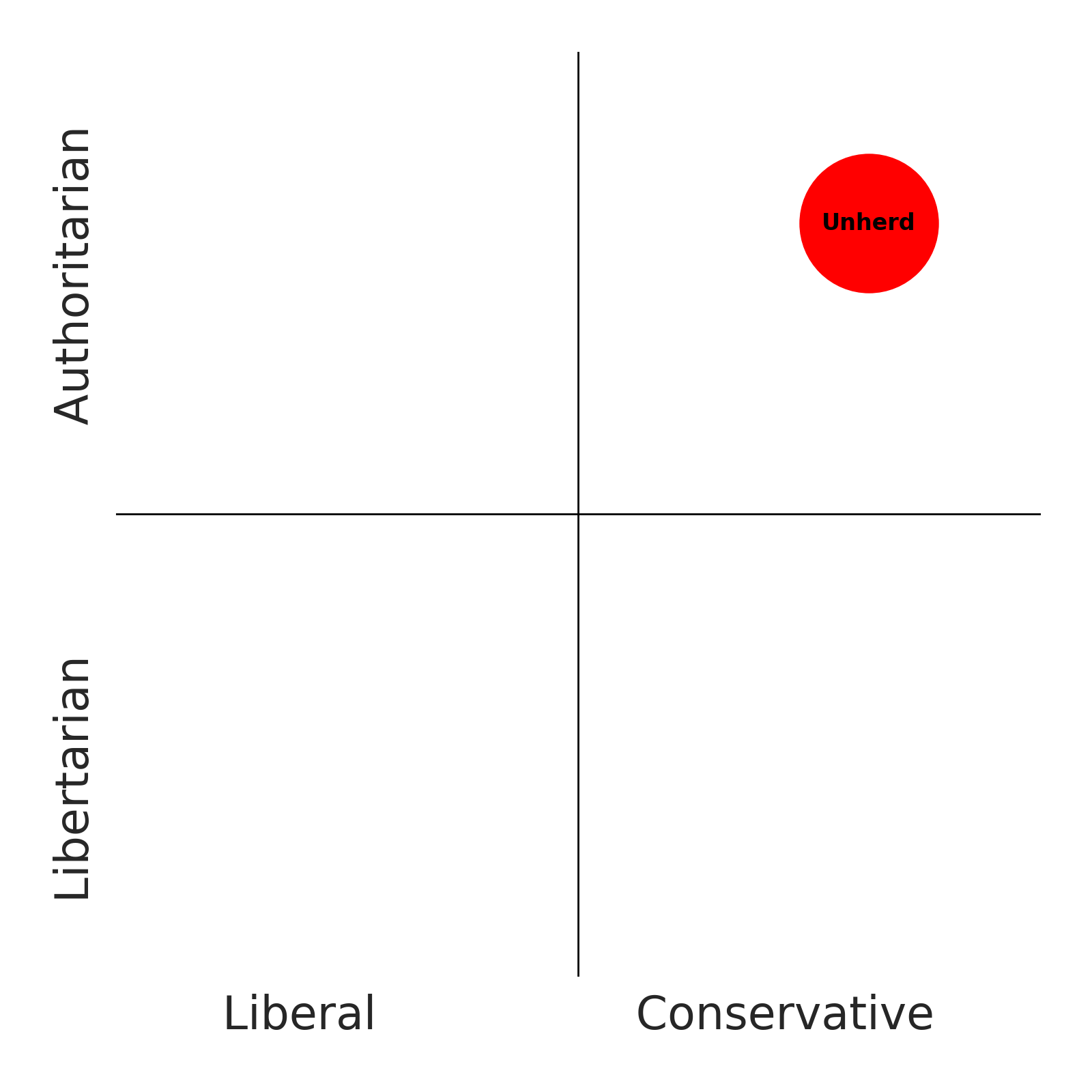
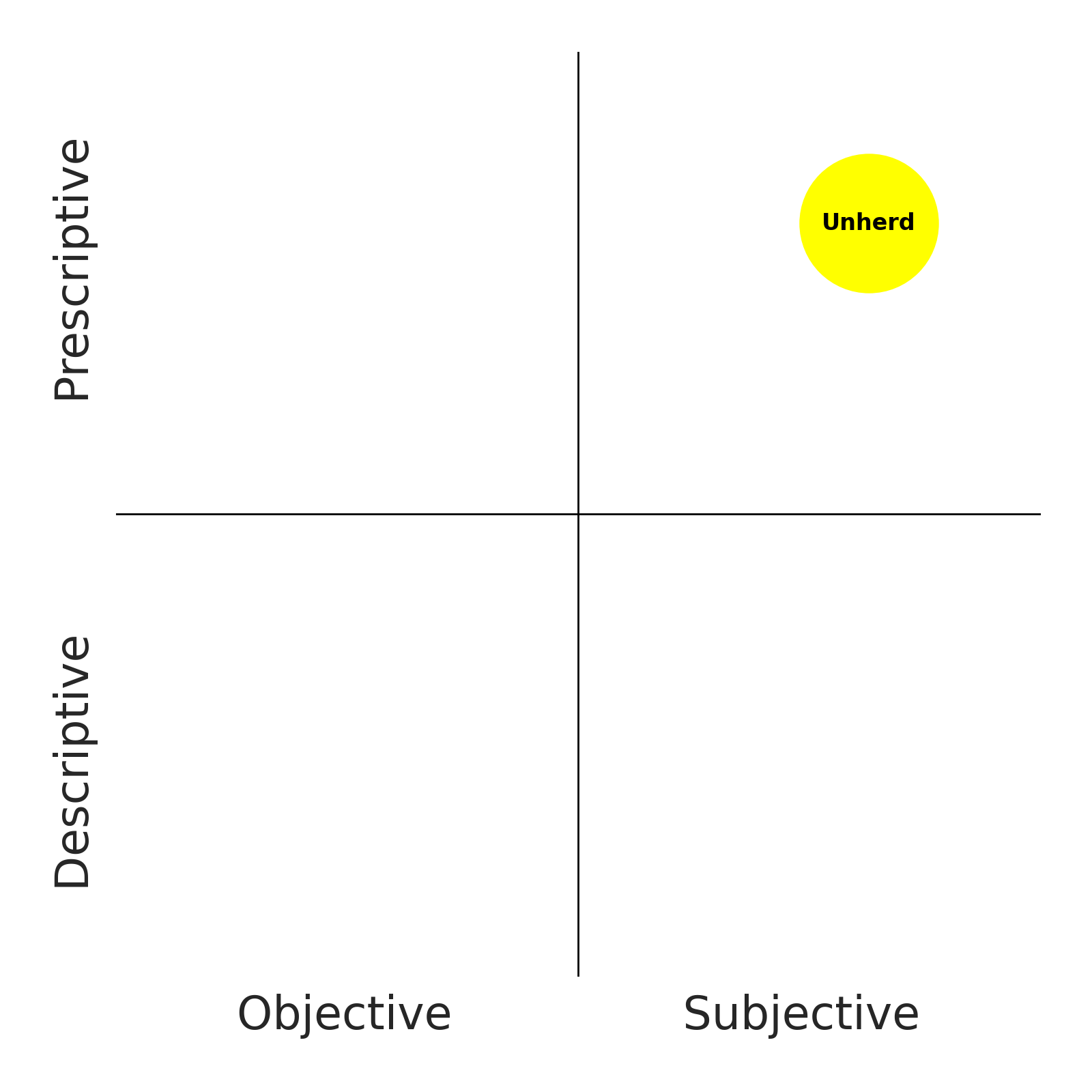
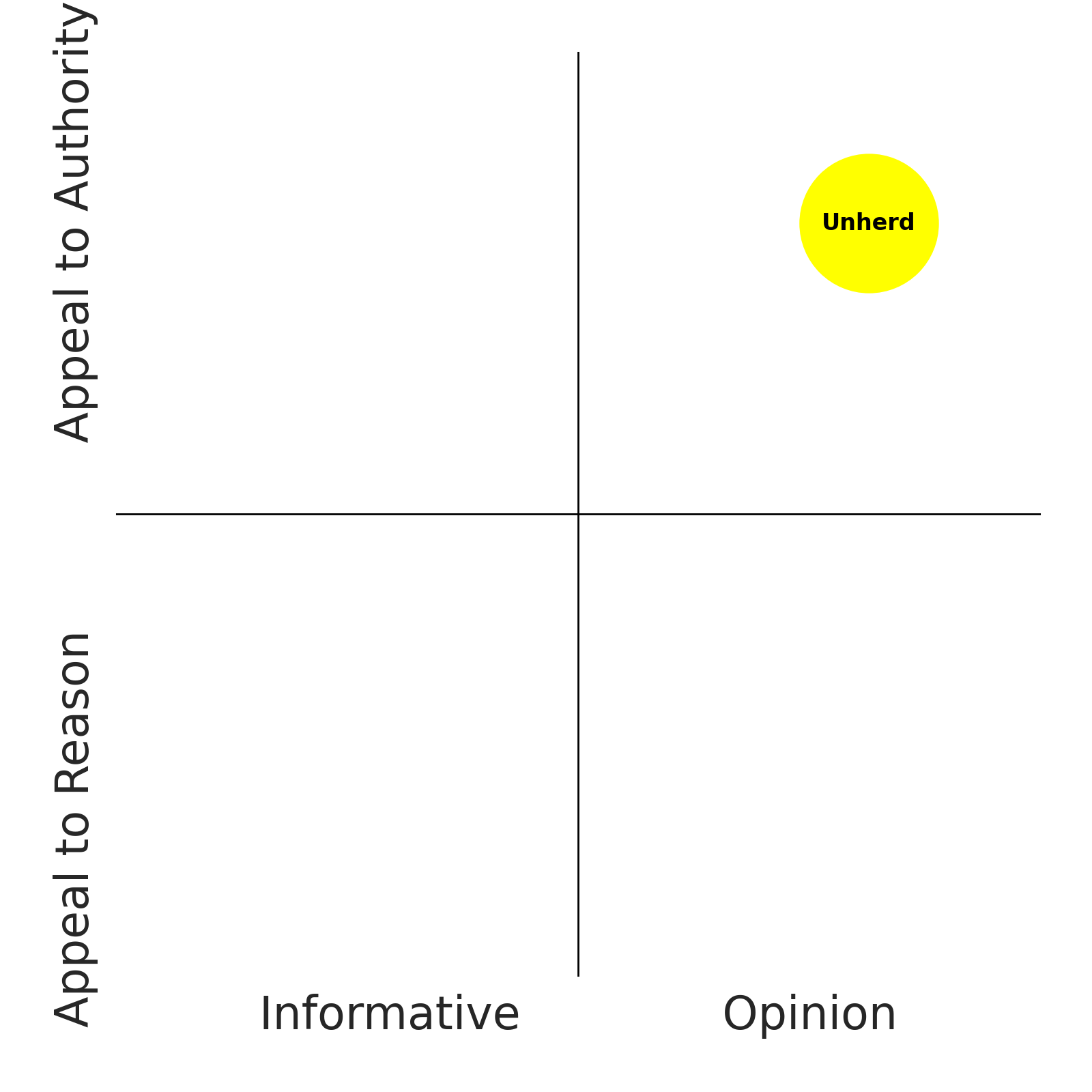
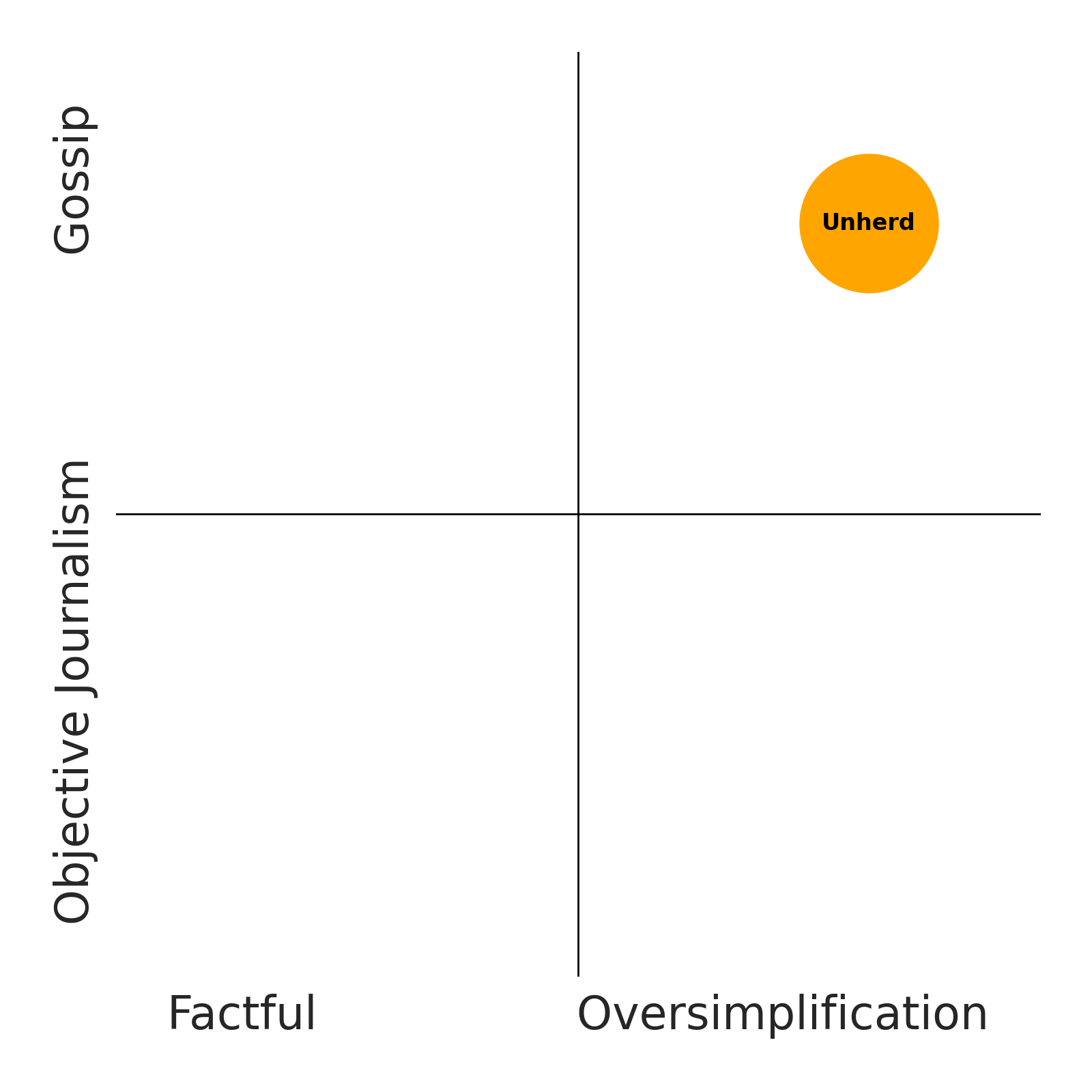
2026 © Helium Trades
Privacy Policy & Disclosure
* Disclaimer: Nothing on this website constitutes investment advice, performance data or any recommendation that any particular security, portfolio of securities, transaction or investment strategy is suitable for any specific person. Helium Trades is not responsible in any way for the accuracy
of any model predictions or price data. Any mention of a particular security and related prediction data is not a recommendation to buy or sell that security. Investments in securities involve the risk of loss. Past performance is no guarantee of future results. Helium Trades is not responsible for any of your investment decisions,
you should consult a financial expert before engaging in any transaction.


