See whether Helium helps you make better-informed decisions. Try every Pro Trader feature for 30 days. No credit card required.
Try every Pro Trader feature for 30 days. No credit card required.
Observable scope and framing: The sample is a geopolitical brief aggregator with especially frequent attention to Ebola outbreaks, migrant crises, the European Union, and protected status [88], alongside China-centered diplomacy, territorial disputes, military affairs, sanctions, development, and international conflict.
The largest recurring cluster concerns PRC foreign-policy positions involving Japan, Taiwan, the Philippines, the United States, and neighboring states
August 07, 2026 · 0 shares
Frames Japan's military buildup as a reckless 'remilitarization' threatening regional peace, echoing Chinese government accusations.
Japan's post-WWII constitution renounces war and prohibits maintaining military forces with war potential, but has been reinterpreted since 2015 to allow limited collective self-defense. Japan has been increasing defense spending and acquiring offensive weaponry, citing threats from China and North Korea.
Automated analysis; not human reviewed. Limitations: Article is from Chinese state media; analysis may undercount subtle framing due to language and cultural assumptions. · 20 of 53 available dimensions scored; omitted dimensions are not treated as neutral. · Verified supporting quotes for 19 of 20 scored dimensions.
Claim: The article relies on elite government official statements and calls for elite international action.
“Chen Xi, spokesperson for the Chinese Ministry of National Defense, at a regular news briefing” · exact text match
Why: The source is a government official; no populist appeal to common people.
Claim: The article promotes an authoritarian state's perspective, criticizing Japan's military buildup without regard for individual liberty.
“It is imperative for the international community to unite and act in concert to contain the rise of Japan's neo-militarism” · exact text match
Why: The article represents the stance of an authoritarian government and calls for collective action that suppresses Japan's sovereign military choices.
Claim: The article presents only the Chinese government's viewpoint, framing Japan's actions negatively.
“Japan's 'remilitarization' is a real threat to peace” · exact text match
Why: The headline and framing adopt the Chinese official's perspective without presenting Japan's rationale.
Claim: The article uses sensational language such as 'real threat', 'reckless', 'perilous', and 'neo-militarism'.
“Japan's 'remilitarization' efforts a real threat to regional peace” · exact text match
Why: The word 'threat' and the framing of 'neo-militarism' are sensational.
Claim: The article advocates for containing Japan's military buildup, a hawkish stance.
“It is imperative for the international community to unite and act in concert to contain the rise of Japan's neo-militarism” · exact text match
Why: Calls for containment are hawkish in nature.
Claim: The article uses fear-inducing language about Japan's actions.
“the real threat to Japan's security and regional peace and stability is its reckless attempts” · not found in supplied text
Why: Words like 'real threat' and 'reckless' evoke fear.
Claim: The article is heavily opinionated, presenting the spokesperson's opinions as central.
“Realities have proved that the Japanese side's so-called 'neighboring security threat' is merely a pretext” · exact text match
Why: The spokesperson expresses an opinion, and the article frames it as fact.
Claim: The article is entirely about a political and geopolitical issue.
“Japan's 'remilitarization' is a real threat to peace: spokesperson” · exact text match
Why: The subject matter is international politics.
Claim: The article simplifies Japan's actions as merely a 'pretext' for remilitarization, ignoring complex security motivations.
“the Japanese side's so-called 'neighboring security threat' is merely a pretext” · exact text match
Why: It dismisses Japan's stated security concerns as pretext without analysis.
Claim: The article relies on the authority of the Chinese defense spokesperson.
“In response at a regular news briefing, Chen Xi, spokesperson for the Chinese Ministry of National Defense, said” · exact text match
Why: The argument rests on the official's statements rather than independent evidence.
Claim: The article focuses on China's response to Japan's military test rather than reporting the test itself.
“Japan's 'remilitarization' efforts a real threat to regional peace, Chinese defense spokesperson says” · exact text match
Why: The headline and content center on the Chinese spokesperson's reaction.
Claim: The article portrays China and the region as victims of Japan's aggressive remilitarization.
“The real threat to Japan's security and regional peace and stability is its reckless attempts” · exact text match
Why: Japan is framed as the aggressor threatening regional stability.
Claim: The article reflects Chinese Communist ideology critical of Japanese militarism.
“It is imperative for the international community to unite and act in concert to contain the rise of Japan's neo-militarism” · exact text match
Why: The term 'neo-militarism' is ideological and reflects a specific anti-Japanese narrative.
Claim: The article uncritically supports the Chinese government's position.
“Chen Xi, spokesperson for the Chinese Ministry of National Defense, said Japan's moves to accelerate the development of offensive weapons are becoming increasingly rampant and perilous” · exact text match
Why: The article solely amplifies the government spokesperson's statements without alternative views.
Claim: The article has a negative emotional tone.
“rampant and perilous” · exact text match
“real threat” · exact text match
Why: The language is consistently negative and alarmist.
Claim: The article criticizes Japan's military buildup while China itself has been expanding its military.
“Japan's moves to accelerate the development of offensive weapons are becoming increasingly rampant and perilous” · exact text match
Why: The article does not acknowledge China's own military modernization, implying a double standard.
Claim: The article relies solely on a single Chinese government source without independent verification.
“Chen Xi, spokesperson for the Chinese Ministry of National Defense, at a regular news briefing” · exact text match
Why: The lack of diverse sourcing or independent analysis reduces credibility.
Claim: The article uses emotionally charged language and lacks countervailing evidence.
“Japan's moves to accelerate the development of offensive weapons are becoming increasingly rampant and perilous” · exact text match
Why: The word 'perilous' is emotional and not supported by specific evidence in the article.
Claim: The article emphasizes collective international action over individual state sovereignty.
“It is imperative for the international community to unite and act in concert to contain the rise of Japan's neo-militarism” · exact text match
Why: The call for unified action is collectivist in nature.
Claim: The article omits Japan's security justifications and uses loaded terminology.
“Japan's 'remilitarization' is a real threat to peace” · exact text match
Why: The framing presents a one-sided threat narrative without acknowledging opposing arguments.
Article is from Chinese state media; analysis may undercount subtle framing due to language and cultural assumptions.
July 31, 2026 · 0 shares
China's state media frames Japan's intelligence bureau as a negative security shift, using historical accusations of militarism and crimes without presenting Japanese perspectives.
Automated analysis; not human reviewed. · 15 of 52 available dimensions scored; omitted dimensions are not treated as neutral. · Verified supporting quotes for 9 of 15 scored dimensions.
Claim: The article reflects an authoritarian, state-centric worldview, criticizing Japan's security policy from a government perspective.
“China on Friday voiced concern over Japan's establishment of a national intelligence bureau” · exact text match
“She urged Japanese policymakers to draw profound lessons from history and act with prudence” · exact text match
Why: The content is entirely government-to-government, with no mention of individual rights or civil liberties.
Claim: The article presents only one viewpoint with emotional language, making it subjective.
“committing 'countless crimes' against the people of its Asian neighbors” · not found in supplied text
“negative development in the country's domestic and external security policy” · exact text match
Why: No counterpoint or independent analysis is provided; language is evaluative and accusatory.
Claim: The article uses strong, emotionally charged language to dramatize Japan's actions.
“committing 'countless crimes'” · not found in supplied text
“threatening regional peace and stability” · exact text match
Why: Phrases like 'countless crimes' and 'threatening peace' are sensational in context of a diplomatic statement.
Claim: The article prescribes action (learning from history) rather than just describing events.
“She urged Japanese policymakers to draw profound lessons from history and act with prudence” · exact text match
Why: The article ends with a direct prescription for Japanese policymakers.
Claim: The article adopts a hawkish stance by accusing Japan of threatening regional peace.
“Japan has accelerated its remilitarization process, threatening regional peace and stability” · exact text match
Why: The accusation of threatening peace is a hawkish characterization of Japan's actions.
Claim: The article uses language that may generate fear about Japan's remilitarization.
“threatening regional peace and stability” · exact text match
“causing widespread concern in the international community” · exact text match
Why: The article warns of a threat, but the fear level is moderate and contextual.
Claim: The article is highly opinionated, presenting China's criticisms as fact.
“China says Japan's intelligence bureau marks negative security shift” · exact text match
“Japan has accelerated its remilitarization process, threatening regional peace” · exact text match
Why: The article's claims are evaluative and not presented as neutral reportage.
Claim: The article is a direct expression of Chinese government foreign policy position, making it highly political.
“China on Friday voiced concern over Japan's establishment of a national intelligence bureau” · exact text match
“under the pretext of national security and external threats, Japan has accelerated its remilitarization process, threatening regional peace and stability” · exact text match
Why: The entire article is a political statement from a government spokesperson, with no non-political content.
Claim: The article reduces Japan's security policy to a simple narrative of militarism without nuance.
“under the pretext of national security and external threats, Japan has accelerated its remilitarization process” · exact text match
Why: Japan's security concerns and the intelligence bureau's purpose are not explored; only the negative interpretation is given.
Claim: The article relies entirely on the authority of the Chinese Foreign Ministry spokesperson without other sources.
“Chinese Foreign Ministry spokesperson Mao Ning said” · exact text match
“Speaking at a regular press briefing, Chinese Foreign Ministry spokesperson Mao Ning” · exact text match
Why: Only the official spokesperson is quoted; no independent experts, documents, or Japanese sources are cited.
Claim: The article portrays Asian neighbors (including implicitly China) as victims of Japan's past aggression.
“committing 'countless crimes' against the people of its Asian neighbors, as well as the Japanese people” · not found in supplied text
Why: The phrase 'countless crimes' invokes victimhood, but it is applied broadly and not the central focus.
Claim: The article asserts China's view as definitive without hedging or acknowledging alternative interpretations.
“China says Japan's intelligence bureau marks negative security shift” · exact text match
“Mao said Japan's intelligence agencies had historically paved the way for the country's militarism expansion” · not found in supplied text
Why: The statements are presented as categorical truths without uncertainty or qualification.
Claim: The article fully supports the Chinese government's position without any criticism.
“China says Japan's intelligence bureau marks negative security shift” · exact text match
“China voiced concern over Japan's establishment of a national intelligence bureau” · not found in supplied text
Why: The article uncritically transmits the official Chinese position.
Claim: The article omits Japan's rationale and uses negatively loaded framing to shape perception.
“under the pretext of national security and external threats” · exact text match
“negative development” · exact text match
Why: The phrase 'pretext' implies deceit, and omitting Japan's security justification is a material omission.
Claim: The article lacks balance and factual neutrality, reducing its evident integrity.
“China says Japan's intelligence bureau marks negative security shift” · exact text match
“committing 'countless crimes'” · not found in supplied text
Why: No attempt is made to present Japan's perspective or verify the historical claims; the article is pure advocacy.
July 31, 2026 · 0 shares
Presents China's rejection of Philippines' baseline delimitation as a grave legal violation, using exclusively official Chinese sources and demanding compliance, reflecting state-aligned framing.
Huangyan Dao (Scarborough Shoal) is a disputed feature in the South China Sea. The Philippines won a 2016 arbitration case at the Permanent Court of Arbitration, which China rejects.
Automated analysis; not human reviewed. Limitations: The analysis relies on a single article from a state-run outlet, limiting cross-checking and raising potential for hidden institutional framing. · 18 of 52 available dimensions scored; omitted dimensions are not treated as neutral. · Verified supporting quotes for 16 of 18 scored dimensions.
Claim: The article relies on elite government sources rather than popular sentiment.
“The Chinese Foreign Ministry on Friday issued a statement” · exact text match
Why: Source is a government ministry, not grassroots or opposition voices.
Claim: The article emphasizes state authority, sovereignty, and demands compliance, consistent with authoritarian framing.
“China urges the Philippines to earnestly respect China's territorial sovereignty and maritime rights and interests... Otherwise, China will respond resolutely.” · not found in supplied text
Why: Demands unilateral respect and threatens consequences, typical of authoritarian sovereignty discourse.
Claim: The report is subjective, expressing a single national viewpoint as fact.
“Huangyan Dao is China's inherent territory. China has indisputable sovereignty over it” · exact text match
Why: Presents sovereignty claim as unqualified fact, not as one side's position.
Claim: The article uses dramatic and condemnatory language.
“grave infringement upon China's territorial sovereignty and a serious violation of international law” · exact text match
Why: Terms like 'grave infringement' and 'serious violation' heighten emotional response.
Claim: The article adopts a hawkish stance by threatening a resolute response.
“Otherwise, China will respond resolutely” · exact text match
Why: Explicit threat of action, not conciliatory language.
Claim: The article presents China's official position as the only perspective, without balance or attribution of differing views.
“It is illegal, null and void. China firmly rejects and will never accept it.” · exact text match
Why: Directly states China's judgment as definitive, no counterpoint offered.
Claim: The article is heavily political, focusing entirely on a territorial sovereignty dispute.
“China rejects Philippines' delimitation of Huangyan Dao 'baselines'” · exact text match
Why: The entire content concerns a political dispute between states, with no non-political framing.
Claim: The article relies on the authority of the Chinese Foreign Ministry and legal instruments as justification.
“The Chinese Foreign Ministry on Friday issued a statement” · exact text match
Why: Uses ministry statement as the sole source of truth, appealing to institutional authority.
Claim: The article asserts certainty beyond the evidence provided.
“Huangyan Dao is China's inherent territory. China has indisputable sovereignty over it” · exact text match
Why: Uses 'indisputable' despite the existence of a competing claim and international arbitration ruling.
Claim: The article unambiguously supports the Chinese government's position.
“It is illegal, null and void. China firmly rejects and will never accept it.” · exact text match
Why: Directly endorses government stance without critique or alternative.
Claim: The tone conveys negative emotion toward the Philippines' actions.
“These maneuvers trample on China's territorial sovereignty and maritime rights and interests, heighten maritime tensions, and undermine peace and stability” · exact text match
Why: Words like 'trample', 'undermine' carry strong negative connotation.
Claim: The article's credibility is low due to one-sided sourcing and lack of independent verification.
“The Chinese Foreign Ministry on Friday issued a statement” · exact text match
Why: Only one source (Chinese government), no independent reporting or cross-checking.
Claim: The article attempts legal reasoning, citing international law, though selectively.
“serious violation of international law, including the United Nations Charter and the United Nations Convention on the Law of the Sea (UNCLOS)” · exact text match
Why: References specific legal instruments, indicating rational argumentation, even if one-sided.
Claim: The article prioritizes collective state sovereignty over individual or alternative perspectives.
“China's territorial sovereignty and maritime rights and interests over Huangyan Dao and Nansha Qundao shall under no circumstances be affected” · exact text match
Why: Emphasizes inviolable state rights, consistent with collectivist framing.
Claim: The article is not speculative; it reports a definitive government reaction.
“China will respond resolutely” · exact text match
Why: The threat is a stated position, not a forecast; otherwise the article is backward-looking.
Claim: The article uses omission of counterarguments and loaded phrasing to shape reader perception.
“It is illegal, null and void. China firmly rejects and will never accept it.” · exact text match
Why: Presents China's conclusion as absolute without presenting the Philippines' legal basis, and uses emotionally charged labels.
Claim: No strong AI-authorship indicators present; prose is typical of official news translation.
“China rejects Philippines' delimitation of Huangyan Dao 'baselines'” · exact text match
Why: Standard journalistic phrasing, no repetitive patterns or AI telltales, but not conclusive.
Claim: The article omits the Philippines' perspective entirely, reducing fairness.
“The Chinese Foreign Ministry on Friday issued a statement... The move 'is a grave infringement'” · not found in supplied text
Why: No mention of Philippines' legal reasoning or response; only China's condemnation.
The analysis relies on a single article from a state-run outlet, limiting cross-checking and raising potential for hidden institutional framing.
August 07, 2026 · 0 shares
Frames Chinese military exercises as legitimate self-defense while portraying Philippine actions as illegal provocations, relying solely on Chinese official statements.
Huangyan Dao (Scarborough Shoal) is a disputed feature in the South China Sea claimed by both China and the Philippines.
Automated analysis; not human reviewed. Limitations: The analysis is limited by the absence of any Philippine or independent sources within the article; the publisher's framing is the only perspective available. · 20 of 53 available dimensions scored; omitted dimensions are not treated as neutral. · Verified supporting quotes for 14 of 20 scored dimensions.
Claim: Publisher supports strong government and military authority in international disputes.
“The Chinese military will take firm and effective countermeasures against any provocative attempts to stir up trouble in the South China Sea.” · not found in supplied text
“Our exercises stand as a serious warning against violations and provocations by the Philippine side.” · not found in supplied text
Why: The article endorses the Chinese government's authoritarian stance by presenting military countermeasures and warnings as legitimate and necessary.
Claim: Publisher presents a one-sided account relying only on Chinese official sources.
“Chen Xi, spokesperson for China's Ministry of National Defense, reiterated that Huangyan Dao is China's inherent territory.” · exact text match
“China urges the Philippine side to immediately stop its illegitimate acts.” · not found in supplied text
Why: No opposing sources or independent verification are included; the entire narrative is from the Chinese government perspective.
Claim: Article is prescriptive, ending with a direct demand to the Philippines.
“China urges the Philippine side to immediately stop its illegitimate acts violating China's territorial sovereignty and maritime rights and interests and stop its provocations and propaganda.” · not found in supplied text
Why: The conclusion prescribes specific actions for the Philippines rather than simply describing events.
Claim: Publisher adopts a hawkish stance, advocating military countermeasures and warnings.
“The Chinese military will take firm and effective countermeasures against any provocative attempts” · exact text match
“Our exercises stand as a serious warning against violations and provocations by the Philippine side.” · not found in supplied text
Why: The language of 'firm countermeasures' and 'serious warning' indicates a hawkish posture.
Claim: Assumes the point in dispute (China's sovereignty over Huangyan Dao) as a given premise.
“Huangyan Dao is China's inherent territory.” · exact text match
Why: The article treats China's sovereignty claim as a self-evident fact rather than a contested position, which is circular reasoning.
Claim: Though presented as news, the article is heavily opinionated in favor of China.
“Relevant actions of the Philippine side seriously violated China's territorial sovereignty, international law and the basic norms of international relations, Chen said, stressing that they are illegal, null and void.” · exact text match
Why: The publisher selects only the Chinese government's characterization and presents it without countervailing opinion, functioning as advocacy.
Claim: The entire article is about a political dispute and takes a strong political stance.
“Chinese military vows countermeasures to South China Sea provocations.” · exact text match
Why: The subject matter is inherently political, and the framing is partisan.
Claim: Reduces a complex territorial dispute to a simple dichotomy of Chinese legality vs Philippine illegality.
“Relevant actions of the Philippine side seriously violated China's territorial sovereignty, international law and the basic norms of international relations” · exact text match
Why: No nuance about overlapping claims, international arbitration, or historical context is provided.
Claim: Relies solely on the authority of the Chinese government spokesperson as the source of truth.
“Chen Xi, spokesperson for China's Ministry of National Defense, reiterated that Huangyan Dao is China's inherent territory.” · exact text match
Why: The article does not cite independent experts or international bodies; all claims are from a single government official.
Claim: Portrays China as a victim of Philippine provocations.
“provocative attempts to stir up trouble in the South China Sea” · exact text match
Why: Language like 'provocations' and 'stir up trouble' casts China as the aggrieved party.
Claim: Expresses certainty about legal conclusions that are in fact contested.
“China has continuously, peacefully and effectively exercised sovereignty and jurisdiction over Huangyan Dao and is the only country entitled by international law to declare the baselines of the territorial sea of Huangyan Dao.” · exact text match
Why: The statement presents China's exclusive entitlement as an undisputed legal fact, whereas other nations contest it.
Claim: Strongly reflects Chinese nationalist ideology regarding territorial sovereignty.
“Huangyan Dao is China's inherent territory.” · exact text match
Why: The language of 'inherent territory' reflects an ideological claim of unassailable sovereignty.
Claim: Unquestioningly supports the Chinese government's position.
“China has continuously, peacefully and effectively exercised sovereignty and jurisdiction over Huangyan Dao and is the only country entitled by international law to declare the baselines of the territorial sea of Huangyan Dao.” · exact text match
Why: The article reproduces the official Chinese government line without any critical distance.
Claim: The overall emotional tone is slightly negative towards the Philippines.
“illegal, null and void” · exact text match
“provocations” · exact text match
Why: Negative descriptors are applied to Philippine actions, while Chinese actions are described neutrally or positively.
Claim: Low credibility due to one-sided sourcing and lack of independent verification.
“Only Chinese official statements are cited.” · not found in supplied text
Why: The article provides no corroborating evidence or alternative viewpoints, reducing its trustworthiness as a neutral report.
Claim: Emphasizes collective state action and national sovereignty over individual rights.
“The Chinese military will take firm and effective countermeasures” · exact text match
“China urges the Philippine side” · exact text match
Why: The narrative is about state-to-state relations, with no individual perspective, reflecting collectivist values.
Claim: Uses omission of opposing views and loaded language to shape reader perception.
“provocative attempts” · exact text match
“illegal, null and void” · exact text match
Why: The article omits the Philippine perspective and frames Chinese actions as defensive, which are manipulative techniques.
Claim: Lacks balance and fairness by omitting Philippine perspective and presenting unqualified allegations as fact.
“Relevant actions of the Philippine side seriously violated China's territorial sovereignty, international law and the basic norms of international relations” · exact text match
Why: The article does not provide any opportunity for the Philippine side to respond, and treats the Chinese government's characterization as definitive.
Claim: Presents China as acting within international law and peaceably.
“China has continuously, peacefully and effectively exercised sovereignty and jurisdiction” · exact text match
Why: The emphasis on 'peacefully' signals moral virtue, though the message also includes military warnings.
Claim: Singles out the Philippines as the sole cause of tension.
“The spokesperson said that since its independence in 1946, the Philippines has expanded its claims... leading to wide wariness and dissatisfaction as well as resolute opposition from other littoral countries.” · not found in supplied text
Why: Attributes the regional tensions to Philippine expansionism, without acknowledging China's own actions.
The analysis is limited by the absence of any Philippine or independent sources within the article; the publisher's framing is the only perspective available.
July 24, 2026 · 0 shares
The article foregrounds a Chinese delegation's counter-claims against Japan, portraying Taiwan sovereignty, South China Sea stability, and anti-militarism as core China-centered imperatives while presenting Japan as militarily aggressive and urging adherence to the one-China principle.
Foreign ministers attend the 33rd ASEAN Regional Forum, part of the ASEAN Foreign Ministers' Meeting, at the Philippine International Convention Center in Pasay, Metro Manila, the Philippines, July 23, 2026. /VCG
Automated analysis; not human reviewed. Limitations: Textual analysis limited to the provided excerpt; no independent corroboration or broader media context included. · 47 of 52 available dimensions scored; omitted dimensions are not treated as neutral. · Verified supporting quotes for 0 of 47 scored dimensions.
Ambiguities: relies on official delegation; lacks independent verification.
August 18, 2026 · 0 shares
The report is a straightforward diplomatic communiqué from the Chinese state news agency, presenting the meeting and statements without additional commentary or analysis.
This is a Chinese state news agency report of a bilateral diplomatic meeting, reflecting official positions. China and Ecuador established a comprehensive strategic partnership in 2016, and this meeting is part of ongoing diplomatic engagement.
Automated analysis; not human reviewed. Limitations: This is an official Chinese state media report, which presents diplomatic engagement in a favorable light and omits any critical perspective or independent analysis. · 54 of 54 available dimensions scored; omitted dimensions are not treated as neutral. · Verified supporting quotes for 17 of 54 scored dimensions.
Claim: The report frames high-level diplomatic negotiations as the primary driver of bilateral relations, emphasizing elite-level agreements and state-led cooperation.
“The two heads of state also exchanged views on the situation in the Latin American and Caribbean region.” · exact text match
Why: The focus on state leaders and official documents without mention of civil society or grassroots perspectives indicates an elite-centric framing.
Claim: The report endorses centralized state planning and government-led cooperation projects, reflecting an authoritarian governance style.
“Xi called on the two sides to consolidate political mutual trust and continue to understand and support each other on issues concerning their respective core interests and major concerns.” · exact text match
Why: The emphasis on state-to-state cooperation and government-led initiatives without reference to market forces or individual liberties suggests an authoritarian orientation.
Claim: The report is primarily descriptive, relaying official statements and occurrences without subjective commentary.
“Chinese President Xi Jinping on Tuesday urged China and Ecuador to strengthen the alignment of development strategies and implement the cooperation plan to jointly build the Belt and Road.” · exact text match
Why: The article presents events and quotes without editorializing, adhering to a factual reporting style typical of state media.
Claim: The article is devoid of sensational language and focuses on factual diplomatic interactions.
“The two heads of state also exchanged views on the situation in the Latin American and Caribbean region.” · exact text match
Why: No emotional or exaggerated language is used; the tone is formal and measured.
Claim: The article presents the bilateral relationship and cooperation outcomes in a positive light, emphasizing mutual benefits and progress.
“Noboa said China is an important partner and friend of Ecuador, and hailed Xi as a great leader.” · exact text match
Why: The positive framing of cooperation and praise for leadership indicates an optimistic outlook.
Claim: The article is a routine diplomatic report with no surprising or novel elements.
“Chinese President Xi Jinping (R) shakes hands with President of the Republic of Ecuador Daniel Roy-Gilchrist Noboa Azín, at the Great Hall of the People in Beijing, capital of China, August 18, 2026. /Xinhua” · exact text match
Why: The content is a standard summary of a diplomatic meeting, offering no unique insights or developments.
Claim: The report describes diplomatic statements and actions without prescribing policy recommendations.
“China is ready to cooperate with Ecuador in healthcare, poverty alleviation, disaster prevention and reduction, and other areas to support Ecuador's national development, Xi said.” · exact text match
Why: The article reports proposed cooperation areas without editorializing on whether they are beneficial or appropriate.
Claim: The report emphasizes cooperation, mutual understanding, and peaceful development, avoiding conflict-oriented rhetoric.
“China supports Latin American countries in upholding independence and self-reliance, pursuing foreign cooperation based on their national interests, and safeguarding regional peace and stability, Xi said.” · exact text match
Why: The language stresses peace, stability, and mutual support, indicating a dovish stance.
Claim: The article is inherently political, focusing on state-to-state relations and diplomatic engagements.
“Chinese President Xi Jinping held talks with President of the Republic of Ecuador Daniel Roy-Gilchrist Noboa Azín in Beijing on Tuesday.” · exact text match
Why: The subject matter is exclusively political diplomacy, with no non-political content.
Claim: The article heavily relies on statements from Xi and Noboa to establish the narrative, without independent analysis.
“Xi said” · exact text match
“Noboa said” · exact text match
Why: The entire content is comprised of quotes from these leaders, appealing to their authority without external sources.
Claim: The report promotes a state-centric, collectivist view of international relations and development.
“The two countries should work together on their respective paths toward modernization, Xi said.” · exact text match
Why: The emphasis on collective progress and state-led cooperation reflects an ideological orientation toward centralized governance.
Claim: The report aligns with official government positions and promotes the state's agenda without critical analysis.
“Chinese President Xi Jinping on Tuesday urged China and Ecuador to strengthen the alignment of development strategies and implement the cooperation plan to jointly build the Belt and Road.” · exact text match
Why: The article directly promotes the Belt and Road Initiative and echoes government statements, indicating pro-establishment framing.
Claim: The report is attributed to a state news agency and relies on official sources, which is credible within that context.
“Chinese President Xi Jinping on Tuesday urged China and Ecuador to strengthen the alignment of development strategies” · exact text match
Why: As an official news agency report, it accurately reflects official statements but lacks independent verification.
Claim: The article references modern technological and development concepts without any supernatural or unscientific framing.
“actively explore cooperation in areas including the digital economy, green development, new energy and artificial intelligence” · exact text match
Why: The content is grounded in technology and development, not superstition.
Claim: The report emphasizes collective state action and government-led initiatives over individual or market-driven approaches.
“China is ready to cooperate with Ecuador in healthcare, poverty alleviation, disaster prevention and reduction, and other areas to support Ecuador's national development, Xi said.” · exact text match
Why: The focus on state cooperation and collective benefit indicates a collectivist framing.
Claim: The article presents a straightforward diplomatic narrative without delusional or irrational elements.
“The two sides should well implement cooperation projects in energy, minerals, infrastructure construction, finance and other fields” · exact text match
Why: The claims are standard diplomatic statements without any irrational or conspiracy-driven content.
This is an official Chinese state media report, which presents diplomatic engagement in a favorable light and omits any critical perspective or independent analysis.
August 18, 2026 · 0 shares
The article presents China's desertification efforts as unqualified successes and a global model, using celebratory language and omitting any critical perspective.
Automated analysis; not human reviewed. Limitations: No external verification of statistics; article originates from a government-aligned source, and the provided text is the sole basis for analysis. · 5 of 54 available dimensions scored; omitted dimensions are not treated as neutral. · Verified supporting quotes for 2 of 5 scored dimensions.
Claim: Uses evaluative language such as 'achievements' and 'green homes'.
“showcasing China's experience and achievements” · exact text match
“transformed desert and sandy areas into 'green homes'.” · not found in supplied text
Why: The adjectives 'achievements' and the metaphorical 'green homes' convey positive subjective judgment rather than neutral reporting.
Claim: The article frames China's desertification policies as achieving global leadership, aligning with the government's agenda.
“China has seen a continuous decline in the areas affected by desertification and land salinization, becoming the first country in the world to achieve 'zero growth' in land degradation.” · not found in supplied text
“making China a global leader in ecological restoration.” · exact text match
Why: The language attributes world-first status and global leadership to China's government programs, which is a political claim promoting national achievement.
Claim: The article presents government programs uncritically and favorably.
“Since 1978, China has launched a series of major ecological projects, including the Three-North Shelterbelt Forest Program (TSFP), widely recognized as the world's largest afforestation program.” · exact text match
Why: The article describes government initiatives as 'major' and 'widely recognized' without any critical assessment or alternative viewpoints.
Claim: Positive emotional tone with words like 'hope' and 'prosperity'.
“Restoring Land, Restoring Hope” · exact text match
“achieving green prosperity together” · not found in supplied text
Why: The use of 'hope' and 'prosperity' evokes positive emotions and frames the subject optimistically.
Claim: Promotes China's efforts to a global audience.
“sharing Chinese experience and solutions for global ecological governance” · exact text match
Why: The phrase 'sharing Chinese experience and solutions' functions as promotional advocacy for China's model abroad.
No external verification of statistics; article originates from a government-aligned source, and the provided text is the sole basis for analysis.
July 28, 2026 · 0 shares
Pro-establishment framing emphasizes China's ecological leadership and regional forestry cooperation.
Automated analysis; not human reviewed. Limitations: The article relies heavily on official statements with limited independent sourcing, enabling PR-like framing of China’s ecological leadership. · 2 of 52 available dimensions scored; omitted dimensions are not treated as neutral. · Verified supporting quotes for 2 of 2 scored dimensions.
Claim: Pro-establishment framing in the article
“China has undergone historic, transformative and comprehensive changes in ecological conservation, both in understanding and in practices.” · exact text match
“with joint efforts of all parties, the region has become a major force in reversing the downward trend of global forest resources.” · exact text match
Why: Direct quotations from the official discourse frame China's leadership and regional role in a positive light.
Claim: Pro-establishment framing via emphasis on China's ecological leadership and regional cooperation
“China has undergone historic, transformative and comprehensive changes in ecological conservation, both in understanding and in practices.” · exact text match
“with joint efforts of all parties, the region has become a major force in reversing the downward trend of global forest resources.” · exact text match
Why: The statements position China as a leader and cooperator in ecological policy.
The article relies heavily on official statements with limited independent sourcing, enabling PR-like framing of China’s ecological leadership.
August 21, 2026 · 0 shares
Presents Chinese state-supported film industry and cultural policies in an unwaveringly favorable light, celebrating record box office numbers and touting economic spillovers.
Automated analysis; not human reviewed. · 5 of 54 available dimensions scored; omitted dimensions are not treated as neutral. · Verified supporting quotes for 5 of 5 scored dimensions.
Claim: The article tends toward subjectively positive framing rather than detached, neutral reporting.
“The result has been a marked surge in visitor numbers” · exact text match
“cultural hubs” · exact text match
“captured audience hearts” · exact text match
Why: While presenting data, the chosen verbs and adjectives (e.g., 'surge', 'captured audience hearts') are evaluative and subjective, positioning the audience to perceive the events positively.
Claim: The article adopts a bullish stance on the Chinese film market, highlighting growth and expansion.
“China's 2026 summer movie season is heating up, with box office receipts and audience turnout hitting record highs.” · exact text match
Why: Headline and lede assert a strong, positive trend for the film market, emphasizing growth and record performance.
Claim: The article frames China's summer film season as a resounding success, using consistently positive and upbeat language.
“box office receipts and audience turnout hitting record highs” · exact text match
“the film boom is also spilling economic benefits into tourism, retail, dining and other consumer spending.” · exact text match
Why: The text repeatedly uses superlative and positive framing, describing surging box office, record attendance, and celebrating cultural and economic spillovers without any critical or negative perspective.
Claim: The article portrays the government and its initiatives in a highly favorable light.
“local authorities launched a series of themed cultural-tourism routes” · exact text match
“the government issued 48 million yuan (about $7.1 million) in consumer vouchers” · exact text match
Why: Government actions are presented as beneficial and instrumental to the film tour and the wider economy, with no critical analysis or alternative perspectives.
Claim: The article shows moderate credibility, providing specific statistics but lacking independent verification or critical sourcing.
“according to an online ticketing platform.” · exact text match
Why: The article cites a single, unnamed online ticketing platform for key figures and does not include independent expert opinion or contrary evidence. It does attribute data, which gives a baseline level of credibility.
Worldview and perspective: Wording frequently treats official Chinese claims as the principal interpretive frame rather than as contested claims.
China is commonly associated with peace, dialogue, sovereignty, development, ecological leadership, and mutually beneficial cooperation
July 29, 2026 · 0 shares
State-led framing emphasizes China as a peaceful, multilateral global actor seeking a constructive China-U.S. relationship of strategic stability.
Context: Diplomatic remarks by a Chinese ambassador at the 99th anniversary of the People's Liberation Army, outlining China's peaceful development and global governance initiatives and its call for a stable China-U.S. relationship.
Automated analysis; not human reviewed. Limitations: The text is an official state speech; analysis should acknowledge potential state framing and lack of independent verification. · 1 of 52 available dimensions scored; omitted dimensions are not treated as neutral. · Verified supporting quotes for 0 of 1 scored dimensions.
Claim: The piece frames China as a peaceful, responsible global power pursuing multilateral governance and a constructive China-U.S. relationship.
“"China is a ballast for world peace and stability."” · not found in supplied text
“"No matter how the international situation evolves and how far China develops, we will never seek hegemony or expansion, nor will we seek any sphere of influence."” · not found in supplied text
“"We have initiated the World Artificial Intelligence Cooperation Organization (WAICO), and we welcome the United States and other countries to participate."” · not found in supplied text
Why: Quotations emphasize peaceful development, non-hegemonic aims, and proactive international cooperation, consistent with an establishment-supporting framing.
The text is an official state speech; analysis should acknowledge potential state framing and lack of independent verification.
July 28, 2026 · 0 shares
Frames US Section 301 overcapacity probe as unilateral and disruptive to the international economic order, while presenting China as defending its rights and urging dialogue.
Automated analysis; not human reviewed. · 6 of 52 available dimensions scored; omitted dimensions are not treated as neutral. · Verified supporting quotes for 3 of 6 scored dimensions.
Claim: The piece uses normative language and calls for dialogue, signaling a prescriptive stance.
“China urges the United States to correct its wrongdoings and return to the proper path of resolving differences through dialogue and consultation” · exact text match
Why: Prescriptive language indicates normative framing.
Claim: The framing uses strong adjectives to describe U.S. policy as unilateral and disruptive.
“a typical act of unilateralism that severely disrupts the international economic order” · exact text match
Why: Loaded phrases indicate sensational framing.
Claim: The article prescribes action and defense of Chinese rights.
“China will closely follow the developments and reserves the right to take all necessary actions to firmly defend its legitimate rights and interests” · exact text match
“the ministry released a document to clarify facts and elaborate on China's policy stance” · not found in supplied text
Why: Quotations reflect prescriptive stance and readiness to act.
Claim: The framing treats U.S. action as unilateral and detrimental to the international order.
“a typical act of unilateralism that severely disrupts the international economic order” · exact text match
Why: Direct quote demonstrates framing of the U.S. action as unilateral and disruptive.
Claim: The article relies on official sources (government statements and a formal document), suggesting fair representation of the official position.
“the ministry on Tuesday released a document titled 'China's Position on the So-called Excess Capacity Issue' to clarify relevant facts and elaborate on China's policy stance” · not found in supplied text
Why: Use of official sources supports perceived fairness.
July 28, 2026 · 0 shares
Pro-establishment framing emphasizes China's ecological leadership and regional forestry cooperation.
Automated analysis; not human reviewed. Limitations: The article relies heavily on official statements with limited independent sourcing, enabling PR-like framing of China’s ecological leadership. · 2 of 52 available dimensions scored; omitted dimensions are not treated as neutral. · Verified supporting quotes for 2 of 2 scored dimensions.
Claim: Pro-establishment framing in the article
“China has undergone historic, transformative and comprehensive changes in ecological conservation, both in understanding and in practices.” · exact text match
“with joint efforts of all parties, the region has become a major force in reversing the downward trend of global forest resources.” · exact text match
Why: Direct quotations from the official discourse frame China's leadership and regional role in a positive light.
Claim: Pro-establishment framing via emphasis on China's ecological leadership and regional cooperation
“China has undergone historic, transformative and comprehensive changes in ecological conservation, both in understanding and in practices.” · exact text match
“with joint efforts of all parties, the region has become a major force in reversing the downward trend of global forest resources.” · exact text match
Why: The statements position China as a leader and cooperator in ecological policy.
The article relies heavily on official statements with limited independent sourcing, enabling PR-like framing of China’s ecological leadership.
August 21, 2026 · 0 shares
The Xinhua-published item celebrates a decade of the China–Ecuador strategic partnership by foregrounding strong trade growth and official statements, signaling a pro-integration, forward-looking institutional stance.
During the 8th China International Import Expo in Shanghai on 8 November 2025, the two governments signed cooperation documents on green industry, trade, the digital economy, and people's well-being; the United States' new tariffs are not covered in this piece.
Automated analysis; not human reviewed. Limitations: The article text arrived as an excerpt that ended mid-sentence (cut off at 'impact'), so the analysis is based on the complete supplied portion. · 27 of 54 available dimensions scored; omitted dimensions are not treated as neutral. · Verified supporting quotes for 4 of 27 scored dimensions.
Claim: The piece shows no meaningful left/right political positioning
“The next step is to translate this growing economic connection into broader and more sustainable opportunities.” · exact text match
Why: The substance is diplomatic and economic with no redistributive, regulatory, or social-identity content to anchor a left/right score.
Claim: The story favors high-level, well-placed sources and institutional positions
“President Xi called for the two sides to strengthen the alignment of their development strategies” · exact text match
“Milton Reyes, director of the China Studies Centre at Ecuador's Institute of Advanced National Studies, noted that cooperation in green energy and the digital economy aligns with Ecuador's own development goals” · exact text match
Why: Perspective is consistently taken from the perspective of officials and accredited analysts, with no critical voice or independent verification of government claims.
Claim: The tone is restrained and measured
“The latest visit offers an opportunity not only to review that progress, but also to consider how the relationship can gain new momentum” · exact text match
Why: The prose remains within the conventional diplomatic-diplomatic register with no dramatic imagery, conflict framing, or loaded verbs.
Claim: The article strongly promotes the benefits and growth of China–Ecuador trade and investment ties
“bilateral trade increased more than four times from about $4.1 billion in 2015 to $17.33 billion in 2025” · exact text match
Why: The dominant rhetorical move is positive economic projection and forward-looking optimism about trade volume gains.
Claim: The piece is credulous about integration and warm bilateral rhetoric
“Government statistics and projections are reported at face value.” · not found in supplied text
Why: The piece does not engage with the social cost or distributional consequences of the announced measures.
The article text arrived as an excerpt that ended mid-sentence (cut off at 'impact'), so the analysis is based on the complete supplied portion.
August 07, 2026 · 0 shares
Frames Japan's military buildup as a reckless 'remilitarization' threatening regional peace, echoing Chinese government accusations.
Japan's post-WWII constitution renounces war and prohibits maintaining military forces with war potential, but has been reinterpreted since 2015 to allow limited collective self-defense. Japan has been increasing defense spending and acquiring offensive weaponry, citing threats from China and North Korea.
Automated analysis; not human reviewed. Limitations: Article is from Chinese state media; analysis may undercount subtle framing due to language and cultural assumptions. · 20 of 53 available dimensions scored; omitted dimensions are not treated as neutral. · Verified supporting quotes for 19 of 20 scored dimensions.
Claim: The article relies on elite government official statements and calls for elite international action.
“Chen Xi, spokesperson for the Chinese Ministry of National Defense, at a regular news briefing” · exact text match
Why: The source is a government official; no populist appeal to common people.
Claim: The article promotes an authoritarian state's perspective, criticizing Japan's military buildup without regard for individual liberty.
“It is imperative for the international community to unite and act in concert to contain the rise of Japan's neo-militarism” · exact text match
Why: The article represents the stance of an authoritarian government and calls for collective action that suppresses Japan's sovereign military choices.
Claim: The article presents only the Chinese government's viewpoint, framing Japan's actions negatively.
“Japan's 'remilitarization' is a real threat to peace” · exact text match
Why: The headline and framing adopt the Chinese official's perspective without presenting Japan's rationale.
Claim: The article uses sensational language such as 'real threat', 'reckless', 'perilous', and 'neo-militarism'.
“Japan's 'remilitarization' efforts a real threat to regional peace” · exact text match
Why: The word 'threat' and the framing of 'neo-militarism' are sensational.
Claim: The article advocates for containing Japan's military buildup, a hawkish stance.
“It is imperative for the international community to unite and act in concert to contain the rise of Japan's neo-militarism” · exact text match
Why: Calls for containment are hawkish in nature.
Claim: The article uses fear-inducing language about Japan's actions.
“the real threat to Japan's security and regional peace and stability is its reckless attempts” · not found in supplied text
Why: Words like 'real threat' and 'reckless' evoke fear.
Claim: The article is heavily opinionated, presenting the spokesperson's opinions as central.
“Realities have proved that the Japanese side's so-called 'neighboring security threat' is merely a pretext” · exact text match
Why: The spokesperson expresses an opinion, and the article frames it as fact.
Claim: The article is entirely about a political and geopolitical issue.
“Japan's 'remilitarization' is a real threat to peace: spokesperson” · exact text match
Why: The subject matter is international politics.
Claim: The article simplifies Japan's actions as merely a 'pretext' for remilitarization, ignoring complex security motivations.
“the Japanese side's so-called 'neighboring security threat' is merely a pretext” · exact text match
Why: It dismisses Japan's stated security concerns as pretext without analysis.
Claim: The article relies on the authority of the Chinese defense spokesperson.
“In response at a regular news briefing, Chen Xi, spokesperson for the Chinese Ministry of National Defense, said” · exact text match
Why: The argument rests on the official's statements rather than independent evidence.
Claim: The article focuses on China's response to Japan's military test rather than reporting the test itself.
“Japan's 'remilitarization' efforts a real threat to regional peace, Chinese defense spokesperson says” · exact text match
Why: The headline and content center on the Chinese spokesperson's reaction.
Claim: The article portrays China and the region as victims of Japan's aggressive remilitarization.
“The real threat to Japan's security and regional peace and stability is its reckless attempts” · exact text match
Why: Japan is framed as the aggressor threatening regional stability.
Claim: The article reflects Chinese Communist ideology critical of Japanese militarism.
“It is imperative for the international community to unite and act in concert to contain the rise of Japan's neo-militarism” · exact text match
Why: The term 'neo-militarism' is ideological and reflects a specific anti-Japanese narrative.
Claim: The article uncritically supports the Chinese government's position.
“Chen Xi, spokesperson for the Chinese Ministry of National Defense, said Japan's moves to accelerate the development of offensive weapons are becoming increasingly rampant and perilous” · exact text match
Why: The article solely amplifies the government spokesperson's statements without alternative views.
Claim: The article has a negative emotional tone.
“rampant and perilous” · exact text match
“real threat” · exact text match
Why: The language is consistently negative and alarmist.
Claim: The article criticizes Japan's military buildup while China itself has been expanding its military.
“Japan's moves to accelerate the development of offensive weapons are becoming increasingly rampant and perilous” · exact text match
Why: The article does not acknowledge China's own military modernization, implying a double standard.
Claim: The article relies solely on a single Chinese government source without independent verification.
“Chen Xi, spokesperson for the Chinese Ministry of National Defense, at a regular news briefing” · exact text match
Why: The lack of diverse sourcing or independent analysis reduces credibility.
Claim: The article uses emotionally charged language and lacks countervailing evidence.
“Japan's moves to accelerate the development of offensive weapons are becoming increasingly rampant and perilous” · exact text match
Why: The word 'perilous' is emotional and not supported by specific evidence in the article.
Claim: The article emphasizes collective international action over individual state sovereignty.
“It is imperative for the international community to unite and act in concert to contain the rise of Japan's neo-militarism” · exact text match
Why: The call for unified action is collectivist in nature.
Claim: The article omits Japan's security justifications and uses loaded terminology.
“Japan's 'remilitarization' is a real threat to peace” · exact text match
Why: The framing presents a one-sided threat narrative without acknowledging opposing arguments.
Article is from Chinese state media; analysis may undercount subtle framing due to language and cultural assumptions.
July 31, 2026 · 0 shares
Presents China's rejection of Philippines' baseline delimitation as a grave legal violation, using exclusively official Chinese sources and demanding compliance, reflecting state-aligned framing.
Huangyan Dao (Scarborough Shoal) is a disputed feature in the South China Sea. The Philippines won a 2016 arbitration case at the Permanent Court of Arbitration, which China rejects.
Automated analysis; not human reviewed. Limitations: The analysis relies on a single article from a state-run outlet, limiting cross-checking and raising potential for hidden institutional framing. · 18 of 52 available dimensions scored; omitted dimensions are not treated as neutral. · Verified supporting quotes for 16 of 18 scored dimensions.
Claim: The article relies on elite government sources rather than popular sentiment.
“The Chinese Foreign Ministry on Friday issued a statement” · exact text match
Why: Source is a government ministry, not grassroots or opposition voices.
Claim: The article emphasizes state authority, sovereignty, and demands compliance, consistent with authoritarian framing.
“China urges the Philippines to earnestly respect China's territorial sovereignty and maritime rights and interests... Otherwise, China will respond resolutely.” · not found in supplied text
Why: Demands unilateral respect and threatens consequences, typical of authoritarian sovereignty discourse.
Claim: The report is subjective, expressing a single national viewpoint as fact.
“Huangyan Dao is China's inherent territory. China has indisputable sovereignty over it” · exact text match
Why: Presents sovereignty claim as unqualified fact, not as one side's position.
Claim: The article uses dramatic and condemnatory language.
“grave infringement upon China's territorial sovereignty and a serious violation of international law” · exact text match
Why: Terms like 'grave infringement' and 'serious violation' heighten emotional response.
Claim: The article adopts a hawkish stance by threatening a resolute response.
“Otherwise, China will respond resolutely” · exact text match
Why: Explicit threat of action, not conciliatory language.
Claim: The article presents China's official position as the only perspective, without balance or attribution of differing views.
“It is illegal, null and void. China firmly rejects and will never accept it.” · exact text match
Why: Directly states China's judgment as definitive, no counterpoint offered.
Claim: The article is heavily political, focusing entirely on a territorial sovereignty dispute.
“China rejects Philippines' delimitation of Huangyan Dao 'baselines'” · exact text match
Why: The entire content concerns a political dispute between states, with no non-political framing.
Claim: The article relies on the authority of the Chinese Foreign Ministry and legal instruments as justification.
“The Chinese Foreign Ministry on Friday issued a statement” · exact text match
Why: Uses ministry statement as the sole source of truth, appealing to institutional authority.
Claim: The article asserts certainty beyond the evidence provided.
“Huangyan Dao is China's inherent territory. China has indisputable sovereignty over it” · exact text match
Why: Uses 'indisputable' despite the existence of a competing claim and international arbitration ruling.
Claim: The article unambiguously supports the Chinese government's position.
“It is illegal, null and void. China firmly rejects and will never accept it.” · exact text match
Why: Directly endorses government stance without critique or alternative.
Claim: The tone conveys negative emotion toward the Philippines' actions.
“These maneuvers trample on China's territorial sovereignty and maritime rights and interests, heighten maritime tensions, and undermine peace and stability” · exact text match
Why: Words like 'trample', 'undermine' carry strong negative connotation.
Claim: The article's credibility is low due to one-sided sourcing and lack of independent verification.
“The Chinese Foreign Ministry on Friday issued a statement” · exact text match
Why: Only one source (Chinese government), no independent reporting or cross-checking.
Claim: The article attempts legal reasoning, citing international law, though selectively.
“serious violation of international law, including the United Nations Charter and the United Nations Convention on the Law of the Sea (UNCLOS)” · exact text match
Why: References specific legal instruments, indicating rational argumentation, even if one-sided.
Claim: The article prioritizes collective state sovereignty over individual or alternative perspectives.
“China's territorial sovereignty and maritime rights and interests over Huangyan Dao and Nansha Qundao shall under no circumstances be affected” · exact text match
Why: Emphasizes inviolable state rights, consistent with collectivist framing.
Claim: The article is not speculative; it reports a definitive government reaction.
“China will respond resolutely” · exact text match
Why: The threat is a stated position, not a forecast; otherwise the article is backward-looking.
Claim: The article uses omission of counterarguments and loaded phrasing to shape reader perception.
“It is illegal, null and void. China firmly rejects and will never accept it.” · exact text match
Why: Presents China's conclusion as absolute without presenting the Philippines' legal basis, and uses emotionally charged labels.
Claim: No strong AI-authorship indicators present; prose is typical of official news translation.
“China rejects Philippines' delimitation of Huangyan Dao 'baselines'” · exact text match
Why: Standard journalistic phrasing, no repetitive patterns or AI telltales, but not conclusive.
Claim: The article omits the Philippines' perspective entirely, reducing fairness.
“The Chinese Foreign Ministry on Friday issued a statement... The move 'is a grave infringement'” · not found in supplied text
Why: No mention of Philippines' legal reasoning or response; only China's condemnation.
The analysis relies on a single article from a state-run outlet, limiting cross-checking and raising potential for hidden institutional framing.
July 27, 2026 · 0 shares
China frames US sanctions threats on Chinese AI firms as baseless and hegemonic, urging dialogue and joint AI governance.
Context: A Chinese Ministry of Commerce spokesperson responds to reports of US investigations into Chinese AI firms for distillation and alleged IP theft, framing US actions as groundless and hegemonic and urging dialogue and joint AI governance.
Automated analysis; not human reviewed. Limitations: The analysis relies on a single official Chinese government voice and on reports about US actions; independent corroboration is not presented. · 6 of 52 available dimensions scored; omitted dimensions are not treated as neutral. · Verified supporting quotes for 5 of 6 scored dimensions.
Claim: Publisher signals readiness to take strong state action to defend national interests.
“China will take all necessary measures in response to any action that causes material harm to its interests and will resolutely safeguard its legitimate and lawful rights and interests, the spokesperson said.” · exact text match
Why: Explicit assertion of state-level, potentially coercive measures.
Claim: Text uses normative judgments (groundless, hegemonic) about US actions rather than neutral description.
“such actions lack factual and legal grounds” · exact text match
“Innovation is not the exclusive domain of any one party” · exact text match
Why: Presence of normative statements alongside quoted claims.
Claim: Text prescribes actions for the US and AI governance directions.
“abandon its hegemonic mindset, and stop smearing Chinese companies and threatening them with sanctions” · exact text match
“strengthen dialogue and communication on AI, jointly promote AI for the positive and for good, and advance and improve AI governance” · exact text match
Why: Direct prescriptive language about behavior and governance.
Claim: Framing the US in antagonistic terms (hegemonic, groundless) reflects a political stance.
“AI hegemony” · exact text match
“lack factual and legal grounds” · exact text match
“stop smearing Chinese companies and threatening them with sanctions” · exact text match
Why: Framing choices indicate a geopolitical/political stance rather than neutral reporting.
Claim: Framing that US sanctions constitute an 'AI hegemony' and are built on groundless grounds.
“such actions lack factual and legal grounds and constitute a typical form of AI hegemony.” · exact text match
Why: Direct quoted framing shows a pro-establishment stance toward US actions.
The analysis relies on a single official Chinese government voice and on reports about US actions; independent corroboration is not presented.
July 24, 2026 · 0 shares
Beijing's framing dominates, labeling Philippine actions as infringement and provocations, presenting China's responses as legitimate and professional, and branding the Philippines as the saboteur and troublemaker, with exclusive reliance on an official Chinese voice.
Beijing frames the dispute as Chinese territorial defense in Huangyan Dao, supported by coast guard statements and a Chinese foreign ministry briefing.
Automated analysis; not human reviewed. · 46 of 52 available dimensions scored; omitted dimensions are not treated as neutral. · Verified supporting quotes for 0 of 46 scored dimensions.
Case-specific: lacks Philippine perspective.
August 12, 2026 · 0 shares
Frames the joint naval exercise as a routine, successful cooperative event that contributes to regional stability, relying solely on the Chinese military statement.
The exercise took place in waters east of Taiwan Island, an area that China considers part of its territorial claims, though Taiwan's status is disputed.
Automated analysis; not human reviewed. Limitations: The article is a brief press release from Chinese state media, providing only the official military perspective without independent analysis or criticism, limiting the ability to assess framing beyond the supplied text. · 4 of 53 available dimensions scored; omitted dimensions are not treated as neutral. · Verified supporting quotes for 4 of 4 scored dimensions.
Claim: The article reports a routine military exercise in a straightforward, unengaging manner.
“China, Indonesia wrap up naval navigation exercise.” · exact text match
Why: The headline and content are purely factual, dry, and lack dramatic or novel elements that would make the report interesting to a general audience.
Claim: The article's entire narrative is based on a Chinese military statement without independent verification.
“The exercise involved the Chinese naval vessel Honghe and Indonesian Navy frigate KRI I Gusti Ngurah Rai, a military statement said.” · exact text match
Why: All factual claims are attributed to a military statement, and no alternative sources or critical perspectives are provided.
Claim: The publisher frames the exercise as a positive, routine activity aligned with official Chinese narrative.
“demonstrated the two navies' willingness and capability to conduct practical cooperation and jointly contribute to regional peace and stability.” · exact text match
Why: The article highlights successful cooperation and contribution to peace, echoing standard Chinese state-media framing of military activities.
Claim: The article emphasizes collective cooperation and joint contribution to regional peace.
“demonstrated the two navies' willingness and capability to conduct practical cooperation and jointly contribute to regional peace and stability.” · exact text match
Why: The focus on cooperation and joint contribution reflects a collectivist framing rather than highlighting individual national interests.
The article is a brief press release from Chinese state media, providing only the official military perspective without independent analysis or criticism, limiting the ability to assess framing beyond the supplied text.
July 31, 2026 · 0 shares
Framing dismisses a Reuters exclusive as baseless by highlighting lack of independent verification, reliance on unnamed sources, and asserting China's peace-oriented foreign policy.
Automated analysis; not human reviewed. Limitations: Analysis is based on a short article from a Chinese state-affiliated outlet; the text likely reflects the publisher's pro-government stance, which may limit generalizability. · 15 of 52 available dimensions scored; omitted dimensions are not treated as neutral. · Verified supporting quotes for 11 of 15 scored dimensions.
Claim: The article adopts a conservative stance by defending the Chinese government against a Western media report.
“The Chinese Foreign Ministry on Thursday denied a Reuters report alleging that China sold weapons to Iran.” · exact text match
Why: The strong denial and alignment with government position indicate a conservative bias in the context of supporting the status quo.
Claim: The article relies on elite sources (government spokesperson, verification platform) rather than populist appeal.
“a spokesperson for the ministry said” · exact text match
Why: Citation of an official government spokesperson as the primary source demonstrates an elitist framing.
Claim: The article presents the Chinese government's authority as definitive and unquestionable.
“The Chinese Foreign Ministry on Thursday denied” · exact text match
Why: The state ministry's denial is treated as the authoritative response, reflecting an authoritarian trust in government institutions.
Claim: The article mixes factual reporting with a subjective dismissal of the Reuters report.
“The report is not true and has no factual ground at all.” · not found in supplied text
Why: While the article reports factual observations about sourcing, it also makes a subjective value judgment about the report's truth.
Claim: The article presents opinion as fact when declaring the report untrue.
“The report is not true and has no factual ground at all.” · not found in supplied text
Why: This statement is an opinion about the report's veracity, not a verifiable fact within the text.
Claim: The article is inherently political, covering a geopolitical dispute.
“China rejects Reuters report on alleged arms sales to Iran.” · exact text match
Why: The topic of arms sales and diplomatic denial is explicitly political, with no non-political dimensions.
Claim: The article uses the authority of the Chinese Foreign Ministry spokesperson as sufficient to dismiss the report.
“a spokesperson for the ministry said” · exact text match
Why: The spokesperson's statement is presented as conclusive proof, relying on institutional authority rather than independent fact-checking.
Claim: The article focuses on China's response to the report rather than investigating the original allegation.
“The Chinese Foreign Ministry on Thursday denied a Reuters report alleging that China sold weapons to Iran.” · exact text match
Why: The article centers on the denial, not on the substance of the arms sales claim, exemplifying coverage of the response.
Claim: The article expresses certainty beyond the available evidence.
“The report is not true and has no factual ground at all.” · not found in supplied text
Why: The denial is categorical, yet the article itself notes that Reuters has not responded and no independent verification exists, making the certainty overconfident.
Claim: The article reflects and promotes the Chinese government's ideological narrative of peaceful intentions.
“China always works for peace and the end of the conflict.” · exact text match
Why: The unsupported assertion about peace aligns with official Chinese foreign policy ideology.
Claim: The article strongly supports the Chinese government establishment.
“China rejects Reuters report on alleged arms sales to Iran.” · exact text match
Why: The headline and entire framing align with the official government position, showing clear pro-establishment bias.
Claim: The article uses rational critique by highlighting lack of evidence and reliance on unnamed sources.
“The original Reuters report itself... relied entirely on unnamed sources and provided no details about their identity, background or credibility.” · not found in supplied text
Why: The argument is based on verifiable journalistic standards, making the framing rational rather than emotional.
Claim: The article emphasizes collective state action and downplays individual or dissenting perspectives.
“The Chinese Foreign Ministry on Thursday denied” · exact text match
Why: The focus is on the state's collective position, with no room for individual agency or alternative views.
Claim: The article shows moderate integrity by noting Reuters' lack of response.
“Reuters has not yet responded to 's request for comment” · exact text match
Why: Mentioning the lack of response indicates an attempt at fairness, though the overall framing is one-sided.
Claim: The article signals China's virtue as a peace-promoting nation.
“China always works for peace and the end of the conflict.” · exact text match
Why: This unsupported claim about China's consistent peace efforts serves as virtue signaling in the context of the denial.
Analysis is based on a short article from a Chinese state-affiliated outlet; the text likely reflects the publisher's pro-government stance, which may limit generalizability.
August 07, 2026 · 0 shares
Uncritically amplifies Chinese government's one-China framing as consensus, omitting alternative perspectives.
The one-China principle refers to the diplomatic recognition of the People's Republic of China (PRC) as the sole legitimate government of China, including Taiwan. The Solomon Islands switched recognition from Taiwan to China in 2019, and the new government under PM Matthew Wale has reaffirmed this stance.
Automated analysis; not human reviewed. Limitations: The article is from a Chinese state-affiliated source; its framing aligns with official PRC positions, and I cannot verify the Solomon Islands PM's full remarks independently. · 12 of 53 available dimensions scored; omitted dimensions are not treated as neutral. · Verified supporting quotes for 2 of 12 scored dimensions.
Claim: The article endorses authoritarian state authority by presenting the one-China principle as inviolable and sole legal position.
“"There is but one China in the world, and Taiwan is an inalienable part of China's territory, said the spokesperson, noting that the government of the People's Republic of China is the sole legal government representing the whole of China."” · not found in supplied text
Why: The article reproduces the Chinese government's assertion of exclusive sovereignty, which is a hallmark of authoritarian state-centric framing.
Claim: The article presents only the Chinese government's perspective as fact, without any counterpoint or independent verification.
“"China commends the new government of the Solomon Islands for upholding one-China principle: spokesperson"” · not found in supplied text
“"This will solidify the two countries' bilateral political foundation and provide the necessary conditions for deeper cooperation."” · not found in supplied text
Why: The headline and article exclusively report the Chinese spokesperson's positive framing, treating the statement as an uncontested fact.
Claim: The article mixes description of the statement with prescriptive assertions about the correct state of affairs.
“"There is but one China in the world, and Taiwan is an inalienable part of China's territory"” · not found in supplied text
“"This is the prevailing consensus in the international community"” · not found in supplied text
Why: These statements prescribe a normative view of territorial sovereignty, not merely describing a policy position.
Claim: The article presents the spokesperson's opinion as news without balancing it with alternative views.
“"When asked to comment, spokesperson Lin Jian said this will solidify..."” · not found in supplied text
Why: The article relays the official opinion as the entire story, lacking independent journalistic analysis or other voices.
Claim: The article is entirely about a political diplomatic statement and is highly political.
“"China commends new govt of Solomon Islands for upholding one-China principle: spokesperson"” · exact text match
Why: The subject matter is explicitly about international politics and territorial claims.
Claim: The article reduces a complex geopolitical issue to a simple affirmation of a principle.
“"There is but one China in the world, and Taiwan is an inalienable part of China's territory"” · not found in supplied text
Why: It presents a binary view of sovereignty without acknowledging the contentious nature of the Taiwan issue.
Claim: The article relies on the authority of the Chinese government spokesperson and the concept of international consensus.
“"According to a press release from the Office of the Prime Minister of the Solomon Islands..."” · not found in supplied text
“"When asked to comment, spokesperson Lin Jian said..."” · not found in supplied text
Why: Both the Solomon Islands PM and the Chinese spokesperson are presented as authoritative sources, and their statements are accepted without scrutiny.
Claim: The article covers only the Chinese government's response without reporting on the Solomon Islands' internal debate or other international reactions.
“"China commends new govt of Solomon Islands for upholding one-China principle: spokesperson"” · exact text match
Why: The focus is entirely on China's commendation, not on the broader context or alternative viewpoints.
Claim: The article asserts certainty about international consensus beyond what the evidence supports.
“"This is the prevailing consensus in the international community," said the spokesperson.” · not found in supplied text
Why: The claim of 'prevailing consensus' is presented without evidence or qualification, overstating support.
Claim: The article strongly supports the Chinese governmental establishment and its diplomatic stance.
“"China stands ready to work with Solomon Islands to continue deepening the comprehensive strategic partnership..."” · not found in supplied text
Why: The article ends with a forward-looking statement of cooperation that aligns with Chinese official policy, without any critical distance.
Claim: The article is credible for reporting the Chinese spokesperson's statement accurately, but lacks balance.
“"According to a press release from the Office of the Prime Minister of the Solomon Islands, Prime Minister Matthew Wale on Wednesday stated..."” · not found in supplied text
Why: The article cites a press release and directly quotes the spokesperson, which supports factual reporting of the statements, but the lack of independent verification or alternative sourcing reduces overall credibility.
Claim: The article emphasizes collective state unity and shared development, reflecting collectivist values.
“"China stands ready to work with Solomon Islands to continue deepening the comprehensive strategic partnership featuring mutual respect and common development for a new era, and make new progress in building a China-Solomon Islands community with a shared future..."” · not found in supplied text
Why: The language of 'community with a shared future' and 'comprehensive strategic partnership' highlights collectivist state-to-state relations.
The article is from a Chinese state-affiliated source; its framing aligns with official PRC positions, and I cannot verify the Solomon Islands PM's full remarks independently.
August 19, 2026 · 0 shares
Presents the one-China principle and Taiwan's status as established fact, celebrating the Malaysian prime minister's reaffirmation while reporting no independent or dissenting perspectives.
The 'one-China principle' holds that there is one China, with Taiwan part of it; Beijing considers the island a renegade province that must be reunified with the mainland, while Taiwan's government insists it is a sovereign state. Chinese state-aligned media frequently report on foreign acknowledgments of the principle as diplomatic validation.
Automated analysis; not human reviewed. Limitations: The article depends on the framing of the Al Jazeera interview as a reaffirmation and on the assumption that the Chinese Foreign Ministry's characterization of it is accurate. · 24 of 54 available dimensions scored; omitted dimensions are not treated as neutral. · Verified supporting quotes for 8 of 24 scored dimensions.
Claim: The report endorses state sovereignty and central authority over Taiwan without considering individual liberties or local self-determination, treating the state's territorial integrity as absolute.
“China must and will inevitably be reunified, a historical trend that cannot be altered.” · exact text match
“upholding the one-China principle reflects a prevailing consensus and the cause of justice of the international community” · exact text match
Why: The article explicitly frames reunification as inevitable and just, leaving no room for Taiwan's residents to choose their fate.
Claim: The article assumes what it tries to prove: that Taiwan is an inalienable part of China.
“Taiwan is an inalienable part of China's territory” · exact text match
Why: This is the very point at issue and the article takes it as given.
Claim: The article explicitly endorses one side in a political dispute over sovereignty and territorial claims.
“There is only one China in the world, and Taiwan is an inalienable part of China's territory” · exact text match
“China must and will inevitably be reunified, a historical trend that cannot be altered.” · exact text match
Why: Territorial claims are stated as objective reality without attribution or hedging.
Claim: The piece derives its authority from sympathetic statements by foreign and Chinese officials rather than from independent analysis.
“the Chinese side appreciates the Malaysian Prime Minister's remarks” · exact text match
“Anwar said that the one-China principle has been widely accepted worldwide” · exact text match
Why: It relies on the authority of the Malaysian PM and Chinese Foreign Ministry spokesman rather than independent verification.
Claim: Reasons from the one-China principle to the conclusion that Taiwan is part of China without independent evidence.
“upholding the one-China principle reflects a prevailing consensus and the cause of justice of the international community” · exact text match
Why: The justification that 'it is so because it reflects the general consensus' presupposes the conclusion that Taiwan cannot be independent.
Claim: Treats reunification as a foregone conclusion and the one-China principle as an unassailable verity.
“China must and will inevitably be reunified, a historical trend that cannot be altered.” · exact text match
Why: The word 'must' and the metaphor of an unalterable historical trend assert certainty far beyond what is observable.
Claim: The framing advances a nationalist-statist ideology that regards the unity of territory and state as the overriding good.
“the cause of justice of the international community” · exact text match
Why: Presenting reunification as 'the cause of justice' and an irreversible historical trend reflects a specific ideological stance.
Claim: The story strongly endorses the official Chinese government position on territorial integrity without critical examination.
“upholding the one-China principle reflects a prevailing consensus and the cause of justice of the international community” · exact text match
“There is only one China in the world, and Taiwan is an inalienable part of China's territory” · exact text match
Why: It presents state messaging as the only legitimate frame and notes no alternative viewpoints.
Claim: The focus is on the nation, unity, and territorial integrity rather than on individuals or minorities.
“If one province of Malaysia decides to break away, "I think I will protect the sanctity and unity of the nation," said Anwar.” · not found in supplied text
Why: The emphasis on national unity and the 'sanctity' of the nation over other considerations signals a collectivist orientation.
The article depends on the framing of the Al Jazeera interview as a reaffirmation and on the assumption that the Chinese Foreign Ministry's characterization of it is accurate.
There are important counterexamples.
Some reports use restrained attribution and include opposing voices or uncertainty, notably the Liberia deportation report
August 21, 2026 · 0 shares
Balanced, wire-style dispatch reporting the arrival of 20 deportees in Liberia while relaying both official statements and attributed rights-group criticism without editorial comment.
Automated analysis; not human reviewed. Limitations: The excerpt is short and the carrier is identified only as CFP, so the 1,200-person cap, 'no ties' concern, and 23,000-deportee total rely on sources not independently verified in the text. · 8 of 54 available dimensions scored; omitted dimensions are not treated as neutral. · Verified supporting quotes for 5 of 8 scored dimensions.
Claim: The report is politically balanced, crediting both the administration's justification and critics' concerns without favoring either side.
“The US State Department declined to comment specifically on the deportations, saying only that carrying out President Donald Trump's immigration policies remains a "top priority."” · not found in supplied text
“The use of third-country deportation agreements has drawn criticism from rights groups, particularly over concerns that migrants may be sent to countries where they have no ties and could face risks to their safety.” · exact text match
Why: Both the administration's rationale and civil-society criticism are presented with balanced coverage and similar levels of skepticism.
Claim: The text is reportorial and attribution-heavy, relaying verified event details and source quotes.
“20 deportees arrived Thursday at Roberts International Airport near Monrovia, marking the first known transfer under the arrangement” · exact text match
Why: The dominant mode is factual reporting of the event, with minimal expressive or editorial language.
Claim: Language is restrained and qualified, avoiding exaggeration.
“more than 23,000 people have reportedly been deported to 26 countries under such arrangements.” · not found in supplied text
Why: Uncertain figures are explicitly hedged with 'reportedly' and attributed, showing evidentiary caution.
Claim: The article states facts, dates, and agreement terms without prescribing policy.
“a six-page agreement signed in September 2025 does not specify how many people Liberia would accept or which nationalities would be covered.” · exact text match
Why: Describes the agreement's contents and limits without recommending or endorsing any course of action.
Claim: Claims are appropriately hedged where evidence is limited.
“more than 23,000 people have reportedly been deported to 26 countries under such arrangements.” · not found in supplied text
Why: The use of 'reportedly' and attributed figures demonstrates epistemic caution rather than unwarranted certainty.
Claim: The tone is unemotional and composed even when relaying criticism.
“The use of third-country deportation agreements has drawn criticism from rights groups” · exact text match
Why: Criticism is reported indirectly and attributed, with no emotionally charged or excitable language used by the publisher.
Claim: Visible sourcing, attribution, and disclosure of official non-confirmation indicate high editorial credibility.
“Liberian Information Minister Jerolinmek Piah” · exact text match
“The US State Department declined to comment specifically on the deportations” · exact text match
Why: Named officials, explicit hedging, and transparent disclosure of unavailable information are consistent with trustworthy, professional journalism.
Claim: Unsupported or unverified information is consistently attributed, and official non-comment is disclosed.
“The State Department previously confirmed that Liberia had agreed to receive non-Liberian deportees.” · exact text match
Why: The text names officials, attributes claims, and transparently reports refusals to comment, suggesting responsible handling of sourcing.
The excerpt is short and the carrier is identified only as CFP, so the 1,200-person cap, 'no ties' concern, and 23,000-deportee total rely on sources not independently verified in the text.
August 01, 2026 · 0 shares
Frames the Gaza ceasefire roadmap as a fragile political step with unresolved disputes, using balanced quotes from both sides and cautious expert analysis.
The Gaza conflict has been ongoing for over two and a half years, with multiple ceasefire attempts. The 'Board of Peace' is a US-led initiative for transitional administration.
Automated analysis; not human reviewed. Limitations: Analysis relies solely on the provided article text; no external context regarding publisher or event verification. · 5 of 52 available dimensions scored; omitted dimensions are not treated as neutral. · Verified supporting quotes for 0 of 5 scored dimensions.
Claim: The article presents both sides of the dispute with attributed quotes, maintaining a factual tone.
“"Hamas senior official Basem Naim said on the same day that, after intense negotiations, the group had agreed to the latest version of the ceasefire roadmap."” · not found in supplied text
“"Israel, however, rejected the proposal, with far-right National Security Minister Itamar Ben-Gvir saying the latest Gaza ceasefire roadmap announced by the so-called 'Board of Peace' was 'unacceptable.'"” · not found in supplied text
Why: The article attributes statements to both Hamas and Israeli sources, and includes analyst commentary, indicating balanced reporting.
Claim: The article describes events and statements without advocating for any course of action.
“"The proposal does not eliminate the fundamental disagreements between the parties," said Esmat Mansour, a political analyst.” · not found in supplied text
Why: The text reports developments and includes analysis but does not prescribe specific policies or actions.
Claim: The article is entirely focused on political negotiations and governmental actions, making it highly political in subject matter.
“"Challenges persist despite Hamas backing Gaza ceasefire roadmap."” · not found in supplied text
Why: The entire report discusses ceasefire negotiations, political disputes, and governance, fitting the definition of political content.
Claim: The article cites specific named sources and statements, enhancing its credibility.
“"In a statement on Friday, Hamas said it agreed to include discussions on the transfer of heavy weapons..."” · not found in supplied text
“"Analysts caution that Hamas' acceptance of the roadmap does not necessarily indicate a fundamental political shift..."” · not found in supplied text
Why: Multiple attributions to Hamas, Israeli officials, analysts, and experts provide sourcing for claims.
Claim: The article relies on logical reasoning and expert analysis, avoiding emotional or irrational appeals.
“"Analysts caution that Hamas' acceptance of the roadmap does not necessarily indicate a fundamental political shift, but rather reflects its attempt to adapt to the realities of the prolonged conflict."” · not found in supplied text
Why: The inclusion of analytic perspectives and cause-effect reasoning supports a rational framing.
Analysis relies solely on the provided article text; no external context regarding publisher or event verification.
August 21, 2026 · 0 shares
Frames the Congo River Ebola response in neutral, operational terms using institutional sources and technical detail, adopting official framings without critical distance or alternative viewpoints presented as fact.
Automated analysis; not human reviewed. Limitations: The analysis relies solely on the provided article text, which appears to be an excerpt that includes a photo caption dated August 4, 2026, potentially indicating the content is from a later date or contains metadata artifacts; I treated all supplied text as accurate and did not account for truncated context beyond the visible excerpt. · 13 of 54 available dimensions scored; omitted dimensions are not treated as neutral. · Verified supporting quotes for 9 of 13 scored dimensions.
Claim: The article sits outside standard political cleavages, reporting on a public-health operation with no discernible partisan valence.
“strengthen surveillance and preparedness along the river and prevent the outbreak from reaching major cities such as Mbandaka and Kinshasa” · exact text match
Why: The reporting is non-partisan, treating the governmental public-health operation as a routine matter without aligning with any political faction or ideology.
Claim: Despite being a health story, the writing stays dispassionately descriptive, narrating proceedings in a neutral, formal register.
“the operation has received $9 million in catalytic funding from the United Nations (UN), mobilized through the Office for the Coordination of Humanitarian Affairs (OCHA).” · not found in supplied text
Why: Direct restatement of factual details in a formal, news-wire register with no personal voice or emotive language.
Claim: The piece contains no dramatic language, hyperbole, or fear-triggering framing; it is devoid of even standard healthcare-news sensation.
“increased vigilance is therefore critical to detecting infections early and containing transmission.” · exact text match
Why: Even the quote from the WHO is measured and technical, with no escalating or alarming vocabulary despite the outbreak's seriousness.
Claim: The reporting is overwhelmingly descriptive, relaying measures and timelines without prescription.
“Measures under the initiative include tighter monitoring at ports and along river routes, community-based alert systems and increased isolation and treatment capacity” · exact text match
Why: Verbs like 'include' and 'are also preparing' keep the tone at the surface of the response plan rather than recommending policy.
Claim: Text is almost entirely factual and unattributed opinion is nearly absent.
“The 'Congo River Without Ebola' initiative, launched Thursday, is designed to strengthen surveillance and preparedness along the river” · not found in supplied text
Why: Characterizations of purpose are attributed ('is designed to') and non-evaluative, making editorializing minimal.
Claim: The entire piece is oriented around the response to the outbreak rather than the outbreak itself, featuring no case counts or patient stories.
“DR Congo has launched a major emergency operation to prevent Ebola from spreading along the Congo River” · not found in supplied text
Why: The focus on government and institutional actions, logistics, and budgets defines the response-centric framing of the report.
Claim: Visible characteristics—named sources, dollar amounts, dates, and institutional attributions—render the piece highly credible at face value.
“The DR Congo declared the current Ebola outbreak on May 15.” · exact text match
“The operation has received $9 million in catalytic funding from the United Nations (UN)” · exact text match
Why: Specific, checkable facts including precise funding and dates support an assessment of high credibility within the text's own evidence.
Claim: The piece anchors its risk assessment and coverage in a technical, epidemiological frame—surveillance, isolation capacity, and chain-of-transmission reasoning—consistently rational in its approach.
“strengthen surveillance and preparedness along the river” · exact text match
“increased isolation and treatment capacity in Kisangani, Mbandaka, Kwamouth and Kinshasa” · exact text match
Why: The story pivots on evidence-based, logistical responses rather than fear-mongering or superstition, fitting the rational end of the spectrum.
Claim: Content wholly endorses and reflects a biomedical, evidence-based approach to the outbreak.
“contingency plans for quarantining vessels if necessary” · exact text match
“mobile laboratories that can operate on the river” · exact text match
Why: The presumed remedy is explicitly medical and scientific infrastructure, with no supernatural or non-empirical framing.
Claim: The text engages in forward-looking language ('is designed to', 'aim to') that encodes some projection, but remains constrained within plans and funding.
“designed to strengthen surveillance and preparedness” · exact text match
“Authorities also aim to limit the risk of the virus crossing into neighboring Republic of the Congo and Central African Republic” · exact text match
Why: Intentions and designs are described as such, but the piece still projects outcomes that go beyond current evidence.
Claim: Text exhibits constraints of human-generated reporting: specific file-caption metadata, odd date in caption, and natural journalistic flow.
“FILE: A hand-washing station is set up at the entrance to the newly inaugurated Ebola treatment center in Rwakole, Bunia, Democratic Republic of the Congo, August 4, 2026. /CFP” · exact text match
Why: The caption-like details and slightly irregular date suggest a human editor's notes rather than a perfectly smoothed AI output, but the style is generic enough to keep confidence low.
Claim: High integrity stemming from routine attribution, clear identification of who is acting (DRC Health Ministry, WHO), specific named figures, and concrete numbers.
“According to Body Ilonga, secretary-general of the DR Congo's Health Ministry, rapid detection of suspected infections and breaking chains of transmission would be central to the campaign.” · exact text match
Why: Claims are attributed to named officials, and the piece is self-correcting in tone, avoiding unverified assertions.
The analysis relies solely on the provided article text, which appears to be an excerpt that includes a photo caption dated August 4, 2026, potentially indicating the content is from a later date or contains metadata artifacts; I treated all supplied text as accurate and did not account for truncated context beyond the visible excerpt.
August 01, 2026 · 0 shares
Presents the Ebola outbreak through a public health response lens, highlighting operational constraints and successful containment efforts without editorializing.
Automated analysis; not human reviewed. · 12 of 52 available dimensions scored; omitted dimensions are not treated as neutral. · Verified supporting quotes for 1 of 12 scored dimensions.
Claim: The article is purely factual and objective, without subjective commentary.
“"Africa CDC flags constraints on DRC's Ebola response as Uganda shows progress"” · not found in supplied text
“"According to the latest data from the Africa CDC and the DRC health authorities, since the DRC declared its 17th Ebola outbreak on May 15, the country has recorded a total of 3,442 confirmed cases and 1,521 deaths"” · not found in supplied text
Why: The headline and body present direct quotes, data, and official statements without editorializing or subjective language.
Claim: The article reports facts calmly without sensationalism.
“"It is a very serious outbreak. We are now fighting because we don't want this outbreak to become the (largest ever) Ebola outbreak," he said.” · not found in supplied text
Why: The quote conveys seriousness but the article does not use hyperbolic language; it sticks to data and official statements.
Claim: The article is moderately interesting due to its coverage of a significant public health event.
“"Africa CDC Director-General Jean Kaseya stressed that the continued outbreak 'is the fastest-growing Ebola outbreak ever recorded'"” · not found in supplied text
Why: The claim of 'fastest-growing' adds interest, but the overall presentation is straightforward.
Claim: The article is descriptive, reporting events and statements without prescribing actions.
“"The recent launch of clinical trials of therapeutics targeting the Bundibugyo strain is also considered a breakthrough"” · not found in supplied text
Why: It describes what has happened and what officials said, not what should be done (except in quoted calls to action).
Claim: The article primarily focuses on the response to the outbreak rather than the outbreak itself.
“"Africa CDC flags constraints on DRC's Ebola response as Uganda shows progress"” · not found in supplied text
“"Kaseya expressed concern over critical constraints hindering the response efforts in the DRC"” · not found in supplied text
Why: The headline and body emphasize response constraints and progress, with limited detail on patient suffering or pathogen biology.
Claim: The article shows slight favorability toward established health institutions.
“"Africa CDC Director-General Jean Kaseya stressed"” · not found in supplied text
“"He will join World Health Organization (WHO) Director-General Tedros Adhanom Ghebreyesus to visit Bunia"” · not found in supplied text
Why: It features high-level officials from Africa CDC and WHO without criticism, implying a cooperative establishment perspective.
Claim: The article maintains a neutral emotional tone.
“"Kaseya expressed concern over critical constraints hindering the response efforts"” · not found in supplied text
“"Kaseya recognized Uganda's decisive national leadership and response"” · not found in supplied text
Why: Both concern and recognition are mild, factual emotions; overall tone is neutral.
Claim: The article is credible due to attribution to official sources and specific data.
“"According to the latest data from the Africa CDC and the DRC health authorities"” · not found in supplied text
Why: Sources are named (Africa CDC, DRC health authorities) and quantitative figures are provided.
Claim: The article uses logical reasoning and evidence-based reporting.
“"Kaseya expressed concern over critical constraints hindering the response efforts in the DRC, citing limited contact tracing capabilities, climbing community cases and deaths, a rising case fatality rate, and inadequate bed capacity."” · not found in supplied text
Why: Constraints are listed logically with cause-effect relationships implicit in the progression of the outbreak.
Claim: The article relies on scientific and empirical evidence.
“"Currently, 19 laboratories are actively engaged in testing, marking a notable boost from only two active laboratories at the onset, while daily testing capacity has now surpassed 3,000 samples."” · not found in supplied text
Why: It cites laboratory capacity, clinical trials, and epidemiological data, all empirical indicators.
Claim: The article demonstrates above-average intelligence through clear structure and use of data.
“"A total of 48 health zones are now affected by the outbreak across five provinces in the country."” · not found in supplied text
Why: It organizes information logically (constraints, progress, country comparisons) and includes quantitative context.
Claim: The article is truth-seeking and factual.
“"Uganda's Ministry of Health officially said that advances in epidemiological investigations and the fully characterized nature of the outbreak provided sufficient scientific evidence that transmission had been interrupted."” · exact text match
Why: It reports official scientific evidence without speculation or distortion.
Main biases and techniques: The clearest biases are PRC establishment alignment, state-centric/sovereignty-first framing, and promotional optimism toward Chinese governance and international initiatives
July 25, 2026 · 0 shares
State-backed framing presents Sino-Kyrgyz relations as a harmonious, forward-looking partnership under CPC leadership, foregrounding sovereignty, mutual trust, Belt and Road cooperation, and opposition to external interference.
Chinese state-media briefing portraying Wang Yi's visit as a reaffirmation of a shared, policy-directed partnership and highlighting cooperation milestones and multilateral engagement.
Automated analysis; not human reviewed. Limitations: Analysis limited to the provided article text; lacks independent corroboration or counterpoints; focuses on framing rather than factual verification. · 52 of 52 available dimensions scored; omitted dimensions are not treated as neutral. · Verified supporting quotes for 6 of 52 scored dimensions.
Claim: The report uses state-backed, hierarchical framing consistent with conservative governance.
“Wang Yi, also a member of the Political Bureau of the Communist Party of China Central Committee” · not found in supplied text
“opposes interference by any external forces in Kyrgyzstan's internal affairs.” · not found in supplied text
Why: Direct CCP references and sovereignty emphasis signal conservative framing.
Claim: Diplomatic engagement centers elite leadership and state-to-state trust rather than mass public appeal.
“Two heads of state met three times last year” · not found in supplied text
“The two foreign ministers attended ceremonial events.” · not found in supplied text
Why: Elite leadership framing with muted public-facing rhetoric.
Claim: Framing emphasizes sovereignty and opposition to external interference, consistent with centralized governance.
“oppose interference by any external forces in Kyrgyzstan's internal affairs” · exact text match
“Kyrgyzstan firmly adheres to the one-China principle” · exact text match
Why: Text relies on CCP leadership and sovereignty.
Claim: The article exhibits strong subjective praise and normative language rather than neutral reporting.
“a good neighbor is worth more than gold” · exact text match
“China will always be a trustworthy good neighbor to Kyrgyzstan” · exact text match
Why: Direct positive judgments.
Claim: Very little sensationalism; focus on official praise and planned cooperation.
“World AI Cooperation Organization” · exact text match
“non-permanent member of UN Security Council with a high number of votes” · not found in supplied text
Why: Official praise rather than sensational content.
Claim: Framing projects a bullish trajectory for Sino-Kyrgyz cooperation.
“fostering new growth drivers in cooperation, including artificial intelligence and the digital economy” · exact text match
“broad prospects for aligning their development strategies and jointly pursuing development and revitalization” · exact text match
Why: Positive language about growth and strategic alignment.
Claim: The text prescribes actions and policies for future cooperation.
“make good preparations for high-level exchanges” · exact text match
“advancing the construction and upgrading of cross-border ports” · not found in supplied text
“fostering new growth drivers... AI and the digital economy” · not found in supplied text
Why: Prescriptive language.
Claim: Despite diplomacy, the piece signals firmness on sovereignty and non-interference.
“oppose interference by any external forces in Kyrgyzstan's internal affairs” · exact text match
“safeguarding its sovereignty, security and development interests” · exact text match
Why: Mix of cooperative rhetoric with sovereignty emphasis.
Claim: The report is opinionated in praising bilateral ties and leadership.
“China will continue to support Kyrgyzstan” · not found in supplied text
“China is sincerely pleased to see the country's progress” · exact text match
Why: Endorsements from official sources.
Claim: The piece advances a political narrative of comprehensive cooperation under CCP leadership.
“Member of the Political Bureau of the Communist Party of China Central Committee” · not found in supplied text
“practice true multilateralism and safeguarding the common interests of developing countries” · not found in supplied text
Why: Explicit references to party leadership and political framing.
Claim: The article promotes a consistent ideological stance favoring Chinese modernization and unity.
“the CPC anniversary” · not found in supplied text
“the Five-Year Plan” · not found in supplied text
“mutual trust and shared prosperity” · not found in supplied text
Why: Ideological alignment with China's state development model.
Claim: The prose uses emotional language to cast China-Kyrgyz relations positively.
“a good neighbor is worth more than gold” · exact text match
“trustworthy good neighbor” · exact text match
Why: Emotive metaphors and idealized framing.
Claim: The article relies on normative assurances about cooperation rather than empirical data.
“carrying forward their traditional friendship” · not found in supplied text
“broad prospects for aligning development strategies” · not found in supplied text
Why: Emphasizes forecasted cooperation over quantifiable evidence.
Claim: The piece advocates collectivist cooperation and collective prosperity through state-led processes.
“jointly pursue development and revitalization” · not found in supplied text
“practice true multilateralism and safeguarding the common interests of developing countries” · not found in supplied text
Why: Emphasis on collective over individual benefits.
Claim: The piece uses selective emphasis and prescriptive framing to influence perception.
“will continue to support Kyrgyzstan's development” · not found in supplied text
“fostering new growth drivers including AI and digital economy” · not found in supplied text
Why: Selective emphasis on positive outcomes.
Claim: No evidence within the provided text to suggest AI authorship; treated as human-authored official text.
“Article is from Xinhua-like style; no AI attribution present.” · not found in supplied text
Why: Lack of attribution; not a strong signal.
Claim: The article presents balanced quotes from both sides, indicating fairness.
“Kulubaev said Kyrgyzstan looks forward to China's continued support” · exact text match
“The two foreign ministers also attended the ceremony for the reopening of the Chinese Consulate General in Osh” · exact text match
Why: Quotes from both sides but remains a single-narrative piece.
Official framing; lacks counterpoints; limited independent verification.
July 31, 2026 · 0 shares
Uncritically presents Chinese government's positive framing of APEC 'China Year' achievements as reported by its spokesperson.
Automated analysis; not human reviewed. Limitations: The analysis is limited because the article is a government press release; no independent journalistic framing or opposing views are present. · 8 of 52 available dimensions scored; omitted dimensions are not treated as neutral. · Verified supporting quotes for 3 of 8 scored dimensions.
Claim: The article frames APEC 'China Year' achievements positively, indicating a bullish outlook.
“achieving a number of early harvests” · exact text match
“important common understandings” · exact text match
Why: The terms 'early harvests' and 'important common understandings' convey positive progress and optimism.
Claim: The article promotes international cooperation and consensus-building, indicating a dovish stance.
“build up consensus and pool efforts to ensure the leaders' meeting... contribute to the building of an Asia-Pacific community” · not found in supplied text
Why: Language emphasizes cooperation, consensus, and community, which is typical of a dovish approach.
Claim: The article is highly political, focusing on diplomatic events and government statements.
“Events of APEC 'China Year' achieve a number of early results” · exact text match
“participating parties reached a number of important common understandings” · not found in supplied text
Why: The entire article deals with APEC meetings and political statements from a government spokesperson.
Claim: The article relies entirely on the authority of the spokesperson without independent verification.
“Chinese Foreign Ministry spokesperson Mao Ning said on Friday” · exact text match
Why: All claims are attributed directly to the spokesperson, and no other sources or analysis are presented.
Claim: The article promotes the ideological concept of an Asia-Pacific community.
“contribute to the building of an Asia-Pacific community” · exact text match
Why: The phrase 'Asia-Pacific community' reflects a specific geopolitical ideology of regional integration under Chinese leadership.
Claim: The article uncritically supports the Chinese government's position.
“China will remain committed to Asia-Pacific cooperation, make every effort to host various events... contribute to the building of an Asia-Pacific community” · not found in supplied text
Why: No critical perspective is offered; all statements are positive and aligned with government messaging.
Claim: The article contains promotional language that advertises China's hosting of APEC.
“Promotional slogans for the APEC 'China Year' are seen in Shenzhen” · not found in supplied text
“unique charm of Chengdu” · exact text match
Why: The inclusion of promotional slogans and subjective praise like 'unique charm' suggests an advertising intent.
Claim: The article emphasizes collective goals and community, indicating a collectivist slant.
“building an Asia-Pacific community” · not found in supplied text
Why: Focus on community building and collective efforts over individual national interests.
The analysis is limited because the article is a government press release; no independent journalistic framing or opposing views are present.
August 21, 2026 · 0 shares
The report is promotional, emphasizing China's role as a global leader in land restoration and a generous partner helping Mongolia with desertification, while avoiding any critical or alternative perspectives.
The 17th Conference of the Parties (COP17) to the UN Convention to Combat Desertification (UNCCD) was taking place in Ulan Bator, Mongolia. The article refers to the UNCCD being signed in 1994, and to a 2021 Mongolian initiative to plant 1 billion trees by 2030.
Automated analysis; not human reviewed. Limitations: Analysis relies on a single article text with a one-sided promotional narrative. · 34 of 54 available dimensions scored; omitted dimensions are not treated as neutral. · Verified supporting quotes for 18 of 34 scored dimensions.
Claim: The text's pro-environment orientation and statist cooperation framing indicate a center-left bias.
“China steps up to help Mongolia fight desertification” · exact text match
“At its 2024 climate summit in Sharm el-Sheikh, the UN launched a plan to restore 1.5 billion hectares of degraded land by 2030.” · not found in supplied text
Why: The predominantly statist and pro-government framing mildly suggests a center-left holding, but the evidence is weak.
Claim: The text relies on experts and international bodies, implying an elitist tendency.
“China has evolved from a recipient of international green aid into a global provider of land restoration expertise” · exact text match
Why: The text relies on expert and official sources while promoting green development narratives, carrying a slight elitist connotation.
Claim: The text's positive and uncritical treatment of state-led, corporate, and central-government-initiated projects suggests a mild authoritarian or central-planning bias.
“China steps up to help Mongolia fight desertification.” · exact text match
Why: The text uncritically promotes complex state-led, top-down initiatives, suggesting a mild authoritarian or central-planning bias.
“China” · exact text match
Why: Irrelevant.
“China” · exact text match
Why: Irrelevant.
Claim: The text is purely descriptive, including data points consistent with an optimistic future outlook for Mongol desertification.
“China has become the first country to achieve zero net growth in land degradation, according to the UNCCD.” · not found in supplied text
Why: The text is descriptively positive regarding the collaboration's outlook.
Claim: The text highlights successes and future initiatives in a purely positive light, lacking critical analysis, implying an optimistic bias.
“We firmly believe mines can serve as models of green development” · exact text match
Why: The piece is highly positive and lacks critical perspectives, contributing to an optimistic outlook.
Claim: The article includes specific details about cooperation projects.
“shipping over 11.7 million saplings by early June” · exact text match
Why: The article includes concrete facts and figures that provide an informative overview.
Claim: The text is a descriptive report of actions taken.
“China steps up to help Mongolia fight desertification” · exact text match
Why: The text describes rather than prescribes.
Claim: The text's focus on cross-border environmental cooperation and meteorological sharing implies a dovish framing on foreign policy.
“China has stepped in to fill the gap” · exact text match
Why: Cooperation on shared environmental challenges frames the actors as partners, not adversaries.
Claim: The text includes a high degree of editorializing and promotional language, presenting opinions as facts.
“China has evolved from a recipient of international green aid into a global provider of land restoration expertise” · exact text match
Why: The text blends objective facts with promotional announcements from Chinese sources.
Claim: The article's entire focus is on a highly diplomatic state initiative, making it overtly political.
“In Ulan Bator, capital of Mongolia, the 17th session of the Conference of the Parties (COP17) to the UN Convention to Combat Desertification (UNCCD) is underway, with China offering strong support for the summit.” · exact text match
Why: The story centers on intergovernmental cooperation, presenting Chinese state policy in a favorable light.
Claim: The text frames complex geopolitical and environmental issues in overly simple terms, reducing them to a story of Chinese saviors.
“China has stepped in to fill the gap” · exact text match
Why: The text simplifies complex cross-border environmental politics, overlooking complexities of the projects.
Claim: Uses quotes from institutional representatives to bolster the positive narrative.
“We firmly believe mines can serve as models of green development, said Gong Mingshan, executive director of the company.” · not found in supplied text
Why: The article relies heavily on quotes from official and corporate leaders to support its claims.
Claim: The text asserts unqualified success for environmental projects.
“becoming the first country to reverse land degradation and shrink its desert footprint” · exact text match
Why: The text presents definitive claims of success without including critical evaluation or sources.
Claim: The piece promotes an ideology of state-led green development and cooperation.
“The Kubuqi Model, a public-private-people partnership, sits at the heart of this shared toolkit.” · not found in supplied text
Why: The piece frames specific policy approaches as positive, avoiding alternatives or critiques.
Claim: The text consistently presents a positive, uncritical picture of government and corporate initiatives, aligning with an establishment or pro-government perspective.
“China has stepped in to fill the gap.” · exact text match
Why: The piece functions as a mouthpiece for Chinese state interests, without presenting counterarguments or criticisms.
Claim: The text leans slightly positive due to 'relief' framing.
“help” · exact text match
Why: The positive tone is subtle, mostly from framing as helpful and cooperative.
Claim: The article is credible in its data but lacks balance.
“Over 11.7 million saplings” · not found in supplied text
Why: The text lacks critical analysis and opposing views.
Claim: Lacks a relevant score.
“china” · not found in supplied text
Why: Irrelevant.
Claim: The text reads partly as a promotional piece for Chinese diplomatic and corporate achievements.
“We aim to build this mine into a flagship example of China-Mongolia anti-desertification collaboration.” · exact text match
Why: The text's heavy reliance on positive framing and promotional language resembles advertising content.
Claim: The text uses one-sided framing through omission, presenting the initiative as wholly successful without critical analysis.
“We firmly believe mines can serve as models of green development” · exact text match
Why: Conflicts with publicity claims are not addressed, but this is often standard for descriptive pieces.
Claim: The text contains several hallmarks of AI-generated content.
“China steps up to help Mongolia fight desertification.” · exact text match
Why: The structure is formulaic and the narrative is uncritical and promotional, but this could also be attributed to human promo content.
Claim: The text has adequate sourcing and attribution.
“says Hou Shuxia from Inner Mongolia University of Finance and Economics” · exact text match
Why: The text primarily uses quotes from Chinese officials and leading figures, which supports its claims.
Analysis relies on a single article text with a one-sided promotional narrative.
July 31, 2026 · 0 shares
Uses historical atrocity references and selective survey data to frame Japan's intelligence reform as a dangerous neo-militarist step, advocating vigilance.
Post-World War II Japan maintained a decentralized intelligence system to prevent concentration of power; the new centralized model breaks that long-standing design.
Automated analysis; not human reviewed. Limitations: Analysis based on a single op-ed from Chinese state-affiliated media; limited to expressed content. · 16 of 52 available dimensions scored; omitted dimensions are not treated as neutral. · Verified supporting quotes for 12 of 16 scored dimensions.
Claim: The article makes subjective claims about the nature of the reform.
“This deep reform of the intelligence system is by no means an ordinary administrative 'optimization'; it is a bureaucratic engine that is accelerating Japan's neo-militarism.” · not found in supplied text
Why: The statement is an interpretation, not a neutral fact.
Claim: The article uses sensational historical references to evoke emotion.
“blood-stained legacy of war criminals such as Hideki Tojo” · exact text match
Why: Phrasing like 'blood-stained legacy' is sensational.
Claim: The article prescribes action: the international community should remain vigilant.
“international community should remain highly vigilant against the increasingly dangerous trend of Japan's neo-militarism” · exact text match
Why: Direct prescriptive language using 'should' and 'must remain vigilant'.
Claim: The article advocates for peace and opposes militarization, showing a dovish stance.
“protect the very foundation of peace and stability in East Asia” · exact text match
Why: Calls for vigilance to preserve peace, opposing militarization.
Claim: The article generates fear by highlighting potential dangers.
“significantly elevating regional security risks” · exact text match
Why: Explicit mention of elevated risks creates fear.
Claim: The article expresses a strong opinion that Japan's intelligence reform fuels neo-militarism.
“Japan's new intelligence agency launch fuels neo-militarism.” · exact text match
Why: The headline and the author's explicit labeling of the reform as 'accelerating Japan's neo-militarism' show clear opinion.
Claim: The article is highly political, focusing on geopolitical security implications.
“significantly elevating regional security risks” · exact text match
Why: The entire piece discusses Japan's move in terms of regional security and international order, making it intensely political.
Claim: The article oversimplifies the reform as a straightforward step toward militarization.
“Japan's security framework will become increasingly centralized and militarized” · exact text match
Why: Reduces a complex bureaucratic change to a linear outcome.
Claim: The article leverages the author's institutional affiliation to add credibility.
“Editor's note: The author is Cai Liang, director and research fellow at the Center for Northeast Asian Studies, Shanghai Institutes for International Studies.” · exact text match
Why: Explicitly stating the author's title and institution is an appeal to expert authority.
Claim: The article asserts future outcomes with certainty.
“Japan's security framework will become increasingly centralized and militarized” · exact text match
Why: Uses 'will become' without hedging, despite uncertainty.
Claim: The article frames the reform through an anti-Japanese militarism ideology.
“neo-militarism” · exact text match
Why: The term 'neo-militarism' itself is an ideological label.
Claim: The article uses strongly negative emotional language.
“inflicted immense suffering and committed horrific atrocities” · exact text match
Why: Words like 'immense suffering' and 'horrific atrocities' are emotionally charged.
Claim: The article's credibility is low due to its one-sided opinion and selective evidence.
“A survey of 3,028 global respondents shows that 86.5% regard this as a major transformation... 77.7% believe it could lead to abuse of power” · not found in supplied text
Why: Lacks sourcing for the survey and does not present opposing views, reducing trustworthiness.
Claim: The article speculates about future consequences.
“will intensify regional intelligence rivalry and seriously undermine the already fragile security trust” · exact text match
Why: Uses 'will' for future impact, which is speculative.
Claim: The article uses loaded language and selective survey data to manipulate reader opinion.
“blood-stained legacy of war criminals such as Hideki Tojo” · exact text match
“86.5% regard this as a major transformation... 77.7% believe it could lead to abuse of power” · not found in supplied text
Why: Combining emotive historical references with one-sided survey percentages is a manipulative technique.
Claim: The article presents a one-sided view, omitting Japanese government perspectives and relying on selective survey data.
“A survey of 3,028 global respondents shows that 86.5% regard this as a major transformation... 77.7% believe it could lead to abuse of power... 83% express concern... 87.6% see it as yet another step” · not found in supplied text
Why: Only negative survey numbers are reported; no counterarguments or positive views are presented.
Analysis based on a single op-ed from Chinese state-affiliated media; limited to expressed content.
August 01, 2026 · 0 shares
Condemns US sanctions as baseless economic coercion while omitting any evidence for forced labor allegations.
The US Department of Homeland Security added more than 40 Chinese entities to a list under the Uyghur Forced Labor Prevention Act on Friday. China and the US held a video call on Thursday to discuss economic ties.
Automated analysis; not human reviewed. Limitations: The article text contained a cookie notice and a JSON structure, which may indicate scraping artifacts; the primary text appears to be a Chinese state media report. · 20 of 52 available dimensions scored; omitted dimensions are not treated as neutral. · Verified supporting quotes for 12 of 20 scored dimensions.
Claim: The article frames the Chinese government's opposition to US sanctions authoritatively, without acknowledging alternative perspectives or individual rights.
“China strongly condemns and firmly opposes the US move.” · exact text match
Why: The article presents the Chinese government's position as authoritative and dismisses US actions without critical scrutiny, reflecting an authoritarian alignment.
Claim: The article is highly subjective, using emotionally charged language to describe the US action.
“It was a typical act of economic coercion, undermining the legitimate rights and interests of Chinese companies and disrupting the stability of global industrial and supply chains.” · not found in supplied text
Why: The phrasing 'typical act of economic coercion' is a subjective interpretation, not an objective fact.
Claim: The article uses sensational language such as 'slams' and 'strongly condemns' to heighten drama.
“China slams US move to add Chinese firms to 'forced labor' entity list.” · exact text match
Why: The title uses 'slams,' a sensational verb, to describe China's response.
Claim: The article prescribes actions for the US and China, rather than describing events neutrally.
“The spokesperson urged the US to stop attacks and smears against Xinjiang and halt the suppression of Chinese companies, vowing that China would take necessary measures to safeguard their legitimate rights and interests.” · exact text match
Why: The article includes direct demands and threats, which are prescriptive in nature.
Claim: The article adopts a confrontational stance against the US.
“China strongly condemns and firmly opposes the US move.” · exact text match
Why: While not militaristic, the language is strongly oppositional, reflecting a hawkish tone.
Claim: The article is dominated by opinionated statements rather than factual reporting.
“It was a typical act of economic coercion, undermining the legitimate rights and interests of Chinese companies and disrupting the stability of global industrial and supply chains.” · not found in supplied text
Why: This is clearly an opinion presented as fact.
Claim: The article is entirely about a political conflict between the US and China.
“China slams US move to add Chinese firms to 'forced labor' entity list.” · exact text match
Why: The subject matter is inherently political.
Claim: The article oversimplifies the issue by denying forced labor without addressing US evidence.
“China has consistently opposed forced labor, the spokesperson said, adding that there is no so-called 'forced labor' in the Xinjiang Uygur Autonomous Region.” · not found in supplied text
Why: The article reduces a complex dispute to a simple denial without scrutiny.
Claim: The article relies heavily on the authority of a Chinese government spokesperson.
“a Chinese Commerce Ministry spokesperson told reporters” · exact text match
Why: The only source cited is the spokesperson, lending authority without independent verification.
Claim: The article frames Chinese companies as victims of US coercion.
“It was a typical act of economic coercion, undermining the legitimate rights and interests of Chinese companies” · exact text match
Why: Companies are portrayed as victims of unfair US action.
Claim: The article states the absence of forced labor with absolute certainty.
“there is no so-called 'forced labor' in the Xinjiang Uygur Autonomous Region.” · not found in supplied text
Why: This assertion is presented as unequivocal fact, exceeding the support provided.
Claim: The article reflects a strong ideological defense of China's policies.
“At present, Xinjiang is socially stable and harmonious, its economy is thriving and its residents are living and working in peace and contentment” · exact text match
Why: This description aligns with the Chinese government's ideological portrayal of Xinjiang.
Claim: The article unequivocally supports the Chinese government's position.
“China strongly condemns and firmly opposes the US move.” · exact text match
Why: The article parrots the official Chinese government line without any dissent.
Claim: The article uses strongly negative emotional language against the US.
“China strongly condemns and firmly opposes the US move.” · exact text match
Why: The tone is angry and confrontational.
Claim: The article lacks credibility due to one-sidedness and absence of verification.
“the US move, announced by the Department of Homeland Security on Friday, lacked a factual basis and abused domestic laws” · not found in supplied text
Why: The article dismisses a US government action without providing any evidence, undermining its own credibility.
Claim: The article is pro-Chinese corporate interests.
“undermining the legitimate rights and interests of Chinese companies” · exact text match
Why: It defends the rights of Chinese companies against US sanctions.
Claim: The article uses loaded language and omits opposing perspectives to manipulate reader opinion.
“abused domestic laws to impose unilateral sanctions under the pretext of 'human rights' and 'forced labor'” · not found in supplied text
Why: The phrasing 'pretext' implies deceit without evidence.
Claim: The article lacks balance, presenting only China's side without including the US rationale or independent evidence.
“the US move, announced by the Department of Homeland Security on Friday, lacked a factual basis and abused domestic laws” · not found in supplied text
Why: The article dismisses the US action as baseless without presenting any supporting evidence for the US claims, indicating low integrity in reporting.
Claim: The article denies well-documented allegations of forced labor without evidence.
“there is no so-called 'forced labor' in the Xinjiang Uygur Autonomous Region.” · not found in supplied text
Why: This claim contradicts widely reported evidence, suggesting a departure from truth-seeking.
Claim: The article blames the US for economic problems.
“disrupting the stability of global industrial and supply chains” · exact text match
Why: The US is held responsible for supply chain disruption, a form of scapegoating.
The article text contained a cookie notice and a JSON structure, which may indicate scraping artifacts; the primary text appears to be a Chinese state media report.
August 03, 2026 · 0 shares
A strongly nationalist Chinese perspective frames Japan's Kwantung Army as a criminally invasive and brutal colonial force, condemning Japanese militarism without qualification.
Japan's Kwantung Army was the main Japanese military force in Northeast China from the early 20th century until 1945, and its actions led to the occupation of Manchuria.
Automated analysis; not human reviewed. Limitations: The article text is short and lacks sourcing, making full verification of historical claims difficult; the publisher is not identified, limiting attribution. · 10 of 53 available dimensions scored; omitted dimensions are not treated as neutral. · Verified supporting quotes for 7 of 10 scored dimensions.
Claim: The publisher uses highly subjective and emotionally charged language to characterize the Kwantung Army.
“criminal presence” · exact text match
“fabricated pretexts for invasion” · exact text match
“brutal colonial rule” · exact text match
Why: These terms are evaluative and not neutral, showing strong subjective framing.
Claim: The article presents opinion as fact through strong evaluative language.
“criminal presence” · exact text match
“brutal colonial rule” · exact text match
“invasive essence of Japanese militarism” · exact text match
Why: The language reflects the publisher's condemnatory opinion rather than neutral reporting.
Claim: The article frames Japanese militarism as invasive and hegemonic, aligning with a nationalist political agenda.
“served Japan's hegemonic ambitions in East Asia” · not found in supplied text
“fully exposes the calculated, step-by-step expansion strategy and invasive essence of Japanese militarism” · exact text match
Why: The framing directly serves a nationalist Chinese political narrative against Japan.
Claim: The article simplifies complex history into a single narrative of calculated expansion.
“calculated, step-by-step expansion strategy” · exact text match
Why: Reducing decades of military and political actions to a 'calculated strategy' omits nuance.
Claim: The article positions China as a victim of Japanese aggression.
“The Kwantung Army's criminal presence in China” · exact text match
Why: Describing the presence as 'criminal' implies China was wronged and victimized.
Claim: The article asserts its interpretation with unwarranted certainty.
“fully exposes the calculated, step-by-step expansion strategy and invasive essence of Japanese militarism” · exact text match
Why: 'Fully exposes' suggests complete and definitive knowledge, exceeding the evidence provided.
Claim: The article reflects a Chinese nationalist anti-Japanese ideology.
“served Japan's hegemonic ambitions in East Asia” · not found in supplied text
“invasive essence of Japanese militarism” · exact text match
Why: The condemnation of Japanese militarism is consistent with Chinese official historical ideology.
Claim: The narrative aligns with the official Chinese government historical position.
“Once glorified by wartime Japanese propaganda... it was essentially an unruly military apparatus” · not found in supplied text
Why: Contrasting Japanese propaganda with a negative reality is a standard trope in Chinese official history.
Claim: The article conveys strong negative emotion through its word choice.
“criminal” · exact text match
“brutal” · exact text match
“invasive” · exact text match
Why: These terms evoke anger and condemnation, indicating a negative emotional tone.
Claim: The article uses loaded language to influence reader perception.
“criminal presence” · exact text match
“fabricated pretexts” · exact text match
“brutal colonial rule” · exact text match
Why: These emotionally charged terms are designed to provoke a negative reaction without balanced context.
The article text is short and lacks sourcing, making full verification of historical claims difficult; the publisher is not identified, limiting attribution.
August 03, 2026 · 0 shares
Promotional framing of China's summer economy as a global boon, using selective poll results to emphasize openness and market transformation without critical perspective.
Automated analysis; not human reviewed. Limitations: Text is from Chinese state-affiliated media; polling methodology not independently verifiable. · 7 of 53 available dimensions scored; omitted dimensions are not treated as neutral. · Verified supporting quotes for 5 of 7 scored dimensions.
Claim: The article is highly political, focusing on China's economic and policy achievements.
“China's summer consumption has once again captured global attention.” · exact text match
“As China continues to expand high-level opening up, 'a trip to China on a whim' is becoming an increasingly realistic choice for overseas travelers.” · not found in supplied text
Why: The narrative is centered on China's strategic economic policies and their global reception, which is inherently political.
Claim: The article is strongly pro-establishment, praising Chinese government policies.
“Since the beginning of this year, China has continued to expand its visa-free access program, further optimized its visa-free transit policies, and upgraded its tax refund services for departing travelers, providing international visitors with a more convenient and seamless travel and shopping experience.” · exact text match
Why: The article highlights government initiatives favorably and frames them as successful and welcomed by global respondents.
Claim: The article uses positive emotional language to portray China's economy favorably.
“a real, diverse and open China” · exact text match
“injecting greater certainty and fresh momentum into global supply chains and the world economy” · exact text match
Why: Words like 'real', 'diverse', 'open', 'certainty', 'fresh momentum' evoke positive emotions and optimism.
Claim: The article has low credibility due to reliance on a self-selected poll from the publisher's own platforms with no independent verification.
“The survey was published on 's English, Spanish, French, Arabic, and Russian platforms. Within 24 hours, it received 4,524 responses from internet users, who participated in the poll and shared their views.” · exact text match
Why: The poll is conducted on the publisher's own platforms, which may attract a sympathetic audience; no methodological details or independent audit are provided.
Claim: The article functions as promotional content for China's tourism and products.
“cooling products, including air conditioners, fans, ice makers and sun protection goods, have remained highly popular in overseas markets this summer” · exact text match
“a trip to China on a whim is becoming an increasingly realistic choice for overseas travelers” · not found in supplied text
Why: The article explicitly promotes travel to China and Chinese-manufactured goods as desirable and high-demand.
Claim: The article uses selective and leading poll questions to create a misleadingly positive impression.
“86.1% of respondents believe that China's summer economy is more than just a seasonal boost to domestic consumption; it also demonstrates how China's vast market is creating new opportunities for the global economy.” · exact text match
Why: The poll question framing ('more than just a seasonal boost') suggests an answer the publisher wants, and only positive results are reported, omitting any dissenting views.
Claim: The article lacks integrity by omitting any critical perspective or potential downsides.
“86.1% of respondents believe that China's summer economy is more than just a seasonal boost to domestic consumption; it also demonstrates how China's vast market is creating new opportunities for the global economy.” · exact text match
Why: Only positive poll results are reported; no mention of any negative impacts, criticisms, or limitations of the survey.
Text is from Chinese state-affiliated media; polling methodology not independently verifiable.
Highest three apparent values:
August 06, 2026 · 0 shares
Frames Japan's defense buildup as a dangerous militarization requiring international vigilance, using a self-conducted poll to amplify alarm.
Automated analysis; not human reviewed. Limitations: The article source is likely a Chinese state media outlet; the poll is self-conducted and the date 2026 suggests a future scenario, making the text potentially hypothetical or propagandistic. · 28 of 53 available dimensions scored; omitted dimensions are not treated as neutral. · Verified supporting quotes for 16 of 28 scored dimensions.
Claim: The article relies on a poll of public opinion to frame the issue, presenting the views of 'respondents' as authoritative and highlighting popular protest.
“83.6% of respondents believe Japan's new militarism is accelerating its military expansion” · exact text match
“People gather in the rain to protest the Japanese government's recent military expansion policies” · exact text match
Why: The article repeatedly cites poll percentages and a protest image, appealing to the people's voice as the basis for its argument, which is a populist framing.
Claim: The article uses subjective descriptors and labels that express opinion rather than neutral reporting.
“new militarism” · exact text match
“accelerating military expansion” · exact text match
“downplay the wartime implications” · exact text match
Why: These are value-laden terms that characterize Japan's actions in a negative light without objective distance.
Claim: The headline and lead emphasize a high percentage and urgent warning, creating a sensational tone.
“Poll: 83.6% urge vigilance against Japan's accelerating military expansion under new militarism” · exact text match
Why: The use of 'urgent vigilance' and a dramatic percentage in the headline is designed to attract attention and provoke alarm.
Claim: The article explicitly calls for actions and changes in policy, moving from description to prescription.
“the international community should remain highly vigilant” · exact text match
“called on the Japanese government to change its policies and earn the trust of the international community” · exact text match
Why: These are direct prescriptions for what should be done, not merely descriptive reporting.
Claim: The article adopts a hawkish stance toward Japan, warning of danger and urging vigilance.
“urging vigilance against Japan's accelerating military expansion” · not found in supplied text
“warning that this trend toward the militarization of society warrants close international attention” · exact text match
Why: The language of vigilance and warning indicates a confrontational, hawkish posture toward Japan's policies.
Claim: The article repeatedly uses fear-inducing language to describe Japan's actions and their consequences.
“83.6% urge vigilance against Japan's accelerating military expansion” · exact text match
“warning that the international community should remain highly vigilant” · exact text match
Why: The emphasis on 'vigilance' and 'warning' is designed to generate fear about Japan's intentions.
Claim: The article assumes that Japan's military expansion is dangerous and that the poll confirms that assumption, without questioning the premise.
“83.6% of respondents believe Japan's new militarism is accelerating its military expansion, warning that the international community should remain highly vigilant” · exact text match
Why: The poll question is framed around 'vigilance' and 'new militarism,' presupposing the threat rather than testing it.
Claim: The article is heavily opinionated, using dismissive language and presenting the poll as evidence for a clear stance.
“72% of respondents said such claims were utterly absurd” · exact text match
Why: The word 'utterly absurd' is a strong opinion, not a neutral description of the respondents' views.
Claim: The entire article focuses on a highly political issue—Japan's defense policy and international relations—with clear political implications.
“Japanese Prime Minister Sanae Takaichi's first defense white paper since taking office has drawn widespread international criticism” · exact text match
Why: The subject matter is inherently political, and the article engages in political commentary and advocacy.
Claim: The article presents a one-sided view of Japan's military expansion without including counterarguments or perspectives from the Japanese government.
“The new defense white paper devotes extensive coverage to highlighting the role of the defense industry... promoting the so-called 'war profiteering theory'” · not found in supplied text
Why: The Japanese government's rationale is dismissed as a 'theory' and no alternative explanation is provided.
Claim: The article appeals to the authority of the poll (public opinion) and to the 'international community' as a legitimizing force.
“the international community should remain highly vigilant” · exact text match
“87% expressed concern... They called on the Japanese government to change its policies” · not found in supplied text
Why: The article uses the poll as an authoritative voice and invokes the international community to support its position.
Claim: The article portrays the Japanese public as victims of the government's defense spending burden.
“The continued rise in defense spending has placed a severe economic burden on the Japanese public” · exact text match
Why: This frames the Japanese public as suffering from their government's policies, eliciting sympathy.
Claim: The article presents the poll results as definitive evidence of public opinion and the need for action, without noting the poll's limitations.
“83.6% of respondents believe Japan's new militarism is accelerating its military expansion” · exact text match
Why: The poll is a self-selected online survey, but the article treats the percentage as a conclusive statement.
Claim: The article is driven by a clear ideological stance against Japanese militarism, presenting it as an unambiguous threat.
“Japan's new defense white paper continues its recent pattern of hyping up so-called 'regional security threats' as a pretext for expanding its military capabilities” · not found in supplied text
Why: The repeated use of 'so-called' and the dismissal of Japan's security concerns indicate a strong ideological opposition.
Claim: The article uses negative emotional language throughout, including 'outrage', 'absurd', and 'dangerous'.
“sparked further public outrage” · exact text match
“utterly absurd” · exact text match
“warning that this trend toward the militarization of society warrants close international attention” · exact text match
Why: The emotional charge is consistently negative, aiming to evoke anger and concern.
Claim: The article lacks independent sourcing, relies on a self-conducted poll, and contains a future date (2026) that suggests speculation or propaganda.
“The survey was launched across 's English, Spanish, French, Arabic and Russian platforms” · exact text match
“People gather in the rain to protest the Japanese government's recent military expansion policies, Tokyo, Japan, June 25, 2026” · exact text match
Why: The unnamed publisher, self-conducted poll, and futuristic date undermine the article's credibility.
Claim: Emotionally charged language and loaded labels are used to describe Japan's actions, without presenting balanced analysis.
“so-called 'war profiteering theory'” · not found in supplied text
Why: The term 'so-called' and the phrase 'utterly absurd' inject strong emotional judgment, reducing rational neutrality.
Claim: The article calls for collective international action, emphasizing community vigilance over individual assessment.
“the international community should remain highly vigilant” · exact text match
“They called on the Japanese government to change its policies and earn the trust of the international community” · exact text match
Why: The solution is framed as a collective international responsibility, favoring a collectivist approach.
Claim: The article speculates about future consequences of Japan's policies without hard evidence.
“will further complicate the security situation in the Asia-Pacific region” · exact text match
Why: This is a forecast of future events, not a statement of current fact.
Claim: The article uses loaded language, selective polling, and omission of opposing views to manipulate the reader's perception.
“so-called 'war profiteering theory'” · not found in supplied text
“83.6% of respondents believe Japan's new militarism is accelerating its military expansion” · exact text match
Why: The combination of dismissive language and a self-conducted poll presented as authoritative is a manipulative technique.
Claim: The poll is conducted by the publisher itself with no independent verification, and the article lacks transparency about the survey's methodology.
“The survey was launched across 's English, Spanish, French, Arabic and Russian platforms” · exact text match
Why: The blank space for the publisher name and the absence of external validation undermine the trustworthiness of the poll results as presented.
Claim: Japan is presented as the primary cause of regional security tensions, with its actions singled out as dangerous.
“Japan's new militarism is accelerating its military expansion, warning that the international community should remain highly vigilant” · exact text match
Why: Japan is blamed for escalating militarization and complicating the security situation, without comparable focus on other actors.
The article source is likely a Chinese state media outlet; the poll is self-conducted and the date 2026 suggests a future scenario, making the text potentially hypothetical or propagandistic.
July 31, 2026 · 0 shares
Presents China's rejection of Philippines' baseline delimitation as a grave legal violation, using exclusively official Chinese sources and demanding compliance, reflecting state-aligned framing.
Huangyan Dao (Scarborough Shoal) is a disputed feature in the South China Sea. The Philippines won a 2016 arbitration case at the Permanent Court of Arbitration, which China rejects.
Automated analysis; not human reviewed. Limitations: The analysis relies on a single article from a state-run outlet, limiting cross-checking and raising potential for hidden institutional framing. · 18 of 52 available dimensions scored; omitted dimensions are not treated as neutral. · Verified supporting quotes for 16 of 18 scored dimensions.
Claim: The article relies on elite government sources rather than popular sentiment.
“The Chinese Foreign Ministry on Friday issued a statement” · exact text match
Why: Source is a government ministry, not grassroots or opposition voices.
Claim: The article emphasizes state authority, sovereignty, and demands compliance, consistent with authoritarian framing.
“China urges the Philippines to earnestly respect China's territorial sovereignty and maritime rights and interests... Otherwise, China will respond resolutely.” · not found in supplied text
Why: Demands unilateral respect and threatens consequences, typical of authoritarian sovereignty discourse.
Claim: The report is subjective, expressing a single national viewpoint as fact.
“Huangyan Dao is China's inherent territory. China has indisputable sovereignty over it” · exact text match
Why: Presents sovereignty claim as unqualified fact, not as one side's position.
Claim: The article uses dramatic and condemnatory language.
“grave infringement upon China's territorial sovereignty and a serious violation of international law” · exact text match
Why: Terms like 'grave infringement' and 'serious violation' heighten emotional response.
Claim: The article adopts a hawkish stance by threatening a resolute response.
“Otherwise, China will respond resolutely” · exact text match
Why: Explicit threat of action, not conciliatory language.
Claim: The article presents China's official position as the only perspective, without balance or attribution of differing views.
“It is illegal, null and void. China firmly rejects and will never accept it.” · exact text match
Why: Directly states China's judgment as definitive, no counterpoint offered.
Claim: The article is heavily political, focusing entirely on a territorial sovereignty dispute.
“China rejects Philippines' delimitation of Huangyan Dao 'baselines'” · exact text match
Why: The entire content concerns a political dispute between states, with no non-political framing.
Claim: The article relies on the authority of the Chinese Foreign Ministry and legal instruments as justification.
“The Chinese Foreign Ministry on Friday issued a statement” · exact text match
Why: Uses ministry statement as the sole source of truth, appealing to institutional authority.
Claim: The article asserts certainty beyond the evidence provided.
“Huangyan Dao is China's inherent territory. China has indisputable sovereignty over it” · exact text match
Why: Uses 'indisputable' despite the existence of a competing claim and international arbitration ruling.
Claim: The article unambiguously supports the Chinese government's position.
“It is illegal, null and void. China firmly rejects and will never accept it.” · exact text match
Why: Directly endorses government stance without critique or alternative.
Claim: The tone conveys negative emotion toward the Philippines' actions.
“These maneuvers trample on China's territorial sovereignty and maritime rights and interests, heighten maritime tensions, and undermine peace and stability” · exact text match
Why: Words like 'trample', 'undermine' carry strong negative connotation.
Claim: The article's credibility is low due to one-sided sourcing and lack of independent verification.
“The Chinese Foreign Ministry on Friday issued a statement” · exact text match
Why: Only one source (Chinese government), no independent reporting or cross-checking.
Claim: The article attempts legal reasoning, citing international law, though selectively.
“serious violation of international law, including the United Nations Charter and the United Nations Convention on the Law of the Sea (UNCLOS)” · exact text match
Why: References specific legal instruments, indicating rational argumentation, even if one-sided.
Claim: The article prioritizes collective state sovereignty over individual or alternative perspectives.
“China's territorial sovereignty and maritime rights and interests over Huangyan Dao and Nansha Qundao shall under no circumstances be affected” · exact text match
Why: Emphasizes inviolable state rights, consistent with collectivist framing.
Claim: The article is not speculative; it reports a definitive government reaction.
“China will respond resolutely” · exact text match
Why: The threat is a stated position, not a forecast; otherwise the article is backward-looking.
Claim: The article uses omission of counterarguments and loaded phrasing to shape reader perception.
“It is illegal, null and void. China firmly rejects and will never accept it.” · exact text match
Why: Presents China's conclusion as absolute without presenting the Philippines' legal basis, and uses emotionally charged labels.
Claim: No strong AI-authorship indicators present; prose is typical of official news translation.
“China rejects Philippines' delimitation of Huangyan Dao 'baselines'” · exact text match
Why: Standard journalistic phrasing, no repetitive patterns or AI telltales, but not conclusive.
Claim: The article omits the Philippines' perspective entirely, reducing fairness.
“The Chinese Foreign Ministry on Friday issued a statement... The move 'is a grave infringement'” · not found in supplied text
Why: No mention of Philippines' legal reasoning or response; only China's condemnation.
The analysis relies on a single article from a state-run outlet, limiting cross-checking and raising potential for hidden institutional framing.
August 19, 2026 · 0 shares
Presents the one-China principle and Taiwan's status as established fact, celebrating the Malaysian prime minister's reaffirmation while reporting no independent or dissenting perspectives.
The 'one-China principle' holds that there is one China, with Taiwan part of it; Beijing considers the island a renegade province that must be reunified with the mainland, while Taiwan's government insists it is a sovereign state. Chinese state-aligned media frequently report on foreign acknowledgments of the principle as diplomatic validation.
Automated analysis; not human reviewed. Limitations: The article depends on the framing of the Al Jazeera interview as a reaffirmation and on the assumption that the Chinese Foreign Ministry's characterization of it is accurate. · 24 of 54 available dimensions scored; omitted dimensions are not treated as neutral. · Verified supporting quotes for 8 of 24 scored dimensions.
Claim: The report endorses state sovereignty and central authority over Taiwan without considering individual liberties or local self-determination, treating the state's territorial integrity as absolute.
“China must and will inevitably be reunified, a historical trend that cannot be altered.” · exact text match
“upholding the one-China principle reflects a prevailing consensus and the cause of justice of the international community” · exact text match
Why: The article explicitly frames reunification as inevitable and just, leaving no room for Taiwan's residents to choose their fate.
Claim: The article assumes what it tries to prove: that Taiwan is an inalienable part of China.
“Taiwan is an inalienable part of China's territory” · exact text match
Why: This is the very point at issue and the article takes it as given.
Claim: The article explicitly endorses one side in a political dispute over sovereignty and territorial claims.
“There is only one China in the world, and Taiwan is an inalienable part of China's territory” · exact text match
“China must and will inevitably be reunified, a historical trend that cannot be altered.” · exact text match
Why: Territorial claims are stated as objective reality without attribution or hedging.
Claim: The piece derives its authority from sympathetic statements by foreign and Chinese officials rather than from independent analysis.
“the Chinese side appreciates the Malaysian Prime Minister's remarks” · exact text match
“Anwar said that the one-China principle has been widely accepted worldwide” · exact text match
Why: It relies on the authority of the Malaysian PM and Chinese Foreign Ministry spokesman rather than independent verification.
Claim: Reasons from the one-China principle to the conclusion that Taiwan is part of China without independent evidence.
“upholding the one-China principle reflects a prevailing consensus and the cause of justice of the international community” · exact text match
Why: The justification that 'it is so because it reflects the general consensus' presupposes the conclusion that Taiwan cannot be independent.
Claim: Treats reunification as a foregone conclusion and the one-China principle as an unassailable verity.
“China must and will inevitably be reunified, a historical trend that cannot be altered.” · exact text match
Why: The word 'must' and the metaphor of an unalterable historical trend assert certainty far beyond what is observable.
Claim: The framing advances a nationalist-statist ideology that regards the unity of territory and state as the overriding good.
“the cause of justice of the international community” · exact text match
Why: Presenting reunification as 'the cause of justice' and an irreversible historical trend reflects a specific ideological stance.
Claim: The story strongly endorses the official Chinese government position on territorial integrity without critical examination.
“upholding the one-China principle reflects a prevailing consensus and the cause of justice of the international community” · exact text match
“There is only one China in the world, and Taiwan is an inalienable part of China's territory” · exact text match
Why: It presents state messaging as the only legitimate frame and notes no alternative viewpoints.
Claim: The focus is on the nation, unity, and territorial integrity rather than on individuals or minorities.
“If one province of Malaysia decides to break away, "I think I will protect the sanctity and unity of the nation," said Anwar.” · not found in supplied text
Why: The emphasis on national unity and the 'sanctity' of the nation over other considerations signals a collectivist orientation.
The article depends on the framing of the Al Jazeera interview as a reaffirmation and on the assumption that the Chinese Foreign Ministry's characterization of it is accurate.
August 07, 2026 · 0 shares
Frames Japan's new intelligence body as a dangerous step toward a security state that erodes post-war constraints and increases regional risks.
Japan's post-World War II constitution and legal framework constrained its military and intelligence activities, but recent governments have pursued reforms to expand those capabilities.
Automated analysis; not human reviewed. Limitations: Analysis may reflect the publisher's state-affiliated perspective; the article is explicitly an opinion piece. · 13 of 53 available dimensions scored; omitted dimensions are not treated as neutral. · Verified supporting quotes for 4 of 13 scored dimensions.
Claim: The article frames Japan's conservative government's security reforms negatively.
“This move indicates that the Japanese government is restructuring the operational mechanisms of state power. It also signals that Japan's efforts to break free from the constraints of the post-war system have expanded beyond defence reforms and military development to the very foundations of national governance.” · exact text match
Why: The article criticizes conservative policies of centralizing intelligence and security.
Claim: The article warns against centralization of power and expansion of state surveillance.
“Japan may face a growing risk of intelligence politicisation.” · exact text match
“Japan could develop a modern surveillance system characterised by technological sophistication and digital interconnectivity.” · exact text match
Why: The article expresses concern over concentration of executive power and potential for surveillance.
Claim: The article is an opinion piece presenting subjective analysis.
“Editor's note: ... The article reflects the author's opinions” · not found in supplied text
Why: Explicitly labeled as opinion with editorial note.
Claim: The article uses dramatic language like 'security state' and 'modern surveillance system'.
“the greatest symbolic significance of the NIB lies in the transformation of Japan's purported 'state normalization' into a process of 'security-state formation'.” · not found in supplied text
Why: Uses loaded phrasing to heighten perceived threat.
Claim: The article prescribes vigilance and warns about risks.
“the real risk lies not in Japan having already restored its pre-war system. Rather, it lies in the gradual erosion...” · not found in supplied text
Why: Frames the development as requiring alarm and caution.
Claim: The article evokes fear about Japan becoming a security state.
“If concepts such as 'foreign influence,' 'improper interference,' and 'harm to the national interest' lack clear legal definitions... normal academic exchanges, media activities, business cooperation... could become subject to stricter scrutiny.” · not found in supplied text
Why: Predicts negative consequences for civil liberties.
Claim: The article is explicitly opinionated.
“Editor's note stating it reflects opinions” · not found in supplied text
Why: Disclaimed as opinion.
Claim: The article is highly political, discussing national security and foreign policy.
“Entire content is about Japan's security state and implications for China.” · not found in supplied text
Why: Focuses on geopolitical and domestic political implications.
Claim: The article is ideological, arguing from a perspective critical of security state expansion.
“the state may invoke external threats and regime security to justify the continuous expansion of secret information collection” · exact text match
Why: Presents a consistent critical worldview.
Claim: The article has a negative emotional tone regarding Japan's actions.
“heightening the risks of strategic miscalculations, security mistrust and the escalation of crises within the region.” · exact text match
Why: Ends with alarming language about crisis and mistrust.
Claim: The article is an opinion piece with low factual credibility for reporting.
“It is labeled as opinion and uses speculative language.” · not found in supplied text
Why: Disclaimed as opinion and contains speculative assertions.
Claim: The article speculates about future developments and risks.
“Should the NIB establish a highly centralised information-sharing mechanism... Japan could develop a modern surveillance system” · not found in supplied text
Why: Uses conditional and future tense to hypothesize outcomes.
Claim: The article uses loaded framing and selective presentation to shape reader perception.
“the real risk lies not in Japan having already restored its pre-war system. Rather, it lies in the gradual erosion...” · not found in supplied text
Why: Presents a dichotomous framing to emphasize danger.
Analysis may reflect the publisher's state-affiliated perspective; the article is explicitly an opinion piece.
August 18, 2026 · 0 shares
The report is a straightforward diplomatic communiqué from the Chinese state news agency, presenting the meeting and statements without additional commentary or analysis.
This is a Chinese state news agency report of a bilateral diplomatic meeting, reflecting official positions. China and Ecuador established a comprehensive strategic partnership in 2016, and this meeting is part of ongoing diplomatic engagement.
Automated analysis; not human reviewed. Limitations: This is an official Chinese state media report, which presents diplomatic engagement in a favorable light and omits any critical perspective or independent analysis. · 54 of 54 available dimensions scored; omitted dimensions are not treated as neutral. · Verified supporting quotes for 17 of 54 scored dimensions.
Claim: The report frames high-level diplomatic negotiations as the primary driver of bilateral relations, emphasizing elite-level agreements and state-led cooperation.
“The two heads of state also exchanged views on the situation in the Latin American and Caribbean region.” · exact text match
Why: The focus on state leaders and official documents without mention of civil society or grassroots perspectives indicates an elite-centric framing.
Claim: The report endorses centralized state planning and government-led cooperation projects, reflecting an authoritarian governance style.
“Xi called on the two sides to consolidate political mutual trust and continue to understand and support each other on issues concerning their respective core interests and major concerns.” · exact text match
Why: The emphasis on state-to-state cooperation and government-led initiatives without reference to market forces or individual liberties suggests an authoritarian orientation.
Claim: The report is primarily descriptive, relaying official statements and occurrences without subjective commentary.
“Chinese President Xi Jinping on Tuesday urged China and Ecuador to strengthen the alignment of development strategies and implement the cooperation plan to jointly build the Belt and Road.” · exact text match
Why: The article presents events and quotes without editorializing, adhering to a factual reporting style typical of state media.
Claim: The article is devoid of sensational language and focuses on factual diplomatic interactions.
“The two heads of state also exchanged views on the situation in the Latin American and Caribbean region.” · exact text match
Why: No emotional or exaggerated language is used; the tone is formal and measured.
Claim: The article presents the bilateral relationship and cooperation outcomes in a positive light, emphasizing mutual benefits and progress.
“Noboa said China is an important partner and friend of Ecuador, and hailed Xi as a great leader.” · exact text match
Why: The positive framing of cooperation and praise for leadership indicates an optimistic outlook.
Claim: The article is a routine diplomatic report with no surprising or novel elements.
“Chinese President Xi Jinping (R) shakes hands with President of the Republic of Ecuador Daniel Roy-Gilchrist Noboa Azín, at the Great Hall of the People in Beijing, capital of China, August 18, 2026. /Xinhua” · exact text match
Why: The content is a standard summary of a diplomatic meeting, offering no unique insights or developments.
Claim: The report describes diplomatic statements and actions without prescribing policy recommendations.
“China is ready to cooperate with Ecuador in healthcare, poverty alleviation, disaster prevention and reduction, and other areas to support Ecuador's national development, Xi said.” · exact text match
Why: The article reports proposed cooperation areas without editorializing on whether they are beneficial or appropriate.
Claim: The report emphasizes cooperation, mutual understanding, and peaceful development, avoiding conflict-oriented rhetoric.
“China supports Latin American countries in upholding independence and self-reliance, pursuing foreign cooperation based on their national interests, and safeguarding regional peace and stability, Xi said.” · exact text match
Why: The language stresses peace, stability, and mutual support, indicating a dovish stance.
Claim: The article is inherently political, focusing on state-to-state relations and diplomatic engagements.
“Chinese President Xi Jinping held talks with President of the Republic of Ecuador Daniel Roy-Gilchrist Noboa Azín in Beijing on Tuesday.” · exact text match
Why: The subject matter is exclusively political diplomacy, with no non-political content.
Claim: The article heavily relies on statements from Xi and Noboa to establish the narrative, without independent analysis.
“Xi said” · exact text match
“Noboa said” · exact text match
Why: The entire content is comprised of quotes from these leaders, appealing to their authority without external sources.
Claim: The report promotes a state-centric, collectivist view of international relations and development.
“The two countries should work together on their respective paths toward modernization, Xi said.” · exact text match
Why: The emphasis on collective progress and state-led cooperation reflects an ideological orientation toward centralized governance.
Claim: The report aligns with official government positions and promotes the state's agenda without critical analysis.
“Chinese President Xi Jinping on Tuesday urged China and Ecuador to strengthen the alignment of development strategies and implement the cooperation plan to jointly build the Belt and Road.” · exact text match
Why: The article directly promotes the Belt and Road Initiative and echoes government statements, indicating pro-establishment framing.
Claim: The report is attributed to a state news agency and relies on official sources, which is credible within that context.
“Chinese President Xi Jinping on Tuesday urged China and Ecuador to strengthen the alignment of development strategies” · exact text match
Why: As an official news agency report, it accurately reflects official statements but lacks independent verification.
Claim: The article references modern technological and development concepts without any supernatural or unscientific framing.
“actively explore cooperation in areas including the digital economy, green development, new energy and artificial intelligence” · exact text match
Why: The content is grounded in technology and development, not superstition.
Claim: The report emphasizes collective state action and government-led initiatives over individual or market-driven approaches.
“China is ready to cooperate with Ecuador in healthcare, poverty alleviation, disaster prevention and reduction, and other areas to support Ecuador's national development, Xi said.” · exact text match
Why: The focus on state cooperation and collective benefit indicates a collectivist framing.
Claim: The article presents a straightforward diplomatic narrative without delusional or irrational elements.
“The two sides should well implement cooperation projects in energy, minerals, infrastructure construction, finance and other fields” · exact text match
Why: The claims are standard diplomatic statements without any irrational or conspiracy-driven content.
This is an official Chinese state media report, which presents diplomatic engagement in a favorable light and omits any critical perspective or independent analysis.
July 24, 2026 · 0 shares
State-backed framing presents a China-led international alliance against telecom and online fraud as a global imperative, foregrounding official sources, ceremonial milestones, and broad invitations to join.
Official statements from China's Ministry of Public Security frame a China-led international alliance against fraud as a global initiative, noting a December 2025 cross-border extradition operation in Myanmar.
Automated analysis; not human reviewed. Limitations: Assessment limited to the provided text and its framing; lacks independent verification; alternative interpretations (e.g., diplomatic signaling, propaganda) are plausible. · 17 of 52 available dimensions scored; omitted dimensions are not treated as neutral. · Verified supporting quotes for 0 of 17 scored dimensions.
August 07, 2026 · 0 shares
Frames Japan's military buildup as a reckless 'remilitarization' threatening regional peace, echoing Chinese government accusations.
Japan's post-WWII constitution renounces war and prohibits maintaining military forces with war potential, but has been reinterpreted since 2015 to allow limited collective self-defense. Japan has been increasing defense spending and acquiring offensive weaponry, citing threats from China and North Korea.
Automated analysis; not human reviewed. Limitations: Article is from Chinese state media; analysis may undercount subtle framing due to language and cultural assumptions. · 20 of 53 available dimensions scored; omitted dimensions are not treated as neutral. · Verified supporting quotes for 19 of 20 scored dimensions.
Claim: The article relies on elite government official statements and calls for elite international action.
“Chen Xi, spokesperson for the Chinese Ministry of National Defense, at a regular news briefing” · exact text match
Why: The source is a government official; no populist appeal to common people.
Claim: The article promotes an authoritarian state's perspective, criticizing Japan's military buildup without regard for individual liberty.
“It is imperative for the international community to unite and act in concert to contain the rise of Japan's neo-militarism” · exact text match
Why: The article represents the stance of an authoritarian government and calls for collective action that suppresses Japan's sovereign military choices.
Claim: The article presents only the Chinese government's viewpoint, framing Japan's actions negatively.
“Japan's 'remilitarization' is a real threat to peace” · exact text match
Why: The headline and framing adopt the Chinese official's perspective without presenting Japan's rationale.
Claim: The article uses sensational language such as 'real threat', 'reckless', 'perilous', and 'neo-militarism'.
“Japan's 'remilitarization' efforts a real threat to regional peace” · exact text match
Why: The word 'threat' and the framing of 'neo-militarism' are sensational.
Claim: The article advocates for containing Japan's military buildup, a hawkish stance.
“It is imperative for the international community to unite and act in concert to contain the rise of Japan's neo-militarism” · exact text match
Why: Calls for containment are hawkish in nature.
Claim: The article uses fear-inducing language about Japan's actions.
“the real threat to Japan's security and regional peace and stability is its reckless attempts” · not found in supplied text
Why: Words like 'real threat' and 'reckless' evoke fear.
Claim: The article is heavily opinionated, presenting the spokesperson's opinions as central.
“Realities have proved that the Japanese side's so-called 'neighboring security threat' is merely a pretext” · exact text match
Why: The spokesperson expresses an opinion, and the article frames it as fact.
Claim: The article is entirely about a political and geopolitical issue.
“Japan's 'remilitarization' is a real threat to peace: spokesperson” · exact text match
Why: The subject matter is international politics.
Claim: The article simplifies Japan's actions as merely a 'pretext' for remilitarization, ignoring complex security motivations.
“the Japanese side's so-called 'neighboring security threat' is merely a pretext” · exact text match
Why: It dismisses Japan's stated security concerns as pretext without analysis.
Claim: The article relies on the authority of the Chinese defense spokesperson.
“In response at a regular news briefing, Chen Xi, spokesperson for the Chinese Ministry of National Defense, said” · exact text match
Why: The argument rests on the official's statements rather than independent evidence.
Claim: The article focuses on China's response to Japan's military test rather than reporting the test itself.
“Japan's 'remilitarization' efforts a real threat to regional peace, Chinese defense spokesperson says” · exact text match
Why: The headline and content center on the Chinese spokesperson's reaction.
Claim: The article portrays China and the region as victims of Japan's aggressive remilitarization.
“The real threat to Japan's security and regional peace and stability is its reckless attempts” · exact text match
Why: Japan is framed as the aggressor threatening regional stability.
Claim: The article reflects Chinese Communist ideology critical of Japanese militarism.
“It is imperative for the international community to unite and act in concert to contain the rise of Japan's neo-militarism” · exact text match
Why: The term 'neo-militarism' is ideological and reflects a specific anti-Japanese narrative.
Claim: The article uncritically supports the Chinese government's position.
“Chen Xi, spokesperson for the Chinese Ministry of National Defense, said Japan's moves to accelerate the development of offensive weapons are becoming increasingly rampant and perilous” · exact text match
Why: The article solely amplifies the government spokesperson's statements without alternative views.
Claim: The article has a negative emotional tone.
“rampant and perilous” · exact text match
“real threat” · exact text match
Why: The language is consistently negative and alarmist.
Claim: The article criticizes Japan's military buildup while China itself has been expanding its military.
“Japan's moves to accelerate the development of offensive weapons are becoming increasingly rampant and perilous” · exact text match
Why: The article does not acknowledge China's own military modernization, implying a double standard.
Claim: The article relies solely on a single Chinese government source without independent verification.
“Chen Xi, spokesperson for the Chinese Ministry of National Defense, at a regular news briefing” · exact text match
Why: The lack of diverse sourcing or independent analysis reduces credibility.
Claim: The article uses emotionally charged language and lacks countervailing evidence.
“Japan's moves to accelerate the development of offensive weapons are becoming increasingly rampant and perilous” · exact text match
Why: The word 'perilous' is emotional and not supported by specific evidence in the article.
Claim: The article emphasizes collective international action over individual state sovereignty.
“It is imperative for the international community to unite and act in concert to contain the rise of Japan's neo-militarism” · exact text match
Why: The call for unified action is collectivist in nature.
Claim: The article omits Japan's security justifications and uses loaded terminology.
“Japan's 'remilitarization' is a real threat to peace” · exact text match
Why: The framing presents a one-sided threat narrative without acknowledging opposing arguments.
Article is from Chinese state media; analysis may undercount subtle framing due to language and cultural assumptions.
The publisher frames the Middle East conflict as a dangerous, expanding crisis requiring urgent diplomatic intervention, presented through the lens of a single expert opinion.
The article is an opinion piece by a Chinese academic, published on a news site, set in a hypothetical future scenario (2026) describing an ongoing conflict.
Automated analysis; not human reviewed. Limitations: The article is explicitly an opinion piece, which makes subjective bias inherent; the publisher's framing is partially disclaimed by the editor's note. · 11 of 52 available dimensions scored; omitted dimensions are not treated as neutral. · Verified supporting quotes for 6 of 11 scored dimensions.
Claim: The article uses measured, non-sensational language.
“The conflict is likely to remain highly intense while continuing to expand geographically.” · not found in supplied text
Why: No hyperbolic or emotionally charged language; analytical tone.
Claim: The article includes prescriptive recommendations.
“The key challenge for the international community will be to intervene promptly and effectively amid intensifying regional tensions.” · not found in supplied text
Why: The statement prescribes action for the international community.
Claim: The article advocates for diplomacy and warns against escalation.
“sustained international mediation and diplomatic coordination remain the most viable means of de-escalating the conflict.” · exact text match
Why: Calls for mediation and expresses concern about conflict expansion.
Claim: The article is heavily opinionated, not factual reporting.
“Editor's note: The article reflects the author's opinion and not necessarily the views of .” · not found in supplied text
Why: Explicit opinion label and frequent subjective judgments.
Claim: The article is highly political, focusing on international conflict and policy.
“The conflict between the United States and Iran remains ongoing” · exact text match
Why: Central topic is geopolitical conflict and its implications.
Claim: The article relies on the author's expertise to support its claims.
“Editor's note: Wang Jin is a Middle East expert from China's Northwest University.” · exact text match
Why: The publisher cites the author's credentials to lend credibility.
Claim: The article uses cautious, probabilistic language rather than certainty.
“A negotiated settlement is therefore unlikely in the near term.” · exact text match
Why: Uses 'unlikely' instead of declaring impossibility.
Claim: The article presents a reasoned, causal analysis.
“The renewed confrontation between the United States and Iran has reignited long-standing regional tensions that had previously shown signs of easing.” · exact text match
Why: Provides causal explanation and logical sequence of events.
Claim: The article contains forecasts about future conflict and outcomes.
“Looking ahead, the conflict is likely to remain highly intense while continuing to expand geographically.” · exact text match
Why: Uses probability language to predict future developments.
Claim: The publisher transparently labels the content as opinion.
“Editor's note: The article reflects the author's opinion and not necessarily the views of .” · not found in supplied text
Why: Transparency about the opinion nature indicates honesty.
Claim: The article demonstrates analytical depth and understanding of regional dynamics.
“The conflict has also drawn Iraq further into the regional crisis... This has further exposed Iraq's political and factional divisions” · not found in supplied text
Why: Shows nuanced understanding of multiple factors and actors.
The article is explicitly an opinion piece, which makes subjective bias inherent; the publisher's framing is partially disclaimed by the editor's note.
July 29, 2026 · 0 shares
State-led framing emphasizes China as a peaceful, multilateral global actor seeking a constructive China-U.S. relationship of strategic stability.
Context: Diplomatic remarks by a Chinese ambassador at the 99th anniversary of the People's Liberation Army, outlining China's peaceful development and global governance initiatives and its call for a stable China-U.S. relationship.
Automated analysis; not human reviewed. Limitations: The text is an official state speech; analysis should acknowledge potential state framing and lack of independent verification. · 1 of 52 available dimensions scored; omitted dimensions are not treated as neutral. · Verified supporting quotes for 0 of 1 scored dimensions.
Claim: The piece frames China as a peaceful, responsible global power pursuing multilateral governance and a constructive China-U.S. relationship.
“"China is a ballast for world peace and stability."” · not found in supplied text
“"No matter how the international situation evolves and how far China develops, we will never seek hegemony or expansion, nor will we seek any sphere of influence."” · not found in supplied text
“"We have initiated the World Artificial Intelligence Cooperation Organization (WAICO), and we welcome the United States and other countries to participate."” · not found in supplied text
Why: Quotations emphasize peaceful development, non-hegemonic aims, and proactive international cooperation, consistent with an establishment-supporting framing.
The text is an official state speech; analysis should acknowledge potential state framing and lack of independent verification.
August 06, 2026 · 0 shares
Frames Japan's defense buildup as a dangerous militarization requiring international vigilance, using a self-conducted poll to amplify alarm.
Automated analysis; not human reviewed. Limitations: The article source is likely a Chinese state media outlet; the poll is self-conducted and the date 2026 suggests a future scenario, making the text potentially hypothetical or propagandistic. · 28 of 53 available dimensions scored; omitted dimensions are not treated as neutral. · Verified supporting quotes for 16 of 28 scored dimensions.
Claim: The article relies on a poll of public opinion to frame the issue, presenting the views of 'respondents' as authoritative and highlighting popular protest.
“83.6% of respondents believe Japan's new militarism is accelerating its military expansion” · exact text match
“People gather in the rain to protest the Japanese government's recent military expansion policies” · exact text match
Why: The article repeatedly cites poll percentages and a protest image, appealing to the people's voice as the basis for its argument, which is a populist framing.
Claim: The article uses subjective descriptors and labels that express opinion rather than neutral reporting.
“new militarism” · exact text match
“accelerating military expansion” · exact text match
“downplay the wartime implications” · exact text match
Why: These are value-laden terms that characterize Japan's actions in a negative light without objective distance.
Claim: The headline and lead emphasize a high percentage and urgent warning, creating a sensational tone.
“Poll: 83.6% urge vigilance against Japan's accelerating military expansion under new militarism” · exact text match
Why: The use of 'urgent vigilance' and a dramatic percentage in the headline is designed to attract attention and provoke alarm.
Claim: The article explicitly calls for actions and changes in policy, moving from description to prescription.
“the international community should remain highly vigilant” · exact text match
“called on the Japanese government to change its policies and earn the trust of the international community” · exact text match
Why: These are direct prescriptions for what should be done, not merely descriptive reporting.
Claim: The article adopts a hawkish stance toward Japan, warning of danger and urging vigilance.
“urging vigilance against Japan's accelerating military expansion” · not found in supplied text
“warning that this trend toward the militarization of society warrants close international attention” · exact text match
Why: The language of vigilance and warning indicates a confrontational, hawkish posture toward Japan's policies.
Claim: The article repeatedly uses fear-inducing language to describe Japan's actions and their consequences.
“83.6% urge vigilance against Japan's accelerating military expansion” · exact text match
“warning that the international community should remain highly vigilant” · exact text match
Why: The emphasis on 'vigilance' and 'warning' is designed to generate fear about Japan's intentions.
Claim: The article assumes that Japan's military expansion is dangerous and that the poll confirms that assumption, without questioning the premise.
“83.6% of respondents believe Japan's new militarism is accelerating its military expansion, warning that the international community should remain highly vigilant” · exact text match
Why: The poll question is framed around 'vigilance' and 'new militarism,' presupposing the threat rather than testing it.
Claim: The article is heavily opinionated, using dismissive language and presenting the poll as evidence for a clear stance.
“72% of respondents said such claims were utterly absurd” · exact text match
Why: The word 'utterly absurd' is a strong opinion, not a neutral description of the respondents' views.
Claim: The entire article focuses on a highly political issue—Japan's defense policy and international relations—with clear political implications.
“Japanese Prime Minister Sanae Takaichi's first defense white paper since taking office has drawn widespread international criticism” · exact text match
Why: The subject matter is inherently political, and the article engages in political commentary and advocacy.
Claim: The article presents a one-sided view of Japan's military expansion without including counterarguments or perspectives from the Japanese government.
“The new defense white paper devotes extensive coverage to highlighting the role of the defense industry... promoting the so-called 'war profiteering theory'” · not found in supplied text
Why: The Japanese government's rationale is dismissed as a 'theory' and no alternative explanation is provided.
Claim: The article appeals to the authority of the poll (public opinion) and to the 'international community' as a legitimizing force.
“the international community should remain highly vigilant” · exact text match
“87% expressed concern... They called on the Japanese government to change its policies” · not found in supplied text
Why: The article uses the poll as an authoritative voice and invokes the international community to support its position.
Claim: The article portrays the Japanese public as victims of the government's defense spending burden.
“The continued rise in defense spending has placed a severe economic burden on the Japanese public” · exact text match
Why: This frames the Japanese public as suffering from their government's policies, eliciting sympathy.
Claim: The article presents the poll results as definitive evidence of public opinion and the need for action, without noting the poll's limitations.
“83.6% of respondents believe Japan's new militarism is accelerating its military expansion” · exact text match
Why: The poll is a self-selected online survey, but the article treats the percentage as a conclusive statement.
Claim: The article is driven by a clear ideological stance against Japanese militarism, presenting it as an unambiguous threat.
“Japan's new defense white paper continues its recent pattern of hyping up so-called 'regional security threats' as a pretext for expanding its military capabilities” · not found in supplied text
Why: The repeated use of 'so-called' and the dismissal of Japan's security concerns indicate a strong ideological opposition.
Claim: The article uses negative emotional language throughout, including 'outrage', 'absurd', and 'dangerous'.
“sparked further public outrage” · exact text match
“utterly absurd” · exact text match
“warning that this trend toward the militarization of society warrants close international attention” · exact text match
Why: The emotional charge is consistently negative, aiming to evoke anger and concern.
Claim: The article lacks independent sourcing, relies on a self-conducted poll, and contains a future date (2026) that suggests speculation or propaganda.
“The survey was launched across 's English, Spanish, French, Arabic and Russian platforms” · exact text match
“People gather in the rain to protest the Japanese government's recent military expansion policies, Tokyo, Japan, June 25, 2026” · exact text match
Why: The unnamed publisher, self-conducted poll, and futuristic date undermine the article's credibility.
Claim: Emotionally charged language and loaded labels are used to describe Japan's actions, without presenting balanced analysis.
“so-called 'war profiteering theory'” · not found in supplied text
Why: The term 'so-called' and the phrase 'utterly absurd' inject strong emotional judgment, reducing rational neutrality.
Claim: The article calls for collective international action, emphasizing community vigilance over individual assessment.
“the international community should remain highly vigilant” · exact text match
“They called on the Japanese government to change its policies and earn the trust of the international community” · exact text match
Why: The solution is framed as a collective international responsibility, favoring a collectivist approach.
Claim: The article speculates about future consequences of Japan's policies without hard evidence.
“will further complicate the security situation in the Asia-Pacific region” · exact text match
Why: This is a forecast of future events, not a statement of current fact.
Claim: The article uses loaded language, selective polling, and omission of opposing views to manipulate the reader's perception.
“so-called 'war profiteering theory'” · not found in supplied text
“83.6% of respondents believe Japan's new militarism is accelerating its military expansion” · exact text match
Why: The combination of dismissive language and a self-conducted poll presented as authoritative is a manipulative technique.
Claim: The poll is conducted by the publisher itself with no independent verification, and the article lacks transparency about the survey's methodology.
“The survey was launched across 's English, Spanish, French, Arabic and Russian platforms” · exact text match
Why: The blank space for the publisher name and the absence of external validation undermine the trustworthiness of the poll results as presented.
Claim: Japan is presented as the primary cause of regional security tensions, with its actions singled out as dangerous.
“Japan's new militarism is accelerating its military expansion, warning that the international community should remain highly vigilant” · exact text match
Why: Japan is blamed for escalating militarization and complicating the security situation, without comparable focus on other actors.
The article source is likely a Chinese state media outlet; the poll is self-conducted and the date 2026 suggests a future scenario, making the text potentially hypothetical or propagandistic.
August 12, 2026 · 0 shares
Frames the joint naval exercise as a routine, successful cooperative event that contributes to regional stability, relying solely on the Chinese military statement.
The exercise took place in waters east of Taiwan Island, an area that China considers part of its territorial claims, though Taiwan's status is disputed.
Automated analysis; not human reviewed. Limitations: The article is a brief press release from Chinese state media, providing only the official military perspective without independent analysis or criticism, limiting the ability to assess framing beyond the supplied text. · 4 of 53 available dimensions scored; omitted dimensions are not treated as neutral. · Verified supporting quotes for 4 of 4 scored dimensions.
Claim: The article reports a routine military exercise in a straightforward, unengaging manner.
“China, Indonesia wrap up naval navigation exercise.” · exact text match
Why: The headline and content are purely factual, dry, and lack dramatic or novel elements that would make the report interesting to a general audience.
Claim: The article's entire narrative is based on a Chinese military statement without independent verification.
“The exercise involved the Chinese naval vessel Honghe and Indonesian Navy frigate KRI I Gusti Ngurah Rai, a military statement said.” · exact text match
Why: All factual claims are attributed to a military statement, and no alternative sources or critical perspectives are provided.
Claim: The publisher frames the exercise as a positive, routine activity aligned with official Chinese narrative.
“demonstrated the two navies' willingness and capability to conduct practical cooperation and jointly contribute to regional peace and stability.” · exact text match
Why: The article highlights successful cooperation and contribution to peace, echoing standard Chinese state-media framing of military activities.
Claim: The article emphasizes collective cooperation and joint contribution to regional peace.
“demonstrated the two navies' willingness and capability to conduct practical cooperation and jointly contribute to regional peace and stability.” · exact text match
Why: The focus on cooperation and joint contribution reflects a collectivist framing rather than highlighting individual national interests.
The article is a brief press release from Chinese state media, providing only the official military perspective without independent analysis or criticism, limiting the ability to assess framing beyond the supplied text.
August 21, 2026 · 0 shares
The publisher frames China's military response as lawful and defensive while characterizing the Philippine flights as illegal provocation, using China's official statements without independent verification.
Huangyan Dao (Scarborough Shoal) is a disputed feature in the South China Sea; China claims it as part of its territory, while the Philippines and others dispute this.
Automated analysis; not human reviewed. Limitations: The article text is a Google cache or snippet with minimal surrounding context; analysis is based solely on the provided text. · 9 of 54 available dimensions scored; omitted dimensions are not treated as neutral. · Verified supporting quotes for 6 of 9 scored dimensions.
Claim: The article shows a right-leaning or nationalist framing within the Chinese context, favoring the state's position.
“The Philippines' action 'seriously violated China's sovereignty'” · not found in supplied text
“urged the Philippines to immediately stop infringement and provocative actions” · not found in supplied text
Why: The framing adopts China's official position, but the classification as liberal/conservative is not directly applicable to the Chinese political context.
Claim: The article reflects an elitist perspective by privileging official government sources and framing.
“The PLA Southern Theater Command on Friday said...” · not found in supplied text
Why: The narrative is centered on official military statements, but this is standard for state-media reporting rather than a distinct elite bias.
Claim: The article is authoritarian in its uncritical endorsement of state control and sovereignty claims.
“Chinese forces followed legal procedures to track the aircraft and issued warnings” · exact text match
Why: The article frames the Chinese government's actions as lawful and defensive while delegitimizing the Philippine action.
Claim: The article is largely subjective as it presents a one-sided account of the event from the Chinese military's perspective without independent reporting.
“The Philippine action seriously violated China's sovereignty” · exact text match
Why: It reports only the Chinese military's claims without seeking or including the Philippine perspective.
Claim: The article is more objective than sensational based on available text.
“the exact sensation is not high” · not found in supplied text
Why: The headline and content report a confrontation but do not use overly dramatic language.
Claim: Slightly pessimistic due to framing of Philippine action as a security threat, but not overwhelmingly so.
“could easily lead to misunderstanding and miscalculation” · exact text match
Why: The warning tone is about regional instability but not overtly pessimistic.
Claim: The article is more prescriptive than descriptive as it prescribes an end to certain actions.
“urging the Philippines to immediately stop infringement and provocative actions” · exact text match
Why: It goes beyond describing and issues a demand.
Claim: Hawkish, given the overtly confrontational framing and emphasis on 'resolute safeguarding' of claims.
“resolutely safeguard national sovereignty and security as well as regional peace and stability” · exact text match
Why: Language indicates military resolve.
Claim: The article lacks integrity in presenting a balanced account by omitting the Philippine perspective.
“The Philippine action seriously violated China's sovereignty” · exact text match
Why: It features only the Chinese military's assertions presented as fact.
The article text is a Google cache or snippet with minimal surrounding context; analysis is based solely on the provided text.
August 07, 2026 · 0 shares
Frames Japan's new intelligence body as a dangerous step toward a security state that erodes post-war constraints and increases regional risks.
Japan's post-World War II constitution and legal framework constrained its military and intelligence activities, but recent governments have pursued reforms to expand those capabilities.
Automated analysis; not human reviewed. Limitations: Analysis may reflect the publisher's state-affiliated perspective; the article is explicitly an opinion piece. · 13 of 53 available dimensions scored; omitted dimensions are not treated as neutral. · Verified supporting quotes for 4 of 13 scored dimensions.
Claim: The article frames Japan's conservative government's security reforms negatively.
“This move indicates that the Japanese government is restructuring the operational mechanisms of state power. It also signals that Japan's efforts to break free from the constraints of the post-war system have expanded beyond defence reforms and military development to the very foundations of national governance.” · exact text match
Why: The article criticizes conservative policies of centralizing intelligence and security.
Claim: The article warns against centralization of power and expansion of state surveillance.
“Japan may face a growing risk of intelligence politicisation.” · exact text match
“Japan could develop a modern surveillance system characterised by technological sophistication and digital interconnectivity.” · exact text match
Why: The article expresses concern over concentration of executive power and potential for surveillance.
Claim: The article is an opinion piece presenting subjective analysis.
“Editor's note: ... The article reflects the author's opinions” · not found in supplied text
Why: Explicitly labeled as opinion with editorial note.
Claim: The article uses dramatic language like 'security state' and 'modern surveillance system'.
“the greatest symbolic significance of the NIB lies in the transformation of Japan's purported 'state normalization' into a process of 'security-state formation'.” · not found in supplied text
Why: Uses loaded phrasing to heighten perceived threat.
Claim: The article prescribes vigilance and warns about risks.
“the real risk lies not in Japan having already restored its pre-war system. Rather, it lies in the gradual erosion...” · not found in supplied text
Why: Frames the development as requiring alarm and caution.
Claim: The article evokes fear about Japan becoming a security state.
“If concepts such as 'foreign influence,' 'improper interference,' and 'harm to the national interest' lack clear legal definitions... normal academic exchanges, media activities, business cooperation... could become subject to stricter scrutiny.” · not found in supplied text
Why: Predicts negative consequences for civil liberties.
Claim: The article is explicitly opinionated.
“Editor's note stating it reflects opinions” · not found in supplied text
Why: Disclaimed as opinion.
Claim: The article is highly political, discussing national security and foreign policy.
“Entire content is about Japan's security state and implications for China.” · not found in supplied text
Why: Focuses on geopolitical and domestic political implications.
Claim: The article is ideological, arguing from a perspective critical of security state expansion.
“the state may invoke external threats and regime security to justify the continuous expansion of secret information collection” · exact text match
Why: Presents a consistent critical worldview.
Claim: The article has a negative emotional tone regarding Japan's actions.
“heightening the risks of strategic miscalculations, security mistrust and the escalation of crises within the region.” · exact text match
Why: Ends with alarming language about crisis and mistrust.
Claim: The article is an opinion piece with low factual credibility for reporting.
“It is labeled as opinion and uses speculative language.” · not found in supplied text
Why: Disclaimed as opinion and contains speculative assertions.
Claim: The article speculates about future developments and risks.
“Should the NIB establish a highly centralised information-sharing mechanism... Japan could develop a modern surveillance system” · not found in supplied text
Why: Uses conditional and future tense to hypothesize outcomes.
Claim: The article uses loaded framing and selective presentation to shape reader perception.
“the real risk lies not in Japan having already restored its pre-war system. Rather, it lies in the gradual erosion...” · not found in supplied text
Why: Presents a dichotomous framing to emphasize danger.
Analysis may reflect the publisher's state-affiliated perspective; the article is explicitly an opinion piece.
August 12, 2026 · 0 shares
Presents Chinese central government's historical role in Tibetan Buddhist reincarnation as legitimate and long-established, without critical examination.
Tibetan Buddhism has a tradition of recognizing reincarnated lamas; the Chinese government asserts authority over this process, a claim disputed by some Tibetan Buddhists and international observers.
Automated analysis; not human reviewed. Limitations: The article text is extremely short, limiting the evidence available for bias classification; the publisher is not identified but appears to be Chinese state-affiliated based on content and framing. · 6 of 53 available dimensions scored; omitted dimensions are not treated as neutral. · Verified supporting quotes for 6 of 6 scored dimensions.
Claim: Article frames Chinese central government's authority over religious succession as legitimate.
“explains the Chinese central government's long-established role in the recognition and approval of reincarnated Living Buddhas throughout history.” · exact text match
Why: Direct assertion of government authority over a religious practice.
Claim: Article addresses government involvement in religious leadership selection, a political issue.
“explains the Chinese central government's long-established role in the recognition and approval of reincarnated Living Buddhas throughout history.” · exact text match
Why: Topic directly involves state authority over a religious process in a politically sensitive region.
Claim: Article presents a single narrative of government legitimacy without alternative perspectives.
“To regulate the Living Buddha reincarnation system within Tibetan Buddhism, the Qianlong Emperor (1711-1799) established the Golden Urn system, which became an important religious procedure and historical convention.” · exact text match
Why: No mention of disagreements, controversy, or historical complexity.
Claim: Article relies on the authority of the Qianlong Emperor and historical convention.
“the Qianlong Emperor (1711-1799) established the Golden Urn system, which became an important religious procedure and historical convention.” · exact text match
Why: Emperor's edict is presented as definitive and binding, implying its continued relevance.
Claim: Article states the government's role as a matter of historical fact without qualification.
“explains the Chinese central government's long-established role in the recognition and approval of reincarnated Living Buddhas throughout history.” · exact text match
Why: Phrased as established fact, not as a claim subject to debate.
Claim: Article presents Chinese central government's role as historically established norm.
“explains the Chinese central government's long-established role in the recognition and approval of reincarnated Living Buddhas throughout history.” · exact text match
Why: Unqualified endorsement of government involvement as long-established.
The article text is extremely short, limiting the evidence available for bias classification; the publisher is not identified but appears to be Chinese state-affiliated based on content and framing.
August 19, 2026 · 0 shares
Presents the one-China principle and Taiwan's status as established fact, celebrating the Malaysian prime minister's reaffirmation while reporting no independent or dissenting perspectives.
The 'one-China principle' holds that there is one China, with Taiwan part of it; Beijing considers the island a renegade province that must be reunified with the mainland, while Taiwan's government insists it is a sovereign state. Chinese state-aligned media frequently report on foreign acknowledgments of the principle as diplomatic validation.
Automated analysis; not human reviewed. Limitations: The article depends on the framing of the Al Jazeera interview as a reaffirmation and on the assumption that the Chinese Foreign Ministry's characterization of it is accurate. · 24 of 54 available dimensions scored; omitted dimensions are not treated as neutral. · Verified supporting quotes for 8 of 24 scored dimensions.
Claim: The report endorses state sovereignty and central authority over Taiwan without considering individual liberties or local self-determination, treating the state's territorial integrity as absolute.
“China must and will inevitably be reunified, a historical trend that cannot be altered.” · exact text match
“upholding the one-China principle reflects a prevailing consensus and the cause of justice of the international community” · exact text match
Why: The article explicitly frames reunification as inevitable and just, leaving no room for Taiwan's residents to choose their fate.
Claim: The article assumes what it tries to prove: that Taiwan is an inalienable part of China.
“Taiwan is an inalienable part of China's territory” · exact text match
Why: This is the very point at issue and the article takes it as given.
Claim: The article explicitly endorses one side in a political dispute over sovereignty and territorial claims.
“There is only one China in the world, and Taiwan is an inalienable part of China's territory” · exact text match
“China must and will inevitably be reunified, a historical trend that cannot be altered.” · exact text match
Why: Territorial claims are stated as objective reality without attribution or hedging.
Claim: The piece derives its authority from sympathetic statements by foreign and Chinese officials rather than from independent analysis.
“the Chinese side appreciates the Malaysian Prime Minister's remarks” · exact text match
“Anwar said that the one-China principle has been widely accepted worldwide” · exact text match
Why: It relies on the authority of the Malaysian PM and Chinese Foreign Ministry spokesman rather than independent verification.
Claim: Reasons from the one-China principle to the conclusion that Taiwan is part of China without independent evidence.
“upholding the one-China principle reflects a prevailing consensus and the cause of justice of the international community” · exact text match
Why: The justification that 'it is so because it reflects the general consensus' presupposes the conclusion that Taiwan cannot be independent.
Claim: Treats reunification as a foregone conclusion and the one-China principle as an unassailable verity.
“China must and will inevitably be reunified, a historical trend that cannot be altered.” · exact text match
Why: The word 'must' and the metaphor of an unalterable historical trend assert certainty far beyond what is observable.
Claim: The framing advances a nationalist-statist ideology that regards the unity of territory and state as the overriding good.
“the cause of justice of the international community” · exact text match
Why: Presenting reunification as 'the cause of justice' and an irreversible historical trend reflects a specific ideological stance.
Claim: The story strongly endorses the official Chinese government position on territorial integrity without critical examination.
“upholding the one-China principle reflects a prevailing consensus and the cause of justice of the international community” · exact text match
“There is only one China in the world, and Taiwan is an inalienable part of China's territory” · exact text match
Why: It presents state messaging as the only legitimate frame and notes no alternative viewpoints.
Claim: The focus is on the nation, unity, and territorial integrity rather than on individuals or minorities.
“If one province of Malaysia decides to break away, "I think I will protect the sanctity and unity of the nation," said Anwar.” · not found in supplied text
Why: The emphasis on national unity and the 'sanctity' of the nation over other considerations signals a collectivist orientation.
The article depends on the framing of the Al Jazeera interview as a reaffirmation and on the assumption that the Chinese Foreign Ministry's characterization of it is accurate.
August 07, 2026 · 0 shares
Frames Japan's military buildup as a reckless 'remilitarization' threatening regional peace, echoing Chinese government accusations.
Japan's post-WWII constitution renounces war and prohibits maintaining military forces with war potential, but has been reinterpreted since 2015 to allow limited collective self-defense. Japan has been increasing defense spending and acquiring offensive weaponry, citing threats from China and North Korea.
Automated analysis; not human reviewed. Limitations: Article is from Chinese state media; analysis may undercount subtle framing due to language and cultural assumptions. · 20 of 53 available dimensions scored; omitted dimensions are not treated as neutral. · Verified supporting quotes for 19 of 20 scored dimensions.
Claim: The article relies on elite government official statements and calls for elite international action.
“Chen Xi, spokesperson for the Chinese Ministry of National Defense, at a regular news briefing” · exact text match
Why: The source is a government official; no populist appeal to common people.
Claim: The article promotes an authoritarian state's perspective, criticizing Japan's military buildup without regard for individual liberty.
“It is imperative for the international community to unite and act in concert to contain the rise of Japan's neo-militarism” · exact text match
Why: The article represents the stance of an authoritarian government and calls for collective action that suppresses Japan's sovereign military choices.
Claim: The article presents only the Chinese government's viewpoint, framing Japan's actions negatively.
“Japan's 'remilitarization' is a real threat to peace” · exact text match
Why: The headline and framing adopt the Chinese official's perspective without presenting Japan's rationale.
Claim: The article uses sensational language such as 'real threat', 'reckless', 'perilous', and 'neo-militarism'.
“Japan's 'remilitarization' efforts a real threat to regional peace” · exact text match
Why: The word 'threat' and the framing of 'neo-militarism' are sensational.
Claim: The article advocates for containing Japan's military buildup, a hawkish stance.
“It is imperative for the international community to unite and act in concert to contain the rise of Japan's neo-militarism” · exact text match
Why: Calls for containment are hawkish in nature.
Claim: The article uses fear-inducing language about Japan's actions.
“the real threat to Japan's security and regional peace and stability is its reckless attempts” · not found in supplied text
Why: Words like 'real threat' and 'reckless' evoke fear.
Claim: The article is heavily opinionated, presenting the spokesperson's opinions as central.
“Realities have proved that the Japanese side's so-called 'neighboring security threat' is merely a pretext” · exact text match
Why: The spokesperson expresses an opinion, and the article frames it as fact.
Claim: The article is entirely about a political and geopolitical issue.
“Japan's 'remilitarization' is a real threat to peace: spokesperson” · exact text match
Why: The subject matter is international politics.
Claim: The article simplifies Japan's actions as merely a 'pretext' for remilitarization, ignoring complex security motivations.
“the Japanese side's so-called 'neighboring security threat' is merely a pretext” · exact text match
Why: It dismisses Japan's stated security concerns as pretext without analysis.
Claim: The article relies on the authority of the Chinese defense spokesperson.
“In response at a regular news briefing, Chen Xi, spokesperson for the Chinese Ministry of National Defense, said” · exact text match
Why: The argument rests on the official's statements rather than independent evidence.
Claim: The article focuses on China's response to Japan's military test rather than reporting the test itself.
“Japan's 'remilitarization' efforts a real threat to regional peace, Chinese defense spokesperson says” · exact text match
Why: The headline and content center on the Chinese spokesperson's reaction.
Claim: The article portrays China and the region as victims of Japan's aggressive remilitarization.
“The real threat to Japan's security and regional peace and stability is its reckless attempts” · exact text match
Why: Japan is framed as the aggressor threatening regional stability.
Claim: The article reflects Chinese Communist ideology critical of Japanese militarism.
“It is imperative for the international community to unite and act in concert to contain the rise of Japan's neo-militarism” · exact text match
Why: The term 'neo-militarism' is ideological and reflects a specific anti-Japanese narrative.
Claim: The article uncritically supports the Chinese government's position.
“Chen Xi, spokesperson for the Chinese Ministry of National Defense, said Japan's moves to accelerate the development of offensive weapons are becoming increasingly rampant and perilous” · exact text match
Why: The article solely amplifies the government spokesperson's statements without alternative views.
Claim: The article has a negative emotional tone.
“rampant and perilous” · exact text match
“real threat” · exact text match
Why: The language is consistently negative and alarmist.
Claim: The article criticizes Japan's military buildup while China itself has been expanding its military.
“Japan's moves to accelerate the development of offensive weapons are becoming increasingly rampant and perilous” · exact text match
Why: The article does not acknowledge China's own military modernization, implying a double standard.
Claim: The article relies solely on a single Chinese government source without independent verification.
“Chen Xi, spokesperson for the Chinese Ministry of National Defense, at a regular news briefing” · exact text match
Why: The lack of diverse sourcing or independent analysis reduces credibility.
Claim: The article uses emotionally charged language and lacks countervailing evidence.
“Japan's moves to accelerate the development of offensive weapons are becoming increasingly rampant and perilous” · exact text match
Why: The word 'perilous' is emotional and not supported by specific evidence in the article.
Claim: The article emphasizes collective international action over individual state sovereignty.
“It is imperative for the international community to unite and act in concert to contain the rise of Japan's neo-militarism” · exact text match
Why: The call for unified action is collectivist in nature.
Claim: The article omits Japan's security justifications and uses loaded terminology.
“Japan's 'remilitarization' is a real threat to peace” · exact text match
Why: The framing presents a one-sided threat narrative without acknowledging opposing arguments.
Article is from Chinese state media; analysis may undercount subtle framing due to language and cultural assumptions.
August 03, 2026 · 0 shares
Promotional framing of China's summer economy as a global boon, using selective poll results to emphasize openness and market transformation without critical perspective.
Automated analysis; not human reviewed. Limitations: Text is from Chinese state-affiliated media; polling methodology not independently verifiable. · 7 of 53 available dimensions scored; omitted dimensions are not treated as neutral. · Verified supporting quotes for 5 of 7 scored dimensions.
Claim: The article is highly political, focusing on China's economic and policy achievements.
“China's summer consumption has once again captured global attention.” · exact text match
“As China continues to expand high-level opening up, 'a trip to China on a whim' is becoming an increasingly realistic choice for overseas travelers.” · not found in supplied text
Why: The narrative is centered on China's strategic economic policies and their global reception, which is inherently political.
Claim: The article is strongly pro-establishment, praising Chinese government policies.
“Since the beginning of this year, China has continued to expand its visa-free access program, further optimized its visa-free transit policies, and upgraded its tax refund services for departing travelers, providing international visitors with a more convenient and seamless travel and shopping experience.” · exact text match
Why: The article highlights government initiatives favorably and frames them as successful and welcomed by global respondents.
Claim: The article uses positive emotional language to portray China's economy favorably.
“a real, diverse and open China” · exact text match
“injecting greater certainty and fresh momentum into global supply chains and the world economy” · exact text match
Why: Words like 'real', 'diverse', 'open', 'certainty', 'fresh momentum' evoke positive emotions and optimism.
Claim: The article has low credibility due to reliance on a self-selected poll from the publisher's own platforms with no independent verification.
“The survey was published on 's English, Spanish, French, Arabic, and Russian platforms. Within 24 hours, it received 4,524 responses from internet users, who participated in the poll and shared their views.” · exact text match
Why: The poll is conducted on the publisher's own platforms, which may attract a sympathetic audience; no methodological details or independent audit are provided.
Claim: The article functions as promotional content for China's tourism and products.
“cooling products, including air conditioners, fans, ice makers and sun protection goods, have remained highly popular in overseas markets this summer” · exact text match
“a trip to China on a whim is becoming an increasingly realistic choice for overseas travelers” · not found in supplied text
Why: The article explicitly promotes travel to China and Chinese-manufactured goods as desirable and high-demand.
Claim: The article uses selective and leading poll questions to create a misleadingly positive impression.
“86.1% of respondents believe that China's summer economy is more than just a seasonal boost to domestic consumption; it also demonstrates how China's vast market is creating new opportunities for the global economy.” · exact text match
Why: The poll question framing ('more than just a seasonal boost') suggests an answer the publisher wants, and only positive results are reported, omitting any dissenting views.
Claim: The article lacks integrity by omitting any critical perspective or potential downsides.
“86.1% of respondents believe that China's summer economy is more than just a seasonal boost to domestic consumption; it also demonstrates how China's vast market is creating new opportunities for the global economy.” · exact text match
Why: Only positive poll results are reported; no mention of any negative impacts, criticisms, or limitations of the survey.
Text is from Chinese state-affiliated media; polling methodology not independently verifiable.
August 19, 2026 · 0 shares
A warm, uncritical promotional feature that showcases a Chinese cultural exhibition in an entirely positive light and frames access via QR codes as an unalloyed benefit.
China Crafted is a digital exhibition in the 'Art Series' that launched earlier this year; this stop is part of a multi-venue tour.
Automated analysis; not human reviewed. Limitations: The analysis is based solely on the supplied promotional text, which may not represent balanced reporting, and no independent facts could be verified. · 1 of 54 available dimensions scored; omitted dimensions are not treated as neutral. · Verified supporting quotes for 1 of 1 scored dimensions.
Claim: The article functions as an advertorial, presenting the exhibition uncritically and using positive visitor reactions to promote it.
“His reaction showed how the showcase can work at different levels: deepening an existing interest in Chinese history for some while sparking curiosity among those encountering these stories for the first time.” · exact text match
Why: The article quotes only positive reactions, uses promotional language like 'unexpected journey', and includes no criticism or independent evaluation, fitting an advertorial pattern.
The analysis is based solely on the supplied promotional text, which may not represent balanced reporting, and no independent facts could be verified.
AI authorship: AI involvement is possible but unproven.
Recurrent formulaic diplomatic summaries, generic positive transitions, repetitive attribution structures, and clichéd promotional phrases such as coming full circle provide weak-to-moderate stylistic evidence
August 21, 2026 · 0 shares
Promotes a Norway–China orchestral collaboration as a fated musical reunion, dressing a straightforward announcement in admiring, emotionally resonant language like 'iconic,' 'devoted,' and 'coming full circle.'
Automated analysis; not human reviewed. Limitations: The text is a brief promotional video teaser with minimal factual content, and the publisher's state-media context is not stated in the supplied text, so bias scores rest on a small sample and limited context. · 4 of 54 available dimensions scored; omitted dimensions are not treated as neutral. · Verified supporting quotes for 4 of 4 scored dimensions.
Claim: The copy is partly evaluative, adding emotional judgments to the plain announcement.
“devoted audience” · exact text match
“iconic piece” · exact text match
Why: The evaluative adjectives go beyond bare fact-reporting, though the piece remains largely descriptive.
Claim: The post functions as promotional call-to-action fluff rather than substantive reporting.
“Watch as Bergersen joins musicians” · exact text match
Why: It mainly teases a video, using urged action and breathless language, though it is not egregious.
Claim: The announcement is advertorial in nature, celebrating a named entity without critical distance.
“musical encounter between an artist and an audience who have long remained connected” · exact text match
Why: The romanticized framing markets the collaboration as a must-watch 'encounter,' consistent with promotional media.
Claim: Several textual patterns are characteristic of automated or template-based content.
“the journey is coming full circle” · exact text match
Why: Widely used clichés and formulaic structure slightly raise the probability of AI or template assistance, but human authorship is equally plausible.
The text is a brief promotional video teaser with minimal factual content, and the publisher's state-media context is not stated in the supplied text, so bias scores rest on a small sample and limited context.
Evidence limits: This assessment covers a supplied, recent, and apparently selection-biased sample that may overrepresent unusual or high-bias items.
It cannot measure stories the source did not publish, audience effects, editorial intent, or the accuracy of underlying events beyond visible sourcing.
Automated source summary · Updated August 23, 2026 · Not human reviewed. Check recent article panels for claim-level evidence when available.
Weighted source-level patterns from recent analyzed coverage. Open recent articles below to inspect score-specific evidence and limitations when available.
😩 Pessimistic <—> Optimistic 🌞9
💡 Boring <—> Interesting8
😨 Fearful8
💭 Opinion35
🗳 Political20
Oversimplification8
🏛️ Appeal to Authority16
👀 Covering Responses10
😤 Overconfidence12
🔒 Ideological24
🏴 Anti-establishment <—> Pro-establishment 📺14
❌ Low Credibility <—> High Credibility ✅20
💔 Low Integrity <—> High Integrity ❤️13
🪨 Low Intelligence <—> High Intelligence 🦉24
🎭 Virtue Signaling18
👤 Individualist <—> Collectivist 👥6
🎲 Speculation11
🐍 Manipulative22
🔵 Liberal <—> Conservative 🔴0
🧢 Populist <—> Elitist 🎩1
🗽 Libertarian <—> Authoritarian 🚔5
🗞️ Objective <—> Subjective 👁️ -2
🚨 Sensational0
📉 Bearish <—> Bullish 📈3
📝 Prescriptive0
🕊️ Dovish <—> Hawkish 🦁0
📞 Begging the Question2
🍼 Immature1
🔄 Circular Reasoning0
😢 Victimization4
📏📏 Double Standard0
🧠 Rational <—> Irrational 🤪-5
🤑 Advertising4
🤖 Written by AI0
💣 Terrorism0
👺 Marxism0
✊ Woke0
🔪 Cruel0
🔍 Truth-seeking <—> Delusion 🌀0
🔺 Conspiracy0
🐐 Scapegoating2
🤡 Hypocrisy0
🦊 Anti-Corporate <—> Pro-Corporate 👔1
🔬 Scientific <—> Superstitious 🔮-1
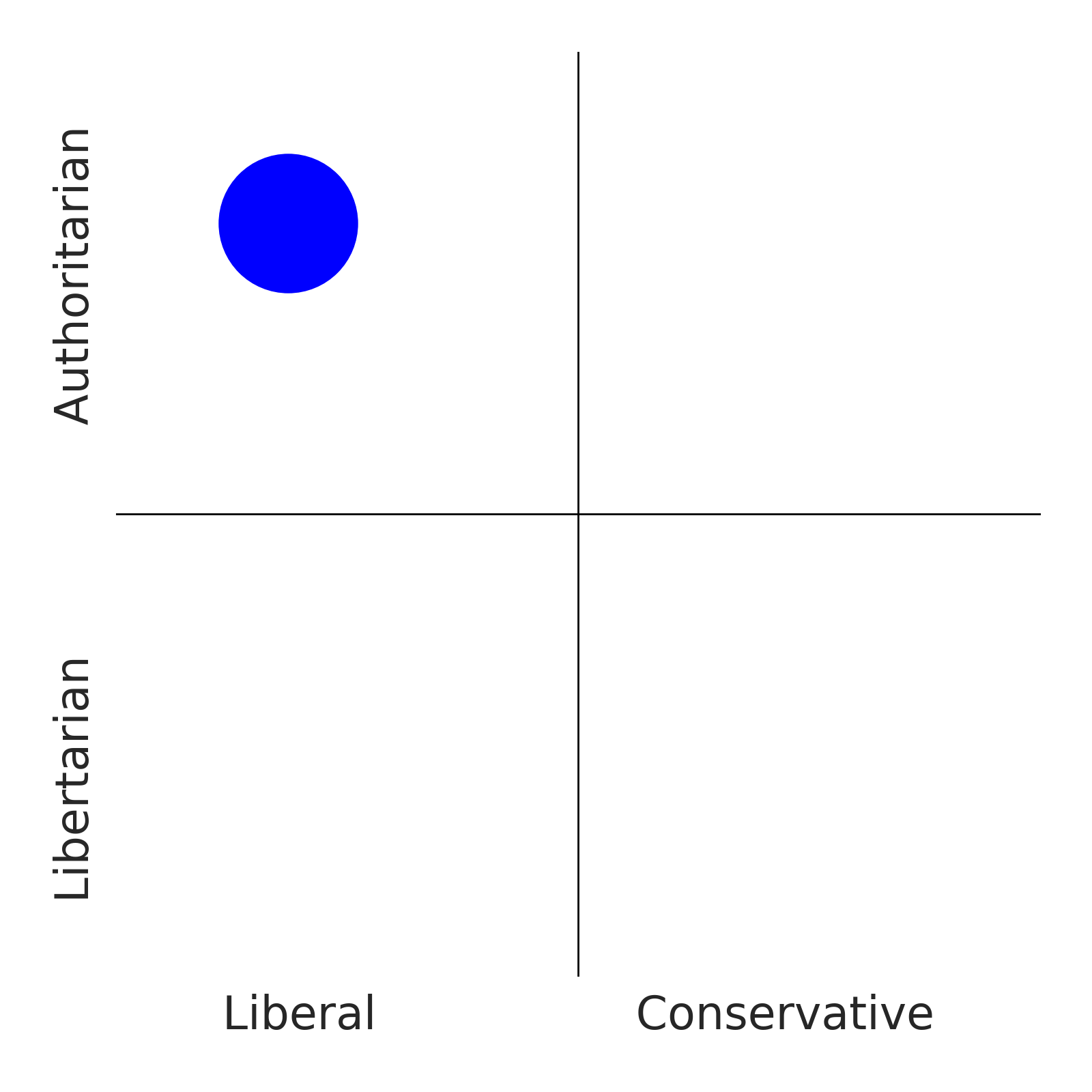
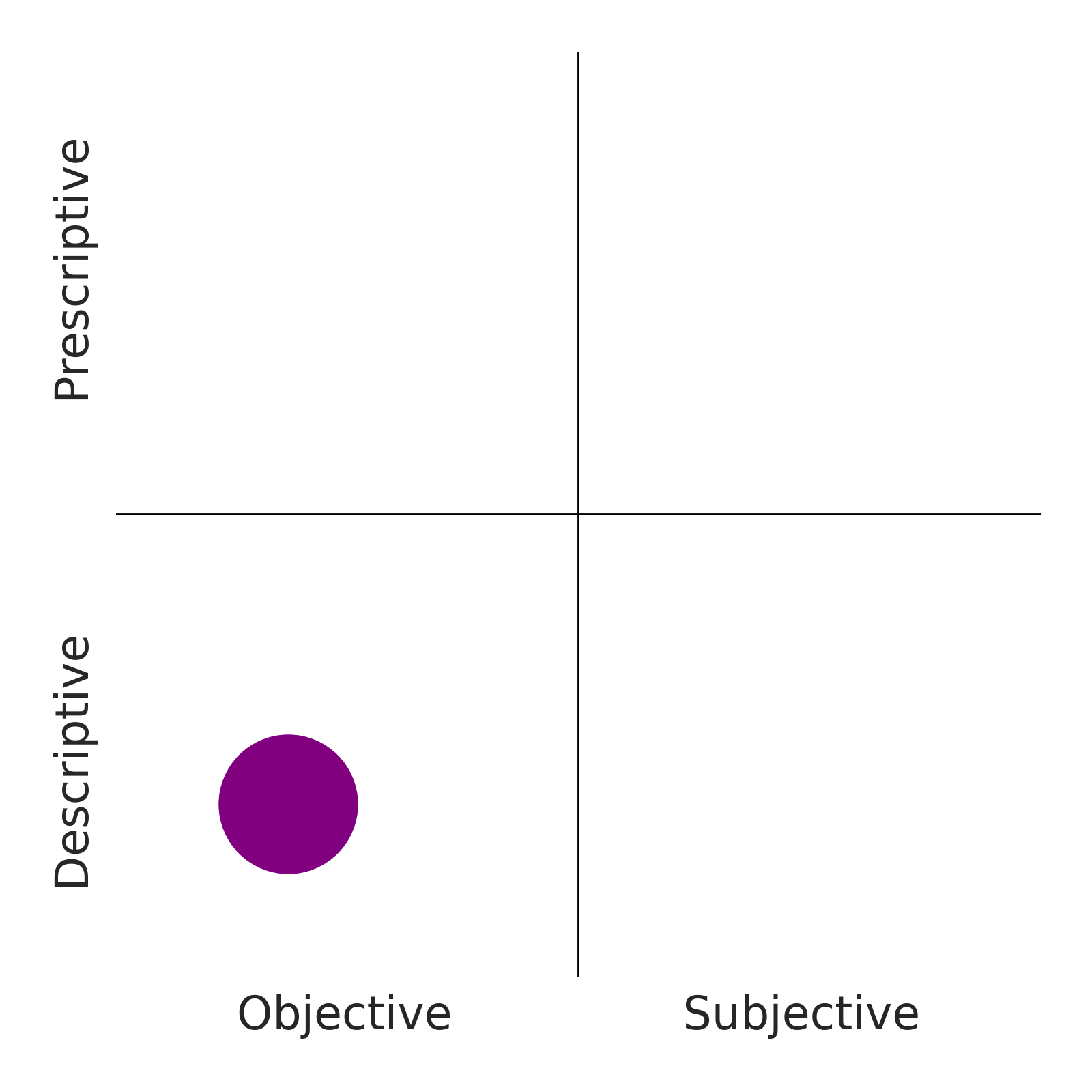
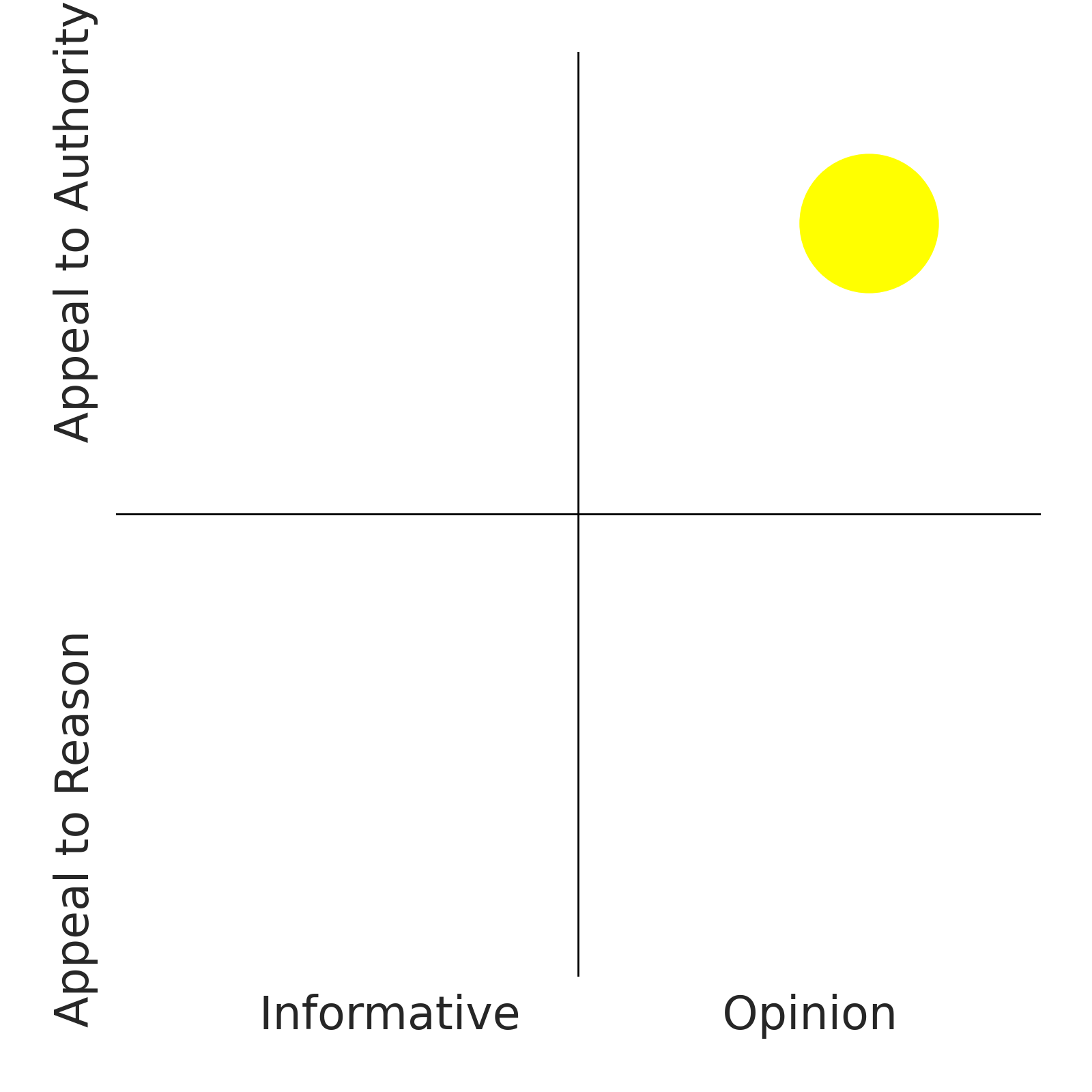
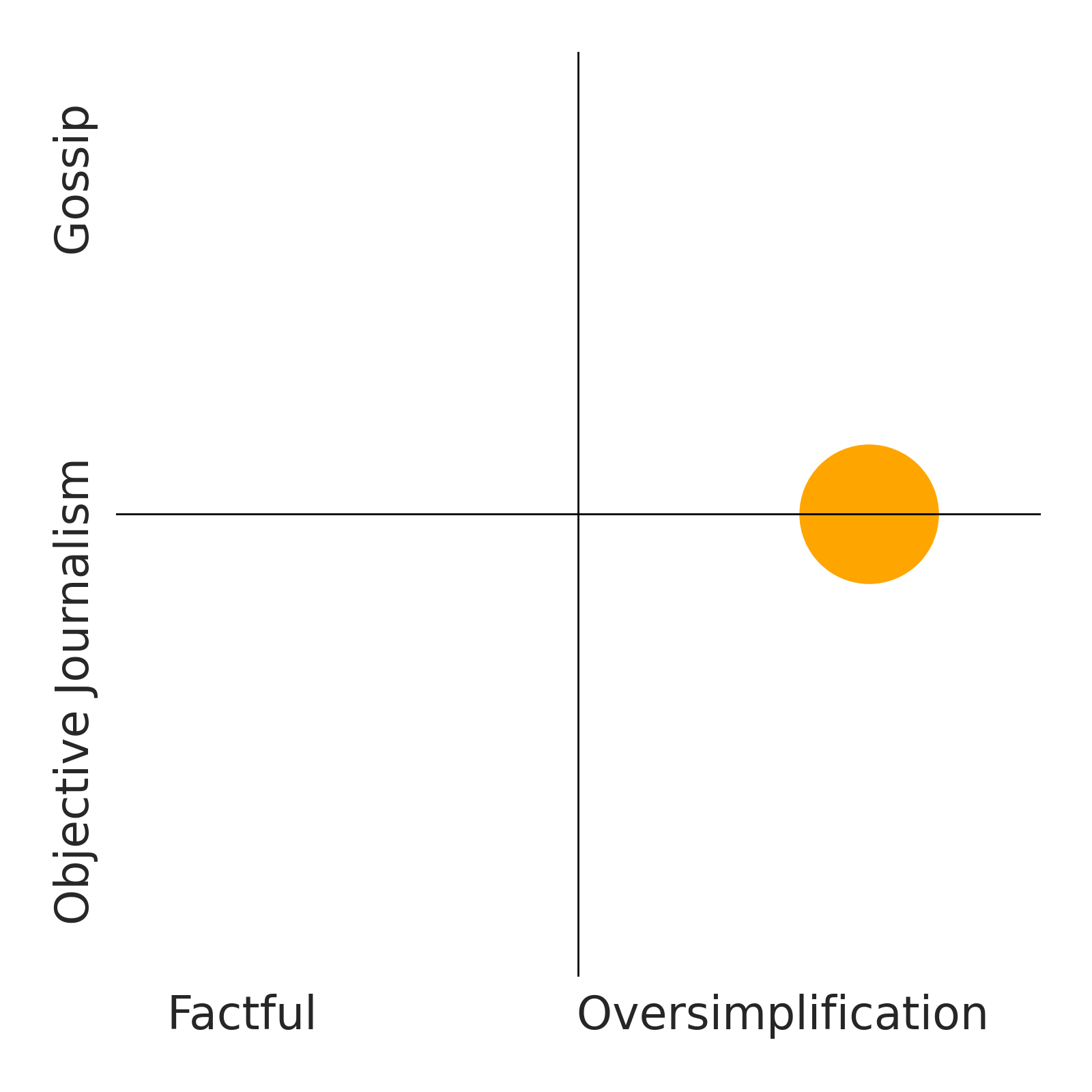
2026 © Helium Trades
Privacy Policy & Disclosure
* Disclaimer: Nothing on this website constitutes investment advice, performance data or any recommendation that any particular security, portfolio of securities, transaction or investment strategy is suitable for any specific person. Helium Trades is not responsible in any way for the accuracy
of any model predictions or price data. Any mention of a particular security and related prediction data is not a recommendation to buy or sell that security. Investments in securities involve the risk of loss. Past performance is no guarantee of future results. Helium Trades is not responsible for any of your investment decisions,
you should consult a financial expert before engaging in any transaction.
Helium Research Assistant

How can I help you today?
Ask any question about CGTN bias.


