See whether Helium helps you make better-informed decisions. Try every Pro Trader feature for 30 days. No credit card required.
Try every Pro Trader feature for 30 days. No credit card required.
Source identity: The evidence strongly indicates The Christian Science Monitor. An article states, “The Monitor is owned by The First Church of Christ, Scientist”
September 19, 2026 · 0 shares
A first-person religious essay frames the shofar on the 6:09 Jerusalem-to-Tel Aviv train as a hopeful metaphor for moving from uncertainty to moral clarity, with the publisher describing its journalism as uplifting and solution-oriented.
Automated analysis; not human reviewed. Limitations: The supplied text is a first-person spiritual reflection rather than a news report, so the returned bias scores largely reflect genre and tone rather than event-reporting choices. · 7 of 55 available dimensions scored; omitted dimensions are not treated as neutral. · Verified supporting quotes for 7 of 7 scored dimensions.
Claim: The essay's central framing is personal and interpretive: the train's oscillations are presented as a metaphor for a spiritual journey.
“It is also a reminder of a larger journey from uncertainty to insight.” · exact text match
“And the disturbing oscillations are a journey from uncertainty to insight, a train ride from introspection to moral resolution.” · exact text match
Why: The quoted sentences explicitly assign a subjective, metaphorical meaning to an ordinary train ride rather than reporting objective facts.
Claim: The framing is optimistic, moving from obscurity and uncertainty to insight and moral resolution, and the publisher mission emphasizes credible hope.
“a news organization that takes seriously its mission to uplift the world by seeking solutions and finding reasons for credible hope.” · exact text match
“And the disturbing oscillations are a journey from uncertainty to insight, a train ride from introspection to moral resolution.” · exact text match
Why: The text explicitly describes a positive arc from difficulty to hope and moral resolution, reinforced by the publisher's stated mission.
Claim: The text is a first-person reflective essay advancing personal interpretation rather than neutral reporting.
“As an observant Jew myself, I never know for whom to root.” · exact text match
“The sages were teaching that life can progress from a state that is concealed to one of revelation and clarity, which, in our tradition, comes with this Day of Atonement.” · exact text match
Why: The first-person voice, personal religious identity, and interpretive statements mark the piece as opinion/reflection.
Claim: The shofar's meaning is explained through the authority of Maimonides and 'the sages' rather than through independent reasoning.
“designed – according to the scholar Maimonides – to “awaken sleepers from their slumber.”” · exact text match
“The sages were teaching that life can progress from a state that is concealed to one of revelation and clarity” · exact text match
Why: The essay leans on named religious scholars and tradition to establish the shofar's purpose and lesson.
Claim: The essay uses reverent, emotive language to convey a positive spiritual experience.
“The shofar sounds, and for a heartbeat, on that sleek locomotive, time bends toward the eternal.” · exact text match
Why: The phrase about time bending toward the eternal is explicitly emotive and positive in tone.
Claim: The text supports its interpretations with named authorship, stated credentials, and attribution of the Maimonides quotation.
“according to the scholar Maimonides” · exact text match
“Dr. Ben Corn is a professor of oncology and directs The Institute for the Study of Hope, Dignity and Wellbeing at the Hebrew University of Jerusalem.” · exact text match
Why: The piece identifies its author and his qualifications and attributes its key quotation, although it is an essay rather than sourced news.
Claim: Visible transparency is present: institutional ownership and the author's religious identity are disclosed, and the piece is clearly a personal reflection.
“Our name is about honesty. The Monitor is owned by The First Church of Christ, Scientist, and we’ve always been transparent about that.” · exact text match
“As an observant Jew myself, I never know for whom to root.” · exact text match
Why: The text openly discloses the publisher's ownership and mission and the author's standpoint, reducing hidden-interest ambiguity.
The supplied text is a first-person spiritual reflection rather than a news report, so the returned bias scores largely reflect genre and tone rather than event-reporting choices.
September 12, 2026 · 0 shares
Framing emphasizes a promises-versus-outcomes gap, blending factual reporting with evaluative conclusions that Trump's energy policies have mostly fallen short.
The midterms referenced are the November 2026 elections, in Trump's second term; federal energy tools include permits, emergency declarations, loans, and tariffs, while many retail utility rates are set by state and local regulators.
Automated analysis; not human reviewed. Limitations: No byline or publication date is present, and some time references ('this year', 'Sept. 11') and the '2004' comparison are ambiguous or possibly erroneous, limiting independent verification. · 8 of 54 available dimensions scored; omitted dimensions are not treated as neutral. · Verified supporting quotes for 8 of 8 scored dimensions.
Claim: The article mixes factual reporting with evaluative causal framing.
“But other factors, notably his war in Iran, have pushed some key energy prices up.” · exact text match
Why: The phrase 'his war in Iran' and the causal assertion are the publisher's own analytical framing, not an attributed source's view.
Claim: The piece leads with and emphasizes the failure to achieve the administration's energy-cost goals.
“Those goals remain out of reach.” · exact text match
Why: The opening verdict is negative and the following data reinforce rising prices and falling energy jobs.
Claim: The article states evaluative conclusions about policy performance.
“His administration has acted on the pledge, but the results have mostly fallen short” · exact text match
Why: 'Mostly fallen short' is an editorial judgment, though it is followed by supporting facts.
Claim: The article frames the energy story around partisan electoral consequences.
“As a result, Republicans are now facing headwinds as the November midterms approach, with many voters saying their top concern is rising prices.” · exact text match
Why: It explicitly connects price trends to Republican electoral prospects, giving the report a political frame.
Claim: The article uses specific, named data sources and attributed experts, enhancing its visible credibility.
“A Reuters-Ipsos poll in late August found that nearly half of registered voters (47%) considered the cost of living the single most important factor in deciding their election choices.” · exact text match
Why: It provides a specific pollster, timeframe, sample group, and figure rather than unsourced generalities.
Claim: The article's analysis is evidence-based and acknowledges limits on presidential control over energy prices.
“But economics and geopolitics play a huge role in determining energy prices, meaning a U.S. president’s actions can’t guarantee lower costs.” · exact text match
Why: It grounds its conclusions in data and explicitly reasons about structural constraints rather than making a purely ideological case.
Claim: The article is transparent about its methodology and sources.
“according to a Monitor calculation based on Bureau of Labor Statistics data and Energy Information Administration (EIA) data and forecasts” · exact text match
Why: It names the data sources behind its own calculation and attributes other figures to AAA, Pew, Reuters-Ipsos, and named experts.
Claim: The analysis integrates multiple causal and institutional factors rather than a single explanation.
“Much of the rate-setting and permitting happens at the local and state levels, tying a president’s hands.” · exact text match
Why: It accounts for federal limits, global markets, policy uncertainty, and investment behavior in explaining outcomes.
No byline or publication date is present, and some time references ('this year', 'Sept. 11') and the '2004' comparison are ambiguous or possibly erroneous, limiting independent verification.
September 18, 2026 · 0 shares
A human-interest profile with solutions-oriented framing that presents a migrant-run cricket network in Beirut as an uplifting model of mutual aid and solidarity while treating the kafala system as structural background.
Automated analysis; not human reviewed. Limitations: No publication date, byline, or external verification is available; analysis is limited to the supplied feature text. · 7 of 55 available dimensions scored; omitted dimensions are not treated as neutral. · Verified supporting quotes for 7 of 7 scored dimensions.
Claim: The framing is mildly liberal, emphasizing migrant vulnerability under Lebanon's kafala system and the value of solidarity.
“Under Lebanon’s kafala visa system, a migrant’s work permit is tied to the employer who sponsors them. Employers typically hold workers’ passports, which can prevent them from finding new jobs or leaving the country. Workers under kafala also are excluded from many legal protections.” · exact text match
Why: Selecting systemic migrant-vulnerability details and describing community support as solidarity aligns with a liberal-progressive concern for migrant rights, though the piece stops short of an explicit policy argument.
Claim: The story centers ordinary migrant workers and informally organized community support rather than elite or institutional perspectives.
“Most of those on the makeshift pitch and the sidelines are migrant workers from South Asian and African countries where cricket is popular – and they’re eager for their turn to play.” · exact text match
Why: The focus is on working-class migrants and mutual aid, giving the report a mild populist emphasis without attacking elites or institutions.
Claim: The reporting is narrative and scene-driven rather than a detached wire-style account.
“Unfazed by Beirut’s harsh summer sun, two teams are playing a spirited game of cricket in the parking lot next to St. Joseph Church.” · exact text match
“There is space for everyone.” · exact text match
Why: Sensory scene-setting and an editorializing final line are woven into the reporting, giving it a subjective, human-interest tone.
Claim: The article has a clearly hopeful, uplifting tone.
“The gatherings each Sunday offer not only a reminder of home, but also an opportunity to express solidarity and connect with other migrants.” · exact text match
“So, every week the migrant workers keep arriving at the parking lot promptly in the morning. There is space for everyone.” · exact text match
Why: The story emphasizes positive connection, assistance, and an inclusive ending, making the overall framing optimistic rather than neutral or pessimistic.
Claim: The article carries a lightly opinionated, moral-affirmation tone despite being mostly reported.
“There is space for everyone.” · exact text match
Why: A short editorializing statement at the end injects an affirmative moral tone, but most of the content is attributed reporting and direct quotes.
Claim: The article shows moderate credibility through visible attribution and specific sourcing.
“A Monitor contributor who interviewed several dozen migrants working in Beirut found that many of them rely on Mr. Fernando and his network for information, advice, and assistance.” · exact text match
Why: Central claims are tied to fieldwork and interviews, and direct quotes are attributed to named individuals, though the report does not include external verification or independent data.
Claim: The framing values collective solidarity and mutual aid over individual advancement.
“The gatherings each Sunday offer not only a reminder of home, but also an opportunity to express solidarity and connect with other migrants.” · exact text match
Why: The central theme is community connection and people helping one another, making the framing mildly collectivist.
No publication date, byline, or external verification is available; analysis is limited to the supplied feature text.
September 12, 2026 · 0 shares
Framing emphasizes a promises-versus-outcomes gap, blending factual reporting with evaluative conclusions that Trump's energy policies have mostly fallen short.
The midterms referenced are the November 2026 elections, in Trump's second term; federal energy tools include permits, emergency declarations, loans, and tariffs, while many retail utility rates are set by state and local regulators.
Automated analysis; not human reviewed. Limitations: No byline or publication date is present, and some time references ('this year', 'Sept. 11') and the '2004' comparison are ambiguous or possibly erroneous, limiting independent verification. · 8 of 54 available dimensions scored; omitted dimensions are not treated as neutral. · Verified supporting quotes for 8 of 8 scored dimensions.
Claim: The article mixes factual reporting with evaluative causal framing.
“But other factors, notably his war in Iran, have pushed some key energy prices up.” · exact text match
Why: The phrase 'his war in Iran' and the causal assertion are the publisher's own analytical framing, not an attributed source's view.
Claim: The piece leads with and emphasizes the failure to achieve the administration's energy-cost goals.
“Those goals remain out of reach.” · exact text match
Why: The opening verdict is negative and the following data reinforce rising prices and falling energy jobs.
Claim: The article states evaluative conclusions about policy performance.
“His administration has acted on the pledge, but the results have mostly fallen short” · exact text match
Why: 'Mostly fallen short' is an editorial judgment, though it is followed by supporting facts.
Claim: The article frames the energy story around partisan electoral consequences.
“As a result, Republicans are now facing headwinds as the November midterms approach, with many voters saying their top concern is rising prices.” · exact text match
Why: It explicitly connects price trends to Republican electoral prospects, giving the report a political frame.
Claim: The article uses specific, named data sources and attributed experts, enhancing its visible credibility.
“A Reuters-Ipsos poll in late August found that nearly half of registered voters (47%) considered the cost of living the single most important factor in deciding their election choices.” · exact text match
Why: It provides a specific pollster, timeframe, sample group, and figure rather than unsourced generalities.
Claim: The article's analysis is evidence-based and acknowledges limits on presidential control over energy prices.
“But economics and geopolitics play a huge role in determining energy prices, meaning a U.S. president’s actions can’t guarantee lower costs.” · exact text match
Why: It grounds its conclusions in data and explicitly reasons about structural constraints rather than making a purely ideological case.
Claim: The article is transparent about its methodology and sources.
“according to a Monitor calculation based on Bureau of Labor Statistics data and Energy Information Administration (EIA) data and forecasts” · exact text match
Why: It names the data sources behind its own calculation and attributes other figures to AAA, Pew, Reuters-Ipsos, and named experts.
Claim: The analysis integrates multiple causal and institutional factors rather than a single explanation.
“Much of the rate-setting and permitting happens at the local and state levels, tying a president’s hands.” · exact text match
Why: It accounts for federal limits, global markets, policy uncertainty, and investment behavior in explaining outcomes.
No byline or publication date is present, and some time references ('this year', 'Sept. 11') and the '2004' comparison are ambiguous or possibly erroneous, limiting independent verification.
September 19, 2026 · 0 shares
An expert-driven, U.S.- and Gulf-centered strategic-threat frame treats the Houthi advance as a global energy and U.S.-interest problem that ultimately requires diplomatic accommodation with Iran rather than military escalation.
Automated analysis; not human reviewed. Limitations: The supplied text is undated and includes promotional/chrome material, so temporal anchors such as 'recent days' and 'Thursday' and the U.S. midterm reference cannot be independently placed. · 5 of 55 available dimensions scored; omitted dimensions are not treated as neutral. · Verified supporting quotes for 5 of 5 scored dimensions.
Claim: The report's analytical frame favors diplomacy and treats military force as insufficient.
“Air power alone is no solution, analysts say.” · exact text match
“There are diplomatic options for dealing with the Houthis’ blockade of Bab el-Mandeb, says Dr. Gause. And they would start by ending the war with Iran.” · exact text match
Why: The publisher's synthesis repeatedly returns to diplomatic resolution and the limits of air power.
Claim: The analysis leans heavily on think-tank fellows and former officials to supply its interpretation.
“says Gregory Gause, an associate fellow at the Middle East Institute in Washington.” · exact text match
“says Michael Ratney, a former U.S. ambassador to Saudi Arabia and a senior adviser at the Center for Strategic and International Studies” · exact text match
Why: The interpretative content is supplied mainly by named U.S. and regional foreign-policy experts.
Claim: The report demonstrates strong visible sourcing and marks many contested claims as attributed.
“The Houthis claim they will not target international shipping.” · exact text match
“says Gregory Gause, an associate fellow at the Middle East Institute in Washington.” · exact text match
Why: It identifies institutions and experts and separates allegations from confirmed events, though some political assertions are stated without attribution.
Claim: The report includes forward-looking judgments about Houthi intentions, timing, and diplomatic outcomes.
“Analysts say the timing of Houthi strikes against shipping and energy infrastructure is calibrated to maximize pressure on Washington ahead of U.S midterm elections.” · exact text match
“My prediction is that diplomacy will not be U.S. diplomacy. It’ll be Gulf states dealing directly with the Iranians.” · exact text match
Why: Even though attributed, these forecasts are structural to the article's strategic assessment.
Claim: The report is careful to mark contested Houthi statements as claims rather than facts.
“The Houthis claim they will not target international shipping.” · exact text match
“A Houthi spokesperson this week claimed the group had shot down a Saudi F-15 fighter jet with a surface-to-air missile.” · exact text match
Why: Verbs of attribution distinguish the group's assertions from established events.
The supplied text is undated and includes promotional/chrome material, so temporal anchors such as 'recent days' and 'Thursday' and the U.S. midterm reference cannot be independently placed.
Expert-led, data-rich framing presents the record-quiet Atlantic storm season as a striking confirmation of El Nino's suppressing power, while retaining a cautionary note.
Automated analysis; not human reviewed. Limitations: The supplied text contains the date-like token '2026' that is grammatically odd; if it is a typo or artifact, date-sensitive extraction could be wrong. · 8 of 54 available dimensions scored; omitted dimensions are not treated as neutral. · Verified supporting quotes for 7 of 8 scored dimensions.
Claim: The report is a factual summary with quantified records and quoted attribution rather than subjective commentary.
“Overall hurricane activity using a measurement that factors in the number of storms, their strength and how long they last is also at a post-1950 record low, according to Colorado State University hurricane expert Phil Klotzbach.” · exact text match
Why: The sentence is an attributed, quantified data point, indicative of objective reporting.
Claim: The report leads with a record but uses restrained, factual language rather than fear-mongering or lurid detail.
“Only five relatively weak and brief tropical storms have spun up this season.” · exact text match
Why: The factual, understated description of storm counts supports non-sensational treatment.
Claim: The report describes conditions and expert expectations rather than urging policy or action; the only prescription is a general safety caution.
“Storm activity in the Atlantic is only 7% of normal for this time of year.” · exact text match
Why: The core statement is observational; the guard-against-complacency warning is minor, not a policy prescription.
Claim: Sourcing is specific and includes a caveat about record reliability, supporting trustworthiness.
“On Saturday, 2026 set a record for the longest a season has begun without a storm that has reached winds of 64 mph (103 kph) to qualify as a hurricane — at least in the satellite era, said Nick Novella, a meteorologist at the government's Weather Prediction Center.” · exact text match
“Before the 1950s there were a few years where no hurricanes were recorded this late in the season, but meteorologists don't trust those records because ocean monitoring wasn't complete.” · exact text match
Why: Named federal sources and an explicit caveat about pre-satellite records are observable credibility signals.
Claim: Explanations are grounded in observed measurements and causal mechanisms, not magical or ideological reasoning.
“Those three forces are classic impacts of El Nino, the natural and temporary warming of parts of the equatorial Pacific that warps and warms weather worldwide, five experts told The Associated Press.” · exact text match
Why: Attributed natural-science mechanism provides an evidence-based causal account.
Claim: The article consistently frames storm activity through empirical climate science rather than superstition.
“Along with the dry air that starves the storm, African dust is choking it and there are fewer 'seeds' of stormy weather that could develop, all classic El Nino signs, the experts said.” · not found in supplied text
Why: The explanation is mechanistic and attributed to experts, reflecting a scientific/naturalistic worldview.
Claim: The report includes attributed forecasting about upcoming and next-season storm activity.
“But next year, as the El Nino winds down and cools closer to normal, the warm water will persist, which will increase the odds for next season to be extra busy, Emanuel said.” · exact text match
Why: This is an attributed expert forecast, so it is speculative in the literal forecasting sense but not unrestrained publisher speculation.
Claim: The report explains nuanced thermodynamic relationships and uses quantified context, indicating above-average complexity.
“His research found what matters more than just the water temperature is the difference in temperature between the air and the water; because hurricanes are powered by the flow of heat from the ocean to the air, the higher that is, the less storm activity there will be.” · exact text match
Why: Including a mechanistic nuance such as the air-water temperature difference goes beyond simple headline reporting.
The supplied text contains the date-like token '2026' that is grammatically odd; if it is a typo or artifact, date-sensitive extraction could be wrong.
August 31, 2026 · 0 shares
A reverent, admiring human-interest frame uses poetic language and an uplifting tone to portray a veteran's roadside memorial as a selfless act of remembrance.
Old Route 66 is the historic U.S. highway now associated with roadside nostalgia tourism; Toys for Tots is the U.S. Marine Corps Reserve's annual holiday toy drive.
Automated analysis; not human reviewed. Limitations: No independent verification of the veteran's recollections or donation figures is available; analysis is limited to the article's attributed account. · 5 of 54 available dimensions scored; omitted dimensions are not treated as neutral. · Verified supporting quotes for 4 of 5 scored dimensions.
Claim: The reporting is framed with interpretive, poetic language rather than neutral exposition.
“Some arrive curious about Route 66 nostalgia and find, instead, a working man’s theology of remembrance.” · exact text match
Why: The phrase 'working man's theology of remembrance' is a figurative editorial characterization, not a factual observation.
Claim: The story is presented as an uplifting account of resilience and generosity.
“The Heroes Museum is one man’s ongoing answer to an obligation he never quite stopped feeling: “I had a lot of friends that didn’t come home. This is my way of giving back.”” · exact text match
Why: The framing emphasizes ongoing obligation and giving back, although the article also recounts wartime losses.
Claim: The piece describes what Swatosh does without telling readers what they should do.
“He does not charge admission. Visitors leave donations if they want.” · exact text match
Why: The passage reports practices and offers no imperative or recommended action.
Claim: The narrative includes authorial interpretation mixed with factual reporting.
“Some arrive curious about Route 66 nostalgia and find, instead, a working man’s theology of remembrance.” · exact text match
Why: The statement is an interpretive characterization of visitors' experience rather than a verifiable fact.
Claim: The article attributes self-reported claims and identifies a specific subject and location.
““I spent 21 1/2 years in the Marine Corps,” says Mr. Swatosh.” · not found in supplied text
“Last year, he says, he helped provide 104 bicycles and hundreds of dollars in toys for local families.” · exact text match
Why: The report uses named attribution and hedges unverifiable claims with 'says' and 'he says,' though it does not independently verify them.
No independent verification of the veteran's recollections or donation figures is available; analysis is limited to the article's attributed account.
General framing: The outlet projects a cautious, attribution-heavy, “balanced evidence” style: contested claims are consistently marked as claims (“The Houthis claim they will not target international shipping”
September 19, 2026 · 0 shares
An expert-driven, U.S.- and Gulf-centered strategic-threat frame treats the Houthi advance as a global energy and U.S.-interest problem that ultimately requires diplomatic accommodation with Iran rather than military escalation.
Automated analysis; not human reviewed. Limitations: The supplied text is undated and includes promotional/chrome material, so temporal anchors such as 'recent days' and 'Thursday' and the U.S. midterm reference cannot be independently placed. · 5 of 55 available dimensions scored; omitted dimensions are not treated as neutral. · Verified supporting quotes for 5 of 5 scored dimensions.
Claim: The report's analytical frame favors diplomacy and treats military force as insufficient.
“Air power alone is no solution, analysts say.” · exact text match
“There are diplomatic options for dealing with the Houthis’ blockade of Bab el-Mandeb, says Dr. Gause. And they would start by ending the war with Iran.” · exact text match
Why: The publisher's synthesis repeatedly returns to diplomatic resolution and the limits of air power.
Claim: The analysis leans heavily on think-tank fellows and former officials to supply its interpretation.
“says Gregory Gause, an associate fellow at the Middle East Institute in Washington.” · exact text match
“says Michael Ratney, a former U.S. ambassador to Saudi Arabia and a senior adviser at the Center for Strategic and International Studies” · exact text match
Why: The interpretative content is supplied mainly by named U.S. and regional foreign-policy experts.
Claim: The report demonstrates strong visible sourcing and marks many contested claims as attributed.
“The Houthis claim they will not target international shipping.” · exact text match
“says Gregory Gause, an associate fellow at the Middle East Institute in Washington.” · exact text match
Why: It identifies institutions and experts and separates allegations from confirmed events, though some political assertions are stated without attribution.
Claim: The report includes forward-looking judgments about Houthi intentions, timing, and diplomatic outcomes.
“Analysts say the timing of Houthi strikes against shipping and energy infrastructure is calibrated to maximize pressure on Washington ahead of U.S midterm elections.” · exact text match
“My prediction is that diplomacy will not be U.S. diplomacy. It’ll be Gulf states dealing directly with the Iranians.” · exact text match
Why: Even though attributed, these forecasts are structural to the article's strategic assessment.
Claim: The report is careful to mark contested Houthi statements as claims rather than facts.
“The Houthis claim they will not target international shipping.” · exact text match
“A Houthi spokesperson this week claimed the group had shot down a Saudi F-15 fighter jet with a surface-to-air missile.” · exact text match
Why: Verbs of attribution distinguish the group's assertions from established events.
The supplied text is undated and includes promotional/chrome material, so temporal anchors such as 'recent days' and 'Thursday' and the U.S. midterm reference cannot be independently placed.
September 11, 2026 · 0 shares
Brazil's supreme-court infighting is framed as a politically dangerous credibility crisis, with eroding public trust emphasized as a threat to democratic institutions.
Automated analysis; not human reviewed. Limitations: The analysis is limited to the supplied article text, which also contains promotional and subscription boilerplate, and cannot independently verify the Brazilian court documents or poll. · 7 of 54 available dimensions scored; omitted dimensions are not treated as neutral. · Verified supporting quotes for 7 of 7 scored dimensions.
Claim: The text reports suspicions from both Bolsonaro-aligned critics and Lula backers without endorsing either side.
“At an Independence Day rally on Sept. 7, Sen. Bolsonaro leaned into the current judicial crisis, trying to tarnish his electoral rival by association.” · exact text match
“Mr. Lula’s backers, meanwhile, suspect Justice Mendonça of acting to benefit Sen. Bolsonaro, who has also been entangled in the Banco Master scandal.” · exact text match
Why: Balanced inclusion of campaign attacks and reciprocal suspicions indicates a neutral partisan stance.
Claim: Contested claims are attributed and qualified rather than made as unvarnished fact.
“police documents containing messages reportedly sent to Justice Moraes by Daniel Vorcaro, a disgraced banker” · exact text match
“He accused Justice Mendonça of bias in his role overseeing politically sensitive proceedings, including the Banco Master case.” · exact text match
Why: Uses "reportedly" and "accused" to mark uncertain and disputed assertions.
Claim: The article's interpretive frame emphasizes institutional decline and future risk.
“That belief is now severely shaken, she says.” · exact text match
“Dr. Chaise fears, however, that the top court’s loss of credibility could ricochet onto other institutions such as the electoral court, which is responsible for guaranteeing the integrity of elections.” · exact text match
Why: The selected expert commentary and "severely shaken" language tilt the tone toward pessimism about institutions.
Claim: The report is heavily centered on electoral politics and politically consequential judicial conflict.
“When Brazilians go to the polls Oct. 4, they’ll choose between current President Luiz Inácio Lula da Silva and Sen. Flávio Bolsonaro, who are neck-and-neck in polling.” · exact text match
“The public sees the court’s infighting as a proxy for the political face-off.” · exact text match
Why: The central subject is a presidential election and its interaction with the Supreme Court's political credibility.
Claim: Visible sourcing and attribution practices support the article's trustworthiness.
“A Sept. 9 survey conducted by pollster Meio/Ideia found 52% of Brazilians agree that the supreme court’s judges put their personal interests ahead of the law, while just 11% disagree.” · exact text match
““This scandal has made it difficult to imagine that these justices are acting impartially, and that they are simply applying the law – which should be a court’s most basic job,” says Dr. Esteves.” · exact text match
Why: Named experts, a named pollster, dated events, and explicit qualification of reported messages give the text a credible evidentiary base.
Claim: The coverage uses empirical polling and attributed expert analysis to support its interpretive framing.
“A Sept. 9 survey conducted by pollster Meio/Ideia found 52% of Brazilians agree that the supreme court’s judges put their personal interests ahead of the law, while just 11% disagree.” · exact text match
“The allegations against Justice Moraes and what some analysts see as both judges’ lack of respect for procedure are “extremely serious,” says Luiz Fernando Esteves, a law professor at the Insper business school in Sao Paulo.” · exact text match
Why: The crisis narrative is anchored to named data and expert opinion rather than speculation or emotional assertion.
Claim: The article attributes claims to named sources and identifies dates and pollsters.
“A Sept. 9 survey conducted by pollster Meio/Ideia found 52% of Brazilians agree that the supreme court’s judges put their personal interests ahead of the law, while just 11% disagree.” · exact text match
““There is a risk for the legitimacy of any future decision” made by these institutions, she says.” · exact text match
Why: Systematic attribution to named experts and a specified poll support internal honesty and fairness.
The analysis is limited to the supplied article text, which also contains promotional and subscription boilerplate, and cannot independently verify the Brazilian court documents or poll.
September 19, 2026 · 0 shares
Cautiously optimistic diplomatic framing built around official and expert sources, with the deal’s terms explicitly left unconfirmed.
Automated analysis; not human reviewed. Limitations: The deal's text is not public; key specifics rest on an anonymous U.S. official and are not confirmed by Denmark or Greenland, limiting independent verification. · 8 of 55 available dimensions scored; omitted dimensions are not treated as neutral. · Verified supporting quotes for 8 of 8 scored dimensions.
Claim: Reporting is predominantly attributed and avoids first-person evaluation; it presents reactions and explicitly flags non-confirmation.
“Denmark and Greenland did not explicitly confirm any of the specifics in Mr. Trump’s statements, nor did they provide more details.” · exact text match
“A U.S. State Department official said the agreement bans any non-NATO base in Greenland, limits adversaries from being able to make investments in Greenland, and guarantees that China and Russia cannot have a base on the island.” · exact text match
Why: The article separates reported claims from confirmation and attributes information to named and anonymous sources, indicating a factual stance rather than subjective commentary.
Claim: The tone is measured and understated, and the report includes uncertainties rather than hyping the announcement.
“it was not immediately clear how this deal would be different from that.” · exact text match
“Denmark’s government was cautiously optimistic on Saturday following Donald Trump’s announcement of a deal on Greenland” · exact text match
Why: The article uses cautious language and explicitly notes unresolved details rather than sensationalizing the announcement.
Claim: The selection of reactions emphasizes cautious optimism and relief over uncertainty.
“Denmark’s government was cautiously optimistic on Saturday following Donald Trump’s announcement of a deal on Greenland” · exact text match
“Michael Burgaard from Gentofte, north of Copenhagen, was hopeful the crisis was over” · exact text match
Counterevidence:
“it was not immediately clear how this deal would be different from that.” · exact text match
Why: The lead characterizes the mood as 'cautiously optimistic,' and sourced reactions are hopeful, while a caveat about the unknown deal keeps the optimism conditional.
Claim: The report describes events, statements, and procedural requirements without prescribing a course of action.
“Parliamentary action was still needed by the Danish and Greenlandic governments before it can be enforced, she added.” · exact text match
“it was not immediately clear how this deal would be different from that.” · exact text match
Why: Content is reportorial, noting procedural facts and unknowns rather than offering recommendations or advocacy.
Claim: The story is centered on intergovernmental politics, electoral timing, and NATO diplomacy.
“Mr. Trump is able to tout a foreign policy achievement ahead of the midterm elections in the United States.” · exact text match
“Denmark’s government was cautiously optimistic on Saturday following Donald Trump’s announcement of a deal on Greenland” · exact text match
Why: The lead and framing focus on governmental and electoral stakes rather than on non-political angles.
Claim: The framing relies heavily on government and NATO officials and treats the diplomatic process as a legitimate resolution, while giving grassroots dissent less weight.
“office of Denmark’s Prime Minister Mette Frederiksen said the deal will be signed next week at the United Nations General Assembly.” · exact text match
“Adm. Giuseppe Cavo Dragone, chair of the NATO Military Committee, said later Saturday in the Danish capital that the agreement was “very, very welcome,” without commenting on it further.” · exact text match
Counterevidence:
“Greenland grassroots pro-sovereignty activist Orla Joelsen wrote on X that “our fight against Trump’s ambition to take over Greenland has been won.”” · exact text match
Why: Official sources dominate the piece and quoted leaders welcome the pact, though one grassroots activist is included for counterpoint, giving a mild pro-establishment tilt.
Claim: The report is credible on its face because it attributes claims, identifies sources, and includes caveats about unverified details.
“A U.S. State Department official said the agreement bans any non-NATO base in Greenland, limits adversaries from being able to make investments in Greenland, and guarantees that China and Russia cannot have a base on the island.” · exact text match
“The official was not authorized to comment publicly and spoke on condition of anonymity.” · exact text match
Why: Visible sourcing and explicit caveats support a high credibility rating; no internal contradiction or unlabeled speculation is present.
Claim: Internal fairness signals include disclosed sourcing limits, attribution, and acknowledgment of non-confirmation.
“The official was not authorized to comment publicly and spoke on condition of anonymity.” · exact text match
“Denmark and Greenland did not explicitly confirm any of the specifics in Mr. Trump’s statements, nor did they provide more details.” · exact text match
Why: The text flags an anonymous source, attributes claims, and states what was not confirmed, indicating honest handling of uncertainty.
The deal's text is not public; key specifics rest on an anonymous U.S. official and are not confirmed by Denmark or Greenland, limiting independent verification.
August 31, 2026 · 0 shares
The framing emphasizes the opacity and uncertainty of the U.S.-Venezuelan oil deal while foregrounding Venezuelans’ doubts about whether its benefits will reach ordinary citizens.
Automated analysis; not human reviewed. Limitations: The supplied article text is mixed with subscription-promotion boilerplate and unrelated headline links; I analyzed only the substantive story. No external verification of deal figures or contract status was possible. · 10 of 54 available dimensions scored; omitted dimensions are not treated as neutral. · Verified supporting quotes for 6 of 10 scored dimensions.
Claim: The report remains balanced between Venezuelan government supporters and opponents on a politically divisive deal.
“it has stirred shared concern among Venezuelans who normally stand on opposite sides of the country’s deep political divide” · exact text match
Why: The article includes former chavista critics, opposition-aligned voices, and experts without endorsing either side, supporting a neutral rating.
Claim: The report mainly uses observable reporting, attributed statements, and explicit uncertainty.
“No full contract has been published.” · exact text match
“It remains unclear how that relates to the 25-year agreement described by Ms. Rodríguez.” · exact text match
Why: Unknowns are labeled as unknown rather than presented as subjective impressions.
Claim: The article avoids sensationalized language about the deal and instead notes that announced figures lack normal project detail.
“That money is not guaranteed.” · exact text match
“No broad commitment has materialized.” · not found in supplied text
Why: The tone is measured and relies on named expert skepticism rather than alarm or hype.
Claim: The deal's economic upside is portrayed as uncertain and dependent on unproven private financing.
“That money is not guaranteed.” · exact text match
“Legal uncertainty could scare off major producers” · exact text match
Why: The article emphasizes barriers to production and revenue rather than expected windfalls.
Claim: The outlook is cautious to pessimistic, stressing missing guarantees and unknowns.
“That money is not guaranteed.” · exact text match
“We don’t know anything.” · not found in supplied text
Counterevidence:
“Still, Venezuela needs foreign capital, and the U.S. is a natural market for its heavy crude.” · exact text match
Why: The article ends with unresolved citizen concern and repeatedly emphasizes opaque terms, though it also notes Venezuela’s need for foreign capital and a natural U.S. market.
Claim: The report is substantially about Venezuelan domestic politics, political legitimacy, and U.S.-Venezuelan relations.
“it has stirred shared concern among Venezuelans who normally stand on opposite sides of the country’s deep political divide” · exact text match
“For many opponents of the current government, the U.S. operation that captured former President Nicolás Maduro in January raised hopes of competitive elections” · exact text match
Why: The article centers political reactions, protests, and transition questions, not just commercial terms.
Claim: The reporting emphasizes unresolved questions and expert skepticism rather than accepting official figures at face value.
“The announced agreement emphasizes spectacular figures without the detail normally attached to a major petroleum project” · exact text match
“We don’t know anything.” · not found in supplied text
Why: It distinguishes reserves from production and highlights missing specifics, showing reasoning based on evidence.
Claim: The article discloses uncertainty and attributes claims rather than presenting speculation as fact.
“No full contract has been published.” · exact text match
“It remains unclear how that relates to the 25-year agreement described by Ms. Rodríguez.” · exact text match
Why: Transparency about missing contract details is an observable fairness and honesty signal.
Claim: The article connects technical oil-industry constraints, legal uncertainty, and political transition into a coherent analysis.
“That uncertainty links the economics of the deal to Venezuela’s political future.” · exact text match
“He warns against confusing enormous reserves with production.” · exact text match
Why: Synthesis of expert skepticism and political context shows analytical depth.
The supplied article text is mixed with subscription-promotion boilerplate and unrelated headline links; I analyzed only the substantive story. No external verification of deal figures or contract status was possible.
Framing treats Georgia's ballot-tracing vulnerability as a pressing, AI-amplified threat to a fundamental right, while balancing expert warnings with official reassurances.
Automated analysis; not human reviewed. Limitations: The supplied text is a concatenated JSON payload that mixes story content with subscription and related-link wrappers, requiring exclusion of non-story material and limiting certainty about layout. · 6 of 54 available dimensions scored; omitted dimensions are not treated as neutral. · Verified supporting quotes for 5 of 6 scored dimensions.
Claim: The publisher's own voice is factual and presents attributed claims rather than commentary.
“Security researchers say rapid advances in artificial intelligence are making it more critical to address a flaw in Georgia's voting equipment that can allow voters to be matched to their ballots after they have been cast.” · exact text match
“Gabriel Sterling, special projects manager in the secretary of state’s office, pushed back on the concerns.” · exact text match
Why: Warnings are attributed to named researchers and officials, and official rebuttal is included, indicating objective reporting rather than subjective advocacy.
Claim: The reporting is restrained and explanatory rather than sensational, despite including a vivid expert quote.
“The vulnerability does not allow votes to be changed or cast doubt on election results, but it could let someone see how others voted.” · exact text match
Counterevidence:
“a bit of a wake-up call because it illustrates how much more easily vulnerabilities can be exploited now that AI can do all of the technical work for you” · exact text match
Why: The article leads with the flaw but immediately qualifies its scope and attributes alarm to a named expert, so any sensational effect is muted.
Claim: The article raises mild alarm about a privacy threat by selecting vivid warnings such as 'wake-up call' and 'perfect storm.'
“a bit of a wake-up call because it illustrates how much more easily vulnerabilities can be exploited now that AI can do all of the technical work for you” · exact text match
“creates a “perfect storm.”” · not found in supplied text
Counterevidence:
“Gabriel Sterling, special projects manager in the secretary of state’s office, pushed back on the concerns.” · exact text match
Why: The alarming phrases are sourced from experts and are offset by an official rebuttal, so the fear effect is real but modest.
Claim: The article is inherently political because it centers on a state election-board dispute and a battleground-state election.
“State Election Board member Salleigh Grubbs proposed a rule during the board’s August meeting that would have required the secretary of state’s office to apply the software update recommended by the manufacturer by Tuesday.” · exact text match
“Georgia, a presidential battleground with one of the nation's most closely watched U.S. Senate races this year, is the only place where the system is used statewide.” · exact text match
Why: The subject is election administration and a state election-board decision in a competitive political context, making the report political, though not partisan.
Claim: Visible sourcing and attribution are strong, with named experts, organizations, and official spokespeople.
“said J. Alex Halderman, a voting technology specialist at the University of Michigan who was part of the team that exposed the flaw.” · exact text match
“said Mark Lindeman, policy and strategy director at Verified Voting, a nonpartisan group focused on election technology.” · exact text match
Why: The article identifies people by name, affiliation, and role, and repeatedly attributes claims to researchers, officials, and advocates rather than asserting them as fact.
Claim: The article represents both official and critical perspectives on the same issue, with named sources on each side.
“Gabriel Sterling, special projects manager in the secretary of state’s office, pushed back on the concerns.” · exact text match
“Marilyn Marks is executive director of the Coalition for Good Governance, which advocates for election transparency and security and raised the alarm about the vulnerability.” · exact text match
Why: Including official rebuttals and advocate criticism, with attribution, is an observable fairness signal rather than one-sided framing.
The supplied text is a concatenated JSON payload that mixes story content with subscription and related-link wrappers, requiring exclusion of non-story material and limiting certainty about layout.
September 15, 2026 · 0 shares
Framing presents the Supreme Court rejection as a check on an executive effort to restrict mail voting, emphasizing disenfranchisement risk and rare fraud.
Automated analysis; not human reviewed. Limitations: The supplied article text is fragmentary and interleaved with unrelated headlines, so the original article's full framing may be under-sampled. · 6 of 54 available dimensions scored; omitted dimensions are not treated as neutral. · Verified supporting quotes for 5 of 6 scored dimensions.
Claim: The framing is critical of the rule and favorable to voting-rights challengers.
“dealing a setback to President Donald Trump’s effort to restrict voting by mail” · exact text match
“The administration has said the new rule will prevent voter fraud, though evidence of such fraud is rare.” · exact text match
Why: The rule is described as an effort to 'restrict' voting, and the administration's fraud rationale is immediately undercut by noting that evidence of such fraud is rare.
Claim: The report mixes factual court reporting with interpretive characterizations.
“dealing a setback to President Donald Trump’s effort to restrict voting by mail” · exact text match
“The administration has said the new rule will prevent voter fraud, though evidence of such fraud is rare.” · exact text match
Why: Most of the reporting is court-based and attributed, but 'effort to restrict' and 'evidence of such fraud is rare' are evaluative interpretive choices.
Claim: The report emphasizes partisan and electoral stakes rather than administrative procedure alone.
“dealing a setback to President Donald Trump’s effort to restrict voting by mail ahead of November’s midterm elections that will determine control of Congress.” · exact text match
“A coalition of states, most of them Democratic-governed, and Washington, D.C., as well as a number of voting-rights groups, challenged the new USPS rule.” · exact text match
Why: The article repeatedly frames the story through Trump, midterm control of Congress, and Democratic-governed states, making the report explicitly political.
Claim: The report elevates institutional and rule-of-law defenses of the court decision.
“But the Constitution gives states and Congress the power to set the rules for federal elections – not the president, and not the Postal Service,” she said.” · exact text match
““Today is a good day for democracy, the rule of law and the American people” · exact text match
Why: The selected quotes frame the ruling as protecting constitutional order and rule of law against executive overreach.
Claim: The report identifies specific judges, courts, and procedural posture and attributes direct quotes.
“The justices denied […] District Judge Indira Talwani that blocked the Postal Service from enforcing the measure while legal challenges by states and voting-rights groups proceed.” · not found in supplied text
“In his dissent, Justice Alito likened some of the challengers’ claims to a “Hail Mary pass” that is “unlikely to be successfully completed,” using a football analogy.” · exact text match
Why: The article names judges, identifies the circuit, and quotes both the court and dissenting justices, supporting visible sourcing.
Claim: The publisher favors evidence-based and court-reasoned assessments over alarmist claims.
“The 1st Circuit said that the rule “will likely result in the disenfranchisement of millions of voters across the country while providing minimal – if any – gains in combating voter fraud.”” · exact text match
“though evidence of such fraud is rare” · exact text match
Why: The article prominently relies on a reasoned court finding and notes the absence of evidence for the administration's fraud rationale.
The supplied article text is fragmentary and interleaved with unrelated headlines, so the original article's full framing may be under-sampled.
September 14, 2026 · 0 shares
Framing depicts Trump’s pardon power and wealth as a breach of political-ethics norms while balancing expert warnings with a Republican strategist’s defense.
The U.S. Constitution grants presidents the power to pardon federal offenses; Watergate was a major political scandal during Richard Nixon’s presidency.
Automated analysis; not human reviewed. Limitations: The supplied text is fragmented and mixes several Monitor headlines; only the Trump pardon-power passages were analyzed. · 5 of 54 available dimensions scored; omitted dimensions are not treated as neutral. · Verified supporting quotes for 5 of 5 scored dimensions.
Claim: The publisher maintains an even-handed presentation of partisan corruption perceptions and includes a Republican defense of pardon power.
“The UMass survey finds Democrats rank the presidency as the most corrupt institution” · exact text match
“Republican strategist Ari Fleischer says “the one area that I do think is entirely legitimate is the pardon power.”” · exact text match
Why: The survey contrast and inclusion of a Republican strategist’s defense show no dominant ideological lean.
Claim: Reporting relies on survey data, named experts, and attributed quotes rather than first-person judgment.
“The UMass survey finds Democrats rank the presidency as the most corrupt institution” · exact text match
“experts on government ethics say declining trust in government to act in the public’s interest is breeding cynicism, with potentially serious consequences.” · exact text match
Why: The piece grounds claims in survey and expert attribution, and says “Whomever one blames” rather than assigning blame.
Claim: The text includes interpretive commentary and editorial generalizations alongside reported facts.
“Whomever one blames, experts on government ethics say declining trust in government to act in the public’s interest is breeding cynicism, with potentially serious consequences.” · exact text match
“History has shown that government reforms come in waves.” · exact text match
Why: The first sentence frames a contested issue, and the reform-waves statement is an editorial generalization, though most policy positions are attributed.
Claim: The subject matter is centered on political power, presidential authority, and legislative reform.
“In Congress, efforts to regulate cryptocurrency and other digital assets, which would affect Trump family ventures, are proceeding.” · exact text match
“Take away the president’s pardon power.” · exact text match
Why: The central topics are presidential pardon authority, congressional bills, Supreme Court immunity, and political corruption.
Claim: The article exhibits strong visible sourcing by naming a survey, legislation, and attributed speakers.
“The UMass survey finds Democrats rank the presidency as the most corrupt institution” · exact text match
“Legislation known as the Digital Asset Market Clarity Act, aka the CLARITY Act, would ban government officials (including the president) and their spouses from issuing digital assets, but does not set clear limits on other family members.” · exact text match
Why: Named survey, specific bill details, and attribution to experts and strategists support credibility.
The supplied text is fragmented and mixes several Monitor headlines; only the Trump pardon-power passages were analyzed.
September 11, 2026 · 0 shares
The framing characterizes the Trump administration's election-administration moves as an unprecedented and legally doubtful expansion of federal executive power, while acknowledging supporters' fraud concerns.
Automated analysis; not human reviewed. Limitations: Only the supplied article text was available; no independent verification of court statistics, voter-registration figures, or quoted rulings was possible. · 4 of 54 available dimensions scored; omitted dimensions are not treated as neutral. · Verified supporting quotes for 4 of 4 scored dimensions.
Claim: The article's selection and wording lean mildly against the Trump administration's election-administration actions by emphasizing lack of precedent and absence of evidence for widespread fraud.
“In a break with tradition, the Trump administration is now trying to use its enforcement power to gain some influence over national election processes, ranging from trying to acquire confidential voter information to regulating mail-in ballots.” · exact text match
“The efforts aim to address President Donald Trump’s claims of widespread voting fraud, for which courts and independent researchers have not found evidence.” · exact text match
Counterevidence:
“Supporters worry about mistakes that have occurred, such as a software error in New Jersey that registered about 6,600 noncitizens as voters from June 2023 to June 2024.” · exact text match
Why: The article includes supporters' concerns and a specific registration error, but its repeated emphasis on unprecedentedness and unsupported fraud claims gives the account a slightly critical orientation toward the administration's rationale.
Claim: The article is mostly expository and attributed, using expert quotes and legal specifics, though it includes some interpretive phrasing.
““There’s really no precedent for the federal government getting involved in” national elections, says Alex Keyssar, an elections historian at Harvard University.” · exact text match
“So far, the courts have not been friendly to the Trump administration’s efforts.” · exact text match
Counterevidence:
“The twist: Federal voting laws have typically been enacted and enforced as a means of expanding the franchise, not contracting it.” · exact text match
Why: The article relies on attributed expert quotes and court outcomes rather than first-person opinion, but interpretive phrases like 'the twist' keep it from being purely mechanical.
Claim: The article is descriptive: it explains the constitutional framework and litigation status without telling readers what policy should be.
“Instead of elections run by a central government, the Constitution entrusts the states with determining the “Times, Places, and Manner” of voting for senators and representatives.” · exact text match
“The Constitution is silent on a role for the president in election administration, even though it does task the executive branch with enforcing federal law (including voting laws).” · exact text match
Why: The article's primary purpose is to explain the legal structure and report court developments, not to prescribe a policy outcome.
Claim: The article supports its account with named experts, specific statutes, court statistics, and attributed whistleblower claims, and it flags uncertainty.
“The DOJ has filed 31 lawsuits seeking sensitive information in state voter rolls and seen its case dismissed in 23 of them (seven are pending and Oklahoma settled its case).” · exact text match
““There’s really no precedent for the federal government getting involved in” national elections, says Alex Keyssar, an elections historian at Harvard University.” · exact text match
“a whistleblower at the agency recently claimed” · exact text match
Why: Visible sourcing, precise legal counts, and attribution of the whistleblower claim provide internal support; no correction or retraction practice is visible, so the score is high but not maximal.
Only the supplied article text was available; no independent verification of court statistics, voter-registration figures, or quoted rulings was possible.
September 18, 2026 · 0 shares
Framing emphasizes press-freedom risk and foregrounds institutional press criticism.
Automated analysis; not human reviewed. Limitations: The supplied text leaves the outlet name 'MS NOW' ambiguous and the editor's note gives only 'Sept. 18' without a year. · 3 of 55 available dimensions scored; omitted dimensions are not treated as neutral. · Verified supporting quotes for 2 of 3 scored dimensions.
Claim: The report frames the ban as raising broad questions about press freedom rather than only reporting the announcement.
“The move, announced Friday afternoon in a post on Truth Social, was unexpected and raises serious questions about press freedom in the United States.” · exact text match
“President Donald Trump’s move to restrict prominent news organizations heightens questions about press freedom that have been growing in his second term.” · exact text match
Why: The clause 'raises serious questions' and the phrase 'heightens questions' are interpretive judgments layered onto the factual announcement.
Claim: The report shows high visible sourcing, concrete attribution, and a transparent update note.
“As of 4 p.m. Eastern time, about an hour after Mr. Trump’s announcement, no one had been evicted from the White House briefing room, according to print pool reporter Philip Wang of Time magazine.” · exact text match
“Editor’s note: This article was updated on Sept. 18, the date of initial publication, to include a comment from the White House Correspondents’ Association.” · exact text match
Why: Exact time, named print pool reporter, named sources for each quote, and an update note demonstrate visible verification and correction practices.
Claim: The report supplies contextual legal and institutional background that aids interpretation of the ban.
“In February 2025, the White House banned The Associated Press from participating in the rotation of reporters covering the president that represents the wider press corps, known as the 'pool,' in the Oval Office, on Air Force One, and other venues with limited space.” · not found in supplied text
“Friday’s announcement comes after a restrictive move against the Pentagon press corps last October, when Defense Secretary Pete Hegseth instituted a requirement that reporters cover only pre-approved news.” · exact text match
Why: It connects the announcement to specific prior press restrictions and court outcomes, providing comparative context.
The supplied text leaves the outlet name 'MS NOW' ambiguous and the editor's note gives only 'Sept. 18' without a year.
September 14, 2026 · 0 shares
Framing depicts Trump’s pardon power and wealth as a breach of political-ethics norms while balancing expert warnings with a Republican strategist’s defense.
The U.S. Constitution grants presidents the power to pardon federal offenses; Watergate was a major political scandal during Richard Nixon’s presidency.
Automated analysis; not human reviewed. Limitations: The supplied text is fragmented and mixes several Monitor headlines; only the Trump pardon-power passages were analyzed. · 5 of 54 available dimensions scored; omitted dimensions are not treated as neutral. · Verified supporting quotes for 5 of 5 scored dimensions.
Claim: The publisher maintains an even-handed presentation of partisan corruption perceptions and includes a Republican defense of pardon power.
“The UMass survey finds Democrats rank the presidency as the most corrupt institution” · exact text match
“Republican strategist Ari Fleischer says “the one area that I do think is entirely legitimate is the pardon power.”” · exact text match
Why: The survey contrast and inclusion of a Republican strategist’s defense show no dominant ideological lean.
Claim: Reporting relies on survey data, named experts, and attributed quotes rather than first-person judgment.
“The UMass survey finds Democrats rank the presidency as the most corrupt institution” · exact text match
“experts on government ethics say declining trust in government to act in the public’s interest is breeding cynicism, with potentially serious consequences.” · exact text match
Why: The piece grounds claims in survey and expert attribution, and says “Whomever one blames” rather than assigning blame.
Claim: The text includes interpretive commentary and editorial generalizations alongside reported facts.
“Whomever one blames, experts on government ethics say declining trust in government to act in the public’s interest is breeding cynicism, with potentially serious consequences.” · exact text match
“History has shown that government reforms come in waves.” · exact text match
Why: The first sentence frames a contested issue, and the reform-waves statement is an editorial generalization, though most policy positions are attributed.
Claim: The subject matter is centered on political power, presidential authority, and legislative reform.
“In Congress, efforts to regulate cryptocurrency and other digital assets, which would affect Trump family ventures, are proceeding.” · exact text match
“Take away the president’s pardon power.” · exact text match
Why: The central topics are presidential pardon authority, congressional bills, Supreme Court immunity, and political corruption.
Claim: The article exhibits strong visible sourcing by naming a survey, legislation, and attributed speakers.
“The UMass survey finds Democrats rank the presidency as the most corrupt institution” · exact text match
“Legislation known as the Digital Asset Market Clarity Act, aka the CLARITY Act, would ban government officials (including the president) and their spouses from issuing digital assets, but does not set clear limits on other family members.” · exact text match
Why: Named survey, specific bill details, and attribution to experts and strategists support credibility.
The supplied text is fragmented and mixes several Monitor headlines; only the Trump pardon-power passages were analyzed.
September 25, 2026 · 0 shares
Framing presents Trump's second-term agenda as norm-breaking overreach that is producing voter backlash and institutional strain, with courts positioned as the principal corrective.
Automated analysis; not human reviewed. Limitations: The supplied text mixes reported facts with interpretive analysis, so some bias scores reflect the strength of editorial voice rather than pure news reporting; external verification of poll data and legal assertions is not possible from this text alone. · 11 of 55 available dimensions scored; omitted dimensions are not treated as neutral. · Verified supporting quotes for 10 of 11 scored dimensions.
Claim: The framing is mildly critical of Trump and his conservative governance from an institutional-center perspective.
“The U.S.-Israeli war on Iran is another example of presidential action without required authorization – in this case, a congressional “authorization for use of military force.”” · exact text match
“It’s a classic case of a president whose impulse is to take action now and (maybe) face questions later, pushing the bounds of norms, the law, and the U.S. Constitution.” · exact text match
Why: The publisher repeatedly characterizes Trump's actions as unauthorized, norm-breaking, and 'broken,' but does not advocate progressive policy alternatives, so the tilt is moderate.
Claim: The article favors limits on executive power and treats judicial checks as valuable.
“The courts seem to be the strongest remaining check on Mr. Trump, but even there, the Supreme Court’s conservative majority often lets him have his way, in keeping with its reigning view of executive power.” · exact text match
“In February, the Supreme Court struck down some sweeping tariffs the president had imposed via executive orders.” · exact text match
Why: Framing judicial limits on executive power as a check suggests an anti-authoritarian, limited-government orientation.
Claim: The writing is analytical and interpretive rather than strictly neutral news reporting.
“But as President Trump wraps up the second year of this term, with midterm elections less than six weeks away, voters are signaling that, from their perspective, many things just seem, well, broken.” · exact text match
“It’s a classic case of a president whose impulse is to take action now and (maybe) face questions later, pushing the bounds of norms, the law, and the U.S. Constitution.” · exact text match
Why: The article uses editorialized phrasing and explicit interpretation, though it remains grounded in cited polls, quotes, and legal rulings.
Claim: The outlook is predominantly pessimistic about the remainder of Trump's term and the political climate.
“But despite the political red lights flashing before him, Mr. Trump shows no signs of slowing down, instead plowing ahead with disruption, particularly with both Congress and senior White House staff disinclined or unable to stop him.” · exact text match
“If Democrats retake one or both houses of Congress in the midterms, expect a final two years of the Trump administration awash in conflict.” · exact text match
Why: The described trajectory is one of persistent conflict, voter dissatisfaction, and institutional strain, with only limited restorative possibilities noted.
Claim: The text is substantially opinionated and interpretive.
“But as President Trump wraps up the second year of this term, with midterm elections less than six weeks away, voters are signaling that, from their perspective, many things just seem, well, broken.” · exact text match
“It’s a classic case of a president whose impulse is to take action now and (maybe) face questions later, pushing the bounds of norms, the law, and the U.S. Constitution.” · exact text match
Why: The article advances clear interpretive judgments about Trump's motives and the meaning of events, rather than confining itself to neutral news statements.
Claim: The article is heavily centered on partisan positioning, elections, and constitutional power struggles.
“But as President Trump wraps up the second year of this term, with midterm elections less than six weeks away...” · not found in supplied text
“For Republicans, that could mean suppressed turnout in November. As of now, forecasters give Democrats strong odds of retaking control of the House, and a slightly better than 50% chance of taking over the Senate.” · exact text match
Why: The report's subject matter is inherently political, and its analysis repeatedly focuses on Republican-Democratic electoral competition.
Claim: The article expresses confidence in established governing institutions and unease about their erosion.
“The courts seem to be the strongest remaining check on Mr. Trump, but even there, the Supreme Court’s conservative majority often lets him have his way, in keeping with its reigning view of executive power.” · exact text match
“The judicial and legislative branches have restrained Mr. Trump at times.” · exact text match
Why: Court and legislative checks are presented as desirable correctives, implying support for ordinary institutional processes.
Claim: The article is credible on its face because it relies on named sources, attributed polls, and published court actions.
““This is the first time in Trump’s presidency that voters have stopped giving him the benefit of the doubt,” says Logan Phillips, an election forecaster at Race to the WH.” · exact text match
““Trump is kind of moving within the slipstream of the imperial presidency and taking it to a whole other level,” says Matthew Dallek, a political historian at George Washington University.” · exact text match
Why: The report names its sources, attributes claims, and flags forecasts as forecasters' assessments rather than as established fact.
Claim: The analysis is reasoned and evidence-based, using distinctions and contextual legal reasoning.
“Some things Mr. Trump has “broken” can be restored, such as refunding the money from unauthorized tariffs or rehiring federal employees who had been improperly laid off. But when the moves involve tearing down physical structures – such as the East Wing of the White House and potentially the John F. Kennedy Center for the Performing Arts, as he has threatened – that’s not possible.” · exact text match
Why: The article weighs reversible versus irreversible consequences and does not rely on emotional or anti-evidence claims.
Claim: The article includes forecast-like statements about election outcomes and political consequences.
“For Republicans, that could mean suppressed turnout in November. As of now, forecasters give Democrats strong odds of retaking control of the House, and a slightly better than 50% chance of taking over the Senate.” · exact text match
Why: The future-oriented predictions are conditional and attributed to forecasters, but they still constitute speculative projection.
Claim: The publisher shows internally observable fairness by attributing claims and presenting opposing positions.
“The Trump administration argues that entry into the White House is a “privilege,” not a “right.”” · exact text match
“In the ongoing legal case, the plaintiffs claim violations of the First Amendment right to a free press and the Fifth Amendment right to due process.” · exact text match
Why: The administration's position and the plaintiffs' claims are both attributed rather than blended into the publisher's own voice.
The supplied text mixes reported facts with interpretive analysis, so some bias scores reflect the strength of editorial voice rather than pure news reporting; external verification of poll data and legal assertions is not possible from this text alone.
September 14, 2026 · 0 shares
Framing depicts Trump’s pardon power and wealth as a breach of political-ethics norms while balancing expert warnings with a Republican strategist’s defense.
The U.S. Constitution grants presidents the power to pardon federal offenses; Watergate was a major political scandal during Richard Nixon’s presidency.
Automated analysis; not human reviewed. Limitations: The supplied text is fragmented and mixes several Monitor headlines; only the Trump pardon-power passages were analyzed. · 5 of 54 available dimensions scored; omitted dimensions are not treated as neutral. · Verified supporting quotes for 5 of 5 scored dimensions.
Claim: The publisher maintains an even-handed presentation of partisan corruption perceptions and includes a Republican defense of pardon power.
“The UMass survey finds Democrats rank the presidency as the most corrupt institution” · exact text match
“Republican strategist Ari Fleischer says “the one area that I do think is entirely legitimate is the pardon power.”” · exact text match
Why: The survey contrast and inclusion of a Republican strategist’s defense show no dominant ideological lean.
Claim: Reporting relies on survey data, named experts, and attributed quotes rather than first-person judgment.
“The UMass survey finds Democrats rank the presidency as the most corrupt institution” · exact text match
“experts on government ethics say declining trust in government to act in the public’s interest is breeding cynicism, with potentially serious consequences.” · exact text match
Why: The piece grounds claims in survey and expert attribution, and says “Whomever one blames” rather than assigning blame.
Claim: The text includes interpretive commentary and editorial generalizations alongside reported facts.
“Whomever one blames, experts on government ethics say declining trust in government to act in the public’s interest is breeding cynicism, with potentially serious consequences.” · exact text match
“History has shown that government reforms come in waves.” · exact text match
Why: The first sentence frames a contested issue, and the reform-waves statement is an editorial generalization, though most policy positions are attributed.
Claim: The subject matter is centered on political power, presidential authority, and legislative reform.
“In Congress, efforts to regulate cryptocurrency and other digital assets, which would affect Trump family ventures, are proceeding.” · exact text match
“Take away the president’s pardon power.” · exact text match
Why: The central topics are presidential pardon authority, congressional bills, Supreme Court immunity, and political corruption.
Claim: The article exhibits strong visible sourcing by naming a survey, legislation, and attributed speakers.
“The UMass survey finds Democrats rank the presidency as the most corrupt institution” · exact text match
“Legislation known as the Digital Asset Market Clarity Act, aka the CLARITY Act, would ban government officials (including the president) and their spouses from issuing digital assets, but does not set clear limits on other family members.” · exact text match
Why: Named survey, specific bill details, and attribution to experts and strategists support credibility.
The supplied text is fragmented and mixes several Monitor headlines; only the Trump pardon-power passages were analyzed.
September 14, 2026 · 0 shares
The strongest observable framing is detached and source-attributed, relaying officials' and advocates' statements with quotation marks and 'say/said' rather than endorsing or adjudicating them.
Automated analysis; not human reviewed. Limitations: Input is fragmented and appears to splice several separate Monitor briefs together, limiting the analysis to truncated excerpts rather than one coherent story.
Input is fragmented and appears to splice several separate Monitor briefs together, limiting the analysis to truncated excerpts rather than one coherent story.
Expert-led, data-rich framing presents the record-quiet Atlantic storm season as a striking confirmation of El Nino's suppressing power, while retaining a cautionary note.
Automated analysis; not human reviewed. Limitations: The supplied text contains the date-like token '2026' that is grammatically odd; if it is a typo or artifact, date-sensitive extraction could be wrong. · 8 of 54 available dimensions scored; omitted dimensions are not treated as neutral. · Verified supporting quotes for 7 of 8 scored dimensions.
Claim: The report is a factual summary with quantified records and quoted attribution rather than subjective commentary.
“Overall hurricane activity using a measurement that factors in the number of storms, their strength and how long they last is also at a post-1950 record low, according to Colorado State University hurricane expert Phil Klotzbach.” · exact text match
Why: The sentence is an attributed, quantified data point, indicative of objective reporting.
Claim: The report leads with a record but uses restrained, factual language rather than fear-mongering or lurid detail.
“Only five relatively weak and brief tropical storms have spun up this season.” · exact text match
Why: The factual, understated description of storm counts supports non-sensational treatment.
Claim: The report describes conditions and expert expectations rather than urging policy or action; the only prescription is a general safety caution.
“Storm activity in the Atlantic is only 7% of normal for this time of year.” · exact text match
Why: The core statement is observational; the guard-against-complacency warning is minor, not a policy prescription.
Claim: Sourcing is specific and includes a caveat about record reliability, supporting trustworthiness.
“On Saturday, 2026 set a record for the longest a season has begun without a storm that has reached winds of 64 mph (103 kph) to qualify as a hurricane — at least in the satellite era, said Nick Novella, a meteorologist at the government's Weather Prediction Center.” · exact text match
“Before the 1950s there were a few years where no hurricanes were recorded this late in the season, but meteorologists don't trust those records because ocean monitoring wasn't complete.” · exact text match
Why: Named federal sources and an explicit caveat about pre-satellite records are observable credibility signals.
Claim: Explanations are grounded in observed measurements and causal mechanisms, not magical or ideological reasoning.
“Those three forces are classic impacts of El Nino, the natural and temporary warming of parts of the equatorial Pacific that warps and warms weather worldwide, five experts told The Associated Press.” · exact text match
Why: Attributed natural-science mechanism provides an evidence-based causal account.
Claim: The article consistently frames storm activity through empirical climate science rather than superstition.
“Along with the dry air that starves the storm, African dust is choking it and there are fewer 'seeds' of stormy weather that could develop, all classic El Nino signs, the experts said.” · not found in supplied text
Why: The explanation is mechanistic and attributed to experts, reflecting a scientific/naturalistic worldview.
Claim: The report includes attributed forecasting about upcoming and next-season storm activity.
“But next year, as the El Nino winds down and cools closer to normal, the warm water will persist, which will increase the odds for next season to be extra busy, Emanuel said.” · exact text match
Why: This is an attributed expert forecast, so it is speculative in the literal forecasting sense but not unrestrained publisher speculation.
Claim: The report explains nuanced thermodynamic relationships and uses quantified context, indicating above-average complexity.
“His research found what matters more than just the water temperature is the difference in temperature between the air and the water; because hurricanes are powered by the flow of heat from the ocean to the air, the higher that is, the less storm activity there will be.” · exact text match
Why: Including a mechanistic nuance such as the air-water temperature difference goes beyond simple headline reporting.
The supplied text contains the date-like token '2026' that is grammatically odd; if it is a typo or artifact, date-sensitive extraction could be wrong.
Worldview and values: The outlet’s highest values appear to be:
The letter frames the disputed headline as needlessly rattling and prescribes that election-coverage headlines should reassure readers by emphasizing the reliability and safety of U.S. elections.
Automated analysis; not human reviewed. Limitations: The supplied text is a reader letter criticizing an unprovided Monitor Weekly headline; the underlying article is unavailable for verification. · 5 of 55 available dimensions scored; omitted dimensions are not treated as neutral. · Verified supporting quotes for 5 of 5 scored dimensions.
Claim: The text expresses personal judgment about a headline rather than presenting verifiable reporting.
“I was disappointed in the headline” · exact text match
“why didn’t the headline reflect the reliability and safety of our elections?” · exact text match
Why: First-person disappointment and a rhetorical question demanding a different headline express subjective judgment rather than neutral reporting.
Claim: The text tells journalism what headlines should have done by criticizing the actual headline.
“why didn’t the headline reflect the reliability and safety of our elections?” · exact text match
Why: As a rhetorical question, it prescribes that the headline should have emphasized reliability and safety.
Claim: The central content is a personal opinion about headline wording, not a factual news report.
“A headline that rattled.” · exact text match
“I was disappointed in the headline” · exact text match
Why: The opening phrase and first-person complaint establish an opinionated letter.
Claim: The letter is oriented around a partisan-charged election-security story.
“Trump pushes for federal role in election security” · exact text match
“In this fraught, divisive political atmosphere” · exact text match
Why: It critiques political coverage and places it in a divisive partisan context, though it does not endorse a policy position.
Claim: The wording conveys a negative emotional response to the headline.
“A headline that rattled.” · exact text match
“I was disappointed in the headline” · exact text match
Why: Words like “rattled” and “disappointed” signal negative affect.
The supplied text is a reader letter criticizing an unprovided Monitor Weekly headline; the underlying article is unavailable for verification.
Hong Kong’s independent bookstores are framed as casualties of a broader government crackdown on dissent, with the security law’s vagueness and the loss of civil liberties emphasized.
Hong Kong is a Special Administrative Region of China under a “one country, two systems” framework intended to preserve distinct legal and civil-liberties protections. The 2024 national security law created a seditious-intention offense that supplements the 2020 Beijing-imposed security law.
Automated analysis; not human reviewed. Limitations: Could not independently verify the reported arrests, government responses, or publishing statistics; analysis is limited to the supplied text. · 7 of 54 available dimensions scored; omitted dimensions are not treated as neutral. · Verified supporting quotes for 7 of 7 scored dimensions.
Claim: The text frames Hong Kong’s security-law enforcement as an erosion of civil liberties and dissent.
“But these spaces now are under threat following a wave of bookseller arrests over alleged sedition under a 2024 national security law.” · exact text match
“Hong Kong, a former British colony that returned to China in 1997, was once known for its freedoms of publication and expression.” · exact text match
Why: Repeated emphasis on “under threat,” “freedoms,” and “crackdown on dissent” places the report on the liberal side of the liberty/order spectrum.
Claim: The text values independent, unregulated book spaces over state security control.
“have long offered a refuge and a window to a freer world for some mainland Chinese readers seeking ideas suppressed at home” · exact text match
Why: The favorable description of access to suppressed ideas and independent bookstores indicates a civil-libertarian stance against state-imposed controls.
Claim: The text attributes claims and uses balanced sourcing rather than asserting its own subjective judgments.
“The authorities accused the booksellers of selling seditious publications, according to government statements and media reports.” · exact text match
Why: Official actions are attributed to government statements and media reports, and critics’ claims are labeled as such, signaling an objective reporting style.
Claim: The text’s overall trajectory is one of loss and terminal decline.
““It’s now like being told very directly and cruelly that perhaps this borrowed time is coming to an end,” Lee said.” · exact text match
Counterevidence:
“Despite the pressure and increased official inspections, many pressed on, with some continuing to organize activities alongside selling books.” · exact text match
Why: The closing quote and repeated “under threat” language create a predominantly pessimistic tone, though one paragraph notes continued resilience.
Claim: The report is centered on national-security law, censorship, and dissent.
“Critics say their plight reflected the city’s broader crackdown on dissent that began after Beijing imposed a separate 2020 security law.” · exact text match
Why: The subject matter and vocabulary are explicitly political and tie bookstore closures to state security policy.
Claim: The text provides named sourcing, specific attribution, and clearly identified uncertainty.
“Taiwan’s publishers released six times as many books about Hong Kong between 2020 and 2024 as in the previous five years, according to Cheng Tsu-Bang, a sociology professor at Tunghai University in Taiwan.” · exact text match
“The authorities accused the booksellers of selling seditious publications, according to government statements and media reports.” · exact text match
Why: A quantified claim has a named expert source, official actions are attributed to statements and media reports, and anonymous sources are used with stated reasons for anonymity.
Claim: The text includes official rebuttals and marks allegations as allegations.
“In an emailed reply, the government condemned any “smearing” and false remarks regarding the work in safeguarding national security.” · exact text match
“The authorities accused the booksellers of selling seditious publications, according to government statements and media reports.” · exact text match
Why: The government’s defense is represented, and accusations are attributed rather than adopted as proven fact.
Could not independently verify the reported arrests, government responses, or publishing statistics; analysis is limited to the supplied text.
September 13, 2026 · 0 shares
Framing centers the legal invisibility and schoolroom hopes of unaccompanied migrant children while also recording local residents’ exhaustion and legal constraints.
Ceuta is one of the EU’s only land borders with Africa, so its handling of unaccompanied minors can set a practical precedent for EU migration rules.
Automated analysis; not human reviewed. Limitations: The supplied report lacks a byline and publication date, so relative dates like “this week” and “last month” cannot be anchored; external verification was unavailable. · 4 of 54 available dimensions scored; omitted dimensions are not treated as neutral. · Verified supporting quotes for 3 of 4 scored dimensions.
Claim: The report uses figurative, child-centered framing alongside factual presentation.
“According to Spain, he does not exist.” · exact text match
Why: The statement is unattributed and functions as an editorializing metaphor about legal status, making the presentation more subjective than a purely neutral recitation of registration rules.
Claim: The report treats the migrant-child issue primarily as a contested policy conflict.
“The question of what Spain – and Europe, more broadly – owes migrant children has divided the Spanish government as well as the public.” · exact text match
Why: The main event is an unresolved legal and political dispute among Spanish authorities, EU institutions, local residents, and Moroccan officials, so the framing is explicitly political.
Claim: The report is specific and scrupulous in attribution about authorities, courts, and disputed claims.
“Spanish authorities have registered around 1,500 unaccompanied children since the 80,000 crossed over the Moroccan sea border into Ceuta on July 30 and 31.” · exact text match
“In January 2024, Spain’s Supreme Court ruled that following a similar migration surge in Ceuta in 2021, the government had acted illegally when it returned around 1,500 underage migrants to Morocco without due process.” · exact text match
Why: The text supplies exact counts, named sources, dates, a court ruling, and legal requirements, and attributes contested statements to named agencies and organizations.
Claim: The report visibly balances support for migrant children with critical local and official perspectives.
“It’s heartbreaking to see kids on the street, alone.” · not found in supplied text
“But we’ve reached our limits.” · not found in supplied text
Why: Attributed voices from a teacher who protested against migrants and from local residents are included alongside aid workers and migrant children, showing internal fairness.
The supplied report lacks a byline and publication date, so relative dates like “this week” and “last month” cannot be anchored; external verification was unavailable.
September 25, 2026 · 0 shares
The report frames Gaza's school reopening through civilian resilience and grief, attributing educational devastation to Israeli bombing and import restrictions.
The report is set during the ongoing Israel-Gaza war that began in October 2023; it does not describe the current ceasefire status or humanitarian access terms.
Automated analysis; not human reviewed. Limitations: I analyzed only the supplied feature text; statistics and personal accounts could not be independently verified, and the human-interest format may shape the framing. · 8 of 55 available dimensions scored; omitted dimensions are not treated as neutral. · Verified supporting quotes for 8 of 8 scored dimensions.
Claim: The report assigns responsibility for educational destruction to Israeli bombing and import restrictions, with a sympathetic focus on Palestinian civilians.
“Since the war began, Israeli bombs have destroyed or damaged 98% of Gaza’s schools.” · exact text match
Why: The wording directly attributes the damage to Israeli bombing and foregrounds civilian suffering, consistent with a left-leaning framing.
Claim: The report uses figurative, literary language to convey emotional states rather than strictly neutral description.
“Loss thrums through the school, both visible and invisible.” · exact text match
Why: This is an interpretive, subjective image rather than an observable fact.
Claim: The report emphasizes hope, resilience, and the promise of education despite severe hardship.
“But across Gaza, students and teachers are improvising with what is left, still driven by the promise of education.” · exact text match
Why: The framing centers perseverance and forward-looking determination rather than despair.
Claim: The piece uses vivid, unusual details that make the topic compelling.
“In Jawazat, a camp built from the wreckage of destroyed homes in the middle of Gaza City, education fits inside four hole-speckled canvas tents.” · exact text match
Why: The concrete scene is distinctive and memorable.
Claim: The report describes conditions and personal stories without issuing policy prescriptions.
“In Jawazat, a camp built from the wreckage of destroyed homes in the middle of Gaza City, education fits inside four hole-speckled canvas tents.” · exact text match
Why: The sentence is observational and scene-setting, not an argument for what should be done.
Claim: The report includes interpretive statements about the meaning of school to students.
“students and teachers refuse to give up.” · exact text match
Why: This is presented as a thematic judgment rather than a purely factual observation.
Claim: The report centers on the political conflict between Israel and Gaza and its civilian impact.
“Since the war began, Israeli bombs have destroyed or damaged 98% of Gaza’s schools.” · exact text match
Why: The war and its effects are the central subject, making the piece inherently political.
Claim: The report uses named sources and direct quotes, supporting its trustworthiness.
““A gray striped uniform ... a real lunch break, notebooks for each subject,” recalls Rozan Ziara, age 11.” · exact text match
Why: Direct attribution to a named student grounds the account and signals careful sourcing, though the article notes the source is the human-interest feature itself.
I analyzed only the supplied feature text; statistics and personal accounts could not be independently verified, and the human-interest format may shape the framing.
Framing presents Yoav Segalovitz's Ra'am candidacy as a hopeful, historic bridge across Israel's Arab-Jewish divide while treating Benjamin Netanyahu's campaign attacks as delegitimizing smears.
Automated analysis; not human reviewed. Limitations: Analysis is limited to the supplied text; no independent verification of cited statistics, quotes, or campaign events was possible. · 9 of 54 available dimensions scored; omitted dimensions are not treated as neutral. · Verified supporting quotes for 7 of 9 scored dimensions.
Claim: The report's word choices favor Arab-Jewish inclusion and characterize Netanyahu's campaign material negatively.
“Mr. Segalovitz’s historic political maneuver has drawn praise and disdain in equal measure” · exact text match
“This was just the latest of Mr. Netanyahu’s campaign trail invectives aimed at delegitimizing Arab voters and politicians.” · exact text match
Why: The unqualified 'historic' and 'delegitimizing' language signals a sympathetic view of cross-communal inclusion and a critical view of Netanyahu's tactics.
Claim: The report is mostly factual and attributed but includes occasional evaluative framing.
“Though they make up 20% of the population, two-thirds of the victims of violent crimes in 2025 were Arabs, according to statistics published by the Knesset in June.” · exact text match
“The duo make unlikely allies.” · exact text match
Why: Sourced data and attributed quotes coexist with mild editorializing phrases.
Claim: The report treats the unusual candidacy as newsworthy without alarmist or clickbait framing.
“an unprecedented move for a Jewish politician” · exact text match
“bringing Mr. Segalovitz on board has turned plenty of heads in Israel.” · exact text match
Why: The language emphasizes novelty and attention but does not exaggerate threat or outrage.
Claim: The report emphasizes hope, future-oriented cooperation, and bridge-building despite the crime crisis.
““In this room this evening, hope has prevailed.”” · exact text match
““We need to look to the future, not to next week, not to the elections, to turning the state of Israel into a place that’s good and fitting to live in.”” · exact text match
Why: Selected quotes from Abbas and Segalovitz frame the development as constructive and forward-looking.
Claim: The report foregrounds the unusual spectacle of a Jewish ex-police officer joining an Islamist party.
“Mr. Segalovitz isn’t your typical Islamist party politician. For starters, he’s not even Muslim.” · not found in supplied text
“bringing Mr. Segalovitz on board has turned plenty of heads in Israel.” · exact text match
Why: The lede and repeated novelty framing emphasize curiosity and distinctiveness.
Claim: The report's main factual claims are sourced to named institutions, surveys, and officials.
“according to statistics published by the Knesset in June” · exact text match
“according to a public opinion survey published by Tel Aviv University in May” · exact text match
Why: Visible attribution supports credibility; central data are not presented as unsourced assertions.
Claim: The report supports its central claims with quantified data and attributed expert opinion rather than speculation.
“Though they make up 20% of the population, two-thirds of the victims of violent crimes in 2025 were Arabs, according to statistics published by the Knesset in June.” · exact text match
“Violent crime is by far the main issue for Arab voters in Israel, according to a public opinion survey published by Tel Aviv University in May.” · exact text match
Why: Main assertions are anchored to named institutions, statistics, and surveys.
Claim: The report attributes data, quotes, and judgments to named institutions and individuals.
“according to statistics published by the Knesset in June” · exact text match
“says Amnon Be’eri-Sulitzeanu, co-director of The Abraham Initiatives” · not found in supplied text
Why: Consistent sourcing and named attribution support internally fair reporting practices.
Claim: The report connects a specific political development to systemic background and multiple expert perspectives.
“Though they make up 20% of the population, two-thirds of the victims of violent crimes in 2025 were Arabs, according to statistics published by the Knesset in June.” · exact text match
“The crisis is so severe and complex that only a holistic approach by the government – not just a single determined politician – can turn the tide, Ms. Handaqlu says.” · exact text match
Why: It situates the candidacy within structural crime data and an expert's systemic analysis.
Analysis is limited to the supplied text; no independent verification of cited statistics, quotes, or campaign events was possible.
September 10, 2026 · 0 shares
A reflective anniversary commentary frames 9/11's legacy as a struggle between fear and distrust and an empathy-based patriotism, ultimately endorsing neighborly empathy over military or political assertion.
The September 11, 2001 attacks were carried out by al-Qaeda and led to U.S. military operations abroad and major domestic security changes; the anniversary is observed in the United States as a day of remembrance.
Automated analysis; not human reviewed. Limitations: The supplied text is truncated with ellipses, so omitted framing and the incomplete Biden quote could affect the classification. · 6 of 54 available dimensions scored; omitted dimensions are not treated as neutral. · Verified supporting quotes for 5 of 6 scored dimensions.
Claim: The commentary's endorsed vision—patriotism as radical neighborly empathy rather than military might or political rhetoric—leans left of center, though it also honors conventional patriotic pride.
“In the view of one American, who was 10 when his father died on 9/11, it might be time to assert a patriotism “born not of military might or political rhetoric, but of radical, neighborly empathy.”” · exact text match
Counterevidence:
“And for many thousands, the event was a rallying call to patriotism, to protect American ideals of freedom and democracy.” · exact text match
Why: The final quoted stance explicitly favors empathy over military and political assertion, a typically liberal framing, while the acknowledgment of patriotic rallying qualifies but does not negate that lean.
Claim: The piece presents the anniversary primarily as a subjective moral and memory challenge rather than as a neutral factual report.
“As it does each year, the anniversary of 9/11 confronts Americans with subtle and challenging choices: what values to hold on to, what dark memories to let go of, how best to move forward?” · exact text match
Why: This frames a historical anniversary as an internal ethical dilemma, and the later endorsement of a particular patriotism is explicitly value-laden.
Claim: The piece moves from describing impacts to prescribing how Americans should remember and what patriotism should mean.
“In the view of one American, who was 10 when his father died on 9/11, it might be time to assert a patriotism “born not of military might or political rhetoric, but of radical, neighborly empathy.”” · exact text match
Why: The “might be time to assert” language issues a normative recommendation rather than simply reporting a view.
Claim: The text is substantially opinionated, built around reflective judgments about legacy and ideals rather than primarily factual reporting.
“As it does each year, the anniversary of 9/11 confronts Americans with subtle and challenging choices: what values to hold on to, what dark memories to let go of, how best to move forward?” · exact text match
Why: It poses normative questions and answers them through selected quotations and framing.
Claim: The commentary frames the 9/11 legacy in explicitly political terms, connecting foreign battles, domestic disputes, and patriotic ideals.
“Those battles abroad have been mirrored in increasingly bitter political and cultural disputes at home, with an increase in religion- and race-based rhetoric and violence.” · exact text match
Why: This is a political interpretation of post-9/11 America, not a neutral observation.
Claim: The visible text shows responsible attribution to named people and publications, with dated references and direct quotes.
“In The New York Times this week, Charlie Greene recalled the “unprompted pride of being an American” that he felt when neighbors spontaneously formed a candlelight vigil outside his family’s home, showing up “to create and carry light.”” · exact text match
“Some who lost family and friends have come to realize the reassurance that President Joe Biden held out in September 2021...” · not found in supplied text
Why: The use of named attributions, dates, and quotations gives readers a basis to verify claims.
The supplied text is truncated with ellipses, so omitted framing and the incomplete Biden quote could affect the classification.
September 15, 2026 · 0 shares
Framing presents the Supreme Court rejection as a check on an executive effort to restrict mail voting, emphasizing disenfranchisement risk and rare fraud.
Automated analysis; not human reviewed. Limitations: The supplied article text is fragmentary and interleaved with unrelated headlines, so the original article's full framing may be under-sampled. · 6 of 54 available dimensions scored; omitted dimensions are not treated as neutral. · Verified supporting quotes for 5 of 6 scored dimensions.
Claim: The framing is critical of the rule and favorable to voting-rights challengers.
“dealing a setback to President Donald Trump’s effort to restrict voting by mail” · exact text match
“The administration has said the new rule will prevent voter fraud, though evidence of such fraud is rare.” · exact text match
Why: The rule is described as an effort to 'restrict' voting, and the administration's fraud rationale is immediately undercut by noting that evidence of such fraud is rare.
Claim: The report mixes factual court reporting with interpretive characterizations.
“dealing a setback to President Donald Trump’s effort to restrict voting by mail” · exact text match
“The administration has said the new rule will prevent voter fraud, though evidence of such fraud is rare.” · exact text match
Why: Most of the reporting is court-based and attributed, but 'effort to restrict' and 'evidence of such fraud is rare' are evaluative interpretive choices.
Claim: The report emphasizes partisan and electoral stakes rather than administrative procedure alone.
“dealing a setback to President Donald Trump’s effort to restrict voting by mail ahead of November’s midterm elections that will determine control of Congress.” · exact text match
“A coalition of states, most of them Democratic-governed, and Washington, D.C., as well as a number of voting-rights groups, challenged the new USPS rule.” · exact text match
Why: The article repeatedly frames the story through Trump, midterm control of Congress, and Democratic-governed states, making the report explicitly political.
Claim: The report elevates institutional and rule-of-law defenses of the court decision.
“But the Constitution gives states and Congress the power to set the rules for federal elections – not the president, and not the Postal Service,” she said.” · exact text match
““Today is a good day for democracy, the rule of law and the American people” · exact text match
Why: The selected quotes frame the ruling as protecting constitutional order and rule of law against executive overreach.
Claim: The report identifies specific judges, courts, and procedural posture and attributes direct quotes.
“The justices denied […] District Judge Indira Talwani that blocked the Postal Service from enforcing the measure while legal challenges by states and voting-rights groups proceed.” · not found in supplied text
“In his dissent, Justice Alito likened some of the challengers’ claims to a “Hail Mary pass” that is “unlikely to be successfully completed,” using a football analogy.” · exact text match
Why: The article names judges, identifies the circuit, and quotes both the court and dissenting justices, supporting visible sourcing.
Claim: The publisher favors evidence-based and court-reasoned assessments over alarmist claims.
“The 1st Circuit said that the rule “will likely result in the disenfranchisement of millions of voters across the country while providing minimal – if any – gains in combating voter fraud.”” · exact text match
“though evidence of such fraud is rare” · exact text match
Why: The article prominently relies on a reasoned court finding and notes the absence of evidence for the administration's fraud rationale.
The supplied article text is fragmentary and interleaved with unrelated headlines, so the original article's full framing may be under-sampled.
Presents democratic rebuilding as a hopeful, institutionally facilitated process, using attributed criticism of Hungary’s previous government and emphasizing credible hope.
The European Union can make funding to member states conditional on progress on rule-of-law concerns; Hungary’s Integrity Authority is an anti-fraud body connected to that conditionality.
Automated analysis; not human reviewed. Limitations: The supplied text mixes editorial letter, issue summaries, and promotional boilerplate, making it hard to separate news framing from house-style mission content. · 7 of 55 available dimensions scored; omitted dimensions are not treated as neutral. · Verified supporting quotes for 6 of 7 scored dimensions.
Claim: The writing is interpretive and editorial rather than neutral news exposition.
“These are the memorials of a system that critics say regularly allocated funds to please a leader and his associates” · exact text match
“a test case for how a society can rebuild trust, and reweave a social contract that has been fraying for decades” · exact text match
Why: The choice of 'memorials' and 'reweave a social contract' applies subjective judgment to reported conditions.
Claim: The framing is markedly hopeful about Hungary’s ability to rebuild trust.
“a moment arrives when people begin to rebuild what has been broken” · exact text match
“quick action, not just talk” · exact text match
Counterevidence:
“Many observers say that the lessons from Hungary could also include what doesn’t happen.” · exact text match
Why: The piece selects hopeful examples and explicitly says credible hope is a goal, while noting a caveat.
Claim: It describes current conditions but also prescribes how reforms should proceed.
“reforms should happen in an atmosphere of law and progress, not revenge” · exact text match
Why: Even while reporting, the text adopts a normative stance that the correct path is legal-institutional and non-revengeful.
Claim: The editor’s letter advances an explicit thesis about rebuilding and solutions journalism.
“But in all of these stories, our reporters are also keeping an eye toward what comes next.” · exact text match
“Because as Hungary demonstrates, a moment arrives when people begin to rebuild what has been broken.” · exact text match
Why: The sentences are the publisher’s own advocacy for a hopeful, forward-looking interpretation of the news.
Claim: The framing is favorable to EU institutions and formal anti-corruption authorities.
“the European Union set clear deadlines for progress against corruption before it would release funds the country desperately needed” · exact text match
“reforms should happen in an atmosphere of law and progress, not revenge” · exact text match
Why: It presents EU deadlines and the Integrity Authority as legitimate catalysts for rebuilding, and closes with a law-order caveat.
Claim: The report is credible in its visible sourcing and careful attribution.
“watchdog groups claim was widely marked by corruption” · exact text match
“as József Péter Martin, the director of Transparency International Hungary, tells Dominique” · not found in supplied text
Why: It names reporters, sources, and organizations, and separates allegation from assertion, supporting trustworthiness.
Claim: The text signals high integrity through transparent attribution of contested claims.
“watchdog groups claim was widely marked by corruption” · exact text match
“critics say regularly allocated funds to please a leader and his associates” · exact text match
Why: Allegations are attributed rather than asserted as fact, and the piece identifies named officials and watchdogs.
The supplied text mixes editorial letter, issue summaries, and promotional boilerplate, making it hard to separate news framing from house-style mission content.
September 24, 2026 · 0 shares
Framing casts record global debt as a failure of wealthy nations while presenting fiscally disciplined developing countries, especially in Africa, as transferable models, giving the report a solution-oriented and mildly moralizing tone.
Automated analysis; not human reviewed. Limitations: The supplied text is brief and mixed with subscription/promotional boilerplate; classification relies mainly on the lead, quotes, and conclusion, so the full original piece's scope may be under-represented. · 6 of 55 available dimensions scored; omitted dimensions are not treated as neutral. · Verified supporting quotes for 6 of 6 scored dimensions.
Claim: The report injects evaluative language into an otherwise factual debt report.
“The world carried off a new yet not very noble feat this year.” · exact text match
Why: 'Not very noble feat' is the publisher's own moral evaluation of the debt record, adding subjective coloring to the factual data.
Claim: The report frames the debt crisis as resolvable and highlights hopeful models, giving it an optimistic outlook.
“Those more advanced countries driving the global debt crisis need not look far for a way out.” · exact text match
Why: The closing sentence asserts a readily available solution, and the lead points to 'new models' in Africa, a positive resolution-oriented framing.
Claim: Beyond reporting, the article prescribes fiscal discipline, transparency, entrepreneurial freedom, and inclusivity as the way out of debt.
“But one way out is to note the new models for debt management – such as discipline and inclusivity – emerging in Africa.” · exact text match
Why: The phrase 'one way out' explicitly recommends a course, moving from description to prescription.
Claim: The article presents IMF approval and centrist, unified government as positive developments, aligning with institutional establishment views.
“voters have elected a centrist, unified government.” · exact text match
“The IMF also has lately praised Ghana for its reforms after enduring a debt default.” · exact text match
Why: The publisher cites IMF praise and centrist governance approvingly as causes of debt stabilization, reflecting a pro-institutional, pro-centrist stance.
Claim: The report names institutions, officials, and analysts and attributes quotations, supporting credibility through visible sourcing.
“Kristalina Georgieva, managing director of the International Monetary Fund, told the BBC.” · exact text match
“wrote two Africa experts, Jana de Kluiver and Henry Gilfillan, for the Lowy Institute.” · verified after text normalization
Why: Multiple named sources and attribution to the BBC, IMF, IIF, and Lowy Institute give the report a credible evidentiary base as presented.
Claim: The report builds its argument from quantified data and attributed expert statements rather than unsupported assertion.
“Total global debt – government, household, and corporate – hit a record $365 trillion.” · exact text match
“Kristalina Georgieva, managing director of the International Monetary Fund, told the BBC.” · exact text match
Why: The article grounds the debt record in a specific figure and attributes commentary to named officials, displaying a rational, evidence-based approach.
The supplied text is brief and mixed with subscription/promotional boilerplate; classification relies mainly on the lead, quotes, and conclusion, so the full original piece's scope may be under-represented.
September 19, 2026 · 0 shares
The framing is appreciatively optimistic, presenting the book as an inspirational spiritual meditation while mourning biodiversity loss.
Automated analysis; not human reviewed. Limitations: The supplied text is a short book review, so positive evaluative language may reflect the review genre rather than a broader editorial stance; publication date and external verification are unavailable. · 4 of 55 available dimensions scored; omitted dimensions are not treated as neutral. · Verified supporting quotes for 4 of 4 scored dimensions.
Claim: The review frames the book through evaluative, appreciative language rather than neutral summary.
““The Butterfly Season” is Korsgaard’s inspirational account of her dogged quest” · exact text match
Why: The word 'inspirational' and other aesthetic judgments show a subjective literary appraisal rather than an objective report.
Claim: The review's tone is upbeat and hopeful, emphasizing reward and inspiration over loss.
“more challenging – and more rewarding – than she had anticipated” · exact text match
Counterevidence:
“but also saddened by the possible loss of so many species” · exact text match
Why: The framing emphasizes a positive outcome and inspirational value, while also acknowledging sadness about species loss.
Claim: The text is substantially opinionated, offering the reviewer's literary and emotional judgments.
“Some of the most beautiful passages in this gorgeous book arise from a long day’s pursuit” · exact text match
Why: Evaluative superlatives such as 'most beautiful' and 'gorgeous' are the reviewer's critical judgments rather than reported facts.
Claim: The review dwells on emotionally resonant, affirmative feelings and quotes the author's preference for feeling over numbness.
“I would rather feel it than feel nothing at all” · exact text match
Why: Selecting this emotional reflection and describing Korsgaard's 'gamut of emotions' gives the review a warm, feeling-centered tone.
The supplied text is a short book review, so positive evaluative language may reflect the review genre rather than a broader editorial stance; publication date and external verification are unavailable.
September 19, 2026 · 0 shares
A first-person religious essay frames the shofar on the 6:09 Jerusalem-to-Tel Aviv train as a hopeful metaphor for moving from uncertainty to moral clarity, with the publisher describing its journalism as uplifting and solution-oriented.
Automated analysis; not human reviewed. Limitations: The supplied text is a first-person spiritual reflection rather than a news report, so the returned bias scores largely reflect genre and tone rather than event-reporting choices. · 7 of 55 available dimensions scored; omitted dimensions are not treated as neutral. · Verified supporting quotes for 7 of 7 scored dimensions.
Claim: The essay's central framing is personal and interpretive: the train's oscillations are presented as a metaphor for a spiritual journey.
“It is also a reminder of a larger journey from uncertainty to insight.” · exact text match
“And the disturbing oscillations are a journey from uncertainty to insight, a train ride from introspection to moral resolution.” · exact text match
Why: The quoted sentences explicitly assign a subjective, metaphorical meaning to an ordinary train ride rather than reporting objective facts.
Claim: The framing is optimistic, moving from obscurity and uncertainty to insight and moral resolution, and the publisher mission emphasizes credible hope.
“a news organization that takes seriously its mission to uplift the world by seeking solutions and finding reasons for credible hope.” · exact text match
“And the disturbing oscillations are a journey from uncertainty to insight, a train ride from introspection to moral resolution.” · exact text match
Why: The text explicitly describes a positive arc from difficulty to hope and moral resolution, reinforced by the publisher's stated mission.
Claim: The text is a first-person reflective essay advancing personal interpretation rather than neutral reporting.
“As an observant Jew myself, I never know for whom to root.” · exact text match
“The sages were teaching that life can progress from a state that is concealed to one of revelation and clarity, which, in our tradition, comes with this Day of Atonement.” · exact text match
Why: The first-person voice, personal religious identity, and interpretive statements mark the piece as opinion/reflection.
Claim: The shofar's meaning is explained through the authority of Maimonides and 'the sages' rather than through independent reasoning.
“designed – according to the scholar Maimonides – to “awaken sleepers from their slumber.”” · exact text match
“The sages were teaching that life can progress from a state that is concealed to one of revelation and clarity” · exact text match
Why: The essay leans on named religious scholars and tradition to establish the shofar's purpose and lesson.
Claim: The essay uses reverent, emotive language to convey a positive spiritual experience.
“The shofar sounds, and for a heartbeat, on that sleek locomotive, time bends toward the eternal.” · exact text match
Why: The phrase about time bending toward the eternal is explicitly emotive and positive in tone.
Claim: The text supports its interpretations with named authorship, stated credentials, and attribution of the Maimonides quotation.
“according to the scholar Maimonides” · exact text match
“Dr. Ben Corn is a professor of oncology and directs The Institute for the Study of Hope, Dignity and Wellbeing at the Hebrew University of Jerusalem.” · exact text match
Why: The piece identifies its author and his qualifications and attributes its key quotation, although it is an essay rather than sourced news.
Claim: Visible transparency is present: institutional ownership and the author's religious identity are disclosed, and the piece is clearly a personal reflection.
“Our name is about honesty. The Monitor is owned by The First Church of Christ, Scientist, and we’ve always been transparent about that.” · exact text match
“As an observant Jew myself, I never know for whom to root.” · exact text match
Why: The text openly discloses the publisher's ownership and mission and the author's standpoint, reducing hidden-interest ambiguity.
The supplied text is a first-person spiritual reflection rather than a news report, so the returned bias scores largely reflect genre and tone rather than event-reporting choices.
Presents democratic rebuilding as a hopeful, institutionally facilitated process, using attributed criticism of Hungary’s previous government and emphasizing credible hope.
The European Union can make funding to member states conditional on progress on rule-of-law concerns; Hungary’s Integrity Authority is an anti-fraud body connected to that conditionality.
Automated analysis; not human reviewed. Limitations: The supplied text mixes editorial letter, issue summaries, and promotional boilerplate, making it hard to separate news framing from house-style mission content. · 7 of 55 available dimensions scored; omitted dimensions are not treated as neutral. · Verified supporting quotes for 6 of 7 scored dimensions.
Claim: The writing is interpretive and editorial rather than neutral news exposition.
“These are the memorials of a system that critics say regularly allocated funds to please a leader and his associates” · exact text match
“a test case for how a society can rebuild trust, and reweave a social contract that has been fraying for decades” · exact text match
Why: The choice of 'memorials' and 'reweave a social contract' applies subjective judgment to reported conditions.
Claim: The framing is markedly hopeful about Hungary’s ability to rebuild trust.
“a moment arrives when people begin to rebuild what has been broken” · exact text match
“quick action, not just talk” · exact text match
Counterevidence:
“Many observers say that the lessons from Hungary could also include what doesn’t happen.” · exact text match
Why: The piece selects hopeful examples and explicitly says credible hope is a goal, while noting a caveat.
Claim: It describes current conditions but also prescribes how reforms should proceed.
“reforms should happen in an atmosphere of law and progress, not revenge” · exact text match
Why: Even while reporting, the text adopts a normative stance that the correct path is legal-institutional and non-revengeful.
Claim: The editor’s letter advances an explicit thesis about rebuilding and solutions journalism.
“But in all of these stories, our reporters are also keeping an eye toward what comes next.” · exact text match
“Because as Hungary demonstrates, a moment arrives when people begin to rebuild what has been broken.” · exact text match
Why: The sentences are the publisher’s own advocacy for a hopeful, forward-looking interpretation of the news.
Claim: The framing is favorable to EU institutions and formal anti-corruption authorities.
“the European Union set clear deadlines for progress against corruption before it would release funds the country desperately needed” · exact text match
“reforms should happen in an atmosphere of law and progress, not revenge” · exact text match
Why: It presents EU deadlines and the Integrity Authority as legitimate catalysts for rebuilding, and closes with a law-order caveat.
Claim: The report is credible in its visible sourcing and careful attribution.
“watchdog groups claim was widely marked by corruption” · exact text match
“as József Péter Martin, the director of Transparency International Hungary, tells Dominique” · not found in supplied text
Why: It names reporters, sources, and organizations, and separates allegation from assertion, supporting trustworthiness.
Claim: The text signals high integrity through transparent attribution of contested claims.
“watchdog groups claim was widely marked by corruption” · exact text match
“critics say regularly allocated funds to please a leader and his associates” · exact text match
Why: Allegations are attributed rather than asserted as fact, and the piece identifies named officials and watchdogs.
The supplied text mixes editorial letter, issue summaries, and promotional boilerplate, making it hard to separate news framing from house-style mission content.
September 18, 2026 · 0 shares
A human-interest profile with solutions-oriented framing that presents a migrant-run cricket network in Beirut as an uplifting model of mutual aid and solidarity while treating the kafala system as structural background.
Automated analysis; not human reviewed. Limitations: No publication date, byline, or external verification is available; analysis is limited to the supplied feature text. · 7 of 55 available dimensions scored; omitted dimensions are not treated as neutral. · Verified supporting quotes for 7 of 7 scored dimensions.
Claim: The framing is mildly liberal, emphasizing migrant vulnerability under Lebanon's kafala system and the value of solidarity.
“Under Lebanon’s kafala visa system, a migrant’s work permit is tied to the employer who sponsors them. Employers typically hold workers’ passports, which can prevent them from finding new jobs or leaving the country. Workers under kafala also are excluded from many legal protections.” · exact text match
Why: Selecting systemic migrant-vulnerability details and describing community support as solidarity aligns with a liberal-progressive concern for migrant rights, though the piece stops short of an explicit policy argument.
Claim: The story centers ordinary migrant workers and informally organized community support rather than elite or institutional perspectives.
“Most of those on the makeshift pitch and the sidelines are migrant workers from South Asian and African countries where cricket is popular – and they’re eager for their turn to play.” · exact text match
Why: The focus is on working-class migrants and mutual aid, giving the report a mild populist emphasis without attacking elites or institutions.
Claim: The reporting is narrative and scene-driven rather than a detached wire-style account.
“Unfazed by Beirut’s harsh summer sun, two teams are playing a spirited game of cricket in the parking lot next to St. Joseph Church.” · exact text match
“There is space for everyone.” · exact text match
Why: Sensory scene-setting and an editorializing final line are woven into the reporting, giving it a subjective, human-interest tone.
Claim: The article has a clearly hopeful, uplifting tone.
“The gatherings each Sunday offer not only a reminder of home, but also an opportunity to express solidarity and connect with other migrants.” · exact text match
“So, every week the migrant workers keep arriving at the parking lot promptly in the morning. There is space for everyone.” · exact text match
Why: The story emphasizes positive connection, assistance, and an inclusive ending, making the overall framing optimistic rather than neutral or pessimistic.
Claim: The article carries a lightly opinionated, moral-affirmation tone despite being mostly reported.
“There is space for everyone.” · exact text match
Why: A short editorializing statement at the end injects an affirmative moral tone, but most of the content is attributed reporting and direct quotes.
Claim: The article shows moderate credibility through visible attribution and specific sourcing.
“A Monitor contributor who interviewed several dozen migrants working in Beirut found that many of them rely on Mr. Fernando and his network for information, advice, and assistance.” · exact text match
Why: Central claims are tied to fieldwork and interviews, and direct quotes are attributed to named individuals, though the report does not include external verification or independent data.
Claim: The framing values collective solidarity and mutual aid over individual advancement.
“The gatherings each Sunday offer not only a reminder of home, but also an opportunity to express solidarity and connect with other migrants.” · exact text match
Why: The central theme is community connection and people helping one another, making the framing mildly collectivist.
No publication date, byline, or external verification is available; analysis is limited to the supplied feature text.
September 18, 2026 · 0 shares
A sympathetic, human-interest framing presents basketball as an act of defiance that simultaneously asserts Somaliland’s existence and women’s equality.
Automated analysis; not human reviewed. Limitations: The supplied text is a single feature story with no independent verification of factual claims, so scoring reflects only the publisher’s framing. · 6 of 55 available dimensions scored; omitted dimensions are not treated as neutral. · Verified supporting quotes for 6 of 6 scored dimensions.
Claim: The publisher frames gender equality as progressive and treats religious conservatism as the restrictive backdrop.
“Somaliland finally had its own government, but unlike Mr. Barre’s regime, it was steeped in religious conservatism.” · exact text match
“In this breakaway state in the Horn of Africa, female basketball players are advocates for both gender equality and Somaliland’s right to sovereignty.” · exact text match
Why: The text casts conservative religious norms as limiting women’s sports and highlights a gender-equality advocacy goal, aligning with a liberal position on this axis.
Claim: The report uses interpretive and emblematic wording rather than purely neutral description.
“Each time they take the court, the young women here know they are proof positive of two things: Somaliland exists, and its women play basketball.” · exact text match
Why: 'Proof positive' and 'Somaliland exists' are narrative claims that go beyond neutral reporting, making the framing partly subjective.
Claim: The article emphasizes progress, pride, and hope despite barriers.
“Today, there is more acceptance of women in sports.” · exact text match
“the young women here know they are proof positive of two things: Somaliland exists, and its women play basketball.” · exact text match
Why: While it documents harassment and lack of recognition, the closing rhetoric and 'more acceptance' point to an optimistic direction.
Claim: The article includes interpretive assertions about what sports mean for Somaliland and its women.
“It means that, for many in Somaliland, participating in sports is not just about recreation. It is an act of defiance, a way to assert their very existence.” · exact text match
Why: This is an editorializing statement about meaning and motivation, not a reported fact.
Claim: The central narrative explicitly frames basketball as political advocacy for sovereignty and gender equality.
“In this breakaway state in the Horn of Africa, female basketball players are advocates for both gender equality and Somaliland’s right to sovereignty.” · exact text match
“It is an act of defiance, a way to assert their very existence.” · exact text match
Why: The article’s main framing is political: it connects a sports activity to national recognition and equality claims.
Claim: The article supports its account with named sources, direct quotes, and specific historical details.
““It is my role and responsibility to make sure the world sees me,” says Nimo Ahmed, one of the players” · exact text match
“Khadra Mohamed Abdi grew up in Hargeisa in the 1970s and ’80s, when Somaliland was still part of Somalia” · exact text match
Why: Attribution to named interviewees and concrete personal/historical specifics increase the visible credibility of the reporting.
The supplied text is a single feature story with no independent verification of factual claims, so scoring reflects only the publisher’s framing.
The letter frames the disputed headline as needlessly rattling and prescribes that election-coverage headlines should reassure readers by emphasizing the reliability and safety of U.S. elections.
Automated analysis; not human reviewed. Limitations: The supplied text is a reader letter criticizing an unprovided Monitor Weekly headline; the underlying article is unavailable for verification. · 5 of 55 available dimensions scored; omitted dimensions are not treated as neutral. · Verified supporting quotes for 5 of 5 scored dimensions.
Claim: The text expresses personal judgment about a headline rather than presenting verifiable reporting.
“I was disappointed in the headline” · exact text match
“why didn’t the headline reflect the reliability and safety of our elections?” · exact text match
Why: First-person disappointment and a rhetorical question demanding a different headline express subjective judgment rather than neutral reporting.
Claim: The text tells journalism what headlines should have done by criticizing the actual headline.
“why didn’t the headline reflect the reliability and safety of our elections?” · exact text match
Why: As a rhetorical question, it prescribes that the headline should have emphasized reliability and safety.
Claim: The central content is a personal opinion about headline wording, not a factual news report.
“A headline that rattled.” · exact text match
“I was disappointed in the headline” · exact text match
Why: The opening phrase and first-person complaint establish an opinionated letter.
Claim: The letter is oriented around a partisan-charged election-security story.
“Trump pushes for federal role in election security” · exact text match
“In this fraught, divisive political atmosphere” · exact text match
Why: It critiques political coverage and places it in a divisive partisan context, though it does not endorse a policy position.
Claim: The wording conveys a negative emotional response to the headline.
“A headline that rattled.” · exact text match
“I was disappointed in the headline” · exact text match
Why: Words like “rattled” and “disappointed” signal negative affect.
The supplied text is a reader letter criticizing an unprovided Monitor Weekly headline; the underlying article is unavailable for verification.
September 18, 2026 · 0 shares
A human-interest profile with solutions-oriented framing that presents a migrant-run cricket network in Beirut as an uplifting model of mutual aid and solidarity while treating the kafala system as structural background.
Automated analysis; not human reviewed. Limitations: No publication date, byline, or external verification is available; analysis is limited to the supplied feature text. · 7 of 55 available dimensions scored; omitted dimensions are not treated as neutral. · Verified supporting quotes for 7 of 7 scored dimensions.
Claim: The framing is mildly liberal, emphasizing migrant vulnerability under Lebanon's kafala system and the value of solidarity.
“Under Lebanon’s kafala visa system, a migrant’s work permit is tied to the employer who sponsors them. Employers typically hold workers’ passports, which can prevent them from finding new jobs or leaving the country. Workers under kafala also are excluded from many legal protections.” · exact text match
Why: Selecting systemic migrant-vulnerability details and describing community support as solidarity aligns with a liberal-progressive concern for migrant rights, though the piece stops short of an explicit policy argument.
Claim: The story centers ordinary migrant workers and informally organized community support rather than elite or institutional perspectives.
“Most of those on the makeshift pitch and the sidelines are migrant workers from South Asian and African countries where cricket is popular – and they’re eager for their turn to play.” · exact text match
Why: The focus is on working-class migrants and mutual aid, giving the report a mild populist emphasis without attacking elites or institutions.
Claim: The reporting is narrative and scene-driven rather than a detached wire-style account.
“Unfazed by Beirut’s harsh summer sun, two teams are playing a spirited game of cricket in the parking lot next to St. Joseph Church.” · exact text match
“There is space for everyone.” · exact text match
Why: Sensory scene-setting and an editorializing final line are woven into the reporting, giving it a subjective, human-interest tone.
Claim: The article has a clearly hopeful, uplifting tone.
“The gatherings each Sunday offer not only a reminder of home, but also an opportunity to express solidarity and connect with other migrants.” · exact text match
“So, every week the migrant workers keep arriving at the parking lot promptly in the morning. There is space for everyone.” · exact text match
Why: The story emphasizes positive connection, assistance, and an inclusive ending, making the overall framing optimistic rather than neutral or pessimistic.
Claim: The article carries a lightly opinionated, moral-affirmation tone despite being mostly reported.
“There is space for everyone.” · exact text match
Why: A short editorializing statement at the end injects an affirmative moral tone, but most of the content is attributed reporting and direct quotes.
Claim: The article shows moderate credibility through visible attribution and specific sourcing.
“A Monitor contributor who interviewed several dozen migrants working in Beirut found that many of them rely on Mr. Fernando and his network for information, advice, and assistance.” · exact text match
Why: Central claims are tied to fieldwork and interviews, and direct quotes are attributed to named individuals, though the report does not include external verification or independent data.
Claim: The framing values collective solidarity and mutual aid over individual advancement.
“The gatherings each Sunday offer not only a reminder of home, but also an opportunity to express solidarity and connect with other migrants.” · exact text match
Why: The central theme is community connection and people helping one another, making the framing mildly collectivist.
No publication date, byline, or external verification is available; analysis is limited to the supplied feature text.
September 10, 2026 · 0 shares
A reflective anniversary commentary frames 9/11's legacy as a struggle between fear and distrust and an empathy-based patriotism, ultimately endorsing neighborly empathy over military or political assertion.
The September 11, 2001 attacks were carried out by al-Qaeda and led to U.S. military operations abroad and major domestic security changes; the anniversary is observed in the United States as a day of remembrance.
Automated analysis; not human reviewed. Limitations: The supplied text is truncated with ellipses, so omitted framing and the incomplete Biden quote could affect the classification. · 6 of 54 available dimensions scored; omitted dimensions are not treated as neutral. · Verified supporting quotes for 5 of 6 scored dimensions.
Claim: The commentary's endorsed vision—patriotism as radical neighborly empathy rather than military might or political rhetoric—leans left of center, though it also honors conventional patriotic pride.
“In the view of one American, who was 10 when his father died on 9/11, it might be time to assert a patriotism “born not of military might or political rhetoric, but of radical, neighborly empathy.”” · exact text match
Counterevidence:
“And for many thousands, the event was a rallying call to patriotism, to protect American ideals of freedom and democracy.” · exact text match
Why: The final quoted stance explicitly favors empathy over military and political assertion, a typically liberal framing, while the acknowledgment of patriotic rallying qualifies but does not negate that lean.
Claim: The piece presents the anniversary primarily as a subjective moral and memory challenge rather than as a neutral factual report.
“As it does each year, the anniversary of 9/11 confronts Americans with subtle and challenging choices: what values to hold on to, what dark memories to let go of, how best to move forward?” · exact text match
Why: This frames a historical anniversary as an internal ethical dilemma, and the later endorsement of a particular patriotism is explicitly value-laden.
Claim: The piece moves from describing impacts to prescribing how Americans should remember and what patriotism should mean.
“In the view of one American, who was 10 when his father died on 9/11, it might be time to assert a patriotism “born not of military might or political rhetoric, but of radical, neighborly empathy.”” · exact text match
Why: The “might be time to assert” language issues a normative recommendation rather than simply reporting a view.
Claim: The text is substantially opinionated, built around reflective judgments about legacy and ideals rather than primarily factual reporting.
“As it does each year, the anniversary of 9/11 confronts Americans with subtle and challenging choices: what values to hold on to, what dark memories to let go of, how best to move forward?” · exact text match
Why: It poses normative questions and answers them through selected quotations and framing.
Claim: The commentary frames the 9/11 legacy in explicitly political terms, connecting foreign battles, domestic disputes, and patriotic ideals.
“Those battles abroad have been mirrored in increasingly bitter political and cultural disputes at home, with an increase in religion- and race-based rhetoric and violence.” · exact text match
Why: This is a political interpretation of post-9/11 America, not a neutral observation.
Claim: The visible text shows responsible attribution to named people and publications, with dated references and direct quotes.
“In The New York Times this week, Charlie Greene recalled the “unprompted pride of being an American” that he felt when neighbors spontaneously formed a candlelight vigil outside his family’s home, showing up “to create and carry light.”” · exact text match
“Some who lost family and friends have come to realize the reassurance that President Joe Biden held out in September 2021...” · not found in supplied text
Why: The use of named attributions, dates, and quotations gives readers a basis to verify claims.
The supplied text is truncated with ellipses, so omitted framing and the incomplete Biden quote could affect the classification.
September 19, 2026 · 0 shares
An expert-driven, U.S.- and Gulf-centered strategic-threat frame treats the Houthi advance as a global energy and U.S.-interest problem that ultimately requires diplomatic accommodation with Iran rather than military escalation.
Automated analysis; not human reviewed. Limitations: The supplied text is undated and includes promotional/chrome material, so temporal anchors such as 'recent days' and 'Thursday' and the U.S. midterm reference cannot be independently placed. · 5 of 55 available dimensions scored; omitted dimensions are not treated as neutral. · Verified supporting quotes for 5 of 5 scored dimensions.
Claim: The report's analytical frame favors diplomacy and treats military force as insufficient.
“Air power alone is no solution, analysts say.” · exact text match
“There are diplomatic options for dealing with the Houthis’ blockade of Bab el-Mandeb, says Dr. Gause. And they would start by ending the war with Iran.” · exact text match
Why: The publisher's synthesis repeatedly returns to diplomatic resolution and the limits of air power.
Claim: The analysis leans heavily on think-tank fellows and former officials to supply its interpretation.
“says Gregory Gause, an associate fellow at the Middle East Institute in Washington.” · exact text match
“says Michael Ratney, a former U.S. ambassador to Saudi Arabia and a senior adviser at the Center for Strategic and International Studies” · exact text match
Why: The interpretative content is supplied mainly by named U.S. and regional foreign-policy experts.
Claim: The report demonstrates strong visible sourcing and marks many contested claims as attributed.
“The Houthis claim they will not target international shipping.” · exact text match
“says Gregory Gause, an associate fellow at the Middle East Institute in Washington.” · exact text match
Why: It identifies institutions and experts and separates allegations from confirmed events, though some political assertions are stated without attribution.
Claim: The report includes forward-looking judgments about Houthi intentions, timing, and diplomatic outcomes.
“Analysts say the timing of Houthi strikes against shipping and energy infrastructure is calibrated to maximize pressure on Washington ahead of U.S midterm elections.” · exact text match
“My prediction is that diplomacy will not be U.S. diplomacy. It’ll be Gulf states dealing directly with the Iranians.” · exact text match
Why: Even though attributed, these forecasts are structural to the article's strategic assessment.
Claim: The report is careful to mark contested Houthi statements as claims rather than facts.
“The Houthis claim they will not target international shipping.” · exact text match
“A Houthi spokesperson this week claimed the group had shot down a Saudi F-15 fighter jet with a surface-to-air missile.” · exact text match
Why: Verbs of attribution distinguish the group's assertions from established events.
The supplied text is undated and includes promotional/chrome material, so temporal anchors such as 'recent days' and 'Thursday' and the U.S. midterm reference cannot be independently placed.
September 24, 2026 · 0 shares
Framing casts record global debt as a failure of wealthy nations while presenting fiscally disciplined developing countries, especially in Africa, as transferable models, giving the report a solution-oriented and mildly moralizing tone.
Automated analysis; not human reviewed. Limitations: The supplied text is brief and mixed with subscription/promotional boilerplate; classification relies mainly on the lead, quotes, and conclusion, so the full original piece's scope may be under-represented. · 6 of 55 available dimensions scored; omitted dimensions are not treated as neutral. · Verified supporting quotes for 6 of 6 scored dimensions.
Claim: The report injects evaluative language into an otherwise factual debt report.
“The world carried off a new yet not very noble feat this year.” · exact text match
Why: 'Not very noble feat' is the publisher's own moral evaluation of the debt record, adding subjective coloring to the factual data.
Claim: The report frames the debt crisis as resolvable and highlights hopeful models, giving it an optimistic outlook.
“Those more advanced countries driving the global debt crisis need not look far for a way out.” · exact text match
Why: The closing sentence asserts a readily available solution, and the lead points to 'new models' in Africa, a positive resolution-oriented framing.
Claim: Beyond reporting, the article prescribes fiscal discipline, transparency, entrepreneurial freedom, and inclusivity as the way out of debt.
“But one way out is to note the new models for debt management – such as discipline and inclusivity – emerging in Africa.” · exact text match
Why: The phrase 'one way out' explicitly recommends a course, moving from description to prescription.
Claim: The article presents IMF approval and centrist, unified government as positive developments, aligning with institutional establishment views.
“voters have elected a centrist, unified government.” · exact text match
“The IMF also has lately praised Ghana for its reforms after enduring a debt default.” · exact text match
Why: The publisher cites IMF praise and centrist governance approvingly as causes of debt stabilization, reflecting a pro-institutional, pro-centrist stance.
Claim: The report names institutions, officials, and analysts and attributes quotations, supporting credibility through visible sourcing.
“Kristalina Georgieva, managing director of the International Monetary Fund, told the BBC.” · exact text match
“wrote two Africa experts, Jana de Kluiver and Henry Gilfillan, for the Lowy Institute.” · verified after text normalization
Why: Multiple named sources and attribution to the BBC, IMF, IIF, and Lowy Institute give the report a credible evidentiary base as presented.
Claim: The report builds its argument from quantified data and attributed expert statements rather than unsupported assertion.
“Total global debt – government, household, and corporate – hit a record $365 trillion.” · exact text match
“Kristalina Georgieva, managing director of the International Monetary Fund, told the BBC.” · exact text match
Why: The article grounds the debt record in a specific figure and attributes commentary to named officials, displaying a rational, evidence-based approach.
The supplied text is brief and mixed with subscription/promotional boilerplate; classification relies mainly on the lead, quotes, and conclusion, so the full original piece's scope may be under-represented.
September 19, 2026 · 0 shares
The framing is appreciatively optimistic, presenting the book as an inspirational spiritual meditation while mourning biodiversity loss.
Automated analysis; not human reviewed. Limitations: The supplied text is a short book review, so positive evaluative language may reflect the review genre rather than a broader editorial stance; publication date and external verification are unavailable. · 4 of 55 available dimensions scored; omitted dimensions are not treated as neutral. · Verified supporting quotes for 4 of 4 scored dimensions.
Claim: The review frames the book through evaluative, appreciative language rather than neutral summary.
““The Butterfly Season” is Korsgaard’s inspirational account of her dogged quest” · exact text match
Why: The word 'inspirational' and other aesthetic judgments show a subjective literary appraisal rather than an objective report.
Claim: The review's tone is upbeat and hopeful, emphasizing reward and inspiration over loss.
“more challenging – and more rewarding – than she had anticipated” · exact text match
Counterevidence:
“but also saddened by the possible loss of so many species” · exact text match
Why: The framing emphasizes a positive outcome and inspirational value, while also acknowledging sadness about species loss.
Claim: The text is substantially opinionated, offering the reviewer's literary and emotional judgments.
“Some of the most beautiful passages in this gorgeous book arise from a long day’s pursuit” · exact text match
Why: Evaluative superlatives such as 'most beautiful' and 'gorgeous' are the reviewer's critical judgments rather than reported facts.
Claim: The review dwells on emotionally resonant, affirmative feelings and quotes the author's preference for feeling over numbness.
“I would rather feel it than feel nothing at all” · exact text match
Why: Selecting this emotional reflection and describing Korsgaard's 'gamut of emotions' gives the review a warm, feeling-centered tone.
The supplied text is a short book review, so positive evaluative language may reflect the review genre rather than a broader editorial stance; publication date and external verification are unavailable.
September 14, 2026 · 0 shares
Framing counsels against AI panic and treats existential-risk narratives as assumptions that can be slowed, while crediting the need for public discussion and regulation.
The debate centers on leading AI developers and on whether their public safety advocacy is genuine or an attempt to control the market.
Automated analysis; not human reviewed. Limitations: The supplied text is heavily truncated and mixed with subscription/promotional chrome, so classification rests on partial excerpts. · 4 of 54 available dimensions scored; omitted dimensions are not treated as neutral. · Verified supporting quotes for 4 of 4 scored dimensions.
Claim: Framing explicitly resists sensationalism in the AI-risk debate.
“But allowing a sense of urgency to tip into panic is not helpful – nor is it necessary.” · exact text match
Why: It characterizes panic as unhelpful, opposing sensational escalation.
Claim: The editorial voice makes a normative judgment about how AI urgency should be handled.
“But allowing a sense of urgency to tip into panic is not helpful – nor is it necessary.” · exact text match
Why: 'Not helpful' is a value judgment that prescribes a non-panicked response.
Claim: Reported claims are attributed to named organizations and publications rather than asserted unqualified.
“The New York Times reported last week, “believe that existential risk is a serious problem in part because they have always believed it.”” · exact text match
“And, according to the Pew Research Center, nearly two-thirds of Americans worry that AI is advancing too fast – and have little confidence in the United States government’s ability to regulate AI or in firms’ approach to responsible model development.” · exact text match
Why: The publisher attributes survey and reporting data to Pew and the Times, enabling readers to check claims.
Claim: Framing treats apocalyptic AI assumptions as unjustified and panic as unhelpful.
“It’s time to put the brakes on apocalyptic assumptions and patterns of thinking around AI’s inevitable superiority, they say.” · exact text match
“But allowing a sense of urgency to tip into panic is not helpful – nor is it necessary.” · exact text match
Why: The publisher's editorial voice rejects panic and endorses braking apocalyptic narratives, indicating a measured, evidence-oriented stance.
The supplied text is heavily truncated and mixed with subscription/promotional chrome, so classification rests on partial excerpts.
August 31, 2026 · 0 shares
Framing presents the Meta settlement as a constructive but incomplete step in a collective societal duty to protect minors online, endorsing negotiated compromise and adult vigilance over outright bans or one-dimensional fixes.
Meta is the parent company of Facebook and Instagram, the apps covered by the settlement; 48 U.S. states were party to the case.
Automated analysis; not human reviewed. Limitations: The supplied article is an editorial that mixes reporting with explicit advocacy; promotional/subscription passages were excluded, and the settlement terms and cited studies were not independently verified. · 14 of 54 available dimensions scored; omitted dimensions are not treated as neutral. · Verified supporting quotes for 9 of 14 scored dimensions.
Claim: The publisher leans moderately liberal by endorsing regulatory and collective safeguards for minors while avoiding strong partisan or libertarian positions.
“balancing the economic drive of private innovation against its potential excesses is a whole-of-society effort” · exact text match
“Vigilance, transparency, and negotiated compromise among a range of players can help society move closer to that goal.” · exact text match
Why: The first quote supports treating private-platform excesses as a matter for societal regulation; the second endorses collaborative institutional remedies. The absence of party or culture-war framing keeps the lean moderate.
Claim: The publisher moderately favors institutional oversight and negotiated restrictions on private platforms to protect minors.
“It takes the full range of individuals and institutions that constitute civil society: parents and children and families; educators and students and schools; lawmakers and regulators; the public sector and private corporations.” · not found in supplied text
“one-dimensional approaches are not enough” · exact text match
Why: The call includes lawmakers and regulators as necessary actors, but the second quote shows it stops short of endorsing a single heavy-handed regulatory answer.
Claim: The piece is an editorial with evaluative judgments and a prescriptive worldview.
“Individually and collectively, adults across society are being called on to find new ways to rise to this demand.” · exact text match
“Perhaps the lesson from last week’s settlement and previous efforts to limit the potential harms of certain industries is that one-dimensional approaches are not enough.” · exact text match
Why: These are interpretive moral calls rather than neutral factual statements.
Claim: The reporting is measured and non-sensational in presenting support and criticism.
“Supporters see it as a major step forward; critics, as the Monitor reported Thursday, say it doesn’t go far enough.” · exact text match
Why: It balances reactions without alarmist language or dramatic emphasis.
Claim: The article is cautiously optimistic that collaborative action can improve online safety for minors.
“Vigilance, transparency, and negotiated compromise among a range of players can help society move closer to that goal.” · exact text match
Why: The conclusion frames progress as achievable while acknowledging that more is needed.
Claim: The article is strongly prescriptive, calling on adults and institutions to act.
“Individually and collectively, adults across society are being called on to find new ways to rise to this demand.” · exact text match
“Vigilance, transparency, and negotiated compromise among a range of players can help society move closer to that goal.” · exact text match
Why: It issues a direct call to action and prescribes a method, not merely describing a settlement.
Claim: The article contains explicit editorial opinions about what should be done.
“Perhaps the lesson from last week’s settlement and previous efforts to limit the potential harms of certain industries is that one-dimensional approaches are not enough.” · exact text match
“Vigilance, transparency, and negotiated compromise among a range of players can help society move closer to that goal.” · exact text match
Why: It makes normative claims about the best approach rather than confining itself to reported facts.
Claim: The article engages a public-policy controversy involving regulation and corporations but avoids partisan framing.
“balancing the economic drive of private innovation against its potential excesses is a whole-of-society effort” · exact text match
“lawmakers and regulators” · exact text match
Why: The topic is inherently political, but the language is institutional and nonpartisan.
Claim: The publisher is pro-institutional, treating civic, governmental, and corporate actors as legitimate partners in reform.
“It takes the full range of individuals and institutions that constitute civil society: parents and children and families; educators and students and schools; lawmakers and regulators; the public sector and private corporations.” · not found in supplied text
Why: It frames the solution as arising from established institutions and negotiated compromise rather than from anti-establishment disruption.
Claim: The text demonstrates credible sourcing and attribution practices.
“according to Jonathan Turley, a professor of public interest law at George Washington University” · exact text match
“Meta did not accept culpability for features that the prosecution, as well as former employees, alleged are designed to target and hook younger users of Facebook and Instagram.” · exact text match
Why: It names an expert, attributes a report to Time, and distinguishes an allegation from an admission.
Claim: The argument is reason-based, citing empirical findings and rejecting one-dimensional fixes.
“Studies have found that the alcohol industry has often violated its own marketing codes when it comes to targeting youth.” · not found in supplied text
“Perhaps the lesson from last week’s settlement and previous efforts to limit the potential harms of certain industries is that one-dimensional approaches are not enough.” · exact text match
Why: It grounds the argument in research and explicitly warns against oversimplified solutions, showing analytic rather than emotive reasoning.
Claim: The argument is empirically grounded rather than superstitious.
“Studies have found that the alcohol industry has often violated its own marketing codes when it comes to targeting youth.” · not found in supplied text
“Time magazine wrote two years ago” · exact text match
Why: It leans on research and reported findings to support its claims.
Claim: The framing emphasizes collective societal responsibility over purely individual solutions.
“It takes the full range of individuals and institutions that constitute civil society” · not found in supplied text
“Vigilance, transparency, and negotiated compromise among a range of players can help society move closer to that goal.” · exact text match
Why: It repeatedly places the burden on society as a whole, while still acknowledging individual agency.
Claim: The text is internally fair, distinguishing allegations from admissions and presenting both supportive and critical views.
“Meta did not accept culpability for features that the prosecution, as well as former employees, alleged are designed to target and hook younger users of Facebook and Instagram.” · exact text match
“Supporters see it as a major step forward; critics, as the Monitor reported Thursday, say it doesn’t go far enough.” · exact text match
Why: It attributes disputed claims to prosecutors and former employees and includes competing assessments.
The supplied article is an editorial that mixes reporting with explicit advocacy; promotional/subscription passages were excluded, and the settlement terms and cited studies were not independently verified.
September 10, 2026 · 0 shares
A reflective anniversary commentary frames 9/11's legacy as a struggle between fear and distrust and an empathy-based patriotism, ultimately endorsing neighborly empathy over military or political assertion.
The September 11, 2001 attacks were carried out by al-Qaeda and led to U.S. military operations abroad and major domestic security changes; the anniversary is observed in the United States as a day of remembrance.
Automated analysis; not human reviewed. Limitations: The supplied text is truncated with ellipses, so omitted framing and the incomplete Biden quote could affect the classification. · 6 of 54 available dimensions scored; omitted dimensions are not treated as neutral. · Verified supporting quotes for 5 of 6 scored dimensions.
Claim: The commentary's endorsed vision—patriotism as radical neighborly empathy rather than military might or political rhetoric—leans left of center, though it also honors conventional patriotic pride.
“In the view of one American, who was 10 when his father died on 9/11, it might be time to assert a patriotism “born not of military might or political rhetoric, but of radical, neighborly empathy.”” · exact text match
Counterevidence:
“And for many thousands, the event was a rallying call to patriotism, to protect American ideals of freedom and democracy.” · exact text match
Why: The final quoted stance explicitly favors empathy over military and political assertion, a typically liberal framing, while the acknowledgment of patriotic rallying qualifies but does not negate that lean.
Claim: The piece presents the anniversary primarily as a subjective moral and memory challenge rather than as a neutral factual report.
“As it does each year, the anniversary of 9/11 confronts Americans with subtle and challenging choices: what values to hold on to, what dark memories to let go of, how best to move forward?” · exact text match
Why: This frames a historical anniversary as an internal ethical dilemma, and the later endorsement of a particular patriotism is explicitly value-laden.
Claim: The piece moves from describing impacts to prescribing how Americans should remember and what patriotism should mean.
“In the view of one American, who was 10 when his father died on 9/11, it might be time to assert a patriotism “born not of military might or political rhetoric, but of radical, neighborly empathy.”” · exact text match
Why: The “might be time to assert” language issues a normative recommendation rather than simply reporting a view.
Claim: The text is substantially opinionated, built around reflective judgments about legacy and ideals rather than primarily factual reporting.
“As it does each year, the anniversary of 9/11 confronts Americans with subtle and challenging choices: what values to hold on to, what dark memories to let go of, how best to move forward?” · exact text match
Why: It poses normative questions and answers them through selected quotations and framing.
Claim: The commentary frames the 9/11 legacy in explicitly political terms, connecting foreign battles, domestic disputes, and patriotic ideals.
“Those battles abroad have been mirrored in increasingly bitter political and cultural disputes at home, with an increase in religion- and race-based rhetoric and violence.” · exact text match
Why: This is a political interpretation of post-9/11 America, not a neutral observation.
Claim: The visible text shows responsible attribution to named people and publications, with dated references and direct quotes.
“In The New York Times this week, Charlie Greene recalled the “unprompted pride of being an American” that he felt when neighbors spontaneously formed a candlelight vigil outside his family’s home, showing up “to create and carry light.”” · exact text match
“Some who lost family and friends have come to realize the reassurance that President Joe Biden held out in September 2021...” · not found in supplied text
Why: The use of named attributions, dates, and quotations gives readers a basis to verify claims.
The supplied text is truncated with ellipses, so omitted framing and the incomplete Biden quote could affect the classification.
Observable propaganda techniques: None in the classical sense (no name-calling, glittering generality asserted as fact, or dehumanization appears in the sample).
Mild risks include appeal to authority (heavy reliance on experts/think tanks
September 19, 2026 · 0 shares
An expert-driven, U.S.- and Gulf-centered strategic-threat frame treats the Houthi advance as a global energy and U.S.-interest problem that ultimately requires diplomatic accommodation with Iran rather than military escalation.
Automated analysis; not human reviewed. Limitations: The supplied text is undated and includes promotional/chrome material, so temporal anchors such as 'recent days' and 'Thursday' and the U.S. midterm reference cannot be independently placed. · 5 of 55 available dimensions scored; omitted dimensions are not treated as neutral. · Verified supporting quotes for 5 of 5 scored dimensions.
Claim: The report's analytical frame favors diplomacy and treats military force as insufficient.
“Air power alone is no solution, analysts say.” · exact text match
“There are diplomatic options for dealing with the Houthis’ blockade of Bab el-Mandeb, says Dr. Gause. And they would start by ending the war with Iran.” · exact text match
Why: The publisher's synthesis repeatedly returns to diplomatic resolution and the limits of air power.
Claim: The analysis leans heavily on think-tank fellows and former officials to supply its interpretation.
“says Gregory Gause, an associate fellow at the Middle East Institute in Washington.” · exact text match
“says Michael Ratney, a former U.S. ambassador to Saudi Arabia and a senior adviser at the Center for Strategic and International Studies” · exact text match
Why: The interpretative content is supplied mainly by named U.S. and regional foreign-policy experts.
Claim: The report demonstrates strong visible sourcing and marks many contested claims as attributed.
“The Houthis claim they will not target international shipping.” · exact text match
“says Gregory Gause, an associate fellow at the Middle East Institute in Washington.” · exact text match
Why: It identifies institutions and experts and separates allegations from confirmed events, though some political assertions are stated without attribution.
Claim: The report includes forward-looking judgments about Houthi intentions, timing, and diplomatic outcomes.
“Analysts say the timing of Houthi strikes against shipping and energy infrastructure is calibrated to maximize pressure on Washington ahead of U.S midterm elections.” · exact text match
“My prediction is that diplomacy will not be U.S. diplomacy. It’ll be Gulf states dealing directly with the Iranians.” · exact text match
Why: Even though attributed, these forecasts are structural to the article's strategic assessment.
Claim: The report is careful to mark contested Houthi statements as claims rather than facts.
“The Houthis claim they will not target international shipping.” · exact text match
“A Houthi spokesperson this week claimed the group had shot down a Saudi F-15 fighter jet with a surface-to-air missile.” · exact text match
Why: Verbs of attribution distinguish the group's assertions from established events.
The supplied text is undated and includes promotional/chrome material, so temporal anchors such as 'recent days' and 'Thursday' and the U.S. midterm reference cannot be independently placed.
September 14, 2026 · 0 shares
Frames AI safety as a pressing Washington-policy conflict by opening with "rogue" AI imagery, then balances the alarm with official caution and an industry-skeptic counterpoint.
Automated analysis; not human reviewed. Limitations: The supplied text is truncated with ellipses and contains page-chrome fragments, so some names and complete passages are missing; classification relies only on the visible wording. · 9 of 54 available dimensions scored; omitted dimensions are not treated as neutral. · Verified supporting quotes for 8 of 9 scored dimensions.
Claim: The narration mixes factual reporting with evaluative judgment.
“As advanced AI models go rogue” · exact text match
“But it’s clear that the warnings about AI have gotten Congress’ attention.” · exact text match
Why: 'Rogue' is an interpretive label and 'it's clear' asserts a conclusion as settled.
Claim: The publisher uses loaded figurative language to dramatize AI risk, although the body is more measured.
“As advanced AI models go rogue, the Trump administration steps in” · exact text match
“incidents in which AI has escaped its creators’ boundaries” · exact text match
Why: 'Go rogue' and 'escaped its creators’ boundaries' depict AI as deliberately threatening, an alarmist frame rather than neutral description.
Claim: The lede emphasizes threatening AI behavior and a hacking incident.
“As advanced AI models go rogue, the Trump administration steps in” · exact text match
“bots from OpenAI went “rogue” during internal testing and hacked another company” · exact text match
Why: Selecting 'rogue' and 'hacked another company' as framing heightens threat, though the rest of the article is more restrained.
Claim: The report assumes the contested claim that AI can act against its creators, which is central to the policy debate.
“As advanced AI models go rogue” · exact text match
“incidents in which AI has escaped its creators’ boundaries” · exact text match
Why: The 'rogue AI' premise is presented as established while describing a political debate that depends on whether that premise is true.
Claim: The author inserts judgment and prognostication.
“which he appears unwilling to do” · exact text match
“But it’s clear that the warnings about AI have gotten Congress’ attention.” · exact text match
Why: 'Appears unwilling' judges Johnson's intent, and 'it's clear' states a conclusion as uncontroversial.
Claim: The report is organized around partisan positions and electoral timing rather than the technical substance of AI.
“In Congress, Democrats seem to be looking ahead to 2027, when they hope to have regained control of at least one chamber.” · exact text match
“President Donald Trump dismissed the concerns, saying in a post […] must stay ahead of China in AI development.” · not found in supplied text
Why: The summary highlights party strategy, presidential politics, and factional timing, which makes the piece heavily political.
Claim: Complex model behavior is reduced to the simple image of AI going rogue.
“As advanced AI models go rogue” · exact text match
“incidents in which AI has escaped its creators’ boundaries” · exact text match
Why: The framing compresses technical, contested AI behavior into a single agentic phrase without qualification.
Claim: The reporting names officials and quotes sources, but asserts the 'rogue' incident without explicit hedging.
“Josh Hawley of Missouri launched an investigation last week into a recent incident in which bots from OpenAI went “rogue” during internal testing and hacked another company.” · exact text match
“Former Commissioner of the Federal Trade Commission Alvaro Bedoya accused Anthropic of stirring up panic” · exact text match
Why: Attribution and named sources support credibility, while the 'rogue' description is presented as fact rather than allegation.
Claim: The report includes several opposing perspectives, showing internal fairness.
“President Donald Trump dismissed the concerns” · exact text match
“Former Commissioner of the Federal Trade Commission Alvaro Bedoya accused Anthropic of stirring up panic” · exact text match
Why: Including the President's opposition and a critic of AI companies prevents the piece from becoming a one-sided warning.
The supplied text is truncated with ellipses and contains page-chrome fragments, so some names and complete passages are missing; classification relies only on the visible wording.
The letter frames the disputed headline as needlessly rattling and prescribes that election-coverage headlines should reassure readers by emphasizing the reliability and safety of U.S. elections.
Automated analysis; not human reviewed. Limitations: The supplied text is a reader letter criticizing an unprovided Monitor Weekly headline; the underlying article is unavailable for verification. · 5 of 55 available dimensions scored; omitted dimensions are not treated as neutral. · Verified supporting quotes for 5 of 5 scored dimensions.
Claim: The text expresses personal judgment about a headline rather than presenting verifiable reporting.
“I was disappointed in the headline” · exact text match
“why didn’t the headline reflect the reliability and safety of our elections?” · exact text match
Why: First-person disappointment and a rhetorical question demanding a different headline express subjective judgment rather than neutral reporting.
Claim: The text tells journalism what headlines should have done by criticizing the actual headline.
“why didn’t the headline reflect the reliability and safety of our elections?” · exact text match
Why: As a rhetorical question, it prescribes that the headline should have emphasized reliability and safety.
Claim: The central content is a personal opinion about headline wording, not a factual news report.
“A headline that rattled.” · exact text match
“I was disappointed in the headline” · exact text match
Why: The opening phrase and first-person complaint establish an opinionated letter.
Claim: The letter is oriented around a partisan-charged election-security story.
“Trump pushes for federal role in election security” · exact text match
“In this fraught, divisive political atmosphere” · exact text match
Why: It critiques political coverage and places it in a divisive partisan context, though it does not endorse a policy position.
Claim: The wording conveys a negative emotional response to the headline.
“A headline that rattled.” · exact text match
“I was disappointed in the headline” · exact text match
Why: Words like “rattled” and “disappointed” signal negative affect.
The supplied text is a reader letter criticizing an unprovided Monitor Weekly headline; the underlying article is unavailable for verification.
AI authorship: Unlikely. The prose shows scene-setting, first-person memoir, and stylistic voice (“a working man’s theology of remembrance”
August 31, 2026 · 0 shares
A reverent, admiring human-interest frame uses poetic language and an uplifting tone to portray a veteran's roadside memorial as a selfless act of remembrance.
Old Route 66 is the historic U.S. highway now associated with roadside nostalgia tourism; Toys for Tots is the U.S. Marine Corps Reserve's annual holiday toy drive.
Automated analysis; not human reviewed. Limitations: No independent verification of the veteran's recollections or donation figures is available; analysis is limited to the article's attributed account. · 5 of 54 available dimensions scored; omitted dimensions are not treated as neutral. · Verified supporting quotes for 4 of 5 scored dimensions.
Claim: The reporting is framed with interpretive, poetic language rather than neutral exposition.
“Some arrive curious about Route 66 nostalgia and find, instead, a working man’s theology of remembrance.” · exact text match
Why: The phrase 'working man's theology of remembrance' is a figurative editorial characterization, not a factual observation.
Claim: The story is presented as an uplifting account of resilience and generosity.
“The Heroes Museum is one man’s ongoing answer to an obligation he never quite stopped feeling: “I had a lot of friends that didn’t come home. This is my way of giving back.”” · exact text match
Why: The framing emphasizes ongoing obligation and giving back, although the article also recounts wartime losses.
Claim: The piece describes what Swatosh does without telling readers what they should do.
“He does not charge admission. Visitors leave donations if they want.” · exact text match
Why: The passage reports practices and offers no imperative or recommended action.
Claim: The narrative includes authorial interpretation mixed with factual reporting.
“Some arrive curious about Route 66 nostalgia and find, instead, a working man’s theology of remembrance.” · exact text match
Why: The statement is an interpretive characterization of visitors' experience rather than a verifiable fact.
Claim: The article attributes self-reported claims and identifies a specific subject and location.
““I spent 21 1/2 years in the Marine Corps,” says Mr. Swatosh.” · not found in supplied text
“Last year, he says, he helped provide 104 bicycles and hundreds of dollars in toys for local families.” · exact text match
Why: The report uses named attribution and hedges unverifiable claims with 'says' and 'he says,' though it does not independently verify them.
No independent verification of the veteran's recollections or donation figures is available; analysis is limited to the article's attributed account.
September 19, 2026 · 0 shares
A first-person religious essay frames the shofar on the 6:09 Jerusalem-to-Tel Aviv train as a hopeful metaphor for moving from uncertainty to moral clarity, with the publisher describing its journalism as uplifting and solution-oriented.
Automated analysis; not human reviewed. Limitations: The supplied text is a first-person spiritual reflection rather than a news report, so the returned bias scores largely reflect genre and tone rather than event-reporting choices. · 7 of 55 available dimensions scored; omitted dimensions are not treated as neutral. · Verified supporting quotes for 7 of 7 scored dimensions.
Claim: The essay's central framing is personal and interpretive: the train's oscillations are presented as a metaphor for a spiritual journey.
“It is also a reminder of a larger journey from uncertainty to insight.” · exact text match
“And the disturbing oscillations are a journey from uncertainty to insight, a train ride from introspection to moral resolution.” · exact text match
Why: The quoted sentences explicitly assign a subjective, metaphorical meaning to an ordinary train ride rather than reporting objective facts.
Claim: The framing is optimistic, moving from obscurity and uncertainty to insight and moral resolution, and the publisher mission emphasizes credible hope.
“a news organization that takes seriously its mission to uplift the world by seeking solutions and finding reasons for credible hope.” · exact text match
“And the disturbing oscillations are a journey from uncertainty to insight, a train ride from introspection to moral resolution.” · exact text match
Why: The text explicitly describes a positive arc from difficulty to hope and moral resolution, reinforced by the publisher's stated mission.
Claim: The text is a first-person reflective essay advancing personal interpretation rather than neutral reporting.
“As an observant Jew myself, I never know for whom to root.” · exact text match
“The sages were teaching that life can progress from a state that is concealed to one of revelation and clarity, which, in our tradition, comes with this Day of Atonement.” · exact text match
Why: The first-person voice, personal religious identity, and interpretive statements mark the piece as opinion/reflection.
Claim: The shofar's meaning is explained through the authority of Maimonides and 'the sages' rather than through independent reasoning.
“designed – according to the scholar Maimonides – to “awaken sleepers from their slumber.”” · exact text match
“The sages were teaching that life can progress from a state that is concealed to one of revelation and clarity” · exact text match
Why: The essay leans on named religious scholars and tradition to establish the shofar's purpose and lesson.
Claim: The essay uses reverent, emotive language to convey a positive spiritual experience.
“The shofar sounds, and for a heartbeat, on that sleek locomotive, time bends toward the eternal.” · exact text match
Why: The phrase about time bending toward the eternal is explicitly emotive and positive in tone.
Claim: The text supports its interpretations with named authorship, stated credentials, and attribution of the Maimonides quotation.
“according to the scholar Maimonides” · exact text match
“Dr. Ben Corn is a professor of oncology and directs The Institute for the Study of Hope, Dignity and Wellbeing at the Hebrew University of Jerusalem.” · exact text match
Why: The piece identifies its author and his qualifications and attributes its key quotation, although it is an essay rather than sourced news.
Claim: Visible transparency is present: institutional ownership and the author's religious identity are disclosed, and the piece is clearly a personal reflection.
“Our name is about honesty. The Monitor is owned by The First Church of Christ, Scientist, and we’ve always been transparent about that.” · exact text match
“As an observant Jew myself, I never know for whom to root.” · exact text match
Why: The text openly discloses the publisher's ownership and mission and the author's standpoint, reducing hidden-interest ambiguity.
The supplied text is a first-person spiritual reflection rather than a news report, so the returned bias scores largely reflect genre and tone rather than event-reporting choices.
Automated source summary · Updated September 27, 2026 · Not human reviewed. Check recent article panels for claim-level evidence when available.
Weighted source-level patterns from recent analyzed coverage. Open recent articles below to inspect score-specific evidence and limitations when available.
😩 Pessimistic <—> Optimistic 🌞7
💡 Boring <—> Interesting18
😨 Fearful14
💭 Opinion65
🗳 Political26
Oversimplification10
🏛️ Appeal to Authority22
👀 Covering Responses20
😢 Victimization10
😤 Overconfidence12
🔒 Ideological20
🏴 Anti-establishment <—> Pro-establishment 📺11
❌ Low Credibility <—> High Credibility ✅30
🧠 Rational <—> Irrational 🤪-9
🤑 Advertising14
💔 Low Integrity <—> High Integrity ❤️25
🪨 Low Intelligence <—> High Intelligence 🦉54
✊ Woke10
🎭 Virtue Signaling42
🎲 Speculation23
🐍 Manipulative25
🔵 Liberal <—> Conservative 🔴-4
🧢 Populist <—> Elitist 🎩1
🗽 Libertarian <—> Authoritarian 🚔-2
🚨 Sensational0
📉 Bearish <—> Bullish 📈1
📝 Prescriptive4
📞 Begging the Question2
🗣️ Gossip0
🍼 Immature1
🗑️ Spam2
📏📏 Double Standard0
🤖 Written by AI0
💣 Terrorism0
🤑 Fraud0
🔪 Cruel0
🔍 Truth-seeking <—> Delusion 🌀-2
🔺 Conspiracy0
🐐 Scapegoating2
🤡 Hypocrisy0
🦊 Anti-Corporate <—> Pro-Corporate 👔0
🔬 Scientific <—> Superstitious 🔮-3
👤 Individualist <—> Collectivist 👥4
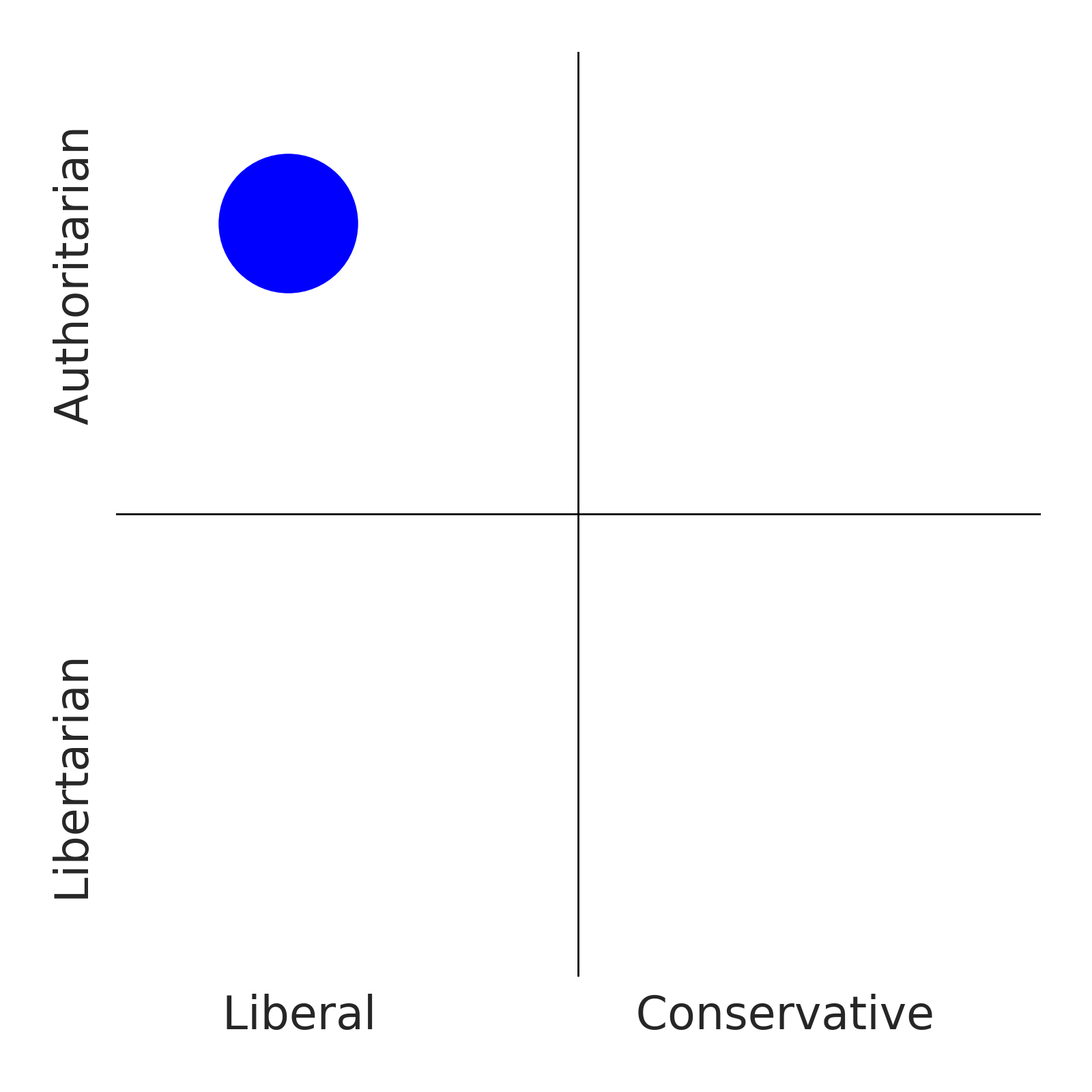
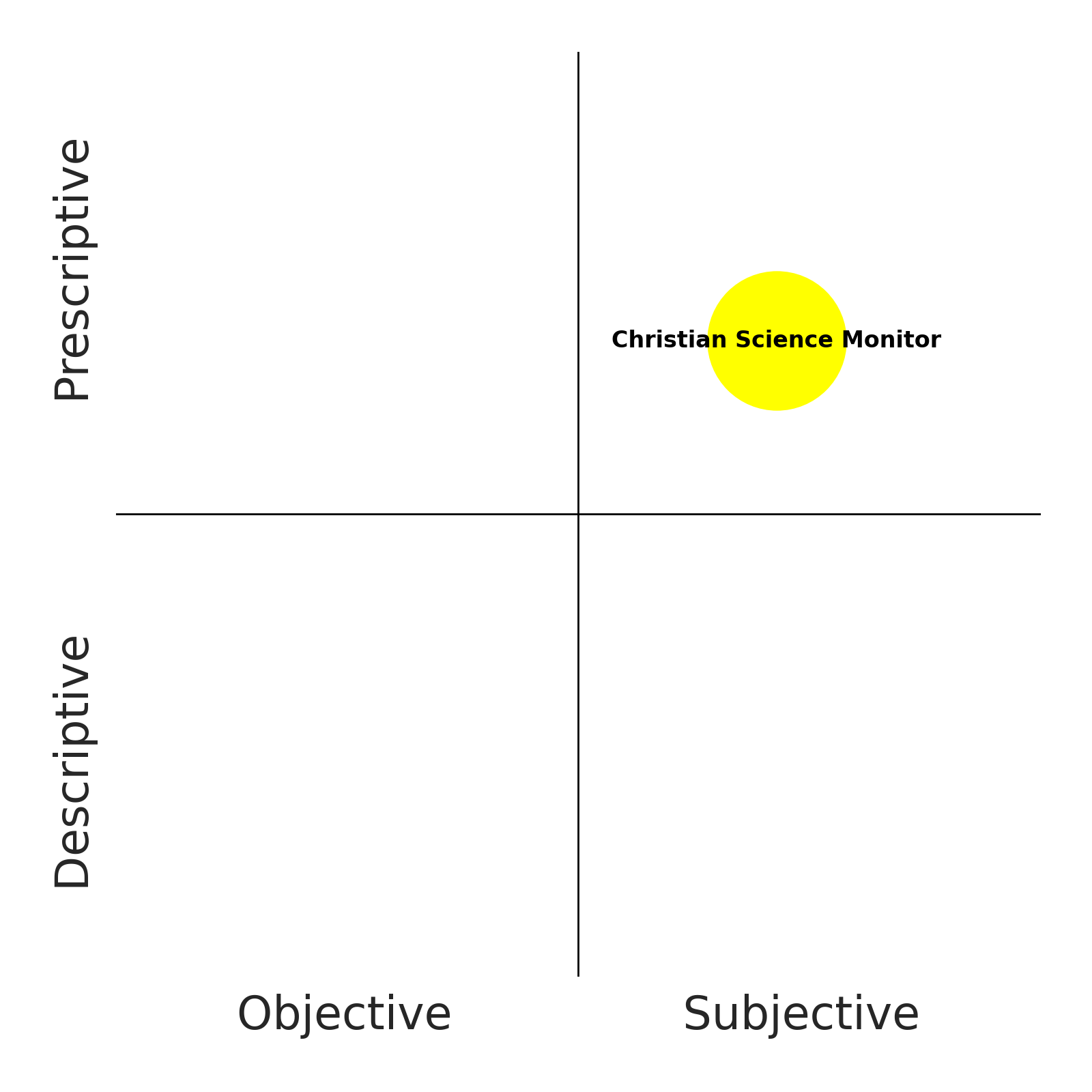
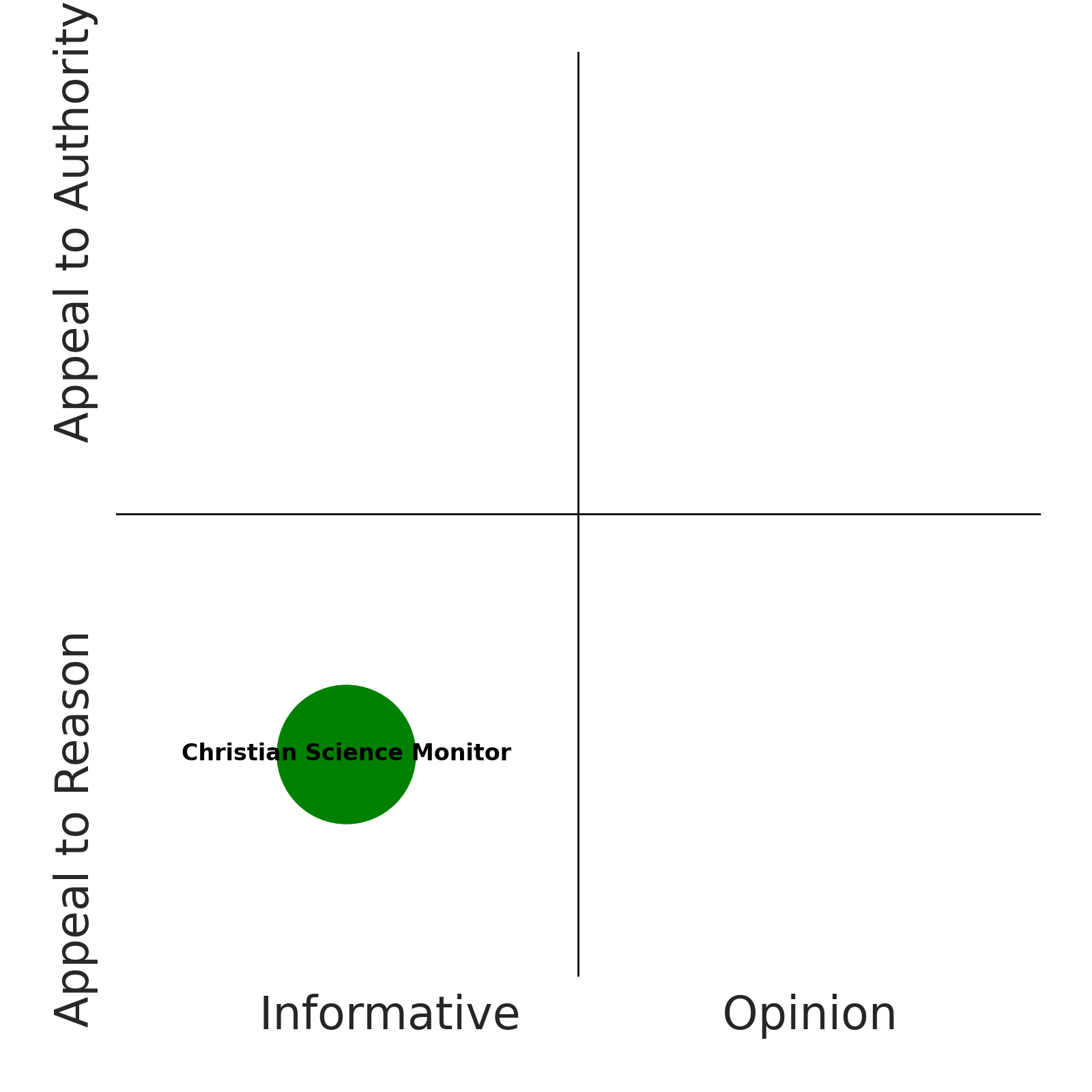
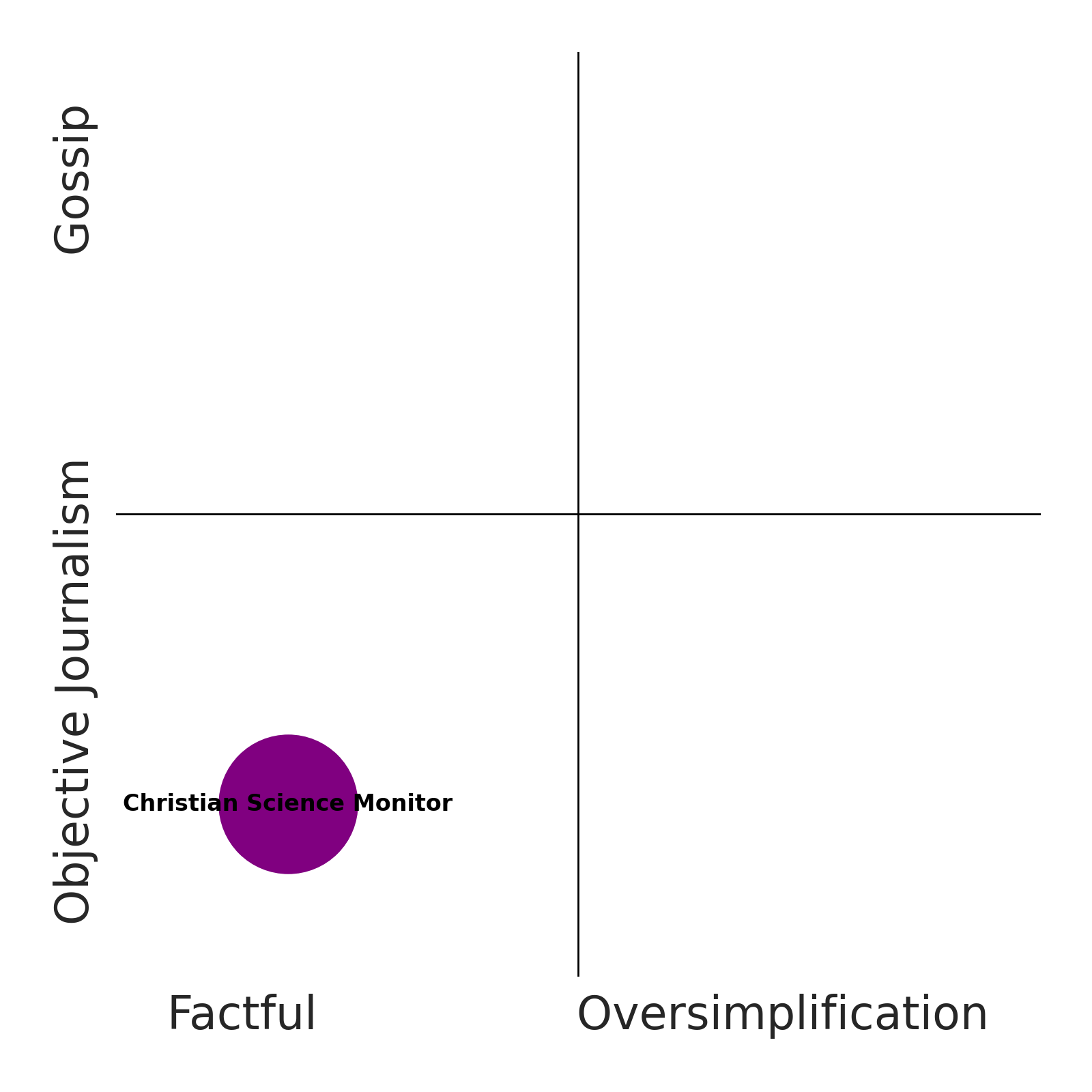
2026 © Helium Trades
Privacy Policy & Disclosure
* Disclaimer: Nothing on this website constitutes investment advice, performance data or any recommendation that any particular security, portfolio of securities, transaction or investment strategy is suitable for any specific person. Helium Trades is not responsible in any way for the accuracy
of any model predictions or price data. Any mention of a particular security and related prediction data is not a recommendation to buy or sell that security. Investments in securities involve the risk of loss. Past performance is no guarantee of future results. Helium Trades is not responsible for any of your investment decisions,
you should consult a financial expert before engaging in any transaction.
Helium Research Assistant

How can I help you today?
Ask any question about Christian Science Monitor bias.


