See whether Helium helps you make better-informed decisions. Try every Pro Trader feature for 30 days. No credit card required.
Try every Pro Trader feature for 30 days. No credit card required.
September 29, 2026 · 0 shares
The reporting is framed around a sympathetic portrait of an old-school independent plumber squeezed by private-equity consolidators, unlicensed competition, and regulatory costs, while treating his self-described honesty and patriotism as unquestioned virtues.
Automated analysis; not human reviewed. Limitations: The main limitation is that the report is a single-source profile; revenue, listing, and cost figures are not independently verified. · 6 of 55 available dimensions scored; omitted dimensions are not treated as neutral. · Verified supporting quotes for 6 of 6 scored dimensions.
Claim: The profile favors the independent local plumber against deep-pocketed private equity and unlicensed competitors.
“Many local outfits are merging with others or selling off to out-of-state private equity funds with seemingly bottomless pocketbooks, he said.” · exact text match
Why: The quoted language contrasts local outfits with out-of-state private equity funds and frames market pressure as unfair, a populist economic framing.
Claim: The story is reported in a measured, non-sensational style with concrete figures rather than hype.
“The 22,600-square-foot, two-story building is listed at $3.4 million, or $150 per square foot.” · exact text match
Why: The article leads with specific financial and physical details and avoids dramatic or loaded language in its own narration.
Claim: The overall tone emphasizes declining revenue and industry pressure.
“The headwinds are forcing Apple to sell his building at 2525 W. 6th Ave. in Denver, which is known for its enormous 155-foot flagpole that flies flags as large as 40-by-80 feet.” · exact text match
Why: The narration uses 'headwinds' and 'forcing' to frame a contraction story, though the subject's own comments add resilience.
Claim: The piece mainly describes Apple's situation and quotes his views rather than prescribing policy or action.
“The 68-year-old says he’s seen his industry transform since the pandemic, with customers strapped for cash and cutting back on repairs.” · exact text match
Why: The narration stays in descriptive mode, attributing diagnoses to Apple rather than advocating a remedy.
Claim: The article supports its report with specific figures and clearly attributes statements to Apple.
“The 22,600-square-foot, two-story building is listed at $3.4 million, or $150 per square foot.” · exact text match
Why: Concrete listing and revenue figures, plus attributed quotes, give the report a credible evidentiary base even though it relies largely on one source.
Claim: The article's selected framing is mildly anti-corporate, treating private-equity consolidation as a threat to family-run firms.
“Many local outfits are merging with others or selling off to out-of-state private equity funds with seemingly bottomless pocketbooks, he said.” · exact text match
Why: The phrase 'bottomless pocketbooks' comes from the subject, but the article features it in the lead narrative, tilting against outside corporate buyers.
The main limitation is that the report is a single-source profile; revenue, listing, and cost figures are not independently verified.
Coverage is neutral and procedural, relying on state health-department attribution and precise exposure windows while avoiding evaluative or partisan language.
Automated analysis; not human reviewed. Limitations: Only a short local health notice is supplied; many ideological and financial bias dimensions are not applicable. · 17 of 55 available dimensions scored; omitted dimensions are not treated as neutral. · Verified supporting quotes for 17 of 17 scored dimensions.
Claim: Coverage is framed around public-health case counts and exposure locations, not left-right political conflict.
“Colorado public health officials have confirmed 26 measles cases as of Oct. 15 this year.” · exact text match
Why: The subject and sourcing are health-administrative, with no partisan framing.
Claim: The report is composed mainly of dated locations, case counts, and official attributions.
“The resident flew in or out of DIA three times last weekend, according to the Colorado Department of Public Health and Environment.” · exact text match
Why: Specific attribution and neutral procedural facts dominate.
Claim: Exposure warnings are stated factually with exact windows and cautious 'may' language rather than sensational language.
“People may have been exposed to the measles at the following locations and timeframes” · exact text match
Why: The language is cautionary and precise, not alarmist.
Claim: The article is primarily descriptive, with one explicit public-health instruction.
“Anyone who develops symptoms should call their health care provider and report the symptoms to their local public health agency or the state public health department at 720-653-3369.” · exact text match
Why: Prescriptive advice appears but does not dominate the report.
Claim: The exposure warning is factual and cautious rather than fear-baiting.
“may have exposed others” · exact text match
Why: The article uses 'may' and provides actionable health guidance.
Claim: The report relies on official statements and data rather than the author's evaluation.
“according to the Colorado Department of Public Health and Environment.” · exact text match
Why: The framing is reportorial and data-driven.
Claim: The article addresses a health incident without partisan or policy advocacy.
“A Jefferson County resident with a confirmed case of the measles may have exposed others at the Denver International Airport and an Arvada urgent care, state officials said late Thursday.” · exact text match
Why: No political actors, ideology, or electoral framing are present.
Claim: The report relies on state health authorities for its central claims.
“state officials said late Thursday” · exact text match
“CDPHE data shows” · exact text match
Why: Authority is cited for factual public-health information, a mild but observable reliance.
Claim: Certainty is calibrated with 'may' and 'believes' rather than exceeding the supplied evidence.
“The health agency believes the person was likely exposed during travel, not in Colorado.” · exact text match
Why: The report avoids asserting uncertain details as certain.
Claim: The tone is neutral and informational rather than emotionally charged.
“People who were exposed may develop measles symptoms through Oct. 28, including fever, cough, runny nose, red eyes, and a rash that usually starts several days later on the face and spreads.” · exact text match
Why: Symptoms are listed clinically without emotive language.
Claim: The report is specific, sourced, and appropriately hedged.
“according to the Colorado Department of Public Health and Environment.” · exact text match
Why: Named agency sourcing and precise details support credibility.
Claim: The report presents attributed, probabilistic public-health information and avoids emotive or illogical claims.
“The health agency believes the person was likely exposed during travel, not in Colorado.” · exact text match
Why: It uses agency attribution and cautious language rather than certainty.
Claim: The report uses empirical case counts and agency data rather than non-scientific explanation.
“Of the 26 confirmed cases this year, 22 were in people who had not been vaccinated, and 19 cases were in children and teens younger than 18, CDPHE data shows.” · exact text match
Why: Quantitative health data and official epidemiology ground the report.
Claim: The report includes a limited, attributed inference about where exposure occurred.
“The health agency believes the person was likely exposed during travel, not in Colorado.” · exact text match
Why: It is explicitly labeled as agency belief and 'likely,' not asserted as fact.
Claim: The report attributes claims to named agencies and indicates its data source.
“CDPHE data shows” · exact text match
“state officials said late Thursday” · exact text match
Why: Transparent attribution supports internal fairness and honesty signals.
Claim: The article organizes a complex exposure timeline with specific locations, dates, and data.
“Denver International Airport between 12:25 a.m. and 3 a.m. Oct. 3.” · exact text match
Why: Detailed chronology and attributed data indicate high informational intelligence.
Only a short local health notice is supplied; many ideological and financial bias dimensions are not applicable.
Framing is largely explanatory and balanced with named supporters and critics, though mild critical language such as 'shadowy approach' and 'blown gaping holes' edges toward negative characterization of the conservative group.
Automated analysis; not human reviewed. Limitations: The supplied text includes an editor's note and unrelated navigation/headlines, and no author byline is stated. · 10 of 55 available dimensions scored; omitted dimensions are not treated as neutral. · Verified supporting quotes for 9 of 10 scored dimensions.
Claim: The article mildly frames the conservative group's approach negatively by using critical language and emphasizing critics' concerns about donor influence.
“its shadowy approach” · exact text match
“Critics have long accused Advance of misleading voters with its ballot measures while pursuing its donors' economic interests above those of the broader state.” · not found in supplied text
Counterevidence:
“Its supporters say its success is proof that while Republicans may be out of favor in a blue Colorado, their animating ideas still have purchase.” · exact text match
Why: The publisher's own phrase 'shadowy approach' and inclusion of donor-influence criticism lean slightly against the conservative group, though the article also reports supportive views.
Claim: The article is mostly objective but includes some subjective or loaded descriptors.
“its shadowy approach” · exact text match
“blown gaping holes in government budgets” · exact text match
Why: Most content is factual and attributed, but these phrases introduce evaluative coloring in the publisher's own voice.
Claim: Presentation is calm and explanatory rather than sensational.
“Here’s a look at Advance’s latest ballot measures, its history and leadership, and information about how it operates.” · exact text match
Why: The article is structured as an explainer and avoids sensational language or alarmist framing.
Claim: The article is primarily descriptive, explaining measures and history without prescribing votes.
“Here’s a look at Advance’s latest ballot measures, its history and leadership, and information about how it operates.” · exact text match
Why: The text aims to inform readers about the group and its ballot measures rather than advocate a position.
Claim: The article is mostly factual but contains some evaluative phrasing.
“its shadowy approach” · exact text match
“blown gaping holes in government budgets” · exact text match
Why: These loaded descriptors appear in otherwise fact-heavy explanatory reporting, indicating limited opinion coloring.
Claim: The article is entirely political, focused on ballot measures, campaigns, donors, and partisan strategy.
“On the Nov. 3 ballot, Advance is back with six ballot measures” · exact text match
“the state's Democratic officials left to deal with the resulting shortfalls and challenges” · exact text match
Why: The subject matter is explicitly about electoral politics, political groups, and partisan policy fights.
Claim: The article has strong credibility signals through named sources, financial records, and attributed quotes.
“according to federal tax records” · exact text match
“Nagel told The Post” · exact text match
“Fields told The Post recently” · exact text match
Why: Multiple named sources and documentary evidence support the reported claims, with opposing views included.
Claim: The article is largely rational and evidence-bound, citing tax records and attributed interviews.
“according to federal tax records” · exact text match
“Nagel told The Post” · exact text match
“Fields told The Post recently” · exact text match
Why: The reporting relies on documented financial data and named-source attribution rather than emotional or irrational appeals.
Claim: The article shows high integrity through named sources, financial records, and inclusion of opposing perspectives.
“according to federal tax records” · exact text match
“Steve Fenberg, a Democrat and former president of the state Senate, called Advance” · exact text match
Why: Disclosed donor amounts, attributed quotes, and critical views indicate fair and transparent reporting practices.
Claim: The article demonstrates high intelligence by detailing ballot mechanics, funding records, and multiple perspectives.
“four proposed constitutional amendments and two propositions” · exact text match
“according to federal tax records” · exact text match
“Tyler Sandberg, a Republican consultant, echoes Owens” · exact text match
Why: It synthesizes legal thresholds, financial filings, and contrasting viewpoints in a clear explanatory structure.
The supplied text includes an editor's note and unrelated navigation/headlines, and no author byline is stated.
October 16, 2026 · 0 shares
An editorial-board endorsement frames Michael Allen as a trustworthy, nonpartisan moderate while amplifying criticism of Trump and Jena Griswold’s management.
Automated analysis; not human reviewed. Limitations: The publisher name is blanked in the supplied text and unrelated headline fragments are included, limiting attribution and context. · 55 of 55 available dimensions scored; omitted dimensions are not treated as neutral. · Verified supporting quotes for 11 of 55 scored dimensions.
Claim: The endorsement frames the race around resisting Trump and preserving abortion rights while backing a Republican.
“continuing to stand up to President Donald Trump’s erosion of our Constitution and our democratic norms” · exact text match
“like our constitutional guarantee to abortion care” · exact text match
Counterevidence:
“Michael Allen is a moderate Republican” · exact text match
Why: Anti-Trump and abortion-rights framing pushes left, but the Republican endorsement qualifies the classification.
Claim: The text is an explicitly evaluative endorsement rather than a neutral news report.
“We urge voters to select him for attorney general” · exact text match
“Allen could be a great attorney general if voters give him the chance.” · exact text match
Why: Direct vote recommendations and candidate praise make the framing subjective.
Claim: The editorial prescribes a vote for Allen.
“We urge voters to select him for attorney general” · exact text match
“Voters should reward bravery like that this election” · exact text match
Why: The text explicitly tells voters what action to take.
Claim: The article is opinion journalism with explicit judgments about candidates.
“We just want to take a moment to recognize how rare it is in America to have a politician willing to criticize a member of his or her own political party.” · exact text match
“Allen could be a great attorney general” · exact text match
Why: Praise, criticism, and vote advice are evaluative opinion content.
Claim: The article is a partisan election endorsement centered on candidate choice.
“We urge voters to select him for attorney general” · exact text match
“Editorial Board endorsements for the 2026 Colorado election” · exact text match
Why: It directly endorses a candidate in a statewide political race.
Claim: The endorsement is generally favorable toward Allen.
“Allen could be a great attorney general if voters give him the chance.” · exact text match
Why: The closing line expresses positive affect toward the endorsed candidate.
Claim: The editorial excuses Allen's limited civil-side experience while treating Griswold's limited courtroom experience as disqualifying.
“We have faith he will quickly learn to navigate the civil side of the court system” · exact text match
“Jena Griswold, on the other hand, has had very limited courtroom experience.” · exact text match
Why: Comparable experience gaps are treated with faith for Allen and criticism for Griswold.
Claim: The editorial includes specific, attributed facts and acknowledges some opponent strengths, though it remains an endorsement.
“The 4th Judicial District was awarded about $340,000 as part of a public safety/emergency management federal grant in 2025” · exact text match
“She refused to accept Trump's voter fraud claims even in the face of death threats and harassment.” · exact text match
Why: Specific figures, quotes, and balanced details support credibility, while the explicit endorsement limits neutrality.
Claim: The editorial weighs a candidate's issue positions with some specificity rather than treating them as monolithic.
“Allen told us he supports some of the lawsuits brought by Attorney General Phil Weiser against the Trump administration, but not all of them.” · exact text match
Why: The text distinguishes partial support for lawsuits and includes specific legal considerations.
Claim: The editorial acknowledges uncertainty and credits the opponent on some points.
“Voting for Allen will take trust” · exact text match
“she would continue Weiser's important work standing up to the Trump administration” · exact text match
Why: Admitting trust is required and noting an opponent's positive role signals fairness, though the piece remains an endorsement.
Claim: The editorial uses specific race details, candidate quotes, and documented office problems rather than broad slogans.
“hundreds of thousands of mailers sent encouraging ineligible voters to register” · exact text match
“The 4th Judicial District was awarded about $340,000 as part of a public safety/emergency management federal grant in 2025” · exact text match
Why: Concrete details and quoted candidate positions indicate above-average informational density.
The publisher name is blanked in the supplied text and unrelated headline fragments are included, limiting attribution and context.
An irreverent, opinion-heavy sports column frames Colorado's loss as evidence of unresolved program failures, using sarcasm and rhetorical questions to rebut Deion Sanders' 'one glaring problem' explanation.
Automated analysis; not human reviewed. Limitations: The supplied text is a single opinion column, with no independent game data or opposing commentary available for cross-checking. · 8 of 55 available dimensions scored; omitted dimensions are not treated as neutral. · Verified supporting quotes for 8 of 8 scored dimensions.
Claim: The column repeatedly injects explicit judgment and rhetorical questions rather than confining itself to facts.
“It’s not. CU’s quarterbacking play isn’t the only “it” dragging 2026 into the abyss. At all.” · exact text match
“Can you imagine what Chip Kelly would do with the talent on coach Joey McGuire’s payroll?” · exact text match
Why: Direct first-person rebuttals and hypotheticals display the columnist's subjective viewpoint.
Claim: The column uses exaggerated, insulting language to dramatize the game.
“McGuire’s frauds.” · exact text match
“dragging 2026 into the abyss” · exact text match
Why: Calling opposing players 'frauds' and the season 'the abyss' is dramatic and loaded rather than neutral.
Claim: The column characterizes Colorado's season and quarterback room as unable to recover.
“This is 2025 all over again, at least on offense.” · exact text match
“Wilson can’t save 2026. The kid behind Door No. 3, first-year quarterback Kaneal Sweetwyne, won’t save it, either.” · exact text match
Why: It asserts the team is repeating past failures and that no available quarterback can change the outcome.
Claim: The writing uses unusual analogies, humor, and celebrity details to make the recap engaging.
“If the Strait of Hormuz was open, Isaac Wilson and Will Hammond couldn’t hit it.” · exact text match
“Nikola Jokic turned heads as he walked to the CU sidelines before the game” · exact text match
Why: These details go beyond a standard game recap, adding novelty and entertainment value.
Claim: The column states explicit personal opinions and directly rebuts the coach's assessment.
“It’s always something, isn’t it? New quarterbacks. New coordinators. New wide receivers. New roster. New promises. Same Buffs.” · exact text match
“Yes it is. Completely.” · exact text match
Why: The rhetorical question and blunt 'Completely' assert the writer's contrary judgment rather than merely reporting.
Claim: The column uses negative, sarcastic imagery to color the report.
“dragging 2026 into the abyss” · exact text match
“the Joker’s on Deion and the Buffs.” · exact text match
Why: The language carries a strongly negative emotional charge beyond the underlying facts.
Claim: The piece provides attributable statistics and direct quotations, supporting verification of its factual core.
“ESPN’s Bill Connelly ranked them 82nd nationally out of 138 FBS programs; BCFToys.com’s Brian Fremeau ranked them 128th.” · exact text match
““It’s not for lack of effort,” Sanders said of his special teams foibles” · exact text match
Why: Named analysts and direct quotes give readers sources to check, though the column is overtly opinionated.
Claim: The column raises hypotheticals about other coaches' performance and imagines players' private reactions.
“Can you imagine what Chip Kelly would do with the talent on coach Joey McGuire’s payroll?” · exact text match
“Penny for Kaidon Salter’s thoughts right about now.” · exact text match
Why: These are unverifiable rhetorical speculations rather than reportable facts.
The supplied text is a single opinion column, with no independent game data or opposing commentary available for cross-checking.
September 26, 2026 · 0 shares
The piece frames a regular-season NFL game as a family revenge saga and coach-vs-coach duel, mixing hyperbole, gossip, and speculative motive-reading.
Automated analysis; not human reviewed. Limitations: Input limitation: the supplied text is a single sports opinion column with duplicated passages, so motive claims and the off-record anecdote are not independently verifiable from the article itself. · 6 of 55 available dimensions scored; omitted dimensions are not treated as neutral. · Verified supporting quotes for 6 of 6 scored dimensions.
Claim: The piece openly uses personal inference and rhetorical conjecture rather than neutral reporting.
“I asked Sean Payton about bragging rights for his boss, and he sidestepped the question. That tells me everything. This game matters more.” · exact text match
Why: A first-person reaction to a sidestep is presented as definitive evidence of the game's importance, which is inherently subjective.
Claim: The game is described in exaggerated, emotional language characteristic of sports hype.
“punched the Broncos in the nose and rubbed their snout in it” · exact text match
“united in their success at pantsing defenses for years” · exact text match
Why: Violent and juvenile metaphors intensify the stakes of an ordinary regular-season game.
Claim: The piece relays private, off-record and unnamed-source anecdotes about personal conflicts.
“In a segment he thought was off the record on the Graham Bensinger show, Macdonald told a story about Payton losing it when learning about how the Seahawks used social media videos of Broncos training camp to prepare for the 2023 opener.” · exact text match
“He credited GM Alex Anthopoulos for helping him succeed, while taking what sure seemed like a shot at Rockies former GM Jeff Bridich.” · exact text match
Why: The writing repeats an off-record story and interprets a compliment as a veiled dig.
Claim: The column is dominated by the author's opinions, predictions, and speculation.
“This game matters more.” · exact text match
“You get the idea. This is a match worthy of a future sequel on Feb. 14 at SoFi Stadium.” · exact text match
Why: Statements of subjective importance and a speculative future matchup are presented as conclusions.
Claim: Certainty is expressed beyond what the available evidence supports.
“That tells me everything.” · exact text match
“This game matters more.” · exact text match
Why: A coach's nonanswer is treated as conclusive proof of emotional stakes, without corroboration.
Claim: The column speculates on motives, future outcomes, and hidden meaning.
“You don’t think he wants to even the score?” · exact text match
“That tells me everything.” · exact text match
Why: Rhetorical questions and inference from a sidestep are used to assert unobserved motives.
Input limitation: the supplied text is a single sports opinion column with duplicated passages, so motive claims and the off-record anecdote are not independently verifiable from the article itself.
September 28, 2026 · 0 shares
Celebratory and evaluative framing emphasizes Denver's comeback and defensive dominance while acknowledging offensive inconsistency.
Automated analysis; not human reviewed. Limitations: Only a partial report-card excerpt with some page chrome was supplied; the actual assigned grades and full coaching analysis were unavailable. · 6 of 55 available dimensions scored; omitted dimensions are not treated as neutral. · Verified supporting quotes for 6 of 6 scored dimensions.
Claim: The report mixes concrete statistics with subjective interpretation and emotional scene-setting.
“It felt like a miracle the Broncos weren’t down more than 16 points after the first half.” · exact text match
Why: Subjective phrasing like 'felt like a miracle' overlays an otherwise statistical game report.
Claim: Word choice dramatizes the outcome with terms like 'wild comeback' and 'storming back.'
“The Denver Broncos completed a wild comeback on Sunday night against the Los Angeles Rams, storming back from a 16-point deficit in the first half to secure a 30-26 victory over a legitimate Super Bowl Contender.” · exact text match
Why: 'Wild' and 'storming back' elevate the narrative beyond a plain score report.
Claim: The team's comeback ability is framed as a positive trademark.
“this team has made second-half comebacks their trademark, and Sunday night was one of their best.” · exact text match
Why: 'Trademark' and 'one of their best' present the team's resilience as a defining positive.
Claim: The piece grades and credits team performances, using explicit evaluative judgments rather than neutral reporting.
“That’s about as good as you can do.” · exact text match
Why: The 'report card' structure and direct qualitative verdicts make the evaluative stance explicit.
Claim: The narrative is emotionally positive toward the Broncos and the comeback.
“The crowd was roaring and it felt like the Denver defense was on the verge of leading the franchise to a statement win on “Sunday Night Football.”” · exact text match
Why: Describes the atmosphere and a felt 'statement win' rather than neutral outcomes.
Claim: The report uses precise, checkable game statistics and named participants.
“Nix’s first half: 6-of-12, 53 yards, 62.2 rating, zero touchdowns and zero interceptions.” · exact text match
“Denver’s defense held Matthew Stafford to a 56.4 passer rating, while sacking him three times.” · exact text match
Why: Specific stats and named events give the account a factual backbone.
Only a partial report-card excerpt with some page chrome was supplied; the actual assigned grades and full coaching analysis were unavailable.
September 29, 2026 · 0 shares
Article content was unavailable because the supplied text was a fragmented collection of headlines, brief snippets, and boilerplate rather than a single coherent article.
Automated analysis; not human reviewed. Limitations: The supplied text was a fragmented list of unrelated headlines and page artifacts, not a unified article, so no substantive publisher framing could be analyzed.
The supplied text was a fragmented list of unrelated headlines and page artifacts, not a unified article, so no substantive publisher framing could be analyzed.
October 03, 2026 · 0 shares
The framing is bullish on the Avalanche's offense, treating Kadri and Roy's expected bounce-back as the main route to offsetting offseason losses.
Automated analysis; not human reviewed. Limitations: The supplied text is a sports analysis with projections; bias scores reflect framing language rather than verified outcomes, and no external verification of statistics or quotes was possible. · 9 of 55 available dimensions scored; omitted dimensions are not treated as neutral. · Verified supporting quotes for 8 of 9 scored dimensions.
Claim: The article frames the Avalanche offense as likely to improve or at least not miss a beat because of Kadri and Roy's expected full-season bounce-back.
“A full, healthy year of Kadri and Roy could blow past those totals.” · exact text match
“It looks more likely when you consider 80-ish games of Kadri and Roy, both feeling more settled and potentially more productive than a year ago.” · exact text match
Counterevidence:
“It doesn’t look that way if we base it only on offseason transactions” · exact text match
Why: The repeated 'could blow past' and 'more likely' language projects a stronger offense despite the acknowledged offseason losses.
Claim: The article presents an optimistic outlook for the Avalanche offense despite the departure of three regular forwards.
“It looks more likely when you consider 80-ish games of Kadri and Roy, both feeling more settled and potentially more productive than a year ago.” · exact text match
““For sure,” Roy said when asked a full year of him and Kadri can help boost the offense.” · exact text match
Counterevidence:
“It doesn’t look that way if we base it only on offseason transactions” · exact text match
Why: The article emphasizes reasons for improvement and a positive opener, while noting the one-game sample and health caveat.
Claim: The article mixes factual reporting with the writer's subjective assessment of what might happen.
“Doing so might be the key to Colorado’s offense not missing a beat without Valeri Nichushkin, Ross Colton and Jack Drury this season.” · exact text match
“It looks more likely when you consider 80-ish games of Kadri and Roy, both feeling more settled and potentially more productive than a year ago.” · exact text match
Why: The piece is structured around the writer's judgments about the team's outlook, supported by quotes and statistics.
Claim: The article uses positive emotional language about players and the team's comeback prospects.
“It was a fun homecoming story.” · exact text match
“Last year, Nelson responded with a fantastic bounce-back campaign” · exact text match
Why: Words like 'fun' and 'fantastic' add a positive emotional cast to the analysis.
Claim: The article attributes quotes to named players and cites specific statistics while flagging uncertainty.
““For sure,” Roy said when asked a full year of him and Kadri can help boost the offense.” · exact text match
“It’s largely predicated on health” · exact text match
Why: Direct quotes, named players, and explicit caveats support the article's visible credibility.
Claim: The article's projections are reasoned from statistics and explicit caveats rather than irrational claims.
“It’s largely predicated on health” · exact text match
“It’s only one game, but Kadri and Schwartz had two assists each, while Roy scored a goal in Colorado’s season-opening 8-4 win over the typically stingy Los Angeles Kings.” · exact text match
Why: The article identifies health as a condition and dismisses the one-game sample, showing measured reasoning.
Claim: The article forecasts future performance for Kadri and Roy rather than reporting only established results.
“could be primed to return to his previous production levels this year” · exact text match
“It looks more likely when you consider 80-ish games of Kadri and Roy, both feeling more settled and potentially more productive than a year ago.” · exact text match
Why: The central argument is a projection about what a full season could produce, using conditional and probabilistic language.
Claim: The article includes qualifying statements that temper its optimistic projections.
“It doesn’t look that way if we base it only on offseason transactions” · exact text match
“It’s only one game” · exact text match
Why: The writer acknowledges a less favorable view based on transactions alone and cautions against overreading a single game.
Claim: The article uses statistical comparisons and structured reasoning to support its analysis.
“Colorado led the NHL with 298 goals last season.” · not found in supplied text
“It’s largely predicated on health” · exact text match
Why: The analysis integrates team and player production data and identifies a key condition for its projection.
The supplied text is a sports analysis with projections; bias scores reflect framing language rather than verified outcomes, and no external verification of statistics or quotes was possible.
October 04, 2026 · 0 shares
The framing is Colorado-centric and celebratory, describing the Avalanche's win with dramatic, one-sided language while still including score and statistical context.
Automated analysis; not human reviewed. Limitations: The supplied text has no byline, includes duplicated passages, and the reported statistics could not be independently verified from the article alone. · 7 of 55 available dimensions scored; omitted dimensions are not treated as neutral. · Verified supporting quotes for 7 of 7 scored dimensions.
Claim: The report combines factual game statistics with evaluative color commentary.
“didn’t look like a fair fight from early in the opening period” · exact text match
“This one turned into a laugher late in the second.” · exact text match
Why: The quoted phrases are judgments about how one-sided the game felt, not strictly measurable facts, but the report is anchored in a concrete score and stats.
Claim: The article uses dramatic sports hyperbole to characterize the lopsided result.
“The Colorado Avalanche continued to bludgeon its way through the opening week” · exact text match
“This one turned into a laugher late in the second.” · exact text match
Why: Words such as 'bludgeon' and 'laugher' dramatize the win, though the underlying 6-1 result supports a one-sided-game description.
Claim: The tone is upbeat about Colorado's play and optimistic about individual player trajectories.
“Meanwhile, the Avs’ hot start continued after an 8-4 win here Wednesday night against the Los Angeles Kings.” · exact text match
“he’s a prime candidate for a bounce-back season” · exact text match
Why: 'Hot start' and 'prime candidate' are positive evaluations of the team and a player, but the article also includes opponent context.
Claim: The report includes explicit analytical opinions about teams and players rather than only reporting results.
“The Blues look, on paper, like an improved team that can challenge for a playoff spot in the deep Central Division.” · exact text match
“he’s a prime candidate for a bounce-back season” · exact text match
Why: These statements are judgments about expected performance embedded in an otherwise factual recap.
Claim: The prose is emotionally colored in Colorado's favor and dismissive of St. Louis's goaltending.
“didn’t look like a fair fight from early in the opening period” · exact text match
“Jordan Binnington’s first start of the season was already one to forget” · exact text match
Why: 'Fair fight' and 'one to forget' carry positive/negative emotional connotations beyond the basic score.
Claim: The article is credible in its visible sourcing, with direct quotes, named coaches/players, and concrete statistics.
““The things that we liked out of the first game, they were multiplied in this one,” Avs coach Jared Bednar said.” · exact text match
“Martin Necas scored twice, and Mackenzie Blackwood made 26 saves” · exact text match
Why: Attribution to named sources and specific game data support trustworthiness, even though no correction or external verification is shown.
Claim: The report makes forward-looking forecasts about playoff contention and a bounce-back season.
“can challenge for a playoff spot in the deep Central Division” · exact text match
“he’s a prime candidate for a bounce-back season” · exact text match
Why: The article projects possible future outcomes, though hedged with 'on paper' and 'candidate.'
The supplied text has no byline, includes duplicated passages, and the reported statistics could not be independently verified from the article alone.
October 16, 2026 · 0 shares
Frames the game as a dramatic report card, using hyperbolic praise for Denver’s defense and harsh criticism of its offense.
Automated analysis; not human reviewed. Limitations: The supplied text contains duplicated paragraphs and unrelated site links, so extraction focuses on the substantive report-card content. · 7 of 55 available dimensions scored; omitted dimensions are not treated as neutral. · Verified supporting quotes for 7 of 7 scored dimensions.
Claim: The report card is driven by evaluative judgments and rhetorical characterization rather than neutral description.
“Bo Nix’s struggles are bordering on outright disasters at this point.” · exact text match
Why: Strong evaluative wording classifies performance subjectively.
Claim: The framing uses vivid, exaggerated metaphors to heighten the game narrative.
“a third-year quarterback rapidly regressing and an offense that’s allergic to explosive plays” · exact text match
Why: The metaphor 'allergic' and 'rapidly regressing' heighten tone beyond neutral stats.
Claim: The article frames the team's situation as a dramatic conundrum to sustain reader interest.
“That’s the conundrum in Denver right now, where the Broncos keep finding ways to win ugly.” · exact text match
Why: Dramatic framing and conflict increase interest.
Claim: The article presents strong personal judgments about coaching and performance as report-card conclusions.
“Joseph’s game plan was essentially perfect.” · exact text match
Why: 'essentially perfect' is an opinionated evaluation.
Claim: The article states sweeping evaluative certainties about coaching and future prospects from one game.
“This was a nationally televised master class by one of football’s best defensive coordinators.” · exact text match
Why: The absolute praise exceeds what a single game report can establish.
Claim: Credibility is supported by specific, checkable game statistics but limited by an opinionated report-card format.
“The Broncos gained two first downs, posted 30 yards, did not score and went three-and-out four times.” · exact text match
Why: Concrete statistics are provided, though the piece remains evaluative.
Claim: The article forecasts future sustainability and necessity from the current pattern.
“The Broncos keep winning these games, but eventually their offense will need to hold up its end of the bargain.” · exact text match
Why: It projects an eventual requirement rather than reporting a completed fact.
The supplied text contains duplicated paragraphs and unrelated site links, so extraction focuses on the substantive report-card content.
October 03, 2026 · 0 shares
Roster departures are framed as confirmed, coach-explained team moves, told through attributed statements and player statistics rather than commentary.
Automated analysis; not human reviewed. Limitations: The supplied text is a short sports-news item with no byline or publication context, limiting assessment of broader editorial patterns. · 4 of 55 available dimensions scored; omitted dimensions are not treated as neutral. · Verified supporting quotes for 4 of 4 scored dimensions.
Claim: The article reports roster moves in neutral, attributed language rather than opinion.
“Defensive backs Jah Jah Boyd, Paul Omodia and Justin Eaglin are off Colorado’s roster, the program confirmed Saturday prior to their game against Texas Tech.” · exact text match
“All three played in the secondary, and all three came to Colorado through the transfer portal this offseason.” · exact text match
Why: The article's claims are tied to the program, coach statements, or statistics, with no first-person commentary or un-attributed opinion.
Claim: The article avoids dramatic or exaggerated treatment of the roster news.
“The departures thin Colorado’s secondary, though its two most productive players remain” · exact text match
“Against Weber State, Eaglin had two tackles and Omodia had one.” · exact text match
Why: The wording is restrained and factual, presenting the roster losses and statistics without hype or alarm.
Claim: The article describes events and statistics without issuing prescriptions.
“All three played in the secondary, and all three came to Colorado through the transfer portal this offseason.” · exact text match
“Against Weber State, Eaglin had two tackles and Omodia had one.” · exact text match
Why: The text reports what happened and cites data; it does not urge any action or recommend a policy.
Claim: The report identifies its sources for the main factual claims.
“Defensive backs Jah Jah Boyd, Paul Omodia and Justin Eaglin are off Colorado’s roster, the program confirmed Saturday prior to their game against Texas Tech.” · exact text match
“At the time, Sanders said it was never a single incident that led to the dismissals.” · exact text match
Why: The central roster claim is attributed to the program, and Sanders's remarks are presented as reported speech, giving readers identifiable sources.
The supplied text is a short sports-news item with no byline or publication context, limiting assessment of broader editorial patterns.
Framing presents the program's undefeated season and Cohen's 100th win as the culmination of a patient team-building story, using admiring coach and player quotes to reinforce the upbeat narrative.
Automated analysis; not human reviewed. Limitations: The supplied text repeats the article in multiple segments and has no byline, so author fields are empty and duplicates were ignored. · 2 of 55 available dimensions scored; omitted dimensions are not treated as neutral. · Verified supporting quotes for 2 of 2 scored dimensions.
Claim: The report is built on specific statistics, named rankings, and attributed quotes, making it appear credible.
“Senior QB Colter Espinoza, who broke his collarbone twice last year, is fourth in the state with 1,492 passing yards entering Saturday.” · exact text match
“Ponderosa is ranked No. 1 in the latest Colorado Preps rankings, and No. 3 in The rankings as well as CHSAA’s MaxPreps rankings that are used to determine playoff seeding.” · verified after text normalization
Why: The article provides checkable statistics and identifies ranking systems and sources, supporting a positive credibility score without external verification.
Claim: Some statements about November success go beyond current results and enter forecasting.
“the Mustangs still have enough talent to make noise in November.” · exact text match
Why: This projects postseason performance as a reasonable expectation despite being an unplayed future outcome.
The supplied text repeats the article in multiple segments and has no byline, so author fields are empty and duplicates were ignored.
A stat-heavy game recap that frames Montana's win as the main story and treats UNC's first points since 2017 as the notable subplot.
Automated analysis; not human reviewed. Limitations: The supplied text is a fragmentary list that includes unrelated Denver Post headlines and boilerplate; I analyzed only the substantive game recap. · 4 of 55 available dimensions scored; omitted dimensions are not treated as neutral. · Verified supporting quotes for 4 of 4 scored dimensions.
Claim: The article is a mostly factual, statistically grounded game recap with only a minor subjective flourish.
“The Grizzlies had 553 yards of total offense to 299 for UNC.” · exact text match
“Ah Yat threw for five touchdowns and 346 yards while completing 77% of his passes (23 of 30).” · exact text match
Counterevidence:
“Gillman, the Grizzlies’ All-American, all-time leading rusher and all-everything fifth-year running back, had a 9-yard TD catch and he also ran for 99 yards on 13 carries.” · exact text match
Why: The report is built from score, records, and player statistics; the phrase 'all-everything' is the main subjective note.
Claim: The article reports the game in a restrained, chronological way without sensational language.
“The Grizzlies’ led 15-0 at halftime and extended the lead to 29-0 in the third quarter on touchdown passes from quarterback Keali’i Ah Yat to Eli Gillman and Brooke Davis.” · exact text match
“UNC’s loss snaps a two-game winning streak — the highest for the program under current head coach Ed Lamb in his fourth year — and drops the Bears to 2-4 overall and 1-2 in the Big Sky Conference.” · exact text match
Why: The article presents scoring progression and team records with measured language rather than hype or fear-based framing.
Claim: The article describes the game and upcoming schedule rather than recommending any action.
“Nationally ranked Montana football beats UNC Bears 36-14, extends current winning streak to 5 games.” · exact text match
“UNC’s next game is Oct. 10 at Eastern Washington.” · exact text match
Why: It is an account of what happened and what is scheduled, with no prescriptive or advocacy language.
Claim: The article's visible specificity and internal consistency support a generally credible report.
“Montana has not lost to UNC in a decade. UNC’s only win in the series was a 28-25 victory Nov. 12, 2016 in Greeley.” · exact text match
“Montana started the day ranked third in a national Football Championship Subdivision poll. Saturday ended with the Grizzlies (5-1 overall, 3-0 Big Sky) as the conference’s only undefeated team.” · exact text match
Why: Precise dates, records, and statistics are visible, but no named source or attribution is provided for the figures.
The supplied text is a fragmentary list that includes unrelated Denver Post headlines and boilerplate; I analyzed only the substantive game recap.
October 04, 2026 · 0 shares
Framing treats the Rams' loss primarily as a defensive collapse, making the mid-game firing of the defensive coordinator the story's central consequence.
Automated analysis; not human reviewed. Limitations: The supplied text is fragmented: the first section cuts off and unrelated headlines follow the game report, so analysis is based on the coherent game-report portion. · 1 of 55 available dimensions scored; omitted dimensions are not treated as neutral. · Verified supporting quotes for 1 of 1 scored dimensions.
Claim: The article shows visible sourcing, attributed quotes, and precise statistics.
“"Tyson was relieved of his play-calling duties," Mora said. "He left the field and he is no longer with the program. That's permanent."” · verified after text normalization
“Atkinson completed 31 of 34 passes for 413 yards and five touchdowns to lead the Beavers.” · exact text match
Why: The central claim is directly attributed to the head coach, and game statistics are specific and internally consistent.
The supplied text is fragmented: the first section cuts off and unrelated headlines follow the game report, so analysis is based on the coherent game-report portion.
October 09, 2026 · 0 shares
The scouting report is written from a clear Denver Broncos insider perspective, treating the Broncos as the home team of interest and repeatedly favoring them in matchup edges while framing the Chargers as 'a mess' and 'broken.'
The Broncos are 2-2 and the Chargers are 0-4 entering their Week 5 meeting at SoFi Stadium; the article is a Denver Post scouting report previewing the game.
Automated analysis; not human reviewed. Limitations: The supplied text is a sports scouting report with duplicated and intermixed fragments, limiting confident assessment of some dimensions.
The supplied text is a sports scouting report with duplicated and intermixed fragments, limiting confident assessment of some dimensions.
Factual local beat reporting that presents Broncos injury and game-management news neutrally with attributed coach quotes and only mild upbeat editorial coloring.
Sean Payton is the Broncos' head coach and primary play-caller; "Joseph" refers to defensive coordinator Vance Joseph, whose system the practice-squad safeties would be learning.
Automated analysis; not human reviewed. Limitations: The supplied text lacks a byline and mixes the story with a duplicated title and unrelated headline links, so authorship is unknown and the article body may be truncated. · 11 of 55 available dimensions scored; omitted dimensions are not treated as neutral. · Verified supporting quotes for 11 of 11 scored dimensions.
Claim: Reporting is predominantly factual with only light evaluative phrasing.
“The starting secondary players, each of whom is dealing with ankle injuries, did not participate in Denver’s Tuesday walk-through practice.” · exact text match
“There is more promising news on cornerback Riley Moss.” · exact text match
Why: Core content is verifiable practice status; the second quote shows the mild editorial coloring that keeps it from fully objective.
Claim: The headline and body state facts plainly without loaded or exaggerated language.
“Broncos’ Pat Surtain II, Talanoa Hufanga don’t participate in practice as Seahawks prep continues” · exact text match
Why: The headline reports the practice news neutrally with no dramatic modifiers.
Claim: Framing balances negative injury news against an upbeat recovery note, netting roughly neutral.
“Pat Surtain II and Talanoa Hufanga are trending toward missing Thursday night’s game against Seattle.” · exact text match
“There is more promising news on cornerback Riley Moss.” · exact text match
Why: Negative availability news is paired with explicitly positive language about Moss, balancing the overall tone.
Claim: Routine injury beat work gains some appeal from candid coach commentary.
“my memories of riding bikes was always carefree” · exact text match
Why: The playful Payton quote adds color beyond a standard status report, though the subject matter stays routine.
Claim: The piece reports statuses, context, and quotes without prescribing what the team should do.
“Surtain went down in Denver’s loss to the 49ers and missed Sunday’s win against the Chargers, while Hufanga was injured against the Chargers.” · exact text match
Why: Content describes injury timelines and roster options; no editorial prescription appears.
Claim: Light evaluative phrasing appears within mostly factual reporting.
“safety will be an interesting spot to watch in terms of practice squad elevations” · exact text match
Why: Judging what is 'interesting' is an editorial aside rather than a factual claim.
Claim: Claims are attributed to named sources and availability reads are hedged pending the official report.
““Evan Rothstein is fantastic,” Payton said.” · exact text match
“though it will be clearer when the final injury report of the week is out Wednesday” · exact text match
Why: Direct attribution and explicit deferral to the final injury report support trustworthiness within the supplied text.
Claim: Availability claims are hedged and tied to reported practice data rather than asserted as certainties.
“That should give him at least a chance of playing against the Seahawks, though it will be clearer when the final injury report of the week is out Wednesday.” · exact text match
Why: The report conditions its availability read on the upcoming final injury report instead of overclaiming.
Claim: The report makes mild, hedged forecasts about Thursday's availability.
“Pat Surtain II and Talanoa Hufanga are trending toward missing Thursday night’s game against Seattle.” · exact text match
Why: 'Trending toward' frames a projection rather than a confirmed outcome, keeping speculation modest.
Claim: The report discloses the data limitation behind its injury designations.
“The Broncos held an indoor walkthrough on Tuesday with no pads or helmets, so the injury report was once again an estimate.” · exact text match
Why: Explicitly flagging that designations are estimates is an honesty signal rather than presenting them as hard practice data.
Claim: The report adds depth-chart context beyond basic injury news.
“Rapp would be further ahead in learning the ins and outs of Joseph’s system since he has been in the building for more than a month.” · exact text match
Why: Explaining practice-squad elevation dynamics and system familiarity shows competent beat-level analysis.
The supplied text lacks a byline and mixes the story with a duplicated title and unrelated headline links, so authorship is unknown and the article body may be truncated.
September 28, 2026 · 0 shares
Celebratory and evaluative framing emphasizes Denver's comeback and defensive dominance while acknowledging offensive inconsistency.
Automated analysis; not human reviewed. Limitations: Only a partial report-card excerpt with some page chrome was supplied; the actual assigned grades and full coaching analysis were unavailable. · 6 of 55 available dimensions scored; omitted dimensions are not treated as neutral. · Verified supporting quotes for 6 of 6 scored dimensions.
Claim: The report mixes concrete statistics with subjective interpretation and emotional scene-setting.
“It felt like a miracle the Broncos weren’t down more than 16 points after the first half.” · exact text match
Why: Subjective phrasing like 'felt like a miracle' overlays an otherwise statistical game report.
Claim: Word choice dramatizes the outcome with terms like 'wild comeback' and 'storming back.'
“The Denver Broncos completed a wild comeback on Sunday night against the Los Angeles Rams, storming back from a 16-point deficit in the first half to secure a 30-26 victory over a legitimate Super Bowl Contender.” · exact text match
Why: 'Wild' and 'storming back' elevate the narrative beyond a plain score report.
Claim: The team's comeback ability is framed as a positive trademark.
“this team has made second-half comebacks their trademark, and Sunday night was one of their best.” · exact text match
Why: 'Trademark' and 'one of their best' present the team's resilience as a defining positive.
Claim: The piece grades and credits team performances, using explicit evaluative judgments rather than neutral reporting.
“That’s about as good as you can do.” · exact text match
Why: The 'report card' structure and direct qualitative verdicts make the evaluative stance explicit.
Claim: The narrative is emotionally positive toward the Broncos and the comeback.
“The crowd was roaring and it felt like the Denver defense was on the verge of leading the franchise to a statement win on “Sunday Night Football.”” · exact text match
Why: Describes the atmosphere and a felt 'statement win' rather than neutral outcomes.
Claim: The report uses precise, checkable game statistics and named participants.
“Nix’s first half: 6-of-12, 53 yards, 62.2 rating, zero touchdowns and zero interceptions.” · exact text match
“Denver’s defense held Matthew Stafford to a 56.4 passer rating, while sacking him three times.” · exact text match
Why: Specific stats and named events give the account a factual backbone.
Only a partial report-card excerpt with some page chrome was supplied; the actual assigned grades and full coaching analysis were unavailable.
September 26, 2026 · 0 shares
The piece frames a regular-season NFL game as a family revenge saga and coach-vs-coach duel, mixing hyperbole, gossip, and speculative motive-reading.
Automated analysis; not human reviewed. Limitations: Input limitation: the supplied text is a single sports opinion column with duplicated passages, so motive claims and the off-record anecdote are not independently verifiable from the article itself. · 6 of 55 available dimensions scored; omitted dimensions are not treated as neutral. · Verified supporting quotes for 6 of 6 scored dimensions.
Claim: The piece openly uses personal inference and rhetorical conjecture rather than neutral reporting.
“I asked Sean Payton about bragging rights for his boss, and he sidestepped the question. That tells me everything. This game matters more.” · exact text match
Why: A first-person reaction to a sidestep is presented as definitive evidence of the game's importance, which is inherently subjective.
Claim: The game is described in exaggerated, emotional language characteristic of sports hype.
“punched the Broncos in the nose and rubbed their snout in it” · exact text match
“united in their success at pantsing defenses for years” · exact text match
Why: Violent and juvenile metaphors intensify the stakes of an ordinary regular-season game.
Claim: The piece relays private, off-record and unnamed-source anecdotes about personal conflicts.
“In a segment he thought was off the record on the Graham Bensinger show, Macdonald told a story about Payton losing it when learning about how the Seahawks used social media videos of Broncos training camp to prepare for the 2023 opener.” · exact text match
“He credited GM Alex Anthopoulos for helping him succeed, while taking what sure seemed like a shot at Rockies former GM Jeff Bridich.” · exact text match
Why: The writing repeats an off-record story and interprets a compliment as a veiled dig.
Claim: The column is dominated by the author's opinions, predictions, and speculation.
“This game matters more.” · exact text match
“You get the idea. This is a match worthy of a future sequel on Feb. 14 at SoFi Stadium.” · exact text match
Why: Statements of subjective importance and a speculative future matchup are presented as conclusions.
Claim: Certainty is expressed beyond what the available evidence supports.
“That tells me everything.” · exact text match
“This game matters more.” · exact text match
Why: A coach's nonanswer is treated as conclusive proof of emotional stakes, without corroboration.
Claim: The column speculates on motives, future outcomes, and hidden meaning.
“You don’t think he wants to even the score?” · exact text match
“That tells me everything.” · exact text match
Why: Rhetorical questions and inference from a sidestep are used to assert unobserved motives.
Input limitation: the supplied text is a single sports opinion column with duplicated passages, so motive claims and the off-record anecdote are not independently verifiable from the article itself.
October 15, 2026 · 0 shares
The report frames a King Soopers expansion through the company's own announcement and executive quote, adding a donation and broader corporate context but little independent scrutiny.
Automated analysis; not human reviewed. Limitations: The article text is repetitive and includes related-article links and no byline, limiting assessment to the substantive business report. · 55 of 55 available dimensions scored; omitted dimensions are not treated as neutral. · Verified supporting quotes for 53 of 55 scored dimensions.
Claim: The article contains no left-right ideological framing.
“King Soopers has started construction on a $43.3 million Marketplace grocery store in Aurora, the company announced Wednesday.” · exact text match
Why: The report concerns a grocery store construction project with no liberal or conservative political content.
Claim: The article does not frame the story around populist or elitist conflict.
“King Soopers has started construction on a $43.3 million Marketplace grocery store in Aurora, the company announced Wednesday.” · exact text match
Why: There is no language contrasting ordinary people against elites or vice versa.
Claim: The article does not advance libertarian or authoritarian policy themes.
“King Soopers has started construction on a $43.3 million Marketplace grocery store in Aurora, the company announced Wednesday.” · exact text match
Why: No government coercion, liberty, or authority-related framing is present.
Claim: The publisher's framing is predominantly objective, with subjectivity limited to an attributed quote.
“King Soopers has started construction on a $43.3 million Marketplace grocery store in Aurora, the company announced Wednesday.” · exact text match
Counterevidence:
““We’re excited to break ground on this store and make a meaningful investment in Aurora,” said Chris Albi, president of King Soopers.” · exact text match
Why: The main sentence is factual and attributed; the only subjective language is inside a quoted executive statement.
Claim: The report uses factual, non-sensational language to describe the construction and planned store.
“King Soopers has started construction on a $43.3 million Marketplace grocery store in Aurora, the company announced Wednesday.” · exact text match
Why: The sentence reports a specific amount, location, and attribution without emotional or dramatic language.
Claim: The article has a mildly positive business-expansion tone without strong bullish market framing.
“King Soopers continues to grow its Colorado footprint with new store openings and developments.” · exact text match
Why: The report highlights growth and investment but does not make investment recommendations or market forecasts.
Claim: The article leans mildly optimistic by emphasizing new jobs, investment, and community donations.
“The store is 123,000 square feet, expected to open in late 2027, and projected to create 250 jobs.” · not found in supplied text
Why: The framing centers on expected openings and benefits rather than risks or downsides.
Claim: The article is routine local business news with limited broader intrigue.
“King Soopers has started construction on a $43.3 million Marketplace grocery store in Aurora, the company announced Wednesday.” · exact text match
Why: The story is a standard business announcement without unusual or dramatic elements.
Claim: The article is primarily descriptive rather than prescriptive.
“King Soopers has started construction on a $43.3 million Marketplace grocery store in Aurora, the company announced Wednesday.” · exact text match
Why: It reports what the company announced and plans to do, without telling readers what should be done.
Claim: The article has no dovish or hawkish foreign-policy or military framing.
“King Soopers has started construction on a $43.3 million Marketplace grocery store in Aurora, the company announced Wednesday.” · exact text match
Why: The subject matter is a local grocery store construction project, not conflict or diplomacy.
Claim: The article contains no fearful or rage-baiting language.
“King Soopers has started construction on a $43.3 million Marketplace grocery store in Aurora, the company announced Wednesday.” · exact text match
Why: The tone is informational and does not invoke threat, fear, or outrage.
Claim: The article does not rely on circular reasoning.
“King Soopers has started construction on a $43.3 million Marketplace grocery store in Aurora, the company announced Wednesday.” · exact text match
Why: It presents separate facts and attributed claims without assuming its conclusion.
Claim: The article is not gossip-oriented.
“King Soopers has started construction on a $43.3 million Marketplace grocery store in Aurora, the company announced Wednesday.” · exact text match
Why: It reports business developments rather than personal or celebrity gossip.
Claim: Evaluative language is confined to attributed quotes, while the publisher's own prose remains factual.
““We’re excited to break ground on this store and make a meaningful investment in Aurora,” said Chris Albi, president of King Soopers.” · exact text match
Why: The positive evaluation is clearly attributed to the King Soopers president, not presented as the publisher's opinion.
Claim: The article is a business announcement without political or ideological framing.
“King Soopers has started construction on a $43.3 million Marketplace grocery store in Aurora, the company announced Wednesday.” · exact text match
Why: The report concerns a grocery store construction project and contains no political actors, policies, or ideological conflict.
Claim: The article simplifies a business announcement into a straightforward local development story.
“The store is 123,000 square feet, expected to open in late 2027, and projected to create 250 jobs.” · not found in supplied text
Why: It presents planned benefits without exploring broader economic or labor-market complexities.
Claim: The article relies on company authority and website data for key details.
“according to its website” · exact text match
Why: It cites King Soopers' website and company announcement without independent corroboration.
Claim: The article is mature and professional in tone.
“King Soopers has started construction on a $43.3 million Marketplace grocery store in Aurora, the company announced Wednesday.” · exact text match
Why: It uses standard business-reporting language without immature or rage-baiting elements.
Claim: The article does not use circular reasoning.
“King Soopers has started construction on a $43.3 million Marketplace grocery store in Aurora, the company announced Wednesday.” · exact text match
Why: It reports separate company-provided facts without deriving conclusions from themselves.
Claim: The article does not cover for a particular response or actor.
“While parent company Kroger plans to cut 3,000 corporate employees over three years as it leans into artificial intelligence, King Soopers continues to grow its Colorado footprint with new store openings and developments.” · exact text match
Why: It includes both expansion and layoff information, reducing any apparent effort to shield one side.
Claim: The article does not frame any party as a victim.
“King Soopers has started construction on a $43.3 million Marketplace grocery store in Aurora, the company announced Wednesday.” · exact text match
Why: It reports a business expansion without victim narratives.
Claim: The article repeats company projections with relatively high certainty.
“expected to open in late 2027 and will create 250 jobs” · exact text match
Why: The future opening and job creation are stated with certainty in the announcement, though attributed to the company.
Claim: The article is not spam or advertising fluff.
“King Soopers has started construction on a $43.3 million Marketplace grocery store in Aurora, the company announced Wednesday.” · exact text match
Why: It provides specific business facts and attribution rather than repetitive promotional spam.
Claim: The article is not driven by a rigid ideology.
“King Soopers has started construction on a $43.3 million Marketplace grocery store in Aurora, the company announced Wednesday.” · exact text match
Why: It uses routine business reporting rather than ideological argument.
Claim: The article neither challenges nor strongly defends establishment institutions.
“King Soopers has started construction on a $43.3 million Marketplace grocery store in Aurora, the company announced Wednesday.” · exact text match
Why: It reports a mainstream corporate development without anti- or pro-establishment framing.
Claim: The article is mildly positive but not emotionally charged.
““We’re excited to break ground on this store and make a meaningful investment in Aurora,” said Chris Albi, president of King Soopers.” · exact text match
Why: Positive emotion appears only in an attributed executive quote, leaving the overall tone restrained.
Claim: The article does not apply a double standard to comparable actors.
“While parent company Kroger plans to cut 3,000 corporate employees over three years as it leans into artificial intelligence, King Soopers continues to grow its Colorado footprint with new store openings and developments.” · exact text match
Why: It reports contrasting corporate actions without evident differential treatment.
Claim: The article provides clear attribution to the company and its website but relies mainly on company-supplied information.
“the company announced Wednesday” · exact text match
“according to its website” · exact text match
Why: Attribution is visible and specific, though independent verification of the company's projections is absent.
Claim: The report is broadly rational and factual, with no irrational claims or reasoning.
“King Soopers has started construction on a $43.3 million Marketplace grocery store in Aurora, the company announced Wednesday.” · exact text match
Why: The article presents verifiable business details and attributed statements without illogical framing.
Claim: The article includes promotional amenity details and a positive executive quote from King Soopers, giving the report a mildly advertorial tone.
“Plans for the store include a sushi counter, Murray’s Cheese Shop and Starbucks, as well as grocery pickup and delivery, a fuel center and a drive-thru pharmacy.” · exact text match
““We’re excited to break ground on this store and make a meaningful investment in Aurora,” said Chris Albi, president of King Soopers.” · exact text match
Why: Detailed product and amenity descriptions plus a company officer's promotional quote are advertorial-style elements.
Claim: The article relays company-projected future outcomes but does not engage in independent speculation.
“expected to open in late 2027 and will create 250 jobs” · exact text match
Why: The future opening date and job count are attributed to the company announcement, not presented as the publisher's forecast.
Claim: The text appears to be human-written or aggregated news content rather than clearly AI-generated.
“King Soopers has started construction on a $43.3 million Marketplace grocery store in Aurora, the company announced Wednesday.” · exact text match
Why: There are no strong independent AI-authorship indicators in the substantive business report, though the extraction is repetitive.
Claim: The article shows fair, attributed reporting without evident deception or hidden framing.
“King Soopers employs more than 23,000 associates and has 121 grocery stores across 38 cities in Colorado, according to its website.” · exact text match
Why: Facts are attributed to the company or its website, and no internal contradiction or manipulative framing is evident.
Claim: The article is simple but clear business reporting.
“King Soopers has started construction on a $43.3 million Marketplace grocery store in Aurora, the company announced Wednesday.” · exact text match
Why: It conveys specific facts and attribution with average complexity for a local business brief.
Claim: The article contains no terrorism-related content.
“King Soopers has started construction on a $43.3 million Marketplace grocery store in Aurora, the company announced Wednesday.” · exact text match
Why: The subject matter is a grocery store construction project with no reference to terrorism.
Claim: The article does not normalize or justify fraud.
“King Soopers has started construction on a $43.3 million Marketplace grocery store in Aurora, the company announced Wednesday.” · exact text match
Why: There is no framing that excuses deceptive gain or scams.
Claim: The article contains no Marxist class-conflict or anti-capitalist framing.
“King Soopers has started construction on a $43.3 million Marketplace grocery store in Aurora, the company announced Wednesday.” · exact text match
Why: It reports a corporate grocery expansion without class-conflict analysis or advocacy.
Claim: The article contains no Islamist political advocacy.
“King Soopers has started construction on a $43.3 million Marketplace grocery store in Aurora, the company announced Wednesday.” · exact text match
Why: There is no reference to Islamist governance or movement goals.
Claim: The article contains no anti-Jewish generalizations or conspiracy claims.
“King Soopers has started construction on a $43.3 million Marketplace grocery store in Aurora, the company announced Wednesday.” · exact text match
Why: No Jewish people or tropes are mentioned.
Claim: The article contains no anti-LGBT content.
“King Soopers has started construction on a $43.3 million Marketplace grocery store in Aurora, the company announced Wednesday.” · exact text match
Why: No LGBT individuals or issues are referenced.
Claim: The article contains no racial generalizations or discriminatory framing.
“King Soopers has started construction on a $43.3 million Marketplace grocery store in Aurora, the company announced Wednesday.” · exact text match
Why: Race is not discussed.
Claim: The article contains no woke identity-politics framing.
“King Soopers has started construction on a $43.3 million Marketplace grocery store in Aurora, the company announced Wednesday.” · exact text match
Why: There is no identity-group power framing or prescriptive institutional remedy.
Claim: The article contains no cruel or immoral framing.
“King Soopers has started construction on a $43.3 million Marketplace grocery store in Aurora, the company announced Wednesday.” · exact text match
Why: It reports a business development without demeaning or cruel content.
Claim: The article does not engage in faux virtue signaling.
“King Soopers also announced it had donated $30,000 to We Don’t Waste, a Denver-based nonprofit that collects and distributes food to people facing food insecurity.” · exact text match
Why: The donation is reported as a factual company announcement rather than the publisher's moral display.
Claim: The article does not promote conspiracy theories.
“King Soopers has started construction on a $43.3 million Marketplace grocery store in Aurora, the company announced Wednesday.” · exact text match
Why: It reports a straightforward business announcement without conspiratorial claims.
Claim: The article contains no compassion framing that ignores severe self-harm.
“King Soopers has started construction on a $43.3 million Marketplace grocery store in Aurora, the company announced Wednesday.” · exact text match
Why: The story is about business expansion and a food donation, not a self-harm tradeoff.
Claim: The article does not scapegoat a group or individual.
“King Soopers has started construction on a $43.3 million Marketplace grocery store in Aurora, the company announced Wednesday.” · exact text match
Why: No person or group is blamed for a problem.
Claim: The article does not apply inconsistent standards to comparable cases.
“While parent company Kroger plans to cut 3,000 corporate employees over three years as it leans into artificial intelligence, King Soopers continues to grow its Colorado footprint with new store openings and developments.” · exact text match
Why: It reports both expansion and layoffs without evident double standards.
Claim: The article does not reject reason, evidence, or universal rights.
“King Soopers has started construction on a $43.3 million Marketplace grocery store in Aurora, the company announced Wednesday.” · exact text match
Why: It uses ordinary factual business reporting without anti-enlightenment themes.
The article text is repetitive and includes related-article links and no byline, limiting assessment to the substantive business report.
October 15, 2026 · 0 shares
Promotional local-business framing relies on TESO Group statements and enthusiastic customer testimonials to present the Aurora opening as a success, with limited independent scrutiny.
Automated analysis; not human reviewed. Limitations: The supplied text is heavily duplicated and fragmented, includes related-article links and photo captions, and does not give an explicit year for the Oct. 2 grand opening except later 2026 photo captions. · 3 of 55 available dimensions scored; omitted dimensions are not treated as neutral. · Verified supporting quotes for 3 of 3 scored dimensions.
Claim: The opening is framed with viral and crowd imagery that heightens interest beyond routine business reporting.
“During its grand opening the weekend of Oct. 2, the store went viral on social media, drawing large crowds and long lines.” · exact text match
Why: Viral/crowd language is mildly sensational but remains factual and attributed.
Claim: The report identifies sources and distinguishes company claims from direct reporting.
“a spokesperson for New York-based TESO Group, the store’s parent company, told The Post on Tuesday.” · exact text match
“The company said the Aurora store is around 25,000 square feet, nearly twice the size of most of its other stores.” · exact text match
Why: Clear attribution to a spokesperson and explicit company attribution support credibility.
Claim: The coverage uses promotional language and company-supplied success framing for TESO Life.
“TESO Life is an Asian department store dedicated to bringing authentic, high-quality Asian products.” · exact text match
“TESO Group called its new Aurora location a “great success” and said it would love to open more locations in Colorado” · exact text match
Why: Promotional product description and company success claim are presented without independent scrutiny.
The supplied text is heavily duplicated and fragmented, includes related-article links and photo captions, and does not give an explicit year for the Oct. 2 grand opening except later 2026 photo captions.
October 16, 2026 · 0 shares
Attribution-heavy local business reporting frames the Buc-ee’s proposal through official planning documents and procedural detail while giving limited, measured space to opposition concerns.
Automated analysis; not human reviewed. Limitations: The pasted text contains duplicated article fragments, related-link lists, and newsletter boilerplate; bias scoring uses only the substantive repeated reporting. · 55 of 55 available dimensions scored; omitted dimensions are not treated as neutral. · Verified supporting quotes for 8 of 55 scored dimensions.
Claim: The report attributes project details and procedural claims to official planning documents and county sources rather than publisher opinion.
“according to planning documents submitted on Sept. 14 to the county’s Electronic Development Application Review Program” · exact text match
“according to the county’s dedicated Buc-ee’s webpage” · exact text match
Why: Sourcing to documents and county page supports objective framing.
Claim: Opposition is described in measured terms and no sensational language dominates.
“Opponents have raised concerns about the project’s potential effects on traffic, water resources and the character of the surrounding area.” · exact text match
Counterevidence:
“the proposed El Paso County site has drawn fierce opposition from neighbors, politicians and a billionaire” · exact text match
Why: Measured description of concerns supports low sensationalism, though 'fierce opposition' adds mild drama.
Claim: The report describes the proposal and review process without prescribing an outcome.
“Plans submitted to the county call for 120 fueling stations, more than 800 parking spaces, EV charging stations, two loading areas on the east side of the building, drive aisles at least 32 feet wide, new landscaping, signage and lighting” · exact text match
Why: Detailed description rather than advocacy supports descriptive framing.
Claim: Local government decisions and political controversy are reported, but partisan or ideological politics are not central.
“El Paso Board of County Commissioners ruled at an Aug. 27 public hearing that the proposed Buc-ee’s qualifies as a “convenience store” under the county’s Land Development Code.” · exact text match
Why: Official political/administrative process is included, but not partisan framing.
Claim: Credibility is supported by specific dates, site details, official document attribution, and disclosure of no comment.
“Plans submitted to the county call for 120 fueling stations, more than 800 parking spaces, EV charging stations, two loading areas on the east side of the building, drive aisles at least 32 feet wide, new landscaping, signage and lighting, according to planning documents submitted on Sept. 14 to the county’s Electronic Development Application Review Program.” · exact text match
Why: Specific sourced details and no-comment disclosure support visible credibility.
Claim: The report presents verifiable process details and attributed facts without emotional or illogical reasoning.
“The site development plan is an administrative review and approval process, according to the county’s dedicated Buc-ee’s webpage.” · exact text match
Why: Procedural, sourced explanation supports rational framing.
Claim: The report seeks comment from the company and attributes procedural claims to county sources.
“The Post reached out to Buc-ee’s on Thursday for more details about the project. Crissy Gonzales, a media manager with Buc-ee’s, declined to comment.” · exact text match
Why: Including a declined comment and sourcing supports fairness and honesty signals.
Claim: The report synthesizes planning details, procedural history, and opposition into a coherent local business story.
“The site development plan submission came about three weeks after the El Paso Board of County Commissioners ruled at an Aug. 27 public hearing that the proposed Buc-ee’s qualifies as a “convenience store” under the county’s Land Development Code.” · exact text match
Why: Contextual procedural synthesis supports above-average intelligence.
The pasted text contains duplicated article fragments, related-link lists, and newsletter boilerplate; bias scoring uses only the substantive repeated reporting.
October 10, 2026 · 0 shares
Framing is promotional and single-source, foregrounding the listing agent's enthusiastic descriptions of a luxury property while providing little independent verification.
Automated analysis; not human reviewed. Limitations: The supplied text is heavily duplicated and includes related-headline/newsletter boilerplate; substantive claims rely almost entirely on the listing agent, limiting independent verification. · 5 of 55 available dimensions scored; omitted dimensions are not treated as neutral. · Verified supporting quotes for 5 of 5 scored dimensions.
Claim: The framing includes subjective, promotional characterizations alongside factual listing details.
““When you stand in it, you can quite literally feel the amount of time, effort, energy and money that went into making this dream come true for the owners.”” · exact text match
Why: The article adopts/foregrounds subjective evaluative language from the listing agent.
Claim: The property’s appeal and market significance are presented through the listing agent’s opinion.
““A lot of people are drawn to this house because of how unique it is,” he said.” · exact text match
Why: Opinion from an interested party is used to support the article’s positive framing.
Claim: The article’s property and market claims rely almost entirely on the listing agent.
“according to listing agent Shawn Byrne of Ron Byrne & Associates.” · exact text match
“Byrne told The Post on Thursday that the property has drawn significant interest since it went on the market.” · exact text match
Why: Central details are sourced to a single interested authority rather than independent verification.
Claim: Sourcing is transparent but one-sided, relying on the listing agent and listing details without independent verification.
“according to listing agent Shawn Byrne of Ron Byrne & Associates.” · exact text match
“Byrne told The Post on Thursday that the property has drawn significant interest since it went on the market.” · exact text match
Why: Named attribution supports basic credibility, but limited sourcing reduces confidence.
Claim: The report’s framing is promotional, foregrounding the listing agent’s praise for the property.
““A lot of people are drawn to this house because of how unique it is,” he said.” · exact text match
““When you stand in it, you can quite literally feel the amount of time, effort, energy and money that went into making this dream come true for the owners.”” · exact text match
Why: Promotional agent language is given prominent space without critical counterpoint, supporting advertorial framing.
The supplied text is heavily duplicated and includes related-headline/newsletter boilerplate; substantive claims rely almost entirely on the listing agent, limiting independent verification.
Framing is largely explanatory and balanced with named supporters and critics, though mild critical language such as 'shadowy approach' and 'blown gaping holes' edges toward negative characterization of the conservative group.
Automated analysis; not human reviewed. Limitations: The supplied text includes an editor's note and unrelated navigation/headlines, and no author byline is stated. · 10 of 55 available dimensions scored; omitted dimensions are not treated as neutral. · Verified supporting quotes for 9 of 10 scored dimensions.
Claim: The article mildly frames the conservative group's approach negatively by using critical language and emphasizing critics' concerns about donor influence.
“its shadowy approach” · exact text match
“Critics have long accused Advance of misleading voters with its ballot measures while pursuing its donors' economic interests above those of the broader state.” · not found in supplied text
Counterevidence:
“Its supporters say its success is proof that while Republicans may be out of favor in a blue Colorado, their animating ideas still have purchase.” · exact text match
Why: The publisher's own phrase 'shadowy approach' and inclusion of donor-influence criticism lean slightly against the conservative group, though the article also reports supportive views.
Claim: The article is mostly objective but includes some subjective or loaded descriptors.
“its shadowy approach” · exact text match
“blown gaping holes in government budgets” · exact text match
Why: Most content is factual and attributed, but these phrases introduce evaluative coloring in the publisher's own voice.
Claim: Presentation is calm and explanatory rather than sensational.
“Here’s a look at Advance’s latest ballot measures, its history and leadership, and information about how it operates.” · exact text match
Why: The article is structured as an explainer and avoids sensational language or alarmist framing.
Claim: The article is primarily descriptive, explaining measures and history without prescribing votes.
“Here’s a look at Advance’s latest ballot measures, its history and leadership, and information about how it operates.” · exact text match
Why: The text aims to inform readers about the group and its ballot measures rather than advocate a position.
Claim: The article is mostly factual but contains some evaluative phrasing.
“its shadowy approach” · exact text match
“blown gaping holes in government budgets” · exact text match
Why: These loaded descriptors appear in otherwise fact-heavy explanatory reporting, indicating limited opinion coloring.
Claim: The article is entirely political, focused on ballot measures, campaigns, donors, and partisan strategy.
“On the Nov. 3 ballot, Advance is back with six ballot measures” · exact text match
“the state's Democratic officials left to deal with the resulting shortfalls and challenges” · exact text match
Why: The subject matter is explicitly about electoral politics, political groups, and partisan policy fights.
Claim: The article has strong credibility signals through named sources, financial records, and attributed quotes.
“according to federal tax records” · exact text match
“Nagel told The Post” · exact text match
“Fields told The Post recently” · exact text match
Why: Multiple named sources and documentary evidence support the reported claims, with opposing views included.
Claim: The article is largely rational and evidence-bound, citing tax records and attributed interviews.
“according to federal tax records” · exact text match
“Nagel told The Post” · exact text match
“Fields told The Post recently” · exact text match
Why: The reporting relies on documented financial data and named-source attribution rather than emotional or irrational appeals.
Claim: The article shows high integrity through named sources, financial records, and inclusion of opposing perspectives.
“according to federal tax records” · exact text match
“Steve Fenberg, a Democrat and former president of the state Senate, called Advance” · exact text match
Why: Disclosed donor amounts, attributed quotes, and critical views indicate fair and transparent reporting practices.
Claim: The article demonstrates high intelligence by detailing ballot mechanics, funding records, and multiple perspectives.
“four proposed constitutional amendments and two propositions” · exact text match
“according to federal tax records” · exact text match
“Tyler Sandberg, a Republican consultant, echoes Owens” · exact text match
Why: It synthesizes legal thresholds, financial filings, and contrasting viewpoints in a clear explanatory structure.
The supplied text includes an editor's note and unrelated navigation/headlines, and no author byline is stated.
Frames Amendment 82 as an improper product-specific constitutional guarantee and argues energy choices should be handled through more flexible policy rather than entrenched rights.
Automated analysis; not human reviewed. Limitations: The supplied article text contains bracketed ellipses, so part of the editorial’s reasoning and some specific policy measures are not visible. · 6 of 55 available dimensions scored; omitted dimensions are not treated as neutral. · Verified supporting quotes for 6 of 6 scored dimensions.
Claim: The publisher frames its endorsement in explicitly subjective terms rather than as reported fact.
“We think the goal of beneficial electrification is a good one” · exact text match
“We can start by voting against Amendment 82.” · exact text match
Why: Repeated first-person phrasing and a direct voting recommendation signal an editorial, not an objective report.
Claim: The text moves from explaining the energy debate to instructing voters how to act.
“We urge voters to say “no” to Colorado’s proposed Amendment 82 in November.” · exact text match
“We can start by voting against Amendment 82.” · exact text match
Why: The explicit recommendation to vote no is a direct prescription for reader action.
Claim: The central argument is an endorsement and get-out-the-vote appeal, not neutral reporting.
“We urge voters to say “no” to Colorado’s proposed Amendment 82 in November.” · exact text match
“We can start by voting against Amendment 82.” · exact text match
Why: Direct words like “urge” and “voting” make the piece explicitly persuasive.
Claim: The publisher frames the amendment as part of a partisan fight over energy policy in Colorado.
“Democrats in the Colorado Capitol have passed” · exact text match
“Could there be a time when Republicans retake power for the first time in decades” · exact text match
Why: Naming the two parties in an election argument and connecting the measure to a broader political conflict places the editorial inside a partisan policy debate.
Claim: The argument depends on hypothetical future scenarios rather than only current facts.
“Could there be a time when Republicans retake power for the first time in decades and immediately try to ban rooftop” · exact text match
“There could come a time when the safety of these products becomes so absolute that they are clearly the emission-free solution to climate change.” · exact text match
Why: Both conditional passages project future developments—a Republican solar ban and futuristic nuclear safety—as grounds for opposing current constitutional protection.
Claim: The text uses loaded labels and a slippery-slope analogy to characterize natural-gas protections as absurd.
“What’s next, putting nicotine products into the Constitution alongside frequently banned books and single-use plastic bags?” · exact text match
“In a separate attack on propane appliances” · exact text match
Why: Calling a regulatory choice an “attack” and comparing protection of gas to protecting nicotine products uses loaded framing and a slippery-slope standard to make the amendment seem unreasonable.
The supplied article text contains bracketed ellipses, so part of the editorial’s reasoning and some specific policy measures are not visible.
October 16, 2026 · 0 shares
An editorial-board endorsement frames Michael Allen as a trustworthy, nonpartisan moderate while amplifying criticism of Trump and Jena Griswold’s management.
Automated analysis; not human reviewed. Limitations: The publisher name is blanked in the supplied text and unrelated headline fragments are included, limiting attribution and context. · 55 of 55 available dimensions scored; omitted dimensions are not treated as neutral. · Verified supporting quotes for 11 of 55 scored dimensions.
Claim: The endorsement frames the race around resisting Trump and preserving abortion rights while backing a Republican.
“continuing to stand up to President Donald Trump’s erosion of our Constitution and our democratic norms” · exact text match
“like our constitutional guarantee to abortion care” · exact text match
Counterevidence:
“Michael Allen is a moderate Republican” · exact text match
Why: Anti-Trump and abortion-rights framing pushes left, but the Republican endorsement qualifies the classification.
Claim: The text is an explicitly evaluative endorsement rather than a neutral news report.
“We urge voters to select him for attorney general” · exact text match
“Allen could be a great attorney general if voters give him the chance.” · exact text match
Why: Direct vote recommendations and candidate praise make the framing subjective.
Claim: The editorial prescribes a vote for Allen.
“We urge voters to select him for attorney general” · exact text match
“Voters should reward bravery like that this election” · exact text match
Why: The text explicitly tells voters what action to take.
Claim: The article is opinion journalism with explicit judgments about candidates.
“We just want to take a moment to recognize how rare it is in America to have a politician willing to criticize a member of his or her own political party.” · exact text match
“Allen could be a great attorney general” · exact text match
Why: Praise, criticism, and vote advice are evaluative opinion content.
Claim: The article is a partisan election endorsement centered on candidate choice.
“We urge voters to select him for attorney general” · exact text match
“Editorial Board endorsements for the 2026 Colorado election” · exact text match
Why: It directly endorses a candidate in a statewide political race.
Claim: The endorsement is generally favorable toward Allen.
“Allen could be a great attorney general if voters give him the chance.” · exact text match
Why: The closing line expresses positive affect toward the endorsed candidate.
Claim: The editorial excuses Allen's limited civil-side experience while treating Griswold's limited courtroom experience as disqualifying.
“We have faith he will quickly learn to navigate the civil side of the court system” · exact text match
“Jena Griswold, on the other hand, has had very limited courtroom experience.” · exact text match
Why: Comparable experience gaps are treated with faith for Allen and criticism for Griswold.
Claim: The editorial includes specific, attributed facts and acknowledges some opponent strengths, though it remains an endorsement.
“The 4th Judicial District was awarded about $340,000 as part of a public safety/emergency management federal grant in 2025” · exact text match
“She refused to accept Trump's voter fraud claims even in the face of death threats and harassment.” · exact text match
Why: Specific figures, quotes, and balanced details support credibility, while the explicit endorsement limits neutrality.
Claim: The editorial weighs a candidate's issue positions with some specificity rather than treating them as monolithic.
“Allen told us he supports some of the lawsuits brought by Attorney General Phil Weiser against the Trump administration, but not all of them.” · exact text match
Why: The text distinguishes partial support for lawsuits and includes specific legal considerations.
Claim: The editorial acknowledges uncertainty and credits the opponent on some points.
“Voting for Allen will take trust” · exact text match
“she would continue Weiser's important work standing up to the Trump administration” · exact text match
Why: Admitting trust is required and noting an opponent's positive role signals fairness, though the piece remains an endorsement.
Claim: The editorial uses specific race details, candidate quotes, and documented office problems rather than broad slogans.
“hundreds of thousands of mailers sent encouraging ineligible voters to register” · exact text match
“The 4th Judicial District was awarded about $340,000 as part of a public safety/emergency management federal grant in 2025” · exact text match
Why: Concrete details and quoted candidate positions indicate above-average informational density.
The publisher name is blanked in the supplied text and unrelated headline fragments are included, limiting attribution and context.
The article reports a large-scale ballot distribution error neutrally, relying on attributed quotes from officials and experts while presenting a range of perspectives on severity and responsibility.
Issue 7A is a ballot measure to fund the Front Range Passenger Rail District through a sales tax increase; the district's boundaries were changed by a 2026 Colorado law to include only certain cities and towns along the proposed rail line.
Automated analysis; not human reviewed. · 55 of 55 available dimensions scored; omitted dimensions are not treated as neutral. · Verified supporting quotes for 8 of 55 scored dimensions.
Claim: The article presents multiple perspectives and attributed facts, maintaining objectivity.
“State and Front Range Passenger Rail District officials confirmed the error on Wednesday” · exact text match
“Williams — who lost reelection to current Secretary of State Jena Griswold in 2018 — said Griswold’s office bears some responsibility for the error” · exact text match
“A spokesperson for the secretary of state’s office did not respond to an email seeking an interview” · exact text match
Why: The article includes balancing perspectives, direct quotes, and notes requests for comment, supporting an objective classification.
Claim: The article avoids sensational language and presents the error in a measured way.
““You’re not talking about a few voters or a couple ballots that were in error, you’re talking about hundreds of thousands.”” · exact text match
Why: The quote is notable but not sensationalized; the article maintains a factual tone throughout.
Claim: The article frequently cites former and current officials and experts, showing reliance on authority.
““I am not aware of anything anywhere remotely near this magnitude occurring,” former Secretary of State Wayne Williams said.” · exact text match
Why: The use of multiple official sources and experts indicates an appeal to authority, though not excessive.
Claim: The article slightly favors establishment perspectives by focusing on official responses and processes.
“State election officials sent guidance to the affected county clerks — Adams, Arapahoe, Douglas and Weld — late Wednesday on how to properly count the ballots” · exact text match
Why: The framing centers on official guidance and institutional responses, subtly pro-establishment.
Claim: The article is highly credible due to direct quotes, attributed sources, and balanced presentation.
“Doug Spencer, a law professor at the University of Colorado, said he can’t think of any similar ballot errors in Colorado.” · exact text match
Why: Multiple named sources, direct quotes, and balanced perspectives support high credibility.
Claim: The article relies on attributed statements and describes the error without sensationalism, reflecting a rational approach.
““This is just a disorganized miscommunication and a mess,” Spencer said.” · exact text match
Why: The article uses reasoned, attributed expert commentary rather than emotional or irrational framing.
Claim: The article shows fairness by seeking comment from relevant parties and acknowledging unreturned requests.
“A spokesperson for the secretary of state’s office did not respond to an email seeking an interview with Griswold or a question about whether the agency communicated with county clerks about the rail district boundary changes.” · exact text match
Why: The article transparently notes when a party did not respond, indicating integrity in reporting.
Claim: The article is well-organized and provides detailed context, reflecting high intelligence.
“The error is connected to a 2026 law that changed the boundaries of the district to include only certain cities and towns along the proposed rail line.” · exact text match
Why: The article explains complex bureaucratic issues clearly, demonstrating intelligence.
October 03, 2026 · 0 shares
The strongest framing is legal and recidivist: the case is told through an indictment, state regulatory records, and jail records, while the prior conviction is highlighted to establish a repeat pattern.
Automated analysis; not human reviewed. Limitations: The supplied article text is a page excerpt with a truncated copyright line and no byline or publication date; I could not independently verify the cited court, regulatory, or jail records. · 7 of 55 available dimensions scored; omitted dimensions are not treated as neutral. · Verified supporting quotes for 7 of 7 scored dimensions.
Claim: The report stays within official allegations and records, without subjective commentary.
“A grand jury indicted 46-year-old Carlos Hernandez-Fernandez on Wednesday on three counts of first-degree assault, one count of second-degree assault, two counts of attempted first-degree assault and five counts of unauthorized practice of a profession.” · exact text match
“the indictment alleges.” · exact text match
Why: The article uses legal charging language and repeated attribution and does not editorialize about the defendant's guilt.
Claim: The lead uses 'posed as plastic surgeon again' and the prior 'more than 50 people' detail to emphasize repeat-offender drama.
“Former Colorado inmate posed as plastic surgeon again, indictment alleges.” · exact text match
“Carlos Hernandez-Fernandez went to prison in 2017 for posing as a plastic surgeon at a Denver clinic and performing medical procedures on more than 50 people.” · exact text match
Why: The framing emphasizes recidivism and scale, though the body remains factually attributed and restrained.
Claim: The article is descriptive, presenting events, charges, and records without advice or policy advocacy.
“Lakewood police arrested Hernandez-Fernandez on Thursday. He is in custody at the Jefferson County jail on $750,000 cash-only bail, online jail records show.” · exact text match
Why: No commands, recommendations, or normative judgments appear in the report.
Claim: The article maintains a neutral, unemotional tone despite the serious subject matter.
“He is in custody at the Jefferson County jail on $750,000 cash-only bail, online jail records show.” · exact text match
Why: The language is factual and administrative and does not use emotive words to stir outrage or fear.
Claim: The article is transparent about its sources and uses qualified language for allegations.
“according to the indictment” · exact text match
“online jail records show” · exact text match
“according to previous reporting” · exact text match
Why: Legal claims, jail status, and prior sentencing are each attributed to identifiable sources, and allegations are clearly distinguished from facts.
Claim: The article displays epistemic caution and logical organization, distinguishing fact from allegation.
“It is not clear whether he was on probation while operating the Lakewood business.” · exact text match
“The case doesn’t appear in court records, which can happen when records are sealed.” · exact text match
Why: The article flags uncertainty instead of overstating knowledge and treats sealed records as a possible explanation.
Claim: The report is internally fair: it repeatedly uses attribution and includes uncertainty rather than asserting guilt.
“the indictment alleges” · exact text match
“It is not clear whether he was on probation while operating the Lakewood business.” · exact text match
Why: The article avoids treating allegations as proven and openly discloses a missing piece of information relevant to the case.
The supplied article text is a page excerpt with a truncated copyright line and no byline or publication date; I could not independently verify the cited court, regulatory, or jail records.
Coverage is neutral and procedural, relying on state health-department attribution and precise exposure windows while avoiding evaluative or partisan language.
Automated analysis; not human reviewed. Limitations: Only a short local health notice is supplied; many ideological and financial bias dimensions are not applicable. · 17 of 55 available dimensions scored; omitted dimensions are not treated as neutral. · Verified supporting quotes for 17 of 17 scored dimensions.
Claim: Coverage is framed around public-health case counts and exposure locations, not left-right political conflict.
“Colorado public health officials have confirmed 26 measles cases as of Oct. 15 this year.” · exact text match
Why: The subject and sourcing are health-administrative, with no partisan framing.
Claim: The report is composed mainly of dated locations, case counts, and official attributions.
“The resident flew in or out of DIA three times last weekend, according to the Colorado Department of Public Health and Environment.” · exact text match
Why: Specific attribution and neutral procedural facts dominate.
Claim: Exposure warnings are stated factually with exact windows and cautious 'may' language rather than sensational language.
“People may have been exposed to the measles at the following locations and timeframes” · exact text match
Why: The language is cautionary and precise, not alarmist.
Claim: The article is primarily descriptive, with one explicit public-health instruction.
“Anyone who develops symptoms should call their health care provider and report the symptoms to their local public health agency or the state public health department at 720-653-3369.” · exact text match
Why: Prescriptive advice appears but does not dominate the report.
Claim: The exposure warning is factual and cautious rather than fear-baiting.
“may have exposed others” · exact text match
Why: The article uses 'may' and provides actionable health guidance.
Claim: The report relies on official statements and data rather than the author's evaluation.
“according to the Colorado Department of Public Health and Environment.” · exact text match
Why: The framing is reportorial and data-driven.
Claim: The article addresses a health incident without partisan or policy advocacy.
“A Jefferson County resident with a confirmed case of the measles may have exposed others at the Denver International Airport and an Arvada urgent care, state officials said late Thursday.” · exact text match
Why: No political actors, ideology, or electoral framing are present.
Claim: The report relies on state health authorities for its central claims.
“state officials said late Thursday” · exact text match
“CDPHE data shows” · exact text match
Why: Authority is cited for factual public-health information, a mild but observable reliance.
Claim: Certainty is calibrated with 'may' and 'believes' rather than exceeding the supplied evidence.
“The health agency believes the person was likely exposed during travel, not in Colorado.” · exact text match
Why: The report avoids asserting uncertain details as certain.
Claim: The tone is neutral and informational rather than emotionally charged.
“People who were exposed may develop measles symptoms through Oct. 28, including fever, cough, runny nose, red eyes, and a rash that usually starts several days later on the face and spreads.” · exact text match
Why: Symptoms are listed clinically without emotive language.
Claim: The report is specific, sourced, and appropriately hedged.
“according to the Colorado Department of Public Health and Environment.” · exact text match
Why: Named agency sourcing and precise details support credibility.
Claim: The report presents attributed, probabilistic public-health information and avoids emotive or illogical claims.
“The health agency believes the person was likely exposed during travel, not in Colorado.” · exact text match
Why: It uses agency attribution and cautious language rather than certainty.
Claim: The report uses empirical case counts and agency data rather than non-scientific explanation.
“Of the 26 confirmed cases this year, 22 were in people who had not been vaccinated, and 19 cases were in children and teens younger than 18, CDPHE data shows.” · exact text match
Why: Quantitative health data and official epidemiology ground the report.
Claim: The report includes a limited, attributed inference about where exposure occurred.
“The health agency believes the person was likely exposed during travel, not in Colorado.” · exact text match
Why: It is explicitly labeled as agency belief and 'likely,' not asserted as fact.
Claim: The report attributes claims to named agencies and indicates its data source.
“CDPHE data shows” · exact text match
“state officials said late Thursday” · exact text match
Why: Transparent attribution supports internal fairness and honesty signals.
Claim: The article organizes a complex exposure timeline with specific locations, dates, and data.
“Denver International Airport between 12:25 a.m. and 3 a.m. Oct. 3.” · exact text match
Why: Detailed chronology and attributed data indicate high informational intelligence.
Only a short local health notice is supplied; many ideological and financial bias dimensions are not applicable.
The article reports a large-scale ballot distribution error neutrally, relying on attributed quotes from officials and experts while presenting a range of perspectives on severity and responsibility.
Issue 7A is a ballot measure to fund the Front Range Passenger Rail District through a sales tax increase; the district's boundaries were changed by a 2026 Colorado law to include only certain cities and towns along the proposed rail line.
Automated analysis; not human reviewed. · 55 of 55 available dimensions scored; omitted dimensions are not treated as neutral. · Verified supporting quotes for 8 of 55 scored dimensions.
Claim: The article presents multiple perspectives and attributed facts, maintaining objectivity.
“State and Front Range Passenger Rail District officials confirmed the error on Wednesday” · exact text match
“Williams — who lost reelection to current Secretary of State Jena Griswold in 2018 — said Griswold’s office bears some responsibility for the error” · exact text match
“A spokesperson for the secretary of state’s office did not respond to an email seeking an interview” · exact text match
Why: The article includes balancing perspectives, direct quotes, and notes requests for comment, supporting an objective classification.
Claim: The article avoids sensational language and presents the error in a measured way.
““You’re not talking about a few voters or a couple ballots that were in error, you’re talking about hundreds of thousands.”” · exact text match
Why: The quote is notable but not sensationalized; the article maintains a factual tone throughout.
Claim: The article frequently cites former and current officials and experts, showing reliance on authority.
““I am not aware of anything anywhere remotely near this magnitude occurring,” former Secretary of State Wayne Williams said.” · exact text match
Why: The use of multiple official sources and experts indicates an appeal to authority, though not excessive.
Claim: The article slightly favors establishment perspectives by focusing on official responses and processes.
“State election officials sent guidance to the affected county clerks — Adams, Arapahoe, Douglas and Weld — late Wednesday on how to properly count the ballots” · exact text match
Why: The framing centers on official guidance and institutional responses, subtly pro-establishment.
Claim: The article is highly credible due to direct quotes, attributed sources, and balanced presentation.
“Doug Spencer, a law professor at the University of Colorado, said he can’t think of any similar ballot errors in Colorado.” · exact text match
Why: Multiple named sources, direct quotes, and balanced perspectives support high credibility.
Claim: The article relies on attributed statements and describes the error without sensationalism, reflecting a rational approach.
““This is just a disorganized miscommunication and a mess,” Spencer said.” · exact text match
Why: The article uses reasoned, attributed expert commentary rather than emotional or irrational framing.
Claim: The article shows fairness by seeking comment from relevant parties and acknowledging unreturned requests.
“A spokesperson for the secretary of state’s office did not respond to an email seeking an interview with Griswold or a question about whether the agency communicated with county clerks about the rail district boundary changes.” · exact text match
Why: The article transparently notes when a party did not respond, indicating integrity in reporting.
Claim: The article is well-organized and provides detailed context, reflecting high intelligence.
“The error is connected to a 2026 law that changed the boundaries of the district to include only certain cities and towns along the proposed rail line.” · exact text match
Why: The article explains complex bureaucratic issues clearly, demonstrating intelligence.
Framing is largely explanatory and balanced with named supporters and critics, though mild critical language such as 'shadowy approach' and 'blown gaping holes' edges toward negative characterization of the conservative group.
Automated analysis; not human reviewed. Limitations: The supplied text includes an editor's note and unrelated navigation/headlines, and no author byline is stated. · 10 of 55 available dimensions scored; omitted dimensions are not treated as neutral. · Verified supporting quotes for 9 of 10 scored dimensions.
Claim: The article mildly frames the conservative group's approach negatively by using critical language and emphasizing critics' concerns about donor influence.
“its shadowy approach” · exact text match
“Critics have long accused Advance of misleading voters with its ballot measures while pursuing its donors' economic interests above those of the broader state.” · not found in supplied text
Counterevidence:
“Its supporters say its success is proof that while Republicans may be out of favor in a blue Colorado, their animating ideas still have purchase.” · exact text match
Why: The publisher's own phrase 'shadowy approach' and inclusion of donor-influence criticism lean slightly against the conservative group, though the article also reports supportive views.
Claim: The article is mostly objective but includes some subjective or loaded descriptors.
“its shadowy approach” · exact text match
“blown gaping holes in government budgets” · exact text match
Why: Most content is factual and attributed, but these phrases introduce evaluative coloring in the publisher's own voice.
Claim: Presentation is calm and explanatory rather than sensational.
“Here’s a look at Advance’s latest ballot measures, its history and leadership, and information about how it operates.” · exact text match
Why: The article is structured as an explainer and avoids sensational language or alarmist framing.
Claim: The article is primarily descriptive, explaining measures and history without prescribing votes.
“Here’s a look at Advance’s latest ballot measures, its history and leadership, and information about how it operates.” · exact text match
Why: The text aims to inform readers about the group and its ballot measures rather than advocate a position.
Claim: The article is mostly factual but contains some evaluative phrasing.
“its shadowy approach” · exact text match
“blown gaping holes in government budgets” · exact text match
Why: These loaded descriptors appear in otherwise fact-heavy explanatory reporting, indicating limited opinion coloring.
Claim: The article is entirely political, focused on ballot measures, campaigns, donors, and partisan strategy.
“On the Nov. 3 ballot, Advance is back with six ballot measures” · exact text match
“the state's Democratic officials left to deal with the resulting shortfalls and challenges” · exact text match
Why: The subject matter is explicitly about electoral politics, political groups, and partisan policy fights.
Claim: The article has strong credibility signals through named sources, financial records, and attributed quotes.
“according to federal tax records” · exact text match
“Nagel told The Post” · exact text match
“Fields told The Post recently” · exact text match
Why: Multiple named sources and documentary evidence support the reported claims, with opposing views included.
Claim: The article is largely rational and evidence-bound, citing tax records and attributed interviews.
“according to federal tax records” · exact text match
“Nagel told The Post” · exact text match
“Fields told The Post recently” · exact text match
Why: The reporting relies on documented financial data and named-source attribution rather than emotional or irrational appeals.
Claim: The article shows high integrity through named sources, financial records, and inclusion of opposing perspectives.
“according to federal tax records” · exact text match
“Steve Fenberg, a Democrat and former president of the state Senate, called Advance” · exact text match
Why: Disclosed donor amounts, attributed quotes, and critical views indicate fair and transparent reporting practices.
Claim: The article demonstrates high intelligence by detailing ballot mechanics, funding records, and multiple perspectives.
“four proposed constitutional amendments and two propositions” · exact text match
“according to federal tax records” · exact text match
“Tyler Sandberg, a Republican consultant, echoes Owens” · exact text match
Why: It synthesizes legal thresholds, financial filings, and contrasting viewpoints in a clear explanatory structure.
The supplied text includes an editor's note and unrelated navigation/headlines, and no author byline is stated.
Frames Amendment 82 as an improper product-specific constitutional guarantee and argues energy choices should be handled through more flexible policy rather than entrenched rights.
Automated analysis; not human reviewed. Limitations: The supplied article text contains bracketed ellipses, so part of the editorial’s reasoning and some specific policy measures are not visible. · 6 of 55 available dimensions scored; omitted dimensions are not treated as neutral. · Verified supporting quotes for 6 of 6 scored dimensions.
Claim: The publisher frames its endorsement in explicitly subjective terms rather than as reported fact.
“We think the goal of beneficial electrification is a good one” · exact text match
“We can start by voting against Amendment 82.” · exact text match
Why: Repeated first-person phrasing and a direct voting recommendation signal an editorial, not an objective report.
Claim: The text moves from explaining the energy debate to instructing voters how to act.
“We urge voters to say “no” to Colorado’s proposed Amendment 82 in November.” · exact text match
“We can start by voting against Amendment 82.” · exact text match
Why: The explicit recommendation to vote no is a direct prescription for reader action.
Claim: The central argument is an endorsement and get-out-the-vote appeal, not neutral reporting.
“We urge voters to say “no” to Colorado’s proposed Amendment 82 in November.” · exact text match
“We can start by voting against Amendment 82.” · exact text match
Why: Direct words like “urge” and “voting” make the piece explicitly persuasive.
Claim: The publisher frames the amendment as part of a partisan fight over energy policy in Colorado.
“Democrats in the Colorado Capitol have passed” · exact text match
“Could there be a time when Republicans retake power for the first time in decades” · exact text match
Why: Naming the two parties in an election argument and connecting the measure to a broader political conflict places the editorial inside a partisan policy debate.
Claim: The argument depends on hypothetical future scenarios rather than only current facts.
“Could there be a time when Republicans retake power for the first time in decades and immediately try to ban rooftop” · exact text match
“There could come a time when the safety of these products becomes so absolute that they are clearly the emission-free solution to climate change.” · exact text match
Why: Both conditional passages project future developments—a Republican solar ban and futuristic nuclear safety—as grounds for opposing current constitutional protection.
Claim: The text uses loaded labels and a slippery-slope analogy to characterize natural-gas protections as absurd.
“What’s next, putting nicotine products into the Constitution alongside frequently banned books and single-use plastic bags?” · exact text match
“In a separate attack on propane appliances” · exact text match
Why: Calling a regulatory choice an “attack” and comparing protection of gas to protecting nicotine products uses loaded framing and a slippery-slope standard to make the amendment seem unreasonable.
The supplied article text contains bracketed ellipses, so part of the editorial’s reasoning and some specific policy measures are not visible.
October 16, 2026 · 0 shares
An editorial-board endorsement frames Michael Allen as a trustworthy, nonpartisan moderate while amplifying criticism of Trump and Jena Griswold’s management.
Automated analysis; not human reviewed. Limitations: The publisher name is blanked in the supplied text and unrelated headline fragments are included, limiting attribution and context. · 55 of 55 available dimensions scored; omitted dimensions are not treated as neutral. · Verified supporting quotes for 11 of 55 scored dimensions.
Claim: The endorsement frames the race around resisting Trump and preserving abortion rights while backing a Republican.
“continuing to stand up to President Donald Trump’s erosion of our Constitution and our democratic norms” · exact text match
“like our constitutional guarantee to abortion care” · exact text match
Counterevidence:
“Michael Allen is a moderate Republican” · exact text match
Why: Anti-Trump and abortion-rights framing pushes left, but the Republican endorsement qualifies the classification.
Claim: The text is an explicitly evaluative endorsement rather than a neutral news report.
“We urge voters to select him for attorney general” · exact text match
“Allen could be a great attorney general if voters give him the chance.” · exact text match
Why: Direct vote recommendations and candidate praise make the framing subjective.
Claim: The editorial prescribes a vote for Allen.
“We urge voters to select him for attorney general” · exact text match
“Voters should reward bravery like that this election” · exact text match
Why: The text explicitly tells voters what action to take.
Claim: The article is opinion journalism with explicit judgments about candidates.
“We just want to take a moment to recognize how rare it is in America to have a politician willing to criticize a member of his or her own political party.” · exact text match
“Allen could be a great attorney general” · exact text match
Why: Praise, criticism, and vote advice are evaluative opinion content.
Claim: The article is a partisan election endorsement centered on candidate choice.
“We urge voters to select him for attorney general” · exact text match
“Editorial Board endorsements for the 2026 Colorado election” · exact text match
Why: It directly endorses a candidate in a statewide political race.
Claim: The endorsement is generally favorable toward Allen.
“Allen could be a great attorney general if voters give him the chance.” · exact text match
Why: The closing line expresses positive affect toward the endorsed candidate.
Claim: The editorial excuses Allen's limited civil-side experience while treating Griswold's limited courtroom experience as disqualifying.
“We have faith he will quickly learn to navigate the civil side of the court system” · exact text match
“Jena Griswold, on the other hand, has had very limited courtroom experience.” · exact text match
Why: Comparable experience gaps are treated with faith for Allen and criticism for Griswold.
Claim: The editorial includes specific, attributed facts and acknowledges some opponent strengths, though it remains an endorsement.
“The 4th Judicial District was awarded about $340,000 as part of a public safety/emergency management federal grant in 2025” · exact text match
“She refused to accept Trump's voter fraud claims even in the face of death threats and harassment.” · exact text match
Why: Specific figures, quotes, and balanced details support credibility, while the explicit endorsement limits neutrality.
Claim: The editorial weighs a candidate's issue positions with some specificity rather than treating them as monolithic.
“Allen told us he supports some of the lawsuits brought by Attorney General Phil Weiser against the Trump administration, but not all of them.” · exact text match
Why: The text distinguishes partial support for lawsuits and includes specific legal considerations.
Claim: The editorial acknowledges uncertainty and credits the opponent on some points.
“Voting for Allen will take trust” · exact text match
“she would continue Weiser's important work standing up to the Trump administration” · exact text match
Why: Admitting trust is required and noting an opponent's positive role signals fairness, though the piece remains an endorsement.
Claim: The editorial uses specific race details, candidate quotes, and documented office problems rather than broad slogans.
“hundreds of thousands of mailers sent encouraging ineligible voters to register” · exact text match
“The 4th Judicial District was awarded about $340,000 as part of a public safety/emergency management federal grant in 2025” · exact text match
Why: Concrete details and quoted candidate positions indicate above-average informational density.
The publisher name is blanked in the supplied text and unrelated headline fragments are included, limiting attribution and context.
The report frames the land dispute through a government-brokered compromise that treats state purchase of private ranch land as a reasonable resolution while embedding the socioeconomic grievance of a poor county.
The Cielo Vista Ranch dispute involves historic land-grant access rights granted to valley families before Colorado became a state, and has produced lawsuits, protests, and prior gubernatorial resolution attempts.
Automated analysis; not human reviewed. Limitations: The article text includes list-like link fragments and repeated passages, and most framing derives from a commissioned report rather than independent reporting. · 13 of 55 available dimensions scored; omitted dimensions are not treated as neutral. · Verified supporting quotes for 13 of 13 scored dimensions.
Claim: The report presents state acquisition of private ranch land to address rural poverty and access as a reasonable solution.
“The state government should buy 10,000 acres of a sprawling southern Colorado ranch and open that tract to the public” · exact text match
Why: Government purchase and public opening of private land aligns with a left-leaning policy preference, though the article attributes the recommendation to a report.
Claim: The article frames the dispute sympathetically around valley residents and historic access rights.
“hundreds of valley residents who can legally access the property through rights that were granted to their families before Colorado became a state” · exact text match
Why: Emphasis on ordinary residents' historic rights as against a wealthy out-of-state owner leans populist.
Claim: The article presents state acquisition, brokered access rules, and government intervention as the proposed resolution.
“the state should broker an agreement with people who have access rights to establish clear access rules and a buffer zone around Harrison’s buildings” · exact text match
Why: Advocacy of government purchase and regulation leans slightly authoritarian, but it is a reported proposal, not the publisher's own advocacy.
Claim: The article relies heavily on report content, quotes, and census data rather than publisher opinion.
“according to the U.S. Census Bureau” · exact text match
Why: Attribution to the report, officials, and census data supports an objective classification.
Claim: The article reports the dispute and proposal in measured language without sensationalism.
“The report proposes the deal as a solution to the long-running conflict in Costilla County” · exact text match
Why: Neutral, informational tone with no sensational or emotional flourishes.
Claim: The article concerns a governor, state government action, and public policy resolution.
“a new state law and rewritten county regulations banning large fences” · exact text match
Why: The subject matter is directly governmental and political.
Claim: The article generally attributes claims rather than asserting them.
“according to the new report” · exact text match
Why: Attribution and hedging indicate limited overconfidence.
Claim: The article centers on a governor-commissioned report and a former senator/Interior secretary as the vehicle for resolution.
“Gov. Jared Polis in early September appointed Ken Salazar — a native of the valley who previously served as a U.S. senator, Colorado attorney general and U.S. secretary of the Interior — to hire a facilitator” · exact text match
Why: Reliance on high-level officials and government process supports a pro-establishment framing.
Claim: The article attributes claims to the report, officials, and census data and notes funding uncertainty.
“The report does not identify how the state might pay for the purchase of the land” · exact text match
Why: Visible sourcing, attribution, and acknowledgment of gaps support moderate credibility.
Claim: The article lays out the report's reasoning and both parties' positions in a measured, cause-and-effect manner.
“The report draws from multiple community meetings, conversations with more than 100 residents and discussions with Harrison.” · exact text match
Why: The presentation is sober and process-oriented rather than emotive, supporting a rational classification.
Claim: The article describes a billionaire landowner resisting state purchase and negotiating access.
“The property’s out-of-state billionaire owner would maintain a buffer zone around his home and ranch buildings.” · exact text match
Why: Framing of the owner is factual rather than clearly anti- or pro-corporate.
Claim: The article reports a proposed deal and a cited risk of lost momentum without asserting future outcomes.
“If this opportunity is lost, the record suggests it may not present itself again for a generation or more” · exact text match
Why: Forecasting is confined to quoted report language.
Claim: The article synthesizes report recommendations, historical context, economic data, and stakeholder positions.
“The report draws from multiple community meetings, conversations with more than 100 residents and discussions with Harrison.” · exact text match
Why: Layered sourcing and context suggest above-average article intelligence.
The article text includes list-like link fragments and repeated passages, and most framing derives from a commissioned report rather than independent reporting.
An irreverent, opinion-heavy sports column frames Colorado's loss as evidence of unresolved program failures, using sarcasm and rhetorical questions to rebut Deion Sanders' 'one glaring problem' explanation.
Automated analysis; not human reviewed. Limitations: The supplied text is a single opinion column, with no independent game data or opposing commentary available for cross-checking. · 8 of 55 available dimensions scored; omitted dimensions are not treated as neutral. · Verified supporting quotes for 8 of 8 scored dimensions.
Claim: The column repeatedly injects explicit judgment and rhetorical questions rather than confining itself to facts.
“It’s not. CU’s quarterbacking play isn’t the only “it” dragging 2026 into the abyss. At all.” · exact text match
“Can you imagine what Chip Kelly would do with the talent on coach Joey McGuire’s payroll?” · exact text match
Why: Direct first-person rebuttals and hypotheticals display the columnist's subjective viewpoint.
Claim: The column uses exaggerated, insulting language to dramatize the game.
“McGuire’s frauds.” · exact text match
“dragging 2026 into the abyss” · exact text match
Why: Calling opposing players 'frauds' and the season 'the abyss' is dramatic and loaded rather than neutral.
Claim: The column characterizes Colorado's season and quarterback room as unable to recover.
“This is 2025 all over again, at least on offense.” · exact text match
“Wilson can’t save 2026. The kid behind Door No. 3, first-year quarterback Kaneal Sweetwyne, won’t save it, either.” · exact text match
Why: It asserts the team is repeating past failures and that no available quarterback can change the outcome.
Claim: The writing uses unusual analogies, humor, and celebrity details to make the recap engaging.
“If the Strait of Hormuz was open, Isaac Wilson and Will Hammond couldn’t hit it.” · exact text match
“Nikola Jokic turned heads as he walked to the CU sidelines before the game” · exact text match
Why: These details go beyond a standard game recap, adding novelty and entertainment value.
Claim: The column states explicit personal opinions and directly rebuts the coach's assessment.
“It’s always something, isn’t it? New quarterbacks. New coordinators. New wide receivers. New roster. New promises. Same Buffs.” · exact text match
“Yes it is. Completely.” · exact text match
Why: The rhetorical question and blunt 'Completely' assert the writer's contrary judgment rather than merely reporting.
Claim: The column uses negative, sarcastic imagery to color the report.
“dragging 2026 into the abyss” · exact text match
“the Joker’s on Deion and the Buffs.” · exact text match
Why: The language carries a strongly negative emotional charge beyond the underlying facts.
Claim: The piece provides attributable statistics and direct quotations, supporting verification of its factual core.
“ESPN’s Bill Connelly ranked them 82nd nationally out of 138 FBS programs; BCFToys.com’s Brian Fremeau ranked them 128th.” · exact text match
““It’s not for lack of effort,” Sanders said of his special teams foibles” · exact text match
Why: Named analysts and direct quotes give readers sources to check, though the column is overtly opinionated.
Claim: The column raises hypotheticals about other coaches' performance and imagines players' private reactions.
“Can you imagine what Chip Kelly would do with the talent on coach Joey McGuire’s payroll?” · exact text match
“Penny for Kaidon Salter’s thoughts right about now.” · exact text match
Why: These are unverifiable rhetorical speculations rather than reportable facts.
The supplied text is a single opinion column, with no independent game data or opposing commentary available for cross-checking.
October 10, 2026 · 0 shares
Framing is promotional and single-source, foregrounding the listing agent's enthusiastic descriptions of a luxury property while providing little independent verification.
Automated analysis; not human reviewed. Limitations: The supplied text is heavily duplicated and includes related-headline/newsletter boilerplate; substantive claims rely almost entirely on the listing agent, limiting independent verification. · 5 of 55 available dimensions scored; omitted dimensions are not treated as neutral. · Verified supporting quotes for 5 of 5 scored dimensions.
Claim: The framing includes subjective, promotional characterizations alongside factual listing details.
““When you stand in it, you can quite literally feel the amount of time, effort, energy and money that went into making this dream come true for the owners.”” · exact text match
Why: The article adopts/foregrounds subjective evaluative language from the listing agent.
Claim: The property’s appeal and market significance are presented through the listing agent’s opinion.
““A lot of people are drawn to this house because of how unique it is,” he said.” · exact text match
Why: Opinion from an interested party is used to support the article’s positive framing.
Claim: The article’s property and market claims rely almost entirely on the listing agent.
“according to listing agent Shawn Byrne of Ron Byrne & Associates.” · exact text match
“Byrne told The Post on Thursday that the property has drawn significant interest since it went on the market.” · exact text match
Why: Central details are sourced to a single interested authority rather than independent verification.
Claim: Sourcing is transparent but one-sided, relying on the listing agent and listing details without independent verification.
“according to listing agent Shawn Byrne of Ron Byrne & Associates.” · exact text match
“Byrne told The Post on Thursday that the property has drawn significant interest since it went on the market.” · exact text match
Why: Named attribution supports basic credibility, but limited sourcing reduces confidence.
Claim: The report’s framing is promotional, foregrounding the listing agent’s praise for the property.
““A lot of people are drawn to this house because of how unique it is,” he said.” · exact text match
““When you stand in it, you can quite literally feel the amount of time, effort, energy and money that went into making this dream come true for the owners.”” · exact text match
Why: Promotional agent language is given prominent space without critical counterpoint, supporting advertorial framing.
The supplied text is heavily duplicated and includes related-headline/newsletter boilerplate; substantive claims rely almost entirely on the listing agent, limiting independent verification.
October 15, 2026 · 0 shares
Promotional local-business framing relies on TESO Group statements and enthusiastic customer testimonials to present the Aurora opening as a success, with limited independent scrutiny.
Automated analysis; not human reviewed. Limitations: The supplied text is heavily duplicated and fragmented, includes related-article links and photo captions, and does not give an explicit year for the Oct. 2 grand opening except later 2026 photo captions. · 3 of 55 available dimensions scored; omitted dimensions are not treated as neutral. · Verified supporting quotes for 3 of 3 scored dimensions.
Claim: The opening is framed with viral and crowd imagery that heightens interest beyond routine business reporting.
“During its grand opening the weekend of Oct. 2, the store went viral on social media, drawing large crowds and long lines.” · exact text match
Why: Viral/crowd language is mildly sensational but remains factual and attributed.
Claim: The report identifies sources and distinguishes company claims from direct reporting.
“a spokesperson for New York-based TESO Group, the store’s parent company, told The Post on Tuesday.” · exact text match
“The company said the Aurora store is around 25,000 square feet, nearly twice the size of most of its other stores.” · exact text match
Why: Clear attribution to a spokesperson and explicit company attribution support credibility.
Claim: The coverage uses promotional language and company-supplied success framing for TESO Life.
“TESO Life is an Asian department store dedicated to bringing authentic, high-quality Asian products.” · exact text match
“TESO Group called its new Aurora location a “great success” and said it would love to open more locations in Colorado” · exact text match
Why: Promotional product description and company success claim are presented without independent scrutiny.
The supplied text is heavily duplicated and fragmented, includes related-article links and photo captions, and does not give an explicit year for the Oct. 2 grand opening except later 2026 photo captions.
October 15, 2026 · 0 shares
The report frames a King Soopers expansion through the company's own announcement and executive quote, adding a donation and broader corporate context but little independent scrutiny.
Automated analysis; not human reviewed. Limitations: The article text is repetitive and includes related-article links and no byline, limiting assessment to the substantive business report. · 55 of 55 available dimensions scored; omitted dimensions are not treated as neutral. · Verified supporting quotes for 53 of 55 scored dimensions.
Claim: The article contains no left-right ideological framing.
“King Soopers has started construction on a $43.3 million Marketplace grocery store in Aurora, the company announced Wednesday.” · exact text match
Why: The report concerns a grocery store construction project with no liberal or conservative political content.
Claim: The article does not frame the story around populist or elitist conflict.
“King Soopers has started construction on a $43.3 million Marketplace grocery store in Aurora, the company announced Wednesday.” · exact text match
Why: There is no language contrasting ordinary people against elites or vice versa.
Claim: The article does not advance libertarian or authoritarian policy themes.
“King Soopers has started construction on a $43.3 million Marketplace grocery store in Aurora, the company announced Wednesday.” · exact text match
Why: No government coercion, liberty, or authority-related framing is present.
Claim: The publisher's framing is predominantly objective, with subjectivity limited to an attributed quote.
“King Soopers has started construction on a $43.3 million Marketplace grocery store in Aurora, the company announced Wednesday.” · exact text match
Counterevidence:
““We’re excited to break ground on this store and make a meaningful investment in Aurora,” said Chris Albi, president of King Soopers.” · exact text match
Why: The main sentence is factual and attributed; the only subjective language is inside a quoted executive statement.
Claim: The report uses factual, non-sensational language to describe the construction and planned store.
“King Soopers has started construction on a $43.3 million Marketplace grocery store in Aurora, the company announced Wednesday.” · exact text match
Why: The sentence reports a specific amount, location, and attribution without emotional or dramatic language.
Claim: The article has a mildly positive business-expansion tone without strong bullish market framing.
“King Soopers continues to grow its Colorado footprint with new store openings and developments.” · exact text match
Why: The report highlights growth and investment but does not make investment recommendations or market forecasts.
Claim: The article leans mildly optimistic by emphasizing new jobs, investment, and community donations.
“The store is 123,000 square feet, expected to open in late 2027, and projected to create 250 jobs.” · not found in supplied text
Why: The framing centers on expected openings and benefits rather than risks or downsides.
Claim: The article is routine local business news with limited broader intrigue.
“King Soopers has started construction on a $43.3 million Marketplace grocery store in Aurora, the company announced Wednesday.” · exact text match
Why: The story is a standard business announcement without unusual or dramatic elements.
Claim: The article is primarily descriptive rather than prescriptive.
“King Soopers has started construction on a $43.3 million Marketplace grocery store in Aurora, the company announced Wednesday.” · exact text match
Why: It reports what the company announced and plans to do, without telling readers what should be done.
Claim: The article has no dovish or hawkish foreign-policy or military framing.
“King Soopers has started construction on a $43.3 million Marketplace grocery store in Aurora, the company announced Wednesday.” · exact text match
Why: The subject matter is a local grocery store construction project, not conflict or diplomacy.
Claim: The article contains no fearful or rage-baiting language.
“King Soopers has started construction on a $43.3 million Marketplace grocery store in Aurora, the company announced Wednesday.” · exact text match
Why: The tone is informational and does not invoke threat, fear, or outrage.
Claim: The article does not rely on circular reasoning.
“King Soopers has started construction on a $43.3 million Marketplace grocery store in Aurora, the company announced Wednesday.” · exact text match
Why: It presents separate facts and attributed claims without assuming its conclusion.
Claim: The article is not gossip-oriented.
“King Soopers has started construction on a $43.3 million Marketplace grocery store in Aurora, the company announced Wednesday.” · exact text match
Why: It reports business developments rather than personal or celebrity gossip.
Claim: Evaluative language is confined to attributed quotes, while the publisher's own prose remains factual.
““We’re excited to break ground on this store and make a meaningful investment in Aurora,” said Chris Albi, president of King Soopers.” · exact text match
Why: The positive evaluation is clearly attributed to the King Soopers president, not presented as the publisher's opinion.
Claim: The article is a business announcement without political or ideological framing.
“King Soopers has started construction on a $43.3 million Marketplace grocery store in Aurora, the company announced Wednesday.” · exact text match
Why: The report concerns a grocery store construction project and contains no political actors, policies, or ideological conflict.
Claim: The article simplifies a business announcement into a straightforward local development story.
“The store is 123,000 square feet, expected to open in late 2027, and projected to create 250 jobs.” · not found in supplied text
Why: It presents planned benefits without exploring broader economic or labor-market complexities.
Claim: The article relies on company authority and website data for key details.
“according to its website” · exact text match
Why: It cites King Soopers' website and company announcement without independent corroboration.
Claim: The article is mature and professional in tone.
“King Soopers has started construction on a $43.3 million Marketplace grocery store in Aurora, the company announced Wednesday.” · exact text match
Why: It uses standard business-reporting language without immature or rage-baiting elements.
Claim: The article does not use circular reasoning.
“King Soopers has started construction on a $43.3 million Marketplace grocery store in Aurora, the company announced Wednesday.” · exact text match
Why: It reports separate company-provided facts without deriving conclusions from themselves.
Claim: The article does not cover for a particular response or actor.
“While parent company Kroger plans to cut 3,000 corporate employees over three years as it leans into artificial intelligence, King Soopers continues to grow its Colorado footprint with new store openings and developments.” · exact text match
Why: It includes both expansion and layoff information, reducing any apparent effort to shield one side.
Claim: The article does not frame any party as a victim.
“King Soopers has started construction on a $43.3 million Marketplace grocery store in Aurora, the company announced Wednesday.” · exact text match
Why: It reports a business expansion without victim narratives.
Claim: The article repeats company projections with relatively high certainty.
“expected to open in late 2027 and will create 250 jobs” · exact text match
Why: The future opening and job creation are stated with certainty in the announcement, though attributed to the company.
Claim: The article is not spam or advertising fluff.
“King Soopers has started construction on a $43.3 million Marketplace grocery store in Aurora, the company announced Wednesday.” · exact text match
Why: It provides specific business facts and attribution rather than repetitive promotional spam.
Claim: The article is not driven by a rigid ideology.
“King Soopers has started construction on a $43.3 million Marketplace grocery store in Aurora, the company announced Wednesday.” · exact text match
Why: It uses routine business reporting rather than ideological argument.
Claim: The article neither challenges nor strongly defends establishment institutions.
“King Soopers has started construction on a $43.3 million Marketplace grocery store in Aurora, the company announced Wednesday.” · exact text match
Why: It reports a mainstream corporate development without anti- or pro-establishment framing.
Claim: The article is mildly positive but not emotionally charged.
““We’re excited to break ground on this store and make a meaningful investment in Aurora,” said Chris Albi, president of King Soopers.” · exact text match
Why: Positive emotion appears only in an attributed executive quote, leaving the overall tone restrained.
Claim: The article does not apply a double standard to comparable actors.
“While parent company Kroger plans to cut 3,000 corporate employees over three years as it leans into artificial intelligence, King Soopers continues to grow its Colorado footprint with new store openings and developments.” · exact text match
Why: It reports contrasting corporate actions without evident differential treatment.
Claim: The article provides clear attribution to the company and its website but relies mainly on company-supplied information.
“the company announced Wednesday” · exact text match
“according to its website” · exact text match
Why: Attribution is visible and specific, though independent verification of the company's projections is absent.
Claim: The report is broadly rational and factual, with no irrational claims or reasoning.
“King Soopers has started construction on a $43.3 million Marketplace grocery store in Aurora, the company announced Wednesday.” · exact text match
Why: The article presents verifiable business details and attributed statements without illogical framing.
Claim: The article includes promotional amenity details and a positive executive quote from King Soopers, giving the report a mildly advertorial tone.
“Plans for the store include a sushi counter, Murray’s Cheese Shop and Starbucks, as well as grocery pickup and delivery, a fuel center and a drive-thru pharmacy.” · exact text match
““We’re excited to break ground on this store and make a meaningful investment in Aurora,” said Chris Albi, president of King Soopers.” · exact text match
Why: Detailed product and amenity descriptions plus a company officer's promotional quote are advertorial-style elements.
Claim: The article relays company-projected future outcomes but does not engage in independent speculation.
“expected to open in late 2027 and will create 250 jobs” · exact text match
Why: The future opening date and job count are attributed to the company announcement, not presented as the publisher's forecast.
Claim: The text appears to be human-written or aggregated news content rather than clearly AI-generated.
“King Soopers has started construction on a $43.3 million Marketplace grocery store in Aurora, the company announced Wednesday.” · exact text match
Why: There are no strong independent AI-authorship indicators in the substantive business report, though the extraction is repetitive.
Claim: The article shows fair, attributed reporting without evident deception or hidden framing.
“King Soopers employs more than 23,000 associates and has 121 grocery stores across 38 cities in Colorado, according to its website.” · exact text match
Why: Facts are attributed to the company or its website, and no internal contradiction or manipulative framing is evident.
Claim: The article is simple but clear business reporting.
“King Soopers has started construction on a $43.3 million Marketplace grocery store in Aurora, the company announced Wednesday.” · exact text match
Why: It conveys specific facts and attribution with average complexity for a local business brief.
Claim: The article contains no terrorism-related content.
“King Soopers has started construction on a $43.3 million Marketplace grocery store in Aurora, the company announced Wednesday.” · exact text match
Why: The subject matter is a grocery store construction project with no reference to terrorism.
Claim: The article does not normalize or justify fraud.
“King Soopers has started construction on a $43.3 million Marketplace grocery store in Aurora, the company announced Wednesday.” · exact text match
Why: There is no framing that excuses deceptive gain or scams.
Claim: The article contains no Marxist class-conflict or anti-capitalist framing.
“King Soopers has started construction on a $43.3 million Marketplace grocery store in Aurora, the company announced Wednesday.” · exact text match
Why: It reports a corporate grocery expansion without class-conflict analysis or advocacy.
Claim: The article contains no Islamist political advocacy.
“King Soopers has started construction on a $43.3 million Marketplace grocery store in Aurora, the company announced Wednesday.” · exact text match
Why: There is no reference to Islamist governance or movement goals.
Claim: The article contains no anti-Jewish generalizations or conspiracy claims.
“King Soopers has started construction on a $43.3 million Marketplace grocery store in Aurora, the company announced Wednesday.” · exact text match
Why: No Jewish people or tropes are mentioned.
Claim: The article contains no anti-LGBT content.
“King Soopers has started construction on a $43.3 million Marketplace grocery store in Aurora, the company announced Wednesday.” · exact text match
Why: No LGBT individuals or issues are referenced.
Claim: The article contains no racial generalizations or discriminatory framing.
“King Soopers has started construction on a $43.3 million Marketplace grocery store in Aurora, the company announced Wednesday.” · exact text match
Why: Race is not discussed.
Claim: The article contains no woke identity-politics framing.
“King Soopers has started construction on a $43.3 million Marketplace grocery store in Aurora, the company announced Wednesday.” · exact text match
Why: There is no identity-group power framing or prescriptive institutional remedy.
Claim: The article contains no cruel or immoral framing.
“King Soopers has started construction on a $43.3 million Marketplace grocery store in Aurora, the company announced Wednesday.” · exact text match
Why: It reports a business development without demeaning or cruel content.
Claim: The article does not engage in faux virtue signaling.
“King Soopers also announced it had donated $30,000 to We Don’t Waste, a Denver-based nonprofit that collects and distributes food to people facing food insecurity.” · exact text match
Why: The donation is reported as a factual company announcement rather than the publisher's moral display.
Claim: The article does not promote conspiracy theories.
“King Soopers has started construction on a $43.3 million Marketplace grocery store in Aurora, the company announced Wednesday.” · exact text match
Why: It reports a straightforward business announcement without conspiratorial claims.
Claim: The article contains no compassion framing that ignores severe self-harm.
“King Soopers has started construction on a $43.3 million Marketplace grocery store in Aurora, the company announced Wednesday.” · exact text match
Why: The story is about business expansion and a food donation, not a self-harm tradeoff.
Claim: The article does not scapegoat a group or individual.
“King Soopers has started construction on a $43.3 million Marketplace grocery store in Aurora, the company announced Wednesday.” · exact text match
Why: No person or group is blamed for a problem.
Claim: The article does not apply inconsistent standards to comparable cases.
“While parent company Kroger plans to cut 3,000 corporate employees over three years as it leans into artificial intelligence, King Soopers continues to grow its Colorado footprint with new store openings and developments.” · exact text match
Why: It reports both expansion and layoffs without evident double standards.
Claim: The article does not reject reason, evidence, or universal rights.
“King Soopers has started construction on a $43.3 million Marketplace grocery store in Aurora, the company announced Wednesday.” · exact text match
Why: It uses ordinary factual business reporting without anti-enlightenment themes.
The article text is repetitive and includes related-article links and no byline, limiting assessment to the substantive business report.
October 16, 2026 · 0 shares
Framing is optimistic and establishment-aligned, foregrounding a Downtown Denver Partnership report’s recovery narrative and expert endorsements while treating vacancy data mainly as context.
Automated analysis; not human reviewed. Limitations: The supplied text is a local business report built largely on a single Downtown Denver Partnership report, so bias scores reflect concentrated sourcing and limited independent counter-sourcing. · 14 of 55 available dimensions scored; omitted dimensions are not treated as neutral. · Verified supporting quotes for 12 of 14 scored dimensions.
Claim: Sourcing is weighted toward credentialed experts and downtown business/civic leadership.
“Richard Florida, a city planning expert and distinguished university professor at Vanderbilt University” · exact text match
“president and CEO of the Downtown Denver Partnership” · exact text match
Why: The main voices are a university expert and a business-improvement-district CEO, with little grassroots input.
Claim: Framing is mainly descriptive and attributed to a report and expert, though it adopts recovery language.
“according to a report released Thursday by the Downtown Denver Partnership” · exact text match
“Florida said the city will need a range of strategies” · exact text match
Why: Claims are tied to named sources rather than the publisher's unattributed opinion.
Claim: The presentation is measured and data-heavy, with limited sensational language.
“Downtown activity has largely rebounded from pandemic lows, the report found.” · exact text match
“Downtown has roughly 12.2 million square feet of vacant office space” · exact text match
Why: No alarmist or hyperbolic framing beyond attributed quotations.
Claim: The publisher frames downtown Denver as recovering and on a positive trajectory.
“Denver’s rebound is already well underway” · exact text match
“more people live downtown than before the pandemic” · exact text match
Why: Optimistic recovery framing outweighs vacancy concerns.
Claim: The article emphasizes renewal and opportunity over decline.
“I think it’s one of the best downtowns I’ve seen” · exact text match
“Denver has a rare opportunity to shape what comes next rather than recreate what existed before” · exact text match
Why: Positive quotes and 'reinvention' framing dominate.
Claim: The piece moves from describing recovery to prescribing strategies for downtown's future.
“Florida said the city will need a range of strategies, including converting offices to other uses” · exact text match
“The Downtown Area Plan calls for doubling the downtown residential population from roughly 35,000 to 70,000 by 2045.” · not found in supplied text
Why: Recommendations and plan targets are central.
Claim: The argument leans on a credentialed expert and institutional report.
“Richard Florida, a city planning expert and distinguished university professor at Vanderbilt University” · exact text match
“according to a report released Thursday by the Downtown Denver Partnership” · exact text match
Why: Authority credentials are foregrounded to support conclusions.
Claim: The framing aligns with civic and business establishment actors and publicly backed development.
“according to a report released Thursday by the Downtown Denver Partnership” · exact text match
“obtained a $63 million low-interest-rate loan by the Denver Downtown Development Authority” · exact text match
Why: Institutional downtown partnership and development authority are central voices.
Claim: Tone is mildly positive and boosterish.
“I think it’s one of the best downtowns I’ve seen” · exact text match
“Denver has a rare opportunity to shape what comes next” · exact text match
Why: Positive evaluative quotes set an upbeat tone.
Claim: Claims are mostly attributed to a named report and expert, with limited independent verification.
“according to a report released Thursday by the Downtown Denver Partnership” · exact text match
“the report found” · exact text match
Why: Attribution is visible, but sourcing is concentrated in one advocacy report.
Claim: The report’s claims are presented through data and attributed analysis rather than emotive assertion.
“Foot traffic has recovered to more than 90% of pre-pandemic levels” · exact text match
“Downtown has roughly 12.2 million square feet of vacant office space” · exact text match
Why: Quantitative metrics and attributed findings dominate.
Claim: The piece includes forecasts and prescriptions about downtown's future beyond current data.
“Housing, new developments and office conversions are expected to play a central role in downtown Denver’s future.” · exact text match
“The Downtown Area Plan calls for doubling the downtown residential population from roughly 35,000 to 70,000 by 2045.” · not found in supplied text
Why: Future expectations and long-range targets are central.
Claim: The report is openly attributed and includes inconvenient vacancy figures, though it relies heavily on a single advocacy report.
“according to a report released Thursday by the Downtown Denver Partnership” · exact text match
“Downtown has roughly 12.2 million square feet of vacant office space” · exact text match
Why: Clear attribution and inclusion of negative data support integrity.
Claim: The article synthesizes quantitative indicators, expert analysis, and development examples.
“Foot traffic has recovered to more than 90% of pre-pandemic levels” · exact text match
“The report builds on the Downtown Area Plan and major public and private investments underway” · exact text match
Why: It connects metrics, planning context, and implementation examples.
The supplied text is a local business report built largely on a single Downtown Denver Partnership report, so bias scores reflect concentrated sourcing and limited independent counter-sourcing.
October 16, 2026 · 0 shares
Frames the game as a dramatic report card, using hyperbolic praise for Denver’s defense and harsh criticism of its offense.
Automated analysis; not human reviewed. Limitations: The supplied text contains duplicated paragraphs and unrelated site links, so extraction focuses on the substantive report-card content. · 7 of 55 available dimensions scored; omitted dimensions are not treated as neutral. · Verified supporting quotes for 7 of 7 scored dimensions.
Claim: The report card is driven by evaluative judgments and rhetorical characterization rather than neutral description.
“Bo Nix’s struggles are bordering on outright disasters at this point.” · exact text match
Why: Strong evaluative wording classifies performance subjectively.
Claim: The framing uses vivid, exaggerated metaphors to heighten the game narrative.
“a third-year quarterback rapidly regressing and an offense that’s allergic to explosive plays” · exact text match
Why: The metaphor 'allergic' and 'rapidly regressing' heighten tone beyond neutral stats.
Claim: The article frames the team's situation as a dramatic conundrum to sustain reader interest.
“That’s the conundrum in Denver right now, where the Broncos keep finding ways to win ugly.” · exact text match
Why: Dramatic framing and conflict increase interest.
Claim: The article presents strong personal judgments about coaching and performance as report-card conclusions.
“Joseph’s game plan was essentially perfect.” · exact text match
Why: 'essentially perfect' is an opinionated evaluation.
Claim: The article states sweeping evaluative certainties about coaching and future prospects from one game.
“This was a nationally televised master class by one of football’s best defensive coordinators.” · exact text match
Why: The absolute praise exceeds what a single game report can establish.
Claim: Credibility is supported by specific, checkable game statistics but limited by an opinionated report-card format.
“The Broncos gained two first downs, posted 30 yards, did not score and went three-and-out four times.” · exact text match
Why: Concrete statistics are provided, though the piece remains evaluative.
Claim: The article forecasts future sustainability and necessity from the current pattern.
“The Broncos keep winning these games, but eventually their offense will need to hold up its end of the bargain.” · exact text match
Why: It projects an eventual requirement rather than reporting a completed fact.
The supplied text contains duplicated paragraphs and unrelated site links, so extraction focuses on the substantive report-card content.
September 28, 2026 · 0 shares
Celebratory and evaluative framing emphasizes Denver's comeback and defensive dominance while acknowledging offensive inconsistency.
Automated analysis; not human reviewed. Limitations: Only a partial report-card excerpt with some page chrome was supplied; the actual assigned grades and full coaching analysis were unavailable. · 6 of 55 available dimensions scored; omitted dimensions are not treated as neutral. · Verified supporting quotes for 6 of 6 scored dimensions.
Claim: The report mixes concrete statistics with subjective interpretation and emotional scene-setting.
“It felt like a miracle the Broncos weren’t down more than 16 points after the first half.” · exact text match
Why: Subjective phrasing like 'felt like a miracle' overlays an otherwise statistical game report.
Claim: Word choice dramatizes the outcome with terms like 'wild comeback' and 'storming back.'
“The Denver Broncos completed a wild comeback on Sunday night against the Los Angeles Rams, storming back from a 16-point deficit in the first half to secure a 30-26 victory over a legitimate Super Bowl Contender.” · exact text match
Why: 'Wild' and 'storming back' elevate the narrative beyond a plain score report.
Claim: The team's comeback ability is framed as a positive trademark.
“this team has made second-half comebacks their trademark, and Sunday night was one of their best.” · exact text match
Why: 'Trademark' and 'one of their best' present the team's resilience as a defining positive.
Claim: The piece grades and credits team performances, using explicit evaluative judgments rather than neutral reporting.
“That’s about as good as you can do.” · exact text match
Why: The 'report card' structure and direct qualitative verdicts make the evaluative stance explicit.
Claim: The narrative is emotionally positive toward the Broncos and the comeback.
“The crowd was roaring and it felt like the Denver defense was on the verge of leading the franchise to a statement win on “Sunday Night Football.”” · exact text match
Why: Describes the atmosphere and a felt 'statement win' rather than neutral outcomes.
Claim: The report uses precise, checkable game statistics and named participants.
“Nix’s first half: 6-of-12, 53 yards, 62.2 rating, zero touchdowns and zero interceptions.” · exact text match
“Denver’s defense held Matthew Stafford to a 56.4 passer rating, while sacking him three times.” · exact text match
Why: Specific stats and named events give the account a factual backbone.
Only a partial report-card excerpt with some page chrome was supplied; the actual assigned grades and full coaching analysis were unavailable.
October 09, 2026 · 0 shares
The scouting report is written from a clear Denver Broncos insider perspective, treating the Broncos as the home team of interest and repeatedly favoring them in matchup edges while framing the Chargers as 'a mess' and 'broken.'
The Broncos are 2-2 and the Chargers are 0-4 entering their Week 5 meeting at SoFi Stadium; the article is a Denver Post scouting report previewing the game.
Automated analysis; not human reviewed. Limitations: The supplied text is a sports scouting report with duplicated and intermixed fragments, limiting confident assessment of some dimensions.
The supplied text is a sports scouting report with duplicated and intermixed fragments, limiting confident assessment of some dimensions.
October 04, 2026 · 0 shares
The framing is Colorado-centric and celebratory, describing the Avalanche's win with dramatic, one-sided language while still including score and statistical context.
Automated analysis; not human reviewed. Limitations: The supplied text has no byline, includes duplicated passages, and the reported statistics could not be independently verified from the article alone. · 7 of 55 available dimensions scored; omitted dimensions are not treated as neutral. · Verified supporting quotes for 7 of 7 scored dimensions.
Claim: The report combines factual game statistics with evaluative color commentary.
“didn’t look like a fair fight from early in the opening period” · exact text match
“This one turned into a laugher late in the second.” · exact text match
Why: The quoted phrases are judgments about how one-sided the game felt, not strictly measurable facts, but the report is anchored in a concrete score and stats.
Claim: The article uses dramatic sports hyperbole to characterize the lopsided result.
“The Colorado Avalanche continued to bludgeon its way through the opening week” · exact text match
“This one turned into a laugher late in the second.” · exact text match
Why: Words such as 'bludgeon' and 'laugher' dramatize the win, though the underlying 6-1 result supports a one-sided-game description.
Claim: The tone is upbeat about Colorado's play and optimistic about individual player trajectories.
“Meanwhile, the Avs’ hot start continued after an 8-4 win here Wednesday night against the Los Angeles Kings.” · exact text match
“he’s a prime candidate for a bounce-back season” · exact text match
Why: 'Hot start' and 'prime candidate' are positive evaluations of the team and a player, but the article also includes opponent context.
Claim: The report includes explicit analytical opinions about teams and players rather than only reporting results.
“The Blues look, on paper, like an improved team that can challenge for a playoff spot in the deep Central Division.” · exact text match
“he’s a prime candidate for a bounce-back season” · exact text match
Why: These statements are judgments about expected performance embedded in an otherwise factual recap.
Claim: The prose is emotionally colored in Colorado's favor and dismissive of St. Louis's goaltending.
“didn’t look like a fair fight from early in the opening period” · exact text match
“Jordan Binnington’s first start of the season was already one to forget” · exact text match
Why: 'Fair fight' and 'one to forget' carry positive/negative emotional connotations beyond the basic score.
Claim: The article is credible in its visible sourcing, with direct quotes, named coaches/players, and concrete statistics.
““The things that we liked out of the first game, they were multiplied in this one,” Avs coach Jared Bednar said.” · exact text match
“Martin Necas scored twice, and Mackenzie Blackwood made 26 saves” · exact text match
Why: Attribution to named sources and specific game data support trustworthiness, even though no correction or external verification is shown.
Claim: The report makes forward-looking forecasts about playoff contention and a bounce-back season.
“can challenge for a playoff spot in the deep Central Division” · exact text match
“he’s a prime candidate for a bounce-back season” · exact text match
Why: The article projects possible future outcomes, though hedged with 'on paper' and 'candidate.'
The supplied text has no byline, includes duplicated passages, and the reported statistics could not be independently verified from the article alone.
September 26, 2026 · 0 shares
A folksy, moralizing sports column uses karmic irony to frame CU players' insults toward Northwestern's stadium as an ignorant affront to a late Colorado philanthropist's legacy, then scolds fans for an anti-Mormon chant.
Automated analysis; not human reviewed. Limitations: The supplied text is an opinion column with no separate sourcing or date; donor amounts and attendance figures are taken at face value as written, and the year for 'this season' is not specified. · 4 of 55 available dimensions scored; omitted dimensions are not treated as neutral. · Verified supporting quotes for 4 of 4 scored dimensions.
Claim: The piece is heavily subjective, using direct rhetorical address and the columnist's own opinions rather than neutral reporting.
“You know the score, much as you’d like to ignore it. You know the context, much as you’d like to forget it.” · exact text match
Why: The opening is a second-person rhetorical challenge that frames the story through the author's assumptions about the reader's knowledge and feelings, not through factual exposition.
Claim: The column repeatedly tells readers and subjects how they should behave, making it prescriptive.
“Come on. You’re better than that.” · exact text match
Why: This direct admonishment to fans is a prescription for expected conduct rather than a description of what happened.
Claim: The text is overtly opinionated, presenting editorial judgments and jokes as the main content.
“You know what? The Buffs had to know they were never going to beat Northwestern students in a library.” · exact text match
Why: The phrase 'You know what?' and the mocking comparison to a library are personal editorializing, not a report of an event.
Claim: The author explicitly speculates about what a player knew and about a bet that the player now knows the stadium's history.
“But we’d bet you a hot dog at Mustard’s Last Stand — the one in Boulder or the one by Northwestern’s new football stadium — that No. 28 in gold knows now.” · exact text match
Why: The sentence is framed as a wager and a guess about a player's private knowledge, not as an established fact.
The supplied text is an opinion column with no separate sourcing or date; donor amounts and attendance figures are taken at face value as written, and the year for 'this season' is not specified.
October 16, 2026 · 0 shares
An editorial-board endorsement frames Michael Allen as a trustworthy, nonpartisan moderate while amplifying criticism of Trump and Jena Griswold’s management.
Automated analysis; not human reviewed. Limitations: The publisher name is blanked in the supplied text and unrelated headline fragments are included, limiting attribution and context. · 55 of 55 available dimensions scored; omitted dimensions are not treated as neutral. · Verified supporting quotes for 11 of 55 scored dimensions.
Claim: The endorsement frames the race around resisting Trump and preserving abortion rights while backing a Republican.
“continuing to stand up to President Donald Trump’s erosion of our Constitution and our democratic norms” · exact text match
“like our constitutional guarantee to abortion care” · exact text match
Counterevidence:
“Michael Allen is a moderate Republican” · exact text match
Why: Anti-Trump and abortion-rights framing pushes left, but the Republican endorsement qualifies the classification.
Claim: The text is an explicitly evaluative endorsement rather than a neutral news report.
“We urge voters to select him for attorney general” · exact text match
“Allen could be a great attorney general if voters give him the chance.” · exact text match
Why: Direct vote recommendations and candidate praise make the framing subjective.
Claim: The editorial prescribes a vote for Allen.
“We urge voters to select him for attorney general” · exact text match
“Voters should reward bravery like that this election” · exact text match
Why: The text explicitly tells voters what action to take.
Claim: The article is opinion journalism with explicit judgments about candidates.
“We just want to take a moment to recognize how rare it is in America to have a politician willing to criticize a member of his or her own political party.” · exact text match
“Allen could be a great attorney general” · exact text match
Why: Praise, criticism, and vote advice are evaluative opinion content.
Claim: The article is a partisan election endorsement centered on candidate choice.
“We urge voters to select him for attorney general” · exact text match
“Editorial Board endorsements for the 2026 Colorado election” · exact text match
Why: It directly endorses a candidate in a statewide political race.
Claim: The endorsement is generally favorable toward Allen.
“Allen could be a great attorney general if voters give him the chance.” · exact text match
Why: The closing line expresses positive affect toward the endorsed candidate.
Claim: The editorial excuses Allen's limited civil-side experience while treating Griswold's limited courtroom experience as disqualifying.
“We have faith he will quickly learn to navigate the civil side of the court system” · exact text match
“Jena Griswold, on the other hand, has had very limited courtroom experience.” · exact text match
Why: Comparable experience gaps are treated with faith for Allen and criticism for Griswold.
Claim: The editorial includes specific, attributed facts and acknowledges some opponent strengths, though it remains an endorsement.
“The 4th Judicial District was awarded about $340,000 as part of a public safety/emergency management federal grant in 2025” · exact text match
“She refused to accept Trump's voter fraud claims even in the face of death threats and harassment.” · exact text match
Why: Specific figures, quotes, and balanced details support credibility, while the explicit endorsement limits neutrality.
Claim: The editorial weighs a candidate's issue positions with some specificity rather than treating them as monolithic.
“Allen told us he supports some of the lawsuits brought by Attorney General Phil Weiser against the Trump administration, but not all of them.” · exact text match
Why: The text distinguishes partial support for lawsuits and includes specific legal considerations.
Claim: The editorial acknowledges uncertainty and credits the opponent on some points.
“Voting for Allen will take trust” · exact text match
“she would continue Weiser's important work standing up to the Trump administration” · exact text match
Why: Admitting trust is required and noting an opponent's positive role signals fairness, though the piece remains an endorsement.
Claim: The editorial uses specific race details, candidate quotes, and documented office problems rather than broad slogans.
“hundreds of thousands of mailers sent encouraging ineligible voters to register” · exact text match
“The 4th Judicial District was awarded about $340,000 as part of a public safety/emergency management federal grant in 2025” · exact text match
Why: Concrete details and quoted candidate positions indicate above-average informational density.
The publisher name is blanked in the supplied text and unrelated headline fragments are included, limiting attribution and context.
September 29, 2026 · 0 shares
The framing leans on the fear of an uninsured or underinsured driver to argue that UM/UIM coverage is essential and that claimants should consider hiring a lawyer.
Automated analysis; not human reviewed. Limitations: The supplied text is truncated with bracketed omissions and mixed with unrelated headlines, limiting full-context assessment. · 5 of 55 available dimensions scored; omitted dimensions are not treated as neutral. · Verified supporting quotes for 5 of 5 scored dimensions.
Claim: The article mixes factual legal explanation with subjective recommendation.
“UM/UIM is a critical resource that can shield you from shelling out for an uninsured motorist’s mistakes.” · exact text match
Why: The factual part is offset by subjective value claims about what coverage is 'critical', making the overall orientation partly subjective.
Claim: The article shifts from describing how UM/UIM claims work to directly instructing readers what to do.
“make sure you’re documenting every single step in your UM/UIM claim.” · exact text match
“you’ll need to let them know that you haven’t found any insurance for the other driver.” · exact text match
Why: Directives such as 'make sure' and 'need to' tell readers how to act, going beyond descriptive explanation.
Claim: The article relies on fear of financial ruin after an accident with an uninsured driver.
“that collision scenario can become a nightmare.” · exact text match
“there’s really nothing to do.” · exact text match
Why: The worst-case framing is used to motivate readers to take protective action, even though the article also offers solutions.
Claim: The text repeatedly frames value judgments as settled advice rather than neutral reporting.
“UM/UIM is a critical resource that can shield you from shelling out for an uninsured motorist’s mistakes.” · exact text match
“it can be advantageous to have a lawyer on your side when you’re dealing with a UM/UIM case.” · exact text match
Why: Words like 'critical' and 'advantageous' express evaluative judgment about coverage and legal help, pushing readers toward a recommended course of action.
Claim: The text uses loaded, fear-oriented language to describe the consequences of lacking UM/UIM coverage.
“that collision scenario can become a nightmare.” · exact text match
“there’s really nothing to do.” · exact text match
Why: 'Nightmare' and 'nothing to do' are emotionally loaded characterizations that frame the situation in absolute, fear-inducing terms.
The supplied text is truncated with bracketed omissions and mixed with unrelated headlines, limiting full-context assessment.
October 15, 2026 · 0 shares
The roundup adopts an upbeat, promotional events-guide framing that presents venue and organizer descriptions as uncontested reasons to attend.
Automated analysis; not human reviewed. Limitations: The supplied text mixes the Best Bets roundup with unrelated page-link headlines and repeated snippets; some event dates omit the year, so extraction focuses on the substantive event items. · 5 of 55 available dimensions scored; omitted dimensions are not treated as neutral. · Verified supporting quotes for 5 of 5 scored dimensions.
Claim: The roundup uses evaluative and promotional language that frames events subjectively rather than neutrally.
“Denver’s coolest hotel” · exact text match
“perfect excuse” · exact text match
Why: The superlative and promotional phrasing signal subjective editorial framing.
Claim: The article offers subjective editorial judgments about venues and performers as reasons to attend.
“a pair of biggies are coming to town” · exact text match
“Denver and Boulder have long been favorite spots for stand-ups who are taping specials, given our unusually supportive crowds” · exact text match
Why: The value judgments ('biggies', 'favorite spots') are presented as editorial opinion.
Claim: The tone is upbeat and positive toward the listed events.
“perfect excuse” · exact text match
“biggies” · exact text match
Why: Positive descriptors create an enthusiastic tone.
Claim: The article provides specific, attributable details for the events.
“organizers said” · exact text match
“the museum said” · exact text match
“Tickets: $53.45-$67.35 at paramountdenver.com” · exact text match
Why: Named attributions and precise logistics support reliability.
Claim: The item functions as a promotional event guide with calls to action and ticket/RSVP links.
“RSVPs are encouraged at opentable.com” · exact text match
“Tickets: $55.03-$98.29 at bouldertheater.com” · exact text match
Why: Direct booking/RSVP prompts and ticket prices promote attendance.
The supplied text mixes the Best Bets roundup with unrelated page-link headlines and repeated snippets; some event dates omit the year, so extraction focuses on the substantive event items.
October 10, 2026 · 0 shares
Framing is promotional and single-source, foregrounding the listing agent's enthusiastic descriptions of a luxury property while providing little independent verification.
Automated analysis; not human reviewed. Limitations: The supplied text is heavily duplicated and includes related-headline/newsletter boilerplate; substantive claims rely almost entirely on the listing agent, limiting independent verification. · 5 of 55 available dimensions scored; omitted dimensions are not treated as neutral. · Verified supporting quotes for 5 of 5 scored dimensions.
Claim: The framing includes subjective, promotional characterizations alongside factual listing details.
““When you stand in it, you can quite literally feel the amount of time, effort, energy and money that went into making this dream come true for the owners.”” · exact text match
Why: The article adopts/foregrounds subjective evaluative language from the listing agent.
Claim: The property’s appeal and market significance are presented through the listing agent’s opinion.
““A lot of people are drawn to this house because of how unique it is,” he said.” · exact text match
Why: Opinion from an interested party is used to support the article’s positive framing.
Claim: The article’s property and market claims rely almost entirely on the listing agent.
“according to listing agent Shawn Byrne of Ron Byrne & Associates.” · exact text match
“Byrne told The Post on Thursday that the property has drawn significant interest since it went on the market.” · exact text match
Why: Central details are sourced to a single interested authority rather than independent verification.
Claim: Sourcing is transparent but one-sided, relying on the listing agent and listing details without independent verification.
“according to listing agent Shawn Byrne of Ron Byrne & Associates.” · exact text match
“Byrne told The Post on Thursday that the property has drawn significant interest since it went on the market.” · exact text match
Why: Named attribution supports basic credibility, but limited sourcing reduces confidence.
Claim: The report’s framing is promotional, foregrounding the listing agent’s praise for the property.
““A lot of people are drawn to this house because of how unique it is,” he said.” · exact text match
““When you stand in it, you can quite literally feel the amount of time, effort, energy and money that went into making this dream come true for the owners.”” · exact text match
Why: Promotional agent language is given prominent space without critical counterpoint, supporting advertorial framing.
The supplied text is heavily duplicated and includes related-headline/newsletter boilerplate; substantive claims rely almost entirely on the listing agent, limiting independent verification.
October 04, 2026 · 0 shares
The framing is Colorado-centric and celebratory, describing the Avalanche's win with dramatic, one-sided language while still including score and statistical context.
Automated analysis; not human reviewed. Limitations: The supplied text has no byline, includes duplicated passages, and the reported statistics could not be independently verified from the article alone. · 7 of 55 available dimensions scored; omitted dimensions are not treated as neutral. · Verified supporting quotes for 7 of 7 scored dimensions.
Claim: The report combines factual game statistics with evaluative color commentary.
“didn’t look like a fair fight from early in the opening period” · exact text match
“This one turned into a laugher late in the second.” · exact text match
Why: The quoted phrases are judgments about how one-sided the game felt, not strictly measurable facts, but the report is anchored in a concrete score and stats.
Claim: The article uses dramatic sports hyperbole to characterize the lopsided result.
“The Colorado Avalanche continued to bludgeon its way through the opening week” · exact text match
“This one turned into a laugher late in the second.” · exact text match
Why: Words such as 'bludgeon' and 'laugher' dramatize the win, though the underlying 6-1 result supports a one-sided-game description.
Claim: The tone is upbeat about Colorado's play and optimistic about individual player trajectories.
“Meanwhile, the Avs’ hot start continued after an 8-4 win here Wednesday night against the Los Angeles Kings.” · exact text match
“he’s a prime candidate for a bounce-back season” · exact text match
Why: 'Hot start' and 'prime candidate' are positive evaluations of the team and a player, but the article also includes opponent context.
Claim: The report includes explicit analytical opinions about teams and players rather than only reporting results.
“The Blues look, on paper, like an improved team that can challenge for a playoff spot in the deep Central Division.” · exact text match
“he’s a prime candidate for a bounce-back season” · exact text match
Why: These statements are judgments about expected performance embedded in an otherwise factual recap.
Claim: The prose is emotionally colored in Colorado's favor and dismissive of St. Louis's goaltending.
“didn’t look like a fair fight from early in the opening period” · exact text match
“Jordan Binnington’s first start of the season was already one to forget” · exact text match
Why: 'Fair fight' and 'one to forget' carry positive/negative emotional connotations beyond the basic score.
Claim: The article is credible in its visible sourcing, with direct quotes, named coaches/players, and concrete statistics.
““The things that we liked out of the first game, they were multiplied in this one,” Avs coach Jared Bednar said.” · exact text match
“Martin Necas scored twice, and Mackenzie Blackwood made 26 saves” · exact text match
Why: Attribution to named sources and specific game data support trustworthiness, even though no correction or external verification is shown.
Claim: The report makes forward-looking forecasts about playoff contention and a bounce-back season.
“can challenge for a playoff spot in the deep Central Division” · exact text match
“he’s a prime candidate for a bounce-back season” · exact text match
Why: The article projects possible future outcomes, though hedged with 'on paper' and 'candidate.'
The supplied text has no byline, includes duplicated passages, and the reported statistics could not be independently verified from the article alone.
The article reports a large-scale ballot distribution error neutrally, relying on attributed quotes from officials and experts while presenting a range of perspectives on severity and responsibility.
Issue 7A is a ballot measure to fund the Front Range Passenger Rail District through a sales tax increase; the district's boundaries were changed by a 2026 Colorado law to include only certain cities and towns along the proposed rail line.
Automated analysis; not human reviewed. · 55 of 55 available dimensions scored; omitted dimensions are not treated as neutral. · Verified supporting quotes for 8 of 55 scored dimensions.
Claim: The article presents multiple perspectives and attributed facts, maintaining objectivity.
“State and Front Range Passenger Rail District officials confirmed the error on Wednesday” · exact text match
“Williams — who lost reelection to current Secretary of State Jena Griswold in 2018 — said Griswold’s office bears some responsibility for the error” · exact text match
“A spokesperson for the secretary of state’s office did not respond to an email seeking an interview” · exact text match
Why: The article includes balancing perspectives, direct quotes, and notes requests for comment, supporting an objective classification.
Claim: The article avoids sensational language and presents the error in a measured way.
““You’re not talking about a few voters or a couple ballots that were in error, you’re talking about hundreds of thousands.”” · exact text match
Why: The quote is notable but not sensationalized; the article maintains a factual tone throughout.
Claim: The article frequently cites former and current officials and experts, showing reliance on authority.
““I am not aware of anything anywhere remotely near this magnitude occurring,” former Secretary of State Wayne Williams said.” · exact text match
Why: The use of multiple official sources and experts indicates an appeal to authority, though not excessive.
Claim: The article slightly favors establishment perspectives by focusing on official responses and processes.
“State election officials sent guidance to the affected county clerks — Adams, Arapahoe, Douglas and Weld — late Wednesday on how to properly count the ballots” · exact text match
Why: The framing centers on official guidance and institutional responses, subtly pro-establishment.
Claim: The article is highly credible due to direct quotes, attributed sources, and balanced presentation.
“Doug Spencer, a law professor at the University of Colorado, said he can’t think of any similar ballot errors in Colorado.” · exact text match
Why: Multiple named sources, direct quotes, and balanced perspectives support high credibility.
Claim: The article relies on attributed statements and describes the error without sensationalism, reflecting a rational approach.
““This is just a disorganized miscommunication and a mess,” Spencer said.” · exact text match
Why: The article uses reasoned, attributed expert commentary rather than emotional or irrational framing.
Claim: The article shows fairness by seeking comment from relevant parties and acknowledging unreturned requests.
“A spokesperson for the secretary of state’s office did not respond to an email seeking an interview with Griswold or a question about whether the agency communicated with county clerks about the rail district boundary changes.” · exact text match
Why: The article transparently notes when a party did not respond, indicating integrity in reporting.
Claim: The article is well-organized and provides detailed context, reflecting high intelligence.
“The error is connected to a 2026 law that changed the boundaries of the district to include only certain cities and towns along the proposed rail line.” · exact text match
Why: The article explains complex bureaucratic issues clearly, demonstrating intelligence.
October 15, 2026 · 0 shares
Data-centric AP attribution and explicit political-impact framing are paired with dramatic but accurate inflation language and a largely descriptive, institution-sourced tone.
Automated analysis; not human reviewed. Limitations: The supplied text includes duplicated paragraphs and unrelated Denver-area headlines, likely page artifacts; analysis focuses on the AP inflation report. · 14 of 55 available dimensions scored; omitted dimensions are not treated as neutral. · Verified supporting quotes for 14 of 14 scored dimensions.
Claim: The report relies on official data and attributed statistics rather than subjective commentary.
“The Labor Department’s producer price index — which captures inflation before it reaches consumers — soared 6.3% in September from a year ago, up from 5.6% in August and the biggest increase since December 2022, the government said Thursday.” · exact text match
Why: The central inflation figures are attributed to the Labor Department and presented as measurable data, though some interpretive language appears elsewhere.
Claim: The headline and lead use dramatic but factually grounded verbs about inflation and gas prices.
“Wholesale inflation jumped last month by most in four years as gas prices soared.” · exact text match
Why: Words like 'jumped' and 'soared' add dramatic tone, but they accurately describe the reported increases.
Claim: The report emphasizes negative economic consequences of inflation.
“Ongoing inflation has eroded Americans’ incomes and soured most consumers on the economy.” · exact text match
Why: The article highlights eroded incomes and sour consumer sentiment, producing a pessimistic economic tone.
Claim: The report mainly describes economic data and policy context rather than prescribing actions.
“The Fed raises borrowing costs in an attempt to slow borrowing and spending and bring down inflation.” · exact text match
Why: The article explains the Fed's rationale without advocating for a particular policy response.
Claim: The report frames inflation as pressuring the Fed toward a hawkish rate hike.
“Both inflation reports raise pressure on the inflation-fighters at the Federal Reserve to hike their key interest rate.” · exact text match
Why: The language emphasizes rate hikes as the response to inflation, leaning hawkish in monetary-policy framing.
Claim: Some framing goes beyond raw data into interpretive claims about economic and political impact.
“rising prices become a bigger economic challenge for millions of Americans, and a growing political problem for Republicans” · exact text match
Why: The phrase interprets inflation's effects on Americans and Republicans rather than only reporting the index figures.
Claim: The report frames inflation as a growing political liability for Republicans and Trump.
“a growing political problem for Republicans in the upcoming midterm elections” · exact text match
“Higher prices have also taken a toll on Trump’s standing with U.S. voters.” · exact text match
Why: The article explicitly links inflation data to Republican/Trump electoral and approval consequences, making politics a prominent frame.
Claim: Forward-looking Fed expectations are presented with explicit uncertainty rather than certainty.
“The Federal Reserve, meanwhile, will hold a policy meeting in two weeks and are expected to keep its key short-term interest rate unchanged. But officials had already penciled in another rate hike later this year, which economists mostly expect to occur in December.” · exact text match
Why: The use of 'expected' and 'mostly expect' signals measured uncertainty about future policy.
Claim: The report carries a negative emotional charge about inflation's effects.
“Ongoing inflation has eroded Americans’ incomes and soured most consumers on the economy.” · exact text match
Why: The language of eroded incomes and sour consumers conveys a negative tone, though it is tied to reported facts.
Claim: The report is highly credible due to specific government data, clear timeframes, and named sources.
“The Labor Department’s producer price index — which captures inflation before it reaches consumers — soared 6.3% in September from a year ago, up from 5.6% in August and the biggest increase since December 2022, the government said Thursday.” · exact text match
Why: The central claims are attributed to the Labor Department with precise figures and dates.
Claim: The report is highly rational, using data breakdowns and official statistics.
“Excluding the volatile food and energy categories, core prices rose 0.7% from August to September, up sharply from 0.2% in the previous month.” · exact text match
Why: The article distinguishes core from headline inflation and provides numerical comparisons, demonstrating analytical reasoning.
Claim: The report includes forward-looking speculation about Federal Reserve rate decisions.
“The Federal Reserve, meanwhile, will hold a policy meeting in two weeks and are expected to keep its key short-term interest rate unchanged. But officials had already penciled in another rate hike later this year, which economists mostly expect to occur in December.” · exact text match
Why: The article forecasts Fed actions based on officials' projections and economist expectations.
Claim: The report shows high integrity through clear attribution to government data and independent polling.
“A poll released this month by The Associated Press-NORC Center for Public Affairs Research found that just 17% of U.S. adults approve of Trump’s handling of the cost of living.” · exact text match
Why: Specific sourcing for the poll and Labor Department data supports transparent, verifiable reporting.
Claim: The article is analytically competent, distinguishing headline and core inflation and contextualizing Fed policy.
“Excluding the volatile food and energy categories, core prices rose 0.7% from August to September, up sharply from 0.2% in the previous month. Compared with a year ago, core prices rose 5%, up from 4.6% in August.” · exact text match
Why: The report explains the significance of core inflation and provides both monthly and yearly comparisons.
The supplied text includes duplicated paragraphs and unrelated Denver-area headlines, likely page artifacts; analysis focuses on the AP inflation report.
October 15, 2026 · 0 shares
The roundup adopts an upbeat, promotional events-guide framing that presents venue and organizer descriptions as uncontested reasons to attend.
Automated analysis; not human reviewed. Limitations: The supplied text mixes the Best Bets roundup with unrelated page-link headlines and repeated snippets; some event dates omit the year, so extraction focuses on the substantive event items. · 5 of 55 available dimensions scored; omitted dimensions are not treated as neutral. · Verified supporting quotes for 5 of 5 scored dimensions.
Claim: The roundup uses evaluative and promotional language that frames events subjectively rather than neutrally.
“Denver’s coolest hotel” · exact text match
“perfect excuse” · exact text match
Why: The superlative and promotional phrasing signal subjective editorial framing.
Claim: The article offers subjective editorial judgments about venues and performers as reasons to attend.
“a pair of biggies are coming to town” · exact text match
“Denver and Boulder have long been favorite spots for stand-ups who are taping specials, given our unusually supportive crowds” · exact text match
Why: The value judgments ('biggies', 'favorite spots') are presented as editorial opinion.
Claim: The tone is upbeat and positive toward the listed events.
“perfect excuse” · exact text match
“biggies” · exact text match
Why: Positive descriptors create an enthusiastic tone.
Claim: The article provides specific, attributable details for the events.
“organizers said” · exact text match
“the museum said” · exact text match
“Tickets: $53.45-$67.35 at paramountdenver.com” · exact text match
Why: Named attributions and precise logistics support reliability.
Claim: The item functions as a promotional event guide with calls to action and ticket/RSVP links.
“RSVPs are encouraged at opentable.com” · exact text match
“Tickets: $55.03-$98.29 at bouldertheater.com” · exact text match
Why: Direct booking/RSVP prompts and ticket prices promote attendance.
The supplied text mixes the Best Bets roundup with unrelated page-link headlines and repeated snippets; some event dates omit the year, so extraction focuses on the substantive event items.
October 15, 2026 · 0 shares
Promotional local-business framing relies on TESO Group statements and enthusiastic customer testimonials to present the Aurora opening as a success, with limited independent scrutiny.
Automated analysis; not human reviewed. Limitations: The supplied text is heavily duplicated and fragmented, includes related-article links and photo captions, and does not give an explicit year for the Oct. 2 grand opening except later 2026 photo captions. · 3 of 55 available dimensions scored; omitted dimensions are not treated as neutral. · Verified supporting quotes for 3 of 3 scored dimensions.
Claim: The opening is framed with viral and crowd imagery that heightens interest beyond routine business reporting.
“During its grand opening the weekend of Oct. 2, the store went viral on social media, drawing large crowds and long lines.” · exact text match
Why: Viral/crowd language is mildly sensational but remains factual and attributed.
Claim: The report identifies sources and distinguishes company claims from direct reporting.
“a spokesperson for New York-based TESO Group, the store’s parent company, told The Post on Tuesday.” · exact text match
“The company said the Aurora store is around 25,000 square feet, nearly twice the size of most of its other stores.” · exact text match
Why: Clear attribution to a spokesperson and explicit company attribution support credibility.
Claim: The coverage uses promotional language and company-supplied success framing for TESO Life.
“TESO Life is an Asian department store dedicated to bringing authentic, high-quality Asian products.” · exact text match
“TESO Group called its new Aurora location a “great success” and said it would love to open more locations in Colorado” · exact text match
Why: Promotional product description and company success claim are presented without independent scrutiny.
The supplied text is heavily duplicated and fragmented, includes related-article links and photo captions, and does not give an explicit year for the Oct. 2 grand opening except later 2026 photo captions.
October 04, 2026 · 0 shares
The framing is Colorado-centric and celebratory, describing the Avalanche's win with dramatic, one-sided language while still including score and statistical context.
Automated analysis; not human reviewed. Limitations: The supplied text has no byline, includes duplicated passages, and the reported statistics could not be independently verified from the article alone. · 7 of 55 available dimensions scored; omitted dimensions are not treated as neutral. · Verified supporting quotes for 7 of 7 scored dimensions.
Claim: The report combines factual game statistics with evaluative color commentary.
“didn’t look like a fair fight from early in the opening period” · exact text match
“This one turned into a laugher late in the second.” · exact text match
Why: The quoted phrases are judgments about how one-sided the game felt, not strictly measurable facts, but the report is anchored in a concrete score and stats.
Claim: The article uses dramatic sports hyperbole to characterize the lopsided result.
“The Colorado Avalanche continued to bludgeon its way through the opening week” · exact text match
“This one turned into a laugher late in the second.” · exact text match
Why: Words such as 'bludgeon' and 'laugher' dramatize the win, though the underlying 6-1 result supports a one-sided-game description.
Claim: The tone is upbeat about Colorado's play and optimistic about individual player trajectories.
“Meanwhile, the Avs’ hot start continued after an 8-4 win here Wednesday night against the Los Angeles Kings.” · exact text match
“he’s a prime candidate for a bounce-back season” · exact text match
Why: 'Hot start' and 'prime candidate' are positive evaluations of the team and a player, but the article also includes opponent context.
Claim: The report includes explicit analytical opinions about teams and players rather than only reporting results.
“The Blues look, on paper, like an improved team that can challenge for a playoff spot in the deep Central Division.” · exact text match
“he’s a prime candidate for a bounce-back season” · exact text match
Why: These statements are judgments about expected performance embedded in an otherwise factual recap.
Claim: The prose is emotionally colored in Colorado's favor and dismissive of St. Louis's goaltending.
“didn’t look like a fair fight from early in the opening period” · exact text match
“Jordan Binnington’s first start of the season was already one to forget” · exact text match
Why: 'Fair fight' and 'one to forget' carry positive/negative emotional connotations beyond the basic score.
Claim: The article is credible in its visible sourcing, with direct quotes, named coaches/players, and concrete statistics.
““The things that we liked out of the first game, they were multiplied in this one,” Avs coach Jared Bednar said.” · exact text match
“Martin Necas scored twice, and Mackenzie Blackwood made 26 saves” · exact text match
Why: Attribution to named sources and specific game data support trustworthiness, even though no correction or external verification is shown.
Claim: The report makes forward-looking forecasts about playoff contention and a bounce-back season.
“can challenge for a playoff spot in the deep Central Division” · exact text match
“he’s a prime candidate for a bounce-back season” · exact text match
Why: The article projects possible future outcomes, though hedged with 'on paper' and 'candidate.'
The supplied text has no byline, includes duplicated passages, and the reported statistics could not be independently verified from the article alone.
October 10, 2026 · 0 shares
Framing is promotional and single-source, foregrounding the listing agent's enthusiastic descriptions of a luxury property while providing little independent verification.
Automated analysis; not human reviewed. Limitations: The supplied text is heavily duplicated and includes related-headline/newsletter boilerplate; substantive claims rely almost entirely on the listing agent, limiting independent verification. · 5 of 55 available dimensions scored; omitted dimensions are not treated as neutral. · Verified supporting quotes for 5 of 5 scored dimensions.
Claim: The framing includes subjective, promotional characterizations alongside factual listing details.
““When you stand in it, you can quite literally feel the amount of time, effort, energy and money that went into making this dream come true for the owners.”” · exact text match
Why: The article adopts/foregrounds subjective evaluative language from the listing agent.
Claim: The property’s appeal and market significance are presented through the listing agent’s opinion.
““A lot of people are drawn to this house because of how unique it is,” he said.” · exact text match
Why: Opinion from an interested party is used to support the article’s positive framing.
Claim: The article’s property and market claims rely almost entirely on the listing agent.
“according to listing agent Shawn Byrne of Ron Byrne & Associates.” · exact text match
“Byrne told The Post on Thursday that the property has drawn significant interest since it went on the market.” · exact text match
Why: Central details are sourced to a single interested authority rather than independent verification.
Claim: Sourcing is transparent but one-sided, relying on the listing agent and listing details without independent verification.
“according to listing agent Shawn Byrne of Ron Byrne & Associates.” · exact text match
“Byrne told The Post on Thursday that the property has drawn significant interest since it went on the market.” · exact text match
Why: Named attribution supports basic credibility, but limited sourcing reduces confidence.
Claim: The report’s framing is promotional, foregrounding the listing agent’s praise for the property.
““A lot of people are drawn to this house because of how unique it is,” he said.” · exact text match
““When you stand in it, you can quite literally feel the amount of time, effort, energy and money that went into making this dream come true for the owners.”” · exact text match
Why: Promotional agent language is given prominent space without critical counterpoint, supporting advertorial framing.
The supplied text is heavily duplicated and includes related-headline/newsletter boilerplate; substantive claims rely almost entirely on the listing agent, limiting independent verification.
October 15, 2026 · 0 shares
The report frames a King Soopers expansion through the company's own announcement and executive quote, adding a donation and broader corporate context but little independent scrutiny.
Automated analysis; not human reviewed. Limitations: The article text is repetitive and includes related-article links and no byline, limiting assessment to the substantive business report. · 55 of 55 available dimensions scored; omitted dimensions are not treated as neutral. · Verified supporting quotes for 53 of 55 scored dimensions.
Claim: The article contains no left-right ideological framing.
“King Soopers has started construction on a $43.3 million Marketplace grocery store in Aurora, the company announced Wednesday.” · exact text match
Why: The report concerns a grocery store construction project with no liberal or conservative political content.
Claim: The article does not frame the story around populist or elitist conflict.
“King Soopers has started construction on a $43.3 million Marketplace grocery store in Aurora, the company announced Wednesday.” · exact text match
Why: There is no language contrasting ordinary people against elites or vice versa.
Claim: The article does not advance libertarian or authoritarian policy themes.
“King Soopers has started construction on a $43.3 million Marketplace grocery store in Aurora, the company announced Wednesday.” · exact text match
Why: No government coercion, liberty, or authority-related framing is present.
Claim: The publisher's framing is predominantly objective, with subjectivity limited to an attributed quote.
“King Soopers has started construction on a $43.3 million Marketplace grocery store in Aurora, the company announced Wednesday.” · exact text match
Counterevidence:
““We’re excited to break ground on this store and make a meaningful investment in Aurora,” said Chris Albi, president of King Soopers.” · exact text match
Why: The main sentence is factual and attributed; the only subjective language is inside a quoted executive statement.
Claim: The report uses factual, non-sensational language to describe the construction and planned store.
“King Soopers has started construction on a $43.3 million Marketplace grocery store in Aurora, the company announced Wednesday.” · exact text match
Why: The sentence reports a specific amount, location, and attribution without emotional or dramatic language.
Claim: The article has a mildly positive business-expansion tone without strong bullish market framing.
“King Soopers continues to grow its Colorado footprint with new store openings and developments.” · exact text match
Why: The report highlights growth and investment but does not make investment recommendations or market forecasts.
Claim: The article leans mildly optimistic by emphasizing new jobs, investment, and community donations.
“The store is 123,000 square feet, expected to open in late 2027, and projected to create 250 jobs.” · not found in supplied text
Why: The framing centers on expected openings and benefits rather than risks or downsides.
Claim: The article is routine local business news with limited broader intrigue.
“King Soopers has started construction on a $43.3 million Marketplace grocery store in Aurora, the company announced Wednesday.” · exact text match
Why: The story is a standard business announcement without unusual or dramatic elements.
Claim: The article is primarily descriptive rather than prescriptive.
“King Soopers has started construction on a $43.3 million Marketplace grocery store in Aurora, the company announced Wednesday.” · exact text match
Why: It reports what the company announced and plans to do, without telling readers what should be done.
Claim: The article has no dovish or hawkish foreign-policy or military framing.
“King Soopers has started construction on a $43.3 million Marketplace grocery store in Aurora, the company announced Wednesday.” · exact text match
Why: The subject matter is a local grocery store construction project, not conflict or diplomacy.
Claim: The article contains no fearful or rage-baiting language.
“King Soopers has started construction on a $43.3 million Marketplace grocery store in Aurora, the company announced Wednesday.” · exact text match
Why: The tone is informational and does not invoke threat, fear, or outrage.
Claim: The article does not rely on circular reasoning.
“King Soopers has started construction on a $43.3 million Marketplace grocery store in Aurora, the company announced Wednesday.” · exact text match
Why: It presents separate facts and attributed claims without assuming its conclusion.
Claim: The article is not gossip-oriented.
“King Soopers has started construction on a $43.3 million Marketplace grocery store in Aurora, the company announced Wednesday.” · exact text match
Why: It reports business developments rather than personal or celebrity gossip.
Claim: Evaluative language is confined to attributed quotes, while the publisher's own prose remains factual.
““We’re excited to break ground on this store and make a meaningful investment in Aurora,” said Chris Albi, president of King Soopers.” · exact text match
Why: The positive evaluation is clearly attributed to the King Soopers president, not presented as the publisher's opinion.
Claim: The article is a business announcement without political or ideological framing.
“King Soopers has started construction on a $43.3 million Marketplace grocery store in Aurora, the company announced Wednesday.” · exact text match
Why: The report concerns a grocery store construction project and contains no political actors, policies, or ideological conflict.
Claim: The article simplifies a business announcement into a straightforward local development story.
“The store is 123,000 square feet, expected to open in late 2027, and projected to create 250 jobs.” · not found in supplied text
Why: It presents planned benefits without exploring broader economic or labor-market complexities.
Claim: The article relies on company authority and website data for key details.
“according to its website” · exact text match
Why: It cites King Soopers' website and company announcement without independent corroboration.
Claim: The article is mature and professional in tone.
“King Soopers has started construction on a $43.3 million Marketplace grocery store in Aurora, the company announced Wednesday.” · exact text match
Why: It uses standard business-reporting language without immature or rage-baiting elements.
Claim: The article does not use circular reasoning.
“King Soopers has started construction on a $43.3 million Marketplace grocery store in Aurora, the company announced Wednesday.” · exact text match
Why: It reports separate company-provided facts without deriving conclusions from themselves.
Claim: The article does not cover for a particular response or actor.
“While parent company Kroger plans to cut 3,000 corporate employees over three years as it leans into artificial intelligence, King Soopers continues to grow its Colorado footprint with new store openings and developments.” · exact text match
Why: It includes both expansion and layoff information, reducing any apparent effort to shield one side.
Claim: The article does not frame any party as a victim.
“King Soopers has started construction on a $43.3 million Marketplace grocery store in Aurora, the company announced Wednesday.” · exact text match
Why: It reports a business expansion without victim narratives.
Claim: The article repeats company projections with relatively high certainty.
“expected to open in late 2027 and will create 250 jobs” · exact text match
Why: The future opening and job creation are stated with certainty in the announcement, though attributed to the company.
Claim: The article is not spam or advertising fluff.
“King Soopers has started construction on a $43.3 million Marketplace grocery store in Aurora, the company announced Wednesday.” · exact text match
Why: It provides specific business facts and attribution rather than repetitive promotional spam.
Claim: The article is not driven by a rigid ideology.
“King Soopers has started construction on a $43.3 million Marketplace grocery store in Aurora, the company announced Wednesday.” · exact text match
Why: It uses routine business reporting rather than ideological argument.
Claim: The article neither challenges nor strongly defends establishment institutions.
“King Soopers has started construction on a $43.3 million Marketplace grocery store in Aurora, the company announced Wednesday.” · exact text match
Why: It reports a mainstream corporate development without anti- or pro-establishment framing.
Claim: The article is mildly positive but not emotionally charged.
““We’re excited to break ground on this store and make a meaningful investment in Aurora,” said Chris Albi, president of King Soopers.” · exact text match
Why: Positive emotion appears only in an attributed executive quote, leaving the overall tone restrained.
Claim: The article does not apply a double standard to comparable actors.
“While parent company Kroger plans to cut 3,000 corporate employees over three years as it leans into artificial intelligence, King Soopers continues to grow its Colorado footprint with new store openings and developments.” · exact text match
Why: It reports contrasting corporate actions without evident differential treatment.
Claim: The article provides clear attribution to the company and its website but relies mainly on company-supplied information.
“the company announced Wednesday” · exact text match
“according to its website” · exact text match
Why: Attribution is visible and specific, though independent verification of the company's projections is absent.
Claim: The report is broadly rational and factual, with no irrational claims or reasoning.
“King Soopers has started construction on a $43.3 million Marketplace grocery store in Aurora, the company announced Wednesday.” · exact text match
Why: The article presents verifiable business details and attributed statements without illogical framing.
Claim: The article includes promotional amenity details and a positive executive quote from King Soopers, giving the report a mildly advertorial tone.
“Plans for the store include a sushi counter, Murray’s Cheese Shop and Starbucks, as well as grocery pickup and delivery, a fuel center and a drive-thru pharmacy.” · exact text match
““We’re excited to break ground on this store and make a meaningful investment in Aurora,” said Chris Albi, president of King Soopers.” · exact text match
Why: Detailed product and amenity descriptions plus a company officer's promotional quote are advertorial-style elements.
Claim: The article relays company-projected future outcomes but does not engage in independent speculation.
“expected to open in late 2027 and will create 250 jobs” · exact text match
Why: The future opening date and job count are attributed to the company announcement, not presented as the publisher's forecast.
Claim: The text appears to be human-written or aggregated news content rather than clearly AI-generated.
“King Soopers has started construction on a $43.3 million Marketplace grocery store in Aurora, the company announced Wednesday.” · exact text match
Why: There are no strong independent AI-authorship indicators in the substantive business report, though the extraction is repetitive.
Claim: The article shows fair, attributed reporting without evident deception or hidden framing.
“King Soopers employs more than 23,000 associates and has 121 grocery stores across 38 cities in Colorado, according to its website.” · exact text match
Why: Facts are attributed to the company or its website, and no internal contradiction or manipulative framing is evident.
Claim: The article is simple but clear business reporting.
“King Soopers has started construction on a $43.3 million Marketplace grocery store in Aurora, the company announced Wednesday.” · exact text match
Why: It conveys specific facts and attribution with average complexity for a local business brief.
Claim: The article contains no terrorism-related content.
“King Soopers has started construction on a $43.3 million Marketplace grocery store in Aurora, the company announced Wednesday.” · exact text match
Why: The subject matter is a grocery store construction project with no reference to terrorism.
Claim: The article does not normalize or justify fraud.
“King Soopers has started construction on a $43.3 million Marketplace grocery store in Aurora, the company announced Wednesday.” · exact text match
Why: There is no framing that excuses deceptive gain or scams.
Claim: The article contains no Marxist class-conflict or anti-capitalist framing.
“King Soopers has started construction on a $43.3 million Marketplace grocery store in Aurora, the company announced Wednesday.” · exact text match
Why: It reports a corporate grocery expansion without class-conflict analysis or advocacy.
Claim: The article contains no Islamist political advocacy.
“King Soopers has started construction on a $43.3 million Marketplace grocery store in Aurora, the company announced Wednesday.” · exact text match
Why: There is no reference to Islamist governance or movement goals.
Claim: The article contains no anti-Jewish generalizations or conspiracy claims.
“King Soopers has started construction on a $43.3 million Marketplace grocery store in Aurora, the company announced Wednesday.” · exact text match
Why: No Jewish people or tropes are mentioned.
Claim: The article contains no anti-LGBT content.
“King Soopers has started construction on a $43.3 million Marketplace grocery store in Aurora, the company announced Wednesday.” · exact text match
Why: No LGBT individuals or issues are referenced.
Claim: The article contains no racial generalizations or discriminatory framing.
“King Soopers has started construction on a $43.3 million Marketplace grocery store in Aurora, the company announced Wednesday.” · exact text match
Why: Race is not discussed.
Claim: The article contains no woke identity-politics framing.
“King Soopers has started construction on a $43.3 million Marketplace grocery store in Aurora, the company announced Wednesday.” · exact text match
Why: There is no identity-group power framing or prescriptive institutional remedy.
Claim: The article contains no cruel or immoral framing.
“King Soopers has started construction on a $43.3 million Marketplace grocery store in Aurora, the company announced Wednesday.” · exact text match
Why: It reports a business development without demeaning or cruel content.
Claim: The article does not engage in faux virtue signaling.
“King Soopers also announced it had donated $30,000 to We Don’t Waste, a Denver-based nonprofit that collects and distributes food to people facing food insecurity.” · exact text match
Why: The donation is reported as a factual company announcement rather than the publisher's moral display.
Claim: The article does not promote conspiracy theories.
“King Soopers has started construction on a $43.3 million Marketplace grocery store in Aurora, the company announced Wednesday.” · exact text match
Why: It reports a straightforward business announcement without conspiratorial claims.
Claim: The article contains no compassion framing that ignores severe self-harm.
“King Soopers has started construction on a $43.3 million Marketplace grocery store in Aurora, the company announced Wednesday.” · exact text match
Why: The story is about business expansion and a food donation, not a self-harm tradeoff.
Claim: The article does not scapegoat a group or individual.
“King Soopers has started construction on a $43.3 million Marketplace grocery store in Aurora, the company announced Wednesday.” · exact text match
Why: No person or group is blamed for a problem.
Claim: The article does not apply inconsistent standards to comparable cases.
“While parent company Kroger plans to cut 3,000 corporate employees over three years as it leans into artificial intelligence, King Soopers continues to grow its Colorado footprint with new store openings and developments.” · exact text match
Why: It reports both expansion and layoffs without evident double standards.
Claim: The article does not reject reason, evidence, or universal rights.
“King Soopers has started construction on a $43.3 million Marketplace grocery store in Aurora, the company announced Wednesday.” · exact text match
Why: It uses ordinary factual business reporting without anti-enlightenment themes.
The article text is repetitive and includes related-article links and no byline, limiting assessment to the substantive business report.
October 16, 2026 · 0 shares
Attribution-heavy local business reporting frames the Buc-ee’s proposal through official planning documents and procedural detail while giving limited, measured space to opposition concerns.
Automated analysis; not human reviewed. Limitations: The pasted text contains duplicated article fragments, related-link lists, and newsletter boilerplate; bias scoring uses only the substantive repeated reporting. · 55 of 55 available dimensions scored; omitted dimensions are not treated as neutral. · Verified supporting quotes for 8 of 55 scored dimensions.
Claim: The report attributes project details and procedural claims to official planning documents and county sources rather than publisher opinion.
“according to planning documents submitted on Sept. 14 to the county’s Electronic Development Application Review Program” · exact text match
“according to the county’s dedicated Buc-ee’s webpage” · exact text match
Why: Sourcing to documents and county page supports objective framing.
Claim: Opposition is described in measured terms and no sensational language dominates.
“Opponents have raised concerns about the project’s potential effects on traffic, water resources and the character of the surrounding area.” · exact text match
Counterevidence:
“the proposed El Paso County site has drawn fierce opposition from neighbors, politicians and a billionaire” · exact text match
Why: Measured description of concerns supports low sensationalism, though 'fierce opposition' adds mild drama.
Claim: The report describes the proposal and review process without prescribing an outcome.
“Plans submitted to the county call for 120 fueling stations, more than 800 parking spaces, EV charging stations, two loading areas on the east side of the building, drive aisles at least 32 feet wide, new landscaping, signage and lighting” · exact text match
Why: Detailed description rather than advocacy supports descriptive framing.
Claim: Local government decisions and political controversy are reported, but partisan or ideological politics are not central.
“El Paso Board of County Commissioners ruled at an Aug. 27 public hearing that the proposed Buc-ee’s qualifies as a “convenience store” under the county’s Land Development Code.” · exact text match
Why: Official political/administrative process is included, but not partisan framing.
Claim: Credibility is supported by specific dates, site details, official document attribution, and disclosure of no comment.
“Plans submitted to the county call for 120 fueling stations, more than 800 parking spaces, EV charging stations, two loading areas on the east side of the building, drive aisles at least 32 feet wide, new landscaping, signage and lighting, according to planning documents submitted on Sept. 14 to the county’s Electronic Development Application Review Program.” · exact text match
Why: Specific sourced details and no-comment disclosure support visible credibility.
Claim: The report presents verifiable process details and attributed facts without emotional or illogical reasoning.
“The site development plan is an administrative review and approval process, according to the county’s dedicated Buc-ee’s webpage.” · exact text match
Why: Procedural, sourced explanation supports rational framing.
Claim: The report seeks comment from the company and attributes procedural claims to county sources.
“The Post reached out to Buc-ee’s on Thursday for more details about the project. Crissy Gonzales, a media manager with Buc-ee’s, declined to comment.” · exact text match
Why: Including a declined comment and sourcing supports fairness and honesty signals.
Claim: The report synthesizes planning details, procedural history, and opposition into a coherent local business story.
“The site development plan submission came about three weeks after the El Paso Board of County Commissioners ruled at an Aug. 27 public hearing that the proposed Buc-ee’s qualifies as a “convenience store” under the county’s Land Development Code.” · exact text match
Why: Contextual procedural synthesis supports above-average intelligence.
The pasted text contains duplicated article fragments, related-link lists, and newsletter boilerplate; bias scoring uses only the substantive repeated reporting.
October 15, 2026 · 0 shares
The report frames the Guanella Pass visitation decline through official county data and named officials, with mostly neutral, descriptive language and only mild color wording.
Automated analysis; not human reviewed. Limitations: The supplied text contains duplicated paragraphs and appended unrelated headlines/newsletter boilerplate; only the substantive Guanella Pass report was analyzed. · 11 of 55 available dimensions scored; omitted dimensions are not treated as neutral. · Verified supporting quotes for 11 of 11 scored dimensions.
Claim: The article is non-political, focusing on recreational traffic and local management.
“Leaf-peeping traffic dropped significantly on Guanella Pass in 2026.” · exact text match
Why: The subject is leaf-peeping visitation, with no partisan or policy framing.
Claim: The report is primarily objective, relying on official visitor counts and county data rather than personal judgment.
“Both figures were down 20% compared to 2025, when the pass saw 49,500 unique visitors making 52,200 visits.” · exact text match
Counterevidence:
“they still drove the scenic byway in, well, droves.” · exact text match
Why: The quoted statistic provides concrete, attributed data, while the counterquote shows some subjective color language.
Claim: The article is descriptive and does not prescribe policies or actions.
“Both figures were down 20% compared to 2025, when the pass saw 49,500 unique visitors making 52,200 visits.” · exact text match
Why: It reports counts and comparisons without recommending what should be done.
Claim: The article is mostly fact-based but includes mild evaluative or colorful phrasing.
“proving that fall is the most popular time of the year to visit the scenic byway” · exact text match
Counterevidence:
“Both figures were down 20% compared to 2025, when the pass saw 49,500 unique visitors making 52,200 visits.” · exact text match
Why: The phrase asserts a conclusion in colorful terms, though the article is otherwise data-led.
Claim: The article is non-political, focusing on recreational traffic and local management.
“Leaf-peeping traffic dropped significantly on Guanella Pass in 2026.” · exact text match
Why: The subject is leaf-peeping visitation, with no partisan or policy framing.
Claim: The article leans on county officials and government data for its facts and interpretation.
“according to Clear Creek County and Park County” · exact text match
“Clear Creek County manager Colton Rohloff said in a statement.” · exact text match
Why: The report repeatedly attributes counts, impacts, and meaning to county authorities, though this is normal sourcing.
Claim: The report is credible due to clear attribution to county governments and named officials and description of data methods.
“according to Clear Creek County and Park County” · exact text match
“Clear Creek County uses software that leverages cellphone data to measure how people move through and interact with physical places, such as Guanella Pass, and also informs officials where people are coming from, said spokesperson Megan Hiler-Wilson.” · exact text match
Why: It identifies sources and explains how visitor data are collected, supporting verifiability.
Claim: The report uses quantitative comparisons and sourced data, indicating rational framing.
“Both figures were down 20% compared to 2025, when the pass saw 49,500 unique visitors making 52,200 visits.” · exact text match
Why: The central claims are framed as measurable year-over-year counts rather than emotional assertions.
Claim: The article relies on empirical measurement via cellphone data rather than superstition.
“Clear Creek County uses software that leverages cellphone data to measure how people move through and interact with physical places, such as Guanella Pass, and also informs officials where people are coming from, said spokesperson Megan Hiler-Wilson.” · exact text match
Why: It describes a data-collection method for quantifying visitation and origins.
Claim: The article shows fairness and honesty signals through named attribution and direct quotations.
“Megan Hiler-Wilson, spokesperson for Clear Creek County, noted by email” · exact text match
“Clear Creek County manager Colton Rohloff said in a statement.” · exact text match
Why: Named officials and direct quotes provide transparent sourcing rather than anonymous assertions.
Claim: The article is reasonably intelligent, presenting specific counts, comparisons, and methods without obvious errors.
“Guanella Pass saw 39,600 unique visitors who made 41,900 total visits on weekends from Sept. 10 through Oct. 5, according to Clear Creek County and Park County.” · exact text match
Why: It provides precise figures and attribution, reflecting a clear informational structure.
The supplied text contains duplicated paragraphs and appended unrelated headlines/newsletter boilerplate; only the substantive Guanella Pass report was analyzed.
An irreverent, opinion-heavy sports column frames Colorado's loss as evidence of unresolved program failures, using sarcasm and rhetorical questions to rebut Deion Sanders' 'one glaring problem' explanation.
Automated analysis; not human reviewed. Limitations: The supplied text is a single opinion column, with no independent game data or opposing commentary available for cross-checking. · 8 of 55 available dimensions scored; omitted dimensions are not treated as neutral. · Verified supporting quotes for 8 of 8 scored dimensions.
Claim: The column repeatedly injects explicit judgment and rhetorical questions rather than confining itself to facts.
“It’s not. CU’s quarterbacking play isn’t the only “it” dragging 2026 into the abyss. At all.” · exact text match
“Can you imagine what Chip Kelly would do with the talent on coach Joey McGuire’s payroll?” · exact text match
Why: Direct first-person rebuttals and hypotheticals display the columnist's subjective viewpoint.
Claim: The column uses exaggerated, insulting language to dramatize the game.
“McGuire’s frauds.” · exact text match
“dragging 2026 into the abyss” · exact text match
Why: Calling opposing players 'frauds' and the season 'the abyss' is dramatic and loaded rather than neutral.
Claim: The column characterizes Colorado's season and quarterback room as unable to recover.
“This is 2025 all over again, at least on offense.” · exact text match
“Wilson can’t save 2026. The kid behind Door No. 3, first-year quarterback Kaneal Sweetwyne, won’t save it, either.” · exact text match
Why: It asserts the team is repeating past failures and that no available quarterback can change the outcome.
Claim: The writing uses unusual analogies, humor, and celebrity details to make the recap engaging.
“If the Strait of Hormuz was open, Isaac Wilson and Will Hammond couldn’t hit it.” · exact text match
“Nikola Jokic turned heads as he walked to the CU sidelines before the game” · exact text match
Why: These details go beyond a standard game recap, adding novelty and entertainment value.
Claim: The column states explicit personal opinions and directly rebuts the coach's assessment.
“It’s always something, isn’t it? New quarterbacks. New coordinators. New wide receivers. New roster. New promises. Same Buffs.” · exact text match
“Yes it is. Completely.” · exact text match
Why: The rhetorical question and blunt 'Completely' assert the writer's contrary judgment rather than merely reporting.
Claim: The column uses negative, sarcastic imagery to color the report.
“dragging 2026 into the abyss” · exact text match
“the Joker’s on Deion and the Buffs.” · exact text match
Why: The language carries a strongly negative emotional charge beyond the underlying facts.
Claim: The piece provides attributable statistics and direct quotations, supporting verification of its factual core.
“ESPN’s Bill Connelly ranked them 82nd nationally out of 138 FBS programs; BCFToys.com’s Brian Fremeau ranked them 128th.” · exact text match
““It’s not for lack of effort,” Sanders said of his special teams foibles” · exact text match
Why: Named analysts and direct quotes give readers sources to check, though the column is overtly opinionated.
Claim: The column raises hypotheticals about other coaches' performance and imagines players' private reactions.
“Can you imagine what Chip Kelly would do with the talent on coach Joey McGuire’s payroll?” · exact text match
“Penny for Kaidon Salter’s thoughts right about now.” · exact text match
Why: These are unverifiable rhetorical speculations rather than reportable facts.
The supplied text is a single opinion column, with no independent game data or opposing commentary available for cross-checking.
October 16, 2026 · 0 shares
Frames the game as a dramatic report card, using hyperbolic praise for Denver’s defense and harsh criticism of its offense.
Automated analysis; not human reviewed. Limitations: The supplied text contains duplicated paragraphs and unrelated site links, so extraction focuses on the substantive report-card content. · 7 of 55 available dimensions scored; omitted dimensions are not treated as neutral. · Verified supporting quotes for 7 of 7 scored dimensions.
Claim: The report card is driven by evaluative judgments and rhetorical characterization rather than neutral description.
“Bo Nix’s struggles are bordering on outright disasters at this point.” · exact text match
Why: Strong evaluative wording classifies performance subjectively.
Claim: The framing uses vivid, exaggerated metaphors to heighten the game narrative.
“a third-year quarterback rapidly regressing and an offense that’s allergic to explosive plays” · exact text match
Why: The metaphor 'allergic' and 'rapidly regressing' heighten tone beyond neutral stats.
Claim: The article frames the team's situation as a dramatic conundrum to sustain reader interest.
“That’s the conundrum in Denver right now, where the Broncos keep finding ways to win ugly.” · exact text match
Why: Dramatic framing and conflict increase interest.
Claim: The article presents strong personal judgments about coaching and performance as report-card conclusions.
“Joseph’s game plan was essentially perfect.” · exact text match
Why: 'essentially perfect' is an opinionated evaluation.
Claim: The article states sweeping evaluative certainties about coaching and future prospects from one game.
“This was a nationally televised master class by one of football’s best defensive coordinators.” · exact text match
Why: The absolute praise exceeds what a single game report can establish.
Claim: Credibility is supported by specific, checkable game statistics but limited by an opinionated report-card format.
“The Broncos gained two first downs, posted 30 yards, did not score and went three-and-out four times.” · exact text match
Why: Concrete statistics are provided, though the piece remains evaluative.
Claim: The article forecasts future sustainability and necessity from the current pattern.
“The Broncos keep winning these games, but eventually their offense will need to hold up its end of the bargain.” · exact text match
Why: It projects an eventual requirement rather than reporting a completed fact.
The supplied text contains duplicated paragraphs and unrelated site links, so extraction focuses on the substantive report-card content.
September 29, 2026 · 0 shares
The framing leans on the fear of an uninsured or underinsured driver to argue that UM/UIM coverage is essential and that claimants should consider hiring a lawyer.
Automated analysis; not human reviewed. Limitations: The supplied text is truncated with bracketed omissions and mixed with unrelated headlines, limiting full-context assessment. · 5 of 55 available dimensions scored; omitted dimensions are not treated as neutral. · Verified supporting quotes for 5 of 5 scored dimensions.
Claim: The article mixes factual legal explanation with subjective recommendation.
“UM/UIM is a critical resource that can shield you from shelling out for an uninsured motorist’s mistakes.” · exact text match
Why: The factual part is offset by subjective value claims about what coverage is 'critical', making the overall orientation partly subjective.
Claim: The article shifts from describing how UM/UIM claims work to directly instructing readers what to do.
“make sure you’re documenting every single step in your UM/UIM claim.” · exact text match
“you’ll need to let them know that you haven’t found any insurance for the other driver.” · exact text match
Why: Directives such as 'make sure' and 'need to' tell readers how to act, going beyond descriptive explanation.
Claim: The article relies on fear of financial ruin after an accident with an uninsured driver.
“that collision scenario can become a nightmare.” · exact text match
“there’s really nothing to do.” · exact text match
Why: The worst-case framing is used to motivate readers to take protective action, even though the article also offers solutions.
Claim: The text repeatedly frames value judgments as settled advice rather than neutral reporting.
“UM/UIM is a critical resource that can shield you from shelling out for an uninsured motorist’s mistakes.” · exact text match
“it can be advantageous to have a lawyer on your side when you’re dealing with a UM/UIM case.” · exact text match
Why: Words like 'critical' and 'advantageous' express evaluative judgment about coverage and legal help, pushing readers toward a recommended course of action.
Claim: The text uses loaded, fear-oriented language to describe the consequences of lacking UM/UIM coverage.
“that collision scenario can become a nightmare.” · exact text match
“there’s really nothing to do.” · exact text match
Why: 'Nightmare' and 'nothing to do' are emotionally loaded characterizations that frame the situation in absolute, fear-inducing terms.
The supplied text is truncated with bracketed omissions and mixed with unrelated headlines, limiting full-context assessment.
September 29, 2026 · 0 shares
Article content was unavailable because the supplied text was a fragmented collection of headlines, brief snippets, and boilerplate rather than a single coherent article.
Automated analysis; not human reviewed. Limitations: The supplied text was a fragmented list of unrelated headlines and page artifacts, not a unified article, so no substantive publisher framing could be analyzed.
The supplied text was a fragmented list of unrelated headlines and page artifacts, not a unified article, so no substantive publisher framing could be analyzed.
October 07, 2026 · 0 shares
The supplied text is a bare index of headlines and editorial titles with no substantive article body, so publisher framing cannot be assessed beyond editorial endorsement labels.
The text is a homepage-style list of headlines, editorial titles, and a copyright notice rather than a full article.
Automated analysis; not human reviewed. Limitations: The supplied text contains only headlines, editorial titles, and a copyright notice with no substantive article body, so no scalar bias dimensions could be supported.
The supplied text contains only headlines, editorial titles, and a copyright notice with no substantive article body, so no scalar bias dimensions could be supported.
Automated source summary · Updated October 18, 2026 · Not human reviewed. Check recent article panels for claim-level evidence when available.
Weighted source-level patterns from recent analyzed coverage. Open recent articles below to inspect score-specific evidence and limitations when available.
📉 Bearish <—> Bullish 📈7
💡 Boring <—> Interesting18
😨 Fearful14
💭 Opinion100
🗳 Political30
Oversimplification16
🏛️ Appeal to Authority16
👀 Covering Responses14
😢 Victimization12
😤 Overconfidence24
🔒 Ideological24
🏴 Anti-establishment <—> Pro-establishment 📺7
📏📏 Double Standard12
❌ Low Credibility <—> High Credibility ✅27
🧠 Rational <—> Irrational 🤪-11
🤑 Advertising10
💔 Low Integrity <—> High Integrity ❤️25
🪨 Low Intelligence <—> High Intelligence 🦉46
✊ Woke15
🎭 Virtue Signaling24
🐐 Scapegoating6
🎲 Speculation29
🐍 Manipulative40
🔵 Liberal <—> Conservative 🔴-5
🧢 Populist <—> Elitist 🎩1
🗽 Libertarian <—> Authoritarian 🚔-1
🗞️ Objective <—> Subjective 👁️ 3
🚨 Sensational0
😩 Pessimistic <—> Optimistic 🌞4
📝 Prescriptive0
🕊️ Dovish <—> Hawkish 🦁2
📞 Begging the Question4
🗣️ Gossip4
🍼 Immature4
🔄 Circular Reasoning2
🗑️ Spam1
🤖 Written by AI0
🔪 Cruel4
🔍 Truth-seeking <—> Delusion 🌀-2
🔺 Conspiracy0
🤡 Hypocrisy2
🦊 Anti-Corporate <—> Pro-Corporate 👔0
🔬 Scientific <—> Superstitious 🔮-2
👤 Individualist <—> Collectivist 👥1
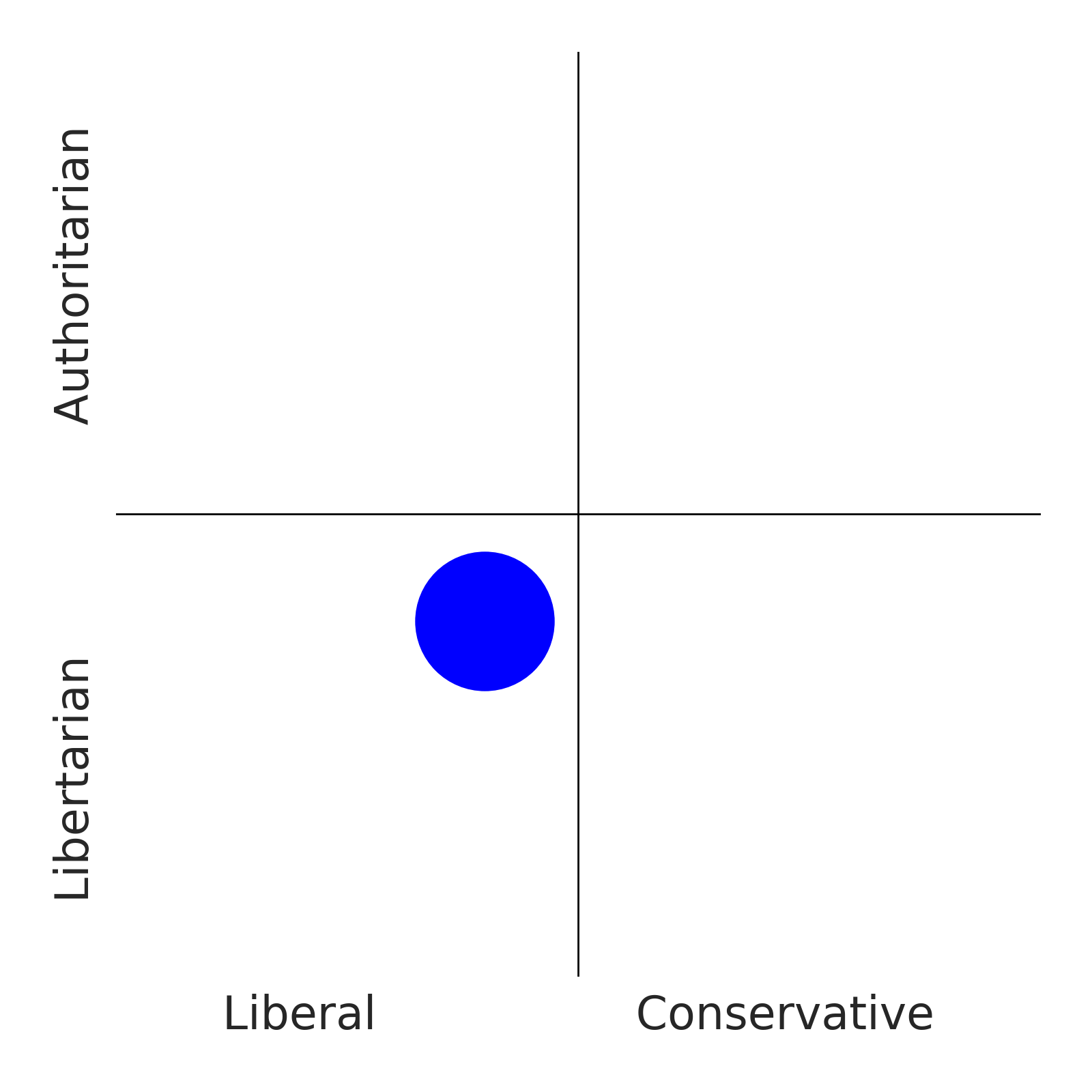
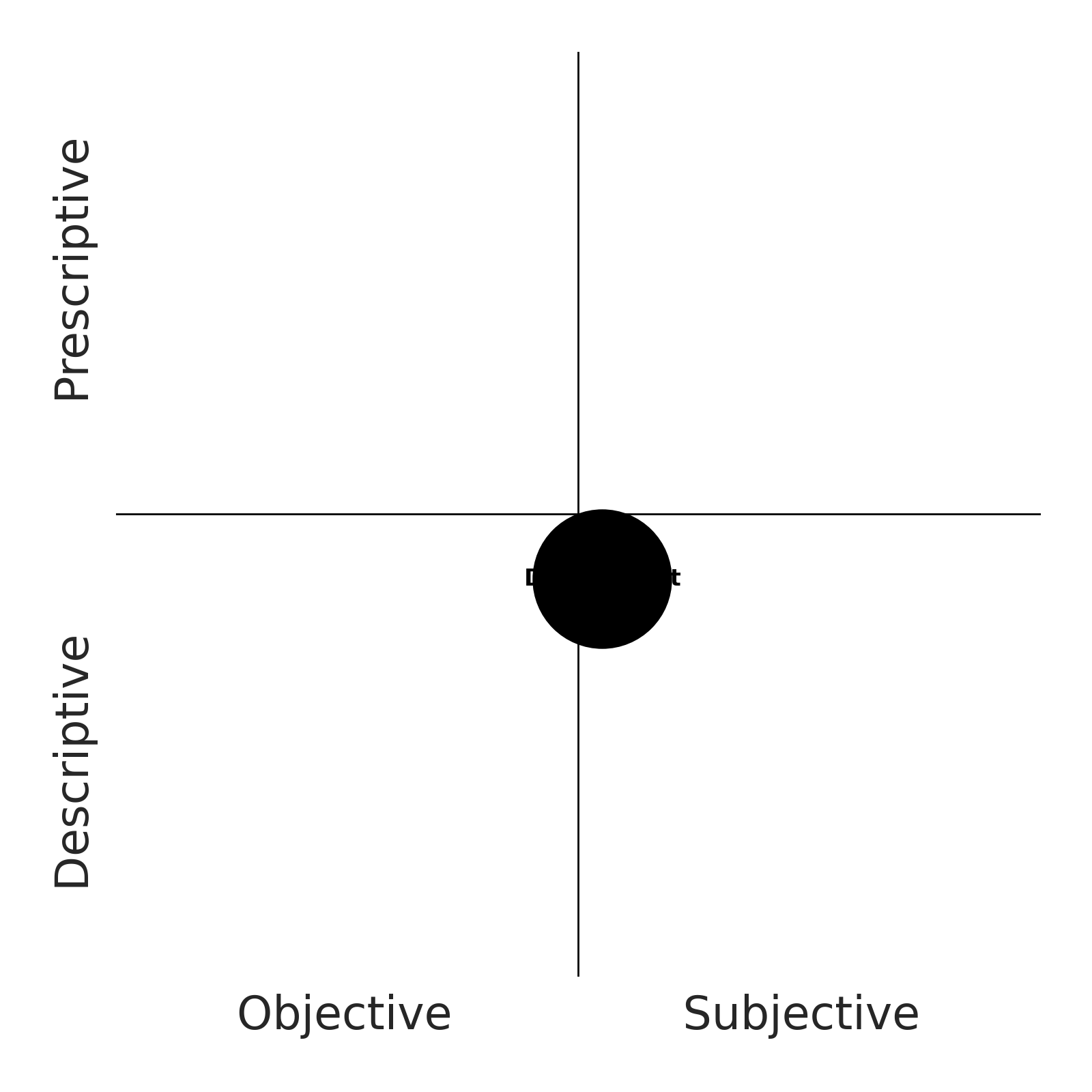
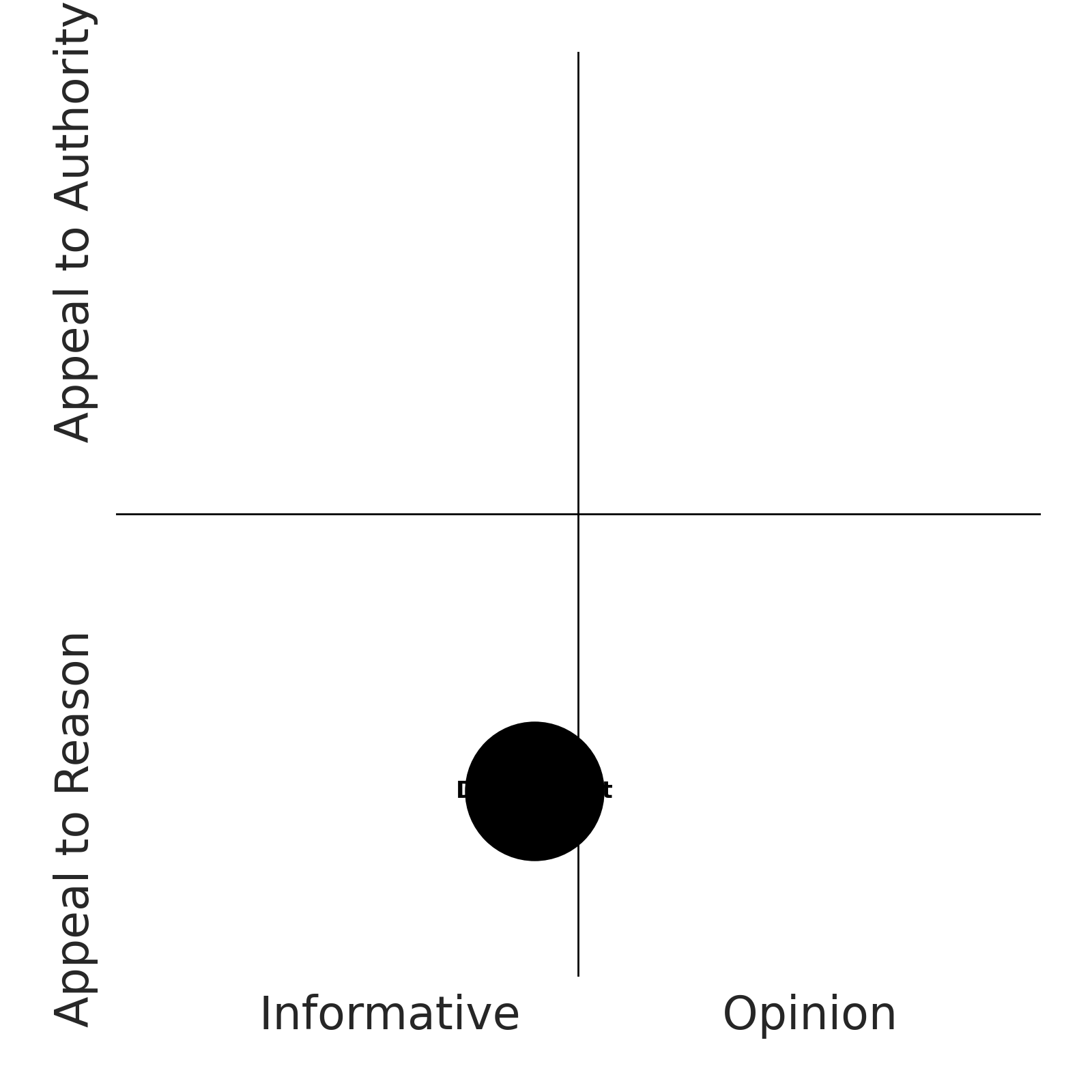
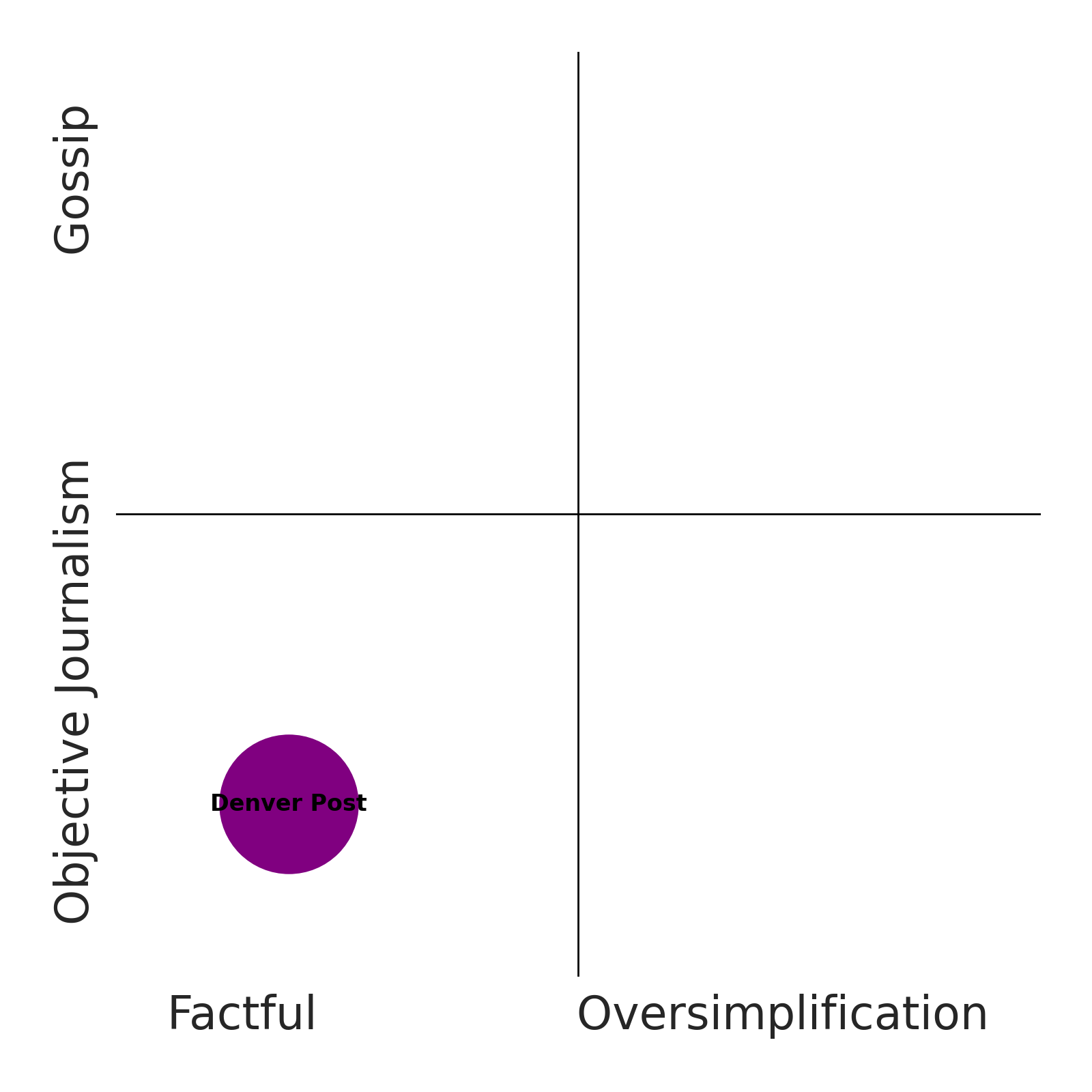
2026 © Helium Trades
Privacy Policy & Disclosure
* Disclaimer: Nothing on this website constitutes investment advice, performance data or any recommendation that any particular security, portfolio of securities, transaction or investment strategy is suitable for any specific person. Helium Trades is not responsible in any way for the accuracy
of any model predictions or price data. Any mention of a particular security and related prediction data is not a recommendation to buy or sell that security. Investments in securities involve the risk of loss. Past performance is no guarantee of future results. Helium Trades is not responsible for any of your investment decisions,
you should consult a financial expert before engaging in any transaction.
Helium Research Assistant

How can I help you today?
Ask any question about Denver Post bias.


