See whether Helium helps you make better-informed decisions. Try every Pro Trader feature for 30 days. No credit card required.
Try every Pro Trader feature for 30 days. No credit card required.
September 17, 2026 · 0 shares
A promotional shopping feature treats an affiliate-linked moisturizer as a beauty essential, leaning on expert, celebrity, and handpicked customer endorsements rather than independent evidence.
Automated analysis; not human reviewed. Limitations: Analysis is limited to the supplied promotional text; product efficacy and testimonial accuracy could not be independently checked. · 10 of 55 available dimensions scored; omitted dimensions are not treated as neutral. · Verified supporting quotes for 10 of 10 scored dimensions.
Claim: The writing presents personal preferences and selected anecdotes as the main basis for evaluation.
“As someone with extremely dry and sensitive skin, I’m personally impressed with the level of moisture this cream provides, without being greasy or heavy.” · exact text match
Why: The assessment is grounded in individual experience and subjective impression, not comparative or controlled testing.
Claim: The headline and prose use superlatives and hype to amplify appeal.
“This $19 French Moisturizer Is Amazon’s Best-Kept Beauty Secret” · exact text match
“may just be the beauty world’s not-so-secret weapon” · exact text match
Why: Superlative framing and dramatic phrasing sensationalize an ordinary consumer product.
Claim: The tone is uniformly positive and enthusiastically invites purchase.
“I can confirm the hype is well deserved.” · exact text match
“You, too, can partake in this timeless formulation, whether a makeup-wearer or otherwise, for just $19.” · exact text match
Why: No drawbacks, caveats, or negative results are presented, and the conclusion encourages readers to buy.
Claim: The writing is built on personal endorsements and value judgments rather than dispassionate reporting.
“I was persuaded to try the all-purpose wonders of this face cream several years ago, and I can confirm the hype is well deserved.” · exact text match
Why: First-person verdicts and evaluative language dominate the content.
Claim: The recommendation leans on named expert and celebrity authorities.
“suggested to us by makeup artists and dermatologists” · exact text match
“Supermodel Karlie Kloss even sang its praises back in 2009” · exact text match
Why: The piece relies on status-based endorsements from professionals and celebrities rather than empirical evidence.
Claim: The closing directly solicits readers to buy the product, creating promotional filler around customer reviews.
“You, too, can partake in this timeless formulation, whether a makeup-wearer or otherwise, for just $19.” · exact text match
Why: A direct sales invitation appears at the end of what is styled as a product recommendation, characteristic of spam-like advertorial content.
Claim: The writing uses strongly positive emotional language and customer anecdotes.
“I was persuaded to try the all-purpose wonders of this face cream” · exact text match
“It looks flawless! I do my makeup every day, so it was a real confidence killer knowing that my makeup looked bad.” · exact text match
Why: Words like 'wonders' and 'flawless' and the emotional customer story create a positively charged presentation.
Claim: The content is moderately transparent because it discloses affiliate compensation and attributes claims, but it lacks independent verification.
“When you buy through links on this page, HuffPost may earn a commission that helps support our journalism.” · exact text match
“According to the brand, their iconic formula actually hails from the 1950s and has been virtually unchanged since.” · exact text match
Why: Disclosures and attributed statements improve credibility, but the efficacy claims rely on brand claims and selected customer testimonials without independent verification.
Claim: The feature explicitly solicits purchases through affiliate links and frames the product as a must-have.
“When you buy through links on this page, HuffPost may earn a commission that helps support our journalism.” · exact text match
“You, too, can partake in this timeless formulation, whether a makeup-wearer or otherwise, for just $19.” · exact text match
Why: The text openly combines purchase incentives and direct sales language, making it advertorial rather than neutral reporting.
Claim: The framing uses clickbait-style superlatives and only positive testimony to move readers toward purchase.
“This $19 French Moisturizer Is Amazon’s Best-Kept Beauty Secret” · exact text match
“Or, keep reading to see why so many others are also Embryolisse Lait-Crème Concentré fans.” · exact text match
Why: The content relies on one-sided positive framing and explicit reader direction while omitting any negative or alternative information.
Analysis is limited to the supplied promotional text; product efficacy and testimonial accuracy could not be independently checked.
The framing treats an unconfirmed RNC fundraising text as evidence that the administration's upbeat affordability messaging is contradicted by its own appeals.
Automated analysis; not human reviewed. Limitations: The RNC text, the Vance letter, and the economic-disapproval claim were unconfirmed or uncited in the supplied text, so the analysis assesses the publisher’s framing rather than the underlying facts. · 7 of 54 available dimensions scored; omitted dimensions are not treated as neutral. · Verified supporting quotes for 7 of 7 scored dimensions.
Claim: The report’s selection and wording cast the Trump administration’s affordability messaging in a consistently negative light.
“admitting to the high cost of groceries just days after he bragged about the economy” · exact text match
“a majority of Americans are growingly disapproving of how he is handling the economy” · exact text match
Why: The contrast between “admitting” and “bragged,” plus the emphasis on public disapproval, gives a left-leaning critical frame while remaining a reported story with attributed quotes.
Claim: The piece uses evaluative verbs and framing rather than purely neutral description.
“admitting to the high cost of groceries just days after he bragged about the economy” · exact text match
“President Donald Trump has repeatedly dismissed the affordability crisis” · exact text match
Why: It is sourced and factual, but loaded verbs such as “admitting,” “bragged,” and “dismissed” push the presentation past pure objectivity.
Claim: The incongruity between a fundraising appeal that acknowledges high grocery costs and Vance’s prior upbeat affordability statement makes the item striking.
“admitting to the high cost of groceries just days after he bragged about the economy” · exact text match
“The reported message also comes just days after Vance appeared at a rally in his hometown of Middletown, Ohio, where he spoke on affordability, and told the crowd, “We’re finally seeing that American dream of homeownership become accessible again to our young people.”” · exact text match
Why: The contradiction is the central hook, but the underlying subject is routine campaign fundraising, so interest is moderate.
Claim: The report adds an opinionated tone through editorializing language and the juxtaposition of quotes.
“admitting to the high cost of groceries just days after he bragged about the economy” · exact text match
“President Donald Trump has repeatedly dismissed the affordability crisis” · exact text match
Why: The article is not an op-ed, but its evaluative word choices and framing give it a mildly opinionated edge.
Claim: The report is centered on party fundraising, campaign-period messaging, and presidential approval.
“The Republican National Committee reportedly sent a fundraising text message attributed to Vice President JD Vance” · exact text match
“President Donald Trump has repeatedly dismissed the affordability crisis” · exact text match
Why: Every substantive paragraph concerns RNC fundraising, Vance, Trump, or public disapproval, making the item intrinsically political.
Claim: The body is transparent about the unconfirmed status of the text and the letter, though the headline is more assertive.
“The RNC did not immediately respond to HuffPost when reached out to confirm the validity of the text message” · exact text match
“the lengthy letter, allegedly from Vance, read” · exact text match
Counterevidence:
“JD Vance Says 'Groceries Cost What They Cost' In Reported RNC Text” · exact text match
Why: Repeated “reported” and “allegedly” qualifiers and the RNC non-response signal care, but the headline’s “JD Vance Says” is more direct than the body supports.
Claim: The report is compact but includes attributed sourcing, exact quotes, and a verification caveat.
“The RNC did not immediately respond to HuffPost when reached out to confirm the validity of the text message” · exact text match
“However, Newsweek and Mediate reported the text message also asked the receiver to answer a survey and links to a webpage titled, “A letter from JD Vance.”” · exact text match
Why: The sourcing and caveats show above-average care for a short political news item, though it lacks deeper context or independent verification.
The RNC text, the Vance letter, and the economic-disapproval claim were unconfirmed or uncited in the supplied text, so the analysis assesses the publisher’s framing rather than the underlying facts.
September 15, 2026 · 0 shares
A snarky, gossip-oriented account frames the Trump White House as defensive and mocks its response to criticism about aide Natalie Harp's travel.
Automated analysis; not human reviewed. Limitations: The supplied article text is truncated with ellipses, so some quotes and surrounding context are incomplete. · 9 of 54 available dimensions scored; omitted dimensions are not treated as neutral. · Verified supporting quotes for 8 of 9 scored dimensions.
Claim: The framing portrays the Trump White House as defensive and mocked in response to criticism about aide travel.
“Rupar’s mention of Harp seemed to grind the administration’s gears, sparking this response from the White House’s rapid response page on X.” · exact text match
“responded to the White House’s diss by joking that his taxpayer dollars were “hard at work.”” · exact text match
Why: Words like "grind the administration’s gears" and "diss" characterize the White House as thin-skinned and ridicule its response, a left-leaning framing.
Claim: The article blends reporting with editorial interpretation and tone.
“Harp — whose devotion to Trump reportedly brought her a $45,000 “gift” for the holidays — tagged along” · exact text match
“Rupar’s mention of Harp seemed to grind the administration’s gears” · exact text match
Why: Scare-quoted "gift" and "devotion" color the report; "seemed to grind" is an interpretive claim about internal reactions.
Claim: The article emphasizes a personal, relationship-focused angle and media attention.
“Trump’s relationship with his much-younger aide has made headlines in recent weeks” · exact text match
“prompting […] #TravelWithNatalie,” wrote Rupar alongside a photograph of Harp.” · not found in supplied text
Why: Focus on age, relationship, hashtag, and photograph elevates sensational personal detail over policy.
Claim: The article reports personal and relationship details about the president and an aide.
“Harp — whose devotion to Trump reportedly brought her a $45,000 “gift” for the holidays — tagged along while the president left first lady Melania Trump back home in the States, remarking his wife was there “in spirit” on Saturday.” · exact text match
“Trump’s relationship with his much-younger aide has made headlines in recent weeks” · exact text match
Why: Details about a gift, the first lady's absence, and the aide's age are personal gossip rather than policy substance.
Claim: The article uses opinionated words and interprets events as amusing or defensive.
“Rupar’s mention of Harp seemed to grind the administration’s gears, sparking this response from the White House’s rapid response page on X.” · exact text match
“responded to the White House’s diss by joking that his taxpayer dollars were “hard at work.”” · exact text match
Why: "Grind the administration's gears" and "diss" are editorial characterizations, not neutral description.
Claim: The subject is a partisan political dispute involving the White House and a liberal journalist.
“after liberal journalist Aaron Rupar pointed out that the president’s 30-something aide Natalie Harp followed him on his trip to Ireland this weekend.” · exact text match
“sparking this response from the White House’s rapid response page on X.” · exact text match
Why: The reported exchange is explicitly between a "liberal journalist" and the White House rapid response operation.
Claim: The tone is negative and snarky toward the White House and treats the episode as absurd.
“Rupar’s mention of Harp seemed to grind the administration’s gears” · exact text match
“responded to the White House’s diss by joking” · exact text match
Why: "Grind ... gears" and "diss" carry negative emotional coloring.
Claim: The article speculates about the White House's internal reaction.
“Rupar’s mention of Harp seemed to grind the administration’s gears” · exact text match
Why: "Seemed to grind" infers the administration's emotional state from a post rather than reporting a stated reaction.
Claim: The article uses loaded framing and scare quotes to steer interpretation of an unproven gift.
“Harp — whose devotion to Trump reportedly brought her a $45,000 “gift” for the holidays — tagged along” · exact text match
“Rupar’s mention of Harp seemed to grind the administration’s gears” · exact text match
Why: Scare-quoting "gift" and using "devotion" imply impropriety; "grind the administration's gears" frames the White House response as petty.
The supplied article text is truncated with ellipses, so some quotes and surrounding context are incomplete.
September 08, 2026 · 0 shares
A neutral, event-focused wire report balances police discovery with Ecclestone's attributed explanation and a prior weapon incident.
Automated analysis; not human reviewed. Limitations: The article supplies no year for the Sept 7 stop and does not say whether any charge or penalty followed; the main non-police account is Ecclestone's own. · 6 of 54 available dimensions scored; omitted dimensions are not treated as neutral. · Verified supporting quotes for 5 of 6 scored dimensions.
Claim: The reporting uses neutral, attributable factual statements and does not inject judgment.
“Ex-Formula One supremo Bernie Ecclestone was stopped at an airport in Portugal on Monday after police found he had brought a shotgun into the country on his private jet without documentation.” · exact text match
Why: The lead sentence states facts without evaluation or emotive language.
Claim: The incident is framed in a restrained, routine-news tone rather than a sensationalized one.
“Portuguese newspapers first reported the incident, quoting police sources saying authorities discovered the shotgun during a routine check.” · exact text match
Why: The report relays the 'routine check' characterization and avoids dramatic or loaded wording.
Claim: The report describes an occurrence and quotes participants without prescribing action.
“The 95-year-old told Reuters in a telephone call from Portugal that he was carrying the gun with him from Switzerland for a clay pigeon shooting event but lacked a necessary “blue book” to import it.” · exact text match
Why: The wording attributes the explanation and stays in descriptive, event-sequencing mode.
Claim: The prose is unemotional and neutral; any emotional characterization is quoted and attributed.
“Police found the billionaire had brought a shotgun into the country on his private jet without documentation.” · exact text match
Why: The lead reports the incident with no emotional or evaluative language, supporting a neutral emotional score.
Claim: The report's credibility practices are strong: a named news source, direct quotes, and attribution of secondary reporting.
“The 95-year-old told Reuters in a telephone call from Portugal that he was carrying the gun with him from Switzerland for a clay pigeon shooting event but lacked a necessary “blue book” to import it.” · exact text match
Why: The story identifies the news agency, uses a direct interview quote, and attributes the police account to Portuguese newspapers.
Claim: Sourcing and attribution are transparent, separating Ecclestone's claims from police and newspaper reports.
“Ecclestone told Reuters in a telephone call from Portugal that he was carrying the gun with him from Switzerland for a clay pigeon shooting event but lacked a necessary “blue book” to import it.” · not found in supplied text
“Portuguese newspapers first reported the incident, quoting police sources saying authorities discovered the shotgun during a routine check.” · exact text match
Why: Direct accounts are attributed to Ecclestone, and the initial police report is attributed to Portuguese newspapers and police sources rather than asserted by the reporter.
The article supplies no year for the Sept 7 stop and does not say whether any charge or penalty followed; the main non-police account is Ecclestone's own.
September 11, 2026 · 0 shares
The strongest framing is neutral wire-reporting: attributed casualty counts, rescue logistics, and official reactions without editorial judgment.
Automated analysis; not human reviewed. Limitations: The supplied text is a brief wire bulletin with limited independent detail, so framing scores rely mainly on its explicit sourcing and neutral tone. · 4 of 54 available dimensions scored; omitted dimensions are not treated as neutral. · Verified supporting quotes for 4 of 4 scored dimensions.
Claim: Reporting is neutral and descriptive, attributing facts to authorities.
“Police say five people have died and 40 others were injured after a Dutch tour bus slammed into a roadside crash barrier and overturned in eastern Switzerland.” · exact text match
Why: The lead uses attributed official statements and avoids emotive or interpretive language, supporting an objective framing.
Claim: The report is unadorned and factual, with no sensational embellishment.
“The bus, with 45 people on board, overturned Thursday afternoon in a construction zone between the villages of Susch and Zernez in the Alpine canton of Graubuenden.” · exact text match
Why: The report presents concrete logistics and official investigation details without hyperbole or dramatic emotional appeals.
Claim: The text is strictly descriptive, with no recommendations, demands, or calls to action.
“Police say five people have died and 40 others were injured after a Dutch tour bus slammed into a roadside crash barrier and overturned in eastern Switzerland.” · exact text match
Why: The wording is limited to who, what, where, and official reactions; it does not urge any action.
Claim: The dispatch uses attributed reporting and hedged investigation language.
“Police say five people have died and 40 others were injured after a Dutch tour bus slammed into a roadside crash barrier and overturned in eastern Switzerland.” · exact text match
“Prosecutors and police were investigating what led to the accident, though no other vehicles were believed to be involved.” · exact text match
Why: Facts are sourced to police and named officials, and the investigation conclusion is phrased as belief rather than certainty, supporting high credibility.
The supplied text is a brief wire bulletin with limited independent detail, so framing scores rely mainly on its explicit sourcing and neutral tone.
September 13, 2026 · 0 shares
Agency-attributed and dispassionate wire reporting presents the missing-ship announcement and rescue response without interpretation or emotional appeal.
Automated analysis; not human reviewed. Limitations: The fixed category list lacks a general/world news option, making 'Trending' an imperfect classification. · 3 of 54 available dimensions scored; omitted dimensions are not treated as neutral. · Verified supporting quotes for 3 of 3 scored dimensions.
Claim: The report is largely objective, using attributed statements and no emotional language.
“"At the time of this statement, the ship cannot be contacted and its whereabouts are unknown," the agency said.” · verified after text normalization
Counterevidence:
“However, safety standards are not always rigorously enforced, resulting in a relatively high accident rate.” · exact text match
Why: Most facts are attributed to the agency, but an unsourced contextual claim about enforcement and accident rates is an analytical aside, so the report is objective but not maximally so.
Claim: The text describes events and background without recommending or urging any action.
“Rescuers have launched a search, deploying a team toward its last known position, the agency added.” · exact text match
Why: No prescriptive or normative language is directed at readers; all sentences report occurrences, statements, or context.
Claim: Visible sourcing and attributed quotes support the report's credibility, with one unsourced contextual claim as a limitation.
“the country’s search and rescue agency said in a statement” · exact text match
“(Reporting by Stanley Widianto; Editing by Jamie Freed)” · exact text match
Counterevidence:
“However, safety standards are not always rigorously enforced, resulting in a relatively high accident rate.” · exact text match
Why: Agency attribution, direct quotation, and staff credits are visible credibility signals, but the background claim lacks attribution.
The fixed category list lacks a general/world news option, making 'Trending' an imperfect classification.
The reporting frames the Houthi capture of Mokha mainly as a strategic risk to Red Sea shipping and global energy, while repeatedly flagging unverified claims.
Automated analysis; not human reviewed. Limitations: No external verification was possible; the analysis is limited to the supplied AP wire text and cannot assess the publisher’s broader editorial choices. · 9 of 54 available dimensions scored; omitted dimensions are not treated as neutral. · Verified supporting quotes for 9 of 9 scored dimensions.
Claim: Reporting is objective rather than subjective.
“The Houthis’ takeover of Mokha was confirmed to The Associated Press by Ahmed Baash, a commander with the National Resistance Forces allied with Yemen’s government, and Hazam al-Assad, a member of the Houthis’ political bureau.” · exact text match
“The AP could not independently verify those claims.” · exact text match
Why: The dispatch separates attributed claims from AP’s own assertions and includes sourcing from both sides.
Claim: Reporting is objective and non-sensational.
“The Iran-backed Houthi rebel group on Thursday took over Yemen’s port city of Mokha, an area vital to controlling shipping through the Red Sea, Houthi and Yemeni officials said.” · exact text match
Why: The lead states the event and its strategic significance without emotional exaggeration.
Claim: Reporting is predominantly descriptive rather than prescriptive.
“Mokha is about 80 kilometers (50 miles) from the Bab el-Mandeb Strait, a vital waterway between the Red Sea and the Gulf of Aden through which about 12 percent of the world’s oil and other goods are typically shipped.” · exact text match
Counterevidence:
“A return to full-scale civil war would be devastating for the Yemeni people and potentially world energy supplies.” · exact text match
Why: The report is nearly all event description and context; the only evaluative conditional is a consequence statement, not a policy recommendation.
Claim: The article contains minimal opinionated/evaluative content.
“A return to full-scale civil war would be devastating for the Yemeni people and potentially world energy supplies.” · exact text match
Why: One evaluative consequence statement appears amid otherwise attributed, factual reporting.
Claim: The report is credible based on sourcing and caveats.
“The Houthis’ takeover of Mokha was confirmed to The Associated Press by Ahmed Baash, a commander with the National Resistance Forces allied with Yemen’s government, and Hazam al-Assad, a member of the Houthis’ political bureau.” · exact text match
“The AP could not independently verify those claims.” · exact text match
Why: Named sources, attributed accounts, and explicit verification limits support high credibility within the text’s scope.
Claim: Reporting is rational rather than irrational.
“The AP could not independently verify those claims.” · exact text match
Why: The text repeatedly notes verification limits instead of asserting disputed battlefield details as certain fact.
Claim: The article contains a small amount of conditional speculation about consequences.
“A return to full-scale civil war would be devastating for the Yemeni people and potentially world energy supplies.” · exact text match
Why: One conditional projection about consequences is present, but it is clearly hypothetical and not the primary content.
Claim: The text displays high observable integrity in sourcing and verification.
“The AP could not independently verify those claims.” · exact text match
“The AP couldn’t independently verify the claim.” · exact text match
Why: Repeated attribution and explicit verification caveats are observable honesty signals.
Claim: The article demonstrates above-average intelligence via context and sourcing.
“Mokha is about 80 kilometers (50 miles) from the Bab el-Mandeb Strait, a vital waterway between the Red Sea and the Gulf of Aden through which about 12 percent of the world’s oil and other goods are typically shipped.” · exact text match
Why: The article supplies relevant geographic and energy context, multiple sources, and background facts.
No external verification was possible; the analysis is limited to the supplied AP wire text and cannot assess the publisher’s broader editorial choices.
September 11, 2026 · 0 shares
A sober, non-partisan account relays the CIA's transparency claim while noting the documents were redacted and broke no new ground.
Automated analysis; not human reviewed. Limitations: No independent verification of the declassified documents was available; only the supplied report text was available for analysis.
No independent verification of the declassified documents was available; only the supplied report text was available for analysis.
September 12, 2026 · 0 shares
Attribution-heavy wire reporting leads with Ukrainian official casualty counts and carries Putin's warnings as direct quotes, preserving an event-focused frame.
The war began with Russia’s full-scale invasion of Ukraine in February 2022; Moscow refers to it as a “special military operation.”
Automated analysis; not human reviewed. Limitations: The analyzed text is an AP wire story; any HuffPost-specific framing beyond selection of the wire report cannot be assessed. · 6 of 54 available dimensions scored; omitted dimensions are not treated as neutral. · Verified supporting quotes for 6 of 6 scored dimensions.
Claim: The report is structured around attributed official statements and direct quotes, with minimal subjective editorial commentary.
“Russian strikes killed eight civilians and wounded dozens of other people in Ukraine, local officials said Saturday” · exact text match
“Putin, speaking to reporters at the BRICS summit in India on Friday, said that if European governments send troops into Ukraine, it will mean “a war with Russia.”” · exact text match
Why: The lead casualty claim is attributed to local officials and Putin's warning is a direct quotation, leaving little room for subjective framing.
Claim: Casualty reporting remains factual and unembellished; dramatic wording is assigned to sources, not used by the reporter.
“Two people were killed and one wounded when Russian drones struck a residential area overnight in the Ukrainian city of Zaporizhzhia, regional head Ivan Fedorov said.” · exact text match
“In the Black Sea port of Odesa and the surrounding area, 35 people were wounded overnight in what regional head Oleh Kiper called a “massive attack.”” · exact text match
Why: The only strong descriptor, “massive attack,” is explicitly the official's quoted term rather than the reporter's characterization.
Claim: The report records positions and events without issuing prescriptions or endorsements.
“Some European leaders have pledged their commitment to a potential peacekeeping force, a prospect that Moscow has repeatedly described as unacceptable.” · exact text match
“Russian Foreign Minister Sergey Lavrov affirmed Saturday that Russia is “ready for negotiations,” but that the so-called “special military operation,” as Moscow refers to its war in Ukraine, “will not be suspended during this period of negotiations.”” · exact text match
Why: Both examples report what actors have said or pledged; no “should” or policy recommendation appears.
Claim: Sourcing and attribution are consistently visible, with named local officials, direct quotes, and labeling of a secondary outlet's report.
“Russian strikes killed eight civilians and wounded dozens of other people in Ukraine, local officials said Saturday” · exact text match
“The governors of the regions did not immediately comment, but Russian independent online news outlet Astra reported drone attacks on chemical plants in both regions.” · exact text match
Counterevidence:
“Russian Strikes Kill 8 In Ukraine As Putin Warns Europe Against Sending Troops” · exact text match
Why: The body is well attributed and notes where officials have not commented, but the headline states casualties as fact rather than as an official claim.
Claim: Causal explanations are attributed to officials and unconfirmed events are presented as another outlet's report rather than as verified fact.
“Moscow’s attacks have targeted Ukraine’s power grid ahead of winter in what officials say is meant to demoralize civilians.” · exact text match
“The governors of the regions did not immediately comment, but Russian independent online news outlet Astra reported drone attacks on chemical plants in both regions.” · exact text match
Why: The motive claim is labeled as officials' assertion, and the chemical-plant reports are attributed to Astra with note of no gubernatorial comment.
Claim: Competing Russian and Ukrainian statements are both represented with clear attribution, although the headline is less hedged than the body.
“Russian strikes killed eight civilians and wounded dozens of other people in Ukraine, local officials said Saturday” · exact text match
“Putin also denied Russia posed any threat to Europe, saying “there is no such threat and never has been.”” · exact text match
“Meanwhile, Zelenskyy told Deutsche Welle, in an interview published Saturday, that he would meet Putin if both leaders were invited to the Group of 20 summit of rich and developing nations in December in Miami.” · exact text match
Counterevidence:
“Russian Strikes Kill 8 In Ukraine As Putin Warns Europe Against Sending Troops” · exact text match
Why: The body attributes casualty claims and includes Russian denials and Ukrainian offers, but the headline asserts the strike result without the body's attribution hedge.
The analyzed text is an AP wire story; any HuffPost-specific framing beyond selection of the wire report cannot be assessed.
Uses a gossipy, mocking tone to present Jennifer and Pete Hegseth's relationship and influence as scandalous, relying on anonymous sources and the New York Times report.
Automated analysis; not human reviewed. Limitations: All assessments rely on a single news article, which is itself based on another publication's reporting; no independent verification was possible. · 10 of 54 available dimensions scored; omitted dimensions are not treated as neutral. · Verified supporting quotes for 6 of 10 scored dimensions.
Claim: Sensational framing beyond neutral reporting.
“Pete Hegseth's Wife Has A 'Bonkers' Amount Of Sway At The Pentagon: Report” · exact text match
“'It’s bonkers that a defense secretary would involve his wife in his sensitive official duties, including sharing details of an impending military operation, and face zero consequences,'” · not found in supplied text
Why: The word 'bonkers' in the headline and the loaded 'puppetmaster' metaphor, along with dramatic comparisons, sensationalize the story.
Claim: High gossip content—focuses on personal dynamics and scandalous framing.
“It seems like Defense Secretary Pete Hegseth might have a bit of a puppetmaster — and he’s super into it.” · exact text match
“Apparently Pete Hegseth is super comfortable with this dynamic.” · exact text match
“which has made life upon the vessel feel a lot like a scene out of “American Horror Story,” at least according to the mother of a service member on board.” · not found in supplied text
Why: Chooses sensational, tabloid-like language to frame spousal influence as a scandal, emphasizing personal drama over policy.
Claim: Contains clear opinionated editorializing alongside news.
“It seems like Defense Secretary Pete Hegseth might have a bit of a puppetmaster — and he’s super into it.” · exact text match
“Apparently Pete Hegseth is super comfortable with this dynamic.” · exact text match
Why: Phrases like 'it seems' and 'apparently' signal subjective interpretation rather than neutral reporting.
Claim: Frames the story as part of broader criticism of the Trump administration's inner circle.
“It also comes amid scrutiny of the roles that non-elected or unconfirmed figures in the White House play in the Trump administration — like President Donald Trump’s aide, Natalie Harp.” · exact text match
“Harp has tremendous influence over the president by constantly printing out positive headlines and social media posts about him for him to read — which may explain why he’s confused about the plummeting of public opinion about him — and even drafting some of his most chaotic Truth Social posts.” · exact text match
Why: The article contextualizes the Hegseth story within a narrative critical of influence by unconfirmed Trump figures, using loaded descriptions like 'chaotic'.
Claim: Relies heavily on an external authority (the Times) and anonymous officials.
“On Wednesday, the New York Times took a deep dive into Hegseth’s wife, Jennifer Hegseth, and her influence at the Pentagon” · exact text match
“the Wall Street Journal reported last year that Jennifer Hegseth sat in on a highly sensitive meeting” · exact text match
Why: Frequently cites the New York Times and Wall Street Journal reports as authoritative without independent verification, and leans on 'an unnamed Trump administration official.'
Claim: Uses juvenile language and name-calling.
“It seems like Defense Secretary Pete Hegseth might have a bit of a puppetmaster — and he’s super into it.” · exact text match
“which has made life upon the vessel feel a lot like a scene out of “American Horror Story,”” · not found in supplied text
Why: The phrase 'super into it' and 'puppetmaster' are informal, mocking, and lack journalistic gravitas.
Claim: The tone carries a negative emotional charge.
“It seems like Defense Secretary Pete Hegseth might have a bit of a puppetmaster — and he’s super into it.” · exact text match
“which has made life upon the vessel feel a lot like a scene out of “American Horror Story,”” · not found in supplied text
Why: The sarcastic 'super into it' and dramatic comparison to a horror story invoke derision and fear, respectively.
Claim: Has moderate credibility due to clear attribution and named sources, but compromised by anonymous sources and editorializing.
“Bumiller got a “previously undisclosed” detail about this meeting from an unnamed Trump administration official” · exact text match
“Another unnamed source familiar with Pete Hegseth’s “thinking” told Bumiller” · exact text match
Why: The article itself attributes claims to a named Times reporter and includes some named criticism, but the credibility is undermined by reliance on anonymous sources and overt editorializing.
Claim: Speculates about motives and outcomes without direct evidence.
“Another unnamed source familiar with Pete Hegseth’s “thinking” told Bumiller that Pete Hegseth “likes his wife to travel with him to keep him out of trouble.”” · exact text match
Why: Presents an unverified, unattributed claim about the secretary's private rationale, a form of speculation about his inner thinking.
Claim: Uses loaded framing and selective emphasis to shape reader perception.
“Bumiller notes that it’s unclear if Jennifer Hegseth has security clearance at the Pentagon, but she does have access to an “elevator from the building’s garage that opens directly into Mr. Hegseth’s office”” · exact text match
“It’s bonkers that a defense secretary would involve his wife in his sensitive official duties” · exact text match
Why: Highlights an alarming interpretation of facts (elevator access) and quotes a critical source without apparent counterbalancing comment from the Hegseths.
All assessments rely on a single news article, which is itself based on another publication's reporting; no independent verification was possible.
September 18, 2026 · 0 shares
Framing depicts Trump-administration and DOGE federal workforce cuts as costly, inept, and wasteful, while centering Democratic criticism and omitting any administration rationale.
Automated analysis; not human reviewed. Limitations: No access to the full GAO report or any administration response; analysis is limited to the supplied excerpt. · 5 of 55 available dimensions scored; omitted dimensions are not treated as neutral. · Verified supporting quotes for 5 of 5 scored dimensions.
Claim: The text characterizes Trump's and DOGE's federal workforce reductions as inept, wasteful, and politically motivated.
“His newly formed DOGE, spearheaded by Elon Musk, the richest man in the world, took an arbitrary and ham-fisted approach to trimming the workforce” · exact text match
“Democrats pointed at the data as evidence the Trump administration’s attacks on the federal workforce ended up squandering money rather than saving it.” · exact text match
Why: The publisher uses evaluative language and centers Democratic criticism without an administration counterpoint.
Claim: Factual reporting is laced with authorial characterization.
“President Donald Trump’s infamous Department of Government Efficiency” · exact text match
“took an arbitrary and ham-fisted approach to trimming the workforce” · exact text match
Why: The selected adjectives “infamous” and “ham-fisted” are evaluative framing rather than neutral description.
Claim: The piece moves beyond factual reporting into judgment about how the cuts were executed.
“took an arbitrary and ham-fisted approach to trimming the workforce” · exact text match
Why: “Arbitrary” and “ham-fisted” are opinion terms presented as description rather than attributed to a source.
Claim: The report is organized around a partisan dispute over the Trump administration's workforce policy.
“Democrats pointed at the data as evidence the Trump administration’s attacks on the federal workforce ended up squandering money rather than saving it.” · exact text match
Why: The story frames the GAO findings through Democratic political criticism and does not include an administration response.
Claim: Core figures are attributed to named, checkable sources.
“according to a new report from the Government Accountability Office” · exact text match
“according to an analysis from the Partnership for Public Service, a nonprofit that advocates for effective government” · exact text match
Why: Main quantitative findings are sourced to the GAO and a named nonprofit, making the reporting verifiable.
No access to the full GAO report or any administration response; analysis is limited to the supplied excerpt.
Framing treats diGenova's resignation as evidence that Trump's politically motivated retribution prosecutions are failing and that the Justice Department has become politicized.
Automated analysis; not human reviewed. Limitations: No external sources were available to verify the article's claims, and the relative weekday references are not tied to a stated publication date. · 7 of 54 available dimensions scored; omitted dimensions are not treated as neutral. · Verified supporting quotes for 7 of 7 scored dimensions.
Claim: The publisher frames the Trump DOJ investigation as a politically motivated 'retribution campaign' that is failing.
“The Trump administration’s retribution campaign hit a snag this week.” · exact text match
“Under Trump, the Justice Department has become heavily politicized.” · exact text match
Why: The publisher uses evaluative, partisan-loaded language to describe the administration's actions, though it also includes attributed sourcing.
Claim: The publisher inserts direct evaluative assertions into the news narrative.
“Under Trump, the Justice Department has become heavily politicized.” · exact text match
“In reality, the group rooted out investigators and prosecutors who worked on the department’s massive probe of Jan. 6.” · exact text match
Why: The reporting is mixed with explicit editorial conclusions about DOJ motives and conduct.
Claim: The article's own voice includes opinionated labels and conclusions beyond neutral reporting.
“The Trump administration’s retribution campaign hit a snag this week.” · exact text match
“In reality, the group rooted out investigators and prosecutors who worked on the department’s massive probe of Jan. 6.” · exact text match
Why: The publisher uses loaded framing and states interpretive claims as settled conclusions.
Claim: The story is centered on partisan conflict and explicitly asserts that the DOJ is politicized.
“Under Trump, the Justice Department has become heavily politicized.” · exact text match
“Trump’s pursuit of political vendettas is shakier than it seems.” · exact text match
Why: The central topic is partisan control of prosecutorial decisions, and the article describes the department in explicitly political terms.
Claim: The article uses negatively charged language of retribution, vendetta, and authoritarianism to characterize the administration.
“The Trump administration’s retribution campaign hit a snag this week.” · exact text match
“Protect Democracy, a nonprofit organization monitoring authoritarian creep in the U.S. government” · exact text match
Why: The word choices carry a negative emotional valence toward the administration and its investigations.
Claim: The article attributes key developments to named outlets, officials, and advocates and uses hedged language for interpretation.
“A DOJ spokesperson told NBC Friday: “We are grateful to Joe diGenova for his many years of service to the Department.” · exact text match
“according to ABC News, which first reported the resignation” · exact text match
Why: Visible sourcing and direct quotes support credibility, but anonymous Post sources and editorialized framing temper the score.
Claim: The article advances attributed, hedged forecasts about what the resignation signals.
“in a move that experts say could be a sign that Trump’s pursuit of political vendettas is shakier than it seems” · exact text match
“the resignation may signal just how thin the Justice Department’s investigation really is” · exact text match
Why: The 'could' and 'may' language makes the interpretations explicitly speculative rather than established fact.
No external sources were available to verify the article's claims, and the relative weekday references are not tied to a stated publication date.
September 10, 2026 · 0 shares
Frames the 2026 election around a Democratic polling finding that Trump is increasing corruption and presents examples of self-dealing as established fact.
Automated analysis; not human reviewed. Limitations: The supplied text is a single article with no independent verification of the polling or examples; the source date and survey methodology are not provided. · 4 of 54 available dimensions scored; omitted dimensions are not treated as neutral. · Verified supporting quotes for 4 of 4 scored dimensions.
Claim: The report relies on Democratic-aligned polling and presents Trump's self-dealing as established fact.
“according to an influential group of Democratic pollsters” · exact text match
“On one level, the finding is not especially surprising: Trump and his allies have engaged in an unprecedented amount of self-dealing during his second term” · exact text match
Why: The framing foregrounds an explicitly Democratic polling group and treats anti-Trump corruption as a fact rather than an allegation.
Claim: The report includes an evaluative assertion that Trump's conduct amounts to 'unprecedented self-dealing.'
“On one level, the finding is not especially surprising: Trump and his allies have engaged in an unprecedented amount of self-dealing during his second term” · exact text match
Why: The characterization 'unprecedented amount of self-dealing' is presented as fact without adjudication or counter-evidence.
Claim: The report is focused on electoral politics and partisan corruption perceptions as a campaign issue.
“Democratic polling finds corruption is a top issue heading into the 2026 elections.” · exact text match
“Many top Democratic candidates this cycle have made corruption a major theme of their campaigns, including Sen. Jon Ossoff (Ga.) and state Rep. James Talarico, the party’s candidate for Senate in Texas.” · exact text match
Why: The central subject is a partisan polling trend ahead of midterm elections and its use by Democratic candidates.
Claim: The report attributes its central findings to a named poll and named pollster and includes Republican counter-efforts.
““This is a big, big change,” said Tina Tang, the group’s polling director.” · exact text match
“Republicans, however, have attempted to fight back on the issue, airing ads noting many of the party’s House members backed a bill to ban congressional stock-trading.” · exact text match
Why: The central numbers are attributed to a named survey and a named source, and the opposing party's response is included.
The supplied text is a single article with no independent verification of the polling or examples; the source date and survey methodology are not provided.
Framing dramatizes secret military warnings of depleted U.S. stockpiles and treats insider concern as more credible than President Trump's public reassurances.
Automated analysis; not human reviewed. Limitations: The supplied text is a short excerpt with a subscription appeal, so the full New York Times report, bylines, and original sourcing details were not available for verification. · 6 of 54 available dimensions scored; omitted dimensions are not treated as neutral. · Verified supporting quotes for 6 of 6 scored dimensions.
Claim: The article uses editorializing adjectives rather than neutral description of the underlying report.
“Vance Heard Alarming Truth About Iran War In Secret Calls To Military Brass: NYT” · exact text match
“The vice president's info-gathering appears to confirm reports earlier in the summer that the country was dangerously short on weaponry.” · verified after text normalization
Why: 'Alarming truth' and 'dangerously short' characterize the events as alarming and dangerous rather than simply reporting the sourcing and allegations.
Claim: The report uses dramatic insider-conflict language to heighten intensity.
“Vance Heard Alarming Truth About Iran War In Secret Calls To Military Brass: NYT” · exact text match
“Behind the scenes, however, the president reportedly raged at Defense Secretary Pete Hegseth over the shortage and accused Hegseth of misleading him.” · exact text match
Why: 'Secret calls,' 'alarming truth,' and 'reportedly raged' emphasize drama and private conflict rather than sober policy detail.
Claim: The article frames U.S. military prospects and readiness in a pessimistic direction.
“The Times said Vance developed “deep concerns” about the chance for success against Iran, which was willing to endure heavy losses as the U.S. arsenal to stop Iranian attacks or other threats had dwindled.” · exact text match
“The vice president's info-gathering appears to confirm reports earlier in the summer that the country was dangerously short on weaponry.” · verified after text normalization
Why: 'Deep concerns' and 'dangerously short' emphasize depleted capabilities and low confidence in success.
Claim: The framing is designed to provoke concern about U.S. vulnerability.
“Vance Heard Alarming Truth About Iran War In Secret Calls To Military Brass: NYT” · exact text match
“The vice president's info-gathering appears to confirm reports earlier in the summer that the country was dangerously short on weaponry.” · verified after text normalization
Why: Repeated use of 'alarming' and 'dangerously short' appeals to fear about national security rather than neutrally presenting the report.
Claim: The article's wording carries a negative emotional charge.
“Vance Heard Alarming Truth About Iran War In Secret Calls To Military Brass: NYT” · exact text match
“The vice president's info-gathering appears to confirm reports earlier in the summer that the country was dangerously short on weaponry.” · verified after text normalization
Why: 'Alarming' and 'dangerously short' are emotionally loaded terms that push the report's valence negative.
Claim: The article is transparent about its sourcing and marks private behavior as reported rather than asserted.
“Vice President JD Vance was bluntly informed of U.S. weakness in secret calls to military commanders about the Iran war, The New York Times reported Thursday.” · exact text match
“Behind the scenes, however, the president reportedly raged at Defense Secretary Pete Hegseth over the shortage and accused Hegseth of misleading him.” · exact text match
Why: Attribution to The New York Times and the qualifier 'reportedly' show sourcing discipline, although the headline and adjectives are less restrained.
The supplied text is a short excerpt with a subscription appeal, so the full New York Times report, bylines, and original sourcing details were not available for verification.
Framing treats Trump's $5,000 dividend proposal as a self-evident catastrophe and bribe by amplifying conservative criticism while excluding any defense of the plan.
Automated analysis; not human reviewed. Limitations: The supplied text is short and consists largely of attributed quotations; publisher stance is inferred from headline and story selection rather than from explicit editorializing. · 9 of 54 available dimensions scored; omitted dimensions are not treated as neutral. · Verified supporting quotes for 9 of 9 scored dimensions.
Claim: The publisher frames the proposal through an anti-Trump left-of-center lens, presenting a conservative critique as definitive and excluding any defense of the plan.
“Conservative Columnist Explains Exactly Why Donald Trump's New Idea Is 'Catastrophic' In Every Sense” · exact text match
“Even anchor E.D. Hill of conservative network Newsmax asked a GOP lawmaker if the promise was "basically a bribe."” · verified after text normalization
Why: The headline uses 'Exactly' and 'In Every Sense' to endorse a negative verdict; the body uses 'Even' before a conservative anchor's question to imply consensus against Trump. No liberal policy stance is explicit, so confidence is moderate.
Claim: The framing treats a mass cash grant as a corrupt, constitutionally illegitimate act rather than a populist policy.
“It is also a "reckless, shapeless, irritable spasm, divorced from the nature and purpose of our government and from the Constitution that created it," he said.” · verified after text normalization
“The idea is "in every sense possible, catastrophic," Cooke wrote in a column published Thursday titled "Trump Breaks Glass, Joins Socialists, Embraces Bribery."” · verified after text normalization
Why: The selected quotes characterize a direct payment to citizens as outside constitutional government and as bribery, an institutional/elitist critique of a populist proposal.
Claim: The publisher's headline and framing present an opinion as an objective explanation.
“Conservative Columnist Explains Exactly Why Donald Trump's New Idea Is 'Catastrophic' In Every Sense” · exact text match
“The idea is "in every sense possible, catastrophic," Cooke wrote in a column published Thursday titled "Trump Breaks Glass, Joins Socialists, Embraces Bribery."” · verified after text normalization
Why: 'Exactly Why' and 'In Every Sense' present a subjective judgment as conclusive; the body is built around attributed opinions rather than independent policy analysis.
Claim: The framing is sensational, emphasizing extreme criticism and conflict.
“The idea is "in every sense possible, catastrophic," Cooke wrote” · verified after text normalization
“Even anchor E.D. Hill of conservative network Newsmax asked a GOP lawmaker if the promise was "basically a bribe."” · verified after text normalization
Why: The words 'catastrophic' and 'bribe' plus the 'Even' construction amplify outrage; no neutral or alternative framing is offered.
Claim: The article is structured around a published opinion and uses opinionated language while reporting it.
“The idea is "in every sense possible, catastrophic," Cooke wrote in a column published Thursday titled "Trump Breaks Glass, Joins Socialists, Embraces Bribery."” · verified after text normalization
“And politically, argued Cooke, it would essentially confirm "for all time that the second Trump administration has been a failure" because he had to resort to what’s been dubbed by critics as bribery of voters.” · verified after text normalization
Why: The substantive content is largely a columnist's opinion, presented with verbs like 'slammed' and 'argued,' and no opposing viewpoint is included.
Claim: The article relies on the authority and credentials of a conservative commentator to reinforce the criticism.
“Charles C.W. Cooke, a senior editor at the conservative magazine National Review, has slammed Donald Trump’s promise” · exact text match
“Even anchor E.D. Hill of conservative network Newsmax asked a GOP lawmaker if the promise was "basically a bribe."” · verified after text normalization
Why: It emphasizes Cooke's title and outlet and uses a Newsmax anchor's question to bolster the bribery characterization, tying the argument's credibility to who says it.
Claim: The report centers on reactions to the proposal rather than on the substance of the proposal itself.
“National Review’s Charles C.W. Cooke called it a "reckless, shapeless, irritable spasm, divorced from the nature and purpose of our government."” · verified after text normalization
“Journalists, pundits and critics have since pointed to Trump’s history of making promises of cash payments to Americans that have yet to materialize.” · exact text match
Why: Most of the article relays a columnist's reaction, pundit commentary, and a Newsmax question; Trump's proposal itself is summarized in two sentences.
Claim: The headline asserts more certainty than an attributed opinion can support.
“Conservative Columnist Explains Exactly Why Donald Trump's New Idea Is 'Catastrophic' In Every Sense” · exact text match
Why: 'Exactly' and 'In Every Sense' imply a complete and definitive explanation, while the text offers one commentator's opinion and critical context.
Claim: The article is transparent in sourcing its factual claims to named individuals, a specific column, and a specific event.
“Cooke wrote in a column published Thursday titled "Trump Breaks Glass, Joins Socialists, Embraces Bribery."” · verified after text normalization
“Trump promised at the GOP midterm convention on Wednesday that if Republicans retain control of both chambers of Congress, then "I will issue a dividend to every adult citizen in the United States of America for $5,000."” · verified after text normalization
Why: The text identifies the writer, publication, column, event, and date, and directly quotes Trump; no fabricated detail is visible, though the response-driven framing limits balance.
The supplied text is short and consists largely of attributed quotations; publisher stance is inferred from headline and story selection rather than from explicit editorializing.
August 22, 2026 · 0 shares
The publisher frames the OCC approval as a historically corrupt act of self-dealing that will politically distort the entire U.S. financial system and enrich the president at public expense.
World Liberty Financial is a cryptocurrency company that World Liberty Financial launched in 2024, and its USD1 stablecoin is designed to be pegged to the U.S. dollar. National trust banks in the U.S. are chartered and supervised by the OCC.
Automated analysis; not human reviewed. Limitations: Article text may be abridged and lacks inline image captions. · 9 of 54 available dimensions scored; omitted dimensions are not treated as neutral. · Verified supporting quotes for 0 of 9 scored dimensions.
Article text may be abridged and lacks inline image captions.
September 15, 2026 · 0 shares
A snarky, gossip-oriented account frames the Trump White House as defensive and mocks its response to criticism about aide Natalie Harp's travel.
Automated analysis; not human reviewed. Limitations: The supplied article text is truncated with ellipses, so some quotes and surrounding context are incomplete. · 9 of 54 available dimensions scored; omitted dimensions are not treated as neutral. · Verified supporting quotes for 8 of 9 scored dimensions.
Claim: The framing portrays the Trump White House as defensive and mocked in response to criticism about aide travel.
“Rupar’s mention of Harp seemed to grind the administration’s gears, sparking this response from the White House’s rapid response page on X.” · exact text match
“responded to the White House’s diss by joking that his taxpayer dollars were “hard at work.”” · exact text match
Why: Words like "grind the administration’s gears" and "diss" characterize the White House as thin-skinned and ridicule its response, a left-leaning framing.
Claim: The article blends reporting with editorial interpretation and tone.
“Harp — whose devotion to Trump reportedly brought her a $45,000 “gift” for the holidays — tagged along” · exact text match
“Rupar’s mention of Harp seemed to grind the administration’s gears” · exact text match
Why: Scare-quoted "gift" and "devotion" color the report; "seemed to grind" is an interpretive claim about internal reactions.
Claim: The article emphasizes a personal, relationship-focused angle and media attention.
“Trump’s relationship with his much-younger aide has made headlines in recent weeks” · exact text match
“prompting […] #TravelWithNatalie,” wrote Rupar alongside a photograph of Harp.” · not found in supplied text
Why: Focus on age, relationship, hashtag, and photograph elevates sensational personal detail over policy.
Claim: The article reports personal and relationship details about the president and an aide.
“Harp — whose devotion to Trump reportedly brought her a $45,000 “gift” for the holidays — tagged along while the president left first lady Melania Trump back home in the States, remarking his wife was there “in spirit” on Saturday.” · exact text match
“Trump’s relationship with his much-younger aide has made headlines in recent weeks” · exact text match
Why: Details about a gift, the first lady's absence, and the aide's age are personal gossip rather than policy substance.
Claim: The article uses opinionated words and interprets events as amusing or defensive.
“Rupar’s mention of Harp seemed to grind the administration’s gears, sparking this response from the White House’s rapid response page on X.” · exact text match
“responded to the White House’s diss by joking that his taxpayer dollars were “hard at work.”” · exact text match
Why: "Grind the administration's gears" and "diss" are editorial characterizations, not neutral description.
Claim: The subject is a partisan political dispute involving the White House and a liberal journalist.
“after liberal journalist Aaron Rupar pointed out that the president’s 30-something aide Natalie Harp followed him on his trip to Ireland this weekend.” · exact text match
“sparking this response from the White House’s rapid response page on X.” · exact text match
Why: The reported exchange is explicitly between a "liberal journalist" and the White House rapid response operation.
Claim: The tone is negative and snarky toward the White House and treats the episode as absurd.
“Rupar’s mention of Harp seemed to grind the administration’s gears” · exact text match
“responded to the White House’s diss by joking” · exact text match
Why: "Grind ... gears" and "diss" carry negative emotional coloring.
Claim: The article speculates about the White House's internal reaction.
“Rupar’s mention of Harp seemed to grind the administration’s gears” · exact text match
Why: "Seemed to grind" infers the administration's emotional state from a post rather than reporting a stated reaction.
Claim: The article uses loaded framing and scare quotes to steer interpretation of an unproven gift.
“Harp — whose devotion to Trump reportedly brought her a $45,000 “gift” for the holidays — tagged along” · exact text match
“Rupar’s mention of Harp seemed to grind the administration’s gears” · exact text match
Why: Scare-quoting "gift" and using "devotion" imply impropriety; "grind the administration's gears" frames the White House response as petty.
The supplied article text is truncated with ellipses, so some quotes and surrounding context are incomplete.
Uses a gossipy, mocking tone to present Jennifer and Pete Hegseth's relationship and influence as scandalous, relying on anonymous sources and the New York Times report.
Automated analysis; not human reviewed. Limitations: All assessments rely on a single news article, which is itself based on another publication's reporting; no independent verification was possible. · 10 of 54 available dimensions scored; omitted dimensions are not treated as neutral. · Verified supporting quotes for 6 of 10 scored dimensions.
Claim: Sensational framing beyond neutral reporting.
“Pete Hegseth's Wife Has A 'Bonkers' Amount Of Sway At The Pentagon: Report” · exact text match
“'It’s bonkers that a defense secretary would involve his wife in his sensitive official duties, including sharing details of an impending military operation, and face zero consequences,'” · not found in supplied text
Why: The word 'bonkers' in the headline and the loaded 'puppetmaster' metaphor, along with dramatic comparisons, sensationalize the story.
Claim: High gossip content—focuses on personal dynamics and scandalous framing.
“It seems like Defense Secretary Pete Hegseth might have a bit of a puppetmaster — and he’s super into it.” · exact text match
“Apparently Pete Hegseth is super comfortable with this dynamic.” · exact text match
“which has made life upon the vessel feel a lot like a scene out of “American Horror Story,” at least according to the mother of a service member on board.” · not found in supplied text
Why: Chooses sensational, tabloid-like language to frame spousal influence as a scandal, emphasizing personal drama over policy.
Claim: Contains clear opinionated editorializing alongside news.
“It seems like Defense Secretary Pete Hegseth might have a bit of a puppetmaster — and he’s super into it.” · exact text match
“Apparently Pete Hegseth is super comfortable with this dynamic.” · exact text match
Why: Phrases like 'it seems' and 'apparently' signal subjective interpretation rather than neutral reporting.
Claim: Frames the story as part of broader criticism of the Trump administration's inner circle.
“It also comes amid scrutiny of the roles that non-elected or unconfirmed figures in the White House play in the Trump administration — like President Donald Trump’s aide, Natalie Harp.” · exact text match
“Harp has tremendous influence over the president by constantly printing out positive headlines and social media posts about him for him to read — which may explain why he’s confused about the plummeting of public opinion about him — and even drafting some of his most chaotic Truth Social posts.” · exact text match
Why: The article contextualizes the Hegseth story within a narrative critical of influence by unconfirmed Trump figures, using loaded descriptions like 'chaotic'.
Claim: Relies heavily on an external authority (the Times) and anonymous officials.
“On Wednesday, the New York Times took a deep dive into Hegseth’s wife, Jennifer Hegseth, and her influence at the Pentagon” · exact text match
“the Wall Street Journal reported last year that Jennifer Hegseth sat in on a highly sensitive meeting” · exact text match
Why: Frequently cites the New York Times and Wall Street Journal reports as authoritative without independent verification, and leans on 'an unnamed Trump administration official.'
Claim: Uses juvenile language and name-calling.
“It seems like Defense Secretary Pete Hegseth might have a bit of a puppetmaster — and he’s super into it.” · exact text match
“which has made life upon the vessel feel a lot like a scene out of “American Horror Story,”” · not found in supplied text
Why: The phrase 'super into it' and 'puppetmaster' are informal, mocking, and lack journalistic gravitas.
Claim: The tone carries a negative emotional charge.
“It seems like Defense Secretary Pete Hegseth might have a bit of a puppetmaster — and he’s super into it.” · exact text match
“which has made life upon the vessel feel a lot like a scene out of “American Horror Story,”” · not found in supplied text
Why: The sarcastic 'super into it' and dramatic comparison to a horror story invoke derision and fear, respectively.
Claim: Has moderate credibility due to clear attribution and named sources, but compromised by anonymous sources and editorializing.
“Bumiller got a “previously undisclosed” detail about this meeting from an unnamed Trump administration official” · exact text match
“Another unnamed source familiar with Pete Hegseth’s “thinking” told Bumiller” · exact text match
Why: The article itself attributes claims to a named Times reporter and includes some named criticism, but the credibility is undermined by reliance on anonymous sources and overt editorializing.
Claim: Speculates about motives and outcomes without direct evidence.
“Another unnamed source familiar with Pete Hegseth’s “thinking” told Bumiller that Pete Hegseth “likes his wife to travel with him to keep him out of trouble.”” · exact text match
Why: Presents an unverified, unattributed claim about the secretary's private rationale, a form of speculation about his inner thinking.
Claim: Uses loaded framing and selective emphasis to shape reader perception.
“Bumiller notes that it’s unclear if Jennifer Hegseth has security clearance at the Pentagon, but she does have access to an “elevator from the building’s garage that opens directly into Mr. Hegseth’s office”” · exact text match
“It’s bonkers that a defense secretary would involve his wife in his sensitive official duties” · exact text match
Why: Highlights an alarming interpretation of facts (elevator access) and quotes a critical source without apparent counterbalancing comment from the Hegseths.
All assessments rely on a single news article, which is itself based on another publication's reporting; no independent verification was possible.
Framing treats Trump's $5,000 dividend proposal as a self-evident catastrophe and bribe by amplifying conservative criticism while excluding any defense of the plan.
Automated analysis; not human reviewed. Limitations: The supplied text is short and consists largely of attributed quotations; publisher stance is inferred from headline and story selection rather than from explicit editorializing. · 9 of 54 available dimensions scored; omitted dimensions are not treated as neutral. · Verified supporting quotes for 9 of 9 scored dimensions.
Claim: The publisher frames the proposal through an anti-Trump left-of-center lens, presenting a conservative critique as definitive and excluding any defense of the plan.
“Conservative Columnist Explains Exactly Why Donald Trump's New Idea Is 'Catastrophic' In Every Sense” · exact text match
“Even anchor E.D. Hill of conservative network Newsmax asked a GOP lawmaker if the promise was "basically a bribe."” · verified after text normalization
Why: The headline uses 'Exactly' and 'In Every Sense' to endorse a negative verdict; the body uses 'Even' before a conservative anchor's question to imply consensus against Trump. No liberal policy stance is explicit, so confidence is moderate.
Claim: The framing treats a mass cash grant as a corrupt, constitutionally illegitimate act rather than a populist policy.
“It is also a "reckless, shapeless, irritable spasm, divorced from the nature and purpose of our government and from the Constitution that created it," he said.” · verified after text normalization
“The idea is "in every sense possible, catastrophic," Cooke wrote in a column published Thursday titled "Trump Breaks Glass, Joins Socialists, Embraces Bribery."” · verified after text normalization
Why: The selected quotes characterize a direct payment to citizens as outside constitutional government and as bribery, an institutional/elitist critique of a populist proposal.
Claim: The publisher's headline and framing present an opinion as an objective explanation.
“Conservative Columnist Explains Exactly Why Donald Trump's New Idea Is 'Catastrophic' In Every Sense” · exact text match
“The idea is "in every sense possible, catastrophic," Cooke wrote in a column published Thursday titled "Trump Breaks Glass, Joins Socialists, Embraces Bribery."” · verified after text normalization
Why: 'Exactly Why' and 'In Every Sense' present a subjective judgment as conclusive; the body is built around attributed opinions rather than independent policy analysis.
Claim: The framing is sensational, emphasizing extreme criticism and conflict.
“The idea is "in every sense possible, catastrophic," Cooke wrote” · verified after text normalization
“Even anchor E.D. Hill of conservative network Newsmax asked a GOP lawmaker if the promise was "basically a bribe."” · verified after text normalization
Why: The words 'catastrophic' and 'bribe' plus the 'Even' construction amplify outrage; no neutral or alternative framing is offered.
Claim: The article is structured around a published opinion and uses opinionated language while reporting it.
“The idea is "in every sense possible, catastrophic," Cooke wrote in a column published Thursday titled "Trump Breaks Glass, Joins Socialists, Embraces Bribery."” · verified after text normalization
“And politically, argued Cooke, it would essentially confirm "for all time that the second Trump administration has been a failure" because he had to resort to what’s been dubbed by critics as bribery of voters.” · verified after text normalization
Why: The substantive content is largely a columnist's opinion, presented with verbs like 'slammed' and 'argued,' and no opposing viewpoint is included.
Claim: The article relies on the authority and credentials of a conservative commentator to reinforce the criticism.
“Charles C.W. Cooke, a senior editor at the conservative magazine National Review, has slammed Donald Trump’s promise” · exact text match
“Even anchor E.D. Hill of conservative network Newsmax asked a GOP lawmaker if the promise was "basically a bribe."” · verified after text normalization
Why: It emphasizes Cooke's title and outlet and uses a Newsmax anchor's question to bolster the bribery characterization, tying the argument's credibility to who says it.
Claim: The report centers on reactions to the proposal rather than on the substance of the proposal itself.
“National Review’s Charles C.W. Cooke called it a "reckless, shapeless, irritable spasm, divorced from the nature and purpose of our government."” · verified after text normalization
“Journalists, pundits and critics have since pointed to Trump’s history of making promises of cash payments to Americans that have yet to materialize.” · exact text match
Why: Most of the article relays a columnist's reaction, pundit commentary, and a Newsmax question; Trump's proposal itself is summarized in two sentences.
Claim: The headline asserts more certainty than an attributed opinion can support.
“Conservative Columnist Explains Exactly Why Donald Trump's New Idea Is 'Catastrophic' In Every Sense” · exact text match
Why: 'Exactly' and 'In Every Sense' imply a complete and definitive explanation, while the text offers one commentator's opinion and critical context.
Claim: The article is transparent in sourcing its factual claims to named individuals, a specific column, and a specific event.
“Cooke wrote in a column published Thursday titled "Trump Breaks Glass, Joins Socialists, Embraces Bribery."” · verified after text normalization
“Trump promised at the GOP midterm convention on Wednesday that if Republicans retain control of both chambers of Congress, then "I will issue a dividend to every adult citizen in the United States of America for $5,000."” · verified after text normalization
Why: The text identifies the writer, publication, column, event, and date, and directly quotes Trump; no fabricated detail is visible, though the response-driven framing limits balance.
The supplied text is short and consists largely of attributed quotations; publisher stance is inferred from headline and story selection rather than from explicit editorializing.
August 22, 2026 · 0 shares
The publisher frames the OCC approval as a historically corrupt act of self-dealing that will politically distort the entire U.S. financial system and enrich the president at public expense.
World Liberty Financial is a cryptocurrency company that World Liberty Financial launched in 2024, and its USD1 stablecoin is designed to be pegged to the U.S. dollar. National trust banks in the U.S. are chartered and supervised by the OCC.
Automated analysis; not human reviewed. Limitations: Article text may be abridged and lacks inline image captions. · 9 of 54 available dimensions scored; omitted dimensions are not treated as neutral. · Verified supporting quotes for 0 of 9 scored dimensions.
Article text may be abridged and lacks inline image captions.
Framing treats diGenova's resignation as evidence that Trump's politically motivated retribution prosecutions are failing and that the Justice Department has become politicized.
Automated analysis; not human reviewed. Limitations: No external sources were available to verify the article's claims, and the relative weekday references are not tied to a stated publication date. · 7 of 54 available dimensions scored; omitted dimensions are not treated as neutral. · Verified supporting quotes for 7 of 7 scored dimensions.
Claim: The publisher frames the Trump DOJ investigation as a politically motivated 'retribution campaign' that is failing.
“The Trump administration’s retribution campaign hit a snag this week.” · exact text match
“Under Trump, the Justice Department has become heavily politicized.” · exact text match
Why: The publisher uses evaluative, partisan-loaded language to describe the administration's actions, though it also includes attributed sourcing.
Claim: The publisher inserts direct evaluative assertions into the news narrative.
“Under Trump, the Justice Department has become heavily politicized.” · exact text match
“In reality, the group rooted out investigators and prosecutors who worked on the department’s massive probe of Jan. 6.” · exact text match
Why: The reporting is mixed with explicit editorial conclusions about DOJ motives and conduct.
Claim: The article's own voice includes opinionated labels and conclusions beyond neutral reporting.
“The Trump administration’s retribution campaign hit a snag this week.” · exact text match
“In reality, the group rooted out investigators and prosecutors who worked on the department’s massive probe of Jan. 6.” · exact text match
Why: The publisher uses loaded framing and states interpretive claims as settled conclusions.
Claim: The story is centered on partisan conflict and explicitly asserts that the DOJ is politicized.
“Under Trump, the Justice Department has become heavily politicized.” · exact text match
“Trump’s pursuit of political vendettas is shakier than it seems.” · exact text match
Why: The central topic is partisan control of prosecutorial decisions, and the article describes the department in explicitly political terms.
Claim: The article uses negatively charged language of retribution, vendetta, and authoritarianism to characterize the administration.
“The Trump administration’s retribution campaign hit a snag this week.” · exact text match
“Protect Democracy, a nonprofit organization monitoring authoritarian creep in the U.S. government” · exact text match
Why: The word choices carry a negative emotional valence toward the administration and its investigations.
Claim: The article attributes key developments to named outlets, officials, and advocates and uses hedged language for interpretation.
“A DOJ spokesperson told NBC Friday: “We are grateful to Joe diGenova for his many years of service to the Department.” · exact text match
“according to ABC News, which first reported the resignation” · exact text match
Why: Visible sourcing and direct quotes support credibility, but anonymous Post sources and editorialized framing temper the score.
Claim: The article advances attributed, hedged forecasts about what the resignation signals.
“in a move that experts say could be a sign that Trump’s pursuit of political vendettas is shakier than it seems” · exact text match
“the resignation may signal just how thin the Justice Department’s investigation really is” · exact text match
Why: The 'could' and 'may' language makes the interpretations explicitly speculative rather than established fact.
No external sources were available to verify the article's claims, and the relative weekday references are not tied to a stated publication date.
September 10, 2026 · 0 shares
Frames the 2026 election around a Democratic polling finding that Trump is increasing corruption and presents examples of self-dealing as established fact.
Automated analysis; not human reviewed. Limitations: The supplied text is a single article with no independent verification of the polling or examples; the source date and survey methodology are not provided. · 4 of 54 available dimensions scored; omitted dimensions are not treated as neutral. · Verified supporting quotes for 4 of 4 scored dimensions.
Claim: The report relies on Democratic-aligned polling and presents Trump's self-dealing as established fact.
“according to an influential group of Democratic pollsters” · exact text match
“On one level, the finding is not especially surprising: Trump and his allies have engaged in an unprecedented amount of self-dealing during his second term” · exact text match
Why: The framing foregrounds an explicitly Democratic polling group and treats anti-Trump corruption as a fact rather than an allegation.
Claim: The report includes an evaluative assertion that Trump's conduct amounts to 'unprecedented self-dealing.'
“On one level, the finding is not especially surprising: Trump and his allies have engaged in an unprecedented amount of self-dealing during his second term” · exact text match
Why: The characterization 'unprecedented amount of self-dealing' is presented as fact without adjudication or counter-evidence.
Claim: The report is focused on electoral politics and partisan corruption perceptions as a campaign issue.
“Democratic polling finds corruption is a top issue heading into the 2026 elections.” · exact text match
“Many top Democratic candidates this cycle have made corruption a major theme of their campaigns, including Sen. Jon Ossoff (Ga.) and state Rep. James Talarico, the party’s candidate for Senate in Texas.” · exact text match
Why: The central subject is a partisan polling trend ahead of midterm elections and its use by Democratic candidates.
Claim: The report attributes its central findings to a named poll and named pollster and includes Republican counter-efforts.
““This is a big, big change,” said Tina Tang, the group’s polling director.” · exact text match
“Republicans, however, have attempted to fight back on the issue, airing ads noting many of the party’s House members backed a bill to ban congressional stock-trading.” · exact text match
Why: The central numbers are attributed to a named survey and a named source, and the opposing party's response is included.
The supplied text is a single article with no independent verification of the polling or examples; the source date and survey methodology are not provided.
September 18, 2026 · 0 shares
Framing depicts Trump-administration and DOGE federal workforce cuts as costly, inept, and wasteful, while centering Democratic criticism and omitting any administration rationale.
Automated analysis; not human reviewed. Limitations: No access to the full GAO report or any administration response; analysis is limited to the supplied excerpt. · 5 of 55 available dimensions scored; omitted dimensions are not treated as neutral. · Verified supporting quotes for 5 of 5 scored dimensions.
Claim: The text characterizes Trump's and DOGE's federal workforce reductions as inept, wasteful, and politically motivated.
“His newly formed DOGE, spearheaded by Elon Musk, the richest man in the world, took an arbitrary and ham-fisted approach to trimming the workforce” · exact text match
“Democrats pointed at the data as evidence the Trump administration’s attacks on the federal workforce ended up squandering money rather than saving it.” · exact text match
Why: The publisher uses evaluative language and centers Democratic criticism without an administration counterpoint.
Claim: Factual reporting is laced with authorial characterization.
“President Donald Trump’s infamous Department of Government Efficiency” · exact text match
“took an arbitrary and ham-fisted approach to trimming the workforce” · exact text match
Why: The selected adjectives “infamous” and “ham-fisted” are evaluative framing rather than neutral description.
Claim: The piece moves beyond factual reporting into judgment about how the cuts were executed.
“took an arbitrary and ham-fisted approach to trimming the workforce” · exact text match
Why: “Arbitrary” and “ham-fisted” are opinion terms presented as description rather than attributed to a source.
Claim: The report is organized around a partisan dispute over the Trump administration's workforce policy.
“Democrats pointed at the data as evidence the Trump administration’s attacks on the federal workforce ended up squandering money rather than saving it.” · exact text match
Why: The story frames the GAO findings through Democratic political criticism and does not include an administration response.
Claim: Core figures are attributed to named, checkable sources.
“according to a new report from the Government Accountability Office” · exact text match
“according to an analysis from the Partnership for Public Service, a nonprofit that advocates for effective government” · exact text match
Why: Main quantitative findings are sourced to the GAO and a named nonprofit, making the reporting verifiable.
No access to the full GAO report or any administration response; analysis is limited to the supplied excerpt.
Framing dramatizes secret military warnings of depleted U.S. stockpiles and treats insider concern as more credible than President Trump's public reassurances.
Automated analysis; not human reviewed. Limitations: The supplied text is a short excerpt with a subscription appeal, so the full New York Times report, bylines, and original sourcing details were not available for verification. · 6 of 54 available dimensions scored; omitted dimensions are not treated as neutral. · Verified supporting quotes for 6 of 6 scored dimensions.
Claim: The article uses editorializing adjectives rather than neutral description of the underlying report.
“Vance Heard Alarming Truth About Iran War In Secret Calls To Military Brass: NYT” · exact text match
“The vice president's info-gathering appears to confirm reports earlier in the summer that the country was dangerously short on weaponry.” · verified after text normalization
Why: 'Alarming truth' and 'dangerously short' characterize the events as alarming and dangerous rather than simply reporting the sourcing and allegations.
Claim: The report uses dramatic insider-conflict language to heighten intensity.
“Vance Heard Alarming Truth About Iran War In Secret Calls To Military Brass: NYT” · exact text match
“Behind the scenes, however, the president reportedly raged at Defense Secretary Pete Hegseth over the shortage and accused Hegseth of misleading him.” · exact text match
Why: 'Secret calls,' 'alarming truth,' and 'reportedly raged' emphasize drama and private conflict rather than sober policy detail.
Claim: The article frames U.S. military prospects and readiness in a pessimistic direction.
“The Times said Vance developed “deep concerns” about the chance for success against Iran, which was willing to endure heavy losses as the U.S. arsenal to stop Iranian attacks or other threats had dwindled.” · exact text match
“The vice president's info-gathering appears to confirm reports earlier in the summer that the country was dangerously short on weaponry.” · verified after text normalization
Why: 'Deep concerns' and 'dangerously short' emphasize depleted capabilities and low confidence in success.
Claim: The framing is designed to provoke concern about U.S. vulnerability.
“Vance Heard Alarming Truth About Iran War In Secret Calls To Military Brass: NYT” · exact text match
“The vice president's info-gathering appears to confirm reports earlier in the summer that the country was dangerously short on weaponry.” · verified after text normalization
Why: Repeated use of 'alarming' and 'dangerously short' appeals to fear about national security rather than neutrally presenting the report.
Claim: The article's wording carries a negative emotional charge.
“Vance Heard Alarming Truth About Iran War In Secret Calls To Military Brass: NYT” · exact text match
“The vice president's info-gathering appears to confirm reports earlier in the summer that the country was dangerously short on weaponry.” · verified after text normalization
Why: 'Alarming' and 'dangerously short' are emotionally loaded terms that push the report's valence negative.
Claim: The article is transparent about its sourcing and marks private behavior as reported rather than asserted.
“Vice President JD Vance was bluntly informed of U.S. weakness in secret calls to military commanders about the Iran war, The New York Times reported Thursday.” · exact text match
“Behind the scenes, however, the president reportedly raged at Defense Secretary Pete Hegseth over the shortage and accused Hegseth of misleading him.” · exact text match
Why: Attribution to The New York Times and the qualifier 'reportedly' show sourcing discipline, although the headline and adjectives are less restrained.
The supplied text is a short excerpt with a subscription appeal, so the full New York Times report, bylines, and original sourcing details were not available for verification.
The reporting frames the incident with an alarming headline, 'Chilling Call From The Crowd,' and leans on Democratic lawmakers' condemnations to emphasize Republican accountability for the shout.
Automated analysis; not human reviewed. Limitations: The supplied text includes embedded social-media content and video links, but the shout's audibility and full context could not be independently checked from the article text alone. · 5 of 54 available dimensions scored; omitted dimensions are not treated as neutral. · Verified supporting quotes for 5 of 5 scored dimensions.
Claim: The report uses emotionally charged headline language and quotes only Democratic lawmakers demanding Republican denunciation.
“Chilling Call From The Crowd” · exact text match
“called on “every single Republican” to denounce the rhetoric immediately, “starting with Ted Cruz.”” · exact text match
Why: The headline's 'Chilling' framing and exclusive reliance on Democratic reactions create a liberal-leaning presentation of a GOP event.
Claim: The reporting uses evaluative language rather than neutral description.
“Lawmakers slammed the incident as “disturbing” and described it as an example of “clear hate.”” · exact text match
Why: 'Slammed' and 'chilling' assign emotional valence to what could be reported more neutrally.
Claim: The framing emphasizes alarming terms to dramatize the incident.
“Chilling Call From The Crowd” · exact text match
“an example of “clear hate.”” · exact text match
Why: The headline and lead use emotionally intense wording beyond a plain factual description.
Claim: The report inserts editorialized characterization into its news lead.
“Lawmakers slammed the incident as “disturbing” and described it as an example of “clear hate.”” · exact text match
Why: 'Slammed' is an interpretive verb and 'chilling' is an evaluative adjective in the headline.
Claim: The article's overall valence is negative, emphasizing fear and outrage.
“Chilling Call From The Crowd” · exact text match
“Lawmakers slammed the incident as “disturbing” and described it as an example of “clear hate.”” · exact text match
Why: The repeated focus on 'chilling,' 'disturbing,' and 'hate' produces a negatively charged account.
The supplied text includes embedded social-media content and video links, but the shout's audibility and full context could not be independently checked from the article text alone.
Uses a gossipy, mocking tone to present Jennifer and Pete Hegseth's relationship and influence as scandalous, relying on anonymous sources and the New York Times report.
Automated analysis; not human reviewed. Limitations: All assessments rely on a single news article, which is itself based on another publication's reporting; no independent verification was possible. · 10 of 54 available dimensions scored; omitted dimensions are not treated as neutral. · Verified supporting quotes for 6 of 10 scored dimensions.
Claim: Sensational framing beyond neutral reporting.
“Pete Hegseth's Wife Has A 'Bonkers' Amount Of Sway At The Pentagon: Report” · exact text match
“'It’s bonkers that a defense secretary would involve his wife in his sensitive official duties, including sharing details of an impending military operation, and face zero consequences,'” · not found in supplied text
Why: The word 'bonkers' in the headline and the loaded 'puppetmaster' metaphor, along with dramatic comparisons, sensationalize the story.
Claim: High gossip content—focuses on personal dynamics and scandalous framing.
“It seems like Defense Secretary Pete Hegseth might have a bit of a puppetmaster — and he’s super into it.” · exact text match
“Apparently Pete Hegseth is super comfortable with this dynamic.” · exact text match
“which has made life upon the vessel feel a lot like a scene out of “American Horror Story,” at least according to the mother of a service member on board.” · not found in supplied text
Why: Chooses sensational, tabloid-like language to frame spousal influence as a scandal, emphasizing personal drama over policy.
Claim: Contains clear opinionated editorializing alongside news.
“It seems like Defense Secretary Pete Hegseth might have a bit of a puppetmaster — and he’s super into it.” · exact text match
“Apparently Pete Hegseth is super comfortable with this dynamic.” · exact text match
Why: Phrases like 'it seems' and 'apparently' signal subjective interpretation rather than neutral reporting.
Claim: Frames the story as part of broader criticism of the Trump administration's inner circle.
“It also comes amid scrutiny of the roles that non-elected or unconfirmed figures in the White House play in the Trump administration — like President Donald Trump’s aide, Natalie Harp.” · exact text match
“Harp has tremendous influence over the president by constantly printing out positive headlines and social media posts about him for him to read — which may explain why he’s confused about the plummeting of public opinion about him — and even drafting some of his most chaotic Truth Social posts.” · exact text match
Why: The article contextualizes the Hegseth story within a narrative critical of influence by unconfirmed Trump figures, using loaded descriptions like 'chaotic'.
Claim: Relies heavily on an external authority (the Times) and anonymous officials.
“On Wednesday, the New York Times took a deep dive into Hegseth’s wife, Jennifer Hegseth, and her influence at the Pentagon” · exact text match
“the Wall Street Journal reported last year that Jennifer Hegseth sat in on a highly sensitive meeting” · exact text match
Why: Frequently cites the New York Times and Wall Street Journal reports as authoritative without independent verification, and leans on 'an unnamed Trump administration official.'
Claim: Uses juvenile language and name-calling.
“It seems like Defense Secretary Pete Hegseth might have a bit of a puppetmaster — and he’s super into it.” · exact text match
“which has made life upon the vessel feel a lot like a scene out of “American Horror Story,”” · not found in supplied text
Why: The phrase 'super into it' and 'puppetmaster' are informal, mocking, and lack journalistic gravitas.
Claim: The tone carries a negative emotional charge.
“It seems like Defense Secretary Pete Hegseth might have a bit of a puppetmaster — and he’s super into it.” · exact text match
“which has made life upon the vessel feel a lot like a scene out of “American Horror Story,”” · not found in supplied text
Why: The sarcastic 'super into it' and dramatic comparison to a horror story invoke derision and fear, respectively.
Claim: Has moderate credibility due to clear attribution and named sources, but compromised by anonymous sources and editorializing.
“Bumiller got a “previously undisclosed” detail about this meeting from an unnamed Trump administration official” · exact text match
“Another unnamed source familiar with Pete Hegseth’s “thinking” told Bumiller” · exact text match
Why: The article itself attributes claims to a named Times reporter and includes some named criticism, but the credibility is undermined by reliance on anonymous sources and overt editorializing.
Claim: Speculates about motives and outcomes without direct evidence.
“Another unnamed source familiar with Pete Hegseth’s “thinking” told Bumiller that Pete Hegseth “likes his wife to travel with him to keep him out of trouble.”” · exact text match
Why: Presents an unverified, unattributed claim about the secretary's private rationale, a form of speculation about his inner thinking.
Claim: Uses loaded framing and selective emphasis to shape reader perception.
“Bumiller notes that it’s unclear if Jennifer Hegseth has security clearance at the Pentagon, but she does have access to an “elevator from the building’s garage that opens directly into Mr. Hegseth’s office”” · exact text match
“It’s bonkers that a defense secretary would involve his wife in his sensitive official duties” · exact text match
Why: Highlights an alarming interpretation of facts (elevator access) and quotes a critical source without apparent counterbalancing comment from the Hegseths.
All assessments rely on a single news article, which is itself based on another publication's reporting; no independent verification was possible.
An apocalyptic warning from a conservative former judge is packaged with charged, dread-heavy language that frames Trump and Republican election efforts as a war on American democracy.
Automated analysis; not human reviewed. Limitations: No independent access to the New Republic editorial or to the polling used for the approval-rating assertion was available, so verification was limited to the supplied excerpt. · 10 of 54 available dimensions scored; omitted dimensions are not treated as neutral. · Verified supporting quotes for 8 of 10 scored dimensions.
Claim: The report frames Trump and the GOP as an existential threat to democracy, a left-leaning political framing.
“Trump infamously refused to concede the 2020 election to former President Joe Biden and has repeatedly floated running for a third, unconstitutional term as a “reward” for the supposedly “stolen” election — with his lies sparking the Jan. 6, 2021, Capitol riot.” · exact text match
“Trump is facing disastrous approval ratings amid a nationwide affordability crisis and his unpopular war on Iran, but has nonetheless decided to make the midterms a referendum on his supposed successes.” · exact text match
Why: Unqualified negative characterizations of Trump and Republican actions give the report a clear anti-Trump/liberal orientation; quoting a conservative critic supports rather than offsets that framing.
Claim: The report blends factual reporting with evaluative and emotive editorial judgments.
“Trump infamously refused to concede the 2020 election to former President Joe Biden and has repeatedly floated running for a third, unconstitutional term as a “reward” for the supposedly “stolen” election — with his lies sparking the Jan. 6, 2021, Capitol riot.” · exact text match
“Trump is facing disastrous approval ratings amid a nationwide affordability crisis and his unpopular war on Iran, but has nonetheless decided to make the midterms a referendum on his supposed successes.” · exact text match
Why: The publisher's own voice uses terms like 'infamously,' 'lies,' 'disastrous,' 'unpopular,' and 'supposed successes,' which are subjective judgments rather than neutral descriptions.
Claim: The presentation uses dramatic, alarmist language to heighten impact.
“Conservative Legal Icon Warns Trump Plans To 'Wage The Final Battle' Against Democracy” · exact text match
“J. Michael Luttig warned of a “catastrophic end” to the president’s “war against American democracy” next January.” · exact text match
Why: Words like 'final battle,' 'catastrophic end,' and 'war against American democracy' are sensational and emotive rather than measured.
Claim: The overall tone is dominated by fatalism and impending doom.
““That catastrophic end could well come on January 3, 2027, when Trump and his Republican congressional allies wage the final battle in Trump’s determined war to corrupt America’s democracy and deliver a lasting political victory over the Democrats.”” · exact text match
““The writing is already on the wall, Republicans.”” · not found in supplied text
Why: Selected quotations stress an onrushing, near-certain catastrophe with little mitigating or hopeful context.
Claim: The report is constructed to generate fear about election integrity and democratic survival.
“Conservative Legal Icon Warns Trump Plans To 'Wage The Final Battle' Against Democracy” · exact text match
“Luttig warned that the MAGA leader has no intention of enduring yet another such humiliation.” · exact text match
Why: The headline's 'final battle against democracy' and the claim that Trump will not accept another humiliation evoke existential threat and fear.
Claim: The report injects the publisher's own opinions and evaluative language into news narration.
“Trump infamously refused to concede the 2020 election to former President Joe Biden and has repeatedly floated running for a third, unconstitutional term as a “reward” for the supposedly “stolen” election — with his lies sparking the Jan. 6, 2021, Capitol riot.” · exact text match
“Trump is facing disastrous approval ratings amid a nationwide affordability crisis and his unpopular war on Iran, but has nonetheless decided to make the midterms a referendum on his supposed successes.” · exact text match
Why: Opinionated adjectives and unsupported judgments are presented as statements of fact, not as attributed opinion.
Claim: The report is principally about partisan conflict and electoral strategy, with a strong anti-Republican valence.
“explaining in a lengthy editorial published in The New Republic that Republicans could steal the midterm elections.” · exact text match
Why: The central claim concerns one party allegedly stealing an election, which is inherently political and phrased as an illegitimate partisan act.
Claim: The warning is given weight by foregrounding Luttig's institutional and ideological credentials.
“Conservative Legal Icon Warns Trump Plans To 'Wage The Final Battle' Against Democracy” · exact text match
“a conservative who was appointed by George H.W. Bush” · exact text match
Why: The headline calls Luttig a 'legal icon,' and the text emphasizes his federal judgeship and GOP appointment instead of relying solely on the merits of his argument.
Claim: A causal relationship and several evaluative claims are stated as settled fact without supporting evidence in the text.
“with his lies sparking the Jan. 6, 2021, Capitol riot.” · exact text match
Why: The assertion that Trump's lies 'sparked' the riot is presented as unqualified fact, though the text supplies no evidence for that causal link.
Claim: The emotional valence of the report is strongly negative.
“J. Michael Luttig warned of a “catastrophic end” to the president’s “war against American democracy” next January.” · exact text match
“He continued with a warning, “The Republican Party in particular must finally loose the chains of its political and moral enslavement to Donald Trump and separate itself from the MAGA political party cult.”” · not found in supplied text
Why: Terms like 'catastrophic end,' 'war,' 'enslavement,' and 'cult' carry intense negative affect and moral condemnation.
No independent access to the New Republic editorial or to the polling used for the approval-rating assertion was available, so verification was limited to the supplied excerpt.
September 10, 2026 · 0 shares
Reportage amplifies a single CNN analyst's condemnation, using a 'Slams' headline and withering quotes to frame the Trump administration's Ukraine peace push as abhorrent and embarrassing.
Automated analysis; not human reviewed. Limitations: Most evaluative language is attributed to a quoted analyst, so publisher-framing scores rest mainly on the headline, selection, and sequencing rather than explicit editorial statements. · 7 of 54 available dimensions scored; omitted dimensions are not treated as neutral. · Verified supporting quotes for 7 of 7 scored dimensions.
Claim: The report is framed to cast President Trump's Ukraine peace envoys in a negative light.
“CNN National Security Analyst Slams Jared Kushner Over Ukraine Proposal: 'Absolutely Abhorrent'” · exact text match
“Alex Plitsas also laid into U.S. special envoy Steve Witkoff for thanking Russian President Vladimir Putin for “all these incredible stories” they’ll have.” · exact text match
Why: The headline and lede use condemnatory language and the piece closes on the analyst's pessimistic warning, aligning with a critical stance toward the Trump administration's approach.
Claim: The headline and word choices rely on emotionally loaded, attention-grabbing language.
“CNN National Security Analyst Slams Jared Kushner Over Ukraine Proposal: 'Absolutely Abhorrent'” · exact text match
Why: 'Slams' and 'Absolutely Abhorrent' are sensational framing devices even though the harsh language is quoted.
Claim: The article's framing conveys a pessimistic outlook on the peace effort.
“only for Putin to resume airstrikes early Tuesday morning — killing three people and injuring at least a dozen others — after they left.” · exact text match
Why: The sequencing of the envoys' departure and the immediate resumption of airstrikes implies the talks produced no lasting improvement.
Claim: The story is centrally political, involving presidential envoys, partisan blame, and an ongoing war.
“President Donald Trump, who has frequently spoken highly of Putin and blamed Ukrainian leader Volodymyr Zelenskyy and former President Joe Biden for Russia’s 2022 invasion.” · exact text match
Why: The article deals directly with partisan actors and politically charged foreign-policy content.
Claim: The report carries a negative emotional charge through its headline and the quoted reactions it amplifies.
“Alex Plitsas also laid into U.S. special envoy Steve Witkoff” · exact text match
“I was actually pretty disgusted with what I heard.” · exact text match
Why: Words like 'laid into' and 'disgusted' are emotionally negative, and the report foregrounds them.
Claim: The report attributes statements to named sources and includes specific dates, locations, and casualty figures.
“Kushner told reporters Sunday that Putin has “objectives” and “aspirations for his country” that could be achieved “once this is concluded.”” · exact text match
“Plitsas told “The Lead” guest host John Berman.” · exact text match
Why: Direct quotes are attributed to identifiable people and concrete details are provided, supporting visible sourcing and verification.
Claim: The report shows some fairness by including a balancing concession from the critical analyst.
“Plitsas acknowledged that negotiating peace could require “some territorial swaps”” · exact text match
Why: Including this concession and attributing remarks to named speakers signals an effort at honest representation, though the overall framing remains one-sided.
Most evaluative language is attributed to a quoted analyst, so publisher-framing scores rest mainly on the headline, selection, and sequencing rather than explicit editorial statements.
September 02, 2026 · 0 shares
Framing leads with a progressive Senate candidate’s vulgar “vanity war” attack on Trump, adds White House and Republican rebuttals, and inserts an editorial jab labeling a conservative mayor “problematic.”
Automated analysis; not human reviewed. Limitations: The supplied text includes a HuffPost donation appeal that I disregarded as page chrome; the substantive article relies on campaign and official quotations that cannot be independently verified from this text. · 4 of 54 available dimensions scored; omitted dimensions are not treated as neutral. · Verified supporting quotes for 2 of 4 scored dimensions.
Claim: The publisher’s framing is left-leaning: it showcases a progressive candidate’s attack and inserts an editorial jab labeling a conservative mayor “problematic.”
“Progressive U.S. Senate candidate Abdul El-Sayed called Trump an asshole while condemning his “disastrous” trade dispute with Canada.” · exact text match
“(Rob Ford was a conservative, problematic former Toronto mayor.)” · exact text match
Counterevidence:
“Rogers responded on Fox News’ “Fox & Friends” on Monday, comparing El-Sayed and himself: “You can send somebody back who gets up every day and tries to gouge the president’s eyes out, or you can send somebody back who’s going to walk in and say, ‘Hey, can we work on this part of the trade deal?’”” · exact text match
Why: The headline and lede feature El-Sayed’s attack, and the parenthetical editorializes about Rob Ford, though the article also carries a Rogers response and a White House statement, so the direction is moderate-left.
Claim: The story uses a vulgar headline and dramatic editorial language rather than cool, neutral reporting.
“Abdul El-Sayed Calls Trump An ‘A**hole’ For Canada Trade War” · exact text match
“In a rant on Truth Social over the weekend, he said...” · not found in supplied text
Why: The headline makes profanity the hook and the narration calls Trump’s post a “rant,” which is dramatic framing even though most policy claims are attributed.
Claim: The story is overwhelmingly political, centered on partisan campaign attacks and presidential trade policy.
“Progressive U.S. Senate candidate Abdul El-Sayed called Trump an asshole while condemning his “disastrous” trade dispute with Canada.” · exact text match
“The White House deflected in a statement to HuffPost, calling El-Sayed “a complete and total extremist.”” · exact text match
Why: Both the lead and the responses concern partisan positioning and the Trump administration, with no non-political framing or independent trade-policy analysis.
Claim: The selection of crude insults and a profanity-leading headline gives the piece an immature, rage-baiting tone.
“Abdul El-Sayed Calls Trump An ‘A**hole’ For Canada Trade War” · exact text match
““I have a lot of real estate on my ass, so he has a lot of room to kiss my ass,” Ontario Premier Doug Ford told reporters...” · not found in supplied text
Why: The publisher highlights vulgar personal insults rather than focusing on policy details, creating a schoolyard-conflict framing.
The supplied text includes a HuffPost donation appeal that I disregarded as page chrome; the substantive article relies on campaign and official quotations that cannot be independently verified from this text.
The framing treats an unconfirmed RNC fundraising text as evidence that the administration's upbeat affordability messaging is contradicted by its own appeals.
Automated analysis; not human reviewed. Limitations: The RNC text, the Vance letter, and the economic-disapproval claim were unconfirmed or uncited in the supplied text, so the analysis assesses the publisher’s framing rather than the underlying facts. · 7 of 54 available dimensions scored; omitted dimensions are not treated as neutral. · Verified supporting quotes for 7 of 7 scored dimensions.
Claim: The report’s selection and wording cast the Trump administration’s affordability messaging in a consistently negative light.
“admitting to the high cost of groceries just days after he bragged about the economy” · exact text match
“a majority of Americans are growingly disapproving of how he is handling the economy” · exact text match
Why: The contrast between “admitting” and “bragged,” plus the emphasis on public disapproval, gives a left-leaning critical frame while remaining a reported story with attributed quotes.
Claim: The piece uses evaluative verbs and framing rather than purely neutral description.
“admitting to the high cost of groceries just days after he bragged about the economy” · exact text match
“President Donald Trump has repeatedly dismissed the affordability crisis” · exact text match
Why: It is sourced and factual, but loaded verbs such as “admitting,” “bragged,” and “dismissed” push the presentation past pure objectivity.
Claim: The incongruity between a fundraising appeal that acknowledges high grocery costs and Vance’s prior upbeat affordability statement makes the item striking.
“admitting to the high cost of groceries just days after he bragged about the economy” · exact text match
“The reported message also comes just days after Vance appeared at a rally in his hometown of Middletown, Ohio, where he spoke on affordability, and told the crowd, “We’re finally seeing that American dream of homeownership become accessible again to our young people.”” · exact text match
Why: The contradiction is the central hook, but the underlying subject is routine campaign fundraising, so interest is moderate.
Claim: The report adds an opinionated tone through editorializing language and the juxtaposition of quotes.
“admitting to the high cost of groceries just days after he bragged about the economy” · exact text match
“President Donald Trump has repeatedly dismissed the affordability crisis” · exact text match
Why: The article is not an op-ed, but its evaluative word choices and framing give it a mildly opinionated edge.
Claim: The report is centered on party fundraising, campaign-period messaging, and presidential approval.
“The Republican National Committee reportedly sent a fundraising text message attributed to Vice President JD Vance” · exact text match
“President Donald Trump has repeatedly dismissed the affordability crisis” · exact text match
Why: Every substantive paragraph concerns RNC fundraising, Vance, Trump, or public disapproval, making the item intrinsically political.
Claim: The body is transparent about the unconfirmed status of the text and the letter, though the headline is more assertive.
“The RNC did not immediately respond to HuffPost when reached out to confirm the validity of the text message” · exact text match
“the lengthy letter, allegedly from Vance, read” · exact text match
Counterevidence:
“JD Vance Says 'Groceries Cost What They Cost' In Reported RNC Text” · exact text match
Why: Repeated “reported” and “allegedly” qualifiers and the RNC non-response signal care, but the headline’s “JD Vance Says” is more direct than the body supports.
Claim: The report is compact but includes attributed sourcing, exact quotes, and a verification caveat.
“The RNC did not immediately respond to HuffPost when reached out to confirm the validity of the text message” · exact text match
“However, Newsweek and Mediate reported the text message also asked the receiver to answer a survey and links to a webpage titled, “A letter from JD Vance.”” · exact text match
Why: The sourcing and caveats show above-average care for a short political news item, though it lacks deeper context or independent verification.
The RNC text, the Vance letter, and the economic-disapproval claim were unconfirmed or uncited in the supplied text, so the analysis assesses the publisher’s framing rather than the underlying facts.
September 12, 2026 · 0 shares
Attribution-heavy wire reporting leads with Ukrainian official casualty counts and carries Putin's warnings as direct quotes, preserving an event-focused frame.
The war began with Russia’s full-scale invasion of Ukraine in February 2022; Moscow refers to it as a “special military operation.”
Automated analysis; not human reviewed. Limitations: The analyzed text is an AP wire story; any HuffPost-specific framing beyond selection of the wire report cannot be assessed. · 6 of 54 available dimensions scored; omitted dimensions are not treated as neutral. · Verified supporting quotes for 6 of 6 scored dimensions.
Claim: The report is structured around attributed official statements and direct quotes, with minimal subjective editorial commentary.
“Russian strikes killed eight civilians and wounded dozens of other people in Ukraine, local officials said Saturday” · exact text match
“Putin, speaking to reporters at the BRICS summit in India on Friday, said that if European governments send troops into Ukraine, it will mean “a war with Russia.”” · exact text match
Why: The lead casualty claim is attributed to local officials and Putin's warning is a direct quotation, leaving little room for subjective framing.
Claim: Casualty reporting remains factual and unembellished; dramatic wording is assigned to sources, not used by the reporter.
“Two people were killed and one wounded when Russian drones struck a residential area overnight in the Ukrainian city of Zaporizhzhia, regional head Ivan Fedorov said.” · exact text match
“In the Black Sea port of Odesa and the surrounding area, 35 people were wounded overnight in what regional head Oleh Kiper called a “massive attack.”” · exact text match
Why: The only strong descriptor, “massive attack,” is explicitly the official's quoted term rather than the reporter's characterization.
Claim: The report records positions and events without issuing prescriptions or endorsements.
“Some European leaders have pledged their commitment to a potential peacekeeping force, a prospect that Moscow has repeatedly described as unacceptable.” · exact text match
“Russian Foreign Minister Sergey Lavrov affirmed Saturday that Russia is “ready for negotiations,” but that the so-called “special military operation,” as Moscow refers to its war in Ukraine, “will not be suspended during this period of negotiations.”” · exact text match
Why: Both examples report what actors have said or pledged; no “should” or policy recommendation appears.
Claim: Sourcing and attribution are consistently visible, with named local officials, direct quotes, and labeling of a secondary outlet's report.
“Russian strikes killed eight civilians and wounded dozens of other people in Ukraine, local officials said Saturday” · exact text match
“The governors of the regions did not immediately comment, but Russian independent online news outlet Astra reported drone attacks on chemical plants in both regions.” · exact text match
Counterevidence:
“Russian Strikes Kill 8 In Ukraine As Putin Warns Europe Against Sending Troops” · exact text match
Why: The body is well attributed and notes where officials have not commented, but the headline states casualties as fact rather than as an official claim.
Claim: Causal explanations are attributed to officials and unconfirmed events are presented as another outlet's report rather than as verified fact.
“Moscow’s attacks have targeted Ukraine’s power grid ahead of winter in what officials say is meant to demoralize civilians.” · exact text match
“The governors of the regions did not immediately comment, but Russian independent online news outlet Astra reported drone attacks on chemical plants in both regions.” · exact text match
Why: The motive claim is labeled as officials' assertion, and the chemical-plant reports are attributed to Astra with note of no gubernatorial comment.
Claim: Competing Russian and Ukrainian statements are both represented with clear attribution, although the headline is less hedged than the body.
“Russian strikes killed eight civilians and wounded dozens of other people in Ukraine, local officials said Saturday” · exact text match
“Putin also denied Russia posed any threat to Europe, saying “there is no such threat and never has been.”” · exact text match
“Meanwhile, Zelenskyy told Deutsche Welle, in an interview published Saturday, that he would meet Putin if both leaders were invited to the Group of 20 summit of rich and developing nations in December in Miami.” · exact text match
Counterevidence:
“Russian Strikes Kill 8 In Ukraine As Putin Warns Europe Against Sending Troops” · exact text match
Why: The body attributes casualty claims and includes Russian denials and Ukrainian offers, but the headline asserts the strike result without the body's attribution hedge.
The analyzed text is an AP wire story; any HuffPost-specific framing beyond selection of the wire report cannot be assessed.
September 09, 2026 · 0 shares
An editorializing opening and dramatic price markers emphasize supply-driven oil strength, while attributed data and analyst quotes provide a factual anchor.
Automated analysis; not human reviewed. Limitations: Input limitation: the supplied text is truncated with ellipses and missing passages, so the classification is based only on visible excerpts. · 6 of 54 available dimensions scored; omitted dimensions are not treated as neutral. · Verified supporting quotes for 6 of 6 scored dimensions.
Claim: The text opens with an editorializing imperative that imposes a subjective interpretive frame.
“Don't let political theater obscure the truth.” · exact text match
Why: Calling political discussion 'theater' is a subjective judgment, even though price figures are later reported objectively.
Claim: Dramatic language is used to emphasize price levels.
“passed the psychological threshold already” · exact text match
“diesel prices hit all-time highs last week” · exact text match
Counterevidence:
“Brent crude futures LCOc1 were up $2.77, or 2.83%, at $100.69 a barrel by 1033 GMT” · exact text match
Why: Phrases like 'psychological threshold' and 'all-time highs' add dramatic emphasis, though precise market data tempers it.
Claim: The text gives the reader a directive rather than merely describing conditions.
“Don't let political theater obscure the truth.” · exact text match
Why: The opening is an instruction to readers about how to separate truth from political debate.
Claim: The opening line is an opinionated assertion about how the price story should be interpreted.
“Don't let political theater obscure the truth.” · exact text match
Why: The imperative expresses a viewpoint rather than only reporting events, while the remainder is largely factual.
Claim: The framing explicitly invokes political discourse and war as context for the price move.
“Don't let political theater obscure the truth.” · exact text match
“In a sharp escalation of the six-month-old war” · exact text match
Why: The piece engages with 'political theater' and a war context, though its primary subject is commodity markets.
Claim: The text displays strong sourcing, attribution, and precise market data.
“Brent crude futures LCOc1 were up $2.77, or 2.83%, at $100.69 a barrel by 1033 GMT” · exact text match
“according to LSEG data” · exact text match
“Hamad Hussain, senior climate and commodities economist at Capital Economics” · exact text match
Why: Specific figures, named analysts, and attributed data sources support verification.
Input limitation: the supplied text is truncated with ellipses and missing passages, so the classification is based only on visible excerpts.
September 10, 2026 · 0 shares
Framing emphasizes rescue and systemic ferry-safety problems while adding an editorial warning to look past political theater.
Automated analysis; not human reviewed. Limitations: The supplied text is fragmentary and includes an unattributed imperative, making it hard to isolate the publisher's own framing from quoted material. · 6 of 54 available dimensions scored; omitted dimensions are not treated as neutral. · Verified supporting quotes for 4 of 6 scored dimensions.
Claim: The reporting is primarily factual but includes an editorial imperative about truth and political theater.
“Don't let political theater obscure the truth.” · exact text match
Counterevidence:
“Cayabyab said it was unclear what caused the fire, which one survivor said may have begun in the cargo hold.” · not found in supplied text
Why: Most claims are attributed and hedged, but the imperative introduces subjective framing.
Claim: The text contains a prescriptive instruction to readers about how to view the disaster.
“Don't let political theater obscure the truth.” · exact text match
Why: It directs readers' interpretation rather than simply describing events.
Claim: The publisher injects an unattributed opinion into an otherwise factual report.
“Don't let political theater obscure the truth.” · exact text match
Why: This sentence is an editorial assertion rather than a reported fact.
Claim: The text uses the politically charged phrase 'political theater' in relation to the disaster.
“Don't let political theater obscure the truth.” · exact text match
Why: The phrase frames the story through a political-distraction lens, though no party stance is taken.
Claim: The report uses attribution, uncertainty markers, and specific measurements.
“Cayabyab said it was unclear what caused the fire, which one survivor said may have begun in the cargo hold.” · not found in supplied text
“The ferry was around 4 nautical miles (7.4 kilometers) off Coron’s village of Turda when it sent a distress signal but strong sea currents had dragged it to a distance of 7.68 nautical miles (14.2 kilometers) off Turda.” · exact text match
Why: Explicit uncertainty, sourced survivor account, and precise distances support visible credibility.
Claim: The report avoids presenting an unsettled cause as fact and preserves the source of the cargo-hold suggestion.
“Cayabyab said it was unclear what caused the fire, which one survivor said may have begun in the cargo hold.” · not found in supplied text
Why: Transparent uncertainty and attribution are internally observable honesty signals.
The supplied text is fragmentary and includes an unattributed imperative, making it hard to isolate the publisher's own framing from quoted material.
September 08, 2026 · 0 shares
Official U.S. military and Iranian state-TV accounts anchor the reporting, while an opening line tells readers not to let political theater obscure the truth.
Automated analysis; not human reviewed. Limitations: The supplied article text is truncated, with ellipses replacing portions of sentences, so the analysis is limited to visible fragments and may miss broader framing or omitted context. · 5 of 54 available dimensions scored; omitted dimensions are not treated as neutral. · Verified supporting quotes for 5 of 5 scored dimensions.
Claim: An unqualified opening imperative tells readers that political theater obscures truth, adding a subjective editorial frame to otherwise attributed reporting.
“Don't let political theater obscure the truth.” · exact text match
Why: This sentence is a directive/editorial position, not a descriptive report, so the text is not purely objective.
Claim: The report is mostly factual but contains one opinionated instruction about truth and political theater.
“Don't let political theater obscure the truth.” · exact text match
Why: An imperative about how readers should filter the news is an opinion claim rather than a factual statement.
Claim: The article's subject matter is a state-to-state military conflict over oil shipping routes.
“Both the U.S. and Iran are seeking to exert control over the Strait of Hormuz” · exact text match
“military said it had struck three Iranian oil tankers after Navy warships were targeted with ballistic missiles” · exact text match
Why: The core content concerns U.S.-Iran geopolitical and military competition, making the report political.
Claim: Visible sourcing, attribution, and uncertainty caveats support the text's credibility.
“State TV later reported” · exact text match
“military said it had struck three Iranian oil tankers” · exact text match
“whose source and location were not immediately clear” · exact text match
Why: The report repeatedly identifies who said what and marks uncertainty, which are visible credibility markers in the supplied text.
Claim: The text attributes disputed event claims to named or identifiable sources and acknowledges unresolved facts.
“Iranian state TV reporter in Jask said an Iranian tanker was struck near the coast of Yekbeni” · exact text match
“whose source and location were not immediately clear” · exact text match
Why: Attributing the strike report to an Iranian state TV reporter and flagging the unknown source/location of an explosion are observable honesty signals.
The supplied article text is truncated, with ellipses replacing portions of sentences, so the analysis is limited to visible fragments and may miss broader framing or omitted context.
September 08, 2026 · 0 shares
The publisher frames the palace letter as clearing away 'political theater' while recording the Sussexes' surprise at being given little notice.
The Duke and Duchess of Sussex are Prince Harry and Meghan, who had previously stepped back from full-time royal duties; the palace letter is an official clarification of their current status.
Automated analysis; not human reviewed. Limitations: The supplied article text is partial and contains truncation or placeholder markers, so the original full text, headline, and publication context are not available. · 3 of 54 available dimensions scored; omitted dimensions are not treated as neutral. · Verified supporting quotes for 3 of 3 scored dimensions.
Claim: The publisher tells readers how to interpret the story rather than confining itself to neutral reporting.
“Don't let political theater obscure the truth.” · exact text match
Why: This sentence is an imperative interpretive frame, shifting the report toward the subjective end.
Claim: The report contains a direct expression of opinion about how to view the royal dispute.
“Don't let political theater obscure the truth.” · exact text match
Why: This is advice or editorializing rather than a factual statement.
Claim: The report uses attributed, verbatim sourcing and flags secondhand reporting.
“A spokesperson for the Sussexes told BBC that they “were a little surprised not to have been told about this” · exact text match
“Multiple outlets reported that the couple’s team received the letter and was only given a little over an hour before it was published.” · exact text match
Why: The first quote attributes the Sussexes' reaction to their spokesperson, and the second explicitly attributes a timing claim to 'multiple outlets' rather than asserting it as independently verified.
The supplied article text is partial and contains truncation or placeholder markers, so the original full text, headline, and publication context are not available.
September 08, 2026 · 0 shares
Disputed claims are attributed to Haaretz and paired with Netanyahu’s denial, yielding a balanced, sourced account.
Automated analysis; not human reviewed. Limitations: The supplied article text is truncated and contains ellipses/redactions, so the full framing and any omitted context are unavailable; analysis is based only on readable fragments. · 5 of 54 available dimensions scored; omitted dimensions are not treated as neutral. · Verified supporting quotes for 4 of 5 scored dimensions.
Claim: The text maintains a sourcing-based, non-editorial stance on a disputed report.
“Haaretz reported Netanyahu’s office called the report an “absolute lie” and said Netanyahu did not speak with the UAE president “during the period in question and received no warning from him.”” · exact text match
“according to Haaretz, which said he assured bin Zayed that Israel was prepared for any scenario” · exact text match
Why: The disputed warning is attributed to Haaretz, and the denial is presented as reported rather than endorsed, keeping the account in a sourced, descriptive mode.
Claim: The tone is restrained and avoids sensationalizing the conflict or allegations.
“The UAE’s Foreign Ministry also did not immediately respond to requests for comment.” · exact text match
“Netanyahu has rejected calls for an official government inquiry into the events surrounding the Oct.” · exact text match
Why: Details are reported without dramatic emphasis, and nonresponses are included in a routine, understated way.
Claim: The report is framed around electoral politics and official accountability.
“Israel is holding national elections next month and Netanyahu’s actions around the time of the […] 7 attack are a key issue in the campaign.” · not found in supplied text
“Gadi Eisenkot, a former top general who is seen as Netanyahu’s main opponent in election, accused the prime minister of ignoring dozens of warnings ahead of the attack.” · exact text match
Why: The information is placed in a domestic political context, emphasizing campaign consequences and opponent accusations.
Claim: The visible sourcing and attribution support credibility.
“according to Haaretz” · exact text match
“Netanyahu’s office called the report an “absolute lie”” · exact text match
Why: A named institutional source and an attributed official denial give the text a source-based evidentiary structure.
Claim: The text presents both the allegation and the denial without suppressing the counterposition.
“Haaretz reported Netanyahu’s office called the report an “absolute lie” and said Netanyahu did not speak with the UAE president “during the period in question and received no warning from him.”” · exact text match
“The UAE’s Foreign Ministry also did not immediately respond to requests for comment.” · exact text match
Why: Including the full denial and the nonresponse alongside the Haaretz report signals internal fairness.
The supplied article text is truncated and contains ellipses/redactions, so the full framing and any omitted context are unavailable; analysis is based only on readable fragments.
September 10, 2026 · 0 shares
Reporting foregrounds the Palestinian family killed and the wider civilian toll, while the Israeli military's target justification appears as a secondary, attributed account.
Automated analysis; not human reviewed. Limitations: The supplied text is a wire report with conflicting official accounts and no independent verification of casualty figures or target claims, so bias judgments are limited to the framing in the supplied text. · 6 of 54 available dimensions scored; omitted dimensions are not treated as neutral. · Verified supporting quotes for 4 of 6 scored dimensions.
Claim: The report presents Israeli and Palestinian accounts with attribution and without endorsing either side.
“The Israeli military said the strike targeted a “military structure” and killed Muamen Ahmed, who it described as a military operative who had taken a direct part in combat against Israeli forces.” · exact text match
“Hamas accuses Israel of violating the ceasefire and undermining efforts to implement U.S. President Donald Trump’s broader plan to end the Gaza conflict.” · not found in supplied text
Why: Both the Israeli military's justification and Hamas's accusations are reported as attributed claims rather than adopted by the publisher, showing balanced presentation.
Claim: Reporting is heavily source-attributed and does not inject explicit subjective evaluation.
“An Israeli airstrike killed a man, his wife, and their two daughters, aged 8 and 12, in a house in the northern Gaza Strip on Thursday, health officials said.” · not found in supplied text
“The Israeli military said the strike targeted a “military structure” and killed Muamen Ahmed, who it described as a military operative who had taken a direct part in combat against Israeli forces.” · exact text match
Why: The publisher attributes the casualty account and the military account to their sources, keeping the narrative objective in tone.
Claim: The report uses sober, attributed description rather than sensational language.
“At Gaza’s Al Shifa Hospital, friends and relatives flocked to pay their respect as the white-shrouded bodies of the family members were laid on the ground before being taken to burials.” · exact text match
Why: The hospital scene is descriptive and restrained, with no inflammatory or exaggerated wording.
Claim: The text reports events and attributed claims without issuing a recommendation or directive.
“The Israeli military struck at least six homes across Gaza in the past two days, causing damage to nearby houses and tent shelters and forcing many families to flee, residents and medics said.” · exact text match
Why: The sentence conveys effects and source attribution without any call to action or policy prescription.
Claim: The report is transparent about sourcing and limitations, enhancing its evidentiary credibility.
“More than 1,300 Palestinians, mostly civilians, have been killed in Gaza since the ceasefire took effect, according to the territory’s health officials, while the Israeli military says four Israeli soldiers have been killed.” · exact text match
“Hamas does not usually disclose information about fatalities among its fighters.” · exact text match
Why: It attributes casualty numbers to specific institutions and notes a disclosure gap, showing verification awareness.
Claim: The report is internally fair, using hedging and disclosure rather than presenting contested claims as settled.
“Health officials and relatives in Gaza confirmed that Ahmed had been killed, but made no comment on his alleged activities.” · exact text match
“Hamas does not usually disclose information about fatalities among its fighters.” · exact text match
Why: The word 'alleged' preserves the distinction between Israeli assertions and confirmed fact, and the disclosure about Hamas casualty reporting limits misleading comparisons.
The supplied text is a wire report with conflicting official accounts and no independent verification of casualty figures or target claims, so bias judgments are limited to the framing in the supplied text.
September 09, 2026 · 0 shares
Foregrounds Miliband’s justification and international backing for the U.K. settlement sanctions, with opposing Israeli and chief-rabbi views carried as attributed reactions.
The U.K. already had an embargo on weapons sales to Israel for use in Gaza before the reported tightening; the settlement goods ban follows a pattern of European restrictions on trade with Israeli settlements.
Automated analysis; not human reviewed. Limitations: The supplied article text is truncated with ellipses, so some policy scope and surrounding context are missing. · 2 of 54 available dimensions scored; omitted dimensions are not treated as neutral. · Verified supporting quotes for 2 of 2 scored dimensions.
Claim: Reporting is predominantly attributed and factual, with only limited analytical assessment.
“Miliband told Sky News.” · exact text match
“Israeli Foreign Minister Gideon Saar condemned the “despicable” move” · exact text match
Why: Policy statements and reactions are attributed to named figures with direct quotes, while the article does not use overt authorial endorsement or emotive language.
Claim: The text uses named officials, direct quotations, and specific policy details, supporting its credibility.
“Miliband also tightened Britain’s embargo on weapons sales to Israel for use in Gaza to include arms “that materially contribute to the occupation” of Palestinian territories.” · exact text match
“Ephraim Mirvis, the chief rabbi in the U.K., accused the government of “gesture politics”” · exact text match
Why: Attribution is specific, quotes are distinct, and reported policy changes are concrete enough to check.
The supplied article text is truncated with ellipses, so some policy scope and surrounding context are missing.
September 10, 2026 · 0 shares
Reporting foregrounds the Palestinian family killed and the wider civilian toll, while the Israeli military's target justification appears as a secondary, attributed account.
Automated analysis; not human reviewed. Limitations: The supplied text is a wire report with conflicting official accounts and no independent verification of casualty figures or target claims, so bias judgments are limited to the framing in the supplied text. · 6 of 54 available dimensions scored; omitted dimensions are not treated as neutral. · Verified supporting quotes for 4 of 6 scored dimensions.
Claim: The report presents Israeli and Palestinian accounts with attribution and without endorsing either side.
“The Israeli military said the strike targeted a “military structure” and killed Muamen Ahmed, who it described as a military operative who had taken a direct part in combat against Israeli forces.” · exact text match
“Hamas accuses Israel of violating the ceasefire and undermining efforts to implement U.S. President Donald Trump’s broader plan to end the Gaza conflict.” · not found in supplied text
Why: Both the Israeli military's justification and Hamas's accusations are reported as attributed claims rather than adopted by the publisher, showing balanced presentation.
Claim: Reporting is heavily source-attributed and does not inject explicit subjective evaluation.
“An Israeli airstrike killed a man, his wife, and their two daughters, aged 8 and 12, in a house in the northern Gaza Strip on Thursday, health officials said.” · not found in supplied text
“The Israeli military said the strike targeted a “military structure” and killed Muamen Ahmed, who it described as a military operative who had taken a direct part in combat against Israeli forces.” · exact text match
Why: The publisher attributes the casualty account and the military account to their sources, keeping the narrative objective in tone.
Claim: The report uses sober, attributed description rather than sensational language.
“At Gaza’s Al Shifa Hospital, friends and relatives flocked to pay their respect as the white-shrouded bodies of the family members were laid on the ground before being taken to burials.” · exact text match
Why: The hospital scene is descriptive and restrained, with no inflammatory or exaggerated wording.
Claim: The text reports events and attributed claims without issuing a recommendation or directive.
“The Israeli military struck at least six homes across Gaza in the past two days, causing damage to nearby houses and tent shelters and forcing many families to flee, residents and medics said.” · exact text match
Why: The sentence conveys effects and source attribution without any call to action or policy prescription.
Claim: The report is transparent about sourcing and limitations, enhancing its evidentiary credibility.
“More than 1,300 Palestinians, mostly civilians, have been killed in Gaza since the ceasefire took effect, according to the territory’s health officials, while the Israeli military says four Israeli soldiers have been killed.” · exact text match
“Hamas does not usually disclose information about fatalities among its fighters.” · exact text match
Why: It attributes casualty numbers to specific institutions and notes a disclosure gap, showing verification awareness.
Claim: The report is internally fair, using hedging and disclosure rather than presenting contested claims as settled.
“Health officials and relatives in Gaza confirmed that Ahmed had been killed, but made no comment on his alleged activities.” · exact text match
“Hamas does not usually disclose information about fatalities among its fighters.” · exact text match
Why: The word 'alleged' preserves the distinction between Israeli assertions and confirmed fact, and the disclosure about Hamas casualty reporting limits misleading comparisons.
The supplied text is a wire report with conflicting official accounts and no independent verification of casualty figures or target claims, so bias judgments are limited to the framing in the supplied text.
The reporting frames the Houthi capture of Mokha mainly as a strategic risk to Red Sea shipping and global energy, while repeatedly flagging unverified claims.
Automated analysis; not human reviewed. Limitations: No external verification was possible; the analysis is limited to the supplied AP wire text and cannot assess the publisher’s broader editorial choices. · 9 of 54 available dimensions scored; omitted dimensions are not treated as neutral. · Verified supporting quotes for 9 of 9 scored dimensions.
Claim: Reporting is objective rather than subjective.
“The Houthis’ takeover of Mokha was confirmed to The Associated Press by Ahmed Baash, a commander with the National Resistance Forces allied with Yemen’s government, and Hazam al-Assad, a member of the Houthis’ political bureau.” · exact text match
“The AP could not independently verify those claims.” · exact text match
Why: The dispatch separates attributed claims from AP’s own assertions and includes sourcing from both sides.
Claim: Reporting is objective and non-sensational.
“The Iran-backed Houthi rebel group on Thursday took over Yemen’s port city of Mokha, an area vital to controlling shipping through the Red Sea, Houthi and Yemeni officials said.” · exact text match
Why: The lead states the event and its strategic significance without emotional exaggeration.
Claim: Reporting is predominantly descriptive rather than prescriptive.
“Mokha is about 80 kilometers (50 miles) from the Bab el-Mandeb Strait, a vital waterway between the Red Sea and the Gulf of Aden through which about 12 percent of the world’s oil and other goods are typically shipped.” · exact text match
Counterevidence:
“A return to full-scale civil war would be devastating for the Yemeni people and potentially world energy supplies.” · exact text match
Why: The report is nearly all event description and context; the only evaluative conditional is a consequence statement, not a policy recommendation.
Claim: The article contains minimal opinionated/evaluative content.
“A return to full-scale civil war would be devastating for the Yemeni people and potentially world energy supplies.” · exact text match
Why: One evaluative consequence statement appears amid otherwise attributed, factual reporting.
Claim: The report is credible based on sourcing and caveats.
“The Houthis’ takeover of Mokha was confirmed to The Associated Press by Ahmed Baash, a commander with the National Resistance Forces allied with Yemen’s government, and Hazam al-Assad, a member of the Houthis’ political bureau.” · exact text match
“The AP could not independently verify those claims.” · exact text match
Why: Named sources, attributed accounts, and explicit verification limits support high credibility within the text’s scope.
Claim: Reporting is rational rather than irrational.
“The AP could not independently verify those claims.” · exact text match
Why: The text repeatedly notes verification limits instead of asserting disputed battlefield details as certain fact.
Claim: The article contains a small amount of conditional speculation about consequences.
“A return to full-scale civil war would be devastating for the Yemeni people and potentially world energy supplies.” · exact text match
Why: One conditional projection about consequences is present, but it is clearly hypothetical and not the primary content.
Claim: The text displays high observable integrity in sourcing and verification.
“The AP could not independently verify those claims.” · exact text match
“The AP couldn’t independently verify the claim.” · exact text match
Why: Repeated attribution and explicit verification caveats are observable honesty signals.
Claim: The article demonstrates above-average intelligence via context and sourcing.
“Mokha is about 80 kilometers (50 miles) from the Bab el-Mandeb Strait, a vital waterway between the Red Sea and the Gulf of Aden through which about 12 percent of the world’s oil and other goods are typically shipped.” · exact text match
Why: The article supplies relevant geographic and energy context, multiple sources, and background facts.
No external verification was possible; the analysis is limited to the supplied AP wire text and cannot assess the publisher’s broader editorial choices.
September 10, 2026 · 0 shares
Frames the 2026 election around a Democratic polling finding that Trump is increasing corruption and presents examples of self-dealing as established fact.
Automated analysis; not human reviewed. Limitations: The supplied text is a single article with no independent verification of the polling or examples; the source date and survey methodology are not provided. · 4 of 54 available dimensions scored; omitted dimensions are not treated as neutral. · Verified supporting quotes for 4 of 4 scored dimensions.
Claim: The report relies on Democratic-aligned polling and presents Trump's self-dealing as established fact.
“according to an influential group of Democratic pollsters” · exact text match
“On one level, the finding is not especially surprising: Trump and his allies have engaged in an unprecedented amount of self-dealing during his second term” · exact text match
Why: The framing foregrounds an explicitly Democratic polling group and treats anti-Trump corruption as a fact rather than an allegation.
Claim: The report includes an evaluative assertion that Trump's conduct amounts to 'unprecedented self-dealing.'
“On one level, the finding is not especially surprising: Trump and his allies have engaged in an unprecedented amount of self-dealing during his second term” · exact text match
Why: The characterization 'unprecedented amount of self-dealing' is presented as fact without adjudication or counter-evidence.
Claim: The report is focused on electoral politics and partisan corruption perceptions as a campaign issue.
“Democratic polling finds corruption is a top issue heading into the 2026 elections.” · exact text match
“Many top Democratic candidates this cycle have made corruption a major theme of their campaigns, including Sen. Jon Ossoff (Ga.) and state Rep. James Talarico, the party’s candidate for Senate in Texas.” · exact text match
Why: The central subject is a partisan polling trend ahead of midterm elections and its use by Democratic candidates.
Claim: The report attributes its central findings to a named poll and named pollster and includes Republican counter-efforts.
““This is a big, big change,” said Tina Tang, the group’s polling director.” · exact text match
“Republicans, however, have attempted to fight back on the issue, airing ads noting many of the party’s House members backed a bill to ban congressional stock-trading.” · exact text match
Why: The central numbers are attributed to a named survey and a named source, and the opposing party's response is included.
The supplied text is a single article with no independent verification of the polling or examples; the source date and survey methodology are not provided.
Framing treats diGenova's resignation as evidence that Trump's politically motivated retribution prosecutions are failing and that the Justice Department has become politicized.
Automated analysis; not human reviewed. Limitations: No external sources were available to verify the article's claims, and the relative weekday references are not tied to a stated publication date. · 7 of 54 available dimensions scored; omitted dimensions are not treated as neutral. · Verified supporting quotes for 7 of 7 scored dimensions.
Claim: The publisher frames the Trump DOJ investigation as a politically motivated 'retribution campaign' that is failing.
“The Trump administration’s retribution campaign hit a snag this week.” · exact text match
“Under Trump, the Justice Department has become heavily politicized.” · exact text match
Why: The publisher uses evaluative, partisan-loaded language to describe the administration's actions, though it also includes attributed sourcing.
Claim: The publisher inserts direct evaluative assertions into the news narrative.
“Under Trump, the Justice Department has become heavily politicized.” · exact text match
“In reality, the group rooted out investigators and prosecutors who worked on the department’s massive probe of Jan. 6.” · exact text match
Why: The reporting is mixed with explicit editorial conclusions about DOJ motives and conduct.
Claim: The article's own voice includes opinionated labels and conclusions beyond neutral reporting.
“The Trump administration’s retribution campaign hit a snag this week.” · exact text match
“In reality, the group rooted out investigators and prosecutors who worked on the department’s massive probe of Jan. 6.” · exact text match
Why: The publisher uses loaded framing and states interpretive claims as settled conclusions.
Claim: The story is centered on partisan conflict and explicitly asserts that the DOJ is politicized.
“Under Trump, the Justice Department has become heavily politicized.” · exact text match
“Trump’s pursuit of political vendettas is shakier than it seems.” · exact text match
Why: The central topic is partisan control of prosecutorial decisions, and the article describes the department in explicitly political terms.
Claim: The article uses negatively charged language of retribution, vendetta, and authoritarianism to characterize the administration.
“The Trump administration’s retribution campaign hit a snag this week.” · exact text match
“Protect Democracy, a nonprofit organization monitoring authoritarian creep in the U.S. government” · exact text match
Why: The word choices carry a negative emotional valence toward the administration and its investigations.
Claim: The article attributes key developments to named outlets, officials, and advocates and uses hedged language for interpretation.
“A DOJ spokesperson told NBC Friday: “We are grateful to Joe diGenova for his many years of service to the Department.” · exact text match
“according to ABC News, which first reported the resignation” · exact text match
Why: Visible sourcing and direct quotes support credibility, but anonymous Post sources and editorialized framing temper the score.
Claim: The article advances attributed, hedged forecasts about what the resignation signals.
“in a move that experts say could be a sign that Trump’s pursuit of political vendettas is shakier than it seems” · exact text match
“the resignation may signal just how thin the Justice Department’s investigation really is” · exact text match
Why: The 'could' and 'may' language makes the interpretations explicitly speculative rather than established fact.
No external sources were available to verify the article's claims, and the relative weekday references are not tied to a stated publication date.
August 22, 2026 · 0 shares
The publisher frames the OCC approval as a historically corrupt act of self-dealing that will politically distort the entire U.S. financial system and enrich the president at public expense.
World Liberty Financial is a cryptocurrency company that World Liberty Financial launched in 2024, and its USD1 stablecoin is designed to be pegged to the U.S. dollar. National trust banks in the U.S. are chartered and supervised by the OCC.
Automated analysis; not human reviewed. Limitations: Article text may be abridged and lacks inline image captions. · 9 of 54 available dimensions scored; omitted dimensions are not treated as neutral. · Verified supporting quotes for 0 of 9 scored dimensions.
Article text may be abridged and lacks inline image captions.
Framing dramatizes secret military warnings of depleted U.S. stockpiles and treats insider concern as more credible than President Trump's public reassurances.
Automated analysis; not human reviewed. Limitations: The supplied text is a short excerpt with a subscription appeal, so the full New York Times report, bylines, and original sourcing details were not available for verification. · 6 of 54 available dimensions scored; omitted dimensions are not treated as neutral. · Verified supporting quotes for 6 of 6 scored dimensions.
Claim: The article uses editorializing adjectives rather than neutral description of the underlying report.
“Vance Heard Alarming Truth About Iran War In Secret Calls To Military Brass: NYT” · exact text match
“The vice president's info-gathering appears to confirm reports earlier in the summer that the country was dangerously short on weaponry.” · verified after text normalization
Why: 'Alarming truth' and 'dangerously short' characterize the events as alarming and dangerous rather than simply reporting the sourcing and allegations.
Claim: The report uses dramatic insider-conflict language to heighten intensity.
“Vance Heard Alarming Truth About Iran War In Secret Calls To Military Brass: NYT” · exact text match
“Behind the scenes, however, the president reportedly raged at Defense Secretary Pete Hegseth over the shortage and accused Hegseth of misleading him.” · exact text match
Why: 'Secret calls,' 'alarming truth,' and 'reportedly raged' emphasize drama and private conflict rather than sober policy detail.
Claim: The article frames U.S. military prospects and readiness in a pessimistic direction.
“The Times said Vance developed “deep concerns” about the chance for success against Iran, which was willing to endure heavy losses as the U.S. arsenal to stop Iranian attacks or other threats had dwindled.” · exact text match
“The vice president's info-gathering appears to confirm reports earlier in the summer that the country was dangerously short on weaponry.” · verified after text normalization
Why: 'Deep concerns' and 'dangerously short' emphasize depleted capabilities and low confidence in success.
Claim: The framing is designed to provoke concern about U.S. vulnerability.
“Vance Heard Alarming Truth About Iran War In Secret Calls To Military Brass: NYT” · exact text match
“The vice president's info-gathering appears to confirm reports earlier in the summer that the country was dangerously short on weaponry.” · verified after text normalization
Why: Repeated use of 'alarming' and 'dangerously short' appeals to fear about national security rather than neutrally presenting the report.
Claim: The article's wording carries a negative emotional charge.
“Vance Heard Alarming Truth About Iran War In Secret Calls To Military Brass: NYT” · exact text match
“The vice president's info-gathering appears to confirm reports earlier in the summer that the country was dangerously short on weaponry.” · verified after text normalization
Why: 'Alarming' and 'dangerously short' are emotionally loaded terms that push the report's valence negative.
Claim: The article is transparent about its sourcing and marks private behavior as reported rather than asserted.
“Vice President JD Vance was bluntly informed of U.S. weakness in secret calls to military commanders about the Iran war, The New York Times reported Thursday.” · exact text match
“Behind the scenes, however, the president reportedly raged at Defense Secretary Pete Hegseth over the shortage and accused Hegseth of misleading him.” · exact text match
Why: Attribution to The New York Times and the qualifier 'reportedly' show sourcing discipline, although the headline and adjectives are less restrained.
The supplied text is a short excerpt with a subscription appeal, so the full New York Times report, bylines, and original sourcing details were not available for verification.
Framing treats diGenova's resignation as evidence that Trump's politically motivated retribution prosecutions are failing and that the Justice Department has become politicized.
Automated analysis; not human reviewed. Limitations: No external sources were available to verify the article's claims, and the relative weekday references are not tied to a stated publication date. · 7 of 54 available dimensions scored; omitted dimensions are not treated as neutral. · Verified supporting quotes for 7 of 7 scored dimensions.
Claim: The publisher frames the Trump DOJ investigation as a politically motivated 'retribution campaign' that is failing.
“The Trump administration’s retribution campaign hit a snag this week.” · exact text match
“Under Trump, the Justice Department has become heavily politicized.” · exact text match
Why: The publisher uses evaluative, partisan-loaded language to describe the administration's actions, though it also includes attributed sourcing.
Claim: The publisher inserts direct evaluative assertions into the news narrative.
“Under Trump, the Justice Department has become heavily politicized.” · exact text match
“In reality, the group rooted out investigators and prosecutors who worked on the department’s massive probe of Jan. 6.” · exact text match
Why: The reporting is mixed with explicit editorial conclusions about DOJ motives and conduct.
Claim: The article's own voice includes opinionated labels and conclusions beyond neutral reporting.
“The Trump administration’s retribution campaign hit a snag this week.” · exact text match
“In reality, the group rooted out investigators and prosecutors who worked on the department’s massive probe of Jan. 6.” · exact text match
Why: The publisher uses loaded framing and states interpretive claims as settled conclusions.
Claim: The story is centered on partisan conflict and explicitly asserts that the DOJ is politicized.
“Under Trump, the Justice Department has become heavily politicized.” · exact text match
“Trump’s pursuit of political vendettas is shakier than it seems.” · exact text match
Why: The central topic is partisan control of prosecutorial decisions, and the article describes the department in explicitly political terms.
Claim: The article uses negatively charged language of retribution, vendetta, and authoritarianism to characterize the administration.
“The Trump administration’s retribution campaign hit a snag this week.” · exact text match
“Protect Democracy, a nonprofit organization monitoring authoritarian creep in the U.S. government” · exact text match
Why: The word choices carry a negative emotional valence toward the administration and its investigations.
Claim: The article attributes key developments to named outlets, officials, and advocates and uses hedged language for interpretation.
“A DOJ spokesperson told NBC Friday: “We are grateful to Joe diGenova for his many years of service to the Department.” · exact text match
“according to ABC News, which first reported the resignation” · exact text match
Why: Visible sourcing and direct quotes support credibility, but anonymous Post sources and editorialized framing temper the score.
Claim: The article advances attributed, hedged forecasts about what the resignation signals.
“in a move that experts say could be a sign that Trump’s pursuit of political vendettas is shakier than it seems” · exact text match
“the resignation may signal just how thin the Justice Department’s investigation really is” · exact text match
Why: The 'could' and 'may' language makes the interpretations explicitly speculative rather than established fact.
No external sources were available to verify the article's claims, and the relative weekday references are not tied to a stated publication date.
September 10, 2026 · 0 shares
Frames the 2026 election around a Democratic polling finding that Trump is increasing corruption and presents examples of self-dealing as established fact.
Automated analysis; not human reviewed. Limitations: The supplied text is a single article with no independent verification of the polling or examples; the source date and survey methodology are not provided. · 4 of 54 available dimensions scored; omitted dimensions are not treated as neutral. · Verified supporting quotes for 4 of 4 scored dimensions.
Claim: The report relies on Democratic-aligned polling and presents Trump's self-dealing as established fact.
“according to an influential group of Democratic pollsters” · exact text match
“On one level, the finding is not especially surprising: Trump and his allies have engaged in an unprecedented amount of self-dealing during his second term” · exact text match
Why: The framing foregrounds an explicitly Democratic polling group and treats anti-Trump corruption as a fact rather than an allegation.
Claim: The report includes an evaluative assertion that Trump's conduct amounts to 'unprecedented self-dealing.'
“On one level, the finding is not especially surprising: Trump and his allies have engaged in an unprecedented amount of self-dealing during his second term” · exact text match
Why: The characterization 'unprecedented amount of self-dealing' is presented as fact without adjudication or counter-evidence.
Claim: The report is focused on electoral politics and partisan corruption perceptions as a campaign issue.
“Democratic polling finds corruption is a top issue heading into the 2026 elections.” · exact text match
“Many top Democratic candidates this cycle have made corruption a major theme of their campaigns, including Sen. Jon Ossoff (Ga.) and state Rep. James Talarico, the party’s candidate for Senate in Texas.” · exact text match
Why: The central subject is a partisan polling trend ahead of midterm elections and its use by Democratic candidates.
Claim: The report attributes its central findings to a named poll and named pollster and includes Republican counter-efforts.
““This is a big, big change,” said Tina Tang, the group’s polling director.” · exact text match
“Republicans, however, have attempted to fight back on the issue, airing ads noting many of the party’s House members backed a bill to ban congressional stock-trading.” · exact text match
Why: The central numbers are attributed to a named survey and a named source, and the opposing party's response is included.
The supplied text is a single article with no independent verification of the polling or examples; the source date and survey methodology are not provided.
September 18, 2026 · 0 shares
Framing depicts Trump-administration and DOGE federal workforce cuts as costly, inept, and wasteful, while centering Democratic criticism and omitting any administration rationale.
Automated analysis; not human reviewed. Limitations: No access to the full GAO report or any administration response; analysis is limited to the supplied excerpt. · 5 of 55 available dimensions scored; omitted dimensions are not treated as neutral. · Verified supporting quotes for 5 of 5 scored dimensions.
Claim: The text characterizes Trump's and DOGE's federal workforce reductions as inept, wasteful, and politically motivated.
“His newly formed DOGE, spearheaded by Elon Musk, the richest man in the world, took an arbitrary and ham-fisted approach to trimming the workforce” · exact text match
“Democrats pointed at the data as evidence the Trump administration’s attacks on the federal workforce ended up squandering money rather than saving it.” · exact text match
Why: The publisher uses evaluative language and centers Democratic criticism without an administration counterpoint.
Claim: Factual reporting is laced with authorial characterization.
“President Donald Trump’s infamous Department of Government Efficiency” · exact text match
“took an arbitrary and ham-fisted approach to trimming the workforce” · exact text match
Why: The selected adjectives “infamous” and “ham-fisted” are evaluative framing rather than neutral description.
Claim: The piece moves beyond factual reporting into judgment about how the cuts were executed.
“took an arbitrary and ham-fisted approach to trimming the workforce” · exact text match
Why: “Arbitrary” and “ham-fisted” are opinion terms presented as description rather than attributed to a source.
Claim: The report is organized around a partisan dispute over the Trump administration's workforce policy.
“Democrats pointed at the data as evidence the Trump administration’s attacks on the federal workforce ended up squandering money rather than saving it.” · exact text match
Why: The story frames the GAO findings through Democratic political criticism and does not include an administration response.
Claim: Core figures are attributed to named, checkable sources.
“according to a new report from the Government Accountability Office” · exact text match
“according to an analysis from the Partnership for Public Service, a nonprofit that advocates for effective government” · exact text match
Why: Main quantitative findings are sourced to the GAO and a named nonprofit, making the reporting verifiable.
No access to the full GAO report or any administration response; analysis is limited to the supplied excerpt.
The framing treats an unconfirmed RNC fundraising text as evidence that the administration's upbeat affordability messaging is contradicted by its own appeals.
Automated analysis; not human reviewed. Limitations: The RNC text, the Vance letter, and the economic-disapproval claim were unconfirmed or uncited in the supplied text, so the analysis assesses the publisher’s framing rather than the underlying facts. · 7 of 54 available dimensions scored; omitted dimensions are not treated as neutral. · Verified supporting quotes for 7 of 7 scored dimensions.
Claim: The report’s selection and wording cast the Trump administration’s affordability messaging in a consistently negative light.
“admitting to the high cost of groceries just days after he bragged about the economy” · exact text match
“a majority of Americans are growingly disapproving of how he is handling the economy” · exact text match
Why: The contrast between “admitting” and “bragged,” plus the emphasis on public disapproval, gives a left-leaning critical frame while remaining a reported story with attributed quotes.
Claim: The piece uses evaluative verbs and framing rather than purely neutral description.
“admitting to the high cost of groceries just days after he bragged about the economy” · exact text match
“President Donald Trump has repeatedly dismissed the affordability crisis” · exact text match
Why: It is sourced and factual, but loaded verbs such as “admitting,” “bragged,” and “dismissed” push the presentation past pure objectivity.
Claim: The incongruity between a fundraising appeal that acknowledges high grocery costs and Vance’s prior upbeat affordability statement makes the item striking.
“admitting to the high cost of groceries just days after he bragged about the economy” · exact text match
“The reported message also comes just days after Vance appeared at a rally in his hometown of Middletown, Ohio, where he spoke on affordability, and told the crowd, “We’re finally seeing that American dream of homeownership become accessible again to our young people.”” · exact text match
Why: The contradiction is the central hook, but the underlying subject is routine campaign fundraising, so interest is moderate.
Claim: The report adds an opinionated tone through editorializing language and the juxtaposition of quotes.
“admitting to the high cost of groceries just days after he bragged about the economy” · exact text match
“President Donald Trump has repeatedly dismissed the affordability crisis” · exact text match
Why: The article is not an op-ed, but its evaluative word choices and framing give it a mildly opinionated edge.
Claim: The report is centered on party fundraising, campaign-period messaging, and presidential approval.
“The Republican National Committee reportedly sent a fundraising text message attributed to Vice President JD Vance” · exact text match
“President Donald Trump has repeatedly dismissed the affordability crisis” · exact text match
Why: Every substantive paragraph concerns RNC fundraising, Vance, Trump, or public disapproval, making the item intrinsically political.
Claim: The body is transparent about the unconfirmed status of the text and the letter, though the headline is more assertive.
“The RNC did not immediately respond to HuffPost when reached out to confirm the validity of the text message” · exact text match
“the lengthy letter, allegedly from Vance, read” · exact text match
Counterevidence:
“JD Vance Says 'Groceries Cost What They Cost' In Reported RNC Text” · exact text match
Why: Repeated “reported” and “allegedly” qualifiers and the RNC non-response signal care, but the headline’s “JD Vance Says” is more direct than the body supports.
Claim: The report is compact but includes attributed sourcing, exact quotes, and a verification caveat.
“The RNC did not immediately respond to HuffPost when reached out to confirm the validity of the text message” · exact text match
“However, Newsweek and Mediate reported the text message also asked the receiver to answer a survey and links to a webpage titled, “A letter from JD Vance.”” · exact text match
Why: The sourcing and caveats show above-average care for a short political news item, though it lacks deeper context or independent verification.
The RNC text, the Vance letter, and the economic-disapproval claim were unconfirmed or uncited in the supplied text, so the analysis assesses the publisher’s framing rather than the underlying facts.
Framing dramatizes secret military warnings of depleted U.S. stockpiles and treats insider concern as more credible than President Trump's public reassurances.
Automated analysis; not human reviewed. Limitations: The supplied text is a short excerpt with a subscription appeal, so the full New York Times report, bylines, and original sourcing details were not available for verification. · 6 of 54 available dimensions scored; omitted dimensions are not treated as neutral. · Verified supporting quotes for 6 of 6 scored dimensions.
Claim: The article uses editorializing adjectives rather than neutral description of the underlying report.
“Vance Heard Alarming Truth About Iran War In Secret Calls To Military Brass: NYT” · exact text match
“The vice president's info-gathering appears to confirm reports earlier in the summer that the country was dangerously short on weaponry.” · verified after text normalization
Why: 'Alarming truth' and 'dangerously short' characterize the events as alarming and dangerous rather than simply reporting the sourcing and allegations.
Claim: The report uses dramatic insider-conflict language to heighten intensity.
“Vance Heard Alarming Truth About Iran War In Secret Calls To Military Brass: NYT” · exact text match
“Behind the scenes, however, the president reportedly raged at Defense Secretary Pete Hegseth over the shortage and accused Hegseth of misleading him.” · exact text match
Why: 'Secret calls,' 'alarming truth,' and 'reportedly raged' emphasize drama and private conflict rather than sober policy detail.
Claim: The article frames U.S. military prospects and readiness in a pessimistic direction.
“The Times said Vance developed “deep concerns” about the chance for success against Iran, which was willing to endure heavy losses as the U.S. arsenal to stop Iranian attacks or other threats had dwindled.” · exact text match
“The vice president's info-gathering appears to confirm reports earlier in the summer that the country was dangerously short on weaponry.” · verified after text normalization
Why: 'Deep concerns' and 'dangerously short' emphasize depleted capabilities and low confidence in success.
Claim: The framing is designed to provoke concern about U.S. vulnerability.
“Vance Heard Alarming Truth About Iran War In Secret Calls To Military Brass: NYT” · exact text match
“The vice president's info-gathering appears to confirm reports earlier in the summer that the country was dangerously short on weaponry.” · verified after text normalization
Why: Repeated use of 'alarming' and 'dangerously short' appeals to fear about national security rather than neutrally presenting the report.
Claim: The article's wording carries a negative emotional charge.
“Vance Heard Alarming Truth About Iran War In Secret Calls To Military Brass: NYT” · exact text match
“The vice president's info-gathering appears to confirm reports earlier in the summer that the country was dangerously short on weaponry.” · verified after text normalization
Why: 'Alarming' and 'dangerously short' are emotionally loaded terms that push the report's valence negative.
Claim: The article is transparent about its sourcing and marks private behavior as reported rather than asserted.
“Vice President JD Vance was bluntly informed of U.S. weakness in secret calls to military commanders about the Iran war, The New York Times reported Thursday.” · exact text match
“Behind the scenes, however, the president reportedly raged at Defense Secretary Pete Hegseth over the shortage and accused Hegseth of misleading him.” · exact text match
Why: Attribution to The New York Times and the qualifier 'reportedly' show sourcing discipline, although the headline and adjectives are less restrained.
The supplied text is a short excerpt with a subscription appeal, so the full New York Times report, bylines, and original sourcing details were not available for verification.
September 08, 2026 · 0 shares
Disputed claims are attributed to Haaretz and paired with Netanyahu’s denial, yielding a balanced, sourced account.
Automated analysis; not human reviewed. Limitations: The supplied article text is truncated and contains ellipses/redactions, so the full framing and any omitted context are unavailable; analysis is based only on readable fragments. · 5 of 54 available dimensions scored; omitted dimensions are not treated as neutral. · Verified supporting quotes for 4 of 5 scored dimensions.
Claim: The text maintains a sourcing-based, non-editorial stance on a disputed report.
“Haaretz reported Netanyahu’s office called the report an “absolute lie” and said Netanyahu did not speak with the UAE president “during the period in question and received no warning from him.”” · exact text match
“according to Haaretz, which said he assured bin Zayed that Israel was prepared for any scenario” · exact text match
Why: The disputed warning is attributed to Haaretz, and the denial is presented as reported rather than endorsed, keeping the account in a sourced, descriptive mode.
Claim: The tone is restrained and avoids sensationalizing the conflict or allegations.
“The UAE’s Foreign Ministry also did not immediately respond to requests for comment.” · exact text match
“Netanyahu has rejected calls for an official government inquiry into the events surrounding the Oct.” · exact text match
Why: Details are reported without dramatic emphasis, and nonresponses are included in a routine, understated way.
Claim: The report is framed around electoral politics and official accountability.
“Israel is holding national elections next month and Netanyahu’s actions around the time of the […] 7 attack are a key issue in the campaign.” · not found in supplied text
“Gadi Eisenkot, a former top general who is seen as Netanyahu’s main opponent in election, accused the prime minister of ignoring dozens of warnings ahead of the attack.” · exact text match
Why: The information is placed in a domestic political context, emphasizing campaign consequences and opponent accusations.
Claim: The visible sourcing and attribution support credibility.
“according to Haaretz” · exact text match
“Netanyahu’s office called the report an “absolute lie”” · exact text match
Why: A named institutional source and an attributed official denial give the text a source-based evidentiary structure.
Claim: The text presents both the allegation and the denial without suppressing the counterposition.
“Haaretz reported Netanyahu’s office called the report an “absolute lie” and said Netanyahu did not speak with the UAE president “during the period in question and received no warning from him.”” · exact text match
“The UAE’s Foreign Ministry also did not immediately respond to requests for comment.” · exact text match
Why: Including the full denial and the nonresponse alongside the Haaretz report signals internal fairness.
The supplied article text is truncated and contains ellipses/redactions, so the full framing and any omitted context are unavailable; analysis is based only on readable fragments.
An apocalyptic warning from a conservative former judge is packaged with charged, dread-heavy language that frames Trump and Republican election efforts as a war on American democracy.
Automated analysis; not human reviewed. Limitations: No independent access to the New Republic editorial or to the polling used for the approval-rating assertion was available, so verification was limited to the supplied excerpt. · 10 of 54 available dimensions scored; omitted dimensions are not treated as neutral. · Verified supporting quotes for 8 of 10 scored dimensions.
Claim: The report frames Trump and the GOP as an existential threat to democracy, a left-leaning political framing.
“Trump infamously refused to concede the 2020 election to former President Joe Biden and has repeatedly floated running for a third, unconstitutional term as a “reward” for the supposedly “stolen” election — with his lies sparking the Jan. 6, 2021, Capitol riot.” · exact text match
“Trump is facing disastrous approval ratings amid a nationwide affordability crisis and his unpopular war on Iran, but has nonetheless decided to make the midterms a referendum on his supposed successes.” · exact text match
Why: Unqualified negative characterizations of Trump and Republican actions give the report a clear anti-Trump/liberal orientation; quoting a conservative critic supports rather than offsets that framing.
Claim: The report blends factual reporting with evaluative and emotive editorial judgments.
“Trump infamously refused to concede the 2020 election to former President Joe Biden and has repeatedly floated running for a third, unconstitutional term as a “reward” for the supposedly “stolen” election — with his lies sparking the Jan. 6, 2021, Capitol riot.” · exact text match
“Trump is facing disastrous approval ratings amid a nationwide affordability crisis and his unpopular war on Iran, but has nonetheless decided to make the midterms a referendum on his supposed successes.” · exact text match
Why: The publisher's own voice uses terms like 'infamously,' 'lies,' 'disastrous,' 'unpopular,' and 'supposed successes,' which are subjective judgments rather than neutral descriptions.
Claim: The presentation uses dramatic, alarmist language to heighten impact.
“Conservative Legal Icon Warns Trump Plans To 'Wage The Final Battle' Against Democracy” · exact text match
“J. Michael Luttig warned of a “catastrophic end” to the president’s “war against American democracy” next January.” · exact text match
Why: Words like 'final battle,' 'catastrophic end,' and 'war against American democracy' are sensational and emotive rather than measured.
Claim: The overall tone is dominated by fatalism and impending doom.
““That catastrophic end could well come on January 3, 2027, when Trump and his Republican congressional allies wage the final battle in Trump’s determined war to corrupt America’s democracy and deliver a lasting political victory over the Democrats.”” · exact text match
““The writing is already on the wall, Republicans.”” · not found in supplied text
Why: Selected quotations stress an onrushing, near-certain catastrophe with little mitigating or hopeful context.
Claim: The report is constructed to generate fear about election integrity and democratic survival.
“Conservative Legal Icon Warns Trump Plans To 'Wage The Final Battle' Against Democracy” · exact text match
“Luttig warned that the MAGA leader has no intention of enduring yet another such humiliation.” · exact text match
Why: The headline's 'final battle against democracy' and the claim that Trump will not accept another humiliation evoke existential threat and fear.
Claim: The report injects the publisher's own opinions and evaluative language into news narration.
“Trump infamously refused to concede the 2020 election to former President Joe Biden and has repeatedly floated running for a third, unconstitutional term as a “reward” for the supposedly “stolen” election — with his lies sparking the Jan. 6, 2021, Capitol riot.” · exact text match
“Trump is facing disastrous approval ratings amid a nationwide affordability crisis and his unpopular war on Iran, but has nonetheless decided to make the midterms a referendum on his supposed successes.” · exact text match
Why: Opinionated adjectives and unsupported judgments are presented as statements of fact, not as attributed opinion.
Claim: The report is principally about partisan conflict and electoral strategy, with a strong anti-Republican valence.
“explaining in a lengthy editorial published in The New Republic that Republicans could steal the midterm elections.” · exact text match
Why: The central claim concerns one party allegedly stealing an election, which is inherently political and phrased as an illegitimate partisan act.
Claim: The warning is given weight by foregrounding Luttig's institutional and ideological credentials.
“Conservative Legal Icon Warns Trump Plans To 'Wage The Final Battle' Against Democracy” · exact text match
“a conservative who was appointed by George H.W. Bush” · exact text match
Why: The headline calls Luttig a 'legal icon,' and the text emphasizes his federal judgeship and GOP appointment instead of relying solely on the merits of his argument.
Claim: A causal relationship and several evaluative claims are stated as settled fact without supporting evidence in the text.
“with his lies sparking the Jan. 6, 2021, Capitol riot.” · exact text match
Why: The assertion that Trump's lies 'sparked' the riot is presented as unqualified fact, though the text supplies no evidence for that causal link.
Claim: The emotional valence of the report is strongly negative.
“J. Michael Luttig warned of a “catastrophic end” to the president’s “war against American democracy” next January.” · exact text match
“He continued with a warning, “The Republican Party in particular must finally loose the chains of its political and moral enslavement to Donald Trump and separate itself from the MAGA political party cult.”” · not found in supplied text
Why: Terms like 'catastrophic end,' 'war,' 'enslavement,' and 'cult' carry intense negative affect and moral condemnation.
No independent access to the New Republic editorial or to the polling used for the approval-rating assertion was available, so verification was limited to the supplied excerpt.
The reporting frames the incident with an alarming headline, 'Chilling Call From The Crowd,' and leans on Democratic lawmakers' condemnations to emphasize Republican accountability for the shout.
Automated analysis; not human reviewed. Limitations: The supplied text includes embedded social-media content and video links, but the shout's audibility and full context could not be independently checked from the article text alone. · 5 of 54 available dimensions scored; omitted dimensions are not treated as neutral. · Verified supporting quotes for 5 of 5 scored dimensions.
Claim: The report uses emotionally charged headline language and quotes only Democratic lawmakers demanding Republican denunciation.
“Chilling Call From The Crowd” · exact text match
“called on “every single Republican” to denounce the rhetoric immediately, “starting with Ted Cruz.”” · exact text match
Why: The headline's 'Chilling' framing and exclusive reliance on Democratic reactions create a liberal-leaning presentation of a GOP event.
Claim: The reporting uses evaluative language rather than neutral description.
“Lawmakers slammed the incident as “disturbing” and described it as an example of “clear hate.”” · exact text match
Why: 'Slammed' and 'chilling' assign emotional valence to what could be reported more neutrally.
Claim: The framing emphasizes alarming terms to dramatize the incident.
“Chilling Call From The Crowd” · exact text match
“an example of “clear hate.”” · exact text match
Why: The headline and lead use emotionally intense wording beyond a plain factual description.
Claim: The report inserts editorialized characterization into its news lead.
“Lawmakers slammed the incident as “disturbing” and described it as an example of “clear hate.”” · exact text match
Why: 'Slammed' is an interpretive verb and 'chilling' is an evaluative adjective in the headline.
Claim: The article's overall valence is negative, emphasizing fear and outrage.
“Chilling Call From The Crowd” · exact text match
“Lawmakers slammed the incident as “disturbing” and described it as an example of “clear hate.”” · exact text match
Why: The repeated focus on 'chilling,' 'disturbing,' and 'hate' produces a negatively charged account.
The supplied text includes embedded social-media content and video links, but the shout's audibility and full context could not be independently checked from the article text alone.
Uses a gossipy, mocking tone to present Jennifer and Pete Hegseth's relationship and influence as scandalous, relying on anonymous sources and the New York Times report.
Automated analysis; not human reviewed. Limitations: All assessments rely on a single news article, which is itself based on another publication's reporting; no independent verification was possible. · 10 of 54 available dimensions scored; omitted dimensions are not treated as neutral. · Verified supporting quotes for 6 of 10 scored dimensions.
Claim: Sensational framing beyond neutral reporting.
“Pete Hegseth's Wife Has A 'Bonkers' Amount Of Sway At The Pentagon: Report” · exact text match
“'It’s bonkers that a defense secretary would involve his wife in his sensitive official duties, including sharing details of an impending military operation, and face zero consequences,'” · not found in supplied text
Why: The word 'bonkers' in the headline and the loaded 'puppetmaster' metaphor, along with dramatic comparisons, sensationalize the story.
Claim: High gossip content—focuses on personal dynamics and scandalous framing.
“It seems like Defense Secretary Pete Hegseth might have a bit of a puppetmaster — and he’s super into it.” · exact text match
“Apparently Pete Hegseth is super comfortable with this dynamic.” · exact text match
“which has made life upon the vessel feel a lot like a scene out of “American Horror Story,” at least according to the mother of a service member on board.” · not found in supplied text
Why: Chooses sensational, tabloid-like language to frame spousal influence as a scandal, emphasizing personal drama over policy.
Claim: Contains clear opinionated editorializing alongside news.
“It seems like Defense Secretary Pete Hegseth might have a bit of a puppetmaster — and he’s super into it.” · exact text match
“Apparently Pete Hegseth is super comfortable with this dynamic.” · exact text match
Why: Phrases like 'it seems' and 'apparently' signal subjective interpretation rather than neutral reporting.
Claim: Frames the story as part of broader criticism of the Trump administration's inner circle.
“It also comes amid scrutiny of the roles that non-elected or unconfirmed figures in the White House play in the Trump administration — like President Donald Trump’s aide, Natalie Harp.” · exact text match
“Harp has tremendous influence over the president by constantly printing out positive headlines and social media posts about him for him to read — which may explain why he’s confused about the plummeting of public opinion about him — and even drafting some of his most chaotic Truth Social posts.” · exact text match
Why: The article contextualizes the Hegseth story within a narrative critical of influence by unconfirmed Trump figures, using loaded descriptions like 'chaotic'.
Claim: Relies heavily on an external authority (the Times) and anonymous officials.
“On Wednesday, the New York Times took a deep dive into Hegseth’s wife, Jennifer Hegseth, and her influence at the Pentagon” · exact text match
“the Wall Street Journal reported last year that Jennifer Hegseth sat in on a highly sensitive meeting” · exact text match
Why: Frequently cites the New York Times and Wall Street Journal reports as authoritative without independent verification, and leans on 'an unnamed Trump administration official.'
Claim: Uses juvenile language and name-calling.
“It seems like Defense Secretary Pete Hegseth might have a bit of a puppetmaster — and he’s super into it.” · exact text match
“which has made life upon the vessel feel a lot like a scene out of “American Horror Story,”” · not found in supplied text
Why: The phrase 'super into it' and 'puppetmaster' are informal, mocking, and lack journalistic gravitas.
Claim: The tone carries a negative emotional charge.
“It seems like Defense Secretary Pete Hegseth might have a bit of a puppetmaster — and he’s super into it.” · exact text match
“which has made life upon the vessel feel a lot like a scene out of “American Horror Story,”” · not found in supplied text
Why: The sarcastic 'super into it' and dramatic comparison to a horror story invoke derision and fear, respectively.
Claim: Has moderate credibility due to clear attribution and named sources, but compromised by anonymous sources and editorializing.
“Bumiller got a “previously undisclosed” detail about this meeting from an unnamed Trump administration official” · exact text match
“Another unnamed source familiar with Pete Hegseth’s “thinking” told Bumiller” · exact text match
Why: The article itself attributes claims to a named Times reporter and includes some named criticism, but the credibility is undermined by reliance on anonymous sources and overt editorializing.
Claim: Speculates about motives and outcomes without direct evidence.
“Another unnamed source familiar with Pete Hegseth’s “thinking” told Bumiller that Pete Hegseth “likes his wife to travel with him to keep him out of trouble.”” · exact text match
Why: Presents an unverified, unattributed claim about the secretary's private rationale, a form of speculation about his inner thinking.
Claim: Uses loaded framing and selective emphasis to shape reader perception.
“Bumiller notes that it’s unclear if Jennifer Hegseth has security clearance at the Pentagon, but she does have access to an “elevator from the building’s garage that opens directly into Mr. Hegseth’s office”” · exact text match
“It’s bonkers that a defense secretary would involve his wife in his sensitive official duties” · exact text match
Why: Highlights an alarming interpretation of facts (elevator access) and quotes a critical source without apparent counterbalancing comment from the Hegseths.
All assessments rely on a single news article, which is itself based on another publication's reporting; no independent verification was possible.
The reporting frames the incident with an alarming headline, 'Chilling Call From The Crowd,' and leans on Democratic lawmakers' condemnations to emphasize Republican accountability for the shout.
Automated analysis; not human reviewed. Limitations: The supplied text includes embedded social-media content and video links, but the shout's audibility and full context could not be independently checked from the article text alone. · 5 of 54 available dimensions scored; omitted dimensions are not treated as neutral. · Verified supporting quotes for 5 of 5 scored dimensions.
Claim: The report uses emotionally charged headline language and quotes only Democratic lawmakers demanding Republican denunciation.
“Chilling Call From The Crowd” · exact text match
“called on “every single Republican” to denounce the rhetoric immediately, “starting with Ted Cruz.”” · exact text match
Why: The headline's 'Chilling' framing and exclusive reliance on Democratic reactions create a liberal-leaning presentation of a GOP event.
Claim: The reporting uses evaluative language rather than neutral description.
“Lawmakers slammed the incident as “disturbing” and described it as an example of “clear hate.”” · exact text match
Why: 'Slammed' and 'chilling' assign emotional valence to what could be reported more neutrally.
Claim: The framing emphasizes alarming terms to dramatize the incident.
“Chilling Call From The Crowd” · exact text match
“an example of “clear hate.”” · exact text match
Why: The headline and lead use emotionally intense wording beyond a plain factual description.
Claim: The report inserts editorialized characterization into its news lead.
“Lawmakers slammed the incident as “disturbing” and described it as an example of “clear hate.”” · exact text match
Why: 'Slammed' is an interpretive verb and 'chilling' is an evaluative adjective in the headline.
Claim: The article's overall valence is negative, emphasizing fear and outrage.
“Chilling Call From The Crowd” · exact text match
“Lawmakers slammed the incident as “disturbing” and described it as an example of “clear hate.”” · exact text match
Why: The repeated focus on 'chilling,' 'disturbing,' and 'hate' produces a negatively charged account.
The supplied text includes embedded social-media content and video links, but the shout's audibility and full context could not be independently checked from the article text alone.
September 10, 2026 · 0 shares
Reportage amplifies a single CNN analyst's condemnation, using a 'Slams' headline and withering quotes to frame the Trump administration's Ukraine peace push as abhorrent and embarrassing.
Automated analysis; not human reviewed. Limitations: Most evaluative language is attributed to a quoted analyst, so publisher-framing scores rest mainly on the headline, selection, and sequencing rather than explicit editorial statements. · 7 of 54 available dimensions scored; omitted dimensions are not treated as neutral. · Verified supporting quotes for 7 of 7 scored dimensions.
Claim: The report is framed to cast President Trump's Ukraine peace envoys in a negative light.
“CNN National Security Analyst Slams Jared Kushner Over Ukraine Proposal: 'Absolutely Abhorrent'” · exact text match
“Alex Plitsas also laid into U.S. special envoy Steve Witkoff for thanking Russian President Vladimir Putin for “all these incredible stories” they’ll have.” · exact text match
Why: The headline and lede use condemnatory language and the piece closes on the analyst's pessimistic warning, aligning with a critical stance toward the Trump administration's approach.
Claim: The headline and word choices rely on emotionally loaded, attention-grabbing language.
“CNN National Security Analyst Slams Jared Kushner Over Ukraine Proposal: 'Absolutely Abhorrent'” · exact text match
Why: 'Slams' and 'Absolutely Abhorrent' are sensational framing devices even though the harsh language is quoted.
Claim: The article's framing conveys a pessimistic outlook on the peace effort.
“only for Putin to resume airstrikes early Tuesday morning — killing three people and injuring at least a dozen others — after they left.” · exact text match
Why: The sequencing of the envoys' departure and the immediate resumption of airstrikes implies the talks produced no lasting improvement.
Claim: The story is centrally political, involving presidential envoys, partisan blame, and an ongoing war.
“President Donald Trump, who has frequently spoken highly of Putin and blamed Ukrainian leader Volodymyr Zelenskyy and former President Joe Biden for Russia’s 2022 invasion.” · exact text match
Why: The article deals directly with partisan actors and politically charged foreign-policy content.
Claim: The report carries a negative emotional charge through its headline and the quoted reactions it amplifies.
“Alex Plitsas also laid into U.S. special envoy Steve Witkoff” · exact text match
“I was actually pretty disgusted with what I heard.” · exact text match
Why: Words like 'laid into' and 'disgusted' are emotionally negative, and the report foregrounds them.
Claim: The report attributes statements to named sources and includes specific dates, locations, and casualty figures.
“Kushner told reporters Sunday that Putin has “objectives” and “aspirations for his country” that could be achieved “once this is concluded.”” · exact text match
“Plitsas told “The Lead” guest host John Berman.” · exact text match
Why: Direct quotes are attributed to identifiable people and concrete details are provided, supporting visible sourcing and verification.
Claim: The report shows some fairness by including a balancing concession from the critical analyst.
“Plitsas acknowledged that negotiating peace could require “some territorial swaps”” · exact text match
Why: Including this concession and attributing remarks to named speakers signals an effort at honest representation, though the overall framing remains one-sided.
Most evaluative language is attributed to a quoted analyst, so publisher-framing scores rest mainly on the headline, selection, and sequencing rather than explicit editorial statements.
Framing treats Trump's $5,000 dividend proposal as a self-evident catastrophe and bribe by amplifying conservative criticism while excluding any defense of the plan.
Automated analysis; not human reviewed. Limitations: The supplied text is short and consists largely of attributed quotations; publisher stance is inferred from headline and story selection rather than from explicit editorializing. · 9 of 54 available dimensions scored; omitted dimensions are not treated as neutral. · Verified supporting quotes for 9 of 9 scored dimensions.
Claim: The publisher frames the proposal through an anti-Trump left-of-center lens, presenting a conservative critique as definitive and excluding any defense of the plan.
“Conservative Columnist Explains Exactly Why Donald Trump's New Idea Is 'Catastrophic' In Every Sense” · exact text match
“Even anchor E.D. Hill of conservative network Newsmax asked a GOP lawmaker if the promise was "basically a bribe."” · verified after text normalization
Why: The headline uses 'Exactly' and 'In Every Sense' to endorse a negative verdict; the body uses 'Even' before a conservative anchor's question to imply consensus against Trump. No liberal policy stance is explicit, so confidence is moderate.
Claim: The framing treats a mass cash grant as a corrupt, constitutionally illegitimate act rather than a populist policy.
“It is also a "reckless, shapeless, irritable spasm, divorced from the nature and purpose of our government and from the Constitution that created it," he said.” · verified after text normalization
“The idea is "in every sense possible, catastrophic," Cooke wrote in a column published Thursday titled "Trump Breaks Glass, Joins Socialists, Embraces Bribery."” · verified after text normalization
Why: The selected quotes characterize a direct payment to citizens as outside constitutional government and as bribery, an institutional/elitist critique of a populist proposal.
Claim: The publisher's headline and framing present an opinion as an objective explanation.
“Conservative Columnist Explains Exactly Why Donald Trump's New Idea Is 'Catastrophic' In Every Sense” · exact text match
“The idea is "in every sense possible, catastrophic," Cooke wrote in a column published Thursday titled "Trump Breaks Glass, Joins Socialists, Embraces Bribery."” · verified after text normalization
Why: 'Exactly Why' and 'In Every Sense' present a subjective judgment as conclusive; the body is built around attributed opinions rather than independent policy analysis.
Claim: The framing is sensational, emphasizing extreme criticism and conflict.
“The idea is "in every sense possible, catastrophic," Cooke wrote” · verified after text normalization
“Even anchor E.D. Hill of conservative network Newsmax asked a GOP lawmaker if the promise was "basically a bribe."” · verified after text normalization
Why: The words 'catastrophic' and 'bribe' plus the 'Even' construction amplify outrage; no neutral or alternative framing is offered.
Claim: The article is structured around a published opinion and uses opinionated language while reporting it.
“The idea is "in every sense possible, catastrophic," Cooke wrote in a column published Thursday titled "Trump Breaks Glass, Joins Socialists, Embraces Bribery."” · verified after text normalization
“And politically, argued Cooke, it would essentially confirm "for all time that the second Trump administration has been a failure" because he had to resort to what’s been dubbed by critics as bribery of voters.” · verified after text normalization
Why: The substantive content is largely a columnist's opinion, presented with verbs like 'slammed' and 'argued,' and no opposing viewpoint is included.
Claim: The article relies on the authority and credentials of a conservative commentator to reinforce the criticism.
“Charles C.W. Cooke, a senior editor at the conservative magazine National Review, has slammed Donald Trump’s promise” · exact text match
“Even anchor E.D. Hill of conservative network Newsmax asked a GOP lawmaker if the promise was "basically a bribe."” · verified after text normalization
Why: It emphasizes Cooke's title and outlet and uses a Newsmax anchor's question to bolster the bribery characterization, tying the argument's credibility to who says it.
Claim: The report centers on reactions to the proposal rather than on the substance of the proposal itself.
“National Review’s Charles C.W. Cooke called it a "reckless, shapeless, irritable spasm, divorced from the nature and purpose of our government."” · verified after text normalization
“Journalists, pundits and critics have since pointed to Trump’s history of making promises of cash payments to Americans that have yet to materialize.” · exact text match
Why: Most of the article relays a columnist's reaction, pundit commentary, and a Newsmax question; Trump's proposal itself is summarized in two sentences.
Claim: The headline asserts more certainty than an attributed opinion can support.
“Conservative Columnist Explains Exactly Why Donald Trump's New Idea Is 'Catastrophic' In Every Sense” · exact text match
Why: 'Exactly' and 'In Every Sense' imply a complete and definitive explanation, while the text offers one commentator's opinion and critical context.
Claim: The article is transparent in sourcing its factual claims to named individuals, a specific column, and a specific event.
“Cooke wrote in a column published Thursday titled "Trump Breaks Glass, Joins Socialists, Embraces Bribery."” · verified after text normalization
“Trump promised at the GOP midterm convention on Wednesday that if Republicans retain control of both chambers of Congress, then "I will issue a dividend to every adult citizen in the United States of America for $5,000."” · verified after text normalization
Why: The text identifies the writer, publication, column, event, and date, and directly quotes Trump; no fabricated detail is visible, though the response-driven framing limits balance.
The supplied text is short and consists largely of attributed quotations; publisher stance is inferred from headline and story selection rather than from explicit editorializing.
The framing treats an unconfirmed RNC fundraising text as evidence that the administration's upbeat affordability messaging is contradicted by its own appeals.
Automated analysis; not human reviewed. Limitations: The RNC text, the Vance letter, and the economic-disapproval claim were unconfirmed or uncited in the supplied text, so the analysis assesses the publisher’s framing rather than the underlying facts. · 7 of 54 available dimensions scored; omitted dimensions are not treated as neutral. · Verified supporting quotes for 7 of 7 scored dimensions.
Claim: The report’s selection and wording cast the Trump administration’s affordability messaging in a consistently negative light.
“admitting to the high cost of groceries just days after he bragged about the economy” · exact text match
“a majority of Americans are growingly disapproving of how he is handling the economy” · exact text match
Why: The contrast between “admitting” and “bragged,” plus the emphasis on public disapproval, gives a left-leaning critical frame while remaining a reported story with attributed quotes.
Claim: The piece uses evaluative verbs and framing rather than purely neutral description.
“admitting to the high cost of groceries just days after he bragged about the economy” · exact text match
“President Donald Trump has repeatedly dismissed the affordability crisis” · exact text match
Why: It is sourced and factual, but loaded verbs such as “admitting,” “bragged,” and “dismissed” push the presentation past pure objectivity.
Claim: The incongruity between a fundraising appeal that acknowledges high grocery costs and Vance’s prior upbeat affordability statement makes the item striking.
“admitting to the high cost of groceries just days after he bragged about the economy” · exact text match
“The reported message also comes just days after Vance appeared at a rally in his hometown of Middletown, Ohio, where he spoke on affordability, and told the crowd, “We’re finally seeing that American dream of homeownership become accessible again to our young people.”” · exact text match
Why: The contradiction is the central hook, but the underlying subject is routine campaign fundraising, so interest is moderate.
Claim: The report adds an opinionated tone through editorializing language and the juxtaposition of quotes.
“admitting to the high cost of groceries just days after he bragged about the economy” · exact text match
“President Donald Trump has repeatedly dismissed the affordability crisis” · exact text match
Why: The article is not an op-ed, but its evaluative word choices and framing give it a mildly opinionated edge.
Claim: The report is centered on party fundraising, campaign-period messaging, and presidential approval.
“The Republican National Committee reportedly sent a fundraising text message attributed to Vice President JD Vance” · exact text match
“President Donald Trump has repeatedly dismissed the affordability crisis” · exact text match
Why: Every substantive paragraph concerns RNC fundraising, Vance, Trump, or public disapproval, making the item intrinsically political.
Claim: The body is transparent about the unconfirmed status of the text and the letter, though the headline is more assertive.
“The RNC did not immediately respond to HuffPost when reached out to confirm the validity of the text message” · exact text match
“the lengthy letter, allegedly from Vance, read” · exact text match
Counterevidence:
“JD Vance Says 'Groceries Cost What They Cost' In Reported RNC Text” · exact text match
Why: Repeated “reported” and “allegedly” qualifiers and the RNC non-response signal care, but the headline’s “JD Vance Says” is more direct than the body supports.
Claim: The report is compact but includes attributed sourcing, exact quotes, and a verification caveat.
“The RNC did not immediately respond to HuffPost when reached out to confirm the validity of the text message” · exact text match
“However, Newsweek and Mediate reported the text message also asked the receiver to answer a survey and links to a webpage titled, “A letter from JD Vance.”” · exact text match
Why: The sourcing and caveats show above-average care for a short political news item, though it lacks deeper context or independent verification.
The RNC text, the Vance letter, and the economic-disapproval claim were unconfirmed or uncited in the supplied text, so the analysis assesses the publisher’s framing rather than the underlying facts.
September 17, 2026 · 0 shares
A promotional shopping feature treats an affiliate-linked moisturizer as a beauty essential, leaning on expert, celebrity, and handpicked customer endorsements rather than independent evidence.
Automated analysis; not human reviewed. Limitations: Analysis is limited to the supplied promotional text; product efficacy and testimonial accuracy could not be independently checked. · 10 of 55 available dimensions scored; omitted dimensions are not treated as neutral. · Verified supporting quotes for 10 of 10 scored dimensions.
Claim: The writing presents personal preferences and selected anecdotes as the main basis for evaluation.
“As someone with extremely dry and sensitive skin, I’m personally impressed with the level of moisture this cream provides, without being greasy or heavy.” · exact text match
Why: The assessment is grounded in individual experience and subjective impression, not comparative or controlled testing.
Claim: The headline and prose use superlatives and hype to amplify appeal.
“This $19 French Moisturizer Is Amazon’s Best-Kept Beauty Secret” · exact text match
“may just be the beauty world’s not-so-secret weapon” · exact text match
Why: Superlative framing and dramatic phrasing sensationalize an ordinary consumer product.
Claim: The tone is uniformly positive and enthusiastically invites purchase.
“I can confirm the hype is well deserved.” · exact text match
“You, too, can partake in this timeless formulation, whether a makeup-wearer or otherwise, for just $19.” · exact text match
Why: No drawbacks, caveats, or negative results are presented, and the conclusion encourages readers to buy.
Claim: The writing is built on personal endorsements and value judgments rather than dispassionate reporting.
“I was persuaded to try the all-purpose wonders of this face cream several years ago, and I can confirm the hype is well deserved.” · exact text match
Why: First-person verdicts and evaluative language dominate the content.
Claim: The recommendation leans on named expert and celebrity authorities.
“suggested to us by makeup artists and dermatologists” · exact text match
“Supermodel Karlie Kloss even sang its praises back in 2009” · exact text match
Why: The piece relies on status-based endorsements from professionals and celebrities rather than empirical evidence.
Claim: The closing directly solicits readers to buy the product, creating promotional filler around customer reviews.
“You, too, can partake in this timeless formulation, whether a makeup-wearer or otherwise, for just $19.” · exact text match
Why: A direct sales invitation appears at the end of what is styled as a product recommendation, characteristic of spam-like advertorial content.
Claim: The writing uses strongly positive emotional language and customer anecdotes.
“I was persuaded to try the all-purpose wonders of this face cream” · exact text match
“It looks flawless! I do my makeup every day, so it was a real confidence killer knowing that my makeup looked bad.” · exact text match
Why: Words like 'wonders' and 'flawless' and the emotional customer story create a positively charged presentation.
Claim: The content is moderately transparent because it discloses affiliate compensation and attributes claims, but it lacks independent verification.
“When you buy through links on this page, HuffPost may earn a commission that helps support our journalism.” · exact text match
“According to the brand, their iconic formula actually hails from the 1950s and has been virtually unchanged since.” · exact text match
Why: Disclosures and attributed statements improve credibility, but the efficacy claims rely on brand claims and selected customer testimonials without independent verification.
Claim: The feature explicitly solicits purchases through affiliate links and frames the product as a must-have.
“When you buy through links on this page, HuffPost may earn a commission that helps support our journalism.” · exact text match
“You, too, can partake in this timeless formulation, whether a makeup-wearer or otherwise, for just $19.” · exact text match
Why: The text openly combines purchase incentives and direct sales language, making it advertorial rather than neutral reporting.
Claim: The framing uses clickbait-style superlatives and only positive testimony to move readers toward purchase.
“This $19 French Moisturizer Is Amazon’s Best-Kept Beauty Secret” · exact text match
“Or, keep reading to see why so many others are also Embryolisse Lait-Crème Concentré fans.” · exact text match
Why: The content relies on one-sided positive framing and explicit reader direction while omitting any negative or alternative information.
Analysis is limited to the supplied promotional text; product efficacy and testimonial accuracy could not be independently checked.
September 17, 2026 · 0 shares
A promotional shopping feature treats an affiliate-linked moisturizer as a beauty essential, leaning on expert, celebrity, and handpicked customer endorsements rather than independent evidence.
Automated analysis; not human reviewed. Limitations: Analysis is limited to the supplied promotional text; product efficacy and testimonial accuracy could not be independently checked. · 10 of 55 available dimensions scored; omitted dimensions are not treated as neutral. · Verified supporting quotes for 10 of 10 scored dimensions.
Claim: The writing presents personal preferences and selected anecdotes as the main basis for evaluation.
“As someone with extremely dry and sensitive skin, I’m personally impressed with the level of moisture this cream provides, without being greasy or heavy.” · exact text match
Why: The assessment is grounded in individual experience and subjective impression, not comparative or controlled testing.
Claim: The headline and prose use superlatives and hype to amplify appeal.
“This $19 French Moisturizer Is Amazon’s Best-Kept Beauty Secret” · exact text match
“may just be the beauty world’s not-so-secret weapon” · exact text match
Why: Superlative framing and dramatic phrasing sensationalize an ordinary consumer product.
Claim: The tone is uniformly positive and enthusiastically invites purchase.
“I can confirm the hype is well deserved.” · exact text match
“You, too, can partake in this timeless formulation, whether a makeup-wearer or otherwise, for just $19.” · exact text match
Why: No drawbacks, caveats, or negative results are presented, and the conclusion encourages readers to buy.
Claim: The writing is built on personal endorsements and value judgments rather than dispassionate reporting.
“I was persuaded to try the all-purpose wonders of this face cream several years ago, and I can confirm the hype is well deserved.” · exact text match
Why: First-person verdicts and evaluative language dominate the content.
Claim: The recommendation leans on named expert and celebrity authorities.
“suggested to us by makeup artists and dermatologists” · exact text match
“Supermodel Karlie Kloss even sang its praises back in 2009” · exact text match
Why: The piece relies on status-based endorsements from professionals and celebrities rather than empirical evidence.
Claim: The closing directly solicits readers to buy the product, creating promotional filler around customer reviews.
“You, too, can partake in this timeless formulation, whether a makeup-wearer or otherwise, for just $19.” · exact text match
Why: A direct sales invitation appears at the end of what is styled as a product recommendation, characteristic of spam-like advertorial content.
Claim: The writing uses strongly positive emotional language and customer anecdotes.
“I was persuaded to try the all-purpose wonders of this face cream” · exact text match
“It looks flawless! I do my makeup every day, so it was a real confidence killer knowing that my makeup looked bad.” · exact text match
Why: Words like 'wonders' and 'flawless' and the emotional customer story create a positively charged presentation.
Claim: The content is moderately transparent because it discloses affiliate compensation and attributes claims, but it lacks independent verification.
“When you buy through links on this page, HuffPost may earn a commission that helps support our journalism.” · exact text match
“According to the brand, their iconic formula actually hails from the 1950s and has been virtually unchanged since.” · exact text match
Why: Disclosures and attributed statements improve credibility, but the efficacy claims rely on brand claims and selected customer testimonials without independent verification.
Claim: The feature explicitly solicits purchases through affiliate links and frames the product as a must-have.
“When you buy through links on this page, HuffPost may earn a commission that helps support our journalism.” · exact text match
“You, too, can partake in this timeless formulation, whether a makeup-wearer or otherwise, for just $19.” · exact text match
Why: The text openly combines purchase incentives and direct sales language, making it advertorial rather than neutral reporting.
Claim: The framing uses clickbait-style superlatives and only positive testimony to move readers toward purchase.
“This $19 French Moisturizer Is Amazon’s Best-Kept Beauty Secret” · exact text match
“Or, keep reading to see why so many others are also Embryolisse Lait-Crème Concentré fans.” · exact text match
Why: The content relies on one-sided positive framing and explicit reader direction while omitting any negative or alternative information.
Analysis is limited to the supplied promotional text; product efficacy and testimonial accuracy could not be independently checked.
The essay frames personal grief and recovery through an emotional, first-person lens that emphasizes hope and openness to new love.
This is a first-person essay originally published on HuffPost, focusing on personal experiences rather than news reporting.
Automated analysis; not human reviewed. · 3 of 54 available dimensions scored; omitted dimensions are not treated as neutral. · Verified supporting quotes for 2 of 3 scored dimensions.
Claim: The essay is written from a personal, emotional perspective without objective detachment.
“My heart pounded.” · exact text match
“I felt utterly alone among these hardcore riders.” · not found in supplied text
Why: The entire narrative is first-person and saturated with subjective feelings and reflections.
Claim: The essay conveys an optimistic outlook on life after grief.
“I’m actually at peace and eager for the ride.” · exact text match
“I’m genuinely curious about what will come next.” · exact text match
Why: The concluding sentences express hope, curiosity, and contentment.
Claim: The essay evokes strong positive emotions, with an overall hopeful tone.
“I’m actually at peace and eager for the ride.” · exact text match
Why: While the story includes sadness, the final tone is clearly positive and uplifting.
A first-person memoir frames a story of family pressure and an HIV secret through subjective memory and ends with a promotional book pitch.
Automated analysis; not human reviewed. Limitations: Personal memoir; autobiographical claims and quoted conversations cannot be independently verified from the supplied text. · 6 of 55 available dimensions scored; omitted dimensions are not treated as neutral. · Verified supporting quotes for 1 of 6 scored dimensions.
Claim: The essay is a first-person memoir built on the author's subjective memories and emotional reactions.
“"My life felt like a nightmare."” · not found in supplied text
“"I suddenly, desperately wanted a child."” · not found in supplied text
Why: The dominant content is the author's personal feelings and recollections rather than external, verifiable reporting.
Claim: The framing is ultimately optimistic about the life the author lived.
“"I’ve had a beautiful life."” · not found in supplied text
Why: The final self-assessment emphasizes gratitude and fulfillment rather than regret.
Claim: The essay describes a personal journey without instructing readers how to live.
“"I would not have chosen any other life than the one we’ve had together."” · verified after text normalization
Why: The statement is an account of the author's own preference, not a recommendation or command.
Claim: The piece presents personal evaluations of the author's life and choices.
“"Even though my life turned out differently than what she expected — or I once desired — I’ve had a beautiful life."” · not found in supplied text
Why: The conclusion is an overtly subjective judgment, not a neutral fact statement.
Claim: The narrative uses strongly charged emotional language and an overall positive resolution.
“"My life felt like a nightmare."” · not found in supplied text
“"He has brought me such joy in the midst of so much grief."” · not found in supplied text
Why: Key moments are described in emotionally intense terms, and the closing tone is positive.
Claim: The essay ends with a direct promotional pitch for the author's memoir and its retail availability.
“"Her debut memoir, “You, Me, & The Dog: An Unconditional Love Story (Heliotrope Books),” is now available at Amazon, Barnes & Noble, Bookshop, iBooks, Kobo, Booktopia, and other eBook platforms."” · not found in supplied text
Why: A verbatim retail and availability pitch is promotional material attached to the personal story.
Personal memoir; autobiographical claims and quoted conversations cannot be independently verified from the supplied text.
Automated source summary · Updated September 20, 2026 · Not human reviewed. Check recent article panels for claim-level evidence when available.
Weighted source-level patterns from recent analyzed coverage. Open recent articles below to inspect score-specific evidence and limitations when available.
🔵 Liberal <—> Conservative 🔴-11
🚨 Sensational10
😩 Pessimistic <—> Optimistic 🌞-9
💡 Boring <—> Interesting15
😨 Fearful16
💭 Opinion50
🗳 Political24
Oversimplification10
🏛️ Appeal to Authority16
👀 Covering Responses20
😢 Victimization10
😤 Overconfidence12
🔒 Ideological16
📏📏 Double Standard8
❌ Low Credibility <—> High Credibility ✅31
🧠 Rational <—> Irrational 🤪-7
🤑 Advertising12
💔 Low Integrity <—> High Integrity ❤️22
🪨 Low Intelligence <—> High Intelligence 🦉50
✊ Woke15
🎭 Virtue Signaling24
🎲 Speculation17
🐍 Manipulative30
🧢 Populist <—> Elitist 🎩-3
🗽 Libertarian <—> Authoritarian 🚔-2
🗞️ Objective <—> Subjective 👁️ -3
📉 Bearish <—> Bullish 📈-3
📝 Prescriptive0
🕊️ Dovish <—> Hawkish 🦁0
📞 Begging the Question2
🗣️ Gossip4
🍼 Immature5
🔄 Circular Reasoning0
🗑️ Spam1
🏴 Anti-establishment <—> Pro-establishment 📺2
💣 Terrorism0
🔪 Cruel4
🔍 Truth-seeking <—> Delusion 🌀0
🔺 Conspiracy5
🐐 Scapegoating2
🤡 Hypocrisy4
🦊 Anti-Corporate <—> Pro-Corporate 👔-2
🔬 Scientific <—> Superstitious 🔮-2
👤 Individualist <—> Collectivist 👥0
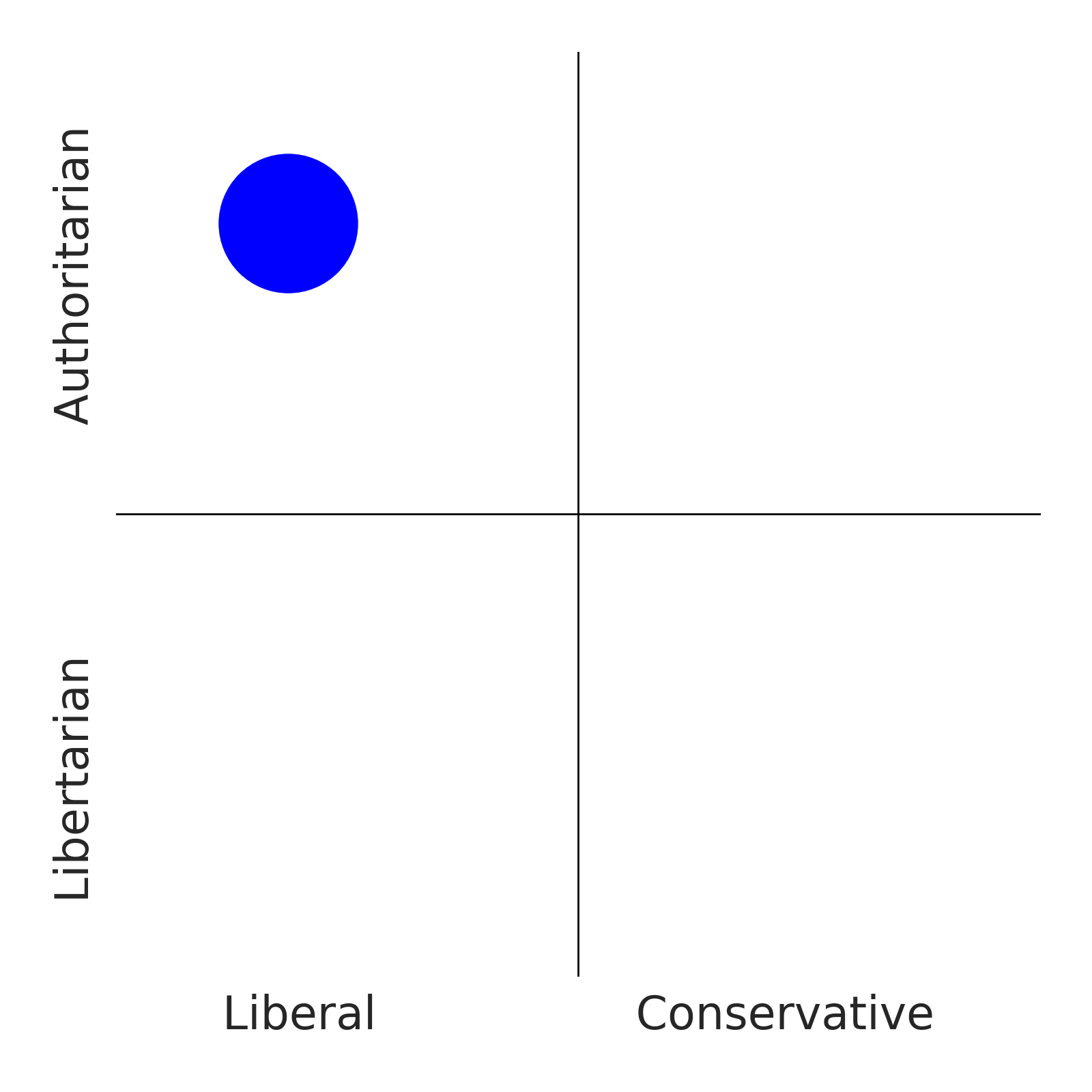
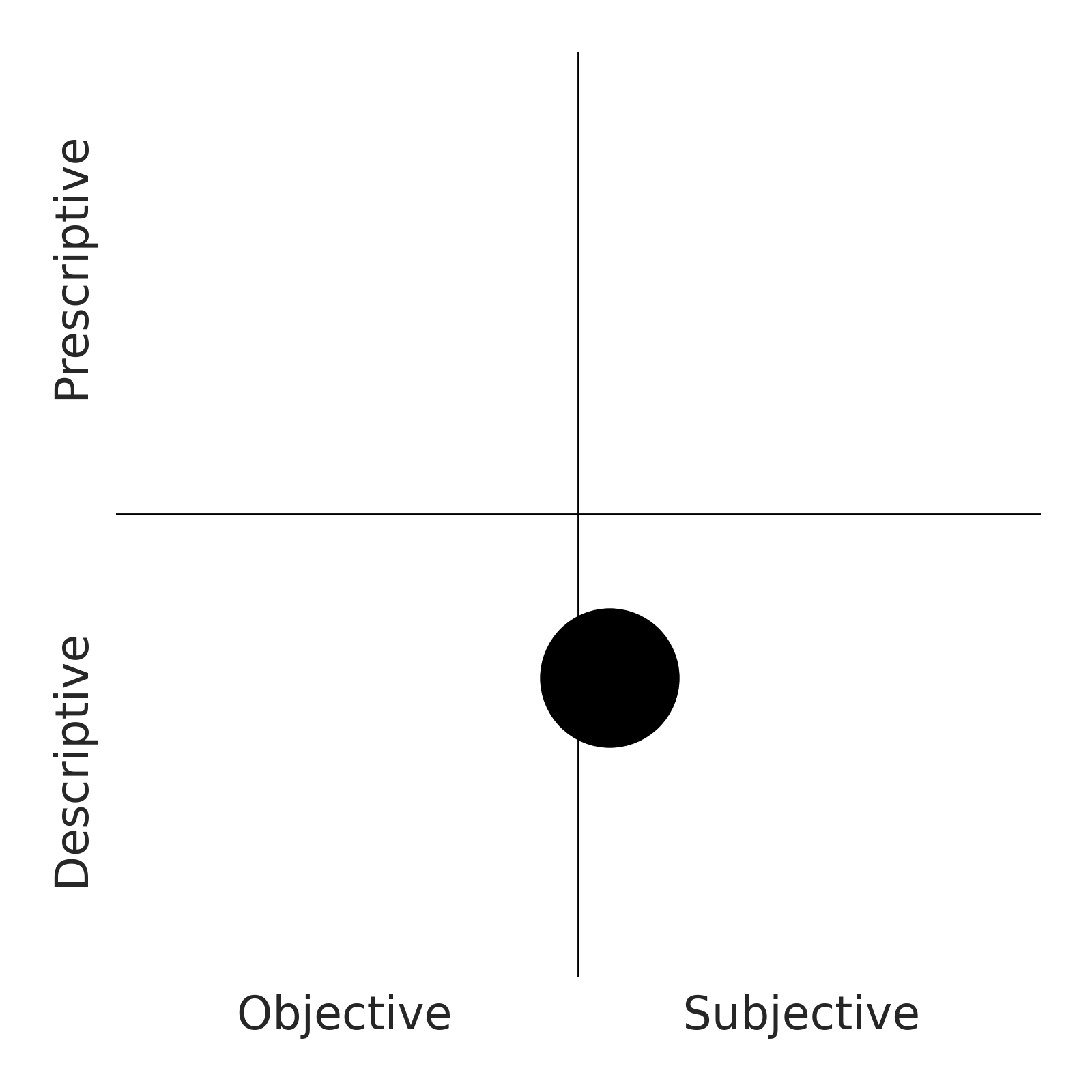
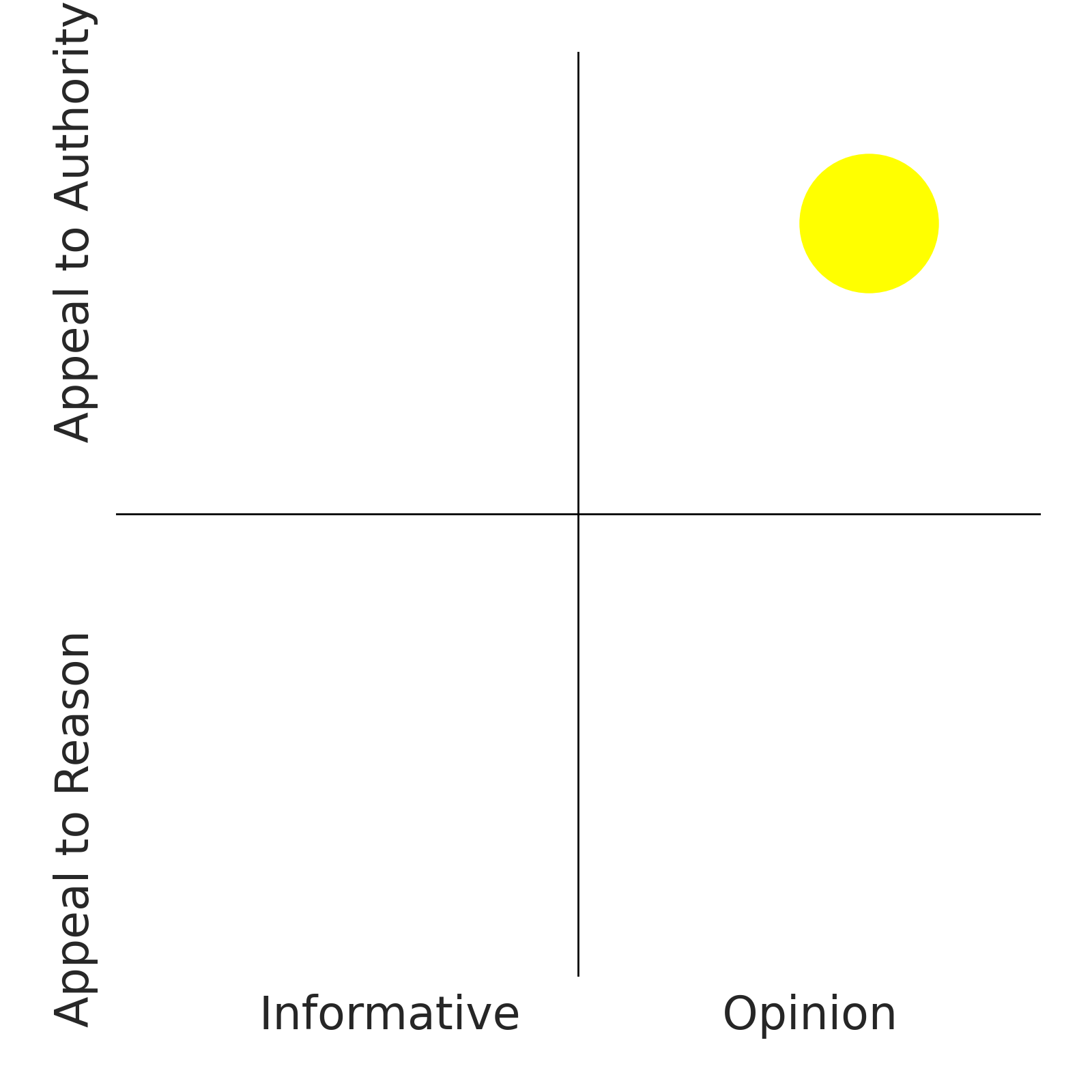
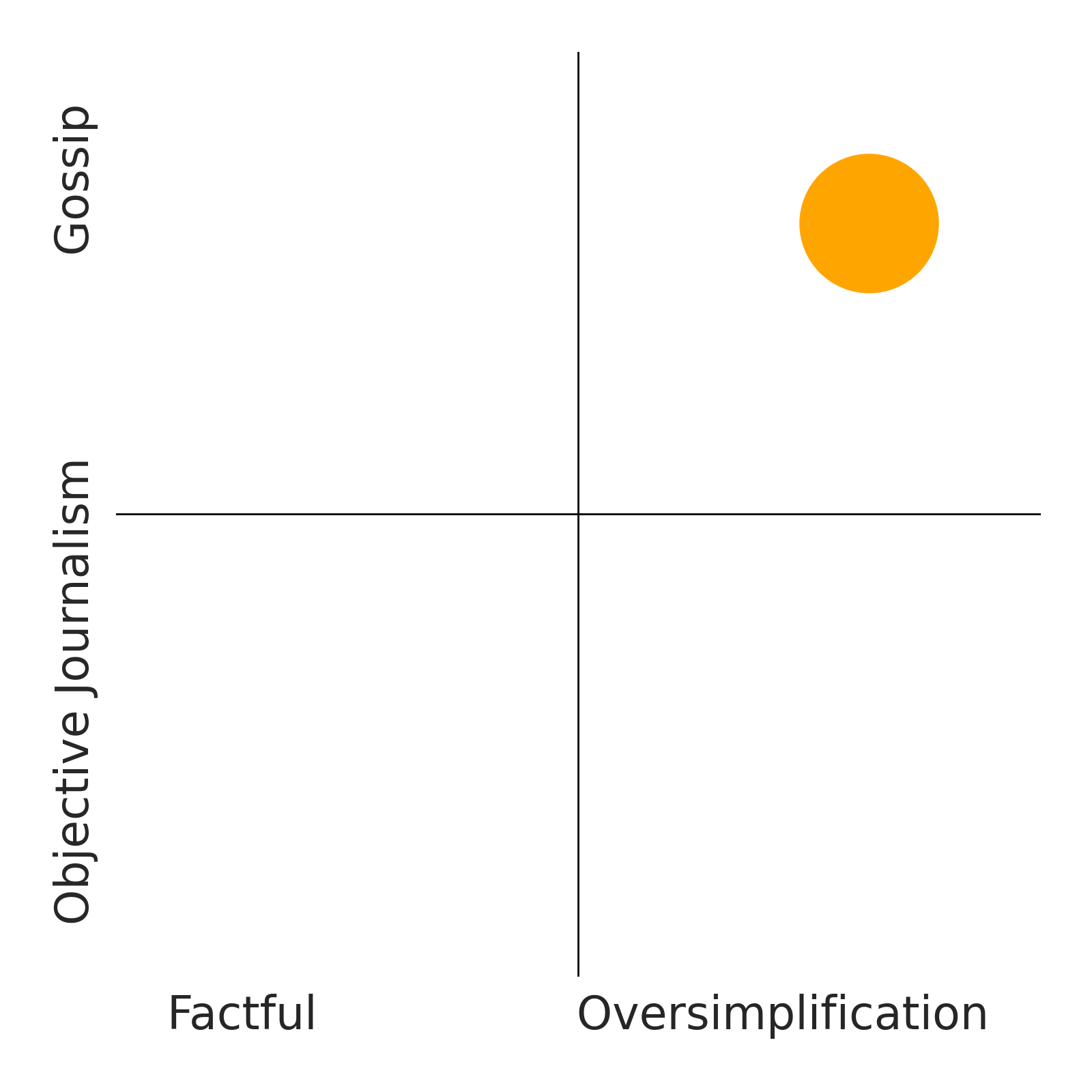
2026 © Helium Trades
Privacy Policy & Disclosure
* Disclaimer: Nothing on this website constitutes investment advice, performance data or any recommendation that any particular security, portfolio of securities, transaction or investment strategy is suitable for any specific person. Helium Trades is not responsible in any way for the accuracy
of any model predictions or price data. Any mention of a particular security and related prediction data is not a recommendation to buy or sell that security. Investments in securities involve the risk of loss. Past performance is no guarantee of future results. Helium Trades is not responsible for any of your investment decisions,
you should consult a financial expert before engaging in any transaction.
Helium Research Assistant

How can I help you today?
Ask any question about Huffington Post bias.