See whether Helium helps you make better-informed decisions. Try every Pro Trader feature for 30 days. No credit card required.
Try every Pro Trader feature for 30 days. No credit card required.
The supplied records are most consistent with a large, mainstream U.S. news organization with a center-left editorial tilt: historical context notes "frequent anti–Trump-era and pro–civil-liberties / pro–immigrant framing," including portrayals of conservative actions as rights-undermining [101].
This matches specific records: Blanche's politicking is framed as "degradation of post-Watergate values"
September 18, 2026 · 0 shares
The framing treats Attorney General Blanche's Republican campaigning as a clear ethical breach and a symptom of post-Watergate institutional decay at the Justice Department.
Post-Watergate values refer to the expectation, rooted in reforms after the Nixon-era abuses, that the Justice Department and attorney general should remain independent from partisan political influence.
Automated analysis; not human reviewed. Limitations: The analyzed input is only a two-sentence headline and standfirst, so no body-level reporting, sourcing, or verification was available. · 9 of 55 available dimensions scored; omitted dimensions are not treated as neutral. · Verified supporting quotes for 9 of 9 scored dimensions.
Claim: The publisher's framing is liberal-oriented, criticizing a Republican-attorney general's partisan conduct and defending institutional norms.
“The attorney general’s campaign politicking for Republicans adds to the degradation of post-Watergate values at the Justice Department.” · exact text match
Why: It criticizes a Republican-attorney general's partisan activity and appeals to post-Watergate institutional norms, a classic center-left critique.
Claim: The publisher uses evaluative language rather than neutral reporting.
“adds to the degradation of post-Watergate values” · exact text match
Why: The phrase 'degradation' is a value judgment, not an objective observation.
Claim: The publisher portrays the state of Justice Department values as deteriorating.
“adds to the degradation of post-Watergate values at the Justice Department” · exact text match
Why: 'Degradation' describes a negative, worsening condition.
Claim: The publisher presents a normative judgment of what should not happen.
“Breaks an Ethical Norm Going Back to Watergate” · exact text match
Why: Calling an action a 'breach of an ethical norm' is prescriptive rather than merely descriptive.
Claim: The text expresses an unsupported evaluative opinion rather than neutral fact.
“adds to the degradation of post-Watergate values at the Justice Department” · exact text match
Why: The assertion of institutional degradation is an opinion.
Claim: The subject and framing are explicitly political.
“campaign politicking for Republicans” · exact text match
Why: It directly references partisan campaign activity and the Justice Department.
Claim: The publisher states the norm violation as settled fact without support.
“Breaks an Ethical Norm Going Back to Watergate” · exact text match
Why: There is no hedging, evidence, or attribution for the ethical-break claim.
Claim: The publisher defends post-Watergate institutional norms, reflecting a pro-establishment stance.
“post-Watergate values at the Justice Department” · exact text match
Why: It invokes a traditional institutional settlement as the standard being degraded.
Claim: The tone carries a negative emotional charge about institutional decline.
“degradation” · exact text match
Why: 'Degradation' is negatively charged language expressing concern or alarm.
The analyzed input is only a two-sentence headline and standfirst, so no body-level reporting, sourcing, or verification was available.
September 04, 2026 · 0 shares
Frames the court ruling as a partisan win for Democrats and describes the invalidated map as Republican-benefiting, placing political stakes ahead of legal detail.
Automated analysis; not human reviewed. Limitations: The article is an extremely brief summary without named sources or legal reasoning, which limits the basis for bias classification. · 2 of 54 available dimensions scored; omitted dimensions are not treated as neutral. · Verified supporting quotes for 2 of 2 scored dimensions.
Claim: Article frames the court ruling as a political victory for Democrats.
“Missouri Supreme Court Delivers Win for Democrats in Redistricting Case” · exact text match
“The court said a map redrawn to benefit Republicans could not be used in November” · exact text match
Why: The headline explicitly labels the ruling a 'Win for Democrats' and characterizes the invalidated map as Republican-benefiting, making the political stakes the central frame.
Claim: Article reduces a complex redistricting ruling to a simple partisan win/loss.
“Missouri Supreme Court Delivers Win for Democrats in Redistricting Case” · exact text match
Why: The headline condenses the legal decision into a partisan outcome, and the brief text omits legal reasoning, making it an oversimplified summary.
The article is an extremely brief summary without named sources or legal reasoning, which limits the basis for bias classification.
Multiple records show evaluative or negative framing of Trump administration and Republican actors: "A Hostile Trump Reopens Old Wounds in the U.S.-Canada Relationship"
Speculative, insider-toned framing treats a $200 million paycheck as the open question in Jalen Duren's Pistons talks.
Automated analysis; not human reviewed. Limitations: The supplied text is only a repeated one-sentence headline/snippet with no article body, limiting the analysis to surface framing. · 1 of 55 available dimensions scored; omitted dimensions are not treated as neutral. · Verified supporting quotes for 1 of 1 scored dimensions.
Claim: The headline frames the whole report around an unconfirmed $200 million valuation and anonymous 'hearing' about talks, making the primary framing speculative.
“Is Jalen Duren closer to being a $200 million player?” · exact text match
“What we're hearing on talks with Pistons” · exact text match
Why: The text raises an open-ended question about a potential contract figure and attributes the substantive information to unnamed 'hearing' rather than confirmed terms.
The supplied text is only a repeated one-sentence headline/snippet with no article body, limiting the analysis to surface framing.
Frames Russia's election as an autocratic exercise that matters almost solely to Putin's inner circle.
Automated analysis; not human reviewed. Limitations: Only a two-sentence headline and subheading were supplied, limiting analysis to framing and preventing verification of the significance claim. · 5 of 55 available dimensions scored; omitted dimensions are not treated as neutral. · Verified supporting quotes for 5 of 5 scored dimensions.
Claim: The framing judges the election's importance instead of reporting a verifiable outcome.
“matters to almost no one — except President Vladimir V. Putin and his inner circle” · exact text match
Why: The headline uses an unhedged evaluative claim about significance rather than an observed fact.
Claim: The text expresses an opinionated interpretation of the election's meaning.
“Why Autocrats Care What People Think.” · exact text match
Why: The title is an explanatory assertion about leaders' motives, and the subhead states a value judgment about the election's irrelevance.
Claim: The subject matter is explicitly electoral and authoritarian politics.
“Russia is staging an election” · exact text match
“President Vladimir V. Putin and his inner circle” · exact text match
Why: The framing centers on a national election, an autocratic leader, and elite power dynamics.
Claim: The text reduces the election's meaning to a single elite-serving function.
“that matters to almost no one” · exact text match
Why: The phrase is a broad generalization that assigns one uniform relevance to a complex election.
Claim: The text states the election's irrelevance with certainty and without qualifiers.
“matters to almost no one” · exact text match
Why: No evidence, polling, or contrasting perspective is offered for the sweeping assertion.
Only a two-sentence headline and subheading were supplied, limiting analysis to framing and preventing verification of the significance claim.
September 18, 2026 · 0 shares
The framing treats Attorney General Blanche's Republican campaigning as a clear ethical breach and a symptom of post-Watergate institutional decay at the Justice Department.
Post-Watergate values refer to the expectation, rooted in reforms after the Nixon-era abuses, that the Justice Department and attorney general should remain independent from partisan political influence.
Automated analysis; not human reviewed. Limitations: The analyzed input is only a two-sentence headline and standfirst, so no body-level reporting, sourcing, or verification was available. · 9 of 55 available dimensions scored; omitted dimensions are not treated as neutral. · Verified supporting quotes for 9 of 9 scored dimensions.
Claim: The publisher's framing is liberal-oriented, criticizing a Republican-attorney general's partisan conduct and defending institutional norms.
“The attorney general’s campaign politicking for Republicans adds to the degradation of post-Watergate values at the Justice Department.” · exact text match
Why: It criticizes a Republican-attorney general's partisan activity and appeals to post-Watergate institutional norms, a classic center-left critique.
Claim: The publisher uses evaluative language rather than neutral reporting.
“adds to the degradation of post-Watergate values” · exact text match
Why: The phrase 'degradation' is a value judgment, not an objective observation.
Claim: The publisher portrays the state of Justice Department values as deteriorating.
“adds to the degradation of post-Watergate values at the Justice Department” · exact text match
Why: 'Degradation' describes a negative, worsening condition.
Claim: The publisher presents a normative judgment of what should not happen.
“Breaks an Ethical Norm Going Back to Watergate” · exact text match
Why: Calling an action a 'breach of an ethical norm' is prescriptive rather than merely descriptive.
Claim: The text expresses an unsupported evaluative opinion rather than neutral fact.
“adds to the degradation of post-Watergate values at the Justice Department” · exact text match
Why: The assertion of institutional degradation is an opinion.
Claim: The subject and framing are explicitly political.
“campaign politicking for Republicans” · exact text match
Why: It directly references partisan campaign activity and the Justice Department.
Claim: The publisher states the norm violation as settled fact without support.
“Breaks an Ethical Norm Going Back to Watergate” · exact text match
Why: There is no hedging, evidence, or attribution for the ethical-break claim.
Claim: The publisher defends post-Watergate institutional norms, reflecting a pro-establishment stance.
“post-Watergate values at the Justice Department” · exact text match
Why: It invokes a traditional institutional settlement as the standard being degraded.
Claim: The tone carries a negative emotional charge about institutional decline.
“degradation” · exact text match
Why: 'Degradation' is negatively charged language expressing concern or alarm.
The analyzed input is only a two-sentence headline and standfirst, so no body-level reporting, sourcing, or verification was available.
September 18, 2026 · 0 shares
The framing treats Attorney General Blanche's Republican campaigning as a clear ethical breach and a symptom of post-Watergate institutional decay at the Justice Department.
Post-Watergate values refer to the expectation, rooted in reforms after the Nixon-era abuses, that the Justice Department and attorney general should remain independent from partisan political influence.
Automated analysis; not human reviewed. Limitations: The analyzed input is only a two-sentence headline and standfirst, so no body-level reporting, sourcing, or verification was available. · 9 of 55 available dimensions scored; omitted dimensions are not treated as neutral. · Verified supporting quotes for 9 of 9 scored dimensions.
Claim: The publisher's framing is liberal-oriented, criticizing a Republican-attorney general's partisan conduct and defending institutional norms.
“The attorney general’s campaign politicking for Republicans adds to the degradation of post-Watergate values at the Justice Department.” · exact text match
Why: It criticizes a Republican-attorney general's partisan activity and appeals to post-Watergate institutional norms, a classic center-left critique.
Claim: The publisher uses evaluative language rather than neutral reporting.
“adds to the degradation of post-Watergate values” · exact text match
Why: The phrase 'degradation' is a value judgment, not an objective observation.
Claim: The publisher portrays the state of Justice Department values as deteriorating.
“adds to the degradation of post-Watergate values at the Justice Department” · exact text match
Why: 'Degradation' describes a negative, worsening condition.
Claim: The publisher presents a normative judgment of what should not happen.
“Breaks an Ethical Norm Going Back to Watergate” · exact text match
Why: Calling an action a 'breach of an ethical norm' is prescriptive rather than merely descriptive.
Claim: The text expresses an unsupported evaluative opinion rather than neutral fact.
“adds to the degradation of post-Watergate values at the Justice Department” · exact text match
Why: The assertion of institutional degradation is an opinion.
Claim: The subject and framing are explicitly political.
“campaign politicking for Republicans” · exact text match
Why: It directly references partisan campaign activity and the Justice Department.
Claim: The publisher states the norm violation as settled fact without support.
“Breaks an Ethical Norm Going Back to Watergate” · exact text match
Why: There is no hedging, evidence, or attribution for the ethical-break claim.
Claim: The publisher defends post-Watergate institutional norms, reflecting a pro-establishment stance.
“post-Watergate values at the Justice Department” · exact text match
Why: It invokes a traditional institutional settlement as the standard being degraded.
Claim: The tone carries a negative emotional charge about institutional decline.
“degradation” · exact text match
Why: 'Degradation' is negatively charged language expressing concern or alarm.
The analyzed input is only a two-sentence headline and standfirst, so no body-level reporting, sourcing, or verification was available.
Not all coverage is one-sided: the Missouri court ruling "pairing a ruling for Missouri Republicans with a note that the order may have limited effect" is called neutral and understated
Speculative, insider-toned framing treats a $200 million paycheck as the open question in Jalen Duren's Pistons talks.
Automated analysis; not human reviewed. Limitations: The supplied text is only a repeated one-sentence headline/snippet with no article body, limiting the analysis to surface framing. · 1 of 55 available dimensions scored; omitted dimensions are not treated as neutral. · Verified supporting quotes for 1 of 1 scored dimensions.
Claim: The headline frames the whole report around an unconfirmed $200 million valuation and anonymous 'hearing' about talks, making the primary framing speculative.
“Is Jalen Duren closer to being a $200 million player?” · exact text match
“What we're hearing on talks with Pistons” · exact text match
Why: The text raises an open-ended question about a potential contract figure and attributes the substantive information to unnamed 'hearing' rather than confirmed terms.
The supplied text is only a repeated one-sentence headline/snippet with no article body, limiting the analysis to surface framing.
September 04, 2026 · 0 shares
Frames the court ruling as a partisan win for Democrats and describes the invalidated map as Republican-benefiting, placing political stakes ahead of legal detail.
Automated analysis; not human reviewed. Limitations: The article is an extremely brief summary without named sources or legal reasoning, which limits the basis for bias classification. · 2 of 54 available dimensions scored; omitted dimensions are not treated as neutral. · Verified supporting quotes for 2 of 2 scored dimensions.
Claim: Article frames the court ruling as a political victory for Democrats.
“Missouri Supreme Court Delivers Win for Democrats in Redistricting Case” · exact text match
“The court said a map redrawn to benefit Republicans could not be used in November” · exact text match
Why: The headline explicitly labels the ruling a 'Win for Democrats' and characterizes the invalidated map as Republican-benefiting, making the political stakes the central frame.
Claim: Article reduces a complex redistricting ruling to a simple partisan win/loss.
“Missouri Supreme Court Delivers Win for Democrats in Redistricting Case” · exact text match
Why: The headline condenses the legal decision into a partisan outcome, and the brief text omits legal reasoning, making it an oversimplified summary.
The article is an extremely brief summary without named sources or legal reasoning, which limits the basis for bias classification.
September 08, 2026 · 0 shares
Headline treats lawyers' allegation of SSA-caused delays as established fact and frames the agency's pledge as a promise to do its job.
Automated analysis; not human reviewed. Limitations: Only a two-sentence headline/snippet was supplied; there is no SSA response, lawyer identification, or timeline details to contextualize the allegation. · 4 of 54 available dimensions scored; omitted dimensions are not treated as neutral. · Verified supporting quotes for 4 of 4 scored dimensions.
Claim: The headline presents the lawyers' allegation as an established fact and uses evaluative language to describe SSA's response.
“After Causing Delays for 9/11 Health Claims, Social Security Pledges to Do Its Job” · exact text match
Counterevidence:
“Lawyers say the Social Security Administration has for months not provided basic data to complete compensation claims” · exact text match
Why: The body attributes the delay claim to lawyers, but the headline states it causally and evaluates the agency's pledge with the phrase 'to do its job,' a subjective judgment.
Claim: The headline presupposes that SSA is responsible for the delays, which is the very point the lawyers are said to be making.
“After Causing Delays for 9/11 Health Claims, Social Security Pledges to Do Its Job” · exact text match
Counterevidence:
“Lawyers say the Social Security Administration has for months not provided basic data” · exact text match
Why: The premise of culpability is assumed rather than demonstrated in the headline.
Claim: The phrase 'pledges to do its job' injects an evaluative judgment about SSA's performance into the report.
“Social Security Pledges to Do Its Job” · exact text match
Why: Describing the response as doing its job implies a prior failure and an editorial assessment.
Claim: The headline asserts without qualification that SSA caused delays, while the body only reports an allegation by lawyers.
“After Causing Delays for 9/11 Health Claims” · exact text match
Counterevidence:
“Lawyers say the Social Security Administration has for months not provided basic data” · exact text match
Why: The assertive causal framing outruns the attributed source.
Only a two-sentence headline/snippet was supplied; there is no SSA response, lawyer identification, or timeline details to contextualize the allegation.
September 04, 2026 · 0 shares
Frames the court ruling as a partisan win for Democrats and describes the invalidated map as Republican-benefiting, placing political stakes ahead of legal detail.
Automated analysis; not human reviewed. Limitations: The article is an extremely brief summary without named sources or legal reasoning, which limits the basis for bias classification. · 2 of 54 available dimensions scored; omitted dimensions are not treated as neutral. · Verified supporting quotes for 2 of 2 scored dimensions.
Claim: Article frames the court ruling as a political victory for Democrats.
“Missouri Supreme Court Delivers Win for Democrats in Redistricting Case” · exact text match
“The court said a map redrawn to benefit Republicans could not be used in November” · exact text match
Why: The headline explicitly labels the ruling a 'Win for Democrats' and characterizes the invalidated map as Republican-benefiting, making the political stakes the central frame.
Claim: Article reduces a complex redistricting ruling to a simple partisan win/loss.
“Missouri Supreme Court Delivers Win for Democrats in Redistricting Case” · exact text match
Why: The headline condenses the legal decision into a partisan outcome, and the brief text omits legal reasoning, making it an oversimplified summary.
The article is an extremely brief summary without named sources or legal reasoning, which limits the basis for bias classification.
September 18, 2026 · 0 shares
The framing treats Attorney General Blanche's Republican campaigning as a clear ethical breach and a symptom of post-Watergate institutional decay at the Justice Department.
Post-Watergate values refer to the expectation, rooted in reforms after the Nixon-era abuses, that the Justice Department and attorney general should remain independent from partisan political influence.
Automated analysis; not human reviewed. Limitations: The analyzed input is only a two-sentence headline and standfirst, so no body-level reporting, sourcing, or verification was available. · 9 of 55 available dimensions scored; omitted dimensions are not treated as neutral. · Verified supporting quotes for 9 of 9 scored dimensions.
Claim: The publisher's framing is liberal-oriented, criticizing a Republican-attorney general's partisan conduct and defending institutional norms.
“The attorney general’s campaign politicking for Republicans adds to the degradation of post-Watergate values at the Justice Department.” · exact text match
Why: It criticizes a Republican-attorney general's partisan activity and appeals to post-Watergate institutional norms, a classic center-left critique.
Claim: The publisher uses evaluative language rather than neutral reporting.
“adds to the degradation of post-Watergate values” · exact text match
Why: The phrase 'degradation' is a value judgment, not an objective observation.
Claim: The publisher portrays the state of Justice Department values as deteriorating.
“adds to the degradation of post-Watergate values at the Justice Department” · exact text match
Why: 'Degradation' describes a negative, worsening condition.
Claim: The publisher presents a normative judgment of what should not happen.
“Breaks an Ethical Norm Going Back to Watergate” · exact text match
Why: Calling an action a 'breach of an ethical norm' is prescriptive rather than merely descriptive.
Claim: The text expresses an unsupported evaluative opinion rather than neutral fact.
“adds to the degradation of post-Watergate values at the Justice Department” · exact text match
Why: The assertion of institutional degradation is an opinion.
Claim: The subject and framing are explicitly political.
“campaign politicking for Republicans” · exact text match
Why: It directly references partisan campaign activity and the Justice Department.
Claim: The publisher states the norm violation as settled fact without support.
“Breaks an Ethical Norm Going Back to Watergate” · exact text match
Why: There is no hedging, evidence, or attribution for the ethical-break claim.
Claim: The publisher defends post-Watergate institutional norms, reflecting a pro-establishment stance.
“post-Watergate values at the Justice Department” · exact text match
Why: It invokes a traditional institutional settlement as the standard being degraded.
Claim: The tone carries a negative emotional charge about institutional decline.
“degradation” · exact text match
Why: 'Degradation' is negatively charged language expressing concern or alarm.
The analyzed input is only a two-sentence headline and standfirst, so no body-level reporting, sourcing, or verification was available.
Sensational/evaluative headline conventions: "Secret War Plan" substitutes for neutral "classified intelligence"
Speculative, insider-toned framing treats a $200 million paycheck as the open question in Jalen Duren's Pistons talks.
Automated analysis; not human reviewed. Limitations: The supplied text is only a repeated one-sentence headline/snippet with no article body, limiting the analysis to surface framing. · 1 of 55 available dimensions scored; omitted dimensions are not treated as neutral. · Verified supporting quotes for 1 of 1 scored dimensions.
Claim: The headline frames the whole report around an unconfirmed $200 million valuation and anonymous 'hearing' about talks, making the primary framing speculative.
“Is Jalen Duren closer to being a $200 million player?” · exact text match
“What we're hearing on talks with Pistons” · exact text match
Why: The text raises an open-ended question about a potential contract figure and attributes the substantive information to unnamed 'hearing' rather than confirmed terms.
The supplied text is only a repeated one-sentence headline/snippet with no article body, limiting the analysis to surface framing.
September 08, 2026 · 0 shares
Headline treats lawyers' allegation of SSA-caused delays as established fact and frames the agency's pledge as a promise to do its job.
Automated analysis; not human reviewed. Limitations: Only a two-sentence headline/snippet was supplied; there is no SSA response, lawyer identification, or timeline details to contextualize the allegation. · 4 of 54 available dimensions scored; omitted dimensions are not treated as neutral. · Verified supporting quotes for 4 of 4 scored dimensions.
Claim: The headline presents the lawyers' allegation as an established fact and uses evaluative language to describe SSA's response.
“After Causing Delays for 9/11 Health Claims, Social Security Pledges to Do Its Job” · exact text match
Counterevidence:
“Lawyers say the Social Security Administration has for months not provided basic data to complete compensation claims” · exact text match
Why: The body attributes the delay claim to lawyers, but the headline states it causally and evaluates the agency's pledge with the phrase 'to do its job,' a subjective judgment.
Claim: The headline presupposes that SSA is responsible for the delays, which is the very point the lawyers are said to be making.
“After Causing Delays for 9/11 Health Claims, Social Security Pledges to Do Its Job” · exact text match
Counterevidence:
“Lawyers say the Social Security Administration has for months not provided basic data” · exact text match
Why: The premise of culpability is assumed rather than demonstrated in the headline.
Claim: The phrase 'pledges to do its job' injects an evaluative judgment about SSA's performance into the report.
“Social Security Pledges to Do Its Job” · exact text match
Why: Describing the response as doing its job implies a prior failure and an editorial assessment.
Claim: The headline asserts without qualification that SSA caused delays, while the body only reports an allegation by lawyers.
“After Causing Delays for 9/11 Health Claims” · exact text match
Counterevidence:
“Lawyers say the Social Security Administration has for months not provided basic data” · exact text match
Why: The assertive causal framing outruns the attributed source.
Only a two-sentence headline/snippet was supplied; there is no SSA response, lawyer identification, or timeline details to contextualize the allegation.
Speculative, insider-toned framing treats a $200 million paycheck as the open question in Jalen Duren's Pistons talks.
Automated analysis; not human reviewed. Limitations: The supplied text is only a repeated one-sentence headline/snippet with no article body, limiting the analysis to surface framing. · 1 of 55 available dimensions scored; omitted dimensions are not treated as neutral. · Verified supporting quotes for 1 of 1 scored dimensions.
Claim: The headline frames the whole report around an unconfirmed $200 million valuation and anonymous 'hearing' about talks, making the primary framing speculative.
“Is Jalen Duren closer to being a $200 million player?” · exact text match
“What we're hearing on talks with Pistons” · exact text match
Why: The text raises an open-ended question about a potential contract figure and attributes the substantive information to unnamed 'hearing' rather than confirmed terms.
The supplied text is only a repeated one-sentence headline/snippet with no article body, limiting the analysis to surface framing.
September 18, 2026 · 0 shares
The framing treats Attorney General Blanche's Republican campaigning as a clear ethical breach and a symptom of post-Watergate institutional decay at the Justice Department.
Post-Watergate values refer to the expectation, rooted in reforms after the Nixon-era abuses, that the Justice Department and attorney general should remain independent from partisan political influence.
Automated analysis; not human reviewed. Limitations: The analyzed input is only a two-sentence headline and standfirst, so no body-level reporting, sourcing, or verification was available. · 9 of 55 available dimensions scored; omitted dimensions are not treated as neutral. · Verified supporting quotes for 9 of 9 scored dimensions.
Claim: The publisher's framing is liberal-oriented, criticizing a Republican-attorney general's partisan conduct and defending institutional norms.
“The attorney general’s campaign politicking for Republicans adds to the degradation of post-Watergate values at the Justice Department.” · exact text match
Why: It criticizes a Republican-attorney general's partisan activity and appeals to post-Watergate institutional norms, a classic center-left critique.
Claim: The publisher uses evaluative language rather than neutral reporting.
“adds to the degradation of post-Watergate values” · exact text match
Why: The phrase 'degradation' is a value judgment, not an objective observation.
Claim: The publisher portrays the state of Justice Department values as deteriorating.
“adds to the degradation of post-Watergate values at the Justice Department” · exact text match
Why: 'Degradation' describes a negative, worsening condition.
Claim: The publisher presents a normative judgment of what should not happen.
“Breaks an Ethical Norm Going Back to Watergate” · exact text match
Why: Calling an action a 'breach of an ethical norm' is prescriptive rather than merely descriptive.
Claim: The text expresses an unsupported evaluative opinion rather than neutral fact.
“adds to the degradation of post-Watergate values at the Justice Department” · exact text match
Why: The assertion of institutional degradation is an opinion.
Claim: The subject and framing are explicitly political.
“campaign politicking for Republicans” · exact text match
Why: It directly references partisan campaign activity and the Justice Department.
Claim: The publisher states the norm violation as settled fact without support.
“Breaks an Ethical Norm Going Back to Watergate” · exact text match
Why: There is no hedging, evidence, or attribution for the ethical-break claim.
Claim: The publisher defends post-Watergate institutional norms, reflecting a pro-establishment stance.
“post-Watergate values at the Justice Department” · exact text match
Why: It invokes a traditional institutional settlement as the standard being degraded.
Claim: The tone carries a negative emotional charge about institutional decline.
“degradation” · exact text match
Why: 'Degradation' is negatively charged language expressing concern or alarm.
The analyzed input is only a two-sentence headline and standfirst, so no body-level reporting, sourcing, or verification was available.
September 08, 2026 · 0 shares
Headline treats lawyers' allegation of SSA-caused delays as established fact and frames the agency's pledge as a promise to do its job.
Automated analysis; not human reviewed. Limitations: Only a two-sentence headline/snippet was supplied; there is no SSA response, lawyer identification, or timeline details to contextualize the allegation. · 4 of 54 available dimensions scored; omitted dimensions are not treated as neutral. · Verified supporting quotes for 4 of 4 scored dimensions.
Claim: The headline presents the lawyers' allegation as an established fact and uses evaluative language to describe SSA's response.
“After Causing Delays for 9/11 Health Claims, Social Security Pledges to Do Its Job” · exact text match
Counterevidence:
“Lawyers say the Social Security Administration has for months not provided basic data to complete compensation claims” · exact text match
Why: The body attributes the delay claim to lawyers, but the headline states it causally and evaluates the agency's pledge with the phrase 'to do its job,' a subjective judgment.
Claim: The headline presupposes that SSA is responsible for the delays, which is the very point the lawyers are said to be making.
“After Causing Delays for 9/11 Health Claims, Social Security Pledges to Do Its Job” · exact text match
Counterevidence:
“Lawyers say the Social Security Administration has for months not provided basic data” · exact text match
Why: The premise of culpability is assumed rather than demonstrated in the headline.
Claim: The phrase 'pledges to do its job' injects an evaluative judgment about SSA's performance into the report.
“Social Security Pledges to Do Its Job” · exact text match
Why: Describing the response as doing its job implies a prior failure and an editorial assessment.
Claim: The headline asserts without qualification that SSA caused delays, while the body only reports an allegation by lawyers.
“After Causing Delays for 9/11 Health Claims” · exact text match
Counterevidence:
“Lawyers say the Social Security Administration has for months not provided basic data” · exact text match
Why: The assertive causal framing outruns the attributed source.
Only a two-sentence headline/snippet was supplied; there is no SSA response, lawyer identification, or timeline details to contextualize the allegation.
U.S. politics/courts/DOJ, immigration, geopolitics (North Korea, Russia, Venezuela oil, U.S.–China), elections and polls [101]
Frames Russia's election as an autocratic exercise that matters almost solely to Putin's inner circle.
Automated analysis; not human reviewed. Limitations: Only a two-sentence headline and subheading were supplied, limiting analysis to framing and preventing verification of the significance claim. · 5 of 55 available dimensions scored; omitted dimensions are not treated as neutral. · Verified supporting quotes for 5 of 5 scored dimensions.
Claim: The framing judges the election's importance instead of reporting a verifiable outcome.
“matters to almost no one — except President Vladimir V. Putin and his inner circle” · exact text match
Why: The headline uses an unhedged evaluative claim about significance rather than an observed fact.
Claim: The text expresses an opinionated interpretation of the election's meaning.
“Why Autocrats Care What People Think.” · exact text match
Why: The title is an explanatory assertion about leaders' motives, and the subhead states a value judgment about the election's irrelevance.
Claim: The subject matter is explicitly electoral and authoritarian politics.
“Russia is staging an election” · exact text match
“President Vladimir V. Putin and his inner circle” · exact text match
Why: The framing centers on a national election, an autocratic leader, and elite power dynamics.
Claim: The text reduces the election's meaning to a single elite-serving function.
“that matters to almost no one” · exact text match
Why: The phrase is a broad generalization that assigns one uniform relevance to a complex election.
Claim: The text states the election's irrelevance with certainty and without qualifiers.
“matters to almost no one” · exact text match
Why: No evidence, polling, or contrasting perspective is offered for the sweeping assertion.
Only a two-sentence headline and subheading were supplied, limiting analysis to framing and preventing verification of the significance claim.
Speculative, insider-toned framing treats a $200 million paycheck as the open question in Jalen Duren's Pistons talks.
Automated analysis; not human reviewed. Limitations: The supplied text is only a repeated one-sentence headline/snippet with no article body, limiting the analysis to surface framing. · 1 of 55 available dimensions scored; omitted dimensions are not treated as neutral. · Verified supporting quotes for 1 of 1 scored dimensions.
Claim: The headline frames the whole report around an unconfirmed $200 million valuation and anonymous 'hearing' about talks, making the primary framing speculative.
“Is Jalen Duren closer to being a $200 million player?” · exact text match
“What we're hearing on talks with Pistons” · exact text match
Why: The text raises an open-ended question about a potential contract figure and attributes the substantive information to unnamed 'hearing' rather than confirmed terms.
The supplied text is only a repeated one-sentence headline/snippet with no article body, limiting the analysis to surface framing.
September 04, 2026 · 0 shares
Frames the court ruling as a partisan win for Democrats and describes the invalidated map as Republican-benefiting, placing political stakes ahead of legal detail.
Automated analysis; not human reviewed. Limitations: The article is an extremely brief summary without named sources or legal reasoning, which limits the basis for bias classification. · 2 of 54 available dimensions scored; omitted dimensions are not treated as neutral. · Verified supporting quotes for 2 of 2 scored dimensions.
Claim: Article frames the court ruling as a political victory for Democrats.
“Missouri Supreme Court Delivers Win for Democrats in Redistricting Case” · exact text match
“The court said a map redrawn to benefit Republicans could not be used in November” · exact text match
Why: The headline explicitly labels the ruling a 'Win for Democrats' and characterizes the invalidated map as Republican-benefiting, making the political stakes the central frame.
Claim: Article reduces a complex redistricting ruling to a simple partisan win/loss.
“Missouri Supreme Court Delivers Win for Democrats in Redistricting Case” · exact text match
Why: The headline condenses the legal decision into a partisan outcome, and the brief text omits legal reasoning, making it an oversimplified summary.
The article is an extremely brief summary without named sources or legal reasoning, which limits the basis for bias classification.
Speculative, insider-toned framing treats a $200 million paycheck as the open question in Jalen Duren's Pistons talks.
Automated analysis; not human reviewed. Limitations: The supplied text is only a repeated one-sentence headline/snippet with no article body, limiting the analysis to surface framing. · 1 of 55 available dimensions scored; omitted dimensions are not treated as neutral. · Verified supporting quotes for 1 of 1 scored dimensions.
Claim: The headline frames the whole report around an unconfirmed $200 million valuation and anonymous 'hearing' about talks, making the primary framing speculative.
“Is Jalen Duren closer to being a $200 million player?” · exact text match
“What we're hearing on talks with Pistons” · exact text match
Why: The text raises an open-ended question about a potential contract figure and attributes the substantive information to unnamed 'hearing' rather than confirmed terms.
The supplied text is only a repeated one-sentence headline/snippet with no article body, limiting the analysis to surface framing.
September 08, 2026 · 0 shares
Headline treats lawyers' allegation of SSA-caused delays as established fact and frames the agency's pledge as a promise to do its job.
Automated analysis; not human reviewed. Limitations: Only a two-sentence headline/snippet was supplied; there is no SSA response, lawyer identification, or timeline details to contextualize the allegation. · 4 of 54 available dimensions scored; omitted dimensions are not treated as neutral. · Verified supporting quotes for 4 of 4 scored dimensions.
Claim: The headline presents the lawyers' allegation as an established fact and uses evaluative language to describe SSA's response.
“After Causing Delays for 9/11 Health Claims, Social Security Pledges to Do Its Job” · exact text match
Counterevidence:
“Lawyers say the Social Security Administration has for months not provided basic data to complete compensation claims” · exact text match
Why: The body attributes the delay claim to lawyers, but the headline states it causally and evaluates the agency's pledge with the phrase 'to do its job,' a subjective judgment.
Claim: The headline presupposes that SSA is responsible for the delays, which is the very point the lawyers are said to be making.
“After Causing Delays for 9/11 Health Claims, Social Security Pledges to Do Its Job” · exact text match
Counterevidence:
“Lawyers say the Social Security Administration has for months not provided basic data” · exact text match
Why: The premise of culpability is assumed rather than demonstrated in the headline.
Claim: The phrase 'pledges to do its job' injects an evaluative judgment about SSA's performance into the report.
“Social Security Pledges to Do Its Job” · exact text match
Why: Describing the response as doing its job implies a prior failure and an editorial assessment.
Claim: The headline asserts without qualification that SSA caused delays, while the body only reports an allegation by lawyers.
“After Causing Delays for 9/11 Health Claims” · exact text match
Counterevidence:
“Lawyers say the Social Security Administration has for months not provided basic data” · exact text match
Why: The assertive causal framing outruns the attributed source.
Only a two-sentence headline/snippet was supplied; there is no SSA response, lawyer identification, or timeline details to contextualize the allegation.
Speculative, insider-toned framing treats a $200 million paycheck as the open question in Jalen Duren's Pistons talks.
Automated analysis; not human reviewed. Limitations: The supplied text is only a repeated one-sentence headline/snippet with no article body, limiting the analysis to surface framing. · 1 of 55 available dimensions scored; omitted dimensions are not treated as neutral. · Verified supporting quotes for 1 of 1 scored dimensions.
Claim: The headline frames the whole report around an unconfirmed $200 million valuation and anonymous 'hearing' about talks, making the primary framing speculative.
“Is Jalen Duren closer to being a $200 million player?” · exact text match
“What we're hearing on talks with Pistons” · exact text match
Why: The text raises an open-ended question about a potential contract figure and attributes the substantive information to unnamed 'hearing' rather than confirmed terms.
The supplied text is only a repeated one-sentence headline/snippet with no article body, limiting the analysis to surface framing.
September 18, 2026 · 0 shares
The framing treats Attorney General Blanche's Republican campaigning as a clear ethical breach and a symptom of post-Watergate institutional decay at the Justice Department.
Post-Watergate values refer to the expectation, rooted in reforms after the Nixon-era abuses, that the Justice Department and attorney general should remain independent from partisan political influence.
Automated analysis; not human reviewed. Limitations: The analyzed input is only a two-sentence headline and standfirst, so no body-level reporting, sourcing, or verification was available. · 9 of 55 available dimensions scored; omitted dimensions are not treated as neutral. · Verified supporting quotes for 9 of 9 scored dimensions.
Claim: The publisher's framing is liberal-oriented, criticizing a Republican-attorney general's partisan conduct and defending institutional norms.
“The attorney general’s campaign politicking for Republicans adds to the degradation of post-Watergate values at the Justice Department.” · exact text match
Why: It criticizes a Republican-attorney general's partisan activity and appeals to post-Watergate institutional norms, a classic center-left critique.
Claim: The publisher uses evaluative language rather than neutral reporting.
“adds to the degradation of post-Watergate values” · exact text match
Why: The phrase 'degradation' is a value judgment, not an objective observation.
Claim: The publisher portrays the state of Justice Department values as deteriorating.
“adds to the degradation of post-Watergate values at the Justice Department” · exact text match
Why: 'Degradation' describes a negative, worsening condition.
Claim: The publisher presents a normative judgment of what should not happen.
“Breaks an Ethical Norm Going Back to Watergate” · exact text match
Why: Calling an action a 'breach of an ethical norm' is prescriptive rather than merely descriptive.
Claim: The text expresses an unsupported evaluative opinion rather than neutral fact.
“adds to the degradation of post-Watergate values at the Justice Department” · exact text match
Why: The assertion of institutional degradation is an opinion.
Claim: The subject and framing are explicitly political.
“campaign politicking for Republicans” · exact text match
Why: It directly references partisan campaign activity and the Justice Department.
Claim: The publisher states the norm violation as settled fact without support.
“Breaks an Ethical Norm Going Back to Watergate” · exact text match
Why: There is no hedging, evidence, or attribution for the ethical-break claim.
Claim: The publisher defends post-Watergate institutional norms, reflecting a pro-establishment stance.
“post-Watergate values at the Justice Department” · exact text match
Why: It invokes a traditional institutional settlement as the standard being degraded.
Claim: The tone carries a negative emotional charge about institutional decline.
“degradation” · exact text match
Why: 'Degradation' is negatively charged language expressing concern or alarm.
The analyzed input is only a two-sentence headline and standfirst, so no body-level reporting, sourcing, or verification was available.
September 08, 2026 · 0 shares
Headline treats lawyers' allegation of SSA-caused delays as established fact and frames the agency's pledge as a promise to do its job.
Automated analysis; not human reviewed. Limitations: Only a two-sentence headline/snippet was supplied; there is no SSA response, lawyer identification, or timeline details to contextualize the allegation. · 4 of 54 available dimensions scored; omitted dimensions are not treated as neutral. · Verified supporting quotes for 4 of 4 scored dimensions.
Claim: The headline presents the lawyers' allegation as an established fact and uses evaluative language to describe SSA's response.
“After Causing Delays for 9/11 Health Claims, Social Security Pledges to Do Its Job” · exact text match
Counterevidence:
“Lawyers say the Social Security Administration has for months not provided basic data to complete compensation claims” · exact text match
Why: The body attributes the delay claim to lawyers, but the headline states it causally and evaluates the agency's pledge with the phrase 'to do its job,' a subjective judgment.
Claim: The headline presupposes that SSA is responsible for the delays, which is the very point the lawyers are said to be making.
“After Causing Delays for 9/11 Health Claims, Social Security Pledges to Do Its Job” · exact text match
Counterevidence:
“Lawyers say the Social Security Administration has for months not provided basic data” · exact text match
Why: The premise of culpability is assumed rather than demonstrated in the headline.
Claim: The phrase 'pledges to do its job' injects an evaluative judgment about SSA's performance into the report.
“Social Security Pledges to Do Its Job” · exact text match
Why: Describing the response as doing its job implies a prior failure and an editorial assessment.
Claim: The headline asserts without qualification that SSA caused delays, while the body only reports an allegation by lawyers.
“After Causing Delays for 9/11 Health Claims” · exact text match
Counterevidence:
“Lawyers say the Social Security Administration has for months not provided basic data” · exact text match
Why: The assertive causal framing outruns the attributed source.
Only a two-sentence headline/snippet was supplied; there is no SSA response, lawyer identification, or timeline details to contextualize the allegation.
Highest: civil-liberties/immigrant protection [101]
September 18, 2026 · 0 shares
The framing treats Attorney General Blanche's Republican campaigning as a clear ethical breach and a symptom of post-Watergate institutional decay at the Justice Department.
Post-Watergate values refer to the expectation, rooted in reforms after the Nixon-era abuses, that the Justice Department and attorney general should remain independent from partisan political influence.
Automated analysis; not human reviewed. Limitations: The analyzed input is only a two-sentence headline and standfirst, so no body-level reporting, sourcing, or verification was available. · 9 of 55 available dimensions scored; omitted dimensions are not treated as neutral. · Verified supporting quotes for 9 of 9 scored dimensions.
Claim: The publisher's framing is liberal-oriented, criticizing a Republican-attorney general's partisan conduct and defending institutional norms.
“The attorney general’s campaign politicking for Republicans adds to the degradation of post-Watergate values at the Justice Department.” · exact text match
Why: It criticizes a Republican-attorney general's partisan activity and appeals to post-Watergate institutional norms, a classic center-left critique.
Claim: The publisher uses evaluative language rather than neutral reporting.
“adds to the degradation of post-Watergate values” · exact text match
Why: The phrase 'degradation' is a value judgment, not an objective observation.
Claim: The publisher portrays the state of Justice Department values as deteriorating.
“adds to the degradation of post-Watergate values at the Justice Department” · exact text match
Why: 'Degradation' describes a negative, worsening condition.
Claim: The publisher presents a normative judgment of what should not happen.
“Breaks an Ethical Norm Going Back to Watergate” · exact text match
Why: Calling an action a 'breach of an ethical norm' is prescriptive rather than merely descriptive.
Claim: The text expresses an unsupported evaluative opinion rather than neutral fact.
“adds to the degradation of post-Watergate values at the Justice Department” · exact text match
Why: The assertion of institutional degradation is an opinion.
Claim: The subject and framing are explicitly political.
“campaign politicking for Republicans” · exact text match
Why: It directly references partisan campaign activity and the Justice Department.
Claim: The publisher states the norm violation as settled fact without support.
“Breaks an Ethical Norm Going Back to Watergate” · exact text match
Why: There is no hedging, evidence, or attribution for the ethical-break claim.
Claim: The publisher defends post-Watergate institutional norms, reflecting a pro-establishment stance.
“post-Watergate values at the Justice Department” · exact text match
Why: It invokes a traditional institutional settlement as the standard being degraded.
Claim: The tone carries a negative emotional charge about institutional decline.
“degradation” · exact text match
Why: 'Degradation' is negatively charged language expressing concern or alarm.
The analyzed input is only a two-sentence headline and standfirst, so no body-level reporting, sourcing, or verification was available.
September 18, 2026 · 0 shares
The framing treats Attorney General Blanche's Republican campaigning as a clear ethical breach and a symptom of post-Watergate institutional decay at the Justice Department.
Post-Watergate values refer to the expectation, rooted in reforms after the Nixon-era abuses, that the Justice Department and attorney general should remain independent from partisan political influence.
Automated analysis; not human reviewed. Limitations: The analyzed input is only a two-sentence headline and standfirst, so no body-level reporting, sourcing, or verification was available. · 9 of 55 available dimensions scored; omitted dimensions are not treated as neutral. · Verified supporting quotes for 9 of 9 scored dimensions.
Claim: The publisher's framing is liberal-oriented, criticizing a Republican-attorney general's partisan conduct and defending institutional norms.
“The attorney general’s campaign politicking for Republicans adds to the degradation of post-Watergate values at the Justice Department.” · exact text match
Why: It criticizes a Republican-attorney general's partisan activity and appeals to post-Watergate institutional norms, a classic center-left critique.
Claim: The publisher uses evaluative language rather than neutral reporting.
“adds to the degradation of post-Watergate values” · exact text match
Why: The phrase 'degradation' is a value judgment, not an objective observation.
Claim: The publisher portrays the state of Justice Department values as deteriorating.
“adds to the degradation of post-Watergate values at the Justice Department” · exact text match
Why: 'Degradation' describes a negative, worsening condition.
Claim: The publisher presents a normative judgment of what should not happen.
“Breaks an Ethical Norm Going Back to Watergate” · exact text match
Why: Calling an action a 'breach of an ethical norm' is prescriptive rather than merely descriptive.
Claim: The text expresses an unsupported evaluative opinion rather than neutral fact.
“adds to the degradation of post-Watergate values at the Justice Department” · exact text match
Why: The assertion of institutional degradation is an opinion.
Claim: The subject and framing are explicitly political.
“campaign politicking for Republicans” · exact text match
Why: It directly references partisan campaign activity and the Justice Department.
Claim: The publisher states the norm violation as settled fact without support.
“Breaks an Ethical Norm Going Back to Watergate” · exact text match
Why: There is no hedging, evidence, or attribution for the ethical-break claim.
Claim: The publisher defends post-Watergate institutional norms, reflecting a pro-establishment stance.
“post-Watergate values at the Justice Department” · exact text match
Why: It invokes a traditional institutional settlement as the standard being degraded.
Claim: The tone carries a negative emotional charge about institutional decline.
“degradation” · exact text match
Why: 'Degradation' is negatively charged language expressing concern or alarm.
The analyzed input is only a two-sentence headline and standfirst, so no body-level reporting, sourcing, or verification was available.
Speculative, insider-toned framing treats a $200 million paycheck as the open question in Jalen Duren's Pistons talks.
Automated analysis; not human reviewed. Limitations: The supplied text is only a repeated one-sentence headline/snippet with no article body, limiting the analysis to surface framing. · 1 of 55 available dimensions scored; omitted dimensions are not treated as neutral. · Verified supporting quotes for 1 of 1 scored dimensions.
Claim: The headline frames the whole report around an unconfirmed $200 million valuation and anonymous 'hearing' about talks, making the primary framing speculative.
“Is Jalen Duren closer to being a $200 million player?” · exact text match
“What we're hearing on talks with Pistons” · exact text match
Why: The text raises an open-ended question about a potential contract figure and attributes the substantive information to unnamed 'hearing' rather than confirmed terms.
The supplied text is only a repeated one-sentence headline/snippet with no article body, limiting the analysis to surface framing.
September 04, 2026 · 0 shares
Frames the court ruling as a partisan win for Democrats and describes the invalidated map as Republican-benefiting, placing political stakes ahead of legal detail.
Automated analysis; not human reviewed. Limitations: The article is an extremely brief summary without named sources or legal reasoning, which limits the basis for bias classification. · 2 of 54 available dimensions scored; omitted dimensions are not treated as neutral. · Verified supporting quotes for 2 of 2 scored dimensions.
Claim: Article frames the court ruling as a political victory for Democrats.
“Missouri Supreme Court Delivers Win for Democrats in Redistricting Case” · exact text match
“The court said a map redrawn to benefit Republicans could not be used in November” · exact text match
Why: The headline explicitly labels the ruling a 'Win for Democrats' and characterizes the invalidated map as Republican-benefiting, making the political stakes the central frame.
Claim: Article reduces a complex redistricting ruling to a simple partisan win/loss.
“Missouri Supreme Court Delivers Win for Democrats in Redistricting Case” · exact text match
Why: The headline condenses the legal decision into a partisan outcome, and the brief text omits legal reasoning, making it an oversimplified summary.
The article is an extremely brief summary without named sources or legal reasoning, which limits the basis for bias classification.
September 18, 2026 · 0 shares
The framing treats Attorney General Blanche's Republican campaigning as a clear ethical breach and a symptom of post-Watergate institutional decay at the Justice Department.
Post-Watergate values refer to the expectation, rooted in reforms after the Nixon-era abuses, that the Justice Department and attorney general should remain independent from partisan political influence.
Automated analysis; not human reviewed. Limitations: The analyzed input is only a two-sentence headline and standfirst, so no body-level reporting, sourcing, or verification was available. · 9 of 55 available dimensions scored; omitted dimensions are not treated as neutral. · Verified supporting quotes for 9 of 9 scored dimensions.
Claim: The publisher's framing is liberal-oriented, criticizing a Republican-attorney general's partisan conduct and defending institutional norms.
“The attorney general’s campaign politicking for Republicans adds to the degradation of post-Watergate values at the Justice Department.” · exact text match
Why: It criticizes a Republican-attorney general's partisan activity and appeals to post-Watergate institutional norms, a classic center-left critique.
Claim: The publisher uses evaluative language rather than neutral reporting.
“adds to the degradation of post-Watergate values” · exact text match
Why: The phrase 'degradation' is a value judgment, not an objective observation.
Claim: The publisher portrays the state of Justice Department values as deteriorating.
“adds to the degradation of post-Watergate values at the Justice Department” · exact text match
Why: 'Degradation' describes a negative, worsening condition.
Claim: The publisher presents a normative judgment of what should not happen.
“Breaks an Ethical Norm Going Back to Watergate” · exact text match
Why: Calling an action a 'breach of an ethical norm' is prescriptive rather than merely descriptive.
Claim: The text expresses an unsupported evaluative opinion rather than neutral fact.
“adds to the degradation of post-Watergate values at the Justice Department” · exact text match
Why: The assertion of institutional degradation is an opinion.
Claim: The subject and framing are explicitly political.
“campaign politicking for Republicans” · exact text match
Why: It directly references partisan campaign activity and the Justice Department.
Claim: The publisher states the norm violation as settled fact without support.
“Breaks an Ethical Norm Going Back to Watergate” · exact text match
Why: There is no hedging, evidence, or attribution for the ethical-break claim.
Claim: The publisher defends post-Watergate institutional norms, reflecting a pro-establishment stance.
“post-Watergate values at the Justice Department” · exact text match
Why: It invokes a traditional institutional settlement as the standard being degraded.
Claim: The tone carries a negative emotional charge about institutional decline.
“degradation” · exact text match
Why: 'Degradation' is negatively charged language expressing concern or alarm.
The analyzed input is only a two-sentence headline and standfirst, so no body-level reporting, sourcing, or verification was available.
September 18, 2026 · 0 shares
The framing treats Attorney General Blanche's Republican campaigning as a clear ethical breach and a symptom of post-Watergate institutional decay at the Justice Department.
Post-Watergate values refer to the expectation, rooted in reforms after the Nixon-era abuses, that the Justice Department and attorney general should remain independent from partisan political influence.
Automated analysis; not human reviewed. Limitations: The analyzed input is only a two-sentence headline and standfirst, so no body-level reporting, sourcing, or verification was available. · 9 of 55 available dimensions scored; omitted dimensions are not treated as neutral. · Verified supporting quotes for 9 of 9 scored dimensions.
Claim: The publisher's framing is liberal-oriented, criticizing a Republican-attorney general's partisan conduct and defending institutional norms.
“The attorney general’s campaign politicking for Republicans adds to the degradation of post-Watergate values at the Justice Department.” · exact text match
Why: It criticizes a Republican-attorney general's partisan activity and appeals to post-Watergate institutional norms, a classic center-left critique.
Claim: The publisher uses evaluative language rather than neutral reporting.
“adds to the degradation of post-Watergate values” · exact text match
Why: The phrase 'degradation' is a value judgment, not an objective observation.
Claim: The publisher portrays the state of Justice Department values as deteriorating.
“adds to the degradation of post-Watergate values at the Justice Department” · exact text match
Why: 'Degradation' describes a negative, worsening condition.
Claim: The publisher presents a normative judgment of what should not happen.
“Breaks an Ethical Norm Going Back to Watergate” · exact text match
Why: Calling an action a 'breach of an ethical norm' is prescriptive rather than merely descriptive.
Claim: The text expresses an unsupported evaluative opinion rather than neutral fact.
“adds to the degradation of post-Watergate values at the Justice Department” · exact text match
Why: The assertion of institutional degradation is an opinion.
Claim: The subject and framing are explicitly political.
“campaign politicking for Republicans” · exact text match
Why: It directly references partisan campaign activity and the Justice Department.
Claim: The publisher states the norm violation as settled fact without support.
“Breaks an Ethical Norm Going Back to Watergate” · exact text match
Why: There is no hedging, evidence, or attribution for the ethical-break claim.
Claim: The publisher defends post-Watergate institutional norms, reflecting a pro-establishment stance.
“post-Watergate values at the Justice Department” · exact text match
Why: It invokes a traditional institutional settlement as the standard being degraded.
Claim: The tone carries a negative emotional charge about institutional decline.
“degradation” · exact text match
Why: 'Degradation' is negatively charged language expressing concern or alarm.
The analyzed input is only a two-sentence headline and standfirst, so no body-level reporting, sourcing, or verification was available.
Speculative, insider-toned framing treats a $200 million paycheck as the open question in Jalen Duren's Pistons talks.
Automated analysis; not human reviewed. Limitations: The supplied text is only a repeated one-sentence headline/snippet with no article body, limiting the analysis to surface framing. · 1 of 55 available dimensions scored; omitted dimensions are not treated as neutral. · Verified supporting quotes for 1 of 1 scored dimensions.
Claim: The headline frames the whole report around an unconfirmed $200 million valuation and anonymous 'hearing' about talks, making the primary framing speculative.
“Is Jalen Duren closer to being a $200 million player?” · exact text match
“What we're hearing on talks with Pistons” · exact text match
Why: The text raises an open-ended question about a potential contract figure and attributes the substantive information to unnamed 'hearing' rather than confirmed terms.
The supplied text is only a repeated one-sentence headline/snippet with no article body, limiting the analysis to surface framing.
September 05, 2026 · 0 shares
By juxtaposing a Justice Department court filing with a Trump official's announcement and asking 'It Depends Who's Asking,' the framing emphasizes conflicting official accounts and leaves the project's status unresolved.
Automated analysis; not human reviewed. Limitations: The available text is limited to a headline and one-sentence lede, with no date, publication, named officials, or definition of 'Trump's Arch.' · 2 of 54 available dimensions scored; omitted dimensions are not treated as neutral. · Verified supporting quotes for 2 of 2 scored dimensions.
Claim: The item is framed around a Trump-associated government project and competing official statements.
“Is Work Starting for Trump's Arch?” · exact text match
“The Justice Department told a court the government would only conduct archaeological excavation, a day after a Trump official announced the project was in motion.” · exact text match
Why: The subject matter is a Trump-named project with statements from a Trump official and the Justice Department, placing it in political/governmental news; the framing adds a credibility question rather than a policy analysis.
Claim: The report frames the story primarily through official statements rather than through verified facts about the project.
“The Justice Department told a court the government would only conduct archaeological excavation, a day after a Trump official announced the project was in motion.” · exact text match
Why: The only substantive content is what two government actors said; no independent evidence about physical work is supplied, so the coverage centers on responses.
The available text is limited to a headline and one-sentence lede, with no date, publication, named officials, or definition of 'Trump's Arch.'
Evidence is consistent with loaded framing, appeal to anonymous authority, fear appeals, and omission of opposing perspectives
September 18, 2026 · 0 shares
The framing treats Attorney General Blanche's Republican campaigning as a clear ethical breach and a symptom of post-Watergate institutional decay at the Justice Department.
Post-Watergate values refer to the expectation, rooted in reforms after the Nixon-era abuses, that the Justice Department and attorney general should remain independent from partisan political influence.
Automated analysis; not human reviewed. Limitations: The analyzed input is only a two-sentence headline and standfirst, so no body-level reporting, sourcing, or verification was available. · 9 of 55 available dimensions scored; omitted dimensions are not treated as neutral. · Verified supporting quotes for 9 of 9 scored dimensions.
Claim: The publisher's framing is liberal-oriented, criticizing a Republican-attorney general's partisan conduct and defending institutional norms.
“The attorney general’s campaign politicking for Republicans adds to the degradation of post-Watergate values at the Justice Department.” · exact text match
Why: It criticizes a Republican-attorney general's partisan activity and appeals to post-Watergate institutional norms, a classic center-left critique.
Claim: The publisher uses evaluative language rather than neutral reporting.
“adds to the degradation of post-Watergate values” · exact text match
Why: The phrase 'degradation' is a value judgment, not an objective observation.
Claim: The publisher portrays the state of Justice Department values as deteriorating.
“adds to the degradation of post-Watergate values at the Justice Department” · exact text match
Why: 'Degradation' describes a negative, worsening condition.
Claim: The publisher presents a normative judgment of what should not happen.
“Breaks an Ethical Norm Going Back to Watergate” · exact text match
Why: Calling an action a 'breach of an ethical norm' is prescriptive rather than merely descriptive.
Claim: The text expresses an unsupported evaluative opinion rather than neutral fact.
“adds to the degradation of post-Watergate values at the Justice Department” · exact text match
Why: The assertion of institutional degradation is an opinion.
Claim: The subject and framing are explicitly political.
“campaign politicking for Republicans” · exact text match
Why: It directly references partisan campaign activity and the Justice Department.
Claim: The publisher states the norm violation as settled fact without support.
“Breaks an Ethical Norm Going Back to Watergate” · exact text match
Why: There is no hedging, evidence, or attribution for the ethical-break claim.
Claim: The publisher defends post-Watergate institutional norms, reflecting a pro-establishment stance.
“post-Watergate values at the Justice Department” · exact text match
Why: It invokes a traditional institutional settlement as the standard being degraded.
Claim: The tone carries a negative emotional charge about institutional decline.
“degradation” · exact text match
Why: 'Degradation' is negatively charged language expressing concern or alarm.
The analyzed input is only a two-sentence headline and standfirst, so no body-level reporting, sourcing, or verification was available.
Speculative, insider-toned framing treats a $200 million paycheck as the open question in Jalen Duren's Pistons talks.
Automated analysis; not human reviewed. Limitations: The supplied text is only a repeated one-sentence headline/snippet with no article body, limiting the analysis to surface framing. · 1 of 55 available dimensions scored; omitted dimensions are not treated as neutral. · Verified supporting quotes for 1 of 1 scored dimensions.
Claim: The headline frames the whole report around an unconfirmed $200 million valuation and anonymous 'hearing' about talks, making the primary framing speculative.
“Is Jalen Duren closer to being a $200 million player?” · exact text match
“What we're hearing on talks with Pistons” · exact text match
Why: The text raises an open-ended question about a potential contract figure and attributes the substantive information to unnamed 'hearing' rather than confirmed terms.
The supplied text is only a repeated one-sentence headline/snippet with no article body, limiting the analysis to surface framing.
September 04, 2026 · 0 shares
Frames the court ruling as a partisan win for Democrats and describes the invalidated map as Republican-benefiting, placing political stakes ahead of legal detail.
Automated analysis; not human reviewed. Limitations: The article is an extremely brief summary without named sources or legal reasoning, which limits the basis for bias classification. · 2 of 54 available dimensions scored; omitted dimensions are not treated as neutral. · Verified supporting quotes for 2 of 2 scored dimensions.
Claim: Article frames the court ruling as a political victory for Democrats.
“Missouri Supreme Court Delivers Win for Democrats in Redistricting Case” · exact text match
“The court said a map redrawn to benefit Republicans could not be used in November” · exact text match
Why: The headline explicitly labels the ruling a 'Win for Democrats' and characterizes the invalidated map as Republican-benefiting, making the political stakes the central frame.
Claim: Article reduces a complex redistricting ruling to a simple partisan win/loss.
“Missouri Supreme Court Delivers Win for Democrats in Redistricting Case” · exact text match
Why: The headline condenses the legal decision into a partisan outcome, and the brief text omits legal reasoning, making it an oversimplified summary.
The article is an extremely brief summary without named sources or legal reasoning, which limits the basis for bias classification.
Speculative, insider-toned framing treats a $200 million paycheck as the open question in Jalen Duren's Pistons talks.
Automated analysis; not human reviewed. Limitations: The supplied text is only a repeated one-sentence headline/snippet with no article body, limiting the analysis to surface framing. · 1 of 55 available dimensions scored; omitted dimensions are not treated as neutral. · Verified supporting quotes for 1 of 1 scored dimensions.
Claim: The headline frames the whole report around an unconfirmed $200 million valuation and anonymous 'hearing' about talks, making the primary framing speculative.
“Is Jalen Duren closer to being a $200 million player?” · exact text match
“What we're hearing on talks with Pistons” · exact text match
Why: The text raises an open-ended question about a potential contract figure and attributes the substantive information to unnamed 'hearing' rather than confirmed terms.
The supplied text is only a repeated one-sentence headline/snippet with no article body, limiting the analysis to surface framing.
September 04, 2026 · 0 shares
Frames the court ruling as a partisan win for Democrats and describes the invalidated map as Republican-benefiting, placing political stakes ahead of legal detail.
Automated analysis; not human reviewed. Limitations: The article is an extremely brief summary without named sources or legal reasoning, which limits the basis for bias classification. · 2 of 54 available dimensions scored; omitted dimensions are not treated as neutral. · Verified supporting quotes for 2 of 2 scored dimensions.
Claim: Article frames the court ruling as a political victory for Democrats.
“Missouri Supreme Court Delivers Win for Democrats in Redistricting Case” · exact text match
“The court said a map redrawn to benefit Republicans could not be used in November” · exact text match
Why: The headline explicitly labels the ruling a 'Win for Democrats' and characterizes the invalidated map as Republican-benefiting, making the political stakes the central frame.
Claim: Article reduces a complex redistricting ruling to a simple partisan win/loss.
“Missouri Supreme Court Delivers Win for Democrats in Redistricting Case” · exact text match
Why: The headline condenses the legal decision into a partisan outcome, and the brief text omits legal reasoning, making it an oversimplified summary.
The article is an extremely brief summary without named sources or legal reasoning, which limits the basis for bias classification.
Automated source summary · Updated September 24, 2026 · Not human reviewed. Check recent article panels for claim-level evidence when available.
Weighted source-level patterns from recent analyzed coverage. Open recent articles below to inspect score-specific evidence and limitations when available.
😩 Pessimistic <—> Optimistic 🌞-6
💭 Opinion20
🗳 Political10
Oversimplification6
😤 Overconfidence18
❌ Low Credibility <—> High Credibility ✅6
🎲 Speculation7
🐍 Manipulative7
🔵 Liberal <—> Conservative 🔴-1
🧢 Populist <—> Elitist 🎩-1
🗞️ Objective <—> Subjective 👁️ -1
🚨 Sensational0
💡 Boring <—> Interesting3
📝 Prescriptive0
🕊️ Dovish <—> Hawkish 🦁0
😨 Fearful4
📞 Begging the Question0
🗣️ Gossip0
🏛️ Appeal to Authority2
🍼 Immature1
👀 Covering Responses2
😢 Victimization2
🔒 Ideological4
🏴 Anti-establishment <—> Pro-establishment 📺0
🧠 Rational <—> Irrational 🤪-1
🤑 Advertising1
💔 Low Integrity <—> High Integrity ❤️2
🪨 Low Intelligence <—> High Intelligence 🦉4
🔪 Cruel0
🎭 Virtue Signaling0
🐐 Scapegoating0
🔬 Scientific <—> Superstitious 🔮0
💊 Big Pharma2
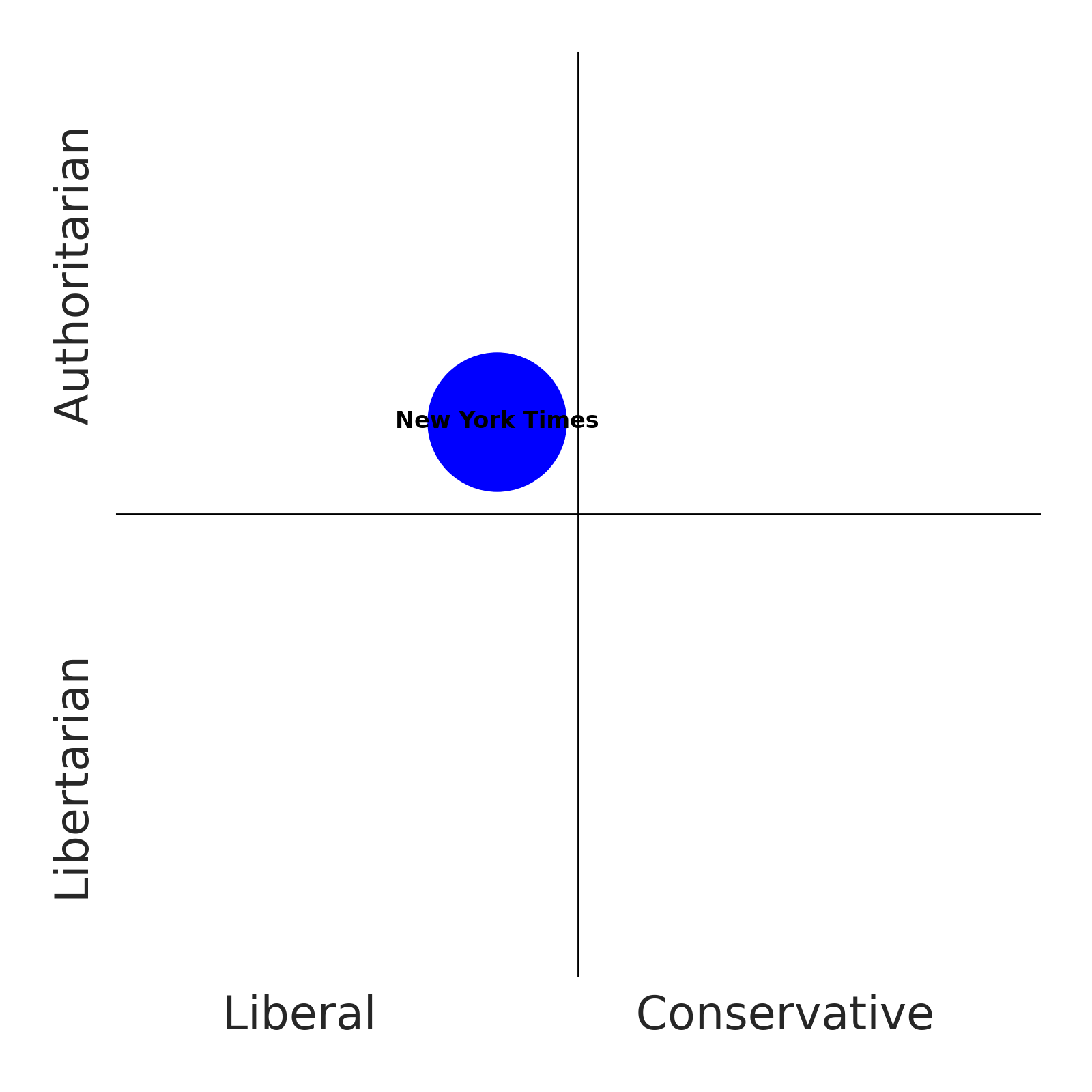
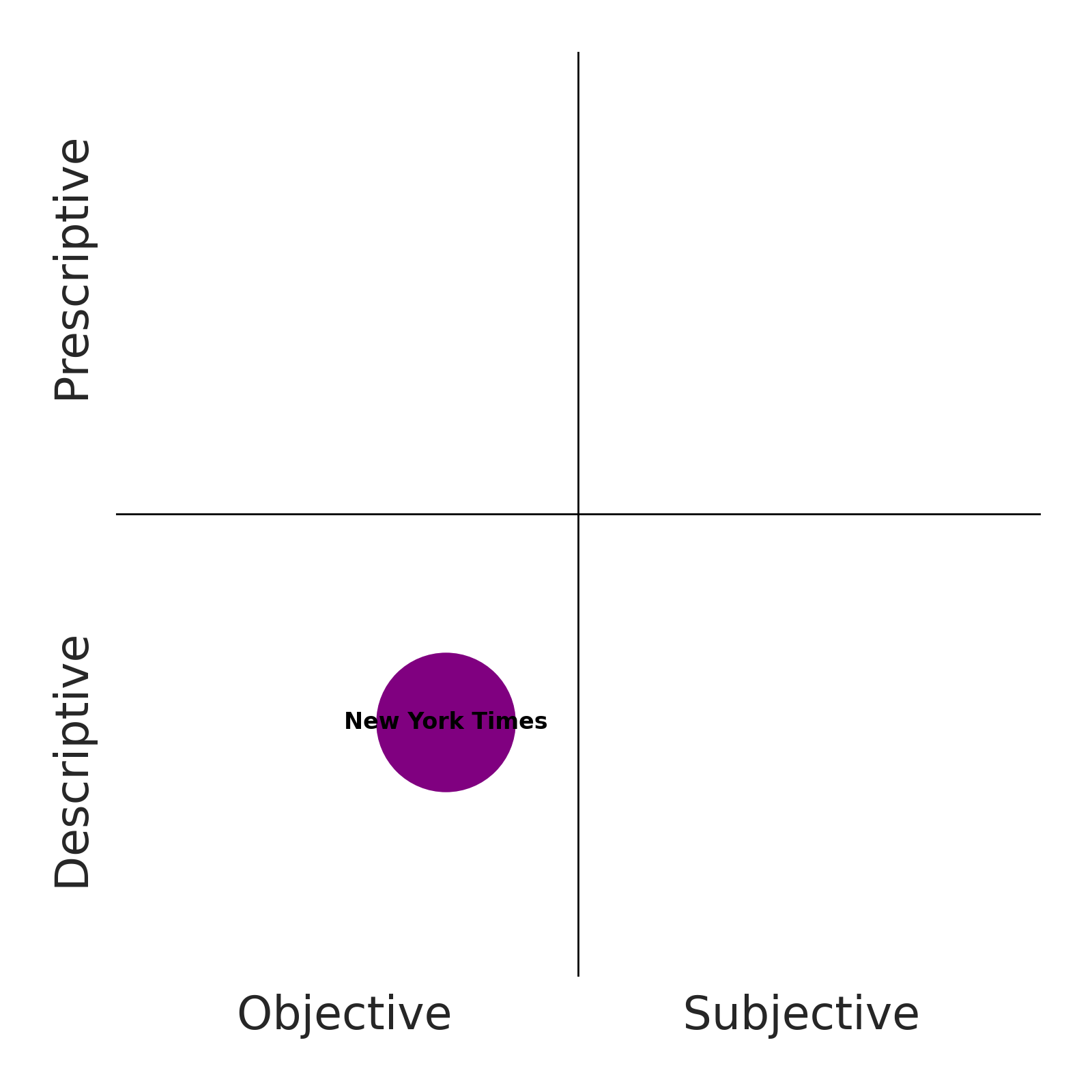
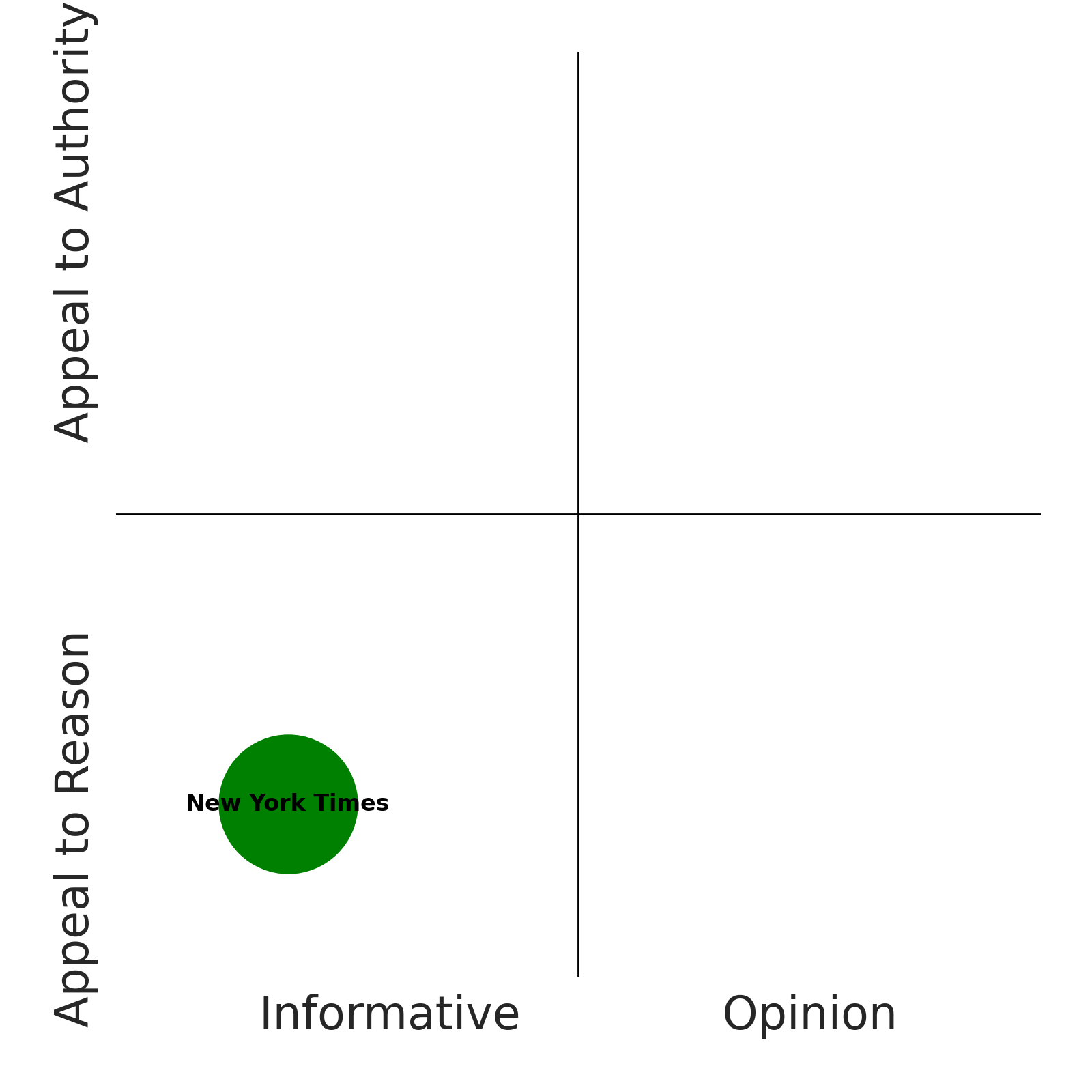
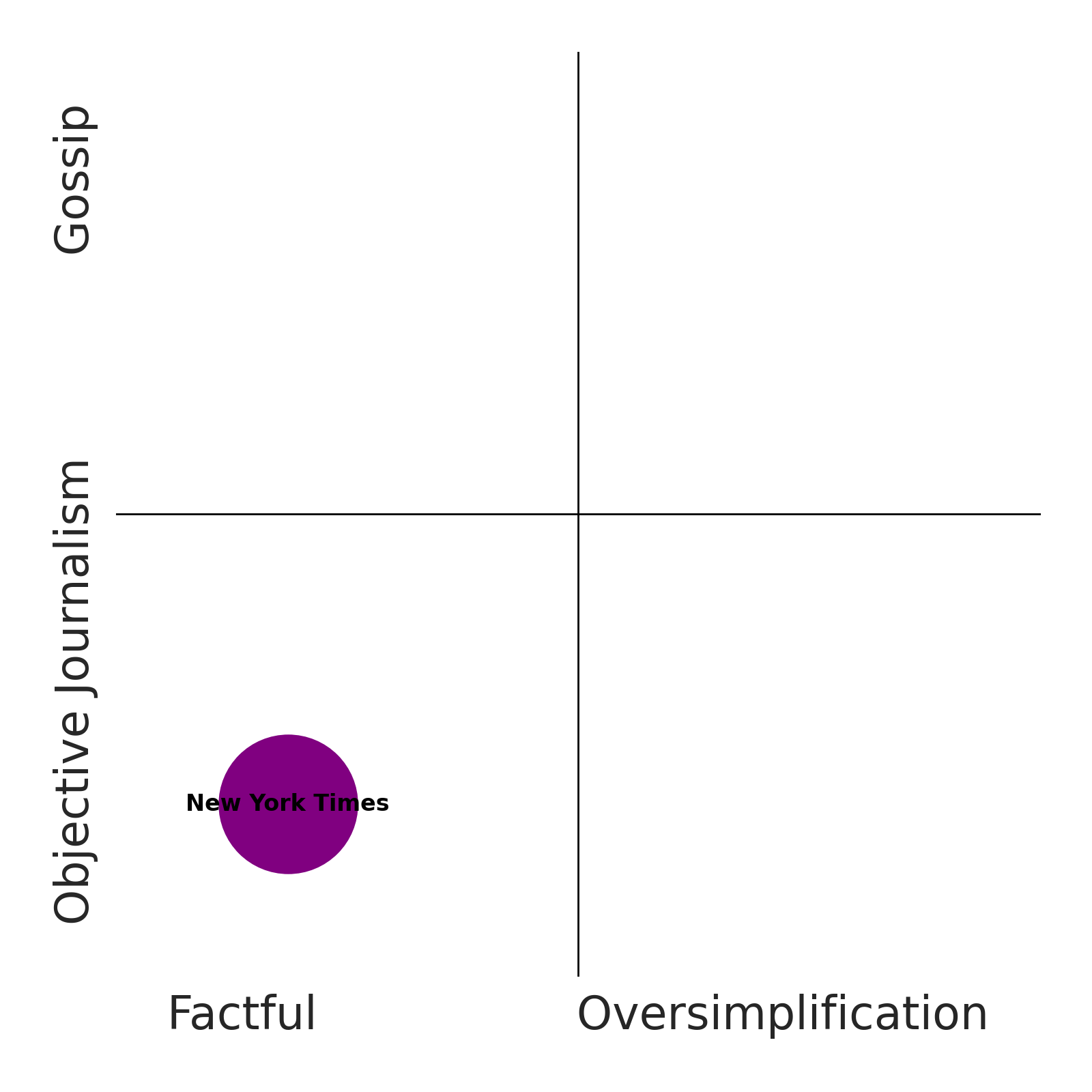
2026 © Helium Trades
Privacy Policy & Disclosure
* Disclaimer: Nothing on this website constitutes investment advice, performance data or any recommendation that any particular security, portfolio of securities, transaction or investment strategy is suitable for any specific person. Helium Trades is not responsible in any way for the accuracy
of any model predictions or price data. Any mention of a particular security and related prediction data is not a recommendation to buy or sell that security. Investments in securities involve the risk of loss. Past performance is no guarantee of future results. Helium Trades is not responsible for any of your investment decisions,
you should consult a financial expert before engaging in any transaction.
Helium Research Assistant

How can I help you today?
Ask any question about New York Times bias.


