See whether Helium helps you make better-informed decisions. Try every Pro Trader feature for 30 days. No credit card required.
Try every Pro Trader feature for 30 days. No credit card required.
Observable orientation. The source’s clearest consistent value is verification-first journalism: it traces origins, distinguishes primary from secondary evidence, attributes claims, and often withholds a rating when independent confirmation is unavailable
August 07, 2026 · 0 shares
Framing uses a fact-check structure to argue that Republican criticism of Fauci for invoking the Fifth Amendment is hypocritical given Trump's own extensive use of the same right.
The Fifth Amendment to the U.S. Constitution protects individuals from being compelled to testify against themselves. Invoking it in a deposition or hearing is a constitutional right, though it can be interpreted by observers as an indicator of guilt.
Automated analysis; not human reviewed. Limitations: Analysis based on a single fact-check article; the publisher's identity (a known fact-checking site) may moderate perception of bias, but the text itself carries clear argumentative framing. · 14 of 53 available dimensions scored; omitted dimensions are not treated as neutral. · Verified supporting quotes for 9 of 14 scored dimensions.
Claim: The article frames Republican criticism of Fauci as hypocritical by contrasting Trump's similar behavior, reflecting a liberal-leaning partisan critique.
“Republicans cannot treat constitutional rights as proof of guilt when exercised by their political enemies and prudent legal strategy when exercised hundreds of times by their leader.” · exact text match
Why: The statement directly accuses Republicans of double standards, a common liberal political argument.
Claim: The article defends constitutional legal protections against a populist attack from Sen. Hawley, displaying elitist legalism.
“Invoking the Fifth Amendment is a constitutional right—not proof of guilt or dishonesty.” · not found in supplied text
Why: The article elevates legal norms over populist rhetoric, a mild elitist framing.
Claim: The article mixes objective fact-checking with subjective commentary and rhetorical questions.
“So Hawley has presented us with two possible principles: Invoking the Fifth is a legitimate constitutional protection that does not establish dishonesty. Or: 'No honest person pleads the Fifth.'” · not found in supplied text
“Either way, Hawley has just made a remarkably concise argument against Trump. Bravo?” · exact text match
Why: The first quote frames the issue subjectively as a dilemma; the second uses sarcastic praise, a subjective tone.
Claim: The article is not sensational; it presents facts cautiously and avoids dramatic language.
“we are therefore leaving the claim unrated at this time.” · exact text match
Why: The article refrains from a definitive judgment, a non-sensational approach.
Claim: The article prescribes how Republicans should view the Fifth Amendment, arguing against hypocrisy.
“Republicans cannot treat constitutional rights as proof of guilt when exercised by their political enemies and prudent legal strategy when exercised hundreds of times by their leader.” · exact text match
Why: This sentence explicitly tells Republicans what they cannot do, a prescriptive statement.
Claim: The article contains strong opinionated statements about the political situation.
“Hawley may want to workshop this argument before using it again.” · exact text match
“So Hawley has presented us with two possible principles... Either way, Hawley has just made a remarkably concise argument against Trump. Bravo?” · not found in supplied text
Why: These are clearly opinionated remarks, not neutral reporting.
Claim: The article centrally discusses partisan political actors and accusations of hypocrisy.
“In an effort to counter Republican criticism of Fauci, some social media users claimed U.S. President Donald Trump invoked the Fifth Amendment 400-plus times in a single deposition...” · not found in supplied text
Why: The entire premise is a partisan comparison between Trump and Fauci.
Claim: The article simplifies a complex legal issue into a simple hypocrisy comparison.
“Republicans cannot treat constitutional rights as proof of guilt when exercised by their political enemies and prudent legal strategy when exercised hundreds of times by their leader.” · exact text match
Why: The statement reduces the differing legal contexts to a single double-standard claim, but the article also provides nuance about the Fifth Amendment, so the oversimplification is moderate.
Claim: The article does not express certainty beyond its evidence; it explicitly states limitations.
“Because does not rely on anonymous sources, we cannot base a rating on those reports.” · verified after text normalization
Why: The article avoids overconfidence by leaving the claim unrated.
Claim: The article is credible due to its careful sourcing, attribution, and admission of uncertainty.
“In a November 2022 decision to appoint a court monitor to oversee the Trump family businesses during his civil fraud trial, a judge wrote (PDF Page 9) that Trump invoked 'his Fifth Amendment right against self-incrimination more than 400 times...'” · not found in supplied text
Why: Cites a primary source (judge's order) but also notes reliance on anonymous sources for additional confirmation, lowering confidence slightly.
Claim: The article relies on factual evidence and logical argumentation, not emotional or irrational appeals.
“The available evidence supported the claim. However, was unable to access the full primary evidence that would allow us to independently confirm the claim, and we are therefore leaving the claim unrated at this time.” · verified after text normalization
Why: The article shows rational caution and evidence-based reasoning.
Claim: The article speculates about the total number of invocations based on video evidence.
“Assuming that Trump continued to refuse to answer throughout the hours-long deposition, it's not hard to imagine he invoked it hundreds of times more.” · exact text match
Why: The phrase 'it's not hard to imagine' is a speculative inference.
Claim: The article uses a rhetorical question and sarcastic tone, which can mildly manipulate reader sentiment.
“Bravo?” · exact text match
Why: The sarcastic 'Bravo?' is a mild rhetorical device, but overall the article is transparent about its limitations.
Claim: The article demonstrates integrity by clearly stating its inability to independently verify the claim and by providing full sourcing.
“we are therefore leaving the claim unrated at this time.” · exact text match
Why: Transparency about limitations is a hallmark of integrity.
Analysis based on a single fact-check article; the publisher's identity (a known fact-checking site) may moderate perception of bias, but the text itself carries clear argumentative framing.
Points out inconsistency in Republican criticism of Fifth Amendment use, highlighting Trump's own extensive invocation while criticizing Fauci's.
Automated analysis; not human reviewed. · 12 of 52 available dimensions scored; omitted dimensions are not treated as neutral. · Verified supporting quotes for 8 of 12 scored dimensions.
Claim: The article frames Republican criticism of Fauci's Fifth Amendment use as hypocritical given Trump's own extensive invocation.
“Republicans cannot treat constitutional rights as proof of guilt when exercised by their political enemies and prudent legal strategy when exercised hundreds of times by their leader.” · exact text match
Why: Direct quote criticizes Republican double standard, indicating a liberal-leaning framing.
Claim: The article presents facts and sources objectively, with clear separation of editorial opinion.
“Credible news sources reported similarly in August 2022, immediately after Trump's deposition took place. Referencing sources with knowledge of the deposition, NBC News reported Trump pleaded the Fifth more than 440 times, The Washington Post reported he invoked it more than 400 times and The New York Times also reported he pleaded it more than 400 times.” · exact text match
Why: The article cites multiple news outlets with specific numbers, showing objective reporting.
Claim: The article compares two high-profile invocations of the Fifth Amendment, making it moderately interesting.
“Some people on social media, in an effort to counter Republican criticism of Fauci, claimed... Trump invoked the Fifth Amendment 400-plus times...” · not found in supplied text
Why: The comparison of Fauci and Trump's Fifth Amendment use is engaging but not exceptionally novel.
Claim: The article includes opinionated commentary in the concluding paragraph, moving beyond pure fact-stating.
“Either way, Hawley has just made a remarkably concise argument against Trump. Bravo?” · exact text match
Why: The exclamation 'Bravo?' and the characterization of Hawley's statement as an argument against Trump constitute editorial opinion.
Claim: The article covers a political dispute about constitutional rights involving Republican senators, Donald Trump, and a former government official.
“On July 28, 2026, a Republican-led Senate committee questioned Dr. Anthony Fauci...” · not found in supplied text
“Following the hearing, Sen. Josh Hawley, R-Mo., said...” · not found in supplied text
Why: The subject matter is explicitly political, involving partisan actors and a constitutional issue in a political context.
Claim: The article defends constitutional norms, describing the Fifth Amendment as a legitimate right, reflecting pro-establishment values.
“First, invoking the Fifth Amendment is a constitutional right—not proof of guilt or dishonesty.” · exact text match
Why: Support for the constitutional right reinforces established legal norms.
Claim: The article contains slightly negative emotional tone toward Senator Hawley's 'gotcha' tactics.
“Hawley turned the exchange into a social-media gotcha, declaring: "Hint for you: no honest person pleads the Fifth."” · not found in supplied text
Why: The word 'gotcha' conveys mild disapproval, but the overall tone is measured.
Claim: The article is highly credible due to its use of multiple sources, transparent methodology, and clear indication of uncertainty.
“The available evidence supported the claim. However, was unable to access the full primary evidence... we are therefore leaving the claim unrated at this time.” · not found in supplied text
“Credible news sources reported similarly... All three outlets cited anonymous sources. Because does not rely on anonymous sources, we cannot base a rating on those reports.” · not found in supplied text
Why: The publisher explicitly states its evidence standard and why it cannot confirm, increasing trustworthiness.
Claim: The article uses evidence, cites sources, and explicitly acknowledges limitations, demonstrating rational reasoning.
“The available evidence supported the claim. However, was unable to access the full primary evidence that would allow us to independently confirm the claim, and we are therefore leaving the claim unrated at this time.” · verified after text normalization
Why: The publisher transparently states the evidence and its limits, avoiding overstatement.
Claim: The article applies empirical evidence-based reasoning, treating the claim as an hypothesis to be verified with primary sources.
“To rate the claim true, we would need to independently count the number of times Trump invoked the Fifth Amendment in an official transcript or video of the deposition.” · exact text match
Why: The publisher demands verifiable evidence before accepting a claim, reflecting scientific/skeptical approach.
Claim: The article demonstrates high integrity by being transparent about sources, uncertainty, and inability to confirm the claim independently.
“The available evidence supported the claim. However, was unable to access the full primary evidence that would allow us to independently confirm the claim, and we are therefore leaving the claim unrated at this time.” · verified after text normalization
“Because does not rely on anonymous sources, we cannot base a rating on those reports.” · verified after text normalization
Why: The publisher openly explains why it cannot rate the claim, showing fairness and honesty.
Claim: The article is truth-seeking, as it withholds judgment due to insufficient evidence rather than asserting unverified claims.
“The available evidence supported the claim. However, was unable to access the full primary evidence that would allow us to independently confirm the claim, and we are therefore leaving the claim unrated at this time.” · verified after text normalization
Why: The publisher declines to endorse a claim without direct primary evidence, showing commitment to truth.
August 21, 2026 · 0 shares
Heavy reliance on 'allegedly,' 'reportedly,' 'purportedly,' and an explicit refusal to authenticate the letters defines a carefully hedged, cautious frame, even as the lead spotlights the letters' most intimate content.
The events described occurred in May 2023, when Trump was a private citizen; the letters were published in August 2026 during his second term as president. The Guardian separately reported on questions about Harp's security clearance, and the publisher notes it has previously covered rumors about the relationship between Trump and Harp.
Automated analysis; not human reviewed. Limitations: The piece is a hybrid of a fact-checking service's note and an aggregation of reporting attributed to The Daily Beast and Wolff; this analysis treats that service as the publisher, which may misattribute some framing choices. · 12 of 54 available dimensions scored; omitted dimensions are not treated as neutral. · Verified supporting quotes for 10 of 12 scored dimensions.
Claim: The report presents both the allegations and the White House defense without favoring either political side.
“we will keep this claim unrated” · exact text match
Why: The piece avoids endorsing either the allegations or the defense, though the topic is inherently political.
Claim: The publisher's framing is dominated by hedging devices that distance it from the claims.
“we are unable to confirm or disprove their authenticity independently” · exact text match
“Harp reportedly wrote” · exact text match
“purportedly showed” · not found in supplied text
Why: The report repeatedly qualifies the letters' content with 'allegedly,' 'reportedly,' and 'purportedly,' and explicitly states the authenticity is unconfirmed.
Claim: The treatment is measured and hedged, but the subject matter is inherently sensational.
“we are unable to confirm or disprove their authenticity independently” · exact text match
Counterevidence:
“images purportedly showing intimate and emotional letters” · exact text match
Why: While the framing is cautious, the story spotlights unverified intimate correspondence and its most emotionally charged lines.
Claim: The story combines White House intrigue with personal drama.
“emotionally intimate letters” · not found in supplied text
“ran after Trump's golf cart on foot” · not found in supplied text
Why: The human-interest elements are present but the substance is limited gossip.
Claim: The report confines itself to relaying events and statements.
“White House spokesperson Davis Ingle defended Harp in an emailed statement” · exact text match
Why: The publisher describes actions and statements without prescribing a response.
Claim: The piece passes along unverified personal material that reads as relationship gossip.
“Harp reportedly wrote that she was "unworthy" of Trump” · exact text match
“You are all that matters to me” · exact text match
Why: The publisher shares unverified, intimate personal content about a public figure's relationship, the essence of gossip, even while disclaiming verification.
Claim: The reporting is heavily hedged and avoids certainty.
“allegedly” · exact text match
“we are unable to confirm or disprove their authenticity independently” · exact text match
Why: The publisher repeatedly signals the limits of its own verification.
Claim: The report is transparent about sourcing and uncertainty.
“The full text of both letters, obtained from Trump's biographer Michael Wolff, was originally published by The Daily Beast.” · exact text match
“we are unable to confirm or disprove their authenticity independently” · exact text match
Why: Sourcing is attributed and limitations are disclosed, though the underlying material remains unverifiable.
Claim: The report reasons from evidence limits to a conclusion (no verdict).
“Given that Wolff obtained these letters from anonymous sources, we are unable to confirm or disprove their authenticity independently” · exact text match
Why: The publisher applies a logical constraint: no verification, so no rating.
Claim: The report discloses doubts about its core content.
“we will keep this claim unrated” · exact text match
Why: The publisher flags that its own central evidence is not confirmed.
Claim: The writing is clear, well-structured, and shows awareness of evidentiary constraints.
“Given that Wolff obtained these letters from anonymous sources, we are unable to confirm or disprove their authenticity independently.” · exact text match
Why: The piece demonstrates logical care in its handling of unverified material.
The piece is a hybrid of a fact-checking service's note and an aggregation of reporting attributed to The Daily Beast and Wolff; this analysis treats that service as the publisher, which may misattribute some framing choices.
August 14, 2026 · 0 shares
The publisher’s framing is cautionary and noncommittal: it treats the overboard reports as unverified claims, weighs anonymous family accounts against official Navy denials, and explicitly withholds a rating pending primary evidence.
Automated analysis; not human reviewed. Limitations: The supplied text contains redacted publisher references and malformed JSON-like metadata, so some source attributions and the exact publication title are ambiguous. · 7 of 54 available dimensions scored; omitted dimensions are not treated as neutral. · Verified supporting quotes for 6 of 7 scored dimensions.
Claim: The report uses attributed statements and explicit verification limits rather than subjective narration.
“All the available media coverage relies on anonymous sources or secondhand reporting from sailors' families who say they have sporadic communication with their deployed family members.” · exact text match
Why: It labels reports as reliant on anonymous or family sources and separates what was alleged from what could be verified.
Claim: The report avoids sensationalizing the overboard claims by declining to present them as established.
“we've left this claim unrated and will update our report if new information emerges.” · exact text match
Why: Instead of treating the rumor as confirmed or dramatizing it, the publisher explicitly withholds judgment and promises updates.
Claim: The text describes claims, denials, and context without prescribing policy or action.
“Short of going onboard the aircraft carrier or speaking to sailors directly, it is impossible for us to confirm firsthand the conditions on the USS Abraham Lincoln.” · exact text match
Why: It stays in a descriptive, evidence-assessment mode and makes no recommendation or normative demand.
Claim: The report provides visible sourcing and attribution for each major claim.
“According to the Navy Times, one woman said her husband was "overextended" and burned out when he tried to jump overboard, but was rescued.” · not found in supplied text
“a Navy official said there had not been "an increase in suicidal ideations or attempts aboard the ship."” · not found in supplied text
Why: It names outlets, identifies an interviewee, quotes an official email, and states uncertainty, supporting source-based credibility.
Claim: The publisher consistently withholds conclusions when evidence is secondhand or unverified.
“As of this writing, we were unable to independently confirm the conditions aboard the USS Abraham Lincoln or the mental health of its sailors.” · exact text match
“Short of going onboard the aircraft carrier or speaking to sailors directly, it is impossible for us to confirm firsthand the conditions on the USS Abraham Lincoln.” · exact text match
Why: The text explicitly ties conclusions to available evidence and leaves the claim unrated rather than speculating or asserting beyond the source material.
Claim: The publisher is transparent about what it could and could not verify.
“we've left this claim unrated and will update our report if new information emerges.” · exact text match
Why: Disclosing the inability to verify and offering to update are visible honesty and fairness signals.
Claim: The reasoning distinguishes between rumor, secondhand report, official denial, and confirmed facts.
“All the available media coverage relies on anonymous sources or secondhand reporting from sailors' families who say they have sporadic communication with their deployed family members.” · exact text match
Why: It applies a consistent hierarchy of evidence and avoids drawing stronger conclusions than the available material allows.
The supplied text contains redacted publisher references and malformed JSON-like metadata, so some source attributions and the exact publication title are ambiguous.
August 14, 2026 · 0 shares
The framing centers on the guilt and sympathetic motivation of Luigi Mangione while linking his case to broader critiques of health insurance practices, without engaging with broader political or policy implications.
The article is a roundup of fact-checked claims related to Luigi Mangione and the killing of UnitedHealthcare CEO Brian Thompson. It includes links to 15 fact-check articles, covering topics such as a rumored fake-ID arrest at McDonald's, a look-alike ad by Shein, alleged grateful list, death penalty comparison to a white supremacist shooter, alleged female fans, hidden tunnels, wanted posters, fake photos, mug shot verification, and various brand posts.
Automated analysis; not human reviewed. Limitations: The article text is a partial excerpt from a fact-check roundup; the full set of 15 fact-check articles is only linked, so deeper analysis of those claims is limited. · 54 of 54 available dimensions scored; omitted dimensions are not treated as neutral. · Verified supporting quotes for 18 of 54 scored dimensions.
Claim: The article prominently features Mangione's stated grievances against the health insurance system and the phrase 'deny, defend, depose', which implies a critical view of insurers.
“Mangione told the court on Aug. 14 that he killed Thompson "after years of enduring severe pain from a broken back, navigating the obstacles of the health insurance system and witnessing similar experiences of countless others," per The Associated Press.” · not found in supplied text
“The words "deny," "defend" and "depose" were reportedly found engraved on the bullet casings Mangione used — a way some attorneys describe how insurers like UnitedHealthcare avoid paying claims.” · not found in supplied text
Why: The article highlights anti-insurance sentiment without editorializing but by including these details it subtly aligns with a critique of corporate healthcare.
Claim: The framing presents Mangione's crime in a populist context, referencing 'countless others' and insurers' tactics, which invokes a people-vs-corporations dynamic.
“witnessing similar experiences of countless others” · exact text match
Why: By focusing on Mangione's excuse of health insurance system obstacles and 'countless others,' it suggests a broader grievance against elites.
Claim: The article implies sympathy for Mangione's anti-authority action against a corporate executive, suggesting a libertarian lean.
“Mangione told the court on Aug. 14 that he killed Thompson "after years of enduring severe pain from a broken back, navigating the obstacles of the health insurance system and witnessing similar experiences of countless others," per The Associated Press.” · not found in supplied text
Why: There is no explicit endorsement, but the sympathetic framing of his motive leans libertarian in terms of individual action against corporate power.
Claim: The article discusses a high-profile murder case with many viral rumors and conspiracy theories.
“We've unpacked these rumors about him.” · exact text match
“Below are 15 claims we've fact-checked related to the 28-year-old.” · exact text match
Why: The subject matter and the investigation of rumors make it engaging for readers.
Claim: The article sensationalizes the case with mentions of hidden tunnels and wanted posters, potentially heightening fear.
“These Videos Don't Show 'Hidden Tunnel' Under UnitedHealthcare CEO's Home” · exact text match
“'Wanted' Posters for Health Care CEOs in NYC: Here's What We Know” · exact text match
Why: The mention of these topics may attract fear-based curiosity, but the article is fact-checking rather than stoking fear.
Claim: The article frames Mangione's motive as understandable due to health insurance system, which presupposes that the system is flawed enough to drive someone to murder.
“after years of enduring severe pain from a broken back, navigating the obstacles of the health insurance system and witnessing similar experiences of countless others” · exact text match
Why: By presenting his motive without counterpoint, it may presuppose that the system is so bad that violence is understandable.
Claim: The article includes a list of sensational claims about Mangione, such as female fans, look-alike ads, and social media posts, indicating a focus on gossip-like content.
“including two dozen women who reportedly waited in the cold for public seats to support him” · exact text match
“Did Shein use Luigi Mangione look-alike in shirt ad?” · exact text match
“Luigi Beanie Didn't Hit 100K in Sales After Arrest of CEO Shooting Suspect Luigi Mangione” · exact text match
Why: The roundup includes many viral and entertainment-driven claims, which are more gossip than hard news.
Claim: The article includes a brief statement from Mangione and commentary on the phrase 'deny, defend, depose', which provides some opinionated analysis.
“a way some attorneys describe how insurers like UnitedHealthcare avoid paying claims” · exact text match
Why: This is explanatory but carries an opinion about insurer tactics.
Claim: The article touches on political themes such as the death penalty and health insurance critique.
“Prosecutors sought death penalty for Luigi Mangione but not white supremacist behind 2019 Texas Walmart shooting” · exact text match
“Luigi Mangione may receive death penalty, while white supremacist who killed 23 at Texas Walmart won't” · exact text match
Why: The death penalty comparison involves political and racial themes, making it politically charged.
Claim: The article appeals to authority by citing The Associated Press and attorneys' descriptions.
“per The Associated Press” · exact text match
“a way some attorneys describe” · exact text match
Why: It relies on authoritative sources for support.
Claim: The article includes trivial viral claims like Sailor Moon costume and look-alike ads, which may appeal to immature interests.
“Fake Photo Shows Luigi Mangione in 'Sailor Moon' Costume” · exact text match
“Did Shein use Luigi Mangione look-alike in shirt ad?” · exact text match
Why: These topics are not serious news, indicating a focus on immature entertainment.
Claim: Mangione is portrayed as a victim of the health insurance system, justifying his actions through personal suffering.
“after years of enduring severe pain from a broken back, navigating the obstacles of the health insurance system” · exact text match
Why: The article emphasizes his pain and system failures, giving weight to his victim narrative without clear criticism.
Claim: The article shows a slight ideological lean by highlighting anti-insurance sentiment and a comparison to a white supremacist case.
“a way some attorneys describe how insurers like UnitedHealthcare avoid paying claims” · exact text match
“Prosecutors sought death penalty for Luigi Mangione but not white supremacist behind 2019 Texas Walmart shooting” · exact text match
Why: These elements reflect an editorial choice that may appeal to liberal ideological viewpoints.
Claim: The article is critical of corporate health insurers and questions the death penalty disparity, suggesting an anti-establishment stance.
“a way some attorneys describe how insurers like UnitedHealthcare avoid paying claims” · exact text match
“Prosecutors sought death penalty for Luigi Mangione but not white supremacist behind 2019 Texas Walmart shooting” · exact text match
Why: The framing criticizes corporate insurance and the criminal justice system, indicating anti-establishment lean.
Claim: The article conveys a slightly negative emotion towards the health insurance system and the justice system, but overall remains neutral.
“navigating the obstacles of the health insurance system” · exact text match
Why: The phrase 'obstacles' has a negative connotation.
Claim: The article cites The Associated Press for Mangione's statement and links to fact-check articles, indicating moderate credibility.
“per The Associated Press” · exact text match
“Below are 15 claims we've fact-checked” · exact text match
Why: It references external sources and includes fact-checking links, but not all details are independently verified in the excerpt.
Claim: The article is critical of health insurers, citing the 'deny, defend, depose' phrase, which is negative towards corporations.
“a way some attorneys describe how insurers like UnitedHealthcare avoid paying claims” · exact text match
Why: The phrase and explanation paint insurers in a negative light.
Claim: The article uses loaded phrasing like 'deny, defend, depose' and highlights a comparison to a white supremacist case, which may shape reader opinion.
“a way some attorneys describe how insurers like UnitedHealthcare avoid paying claims” · exact text match
“Prosecutors sought death penalty for Luigi Mangione but not white supremacist behind 2019 Texas Walmart shooting” · exact text match
Why: These elements can influence perception without being overtly manipulative.
Claim: The article is a structured summary of fact-check links with clear headings and straightforward language, which could be AI-generated.
“Below are 15 claims we've fact-checked related to the 28-year-old.” · exact text match
Why: The format is listicle-style and factual, but this is common in human writing too.
Claim: The article presents a fact-check roundup with links to focused analyses, but the excerpt itself is a brief summary.
“Below are 15 claims we've fact-checked related to the 28-year-old.” · exact text match
Why: The structure is informative but the excerpt is limited; it doesn't dive deep into analysis.
The article text is a partial excerpt from a fact-check roundup; the full set of 15 fact-check articles is only linked, so deeper analysis of those claims is limited.
Coverage pattern. It disproportionately addresses viral misinformation involving prominent politicians and public figures, including Trump, Fauci, Ocasio-Cortez, Nancy Mace, Mark Carney, and Dolly Parton
August 07, 2026 · 0 shares
Framing uses a fact-check structure to argue that Republican criticism of Fauci for invoking the Fifth Amendment is hypocritical given Trump's own extensive use of the same right.
The Fifth Amendment to the U.S. Constitution protects individuals from being compelled to testify against themselves. Invoking it in a deposition or hearing is a constitutional right, though it can be interpreted by observers as an indicator of guilt.
Automated analysis; not human reviewed. Limitations: Analysis based on a single fact-check article; the publisher's identity (a known fact-checking site) may moderate perception of bias, but the text itself carries clear argumentative framing. · 14 of 53 available dimensions scored; omitted dimensions are not treated as neutral. · Verified supporting quotes for 9 of 14 scored dimensions.
Claim: The article frames Republican criticism of Fauci as hypocritical by contrasting Trump's similar behavior, reflecting a liberal-leaning partisan critique.
“Republicans cannot treat constitutional rights as proof of guilt when exercised by their political enemies and prudent legal strategy when exercised hundreds of times by their leader.” · exact text match
Why: The statement directly accuses Republicans of double standards, a common liberal political argument.
Claim: The article defends constitutional legal protections against a populist attack from Sen. Hawley, displaying elitist legalism.
“Invoking the Fifth Amendment is a constitutional right—not proof of guilt or dishonesty.” · not found in supplied text
Why: The article elevates legal norms over populist rhetoric, a mild elitist framing.
Claim: The article mixes objective fact-checking with subjective commentary and rhetorical questions.
“So Hawley has presented us with two possible principles: Invoking the Fifth is a legitimate constitutional protection that does not establish dishonesty. Or: 'No honest person pleads the Fifth.'” · not found in supplied text
“Either way, Hawley has just made a remarkably concise argument against Trump. Bravo?” · exact text match
Why: The first quote frames the issue subjectively as a dilemma; the second uses sarcastic praise, a subjective tone.
Claim: The article is not sensational; it presents facts cautiously and avoids dramatic language.
“we are therefore leaving the claim unrated at this time.” · exact text match
Why: The article refrains from a definitive judgment, a non-sensational approach.
Claim: The article prescribes how Republicans should view the Fifth Amendment, arguing against hypocrisy.
“Republicans cannot treat constitutional rights as proof of guilt when exercised by their political enemies and prudent legal strategy when exercised hundreds of times by their leader.” · exact text match
Why: This sentence explicitly tells Republicans what they cannot do, a prescriptive statement.
Claim: The article contains strong opinionated statements about the political situation.
“Hawley may want to workshop this argument before using it again.” · exact text match
“So Hawley has presented us with two possible principles... Either way, Hawley has just made a remarkably concise argument against Trump. Bravo?” · not found in supplied text
Why: These are clearly opinionated remarks, not neutral reporting.
Claim: The article centrally discusses partisan political actors and accusations of hypocrisy.
“In an effort to counter Republican criticism of Fauci, some social media users claimed U.S. President Donald Trump invoked the Fifth Amendment 400-plus times in a single deposition...” · not found in supplied text
Why: The entire premise is a partisan comparison between Trump and Fauci.
Claim: The article simplifies a complex legal issue into a simple hypocrisy comparison.
“Republicans cannot treat constitutional rights as proof of guilt when exercised by their political enemies and prudent legal strategy when exercised hundreds of times by their leader.” · exact text match
Why: The statement reduces the differing legal contexts to a single double-standard claim, but the article also provides nuance about the Fifth Amendment, so the oversimplification is moderate.
Claim: The article does not express certainty beyond its evidence; it explicitly states limitations.
“Because does not rely on anonymous sources, we cannot base a rating on those reports.” · verified after text normalization
Why: The article avoids overconfidence by leaving the claim unrated.
Claim: The article is credible due to its careful sourcing, attribution, and admission of uncertainty.
“In a November 2022 decision to appoint a court monitor to oversee the Trump family businesses during his civil fraud trial, a judge wrote (PDF Page 9) that Trump invoked 'his Fifth Amendment right against self-incrimination more than 400 times...'” · not found in supplied text
Why: Cites a primary source (judge's order) but also notes reliance on anonymous sources for additional confirmation, lowering confidence slightly.
Claim: The article relies on factual evidence and logical argumentation, not emotional or irrational appeals.
“The available evidence supported the claim. However, was unable to access the full primary evidence that would allow us to independently confirm the claim, and we are therefore leaving the claim unrated at this time.” · verified after text normalization
Why: The article shows rational caution and evidence-based reasoning.
Claim: The article speculates about the total number of invocations based on video evidence.
“Assuming that Trump continued to refuse to answer throughout the hours-long deposition, it's not hard to imagine he invoked it hundreds of times more.” · exact text match
Why: The phrase 'it's not hard to imagine' is a speculative inference.
Claim: The article uses a rhetorical question and sarcastic tone, which can mildly manipulate reader sentiment.
“Bravo?” · exact text match
Why: The sarcastic 'Bravo?' is a mild rhetorical device, but overall the article is transparent about its limitations.
Claim: The article demonstrates integrity by clearly stating its inability to independently verify the claim and by providing full sourcing.
“we are therefore leaving the claim unrated at this time.” · exact text match
Why: Transparency about limitations is a hallmark of integrity.
Analysis based on a single fact-check article; the publisher's identity (a known fact-checking site) may moderate perception of bias, but the text itself carries clear argumentative framing.
August 28, 2026 · 0 shares
The article presents a neutral compilation of previously debunked false and misleading Dolly Parton rumors, avoiding partisan or sensational framing.
Automated analysis; not human reviewed. Limitations: The supplied article text is a truncated list of headlines and context with limited detail, making it difficult to verify the underlying fact-checking methodology. No further input limitations are known.
The supplied article text is a truncated list of headlines and context with limited detail, making it difficult to verify the underlying fact-checking methodology. No further input limitations are known.
August 28, 2026 · 0 shares
The article presents a neutral, evidence-based roundup of fact-checked rumors about Canadian PM Mark Carney, emphasizing verification over speculation.
Mark Carney, a Harvard- and Oxford-trained economist, served as governor of the Bank of Canada (2008-2013) and Bank of England (2013-2020) before becoming Canada's prime minister in April 2025. His election followed a reversal in popularity between Canada's Conservative and Liberal parties after Trump began his second term in January 2025.
Automated analysis; not human reviewed. Limitations: The provided text is a brief summary of fact-check headlines; full verdicts and detailed evidence are not included. · 1 of 54 available dimensions scored; omitted dimensions are not treated as neutral. · Verified supporting quotes for 0 of 1 scored dimensions.
Claim: The article demonstrates high credibility through citation of multiple sources.
“"Akin, David. \"Mark Carney Tapped by Liberals to Lead New Task Force Advising Trudeau.\" Global News, Global News, 9 Sept. 2024"” · not found in supplied text
“"Yousif, Nadine. \"Pierre Poilievre: The Man Who Could Become Canada's Future PM.\" BBC, 27 Apr. 2025"” · not found in supplied text
Why: The article lists several references, indicating a commitment to sourcing and verification.
The provided text is a brief summary of fact-check headlines; full verdicts and detailed evidence are not included.
A detached, list-style compilation that gives equal weight to substantive policy complaints and tabloid rumors about a conservative lawmaker, implicitly treating them as equally worthy of fact-checking.
Automated analysis; not human reviewed. Limitations: The page presents headlines and citations without full investigation results, limiting verification of specific findings. · 11 of 54 available dimensions scored; omitted dimensions are not treated as neutral. · Verified supporting quotes for 9 of 11 scored dimensions.
Claim: The framing of Mace's comments as 'attacks' on transgender women and the compilation's mix of criticisms tilt its neutral stance slightly left.
“her attacks on transgender women” · exact text match
Why: The term 'attacks' adds a negative evaluation not justified by the neutral fact-checking intent, but the overall framing is balanced with other claims.
Claim: The presentation is fact-based, distinguishing verified facts from claims.
“We've looked into a number of claims about — or made by — Mace since she entered Congress in 2021.” · exact text match
Why: The investigative language and sourcing indicate objective orientation, but the lack of topical hierarchy is a minor subjective element.
Claim: The framing of the compilation as '9 rumors... investigated' adds a narrative hook, but treatment stays factual.
“9 rumors tied to Nancy Mace, investigated” · exact text match
Why: The headline is playfully sensational but the content is dry.
Claim: The tone is neither markedly optimistic nor pessimistic.
“After losing South Carolina's 2026 Republican primary for governor” · exact text match
Why: The description is detached, without explicit emotional evaluation.
Claim: The listicle format and mixture of odd claims about a notable figure make the topic moderately engaging.
“Did Nancy Mace order staffers to create burner accounts to promote her online?” · exact text match
“vandalized her own home” · not found in supplied text
Why: Emotionally charged words appear, but delivery is dry.
Claim: The items lean toward personal scandal and social media drama.
“Did Nancy Mace order staffers to create burner accounts to promote her online?” · exact text match
“Claims that Rep. Nancy Mace Vandalized Her Own Home” · exact text match
Why: These topics are personal and reputation-focused, indicative of gossip, even if fact-checked.
Claim: The subject matter is explicitly political and electoral.
“After losing South Carolina's 2026 Republican primary for governor” · exact text match
“loud support of Trump” · exact text match
Why: Discussion focuses on primaries, elections, and partisan figures.
Claim: The tone is predominantly neutral with a slight negative cast from the word 'attacks'.
“her attacks on transgender women” · exact text match
Why: A single emotional word drives a minor negative tilt.
Claim: The compilation is generally credible due to transparent sourcing and attribution.
“due process is for citizens” · exact text match
“Ballotpedia” · exact text match
Why: Attributions to named outlets and platforms help verifiability.
Claim: The page demonstrates commitment to verification through links, bylines, and provenance labeling.
“archived” · exact text match
“Kinnard, Meg. 'Rep. Nancy Mace of South Carolina Backs Donald Trump Over Nikki Haley in the 2024 Republican Primary.' AP News, 22 Jan. 2024,” · not found in supplied text
Why: Citing original sources and providing archival links are integrity-positive practices.
Claim: The page shows analytical breadth by connecting disparate claims and placing them in a political context.
“loud support of Trump and her attacks on transgender women” · exact text match
Why: The synthesis shows some analytical effort, though mostly it's a list.
The page presents headlines and citations without full investigation results, limiting verification of specific findings.
The fact-check report neutrally debunks a fabricated quote, relying on documentary evidence and official denial without editorializing.
Automated analysis; not human reviewed. Limitations: The article is a fact-check with full text provided; no input limitations. · 3 of 54 available dimensions scored; omitted dimensions are not treated as neutral. · Verified supporting quotes for 1 of 3 scored dimensions.
Claim: The report does not favor a political party or ideology; it only establishes factual accuracy.
“In short, Ocasio-Cortez never produced these words. Therefore, we've rated this quote as being incorrectly attributed to her.” · exact text match
Why: The statement is purely factual, with no political slant or value judgment about the D.C. voting policy itself.
Claim: The report relies on verifiable evidence and avoids subjective language.
“Google searches for Ocasio-Cortez's name and portions of the purported quote did not reveal any credible news reports, videos or news releases documenting her saying those words.” · exact text match
“When asked by email whether Ocasio-Cortez said the quote or anything similar, Karla Santillan, the New York representative's press secretary, said, "She did not say that."” · not found in supplied text
Why: The article grounds its conclusion in search results and an official denial, and includes the full exact quote of AOC's actual speech for context.
Claim: The article cites specific sources, provides verbatim quotes, and clearly labels the conclusion as a rating.
“In February 2023, Ocasio-Cortez argued on the House floor against a Republican-led effort to prevent the D.C. Council from passing a law allowing noncitizens to vote in local elections.” · not found in supplied text
“During the House debate over the measure, Ocasio-Cortez argued for D.C.'s right to pass its own laws without meddling from Congress.” · exact text match
Why: The fact-check includes direct quotes, source links, and a transparent methodology, supporting high credibility.
The article is a fact-check with full text provided; no input limitations.
August 28, 2026 · 0 shares
The fact-check presents balanced evidence and does not exhibit political bias.
The article is a fact-check addressing a viral claim that linked the USDA recall to the Trump administration's import plan.
Automated analysis; not human reviewed. · 6 of 54 available dimensions scored; omitted dimensions are not treated as neutral. · Verified supporting quotes for 5 of 6 scored dimensions.
Claim: The fact-check does not favor a political side.
“The claim was a mixture of true and false elements.” · exact text match
Why: The fact-check avoids partisan framing and presents factual corrections.
Claim: The article presents objective facts.
“The USDA recalled 29,628 pounds of raw beef products imported from Argentina on Aug. 7, 2026, because the Food Safety and Inspection Service had not reinspected it upon entry to the U.S.” · exact text match
Why: The article relies on official sources and quotes.
Claim: The article maintains a neutral tone.
“The claim was a mixture of true and false elements.” · exact text match
Why: The language is factual and does not express strong feelings.
Claim: The article is highly credible due to sourcing.
“According to the USDA's recall” · exact text match
Why: It cites official sources and includes references.
Claim: The article uses logical reasoning.
“The recalled beef was not part of the Trump administration's announced plan to import 300,000 metric tons of 'product for ground beef.'” · not found in supplied text
Why: It distinguishes between two unrelated events based on dates and official statements.
Claim: The article relies on empirical evidence.
“According to the USDA's recall, a Florida-based company called Corte Argentino USA LLC had imported the Argentine beef products” · exact text match
Why: It cites official data and does not engage in speculation.
August 27, 2026 · 0 shares
Frames the claim as a mixture of true and unproven information, emphasizing that no official explanation was given.
The advertisement sparked immediate online backlash and was quickly deleted, with subsequent apologies from both Good Good Golf and Callaway before other retailers and organizations took action.
Automated analysis; not human reviewed. Limitations: Source text lacks publisher and author metadata and contains formatting artifacts, limiting full contextual verification. · 2 of 54 available dimensions scored; omitted dimensions are not treated as neutral. · Verified supporting quotes for 2 of 2 scored dimensions.
Claim: The report is objective in presenting verified findings and clearly separating unproven aspects.
“We rate the claim a mixture of true and unproven information.” · exact text match
Why: The text distinguishes confirmed website delisting from unconfirmed store removal and official reason, using hedging language.
Claim: The report demonstrates high sourcing and transparency by citing named outlets and stating that companies were contacted without response.
“We contacted Costco, Callaway and Good Good Golf as part of researching this story, but had not heard back from any of them.” · exact text match
“ESPN reported on Aug. 26 that Dick's Sporting Goods and its subsidiary Golf Galaxy would pull Good Good Golf products” · exact text match
Why: The text attributes claims to named outlets and explicitly notes unverified aspects, supporting credibility.
Source text lacks publisher and author metadata and contains formatting artifacts, limiting full contextual verification.
Reporting frames the story as a debunking, emphasizing that the AI-generated video is fake while confirming the real costume controversy.
This report is a fact-check of a viral video rather than a breaking-news item, following the outlet's stated practice of routinely investigating AI-generated content.
Automated analysis; not human reviewed. · 4 of 54 available dimensions scored; omitted dimensions are not treated as neutral. · Verified supporting quotes for 1 of 4 scored dimensions.
Claim: The report uses observable evidence and attribution rather than subjective framing.
“The video was fake. It came from an X account that described its content as "probably AI" and marked (archived) the video itself "Made with AI" on its timeline.” · not found in supplied text
“Target announced (archived) on Aug. 24, 2026, that it had "pulled an offensive Halloween costume that should never have been part of our assortment."” · not found in supplied text
Why: It separates verified facts from social-media claims and quotes sources rather than offering opinion.
Claim: The report supports its conclusions with archived links, direct quotes, and named cultural sources.
“The video was fake. It came from an X account that described its content as "probably AI" and marked (archived) the video itself "Made with AI" on its timeline.” · not found in supplied text
“Target announced (archived) on Aug. 24, 2026, that it had "pulled an offensive Halloween costume that should never have been part of our assortment."” · not found in supplied text
Why: It attributes claims to social media users and institutions and distinguishes asserted facts from allegations.
Claim: The report reaches conclusions by weighing creator admission and observable text errors rather than by assertion alone.
“Aside from the creator's own admission that they used AI to create the video, it also contained obvious signs of fakery.” · exact text match
“At 0:01, on-screen text read "HEYY TURGET FANS."” · not found in supplied text
Why: It explains the logical basis for treating the video as fake.
Claim: The report openly discloses that the costume itself was real while the ad video was fake, avoiding both false denial and exaggeration.
“The widely criticized costume itself was real.” · exact text match
“The video was fake.” · exact text match
Why: It presents both sides of the story accurately and includes corrective context.
Framing adopts a methodical debunker's stance, walking through verification steps to brand the viral Mars 'spider rock' image as AI-fabricated without speculation.
Automated analysis; not human reviewed. Limitations: The most consequential input limitation is that I lack access to the linked archives and the actual AI detection tool results, so I cannot independently verify the publisher's methodology or quoted evidence. · 10 of 54 available dimensions scored; omitted dimensions are not treated as neutral. · Verified supporting quotes for 8 of 10 scored dimensions.
Claim: The piece adopts an objective, fact-finding stance by describing a replicable investigative process.
“We first uploaded the image into Google Lens to perform a reverse image search.” · exact text match
Why: Details of verification steps are presented objectively without emotional commentary.
Claim: The report avoids sensational language and stays measured in tone throughout.
“It was created using artificial intelligence tools.” · exact text match
Why: Simple declarative conclusion is understated, not alarmist.
Claim: The report leans on institutional authorities to support its conclusion.
“Sol 3987 was actually Oct. 24, 2023, according to NASA.” · exact text match
Why: Invokes NASA's data to invalidate a date translation.
Claim: The report is unemotional and detached in tone.
“We first uploaded the image into Google Lens to perform a reverse image search.” · exact text match
Why: Neutral, procedural language devoid of emotional valence.
Claim: The report supports its findings with visible sourcing, citations to archived posts, and caveats about its methods.
“Let us note here: These types of AI detection tools are fallible.” · exact text match
Why: Transparent about the limits of its evidence chain, strengthening trustworthiness.
Claim: The report uses methodical reasoning and evidence-based inference rather than emotional or fear-based claims.
“In this case, visual signs of the use of AI included inconsistent shadows.” · exact text match
Why: The conclusion that the image was AI-generated is grounded in verifiable visual analysis.
Claim: The report applies empirical, scientific reasoning by examining physical cues of image generation.
“In this case, visual signs of the use of AI included inconsistent shadows.” · exact text match
Why: Relies on physical evidence of image manipulation.
Claim: The report shows fairness and honesty by acknowledging the fallibility of AI detection tools.
“Let us note here: These types of AI detection tools are fallible.” · exact text match
Why: The caveat demonstrates intellectual honesty even though it qualifies the investigation's findings.
Claim: The report is truth-seeking, explicitly correcting a false claim.
“The image did not authentically show a 'spider-shaped rock formation' on Mars.” · not found in supplied text
Why: Clear, explicit statement of the correction suggests a commitment to factual accuracy.
The most consequential input limitation is that I lack access to the linked archives and the actual AI detection tool results, so I cannot independently verify the publisher's methodology or quoted evidence.
August 23, 2026 · 0 shares
Employs a skeptical, evidence-based fact-checking frame that debunks a viral miscaption by tracing the image to the AP archive and contemporaneous press accounts.
The image circulated online with a caption claiming it showed a 41-year-old Trump in Moscow in July 1987 at the invitation of Soviet ambassador Yuri Dubinin, a trip described in Trump's 1987 book as his first to Moscow. Social media posts used the photo to support claims of long-secret Trump–Russia ties, including an unproven KGB recruitment allegation.
Automated analysis; not human reviewed. Limitations: The analysis cannot independently verify the AP caption, the cited newspaper archives, or the quoted claims against external sources beyond what the article itself provides. · 7 of 54 available dimensions scored; omitted dimensions are not treated as neutral. · Verified supporting quotes for 5 of 7 scored dimensions.
Claim: The publisher evaluates the photo and its surrounding claims without favoring a partisan end of the political spectrum.
“no available evidence has credibly and conclusively confirmed Russia secretly recruited Trump as an asset.” · exact text match
Why: It corrects a socially shared claim about a Republican while also describing counterintelligence findings against his circle, balancing criticism in both directions.
Claim: The article is objective, using primary-source captions and direct quotes to establish facts rather than personal opinion.
“The AP's caption read, in part, "In this Nov. 5, 1996, file photo, American real estate mogul Donald Trump, left, visits a reception, as he checks out sites in Moscow, Russia, for luxury residential towers."” · not found in supplied text
Why: Verbatim reliance on the original AP caption anchors the factual claims in primary documentation.
Claim: The article is notably un-sensational, avoiding drama and hyperbole in favor of a measured verdict.
“As such, we've rated this claim miscaptioned.” · exact text match
Why: The understated closing offers no dramatic payoff, instead delivering a categorical, dispassionate assessment.
Claim: The article is descriptive, reporting what sources say without prescribing actions or beliefs to the reader.
“Trump's 1987 book "The Art of the Deal" says a Dubinin invitation did take the 41-year-old future president to Moscow for the first time in July 1987, in part to survey sites for potential Trump hotel properties.” · not found in supplied text
Why: The prose narrates what sources report and does not instruct the reader on what to do or conclude.
Claim: The publisher exhibits high overall credibility through transparent sourcing and attribution.
“Research in newspaper archives via Newspapers.com located past reporting on that matter.” · exact text match
Why: The article is transparent about its method, citing specific newspapers, dates, and sources for its factual assertions.
Claim: The publisher's reasoning is highly rationality- and evidence-driven, relying on explicit causal and temporal logic.
“The image is an authentic photo of Trump in Moscow, meaning it was not created with artificial intelligence or other digital tools, but it doesn't show him during that initial trip.” · exact text match
Why: The passage clearly separates the photo's authenticity from the caption's claim, applying that distinction consistently throughout.
Claim: The publisher demonstrates high integrity by correcting even tangential inaccuracies and clearly attributing sourcing.
“That post got the city wrong; the photo was taken at St. Petersburg's Palace Square.” · exact text match
Why: Correcting an incidental detail about the wrong city shows an evenhanded, self-correcting style beyond the main claim.
The analysis cannot independently verify the AP caption, the cited newspaper archives, or the quoted claims against external sources beyond what the article itself provides.
August 22, 2026 · 0 shares
Presents COVID-19 vaccine safety as established fact and positions its own fact-checking as the corrective to misinformation spread by public officials such as HHS Secretary Robert F. Kennedy Jr.
The U.S. Department of Health and Human Services oversees the CDC and FDA and sets federal vaccine policy, which is why its leadership's views on vaccines matter; RFK Jr.'s anti-vaccine advocacy long predates his appointment, and COVID-19 vaccine authorization and mandates have been politically divisive.
Automated analysis; not human reviewed. Limitations: The source outlet is not stated in the text; several citations contain '.com' placeholders and future dates (2025-2026) that prevent independent verification, so the analysis relies on the provided text, which may include template or scraping artifacts. · 14 of 54 available dimensions scored; omitted dimensions are not treated as neutral. · Verified supporting quotes for 12 of 14 scored dimensions.
Claim: The publisher's framing subtly aligns with institutional and scientific consensus positions more associated with the left while scrutinizing figures of the political right.
“sometimes by public officials including Kennedy himself” · exact text match
Counterevidence:
“Did chef Joe Gera expose Rand Paul lied about not getting COVID-19 vaccine?” · exact text match
Why: The framing highlights RFK Jr. and other anti-vaccine officials as sources of misinformation, which in current US politics skews conservative, but the publisher also flags unsubstantiated rumors against conservative figures, moderating any partisan lean.
Claim: The reporting is largely observable and checkable, with only mild interpretive framing.
“misinformation about the COVID-19 vaccine has continued to spread” · exact text match
Why: Claims are presented as discernible facts and each is tied to a specific fact-check; only the characterization of the claims as misinformation adds interpretation.
Claim: Reporting is factual and analytical rather than sensational.
“a vaccine expert examines the false claims” · not found in supplied text
Why: Titles such as 'Ozzy Osbourne's death revives COVID-19 vaccine conspiracy theory' have click-oriented framing but direct treatment toward evidence-based verification.
Claim: The publisher editorializes mildly in characterizing anti-vaccine claims as misinformation without hedging.
“frequent targets of misinformation for years” · exact text match
Why: Mostly neutral fact-check presentation, but the framing embeds an evaluative judgment that anti-vaccine claims are necessarily wrong.
Claim: The subject matter is intertwined with US politics (Trump, RFK Jr., HHS) but is covered in a non-partisan manner.
“with Robert F. Kennedy Jr., well-known for holding anti-vaccine beliefs for decades, leading U.S. President Donald Trump's” · not found in supplied text
Why: Political figures feature prominently, but the treatment is factual and does not pick a partisan side within the text.
Claim: The publisher sides with public-health institutional consensus against anti-establishment critics.
“Their use across the globe has proven COVID-19 vaccines are safe and effective” · exact text match
Why: Unequivocal endorsement of the global vaccine program and rejection of 'misinformation' tracks pro-institutional positioning, though no party or corporate advocacy is present.
Claim: The text demonstrates visible sourcing, attribution, and a measured approach to claims.
“Emery Winter is based in Charlotte, North Carolina, and previously worked for TEGNA'S VERIFY national fact-checking team” · exact text match
Why: Named bylines, linked citations, and hedged findings support credibility, though the bare assertion on vaccine safety is made without qualification or citation within the text itself.
Claim: The reporting follows evidentiary, reason-based methods rather than emotional appeals.
“we've dug into misinformation about COVID-19 vaccine side effects” · exact text match
Why: Language of investigation and verification dominates; no supernatural, mystical, or non-rational reasoning is apparent.
Claim: The account is strongly evidence- and science-based, rejecting superstition and rumor.
“proven COVID-19 vaccines are safe and effective” · exact text match
Why: The publisher anchors its claims in empirically framed assertions and repeatedly labels contrary views misinformation, indicating a scientific/empirical basis.
Claim: Multiple textual patterns suggest machine-assisted or heavily templated authorship.
“They enjoy sports and video games.” · exact text match
Why: The identical author bio appears twice verbatim and citations contain '.com' placeholders, features consistent with the outputs of large language models or poorly assembled content pipelines; an alternative is a broken content management system.
Claim: The piece displays internal fairness and honesty signals through named bylines and cited sources.
“Fuller, Deborah.” · exact text match
Why: Naming authors and linking to original reporting are visible indicators of accountability, although no corrections policy or robust hedging is evident.
Claim: The publisher adopts the public-health and pharmaceutical consensus position on COVID-19 vaccines and pushes back on claims critical of Pfizer.
“Pfizer didn't say hantavirus is side effect of its COVID-19 vaccine” · exact text match
Why: The publisher defends the COVID vaccine and debunks anti-vaccine claims, aligning with public-health institutions rather than being adversarial toward them, though it stops short of advocating coercive mandates.
Claim: The piece organizes a coherent set of fact-checks with context and links to primary claims.
“Read our fact-checks and investigations of those topics and more” · exact text match
Why: Structurally sound and contextualized, but shallow depth and its click-bait headline limit the level of intellectual substance provided.
Claim: The publisher consistently pursues verifiable facts over fantasy, testing each rumor against evidence.
“we've dug into misinformation about COVID-19 vaccine side effects” · exact text match
Why: The investigative framing and list of debunked myths show norm-conforming, truth-seeking reporting.
The source outlet is not stated in the text; several citations contain '.com' placeholders and future dates (2025-2026) that prevent independent verification, so the analysis relies on the provided text, which may include template or scraping artifacts.
Worldview and perspective. The source privileges documentary records, official statements, archival material, expert or institutional attribution, and observable media evidence over anecdote or virality
August 15, 2026 · 0 shares
A record-based fact-check confirms the core Flock-search claim while foregrounding civil-liberties concerns about warrantless surveillance and Flock's inconsistent public explanations.
Automated analysis; not human reviewed. Limitations: The supplied text is a fact-check that quotes selected records; the full underlying documents and unquoted context are not available for independent verification. · 9 of 54 available dimensions scored; omitted dimensions are not treated as neutral. · Verified supporting quotes for 6 of 9 scored dimensions.
Claim: The report adopts a reproductive-rights and civil-liberties perspective in presenting the abortion and surveillance case.
“After the U.S. Supreme Court overturned landmark abortion ruling Roe v. Wade in 2022, it became almost entirely illegal to have an abortion in Texas” · exact text match
“leaving much unknown when it comes to how civilians could be tracked across the state lines for the purpose of criminalizing women who receive abortions or otherwise” · exact text match
Why: The selected context emphasizes abortion criminalization and surveillance harms from a civil-liberties standpoint, though the report remains fact-driven.
Claim: The report criticizes warrantless mass tracking by police through a private camera network.
“law enforcement officials have unprecedented ability to track civilians without a warrant because of Flock's vast network of surveillance cameras” · exact text match
Why: The article's own analytical conclusion frames centralized tracking power over individuals as a concern, placing it on the anti-authoritarian/libertarian end.
Claim: The report is largely objective: it separates verified records from disputed company statements and explicitly corrects inaccuracies.
“This is not entirely correct.” · exact text match
“We found no evidence a missing person report had been filed.” · not found in supplied text
Why: It corrects Flock's characterization and notes the absence of evidence rather than treating speculation as fact.
Claim: The presentation is subdued and contextualized rather than sensational.
“It's important to note that the internal report was dated Jan. 30, 2026 — more than eight months after the incident.” · exact text match
Why: The report adds caveats and chronology rather than heightening drama, indicating a non-sensational approach.
Claim: The topic and framing place the report inside abortion-politics and surveillance-policy debates.
“After the U.S. Supreme Court overturned landmark abortion ruling Roe v. Wade in 2022, it became almost entirely illegal to have an abortion in Texas” · exact text match
“Texas has fetal personhood language applicable to criminal law.” · exact text match
Why: The report explicitly connects the case to Roe, abortion criminalization, and state fetal-personhood law, which are overtly political.
Claim: The report is credible because it anchors claims in named records, specific numbers, dates, case numbers, and attributed quotes.
“a Johnson County deputy named "J. Smith" searched 6,809 camera networks, totaling 83,345 cameras” · not found in supplied text
“According to the arrest warrant affidavit for the man, as well as the internal police report, deputies contacted the district attorney's office on May 9” · exact text match
Why: Visible sourcing and specific attributable details support trustworthiness.
Claim: The report's reasoning is evidence-based and explicitly acknowledges uncertainty.
“We looked into the claim and found publicly available records confirm a Texas sheriff's deputy searched data across thousands of camera networks comprising more than 83,000 cameras made by Flock Safety” · exact text match
“It's unclear how the investigation would have proceeded had the blood clot been a fetus.” · exact text match
Why: Documentary verification and explicit acknowledgment of what is unknown signal rational, measured treatment.
Claim: The publisher is transparent about gaps and corrects inaccurate claims in the record.
“This is not entirely correct.” · exact text match
“Until the internal report emerged, there was no documented, primary evidence the officers were concerned for the woman's safety.” · exact text match
Why: Explicit corrections and admission of evidentiary gaps are observable honesty signals.
Claim: The report demonstrates analytical sophistication by distinguishing an internal report's later welfare explanation from the investigation's contemporaneous official status.
“The internal report was dated Jan. 30, 2026 — more than eight months after the incident.” · not found in supplied text
“When the officer conducted the Flock search on May 9, the investigation was, at that point, officially characterized as a "death investigation of a non-viable fetus" — not a domestic violence case” · not found in supplied text
Why: It notes the temporal gap and distinguishes contemporaneous official classification from later accounts, avoiding oversimplification.
The supplied text is a fact-check that quotes selected records; the full underlying documents and unquoted context are not available for independent verification.
August 07, 2026 · 0 shares
Fact-check compilation framing both debunked and confirmed surveillance claims with measured neutrality and reliance on empirical evidence.
Automated analysis; not human reviewed. Limitations: The article text is truncated and consists of a summary roundup; full fact-check details are unavailable, limiting analysis of specific claim handling. · 19 of 53 available dimensions scored; omitted dimensions are not treated as neutral. · Verified supporting quotes for 18 of 19 scored dimensions.
Claim: Does not favor liberal or conservative perspectives.
“we debunked misidentified footage purportedly showing someone destroying Flock cameras — though we noted a growing movement against surveillance technology expansion” · exact text match
Why: It presents both a debunking of anti-surveillance activism and acknowledgment of the movement, indicating balance.
Claim: Neutral on the spectrum between individual liberty and state authority.
“we debunked misidentified footage purportedly showing someone destroying Flock cameras — though we noted a growing movement against surveillance technology expansion” · exact text match
“Critics of AI-powered surveillance technology have also pointed to purported cases of misuse” · exact text match
Why: The article balances debunking exaggerated claims with reporting on genuine concerns about surveillance overreach.
Claim: Presents information objectively without subjective commentary.
“Below are eight such claims related to Flock cameras and other forms of surveillance technology that we've investigated” · exact text match
Why: The article lists claims neutrally and describes its own fact-checking without injecting opinion.
Claim: Avoids sensationalism by sticking to fact-based descriptions.
“Below are eight such claims related to Flock cameras and other forms of surveillance technology that we've investigated” · exact text match
Why: The headline and lead are straightforward summaries without sensational language.
Claim: Focuses on stating findings without prescribing action.
“Below are eight such claims related to Flock cameras and other forms of surveillance technology that we've investigated” · exact text match
Why: The article describes claims and findings without prescribing what readers should do.
Claim: Addresses a politically charged topic (surveillance technology and government use).
“Critics of AI-powered surveillance technology have also pointed to purported cases of misuse, such as when a Tennessee woman spent six months in jail after an AI tool misidentified her and when a Texas deputy tapped into a network of more than 83,000 Flock cameras” · exact text match
Why: Surveillance technology and government use are inherently political issues, and the article engages with them.
Claim: Does not rely on authority figures for credibility.
“According to DeFlock, a site used to track such cameras using a crowdsourced map” · exact text match
Why: It cites a crowdsourced map rather than an official authority.
Claim: Does not advocate any ideology.
“evidence for what motivated the search is mixed” · exact text match
Why: The article includes nuanced statements that reject a single ideological interpretation.
Claim: Neutral regarding establishment institutions.
“we debunked misidentified footage purportedly showing someone destroying Flock cameras” · exact text match
“Critics of AI-powered surveillance technology have also pointed to purported cases of misuse, such as when a Tennessee woman spent six months in jail after an AI tool misidentified her and when a Texas deputy tapped into a network of more than 83,000 Flock cameras” · exact text match
Why: It reports both government actions and criticisms without taking a side.
Claim: Maintains an unemotional, factual tone.
“Below are eight such claims related to Flock cameras and other forms of surveillance technology that we've investigated” · exact text match
Why: The language is neutral and descriptive, without emotional appeals.
Claim: Credible due to its fact-checking nature and use of sources.
“we debunked misidentified footage” · exact text match
“According to DeFlock, a site used to track such cameras using a crowdsourced map” · exact text match
Why: The publisher references a specific source (DeFlock) and describes its own verification process.
Claim: A fact-check compilation adopting an evidence-based, factual approach to evaluating claims.
“we debunked misidentified footage purportedly showing someone destroying Flock cameras” · exact text match
“According to DeFlock, a site used to track such cameras using a crowdsourced map, there were more than 125,000 cameras in view across the U.S. as of this writing — including approximately 104,049 Flock cameras” · exact text match
Why: The publisher explicitly states debunking and cites a crowdsourced map for quantitative data, indicating a rational, empirical approach.
Claim: Relies on empirical data and crowdsourced maps rather than superstition.
“According to DeFlock, a site used to track such cameras using a crowdsourced map, there were more than 125,000 cameras in view across the U.S. as of this writing” · exact text match
Why: Citing a data-driven crowdsourced map shows reliance on empirical evidence.
Claim: Appears written by a human journalist.
“Taija PerryCook is a Seattle-based journalist who previously worked for the PNW news site Crosscut and the Jordan Times in Amman.” · exact text match
Why: A byline and journalist bio strongly indicate human authorship.
Claim: Maintains high integrity by correcting misinformation and providing sources.
“we debunked misidentified footage purportedly showing someone destroying Flock cameras — though we noted a growing movement against surveillance technology expansion” · exact text match
“According to DeFlock, ... there were more than 125,000 cameras in view across the U.S. as of this writing” · not found in supplied text
Why: The publisher transparently shares its fact-checking actions and sources.
Claim: Demonstrates careful analysis and distinction between claims and evidence.
“Below are eight such claims related to Flock cameras and other forms of surveillance technology that we've investigated” · exact text match
“evidence for what motivated the search is mixed” · exact text match
Why: The article shows nuance by noting mixed evidence and organizing claims clearly.
Claim: Truth-seeking, aiming to distinguish truth from falsehood.
“we debunked misidentified footage purportedly showing someone destroying Flock cameras” · exact text match
Why: Debunking misinformation is a truth-seeking activity.
Claim: Opposes conspiratorial thinking by debunking false claims.
“we debunked misidentified footage purportedly showing someone destroying Flock cameras” · exact text match
Why: The publisher explicitly states debunking a false claim, which counters conspiratorial narratives.
The article text is truncated and consists of a summary roundup; full fact-check details are unavailable, limiting analysis of specific claim handling.
August 28, 2026 · 0 shares
Fact-check leans on primary footage and photo documentation to correct exaggerated social-media claims while acknowledging McConnell's visible weakness.
This fact-check addresses viral social-media posts from August 2026 claiming McConnell was in a wheelchair or sat nearly motionless for a 20-hour Senate voting session; the footage was from June 4, 2026.
Automated analysis; not human reviewed. Limitations: Only the supplied fact-check text is available; external links, C-SPAN footage, and Getty images could not be independently verified. · 1 of 54 available dimensions scored; omitted dimensions are not treated as neutral. · Verified supporting quotes for 1 of 1 scored dimensions.
Claim: The fact-check relies on primary video and photo sources and distinguishes confirmed weakness from false claims.
“The full 19 hours and 45 minutes of C-SPAN footage recorded that day proves otherwise.” · exact text match
“Contrary to some social media posts, he wasn't in a wheelchair that day but was often photographed in a wheelchair in prior months.” · exact text match
Why: Exact citations to C-SPAN, Getty Images, and prior fact-checks support visible sourcing and careful distinction between false claims and confirmed details.
Only the supplied fact-check text is available; external links, C-SPAN footage, and Getty images could not be independently verified.
August 23, 2026 · 0 shares
Employs a skeptical, evidence-based fact-checking frame that debunks a viral miscaption by tracing the image to the AP archive and contemporaneous press accounts.
The image circulated online with a caption claiming it showed a 41-year-old Trump in Moscow in July 1987 at the invitation of Soviet ambassador Yuri Dubinin, a trip described in Trump's 1987 book as his first to Moscow. Social media posts used the photo to support claims of long-secret Trump–Russia ties, including an unproven KGB recruitment allegation.
Automated analysis; not human reviewed. Limitations: The analysis cannot independently verify the AP caption, the cited newspaper archives, or the quoted claims against external sources beyond what the article itself provides. · 7 of 54 available dimensions scored; omitted dimensions are not treated as neutral. · Verified supporting quotes for 5 of 7 scored dimensions.
Claim: The publisher evaluates the photo and its surrounding claims without favoring a partisan end of the political spectrum.
“no available evidence has credibly and conclusively confirmed Russia secretly recruited Trump as an asset.” · exact text match
Why: It corrects a socially shared claim about a Republican while also describing counterintelligence findings against his circle, balancing criticism in both directions.
Claim: The article is objective, using primary-source captions and direct quotes to establish facts rather than personal opinion.
“The AP's caption read, in part, "In this Nov. 5, 1996, file photo, American real estate mogul Donald Trump, left, visits a reception, as he checks out sites in Moscow, Russia, for luxury residential towers."” · not found in supplied text
Why: Verbatim reliance on the original AP caption anchors the factual claims in primary documentation.
Claim: The article is notably un-sensational, avoiding drama and hyperbole in favor of a measured verdict.
“As such, we've rated this claim miscaptioned.” · exact text match
Why: The understated closing offers no dramatic payoff, instead delivering a categorical, dispassionate assessment.
Claim: The article is descriptive, reporting what sources say without prescribing actions or beliefs to the reader.
“Trump's 1987 book "The Art of the Deal" says a Dubinin invitation did take the 41-year-old future president to Moscow for the first time in July 1987, in part to survey sites for potential Trump hotel properties.” · not found in supplied text
Why: The prose narrates what sources report and does not instruct the reader on what to do or conclude.
Claim: The publisher exhibits high overall credibility through transparent sourcing and attribution.
“Research in newspaper archives via Newspapers.com located past reporting on that matter.” · exact text match
Why: The article is transparent about its method, citing specific newspapers, dates, and sources for its factual assertions.
Claim: The publisher's reasoning is highly rationality- and evidence-driven, relying on explicit causal and temporal logic.
“The image is an authentic photo of Trump in Moscow, meaning it was not created with artificial intelligence or other digital tools, but it doesn't show him during that initial trip.” · exact text match
Why: The passage clearly separates the photo's authenticity from the caption's claim, applying that distinction consistently throughout.
Claim: The publisher demonstrates high integrity by correcting even tangential inaccuracies and clearly attributing sourcing.
“That post got the city wrong; the photo was taken at St. Petersburg's Palace Square.” · exact text match
Why: Correcting an incidental detail about the wrong city shows an evenhanded, self-correcting style beyond the main claim.
The analysis cannot independently verify the AP caption, the cited newspaper archives, or the quoted claims against external sources beyond what the article itself provides.
August 27, 2026 · 0 shares
Frames the claim as a mixture of true and unproven information, emphasizing that no official explanation was given.
The advertisement sparked immediate online backlash and was quickly deleted, with subsequent apologies from both Good Good Golf and Callaway before other retailers and organizations took action.
Automated analysis; not human reviewed. Limitations: Source text lacks publisher and author metadata and contains formatting artifacts, limiting full contextual verification. · 2 of 54 available dimensions scored; omitted dimensions are not treated as neutral. · Verified supporting quotes for 2 of 2 scored dimensions.
Claim: The report is objective in presenting verified findings and clearly separating unproven aspects.
“We rate the claim a mixture of true and unproven information.” · exact text match
Why: The text distinguishes confirmed website delisting from unconfirmed store removal and official reason, using hedging language.
Claim: The report demonstrates high sourcing and transparency by citing named outlets and stating that companies were contacted without response.
“We contacted Costco, Callaway and Good Good Golf as part of researching this story, but had not heard back from any of them.” · exact text match
“ESPN reported on Aug. 26 that Dick's Sporting Goods and its subsidiary Golf Galaxy would pull Good Good Golf products” · exact text match
Why: The text attributes claims to named outlets and explicitly notes unverified aspects, supporting credibility.
Source text lacks publisher and author metadata and contains formatting artifacts, limiting full contextual verification.
August 27, 2026 · 0 shares
The report frames the viral warning as false and supports that by attributing denial to police and pointing to absence of corroborating records, rather than offering partisan commentary.
Automated analysis; not human reviewed. · 1 of 54 available dimensions scored; omitted dimensions are not treated as neutral. · Verified supporting quotes for 1 of 1 scored dimensions.
Claim: The report demonstrates transparent sourcing and verification in determining the claim is false.
“the posts were not accurate” · exact text match
“A search of Bing, DuckDuckGo, Google and Yahoo revealed no credible reports of stabbings in Detroit linked to gang initiation” · exact text match
Why: The report attributes the denial to Detroit police, cites specific search engines, and references local news reports, supporting high credibility.
August 14, 2026 · 0 shares
The publisher’s framing is cautionary and noncommittal: it treats the overboard reports as unverified claims, weighs anonymous family accounts against official Navy denials, and explicitly withholds a rating pending primary evidence.
Automated analysis; not human reviewed. Limitations: The supplied text contains redacted publisher references and malformed JSON-like metadata, so some source attributions and the exact publication title are ambiguous. · 7 of 54 available dimensions scored; omitted dimensions are not treated as neutral. · Verified supporting quotes for 6 of 7 scored dimensions.
Claim: The report uses attributed statements and explicit verification limits rather than subjective narration.
“All the available media coverage relies on anonymous sources or secondhand reporting from sailors' families who say they have sporadic communication with their deployed family members.” · exact text match
Why: It labels reports as reliant on anonymous or family sources and separates what was alleged from what could be verified.
Claim: The report avoids sensationalizing the overboard claims by declining to present them as established.
“we've left this claim unrated and will update our report if new information emerges.” · exact text match
Why: Instead of treating the rumor as confirmed or dramatizing it, the publisher explicitly withholds judgment and promises updates.
Claim: The text describes claims, denials, and context without prescribing policy or action.
“Short of going onboard the aircraft carrier or speaking to sailors directly, it is impossible for us to confirm firsthand the conditions on the USS Abraham Lincoln.” · exact text match
Why: It stays in a descriptive, evidence-assessment mode and makes no recommendation or normative demand.
Claim: The report provides visible sourcing and attribution for each major claim.
“According to the Navy Times, one woman said her husband was "overextended" and burned out when he tried to jump overboard, but was rescued.” · not found in supplied text
“a Navy official said there had not been "an increase in suicidal ideations or attempts aboard the ship."” · not found in supplied text
Why: It names outlets, identifies an interviewee, quotes an official email, and states uncertainty, supporting source-based credibility.
Claim: The publisher consistently withholds conclusions when evidence is secondhand or unverified.
“As of this writing, we were unable to independently confirm the conditions aboard the USS Abraham Lincoln or the mental health of its sailors.” · exact text match
“Short of going onboard the aircraft carrier or speaking to sailors directly, it is impossible for us to confirm firsthand the conditions on the USS Abraham Lincoln.” · exact text match
Why: The text explicitly ties conclusions to available evidence and leaves the claim unrated rather than speculating or asserting beyond the source material.
Claim: The publisher is transparent about what it could and could not verify.
“we've left this claim unrated and will update our report if new information emerges.” · exact text match
Why: Disclosing the inability to verify and offering to update are visible honesty and fairness signals.
Claim: The reasoning distinguishes between rumor, secondhand report, official denial, and confirmed facts.
“All the available media coverage relies on anonymous sources or secondhand reporting from sailors' families who say they have sporadic communication with their deployed family members.” · exact text match
Why: It applies a consistent hierarchy of evidence and avoids drawing stronger conclusions than the available material allows.
The supplied text contains redacted publisher references and malformed JSON-like metadata, so some source attributions and the exact publication title are ambiguous.
Main biases. The strongest are verification/empiricism, anti-sensationalism, and epistemic caution
August 07, 2026 · 0 shares
Fact-check compilation framing both debunked and confirmed surveillance claims with measured neutrality and reliance on empirical evidence.
Automated analysis; not human reviewed. Limitations: The article text is truncated and consists of a summary roundup; full fact-check details are unavailable, limiting analysis of specific claim handling. · 19 of 53 available dimensions scored; omitted dimensions are not treated as neutral. · Verified supporting quotes for 18 of 19 scored dimensions.
Claim: Does not favor liberal or conservative perspectives.
“we debunked misidentified footage purportedly showing someone destroying Flock cameras — though we noted a growing movement against surveillance technology expansion” · exact text match
Why: It presents both a debunking of anti-surveillance activism and acknowledgment of the movement, indicating balance.
Claim: Neutral on the spectrum between individual liberty and state authority.
“we debunked misidentified footage purportedly showing someone destroying Flock cameras — though we noted a growing movement against surveillance technology expansion” · exact text match
“Critics of AI-powered surveillance technology have also pointed to purported cases of misuse” · exact text match
Why: The article balances debunking exaggerated claims with reporting on genuine concerns about surveillance overreach.
Claim: Presents information objectively without subjective commentary.
“Below are eight such claims related to Flock cameras and other forms of surveillance technology that we've investigated” · exact text match
Why: The article lists claims neutrally and describes its own fact-checking without injecting opinion.
Claim: Avoids sensationalism by sticking to fact-based descriptions.
“Below are eight such claims related to Flock cameras and other forms of surveillance technology that we've investigated” · exact text match
Why: The headline and lead are straightforward summaries without sensational language.
Claim: Focuses on stating findings without prescribing action.
“Below are eight such claims related to Flock cameras and other forms of surveillance technology that we've investigated” · exact text match
Why: The article describes claims and findings without prescribing what readers should do.
Claim: Addresses a politically charged topic (surveillance technology and government use).
“Critics of AI-powered surveillance technology have also pointed to purported cases of misuse, such as when a Tennessee woman spent six months in jail after an AI tool misidentified her and when a Texas deputy tapped into a network of more than 83,000 Flock cameras” · exact text match
Why: Surveillance technology and government use are inherently political issues, and the article engages with them.
Claim: Does not rely on authority figures for credibility.
“According to DeFlock, a site used to track such cameras using a crowdsourced map” · exact text match
Why: It cites a crowdsourced map rather than an official authority.
Claim: Does not advocate any ideology.
“evidence for what motivated the search is mixed” · exact text match
Why: The article includes nuanced statements that reject a single ideological interpretation.
Claim: Neutral regarding establishment institutions.
“we debunked misidentified footage purportedly showing someone destroying Flock cameras” · exact text match
“Critics of AI-powered surveillance technology have also pointed to purported cases of misuse, such as when a Tennessee woman spent six months in jail after an AI tool misidentified her and when a Texas deputy tapped into a network of more than 83,000 Flock cameras” · exact text match
Why: It reports both government actions and criticisms without taking a side.
Claim: Maintains an unemotional, factual tone.
“Below are eight such claims related to Flock cameras and other forms of surveillance technology that we've investigated” · exact text match
Why: The language is neutral and descriptive, without emotional appeals.
Claim: Credible due to its fact-checking nature and use of sources.
“we debunked misidentified footage” · exact text match
“According to DeFlock, a site used to track such cameras using a crowdsourced map” · exact text match
Why: The publisher references a specific source (DeFlock) and describes its own verification process.
Claim: A fact-check compilation adopting an evidence-based, factual approach to evaluating claims.
“we debunked misidentified footage purportedly showing someone destroying Flock cameras” · exact text match
“According to DeFlock, a site used to track such cameras using a crowdsourced map, there were more than 125,000 cameras in view across the U.S. as of this writing — including approximately 104,049 Flock cameras” · exact text match
Why: The publisher explicitly states debunking and cites a crowdsourced map for quantitative data, indicating a rational, empirical approach.
Claim: Relies on empirical data and crowdsourced maps rather than superstition.
“According to DeFlock, a site used to track such cameras using a crowdsourced map, there were more than 125,000 cameras in view across the U.S. as of this writing” · exact text match
Why: Citing a data-driven crowdsourced map shows reliance on empirical evidence.
Claim: Appears written by a human journalist.
“Taija PerryCook is a Seattle-based journalist who previously worked for the PNW news site Crosscut and the Jordan Times in Amman.” · exact text match
Why: A byline and journalist bio strongly indicate human authorship.
Claim: Maintains high integrity by correcting misinformation and providing sources.
“we debunked misidentified footage purportedly showing someone destroying Flock cameras — though we noted a growing movement against surveillance technology expansion” · exact text match
“According to DeFlock, ... there were more than 125,000 cameras in view across the U.S. as of this writing” · not found in supplied text
Why: The publisher transparently shares its fact-checking actions and sources.
Claim: Demonstrates careful analysis and distinction between claims and evidence.
“Below are eight such claims related to Flock cameras and other forms of surveillance technology that we've investigated” · exact text match
“evidence for what motivated the search is mixed” · exact text match
Why: The article shows nuance by noting mixed evidence and organizing claims clearly.
Claim: Truth-seeking, aiming to distinguish truth from falsehood.
“we debunked misidentified footage purportedly showing someone destroying Flock cameras” · exact text match
Why: Debunking misinformation is a truth-seeking activity.
Claim: Opposes conspiratorial thinking by debunking false claims.
“we debunked misidentified footage purportedly showing someone destroying Flock cameras” · exact text match
Why: The publisher explicitly states debunking a false claim, which counters conspiratorial narratives.
The article text is truncated and consists of a summary roundup; full fact-check details are unavailable, limiting analysis of specific claim handling.
August 27, 2026 · 0 shares
The article neutrally reports on 18 miscaptioned media items related to the Trump administration, attributing them to both political sides without showing partisan bias.
Automated analysis; not human reviewed. · 1 of 54 available dimensions scored; omitted dimensions are not treated as neutral. · Verified supporting quotes for 1 of 1 scored dimensions.
Claim: The article presents misinformation as coming from both political sides without favoring either.
“Users on both sides of the political aisle have shared miscaptioned media related to Trump and his administration.” · exact text match
Why: Explicitly attributes miscaptioned media to both critics and supporters, indicating no partisan bias.
August 14, 2026 · 0 shares
The publisher frames the claim as unverified, emphasizing reliance on primary evidence and leaving the claim unrated.
Automated analysis; not human reviewed. Limitations: The article text contains some formatting artifacts where the source name appears as blank spaces (e.g., ' relies on primary evidence'), but the meaning is clear. · 3 of 54 available dimensions scored; omitted dimensions are not treated as neutral. · Verified supporting quotes for 2 of 3 scored dimensions.
Claim: The article takes no political side on the claim.
“we've left the claim unrated until we learn more” · exact text match
“have no reason to doubt the veracity of the Times' reporting” · exact text match
Why: The article explicitly refrains from endorsing or rejecting the claim and presents balanced consideration of the available evidence.
Claim: The article relies on neutral wording and transparent methodology.
“we've left the claim unrated until we learn more” · exact text match
“relies on primary evidence, including documentation, to rate claims” · exact text match
Why: The text avoids emotional language and emphasizes evidence-based evaluation, demonstrating a strongly objective approach.
Claim: The article demonstrates high credibility through transparent sourcing and verification attempts.
“relies on primary evidence, including documentation, to rate claims” · exact text match
“We reached out to the Department of Health and Human Services... and await a response.” · not found in supplied text
Why: The article clearly explains its methodology, cites sources, and attempts to contact relevant parties, reflecting high trustworthiness.
The article text contains some formatting artifacts where the source name appears as blank spaces (e.g., ' relies on primary evidence'), but the meaning is clear.
August 28, 2026 · 0 shares
The article presents a neutral compilation of previously debunked false and misleading Dolly Parton rumors, avoiding partisan or sensational framing.
Automated analysis; not human reviewed. Limitations: The supplied article text is a truncated list of headlines and context with limited detail, making it difficult to verify the underlying fact-checking methodology. No further input limitations are known.
The supplied article text is a truncated list of headlines and context with limited detail, making it difficult to verify the underlying fact-checking methodology. No further input limitations are known.
A detached, list-style compilation that gives equal weight to substantive policy complaints and tabloid rumors about a conservative lawmaker, implicitly treating them as equally worthy of fact-checking.
Automated analysis; not human reviewed. Limitations: The page presents headlines and citations without full investigation results, limiting verification of specific findings. · 11 of 54 available dimensions scored; omitted dimensions are not treated as neutral. · Verified supporting quotes for 9 of 11 scored dimensions.
Claim: The framing of Mace's comments as 'attacks' on transgender women and the compilation's mix of criticisms tilt its neutral stance slightly left.
“her attacks on transgender women” · exact text match
Why: The term 'attacks' adds a negative evaluation not justified by the neutral fact-checking intent, but the overall framing is balanced with other claims.
Claim: The presentation is fact-based, distinguishing verified facts from claims.
“We've looked into a number of claims about — or made by — Mace since she entered Congress in 2021.” · exact text match
Why: The investigative language and sourcing indicate objective orientation, but the lack of topical hierarchy is a minor subjective element.
Claim: The framing of the compilation as '9 rumors... investigated' adds a narrative hook, but treatment stays factual.
“9 rumors tied to Nancy Mace, investigated” · exact text match
Why: The headline is playfully sensational but the content is dry.
Claim: The tone is neither markedly optimistic nor pessimistic.
“After losing South Carolina's 2026 Republican primary for governor” · exact text match
Why: The description is detached, without explicit emotional evaluation.
Claim: The listicle format and mixture of odd claims about a notable figure make the topic moderately engaging.
“Did Nancy Mace order staffers to create burner accounts to promote her online?” · exact text match
“vandalized her own home” · not found in supplied text
Why: Emotionally charged words appear, but delivery is dry.
Claim: The items lean toward personal scandal and social media drama.
“Did Nancy Mace order staffers to create burner accounts to promote her online?” · exact text match
“Claims that Rep. Nancy Mace Vandalized Her Own Home” · exact text match
Why: These topics are personal and reputation-focused, indicative of gossip, even if fact-checked.
Claim: The subject matter is explicitly political and electoral.
“After losing South Carolina's 2026 Republican primary for governor” · exact text match
“loud support of Trump” · exact text match
Why: Discussion focuses on primaries, elections, and partisan figures.
Claim: The tone is predominantly neutral with a slight negative cast from the word 'attacks'.
“her attacks on transgender women” · exact text match
Why: A single emotional word drives a minor negative tilt.
Claim: The compilation is generally credible due to transparent sourcing and attribution.
“due process is for citizens” · exact text match
“Ballotpedia” · exact text match
Why: Attributions to named outlets and platforms help verifiability.
Claim: The page demonstrates commitment to verification through links, bylines, and provenance labeling.
“archived” · exact text match
“Kinnard, Meg. 'Rep. Nancy Mace of South Carolina Backs Donald Trump Over Nikki Haley in the 2024 Republican Primary.' AP News, 22 Jan. 2024,” · not found in supplied text
Why: Citing original sources and providing archival links are integrity-positive practices.
Claim: The page shows analytical breadth by connecting disparate claims and placing them in a political context.
“loud support of Trump and her attacks on transgender women” · exact text match
Why: The synthesis shows some analytical effort, though mostly it's a list.
The page presents headlines and citations without full investigation results, limiting verification of specific findings.
August 21, 2026 · 0 shares
Heavy reliance on 'allegedly,' 'reportedly,' 'purportedly,' and an explicit refusal to authenticate the letters defines a carefully hedged, cautious frame, even as the lead spotlights the letters' most intimate content.
The events described occurred in May 2023, when Trump was a private citizen; the letters were published in August 2026 during his second term as president. The Guardian separately reported on questions about Harp's security clearance, and the publisher notes it has previously covered rumors about the relationship between Trump and Harp.
Automated analysis; not human reviewed. Limitations: The piece is a hybrid of a fact-checking service's note and an aggregation of reporting attributed to The Daily Beast and Wolff; this analysis treats that service as the publisher, which may misattribute some framing choices. · 12 of 54 available dimensions scored; omitted dimensions are not treated as neutral. · Verified supporting quotes for 10 of 12 scored dimensions.
Claim: The report presents both the allegations and the White House defense without favoring either political side.
“we will keep this claim unrated” · exact text match
Why: The piece avoids endorsing either the allegations or the defense, though the topic is inherently political.
Claim: The publisher's framing is dominated by hedging devices that distance it from the claims.
“we are unable to confirm or disprove their authenticity independently” · exact text match
“Harp reportedly wrote” · exact text match
“purportedly showed” · not found in supplied text
Why: The report repeatedly qualifies the letters' content with 'allegedly,' 'reportedly,' and 'purportedly,' and explicitly states the authenticity is unconfirmed.
Claim: The treatment is measured and hedged, but the subject matter is inherently sensational.
“we are unable to confirm or disprove their authenticity independently” · exact text match
Counterevidence:
“images purportedly showing intimate and emotional letters” · exact text match
Why: While the framing is cautious, the story spotlights unverified intimate correspondence and its most emotionally charged lines.
Claim: The story combines White House intrigue with personal drama.
“emotionally intimate letters” · not found in supplied text
“ran after Trump's golf cart on foot” · not found in supplied text
Why: The human-interest elements are present but the substance is limited gossip.
Claim: The report confines itself to relaying events and statements.
“White House spokesperson Davis Ingle defended Harp in an emailed statement” · exact text match
Why: The publisher describes actions and statements without prescribing a response.
Claim: The piece passes along unverified personal material that reads as relationship gossip.
“Harp reportedly wrote that she was "unworthy" of Trump” · exact text match
“You are all that matters to me” · exact text match
Why: The publisher shares unverified, intimate personal content about a public figure's relationship, the essence of gossip, even while disclaiming verification.
Claim: The reporting is heavily hedged and avoids certainty.
“allegedly” · exact text match
“we are unable to confirm or disprove their authenticity independently” · exact text match
Why: The publisher repeatedly signals the limits of its own verification.
Claim: The report is transparent about sourcing and uncertainty.
“The full text of both letters, obtained from Trump's biographer Michael Wolff, was originally published by The Daily Beast.” · exact text match
“we are unable to confirm or disprove their authenticity independently” · exact text match
Why: Sourcing is attributed and limitations are disclosed, though the underlying material remains unverifiable.
Claim: The report reasons from evidence limits to a conclusion (no verdict).
“Given that Wolff obtained these letters from anonymous sources, we are unable to confirm or disprove their authenticity independently” · exact text match
Why: The publisher applies a logical constraint: no verification, so no rating.
Claim: The report discloses doubts about its core content.
“we will keep this claim unrated” · exact text match
Why: The publisher flags that its own central evidence is not confirmed.
Claim: The writing is clear, well-structured, and shows awareness of evidentiary constraints.
“Given that Wolff obtained these letters from anonymous sources, we are unable to confirm or disprove their authenticity independently.” · exact text match
Why: The piece demonstrates logical care in its handling of unverified material.
The piece is a hybrid of a fact-checking service's note and an aggregation of reporting attributed to The Daily Beast and Wolff; this analysis treats that service as the publisher, which may misattribute some framing choices.
August 07, 2026 · 0 shares
Framing uses a fact-check structure to argue that Republican criticism of Fauci for invoking the Fifth Amendment is hypocritical given Trump's own extensive use of the same right.
The Fifth Amendment to the U.S. Constitution protects individuals from being compelled to testify against themselves. Invoking it in a deposition or hearing is a constitutional right, though it can be interpreted by observers as an indicator of guilt.
Automated analysis; not human reviewed. Limitations: Analysis based on a single fact-check article; the publisher's identity (a known fact-checking site) may moderate perception of bias, but the text itself carries clear argumentative framing. · 14 of 53 available dimensions scored; omitted dimensions are not treated as neutral. · Verified supporting quotes for 9 of 14 scored dimensions.
Claim: The article frames Republican criticism of Fauci as hypocritical by contrasting Trump's similar behavior, reflecting a liberal-leaning partisan critique.
“Republicans cannot treat constitutional rights as proof of guilt when exercised by their political enemies and prudent legal strategy when exercised hundreds of times by their leader.” · exact text match
Why: The statement directly accuses Republicans of double standards, a common liberal political argument.
Claim: The article defends constitutional legal protections against a populist attack from Sen. Hawley, displaying elitist legalism.
“Invoking the Fifth Amendment is a constitutional right—not proof of guilt or dishonesty.” · not found in supplied text
Why: The article elevates legal norms over populist rhetoric, a mild elitist framing.
Claim: The article mixes objective fact-checking with subjective commentary and rhetorical questions.
“So Hawley has presented us with two possible principles: Invoking the Fifth is a legitimate constitutional protection that does not establish dishonesty. Or: 'No honest person pleads the Fifth.'” · not found in supplied text
“Either way, Hawley has just made a remarkably concise argument against Trump. Bravo?” · exact text match
Why: The first quote frames the issue subjectively as a dilemma; the second uses sarcastic praise, a subjective tone.
Claim: The article is not sensational; it presents facts cautiously and avoids dramatic language.
“we are therefore leaving the claim unrated at this time.” · exact text match
Why: The article refrains from a definitive judgment, a non-sensational approach.
Claim: The article prescribes how Republicans should view the Fifth Amendment, arguing against hypocrisy.
“Republicans cannot treat constitutional rights as proof of guilt when exercised by their political enemies and prudent legal strategy when exercised hundreds of times by their leader.” · exact text match
Why: This sentence explicitly tells Republicans what they cannot do, a prescriptive statement.
Claim: The article contains strong opinionated statements about the political situation.
“Hawley may want to workshop this argument before using it again.” · exact text match
“So Hawley has presented us with two possible principles... Either way, Hawley has just made a remarkably concise argument against Trump. Bravo?” · not found in supplied text
Why: These are clearly opinionated remarks, not neutral reporting.
Claim: The article centrally discusses partisan political actors and accusations of hypocrisy.
“In an effort to counter Republican criticism of Fauci, some social media users claimed U.S. President Donald Trump invoked the Fifth Amendment 400-plus times in a single deposition...” · not found in supplied text
Why: The entire premise is a partisan comparison between Trump and Fauci.
Claim: The article simplifies a complex legal issue into a simple hypocrisy comparison.
“Republicans cannot treat constitutional rights as proof of guilt when exercised by their political enemies and prudent legal strategy when exercised hundreds of times by their leader.” · exact text match
Why: The statement reduces the differing legal contexts to a single double-standard claim, but the article also provides nuance about the Fifth Amendment, so the oversimplification is moderate.
Claim: The article does not express certainty beyond its evidence; it explicitly states limitations.
“Because does not rely on anonymous sources, we cannot base a rating on those reports.” · verified after text normalization
Why: The article avoids overconfidence by leaving the claim unrated.
Claim: The article is credible due to its careful sourcing, attribution, and admission of uncertainty.
“In a November 2022 decision to appoint a court monitor to oversee the Trump family businesses during his civil fraud trial, a judge wrote (PDF Page 9) that Trump invoked 'his Fifth Amendment right against self-incrimination more than 400 times...'” · not found in supplied text
Why: Cites a primary source (judge's order) but also notes reliance on anonymous sources for additional confirmation, lowering confidence slightly.
Claim: The article relies on factual evidence and logical argumentation, not emotional or irrational appeals.
“The available evidence supported the claim. However, was unable to access the full primary evidence that would allow us to independently confirm the claim, and we are therefore leaving the claim unrated at this time.” · verified after text normalization
Why: The article shows rational caution and evidence-based reasoning.
Claim: The article speculates about the total number of invocations based on video evidence.
“Assuming that Trump continued to refuse to answer throughout the hours-long deposition, it's not hard to imagine he invoked it hundreds of times more.” · exact text match
Why: The phrase 'it's not hard to imagine' is a speculative inference.
Claim: The article uses a rhetorical question and sarcastic tone, which can mildly manipulate reader sentiment.
“Bravo?” · exact text match
Why: The sarcastic 'Bravo?' is a mild rhetorical device, but overall the article is transparent about its limitations.
Claim: The article demonstrates integrity by clearly stating its inability to independently verify the claim and by providing full sourcing.
“we are therefore leaving the claim unrated at this time.” · exact text match
Why: Transparency about limitations is a hallmark of integrity.
Analysis based on a single fact-check article; the publisher's identity (a known fact-checking site) may moderate perception of bias, but the text itself carries clear argumentative framing.
A detached, list-style compilation that gives equal weight to substantive policy complaints and tabloid rumors about a conservative lawmaker, implicitly treating them as equally worthy of fact-checking.
Automated analysis; not human reviewed. Limitations: The page presents headlines and citations without full investigation results, limiting verification of specific findings. · 11 of 54 available dimensions scored; omitted dimensions are not treated as neutral. · Verified supporting quotes for 9 of 11 scored dimensions.
Claim: The framing of Mace's comments as 'attacks' on transgender women and the compilation's mix of criticisms tilt its neutral stance slightly left.
“her attacks on transgender women” · exact text match
Why: The term 'attacks' adds a negative evaluation not justified by the neutral fact-checking intent, but the overall framing is balanced with other claims.
Claim: The presentation is fact-based, distinguishing verified facts from claims.
“We've looked into a number of claims about — or made by — Mace since she entered Congress in 2021.” · exact text match
Why: The investigative language and sourcing indicate objective orientation, but the lack of topical hierarchy is a minor subjective element.
Claim: The framing of the compilation as '9 rumors... investigated' adds a narrative hook, but treatment stays factual.
“9 rumors tied to Nancy Mace, investigated” · exact text match
Why: The headline is playfully sensational but the content is dry.
Claim: The tone is neither markedly optimistic nor pessimistic.
“After losing South Carolina's 2026 Republican primary for governor” · exact text match
Why: The description is detached, without explicit emotional evaluation.
Claim: The listicle format and mixture of odd claims about a notable figure make the topic moderately engaging.
“Did Nancy Mace order staffers to create burner accounts to promote her online?” · exact text match
“vandalized her own home” · not found in supplied text
Why: Emotionally charged words appear, but delivery is dry.
Claim: The items lean toward personal scandal and social media drama.
“Did Nancy Mace order staffers to create burner accounts to promote her online?” · exact text match
“Claims that Rep. Nancy Mace Vandalized Her Own Home” · exact text match
Why: These topics are personal and reputation-focused, indicative of gossip, even if fact-checked.
Claim: The subject matter is explicitly political and electoral.
“After losing South Carolina's 2026 Republican primary for governor” · exact text match
“loud support of Trump” · exact text match
Why: Discussion focuses on primaries, elections, and partisan figures.
Claim: The tone is predominantly neutral with a slight negative cast from the word 'attacks'.
“her attacks on transgender women” · exact text match
Why: A single emotional word drives a minor negative tilt.
Claim: The compilation is generally credible due to transparent sourcing and attribution.
“due process is for citizens” · exact text match
“Ballotpedia” · exact text match
Why: Attributions to named outlets and platforms help verifiability.
Claim: The page demonstrates commitment to verification through links, bylines, and provenance labeling.
“archived” · exact text match
“Kinnard, Meg. 'Rep. Nancy Mace of South Carolina Backs Donald Trump Over Nikki Haley in the 2024 Republican Primary.' AP News, 22 Jan. 2024,” · not found in supplied text
Why: Citing original sources and providing archival links are integrity-positive practices.
Claim: The page shows analytical breadth by connecting disparate claims and placing them in a political context.
“loud support of Trump and her attacks on transgender women” · exact text match
Why: The synthesis shows some analytical effort, though mostly it's a list.
The page presents headlines and citations without full investigation results, limiting verification of specific findings.
August 14, 2026 · 0 shares
The framing centers on the guilt and sympathetic motivation of Luigi Mangione while linking his case to broader critiques of health insurance practices, without engaging with broader political or policy implications.
The article is a roundup of fact-checked claims related to Luigi Mangione and the killing of UnitedHealthcare CEO Brian Thompson. It includes links to 15 fact-check articles, covering topics such as a rumored fake-ID arrest at McDonald's, a look-alike ad by Shein, alleged grateful list, death penalty comparison to a white supremacist shooter, alleged female fans, hidden tunnels, wanted posters, fake photos, mug shot verification, and various brand posts.
Automated analysis; not human reviewed. Limitations: The article text is a partial excerpt from a fact-check roundup; the full set of 15 fact-check articles is only linked, so deeper analysis of those claims is limited. · 54 of 54 available dimensions scored; omitted dimensions are not treated as neutral. · Verified supporting quotes for 18 of 54 scored dimensions.
Claim: The article prominently features Mangione's stated grievances against the health insurance system and the phrase 'deny, defend, depose', which implies a critical view of insurers.
“Mangione told the court on Aug. 14 that he killed Thompson "after years of enduring severe pain from a broken back, navigating the obstacles of the health insurance system and witnessing similar experiences of countless others," per The Associated Press.” · not found in supplied text
“The words "deny," "defend" and "depose" were reportedly found engraved on the bullet casings Mangione used — a way some attorneys describe how insurers like UnitedHealthcare avoid paying claims.” · not found in supplied text
Why: The article highlights anti-insurance sentiment without editorializing but by including these details it subtly aligns with a critique of corporate healthcare.
Claim: The framing presents Mangione's crime in a populist context, referencing 'countless others' and insurers' tactics, which invokes a people-vs-corporations dynamic.
“witnessing similar experiences of countless others” · exact text match
Why: By focusing on Mangione's excuse of health insurance system obstacles and 'countless others,' it suggests a broader grievance against elites.
Claim: The article implies sympathy for Mangione's anti-authority action against a corporate executive, suggesting a libertarian lean.
“Mangione told the court on Aug. 14 that he killed Thompson "after years of enduring severe pain from a broken back, navigating the obstacles of the health insurance system and witnessing similar experiences of countless others," per The Associated Press.” · not found in supplied text
Why: There is no explicit endorsement, but the sympathetic framing of his motive leans libertarian in terms of individual action against corporate power.
Claim: The article discusses a high-profile murder case with many viral rumors and conspiracy theories.
“We've unpacked these rumors about him.” · exact text match
“Below are 15 claims we've fact-checked related to the 28-year-old.” · exact text match
Why: The subject matter and the investigation of rumors make it engaging for readers.
Claim: The article sensationalizes the case with mentions of hidden tunnels and wanted posters, potentially heightening fear.
“These Videos Don't Show 'Hidden Tunnel' Under UnitedHealthcare CEO's Home” · exact text match
“'Wanted' Posters for Health Care CEOs in NYC: Here's What We Know” · exact text match
Why: The mention of these topics may attract fear-based curiosity, but the article is fact-checking rather than stoking fear.
Claim: The article frames Mangione's motive as understandable due to health insurance system, which presupposes that the system is flawed enough to drive someone to murder.
“after years of enduring severe pain from a broken back, navigating the obstacles of the health insurance system and witnessing similar experiences of countless others” · exact text match
Why: By presenting his motive without counterpoint, it may presuppose that the system is so bad that violence is understandable.
Claim: The article includes a list of sensational claims about Mangione, such as female fans, look-alike ads, and social media posts, indicating a focus on gossip-like content.
“including two dozen women who reportedly waited in the cold for public seats to support him” · exact text match
“Did Shein use Luigi Mangione look-alike in shirt ad?” · exact text match
“Luigi Beanie Didn't Hit 100K in Sales After Arrest of CEO Shooting Suspect Luigi Mangione” · exact text match
Why: The roundup includes many viral and entertainment-driven claims, which are more gossip than hard news.
Claim: The article includes a brief statement from Mangione and commentary on the phrase 'deny, defend, depose', which provides some opinionated analysis.
“a way some attorneys describe how insurers like UnitedHealthcare avoid paying claims” · exact text match
Why: This is explanatory but carries an opinion about insurer tactics.
Claim: The article touches on political themes such as the death penalty and health insurance critique.
“Prosecutors sought death penalty for Luigi Mangione but not white supremacist behind 2019 Texas Walmart shooting” · exact text match
“Luigi Mangione may receive death penalty, while white supremacist who killed 23 at Texas Walmart won't” · exact text match
Why: The death penalty comparison involves political and racial themes, making it politically charged.
Claim: The article appeals to authority by citing The Associated Press and attorneys' descriptions.
“per The Associated Press” · exact text match
“a way some attorneys describe” · exact text match
Why: It relies on authoritative sources for support.
Claim: The article includes trivial viral claims like Sailor Moon costume and look-alike ads, which may appeal to immature interests.
“Fake Photo Shows Luigi Mangione in 'Sailor Moon' Costume” · exact text match
“Did Shein use Luigi Mangione look-alike in shirt ad?” · exact text match
Why: These topics are not serious news, indicating a focus on immature entertainment.
Claim: Mangione is portrayed as a victim of the health insurance system, justifying his actions through personal suffering.
“after years of enduring severe pain from a broken back, navigating the obstacles of the health insurance system” · exact text match
Why: The article emphasizes his pain and system failures, giving weight to his victim narrative without clear criticism.
Claim: The article shows a slight ideological lean by highlighting anti-insurance sentiment and a comparison to a white supremacist case.
“a way some attorneys describe how insurers like UnitedHealthcare avoid paying claims” · exact text match
“Prosecutors sought death penalty for Luigi Mangione but not white supremacist behind 2019 Texas Walmart shooting” · exact text match
Why: These elements reflect an editorial choice that may appeal to liberal ideological viewpoints.
Claim: The article is critical of corporate health insurers and questions the death penalty disparity, suggesting an anti-establishment stance.
“a way some attorneys describe how insurers like UnitedHealthcare avoid paying claims” · exact text match
“Prosecutors sought death penalty for Luigi Mangione but not white supremacist behind 2019 Texas Walmart shooting” · exact text match
Why: The framing criticizes corporate insurance and the criminal justice system, indicating anti-establishment lean.
Claim: The article conveys a slightly negative emotion towards the health insurance system and the justice system, but overall remains neutral.
“navigating the obstacles of the health insurance system” · exact text match
Why: The phrase 'obstacles' has a negative connotation.
Claim: The article cites The Associated Press for Mangione's statement and links to fact-check articles, indicating moderate credibility.
“per The Associated Press” · exact text match
“Below are 15 claims we've fact-checked” · exact text match
Why: It references external sources and includes fact-checking links, but not all details are independently verified in the excerpt.
Claim: The article is critical of health insurers, citing the 'deny, defend, depose' phrase, which is negative towards corporations.
“a way some attorneys describe how insurers like UnitedHealthcare avoid paying claims” · exact text match
Why: The phrase and explanation paint insurers in a negative light.
Claim: The article uses loaded phrasing like 'deny, defend, depose' and highlights a comparison to a white supremacist case, which may shape reader opinion.
“a way some attorneys describe how insurers like UnitedHealthcare avoid paying claims” · exact text match
“Prosecutors sought death penalty for Luigi Mangione but not white supremacist behind 2019 Texas Walmart shooting” · exact text match
Why: These elements can influence perception without being overtly manipulative.
Claim: The article is a structured summary of fact-check links with clear headings and straightforward language, which could be AI-generated.
“Below are 15 claims we've fact-checked related to the 28-year-old.” · exact text match
Why: The format is listicle-style and factual, but this is common in human writing too.
Claim: The article presents a fact-check roundup with links to focused analyses, but the excerpt itself is a brief summary.
“Below are 15 claims we've fact-checked related to the 28-year-old.” · exact text match
Why: The structure is informative but the excerpt is limited; it doesn't dive deep into analysis.
The article text is a partial excerpt from a fact-check roundup; the full set of 15 fact-check articles is only linked, so deeper analysis of those claims is limited.
Propaganda and AI. There is no strong evidence of systematic propaganda: the source often applies similar verification standards across political sides
August 28, 2026 · 0 shares
The fact-check presents balanced evidence and does not exhibit political bias.
The article is a fact-check addressing a viral claim that linked the USDA recall to the Trump administration's import plan.
Automated analysis; not human reviewed. · 6 of 54 available dimensions scored; omitted dimensions are not treated as neutral. · Verified supporting quotes for 5 of 6 scored dimensions.
Claim: The fact-check does not favor a political side.
“The claim was a mixture of true and false elements.” · exact text match
Why: The fact-check avoids partisan framing and presents factual corrections.
Claim: The article presents objective facts.
“The USDA recalled 29,628 pounds of raw beef products imported from Argentina on Aug. 7, 2026, because the Food Safety and Inspection Service had not reinspected it upon entry to the U.S.” · exact text match
Why: The article relies on official sources and quotes.
Claim: The article maintains a neutral tone.
“The claim was a mixture of true and false elements.” · exact text match
Why: The language is factual and does not express strong feelings.
Claim: The article is highly credible due to sourcing.
“According to the USDA's recall” · exact text match
Why: It cites official sources and includes references.
Claim: The article uses logical reasoning.
“The recalled beef was not part of the Trump administration's announced plan to import 300,000 metric tons of 'product for ground beef.'” · not found in supplied text
Why: It distinguishes between two unrelated events based on dates and official statements.
Claim: The article relies on empirical evidence.
“According to the USDA's recall, a Florida-based company called Corte Argentino USA LLC had imported the Argentine beef products” · exact text match
Why: It cites official data and does not engage in speculation.
August 27, 2026 · 0 shares
The article neutrally reports on 18 miscaptioned media items related to the Trump administration, attributing them to both political sides without showing partisan bias.
Automated analysis; not human reviewed. · 1 of 54 available dimensions scored; omitted dimensions are not treated as neutral. · Verified supporting quotes for 1 of 1 scored dimensions.
Claim: The article presents misinformation as coming from both political sides without favoring either.
“Users on both sides of the political aisle have shared miscaptioned media related to Trump and his administration.” · exact text match
Why: Explicitly attributes miscaptioned media to both critics and supporters, indicating no partisan bias.
Fact-check systematically debunks an unsubstantiated allegation by tracing its origin to unreliable sources and citing multiple fact-checkers.
This is a fact-checking response to a viral meme alleging Trump paid millions for child sex abuse settlements; it evaluates the provenance and evidence.
Automated analysis; not human reviewed. · 3 of 54 available dimensions scored; omitted dimensions are not treated as neutral. · Verified supporting quotes for 2 of 3 scored dimensions.
Claim: The report demonstrates high credibility through source citing and fact-checking.
“In short, there was no credible evidence that any of the six named children exist as accusers, that any such lawsuits were ever filed or that Trump paid the alleged settlements .” · exact text match
“PolitiFact, a fact-checking organization, published a fact check of a Threads post sharing the same list, concluding, "We found no evidence of these cases or settlements."” · not found in supplied text
Why: The article extensively cites prior fact-checks, provides source origin details, and refrains from speculative conclusions, substantiating high credibility.
Claim: The analysis follows evidence-based reasoning.
“The origin of the rumor is an uncorroborated list published on a blog, not a court document or credible news investigation.” · exact text match
“We contacted Legal Schnauzer and Wayne Madsen Report seeking supporting evidence, and we will update this story if we receive a response.” · exact text match
Why: The reasoning is grounded in verifiable absence of documents and independent verification attempts, indicating rational, evidence-driven analysis.
August 23, 2026 · 0 shares
Employs a skeptical, evidence-based fact-checking frame that debunks a viral miscaption by tracing the image to the AP archive and contemporaneous press accounts.
The image circulated online with a caption claiming it showed a 41-year-old Trump in Moscow in July 1987 at the invitation of Soviet ambassador Yuri Dubinin, a trip described in Trump's 1987 book as his first to Moscow. Social media posts used the photo to support claims of long-secret Trump–Russia ties, including an unproven KGB recruitment allegation.
Automated analysis; not human reviewed. Limitations: The analysis cannot independently verify the AP caption, the cited newspaper archives, or the quoted claims against external sources beyond what the article itself provides. · 7 of 54 available dimensions scored; omitted dimensions are not treated as neutral. · Verified supporting quotes for 5 of 7 scored dimensions.
Claim: The publisher evaluates the photo and its surrounding claims without favoring a partisan end of the political spectrum.
“no available evidence has credibly and conclusively confirmed Russia secretly recruited Trump as an asset.” · exact text match
Why: It corrects a socially shared claim about a Republican while also describing counterintelligence findings against his circle, balancing criticism in both directions.
Claim: The article is objective, using primary-source captions and direct quotes to establish facts rather than personal opinion.
“The AP's caption read, in part, "In this Nov. 5, 1996, file photo, American real estate mogul Donald Trump, left, visits a reception, as he checks out sites in Moscow, Russia, for luxury residential towers."” · not found in supplied text
Why: Verbatim reliance on the original AP caption anchors the factual claims in primary documentation.
Claim: The article is notably un-sensational, avoiding drama and hyperbole in favor of a measured verdict.
“As such, we've rated this claim miscaptioned.” · exact text match
Why: The understated closing offers no dramatic payoff, instead delivering a categorical, dispassionate assessment.
Claim: The article is descriptive, reporting what sources say without prescribing actions or beliefs to the reader.
“Trump's 1987 book "The Art of the Deal" says a Dubinin invitation did take the 41-year-old future president to Moscow for the first time in July 1987, in part to survey sites for potential Trump hotel properties.” · not found in supplied text
Why: The prose narrates what sources report and does not instruct the reader on what to do or conclude.
Claim: The publisher exhibits high overall credibility through transparent sourcing and attribution.
“Research in newspaper archives via Newspapers.com located past reporting on that matter.” · exact text match
Why: The article is transparent about its method, citing specific newspapers, dates, and sources for its factual assertions.
Claim: The publisher's reasoning is highly rationality- and evidence-driven, relying on explicit causal and temporal logic.
“The image is an authentic photo of Trump in Moscow, meaning it was not created with artificial intelligence or other digital tools, but it doesn't show him during that initial trip.” · exact text match
Why: The passage clearly separates the photo's authenticity from the caption's claim, applying that distinction consistently throughout.
Claim: The publisher demonstrates high integrity by correcting even tangential inaccuracies and clearly attributing sourcing.
“That post got the city wrong; the photo was taken at St. Petersburg's Palace Square.” · exact text match
Why: Correcting an incidental detail about the wrong city shows an evenhanded, self-correcting style beyond the main claim.
The analysis cannot independently verify the AP caption, the cited newspaper archives, or the quoted claims against external sources beyond what the article itself provides.
August 07, 2026 · 0 shares
Framing uses a fact-check structure to argue that Republican criticism of Fauci for invoking the Fifth Amendment is hypocritical given Trump's own extensive use of the same right.
The Fifth Amendment to the U.S. Constitution protects individuals from being compelled to testify against themselves. Invoking it in a deposition or hearing is a constitutional right, though it can be interpreted by observers as an indicator of guilt.
Automated analysis; not human reviewed. Limitations: Analysis based on a single fact-check article; the publisher's identity (a known fact-checking site) may moderate perception of bias, but the text itself carries clear argumentative framing. · 14 of 53 available dimensions scored; omitted dimensions are not treated as neutral. · Verified supporting quotes for 9 of 14 scored dimensions.
Claim: The article frames Republican criticism of Fauci as hypocritical by contrasting Trump's similar behavior, reflecting a liberal-leaning partisan critique.
“Republicans cannot treat constitutional rights as proof of guilt when exercised by their political enemies and prudent legal strategy when exercised hundreds of times by their leader.” · exact text match
Why: The statement directly accuses Republicans of double standards, a common liberal political argument.
Claim: The article defends constitutional legal protections against a populist attack from Sen. Hawley, displaying elitist legalism.
“Invoking the Fifth Amendment is a constitutional right—not proof of guilt or dishonesty.” · not found in supplied text
Why: The article elevates legal norms over populist rhetoric, a mild elitist framing.
Claim: The article mixes objective fact-checking with subjective commentary and rhetorical questions.
“So Hawley has presented us with two possible principles: Invoking the Fifth is a legitimate constitutional protection that does not establish dishonesty. Or: 'No honest person pleads the Fifth.'” · not found in supplied text
“Either way, Hawley has just made a remarkably concise argument against Trump. Bravo?” · exact text match
Why: The first quote frames the issue subjectively as a dilemma; the second uses sarcastic praise, a subjective tone.
Claim: The article is not sensational; it presents facts cautiously and avoids dramatic language.
“we are therefore leaving the claim unrated at this time.” · exact text match
Why: The article refrains from a definitive judgment, a non-sensational approach.
Claim: The article prescribes how Republicans should view the Fifth Amendment, arguing against hypocrisy.
“Republicans cannot treat constitutional rights as proof of guilt when exercised by their political enemies and prudent legal strategy when exercised hundreds of times by their leader.” · exact text match
Why: This sentence explicitly tells Republicans what they cannot do, a prescriptive statement.
Claim: The article contains strong opinionated statements about the political situation.
“Hawley may want to workshop this argument before using it again.” · exact text match
“So Hawley has presented us with two possible principles... Either way, Hawley has just made a remarkably concise argument against Trump. Bravo?” · not found in supplied text
Why: These are clearly opinionated remarks, not neutral reporting.
Claim: The article centrally discusses partisan political actors and accusations of hypocrisy.
“In an effort to counter Republican criticism of Fauci, some social media users claimed U.S. President Donald Trump invoked the Fifth Amendment 400-plus times in a single deposition...” · not found in supplied text
Why: The entire premise is a partisan comparison between Trump and Fauci.
Claim: The article simplifies a complex legal issue into a simple hypocrisy comparison.
“Republicans cannot treat constitutional rights as proof of guilt when exercised by their political enemies and prudent legal strategy when exercised hundreds of times by their leader.” · exact text match
Why: The statement reduces the differing legal contexts to a single double-standard claim, but the article also provides nuance about the Fifth Amendment, so the oversimplification is moderate.
Claim: The article does not express certainty beyond its evidence; it explicitly states limitations.
“Because does not rely on anonymous sources, we cannot base a rating on those reports.” · verified after text normalization
Why: The article avoids overconfidence by leaving the claim unrated.
Claim: The article is credible due to its careful sourcing, attribution, and admission of uncertainty.
“In a November 2022 decision to appoint a court monitor to oversee the Trump family businesses during his civil fraud trial, a judge wrote (PDF Page 9) that Trump invoked 'his Fifth Amendment right against self-incrimination more than 400 times...'” · not found in supplied text
Why: Cites a primary source (judge's order) but also notes reliance on anonymous sources for additional confirmation, lowering confidence slightly.
Claim: The article relies on factual evidence and logical argumentation, not emotional or irrational appeals.
“The available evidence supported the claim. However, was unable to access the full primary evidence that would allow us to independently confirm the claim, and we are therefore leaving the claim unrated at this time.” · verified after text normalization
Why: The article shows rational caution and evidence-based reasoning.
Claim: The article speculates about the total number of invocations based on video evidence.
“Assuming that Trump continued to refuse to answer throughout the hours-long deposition, it's not hard to imagine he invoked it hundreds of times more.” · exact text match
Why: The phrase 'it's not hard to imagine' is a speculative inference.
Claim: The article uses a rhetorical question and sarcastic tone, which can mildly manipulate reader sentiment.
“Bravo?” · exact text match
Why: The sarcastic 'Bravo?' is a mild rhetorical device, but overall the article is transparent about its limitations.
Claim: The article demonstrates integrity by clearly stating its inability to independently verify the claim and by providing full sourcing.
“we are therefore leaving the claim unrated at this time.” · exact text match
Why: Transparency about limitations is a hallmark of integrity.
Analysis based on a single fact-check article; the publisher's identity (a known fact-checking site) may moderate perception of bias, but the text itself carries clear argumentative framing.
A detached, list-style compilation that gives equal weight to substantive policy complaints and tabloid rumors about a conservative lawmaker, implicitly treating them as equally worthy of fact-checking.
Automated analysis; not human reviewed. Limitations: The page presents headlines and citations without full investigation results, limiting verification of specific findings. · 11 of 54 available dimensions scored; omitted dimensions are not treated as neutral. · Verified supporting quotes for 9 of 11 scored dimensions.
Claim: The framing of Mace's comments as 'attacks' on transgender women and the compilation's mix of criticisms tilt its neutral stance slightly left.
“her attacks on transgender women” · exact text match
Why: The term 'attacks' adds a negative evaluation not justified by the neutral fact-checking intent, but the overall framing is balanced with other claims.
Claim: The presentation is fact-based, distinguishing verified facts from claims.
“We've looked into a number of claims about — or made by — Mace since she entered Congress in 2021.” · exact text match
Why: The investigative language and sourcing indicate objective orientation, but the lack of topical hierarchy is a minor subjective element.
Claim: The framing of the compilation as '9 rumors... investigated' adds a narrative hook, but treatment stays factual.
“9 rumors tied to Nancy Mace, investigated” · exact text match
Why: The headline is playfully sensational but the content is dry.
Claim: The tone is neither markedly optimistic nor pessimistic.
“After losing South Carolina's 2026 Republican primary for governor” · exact text match
Why: The description is detached, without explicit emotional evaluation.
Claim: The listicle format and mixture of odd claims about a notable figure make the topic moderately engaging.
“Did Nancy Mace order staffers to create burner accounts to promote her online?” · exact text match
“vandalized her own home” · not found in supplied text
Why: Emotionally charged words appear, but delivery is dry.
Claim: The items lean toward personal scandal and social media drama.
“Did Nancy Mace order staffers to create burner accounts to promote her online?” · exact text match
“Claims that Rep. Nancy Mace Vandalized Her Own Home” · exact text match
Why: These topics are personal and reputation-focused, indicative of gossip, even if fact-checked.
Claim: The subject matter is explicitly political and electoral.
“After losing South Carolina's 2026 Republican primary for governor” · exact text match
“loud support of Trump” · exact text match
Why: Discussion focuses on primaries, elections, and partisan figures.
Claim: The tone is predominantly neutral with a slight negative cast from the word 'attacks'.
“her attacks on transgender women” · exact text match
Why: A single emotional word drives a minor negative tilt.
Claim: The compilation is generally credible due to transparent sourcing and attribution.
“due process is for citizens” · exact text match
“Ballotpedia” · exact text match
Why: Attributions to named outlets and platforms help verifiability.
Claim: The page demonstrates commitment to verification through links, bylines, and provenance labeling.
“archived” · exact text match
“Kinnard, Meg. 'Rep. Nancy Mace of South Carolina Backs Donald Trump Over Nikki Haley in the 2024 Republican Primary.' AP News, 22 Jan. 2024,” · not found in supplied text
Why: Citing original sources and providing archival links are integrity-positive practices.
Claim: The page shows analytical breadth by connecting disparate claims and placing them in a political context.
“loud support of Trump and her attacks on transgender women” · exact text match
Why: The synthesis shows some analytical effort, though mostly it's a list.
The page presents headlines and citations without full investigation results, limiting verification of specific findings.
Reporting frames the story as a debunking, emphasizing that the AI-generated video is fake while confirming the real costume controversy.
This report is a fact-check of a viral video rather than a breaking-news item, following the outlet's stated practice of routinely investigating AI-generated content.
Automated analysis; not human reviewed. · 4 of 54 available dimensions scored; omitted dimensions are not treated as neutral. · Verified supporting quotes for 1 of 4 scored dimensions.
Claim: The report uses observable evidence and attribution rather than subjective framing.
“The video was fake. It came from an X account that described its content as "probably AI" and marked (archived) the video itself "Made with AI" on its timeline.” · not found in supplied text
“Target announced (archived) on Aug. 24, 2026, that it had "pulled an offensive Halloween costume that should never have been part of our assortment."” · not found in supplied text
Why: It separates verified facts from social-media claims and quotes sources rather than offering opinion.
Claim: The report supports its conclusions with archived links, direct quotes, and named cultural sources.
“The video was fake. It came from an X account that described its content as "probably AI" and marked (archived) the video itself "Made with AI" on its timeline.” · not found in supplied text
“Target announced (archived) on Aug. 24, 2026, that it had "pulled an offensive Halloween costume that should never have been part of our assortment."” · not found in supplied text
Why: It attributes claims to social media users and institutions and distinguishes asserted facts from allegations.
Claim: The report reaches conclusions by weighing creator admission and observable text errors rather than by assertion alone.
“Aside from the creator's own admission that they used AI to create the video, it also contained obvious signs of fakery.” · exact text match
“At 0:01, on-screen text read "HEYY TURGET FANS."” · not found in supplied text
Why: It explains the logical basis for treating the video as fake.
Claim: The report openly discloses that the costume itself was real while the ad video was fake, avoiding both false denial and exaggeration.
“The widely criticized costume itself was real.” · exact text match
“The video was fake.” · exact text match
Why: It presents both sides of the story accurately and includes corrective context.
August 22, 2026 · 0 shares
Presents COVID-19 vaccine safety as established fact and positions its own fact-checking as the corrective to misinformation spread by public officials such as HHS Secretary Robert F. Kennedy Jr.
The U.S. Department of Health and Human Services oversees the CDC and FDA and sets federal vaccine policy, which is why its leadership's views on vaccines matter; RFK Jr.'s anti-vaccine advocacy long predates his appointment, and COVID-19 vaccine authorization and mandates have been politically divisive.
Automated analysis; not human reviewed. Limitations: The source outlet is not stated in the text; several citations contain '.com' placeholders and future dates (2025-2026) that prevent independent verification, so the analysis relies on the provided text, which may include template or scraping artifacts. · 14 of 54 available dimensions scored; omitted dimensions are not treated as neutral. · Verified supporting quotes for 12 of 14 scored dimensions.
Claim: The publisher's framing subtly aligns with institutional and scientific consensus positions more associated with the left while scrutinizing figures of the political right.
“sometimes by public officials including Kennedy himself” · exact text match
Counterevidence:
“Did chef Joe Gera expose Rand Paul lied about not getting COVID-19 vaccine?” · exact text match
Why: The framing highlights RFK Jr. and other anti-vaccine officials as sources of misinformation, which in current US politics skews conservative, but the publisher also flags unsubstantiated rumors against conservative figures, moderating any partisan lean.
Claim: The reporting is largely observable and checkable, with only mild interpretive framing.
“misinformation about the COVID-19 vaccine has continued to spread” · exact text match
Why: Claims are presented as discernible facts and each is tied to a specific fact-check; only the characterization of the claims as misinformation adds interpretation.
Claim: Reporting is factual and analytical rather than sensational.
“a vaccine expert examines the false claims” · not found in supplied text
Why: Titles such as 'Ozzy Osbourne's death revives COVID-19 vaccine conspiracy theory' have click-oriented framing but direct treatment toward evidence-based verification.
Claim: The publisher editorializes mildly in characterizing anti-vaccine claims as misinformation without hedging.
“frequent targets of misinformation for years” · exact text match
Why: Mostly neutral fact-check presentation, but the framing embeds an evaluative judgment that anti-vaccine claims are necessarily wrong.
Claim: The subject matter is intertwined with US politics (Trump, RFK Jr., HHS) but is covered in a non-partisan manner.
“with Robert F. Kennedy Jr., well-known for holding anti-vaccine beliefs for decades, leading U.S. President Donald Trump's” · not found in supplied text
Why: Political figures feature prominently, but the treatment is factual and does not pick a partisan side within the text.
Claim: The publisher sides with public-health institutional consensus against anti-establishment critics.
“Their use across the globe has proven COVID-19 vaccines are safe and effective” · exact text match
Why: Unequivocal endorsement of the global vaccine program and rejection of 'misinformation' tracks pro-institutional positioning, though no party or corporate advocacy is present.
Claim: The text demonstrates visible sourcing, attribution, and a measured approach to claims.
“Emery Winter is based in Charlotte, North Carolina, and previously worked for TEGNA'S VERIFY national fact-checking team” · exact text match
Why: Named bylines, linked citations, and hedged findings support credibility, though the bare assertion on vaccine safety is made without qualification or citation within the text itself.
Claim: The reporting follows evidentiary, reason-based methods rather than emotional appeals.
“we've dug into misinformation about COVID-19 vaccine side effects” · exact text match
Why: Language of investigation and verification dominates; no supernatural, mystical, or non-rational reasoning is apparent.
Claim: The account is strongly evidence- and science-based, rejecting superstition and rumor.
“proven COVID-19 vaccines are safe and effective” · exact text match
Why: The publisher anchors its claims in empirically framed assertions and repeatedly labels contrary views misinformation, indicating a scientific/empirical basis.
Claim: Multiple textual patterns suggest machine-assisted or heavily templated authorship.
“They enjoy sports and video games.” · exact text match
Why: The identical author bio appears twice verbatim and citations contain '.com' placeholders, features consistent with the outputs of large language models or poorly assembled content pipelines; an alternative is a broken content management system.
Claim: The piece displays internal fairness and honesty signals through named bylines and cited sources.
“Fuller, Deborah.” · exact text match
Why: Naming authors and linking to original reporting are visible indicators of accountability, although no corrections policy or robust hedging is evident.
Claim: The publisher adopts the public-health and pharmaceutical consensus position on COVID-19 vaccines and pushes back on claims critical of Pfizer.
“Pfizer didn't say hantavirus is side effect of its COVID-19 vaccine” · exact text match
Why: The publisher defends the COVID vaccine and debunks anti-vaccine claims, aligning with public-health institutions rather than being adversarial toward them, though it stops short of advocating coercive mandates.
Claim: The piece organizes a coherent set of fact-checks with context and links to primary claims.
“Read our fact-checks and investigations of those topics and more” · exact text match
Why: Structurally sound and contextualized, but shallow depth and its click-bait headline limit the level of intellectual substance provided.
Claim: The publisher consistently pursues verifiable facts over fantasy, testing each rumor against evidence.
“we've dug into misinformation about COVID-19 vaccine side effects” · exact text match
Why: The investigative framing and list of debunked myths show norm-conforming, truth-seeking reporting.
The source outlet is not stated in the text; several citations contain '.com' placeholders and future dates (2025-2026) that prevent independent verification, so the analysis relies on the provided text, which may include template or scraping artifacts.
August 22, 2026 · 0 shares
Presents COVID-19 vaccine safety as established fact and positions its own fact-checking as the corrective to misinformation spread by public officials such as HHS Secretary Robert F. Kennedy Jr.
The U.S. Department of Health and Human Services oversees the CDC and FDA and sets federal vaccine policy, which is why its leadership's views on vaccines matter; RFK Jr.'s anti-vaccine advocacy long predates his appointment, and COVID-19 vaccine authorization and mandates have been politically divisive.
Automated analysis; not human reviewed. Limitations: The source outlet is not stated in the text; several citations contain '.com' placeholders and future dates (2025-2026) that prevent independent verification, so the analysis relies on the provided text, which may include template or scraping artifacts. · 14 of 54 available dimensions scored; omitted dimensions are not treated as neutral. · Verified supporting quotes for 12 of 14 scored dimensions.
Claim: The publisher's framing subtly aligns with institutional and scientific consensus positions more associated with the left while scrutinizing figures of the political right.
“sometimes by public officials including Kennedy himself” · exact text match
Counterevidence:
“Did chef Joe Gera expose Rand Paul lied about not getting COVID-19 vaccine?” · exact text match
Why: The framing highlights RFK Jr. and other anti-vaccine officials as sources of misinformation, which in current US politics skews conservative, but the publisher also flags unsubstantiated rumors against conservative figures, moderating any partisan lean.
Claim: The reporting is largely observable and checkable, with only mild interpretive framing.
“misinformation about the COVID-19 vaccine has continued to spread” · exact text match
Why: Claims are presented as discernible facts and each is tied to a specific fact-check; only the characterization of the claims as misinformation adds interpretation.
Claim: Reporting is factual and analytical rather than sensational.
“a vaccine expert examines the false claims” · not found in supplied text
Why: Titles such as 'Ozzy Osbourne's death revives COVID-19 vaccine conspiracy theory' have click-oriented framing but direct treatment toward evidence-based verification.
Claim: The publisher editorializes mildly in characterizing anti-vaccine claims as misinformation without hedging.
“frequent targets of misinformation for years” · exact text match
Why: Mostly neutral fact-check presentation, but the framing embeds an evaluative judgment that anti-vaccine claims are necessarily wrong.
Claim: The subject matter is intertwined with US politics (Trump, RFK Jr., HHS) but is covered in a non-partisan manner.
“with Robert F. Kennedy Jr., well-known for holding anti-vaccine beliefs for decades, leading U.S. President Donald Trump's” · not found in supplied text
Why: Political figures feature prominently, but the treatment is factual and does not pick a partisan side within the text.
Claim: The publisher sides with public-health institutional consensus against anti-establishment critics.
“Their use across the globe has proven COVID-19 vaccines are safe and effective” · exact text match
Why: Unequivocal endorsement of the global vaccine program and rejection of 'misinformation' tracks pro-institutional positioning, though no party or corporate advocacy is present.
Claim: The text demonstrates visible sourcing, attribution, and a measured approach to claims.
“Emery Winter is based in Charlotte, North Carolina, and previously worked for TEGNA'S VERIFY national fact-checking team” · exact text match
Why: Named bylines, linked citations, and hedged findings support credibility, though the bare assertion on vaccine safety is made without qualification or citation within the text itself.
Claim: The reporting follows evidentiary, reason-based methods rather than emotional appeals.
“we've dug into misinformation about COVID-19 vaccine side effects” · exact text match
Why: Language of investigation and verification dominates; no supernatural, mystical, or non-rational reasoning is apparent.
Claim: The account is strongly evidence- and science-based, rejecting superstition and rumor.
“proven COVID-19 vaccines are safe and effective” · exact text match
Why: The publisher anchors its claims in empirically framed assertions and repeatedly labels contrary views misinformation, indicating a scientific/empirical basis.
Claim: Multiple textual patterns suggest machine-assisted or heavily templated authorship.
“They enjoy sports and video games.” · exact text match
Why: The identical author bio appears twice verbatim and citations contain '.com' placeholders, features consistent with the outputs of large language models or poorly assembled content pipelines; an alternative is a broken content management system.
Claim: The piece displays internal fairness and honesty signals through named bylines and cited sources.
“Fuller, Deborah.” · exact text match
Why: Naming authors and linking to original reporting are visible indicators of accountability, although no corrections policy or robust hedging is evident.
Claim: The publisher adopts the public-health and pharmaceutical consensus position on COVID-19 vaccines and pushes back on claims critical of Pfizer.
“Pfizer didn't say hantavirus is side effect of its COVID-19 vaccine” · exact text match
Why: The publisher defends the COVID vaccine and debunks anti-vaccine claims, aligning with public-health institutions rather than being adversarial toward them, though it stops short of advocating coercive mandates.
Claim: The piece organizes a coherent set of fact-checks with context and links to primary claims.
“Read our fact-checks and investigations of those topics and more” · exact text match
Why: Structurally sound and contextualized, but shallow depth and its click-bait headline limit the level of intellectual substance provided.
Claim: The publisher consistently pursues verifiable facts over fantasy, testing each rumor against evidence.
“we've dug into misinformation about COVID-19 vaccine side effects” · exact text match
Why: The investigative framing and list of debunked myths show norm-conforming, truth-seeking reporting.
The source outlet is not stated in the text; several citations contain '.com' placeholders and future dates (2025-2026) that prevent independent verification, so the analysis relies on the provided text, which may include template or scraping artifacts.
Automated source summary · Updated August 30, 2026 · Not human reviewed. Check recent article panels for claim-level evidence when available.
Weighted source-level patterns from recent analyzed coverage. Open recent articles below to inspect score-specific evidence and limitations when available.
🗞️ Objective <—> Subjective 👁️ -15
💡 Boring <—> Interesting12
💭 Opinion10
🏛️ Appeal to Authority14
👀 Covering Responses26
🏴 Anti-establishment <—> Pro-establishment 📺6
❌ Low Credibility <—> High Credibility ✅37
🧠 Rational <—> Irrational 🤪-17
💔 Low Integrity <—> High Integrity ❤️35
🪨 Low Intelligence <—> High Intelligence 🦉64
🔍 Truth-seeking <—> Delusion 🌀-8
🔬 Scientific <—> Superstitious 🔮-6
🎲 Speculation11
🐍 Manipulative7
💊 Big Pharma14
🔵 Liberal <—> Conservative 🔴-1
🧢 Populist <—> Elitist 🎩1
🚨 Sensational0
📉 Bearish <—> Bullish 📈0
😩 Pessimistic <—> Optimistic 🌞-1
📝 Prescriptive0
😨 Fearful2
🗣️ Gossip4
🗳 Political4
Oversimplification0
😢 Victimization2
😤 Overconfidence4
🔒 Ideological0
🤑 Advertising2
✊ Woke0
🔪 Cruel0
🎭 Virtue Signaling0
🔺 Conspiracy5
🦊 Anti-Corporate <—> Pro-Corporate 👔0
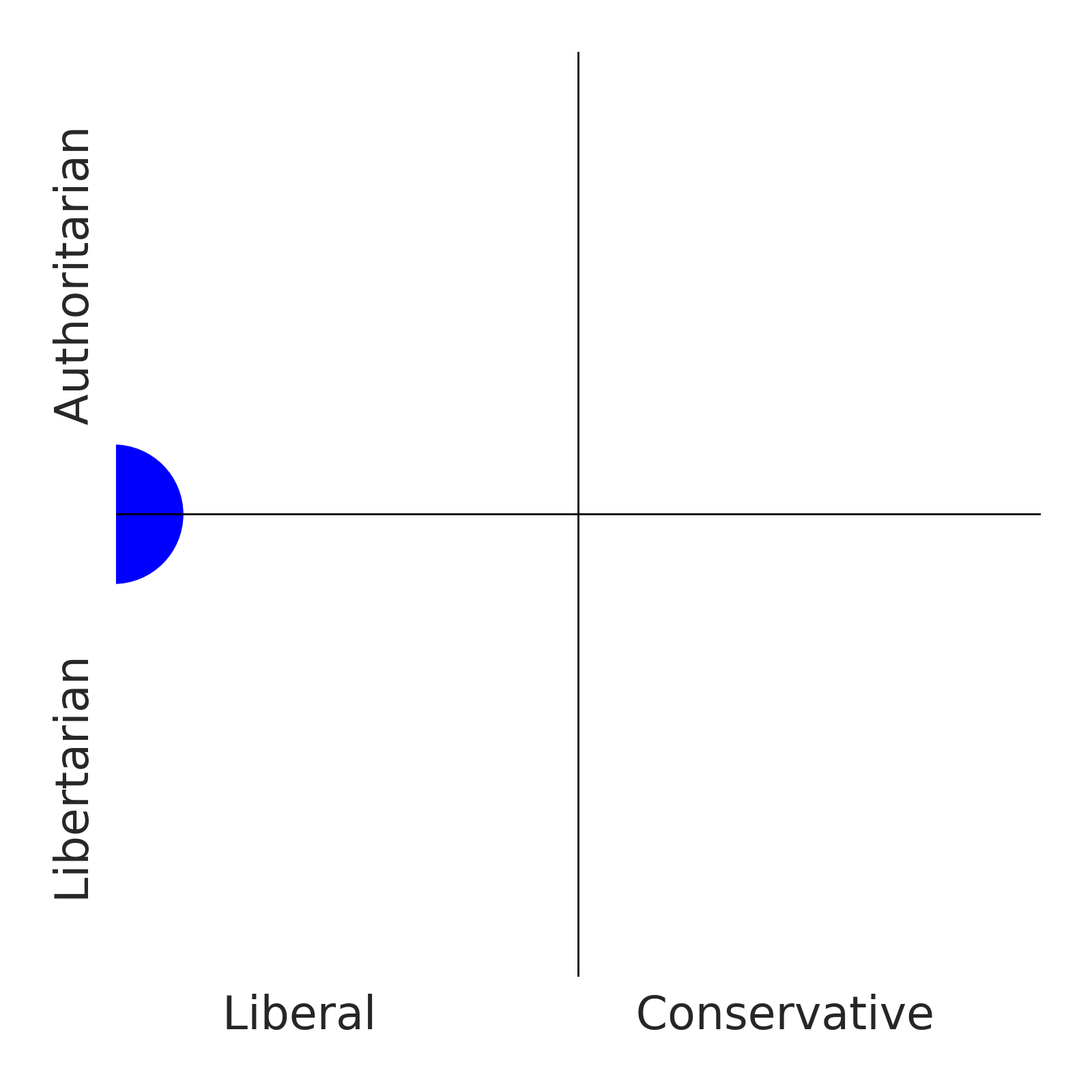
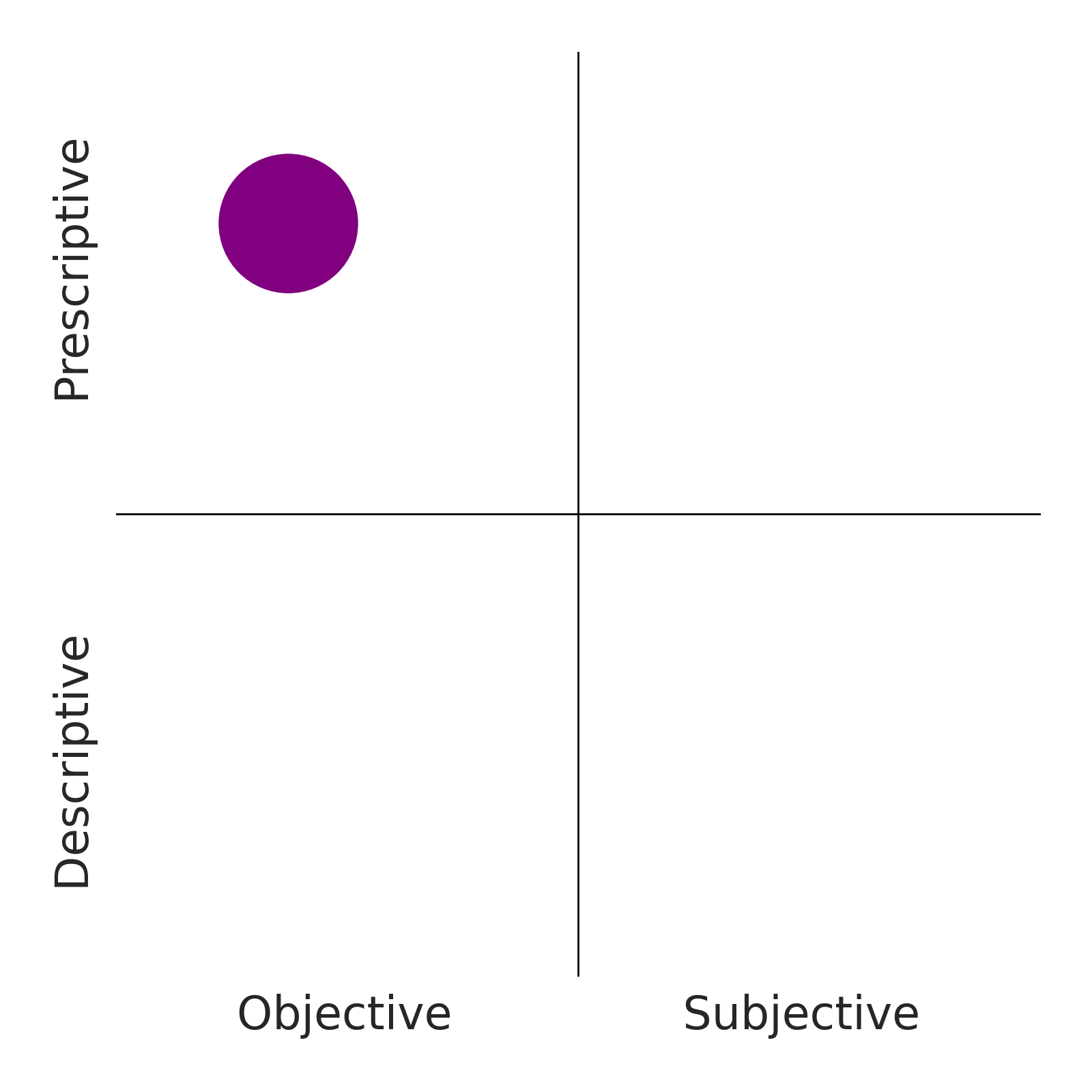
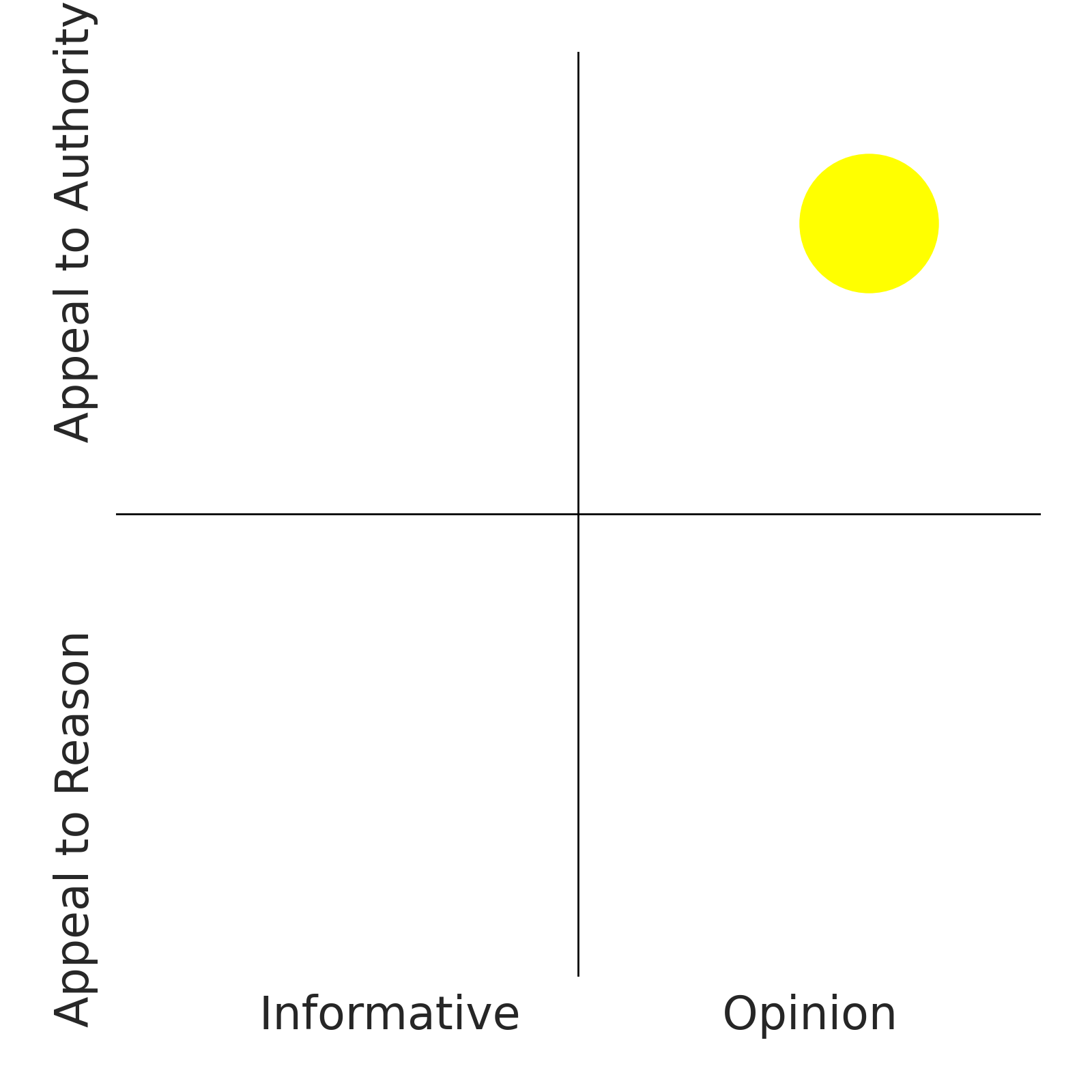
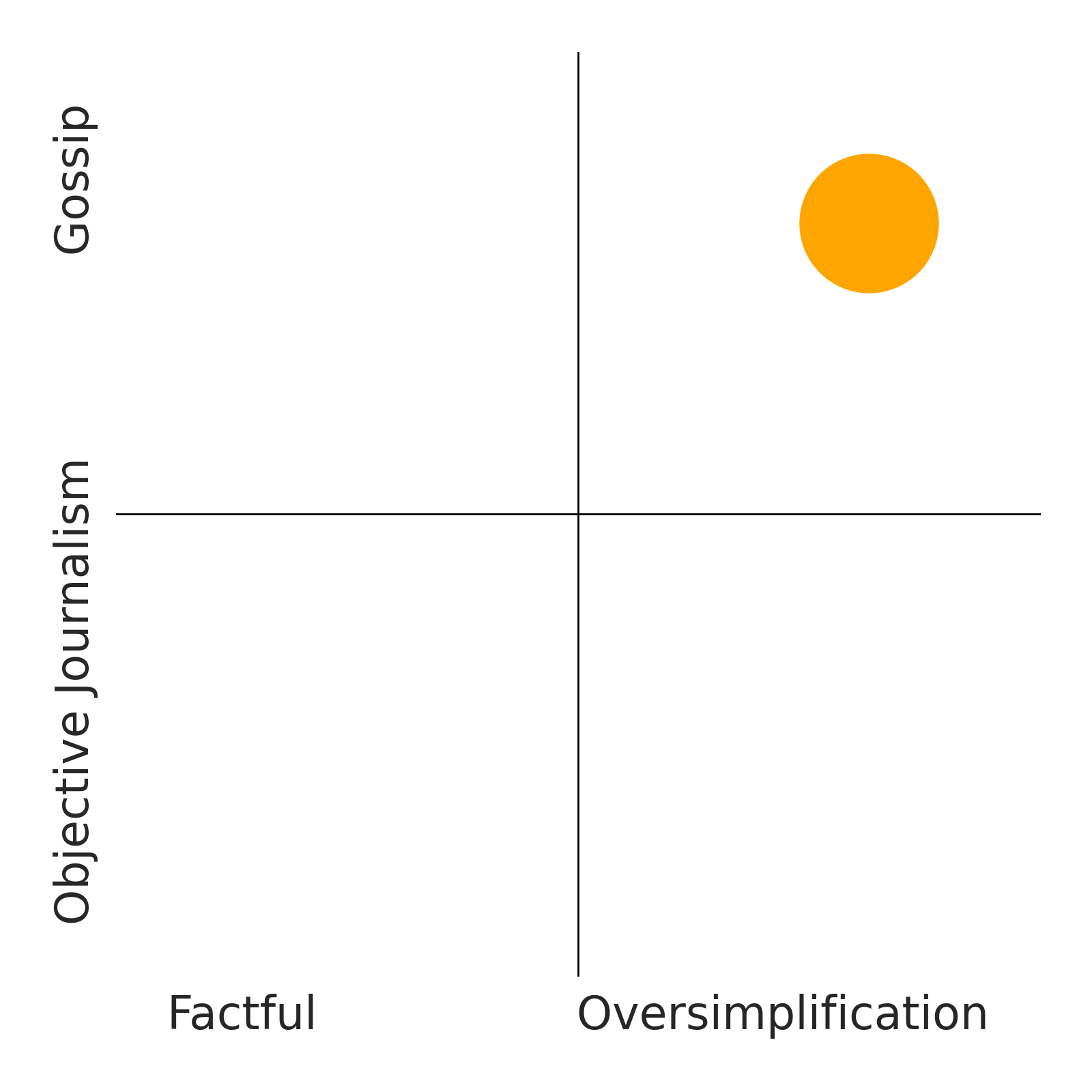
2026 © Helium Trades
Privacy Policy & Disclosure
* Disclaimer: Nothing on this website constitutes investment advice, performance data or any recommendation that any particular security, portfolio of securities, transaction or investment strategy is suitable for any specific person. Helium Trades is not responsible in any way for the accuracy
of any model predictions or price data. Any mention of a particular security and related prediction data is not a recommendation to buy or sell that security. Investments in securities involve the risk of loss. Past performance is no guarantee of future results. Helium Trades is not responsible for any of your investment decisions,
you should consult a financial expert before engaging in any transaction.
Helium Research Assistant

How can I help you today?
Ask any question about Snopes bias.