See whether Helium helps you make better-informed decisions. Try every Pro Trader feature for 30 days. No credit card required.
Try every Pro Trader feature for 30 days. No credit card required.
September 25, 2026 · 0 shares
The text frames billionaire election gifts, particularly Elon Musk's, as deceptive Trojan horses that steal Americans' data, using a fear-based, populist warning.
Automated analysis; not human reviewed. Limitations: Only a two-sentence excerpt was supplied; the broader article and the referenced 'Trojan Horse' event are not described. · 11 of 55 available dimensions scored; omitted dimensions are not treated as neutral. · Verified supporting quotes for 11 of 11 scored dimensions.
Claim: The text uses anti-billionaire framing that pits ordinary Americans against wealthy elites.
“Beware of billionaires gifting Trojan horses to steal your election data.” · exact text match
Why: It characterizes billionaires as deceptive predators and 'your election data' as the victim, a populist anti-elite appeal.
Claim: The text is driven by subjective opinion and metaphorical accusation rather than neutral description.
“Beware of billionaires gifting Trojan horses to steal your election data.” · exact text match
“Earlier this month, Americans got a look inside Elon Musk’s own Trojan Horse.” · exact text match
Why: Both sentences use the loaded 'Trojan horse' metaphor and a direct warning, expressing a value judgment.
Claim: The text sensationalizes the topic with alarming metaphors.
“Beware of billionaires gifting Trojan horses to steal your election data.” · exact text match
Why: The framing uses dramatic imagery of hidden invasion and theft.
Claim: The text casts a pessimistic view of billionaire involvement in elections.
“Beware of billionaires gifting Trojan horses to steal your election data.” · exact text match
Why: The warning emphasizes threat and danger rather than opportunity or neutral fact.
Claim: The text issues a direct command to readers.
“Beware of billionaires gifting Trojan horses to steal your election data.” · exact text match
Why: 'Beware' is prescriptive, telling readers how to interpret billionaire gifts.
Claim: The text uses fear-inducing language about election-data theft.
“Beware of billionaires gifting Trojan horses to steal your election data.” · exact text match
Why: It invokes the threat of stolen personal data through hidden deception.
Claim: The text presents a subjective opinion as an authoritative warning.
“Beware of billionaires gifting Trojan horses to steal your election data.” · exact text match
Why: There is no attributed source, evidence, or balanced perspective; the statement is an unsupported editorial claim.
Claim: The text addresses a political topic—election data and wealthy donors.
“steal your election data” · exact text match
“Elon Musk” · exact text match
Why: The subject is electoral politics, though the text gives no partisan identification.
Claim: The text reduces billionaire political involvement to a single malicious scheme.
“Beware of billionaires gifting Trojan horses to steal your election data.” · exact text match
Why: It generalizes across 'billionaires' and equates gifts with data theft.
Claim: The text gives no source, evidence, or verifiable details for its claims.
“Earlier this month, Americans got a look inside Elon Musk’s own Trojan Horse.” · exact text match
Why: The only concrete claim is vague and unverified; credibility is low based on the supplied text.
Claim: The text employs loaded language and a direct command to steer reader emotion.
“Beware of billionaires gifting Trojan horses to steal your election data.” · exact text match
Why: It combines a fear-inducing metaphor, an imperative, and an unverified theft claim.
Only a two-sentence excerpt was supplied; the broader article and the referenced 'Trojan Horse' event are not described.
September 25, 2026 · 0 shares
Frames website-related wiretapping litigation as a predatory 'shakedown' against Main Street businesses and urges federal intervention.
Automated analysis; not human reviewed. Limitations: The supplied text is a two-sentence snippet with no date, sources, bill details, or legal context, limiting verification and full framing analysis. · 14 of 55 available dimensions scored; omitted dimensions are not treated as neutral. · Verified supporting quotes for 14 of 14 scored dimensions.
Claim: The framing takes a conservative-leaning, pro-business stance against what it calls predatory lawsuits.
“Stop the wiretap shakedown on Main Street.” · exact text match
“predatory wiretapping lawsuits” · exact text match
Why: Calling business lawsuits a 'shakedown' and seeking to protect businesses aligns with conservative tort-reform and pro-business positions, though no explicit ideology is stated.
Claim: Uses 'Main Street' and 'shakedown' to frame the issue as ordinary businesses against predatory legal actors.
“Stop the wiretap shakedown on Main Street.” · exact text match
Why: 'Main Street' is populist shorthand for small/ordinary business, and 'shakedown' casts the lawsuits as predatory impositions.
Claim: The piece is subjective, evaluating the lawsuits as predatory rather than neutrally reporting them.
“Stop the wiretap shakedown on Main Street.” · exact text match
“predatory wiretapping lawsuits” · exact text match
Why: Loaded terms such as 'shakedown' and 'predatory' express normative judgment rather than neutral description.
Claim: Uses sensational language to dramatize a legal-policy matter.
“Stop the wiretap shakedown on Main Street.” · exact text match
Why: 'Shakedown' evokes extortion and heightens emotional response beyond a technical legal description.
Claim: Opens with a direct command and a policy prescription rather than a neutral description.
“Stop the wiretap shakedown on Main Street.” · exact text match
“called for federal modernization of surveillance laws” · exact text match
Why: The imperative 'Stop' and the call for modernization instruct action.
Claim: Invokes outrage by framing lawsuits as extortion against Main Street businesses.
“Stop the wiretap shakedown on Main Street.” · exact text match
Why: 'Shakedown' implies businesses are being extorted, which is fear/rage-provoking, though the wording is more indignation than alarm.
Claim: Assumes the conclusion that the lawsuits are predatory and unjustified in the act of describing them.
“predatory wiretapping lawsuits” · exact text match
Why: The label 'predatory' presumes the key contested point—that the lawsuits are abusive—rather than demonstrating it.
Claim: The central framing is opinionated, condemning lawsuits as a 'shakedown' and 'predatory.'
“Stop the wiretap shakedown on Main Street.” · exact text match
“predatory wiretapping lawsuits” · exact text match
Why: The language is evaluative and advocacy-oriented, not factual reporting.
Claim: The piece is explicitly political in subject matter and advocacy.
“House Committee on Small Business Chairman Roger Williams” · exact text match
“bipartisan legislative efforts” · exact text match
Why: It frames a legislative/political development in advocacy terms, making it political rather than neutral.
Claim: Reduces complex surveillance-law litigation to a simple 'shakedown' narrative involving 'standard website technologies.'
“Stop the wiretap shakedown on Main Street.” · exact text match
“standard website technologies” · exact text match
Why: The broad phrase 'standard website technologies' and stark 'shakedown' collapse legal nuance.
Claim: Casts businesses as victims of predatory lawsuits rather than as parties in a legal dispute.
“Stop the wiretap shakedown on Main Street.” · exact text match
“protect businesses from predatory wiretapping lawsuits” · exact text match
Why: 'Shakedown' and 'protect' establish businesses as targets needing protection.
Claim: Asserts the litigation is a 'shakedown' and 'predatory' without supporting evidence or detail.
“Stop the wiretap shakedown on Main Street.” · exact text match
“predatory wiretapping lawsuits” · exact text match
Why: The certainty of the condemnation exceeds what the text substantiates; no evidence for the characterization is supplied.
Claim: Negative emotional language creates a negative emotional valence.
“Stop the wiretap shakedown on Main Street.” · exact text match
Why: 'Shakedown' and 'predatory' attach extortionate connotations to the lawsuits, producing a negative emotional charge.
Claim: Uses loaded framing and omits any rationale for the lawsuits.
“Stop the wiretap shakedown on Main Street.” · exact text match
Why: The framing is designed to elicit opposition; no perspective of plaintiffs or legal basis is presented.
The supplied text is a two-sentence snippet with no date, sources, bill details, or legal context, limiting verification and full framing analysis.
September 25, 2026 · 0 shares
A terse commentary uses imperative and China-adversarial framing to push Washington into rejoining the Saudi war against the Houthis.
Automated analysis; not human reviewed. Limitations: Only a two-sentence opinion excerpt was supplied, so bias classifications rely on rhetorical wording rather than developed argument or reported facts. · 7 of 55 available dimensions scored; omitted dimensions are not treated as neutral. · Verified supporting quotes for 7 of 7 scored dimensions.
Claim: The text is subjective opinion.
“Washington must rejoin the Saudi war against the Houthis.” · exact text match
“Ceding the region to China surely is not a prospect Washington should relish” · exact text match
Why: The prescriptive and evaluative language reflects personal judgment, not objective reporting.
Claim: The text prescribes what Washington must do.
“Washington must rejoin the Saudi war against the Houthis.” · exact text match
Why: The imperative 'must' issues a directive rather than describing a state of affairs.
Claim: The text advocates a hawkish interventionist policy.
“Washington must rejoin the Saudi war against the Houthis.” · exact text match
“Ceding the region to China surely is not a prospect Washington should relish” · exact text match
Why: It urges participation in a war and frames Chinese regional influence as an unacceptable outcome.
Claim: The text is heavily opinionated.
“Washington must rejoin the Saudi war against the Houthis.” · exact text match
“Ceding the region to China surely is not a prospect Washington should relish” · exact text match
Why: The wording expresses the author's judgment and demand rather than reporting verifiable facts.
Claim: The text is political in subject and appeal.
“Washington must rejoin the Saudi war against the Houthis.” · exact text match
“Ceding the region to China surely is not a prospect Washington should relish” · exact text match
Why: It concerns U.S. foreign policy, a Saudi-led war, and great-power competition with China.
Claim: The text reduces a complex conflict to a single binary choice.
“Washington must rejoin the Saudi war against the Houthis.” · exact text match
“Ceding the region to China surely is not a prospect Washington should relish” · exact text match
Why: It presents only two alternatives—rejoining the war or ceding the region to China—without acknowledging other possibilities.
Claim: The text expresses greater certainty than the evidence provided supports.
“Washington must rejoin the Saudi war against the Houthis.” · exact text match
“Ceding the region to China surely is not a prospect Washington should relish” · exact text match
Why: 'Must' and 'surely' assert necessity and inevitability without supporting facts or analysis.
Only a two-sentence opinion excerpt was supplied, so bias classifications rely on rhetorical wording rather than developed argument or reported facts.
September 26, 2026 · 0 shares
The brief editorial frames ending the roadless rule as practical fire-prevention and wildlife-management policy, dismissing wilderness-loss concerns with the assertion that current protections are sufficient.
The 2001 Roadless Area Conservation Rule generally prohibits road construction and timber harvest in inventoried roadless areas of U.S. national forests, and it has long been a subject of federal public-lands policy debate.
Automated analysis; not human reviewed. Limitations: Only a two-sentence excerpt or standfirst was supplied, so the full article's reasoning, evidence, and qualifications were unavailable for scoring. · 8 of 55 available dimensions scored; omitted dimensions are not treated as neutral. · Verified supporting quotes for 8 of 8 scored dimensions.
Claim: The publisher endorses rescinding a federal environmental protection rule and asserts existing protections are sufficient.
“we have enough already and that we need to manage it rather than let it burn” · exact text match
Why: Supporting removal of roadless-area protections and dismissing wilderness-loss concerns aligns with a conservative position on environmental regulation.
Claim: The text renders evaluative opinions and policy judgments as statements of fact.
“Rescinding the roadless rule is not a threat to federal wilderness” · exact text match
“we have enough already” · exact text match
Why: These are normative judgments presented without evidence or qualification.
Claim: The publisher casts rescission as producing beneficial outcomes and as non-threatening.
“Ending the roadless rule can help fight forest fires and improve wildlife access” · exact text match
“is not a threat to federal wilderness” · exact text match
Why: The expected effects are framed positively and reassuringly.
Claim: The text prescribes a policy action rather than merely describing a state of affairs.
“we need to manage it rather than let it burn” · exact text match
“Ending the roadless rule can help fight forest fires and improve wildlife access” · exact text match
Why: The wording urges action and justifies a policy change.
Claim: The content consists entirely of the publisher's viewpoint, not reported facts.
“Rescinding the roadless rule is not a threat to federal wilderness” · exact text match
“we need to manage it rather than let it burn” · exact text match
Why: All statements are persuasive claims presented without source attribution.
Claim: The text takes a position in a federal public-lands policy debate.
“Ending the roadless rule can help fight forest fires and improve wildlife access” · exact text match
Why: The roadless rule is a specific federal regulatory policy, and the text advocates a side in that debate.
Claim: The text reduces a complex forest-management and wildfire issue to a binary choice between rescinding the rule and letting forests burn.
“we need to manage it rather than let it burn” · exact text match
Why: Frames 'managing' as the only alternative to burning, omitting non-road-management fire strategies and other contributing factors.
Claim: The text uses a loaded either/or framing, implying that without rescinding the rule the only outcome is burning.
“we need to manage it rather than let it burn” · exact text match
Why: Offers only two alternatives—manage (via rescinding the rule) or let it burn—while ignoring other management tools.
Only a two-sentence excerpt or standfirst was supplied, so the full article's reasoning, evidence, and qualifications were unavailable for scoring.
September 06, 2026 · 0 shares
Community bank consolidation is framed as a hidden threat to disruptive innovation, with policymakers urged to consider downstream effects.
Automated analysis; not human reviewed. Limitations: The supplied text is a two-sentence excerpt with no source, data, or fuller argument, making bias classification uncertain. · 3 of 54 available dimensions scored; omitted dimensions are not treated as neutral. · Verified supporting quotes for 2 of 3 scored dimensions.
Claim: The text makes a subjective value claim about bank mergers and innovation.
“If policymakers are serious about sustaining American innovation, they should consider what happens downstream of bank mergers.” · exact text match
Why: The statement uses normative language and emotionally loaded wording without empirical support, presenting opinion rather than neutral observation.
Claim: The text prescribes what policymakers should consider.
“If policymakers are serious about sustaining American innovation, they should consider what happens downstream of bank mergers.” · exact text match
Why: The sentence explicitly directs policymakers to take a particular action, making the framing prescriptive.
Claim: The text projects an unquantified causal consequence of bank mergers.
“the hidden cost of losing your community bank: disruptive innovation” · not found in supplied text
“what happens downstream of bank mergers” · exact text match
Why: The causal link between losing community banks and reduced innovation is asserted without supporting data or a concrete mechanism.
The supplied text is a two-sentence excerpt with no source, data, or fuller argument, making bias classification uncertain.
September 13, 2026 · 0 shares
Framing characterizes an unspecified Trump action as a 'coastal power grab' that 'should alarm all Americans,' using pejorative and alarmist language to demand nationwide concern.
Automated analysis; not human reviewed. Limitations: Analysis is restricted to a repeated headline; no article body, date, or policy specifics were available. · 11 of 54 available dimensions scored; omitted dimensions are not treated as neutral. · Verified supporting quotes for 11 of 11 scored dimensions.
Claim: The headline uses normative and subjective language to characterize a Trump action.
“Trump's coastal power grab should alarm all Americans” · exact text match
Why: 'Should alarm' prescribes a reaction, and 'power grab' is a value-laden characterization rather than a neutral report.
Claim: The headline frames a policy action as a nationwide emergency.
“Trump's coastal power grab should alarm all Americans” · exact text match
Why: 'Should alarm all Americans' is alarmist language intended to heighten urgency.
Claim: The headline presents the development as a source of worry rather than hope.
“Trump's coastal power grab should alarm all Americans” · exact text match
Why: 'Alarm' conveys a negative, fearful outlook on the action.
Claim: The headline tells readers how they should react.
“Trump's coastal power grab should alarm all Americans” · exact text match
Why: 'Should alarm' is a prescriptive command about the appropriate emotional response.
Claim: The headline explicitly invokes fear.
“Trump's coastal power grab should alarm all Americans” · exact text match
Why: The phrase 'should alarm' directly calls for fear, and 'power grab' supplies a threatening object.
Claim: The headline assumes the existence of a 'power grab' rather than supporting it.
“Trump's coastal power grab should alarm all Americans” · exact text match
Why: The conclusion of alarm is built on an unproven characterization of the action as a power grab.
Claim: The headline expresses a subjective judgment rather than reporting discrete facts.
“Trump's coastal power grab should alarm all Americans” · exact text match
Why: 'Power grab' and 'should alarm' are judgmental and exhortatory rather than factual.
Claim: The headline frames a Trump-related action as a political power grab.
“Trump's coastal power grab should alarm all Americans” · exact text match
Why: It uses politically charged terminology about a presidential action to urge opposition.
Claim: An unspecified action is compressed into a single charged label.
“Trump's coastal power grab should alarm all Americans” · exact text match
Why: Without supporting details, the headline reduces the action to the loaded phrase 'coastal power grab.'
Claim: The headline asserts a universal conclusion with no qualification.
“Trump's coastal power grab should alarm all Americans” · exact text match
Why: 'Should alarm all Americans' states certainty about how everyone should react, exceeding the evidence provided.
Claim: The headline's emotional register is negative and fear-based.
“Trump's coastal power grab should alarm all Americans” · exact text match
Why: Alarm is a negative emotional state, and the phrasing is designed to provoke worry.
Analysis is restricted to a repeated headline; no article body, date, or policy specifics were available.
September 14, 2026 · 0 shares
The headline frames a Trump postal proposal as a radical scheme to control elections through loaded, alarmist language.
Automated analysis; not human reviewed. Limitations: Only a repeated headline was available; no body text to verify policy details or context. · 8 of 54 available dimensions scored; omitted dimensions are not treated as neutral. · Verified supporting quotes for 8 of 8 scored dimensions.
Claim: The headline uses negative, ideologically charged language to characterize a Trump election-related proposal.
“Trump's radical plan is to make the postal service an election gatekeeper.” · exact text match
Why: 'Radical' and 'election gatekeeper' are evaluative terms associated with left-of-center criticism of Trump; no neutral or countervailing wording appears.
Claim: The headline presents an interpretation rather than a neutral report.
“Trump's radical plan is to make the postal service an election gatekeeper.” · exact text match
Why: 'Radical' and 'gatekeeper' are subjective labels that frame the proposal as extreme and controlling.
Claim: The headline uses dramatic, alarmist wording.
“Trump's radical plan is to make the postal service an election gatekeeper.” · exact text match
Why: The words 'radical' and 'election gatekeeper' heighten threat and conflict beyond a neutral policy description.
Claim: The headline states an evaluative opinion as a factual characterization.
“Trump's radical plan is to make the postal service an election gatekeeper.” · exact text match
Why: Calling the plan 'radical' is an opinion presented without supporting details or attributed sourcing.
Claim: The headline takes a side in a partisan controversy about Trump and election administration.
“Trump's radical plan is to make the postal service an election gatekeeper.” · exact text match
Why: It addresses a politically contested topic and uses loaded phrasing that aligns with criticism of Trump.
Claim: A complex policy proposal is compressed into a single ominous label.
“Trump's radical plan is to make the postal service an election gatekeeper.” · exact text match
Why: The phrase 'election gatekeeper' reduces unspecified policy details to a simplified, emotionally charged characterization.
Claim: The wording carries a negative emotional charge.
“Trump's radical plan is to make the postal service an election gatekeeper.” · exact text match
Why: 'Radical' and 'election gatekeeper' imply disapproval and alarm, giving the headline a negative valence.
Claim: The headline employs loaded framing as a rhetorical technique.
“Trump's radical plan is to make the postal service an election gatekeeper.” · exact text match
Why: Describing the plan as 'radical' and as making USPS an 'election gatekeeper' is an observable loaded-framing choice.
Only a repeated headline was available; no body text to verify policy details or context.
September 28, 2026 · 0 shares
Framing is opinionated and critical, judging payment to stay-at-home parents as non-neutral while reporting the administration's proposed eligibility expansion.
Automated analysis; not human reviewed. Limitations: The supplied text is a two-sentence excerpt with no author, source, or broader context, limiting the precision of bias classifications. · 6 of 55 available dimensions scored; omitted dimensions are not treated as neutral. · Verified supporting quotes for 6 of 6 scored dimensions.
Claim: The framing presents the policy as non-neutral, which is an evaluative judgment rather than a factual description.
“Paying stay-at-home parents isn't a neutral way to subsidize childcare.” · exact text match
Why: This is a subjective evaluation of the policy's character, with no empirical or definitional support.
Claim: The text prescribes a critical interpretation of the policy instead of neutrally describing it.
“Paying stay-at-home parents isn't a neutral way to subsidize childcare.” · exact text match
Why: The opening sentence frames the policy negatively, moving beyond description to an evaluative stance.
Claim: The text leads with a personal judgment about the policy.
“Paying stay-at-home parents isn't a neutral way to subsidize childcare.” · exact text match
Why: The statement is an unsupported opinion, not a report of a verifiable fact.
Claim: The subject is a federal policy decision by the Trump administration.
“The Trump administration is considering a rule to expand Child Care and Development Fund eligibility to include some married couples with one working parent.” · exact text match
Why: The text concerns government eligibility rules and an administration action, placing it in the political domain.
Claim: The policy is reduced to a single evaluative statement without substantive discussion.
“Paying stay-at-home parents isn't a neutral way to subsidize childcare.” · exact text match
Why: The text provides no analysis of the policy's costs, benefits, or design, instead offering a blanket judgment.
Claim: The text asserts the policy's non-neutrality as settled without presenting supporting reasoning.
“Paying stay-at-home parents isn't a neutral way to subsidize childcare.” · exact text match
Why: The conclusion is stated categorically, with no evidence or argument backing it.
The supplied text is a two-sentence excerpt with no author, source, or broader context, limiting the precision of bias classifications.
September 15, 2026 · 0 shares
Coverage frames the tariff dispute as economically questionable, explicitly doubting the administration's stated rationale and emphasizing Canada's political targeting of U.S. border states.
The USMCA is the free-trade agreement among the U.S., Mexico, and Canada that replaced NAFTA; its review process allows the agreement to wind down if the parties cannot agree on amendments. Section 338 of the U.S. Tariff Act of 1930 is a rarely used legal mechanism for imposing tariffs on countries that discriminate against U.S. commerce.
Automated analysis; not human reviewed. Limitations: The visible excerpt is truncated with ellipses and missing antecedents, so some figures and attributions are incomplete; analysis is limited to readable fragments. · 3 of 54 available dimensions scored; omitted dimensions are not treated as neutral. · Verified supporting quotes for 0 of 3 scored dimensions.
Claim: The report combines factual reporting with an explicit skeptical judgment about the administration's tariff rationale.
“However, this seems doubtful.” · not found in supplied text
Why: The sentence directly states the publisher's own analytical doubt rather than attributing the doubt to a source.
Claim: The report includes editorial opinion alongside factual trade-policy details.
“However, this seems doubtful.” · not found in supplied text
Why: The phrase 'seems doubtful' is an opinionated assessment of Greer's stated priority, not a neutral report of events.
Claim: The report attributes claims to a named official and includes an analyst's estimate, with visible uncertainty.
“Trade Representative Jamieson Greer claims that Trump's top priority for changing the agreement is to attain lower U.S. trade deficit.” · not found in supplied text
“But he notes that the proposed deal would have lowered some of the earlier tariffs.” · exact text match
Why: It identifies a source for the administration claim and separates that claim from the report's own caveats.
The visible excerpt is truncated with ellipses and missing antecedents, so some figures and attributions are incomplete; analysis is limited to readable fragments.
September 12, 2026 · 0 shares
Frames the US-Iran conflict as an unresolved war, presenting success claims as unverified and escalation thresholds as ambiguous.
Automated analysis; not human reviewed. Limitations: The supplied text is only a two-sentence editorial fragment without named sources; missing context and the inability to verify underlying claims limit the analysis. · 3 of 54 available dimensions scored; omitted dimensions are not treated as neutral. · Verified supporting quotes for 3 of 3 scored dimensions.
Claim: The text offers an interpretive evaluation rather than neutral factual reporting.
“Iran's war didn't end. It changed units.” · exact text match
“remains characterized by unverified claims of success and ambiguous thresholds for escalation” · exact text match
Why: The opening is an interpretive thesis and the supporting language uses evaluative characterizations, not detached reporting.
Claim: The text conveys a negative or pessimistic view of the conflict's course.
“Iran's war didn't end. It changed units.” · exact text match
“unverified claims of success and ambiguous thresholds for escalation” · exact text match
Why: The language emphasizes continuation, unresolved status, and ambiguity rather than progress or resolution.
Claim: The text is substantially opinionated, stating a diagnosis about the war rather than reporting facts.
“Iran's war didn't end. It changed units.” · exact text match
Why: The declarative thesis that the war continues in altered form is an editorial judgment, not a sourced factual report.
The supplied text is only a two-sentence editorial fragment without named sources; missing context and the inability to verify underlying claims limit the analysis.
September 25, 2026 · 0 shares
A terse commentary uses imperative and China-adversarial framing to push Washington into rejoining the Saudi war against the Houthis.
Automated analysis; not human reviewed. Limitations: Only a two-sentence opinion excerpt was supplied, so bias classifications rely on rhetorical wording rather than developed argument or reported facts. · 7 of 55 available dimensions scored; omitted dimensions are not treated as neutral. · Verified supporting quotes for 7 of 7 scored dimensions.
Claim: The text is subjective opinion.
“Washington must rejoin the Saudi war against the Houthis.” · exact text match
“Ceding the region to China surely is not a prospect Washington should relish” · exact text match
Why: The prescriptive and evaluative language reflects personal judgment, not objective reporting.
Claim: The text prescribes what Washington must do.
“Washington must rejoin the Saudi war against the Houthis.” · exact text match
Why: The imperative 'must' issues a directive rather than describing a state of affairs.
Claim: The text advocates a hawkish interventionist policy.
“Washington must rejoin the Saudi war against the Houthis.” · exact text match
“Ceding the region to China surely is not a prospect Washington should relish” · exact text match
Why: It urges participation in a war and frames Chinese regional influence as an unacceptable outcome.
Claim: The text is heavily opinionated.
“Washington must rejoin the Saudi war against the Houthis.” · exact text match
“Ceding the region to China surely is not a prospect Washington should relish” · exact text match
Why: The wording expresses the author's judgment and demand rather than reporting verifiable facts.
Claim: The text is political in subject and appeal.
“Washington must rejoin the Saudi war against the Houthis.” · exact text match
“Ceding the region to China surely is not a prospect Washington should relish” · exact text match
Why: It concerns U.S. foreign policy, a Saudi-led war, and great-power competition with China.
Claim: The text reduces a complex conflict to a single binary choice.
“Washington must rejoin the Saudi war against the Houthis.” · exact text match
“Ceding the region to China surely is not a prospect Washington should relish” · exact text match
Why: It presents only two alternatives—rejoining the war or ceding the region to China—without acknowledging other possibilities.
Claim: The text expresses greater certainty than the evidence provided supports.
“Washington must rejoin the Saudi war against the Houthis.” · exact text match
“Ceding the region to China surely is not a prospect Washington should relish” · exact text match
Why: 'Must' and 'surely' assert necessity and inevitability without supporting facts or analysis.
Only a two-sentence opinion excerpt was supplied, so bias classifications rely on rhetorical wording rather than developed argument or reported facts.
September 25, 2026 · 0 shares
Trump's 'Americas First' label is attached to Secretary Rubio's trip, while the criticism he drew is characterized as 'familiar' rather than specified.
'America First' is a slogan associated with Trump's foreign policy; the headline adapts it to Latin America as 'Americas First'.
Automated analysis; not human reviewed. Limitations: The supplied text is only a two-sentence headline/lede, so the critics, the substance of the criticism, and the policy context are unavailable; this limits broader bias classifications beyond the visible 'familiar' characterization. · 2 of 55 available dimensions scored; omitted dimensions are not treated as neutral. · Verified supporting quotes for 2 of 2 scored dimensions.
Claim: The lede interjects an evaluative characterization of the criticism rather than reporting who criticized and why.
“drew familiar criticism.” · exact text match
Why: The phrase 'familiar criticism' is an interpretive label, making the framing partly subjective.
Claim: An otherwise factual travel item includes an editorializing adjective about the criticism.
“drew familiar criticism.” · exact text match
Why: The word 'familiar' injects an editorial judgment into the report.
The supplied text is only a two-sentence headline/lede, so the critics, the substance of the criticism, and the policy context are unavailable; this limits broader bias classifications beyond the visible 'familiar' characterization.
September 25, 2026 · 0 shares
A conservative, prescriptive call to action promotes Dr. Porter's proposal as the preferred preemptive alternative to a 'socialist' approach to healthcare costs.
Automated analysis; not human reviewed. Limitations: Only a two-sentence promotional snippet was available, so all classifications rely on limited wording. · 7 of 55 available dimensions scored; omitted dimensions are not treated as neutral. · Verified supporting quotes for 7 of 7 scored dimensions.
Claim: The call to action frames healthcare policy as a contest against 'socialists,' a conservative-coded label.
“Let's fix healthcare costs before the socialists try to do it.” · exact text match
Why: The pejorative, oppositional use of 'socialists' signals a right-of-center framing.
Claim: The opening is an imperative opinion rather than neutral observation.
“Let's fix healthcare costs before the socialists try to do it.” · exact text match
Why: The imperative mood and rhetorical labeling express the author's viewpoint.
Claim: The passage tells readers what should happen instead of describing what did.
“Let's fix healthcare costs before the socialists try to do it.” · exact text match
Why: The sentence is a prescriptive call to action.
Claim: The statement uses the prospect of a socialist attempt as a source of urgency.
“before the socialists try to do it.” · exact text match
Why: It creates anxiety about socialist action to motivate preemptive reform.
Claim: The lead sentence asserts a preferred course of action rather than reporting facts.
“Let's fix healthcare costs before the socialists try to do it.” · exact text match
Why: An editorial-style imperative makes the item opinionated.
Claim: The text explicitly invokes political actors and conflict.
“before the socialists try to do it.” · exact text match
Why: Naming 'socialists' positions the item in a political debate.
Claim: Healthcare reform is framed as simply beating 'socialists' to the fix.
“before the socialists try to do it.” · exact text match
Why: A complex policy issue is reduced to a political race and binary.
Only a two-sentence promotional snippet was available, so all classifications rely on limited wording.
September 06, 2026 · 0 shares
Washington's affordability debate is framed as incomplete because it omits wages, with higher pay and collective bargaining prescribed as essential parts of a comprehensive agenda.
Automated analysis; not human reviewed. Limitations: Input is a two-sentence editorial summary; no reporting, data, or sourcing is available. · 6 of 54 available dimensions scored; omitted dimensions are not treated as neutral. · Verified supporting quotes for 6 of 6 scored dimensions.
Claim: Frames affordability policy as needing wage increases and collective bargaining, aligning with progressive positions.
“must go beyond lowering prices to ensure workers earn enough to live through higher wages and collective bargaining power” · exact text match
Why: Higher wages and collective bargaining are standard progressive policy prescriptions; no conservative or market-based alternative is mentioned.
Claim: Expresses a normative prescription rather than neutral observation.
“a comprehensive affordability agenda must go beyond lowering prices” · exact text match
Why: 'Must' is a value-laden directive, indicating subjective/prescriptive framing.
Claim: Tells policymakers what an affordability agenda must do.
“a comprehensive affordability agenda must go beyond lowering prices” · exact text match
Why: The sentence prescribes the required scope of policy, rather than describing what is.
Claim: The content is an opinionated argument, not factual reporting.
“The article argues that a comprehensive affordability agenda must go beyond lowering prices” · exact text match
Why: It explicitly labels the content as an argument and uses normative language.
Claim: Takes a position in a governmental policy debate about wages and affordability.
“Washington's affordability debate” · exact text match
Why: References a Washington policy debate and proposes collective bargaining, which is a contested political issue.
Claim: Advocates collective bargaining, favoring group-based worker representation over individual wage-setting.
“collective bargaining power” · exact text match
Why: Explicit endorsement of collective bargaining is a collectivist labor-market mechanism.
Input is a two-sentence editorial summary; no reporting, data, or sourcing is available.
September 06, 2026 · 0 shares
Framing unilaterally promotes a labor-contract bill as an unqualified benefit to workers, using promotional and normative language while urging Senate passage without countervailing views.
Automated analysis; not human reviewed. Limitations: The single-sentence source is promotional and contains no bill text, contrary evidence, or independent analysis, so bias judgments largely rest on the favorable framing of collective bargaining and working-family benefits. · 9 of 54 available dimensions scored; omitted dimensions are not treated as neutral. · Verified supporting quotes for 9 of 9 scored dimensions.
Claim: Framing takes a left-coded position in favor of collective bargaining and working-family economic security.
“The Faster Labor Contracts Act would give workers a fair shot at a better life.” · exact text match
Why: The bill is promoted as a protective worker measure through collective bargaining, a position conventionally associated with liberal politics.
Claim: The statement expresses a normative opinion about the bill's effect rather than objective reporting.
“The Faster Labor Contracts Act would give workers a fair shot at a better life.” · exact text match
Why: The evaluative term 'fair shot' and the unsupported benefit claim make the framing subjective.
Claim: The bill is framed as producing positive outcomes.
“would give workers a fair shot at a better life” · exact text match
Why: The predicted effect is an improved life for workers, indicating optimism.
Claim: The statement prescribes legislative action.
“called on the Senate to pass the Faster Labor Contracts Act” · exact text match
Why: The only development reported is a call to pass legislation, which is prescriptive.
Claim: The statement uses advocacy language rather than fact-based reporting.
“The Faster Labor Contracts Act would give workers a fair shot at a better life.” · exact text match
Why: The claim is a value judgment about the bill's desirability, not an established fact.
Claim: The content is explicitly political, concerning U.S. legislative action.
“called on the Senate to pass the Faster Labor Contracts Act” · exact text match
Why: The subject is a Congressional bill and a call for Senate action.
Claim: Complex legislation is reduced to an unqualified benefit.
“to expedite collective bargaining and protect the economic security of working families” · exact text match
Why: No provisions, costs, or trade-offs are mentioned; the bill's impact is stated only as a broad positive outcome.
Claim: Certainty of benefit exceeds the supplied evidence.
“would give workers a fair shot at a better life” · exact text match
Why: A future positive outcome is asserted as certain without supporting data or analysis.
Claim: The statement functions as promotional advocacy for the bill.
“The Faster Labor Contracts Act would give workers a fair shot at a better life.” · exact text match
Why: The emotive, benefit-focused sentence markets the legislation rather than neutrally informing about it.
The single-sentence source is promotional and contains no bill text, contrary evidence, or independent analysis, so bias judgments largely rest on the favorable framing of collective bargaining and working-family benefits.
September 18, 2026 · 0 shares
Frames government support to Hollywood as undeserved 'handouts' while asserting environmental cleanup should take priority.
Automated analysis; not human reviewed. Limitations: Only a repeated headline was supplied; no article body was available for analysis. · 7 of 55 available dimensions scored; omitted dimensions are not treated as neutral. · Verified supporting quotes for 7 of 7 scored dimensions.
Claim: The statement uses the pejorative term 'handouts' to characterize assistance to Hollywood, a group often seen as elite.
“Hollywood handouts” · exact text match
Why: 'Handouts' frames the assistance as undeserved and is a populist-coded term.
Claim: The statement expresses a subjective value judgment about policy priorities.
“Hollywood handouts shouldn't come before environmental cleanup.” · exact text match
Why: The modal 'shouldn't' prescribes a preference rather than describing an objective state.
Claim: The statement prescribes an ordering of policy priorities.
“shouldn't come before” · exact text match
Why: The phrase 'shouldn't' explicitly tells what ought to happen.
Claim: The sentence is normative and not a factual report.
“shouldn't come before” · exact text match
Why: Normative language ('shouldn't') marks the statement as opinion.
Claim: The statement takes a side in a public-policy dispute about government spending priorities.
“Hollywood handouts” · exact text match
“environmental cleanup” · exact text match
Why: It weighs two governmental priorities, placing the statement in the political domain.
Claim: The statement reduces a complex policy tradeoff to a simple priority claim without supporting detail.
“Hollywood handouts shouldn't come before environmental cleanup.” · exact text match
Why: It states a categorical preference without evidence, amounts, or discussion of tradeoffs.
Claim: The statement uses loaded wording to influence how readers categorize government aid to Hollywood.
“Hollywood handouts” · exact text match
Why: 'Handouts' is a loaded framing that implies unearned or improper benefit.
Only a repeated headline was supplied; no article body was available for analysis.
September 29, 2026 · 0 shares
Adversarial anti-corporate framing casts the Clean Air Act's protective purpose as incompatible with shielding fossil fuel companies from state-level legal accountability.
Automated analysis; not human reviewed. Limitations: Input is a short opinion snippet with no reported facts, limiting assessment to framing and assertion. · 8 of 55 available dimensions scored; omitted dimensions are not treated as neutral. · Verified supporting quotes for 6 of 8 scored dimensions.
Claim: The publisher frames fossil fuel companies as evading accountability and casts the Clean Air Act's purpose as protecting citizens, a standard liberal environmental position.
“Big Oil can't hide behind the Clean Air Act.” · exact text match
“It was not designed to shield fossil fuel companies from legal accountability or to eviscerate states’ authority to protect their citizens from conduct that brings harm to communities and costs the taxpayers billions.” · exact text match
Why: The language is adversarial to the fossil fuel industry and supportive of protective state regulation, aligning with liberal-leaning environmental politics.
Claim: The framing pits ordinary communities and taxpayers against a powerful 'Big Oil' industry.
“Big Oil can't hide behind the Clean Air Act.” · exact text match
“...costs the taxpayers billions.” · not found in supplied text
Why: It draws a contrast between a large corporate interest and the public interest of communities and taxpayers, a common populist framing.
Claim: The passage is an advocacy argument asserting a normative interpretation of the Clean Air Act's purpose.
“Big Oil can't hide behind the Clean Air Act.” · exact text match
“It was not designed to shield fossil fuel companies from legal accountability or to eviscerate states’ authority to protect their citizens from conduct that brings harm to communities and costs the taxpayers billions.” · exact text match
Why: The text offers a value-laden legal and political assertion rather than neutral reporting.
Claim: The text prescribes that the Clean Air Act should not function as corporate immunity and that states should retain authority.
“It was not designed to shield fossil fuel companies from legal accountability or to eviscerate states’ authority to protect their citizens from conduct that brings harm to communities and costs the taxpayers billions.” · exact text match
Why: The statement is a normative judgment about what the law should mean and how states should act.
Claim: The piece states a subjective legal and political opinion without data or cited authority.
“Big Oil can't hide behind the Clean Air Act.” · exact text match
Why: The rhetorical assertion and lack of supporting evidence mark this as opinionated advocacy.
Claim: The passage addresses a contested environmental law and states' regulatory authority, a political issue.
“states’ authority to protect their citizens from conduct that brings harm to communities” · exact text match
Why: The content directly engages partisan and policy debates over environmental regulation and corporate accountability.
Claim: The text reduces the Clean Air Act's design to a binary protective purpose and ignores statutory and legal complexity.
“The Clean Air Act was designed to shield Americans from harmful pollution. It was not designed to shield fossil fuel companies from legal accountability or to eviscerate states’ authority to protect their citizens from conduct that brings harm to communities and costs the taxpayers billions.” · exact text match
Why: It presents a categorical interpretation of legislative intent without discussing statutory text, preemption doctrine, or countervailing legal considerations.
Claim: The publisher takes an anti-corporate stance by framing Big Oil as seeking to avoid accountability.
“Big Oil can't hide behind the Clean Air Act.” · exact text match
“It was not designed to shield fossil fuel companies from legal accountability...” · not found in supplied text
Why: The wording is directly hostile to fossil fuel companies and supports holding them liable.
Input is a short opinion snippet with no reported facts, limiting assessment to framing and assertion.
September 26, 2026 · 0 shares
The brief editorial frames ending the roadless rule as practical fire-prevention and wildlife-management policy, dismissing wilderness-loss concerns with the assertion that current protections are sufficient.
The 2001 Roadless Area Conservation Rule generally prohibits road construction and timber harvest in inventoried roadless areas of U.S. national forests, and it has long been a subject of federal public-lands policy debate.
Automated analysis; not human reviewed. Limitations: Only a two-sentence excerpt or standfirst was supplied, so the full article's reasoning, evidence, and qualifications were unavailable for scoring. · 8 of 55 available dimensions scored; omitted dimensions are not treated as neutral. · Verified supporting quotes for 8 of 8 scored dimensions.
Claim: The publisher endorses rescinding a federal environmental protection rule and asserts existing protections are sufficient.
“we have enough already and that we need to manage it rather than let it burn” · exact text match
Why: Supporting removal of roadless-area protections and dismissing wilderness-loss concerns aligns with a conservative position on environmental regulation.
Claim: The text renders evaluative opinions and policy judgments as statements of fact.
“Rescinding the roadless rule is not a threat to federal wilderness” · exact text match
“we have enough already” · exact text match
Why: These are normative judgments presented without evidence or qualification.
Claim: The publisher casts rescission as producing beneficial outcomes and as non-threatening.
“Ending the roadless rule can help fight forest fires and improve wildlife access” · exact text match
“is not a threat to federal wilderness” · exact text match
Why: The expected effects are framed positively and reassuringly.
Claim: The text prescribes a policy action rather than merely describing a state of affairs.
“we need to manage it rather than let it burn” · exact text match
“Ending the roadless rule can help fight forest fires and improve wildlife access” · exact text match
Why: The wording urges action and justifies a policy change.
Claim: The content consists entirely of the publisher's viewpoint, not reported facts.
“Rescinding the roadless rule is not a threat to federal wilderness” · exact text match
“we need to manage it rather than let it burn” · exact text match
Why: All statements are persuasive claims presented without source attribution.
Claim: The text takes a position in a federal public-lands policy debate.
“Ending the roadless rule can help fight forest fires and improve wildlife access” · exact text match
Why: The roadless rule is a specific federal regulatory policy, and the text advocates a side in that debate.
Claim: The text reduces a complex forest-management and wildfire issue to a binary choice between rescinding the rule and letting forests burn.
“we need to manage it rather than let it burn” · exact text match
Why: Frames 'managing' as the only alternative to burning, omitting non-road-management fire strategies and other contributing factors.
Claim: The text uses a loaded either/or framing, implying that without rescinding the rule the only outcome is burning.
“we need to manage it rather than let it burn” · exact text match
Why: Offers only two alternatives—manage (via rescinding the rule) or let it burn—while ignoring other management tools.
Only a two-sentence excerpt or standfirst was supplied, so the full article's reasoning, evidence, and qualifications were unavailable for scoring.
September 26, 2026 · 0 shares
Uses a speculative, forward-looking question and an unsupported generalization to frame generational change as inevitable and to define millennials and Gen Z by a single shared attitude.
Automated analysis; not human reviewed. Limitations: Very short supplied text; interpretation limited to the headline and one broad generational claim. · 5 of 55 available dimensions scored; omitted dimensions are not treated as neutral. · Verified supporting quotes for 4 of 5 scored dimensions.
Claim: The text presents an interpretive generalization about generational attitudes as a definitive takeaway.
“If there's anything we should know about millennials and Gen Z, it's that they hate being neatly fit into a box.” · exact text match
Why: The statement is a subjective characterization of two entire generations, presented without data or qualification.
Claim: The text expresses an opinionated generalization rather than reporting verifiable facts.
“If there's anything we should know about millennials and Gen Z, it's that they hate being neatly fit into a box.” · exact text match
Why: The phrasing 'if there's anything we should know' signals a prescriptive opinion about what readers should take away.
Claim: The text reduces two diverse generations to a single shared trait.
“If there's anything we should know about millennials and Gen Z, it's that they hate being neatly fit into a box.” · exact text match
Why: A sweeping generalization about millennials and Gen Z as a whole is an oversimplification of varied populations.
Claim: The text speculates about the future meaning of a generational majority without offering evidence.
“The future is here: What will a Millennial-Gen Z majority mean for America?” · exact text match
Why: The question is forward-looking and speculative, with no cited data, analysis, or concrete development to support the premise.
Very short supplied text; interpretation limited to the headline and one broad generational claim.
September 13, 2026 · 0 shares
Framing characterizes an unspecified Trump action as a 'coastal power grab' that 'should alarm all Americans,' using pejorative and alarmist language to demand nationwide concern.
Automated analysis; not human reviewed. Limitations: Analysis is restricted to a repeated headline; no article body, date, or policy specifics were available. · 11 of 54 available dimensions scored; omitted dimensions are not treated as neutral. · Verified supporting quotes for 11 of 11 scored dimensions.
Claim: The headline uses normative and subjective language to characterize a Trump action.
“Trump's coastal power grab should alarm all Americans” · exact text match
Why: 'Should alarm' prescribes a reaction, and 'power grab' is a value-laden characterization rather than a neutral report.
Claim: The headline frames a policy action as a nationwide emergency.
“Trump's coastal power grab should alarm all Americans” · exact text match
Why: 'Should alarm all Americans' is alarmist language intended to heighten urgency.
Claim: The headline presents the development as a source of worry rather than hope.
“Trump's coastal power grab should alarm all Americans” · exact text match
Why: 'Alarm' conveys a negative, fearful outlook on the action.
Claim: The headline tells readers how they should react.
“Trump's coastal power grab should alarm all Americans” · exact text match
Why: 'Should alarm' is a prescriptive command about the appropriate emotional response.
Claim: The headline explicitly invokes fear.
“Trump's coastal power grab should alarm all Americans” · exact text match
Why: The phrase 'should alarm' directly calls for fear, and 'power grab' supplies a threatening object.
Claim: The headline assumes the existence of a 'power grab' rather than supporting it.
“Trump's coastal power grab should alarm all Americans” · exact text match
Why: The conclusion of alarm is built on an unproven characterization of the action as a power grab.
Claim: The headline expresses a subjective judgment rather than reporting discrete facts.
“Trump's coastal power grab should alarm all Americans” · exact text match
Why: 'Power grab' and 'should alarm' are judgmental and exhortatory rather than factual.
Claim: The headline frames a Trump-related action as a political power grab.
“Trump's coastal power grab should alarm all Americans” · exact text match
Why: It uses politically charged terminology about a presidential action to urge opposition.
Claim: An unspecified action is compressed into a single charged label.
“Trump's coastal power grab should alarm all Americans” · exact text match
Why: Without supporting details, the headline reduces the action to the loaded phrase 'coastal power grab.'
Claim: The headline asserts a universal conclusion with no qualification.
“Trump's coastal power grab should alarm all Americans” · exact text match
Why: 'Should alarm all Americans' states certainty about how everyone should react, exceeding the evidence provided.
Claim: The headline's emotional register is negative and fear-based.
“Trump's coastal power grab should alarm all Americans” · exact text match
Why: Alarm is a negative emotional state, and the phrasing is designed to provoke worry.
Analysis is restricted to a repeated headline; no article body, date, or policy specifics were available.
September 14, 2026 · 0 shares
The headline frames a Trump postal proposal as a radical scheme to control elections through loaded, alarmist language.
Automated analysis; not human reviewed. Limitations: Only a repeated headline was available; no body text to verify policy details or context. · 8 of 54 available dimensions scored; omitted dimensions are not treated as neutral. · Verified supporting quotes for 8 of 8 scored dimensions.
Claim: The headline uses negative, ideologically charged language to characterize a Trump election-related proposal.
“Trump's radical plan is to make the postal service an election gatekeeper.” · exact text match
Why: 'Radical' and 'election gatekeeper' are evaluative terms associated with left-of-center criticism of Trump; no neutral or countervailing wording appears.
Claim: The headline presents an interpretation rather than a neutral report.
“Trump's radical plan is to make the postal service an election gatekeeper.” · exact text match
Why: 'Radical' and 'gatekeeper' are subjective labels that frame the proposal as extreme and controlling.
Claim: The headline uses dramatic, alarmist wording.
“Trump's radical plan is to make the postal service an election gatekeeper.” · exact text match
Why: The words 'radical' and 'election gatekeeper' heighten threat and conflict beyond a neutral policy description.
Claim: The headline states an evaluative opinion as a factual characterization.
“Trump's radical plan is to make the postal service an election gatekeeper.” · exact text match
Why: Calling the plan 'radical' is an opinion presented without supporting details or attributed sourcing.
Claim: The headline takes a side in a partisan controversy about Trump and election administration.
“Trump's radical plan is to make the postal service an election gatekeeper.” · exact text match
Why: It addresses a politically contested topic and uses loaded phrasing that aligns with criticism of Trump.
Claim: A complex policy proposal is compressed into a single ominous label.
“Trump's radical plan is to make the postal service an election gatekeeper.” · exact text match
Why: The phrase 'election gatekeeper' reduces unspecified policy details to a simplified, emotionally charged characterization.
Claim: The wording carries a negative emotional charge.
“Trump's radical plan is to make the postal service an election gatekeeper.” · exact text match
Why: 'Radical' and 'election gatekeeper' imply disapproval and alarm, giving the headline a negative valence.
Claim: The headline employs loaded framing as a rhetorical technique.
“Trump's radical plan is to make the postal service an election gatekeeper.” · exact text match
Why: Describing the plan as 'radical' and as making USPS an 'election gatekeeper' is an observable loaded-framing choice.
Only a repeated headline was available; no body text to verify policy details or context.
September 25, 2026 · 0 shares
Framing is staunchly opposed to Gov. Greg Abbott's H-1B teacher ban, using loaded language such as 'recipe for disaster' and 'expel' while asserting claims without supporting evidence.
H-1B is a U.S. nonimmigrant visa category for specialty occupations; the excerpt presumes reader familiarity with the visa and with Texas school staffing.
Automated analysis; not human reviewed. Limitations: The supplied text is a one-sentence excerpt, so full context, evidence, and the exact details of the proposal are unavailable. · 9 of 55 available dimensions scored; omitted dimensions are not treated as neutral. · Verified supporting quotes for 9 of 9 scored dimensions.
Claim: The text takes a liberal-aligned stance against a Republican governor's immigration restriction.
“qualified international teachers he now proposes to expel” · exact text match
“Texas’s teacher pipeline has grown thinner and less prepared on Gov. Greg Abbott’s watch” · exact text match
Why: Opposing a Republican governor's H-1B ban and defending immigrant teachers is a progressive position in U.S. politics, though H-1B policy is not purely partisan.
Claim: The framing is subjective, evaluating the policy as a 'recipe for disaster' rather than neutrally reporting it.
“Banning H-1B teachers is a recipe for disaster” · exact text match
Why: This is a value judgment, not a factual finding.
Claim: The text uses dramatic, emotion-laden language to heighten the perceived stakes.
“recipe for disaster” · exact text match
“he now proposes to expel” · exact text match
Why: Terms like 'recipe for disaster' and 'expel' are hyperbolic and loaded.
Claim: The outlook is pessimistic, describing deterioration and looming disaster.
“teacher pipeline has grown thinner and less prepared” · exact text match
“recipe for disaster” · exact text match
Why: The text emphasizes decline and negative consequences without mentioning mitigating factors.
Claim: The text is a strongly opinionated assertion rather than a dispassionate report.
“Banning H-1B teachers is a recipe for disaster” · exact text match
Why: It asserts a normative conclusion without data or alternative views.
Claim: The text is explicitly political, targeting a named elected official and a government policy.
“Gov. Greg Abbott” · exact text match
“he now proposes to expel” · exact text match
Why: The subject is a governor's policy proposal and its political consequences.
Claim: A complex policy question is reduced to a single predicted outcome.
“Banning H-1B teachers is a recipe for disaster” · exact text match
Why: The statement presents a categorical outcome without considering implementation details or countervailing evidence.
Claim: The conclusion is stated with certainty that exceeds the support supplied.
“Banning H-1B teachers is a recipe for disaster” · exact text match
Why: The causal claim is asserted as fact without cited evidence or uncertainty qualifiers.
Claim: The language carries a strong negative emotional charge.
“recipe for disaster” · exact text match
Why: 'Recipe for disaster' is alarmist and emotionally negative; the piece conveys disapproval and concern.
The supplied text is a one-sentence excerpt, so full context, evidence, and the exact details of the proposal are unavailable.
September 25, 2026 · 0 shares
The text frames billionaire election gifts, particularly Elon Musk's, as deceptive Trojan horses that steal Americans' data, using a fear-based, populist warning.
Automated analysis; not human reviewed. Limitations: Only a two-sentence excerpt was supplied; the broader article and the referenced 'Trojan Horse' event are not described. · 11 of 55 available dimensions scored; omitted dimensions are not treated as neutral. · Verified supporting quotes for 11 of 11 scored dimensions.
Claim: The text uses anti-billionaire framing that pits ordinary Americans against wealthy elites.
“Beware of billionaires gifting Trojan horses to steal your election data.” · exact text match
Why: It characterizes billionaires as deceptive predators and 'your election data' as the victim, a populist anti-elite appeal.
Claim: The text is driven by subjective opinion and metaphorical accusation rather than neutral description.
“Beware of billionaires gifting Trojan horses to steal your election data.” · exact text match
“Earlier this month, Americans got a look inside Elon Musk’s own Trojan Horse.” · exact text match
Why: Both sentences use the loaded 'Trojan horse' metaphor and a direct warning, expressing a value judgment.
Claim: The text sensationalizes the topic with alarming metaphors.
“Beware of billionaires gifting Trojan horses to steal your election data.” · exact text match
Why: The framing uses dramatic imagery of hidden invasion and theft.
Claim: The text casts a pessimistic view of billionaire involvement in elections.
“Beware of billionaires gifting Trojan horses to steal your election data.” · exact text match
Why: The warning emphasizes threat and danger rather than opportunity or neutral fact.
Claim: The text issues a direct command to readers.
“Beware of billionaires gifting Trojan horses to steal your election data.” · exact text match
Why: 'Beware' is prescriptive, telling readers how to interpret billionaire gifts.
Claim: The text uses fear-inducing language about election-data theft.
“Beware of billionaires gifting Trojan horses to steal your election data.” · exact text match
Why: It invokes the threat of stolen personal data through hidden deception.
Claim: The text presents a subjective opinion as an authoritative warning.
“Beware of billionaires gifting Trojan horses to steal your election data.” · exact text match
Why: There is no attributed source, evidence, or balanced perspective; the statement is an unsupported editorial claim.
Claim: The text addresses a political topic—election data and wealthy donors.
“steal your election data” · exact text match
“Elon Musk” · exact text match
Why: The subject is electoral politics, though the text gives no partisan identification.
Claim: The text reduces billionaire political involvement to a single malicious scheme.
“Beware of billionaires gifting Trojan horses to steal your election data.” · exact text match
Why: It generalizes across 'billionaires' and equates gifts with data theft.
Claim: The text gives no source, evidence, or verifiable details for its claims.
“Earlier this month, Americans got a look inside Elon Musk’s own Trojan Horse.” · exact text match
Why: The only concrete claim is vague and unverified; credibility is low based on the supplied text.
Claim: The text employs loaded language and a direct command to steer reader emotion.
“Beware of billionaires gifting Trojan horses to steal your election data.” · exact text match
Why: It combines a fear-inducing metaphor, an imperative, and an unverified theft claim.
Only a two-sentence excerpt was supplied; the broader article and the referenced 'Trojan Horse' event are not described.
September 25, 2026 · 0 shares
Frames Big Tech's AI-safety advocacy as a self-interested bid for a government-protected monopoly while endorsing a two-tier regulatory approach favoring open-source development.
Automated analysis; not human reviewed. Limitations: The supplied text is a brief summary/standfirst, not the full article, so the analysis is limited to the publisher's framing in that excerpt. · 9 of 55 available dimensions scored; omitted dimensions are not treated as neutral. · Verified supporting quotes for 9 of 9 scored dimensions.
Claim: The text is anti-elite, casting Big Tech as a powerful group seeking monopoly protection.
“Big tech wants a government-protected AI monopoly” · exact text match
Why: It positions large tech firms as an elite constituency leveraging concern for market control.
Claim: The text uses subjective interpretation and evaluative language.
“Leverage disguised as concern” · exact text match
Why: The phrase asserts motives and frames the proposal as a disguised power grab.
Claim: The text uses dramatic, charged language to frame the issue.
“Leverage disguised as concern” · exact text match
Why: The phrase is attention-grabbing and accusatory, though the rest of the text is more measured.
Claim: The text prescribes a specific policy approach.
“suggesting instead a two-tier system” · exact text match
Why: It advocates for a particular regulatory structure.
Claim: The text is an opinionated policy argument rather than neutral reporting.
“The author argues against Sam Altman's proposal for a regulatory monopoly on artificial intelligence” · exact text match
“Leverage disguised as concern” · exact text match
Why: It explicitly presents an argument and uses evaluative framing.
Claim: The text addresses a government regulation and monopoly policy issue.
“regulatory monopoly on artificial intelligence” · exact text match
“government-protected AI monopoly” · exact text match
Why: The subject is state policy toward AI markets.
Claim: The text reduces a complex policy debate to a simple monopoly motive.
“Big tech wants a government-protected AI monopoly” · exact text match
Counterevidence:
“suggesting instead a two-tier system” · exact text match
Why: It attributes a single unified motive to all Big Tech, though the proposed two-tier system adds some nuance.
Claim: The text carries a negative emotional charge toward Big Tech.
“Leverage disguised as concern” · exact text match
Why: The phrase implies deceit and self-interest, generating suspicion.
Claim: The text is critical of Big Tech corporate interests.
“Big tech wants a government-protected AI monopoly” · exact text match
Why: It portrays Big Tech as seeking protected market power.
The supplied text is a brief summary/standfirst, not the full article, so the analysis is limited to the publisher's framing in that excerpt.
September 25, 2026 · 0 shares
The text frames billionaire election gifts, particularly Elon Musk's, as deceptive Trojan horses that steal Americans' data, using a fear-based, populist warning.
Automated analysis; not human reviewed. Limitations: Only a two-sentence excerpt was supplied; the broader article and the referenced 'Trojan Horse' event are not described. · 11 of 55 available dimensions scored; omitted dimensions are not treated as neutral. · Verified supporting quotes for 11 of 11 scored dimensions.
Claim: The text uses anti-billionaire framing that pits ordinary Americans against wealthy elites.
“Beware of billionaires gifting Trojan horses to steal your election data.” · exact text match
Why: It characterizes billionaires as deceptive predators and 'your election data' as the victim, a populist anti-elite appeal.
Claim: The text is driven by subjective opinion and metaphorical accusation rather than neutral description.
“Beware of billionaires gifting Trojan horses to steal your election data.” · exact text match
“Earlier this month, Americans got a look inside Elon Musk’s own Trojan Horse.” · exact text match
Why: Both sentences use the loaded 'Trojan horse' metaphor and a direct warning, expressing a value judgment.
Claim: The text sensationalizes the topic with alarming metaphors.
“Beware of billionaires gifting Trojan horses to steal your election data.” · exact text match
Why: The framing uses dramatic imagery of hidden invasion and theft.
Claim: The text casts a pessimistic view of billionaire involvement in elections.
“Beware of billionaires gifting Trojan horses to steal your election data.” · exact text match
Why: The warning emphasizes threat and danger rather than opportunity or neutral fact.
Claim: The text issues a direct command to readers.
“Beware of billionaires gifting Trojan horses to steal your election data.” · exact text match
Why: 'Beware' is prescriptive, telling readers how to interpret billionaire gifts.
Claim: The text uses fear-inducing language about election-data theft.
“Beware of billionaires gifting Trojan horses to steal your election data.” · exact text match
Why: It invokes the threat of stolen personal data through hidden deception.
Claim: The text presents a subjective opinion as an authoritative warning.
“Beware of billionaires gifting Trojan horses to steal your election data.” · exact text match
Why: There is no attributed source, evidence, or balanced perspective; the statement is an unsupported editorial claim.
Claim: The text addresses a political topic—election data and wealthy donors.
“steal your election data” · exact text match
“Elon Musk” · exact text match
Why: The subject is electoral politics, though the text gives no partisan identification.
Claim: The text reduces billionaire political involvement to a single malicious scheme.
“Beware of billionaires gifting Trojan horses to steal your election data.” · exact text match
Why: It generalizes across 'billionaires' and equates gifts with data theft.
Claim: The text gives no source, evidence, or verifiable details for its claims.
“Earlier this month, Americans got a look inside Elon Musk’s own Trojan Horse.” · exact text match
Why: The only concrete claim is vague and unverified; credibility is low based on the supplied text.
Claim: The text employs loaded language and a direct command to steer reader emotion.
“Beware of billionaires gifting Trojan horses to steal your election data.” · exact text match
Why: It combines a fear-inducing metaphor, an imperative, and an unverified theft claim.
Only a two-sentence excerpt was supplied; the broader article and the referenced 'Trojan Horse' event are not described.
September 25, 2026 · 0 shares
Frames website-related wiretapping litigation as a predatory 'shakedown' against Main Street businesses and urges federal intervention.
Automated analysis; not human reviewed. Limitations: The supplied text is a two-sentence snippet with no date, sources, bill details, or legal context, limiting verification and full framing analysis. · 14 of 55 available dimensions scored; omitted dimensions are not treated as neutral. · Verified supporting quotes for 14 of 14 scored dimensions.
Claim: The framing takes a conservative-leaning, pro-business stance against what it calls predatory lawsuits.
“Stop the wiretap shakedown on Main Street.” · exact text match
“predatory wiretapping lawsuits” · exact text match
Why: Calling business lawsuits a 'shakedown' and seeking to protect businesses aligns with conservative tort-reform and pro-business positions, though no explicit ideology is stated.
Claim: Uses 'Main Street' and 'shakedown' to frame the issue as ordinary businesses against predatory legal actors.
“Stop the wiretap shakedown on Main Street.” · exact text match
Why: 'Main Street' is populist shorthand for small/ordinary business, and 'shakedown' casts the lawsuits as predatory impositions.
Claim: The piece is subjective, evaluating the lawsuits as predatory rather than neutrally reporting them.
“Stop the wiretap shakedown on Main Street.” · exact text match
“predatory wiretapping lawsuits” · exact text match
Why: Loaded terms such as 'shakedown' and 'predatory' express normative judgment rather than neutral description.
Claim: Uses sensational language to dramatize a legal-policy matter.
“Stop the wiretap shakedown on Main Street.” · exact text match
Why: 'Shakedown' evokes extortion and heightens emotional response beyond a technical legal description.
Claim: Opens with a direct command and a policy prescription rather than a neutral description.
“Stop the wiretap shakedown on Main Street.” · exact text match
“called for federal modernization of surveillance laws” · exact text match
Why: The imperative 'Stop' and the call for modernization instruct action.
Claim: Invokes outrage by framing lawsuits as extortion against Main Street businesses.
“Stop the wiretap shakedown on Main Street.” · exact text match
Why: 'Shakedown' implies businesses are being extorted, which is fear/rage-provoking, though the wording is more indignation than alarm.
Claim: Assumes the conclusion that the lawsuits are predatory and unjustified in the act of describing them.
“predatory wiretapping lawsuits” · exact text match
Why: The label 'predatory' presumes the key contested point—that the lawsuits are abusive—rather than demonstrating it.
Claim: The central framing is opinionated, condemning lawsuits as a 'shakedown' and 'predatory.'
“Stop the wiretap shakedown on Main Street.” · exact text match
“predatory wiretapping lawsuits” · exact text match
Why: The language is evaluative and advocacy-oriented, not factual reporting.
Claim: The piece is explicitly political in subject matter and advocacy.
“House Committee on Small Business Chairman Roger Williams” · exact text match
“bipartisan legislative efforts” · exact text match
Why: It frames a legislative/political development in advocacy terms, making it political rather than neutral.
Claim: Reduces complex surveillance-law litigation to a simple 'shakedown' narrative involving 'standard website technologies.'
“Stop the wiretap shakedown on Main Street.” · exact text match
“standard website technologies” · exact text match
Why: The broad phrase 'standard website technologies' and stark 'shakedown' collapse legal nuance.
Claim: Casts businesses as victims of predatory lawsuits rather than as parties in a legal dispute.
“Stop the wiretap shakedown on Main Street.” · exact text match
“protect businesses from predatory wiretapping lawsuits” · exact text match
Why: 'Shakedown' and 'protect' establish businesses as targets needing protection.
Claim: Asserts the litigation is a 'shakedown' and 'predatory' without supporting evidence or detail.
“Stop the wiretap shakedown on Main Street.” · exact text match
“predatory wiretapping lawsuits” · exact text match
Why: The certainty of the condemnation exceeds what the text substantiates; no evidence for the characterization is supplied.
Claim: Negative emotional language creates a negative emotional valence.
“Stop the wiretap shakedown on Main Street.” · exact text match
Why: 'Shakedown' and 'predatory' attach extortionate connotations to the lawsuits, producing a negative emotional charge.
Claim: Uses loaded framing and omits any rationale for the lawsuits.
“Stop the wiretap shakedown on Main Street.” · exact text match
Why: The framing is designed to elicit opposition; no perspective of plaintiffs or legal basis is presented.
The supplied text is a two-sentence snippet with no date, sources, bill details, or legal context, limiting verification and full framing analysis.
September 29, 2026 · 0 shares
A brief exhortation treats public health as an inherently political electoral issue and instructs voters to demand candidates' positions on it.
Automated analysis; not human reviewed. Limitations: The supplied text is extremely short (two sentences), so most ideological dimensions cannot be classified; conclusions rest on the explicit imperative and assertion. · 4 of 55 available dimensions scored; omitted dimensions are not treated as neutral. · Verified supporting quotes for 4 of 4 scored dimensions.
Claim: The piece is a subjective value assertion rather than a factual report.
“Public health is now part of modern-day politics.” · exact text match
“Ask your 2026 candidates where they stand on public health.” · exact text match
Why: The sentence asserts a political characterization without data or attribution, and the adjacent imperative directs voter action.
Claim: The text primarily tells readers what to do rather than describing events or evidence.
“Ask your 2026 candidates where they stand on public health.” · exact text match
Why: The imperative mood directly prescribes voter action; the supporting assertion functions as a premise for that prescription.
Claim: The text is an opinionated editorial exhortation, not neutral reporting.
“Ask your 2026 candidates where they stand on public health.” · exact text match
“Public health is now part of modern-day politics.” · exact text match
Why: Both sentences express the publisher's own advocacy and framing without presenting counterarguments or sourced facts.
Claim: The text explicitly places public health within the political domain.
“Public health is now part of modern-day politics.” · exact text match
Why: This is an explicit political framing of a health topic, but the text does not otherwise take a partisan or policy-specific position.
The supplied text is extremely short (two sentences), so most ideological dimensions cannot be classified; conclusions rest on the explicit imperative and assertion.
September 25, 2026 · 0 shares
A conservative, prescriptive call to action promotes Dr. Porter's proposal as the preferred preemptive alternative to a 'socialist' approach to healthcare costs.
Automated analysis; not human reviewed. Limitations: Only a two-sentence promotional snippet was available, so all classifications rely on limited wording. · 7 of 55 available dimensions scored; omitted dimensions are not treated as neutral. · Verified supporting quotes for 7 of 7 scored dimensions.
Claim: The call to action frames healthcare policy as a contest against 'socialists,' a conservative-coded label.
“Let's fix healthcare costs before the socialists try to do it.” · exact text match
Why: The pejorative, oppositional use of 'socialists' signals a right-of-center framing.
Claim: The opening is an imperative opinion rather than neutral observation.
“Let's fix healthcare costs before the socialists try to do it.” · exact text match
Why: The imperative mood and rhetorical labeling express the author's viewpoint.
Claim: The passage tells readers what should happen instead of describing what did.
“Let's fix healthcare costs before the socialists try to do it.” · exact text match
Why: The sentence is a prescriptive call to action.
Claim: The statement uses the prospect of a socialist attempt as a source of urgency.
“before the socialists try to do it.” · exact text match
Why: It creates anxiety about socialist action to motivate preemptive reform.
Claim: The lead sentence asserts a preferred course of action rather than reporting facts.
“Let's fix healthcare costs before the socialists try to do it.” · exact text match
Why: An editorial-style imperative makes the item opinionated.
Claim: The text explicitly invokes political actors and conflict.
“before the socialists try to do it.” · exact text match
Why: Naming 'socialists' positions the item in a political debate.
Claim: Healthcare reform is framed as simply beating 'socialists' to the fix.
“before the socialists try to do it.” · exact text match
Why: A complex policy issue is reduced to a political race and binary.
Only a two-sentence promotional snippet was available, so all classifications rely on limited wording.
September 25, 2026 · 0 shares
The text frames billionaire election gifts, particularly Elon Musk's, as deceptive Trojan horses that steal Americans' data, using a fear-based, populist warning.
Automated analysis; not human reviewed. Limitations: Only a two-sentence excerpt was supplied; the broader article and the referenced 'Trojan Horse' event are not described. · 11 of 55 available dimensions scored; omitted dimensions are not treated as neutral. · Verified supporting quotes for 11 of 11 scored dimensions.
Claim: The text uses anti-billionaire framing that pits ordinary Americans against wealthy elites.
“Beware of billionaires gifting Trojan horses to steal your election data.” · exact text match
Why: It characterizes billionaires as deceptive predators and 'your election data' as the victim, a populist anti-elite appeal.
Claim: The text is driven by subjective opinion and metaphorical accusation rather than neutral description.
“Beware of billionaires gifting Trojan horses to steal your election data.” · exact text match
“Earlier this month, Americans got a look inside Elon Musk’s own Trojan Horse.” · exact text match
Why: Both sentences use the loaded 'Trojan horse' metaphor and a direct warning, expressing a value judgment.
Claim: The text sensationalizes the topic with alarming metaphors.
“Beware of billionaires gifting Trojan horses to steal your election data.” · exact text match
Why: The framing uses dramatic imagery of hidden invasion and theft.
Claim: The text casts a pessimistic view of billionaire involvement in elections.
“Beware of billionaires gifting Trojan horses to steal your election data.” · exact text match
Why: The warning emphasizes threat and danger rather than opportunity or neutral fact.
Claim: The text issues a direct command to readers.
“Beware of billionaires gifting Trojan horses to steal your election data.” · exact text match
Why: 'Beware' is prescriptive, telling readers how to interpret billionaire gifts.
Claim: The text uses fear-inducing language about election-data theft.
“Beware of billionaires gifting Trojan horses to steal your election data.” · exact text match
Why: It invokes the threat of stolen personal data through hidden deception.
Claim: The text presents a subjective opinion as an authoritative warning.
“Beware of billionaires gifting Trojan horses to steal your election data.” · exact text match
Why: There is no attributed source, evidence, or balanced perspective; the statement is an unsupported editorial claim.
Claim: The text addresses a political topic—election data and wealthy donors.
“steal your election data” · exact text match
“Elon Musk” · exact text match
Why: The subject is electoral politics, though the text gives no partisan identification.
Claim: The text reduces billionaire political involvement to a single malicious scheme.
“Beware of billionaires gifting Trojan horses to steal your election data.” · exact text match
Why: It generalizes across 'billionaires' and equates gifts with data theft.
Claim: The text gives no source, evidence, or verifiable details for its claims.
“Earlier this month, Americans got a look inside Elon Musk’s own Trojan Horse.” · exact text match
Why: The only concrete claim is vague and unverified; credibility is low based on the supplied text.
Claim: The text employs loaded language and a direct command to steer reader emotion.
“Beware of billionaires gifting Trojan horses to steal your election data.” · exact text match
Why: It combines a fear-inducing metaphor, an imperative, and an unverified theft claim.
Only a two-sentence excerpt was supplied; the broader article and the referenced 'Trojan Horse' event are not described.
September 13, 2026 · 0 shares
Framing characterizes an unspecified Trump action as a 'coastal power grab' that 'should alarm all Americans,' using pejorative and alarmist language to demand nationwide concern.
Automated analysis; not human reviewed. Limitations: Analysis is restricted to a repeated headline; no article body, date, or policy specifics were available. · 11 of 54 available dimensions scored; omitted dimensions are not treated as neutral. · Verified supporting quotes for 11 of 11 scored dimensions.
Claim: The headline uses normative and subjective language to characterize a Trump action.
“Trump's coastal power grab should alarm all Americans” · exact text match
Why: 'Should alarm' prescribes a reaction, and 'power grab' is a value-laden characterization rather than a neutral report.
Claim: The headline frames a policy action as a nationwide emergency.
“Trump's coastal power grab should alarm all Americans” · exact text match
Why: 'Should alarm all Americans' is alarmist language intended to heighten urgency.
Claim: The headline presents the development as a source of worry rather than hope.
“Trump's coastal power grab should alarm all Americans” · exact text match
Why: 'Alarm' conveys a negative, fearful outlook on the action.
Claim: The headline tells readers how they should react.
“Trump's coastal power grab should alarm all Americans” · exact text match
Why: 'Should alarm' is a prescriptive command about the appropriate emotional response.
Claim: The headline explicitly invokes fear.
“Trump's coastal power grab should alarm all Americans” · exact text match
Why: The phrase 'should alarm' directly calls for fear, and 'power grab' supplies a threatening object.
Claim: The headline assumes the existence of a 'power grab' rather than supporting it.
“Trump's coastal power grab should alarm all Americans” · exact text match
Why: The conclusion of alarm is built on an unproven characterization of the action as a power grab.
Claim: The headline expresses a subjective judgment rather than reporting discrete facts.
“Trump's coastal power grab should alarm all Americans” · exact text match
Why: 'Power grab' and 'should alarm' are judgmental and exhortatory rather than factual.
Claim: The headline frames a Trump-related action as a political power grab.
“Trump's coastal power grab should alarm all Americans” · exact text match
Why: It uses politically charged terminology about a presidential action to urge opposition.
Claim: An unspecified action is compressed into a single charged label.
“Trump's coastal power grab should alarm all Americans” · exact text match
Why: Without supporting details, the headline reduces the action to the loaded phrase 'coastal power grab.'
Claim: The headline asserts a universal conclusion with no qualification.
“Trump's coastal power grab should alarm all Americans” · exact text match
Why: 'Should alarm all Americans' states certainty about how everyone should react, exceeding the evidence provided.
Claim: The headline's emotional register is negative and fear-based.
“Trump's coastal power grab should alarm all Americans” · exact text match
Why: Alarm is a negative emotional state, and the phrasing is designed to provoke worry.
Analysis is restricted to a repeated headline; no article body, date, or policy specifics were available.
September 25, 2026 · 0 shares
Frames website-related wiretapping litigation as a predatory 'shakedown' against Main Street businesses and urges federal intervention.
Automated analysis; not human reviewed. Limitations: The supplied text is a two-sentence snippet with no date, sources, bill details, or legal context, limiting verification and full framing analysis. · 14 of 55 available dimensions scored; omitted dimensions are not treated as neutral. · Verified supporting quotes for 14 of 14 scored dimensions.
Claim: The framing takes a conservative-leaning, pro-business stance against what it calls predatory lawsuits.
“Stop the wiretap shakedown on Main Street.” · exact text match
“predatory wiretapping lawsuits” · exact text match
Why: Calling business lawsuits a 'shakedown' and seeking to protect businesses aligns with conservative tort-reform and pro-business positions, though no explicit ideology is stated.
Claim: Uses 'Main Street' and 'shakedown' to frame the issue as ordinary businesses against predatory legal actors.
“Stop the wiretap shakedown on Main Street.” · exact text match
Why: 'Main Street' is populist shorthand for small/ordinary business, and 'shakedown' casts the lawsuits as predatory impositions.
Claim: The piece is subjective, evaluating the lawsuits as predatory rather than neutrally reporting them.
“Stop the wiretap shakedown on Main Street.” · exact text match
“predatory wiretapping lawsuits” · exact text match
Why: Loaded terms such as 'shakedown' and 'predatory' express normative judgment rather than neutral description.
Claim: Uses sensational language to dramatize a legal-policy matter.
“Stop the wiretap shakedown on Main Street.” · exact text match
Why: 'Shakedown' evokes extortion and heightens emotional response beyond a technical legal description.
Claim: Opens with a direct command and a policy prescription rather than a neutral description.
“Stop the wiretap shakedown on Main Street.” · exact text match
“called for federal modernization of surveillance laws” · exact text match
Why: The imperative 'Stop' and the call for modernization instruct action.
Claim: Invokes outrage by framing lawsuits as extortion against Main Street businesses.
“Stop the wiretap shakedown on Main Street.” · exact text match
Why: 'Shakedown' implies businesses are being extorted, which is fear/rage-provoking, though the wording is more indignation than alarm.
Claim: Assumes the conclusion that the lawsuits are predatory and unjustified in the act of describing them.
“predatory wiretapping lawsuits” · exact text match
Why: The label 'predatory' presumes the key contested point—that the lawsuits are abusive—rather than demonstrating it.
Claim: The central framing is opinionated, condemning lawsuits as a 'shakedown' and 'predatory.'
“Stop the wiretap shakedown on Main Street.” · exact text match
“predatory wiretapping lawsuits” · exact text match
Why: The language is evaluative and advocacy-oriented, not factual reporting.
Claim: The piece is explicitly political in subject matter and advocacy.
“House Committee on Small Business Chairman Roger Williams” · exact text match
“bipartisan legislative efforts” · exact text match
Why: It frames a legislative/political development in advocacy terms, making it political rather than neutral.
Claim: Reduces complex surveillance-law litigation to a simple 'shakedown' narrative involving 'standard website technologies.'
“Stop the wiretap shakedown on Main Street.” · exact text match
“standard website technologies” · exact text match
Why: The broad phrase 'standard website technologies' and stark 'shakedown' collapse legal nuance.
Claim: Casts businesses as victims of predatory lawsuits rather than as parties in a legal dispute.
“Stop the wiretap shakedown on Main Street.” · exact text match
“protect businesses from predatory wiretapping lawsuits” · exact text match
Why: 'Shakedown' and 'protect' establish businesses as targets needing protection.
Claim: Asserts the litigation is a 'shakedown' and 'predatory' without supporting evidence or detail.
“Stop the wiretap shakedown on Main Street.” · exact text match
“predatory wiretapping lawsuits” · exact text match
Why: The certainty of the condemnation exceeds what the text substantiates; no evidence for the characterization is supplied.
Claim: Negative emotional language creates a negative emotional valence.
“Stop the wiretap shakedown on Main Street.” · exact text match
Why: 'Shakedown' and 'predatory' attach extortionate connotations to the lawsuits, producing a negative emotional charge.
Claim: Uses loaded framing and omits any rationale for the lawsuits.
“Stop the wiretap shakedown on Main Street.” · exact text match
Why: The framing is designed to elicit opposition; no perspective of plaintiffs or legal basis is presented.
The supplied text is a two-sentence snippet with no date, sources, bill details, or legal context, limiting verification and full framing analysis.
September 18, 2026 · 0 shares
Frames government support to Hollywood as undeserved 'handouts' while asserting environmental cleanup should take priority.
Automated analysis; not human reviewed. Limitations: Only a repeated headline was supplied; no article body was available for analysis. · 7 of 55 available dimensions scored; omitted dimensions are not treated as neutral. · Verified supporting quotes for 7 of 7 scored dimensions.
Claim: The statement uses the pejorative term 'handouts' to characterize assistance to Hollywood, a group often seen as elite.
“Hollywood handouts” · exact text match
Why: 'Handouts' frames the assistance as undeserved and is a populist-coded term.
Claim: The statement expresses a subjective value judgment about policy priorities.
“Hollywood handouts shouldn't come before environmental cleanup.” · exact text match
Why: The modal 'shouldn't' prescribes a preference rather than describing an objective state.
Claim: The statement prescribes an ordering of policy priorities.
“shouldn't come before” · exact text match
Why: The phrase 'shouldn't' explicitly tells what ought to happen.
Claim: The sentence is normative and not a factual report.
“shouldn't come before” · exact text match
Why: Normative language ('shouldn't') marks the statement as opinion.
Claim: The statement takes a side in a public-policy dispute about government spending priorities.
“Hollywood handouts” · exact text match
“environmental cleanup” · exact text match
Why: It weighs two governmental priorities, placing the statement in the political domain.
Claim: The statement reduces a complex policy tradeoff to a simple priority claim without supporting detail.
“Hollywood handouts shouldn't come before environmental cleanup.” · exact text match
Why: It states a categorical preference without evidence, amounts, or discussion of tradeoffs.
Claim: The statement uses loaded wording to influence how readers categorize government aid to Hollywood.
“Hollywood handouts” · exact text match
Why: 'Handouts' is a loaded framing that implies unearned or improper benefit.
Only a repeated headline was supplied; no article body was available for analysis.
September 13, 2026 · 0 shares
Framing characterizes an unspecified Trump action as a 'coastal power grab' that 'should alarm all Americans,' using pejorative and alarmist language to demand nationwide concern.
Automated analysis; not human reviewed. Limitations: Analysis is restricted to a repeated headline; no article body, date, or policy specifics were available. · 11 of 54 available dimensions scored; omitted dimensions are not treated as neutral. · Verified supporting quotes for 11 of 11 scored dimensions.
Claim: The headline uses normative and subjective language to characterize a Trump action.
“Trump's coastal power grab should alarm all Americans” · exact text match
Why: 'Should alarm' prescribes a reaction, and 'power grab' is a value-laden characterization rather than a neutral report.
Claim: The headline frames a policy action as a nationwide emergency.
“Trump's coastal power grab should alarm all Americans” · exact text match
Why: 'Should alarm all Americans' is alarmist language intended to heighten urgency.
Claim: The headline presents the development as a source of worry rather than hope.
“Trump's coastal power grab should alarm all Americans” · exact text match
Why: 'Alarm' conveys a negative, fearful outlook on the action.
Claim: The headline tells readers how they should react.
“Trump's coastal power grab should alarm all Americans” · exact text match
Why: 'Should alarm' is a prescriptive command about the appropriate emotional response.
Claim: The headline explicitly invokes fear.
“Trump's coastal power grab should alarm all Americans” · exact text match
Why: The phrase 'should alarm' directly calls for fear, and 'power grab' supplies a threatening object.
Claim: The headline assumes the existence of a 'power grab' rather than supporting it.
“Trump's coastal power grab should alarm all Americans” · exact text match
Why: The conclusion of alarm is built on an unproven characterization of the action as a power grab.
Claim: The headline expresses a subjective judgment rather than reporting discrete facts.
“Trump's coastal power grab should alarm all Americans” · exact text match
Why: 'Power grab' and 'should alarm' are judgmental and exhortatory rather than factual.
Claim: The headline frames a Trump-related action as a political power grab.
“Trump's coastal power grab should alarm all Americans” · exact text match
Why: It uses politically charged terminology about a presidential action to urge opposition.
Claim: An unspecified action is compressed into a single charged label.
“Trump's coastal power grab should alarm all Americans” · exact text match
Why: Without supporting details, the headline reduces the action to the loaded phrase 'coastal power grab.'
Claim: The headline asserts a universal conclusion with no qualification.
“Trump's coastal power grab should alarm all Americans” · exact text match
Why: 'Should alarm all Americans' states certainty about how everyone should react, exceeding the evidence provided.
Claim: The headline's emotional register is negative and fear-based.
“Trump's coastal power grab should alarm all Americans” · exact text match
Why: Alarm is a negative emotional state, and the phrasing is designed to provoke worry.
Analysis is restricted to a repeated headline; no article body, date, or policy specifics were available.
September 14, 2026 · 0 shares
The headline frames a Trump postal proposal as a radical scheme to control elections through loaded, alarmist language.
Automated analysis; not human reviewed. Limitations: Only a repeated headline was available; no body text to verify policy details or context. · 8 of 54 available dimensions scored; omitted dimensions are not treated as neutral. · Verified supporting quotes for 8 of 8 scored dimensions.
Claim: The headline uses negative, ideologically charged language to characterize a Trump election-related proposal.
“Trump's radical plan is to make the postal service an election gatekeeper.” · exact text match
Why: 'Radical' and 'election gatekeeper' are evaluative terms associated with left-of-center criticism of Trump; no neutral or countervailing wording appears.
Claim: The headline presents an interpretation rather than a neutral report.
“Trump's radical plan is to make the postal service an election gatekeeper.” · exact text match
Why: 'Radical' and 'gatekeeper' are subjective labels that frame the proposal as extreme and controlling.
Claim: The headline uses dramatic, alarmist wording.
“Trump's radical plan is to make the postal service an election gatekeeper.” · exact text match
Why: The words 'radical' and 'election gatekeeper' heighten threat and conflict beyond a neutral policy description.
Claim: The headline states an evaluative opinion as a factual characterization.
“Trump's radical plan is to make the postal service an election gatekeeper.” · exact text match
Why: Calling the plan 'radical' is an opinion presented without supporting details or attributed sourcing.
Claim: The headline takes a side in a partisan controversy about Trump and election administration.
“Trump's radical plan is to make the postal service an election gatekeeper.” · exact text match
Why: It addresses a politically contested topic and uses loaded phrasing that aligns with criticism of Trump.
Claim: A complex policy proposal is compressed into a single ominous label.
“Trump's radical plan is to make the postal service an election gatekeeper.” · exact text match
Why: The phrase 'election gatekeeper' reduces unspecified policy details to a simplified, emotionally charged characterization.
Claim: The wording carries a negative emotional charge.
“Trump's radical plan is to make the postal service an election gatekeeper.” · exact text match
Why: 'Radical' and 'election gatekeeper' imply disapproval and alarm, giving the headline a negative valence.
Claim: The headline employs loaded framing as a rhetorical technique.
“Trump's radical plan is to make the postal service an election gatekeeper.” · exact text match
Why: Describing the plan as 'radical' and as making USPS an 'election gatekeeper' is an observable loaded-framing choice.
Only a repeated headline was available; no body text to verify policy details or context.
September 25, 2026 · 0 shares
Framing is staunchly opposed to Gov. Greg Abbott's H-1B teacher ban, using loaded language such as 'recipe for disaster' and 'expel' while asserting claims without supporting evidence.
H-1B is a U.S. nonimmigrant visa category for specialty occupations; the excerpt presumes reader familiarity with the visa and with Texas school staffing.
Automated analysis; not human reviewed. Limitations: The supplied text is a one-sentence excerpt, so full context, evidence, and the exact details of the proposal are unavailable. · 9 of 55 available dimensions scored; omitted dimensions are not treated as neutral. · Verified supporting quotes for 9 of 9 scored dimensions.
Claim: The text takes a liberal-aligned stance against a Republican governor's immigration restriction.
“qualified international teachers he now proposes to expel” · exact text match
“Texas’s teacher pipeline has grown thinner and less prepared on Gov. Greg Abbott’s watch” · exact text match
Why: Opposing a Republican governor's H-1B ban and defending immigrant teachers is a progressive position in U.S. politics, though H-1B policy is not purely partisan.
Claim: The framing is subjective, evaluating the policy as a 'recipe for disaster' rather than neutrally reporting it.
“Banning H-1B teachers is a recipe for disaster” · exact text match
Why: This is a value judgment, not a factual finding.
Claim: The text uses dramatic, emotion-laden language to heighten the perceived stakes.
“recipe for disaster” · exact text match
“he now proposes to expel” · exact text match
Why: Terms like 'recipe for disaster' and 'expel' are hyperbolic and loaded.
Claim: The outlook is pessimistic, describing deterioration and looming disaster.
“teacher pipeline has grown thinner and less prepared” · exact text match
“recipe for disaster” · exact text match
Why: The text emphasizes decline and negative consequences without mentioning mitigating factors.
Claim: The text is a strongly opinionated assertion rather than a dispassionate report.
“Banning H-1B teachers is a recipe for disaster” · exact text match
Why: It asserts a normative conclusion without data or alternative views.
Claim: The text is explicitly political, targeting a named elected official and a government policy.
“Gov. Greg Abbott” · exact text match
“he now proposes to expel” · exact text match
Why: The subject is a governor's policy proposal and its political consequences.
Claim: A complex policy question is reduced to a single predicted outcome.
“Banning H-1B teachers is a recipe for disaster” · exact text match
Why: The statement presents a categorical outcome without considering implementation details or countervailing evidence.
Claim: The conclusion is stated with certainty that exceeds the support supplied.
“Banning H-1B teachers is a recipe for disaster” · exact text match
Why: The causal claim is asserted as fact without cited evidence or uncertainty qualifiers.
Claim: The language carries a strong negative emotional charge.
“recipe for disaster” · exact text match
Why: 'Recipe for disaster' is alarmist and emotionally negative; the piece conveys disapproval and concern.
The supplied text is a one-sentence excerpt, so full context, evidence, and the exact details of the proposal are unavailable.
September 25, 2026 · 0 shares
The text frames billionaire election gifts, particularly Elon Musk's, as deceptive Trojan horses that steal Americans' data, using a fear-based, populist warning.
Automated analysis; not human reviewed. Limitations: Only a two-sentence excerpt was supplied; the broader article and the referenced 'Trojan Horse' event are not described. · 11 of 55 available dimensions scored; omitted dimensions are not treated as neutral. · Verified supporting quotes for 11 of 11 scored dimensions.
Claim: The text uses anti-billionaire framing that pits ordinary Americans against wealthy elites.
“Beware of billionaires gifting Trojan horses to steal your election data.” · exact text match
Why: It characterizes billionaires as deceptive predators and 'your election data' as the victim, a populist anti-elite appeal.
Claim: The text is driven by subjective opinion and metaphorical accusation rather than neutral description.
“Beware of billionaires gifting Trojan horses to steal your election data.” · exact text match
“Earlier this month, Americans got a look inside Elon Musk’s own Trojan Horse.” · exact text match
Why: Both sentences use the loaded 'Trojan horse' metaphor and a direct warning, expressing a value judgment.
Claim: The text sensationalizes the topic with alarming metaphors.
“Beware of billionaires gifting Trojan horses to steal your election data.” · exact text match
Why: The framing uses dramatic imagery of hidden invasion and theft.
Claim: The text casts a pessimistic view of billionaire involvement in elections.
“Beware of billionaires gifting Trojan horses to steal your election data.” · exact text match
Why: The warning emphasizes threat and danger rather than opportunity or neutral fact.
Claim: The text issues a direct command to readers.
“Beware of billionaires gifting Trojan horses to steal your election data.” · exact text match
Why: 'Beware' is prescriptive, telling readers how to interpret billionaire gifts.
Claim: The text uses fear-inducing language about election-data theft.
“Beware of billionaires gifting Trojan horses to steal your election data.” · exact text match
Why: It invokes the threat of stolen personal data through hidden deception.
Claim: The text presents a subjective opinion as an authoritative warning.
“Beware of billionaires gifting Trojan horses to steal your election data.” · exact text match
Why: There is no attributed source, evidence, or balanced perspective; the statement is an unsupported editorial claim.
Claim: The text addresses a political topic—election data and wealthy donors.
“steal your election data” · exact text match
“Elon Musk” · exact text match
Why: The subject is electoral politics, though the text gives no partisan identification.
Claim: The text reduces billionaire political involvement to a single malicious scheme.
“Beware of billionaires gifting Trojan horses to steal your election data.” · exact text match
Why: It generalizes across 'billionaires' and equates gifts with data theft.
Claim: The text gives no source, evidence, or verifiable details for its claims.
“Earlier this month, Americans got a look inside Elon Musk’s own Trojan Horse.” · exact text match
Why: The only concrete claim is vague and unverified; credibility is low based on the supplied text.
Claim: The text employs loaded language and a direct command to steer reader emotion.
“Beware of billionaires gifting Trojan horses to steal your election data.” · exact text match
Why: It combines a fear-inducing metaphor, an imperative, and an unverified theft claim.
Only a two-sentence excerpt was supplied; the broader article and the referenced 'Trojan Horse' event are not described.
September 15, 2026 · 0 shares
Coverage frames the tariff dispute as economically questionable, explicitly doubting the administration's stated rationale and emphasizing Canada's political targeting of U.S. border states.
The USMCA is the free-trade agreement among the U.S., Mexico, and Canada that replaced NAFTA; its review process allows the agreement to wind down if the parties cannot agree on amendments. Section 338 of the U.S. Tariff Act of 1930 is a rarely used legal mechanism for imposing tariffs on countries that discriminate against U.S. commerce.
Automated analysis; not human reviewed. Limitations: The visible excerpt is truncated with ellipses and missing antecedents, so some figures and attributions are incomplete; analysis is limited to readable fragments. · 3 of 54 available dimensions scored; omitted dimensions are not treated as neutral. · Verified supporting quotes for 0 of 3 scored dimensions.
Claim: The report combines factual reporting with an explicit skeptical judgment about the administration's tariff rationale.
“However, this seems doubtful.” · not found in supplied text
Why: The sentence directly states the publisher's own analytical doubt rather than attributing the doubt to a source.
Claim: The report includes editorial opinion alongside factual trade-policy details.
“However, this seems doubtful.” · not found in supplied text
Why: The phrase 'seems doubtful' is an opinionated assessment of Greer's stated priority, not a neutral report of events.
Claim: The report attributes claims to a named official and includes an analyst's estimate, with visible uncertainty.
“Trade Representative Jamieson Greer claims that Trump's top priority for changing the agreement is to attain lower U.S. trade deficit.” · not found in supplied text
“But he notes that the proposed deal would have lowered some of the earlier tariffs.” · exact text match
Why: It identifies a source for the administration claim and separates that claim from the report's own caveats.
The visible excerpt is truncated with ellipses and missing antecedents, so some figures and attributions are incomplete; analysis is limited to readable fragments.
September 07, 2026 · 0 shares
The piece uses a pointed rhetorical question and fiscal-conservative language to criticize Trump and the Republican Party for failing to address the national debt.
Automated analysis; not human reviewed. Limitations: Only a brief opinion excerpt was provided, with no author identity, publication, or supporting data. · 2 of 54 available dimensions scored; omitted dimensions are not treated as neutral. · Verified supporting quotes for 2 of 2 scored dimensions.
Claim: The author advances a fiscally conservative standard, faulting the party for failing to make hard choices on the debt.
“my party has lost its willingness to recommend the hard choices needed to control it” · exact text match
Why: The language of 'hard choices' and debt control is associated with fiscal conservatism, and the author identifies with the party.
Claim: The central statement is an opinion/value judgment about debt management.
“The United States is now well beyond responsible management of the debt” · exact text match
Why: This is a normative assertion about what is 'responsible,' not a verifiable factual claim.
Only a brief opinion excerpt was provided, with no author identity, publication, or supporting data.
September 25, 2026 · 0 shares
A conservative, prescriptive call to action promotes Dr. Porter's proposal as the preferred preemptive alternative to a 'socialist' approach to healthcare costs.
Automated analysis; not human reviewed. Limitations: Only a two-sentence promotional snippet was available, so all classifications rely on limited wording. · 7 of 55 available dimensions scored; omitted dimensions are not treated as neutral. · Verified supporting quotes for 7 of 7 scored dimensions.
Claim: The call to action frames healthcare policy as a contest against 'socialists,' a conservative-coded label.
“Let's fix healthcare costs before the socialists try to do it.” · exact text match
Why: The pejorative, oppositional use of 'socialists' signals a right-of-center framing.
Claim: The opening is an imperative opinion rather than neutral observation.
“Let's fix healthcare costs before the socialists try to do it.” · exact text match
Why: The imperative mood and rhetorical labeling express the author's viewpoint.
Claim: The passage tells readers what should happen instead of describing what did.
“Let's fix healthcare costs before the socialists try to do it.” · exact text match
Why: The sentence is a prescriptive call to action.
Claim: The statement uses the prospect of a socialist attempt as a source of urgency.
“before the socialists try to do it.” · exact text match
Why: It creates anxiety about socialist action to motivate preemptive reform.
Claim: The lead sentence asserts a preferred course of action rather than reporting facts.
“Let's fix healthcare costs before the socialists try to do it.” · exact text match
Why: An editorial-style imperative makes the item opinionated.
Claim: The text explicitly invokes political actors and conflict.
“before the socialists try to do it.” · exact text match
Why: Naming 'socialists' positions the item in a political debate.
Claim: Healthcare reform is framed as simply beating 'socialists' to the fix.
“before the socialists try to do it.” · exact text match
Why: A complex policy issue is reduced to a political race and binary.
Only a two-sentence promotional snippet was available, so all classifications rely on limited wording.
September 26, 2026 · 0 shares
The brief editorial frames ending the roadless rule as practical fire-prevention and wildlife-management policy, dismissing wilderness-loss concerns with the assertion that current protections are sufficient.
The 2001 Roadless Area Conservation Rule generally prohibits road construction and timber harvest in inventoried roadless areas of U.S. national forests, and it has long been a subject of federal public-lands policy debate.
Automated analysis; not human reviewed. Limitations: Only a two-sentence excerpt or standfirst was supplied, so the full article's reasoning, evidence, and qualifications were unavailable for scoring. · 8 of 55 available dimensions scored; omitted dimensions are not treated as neutral. · Verified supporting quotes for 8 of 8 scored dimensions.
Claim: The publisher endorses rescinding a federal environmental protection rule and asserts existing protections are sufficient.
“we have enough already and that we need to manage it rather than let it burn” · exact text match
Why: Supporting removal of roadless-area protections and dismissing wilderness-loss concerns aligns with a conservative position on environmental regulation.
Claim: The text renders evaluative opinions and policy judgments as statements of fact.
“Rescinding the roadless rule is not a threat to federal wilderness” · exact text match
“we have enough already” · exact text match
Why: These are normative judgments presented without evidence or qualification.
Claim: The publisher casts rescission as producing beneficial outcomes and as non-threatening.
“Ending the roadless rule can help fight forest fires and improve wildlife access” · exact text match
“is not a threat to federal wilderness” · exact text match
Why: The expected effects are framed positively and reassuringly.
Claim: The text prescribes a policy action rather than merely describing a state of affairs.
“we need to manage it rather than let it burn” · exact text match
“Ending the roadless rule can help fight forest fires and improve wildlife access” · exact text match
Why: The wording urges action and justifies a policy change.
Claim: The content consists entirely of the publisher's viewpoint, not reported facts.
“Rescinding the roadless rule is not a threat to federal wilderness” · exact text match
“we need to manage it rather than let it burn” · exact text match
Why: All statements are persuasive claims presented without source attribution.
Claim: The text takes a position in a federal public-lands policy debate.
“Ending the roadless rule can help fight forest fires and improve wildlife access” · exact text match
Why: The roadless rule is a specific federal regulatory policy, and the text advocates a side in that debate.
Claim: The text reduces a complex forest-management and wildfire issue to a binary choice between rescinding the rule and letting forests burn.
“we need to manage it rather than let it burn” · exact text match
Why: Frames 'managing' as the only alternative to burning, omitting non-road-management fire strategies and other contributing factors.
Claim: The text uses a loaded either/or framing, implying that without rescinding the rule the only outcome is burning.
“we need to manage it rather than let it burn” · exact text match
Why: Offers only two alternatives—manage (via rescinding the rule) or let it burn—while ignoring other management tools.
Only a two-sentence excerpt or standfirst was supplied, so the full article's reasoning, evidence, and qualifications were unavailable for scoring.
September 25, 2026 · 0 shares
A terse commentary uses imperative and China-adversarial framing to push Washington into rejoining the Saudi war against the Houthis.
Automated analysis; not human reviewed. Limitations: Only a two-sentence opinion excerpt was supplied, so bias classifications rely on rhetorical wording rather than developed argument or reported facts. · 7 of 55 available dimensions scored; omitted dimensions are not treated as neutral. · Verified supporting quotes for 7 of 7 scored dimensions.
Claim: The text is subjective opinion.
“Washington must rejoin the Saudi war against the Houthis.” · exact text match
“Ceding the region to China surely is not a prospect Washington should relish” · exact text match
Why: The prescriptive and evaluative language reflects personal judgment, not objective reporting.
Claim: The text prescribes what Washington must do.
“Washington must rejoin the Saudi war against the Houthis.” · exact text match
Why: The imperative 'must' issues a directive rather than describing a state of affairs.
Claim: The text advocates a hawkish interventionist policy.
“Washington must rejoin the Saudi war against the Houthis.” · exact text match
“Ceding the region to China surely is not a prospect Washington should relish” · exact text match
Why: It urges participation in a war and frames Chinese regional influence as an unacceptable outcome.
Claim: The text is heavily opinionated.
“Washington must rejoin the Saudi war against the Houthis.” · exact text match
“Ceding the region to China surely is not a prospect Washington should relish” · exact text match
Why: The wording expresses the author's judgment and demand rather than reporting verifiable facts.
Claim: The text is political in subject and appeal.
“Washington must rejoin the Saudi war against the Houthis.” · exact text match
“Ceding the region to China surely is not a prospect Washington should relish” · exact text match
Why: It concerns U.S. foreign policy, a Saudi-led war, and great-power competition with China.
Claim: The text reduces a complex conflict to a single binary choice.
“Washington must rejoin the Saudi war against the Houthis.” · exact text match
“Ceding the region to China surely is not a prospect Washington should relish” · exact text match
Why: It presents only two alternatives—rejoining the war or ceding the region to China—without acknowledging other possibilities.
Claim: The text expresses greater certainty than the evidence provided supports.
“Washington must rejoin the Saudi war against the Houthis.” · exact text match
“Ceding the region to China surely is not a prospect Washington should relish” · exact text match
Why: 'Must' and 'surely' assert necessity and inevitability without supporting facts or analysis.
Only a two-sentence opinion excerpt was supplied, so bias classifications rely on rhetorical wording rather than developed argument or reported facts.
September 06, 2026 · 0 shares
Washington's affordability debate is framed as incomplete because it omits wages, with higher pay and collective bargaining prescribed as essential parts of a comprehensive agenda.
Automated analysis; not human reviewed. Limitations: Input is a two-sentence editorial summary; no reporting, data, or sourcing is available. · 6 of 54 available dimensions scored; omitted dimensions are not treated as neutral. · Verified supporting quotes for 6 of 6 scored dimensions.
Claim: Frames affordability policy as needing wage increases and collective bargaining, aligning with progressive positions.
“must go beyond lowering prices to ensure workers earn enough to live through higher wages and collective bargaining power” · exact text match
Why: Higher wages and collective bargaining are standard progressive policy prescriptions; no conservative or market-based alternative is mentioned.
Claim: Expresses a normative prescription rather than neutral observation.
“a comprehensive affordability agenda must go beyond lowering prices” · exact text match
Why: 'Must' is a value-laden directive, indicating subjective/prescriptive framing.
Claim: Tells policymakers what an affordability agenda must do.
“a comprehensive affordability agenda must go beyond lowering prices” · exact text match
Why: The sentence prescribes the required scope of policy, rather than describing what is.
Claim: The content is an opinionated argument, not factual reporting.
“The article argues that a comprehensive affordability agenda must go beyond lowering prices” · exact text match
Why: It explicitly labels the content as an argument and uses normative language.
Claim: Takes a position in a governmental policy debate about wages and affordability.
“Washington's affordability debate” · exact text match
Why: References a Washington policy debate and proposes collective bargaining, which is a contested political issue.
Claim: Advocates collective bargaining, favoring group-based worker representation over individual wage-setting.
“collective bargaining power” · exact text match
Why: Explicit endorsement of collective bargaining is a collectivist labor-market mechanism.
Input is a two-sentence editorial summary; no reporting, data, or sourcing is available.
September 06, 2026 · 0 shares
Framing unilaterally promotes a labor-contract bill as an unqualified benefit to workers, using promotional and normative language while urging Senate passage without countervailing views.
Automated analysis; not human reviewed. Limitations: The single-sentence source is promotional and contains no bill text, contrary evidence, or independent analysis, so bias judgments largely rest on the favorable framing of collective bargaining and working-family benefits. · 9 of 54 available dimensions scored; omitted dimensions are not treated as neutral. · Verified supporting quotes for 9 of 9 scored dimensions.
Claim: Framing takes a left-coded position in favor of collective bargaining and working-family economic security.
“The Faster Labor Contracts Act would give workers a fair shot at a better life.” · exact text match
Why: The bill is promoted as a protective worker measure through collective bargaining, a position conventionally associated with liberal politics.
Claim: The statement expresses a normative opinion about the bill's effect rather than objective reporting.
“The Faster Labor Contracts Act would give workers a fair shot at a better life.” · exact text match
Why: The evaluative term 'fair shot' and the unsupported benefit claim make the framing subjective.
Claim: The bill is framed as producing positive outcomes.
“would give workers a fair shot at a better life” · exact text match
Why: The predicted effect is an improved life for workers, indicating optimism.
Claim: The statement prescribes legislative action.
“called on the Senate to pass the Faster Labor Contracts Act” · exact text match
Why: The only development reported is a call to pass legislation, which is prescriptive.
Claim: The statement uses advocacy language rather than fact-based reporting.
“The Faster Labor Contracts Act would give workers a fair shot at a better life.” · exact text match
Why: The claim is a value judgment about the bill's desirability, not an established fact.
Claim: The content is explicitly political, concerning U.S. legislative action.
“called on the Senate to pass the Faster Labor Contracts Act” · exact text match
Why: The subject is a Congressional bill and a call for Senate action.
Claim: Complex legislation is reduced to an unqualified benefit.
“to expedite collective bargaining and protect the economic security of working families” · exact text match
Why: No provisions, costs, or trade-offs are mentioned; the bill's impact is stated only as a broad positive outcome.
Claim: Certainty of benefit exceeds the supplied evidence.
“would give workers a fair shot at a better life” · exact text match
Why: A future positive outcome is asserted as certain without supporting data or analysis.
Claim: The statement functions as promotional advocacy for the bill.
“The Faster Labor Contracts Act would give workers a fair shot at a better life.” · exact text match
Why: The emotive, benefit-focused sentence markets the legislation rather than neutrally informing about it.
The single-sentence source is promotional and contains no bill text, contrary evidence, or independent analysis, so bias judgments largely rest on the favorable framing of collective bargaining and working-family benefits.
September 29, 2026 · 0 shares
A brief exhortation treats public health as an inherently political electoral issue and instructs voters to demand candidates' positions on it.
Automated analysis; not human reviewed. Limitations: The supplied text is extremely short (two sentences), so most ideological dimensions cannot be classified; conclusions rest on the explicit imperative and assertion. · 4 of 55 available dimensions scored; omitted dimensions are not treated as neutral. · Verified supporting quotes for 4 of 4 scored dimensions.
Claim: The piece is a subjective value assertion rather than a factual report.
“Public health is now part of modern-day politics.” · exact text match
“Ask your 2026 candidates where they stand on public health.” · exact text match
Why: The sentence asserts a political characterization without data or attribution, and the adjacent imperative directs voter action.
Claim: The text primarily tells readers what to do rather than describing events or evidence.
“Ask your 2026 candidates where they stand on public health.” · exact text match
Why: The imperative mood directly prescribes voter action; the supporting assertion functions as a premise for that prescription.
Claim: The text is an opinionated editorial exhortation, not neutral reporting.
“Ask your 2026 candidates where they stand on public health.” · exact text match
“Public health is now part of modern-day politics.” · exact text match
Why: Both sentences express the publisher's own advocacy and framing without presenting counterarguments or sourced facts.
Claim: The text explicitly places public health within the political domain.
“Public health is now part of modern-day politics.” · exact text match
Why: This is an explicit political framing of a health topic, but the text does not otherwise take a partisan or policy-specific position.
The supplied text is extremely short (two sentences), so most ideological dimensions cannot be classified; conclusions rest on the explicit imperative and assertion.
September 26, 2026 · 0 shares
A prescriptive moral appeal casts improved college support for veterans as an obligation rooted in an asserted national 'promise,' with no supporting evidence.
Automated analysis; not human reviewed. Limitations: The analysis is limited by the absence of an author, date, publication context, and any supporting data or argument in the single-paragraph text. · 4 of 55 available dimensions scored; omitted dimensions are not treated as neutral. · Verified supporting quotes for 4 of 4 scored dimensions.
Claim: The text is subjective, expressing a moral and policy stance rather than objective description.
“higher education institutions must improve their support systems to fulfill the promise of opportunity for service members and veterans.” · exact text match
Why: The statement evaluates what should happen and relies on 'promise' language rather than measurable facts.
Claim: The text is prescriptive rather than descriptive; it issues directives about what colleges must do.
“Colleges must help America keep the promise it makes to its military.” · exact text match
“higher education institutions must improve their support systems” · exact text match
Why: Two explicit 'must' directives constitute normative prescription, with no descriptive reporting.
Claim: The text is opinionated; it asserts duty and obligation rather than presenting neutral information.
“Colleges must help America keep the promise it makes to its military.” · exact text match
Why: The imperative mood and moral framing express a viewpoint rather than factual reporting.
Claim: The text engages a public-policy issue by directing colleges to act on military-veteran support.
“Colleges must help America keep the promise it makes to its military.” · exact text match
Why: It prescribes institutional policy in a public sphere involving the military and higher education.
The analysis is limited by the absence of an author, date, publication context, and any supporting data or argument in the single-paragraph text.
September 06, 2026 · 0 shares
Community bank consolidation is framed as a hidden threat to disruptive innovation, with policymakers urged to consider downstream effects.
Automated analysis; not human reviewed. Limitations: The supplied text is a two-sentence excerpt with no source, data, or fuller argument, making bias classification uncertain. · 3 of 54 available dimensions scored; omitted dimensions are not treated as neutral. · Verified supporting quotes for 2 of 3 scored dimensions.
Claim: The text makes a subjective value claim about bank mergers and innovation.
“If policymakers are serious about sustaining American innovation, they should consider what happens downstream of bank mergers.” · exact text match
Why: The statement uses normative language and emotionally loaded wording without empirical support, presenting opinion rather than neutral observation.
Claim: The text prescribes what policymakers should consider.
“If policymakers are serious about sustaining American innovation, they should consider what happens downstream of bank mergers.” · exact text match
Why: The sentence explicitly directs policymakers to take a particular action, making the framing prescriptive.
Claim: The text projects an unquantified causal consequence of bank mergers.
“the hidden cost of losing your community bank: disruptive innovation” · not found in supplied text
“what happens downstream of bank mergers” · exact text match
Why: The causal link between losing community banks and reduced innovation is asserted without supporting data or a concrete mechanism.
The supplied text is a two-sentence excerpt with no source, data, or fuller argument, making bias classification uncertain.
September 13, 2026 · 0 shares
Framing characterizes an unspecified Trump action as a 'coastal power grab' that 'should alarm all Americans,' using pejorative and alarmist language to demand nationwide concern.
Automated analysis; not human reviewed. Limitations: Analysis is restricted to a repeated headline; no article body, date, or policy specifics were available. · 11 of 54 available dimensions scored; omitted dimensions are not treated as neutral. · Verified supporting quotes for 11 of 11 scored dimensions.
Claim: The headline uses normative and subjective language to characterize a Trump action.
“Trump's coastal power grab should alarm all Americans” · exact text match
Why: 'Should alarm' prescribes a reaction, and 'power grab' is a value-laden characterization rather than a neutral report.
Claim: The headline frames a policy action as a nationwide emergency.
“Trump's coastal power grab should alarm all Americans” · exact text match
Why: 'Should alarm all Americans' is alarmist language intended to heighten urgency.
Claim: The headline presents the development as a source of worry rather than hope.
“Trump's coastal power grab should alarm all Americans” · exact text match
Why: 'Alarm' conveys a negative, fearful outlook on the action.
Claim: The headline tells readers how they should react.
“Trump's coastal power grab should alarm all Americans” · exact text match
Why: 'Should alarm' is a prescriptive command about the appropriate emotional response.
Claim: The headline explicitly invokes fear.
“Trump's coastal power grab should alarm all Americans” · exact text match
Why: The phrase 'should alarm' directly calls for fear, and 'power grab' supplies a threatening object.
Claim: The headline assumes the existence of a 'power grab' rather than supporting it.
“Trump's coastal power grab should alarm all Americans” · exact text match
Why: The conclusion of alarm is built on an unproven characterization of the action as a power grab.
Claim: The headline expresses a subjective judgment rather than reporting discrete facts.
“Trump's coastal power grab should alarm all Americans” · exact text match
Why: 'Power grab' and 'should alarm' are judgmental and exhortatory rather than factual.
Claim: The headline frames a Trump-related action as a political power grab.
“Trump's coastal power grab should alarm all Americans” · exact text match
Why: It uses politically charged terminology about a presidential action to urge opposition.
Claim: An unspecified action is compressed into a single charged label.
“Trump's coastal power grab should alarm all Americans” · exact text match
Why: Without supporting details, the headline reduces the action to the loaded phrase 'coastal power grab.'
Claim: The headline asserts a universal conclusion with no qualification.
“Trump's coastal power grab should alarm all Americans” · exact text match
Why: 'Should alarm all Americans' states certainty about how everyone should react, exceeding the evidence provided.
Claim: The headline's emotional register is negative and fear-based.
“Trump's coastal power grab should alarm all Americans” · exact text match
Why: Alarm is a negative emotional state, and the phrasing is designed to provoke worry.
Analysis is restricted to a repeated headline; no article body, date, or policy specifics were available.
September 25, 2026 · 0 shares
Framing is staunchly opposed to Gov. Greg Abbott's H-1B teacher ban, using loaded language such as 'recipe for disaster' and 'expel' while asserting claims without supporting evidence.
H-1B is a U.S. nonimmigrant visa category for specialty occupations; the excerpt presumes reader familiarity with the visa and with Texas school staffing.
Automated analysis; not human reviewed. Limitations: The supplied text is a one-sentence excerpt, so full context, evidence, and the exact details of the proposal are unavailable. · 9 of 55 available dimensions scored; omitted dimensions are not treated as neutral. · Verified supporting quotes for 9 of 9 scored dimensions.
Claim: The text takes a liberal-aligned stance against a Republican governor's immigration restriction.
“qualified international teachers he now proposes to expel” · exact text match
“Texas’s teacher pipeline has grown thinner and less prepared on Gov. Greg Abbott’s watch” · exact text match
Why: Opposing a Republican governor's H-1B ban and defending immigrant teachers is a progressive position in U.S. politics, though H-1B policy is not purely partisan.
Claim: The framing is subjective, evaluating the policy as a 'recipe for disaster' rather than neutrally reporting it.
“Banning H-1B teachers is a recipe for disaster” · exact text match
Why: This is a value judgment, not a factual finding.
Claim: The text uses dramatic, emotion-laden language to heighten the perceived stakes.
“recipe for disaster” · exact text match
“he now proposes to expel” · exact text match
Why: Terms like 'recipe for disaster' and 'expel' are hyperbolic and loaded.
Claim: The outlook is pessimistic, describing deterioration and looming disaster.
“teacher pipeline has grown thinner and less prepared” · exact text match
“recipe for disaster” · exact text match
Why: The text emphasizes decline and negative consequences without mentioning mitigating factors.
Claim: The text is a strongly opinionated assertion rather than a dispassionate report.
“Banning H-1B teachers is a recipe for disaster” · exact text match
Why: It asserts a normative conclusion without data or alternative views.
Claim: The text is explicitly political, targeting a named elected official and a government policy.
“Gov. Greg Abbott” · exact text match
“he now proposes to expel” · exact text match
Why: The subject is a governor's policy proposal and its political consequences.
Claim: A complex policy question is reduced to a single predicted outcome.
“Banning H-1B teachers is a recipe for disaster” · exact text match
Why: The statement presents a categorical outcome without considering implementation details or countervailing evidence.
Claim: The conclusion is stated with certainty that exceeds the support supplied.
“Banning H-1B teachers is a recipe for disaster” · exact text match
Why: The causal claim is asserted as fact without cited evidence or uncertainty qualifiers.
Claim: The language carries a strong negative emotional charge.
“recipe for disaster” · exact text match
Why: 'Recipe for disaster' is alarmist and emotionally negative; the piece conveys disapproval and concern.
The supplied text is a one-sentence excerpt, so full context, evidence, and the exact details of the proposal are unavailable.
September 29, 2026 · 0 shares
Adversarial anti-corporate framing casts the Clean Air Act's protective purpose as incompatible with shielding fossil fuel companies from state-level legal accountability.
Automated analysis; not human reviewed. Limitations: Input is a short opinion snippet with no reported facts, limiting assessment to framing and assertion. · 8 of 55 available dimensions scored; omitted dimensions are not treated as neutral. · Verified supporting quotes for 6 of 8 scored dimensions.
Claim: The publisher frames fossil fuel companies as evading accountability and casts the Clean Air Act's purpose as protecting citizens, a standard liberal environmental position.
“Big Oil can't hide behind the Clean Air Act.” · exact text match
“It was not designed to shield fossil fuel companies from legal accountability or to eviscerate states’ authority to protect their citizens from conduct that brings harm to communities and costs the taxpayers billions.” · exact text match
Why: The language is adversarial to the fossil fuel industry and supportive of protective state regulation, aligning with liberal-leaning environmental politics.
Claim: The framing pits ordinary communities and taxpayers against a powerful 'Big Oil' industry.
“Big Oil can't hide behind the Clean Air Act.” · exact text match
“...costs the taxpayers billions.” · not found in supplied text
Why: It draws a contrast between a large corporate interest and the public interest of communities and taxpayers, a common populist framing.
Claim: The passage is an advocacy argument asserting a normative interpretation of the Clean Air Act's purpose.
“Big Oil can't hide behind the Clean Air Act.” · exact text match
“It was not designed to shield fossil fuel companies from legal accountability or to eviscerate states’ authority to protect their citizens from conduct that brings harm to communities and costs the taxpayers billions.” · exact text match
Why: The text offers a value-laden legal and political assertion rather than neutral reporting.
Claim: The text prescribes that the Clean Air Act should not function as corporate immunity and that states should retain authority.
“It was not designed to shield fossil fuel companies from legal accountability or to eviscerate states’ authority to protect their citizens from conduct that brings harm to communities and costs the taxpayers billions.” · exact text match
Why: The statement is a normative judgment about what the law should mean and how states should act.
Claim: The piece states a subjective legal and political opinion without data or cited authority.
“Big Oil can't hide behind the Clean Air Act.” · exact text match
Why: The rhetorical assertion and lack of supporting evidence mark this as opinionated advocacy.
Claim: The passage addresses a contested environmental law and states' regulatory authority, a political issue.
“states’ authority to protect their citizens from conduct that brings harm to communities” · exact text match
Why: The content directly engages partisan and policy debates over environmental regulation and corporate accountability.
Claim: The text reduces the Clean Air Act's design to a binary protective purpose and ignores statutory and legal complexity.
“The Clean Air Act was designed to shield Americans from harmful pollution. It was not designed to shield fossil fuel companies from legal accountability or to eviscerate states’ authority to protect their citizens from conduct that brings harm to communities and costs the taxpayers billions.” · exact text match
Why: It presents a categorical interpretation of legislative intent without discussing statutory text, preemption doctrine, or countervailing legal considerations.
Claim: The publisher takes an anti-corporate stance by framing Big Oil as seeking to avoid accountability.
“Big Oil can't hide behind the Clean Air Act.” · exact text match
“It was not designed to shield fossil fuel companies from legal accountability...” · not found in supplied text
Why: The wording is directly hostile to fossil fuel companies and supports holding them liable.
Input is a short opinion snippet with no reported facts, limiting assessment to framing and assertion.
September 25, 2026 · 0 shares
Frames Big Tech's AI-safety advocacy as a self-interested bid for a government-protected monopoly while endorsing a two-tier regulatory approach favoring open-source development.
Automated analysis; not human reviewed. Limitations: The supplied text is a brief summary/standfirst, not the full article, so the analysis is limited to the publisher's framing in that excerpt. · 9 of 55 available dimensions scored; omitted dimensions are not treated as neutral. · Verified supporting quotes for 9 of 9 scored dimensions.
Claim: The text is anti-elite, casting Big Tech as a powerful group seeking monopoly protection.
“Big tech wants a government-protected AI monopoly” · exact text match
Why: It positions large tech firms as an elite constituency leveraging concern for market control.
Claim: The text uses subjective interpretation and evaluative language.
“Leverage disguised as concern” · exact text match
Why: The phrase asserts motives and frames the proposal as a disguised power grab.
Claim: The text uses dramatic, charged language to frame the issue.
“Leverage disguised as concern” · exact text match
Why: The phrase is attention-grabbing and accusatory, though the rest of the text is more measured.
Claim: The text prescribes a specific policy approach.
“suggesting instead a two-tier system” · exact text match
Why: It advocates for a particular regulatory structure.
Claim: The text is an opinionated policy argument rather than neutral reporting.
“The author argues against Sam Altman's proposal for a regulatory monopoly on artificial intelligence” · exact text match
“Leverage disguised as concern” · exact text match
Why: It explicitly presents an argument and uses evaluative framing.
Claim: The text addresses a government regulation and monopoly policy issue.
“regulatory monopoly on artificial intelligence” · exact text match
“government-protected AI monopoly” · exact text match
Why: The subject is state policy toward AI markets.
Claim: The text reduces a complex policy debate to a simple monopoly motive.
“Big tech wants a government-protected AI monopoly” · exact text match
Counterevidence:
“suggesting instead a two-tier system” · exact text match
Why: It attributes a single unified motive to all Big Tech, though the proposed two-tier system adds some nuance.
Claim: The text carries a negative emotional charge toward Big Tech.
“Leverage disguised as concern” · exact text match
Why: The phrase implies deceit and self-interest, generating suspicion.
Claim: The text is critical of Big Tech corporate interests.
“Big tech wants a government-protected AI monopoly” · exact text match
Why: It portrays Big Tech as seeking protected market power.
The supplied text is a brief summary/standfirst, not the full article, so the analysis is limited to the publisher's framing in that excerpt.
September 25, 2026 · 0 shares
The text frames billionaire election gifts, particularly Elon Musk's, as deceptive Trojan horses that steal Americans' data, using a fear-based, populist warning.
Automated analysis; not human reviewed. Limitations: Only a two-sentence excerpt was supplied; the broader article and the referenced 'Trojan Horse' event are not described. · 11 of 55 available dimensions scored; omitted dimensions are not treated as neutral. · Verified supporting quotes for 11 of 11 scored dimensions.
Claim: The text uses anti-billionaire framing that pits ordinary Americans against wealthy elites.
“Beware of billionaires gifting Trojan horses to steal your election data.” · exact text match
Why: It characterizes billionaires as deceptive predators and 'your election data' as the victim, a populist anti-elite appeal.
Claim: The text is driven by subjective opinion and metaphorical accusation rather than neutral description.
“Beware of billionaires gifting Trojan horses to steal your election data.” · exact text match
“Earlier this month, Americans got a look inside Elon Musk’s own Trojan Horse.” · exact text match
Why: Both sentences use the loaded 'Trojan horse' metaphor and a direct warning, expressing a value judgment.
Claim: The text sensationalizes the topic with alarming metaphors.
“Beware of billionaires gifting Trojan horses to steal your election data.” · exact text match
Why: The framing uses dramatic imagery of hidden invasion and theft.
Claim: The text casts a pessimistic view of billionaire involvement in elections.
“Beware of billionaires gifting Trojan horses to steal your election data.” · exact text match
Why: The warning emphasizes threat and danger rather than opportunity or neutral fact.
Claim: The text issues a direct command to readers.
“Beware of billionaires gifting Trojan horses to steal your election data.” · exact text match
Why: 'Beware' is prescriptive, telling readers how to interpret billionaire gifts.
Claim: The text uses fear-inducing language about election-data theft.
“Beware of billionaires gifting Trojan horses to steal your election data.” · exact text match
Why: It invokes the threat of stolen personal data through hidden deception.
Claim: The text presents a subjective opinion as an authoritative warning.
“Beware of billionaires gifting Trojan horses to steal your election data.” · exact text match
Why: There is no attributed source, evidence, or balanced perspective; the statement is an unsupported editorial claim.
Claim: The text addresses a political topic—election data and wealthy donors.
“steal your election data” · exact text match
“Elon Musk” · exact text match
Why: The subject is electoral politics, though the text gives no partisan identification.
Claim: The text reduces billionaire political involvement to a single malicious scheme.
“Beware of billionaires gifting Trojan horses to steal your election data.” · exact text match
Why: It generalizes across 'billionaires' and equates gifts with data theft.
Claim: The text gives no source, evidence, or verifiable details for its claims.
“Earlier this month, Americans got a look inside Elon Musk’s own Trojan Horse.” · exact text match
Why: The only concrete claim is vague and unverified; credibility is low based on the supplied text.
Claim: The text employs loaded language and a direct command to steer reader emotion.
“Beware of billionaires gifting Trojan horses to steal your election data.” · exact text match
Why: It combines a fear-inducing metaphor, an imperative, and an unverified theft claim.
Only a two-sentence excerpt was supplied; the broader article and the referenced 'Trojan Horse' event are not described.
September 13, 2026 · 0 shares
Framing characterizes an unspecified Trump action as a 'coastal power grab' that 'should alarm all Americans,' using pejorative and alarmist language to demand nationwide concern.
Automated analysis; not human reviewed. Limitations: Analysis is restricted to a repeated headline; no article body, date, or policy specifics were available. · 11 of 54 available dimensions scored; omitted dimensions are not treated as neutral. · Verified supporting quotes for 11 of 11 scored dimensions.
Claim: The headline uses normative and subjective language to characterize a Trump action.
“Trump's coastal power grab should alarm all Americans” · exact text match
Why: 'Should alarm' prescribes a reaction, and 'power grab' is a value-laden characterization rather than a neutral report.
Claim: The headline frames a policy action as a nationwide emergency.
“Trump's coastal power grab should alarm all Americans” · exact text match
Why: 'Should alarm all Americans' is alarmist language intended to heighten urgency.
Claim: The headline presents the development as a source of worry rather than hope.
“Trump's coastal power grab should alarm all Americans” · exact text match
Why: 'Alarm' conveys a negative, fearful outlook on the action.
Claim: The headline tells readers how they should react.
“Trump's coastal power grab should alarm all Americans” · exact text match
Why: 'Should alarm' is a prescriptive command about the appropriate emotional response.
Claim: The headline explicitly invokes fear.
“Trump's coastal power grab should alarm all Americans” · exact text match
Why: The phrase 'should alarm' directly calls for fear, and 'power grab' supplies a threatening object.
Claim: The headline assumes the existence of a 'power grab' rather than supporting it.
“Trump's coastal power grab should alarm all Americans” · exact text match
Why: The conclusion of alarm is built on an unproven characterization of the action as a power grab.
Claim: The headline expresses a subjective judgment rather than reporting discrete facts.
“Trump's coastal power grab should alarm all Americans” · exact text match
Why: 'Power grab' and 'should alarm' are judgmental and exhortatory rather than factual.
Claim: The headline frames a Trump-related action as a political power grab.
“Trump's coastal power grab should alarm all Americans” · exact text match
Why: It uses politically charged terminology about a presidential action to urge opposition.
Claim: An unspecified action is compressed into a single charged label.
“Trump's coastal power grab should alarm all Americans” · exact text match
Why: Without supporting details, the headline reduces the action to the loaded phrase 'coastal power grab.'
Claim: The headline asserts a universal conclusion with no qualification.
“Trump's coastal power grab should alarm all Americans” · exact text match
Why: 'Should alarm all Americans' states certainty about how everyone should react, exceeding the evidence provided.
Claim: The headline's emotional register is negative and fear-based.
“Trump's coastal power grab should alarm all Americans” · exact text match
Why: Alarm is a negative emotional state, and the phrasing is designed to provoke worry.
Analysis is restricted to a repeated headline; no article body, date, or policy specifics were available.
September 14, 2026 · 0 shares
The headline frames a Trump postal proposal as a radical scheme to control elections through loaded, alarmist language.
Automated analysis; not human reviewed. Limitations: Only a repeated headline was available; no body text to verify policy details or context. · 8 of 54 available dimensions scored; omitted dimensions are not treated as neutral. · Verified supporting quotes for 8 of 8 scored dimensions.
Claim: The headline uses negative, ideologically charged language to characterize a Trump election-related proposal.
“Trump's radical plan is to make the postal service an election gatekeeper.” · exact text match
Why: 'Radical' and 'election gatekeeper' are evaluative terms associated with left-of-center criticism of Trump; no neutral or countervailing wording appears.
Claim: The headline presents an interpretation rather than a neutral report.
“Trump's radical plan is to make the postal service an election gatekeeper.” · exact text match
Why: 'Radical' and 'gatekeeper' are subjective labels that frame the proposal as extreme and controlling.
Claim: The headline uses dramatic, alarmist wording.
“Trump's radical plan is to make the postal service an election gatekeeper.” · exact text match
Why: The words 'radical' and 'election gatekeeper' heighten threat and conflict beyond a neutral policy description.
Claim: The headline states an evaluative opinion as a factual characterization.
“Trump's radical plan is to make the postal service an election gatekeeper.” · exact text match
Why: Calling the plan 'radical' is an opinion presented without supporting details or attributed sourcing.
Claim: The headline takes a side in a partisan controversy about Trump and election administration.
“Trump's radical plan is to make the postal service an election gatekeeper.” · exact text match
Why: It addresses a politically contested topic and uses loaded phrasing that aligns with criticism of Trump.
Claim: A complex policy proposal is compressed into a single ominous label.
“Trump's radical plan is to make the postal service an election gatekeeper.” · exact text match
Why: The phrase 'election gatekeeper' reduces unspecified policy details to a simplified, emotionally charged characterization.
Claim: The wording carries a negative emotional charge.
“Trump's radical plan is to make the postal service an election gatekeeper.” · exact text match
Why: 'Radical' and 'election gatekeeper' imply disapproval and alarm, giving the headline a negative valence.
Claim: The headline employs loaded framing as a rhetorical technique.
“Trump's radical plan is to make the postal service an election gatekeeper.” · exact text match
Why: Describing the plan as 'radical' and as making USPS an 'election gatekeeper' is an observable loaded-framing choice.
Only a repeated headline was available; no body text to verify policy details or context.
September 26, 2026 · 0 shares
Uses a speculative, forward-looking question and an unsupported generalization to frame generational change as inevitable and to define millennials and Gen Z by a single shared attitude.
Automated analysis; not human reviewed. Limitations: Very short supplied text; interpretation limited to the headline and one broad generational claim. · 5 of 55 available dimensions scored; omitted dimensions are not treated as neutral. · Verified supporting quotes for 4 of 5 scored dimensions.
Claim: The text presents an interpretive generalization about generational attitudes as a definitive takeaway.
“If there's anything we should know about millennials and Gen Z, it's that they hate being neatly fit into a box.” · exact text match
Why: The statement is a subjective characterization of two entire generations, presented without data or qualification.
Claim: The text expresses an opinionated generalization rather than reporting verifiable facts.
“If there's anything we should know about millennials and Gen Z, it's that they hate being neatly fit into a box.” · exact text match
Why: The phrasing 'if there's anything we should know' signals a prescriptive opinion about what readers should take away.
Claim: The text reduces two diverse generations to a single shared trait.
“If there's anything we should know about millennials and Gen Z, it's that they hate being neatly fit into a box.” · exact text match
Why: A sweeping generalization about millennials and Gen Z as a whole is an oversimplification of varied populations.
Claim: The text speculates about the future meaning of a generational majority without offering evidence.
“The future is here: What will a Millennial-Gen Z majority mean for America?” · exact text match
Why: The question is forward-looking and speculative, with no cited data, analysis, or concrete development to support the premise.
Very short supplied text; interpretation limited to the headline and one broad generational claim.
September 26, 2026 · 0 shares
A prescriptive moral appeal casts improved college support for veterans as an obligation rooted in an asserted national 'promise,' with no supporting evidence.
Automated analysis; not human reviewed. Limitations: The analysis is limited by the absence of an author, date, publication context, and any supporting data or argument in the single-paragraph text. · 4 of 55 available dimensions scored; omitted dimensions are not treated as neutral. · Verified supporting quotes for 4 of 4 scored dimensions.
Claim: The text is subjective, expressing a moral and policy stance rather than objective description.
“higher education institutions must improve their support systems to fulfill the promise of opportunity for service members and veterans.” · exact text match
Why: The statement evaluates what should happen and relies on 'promise' language rather than measurable facts.
Claim: The text is prescriptive rather than descriptive; it issues directives about what colleges must do.
“Colleges must help America keep the promise it makes to its military.” · exact text match
“higher education institutions must improve their support systems” · exact text match
Why: Two explicit 'must' directives constitute normative prescription, with no descriptive reporting.
Claim: The text is opinionated; it asserts duty and obligation rather than presenting neutral information.
“Colleges must help America keep the promise it makes to its military.” · exact text match
Why: The imperative mood and moral framing express a viewpoint rather than factual reporting.
Claim: The text engages a public-policy issue by directing colleges to act on military-veteran support.
“Colleges must help America keep the promise it makes to its military.” · exact text match
Why: It prescribes institutional policy in a public sphere involving the military and higher education.
The analysis is limited by the absence of an author, date, publication context, and any supporting data or argument in the single-paragraph text.
September 26, 2026 · 0 shares
The brief editorial frames ending the roadless rule as practical fire-prevention and wildlife-management policy, dismissing wilderness-loss concerns with the assertion that current protections are sufficient.
The 2001 Roadless Area Conservation Rule generally prohibits road construction and timber harvest in inventoried roadless areas of U.S. national forests, and it has long been a subject of federal public-lands policy debate.
Automated analysis; not human reviewed. Limitations: Only a two-sentence excerpt or standfirst was supplied, so the full article's reasoning, evidence, and qualifications were unavailable for scoring. · 8 of 55 available dimensions scored; omitted dimensions are not treated as neutral. · Verified supporting quotes for 8 of 8 scored dimensions.
Claim: The publisher endorses rescinding a federal environmental protection rule and asserts existing protections are sufficient.
“we have enough already and that we need to manage it rather than let it burn” · exact text match
Why: Supporting removal of roadless-area protections and dismissing wilderness-loss concerns aligns with a conservative position on environmental regulation.
Claim: The text renders evaluative opinions and policy judgments as statements of fact.
“Rescinding the roadless rule is not a threat to federal wilderness” · exact text match
“we have enough already” · exact text match
Why: These are normative judgments presented without evidence or qualification.
Claim: The publisher casts rescission as producing beneficial outcomes and as non-threatening.
“Ending the roadless rule can help fight forest fires and improve wildlife access” · exact text match
“is not a threat to federal wilderness” · exact text match
Why: The expected effects are framed positively and reassuringly.
Claim: The text prescribes a policy action rather than merely describing a state of affairs.
“we need to manage it rather than let it burn” · exact text match
“Ending the roadless rule can help fight forest fires and improve wildlife access” · exact text match
Why: The wording urges action and justifies a policy change.
Claim: The content consists entirely of the publisher's viewpoint, not reported facts.
“Rescinding the roadless rule is not a threat to federal wilderness” · exact text match
“we need to manage it rather than let it burn” · exact text match
Why: All statements are persuasive claims presented without source attribution.
Claim: The text takes a position in a federal public-lands policy debate.
“Ending the roadless rule can help fight forest fires and improve wildlife access” · exact text match
Why: The roadless rule is a specific federal regulatory policy, and the text advocates a side in that debate.
Claim: The text reduces a complex forest-management and wildfire issue to a binary choice between rescinding the rule and letting forests burn.
“we need to manage it rather than let it burn” · exact text match
Why: Frames 'managing' as the only alternative to burning, omitting non-road-management fire strategies and other contributing factors.
Claim: The text uses a loaded either/or framing, implying that without rescinding the rule the only outcome is burning.
“we need to manage it rather than let it burn” · exact text match
Why: Offers only two alternatives—manage (via rescinding the rule) or let it burn—while ignoring other management tools.
Only a two-sentence excerpt or standfirst was supplied, so the full article's reasoning, evidence, and qualifications were unavailable for scoring.
September 21, 2026 · 0 shares
A speculative, hopeful declaration that the U.S. is finally moving beyond its politics of fear.
Automated analysis; not human reviewed. Limitations: Only the headline was available; no body content was supplied, so framing assessments rest on a single sentence and no facts could be extracted. · 4 of 55 available dimensions scored; omitted dimensions are not treated as neutral. · Verified supporting quotes for 4 of 4 scored dimensions.
Claim: The statement presents an interpretive political judgment as a declarative headline.
“America's politics of fear could finally be over.” · exact text match
Why: Characterizing an entire national political culture as a 'politics of fear' and predicting its end is a subjective framing, not a verifiable factual report.
Claim: The headline frames the possible end of fear-based politics as a positive development.
“America's politics of fear could finally be over.” · exact text match
Why: The phrase 'could finally be over' implies relief that a negative political dynamic is ending, giving the sentence an optimistic tilt.
Claim: The headline is substantively political, pronouncing on the direction of U.S. political culture.
“America's politics of fear could finally be over.” · exact text match
Why: The subject matter is explicitly political — the character and trajectory of American political life — with an implicit value judgment attached.
Claim: The headline forecasts a possible future political shift without citing any event or source.
“America's politics of fear could finally be over.” · exact text match
Why: The modal 'could' signals speculation, and no supporting development or evidence is mentioned.
Only the headline was available; no body content was supplied, so framing assessments rest on a single sentence and no facts could be extracted.
September 18, 2026 · 0 shares
Frames government support to Hollywood as undeserved 'handouts' while asserting environmental cleanup should take priority.
Automated analysis; not human reviewed. Limitations: Only a repeated headline was supplied; no article body was available for analysis. · 7 of 55 available dimensions scored; omitted dimensions are not treated as neutral. · Verified supporting quotes for 7 of 7 scored dimensions.
Claim: The statement uses the pejorative term 'handouts' to characterize assistance to Hollywood, a group often seen as elite.
“Hollywood handouts” · exact text match
Why: 'Handouts' frames the assistance as undeserved and is a populist-coded term.
Claim: The statement expresses a subjective value judgment about policy priorities.
“Hollywood handouts shouldn't come before environmental cleanup.” · exact text match
Why: The modal 'shouldn't' prescribes a preference rather than describing an objective state.
Claim: The statement prescribes an ordering of policy priorities.
“shouldn't come before” · exact text match
Why: The phrase 'shouldn't' explicitly tells what ought to happen.
Claim: The sentence is normative and not a factual report.
“shouldn't come before” · exact text match
Why: Normative language ('shouldn't') marks the statement as opinion.
Claim: The statement takes a side in a public-policy dispute about government spending priorities.
“Hollywood handouts” · exact text match
“environmental cleanup” · exact text match
Why: It weighs two governmental priorities, placing the statement in the political domain.
Claim: The statement reduces a complex policy tradeoff to a simple priority claim without supporting detail.
“Hollywood handouts shouldn't come before environmental cleanup.” · exact text match
Why: It states a categorical preference without evidence, amounts, or discussion of tradeoffs.
Claim: The statement uses loaded wording to influence how readers categorize government aid to Hollywood.
“Hollywood handouts” · exact text match
Why: 'Handouts' is a loaded framing that implies unearned or improper benefit.
Only a repeated headline was supplied; no article body was available for analysis.
September 26, 2026 · 0 shares
The brief editorial frames ending the roadless rule as practical fire-prevention and wildlife-management policy, dismissing wilderness-loss concerns with the assertion that current protections are sufficient.
The 2001 Roadless Area Conservation Rule generally prohibits road construction and timber harvest in inventoried roadless areas of U.S. national forests, and it has long been a subject of federal public-lands policy debate.
Automated analysis; not human reviewed. Limitations: Only a two-sentence excerpt or standfirst was supplied, so the full article's reasoning, evidence, and qualifications were unavailable for scoring. · 8 of 55 available dimensions scored; omitted dimensions are not treated as neutral. · Verified supporting quotes for 8 of 8 scored dimensions.
Claim: The publisher endorses rescinding a federal environmental protection rule and asserts existing protections are sufficient.
“we have enough already and that we need to manage it rather than let it burn” · exact text match
Why: Supporting removal of roadless-area protections and dismissing wilderness-loss concerns aligns with a conservative position on environmental regulation.
Claim: The text renders evaluative opinions and policy judgments as statements of fact.
“Rescinding the roadless rule is not a threat to federal wilderness” · exact text match
“we have enough already” · exact text match
Why: These are normative judgments presented without evidence or qualification.
Claim: The publisher casts rescission as producing beneficial outcomes and as non-threatening.
“Ending the roadless rule can help fight forest fires and improve wildlife access” · exact text match
“is not a threat to federal wilderness” · exact text match
Why: The expected effects are framed positively and reassuringly.
Claim: The text prescribes a policy action rather than merely describing a state of affairs.
“we need to manage it rather than let it burn” · exact text match
“Ending the roadless rule can help fight forest fires and improve wildlife access” · exact text match
Why: The wording urges action and justifies a policy change.
Claim: The content consists entirely of the publisher's viewpoint, not reported facts.
“Rescinding the roadless rule is not a threat to federal wilderness” · exact text match
“we need to manage it rather than let it burn” · exact text match
Why: All statements are persuasive claims presented without source attribution.
Claim: The text takes a position in a federal public-lands policy debate.
“Ending the roadless rule can help fight forest fires and improve wildlife access” · exact text match
Why: The roadless rule is a specific federal regulatory policy, and the text advocates a side in that debate.
Claim: The text reduces a complex forest-management and wildfire issue to a binary choice between rescinding the rule and letting forests burn.
“we need to manage it rather than let it burn” · exact text match
Why: Frames 'managing' as the only alternative to burning, omitting non-road-management fire strategies and other contributing factors.
Claim: The text uses a loaded either/or framing, implying that without rescinding the rule the only outcome is burning.
“we need to manage it rather than let it burn” · exact text match
Why: Offers only two alternatives—manage (via rescinding the rule) or let it burn—while ignoring other management tools.
Only a two-sentence excerpt or standfirst was supplied, so the full article's reasoning, evidence, and qualifications were unavailable for scoring.
September 25, 2026 · 0 shares
A terse commentary uses imperative and China-adversarial framing to push Washington into rejoining the Saudi war against the Houthis.
Automated analysis; not human reviewed. Limitations: Only a two-sentence opinion excerpt was supplied, so bias classifications rely on rhetorical wording rather than developed argument or reported facts. · 7 of 55 available dimensions scored; omitted dimensions are not treated as neutral. · Verified supporting quotes for 7 of 7 scored dimensions.
Claim: The text is subjective opinion.
“Washington must rejoin the Saudi war against the Houthis.” · exact text match
“Ceding the region to China surely is not a prospect Washington should relish” · exact text match
Why: The prescriptive and evaluative language reflects personal judgment, not objective reporting.
Claim: The text prescribes what Washington must do.
“Washington must rejoin the Saudi war against the Houthis.” · exact text match
Why: The imperative 'must' issues a directive rather than describing a state of affairs.
Claim: The text advocates a hawkish interventionist policy.
“Washington must rejoin the Saudi war against the Houthis.” · exact text match
“Ceding the region to China surely is not a prospect Washington should relish” · exact text match
Why: It urges participation in a war and frames Chinese regional influence as an unacceptable outcome.
Claim: The text is heavily opinionated.
“Washington must rejoin the Saudi war against the Houthis.” · exact text match
“Ceding the region to China surely is not a prospect Washington should relish” · exact text match
Why: The wording expresses the author's judgment and demand rather than reporting verifiable facts.
Claim: The text is political in subject and appeal.
“Washington must rejoin the Saudi war against the Houthis.” · exact text match
“Ceding the region to China surely is not a prospect Washington should relish” · exact text match
Why: It concerns U.S. foreign policy, a Saudi-led war, and great-power competition with China.
Claim: The text reduces a complex conflict to a single binary choice.
“Washington must rejoin the Saudi war against the Houthis.” · exact text match
“Ceding the region to China surely is not a prospect Washington should relish” · exact text match
Why: It presents only two alternatives—rejoining the war or ceding the region to China—without acknowledging other possibilities.
Claim: The text expresses greater certainty than the evidence provided supports.
“Washington must rejoin the Saudi war against the Houthis.” · exact text match
“Ceding the region to China surely is not a prospect Washington should relish” · exact text match
Why: 'Must' and 'surely' assert necessity and inevitability without supporting facts or analysis.
Only a two-sentence opinion excerpt was supplied, so bias classifications rely on rhetorical wording rather than developed argument or reported facts.
September 26, 2026 · 0 shares
Uses a speculative, forward-looking question and an unsupported generalization to frame generational change as inevitable and to define millennials and Gen Z by a single shared attitude.
Automated analysis; not human reviewed. Limitations: Very short supplied text; interpretation limited to the headline and one broad generational claim. · 5 of 55 available dimensions scored; omitted dimensions are not treated as neutral. · Verified supporting quotes for 4 of 5 scored dimensions.
Claim: The text presents an interpretive generalization about generational attitudes as a definitive takeaway.
“If there's anything we should know about millennials and Gen Z, it's that they hate being neatly fit into a box.” · exact text match
Why: The statement is a subjective characterization of two entire generations, presented without data or qualification.
Claim: The text expresses an opinionated generalization rather than reporting verifiable facts.
“If there's anything we should know about millennials and Gen Z, it's that they hate being neatly fit into a box.” · exact text match
Why: The phrasing 'if there's anything we should know' signals a prescriptive opinion about what readers should take away.
Claim: The text reduces two diverse generations to a single shared trait.
“If there's anything we should know about millennials and Gen Z, it's that they hate being neatly fit into a box.” · exact text match
Why: A sweeping generalization about millennials and Gen Z as a whole is an oversimplification of varied populations.
Claim: The text speculates about the future meaning of a generational majority without offering evidence.
“The future is here: What will a Millennial-Gen Z majority mean for America?” · exact text match
Why: The question is forward-looking and speculative, with no cited data, analysis, or concrete development to support the premise.
Very short supplied text; interpretation limited to the headline and one broad generational claim.
September 30, 2026 · 0 shares
Article content was unavailable; only a headline/repeated framing phrase was supplied.
Automated analysis; not human reviewed. Limitations: The supplied text contains only a headline-like phrase and no substantive article content, so bias analysis cannot be performed.
The supplied text contains only a headline-like phrase and no substantive article content, so bias analysis cannot be performed.
September 25, 2026 · 0 shares
A conservative, prescriptive call to action promotes Dr. Porter's proposal as the preferred preemptive alternative to a 'socialist' approach to healthcare costs.
Automated analysis; not human reviewed. Limitations: Only a two-sentence promotional snippet was available, so all classifications rely on limited wording. · 7 of 55 available dimensions scored; omitted dimensions are not treated as neutral. · Verified supporting quotes for 7 of 7 scored dimensions.
Claim: The call to action frames healthcare policy as a contest against 'socialists,' a conservative-coded label.
“Let's fix healthcare costs before the socialists try to do it.” · exact text match
Why: The pejorative, oppositional use of 'socialists' signals a right-of-center framing.
Claim: The opening is an imperative opinion rather than neutral observation.
“Let's fix healthcare costs before the socialists try to do it.” · exact text match
Why: The imperative mood and rhetorical labeling express the author's viewpoint.
Claim: The passage tells readers what should happen instead of describing what did.
“Let's fix healthcare costs before the socialists try to do it.” · exact text match
Why: The sentence is a prescriptive call to action.
Claim: The statement uses the prospect of a socialist attempt as a source of urgency.
“before the socialists try to do it.” · exact text match
Why: It creates anxiety about socialist action to motivate preemptive reform.
Claim: The lead sentence asserts a preferred course of action rather than reporting facts.
“Let's fix healthcare costs before the socialists try to do it.” · exact text match
Why: An editorial-style imperative makes the item opinionated.
Claim: The text explicitly invokes political actors and conflict.
“before the socialists try to do it.” · exact text match
Why: Naming 'socialists' positions the item in a political debate.
Claim: Healthcare reform is framed as simply beating 'socialists' to the fix.
“before the socialists try to do it.” · exact text match
Why: A complex policy issue is reduced to a political race and binary.
Only a two-sentence promotional snippet was available, so all classifications rely on limited wording.
September 26, 2026 · 0 shares
The brief editorial frames ending the roadless rule as practical fire-prevention and wildlife-management policy, dismissing wilderness-loss concerns with the assertion that current protections are sufficient.
The 2001 Roadless Area Conservation Rule generally prohibits road construction and timber harvest in inventoried roadless areas of U.S. national forests, and it has long been a subject of federal public-lands policy debate.
Automated analysis; not human reviewed. Limitations: Only a two-sentence excerpt or standfirst was supplied, so the full article's reasoning, evidence, and qualifications were unavailable for scoring. · 8 of 55 available dimensions scored; omitted dimensions are not treated as neutral. · Verified supporting quotes for 8 of 8 scored dimensions.
Claim: The publisher endorses rescinding a federal environmental protection rule and asserts existing protections are sufficient.
“we have enough already and that we need to manage it rather than let it burn” · exact text match
Why: Supporting removal of roadless-area protections and dismissing wilderness-loss concerns aligns with a conservative position on environmental regulation.
Claim: The text renders evaluative opinions and policy judgments as statements of fact.
“Rescinding the roadless rule is not a threat to federal wilderness” · exact text match
“we have enough already” · exact text match
Why: These are normative judgments presented without evidence or qualification.
Claim: The publisher casts rescission as producing beneficial outcomes and as non-threatening.
“Ending the roadless rule can help fight forest fires and improve wildlife access” · exact text match
“is not a threat to federal wilderness” · exact text match
Why: The expected effects are framed positively and reassuringly.
Claim: The text prescribes a policy action rather than merely describing a state of affairs.
“we need to manage it rather than let it burn” · exact text match
“Ending the roadless rule can help fight forest fires and improve wildlife access” · exact text match
Why: The wording urges action and justifies a policy change.
Claim: The content consists entirely of the publisher's viewpoint, not reported facts.
“Rescinding the roadless rule is not a threat to federal wilderness” · exact text match
“we need to manage it rather than let it burn” · exact text match
Why: All statements are persuasive claims presented without source attribution.
Claim: The text takes a position in a federal public-lands policy debate.
“Ending the roadless rule can help fight forest fires and improve wildlife access” · exact text match
Why: The roadless rule is a specific federal regulatory policy, and the text advocates a side in that debate.
Claim: The text reduces a complex forest-management and wildfire issue to a binary choice between rescinding the rule and letting forests burn.
“we need to manage it rather than let it burn” · exact text match
Why: Frames 'managing' as the only alternative to burning, omitting non-road-management fire strategies and other contributing factors.
Claim: The text uses a loaded either/or framing, implying that without rescinding the rule the only outcome is burning.
“we need to manage it rather than let it burn” · exact text match
Why: Offers only two alternatives—manage (via rescinding the rule) or let it burn—while ignoring other management tools.
Only a two-sentence excerpt or standfirst was supplied, so the full article's reasoning, evidence, and qualifications were unavailable for scoring.
September 28, 2026 · 0 shares
Framing is opinionated and critical, judging payment to stay-at-home parents as non-neutral while reporting the administration's proposed eligibility expansion.
Automated analysis; not human reviewed. Limitations: The supplied text is a two-sentence excerpt with no author, source, or broader context, limiting the precision of bias classifications. · 6 of 55 available dimensions scored; omitted dimensions are not treated as neutral. · Verified supporting quotes for 6 of 6 scored dimensions.
Claim: The framing presents the policy as non-neutral, which is an evaluative judgment rather than a factual description.
“Paying stay-at-home parents isn't a neutral way to subsidize childcare.” · exact text match
Why: This is a subjective evaluation of the policy's character, with no empirical or definitional support.
Claim: The text prescribes a critical interpretation of the policy instead of neutrally describing it.
“Paying stay-at-home parents isn't a neutral way to subsidize childcare.” · exact text match
Why: The opening sentence frames the policy negatively, moving beyond description to an evaluative stance.
Claim: The text leads with a personal judgment about the policy.
“Paying stay-at-home parents isn't a neutral way to subsidize childcare.” · exact text match
Why: The statement is an unsupported opinion, not a report of a verifiable fact.
Claim: The subject is a federal policy decision by the Trump administration.
“The Trump administration is considering a rule to expand Child Care and Development Fund eligibility to include some married couples with one working parent.” · exact text match
Why: The text concerns government eligibility rules and an administration action, placing it in the political domain.
Claim: The policy is reduced to a single evaluative statement without substantive discussion.
“Paying stay-at-home parents isn't a neutral way to subsidize childcare.” · exact text match
Why: The text provides no analysis of the policy's costs, benefits, or design, instead offering a blanket judgment.
Claim: The text asserts the policy's non-neutrality as settled without presenting supporting reasoning.
“Paying stay-at-home parents isn't a neutral way to subsidize childcare.” · exact text match
Why: The conclusion is stated categorically, with no evidence or argument backing it.
The supplied text is a two-sentence excerpt with no author, source, or broader context, limiting the precision of bias classifications.
September 15, 2026 · 0 shares
Coverage frames the tariff dispute as economically questionable, explicitly doubting the administration's stated rationale and emphasizing Canada's political targeting of U.S. border states.
The USMCA is the free-trade agreement among the U.S., Mexico, and Canada that replaced NAFTA; its review process allows the agreement to wind down if the parties cannot agree on amendments. Section 338 of the U.S. Tariff Act of 1930 is a rarely used legal mechanism for imposing tariffs on countries that discriminate against U.S. commerce.
Automated analysis; not human reviewed. Limitations: The visible excerpt is truncated with ellipses and missing antecedents, so some figures and attributions are incomplete; analysis is limited to readable fragments. · 3 of 54 available dimensions scored; omitted dimensions are not treated as neutral. · Verified supporting quotes for 0 of 3 scored dimensions.
Claim: The report combines factual reporting with an explicit skeptical judgment about the administration's tariff rationale.
“However, this seems doubtful.” · not found in supplied text
Why: The sentence directly states the publisher's own analytical doubt rather than attributing the doubt to a source.
Claim: The report includes editorial opinion alongside factual trade-policy details.
“However, this seems doubtful.” · not found in supplied text
Why: The phrase 'seems doubtful' is an opinionated assessment of Greer's stated priority, not a neutral report of events.
Claim: The report attributes claims to a named official and includes an analyst's estimate, with visible uncertainty.
“Trade Representative Jamieson Greer claims that Trump's top priority for changing the agreement is to attain lower U.S. trade deficit.” · not found in supplied text
“But he notes that the proposed deal would have lowered some of the earlier tariffs.” · exact text match
Why: It identifies a source for the administration claim and separates that claim from the report's own caveats.
The visible excerpt is truncated with ellipses and missing antecedents, so some figures and attributions are incomplete; analysis is limited to readable fragments.
September 30, 2026 · 0 shares
Article content was unavailable; only a headline/repeated framing phrase was supplied.
Automated analysis; not human reviewed. Limitations: The supplied text contains only a headline-like phrase and no substantive article content, so bias analysis cannot be performed.
The supplied text contains only a headline-like phrase and no substantive article content, so bias analysis cannot be performed.
Automated source summary · Updated October 04, 2026 · Not human reviewed. Check recent article panels for claim-level evidence when available.
Weighted source-level patterns from recent analyzed coverage. Open recent articles below to inspect score-specific evidence and limitations when available.
🧢 Populist <—> Elitist 🎩-9
🗞️ Objective <—> Subjective 👁️ 23
🚨 Sensational75
😩 Pessimistic <—> Optimistic 🌞-9
💡 Boring <—> Interesting9
📝 Prescriptive42
😨 Fearful20
📞 Begging the Question10
💭 Opinion100
🗳 Political52
Oversimplification40
🏛️ Appeal to Authority8
🍼 Immature8
😢 Victimization8
😤 Overconfidence54
🔒 Ideological52
📏📏 Double Standard12
🎭 Virtue Signaling18
🐐 Scapegoating6
🎲 Speculation31
🐍 Manipulative67
🔵 Liberal <—> Conservative 🔴-1
🗽 Libertarian <—> Authoritarian 🚔-1
📉 Bearish <—> Bullish 📈-2
🕊️ Dovish <—> Hawkish 🦁3
🗣️ Gossip0
🔄 Circular Reasoning2
👀 Covering Responses5
🧠 Rational <—> Irrational 🤪4
🤑 Advertising2
🤖 Written by AI0
💔 Low Integrity <—> High Integrity ❤️1
🪨 Low Intelligence <—> High Intelligence 🦉4
✊ Woke5
🔪 Cruel4
🔍 Truth-seeking <—> Delusion 🌀2
🔺 Conspiracy5
🤡 Hypocrisy2
🦊 Anti-Corporate <—> Pro-Corporate 👔-1
👤 Individualist <—> Collectivist 👥2
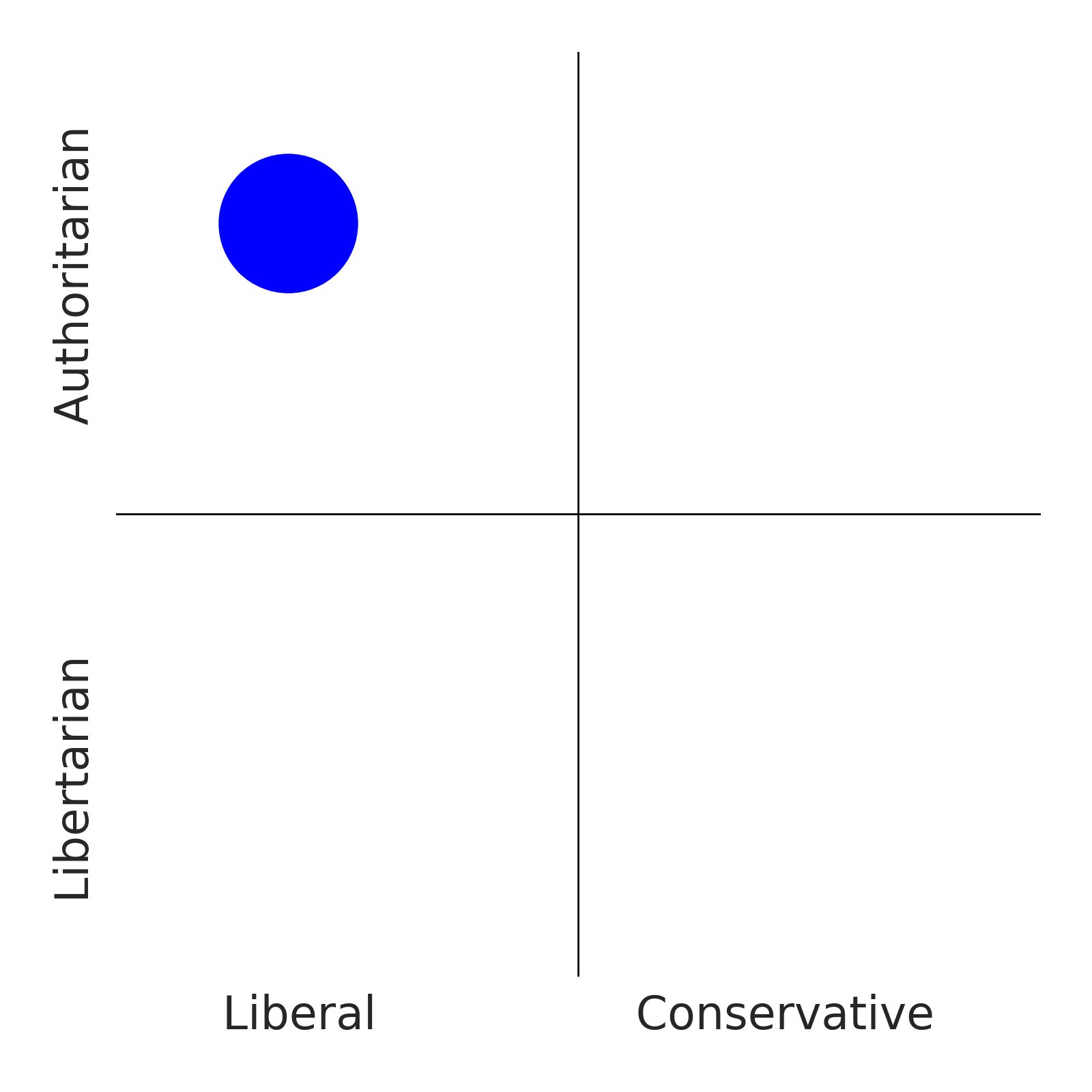
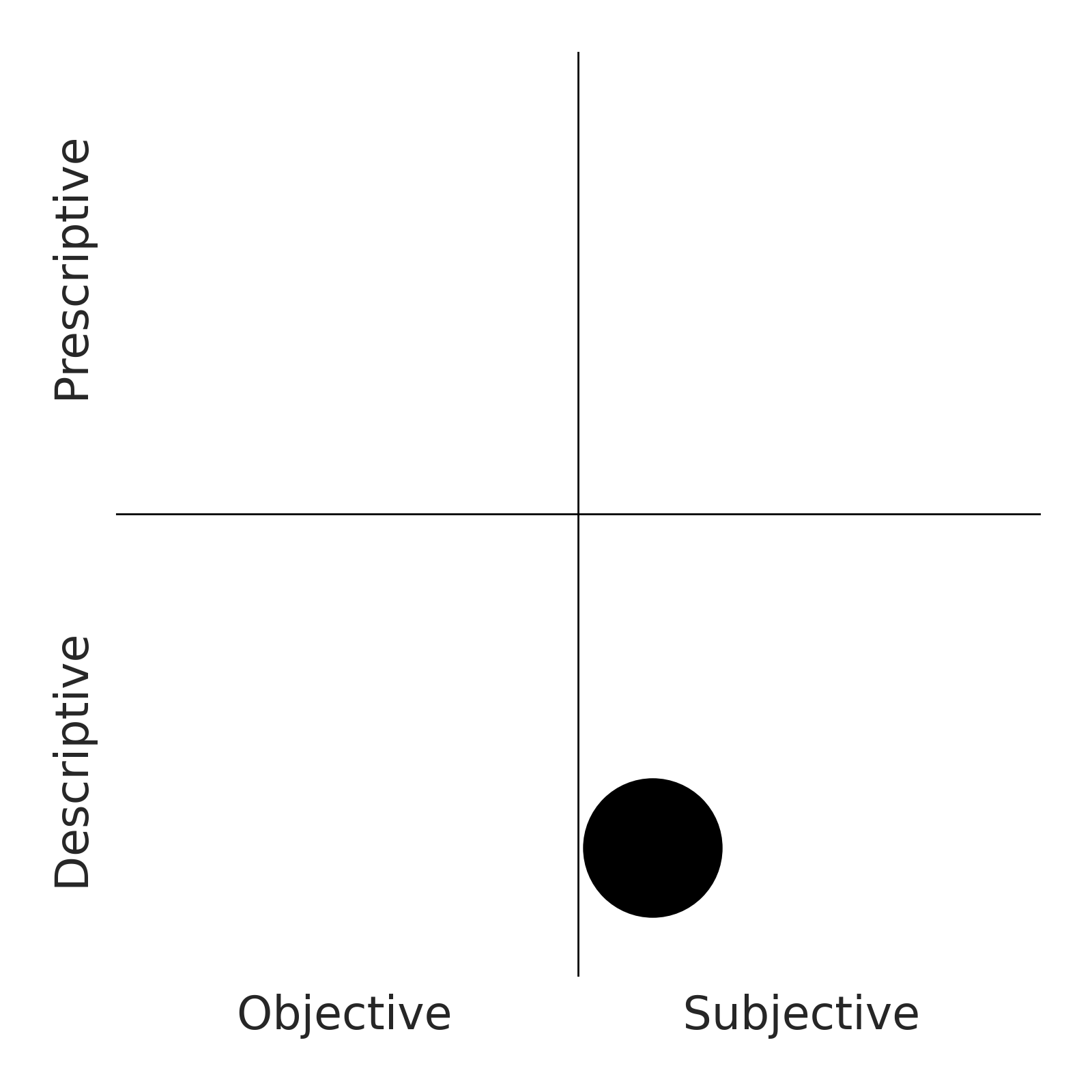
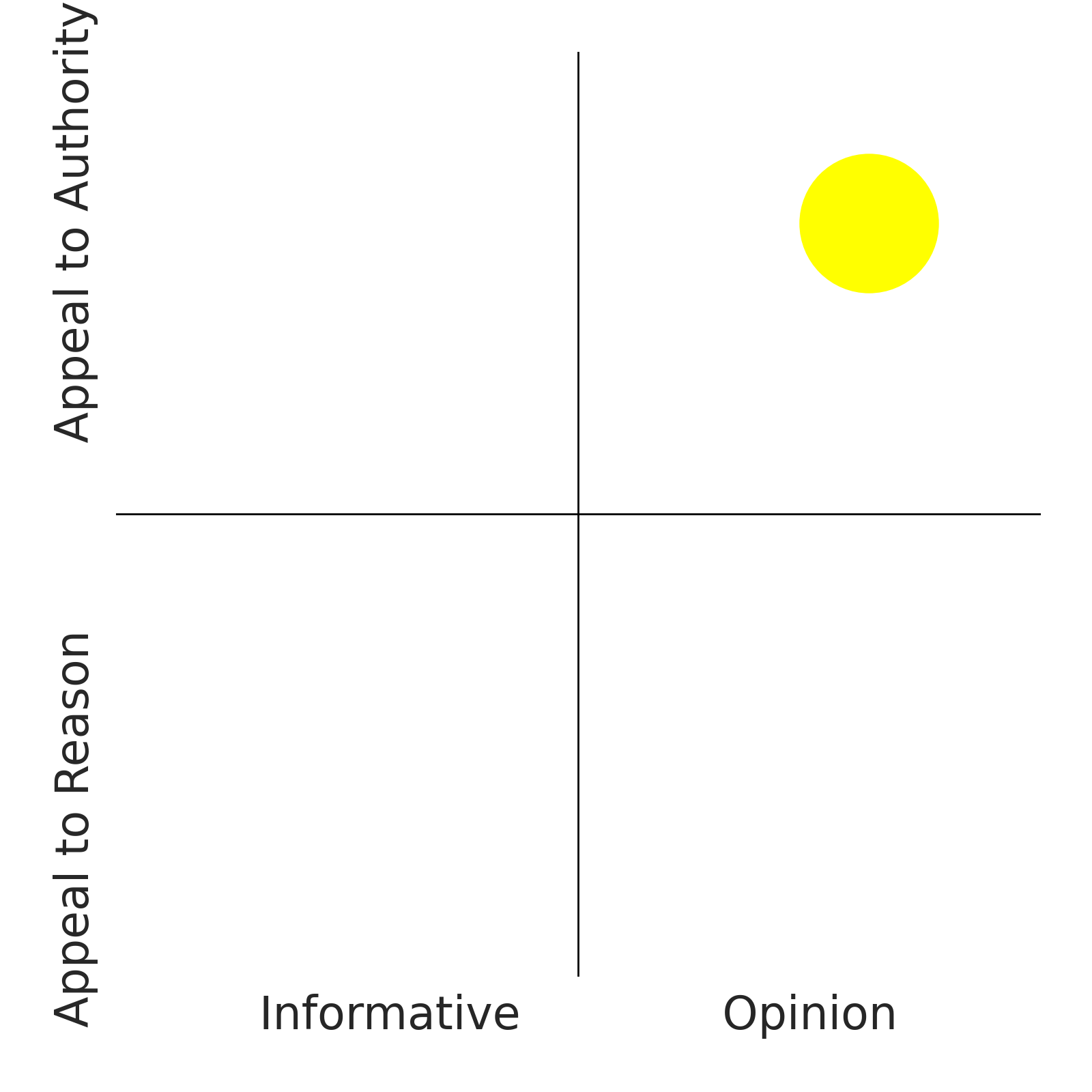
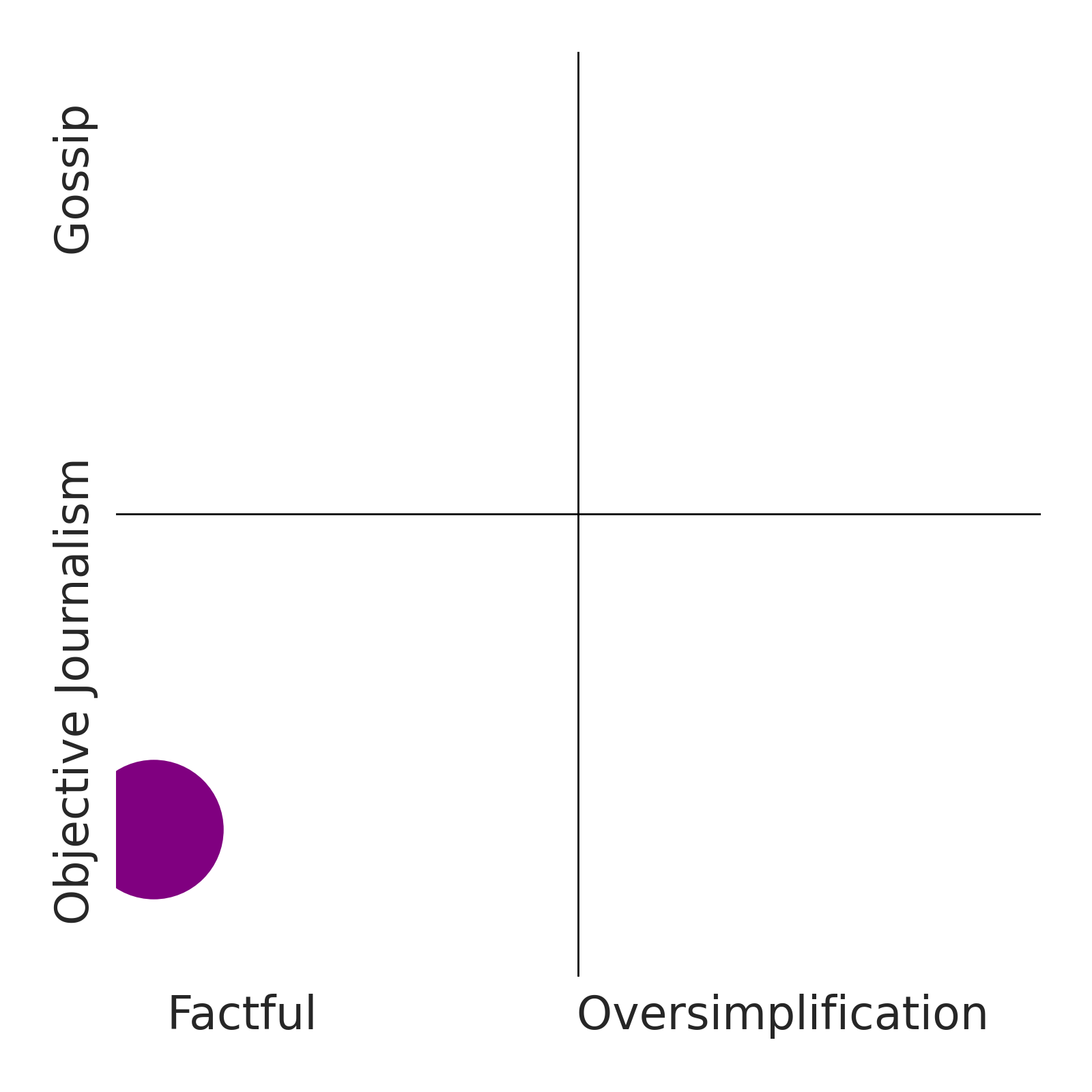
October 14, 2026 · 0 shares
Highly opinionated anti-Trump framing characterizes a contested immigration enforcement action as an authoritarian attack on the rule of law without sourcing or attribution.
Automated analysis; not human reviewed. Limitations: Two-sentence opinion excerpt with no sourcing, date, or details of the referenced enforcement action; scores reflect the visible framing only. · 16 of 55 available dimensions scored; omitted dimensions are not treated as neutral. · Verified supporting quotes for 16 of 16 scored dimensions.
Claim: The text condemns Trump’s enforcement action as authoritarian and defends Omar’s asylum status.
“Trump's authoritarian raid on Ilhan Omar is an attack on the rule of law.” · exact text match
Why: The anti-Trump, pro-asylum framing is a recognizable liberal directional cue.
Claim: The text frames deportation enforcement as an authoritarian raid and unlawful.
“authoritarian raid” · exact text match
“unlawfully deport” · exact text match
Why: Opposition to coercive deportation and emphasis on legal asylum point toward the libertarian end.
Claim: The account is built from evaluative characterizations rather than neutral description.
“authoritarian raid” · exact text match
“is an attack on the rule of law” · exact text match
Why: Loaded evaluative terms replace neutral reporting.
Claim: The wording is alarmist and dramatic about the enforcement action.
“authoritarian raid” · exact text match
“attack on the rule of law” · exact text match
Why: Sensational labels heighten the stakes.
Claim: The text uses alarmist language about an authoritarian attack.
“authoritarian raid” · exact text match
“attack on the rule of law” · exact text match
Why: Fear/rage-baiting language frames a political threat.
Claim: The authoritarian-attack conclusion is asserted through the loaded premise itself.
“Trump's authoritarian raid on Ilhan Omar is an attack on the rule of law.” · exact text match
Why: Labeling the action authoritarian assumes the conclusion that it is an attack on the rule of law.
Claim: The text is predominantly evaluative opinion rather than factual reporting.
“is an attack on the rule of law” · exact text match
“is now passively mute” · exact text match
Why: Both sentences are condemnatory judgments.
Claim: The text is a partisan condemnation of Trump and Republicans.
“Trump's authoritarian raid” · exact text match
“The party that once so loudly complained about Democratic “lawfare”” · exact text match
Why: Direct partisan framing dominates.
Claim: Complex legal and enforcement issues are reduced to an authoritarian attack and partisan silence.
“is an attack on the rule of law” · exact text match
“is now passively mute” · exact text match
Why: No legal or factual detail qualifies the sweeping characterization.
Claim: Omar is framed as a lawful asylum recipient targeted by unlawful deportation.
“unlawfully deport a sitting member of Congress who legally received asylum in this country” · exact text match
Why: The framing emphasizes lawful victimhood against enforcement.
Claim: Factual and legal conclusions are asserted with certainty.
“unlawfully deport a sitting member of Congress” · exact text match
“is an attack on the rule of law” · exact text match
Why: Unhedged assertions exceed the supplied support.
Claim: A strong anti-Trump ideological frame organizes the account.
“Trump's authoritarian raid” · exact text match
“Democratic “lawfare”” · exact text match
Why: The text uses ideologically charged labels to interpret the event.
Claim: The tone is strongly negative toward Trump and Republicans.
“authoritarian raid” · exact text match
“passively mute” · exact text match
Why: Negative emotional characterization dominates.
Claim: Central factual and legal claims are presented without sourcing or attributed evidence.
“unlawfully deport a sitting member of Congress” · exact text match
Why: No sourcing is visible for the core allegation.
Claim: Loaded labels and an implied hypocrisy charge frame the issue without supporting evidence.
“authoritarian raid” · exact text match
“The party that once so loudly complained about Democratic “lawfare” is now passively mute” · exact text match
Why: Loaded framing and asymmetric accusation are observable manipulative techniques.
Claim: A contested legal conclusion is stated as fact without sourcing or attribution.
“unlawfully deport a sitting member of Congress” · exact text match
Why: Presenting an unsourced legal conclusion as settled lowers fairness/honesty signals.
Two-sentence opinion excerpt with no sourcing, date, or details of the referenced enforcement action; scores reflect the visible framing only.
October 14, 2026 · 0 shares
The text pairs an unsourced, alarmist 'imminent danger' claim with a prescriptive call for Mexico to rethink Chinese telecom partnerships.
Automated analysis; not human reviewed. Limitations: The excerpt is only two sentences and supplies no sourcing or context, so several dimensions cannot be assessed reliably. · 13 of 55 available dimensions scored; omitted dimensions are not treated as neutral. · Verified supporting quotes for 13 of 13 scored dimensions.
Claim: The excerpt is evaluative and prescriptive rather than a neutral report.
“Mexico should rethink its dangerous partnerships with Chinese telecoms.” · exact text match
Why: The sentence issues a recommendation and labels the partnerships 'dangerous' rather than presenting verified facts.
Claim: The framing uses alarmist threat language.
“represents an imminent danger to the security of both nations” · exact text match
Why: The phrase 'imminent danger' intensifies the claim beyond neutral description.
Claim: The framing emphasizes a threatening, negative outlook.
“imminent danger” · exact text match
Why: The text foregrounds imminent danger rather than a balanced or hopeful outlook.
Claim: The text explicitly prescribes a policy change.
“Mexico should rethink its dangerous partnerships with Chinese telecoms.” · exact text match
Why: The word 'should' makes the statement prescriptive.
Claim: The text frames Chinese telecom partnerships as a national-security threat.
“represents an imminent danger to the security of both nations” · exact text match
Why: The claim is organized around cross-border security threat rather than diplomacy or commerce.
Claim: The framing uses fear-inducing imminent-danger language.
“dangerous partnerships” · exact text match
“imminent danger” · exact text match
Why: Both phrases heighten threat perception without qualification in the supplied text.
Claim: The excerpt is primarily opinionated advocacy.
“Mexico should rethink its dangerous partnerships with Chinese telecoms.” · exact text match
Why: It advances a recommendation and value judgment rather than reporting a verified event.
Claim: The content concerns cross-border security and foreign telecom policy.
“The proximity of these companies to the U.S.-Mexico border represents an imminent danger to the security of both nations.” · exact text match
Why: The statement is framed around national security and bilateral policy.
Claim: The text reduces a complex telecom relationship to a blanket danger claim.
“dangerous partnerships with Chinese telecoms” · exact text match
Why: It labels the partnerships dangerous without distinctions, evidence, or tradeoffs.
Claim: The text states an imminent security danger as settled fact without qualification.
“represents an imminent danger to the security of both nations” · exact text match
Why: The assertion uses absolute threat language and no uncertainty markers.
Claim: The excerpt carries a strongly negative emotional valence.
“dangerous” · exact text match
“imminent danger” · exact text match
Why: The wording is alarmist and negative rather than neutral or positive.
Claim: The excerpt provides no sourcing, attribution, or uncertainty markers for its security claim.
“represents an imminent danger to the security of both nations” · exact text match
Why: The supplied text asserts a severe threat without visible attribution or supporting evidence.
Claim: Loaded threat terms are used without supporting evidence in the supplied text.
“dangerous partnerships” · exact text match
“imminent danger” · exact text match
Why: The framing relies on emotionally charged labels and an unsupported urgency claim.
The excerpt is only two sentences and supplies no sourcing or context, so several dimensions cannot be assessed reliably.
October 07, 2026 · 0 shares
The text frames an incoming Congress as a socialist-led 'far-left power grab' bent on enacting an extreme agenda, using loaded labels rather than reporting concrete facts.
Automated analysis; not human reviewed. Limitations: The article is only a brief opinion fragment, so several dimension classifications rest on limited text and are therefore assigned lower confidence. · 50 of 55 available dimensions scored; omitted dimensions are not treated as neutral. · Verified supporting quotes for 34 of 50 scored dimensions.
Claim: The publisher uses strongly right-leaning framing against an incoming Congress and a named socialist.
“Socialist Darializa Avila Chevalier excited for far-left power grab.” · exact text match
Why: The phrase 'far-left power grab' and the label 'Socialist' frame the subject from a strongly conservative perspective.
Claim: The framing attacks a distant elite political class expected to ignore limits on government excess.
“They will go all out to enact their far-left agenda.” · exact text match
Why: The text positions ordinary people against a power-grabbing political class, which is a populist rhetorical stance.
Claim: The text frames an incoming Congress as a threat to limits on government power.
“They will not use their newfound power to curb government excesses so that no one abuses the office.” · exact text match
Why: Opposition to uncurbed government power is a libertarian framing.
Claim: The selection and wording are intensely evaluative rather than neutral.
“excited for far-left power grab” · exact text match
Why: Loaded, subjective phrasing dominates the brief text.
Claim: The text uses dramatic, alarmist language about an imminent political takeover.
“far-left power grab” · exact text match
Why: The 'power grab' framing is sensational and emotionally charged.
Claim: The prediction is wholly negative about what the incoming Congress will do.
“They will go all out to enact their far-left agenda.” · exact text match
Why: No positive or neutral possibility is acknowledged, making the tone pessimistic.
Claim: The text moves from describing an election to prescribing alarm about the agenda.
“A do-something Congress is about to be elected.” · exact text match
Why: It pairs a descriptive statement with a prescriptive warning about the consequences.
Claim: The text uses alarmist framing designed to provoke concern about a far-left takeover.
“They will go all out to enact their far-left agenda.” · exact text match
Why: The dramatic warning language raises fear about the consequences of the election.
Claim: The entire text is an unsupported opinion piece about the incoming Congress.
“They will go all out to enact their far-left agenda.” · exact text match
Why: It states predictions and value judgments rather than reported facts.
Claim: The content is centrally about political power, elections, and an ideological agenda.
“A do-something Congress is about to be elected.” · exact text match
Why: The subject matter and framing are entirely political.
Claim: A complex legislature and its agenda are reduced to a single far-left caricature.
“They will go all out to enact their far-left agenda.” · exact text match
Why: No nuance, competing priorities, or internal divisions are acknowledged.
Claim: The tone is dismissive and name-calling rather than measured.
“Socialist Darializa Avila Chevalier excited for far-left power grab.” · exact text match
Why: Labeling the subject and using 'power grab' reads as taunting rather than mature analysis.
Claim: The conclusion that the Congress is far-left is asserted without non-circular evidence.
“They will go all out to enact their far-left agenda.” · exact text match
Why: The claim depends on the unproven label it is supposed to support.
Claim: The framing implies the public will be victimized by an unaccountable power grab.
“They will not use their newfound power to curb government excesses so that no one abuses the office.” · exact text match
Why: The suggestion of abuse of office casts the public as potential victims.
Claim: Certainty about the future agenda exceeds any supplied evidence.
“They will go all out to enact their far-left agenda.” · exact text match
Why: The text asserts a definite outcome without citing sources or allowing uncertainty.
Claim: The text frames the election entirely through a rigid anti-far-left ideological lens.
“They will go all out to enact their far-left agenda.” · exact text match
Why: The interpretation is predetermined by an ideological stance rather than open inquiry.
Claim: The text positions itself against the expected incoming governing establishment.
“They will not use their newfound power to curb government excesses so that no one abuses the office.” · exact text match
Why: The tone is anti-establishment toward the incoming Congress and its agenda.
Claim: The text is strongly negative in tone toward the subject.
“They will go all out to enact their far-left agenda.” · exact text match
Why: The language conveys negative emotion rather than neutral reporting.
Claim: The text condemns the incoming Congress's agenda while offering none of the same scrutiny to other actors.
“They will not use their newfound power to curb government excesses so that no one abuses the office.” · exact text match
Why: It applies a critical standard to one side without comparative analysis.
Claim: The text provides no sourcing, attribution, or uncertainty to support its assertions.
“They will go all out to enact their far-left agenda.” · exact text match
Why: Unsupported sweeping predictions reduce observable credibility.
Claim: The claim asserts an extreme agenda without evidence or reasoning.
“They will go all out to enact their far-left agenda.” · exact text match
Why: The prediction is stated ardently without factual support or logical argument.
Claim: The text frames government power as a threat to individual freedom.
“They will not use their newfound power to curb government excesses so that no one abuses the office.” · exact text match
Why: Worry about abuse of office reflects an individualist concern about concentrated state power.
Claim: The text predicts what an incoming Congress will do without evidence.
“They will go all out to enact their far-left agenda.” · exact text match
Why: The core assertion is a forecast about future behavior.
Claim: The text uses charged labels and a false dichotomy to frame the incoming Congress.
“They will not use their newfound power to curb government excesses so that no one abuses the office.” · exact text match
Why: The framing omits nuance and presents the choice as either curbing excess or enacting an extreme agenda.
Claim: The text is short and grammatically clean but contains no strong AI-specific markers.
“Socialist Darializa Avila Chevalier excited for far-left power grab.” · exact text match
Why: The brevity and fluency do not establish AI authorship; confidence is very low.
Claim: The text makes sweeping claims about motives and outcomes without substantiation.
“They will go all out to enact their far-left agenda.” · exact text match
Why: No sourcing, attribution, or qualification supports the prediction, reducing observable integrity.
Claim: The text offers no analysis, evidence, or reasoning to support its assertions.
“They will go all out to enact their far-left agenda.” · exact text match
Why: Bare assertion without context or substantiation indicates low analytical content.
Claim: The text asserts an extreme future agenda without evidence or reasoning.
“They will go all out to enact their far-left agenda.” · exact text match
Why: The unsupported certainty leans toward unreasoned belief, though it may be opinion rather than delusion.
Claim: The text labels the subject socialist but does not outline Marxist policy content.
“Socialist Darializa Avila Chevalier excited for far-left power grab.” · exact text match
Why: The word 'Socialist' is a label; no class-conflict or anti-capitalist program is actually described.
Claim: The text uses harsh labeling against a named individual.
“Socialist Darializa Avila Chevalier excited for far-left power grab.” · exact text match
Why: Mocking a specific person's enthusiasm can be seen as uncharitable treatment.
Claim: The text signals anti-socialist and pro-liberty virtue without offering analysis.
“They will not use their newfound power to curb government excesses so that no one abuses the office.” · exact text match
Why: The stance functions as identity signaling more than reasoned argument.
Claim: The text implies a coordinated far-left takeover of government power.
“far-left power grab” · exact text match
Why: The 'power grab' phrasing hints at a hidden coordinated takeover, though no specifics are given.
Claim: The incoming Congress is singled out as the cause of an anticipated abuse of power.
“They will not use their newfound power to curb government excesses so that no one abuses the office.” · exact text match
Why: Blame is assigned preemptively to a group for future misconduct.
Claim: The text applies a harsher standard to an incoming Congress than it explains or justifies.
“They will not use their newfound power to curb government excesses so that no one abuses the office.” · exact text match
Why: The one-sided warning implies bad faith in the opposition without comparable scrutiny of alternatives.
The article is only a brief opinion fragment, so several dimension classifications rest on limited text and are therefore assigned lower confidence.
The framing presents Israel's actions in Gaza as unqualified 'horrors' and 'destruction' and prescribes that the world 'put a stop to it', with no attribution, sourcing, or balancing perspectives.
Automated analysis; not human reviewed. Limitations: The article text is only two sentences and lacks sourcing, dates, or specifics, so bias classifications rest on very limited evidence. · 10 of 55 available dimensions scored; omitted dimensions are not treated as neutral. · Verified supporting quotes for 9 of 10 scored dimensions.
Claim: The framing aligns with a critical, anti-Israel stance typical of left-leaning coverage.
“After watching the horrors Israel has inflicted on Gaza for three years, it's time for the world to finally put a stop to it.” · exact text match
Why: Unattributed condemnation of Israel and advocacy to stop its actions signals a left-leaning editorial posture.
Claim: The article uses emotionally charged language of horror and destruction.
“What 3 years of destruction in Gaza actually looks like.” · exact text match
Why: 'Destruction' and 'horrors' evoke fear and outrage without neutral framing.
Claim: The article is almost entirely evaluative and prescriptive rather than factual.
“it's time for the world to finally put a stop to it” · exact text match
Why: The sentence is a direct policy opinion rather than reported fact.
Claim: The article takes a clear political stance on the Gaza conflict.
“After watching the horrors Israel has inflicted on Gaza for three years” · exact text match
Why: Direct political condemnation of a state's military actions is inherently political.
Claim: The article reduces a complex conflict to a single actor's infliction of horrors.
“the horrors Israel has inflicted on Gaza for three years” · exact text match
Why: No context, causality, or opposing perspectives are provided.
Claim: No authority is cited; the claim rests on the author's assertion alone.
Why: No external authority is invoked, so the trait is absent.
Claim: The article urges global action against Israel, distancing from establishment-aligned positions.
“it's time for the world to finally put a stop to it” · exact text match
Why: Calling for international intervention against a state suggests an anti-establishment framing.
Claim: The language is strongly negative and emotionally loaded.
“the horrors Israel has inflicted on Gaza” · exact text match
Why: 'Horrors' is an emotive term rather than neutral description.
Claim: The article makes a forward-looking call to action with little factual basis.
“it's time for the world to finally put a stop to it” · exact text match
Why: The prescription is normative rather than speculative forecasting.
Claim: The article uses loaded framing and a false sense of urgency without evidence.
“it's time for the world to finally put a stop to it” · exact text match
Why: Urgency and moralized framing substitute for factual substantiation.
The article text is only two sentences and lacks sourcing, dates, or specifics, so bias classifications rest on very limited evidence.
Frames website-related wiretapping litigation as a predatory 'shakedown' against Main Street businesses and urges federal intervention.
Automated analysis; not human reviewed. Limitations: The supplied text is a two-sentence snippet with no date, sources, bill details, or legal context, limiting verification and full framing analysis. · 14 of 55 available dimensions scored; omitted dimensions are not treated as neutral. · Verified supporting quotes for 14 of 14 scored dimensions.
Claim: The framing takes a conservative-leaning, pro-business stance against what it calls predatory lawsuits.
“Stop the wiretap shakedown on Main Street.” · exact text match
“predatory wiretapping lawsuits” · exact text match
Why: Calling business lawsuits a 'shakedown' and seeking to protect businesses aligns with conservative tort-reform and pro-business positions, though no explicit ideology is stated.
Claim: Uses 'Main Street' and 'shakedown' to frame the issue as ordinary businesses against predatory legal actors.
“Stop the wiretap shakedown on Main Street.” · exact text match
Why: 'Main Street' is populist shorthand for small/ordinary business, and 'shakedown' casts the lawsuits as predatory impositions.
Claim: The piece is subjective, evaluating the lawsuits as predatory rather than neutrally reporting them.
“Stop the wiretap shakedown on Main Street.” · exact text match
“predatory wiretapping lawsuits” · exact text match
Why: Loaded terms such as 'shakedown' and 'predatory' express normative judgment rather than neutral description.
Claim: Uses sensational language to dramatize a legal-policy matter.
“Stop the wiretap shakedown on Main Street.” · exact text match
Why: 'Shakedown' evokes extortion and heightens emotional response beyond a technical legal description.
Claim: Opens with a direct command and a policy prescription rather than a neutral description.
“Stop the wiretap shakedown on Main Street.” · exact text match
“called for federal modernization of surveillance laws” · exact text match
Why: The imperative 'Stop' and the call for modernization instruct action.
Claim: Invokes outrage by framing lawsuits as extortion against Main Street businesses.
“Stop the wiretap shakedown on Main Street.” · exact text match
Why: 'Shakedown' implies businesses are being extorted, which is fear/rage-provoking, though the wording is more indignation than alarm.
Claim: Assumes the conclusion that the lawsuits are predatory and unjustified in the act of describing them.
“predatory wiretapping lawsuits” · exact text match
Why: The label 'predatory' presumes the key contested point—that the lawsuits are abusive—rather than demonstrating it.
Claim: The central framing is opinionated, condemning lawsuits as a 'shakedown' and 'predatory.'
“Stop the wiretap shakedown on Main Street.” · exact text match
“predatory wiretapping lawsuits” · exact text match
Why: The language is evaluative and advocacy-oriented, not factual reporting.
Claim: The piece is explicitly political in subject matter and advocacy.
“House Committee on Small Business Chairman Roger Williams” · exact text match
“bipartisan legislative efforts” · exact text match
Why: It frames a legislative/political development in advocacy terms, making it political rather than neutral.
Claim: Reduces complex surveillance-law litigation to a simple 'shakedown' narrative involving 'standard website technologies.'
“Stop the wiretap shakedown on Main Street.” · exact text match
“standard website technologies” · exact text match
Why: The broad phrase 'standard website technologies' and stark 'shakedown' collapse legal nuance.
Claim: Casts businesses as victims of predatory lawsuits rather than as parties in a legal dispute.
“Stop the wiretap shakedown on Main Street.” · exact text match
“protect businesses from predatory wiretapping lawsuits” · exact text match
Why: 'Shakedown' and 'protect' establish businesses as targets needing protection.
Claim: Asserts the litigation is a 'shakedown' and 'predatory' without supporting evidence or detail.
“Stop the wiretap shakedown on Main Street.” · exact text match
“predatory wiretapping lawsuits” · exact text match
Why: The certainty of the condemnation exceeds what the text substantiates; no evidence for the characterization is supplied.
Claim: Negative emotional language creates a negative emotional valence.
“Stop the wiretap shakedown on Main Street.” · exact text match
Why: 'Shakedown' and 'predatory' attach extortionate connotations to the lawsuits, producing a negative emotional charge.
Claim: Uses loaded framing and omits any rationale for the lawsuits.
“Stop the wiretap shakedown on Main Street.” · exact text match
Why: The framing is designed to elicit opposition; no perspective of plaintiffs or legal basis is presented.
The supplied text is a two-sentence snippet with no date, sources, bill details, or legal context, limiting verification and full framing analysis.
Frames sanctuary-city policy through a loaded citizens-versus-illegal-immigrants lens and asserts discrimination without sourcing or counterview.
Sanctuary city policies generally limit local cooperation with federal immigration enforcement; “whack-a-mole” refers to decentralized local policy variation.
Automated analysis; not human reviewed. Limitations: Only a short opinion excerpt is supplied, with no full article, sourcing, or policy detail to verify the specific claims. · 15 of 55 available dimensions scored; omitted dimensions are not treated as neutral. · Verified supporting quotes for 15 of 15 scored dimensions.
Claim: Presents sanctuary-city criticism from a conservative immigration-enforcement perspective.
“government discriminates against citizens in favor of illegal immigrants” · exact text match
Why: The claim aligns with conservative immigration-enforcement framing and casts sanctuary policy as favoring illegal immigrants over citizens.
Claim: Frames the issue as ordinary citizens harmed by government policy favoring illegal immigrants.
“government discriminates against citizens in favor of illegal immigrants” · exact text match
Why: The citizens-versus-government/illegal-immigrant contrast is a populist framing.
Claim: The text is a normative opinion assertion rather than a neutral report.
“Equal justice under law is supposed to mean something” · exact text match
Why: The sentence states a value judgment about what equal justice should mean.
Claim: Uses loaded headline-style language to dramatize the policy dispute.
“Sanctuary city whack-a-mole” · exact text match
Why: The metaphor is sensational and dismissive rather than neutral description.
Claim: The text prescribes how equal justice should treat sanctuary policies rather than merely describing them.
“Equal justice under law is supposed to mean something” · exact text match
Why: The phrasing is normative and calls for a standard to be honored.
Claim: The snippet is overwhelmingly opinionated.
“Equal justice under law is supposed to mean something” · exact text match
Why: It offers a value judgment rather than factual reporting.
Claim: The text is centrally about a political immigration-enforcement dispute.
“government discriminates against citizens in favor of illegal immigrants” · exact text match
Why: Sanctuary-city policy and treatment of illegal immigrants are political issues.
Claim: Reduces sanctuary-city policy to a ZIP-code slogan and a discrimination claim.
“Same policy, different ZIP code.” · exact text match
Why: The metaphor compresses a complex policy into a simple contrast without detail.
Claim: Casts citizens as victims of government favoritism toward illegal immigrants.
“government discriminates against citizens in favor of illegal immigrants” · exact text match
Why: The framing positions citizens as the harmed party.
Claim: Asserts government discrimination as established fact without evidence.
“government discriminates against citizens in favor of illegal immigrants” · exact text match
Why: The certainty of the assertion exceeds the snippet's supplied support.
Claim: The text advances a clear ideological immigration-enforcement stance.
“in favor of illegal immigrants” · exact text match
Why: The loaded citizen-versus-illegal-immigrant framing is ideological rather than free-thinking.
Claim: Criticizes government sanctuary policies as anti-citizen.
“government discriminates against citizens in favor of illegal immigrants” · exact text match
Why: The claim is directed against established government policy, supporting an anti-establishment score.
Claim: The text carries a negative, grievance-laden tone.
“government discriminates against citizens” · exact text match
Why: The accusation of discrimination conveys negative emotional valence.
Claim: The snippet offers no sourcing, attribution, or uncertainty and relies on an unsupported assertion.
“government discriminates against citizens in favor of illegal immigrants” · exact text match
Why: Credibility is reduced by the absence of visible evidence or attribution for a broad factual claim.
Claim: Uses loaded framing and an implied dichotomy between citizens and illegal immigrants.
“Sanctuary city whack-a-mole” · exact text match
Why: The metaphor and citizens-versus-illegal-immigrants contrast are observable manipulative framing techniques.
Only a short opinion excerpt is supplied, with no full article, sourcing, or policy detail to verify the specific claims.
October 14, 2026 · 0 shares
Strongly prescriptive and emotionally loaded pro-Ukraine intervention framing, with little sourcing and reliance on personal experience.
Automated analysis; not human reviewed. Limitations: The supplied article text is truncated after 'saw firsthand hand how…', limiting assessment of sourcing and full argument. · 12 of 55 available dimensions scored; omitted dimensions are not treated as neutral. · Verified supporting quotes for 12 of 12 scored dimensions.
Claim: The headline and excerpt are framed as a first-person prescription and judgment rather than neutral reporting.
“Trump right to share intel with Ukraine; don't turn off Starlink, Elon Musk!” · exact text match
“This is very dangerous — I know, because I was in Ukraine several months ago” · exact text match
Why: Prescriptive command and personal certainty make the framing highly subjective.
Claim: The language uses emotive and dramatic descriptors about the strikes.
“Devastating Russia strikes hit Kyiv last night, and now 600,000 people are without power.” · exact text match
Why: 'Devastating' is a loaded, sensational descriptor rather than neutral wording.
Claim: The report emphasizes danger, damage, and lack of warning rather than positive developments.
“Devastating Russia strikes hit Kyiv last night, and now 600,000 people are without power.” · exact text match
“This is very dangerous — I know, because I was in Ukraine several months ago” · exact text match
Why: Focus on damage and danger conveys a pessimistic tone.
Claim: The headline prescribes policy actions.
“Trump right to share intel with Ukraine; don't turn off Starlink, Elon Musk!” · exact text match
Why: It directs Trump and Musk to take specific actions, making it strongly prescriptive.
Claim: The article advocates continued Western intelligence and communications support for Ukraine's defense.
“Trump right to share intel with Ukraine; don't turn off Starlink, Elon Musk!” · exact text match
Why: Supporting intelligence sharing and Starlink access for Ukraine is a hawkish posture in the Russia-Ukraine conflict.
Claim: The framing stresses imminent danger and lack of warning.
“The ballistic missiles were not detected in advance, which meant people on the ground there had little advanced warning.” · exact text match
“This is very dangerous — I know, because I was in Ukraine several months ago” · exact text match
Why: Emphasis on undetected missiles and danger uses fear-oriented framing.
Claim: The text is explicitly opinionated and policy-prescriptive.
“Trump right to share intel with Ukraine; don't turn off Starlink, Elon Musk!” · exact text match
Why: The headline states a normative judgment and command rather than neutral fact.
Claim: The article centers on political and geopolitical policy decisions involving Trump, Musk, Ukraine, and Starlink.
“Trump right to share intel with Ukraine; don't turn off Starlink, Elon Musk!” · exact text match
Why: The core subject is a contested political/foreign-policy issue.
Claim: The text asserts the correctness of a policy and the danger of the situation with high certainty.
“Trump right to share intel with Ukraine; don't turn off Starlink, Elon Musk!” · exact text match
“This is very dangerous — I know, because I was in Ukraine several months ago” · exact text match
Why: Certain claims are made without detailed support, exceeding what the excerpt substantiates.
Claim: The article advances a clear pro-Ukraine interventionist line.
“Trump right to share intel with Ukraine; don't turn off Starlink, Elon Musk!” · exact text match
Why: The framing organizes policy around a firm geopolitical alignment.
Claim: The excerpt uses negative emotional language about the strikes and danger.
“Devastating Russia strikes hit Kyiv last night, and now 600,000 people are without power.” · exact text match
“This is very dangerous — I know, because I was in Ukraine several months ago” · exact text match
Why: Loaded negative descriptors convey a negative emotional charge.
Claim: The text uses loaded framing and urgent commands to push a policy response.
“Trump right to share intel with Ukraine; don't turn off Starlink, Elon Musk!” · exact text match
“Devastating Russia strikes hit Kyiv last night” · exact text match
Why: Loaded language and directive imperative combine to steer the reader.
The supplied article text is truncated after 'saw firsthand hand how…', limiting assessment of sourcing and full argument.
October 20, 2026 · 0 shares
The two-sentence commentary uses the loaded metaphor of Trump’s "overflowing swamp" and the dismissive phrase "small potatoes" to minimize Kimberly Guilfoyle’s sacking as politically trivial.
Automated analysis; not human reviewed. Limitations: The supplied text is only two sentences of opinion/commentary without sourcing, so directional and credibility judgments are limited. · 11 of 55 available dimensions scored; omitted dimensions are not treated as neutral. · Verified supporting quotes for 11 of 11 scored dimensions.
Claim: The text frames Trump negatively via the "swamp" metaphor.
“Trump's overflowing swamp” · exact text match
Why: Anti-Trump framing is commonly aligned with liberal political criticism in U.S. discourse, though the short excerpt lacks policy content.
Claim: The text uses anti-establishment "swamp" imagery and a dismissive colloquial phrase.
“Trump's overflowing swamp” · exact text match
“Guilfoyle is small potatoes.” · exact text match
Why: "Swamp" invokes populist anti-elite rhetoric; "small potatoes" dismisses the significance of the event in colloquial terms.
Claim: The text is evaluative and metaphorical rather than measured description.
“drains a drop from Trump's overflowing swamp” · exact text match
“Guilfoyle is small potatoes.” · exact text match
Why: Both phrases are subjective characterizations of significance and corruption.
Claim: The phrasing uses a vivid, loaded metaphor to characterize the event.
“Trump's overflowing swamp” · exact text match
Why: The "overflowing swamp" image is colorful and loaded, though not overtly sensationalist.
Claim: The text is explicitly opinionated about the significance of Guilfoyle's sacking.
“Guilfoyle is small potatoes.” · exact text match
“drains a drop from Trump's overflowing swamp” · exact text match
Why: The sentences evaluate the event rather than report neutral facts.
Claim: The text centers a political figure and Trump-associated political framing.
“Kimberly Guilfoyle's sacking” · exact text match
“Trump's overflowing swamp” · exact text match
Why: It references a political operative's dismissal and Trump in evaluative political terms.
Claim: The text reduces a personnel event to a dismissive metaphor without details or context.
“drains a drop from Trump's overflowing swamp” · exact text match
“Guilfoyle is small potatoes.” · exact text match
Why: It uses two sweeping characterizations and supplies no complicating facts.
Claim: The text asserts the insignificance of the sacking as settled.
“Guilfoyle is small potatoes.” · exact text match
Why: The dismissive judgment is stated without evidence or qualification.
Claim: The text frames the event through an anti-Trump political metaphor.
“Trump's overflowing swamp” · exact text match
Why: The phrasing is ideologically charged, though limited to one metaphor.
Claim: The text carries a negative and dismissive evaluative tone.
“Trump's overflowing swamp” · exact text match
“Guilfoyle is small potatoes.” · exact text match
Why: The swamp metaphor and "small potatoes" are negative and dismissive.
Claim: The text uses loaded metaphor and dismissive labeling to frame the event.
“Trump's overflowing swamp” · exact text match
“Guilfoyle is small potatoes.” · exact text match
Why: These are observable framing devices that steer interpretation without substantive support.
The supplied text is only two sentences of opinion/commentary without sourcing, so directional and credibility judgments are limited.
Presents an unqualified, inflammatory accusation that Joe Biden confessed to everything, characterizing his deception and culpability as established facts.
Zwonitzer is Biden's ghostwriter; Hur was the special counsel who investigated Biden's handling of classified documents.
Automated analysis; not human reviewed. Limitations: The article text is extremely brief, limiting the evidence base; all classifications are based on a two-sentence excerpt. · 18 of 52 available dimensions scored; omitted dimensions are not treated as neutral. · Verified supporting quotes for 15 of 18 scored dimensions.
Claim: The framing is partisan and adversarial toward a Democratic president.
“Joe Biden confessed to everything on tape.” · exact text match
“Biden's deception and culpability were established in both the Zwonitzer and Hur interviews.” · exact text match
Why: The use of 'confessed to everything' and 'deception and culpability' without qualification or context is a strongly negative characterization of a prominent Democratic leader, typical of conservative partisan framing.
Claim: Presents an opinion as established fact.
“Biden's deception and culpability were established in both the Zwonitzer and Hur interviews.” · exact text match
Why: The phrase 'were established' asserts as fact a judgment about Biden's deception and culpability, which is subjective.
Claim: Uses inflammatory, sensational language.
“Joe Biden confessed to everything on tape.” · exact text match
Why: The word 'confessed to everything' is sensational and designed to evoke shock rather than inform.
Claim: The language is designed to provoke outrage.
“Joe Biden confessed to everything on tape.” · exact text match
Why: The dramatic declaration is intended to alarm readers and incite anger.
Claim: Assumes the conclusion that Biden is deceptive and culpable.
“Biden's deception and culpability were established in both the Zwonitzer and Hur interviews.” · exact text match
Why: The assertion that deception and culpability were established presupposes the very thing that needs to be proven, with no argument.
Claim: Stated as fact an opinionated judgment.
“Biden's deception and culpability were established.” · not found in supplied text
Why: The sentence is an expression of opinion about Biden's character and guilt, presented declaratively.
Claim: The accusation against a president is inherently political.
“Joe Biden confessed to everything on tape.” · exact text match
Why: Targeting a sitting president with an unequivocal accusation is a direct political act.
Claim: Reduces a complex matter to a single, absolute sentence.
“Joe Biden confessed to everything on tape.” · exact text match
Why: The claim of a blanket confession simplifies any legal or evidentiary complexity into a one-line accusation.
Claim: Cites interviews as authorities for the claim.
“in both the Zwonitzer and Hur interviews.” · exact text match
Why: The reference to named interviews is an appeal to the authority of those proceedings without offering any details.
Claim: Uses teenage-style hyperbole.
“confessed to everything” · exact text match
Why: The phrase 'confessed to everything' is a grandiose and immature characterization rather than a sober report.
Claim: Certainty far exceeds the evidence supplied.
“Biden's deception and culpability were established.” · not found in supplied text
Why: The word 'established' conveys certainty that is not supported by any presented evidence.
Claim: The framing is critical of an established political figure.
“Biden's deception and culpability were established.” · not found in supplied text
Why: Attacking the incumbent president is generally an anti-establishment stance, though the text itself does not explicitly frame it as such.
Claim: The tone is strongly negative toward Biden.
“deception and culpability” · exact text match
Why: The words 'deception' and 'culpability' carry strong negative emotional valence.
Claim: The report is not credible due to unsupported claims.
“Joe Biden confessed to everything on tape.” · exact text match
“Biden's deception and culpability were established” · exact text match
Why: Makes an extreme accusation without citation, context, or evidence, undermining trustworthiness.
Claim: The claim of a blanket confession is an unsupported, hyperbolic assertion.
“Joe Biden confessed to everything on tape.” · exact text match
Why: The absolute and sweeping claim 'confessed to everything' is an exaggeration that lacks supporting detail and is therefore an irrational leap from the referenced interviews.
Claim: Uses loaded language and absolute assertions to manipulate reader perception.
“Joe Biden confessed to everything on tape.” · exact text match
Why: The dramatic wording is designed to evoke a predetermined response, but the text is too short for strong confidence.
Claim: The article makes an extreme claim without providing evidence or context.
“Joe Biden confessed to everything on tape.” · exact text match
“Biden's deception and culpability were established in both the Zwonitzer and Hur interviews.” · exact text match
Why: By asserting a sweeping confession and labeling it 'established' without any supporting detail, the framing is internally unfair and lacks honesty.
Claim: The report is a simplistic assertion without reasoning.
“Joe Biden confessed to everything on tape.” · exact text match
Why: Lacks analysis, context, or evidence, relying instead on an absolute, unsupported claim.
The article text is extremely brief, limiting the evidence base; all classifications are based on a two-sentence excerpt.
May 22, 2026 · 0 shares
Frame is liberal-leaning, portraying Trump's Iran-related energy policy as harming public schools, using sensational language and a broad casualty claim without sourcing.
Claims that U.S. Iran energy policy has harmed public schools, citing roughly 50 million students as collateral damage.
May inherit political framing bias from training data; aim for neutrality.
October 17, 2026 · 0 shares
Automated analysis; not human reviewed. Limitations: The supplied text is only two sentences and contains no sourcing, byline, or supporting detail, limiting confidence in several classification dimensions. · 55 of 55 available dimensions scored; omitted dimensions are not treated as neutral. · Verified supporting quotes for 0 of 55 scored dimensions.
The supplied text is only two sentences and contains no sourcing, byline, or supporting detail, limiting confidence in several classification dimensions.
May 11, 2026 · 0 shares
Polemic assessment portrays the Supreme Court as partisan and the Republican-appointed majority as failing, reflecting a liberal-leaning, anti-establishment framing that relies on a purported definition by Barrett rather than verifiable evidence.
A concise, polemical political critique focusing on Barrett and the Republican-appointed Supreme Court majority.
I am trained on broad data; may reflect Western/liberal tilt.
Accusatory conservative-opinion framing that blames Anthony Fauci and a partisan media for COVID-19 failures, using selective diary entries and media incidents to demand accountability.
Anthony Fauci served as director of the National Institute of Allergy and Infectious Diseases (NIAID) and was a leading figure in the U.S. COVID-19 response. The article refers to a Senate Homeland Security and Governmental Affairs Committee hearing on July 29, 2026. The Fifth Amendment protects against self-incrimination.
Automated analysis; not human reviewed. · 21 of 53 available dimensions scored; omitted dimensions are not treated as neutral. · Verified supporting quotes for 10 of 21 scored dimensions.
Claim: The article frames Fauci and mainstream media as culpable for COVID failures, a stance typical of conservative commentary.
“Fauci will escape accountability; the media should not.” · exact text match
“His reign of error during COVID would not have been possible without a deeply partisan and starstruck press.” · not found in supplied text
Why: Direct attack on a prominent Democratic-aligned figure and media institutions, consistent with conservative political orientation.
Claim: The article portrays Fauci and the media as an elite that abused power and misled the public.
“One man was given too much power, and that was that.” · exact text match
“Certain news outlets inexplicably agreed to slap the labels 'fringe theory,' 'conspiracy' and even 'racist' on any suggestion that the virus had escaped a lab.” · not found in supplied text
Why: Frames Fauci and media as an untouchable elite that suppressed dissent and caused harm to ordinary people.
Claim: The article criticizes government power and media censorship, suggesting a preference for individual liberty against overreach.
“One man was given too much power, and that was that.” · exact text match
“U.S. newsrooms even degraded themselves to the point of praising Russia’s and China’s obviously bogus claims about driving down infection numbers through ridiculous, cartoonishly authoritarian measures.” · not found in supplied text
Why: Criticism of concentrated power and authoritarian measures, with implied support for less centralized control.
Claim: The article is a strongly opinionated commentary, not an objective news report.
“by Becket Adams, opinion contributor” · exact text match
“The media can still be held accountable for how they failed the public, failures that took many forms.” · exact text match
Why: Explicitly labeled opinion, with prescriptive calls for accountability and one-sided narrative.
Claim: The article uses dramatic and emotionally charged language to heighten impact.
“wriggling in his seat like a toddler” · exact text match
“his recommendations ruined lives, drove suicides, and left the elderly to die in isolation.” · exact text match
Why: Figurative and loaded language designed to provoke strong reaction, beyond straightforward reporting.
Claim: The article primarily argues for what should be done (accountability) rather than neutrally describing events.
“the media should not.” · exact text match
“The media can still be held accountable for how they failed the public.” · not found in supplied text
Why: Direct calls for action and moral judgment, not just description.
Claim: The article uses rage-baiting language to provoke anger and fear about institutional failures.
“horrible, disastrous, inexcusable behavior” · not found in supplied text
“his recommendations ruined lives, drove suicides, and left the elderly to die in isolation.” · exact text match
Why: Emphasis on severe negative consequences and betrayal, intended to evoke strong emotional response.
Claim: The entire article is a subjective opinion piece, not a factual news report.
“by Becket Adams, opinion contributor” · exact text match
“one could not help but be reminded that this man was sold to the public as a real-life, living saint.” · exact text match
Why: Clearly labeled opinion, with evaluative language throughout.
Claim: The article is highly political, focusing on partisan actors (Fauci, Democratic governors, Republican senator Rand Paul).
“Sen. Rand Paul (R-Ky.) characterized as a 'contemporary Joe McCarthy.'” · not found in supplied text
“deeply partisan and starstruck press.” · exact text match
Why: Central figures and criticisms are explicitly partisan and political.
Claim: The article simplifies complex issues (COVID response, media behavior) into a narrative of Fauci/media villainy.
“One man was given too much power, and that was that.” · exact text match
“The media can still be held accountable for how they failed the public, failures that took many forms.” · exact text match
Why: Reduces multifaceted pandemic response to individual blame and media bias.
Claim: The article portrays the public and children as victims of Fauci and media actions.
“the education and development of countless children was set back; countless businesses beloved in their communities and personal livelihoods were destroyed” · exact text match
“his recommendations ruined lives, drove suicides, and left the elderly to die in isolation.” · exact text match
Why: Frames Fauci and media as victimizers, emphasizing harm to ordinary people.
Claim: The article asserts claims with certainty beyond the evidence presented, e.g., that the virus 'almost certainly escaped a Chinese virus lab.'
“what seems obvious in retrospect — that the virus almost certainly escaped a Chinese virus lab connected to research funded by the agency he directed.” · exact text match
Why: Presents a contested theory as obvious certainty without acknowledging ongoing scientific debate.
Claim: The article reflects a consistent conservative, anti-establishment ideology that shapes its selection and interpretation of facts.
“Fauci was hailed as a hero even as his recommendations ruined lives, drove suicides, and left the elderly to die in isolation.” · exact text match
“U.S. newsrooms even degraded themselves to the point of praising Russia’s and China’s obviously bogus claims” · exact text match
Why: Unrelenting ideological attack on Democratic figures and media, with no counterpoints.
Claim: The article is strongly anti-establishment, attacking both government and media institutions.
“Fauci will escape accountability; the media should not.” · exact text match
“Certain news outlets inexplicably agreed to slap the labels 'fringe theory,' 'conspiracy' and even 'racist' on any suggestion that the virus had escaped a lab.” · not found in supplied text
Why: Consistent criticism of established power centers (Fauci, mainstream media, China-friendly narratives).
Claim: The article has a strongly negative emotional tone, using words like 'disastrous,' 'shameful,' 'malicious,' and 'ruined.'
“shameful or embarrassing” · exact text match
“malicious reporting” · exact text match
“ruined lives, drove suicides” · exact text match
Why: Consistent negative emotional valence throughout, aiming to evoke anger and outrage.
Claim: The article lacks balance and presents a one-sided opinion with selective evidence, reducing trustworthiness as a factual source.
“by Becket Adams, opinion contributor” · exact text match
“None of these media incidents are any less shameful or embarrassing.” · not found in supplied text
Why: Opinion piece: no pretense of objectivity, but includes some specific claims (diary entries) that could be verified; overall credibility is low due to partisan framing.
Claim: The article uses emotional and accusatory language while citing specific evidence, but the overall tone is polemical rather than measured.
“wriggling in his seat like a toddler” · exact text match
“Fauci was hailed as a hero even as his recommendations ruined lives, drove suicides, and left the elderly to die in isolation.” · exact text match
Why: Strong emotional appeals and hyperbolic characterizations reduce rationality despite included factual references.
Claim: The article speculates about motives and outcomes, e.g., that Fauci's diary shows he 'lied,' and that media failures were deliberate.
“Fauci said he had 'nothing to do' with the disastrous pandemic-era school closures, challenging critics to 'show me a school that I shut down.' But his own diary reveals the truth.” · not found in supplied text
Why: The conclusion that Fauci 'lied' is an interpretation; the diary entries show his involvement, but the article frames it as deception without direct admission of lying.
Claim: The article uses loaded language, omits mitigating context, and employs false equivalence (e.g., comparing media praise of China to real outcomes) to sway readers.
“wriggling in his seat like a toddler” · exact text match
“cartoonishly authoritarian measures that in real life probably killed far more people than they saved” · exact text match
Why: Emotionally manipulative descriptions and unsubstantiated claims about death tolls from foreign measures.
Claim: The article presents a one-sided, selective account without acknowledging counterarguments or positive aspects of Fauci's or media's roles.
“Fauci will entirely escape accountability. But there is no reason those who helped prop up his cult of personality should.” · exact text match
“None of these media incidents are any less shameful or embarrassing.” · not found in supplied text
Why: No attempt at balance; omits any potential defense or nuance, reducing visible fairness.
Claim: The article singles out Fauci and media as primary scapegoats for COVID outcomes.
“Fauci will escape accountability; the media should not.” · exact text match
“His reign of error during COVID would not have been possible without a deeply partisan and starstruck press.” · not found in supplied text
Why: Focuses blame on a few individuals and institutions, minimizing other factors.
My bias: Western/anti-socialist tilt; confidence 0.65
Accusatory conservative-opinion framing that blames Anthony Fauci and a partisan media for COVID-19 failures, using selective diary entries and media incidents to demand accountability.
Anthony Fauci served as director of the National Institute of Allergy and Infectious Diseases (NIAID) and was a leading figure in the U.S. COVID-19 response. The article refers to a Senate Homeland Security and Governmental Affairs Committee hearing on July 29, 2026. The Fifth Amendment protects against self-incrimination.
Automated analysis; not human reviewed. · 21 of 53 available dimensions scored; omitted dimensions are not treated as neutral. · Verified supporting quotes for 10 of 21 scored dimensions.
Claim: The article frames Fauci and mainstream media as culpable for COVID failures, a stance typical of conservative commentary.
“Fauci will escape accountability; the media should not.” · exact text match
“His reign of error during COVID would not have been possible without a deeply partisan and starstruck press.” · not found in supplied text
Why: Direct attack on a prominent Democratic-aligned figure and media institutions, consistent with conservative political orientation.
Claim: The article portrays Fauci and the media as an elite that abused power and misled the public.
“One man was given too much power, and that was that.” · exact text match
“Certain news outlets inexplicably agreed to slap the labels 'fringe theory,' 'conspiracy' and even 'racist' on any suggestion that the virus had escaped a lab.” · not found in supplied text
Why: Frames Fauci and media as an untouchable elite that suppressed dissent and caused harm to ordinary people.
Claim: The article criticizes government power and media censorship, suggesting a preference for individual liberty against overreach.
“One man was given too much power, and that was that.” · exact text match
“U.S. newsrooms even degraded themselves to the point of praising Russia’s and China’s obviously bogus claims about driving down infection numbers through ridiculous, cartoonishly authoritarian measures.” · not found in supplied text
Why: Criticism of concentrated power and authoritarian measures, with implied support for less centralized control.
Claim: The article is a strongly opinionated commentary, not an objective news report.
“by Becket Adams, opinion contributor” · exact text match
“The media can still be held accountable for how they failed the public, failures that took many forms.” · exact text match
Why: Explicitly labeled opinion, with prescriptive calls for accountability and one-sided narrative.
Claim: The article uses dramatic and emotionally charged language to heighten impact.
“wriggling in his seat like a toddler” · exact text match
“his recommendations ruined lives, drove suicides, and left the elderly to die in isolation.” · exact text match
Why: Figurative and loaded language designed to provoke strong reaction, beyond straightforward reporting.
Claim: The article primarily argues for what should be done (accountability) rather than neutrally describing events.
“the media should not.” · exact text match
“The media can still be held accountable for how they failed the public.” · not found in supplied text
Why: Direct calls for action and moral judgment, not just description.
Claim: The article uses rage-baiting language to provoke anger and fear about institutional failures.
“horrible, disastrous, inexcusable behavior” · not found in supplied text
“his recommendations ruined lives, drove suicides, and left the elderly to die in isolation.” · exact text match
Why: Emphasis on severe negative consequences and betrayal, intended to evoke strong emotional response.
Claim: The entire article is a subjective opinion piece, not a factual news report.
“by Becket Adams, opinion contributor” · exact text match
“one could not help but be reminded that this man was sold to the public as a real-life, living saint.” · exact text match
Why: Clearly labeled opinion, with evaluative language throughout.
Claim: The article is highly political, focusing on partisan actors (Fauci, Democratic governors, Republican senator Rand Paul).
“Sen. Rand Paul (R-Ky.) characterized as a 'contemporary Joe McCarthy.'” · not found in supplied text
“deeply partisan and starstruck press.” · exact text match
Why: Central figures and criticisms are explicitly partisan and political.
Claim: The article simplifies complex issues (COVID response, media behavior) into a narrative of Fauci/media villainy.
“One man was given too much power, and that was that.” · exact text match
“The media can still be held accountable for how they failed the public, failures that took many forms.” · exact text match
Why: Reduces multifaceted pandemic response to individual blame and media bias.
Claim: The article portrays the public and children as victims of Fauci and media actions.
“the education and development of countless children was set back; countless businesses beloved in their communities and personal livelihoods were destroyed” · exact text match
“his recommendations ruined lives, drove suicides, and left the elderly to die in isolation.” · exact text match
Why: Frames Fauci and media as victimizers, emphasizing harm to ordinary people.
Claim: The article asserts claims with certainty beyond the evidence presented, e.g., that the virus 'almost certainly escaped a Chinese virus lab.'
“what seems obvious in retrospect — that the virus almost certainly escaped a Chinese virus lab connected to research funded by the agency he directed.” · exact text match
Why: Presents a contested theory as obvious certainty without acknowledging ongoing scientific debate.
Claim: The article reflects a consistent conservative, anti-establishment ideology that shapes its selection and interpretation of facts.
“Fauci was hailed as a hero even as his recommendations ruined lives, drove suicides, and left the elderly to die in isolation.” · exact text match
“U.S. newsrooms even degraded themselves to the point of praising Russia’s and China’s obviously bogus claims” · exact text match
Why: Unrelenting ideological attack on Democratic figures and media, with no counterpoints.
Claim: The article is strongly anti-establishment, attacking both government and media institutions.
“Fauci will escape accountability; the media should not.” · exact text match
“Certain news outlets inexplicably agreed to slap the labels 'fringe theory,' 'conspiracy' and even 'racist' on any suggestion that the virus had escaped a lab.” · not found in supplied text
Why: Consistent criticism of established power centers (Fauci, mainstream media, China-friendly narratives).
Claim: The article has a strongly negative emotional tone, using words like 'disastrous,' 'shameful,' 'malicious,' and 'ruined.'
“shameful or embarrassing” · exact text match
“malicious reporting” · exact text match
“ruined lives, drove suicides” · exact text match
Why: Consistent negative emotional valence throughout, aiming to evoke anger and outrage.
Claim: The article lacks balance and presents a one-sided opinion with selective evidence, reducing trustworthiness as a factual source.
“by Becket Adams, opinion contributor” · exact text match
“None of these media incidents are any less shameful or embarrassing.” · not found in supplied text
Why: Opinion piece: no pretense of objectivity, but includes some specific claims (diary entries) that could be verified; overall credibility is low due to partisan framing.
Claim: The article uses emotional and accusatory language while citing specific evidence, but the overall tone is polemical rather than measured.
“wriggling in his seat like a toddler” · exact text match
“Fauci was hailed as a hero even as his recommendations ruined lives, drove suicides, and left the elderly to die in isolation.” · exact text match
Why: Strong emotional appeals and hyperbolic characterizations reduce rationality despite included factual references.
Claim: The article speculates about motives and outcomes, e.g., that Fauci's diary shows he 'lied,' and that media failures were deliberate.
“Fauci said he had 'nothing to do' with the disastrous pandemic-era school closures, challenging critics to 'show me a school that I shut down.' But his own diary reveals the truth.” · not found in supplied text
Why: The conclusion that Fauci 'lied' is an interpretation; the diary entries show his involvement, but the article frames it as deception without direct admission of lying.
Claim: The article uses loaded language, omits mitigating context, and employs false equivalence (e.g., comparing media praise of China to real outcomes) to sway readers.
“wriggling in his seat like a toddler” · exact text match
“cartoonishly authoritarian measures that in real life probably killed far more people than they saved” · exact text match
Why: Emotionally manipulative descriptions and unsubstantiated claims about death tolls from foreign measures.
Claim: The article presents a one-sided, selective account without acknowledging counterarguments or positive aspects of Fauci's or media's roles.
“Fauci will entirely escape accountability. But there is no reason those who helped prop up his cult of personality should.” · exact text match
“None of these media incidents are any less shameful or embarrassing.” · not found in supplied text
Why: No attempt at balance; omits any potential defense or nuance, reducing visible fairness.
Claim: The article singles out Fauci and media as primary scapegoats for COVID outcomes.
“Fauci will escape accountability; the media should not.” · exact text match
“His reign of error during COVID would not have been possible without a deeply partisan and starstruck press.” · not found in supplied text
Why: Focuses blame on a few individuals and institutions, minimizing other factors.
A terse commentary uses imperative and China-adversarial framing to push Washington into rejoining the Saudi war against the Houthis.
Automated analysis; not human reviewed. Limitations: Only a two-sentence opinion excerpt was supplied, so bias classifications rely on rhetorical wording rather than developed argument or reported facts. · 7 of 55 available dimensions scored; omitted dimensions are not treated as neutral. · Verified supporting quotes for 7 of 7 scored dimensions.
Claim: The text is subjective opinion.
“Washington must rejoin the Saudi war against the Houthis.” · exact text match
“Ceding the region to China surely is not a prospect Washington should relish” · exact text match
Why: The prescriptive and evaluative language reflects personal judgment, not objective reporting.
Claim: The text prescribes what Washington must do.
“Washington must rejoin the Saudi war against the Houthis.” · exact text match
Why: The imperative 'must' issues a directive rather than describing a state of affairs.
Claim: The text advocates a hawkish interventionist policy.
“Washington must rejoin the Saudi war against the Houthis.” · exact text match
“Ceding the region to China surely is not a prospect Washington should relish” · exact text match
Why: It urges participation in a war and frames Chinese regional influence as an unacceptable outcome.
Claim: The text is heavily opinionated.
“Washington must rejoin the Saudi war against the Houthis.” · exact text match
“Ceding the region to China surely is not a prospect Washington should relish” · exact text match
Why: The wording expresses the author's judgment and demand rather than reporting verifiable facts.
Claim: The text is political in subject and appeal.
“Washington must rejoin the Saudi war against the Houthis.” · exact text match
“Ceding the region to China surely is not a prospect Washington should relish” · exact text match
Why: It concerns U.S. foreign policy, a Saudi-led war, and great-power competition with China.
Claim: The text reduces a complex conflict to a single binary choice.
“Washington must rejoin the Saudi war against the Houthis.” · exact text match
“Ceding the region to China surely is not a prospect Washington should relish” · exact text match
Why: It presents only two alternatives—rejoining the war or ceding the region to China—without acknowledging other possibilities.
Claim: The text expresses greater certainty than the evidence provided supports.
“Washington must rejoin the Saudi war against the Houthis.” · exact text match
“Ceding the region to China surely is not a prospect Washington should relish” · exact text match
Why: 'Must' and 'surely' assert necessity and inevitability without supporting facts or analysis.
Only a two-sentence opinion excerpt was supplied, so bias classifications rely on rhetorical wording rather than developed argument or reported facts.
August 01, 2026 · 0 shares
A prescriptive, opinionated piece urging Republican leadership to support Puerto Rican statehood as a strategic path to winning House elections.
Automated analysis; not human reviewed. Limitations: Very short article; limited text for analysis. · 17 of 52 available dimensions scored; omitted dimensions are not treated as neutral. · Verified supporting quotes for 16 of 17 scored dimensions.
Claim: The article frames the Republican Party's electoral prospects favorably by advocating a strategy to win House seats.
“Republicans can win the House in 2026 through Puerto Rican voters.” · exact text match
Why: The statement explicitly promotes a Republican electoral strategy, indicating a pro-Republican framing.
Claim: The article appeals to a specific demographic group (Puerto Rican voters) as a means to electoral victory, a populist tactic.
“Republicans can win the House in 2026 through Puerto Rican voters.” · exact text match
Why: Focusing on a voter bloc as a key to winning is a populist appeal, though not strongly populist.
Claim: The article is highly subjective, presenting an opinion as a call to action rather than reporting facts.
“Republican leadership is urged to support Puerto Rican statehood” · exact text match
Why: The use of 'urged' and the lack of factual backing indicate a subjective opinion piece.
Claim: The article is bullish, asserting that Republicans can win the House through this strategy.
“Republicans can win the House in 2026 through Puerto Rican voters.” · exact text match
Why: The confident claim of winning is a positive outlook, i.e., bullish on the strategy's outcome.
Claim: The article is low in interestingness due to its brevity and generic strategic advice.
“Republicans can win the House in 2026 through Puerto Rican voters.” · exact text match
Why: The statement is a simple political strategy claim with no novel or detailed information.
Claim: The article is entirely prescriptive, urging a specific action.
“Republican leadership is urged to support Puerto Rican statehood” · exact text match
Why: The direct exhortation to support statehood makes it prescriptive.
Claim: The article is entirely opinion-based, devoid of factual reporting.
“Republicans can win the House in 2026 through Puerto Rican voters.” · exact text match
Why: The claim is an unsupported opinion, not a neutral report.
Claim: The article is heavily political, focusing on electoral strategy and party outcomes.
“Republicans can win the House in 2026 through Puerto Rican voters.” · exact text match
Why: The entire content is about partisan electoral strategy.
Claim: The article oversimplifies a complex electoral dynamics into a single policy action.
“Republicans can win the House in 2026 through Puerto Rican voters.” · exact text match
Why: Reducing House election outcomes to one factor is an oversimplification.
Claim: The article expresses certainty ('can win') without evidentiary support.
“Republicans can win the House in 2026 through Puerto Rican voters.” · exact text match
Why: The definitive statement 'can win' implies confidence beyond the provided argument.
Claim: The article promotes a specific political ideology through its strategy recommendation.
“Republicans can win the House in 2026 through Puerto Rican voters.” · exact text match
Why: The recommendation is tied to a partisan political ideology.
Claim: The article is slightly pro-establishment by urging Republican leadership to adopt a policy.
“Republican leadership is urged to support Puerto Rican statehood” · exact text match
Why: Addressing leadership and urging a policy within the party framework suggests a pro-establishment stance.
Claim: The article has low credibility due to lack of sources, evidence, and attribution.
“Republican leadership is urged to support Puerto Rican statehood” · exact text match
Why: No supporting data or citations are provided, reducing credibility.
Claim: The article presents a logical, cause-effect argument linking statehood support to electoral gains.
“Republican leadership is urged to support Puerto Rican statehood to secure critical swing districts.” · not found in supplied text
Why: The argument is rationally structured, though it lacks evidence and is prescriptive.
Claim: The article leans collectivist by focusing on group voting behavior as the key to electoral success.
“through Puerto Rican voters” · exact text match
Why: Emphasizing a collective group's role indicates a collectivist framing.
Claim: The article speculates about future election outcomes without evidence.
“Republicans can win the House in 2026 through Puerto Rican voters.” · exact text match
Why: The statement is a forecast about 2026, making it speculative.
Claim: The article is low in intellectual depth, being a brief, simplistic strategic suggestion.
“Republican leadership is urged to support Puerto Rican statehood to secure critical swing districts” · exact text match
Why: The analysis is shallow and lacks nuance or data.
Very short article; limited text for analysis.
Presents an unsupported opinionated assertion that Trump's tariffs are his biggest policy failure, lacking evidence or attribution.
Automated analysis; not human reviewed. Limitations: The supplied text is extremely short (one sentence), limiting the basis for multidimensional bias assessment. · 11 of 53 available dimensions scored; omitted dimensions are not treated as neutral. · Verified supporting quotes for 11 of 11 scored dimensions.
Claim: The publisher frames a Republican president's policy as a failure, indicating a liberal-leaning perspective.
“Trump's tariffs are his biggest policy failure.” · exact text match
Why: The statement is a negative evaluation of a policy associated with a conservative figure, but without context about the publisher, it is moderately confident that this represents a liberal framing.
Claim: The statement is a subjective opinion, not an objective fact.
“Trump's tariffs are his biggest policy failure.” · exact text match
Why: The claim is evaluative ('failure', 'biggest') without supporting data or attribution, making it clearly subjective.
Claim: The use of 'biggest failure' is sensational language.
“Trump's tariffs are his biggest policy failure.” · exact text match
Why: Calling something the 'biggest' is a superlative that amplifies the negativity, characteristic of sensational framing.
Claim: The text is a pure opinion statement without factual substantiation.
“Trump's tariffs are his biggest policy failure.” · exact text match
Why: The sentence is an evaluative claim, not a report of verifiable facts.
Claim: The statement directly addresses a political figure and policy, making it political.
“Trump's tariffs are his biggest policy failure.” · exact text match
Why: The content is about a president and his policy, explicitly political.
Claim: The claim reduces a complex policy to a single label 'biggest failure' without analysis.
“Trump's tariffs are his biggest policy failure.” · exact text match
Why: Calling it the 'biggest failure' oversimplifies the multidimensional effects of tariffs.
Claim: The statement is presented with certainty beyond the evidence supplied.
“Trump's tariffs are his biggest policy failure.” · exact text match
Why: The statement uses definitive language ('are') without any hedging or support.
Claim: The negative word 'failure' and superlative 'biggest' evoke a negative emotional response.
“Trump's tariffs are his biggest policy failure.” · exact text match
Why: The language is strongly negative and likely to elicit emotional reaction.
Claim: The article lacks sourcing, evidence, or attribution, undermining credibility.
“Trump's tariffs are his biggest policy failure.” · exact text match
Why: An unsupported opinion statement has low credibility as factual reporting.
Claim: The phrase 'biggest failure' is a loaded term that may manipulate readers' perception.
“Trump's tariffs are his biggest policy failure.” · exact text match
Why: Using a superlative negative label without context can be considered a manipulative framing technique, though confidence is moderate due to brevity.
Claim: The article presents an unsupported opinion as a definitive fact, reducing its fairness and honesty.
“Trump's tariffs are his biggest policy failure.” · exact text match
Why: Lack of evidence or attribution for a strong evaluative claim suggests low integrity in reporting standards.
The supplied text is extremely short (one sentence), limiting the basis for multidimensional bias assessment.
October 07, 2026 · 0 shares
The text frames an incoming Congress as a socialist-led 'far-left power grab' bent on enacting an extreme agenda, using loaded labels rather than reporting concrete facts.
Automated analysis; not human reviewed. Limitations: The article is only a brief opinion fragment, so several dimension classifications rest on limited text and are therefore assigned lower confidence. · 50 of 55 available dimensions scored; omitted dimensions are not treated as neutral. · Verified supporting quotes for 34 of 50 scored dimensions.
Claim: The publisher uses strongly right-leaning framing against an incoming Congress and a named socialist.
“Socialist Darializa Avila Chevalier excited for far-left power grab.” · exact text match
Why: The phrase 'far-left power grab' and the label 'Socialist' frame the subject from a strongly conservative perspective.
Claim: The framing attacks a distant elite political class expected to ignore limits on government excess.
“They will go all out to enact their far-left agenda.” · exact text match
Why: The text positions ordinary people against a power-grabbing political class, which is a populist rhetorical stance.
Claim: The text frames an incoming Congress as a threat to limits on government power.
“They will not use their newfound power to curb government excesses so that no one abuses the office.” · exact text match
Why: Opposition to uncurbed government power is a libertarian framing.
Claim: The selection and wording are intensely evaluative rather than neutral.
“excited for far-left power grab” · exact text match
Why: Loaded, subjective phrasing dominates the brief text.
Claim: The text uses dramatic, alarmist language about an imminent political takeover.
“far-left power grab” · exact text match
Why: The 'power grab' framing is sensational and emotionally charged.
Claim: The prediction is wholly negative about what the incoming Congress will do.
“They will go all out to enact their far-left agenda.” · exact text match
Why: No positive or neutral possibility is acknowledged, making the tone pessimistic.
Claim: The text moves from describing an election to prescribing alarm about the agenda.
“A do-something Congress is about to be elected.” · exact text match
Why: It pairs a descriptive statement with a prescriptive warning about the consequences.
Claim: The text uses alarmist framing designed to provoke concern about a far-left takeover.
“They will go all out to enact their far-left agenda.” · exact text match
Why: The dramatic warning language raises fear about the consequences of the election.
Claim: The entire text is an unsupported opinion piece about the incoming Congress.
“They will go all out to enact their far-left agenda.” · exact text match
Why: It states predictions and value judgments rather than reported facts.
Claim: The content is centrally about political power, elections, and an ideological agenda.
“A do-something Congress is about to be elected.” · exact text match
Why: The subject matter and framing are entirely political.
Claim: A complex legislature and its agenda are reduced to a single far-left caricature.
“They will go all out to enact their far-left agenda.” · exact text match
Why: No nuance, competing priorities, or internal divisions are acknowledged.
Claim: The tone is dismissive and name-calling rather than measured.
“Socialist Darializa Avila Chevalier excited for far-left power grab.” · exact text match
Why: Labeling the subject and using 'power grab' reads as taunting rather than mature analysis.
Claim: The conclusion that the Congress is far-left is asserted without non-circular evidence.
“They will go all out to enact their far-left agenda.” · exact text match
Why: The claim depends on the unproven label it is supposed to support.
Claim: The framing implies the public will be victimized by an unaccountable power grab.
“They will not use their newfound power to curb government excesses so that no one abuses the office.” · exact text match
Why: The suggestion of abuse of office casts the public as potential victims.
Claim: Certainty about the future agenda exceeds any supplied evidence.
“They will go all out to enact their far-left agenda.” · exact text match
Why: The text asserts a definite outcome without citing sources or allowing uncertainty.
Claim: The text frames the election entirely through a rigid anti-far-left ideological lens.
“They will go all out to enact their far-left agenda.” · exact text match
Why: The interpretation is predetermined by an ideological stance rather than open inquiry.
Claim: The text positions itself against the expected incoming governing establishment.
“They will not use their newfound power to curb government excesses so that no one abuses the office.” · exact text match
Why: The tone is anti-establishment toward the incoming Congress and its agenda.
Claim: The text is strongly negative in tone toward the subject.
“They will go all out to enact their far-left agenda.” · exact text match
Why: The language conveys negative emotion rather than neutral reporting.
Claim: The text condemns the incoming Congress's agenda while offering none of the same scrutiny to other actors.
“They will not use their newfound power to curb government excesses so that no one abuses the office.” · exact text match
Why: It applies a critical standard to one side without comparative analysis.
Claim: The text provides no sourcing, attribution, or uncertainty to support its assertions.
“They will go all out to enact their far-left agenda.” · exact text match
Why: Unsupported sweeping predictions reduce observable credibility.
Claim: The claim asserts an extreme agenda without evidence or reasoning.
“They will go all out to enact their far-left agenda.” · exact text match
Why: The prediction is stated ardently without factual support or logical argument.
Claim: The text frames government power as a threat to individual freedom.
“They will not use their newfound power to curb government excesses so that no one abuses the office.” · exact text match
Why: Worry about abuse of office reflects an individualist concern about concentrated state power.
Claim: The text predicts what an incoming Congress will do without evidence.
“They will go all out to enact their far-left agenda.” · exact text match
Why: The core assertion is a forecast about future behavior.
Claim: The text uses charged labels and a false dichotomy to frame the incoming Congress.
“They will not use their newfound power to curb government excesses so that no one abuses the office.” · exact text match
Why: The framing omits nuance and presents the choice as either curbing excess or enacting an extreme agenda.
Claim: The text is short and grammatically clean but contains no strong AI-specific markers.
“Socialist Darializa Avila Chevalier excited for far-left power grab.” · exact text match
Why: The brevity and fluency do not establish AI authorship; confidence is very low.
Claim: The text makes sweeping claims about motives and outcomes without substantiation.
“They will go all out to enact their far-left agenda.” · exact text match
Why: No sourcing, attribution, or qualification supports the prediction, reducing observable integrity.
Claim: The text offers no analysis, evidence, or reasoning to support its assertions.
“They will go all out to enact their far-left agenda.” · exact text match
Why: Bare assertion without context or substantiation indicates low analytical content.
Claim: The text asserts an extreme future agenda without evidence or reasoning.
“They will go all out to enact their far-left agenda.” · exact text match
Why: The unsupported certainty leans toward unreasoned belief, though it may be opinion rather than delusion.
Claim: The text labels the subject socialist but does not outline Marxist policy content.
“Socialist Darializa Avila Chevalier excited for far-left power grab.” · exact text match
Why: The word 'Socialist' is a label; no class-conflict or anti-capitalist program is actually described.
Claim: The text uses harsh labeling against a named individual.
“Socialist Darializa Avila Chevalier excited for far-left power grab.” · exact text match
Why: Mocking a specific person's enthusiasm can be seen as uncharitable treatment.
Claim: The text signals anti-socialist and pro-liberty virtue without offering analysis.
“They will not use their newfound power to curb government excesses so that no one abuses the office.” · exact text match
Why: The stance functions as identity signaling more than reasoned argument.
Claim: The text implies a coordinated far-left takeover of government power.
“far-left power grab” · exact text match
Why: The 'power grab' phrasing hints at a hidden coordinated takeover, though no specifics are given.
Claim: The incoming Congress is singled out as the cause of an anticipated abuse of power.
“They will not use their newfound power to curb government excesses so that no one abuses the office.” · exact text match
Why: Blame is assigned preemptively to a group for future misconduct.
Claim: The text applies a harsher standard to an incoming Congress than it explains or justifies.
“They will not use their newfound power to curb government excesses so that no one abuses the office.” · exact text match
Why: The one-sided warning implies bad faith in the opposition without comparable scrutiny of alternatives.
The article is only a brief opinion fragment, so several dimension classifications rest on limited text and are therefore assigned lower confidence.
July 15, 2026 · 0 shares
Pro-Trump, nationalist framing that portrays U.S. independence and energy leadership as justification for a central international role, delivered in a confident, opinionated tone.
A short, opinionated political statement praising Trump's America for independence and energy leadership in international relations.
Automated analysis; not human reviewed. · 41 of 52 available dimensions scored; omitted dimensions are not treated as neutral. · Supporting quotes supplied for 0 of 41 scored dimensions; exact matching was not run.
I may overstate political bias; confidence ~0.65
Presents an unqualified, inflammatory accusation that Joe Biden confessed to everything, characterizing his deception and culpability as established facts.
Zwonitzer is Biden's ghostwriter; Hur was the special counsel who investigated Biden's handling of classified documents.
Automated analysis; not human reviewed. Limitations: The article text is extremely brief, limiting the evidence base; all classifications are based on a two-sentence excerpt. · 18 of 52 available dimensions scored; omitted dimensions are not treated as neutral. · Verified supporting quotes for 15 of 18 scored dimensions.
Claim: The framing is partisan and adversarial toward a Democratic president.
“Joe Biden confessed to everything on tape.” · exact text match
“Biden's deception and culpability were established in both the Zwonitzer and Hur interviews.” · exact text match
Why: The use of 'confessed to everything' and 'deception and culpability' without qualification or context is a strongly negative characterization of a prominent Democratic leader, typical of conservative partisan framing.
Claim: Presents an opinion as established fact.
“Biden's deception and culpability were established in both the Zwonitzer and Hur interviews.” · exact text match
Why: The phrase 'were established' asserts as fact a judgment about Biden's deception and culpability, which is subjective.
Claim: Uses inflammatory, sensational language.
“Joe Biden confessed to everything on tape.” · exact text match
Why: The word 'confessed to everything' is sensational and designed to evoke shock rather than inform.
Claim: The language is designed to provoke outrage.
“Joe Biden confessed to everything on tape.” · exact text match
Why: The dramatic declaration is intended to alarm readers and incite anger.
Claim: Assumes the conclusion that Biden is deceptive and culpable.
“Biden's deception and culpability were established in both the Zwonitzer and Hur interviews.” · exact text match
Why: The assertion that deception and culpability were established presupposes the very thing that needs to be proven, with no argument.
Claim: Stated as fact an opinionated judgment.
“Biden's deception and culpability were established.” · not found in supplied text
Why: The sentence is an expression of opinion about Biden's character and guilt, presented declaratively.
Claim: The accusation against a president is inherently political.
“Joe Biden confessed to everything on tape.” · exact text match
Why: Targeting a sitting president with an unequivocal accusation is a direct political act.
Claim: Reduces a complex matter to a single, absolute sentence.
“Joe Biden confessed to everything on tape.” · exact text match
Why: The claim of a blanket confession simplifies any legal or evidentiary complexity into a one-line accusation.
Claim: Cites interviews as authorities for the claim.
“in both the Zwonitzer and Hur interviews.” · exact text match
Why: The reference to named interviews is an appeal to the authority of those proceedings without offering any details.
Claim: Uses teenage-style hyperbole.
“confessed to everything” · exact text match
Why: The phrase 'confessed to everything' is a grandiose and immature characterization rather than a sober report.
Claim: Certainty far exceeds the evidence supplied.
“Biden's deception and culpability were established.” · not found in supplied text
Why: The word 'established' conveys certainty that is not supported by any presented evidence.
Claim: The framing is critical of an established political figure.
“Biden's deception and culpability were established.” · not found in supplied text
Why: Attacking the incumbent president is generally an anti-establishment stance, though the text itself does not explicitly frame it as such.
Claim: The tone is strongly negative toward Biden.
“deception and culpability” · exact text match
Why: The words 'deception' and 'culpability' carry strong negative emotional valence.
Claim: The report is not credible due to unsupported claims.
“Joe Biden confessed to everything on tape.” · exact text match
“Biden's deception and culpability were established” · exact text match
Why: Makes an extreme accusation without citation, context, or evidence, undermining trustworthiness.
Claim: The claim of a blanket confession is an unsupported, hyperbolic assertion.
“Joe Biden confessed to everything on tape.” · exact text match
Why: The absolute and sweeping claim 'confessed to everything' is an exaggeration that lacks supporting detail and is therefore an irrational leap from the referenced interviews.
Claim: Uses loaded language and absolute assertions to manipulate reader perception.
“Joe Biden confessed to everything on tape.” · exact text match
Why: The dramatic wording is designed to evoke a predetermined response, but the text is too short for strong confidence.
Claim: The article makes an extreme claim without providing evidence or context.
“Joe Biden confessed to everything on tape.” · exact text match
“Biden's deception and culpability were established in both the Zwonitzer and Hur interviews.” · exact text match
Why: By asserting a sweeping confession and labeling it 'established' without any supporting detail, the framing is internally unfair and lacks honesty.
Claim: The report is a simplistic assertion without reasoning.
“Joe Biden confessed to everything on tape.” · exact text match
Why: Lacks analysis, context, or evidence, relying instead on an absolute, unsupported claim.
The article text is extremely brief, limiting the evidence base; all classifications are based on a two-sentence excerpt.
October 07, 2026 · 0 shares
The text frames an incoming Congress as a socialist-led 'far-left power grab' bent on enacting an extreme agenda, using loaded labels rather than reporting concrete facts.
Automated analysis; not human reviewed. Limitations: The article is only a brief opinion fragment, so several dimension classifications rest on limited text and are therefore assigned lower confidence. · 50 of 55 available dimensions scored; omitted dimensions are not treated as neutral. · Verified supporting quotes for 34 of 50 scored dimensions.
Claim: The publisher uses strongly right-leaning framing against an incoming Congress and a named socialist.
“Socialist Darializa Avila Chevalier excited for far-left power grab.” · exact text match
Why: The phrase 'far-left power grab' and the label 'Socialist' frame the subject from a strongly conservative perspective.
Claim: The framing attacks a distant elite political class expected to ignore limits on government excess.
“They will go all out to enact their far-left agenda.” · exact text match
Why: The text positions ordinary people against a power-grabbing political class, which is a populist rhetorical stance.
Claim: The text frames an incoming Congress as a threat to limits on government power.
“They will not use their newfound power to curb government excesses so that no one abuses the office.” · exact text match
Why: Opposition to uncurbed government power is a libertarian framing.
Claim: The selection and wording are intensely evaluative rather than neutral.
“excited for far-left power grab” · exact text match
Why: Loaded, subjective phrasing dominates the brief text.
Claim: The text uses dramatic, alarmist language about an imminent political takeover.
“far-left power grab” · exact text match
Why: The 'power grab' framing is sensational and emotionally charged.
Claim: The prediction is wholly negative about what the incoming Congress will do.
“They will go all out to enact their far-left agenda.” · exact text match
Why: No positive or neutral possibility is acknowledged, making the tone pessimistic.
Claim: The text moves from describing an election to prescribing alarm about the agenda.
“A do-something Congress is about to be elected.” · exact text match
Why: It pairs a descriptive statement with a prescriptive warning about the consequences.
Claim: The text uses alarmist framing designed to provoke concern about a far-left takeover.
“They will go all out to enact their far-left agenda.” · exact text match
Why: The dramatic warning language raises fear about the consequences of the election.
Claim: The entire text is an unsupported opinion piece about the incoming Congress.
“They will go all out to enact their far-left agenda.” · exact text match
Why: It states predictions and value judgments rather than reported facts.
Claim: The content is centrally about political power, elections, and an ideological agenda.
“A do-something Congress is about to be elected.” · exact text match
Why: The subject matter and framing are entirely political.
Claim: A complex legislature and its agenda are reduced to a single far-left caricature.
“They will go all out to enact their far-left agenda.” · exact text match
Why: No nuance, competing priorities, or internal divisions are acknowledged.
Claim: The tone is dismissive and name-calling rather than measured.
“Socialist Darializa Avila Chevalier excited for far-left power grab.” · exact text match
Why: Labeling the subject and using 'power grab' reads as taunting rather than mature analysis.
Claim: The conclusion that the Congress is far-left is asserted without non-circular evidence.
“They will go all out to enact their far-left agenda.” · exact text match
Why: The claim depends on the unproven label it is supposed to support.
Claim: The framing implies the public will be victimized by an unaccountable power grab.
“They will not use their newfound power to curb government excesses so that no one abuses the office.” · exact text match
Why: The suggestion of abuse of office casts the public as potential victims.
Claim: Certainty about the future agenda exceeds any supplied evidence.
“They will go all out to enact their far-left agenda.” · exact text match
Why: The text asserts a definite outcome without citing sources or allowing uncertainty.
Claim: The text frames the election entirely through a rigid anti-far-left ideological lens.
“They will go all out to enact their far-left agenda.” · exact text match
Why: The interpretation is predetermined by an ideological stance rather than open inquiry.
Claim: The text positions itself against the expected incoming governing establishment.
“They will not use their newfound power to curb government excesses so that no one abuses the office.” · exact text match
Why: The tone is anti-establishment toward the incoming Congress and its agenda.
Claim: The text is strongly negative in tone toward the subject.
“They will go all out to enact their far-left agenda.” · exact text match
Why: The language conveys negative emotion rather than neutral reporting.
Claim: The text condemns the incoming Congress's agenda while offering none of the same scrutiny to other actors.
“They will not use their newfound power to curb government excesses so that no one abuses the office.” · exact text match
Why: It applies a critical standard to one side without comparative analysis.
Claim: The text provides no sourcing, attribution, or uncertainty to support its assertions.
“They will go all out to enact their far-left agenda.” · exact text match
Why: Unsupported sweeping predictions reduce observable credibility.
Claim: The claim asserts an extreme agenda without evidence or reasoning.
“They will go all out to enact their far-left agenda.” · exact text match
Why: The prediction is stated ardently without factual support or logical argument.
Claim: The text frames government power as a threat to individual freedom.
“They will not use their newfound power to curb government excesses so that no one abuses the office.” · exact text match
Why: Worry about abuse of office reflects an individualist concern about concentrated state power.
Claim: The text predicts what an incoming Congress will do without evidence.
“They will go all out to enact their far-left agenda.” · exact text match
Why: The core assertion is a forecast about future behavior.
Claim: The text uses charged labels and a false dichotomy to frame the incoming Congress.
“They will not use their newfound power to curb government excesses so that no one abuses the office.” · exact text match
Why: The framing omits nuance and presents the choice as either curbing excess or enacting an extreme agenda.
Claim: The text is short and grammatically clean but contains no strong AI-specific markers.
“Socialist Darializa Avila Chevalier excited for far-left power grab.” · exact text match
Why: The brevity and fluency do not establish AI authorship; confidence is very low.
Claim: The text makes sweeping claims about motives and outcomes without substantiation.
“They will go all out to enact their far-left agenda.” · exact text match
Why: No sourcing, attribution, or qualification supports the prediction, reducing observable integrity.
Claim: The text offers no analysis, evidence, or reasoning to support its assertions.
“They will go all out to enact their far-left agenda.” · exact text match
Why: Bare assertion without context or substantiation indicates low analytical content.
Claim: The text asserts an extreme future agenda without evidence or reasoning.
“They will go all out to enact their far-left agenda.” · exact text match
Why: The unsupported certainty leans toward unreasoned belief, though it may be opinion rather than delusion.
Claim: The text labels the subject socialist but does not outline Marxist policy content.
“Socialist Darializa Avila Chevalier excited for far-left power grab.” · exact text match
Why: The word 'Socialist' is a label; no class-conflict or anti-capitalist program is actually described.
Claim: The text uses harsh labeling against a named individual.
“Socialist Darializa Avila Chevalier excited for far-left power grab.” · exact text match
Why: Mocking a specific person's enthusiasm can be seen as uncharitable treatment.
Claim: The text signals anti-socialist and pro-liberty virtue without offering analysis.
“They will not use their newfound power to curb government excesses so that no one abuses the office.” · exact text match
Why: The stance functions as identity signaling more than reasoned argument.
Claim: The text implies a coordinated far-left takeover of government power.
“far-left power grab” · exact text match
Why: The 'power grab' phrasing hints at a hidden coordinated takeover, though no specifics are given.
Claim: The incoming Congress is singled out as the cause of an anticipated abuse of power.
“They will not use their newfound power to curb government excesses so that no one abuses the office.” · exact text match
Why: Blame is assigned preemptively to a group for future misconduct.
Claim: The text applies a harsher standard to an incoming Congress than it explains or justifies.
“They will not use their newfound power to curb government excesses so that no one abuses the office.” · exact text match
Why: The one-sided warning implies bad faith in the opposition without comparable scrutiny of alternatives.
The article is only a brief opinion fragment, so several dimension classifications rest on limited text and are therefore assigned lower confidence.
My bias: Western/anti-socialist tilt; confidence 0.65
The framing is celebratory and ideologically partisan, presenting Trump's foreign pressure as a heroic toppling of a leftist 'giant' without sourcing or context.
Automated analysis; not human reviewed. Limitations: The article is extremely short, providing no sources, named officials, dates, or direct quotes, which limits verification and makes several bias scores rest on a small amount of text. · 55 of 55 available dimensions scored; omitted dimensions are not treated as neutral. · Verified supporting quotes for 16 of 55 scored dimensions.
Claim: The article frames Trump's pressure on Brazil's leftist government in celebratory and ideologically charged terms.
“Trump is on the cusp of toppling Brazil's leftist giant.” · exact text match
Why: The phrase 'leftist giant' and the positive framing of toppling it signal a conservative ideological stance.
Claim: The article uses subjective and evaluative language rather than neutral reporting.
“Trump is on the cusp of toppling Brazil's leftist giant.” · exact text match
“"21st-century socialism" is in intensive care.” · exact text match
Why: Metaphors about toppling giants and socialism in intensive care are subjective framing, not objective description.
Claim: The article relies on sensational, dramatic wording.
“Trump is on the cusp of toppling Brazil's leftist giant.” · exact text match
Why: 'Toppling' and 'giant' are sensational terms that heighten the drama.
Claim: The article assumes its conclusion that Trump is defeating the Latin American left without demonstrating how.
“Trump is on the cusp of toppling Brazil's leftist giant.” · exact text match
“"21st-century socialism" is in intensive care.” · exact text match
Why: The claim presupposes the outcome it asserts rather than arguing for it.
Claim: The article is almost entirely opinion and evaluative assertion.
“Trump has brought down the giant of the Latin American Left, and"21st-century socialism" is in intensive care.” · exact text match
Why: The language states a political judgment as fact, with no reporting of events or sources.
Claim: The article is explicitly political, focused on ideological struggle.
“Trump is on the cusp of toppling Brazil's leftist giant.” · exact text match
Why: The core content is about political power and ideology.
Claim: The article reduces complex regional politics to a simple binary of Trump versus a leftist giant.
“Trump is on the cusp of toppling Brazil's leftist giant.” · exact text match
Why: It offers a simplistic, dramatic narrative without nuance or context.
Claim: The article expresses certainty about major political outcomes without evidence.
“Trump has brought down the giant of the Latin American Left, and"21st-century socialism" is in intensive care.” · exact text match
Why: The statement is categorical and unsupported by supplied evidence.
Claim: The article is strongly ideological, framing events through a right-wing lens.
“Trump is on the cusp of toppling Brazil's leftist giant.” · exact text match
Why: The language and selection of facts serve a clear ideological perspective.
Claim: The article uses emotionally loaded, triumphant language.
“Trump has brought down the giant of the Latin American Left, and"21st-century socialism" is in intensive care.” · exact text match
Why: The metaphor of intensive care and toppling a giant conveys strong positive emotion toward the outcome.
Claim: The article provides no sourcing, attribution, or verifiable detail.
“Trump is on the cusp of toppling Brazil's leftist giant.” · exact text match
Why: The absence of any cited evidence or named sources reduces credibility.
Claim: The article makes sweeping, unsupported political assertions presented as fact.
“Trump has brought down the giant of the Latin American Left, and"21st-century socialism" is in intensive care.” · exact text match
Why: Hyperbolic claims without sourcing or evidence indicate low rational argumentation.
Claim: The article speculates about Trump's role in Brazilian politics.
“Trump is on the cusp of toppling Brazil's leftist giant.” · exact text match
Why: 'On the cusp of' indicates a speculative forecast rather than a reported fact.
Claim: The article uses loaded framing and absence of context to push a narrative.
“"21st-century socialism" is in intensive care.” · exact text match
Why: The dramatic metaphor and omission of context can manipulate reader perception.
Claim: The text exhibits short, polished, generic phrasing consistent with AI generation.
“Trump is on the cusp of toppling Brazil's leftist giant.” · exact text match
Why: The brevity and lack of specific attribution are weak indicators of AI authorship.
Claim: The article lacks sourcing and verifiable attribution for its sweeping claims.
“Trump has brought down the giant of the Latin American Left, and"21st-century socialism" is in intensive care.” · exact text match
Why: No source, official, or evidence is cited for these major political assertions.
The article is extremely short, providing no sources, named officials, dates, or direct quotes, which limits verification and makes several bias scores rest on a small amount of text.
July 25, 2026 · 0 shares
Publisher frames Mamdani's 'fair share' claim as a myth within a growing corpus of socialist fables and portrays wealth-demonization as an ancient tactic used by cynical politicians to mobilize mob rage.
Context: A short editorial framing Mamdani's 'fair share' claim as a myth and wealth-demonization as manipulative political tactics.
Automated analysis; not human reviewed. Limitations: The analysis is based on a brief excerpt; broader context could shift interpretations. · 38 of 52 available dimensions scored; omitted dimensions are not treated as neutral. · Verified supporting quotes for 0 of 38 scored dimensions.
fragmentary text; lacks broader context; evidence may not imply full stance.
June 05, 2026 · 0 shares
Alarmist, sensational framing asserts AI liberal bias threatens American patriotism, showing a conservative-leaning, opinion-driven perspective with minimal evidence and strong moral rhetoric.
Hill headline about AI liberal bias framed as a potential threat to American patriotism.
I may reflect sensational political content in training data.
September 06, 2026 · 0 shares
Framing unilaterally promotes a labor-contract bill as an unqualified benefit to workers, using promotional and normative language while urging Senate passage without countervailing views.
Automated analysis; not human reviewed. Limitations: The single-sentence source is promotional and contains no bill text, contrary evidence, or independent analysis, so bias judgments largely rest on the favorable framing of collective bargaining and working-family benefits. · 9 of 54 available dimensions scored; omitted dimensions are not treated as neutral. · Verified supporting quotes for 9 of 9 scored dimensions.
Claim: Framing takes a left-coded position in favor of collective bargaining and working-family economic security.
“The Faster Labor Contracts Act would give workers a fair shot at a better life.” · exact text match
Why: The bill is promoted as a protective worker measure through collective bargaining, a position conventionally associated with liberal politics.
Claim: The statement expresses a normative opinion about the bill's effect rather than objective reporting.
“The Faster Labor Contracts Act would give workers a fair shot at a better life.” · exact text match
Why: The evaluative term 'fair shot' and the unsupported benefit claim make the framing subjective.
Claim: The bill is framed as producing positive outcomes.
“would give workers a fair shot at a better life” · exact text match
Why: The predicted effect is an improved life for workers, indicating optimism.
Claim: The statement prescribes legislative action.
“called on the Senate to pass the Faster Labor Contracts Act” · exact text match
Why: The only development reported is a call to pass legislation, which is prescriptive.
Claim: The statement uses advocacy language rather than fact-based reporting.
“The Faster Labor Contracts Act would give workers a fair shot at a better life.” · exact text match
Why: The claim is a value judgment about the bill's desirability, not an established fact.
Claim: The content is explicitly political, concerning U.S. legislative action.
“called on the Senate to pass the Faster Labor Contracts Act” · exact text match
Why: The subject is a Congressional bill and a call for Senate action.
Claim: Complex legislation is reduced to an unqualified benefit.
“to expedite collective bargaining and protect the economic security of working families” · exact text match
Why: No provisions, costs, or trade-offs are mentioned; the bill's impact is stated only as a broad positive outcome.
Claim: Certainty of benefit exceeds the supplied evidence.
“would give workers a fair shot at a better life” · exact text match
Why: A future positive outcome is asserted as certain without supporting data or analysis.
Claim: The statement functions as promotional advocacy for the bill.
“The Faster Labor Contracts Act would give workers a fair shot at a better life.” · exact text match
Why: The emotive, benefit-focused sentence markets the legislation rather than neutrally informing about it.
The single-sentence source is promotional and contains no bill text, contrary evidence, or independent analysis, so bias judgments largely rest on the favorable framing of collective bargaining and working-family benefits.
May 26, 2026 · 0 shares
Pro-Spencer Pratt framing portrays him as knowledgeable and rising in the race, attributes momentum to savvy advertising, and casts incumbent Bass as having failed, with mainstream coverage framed as recognizing Pratt's competence.
Describes an insurgent Spencer Pratt surge in the Los Angeles mayoral race against incumbent Karen Bass, driven by advertising and media framing.
may reflect training data biases in political coverage.
May 25, 2026 · 0 shares
Promotional stance endorses blockchain-driven veteran-recordkeeping reforms, attributing the idea to Congressman Jeff Crank and signaling pro-technology, pro-establishment bias with minimal consideration of potential challenges.
A concise policy-oriented blurb advocating blockchain adoption by VA and DoD to improve veterans benefits processing, attributed to Congressman Jeff Crank.
Limited context; likely pro-technology/policy framing bias.
July 25, 2026 · 0 shares
Framing centers on presenting JD Vance as reviving 'old-school politics' to salvage the GOP while denigrating left-wing socialism as 'nation-destroying,' and anchors the argument to Nixon as a credible reference, signaling pro-Vance, pro-establishment epistemic stance.
The piece frames JD Vance as reviving 'old-school' Republican politics and contrasts him with left-wing figures advocating socialism, using Nixon as a referential anchor.
Automated analysis; not human reviewed. Limitations: Case content is brief and may not reflect full context; quotes may be selectively highlighted; no opposing viewpoints included in excerpt. · 18 of 52 available dimensions scored; omitted dimensions are not treated as neutral. · Verified supporting quotes for 0 of 18 scored dimensions.
Ambiguity in source credibility; limited excerpt.
June 02, 2026 · 0 shares
An op-ed with a pro-regulatory tilt emphasizes FAA accountability for inaction and urges immediate adoption of all NTSB recommendations to prevent future catastrophes; emotive language underscores the fatalities, signaling a one-sided argument toward stronger aviation safety oversight.
An op-ed calling for FAA accountability and implementing all NTSB safety recommendations after a fatal helicopter collision involving an American Airlines flight.
I strive for objective, evidence-based analysis; may reflect training data limits.
Presents an unsupported opinionated assertion that Trump's tariffs are his biggest policy failure, lacking evidence or attribution.
Automated analysis; not human reviewed. Limitations: The supplied text is extremely short (one sentence), limiting the basis for multidimensional bias assessment. · 11 of 53 available dimensions scored; omitted dimensions are not treated as neutral. · Verified supporting quotes for 11 of 11 scored dimensions.
Claim: The publisher frames a Republican president's policy as a failure, indicating a liberal-leaning perspective.
“Trump's tariffs are his biggest policy failure.” · exact text match
Why: The statement is a negative evaluation of a policy associated with a conservative figure, but without context about the publisher, it is moderately confident that this represents a liberal framing.
Claim: The statement is a subjective opinion, not an objective fact.
“Trump's tariffs are his biggest policy failure.” · exact text match
Why: The claim is evaluative ('failure', 'biggest') without supporting data or attribution, making it clearly subjective.
Claim: The use of 'biggest failure' is sensational language.
“Trump's tariffs are his biggest policy failure.” · exact text match
Why: Calling something the 'biggest' is a superlative that amplifies the negativity, characteristic of sensational framing.
Claim: The text is a pure opinion statement without factual substantiation.
“Trump's tariffs are his biggest policy failure.” · exact text match
Why: The sentence is an evaluative claim, not a report of verifiable facts.
Claim: The statement directly addresses a political figure and policy, making it political.
“Trump's tariffs are his biggest policy failure.” · exact text match
Why: The content is about a president and his policy, explicitly political.
Claim: The claim reduces a complex policy to a single label 'biggest failure' without analysis.
“Trump's tariffs are his biggest policy failure.” · exact text match
Why: Calling it the 'biggest failure' oversimplifies the multidimensional effects of tariffs.
Claim: The statement is presented with certainty beyond the evidence supplied.
“Trump's tariffs are his biggest policy failure.” · exact text match
Why: The statement uses definitive language ('are') without any hedging or support.
Claim: The negative word 'failure' and superlative 'biggest' evoke a negative emotional response.
“Trump's tariffs are his biggest policy failure.” · exact text match
Why: The language is strongly negative and likely to elicit emotional reaction.
Claim: The article lacks sourcing, evidence, or attribution, undermining credibility.
“Trump's tariffs are his biggest policy failure.” · exact text match
Why: An unsupported opinion statement has low credibility as factual reporting.
Claim: The phrase 'biggest failure' is a loaded term that may manipulate readers' perception.
“Trump's tariffs are his biggest policy failure.” · exact text match
Why: Using a superlative negative label without context can be considered a manipulative framing technique, though confidence is moderate due to brevity.
Claim: The article presents an unsupported opinion as a definitive fact, reducing its fairness and honesty.
“Trump's tariffs are his biggest policy failure.” · exact text match
Why: Lack of evidence or attribution for a strong evaluative claim suggests low integrity in reporting standards.
The supplied text is extremely short (one sentence), limiting the basis for multidimensional bias assessment.
May 11, 2026 · 0 shares
Polemic assessment portrays the Supreme Court as partisan and the Republican-appointed majority as failing, reflecting a liberal-leaning, anti-establishment framing that relies on a purported definition by Barrett rather than verifiable evidence.
A concise, polemical political critique focusing on Barrett and the Republican-appointed Supreme Court majority.
I am trained on broad data; may reflect Western/liberal tilt.
A polemical, emotionally charged critique of a major media outlet's podcast that brands it morally monstrous, argues it denies transcendent values and rights, and claims it threatens the republic, reflecting conservative-leaning, anti-establishment rhetoric with emphasis on normative judgments over evidence.
A polemical critique labeling a New York Times podcast as morally monstrous and dangerous to the republic.
I aim for neutrality; mindful of biases in language and framing
Framing emphasizes regulatory clarity and market benefits resulting from the federal government establishing unified oversight for the crypto industry.
Automated analysis; not human reviewed. · 23 of 55 available dimensions scored; omitted dimensions are not treated as neutral. · Verified supporting quotes for 0 of 23 scored dimensions.
Publisher framing emphasizes sanctioning Russia's gasoline imports as the decisive lever to end the wars in Ukraine and Iran, employing imperative language and a pro-sanctions stance.
Automated analysis; not human reviewed. Limitations: Text is a short excerpt; lacks broader context or sourcing; conclusions reflect only the stated framing. · 8 of 52 available dimensions scored; omitted dimensions are not treated as neutral. · Verified supporting quotes for 0 of 8 scored dimensions.
Limited excerpt; avoid over-interpretation.
May 23, 2026 · 0 shares
A policy-oriented, establishment-friendly stance argues for Congress-led climate accountability, favoring technology/market-based transition while shielding fossil fuel interests.
Policy-focused claim urging Congressional action and a tech/market/policy-driven energy transition as the preferred path for climate accountability.
Pro-establishment, pro-market tilt; limited climate-science nuance.
October 14, 2026 · 0 shares
The text pairs an unsourced, alarmist 'imminent danger' claim with a prescriptive call for Mexico to rethink Chinese telecom partnerships.
Automated analysis; not human reviewed. Limitations: The excerpt is only two sentences and supplies no sourcing or context, so several dimensions cannot be assessed reliably. · 13 of 55 available dimensions scored; omitted dimensions are not treated as neutral. · Verified supporting quotes for 13 of 13 scored dimensions.
Claim: The excerpt is evaluative and prescriptive rather than a neutral report.
“Mexico should rethink its dangerous partnerships with Chinese telecoms.” · exact text match
Why: The sentence issues a recommendation and labels the partnerships 'dangerous' rather than presenting verified facts.
Claim: The framing uses alarmist threat language.
“represents an imminent danger to the security of both nations” · exact text match
Why: The phrase 'imminent danger' intensifies the claim beyond neutral description.
Claim: The framing emphasizes a threatening, negative outlook.
“imminent danger” · exact text match
Why: The text foregrounds imminent danger rather than a balanced or hopeful outlook.
Claim: The text explicitly prescribes a policy change.
“Mexico should rethink its dangerous partnerships with Chinese telecoms.” · exact text match
Why: The word 'should' makes the statement prescriptive.
Claim: The text frames Chinese telecom partnerships as a national-security threat.
“represents an imminent danger to the security of both nations” · exact text match
Why: The claim is organized around cross-border security threat rather than diplomacy or commerce.
Claim: The framing uses fear-inducing imminent-danger language.
“dangerous partnerships” · exact text match
“imminent danger” · exact text match
Why: Both phrases heighten threat perception without qualification in the supplied text.
Claim: The excerpt is primarily opinionated advocacy.
“Mexico should rethink its dangerous partnerships with Chinese telecoms.” · exact text match
Why: It advances a recommendation and value judgment rather than reporting a verified event.
Claim: The content concerns cross-border security and foreign telecom policy.
“The proximity of these companies to the U.S.-Mexico border represents an imminent danger to the security of both nations.” · exact text match
Why: The statement is framed around national security and bilateral policy.
Claim: The text reduces a complex telecom relationship to a blanket danger claim.
“dangerous partnerships with Chinese telecoms” · exact text match
Why: It labels the partnerships dangerous without distinctions, evidence, or tradeoffs.
Claim: The text states an imminent security danger as settled fact without qualification.
“represents an imminent danger to the security of both nations” · exact text match
Why: The assertion uses absolute threat language and no uncertainty markers.
Claim: The excerpt carries a strongly negative emotional valence.
“dangerous” · exact text match
“imminent danger” · exact text match
Why: The wording is alarmist and negative rather than neutral or positive.
Claim: The excerpt provides no sourcing, attribution, or uncertainty markers for its security claim.
“represents an imminent danger to the security of both nations” · exact text match
Why: The supplied text asserts a severe threat without visible attribution or supporting evidence.
Claim: Loaded threat terms are used without supporting evidence in the supplied text.
“dangerous partnerships” · exact text match
“imminent danger” · exact text match
Why: The framing relies on emotionally charged labels and an unsupported urgency claim.
The excerpt is only two sentences and supplies no sourcing or context, so several dimensions cannot be assessed reliably.
October 03, 2026 · 0 shares
An alarmist and deterministic climate-risk framer uses catastrophic red-alert language and an absolute prediction to make mountain-region climate danger feel urgent and inevitable.
Automated analysis; not human reviewed. Limitations: The supplied text is only two sentences, so classifications are based on a minimal sample; the article's original context, authorship, and full reporting are unavailable. · 11 of 55 available dimensions scored; omitted dimensions are not treated as neutral. · Verified supporting quotes for 11 of 11 scored dimensions.
Claim: The article presents an unhedged interpretive forecast as if it were an objective fact.
“will, one way or another, wreak havoc down-mountain” · exact text match
Why: 'One way or another' makes the prediction non-falsifiable while 'will' states certainty.
Claim: The article uses alarmist and dramatic language to present the flooding and its consequences.
“Nepal's catastrophic flooding is a red alert” · exact text match
“will, one way or another, wreak havoc down-mountain” · exact text match
Why: The wording is loaded and dramatic rather than measured or dispassionate.
Claim: The article frames the situation as catastrophic and doomed.
“catastrophic flooding” · exact text match
“wreak havoc” · exact text match
Why: The overall tone is negative and warning-heavy.
Claim: The article uses red-alert language and disaster words to heighten alarm.
“catastrophic flooding is a red alert” · exact text match
“wreak havoc” · exact text match
Why: The selected terms are emotionally threatening and alarm-oriented.
Claim: The article is expressed as editorial opinion rather than neutral reporting.
“is a red alert” · exact text match
“will, one way or another, wreak havoc” · exact text match
Why: The sentences render a judgment and a forecast, not balanced news.
Claim: The article reduces a complex climate-hydrology process to a direct, inevitable chain from heating to ice and snow weakening to down-mountain destruction.
“Towers of ice and snow weakened by a quickly heating planet will, one way or another, wreak havoc down-mountain” · exact text match
Why: It omits any mention of specific mechanisms, variables, or uncertainty.
Claim: The article asserts future catastrophe as certain without qualifying evidence or probability.
“will, one way or another, wreak havoc down-mountain” · exact text match
Why: 'Will' plus 'one way or another' expresses certainty beyond what the text supports.
Claim: The article uses strongly negative emotional language.
“catastrophic” · exact text match
“red alert” · exact text match
“wreak havoc” · exact text match
Why: The word choices are charged and aimed at evoking alarm.
Claim: The article provides no sourcing, data, or hedging for its claims, and presents a forecast as certainty.
“will, one way or another, wreak havoc down-mountain” · exact text match
Why: Visible markers of credibility such as attribution and hedging are absent; the predictive certainty is unsupported.
Claim: The article forecasts future harm without specifying timeline or evidence.
“will, one way or another, wreak havoc down-mountain” · exact text match
Why: The claim is a predictive forecast, not a report of established fact.
Claim: The article uses loaded framing and an unfalsifiable certainty construction that can preempt counter-evidence.
“red alert” · exact text match
“will, one way or another, wreak havoc” · exact text match
Why: The phrasing uses urgency and inevitability rather than evidence or qualification.
The supplied text is only two sentences, so classifications are based on a minimal sample; the article's original context, authorship, and full reporting are unavailable.
Automated analysis; not human reviewed. Limitations: Case-specific; limited text; no corroborating sources. · 9 of 52 available dimensions scored; omitted dimensions are not treated as neutral. · Verified supporting quotes for 1 of 9 scored dimensions.
Claim: Employs loaded language to manipulate reader emotion.
“will put national security at risk.” · exact text match
“national security problem” · exact text match
Why: Loaded framing uses fear-based cues to influence perception.
Ambiguity in claims; no evidence; avoid over-interpretation
May 22, 2026 · 0 shares
Frame is liberal-leaning, portraying Trump's Iran-related energy policy as harming public schools, using sensational language and a broad casualty claim without sourcing.
Claims that U.S. Iran energy policy has harmed public schools, citing roughly 50 million students as collateral damage.
May inherit political framing bias from training data; aim for neutrality.
Alarmist framing portrays retirement as a lost American Dream due to economic insecurity and AI.
Automated analysis; not human reviewed. Limitations: Very short text with no supporting evidence or attribution limits analysis. · 16 of 52 available dimensions scored; omitted dimensions are not treated as neutral. · Verified supporting quotes for 15 of 16 scored dimensions.
Claim: Frames retirement challenges as a collective nightmare for ordinary older adults.
“America's retirement nightmare has arrived” · exact text match
“leaving many older adults facing a lifetime of continuous labor” · exact text match
Why: Portrays a broad group as victims of impersonal forces, appealing to common people.
Claim: Presents an opinion as fact without evidence.
“America's retirement nightmare has arrived” · exact text match
Why: The claim is presented as an assertion without attribution or data.
Claim: Uses dramatic and emotionally charged language.
“nightmare” · exact text match
“dismantling” · exact text match
“lifetime of continuous labor” · exact text match
Why: Words like 'nightmare' and 'dismantling' are sensational and evoke fear.
Claim: Predicts a negative outlook for retirement.
“retirement nightmare” · exact text match
“dismantling the traditional American Dream” · exact text match
Why: The framing is unmistakably pessimistic about retirement prospects.
Claim: Amplifies fear about retirement.
“nightmare” · exact text match
“lifetime of continuous labor” · exact text match
Why: Directly uses fear-inducing language and imagery.
Claim: States a strong opinion without factual support.
“America's retirement nightmare has arrived” · exact text match
Why: No sources, data, or attributions; purely an opinionated claim.
Claim: Addresses a politically charged topic (retirement system).
“Economic insecurity” · exact text match
“American Dream” · exact text match
Why: The American Dream is a political concept, and economic insecurity is a partisan issue.
Claim: Reduces complex retirement challenges to a single cause.
“Economic insecurity and the rise of artificial intelligence are dismantling the traditional American Dream” · exact text match
Why: Single causal claim without acknowledging nuance or multiple factors.
Claim: Immature, alarmist tone.
“nightmare” · exact text match
“lifetime of continuous labor” · exact text match
Why: Dramatic and simplistic, lacking mature analysis.
Claim: Portrays older adults as victims.
“leaving many older adults facing a lifetime of continuous labor” · exact text match
Why: Paints older adults as passive sufferers of external forces.
Claim: Asserts a definitive outcome without evidence.
“America's retirement nightmare has arrived” · exact text match
Why: Uses declarative 'has arrived' as a certainty, but no supporting evidence.
Claim: Critiques systemic economic and technological forces.
“Economic insecurity and the rise of artificial intelligence are dismantling the traditional American Dream” · exact text match
Why: Implicitly criticizes the current system without naming specific institutions.
Claim: Strongly negative emotional tone.
“nightmare” · exact text match
Why: Single word conveys extreme negativity.
Claim: Low credibility due to absence of factual support.
“Entire text is unsupported assertions” · not found in supplied text
Why: No sourcing, data, or attribution; purely opinion.
Claim: Offers speculative forecast about retirement.
“dismantling the traditional American Dream” · exact text match
“lifetime of continuous labor” · exact text match
Why: Projects a future outcome without evidence.
Claim: Uses emotional manipulation to influence perception.
“nightmare” · exact text match
“lifetime of continuous labor” · exact text match
Why: Fear-based language designed to provoke emotional response.
Very short text with no supporting evidence or attribution limits analysis.
June 01, 2026 · 0 shares
A first-person claim of solving a hand sanitizer shortage is paired with an allegation that the FDA under Xavier Becerra targeted the speaker, signaling a grievance-driven, potentially anti-regulatory stance with minimal corroboration beyond a single source (The Hill).
A person asserts involvement in addressing a hand sanitizer shortage and alleges retaliation by the FDA under Xavier Becerra, as reported by The Hill.
Limited article context; avoid external inference; risk of overreach.
June 06, 2026 · 0 shares
Conservative-leaning opinion piece accusing Democrats of hypocrisy in their handling of sexual misconduct allegations, contrasting past acceptance of uncorroborated Kavanaugh claims with current attacks on Graham Platner's allegations, using loaded language to frame a double standard.
A short political commentary contrasting Democrats' handling of allegations against Brett Kavanaugh with those against Graham Platner, highlighting a perceived double standard.
I may reflect training-data political framing biases; context limited.
June 08, 2026 · 0 shares
Loaded headline frames NYT's Graham Platner abuse story as evidence of liberal hypocrisy, signaling a conservative-leaning framing that relies on a single assertion attributed to The Hill rather than corroborated evidence.
Political headline linking a NYT story about Graham Platner's abuse to liberal hypocrisy, with The Hill named as the source.
I strive for neutrality; may reflect training data biases toward mainstream sources.
Highlights a perceived double standard in nuclear policy by contrasting North Korea's nuclear capability with Iran's and arguing for equal treatment.
Two-sentence opinion piece highlighting a perceived double standard in nuclear policy between North Korea and Iran.
My bias: strive for objectivity, rely on the text, avoid unfounded speculation.
A terse commentary uses imperative and China-adversarial framing to push Washington into rejoining the Saudi war against the Houthis.
Automated analysis; not human reviewed. Limitations: Only a two-sentence opinion excerpt was supplied, so bias classifications rely on rhetorical wording rather than developed argument or reported facts. · 7 of 55 available dimensions scored; omitted dimensions are not treated as neutral. · Verified supporting quotes for 7 of 7 scored dimensions.
Claim: The text is subjective opinion.
“Washington must rejoin the Saudi war against the Houthis.” · exact text match
“Ceding the region to China surely is not a prospect Washington should relish” · exact text match
Why: The prescriptive and evaluative language reflects personal judgment, not objective reporting.
Claim: The text prescribes what Washington must do.
“Washington must rejoin the Saudi war against the Houthis.” · exact text match
Why: The imperative 'must' issues a directive rather than describing a state of affairs.
Claim: The text advocates a hawkish interventionist policy.
“Washington must rejoin the Saudi war against the Houthis.” · exact text match
“Ceding the region to China surely is not a prospect Washington should relish” · exact text match
Why: It urges participation in a war and frames Chinese regional influence as an unacceptable outcome.
Claim: The text is heavily opinionated.
“Washington must rejoin the Saudi war against the Houthis.” · exact text match
“Ceding the region to China surely is not a prospect Washington should relish” · exact text match
Why: The wording expresses the author's judgment and demand rather than reporting verifiable facts.
Claim: The text is political in subject and appeal.
“Washington must rejoin the Saudi war against the Houthis.” · exact text match
“Ceding the region to China surely is not a prospect Washington should relish” · exact text match
Why: It concerns U.S. foreign policy, a Saudi-led war, and great-power competition with China.
Claim: The text reduces a complex conflict to a single binary choice.
“Washington must rejoin the Saudi war against the Houthis.” · exact text match
“Ceding the region to China surely is not a prospect Washington should relish” · exact text match
Why: It presents only two alternatives—rejoining the war or ceding the region to China—without acknowledging other possibilities.
Claim: The text expresses greater certainty than the evidence provided supports.
“Washington must rejoin the Saudi war against the Houthis.” · exact text match
“Ceding the region to China surely is not a prospect Washington should relish” · exact text match
Why: 'Must' and 'surely' assert necessity and inevitability without supporting facts or analysis.
Only a two-sentence opinion excerpt was supplied, so bias classifications rely on rhetorical wording rather than developed argument or reported facts.
August 01, 2026 · 0 shares
Frames the Iran War as reopening a dangerous shipping lane and characterizes it as a weapons proliferation and maritime terror problem directly linked to Tehran, using alarmist and unsubstantiated language.
Automated analysis; not human reviewed. Limitations: Analysis limited by extremely short text; ambiguity of 'The Iran War'. · 13 of 52 available dimensions scored; omitted dimensions are not treated as neutral. · Verified supporting quotes for 13 of 13 scored dimensions.
Claim: The article is subjective, presenting opinion as fact.
“It is a weapons proliferation and maritime terror problem with a direct line to Tehran.” · exact text match
Why: The statement is presented as an unqualified assertion without attribution or supporting evidence.
Claim: The article uses sensational language to amplify perceived threat.
“world's most dangerous shipping lane” · exact text match
“maritime terror problem” · exact text match
Why: Phrases like 'world's most dangerous' and 'terror problem' are dramatic and designed to evoke strong reaction.
Claim: The article is prescriptive, dictating how the situation should be understood.
“That is not a regional security problem. It is a weapons proliferation and maritime terror problem with a direct line to Tehran.” · exact text match
Why: The text tells the reader what the situation is and is not, rather than describing events or differing views.
Claim: The article adopts a hawkish stance towards Iran.
“weapons proliferation and maritime terror problem with a direct line to Tehran” · exact text match
Why: Characterizing the issue as a terror problem directly linked to Tehran implies a confrontational security approach.
Claim: The article uses fear-inducing language.
“world's most dangerous shipping lane” · exact text match
“maritime terror problem” · exact text match
Why: Terms like 'dangerous' and 'terror' are designed to instill fear regarding the shipping lane and Iran.
Claim: The article is entirely opinion, lacking factual reporting.
“It is a weapons proliferation and maritime terror problem with a direct line to Tehran.” · exact text match
Why: The statement is a subjective interpretation presented without attribution or supporting data.
Claim: The article is highly political, focusing on security and Iran.
“The Iran War has reopened the world's most dangerous shipping lane.” · exact text match
Why: The subject matter involves geopolitical conflict and national security, central political topics.
Claim: The article oversimplifies a complex geopolitical situation.
“That is not a regional security problem. It is a weapons proliferation and maritime terror problem with a direct line to Tehran.” · exact text match
Why: It reduces a multifaceted issue to a single threat characterization without acknowledging nuance.
Claim: The article expresses certainty beyond what is supported.
“The Iran War has reopened the world's most dangerous shipping lane.” · exact text match
“It is a weapons proliferation and maritime terror problem with a direct line to Tehran.” · exact text match
Why: Both assertions are stated as definitive facts without hedging, despite lacking evidence.
Claim: The article uses negative emotional language.
“maritime terror problem” · exact text match
“dangerous shipping lane” · exact text match
Why: Words like 'terror' and 'dangerous' carry strong negative connotations intended to provoke an emotional response.
Claim: The article speculates on the nature and consequences of the Iran War.
“The Iran War has reopened the world's most dangerous shipping lane.” · exact text match
Why: The claim about reopening a shipping lane is speculative without supporting evidence or reporting.
Claim: The article uses manipulative techniques such as loaded language and presenting opinion as fact.
“That is not a regional security problem. It is a weapons proliferation and maritime terror problem with a direct line to Tehran.” · exact text match
Why: The structure reframes the issue in alarming terms and presents a subjective interpretation as an objective fact, influencing reader perception.
Claim: The article has low integrity, presenting unsubstantiated claims as facts.
“The Iran War has reopened the world's most dangerous shipping lane.” · exact text match
Why: No evidence, sourcing, or qualification is provided for a consequential factual claim.
Analysis limited by extremely short text; ambiguity of 'The Iran War'.
Hawkish, pro-U.S. foreign policy bias advocating economic statecraft to hold China accountable for Iran missile/drone support and Taiwan intimidation, with Trump-centered framing.
An opinion piece advocating a tougher U.S. stance toward China, citing Beijing's alleged support for Iran's missiles and drones and Taiwan intimidation.
US-centric, hawkish framing; limited non-US sources.
May 23, 2026 · 0 shares
A policy-oriented, establishment-friendly stance argues for Congress-led climate accountability, favoring technology/market-based transition while shielding fossil fuel interests.
Policy-focused claim urging Congressional action and a tech/market/policy-driven energy transition as the preferred path for climate accountability.
Pro-establishment, pro-market tilt; limited climate-science nuance.
April 21, 2026 · 0 shares
I aim for neutral, data-based analysis; mindful of training data limits.
Hawkish, pro-U.S. foreign policy bias advocating economic statecraft to hold China accountable for Iran missile/drone support and Taiwan intimidation, with Trump-centered framing.
An opinion piece advocating a tougher U.S. stance toward China, citing Beijing's alleged support for Iran's missiles and drones and Taiwan intimidation.
US-centric, hawkish framing; limited non-US sources.
Presents an unqualified, inflammatory accusation that Joe Biden confessed to everything, characterizing his deception and culpability as established facts.
Zwonitzer is Biden's ghostwriter; Hur was the special counsel who investigated Biden's handling of classified documents.
Automated analysis; not human reviewed. Limitations: The article text is extremely brief, limiting the evidence base; all classifications are based on a two-sentence excerpt. · 18 of 52 available dimensions scored; omitted dimensions are not treated as neutral. · Verified supporting quotes for 15 of 18 scored dimensions.
Claim: The framing is partisan and adversarial toward a Democratic president.
“Joe Biden confessed to everything on tape.” · exact text match
“Biden's deception and culpability were established in both the Zwonitzer and Hur interviews.” · exact text match
Why: The use of 'confessed to everything' and 'deception and culpability' without qualification or context is a strongly negative characterization of a prominent Democratic leader, typical of conservative partisan framing.
Claim: Presents an opinion as established fact.
“Biden's deception and culpability were established in both the Zwonitzer and Hur interviews.” · exact text match
Why: The phrase 'were established' asserts as fact a judgment about Biden's deception and culpability, which is subjective.
Claim: Uses inflammatory, sensational language.
“Joe Biden confessed to everything on tape.” · exact text match
Why: The word 'confessed to everything' is sensational and designed to evoke shock rather than inform.
Claim: The language is designed to provoke outrage.
“Joe Biden confessed to everything on tape.” · exact text match
Why: The dramatic declaration is intended to alarm readers and incite anger.
Claim: Assumes the conclusion that Biden is deceptive and culpable.
“Biden's deception and culpability were established in both the Zwonitzer and Hur interviews.” · exact text match
Why: The assertion that deception and culpability were established presupposes the very thing that needs to be proven, with no argument.
Claim: Stated as fact an opinionated judgment.
“Biden's deception and culpability were established.” · not found in supplied text
Why: The sentence is an expression of opinion about Biden's character and guilt, presented declaratively.
Claim: The accusation against a president is inherently political.
“Joe Biden confessed to everything on tape.” · exact text match
Why: Targeting a sitting president with an unequivocal accusation is a direct political act.
Claim: Reduces a complex matter to a single, absolute sentence.
“Joe Biden confessed to everything on tape.” · exact text match
Why: The claim of a blanket confession simplifies any legal or evidentiary complexity into a one-line accusation.
Claim: Cites interviews as authorities for the claim.
“in both the Zwonitzer and Hur interviews.” · exact text match
Why: The reference to named interviews is an appeal to the authority of those proceedings without offering any details.
Claim: Uses teenage-style hyperbole.
“confessed to everything” · exact text match
Why: The phrase 'confessed to everything' is a grandiose and immature characterization rather than a sober report.
Claim: Certainty far exceeds the evidence supplied.
“Biden's deception and culpability were established.” · not found in supplied text
Why: The word 'established' conveys certainty that is not supported by any presented evidence.
Claim: The framing is critical of an established political figure.
“Biden's deception and culpability were established.” · not found in supplied text
Why: Attacking the incumbent president is generally an anti-establishment stance, though the text itself does not explicitly frame it as such.
Claim: The tone is strongly negative toward Biden.
“deception and culpability” · exact text match
Why: The words 'deception' and 'culpability' carry strong negative emotional valence.
Claim: The report is not credible due to unsupported claims.
“Joe Biden confessed to everything on tape.” · exact text match
“Biden's deception and culpability were established” · exact text match
Why: Makes an extreme accusation without citation, context, or evidence, undermining trustworthiness.
Claim: The claim of a blanket confession is an unsupported, hyperbolic assertion.
“Joe Biden confessed to everything on tape.” · exact text match
Why: The absolute and sweeping claim 'confessed to everything' is an exaggeration that lacks supporting detail and is therefore an irrational leap from the referenced interviews.
Claim: Uses loaded language and absolute assertions to manipulate reader perception.
“Joe Biden confessed to everything on tape.” · exact text match
Why: The dramatic wording is designed to evoke a predetermined response, but the text is too short for strong confidence.
Claim: The article makes an extreme claim without providing evidence or context.
“Joe Biden confessed to everything on tape.” · exact text match
“Biden's deception and culpability were established in both the Zwonitzer and Hur interviews.” · exact text match
Why: By asserting a sweeping confession and labeling it 'established' without any supporting detail, the framing is internally unfair and lacks honesty.
Claim: The report is a simplistic assertion without reasoning.
“Joe Biden confessed to everything on tape.” · exact text match
Why: Lacks analysis, context, or evidence, relying instead on an absolute, unsupported claim.
The article text is extremely brief, limiting the evidence base; all classifications are based on a two-sentence excerpt.
August 01, 2026 · 0 shares
Frames the Iran War as reopening a dangerous shipping lane and characterizes it as a weapons proliferation and maritime terror problem directly linked to Tehran, using alarmist and unsubstantiated language.
Automated analysis; not human reviewed. Limitations: Analysis limited by extremely short text; ambiguity of 'The Iran War'. · 13 of 52 available dimensions scored; omitted dimensions are not treated as neutral. · Verified supporting quotes for 13 of 13 scored dimensions.
Claim: The article is subjective, presenting opinion as fact.
“It is a weapons proliferation and maritime terror problem with a direct line to Tehran.” · exact text match
Why: The statement is presented as an unqualified assertion without attribution or supporting evidence.
Claim: The article uses sensational language to amplify perceived threat.
“world's most dangerous shipping lane” · exact text match
“maritime terror problem” · exact text match
Why: Phrases like 'world's most dangerous' and 'terror problem' are dramatic and designed to evoke strong reaction.
Claim: The article is prescriptive, dictating how the situation should be understood.
“That is not a regional security problem. It is a weapons proliferation and maritime terror problem with a direct line to Tehran.” · exact text match
Why: The text tells the reader what the situation is and is not, rather than describing events or differing views.
Claim: The article adopts a hawkish stance towards Iran.
“weapons proliferation and maritime terror problem with a direct line to Tehran” · exact text match
Why: Characterizing the issue as a terror problem directly linked to Tehran implies a confrontational security approach.
Claim: The article uses fear-inducing language.
“world's most dangerous shipping lane” · exact text match
“maritime terror problem” · exact text match
Why: Terms like 'dangerous' and 'terror' are designed to instill fear regarding the shipping lane and Iran.
Claim: The article is entirely opinion, lacking factual reporting.
“It is a weapons proliferation and maritime terror problem with a direct line to Tehran.” · exact text match
Why: The statement is a subjective interpretation presented without attribution or supporting data.
Claim: The article is highly political, focusing on security and Iran.
“The Iran War has reopened the world's most dangerous shipping lane.” · exact text match
Why: The subject matter involves geopolitical conflict and national security, central political topics.
Claim: The article oversimplifies a complex geopolitical situation.
“That is not a regional security problem. It is a weapons proliferation and maritime terror problem with a direct line to Tehran.” · exact text match
Why: It reduces a multifaceted issue to a single threat characterization without acknowledging nuance.
Claim: The article expresses certainty beyond what is supported.
“The Iran War has reopened the world's most dangerous shipping lane.” · exact text match
“It is a weapons proliferation and maritime terror problem with a direct line to Tehran.” · exact text match
Why: Both assertions are stated as definitive facts without hedging, despite lacking evidence.
Claim: The article uses negative emotional language.
“maritime terror problem” · exact text match
“dangerous shipping lane” · exact text match
Why: Words like 'terror' and 'dangerous' carry strong negative connotations intended to provoke an emotional response.
Claim: The article speculates on the nature and consequences of the Iran War.
“The Iran War has reopened the world's most dangerous shipping lane.” · exact text match
Why: The claim about reopening a shipping lane is speculative without supporting evidence or reporting.
Claim: The article uses manipulative techniques such as loaded language and presenting opinion as fact.
“That is not a regional security problem. It is a weapons proliferation and maritime terror problem with a direct line to Tehran.” · exact text match
Why: The structure reframes the issue in alarming terms and presents a subjective interpretation as an objective fact, influencing reader perception.
Claim: The article has low integrity, presenting unsubstantiated claims as facts.
“The Iran War has reopened the world's most dangerous shipping lane.” · exact text match
Why: No evidence, sourcing, or qualification is provided for a consequential factual claim.
Analysis limited by extremely short text; ambiguity of 'The Iran War'.
October 14, 2026 · 0 shares
The text pairs an unsourced, alarmist 'imminent danger' claim with a prescriptive call for Mexico to rethink Chinese telecom partnerships.
Automated analysis; not human reviewed. Limitations: The excerpt is only two sentences and supplies no sourcing or context, so several dimensions cannot be assessed reliably. · 13 of 55 available dimensions scored; omitted dimensions are not treated as neutral. · Verified supporting quotes for 13 of 13 scored dimensions.
Claim: The excerpt is evaluative and prescriptive rather than a neutral report.
“Mexico should rethink its dangerous partnerships with Chinese telecoms.” · exact text match
Why: The sentence issues a recommendation and labels the partnerships 'dangerous' rather than presenting verified facts.
Claim: The framing uses alarmist threat language.
“represents an imminent danger to the security of both nations” · exact text match
Why: The phrase 'imminent danger' intensifies the claim beyond neutral description.
Claim: The framing emphasizes a threatening, negative outlook.
“imminent danger” · exact text match
Why: The text foregrounds imminent danger rather than a balanced or hopeful outlook.
Claim: The text explicitly prescribes a policy change.
“Mexico should rethink its dangerous partnerships with Chinese telecoms.” · exact text match
Why: The word 'should' makes the statement prescriptive.
Claim: The text frames Chinese telecom partnerships as a national-security threat.
“represents an imminent danger to the security of both nations” · exact text match
Why: The claim is organized around cross-border security threat rather than diplomacy or commerce.
Claim: The framing uses fear-inducing imminent-danger language.
“dangerous partnerships” · exact text match
“imminent danger” · exact text match
Why: Both phrases heighten threat perception without qualification in the supplied text.
Claim: The excerpt is primarily opinionated advocacy.
“Mexico should rethink its dangerous partnerships with Chinese telecoms.” · exact text match
Why: It advances a recommendation and value judgment rather than reporting a verified event.
Claim: The content concerns cross-border security and foreign telecom policy.
“The proximity of these companies to the U.S.-Mexico border represents an imminent danger to the security of both nations.” · exact text match
Why: The statement is framed around national security and bilateral policy.
Claim: The text reduces a complex telecom relationship to a blanket danger claim.
“dangerous partnerships with Chinese telecoms” · exact text match
Why: It labels the partnerships dangerous without distinctions, evidence, or tradeoffs.
Claim: The text states an imminent security danger as settled fact without qualification.
“represents an imminent danger to the security of both nations” · exact text match
Why: The assertion uses absolute threat language and no uncertainty markers.
Claim: The excerpt carries a strongly negative emotional valence.
“dangerous” · exact text match
“imminent danger” · exact text match
Why: The wording is alarmist and negative rather than neutral or positive.
Claim: The excerpt provides no sourcing, attribution, or uncertainty markers for its security claim.
“represents an imminent danger to the security of both nations” · exact text match
Why: The supplied text asserts a severe threat without visible attribution or supporting evidence.
Claim: Loaded threat terms are used without supporting evidence in the supplied text.
“dangerous partnerships” · exact text match
“imminent danger” · exact text match
Why: The framing relies on emotionally charged labels and an unsupported urgency claim.
The excerpt is only two sentences and supplies no sourcing or context, so several dimensions cannot be assessed reliably.
April 28, 2026 · 0 shares
An anti-Sanders polemic using ad hominem and sensational framing to claim he sabotages AI and aligns with socialist regimes, implying foreign influence over US tech.
A polemic arguing that Bernie Sanders sabotages AI, supports socialism, and is soft on communist regimes, portraying him as vulnerable to foreign-left totalitarian influence.
Model bias: cautious on political claims; may misinterpret rhetoric.
October 07, 2026 · 0 shares
The text frames an incoming Congress as a socialist-led 'far-left power grab' bent on enacting an extreme agenda, using loaded labels rather than reporting concrete facts.
Automated analysis; not human reviewed. Limitations: The article is only a brief opinion fragment, so several dimension classifications rest on limited text and are therefore assigned lower confidence. · 50 of 55 available dimensions scored; omitted dimensions are not treated as neutral. · Verified supporting quotes for 34 of 50 scored dimensions.
Claim: The publisher uses strongly right-leaning framing against an incoming Congress and a named socialist.
“Socialist Darializa Avila Chevalier excited for far-left power grab.” · exact text match
Why: The phrase 'far-left power grab' and the label 'Socialist' frame the subject from a strongly conservative perspective.
Claim: The framing attacks a distant elite political class expected to ignore limits on government excess.
“They will go all out to enact their far-left agenda.” · exact text match
Why: The text positions ordinary people against a power-grabbing political class, which is a populist rhetorical stance.
Claim: The text frames an incoming Congress as a threat to limits on government power.
“They will not use their newfound power to curb government excesses so that no one abuses the office.” · exact text match
Why: Opposition to uncurbed government power is a libertarian framing.
Claim: The selection and wording are intensely evaluative rather than neutral.
“excited for far-left power grab” · exact text match
Why: Loaded, subjective phrasing dominates the brief text.
Claim: The text uses dramatic, alarmist language about an imminent political takeover.
“far-left power grab” · exact text match
Why: The 'power grab' framing is sensational and emotionally charged.
Claim: The prediction is wholly negative about what the incoming Congress will do.
“They will go all out to enact their far-left agenda.” · exact text match
Why: No positive or neutral possibility is acknowledged, making the tone pessimistic.
Claim: The text moves from describing an election to prescribing alarm about the agenda.
“A do-something Congress is about to be elected.” · exact text match
Why: It pairs a descriptive statement with a prescriptive warning about the consequences.
Claim: The text uses alarmist framing designed to provoke concern about a far-left takeover.
“They will go all out to enact their far-left agenda.” · exact text match
Why: The dramatic warning language raises fear about the consequences of the election.
Claim: The entire text is an unsupported opinion piece about the incoming Congress.
“They will go all out to enact their far-left agenda.” · exact text match
Why: It states predictions and value judgments rather than reported facts.
Claim: The content is centrally about political power, elections, and an ideological agenda.
“A do-something Congress is about to be elected.” · exact text match
Why: The subject matter and framing are entirely political.
Claim: A complex legislature and its agenda are reduced to a single far-left caricature.
“They will go all out to enact their far-left agenda.” · exact text match
Why: No nuance, competing priorities, or internal divisions are acknowledged.
Claim: The tone is dismissive and name-calling rather than measured.
“Socialist Darializa Avila Chevalier excited for far-left power grab.” · exact text match
Why: Labeling the subject and using 'power grab' reads as taunting rather than mature analysis.
Claim: The conclusion that the Congress is far-left is asserted without non-circular evidence.
“They will go all out to enact their far-left agenda.” · exact text match
Why: The claim depends on the unproven label it is supposed to support.
Claim: The framing implies the public will be victimized by an unaccountable power grab.
“They will not use their newfound power to curb government excesses so that no one abuses the office.” · exact text match
Why: The suggestion of abuse of office casts the public as potential victims.
Claim: Certainty about the future agenda exceeds any supplied evidence.
“They will go all out to enact their far-left agenda.” · exact text match
Why: The text asserts a definite outcome without citing sources or allowing uncertainty.
Claim: The text frames the election entirely through a rigid anti-far-left ideological lens.
“They will go all out to enact their far-left agenda.” · exact text match
Why: The interpretation is predetermined by an ideological stance rather than open inquiry.
Claim: The text positions itself against the expected incoming governing establishment.
“They will not use their newfound power to curb government excesses so that no one abuses the office.” · exact text match
Why: The tone is anti-establishment toward the incoming Congress and its agenda.
Claim: The text is strongly negative in tone toward the subject.
“They will go all out to enact their far-left agenda.” · exact text match
Why: The language conveys negative emotion rather than neutral reporting.
Claim: The text condemns the incoming Congress's agenda while offering none of the same scrutiny to other actors.
“They will not use their newfound power to curb government excesses so that no one abuses the office.” · exact text match
Why: It applies a critical standard to one side without comparative analysis.
Claim: The text provides no sourcing, attribution, or uncertainty to support its assertions.
“They will go all out to enact their far-left agenda.” · exact text match
Why: Unsupported sweeping predictions reduce observable credibility.
Claim: The claim asserts an extreme agenda without evidence or reasoning.
“They will go all out to enact their far-left agenda.” · exact text match
Why: The prediction is stated ardently without factual support or logical argument.
Claim: The text frames government power as a threat to individual freedom.
“They will not use their newfound power to curb government excesses so that no one abuses the office.” · exact text match
Why: Worry about abuse of office reflects an individualist concern about concentrated state power.
Claim: The text predicts what an incoming Congress will do without evidence.
“They will go all out to enact their far-left agenda.” · exact text match
Why: The core assertion is a forecast about future behavior.
Claim: The text uses charged labels and a false dichotomy to frame the incoming Congress.
“They will not use their newfound power to curb government excesses so that no one abuses the office.” · exact text match
Why: The framing omits nuance and presents the choice as either curbing excess or enacting an extreme agenda.
Claim: The text is short and grammatically clean but contains no strong AI-specific markers.
“Socialist Darializa Avila Chevalier excited for far-left power grab.” · exact text match
Why: The brevity and fluency do not establish AI authorship; confidence is very low.
Claim: The text makes sweeping claims about motives and outcomes without substantiation.
“They will go all out to enact their far-left agenda.” · exact text match
Why: No sourcing, attribution, or qualification supports the prediction, reducing observable integrity.
Claim: The text offers no analysis, evidence, or reasoning to support its assertions.
“They will go all out to enact their far-left agenda.” · exact text match
Why: Bare assertion without context or substantiation indicates low analytical content.
Claim: The text asserts an extreme future agenda without evidence or reasoning.
“They will go all out to enact their far-left agenda.” · exact text match
Why: The unsupported certainty leans toward unreasoned belief, though it may be opinion rather than delusion.
Claim: The text labels the subject socialist but does not outline Marxist policy content.
“Socialist Darializa Avila Chevalier excited for far-left power grab.” · exact text match
Why: The word 'Socialist' is a label; no class-conflict or anti-capitalist program is actually described.
Claim: The text uses harsh labeling against a named individual.
“Socialist Darializa Avila Chevalier excited for far-left power grab.” · exact text match
Why: Mocking a specific person's enthusiasm can be seen as uncharitable treatment.
Claim: The text signals anti-socialist and pro-liberty virtue without offering analysis.
“They will not use their newfound power to curb government excesses so that no one abuses the office.” · exact text match
Why: The stance functions as identity signaling more than reasoned argument.
Claim: The text implies a coordinated far-left takeover of government power.
“far-left power grab” · exact text match
Why: The 'power grab' phrasing hints at a hidden coordinated takeover, though no specifics are given.
Claim: The incoming Congress is singled out as the cause of an anticipated abuse of power.
“They will not use their newfound power to curb government excesses so that no one abuses the office.” · exact text match
Why: Blame is assigned preemptively to a group for future misconduct.
Claim: The text applies a harsher standard to an incoming Congress than it explains or justifies.
“They will not use their newfound power to curb government excesses so that no one abuses the office.” · exact text match
Why: The one-sided warning implies bad faith in the opposition without comparable scrutiny of alternatives.
The article is only a brief opinion fragment, so several dimension classifications rest on limited text and are therefore assigned lower confidence.
My bias: Western/anti-socialist tilt; confidence 0.65
The article frames U.S. media as deliberately negative toward Trump and overwhelming, without citing named sources or empirical evidence.
Automated analysis; not human reviewed. · 14 of 55 available dimensions scored; omitted dimensions are not treated as neutral. · Verified supporting quotes for 14 of 14 scored dimensions.
Claim: The article adopts a conservative-leaning framing by asserting that U.S. media are deliberately negative toward Trump.
“even when not deliberately negative, as they are with Trump” · exact text match
Why: The assertion echoes a common conservative critique of mainstream media bias against Trump and is presented as a premise rather than a reported claim.
Claim: The article adopts a mildly populist stance by casting America's media as an overwhelming, negatively biased elite force.
“America’s media, even when not deliberately negative, as they are with Trump, are overwhelming.” · exact text match
Why: Criticism of media as an overwhelming and biased institution aligns with populist media skepticism, though the article does not explicitly invoke elites versus ordinary people.
Claim: The article presents a subjective characterization of media coverage as though it were a settled fact.
“are overwhelming” · exact text match
Why: The claim that media are overwhelming is an evaluative judgment rather than a verifiable quantity or attributed assessment.
Claim: The article uses heightened framing by calling media coverage overwhelming and invoking a syndrome label.
“Trump Saturation Syndrome” · exact text match
Why: The syndrome phrasing and 'overwhelming' description sensationalize the topic beyond measured reporting.
Claim: The article adopts a pessimistic tone about the state of American media.
“are overwhelming” · exact text match
Why: The characterization of media as overwhelming conveys a negative outlook, though the piece is brief.
Claim: The article is descriptive in form, posing a question rather than prescribing action.
“Is America experiencing Trump Saturation Syndrome?” · exact text match
Why: No policy or behavioral prescription is offered, though the embedded assertion is evaluative rather than purely descriptive.
Claim: The article is explicitly political, centering on Trump and U.S. media coverage of him.
“as they are with Trump” · exact text match
Why: The subject matter is directly political, involving Trump and media bias.
Claim: The article reduces a complex media environment to a single overwhelming and deliberately negative force.
“America’s media, even when not deliberately negative, as they are with Trump, are overwhelming.” · exact text match
Why: It treats a diverse media landscape as a monolithic entity with a single negative orientation toward Trump.
Claim: The article asserts media negativity toward Trump with certainty unsupported by evidence in the text.
“as they are with Trump” · exact text match
Why: The statement of deliberate negativity is presented without qualification, sourcing, or examples.
Claim: The article conveys a negative emotional tone toward U.S. media coverage.
“are overwhelming” · exact text match
Why: The word 'overwhelming' carries negative valence, though the piece is very short.
Claim: The article lacks sourcing, attribution, or empirical support, reducing its credibility.
“as they are with Trump” · exact text match
Why: There are no named sources, data, or examples to substantiate the claims made.
Claim: The article relies on an unsupported assertion about media intent rather than evidence-based reasoning.
“as they are with Trump” · exact text match
Why: Stating media are deliberately negative toward Trump without evidence or attribution is a weakly reasoned generalization.
Claim: The article shows minimally observable fairness signals by raising a question while still asserting a contested premise.
“Is America experiencing Trump Saturation Syndrome?” · exact text match
Why: The question framing offers some openness, but the unsupported assertion about deliberate media negativity limits fairness.
Claim: The article's reasoning is cursory, offering an unsupported generalization without developed analysis.
“are overwhelming” · exact text match
Why: It consists of a brief assertion and a question, with minimal argumentation or evidence.
Frames continued U.S. prosperity as requiring global leadership against a China-Russia authoritarian alliance, presenting an asserted policy preference as a national imperative.
Automated analysis; not human reviewed. Limitations: Only a two-sentence excerpt was provided, so the assessment may not reflect the full article's framing or evidence. · 5 of 55 available dimensions scored; omitted dimensions are not treated as neutral. · Verified supporting quotes for 5 of 5 scored dimensions.
Claim: The framing states a normative policy conclusion as an unqualified assertion rather than neutral reporting.
“If America wants to prosper, we must lead.” · exact text match
Why: The opening sentence is a value-laden assertion with no attribution, qualifier, or balancing context.
Claim: The text prescribes a specific course of action for the United States.
“the United States must maintain global leadership to counter an emerging authoritarian alliance led by China and Russia” · exact text match
Why: Both sentences use 'must' to require a national policy, making the piece prescriptive rather than descriptive.
Claim: The text advocates an assertive U.S. posture toward China and Russia.
“must maintain global leadership to counter an emerging authoritarian alliance led by China and Russia” · exact text match
Why: Calling for U.S. leadership to counter a state bloc signals a hawkish foreign-policy orientation, though the specific means are not named.
Claim: The article's framing is opinionated advocacy rather than neutral factual reporting.
“If America wants to prosper, we must lead.” · exact text match
Why: The claim is a policy prescription presented as an imperative, not a factual report.
Claim: The content is overtly political, addressing national security and U.S. global standing.
“the United States must maintain global leadership to counter an emerging authoritarian alliance led by China and Russia” · exact text match
Why: The subject is foreign policy and national interest, and the text takes a side in that political debate.
Only a two-sentence excerpt was provided, so the assessment may not reflect the full article's framing or evidence.
September 26, 2026 · 0 shares
A prescriptive moral appeal casts improved college support for veterans as an obligation rooted in an asserted national 'promise,' with no supporting evidence.
Automated analysis; not human reviewed. Limitations: The analysis is limited by the absence of an author, date, publication context, and any supporting data or argument in the single-paragraph text. · 4 of 55 available dimensions scored; omitted dimensions are not treated as neutral. · Verified supporting quotes for 4 of 4 scored dimensions.
Claim: The text is subjective, expressing a moral and policy stance rather than objective description.
“higher education institutions must improve their support systems to fulfill the promise of opportunity for service members and veterans.” · exact text match
Why: The statement evaluates what should happen and relies on 'promise' language rather than measurable facts.
Claim: The text is prescriptive rather than descriptive; it issues directives about what colleges must do.
“Colleges must help America keep the promise it makes to its military.” · exact text match
“higher education institutions must improve their support systems” · exact text match
Why: Two explicit 'must' directives constitute normative prescription, with no descriptive reporting.
Claim: The text is opinionated; it asserts duty and obligation rather than presenting neutral information.
“Colleges must help America keep the promise it makes to its military.” · exact text match
Why: The imperative mood and moral framing express a viewpoint rather than factual reporting.
Claim: The text engages a public-policy issue by directing colleges to act on military-veteran support.
“Colleges must help America keep the promise it makes to its military.” · exact text match
Why: It prescribes institutional policy in a public sphere involving the military and higher education.
The analysis is limited by the absence of an author, date, publication context, and any supporting data or argument in the single-paragraph text.
September 26, 2026 · 0 shares
The brief editorial frames ending the roadless rule as practical fire-prevention and wildlife-management policy, dismissing wilderness-loss concerns with the assertion that current protections are sufficient.
The 2001 Roadless Area Conservation Rule generally prohibits road construction and timber harvest in inventoried roadless areas of U.S. national forests, and it has long been a subject of federal public-lands policy debate.
Automated analysis; not human reviewed. Limitations: Only a two-sentence excerpt or standfirst was supplied, so the full article's reasoning, evidence, and qualifications were unavailable for scoring. · 8 of 55 available dimensions scored; omitted dimensions are not treated as neutral. · Verified supporting quotes for 8 of 8 scored dimensions.
Claim: The publisher endorses rescinding a federal environmental protection rule and asserts existing protections are sufficient.
“we have enough already and that we need to manage it rather than let it burn” · exact text match
Why: Supporting removal of roadless-area protections and dismissing wilderness-loss concerns aligns with a conservative position on environmental regulation.
Claim: The text renders evaluative opinions and policy judgments as statements of fact.
“Rescinding the roadless rule is not a threat to federal wilderness” · exact text match
“we have enough already” · exact text match
Why: These are normative judgments presented without evidence or qualification.
Claim: The publisher casts rescission as producing beneficial outcomes and as non-threatening.
“Ending the roadless rule can help fight forest fires and improve wildlife access” · exact text match
“is not a threat to federal wilderness” · exact text match
Why: The expected effects are framed positively and reassuringly.
Claim: The text prescribes a policy action rather than merely describing a state of affairs.
“we need to manage it rather than let it burn” · exact text match
“Ending the roadless rule can help fight forest fires and improve wildlife access” · exact text match
Why: The wording urges action and justifies a policy change.
Claim: The content consists entirely of the publisher's viewpoint, not reported facts.
“Rescinding the roadless rule is not a threat to federal wilderness” · exact text match
“we need to manage it rather than let it burn” · exact text match
Why: All statements are persuasive claims presented without source attribution.
Claim: The text takes a position in a federal public-lands policy debate.
“Ending the roadless rule can help fight forest fires and improve wildlife access” · exact text match
Why: The roadless rule is a specific federal regulatory policy, and the text advocates a side in that debate.
Claim: The text reduces a complex forest-management and wildfire issue to a binary choice between rescinding the rule and letting forests burn.
“we need to manage it rather than let it burn” · exact text match
Why: Frames 'managing' as the only alternative to burning, omitting non-road-management fire strategies and other contributing factors.
Claim: The text uses a loaded either/or framing, implying that without rescinding the rule the only outcome is burning.
“we need to manage it rather than let it burn” · exact text match
Why: Offers only two alternatives—manage (via rescinding the rule) or let it burn—while ignoring other management tools.
Only a two-sentence excerpt or standfirst was supplied, so the full article's reasoning, evidence, and qualifications were unavailable for scoring.
Frames Republican midterm prospects as collapsing and characterizes Trump’s Ukraine posture as 'scapegoating' and a 'questionable last resort' without sourcing or supporting evidence.
Automated analysis; not human reviewed. Limitations: Only a headline and two-sentence excerpt are available, limiting assessment of full-article sourcing and framing. · 11 of 55 available dimensions scored; omitted dimensions are not treated as neutral. · Verified supporting quotes for 11 of 11 scored dimensions.
Claim: The text presents evaluative characterizations as factual analysis.
“questionable last resort: scapegoating Ukraine” · exact text match
Why: Loaded evaluative labels replace neutral description, indicating subjective framing.
Claim: The language is somewhat loaded but not highly sensational.
“questionable last resort: scapegoating Ukraine” · exact text match
Why: 'Scapegoating' adds charged framing beyond neutral reporting.
Claim: The text moves from description to prescription about Republican strategy.
“Abandoning Ukraine won't fix Republicans' midterm problems.” · exact text match
Why: The headline implies a recommended course by declaring one option ineffective.
Claim: The headline and lead are opinionated rather than neutral reporting.
“Abandoning Ukraine won't fix Republicans' midterm problems.” · exact text match
Why: The headline asserts a political conclusion as a claim, not a reported fact.
Claim: The text is centrally framed around partisan electoral strategy.
“Control of the House and Senate is rapidly slipping out of grasp for the Republican Party in the November midterm elections.” · exact text match
Why: It focuses on Republican congressional control and midterm elections.
Claim: The headline reduces a complex midterm problem to a single causal claim.
“Abandoning Ukraine won't fix Republicans' midterm problems.” · exact text match
Why: It presents a complex electoral outcome as a simple either/or policy effect.
Claim: The text states electoral effects with certainty despite no supporting evidence.
“Abandoning Ukraine won't fix Republicans' midterm problems.” · exact text match
Why: 'won't fix' is a categorical forecast beyond the supplied support.
Claim: The text frames Republican and Trump actions negatively.
“President Trump has committed to a questionable last resort: scapegoating Ukraine.” · exact text match
Why: The negative evaluative language gives the excerpt a critical tone.
Claim: The excerpt asserts electoral and strategic claims without visible sourcing.
“Control of the House and Senate is rapidly slipping out of grasp for the Republican Party in the November midterm elections.” · exact text match
Why: No source or data is cited for the central electoral claim, reducing visible credibility.
Claim: The text forecasts electoral consequences without supplying evidence.
“Control of the House and Senate is rapidly slipping out of grasp for the Republican Party in the November midterm elections.” · exact text match
Why: The claim about slipping control is a forecast or assertion rather than a documented result.
Claim: The text uses loaded framing to characterize Trump's Ukraine stance.
“questionable last resort: scapegoating Ukraine” · exact text match
Why: 'Scapegoating' and 'questionable last resort' are evaluative labels that frame the action negatively.
Only a headline and two-sentence excerpt are available, limiting assessment of full-article sourcing and framing.
Framing connects return-to-office mandates to a 'family crisis' and a 'silent career tax,' using evaluative caregiving language without citing evidence.
Return-to-office mandates are employer policies requiring employees to resume on-site work; the text concerns how reduced remote-work flexibility may affect caregiving and career outcomes.
Automated analysis; not human reviewed. Limitations: Only a headline/excerpt is supplied; no article body, data, sourcing, or specific cases are available. · 6 of 55 available dimensions scored; omitted dimensions are not treated as neutral. · Verified supporting quotes for 6 of 6 scored dimensions.
Claim: The text uses evaluative and causal framing rather than neutral description.
“When return-to-office mandates cause a family crisis.” · exact text match
“silent career tax attached to visible care” · exact text match
Why: Both phrases are loaded evaluative formulations presented without supporting data or attribution.
Claim: The excerpt uses dramatic language to frame the workplace issue.
“family crisis” · exact text match
“silent career tax attached to visible care” · exact text match
Why: 'Family crisis' is a dramatic framing, and 'silent career tax' adds an alarmist evaluative label.
Claim: The framing emphasizes negative outcomes of return-to-office mandates.
“family crisis” · exact text match
“silent career tax attached to visible care” · exact text match
Why: The text highlights crisis, retention concerns, and a career penalty, indicating a pessimistic valence.
Claim: The excerpt uses fear-adjacent language about family and mental health harms.
“family crisis” · exact text match
“mental health” · exact text match
Why: The phrase 'family crisis' and reference to mental health raise alarm, though the text is brief and not overtly rage-baiting.
Claim: The text advances an evaluative thesis about RTO mandates and caregiving burdens rather than presenting neutral facts.
“When return-to-office mandates cause a family crisis.” · exact text match
“silent career tax attached to visible care” · exact text match
Why: The language asserts a contentious causal/ethical judgment and a coined penalty concept without citing evidence.
Claim: The excerpt's tone is negative and concern-oriented.
“family crisis” · exact text match
“mental health” · exact text match
Why: The selected terms foreground harm, distress, and crisis, producing a negative emotional valence.
Only a headline/excerpt is supplied; no article body, data, sourcing, or specific cases are available.
October 20, 2026 · 0 shares
The two-sentence commentary uses the loaded metaphor of Trump’s "overflowing swamp" and the dismissive phrase "small potatoes" to minimize Kimberly Guilfoyle’s sacking as politically trivial.
Automated analysis; not human reviewed. Limitations: The supplied text is only two sentences of opinion/commentary without sourcing, so directional and credibility judgments are limited. · 11 of 55 available dimensions scored; omitted dimensions are not treated as neutral. · Verified supporting quotes for 11 of 11 scored dimensions.
Claim: The text frames Trump negatively via the "swamp" metaphor.
“Trump's overflowing swamp” · exact text match
Why: Anti-Trump framing is commonly aligned with liberal political criticism in U.S. discourse, though the short excerpt lacks policy content.
Claim: The text uses anti-establishment "swamp" imagery and a dismissive colloquial phrase.
“Trump's overflowing swamp” · exact text match
“Guilfoyle is small potatoes.” · exact text match
Why: "Swamp" invokes populist anti-elite rhetoric; "small potatoes" dismisses the significance of the event in colloquial terms.
Claim: The text is evaluative and metaphorical rather than measured description.
“drains a drop from Trump's overflowing swamp” · exact text match
“Guilfoyle is small potatoes.” · exact text match
Why: Both phrases are subjective characterizations of significance and corruption.
Claim: The phrasing uses a vivid, loaded metaphor to characterize the event.
“Trump's overflowing swamp” · exact text match
Why: The "overflowing swamp" image is colorful and loaded, though not overtly sensationalist.
Claim: The text is explicitly opinionated about the significance of Guilfoyle's sacking.
“Guilfoyle is small potatoes.” · exact text match
“drains a drop from Trump's overflowing swamp” · exact text match
Why: The sentences evaluate the event rather than report neutral facts.
Claim: The text centers a political figure and Trump-associated political framing.
“Kimberly Guilfoyle's sacking” · exact text match
“Trump's overflowing swamp” · exact text match
Why: It references a political operative's dismissal and Trump in evaluative political terms.
Claim: The text reduces a personnel event to a dismissive metaphor without details or context.
“drains a drop from Trump's overflowing swamp” · exact text match
“Guilfoyle is small potatoes.” · exact text match
Why: It uses two sweeping characterizations and supplies no complicating facts.
Claim: The text asserts the insignificance of the sacking as settled.
“Guilfoyle is small potatoes.” · exact text match
Why: The dismissive judgment is stated without evidence or qualification.
Claim: The text frames the event through an anti-Trump political metaphor.
“Trump's overflowing swamp” · exact text match
Why: The phrasing is ideologically charged, though limited to one metaphor.
Claim: The text carries a negative and dismissive evaluative tone.
“Trump's overflowing swamp” · exact text match
“Guilfoyle is small potatoes.” · exact text match
Why: The swamp metaphor and "small potatoes" are negative and dismissive.
Claim: The text uses loaded metaphor and dismissive labeling to frame the event.
“Trump's overflowing swamp” · exact text match
“Guilfoyle is small potatoes.” · exact text match
Why: These are observable framing devices that steer interpretation without substantive support.
The supplied text is only two sentences of opinion/commentary without sourcing, so directional and credibility judgments are limited.
Loaded collapse metaphor and vague, unattributed claims about 'widespread criticism' frame a thin list of Trump-related items as a broader crisis.
Automated analysis; not human reviewed. Limitations: The supplied text is extremely short and lacks sourcing or context, so the bias scores reflect its visible framing only and not the truth of the claims. · 10 of 55 available dimensions scored; omitted dimensions are not treated as neutral. · Verified supporting quotes for 10 of 10 scored dimensions.
Claim: The text uses evaluative framing rather than neutral description.
“The wheels are flying off the wagon.” · exact text match
“several controversial decisions” · exact text match
Why: A collapse metaphor and the subjective label 'controversial' present an interpretation of the events.
Claim: The report dramatizes the subject through a sensational collapse image and an extreme-sounding item.
“The wheels are flying off the wagon.” · exact text match
“proposal for televised executions” · exact text match
Why: The idiomatic collapse phrase and the execution proposal heighten alarm beyond neutral reporting.
Claim: The framing uses alarmist language and an extreme item to provoke concern.
“The wheels are flying off the wagon.” · exact text match
“proposal for televised executions” · exact text match
Why: Collapse imagery and televised executions are alarm-laden.
Claim: Loaded evaluative language conveys an opinion about the events.
“The wheels are flying off the wagon.” · exact text match
“several controversial decisions” · exact text match
Why: The metaphor and label 'controversial' are opinionated characterizations.
Claim: The text is explicitly centered on a political figure and political criticism.
“President Trump faced widespread criticism following several controversial decisions” · exact text match
Why: Its subject is a president and a political controversy.
Claim: Disparate decisions are compressed into a brief, undifferentiated list of controversy.
“including the appointment of a press secretary, a proposal for televised executions, a modified Russia sanction deal, and the release of an AI-generated video involving a tiger.” · exact text match
Why: The list supplies no context or distinctions, treating all items as equivalent evidence of crisis.
Claim: Sweeping, confident characterizations are asserted without visible support.
“The wheels are flying off the wagon.” · exact text match
“faced widespread criticism” · exact text match
Why: The collapse claim and broad 'widespread criticism' assertion exceed the supplied evidence.
Claim: The tone is negative and alarmed.
“The wheels are flying off the wagon.” · exact text match
Why: The collapse metaphor conveys a strongly negative emotional valence.
Claim: Visible sourcing and attribution are absent, reducing credibility in the supplied text.
“faced widespread criticism” · exact text match
“several controversial decisions” · exact text match
Why: Broad claims are not tied to named critics, sources, or supporting detail.
Claim: Loaded metaphor and vague unattributed criticism frame reader interpretation.
“The wheels are flying off the wagon.” · exact text match
“widespread criticism following several controversial decisions” · exact text match
Why: The wording uses a strong metaphor and unelaborated evaluative claims to shape perception.
The supplied text is extremely short and lacks sourcing or context, so the bias scores reflect its visible framing only and not the truth of the claims.
2026 © Helium Trades
Privacy Policy & Disclosure
* Disclaimer: Nothing on this website constitutes investment advice, performance data or any recommendation that any particular security, portfolio of securities, transaction or investment strategy is suitable for any specific person. Helium Trades is not responsible in any way for the accuracy
of any model predictions or price data. Any mention of a particular security and related prediction data is not a recommendation to buy or sell that security. Investments in securities involve the risk of loss. Past performance is no guarantee of future results. Helium Trades is not responsible for any of your investment decisions,
you should consult a financial expert before engaging in any transaction.
Helium Research Assistant

How can I help you today?
Ask any question about The Hill (Opinion) bias.