See whether Helium helps you make better-informed decisions. Try every Pro Trader feature for 30 days. No credit card required.
Try every Pro Trader feature for 30 days. No credit card required.
August 26, 2026 · 0 shares
The framing uses militaristic language to portray Muslim population growth as an invasion.
Automated analysis; not human reviewed. Limitations: The article text is extremely short, consisting only of a headline and one sentence, limiting context and requiring inference from loaded language. · 4 of 54 available dimensions scored; omitted dimensions are not treated as neutral. · Verified supporting quotes for 4 of 4 scored dimensions.
Claim: The framing is consistent with conservative anti-immigration rhetoric.
“'Beachheads' for Islam” · exact text match
Why: The term 'beachhead' is often used in right-wing discourse to depict cultural displacement.
Claim: The headline uses the term 'beachheads' to sensationalize Muslim population growth.
“American Medinas: Turning U.S. Cities Into 'Beachheads' for Islam” · exact text match
Why: The word 'beachheads' evokes military invasion, heightening emotional response.
Claim: The framing instills fear by implying an aggressive takeover.
“Turning U.S. Cities Into 'Beachheads' for Islam” · exact text match
Why: The metaphor implies a hostile incursion.
Claim: The headline reduces complex demographic changes to a single threatening metaphor.
“Turning U.S. Cities Into 'Beachheads' for Islam” · exact text match
Why: It ignores nuance and presents a one-sided view.
The article text is extremely short, consisting only of a headline and one sentence, limiting context and requiring inference from loaded language.
August 26, 2026 · 0 shares
The text frames the Supreme Court's decision as an insidious assault on voting rights and accuses the court of lying, using strongly opinionated and sensational language.
Automated analysis; not human reviewed. Limitations: The supplied text is extremely short, so the analysis is based on a limited excerpt. · 5 of 54 available dimensions scored; omitted dimensions are not treated as neutral. · Verified supporting quotes for 0 of 5 scored dimensions.
The supplied text is extremely short, so the analysis is based on a limited excerpt.
August 26, 2026 · 0 shares
The piece uses inflammatory language and a speculative causal assertion to condemn feminist messaging about motherhood and TikTok mothers' sympathy for Lindsay Clancy.
Automated analysis; not human reviewed. Limitations: The text is extremely short and lacks context or sourcing, limiting the reliability of bias assessments. · 6 of 54 available dimensions scored; omitted dimensions are not treated as neutral. · Verified supporting quotes for 6 of 6 scored dimensions.
Claim: The piece is subjective opinion rather than objective reporting.
“So is it any surprise that so many moms now see child-killing mom Lindsay Clancy as a martyr?” · exact text match
Why: The piece expresses a value judgment and a rhetorical question.
Claim: The piece uses sensational language to provoke a reaction.
“The Moms of TikTok Have Gone Insane” · exact text match
“child-killing mom” · exact text match
Why: The terms 'insane' and 'child-killing' are sensational.
Claim: The piece asserts sweeping generalizations with certainty.
“We've been telling women for decades that motherhood is one of the worst things that can happen to them.” · exact text match
Why: This is an unqualified assertion about societal messaging over decades.
Claim: The piece uses emotionally charged negative language to describe the subject.
“The Moms of TikTok Have Gone Insane” · exact text match
Why: The phrase 'Gone Insane' is a strong negative emotional label.
Claim: The piece lacks sources and evidence, reducing credibility.
“We've been telling women for decades that motherhood is one of the worst things that can happen to them.” · exact text match
Why: The assertion is unsupported and presented with certainty.
Claim: The piece makes a causal claim without evidence.
“So is it any surprise that so many moms now see child-killing mom Lindsay Clancy as a martyr?” · exact text match
Why: The rhetorical question implies a causal link between messaging and behavior.
The text is extremely short and lacks context or sourcing, limiting the reliability of bias assessments.
August 25, 2026 · 0 shares
Uses alarmist and speculative language to portray Chinese-made hospital devices as a hidden national security threat.
Automated analysis; not human reviewed. Limitations: The supplied text is extremely short, limiting the ability to assess broader editorial context; assuming this is a headline and lede from a longer article. · 7 of 54 available dimensions scored; omitted dimensions are not treated as neutral. · Verified supporting quotes for 7 of 7 scored dimensions.
Claim: The piece frames China as a threat to U.S. hospitals using the loaded term 'Communist China.'
“Communist China Has Its Eyes on Your Hospital Bed.” · exact text match
Why: The headline explicitly invokes 'Communist China' and implies hostile intent, a common conservative framing.
Claim: The piece expresses a subjective opinion about hidden Chinese influence rather than presenting objective facts.
“Most have no idea that some of those machines may be working for Communist China.” · exact text match
Why: The statement is an unverified assertion and an opinion about what readers don't know.
Claim: The language is designed to induce fear and alarm in readers.
“Communist China Has Its Eyes on Your Hospital Bed.” · exact text match
Why: The metaphor of a foreign power 'watching' hospital beds creates a sense of danger and vulnerability.
Claim: The piece is presented as a political opinion rather than neutral reporting.
“Communist China Has Its Eyes on Your Hospital Bed.” · exact text match
Why: The headline is clearly editorializing and the body repeats the same partisan framing.
Claim: The piece provides no sources, evidence, or attribution for its claims, reducing its credibility.
“some of those machines may be working for Communist China” · exact text match
Why: A bare assertion with no supporting data or named sources makes the piece untrustworthy.
Claim: The piece speculates about potential Chinese involvement without presenting evidence.
“some of those machines may be working for Communist China” · exact text match
Why: The use of 'may be' indicates speculation rather than established fact.
Claim: The framing uses loaded terms and a hidden-threat narrative to sway readers.
“Most have no idea that some of those machines may be working for Communist China.” · exact text match
Why: The implication of a secret connection and the use of 'Communist China' are manipulative techniques, though the intent is arguable.
The supplied text is extremely short, limiting the ability to assess broader editorial context; assuming this is a headline and lede from a longer article.
August 27, 2026 · 0 shares
Frames Hasan Piker and the Democratic Party negatively, using connotative language like 'hatefest' and 'new low' to imply irresponsibility and complicity.
The supplied text consists only of a headline and introductory sentence from a political commentary.
Automated analysis; not human reviewed. Limitations: Analysis based solely on a headline and subhead; no full article content. · 6 of 54 available dimensions scored; omitted dimensions are not treated as neutral. · Verified supporting quotes for 6 of 6 scored dimensions.
Claim: The text criticizes the Democratic Party for seeking support from Hasan Piker while avoiding responsibility for his views, implying a conservative critique.
“the party wants his support, even if its candidates won't take responsibility for what Piker actually believes.” · exact text match
Why: The phrasing suggests disapproval of the party's association and implies a conservative viewpoint.
Claim: The text uses subjective evaluative language.
“Hasan Piker's Charlie Kirk Hatefest a New Low” · exact text match
Why: The words 'Hatefest' and 'New Low' are subjective judgments.
Claim: The text is sensational in its language.
“Hatefest” · exact text match
“New Low” · exact text match
Why: The words are dramatic and attention-seeking.
Claim: The text is highly political, discussing party politics.
“the party wants his support” · exact text match
Why: Direct reference to a political party and its strategy.
Claim: The tone is negative.
“Hatefest” · exact text match
“New Low” · exact text match
Why: The language conveys strong negative emotion.
Claim: It speculates about the party's motives and behavior.
“the party wants his support, even if its candidates won't take responsibility” · exact text match
Why: This is an inference about the party's desires and behavior without direct evidence.
Analysis based solely on a headline and subhead; no full article content.
September 21, 2026 · 0 shares
Framing treats an imminent financial crisis as certain, turns war, AI disruption, and market turmoil into a coherent warning set, and implies 2008-style lessons are transferable.
Automated analysis; not human reviewed. Limitations: Analysis is limited to a short headline and subhead; no body text or byline is available for verification. · 13 of 55 available dimensions scored; omitted dimensions are not treated as neutral. · Verified supporting quotes for 13 of 13 scored dimensions.
Claim: The categorical claim is presented without supporting data or attribution, making it subjective.
“All Signs Say Another Financial Crisis Is Coming.” · exact text match
Why: The phrase 'All Signs Say' asserts an interpretation as established fact without displaying underlying evidence.
Claim: The language uses alarmist, attention-grabbing phrasing.
“All Signs Say Another Financial Crisis Is Coming.” · exact text match
Why: Declarative phrasing that an entire crisis is 'Coming' creates a sensational warning tone.
Claim: The framing predicts a financial crisis, a bearish economic/market outcome.
“All Signs Say Another Financial Crisis Is Coming.” · exact text match
Why: The direct assertion of an impending financial crisis indicates a bearish stance on economic stability and markets.
Claim: The text frames the near future as crisis-prone and negative.
“War, AI disruption and markets in turmoil: the warnings are all there.” · exact text match
Why: Selecting war, AI disruption, and market turmoil as warnings conveys a pessimistic outlook.
Claim: The text is designed to induce fear about a financial crisis.
“War, AI disruption and markets in turmoil: the warnings are all there.” · exact text match
Why: Invoking war, market turmoil, and warnings in one sentence is fear-oriented framing.
Claim: The conclusion of a coming crisis is treated as established by the assertion that warnings are all there.
“All Signs Say Another Financial Crisis Is Coming.” · exact text match
“War, AI disruption and markets in turmoil: the warnings are all there.” · exact text match
Why: The 'warnings are all there' premise restates the thesis rather than offering independent evidence.
Claim: The text expresses a pointed opinion about an inevitable crisis rather than reporting a verifiable event.
“All Signs Say Another Financial Crisis Is Coming.” · exact text match
Why: An unqualified predictive claim about a coming financial crisis is commentary-style assertion.
Claim: The text collapses complex factors into a single 'all signs' warning system.
“War, AI disruption and markets in turmoil: the warnings are all there.” · exact text match
Why: Three broad trends are presented as unambiguous and mutually reinforcing warnings without analysis.
Claim: The claim expresses certainty beyond the evidence supplied in the text.
“All Signs Say Another Financial Crisis Is Coming.” · exact text match
Why: The word 'All' and the phrase 'is coming' assert a definitive prediction with no data or caveats.
Claim: The text carries a negative emotional charge, especially fear and alarm.
“War, AI disruption and markets in turmoil: the warnings are all there.” · exact text match
Why: Words like 'war' and 'turmoil' evoke danger and anxiety.
Claim: Visible markers of sourcing, attribution, and uncertainty are absent from the categorical claim.
“All Signs Say Another Financial Crisis Is Coming.” · exact text match
Why: No source, data, or qualifying language accompanies the claim, so credibility markers are minimal.
Claim: The text forecasts a future financial crisis.
“All Signs Say Another Financial Crisis Is Coming.” · exact text match
Why: A prediction of an impending crisis is inherently speculative.
Claim: The text uses loaded phrasing to shape an emotional response.
“War, AI disruption and markets in turmoil: the warnings are all there.” · exact text match
Why: Assembling war, AI disruption, and market turmoil as 'warnings' frames the issue with selected alarmist cues.
Analysis is limited to a short headline and subhead; no body text or byline is available for verification.
September 21, 2026 · 0 shares
No substantive content was supplied, so no publisher framing could be classified.
Automated analysis; not human reviewed. Limitations: Only a placeholder fragment of the supplied text remained; full substantive content was absent, so all classifications were omitted.
Only a placeholder fragment of the supplied text remained; full substantive content was absent, so all classifications were omitted.
August 26, 2026 · 0 shares
The text frames the Supreme Court's decision as an insidious assault on voting rights and accuses the court of lying, using strongly opinionated and sensational language.
Automated analysis; not human reviewed. Limitations: The supplied text is extremely short, so the analysis is based on a limited excerpt. · 5 of 54 available dimensions scored; omitted dimensions are not treated as neutral. · Verified supporting quotes for 0 of 5 scored dimensions.
The supplied text is extremely short, so the analysis is based on a limited excerpt.
September 14, 2026 · 0 shares
A rhetorical attack framed as a question, implying voters' self-respect was bought for $5,000 and describing the chief executive's conduct as 'overt Third Worldery' without evidence or attribution.
Automated analysis; not human reviewed. Limitations: Only the brief supplied text was available; the '$5,000' reference and the identity of the chief executive are not specified, so some classifications rest on the wording alone. · 15 of 54 available dimensions scored; omitted dimensions are not treated as neutral. · Verified supporting quotes for 15 of 15 scored dimensions.
Claim: The framing treats voters as having sold their self-respect for money, an elite-condescending stance.
“Have Voters Lost Their Self-Respect For $5,000?.” · exact text match
Why: The question attributes voter acquiescence to a $5,000 payment and frames it as a loss of self-respect, which presumes ordinary voters are cheaply bought.
Claim: The text's central characterization is a subjective evaluation presented as obvious.
“overt Third Worldery of the chief executive” · exact text match
Why: Calling conduct 'overt Third Worldery' is an unmeasurable, value-laden judgment.
Claim: The text uses sensational, provocative language to frame a political grievance.
“Have Voters Lost Their Self-Respect For $5,000?.” · exact text match
“overt Third Worldery of the chief executive” · exact text match
Why: The rhetorical question and the loaded slur heighten outrage rather than inform.
Claim: The text paints a grim picture of voter degradation and executive misconduct.
“Have Voters Lost Their Self-Respect For $5,000?.” · exact text match
Why: It asks whether voters have forfeited self-respect, implying a negative assessment of the current political situation.
Claim: The text implies that protest is the appropriate response and that its absence is a failure.
“Why is there so little protest at the overt Third Worldery of the chief executive?” · exact text match
Why: The question presupposes that visible protest is expected.
Claim: The questions assume the chief executive's conduct is 'overt Third Worldery' and that $5,000 explains voters' behavior.
“Why is there so little protest at the overt Third Worldery of the chief executive?” · exact text match
“Have Voters Lost Their Self-Respect For $5,000?.” · exact text match
Why: Both rhetorical questions embed unproven premises as established facts.
Claim: The entire text is an opinionated rhetorical stance rather than factual reporting.
“Have Voters Lost Their Self-Respect For $5,000?.” · exact text match
“Why is there so little protest at the overt Third Worldery of the chief executive?” · exact text match
Why: No facts, sources, or attributed claims are supplied; only assertions phrased as questions.
Claim: The text concerns the chief executive and voters' political response.
“chief executive” · exact text match
“Voters” · exact text match
Why: Its subject matter is electoral and executive politics, framed as a grievance.
Claim: The text reduces complex voter behavior to a single $5,000 inducement.
“Have Voters Lost Their Self-Respect For $5,000?.” · exact text match
Why: It offers a single monetary cause for voter acquiescence without evidence.
Claim: The text asserts the chief executive's 'overt Third Worldery' with certainty and no support.
“overt Third Worldery of the chief executive” · exact text match
Why: The assertion is unqualified and treated as self-evident.
Claim: The text's language is emotionally negative, conveying contempt and dismay.
“Have Voters Lost Their Self-Respect For $5,000?.” · exact text match
“overt Third Worldery of the chief executive” · exact text match
Why: The phrase 'lost self-respect' and the slur 'Third Worldery' are emotive and pejorative.
Claim: The text provides no sourcing, attribution, or verifiable detail for its characterization.
“overt Third Worldery of the chief executive” · exact text match
Why: Credibility is undermined by an unsupported, emotive assertion with no evidence.
Claim: The text characterizes the chief executive's conduct with a vague, emotionally loaded label rather than reasoned analysis.
“overt Third Worldery of the chief executive” · exact text match
Why: The term 'Third Worldery' is an undefined pejorative, not an argument or evidence.
Claim: The text speculates that $5,000 caused voters to lose self-respect.
“Have Voters Lost Their Self-Respect For $5,000?.” · exact text match
Why: The question offers a causal speculation about voters' motives rather than reporting evidence.
Claim: The text uses loaded questions and a pejorative label to steer the reader's conclusion.
“Why is there so little protest at the overt Third Worldery of the chief executive?” · exact text match
Why: The wording frames the answer in advance and precludes neutral consideration.
Only the brief supplied text was available; the '$5,000' reference and the identity of the chief executive are not specified, so some classifications rest on the wording alone.
September 14, 2026 · 0 shares
A conservative, populist framing casts the Texas Association of School Boards as a taxpayer-funded cartel that must be shut down for opposing school choice and supporting higher property taxes, DEI, and transgender rights.
Automated analysis; not human reviewed. Limitations: The supplied text is a short opinion fragment with no body, sourcing, or attribution; scores are based only on the wording and positions in that fragment. · 16 of 54 available dimensions scored; omitted dimensions are not treated as neutral. · Verified supporting quotes for 16 of 16 scored dimensions.
Claim: The text adopts conservative positions on property taxes, DEI, transgender rights, and school choice.
“The Texas Association of School Boards is a machine that fights for higher property tax, DEI, and trans rights, and fights against school choice - all with taxpayer money.” · exact text match
Why: The list of grievances maps directly to conservative policy stances and presents them as reasons to shut down the organization.
Claim: The text frames the Texas Association of School Boards as a powerful, self-interested cartel.
“Texas Should Shut Down the Education Cartel.” · exact text match
“The Texas Association of School Boards is a machine that fights for higher property tax, DEI, and trans rights, and fights against school choice - all with taxpayer money.” · exact text match
Why: The terms 'cartel' and 'machine' are anti-elite, populist framings of an institutional education body.
Claim: The text is an evaluative opinion rather than neutral reporting.
“Texas Should Shut Down the Education Cartel.” · exact text match
“Here's how to turn it off.” · exact text match
Why: It issues a directive and a call to action rather than presenting observations as neutral reporting.
Claim: The text uses inflammatory, sensational labels.
“Texas Should Shut Down the Education Cartel.” · exact text match
“The Texas Association of School Boards is a machine that fights for higher property tax, DEI, and trans rights, and fights against school choice - all with taxpayer money.” · exact text match
Why: 'Cartel' and 'machine' are emotionally loaded characterizations of a policy opponent.
Claim: The text tells Texas what to do.
“Texas Should Shut Down the Education Cartel.” · exact text match
“Here's how to turn it off.” · exact text match
Why: The central content is prescriptive: it demands a policy action and promises a method.
Claim: The text stokes outrage by saying taxpayer money supports the listed causes.
“fights against school choice - all with taxpayer money.” · exact text match
Why: The taxpayer-money phrase is used to provoke anger about how public funds are spent.
Claim: The label 'cartel' presumes the conclusion that the association is an illegitimate conspiracy.
“Texas Should Shut Down the Education Cartel.” · exact text match
Why: The argument's conclusion is embedded in the title's characterization of the target as a cartel.
Claim: The text is wholly opinionated advocacy.
“Texas Should Shut Down the Education Cartel.” · exact text match
“Here's how to turn it off.” · exact text match
Why: It contains normative commands rather than factual reporting.
Claim: The text enters partisan education-policy fights.
“The Texas Association of School Boards is a machine that fights for higher property tax, DEI, and trans rights, and fights against school choice - all with taxpayer money.” · exact text match
Why: The positions named are live political controversies and the text takes a side.
Claim: The text reduces a complex organization to a one-sided list of policy fights.
“The Texas Association of School Boards is a machine that fights for higher property tax, DEI, and trans rights, and fights against school choice - all with taxpayer money.” · exact text match
Why: It presents a broad, unqualified characterization without evidence, context, or nuance.
Claim: The text frames the issue through a fixed ideological lens.
“Texas Should Shut Down the Education Cartel.” · exact text match
“The Texas Association of School Boards is a machine that fights for higher property tax, DEI, and trans rights, and fights against school choice - all with taxpayer money.” · exact text match
Why: The closure demand is driven by an ideological agenda rather than by neutral analysis.
Claim: The text attacks an established education governance body and frames it as a cartel.
“Texas Should Shut Down the Education Cartel.” · exact text match
Why: The target is the Texas Association of School Boards, an established institutional player in education.
Claim: The text conveys anger and negative emotion through its language.
“Texas Should Shut Down the Education Cartel.” · exact text match
Why: The imperative 'Shut Down' and the loaded 'Cartel' express indignation rather than a neutral tone.
Claim: The text offers unsupported assertions without sourcing or attribution.
“The Texas Association of School Boards is a machine that fights for higher property tax, DEI, and trans rights, and fights against school choice - all with taxpayer money.” · exact text match
Why: The central claims are asserted as fact but no evidence, sources, or qualifying uncertainty are provided.
Claim: The text favors school choice, an individualist education model, and attacks collective governance.
“fights against school choice” · exact text match
Counterevidence:
“Texas Should Shut Down the Education Cartel.” · exact text match
Why: School choice is an individualist reform; the target is a collective school-board association.
Claim: The text uses loaded framing and a financial appeal to shape the reader's response.
“all with taxpayer money.” · exact text match
“Texas Should Shut Down the Education Cartel.” · exact text match
Why: The 'taxpayer money' hook and 'cartel' label are rhetorical techniques that push a conclusion without evidence.
The supplied text is a short opinion fragment with no body, sourcing, or attribution; scores are based only on the wording and positions in that fragment.
August 26, 2026 · 0 shares
The text frames the Supreme Court's decision as an insidious assault on voting rights and accuses the court of lying, using strongly opinionated and sensational language.
Automated analysis; not human reviewed. Limitations: The supplied text is extremely short, so the analysis is based on a limited excerpt. · 5 of 54 available dimensions scored; omitted dimensions are not treated as neutral. · Verified supporting quotes for 0 of 5 scored dimensions.
The supplied text is extremely short, so the analysis is based on a limited excerpt.
August 26, 2026 · 0 shares
The text frames the Supreme Court's decision as an insidious assault on voting rights and accuses the court of lying, using strongly opinionated and sensational language.
Automated analysis; not human reviewed. Limitations: The supplied text is extremely short, so the analysis is based on a limited excerpt. · 5 of 54 available dimensions scored; omitted dimensions are not treated as neutral. · Verified supporting quotes for 0 of 5 scored dimensions.
The supplied text is extremely short, so the analysis is based on a limited excerpt.
September 21, 2026 · 0 shares
No substantive content was supplied, so no publisher framing could be classified.
Automated analysis; not human reviewed. Limitations: Only a placeholder fragment of the supplied text remained; full substantive content was absent, so all classifications were omitted.
Only a placeholder fragment of the supplied text remained; full substantive content was absent, so all classifications were omitted.
September 14, 2026 · 0 shares
A rhetorical attack framed as a question, implying voters' self-respect was bought for $5,000 and describing the chief executive's conduct as 'overt Third Worldery' without evidence or attribution.
Automated analysis; not human reviewed. Limitations: Only the brief supplied text was available; the '$5,000' reference and the identity of the chief executive are not specified, so some classifications rest on the wording alone. · 15 of 54 available dimensions scored; omitted dimensions are not treated as neutral. · Verified supporting quotes for 15 of 15 scored dimensions.
Claim: The framing treats voters as having sold their self-respect for money, an elite-condescending stance.
“Have Voters Lost Their Self-Respect For $5,000?.” · exact text match
Why: The question attributes voter acquiescence to a $5,000 payment and frames it as a loss of self-respect, which presumes ordinary voters are cheaply bought.
Claim: The text's central characterization is a subjective evaluation presented as obvious.
“overt Third Worldery of the chief executive” · exact text match
Why: Calling conduct 'overt Third Worldery' is an unmeasurable, value-laden judgment.
Claim: The text uses sensational, provocative language to frame a political grievance.
“Have Voters Lost Their Self-Respect For $5,000?.” · exact text match
“overt Third Worldery of the chief executive” · exact text match
Why: The rhetorical question and the loaded slur heighten outrage rather than inform.
Claim: The text paints a grim picture of voter degradation and executive misconduct.
“Have Voters Lost Their Self-Respect For $5,000?.” · exact text match
Why: It asks whether voters have forfeited self-respect, implying a negative assessment of the current political situation.
Claim: The text implies that protest is the appropriate response and that its absence is a failure.
“Why is there so little protest at the overt Third Worldery of the chief executive?” · exact text match
Why: The question presupposes that visible protest is expected.
Claim: The questions assume the chief executive's conduct is 'overt Third Worldery' and that $5,000 explains voters' behavior.
“Why is there so little protest at the overt Third Worldery of the chief executive?” · exact text match
“Have Voters Lost Their Self-Respect For $5,000?.” · exact text match
Why: Both rhetorical questions embed unproven premises as established facts.
Claim: The entire text is an opinionated rhetorical stance rather than factual reporting.
“Have Voters Lost Their Self-Respect For $5,000?.” · exact text match
“Why is there so little protest at the overt Third Worldery of the chief executive?” · exact text match
Why: No facts, sources, or attributed claims are supplied; only assertions phrased as questions.
Claim: The text concerns the chief executive and voters' political response.
“chief executive” · exact text match
“Voters” · exact text match
Why: Its subject matter is electoral and executive politics, framed as a grievance.
Claim: The text reduces complex voter behavior to a single $5,000 inducement.
“Have Voters Lost Their Self-Respect For $5,000?.” · exact text match
Why: It offers a single monetary cause for voter acquiescence without evidence.
Claim: The text asserts the chief executive's 'overt Third Worldery' with certainty and no support.
“overt Third Worldery of the chief executive” · exact text match
Why: The assertion is unqualified and treated as self-evident.
Claim: The text's language is emotionally negative, conveying contempt and dismay.
“Have Voters Lost Their Self-Respect For $5,000?.” · exact text match
“overt Third Worldery of the chief executive” · exact text match
Why: The phrase 'lost self-respect' and the slur 'Third Worldery' are emotive and pejorative.
Claim: The text provides no sourcing, attribution, or verifiable detail for its characterization.
“overt Third Worldery of the chief executive” · exact text match
Why: Credibility is undermined by an unsupported, emotive assertion with no evidence.
Claim: The text characterizes the chief executive's conduct with a vague, emotionally loaded label rather than reasoned analysis.
“overt Third Worldery of the chief executive” · exact text match
Why: The term 'Third Worldery' is an undefined pejorative, not an argument or evidence.
Claim: The text speculates that $5,000 caused voters to lose self-respect.
“Have Voters Lost Their Self-Respect For $5,000?.” · exact text match
Why: The question offers a causal speculation about voters' motives rather than reporting evidence.
Claim: The text uses loaded questions and a pejorative label to steer the reader's conclusion.
“Why is there so little protest at the overt Third Worldery of the chief executive?” · exact text match
Why: The wording frames the answer in advance and precludes neutral consideration.
Only the brief supplied text was available; the '$5,000' reference and the identity of the chief executive are not specified, so some classifications rest on the wording alone.
August 27, 2026 · 0 shares
Frames Hasan Piker and the Democratic Party negatively, using connotative language like 'hatefest' and 'new low' to imply irresponsibility and complicity.
The supplied text consists only of a headline and introductory sentence from a political commentary.
Automated analysis; not human reviewed. Limitations: Analysis based solely on a headline and subhead; no full article content. · 6 of 54 available dimensions scored; omitted dimensions are not treated as neutral. · Verified supporting quotes for 6 of 6 scored dimensions.
Claim: The text criticizes the Democratic Party for seeking support from Hasan Piker while avoiding responsibility for his views, implying a conservative critique.
“the party wants his support, even if its candidates won't take responsibility for what Piker actually believes.” · exact text match
Why: The phrasing suggests disapproval of the party's association and implies a conservative viewpoint.
Claim: The text uses subjective evaluative language.
“Hasan Piker's Charlie Kirk Hatefest a New Low” · exact text match
Why: The words 'Hatefest' and 'New Low' are subjective judgments.
Claim: The text is sensational in its language.
“Hatefest” · exact text match
“New Low” · exact text match
Why: The words are dramatic and attention-seeking.
Claim: The text is highly political, discussing party politics.
“the party wants his support” · exact text match
Why: Direct reference to a political party and its strategy.
Claim: The tone is negative.
“Hatefest” · exact text match
“New Low” · exact text match
Why: The language conveys strong negative emotion.
Claim: It speculates about the party's motives and behavior.
“the party wants his support, even if its candidates won't take responsibility” · exact text match
Why: This is an inference about the party's desires and behavior without direct evidence.
Analysis based solely on a headline and subhead; no full article content.
August 26, 2026 · 0 shares
The text frames the Supreme Court's decision as an insidious assault on voting rights and accuses the court of lying, using strongly opinionated and sensational language.
Automated analysis; not human reviewed. Limitations: The supplied text is extremely short, so the analysis is based on a limited excerpt. · 5 of 54 available dimensions scored; omitted dimensions are not treated as neutral. · Verified supporting quotes for 0 of 5 scored dimensions.
The supplied text is extremely short, so the analysis is based on a limited excerpt.
August 26, 2026 · 0 shares
The text frames the Supreme Court's decision as an insidious assault on voting rights and accuses the court of lying, using strongly opinionated and sensational language.
Automated analysis; not human reviewed. Limitations: The supplied text is extremely short, so the analysis is based on a limited excerpt. · 5 of 54 available dimensions scored; omitted dimensions are not treated as neutral. · Verified supporting quotes for 0 of 5 scored dimensions.
The supplied text is extremely short, so the analysis is based on a limited excerpt.
August 26, 2026 · 0 shares
The text frames the Supreme Court's decision as an insidious assault on voting rights and accuses the court of lying, using strongly opinionated and sensational language.
Automated analysis; not human reviewed. Limitations: The supplied text is extremely short, so the analysis is based on a limited excerpt. · 5 of 54 available dimensions scored; omitted dimensions are not treated as neutral. · Verified supporting quotes for 0 of 5 scored dimensions.
The supplied text is extremely short, so the analysis is based on a limited excerpt.
September 14, 2026 · 0 shares
A rhetorical attack framed as a question, implying voters' self-respect was bought for $5,000 and describing the chief executive's conduct as 'overt Third Worldery' without evidence or attribution.
Automated analysis; not human reviewed. Limitations: Only the brief supplied text was available; the '$5,000' reference and the identity of the chief executive are not specified, so some classifications rest on the wording alone. · 15 of 54 available dimensions scored; omitted dimensions are not treated as neutral. · Verified supporting quotes for 15 of 15 scored dimensions.
Claim: The framing treats voters as having sold their self-respect for money, an elite-condescending stance.
“Have Voters Lost Their Self-Respect For $5,000?.” · exact text match
Why: The question attributes voter acquiescence to a $5,000 payment and frames it as a loss of self-respect, which presumes ordinary voters are cheaply bought.
Claim: The text's central characterization is a subjective evaluation presented as obvious.
“overt Third Worldery of the chief executive” · exact text match
Why: Calling conduct 'overt Third Worldery' is an unmeasurable, value-laden judgment.
Claim: The text uses sensational, provocative language to frame a political grievance.
“Have Voters Lost Their Self-Respect For $5,000?.” · exact text match
“overt Third Worldery of the chief executive” · exact text match
Why: The rhetorical question and the loaded slur heighten outrage rather than inform.
Claim: The text paints a grim picture of voter degradation and executive misconduct.
“Have Voters Lost Their Self-Respect For $5,000?.” · exact text match
Why: It asks whether voters have forfeited self-respect, implying a negative assessment of the current political situation.
Claim: The text implies that protest is the appropriate response and that its absence is a failure.
“Why is there so little protest at the overt Third Worldery of the chief executive?” · exact text match
Why: The question presupposes that visible protest is expected.
Claim: The questions assume the chief executive's conduct is 'overt Third Worldery' and that $5,000 explains voters' behavior.
“Why is there so little protest at the overt Third Worldery of the chief executive?” · exact text match
“Have Voters Lost Their Self-Respect For $5,000?.” · exact text match
Why: Both rhetorical questions embed unproven premises as established facts.
Claim: The entire text is an opinionated rhetorical stance rather than factual reporting.
“Have Voters Lost Their Self-Respect For $5,000?.” · exact text match
“Why is there so little protest at the overt Third Worldery of the chief executive?” · exact text match
Why: No facts, sources, or attributed claims are supplied; only assertions phrased as questions.
Claim: The text concerns the chief executive and voters' political response.
“chief executive” · exact text match
“Voters” · exact text match
Why: Its subject matter is electoral and executive politics, framed as a grievance.
Claim: The text reduces complex voter behavior to a single $5,000 inducement.
“Have Voters Lost Their Self-Respect For $5,000?.” · exact text match
Why: It offers a single monetary cause for voter acquiescence without evidence.
Claim: The text asserts the chief executive's 'overt Third Worldery' with certainty and no support.
“overt Third Worldery of the chief executive” · exact text match
Why: The assertion is unqualified and treated as self-evident.
Claim: The text's language is emotionally negative, conveying contempt and dismay.
“Have Voters Lost Their Self-Respect For $5,000?.” · exact text match
“overt Third Worldery of the chief executive” · exact text match
Why: The phrase 'lost self-respect' and the slur 'Third Worldery' are emotive and pejorative.
Claim: The text provides no sourcing, attribution, or verifiable detail for its characterization.
“overt Third Worldery of the chief executive” · exact text match
Why: Credibility is undermined by an unsupported, emotive assertion with no evidence.
Claim: The text characterizes the chief executive's conduct with a vague, emotionally loaded label rather than reasoned analysis.
“overt Third Worldery of the chief executive” · exact text match
Why: The term 'Third Worldery' is an undefined pejorative, not an argument or evidence.
Claim: The text speculates that $5,000 caused voters to lose self-respect.
“Have Voters Lost Their Self-Respect For $5,000?.” · exact text match
Why: The question offers a causal speculation about voters' motives rather than reporting evidence.
Claim: The text uses loaded questions and a pejorative label to steer the reader's conclusion.
“Why is there so little protest at the overt Third Worldery of the chief executive?” · exact text match
Why: The wording frames the answer in advance and precludes neutral consideration.
Only the brief supplied text was available; the '$5,000' reference and the identity of the chief executive are not specified, so some classifications rest on the wording alone.
August 26, 2026 · 0 shares
The piece uses inflammatory language and a speculative causal assertion to condemn feminist messaging about motherhood and TikTok mothers' sympathy for Lindsay Clancy.
Automated analysis; not human reviewed. Limitations: The text is extremely short and lacks context or sourcing, limiting the reliability of bias assessments. · 6 of 54 available dimensions scored; omitted dimensions are not treated as neutral. · Verified supporting quotes for 6 of 6 scored dimensions.
Claim: The piece is subjective opinion rather than objective reporting.
“So is it any surprise that so many moms now see child-killing mom Lindsay Clancy as a martyr?” · exact text match
Why: The piece expresses a value judgment and a rhetorical question.
Claim: The piece uses sensational language to provoke a reaction.
“The Moms of TikTok Have Gone Insane” · exact text match
“child-killing mom” · exact text match
Why: The terms 'insane' and 'child-killing' are sensational.
Claim: The piece asserts sweeping generalizations with certainty.
“We've been telling women for decades that motherhood is one of the worst things that can happen to them.” · exact text match
Why: This is an unqualified assertion about societal messaging over decades.
Claim: The piece uses emotionally charged negative language to describe the subject.
“The Moms of TikTok Have Gone Insane” · exact text match
Why: The phrase 'Gone Insane' is a strong negative emotional label.
Claim: The piece lacks sources and evidence, reducing credibility.
“We've been telling women for decades that motherhood is one of the worst things that can happen to them.” · exact text match
Why: The assertion is unsupported and presented with certainty.
Claim: The piece makes a causal claim without evidence.
“So is it any surprise that so many moms now see child-killing mom Lindsay Clancy as a martyr?” · exact text match
Why: The rhetorical question implies a causal link between messaging and behavior.
The text is extremely short and lacks context or sourcing, limiting the reliability of bias assessments.
August 26, 2026 · 0 shares
The text frames the Supreme Court's decision as an insidious assault on voting rights and accuses the court of lying, using strongly opinionated and sensational language.
Automated analysis; not human reviewed. Limitations: The supplied text is extremely short, so the analysis is based on a limited excerpt. · 5 of 54 available dimensions scored; omitted dimensions are not treated as neutral. · Verified supporting quotes for 0 of 5 scored dimensions.
The supplied text is extremely short, so the analysis is based on a limited excerpt.
August 26, 2026 · 0 shares
The text frames the Supreme Court's decision as an insidious assault on voting rights and accuses the court of lying, using strongly opinionated and sensational language.
Automated analysis; not human reviewed. Limitations: The supplied text is extremely short, so the analysis is based on a limited excerpt. · 5 of 54 available dimensions scored; omitted dimensions are not treated as neutral. · Verified supporting quotes for 0 of 5 scored dimensions.
The supplied text is extremely short, so the analysis is based on a limited excerpt.
September 21, 2026 · 0 shares
No substantive content was supplied, so no publisher framing could be classified.
Automated analysis; not human reviewed. Limitations: Only a placeholder fragment of the supplied text remained; full substantive content was absent, so all classifications were omitted.
Only a placeholder fragment of the supplied text remained; full substantive content was absent, so all classifications were omitted.
August 27, 2026 · 0 shares
Frames Hasan Piker and the Democratic Party negatively, using connotative language like 'hatefest' and 'new low' to imply irresponsibility and complicity.
The supplied text consists only of a headline and introductory sentence from a political commentary.
Automated analysis; not human reviewed. Limitations: Analysis based solely on a headline and subhead; no full article content. · 6 of 54 available dimensions scored; omitted dimensions are not treated as neutral. · Verified supporting quotes for 6 of 6 scored dimensions.
Claim: The text criticizes the Democratic Party for seeking support from Hasan Piker while avoiding responsibility for his views, implying a conservative critique.
“the party wants his support, even if its candidates won't take responsibility for what Piker actually believes.” · exact text match
Why: The phrasing suggests disapproval of the party's association and implies a conservative viewpoint.
Claim: The text uses subjective evaluative language.
“Hasan Piker's Charlie Kirk Hatefest a New Low” · exact text match
Why: The words 'Hatefest' and 'New Low' are subjective judgments.
Claim: The text is sensational in its language.
“Hatefest” · exact text match
“New Low” · exact text match
Why: The words are dramatic and attention-seeking.
Claim: The text is highly political, discussing party politics.
“the party wants his support” · exact text match
Why: Direct reference to a political party and its strategy.
Claim: The tone is negative.
“Hatefest” · exact text match
“New Low” · exact text match
Why: The language conveys strong negative emotion.
Claim: It speculates about the party's motives and behavior.
“the party wants his support, even if its candidates won't take responsibility” · exact text match
Why: This is an inference about the party's desires and behavior without direct evidence.
Analysis based solely on a headline and subhead; no full article content.
September 14, 2026 · 0 shares
A rhetorical attack framed as a question, implying voters' self-respect was bought for $5,000 and describing the chief executive's conduct as 'overt Third Worldery' without evidence or attribution.
Automated analysis; not human reviewed. Limitations: Only the brief supplied text was available; the '$5,000' reference and the identity of the chief executive are not specified, so some classifications rest on the wording alone. · 15 of 54 available dimensions scored; omitted dimensions are not treated as neutral. · Verified supporting quotes for 15 of 15 scored dimensions.
Claim: The framing treats voters as having sold their self-respect for money, an elite-condescending stance.
“Have Voters Lost Their Self-Respect For $5,000?.” · exact text match
Why: The question attributes voter acquiescence to a $5,000 payment and frames it as a loss of self-respect, which presumes ordinary voters are cheaply bought.
Claim: The text's central characterization is a subjective evaluation presented as obvious.
“overt Third Worldery of the chief executive” · exact text match
Why: Calling conduct 'overt Third Worldery' is an unmeasurable, value-laden judgment.
Claim: The text uses sensational, provocative language to frame a political grievance.
“Have Voters Lost Their Self-Respect For $5,000?.” · exact text match
“overt Third Worldery of the chief executive” · exact text match
Why: The rhetorical question and the loaded slur heighten outrage rather than inform.
Claim: The text paints a grim picture of voter degradation and executive misconduct.
“Have Voters Lost Their Self-Respect For $5,000?.” · exact text match
Why: It asks whether voters have forfeited self-respect, implying a negative assessment of the current political situation.
Claim: The text implies that protest is the appropriate response and that its absence is a failure.
“Why is there so little protest at the overt Third Worldery of the chief executive?” · exact text match
Why: The question presupposes that visible protest is expected.
Claim: The questions assume the chief executive's conduct is 'overt Third Worldery' and that $5,000 explains voters' behavior.
“Why is there so little protest at the overt Third Worldery of the chief executive?” · exact text match
“Have Voters Lost Their Self-Respect For $5,000?.” · exact text match
Why: Both rhetorical questions embed unproven premises as established facts.
Claim: The entire text is an opinionated rhetorical stance rather than factual reporting.
“Have Voters Lost Their Self-Respect For $5,000?.” · exact text match
“Why is there so little protest at the overt Third Worldery of the chief executive?” · exact text match
Why: No facts, sources, or attributed claims are supplied; only assertions phrased as questions.
Claim: The text concerns the chief executive and voters' political response.
“chief executive” · exact text match
“Voters” · exact text match
Why: Its subject matter is electoral and executive politics, framed as a grievance.
Claim: The text reduces complex voter behavior to a single $5,000 inducement.
“Have Voters Lost Their Self-Respect For $5,000?.” · exact text match
Why: It offers a single monetary cause for voter acquiescence without evidence.
Claim: The text asserts the chief executive's 'overt Third Worldery' with certainty and no support.
“overt Third Worldery of the chief executive” · exact text match
Why: The assertion is unqualified and treated as self-evident.
Claim: The text's language is emotionally negative, conveying contempt and dismay.
“Have Voters Lost Their Self-Respect For $5,000?.” · exact text match
“overt Third Worldery of the chief executive” · exact text match
Why: The phrase 'lost self-respect' and the slur 'Third Worldery' are emotive and pejorative.
Claim: The text provides no sourcing, attribution, or verifiable detail for its characterization.
“overt Third Worldery of the chief executive” · exact text match
Why: Credibility is undermined by an unsupported, emotive assertion with no evidence.
Claim: The text characterizes the chief executive's conduct with a vague, emotionally loaded label rather than reasoned analysis.
“overt Third Worldery of the chief executive” · exact text match
Why: The term 'Third Worldery' is an undefined pejorative, not an argument or evidence.
Claim: The text speculates that $5,000 caused voters to lose self-respect.
“Have Voters Lost Their Self-Respect For $5,000?.” · exact text match
Why: The question offers a causal speculation about voters' motives rather than reporting evidence.
Claim: The text uses loaded questions and a pejorative label to steer the reader's conclusion.
“Why is there so little protest at the overt Third Worldery of the chief executive?” · exact text match
Why: The wording frames the answer in advance and precludes neutral consideration.
Only the brief supplied text was available; the '$5,000' reference and the identity of the chief executive are not specified, so some classifications rest on the wording alone.
Automated source summary · Updated September 24, 2026 · Not human reviewed. Check recent article panels for claim-level evidence when available.
Weighted source-level patterns from recent analyzed coverage. Open recent articles below to inspect score-specific evidence and limitations when available.
🧢 Populist <—> Elitist 🎩-8
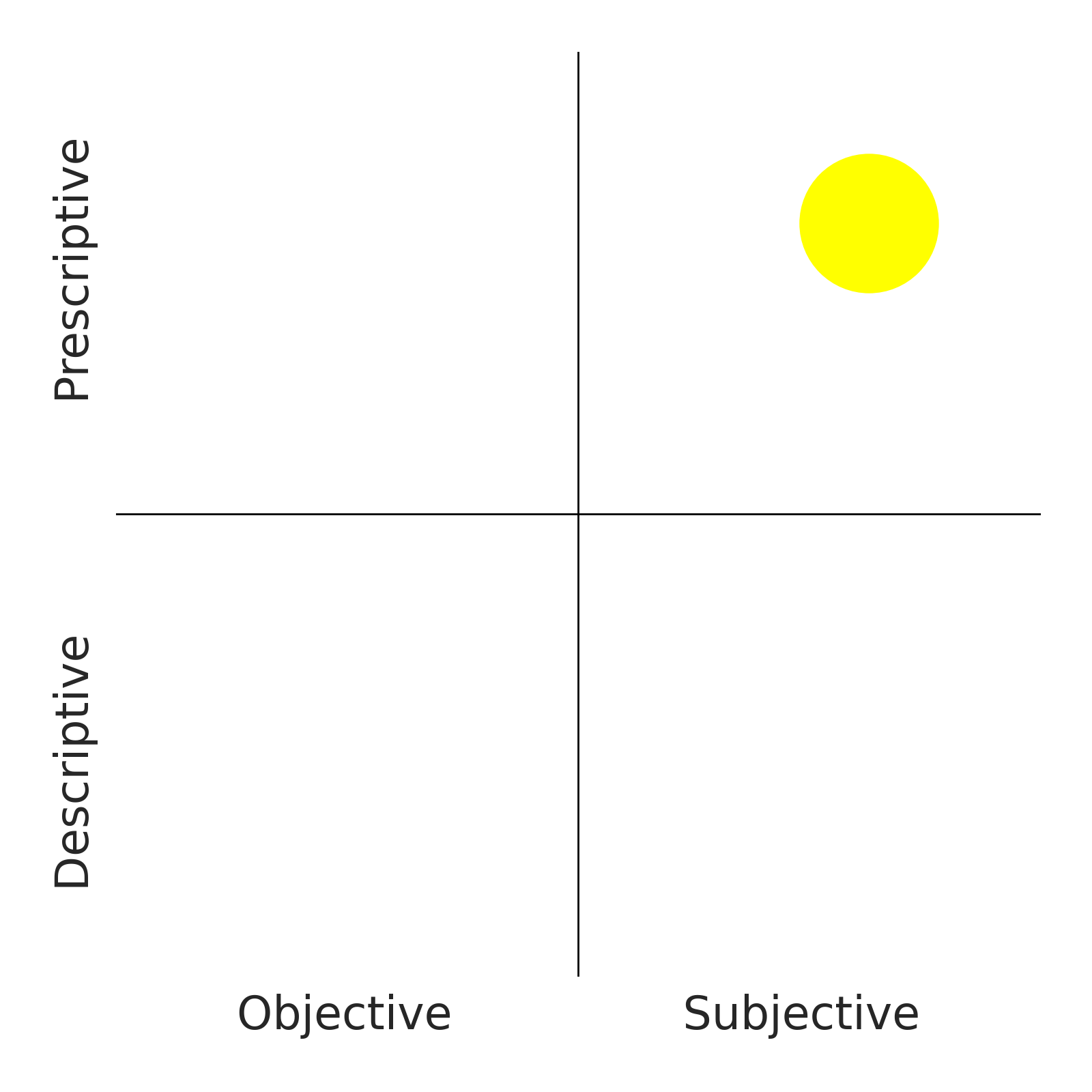
🗞️ Objective <—> Subjective 👁️ 20
🚨 Sensational85
💡 Boring <—> Interesting12
📝 Prescriptive26
😨 Fearful14
📞 Begging the Question12
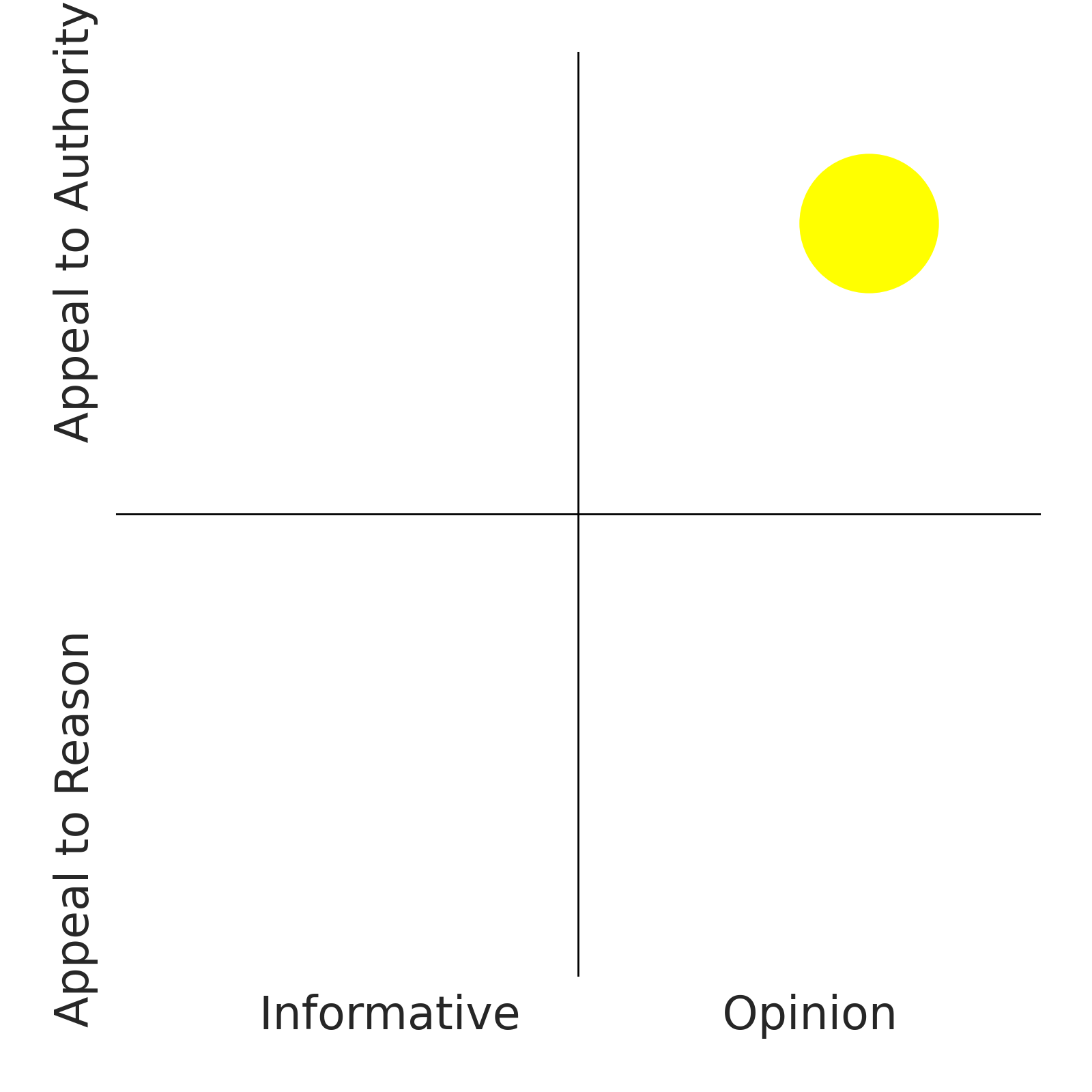
💭 Opinion100
🗳 Political44
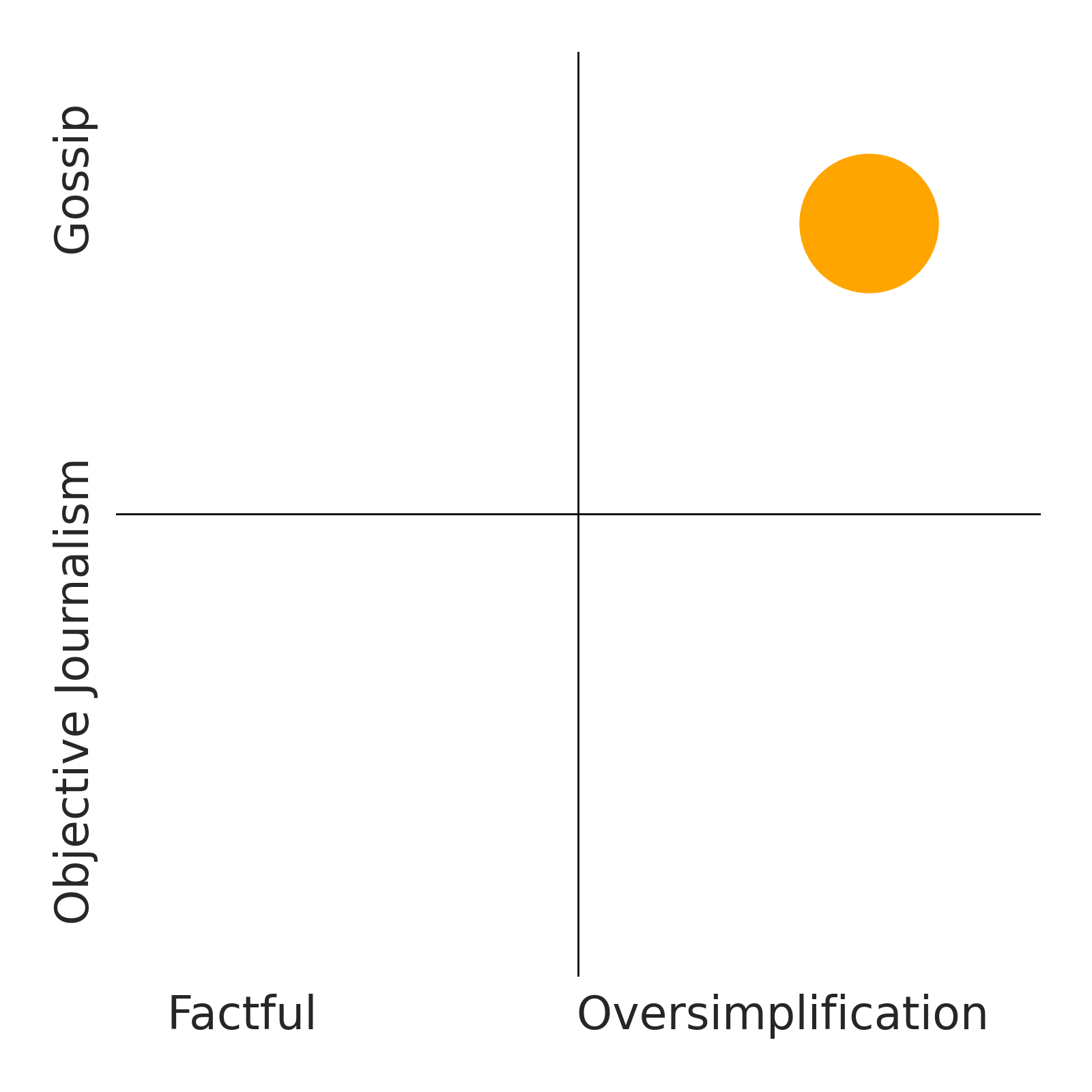
Oversimplification36
🏛️ Appeal to Authority8
🍼 Immature11
👀 Covering Responses8
😢 Victimization6
😤 Overconfidence56
🔒 Ideological56
📏📏 Double Standard8
🧠 Rational <—> Irrational 🤪7
🎭 Virtue Signaling18
🔺 Conspiracy10
🐐 Scapegoating8
🎲 Speculation28
🐍 Manipulative65
💊 Big Pharma6
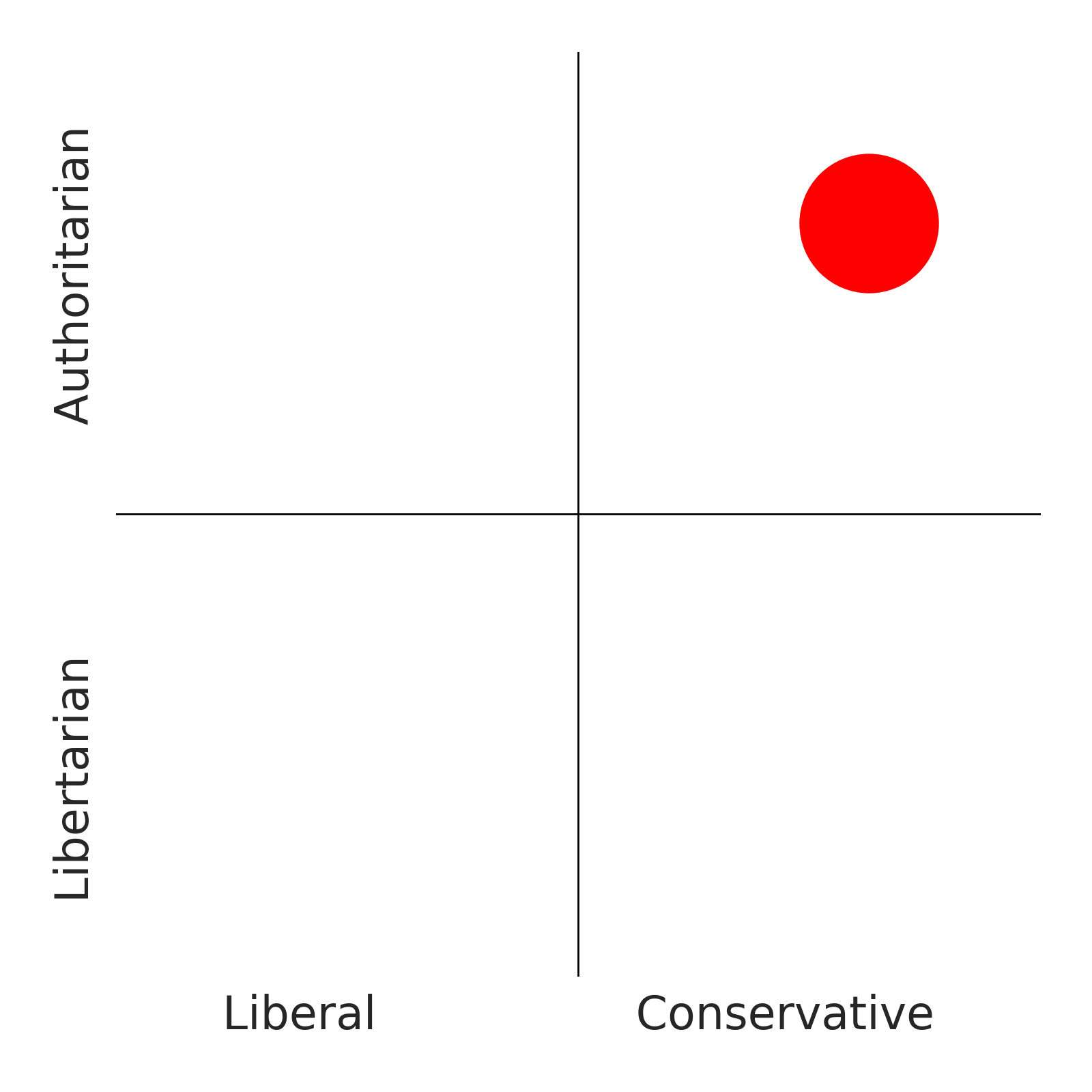
🔵 Liberal <—> Conservative 🔴4
🗽 Libertarian <—> Authoritarian 🚔0
📉 Bearish <—> Bullish 📈0
😩 Pessimistic <—> Optimistic 🌞-5
🕊️ Dovish <—> Hawkish 🦁2
🗣️ Gossip2
🔄 Circular Reasoning2
❌ Low Credibility <—> High Credibility ✅-2
🤑 Advertising2
💔 Low Integrity <—> High Integrity ❤️-1
🪨 Low Intelligence <—> High Intelligence 🦉4
⚠️🌍 Racism0
✊ Woke5
🔪 Cruel4
🔍 Truth-seeking <—> Delusion 🌀2
🤡 Hypocrisy2
⛓️ Anti-enlightenment0
👤 Individualist <—> Collectivist 👥1
2026 © Helium Trades
Privacy Policy & Disclosure
* Disclaimer: Nothing on this website constitutes investment advice, performance data or any recommendation that any particular security, portfolio of securities, transaction or investment strategy is suitable for any specific person. Helium Trades is not responsible in any way for the accuracy
of any model predictions or price data. Any mention of a particular security and related prediction data is not a recommendation to buy or sell that security. Investments in securities involve the risk of loss. Past performance is no guarantee of future results. Helium Trades is not responsible for any of your investment decisions,
you should consult a financial expert before engaging in any transaction.
Helium Research Assistant

How can I help you today?
Ask any question about Real Clear Politics bias.


