See whether Helium helps you make better-informed decisions. Try every Pro Trader feature for 30 days. No credit card required.
Try every Pro Trader feature for 30 days. No credit card required.
The sample is dominated by procedural legislative records, not explanatory journalism.
Entries typically identify a bill or resolution, chamber, number, title, and introduction date, while repeatedly describing the material as “bibliographic metadata” or unavailable content
August 22, 2026 · 0 shares
Content is limited to a bibliographic record with no editorial framing; no article content was available for bias analysis.
H.R. 10134 is a bill introduced in the U.S. House of Representatives during the 119th Congress; the text shown is confined to bibliographic data from the Government Publishing Office.
Automated analysis; not human reviewed. Limitations: Input contains only citation metadata, so no substantive reasoning, framing, or evidence could be evaluated.
Input contains only citation metadata, so no substantive reasoning, framing, or evidence could be evaluated.
August 22, 2026 · 0 shares
The supplied bibliographic record is limited to identification of a House bill on insider trading during national security emergencies and reveals no commentary, framing, or editorial stance beyond the official legislative title.
Automated analysis; not human reviewed. Limitations: The supplied text is only a bibliographic citation containing no substantive editorial content; all observations are limited to what the bill title and citation metadata indicate.
The supplied text is only a bibliographic citation containing no substantive editorial content; all observations are limited to what the bill title and citation metadata indicate.
August 22, 2026 · 0 shares
This legislative reference record is a neutral, bibliographic metadata dump that makes no editorial, analytical, or evaluative claims whatsoever.
Automated analysis; not human reviewed. Limitations: The output treats H.R. 10124 as a bill that was actually introduced in Congress on the given date and reproduces that information without independent verification; the source is a bibliographic record of the text itself, not the full legislative text.
The output treats H.R. 10124 as a bill that was actually introduced in Congress on the given date and reproduces that information without independent verification; the source is a bibliographic record of the text itself, not the full legislative text.
The U.S. Government Publishing Office bibliographic record for H.R. 10118 is bibliographic metadata rather than journalism.
No substantive article content was available; only bibliographic metadata for a congressional bill was provided.
Automated analysis; not human reviewed. Limitations: The input contains no substantive text; classification is based solely on metadata.
The input contains no substantive text; classification is based solely on metadata.
August 22, 2026 · 0 shares
The citation adheres strictly to neutral bibliographic convention, eschewing any evaluative or editorial stance.
H.R. 10131 is a bill in the U.S. House of Representatives; its text and status are tracked on Congress.gov and the citation is published by the U.S. Government Publishing Office.
Automated analysis; not human reviewed. Limitations: Input was a machine-generated citation stub containing no editorial or narrative content, so only citation-level traits could be assessed; no claims about reporting practices could be evaluated. · 3 of 54 available dimensions scored; omitted dimensions are not treated as neutral. · Verified supporting quotes for 3 of 3 scored dimensions.
Claim: The record confines itself to factual bibliographic data with no subjective, evaluative, or narrative framing.
“U.S. Congress. House. National Archives Protection Act. H.R. 10131. 119th Cong., 2nd sess., Introduced in House August 20, 2026.” · verified after text normalization
“Citations are generated automatically from bibliographic data as a convenience and may not be complete or accurate.” · verified after text normalization
Why: The document contains no narrative or evaluative language, only a standard citation and a self-limiting accuracy disclaimer, both of which are purely objective.
Claim: The citation describes the bill but offers no recommendations, instructions, or calls to action.
“H.R. 10131 (IH) - National Archives Protection Act” · exact text match
Why: The title and bibliographic details merely identify the legislation and its procedural status; nothing prescribes a position or action.
Claim: The record shows visible sourcing and attribution and explicitly flags that citations may be incomplete or inaccurate.
“Congress, House of Representatives (2026, August 20). National Archives Protection Act (H.R. 10131 (IH)). Retrieved from” · exact text match
“Citations are generated automatically from bibliographic data as a convenience and may not be complete or accurate.” · verified after text normalization
Why: Attribution to the House, the Government Publishing Office, and Congress.gov, along with a visible accuracy caveat, indicate responsible sourcing practice; confidence is tempered because the stub contains no substantive content to verify.
Input was a machine-generated citation stub containing no editorial or narrative content, so only citation-level traits could be assessed; no claims about reporting practices could be evaluated.
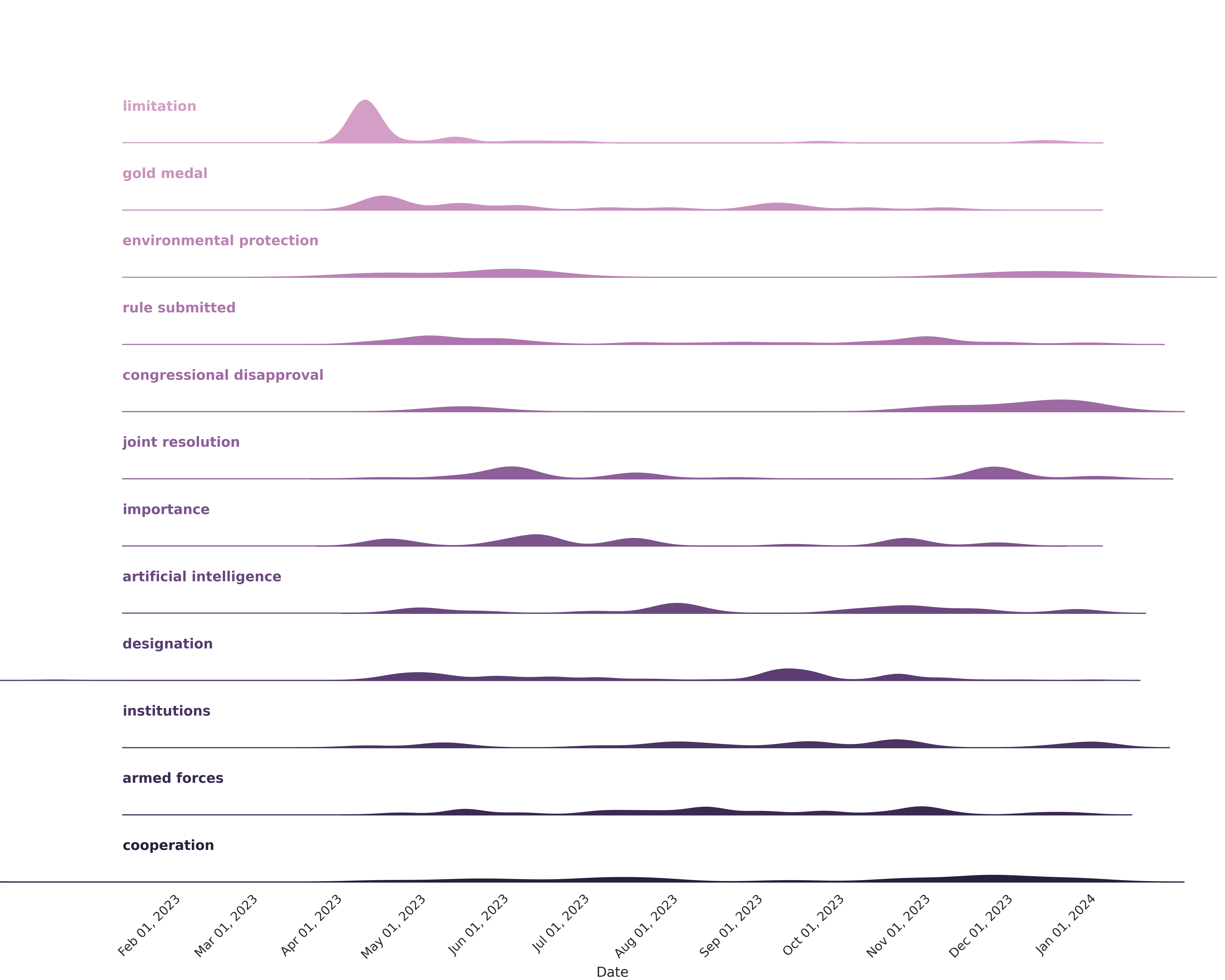
Topic selection is narrowly concentrated on U.S. congressional activity.
The sample includes housing, transportation, environmental regulation, water resilience, health care, postal crime, archives, data centers, quantum readiness, national security, NATO, trademarks, charities, and impeachment
August 14, 2026 · 0 shares
The text is a legislative bill citation that presents the introduction of the Affordable Housing Credit Carryback Act without commentary or framing.
Automated analysis; not human reviewed. Limitations: The provided text is a bibliographic citation rather than a full article; no substantive legislative content is available to analyze framing beyond the bill's title and introductory metadata. · 17 of 53 available dimensions scored; omitted dimensions are not treated as neutral. · Verified supporting quotes for 17 of 17 scored dimensions.
Claim: The text is politically neutral, providing only factual identifying information about a legislative document.
“S. 5366 (IS) - Affordable Housing Credit Carryback Act” · exact text match
“Introduced in Senate August 7, 2026” · exact text match
Why: The text is a standard legislative citation with no editorial or partisan content.
Claim: The text is purely objective, containing only bibliographic data and no subjective interpretation.
“Automatic download in progress. Check Downloads directory for file.” · exact text match
“Congress, Senate (2026, August 7). Affordable Housing Credit Carryback Act (S. 5366 (IS)). Retrieved from” · exact text match
Why: The text consists of a formal document title, citation details, and system messages, without any subjective language.
Claim: The text is purely objective and non-sensational.
“S. 5366 (IS) - Affordable Housing Credit Carryback Act” · exact text match
“United States, Congress, Senate. Affordable Housing Credit Carryback Act. U.S. Government Publishing Office” · exact text match
Why: No emotional or exaggerated language is present.
Claim: The text offers minimal informational content, consisting only of a bibliographic citation.
“S. 5366 (IS) - Affordable Housing Credit Carryback Act” · exact text match
Why: The text contains no analysis, details, or narrative, making it routine and unengaging.
Claim: The text is purely descriptive, stating facts about the document's existence and source, with no prescription.
“S. 5366 (IS) - Affordable Housing Credit Carryback Act” · exact text match
Why: It simply labels and describes the document without recommending any action or policy position.
Claim: The text contains no opinion or commentary.
“S. 5366 (IS) - Affordable Housing Credit Carryback Act” · exact text match
Why: It is purely a document title and citation.
Claim: The text itself is non-political, just identifying a piece of legislation.
“Affordable Housing Credit Carryback Act” · exact text match
Why: The title has a policy focus but no content that expresses a political stance.
Claim: The text relies on the formal citation of official government records, but does not use an argument appealing to authority.
“U.S. Congress. Senate. Affordable Housing Credit Carryback Act.” · exact text match
Why: The citation references the official source but contains no substantive argument or opinion that appeals to authority.
Claim: The text states factual metadata without claiming certainty about anything beyond the document's existence.
“S. 5366 (IS) - Affordable Housing Credit Carryback Act” · exact text match
Why: No assertions of fact are made beyond the citation itself.
Claim: The text is not spam or promotional fluff.
“S. 5366 (IS) - Affordable Housing Credit Carryback Act” · exact text match
Why: It is a formal government citation with no advertising-like filler.
Claim: The text treats the official U.S. Senate legislative process as a routine, legitimate source of information.
“U.S. Congress. Senate. Affordable Housing Credit Carryback Act. S. 5366. 119th Cong., 2nd sess., Introduced in Senate August 7, 2026.” · verified after text normalization
Why: Providing a citation for a government document implies acceptance of official legislative records as authoritative.
Claim: The citation appears highly credible, citing the official U.S. Government Publishing Office and Congressional records.
“United States, Congress, Senate. Affordable Housing Credit Carryback Act. U.S. Government Publishing Office” · exact text match
Why: The document traces to an authoritative official source with precise dates and bill numbers.
Claim: The text is non-advertorial, providing a document citation without promotion.
“U.S. Government Publishing Office” · exact text match
Why: There is no attempt to promote any product or service beyond identifying the source.
Claim: The text is a generated citation and routine metadata, with no distinctive stylistic features of human or AI authorship.
“S. 5366 (IS) - Affordable Housing Credit Carryback Act” · exact text match
Why: The content is a standard template citation, offering no textual indicators of authorship. Since it is a system-generated citation, the label is ambiguous.
Claim: The citation appears accurate and transparent, with no obvious signs of misrepresentation.
“U.S. Congress. Senate. Affordable Housing Credit Carryback Act. S. 5366. 119th Cong., 2nd sess., Introduced in Senate August 7, 2026.” · verified after text normalization
Why: The document provides full identifying information and proper attribution to the U.S. Government Publishing Office.
Claim: The content is a standard legal citation, requiring routine bibliographic knowledge and not demonstrating high intellectual complexity.
“S. 5366 (IS) - Affordable Housing Credit Carryback Act” · exact text match
Why: The text is a straightforward metadata citation, average in informational complexity.
The provided text is a bibliographic citation rather than a full article; no substantive legislative content is available to analyze framing beyond the bill's title and introductory metadata.
Article content unavailable; only bibliographic metadata for a U.S. congressional document was provided.
No substantive article content available; the supplied text consists of bibliographic metadata for a government document.
The record is a neutral bibliographic citation for an impeachment resolution, with no editorial framing.
The content is a bibliographic record from the U.S. Government Publishing Office for a House resolution; it contains no text of the resolution itself.
Automated analysis; not human reviewed. Limitations: Limited to bibliographic metadata, preventing analysis of the resolution's substantive allegations.
Limited to bibliographic metadata, preventing analysis of the resolution's substantive allegations.
August 25, 2026 · 0 shares
Article content unavailable; no bias analysis possible.
Automated analysis; not human reviewed. Limitations: No substantive article text provided.
No substantive article text provided.
The source exhibits a procedural, institution-centered worldview: official congressional and Government Publishing Office records are treated as the primary objects of knowledge and are often characterized as credible, transparent, or high-integrity
August 07, 2026 · 0 shares
Factual, neutral bibliographic record of a legislative bill introduction with no editorial framing.
Automated analysis; not human reviewed. · 10 of 53 available dimensions scored; omitted dimensions are not treated as neutral. · Verified supporting quotes for 10 of 10 scored dimensions.
Claim: The text is a pure factual citation with no subjective language.
“H.R. 10050 (IH) - Uniform Vehicle Safety Standards Act of 2026” · exact text match
“U.S. Congress. House. Uniform Vehicle Safety Standards Act of 2026. H.R. 10050. 119th Cong., 2nd sess., Introduced in House August 6, 2026.” · verified after text normalization
Why: The entire text consists of bibliographic metadata, dates, and identifiers; no evaluative or interpretive content.
Claim: The text is purely descriptive, stating what the bill is and when it was introduced.
“U.S. Congress. House. Uniform Vehicle Safety Standards Act of 2026. H.R. 10050. 119th Cong., 2nd sess., Introduced in House August 6, 2026.” · verified after text normalization
Why: No prescriptive language; it simply records the bill's existence and legislative details.
Claim: The text contains no opinion, only factual metadata.
“H.R. 10050 (IH) - Uniform Vehicle Safety Standards Act of 2026” · exact text match
“U.S. Congress. House. Uniform Vehicle Safety Standards Act of 2026. H.R. 10050. 119th Cong., 2nd sess., Introduced in House August 6, 2026.” · verified after text normalization
Why: No evaluative or persuasive language is present; it is a neutral citation.
Claim: The text is explicitly about a legislative bill, inherently political.
“H.R. 10050 (IH) - Uniform Vehicle Safety Standards Act of 2026” · exact text match
“U.S. Congress. House. Uniform Vehicle Safety Standards Act of 2026. H.R. 10050. 119th Cong., 2nd sess., Introduced in House August 6, 2026.” · verified after text normalization
Why: The subject is a bill introduced in the House of Representatives, a political institution.
Claim: The text is a product of the U.S. Congress, a core establishment institution.
“U.S. Congress. House. Uniform Vehicle Safety Standards Act of 2026. H.R. 10050. 119th Cong., 2nd sess., Introduced in House August 6, 2026.” · verified after text normalization
Why: The document originates from the legislative branch, which is inherently pro-establishment.
Claim: The text is a highly credible official government record.
“U.S. Congress. House. Uniform Vehicle Safety Standards Act of 2026. H.R. 10050. 119th Cong., 2nd sess., Introduced in House August 6, 2026.” · verified after text normalization
Why: The source is the U.S. Government Publishing Office, which provides authoritative and citable information.
Claim: The text is a straightforward factual record with no speculative or emotional reasoning.
“H.R. 10050 (IH) - Uniform Vehicle Safety Standards Act of 2026” · exact text match
“U.S. Congress. House. Uniform Vehicle Safety Standards Act of 2026. H.R. 10050. 119th Cong., 2nd sess., Introduced in House August 6, 2026.” · verified after text normalization
Why: The document is a government citation; it presents only verifiable facts without argumentation.
Claim: The text is an official government record with high integrity.
“U.S. Congress. House. Uniform Vehicle Safety Standards Act of 2026. H.R. 10050. 119th Cong., 2nd sess., Introduced in House August 6, 2026.” · verified after text normalization
Why: The source is the U.S. Government Publishing Office; the citation is authoritative and verifiable.
A neutral, procedural citation of a legislative document, with no editorial opinion or political advocacy.
Automated analysis; not human reviewed. Limitations: The article is a bibliographic citation with minimal substantive content, limiting bias assessment. · 17 of 53 available dimensions scored; omitted dimensions are not treated as neutral. · Verified supporting quotes for 5 of 17 scored dimensions.
Claim: The title is neutral, not expressing a political leaning.
“Providing for congressional disapproval ... of the rule submitted by the Environmental Protection Agency” · not found in supplied text
Why: The title is a factual description of the resolution's purpose without ideological language.
Claim: No populist or elitist language is present.
“Providing for congressional disapproval ... of the rule submitted by the Environmental Protection Agency” · not found in supplied text
Why: The text is a formal legislative citation with no appeal to popular or elite interests.
Claim: No stance on individual liberty or government authority is expressed.
“Providing for congressional disapproval ... of the rule submitted by the Environmental Protection Agency” · not found in supplied text
Why: The title merely states the action without endorsing a particular view on government power.
Claim: The text is purely objective, stating the resolution's title.
“Providing for congressional disapproval ... of the rule submitted by the Environmental Protection Agency” · not found in supplied text
Why: The title is a factual description with no subjective language.
Claim: No sensational language is present.
“Providing for congressional disapproval ... of the rule submitted by the Environmental Protection Agency” · not found in supplied text
Why: The text is dry and factual, lacking any emotional or exaggerated terms.
Claim: The citation is mundane.
“S.J. Res. 205 (IS) - Providing for congressional disapproval...” · not found in supplied text
Why: It is a dry legislative title with no engaging or novel elements.
Claim: The text describes the resolution, not prescribing.
“Providing for congressional disapproval ... of the rule submitted by the Environmental Protection Agency” · not found in supplied text
Why: The title is a descriptive label of the legislative action, not a recommendation.
Claim: The resolution is political in nature.
“congressional disapproval” · exact text match
Why: The action of disapproving a rule is a political act within the legislative process.
Claim: The document is an official government record, pro-establishment.
“U.S. Congress. Senate.” · exact text match
Why: The source is an institutional government body, reflecting a pro-establishment perspective.
Claim: No emotional language is present.
“Providing for congressional disapproval ... of the rule submitted by the Environmental Protection Agency” · not found in supplied text
Why: The text is neutral and unemotional.
Claim: Official government source is highly credible.
“U.S. Congress. Senate.” · exact text match
Why: The document originates from a trusted governmental body, ensuring reliability.
Claim: The text is a formal, logical legislative citation.
“Providing for congressional disapproval ... of the rule submitted by the Environmental Protection Agency” · not found in supplied text
Why: The title is precise and follows legal conventions, demonstrating rational structure.
Claim: The text is about EPA standards, scientific.
“Environmental Protection Agency” · exact text match
Why: The subject involves environmental regulation, which is grounded in scientific assessment.
Claim: Official government record with high transparency.
“U.S. Congress. Senate.” · exact text match
Why: The source is an official government publication, indicating a commitment to accurate record-keeping.
Claim: Truth-seeking, factual.
“Providing for congressional disapproval ... of the rule submitted by the Environmental Protection Agency” · not found in supplied text
Why: The text is a straightforward factual statement without speculative or delusional content.
The article is a bibliographic citation with minimal substantive content, limiting bias assessment.
August 14, 2026 · 0 shares
The text is a neutral, factual bibliographic record of a U.S. House bill, providing metadata without editorial framing.
The Green New Deal for Public Housing Act is a legislative proposal to address public housing infrastructure and climate goals, but the text only provides its introduction metadata.
Automated analysis; not human reviewed. · 31 of 53 available dimensions scored; omitted dimensions are not treated as neutral. · Verified supporting quotes for 30 of 31 scored dimensions.
Claim: The text is politically neutral, simply documenting a legislative bill's introduction.
“H.R. 10063 (IH) - Green New Deal for Public Housing Act” · exact text match
Why: Only provides official bibliographic and legislative metadata without editorial commentary or policy analysis.
Claim: The text is purely objective, providing verifiable legislative facts without personal or subjective interpretation.
“U.S. Congress. House. Green New Deal for Public Housing Act. H.R. 10063. 119th Cong., 2nd sess., Introduced in House August 6, 2026.” · verified after text normalization
Why: The content is official legislative metadata, factual and verifiable, with no subjective language.
Claim: The text is objective with no sensational elements.
“Retrieved from U.S. Government Publishing Office” · not found in supplied text
Why: Contains neutral language and standard legislative citation information.
Claim: The text is highly boring due to its mundane legislative metadata.
“Automatic download in progress. Check Downloads directory for file.” · exact text match
Why: No engaging narrative or substantive content; only procedural information.
Claim: The text is purely descriptive, merely reporting the bill's existence and legislative metadata.
“Introduced in House August 6, 2026.” · exact text match
Why: No prescriptive language or policy advocacy; it simply describes the bill's introduction.
Claim: The text has no fear-inducing elements.
“Introduced in House August 6, 2026.” · exact text match
Why: No emotional or alarmist language; purely factual.
Claim: The text does not engage in circular reasoning or presuppose conclusions.
“Green New Deal for Public Housing Act” · exact text match
Why: Simply states the bill's name and introduction without argumentation.
Claim: The text contains no gossip or personal speculation.
“U.S. Government Publishing Office” · exact text match
Why: Only official legislative metadata, no personal or speculative content.
Claim: The text is fact-based, with no opinion or interpretation.
“U.S. Congress. House.” · exact text match
Why: Neutral description of legislative introduction without editorializing.
Claim: The text is non-political, merely describing procedural legislative action.
“Introduced in House August 6, 2026.” · exact text match
Why: Does not take a position or analyze policy; only reports the fact of introduction.
Claim: The text does not oversimplify; it accurately reports factual details.
“H.R. 10063. 119th Cong., 2nd sess.” · verified after text normalization
Why: Provides precise legislative identification without unnecessary simplification.
Claim: The text relies on the authority of official U.S. government sources, which is appropriate for legislative metadata.
“U.S. Government Publishing Office” · exact text match
Why: Cites official source without logical fallacies; appropriate for the content type.
Claim: The text is mature and professional, lacking any immature or rage-baiting elements.
“Automatic download in progress. Check Downloads directory for file.” · exact text match
Why: Standard procedural language, no emotional or immature content.
Claim: No circular reasoning present; the text is purely factual.
“Introduced in House August 6, 2026.” · exact text match
Why: No argumentation or logical loops; just a statement of fact.
Claim: No overconfidence; the claims are limited to official legislative facts.
“Introduced in House August 6, 2026.” · exact text match
Why: The text makes only verifiable claims about the bill's introduction.
Claim: The text is not spam and is relevant to its purpose.
“H.R. 10063 (IH) - Green New Deal for Public Housing Act” · exact text match
Why: Provides necessary metadata without misleading or promotional content.
Claim: The text is free of ideological framing.
“U.S. Congress. House.” · exact text match
Why: No ideological language or advocacy; purely procedural.
Claim: The text is pro-establishment by documenting official government proceedings without criticism.
“U.S. Congress. House. Green New Deal for Public Housing Act.” · exact text match
Why: Presents legislative action in a neutral, institutional manner, reinforcing the legitimacy of the system.
Claim: The text is emotionally neutral, with no positive or negative sentiment.
“Introduced in House August 6, 2026.” · exact text match
Why: No emotional wording or tone.
Claim: The text is highly credible due to its official source and accurate details.
“U.S. Government Publishing Office” · exact text match
Why: Uses authoritative source for legislative documentation.
Claim: The text is factual and logical, presenting legislative details in a clear, structured manner.
“Introduced in House August 6, 2026.” · exact text match
Why: The description is straightforward and objective, with no sensational or emotional language.
Claim: The text is informative and non-promotional.
“U.S. Government Publishing Office” · exact text match
Why: No marketing or advertorial language.
Claim: The text is scientific and factual, not superstitious.
“Introduced in House August 6, 2026.” · exact text match
Why: Based on factual legislative data.
Claim: The text appears to be written by a human or template, with low AI likelihood.
“Citations are generated automatically from bibliographic data as a convenience and may not be complete or accurate.” · verified after text normalization
Why: Mention of automatic citations suggests human editorial note; no AI-style patterns.
Claim: The text maintains high integrity by accurately citing official sources and legislative details.
“U.S. Government Publishing Office” · exact text match
Why: Uses authoritative and reliable sources for legislative documentation without distortion.
Claim: The article is moderately intelligent as it effectively communicates legislative metadata clearly, though it lacks depth.
“Green New Deal for Public Housing Act” · exact text match
Why: Simple but accurate; effective for its purpose.
Claim: The text is truth-seeking and factual.
“U.S. Government Publishing Office” · exact text match
Why: Reports verifiable information without distortion.
August 14, 2026 · 0 shares
The text is a legislative bill citation that presents the introduction of the Affordable Housing Credit Carryback Act without commentary or framing.
Automated analysis; not human reviewed. Limitations: The provided text is a bibliographic citation rather than a full article; no substantive legislative content is available to analyze framing beyond the bill's title and introductory metadata. · 17 of 53 available dimensions scored; omitted dimensions are not treated as neutral. · Verified supporting quotes for 17 of 17 scored dimensions.
Claim: The text is politically neutral, providing only factual identifying information about a legislative document.
“S. 5366 (IS) - Affordable Housing Credit Carryback Act” · exact text match
“Introduced in Senate August 7, 2026” · exact text match
Why: The text is a standard legislative citation with no editorial or partisan content.
Claim: The text is purely objective, containing only bibliographic data and no subjective interpretation.
“Automatic download in progress. Check Downloads directory for file.” · exact text match
“Congress, Senate (2026, August 7). Affordable Housing Credit Carryback Act (S. 5366 (IS)). Retrieved from” · exact text match
Why: The text consists of a formal document title, citation details, and system messages, without any subjective language.
Claim: The text is purely objective and non-sensational.
“S. 5366 (IS) - Affordable Housing Credit Carryback Act” · exact text match
“United States, Congress, Senate. Affordable Housing Credit Carryback Act. U.S. Government Publishing Office” · exact text match
Why: No emotional or exaggerated language is present.
Claim: The text offers minimal informational content, consisting only of a bibliographic citation.
“S. 5366 (IS) - Affordable Housing Credit Carryback Act” · exact text match
Why: The text contains no analysis, details, or narrative, making it routine and unengaging.
Claim: The text is purely descriptive, stating facts about the document's existence and source, with no prescription.
“S. 5366 (IS) - Affordable Housing Credit Carryback Act” · exact text match
Why: It simply labels and describes the document without recommending any action or policy position.
Claim: The text contains no opinion or commentary.
“S. 5366 (IS) - Affordable Housing Credit Carryback Act” · exact text match
Why: It is purely a document title and citation.
Claim: The text itself is non-political, just identifying a piece of legislation.
“Affordable Housing Credit Carryback Act” · exact text match
Why: The title has a policy focus but no content that expresses a political stance.
Claim: The text relies on the formal citation of official government records, but does not use an argument appealing to authority.
“U.S. Congress. Senate. Affordable Housing Credit Carryback Act.” · exact text match
Why: The citation references the official source but contains no substantive argument or opinion that appeals to authority.
Claim: The text states factual metadata without claiming certainty about anything beyond the document's existence.
“S. 5366 (IS) - Affordable Housing Credit Carryback Act” · exact text match
Why: No assertions of fact are made beyond the citation itself.
Claim: The text is not spam or promotional fluff.
“S. 5366 (IS) - Affordable Housing Credit Carryback Act” · exact text match
Why: It is a formal government citation with no advertising-like filler.
Claim: The text treats the official U.S. Senate legislative process as a routine, legitimate source of information.
“U.S. Congress. Senate. Affordable Housing Credit Carryback Act. S. 5366. 119th Cong., 2nd sess., Introduced in Senate August 7, 2026.” · verified after text normalization
Why: Providing a citation for a government document implies acceptance of official legislative records as authoritative.
Claim: The citation appears highly credible, citing the official U.S. Government Publishing Office and Congressional records.
“United States, Congress, Senate. Affordable Housing Credit Carryback Act. U.S. Government Publishing Office” · exact text match
Why: The document traces to an authoritative official source with precise dates and bill numbers.
Claim: The text is non-advertorial, providing a document citation without promotion.
“U.S. Government Publishing Office” · exact text match
Why: There is no attempt to promote any product or service beyond identifying the source.
Claim: The text is a generated citation and routine metadata, with no distinctive stylistic features of human or AI authorship.
“S. 5366 (IS) - Affordable Housing Credit Carryback Act” · exact text match
Why: The content is a standard template citation, offering no textual indicators of authorship. Since it is a system-generated citation, the label is ambiguous.
Claim: The citation appears accurate and transparent, with no obvious signs of misrepresentation.
“U.S. Congress. Senate. Affordable Housing Credit Carryback Act. S. 5366. 119th Cong., 2nd sess., Introduced in Senate August 7, 2026.” · verified after text normalization
Why: The document provides full identifying information and proper attribution to the U.S. Government Publishing Office.
Claim: The content is a standard legal citation, requiring routine bibliographic knowledge and not demonstrating high intellectual complexity.
“S. 5366 (IS) - Affordable Housing Credit Carryback Act” · exact text match
Why: The text is a straightforward metadata citation, average in informational complexity.
The provided text is a bibliographic citation rather than a full article; no substantive legislative content is available to analyze framing beyond the bill's title and introductory metadata.
August 14, 2026 · 0 shares
The supplied content is an official congressional bill text citation and bibliographic record, not an editorial article, so framing bias is limited to neutral institutional metadata.
Automated analysis; not human reviewed. Limitations: Only a bibliographic citation and bill metadata were provided; no substantive legislative text was available for analysis. · 6 of 53 available dimensions scored; omitted dimensions are not treated as neutral. · Verified supporting quotes for 4 of 6 scored dimensions.
Claim: The content is purely descriptive bibliographic and legislative metadata with no subjective or editorial language.
“H.R. 10083 (IH) - Water Technology and Resilience Reauthorization Act” · exact text match
“Introduced in House August 13, 2026.” · exact text match
Why: The text consists of a formal citation, bill title, chamber designation, and date, with no narrative, opinion, or editorial framing.
Claim: The content is purely objective and informational, with no sensational or dramatic language.
“H.R. 10083 (IH) - Water Technology and Resilience Reauthorization Act” · exact text match
“119th Cong., 2nd sess.” · verified after text normalization
Why: The text is a dry, standardized legislative citation containing no emotive, exaggerated, or attention-grabbing phrasing.
Claim: The content is purely routine bibliographic metadata that is substantively uninteresting to a general audience.
“Automatic download in progress. Check Downloads directory for file.” · exact text match
“Citations are generated automatically from bibliographic data as a convenience and may not be complete or accurate.” · verified after text normalization
Why: The text provides only a bill reference and a disclaimer about automatically generated citations, with no substantive legislative details or analysis that would engage a reader.
Claim: The content reflects an institutional, pro-establishment orientation because it is official U.S. congressional documentation.
“U.S. Congress. House. Water Technology and Resilience Reauthorization Act. H.R. 10083.” · exact text match
“United States, Congress, House of Representatives. Water Technology and Resilience Reauthorization Act. U.S. Government Publishing Office.” · not found in supplied text
Why: The text is raw official government legislative output, representing the federal legislative process and the Government Publishing Office as authoritative sources, with no critical or anti-institutional framing.
Claim: The content is highly credible as official U.S. congressional legislative metadata.
“U.S. Congress. House. Water Technology and Resilience Reauthorization Act. H.R. 10083.” · exact text match
“United States, Congress, House of Representatives. Water Technology and Resilience Reauthorization Act. U.S. Government Publishing Office.” · not found in supplied text
Why: The content is an official citation from the U.S. House of Representatives and the Government Publishing Office, providing institutional authorship and precise identifying details.
Only a bibliographic citation and bill metadata were provided; no substantive legislative text was available for analysis.
Normative language appears mainly inside official titles rather than in the source’s own prose—for example, “National Archives Protection,” “Consumer Education,” and “Uniform Vehicle Safety Standards”
August 07, 2026 · 0 shares
Factual, neutral bibliographic record of a legislative bill introduction with no editorial framing.
Automated analysis; not human reviewed. · 10 of 53 available dimensions scored; omitted dimensions are not treated as neutral. · Verified supporting quotes for 10 of 10 scored dimensions.
Claim: The text is a pure factual citation with no subjective language.
“H.R. 10050 (IH) - Uniform Vehicle Safety Standards Act of 2026” · exact text match
“U.S. Congress. House. Uniform Vehicle Safety Standards Act of 2026. H.R. 10050. 119th Cong., 2nd sess., Introduced in House August 6, 2026.” · verified after text normalization
Why: The entire text consists of bibliographic metadata, dates, and identifiers; no evaluative or interpretive content.
Claim: The text is purely descriptive, stating what the bill is and when it was introduced.
“U.S. Congress. House. Uniform Vehicle Safety Standards Act of 2026. H.R. 10050. 119th Cong., 2nd sess., Introduced in House August 6, 2026.” · verified after text normalization
Why: No prescriptive language; it simply records the bill's existence and legislative details.
Claim: The text contains no opinion, only factual metadata.
“H.R. 10050 (IH) - Uniform Vehicle Safety Standards Act of 2026” · exact text match
“U.S. Congress. House. Uniform Vehicle Safety Standards Act of 2026. H.R. 10050. 119th Cong., 2nd sess., Introduced in House August 6, 2026.” · verified after text normalization
Why: No evaluative or persuasive language is present; it is a neutral citation.
Claim: The text is explicitly about a legislative bill, inherently political.
“H.R. 10050 (IH) - Uniform Vehicle Safety Standards Act of 2026” · exact text match
“U.S. Congress. House. Uniform Vehicle Safety Standards Act of 2026. H.R. 10050. 119th Cong., 2nd sess., Introduced in House August 6, 2026.” · verified after text normalization
Why: The subject is a bill introduced in the House of Representatives, a political institution.
Claim: The text is a product of the U.S. Congress, a core establishment institution.
“U.S. Congress. House. Uniform Vehicle Safety Standards Act of 2026. H.R. 10050. 119th Cong., 2nd sess., Introduced in House August 6, 2026.” · verified after text normalization
Why: The document originates from the legislative branch, which is inherently pro-establishment.
Claim: The text is a highly credible official government record.
“U.S. Congress. House. Uniform Vehicle Safety Standards Act of 2026. H.R. 10050. 119th Cong., 2nd sess., Introduced in House August 6, 2026.” · verified after text normalization
Why: The source is the U.S. Government Publishing Office, which provides authoritative and citable information.
Claim: The text is a straightforward factual record with no speculative or emotional reasoning.
“H.R. 10050 (IH) - Uniform Vehicle Safety Standards Act of 2026” · exact text match
“U.S. Congress. House. Uniform Vehicle Safety Standards Act of 2026. H.R. 10050. 119th Cong., 2nd sess., Introduced in House August 6, 2026.” · verified after text normalization
Why: The document is a government citation; it presents only verifiable facts without argumentation.
Claim: The text is an official government record with high integrity.
“U.S. Congress. House. Uniform Vehicle Safety Standards Act of 2026. H.R. 10050. 119th Cong., 2nd sess., Introduced in House August 6, 2026.” · verified after text normalization
Why: The source is the U.S. Government Publishing Office; the citation is authoritative and verifiable.
Neutral legislative designation with no editorial framing.
Automated analysis; not human reviewed. Limitations: The supplied text is a legislative metadata record, not a full article, limiting analysis of framing; many bias dimensions are unsupported and omitted. · 13 of 52 available dimensions scored; omitted dimensions are not treated as neutral. · Verified supporting quotes for 8 of 13 scored dimensions.
Claim: The resolution does not express partisan preference.
“Recognizing the importance of trademarks in the economy and the role of trademarks in protecting consumer safety by designating the month of July as "National Anti-Counterfeiting and Consumer Education and Awareness Month".” · not found in supplied text
Why: The text is a formal legislative resolution with no partisan language or ideological markers.
Claim: The resolution does not convey populist or elitist framing.
“U.S. Congress. Senate. Recognizing the importance of trademarks...” · not found in supplied text
Why: The language is procedural and neutral, not appealing to popular sentiment or elite interests.
Claim: The resolution uses factual, official language without subjective evaluation.
“Recognizing the importance of trademarks in the economy and the role of trademarks in protecting consumer safety” · exact text match
Why: The wording is declarative and objective, typical of legislative texts.
Claim: The resolution is procedurally routine and low in novelty.
“S. Res. 818 (ATS)” · exact text match
Why: Designating a commemorative month is a standard legislative action with little dramatic or unexpected content.
Claim: The resolution prescribes a designation and awareness campaign.
“designating the month of July as "National Anti-Counterfeiting and Consumer Education and Awareness Month"” · not found in supplied text
Why: The resolution actively creates a new observance, making it prescriptive.
Claim: The resolution is a political action but with minimal partisan content.
“S. Res. 818 (ATS)” · exact text match
Why: As a congressional resolution, it is inherently political, but the topic is non-controversial.
Claim: The resolution relies on the authority of the Senate to establish a designation.
“U.S. Congress. Senate.” · exact text match
“Agreed to Senate” · exact text match
Why: The resolution's effectiveness derives from the Senate's institutional authority, but it does not use that authority to argue beyond the designation.
Claim: The resolution supports established governmental and institutional processes.
“U.S. Congress. Senate.” · exact text match
“Agreed to Senate July 29, 2026” · exact text match
Why: The resolution is an act of the Senate, reinforcing institutional authority.
Claim: The resolution is highly credible due to its official government origin and transparent metadata.
“U.S. Government Publishing Office” · exact text match
“119th Cong., 2nd sess., Agreed to Senate July 29, 2026” · verified after text normalization
Why: The text includes full citation, publisher, and date, indicating verifiability.
Claim: The resolution is logically structured and fact-based.
“S. Res. 818 (ATS) - Recognizing the importance of trademarks...” · not found in supplied text
Why: The resolution states a clear purpose and designation without emotional or illogical appeals.
Claim: The resolution shows slight pro-corporate framing by emphasizing trademarks in the economy.
“Recognizing the importance of trademarks in the economy” · exact text match
Why: Trademarks are closely tied to corporate interests, but the resolution also stresses consumer safety, balancing the framing.
Claim: The resolution is an official government document with high integrity.
“U.S. Government Publishing Office” · exact text match
“S. Res. 818 (ATS)” · exact text match
Why: The source and citation indicate an authoritative, transparent legislative record.
Claim: The resolution performs a symbolic gesture for consumer protection and anti-counterfeiting.
“"National Anti-Counterfeiting and Consumer Education and Awareness Month"” · not found in supplied text
Why: The naming suggests a public awareness campaign, which can be seen as virtue signaling, but the resolution's substantive impact is minimal.
The supplied text is a legislative metadata record, not a full article, limiting analysis of framing; many bias dimensions are unsupported and omitted.
August 22, 2026 · 0 shares
The citation adheres strictly to neutral bibliographic convention, eschewing any evaluative or editorial stance.
H.R. 10131 is a bill in the U.S. House of Representatives; its text and status are tracked on Congress.gov and the citation is published by the U.S. Government Publishing Office.
Automated analysis; not human reviewed. Limitations: Input was a machine-generated citation stub containing no editorial or narrative content, so only citation-level traits could be assessed; no claims about reporting practices could be evaluated. · 3 of 54 available dimensions scored; omitted dimensions are not treated as neutral. · Verified supporting quotes for 3 of 3 scored dimensions.
Claim: The record confines itself to factual bibliographic data with no subjective, evaluative, or narrative framing.
“U.S. Congress. House. National Archives Protection Act. H.R. 10131. 119th Cong., 2nd sess., Introduced in House August 20, 2026.” · verified after text normalization
“Citations are generated automatically from bibliographic data as a convenience and may not be complete or accurate.” · verified after text normalization
Why: The document contains no narrative or evaluative language, only a standard citation and a self-limiting accuracy disclaimer, both of which are purely objective.
Claim: The citation describes the bill but offers no recommendations, instructions, or calls to action.
“H.R. 10131 (IH) - National Archives Protection Act” · exact text match
Why: The title and bibliographic details merely identify the legislation and its procedural status; nothing prescribes a position or action.
Claim: The record shows visible sourcing and attribution and explicitly flags that citations may be incomplete or inaccurate.
“Congress, House of Representatives (2026, August 20). National Archives Protection Act (H.R. 10131 (IH)). Retrieved from” · exact text match
“Citations are generated automatically from bibliographic data as a convenience and may not be complete or accurate.” · verified after text normalization
Why: Attribution to the House, the Government Publishing Office, and Congress.gov, along with a visible accuracy caveat, indicate responsible sourcing practice; confidence is tempered because the stub contains no substantive content to verify.
Input was a machine-generated citation stub containing no editorial or narrative content, so only citation-level traits could be assessed; no claims about reporting practices could be evaluated.
The record is a neutral bibliographic citation for an impeachment resolution, with no editorial framing.
The content is a bibliographic record from the U.S. Government Publishing Office for a House resolution; it contains no text of the resolution itself.
Automated analysis; not human reviewed. Limitations: Limited to bibliographic metadata, preventing analysis of the resolution's substantive allegations.
Limited to bibliographic metadata, preventing analysis of the resolution's substantive allegations.
August 07, 2026 · 0 shares
Factual, neutral bibliographic record of a legislative bill introduction with no editorial framing.
Automated analysis; not human reviewed. · 10 of 53 available dimensions scored; omitted dimensions are not treated as neutral. · Verified supporting quotes for 10 of 10 scored dimensions.
Claim: The text is a pure factual citation with no subjective language.
“H.R. 10050 (IH) - Uniform Vehicle Safety Standards Act of 2026” · exact text match
“U.S. Congress. House. Uniform Vehicle Safety Standards Act of 2026. H.R. 10050. 119th Cong., 2nd sess., Introduced in House August 6, 2026.” · verified after text normalization
Why: The entire text consists of bibliographic metadata, dates, and identifiers; no evaluative or interpretive content.
Claim: The text is purely descriptive, stating what the bill is and when it was introduced.
“U.S. Congress. House. Uniform Vehicle Safety Standards Act of 2026. H.R. 10050. 119th Cong., 2nd sess., Introduced in House August 6, 2026.” · verified after text normalization
Why: No prescriptive language; it simply records the bill's existence and legislative details.
Claim: The text contains no opinion, only factual metadata.
“H.R. 10050 (IH) - Uniform Vehicle Safety Standards Act of 2026” · exact text match
“U.S. Congress. House. Uniform Vehicle Safety Standards Act of 2026. H.R. 10050. 119th Cong., 2nd sess., Introduced in House August 6, 2026.” · verified after text normalization
Why: No evaluative or persuasive language is present; it is a neutral citation.
Claim: The text is explicitly about a legislative bill, inherently political.
“H.R. 10050 (IH) - Uniform Vehicle Safety Standards Act of 2026” · exact text match
“U.S. Congress. House. Uniform Vehicle Safety Standards Act of 2026. H.R. 10050. 119th Cong., 2nd sess., Introduced in House August 6, 2026.” · verified after text normalization
Why: The subject is a bill introduced in the House of Representatives, a political institution.
Claim: The text is a product of the U.S. Congress, a core establishment institution.
“U.S. Congress. House. Uniform Vehicle Safety Standards Act of 2026. H.R. 10050. 119th Cong., 2nd sess., Introduced in House August 6, 2026.” · verified after text normalization
Why: The document originates from the legislative branch, which is inherently pro-establishment.
Claim: The text is a highly credible official government record.
“U.S. Congress. House. Uniform Vehicle Safety Standards Act of 2026. H.R. 10050. 119th Cong., 2nd sess., Introduced in House August 6, 2026.” · verified after text normalization
Why: The source is the U.S. Government Publishing Office, which provides authoritative and citable information.
Claim: The text is a straightforward factual record with no speculative or emotional reasoning.
“H.R. 10050 (IH) - Uniform Vehicle Safety Standards Act of 2026” · exact text match
“U.S. Congress. House. Uniform Vehicle Safety Standards Act of 2026. H.R. 10050. 119th Cong., 2nd sess., Introduced in House August 6, 2026.” · verified after text normalization
Why: The document is a government citation; it presents only verifiable facts without argumentation.
Claim: The text is an official government record with high integrity.
“U.S. Congress. House. Uniform Vehicle Safety Standards Act of 2026. H.R. 10050. 119th Cong., 2nd sess., Introduced in House August 6, 2026.” · verified after text normalization
Why: The source is the U.S. Government Publishing Office; the citation is authoritative and verifiable.
August 22, 2026 · 0 shares
The citation adheres strictly to neutral bibliographic convention, eschewing any evaluative or editorial stance.
H.R. 10131 is a bill in the U.S. House of Representatives; its text and status are tracked on Congress.gov and the citation is published by the U.S. Government Publishing Office.
Automated analysis; not human reviewed. Limitations: Input was a machine-generated citation stub containing no editorial or narrative content, so only citation-level traits could be assessed; no claims about reporting practices could be evaluated. · 3 of 54 available dimensions scored; omitted dimensions are not treated as neutral. · Verified supporting quotes for 3 of 3 scored dimensions.
Claim: The record confines itself to factual bibliographic data with no subjective, evaluative, or narrative framing.
“U.S. Congress. House. National Archives Protection Act. H.R. 10131. 119th Cong., 2nd sess., Introduced in House August 20, 2026.” · verified after text normalization
“Citations are generated automatically from bibliographic data as a convenience and may not be complete or accurate.” · verified after text normalization
Why: The document contains no narrative or evaluative language, only a standard citation and a self-limiting accuracy disclaimer, both of which are purely objective.
Claim: The citation describes the bill but offers no recommendations, instructions, or calls to action.
“H.R. 10131 (IH) - National Archives Protection Act” · exact text match
Why: The title and bibliographic details merely identify the legislation and its procedural status; nothing prescribes a position or action.
Claim: The record shows visible sourcing and attribution and explicitly flags that citations may be incomplete or inaccurate.
“Congress, House of Representatives (2026, August 20). National Archives Protection Act (H.R. 10131 (IH)). Retrieved from” · exact text match
“Citations are generated automatically from bibliographic data as a convenience and may not be complete or accurate.” · verified after text normalization
Why: Attribution to the House, the Government Publishing Office, and Congress.gov, along with a visible accuracy caveat, indicate responsible sourcing practice; confidence is tempered because the stub contains no substantive content to verify.
Input was a machine-generated citation stub containing no editorial or narrative content, so only citation-level traits could be assessed; no claims about reporting practices could be evaluated.
August 14, 2026 · 0 shares
The text is a neutral, factual bibliographic record of a U.S. House bill, providing metadata without editorial framing.
The Green New Deal for Public Housing Act is a legislative proposal to address public housing infrastructure and climate goals, but the text only provides its introduction metadata.
Automated analysis; not human reviewed. · 31 of 53 available dimensions scored; omitted dimensions are not treated as neutral. · Verified supporting quotes for 30 of 31 scored dimensions.
Claim: The text is politically neutral, simply documenting a legislative bill's introduction.
“H.R. 10063 (IH) - Green New Deal for Public Housing Act” · exact text match
Why: Only provides official bibliographic and legislative metadata without editorial commentary or policy analysis.
Claim: The text is purely objective, providing verifiable legislative facts without personal or subjective interpretation.
“U.S. Congress. House. Green New Deal for Public Housing Act. H.R. 10063. 119th Cong., 2nd sess., Introduced in House August 6, 2026.” · verified after text normalization
Why: The content is official legislative metadata, factual and verifiable, with no subjective language.
Claim: The text is objective with no sensational elements.
“Retrieved from U.S. Government Publishing Office” · not found in supplied text
Why: Contains neutral language and standard legislative citation information.
Claim: The text is highly boring due to its mundane legislative metadata.
“Automatic download in progress. Check Downloads directory for file.” · exact text match
Why: No engaging narrative or substantive content; only procedural information.
Claim: The text is purely descriptive, merely reporting the bill's existence and legislative metadata.
“Introduced in House August 6, 2026.” · exact text match
Why: No prescriptive language or policy advocacy; it simply describes the bill's introduction.
Claim: The text has no fear-inducing elements.
“Introduced in House August 6, 2026.” · exact text match
Why: No emotional or alarmist language; purely factual.
Claim: The text does not engage in circular reasoning or presuppose conclusions.
“Green New Deal for Public Housing Act” · exact text match
Why: Simply states the bill's name and introduction without argumentation.
Claim: The text contains no gossip or personal speculation.
“U.S. Government Publishing Office” · exact text match
Why: Only official legislative metadata, no personal or speculative content.
Claim: The text is fact-based, with no opinion or interpretation.
“U.S. Congress. House.” · exact text match
Why: Neutral description of legislative introduction without editorializing.
Claim: The text is non-political, merely describing procedural legislative action.
“Introduced in House August 6, 2026.” · exact text match
Why: Does not take a position or analyze policy; only reports the fact of introduction.
Claim: The text does not oversimplify; it accurately reports factual details.
“H.R. 10063. 119th Cong., 2nd sess.” · verified after text normalization
Why: Provides precise legislative identification without unnecessary simplification.
Claim: The text relies on the authority of official U.S. government sources, which is appropriate for legislative metadata.
“U.S. Government Publishing Office” · exact text match
Why: Cites official source without logical fallacies; appropriate for the content type.
Claim: The text is mature and professional, lacking any immature or rage-baiting elements.
“Automatic download in progress. Check Downloads directory for file.” · exact text match
Why: Standard procedural language, no emotional or immature content.
Claim: No circular reasoning present; the text is purely factual.
“Introduced in House August 6, 2026.” · exact text match
Why: No argumentation or logical loops; just a statement of fact.
Claim: No overconfidence; the claims are limited to official legislative facts.
“Introduced in House August 6, 2026.” · exact text match
Why: The text makes only verifiable claims about the bill's introduction.
Claim: The text is not spam and is relevant to its purpose.
“H.R. 10063 (IH) - Green New Deal for Public Housing Act” · exact text match
Why: Provides necessary metadata without misleading or promotional content.
Claim: The text is free of ideological framing.
“U.S. Congress. House.” · exact text match
Why: No ideological language or advocacy; purely procedural.
Claim: The text is pro-establishment by documenting official government proceedings without criticism.
“U.S. Congress. House. Green New Deal for Public Housing Act.” · exact text match
Why: Presents legislative action in a neutral, institutional manner, reinforcing the legitimacy of the system.
Claim: The text is emotionally neutral, with no positive or negative sentiment.
“Introduced in House August 6, 2026.” · exact text match
Why: No emotional wording or tone.
Claim: The text is highly credible due to its official source and accurate details.
“U.S. Government Publishing Office” · exact text match
Why: Uses authoritative source for legislative documentation.
Claim: The text is factual and logical, presenting legislative details in a clear, structured manner.
“Introduced in House August 6, 2026.” · exact text match
Why: The description is straightforward and objective, with no sensational or emotional language.
Claim: The text is informative and non-promotional.
“U.S. Government Publishing Office” · exact text match
Why: No marketing or advertorial language.
Claim: The text is scientific and factual, not superstitious.
“Introduced in House August 6, 2026.” · exact text match
Why: Based on factual legislative data.
Claim: The text appears to be written by a human or template, with low AI likelihood.
“Citations are generated automatically from bibliographic data as a convenience and may not be complete or accurate.” · verified after text normalization
Why: Mention of automatic citations suggests human editorial note; no AI-style patterns.
Claim: The text maintains high integrity by accurately citing official sources and legislative details.
“U.S. Government Publishing Office” · exact text match
Why: Uses authoritative and reliable sources for legislative documentation without distortion.
Claim: The article is moderately intelligent as it effectively communicates legislative metadata clearly, though it lacks depth.
“Green New Deal for Public Housing Act” · exact text match
Why: Simple but accurate; effective for its purpose.
Claim: The text is truth-seeking and factual.
“U.S. Government Publishing Office” · exact text match
Why: Reports verifiable information without distortion.
August 14, 2026 · 0 shares
The text is a legislative bill citation that presents the introduction of the Affordable Housing Credit Carryback Act without commentary or framing.
Automated analysis; not human reviewed. Limitations: The provided text is a bibliographic citation rather than a full article; no substantive legislative content is available to analyze framing beyond the bill's title and introductory metadata. · 17 of 53 available dimensions scored; omitted dimensions are not treated as neutral. · Verified supporting quotes for 17 of 17 scored dimensions.
Claim: The text is politically neutral, providing only factual identifying information about a legislative document.
“S. 5366 (IS) - Affordable Housing Credit Carryback Act” · exact text match
“Introduced in Senate August 7, 2026” · exact text match
Why: The text is a standard legislative citation with no editorial or partisan content.
Claim: The text is purely objective, containing only bibliographic data and no subjective interpretation.
“Automatic download in progress. Check Downloads directory for file.” · exact text match
“Congress, Senate (2026, August 7). Affordable Housing Credit Carryback Act (S. 5366 (IS)). Retrieved from” · exact text match
Why: The text consists of a formal document title, citation details, and system messages, without any subjective language.
Claim: The text is purely objective and non-sensational.
“S. 5366 (IS) - Affordable Housing Credit Carryback Act” · exact text match
“United States, Congress, Senate. Affordable Housing Credit Carryback Act. U.S. Government Publishing Office” · exact text match
Why: No emotional or exaggerated language is present.
Claim: The text offers minimal informational content, consisting only of a bibliographic citation.
“S. 5366 (IS) - Affordable Housing Credit Carryback Act” · exact text match
Why: The text contains no analysis, details, or narrative, making it routine and unengaging.
Claim: The text is purely descriptive, stating facts about the document's existence and source, with no prescription.
“S. 5366 (IS) - Affordable Housing Credit Carryback Act” · exact text match
Why: It simply labels and describes the document without recommending any action or policy position.
Claim: The text contains no opinion or commentary.
“S. 5366 (IS) - Affordable Housing Credit Carryback Act” · exact text match
Why: It is purely a document title and citation.
Claim: The text itself is non-political, just identifying a piece of legislation.
“Affordable Housing Credit Carryback Act” · exact text match
Why: The title has a policy focus but no content that expresses a political stance.
Claim: The text relies on the formal citation of official government records, but does not use an argument appealing to authority.
“U.S. Congress. Senate. Affordable Housing Credit Carryback Act.” · exact text match
Why: The citation references the official source but contains no substantive argument or opinion that appeals to authority.
Claim: The text states factual metadata without claiming certainty about anything beyond the document's existence.
“S. 5366 (IS) - Affordable Housing Credit Carryback Act” · exact text match
Why: No assertions of fact are made beyond the citation itself.
Claim: The text is not spam or promotional fluff.
“S. 5366 (IS) - Affordable Housing Credit Carryback Act” · exact text match
Why: It is a formal government citation with no advertising-like filler.
Claim: The text treats the official U.S. Senate legislative process as a routine, legitimate source of information.
“U.S. Congress. Senate. Affordable Housing Credit Carryback Act. S. 5366. 119th Cong., 2nd sess., Introduced in Senate August 7, 2026.” · verified after text normalization
Why: Providing a citation for a government document implies acceptance of official legislative records as authoritative.
Claim: The citation appears highly credible, citing the official U.S. Government Publishing Office and Congressional records.
“United States, Congress, Senate. Affordable Housing Credit Carryback Act. U.S. Government Publishing Office” · exact text match
Why: The document traces to an authoritative official source with precise dates and bill numbers.
Claim: The text is non-advertorial, providing a document citation without promotion.
“U.S. Government Publishing Office” · exact text match
Why: There is no attempt to promote any product or service beyond identifying the source.
Claim: The text is a generated citation and routine metadata, with no distinctive stylistic features of human or AI authorship.
“S. 5366 (IS) - Affordable Housing Credit Carryback Act” · exact text match
Why: The content is a standard template citation, offering no textual indicators of authorship. Since it is a system-generated citation, the label is ambiguous.
Claim: The citation appears accurate and transparent, with no obvious signs of misrepresentation.
“U.S. Congress. Senate. Affordable Housing Credit Carryback Act. S. 5366. 119th Cong., 2nd sess., Introduced in Senate August 7, 2026.” · verified after text normalization
Why: The document provides full identifying information and proper attribution to the U.S. Government Publishing Office.
Claim: The content is a standard legal citation, requiring routine bibliographic knowledge and not demonstrating high intellectual complexity.
“S. 5366 (IS) - Affordable Housing Credit Carryback Act” · exact text match
Why: The text is a straightforward metadata citation, average in informational complexity.
The provided text is a bibliographic citation rather than a full article; no substantive legislative content is available to analyze framing beyond the bill's title and introductory metadata.
A neutral, procedural citation of a legislative document, with no editorial opinion or political advocacy.
Automated analysis; not human reviewed. Limitations: The article is a bibliographic citation with minimal substantive content, limiting bias assessment. · 17 of 53 available dimensions scored; omitted dimensions are not treated as neutral. · Verified supporting quotes for 5 of 17 scored dimensions.
Claim: The title is neutral, not expressing a political leaning.
“Providing for congressional disapproval ... of the rule submitted by the Environmental Protection Agency” · not found in supplied text
Why: The title is a factual description of the resolution's purpose without ideological language.
Claim: No populist or elitist language is present.
“Providing for congressional disapproval ... of the rule submitted by the Environmental Protection Agency” · not found in supplied text
Why: The text is a formal legislative citation with no appeal to popular or elite interests.
Claim: No stance on individual liberty or government authority is expressed.
“Providing for congressional disapproval ... of the rule submitted by the Environmental Protection Agency” · not found in supplied text
Why: The title merely states the action without endorsing a particular view on government power.
Claim: The text is purely objective, stating the resolution's title.
“Providing for congressional disapproval ... of the rule submitted by the Environmental Protection Agency” · not found in supplied text
Why: The title is a factual description with no subjective language.
Claim: No sensational language is present.
“Providing for congressional disapproval ... of the rule submitted by the Environmental Protection Agency” · not found in supplied text
Why: The text is dry and factual, lacking any emotional or exaggerated terms.
Claim: The citation is mundane.
“S.J. Res. 205 (IS) - Providing for congressional disapproval...” · not found in supplied text
Why: It is a dry legislative title with no engaging or novel elements.
Claim: The text describes the resolution, not prescribing.
“Providing for congressional disapproval ... of the rule submitted by the Environmental Protection Agency” · not found in supplied text
Why: The title is a descriptive label of the legislative action, not a recommendation.
Claim: The resolution is political in nature.
“congressional disapproval” · exact text match
Why: The action of disapproving a rule is a political act within the legislative process.
Claim: The document is an official government record, pro-establishment.
“U.S. Congress. Senate.” · exact text match
Why: The source is an institutional government body, reflecting a pro-establishment perspective.
Claim: No emotional language is present.
“Providing for congressional disapproval ... of the rule submitted by the Environmental Protection Agency” · not found in supplied text
Why: The text is neutral and unemotional.
Claim: Official government source is highly credible.
“U.S. Congress. Senate.” · exact text match
Why: The document originates from a trusted governmental body, ensuring reliability.
Claim: The text is a formal, logical legislative citation.
“Providing for congressional disapproval ... of the rule submitted by the Environmental Protection Agency” · not found in supplied text
Why: The title is precise and follows legal conventions, demonstrating rational structure.
Claim: The text is about EPA standards, scientific.
“Environmental Protection Agency” · exact text match
Why: The subject involves environmental regulation, which is grounded in scientific assessment.
Claim: Official government record with high transparency.
“U.S. Congress. Senate.” · exact text match
Why: The source is an official government publication, indicating a commitment to accurate record-keeping.
Claim: Truth-seeking, factual.
“Providing for congressional disapproval ... of the rule submitted by the Environmental Protection Agency” · not found in supplied text
Why: The text is a straightforward factual statement without speculative or delusional content.
The article is a bibliographic citation with minimal substantive content, limiting bias assessment.
The publisher framing is a formal, non-partisan congressional resolution that presents the designation neutrally as a legislative action without editorial commentary or advocacy.
Automated analysis; not human reviewed. · 8 of 53 available dimensions scored; omitted dimensions are not treated as neutral. · Verified supporting quotes for 1 of 8 scored dimensions.
Claim: The resolution is non-partisan and purely ceremonial, showing no ideological leaning.
“Designating September 2026 as "National Child Awareness Month" to promote awareness of charities that benefit children as well as youth-serving organizations throughout the United States and recognizing the efforts made by those charities and organizations on behalf of children and youth as critical contributions to the future of the United States.” · not found in supplied text
Why: The text contains no partisan language, no policy advocacy, no ideological framing; it is a standard bipartisan ceremonial resolution.
Claim: The text is purely factual and devoid of subjective opinion.
“S. Res. 845 (ATS) - Designating September 2026 as "National Child Awareness Month"” · not found in supplied text
Why: The resolution simply states the designation and purpose without evaluative, emotional, or speculative language.
Claim: The resolution is descriptive of a legislative action, not prescriptive of behavior.
“Designating September 2026 as "National Child Awareness Month"” · not found in supplied text
Why: It describes what the Senate is doing by designating a month, without prescribing actions for others; it recommends awareness but does not mandate anything.
Claim: The resolution is a political government action but not partisan.
“S. Res. 845 (ATS) - Designating September 2026 as "National Child Awareness Month"” · not found in supplied text
Why: It is a Senate resolution, making it inherently political, but the substance is non-controversial and lacks partisan framing.
Claim: The text originates from an official government body and reinforces institutional authority.
“U.S. Congress. Senate. Designating September 2026 as "National Child Awareness Month" ... S. Res. 845. 119th Cong., 2nd sess., Agreed to Senate August 7, 2026.” · not found in supplied text
Why: The resolution is an act of the U.S. Senate, a core establishment institution, and it promotes awareness through government designation.
Claim: The text is an official government resolution, making it highly credible as a factual record of legislative action.
“U.S. Congress. Senate. Designating September 2026 as "National Child Awareness Month" ... S. Res. 845.” · not found in supplied text
Why: It is a primary source from the U.S. Government Publishing Office, with no signs of error or deception.
Claim: The content is logically presented with no emotional or irrational appeals.
“promote awareness of charities that benefit children as well as youth-serving organizations throughout the United States and recognizing the efforts made by those charities and organizations on behalf of children and youth as critical contributions to the future of the United States.” · exact text match
Why: It follows a standard legislative format and offers a straightforward, evidence-free but uncontroversial assertion of value.
Article content was unavailable; only a citation and download notice were present.
The supplied text consisted solely of a bibliographic citation for H.R. 10145, the Scientific Oversight for Unbiased and Neutral Data in Pesticide Research Act, introduced in the U.S. House of Representatives on August 24, 2026, with no bill text or reporting.
Automated analysis; not human reviewed. Limitations: The input contained only citation metadata and no substantive article content.
The input contained only citation metadata and no substantive article content.
August 25, 2026 · 0 shares
Provided content was a bibliographic citation only, so no framing or epistemic features were present to assess.
The supplied input is a U.S. Government Publishing Office bibliographic citation for a House bill, not a news report or editorial.
Automated analysis; not human reviewed. Limitations: Input is limited to a bibliographic citation; no substantive text content was provided.
Input is limited to a bibliographic citation; no substantive text content was provided.
August 14, 2026 · 0 shares
The supplied content is an official congressional bill text citation and bibliographic record, not an editorial article, so framing bias is limited to neutral institutional metadata.
Automated analysis; not human reviewed. Limitations: Only a bibliographic citation and bill metadata were provided; no substantive legislative text was available for analysis. · 6 of 53 available dimensions scored; omitted dimensions are not treated as neutral. · Verified supporting quotes for 4 of 6 scored dimensions.
Claim: The content is purely descriptive bibliographic and legislative metadata with no subjective or editorial language.
“H.R. 10083 (IH) - Water Technology and Resilience Reauthorization Act” · exact text match
“Introduced in House August 13, 2026.” · exact text match
Why: The text consists of a formal citation, bill title, chamber designation, and date, with no narrative, opinion, or editorial framing.
Claim: The content is purely objective and informational, with no sensational or dramatic language.
“H.R. 10083 (IH) - Water Technology and Resilience Reauthorization Act” · exact text match
“119th Cong., 2nd sess.” · verified after text normalization
Why: The text is a dry, standardized legislative citation containing no emotive, exaggerated, or attention-grabbing phrasing.
Claim: The content is purely routine bibliographic metadata that is substantively uninteresting to a general audience.
“Automatic download in progress. Check Downloads directory for file.” · exact text match
“Citations are generated automatically from bibliographic data as a convenience and may not be complete or accurate.” · verified after text normalization
Why: The text provides only a bill reference and a disclaimer about automatically generated citations, with no substantive legislative details or analysis that would engage a reader.
Claim: The content reflects an institutional, pro-establishment orientation because it is official U.S. congressional documentation.
“U.S. Congress. House. Water Technology and Resilience Reauthorization Act. H.R. 10083.” · exact text match
“United States, Congress, House of Representatives. Water Technology and Resilience Reauthorization Act. U.S. Government Publishing Office.” · not found in supplied text
Why: The text is raw official government legislative output, representing the federal legislative process and the Government Publishing Office as authoritative sources, with no critical or anti-institutional framing.
Claim: The content is highly credible as official U.S. congressional legislative metadata.
“U.S. Congress. House. Water Technology and Resilience Reauthorization Act. H.R. 10083.” · exact text match
“United States, Congress, House of Representatives. Water Technology and Resilience Reauthorization Act. U.S. Government Publishing Office.” · not found in supplied text
Why: The content is an official citation from the U.S. House of Representatives and the Government Publishing Office, providing institutional authorship and precise identifying details.
Only a bibliographic citation and bill metadata were provided; no substantive legislative text was available for analysis.
August 14, 2026 · 0 shares
The text is a legislative bill citation that presents the introduction of the Affordable Housing Credit Carryback Act without commentary or framing.
Automated analysis; not human reviewed. Limitations: The provided text is a bibliographic citation rather than a full article; no substantive legislative content is available to analyze framing beyond the bill's title and introductory metadata. · 17 of 53 available dimensions scored; omitted dimensions are not treated as neutral. · Verified supporting quotes for 17 of 17 scored dimensions.
Claim: The text is politically neutral, providing only factual identifying information about a legislative document.
“S. 5366 (IS) - Affordable Housing Credit Carryback Act” · exact text match
“Introduced in Senate August 7, 2026” · exact text match
Why: The text is a standard legislative citation with no editorial or partisan content.
Claim: The text is purely objective, containing only bibliographic data and no subjective interpretation.
“Automatic download in progress. Check Downloads directory for file.” · exact text match
“Congress, Senate (2026, August 7). Affordable Housing Credit Carryback Act (S. 5366 (IS)). Retrieved from” · exact text match
Why: The text consists of a formal document title, citation details, and system messages, without any subjective language.
Claim: The text is purely objective and non-sensational.
“S. 5366 (IS) - Affordable Housing Credit Carryback Act” · exact text match
“United States, Congress, Senate. Affordable Housing Credit Carryback Act. U.S. Government Publishing Office” · exact text match
Why: No emotional or exaggerated language is present.
Claim: The text offers minimal informational content, consisting only of a bibliographic citation.
“S. 5366 (IS) - Affordable Housing Credit Carryback Act” · exact text match
Why: The text contains no analysis, details, or narrative, making it routine and unengaging.
Claim: The text is purely descriptive, stating facts about the document's existence and source, with no prescription.
“S. 5366 (IS) - Affordable Housing Credit Carryback Act” · exact text match
Why: It simply labels and describes the document without recommending any action or policy position.
Claim: The text contains no opinion or commentary.
“S. 5366 (IS) - Affordable Housing Credit Carryback Act” · exact text match
Why: It is purely a document title and citation.
Claim: The text itself is non-political, just identifying a piece of legislation.
“Affordable Housing Credit Carryback Act” · exact text match
Why: The title has a policy focus but no content that expresses a political stance.
Claim: The text relies on the formal citation of official government records, but does not use an argument appealing to authority.
“U.S. Congress. Senate. Affordable Housing Credit Carryback Act.” · exact text match
Why: The citation references the official source but contains no substantive argument or opinion that appeals to authority.
Claim: The text states factual metadata without claiming certainty about anything beyond the document's existence.
“S. 5366 (IS) - Affordable Housing Credit Carryback Act” · exact text match
Why: No assertions of fact are made beyond the citation itself.
Claim: The text is not spam or promotional fluff.
“S. 5366 (IS) - Affordable Housing Credit Carryback Act” · exact text match
Why: It is a formal government citation with no advertising-like filler.
Claim: The text treats the official U.S. Senate legislative process as a routine, legitimate source of information.
“U.S. Congress. Senate. Affordable Housing Credit Carryback Act. S. 5366. 119th Cong., 2nd sess., Introduced in Senate August 7, 2026.” · verified after text normalization
Why: Providing a citation for a government document implies acceptance of official legislative records as authoritative.
Claim: The citation appears highly credible, citing the official U.S. Government Publishing Office and Congressional records.
“United States, Congress, Senate. Affordable Housing Credit Carryback Act. U.S. Government Publishing Office” · exact text match
Why: The document traces to an authoritative official source with precise dates and bill numbers.
Claim: The text is non-advertorial, providing a document citation without promotion.
“U.S. Government Publishing Office” · exact text match
Why: There is no attempt to promote any product or service beyond identifying the source.
Claim: The text is a generated citation and routine metadata, with no distinctive stylistic features of human or AI authorship.
“S. 5366 (IS) - Affordable Housing Credit Carryback Act” · exact text match
Why: The content is a standard template citation, offering no textual indicators of authorship. Since it is a system-generated citation, the label is ambiguous.
Claim: The citation appears accurate and transparent, with no obvious signs of misrepresentation.
“U.S. Congress. Senate. Affordable Housing Credit Carryback Act. S. 5366. 119th Cong., 2nd sess., Introduced in Senate August 7, 2026.” · verified after text normalization
Why: The document provides full identifying information and proper attribution to the U.S. Government Publishing Office.
Claim: The content is a standard legal citation, requiring routine bibliographic knowledge and not demonstrating high intellectual complexity.
“S. 5366 (IS) - Affordable Housing Credit Carryback Act” · exact text match
Why: The text is a straightforward metadata citation, average in informational complexity.
The provided text is a bibliographic citation rather than a full article; no substantive legislative content is available to analyze framing beyond the bill's title and introductory metadata.
The supplied analytical descriptions appear likely AI-assisted, though authorship cannot be established: they repeat highly standardized phrases, duplicate “article unavailable” assessments, and use mechanically recurring labels such as “objective subjective bias” and “claim-level evidence”
August 25, 2026 · 0 shares
Article content unavailable; no bias analysis possible.
Automated analysis; not human reviewed. Limitations: No substantive article text provided.
No substantive article text provided.
Article content was unavailable: the supplied text consists only of bibliographic citation metadata for a congressional bill, with no substantive editorial content to analyze for framing or bias.
Automated analysis; not human reviewed. Limitations: The input contains only citation metadata with no substantive article text, so no bias dimensions could be assessed; all analysis is limited by the absence of content.
The input contains only citation metadata with no substantive article text, so no bias dimensions could be assessed; all analysis is limited by the absence of content.
August 22, 2026 · 0 shares
Presents a formal, dry bibliographic citation for a congressional bill with no framing, editorializing, or evaluative language whatsoever.
Automated analysis; not human reviewed. Limitations: Only the bill's bibliographic citation and title were supplied; the bill text itself was not available for analysis of substantive policy language or intent. · 3 of 54 available dimensions scored; omitted dimensions are not treated as neutral. · Verified supporting quotes for 3 of 3 scored dimensions.
Claim: The text is maximally objective, containing only bibliographic metadata.
“H.R. 10120 (IH) - National Flood Impact Reduction and Resilience Act of 2026” · exact text match
Why: The excerpt consists solely of a formal bill citation and metadata from the U.S. Government Publishing Office with no adjectives, opinions, or evaluative content to indicate subjectivity.
Claim: The text contains no opinion or editorial content whatsoever.
“Introduced in House August 20, 2026.” · exact text match
Why: The document is composed entirely of bibliographic facts (title, chamber, congress, date) with no opinionated or subjective phrasing to indicate bias.
Only the bill's bibliographic citation and title were supplied; the bill text itself was not available for analysis of substantive policy language or intent.
Automated source summary · Updated August 30, 2026 · Not human reviewed. Check recent article panels for claim-level evidence when available.
Weighted source-level patterns from recent analyzed coverage. Open recent articles below to inspect score-specific evidence and limitations when available.
❌ Low Credibility <—> High Credibility ✅9
🗞️ Objective <—> Subjective 👁️ -2
🚨 Sensational0
💡 Boring <—> Interesting0
📝 Prescriptive0
💭 Opinion0
🗳 Political2
🏛️ Appeal to Authority0
🔒 Ideological0
🏴 Anti-establishment <—> Pro-establishment 📺2
🧠 Rational <—> Irrational 🤪-1
💔 Low Integrity <—> High Integrity ❤️4
🪨 Low Intelligence <—> High Intelligence 🦉2
🎭 Virtue Signaling0
👤 Individualist <—> Collectivist 👥0

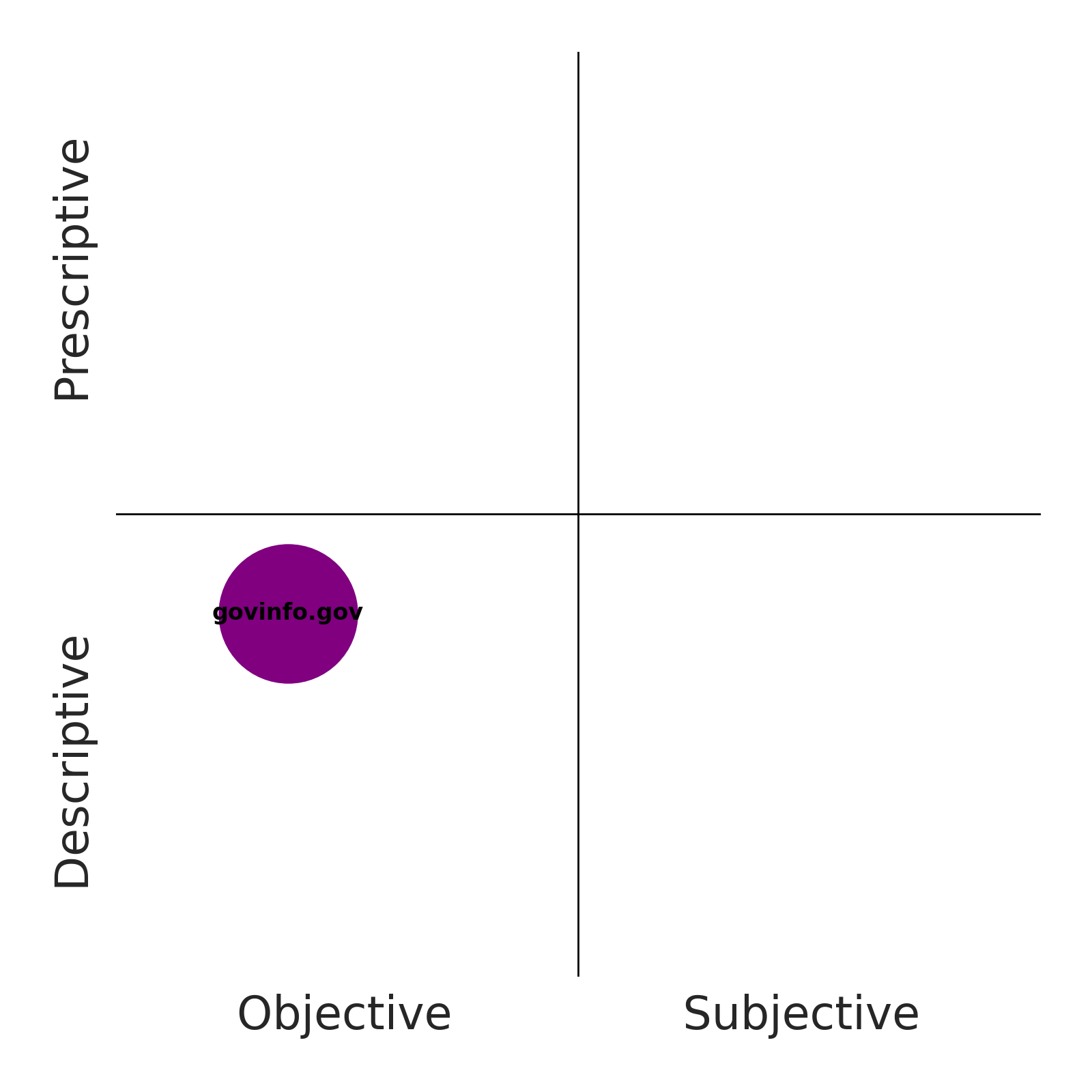
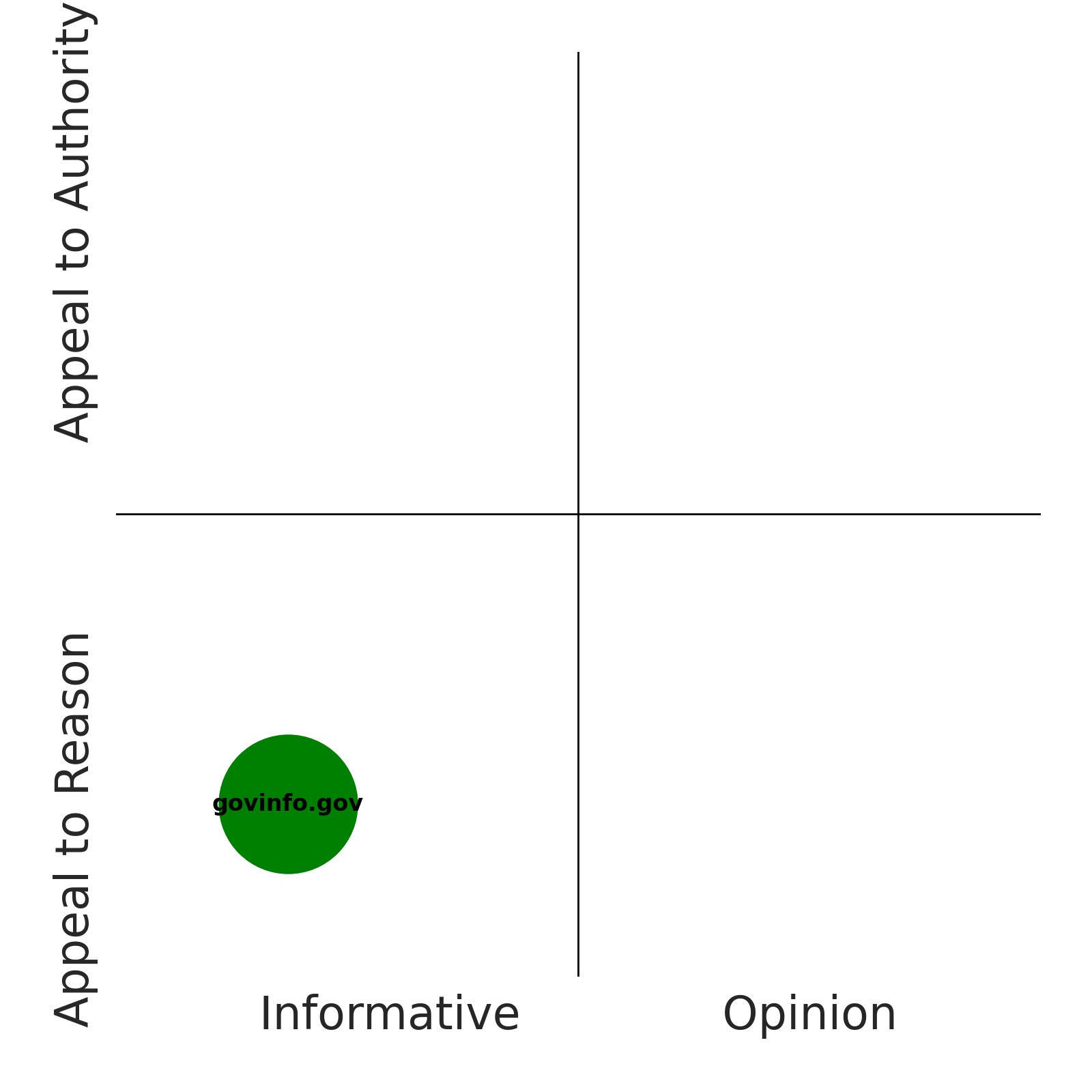
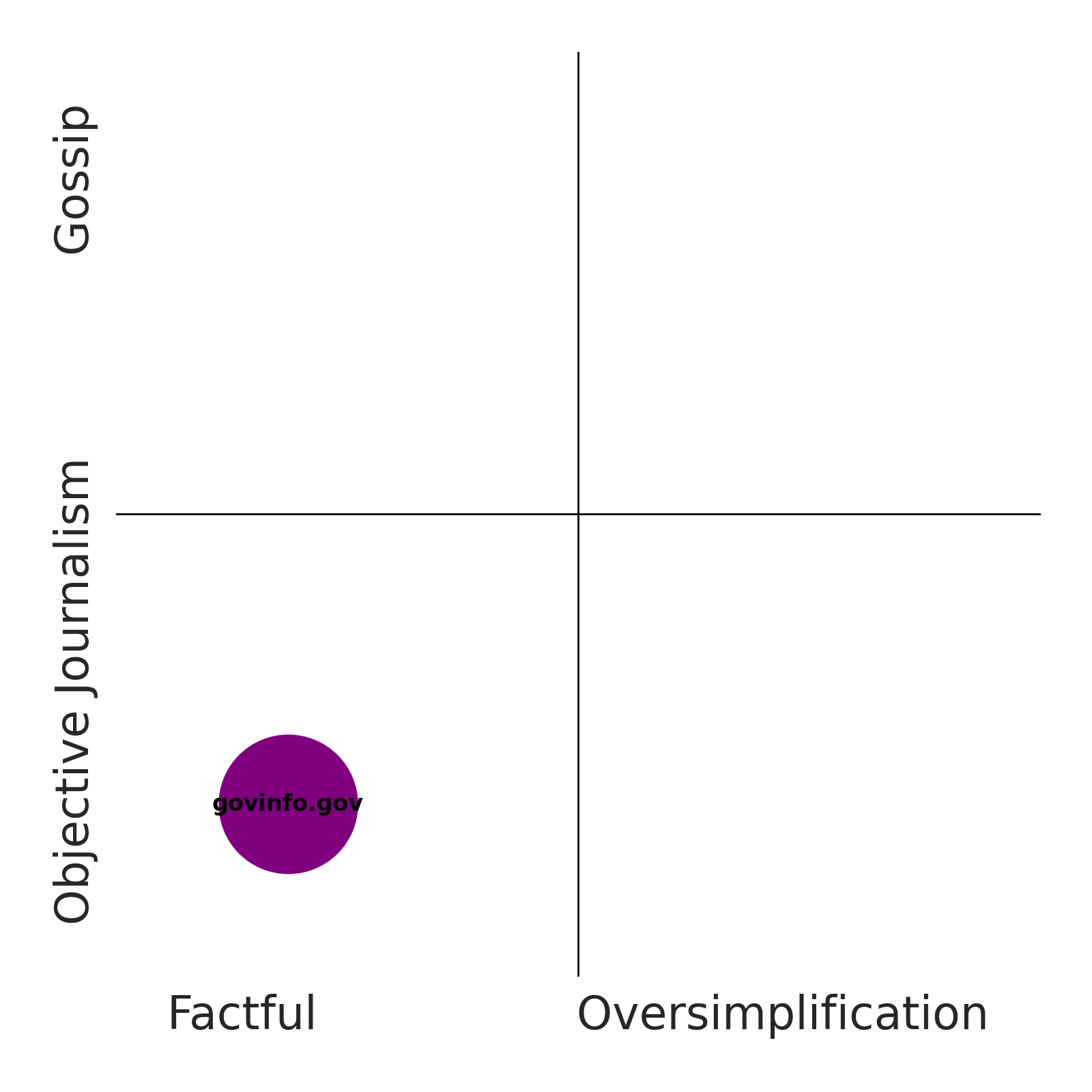
2026 © Helium Trades
Privacy Policy & Disclosure
* Disclaimer: Nothing on this website constitutes investment advice, performance data or any recommendation that any particular security, portfolio of securities, transaction or investment strategy is suitable for any specific person. Helium Trades is not responsible in any way for the accuracy
of any model predictions or price data. Any mention of a particular security and related prediction data is not a recommendation to buy or sell that security. Investments in securities involve the risk of loss. Past performance is no guarantee of future results. Helium Trades is not responsible for any of your investment decisions,
you should consult a financial expert before engaging in any transaction.
Helium Research Assistant

How can I help you today?
Ask any question about govinfo.gov bias.