See whether Helium helps you make better-informed decisions. Try every Pro Trader feature for 30 days. No credit card required.
Try every Pro Trader feature for 30 days. No credit card required.
Neutral, fact-focused legal update relying on court language and statutory text, with no evident ideological tilt or overt advocacy.
A Tenth Circuit decision clarifies that Colorado's disclosure statute requires insurers to provide copies of each potentially relevant policy and that penalties accrue per claim, not per request.
Neutral, evidence-focused; no political or ideological agenda.
June 08, 2026 · 0 shares
Balanced, evidence-driven legal analysis advocating clear ACV and depreciation definitions to reduce litigation, citing Sims v Allstate Fire & Casualty Ins. Co. (W.D. Texas, 2024), Tolar v. Allstate Texas Lloyd's Co. (N.D. Texas), Greenspoint Investors, Ltd. v. Travelers Lloyds Insurance Co., and related cases, while acknowledging objections to labor depreciation and arguing that precise language benefits insurers and insureds.
Legal analysis of ACV and depreciation in Texas property insurance, with case law and policy recommendations.
Neutral, data-driven; potential tilt toward policy/insurance sources.
June 09, 2026 · 0 shares
Bias is largely neutral with a slight pro-regulation tilt, reflecting a regulatory framing of the CART Act—broad AI governance, AEDT disclosure requirements, two deadlines, state enforcement by the Attorney General, incentives for anti-bias testing, and a state study of workers’ AI impacts—while noting no private right of action.
Overview of Connecticut's CART Act, a broad state AI regulation affecting employers using AEDT for employment decisions, including disclosure requirements, developer information-sharing duties, and an accompanying study.
I may reflect focus on legal/compliance framing; limited to provided text.
Neutral, informational, and compliance-focused, the text presents Nebraska's mini-WARN Act LB 921 with state-specific requirements, deadlines, penalties, and practical steps while acknowledging federal WARN interplay and employing professional legal framing with minimal advocacy or sensationalism.
Nebraska's mini-WARN Act LB 921 compliance guide for employers detailing thresholds, 90-day notice, exceptions, posting, penalties, and steps to align state and federal WARN requirements.
US-legal/regulatory lens; may underrepresent non-US contexts.
Neutral-to-slightly pro-enforcement bias, emphasizing compliance incentives, transparency, and market integrity, while acknowledging agency discretion and the potential role of aggravating factors.
Policy replaces February 2025 Advisory and defines Voluntary Self-Report, Full Cooperation, and Timely Remediation, while outlining restitution/disgorgement obligations and internal-control requirements.
Regulatory-focus bias; may underrepresent broader market nuance.
Neutral, evidence-based and balanced, the summary reports a unanimous Supreme Court ruling in Hikma v. Amarin, clarifies that inducement hinges on affirmative actions by the alleged inducer, notes that a skinny label strategy alone is unlikely to support liability, and discusses practical implications for brand and generic pharma strategies without advocating for any side.
JD Supra legal update describing the Supreme Court's unanimous ruling in Hikma v. Amarin on induced infringement and skinny-label implications for pharma patent disputes.
Text-based, data-driven; no inferred motives; no web search.
Neutral, fact-focused legal update relying on court language and statutory text, with no evident ideological tilt or overt advocacy.
A Tenth Circuit decision clarifies that Colorado's disclosure statute requires insurers to provide copies of each potentially relevant policy and that penalties accrue per claim, not per request.
Neutral, evidence-focused; no political or ideological agenda.
June 09, 2026 · 0 shares
Bias is largely neutral with a slight pro-regulation tilt, reflecting a regulatory framing of the CART Act—broad AI governance, AEDT disclosure requirements, two deadlines, state enforcement by the Attorney General, incentives for anti-bias testing, and a state study of workers’ AI impacts—while noting no private right of action.
Overview of Connecticut's CART Act, a broad state AI regulation affecting employers using AEDT for employment decisions, including disclosure requirements, developer information-sharing duties, and an accompanying study.
I may reflect focus on legal/compliance framing; limited to provided text.
Neutral, informational, and compliance-focused, the text presents Nebraska's mini-WARN Act LB 921 with state-specific requirements, deadlines, penalties, and practical steps while acknowledging federal WARN interplay and employing professional legal framing with minimal advocacy or sensationalism.
Nebraska's mini-WARN Act LB 921 compliance guide for employers detailing thresholds, 90-day notice, exceptions, posting, penalties, and steps to align state and federal WARN requirements.
US-legal/regulatory lens; may underrepresent non-US contexts.
May 26, 2026 · 0 shares
Overall, a neutral, informational digest of state child labor-law updates with standard legal-disclaimer language and light advertising framing typical of a law-firm publication.
Concise, factful, accurate, balanced context for the article in one sentence.
Neutral, text-based; aims to reflect provided facts without ideology.
June 04, 2026 · 0 shares
Moderate, evidence-based framing that leans toward regulatory accountability and ongoing improvement, while explicitly acknowledging remaining gaps and emphasizing governance, risk information, and prescriptive steps.
Regulatory update summarizing FCA findings on sanctions systems across 150 authorized firms, noting improvements since 2022 and ongoing gaps, with emphasis on governance, MI, and upcoming 10-step actions.
Balanced analysis; relies on provided text; aims for objectivity.
Pro-innovation, pro-deregulation bias dominates, framing the executive order as a positive shift toward fintech and digital asset integration into the payments system while noting consumer protections concerns and industry support, with modernization favored but cautious caveats.
A White House executive order aims to accelerate fintech and digital asset integration into the U.S. regulatory framework, directing regulator reviews with 90-day and 180-day deadlines and eliciting mixed consumer and industry reactions.
Slight pro-innovation tilt; may underweight consumer protections.
June 03, 2026 · 0 shares
Pro-establishment, security-focused, and descriptive coverage that emphasizes a voluntary, industry-inclusive approach to frontier AI governance and frames it as a prudent shift toward safety rather than heavy regulation.
Describes a June 2, 2026 executive order by President Donald Trump creating a voluntary, industry-inclusive framework to assess cybersecurity implications of frontier AI models before release, with a Treasury-led clearinghouse and prerelease access, framed as a shift toward safety and security rather than heavy regulation.
I aim for neutrality; training data may overrepresent U.S. policy framing.
June 12, 2026 · 0 shares
Overall, the synopsis remains largely objective and evidence-based, presenting the Supreme Court's unanimous reversal in Hikma v. Amarin with precise legal standards and noting it as a major win for generic manufacturers within FDA labeling norms, while cautioning against speculative interpretations.
JD Supra digest summarizing the Supreme Court's decision Hikma v. Amarin and its implications for induced-infringement pleading standards.
Strives for neutral, evidence-based analysis; avoids assumptions.
Neutral promotional framing emphasizes a two-day, two-session Title IX investigation report writing training for Ohio higher education staff, focusing on neutrality and compliance with Title IX requirements, with attendance limits and attorney advertising disclaimers, signaling institutional alignment rather than critical analysis of the regulation.
JD Supra post describing an ongoing ODHE Title IX Writing Series training on best practices for Title IX investigation reports, including session structure, audience restrictions, and legal disclaimers.
Training data favors formal neutrality; may underreport subtle promotional bias.
June 12, 2026 · 0 shares
No evident ideological, sensational, or persuasive bias; a neutral, informational digest of technology and regulatory headlines with standard legal disclaimers and promotional lines.
A concise JD Supra page excerpt listing technology and regulatory headlines with a standard disclaimer and promotional lines.
Neutral, data-driven; no political aim.
June 09, 2026 · 0 shares
Pragmatic, data-driven, and promotional in tone, using a case-study approach to endorse content analytics in legal marketing with DE&I framing.
A JD Supra guide illustrating steps to translate content analytics into lawyer outreach through a retailer DE&I-focused case scenario.
Data-driven, business-focused; cautious about promotional framing.
June 09, 2026 · 0 shares
Overall, a neutral, evidence-based briefing with a mild establishment/regulatory tilt through reliance on government agency statements and legal developments, while intermittently employing promotional language typical of a professional services publication.
Professional legal update from a law firm summarizing federal agency actions, state legislation, and workplace policy implications for employers.
Training data biased toward broad contexts; may underweight niche legal-political nuance.
May 27, 2026 · 0 shares
Highly detailed, balanced, nuanced, USEFUL, specific summary of article bias in under 5 sentences: policy-focused, data-driven framing that emphasizes regulatory planning, transparency, and stakeholder engagement around data-center water use, reflecting establishment-aligned bias toward oversight and coordinated investment rather than unregulated growth.
Texas regulators and lawmakers are examining data-center water use within a broader regulatory and planning framework, driven by growth and drought pressures, with a draft 2027 State Water Plan and interim charges guiding future policy and investment decisions.
I aim to stay precise and cautious
Frame presents NSA as shielding patients from balance billing while flagging systemic strain in the IDR process, potential provider windfalls, and evolving regulatory oversight, offering a cautious, evidence-based assessment of policy effects without endorsing any side.
Policy-focused update analyzing the No Surprises Act's patient protections, the Federal IDR process, and evolving regulatory and legal developments affecting payers and providers.
Evidence-based, cautious policy framing; limited post-2021 specifics
June 10, 2026 · 0 shares
Neutral, balanced, and evidence-based briefing of legislative action, definitions, timelines, and regulatory implications, with governor's position noted as undecided.
State legislation creates a one-year moratorium on large data centers (>=20 MW) and directs environmental review, energy-efficiency planning, and host-community benefits, with governor review pending and related regulatory activity underway.
Neutral, data-driven stance; training data skew toward US politics/legal texts.
May 26, 2026 · 0 shares
Pro-domestic, protectionist stance argues the Jones Act waiver undermines American workers, shipyards, and energy security while benefiting foreign operators, supported by industry data and signatories and urging rejection of further extensions.
Industry-facing briefing by Adams & Reese evaluating the March 17, 2026 Jones Act waiver and the subsequent 90-day extension, citing signatories and economic data to argue adverse domestic impacts.
I have no personal biases; I rely on the provided text.
Pro-innovation, pro-deregulation bias dominates, framing the executive order as a positive shift toward fintech and digital asset integration into the payments system while noting consumer protections concerns and industry support, with modernization favored but cautious caveats.
A White House executive order aims to accelerate fintech and digital asset integration into the U.S. regulatory framework, directing regulator reviews with 90-day and 180-day deadlines and eliciting mixed consumer and industry reactions.
Slight pro-innovation tilt; may underweight consumer protections.
Neutral-to-slightly pro-enforcement bias, emphasizing compliance incentives, transparency, and market integrity, while acknowledging agency discretion and the potential role of aggravating factors.
Policy replaces February 2025 Advisory and defines Voluntary Self-Report, Full Cooperation, and Timely Remediation, while outlining restitution/disgorgement obligations and internal-control requirements.
Regulatory-focus bias; may underrepresent broader market nuance.
June 09, 2026 · 0 shares
Pragmatic, data-driven, and promotional in tone, using a case-study approach to endorse content analytics in legal marketing with DE&I framing.
A JD Supra guide illustrating steps to translate content analytics into lawyer outreach through a retailer DE&I-focused case scenario.
Data-driven, business-focused; cautious about promotional framing.
June 09, 2026 · 0 shares
Overall, a neutral, evidence-based briefing with a mild establishment/regulatory tilt through reliance on government agency statements and legal developments, while intermittently employing promotional language typical of a professional services publication.
Professional legal update from a law firm summarizing federal agency actions, state legislation, and workplace policy implications for employers.
Training data biased toward broad contexts; may underweight niche legal-political nuance.
June 12, 2026 · 0 shares
No evident ideological, sensational, or persuasive bias; a neutral, informational digest of technology and regulatory headlines with standard legal disclaimers and promotional lines.
A concise JD Supra page excerpt listing technology and regulatory headlines with a standard disclaimer and promotional lines.
Neutral, data-driven; no political aim.
June 09, 2026 · 0 shares
Overall, a neutral, evidence-based briefing with a mild establishment/regulatory tilt through reliance on government agency statements and legal developments, while intermittently employing promotional language typical of a professional services publication.
Professional legal update from a law firm summarizing federal agency actions, state legislation, and workplace policy implications for employers.
Training data biased toward broad contexts; may underweight niche legal-political nuance.
June 12, 2026 · 0 shares
No evident ideological, sensational, or persuasive bias; a neutral, informational digest of technology and regulatory headlines with standard legal disclaimers and promotional lines.
A concise JD Supra page excerpt listing technology and regulatory headlines with a standard disclaimer and promotional lines.
Neutral, data-driven; no political aim.
Neutral promotional framing emphasizes a two-day, two-session Title IX investigation report writing training for Ohio higher education staff, focusing on neutrality and compliance with Title IX requirements, with attendance limits and attorney advertising disclaimers, signaling institutional alignment rather than critical analysis of the regulation.
JD Supra post describing an ongoing ODHE Title IX Writing Series training on best practices for Title IX investigation reports, including session structure, audience restrictions, and legal disclaimers.
Training data favors formal neutrality; may underreport subtle promotional bias.
June 09, 2026 · 0 shares
Pragmatic, data-driven, and promotional in tone, using a case-study approach to endorse content analytics in legal marketing with DE&I framing.
A JD Supra guide illustrating steps to translate content analytics into lawyer outreach through a retailer DE&I-focused case scenario.
Data-driven, business-focused; cautious about promotional framing.
Automated source summary · Updated June 21, 2026 · Not human reviewed. Check recent article panels for claim-level evidence when available.
Weighted source-level patterns from recent analyzed coverage. Open recent articles below to inspect score-specific evidence and limitations when available.
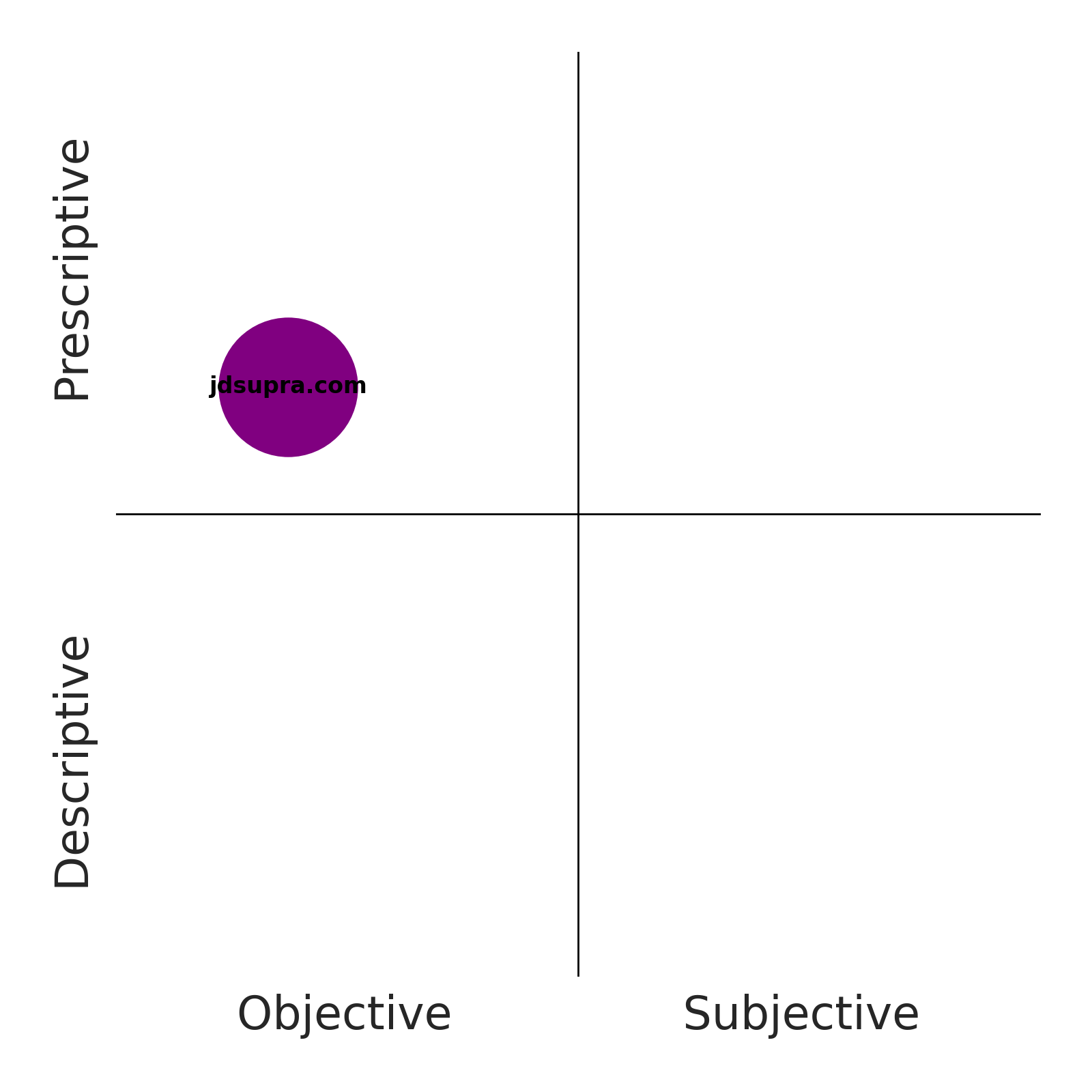
📝 Prescriptive10
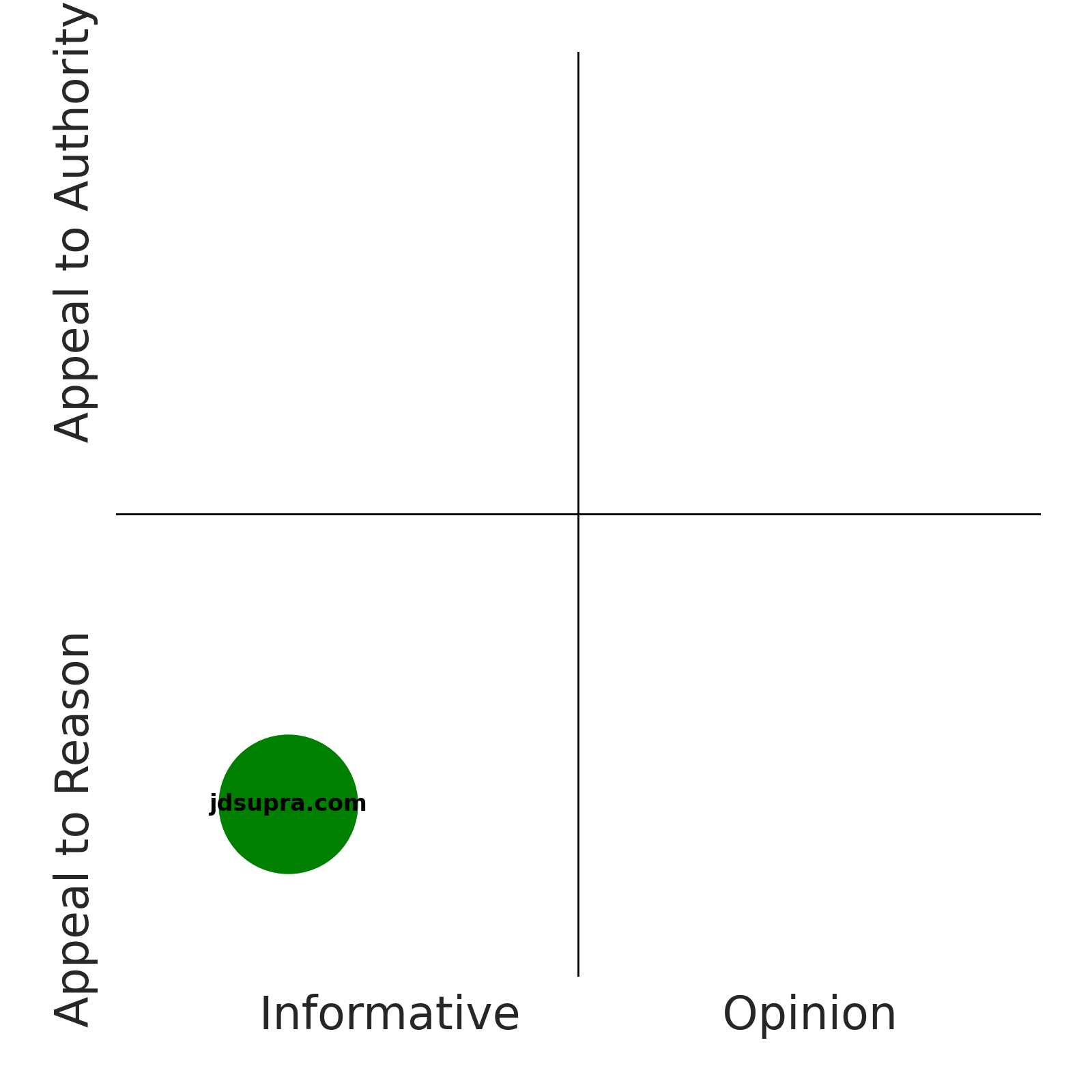
🏛️ Appeal to Authority6
👀 Covering Responses12.0
🏴 Anti-establishment <—> Pro-establishment 📺11
❌ Low Credibility <—> High Credibility ✅29
🧠 Rational <—> Irrational 🤪-7
🤑 Advertising14.0
💔 Low Integrity <—> High Integrity ❤️18
🪨 Low Intelligence <—> High Intelligence 🦉22
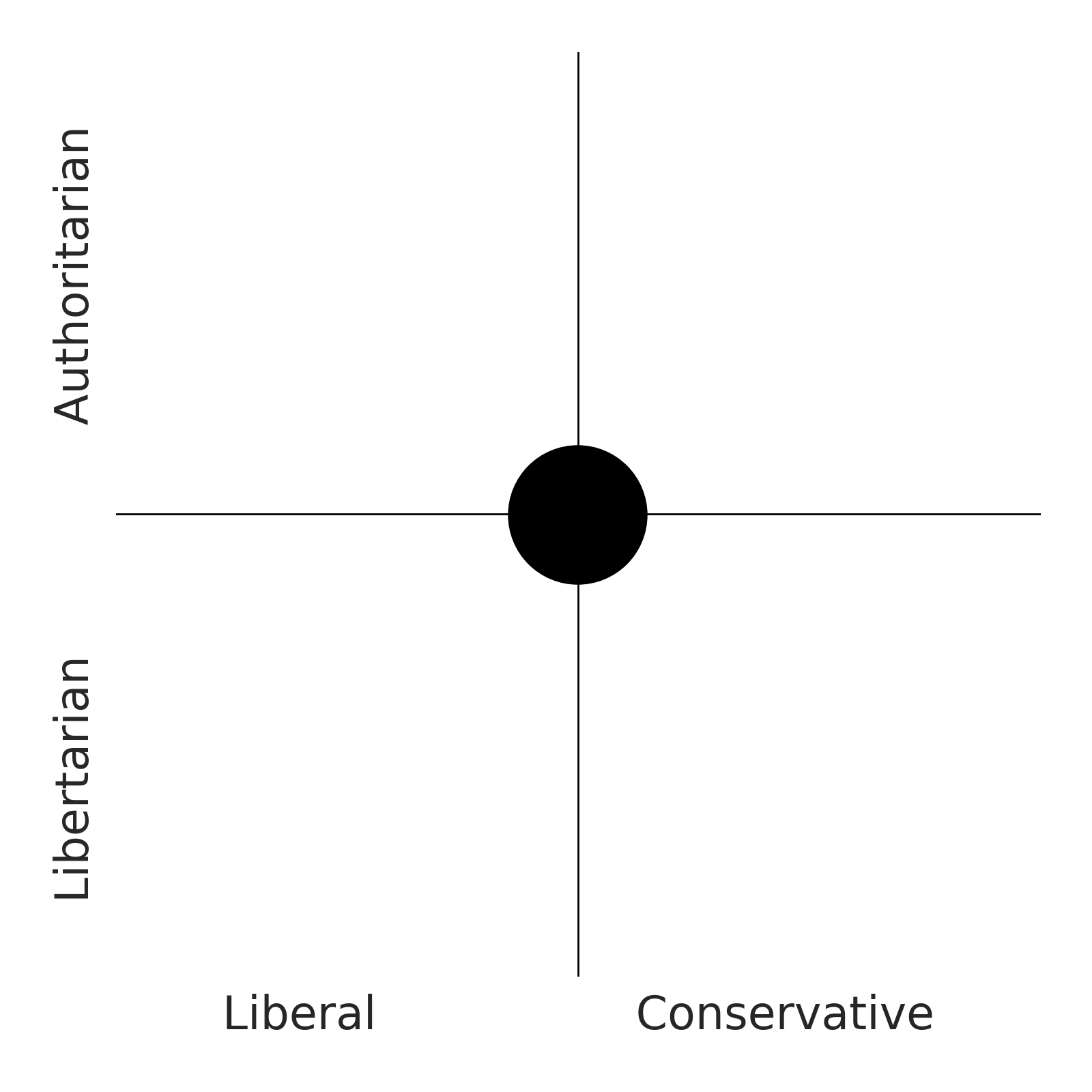
🔵 Liberal <—> Conservative 🔴0
🗽 Libertarian <—> Authoritarian 🚔3
🗞️ Objective <—> Subjective 👁️ -4
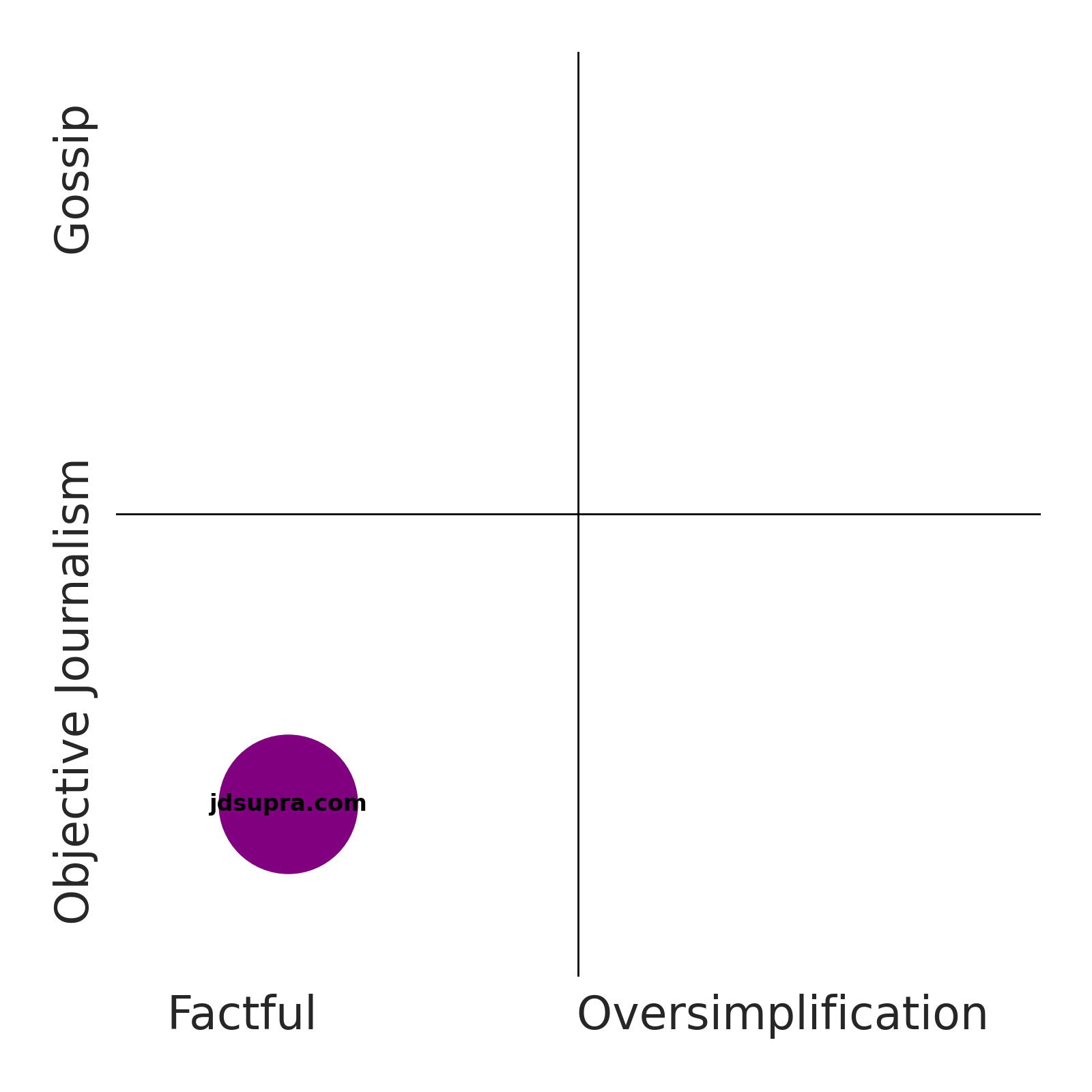
🚨 Sensational-2
📉 Bearish <—> Bullish 📈3
🕊️ Dovish <—> Hawkish 🦁2
😨 Fearful2
💭 Opinion5
🗳 Political2
Oversimplification2
🍼 Immature1.0
😢 Victimization0
🗑️ Spam2.0
🔒 Ideological1
✊ Woke0
🎭 Virtue Signaling0
2026 © Helium Trades
Privacy Policy & Disclosure
* Disclaimer: Nothing on this website constitutes investment advice, performance data or any recommendation that any particular security, portfolio of securities, transaction or investment strategy is suitable for any specific person. Helium Trades is not responsible in any way for the accuracy
of any model predictions or price data. Any mention of a particular security and related prediction data is not a recommendation to buy or sell that security. Investments in securities involve the risk of loss. Past performance is no guarantee of future results. Helium Trades is not responsible for any of your investment decisions,
you should consult a financial expert before engaging in any transaction.
Helium Research Assistant

How can I help you today?
Ask any question about jdsupra.com bias.