See whether Helium helps you make better-informed decisions. Try every Pro Trader feature for 30 days. No credit card required.
Try every Pro Trader feature for 30 days. No credit card required.
Purely descriptive academic abstract with no evaluative or persuasive framing.
Automated analysis; not human reviewed. Limitations: The supplied article text is truncated immediately after 'scored 20', so study findings and full context are unavailable.
The supplied article text is truncated immediately after 'scored 20', so study findings and full context are unavailable.
The article is a neutral academic abstract with no observable framing bias.
Automated analysis; not human reviewed. Limitations: Only the title and partial first sentence of the abstract are available; the rest of the article text is truncated.
Only the title and partial first sentence of the abstract are available; the rest of the article text is truncated.
The abstract presents a neutral academic description of a research study without evident bias.
This is an abstract from an academic paper published in Sage Open, Volume 16, Issue 3, July-September 2026.
Automated analysis; not human reviewed. Limitations: The article text is truncated and may not represent the full paper or its conclusions.
The article text is truncated and may not represent the full paper or its conclusions.
This is a methodological research abstract presenting psychometric evaluation of a motivation scale without discernible framing or bias.
The article is a brief academic abstract describing research methodology and objectives, with no surrounding news or editorial context.
The framing is epistemically modest and methodological, presenting an intended research model rather than asserting findings.
Automated analysis; not human reviewed. Limitations: The supplied text is only a one-sentence study aim, with no methods, results, or full article content available to assess framing beyond that statement. · 4 of 54 available dimensions scored; omitted dimensions are not treated as neutral. · Verified supporting quotes for 3 of 4 scored dimensions.
Claim: The text is strictly neutral and methodological, using no subjective or evaluative language.
“This study aims to examine how the association between academic social support and school adjustment is statistically mediated” · exact text match
Why: The only substantive sentence describes a research aim in formal, dispassionate terms and reports no opinion or interpretation.
Claim: The framing is unemotional and non-sensational, avoiding dramatic or exaggerated language.
“This study aims to examine how the association between academic social support and school adjustment is statistically mediated” · exact text match
Why: The wording is academic and restrained, presenting the investigation as a technical aim rather than a dramatic event.
Claim: The statement is descriptive rather than prescriptive, offering no policy, advice, or imperative.
“The study aims to examine how the association between academic social support and school adjustment is statistically mediated” · not found in supplied text
Why: It only describes what the study intends to examine, with no recommendation or normative claim.
Claim: The framing relies on formal statistical modeling rather than non-empirical or emotional reasoning.
“whether this mediating association differs depending on the level of psychological resilience” · exact text match
Why: The stated aim is expressed as a testable moderated-mediation model, with no appeal to intuition, emotion, or unsupported belief.
The supplied text is only a one-sentence study aim, with no methods, results, or full article content available to assess framing beyond that statement.
Neutral, academically restrained framing highlights the study’s associative design and explicitly notes that verified misconduct was not measured.
Automated analysis; not human reviewed. Limitations: The supplied text is truncated immediately after the sentence fragment "Since the study did not measure verified misconduct," so the study's full methods and findings are unavailable. · 7 of 54 available dimensions scored; omitted dimensions are not treated as neutral. · Verified supporting quotes for 7 of 7 scored dimensions.
Claim: The framing is objective rather than subjective.
“This study examined the associations between university students’ physical activity, technology use habits, and anxiety related to artificial intelligence (AI) within an academic integrity context.” · exact text match
Why: The sentence is a dispassionate description of a research design and contains no evaluative, emotional, or personal framing.
Claim: The presentation is calm and non-sensational.
“Since the study did not measure verified misconduct,” · exact text match
Why: The text foregrounds a methodological limitation rather than using dramatic or alarming language.
Claim: The abstract is descriptive and makes no recommendations.
“This study examined the associations between university students’ physical activity, technology use habits, and anxiety related to artificial intelligence (AI) within an academic integrity context.” · exact text match
Why: No normative direction, obligation, or prescription appears in the supplied text.
Claim: The text is factful and neutral, not opinionated.
“This study examined the associations between university students’ physical activity, technology use habits, and anxiety related to artificial intelligence (AI) within an academic integrity context.” · exact text match
Why: The wording is declarative and descriptive, with no advocacy or opinion markers.
Claim: The tone is unemotional.
“This study examined the associations between university students’ physical activity, technology use habits, and anxiety related to artificial intelligence (AI) within an academic integrity context.” · exact text match
Why: 'Anxiety' appears as a measured variable label, not as expressive language, and the overall register is neutral.
Claim: The text follows systematic, research-oriented reasoning.
“This study examined the associations between university students’ physical activity, technology use habits, and anxiety related to artificial intelligence (AI) within an academic integrity context.” · exact text match
Why: It specifies variables and an analytical frame rather than offering unsupported narrative or emotional appeal.
Claim: The text displays epistemic honesty by disclosing a limitation.
“Since the study did not measure verified misconduct,” · exact text match
Why: It openly states what the research did not capture, which is a visible transparency signal.
The supplied text is truncated immediately after the sentence fragment "Since the study did not measure verified misconduct," so the study's full methods and findings are unavailable.
An academic abstract frames the topic in neutral, technical terms, presenting a research investigation without findings, advocacy, or emotional appeals.
Automated analysis; not human reviewed. Limitations: Only a partial abstract (title, publication line, and opening sentence) was provided, so findings, methods, and any later framing could not be assessed. · 5 of 54 available dimensions scored; omitted dimensions are not treated as neutral. · Verified supporting quotes for 5 of 5 scored dimensions.
Claim: The publisher framing is objective and descriptive rather than subjective.
“This study investigates the impact of digital financial inclusion, by explicitly distinguishing between its supply-side and demand-side dimensions, technological innovation, economic growth, industrial development, foreign direct investment, and renewable” · exact text match
Why: The abstract states a research question in neutral, quantifiable terms and avoids evaluative or personal language.
Claim: The framing is objective and unsensational.
“Digital Financial Inclusion and Sustainability in BRICS: Investigating Drivers of Ecological Footprint Reduction” · exact text match
Why: The title and abstract use plain academic terminology and no dramatic, alarming, or exaggerated wording.
Claim: The framing is descriptive rather than prescriptive.
“Investigating Drivers of Ecological Footprint Reduction” · exact text match
Why: The word 'Investigating' signals analysis of relationships rather than advocacy for a particular policy or action.
Claim: The framing is rational and analytical, not emotional or speculative.
“This study investigates the impact of digital financial inclusion, by explicitly distinguishing between its supply-side and demand-side dimensions, technological innovation, economic growth, industrial development, foreign direct investment, and renewable” · exact text match
Why: The text uses neutral, technical language to frame an empirical research aim, with no rhetorical or emotional appeal.
Claim: The framing is scientific and empirical rather than superstitious.
“This study investigates the impact of digital financial inclusion, by explicitly distinguishing between its supply-side and demand-side dimensions, technological innovation, economic growth, industrial development, foreign direct investment, and renewable” · exact text match
Why: The text presents a structured empirical research design with defined variables, though methods and results are not included in the supplied content.
Only a partial abstract (title, publication line, and opening sentence) was provided, so findings, methods, and any later framing could not be assessed.
An academic, neutral framing presents a model-building study in descriptive third-person language, with no advocacy, sensationalism, or emotional appeals.
Automated analysis; not human reviewed. Limitations: The supplied text is a truncated abstract ending mid-sentence, so the assessment rests only on the opening framing and no full methods, findings, or sources are available. · 4 of 54 available dimensions scored; omitted dimensions are not treated as neutral. · Verified supporting quotes for 4 of 4 scored dimensions.
Claim: The framing is objective rather than subjective, presenting the study's purpose in neutral third-person terms.
“This study develops an integrated and multi-scalar model for assessing post-disaster urban cultural heritage through the case of historic cinema venues in Adana, Turkey.” · exact text match
Why: The sentence is descriptive and non-evaluative, with no first-person judgment, emotional language, or opinionated phrasing.
Claim: The framing is restrained and informational rather than sensational.
“This study develops an integrated and multi-scalar model for assessing post-disaster urban cultural heritage through the case of historic cinema venues in Adana, Turkey.” · exact text match
Why: The language is academic and measured, with no hype, urgency, dramatic adjectives, or emotional triggers.
Claim: The framing is descriptive, reporting what the study does rather than prescribing action.
“This study develops an integrated and multi-scalar model for assessing post-disaster urban cultural heritage through the case of historic cinema venues in Adana, Turkey.” · exact text match
Why: The verb 'develops' and the case-study phrasing describe the research activity, with no recommendation, imperative, or policy directive.
Claim: The framing is analytical and model-oriented rather than emotional or speculative.
“This study develops an integrated and multi-scalar model for assessing post-disaster urban cultural heritage through the case of historic cinema venues in Adana, Turkey.” · exact text match
Why: The focus on developing an integrated model signals an analytic, structured approach rather than an affective or irrational appeal.
The supplied text is a truncated abstract ending mid-sentence, so the assessment rests only on the opening framing and no full methods, findings, or sources are available.
Empirical and method-driven framing, presenting the study in a neutral academic register with no political or commercial positioning.
Automated analysis; not human reviewed. Limitations: Only a brief abstract excerpt was supplied, so full findings, methods, and editorial context could not be assessed. · 2 of 54 available dimensions scored; omitted dimensions are not treated as neutral. · Verified supporting quotes for 2 of 2 scored dimensions.
Claim: The publisher reports the study in an objective, empirical register.
“Data sources included student surveys, course learning outcome evaluations, examination” · exact text match
Why: The sentence is a straightforward list of study inputs with no evaluative, emotional, or political language.
Claim: The publisher avoids sensational or dramatic framing.
“This study examined patterns of student comprehension across core topics in a data analytics and machine learning course through a multi-method analytical approach” · exact text match
Why: The description is technical, understated, and free of hyperbole, fear, or outrage.
Only a brief abstract excerpt was supplied, so full findings, methods, and editorial context could not be assessed.
Article content was unavailable: the supplied excerpt truncates at the opening sentence of an academic abstract and contains no analyzable framing.
Automated analysis; not human reviewed. Limitations: The supplied text was truncated at the opening of an academic abstract, leaving no substantive content to evaluate; extrapolations from the visible fragment should be treated as unverified.
The supplied text was truncated at the opening of an academic abstract, leaving no substantive content to evaluate; extrapolations from the visible fragment should be treated as unverified.
The abstract is neutral, academic prose presenting a research purpose without discernible slant.
Only the opening purpose section of the abstract is provided; the remainder of the article is truncated.
Automated analysis; not human reviewed. Limitations: The article text is truncated after the purpose statement, limiting analysis of method, findings, and potential editorial framing. · 2 of 54 available dimensions scored; omitted dimensions are not treated as neutral. · Verified supporting quotes for 1 of 2 scored dimensions.
Claim: Publication in a peer-reviewed journal suggests credibility, but the supplied text is a truncated abstract lacking methodological detail.
“Sage Open, Volume 16, Issue 3, July-September 2026.” · exact text match
Why: The source is academic, but only the purpose statement is visible; methods, data, and findings are absent.
The article text is truncated after the purpose statement, limiting analysis of method, findings, and potential editorial framing.
No notable bias; the text presents an academic study description without editorializing.
The broader context is the global digital economy and traditional agricultural marketing in economically developed Chinese regions.
Frames AI militarisation as exerting stabilising and transformative impacts on military power in South Asia, using neutral descriptive academic language without evident editorial slant.
The supplied text is a truncated fragment from an academic article abstract in Sage Open (Volume 16, Issue 3, July-September 2026), titled 'AI Security Dilemma and Militarisation in South Asia: Rethinking Strategic Stability in the Age of Autonomous Warfare.'
Automated analysis; not human reviewed. Limitations: The supplied article text is truncated mid-sentence, limiting assessment of the full argument and any editorial framing.
The supplied article text is truncated mid-sentence, limiting assessment of the full argument and any editorial framing.
No framing bias is observable in the provided excerpt, which is a neutral study-title and abstract opening.
The text is the opening portion of a scholarly article or abstract published in Sage Open, describing a study about academic writer's block and potential associations with AI-based writing tools and author characteristics.
Automated analysis; not human reviewed. Limitations: The article text is truncated after 'and', so no results, discussion, or full framing are available for analysis.
The article text is truncated after 'and', so no results, discussion, or full framing are available for analysis.
Neutral, academically restrained framing highlights the study’s associative design and explicitly notes that verified misconduct was not measured.
Automated analysis; not human reviewed. Limitations: The supplied text is truncated immediately after the sentence fragment "Since the study did not measure verified misconduct," so the study's full methods and findings are unavailable. · 7 of 54 available dimensions scored; omitted dimensions are not treated as neutral. · Verified supporting quotes for 7 of 7 scored dimensions.
Claim: The framing is objective rather than subjective.
“This study examined the associations between university students’ physical activity, technology use habits, and anxiety related to artificial intelligence (AI) within an academic integrity context.” · exact text match
Why: The sentence is a dispassionate description of a research design and contains no evaluative, emotional, or personal framing.
Claim: The presentation is calm and non-sensational.
“Since the study did not measure verified misconduct,” · exact text match
Why: The text foregrounds a methodological limitation rather than using dramatic or alarming language.
Claim: The abstract is descriptive and makes no recommendations.
“This study examined the associations between university students’ physical activity, technology use habits, and anxiety related to artificial intelligence (AI) within an academic integrity context.” · exact text match
Why: No normative direction, obligation, or prescription appears in the supplied text.
Claim: The text is factful and neutral, not opinionated.
“This study examined the associations between university students’ physical activity, technology use habits, and anxiety related to artificial intelligence (AI) within an academic integrity context.” · exact text match
Why: The wording is declarative and descriptive, with no advocacy or opinion markers.
Claim: The tone is unemotional.
“This study examined the associations between university students’ physical activity, technology use habits, and anxiety related to artificial intelligence (AI) within an academic integrity context.” · exact text match
Why: 'Anxiety' appears as a measured variable label, not as expressive language, and the overall register is neutral.
Claim: The text follows systematic, research-oriented reasoning.
“This study examined the associations between university students’ physical activity, technology use habits, and anxiety related to artificial intelligence (AI) within an academic integrity context.” · exact text match
Why: It specifies variables and an analytical frame rather than offering unsupported narrative or emotional appeal.
Claim: The text displays epistemic honesty by disclosing a limitation.
“Since the study did not measure verified misconduct,” · exact text match
Why: It openly states what the research did not capture, which is a visible transparency signal.
The supplied text is truncated immediately after the sentence fragment "Since the study did not measure verified misconduct," so the study's full methods and findings are unavailable.
The text frames green banking as a legitimate research topic in competitive strategy using dry, empirical academic language without advocacy or evaluative loading.
Automated analysis; not human reviewed. Limitations: The article text is truncated after a few sentences, leaving the study's results, discussion, and full methodology unassessable. · 1 of 54 available dimensions scored; omitted dimensions are not treated as neutral. · Verified supporting quotes for 1 of 1 scored dimensions.
Claim: The study employs an explicit empirical quantitative method.
“A Structural Equation Approach” · exact text match
“This study examines how green banking practices, specifically policies, employee engagement, customer participation, and daily operations, influence the competitive advantage of a bank in a developing economy context.” · exact text match
Why: The explicit use of structural equation modeling in the title and the causal framing in the purpose statement indicate empirical, data-driven research consistent with scientific practice.
The article text is truncated after a few sentences, leaving the study's results, discussion, and full methodology unassessable.
An academic abstract frames the topic in neutral, technical terms, presenting a research investigation without findings, advocacy, or emotional appeals.
Automated analysis; not human reviewed. Limitations: Only a partial abstract (title, publication line, and opening sentence) was provided, so findings, methods, and any later framing could not be assessed. · 5 of 54 available dimensions scored; omitted dimensions are not treated as neutral. · Verified supporting quotes for 5 of 5 scored dimensions.
Claim: The publisher framing is objective and descriptive rather than subjective.
“This study investigates the impact of digital financial inclusion, by explicitly distinguishing between its supply-side and demand-side dimensions, technological innovation, economic growth, industrial development, foreign direct investment, and renewable” · exact text match
Why: The abstract states a research question in neutral, quantifiable terms and avoids evaluative or personal language.
Claim: The framing is objective and unsensational.
“Digital Financial Inclusion and Sustainability in BRICS: Investigating Drivers of Ecological Footprint Reduction” · exact text match
Why: The title and abstract use plain academic terminology and no dramatic, alarming, or exaggerated wording.
Claim: The framing is descriptive rather than prescriptive.
“Investigating Drivers of Ecological Footprint Reduction” · exact text match
Why: The word 'Investigating' signals analysis of relationships rather than advocacy for a particular policy or action.
Claim: The framing is rational and analytical, not emotional or speculative.
“This study investigates the impact of digital financial inclusion, by explicitly distinguishing between its supply-side and demand-side dimensions, technological innovation, economic growth, industrial development, foreign direct investment, and renewable” · exact text match
Why: The text uses neutral, technical language to frame an empirical research aim, with no rhetorical or emotional appeal.
Claim: The framing is scientific and empirical rather than superstitious.
“This study investigates the impact of digital financial inclusion, by explicitly distinguishing between its supply-side and demand-side dimensions, technological innovation, economic growth, industrial development, foreign direct investment, and renewable” · exact text match
Why: The text presents a structured empirical research design with defined variables, though methods and results are not included in the supplied content.
Only a partial abstract (title, publication line, and opening sentence) was provided, so findings, methods, and any later framing could not be assessed.
The excerpt presents a neutral, methodological description of a quasi-natural experiment study without observable bias.
Automated analysis; not human reviewed. Limitations: The article text is truncated and may omit key findings or framing.
The article text is truncated and may omit key findings or framing.
The supplied publisher excerpt is a scholarly article text rather than a biased argument; no full editorial framing or article content is present, so no bias is supported.
Automated analysis; not human reviewed. Limitations: The full article text is omitted and the first substantive variables are not available; my scores only reflect title and opening background, not hidden facts.
The full article text is omitted and the first substantive variables are not available; my scores only reflect title and opening background, not hidden facts.
Empirical and method-driven framing, presenting the study in a neutral academic register with no political or commercial positioning.
Automated analysis; not human reviewed. Limitations: Only a brief abstract excerpt was supplied, so full findings, methods, and editorial context could not be assessed. · 2 of 54 available dimensions scored; omitted dimensions are not treated as neutral. · Verified supporting quotes for 2 of 2 scored dimensions.
Claim: The publisher reports the study in an objective, empirical register.
“Data sources included student surveys, course learning outcome evaluations, examination” · exact text match
Why: The sentence is a straightforward list of study inputs with no evaluative, emotional, or political language.
Claim: The publisher avoids sensational or dramatic framing.
“This study examined patterns of student comprehension across core topics in a data analytics and machine learning course through a multi-method analytical approach” · exact text match
Why: The description is technical, understated, and free of hyperbole, fear, or outrage.
Only a brief abstract excerpt was supplied, so full findings, methods, and editorial context could not be assessed.
The text presents a neutral, academic summary of a mixed-methods study without observable framing or bias.
Automated analysis; not human reviewed. Limitations: The supplied text is a brief abstract fragment; full methodology and results are unavailable, limiting analysis. · 54 of 54 available dimensions scored; omitted dimensions are not treated as neutral. · Verified supporting quotes for 0 of 54 scored dimensions.
The supplied text is a brief abstract fragment; full methodology and results are unavailable, limiting analysis.
The framing is academic and problem-oriented, positioning instructor tool scarcity rather than student deficiency as the central challenge in evaluating open-ended statistical modeling.
Automated analysis; not human reviewed. Limitations: The supplied excerpt ends mid-sentence and contains no methods, findings, or results, so only the title and opening rationale could be assessed.
The supplied excerpt ends mid-sentence and contains no methods, findings, or results, so only the title and opening rationale could be assessed.
The publisher presents the development of New Quality Productive Forces in the Yangtze River Delta as an intrinsic requirement and core lever for high-quality economic growth and Chinese-style modernization, reflecting a favorable, state-aligned framing.
The article is a brief abstract or introductory text for a research article published in Sage Open, focusing on regional development within China's Yangtze River Delta.
Automated analysis; not human reviewed. Limitations: The article text is extremely brief, consisting only of a title and a single sentence, limiting the ability to assess most bias dimensions reliably. · 30 of 54 available dimensions scored; omitted dimensions are not treated as neutral. · Verified supporting quotes for 0 of 30 scored dimensions.
The article text is extremely brief, consisting only of a title and a single sentence, limiting the ability to assess most bias dimensions reliably.
Neutral, descriptive presentation of an academic research question without discernible editorial slant.
The supplied text is only the opening of an abstract from a peer-reviewed journal article; the study's body, findings, and full methodology are not provided.
Automated analysis; not human reviewed. Limitations: The supplied text is severely truncated (ends mid-sentence), so only the abstract opening could be assessed; full article content is unavailable.
The supplied text is severely truncated (ends mid-sentence), so only the abstract opening could be assessed; full article content is unavailable.
The abstract presents a neutral academic description of a research study without evident bias.
This is an abstract from an academic paper published in Sage Open, Volume 16, Issue 3, July-September 2026.
Automated analysis; not human reviewed. Limitations: The article text is truncated and may not represent the full paper or its conclusions.
The article text is truncated and may not represent the full paper or its conclusions.
The abstract is neutral, academic prose presenting a research purpose without discernible slant.
Only the opening purpose section of the abstract is provided; the remainder of the article is truncated.
Automated analysis; not human reviewed. Limitations: The article text is truncated after the purpose statement, limiting analysis of method, findings, and potential editorial framing. · 2 of 54 available dimensions scored; omitted dimensions are not treated as neutral. · Verified supporting quotes for 1 of 2 scored dimensions.
Claim: Publication in a peer-reviewed journal suggests credibility, but the supplied text is a truncated abstract lacking methodological detail.
“Sage Open, Volume 16, Issue 3, July-September 2026.” · exact text match
Why: The source is academic, but only the purpose statement is visible; methods, data, and findings are absent.
The article text is truncated after the purpose statement, limiting analysis of method, findings, and potential editorial framing.
Empirical and method-driven framing, presenting the study in a neutral academic register with no political or commercial positioning.
Automated analysis; not human reviewed. Limitations: Only a brief abstract excerpt was supplied, so full findings, methods, and editorial context could not be assessed. · 2 of 54 available dimensions scored; omitted dimensions are not treated as neutral. · Verified supporting quotes for 2 of 2 scored dimensions.
Claim: The publisher reports the study in an objective, empirical register.
“Data sources included student surveys, course learning outcome evaluations, examination” · exact text match
Why: The sentence is a straightforward list of study inputs with no evaluative, emotional, or political language.
Claim: The publisher avoids sensational or dramatic framing.
“This study examined patterns of student comprehension across core topics in a data analytics and machine learning course through a multi-method analytical approach” · exact text match
Why: The description is technical, understated, and free of hyperbole, fear, or outrage.
Only a brief abstract excerpt was supplied, so full findings, methods, and editorial context could not be assessed.
An academic abstract frames the topic in neutral, technical terms, presenting a research investigation without findings, advocacy, or emotional appeals.
Automated analysis; not human reviewed. Limitations: Only a partial abstract (title, publication line, and opening sentence) was provided, so findings, methods, and any later framing could not be assessed. · 5 of 54 available dimensions scored; omitted dimensions are not treated as neutral. · Verified supporting quotes for 5 of 5 scored dimensions.
Claim: The publisher framing is objective and descriptive rather than subjective.
“This study investigates the impact of digital financial inclusion, by explicitly distinguishing between its supply-side and demand-side dimensions, technological innovation, economic growth, industrial development, foreign direct investment, and renewable” · exact text match
Why: The abstract states a research question in neutral, quantifiable terms and avoids evaluative or personal language.
Claim: The framing is objective and unsensational.
“Digital Financial Inclusion and Sustainability in BRICS: Investigating Drivers of Ecological Footprint Reduction” · exact text match
Why: The title and abstract use plain academic terminology and no dramatic, alarming, or exaggerated wording.
Claim: The framing is descriptive rather than prescriptive.
“Investigating Drivers of Ecological Footprint Reduction” · exact text match
Why: The word 'Investigating' signals analysis of relationships rather than advocacy for a particular policy or action.
Claim: The framing is rational and analytical, not emotional or speculative.
“This study investigates the impact of digital financial inclusion, by explicitly distinguishing between its supply-side and demand-side dimensions, technological innovation, economic growth, industrial development, foreign direct investment, and renewable” · exact text match
Why: The text uses neutral, technical language to frame an empirical research aim, with no rhetorical or emotional appeal.
Claim: The framing is scientific and empirical rather than superstitious.
“This study investigates the impact of digital financial inclusion, by explicitly distinguishing between its supply-side and demand-side dimensions, technological innovation, economic growth, industrial development, foreign direct investment, and renewable” · exact text match
Why: The text presents a structured empirical research design with defined variables, though methods and results are not included in the supplied content.
Only a partial abstract (title, publication line, and opening sentence) was provided, so findings, methods, and any later framing could not be assessed.
The text frames green banking as a legitimate research topic in competitive strategy using dry, empirical academic language without advocacy or evaluative loading.
Automated analysis; not human reviewed. Limitations: The article text is truncated after a few sentences, leaving the study's results, discussion, and full methodology unassessable. · 1 of 54 available dimensions scored; omitted dimensions are not treated as neutral. · Verified supporting quotes for 1 of 1 scored dimensions.
Claim: The study employs an explicit empirical quantitative method.
“A Structural Equation Approach” · exact text match
“This study examines how green banking practices, specifically policies, employee engagement, customer participation, and daily operations, influence the competitive advantage of a bank in a developing economy context.” · exact text match
Why: The explicit use of structural equation modeling in the title and the causal framing in the purpose statement indicate empirical, data-driven research consistent with scientific practice.
The article text is truncated after a few sentences, leaving the study's results, discussion, and full methodology unassessable.
The framing is epistemically modest and methodological, presenting an intended research model rather than asserting findings.
Automated analysis; not human reviewed. Limitations: The supplied text is only a one-sentence study aim, with no methods, results, or full article content available to assess framing beyond that statement. · 4 of 54 available dimensions scored; omitted dimensions are not treated as neutral. · Verified supporting quotes for 3 of 4 scored dimensions.
Claim: The text is strictly neutral and methodological, using no subjective or evaluative language.
“This study aims to examine how the association between academic social support and school adjustment is statistically mediated” · exact text match
Why: The only substantive sentence describes a research aim in formal, dispassionate terms and reports no opinion or interpretation.
Claim: The framing is unemotional and non-sensational, avoiding dramatic or exaggerated language.
“This study aims to examine how the association between academic social support and school adjustment is statistically mediated” · exact text match
Why: The wording is academic and restrained, presenting the investigation as a technical aim rather than a dramatic event.
Claim: The statement is descriptive rather than prescriptive, offering no policy, advice, or imperative.
“The study aims to examine how the association between academic social support and school adjustment is statistically mediated” · not found in supplied text
Why: It only describes what the study intends to examine, with no recommendation or normative claim.
Claim: The framing relies on formal statistical modeling rather than non-empirical or emotional reasoning.
“whether this mediating association differs depending on the level of psychological resilience” · exact text match
Why: The stated aim is expressed as a testable moderated-mediation model, with no appeal to intuition, emotion, or unsupported belief.
The supplied text is only a one-sentence study aim, with no methods, results, or full article content available to assess framing beyond that statement.
The supplied text is neutral and empirical, with no discernible framing bias in the opening abstract.
Academic abstract stating that vaccine allocation during global crises is a major governance challenge.
Automated analysis; not human reviewed. Limitations: Supplied text is truncated mid-sentence, so only the opening abstract is analyzable.
Supplied text is truncated mid-sentence, so only the opening abstract is analyzable.
The excerpt presents a neutral, methodological description of a quasi-natural experiment study without observable bias.
Automated analysis; not human reviewed. Limitations: The article text is truncated and may omit key findings or framing.
The article text is truncated and may omit key findings or framing.
Neutral, descriptive presentation of an academic research question without discernible editorial slant.
The supplied text is only the opening of an abstract from a peer-reviewed journal article; the study's body, findings, and full methodology are not provided.
Automated analysis; not human reviewed. Limitations: The supplied text is severely truncated (ends mid-sentence), so only the abstract opening could be assessed; full article content is unavailable.
The supplied text is severely truncated (ends mid-sentence), so only the abstract opening could be assessed; full article content is unavailable.
No notable bias; the text presents an academic study description without editorializing.
The broader context is the global digital economy and traditional agricultural marketing in economically developed Chinese regions.
August 30, 2026 · 0 shares
The text presents a neutral academic framing without evident bias.
Automated analysis; not human reviewed. Limitations: The article text is truncated, limiting analysis to the opening statements.
The article text is truncated, limiting analysis to the opening statements.
The publisher presents the development of New Quality Productive Forces in the Yangtze River Delta as an intrinsic requirement and core lever for high-quality economic growth and Chinese-style modernization, reflecting a favorable, state-aligned framing.
The article is a brief abstract or introductory text for a research article published in Sage Open, focusing on regional development within China's Yangtze River Delta.
Automated analysis; not human reviewed. Limitations: The article text is extremely brief, consisting only of a title and a single sentence, limiting the ability to assess most bias dimensions reliably. · 30 of 54 available dimensions scored; omitted dimensions are not treated as neutral. · Verified supporting quotes for 0 of 30 scored dimensions.
The article text is extremely brief, consisting only of a title and a single sentence, limiting the ability to assess most bias dimensions reliably.
No notable bias; the text presents an academic study description without editorializing.
The broader context is the global digital economy and traditional agricultural marketing in economically developed Chinese regions.
No framing bias is observable in the provided excerpt, which is a neutral study-title and abstract opening.
The text is the opening portion of a scholarly article or abstract published in Sage Open, describing a study about academic writer's block and potential associations with AI-based writing tools and author characteristics.
Automated analysis; not human reviewed. Limitations: The article text is truncated after 'and', so no results, discussion, or full framing are available for analysis.
The article text is truncated after 'and', so no results, discussion, or full framing are available for analysis.
The framing is academic and problem-oriented, positioning instructor tool scarcity rather than student deficiency as the central challenge in evaluating open-ended statistical modeling.
Automated analysis; not human reviewed. Limitations: The supplied excerpt ends mid-sentence and contains no methods, findings, or results, so only the title and opening rationale could be assessed.
The supplied excerpt ends mid-sentence and contains no methods, findings, or results, so only the title and opening rationale could be assessed.
The publisher presents the development of New Quality Productive Forces in the Yangtze River Delta as an intrinsic requirement and core lever for high-quality economic growth and Chinese-style modernization, reflecting a favorable, state-aligned framing.
The article is a brief abstract or introductory text for a research article published in Sage Open, focusing on regional development within China's Yangtze River Delta.
Automated analysis; not human reviewed. Limitations: The article text is extremely brief, consisting only of a title and a single sentence, limiting the ability to assess most bias dimensions reliably. · 30 of 54 available dimensions scored; omitted dimensions are not treated as neutral. · Verified supporting quotes for 0 of 30 scored dimensions.
The article text is extremely brief, consisting only of a title and a single sentence, limiting the ability to assess most bias dimensions reliably.
Article content was unavailable: the supplied excerpt truncates at the opening sentence of an academic abstract and contains no analyzable framing.
Automated analysis; not human reviewed. Limitations: The supplied text was truncated at the opening of an academic abstract, leaving no substantive content to evaluate; extrapolations from the visible fragment should be treated as unverified.
The supplied text was truncated at the opening of an academic abstract, leaving no substantive content to evaluate; extrapolations from the visible fragment should be treated as unverified.
No framing bias is observable in the provided excerpt, which is a neutral study-title and abstract opening.
The text is the opening portion of a scholarly article or abstract published in Sage Open, describing a study about academic writer's block and potential associations with AI-based writing tools and author characteristics.
Automated analysis; not human reviewed. Limitations: The article text is truncated after 'and', so no results, discussion, or full framing are available for analysis.
The article text is truncated after 'and', so no results, discussion, or full framing are available for analysis.
The framing is epistemically modest and methodological, presenting an intended research model rather than asserting findings.
Automated analysis; not human reviewed. Limitations: The supplied text is only a one-sentence study aim, with no methods, results, or full article content available to assess framing beyond that statement. · 4 of 54 available dimensions scored; omitted dimensions are not treated as neutral. · Verified supporting quotes for 3 of 4 scored dimensions.
Claim: The text is strictly neutral and methodological, using no subjective or evaluative language.
“This study aims to examine how the association between academic social support and school adjustment is statistically mediated” · exact text match
Why: The only substantive sentence describes a research aim in formal, dispassionate terms and reports no opinion or interpretation.
Claim: The framing is unemotional and non-sensational, avoiding dramatic or exaggerated language.
“This study aims to examine how the association between academic social support and school adjustment is statistically mediated” · exact text match
Why: The wording is academic and restrained, presenting the investigation as a technical aim rather than a dramatic event.
Claim: The statement is descriptive rather than prescriptive, offering no policy, advice, or imperative.
“The study aims to examine how the association between academic social support and school adjustment is statistically mediated” · not found in supplied text
Why: It only describes what the study intends to examine, with no recommendation or normative claim.
Claim: The framing relies on formal statistical modeling rather than non-empirical or emotional reasoning.
“whether this mediating association differs depending on the level of psychological resilience” · exact text match
Why: The stated aim is expressed as a testable moderated-mediation model, with no appeal to intuition, emotion, or unsupported belief.
The supplied text is only a one-sentence study aim, with no methods, results, or full article content available to assess framing beyond that statement.
Neutral, academically restrained framing highlights the study’s associative design and explicitly notes that verified misconduct was not measured.
Automated analysis; not human reviewed. Limitations: The supplied text is truncated immediately after the sentence fragment "Since the study did not measure verified misconduct," so the study's full methods and findings are unavailable. · 7 of 54 available dimensions scored; omitted dimensions are not treated as neutral. · Verified supporting quotes for 7 of 7 scored dimensions.
Claim: The framing is objective rather than subjective.
“This study examined the associations between university students’ physical activity, technology use habits, and anxiety related to artificial intelligence (AI) within an academic integrity context.” · exact text match
Why: The sentence is a dispassionate description of a research design and contains no evaluative, emotional, or personal framing.
Claim: The presentation is calm and non-sensational.
“Since the study did not measure verified misconduct,” · exact text match
Why: The text foregrounds a methodological limitation rather than using dramatic or alarming language.
Claim: The abstract is descriptive and makes no recommendations.
“This study examined the associations between university students’ physical activity, technology use habits, and anxiety related to artificial intelligence (AI) within an academic integrity context.” · exact text match
Why: No normative direction, obligation, or prescription appears in the supplied text.
Claim: The text is factful and neutral, not opinionated.
“This study examined the associations between university students’ physical activity, technology use habits, and anxiety related to artificial intelligence (AI) within an academic integrity context.” · exact text match
Why: The wording is declarative and descriptive, with no advocacy or opinion markers.
Claim: The tone is unemotional.
“This study examined the associations between university students’ physical activity, technology use habits, and anxiety related to artificial intelligence (AI) within an academic integrity context.” · exact text match
Why: 'Anxiety' appears as a measured variable label, not as expressive language, and the overall register is neutral.
Claim: The text follows systematic, research-oriented reasoning.
“This study examined the associations between university students’ physical activity, technology use habits, and anxiety related to artificial intelligence (AI) within an academic integrity context.” · exact text match
Why: It specifies variables and an analytical frame rather than offering unsupported narrative or emotional appeal.
Claim: The text displays epistemic honesty by disclosing a limitation.
“Since the study did not measure verified misconduct,” · exact text match
Why: It openly states what the research did not capture, which is a visible transparency signal.
The supplied text is truncated immediately after the sentence fragment "Since the study did not measure verified misconduct," so the study's full methods and findings are unavailable.
The text frames green banking as a legitimate research topic in competitive strategy using dry, empirical academic language without advocacy or evaluative loading.
Automated analysis; not human reviewed. Limitations: The article text is truncated after a few sentences, leaving the study's results, discussion, and full methodology unassessable. · 1 of 54 available dimensions scored; omitted dimensions are not treated as neutral. · Verified supporting quotes for 1 of 1 scored dimensions.
Claim: The study employs an explicit empirical quantitative method.
“A Structural Equation Approach” · exact text match
“This study examines how green banking practices, specifically policies, employee engagement, customer participation, and daily operations, influence the competitive advantage of a bank in a developing economy context.” · exact text match
Why: The explicit use of structural equation modeling in the title and the causal framing in the purpose statement indicate empirical, data-driven research consistent with scientific practice.
The article text is truncated after a few sentences, leaving the study's results, discussion, and full methodology unassessable.
The excerpt presents a neutral, methodological description of a quasi-natural experiment study without observable bias.
Automated analysis; not human reviewed. Limitations: The article text is truncated and may omit key findings or framing.
The article text is truncated and may omit key findings or framing.
Empirical and method-driven framing, presenting the study in a neutral academic register with no political or commercial positioning.
Automated analysis; not human reviewed. Limitations: Only a brief abstract excerpt was supplied, so full findings, methods, and editorial context could not be assessed. · 2 of 54 available dimensions scored; omitted dimensions are not treated as neutral. · Verified supporting quotes for 2 of 2 scored dimensions.
Claim: The publisher reports the study in an objective, empirical register.
“Data sources included student surveys, course learning outcome evaluations, examination” · exact text match
Why: The sentence is a straightforward list of study inputs with no evaluative, emotional, or political language.
Claim: The publisher avoids sensational or dramatic framing.
“This study examined patterns of student comprehension across core topics in a data analytics and machine learning course through a multi-method analytical approach” · exact text match
Why: The description is technical, understated, and free of hyperbole, fear, or outrage.
Only a brief abstract excerpt was supplied, so full findings, methods, and editorial context could not be assessed.
The abstract is neutral, academic prose presenting a research purpose without discernible slant.
Only the opening purpose section of the abstract is provided; the remainder of the article is truncated.
Automated analysis; not human reviewed. Limitations: The article text is truncated after the purpose statement, limiting analysis of method, findings, and potential editorial framing. · 2 of 54 available dimensions scored; omitted dimensions are not treated as neutral. · Verified supporting quotes for 1 of 2 scored dimensions.
Claim: Publication in a peer-reviewed journal suggests credibility, but the supplied text is a truncated abstract lacking methodological detail.
“Sage Open, Volume 16, Issue 3, July-September 2026.” · exact text match
Why: The source is academic, but only the purpose statement is visible; methods, data, and findings are absent.
The article text is truncated after the purpose statement, limiting analysis of method, findings, and potential editorial framing.
Neutral, descriptive presentation of an academic research question without discernible editorial slant.
The supplied text is only the opening of an abstract from a peer-reviewed journal article; the study's body, findings, and full methodology are not provided.
Automated analysis; not human reviewed. Limitations: The supplied text is severely truncated (ends mid-sentence), so only the abstract opening could be assessed; full article content is unavailable.
The supplied text is severely truncated (ends mid-sentence), so only the abstract opening could be assessed; full article content is unavailable.
The publisher presents the development of New Quality Productive Forces in the Yangtze River Delta as an intrinsic requirement and core lever for high-quality economic growth and Chinese-style modernization, reflecting a favorable, state-aligned framing.
The article is a brief abstract or introductory text for a research article published in Sage Open, focusing on regional development within China's Yangtze River Delta.
Automated analysis; not human reviewed. Limitations: The article text is extremely brief, consisting only of a title and a single sentence, limiting the ability to assess most bias dimensions reliably. · 30 of 54 available dimensions scored; omitted dimensions are not treated as neutral. · Verified supporting quotes for 0 of 30 scored dimensions.
The article text is extremely brief, consisting only of a title and a single sentence, limiting the ability to assess most bias dimensions reliably.
Article content was unavailable: the supplied excerpt truncates at the opening sentence of an academic abstract and contains no analyzable framing.
Automated analysis; not human reviewed. Limitations: The supplied text was truncated at the opening of an academic abstract, leaving no substantive content to evaluate; extrapolations from the visible fragment should be treated as unverified.
The supplied text was truncated at the opening of an academic abstract, leaving no substantive content to evaluate; extrapolations from the visible fragment should be treated as unverified.
No framing bias is observable in the provided excerpt, which is a neutral study-title and abstract opening.
The text is the opening portion of a scholarly article or abstract published in Sage Open, describing a study about academic writer's block and potential associations with AI-based writing tools and author characteristics.
Automated analysis; not human reviewed. Limitations: The article text is truncated after 'and', so no results, discussion, or full framing are available for analysis.
The article text is truncated after 'and', so no results, discussion, or full framing are available for analysis.
Automated source summary · Updated September 06, 2026 · Not human reviewed. Check recent article panels for claim-level evidence when available.
Weighted source-level patterns from recent analyzed coverage. Open recent articles below to inspect score-specific evidence and limitations when available.
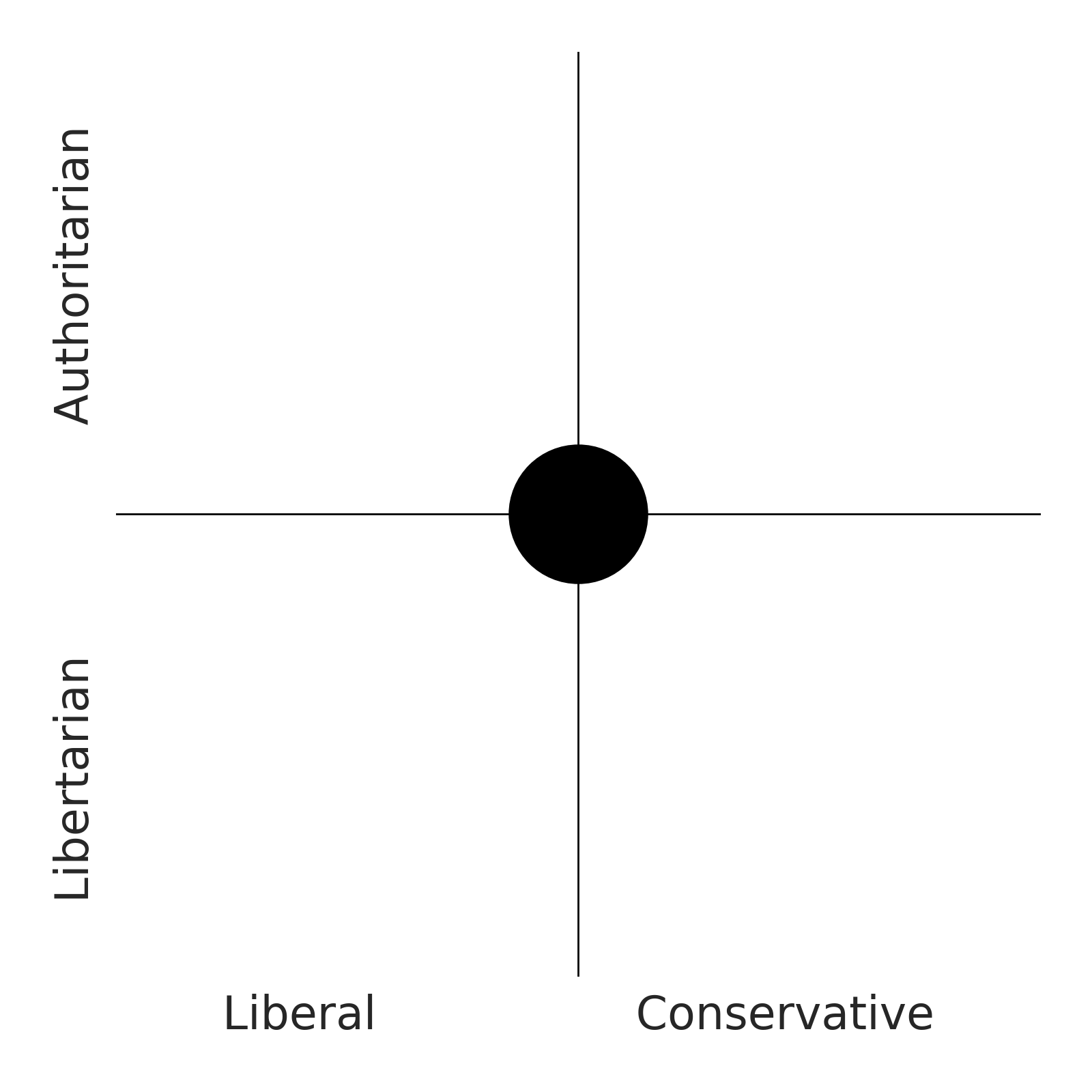
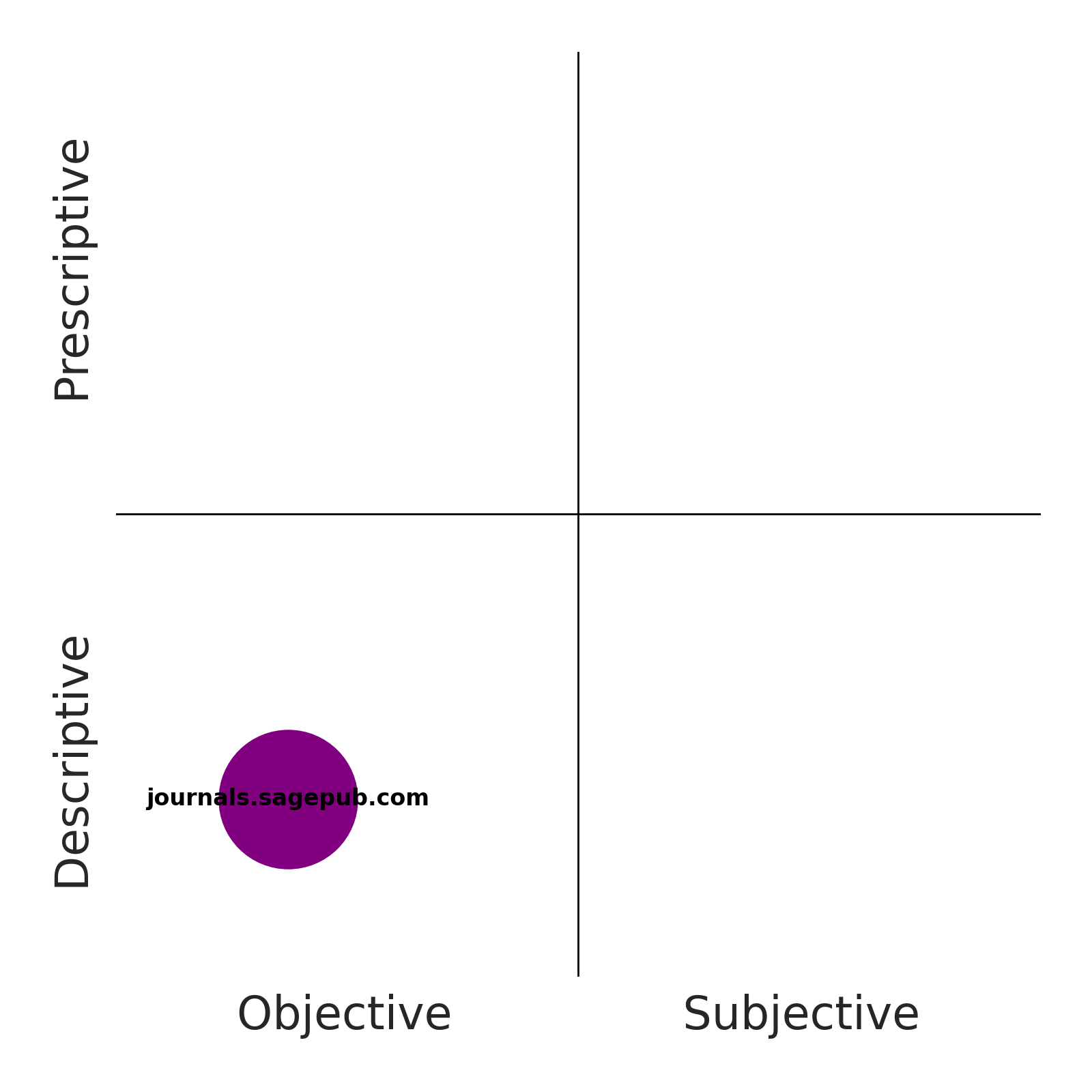
🗞️ Objective <—> Subjective 👁️ -12
😩 Pessimistic <—> Optimistic 🌞6
❌ Low Credibility <—> High Credibility ✅16
🧠 Rational <—> Irrational 🤪-11
💔 Low Integrity <—> High Integrity ❤️7
🪨 Low Intelligence <—> High Intelligence 🦉16
🔍 Truth-seeking <—> Delusion 🌀-6
🔬 Scientific <—> Superstitious 🔮-9
🚨 Sensational0
📉 Bearish <—> Bullish 📈0
💡 Boring <—> Interesting2
📝 Prescriptive0
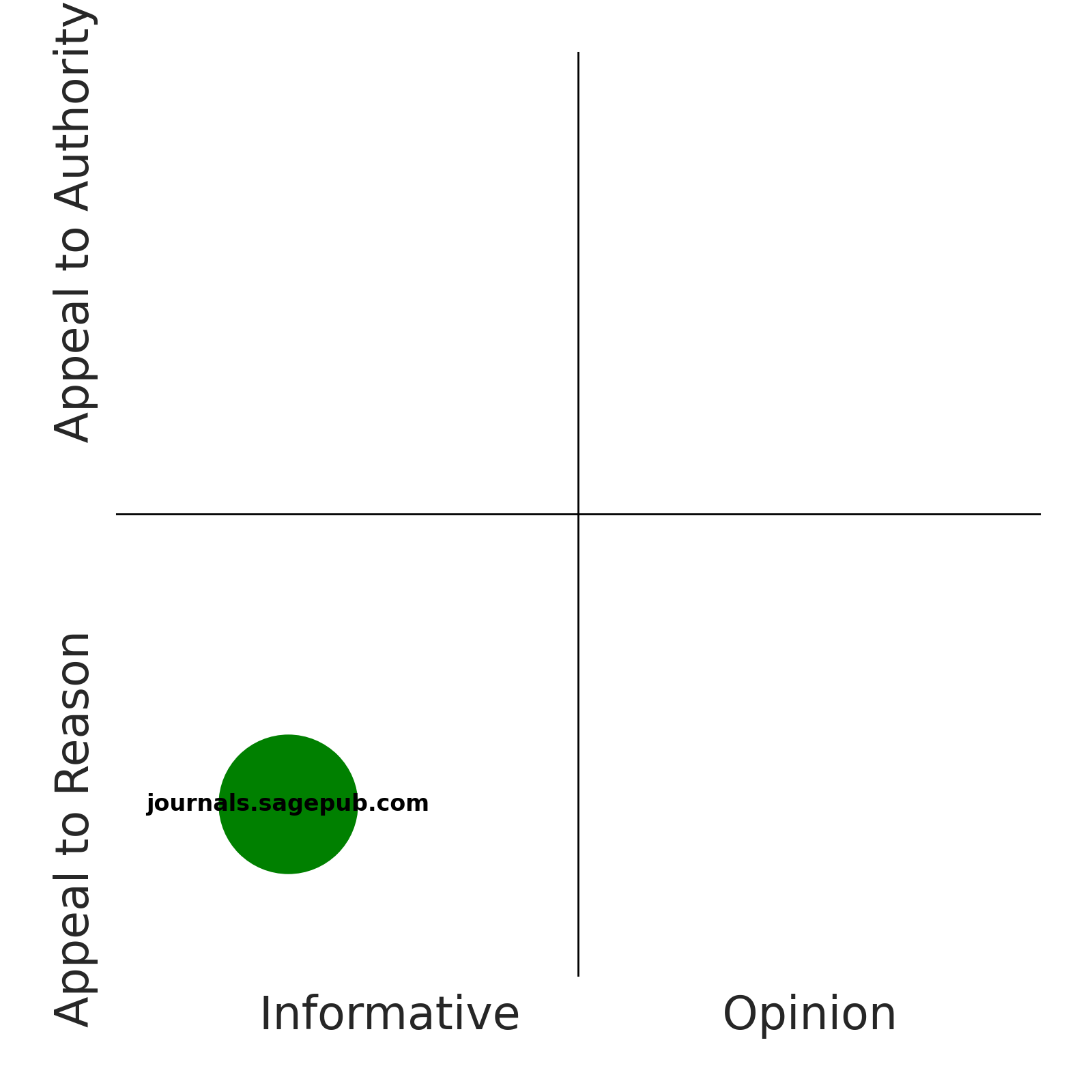
💭 Opinion5
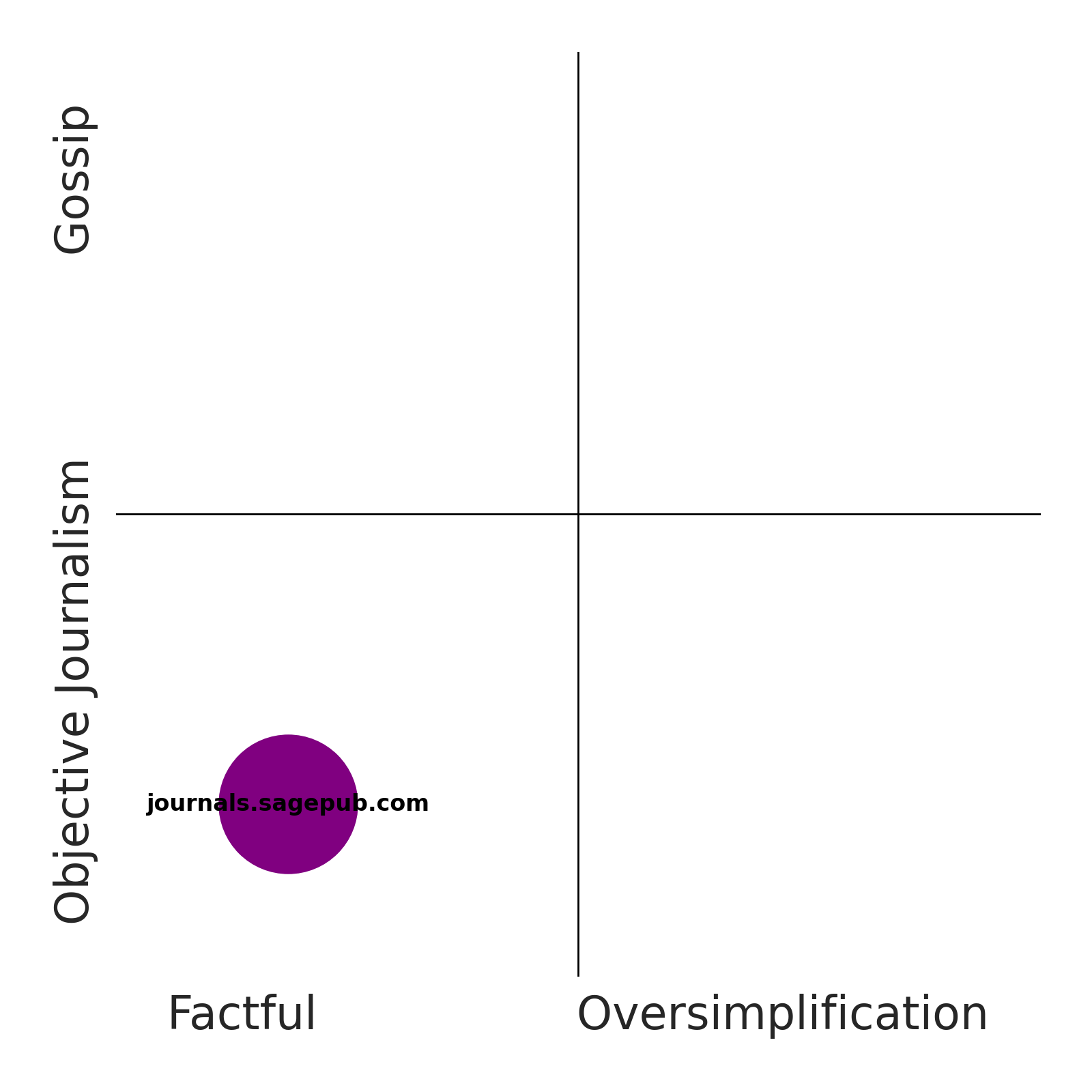
Oversimplification0
🏛️ Appeal to Authority0
😤 Overconfidence2
🏴 Anti-establishment <—> Pro-establishment 📺0
🤖 Written by AI0
🎲 Speculation1
🐍 Manipulative2
2026 © Helium Trades
Privacy Policy & Disclosure
* Disclaimer: Nothing on this website constitutes investment advice, performance data or any recommendation that any particular security, portfolio of securities, transaction or investment strategy is suitable for any specific person. Helium Trades is not responsible in any way for the accuracy
of any model predictions or price data. Any mention of a particular security and related prediction data is not a recommendation to buy or sell that security. Investments in securities involve the risk of loss. Past performance is no guarantee of future results. Helium Trades is not responsible for any of your investment decisions,
you should consult a financial expert before engaging in any transaction.
Helium Research Assistant

How can I help you today?
Ask any question about journals.sagepub.com bias.


