See whether Helium helps you make better-informed decisions. Try every Pro Trader feature for 30 days. No credit card required.
Try every Pro Trader feature for 30 days. No credit card required.
The sample is overwhelmingly centered on legal and regulatory institutions: federal courts, appellate courts, the PTAB, the ABA, the SEC, the EPA, the EEOC, and patent-litigation parties.
Recurrent subjects include motions to dismiss, standing, injunctions, patent eligibility, appeals, settlements, agency rules, and procedural deadlines
Factual reporting of a dismissal ruling without editorial slant.
Automated analysis; not human reviewed. · 3 of 53 available dimensions scored; omitted dimensions are not treated as neutral. · Verified supporting quotes for 3 of 3 scored dimensions.
Claim: The article reports the court ruling without subjective language.
“Andrew Fitzgerald didn’t demonstrate standing to sue Jeff Anderson & Associates because he didn’t sufficiently allege that he suffered a concrete harm or substantial risk of future harm as a result of the breach” · exact text match
Why: The sentence presents the judge's reasoning factually, with no opinionated or emotive words.
Claim: The article exhibits high credibility through clear attribution and factual reporting.
“a federal judge said in an opinion dismissing the class action” · exact text match
“Judge Jeffrey M. Bryan of the US District Court for the District of Minnesota said Monday” · exact text match
Why: The article names the judge, court, and date, and directly quotes the legal reasoning, showing transparent sourcing.
Claim: The article presents logical, fact-based reasoning consistent with rational discourse.
“Andrew Fitzgerald didn’t demonstrate standing to sue Jeff Anderson & Associates because he didn’t sufficiently allege that he suffered a concrete harm or substantial risk of future harm as a result of the breach” · exact text match
Why: The content is a straightforward legal analysis, citing the judge's rationale without emotional appeals or logical fallacies.
Frames the court ruling as a straightforward correction of a lower court error, using neutral legal reporting language.
The case involves a patent for a socket cover product; the district court had granted a preliminary injunction after construing patent claim terms.
Automated analysis; not human reviewed. · 4 of 53 available dimensions scored; omitted dimensions are not treated as neutral. · Verified supporting quotes for 0 of 4 scored dimensions.
Claim: The article reports the court decision factually without opinion or subjective framing.
“An injunction blocking Import Global LLC from selling a type of electrical socket covers due to a patent owner’s claims of infringement was wiped out by the Federal Circuit on Tuesday because the district court flubbed the analysis.” · not found in supplied text
Why: The language is straightforward legal reporting; the only mildly informal word 'flubbed' still conveys a factual assessment of the district court's error, not subjective opinion.
Claim: The article describes what happened without prescribing what should be done.
“Socket Solutions LLC sued Import Global in late 2023, accusing it of infringing US Patent No. 9,509,080 through sales of its Neat Socket product.” · not found in supplied text
Why: All sentences are descriptive statements of events or court actions; no recommendations or normative claims.
Claim: The article reports a specific court ruling with clear attribution to the Federal Circuit and mentions relevant case details, supporting credibility.
“An injunction blocking Import Global LLC from selling a type of electrical socket covers due to a patent owner’s claims of infringement was wiped out by the Federal Circuit on Tuesday because the district court flubbed the analysis.” · not found in supplied text
“Socket Solutions LLC sued Import Global in late 2023, accusing it of infringing US Patent No. 9,509,080 through sales of its Neat Socket product.” · not found in supplied text
Why: The text provides specific facts (court name, date, patent number, product name) and attributes the decision to the Federal Circuit, which is verifiable; no uncritical or speculative claims are made.
Claim: The article presents the reasoning of the court in a logical, evidence-based manner without emotional or irrational appeals.
“An injunction blocking Import Global LLC from selling a type of electrical socket covers due to a patent owner’s claims of infringement was wiped out by the Federal Circuit on Tuesday because the district court flubbed the analysis.” · not found in supplied text
Why: The article states the cause (district court error) and effect (injunction lifted) rationally; no emotive language or illogical jumps.
Neutral reporting of a court ruling dismissing a patent lawsuit against Google, with no apparent editorial slant.
Automated analysis; not human reviewed. · 8 of 53 available dimensions scored; omitted dimensions are not treated as neutral. · Verified supporting quotes for 3 of 8 scored dimensions.
Claim: The article frames the patent lawsuit dismissal objectively, without subjective commentary.
“A California federal judge dismissed Valtrus Innovations Ltd.'s lawsuit accusing Google LLC of infringing patents covering methods of consolidating and ranking search engine results.” · exact text match
Why: The sentence is a straightforward factual report of a judicial action, with no evaluative or subjective language.
Claim: The article uses neutral, non-sensational language.
“A California federal judge dismissed Valtrus Innovations Ltd.'s lawsuit accusing Google LLC of infringing patents covering methods of consolidating and ranking search engine results.” · exact text match
Why: The language is plain and factual, lacking dramatic or emotional terms.
Claim: The article only describes the court's ruling without prescribing any action.
“He dismissed the case without leave for Valtrus to amend because the asserted claims’ patent ineligibility is apparent from the face of the claim language.” · not found in supplied text
Why: The statement reports the judge's action and reasoning, not recommending or advocating anything.
Claim: The article does not express opinion; it reports facts.
“A California federal judge dismissed Valtrus Innovations Ltd.'s lawsuit accusing Google LLC of infringing patents...” · not found in supplied text
Why: The article presents only statements about what the judge did and said, with no personal or editorial commentary.
Claim: The article is non-political; it covers a patent law case.
“The inventions — US Patent Nos. 6,728,704, 6,816,809 and 7,346,604 — outline ineligible, abstract ideas...” · not found in supplied text
Why: Content is limited to patent law and court procedure, with no political themes or rhetoric.
Claim: The article does not oversimplify; it uses precise legal terminology.
“He dismissed the case without leave for Valtrus to amend because the asserted claims’ patent ineligibility is apparent from the face of the claim language.” · not found in supplied text
Why: The description uses specific legal concepts like 'without leave to amend' and 'patent ineligibility', reflecting legal nuance.
Claim: The article contains no emotional language.
“A California federal judge dismissed Valtrus Innovations Ltd.'s lawsuit accusing Google LLC of infringing patents covering methods of consolidating and ranking search engine results.” · exact text match
Why: The wording is entirely neutral and unemotional, with no positive or negative affect.
Claim: The article attributes the ruling to a specific judge and includes patent numbers, showing sourcing.
“Judge P. Casey Pitts said Monday. He dismissed the case without leave for Valtrus to amend...” · not found in supplied text
Why: Attribution is clear with judge name and date, but the article is very brief and lacks additional context like case number or docket.
August 12, 2026 · 0 shares
Neutral, factual reporting of a court ruling without editorial slant.
Automated analysis; not human reviewed. Limitations: Very short automated legal summary; lacks context and analysis.
Very short automated legal summary; lacks context and analysis.
Neutral reporting of a legal dispute, framing the EPA's challenge as a resource and staffing issue without editorial commentary.
Automated analysis; not human reviewed. Limitations: Analysis limited to truncated snippet; full article context unavailable. · 9 of 52 available dimensions scored; omitted dimensions are not treated as neutral. · Verified supporting quotes for 5 of 9 scored dimensions.
Claim: The publisher provides balanced reporting on a partisan dispute, showing no favor toward either side.
“The Trump administration says it can’t comply with a court order to restore nearly $1.6 billion in green grants in two months due to a staffing shortage at the Environmental Protection Agency.” · exact text match
“Judge Richard M. Gergel ruled in June that the EPA violated the Administrative Procedure Act by drafting new ...” · exact text match
Why: Both the administration's claim and the court's ruling are reported without evaluative language, indicating neutrality.
Claim: The article presents facts and attributed statements without subjective commentary.
“Reinstating the Environmental and Climate Justice Block Grant Program to more than a dozen cities and various nonprofits “would require a tremendous diversion of EPA resources,” the agency said in a filing...” · not found in supplied text
Why: The use of direct quotes and precise legal context shows objective journalism.
Claim: The article avoids sensational language despite a potentially dramatic topic.
“EPA Challenges Court Deadline to Restore Cancelled Green Grants” · exact text match
Why: The headline is factual and does not use hyperbolic terms.
Claim: The article contains no editorial opinion or overt slant.
“The Trump administration says it can’t comply with a court order to restore nearly $1.6 billion in green grants...” · not found in supplied text
Why: All claims are attributed; no unsupported value judgments appear.
Claim: The subject matter is inherently political, involving a presidential administration and environmental policy.
“The Trump administration says it can’t comply with a court order to restore nearly $1.6 billion in green grants...” · not found in supplied text
Why: The mention of 'Trump administration' and 'green grants' places the dispute firmly in political territory.
Claim: The article focuses on the EPA's response to a court ruling rather than the ruling itself or the original program.
“EPA Challenges Court Deadline to Restore Cancelled Green Grants” · exact text match
Why: The headline and lead emphasize the administration's challenge, which is a response to the court's earlier decision.
Claim: The article is emotionally neutral, lacking positive or negative emotional language.
“Reinstating the Environmental and Climate Justice Block Grant Program to more than a dozen cities and various nonprofits “would require a tremendous diversion of EPA resources,”” · exact text match
Why: The quoted claim is a resource argument, not an emotional appeal.
Claim: The article demonstrates high credibility through specific sourcing and attribution.
“the agency said in a filing seeking to stay the US District Court for the District of South Carolina’s September deadline pending an appeal” · exact text match
Why: Attributing to a specific filing and court increases credibility.
Claim: The article employs logical and evidence-based reasoning in its reporting.
“The agency said in a filing seeking to stay the US District Court for the District of South Carolina’s September deadline pending an appeal.” · not found in supplied text
Why: The text recounts a specific legal filing and court deadline, demonstrating rational legal reporting.
Analysis limited to truncated snippet; full article context unavailable.
The dominant framing is technocratic and institution-centered: disputes are made legible through statutes, filings, standards of review, jurisdiction, evidentiary sufficiency, and procedural posture.
The Third Circuit firearms report, for example, emphasizes the absence of a comparable Founding-era restriction rather than broader public-safety or gun-culture arguments
Frames the Third Circuit's decision as creating a circuit split, highlighting the constitutional argument without endorsing either side.
Automated analysis; not human reviewed. Limitations: The analysis is based on a short snippet; full article context may affect framing. · 2 of 52 available dimensions scored; omitted dimensions are not treated as neutral. · Verified supporting quotes for 2 of 2 scored dimensions.
Claim: The article presents court rulings factually without subjective evaluation.
“Third Circuit became the sole circuit to strike down a state assault weapon ban under the Second Amendment” · exact text match
“en banc Third Circuit ruled that New Jersey’s bans on certain semi-automatic rifles and magazines that hold more than 10 rounds of ammunition are unconstitutional” · exact text match
Why: The report uses neutral verbs like 'ruled' and 'said', and provides the majority's reasoning without editorial comment.
Claim: The article describes the legal reasoning without prescribing a position.
“The majority opinion said the state failed to cite a comparable Founding-era restriction.” · exact text match
“The opinion contrasts with rulings from the First, Second, Fourth, Seventh, Ninth, and D.C. circuits, which have cited 19th century law” · exact text match
Why: The text reports what the court said and how it compares to other courts, without advocating for any outcome.
The analysis is based on a short snippet; full article context may affect framing.
Frames the ruling as leaving Pennsylvania responsible for cleanup costs due to speculative damage evidence.
MTBE (methyl tertiary butyl ether) is a gasoline additive that has been found to contaminate groundwater, leading to widespread litigation over cleanup costs.
Automated analysis; not human reviewed. · 5 of 52 available dimensions scored; omitted dimensions are not treated as neutral. · Verified supporting quotes for 4 of 5 scored dimensions.
Claim: The article presents the ruling objectively without editorial commentary.
“federal judge ruled the damages are too speculative” · exact text match
Why: The article uses a neutral, attributed statement rather than subjective language.
Claim: The article avoids sensational language.
“Oil Companies Remain Free From Most Gas Additive Cleanup Costs” · exact text match
Why: The headline is straightforward and factual, not sensational.
Claim: The article describes the ruling without prescribing action.
“Pennsylvania must continue to foot the bill for over a thousand sites with methyl tertiary butyl ether groundwater contamination” · exact text match
Why: The sentence describes the consequence of the ruling in a factual manner.
Claim: The article maintains a neutral emotional tone.
“the state is unable to offer non-speculative evidence as to what if any further remediation work will need to be done” · not found in supplied text
Why: The language is legal and unemotional, reflecting the judge's reasoning.
Claim: The article is credible due to specific attribution and sourcing.
“the US District Court for the Southern District of New York ruled” · exact text match
“Defendants including Shell Oil Co., ExxonMobil Holdings Corp., BP America Inc., and Chevron USA Inc.” · exact text match
Why: The article identifies the specific court and defendants, enhancing trustworthiness.
Reports on historic wildfire season with evacuation figures and damage assessments from officials, without overt bias.
Automated analysis; not human reviewed. Limitations: Article text is a short excerpt; full framing may be limited.
Article text is a short excerpt; full framing may be limited.
Its apparent worldview prioritizes institutional legitimacy, verifiability, professional expertise, and orderly adjudication. Claims are commonly attributed to opinions, complaints, agencies, court filings, or named experts
Reporting is neutral, factual, and relies on official legal filings and court records.
Automated analysis; not human reviewed. Limitations: Short snippet limits assessment; only headline and three sentences available. · 9 of 53 available dimensions scored; omitted dimensions are not treated as neutral. · Verified supporting quotes for 7 of 9 scored dimensions.
Claim: The article reports facts without subjective opinion.
“The SEC and the CFTC sued Goliath Ventures Inc. and its CEO Christopher Delgado, alleging they ran a roughly $400 million cryptocurency Ponzi scheme.” · exact text match
“according to the complaints” · exact text match
“Delgado pleaded guilty to related criminal charges in June.” · exact text match
Why: No evaluative or subjective statements; only descriptions of legal actions and a guilty plea.
Claim: The article avoids sensational language.
“The SEC and the CFTC sued Goliath Ventures Inc. and its CEO Christopher Delgado, alleging they ran a roughly $400 million cryptocurency Ponzi scheme.” · exact text match
Why: The phrasing is straightforward and does not use hyperbolic or emotional terms.
Claim: The article is descriptive, not prescriptive.
“The SEC and the CFTC sued Goliath Ventures Inc. and its CEO Christopher Delgado, alleging they ran a roughly $400 million cryptocurency Ponzi scheme.” · exact text match
Why: The article describes what happened without recommending any action or policy.
Claim: The article is emotionally neutral.
“No emotional language present in the text.” · not found in supplied text
Why: All statements are matter-of-fact and devoid of emotional triggers.
Claim: The article cites official complaints and a guilty plea, supporting credibility.
“according to the complaints from the Securities and Exchange Commission and the Commodity Futures Trading Commission” · exact text match
“Delgado pleaded guilty to related criminal charges in June.” · exact text match
Why: Sources are authoritative and the guilty plea is a verifiable event; however, the brevity limits full assessment.
Claim: The article maintains a rational, factual tone by relying on official legal filings and court documents.
“The SEC and the CFTC sued Goliath Ventures Inc. and its CEO Christopher Delgado, alleging they ran a roughly $400 million cryptocurency Ponzi scheme.” · exact text match
“according to the complaints from the Securities and Exchange Commission and the Commodity Futures Trading Commission” · exact text match
“Delgado pleaded guilty to related criminal charges in June.” · exact text match
Why: All claims are attributed to official sources with no emotional or irrational language.
Claim: The article properly attributes all claims to official sources and reports a guilty plea.
“according to the complaints from the Securities and Exchange Commission and the Commodity Futures Trading Commission” · exact text match
“Delgado pleaded guilty to related criminal charges in June.” · exact text match
Why: Attribution is clear and includes a verifiable court outcome; however, the short text does not allow full verification of all details.
Short snippet limits assessment; only headline and three sentences available.
Neutral reporting of a legal challenge to Illinois' assisted suicide law, attributing claims to the plaintiffs and including defendants' responses without editorializing.
Automated analysis; not human reviewed. Limitations: Analysis based on a single Bloomberg Law News article; no significant input limitations. · 6 of 53 available dimensions scored; omitted dimensions are not treated as neutral. · Verified supporting quotes for 6 of 6 scored dimensions.
Claim: The article reports the lawsuit's allegations and the defendants' responses without editorializing.
“The state’s so-called “End-of-Life Options” Act “legalizes assisted suicide,” requires objecting doctors to tell terminally ill patients about its benefits, and upon request transfer patients to physicians willing to help them carry out the act, according to the US District court for the Northern District of Illinois complaint.” · exact text match
Why: The article consistently attributes claims to the complaint and plaintiffs, and includes the defendants' statements, maintaining an objective tone.
Claim: The article avoids sensational language and presents the facts neutrally.
“Physicians are trying to ban provisions of an impending Illinois assisted suicide law, to be enacted in September, claiming they can’t comply on religious and moral grounds.” · exact text match
Why: The language is straightforward and factual, without sensational adjectives or emotional appeals.
Claim: The article is purely descriptive, reporting events without prescribing actions or opinions.
“The physicians, joined by a Lutheran nursing facility and an Illinois-based Bishop, argue that the state’s “conscription of objecting practitioners into its new assisted suicide regime blatantly violates the First and Fourteenth Amendments.”” · exact text match
Why: The article describes the legal arguments without endorsing or rejecting them.
Claim: The article provides specific case details and attributes sources, enhancing credibility.
“The case is Kirchoff v. Treto, N.D. Ill., No. 1:26-cv-09628, 8/11/26.” · exact text match
Why: The article includes the case number, court, and date, and attributes the complaint and defendants' statements.
Claim: The article demonstrates fairness by including both the plaintiffs' claims and the defendants' responses.
“IDFPR said it was reviewing the complaint but declined to comment further. IDPH said it couldn’t comment on pending litigation.” · exact text match
Why: The article sought comment from the defendants and reported their responses, showing balanced reporting.
Claim: The article is well-structured and concise, providing relevant information.
“Around a dozen states allow for medically-assisted suicide, with even more were considering a similar measure as of August.” · exact text match
Why: The article includes contextual information about other states, showing depth.
Analysis based on a single Bloomberg Law News article; no significant input limitations.
Neutral legal-news framing relays Cytokinetics's patent allegations against BMS with attribution and no editorial commentary.
In US patent law, a method-of-treatment patent can exclude others from practicing that method even if the patent holder did not develop the therapy.
Automated analysis; not human reviewed. Limitations: Only a truncated news brief is available; full article body and any subsequent corrections are not. · 2 of 53 available dimensions scored; omitted dimensions are not treated as neutral. · Verified supporting quotes for 2 of 2 scored dimensions.
Claim: The report attributes disputed assertions to the plaintiff and court filing, using quotative framing.
“a competitor alleges” · exact text match
“Cytokinetics Inc. said BMS has “surprisingly” obtained a patent” · exact text match
Why: The article uses 'alleges' and 'said' to attribute the plaintiff's characterizations, and places words like 'surprisingly' in quotes, maintaining an on-the-record, non-editorial stance.
Claim: Reporting relies on a named court, filing date, and attributed plaintiff quotes.
“The plaintiff told the US District Court for the District of Delaware Wednesday” · exact text match
“a competitor alleges” · exact text match
Why: Allegations are clearly attributed to a specific party and court, but independent verification and defendant's response are absent.
Only a truncated news brief is available; full article body and any subsequent corrections are not.
Balanced presentation of competing viewpoints on ABA diversity rule repeal, with no discernible slant.
Automated analysis; not human reviewed. Limitations: No significant input limitations; article is a straightforward news report. · 4 of 53 available dimensions scored; omitted dimensions are not treated as neutral. · Verified supporting quotes for 2 of 4 scored dimensions.
Claim: The article exhibits no liberal or conservative slant in its reporting.
““The House of Delegates’ decision highlights the separate and independent nature of the Council’s relationship to the ABA,” Daniel Thies, the council’s chair, said in a statement.” · exact text match
“Backing away “would put the ABA seal of approval on the abandoning diversity and DEI standards,” said delegate Peter Reyes.” · exact text match
Why: The article includes direct quotes from both supporters and opponents of the repeal without editorial commentary or asymmetrical treatment.
Claim: The article is highly objective, reporting events and multiple perspectives without injecting opinion.
“Carla Pratt, a University of Oklahoma law professor, argued to the delegation that repealing Standard 206 does not prevent schools from pursuing their own DEI agendas...” · not found in supplied text
“Several other ABA members urged the delegation to keep the rule.” · exact text match
Why: The article provides balanced representation of both pro-repeal and anti-repeal arguments, using direct quotes and avoiding editorializing.
Claim: The article is highly credible, based on transparent sourcing, specific details, and attribution.
“Daniel Thies, who is a litigator in Illinois, said in an interview following the votes that repealing the mandate would put the organization in a strong position when it goes before the Education Department.” · not found in supplied text
“Leah Chan Grinvald, a law professor at the University of Nevada Las Vegas, told delegates that schools and students will be most affected by a fragmented accreditation systems.” · exact text match
Why: Every claim is attributed to named individuals with institutional affiliations, specific dates and procedural steps are provided, and no unsubstantiated assertions appear.
Claim: The article presents information rationally, with logical structure and factual reporting.
“The move followed a contentious round of voting in which the delegates first shot down the council’s recommendation to kill the rule, before passing another measure that allows the council to repeal the rule without delegation approval.” · exact text match
Why: The article chronologically details the voting process and attributes statements to named individuals, indicating reasoned exposition without emotional appeals.
No significant input limitations; article is a straightforward news report.
Neutral reporting of a legal challenge to Illinois' assisted suicide law, attributing claims to the plaintiffs and including defendants' responses without editorializing.
Automated analysis; not human reviewed. Limitations: Analysis based on a single Bloomberg Law News article; no significant input limitations. · 6 of 53 available dimensions scored; omitted dimensions are not treated as neutral. · Verified supporting quotes for 6 of 6 scored dimensions.
Claim: The article reports the lawsuit's allegations and the defendants' responses without editorializing.
“The state’s so-called “End-of-Life Options” Act “legalizes assisted suicide,” requires objecting doctors to tell terminally ill patients about its benefits, and upon request transfer patients to physicians willing to help them carry out the act, according to the US District court for the Northern District of Illinois complaint.” · exact text match
Why: The article consistently attributes claims to the complaint and plaintiffs, and includes the defendants' statements, maintaining an objective tone.
Claim: The article avoids sensational language and presents the facts neutrally.
“Physicians are trying to ban provisions of an impending Illinois assisted suicide law, to be enacted in September, claiming they can’t comply on religious and moral grounds.” · exact text match
Why: The language is straightforward and factual, without sensational adjectives or emotional appeals.
Claim: The article is purely descriptive, reporting events without prescribing actions or opinions.
“The physicians, joined by a Lutheran nursing facility and an Illinois-based Bishop, argue that the state’s “conscription of objecting practitioners into its new assisted suicide regime blatantly violates the First and Fourteenth Amendments.”” · exact text match
Why: The article describes the legal arguments without endorsing or rejecting them.
Claim: The article provides specific case details and attributes sources, enhancing credibility.
“The case is Kirchoff v. Treto, N.D. Ill., No. 1:26-cv-09628, 8/11/26.” · exact text match
Why: The article includes the case number, court, and date, and attributes the complaint and defendants' statements.
Claim: The article demonstrates fairness by including both the plaintiffs' claims and the defendants' responses.
“IDFPR said it was reviewing the complaint but declined to comment further. IDPH said it couldn’t comment on pending litigation.” · exact text match
Why: The article sought comment from the defendants and reported their responses, showing balanced reporting.
Claim: The article is well-structured and concise, providing relevant information.
“Around a dozen states allow for medically-assisted suicide, with even more were considering a similar measure as of August.” · exact text match
Why: The article includes contextual information about other states, showing depth.
Analysis based on a single Bloomberg Law News article; no significant input limitations.
Neutral legal reporting on a Federal Circuit patent ruling without editorial slant
Automated analysis; not human reviewed. Limitations: Input is a short snippet; limited context for bias analysis. · 12 of 53 available dimensions scored; omitted dimensions are not treated as neutral. · Verified supporting quotes for 12 of 12 scored dimensions.
Claim: The article shows no political slant on the liberal-conservative spectrum.
“A streaming patent challenged by an adult entertainment website was properly nixed, the Federal Circuit ruled Friday.” · exact text match
Why: The text is purely factual legal reporting; no partisan language or ideological framing.
Claim: The article is highly objective with minimal subjective interpretation.
“A streaming patent challenged by an adult entertainment website was properly nixed, the Federal Circuit ruled Friday.” · exact text match
Why: States the ruling as a fact, no evaluative adjectives beyond the legal conclusion 'properly nixed' which is a direct quote from the ruling.
Claim: The article is objective and not sensational.
“Friendfinder convinced the US Patent and Trademark Office to reexamine and then cancel the patent on the theory that it isn’t novel.” · exact text match
Why: Reports the patent challenge and cancellation in a straightforward manner without hype or drama.
Claim: The article is descriptive, not prescriptive.
“The same concept was part of ...” · exact text match
Why: Describes what happened without telling readers what should happen.
Claim: The article presents facts rather than opinions.
“Friendfinder convinced the US Patent and Trademark Office to reexamine and then cancel the patent on the theory that it isn’t novel.” · exact text match
Why: Reports a legal argument and conclusion without adding personal commentary.
Claim: The article is non-political.
“A streaming patent challenged by an adult entertainment website was properly nixed, the Federal Circuit ruled Friday.” · exact text match
Why: No reference to political actors, ideologies, or policy debates.
Claim: The article does not exhibit overconfidence beyond the evidence.
“A streaming patent challenged by an adult entertainment website was properly nixed, the Federal Circuit ruled Friday.” · exact text match
Why: States the ruling as a fact, but the attribution is clear; no exaggerated claims.
Claim: The article's emotional tone is neutral.
“WAG Acquisition LLC has sued more than a dozen defendants, including recently Amazon.com Inc., Google LLC, and Netflix Inc.” · exact text match
Why: Plain recitation of facts without emotional language.
Claim: The article appears credible with specific, verifiable details.
“US Patent No. 8,327,011, which describes a buffering process that allows users to consume content while still being downloaded.” · exact text match
Why: Includes specific patent number, court name, and timeline; sourced from Bloomberg Law, a known legal news outlet.
Claim: The article is rational and factual.
“Friendfinder convinced the US Patent and Trademark Office to reexamine and then cancel the patent on the theory that it isn’t novel.” · exact text match
Why: Reports procedural and legal reasoning without emotional or irrational appeals.
Claim: The article appears to be written by a human, not AI.
“Friendfinder’s Challenge to Streaming Patent Upheld on Appeal” · exact text match
Why: Natural phrasing and typical legal headline; no repetitive patterns or robotic structure.
Input is a short snippet; limited context for bias analysis.
Neutral reporting of a judicial ruling without editorial slant.
The article neutrally frames a patent-infringement dispute, presenting both sides' arguments without editorializing or favoring either party.
The case involves interpretation of 28 U.S.C. § 1498(a), which provides government immunity for patent infringement. The Federal Circuit's decision could set a precedent for similar government-contract cases, particularly those arising from public health emergencies.
Automated analysis; not human reviewed. Limitations: The article text is a news report from Bloomberg Law, but I must analyze only the substantive content, excluding the boilerplate subscription prompt. · 53 of 53 available dimensions scored; omitted dimensions are not treated as neutral. · Verified supporting quotes for 0 of 53 scored dimensions.
The article text is a news report from Bloomberg Law, but I must analyze only the substantive content, excluding the boilerplate subscription prompt.
August 05, 2026 · 0 shares
Neutral court ruling summary without editorial slant.
Automated analysis; not human reviewed. Limitations: Very short article text limits depth of analysis; many dimensions omitted due to insufficient evidence. · 6 of 53 available dimensions scored; omitted dimensions are not treated as neutral. · Verified supporting quotes for 6 of 6 scored dimensions.
Claim: Article shows no political slant.
“A Kansas federal district court denied summary judgment to USIC Locating Services, LLC on hostile work environment claims under Title VII of the Civil Rights Act brought by a female locator who alleged pervasive sexual harassment by supervisors, finding genuine disputes of material fact existed regarding whether the conduct was sufficiently pervasive to alter employment conditions.” · exact text match
Why: The text is purely descriptive of a court ruling without any political commentary.
Claim: Article reports objective facts without subjective opinion.
“A Kansas federal district court denied summary judgment” · exact text match
Why: The statement is a verifiable court action, not subjective interpretation.
Claim: Article is not sensational; it is straightforward.
“denied summary judgment to USIC Locating Services, LLC on hostile work environment claims” · exact text match
Why: No inflammatory language or dramatic framing is used.
Claim: Article describes what the court did without prescribing action.
“A Kansas federal district court denied summary judgment” · exact text match
Why: The sentence simply states the court's decision without recommending any response.
Claim: Article cites authoritative source (federal court) with precise legal language.
“A Kansas federal district court denied summary judgment” · exact text match
Why: The attribution to a specific court and the use of standard legal terminology support high credibility.
Claim: Article presents a rational legal analysis.
“finding genuine disputes of material fact existed” · exact text match
Why: The language reflects legal reasoning and factual assessment, not irrational claims.
Very short article text limits depth of analysis; many dimensions omitted due to insufficient evidence.
Reporting is neutral and procedural, focusing on the court's decision and dissent without editorial commentary.
Automated analysis; not human reviewed. Limitations: The supplied text is a truncated news snippet with a paywall cut, limiting full context. · 4 of 53 available dimensions scored; omitted dimensions are not treated as neutral. · Verified supporting quotes for 4 of 4 scored dimensions.
Claim: The article reports court action and dissent factually without subjective language.
“The Federal Circuit declined to reconsider its test for determining when a design patent is infringed” · exact text match
“said Chief Judge Kimberly A. Moore in dissent from ...” · exact text match
Why: Verbs like 'declined' and 'said' present facts and attributed statements without editorializing.
Claim: The article describes a court decision and test, not recommending any action.
“The Federal Circuit declined to reconsider its test for determining when a design patent is infringed” · exact text match
Why: The text states what occurred and what the test entails, with no imperative or directive language.
Claim: The article attributes statements to the court and judge, providing sourcing for its claims.
“said Chief Judge Kimberly A. Moore in dissent from ...” · exact text match
“The Federal Circuit declined to reconsider its test” · exact text match
Why: Clear attribution to the court and judge, no apparent distortion or unsupported assertion in the supplied snippet.
Claim: The article presents logical, evidence-based description of a legal test.
“The test the court has used since 2008 — and that a 2-1 panel applied in Range of Motion Products LLC v. Armaid Co. — instructs courts to compare a product to a patented design” · exact text match
Why: The description is concrete and procedural, showing reasoned reporting without emotional or illogical framing.
The supplied text is a truncated news snippet with a paywall cut, limiting full context.
Frames Delaware's business filing services as superior to Texas's new offering, reflecting a pro-Delaware perspective.
Automated analysis; not human reviewed. Limitations: Authors are partners at a Delaware law firm, which may introduce a pro-Delaware perspective. · 4 of 53 available dimensions scored; omitted dimensions are not treated as neutral. · Verified supporting quotes for 2 of 4 scored dimensions.
Claim: The article makes a judgmental conclusion favoring Delaware beyond factual reporting.
“Delaware still provides superior and faster business filing services that better suit the needs of today’s businesses” · exact text match
“These advantages are invaluable to practitioners and will serve to keep Delaware as a leader in corporate law.” · exact text match
Why: Explicit superiority claim and prediction about future leadership reflect opinionated framing.
Claim: The article portrays Delaware's established position favorably.
“Delaware has long been known for its business friendly policies” · exact text match
“will serve to keep Delaware as a leader in corporate law.” · exact text match
Why: Positive characterization of Delaware's history and confident prediction of continued leadership.
Claim: The article demonstrates high integrity by presenting verifiable specific figures and attributing information.
“Texas Express can provide same-day processing ... for an additional fee of $750 per document, and next-day processing for a fee of $500 per document” · not found in supplied text
“Delaware offers one-hour service, which can be requested for $1,000” · exact text match
Why: Specific, checkable details and balanced comparison without unsubstantiated claims.
Authors are partners at a Delaware law firm, which may introduce a pro-Delaware perspective.
Frames NIH's grant cap proposal as a beneficial redistribution to early-career and underrepresented researchers.
The National Institutes of Health is the primary U.S. government agency responsible for biomedical and public health research. Its grant system has been criticized for concentrating funding among a small number of senior researchers.
Automated analysis; not human reviewed. Limitations: The article text is truncated due to a paywall, limiting the analysis to a short snippet; full context and any opposing viewpoints are unavailable. · 7 of 53 available dimensions scored; omitted dimensions are not treated as neutral. · Verified supporting quotes for 6 of 7 scored dimensions.
Claim: The article presents the NIH proposal in a positive light, emphasizing redistribution to early-career and underrepresented researchers, which aligns with liberal/egalitarian values.
“Boosting opportunities for early career scientists is a goal touted across the research ecosystem, since they typically face more funding instability and competition.” · exact text match
“The policy could free up billions in NIH awards each year to fund projects from less represented institutions and by the next generation of academics.” · exact text match
Why: The framing highlights equity and support for disadvantaged groups, typical of liberal perspectives, without presenting counterarguments.
Claim: The article frames the policy as limiting top researchers' dominance, an anti-elite stance.
“NIH Renews Push to Limit Top Researchers' Dominance of Grants” · exact text match
“The policy could free up billions in NIH awards each year to fund projects from less represented institutions and by the next generation of academics.” · exact text match
Why: The headline explicitly targets 'top researchers' dominance,' and the body supports redistribution away from established researchers, fitting a populist anti-elite frame.
Claim: The article includes a positive projection about the policy's effect without attribution, indicating opinion.
“The policy could free up billions in NIH awards each year to fund projects from less represented institutions and by the next generation of academics.” · exact text match
Why: This statement is a speculative positive claim about the policy's outcome, not attributed to a source, thus reflecting the article's opinion.
Claim: The article covers a government policy proposal, making it inherently political.
“The National Institutes for Health is taking feedback on a revised proposal to cap the number of grant projects led or co-led by an individual researcher.” · not found in supplied text
Why: The subject matter is a government funding policy, which is political in nature.
Claim: The article supports the NIH's renewed push, presenting it as a positive development without critical scrutiny.
“NIH Renews Push to Limit Top Researchers' Dominance of Grants” · exact text match
“The NIH hopes this time will be different.” · exact text match
Why: The article portrays the NIH's revised proposal as a welcome initiative, aligning with the establishment's perspective.
Claim: The article endorses a collectivist approach by supporting redistribution of grants from individuals to broader groups.
“The policy could free up billions in NIH awards each year to fund projects from less represented institutions and by the next generation of academics.” · exact text match
Why: The emphasis on collective benefit over individual researcher dominance reflects collectivist values.
Claim: The article makes a speculative claim about the policy's impact.
“The policy could free up billions in NIH awards each year to fund projects from less represented institutions and by the next generation of academics.” · exact text match
Why: The use of 'could' indicates a speculative forecast, not a confirmed outcome.
The article text is truncated due to a paywall, limiting the analysis to a short snippet; full context and any opposing viewpoints are unavailable.
July 23, 2026 · 0 shares
Pro-regulation framing of Lina Khan's antitrust enforcement, paired with a portrayal of her appointment as aligned with lifting up those priced out, signals a liberal-leaning, pro-establishment bias in reporting.
Mamdani's appointment of Lina Khan to chair the NYC EDC and Anthony Shorris as president highlights a narrative of aggressive antitrust enforcement paired with a governance approach that aims to support working people while engaging big business.
Automated analysis; not human reviewed. Limitations: Case-specific; limited quotes and context; lacks critique or alternative viewpoints; results depend on interpretation of framing in a short piece. · 5 of 52 available dimensions scored; omitted dimensions are not treated as neutral. · Verified supporting quotes for 0 of 5 scored dimensions.
Limited quotes; potential bias in framing; evidence gaps due to lack of opposing viewpoints.
The three most visible values are procedural legality, source attribution and factual specificity, and professional/institutional competence
Straightforward, neutral reporting of a PTAB patent invalidation decision with no editorial slant.
The PTAB is an administrative tribunal within the US Patent and Trademark Office that reviews patent validity through inter partes review.
Automated analysis; not human reviewed. · 2 of 53 available dimensions scored; omitted dimensions are not treated as neutral. · Verified supporting quotes for 1 of 2 scored dimensions.
Claim: The article demonstrates high credibility through specific, attributed facts.
“The Patent Trial and Appeal Board determined Monday that all challenged claims of Sterling Computers Corp.'s US Patent No. 7,716,217 are unpatentable.” · exact text match
Why: Provides a specific patent number, party names, and the reasoning (obviousness) from an authoritative tribunal.
Claim: The article displays high integrity by accurately attributing claims and decisions.
“Sterling alleged in 2024 that Meta and X Corp. infringed the patent...” · not found in supplied text
“The Patent Trial and Appeal Board determined Monday...” · not found in supplied text
Why: Clear attribution of the allegation to Sterling and the decision to PTAB shows transparent sourcing.
August 10, 2026 · 0 shares
Neutral legal reporting with balanced attribution and no editorial slant.
Automated analysis; not human reviewed. Limitations: The article includes a subscription prompt at the end; ignored per instructions. · 3 of 53 available dimensions scored; omitted dimensions are not treated as neutral. · Verified supporting quotes for 2 of 3 scored dimensions.
Claim: The article presents both sides without favoring either, reflecting neutrality on the liberal-conservative spectrum.
“SPLC failed to sufficiently show that President Donald Trump’s DOJ acted with animus” · exact text match
“The order is a win for the Trump administration, which has faced accusations from SPLC and former government officials of weaponizing DOJ to prosecute Trump’s political enemies.” · exact text match
Why: The article quotes the judge's ruling against SPLC and also reports SPLC's allegations of political retribution, maintaining balance.
Claim: The article maintains an unemotional, factual tone throughout.
“A grand jury indicted SPLC on counts of wire fraud, false statements to banks, and money laundering.” · not found in supplied text
“Marks faulted SPLC and the government for filing briefs that were “heavy on heated rhetoric, better suited for cable news, or a podcast.”” · exact text match
Why: The article reports events without emotional language, and even quotes the judge criticizing heated rhetoric, reinforcing its own neutral tone.
Claim: The article demonstrates high credibility through specific sourcing, attribution, and legal details.
“Trump-appointed Judge Emily C. Marks of the US District Court for the Middle District of Alabama wrote in her order Friday denying the group’s motion to dismiss an 11-count indictment.” · exact text match
“The case is United States v. Southern Poverty Law Center, M.D. Ala., No. 2:26-cr-00139, order 8/7/26.” · exact text match
Why: The article provides the judge's name, court, case number, date, and direct quotes from the order, alongside statements from both sides, indicating careful verification.
The article includes a subscription prompt at the end; ignored per instructions.
Presents a forward-looking strategic analysis arguing that top law firms must build institutional capabilities rather than rely solely on talent acquisition, with a neutral, advisory tone.
Automated analysis; not human reviewed. · 3 of 52 available dimensions scored; omitted dimensions are not treated as neutral. · Verified supporting quotes for 3 of 3 scored dimensions.
Claim: The article is strongly opinionated, presenting the author's personal analysis and recommendations.
“This article does not necessarily reflect the opinion of Bloomberg Industry Group Inc., the publisher of Bloomberg Law, Bloomberg Tax, and Bloomberg Government, or its owners.” · exact text match
Why: The disclaimer explicitly states it is not the publisher's opinion, and the entire text is a prescriptive argument.
Claim: The article has moderate credibility due to clear attribution, disclaimer, and logical argumentation.
“Jon Henes is the founder and CEO of C Street Advisory Group, a strategic communications firm, and previously practiced for two decades in the restructuring group at Kirkland & Ellis.” · exact text match
“This article does not necessarily reflect the opinion of Bloomberg Industry Group Inc.” · exact text match
Why: Author expertise and transparent disclaimer support credibility, but the lack of empirical data limits it.
Claim: The article speculates about future competitive dynamics of Big Law firms.
“The firms that define the next generation of Big Law won’t simply recruit the best lawyers; they will build the strongest institutions.” · exact text match
Why: Forward-looking statements about what firms 'will' do constitute speculation about future outcomes.
Reports on historic wildfire season with evacuation figures and damage assessments from officials, without overt bias.
Automated analysis; not human reviewed. Limitations: Article text is a short excerpt; full framing may be limited.
Article text is a short excerpt; full framing may be limited.
AI authorship is possible but unproven. Repetitive, compact, highly templated summaries could reflect automated production, newsroom standardization, or the fact that these are article-bias annotations rather than full articles.
Two records explicitly judge the prose as human or lacking AI indicators, but those judgments are themselves unsupported assessments
Neutral legal reporting on a Federal Circuit patent ruling without editorial slant
Automated analysis; not human reviewed. Limitations: Input is a short snippet; limited context for bias analysis. · 12 of 53 available dimensions scored; omitted dimensions are not treated as neutral. · Verified supporting quotes for 12 of 12 scored dimensions.
Claim: The article shows no political slant on the liberal-conservative spectrum.
“A streaming patent challenged by an adult entertainment website was properly nixed, the Federal Circuit ruled Friday.” · exact text match
Why: The text is purely factual legal reporting; no partisan language or ideological framing.
Claim: The article is highly objective with minimal subjective interpretation.
“A streaming patent challenged by an adult entertainment website was properly nixed, the Federal Circuit ruled Friday.” · exact text match
Why: States the ruling as a fact, no evaluative adjectives beyond the legal conclusion 'properly nixed' which is a direct quote from the ruling.
Claim: The article is objective and not sensational.
“Friendfinder convinced the US Patent and Trademark Office to reexamine and then cancel the patent on the theory that it isn’t novel.” · exact text match
Why: Reports the patent challenge and cancellation in a straightforward manner without hype or drama.
Claim: The article is descriptive, not prescriptive.
“The same concept was part of ...” · exact text match
Why: Describes what happened without telling readers what should happen.
Claim: The article presents facts rather than opinions.
“Friendfinder convinced the US Patent and Trademark Office to reexamine and then cancel the patent on the theory that it isn’t novel.” · exact text match
Why: Reports a legal argument and conclusion without adding personal commentary.
Claim: The article is non-political.
“A streaming patent challenged by an adult entertainment website was properly nixed, the Federal Circuit ruled Friday.” · exact text match
Why: No reference to political actors, ideologies, or policy debates.
Claim: The article does not exhibit overconfidence beyond the evidence.
“A streaming patent challenged by an adult entertainment website was properly nixed, the Federal Circuit ruled Friday.” · exact text match
Why: States the ruling as a fact, but the attribution is clear; no exaggerated claims.
Claim: The article's emotional tone is neutral.
“WAG Acquisition LLC has sued more than a dozen defendants, including recently Amazon.com Inc., Google LLC, and Netflix Inc.” · exact text match
Why: Plain recitation of facts without emotional language.
Claim: The article appears credible with specific, verifiable details.
“US Patent No. 8,327,011, which describes a buffering process that allows users to consume content while still being downloaded.” · exact text match
Why: Includes specific patent number, court name, and timeline; sourced from Bloomberg Law, a known legal news outlet.
Claim: The article is rational and factual.
“Friendfinder convinced the US Patent and Trademark Office to reexamine and then cancel the patent on the theory that it isn’t novel.” · exact text match
Why: Reports procedural and legal reasoning without emotional or irrational appeals.
Claim: The article appears to be written by a human, not AI.
“Friendfinder’s Challenge to Streaming Patent Upheld on Appeal” · exact text match
Why: Natural phrasing and typical legal headline; no repetitive patterns or robotic structure.
Input is a short snippet; limited context for bias analysis.
Factual reporting of a patent infringement lawsuit with no editorial slant.
Automated analysis; not human reviewed. Limitations: Limited article text (paywall snippet) reduces context for bias assessment. · 3 of 53 available dimensions scored; omitted dimensions are not treated as neutral. · Verified supporting quotes for 2 of 3 scored dimensions.
Claim: The article appears credible, sourced from Bloomberg Law and attributing claims to the plaintiff with patent numbers.
“Prosperina Ventures LLC said Wednesday.” · exact text match
“All five suits invoke US Patent Nos. 9,310,030, 9,470,882, and 10,107,487.” · not found in supplied text
Why: The source is a reputable legal news service, and the article provides specific patent numbers and attributes allegations, enhancing trustworthiness. Slight uncertainty due to inability to verify patent status.
Claim: No significant AI-authorship indicators; the prose is standard human-written legal news.
“The Home Depot Inc. allegedly sells products that infringe six different patents covering lamps and lighting fixture components, Prosperina Ventures LLC said Wednesday.” · exact text match
Why: The writing style is typical for a human journalist at a legal news outlet; no repetitive patterns or unnatural phrasing suggesting AI.
Claim: The article is written at a standard intelligence level for legal news, providing clear and specific details.
“The suit against the hardware giant is the fifth filed by Prosperina to protect its patents since last year, with the first four suits all targeting light bulb manufacturers.” · exact text match
Why: The article includes relevant context (prior suits, patent numbers) that aids understanding, but is a brief snippet. It does not contain complex analysis.
Limited article text (paywall snippet) reduces context for bias assessment.
No strong evidence of classic propaganda—such as fabricated facts, demonization, conspiratorial appeals, or coordinated political persuasion—appears.
Observable techniques are weaker: agenda-setting through heavy legal selection, occasional authority-centered framing, and isolated evaluative headlines or projections
Frames NIH's grant cap proposal as a beneficial redistribution to early-career and underrepresented researchers.
The National Institutes of Health is the primary U.S. government agency responsible for biomedical and public health research. Its grant system has been criticized for concentrating funding among a small number of senior researchers.
Automated analysis; not human reviewed. Limitations: The article text is truncated due to a paywall, limiting the analysis to a short snippet; full context and any opposing viewpoints are unavailable. · 7 of 53 available dimensions scored; omitted dimensions are not treated as neutral. · Verified supporting quotes for 6 of 7 scored dimensions.
Claim: The article presents the NIH proposal in a positive light, emphasizing redistribution to early-career and underrepresented researchers, which aligns with liberal/egalitarian values.
“Boosting opportunities for early career scientists is a goal touted across the research ecosystem, since they typically face more funding instability and competition.” · exact text match
“The policy could free up billions in NIH awards each year to fund projects from less represented institutions and by the next generation of academics.” · exact text match
Why: The framing highlights equity and support for disadvantaged groups, typical of liberal perspectives, without presenting counterarguments.
Claim: The article frames the policy as limiting top researchers' dominance, an anti-elite stance.
“NIH Renews Push to Limit Top Researchers' Dominance of Grants” · exact text match
“The policy could free up billions in NIH awards each year to fund projects from less represented institutions and by the next generation of academics.” · exact text match
Why: The headline explicitly targets 'top researchers' dominance,' and the body supports redistribution away from established researchers, fitting a populist anti-elite frame.
Claim: The article includes a positive projection about the policy's effect without attribution, indicating opinion.
“The policy could free up billions in NIH awards each year to fund projects from less represented institutions and by the next generation of academics.” · exact text match
Why: This statement is a speculative positive claim about the policy's outcome, not attributed to a source, thus reflecting the article's opinion.
Claim: The article covers a government policy proposal, making it inherently political.
“The National Institutes for Health is taking feedback on a revised proposal to cap the number of grant projects led or co-led by an individual researcher.” · not found in supplied text
Why: The subject matter is a government funding policy, which is political in nature.
Claim: The article supports the NIH's renewed push, presenting it as a positive development without critical scrutiny.
“NIH Renews Push to Limit Top Researchers' Dominance of Grants” · exact text match
“The NIH hopes this time will be different.” · exact text match
Why: The article portrays the NIH's revised proposal as a welcome initiative, aligning with the establishment's perspective.
Claim: The article endorses a collectivist approach by supporting redistribution of grants from individuals to broader groups.
“The policy could free up billions in NIH awards each year to fund projects from less represented institutions and by the next generation of academics.” · exact text match
Why: The emphasis on collective benefit over individual researcher dominance reflects collectivist values.
Claim: The article makes a speculative claim about the policy's impact.
“The policy could free up billions in NIH awards each year to fund projects from less represented institutions and by the next generation of academics.” · exact text match
Why: The use of 'could' indicates a speculative forecast, not a confirmed outcome.
The article text is truncated due to a paywall, limiting the analysis to a short snippet; full context and any opposing viewpoints are unavailable.
Frames the ruling as leaving Pennsylvania responsible for cleanup costs due to speculative damage evidence.
MTBE (methyl tertiary butyl ether) is a gasoline additive that has been found to contaminate groundwater, leading to widespread litigation over cleanup costs.
Automated analysis; not human reviewed. · 5 of 52 available dimensions scored; omitted dimensions are not treated as neutral. · Verified supporting quotes for 4 of 5 scored dimensions.
Claim: The article presents the ruling objectively without editorial commentary.
“federal judge ruled the damages are too speculative” · exact text match
Why: The article uses a neutral, attributed statement rather than subjective language.
Claim: The article avoids sensational language.
“Oil Companies Remain Free From Most Gas Additive Cleanup Costs” · exact text match
Why: The headline is straightforward and factual, not sensational.
Claim: The article describes the ruling without prescribing action.
“Pennsylvania must continue to foot the bill for over a thousand sites with methyl tertiary butyl ether groundwater contamination” · exact text match
Why: The sentence describes the consequence of the ruling in a factual manner.
Claim: The article maintains a neutral emotional tone.
“the state is unable to offer non-speculative evidence as to what if any further remediation work will need to be done” · not found in supplied text
Why: The language is legal and unemotional, reflecting the judge's reasoning.
Claim: The article is credible due to specific attribution and sourcing.
“the US District Court for the Southern District of New York ruled” · exact text match
“Defendants including Shell Oil Co., ExxonMobil Holdings Corp., BP America Inc., and Chevron USA Inc.” · exact text match
Why: The article identifies the specific court and defendants, enhancing trustworthiness.
Frames Delaware's business filing services as superior to Texas's new offering, reflecting a pro-Delaware perspective.
Automated analysis; not human reviewed. Limitations: Authors are partners at a Delaware law firm, which may introduce a pro-Delaware perspective. · 4 of 53 available dimensions scored; omitted dimensions are not treated as neutral. · Verified supporting quotes for 2 of 4 scored dimensions.
Claim: The article makes a judgmental conclusion favoring Delaware beyond factual reporting.
“Delaware still provides superior and faster business filing services that better suit the needs of today’s businesses” · exact text match
“These advantages are invaluable to practitioners and will serve to keep Delaware as a leader in corporate law.” · exact text match
Why: Explicit superiority claim and prediction about future leadership reflect opinionated framing.
Claim: The article portrays Delaware's established position favorably.
“Delaware has long been known for its business friendly policies” · exact text match
“will serve to keep Delaware as a leader in corporate law.” · exact text match
Why: Positive characterization of Delaware's history and confident prediction of continued leadership.
Claim: The article demonstrates high integrity by presenting verifiable specific figures and attributing information.
“Texas Express can provide same-day processing ... for an additional fee of $750 per document, and next-day processing for a fee of $500 per document” · not found in supplied text
“Delaware offers one-hour service, which can be requested for $1,000” · exact text match
Why: Specific, checkable details and balanced comparison without unsubstantiated claims.
Authors are partners at a Delaware law firm, which may introduce a pro-Delaware perspective.
Limitations: The sample is recent, small, selectively composed, and appears to overrepresent unusual or pre-labeled high-bias items.
It supplies summaries rather than the complete articles, audience data, correction history, or publication baseline, so conclusions concern observable tendencies—not hidden intent, comprehensive accuracy, or the full source.
Automated source summary · Updated August 16, 2026 · Not human reviewed. Check recent article panels for claim-level evidence when available.
Weighted source-level patterns from recent analyzed coverage. Open recent articles below to inspect score-specific evidence and limitations when available.
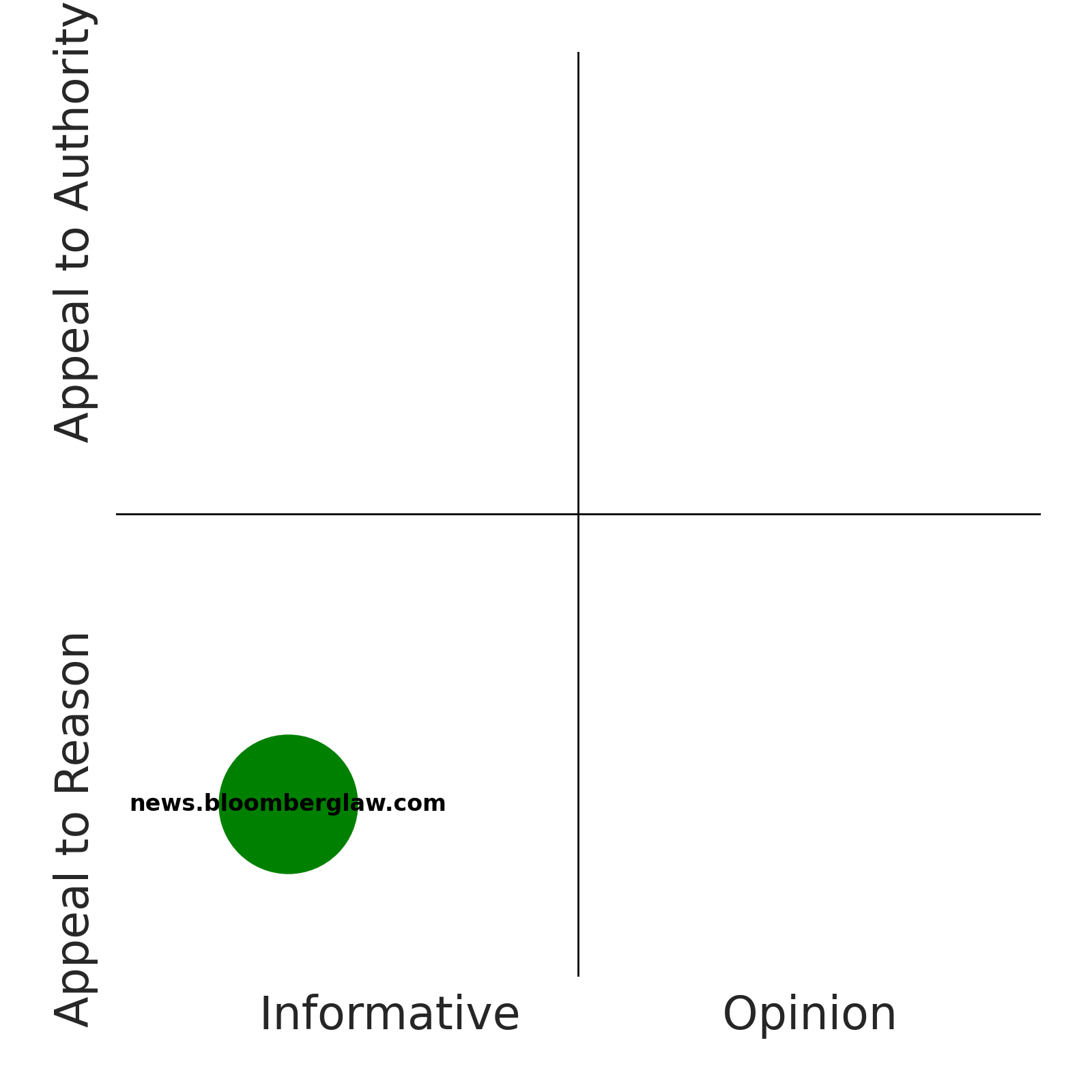
💭 Opinion10
🏛️ Appeal to Authority6
👀 Covering Responses6
❌ Low Credibility <—> High Credibility ✅27
🤖 Written by AI18
💔 Low Integrity <—> High Integrity ❤️14
🪨 Low Intelligence <—> High Intelligence 🦉28
🎲 Speculation7
🔵 Liberal <—> Conservative 🔴0
🧢 Populist <—> Elitist 🎩0
🗽 Libertarian <—> Authoritarian 🚔0
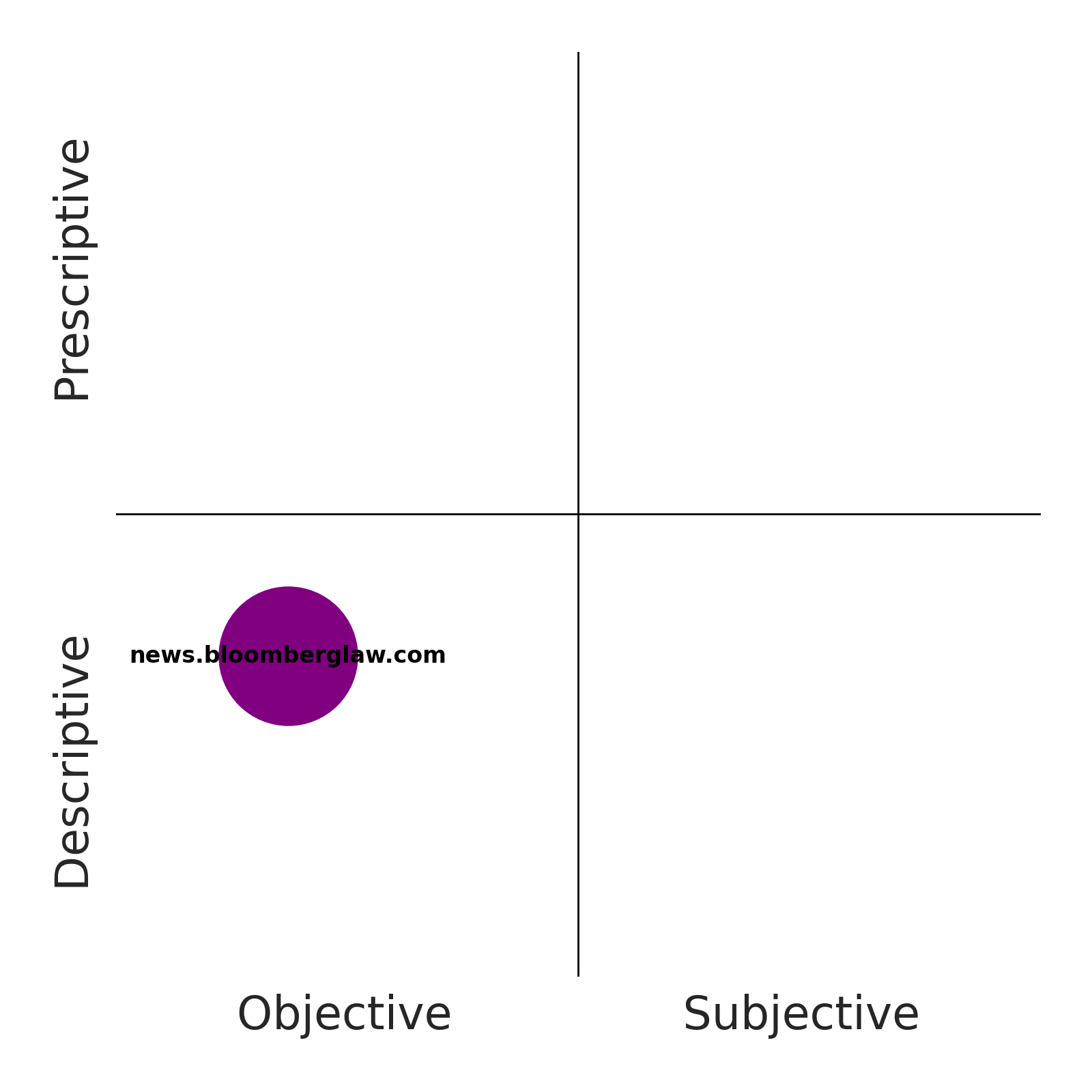
🗞️ Objective <—> Subjective 👁️ -5
🚨 Sensational0
📉 Bearish <—> Bullish 📈0
💡 Boring <—> Interesting5
📝 Prescriptive0
🕊️ Dovish <—> Hawkish 🦁0
😨 Fearful2
🗳 Political2
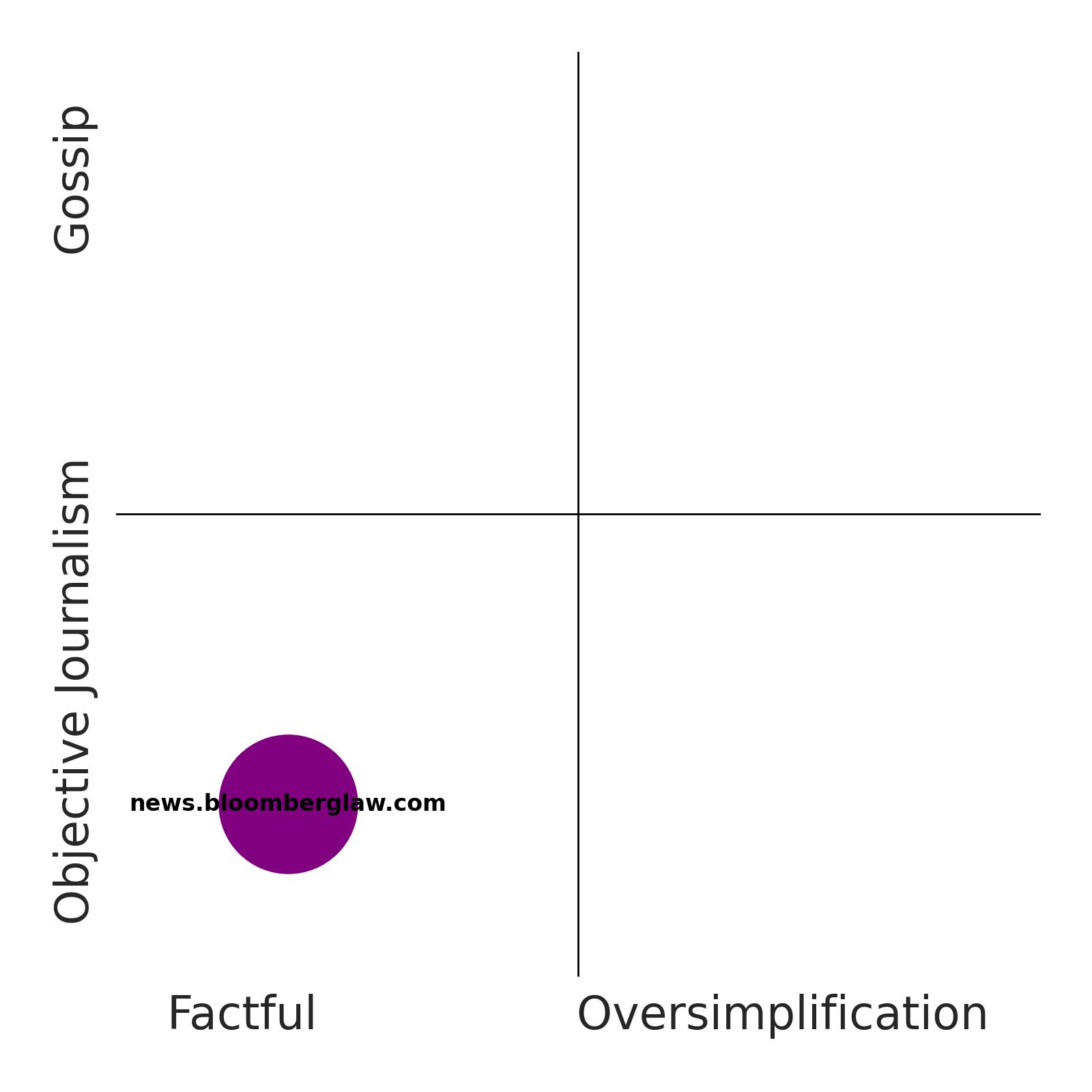
Oversimplification2
😢 Victimization2
😤 Overconfidence0
🔒 Ideological0
🏴 Anti-establishment <—> Pro-establishment 📺3
🧠 Rational <—> Irrational 🤪-4
🤑 Advertising3
🎭 Virtue Signaling0
🦊 Anti-Corporate <—> Pro-Corporate 👔1
🔬 Scientific <—> Superstitious 🔮0
👤 Individualist <—> Collectivist 👥0
🐍 Manipulative5

2026 © Helium Trades
Privacy Policy & Disclosure
* Disclaimer: Nothing on this website constitutes investment advice, performance data or any recommendation that any particular security, portfolio of securities, transaction or investment strategy is suitable for any specific person. Helium Trades is not responsible in any way for the accuracy
of any model predictions or price data. Any mention of a particular security and related prediction data is not a recommendation to buy or sell that security. Investments in securities involve the risk of loss. Past performance is no guarantee of future results. Helium Trades is not responsible for any of your investment decisions,
you should consult a financial expert before engaging in any transaction.
Helium Research Assistant

How can I help you today?
Ask any question about news.bloomberglaw.com bias.


