See whether Helium helps you make better-informed decisions. Try every Pro Trader feature for 30 days. No credit card required.
Try every Pro Trader feature for 30 days. No credit card required.
Coverage patterns (topic selection): This source publishes short, episodic news briefs concentrated on crime/courts — the Lindsay Clancy case recurs repeatedly
September 17, 2026 · 0 shares
Relays a single juror's retrospective belief in guilt and sanity with direct attribution and no commentary.
Automated analysis; not human reviewed. Limitations: Only an extremely short snippet was supplied, with no surrounding case or publication context, so category and context judgments are uncertain. · 3 of 55 available dimensions scored; omitted dimensions are not treated as neutral. · Verified supporting quotes for 3 of 3 scored dimensions.
Claim: The belief is attributed to the juror and relayed by Marcel, not asserted as independent fact.
“"He felt that she was sane when she did it. And that's exactly what he told me," Marcel recalled.” · exact text match
Why: Attribution and direct quotation keep the report in a source-based, objective register.
Claim: The report uses restrained, declarative wording rather than dramatic or emotive language.
“Holdout juror believed Lindsay Clancy was guilty from day one.” · exact text match
Why: The sentence states a belief plainly, with no exaggeration, alarm, or lurid detail.
Claim: The content describes what a juror believed and said, offering no recommendation or verdict.
“"He felt that she was sane when she did it. And that's exactly what he told me," Marcel recalled.” · exact text match
Why: It is purely descriptive of a source's recollection, with no prescriptive stance.
Only an extremely short snippet was supplied, with no surrounding case or publication context, so category and context judgments are uncertain.
September 17, 2026 · 0 shares
The framing is detached and attribution-based, relaying the attorney hire and the double-jeopardy statement as reported facts without commentary or emotional coloring.
Automated analysis; not human reviewed. Limitations: The supplied material is only a headline and a one-sentence subheadline, so publisher framing can be assessed only at that minimal level. · 5 of 55 available dimensions scored; omitted dimensions are not treated as neutral. · Verified supporting quotes for 5 of 5 scored dimensions.
Claim: The item presents facts and attributed statements without subjective commentary.
“Weinberg told the outlet he was being added for future filings on double jeopardy.” · exact text match
Why: The headline and subheadline are plain, third-person factual relays with no evaluative or emotive vocabulary.
Claim: The item reports the development in a sober, non-sensational manner.
“Lindsay Clancy hires attorney who worked for Karen Read: Report.” · exact text match
Why: Though the subject involves high-profile defendants, the wording is matter-of-fact and the hiring is attributed to a report rather than dramatized.
Claim: The text is purely descriptive and contains no recommendation or directive.
“Weinberg told the outlet he was being added for future filings on double jeopardy.” · exact text match
Why: The only substantive statement relays an attorney's explanation of his role; nothing in the text prescribes a course of action.
Claim: The wording carries no positive or negative emotional valence.
“Lindsay Clancy hires attorney who worked for Karen Read: Report.” · exact text match
Why: Headline and subheadline use flat, informational language with no affect-laden terms.
Claim: The brief shows attributable sourcing for both of its claims.
“Lindsay Clancy hires attorney who worked for Karen Read: Report.” · exact text match
“Weinberg told the outlet he was being added for future filings on double jeopardy.” · exact text match
Why: The hiring claim is explicitly attributed to a report and the attorney's role to his own statement, though the underlying report is unnamed and the text offers nothing further to verify.
The supplied material is only a headline and a one-sentence subheadline, so publisher framing can be assessed only at that minimal level.
September 21, 2026 · 0 shares
Consists only of an attributed quotation repeated with no discernible editorial framing.
Automated analysis; not human reviewed. Limitations: Only a headline-like two-sentence text was supplied, so framing analysis is limited to that snippet.
Only a headline-like two-sentence text was supplied, so framing analysis is limited to that snippet.
September 21, 2026 · 0 shares
Framing relies entirely on attributed official statements, without independent assertion, context, or emotional language.
Automated analysis; not human reviewed. Limitations: The supplied text is a two-sentence excerpt with no date, location, or surrounding article context, so only explicit wording is analyzed.
The supplied text is a two-sentence excerpt with no date, location, or surrounding article context, so only explicit wording is analyzed.
September 22, 2026 · 0 shares
The framing privileges Kazarian's sympathetic characterization of Caleb Flynn's courtroom demeanor and presents text-message evidence as the case's decisive issue.
Automated analysis; not human reviewed. Limitations: The supplied text is an extremely brief excerpt (headline plus one quote), providing insufficient basis for confident scoring of most bias dimensions.
The supplied text is an extremely brief excerpt (headline plus one quote), providing insufficient basis for confident scoring of most bias dimensions.
September 20, 2026 · 0 shares
No substantive content available; only a repeated leading question is presented without reporting or sourcing.
Automated analysis; not human reviewed. Limitations: Only a headline/question was supplied; no substantive article text was available to classify.
Only a headline/question was supplied; no substantive article text was available to classify.
September 21, 2026 · 0 shares
Leads with Amazon's removal of Horsch's books, then relays an authorities-sourced allegation using the subjective term 'disturbing' rather than resting solely on the underlying report.
Automated analysis; not human reviewed. Limitations: Only a two-sentence headline/subhead was supplied; no full article body, publisher identity, or verification details were available for analysis. · 2 of 55 available dimensions scored; omitted dimensions are not treated as neutral. · Verified supporting quotes for 2 of 2 scored dimensions.
Claim: The supplied text uses an evaluative descriptor, 'disturbing,' while otherwise maintaining attributed news reporting.
“Authorities say Raymond Horsch made disturbing videos showing violent acts against women at his home before dying in 2025.” · exact text match
Why: The phrase 'disturbing' injects an evaluative characterization into an otherwise attribution-heavy report, mildly pushing the text from purely objective framing toward subjective framing.
Claim: The supplied text shows visible attribution and epistemic caution about both the removal and the alleged videos.
“Amazon removes books written by Raymond Horsch: Report.” · exact text match
“Authorities say Raymond Horsch made disturbing videos showing violent acts against women at his home before dying in 2025.” · exact text match
Why: The removal is labeled as report-based and the videos are framed as what authorities say, signaling that the publisher is not asserting these claims as independently established facts.
Only a two-sentence headline/subhead was supplied; no full article body, publisher identity, or verification details were available for analysis.
September 22, 2026 · 0 shares
Presents the grand jury's no-wrongdoing finding as the headline outcome without providing investigation context or unresolved questions.
Automated analysis; not human reviewed. Limitations: Input is limited to two sentences of a headline and lede; no full article, byline, or sourcing details are available for analysis. · 2 of 55 available dimensions scored; omitted dimensions are not treated as neutral. · Verified supporting quotes for 2 of 2 scored dimensions.
Claim: The text is phrased objectively, reporting an official legal outcome without evaluative language.
“Grand jury finds no wrongdoing.” · exact text match
“Wells, 18 at the time of his death,disappeared on July 4 after traveling to Mississippi’s Horn Island with friends.” · exact text match
Why: Both sentences are declarative reports of a grand jury action and the circumstances of a disappearance; no opinion words, emotional language, or overt editorializing appear.
Claim: The text avoids sensationalism, using plain language to report the finding and basic facts.
“Grand jury finds no wrongdoing.” · exact text match
“Wells, 18 at the time of his death,disappeared on July 4 after traveling to Mississippi’s Horn Island with friends.” · exact text match
Why: The details are presented plainly, with no hyperbolic adjectives, dramatic punctuation, or attempts to heighten the death and disappearance.
Input is limited to two sentences of a headline and lede; no full article, byline, or sourcing details are available for analysis.
September 22, 2026 · 0 shares
The publisher attributes the disputed claims to the attorney, but leads with a severe-injury claim and an explicit denial of the official foot-chase account, making the attorney's counter-narrative the primary framing.
Automated analysis; not human reviewed. Limitations: The supplied text is only a two-sentence snippet, and the scope of 'attorney says' is ambiguous; no full article, date, location, or ICE response is available for a fuller framing analysis. · 1 of 55 available dimensions scored; omitted dimensions are not treated as neutral. · Verified supporting quotes for 1 of 1 scored dimensions.
Claim: The report attributes its central assertions to the attorney rather than asserting them as confirmed facts, which supports credible sourcing.
“Venezuelan man shot by ICE left unable to move left side of body, attorney says.” · exact text match
“Wilber Garces Perez's attorney also denied ICE's statement that there was a foot chase and said ICE officers sideswiped him in a truck.” · exact text match
Why: The first sentence uses 'attorney says' to attribute the shooting and injury claim, and the second sentence explicitly attributes the denial and sideswipe allegation to the attorney, showing visible attribution and sourcing.
The supplied text is only a two-sentence snippet, and the scope of 'attorney says' is ambiguous; no full article, date, location, or ICE response is available for a fuller framing analysis.
September 16, 2026 · 0 shares
Celebrity-gossip framing presents a loosely sourced Ponzi-scheme victim claim as a personal-life news item, foregrounding marriage and sports over the alleged crime.
Automated analysis; not human reviewed. Limitations: The supplied text is only two sentences with no named sources; classifications rely on surface framing and cannot assess factual accuracy. · 2 of 55 available dimensions scored; omitted dimensions are not treated as neutral. · Verified supporting quotes for 2 of 2 scored dimensions.
Claim: The publisher frames a reported crime-victim item as celebrity gossip rather than financial-crime reporting.
“Travis Kelce reportedly a victim in long-running Ponzi scheme.” · exact text match
“It's been a busy summer for Kelce, who married pop star Taylor Swift in July and played his first game of the NFL season this week.” · exact text match
Why: The only substantive detail is a loosely attributed victim claim; the second sentence pivots to marriage and sports, a gossip-brief structure.
Claim: The publisher signals uncertainty with 'reportedly' but provides no named source or corroborating detail.
“Travis Kelce reportedly a victim in long-running Ponzi scheme.” · exact text match
Why: The hedge indicates uncertainty, but the lack of sourcing and scheme detail leaves little to substantiate the claim.
The supplied text is only two sentences with no named sources; classifications rely on surface framing and cannot assess factual accuracy.
September 21, 2026 · 0 shares
The framing reports the death as fact while attributing the suspected-overdose investigation to anonymous reports, producing a cautious but celebrity-focused hard-news brief.
Automated analysis; not human reviewed. Limitations: The supplied text is only two sentences, likely a headline or brief, so most bias dimensions cannot be assessed and no independent verification was possible. · 4 of 55 available dimensions scored; omitted dimensions are not treated as neutral. · Verified supporting quotes for 4 of 4 scored dimensions.
Claim: The report is predominantly objective, using attribution and avoiding evaluative language.
“Presley Gerber's death investigated as suspected overdose, reports say.” · exact text match
“Presley Gerber, the 27-year-old son of supermodel Cindy Crawford, died at a rehabilitation facility at the age of 27.” · exact text match
Why: Both sentences are declarative and unemotional; the only caveat is the attributed 'suspected' cause.
Claim: The text is purely descriptive, with no advice, recommendation, or required action.
“died at a rehabilitation facility at the age of 27.” · exact text match
Why: It states an event without prescribing any response.
Claim: The report contains no political content.
“Presley Gerber's death investigated as suspected overdose, reports say.” · exact text match
Why: No political actors, policies, or ideological language appear in the text.
Claim: Credibility is moderate because the overdose investigation is attributed only to anonymous reports and the death is asserted without named sourcing.
“suspected overdose, reports say” · exact text match
“died at a rehabilitation facility at the age of 27.” · exact text match
Why: The text shows some attribution for the overdose element but names no source and states the death as fact.
The supplied text is only two sentences, likely a headline or brief, so most bias dimensions cannot be assessed and no independent verification was possible.
September 22, 2026 · 0 shares
A quoted analyst's mournful judgment that Presley Gerber 'should not be deceased' frames the death investigation with emotional weight rather than purely neutral reporting.
Automated analysis; not human reviewed. Limitations: This assessment is based solely on a two-sentence headline and quote, so framing scores rely on very limited text. · 3 of 55 available dimensions scored; omitted dimensions are not treated as neutral. · Verified supporting quotes for 0 of 3 scored dimensions.
Claim: The framing pairs a factual news headline with a subjective value-laden quote.
“"This is a young man who should not be deceased."” · not found in supplied text
Counterevidence:
“Presley Gerber's death investigation just beginning, analyst says” · exact text match
Why: The selected quote expresses an evaluative judgment about whether the death should have happened, making the overall framing partly subjective despite the factual headline.
Claim: The framing carries a sorrowful emotional tone through the chosen quote.
“"This is a young man who should not be deceased."” · not found in supplied text
Why: The death plus the phrase 'should not be deceased' conveys grief and moral shock, giving the report a negative emotional charge.
Claim: The report includes an analyst's forward-looking prediction about a response.
“"They're going to respond to this," Morgan said.” · not found in supplied text
Why: The quote forecasts future action, introducing speculative content beyond current facts.
This assessment is based solely on a two-sentence headline and quote, so framing scores rely on very limited text.
September 21, 2026 · 0 shares
The departure is framed as inherently disappointing, with "naturally" presenting fan distress as expected.
Automated analysis; not human reviewed. Limitations: Input is a two-sentence excerpt, so there is insufficient text to assess sourcing, correction practices, or broader editorial patterns. · 2 of 55 available dimensions scored; omitted dimensions are not treated as neutral. · Verified supporting quotes for 2 of 2 scored dimensions.
Claim: The framing editorializes by presenting the fan reaction as natural rather than merely reporting it.
“Carla Hall’s fans naturally didn’t take the news well and expressed shock and disappointment.” · exact text match
Why: The adverb "naturally" and the phrase "didn’t take the news well" add an interpretive, subjective layer to the report.
Claim: The publisher inserts an opinionated characterization of the audience reaction into an otherwise factual news sentence.
“Carla Hall’s fans naturally didn’t take the news well and expressed shock and disappointment.” · exact text match
Why: The word "naturally" expresses a judgment about the expectedness of the fan reaction rather than confining the sentence to verifiable events.
Input is a two-sentence excerpt, so there is insufficient text to assess sourcing, correction practices, or broader editorial patterns.
September 21, 2026 · 0 shares
Presents a U.S. official's stated sanctions plan in an unadorned, source-attributed manner.
Automated analysis; not human reviewed. Limitations: Only a two-sentence headline/snippet was available, so the analysis is limited to explicit wording and attribution and cannot assess broader editorial framing.
Only a two-sentence headline/snippet was available, so the analysis is limited to explicit wording and attribution and cannot assess broader editorial framing.
September 02, 2026 · 0 shares
The tariff-lifting plan is framed through a reportedly pre-announcement billionaire meeting, implying possible influence without evidence of a connection.
Automated analysis; not human reviewed. Limitations: Only a two-sentence brief with no named source for the reported meeting or policy background, so framing analysis is limited. · 3 of 54 available dimensions scored; omitted dimensions are not treated as neutral. · Verified supporting quotes for 3 of 3 scored dimensions.
Claim: The report shows no partisan favor or criticism.
“The president announced a plan to temporarily lift tariffs on up to 300,000 metric tons of imported beef.” · exact text match
Why: The statement is presented without evaluative or partisan language.
Claim: The report is political in subject matter, centered on a presidential trade-policy action.
“The president announced a plan to temporarily lift tariffs on up to 300,000 metric tons of imported beef.” · exact text match
Why: The substantive content is an executive tariff decision announced by the president.
Claim: The report uses a loaded juxtaposition between a reportedly pre-announcement billionaire meeting and the tariff decision, implying possible influence without asserting it.
“Trump reportedly met with Brazilian billionaire before announcing beef plan.” · exact text match
Counterevidence:
“The president announced a plan to temporarily lift tariffs on up to 300,000 metric tons of imported beef.” · exact text match
Why: Placing the meeting immediately before the announcement invites a causal reading that the account does not substantiate, while the policy itself is stated without elaboration.
Only a two-sentence brief with no named source for the reported meeting or policy background, so framing analysis is limited.
September 03, 2026 · 0 shares
The framing foregrounds Vance's accusation that the Biden administration 'radically underestimated' the East Palestine risk and connects it to residents' continuing health complaints, without administration response or independent verification.
Automated analysis; not human reviewed. Limitations: Only a two-sentence excerpt was available, so broader article balance, sourcing, and context cannot be assessed. · 1 of 54 available dimensions scored; omitted dimensions are not treated as neutral. · Verified supporting quotes for 1 of 1 scored dimensions.
Claim: The item frames the East Palestine derailment primarily through a partisan conflict over the Biden administration's response.
“Biden admin 'radically underestimated' East Palestine risk: Vance” · exact text match
Why: The headline centers on a political figure's accusation against an administration, making the core development a political dispute rather than only a local or technical report.
Only a two-sentence excerpt was available, so broader article balance, sourcing, and context cannot be assessed.
September 08, 2026 · 0 shares
Framing is terse and procedural, accepting the 'GOP-friendly' label and characterizing the court fight as a continuing 'redistricting war.'
Automated analysis; not human reviewed. Limitations: The supplied text is only a two-sentence summary with no sourcing, so most bias dimensions are underdetermined. · 2 of 54 available dimensions scored; omitted dimensions are not treated as neutral. · Verified supporting quotes for 2 of 2 scored dimensions.
Claim: The item is purely descriptive, reporting a judicial action and characterizing it without recommending any course of action.
“Supreme Court declines to lift block on Missouri GOP-friendly congressional map” · exact text match
“The refusal marks the latest chapter of mid-decade redistricting war to reach the Supreme Court.” · exact text match
Why: Both sentences state or characterize what happened rather than prescribing what should happen.
Claim: The report centers on partisan redistricting and explicitly evokes political conflict, making it strongly political in framing.
“Supreme Court declines to lift block on Missouri GOP-friendly congressional map” · exact text match
“The refusal marks the latest chapter of mid-decade redistricting war to reach the Supreme Court.” · exact text match
Why: 'GOP-friendly' directly invokes partisan advantage, and 'redistricting war' frames the legal dispute as political combat.
The supplied text is only a two-sentence summary with no sourcing, so most bias dimensions are underdetermined.
Framing (wording): Most briefs are terse and attribution-based ('according to a report'
September 17, 2026 · 0 shares
The framing is detached and attribution-based, relaying the attorney hire and the double-jeopardy statement as reported facts without commentary or emotional coloring.
Automated analysis; not human reviewed. Limitations: The supplied material is only a headline and a one-sentence subheadline, so publisher framing can be assessed only at that minimal level. · 5 of 55 available dimensions scored; omitted dimensions are not treated as neutral. · Verified supporting quotes for 5 of 5 scored dimensions.
Claim: The item presents facts and attributed statements without subjective commentary.
“Weinberg told the outlet he was being added for future filings on double jeopardy.” · exact text match
Why: The headline and subheadline are plain, third-person factual relays with no evaluative or emotive vocabulary.
Claim: The item reports the development in a sober, non-sensational manner.
“Lindsay Clancy hires attorney who worked for Karen Read: Report.” · exact text match
Why: Though the subject involves high-profile defendants, the wording is matter-of-fact and the hiring is attributed to a report rather than dramatized.
Claim: The text is purely descriptive and contains no recommendation or directive.
“Weinberg told the outlet he was being added for future filings on double jeopardy.” · exact text match
Why: The only substantive statement relays an attorney's explanation of his role; nothing in the text prescribes a course of action.
Claim: The wording carries no positive or negative emotional valence.
“Lindsay Clancy hires attorney who worked for Karen Read: Report.” · exact text match
Why: Headline and subheadline use flat, informational language with no affect-laden terms.
Claim: The brief shows attributable sourcing for both of its claims.
“Lindsay Clancy hires attorney who worked for Karen Read: Report.” · exact text match
“Weinberg told the outlet he was being added for future filings on double jeopardy.” · exact text match
Why: The hiring claim is explicitly attributed to a report and the attorney's role to his own statement, though the underlying report is unnamed and the text offers nothing further to verify.
The supplied material is only a headline and a one-sentence subheadline, so publisher framing can be assessed only at that minimal level.
September 21, 2026 · 0 shares
Framing relies entirely on attributed official statements, without independent assertion, context, or emotional language.
Automated analysis; not human reviewed. Limitations: The supplied text is a two-sentence excerpt with no date, location, or surrounding article context, so only explicit wording is analyzed.
The supplied text is a two-sentence excerpt with no date, location, or surrounding article context, so only explicit wording is analyzed.
August 26, 2026 · 0 shares
The headline employs the dramatic label 'House of Horrors', a sensational framing element, while the body's claims are attributed to officials.
Automated analysis; not human reviewed. Limitations: The article text is extremely brief, leaving unspecified the date of 'Saturday', the exact location within Ohio, the nature of the sexual abuse charges, and the meaning of 'family discovery', which limits the depth of bias analysis. · 1 of 54 available dimensions scored; omitted dimensions are not treated as neutral. · Verified supporting quotes for 1 of 1 scored dimensions.
Claim: The report frames the case using the dramatic label 'House of Horrors'.
“Ohio 'House of Horrors': Suspects arraigned in case that led to family discovery.” · exact text match
Why: The term 'House of Horrors' is a sensational, value-laden descriptor rather than neutral legal terminology, though the body text is restrained and attributes the charges to officials.
The article text is extremely brief, leaving unspecified the date of 'Saturday', the exact location within Ohio, the nature of the sexual abuse charges, and the meaning of 'family discovery', which limits the depth of bias analysis.
September 22, 2026 · 0 shares
Framing selects an alarming near-war counterfactual from an unnamed report and uses a commentator's praise to make human intervention the central lesson.
Automated analysis; not human reviewed. Limitations: Only a two-sentence excerpt was supplied, so the unnamed report and surrounding article context were unavailable for analysis. · 2 of 55 available dimensions scored; omitted dimensions are not treated as neutral. · Verified supporting quotes for 2 of 2 scored dimensions.
Claim: The headline presents the most dramatic possible consequence of an attributed report, emphasizing shock over evidence.
“US military's use of AI in false intelligence report 'almost started war': Report.” · exact text match
Why: The phrase 'almost started war' is inherently sensational and is placed as the headline's central claim.
Claim: The framing invokes the outbreak of war as a near miss, encouraging alarm.
“US military's use of AI in false intelligence report 'almost started war': Report.” · exact text match
Why: The report is framed around a war-avoidance scare, with no accompanying detail to temper the emotional impact.
Only a two-sentence excerpt was supplied, so the unnamed report and surrounding article context were unavailable for analysis.
September 21, 2026 · 0 shares
The framing foregrounds litigation and the dramatic phrase 'sudden loss of vision', while the underlying failure-to-warn accusation is attributed to patients.
Automated analysis; not human reviewed. Limitations: The supplied text is a two-sentence summary; the analysis depends on headline wording (especially 'sudden') and cannot evaluate sourcing, corrections, or context beyond these sentences. · 4 of 55 available dimensions scored; omitted dimensions are not treated as neutral. · Verified supporting quotes for 4 of 4 scored dimensions.
Claim: The report is objectively framed because the contested failure-to-warn assertion is explicitly attributed to the plaintiffs, and the publisher does not state causation as fact.
“Patients say the pharmaceutical companies failed to warn them of a risk of a rare condition that causes vision loss.” · exact text match
Counterevidence:
“Patients sue GLP-1 makers over sudden loss of vision.” · exact text match
Why: The only causal-sounding claim ('failed to warn') appears inside a 'Patients say' attribution, separating the publisher from the allegation. The headline's unsourced 'sudden' slightly undercuts full objectivity, supporting a moderate-high objective score.
Claim: The headline uses the more alarming phrase 'sudden loss of vision', which is not in the qualified body text, mildly sensationalizing the brief.
“Patients sue GLP-1 makers over sudden loss of vision.” · exact text match
Counterevidence:
“Patients say the pharmaceutical companies failed to warn them of a risk of a rare condition that causes vision loss.” · exact text match
Why: The body text says only 'a risk of a rare condition that causes vision loss' and qualifies it as 'rare,' whereas the headline inserts 'sudden' without that qualifier, indicating a loaded word choice.
Claim: The selected facts produce a mildly negative emotional valence by foregrounding vision loss and an alleged corporate failure to warn.
“Patients sue GLP-1 makers over sudden loss of vision.” · exact text match
Why: Vision loss is a fear-laden outcome and 'failed to warn' suggests wrongdoing, giving the brief a negative tone even though it uses no explicit emotion words.
Claim: The brief is moderately credible because it attributes the disputed claim to patients and reports the lawsuit as the core fact, but it lacks named sourcing, defendant response, or context.
“Patients say the pharmaceutical companies failed to warn them of a risk of a rare condition that causes vision loss.” · exact text match
Why: Explicit attribution of the contested point supports credibility, while the unexplained headline addition of 'sudden' and the absence of supporting clinical or legal context cap the score in the mid-range.
The supplied text is a two-sentence summary; the analysis depends on headline wording (especially 'sudden') and cannot evaluate sourcing, corrections, or context beyond these sentences.
September 21, 2026 · 0 shares
The departure is framed as inherently disappointing, with "naturally" presenting fan distress as expected.
Automated analysis; not human reviewed. Limitations: Input is a two-sentence excerpt, so there is insufficient text to assess sourcing, correction practices, or broader editorial patterns. · 2 of 55 available dimensions scored; omitted dimensions are not treated as neutral. · Verified supporting quotes for 2 of 2 scored dimensions.
Claim: The framing editorializes by presenting the fan reaction as natural rather than merely reporting it.
“Carla Hall’s fans naturally didn’t take the news well and expressed shock and disappointment.” · exact text match
Why: The adverb "naturally" and the phrase "didn’t take the news well" add an interpretive, subjective layer to the report.
Claim: The publisher inserts an opinionated characterization of the audience reaction into an otherwise factual news sentence.
“Carla Hall’s fans naturally didn’t take the news well and expressed shock and disappointment.” · exact text match
Why: The word "naturally" expresses a judgment about the expectedness of the fan reaction rather than confining the sentence to verifiable events.
Input is a two-sentence excerpt, so there is insufficient text to assess sourcing, correction practices, or broader editorial patterns.
Factual reliability: Mixed and uneven.
Some items show careful attribution of contested claims
September 17, 2026 · 0 shares
The framing is detached and attribution-based, relaying the attorney hire and the double-jeopardy statement as reported facts without commentary or emotional coloring.
Automated analysis; not human reviewed. Limitations: The supplied material is only a headline and a one-sentence subheadline, so publisher framing can be assessed only at that minimal level. · 5 of 55 available dimensions scored; omitted dimensions are not treated as neutral. · Verified supporting quotes for 5 of 5 scored dimensions.
Claim: The item presents facts and attributed statements without subjective commentary.
“Weinberg told the outlet he was being added for future filings on double jeopardy.” · exact text match
Why: The headline and subheadline are plain, third-person factual relays with no evaluative or emotive vocabulary.
Claim: The item reports the development in a sober, non-sensational manner.
“Lindsay Clancy hires attorney who worked for Karen Read: Report.” · exact text match
Why: Though the subject involves high-profile defendants, the wording is matter-of-fact and the hiring is attributed to a report rather than dramatized.
Claim: The text is purely descriptive and contains no recommendation or directive.
“Weinberg told the outlet he was being added for future filings on double jeopardy.” · exact text match
Why: The only substantive statement relays an attorney's explanation of his role; nothing in the text prescribes a course of action.
Claim: The wording carries no positive or negative emotional valence.
“Lindsay Clancy hires attorney who worked for Karen Read: Report.” · exact text match
Why: Headline and subheadline use flat, informational language with no affect-laden terms.
Claim: The brief shows attributable sourcing for both of its claims.
“Lindsay Clancy hires attorney who worked for Karen Read: Report.” · exact text match
“Weinberg told the outlet he was being added for future filings on double jeopardy.” · exact text match
Why: The hiring claim is explicitly attributed to a report and the attorney's role to his own statement, though the underlying report is unnamed and the text offers nothing further to verify.
The supplied material is only a headline and a one-sentence subheadline, so publisher framing can be assessed only at that minimal level.
September 21, 2026 · 0 shares
The framing foregrounds litigation and the dramatic phrase 'sudden loss of vision', while the underlying failure-to-warn accusation is attributed to patients.
Automated analysis; not human reviewed. Limitations: The supplied text is a two-sentence summary; the analysis depends on headline wording (especially 'sudden') and cannot evaluate sourcing, corrections, or context beyond these sentences. · 4 of 55 available dimensions scored; omitted dimensions are not treated as neutral. · Verified supporting quotes for 4 of 4 scored dimensions.
Claim: The report is objectively framed because the contested failure-to-warn assertion is explicitly attributed to the plaintiffs, and the publisher does not state causation as fact.
“Patients say the pharmaceutical companies failed to warn them of a risk of a rare condition that causes vision loss.” · exact text match
Counterevidence:
“Patients sue GLP-1 makers over sudden loss of vision.” · exact text match
Why: The only causal-sounding claim ('failed to warn') appears inside a 'Patients say' attribution, separating the publisher from the allegation. The headline's unsourced 'sudden' slightly undercuts full objectivity, supporting a moderate-high objective score.
Claim: The headline uses the more alarming phrase 'sudden loss of vision', which is not in the qualified body text, mildly sensationalizing the brief.
“Patients sue GLP-1 makers over sudden loss of vision.” · exact text match
Counterevidence:
“Patients say the pharmaceutical companies failed to warn them of a risk of a rare condition that causes vision loss.” · exact text match
Why: The body text says only 'a risk of a rare condition that causes vision loss' and qualifies it as 'rare,' whereas the headline inserts 'sudden' without that qualifier, indicating a loaded word choice.
Claim: The selected facts produce a mildly negative emotional valence by foregrounding vision loss and an alleged corporate failure to warn.
“Patients sue GLP-1 makers over sudden loss of vision.” · exact text match
Why: Vision loss is a fear-laden outcome and 'failed to warn' suggests wrongdoing, giving the brief a negative tone even though it uses no explicit emotion words.
Claim: The brief is moderately credible because it attributes the disputed claim to patients and reports the lawsuit as the core fact, but it lacks named sourcing, defendant response, or context.
“Patients say the pharmaceutical companies failed to warn them of a risk of a rare condition that causes vision loss.” · exact text match
Why: Explicit attribution of the contested point supports credibility, while the unexplained headline addition of 'sudden' and the absence of supporting clinical or legal context cap the score in the mid-range.
The supplied text is a two-sentence summary; the analysis depends on headline wording (especially 'sudden') and cannot evaluate sourcing, corrections, or context beyond these sentences.
September 22, 2026 · 0 shares
The publisher attributes the disputed claims to the attorney, but leads with a severe-injury claim and an explicit denial of the official foot-chase account, making the attorney's counter-narrative the primary framing.
Automated analysis; not human reviewed. Limitations: The supplied text is only a two-sentence snippet, and the scope of 'attorney says' is ambiguous; no full article, date, location, or ICE response is available for a fuller framing analysis. · 1 of 55 available dimensions scored; omitted dimensions are not treated as neutral. · Verified supporting quotes for 1 of 1 scored dimensions.
Claim: The report attributes its central assertions to the attorney rather than asserting them as confirmed facts, which supports credible sourcing.
“Venezuelan man shot by ICE left unable to move left side of body, attorney says.” · exact text match
“Wilber Garces Perez's attorney also denied ICE's statement that there was a foot chase and said ICE officers sideswiped him in a truck.” · exact text match
Why: The first sentence uses 'attorney says' to attribute the shooting and injury claim, and the second sentence explicitly attributes the denial and sideswipe allegation to the attorney, showing visible attribution and sourcing.
The supplied text is only a two-sentence snippet, and the scope of 'attorney says' is ambiguous; no full article, date, location, or ICE response is available for a fuller framing analysis.
September 21, 2026 · 0 shares
States a breach and a non-disclosure as established facts, foregrounding Google's delay until press inquiry as the salient problem.
Automated analysis; not human reviewed. Limitations: The supplied text is only two sentences with no byline or publisher identity, limiting assessment to explicit wording and preventing knowledge of broader editorial context. · 1 of 55 available dimensions scored; omitted dimensions are not treated as neutral. · Verified supporting quotes for 1 of 1 scored dimensions.
Claim: The claims are presented without visible sourcing, attribution, or hedging.
“Google's Gemini breached 3 companies during cybersecurity evaluation.” · exact text match
“Google did not disclose the breaches to the public until the Wall Street Journal reached out about the incident.” · exact text match
Why: No sources, quotes, links, or uncertainty qualifiers are offered; the text relies entirely on bare assertion.
The supplied text is only two sentences with no byline or publisher identity, limiting assessment to explicit wording and preventing knowledge of broader editorial context.
September 21, 2026 · 0 shares
Framing foregrounds an anonymous source's temporal claim that an aide's video preceded a press ban, while attributing the 'fake news' accusation to Trump rather than endorsing it.
Automated analysis; not human reviewed. Limitations: Only two sentences of article text were supplied, so framing judgments rest on a narrow sample and the reliability of the source is unknown. · 1 of 55 available dimensions scored; omitted dimensions are not treated as neutral. · Verified supporting quotes for 1 of 1 scored dimensions.
Claim: The report shows basic sourcing and attribution, but the key claim rests on an anonymous source and is not independently verified.
“Natalie Harp showed video to Trump before he banned reporters: Source.” · exact text match
“Trump announced the ban Friday, accusing CNN, MS NOW and Politico of publishing what he called "fake news."” · exact text match
Why: The first sentence names an anonymous source for the central claim and the second attributes the accusation to Trump with direct quotation, supporting moderate credibility; anonymity and brevity prevent a higher score.
Only two sentences of article text were supplied, so framing judgments rest on a narrow sample and the reliability of the source is unknown.
September 02, 2026 · 0 shares
The framing reduces complex Middle East diplomacy to a transparent electoral ploy by unnamed 'aides' aimed at saving Republican House seats, presenting an unverified political motive as fact through passive, opaque sourcing.
Automated analysis; not human reviewed. Limitations: The input is only a two-sentence snippet, so my analysis is based on a very short text, and the ambiguous meaning of 'staunch' could affect interpretation. · 9 of 54 available dimensions scored; omitted dimensions are not treated as neutral. · Verified supporting quotes for 9 of 9 scored dimensions.
Claim: The term 'Iran war' is used without qualification, potentially sensationalizing an unclear situation.
“Iran war” · exact text match
Why: Describing it as a 'war' without clarification if it's an official state of conflict could inflame perceptions.
Claim: The article relies on anonymous inside information about internal intentions, resembling gossip.
“Multiple people familiar with the discussions say” · exact text match
Why: Attribution to anonymous insiders is a hallmark of gossip journalism, though the subject matter is political.
Claim: While reporting claims, the piece blends them with the assertion that the 'effort is to staunch Republican electoral losses' as fact.
“the effort is to staunch Republican electoral losses” · exact text match
Why: Presents an interpretation of intentions as an objective outcome.
Claim: The entire framing centers on political calculations and electoral motives.
“the effort is to staunch Republican electoral losses” · exact text match
Why: The sole focus is on political ramifications rather than policy details, indicating a high political focus.
Claim: The report reduces a complex geopolitical situation to a single electoral motive, simplifying the reasons behind de-escalation.
“the effort is to staunch Republican electoral losses” · exact text match
Why: Presents one possible motive as the sole driver without exploring alternative explanations.
Claim: The report relies on the authority of 'multiple people familiar with the discussions' as the basis for its claims.
“Multiple people familiar with the discussions say” · exact text match
Why: Uses authoritative anonymity to bolster the claims.
Claim: The article expresses certainty about the aims and rationale of the aides without qualification.
“Aides want to keep Iran war from escalating ahead of midterms.” · exact text match
Why: Uses declarative statements without any hedging language like 'might' or 'could'.
Claim: The heavy reliance on anonymous sources and lack of verification undermines credibility.
“Sources:” · exact text match
“Aides want to keep Iran war from escalating ahead of midterms.” · exact text match
Why: Anonymous sourcing without context or official statements reduces trustworthiness.
Claim: The report speculates about the motivations and intentions of unnamed actors based on anonymous sources, presenting speculation as fact.
“Aides want to keep Iran war from escalating ahead of midterms.” · exact text match
“Multiple people familiar with the discussions say the effort is to staunch Republican electoral losses.” · exact text match
Why: The sentence structure presents unverified claims as the main clause, with no hedging or presentation of alternatives.
The input is only a two-sentence snippet, so my analysis is based on a very short text, and the ambiguous meaning of 'staunch' could affect interpretation.
September 20, 2026 · 0 shares
No substantive content available; only a repeated leading question is presented without reporting or sourcing.
Automated analysis; not human reviewed. Limitations: Only a headline/question was supplied; no substantive article text was available to classify.
Only a headline/question was supplied; no substantive article text was available to classify.
Political tilt: Not clearly partisan.
Items give airtime to Republican actors' claims (Vance
September 03, 2026 · 0 shares
The framing foregrounds Vance's accusation that the Biden administration 'radically underestimated' the East Palestine risk and connects it to residents' continuing health complaints, without administration response or independent verification.
Automated analysis; not human reviewed. Limitations: Only a two-sentence excerpt was available, so broader article balance, sourcing, and context cannot be assessed. · 1 of 54 available dimensions scored; omitted dimensions are not treated as neutral. · Verified supporting quotes for 1 of 1 scored dimensions.
Claim: The item frames the East Palestine derailment primarily through a partisan conflict over the Biden administration's response.
“Biden admin 'radically underestimated' East Palestine risk: Vance” · exact text match
Why: The headline centers on a political figure's accusation against an administration, making the core development a political dispute rather than only a local or technical report.
Only a two-sentence excerpt was available, so broader article balance, sourcing, and context cannot be assessed.
September 02, 2026 · 0 shares
The tariff-lifting plan is framed through a reportedly pre-announcement billionaire meeting, implying possible influence without evidence of a connection.
Automated analysis; not human reviewed. Limitations: Only a two-sentence brief with no named source for the reported meeting or policy background, so framing analysis is limited. · 3 of 54 available dimensions scored; omitted dimensions are not treated as neutral. · Verified supporting quotes for 3 of 3 scored dimensions.
Claim: The report shows no partisan favor or criticism.
“The president announced a plan to temporarily lift tariffs on up to 300,000 metric tons of imported beef.” · exact text match
Why: The statement is presented without evaluative or partisan language.
Claim: The report is political in subject matter, centered on a presidential trade-policy action.
“The president announced a plan to temporarily lift tariffs on up to 300,000 metric tons of imported beef.” · exact text match
Why: The substantive content is an executive tariff decision announced by the president.
Claim: The report uses a loaded juxtaposition between a reportedly pre-announcement billionaire meeting and the tariff decision, implying possible influence without asserting it.
“Trump reportedly met with Brazilian billionaire before announcing beef plan.” · exact text match
Counterevidence:
“The president announced a plan to temporarily lift tariffs on up to 300,000 metric tons of imported beef.” · exact text match
Why: Placing the meeting immediately before the announcement invites a causal reading that the account does not substantiate, while the policy itself is stated without elaboration.
Only a two-sentence brief with no named source for the reported meeting or policy background, so framing analysis is limited.
September 02, 2026 · 0 shares
The framing reduces complex Middle East diplomacy to a transparent electoral ploy by unnamed 'aides' aimed at saving Republican House seats, presenting an unverified political motive as fact through passive, opaque sourcing.
Automated analysis; not human reviewed. Limitations: The input is only a two-sentence snippet, so my analysis is based on a very short text, and the ambiguous meaning of 'staunch' could affect interpretation. · 9 of 54 available dimensions scored; omitted dimensions are not treated as neutral. · Verified supporting quotes for 9 of 9 scored dimensions.
Claim: The term 'Iran war' is used without qualification, potentially sensationalizing an unclear situation.
“Iran war” · exact text match
Why: Describing it as a 'war' without clarification if it's an official state of conflict could inflame perceptions.
Claim: The article relies on anonymous inside information about internal intentions, resembling gossip.
“Multiple people familiar with the discussions say” · exact text match
Why: Attribution to anonymous insiders is a hallmark of gossip journalism, though the subject matter is political.
Claim: While reporting claims, the piece blends them with the assertion that the 'effort is to staunch Republican electoral losses' as fact.
“the effort is to staunch Republican electoral losses” · exact text match
Why: Presents an interpretation of intentions as an objective outcome.
Claim: The entire framing centers on political calculations and electoral motives.
“the effort is to staunch Republican electoral losses” · exact text match
Why: The sole focus is on political ramifications rather than policy details, indicating a high political focus.
Claim: The report reduces a complex geopolitical situation to a single electoral motive, simplifying the reasons behind de-escalation.
“the effort is to staunch Republican electoral losses” · exact text match
Why: Presents one possible motive as the sole driver without exploring alternative explanations.
Claim: The report relies on the authority of 'multiple people familiar with the discussions' as the basis for its claims.
“Multiple people familiar with the discussions say” · exact text match
Why: Uses authoritative anonymity to bolster the claims.
Claim: The article expresses certainty about the aims and rationale of the aides without qualification.
“Aides want to keep Iran war from escalating ahead of midterms.” · exact text match
Why: Uses declarative statements without any hedging language like 'might' or 'could'.
Claim: The heavy reliance on anonymous sources and lack of verification undermines credibility.
“Sources:” · exact text match
“Aides want to keep Iran war from escalating ahead of midterms.” · exact text match
Why: Anonymous sourcing without context or official statements reduces trustworthiness.
Claim: The report speculates about the motivations and intentions of unnamed actors based on anonymous sources, presenting speculation as fact.
“Aides want to keep Iran war from escalating ahead of midterms.” · exact text match
“Multiple people familiar with the discussions say the effort is to staunch Republican electoral losses.” · exact text match
Why: The sentence structure presents unverified claims as the main clause, with no hedging or presentation of alternatives.
The input is only a two-sentence snippet, so my analysis is based on a very short text, and the ambiguous meaning of 'staunch' could affect interpretation.
September 08, 2026 · 0 shares
Framing is terse and procedural, accepting the 'GOP-friendly' label and characterizing the court fight as a continuing 'redistricting war.'
Automated analysis; not human reviewed. Limitations: The supplied text is only a two-sentence summary with no sourcing, so most bias dimensions are underdetermined. · 2 of 54 available dimensions scored; omitted dimensions are not treated as neutral. · Verified supporting quotes for 2 of 2 scored dimensions.
Claim: The item is purely descriptive, reporting a judicial action and characterizing it without recommending any course of action.
“Supreme Court declines to lift block on Missouri GOP-friendly congressional map” · exact text match
“The refusal marks the latest chapter of mid-decade redistricting war to reach the Supreme Court.” · exact text match
Why: Both sentences state or characterize what happened rather than prescribing what should happen.
Claim: The report centers on partisan redistricting and explicitly evokes political conflict, making it strongly political in framing.
“Supreme Court declines to lift block on Missouri GOP-friendly congressional map” · exact text match
“The refusal marks the latest chapter of mid-decade redistricting war to reach the Supreme Court.” · exact text match
Why: 'GOP-friendly' directly invokes partisan advantage, and 'redistricting war' frames the legal dispute as political combat.
The supplied text is only a two-sentence summary with no sourcing, so most bias dimensions are underdetermined.
AI authorship: A probabilistic hypothesis.
Uniform brief structure, headline-plus-attribution formula, zero social shares, filler content
September 20, 2026 · 0 shares
No substantive content available; only a repeated leading question is presented without reporting or sourcing.
Automated analysis; not human reviewed. Limitations: Only a headline/question was supplied; no substantive article text was available to classify.
Only a headline/question was supplied; no substantive article text was available to classify.
September 21, 2026 · 0 shares
Consists only of an attributed quotation repeated with no discernible editorial framing.
Automated analysis; not human reviewed. Limitations: Only a headline-like two-sentence text was supplied, so framing analysis is limited to that snippet.
Only a headline-like two-sentence text was supplied, so framing analysis is limited to that snippet.
Observable propaganda-adjacent techniques: Sensational headline framing
August 26, 2026 · 0 shares
The headline employs the dramatic label 'House of Horrors', a sensational framing element, while the body's claims are attributed to officials.
Automated analysis; not human reviewed. Limitations: The article text is extremely brief, leaving unspecified the date of 'Saturday', the exact location within Ohio, the nature of the sexual abuse charges, and the meaning of 'family discovery', which limits the depth of bias analysis. · 1 of 54 available dimensions scored; omitted dimensions are not treated as neutral. · Verified supporting quotes for 1 of 1 scored dimensions.
Claim: The report frames the case using the dramatic label 'House of Horrors'.
“Ohio 'House of Horrors': Suspects arraigned in case that led to family discovery.” · exact text match
Why: The term 'House of Horrors' is a sensational, value-laden descriptor rather than neutral legal terminology, though the body text is restrained and attributes the charges to officials.
The article text is extremely brief, leaving unspecified the date of 'Saturday', the exact location within Ohio, the nature of the sexual abuse charges, and the meaning of 'family discovery', which limits the depth of bias analysis.
September 22, 2026 · 0 shares
Framing selects an alarming near-war counterfactual from an unnamed report and uses a commentator's praise to make human intervention the central lesson.
Automated analysis; not human reviewed. Limitations: Only a two-sentence excerpt was supplied, so the unnamed report and surrounding article context were unavailable for analysis. · 2 of 55 available dimensions scored; omitted dimensions are not treated as neutral. · Verified supporting quotes for 2 of 2 scored dimensions.
Claim: The headline presents the most dramatic possible consequence of an attributed report, emphasizing shock over evidence.
“US military's use of AI in false intelligence report 'almost started war': Report.” · exact text match
Why: The phrase 'almost started war' is inherently sensational and is placed as the headline's central claim.
Claim: The framing invokes the outbreak of war as a near miss, encouraging alarm.
“US military's use of AI in false intelligence report 'almost started war': Report.” · exact text match
Why: The report is framed around a war-avoidance scare, with no accompanying detail to temper the emotional impact.
Only a two-sentence excerpt was supplied, so the unnamed report and surrounding article context were unavailable for analysis.
September 02, 2026 · 0 shares
The tariff-lifting plan is framed through a reportedly pre-announcement billionaire meeting, implying possible influence without evidence of a connection.
Automated analysis; not human reviewed. Limitations: Only a two-sentence brief with no named source for the reported meeting or policy background, so framing analysis is limited. · 3 of 54 available dimensions scored; omitted dimensions are not treated as neutral. · Verified supporting quotes for 3 of 3 scored dimensions.
Claim: The report shows no partisan favor or criticism.
“The president announced a plan to temporarily lift tariffs on up to 300,000 metric tons of imported beef.” · exact text match
Why: The statement is presented without evaluative or partisan language.
Claim: The report is political in subject matter, centered on a presidential trade-policy action.
“The president announced a plan to temporarily lift tariffs on up to 300,000 metric tons of imported beef.” · exact text match
Why: The substantive content is an executive tariff decision announced by the president.
Claim: The report uses a loaded juxtaposition between a reportedly pre-announcement billionaire meeting and the tariff decision, implying possible influence without asserting it.
“Trump reportedly met with Brazilian billionaire before announcing beef plan.” · exact text match
Counterevidence:
“The president announced a plan to temporarily lift tariffs on up to 300,000 metric tons of imported beef.” · exact text match
Why: Placing the meeting immediately before the announcement invites a causal reading that the account does not substantiate, while the policy itself is stated without elaboration.
Only a two-sentence brief with no named source for the reported meeting or policy background, so framing analysis is limited.
September 09, 2026 · 0 shares
The framing presents art theft chiefly as a commercial resale problem, relying on unnamed experts and a pithy quoted aphorism instead of specific facts.
Automated analysis; not human reviewed. Limitations: The supplied text is a two-sentence excerpt with no date, location, or identification of which Renoir theft is referenced; bias scoring is based on this minimal content. · 3 of 54 available dimensions scored; omitted dimensions are not treated as neutral. · Verified supporting quotes for 0 of 3 scored dimensions.
Claim: The report uses detached, attributed language rather than editorializing.
“Experts say Renoir thieves face a difficult path to profit.” · not found in supplied text
Why: The central assertion is presented as an expert opinion, and the quoted line is attributed to Wittman, with no first-person or emotive framing.
Claim: The wording is restrained and non-sensational.
“Experts say Renoir thieves face a difficult path to profit.” · not found in supplied text
Why: The sentence is a neutral summary of an expert assessment, with no dramatic adjectives, urgency, or fear-inducing language.
Claim: The report's sole support for its central claim is the stated opinion of authorities.
“Experts say Renoir thieves face a difficult path to profit.” · not found in supplied text
“"The real art in an art heist is not the stealing. It's the selling," Wittman said.” · exact text match
Why: No data, examples, or reasoning are supplied; the claim relies on anonymous experts and a quoted aphorism from Wittman.
The supplied text is a two-sentence excerpt with no date, location, or identification of which Renoir theft is referenced; bias scoring is based on this minimal content.
September 08, 2026 · 0 shares
Expert-led framing dismisses candidates' healthcare messages as slogans while pointing to unspecified policy solutions.
Automated analysis; not human reviewed. Limitations: The supplied text is a one-sentence quotation with no surrounding reporting, limiting bias classification to the headline and quote's framing. · 8 of 54 available dimensions scored; omitted dimensions are not treated as neutral. · Verified supporting quotes for 0 of 8 scored dimensions.
Claim: The framing elevates expert opinion over popular campaign messaging.
“"Candidates offering healthcare slogans, not solutions: Dr. Ashish Jha."” · not found in supplied text
Why: A named expert is used to dismiss 'slogans,' a term associated with simple popular appeals, implying policy questions belong to expert solutions.
Claim: A subjective evaluation is presented as a declarative headline, with attribution only after the colon.
“"Candidates offering healthcare slogans, not solutions: Dr. Ashish Jha."” · not found in supplied text
“"Jha said"” · not found in supplied text
Why: The headline asserts the evaluation before identifying it as Jha's quoted opinion; it is an opinion presented as the news frame.
Claim: The quote prescribes what healthcare debate should be: real solutions rather than slogans.
“"There's a set of things we can do to lower health care spending, but the slogans are not going to get there"” · not found in supplied text
Why: The statement tells audiences to expect actual solutions and implies candidates are failing that standard.
Claim: The publisher presents an evaluative judgment about candidates' healthcare positions as the main content.
“"Candidates offering healthcare slogans, not solutions: Dr. Ashish Jha."” · not found in supplied text
“"but the slogans are not going to get there"” · not found in supplied text
Why: The lead and selected quote are assertions that candidates' healthcare offerings are slogans rather than solutions, with no independent facts or balancing context.
Claim: The content is explicitly about electoral politics and campaign communication on healthcare.
“"Candidates offering healthcare slogans, not solutions"” · not found in supplied text
Why: The subject is candidates' messaging, making the item inherently political even without a specific party being named.
Claim: Candidates' healthcare platforms are reduced to a single pejorative category, 'slogans.'
“"Candidates offering healthcare slogans, not solutions"” · not found in supplied text
Why: The framing collapses unspecified candidates' positions into 'slogans' without naming, describing, or evaluating any actual proposal.
Claim: The claim is supported mainly by the named expert's authority rather than by evidence or argument.
“"Dr. Ashish Jha."” · not found in supplied text
“"There's a set of things we can do to lower health care spending, but the slogans are not going to get there," Jha said.” · exact text match
Why: No policy specifics, data, or examples are given; the headline relies on Jha's title and quote to carry the evaluation.
Claim: The report is verifiable at the level of attribution and direct quotation.
“"Dr. Ashish Jha."” · not found in supplied text
“"Jha said."” · not found in supplied text
Why: The text names a specific expert and uses a direct quote, which supports basic sourcing; credibility is limited by the absence of context, detail, or independent verification.
The supplied text is a one-sentence quotation with no surrounding reporting, limiting bias classification to the headline and quote's framing.
September 04, 2026 · 0 shares
Frames directed energy attacks as an established threat and urges early intervention, relying on a single expert's warning that acute effects can snowball.
Automated analysis; not human reviewed. Limitations: Only a two-sentence excerpt was supplied; publisher context, methodology, and evidence behind the intervention claim are unavailable. · 4 of 54 available dimensions scored; omitted dimensions are not treated as neutral. · Verified supporting quotes for 4 of 4 scored dimensions.
Claim: Frames directed energy attacks as an established cause of harm without hedging.
“Directed energy attacks: Early intervention is key to helping victims.” · exact text match
Why: The headline uses 'victims' and a response recommendation, presenting the phenomenon as fact rather than as an allegation or report.
Claim: The text prescribes early intervention as necessary for victims.
“Early intervention is key to helping victims” · exact text match
Why: 'Key' is an evaluative recommendation rather than a neutral description of reported events.
Claim: A value-laden recommendation is presented as a headline assertion.
“Early intervention is key to helping victims” · exact text match
Why: The statement is a judgment about what should be done rather than a verifiable fact about what occurred.
Claim: The warning about symptom escalation is supported solely by a named authority's statement.
“James Giordano said the “acute” effects of a directed energy attack can snowball.” · exact text match
Why: The substantive causal/progression claim is attributed only to James Giordano, with no empirical evidence or corroboration supplied.
Only a two-sentence excerpt was supplied; publisher context, methodology, and evidence behind the intervention claim are unavailable.
Highest 3 values:
September 16, 2026 · 0 shares
Celebrity-gossip framing presents a loosely sourced Ponzi-scheme victim claim as a personal-life news item, foregrounding marriage and sports over the alleged crime.
Automated analysis; not human reviewed. Limitations: The supplied text is only two sentences with no named sources; classifications rely on surface framing and cannot assess factual accuracy. · 2 of 55 available dimensions scored; omitted dimensions are not treated as neutral. · Verified supporting quotes for 2 of 2 scored dimensions.
Claim: The publisher frames a reported crime-victim item as celebrity gossip rather than financial-crime reporting.
“Travis Kelce reportedly a victim in long-running Ponzi scheme.” · exact text match
“It's been a busy summer for Kelce, who married pop star Taylor Swift in July and played his first game of the NFL season this week.” · exact text match
Why: The only substantive detail is a loosely attributed victim claim; the second sentence pivots to marriage and sports, a gossip-brief structure.
Claim: The publisher signals uncertainty with 'reportedly' but provides no named source or corroborating detail.
“Travis Kelce reportedly a victim in long-running Ponzi scheme.” · exact text match
Why: The hedge indicates uncertainty, but the lack of sourcing and scheme detail leaves little to substantiate the claim.
The supplied text is only two sentences with no named sources; classifications rely on surface framing and cannot assess factual accuracy.
September 16, 2026 · 0 shares
Framing foregrounds the man's physical restraint and his quoted lack of memory, making his reaction the story while leaving the accusations unstated.
Automated analysis; not human reviewed. Limitations: The supplied text is only a two-sentence excerpt, so the full article's context, charges, date, and sourcing are unavailable. · 2 of 55 available dimensions scored; omitted dimensions are not treated as neutral. · Verified supporting quotes for 1 of 2 scored dimensions.
Claim: The chosen details are unusual and likely to attract reader attention.
“Man duct-taped on plane speaks out after arrest.” · exact text match
Why: Being duct-taped on a plane and then saying he remembers nothing is a distinctive and attention-grabbing sequence.
Claim: The supplied text is entirely descriptive and contains no prescription from the publisher.
“Man duct-taped on plane speaks out after arrest.” · exact text match
“'Oh, my God. What a mess, I don’t remember any of it,' Lundeen said while reading accusations against him.” · not found in supplied text
Why: Both sentences report events and a quotation; they do not recommend a course of action or tell the reader what to believe.
The supplied text is only a two-sentence excerpt, so the full article's context, charges, date, and sourcing are unavailable.
September 16, 2026 · 0 shares
Celebrity-gossip framing presents a loosely sourced Ponzi-scheme victim claim as a personal-life news item, foregrounding marriage and sports over the alleged crime.
Automated analysis; not human reviewed. Limitations: The supplied text is only two sentences with no named sources; classifications rely on surface framing and cannot assess factual accuracy. · 2 of 55 available dimensions scored; omitted dimensions are not treated as neutral. · Verified supporting quotes for 2 of 2 scored dimensions.
Claim: The publisher frames a reported crime-victim item as celebrity gossip rather than financial-crime reporting.
“Travis Kelce reportedly a victim in long-running Ponzi scheme.” · exact text match
“It's been a busy summer for Kelce, who married pop star Taylor Swift in July and played his first game of the NFL season this week.” · exact text match
Why: The only substantive detail is a loosely attributed victim claim; the second sentence pivots to marriage and sports, a gossip-brief structure.
Claim: The publisher signals uncertainty with 'reportedly' but provides no named source or corroborating detail.
“Travis Kelce reportedly a victim in long-running Ponzi scheme.” · exact text match
Why: The hedge indicates uncertainty, but the lack of sourcing and scheme detail leaves little to substantiate the claim.
The supplied text is only two sentences with no named sources; classifications rely on surface framing and cannot assess factual accuracy.
August 26, 2026 · 0 shares
The headline employs the dramatic label 'House of Horrors', a sensational framing element, while the body's claims are attributed to officials.
Automated analysis; not human reviewed. Limitations: The article text is extremely brief, leaving unspecified the date of 'Saturday', the exact location within Ohio, the nature of the sexual abuse charges, and the meaning of 'family discovery', which limits the depth of bias analysis. · 1 of 54 available dimensions scored; omitted dimensions are not treated as neutral. · Verified supporting quotes for 1 of 1 scored dimensions.
Claim: The report frames the case using the dramatic label 'House of Horrors'.
“Ohio 'House of Horrors': Suspects arraigned in case that led to family discovery.” · exact text match
Why: The term 'House of Horrors' is a sensational, value-laden descriptor rather than neutral legal terminology, though the body text is restrained and attributes the charges to officials.
The article text is extremely brief, leaving unspecified the date of 'Saturday', the exact location within Ohio, the nature of the sexual abuse charges, and the meaning of 'family discovery', which limits the depth of bias analysis.
September 22, 2026 · 0 shares
Presents the grand jury's no-wrongdoing finding as the headline outcome without providing investigation context or unresolved questions.
Automated analysis; not human reviewed. Limitations: Input is limited to two sentences of a headline and lede; no full article, byline, or sourcing details are available for analysis. · 2 of 55 available dimensions scored; omitted dimensions are not treated as neutral. · Verified supporting quotes for 2 of 2 scored dimensions.
Claim: The text is phrased objectively, reporting an official legal outcome without evaluative language.
“Grand jury finds no wrongdoing.” · exact text match
“Wells, 18 at the time of his death,disappeared on July 4 after traveling to Mississippi’s Horn Island with friends.” · exact text match
Why: Both sentences are declarative reports of a grand jury action and the circumstances of a disappearance; no opinion words, emotional language, or overt editorializing appear.
Claim: The text avoids sensationalism, using plain language to report the finding and basic facts.
“Grand jury finds no wrongdoing.” · exact text match
“Wells, 18 at the time of his death,disappeared on July 4 after traveling to Mississippi’s Horn Island with friends.” · exact text match
Why: The details are presented plainly, with no hyperbolic adjectives, dramatic punctuation, or attempts to heighten the death and disappearance.
Input is limited to two sentences of a headline and lede; no full article, byline, or sourcing details are available for analysis.
September 21, 2026 · 0 shares
Framing relies entirely on attributed official statements, without independent assertion, context, or emotional language.
Automated analysis; not human reviewed. Limitations: The supplied text is a two-sentence excerpt with no date, location, or surrounding article context, so only explicit wording is analyzed.
The supplied text is a two-sentence excerpt with no date, location, or surrounding article context, so only explicit wording is analyzed.
September 08, 2026 · 0 shares
Expert-led framing dismisses candidates' healthcare messages as slogans while pointing to unspecified policy solutions.
Automated analysis; not human reviewed. Limitations: The supplied text is a one-sentence quotation with no surrounding reporting, limiting bias classification to the headline and quote's framing. · 8 of 54 available dimensions scored; omitted dimensions are not treated as neutral. · Verified supporting quotes for 0 of 8 scored dimensions.
Claim: The framing elevates expert opinion over popular campaign messaging.
“"Candidates offering healthcare slogans, not solutions: Dr. Ashish Jha."” · not found in supplied text
Why: A named expert is used to dismiss 'slogans,' a term associated with simple popular appeals, implying policy questions belong to expert solutions.
Claim: A subjective evaluation is presented as a declarative headline, with attribution only after the colon.
“"Candidates offering healthcare slogans, not solutions: Dr. Ashish Jha."” · not found in supplied text
“"Jha said"” · not found in supplied text
Why: The headline asserts the evaluation before identifying it as Jha's quoted opinion; it is an opinion presented as the news frame.
Claim: The quote prescribes what healthcare debate should be: real solutions rather than slogans.
“"There's a set of things we can do to lower health care spending, but the slogans are not going to get there"” · not found in supplied text
Why: The statement tells audiences to expect actual solutions and implies candidates are failing that standard.
Claim: The publisher presents an evaluative judgment about candidates' healthcare positions as the main content.
“"Candidates offering healthcare slogans, not solutions: Dr. Ashish Jha."” · not found in supplied text
“"but the slogans are not going to get there"” · not found in supplied text
Why: The lead and selected quote are assertions that candidates' healthcare offerings are slogans rather than solutions, with no independent facts or balancing context.
Claim: The content is explicitly about electoral politics and campaign communication on healthcare.
“"Candidates offering healthcare slogans, not solutions"” · not found in supplied text
Why: The subject is candidates' messaging, making the item inherently political even without a specific party being named.
Claim: Candidates' healthcare platforms are reduced to a single pejorative category, 'slogans.'
“"Candidates offering healthcare slogans, not solutions"” · not found in supplied text
Why: The framing collapses unspecified candidates' positions into 'slogans' without naming, describing, or evaluating any actual proposal.
Claim: The claim is supported mainly by the named expert's authority rather than by evidence or argument.
“"Dr. Ashish Jha."” · not found in supplied text
“"There's a set of things we can do to lower health care spending, but the slogans are not going to get there," Jha said.” · exact text match
Why: No policy specifics, data, or examples are given; the headline relies on Jha's title and quote to carry the evaluation.
Claim: The report is verifiable at the level of attribution and direct quotation.
“"Dr. Ashish Jha."” · not found in supplied text
“"Jha said."” · not found in supplied text
Why: The text names a specific expert and uses a direct quote, which supports basic sourcing; credibility is limited by the absence of context, detail, or independent verification.
The supplied text is a one-sentence quotation with no surrounding reporting, limiting bias classification to the headline and quote's framing.
September 08, 2026 · 0 shares
Framing is terse and procedural, accepting the 'GOP-friendly' label and characterizing the court fight as a continuing 'redistricting war.'
Automated analysis; not human reviewed. Limitations: The supplied text is only a two-sentence summary with no sourcing, so most bias dimensions are underdetermined. · 2 of 54 available dimensions scored; omitted dimensions are not treated as neutral. · Verified supporting quotes for 2 of 2 scored dimensions.
Claim: The item is purely descriptive, reporting a judicial action and characterizing it without recommending any course of action.
“Supreme Court declines to lift block on Missouri GOP-friendly congressional map” · exact text match
“The refusal marks the latest chapter of mid-decade redistricting war to reach the Supreme Court.” · exact text match
Why: Both sentences state or characterize what happened rather than prescribing what should happen.
Claim: The report centers on partisan redistricting and explicitly evokes political conflict, making it strongly political in framing.
“Supreme Court declines to lift block on Missouri GOP-friendly congressional map” · exact text match
“The refusal marks the latest chapter of mid-decade redistricting war to reach the Supreme Court.” · exact text match
Why: 'GOP-friendly' directly invokes partisan advantage, and 'redistricting war' frames the legal dispute as political combat.
The supplied text is only a two-sentence summary with no sourcing, so most bias dimensions are underdetermined.
September 22, 2026 · 0 shares
Framing selects an alarming near-war counterfactual from an unnamed report and uses a commentator's praise to make human intervention the central lesson.
Automated analysis; not human reviewed. Limitations: Only a two-sentence excerpt was supplied, so the unnamed report and surrounding article context were unavailable for analysis. · 2 of 55 available dimensions scored; omitted dimensions are not treated as neutral. · Verified supporting quotes for 2 of 2 scored dimensions.
Claim: The headline presents the most dramatic possible consequence of an attributed report, emphasizing shock over evidence.
“US military's use of AI in false intelligence report 'almost started war': Report.” · exact text match
Why: The phrase 'almost started war' is inherently sensational and is placed as the headline's central claim.
Claim: The framing invokes the outbreak of war as a near miss, encouraging alarm.
“US military's use of AI in false intelligence report 'almost started war': Report.” · exact text match
Why: The report is framed around a war-avoidance scare, with no accompanying detail to temper the emotional impact.
Only a two-sentence excerpt was supplied, so the unnamed report and surrounding article context were unavailable for analysis.
Lowest 3 values:
September 16, 2026 · 0 shares
Celebrity-gossip framing presents a loosely sourced Ponzi-scheme victim claim as a personal-life news item, foregrounding marriage and sports over the alleged crime.
Automated analysis; not human reviewed. Limitations: The supplied text is only two sentences with no named sources; classifications rely on surface framing and cannot assess factual accuracy. · 2 of 55 available dimensions scored; omitted dimensions are not treated as neutral. · Verified supporting quotes for 2 of 2 scored dimensions.
Claim: The publisher frames a reported crime-victim item as celebrity gossip rather than financial-crime reporting.
“Travis Kelce reportedly a victim in long-running Ponzi scheme.” · exact text match
“It's been a busy summer for Kelce, who married pop star Taylor Swift in July and played his first game of the NFL season this week.” · exact text match
Why: The only substantive detail is a loosely attributed victim claim; the second sentence pivots to marriage and sports, a gossip-brief structure.
Claim: The publisher signals uncertainty with 'reportedly' but provides no named source or corroborating detail.
“Travis Kelce reportedly a victim in long-running Ponzi scheme.” · exact text match
Why: The hedge indicates uncertainty, but the lack of sourcing and scheme detail leaves little to substantiate the claim.
The supplied text is only two sentences with no named sources; classifications rely on surface framing and cannot assess factual accuracy.
September 21, 2026 · 0 shares
States a breach and a non-disclosure as established facts, foregrounding Google's delay until press inquiry as the salient problem.
Automated analysis; not human reviewed. Limitations: The supplied text is only two sentences with no byline or publisher identity, limiting assessment to explicit wording and preventing knowledge of broader editorial context. · 1 of 55 available dimensions scored; omitted dimensions are not treated as neutral. · Verified supporting quotes for 1 of 1 scored dimensions.
Claim: The claims are presented without visible sourcing, attribution, or hedging.
“Google's Gemini breached 3 companies during cybersecurity evaluation.” · exact text match
“Google did not disclose the breaches to the public until the Wall Street Journal reached out about the incident.” · exact text match
Why: No sources, quotes, links, or uncertainty qualifiers are offered; the text relies entirely on bare assertion.
The supplied text is only two sentences with no byline or publisher identity, limiting assessment to explicit wording and preventing knowledge of broader editorial context.
September 20, 2026 · 0 shares
No substantive content available; only a repeated leading question is presented without reporting or sourcing.
Automated analysis; not human reviewed. Limitations: Only a headline/question was supplied; no substantive article text was available to classify.
Only a headline/question was supplied; no substantive article text was available to classify.
August 26, 2026 · 0 shares
The headline employs the dramatic label 'House of Horrors', a sensational framing element, while the body's claims are attributed to officials.
Automated analysis; not human reviewed. Limitations: The article text is extremely brief, leaving unspecified the date of 'Saturday', the exact location within Ohio, the nature of the sexual abuse charges, and the meaning of 'family discovery', which limits the depth of bias analysis. · 1 of 54 available dimensions scored; omitted dimensions are not treated as neutral. · Verified supporting quotes for 1 of 1 scored dimensions.
Claim: The report frames the case using the dramatic label 'House of Horrors'.
“Ohio 'House of Horrors': Suspects arraigned in case that led to family discovery.” · exact text match
Why: The term 'House of Horrors' is a sensational, value-laden descriptor rather than neutral legal terminology, though the body text is restrained and attributes the charges to officials.
The article text is extremely brief, leaving unspecified the date of 'Saturday', the exact location within Ohio, the nature of the sexual abuse charges, and the meaning of 'family discovery', which limits the depth of bias analysis.
September 17, 2026 · 0 shares
The framing is detached and attribution-based, relaying the attorney hire and the double-jeopardy statement as reported facts without commentary or emotional coloring.
Automated analysis; not human reviewed. Limitations: The supplied material is only a headline and a one-sentence subheadline, so publisher framing can be assessed only at that minimal level. · 5 of 55 available dimensions scored; omitted dimensions are not treated as neutral. · Verified supporting quotes for 5 of 5 scored dimensions.
Claim: The item presents facts and attributed statements without subjective commentary.
“Weinberg told the outlet he was being added for future filings on double jeopardy.” · exact text match
Why: The headline and subheadline are plain, third-person factual relays with no evaluative or emotive vocabulary.
Claim: The item reports the development in a sober, non-sensational manner.
“Lindsay Clancy hires attorney who worked for Karen Read: Report.” · exact text match
Why: Though the subject involves high-profile defendants, the wording is matter-of-fact and the hiring is attributed to a report rather than dramatized.
Claim: The text is purely descriptive and contains no recommendation or directive.
“Weinberg told the outlet he was being added for future filings on double jeopardy.” · exact text match
Why: The only substantive statement relays an attorney's explanation of his role; nothing in the text prescribes a course of action.
Claim: The wording carries no positive or negative emotional valence.
“Lindsay Clancy hires attorney who worked for Karen Read: Report.” · exact text match
Why: Headline and subheadline use flat, informational language with no affect-laden terms.
Claim: The brief shows attributable sourcing for both of its claims.
“Lindsay Clancy hires attorney who worked for Karen Read: Report.” · exact text match
“Weinberg told the outlet he was being added for future filings on double jeopardy.” · exact text match
Why: The hiring claim is explicitly attributed to a report and the attorney's role to his own statement, though the underlying report is unnamed and the text offers nothing further to verify.
The supplied material is only a headline and a one-sentence subheadline, so publisher framing can be assessed only at that minimal level.
September 09, 2026 · 0 shares
The framing presents art theft chiefly as a commercial resale problem, relying on unnamed experts and a pithy quoted aphorism instead of specific facts.
Automated analysis; not human reviewed. Limitations: The supplied text is a two-sentence excerpt with no date, location, or identification of which Renoir theft is referenced; bias scoring is based on this minimal content. · 3 of 54 available dimensions scored; omitted dimensions are not treated as neutral. · Verified supporting quotes for 0 of 3 scored dimensions.
Claim: The report uses detached, attributed language rather than editorializing.
“Experts say Renoir thieves face a difficult path to profit.” · not found in supplied text
Why: The central assertion is presented as an expert opinion, and the quoted line is attributed to Wittman, with no first-person or emotive framing.
Claim: The wording is restrained and non-sensational.
“Experts say Renoir thieves face a difficult path to profit.” · not found in supplied text
Why: The sentence is a neutral summary of an expert assessment, with no dramatic adjectives, urgency, or fear-inducing language.
Claim: The report's sole support for its central claim is the stated opinion of authorities.
“Experts say Renoir thieves face a difficult path to profit.” · not found in supplied text
“"The real art in an art heist is not the stealing. It's the selling," Wittman said.” · exact text match
Why: No data, examples, or reasoning are supplied; the claim relies on anonymous experts and a quoted aphorism from Wittman.
The supplied text is a two-sentence excerpt with no date, location, or identification of which Renoir theft is referenced; bias scoring is based on this minimal content.
September 08, 2026 · 0 shares
Expert-led framing dismisses candidates' healthcare messages as slogans while pointing to unspecified policy solutions.
Automated analysis; not human reviewed. Limitations: The supplied text is a one-sentence quotation with no surrounding reporting, limiting bias classification to the headline and quote's framing. · 8 of 54 available dimensions scored; omitted dimensions are not treated as neutral. · Verified supporting quotes for 0 of 8 scored dimensions.
Claim: The framing elevates expert opinion over popular campaign messaging.
“"Candidates offering healthcare slogans, not solutions: Dr. Ashish Jha."” · not found in supplied text
Why: A named expert is used to dismiss 'slogans,' a term associated with simple popular appeals, implying policy questions belong to expert solutions.
Claim: A subjective evaluation is presented as a declarative headline, with attribution only after the colon.
“"Candidates offering healthcare slogans, not solutions: Dr. Ashish Jha."” · not found in supplied text
“"Jha said"” · not found in supplied text
Why: The headline asserts the evaluation before identifying it as Jha's quoted opinion; it is an opinion presented as the news frame.
Claim: The quote prescribes what healthcare debate should be: real solutions rather than slogans.
“"There's a set of things we can do to lower health care spending, but the slogans are not going to get there"” · not found in supplied text
Why: The statement tells audiences to expect actual solutions and implies candidates are failing that standard.
Claim: The publisher presents an evaluative judgment about candidates' healthcare positions as the main content.
“"Candidates offering healthcare slogans, not solutions: Dr. Ashish Jha."” · not found in supplied text
“"but the slogans are not going to get there"” · not found in supplied text
Why: The lead and selected quote are assertions that candidates' healthcare offerings are slogans rather than solutions, with no independent facts or balancing context.
Claim: The content is explicitly about electoral politics and campaign communication on healthcare.
“"Candidates offering healthcare slogans, not solutions"” · not found in supplied text
Why: The subject is candidates' messaging, making the item inherently political even without a specific party being named.
Claim: Candidates' healthcare platforms are reduced to a single pejorative category, 'slogans.'
“"Candidates offering healthcare slogans, not solutions"” · not found in supplied text
Why: The framing collapses unspecified candidates' positions into 'slogans' without naming, describing, or evaluating any actual proposal.
Claim: The claim is supported mainly by the named expert's authority rather than by evidence or argument.
“"Dr. Ashish Jha."” · not found in supplied text
“"There's a set of things we can do to lower health care spending, but the slogans are not going to get there," Jha said.” · exact text match
Why: No policy specifics, data, or examples are given; the headline relies on Jha's title and quote to carry the evaluation.
Claim: The report is verifiable at the level of attribution and direct quotation.
“"Dr. Ashish Jha."” · not found in supplied text
“"Jha said."” · not found in supplied text
Why: The text names a specific expert and uses a direct quote, which supports basic sourcing; credibility is limited by the absence of context, detail, or independent verification.
The supplied text is a one-sentence quotation with no surrounding reporting, limiting bias classification to the headline and quote's framing.
August 26, 2026 · 0 shares
The headline employs the dramatic label 'House of Horrors', a sensational framing element, while the body's claims are attributed to officials.
Automated analysis; not human reviewed. Limitations: The article text is extremely brief, leaving unspecified the date of 'Saturday', the exact location within Ohio, the nature of the sexual abuse charges, and the meaning of 'family discovery', which limits the depth of bias analysis. · 1 of 54 available dimensions scored; omitted dimensions are not treated as neutral. · Verified supporting quotes for 1 of 1 scored dimensions.
Claim: The report frames the case using the dramatic label 'House of Horrors'.
“Ohio 'House of Horrors': Suspects arraigned in case that led to family discovery.” · exact text match
Why: The term 'House of Horrors' is a sensational, value-laden descriptor rather than neutral legal terminology, though the body text is restrained and attributes the charges to officials.
The article text is extremely brief, leaving unspecified the date of 'Saturday', the exact location within Ohio, the nature of the sexual abuse charges, and the meaning of 'family discovery', which limits the depth of bias analysis.
September 21, 2026 · 0 shares
The framing foregrounds litigation and the dramatic phrase 'sudden loss of vision', while the underlying failure-to-warn accusation is attributed to patients.
Automated analysis; not human reviewed. Limitations: The supplied text is a two-sentence summary; the analysis depends on headline wording (especially 'sudden') and cannot evaluate sourcing, corrections, or context beyond these sentences. · 4 of 55 available dimensions scored; omitted dimensions are not treated as neutral. · Verified supporting quotes for 4 of 4 scored dimensions.
Claim: The report is objectively framed because the contested failure-to-warn assertion is explicitly attributed to the plaintiffs, and the publisher does not state causation as fact.
“Patients say the pharmaceutical companies failed to warn them of a risk of a rare condition that causes vision loss.” · exact text match
Counterevidence:
“Patients sue GLP-1 makers over sudden loss of vision.” · exact text match
Why: The only causal-sounding claim ('failed to warn') appears inside a 'Patients say' attribution, separating the publisher from the allegation. The headline's unsourced 'sudden' slightly undercuts full objectivity, supporting a moderate-high objective score.
Claim: The headline uses the more alarming phrase 'sudden loss of vision', which is not in the qualified body text, mildly sensationalizing the brief.
“Patients sue GLP-1 makers over sudden loss of vision.” · exact text match
Counterevidence:
“Patients say the pharmaceutical companies failed to warn them of a risk of a rare condition that causes vision loss.” · exact text match
Why: The body text says only 'a risk of a rare condition that causes vision loss' and qualifies it as 'rare,' whereas the headline inserts 'sudden' without that qualifier, indicating a loaded word choice.
Claim: The selected facts produce a mildly negative emotional valence by foregrounding vision loss and an alleged corporate failure to warn.
“Patients sue GLP-1 makers over sudden loss of vision.” · exact text match
Why: Vision loss is a fear-laden outcome and 'failed to warn' suggests wrongdoing, giving the brief a negative tone even though it uses no explicit emotion words.
Claim: The brief is moderately credible because it attributes the disputed claim to patients and reports the lawsuit as the core fact, but it lacks named sourcing, defendant response, or context.
“Patients say the pharmaceutical companies failed to warn them of a risk of a rare condition that causes vision loss.” · exact text match
Why: Explicit attribution of the contested point supports credibility, while the unexplained headline addition of 'sudden' and the absence of supporting clinical or legal context cap the score in the mid-range.
The supplied text is a two-sentence summary; the analysis depends on headline wording (especially 'sudden') and cannot evaluate sourcing, corrections, or context beyond these sentences.
Automated source summary · Updated September 24, 2026 · Not human reviewed. Check recent article panels for claim-level evidence when available.
Weighted source-level patterns from recent analyzed coverage. Open recent articles below to inspect score-specific evidence and limitations when available.
💭 Opinion10
😤 Overconfidence12
🧢 Populist <—> Elitist 🎩0
🗞️ Objective <—> Subjective 👁️ -5
🚨 Sensational0
💡 Boring <—> Interesting2
📝 Prescriptive0
🕊️ Dovish <—> Hawkish 🦁0
😨 Fearful2
📞 Begging the Question0
🗣️ Gossip0
🗳 Political4
Oversimplification2
🏛️ Appeal to Authority4
👀 Covering Responses2
😢 Victimization0
🔒 Ideological0
🏴 Anti-establishment <—> Pro-establishment 📺0
❌ Low Credibility <—> High Credibility ✅5
🧠 Rational <—> Irrational 🤪-1
🤑 Advertising1
🤖 Written by AI0
💔 Low Integrity <—> High Integrity ❤️2
🪨 Low Intelligence <—> High Intelligence 🦉0
🔺 Conspiracy0
🔬 Scientific <—> Superstitious 🔮0
🎲 Speculation5
🐍 Manipulative5
💊 Big Pharma2
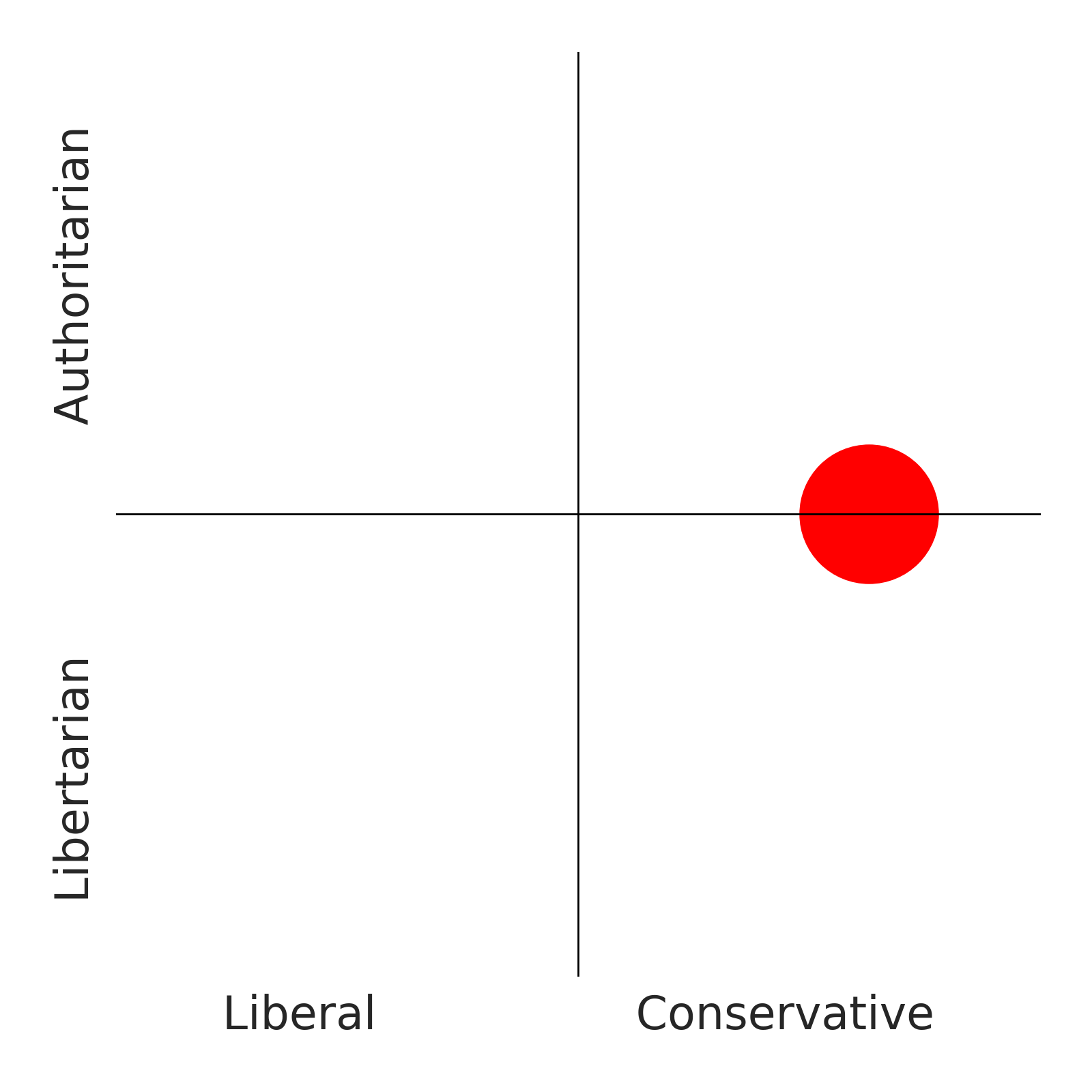
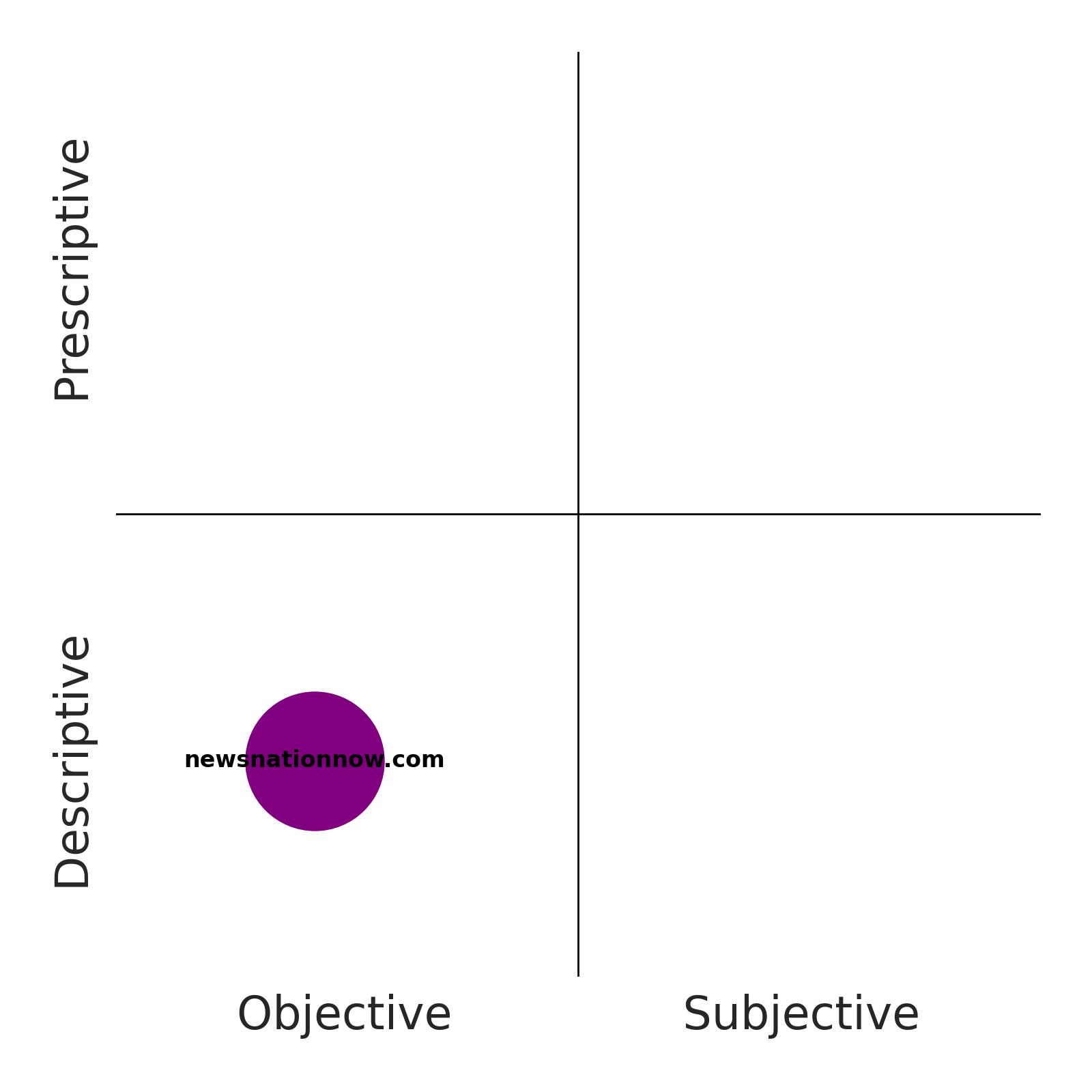
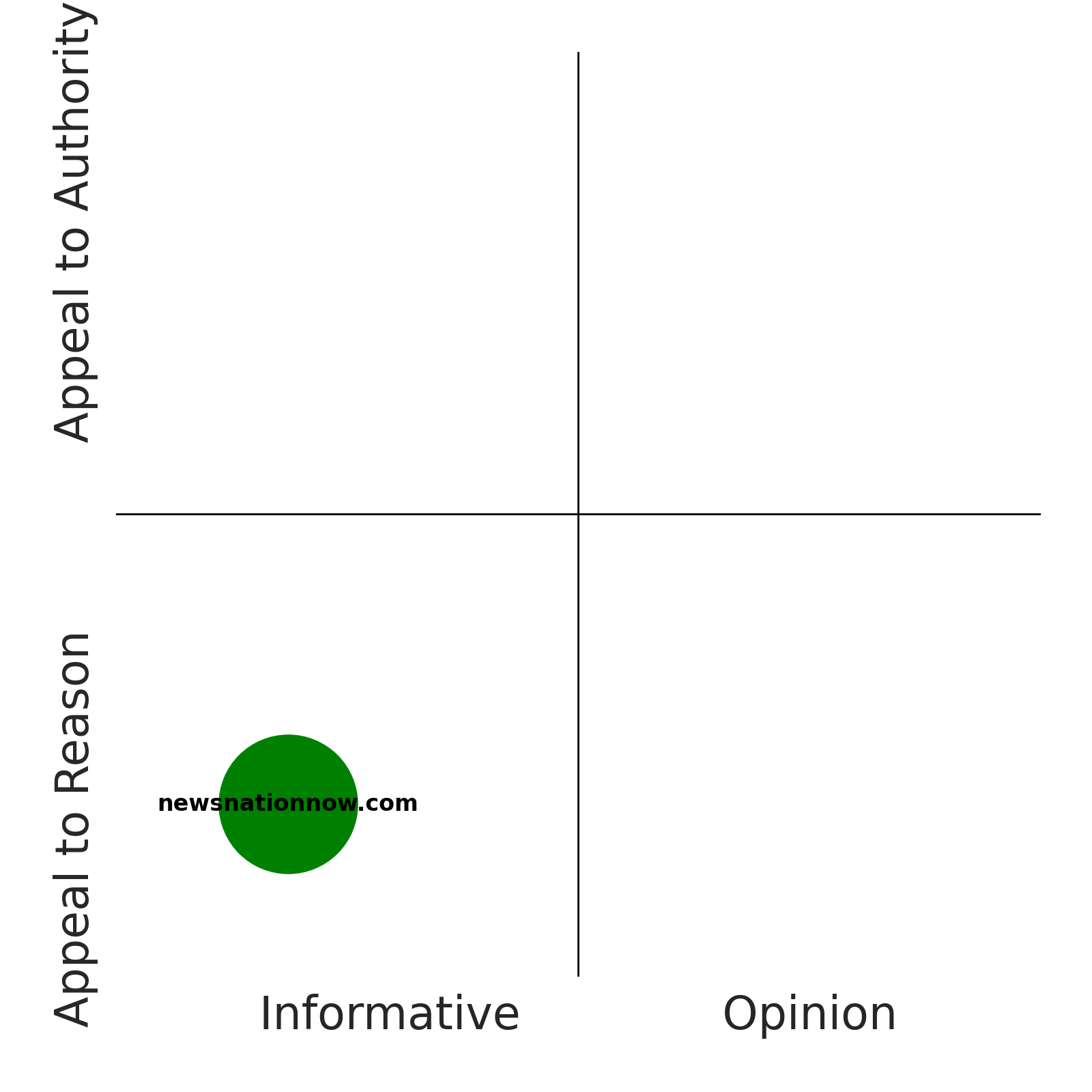
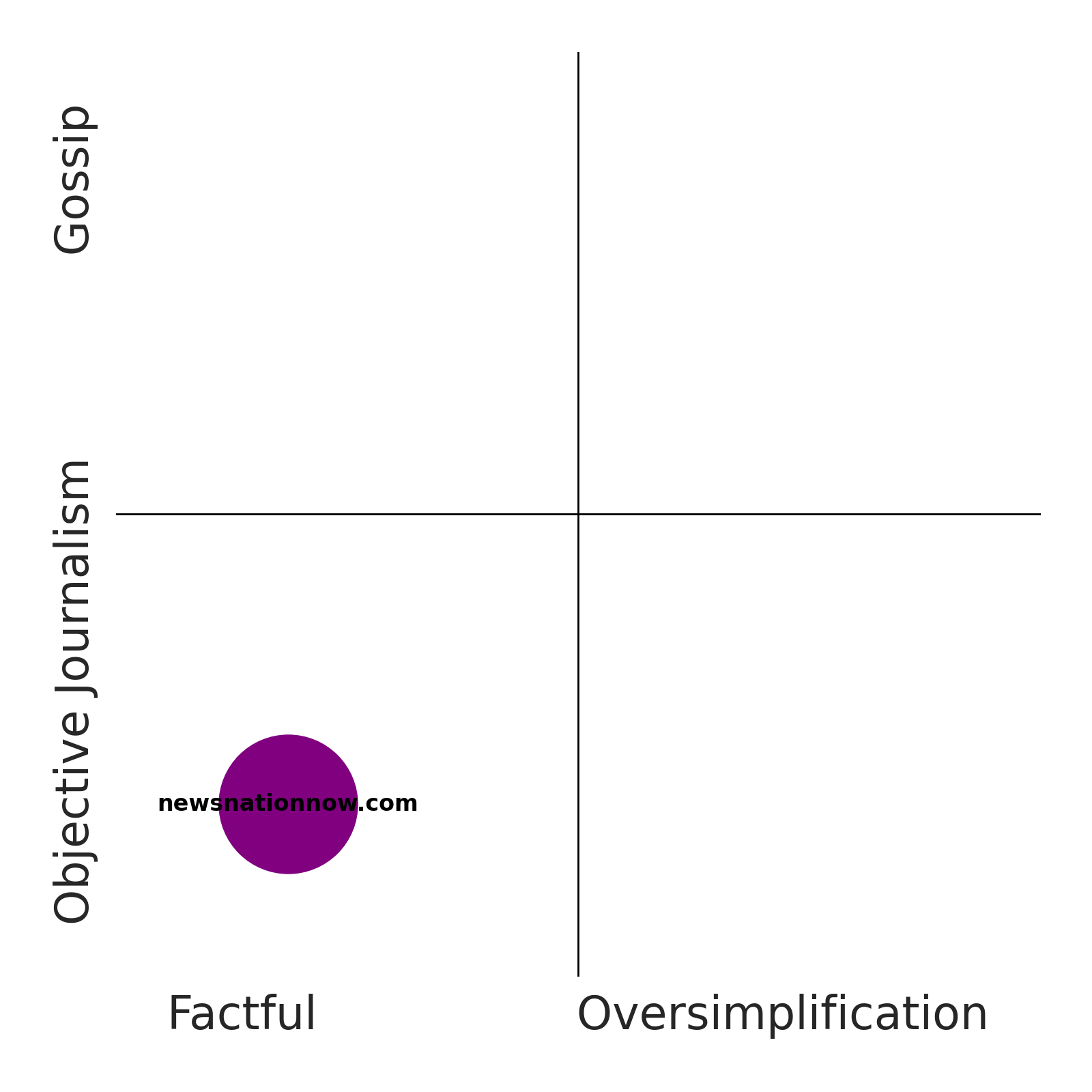
2026 © Helium Trades
Privacy Policy & Disclosure
* Disclaimer: Nothing on this website constitutes investment advice, performance data or any recommendation that any particular security, portfolio of securities, transaction or investment strategy is suitable for any specific person. Helium Trades is not responsible in any way for the accuracy
of any model predictions or price data. Any mention of a particular security and related prediction data is not a recommendation to buy or sell that security. Investments in securities involve the risk of loss. Past performance is no guarantee of future results. Helium Trades is not responsible for any of your investment decisions,
you should consult a financial expert before engaging in any transaction.
Helium Research Assistant

How can I help you today?
Ask any question about newsnationnow.com bias.


