See whether Helium helps you make better-informed decisions. Try every Pro Trader feature for 30 days. No credit card required.
Try every Pro Trader feature for 30 days. No credit card required.
September 29, 2026 · 0 shares
The framing characterizes Israeli settlers as staging a riot while presenting Israeli forces as trying to return Palestinians to their homes, and attributes the account to RT.
Automated analysis; not human reviewed. Limitations: The supplied text is only a two-sentence excerpt, so analysis is limited to that framing and cannot account for the full article. · 3 of 55 available dimensions scored; omitted dimensions are not treated as neutral. · Verified supporting quotes for 3 of 3 scored dimensions.
Claim: The article uses subjective, loaded terms without attribution to characterize the event.
“More than 100 Israeli settlers have staged a riot” · exact text match
Why: Describing the event as a 'staged riot' embeds an interpretive judgment rather than attributing the label to authorities or witnesses.
Claim: The article editorializes by asserting 'staged a riot' rather than reporting competing or neutral descriptions.
“More than 100 Israeli settlers have staged a riot” · exact text match
Why: The word 'staged' implies intentionality and disorder without presenting evidence or attribution for that characterization.
Claim: The article uses loaded framing ('riot', 'staged') that shapes the reader's perception of the event.
“More than 100 settlers joined a West Bank riot” · exact text match
“More than 100 Israeli settlers have staged a riot” · exact text match
Why: Repeating 'riot' and adding 'staged' constitutes loaded framing rather than neutral description.
The supplied text is only a two-sentence excerpt, so analysis is limited to that framing and cannot account for the full article.
September 17, 2026 · 0 shares
Framing characterizes Russia’s liberal opposition as having discredited itself through Western alignment and self-determination advocacy, then presents broken public trust as the settled result.
Russia’s Foreign Agent Law requires organizations or individuals that receive foreign funding to register as foreign agents in Russia.
Automated analysis; not human reviewed. Limitations: Only a short teaser/aggregation of RT’s report was supplied, so the analysis may miss full-report context and qualifications. · 8 of 55 available dimensions scored; omitted dimensions are not treated as neutral. · Verified supporting quotes for 8 of 8 scored dimensions.
Claim: Framing treats Russian liberal opposition’s Western alignment and break-up advocacy as the cause of its loss of public trust.
“How Russia’s liberal opposition broke the public’s trust” · exact text match
“Either way, the trust has been broken” · exact text match
Why: The headline and closing line assign blame to the liberal opposition, reflecting a conservative/anti-liberal framing rather than neutral description.
Claim: Framing pits ordinary public trust against opposition figures connected to Western funding and exile.
“the public’s trust” · exact text match
“Some of them set up their own media outlets, often with Western funding, which led to the now infamous Foreign Agent Law” · exact text match
Why: The repeated contrast between “the public’s trust” and “Western funding”/exiled figures positions the liberal opposition as disconnected elites.
Claim: An interpretive conclusion about broken trust frames otherwise reported material.
“Either way, the trust has been broken” · exact text match
Why: A definitive verdict about public trust is an editorial judgment rather than an observed fact.
Claim: The narrative moves from post-Soviet hopes to a conclusion of broken trust, giving a pessimistic arc.
“It all started with lots of hopes and dreams” · exact text match
“Either way, the trust has been broken” · exact text match
Why: The contrast between initial hopes and a final verdict of broken trust creates a negative/pessimistic overall tone.
Claim: The headline presupposes that the liberal opposition broke public trust and frames the report as an explanation of that already assumed outcome.
“How Russia’s liberal opposition broke the public’s trust” · exact text match
“Either way, the trust has been broken” · exact text match
Why: The question is framed in a way that assumes the conclusion it purports to examine.
Claim: Evaluative language and a personal conclusion are woven into the report.
“Either way, the trust has been broken” · exact text match
“the now infamous Foreign Agent Law” · exact text match
Why: Terms such as “infamous” and the categorical closing judgment go beyond factual reporting.
Claim: The report centers on Russian elections, opposition parties, Western sanctions, and Ukraine military aid, and ends with a political verdict.
“How Russia’s liberal opposition broke the public’s trust” · exact text match
“Western sanctions and military aid to Ukraine” · exact text match
Why: The topic and conclusion are inherently political, with the headline addressing a political trust breakdown.
Claim: The report declares broken public trust as a settled outcome without presenting polling or other specified evidence.
“Either way, the trust has been broken” · exact text match
Why: A categorical statement about public trust is asserted with more certainty than the supplied evidence supports.
Only a short teaser/aggregation of RT’s report was supplied, so the analysis may miss full-report context and qualifications.
September 24, 2026 · 0 shares
The report frames Ukraine's media outreach to US veterans as a deceptive propaganda operation, treating allegations as established fact and undermining the denial.
Automated analysis; not human reviewed. Limitations: The supplied article text is truncated with ellipses and a corrupted instruction token, limiting full verification of surrounding context. · 12 of 55 available dimensions scored; omitted dimensions are not treated as neutral. · Verified supporting quotes for 9 of 12 scored dimensions.
Claim: The report uses evaluative, subjective framing rather than neutral description.
“Inside Ukraine’s propaganda operation targeting Americans” · exact text match
“to push pro-Kiev messages to Americans” · exact text match
Why: Labeling the outreach as a propaganda operation and describing messages as pro-Kiev are subjective characterizations, not neutral reporting.
Claim: The headline and presentation are sensational, presenting a dramatic exposé.
“Inside Ukraine’s propaganda operation targeting Americans” · exact text match
“RT’s America Now examines United24’s reported $10,000-per-video offers to US veterans to push pro-Kiev messages to Americans” · exact text match
Why: The phrase 'propaganda operation' and 'push pro-Kiev messages' use loaded language typical of sensational investigative framing.
Claim: The writing is heavily opinionated, asserting the operation's existence and intent.
“Inside Ukraine’s propaganda operation targeting Americans” · exact text match
“The choice of former service members is central to the Ukrainian propaganda operation, Swann noted” · exact text match
Why: The publisher states the propaganda label as fact rather than attribution, and gives the host's opinion substantial weight.
Claim: The topic is political and covered from a partisan perspective.
“to push pro-Kiev messages to Americans” · exact text match
“calling him a Russian agent” · exact text match
Why: The story adopts a sharply anti-Kiev framing and highlights retaliation, which is politically charged in the Ukraine-Russia conflict.
Claim: The report reduces complex media outreach to a manipulative propaganda plot.
“the project would also provide scripts and guidance, while the veterans would ultimately deliver praise for Ukraine and Zelensky in their own words.” · not found in supplied text
Why: It omits any possible legitimate information or advocacy functions, presenting the arrangement as one-sided manipulation.
Claim: It relies heavily on the title of host and investigator to bolster credibility.
“Host Ben Swann and investigative journalist Elizabeth Lane examined” · exact text match
Why: Elevating the roles of the speakers serves as an authority signal for the claims that follow.
Claim: The report asserts the propaganda operation as fact and dismisses the denial.
“despite Lane’s recorded Zoom calls with multiple veterans that testify to the contrary” · exact text match
Why: The word 'despite' treats the recorded calls as conclusive proof of the allegation, claiming certainty beyond the supplied support.
Claim: The framing is anti-establishment, casting a government-initiated influence effort against American audiences.
“to push pro-Kiev messages to Americans” · exact text match
“the project, launched by Vladimir Zelensky in 2022” · exact text match
Why: The narrative suggests an elite foreign leader is manipulating American veterans, positioning the outlet against an established power structure.
Claim: The content includes emotionally triggering details of retaliation against the veteran.
“had people contacting his employer, calling him a Russian agent, and trying to get him fired” · exact text match
Why: The description of workplace harassment and accusations is likely to evoke anger or fear, shifting emotional response rather than purely analytic consideration.
Claim: The overall credibility is low due to one-sided handling and conclusive language.
“The effort ultimately failed, Lane […] to deny making such offers, despite Lane’s recorded Zoom calls” · not found in supplied text
Why: The publisher presents a denial as feeble and asserts guilt without accessible evidence, lowering visible trustworthiness.
Claim: The report uses one-sided framing and omits meaningful counterpoint.
“push pro-Kiev messages to Americans” · exact text match
“The effort ultimately failed, Lane […] to deny making such offers, despite Lane’s recorded Zoom calls” · not found in supplied text
Why: Negative labels are used for the Ukrainian outreach, and Lane's denial is immediately dismissed without presenting the actual recorded evidence.
Claim: The framing suggests a covert state operation designed to dupe American audiences.
“Inside Ukraine’s propaganda operation targeting Americans” · exact text match
“The choice of former service members is central to the Ukrainian propaganda operation” · exact text match
Why: The repeated use of 'operation' and 'propaganda' frames a secret, coordinated scheme, which is characteristic of conspiratorial framing.
The supplied article text is truncated with ellipses and a corrupted instruction token, limiting full verification of surrounding context.
September 08, 2026 · 0 shares
Promotional self-branding frames the launch as an unqualified 'unique pathway' into journalism, paired with institutional self-praise and no independent detail.
Automated analysis; not human reviewed. Limitations: The supplied article text is truncated with ellipses, so the analysis is limited to the visible excerpt. · 7 of 54 available dimensions scored; omitted dimensions are not treated as neutral. · Verified supporting quotes for 2 of 7 scored dimensions.
Claim: The text mixes objective dateline facts with subjective self-favorable evaluation.
“providing a unique pathway into international journalism and the communications industry” · exact text match
“We’re excited about the breadth and depth of talent amongst South Asia’s young media professionals and are committed to helping them […]” · not found in supplied text
Why: The launch date and entity are factual, but the framing relies on unsupported evaluative and emotional language.
Claim: The tone is positive about the target audience's talent and the project's value.
“We’re excited about the breadth and depth of talent amongst South Asia’s young media professionals and are committed to helping them […]” · not found in supplied text
Why: The quoted commitment and 'unique pathway' wording frame the course as a beneficial opportunity.
Claim: Evaluative praise is embedded in the factual announcement.
“providing a unique pathway into international journalism and the communications industry” · exact text match
“We’re excited about the breadth and depth of talent amongst South Asia’s young media professionals and are committed to helping them […]” · not found in supplied text
Why: Phrases such as 'unique pathway' and the quoted enthusiasm express the organization's favorable view rather than neutral facts.
Claim: Institutional reach is invoked as implicit validation of the educational project.
“RT also operates online portals in ten languages and the global multimedia agency RUPTLY, which supplies exclusive content to broadcasters worldwide.” · exact text match
Why: This detail is not needed to report a course launch and bolsters credibility through the organization's scale and distribution.
Claim: The course is categorically described as a career pathway without evidence for that effect.
“providing a unique pathway into international journalism and the communications industry” · exact text match
Why: A definitive evaluative claim about the course's career value exceeds what the launch announcement alone supports.
Claim: The item shows weak independent credibility signals, relying on RT's self-description.
“RT Academy, RT’s international educational project, has announced the launch of its first free online intensive course for journalists and media professionals from South Asian countries.” · not found in supplied text
Why: The sole attribution is to RT's own project, with no named independent source, uncertainty, or verification information.
Claim: The text functions as an advertorial for RT Academy's course, using benefit-focused promotional language.
“providing a unique pathway into international journalism and the communications industry” · exact text match
“We’re excited about the breadth and depth of talent amongst South Asia’s young media professionals and are committed to helping them […]” · not found in supplied text
Why: The only concrete news is the launch announcement; the rest is positive self-description and praise.
The supplied article text is truncated with ellipses, so the analysis is limited to the visible excerpt.
Promotional framing of RT Hindi's launch as a necessary, friendship-based initiative, using only supportive official praise as a natural extension of India-Russia ties.
Automated analysis; not human reviewed. Limitations: The supplied text is a truncated excerpt with bracketed ellipses, so the full article and some quoted context are unavailable. · 6 of 54 available dimensions scored; omitted dimensions are not treated as neutral. · Verified supporting quotes for 6 of 6 scored dimensions.
Claim: The publisher frames RT Hindi's launch and India-Russia ties in uniformly positive terms.
“Russian diplomat Roman Babushkin has praised the launch of RT Hindi” · exact text match
“it would help RT to reach hundreds of millions of Hindi speakers directly” · exact text match
Why: Selection of only positive quotes and praise, with no countervailing detail, supports an optimistic framing score.
Claim: The text is dominated by favorable evaluation and endorsement rather than neutral factual reporting.
“called the RT Hindi service a “necessary” initiative” · exact text match
““Friends do not try to pressure each other,” he said.” · exact text match
Why: The central statements are evaluative endorsements, even though they are attributed to a named official.
Claim: The story centers on interstate diplomacy and summit politics.
“Its launch comes just days before New Delhi hosts the BRICS Summit.” · exact text match
“adding that Russia is ready to provide what India needs.” · exact text match
Why: The subject is geopolitical relationship-building and an international summit, making it political content.
Claim: The positive assessment rests on a single Russian diplomat's authority.
“Russian diplomat Roman Babushkin called the RT Hindi service a “necessary” initiative” · exact text match
“Babushkin noted the long history of relations between the two countries” · exact text match
Why: No independent evidence or counterpoint is offered; the official's praise is the basis of the story.
Claim: The text consistently attributes its factual and evaluative claims to a named source.
“Russian diplomat Roman Babushkin has praised the launch” · exact text match
““Friends do not try to pressure each other,” he said.” · exact text match
Why: Visible attribution and direct quotes support a moderate credibility score despite the promotional framing.
Claim: The publisher promotes RT Hindi's expansion and frames it as a beneficial service.
“Russian diplomat Roman Babushkin has praised the launch of RT Hindi” · exact text match
“saying it would help RT to reach hundreds of millions of Hindi speakers directly” · exact text match
Why: The piece functions as promotional coverage of RT's own Hindi-language service, emphasizing its reach and official endorsement.
The supplied text is a truncated excerpt with bracketed ellipses, so the full article and some quoted context are unavailable.
September 13, 2026 · 0 shares
An unabashedly admiring profile of Sergey Lavrov that repeats his self-presentation and treats his traditionalist, anti-category worldview as a generational draw.
Automated analysis; not human reviewed. Limitations: The supplied article text is truncated by ellipses and the author's byline is not visible, so interpretation relies on the excerpt provided. · 8 of 54 available dimensions scored; omitted dimensions are not treated as neutral. · Verified supporting quotes for 2 of 8 scored dimensions.
Claim: The article is highly subjective, centered on personal admiration and taste.
“I'll readily admit that I adore Sergey Lavrov.” · verified after text normalization
“my personal favorite remains his response...” · not found in supplied text
Why: The author repeatedly uses first-person emotional language and personal preferences, so the piece is framed as a personal tribute rather than neutral reporting.
Claim: The text is an overtly opinionated column.
“I thought about it for some time before realizing that the answer is actually quite simple...” · not found in supplied text
“Perhaps this is one of those rare occasions when the old school has not caught up with the new generation, but the new generation has caught up with the old school.” · exact text match
Why: These are explicit editorial judgments about Lavrov's cultural appeal.
Claim: The article is strongly political in subject and framing.
“Minister Lavrov rarely gives personal interviews.” · exact text match
“Lavrov insists that Russia has always sought normal relations among states and, as he puts it, has 'never fallen out with the West.'” · not found in supplied text
Why: The piece focuses on a serving foreign minister's views on Russia-West relations and national identity.
Claim: The article treats a traditionalist, national-continuity worldview as appealing rather than contesting it.
“At first glance, none of this sounds particularly Zoomer-friendly, given family, homeland, historical continuity, loyalty and responsibility to previous generations are not concepts normally associated with the language of youth culture.” · exact text match
“he also believes that society must fight for its young people.” · exact text match
Why: The column presents these values as substantive and attractive, with little critical distance.
Claim: The article is sympathetic to an established state official and his old-school persona.
“Despite being 76, Lavrov turns out to have rather more in common with them than one might expect.” · not found in supplied text
“Perhaps this is one of those rare occasions when the old school has not caught up with the new generation, but the new generation has caught up with the old school.” · exact text match
Why: The author frames Lavrov, an elite official, as culturally relevant and admirable.
Claim: The article's emotional valence is positive and admiring.
“I'll readily admit that I adore Sergey Lavrov.” · verified after text normalization
“He admits, quite cheerfully, that he likes being lazy.” · exact text match
Why: Words such as 'adore' and 'cheerfully' convey a warm, positive emotional stance toward Lavrov.
Claim: The piece has some sourcing and transparency but is explicitly a subjective opinion column.
“Menshova notes that women are often accused of being too emotional...” · not found in supplied text
“The statements, views and opinions expressed in this column are solely those of the author and do not necessarily represent those of RT.” · exact text match
Why: It attributes statements to the interviewer and Lavrov and labels itself opinion, which supports limited credibility; the author's declared strong personal bias limits impartiality.
Claim: The article speculates about the reasons for Zoomers' admiration of Lavrov without empirical evidence.
“Why do Zoomers adore Sergey Lavrov?” · exact text match
“I thought about it for some time before realizing that the answer is actually quite simple...” · not found in supplied text
Why: The question assumes the premise and the answer is based on reflection and anecdote, not data.
The supplied article text is truncated by ellipses and the author's byline is not visible, so interpretation relies on the excerpt provided.
September 18, 2026 · 0 shares
A state-aligned analytical commentary frames Russia as a historically defensive power while casting Eastern European states and Kyiv as escalatory agents that could become the frontline.
Automated analysis; not human reviewed. Limitations: The supplied text is a single translated opinion essay from a state-affiliated outlet; no independent sources or responses from other stakeholders are available for verification. · 10 of 55 available dimensions scored; omitted dimensions are not treated as neutral. · Verified supporting quotes for 9 of 10 scored dimensions.
Claim: The commentary presents subjective geopolitical theorizing as analytical fact.
“Immediate neighbors often have the most difficult relationships because the more points of contact there are, the more opportunities for friction” · exact text match
Why: A general geopolitical theory is asserted as an analytical truth rather than as a testable or sourced claim.
Claim: The piece is mostly analytical but ends with an explicit policy prescription for Russia.
“this doesn’t mean Russia should write off Eastern Europe as a lost cause – because the countries closest to a conflict may ultimately have the strongest reasons to keep it under control.” · exact text match
Why: The final sentence instructs Russia how to view and treat Eastern Europe, moving from description to prescription.
Claim: The commentary warns against escalation and stresses Western unwillingness to fight, a dovish orientation.
“Western European societies are neither willing nor prepared to fight Russia themselves, but they have proven to be considerably more comfortable supporting others who are prepared to do so” · exact text match
“the more successful they are in escalating the confrontation, the greater the possibility that their own countries become the front line.” · exact text match
Why: The text emphasizes the dangers of escalation and the absence of Western will to fight, rather than advocating military confrontation.
Claim: The text is an opinion/analysis essay rather than neutral news reporting.
“An impartial assessment suggests that they would most likely become both the battlefield and the vanguard, sent into the confrontation ahead of the major Western powers, and elements of this arrangement can already be seen in Ukraine.” · exact text match
Why: The article presents a subjective geopolitical assessment as an 'impartial' judgment, characteristic of opinion commentary.
Claim: The article is predominantly a geopolitical/security commentary about NATO, Russia, and Eastern Europe.
“NATO’s eastern flank is pushing the West toward a tougher line on Russia, even as its own states risk becoming the frontline of a conflict” · exact text match
“The acute military and political crisis that began in 2022 seems to confirm that stability between Russia and the rest of Eastern Europe shouldn’t be taken for granted” · exact text match
Why: The entire framing is organized around international power politics, alliance guarantees, and state security.
Claim: The text applies a favorable explanation to Russian security actions while condemning equivalent Western/Eastern actions.
“geopolitical logic is reinforced by considerable historical experience of invasion, which means Russia has traditionally sought to ensure that no serious threat can emerge from neighboring countries” · exact text match
“countries that joined NATO and the EU in the late 20th and early 21st centuries are now pursuing the most intransigent course, seeking not merely to contain Russia but to marginalize it.” · exact text match
Why: Russia's control over neighbors is framed as security logic, while Eastern European attempts to contain Russia are labeled intransigent and marginalizing.
Claim: The commentary is transparently attributed but relies on unsupported, one-sided assertions presented as impartial analysis.
“An impartial assessment suggests that they would most likely become both the battlefield and the vanguard, sent into the confrontation ahead of the major Western powers” · exact text match
“This article was first published by Rossiyskaya Gazeta, and was translated and edited by the RT team” · exact text match
Why: It identifies the author and provenance, but presents speculative opinions as an 'impartial assessment' and makes asymmetrical blame claims without supporting evidence.
Claim: The analysis relies on counterfactual and future speculation about a direct Russia-NATO conflict.
“What role would Eastern European countries actually play if a direct military conflict with Russia did occur? An impartial assessment suggests that they would most likely become both the battlefield and the vanguard, sent into the confrontation ahead of the major Western powers” · not found in supplied text
Why: The central scenario is explicitly hypothetical and answered with a speculative 'most likely' projection.
Claim: The text uses loaded terms and one-sided attribution to steer interpretation without presenting supporting evidence.
“The escalation pursued by Kiev creates a growing possibility of incidents capable of drawing neighboring states more directly into the conflict.” · exact text match
“countries that joined NATO and the EU in the late 20th and early 21st centuries are now pursuing the most intransigent course, seeking not merely to contain Russia but to marginalize it.” · exact text match
Why: Value-laden wording such as 'most intransigent' and 'escalation pursued by Kiev' frames actors asymmetrically and omits Russian escalatory action.
Claim: The text blames Kyiv and Eastern European governments for escalation while presenting Russia's role as reactive or defensive.
“The escalation pursued by Kiev creates a growing possibility of incidents capable of drawing neighboring states more directly into the conflict.” · exact text match
Why: Current escalation is attributed to Kyiv rather than to Russia's own military actions, and Eastern European advocacy is treated as a source of friction.
The supplied text is a single translated opinion essay from a state-affiliated outlet; no independent sources or responses from other stakeholders are available for verification.
September 07, 2026 · 0 shares
Framing presents the AfD and BSW vote as a justified revolt by East Germany’s industrial core against a contemptuous Berlin/Brussels elite, wrapped in pro-Russian economic nationalism and apocalyptic, conspiratorial language.
Saxony-Anhalt is a small eastern German state. The AfD is a right-wing party that Germany’s mainstream parties have long refused to form coalitions with, a convention called the ‘firewall’; BSW is a left-conservative party led by Sahra Wagenknecht. Friedrich Merz (CDU) was federal chancellor at the time of the 2026 state elections.
Automated analysis; not human reviewed. Limitations: The analysis relies on a single, unverified opinionated text with future-dated results; I could not independently confirm the election figures or quoted reactions. · 23 of 54 available dimensions scored; omitted dimensions are not treated as neutral. · Verified supporting quotes for 20 of 23 scored dimensions.
Claim: Framing is strongly conservative, using anti-climate and anti-liberal pejoratives and celebrating right-wing nationalist politics.
“whose industrial and family capital Brussels has cynically sacrificed to geopolitical interests and climate dogma.” · exact text match
“the left-liberal dictates of the European Commission are being systematically supplanted by the harsh, cynical, and aggressive national egoism of key sovereign players.” · exact text match
Why: Climate policy is labeled ‘dogma,’ EU governance is called ‘left-liberal dictates,’ and the AfD/BSW national-conservative result is framed as legitimate.
Claim: The framing pits ordinary East German workers and industry against a scheming Berlin/Brussels elite.
“It is precisely this colonial snobbery from the federal center that has transformed Saxony-Anhalt into a scorching political filter.” · exact text match
“to the Berlin establishment, their factories, their jobs, and their right to a stable life are nothing more than bargaining chips in a grand geopolitical game.” · exact text match
Why: The article repeatedly presents elites as contemptuous and voters as victims, a classic populist binary.
Claim: The piece is overtly opinionated and analytical rather than objective reporting.
“The primary driver here, in our view, is the dire state of the Mittelstand” · exact text match
Why: The explicit ‘in our view’ frames the central explanation as the author’s opinion.
Claim: Catastrophizing language is used to dramatize the electoral result.
“For East German industry, however, this geopolitical maneuver was a death sentence.” · exact text match
“the chief existential nightmare for intelligence services in Berlin and Brussels” · exact text match
Why: Phrases like ‘death sentence’ and ‘existential nightmare’ sensationalize policy consequences and political reactions.
Claim: The overall tone is deeply pessimistic about Germany, Europe, and Russia’s future security.
“modern Germany is gradually sliding into systemic, ungovernable chaos” · exact text match
“will transform the European architecture into a scorched field of egotistical bargaining” · exact text match
Why: The article forecasts chaos, fragmentation, and a ‘scorched field’ rather than constructive outcomes.
Claim: The article moves from reporting to prescribing how the result should be read.
“the triumph of the AfD and Sahra Wagenknecht’s alliance in Magdeburg should be viewed as a fierce declaration by East Germany that it is abandoning a bogus liberal consensus.” · exact text match
Why: The ‘should be viewed as’ construction instructs readers on the correct interpretation.
Claim: The framing is dovish toward Russia and hostile to Western military and anti-Russian policy.
“demanding an immediate end to the sanctions war with Moscow, a halt in funding for Kiev, and a return to hard-nosed national self-interest.” · exact text match
Why: The platform to end sanctions and halt Ukraine funding is presented as the legitimate, consolidated demand of an industrial region.
Claim: Fear-based framing amplifies the existential stakes of the election.
“the chief existential nightmare for intelligence services in Berlin and Brussels” · exact text match
“For East German industry, however, this geopolitical maneuver was a death sentence.” · exact text match
Why: Explicit ‘existential nightmare’ and ‘death sentence’ language is designed to induce alarm.
Claim: The article is heavily opinionated throughout.
“The primary driver here, in our view, is the dire state of the Mittelstand” · exact text match
“it is necessary to dismantle the myth of a ‘united Germany’” · not found in supplied text
Why: Explicit authorial judgments and calls to dismantle a ‘myth’ show strong editorializing.
Claim: The article is saturated with party-political and geopolitical argument.
“Berlin can no longer mathematically ignore this consolidated revolt by the industrial core – the old model of governing Germany has officially been nullified.” · exact text match
Why: The analysis centers entirely on election politics, coalition power, and European competition.
Claim: Complex outcomes are reduced to single-cause explanations.
“The electoral defeat of the ruling CDU in Saxony-Anhalt is a direct result of Friedrich Merz’s economic policies, which prioritized military budget increases while stripping the eastern states of social and industrial support.” · exact text match
Why: An entire electoral defeat is attributed to one policy bundle with no alternative explanations.
Claim: East Germany is framed uniformly as a victim of Western extraction and abandonment.
“a subordinated region systematically drained of its raw materials and skilled personnel.” · exact text match
“their factories, their jobs, and their right to a stable life are nothing more than bargaining chips in a grand geopolitical game.” · exact text match
Why: The article describes East Germany as a systematically exploited ‘internal protectorate’ rather than a complex region.
Claim: Future developments are stated as certainties.
“Moscow will inevitably face coordinated attempts to rehabilitate the dark pages of Europe’s past” · exact text match
“It is clear that this local electoral revolt in East Germany is breaking the entire isolation strategy” · exact text match
Why: Words like ‘will inevitably’ and ‘It is clear’ assert certainty beyond the evidence presented.
Claim: The article treats categories like climate policy and liberal consensus as dogmatic enemies.
“climate dogma.” · exact text match
“bogus liberal consensus.” · exact text match
Why: The use of ‘dogma’ and ‘bogus’ signals a closed ideological framing rather than open analysis.
Claim: Strongly anti-establishment framing targets Berlin and Brussels elites.
“a bogus liberal consensus.” · exact text match
“It is precisely this colonial snobbery from the federal center...” · not found in supplied text
Why: The article repeatedly attacks the governing consensus and describes East Germans as colonized and manipulated.
Claim: The emotional register is strongly negative.
“For East German industry, however, this geopolitical maneuver was a death sentence.” · exact text match
“will transform the European architecture into a scorched field of egotistical bargaining” · exact text match
Why: Loaded words such as ‘death sentence’ and ‘scorched field’ evoke fear and anger.
Claim: Credibility is limited by unsupported forecasts and one-sided attribution despite some cited statistics.
“The deep historical programming of any European ultra-nationalism inevitably carries within it a creeping revision of the outcomes of World War II” · exact text match
Why: One official statistical source is cited, but central claims are asserted without sourcing or uncertainty.
Claim: The article drifts into deterministic historical-psychological assertion rather than evidence-based reasoning.
“directly evokes the pre-Reich atmosphere of the late 1920s.” · exact text match
“The deep historical programming of any European ultra-nationalism inevitably carries within it a creeping revision of the outcomes of World War II” · exact text match
Why: The ‘pre-Reich’ analogy and ‘deep historical programming’ are unfalsifiable, loaded claims presented as analysis.
Claim: Climate science and green policy are dismissed as ideology and degradation.
“the climate ideologues of the Green Party” · exact text match
“systemic degradation that Brussels cynically labels the ‘green transition’.” · not found in supplied text
Why: Climate policy is called ideological and the ‘green transition’ is labeled deliberate degradation.
Claim: Much of the article consists of forward-looking geopolitical prophecy.
“Brussels is rapidly losing its monopoly over the pan-European agenda” · exact text match
“will transform the European architecture into a scorched field of egotistical bargaining” · exact text match
Why: Present-tense and future assertions about Europe’s collapse are speculative.
Claim: The text uses loaded metaphors and false urgency to steer interpretation.
“For East German industry, however, this geopolitical maneuver was a death sentence.” · exact text match
“It is clear that this local electoral revolt in East Germany is breaking the entire isolation strategy” · exact text match
Why: Catastrophic metaphors and ‘It is clear’ assertions push a single conclusion while omitting counter-evidence.
Claim: One-sided name-calling and selective causal attribution reduce the article’s observable fairness.
“whose industrial and family capital Brussels has cynically sacrificed to geopolitical interests and climate dogma.” · exact text match
“colonial snobbery from the federal center” · exact text match
Why: The unqualified accusations and sarcastic phrasing indicate advocacy rather than balanced inquiry.
Claim: The analysis invokes hidden historical programming and secret institutional fears.
“The deep historical programming of any European ultra-nationalism inevitably carries within it a creeping revision of the outcomes of World War II” · exact text match
“the chief existential nightmare for intelligence services in Berlin and Brussels” · exact text match
Why: Talk of ‘deep historical programming’ and intelligence-service nightmares treats long-term outcomes as covert, automatic processes.
The analysis relies on a single, unverified opinionated text with future-dated results; I could not independently confirm the election figures or quoted reactions.
September 30, 2026 · 0 shares
Western oil sanctions are framed as a failed, self-defeating strategy that boosted Russian revenues, exposed allied disunity, and created a supply-shock dilemma.
The report presumes the reader's familiarity with the Russia-Ukraine war as the origin of Western oil sanctions and with the broader Middle East conflict affecting oil prices.
Automated analysis; not human reviewed. Limitations: The supplied text is a fragmented excerpt compilation with multiple ellipses, making it difficult to verify the full original article's structure and context. · 11 of 55 available dimensions scored; omitted dimensions are not treated as neutral. · Verified supporting quotes for 4 of 11 scored dimensions.
Claim: The report blends factual data with interpretive causal claims about Western strategy.
“The rebound exposes a central problem with the Western strategy.” · exact text match
“The result is precisely the type of supply shock Western governments sought to avoid.” · not found in supplied text
Why: The article uses data (barrel counts, dollar values) but overlays them with evaluative statements about policy intent and failure.
Claim: The article emphasizes the failure of Western sanctions and unfavorable outcomes for the West.
“failed to impose a durable constraint on Russian crude export earnings” · exact text match
“the original dilemma back into focus” · exact text match
Why: The dominant framing is that Western policy backfired and that Russia benefits from the current situation.
Claim: The article presents a counterintuitive paradox about sanctions and oil markets.
“The West kept Russian barrels on the market because it feared soaring oil prices – only for soaring oil prices to make those barrels more valuable.” · not found in supplied text
Why: The irony of the policy outcome makes for a compelling analytical narrative.
Claim: The article presents the case that squeezing Russian supply too hard is counterproductive, aligning with dovish critiques.
“Squeeze Russian supply too hard and global prices could rise further – making the barrels that still reach the market more valuable.” · not found in supplied text
Why: The framing suggests Western pressure tactics are self-defeating and that maintaining oil flows is preferable to escalation.
Claim: The article's analytical assertions go beyond reporting into interpretation and evaluation.
“The rebound exposes a central problem with the Western strategy.” · exact text match
“The biggest twist has come not from Brussels or Washington, but from the Middle East.” · exact text match
Why: Phrases like 'exposes a central problem' and 'biggest twist' are evaluative, not just descriptive.
Claim: The report is deeply political, focusing on state power, international alliances, and policy conflict.
“Slovak Foreign Minister Juraj Blanar pushed back, saying the country’s infrastructure was built around Russian supplies” · exact text match
“Western shipping, insurance, and other maritime services could still handle Russian crude, but only if it was sold below the ceiling.” · exact text match
Why: The article's subject is the geopolitics of energy, and it foregrounds intergovernmental disputes and policy levers.
Claim: The article states causal outcomes with more certainty than the evidence readily supports.
“The result is precisely the type of supply shock Western governments sought to avoid.” · not found in supplied text
Why: 'Precisely' overstates certainty about a complex causal chain involving multiple actors and market factors.
Claim: The article challenges the Western official narrative that sanctions are effectively constraining Russia.
“the policy has 'failed to impose a durable constraint on Russian crude export earnings'” · not found in supplied text
“Slovakia and Hungary have resisted demands for a rapid cutoff” · exact text match
Why: By foregrounding allied disunity and policy failure, the article positions itself against the Western establishment's public line on sanctions.
Claim: The article cites specific data and named officials, supporting a moderate credibility score.
“according to tanker-tracking data compiled by Bloomberg” · exact text match
“said Slovak Foreign Minister Juraj Blanar” · not found in supplied text
Why: Attribution to data sources and named officials supports credibility, though the evaluative framing and opinionated language limit full trust.
Claim: The analysis is logically structured around a supply-demand paradox, presenting a coherent causal chain.
“Sanctions were designed to keep Russian oil on the global market to avoid a supply shock while forcing Moscow to sell it more cheaply.” · exact text match
“Only for soaring oil prices to make those barrels more valuable.” · not found in supplied text
Why: The article reasons through the unintended consequences of the price cap using a consistent economic logic.
Claim: The article uses one-sided framing and selective emphasis to support its thesis of Western failure.
“Instead, Russia rerouted crude from Europe to China, India, and other markets” · exact text match
“Russian crude, however, continues to flow.” · exact text match
Why: The selection emphasizes Russian resilience and Western futility while omitting potential enforcement successes or Russian vulnerabilities.
The supplied text is a fragmented excerpt compilation with multiple ellipses, making it difficult to verify the full original article's structure and context.
September 10, 2026 · 0 shares
Relays Russian military claims as established fact while omitting Ukrainian response and independent verification, framing the strike as a routine successful operation.
The ongoing armed conflict between Russia and Ukraine is the backdrop, though not explicitly described.
Automated analysis; not human reviewed. Limitations: The article text is a truncated excerpt, ending mid-sentence, which may omit concluding context; analysis is based solely on the supplied text. · 8 of 54 available dimensions scored; omitted dimensions are not treated as neutral. · Verified supporting quotes for 7 of 8 scored dimensions.
Claim: The article presents a one-sided account without counter-facts.
“Kiev has not commented on the loss.” · exact text match
“according to Moscow.” · exact text match
Why: The lack of a second perspective and reliance on official claims make the account subjective rather than balanced and objective.
Claim: Describes Russian military strikes approvingly without criticizing the use of force.
“A Russian long-range drone has destroyed a Ukrainian MiG-29 fighter jet” · exact text match
“Moscow has drastically ramped up long-range strikes against” · exact text match
Why: The tone is neutral but the strike is presented as a successful operation with no mention of civilian harm or legal objections, reflecting a hawkish perspective.
Claim: Topic is solely a military operation in an ongoing political conflict, presented from one state's perspective.
“The strike came as Russia continued a wider campaign of long-range attacks” · exact text match
“military cargo supplied by foreign countries” · exact text match
Why: The subject matter is inherently political and the framing supports the Russian state narrative by focusing on military targets and omitting broader context.
Claim: Relies on Russian Defense Ministry statements as authoritative without independent scrutiny.
“the ministry said in a brief statement on Wednesday” · exact text match
“according to Moscow.” · exact text match
Why: The article repeatedly cites the Russian Defense Ministry and Moscow as the sole sources, treating them as authoritative without counter-evidence or verification.
Claim: States the strike as established fact despite only Russian sources.
“A Russian long-range drone has destroyed a Ukrainian MiG-29 fighter jet” · exact text match
“Russian media outlets have reported that the strike appeared to have been carried out using a Geran long-range attack drone.” · exact text match
Why: The strike is stated definitively, while only the wreckage footage is hedged with 'purportedly'; no uncertainty surrounds the main claim despite reliance on Russian sources alone.
Claim: Low credibility due to one-sided sourcing and lack of independent verification.
“Kiev has not commented on the loss.” · exact text match
“Russian media outlets have reported that the strike appeared to have been carried out using a Geran long-range attack drone.” · exact text match
Why: No independent or Ukrainian sources are provided; the article relies entirely on Russian official statements, reducing trustworthiness.
Claim: The article presents Russian claims as fact while omitting Ukrainian response and independent confirmation.
“A Russian long-range drone has destroyed a Ukrainian MiG-29 fighter jet shortly after it landed at Vasilkov airfield near Kiev” · not found in supplied text
“Kiev has not commented on the loss.” · exact text match
Why: The body asserts the strike as fact without attribution, and omits any Ukrainian account or independent verification, constituting material omission and loaded framing.
Claim: Unfairly omits Ukrainian perspective and presents Russian claims as fact.
“A Russian long-range drone has destroyed a Ukrainian MiG-29 fighter jet” · exact text match
“Kiev has not commented on the loss.” · exact text match
Why: The article does not attempt to balance the report by seeking Ukrainian comment or acknowledging the claim as an allegation, demonstrating low fairness.
The article text is a truncated excerpt, ending mid-sentence, which may omit concluding context; analysis is based solely on the supplied text.
September 07, 2026 · 0 shares
The framing relays Russian state officials' account of the Zaporozhye plant crisis as a Ukrainian-caused threat, treating Ukrainian responsibility as self-evident while offering no independent verification or Ukrainian counter-perspective.
The Zaporozhye plant, Europe's largest, is located in Ukrainian territory that Russian forces occupied in March 2022; wartime disputes over shelling and safety at the site have repeatedly pitted Kyiv against Moscow.
Automated analysis; not human reviewed. Limitations: Key claims are supplied by one party to the conflict and reported through a state-owned outlet; no Ukrainian or independent verification was available in the text. · 8 of 54 available dimensions scored; omitted dimensions are not treated as neutral. · Verified supporting quotes for 8 of 8 scored dimensions.
Claim: Opinion and unverified assertion are woven into the news report as plain fact.
“It has never been restored, with no explanations from Kiev.” · exact text match
“Europe’s largest nuclear power plant and the adjacent city of Energodar have been targeted by Ukraine on multiple occasions with artillery and drones since Russia took control of the facility in March 2022.” · exact text match
Why: The report editorializes about Kyiv's silence and states contested targeting claims without attribution, making the account subjective rather than neutral.
Claim: The article amplifies warnings that Ukrainian actions could cause a major nuclear disaster.
“Kiev’s actions pose the “real danger of a massive nuclear incident” affecting parts of Russia, Ukraine, and the EU, he warned.” · exact text match
Why: A worst-case nuclear scenario is included as a closing warning, alongside repeated descriptions of shelling and landmines around the plant.
Claim: The narrative presupposes Ukrainian responsibility for power disruptions and security dangers around the plant.
“It has never been restored, with no explanations from Kiev.” · exact text match
“Kiev’s actions pose the “real danger of a massive nuclear incident” affecting parts of Russia, Ukraine, and the EU, he warned.” · exact text match
Why: The report treats Kyiv's silence as an indictment and repeats a warning that presumes Ukrainian action is the cause, without demonstrating that premise.
Claim: The report selects events and source statements to present a one-sided pro-Russian account of the nuclear plant dispute.
“Europe’s largest nuclear power plant and the adjacent city of Energodar have been targeted by Ukraine on multiple occasions with artillery and drones since Russia took control of the facility in March 2022.” · exact text match
“Moscow has repeatedly criticized the IAEA, which has experts deployed at the ZNPP, for acknowledging the attacks on the facility but stopping short of blaming Ukraine for them.” · exact text match
Why: Unattributed assertions of Ukrainian targeting and Moscow's complaint about the IAEA are emphasized, while no Ukrainian or independent account appears.
Claim: The report's central claims about plant status and causes are sourced almost exclusively to Russian state nuclear officials and the operator.
“Power has been restored to the Zaporozhye Nuclear Power Plant (ZNPP) after more than two weeks in emergency mode, the CEO of the Russian state nuclear energy corporation Rosatom, Aleksey Likhachev, has said.” · exact text match
“The ZNPP operator also confirmed that external power had been restored.” · exact text match
Why: The restoration and safety state are established through assertions by Rosatom and the plant operator without independent measurement or verification.
Claim: The narrative repeatedly foregrounds harm to Russian-held plant employees and infrastructure and casts Ukraine as the sole perpetrator.
“In July, a Ukrainian drone hit a ZNPP service vehicle on the edge of the plant’s industrial site, killing its chief engineer, Aleksandr Yakovlev, and his driver.” · exact text match
“According to the Rosatom CEO, more than a dozen employees of the plant have been killed and many others wounded in Ukrainian attacks over the past three months.” · exact text match
Why: All described human suffering and infrastructure danger is attributed to Ukrainian action, with no reported Ukrainian casualties or Russian-caused risks at the plant.
Claim: The report names sources and quotes them, but also asserts contested facts and editorial judgments without attribution.
“It has never been restored, with no explanations from Kiev.” · exact text match
“Europe’s largest nuclear power plant and the adjacent city of Energodar have been targeted by Ukraine on multiple occasions with artillery and drones since Russia took control of the facility in March 2022.” · exact text match
Counterevidence:
“Power has been restored to the Zaporozhye Nuclear Power Plant (ZNPP) after more than two weeks in emergency mode, the CEO of the Russian state nuclear energy corporation Rosatom, Aleksey Likhachev, has said.” · exact text match
Why: Many statements are attributed and directly quoted, but unmarked assertions of Ukrainian culpability and a lack of independent or Ukrainian sources reduce visible credibility.
Claim: The text uses loaded terminology and asymmetric presentation to steer readers toward a single conclusion about Ukrainian blame.
“At the time, Likhachev called the strike a “deliberate terrorist act.”” · exact text match
“It has never been restored, with no explanations from Kiev.” · exact text match
Why: A contested killing is labeled through an official charge of terrorism, and Kyiv's lack of explanation is framed as evidence of culpability, without presenting Kyiv's side.
Key claims are supplied by one party to the conflict and reported through a state-owned outlet; no Ukrainian or independent verification was available in the text.
September 16, 2026 · 0 shares
Pro-Kremlin framing treats Putin’s election appeal as a historic patriotic call, reproducing his war and sovereignty rhetoric without independent scrutiny.
Automated analysis; not human reviewed. Limitations: No independent source or full context beyond the provided RT item was available, so editorial slant can be assessed only from the visible text. · 10 of 55 available dimensions scored; omitted dimensions are not treated as neutral. · Verified supporting quotes for 10 of 10 scored dimensions.
Claim: The report frames the election through conservative nationalist and traditionalist vocabulary.
“that we are a united people, bound together by shared values, historical memory, and love for the Motherland” · exact text match
Why: The selected quote emphasizes collective tradition and patriotic loyalty, with no liberal or critical alternative presented.
Claim: Voting is framed as a collective duty to the state and as a demonstration of national unity rather than an individual choice.
“calling voting “an act of responsibility and a contribution to strengthening the country.”” · exact text match
“I urge you to exercise your constitutional right and make a considered, responsible decision, so that the election results demonstrate the maturity and resilience of Russian society.” · exact text match
Why: The chosen wording presents electoral participation as an obligation and a collective display, reinforcing state authority.
Claim: The headline and lead characterize the event as historic and pivotal rather than neutrally reporting it.
“Putin issues historic call ahead of Russian elections” · exact text match
“what the president described as a pivotal vote” · exact text match
Why: The headline assigns significance without attribution, while the body attributes 'pivotal' to Putin, creating an evaluative frame.
Claim: The report gives prominent, uncritical voice to Putin's war aims and praise for Russian soldiers.
““We know what Russia is fighting for,” the president said in an address published by the Kremlin on Wednesday.” · exact text match
“The president also praised the soldiers fighting on the front lines, calling their “courage and devotion” an example for the entire nation.” · exact text match
Why: The military struggle is presented as a shared national cause and soldiers are valorized, with no diplomatic or cost-of-war perspective.
Claim: The content is entirely about state electoral politics and frames voting as a political loyalty test.
“Your choice and your will shall once again show that millions of people stand behind our fighters” · exact text match
“This will be our shared response to those who seek to weaken Russia” · exact text match
Why: The story's core is an electoral-political mobilization framed as a collective act of allegiance.
Claim: The report reproduces a state-nationalist ideology of unity, memory, and sovereignty without critical distance.
“that we are a united people, bound together by shared values, historical memory, and love for the Motherland” · exact text match
“deprive us of our sovereignty and our right to determine our own destiny” · exact text match
Why: These ideological claims are presented as natural national values rather than contestable political positions.
Claim: The report is aligned with the incumbent Russian government, amplifying Putin's appeal and the Duma election process as legitimate.
“President Vladimir Putin has called on Russians to make their voice heard by casting ballots in the upcoming parliamentary elections.” · exact text match
Why: The only substantive source is Putin/Kremlin, and no opposition, monitoring, or critical voice appears.
Claim: The report uses positively charged patriotic emotion, particularly pride and unity, as the story's emotional core.
“The president also praised the soldiers fighting on the front lines, calling their “courage and devotion” an example for the entire nation.” · exact text match
“love for the Motherland” · exact text match
Why: Prominent quotes invoke pride, sacrifice, and love of country, giving the report a strongly positive emotional tone.
Claim: The framing prizes collective unity and mass loyalty over individual political autonomy.
“millions of people stand behind our fighters; that we are a united people, bound together by shared values, historical memory, and love for the Motherland” · exact text match
“This will be our shared response” · exact text match
Why: The election is framed as a display of group cohesion rather than a marketplace of individual choices.
Claim: The report uses loaded language and one-sided selection to make Putin's war and election framing appear natural.
“the continued military campaign against Ukraine” · exact text match
“accused Kiev of seeking to destabilize Russian society through “terrorist attacks” targeting civilian and energy infrastructure.” · exact text match
Why: Calling the invasion a 'military campaign' and relaying Kyiv's alleged 'terrorist attacks' without skeptical context are observable loaded-framing techniques.
No independent source or full context beyond the provided RT item was available, so editorial slant can be assessed only from the visible text.
September 21, 2026 · 0 shares
Headline and lead frame a Kremlin spokesman's unverified election-disruption allegation as conclusive fact, while relaying pro-Kremlin election claims without independent counterpoint.
Automated analysis; not human reviewed. Limitations: The supplied article text is truncated at several bracketed points, which limits confidence about the full context and wording of some claims and quotes. · 6 of 55 available dimensions scored; omitted dimensions are not treated as neutral. · Verified supporting quotes for 6 of 6 scored dimensions.
Claim: The lead states an official allegation as fact and uses evaluative wording.
“Ukraine has failed to disrupt Russia’s elections despite mass attacks during the three-day vote, Kremlin spokesman Dmitry Peskov has said” · exact text match
““This is material confirmation of planned actions by Kiev and its partners aimed at disrupting elections in Russia,” he said.” · exact text match
Why: The lead's declarative 'failed' converts Peskov's assessment into a settled outcome, and the quote is offered as confirmation rather than as one contested view.
Claim: The phrasing includes evaluative assertions and adversarial characterization rather than neutral reportage.
“Ukraine has failed to disrupt Russia’s elections despite mass attacks” · exact text match
“Kiev, which is not seeking to hold elections at home, is investing in attempts to disrupt elections in Russia, but without result” · exact text match
Why: The word 'failed' is a judgment, and the selected quote characterizes Ukraine's actions as illegitimate election meddling.
Claim: Substantive content is primarily about party competition and state institutions.
“United Russia had 57.82% of the party-list vote, followed by the Communist Party with 13.8%, the LDPR with 8.99%, and New People with 7.96%” · exact text match
“the State Duma” · exact text match
Why: The report's core data and context concern electoral politics and legislative power, making it explicitly political.
Claim: The report's key assertions rest on officials and official data rather than independent evidence.
“Kremlin spokesman Dmitry Peskov has said” · exact text match
“according to Central Election Commission data” · exact text match
“Valentina Matviyenko, the speaker of the upper chamber of the parliament, argued” · exact text match
Why: Every major claim—the failure of disruption, the results, and the demonstration of resilience—is anchored in a governmental authority.
Claim: The publisher states the failure of Ukrainian disruption as a certainty despite relying on one official's assertion.
“Ukraine has failed to disrupt Russia’s elections despite mass attacks during the three-day vote, Kremlin spokesman Dmitry Peskov has said” · exact text match
Why: The grammatical structure makes the conclusion the main clause, while the source attribution is embedded after the claim.
Claim: State and ruling-party officials and results are presented with institutional deference.
“retaining its commanding majority in the State Duma” · exact text match
“Valentina Matviyenko, the speaker of the upper chamber of the parliament, argued that the election results had demonstrated Russia’s resilience” · exact text match
Why: The article foregrounds official endorsement of the result and frames United Russia's majority as a matter of fact rather than as one perspective.
The supplied article text is truncated at several bracketed points, which limits confidence about the full context and wording of some claims and quotes.
September 18, 2026 · 0 shares
Framing treats Russia's classified military launch and satellite-drone expansion as routine state achievements, prominently relaying official Russian sources and Putin's Starlink comparison.
Automated analysis; not human reviewed. Limitations: The supplied text is a short state-sourced brief from RT with no independent or critical sourcing, so bias judgments rely on selection and attribution rather than external verification. · 4 of 55 available dimensions scored; omitted dimensions are not treated as neutral. · Verified supporting quotes for 4 of 4 scored dimensions.
Claim: The prose is mostly objective and cautious about distinguishing known information from inference.
“The exact nature of the payload was not disclosed, though it appears to be a satellite.” · exact text match
Why: It flags uncertainty with 'appears' and reports the lack of disclosure, indicating a descriptive, non-subjective style.
Claim: The factual account is built on official Russian sources and unnamed officials without independent verification.
“A medium-lift Soyuz-2.1b rocket was used for the mission, according to the Defense Ministry and space agency Roscosmos.” · exact text match
“Officials said the spacecraft successfully established communications with ground control after reaching orbit.” · exact text match
Why: The article repeatedly attributes key launch facts to state institutions and officials, treating them as sufficient.
Claim: The framing favors state and official Russian positions by presenting military and space expansion as routine and highlighting Putin's positive comparison.
“President Vladimir Putin has said that the network “doesn’t fall short of” Elon Musk’s Starlink and “may even surpass it in some ways.”” · exact text match
“according to the Defense Ministry and space agency Roscosmos” · exact text match
Why: The report uses official state sources as the authoritative frame and gives prominence to a supportive Putin statement without countervailing context.
Claim: Visible sourcing and attribution practices support moderate reliability for the brief.
“The exact nature of the payload was not disclosed, though it appears to be a satellite.” · exact text match
“according to the Defense Ministry and space agency Roscosmos” · exact text match
Why: The text attributes claims, names institutions, and acknowledges uncertainty, although all sources are official Russian bodies.
The supplied text is a short state-sourced brief from RT with no independent or critical sourcing, so bias judgments rely on selection and attribution rather than external verification.
September 30, 2026 · 0 shares
Frames NATO military activity near Kaliningrad as provocative and Russia's nuclear warnings as defensive reactions.
Kaliningrad is a Russian exclave on the Baltic Sea bordered by NATO members Poland and Lithuania, making NATO activity near it strategically sensitive.
Automated analysis; not human reviewed. Limitations: The supplied article text is truncated and contains editorial ellipses, so classifications rely on partial context and may not reflect the full original report. · 2 of 55 available dimensions scored; omitted dimensions are not treated as neutral. · Verified supporting quotes for 2 of 2 scored dimensions.
Claim: The article inserts authorial interpretation and evaluative wording rather than confining itself to attributed facts.
“implying that Moscow could resort to nuclear weapons” · exact text match
“used more direct language” · exact text match
Why: The phrase 'implying' is an authorial inference about Lavrov's meaning, and 'more direct language' characterizes the embassy's statement rather than simply reporting it.
Claim: The article uses loaded and asymmetric framing to depict NATO actions as provocative and Russian nuclear threats as defensive responses.
“hostile rhetoric concerning Kaliningrad Region are increasing the risk of a direct conflict” · exact text match
“warmongering aimed at persuading voters to support sharply higher military spending” · exact text match
“used more direct language” · exact text match
Why: The lead attaches 'hostile rhetoric' to NATO, repeats Russia's 'warmongering' characterization of Western warnings, and describes Russia's nuclear threat as 'more direct language,' creating an asymmetric standard.
The supplied article text is truncated and contains editorial ellipses, so classifications rely on partial context and may not reflect the full original report.
September 21, 2026 · 0 shares
Framing discredits an appointed EU official's criticism of Russia's election by citing Ukrainian drone strikes, Ukraine's suspended elections, and social-media ridicule, while treating Russia's dominant-party vote and annexation referendums as ordinary and legitimate.
Russia held its parliamentary election while its full-scale invasion of Ukraine was ongoing; the EU and most Western states regard the annexed territories as Ukrainian and therefore reject Russian-conducted voting there.
Automated analysis; not human reviewed. Limitations: Main input limitation is that the supplied article text is a truncated excerpt with ellipses, so some passages (e.g., the exact referendum sentence) are incomplete; I also cannot independently verify named figures such as the 1,600-drone claim. · 17 of 55 available dimensions scored; omitted dimensions are not treated as neutral. · Verified supporting quotes for 15 of 17 scored dimensions.
Claim: The text adopts a conservative framing by presenting United Russia's dominant victory and the annexation referendums as normal, matter-of-fact events.
“the ruling United Russia party retained a commanding parliamentary majority with nearly 58% of the party-list vote” · exact text match
“all of which voted to join Russia in public referendums in 2014 and […]” · not found in supplied text
Why: The ruling party's dominance and the disputed referendums are presented in affirming, unqualified terms while critics are belittled, indicating a conservative, status-quo stance.
Claim: The narrative pits ordinary voters and social-media users against an un-elected EU bureaucrat.
“stuck to a vote whereby some 60 million people cast ballots across 11 time zones” · exact text match
“a noted Russia hawk who was appointed, not elected, to her post in 2024” · exact text match
Why: Contrasts the mass of voters with an allegedly illegitimate, un-elected elite official, a classic populist framing.
Claim: The text appears comfortable with dominant-party rule and territorial annexation, characteristic of an authoritarian orientation.
“the ruling United Russia party retained a commanding parliamentary majority” · exact text match
“voted to join Russia in public referendums” · exact text match
Why: A 'commanding majority' by a single ruling party and the annexation of foreign territory are presented without dissent or discomfort.
Claim: Loaded language and ad hominem framing mark the report as subjective.
“has lashed out at the results” · exact text match
“Kallas was ridiculed by social media users” · exact text match
Why: Verb choice ('lashed out') and anecdotal social-media reaction supply evaluation and mockery rather than neutral analysis.
Claim: Uses social-media ridicule as a substantive argument.
“Kallas was ridiculed by social media users over the fact that she herself was not elected by EU voters” · exact text match
Why: Appeals to online mockery as evidence against the official's credibility, a gossip-like heuristic.
Claim: Reporting is fused with editorializing, particularly through attributive verbs and commentary.
“dismissing it as a “veneer of democracy.”” · exact text match
“a noted Russia hawk who was appointed, not elected” · exact text match
Why: The publisher's phrases convey judgment about Kallas's motives and record alongside the facts.
Claim: The selection and wording take a side in a geopolitical dispute over the legitimacy of Russian elections.
“The EU said separately that it would never recognize voting held in Crimea, Donetsk, Lugansk, Zaporozhye, and Kherson regions” · exact text match
“made no mention of the 1,600 drones Ukraine launched into Russia during the vote” · exact text match
Why: The framing undercuts the EU's non-recognition position and foregrounds claims favorable to Russia.
Claim: Complex issues of electoral integrity are reduced to a single counterpoint.
“Her claims of democratic dysfunction did not include Ukraine’s own indefinitely suspended elections” · exact text match
Why: Reduces the question of Russian electoral fairness to a what-about comparison.
Claim: The credibility of the election result is partly sourced to official election authorities.
“according to Central Election Commission chief Ella Pamfilova” · exact text match
“according to local officials” · exact text match
Why: Presents state electoral authorities' statements as the basis for accepting the results, without noting institutional interests.
Claim: The election story is structured around the EU's critical response rather than the voting itself.
“The EU’s top diplomat Kaja Kallas, who was not elected to her office, has lashed out at the results” · exact text match
Why: Leads with Kallas's reaction and ridiculing commentary, making her response the headline event.
Claim: Portrays Russia as the aggrieved party subjected to attacks while voting.
“made no mention of the 1,600 drones Ukraine launched into Russia during the vote” · exact text match
“Ukrainian strikes in frontline regions also damaged dozens of buildings housing election commissions” · exact text match
Why: Invokes Ukrainian drone strikes and commission-building damage to evoke sympathy for the election process.
Claim: The tone leans negative and derisive toward Kallas.
“has lashed out” · exact text match
“was ridiculed by social media users” · exact text match
Why: Pejorative and mocking language shapes reader emotion against the subject.
Claim: Applies asymmetric standards to Russia's elections versus criticism of them: Russia's result is legitimate because many voted, while Kallas's criticism is illegitimate because she was unelected.
“stuck to a vote whereby some 60 million people cast ballots” · exact text match
“she herself was not elected by EU voters” · exact text match
Why: Measures the acceptability of a political actor by different tests — mass voter participation for Russia, personal electability for Kallas.
Claim: Credibility is weakened by presenting disputed claims as bare facts and omitting non-Russian context.
“all of which voted to join Russia in public referendums in 2014 and […]” · not found in supplied text
“the 1,600 drones Ukraine launched into Russia during the vote” · exact text match
Why: Disputed referendums are described as fact, and a specific military claim is asserted without sourcing.
Claim: Arguments rely on tu quoque and false equivalence rather than engaging with the vote's substance.
“made no mention of the 1,600 drones Ukraine launched into Russia during the vote” · exact text match
“Her claims of democratic dysfunction did not include Ukraine’s own indefinitely suspended elections” · exact text match
Why: Dismisses criticism of electoral fairness by pointing to Ukraine's actions, which is logically unrelated to whether the Russian vote met democratic standards.
Claim: Uses omission, loaded language, and false equivalence to steer interpretation.
“made no mention of the 1,600 drones Ukraine launched into Russia during the vote” · exact text match
“a noted Russia hawk who was appointed, not elected” · exact text match
“voted to join Russia in public referendums” · exact text match
Why: Selective comparison, ad-hominem characterization, and loaded description of annexation votes are each observable framing techniques.
Claim: Fairness signals are weak because the text relies on ad hominem and selective juxtaposition.
“who was appointed, not elected, to her post in 2024” · exact text match
“Kallas was ridiculed by social media users” · exact text match
Why: Personal attacks and mockery substitute for engagement with Kallas's argument, reflecting low internal fairness.
Main input limitation is that the supplied article text is a truncated excerpt with ellipses, so some passages (e.g., the exact referendum sentence) are incomplete; I also cannot independently verify named figures such as the 1,600-drone claim.
September 30, 2026 · 0 shares
The publisher frames Ukraine’s F-16 program as an overhyped Western failure, highlighting maintenance backlogs, donor non-delivery, and using loaded terms such as “Pro-Kiev propaganda” while dismissing the jets’ combat role.
Ukraine is at war with Russia and Western allies have supplied F-16s as part of a NATO-coordinated military aid program.
Automated analysis; not human reviewed. Limitations: The supplied article text contains truncation markers and bracketed ellipses, so some context and sentences are incomplete; this limits full verification of the publisher’s framing. · 8 of 55 available dimensions scored; omitted dimensions are not treated as neutral. · Verified supporting quotes for 8 of 8 scored dimensions.
Claim: The publisher editorializes with loaded terms and presents an operational judgment as settled fact.
“Pro-Kiev propaganda implied that the US-made multirole jets would help Ukrainian forces challenge Russia’s air dominance over the front line.” · exact text match
“But it was hardly a secret that they would be kept far away from Russian SAMs and fighter jets and only engage long-range drones and cruise missiles.” · exact text match
Why: “Propaganda” and “hardly a secret” are subjective evaluations rather than neutral reportage.
Claim: The publisher emphasizes negative outcomes and shortages concerning Ukraine’s F-16 fleet and Western support.
“Ukraine’s Western-donated F-16 fleet risks being fully grounded due to maintenance delays” · exact text match
“It is now facing winter with an acute shortage of air defense systems.” · exact text match
Why: Phrases like “risks being fully grounded” and “acute shortage” foreground decline and risk.
Claim: The report mixes factual reporting with evaluative commentary and characterizations.
“Pro-Kiev propaganda implied that the US-made multirole jets would help Ukrainian forces challenge Russia’s air dominance over the front line.” · exact text match
“Western arms gifts come with caveats.” · exact text match
Why: Calling Ukrainian messaging “propaganda” and characterizing aid as “gifts with caveats” are editorial judgments.
Claim: The article frames the F-16 issue in partisan terms around Western aid to Ukraine.
“Pro-Kiev propaganda implied that the US-made multirole jets would help Ukrainian forces challenge Russia’s air dominance over the front line.” · exact text match
“Most of the aircraft that Kiev did get reportedly came from the Netherlands and Denmark, the co-leaders of the F-16 initiative.” · exact text match
Why: “Pro-Kiev” labeling and “co-leaders of the F-16 initiative” place the report in a political blame context.
Claim: The publisher states a categorical operational conclusion with certainty beyond the attributed sourcing.
“But it was hardly a secret that they would be kept far away from Russian SAMs and fighter jets and only engage long-range drones and cruise missiles.” · exact text match
Why: “Hardly a secret” presents a speculative operational claim as unquestioned fact.
Claim: The narrative consistently adopts a skeptical, anti-Western-aid stance on the F-16 program.
“Western arms gifts come with caveats.” · exact text match
“A shortage of Western weapons partially caused Ukraine’s current situation.” · exact text match
Why: The selection and wording frame Western support as conditional and responsible for Ukraine’s shortfall.
Claim: The article uses attributed sources but undercuts credibility with unsupported editorializing.
“according to a Wall Street Journal report” · exact text match
“Norwegian Broadcasting Corporation reported” · exact text match
“Pro-Kiev propaganda implied that the US-made multirole jets would help Ukrainian forces challenge Russia’s air dominance over the front line.” · exact text match
Why: It offers sourcing for many facts, but loaded terms and selective emphasis lower reliability.
Claim: The publisher uses loaded wording and one-sided framing to steer the reader toward viewing Western F-16 support as a failed propaganda project.
“Pro-Kiev propaganda implied that the US-made multirole jets would help Ukrainian forces challenge Russia’s air dominance over the front line.” · exact text match
“But it was hardly a secret that they would be kept far away from Russian SAMs and fighter jets and only engage long-range drones and cruise missiles.” · exact text match
Why: These phrases frame the issue as a deception and assert a contested operational limitation as obvious.
The supplied article text contains truncation markers and bracketed ellipses, so some context and sentences are incomplete; this limits full verification of the publisher’s framing.
Framing casts Washington as an imperial oil-grabber, using 'kidnapped' to characterize Maduro's removal and highlighting Iran's dismissal of US negotiation claims.
Automated analysis; not human reviewed. Limitations: The supplied text is truncated, which may bias my scoring toward visible loaded language and away from absent context. · 10 of 54 available dimensions scored; omitted dimensions are not treated as neutral. · Verified supporting quotes for 10 of 10 scored dimensions.
Claim: The report uses contested, value-laden descriptions of US actions.
“after US forces kidnapped Venezuelan President Nicolas Maduro in January” · exact text match
“In June, he went further, threatening to seize Kharg Island” · exact text match
Why: 'Kidnapped' and 'threatening to seize' characterize rather than neutrally describe US actions.
Claim: The report highlights dramatic seizure and retaliation imagery.
“Donald Trump has threatened to take over Iranian oil under a Venezuela-style deal” · exact text match
“any move on Iranian territory would bring a response “recorded in history.”” · exact text match
Why: The headline uses 'threatened to take over' and the article closes with a dramatic unspecified retaliation warning.
Claim: The report emphasizes military threats and severe retaliation.
“In June, he went further, threatening to seize Kharg Island” · exact text match
“any move on Iranian territory would bring a response “recorded in history.”” · exact text match
Why: The seizure threat and the ominous retaliation quote generate fear.
Claim: The report mixes factual attribution with interpretive language.
“after US forces kidnapped Venezuelan President Nicolas Maduro in January” · exact text match
“Washington is mistaking diplomacy for “dictation.”” · exact text match
Why: The 'kidnapped' label and the selected Iranian 'dictation' characterization push an interpretive line.
Claim: The entire report concerns a geopolitical conflict over oil and state power.
“Washington could either end its war with Iran” · exact text match
“In June, he went further, threatening to seize Kharg Island” · exact text match
Why: The content is entirely about war, oil seizure, and diplomacy between states.
Claim: The report portrays Iran and Venezuela as targets of US kidnapping and oil seizure.
“after US forces kidnapped Venezuelan President Nicolas Maduro in January” · exact text match
“threatening to seize Kharg Island” · exact text match
Why: The framing emphasizes US wrongdoing and the other states' vulnerability.
Claim: The report is framed around oil-grabbing and US predation.
“after US forces kidnapped Venezuelan President Nicolas Maduro in January” · exact text match
“We’ll ultimately get out, unless we decide to stay and keep the oil, like Venezuela” · exact text match
Why: The kidnapping label and Trump's own 'keep the oil' quote are used to advance an anti-imperialist interpretation.
Claim: The report uses negatively charged words to describe US actions.
“Donald Trump has threatened to take over Iranian oil” · exact text match
“after US forces kidnapped Venezuelan President Nicolas Maduro in January” · exact text match
Why: 'Threatened' and 'kidnapped' carry condemnation and negative emotional valence.
Claim: The report asserts a serious factual characterization without attribution, while sourcing other details only vaguely.
“after US forces kidnapped Venezuelan President Nicolas Maduro in January” · exact text match
“although Pentagon officials reportedly viewed the operation as” · exact text match
Why: The kidnapping assertion is presented as fact without sourcing, and the Pentagon detail is hedged with 'reportedly.'
Claim: The report uses loaded wording and selective emphasis to guide interpretation.
“after US forces kidnapped Venezuelan President Nicolas Maduro in January” · exact text match
“In June, he went further, threatening to seize Kharg Island” · exact text match
Why: The unqualified 'kidnapped' and repeated 'threat' framing push a predetermined reading.
The supplied text is truncated, which may bias my scoring toward visible loaded language and away from absent context.
September 17, 2026 · 0 shares
The coverage frames US aid and regional influence as a continuation of hegemonic intervention, with Trump’s ‘Donroe Doctrine’ differing only in being more blatant.
Automated analysis; not human reviewed. Limitations: Only the supplied article excerpt was analyzed; underlying AP/State Department documents and subsequent events could not be independently verified. · 14 of 55 available dimensions scored; omitted dimensions are not treated as neutral. · Verified supporting quotes for 14 of 14 scored dimensions.
Claim: The publisher applies a left-leaning anti-imperialist framework, treating left-leaning political projects as victims and US-backed conservative governments as illegitimate.
“US hegemony manifested during the 20th century in the so-called ‘dirty war’ against left-leaning political projects in South America.” · exact text match
Why: The loaded historical formulation, with 'dirty war' in scare quotes and 'US hegemony' as the actor, frames the political spectrum in a way that is favorable to left-leaning movements and hostile to US-backed right-wing governments.
Claim: The report repeatedly leaves attributed reporting for interpretive political conclusions.
“Trump’s version distinguishes itself in its blatant approach rather than essence.” · exact text match
Why: The final sentence is an evaluative conclusion about the policy's true nature, not a factual statement.
Claim: Loaded language, such as calling a state seizure an abduction, elevates dramatic effect over neutral description.
“US forces abducted Venezuelan President Nicolas Maduro and his wife, Cilia Flores, and brought them to the US to face federal “narco-terrorism” charges.” · exact text match
Why: The verb 'abducted' carries a criminal connotation and is used without attribution for a government action.
Claim: The final judgment is negative about continuity in US regional policy.
“Trump’s version distinguishes itself in its blatant approach rather than essence.” · exact text match
Why: The conclusion says there is no underlying improvement, only a more blatant form of the same negative behavior.
Claim: The publisher criticizes US military and economic pressure and describes US air strikes as controversial.
“The Trump administration has also used military and economic pressure elsewhere in the Western Hemisphere.” · exact text match
“tacitly endorsing Trump’s controversial tactics that involve airstrikes on boats in international waters that the Pentagon deems suspicious.” · exact text match
Why: The word 'pressure' and the characterization of air strikes as 'controversial' signal an anti-interventionist framing.
Claim: The article's central thesis is a political opinion about the continuity of US hegemony.
“While he framed his policy as anti-colonialist, in practice it prevented any military threat to the US homeland from emerging in South America and ensured preferential treatment of US businesses, particularly their access to natural resources, from bananas grown in Guatemala to copper mined in Chile.” · exact text match
Why: The 'in practice' clause asserts an intended historical effect without attribution, turning interpretation into assertion.
Claim: The story is framed almost entirely through partisan and geopolitical conflict.
“The shift comes as US President Donald Trump has placed greater emphasis on the Western Hemisphere under what he has called the ‘Donroe Doctrine’, his version of the 19th-century hegemonic Monroe Doctrine.” · exact text match
Why: Immediate insertion of the 'Donroe Doctrine' and 'hegemonic' positions the aid story as a geopolitical contest.
Claim: A broad generalization reduces post-Cold War US policy to messaging used to defend interests.
“Since the end of the Cold War, Washington has defended its interests in South America under the guise of promoting human rights and democracy and dismantling narcotraffic, with the messaging shifting depending on which of the two US parties was holding the presidency.” · exact text match
Why: Treating decades of policy as merely shifting messaging under a single 'guise' is a simplifying and sweeping claim.
Claim: The publisher presents South American left-leaning movements and governments as victims of US-backed repression and intervention.
“US hegemony manifested during the 20th century in the so-called ‘dirty war’ against left-leaning political projects in South America.” · exact text match
Why: The wording casts left-leaning projects as the object of a war led by US hegemony, emphasizing victimhood.
Claim: The analysis consistently applies an anti-imperialist ideological lens.
“his version of the 19th-century hegemonic Monroe Doctrine” · exact text match
Why: Calling the Monroe Doctrine 'hegemonic' before comparing Trump's version is an ideological interpretation rather than a neutral label.
Claim: Washington's stated rationale is characterized as a cover for interests, positioning the publisher against the US foreign-policy establishment.
“Since the end of the Cold War, Washington has defended its interests in South America under the guise of promoting human rights and democracy and dismantling narcotraffic, with the messaging shifting depending on which of the two US parties was holding the presidency.” · exact text match
Why: The phrase 'under the guise' directly challenges official framings and treats both US parties as interchangeable managers of the same interests.
Claim: Key immediate facts are attributed to AP and State Department sources, but editorial commentary lowers trustworthiness.
“the news agency said, citing a State Department notification to Congress.” · exact text match
“Colombian electoral authorities rejected his fraud claims.” · exact text match
Counterevidence:
“Trump’s version distinguishes itself in its blatant approach rather than essence.” · exact text match
Why: Attribution to AP, the State Department, and Colombian electoral authorities is visible, yet the final evaluative conclusion and loaded wording reduce confidence in overall credibility.
Claim: US corporate access to resources is presented as a purposeful product of US hegemony, which is criticized.
“ensured preferential treatment of US businesses, particularly their access to natural resources, from bananas grown in Guatemala to copper mined in Chile.” · exact text match
Why: The negative framing of the Monroe Doctrine links US policy to corporate advantage, indicating an anti-corporate interpretation.
Claim: The text draws connections between historical doctrine, regional politics, and current events, showing analytical complexity.
“While he framed his policy as anti-colonialist, in practice it prevented any military threat to the US homeland from emerging in South America and ensured preferential treatment of US businesses, particularly their access to natural resources, from bananas grown in Guatemala to copper mined in Chile.” · exact text match
Why: It presents a two-sided historical explanation rather than a bare chronology, though still within an interpretive frame.
Only the supplied article excerpt was analyzed; underlying AP/State Department documents and subsequent events could not be independently verified.
RT's roundup frames Western governments, media, and Ukraine as hysterical, manipulative, or deep-state-connected while treating Russian statements and domestic political results as authoritative.
Automated analysis; not human reviewed. Limitations: The supplied text is RT's own roundup of its previous coverage, so most factual claims trace back to the publisher's own reporting and cannot be independently verified from this text. · 16 of 55 available dimensions scored; omitted dimensions are not treated as neutral. · Verified supporting quotes for 16 of 16 scored dimensions.
Claim: The framing pits ordinary people against a self-serving elite.
““Britain’s elites,” RT columnist Tarik Cyril Amar concluded, “want you ready to die for a war they keep imagining.”” · exact text match
Why: Amar's conclusion is quoted approvingly as the summary of UK war rhetoric.
Claim: The summary and body use heavily evaluative language rather than neutral reporting.
“Zelensky’s UN crashout” · exact text match
“deep state media exposed” · exact text match
Why: Loaded headline labels frame the events as scandal or exposé.
Claim: The piece uses tabloid-style dramatization for emotional effect.
“a bizarre reality show in which real politicians and military chiefs game out a hypothetical Russian invasion for the cameras” · exact text match
Why: Calling the Sky program a 'bizarre reality show' dramatizes a policy exercise.
Claim: Personal drama around Zelensky is highlighted beyond policy substance.
“Zelensky DOES answer reporters asking when he’ll be heading to Moscow for talks” · exact text match
“He COMPLETELY loses his temper as he walks away” · exact text match
Why: The emphasis on losing his temper is celebrity-style gossip framing.
Claim: Editorial commentary is interwoven with reported events.
“should have been the first sign something was amiss” · exact text match
Why: The author offers an evaluative judgment about how to read a report.
Claim: The entire roundup is organized around geopolitical advocacy and political combat.
“deep state media exposed” · exact text match
“same globalist order” · exact text match
Why: The framing assigns political blame to Western governments, media, and EU institutions.
Claim: Complex institutional relationships are reduced to a single conspiracy metaphor.
“Axel Springer and Palantir are cogs in the same machine: Both took funding from the CIA, and both serve the same globalist order.” · exact text match
Why: It collapses separate companies and relationships into one undifferentiated machine.
Claim: Russia sympathizers and European publics are framed as victims of elites and propaganda.
“Labour Party thought leaders are suggesting that dissidents and Russia sympathizers be “locked up;”” · exact text match
Why: The quote is used to imply Western society victimizes dissenters.
Claim: The text presents its own framing as definitive despite limited sourcing.
“The reports lay bare persistent election interference, collaboration with EU-approved ‘fact-checkers’, and the removal of millions of politically-inconvenient posts” · exact text match
Why: 'Lay bare' asserts certainty about the meaning of the reports without qualification.
Claim: The vocabulary and selection reflect a coherent anti-Western, pro-Russian worldview.
“NATO’s online propaganda machine” · exact text match
“the same globalist order” · exact text match
Why: Repeated unifying enemy concepts organize the article's interpretation.
Claim: The coverage is framed against Western 'deep state' and 'globalist' elites.
“deep state media exposed” · exact text match
“the same globalist order” · exact text match
Why: The headline and body treat an overarching elite network as the subject of exposé.
Claim: Negative emotion is directed at Western and Ukrainian actors while Russian actors are treated neutrally or positively.
“Talking heads on the continent were equally hysterical” · exact text match
Why: 'Hysterical' conveys emotional contempt for Western commentary.
Claim: The text relies on unsupported conspiratorial leaps and dismisses sources by association.
“The fact that the report cited Lithuania’s fanatically anti-Russian government – which in turn cited the CIA – should have been the first sign something was amiss.” · exact text match
Why: It treats a source's perceived bias as dispositive evidence of falsity without examining the substance.
Claim: Western technology and media companies are presented as hostile actors in a covert elite network.
“Axel Springer and Palantir are cogs in the same machine: Both took funding from the CIA, and both serve the same globalist order.” · exact text match
Why: The accusation is anti-corporate and links firms to CIA funding.
Claim: The framing uses loaded labels and selective juxtaposition to steer interpretation.
“Kiev’s underhanded play for a ceasefire at the UN” · exact text match
“deep state media exposed” · exact text match
Why: 'Underhanded play' presumes bad faith and 'deep state' presumes hidden control.
Claim: A 'deep state' and 'globalist order' are treated as concrete agents behind Western media and policy.
“Both took funding from the CIA, and both serve the same globalist order.” · exact text match
Why: This is a conspiratorial causal claim linking CIA funding and corporate actions.
The supplied text is RT's own roundup of its previous coverage, so most factual claims trace back to the publisher's own reporting and cannot be independently verified from this text.
September 14, 2026 · 0 shares
Loaded editorial labels such as 'disgraced' and 'attacks', an investigator-implied criminal 'empire', and an unverified media-suspected deal combine into a strongly adversarial anti-Zelensky and anti-Western-oversight framing.
Automated analysis; not human reviewed. Limitations: The supplied article text is truncated with placeholder ellipses, so some passages, including the exchange terms of the alleged deal and Zelensky’s mandate, are incomplete; the analysis is limited to the available fragments. · 12 of 54 available dimensions scored; omitted dimensions are not treated as neutral. · Verified supporting quotes for 12 of 12 scored dimensions.
Claim: The framing treats Western-approved oversight as an illegitimate elite imposition.
“put unelected Western-approved oversight committees in charge” · exact text match
Why: The phrase “unelected Western-approved oversight committees” characterizes external oversight as unaccountable elite control, a populist framing.
Claim: The report uses subjective labels and relays suspicions rather than confining itself to verified facts.
“Zelensky’s disgraced prosecutor general attacks anti-graft agencies” · exact text match
“Ukrainian media critical of Zelensky suspect that he and Kravchenko struck a deal” · exact text match
Why: “Disgraced” and “attacks” are evaluative, and the deal suspicion is presented without verification.
Claim: Dramatic language such as “criminal empire” and “struck a deal” intensifies the reported conflict.
“surveillance records published by investigators implied that the criminal “empire” managed by a member of his office” · exact text match
“Ukrainian media critical of Zelensky suspect that he and Kravchenko struck a deal” · exact text match
Why: The phrases are emotionally loaded and sensationalize otherwise unproven allegations.
Claim: The framing assumes the conclusion that Kravchenko is disgraced and that his actions are attacks.
“Zelensky’s disgraced prosecutor general attacks anti-graft agencies” · exact text match
Why: The label and verb presuppose wrongdoing and hostile intent without establishing them.
Claim: The report includes an unverified rumor about a secret deal.
“Ukrainian media critical of Zelensky suspect that he and Kravchenko struck a deal” · exact text match
Why: The sentence relays a suspicion from unnamed critical media as noteworthy information.
Claim: The text is heavily opinionated through evaluative labels and unverified suspicion.
“Zelensky’s disgraced prosecutor general attacks anti-graft agencies” · exact text match
“Ukrainian media critical of Zelensky suspect that he and Kravchenko struck a deal” · exact text match
Why: Evaluative language and rumor-like assertion move the report beyond factual neutrality.
Claim: The report is centered on political conflict, corruption probes, and presidential power.
“The news marks another turn in Ukrainian leader Vladimir Zelensky’s long-running feud with the National Anti-Corruption Bureau of Ukraine (NABU) and the Specialized Anti-Corruption Prosecutor’s Office (SAPO)” · exact text match
“Who has Zelensky lost to corruption probes already?” · exact text match
Why: The subject matter and framing are inherently political, and the closing question treats corruption probes as a political scorecard.
Claim: The tone is negative, using words such as “disgraced” and “criminal empire.”
“Zelensky’s disgraced prosecutor general attacks anti-graft agencies” · exact text match
“the criminal “empire” managed by a member of his office” · exact text match
Why: These terms evoke condemnation and alarm rather than neutral reportage.
Claim: The report's credibility is weakened by loaded editorializing and reliance on attributed suspicions.
“Zelensky’s disgraced prosecutor general attacks anti-graft agencies” · exact text match
“Ukrainian media critical of Zelensky suspect that he and Kravchenko struck a deal” · exact text match
Why: The mix of unsupported labels and rumor-like attribution reduces confidence in the report's reliability.
Claim: The report includes speculative material about a suspected deal.
“Ukrainian media critical of Zelensky suspect that he and Kravchenko struck a deal” · exact text match
Why: A suspected deal is presented as a possibility, not as an established fact.
Claim: Observable loaded framing and selective emphasis push the reader toward a particular conclusion.
“Zelensky’s disgraced prosecutor general attacks anti-graft agencies” · exact text match
“Ukrainian media critical of Zelensky suspect that he and Kravchenko struck a deal” · exact text match
Why: Loaded labels and the prominent placement of unverified suspicion are observable framing techniques.
Claim: The presentation is one-sided in tone despite including denials.
“Zelensky’s disgraced prosecutor general attacks anti-graft agencies” · exact text match
“NABU denied the accusations, and said the statement was part of a political pressure campaign targeting it and its sister agency.” · exact text match
Why: The headline prejudges Kravchenko as “disgraced” and calls the accusations “attacks,” while the denial is relegated to a later attributed response.
The supplied article text is truncated with placeholder ellipses, so some passages, including the exchange terms of the alleged deal and Zelensky’s mandate, are incomplete; the analysis is limited to the available fragments.
September 08, 2026 · 0 shares
Framing treats the AfD's electoral surge as a legitimate voter revolt and presents Berlin's mainstream response as the real threat to democracy, using highly charged anti-establishment language.
AfD is Alternative für Deutschland, a right-wing populist German party; CDU is the Christian Democratic Union, led by Friedrich Merz. The 'firewall' refers to established parties' refusal to cooperate with the AfD. Saxony-Anhalt is a small eastern German state whose election is seen as a national signal.
Automated analysis; not human reviewed. Limitations: The supplied text is an opinion column with no named sources; many factual claims are asserted without documentation, limiting independent verification. · 17 of 54 available dimensions scored; omitted dimensions are not treated as neutral. · Verified supporting quotes for 17 of 17 scored dimensions.
Claim: The text frames ordinary voters as betrayed by a complacent establishment.
“deeper contempt for voters” · exact text match
“Germany’s slow, lazy, and complacent establishment” · exact text match
Why: It sets 'voters' against the 'establishment', presenting elites as contemptuous and indolent.
Claim: The text opposes state-led legal and political discrimination and threatens resistance to it.
“with smears, lawfare and deeper contempt for voters” · exact text match
“if they do, there will be resistance” · exact text match
Why: It condemns 'lawfare' and envisions resistance to perceived state repression.
Claim: The text is dominated by subjective evaluative language.
“Merz and his motley crew” · exact text match
“the Kiev money burner” · exact text match
Why: Insults and metaphors are used instead of neutral description.
Claim: The text uses catastrophic historical comparisons to heighten alarm.
“tanking the German economy as never before since World War Two” · exact text match
“open shooting war with Russia” · exact text match
Why: It invokes World War comparisons and imminent war to dramatize the stakes.
Claim: The text is pessimistic, predicting escalation and further deterioration.
“Berlin has already ruined peace abroad. Domestic peace should not follow.” · exact text match
“if they do, there will be resistance.” · exact text match
Why: It forecasts worsening conflict, more defeats, and potential repression.
Claim: The text mixes prediction with explicit prescription of what should not be done.
“Clinging to that moronic, deeply undemocratic and simply indecently unfair strategy will only make the AfD stronger.” · exact text match
“Let’s hope that neither Merz nor his CDU nor the establishment as a whole dare try” · exact text match
Why: It calls a strategy 'moronic' and states a hope about future conduct.
Claim: The text condemns German policy toward Russia/Ukraine as dangerously escalatory.
“trying to drive Germany into an open shooting war with Russia” · exact text match
“throwing German taxpayers’ earnings into the Kiev money burner” · exact text match
Why: It presents German policy as reckless warmongering and opposes it.
Claim: The text emphasizes danger, repression and resistance to generate alarm.
“The danger now is not one opposition surge, but how Berlin may answer it: with smears, lawfare and deeper contempt for voters” · exact text match
“Domestic peace should not follow.” · exact text match
Why: It frames the situation as a looming threat to democracy and peace.
Claim: The text is openly partisan and adversarial toward the political establishment.
“Clinging to that moronic, deeply undemocratic and simply indecently unfair strategy” · exact text match
“Merz and his motley crew” · exact text match
Why: It attacks a political strategy as 'moronic' and derides a party leader's team.
Claim: The text centers on the expected establishment response to the election rather than the election result itself.
“The danger now is not one opposition surge, but how Berlin may answer it: with smears, lawfare and deeper contempt for voters” · exact text match
Why: It explicitly makes the reaction, not the AfD's vote, the main subject.
Claim: The text frames the AfD and its voters as victims of state discrimination and punishment.
“deliberate discrimination against not merely the AfD” · exact text match
“would also want to make an example of these local rebels and punish the AfD” · exact text match
Why: It describes the AfD as a target of unfair state and party conduct.
Claim: The text states categorical predictions about political consequences.
“Clinging to that moronic, deeply undemocratic and simply indecently unfair strategy will only make the AfD stronger.” · exact text match
Why: It presents a contested prediction as a certainty.
Claim: The text is intensely hostile to the entire German political establishment.
“Germany’s slow, lazy, and complacent establishment” · exact text match
“Merz and his motley crew” · exact text match
Why: It treats the CDU and the establishment as incompetent and conspiratorial.
Claim: The text uses consistently contemptuous and doom-laden emotional language.
“Merz and his motley crew” · exact text match
“Berlin has already ruined peace abroad. Domestic peace should not follow.” · exact text match
Why: It expresses disgust and foreboding rather than neutral analysis.
Claim: The text asserts specific quantitative and poll-based claims without naming sources.
“Polls show that the AfD has massively siphoned off former CDU voters” · exact text match
“to the tune of, at least, a hundred billion euro and counting” · exact text match
Why: It relies on unnamed polls and an unhedged monetary estimate, lowering visible sourcing quality.
Claim: The text makes multiple conditional and unconditional predictions about future political actions.
“Merz will soon face more regional elections that are likely to go badly for the CDU as well.” · exact text match
“if they do, there will be resistance.” · exact text match
Why: It projects future election results, elite punishments, and popular resistance.
Claim: The text uses loaded epithets and fear-based metaphors to shape the reader's judgment.
“Merz and his motley crew” · exact text match
“throwing German taxpayers’ earnings into the Kiev money burner” · exact text match
Why: It frames opponents with contempt and finances as destructive through vivid imagery.
The supplied text is an opinion column with no named sources; many factual claims are asserted without documentation, limiting independent verification.
September 17, 2026 · 0 shares
A hyperbolic anti-EU polemic frames Ursula von der Leyen as a reckless, mocking 'Bond villain' figure steering the bloc into simultaneous confrontation with Russia, China, and the US.
Ursula von der Leyen is President of the European Commission; her annual State of the Union address to the European Parliament is a set-piece speech on the Commission's agenda. The EU is a 27-member bloc, and the Commission president is not directly elected by EU citizens. The column treats the speech as a response to EU friction with Russia, China, and the United States.
Automated analysis; not human reviewed. Limitations: The supplied input is one opinion column; no independent transcript of the speech, EU treaty text, or US/Canadian statements was available for verification. · 20 of 55 available dimensions scored; omitted dimensions are not treated as neutral. · Verified supporting quotes for 16 of 20 scored dimensions.
Claim: The column uses a right-populist, anti-globalist frame, criticizing EU supranationalism and elite insulation rather than using a left critique.
“dominated by a smug and self-empowered globalist establishment, thoroughly insulated from popular participation” · exact text match
“Frankenstein wanna-be-super-state that has long gobbled up idealistic dreams of European unity” · exact text match
Why: The attack on a 'globalist establishment' and an 'unelected' Commission aligns with conservative/right-wing criticism of EU governance, though the column also criticizes militarism.
Claim: The framing is strongly anti-elite and populist, presenting EU leaders as a self-empowered establishment and citizens as subjects.
“smug and self-empowered globalist establishment, thoroughly insulated from popular participation” · exact text match
“over 450 million EU citizens – really subjects – experience it” · exact text match
Why: The rhetoric explicitly contrasts a 'globalist establishment' with ordinary citizens and calls EU citizens 'subjects,' a core populist framing.
Claim: The piece is openly subjective and evaluative rather than neutral.
“the European dream has come true as a nightmare, dominated by a smug and self-empowered globalist establishment” · exact text match
“Frankenstein wanna-be-super-state” · exact text match
Why: Loaded metaphors and direct value judgments pervade the text.
Claim: The presentation is sensationalized through dramatic and alarmist language.
“Ursula von der Leyen goes Bond villain” · exact text match
“two plus two is five, if Big Sister from the Commission says so” · exact text match
Why: The headline Bond-villain label and 'Big Sister' comparison sensationalize the subject.
Claim: The column is deeply pessimistic about the EU's condition and direction.
“the European dream has come true as a nightmare” · exact text match
“there is no misery a Eurocrat worth her (or his!) salt cannot make worse” · exact text match
Why: It characterizes the EU as unequal, stagnant, militarist, and worsening.
Claim: The column criticizes militarization and confrontation rather than advocating a stronger EU military posture.
“ever more militarist” · exact text match
“her combative declaration of if not war then defiance against, in essence, almost everyone who matters on planet Earth” · exact text match
Why: It condemns the speech as combative and the EU as increasingly militarist, suggesting anti-escalation rather than hawkishness.
Claim: The column uses fear-inducing and rage-inducing language about a hostile world and high stakes.
“the EU faced a 'hostile world'” · not found in supplied text
“the stakes could not be higher” · exact text match
Why: It amplifies the speech's threat framing and adds warnings about escalation.
Claim: The text is an opinion column with pervasive value judgments and little neutral reporting.
“The statements, views and opinions expressed in this column are solely those of the author” · exact text match
“the European dream has come true as a nightmare” · exact text match
Why: The disclaimer and subjective language confirm it is an opinion piece.
Claim: The column is intensely political, focusing on EU governance, sovereignty, and international confrontation.
“technically, the EU is a confederation messed up by the ideological construct of 'supranationalism'” · not found in supplied text
“real-existing EU-Europe is very different: the European dream has come true as a nightmare, dominated by a smug and self-empowered globalist establishment” · exact text match
Why: The core content is a political critique of EU institutions and foreign policy.
Claim: Complex geopolitical and institutional issues are condensed into stark caricatures.
“only the last point bore any resemblance to reality” · exact text match
“your EU against everyone at once” · exact text match
Why: It reduces von der Leyen's speech and EU policy to a simple 'against everyone' narrative and dismisses most claims as unreal.
Claim: The tone is mocking and sarcastic rather than sober.
“Ursula von der Leyen goes Bond villain” · exact text match
“Way to go, Ursula: your EU against everyone at once. Some of your German ancestors would have been so proud.” · exact text match
Why: The headline epithet and closing sarcasm are emotionally charged taunts.
Claim: The column makes sweeping, unsupported assertions without hedging.
“the preponderant majority of the over 450 million EU citizens – really subjects – experience it” · exact text match
“only the last point bore any resemblance to reality” · exact text match
Why: Assertions about what most citizens experience and which claims are true are stated with high certainty and no cited evidence.
Claim: The piece applies a consistent anti-globalist, anti-supranational ideology to the entire subject.
“the EU is a confederation messed up by the ideological construct of 'supranationalism'” · not found in supplied text
“dominated by a smug and self-empowered globalist establishment” · exact text match
Why: Institutional analysis is framed by an ideological critique of globalism and supranationalism.
Claim: The column is anti-establishment, treating EU institutions as a self-serving globalist elite.
“unelected de-facto leader and personification of the Frankenstein wanna-be-super-state” · exact text match
“smug and self-empowered globalist establishment, thoroughly insulated from popular participation” · exact text match
Why: The framing positions the EU's leadership as an insulated, illegitimate elite.
Claim: The text is strongly negative in emotional tone.
“the European dream has come true as a nightmare” · exact text match
“there is no misery a Eurocrat worth her (or his!) salt cannot make worse” · exact text match
Why: Fear, contempt, and sarcasm are pervasive.
Claim: The factual basis is weakly sourced: quotes and attributed warnings appear without links or corroboration, and the piece includes an explicit opinion disclaimer.
“The statements, views and opinions expressed in this column are solely those of the author” · exact text match
“the preponderant majority of the over 450 million EU citizens – really subjects – experience it” · exact text match
Why: Opinion labeling and an unsourced sweeping claim limit verifiability without requiring external fact-checking.
Claim: The column relies on caricature and hyperbole rather than measured reasoning.
“Orwell for beginners really: two plus two is five, if Big Sister from the Commission says so” · exact text match
“Leave it to a German to get EU-Europe properly encircled” · exact text match
Why: The 'Big Sister' and 'Bond villain' analogies substitute rhetorical mockery for systematic analysis.
Claim: The column speculates about future and hidden strategic motives.
“may be something else entirely” · exact text match
“That may in turn very well also explain the speed and ferocity of the US response” · not found in supplied text
Why: It advances uncertain explanatory hypotheses as plausible without evidence.
Claim: The framing uses loaded epithets and rhetorical pressure.
“Orwell for beginners really: two plus two is five, if Big Sister from the Commission says so” · exact text match
“Frankenstein wanna-be-super-state” · exact text match
Why: The 'two plus two equals five' analogy frames the speech as inherently deceptive before examining it.
Claim: The column suggests hidden ulterior motives behind the Canada proposal.
“von der Leyen’s real motive in suggesting a Canadian-EU play that cannot be but against US interests may be something else entirely” · exact text match
“Some creative minds may have discovered that adding Canada’s northern coastlines would help make Arctic ambitions more plausible” · exact text match
Why: It presents a speculative hidden-motive explanation for a public policy proposal.
The supplied input is one opinion column; no independent transcript of the speech, EU treaty text, or US/Canadian statements was available for verification.
September 17, 2026 · 0 shares
Framing characterizes Russia’s liberal opposition as having discredited itself through Western alignment and self-determination advocacy, then presents broken public trust as the settled result.
Russia’s Foreign Agent Law requires organizations or individuals that receive foreign funding to register as foreign agents in Russia.
Automated analysis; not human reviewed. Limitations: Only a short teaser/aggregation of RT’s report was supplied, so the analysis may miss full-report context and qualifications. · 8 of 55 available dimensions scored; omitted dimensions are not treated as neutral. · Verified supporting quotes for 8 of 8 scored dimensions.
Claim: Framing treats Russian liberal opposition’s Western alignment and break-up advocacy as the cause of its loss of public trust.
“How Russia’s liberal opposition broke the public’s trust” · exact text match
“Either way, the trust has been broken” · exact text match
Why: The headline and closing line assign blame to the liberal opposition, reflecting a conservative/anti-liberal framing rather than neutral description.
Claim: Framing pits ordinary public trust against opposition figures connected to Western funding and exile.
“the public’s trust” · exact text match
“Some of them set up their own media outlets, often with Western funding, which led to the now infamous Foreign Agent Law” · exact text match
Why: The repeated contrast between “the public’s trust” and “Western funding”/exiled figures positions the liberal opposition as disconnected elites.
Claim: An interpretive conclusion about broken trust frames otherwise reported material.
“Either way, the trust has been broken” · exact text match
Why: A definitive verdict about public trust is an editorial judgment rather than an observed fact.
Claim: The narrative moves from post-Soviet hopes to a conclusion of broken trust, giving a pessimistic arc.
“It all started with lots of hopes and dreams” · exact text match
“Either way, the trust has been broken” · exact text match
Why: The contrast between initial hopes and a final verdict of broken trust creates a negative/pessimistic overall tone.
Claim: The headline presupposes that the liberal opposition broke public trust and frames the report as an explanation of that already assumed outcome.
“How Russia’s liberal opposition broke the public’s trust” · exact text match
“Either way, the trust has been broken” · exact text match
Why: The question is framed in a way that assumes the conclusion it purports to examine.
Claim: Evaluative language and a personal conclusion are woven into the report.
“Either way, the trust has been broken” · exact text match
“the now infamous Foreign Agent Law” · exact text match
Why: Terms such as “infamous” and the categorical closing judgment go beyond factual reporting.
Claim: The report centers on Russian elections, opposition parties, Western sanctions, and Ukraine military aid, and ends with a political verdict.
“How Russia’s liberal opposition broke the public’s trust” · exact text match
“Western sanctions and military aid to Ukraine” · exact text match
Why: The topic and conclusion are inherently political, with the headline addressing a political trust breakdown.
Claim: The report declares broken public trust as a settled outcome without presenting polling or other specified evidence.
“Either way, the trust has been broken” · exact text match
Why: A categorical statement about public trust is asserted with more certainty than the supplied evidence supports.
Only a short teaser/aggregation of RT’s report was supplied, so the analysis may miss full-report context and qualifications.
Framing treats Ukrainian anti-corruption bodies, the prosecutor general, and President Zelensky as entangled in scandal, while editorializing that an official 'failed to mention' Ukrainian scam activity and that Zelensky merely 'claims presidential powers.'
The visible excerpt covers an internal Ukrainian conflict: Kravchenko is Prosecutor General, Krivonos is NABU chief, and Zelensky has asked parliament to approve Kravchenko's dismissal.
Automated analysis; not human reviewed. Limitations: The supplied text starts mid-sentence and contains ellipses, so the original context and some quoted passages are incomplete; scores rely on the visible fragments. · 8 of 54 available dimensions scored; omitted dimensions are not treated as neutral. · Verified supporting quotes for 8 of 8 scored dimensions.
Claim: The report mixes factual reporting with editorializing judgments.
“The official, however, failed to mention the fact that Ukrainian scammers have been targeting mostly Russians for years already” · exact text match
“The Ukrainian leader claims presidential powers, even though his term expired in 2024, and cannot be formally prosecuted.” · exact text match
Why: The 'failed to mention' clause ascribes an obligation to Krivonos, and 'claims presidential powers' frames Zelensky's tenure as legally dubious rather than simply reporting the disagreement.
Claim: The text uses dramatic and extreme language to intensify the story.
“defrauding them of their savings and pushing them into suicide and violent crimes” · exact text match
“accusing him of milking Ukraine’s notorious scam center” · exact text match
Why: References to suicide, violent crimes, 'milking,' and 'notorious' heighten emotional impact beyond what is needed to report the institutional dispute.
Claim: The text invokes extreme victim harms in an emotive way.
“defrauding them of their savings and pushing them into suicide and violent crimes” · exact text match
Why: The 'suicide and violent crimes' consequence is emotionally loaded and aimed at alarming the reader about the scam industry.
Claim: The report dwells on a scandalous personal detail in an official's past.
“Krivonos was found guilty of voter bribery in 2009 but escaped punishment under an amnesty because court records said he was supporting a young son.” · exact text match
“Kravchenko now alleges that Krivonos deliberately used the child to avoid punishment.” · exact text match
Why: The focus on using a child to avoid punishment is personal and salacious rather than central to the institutional dispute.
Claim: The text frames a legal-institutional dispute as a political power struggle and challenges the Ukrainian president's legitimacy.
“The Ukrainian leader claims presidential powers, even though his term expired in 2024, and cannot be formally prosecuted.” · exact text match
“suggesting that the prosecutor general was preparing a counterattack against the anti-corruption” · exact text match
Why: It presents Zelensky's tenure as legally questionable and describes the prosecutor's actions as planned retaliation rather than independent legal action.
Claim: The text asserts sweeping factual generalizations without qualification or sourcing.
“Ukraine has become the main source of such fraudulent activities” · exact text match
“The official, however, failed to mention the fact that Ukrainian scammers have been targeting mostly Russians for years already, with the scale of their operations sharply growing since the escalation of the conflict between Moscow and Kiev in February 2022.” · exact text match
Why: Both statements are presented as established fact, with 'the fact that' signaling certainty despite no cited source in the visible text.
Claim: The text uses loaded framing and applies asymmetric criticism by saying Krivonos 'failed to mention' a fact.
“The official, however, failed to mention the fact that Ukrainian scammers have been targeting mostly Russians for years already” · exact text match
“The Ukrainian leader claims presidential powers, even though his term expired in 2024, and cannot be formally prosecuted.” · exact text match
Why: 'Failed to mention' introduces an unstated obligation, while the presidential-powers formulation inserts a contested legal conclusion.
Claim: The text is only partly balanced: it reports denials but combines them with editorializing.
“The official, however, failed to mention the fact that Ukrainian scammers have been targeting mostly Russians for years already” · exact text match
“The Ukrainian leader claims presidential powers, even though his term expired in 2024, and cannot be formally prosecuted.” · exact text match
Counterevidence:
“NABU and SAPO later denied Kravchenko’s allegations and said Krivonos had not been formally charged.” · exact text match
Why: Inclusion of the denial is a fairness signal, but the editorializing formulations undermine neutral integrity.
The supplied text starts mid-sentence and contains ellipses, so the original context and some quoted passages are incomplete; scores rely on the visible fragments.
Framing centers on a Houthi claim as potentially historic while inserting an unsourced assertion that the Strait of Hormuz is shut due to a US war on Iran.
The Bab el-Mandeb strait is a maritime chokepoint linking the Red Sea to the Gulf of Aden; the Strait of Hormuz is a major route for Persian Gulf oil exports.
Automated analysis; not human reviewed. Limitations: The supplied text gives no independent sourcing for the Hormuz closure or US-Iran war assertions, so their accuracy cannot be verified from the article alone. · 3 of 55 available dimensions scored; omitted dimensions are not treated as neutral. · Verified supporting quotes for 3 of 3 scored dimensions.
Claim: The causal assertion that the Strait of Hormuz is shut because of a US war on Iran reduces a complex geopolitical and maritime situation to a single unqualified explanation.
“The Kingdom recently shifted its exports from the Persian Gulf in the east to the Red Sea in the West, as the Strait of Hormuz remains shut due to the US war on Iran.” · exact text match
Why: The statement compresses multiple disputed or unstated conditions into one causal chain without explaining or sourcing them.
Claim: The report states as settled fact that the Strait of Hormuz remains shut because of a US war on Iran, a claim it does not source or qualify.
“as the Strait of Hormuz remains shut due to the US war on Iran” · exact text match
Why: The clause is presented without hedging, while the surrounding paragraphs use 'claimed,' 'if verified,' and 'has not yet confirmed' for unverified battlefield reports.
Claim: Credibility is mixed: most military claims are attributed or hedged, but the unsourced Hormuz and US-Iran war assertion reduces trustworthiness.
“as the Strait of Hormuz remains shut due to the US war on Iran” · exact text match
Counterevidence:
“Saree did not say when the incident took place, and the Saudi military has not yet confirmed the loss of the jet.” · exact text match
Why: The report's visible sourcing is generally careful, but the unqualified geopolitical assertion is a significant credibility lapse.
The supplied text gives no independent sourcing for the Hormuz closure or US-Iran war assertions, so their accuracy cannot be verified from the article alone.
September 10, 2026 · 0 shares
Relays Russian military claims as established fact while omitting Ukrainian response and independent verification, framing the strike as a routine successful operation.
The ongoing armed conflict between Russia and Ukraine is the backdrop, though not explicitly described.
Automated analysis; not human reviewed. Limitations: The article text is a truncated excerpt, ending mid-sentence, which may omit concluding context; analysis is based solely on the supplied text. · 8 of 54 available dimensions scored; omitted dimensions are not treated as neutral. · Verified supporting quotes for 7 of 8 scored dimensions.
Claim: The article presents a one-sided account without counter-facts.
“Kiev has not commented on the loss.” · exact text match
“according to Moscow.” · exact text match
Why: The lack of a second perspective and reliance on official claims make the account subjective rather than balanced and objective.
Claim: Describes Russian military strikes approvingly without criticizing the use of force.
“A Russian long-range drone has destroyed a Ukrainian MiG-29 fighter jet” · exact text match
“Moscow has drastically ramped up long-range strikes against” · exact text match
Why: The tone is neutral but the strike is presented as a successful operation with no mention of civilian harm or legal objections, reflecting a hawkish perspective.
Claim: Topic is solely a military operation in an ongoing political conflict, presented from one state's perspective.
“The strike came as Russia continued a wider campaign of long-range attacks” · exact text match
“military cargo supplied by foreign countries” · exact text match
Why: The subject matter is inherently political and the framing supports the Russian state narrative by focusing on military targets and omitting broader context.
Claim: Relies on Russian Defense Ministry statements as authoritative without independent scrutiny.
“the ministry said in a brief statement on Wednesday” · exact text match
“according to Moscow.” · exact text match
Why: The article repeatedly cites the Russian Defense Ministry and Moscow as the sole sources, treating them as authoritative without counter-evidence or verification.
Claim: States the strike as established fact despite only Russian sources.
“A Russian long-range drone has destroyed a Ukrainian MiG-29 fighter jet” · exact text match
“Russian media outlets have reported that the strike appeared to have been carried out using a Geran long-range attack drone.” · exact text match
Why: The strike is stated definitively, while only the wreckage footage is hedged with 'purportedly'; no uncertainty surrounds the main claim despite reliance on Russian sources alone.
Claim: Low credibility due to one-sided sourcing and lack of independent verification.
“Kiev has not commented on the loss.” · exact text match
“Russian media outlets have reported that the strike appeared to have been carried out using a Geran long-range attack drone.” · exact text match
Why: No independent or Ukrainian sources are provided; the article relies entirely on Russian official statements, reducing trustworthiness.
Claim: The article presents Russian claims as fact while omitting Ukrainian response and independent confirmation.
“A Russian long-range drone has destroyed a Ukrainian MiG-29 fighter jet shortly after it landed at Vasilkov airfield near Kiev” · not found in supplied text
“Kiev has not commented on the loss.” · exact text match
Why: The body asserts the strike as fact without attribution, and omits any Ukrainian account or independent verification, constituting material omission and loaded framing.
Claim: Unfairly omits Ukrainian perspective and presents Russian claims as fact.
“A Russian long-range drone has destroyed a Ukrainian MiG-29 fighter jet” · exact text match
“Kiev has not commented on the loss.” · exact text match
Why: The article does not attempt to balance the report by seeking Ukrainian comment or acknowledging the claim as an allegation, demonstrating low fairness.
The article text is a truncated excerpt, ending mid-sentence, which may omit concluding context; analysis is based solely on the supplied text.
September 19, 2026 · 0 shares
Framing presents the latest US sanctions expansion against Russia mainly through Chinese and Russian condemnations, characterizing the measure as a hostile unilateral act while omitting US justifications.
Automated analysis; not human reviewed. Limitations: The supplied article text is truncated and contains bracketed ellipses and malformed JSON, so classifications rely on a partial excerpt. · 2 of 55 available dimensions scored; omitted dimensions are not treated as neutral. · Verified supporting quotes for 1 of 2 scored dimensions.
Claim: The article is structured around two official condemnations and frames the US action as one-sidedly aggressive without balancing context.
“Beijing strongly condemned the measure, with a Chinese Commerce Ministry spokesperson saying the country has “always opposed unilateral sanctions that lack the mandate of […]” · not found in supplied text
“Moscow has condemned the additional sanctions as an “unfriendly” move” · exact text match
Why: The use of 'strongly condemned' and the selection of only Chinese and Russian official responses creates a political frame that favors the anti-sanctions position.
Claim: The coverage presents a one-sided account that omits US rationale and uses language that frames the sanctions as hostile and illegitimate.
“Beijing reserves the right to protect its interests after the latest US sanctions on Russia” · exact text match
“Moscow has condemned the additional sanctions as an “unfriendly” move, which was bound to “complicate efforts to find a peaceful settlement in Ukraine,” according to Kremlin spokesman Dmitry Peskov.” · exact text match
Why: The lead ties the sanctions to a Chinese defensive response, while the only quoted reactions are Chinese and Russian condemnations; no US position or independent detail is supplied, producing material omission and loaded framing.
The supplied article text is truncated and contains bracketed ellipses and malformed JSON, so classifications rely on a partial excerpt.
September 30, 2026 · 0 shares
Framing depicts the US withdrawal as closing a failed and destructive intervention, emphasizing unsubstantiated WMD claims, war-crimes allegations, and mass civilian suffering.
US-led forces invaded Iraq in 2003 on the stated basis of weapons of mass destruction; the Pentagon's announcement closes the subsequent 20-year presence.
Automated analysis; not human reviewed. Limitations: The supplied article text is truncated at the beginning and end; analysis is based only on the visible excerpt. · 9 of 55 available dimensions scored; omitted dimensions are not treated as neutral. · Verified supporting quotes for 9 of 9 scored dimensions.
Claim: The framing is critical of the US-led intervention, a position commonly associated with the political left.
“Washington never substantiated the allegations, while Iraq descended into a quagmire of violence involving Sunni and Shia Muslims as well as Kurds.” · exact text match
“US forces pulled out in 2011 amid a slew of war crimes allegations, including the killing of unarmed civilians.” · exact text match
Why: The article foregrounds unsubstantiated US claims and war-crimes accusations, casting the intervention in a negative light.
Claim: The report uses subjective, evaluative language in describing the intervention's consequences.
“an intervention that upended the delicate balance between Iraq's sectarian and ethnic groups, plunging the country into years of chaos and violence.” · verified after text normalization
Why: Phrases like 'upended the delicate balance' and 'plunging' impose a value judgment on the intervention's effects.
Claim: The article frames the intervention's outcome as predominantly negative.
“Left in disarray with a weak central government and security forces, Iraq became” · exact text match
Why: Emphasis on 'disarray' and 'weak' institutions conveys a pessimistic assessment of the post-invasion situation.
Claim: The article is anti-interventionist, describing the military action as unsubstantiated and destructive.
“Washington never substantiated the allegations” · exact text match
“an intervention that upended the delicate balance between Iraq's sectarian and ethnic groups, plunging the country into years of chaos and violence.” · verified after text normalization
Why: The intervention is characterized as based on unsubstantiated claims and as a cause of chaos and violence.
Claim: The text editorializes with loaded characterization.
“Iraq descended into a quagmire of violence involving Sunni and Shia Muslims as well as Kurds.” · exact text match
Why: 'Quagmire' is a judgmental term for the conflict, conveying an editorial viewpoint.
Claim: The article emphasizes Iraqi civilian suffering and victimhood.
“According to some estimates, more than a million Iraqis lost their lives as a result of the conflict, with millions more displaced.” · exact text match
Why: Leads with an extreme casualty figure and displacement, foregrounding victimization.
Claim: The article is critical of Washington's official position.
“Washington never substantiated the allegations” · exact text match
Why: Directly questions the credibility of the US government's stated rationale for war.
Claim: The article shows limited but present sourcing and attribution.
“According to some estimates, more than a million Iraqis lost their lives as a result of the conflict” · exact text match
Why: Attributes casualty figures to estimates and names a correspondent, but relies on a single retrospective narrative.
Claim: The report selects only negative aspects of the intervention, omitting the stated US strategic rationale.
“US forces pulled out in 2011 amid a slew of war crimes allegations, including the killing of unarmed civilians.” · exact text match
“Washington never substantiated the allegations” · exact text match
Why: Presents a one-sided picture of the intervention without acknowledging any official US security justifications or outcomes other than negative ones.
The supplied article text is truncated at the beginning and end; analysis is based only on the visible excerpt.
September 30, 2026 · 0 shares
Uncritical reliance on the Russian Defense Ministry's account presents Arctic exercises as successful and strategically important, with no independent verification.
The Northern Sea Route is a shipping lane along Russia's Arctic coast. The article references its strategic significance but does not explain what it is or why it matters.
Automated analysis; not human reviewed. Limitations: The supplied article text contains truncation markers and incomplete passages, limiting full visibility into the publisher's complete framing; analysis is based only on the visible passages. · 5 of 55 available dimensions scored; omitted dimensions are not treated as neutral. · Verified supporting quotes for 5 of 5 scored dimensions.
Claim: The article mixes factual reporting with promotional military language.
“successfully captured the bridgehead and rapidly advanced” · exact text match
Why: The phrase 'successfully captured' adopts the military's self-assessment as objective fact.
Claim: The article relies solely on the Russian Defense Ministry's account for its reporting on the Arctic exercise.
“the ministry said in a statement on Wednesday” · exact text match
Why: Every operational detail is attributed to the ministry, with no independent source or verification.
Claim: The article presents Russia's military activity in the Arctic as a normal, successful strategic endeavor.
“successfully captured the bridgehead and rapidly advanced into the designated area” · exact text match
“its potential significance has been growing due to the prolonged crises along multiple key global routes” · exact text match
Why: The ministry's positive framing of the exercise is adopted without question, and Russia's Arctic ambitions are treated as a legitimate response to global conditions.
Claim: The article is transparent about its sourcing but offers no independent verification, limiting its credibility.
“the ministry said in a statement on Wednesday” · exact text match
Why: Attribution is clear, but the single-source nature and absence of critical perspective or uncertainty reduce credibility.
Claim: The article projects growing strategic significance for the Northern Sea Route.
“its potential significance has been growing due to the prolonged crises along multiple key global routes” · exact text match
Why: This is an analytical projection about future importance, not an established fact.
The supplied article text contains truncation markers and incomplete passages, limiting full visibility into the publisher's complete framing; analysis is based only on the visible passages.
September 29, 2026 · 0 shares
The report presents the trade minister's optimistic import-substitution figures as the authoritative headline, using official statements without independent scrutiny.
Automated analysis; not human reviewed. Limitations: The supplied article text contains ellipses and bracketed truncations, so portions of the original report are missing; I analyzed only the visible fragments. · 2 of 55 available dimensions scored; omitted dimensions are not treated as neutral. · Verified supporting quotes for 2 of 2 scored dimensions.
Claim: The report grounds its central factual claims in the authority of a single government minister rather than independent data.
“Domestic products now account for 45% of the Russian light industry market, Russian Industry and Trade Minister Anton Alikhanov said” · exact text match
“In the minister’s view, one reason is that around half of Russian brands are concentrated in narrow niches” · exact text match
Why: The lead market-share figure is attributed entirely to the minister, and the explanation of Russian brand niches is presented through his viewpoint without corroboration.
Claim: The article's framing aligns with the Russian government's policy line and presents state programs favorably.
“Moscow says local light industry goods now hold 45% of the market, with the government aiming to raise that to 60%” · exact text match
“Enterprises in the field can also apply for support from the Industrial Development Fund and the cluster investment platform, according to the minister.” · exact text match
Counterevidence:
“Even so, foreign-made goods still dominate the Russian market overall.” · exact text match
Why: The headline leads with the government's assertion and the report relays a minister's description of state support without critical challenge or independent context.
The supplied article text contains ellipses and bracketed truncations, so portions of the original report are missing; I analyzed only the visible fragments.
September 08, 2026 · 0 shares
Framing treats the AfD's electoral surge as a legitimate voter revolt and presents Berlin's mainstream response as the real threat to democracy, using highly charged anti-establishment language.
AfD is Alternative für Deutschland, a right-wing populist German party; CDU is the Christian Democratic Union, led by Friedrich Merz. The 'firewall' refers to established parties' refusal to cooperate with the AfD. Saxony-Anhalt is a small eastern German state whose election is seen as a national signal.
Automated analysis; not human reviewed. Limitations: The supplied text is an opinion column with no named sources; many factual claims are asserted without documentation, limiting independent verification. · 17 of 54 available dimensions scored; omitted dimensions are not treated as neutral. · Verified supporting quotes for 17 of 17 scored dimensions.
Claim: The text frames ordinary voters as betrayed by a complacent establishment.
“deeper contempt for voters” · exact text match
“Germany’s slow, lazy, and complacent establishment” · exact text match
Why: It sets 'voters' against the 'establishment', presenting elites as contemptuous and indolent.
Claim: The text opposes state-led legal and political discrimination and threatens resistance to it.
“with smears, lawfare and deeper contempt for voters” · exact text match
“if they do, there will be resistance” · exact text match
Why: It condemns 'lawfare' and envisions resistance to perceived state repression.
Claim: The text is dominated by subjective evaluative language.
“Merz and his motley crew” · exact text match
“the Kiev money burner” · exact text match
Why: Insults and metaphors are used instead of neutral description.
Claim: The text uses catastrophic historical comparisons to heighten alarm.
“tanking the German economy as never before since World War Two” · exact text match
“open shooting war with Russia” · exact text match
Why: It invokes World War comparisons and imminent war to dramatize the stakes.
Claim: The text is pessimistic, predicting escalation and further deterioration.
“Berlin has already ruined peace abroad. Domestic peace should not follow.” · exact text match
“if they do, there will be resistance.” · exact text match
Why: It forecasts worsening conflict, more defeats, and potential repression.
Claim: The text mixes prediction with explicit prescription of what should not be done.
“Clinging to that moronic, deeply undemocratic and simply indecently unfair strategy will only make the AfD stronger.” · exact text match
“Let’s hope that neither Merz nor his CDU nor the establishment as a whole dare try” · exact text match
Why: It calls a strategy 'moronic' and states a hope about future conduct.
Claim: The text condemns German policy toward Russia/Ukraine as dangerously escalatory.
“trying to drive Germany into an open shooting war with Russia” · exact text match
“throwing German taxpayers’ earnings into the Kiev money burner” · exact text match
Why: It presents German policy as reckless warmongering and opposes it.
Claim: The text emphasizes danger, repression and resistance to generate alarm.
“The danger now is not one opposition surge, but how Berlin may answer it: with smears, lawfare and deeper contempt for voters” · exact text match
“Domestic peace should not follow.” · exact text match
Why: It frames the situation as a looming threat to democracy and peace.
Claim: The text is openly partisan and adversarial toward the political establishment.
“Clinging to that moronic, deeply undemocratic and simply indecently unfair strategy” · exact text match
“Merz and his motley crew” · exact text match
Why: It attacks a political strategy as 'moronic' and derides a party leader's team.
Claim: The text centers on the expected establishment response to the election rather than the election result itself.
“The danger now is not one opposition surge, but how Berlin may answer it: with smears, lawfare and deeper contempt for voters” · exact text match
Why: It explicitly makes the reaction, not the AfD's vote, the main subject.
Claim: The text frames the AfD and its voters as victims of state discrimination and punishment.
“deliberate discrimination against not merely the AfD” · exact text match
“would also want to make an example of these local rebels and punish the AfD” · exact text match
Why: It describes the AfD as a target of unfair state and party conduct.
Claim: The text states categorical predictions about political consequences.
“Clinging to that moronic, deeply undemocratic and simply indecently unfair strategy will only make the AfD stronger.” · exact text match
Why: It presents a contested prediction as a certainty.
Claim: The text is intensely hostile to the entire German political establishment.
“Germany’s slow, lazy, and complacent establishment” · exact text match
“Merz and his motley crew” · exact text match
Why: It treats the CDU and the establishment as incompetent and conspiratorial.
Claim: The text uses consistently contemptuous and doom-laden emotional language.
“Merz and his motley crew” · exact text match
“Berlin has already ruined peace abroad. Domestic peace should not follow.” · exact text match
Why: It expresses disgust and foreboding rather than neutral analysis.
Claim: The text asserts specific quantitative and poll-based claims without naming sources.
“Polls show that the AfD has massively siphoned off former CDU voters” · exact text match
“to the tune of, at least, a hundred billion euro and counting” · exact text match
Why: It relies on unnamed polls and an unhedged monetary estimate, lowering visible sourcing quality.
Claim: The text makes multiple conditional and unconditional predictions about future political actions.
“Merz will soon face more regional elections that are likely to go badly for the CDU as well.” · exact text match
“if they do, there will be resistance.” · exact text match
Why: It projects future election results, elite punishments, and popular resistance.
Claim: The text uses loaded epithets and fear-based metaphors to shape the reader's judgment.
“Merz and his motley crew” · exact text match
“throwing German taxpayers’ earnings into the Kiev money burner” · exact text match
Why: It frames opponents with contempt and finances as destructive through vivid imagery.
The supplied text is an opinion column with no named sources; many factual claims are asserted without documentation, limiting independent verification.
September 07, 2026 · 0 shares
Framing presents the AfD and BSW vote as a justified revolt by East Germany’s industrial core against a contemptuous Berlin/Brussels elite, wrapped in pro-Russian economic nationalism and apocalyptic, conspiratorial language.
Saxony-Anhalt is a small eastern German state. The AfD is a right-wing party that Germany’s mainstream parties have long refused to form coalitions with, a convention called the ‘firewall’; BSW is a left-conservative party led by Sahra Wagenknecht. Friedrich Merz (CDU) was federal chancellor at the time of the 2026 state elections.
Automated analysis; not human reviewed. Limitations: The analysis relies on a single, unverified opinionated text with future-dated results; I could not independently confirm the election figures or quoted reactions. · 23 of 54 available dimensions scored; omitted dimensions are not treated as neutral. · Verified supporting quotes for 20 of 23 scored dimensions.
Claim: Framing is strongly conservative, using anti-climate and anti-liberal pejoratives and celebrating right-wing nationalist politics.
“whose industrial and family capital Brussels has cynically sacrificed to geopolitical interests and climate dogma.” · exact text match
“the left-liberal dictates of the European Commission are being systematically supplanted by the harsh, cynical, and aggressive national egoism of key sovereign players.” · exact text match
Why: Climate policy is labeled ‘dogma,’ EU governance is called ‘left-liberal dictates,’ and the AfD/BSW national-conservative result is framed as legitimate.
Claim: The framing pits ordinary East German workers and industry against a scheming Berlin/Brussels elite.
“It is precisely this colonial snobbery from the federal center that has transformed Saxony-Anhalt into a scorching political filter.” · exact text match
“to the Berlin establishment, their factories, their jobs, and their right to a stable life are nothing more than bargaining chips in a grand geopolitical game.” · exact text match
Why: The article repeatedly presents elites as contemptuous and voters as victims, a classic populist binary.
Claim: The piece is overtly opinionated and analytical rather than objective reporting.
“The primary driver here, in our view, is the dire state of the Mittelstand” · exact text match
Why: The explicit ‘in our view’ frames the central explanation as the author’s opinion.
Claim: Catastrophizing language is used to dramatize the electoral result.
“For East German industry, however, this geopolitical maneuver was a death sentence.” · exact text match
“the chief existential nightmare for intelligence services in Berlin and Brussels” · exact text match
Why: Phrases like ‘death sentence’ and ‘existential nightmare’ sensationalize policy consequences and political reactions.
Claim: The overall tone is deeply pessimistic about Germany, Europe, and Russia’s future security.
“modern Germany is gradually sliding into systemic, ungovernable chaos” · exact text match
“will transform the European architecture into a scorched field of egotistical bargaining” · exact text match
Why: The article forecasts chaos, fragmentation, and a ‘scorched field’ rather than constructive outcomes.
Claim: The article moves from reporting to prescribing how the result should be read.
“the triumph of the AfD and Sahra Wagenknecht’s alliance in Magdeburg should be viewed as a fierce declaration by East Germany that it is abandoning a bogus liberal consensus.” · exact text match
Why: The ‘should be viewed as’ construction instructs readers on the correct interpretation.
Claim: The framing is dovish toward Russia and hostile to Western military and anti-Russian policy.
“demanding an immediate end to the sanctions war with Moscow, a halt in funding for Kiev, and a return to hard-nosed national self-interest.” · exact text match
Why: The platform to end sanctions and halt Ukraine funding is presented as the legitimate, consolidated demand of an industrial region.
Claim: Fear-based framing amplifies the existential stakes of the election.
“the chief existential nightmare for intelligence services in Berlin and Brussels” · exact text match
“For East German industry, however, this geopolitical maneuver was a death sentence.” · exact text match
Why: Explicit ‘existential nightmare’ and ‘death sentence’ language is designed to induce alarm.
Claim: The article is heavily opinionated throughout.
“The primary driver here, in our view, is the dire state of the Mittelstand” · exact text match
“it is necessary to dismantle the myth of a ‘united Germany’” · not found in supplied text
Why: Explicit authorial judgments and calls to dismantle a ‘myth’ show strong editorializing.
Claim: The article is saturated with party-political and geopolitical argument.
“Berlin can no longer mathematically ignore this consolidated revolt by the industrial core – the old model of governing Germany has officially been nullified.” · exact text match
Why: The analysis centers entirely on election politics, coalition power, and European competition.
Claim: Complex outcomes are reduced to single-cause explanations.
“The electoral defeat of the ruling CDU in Saxony-Anhalt is a direct result of Friedrich Merz’s economic policies, which prioritized military budget increases while stripping the eastern states of social and industrial support.” · exact text match
Why: An entire electoral defeat is attributed to one policy bundle with no alternative explanations.
Claim: East Germany is framed uniformly as a victim of Western extraction and abandonment.
“a subordinated region systematically drained of its raw materials and skilled personnel.” · exact text match
“their factories, their jobs, and their right to a stable life are nothing more than bargaining chips in a grand geopolitical game.” · exact text match
Why: The article describes East Germany as a systematically exploited ‘internal protectorate’ rather than a complex region.
Claim: Future developments are stated as certainties.
“Moscow will inevitably face coordinated attempts to rehabilitate the dark pages of Europe’s past” · exact text match
“It is clear that this local electoral revolt in East Germany is breaking the entire isolation strategy” · exact text match
Why: Words like ‘will inevitably’ and ‘It is clear’ assert certainty beyond the evidence presented.
Claim: The article treats categories like climate policy and liberal consensus as dogmatic enemies.
“climate dogma.” · exact text match
“bogus liberal consensus.” · exact text match
Why: The use of ‘dogma’ and ‘bogus’ signals a closed ideological framing rather than open analysis.
Claim: Strongly anti-establishment framing targets Berlin and Brussels elites.
“a bogus liberal consensus.” · exact text match
“It is precisely this colonial snobbery from the federal center...” · not found in supplied text
Why: The article repeatedly attacks the governing consensus and describes East Germans as colonized and manipulated.
Claim: The emotional register is strongly negative.
“For East German industry, however, this geopolitical maneuver was a death sentence.” · exact text match
“will transform the European architecture into a scorched field of egotistical bargaining” · exact text match
Why: Loaded words such as ‘death sentence’ and ‘scorched field’ evoke fear and anger.
Claim: Credibility is limited by unsupported forecasts and one-sided attribution despite some cited statistics.
“The deep historical programming of any European ultra-nationalism inevitably carries within it a creeping revision of the outcomes of World War II” · exact text match
Why: One official statistical source is cited, but central claims are asserted without sourcing or uncertainty.
Claim: The article drifts into deterministic historical-psychological assertion rather than evidence-based reasoning.
“directly evokes the pre-Reich atmosphere of the late 1920s.” · exact text match
“The deep historical programming of any European ultra-nationalism inevitably carries within it a creeping revision of the outcomes of World War II” · exact text match
Why: The ‘pre-Reich’ analogy and ‘deep historical programming’ are unfalsifiable, loaded claims presented as analysis.
Claim: Climate science and green policy are dismissed as ideology and degradation.
“the climate ideologues of the Green Party” · exact text match
“systemic degradation that Brussels cynically labels the ‘green transition’.” · not found in supplied text
Why: Climate policy is called ideological and the ‘green transition’ is labeled deliberate degradation.
Claim: Much of the article consists of forward-looking geopolitical prophecy.
“Brussels is rapidly losing its monopoly over the pan-European agenda” · exact text match
“will transform the European architecture into a scorched field of egotistical bargaining” · exact text match
Why: Present-tense and future assertions about Europe’s collapse are speculative.
Claim: The text uses loaded metaphors and false urgency to steer interpretation.
“For East German industry, however, this geopolitical maneuver was a death sentence.” · exact text match
“It is clear that this local electoral revolt in East Germany is breaking the entire isolation strategy” · exact text match
Why: Catastrophic metaphors and ‘It is clear’ assertions push a single conclusion while omitting counter-evidence.
Claim: One-sided name-calling and selective causal attribution reduce the article’s observable fairness.
“whose industrial and family capital Brussels has cynically sacrificed to geopolitical interests and climate dogma.” · exact text match
“colonial snobbery from the federal center” · exact text match
Why: The unqualified accusations and sarcastic phrasing indicate advocacy rather than balanced inquiry.
Claim: The analysis invokes hidden historical programming and secret institutional fears.
“The deep historical programming of any European ultra-nationalism inevitably carries within it a creeping revision of the outcomes of World War II” · exact text match
“the chief existential nightmare for intelligence services in Berlin and Brussels” · exact text match
Why: Talk of ‘deep historical programming’ and intelligence-service nightmares treats long-term outcomes as covert, automatic processes.
The analysis relies on a single, unverified opinionated text with future-dated results; I could not independently confirm the election figures or quoted reactions.
September 04, 2026 · 0 shares
Framing the AfD's Saxony-Anhalt campaign as a grassroots revolt against a repressive establishment, the commentary endorses the party's ten-point program and dismisses opponents as unprincipled.
Automated analysis; not human reviewed. Limitations: The supplied text is a single opinion column with no independent reporting or external sourcing, so claims about party support, state tactics, and legal motives cannot be cross-checked. · 20 of 54 available dimensions scored; omitted dimensions are not treated as neutral. · Verified supporting quotes for 19 of 20 scored dimensions.
Claim: The article advocates conservative positions on immigration, culture, public media, and national identity.
“Rainbow flags will be removed from schools because classrooms should not serve as advertising space for deviant sexual orientations and leftist political campaigns.” · exact text match
“The AfD also rejects the attempt to define Saxony-Anhalt chiefly through the Bauhaus movement, whose international style sought to strip art and architecture of much of their inherited ethnic and regional character.” · exact text match
Why: The text explicitly endorses culturally conservative and nationalist policies while labeling non-traditional sexualities 'deviant,' placing it far on the conservative side of the scale.
Claim: The article frames the AfD as the voice of ordinary citizens against a detached establishment.
“The establishment has answered this program with threats rather than arguments.” · exact text match
“Now that voters are turning away from them, they call the voters dangerous.” · exact text match
Why: The recurring contrast between ordinary citizens and the 'establishment'/'old order' is a classic populist frame.
Claim: The article advocates coercive state enforcement in migration and asylum policy.
“Temporary detention would prevent those scheduled for removal from disappearing before deportation.” · exact text match
“Anyone supported by society will be expected to make a contribution to it.” · exact text match
Why: Mandatory detention, centralized accommodation, and compulsory community service are state-coercive measures, though the article also criticizes surveillance, so the net position is moderately authoritarian.
Claim: The piece is an opinion column that evaluates policies and actors rather than neutrally reporting.
“This is nonsense: Investors care about affordable energy, public safety, skilled workers, and reliable rules, all areas in which the established parties have failed.” · exact text match
Why: Direct evaluative language and unsupported dismissal of a counterargument make the content subjective.
Claim: The article uses dramatic, charged language to frame the election.
“Germany is heading for a revolt at the ballot box.” · exact text match
“The message was plain: The state will place every possible obstacle before a party it cannot defeat at the ballot box.” · exact text match
Why: The 'revolt' and 'state will place every possible obstacle' language emotionalizes the contest.
Claim: The article expresses hope for an AfD victory as a democratic breakthrough.
“Saxony-Anhalt has the chance to show that ballots still outrank secret-service files, media campaigns, ministerial warnings, and political threats.” · exact text match
Why: The final sentence looks forward to a positive outcome despite dire warnings, indicating a cautiously optimistic stance.
Claim: The article advocates a specific policy program and tells readers what an AfD government should do.
“The AfD will terminate the state broadcasting treaties and begin the reform of public media.” · not found in supplied text
“Anyone supported by society will be expected to make a contribution to it.” · exact text match
Why: It lays out prescriptive policy demands rather than describing events neutrally.
Claim: The article paints established-party rule as having caused crime, disorder, and decline.
“Their rule brought higher costs, weaker public order, open borders, more crime, failing services, and contempt for national identity.” · exact text match
Why: The list of dire outcomes is designed to alarm readers about the consequences of established-party rule.
Claim: The article is heavily opinionated rather than fact-based.
“The establishment has answered this program with threats rather than arguments.” · exact text match
“This is nonsense: Investors care about affordable energy, public safety, skilled workers, and reliable rules, all areas in which the established parties have failed.” · exact text match
Why: The author makes unqualified judgments and endorses a party program.
Claim: The article is intensely political, endorsing a party contest and urging voters to see it as a democratic revolt.
“Germany is heading for a revolt at the ballot box.” · exact text match
“Saxony-Anhalt has the chance to show that ballots still outrank secret-service files, media campaigns, ministerial warnings, and political threats.” · exact text match
Why: It takes sides in an election and frames the result as a battle against the political class.
Claim: The article reduces complex policy failures to a single establishment conspiracy and one party's program.
“Their rule brought higher costs, weaker public order, open borders, more crime, failing services, and contempt for national identity.” · exact text match
Why: This attributes all listed outcomes to decades of 'establishment rule' without evidence or nuance.
Claim: The article frames the AfD as a victim of state persecution.
“The message was plain: The state will place every possible obstacle before a party it cannot defeat at the ballot box.” · exact text match
“Against him stands the whole machinery of the old order.” · exact text match
Why: It characterizes police searches and party bans as obstacles intended to block a party the state cannot defeat.
Claim: The article asserts certainty about outcomes and institutional behavior beyond its evidence.
“German law does not permit refusal merely because a superior belongs to the AfD, but we all know that German law means nothing when push comes to shove.” · exact text match
“This is nonsense: Investors care about affordable energy, public safety, skilled workers, and reliable rules, all areas in which the established parties have failed.” · exact text match
Why: 'We all know' and 'nonsense' express certainty that goes beyond the supplied support.
Claim: The article is organized around a fixed ideological worldview centered on national identity.
“The new initiative will affirm German history, culture, regional character, and national identity.” · exact text match
Why: National identity and cultural renewal are presented as central imperatives, marking a strongly ideological stance.
Claim: The article is strongly anti-establishment.
“Against him stands the whole machinery of the old order.” · exact text match
“Now that voters are turning away from them, they call the voters dangerous.” · exact text match
Why: The 'old order' and 'machinery' framing is explicitly anti-establishment.
Claim: The article makes sweeping positive assertions about the AfD and disparaging claims about opponents without independent sourcing.
“The old parties had decades to solve these problems. Their rule brought higher costs, weaker public order, open borders, more crime, failing services, and contempt for national identity.” · exact text match
Why: Unsupported sweeping claims and one-sided characterization lower visible credibility despite the clear opinion labeling.
Claim: The article functions as promotional copy for the AfD and its program.
“The AfD’s answer remains its program: a concrete plan to govern from the first day and break with decades of failed establishment rule.” · exact text match
Why: It repeatedly endorses the party's plan and praises the party's unity, confidence, and focus.
Claim: The article uses loaded labels and asymmetric framing to steer the reader's judgment.
“The state Office for the Protection of the Constitution (a fittingly Orwellian name for such a dystopian organization) has classified the AfD in Saxony-Anhalt as a ‘confirmed right-wing extremist’ party since 2023” · exact text match
“The message was plain: The state will place every possible obstacle before a party it cannot defeat at the ballot box.” · exact text match
Why: 'Orwellian,' 'dystopian,' and 'the state will place every possible obstacle' are emotionally loaded techniques that frame criticism as illegitimate.
Claim: The article labels non-heterosexual orientations 'deviant' and wants rainbow flags removed from schools.
“Rainbow flags will be removed from schools because classrooms should not serve as advertising space for deviant sexual orientations and leftist political campaigns.” · exact text match
Why: Calling LGBT orientations 'deviant' is a negative group generalization and advocates their exclusion from school spaces.
Claim: The article implies the establishment uses state institutions and media as coordinated weapons against the AfD.
“The establishment has answered this program with threats rather than arguments.” · exact text match
“The message was plain: The state will place every possible obstacle before a party it cannot defeat at the ballot box.” · exact text match
Why: This asserts a coordinated establishment effort to suppress the AfD rather than normal political dispute.
The supplied text is a single opinion column with no independent reporting or external sourcing, so claims about party support, state tactics, and legal motives cannot be cross-checked.
September 07, 2026 · 0 shares
A pro-AfD, anti-establishment commentary urges the BSW to negotiate a coalition with the AfD, framing the German establishment's firewall and continued Ukraine aid as self-serving and pointing to an inevitable Ukrainian defeat.
Automated analysis; not human reviewed. Limitations: The analysis relies solely on the supplied opinion-column text and cannot independently verify the election figures or the existence of the cited parliamentary proposal. · 12 of 54 available dimensions scored; omitted dimensions are not treated as neutral. · Verified supporting quotes for 10 of 12 scored dimensions.
Claim: The commentary is positioned to the right of the CDU and praises the AfD as the party challenging the establishment.
“Its failure to mount a serious challenge to the woke cultural agenda prevalent across German institutions makes it, in practice, a party of the left wearing a conservative label.” · exact text match
Why: This frames the CDU as insufficiently conservative and implicitly endorses the AfD's alternative.
Claim: The commentary presents established parties as an entrenched elite protecting their own power against voters.
“The firewall lets the established parties lose voters without losing power.” · exact text match
Why: The framing is explicitly anti-establishment and pro-populist.
Claim: The piece is presented as opinion rather than objective news.
“The statements, views and opinions expressed in this column are solely those of the author” · exact text match
Why: The text is explicitly labeled as the author's views and uses strongly evaluative language.
Claim: The commentary is heavily prescriptive, telling the BSW what it should do.
“The BSW should put its policies on the table and negotiate hard.” · exact text match
Why: It repeatedly urges the BSW to form a coalition with the AfD.
Claim: The commentary favors reducing military aid to Ukraine, sanctions relief, and negotiated peace.
“Its proposals include reducing financial and military assistance to pressure Kiev into peace negotiations, offering partial sanctions relief to encourage talks, and lifting sanctions fully once a peace agreement is reached.” · exact text match
Why: The commentary endorses these AfD proposals as practical diplomacy.
Claim: The text is an opinion column, not a neutral factual report.
“The statements, views and opinions expressed in this column are solely those of the author” · exact text match
Why: The disclaimer and normative recommendations mark it as opinionated.
Claim: The piece is centered on party competition, coalitions, and political strategy.
“Parties make choices, and voters are entitled to judge them.” · exact text match
Why: The entire argument concerns election outcomes and government formation.
Claim: The commentary reduces a complex war to a single outcome.
“In reality, it merely prolongs the fighting and delays the inevitable defeat of Ukraine.” · exact text match
Why: It presents the war's course as simple and inevitable without supporting analysis.
Claim: The commentary asserts future geopolitical outcomes with certainty.
“Russia will remain a major European power whatever German ministers say about it, and that a durable settlement must be negotiated with Moscow.” · exact text match
Why: It states a contested future as settled fact.
Claim: The commentary uses strongly ideological labels to dismiss rival parties.
“The Greens and the Left (both radical, socially destructive, and truly extremist)” · not found in supplied text
Why: It classifies parties through a fixed political worldview rather than engaging their arguments.
Claim: The piece is strongly anti-establishment, calling the firewall a defense of the parties' own power.
“It might more honestly describe it as a defense of its own exclusive right to supply the government.” · exact text match
Why: This directly asserts the establishment parties are protecting themselves rather than democracy.
Claim: The commentary frames the BSW's choice as a false dilemma between independence and serving the establishment.
“The BSW must decide whether it will help restore political independence and relations with Russia or become the anti-Russian establishment’s last line of defense.” · not found in supplied text
Why: This presents only two stark alternatives, omitting other possible positions.
The analysis relies solely on the supplied opinion-column text and cannot independently verify the election figures or the existence of the cited parliamentary proposal.
The publisher frames the AfD ban debate as a politically charged fight, foregrounding the AfD co-leader's 'undemocratic firewall' accusation and the governing parties' narrow polling edge.
In Germany, a party ban requires a ruling by the Federal Constitutional Court, and the 'firewall' refers to mainstream parties' refusal to cooperate with the AfD.
Automated analysis; not human reviewed. Limitations: Input text is truncated with ellipses and includes a scrape wrapper, so some article context and ending are unavailable.
Input text is truncated with ellipses and includes a scrape wrapper, so some article context and ending are unavailable.
Framing presents the AfD’s China policy as a pragmatic, sovereign-realist alternative to Germany’s establishment, treating it as a potentially transformative doctrine rather than a radical deviation.
Automated analysis; not human reviewed. · 8 of 54 available dimensions scored; omitted dimensions are not treated as neutral. · Verified supporting quotes for 7 of 8 scored dimensions.
Claim: The article frames the AfD’s conservative nationalist foreign policy as a positive, legitimate doctrine.
“unapologetically national, realist and multipolar” · exact text match
Why: The phrase 'unapologetically national' endorses a conservative national-interest stance, contrasting with liberal internationalist approaches.
Claim: The article uses evaluative, judgmental language to characterize the AfD’s policy rather than neutral description.
“Perhaps the deepest difference between the AfD and Germany’s political establishment is not actually about China.” · exact text match
“that could become a genuinely transformative foreign-policy doctrine.” · exact text match
Why: The words 'deepest difference' and 'genuinely transformative' inject subjective assessment, not dispassionate reporting.
Claim: The article prescribes the AfD’s doctrine as a desirable policy direction for Germany.
“that could become a genuinely transformative foreign-policy doctrine.” · exact text match
Why: Despite using 'could,' the phrase 'genuinely transformative' implies endorsement and prescription, going beyond description.
Claim: The article expresses strong opinions in favor of the AfD’s foreign-policy stance.
“unapologetically national, realist and multipolar” · exact text match
Why: The use of 'unapologetically' signals advocacy and opinion, not neutral reporting.
Claim: The article promotes an ideological worldview emphasizing multipolarity and sovereignty over liberal intervention.
“It explicitly endorses non-interference in the internal affairs of other states and rejects what it calls presumptuous lecturing and destabilizing intervention.” · exact text match
Why: The article repeatedly frames non-interference and rejection of ideological conditionality as virtuous, indicating a coherent ideological stance.
Claim: The article criticizes Germany’s political establishment for adopting confrontation with China and aligning with American strategy.
“attack it as an attempt to import American geopolitical confrontation” · not found in supplied text
“reject Western political conditionality and revive its civilizational spirit.” · exact text match
Why: The article relays AfD’s criticism of establishment policy and explicitly contrasts it with a preferable alternative, indicating anti-establishment framing.
Claim: The article presents the AfD’s China policy as logical and based on pragmatic reasoning.
“Countries do not need to agree about everything to have a productive relationship.” · exact text match
Why: The statement frames the AfD’s approach as reasonable and grounded in realpolitik, lacking emotional or ideological rhetoric.
Claim: The article speculates about AfD’s future governance and its consequences.
“if the AfD eventually governs Germany” · exact text match
Why: This conditional is pure speculation about a future political outcome, not grounded in current facts.
A sympathetic, sovereignty-focused framing of BRICS as a non-Western alternative to a US-led world order, with critical characterizations of Western institutions.
BRICS is an intergovernmental grouping of major emerging economies; the Delhi summit is one of its leadership meetings.
Automated analysis; not human reviewed. Limitations: The supplied article text is partially truncated and contains internal ellipses, so some context and quoted passages are incomplete. · 5 of 54 available dimensions scored; omitted dimensions are not treated as neutral. · Verified supporting quotes for 4 of 5 scored dimensions.
Claim: The framing is interpretive and value-laden rather than neutral reporting.
“There’s no need to make BRICS appear to be something it is not, it’s is not an alliance or an anti-Western coalition, and if anything, its record offers a glimpse of a different kind of world order.” · exact text match
“This is no paradise, but It’s an order in which diversity can thrive, sovereignty is treated as sacred, […]” · not found in supplied text
Why: The first expresses an evaluative judgment about how BRICS should be understood; the second uses normative language to describe a preferred world order.
Claim: The text is cautiously optimistic about BRICS' coherence and its alternative world-order potential.
“Iran and the United Arab Emirates, for their part, find themselves on opposite sides of the ongoing war involving Iran, Israel, and the United States, but BRICS isn’t unraveling.” · exact text match
“There’s no need to make BRICS appear to be something it is not, it’s is not an alliance or an anti-Western coalition, and if anything, its record offers a glimpse of a different kind of world order.” · exact text match
Why: The text highlights resilience despite internal differences and portrays BRICS as offering a constructive example of a different order.
Claim: The text is an opinion and analysis essay that makes unsupported judgments.
“There’s no need to make BRICS appear to be something it is not, it’s is not an alliance or an anti-Western coalition, and if anything, its record offers a glimpse of a different kind of world order.” · exact text match
Why: The sentence tells readers what BRICS is and what its record offers, which is a conclusion rather than a reported event.
Claim: The text frames world affairs through the lens of great-power blocs and alliances.
“one looks at NATO, AUKUS, international financial institutions or Washington-led alliances in Asia and elsewhere.” · exact text match
“Iran and the United Arab Emirates, for their part, find themselves on opposite sides of the ongoing war involving Iran, Israel, and the United States, but BRICS isn’t unraveling.” · exact text match
Why: The evidence centers on NATO, AUKUS, Washington-led alliances, and a Middle East conflict, showing a geopolitical framing rather than neutral description.
Claim: The piece advances a sovereignty-first, anti-hegemonic worldview.
“sovereignty is treated as sacred” · exact text match
“one nation or group of nations can impose itself on others, lay down rules for everyone except itself, and then judge and punish those it considers offenders.” · exact text match
Why: Sovereignty is valorized and the US-led order is characterized as a hypocritical imposition, which is an ideological stance.
The supplied article text is partially truncated and contains internal ellipses, so some context and quoted passages are incomplete.
September 12, 2026 · 0 shares
The publisher frames BRICS as a historic, inevitable multipolar force that is building the material foundations of a new world order, while portraying Western systems as obsolete.
BRICS is an intergovernmental organization of major emerging economies; the article discusses the summit in New Delhi and emphasizes Iran's potential role and Russia's leadership in its development.
Automated analysis; not human reviewed. Limitations: The analysis is based solely on the supplied article text from RT.com, which may have inherent editorial slants; however, only the text's observable framing is used. · 13 of 54 available dimensions scored; omitted dimensions are not treated as neutral. · Verified supporting quotes for 8 of 13 scored dimensions.
Claim: The text presents interpretive judgments as objective facts.
“Russia recognized earlier than most that the rise of new centers of power would inevitably require new mechanisms for international cooperation.” · exact text match
Why: This statement asserts Russia's foresight as factual, not opinionated.
Claim: The article expresses a optimistic outlook on BRICS and its future.
“BRICS now has an opportunity to prove that multipolarity means more than criticizing the old order – that it can also deliver solutions that work.” · exact text match
Why: The phrase 'opportunity to prove' conveys optimism about BRICS's potential.
Claim: The article prescribes actions for BRICS members.
“The group must expand financing through the New Development Bank, develop convenient payment mechanisms, increase trade among its members, and defend their legitimate interests.” · exact text match
Why: The use of 'must' is a prescriptive directive.
Claim: The article is highly opinionated, presenting personal analysis as fact.
“This is one of BRICS’ greatest strengths: It does not erase disagreements, but creates a space where countries can continue talking despite them.” · exact text match
Why: This is a subjective evaluation, not a neutral report.
Claim: The article is overtly political, advocating for a specific geopolitical agenda.
“BRICS now has an opportunity to prove that multipolarity means more than criticizing the old order.” · not found in supplied text
Why: The endorsement of multipolarity is a political stance.
Claim: The article makes definitive claims without sufficient evidence or qualification.
“BRICS countries now account for more than half of global economic growth.” · exact text match
“It is an objective reality.” · not found in supplied text
Why: These statements assert as fact claims that are contestable and lack sources.
Claim: The article adheres to a consistent ideological framework of anti-Western multipolarism.
“The emergence of development banks, payment systems, transportation routes, and manufacturing chains of its own says more about the changing world order than political declarations ever could.” · exact text match
“Russia cannot eliminate the tensions between them, but the forums created with its direct involvement can help keep their rivalry from turning into a permanent rupture.” · exact text match
Why: The framing treats multipolarity as inherently superior and Western dominance as problematic.
Claim: The article is critical of the existing Western-led global order and frames it as failing.
“The New Delhi summit comes at a moment of profound crisis for the old system of [...]” · not found in supplied text
Why: Labeling the existing system as in 'profound crisis' signals anti-establishment framing.
Claim: The article frequently makes unverified and one-sided assertions, reducing its credibility as impartial reporting.
“BRICS countries now account for more than half of global economic growth.” · exact text match
“Russia’s unique role must also be acknowledged.” · exact text match
Why: Lack of attribution and use of evaluative language undermine trustworthiness.
Claim: The article promotes collective action and mutual recognition over individual national interests.
“However much the participating countries may differ, they recognize one another’s right to choose their own path of development.” · exact text match
Why: This emphasizes collective coexistence over individual sovereignty.
Claim: The article speculates about future outcomes and the success of BRICS initiatives.
“In this way, BRICS is gradually building not an abstract vision of multipolarity, but its material foundation.” · exact text match
Why: This projects a future outcome as likely or ongoing.
Claim: The article uses loaded and one-sided framing to present BRICS in a uniformly positive light and the old order negatively.
“The New Delhi summit comes at a moment of profound crisis for the old system of [...]” · not found in supplied text
“For a country being pushed out of international trade, the ability to make payments, attract investment, and gain access to its partners’ markets becomes a source of resilience.” · exact text match
Why: The phrases 'profound crisis' and 'being pushed out' are emotionally charged and assign blame without counterarguments.
The analysis is based solely on the supplied article text from RT.com, which may have inherent editorial slants; however, only the text's observable framing is used.
The reporting presents the California Eid holiday law in a straightforward, non-evaluative manner, emphasizing official recognition while noting the absence of an automatic paid day off.
Automated analysis; not human reviewed. Limitations: The supplied article text is truncated and contains an embedded array of strings; analysis is limited to the visible excerpt. · 3 of 55 available dimensions scored; omitted dimensions are not treated as neutral. · Verified supporting quotes for 1 of 3 scored dimensions.
Claim: The publisher frames the event in a neutral, factual way with no evaluative language.
“California has become the second US state to officially recognize the major Muslim festivals Eid al-Fitr and Eid al-Adha as state holidays, according to local authorities.” · not found in supplied text
“Under the new law, workers do not automatically receive a paid day off, nor are government offices, …” · not found in supplied text
Why: The text attributes the central claim to authorities and specifies the law's limits without praise or criticism.
Claim: The reporting is unemotional and non-sensational, emphasizing practical limitations of the law.
“State employees can use existing leave to observe Eid, while public schools and community colleges can close under agreements reached with employees.” · exact text match
Why: The details focus on administrative provisions rather than dramatic or emotional appeals.
Claim: The article's visible sourcing and attribution support a generally credible presentation.
“California Governor Gavin Newsom signed the measure into law over the weekend.” · not found in supplied text
“Haney said recognizing Eid would allow people to celebrate with their families without being forced to make 'unnecessary sacrifices.'” · not found in supplied text
Why: It names the governor, identifies a quoted supporter, and includes qualifying details about leave, providing specific attribution.
The supplied article text is truncated and contains an embedded array of strings; analysis is limited to the visible excerpt.
Diplomatic reporting that pairs Algeria's official accusations with UAE's denial, maintaining a balanced attributional tone.
Automated analysis; not human reviewed. Limitations: The supplied text includes ellipses indicating omitted content, particularly the specific accusations and the statement's missing details, limiting full verification. · 6 of 54 available dimensions scored; omitted dimensions are not treated as neutral. · Verified supporting quotes for 4 of 6 scored dimensions.
Claim: Reporting relies on attributed statements and balanced context rather than editorial opinion.
“Algeria has severed diplomatic relations with the United Arab Emirates, accusing the Gulf state of […]” · not found in supplied text
“The UAE has repeatedly denied supporting the group.” · exact text match
Why: Uses direct accusation and denial, presenting both sides without subjective commentary.
Claim: The report uses standard diplomatic language with no sensational or dramatic emphasis.
“The ministry said in a statement reported by the Algerian Press Service.” · not found in supplied text
Why: Attribution to an official statement keeps the tone measured.
Claim: The article describes events and does not prescribe policy.
“Algeria has severed diplomatic relations with the United Arab Emirates” · exact text match
Why: Statement of fact, no recommendation.
Claim: The content is entirely about a sovereign diplomatic decision, making it highly political.
“Algeria has severed ties with the UAE and given its ambassador 48 hours to comply” · exact text match
Why: Directly reports a political rupture between states.
Claim: The report attributes statements to the Algerian ministry and provides context on the dispute, supporting credibility.
“Algiers had “exhausted all means” of preserving bilateral relations, the ministry said in a statement reported by the Algerian Press Service.” · exact text match
Why: Uses a named ministry and news agency, and gives both sides.
Claim: The report includes the UAE's denial, showing balance and fairness.
“The UAE has repeatedly denied supporting the group.” · exact text match
Why: Including the counter-claim demonstrates internal fairness.
The supplied text includes ellipses indicating omitted content, particularly the specific accusations and the statement's missing details, limiting full verification.
The historic-first framing of the prime ministerial appointment is presented through neutral, source-attributing reporting that gives contextual weight to the king's constitutional role and a parallel electoral fraud investigation.
Morocco is a constitutional monarchy in which the king retains substantial executive powers and appoints the prime minister from the largest parliamentary party; this appointment marks the first time a woman has held the position.
Automated analysis; not human reviewed. Limitations: The supplied article text is truncated and contains ellipsis markers that obscure portions of the original reporting, so the analysis is based on the available fragments. · 1 of 55 available dimensions scored; omitted dimensions are not treated as neutral. · Verified supporting quotes for 0 of 1 scored dimensions.
Claim: The article attributes specific claims to named sources and reports uncertainty about the fraud allegations.
“The appointment comes amid an investigation into suspected electoral fraud in the […] reported, citing judicial sources.” · not found in supplied text
Why: The text cites judicial sources for the fraud investigation and reports Limouri's denial, demonstrating source attribution and balance.
The supplied article text is truncated and contains ellipsis markers that obscure portions of the original reporting, so the analysis is based on the available fragments.
September 16, 2026 · 0 shares
Framing centers Trump's 'Democrat Plot' and missing-evidence claims as the central narrative, while attributing them to him and adding only a brief official-denial paragraph.
Automated analysis; not human reviewed. Limitations: The supplied text is a condensed, unverified brief with no byline, no access to the full article, and a future-dated incident, limiting external verification. · 3 of 55 available dimensions scored; omitted dimensions are not treated as neutral. · Verified supporting quotes for 1 of 3 scored dimensions.
Claim: The report generally separates reportage from allegation by naming who claimed or told what.
“US President Donald Trump claims that the FBI probe into his attempted assassination in July 2024 was deliberately mishandled as part of a “Democrat plot” to prevent him from winning a second term.” · exact text match
“Kash Patel told the Senate Judiciary Committee on Tuesday that his agency looked into Crooks’ possible connection to any accomplices but found none.” · not found in supplied text
Why: It uses 'claims' and reports statements from named officials rather than presenting the accusations in the publisher's own voice.
Claim: The text reports events and statements without urging action or policy.
“US President Donald Trump accused Democrats of mishandling the investigation into his attempted assassination in July 2024” · exact text match
“The current FBI director, Kash Patel, told the Senate Judiciary Committee on Tuesday that his agency looked into Crooks’ possible connection to any accomplices but found none.” · exact text match
Why: No recommendations, commands, or normative conclusions are offered; even loaded phrases appear inside direct quotes.
Claim: The report is centrally organized around a partisan presidential accusation about an election and federal law enforcement.
“This was all a Democrat Plot, to get me out of the Election, that failed.” · not found in supplied text
Why: The chosen story and its leading material are built around Trump's partisan accusation against Democrats and the FBI in an electoral context.
The supplied text is a condensed, unverified brief with no byline, no access to the full article, and a future-dated incident, limiting external verification.
September 13, 2026 · 0 shares
An unabashedly admiring profile of Sergey Lavrov that repeats his self-presentation and treats his traditionalist, anti-category worldview as a generational draw.
Automated analysis; not human reviewed. Limitations: The supplied article text is truncated by ellipses and the author's byline is not visible, so interpretation relies on the excerpt provided. · 8 of 54 available dimensions scored; omitted dimensions are not treated as neutral. · Verified supporting quotes for 2 of 8 scored dimensions.
Claim: The article is highly subjective, centered on personal admiration and taste.
“I'll readily admit that I adore Sergey Lavrov.” · verified after text normalization
“my personal favorite remains his response...” · not found in supplied text
Why: The author repeatedly uses first-person emotional language and personal preferences, so the piece is framed as a personal tribute rather than neutral reporting.
Claim: The text is an overtly opinionated column.
“I thought about it for some time before realizing that the answer is actually quite simple...” · not found in supplied text
“Perhaps this is one of those rare occasions when the old school has not caught up with the new generation, but the new generation has caught up with the old school.” · exact text match
Why: These are explicit editorial judgments about Lavrov's cultural appeal.
Claim: The article is strongly political in subject and framing.
“Minister Lavrov rarely gives personal interviews.” · exact text match
“Lavrov insists that Russia has always sought normal relations among states and, as he puts it, has 'never fallen out with the West.'” · not found in supplied text
Why: The piece focuses on a serving foreign minister's views on Russia-West relations and national identity.
Claim: The article treats a traditionalist, national-continuity worldview as appealing rather than contesting it.
“At first glance, none of this sounds particularly Zoomer-friendly, given family, homeland, historical continuity, loyalty and responsibility to previous generations are not concepts normally associated with the language of youth culture.” · exact text match
“he also believes that society must fight for its young people.” · exact text match
Why: The column presents these values as substantive and attractive, with little critical distance.
Claim: The article is sympathetic to an established state official and his old-school persona.
“Despite being 76, Lavrov turns out to have rather more in common with them than one might expect.” · not found in supplied text
“Perhaps this is one of those rare occasions when the old school has not caught up with the new generation, but the new generation has caught up with the old school.” · exact text match
Why: The author frames Lavrov, an elite official, as culturally relevant and admirable.
Claim: The article's emotional valence is positive and admiring.
“I'll readily admit that I adore Sergey Lavrov.” · verified after text normalization
“He admits, quite cheerfully, that he likes being lazy.” · exact text match
Why: Words such as 'adore' and 'cheerfully' convey a warm, positive emotional stance toward Lavrov.
Claim: The piece has some sourcing and transparency but is explicitly a subjective opinion column.
“Menshova notes that women are often accused of being too emotional...” · not found in supplied text
“The statements, views and opinions expressed in this column are solely those of the author and do not necessarily represent those of RT.” · exact text match
Why: It attributes statements to the interviewer and Lavrov and labels itself opinion, which supports limited credibility; the author's declared strong personal bias limits impartiality.
Claim: The article speculates about the reasons for Zoomers' admiration of Lavrov without empirical evidence.
“Why do Zoomers adore Sergey Lavrov?” · exact text match
“I thought about it for some time before realizing that the answer is actually quite simple...” · not found in supplied text
Why: The question assumes the premise and the answer is based on reflection and anecdote, not data.
The supplied article text is truncated by ellipses and the author's byline is not visible, so interpretation relies on the excerpt provided.
September 07, 2026 · 0 shares
A pro-AfD, anti-establishment commentary urges the BSW to negotiate a coalition with the AfD, framing the German establishment's firewall and continued Ukraine aid as self-serving and pointing to an inevitable Ukrainian defeat.
Automated analysis; not human reviewed. Limitations: The analysis relies solely on the supplied opinion-column text and cannot independently verify the election figures or the existence of the cited parliamentary proposal. · 12 of 54 available dimensions scored; omitted dimensions are not treated as neutral. · Verified supporting quotes for 10 of 12 scored dimensions.
Claim: The commentary is positioned to the right of the CDU and praises the AfD as the party challenging the establishment.
“Its failure to mount a serious challenge to the woke cultural agenda prevalent across German institutions makes it, in practice, a party of the left wearing a conservative label.” · exact text match
Why: This frames the CDU as insufficiently conservative and implicitly endorses the AfD's alternative.
Claim: The commentary presents established parties as an entrenched elite protecting their own power against voters.
“The firewall lets the established parties lose voters without losing power.” · exact text match
Why: The framing is explicitly anti-establishment and pro-populist.
Claim: The piece is presented as opinion rather than objective news.
“The statements, views and opinions expressed in this column are solely those of the author” · exact text match
Why: The text is explicitly labeled as the author's views and uses strongly evaluative language.
Claim: The commentary is heavily prescriptive, telling the BSW what it should do.
“The BSW should put its policies on the table and negotiate hard.” · exact text match
Why: It repeatedly urges the BSW to form a coalition with the AfD.
Claim: The commentary favors reducing military aid to Ukraine, sanctions relief, and negotiated peace.
“Its proposals include reducing financial and military assistance to pressure Kiev into peace negotiations, offering partial sanctions relief to encourage talks, and lifting sanctions fully once a peace agreement is reached.” · exact text match
Why: The commentary endorses these AfD proposals as practical diplomacy.
Claim: The text is an opinion column, not a neutral factual report.
“The statements, views and opinions expressed in this column are solely those of the author” · exact text match
Why: The disclaimer and normative recommendations mark it as opinionated.
Claim: The piece is centered on party competition, coalitions, and political strategy.
“Parties make choices, and voters are entitled to judge them.” · exact text match
Why: The entire argument concerns election outcomes and government formation.
Claim: The commentary reduces a complex war to a single outcome.
“In reality, it merely prolongs the fighting and delays the inevitable defeat of Ukraine.” · exact text match
Why: It presents the war's course as simple and inevitable without supporting analysis.
Claim: The commentary asserts future geopolitical outcomes with certainty.
“Russia will remain a major European power whatever German ministers say about it, and that a durable settlement must be negotiated with Moscow.” · exact text match
Why: It states a contested future as settled fact.
Claim: The commentary uses strongly ideological labels to dismiss rival parties.
“The Greens and the Left (both radical, socially destructive, and truly extremist)” · not found in supplied text
Why: It classifies parties through a fixed political worldview rather than engaging their arguments.
Claim: The piece is strongly anti-establishment, calling the firewall a defense of the parties' own power.
“It might more honestly describe it as a defense of its own exclusive right to supply the government.” · exact text match
Why: This directly asserts the establishment parties are protecting themselves rather than democracy.
Claim: The commentary frames the BSW's choice as a false dilemma between independence and serving the establishment.
“The BSW must decide whether it will help restore political independence and relations with Russia or become the anti-Russian establishment’s last line of defense.” · not found in supplied text
Why: This presents only two stark alternatives, omitting other possible positions.
The analysis relies solely on the supplied opinion-column text and cannot independently verify the election figures or the existence of the cited parliamentary proposal.
September 04, 2026 · 0 shares
A sarcastic, speculative framing turns the Moscow trip into a story of Baltic states shaking down Brussels for euros that ultimately flow to US arms makers.
Automated analysis; not human reviewed. Limitations: A single opinion column explicitly billed as speculative; no independent source for the trip's purpose, EU budget timing, or Latvian trade and price figures. · 14 of 54 available dimensions scored; omitted dimensions are not treated as neutral. · Verified supporting quotes for 11 of 14 scored dimensions.
Claim: Taxpayer and pet-training imagery frame EU institutions and recipient states as an elite indulgence at public expense.
“all you ever need to do is reach into the pockets of the taxpayer” · exact text match
“the EU’s seven-year budget plan is starting to look like a group dinner where everyone suddenly remembers that the guy at the end of the table has a corporate credit card” · exact text match
Why: The imagery contrasts ordinary taxpayers with an elite corporate-credit-card dinner, a populist frame.
Claim: A first-person, speculative opinion piece rather than a neutral report.
“So I’d like to personally take the opportunity to add to the theories, which can only really be evaluated sometime down the road in hindsight.” · exact text match
“Who really knows.” · exact text match
Why: It explicitly frames the content as personal speculation.
Claim: Exaggerated exclamations and animal metaphors dramatize the story.
“Oooh, don’t tell me!” · exact text match
“Woof, woof, I’m defending all of Europe for you. Where’s my money? 7 BILLION EUROS, specifically.” · not found in supplied text
Why: The exclamatory and cartoonish language is sensational rather than measured.
Claim: The tone is cynical and pessimistic, depicting governments and arms makers as self-interested and taxpayers as losers.
“The trip is remarkably convenient for governments seeking to turn fears about Russia into a case for vastly increased European defense spending – and for the American defense industry that stands to benefit from a big chunk of that spending.” · exact text match
“who really cares if everyone’s barking out for treats when you’re Brussels and all you ever need to do is reach into the pockets of the taxpayer.” · exact text match
Why: The analysis consistently treats the outcome as a cynical cash flow to arms makers at taxpayer expense.
Claim: The author implicitly directs the EU to stop indulging Baltic demands, using a pet-training 'nip it in the bud' analogy.
“you really have to nip that in the bud real quick” · exact text match
Why: The 'you have to' construction is an implicit instruction to EU authorities.
Claim: The author treats the Russian threat as hypothetical and dismissive, opposing the resulting defense-spending rationale.
“They’re behaving now as though a potential future hypothetical Russian attack on NATO is serious enough to justify enormous new expenditures, but the benefit of Brussels’ largesse risks going to Washington as the top weapons supplier.” · exact text match
Why: Calling the attack 'potential future hypothetical' and stressing the arms-sales benefit downgrades the hawkish rationale.
Claim: The author's personal views and speculation are at the center.
“The statements, views and opinions expressed in this column are solely those of the author” · exact text match
“So I’d like to personally take the opportunity to add to the theories” · exact text match
Why: The disclaimer and first-person speculation make the opinionated character explicit.
Claim: The story is framed in terms of political constituencies, budgets, and defense-industry interests.
“it seems reasonable to ask whether there is any financial or political constituency that stands to benefit from the message being sent by this unusually secretive trip” · exact text match
Why: It explicitly tells readers to evaluate the event through political and financial benefit.
Claim: Complex European security and budget decisions are compressed into a pet-training metaphor and a cash-for-arms motive.
“the EU’s seven-year budget plan is starting to look like a group dinner where everyone suddenly remembers that the guy at the end of the table has a corporate credit card” · exact text match
Why: The metaphor reduces a multi-country budget process to a single credit-card joke.
Claim: The tone relies on juvenile mockery, including dog sounds and 'lazy bums.'
“Woof, woof, I’m defending all of Europe for you. Where’s my money? 7 BILLION EUROS, specifically.” · not found in supplied text
“defending DEMOCRACY for you lazy bums” · exact text match
Why: These caricatures are mocking and unserious in tone.
Claim: The author positions the narrative against Washington and Brussels establishments, treating them as living on taxpayer money and arms-industry interests.
“when you’re Brussels and all you ever need to do is reach into the pockets of the taxpayer” · exact text match
“Even if you then run straight back to Uncle Sam with it and drop it in his lap.” · exact text match
Why: Brussels and Uncle Sam are presented as the collective targets of the criticism.
Claim: The emotional register is contemptuous and cynical toward Ukraine, Baltic states, Brussels, and Washington.
“Instead, they’re just basically saying the exact same sort of thing minus the existential threat – that Latvia is the bouncer at the Baltic door keeping Putin on the other side of the velvet rope.” · not found in supplied text
“who really cares if everyone’s barking out for treats when you’re Brussels and all you ever need to do is reach into the pockets of the taxpayer.” · exact text match
Why: The language conveys disdain and cynicism.
Claim: The analysis explicitly builds on unverified theories about the trip's purpose.
“Speculation abounds over the reason for CIA Director John Ratcliffe’s recent trip to Moscow.” · exact text match
“Who really knows.” · exact text match
Why: The opening and recurring rhetorical questions frame the content as guesswork.
Claim: Loaded metaphors and one-sided rhetorical questions push toward an anti-defense-spending conclusion.
“They’re behaving now as though a potential future hypothetical Russian attack on NATO is serious enough to justify enormous new expenditures” · exact text match
“that Latvia is the bouncer at the Baltic door keeping Putin on the other side of the velvet rope” · exact text match
Why: The phrase 'potential future hypothetical' and the 'velvet rope' caricature are loaded framing devices.
A single opinion column explicitly billed as speculative; no independent source for the trip's purpose, EU budget timing, or Latvian trade and price figures.
September 07, 2026 · 0 shares
Framing presents the AfD and BSW vote as a justified revolt by East Germany’s industrial core against a contemptuous Berlin/Brussels elite, wrapped in pro-Russian economic nationalism and apocalyptic, conspiratorial language.
Saxony-Anhalt is a small eastern German state. The AfD is a right-wing party that Germany’s mainstream parties have long refused to form coalitions with, a convention called the ‘firewall’; BSW is a left-conservative party led by Sahra Wagenknecht. Friedrich Merz (CDU) was federal chancellor at the time of the 2026 state elections.
Automated analysis; not human reviewed. Limitations: The analysis relies on a single, unverified opinionated text with future-dated results; I could not independently confirm the election figures or quoted reactions. · 23 of 54 available dimensions scored; omitted dimensions are not treated as neutral. · Verified supporting quotes for 20 of 23 scored dimensions.
Claim: Framing is strongly conservative, using anti-climate and anti-liberal pejoratives and celebrating right-wing nationalist politics.
“whose industrial and family capital Brussels has cynically sacrificed to geopolitical interests and climate dogma.” · exact text match
“the left-liberal dictates of the European Commission are being systematically supplanted by the harsh, cynical, and aggressive national egoism of key sovereign players.” · exact text match
Why: Climate policy is labeled ‘dogma,’ EU governance is called ‘left-liberal dictates,’ and the AfD/BSW national-conservative result is framed as legitimate.
Claim: The framing pits ordinary East German workers and industry against a scheming Berlin/Brussels elite.
“It is precisely this colonial snobbery from the federal center that has transformed Saxony-Anhalt into a scorching political filter.” · exact text match
“to the Berlin establishment, their factories, their jobs, and their right to a stable life are nothing more than bargaining chips in a grand geopolitical game.” · exact text match
Why: The article repeatedly presents elites as contemptuous and voters as victims, a classic populist binary.
Claim: The piece is overtly opinionated and analytical rather than objective reporting.
“The primary driver here, in our view, is the dire state of the Mittelstand” · exact text match
Why: The explicit ‘in our view’ frames the central explanation as the author’s opinion.
Claim: Catastrophizing language is used to dramatize the electoral result.
“For East German industry, however, this geopolitical maneuver was a death sentence.” · exact text match
“the chief existential nightmare for intelligence services in Berlin and Brussels” · exact text match
Why: Phrases like ‘death sentence’ and ‘existential nightmare’ sensationalize policy consequences and political reactions.
Claim: The overall tone is deeply pessimistic about Germany, Europe, and Russia’s future security.
“modern Germany is gradually sliding into systemic, ungovernable chaos” · exact text match
“will transform the European architecture into a scorched field of egotistical bargaining” · exact text match
Why: The article forecasts chaos, fragmentation, and a ‘scorched field’ rather than constructive outcomes.
Claim: The article moves from reporting to prescribing how the result should be read.
“the triumph of the AfD and Sahra Wagenknecht’s alliance in Magdeburg should be viewed as a fierce declaration by East Germany that it is abandoning a bogus liberal consensus.” · exact text match
Why: The ‘should be viewed as’ construction instructs readers on the correct interpretation.
Claim: The framing is dovish toward Russia and hostile to Western military and anti-Russian policy.
“demanding an immediate end to the sanctions war with Moscow, a halt in funding for Kiev, and a return to hard-nosed national self-interest.” · exact text match
Why: The platform to end sanctions and halt Ukraine funding is presented as the legitimate, consolidated demand of an industrial region.
Claim: Fear-based framing amplifies the existential stakes of the election.
“the chief existential nightmare for intelligence services in Berlin and Brussels” · exact text match
“For East German industry, however, this geopolitical maneuver was a death sentence.” · exact text match
Why: Explicit ‘existential nightmare’ and ‘death sentence’ language is designed to induce alarm.
Claim: The article is heavily opinionated throughout.
“The primary driver here, in our view, is the dire state of the Mittelstand” · exact text match
“it is necessary to dismantle the myth of a ‘united Germany’” · not found in supplied text
Why: Explicit authorial judgments and calls to dismantle a ‘myth’ show strong editorializing.
Claim: The article is saturated with party-political and geopolitical argument.
“Berlin can no longer mathematically ignore this consolidated revolt by the industrial core – the old model of governing Germany has officially been nullified.” · exact text match
Why: The analysis centers entirely on election politics, coalition power, and European competition.
Claim: Complex outcomes are reduced to single-cause explanations.
“The electoral defeat of the ruling CDU in Saxony-Anhalt is a direct result of Friedrich Merz’s economic policies, which prioritized military budget increases while stripping the eastern states of social and industrial support.” · exact text match
Why: An entire electoral defeat is attributed to one policy bundle with no alternative explanations.
Claim: East Germany is framed uniformly as a victim of Western extraction and abandonment.
“a subordinated region systematically drained of its raw materials and skilled personnel.” · exact text match
“their factories, their jobs, and their right to a stable life are nothing more than bargaining chips in a grand geopolitical game.” · exact text match
Why: The article describes East Germany as a systematically exploited ‘internal protectorate’ rather than a complex region.
Claim: Future developments are stated as certainties.
“Moscow will inevitably face coordinated attempts to rehabilitate the dark pages of Europe’s past” · exact text match
“It is clear that this local electoral revolt in East Germany is breaking the entire isolation strategy” · exact text match
Why: Words like ‘will inevitably’ and ‘It is clear’ assert certainty beyond the evidence presented.
Claim: The article treats categories like climate policy and liberal consensus as dogmatic enemies.
“climate dogma.” · exact text match
“bogus liberal consensus.” · exact text match
Why: The use of ‘dogma’ and ‘bogus’ signals a closed ideological framing rather than open analysis.
Claim: Strongly anti-establishment framing targets Berlin and Brussels elites.
“a bogus liberal consensus.” · exact text match
“It is precisely this colonial snobbery from the federal center...” · not found in supplied text
Why: The article repeatedly attacks the governing consensus and describes East Germans as colonized and manipulated.
Claim: The emotional register is strongly negative.
“For East German industry, however, this geopolitical maneuver was a death sentence.” · exact text match
“will transform the European architecture into a scorched field of egotistical bargaining” · exact text match
Why: Loaded words such as ‘death sentence’ and ‘scorched field’ evoke fear and anger.
Claim: Credibility is limited by unsupported forecasts and one-sided attribution despite some cited statistics.
“The deep historical programming of any European ultra-nationalism inevitably carries within it a creeping revision of the outcomes of World War II” · exact text match
Why: One official statistical source is cited, but central claims are asserted without sourcing or uncertainty.
Claim: The article drifts into deterministic historical-psychological assertion rather than evidence-based reasoning.
“directly evokes the pre-Reich atmosphere of the late 1920s.” · exact text match
“The deep historical programming of any European ultra-nationalism inevitably carries within it a creeping revision of the outcomes of World War II” · exact text match
Why: The ‘pre-Reich’ analogy and ‘deep historical programming’ are unfalsifiable, loaded claims presented as analysis.
Claim: Climate science and green policy are dismissed as ideology and degradation.
“the climate ideologues of the Green Party” · exact text match
“systemic degradation that Brussels cynically labels the ‘green transition’.” · not found in supplied text
Why: Climate policy is called ideological and the ‘green transition’ is labeled deliberate degradation.
Claim: Much of the article consists of forward-looking geopolitical prophecy.
“Brussels is rapidly losing its monopoly over the pan-European agenda” · exact text match
“will transform the European architecture into a scorched field of egotistical bargaining” · exact text match
Why: Present-tense and future assertions about Europe’s collapse are speculative.
Claim: The text uses loaded metaphors and false urgency to steer interpretation.
“For East German industry, however, this geopolitical maneuver was a death sentence.” · exact text match
“It is clear that this local electoral revolt in East Germany is breaking the entire isolation strategy” · exact text match
Why: Catastrophic metaphors and ‘It is clear’ assertions push a single conclusion while omitting counter-evidence.
Claim: One-sided name-calling and selective causal attribution reduce the article’s observable fairness.
“whose industrial and family capital Brussels has cynically sacrificed to geopolitical interests and climate dogma.” · exact text match
“colonial snobbery from the federal center” · exact text match
Why: The unqualified accusations and sarcastic phrasing indicate advocacy rather than balanced inquiry.
Claim: The analysis invokes hidden historical programming and secret institutional fears.
“The deep historical programming of any European ultra-nationalism inevitably carries within it a creeping revision of the outcomes of World War II” · exact text match
“the chief existential nightmare for intelligence services in Berlin and Brussels” · exact text match
Why: Talk of ‘deep historical programming’ and intelligence-service nightmares treats long-term outcomes as covert, automatic processes.
The analysis relies on a single, unverified opinionated text with future-dated results; I could not independently confirm the election figures or quoted reactions.
September 19, 2026 · 0 shares
Framing presents the latest US sanctions expansion against Russia mainly through Chinese and Russian condemnations, characterizing the measure as a hostile unilateral act while omitting US justifications.
Automated analysis; not human reviewed. Limitations: The supplied article text is truncated and contains bracketed ellipses and malformed JSON, so classifications rely on a partial excerpt. · 2 of 55 available dimensions scored; omitted dimensions are not treated as neutral. · Verified supporting quotes for 1 of 2 scored dimensions.
Claim: The article is structured around two official condemnations and frames the US action as one-sidedly aggressive without balancing context.
“Beijing strongly condemned the measure, with a Chinese Commerce Ministry spokesperson saying the country has “always opposed unilateral sanctions that lack the mandate of […]” · not found in supplied text
“Moscow has condemned the additional sanctions as an “unfriendly” move” · exact text match
Why: The use of 'strongly condemned' and the selection of only Chinese and Russian official responses creates a political frame that favors the anti-sanctions position.
Claim: The coverage presents a one-sided account that omits US rationale and uses language that frames the sanctions as hostile and illegitimate.
“Beijing reserves the right to protect its interests after the latest US sanctions on Russia” · exact text match
“Moscow has condemned the additional sanctions as an “unfriendly” move, which was bound to “complicate efforts to find a peaceful settlement in Ukraine,” according to Kremlin spokesman Dmitry Peskov.” · exact text match
Why: The lead ties the sanctions to a Chinese defensive response, while the only quoted reactions are Chinese and Russian condemnations; no US position or independent detail is supplied, producing material omission and loaded framing.
The supplied article text is truncated and contains bracketed ellipses and malformed JSON, so classifications rely on a partial excerpt.
September 13, 2026 · 0 shares
An unabashedly admiring profile of Sergey Lavrov that repeats his self-presentation and treats his traditionalist, anti-category worldview as a generational draw.
Automated analysis; not human reviewed. Limitations: The supplied article text is truncated by ellipses and the author's byline is not visible, so interpretation relies on the excerpt provided. · 8 of 54 available dimensions scored; omitted dimensions are not treated as neutral. · Verified supporting quotes for 2 of 8 scored dimensions.
Claim: The article is highly subjective, centered on personal admiration and taste.
“I'll readily admit that I adore Sergey Lavrov.” · verified after text normalization
“my personal favorite remains his response...” · not found in supplied text
Why: The author repeatedly uses first-person emotional language and personal preferences, so the piece is framed as a personal tribute rather than neutral reporting.
Claim: The text is an overtly opinionated column.
“I thought about it for some time before realizing that the answer is actually quite simple...” · not found in supplied text
“Perhaps this is one of those rare occasions when the old school has not caught up with the new generation, but the new generation has caught up with the old school.” · exact text match
Why: These are explicit editorial judgments about Lavrov's cultural appeal.
Claim: The article is strongly political in subject and framing.
“Minister Lavrov rarely gives personal interviews.” · exact text match
“Lavrov insists that Russia has always sought normal relations among states and, as he puts it, has 'never fallen out with the West.'” · not found in supplied text
Why: The piece focuses on a serving foreign minister's views on Russia-West relations and national identity.
Claim: The article treats a traditionalist, national-continuity worldview as appealing rather than contesting it.
“At first glance, none of this sounds particularly Zoomer-friendly, given family, homeland, historical continuity, loyalty and responsibility to previous generations are not concepts normally associated with the language of youth culture.” · exact text match
“he also believes that society must fight for its young people.” · exact text match
Why: The column presents these values as substantive and attractive, with little critical distance.
Claim: The article is sympathetic to an established state official and his old-school persona.
“Despite being 76, Lavrov turns out to have rather more in common with them than one might expect.” · not found in supplied text
“Perhaps this is one of those rare occasions when the old school has not caught up with the new generation, but the new generation has caught up with the old school.” · exact text match
Why: The author frames Lavrov, an elite official, as culturally relevant and admirable.
Claim: The article's emotional valence is positive and admiring.
“I'll readily admit that I adore Sergey Lavrov.” · verified after text normalization
“He admits, quite cheerfully, that he likes being lazy.” · exact text match
Why: Words such as 'adore' and 'cheerfully' convey a warm, positive emotional stance toward Lavrov.
Claim: The piece has some sourcing and transparency but is explicitly a subjective opinion column.
“Menshova notes that women are often accused of being too emotional...” · not found in supplied text
“The statements, views and opinions expressed in this column are solely those of the author and do not necessarily represent those of RT.” · exact text match
Why: It attributes statements to the interviewer and Lavrov and labels itself opinion, which supports limited credibility; the author's declared strong personal bias limits impartiality.
Claim: The article speculates about the reasons for Zoomers' admiration of Lavrov without empirical evidence.
“Why do Zoomers adore Sergey Lavrov?” · exact text match
“I thought about it for some time before realizing that the answer is actually quite simple...” · not found in supplied text
Why: The question assumes the premise and the answer is based on reflection and anecdote, not data.
The supplied article text is truncated by ellipses and the author's byline is not visible, so interpretation relies on the excerpt provided.
September 25, 2026 · 0 shares
An opinion essay frames AI as a neutral mirror exposing pre-existing moral and cultural decline, while treating geopolitics and state-led digital sovereignty as the decisive forces in technology outcomes.
Automated analysis; not human reviewed. Limitations: The supplied excerpt is a translated opinion essay; I cannot verify factual claims or the original-language context from the excerpt alone. · 8 of 55 available dimensions scored; omitted dimensions are not treated as neutral. · Verified supporting quotes for 4 of 8 scored dimensions.
Claim: The piece is evaluative and thesis-driven rather than a factual report.
“AI is simultaneously poison and antidote.” · not found in supplied text
“What makes AI genuinely revolutionary is therefore something different in that its scale and pervasiveness allow humanity to see problems that have accumulated for decades” · exact text match
Why: Normative metaphors and interpretive statements pervade the essay, with no empirical reporting.
Claim: Despite describing a cultural crisis, the essay ends on an explicitly hopeful note.
“there are grounds for cautious optimism” · exact text match
“the age of AI may eventually produce not the disappearance of humanity or human morality, but the beginning of a gradual restoration of the ethical dimension of life” · exact text match
Why: The conclusion explicitly forecasts a possible ethical restoration, hedged with 'may' and 'cautious.'
Claim: The essay advances a strongly personal argument with direct conclusions about what AI reveals.
“AI is simultaneously poison and antidote.” · not found in supplied text
“there are grounds for cautious optimism, where the age of AI may eventually produce not the disappearance of humanity or human morality, but the beginning of a gradual restoration of the ethical dimension of life” · exact text match
Why: The author asserts a thesis and forecasts without presenting opposing views or data.
Claim: The essay's argument centers on international politics, state power and US technological dominance.
“American attempts to use technological leadership to preserve geopolitical dominance demonstrate that the supposed independence of the internet was always conditional.” · exact text match
“This is one reason governments increasingly speak about 'digital sovereignty,' which is the ability to control their own technology and infrastructure rather than relying entirely on foreign corporations or states.” · not found in supplied text
Why: The core subject is geopolitical competition and governmental control over technology, not a neutral technology assessment.
Claim: The essay is openly attributed, uses hedged predictive language, and includes a self-critical admission about Russia, but it also asserts key claims without citing evidence.
“This article was first published by Vzglyad.ru, translated and edited by the RT team.” · exact text match
“Russia is no exception.” · exact text match
Counterevidence:
“The enormous quantity of data we produce every second undoubtedly falls increasingly into the hands of technology monopolies” · exact text match
Why: Transparent source attribution and some hedging support credibility, while unsupported blanket assertions reduce it.
Claim: Large technology companies are framed negatively as monopolies and as instruments of wealthy oligarchs.
“The enormous quantity of data we produce every second undoubtedly falls increasingly into the hands of technology monopolies” · exact text match
“the latest arguments among American politicians and technology oligarchs” · exact text match
Why: Tech firms are labeled 'monopolies' and associated with 'oligarchs,' though the essay does not attack capitalism broadly.
Claim: The essay favors collective and governmental control over technology and emphasizes shared societal values.
“AI has become something resembling humanity's man-made collective conscience” · not found in supplied text
“This is one reason governments increasingly speak about 'digital sovereignty,' which is the ability to control their own technology and infrastructure rather than relying entirely on foreign corporations or states.” · not found in supplied text
Why: Normative weight is placed on collective conscience and state-level sovereignty rather than individual autonomy or market freedom.
Claim: The essay makes forecasts about AI's future cultural effects and about great-power conflict.
“the age of AI may eventually produce not the disappearance of humanity or human morality, but the beginning of a gradual restoration of the ethical dimension of life” · exact text match
“the enormous nuclear arsenals of Russia, the United States and China mean that a direct conflict between them is most likely to emerge through uncontrolled escalation rather than a deliberate decision” · exact text match
Why: The piece explicitly predicts long-term outcomes for AI and nuclear geopolitics.
The supplied excerpt is a translated opinion essay; I cannot verify factual claims or the original-language context from the excerpt alone.
September 30, 2026 · 0 shares
Western oil sanctions are framed as a failed, self-defeating strategy that boosted Russian revenues, exposed allied disunity, and created a supply-shock dilemma.
The report presumes the reader's familiarity with the Russia-Ukraine war as the origin of Western oil sanctions and with the broader Middle East conflict affecting oil prices.
Automated analysis; not human reviewed. Limitations: The supplied text is a fragmented excerpt compilation with multiple ellipses, making it difficult to verify the full original article's structure and context. · 11 of 55 available dimensions scored; omitted dimensions are not treated as neutral. · Verified supporting quotes for 4 of 11 scored dimensions.
Claim: The report blends factual data with interpretive causal claims about Western strategy.
“The rebound exposes a central problem with the Western strategy.” · exact text match
“The result is precisely the type of supply shock Western governments sought to avoid.” · not found in supplied text
Why: The article uses data (barrel counts, dollar values) but overlays them with evaluative statements about policy intent and failure.
Claim: The article emphasizes the failure of Western sanctions and unfavorable outcomes for the West.
“failed to impose a durable constraint on Russian crude export earnings” · exact text match
“the original dilemma back into focus” · exact text match
Why: The dominant framing is that Western policy backfired and that Russia benefits from the current situation.
Claim: The article presents a counterintuitive paradox about sanctions and oil markets.
“The West kept Russian barrels on the market because it feared soaring oil prices – only for soaring oil prices to make those barrels more valuable.” · not found in supplied text
Why: The irony of the policy outcome makes for a compelling analytical narrative.
Claim: The article presents the case that squeezing Russian supply too hard is counterproductive, aligning with dovish critiques.
“Squeeze Russian supply too hard and global prices could rise further – making the barrels that still reach the market more valuable.” · not found in supplied text
Why: The framing suggests Western pressure tactics are self-defeating and that maintaining oil flows is preferable to escalation.
Claim: The article's analytical assertions go beyond reporting into interpretation and evaluation.
“The rebound exposes a central problem with the Western strategy.” · exact text match
“The biggest twist has come not from Brussels or Washington, but from the Middle East.” · exact text match
Why: Phrases like 'exposes a central problem' and 'biggest twist' are evaluative, not just descriptive.
Claim: The report is deeply political, focusing on state power, international alliances, and policy conflict.
“Slovak Foreign Minister Juraj Blanar pushed back, saying the country’s infrastructure was built around Russian supplies” · exact text match
“Western shipping, insurance, and other maritime services could still handle Russian crude, but only if it was sold below the ceiling.” · exact text match
Why: The article's subject is the geopolitics of energy, and it foregrounds intergovernmental disputes and policy levers.
Claim: The article states causal outcomes with more certainty than the evidence readily supports.
“The result is precisely the type of supply shock Western governments sought to avoid.” · not found in supplied text
Why: 'Precisely' overstates certainty about a complex causal chain involving multiple actors and market factors.
Claim: The article challenges the Western official narrative that sanctions are effectively constraining Russia.
“the policy has 'failed to impose a durable constraint on Russian crude export earnings'” · not found in supplied text
“Slovakia and Hungary have resisted demands for a rapid cutoff” · exact text match
Why: By foregrounding allied disunity and policy failure, the article positions itself against the Western establishment's public line on sanctions.
Claim: The article cites specific data and named officials, supporting a moderate credibility score.
“according to tanker-tracking data compiled by Bloomberg” · exact text match
“said Slovak Foreign Minister Juraj Blanar” · not found in supplied text
Why: Attribution to data sources and named officials supports credibility, though the evaluative framing and opinionated language limit full trust.
Claim: The analysis is logically structured around a supply-demand paradox, presenting a coherent causal chain.
“Sanctions were designed to keep Russian oil on the global market to avoid a supply shock while forcing Moscow to sell it more cheaply.” · exact text match
“Only for soaring oil prices to make those barrels more valuable.” · not found in supplied text
Why: The article reasons through the unintended consequences of the price cap using a consistent economic logic.
Claim: The article uses one-sided framing and selective emphasis to support its thesis of Western failure.
“Instead, Russia rerouted crude from Europe to China, India, and other markets” · exact text match
“Russian crude, however, continues to flow.” · exact text match
Why: The selection emphasizes Russian resilience and Western futility while omitting potential enforcement successes or Russian vulnerabilities.
The supplied text is a fragmented excerpt compilation with multiple ellipses, making it difficult to verify the full original article's structure and context.
September 10, 2026 · 0 shares
Relays Russian military claims as established fact while omitting Ukrainian response and independent verification, framing the strike as a routine successful operation.
The ongoing armed conflict between Russia and Ukraine is the backdrop, though not explicitly described.
Automated analysis; not human reviewed. Limitations: The article text is a truncated excerpt, ending mid-sentence, which may omit concluding context; analysis is based solely on the supplied text. · 8 of 54 available dimensions scored; omitted dimensions are not treated as neutral. · Verified supporting quotes for 7 of 8 scored dimensions.
Claim: The article presents a one-sided account without counter-facts.
“Kiev has not commented on the loss.” · exact text match
“according to Moscow.” · exact text match
Why: The lack of a second perspective and reliance on official claims make the account subjective rather than balanced and objective.
Claim: Describes Russian military strikes approvingly without criticizing the use of force.
“A Russian long-range drone has destroyed a Ukrainian MiG-29 fighter jet” · exact text match
“Moscow has drastically ramped up long-range strikes against” · exact text match
Why: The tone is neutral but the strike is presented as a successful operation with no mention of civilian harm or legal objections, reflecting a hawkish perspective.
Claim: Topic is solely a military operation in an ongoing political conflict, presented from one state's perspective.
“The strike came as Russia continued a wider campaign of long-range attacks” · exact text match
“military cargo supplied by foreign countries” · exact text match
Why: The subject matter is inherently political and the framing supports the Russian state narrative by focusing on military targets and omitting broader context.
Claim: Relies on Russian Defense Ministry statements as authoritative without independent scrutiny.
“the ministry said in a brief statement on Wednesday” · exact text match
“according to Moscow.” · exact text match
Why: The article repeatedly cites the Russian Defense Ministry and Moscow as the sole sources, treating them as authoritative without counter-evidence or verification.
Claim: States the strike as established fact despite only Russian sources.
“A Russian long-range drone has destroyed a Ukrainian MiG-29 fighter jet” · exact text match
“Russian media outlets have reported that the strike appeared to have been carried out using a Geran long-range attack drone.” · exact text match
Why: The strike is stated definitively, while only the wreckage footage is hedged with 'purportedly'; no uncertainty surrounds the main claim despite reliance on Russian sources alone.
Claim: Low credibility due to one-sided sourcing and lack of independent verification.
“Kiev has not commented on the loss.” · exact text match
“Russian media outlets have reported that the strike appeared to have been carried out using a Geran long-range attack drone.” · exact text match
Why: No independent or Ukrainian sources are provided; the article relies entirely on Russian official statements, reducing trustworthiness.
Claim: The article presents Russian claims as fact while omitting Ukrainian response and independent confirmation.
“A Russian long-range drone has destroyed a Ukrainian MiG-29 fighter jet shortly after it landed at Vasilkov airfield near Kiev” · not found in supplied text
“Kiev has not commented on the loss.” · exact text match
Why: The body asserts the strike as fact without attribution, and omits any Ukrainian account or independent verification, constituting material omission and loaded framing.
Claim: Unfairly omits Ukrainian perspective and presents Russian claims as fact.
“A Russian long-range drone has destroyed a Ukrainian MiG-29 fighter jet” · exact text match
“Kiev has not commented on the loss.” · exact text match
Why: The article does not attempt to balance the report by seeking Ukrainian comment or acknowledging the claim as an allegation, demonstrating low fairness.
The article text is a truncated excerpt, ending mid-sentence, which may omit concluding context; analysis is based solely on the supplied text.
September 07, 2026 · 0 shares
The framing relays Russian state officials' account of the Zaporozhye plant crisis as a Ukrainian-caused threat, treating Ukrainian responsibility as self-evident while offering no independent verification or Ukrainian counter-perspective.
The Zaporozhye plant, Europe's largest, is located in Ukrainian territory that Russian forces occupied in March 2022; wartime disputes over shelling and safety at the site have repeatedly pitted Kyiv against Moscow.
Automated analysis; not human reviewed. Limitations: Key claims are supplied by one party to the conflict and reported through a state-owned outlet; no Ukrainian or independent verification was available in the text. · 8 of 54 available dimensions scored; omitted dimensions are not treated as neutral. · Verified supporting quotes for 8 of 8 scored dimensions.
Claim: Opinion and unverified assertion are woven into the news report as plain fact.
“It has never been restored, with no explanations from Kiev.” · exact text match
“Europe’s largest nuclear power plant and the adjacent city of Energodar have been targeted by Ukraine on multiple occasions with artillery and drones since Russia took control of the facility in March 2022.” · exact text match
Why: The report editorializes about Kyiv's silence and states contested targeting claims without attribution, making the account subjective rather than neutral.
Claim: The article amplifies warnings that Ukrainian actions could cause a major nuclear disaster.
“Kiev’s actions pose the “real danger of a massive nuclear incident” affecting parts of Russia, Ukraine, and the EU, he warned.” · exact text match
Why: A worst-case nuclear scenario is included as a closing warning, alongside repeated descriptions of shelling and landmines around the plant.
Claim: The narrative presupposes Ukrainian responsibility for power disruptions and security dangers around the plant.
“It has never been restored, with no explanations from Kiev.” · exact text match
“Kiev’s actions pose the “real danger of a massive nuclear incident” affecting parts of Russia, Ukraine, and the EU, he warned.” · exact text match
Why: The report treats Kyiv's silence as an indictment and repeats a warning that presumes Ukrainian action is the cause, without demonstrating that premise.
Claim: The report selects events and source statements to present a one-sided pro-Russian account of the nuclear plant dispute.
“Europe’s largest nuclear power plant and the adjacent city of Energodar have been targeted by Ukraine on multiple occasions with artillery and drones since Russia took control of the facility in March 2022.” · exact text match
“Moscow has repeatedly criticized the IAEA, which has experts deployed at the ZNPP, for acknowledging the attacks on the facility but stopping short of blaming Ukraine for them.” · exact text match
Why: Unattributed assertions of Ukrainian targeting and Moscow's complaint about the IAEA are emphasized, while no Ukrainian or independent account appears.
Claim: The report's central claims about plant status and causes are sourced almost exclusively to Russian state nuclear officials and the operator.
“Power has been restored to the Zaporozhye Nuclear Power Plant (ZNPP) after more than two weeks in emergency mode, the CEO of the Russian state nuclear energy corporation Rosatom, Aleksey Likhachev, has said.” · exact text match
“The ZNPP operator also confirmed that external power had been restored.” · exact text match
Why: The restoration and safety state are established through assertions by Rosatom and the plant operator without independent measurement or verification.
Claim: The narrative repeatedly foregrounds harm to Russian-held plant employees and infrastructure and casts Ukraine as the sole perpetrator.
“In July, a Ukrainian drone hit a ZNPP service vehicle on the edge of the plant’s industrial site, killing its chief engineer, Aleksandr Yakovlev, and his driver.” · exact text match
“According to the Rosatom CEO, more than a dozen employees of the plant have been killed and many others wounded in Ukrainian attacks over the past three months.” · exact text match
Why: All described human suffering and infrastructure danger is attributed to Ukrainian action, with no reported Ukrainian casualties or Russian-caused risks at the plant.
Claim: The report names sources and quotes them, but also asserts contested facts and editorial judgments without attribution.
“It has never been restored, with no explanations from Kiev.” · exact text match
“Europe’s largest nuclear power plant and the adjacent city of Energodar have been targeted by Ukraine on multiple occasions with artillery and drones since Russia took control of the facility in March 2022.” · exact text match
Counterevidence:
“Power has been restored to the Zaporozhye Nuclear Power Plant (ZNPP) after more than two weeks in emergency mode, the CEO of the Russian state nuclear energy corporation Rosatom, Aleksey Likhachev, has said.” · exact text match
Why: Many statements are attributed and directly quoted, but unmarked assertions of Ukrainian culpability and a lack of independent or Ukrainian sources reduce visible credibility.
Claim: The text uses loaded terminology and asymmetric presentation to steer readers toward a single conclusion about Ukrainian blame.
“At the time, Likhachev called the strike a “deliberate terrorist act.”” · exact text match
“It has never been restored, with no explanations from Kiev.” · exact text match
Why: A contested killing is labeled through an official charge of terrorism, and Kyiv's lack of explanation is framed as evidence of culpability, without presenting Kyiv's side.
Key claims are supplied by one party to the conflict and reported through a state-owned outlet; no Ukrainian or independent verification was available in the text.
September 30, 2026 · 0 shares
Uncritical reliance on the Russian Defense Ministry's account presents Arctic exercises as successful and strategically important, with no independent verification.
The Northern Sea Route is a shipping lane along Russia's Arctic coast. The article references its strategic significance but does not explain what it is or why it matters.
Automated analysis; not human reviewed. Limitations: The supplied article text contains truncation markers and incomplete passages, limiting full visibility into the publisher's complete framing; analysis is based only on the visible passages. · 5 of 55 available dimensions scored; omitted dimensions are not treated as neutral. · Verified supporting quotes for 5 of 5 scored dimensions.
Claim: The article mixes factual reporting with promotional military language.
“successfully captured the bridgehead and rapidly advanced” · exact text match
Why: The phrase 'successfully captured' adopts the military's self-assessment as objective fact.
Claim: The article relies solely on the Russian Defense Ministry's account for its reporting on the Arctic exercise.
“the ministry said in a statement on Wednesday” · exact text match
Why: Every operational detail is attributed to the ministry, with no independent source or verification.
Claim: The article presents Russia's military activity in the Arctic as a normal, successful strategic endeavor.
“successfully captured the bridgehead and rapidly advanced into the designated area” · exact text match
“its potential significance has been growing due to the prolonged crises along multiple key global routes” · exact text match
Why: The ministry's positive framing of the exercise is adopted without question, and Russia's Arctic ambitions are treated as a legitimate response to global conditions.
Claim: The article is transparent about its sourcing but offers no independent verification, limiting its credibility.
“the ministry said in a statement on Wednesday” · exact text match
Why: Attribution is clear, but the single-source nature and absence of critical perspective or uncertainty reduce credibility.
Claim: The article projects growing strategic significance for the Northern Sea Route.
“its potential significance has been growing due to the prolonged crises along multiple key global routes” · exact text match
Why: This is an analytical projection about future importance, not an established fact.
The supplied article text contains truncation markers and incomplete passages, limiting full visibility into the publisher's complete framing; analysis is based only on the visible passages.
Automated source summary · Updated October 04, 2026 · Not human reviewed. Check recent article panels for claim-level evidence when available.
Weighted source-level patterns from recent analyzed coverage. Open recent articles below to inspect score-specific evidence and limitations when available.
🧢 Populist <—> Elitist 🎩-10
🗞️ Objective <—> Subjective 👁️ 6
🚨 Sensational40
😩 Pessimistic <—> Optimistic 🌞-10
💡 Boring <—> Interesting15
📝 Prescriptive6
😨 Fearful22
📞 Begging the Question6
💭 Opinion80
🗳 Political42
Oversimplification20
🏛️ Appeal to Authority20
🍼 Immature6
👀 Covering Responses17
😢 Victimization16
😤 Overconfidence34
🔒 Ideological52
📏📏 Double Standard20
🪨 Low Intelligence <—> High Intelligence 🦉26
🔪 Cruel6
🎭 Virtue Signaling24
🔺 Conspiracy20
🐐 Scapegoating10
🤡 Hypocrisy6
🎲 Speculation24
🐍 Manipulative57
🔵 Liberal <—> Conservative 🔴3
🗽 Libertarian <—> Authoritarian 🚔5
📉 Bearish <—> Bullish 📈0
🕊️ Dovish <—> Hawkish 🦁4
🗣️ Gossip4
🔄 Circular Reasoning2
🏴 Anti-establishment <—> Pro-establishment 📺1
❌ Low Credibility <—> High Credibility ✅3
🧠 Rational <—> Irrational 🤪-1
🤑 Advertising1
🤖 Written by AI0
💔 Low Integrity <—> High Integrity ❤️2
💣 Terrorism2
👺 Marxism0
⛓️ Islamist0
🚫✡️ Anti-semitism0
🚫🏳️🌈 Anti-LGBT0
⚠️🌍 Racism0
✊ Woke5
🔍 Truth-seeking <—> Delusion 🌀2
⛓️ Anti-enlightenment2
🦊 Anti-Corporate <—> Pro-Corporate 👔0
🔬 Scientific <—> Superstitious 🔮0
👤 Individualist <—> Collectivist 👥4
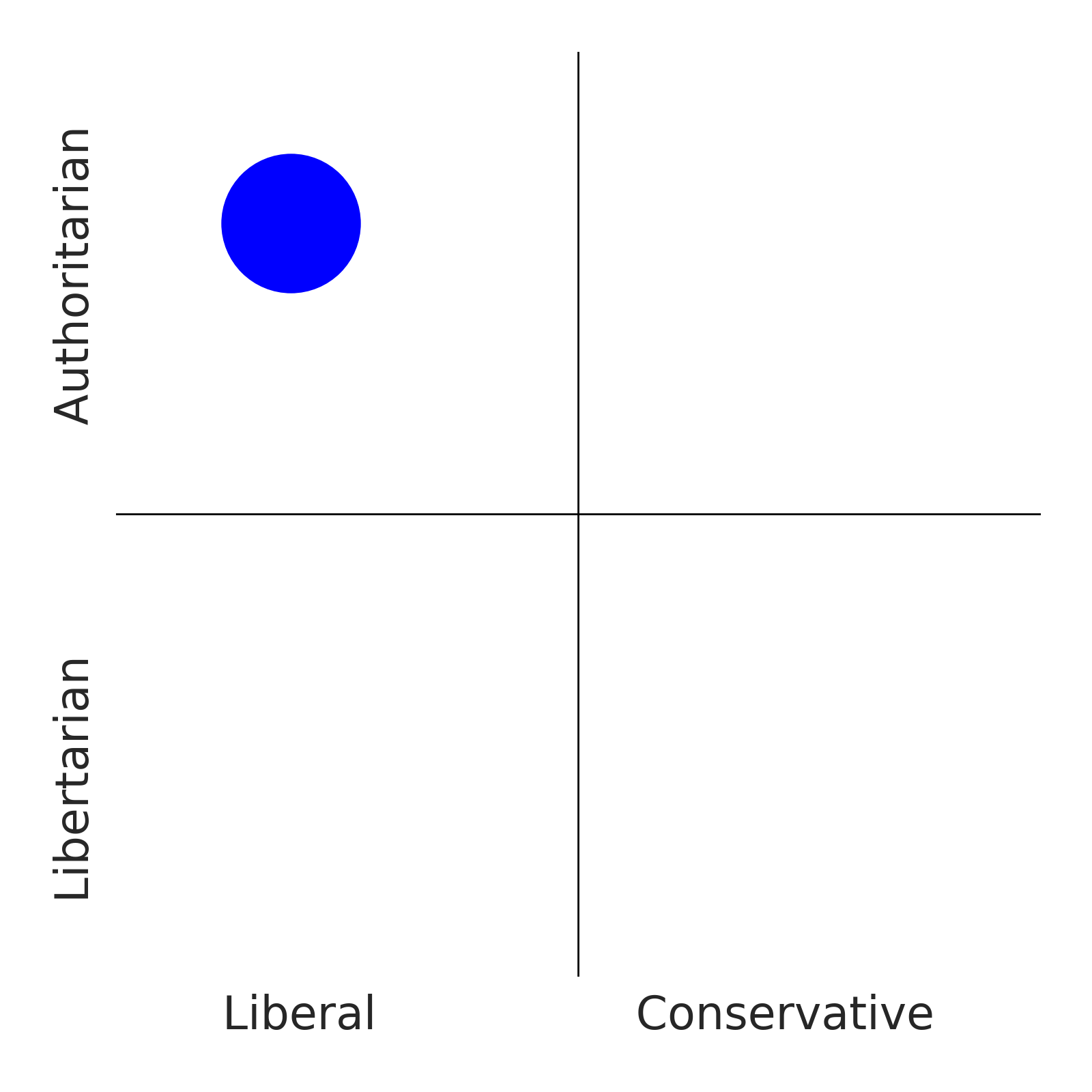
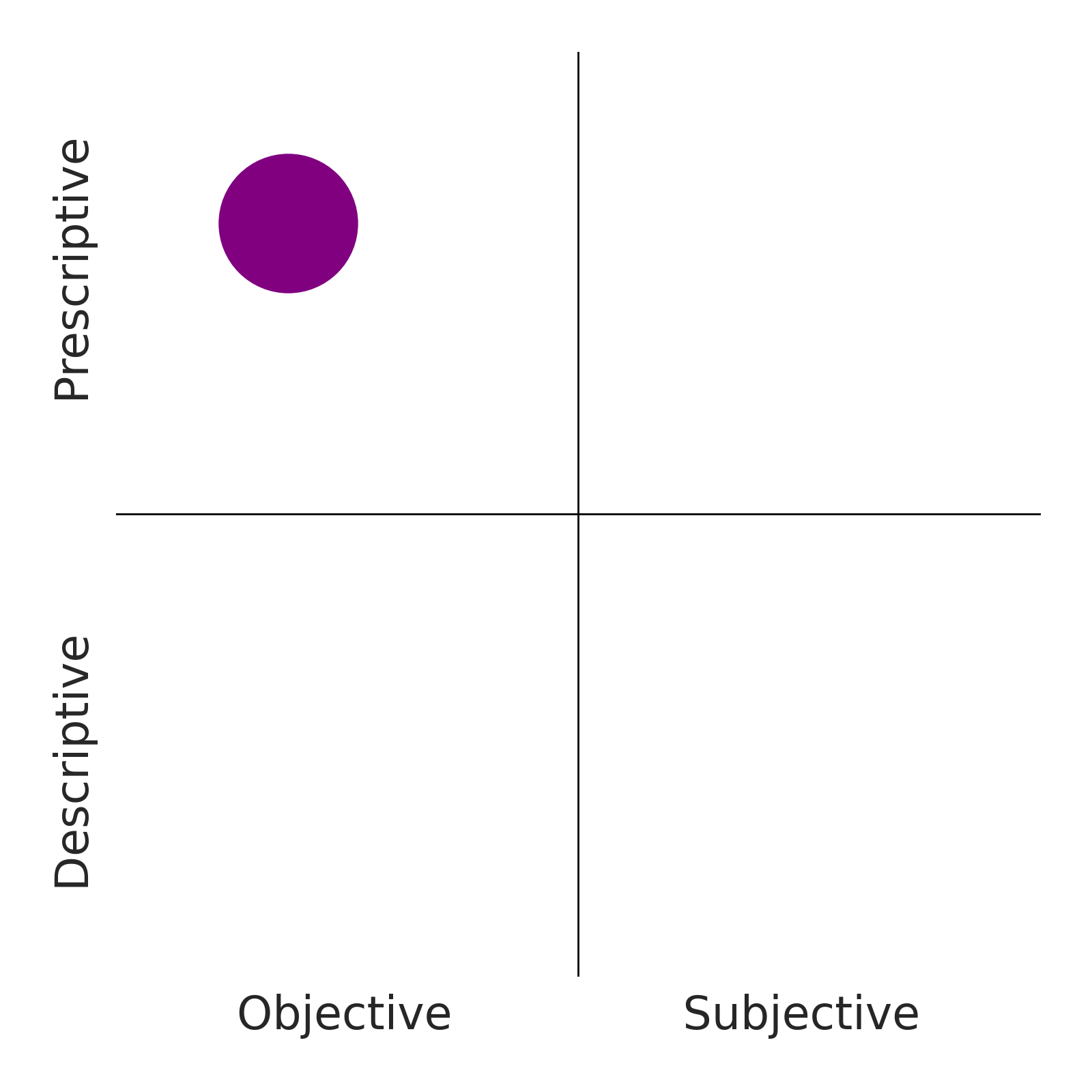
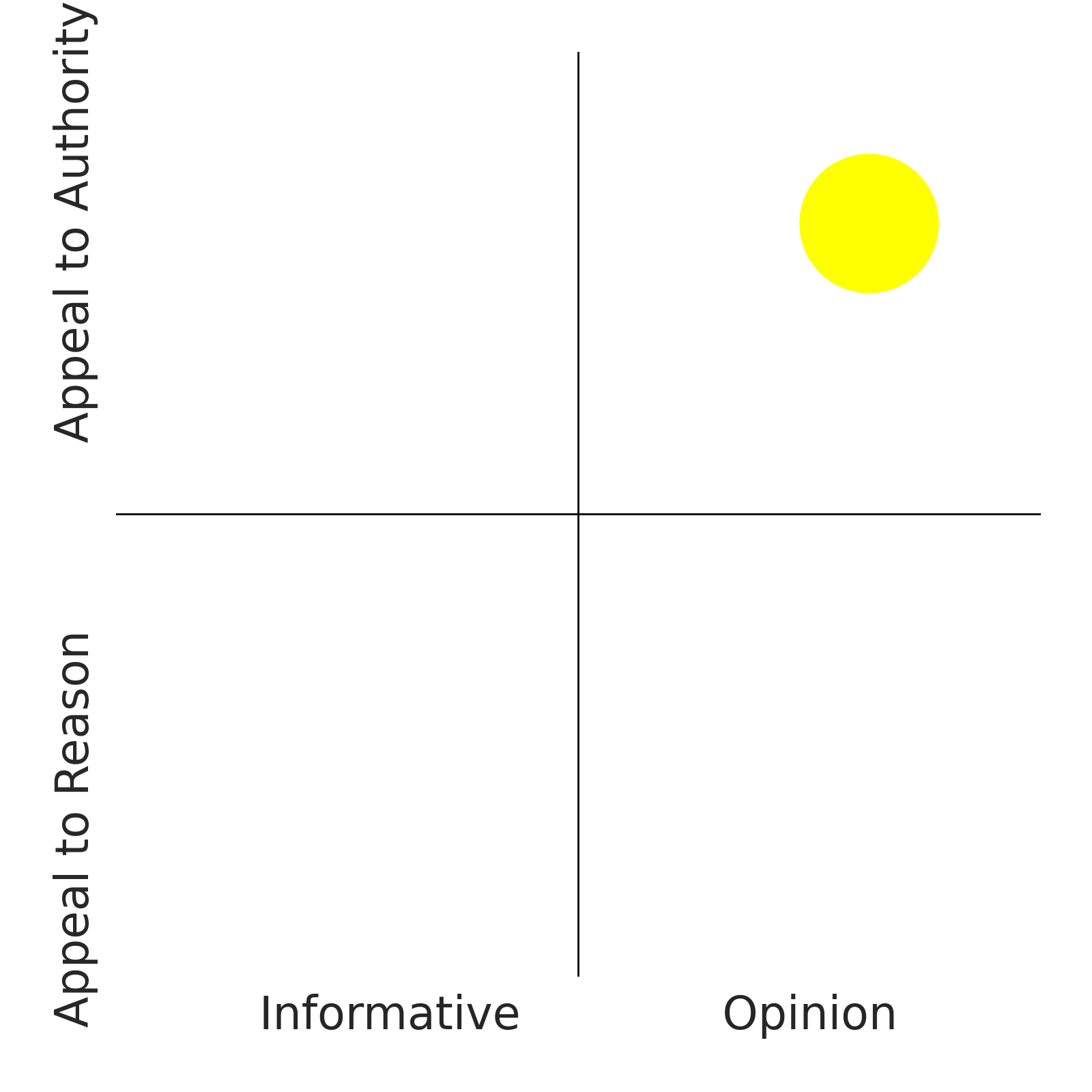
2026 © Helium Trades
Privacy Policy & Disclosure
* Disclaimer: Nothing on this website constitutes investment advice, performance data or any recommendation that any particular security, portfolio of securities, transaction or investment strategy is suitable for any specific person. Helium Trades is not responsible in any way for the accuracy
of any model predictions or price data. Any mention of a particular security and related prediction data is not a recommendation to buy or sell that security. Investments in securities involve the risk of loss. Past performance is no guarantee of future results. Helium Trades is not responsible for any of your investment decisions,
you should consult a financial expert before engaging in any transaction.
Helium Research Assistant

How can I help you today?
Ask any question about rt.com bias.