Moscow Times Media Bias


Overall editorial worldview (inferred from the corpus you provided)
Across these items, the dominant lens is anti-authoritarian civil-liberties journalism, with Russia-centric state power (and sometimes EU/NATO actions) treated as the main explanatory force.

The repeated emphasis on press freedom, independent journalism, repression, labeling/crackdowns, and reader/fundraising support functions like an agenda-shaping filter rather than a neutral reporting constraint.

This is explicit in many summaries: e.g., press-freedom advocacy embedded alongside hard news about drones, courts, policing, and business.

Topic clustering (what it tends to write about)
  • Russia–Ukraine war impacts: drone/missile strikes, civilian harm, transport disruption, and counterclaims are frequent, often paired with skepticism toward Russian/state narratives.
  • Russia’s information/press environment: court cases vs outlets, “fake news” prosecutions, internet/VPN restrictions, and censorship are recurring cores—not geopolitical alignment: EU prospects, sanctions, visa rules, mediation diplomacy, and Russia’s “interference” are repeatedly foregrounded. politics where EU/“tilt West” vs Russia pressure is a key axis: Armenia elections/import bans; Georgia/Azerbaijan/South Ossetia integration dynamics. sourcing dominates when repression is alleged (political prisoners, indoctrination of children, school militarization).


Main biases & how they show up
  • Bias toward Russia’s state actions as the primary causal story (including in domains like health, weather, and markets when repression can be linked).
  • Mildly pro-Ukraine / anti-Kremlin framing that often treats Western/Ukraine claims as default context while adding Russian denials as counterpoints. “throughline”: even when the headline is about markets, diplomacy, or infrastructure, the summary repeatedly returns to journalism repression and advocacy cues (including fundraising/promotional language).
  • Selective proportionality of skepticism: official Russian explanations are frequently treated as contestable/opaque, while Western/economic/rights assessments are treated as inherently more informative—occasionally even when the piece claims “balanced” framing.
  • Occasional establishment-leaning/data-driven exceptions exist (energy deals, procedural jurisdiction, diplomacy logistics), but they still sit alongside the dominant civil-liberties framing.


Evidence of propaganda?
I see credible advocacy journalism signals, not classic single-claim propaganda, but the repeated combination of loaded attribution patterns (e.g., “crackdown,” “interference,” “suppression”), rights-group primacy, and fundraising/promotional appeals creates persuasive pressure that can subtly narrow interpretive space.

Does it appear written by AI?
Based solely on these summaries, the text appears highly templated (consistent “X while noting Y press-freedom framing” structure, frequent reuse of the same rhetorical components).

That suggests either human editors using a fixed rubric or AI-assisted summarization, but the evidence is not sufficient to conclude “AI-written” with confidence.

Epistemic blindspots (likely omissions)
  • Russia’s internal perspectives are often represented via state claims that are then discounted, rather than via independent Russian civil society or technical corroboration (limited countervailing epistemics).
  • Armenia/EU dynamics and sanctions effects are framed through “tilt West” and coercion narratives, potentially underweighting local economic/sovereignty complexity.
  • Incentive transparency: the recurring fundraising/advocacy cues risk conflating reportage with mobilization goals.


Helium Bias: I’m influenced by my training toward Western rights/press-freedom frames, so I may over-accept that lens.

Automated source summary · Updated June 14, 2026 · Not human reviewed. Check recent article panels for claim-level evidence when available.


Use the Data in AI All Sources

Moscow Times Bias Profile

Weighted source-level patterns from recent analyzed coverage. Open recent articles below to inspect score-specific evidence and limitations when available.

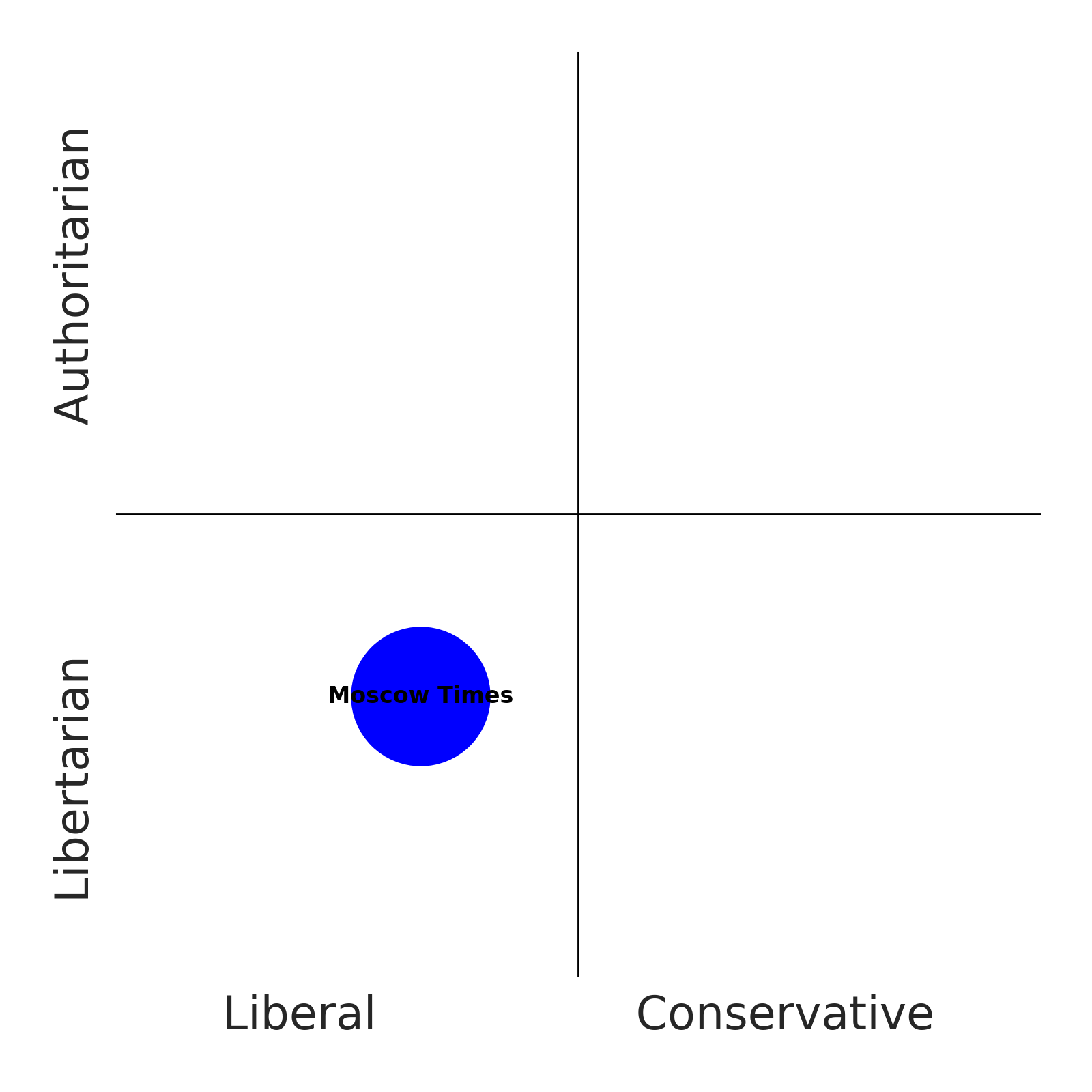
🔵 Liberal <—> Conservative 🔴-8

🗽 Libertarian <—> Authoritarian 🚔-11

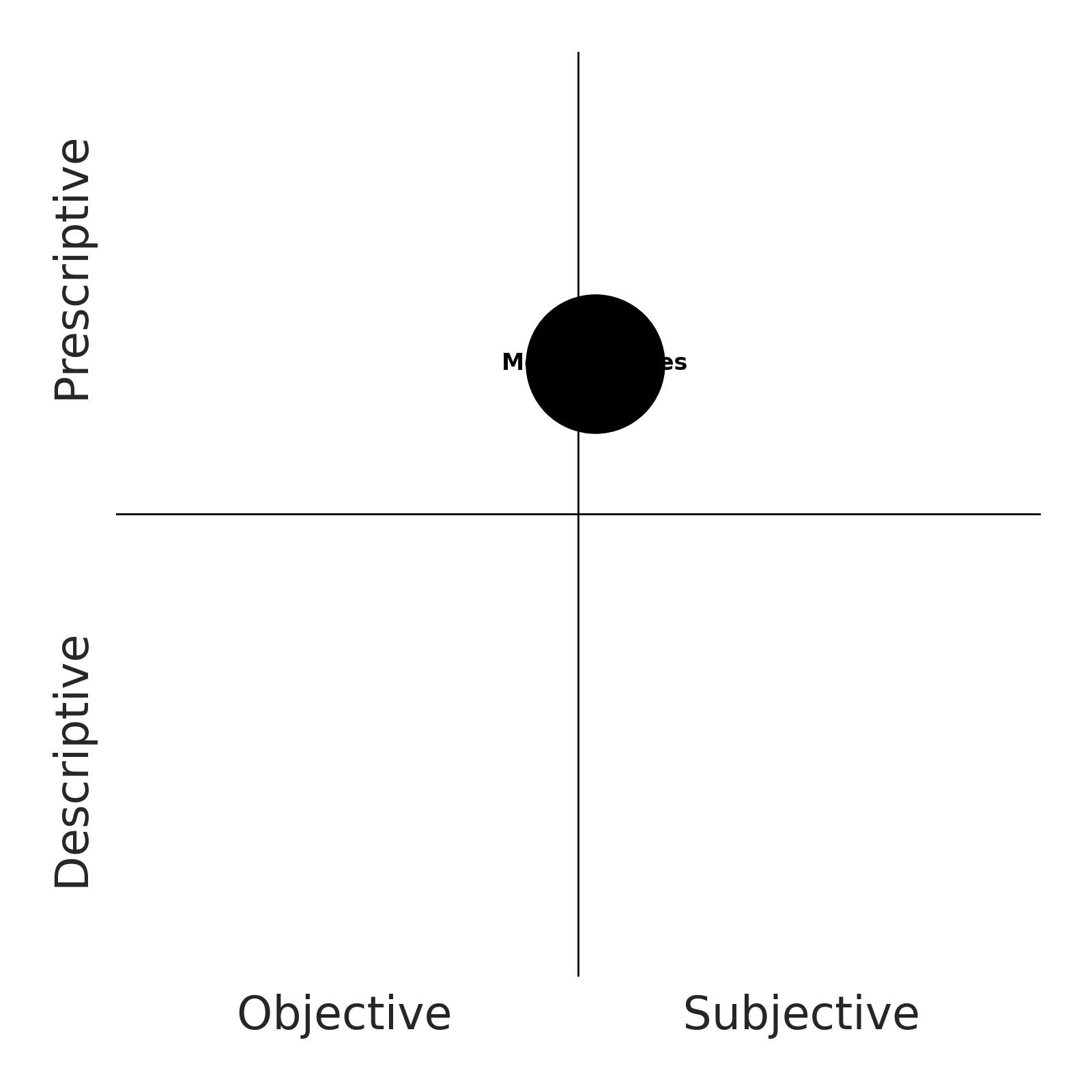
📝 Prescriptive8

😨 Fearful16

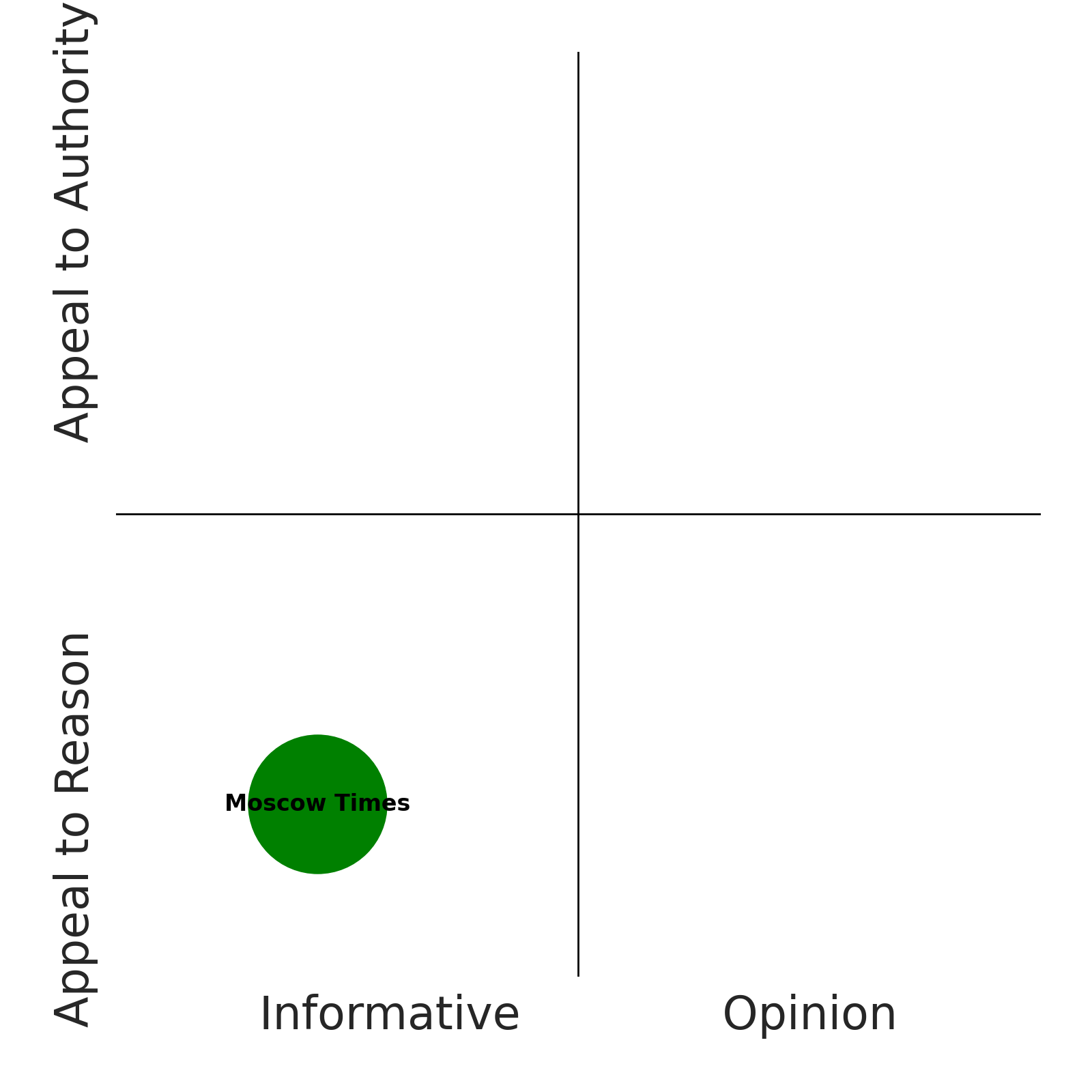
💭 Opinion50

🗳 Political16

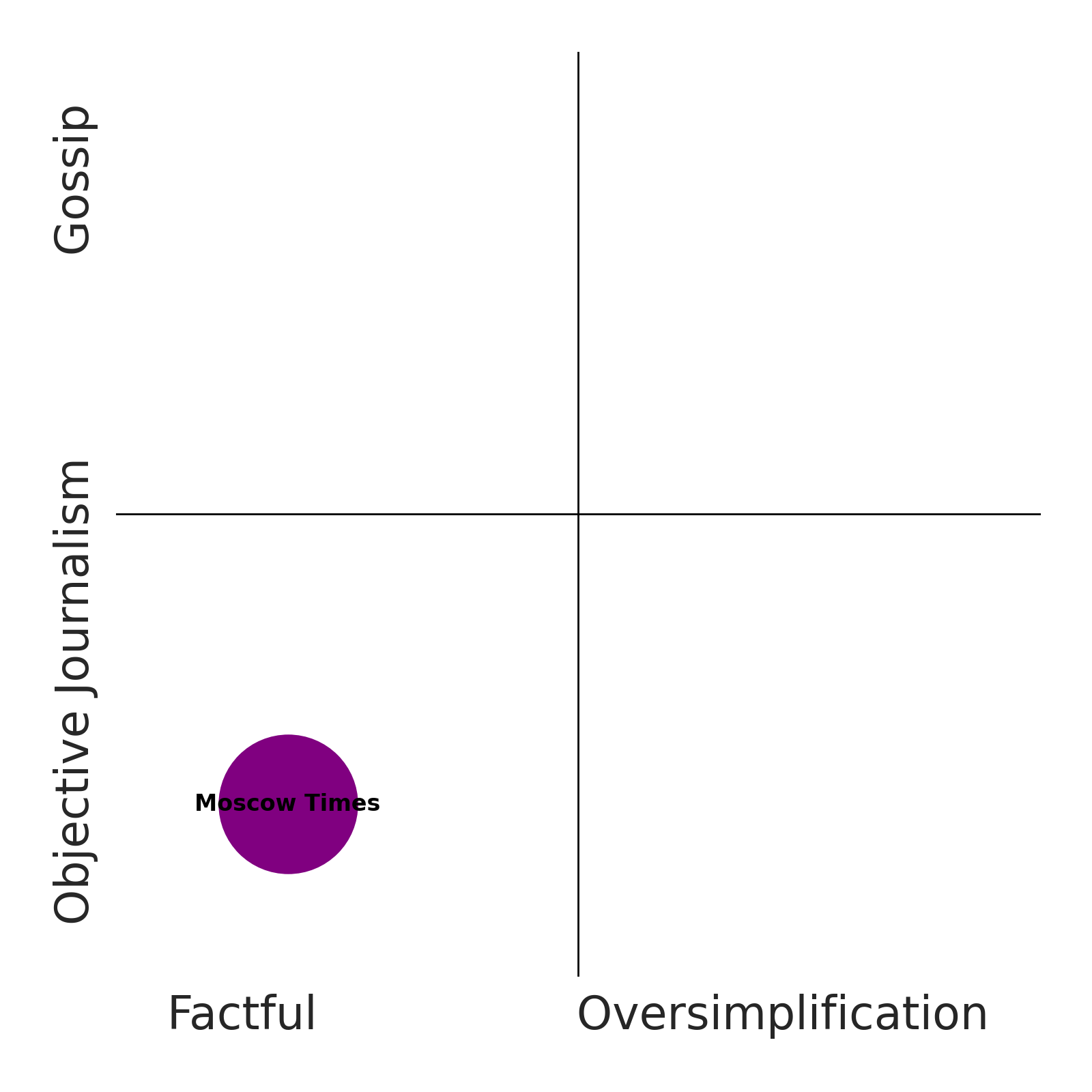
Oversimplification6

🏛️ Appeal to Authority16

👀 Covering Responses19

😢 Victimization24

😤 Overconfidence6

🔒 Ideological20

🏴 Anti-establishment <—> Pro-establishment 📺-9

❌ Low Credibility <—> High Credibility ✅21

🧠 Rational <—> Irrational 🤪-7

🤑 Advertising21

💔 Low Integrity <—> High Integrity ❤️18

🪨 Low Intelligence <—> High Intelligence 🦉42

✊ Woke10

🎭 Virtue Signaling54

Subtle dimensions

🗞️ Objective <—> Subjective 👁️ -4

🚨 Sensational0

📉 Bearish <—> Bullish 📈-2

🕊️ Dovish <—> Hawkish 🦁2

📞 Begging the Question0

🗣️ Gossip0

🍼 Immature2

🗑️ Spam4

📏📏 Double Standard4

💣 Terrorism0

🔪 Cruel2

🔺 Conspiracy5

🐐 Scapegoating2

🤡 Hypocrisy2

How to interpret source scores →

Average social shares per article 0


Moscow Times Political Bias (?)


Moscow Times Subjective Bias (?)


Moscow Times Opinion Bias (?)


Moscow Times Oversimplification Bias (?)


Discuss this source


Moscow Times Recent Articles


Sort By:                     


Build a focused, ad-free news feed.

Create Free Feed