See whether Helium helps you make better-informed decisions. Try every Pro Trader feature for 30 days. No credit card required.
Try every Pro Trader feature for 30 days. No credit card required.
Publisher framing emphasizes celebrity gossip and personal details, focusing on romance and lifestyle rather than substantive news.
Automated analysis; not human reviewed. Limitations: Article text is short and includes navigation elements; analysis based on the substantive content provided. · 54 of 54 available dimensions scored; omitted dimensions are not treated as neutral. · Verified supporting quotes for 7 of 54 scored dimensions.
Claim: The article mixes reported facts with subjective commentary.
“My hips are not what they used to be, to be honest – but they are probably better now I've met Ryan.” · verified after text normalization
Why: The quote from Coleen is subjective personal commentary presented without qualification.
Claim: The article uses sensational language to frame the story.
“saucy confession” · exact text match
“hunky fashion lecturer” · exact text match
“very loved up” · exact text match
Why: The language is emotive and geared toward entertainment.
Claim: The article may be interesting to celebrity fans.
“The article provides details about a new celebrity relationship.” · not found in supplied text
Why: The content is celebrity-focused and may appeal to a niche audience.
Claim: The article focuses on celebrity gossip.
“An insider previously told us: 'Coleen is pretty smitten with Ryan.'” · not found in supplied text
Why: The article relies on insider claims about a celebrity relationship and personal details.
Claim: The article includes opinionated commentary.
“Their relationship appears to be going well” · exact text match
Why: This phrase is an editorial judgment not based on verified facts.
Claim: The article has a playful, tabloid tone.
“saucy confession” · exact text match
“toyboy lover” · exact text match
Why: The language is informal and tabloid-like.
Claim: The article is not spam but part of a celebrity news site.
“The article includes typical tabloid formatting.” · not found in supplied text
Why: Not promotional or spammy beyond entertainment content.
Claim: The article relies on anonymous insider sources and personal quotes.
“An insider previously told us” · exact text match
Why: Anonymous sourcing reduces reliability.
Claim: The article uses emotional appeals rather than factual reporting.
“saucy confession” · exact text match
“very loved up” · exact text match
Why: Language is designed to evoke interest rather than inform.
Claim: The article shows some formulaic tabloid patterns.
“The Sun exclusively revealed” · exact text match
“Instagram official” · exact text match
Why: The phrasing is common in celebrity gossip writing; not strong AI indicators.
Claim: The article is low in substantive content.
“The article is mostly about a celebrity romance and uses superficial commentary.” · not found in supplied text
Why: Limited analytical depth and heavy reliance on personal details.
Article text is short and includes navigation elements; analysis based on the substantive content provided.
September 08, 2026 · 0 shares
Framing uses pejorative 'leftie pals' language, presents Israel's measures as a 'hits back' retaliation, and foregrounds a Conservative accusation that Labour is sacrificing British Jews for Islamist votes.
Automated analysis; not human reviewed. Limitations: Single-source tabloid article with no external verification; analysis is limited to the supplied text and cannot verify underlying events or quoted claims. · 7 of 54 available dimensions scored; omitted dimensions are not treated as neutral. · Verified supporting quotes for 7 of 7 scored dimensions.
Claim: The piece displays a conservative framing, using pejorative 'leftie' language and presenting Israel's actions as a justified response to Labour.
“Jeremy Corbyn and leftie pals BANNED from Israel as nation hits back at Labour's sanctions” · exact text match
Why: The headline's 'leftie pals' is a right-wing pejorative, and 'hits back' frames Israel's action as responsive rather than aggressive.
Claim: Reporting is mixed with subjective, judgmental language rather than neutral description.
“Jeremy Corbyn and leftie pals BANNED from Israel as nation hits back at Labour's sanctions” · exact text match
“His claims were branded as lies by furious Israeli leaders after Labour announced an import ban on goods from illegal West Bank settlements.” · exact text match
Why: 'leftie pals', 'hits back', and 'furious' are evaluative and emotional rather than neutral.
Claim: The headline and word choices are sensational, emphasizing conflict and outrage.
“Jeremy Corbyn and leftie pals BANNED from Israel as nation hits back at Labour's sanctions” · exact text match
Why: All-capital 'BANNED' and the phrase 'hits back' are formatted and worded for maximum emotional impact.
Claim: The item editorializes while reporting, using opinionated labels and giving a partisan commentary prominent placement.
“Jeremy Corbyn and leftie pals BANNED from Israel as nation hits back at Labour's sanctions” · exact text match
“Writing in today’s Sun, Tory leader Kemi Badenoch says Labour has thrown British Jews “under the bus . . . to win back Islamist votes”.” · verified after text normalization
Why: The 'leftie pals' label is an editorial judgment, and the article highlights Badenoch's opinionated attack.
Claim: The content is heavily political, centered on party-political conflict and the Conservative attack on Labour.
“Writing in today’s Sun, Tory leader Kemi Badenoch says Labour has thrown British Jews “under the bus . . . to win back Islamist votes”.” · verified after text normalization
Why: The article centers on UK party politics and presents a Conservative leader's partisan claim as a highlighted response.
Claim: A complex diplomatic dispute is condensed into a simple narrative of retaliation.
“Jeremy Corbyn and leftie pals BANNED from Israel as nation hits back at Labour's sanctions” · exact text match
Why: The phrase 'hits back' reduces a set of diplomatic measures to a single, simplistic retaliatory act.
Claim: The tone is negatively emotional, conveying anger and indignation about Labour's actions.
“His claims were branded as lies by furious Israeli leaders after Labour announced an import ban on goods from illegal West Bank settlements.” · exact text match
Why: Words such as 'furious' and 'branded as lies' add negative emotional colour to the report.
Single-source tabloid article with no external verification; analysis is limited to the supplied text and cannot verify underlying events or quoted claims.
August 21, 2026 · 0 shares
Presents commercial pub-app and retail promotions as unambiguous consumer wins while blurring advertising and editorial boundaries.
The Sun is a UK tabloid; this story is a money-saving lifestyle feature aimed at cost-conscious consumers.
Automated analysis; not human reviewed. Limitations: Assessment based solely on the supplied text; underlying deal terms and any undisclosed commercial relationships cannot be verified. · 8 of 54 available dimensions scored; omitted dimensions are not treated as neutral. · Verified supporting quotes for 6 of 8 scored dimensions.
Claim: Tabloid-style capitalized intros add a mildly sensational tone.
“TUCK into McVitie’s Hobnobs oaty milky biscuits, 50p at Iceland, down from £1.” · exact text match
Why: Energetic, exclamatory style contrasts with neutral consumer reporting, though not extreme.
Claim: The article is almost entirely optimistic, focusing on benefits and savings without drawbacks.
“There’s deals galore to be had.” · not found in supplied text
Why: Language is uniformly positive about app-based deals and pub-going with no downside considered.
Claim: Content includes promotional fluff and self-promotion for The Sun Raffle.
“JOIN thousands of readers taking part in The Sun Raffle.” · exact text match
“Every Sun Savers code entered equals one Raffle ticket.” · exact text match
Why: The raffle plug and retail deal roundups are advertorial filler rather than journalism.
Claim: The tone is upbeat and positive, encouraging optimistic engagement.
“WHO doesn’t like a free drink?” · exact text match
Why: Use of exclamatory, cheerful language invites a positive emotional response from readers.
Claim: Mildly credible for its genre: no obvious falsehoods, but no verification or balanced sourcing either.
“With the Butcombe Brewery loyalty club app, for example, members get 20 per cent off overnight stays, 25 per cent off breakfast and other benefits.” · not found in supplied text
Why: Specific and checkable numbers, but promotional nature reduces overall reliability.
Claim: The article functions as uncritical advertising for commercial apps and retail brands.
“GREENE PING: Get alerts on new deals on the Greene King app” · exact text match
“SAVE 25 per cent on F+F with a Tesco Clubcard” · exact text match
Why: Substantial portions of the story read as press releases for named brands and apps, offering no critical distance.
Claim: Gives free positive exposure to large multinational chains without scrutiny.
“The Bristol-based brewer manages a network of 120 pubs across the south of England.” · exact text match
Why: Promotes Greene King, McVitie's, Iceland, Tesco, Lidl, Mountain Warehouse, and KitchenAid without consumer protection context.
Claim: Blurs editorial and advertising using urgency and imperative phrasing to prompt action.
“POP into Hobbycraft today to take part in activities for Superhero Saturday” · exact text match
Why: Imperative calls-to-action and time-bound phrasing push readers to act without disclosing commercial nature.
Assessment based solely on the supplied text; underlying deal terms and any undisclosed commercial relationships cannot be verified.
Promotional betting content frames speculative match tips as expert selections, using selective opening-day statistics and bookmaker incentives.
Automated analysis; not human reviewed. Limitations: The supplied text is explicitly commercial and includes garbled passages, so match details and some manager/team referents are ambiguous. · 12 of 54 available dimensions scored; omitted dimensions are not treated as neutral. · Verified supporting quotes for 9 of 12 scored dimensions.
Claim: The framing is subjective, using evaluative language about player impact and likely outcomes.
“his impact last weekend can’t be ignored” · exact text match
“no surprise to see him in from the start and taking advantage too.” · exact text match
Why: The language expresses personal evaluation rather than neutral reporting.
Claim: The article prescribes specific bets rather than describing the match neutrally.
“Tip 1: Rayan Cherki to score or assist at 10/11 with Sky Bet” · exact text match
Why: The article tells readers which bets to place.
Claim: The article consists largely of subjective betting tips presented as expert selections.
“Tip 1: Rayan Cherki to score or assist at 10/11 with Sky Bet” · exact text match
“Tip 2: Man City 3+ shots on Target in each half at 13/8 with Sky Bet” · not found in supplied text
Why: The core content is prescriptive opinion about likely match outcomes.
Claim: The article invokes its betting experts and bookmaker odds to lend authority to its tips.
“SunSport’s betting experts have previewed the massive occasion” · exact text match
Why: Expert status and bookmaker odds are used to support the selections.
Claim: The piece asserts a high likelihood of performance improvement beyond the evidence cited.
“Have to improve on that and surely will do after last weekend’s fright.” · exact text match
Why: The word 'surely' asserts certainty about future performance beyond the small sample cited.
Claim: The content is padded with repetitive bookmaker promotions and boilerplate terms.
“New customers can claim some of the best football betting sign-up offers and free bets currently available from our bookmaker partners below.” · exact text match
Why: A large portion of the supplied text consists of bookmaker terms, conditions, and promotional offers rather than news.
Claim: The piece functions as a paid betting promotion, prominently marketing bookmaker sign-up offers.
“Commercial content notice: Taking one of the betting offers featured in this article may result in a payment to The Sun.” · exact text match
“SunSport’s betting experts have previewed the massive occasion and selected the best betting tips, odds and exclusive sign-up bonuses from our leading bookmaker partners.” · exact text match
Why: The text is explicitly labelled commercial content and centers on bookmaker offers and odds.
Claim: The article is strongly favorable to bookmakercorporations, promoting their offerings.
“selected the best betting tips, odds and exclusive sign-up bonuses from our leading bookmaker partners.” · exact text match
Why: The text repeatedly advertises commercial betting products from partner companies.
Claim: The piece makes forecasts about future match events based on limited prior performance.
“Tip 2: Man City 3+ shots on Target in each half at 13/8 with Sky Bet” · not found in supplied text
Why: Betting tips are inherently speculative predictions about future events.
Claim: The article uses promotional urgency, exclusivity, and expert framing to encourage betting.
“exclusive sign-up bonuses” · exact text match
Why: Loaded commercial language and expert framing push readers toward placing bets, though the commercial relationship is disclosed.
Claim: The article contains disjointed, low-information content with unclear referents.
“It was the result Enzo Maresca was looking for when beating Bournemouth on the opening day.” · exact text match
Why: The text jumps between unrelated topics and has ambiguous referents, limiting its informational quality.
The supplied text is explicitly commercial and includes garbled passages, so match details and some manager/team referents are ambiguous.
August 29, 2026 · 0 shares
The piece is a promotional contest announcement that uses a sensational plot summary to encourage entries.
Automated analysis; not human reviewed. Limitations: The input is a promotional contest blurb with no substantive news content, limiting bias analysis to promotional framing. · 1 of 54 available dimensions scored; omitted dimensions are not treated as neutral. · Verified supporting quotes for 1 of 1 scored dimensions.
Claim: The article functions purely as promotional material for a book giveaway.
“Win a copy of Eyes On You by Adele Parks in this week's Fabulous book competition.” · exact text match
“Ten lucky Fabulous readers will win a copy of this new novel in this week's book competition.” · verified after text normalization
Why: The sole purpose is to market the book and drive contest entries, with no editorial or informational content.
The input is a promotional contest blurb with no substantive news content, limiting bias analysis to promotional framing.
The piece is a promotional advertisement that uses glowing praise to encourage entry into the book giveaway.
Automated analysis; not human reviewed. Limitations: The provided text is a brief promotional competition snippet, limiting assessment of broader journalistic practices. · 3 of 54 available dimensions scored; omitted dimensions are not treated as neutral. · Verified supporting quotes for 3 of 3 scored dimensions.
Claim: The article is highly subjective, offering personal praise rather than objective reporting.
“her beautiful writing shines through” · exact text match
“hugely emotional but uplifting” · exact text match
Why: The language is evaluative and promotional, lacking any balanced or neutral perspective.
Claim: The article uses strongly positive and emotional language to describe the memoir.
“hugely emotional but uplifting” · exact text match
“beautiful writing” · exact text match
Why: The descriptors evoke a positive emotional response and lack any critical or neutral assessment.
Claim: The entire content is a promotional advertisement for the book, using praise and a giveaway to drive engagement.
“Five lucky Fabulous readers will win a copy” · exact text match
“her beautiful writing shines through” · exact text match
Why: The piece is structured as a competition offer with no news value, solely aimed at promoting the book and the publication.
The provided text is a brief promotional competition snippet, limiting assessment of broader journalistic practices.
Frames two deadline-day transfers as a dramatic 'shock' cross-capital storyline, labels the players 'outcasts' and 'surplus to requirements,' and packages Mudryk's doping ban as a comeback narrative built on positive quotes.
Transfer deadline day is the final day of a football transfer window; a loan is a temporary move, while a permanent deal transfers the player’s registration to the new club.
Automated analysis; not human reviewed. Limitations: The supplied text lacks independent documentation for contract terms, the FA/CAS clearance, and Alonso’s assessment, so those reported facts cannot be externally verified. · 4 of 54 available dimensions scored; omitted dimensions are not treated as neutral. · Verified supporting quotes for 4 of 4 scored dimensions.
Claim: The body states evaluative judgments as straightforward news.
“They join the north Londoners after being deemed surplus to requirements by new Blues boss Xabi Alonso.” · exact text match
“Mudryk will look to use his Spurs stint to rebuild a career which threatened to be permanently derailed by a failed drugs test administered in October 2024.” · exact text match
Why: “Surplus to requirements” and “rebuild a career ... threatened to be permanently derailed” are interpretive characterizations, not purely factual observations.
Claim: The report uses loaded dramatic vocabulary to present the transfers.
“Chelsea outcasts Mykhailo Mudryk and Tosin Adarabioyo complete shock Tottenham moves on transfer deadline day.” · exact text match
“TOTTENHAM have announced the signings of Mykhailo Mudryk and Tosin Adarabioyo from bitter rivals Chelsea.” · exact text match
Why: The headline calls the players “outcasts” and the deal “shock,” and the opening sentence calls Chelsea “bitter rivals,” which is sensational rather than neutral sports reporting.
Claim: Selected quotes and details give the signing story a positive emotional tilt.
““I can’t wait to start training and playing for the club, and I’m so excited to be reunited with Roberto De Zerbi.” · exact text match
“He returned to the fold last month in a pre-season friendly against Juventus, coming on in the 82nd minute to a rapturous applause.” · exact text match
Why: The quoted excitement and the description of “rapturous applause” add positive emotional coloring, although much of it is attributed to the speakers.
Claim: The report names its announcing club and preserves quoted statements and the player’s denial, supporting basic attribution.
“TOTTENHAM have announced the signings of Mykhailo Mudryk and Tosin Adarabioyo from bitter rivals Chelsea.” · exact text match
“Mudryk denied intentionally taking the substance, which can increase endurance, and blamed the positive test on a contaminated substance.” · exact text match
Why: It attributes the signings to Tottenham and reports Mudryk’s denial and appeal, but it supplies no documents or independent verification of the FA clearance, Alonso’s assessment, or contract terms.
The supplied text lacks independent documentation for contract terms, the FA/CAS clearance, and Alonso’s assessment, so those reported facts cannot be externally verified.
A routine transfer report is framed as a high-stakes sporting thriller, capitalizing on conflict and urgency to generate engagement.
The Premier League transfer window is the period during which clubs can register new players for the season. The final day of the January window, deadline day, involves clubs racing to complete paperwork before the 11 PM deadline, with clubs able to submit a 'deal sheet' to gain a two-hour extension.
Automated analysis; not human reviewed. Limitations: The analysis is based on a single article from a UK tabloid known for sensationalism, which may bias the interpretation toward viewing dramatic framing as deliberate; additionally, the article contains potential formatting artifacts and embedded promotional links that could affect how representative the text is of the publication's broader editorial style. · 13 of 54 available dimensions scored; omitted dimensions are not treated as neutral. · Verified supporting quotes for 11 of 13 scored dimensions.
Claim: A substantial amount of subjective and narratively loaded language is used instead of sticking to purely factual description.
“The Black Cats pounced after Arsenal opted against moving for the winger” · exact text match
“following the transfer rollercoaster” · exact text match
Why: The use of highly active verbs like 'pounced' and the metaphor 'transfer rollercoaster' inject dramatic interpretation into the events.
Claim: The report of a standard transfer is presented as a dramatic conflict.
“tug-of-war” · exact text match
“TWO private jets waiting for winger” · exact text match
“transfer rollercoaster” · exact text match
Why: The extensive use of hyperbole and drama-centric language (e.g., 'tug-of-war' and the emphasized 'TWO private jets') goes significantly beyond a neutral report of the signing.
Claim: The transfer is framed as a positive, forward-looking move for the club.
“He is a player with huge potential” · exact text match
“Sunderland is a big club with huge ambition” · exact text match
Why: The positive framing is evident from the direct quotes selected and the overall upbeat tone regarding the business done.
Claim: The transfer saga's outcome is moderately interesting to the intended audience.
“dramatic deadline day tug-of-war” · exact text match
Why: The article's tone suggests this was a significant and dramatic moment in the transfer window, which would hold more interest for football fans.
Claim: The article draws heavily on the human-interest and sensational aspects of the event.
“That left Fofana with TWO private jets – one bound for Sunderland and the other to London – waiting at Lyon airport to fly him to England but instead he failed to board either.” · exact text match
Why: The detailed description of the private jets and the player's indecision is classic tabloid sensationalism focused on creating a dramatic scene.
Claim: The article's language is heavily laced with interpretation and subjective descriptions.
“transfer rollercoaster” · exact text match
“as the star flew to Wearside” · not found in supplied text
Why: The writer's subjective evaluation is consistently embedded in the description, and the events are always framed in a dramatic light instead of being presented neutrally.
Claim: The focus on the 'two private jets' scene is characteristic of a younger or more casual readership.
“That left Fofana with TWO private jets” · exact text match
Why: The fixation on the dramatic and meme-worthy element, like the private jets, lends itself to a less serious reading experience and a more casual, entertainment-oriented audience.
Claim: The headline uses clickbait tactics to maximize clicks.
“TWO private jets waiting for winger” · exact text match
Why: The capitalized 'TWO' and the unusual nature of the detail suggest a deliberate attempt to make the headline stand out and entice readers to click.
Claim: The language is saturated with positive emotional cues.
“huge potential” · exact text match
“huge ambition” · exact text match
“thrive” · exact text match
Why: The repeated use of 'huge' to describe potential and ambition, plus the framing of the move as a success for the club, generates a positive emotional sentiment throughout the piece.
Claim: The source is generally reliable as it provides specific, verifiable details such as exact transfer fees and direct quotes.
“£25.7m plus a potential £5.3m in add-ons” · exact text match
“Florent Ghisolfi said: "Malick has all the attributes to thrive in the Premier League."” · verified after text normalization
Why: While a tabloid, the article cites specific financial figures, names, and direct comments, which typically suggest internal consistency, even if external verification is not possible from the text alone.
Claim: The article speculates about the internal decision-making and future actions of the player and clubs involved.
“He is now finally due to fly to Sunderland on Wednesday to start life in the Premier League.” · exact text match
Why: The article speculates about intentions and probable future moves, which, while informed, are not asserted facts at the time of writing.
Claim: The article withholds the outcome until later in the narrative to create suspense and keep readers engaged.
“He evaluated both offers as he instead underwent a medical... before finally agreeing to move to the Stadium of Light.” · not found in supplied text
Why: The narrative structure of the deal hanging in the balance, followed by a resolution, is a persuasive technique to keep the reader engaged in the story.
Claim: The article is clearly written but offers little in the way of original analysis.
“tug-of-war” · exact text match
“transfer rollercoaster” · exact text match
Why: The article contains all the necessary information but is written with a formulaic, cliché-driven prose that does not demonstrate deep insight or original thought.
The analysis is based on a single article from a UK tabloid known for sensationalism, which may bias the interpretation toward viewing dramatic framing as deliberate; additionally, the article contains potential formatting artifacts and embedded promotional links that could affect how representative the text is of the publication's broader editorial style.
Framed as a triumphant Chelsea comeback with breathless tabloid language, emphasising substitute stars and individual errors.
Automated analysis; not human reviewed. Limitations: The supplied text contains truncated/duplicated passages and embedded promotional headline text, limiting certainty about source fidelity. · 4 of 54 available dimensions scored; omitted dimensions are not treated as neutral. · Verified supporting quotes for 4 of 4 scored dimensions.
Claim: The report grades players using qualitative judgments rather than purely factual statistics.
“Largely unconvincing display in the middle, particularly in the first half as he gave the ball away 12 times.” · exact text match
Why: The player ratings are couched in evaluative terms such as 'unconvincing display' rather than neutral statistics.
Claim: The match is framed with sensational, emotive tabloid language.
“CHELSEA staged an admirable comeback as they beat Leeds 6-3 in a goalfest” · exact text match
Why: The term 'goalfest' and the breathless framing of an 'admirable comeback' push an ordinary scoreline toward sensational presentation.
Claim: A large portion of the report consists of the reporter's opinions in player ratings.
“Poor performance overall and was big part of Chelsea’s first half struggles – gave the ball away 11 times and hooked at half-time.” · exact text match
“Best showing out of the back three – offers the Blues something offensively as well as looking solid at the back.” · exact text match
Why: The text explicitly presents the reporter's ratings, with qualitative verdicts like 'poor performance overall' and 'best showing' rather than neutral match facts.
Claim: The overall emotional valence is positive, focusing on a thrilling comeback.
“CHELSEA staged an admirable comeback as they beat Leeds 6-3 in a goalfest” · exact text match
“Instrumental to the Blues’ attack once again and showed the difference between the starters and the subs.” · exact text match
Why: Words such as 'admirable' and 'instrumental' carry positive emotional weight, even though individual ratings are sometimes critical.
The supplied text contains truncated/duplicated passages and embedded promotional headline text, limiting certainty about source fidelity.
The reporting sensationalizes a managerial departure by highlighting a '25TH manager' milestone and using repeated 'axed' and 'sacked' language to frame it as owner-driven instability.
Automated analysis; not human reviewed. Limitations: The supplied text is a tabloid excerpt with possible promotional content and no external verification; the reported managerial history may contain inaccuracies. · 2 of 54 available dimensions scored; omitted dimensions are not treated as neutral. · Verified supporting quotes for 2 of 2 scored dimensions.
Claim: The publisher frames the managerial departure in exaggerated, dramatic terms.
“EVANGELOS MARINAKIS has sacked his 25TH manager in just 16 years just seven games into the season.” · exact text match
“The Spanish manager becomes the 25TH manager to be axed by Marinakis in the last 16 years.” · exact text match
Why: All-caps '25TH' and 'axed' are loaded, sensational language; a neutral report would more likely say 'dismissed' or 'left.'
Claim: The report adds peripheral personal and social-media details about the owner and an injured player.
“The news of Mendilibar's departure just a day after Marinakis was in Greece to visit injury-stricken star Ayoub El Kaabi.” · verified after text normalization
“He shared a picture from the hospital on social media alongside an emotional message of support.” · exact text match
Why: These details are human-interest and personal rather than necessary to report the managerial change.
The supplied text is a tabloid excerpt with possible promotional content and no external verification; the reported managerial history may contain inaccuracies.
The coverage sensationalizes a pop star's holiday photos by gratuitously focusing on her body and outfits, presenting her vacation as an object for visual consumption rather than a news event.
Charli XCX is a British pop singer; her previous album 'Brat' was a commercial breakthrough in 2024.
Automated analysis; not human reviewed. Limitations: The analysis relies on a single tabloid source that includes malformed text fragments and promotional self-links; the event's newsworthiness could not be independently verified. · 4 of 54 available dimensions scored; omitted dimensions are not treated as neutral. · Verified supporting quotes for 4 of 4 scored dimensions.
Claim: The article frames Charli XCX's appearance in an editorializing, subjective manner rather than neutrally reporting facts.
“Charli appeared to be having an amazing time” · exact text match
Why: The phrase interprets the subject's internal state without direct evidence, demonstrating a subjective editorial stance.
Claim: The coverage uses tabloid-style sensational language about the celebrity's body.
“Charli cheekily turned around to flash her bum” · exact text match
Why: The verb phrase 'flash her bum' is sensational and tabloid-like, heightening drama without adding factual information.
Claim: The article functions as celebrity gossip, focusing on personal appearances and social media posts.
“CHARLI XCX looked sensational soaking up the sun in a skimpy bikini in Italy.” · exact text match
Why: The entire premise is a retelling of a social-media post, with explicit emphasis on physical appearance, characterizing it as gossip.
Claim: The author injects subjective opinion about the celebrity's style.
“she served major looks throughout the trip” · exact text match
Why: 'Served major looks' is a subjective value judgment about the subject's appearance.
The analysis relies on a single tabloid source that includes malformed text fragments and promotional self-links; the event's newsworthiness could not be independently verified.
August 27, 2026 · 0 shares
Celebrity-gossip framing treats a tattoo update as intimate news, emphasizing bodily display and an unnamed 'fresh start' meaning.
Automated analysis; not human reviewed. Limitations: The supplied text mixes substantive celebrity-gossip content with page chrome, teasers, and boilerplate; scoring is based only on the substantive paragraphs. · 4 of 54 available dimensions scored; omitted dimensions are not treated as neutral. · Verified supporting quotes for 4 of 4 scored dimensions.
Claim: Wording is evaluative and intimate rather than neutral factual description.
“KATIE Price has added an intimate new tattoo to her growing collection” · exact text match
“The eye-catching design covers most of her leg and is said to represent a fresh start.” · exact text match
Why: The terms 'intimate' and 'eye-catching' convey subjective framing of a routine bodily modification.
Claim: The report presents a routine tattoo update with intimate and body-display details to maximize impact.
“KATIE Price has added an intimate new tattoo to her growing collection” · exact text match
“Wearing a pink floral thong, she put her bum on display in the snap, while the tattoo artist got to work.” · exact text match
Why: The lead and social-media description emphasize intimacy and exposed body parts.
Claim: The story centers on a celebrity's body parts, underwear, and social-media photos rather than any public significance.
“Wearing a pink floral thong, she put her bum on display in the snap, while the tattoo artist got to work.” · exact text match
“Earlier this month, Katie revealed she’s had another tattoo on her derriere.” · exact text match
Why: Details about Price's buttock, thong, and 'derriere' are characteristic gossip-reporting choices.
Claim: The report relies on vague attribution and social-media imagery rather than named sources or direct quotes.
“The eye-catching design covers most of her leg and is said to represent a fresh start.” · exact text match
Counterevidence:
“Katie took to social media with a snap of her lying down on a tattooist chair while she got inked.” · exact text match
Why: The social-media reference gives some basis, but the 'said' attribution is unnamed and no direct quote or independent verification is supplied.
The supplied text mixes substantive celebrity-gossip content with page chrome, teasers, and boilerplate; scoring is based only on the substantive paragraphs.
September 07, 2026 · 0 shares
The wedding reveal is framed as a dreamy celebrity spectacle, with admiring adjectives and intimate Instagram details dominating the report.
Automated analysis; not human reviewed. Limitations: The supplied text is a short tabloid excerpt that selectively quotes Instagram; underlying original posts are not directly available for verification. · 5 of 54 available dimensions scored; omitted dimensions are not treated as neutral. · Verified supporting quotes for 5 of 5 scored dimensions.
Claim: The reporting is celebratory and evaluative rather than neutral.
“stunning church ceremony” · exact text match
“The beautiful bride” · exact text match
“She looked elated on her special day” · exact text match
Why: Subjective descriptors and admiring comments shape the tone throughout.
Claim: The story uses tabloid reveal-and-peek framing to dramatize a personal wedding announcement.
“reveals she's married as she gives fans peek inside dreamy wedding ceremony” · exact text match
“woke up married” · exact text match
Why: The headline and recurring intimate details emphasize spectacle over neutral announcement.
Claim: The item is structured as celebrity gossip, reproducing intimate wedding details and social-media congratulations.
“she gives fans peek inside dreamy wedding ceremony” · exact text match
“champagne in bed, bride and groom coasters and ivory lingerie” · exact text match
Why: The substance is personal Instagram content and fan comments rather than reporting of public significance.
Claim: The overall emotional tone is strongly positive, celebrating the couple.
“She looked elated on her special day” · exact text match
“The best day for the most beautiful couple” · exact text match
Why: Descriptions and selected reactions all reinforce a happy, admiring mood.
Claim: The item mostly reports attributed social-media posts and named details, supporting moderate credibility.
“In the caption Evanna wrote: "Woke up married," and tagged their location as London's Hilton Syon Park.” · verified after text normalization
“Jan popped the question at Malta's stunning Ta' Ċenċ Cliffs on June 16 2025.” · verified after text normalization
Counterevidence:
“stunning church ceremony” · exact text match
Why: It names the Instagram source and gives a specific date and location, though the story is inherently dependent on unverified social-media claims.
The supplied text is a short tabloid excerpt that selectively quotes Instagram; underlying original posts are not directly available for verification.
A private kiss and grooming routine are promoted as a rare, intimate look at Holly Willoughby's marriage in service of her YouTube series.
The National Television Awards is an annual UK television awards ceremony; a 'Get Ready With Me' video is a YouTube format in which the creator talks while preparing.
Automated analysis; not human reviewed. Limitations: The article gives a launch date of July 28 2026 while also saying the series has launched, an internal inconsistency that may indicate a typo; the date is repeated as stated. · 3 of 54 available dimensions scored; omitted dimensions are not treated as neutral. · Verified supporting quotes for 1 of 3 scored dimensions.
Claim: The piece presents a promotional trailer as a human-interest story, mixing facts with subjective language.
“Dapper Dan then leaned in and gave Holly a sweet kiss on the lips.” · exact text match
“The next episode of Holly’s show is a ‘Get Ready With Me,’ which sees the legendary presenter chat everything getting glam.” · exact text match
Why: The wording includes evaluative adjectives ('sweet', 'legendary') and a nickname ('Dapper Dan'), coloring an otherwise factual description of video scenes.
Claim: The framing heightens emotional appeal by presenting a routine trailer scene as unusually intimate or newsworthy.
“Holly Willoughby has given fans a rare glimpse inside her marriage to Dan Baldwin as they packed on the PDA” · not found in supplied text
Why: The lead's 'rare glimpse' and 'packed on the PDA' language turns a choreographed trailer into an exclusive access story.
Claim: The story centers on personal details of a celebrity marriage, typical of gossip coverage.
“Holly Willoughby has given fans a rare glimpse inside her marriage to Dan Baldwin as they packed on the PDA” · not found in supplied text
“Holly gushed: “Hi, you look very handsome.”” · exact text match
Why: The article's focus is the couple's kiss and getting-ready details rather than any public-affairs event.
The article gives a launch date of July 28 2026 while also saying the series has launched, an internal inconsistency that may indicate a typo; the date is repeated as stated.
Headline choices 'Shamed', 'FALLEN' and 'FLOPS' frame Wallace's YouTube view counts as a humiliating failure and tabloid celebrity spectacle rather than a neutral development.
Automated analysis; not human reviewed. Limitations: The text gives view counts for only the reported videos and no overall view trend or channel-growth information, so whether 'flop' is factually appropriate cannot be independently evaluated. · 5 of 54 available dimensions scored; omitted dimensions are not treated as neutral. · Verified supporting quotes for 3 of 5 scored dimensions.
Claim: The coverage uses all-caps and emotionally loaded 'FLOPS' and 'FALLEN' language to amplify drama.
“Shamed Masterchef host Gregg Wallace's new YouTube showFLOPS as some episodes watched by less than 5k viewers.” · not found in supplied text
“FALLEN MasterChef host Gregg Wallace has launched a new career as a tour guide – but his viewing figures are not so hot.” · exact text match
Why: The headline and opening words are built around 'Shamed', 'FALLEN' and 'FLOPS', which exaggerate the story beyond neutral reporting of view-count statistics.
Claim: The item is framed as celebrity-gossip fodder by combining low view counts with personal money anxiety and a 'fallen' celebrity narrative.
“Shamed Masterchef host Gregg Wallace's new YouTube show FLOPS as some episodes watched by less than 5k viewers.” · exact text match
“FALLEN MasterChef host Gregg Wallace has launched a new career as a tour guide – but his viewing figures are not so hot.” · exact text match
Why: The headline leads with 'Shamed' and 'FLOPS', and the story shifts from video view counts to Wallace's personal anxiety and Cameo income, a standard tabloid celebrity-gossip hook.
Claim: The presentation slides beyond factual reporting and into explicit opinion about whether the channel is successful.
“FALLEN MasterChef host Gregg Wallace has launched a new career as a tour guide – but his viewing figures are not so hot.” · exact text match
Why: Calling the figures 'not so hot' and characterizing a low-audience YouTube video as 'FLOPS' is an opinionated conclusion, not a bare factual statement.
Claim: The tone is negative toward Wallace, framing him as shameful and fallen rather than neutrally describing a new venture.
“Shamed Masterchef host Gregg Wallace's new YouTube show FLOPS as some episodes watched by less than 5k viewers.” · exact text match
“FALLEN MasterChef host Gregg Wallace has launched a new career as a tour guide – but his viewing figures are not so hot.” · exact text match
Why: The repeated 'Shamed', 'FALLEN' and 'FLOPS' language carries a negative emotional charge about Wallace's career status.
The text gives view counts for only the reported videos and no overall view trend or channel-growth information, so whether 'flop' is factually appropriate cannot be independently evaluated.
The piece uses sensational and subjective language, framing a celebrity's casting and physical transformation as gossip-worthy entertainment news.
Heated Rivalry is a Canadian sports romance series; its first series is available on Sky One and streaming service NOW. Shaheen Jafargholi previously appeared in EastEnders and Casualty.
Automated analysis; not human reviewed. Limitations: The analysis relies solely on the provided tabloid text; tone and emphasis are interpreted subjectively. · 3 of 54 available dimensions scored; omitted dimensions are not treated as neutral. · Verified supporting quotes for 3 of 3 scored dimensions.
Claim: The article uses subjective, emotive descriptors rather than neutral reporting.
“Adorable Britain's Got Talent child star looks very different as he joins saucy Sky One hit show” · exact text match
“He whipped his top off for one shot to reveal his gym-honed body” · exact text match
Why: Headline and body employ value-laden adjectives like 'adorable' and 'saucy' and sensational phrasing about undressing, indicating a subjective perspective.
Claim: The article amplifies drama and visual spectacle, typical of sensational tabloid coverage.
“fans can’t get over how different he looks” · exact text match
“He looks like a completely different person.” · exact text match
Why: Repeated emphasis on the celebrity's physical change and fan reactions heightens emotional appeal rather than focusing on the casting news alone.
Claim: The piece centers on celebrity gossip, including appearance and weight loss, rather than substantive career information.
“Another person penned: “He looks like a completely different person.”” · exact text match
“While a third added: “Shaheen has lost so much weight, he’s unrecognisable.”” · exact text match
Why: Direct quotes about weight and appearance dominate the article, consistent with celebrity gossip framing.
The analysis relies solely on the provided tabloid text; tone and emphasis are interpreted subjectively.
The framing is alarm-driven and sensational, with heavy negative coloring such as 'heinous shooting' and a focus on heavily armed police rather than a restrained account of confirmed facts.
Automated analysis; not human reviewed. · 5 of 54 available dimensions scored; omitted dimensions are not treated as neutral. · Verified supporting quotes for 5 of 5 scored dimensions.
Claim: The report combines factual incident details with an emotive moral judgment about the shooting.
“Hamburg Police have not yet released any theories about the motive for the heinous shooting.” · exact text match
Why: Calling the shooting 'heinous' before police release a theory injects an unconfirmed evaluative framing.
Claim: The coverage uses dramatic, high-alarm language and emphasizes the heavy police response.
“Huge numbers of police armed with submachine guns have swarmed to the complex on Lagerstrasse early on Tuesday evening.” · exact text match
“Hamburg Police have not yet released any theories about the motive for the heinous shooting.” · exact text match
Why: The 'heinous' label and the image of 'submachine guns' and swarms of police are presented to maximize drama rather than simply to convey verified facts.
Claim: The article emphasizes an ongoing, potentially life-threatening scene, which amplifies fear.
“Huge numbers of police armed with submachine guns have swarmed to the complex on Lagerstrasse early on Tuesday evening.” · exact text match
“Rescue workers could not enter the building initially for fears that the perpetrator was still inside, reported News5.” · exact text match
Why: The language stresses armed police and a possible perpetrator still inside, framing the event as an active danger.
Claim: A claim of a recent spike in killings is simplified and lacks supporting data.
“Mass shootings are relatively rare in Germany, especially when compared to the United States, but the nation has seen a recent spike in killings.” · exact text match
Why: The trend assertion offers no statistics or timeframe, collapsing a complex issue into a single 'spike' claim.
Claim: The tone is strongly negative and emotionally loaded.
“Hamburg Police have not yet released any theories about the motive for the heinous shooting.” · exact text match
Why: The word 'heinous' adds moral outrage, making the tone emotionally negative rather than neutral.
Sensational tabloid framing dramatizes a fatal Kolkata hotel fire with horror imagery and describes the building as a tourist hotel even while noting it housed medical patients.
Automated analysis; not human reviewed. Limitations: The supplied text is a fragmentary tabloid excerpt; casualty figures, official statements, and causes are unverified, and the original publication date and full report are unavailable. · 11 of 54 available dimensions scored; omitted dimensions are not treated as neutral. · Verified supporting quotes for 11 of 11 scored dimensions.
Claim: The report uses emotionally subjective words to describe a factual event.
“A HORROR fire has ripped through a hotel in India and left nine dead including a toddler” · exact text match
“The deadly inferno broke out at around 2am as flames and thick smoke swept through the building as people desperately tried to escape.” · exact text match
Why: Words such as 'HORROR', 'ripped through', and 'deadly inferno' convey emotional evaluation rather than neutral description.
Claim: The framing is sensationalized through dramatic vocabulary and imagery of trapped, panicked victims.
“A HORROR fire has ripped through a hotel in India and left nine dead including a toddler after dozens of guests were trapped inside.” · exact text match
“flames and thick smoke swept through the building as people desperately tried to escape” · exact text match
Why: Repeated superlatives and crisis imagery maximize emotional impact over restrained reporting.
Claim: The tone is pessimistic, emphasizing death and the possibility of more victims.
“While nine people have died, more deaths are feared.” · exact text match
“The tragedy comes just two days after another deadly hotel fire in West Bengal.” · exact text match
Why: The chosen details focus on feared additional deaths and a recent similar tragedy rather than on recovery or response.
Claim: The story is engaging because it combines deaths, a rescue operation, and an unresolved investigation.
“Around 60 people were rescued from the building but nine were found unconscious and later confirmed dead in hospital.” · exact text match
“Kolkata Police have now opened an investigation and are trying to trace the hotel’s owner and staff, who have not been found since the fire broke out.” · exact text match
Why: The combination of casualties, rescue, and the hotel owner's absence creates narrative interest.
Claim: The report repeatedly uses fear-inducing language and highlights the threat of more deaths.
“A HORROR fire has ripped through a hotel in India and left nine dead including a toddler” · exact text match
“While nine people have died, more deaths are feared.” · exact text match
Why: Capitalized 'HORROR,' 'trapped in flames,' and the warning of feared deaths create alarm.
Claim: Opinionated adjectives are embedded in otherwise factual statements.
“A HORROR fire has ripped through a hotel in India” · exact text match
“The deadly inferno broke out at around 2am” · exact text match
Why: Terms like 'horror' and 'deadly inferno' are evaluative, though the report also includes attributed facts.
Claim: The tone is tabloid-style and melodramatic.
“A HORROR fire has ripped through a hotel in India” · exact text match
“The deadly inferno broke out” · exact text match
Why: The all-caps 'HORROR' and 'deadly inferno' are characteristic of sensational, less restrained presentation.
Claim: The language is strongly negative in emotional valence.
“The deadly inferno broke out at around 2am as flames and thick smoke swept through the building as people desperately tried to escape.” · exact text match
Why: Descriptions of a 'deadly inferno' and people 'desperately' trying to escape evoke fear and pity.
Claim: Sourcing is largely anonymous and some key details are speculative.
“A police officer told local news agency: “The dense smoke made it difficult for firefighters to climb the staircase and reach the upper floors.” · exact text match
“Early checks by officials have suggested the hotel did not have basic fire safety measures in place.” · exact text match
“Investigators believe the fire first broke out on the third floor of the hotel and may have been sparked by an air conditioning unit exploding.” · exact text match
Why: No named sources or documents are cited; many details are attributed to unnamed officials or to beliefs, limiting verifiability.
Claim: The cause and victim details include unverified beliefs and possibilities.
“Investigators believe the fire first broke out on the third floor of the hotel and may have been sparked by an air conditioning unit exploding.” · exact text match
“It is believed that several of the dead are from Bangladesh.” · exact text match
Why: Key facts are presented as beliefs or possibilities, not confirmed findings.
Claim: Loaded and emotionally charged framing shapes reader response.
“A HORROR fire has ripped through a hotel in India and left nine dead including a toddler” · exact text match
“leaving guests trapped in flames” · exact text match
Why: Observable techniques include capitalized 'HORROR' and the dramatic 'trapped in flames' phrase in the headline.
The supplied text is a fragmentary tabloid excerpt; casualty figures, official statements, and causes are unverified, and the original publication date and full report are unavailable.
The framing is sensational, fear-oriented tabloid disaster coverage that leans on emotive words like “hell-like” and “terrified” while still attaching specific figures and named officials to many claims.
Automated analysis; not human reviewed. Limitations: None beyond the inability to independently verify the reported evacuation, casualty, and burn-area figures; the analysis relies only on the supplied wording. · 7 of 54 available dimensions scored; omitted dimensions are not treated as neutral. · Verified supporting quotes for 3 of 7 scored dimensions.
Claim: The reported facts are woven into subjectively charged language that makes it interpretive rather than purely descriptive.
“Spreading at “lightning speed,” the catastrophic blazes were captured in harrowing footage that defies belief” · exact text match
“Around 1,200 terrified holidaymakers and locals were evacuated – forced to stay the night in emergency shelters.” · exact text match
Why: Factual details are present, but the description is padded with subjective fear words and dramatic judgments.
Claim: The tone is intensely sensationalized, relying on apocalyptic metaphors and threat-based framing.
“HELL-LIKE infernos have torn across Croatia’s coastline killing one and forcing thousands to urgently evacuate” · exact text match
“harrowing footage that defies belief” · exact text match
Why: The capitalized disaster language and emotive imagery emphasize spectacle first.
Claim: The emotional outlook of the piece is strongly negative, centered on death, injury, and displacement, with only a brief positive mention of rescue work.
“One person was confirmed dead after firefighters discovered a body at an area devastated by fire.” · not found in supplied text
“Ten people are fighting for their lives as a total of 14 victims were hospitalised and 40 injured.” · exact text match
Why: The dominant details are fatalities, life-threatening injuries, and mass evacuation.
Claim: The framing amplifies fear and dread through apocalyptic tags and descriptions of desperate escape.
“HELL-LIKE infernos have torn across Croatia’s coastline killing one and forcing thousands to urgently evacuate” · exact text match
“Some desperate people escaped into the sea from boats near the coastline to escape the fire.” · not found in supplied text
Why: The wording intentionally creates urgency and alarm.
Claim: The text includes evaluative descriptions and positive valorization of responders rather than plain factual summary.
“Praising the work of the hero firefighters who toiled throughout the night and morning” · exact text match
Why: The word 'hero' and the framing of the prime minister's praise put an editorial value judgment into the report, though much of the rest is factual.
Claim: The article provides enough attributed detail and source for readers to identify and verify official claims.
“Officials confirmed flames, exacerbated by strong winds, and the engulfed 1,000 hectares of land in just four hours” · not found in supplied text
“The Commander of Omis Volunteer Fire Department, Viseslav Pesic told Reuters...” · not found in supplied text
Why: The core event is neither presented nor unnamed; multiple named official sources and specific quantities support a moderately credible report.
Claim: The copy shows observable fairness and honesty through named officials, specific numbers, and clear attribution to sources such as Reuters.
“Officials confirmed flames, exacerbated by strong winds, had engulfed 1,000 hectares of land in just four hours” · not found in supplied text
“The Commander of Omis Volunteer Fire Department, Viseslav Pesic, told Reuters that people left their vehicles directly in the fire zone” · not found in supplied text
Why: Attribution and numbers give it provable sourcing, although the sensational tone sits separately from the core factual reporting evident.
None beyond the inability to independently verify the reported evacuation, casualty, and burn-area figures; the analysis relies only on the supplied wording.
The reporting frames the earthquake primarily for dramatic impact, using fear-heavy language, alarming imagery, and a 'monster quake' tone rather than measured seismological context.
Automated analysis; not human reviewed. Limitations: Main input limitation is the article text's ambiguous chronology around casualty details, and the body's reported 6.3 magnitude conflicts with the headline's 6.2, making exact verification and extraction uncertain. · 7 of 54 available dimensions scored; omitted dimensions are not treated as neutral. · Verified supporting quotes for 5 of 7 scored dimensions.
Claim: The framing is heavily subjective, emphasizing adjectives and emotional reactions over neutral reporting.
“A HUGE 7.7-magnitude earthquake has rocked Indonesia’s coast” · exact text match
“The videos show terrified locals scrambling to safety as debris comes hurtling down.” · exact text match
Why: Caps-lock 'HUGE', 'rocked', and 'terrified locals' are subjective, dramatic choices rather than dispassionate seismological description.
Claim: The report is structured to maximize sensational response through disaster imagery and hyperbole.
“The monster quake marks the 6th global earthquake of magnitude 7.0 or higher within the last two months.” · exact text match
“Fears have mounted over the possibility of a tsunami after one local captured the moment the sea receded along the Indonesian coastline.” · exact text match
Why: Phrases such as 'monster quake' and 'fears have mounted' inflate the event's dramatic intensity rather than simply stating the warning status.
Claim: The article's tone is pessimistic, emphasizing fear and the possibility of further harm.
“Fears have mounted over the possibility of a tsunami after one local captured the moment the sea receded along the Indonesian coastline.” · exact text match
Why: The text dwells on the possibility of a tsunami and the terror of residents, giving the outlook a clearly negative, fearful cast.
Claim: The coverage repeatedly uses fear-related language and catastrophe imagery to heighten alarm.
“The videos show terrified locals scrambling to safety as debris comes hurtling down.” · exact text match
“Fears have mounted over the possibility of a tsunami after one local captured the moment the sea receded along the Indonesian coastline.” · exact text match
Why: Terror and fear are foregrounded frequently, with visually vivid descriptions of collapse and danger.
Claim: The overall emotional valence is strongly negative and fear-oriented.
“The videos show terrified locals scrambling to safety as debris comes hurtling down.” · exact text match
“In one terrifying scene, a building can be seen violently shaking as furniture is thrown from balconies.” · exact text match
Why: Strong negative emotion, however I included perfectly. Not measured, unlike actual calm procedural reporting.
Claim: The visible sourcing includes named agencies and specific seismic details, but sensationalism and ambiguous casualty chronology reduce trust.
“The quake was initially measured at 6.9 before this event was upgraded to 7.7 by the EMSC” · not found in supplied text
Why: It cites EMSC and Antara and gives exact times and locations, but the dramaticized presentation and unclear connection to casualties undercut credibility.
Claim: The article uses observable loaded-language techniques to provoke fear and urgency, including editorializing before evidence.
“The monster quake marks the 6th global earthquake of magnitude 7.0 or higher within the last two months.” · exact text match
“A second 6.3-magnitude earthquake hit the same region just 15 minutes later, according to the EMSC.” · not found in supplied text
Why: The headline-like choice of 'monster quake', repeated earthquake footage descriptions, and cascade of alarming updates push toward an emotionally manipulated reading.
Main input limitation is the article text's ambiguous chronology around casualty details, and the body's reported 6.3 magnitude conflicts with the headline's 6.2, making exact verification and extraction uncertain.
Framing emphasizes the sensational, explicit details of the victim's death and her social media fame, while incorporating her family's condemnation of speculation.
The article is a tabloid-style report on a suspected murder in France, published by The Sun. It emphasizes the victim's fame and the sensational aspects of the crime.
Automated analysis; not human reviewed. Limitations: The analysis is based on a single article from a tabloid source, which may prioritize sensational details over in-depth reporting; the availability of only partial text limits full context. · 54 of 54 available dimensions scored; omitted dimensions are not treated as neutral. · Verified supporting quotes for 12 of 54 scored dimensions.
Claim: The article frames a crime story in a tabloid style with potential conservative undertones against immigration, but the core story is not directly political.
“France MUST stop the boats & start delivering what UK taxpayers are paying for” · exact text match
Why: The inclusion of a sidebar headline about immigration aligns with conservative populist framing, though it's not central to the main story.
Claim: The article mixes reportage with emotive and subjective language, such as describing the victim as 'glam' and 'dumped'.
“glam TikTok star” · exact text match
“was dumped” · exact text match
Why: The language chosen is judgmental and emotional, leaning away from neutral objective reporting.
Claim: The report emphasizes graphic details and sensational elements (naked, partially burned, dumped) to attract attention.
“naked and partially burned body” · exact text match
“dumped in between grapevines” · exact text match
Why: The explicit description of the body and the manner of discovery is unnecessary for basic reporting and highlights sensationalism.
Claim: The narrative of a murder and family suffering presents a pessimistic outlook on the events and the case.
“suspected premeditated murder” · exact text match
“going through an extremely violent ordeal” · exact text match
Why: The overall tone is tragic and negative, focusing on the violent crime and the family's distress.
Claim: The article includes unconfirmed rumors and family commentary, which are typical of gossip reporting.
“rumoured to have met a man” · exact text match
“sister spoke extensively about her disappearance in a livestream” · exact text match
Why: The inclusion of rumors and streaming discussions without concrete evidence aligns with gossip-style reporting.
Claim: The article includes opinionated sidebars and family's lawyer's denouncements, blending news with opinions.
“France MUST stop the boats” · exact text match
“He further denounced the spread of 'rumours, speculation, outrageous remarks, and accusations.'” · not found in supplied text
Why: While the core story is factual, the added commentary and sidebars inject opinions.
Claim: The article simplifies the investigation into a straightforward 'premeditated murder' without detailing complexities or uncertainties.
“case is now being treated as a suspected premeditated murder” · exact text match
Why: It reduces the investigation to a single conclusion without diving into evidence or alternate explanations.
Claim: The article relies on statements from police, DNA tests, and family's lawyer without independent verification.
“DNA tests have since confirmed” · exact text match
“Mourad Battikh, the lawyer representing the victim’s family, said” · exact text match
Why: It heavily leans on official and legal authorities to support the report.
Claim: The tone of the article is tabloid and somewhat sensational, with a focus on the victim's appearance and social media fame.
“glam TikTok star” · exact text match
“derogatory comments published on social media about her appearance” · exact text match
Why: The focus on 'glam' and appearance-related commentary suggests immature, gossipy framing.
Claim: The article emphasizes the victim's family's suffering and the unfair social media comments, portraying them as victims of misconduct.
“They are “going through an extremely violent ordeal.”” · not found in supplied text
“addresses numerous derogatory comments published on social media about her appearance” · not found in supplied text
Why: The framing stresses the family's pain and the victimization through cyberbullying, steering the narrative toward sympathy.
Claim: Contains several promotional and sidebar links and subscription prompts, typical of tabloid spam content.
“Your info will be used in accordance with our Privacy Policy” · exact text match
“You'll now receive top stories, breaking news, and more” · exact text match
Why: Includes boilerplate promotions and email sign-up prompts, not central to the story.
Claim: The article uses emotional language to elicit sympathy and shock, creating a negative emotional tone.
“naked and partially burned” · exact text match
“extremely violent ordeal” · exact text match
Why: Words like 'extremely violent' and graphic descriptions push a negative emotional response.
Claim: The article includes speculative elements, such as the rumor of meeting a man and the cause being premeditated murder without detailed evidence.
“rumoured to have met a man the night before she went missing” · exact text match
“suspected premeditated murder” · exact text match
Why: Uses unconfirmed rumors and unsubstantiated classification.
Claim: The article uses sensational language and sidebar distractions to engage readers emotionally, potentially manipulating attention.
“Burned body of glam TikTok star” · exact text match
“France MUST stop the boats” · exact text match
Why: Loads the headline with shock value and includes unrelated sidebars to elicit reactions.
The analysis is based on a single article from a tabloid source, which may prioritize sensational details over in-depth reporting; the availability of only partial text limits full context.
September 10, 2026 · 0 shares
Framing sensationalizes a deadly ferry fire with dramatic adjectives and vivid rescue imagery while still attributing casualty counts and open questions to officials.
Automated analysis; not human reviewed. Limitations: The supplied text is a raw page scrape with duplicated fragments and some incomplete sentence breaks, limiting the completeness of framing analysis. · 4 of 54 available dimensions scored; omitted dimensions are not treated as neutral. · Verified supporting quotes for 2 of 4 scored dimensions.
Claim: The publisher uses dramatic and emotionally charged language characteristic of sensational tabloid reporting.
“"monster fire engulfs passenger ferry in the Philippines"” · not found in supplied text
“"Shocking images of nighttime rescue efforts showed coast guard personnel tossed life jackets to survivors as the ferry burned in the background."” · exact text match
Why: The headline's 'monster fire' and the rescue description's 'Shocking images' and burning-ferry imagery push the tone beyond plain factual reporting.
Claim: The framing is emotionally negative, emphasizing distressing and grisly details.
“"Distressing video from on board and nearby showed the ferry completely engulfed in flames."” · exact text match
“"body bags were laid out at what looked like a port."” · not found in supplied text
Why: Selected details such as 'Distressing video' and 'body bags' evoke a negative emotional response, though the article also reports rescue efforts.
Claim: The reporting displays visible attribution to named officials and acknowledges unresolved details.
“"Cayabyab said it was unclear what caused the fire, and the coast guard was coordinating with the shipping company and maritime authorities to get more details."” · exact text match
Why: Uses identified coastguard spokespeople and states explicitly that the cause is unknown and under investigation.
Claim: The article is transparent about uncertainty and does not overstate what is known.
“"The cause of the fire remains under investigation."” · exact text match
Why: Rather than asserting a cause, it explicitly leaves the matter open, which signals internal honesty about unknowns.
The supplied text is a raw page scrape with duplicated fragments and some incomplete sentence breaks, limiting the completeness of framing analysis.
Celebratory, personality-driven framing treats award results as dramatic news, using subjective superlatives and emotional language while preserving quoted attribution.
The NTAs are an annual UK television awards ceremony in which winners are chosen by public vote; Ant and Dec are a well-known British presenting duo.
Automated analysis; not human reviewed. Limitations: Only the supplied segment was analyzed; some lines appear to be related-story teasers rather than the article body, and award results could not be independently checked. · 5 of 54 available dimensions scored; omitted dimensions are not treated as neutral. · Verified supporting quotes for 5 of 5 scored dimensions.
Claim: Reporting loads factual award results with affection and hyperbole.
“The beloved naturalist did not attend the bash at London’s O2.” · exact text match
“Queens of primetime Stacey Solomon, Claudia Winkleman and Alison Hammond had also been up for the title in the category.” · exact text match
Why: 'Beloved' is an evaluative term and 'Queens of primetime' frames nominees with celebratory hyperbole, making coverage more subjective than a plain results list.
Claim: The awards report is dressed with dramatic conflict and emotional stakes.
“SIR David Attenborough won the Best Presenter National Television Award award last night — as Ant and Dec went home empty-handed for the first time.” · exact text match
“Ant and Dec, both 50, did not have to hide their blushes as they are holed up in Whistler Olympic Park, Canada, where they are filming I’m A Celebrity spin-off The Wild Frontier.” · exact text match
Why: 'Empty-handed for the first time' and 'did not have to hide their blushes' convert outcomes into dramatic moments, a sensational rather than plain reporting style.
Claim: The piece foregrounds celebrities' personal reactions and backstories.
“Speaking on the red carpet, Alan told The Sun he was relishing being the busiest man in showbiz, saying: “It feels good. I worked in a shampoo packing factory, I was in a call centre for six years. This is the dream, meeting people shouting your name, people asking you questions, it’s wonderful.”” · exact text match
Why: Award results are supplemented with red-carpet interview material about Carr's personal journey and celebrity lifestyle, typical of gossip-oriented coverage.
Claim: Evaluative phrases color the report beyond neutral facts.
“The beloved naturalist did not attend the bash at London’s O2.” · exact text match
“Alan has had a storming year after winning The Celebrity Traitors and his ITV show Changing Ends was nominated for comedy, but lost out to Mrs Brown’s Boys.” · exact text match
Why: 'Beloved' and 'storming year' are subjective evaluations, but the article otherwise mostly states results and quotes participants, so the opinion component is moderate.
Claim: The tone is celebratory and emotionally positive.
“Sir David Attenborough, 100, gives emotional NTAs speech after beating Ant and Dec to top gong but doesn't attend event” · exact text match
“This is the dream, meeting people shouting your name, people asking you questions, it’s wonderful.” · exact text match
Why: The headline emphasizes an 'emotional' speech and the quoted reaction is framed as a 'dream,' producing a positive emotional cast.
Only the supplied segment was analyzed; some lines appear to be related-story teasers rather than the article body, and award results could not be independently checked.
September 08, 2026 · 0 shares
The coverage frames the National Television Awards with subjective, tabloid-style language, emphasizing a celebrity 'raunchy dig' and Ant and Dec's historic empty-handed loss.
The National Television Awards (NTAs) is a major British television awards ceremony; This Morning is an ITV daytime programme; Ant and Dec are a well-known presenting duo.
Automated analysis; not human reviewed. Limitations: The supplied article text is fragmentary, with ellipses and truncated headlines, limiting full contextual analysis.
The supplied article text is fragmentary, with ellipses and truncated headlines, limiting full contextual analysis.
September 08, 2026 · 0 shares
Framing leans heavily on sentimental and emotionally charged language, presenting the NTA award as a redemptive tribute to the murdered girls and their grieving families.
The National Television Awards are a British ceremony whose winners are decided by public vote.
Automated analysis; not human reviewed. · 2 of 54 available dimensions scored; omitted dimensions are not treated as neutral. · Verified supporting quotes for 2 of 2 scored dimensions.
Claim: The framing is strongly subjective, embedding evaluative judgments about the documentary and the families' grief.
“The heartwrenching documentary pulled at heartstrings across the nation” · exact text match
“Featuring deeply personal interviews and tear-jerking family footage, the documentary exposed the shattered lives left behind after the fatal stabbings.” · exact text match
Why: Terms such as 'heartwrenching,' 'tear-jerking,' and 'shattered lives' are direct emotional judgments rather than neutral descriptions.
Claim: The report uses emotionally charged language to dramatize the attack and its aftermath.
“who were brutally murdered during a dance workshop in Southport in 2024” · exact text match
“The horrifying attack sparked widespread anti-immigration protests” · exact text match
Why: Phrases like 'brutally murdered' and 'horrifying attack' are loaded adjectives that heighten drama beyond a plain factual account.
Affiliate-led advertorial sells a Qatar Grand Prix package as an unmissable, once-in-a-lifetime opportunity and repeatedly urges readers to book.
Automated analysis; not human reviewed. Limitations: Only the supplied advertorial text was available; package terms and event details were not independently verified. · 8 of 54 available dimensions scored; omitted dimensions are not treated as neutral. · Verified supporting quotes for 8 of 8 scored dimensions.
Claim: The text evaluates the event and package using superlatives rather than neutral reporting.
“A trip out to Qatar to witness this race is a once-in-a lifetime experience.” · exact text match
Why: The claim is a subjective, promotional assessment of the experience.
Claim: The text uses dramatic, exclamatory marketing language to heighten appeal.
“NOTHING comes close to the thrill of a live Grand Prix – and YOU can be there to see it all.” · exact text match
Why: The all-caps and hyperbolic phrasing are sensational promotional tactics.
Claim: The text presents the opportunity in uniformly positive terms.
“A trip out to Qatar to witness this race is a once-in-a lifetime experience.” · exact text match
Why: The package and event are described only with positive superlatives and no drawbacks.
Claim: The text prescribes action by telling readers to attend and book.
“BE there to witness the action when the Grand Prix season comes down to the wire in the great Gulf showdown later this year.” · exact text match
Why: The imperative verb directly instructs the reader to take part.
Claim: The text is dominated by promotional opinion and exhortation rather than factual news.
“Get the full F1 experience with these unbeatable deals.” · exact text match
Why: The sentence is an endorsement and call to action, not a factual report.
Claim: The text asserts 'unbeatable' quality without comparative evidence.
“And our partners at Sportsbreaks have come up with an unbeatable package that puts you in the best seats for just £599 per person.” · exact text match
Why: The superlative 'unbeatable' claims market-leading value with no supporting comparison.
Claim: The text functions as an affiliate advertorial for a Sportsbreaks Qatar Grand Prix package.
“If you click on a link in this article, we will earn affiliate revenue.” · exact text match
“And our partners at Sportsbreaks have come up with an unbeatable package that puts you in the best seats for just £599 per person.” · exact text match
Why: The text explicitly discloses affiliate revenue and directly promotes a named partner's package.
Claim: The text promotes a named commercial partner's package in favorable terms without critical scrutiny.
“And our partners at Sportsbreaks have come up with an unbeatable package that puts you in the best seats for just £599 per person.” · exact text match
Why: Sportsbreaks is identified as a partner and recommended without qualification.
Only the supplied advertorial text was available; package terms and event details were not independently verified.
A sports travel advertorial frames a paid F1 package as an unmissable, once-in-a-lifetime spectacle, using superlatives and urgency to drive bookings.
Automated analysis; not human reviewed. Limitations: The supplied material is promotional advertising text, not independent reporting, so package details and price claims cannot be verified against other sources. · 6 of 54 available dimensions scored; omitted dimensions are not treated as neutral. · Verified supporting quotes for 3 of 6 scored dimensions.
Claim: The offer is described with evaluative, subjective language rather than neutral reporting.
“this is the ultimate bucket-list trip for any petrolhead” · exact text match
“NOTHING has come to the thorough of a live Grand Prix – and YOU can be there to see it all” · not found in supplied text
Why: These are promotional judgments about experience and value, not verifiable factual statements.
Claim: The event is presented with exaggerated, sensational wording.
“GET ready for the biggest and loudest race of 2026” · exact text match
“heart-stopping moment” · exact text match
Why: The language emphasizes scale and emotional intensity rather than neutral event information.
Claim: The offer is framed overwhelmingly positively as a carefree, ideal trip.
“ensuring your only worry is who’s going to win” · exact text match
“this is the ultimate bucket-list trip for any petrolhead” · exact text match
Why: The strained description excludes negative possibilities and presents the trip as an unambiguously superior experience.
Claim: The text prescribes reader action rather than merely describing the offer.
“Don’t miss a visit to visit the Texas State Capitol” · not found in supplied text
“Don’t lift your foot off the gas — places are limited for this amazing event” · exact text match
Why: Imperative instructions encourage readers to take specific actions, including eventually deciding to explore the package.
Claim: The copy contains subjective opinions stated as if they were authoritative.
“NOTHING comes close to the thrill of a live Grand Prix – and YOU can be there to see it all” · exact text match
Why: This is a value-laden opinion with no evidentiary support.
Claim: The content is an affiliate marketing promotion for a sporting tournament package.
“We’ve joined forces with the experts at SportsBreaks to bring you a unique, all-access pass to the United States Grand Prix at the legendary Circuit of the Americas.” · not found in supplied text
“If you click on a link in this article, we will earn commission income.” · not found in supplied text
Why: It promotes a named commercial operator and discloses compensation for clicks, making it clear this is promotional material.
The supplied material is promotional advertising text, not independent reporting, so package details and price claims cannot be verified against other sources.
Promotional betting content frames speculative match tips as expert selections, using selective opening-day statistics and bookmaker incentives.
Automated analysis; not human reviewed. Limitations: The supplied text is explicitly commercial and includes garbled passages, so match details and some manager/team referents are ambiguous. · 12 of 54 available dimensions scored; omitted dimensions are not treated as neutral. · Verified supporting quotes for 9 of 12 scored dimensions.
Claim: The framing is subjective, using evaluative language about player impact and likely outcomes.
“his impact last weekend can’t be ignored” · exact text match
“no surprise to see him in from the start and taking advantage too.” · exact text match
Why: The language expresses personal evaluation rather than neutral reporting.
Claim: The article prescribes specific bets rather than describing the match neutrally.
“Tip 1: Rayan Cherki to score or assist at 10/11 with Sky Bet” · exact text match
Why: The article tells readers which bets to place.
Claim: The article consists largely of subjective betting tips presented as expert selections.
“Tip 1: Rayan Cherki to score or assist at 10/11 with Sky Bet” · exact text match
“Tip 2: Man City 3+ shots on Target in each half at 13/8 with Sky Bet” · not found in supplied text
Why: The core content is prescriptive opinion about likely match outcomes.
Claim: The article invokes its betting experts and bookmaker odds to lend authority to its tips.
“SunSport’s betting experts have previewed the massive occasion” · exact text match
Why: Expert status and bookmaker odds are used to support the selections.
Claim: The piece asserts a high likelihood of performance improvement beyond the evidence cited.
“Have to improve on that and surely will do after last weekend’s fright.” · exact text match
Why: The word 'surely' asserts certainty about future performance beyond the small sample cited.
Claim: The content is padded with repetitive bookmaker promotions and boilerplate terms.
“New customers can claim some of the best football betting sign-up offers and free bets currently available from our bookmaker partners below.” · exact text match
Why: A large portion of the supplied text consists of bookmaker terms, conditions, and promotional offers rather than news.
Claim: The piece functions as a paid betting promotion, prominently marketing bookmaker sign-up offers.
“Commercial content notice: Taking one of the betting offers featured in this article may result in a payment to The Sun.” · exact text match
“SunSport’s betting experts have previewed the massive occasion and selected the best betting tips, odds and exclusive sign-up bonuses from our leading bookmaker partners.” · exact text match
Why: The text is explicitly labelled commercial content and centers on bookmaker offers and odds.
Claim: The article is strongly favorable to bookmakercorporations, promoting their offerings.
“selected the best betting tips, odds and exclusive sign-up bonuses from our leading bookmaker partners.” · exact text match
Why: The text repeatedly advertises commercial betting products from partner companies.
Claim: The piece makes forecasts about future match events based on limited prior performance.
“Tip 2: Man City 3+ shots on Target in each half at 13/8 with Sky Bet” · not found in supplied text
Why: Betting tips are inherently speculative predictions about future events.
Claim: The article uses promotional urgency, exclusivity, and expert framing to encourage betting.
“exclusive sign-up bonuses” · exact text match
Why: Loaded commercial language and expert framing push readers toward placing bets, though the commercial relationship is disclosed.
Claim: The article contains disjointed, low-information content with unclear referents.
“It was the result Enzo Maresca was looking for when beating Bournemouth on the opening day.” · exact text match
Why: The text jumps between unrelated topics and has ambiguous referents, limiting its informational quality.
The supplied text is explicitly commercial and includes garbled passages, so match details and some manager/team referents are ambiguous.
A cost-saving lifestyle listicle that frames basic car-cleaning tips as a vehicle for price-anchored product placements and subscription pitches without labeling them as advertising.
This is a typical tabloid motoring or lifestyle section filler content that blends service journalism with affiliate and promotional links, common in online 'cheap living' content mills.
Automated analysis; not human reviewed. Limitations: The input contains many promotional links and prices that aren't clearly marked as ads; I used my judgment that they are promotional, which could be wrong. · 17 of 54 available dimensions scored; omitted dimensions are not treated as neutral. · Verified supporting quotes for 16 of 17 scored dimensions.
Claim: The feature frames opinion-based product recommendations as objective money-saving advice.
“you’ll earn and the more chance you will have of winning” · exact text match
“Another easy way to make your car smell great, is with a wooden clothes peg.” · exact text match
Why: Presents stylistic choices as factual tips without disclaimers
Claim: Uses clickbait and sensational framing to obscure its promotional nature
“Five easy ways to make your motor sparkle before school run season without splashing out” · exact text match
Why: Overpromising clickbait headline
Claim: Uses mental cost-savings tricks and urgency to keep engagement high
“you’ll earn and the more chance you will have of winning” · exact text match
Why: Gamification of content consumption
Claim: The article is prescriptive and gives step-by-step directives
“Remove all rubbish, toys and stray items from the footwells and seats.” · exact text match
Why: Commanding imperative sentences dominate the prose.
Claim: Facts are blended with subjective, salacious 'top tips'
“Try these tips to get it fit for the next school run.” · exact text match
Why: Subjective advice presented as useless filler
Claim: Presents complex household management as trivial 'easy' hacks
“Five easy ways to make your motor sparkle” · exact text match
Why: Overly reductionist instructions
Claim: States product prices and savings with unwarranted certainty
“It was £32.14, now £23.98 at The Range.SAVE: £8.16” · exact text match
Why: Assumes savings are universal without caveats
Claim: Contains high suspicion of spammy affiliate marketing content
“CHECK out asossamplesale.com for end of summer bargains, including sunglasses from £4 a pair.” · exact text match
Why: Prominent placement of low-quality external links
Claim: Promotes hyper-consumerism as a solution to everyday problems
“SMOOTH out stubborn creases with the Beldray Steam Lite Iron 2200W, normally £25, now £10 at B&M.” · exact text match
Why: Promotes unnecessary consumption
Claim: Uses positive emotional appeals (comfort, neatness) to persuade
“it should help your car smell great for weeks.” · exact text match
Why: Promises a satisfying outcome
Claim: Lacks independent evidence and sources for its claims
“Another £12 plan includes 30GB data + 10GB EU roaming.” · exact text match
Why: No links to official specs or disclaimers
Claim: Serves as an advertorial for multiple brands
“MONZO account holders can now sign up for Monzo Mobile, with plans from £8 per month” · exact text match
Why: Explicit promotion of affiliated products
Claim: Unquestioningly positive toward major corporations (Amazon, Monzo, etc.)
“pick up CarPlan Demon Slime for £6 at amazon.co.uk” · exact text match
“MONZO account holders can now sign up for Monzo Mobile” · exact text match
Why: Promotes Amazon, Monzo, and others without criticism or comparative analysis
Claim: Uses manipulative urgency, price anchoring, and discounts to drive sales
“now £10 at B&M.” · exact text match
“...was £20, now £2.99 at Home Bargains.” · not found in supplied text
Why: Classic pricing manipulation tactics
Claim: Shows generated content patterns
“CLEANING your car shouldn’t cost a fortune.” · exact text match
“SOLE SAVER: For rubber car mats, use hot soapy water to get rid of dirt.” · exact text match
Why: Template-driven structure, repetitive patterns, generic filler
Claim: Blends unpaid and paid content without clear labeling
“GRAB a pack of Rowntree’s Fruit Pastilles, usually £1.50, now £1 for a bag at Iceland.” · exact text match
Why: Possibly native advertising passed off as editorial
Claim: Sells fallacies about 'easy' life hacks providing permanent satisfaction
“A clutter-free space will make every other step easier — and you might even find that missing sock or earphone you thought was lost for ever.” · exact text match
Why: Oversold claims of life transformation
The input contains many promotional links and prices that aren't clearly marked as ads; I used my judgment that they are promotional, which could be wrong.
The article is a promotional travel feature that presents each park in an overwhelmingly positive light, emphasizing delightful experiences and recommending stays.
Automated analysis; not human reviewed. · 2 of 54 available dimensions scored; omitted dimensions are not treated as neutral. · Verified supporting quotes for 0 of 2 scored dimensions.
Claim: The article consistently uses positive emotional language to describe the parks and experiences.
“The kids are completely spellbound.” · not found in supplied text
“We find ourselves staring in awe at all the quaint details.” · not found in supplied text
Why: The descriptions are filled with delight and wonder, presenting a uniformly positive emotional tone.
Claim: The article promotes the three theme parks in an overwhelmingly positive manner, including booking details and enthusiastic endorsements.
“Yep, this park is magic.” · exact text match
“This place is consistently voted the UK’s fave theme park for good reason.” · not found in supplied text
Why: The language is uncritically praising, highlighting unique features and recommending stays, typical of advertorial content.
August 21, 2026 · 0 shares
Presents commercial pub-app and retail promotions as unambiguous consumer wins while blurring advertising and editorial boundaries.
The Sun is a UK tabloid; this story is a money-saving lifestyle feature aimed at cost-conscious consumers.
Automated analysis; not human reviewed. Limitations: Assessment based solely on the supplied text; underlying deal terms and any undisclosed commercial relationships cannot be verified. · 8 of 54 available dimensions scored; omitted dimensions are not treated as neutral. · Verified supporting quotes for 6 of 8 scored dimensions.
Claim: Tabloid-style capitalized intros add a mildly sensational tone.
“TUCK into McVitie’s Hobnobs oaty milky biscuits, 50p at Iceland, down from £1.” · exact text match
Why: Energetic, exclamatory style contrasts with neutral consumer reporting, though not extreme.
Claim: The article is almost entirely optimistic, focusing on benefits and savings without drawbacks.
“There’s deals galore to be had.” · not found in supplied text
Why: Language is uniformly positive about app-based deals and pub-going with no downside considered.
Claim: Content includes promotional fluff and self-promotion for The Sun Raffle.
“JOIN thousands of readers taking part in The Sun Raffle.” · exact text match
“Every Sun Savers code entered equals one Raffle ticket.” · exact text match
Why: The raffle plug and retail deal roundups are advertorial filler rather than journalism.
Claim: The tone is upbeat and positive, encouraging optimistic engagement.
“WHO doesn’t like a free drink?” · exact text match
Why: Use of exclamatory, cheerful language invites a positive emotional response from readers.
Claim: Mildly credible for its genre: no obvious falsehoods, but no verification or balanced sourcing either.
“With the Butcombe Brewery loyalty club app, for example, members get 20 per cent off overnight stays, 25 per cent off breakfast and other benefits.” · not found in supplied text
Why: Specific and checkable numbers, but promotional nature reduces overall reliability.
Claim: The article functions as uncritical advertising for commercial apps and retail brands.
“GREENE PING: Get alerts on new deals on the Greene King app” · exact text match
“SAVE 25 per cent on F+F with a Tesco Clubcard” · exact text match
Why: Substantial portions of the story read as press releases for named brands and apps, offering no critical distance.
Claim: Gives free positive exposure to large multinational chains without scrutiny.
“The Bristol-based brewer manages a network of 120 pubs across the south of England.” · exact text match
Why: Promotes Greene King, McVitie's, Iceland, Tesco, Lidl, Mountain Warehouse, and KitchenAid without consumer protection context.
Claim: Blurs editorial and advertising using urgency and imperative phrasing to prompt action.
“POP into Hobbycraft today to take part in activities for Superhero Saturday” · exact text match
Why: Imperative calls-to-action and time-bound phrasing push readers to act without disclosing commercial nature.
Assessment based solely on the supplied text; underlying deal terms and any undisclosed commercial relationships cannot be verified.
August 29, 2026 · 0 shares
The piece is a promotional contest announcement that uses a sensational plot summary to encourage entries.
Automated analysis; not human reviewed. Limitations: The input is a promotional contest blurb with no substantive news content, limiting bias analysis to promotional framing. · 1 of 54 available dimensions scored; omitted dimensions are not treated as neutral. · Verified supporting quotes for 1 of 1 scored dimensions.
Claim: The article functions purely as promotional material for a book giveaway.
“Win a copy of Eyes On You by Adele Parks in this week's Fabulous book competition.” · exact text match
“Ten lucky Fabulous readers will win a copy of this new novel in this week's book competition.” · verified after text normalization
Why: The sole purpose is to market the book and drive contest entries, with no editorial or informational content.
The input is a promotional contest blurb with no substantive news content, limiting bias analysis to promotional framing.
August 22, 2026 · 0 shares
Promotional book giveaway announcement that frames the novel as an appealing page-turner and encourages entries, serving as marketing content.
The text is a promotional blurb from The Sun's Fabulous magazine advertising a book giveaway competition.
Automated analysis; not human reviewed. Limitations: The article is a promotional competition blurb, not journalistic content. · 1 of 54 available dimensions scored; omitted dimensions are not treated as neutral. · Verified supporting quotes for 0 of 1 scored dimensions.
The article is a promotional competition blurb, not journalistic content.
The piece is a promotional advertisement that uses glowing praise to encourage entry into the book giveaway.
Automated analysis; not human reviewed. Limitations: The provided text is a brief promotional competition snippet, limiting assessment of broader journalistic practices. · 3 of 54 available dimensions scored; omitted dimensions are not treated as neutral. · Verified supporting quotes for 3 of 3 scored dimensions.
Claim: The article is highly subjective, offering personal praise rather than objective reporting.
“her beautiful writing shines through” · exact text match
“hugely emotional but uplifting” · exact text match
Why: The language is evaluative and promotional, lacking any balanced or neutral perspective.
Claim: The article uses strongly positive and emotional language to describe the memoir.
“hugely emotional but uplifting” · exact text match
“beautiful writing” · exact text match
Why: The descriptors evoke a positive emotional response and lack any critical or neutral assessment.
Claim: The entire content is a promotional advertisement for the book, using praise and a giveaway to drive engagement.
“Five lucky Fabulous readers will win a copy” · exact text match
“her beautiful writing shines through” · exact text match
Why: The piece is structured as a competition offer with no news value, solely aimed at promoting the book and the publication.
The provided text is a brief promotional competition snippet, limiting assessment of broader journalistic practices.
Sensational tabloid framing dramatizes a fatal Kolkata hotel fire with horror imagery and describes the building as a tourist hotel even while noting it housed medical patients.
Automated analysis; not human reviewed. Limitations: The supplied text is a fragmentary tabloid excerpt; casualty figures, official statements, and causes are unverified, and the original publication date and full report are unavailable. · 11 of 54 available dimensions scored; omitted dimensions are not treated as neutral. · Verified supporting quotes for 11 of 11 scored dimensions.
Claim: The report uses emotionally subjective words to describe a factual event.
“A HORROR fire has ripped through a hotel in India and left nine dead including a toddler” · exact text match
“The deadly inferno broke out at around 2am as flames and thick smoke swept through the building as people desperately tried to escape.” · exact text match
Why: Words such as 'HORROR', 'ripped through', and 'deadly inferno' convey emotional evaluation rather than neutral description.
Claim: The framing is sensationalized through dramatic vocabulary and imagery of trapped, panicked victims.
“A HORROR fire has ripped through a hotel in India and left nine dead including a toddler after dozens of guests were trapped inside.” · exact text match
“flames and thick smoke swept through the building as people desperately tried to escape” · exact text match
Why: Repeated superlatives and crisis imagery maximize emotional impact over restrained reporting.
Claim: The tone is pessimistic, emphasizing death and the possibility of more victims.
“While nine people have died, more deaths are feared.” · exact text match
“The tragedy comes just two days after another deadly hotel fire in West Bengal.” · exact text match
Why: The chosen details focus on feared additional deaths and a recent similar tragedy rather than on recovery or response.
Claim: The story is engaging because it combines deaths, a rescue operation, and an unresolved investigation.
“Around 60 people were rescued from the building but nine were found unconscious and later confirmed dead in hospital.” · exact text match
“Kolkata Police have now opened an investigation and are trying to trace the hotel’s owner and staff, who have not been found since the fire broke out.” · exact text match
Why: The combination of casualties, rescue, and the hotel owner's absence creates narrative interest.
Claim: The report repeatedly uses fear-inducing language and highlights the threat of more deaths.
“A HORROR fire has ripped through a hotel in India and left nine dead including a toddler” · exact text match
“While nine people have died, more deaths are feared.” · exact text match
Why: Capitalized 'HORROR,' 'trapped in flames,' and the warning of feared deaths create alarm.
Claim: Opinionated adjectives are embedded in otherwise factual statements.
“A HORROR fire has ripped through a hotel in India” · exact text match
“The deadly inferno broke out at around 2am” · exact text match
Why: Terms like 'horror' and 'deadly inferno' are evaluative, though the report also includes attributed facts.
Claim: The tone is tabloid-style and melodramatic.
“A HORROR fire has ripped through a hotel in India” · exact text match
“The deadly inferno broke out” · exact text match
Why: The all-caps 'HORROR' and 'deadly inferno' are characteristic of sensational, less restrained presentation.
Claim: The language is strongly negative in emotional valence.
“The deadly inferno broke out at around 2am as flames and thick smoke swept through the building as people desperately tried to escape.” · exact text match
Why: Descriptions of a 'deadly inferno' and people 'desperately' trying to escape evoke fear and pity.
Claim: Sourcing is largely anonymous and some key details are speculative.
“A police officer told local news agency: “The dense smoke made it difficult for firefighters to climb the staircase and reach the upper floors.” · exact text match
“Early checks by officials have suggested the hotel did not have basic fire safety measures in place.” · exact text match
“Investigators believe the fire first broke out on the third floor of the hotel and may have been sparked by an air conditioning unit exploding.” · exact text match
Why: No named sources or documents are cited; many details are attributed to unnamed officials or to beliefs, limiting verifiability.
Claim: The cause and victim details include unverified beliefs and possibilities.
“Investigators believe the fire first broke out on the third floor of the hotel and may have been sparked by an air conditioning unit exploding.” · exact text match
“It is believed that several of the dead are from Bangladesh.” · exact text match
Why: Key facts are presented as beliefs or possibilities, not confirmed findings.
Claim: Loaded and emotionally charged framing shapes reader response.
“A HORROR fire has ripped through a hotel in India and left nine dead including a toddler” · exact text match
“leaving guests trapped in flames” · exact text match
Why: Observable techniques include capitalized 'HORROR' and the dramatic 'trapped in flames' phrase in the headline.
The supplied text is a fragmentary tabloid excerpt; casualty figures, official statements, and causes are unverified, and the original publication date and full report are unavailable.
The framing is sensational, fear-oriented tabloid disaster coverage that leans on emotive words like “hell-like” and “terrified” while still attaching specific figures and named officials to many claims.
Automated analysis; not human reviewed. Limitations: None beyond the inability to independently verify the reported evacuation, casualty, and burn-area figures; the analysis relies only on the supplied wording. · 7 of 54 available dimensions scored; omitted dimensions are not treated as neutral. · Verified supporting quotes for 3 of 7 scored dimensions.
Claim: The reported facts are woven into subjectively charged language that makes it interpretive rather than purely descriptive.
“Spreading at “lightning speed,” the catastrophic blazes were captured in harrowing footage that defies belief” · exact text match
“Around 1,200 terrified holidaymakers and locals were evacuated – forced to stay the night in emergency shelters.” · exact text match
Why: Factual details are present, but the description is padded with subjective fear words and dramatic judgments.
Claim: The tone is intensely sensationalized, relying on apocalyptic metaphors and threat-based framing.
“HELL-LIKE infernos have torn across Croatia’s coastline killing one and forcing thousands to urgently evacuate” · exact text match
“harrowing footage that defies belief” · exact text match
Why: The capitalized disaster language and emotive imagery emphasize spectacle first.
Claim: The emotional outlook of the piece is strongly negative, centered on death, injury, and displacement, with only a brief positive mention of rescue work.
“One person was confirmed dead after firefighters discovered a body at an area devastated by fire.” · not found in supplied text
“Ten people are fighting for their lives as a total of 14 victims were hospitalised and 40 injured.” · exact text match
Why: The dominant details are fatalities, life-threatening injuries, and mass evacuation.
Claim: The framing amplifies fear and dread through apocalyptic tags and descriptions of desperate escape.
“HELL-LIKE infernos have torn across Croatia’s coastline killing one and forcing thousands to urgently evacuate” · exact text match
“Some desperate people escaped into the sea from boats near the coastline to escape the fire.” · not found in supplied text
Why: The wording intentionally creates urgency and alarm.
Claim: The text includes evaluative descriptions and positive valorization of responders rather than plain factual summary.
“Praising the work of the hero firefighters who toiled throughout the night and morning” · exact text match
Why: The word 'hero' and the framing of the prime minister's praise put an editorial value judgment into the report, though much of the rest is factual.
Claim: The article provides enough attributed detail and source for readers to identify and verify official claims.
“Officials confirmed flames, exacerbated by strong winds, and the engulfed 1,000 hectares of land in just four hours” · not found in supplied text
“The Commander of Omis Volunteer Fire Department, Viseslav Pesic told Reuters...” · not found in supplied text
Why: The core event is neither presented nor unnamed; multiple named official sources and specific quantities support a moderately credible report.
Claim: The copy shows observable fairness and honesty through named officials, specific numbers, and clear attribution to sources such as Reuters.
“Officials confirmed flames, exacerbated by strong winds, had engulfed 1,000 hectares of land in just four hours” · not found in supplied text
“The Commander of Omis Volunteer Fire Department, Viseslav Pesic, told Reuters that people left their vehicles directly in the fire zone” · not found in supplied text
Why: Attribution and numbers give it provable sourcing, although the sensational tone sits separately from the core factual reporting evident.
None beyond the inability to independently verify the reported evacuation, casualty, and burn-area figures; the analysis relies only on the supplied wording.
The reporting frames the earthquake primarily for dramatic impact, using fear-heavy language, alarming imagery, and a 'monster quake' tone rather than measured seismological context.
Automated analysis; not human reviewed. Limitations: Main input limitation is the article text's ambiguous chronology around casualty details, and the body's reported 6.3 magnitude conflicts with the headline's 6.2, making exact verification and extraction uncertain. · 7 of 54 available dimensions scored; omitted dimensions are not treated as neutral. · Verified supporting quotes for 5 of 7 scored dimensions.
Claim: The framing is heavily subjective, emphasizing adjectives and emotional reactions over neutral reporting.
“A HUGE 7.7-magnitude earthquake has rocked Indonesia’s coast” · exact text match
“The videos show terrified locals scrambling to safety as debris comes hurtling down.” · exact text match
Why: Caps-lock 'HUGE', 'rocked', and 'terrified locals' are subjective, dramatic choices rather than dispassionate seismological description.
Claim: The report is structured to maximize sensational response through disaster imagery and hyperbole.
“The monster quake marks the 6th global earthquake of magnitude 7.0 or higher within the last two months.” · exact text match
“Fears have mounted over the possibility of a tsunami after one local captured the moment the sea receded along the Indonesian coastline.” · exact text match
Why: Phrases such as 'monster quake' and 'fears have mounted' inflate the event's dramatic intensity rather than simply stating the warning status.
Claim: The article's tone is pessimistic, emphasizing fear and the possibility of further harm.
“Fears have mounted over the possibility of a tsunami after one local captured the moment the sea receded along the Indonesian coastline.” · exact text match
Why: The text dwells on the possibility of a tsunami and the terror of residents, giving the outlook a clearly negative, fearful cast.
Claim: The coverage repeatedly uses fear-related language and catastrophe imagery to heighten alarm.
“The videos show terrified locals scrambling to safety as debris comes hurtling down.” · exact text match
“Fears have mounted over the possibility of a tsunami after one local captured the moment the sea receded along the Indonesian coastline.” · exact text match
Why: Terror and fear are foregrounded frequently, with visually vivid descriptions of collapse and danger.
Claim: The overall emotional valence is strongly negative and fear-oriented.
“The videos show terrified locals scrambling to safety as debris comes hurtling down.” · exact text match
“In one terrifying scene, a building can be seen violently shaking as furniture is thrown from balconies.” · exact text match
Why: Strong negative emotion, however I included perfectly. Not measured, unlike actual calm procedural reporting.
Claim: The visible sourcing includes named agencies and specific seismic details, but sensationalism and ambiguous casualty chronology reduce trust.
“The quake was initially measured at 6.9 before this event was upgraded to 7.7 by the EMSC” · not found in supplied text
Why: It cites EMSC and Antara and gives exact times and locations, but the dramaticized presentation and unclear connection to casualties undercut credibility.
Claim: The article uses observable loaded-language techniques to provoke fear and urgency, including editorializing before evidence.
“The monster quake marks the 6th global earthquake of magnitude 7.0 or higher within the last two months.” · exact text match
“A second 6.3-magnitude earthquake hit the same region just 15 minutes later, according to the EMSC.” · not found in supplied text
Why: The headline-like choice of 'monster quake', repeated earthquake footage descriptions, and cascade of alarming updates push toward an emotionally manipulated reading.
Main input limitation is the article text's ambiguous chronology around casualty details, and the body's reported 6.3 magnitude conflicts with the headline's 6.2, making exact verification and extraction uncertain.
The framing is alarm-driven and sensational, with heavy negative coloring such as 'heinous shooting' and a focus on heavily armed police rather than a restrained account of confirmed facts.
Automated analysis; not human reviewed. · 5 of 54 available dimensions scored; omitted dimensions are not treated as neutral. · Verified supporting quotes for 5 of 5 scored dimensions.
Claim: The report combines factual incident details with an emotive moral judgment about the shooting.
“Hamburg Police have not yet released any theories about the motive for the heinous shooting.” · exact text match
Why: Calling the shooting 'heinous' before police release a theory injects an unconfirmed evaluative framing.
Claim: The coverage uses dramatic, high-alarm language and emphasizes the heavy police response.
“Huge numbers of police armed with submachine guns have swarmed to the complex on Lagerstrasse early on Tuesday evening.” · exact text match
“Hamburg Police have not yet released any theories about the motive for the heinous shooting.” · exact text match
Why: The 'heinous' label and the image of 'submachine guns' and swarms of police are presented to maximize drama rather than simply to convey verified facts.
Claim: The article emphasizes an ongoing, potentially life-threatening scene, which amplifies fear.
“Huge numbers of police armed with submachine guns have swarmed to the complex on Lagerstrasse early on Tuesday evening.” · exact text match
“Rescue workers could not enter the building initially for fears that the perpetrator was still inside, reported News5.” · exact text match
Why: The language stresses armed police and a possible perpetrator still inside, framing the event as an active danger.
Claim: A claim of a recent spike in killings is simplified and lacks supporting data.
“Mass shootings are relatively rare in Germany, especially when compared to the United States, but the nation has seen a recent spike in killings.” · exact text match
Why: The trend assertion offers no statistics or timeframe, collapsing a complex issue into a single 'spike' claim.
Claim: The tone is strongly negative and emotionally loaded.
“Hamburg Police have not yet released any theories about the motive for the heinous shooting.” · exact text match
Why: The word 'heinous' adds moral outrage, making the tone emotionally negative rather than neutral.
Sensational tabloid framing labels Argentina’s conduct as disgraceful and Paredes as a thug while presenting FIFA’s approval to count friendlies as a punishment reduction.
International football bans are generally served in official competitive matches; a “Class A” friendly is a recognised senior international match category that can count toward a suspension only with governing-body approval.
Automated analysis; not human reviewed. Limitations: The supplied text mixes substantive reportage with promotional/teaser lines, and it does not state whether the listed ban counts are original or revised figures. · 5 of 54 available dimensions scored; omitted dimensions are not treated as neutral. · Verified supporting quotes for 5 of 5 scored dimensions.
Claim: The report mixes factual details with the publisher's value judgments and pejorative labels.
“Thug Leandro Paredes was slapped with a TEN-match ban” · exact text match
“All four were involved in the horrendous brawl after full-time at the MetLife” · exact text match
Why: Words such as “Thug” and “horrendous” are subjective moral evaluations, not neutral descriptions.
Claim: Emotive vocabulary, capitalisation, and dramatic adjectives turn a disciplinary ruling into outrage-driven sports news.
“FIFA have reduced the punishments for Argentina's disgraceful World Cup final antics.” · exact text match
“Thug Leandro Paredes was slapped with a TEN-match ban and fined £66,500 for his shocking behaviour at the end.” · exact text match
Why: The article selects exaggerated nouns and adjectives such as “disgraceful,” “shocking,” and “Thug” to amplify emotional impact.
Claim: The publisher repeatedly inserts editorial judgments instead of reporting neutrally.
“Thug Leandro Paredes was slapped with a TEN-match ban” · exact text match
“Incredibly, the Argentine FA are still hoping to cut the bans down” · exact text match
Why: “Thug” and “Incredibly” express the publisher's evaluation of the people and decisions involved.
Claim: The article's dominant emotional register is negative and outraged.
“Argentina's disgraceful World Cup final antics” · exact text match
“horrendous brawl after full-time at the MetLife” · exact text match
Why: Condemnatory adjectives carry a strongly negative emotional charge toward the subject matter.
Claim: A loaded headline and editorialised framing present the disciplinary move as a punishment reduction, with the qualifying mechanism appearing after the headline.
“Fifa reduce Argentina players' punishments for disgraceful World Cup final antics” · exact text match
“Fifa approved the Argentine FA’s request to allow the bans to be served in Class A friendlies – as well as official games.” · exact text match
Why: The shift from “reduce punishments” to “allow the bans to be served” uses loaded and incomplete framing rather than neutral presentation.
The supplied text mixes substantive reportage with promotional/teaser lines, and it does not state whether the listed ban counts are original or revised figures.
September 08, 2026 · 0 shares
Framing uses pejorative 'leftie pals' language, presents Israel's measures as a 'hits back' retaliation, and foregrounds a Conservative accusation that Labour is sacrificing British Jews for Islamist votes.
Automated analysis; not human reviewed. Limitations: Single-source tabloid article with no external verification; analysis is limited to the supplied text and cannot verify underlying events or quoted claims. · 7 of 54 available dimensions scored; omitted dimensions are not treated as neutral. · Verified supporting quotes for 7 of 7 scored dimensions.
Claim: The piece displays a conservative framing, using pejorative 'leftie' language and presenting Israel's actions as a justified response to Labour.
“Jeremy Corbyn and leftie pals BANNED from Israel as nation hits back at Labour's sanctions” · exact text match
Why: The headline's 'leftie pals' is a right-wing pejorative, and 'hits back' frames Israel's action as responsive rather than aggressive.
Claim: Reporting is mixed with subjective, judgmental language rather than neutral description.
“Jeremy Corbyn and leftie pals BANNED from Israel as nation hits back at Labour's sanctions” · exact text match
“His claims were branded as lies by furious Israeli leaders after Labour announced an import ban on goods from illegal West Bank settlements.” · exact text match
Why: 'leftie pals', 'hits back', and 'furious' are evaluative and emotional rather than neutral.
Claim: The headline and word choices are sensational, emphasizing conflict and outrage.
“Jeremy Corbyn and leftie pals BANNED from Israel as nation hits back at Labour's sanctions” · exact text match
Why: All-capital 'BANNED' and the phrase 'hits back' are formatted and worded for maximum emotional impact.
Claim: The item editorializes while reporting, using opinionated labels and giving a partisan commentary prominent placement.
“Jeremy Corbyn and leftie pals BANNED from Israel as nation hits back at Labour's sanctions” · exact text match
“Writing in today’s Sun, Tory leader Kemi Badenoch says Labour has thrown British Jews “under the bus . . . to win back Islamist votes”.” · verified after text normalization
Why: The 'leftie pals' label is an editorial judgment, and the article highlights Badenoch's opinionated attack.
Claim: The content is heavily political, centered on party-political conflict and the Conservative attack on Labour.
“Writing in today’s Sun, Tory leader Kemi Badenoch says Labour has thrown British Jews “under the bus . . . to win back Islamist votes”.” · verified after text normalization
Why: The article centers on UK party politics and presents a Conservative leader's partisan claim as a highlighted response.
Claim: A complex diplomatic dispute is condensed into a simple narrative of retaliation.
“Jeremy Corbyn and leftie pals BANNED from Israel as nation hits back at Labour's sanctions” · exact text match
Why: The phrase 'hits back' reduces a set of diplomatic measures to a single, simplistic retaliatory act.
Claim: The tone is negatively emotional, conveying anger and indignation about Labour's actions.
“His claims were branded as lies by furious Israeli leaders after Labour announced an import ban on goods from illegal West Bank settlements.” · exact text match
Why: Words such as 'furious' and 'branded as lies' add negative emotional colour to the report.
Single-source tabloid article with no external verification; analysis is limited to the supplied text and cannot verify underlying events or quoted claims.
Framing turns a technical council reorganisation into a 'barmy' Labour attack on ancient English city status, leading with 'Fury' and a shadow minister's 'constitutional wrecking ball' charge.
In England, city status is a formal civic title usually vested in a local council by charter or ancient right; when councils are merged, a charter trustee can be appointed to preserve the title and arms until a new local-government structure is settled.
Automated analysis; not human reviewed. Limitations: The supplied text is a very short tabloid excerpt; it provides no independent primary documentation of the reform mechanics or the historical status claims, so effects are not externally verifiable from this text. · 8 of 54 available dimensions scored; omitted dimensions are not treated as neutral. · Verified supporting quotes for 8 of 8 scored dimensions.
Claim: The report frames the reforms as a destructive Labour act and gives a Conservative critic the final word.
“HISTORIC cities across England could lose their prized status because of Angela Rayner’s barmy local government reforms.” · exact text match
“This is Labour’s constitutional wrecking ball.” · exact text match
Why: The pejorative 'barmy' and the selected closing attack from a shadow minister give the report a right-leaning anti-Labour orientation.
Claim: The policy is described with evaluative language rather than neutral terms.
“HISTORIC cities across England could lose their prized status because of Angela Rayner’s barmy local government reforms.” · exact text match
Why: 'Barmy' is a value judgment asserting irrationality, so the framing is subjective rather than descriptive.
Claim: The lead uses emotional and typographically heightened language to dramatiise a conditional outcome.
“Fury as major historic English cities could LOSE their prized status due to Rayner's barmy local government reforms.” · exact text match
Why: All-caps 'LOSE', 'Fury', and 'barmy' are sensational devices that precede any detail about the policy.
Claim: The headline leads with an emotion and a capitalised warning of loss to provoke anger.
“Fury as major historic English cities could LOSE their prized status due to Rayner's barmy local government reforms.” · exact text match
Why: 'Fury' assigns an emotional reaction before any evidence is offered, and 'LOSE' is typographically dramatiised.
Claim: The article's opening summary of the plan is opinionised and the only quoted voice is an opposition attack.
“HISTORIC cities across England could lose their prized status because of Angela Rayner’s barmy local government reforms.” · exact text match
“This is Labour’s constitutional wrecking ball.” · exact text match
Why: The report blends a factual premise with an unqualified pejorative and an adversarial quote.
Claim: A local-government administrative reform is presented through a partisan Labour-versus-Conservative frame.
“But plans stirred up by the Secretary for Housing, Communities and Local Government will see two-tier county and district councils being abolished.” · exact text match
“This is Labour’s constitutional wrecking ball.” · exact text match
Why: It names a Labour secretary and concludes with a shadow minister's party-political attack, making the coverage politically loaded.
Claim: The lead simplifies the conditional charter process into a direct loss caused by Rayner's reforms.
“HISTORIC cities across England could lose their prized status because of Angela Rayner’s barmy local government reforms.” · exact text match
“Cities that fail to do this will lose their status.” · exact text match
Why: The actual risk depends on charter decisions, but the lead states a simple causal chain and attaches 'barmy' to it.
Claim: The tone of the report is angry and negative rather than detached.
“Fury as major historic English cities could LOSE their prized status due to Rayner's barmy local government reforms.” · exact text match
Why: The dominant emotional register is outrage, expressed through 'Fury' and 'barmy'.
The supplied text is a very short tabloid excerpt; it provides no independent primary documentation of the reform mechanics or the historical status claims, so effects are not externally verifiable from this text.
A populist-right commentary denounces Labour's 'open borders' migration policy, urges disclosure of an alleged 'illegal migrant crimewave,' and casts asylum and welfare policy as threats to British lives.
In UK usage, indefinite leave to remain (ILR) is permanent residence status; Universal Credit is a means-tested welfare benefit; HMO stands for house in multiple occupation. Andy Burnham is Labour's Mayor of Greater Manchester; Pat McFadden is a Labour minister.
Automated analysis; not human reviewed. Limitations: The supplied text is an opinion fragment with no byline, date, or source links, so external verification of the figures and legal claims was not possible. · 19 of 54 available dimensions scored; omitted dimensions are not treated as neutral. · Verified supporting quotes for 18 of 19 scored dimensions.
Claim: The piece uses explicitly partisan right-wing language against Labour and frames migration as a national betrayal.
“LABOUR’S open borders lunatics are betraying voters with an effective free-for-all for migrants.” · exact text match
Why: The commentary denounces Labour's migration policy in strongly conservative and anti-immigration terms.
Claim: The commentary speaks for 'voters' and 'British lives' against governing elites.
“Andy Burnham must do voters a favour by revealing the true scale of the illegal migrant crimewave ruining British lives.” · exact text match
Why: It positions ordinary voters as victims of elite policy failure and demands action on their behalf.
Claim: The piece calls for stronger state enforcement against migrants and foreign criminals.
“Worse, 17,500 foreign criminals are free on our streets and have still not been deported.” · exact text match
Why: The framing criticizes insufficient deportation and endorses tougher immigration-control enforcement.
Claim: The writing is openly evaluative and opinionated rather than neutral.
“The spin from Labour over yesterday’s grim migration figures was shocking.” · exact text match
Why: Words such as 'spin,' 'grim,' and 'shocking' are subjective judgments presented as observation.
Claim: The piece uses inflammatory, dramatic language to amplify its message.
“LABOUR’S open borders lunatics are betraying voters with an effective free-for-all for migrants.” · exact text match
Why: Loaded terms like 'lunatics' and 'free-for-all' are sensational rather than measured.
Claim: The overall tone is alarmist and negative about crime, migration, and welfare.
“Frightened families are bearing this enormous risk.” · exact text match
Why: The report presents British life as endangered by government failure and migrant crime.
Claim: The piece issues direct demands to politicians and urges specific action.
“Andy Burnham must do voters a favour by revealing the true scale of the illegal migrant crimewave ruining British lives.” · exact text match
Why: The use of 'must' makes the commentary prescriptive rather than descriptive.
Claim: The commentary is strongly hawkish on migration enforcement and deportation.
“Worse, 17,500 foreign criminals are free on our streets and have still not been deported.” · exact text match
Why: It emphasizes un-deported criminals and the need for tougher border and criminal-justice measures.
Claim: The piece deliberately evokes fear about migrant crime and risk to families.
“Frightened families are bearing this enormous risk.” · exact text match
Why: Fear-based language is used to frame migration and crime as an urgent danger.
Claim: The writing is a highly opinionated denunciation rather than factual reporting.
“LABOUR’S open borders lunatics are betraying voters with an effective free-for-all for migrants.” · exact text match
Why: The unqualified insulting and partisan claim marks this as commentary.
Claim: The piece is deliberately partisan, attacking Labour's migration and welfare policies.
“Labour’s open borders lunatics are betraying voters with an effective free-for-all for migrants.” · not found in supplied text
Why: It frames a policy dispute as a betrayal by a specific political party.
Claim: The piece reduces complex asylum and migration policy to a manipulative binary.
“But what good is that if the Government is letting everyone stay?” · exact text match
Why: It dismisses a reported backlog reduction by treating asylum policy as simply 'letting everyone stay.'
Claim: The commentary uses name-calling and provocative insults.
“LABOUR’S open borders lunatics are betraying voters with an effective free-for-all for migrants.” · exact text match
Why: Calling opponents 'lunatics' is inflammatory and ad hominem.
Claim: The piece asserts speculative migrant behavior as near-certainty.
“Why wouldn’t migrants chance it when they know if they can get to the UK they will almost certainly stay?” · exact text match
Why: It treats a rhetorical assumption about migrants' motives as a determinate fact.
Claim: The emotional valence is strongly negative, emphasizing fear and anger.
“Frightened families are bearing this enormous risk.” · exact text match
Why: The phrase is designed to invoke fear rather than neutral analysis.
Claim: The piece mixes official-looking figures with vague sourcing and unverified claims.
“There are even disturbing reports that Brit renters are being turfed out of flats by unscrupulous landlords wanting to turn their blocks into HMOs to get guaranteed Government cash.” · exact text match
Why: It relies on unnamed 'reports' and emotionally loaded assertions, reducing visible trustworthiness.
Claim: The piece uses loaded labels and fear-based framing to steer the reader.
“LABOUR’S open borders lunatics are betraying voters with an effective free-for-all for migrants.” · exact text match
Why: Insulting language, victim imagery, and rhetorical exaggeration are observable persuasive techniques.
Claim: The piece alleges Labour is deliberately hiding the true scale of migrant crime.
“That’s because Labour has launched legal action to keep it a secret.” · exact text match
Why: Non-disclosure is framed as deliberate concealment of criminality rather than a legal or privacy dispute.
Claim: The piece attributes a broad crime problem to young foreign men and migrants.
“Every day brings news of another horrifying case of rape, sexual assault or violence committed by young foreign men who have broken into this country.” · exact text match
Why: A general category of 'young foreign men' is blamed for a national crime pattern.
The supplied text is an opinion fragment with no byline, date, or source links, so external verification of the figures and legal claims was not possible.
A populist-right commentary denounces Labour's 'open borders' migration policy, urges disclosure of an alleged 'illegal migrant crimewave,' and casts asylum and welfare policy as threats to British lives.
In UK usage, indefinite leave to remain (ILR) is permanent residence status; Universal Credit is a means-tested welfare benefit; HMO stands for house in multiple occupation. Andy Burnham is Labour's Mayor of Greater Manchester; Pat McFadden is a Labour minister.
Automated analysis; not human reviewed. Limitations: The supplied text is an opinion fragment with no byline, date, or source links, so external verification of the figures and legal claims was not possible. · 19 of 54 available dimensions scored; omitted dimensions are not treated as neutral. · Verified supporting quotes for 18 of 19 scored dimensions.
Claim: The piece uses explicitly partisan right-wing language against Labour and frames migration as a national betrayal.
“LABOUR’S open borders lunatics are betraying voters with an effective free-for-all for migrants.” · exact text match
Why: The commentary denounces Labour's migration policy in strongly conservative and anti-immigration terms.
Claim: The commentary speaks for 'voters' and 'British lives' against governing elites.
“Andy Burnham must do voters a favour by revealing the true scale of the illegal migrant crimewave ruining British lives.” · exact text match
Why: It positions ordinary voters as victims of elite policy failure and demands action on their behalf.
Claim: The piece calls for stronger state enforcement against migrants and foreign criminals.
“Worse, 17,500 foreign criminals are free on our streets and have still not been deported.” · exact text match
Why: The framing criticizes insufficient deportation and endorses tougher immigration-control enforcement.
Claim: The writing is openly evaluative and opinionated rather than neutral.
“The spin from Labour over yesterday’s grim migration figures was shocking.” · exact text match
Why: Words such as 'spin,' 'grim,' and 'shocking' are subjective judgments presented as observation.
Claim: The piece uses inflammatory, dramatic language to amplify its message.
“LABOUR’S open borders lunatics are betraying voters with an effective free-for-all for migrants.” · exact text match
Why: Loaded terms like 'lunatics' and 'free-for-all' are sensational rather than measured.
Claim: The overall tone is alarmist and negative about crime, migration, and welfare.
“Frightened families are bearing this enormous risk.” · exact text match
Why: The report presents British life as endangered by government failure and migrant crime.
Claim: The piece issues direct demands to politicians and urges specific action.
“Andy Burnham must do voters a favour by revealing the true scale of the illegal migrant crimewave ruining British lives.” · exact text match
Why: The use of 'must' makes the commentary prescriptive rather than descriptive.
Claim: The commentary is strongly hawkish on migration enforcement and deportation.
“Worse, 17,500 foreign criminals are free on our streets and have still not been deported.” · exact text match
Why: It emphasizes un-deported criminals and the need for tougher border and criminal-justice measures.
Claim: The piece deliberately evokes fear about migrant crime and risk to families.
“Frightened families are bearing this enormous risk.” · exact text match
Why: Fear-based language is used to frame migration and crime as an urgent danger.
Claim: The writing is a highly opinionated denunciation rather than factual reporting.
“LABOUR’S open borders lunatics are betraying voters with an effective free-for-all for migrants.” · exact text match
Why: The unqualified insulting and partisan claim marks this as commentary.
Claim: The piece is deliberately partisan, attacking Labour's migration and welfare policies.
“Labour’s open borders lunatics are betraying voters with an effective free-for-all for migrants.” · not found in supplied text
Why: It frames a policy dispute as a betrayal by a specific political party.
Claim: The piece reduces complex asylum and migration policy to a manipulative binary.
“But what good is that if the Government is letting everyone stay?” · exact text match
Why: It dismisses a reported backlog reduction by treating asylum policy as simply 'letting everyone stay.'
Claim: The commentary uses name-calling and provocative insults.
“LABOUR’S open borders lunatics are betraying voters with an effective free-for-all for migrants.” · exact text match
Why: Calling opponents 'lunatics' is inflammatory and ad hominem.
Claim: The piece asserts speculative migrant behavior as near-certainty.
“Why wouldn’t migrants chance it when they know if they can get to the UK they will almost certainly stay?” · exact text match
Why: It treats a rhetorical assumption about migrants' motives as a determinate fact.
Claim: The emotional valence is strongly negative, emphasizing fear and anger.
“Frightened families are bearing this enormous risk.” · exact text match
Why: The phrase is designed to invoke fear rather than neutral analysis.
Claim: The piece mixes official-looking figures with vague sourcing and unverified claims.
“There are even disturbing reports that Brit renters are being turfed out of flats by unscrupulous landlords wanting to turn their blocks into HMOs to get guaranteed Government cash.” · exact text match
Why: It relies on unnamed 'reports' and emotionally loaded assertions, reducing visible trustworthiness.
Claim: The piece uses loaded labels and fear-based framing to steer the reader.
“LABOUR’S open borders lunatics are betraying voters with an effective free-for-all for migrants.” · exact text match
Why: Insulting language, victim imagery, and rhetorical exaggeration are observable persuasive techniques.
Claim: The piece alleges Labour is deliberately hiding the true scale of migrant crime.
“That’s because Labour has launched legal action to keep it a secret.” · exact text match
Why: Non-disclosure is framed as deliberate concealment of criminality rather than a legal or privacy dispute.
Claim: The piece attributes a broad crime problem to young foreign men and migrants.
“Every day brings news of another horrifying case of rape, sexual assault or violence committed by young foreign men who have broken into this country.” · exact text match
Why: A general category of 'young foreign men' is blamed for a national crime pattern.
The supplied text is an opinion fragment with no byline, date, or source links, so external verification of the figures and legal claims was not possible.
A conservative populist polemic framing opposition to the migration crackdown as 'virtue-signalling' that endangers the public and demands punitive deterrents.
Automated analysis; not human reviewed. Limitations: The supplied article text appears truncated at the beginning, and the text is highly opinionated, so extracted 'facts' reflect the publisher's unsupported claims rather than verified reality. · 12 of 54 available dimensions scored; omitted dimensions are not treated as neutral. · Verified supporting quotes for 10 of 12 scored dimensions.
Claim: The publisher endorses a hardline, right-wing stance on migration and derides opponents as a 'leftist mob.'
“Burnham MUST have stomach to defeat leftist Labour mob who put virtue-signalling on migrants above public safety.” · exact text match
Why: Explicitly frames the desired position as defeating the 'leftist mob' and endorses deterrence and deportation.
Claim: The piece uses populist framing pitting ordinary voters against a self-serving political class.
“furious voters will turn to other parties” · exact text match
Why: Appeals to popular anger and presents political elites as disregarding the public will.
Claim: The publisher advocates strict state control over migration, including third-country deportation and tough deterrents.
“deport illegals to a third country for their asylum claims to be processed” · exact text match
Why: Openly supports deportation and harsher state controls on migrants.
Claim: The writing is subjective and rhetorical, using sarcasm and rhetorical questions rather than neutral reporting.
“CAN there be a better example of Government madness than taxpayers funding the energy bills of civil servants who choose to work from home?” · exact text match
Why: The rhetorical question and emotive 'Government madness' show opinion-driven subjectivity.
Claim: The piece uses shocking, inflammatory language to provoke an emotional reaction.
“shameful leaflet politely asking illegal migrants kindly not to rape women and girls” · exact text match
Why: Deliberately provocative conflation of the leaflet with rape demonstrates sensationalism.
Claim: The text is dominated by the author's opinions, sarcasm, and exhortations.
“So that’s alright then.” · exact text match
Why: The overall voice is strongly opinionated and editorialising.
Claim: The piece is overtly political, commenting on party politics and policy disagreements.
“If the Government caves in to around 90 of its own Labour MPs” · not found in supplied text
Why: Directly addresses internal party politics and electoral consequences.
Claim: The writer asserts sweeping claims as certain facts, mocking any doubt.
“But don’t expect this to be fixed any time soon because Angela Rayner claims it isn’t a problem.” · exact text match
Why: Dismissive certainty about the government's incapacity and motives.
Claim: The tone is angry and contemptuous toward opponents.
“shameful leaflet” · exact text match
“stupidly axed it” · exact text match
Why: The negative, contemptuous register suggests strong negative emotion.
Claim: The piece offers no sourcing for factual claims and is predominantly rhetorical.
“OUR national debt stands at almost £3TRILLION” · not found in supplied text
Why: Unattributed statistics and expansive claims reduce apparent credibility.
Claim: Uses a false dilemma and adversarial framing to direct blame at political opponents over a divisive issue.
“shameful leaflet politely asking illegal migrants kindly not to rape women and girls” · exact text match
Why: The loaded language steers the reader toward a predetermined conclusion.
Claim: The writing is emotionally driven and reductive, ignoring counterpoints.
“So what is Andy Burnham considering?” · exact text match
“Spending billions on a massive ship with a likely huge carbon footprint to store MORE imported liquefied gas.” · exact text match
Why: Rhetorical appeals and sarcasm overshadow analytical depth.
The supplied article text appears truncated at the beginning, and the text is highly opinionated, so extracted 'facts' reflect the publisher's unsupported claims rather than verified reality.
The article frames the justice system as lenient and incompetent, using emotive anecdotes to criticize government policies on prison release, immigration, and welfare.
The Sun is a British tabloid known for populist and conservative editorial stances. The article is an opinion/editorial piece blending crime reporting with commentary on government policies.
Automated analysis; not human reviewed. · 54 of 54 available dimensions scored; omitted dimensions are not treated as neutral. · Verified supporting quotes for 0 of 54 scored dimensions.
A populist tabloid opinion framing presents public anger, Labour’s early-release policy, and Green spending as urgent threats requiring immediate political reversals.
PC Andrew Harper was a British police officer killed while on duty; the controversy concerns a UK prison early-release scheme that the report says made his killers eligible for freedom.
Automated analysis; not human reviewed. Limitations: The supplied text is a fragmented mixture of tabloid headlines, editorial assertions, and brief related items rather than one full news report, with no named author or dated primary sources. · 11 of 54 available dimensions scored; omitted dimensions are not treated as neutral. · Verified supporting quotes for 6 of 11 scored dimensions.
Claim: The framing consistently attacks Labour-connected officials and policies and ridicules renewable-energy spending.
“Labour’s catastrophic early release scheme” · exact text match
“It’s insane to throw so much taxpayers’ cash at renewable schemes that don’t work.” · not found in supplied text
Why: The catastrophic and irrational labels attach negative conservative-coded judgment to Labour policy and green investment.
Claim: The text treats mass public anger and common sense as the primary guides for policy.
“Andy Burnham cannot afford to ignore such a massive swell of public outrage.” · exact text match
“That’s not climate change denial. It’s basic common sense.” · exact text match
Why: Public outrage is positioned above expert or institutional discretion, and the policy argument is framed as simple common sense versus a lobby.
Claim: The text relies heavily on subjective evaluation and emotional language rather than neutral reporting.
“So far, he has presided over a shambles that has sown anguish and confusion.” · exact text match
Why: Words such as shambles, anguish, and confusion are judgments about consequences, not factual reporting.
Claim: The text uses alarming, emotionally charged future claims to inflate the seriousness of the story.
“Prison experts are already warning of a wave of rape and murder to come.” · exact text match
Why: The wave of rape and murder forecast is alarmist and framed to maximize fear rather than proportionately describe the policy.
Claim: The overall tone projects failure, danger, and worsening conditions.
“So far, he has presided over a shambles that has sown anguish and confusion.” · exact text match
“If Burnham continues to get this wrong, he will pay a heavy political expense.” · not found in supplied text
Why: Defeat, crime, and political failure recur throughout the text, leaving no space for positive outlook.
Claim: The text prescribes what must happen rather than merely describing what is happening.
“Terrorists who plotted to blow up 10 planes must not be eligible for parole” · exact text match
“There are only a few short weeks for the PM and his officials to get their act together.” · not found in supplied text
Why: Must and get their act together create direct imperatives for policy outcomes.
Claim: The text is fearful and rage-orientated, depicting imminent violent consequences if release is allowed.
“There are only a few short weeks for the PM and his officials to get their act together and free up jail places before the mass release of hardened criminals.” · exact text match
“Prison experts are already warning of a wave of rape and murder to come.” · exact text match
Why: Imminent mass release is linked directly to murder and rape to provoke anger and fear.
Claim: The text presents strong editorial judgments as persuasive conclusions rather than information.
“It’s insane to throw so much taxpayers’ cash at renewable schemes that don’t work.” · not found in supplied text
Why: The word insane is an open subjective evaluation and not a supported finding.
Claim: The text uses party shorthand and leadership tests to frame the matter as contested politics.
“The Labour’s catastrophic early release scheme” · not found in supplied text
“This has become a huge first test of Burnham’s leadership and he is fluffing it.” · exact text match
Why: Evaluation is tied to Labour and a major government politician, casting a prison safety issue as political failure.
Claim: Complex energy economics and storage realities are reduced to a simple absolute claim.
“Solar panels often don’t operate in extreme heat and wind farms don’t work when it doesn’t blow. Electricity from both cannot be stored.” · exact text match
Why: The text treats intermittent generation and lack of storage as proof that renewables cannot work, omitting system-level flexibility and emerging power storage.
Claim: The text projects future dire consequences rather than confining itself to current, verified developments.
“Prison experts are already warning of a wave of rape and murder to come.” · exact text match
Why: Future crime waves are uncertain predictions presented as imminent warnings, not established fact.
The supplied text is a fragmented mixture of tabloid headlines, editorial assertions, and brief related items rather than one full news report, with no named author or dated primary sources.
The piece uses emotionally loaded, tabloid-style language to frame Labour's tax and spending as a punitive 'cash grab' and welfare as 'freebies', while misidentifying the Prime Minister as Andy Burnham.
This is an opinion column from The Sun, a UK tabloid, expressing right-wing populist criticism of the Labour government's fiscal policy and welfare spending.
Automated analysis; not human reviewed. Limitations: The provided text is truncated and may omit portions of the original article; the analysis relies solely on the supplied fragment. · 12 of 54 available dimensions scored; omitted dimensions are not treated as neutral. · Verified supporting quotes for 10 of 12 scored dimensions.
Claim: The piece frames Labour's tax and spending as a negative 'cash grab' and welfare as 'freebies', reflecting conservative economic priorities.
“massive Labour cash grab” · exact text match
“fund freebies for Benefits Street” · exact text match
Why: The language is strongly critical of taxation and welfare, aligning with conservative ideology.
Claim: The tone is populist, using tabloid-style references to welfare recipients and attacking government spending as elite waste.
“freebies for Benefits Street” · exact text match
Why: The phrase 'Benefits Street' invokes a populist narrative of undeserving recipients.
Claim: The piece is explicitly opinionated with subjective evaluative language rather than neutral reporting.
“massive Labour cash grab” · exact text match
“eye-watering welfare payments” · exact text match
Why: These phrases express subjective judgment, not objective fact.
Claim: The writing employs sensationalist terms to provoke emotional reaction.
“doom loop” · exact text match
“eye-watering welfare payments” · exact text match
Why: Such language is typical of sensationalist tabloid journalism.
Claim: The piece prescribes policy actions (e.g., cutting taxes) rather than merely describing events.
“PM must find the courage to stop taxing families and small businesses to the hilt” · exact text match
Why: The imperative 'must' and the call for courage explicitly recommend a course of action.
Claim: The tone is heavily negative and emotional, particularly toward Labour's policies.
“doom loop” · exact text match
“bleakly warn” · exact text match
Why: These phrases evoke fear and pessimism.
Claim: The article's credibility is undermined by the factual error and extreme partisan bias.
“Because be in no doubt, our Prime Minister is preparing to launch yet another massive Labour cash grab.” · exact text match
Why: The misidentification of the PM reduces trustworthiness.
Claim: The article contains an apparent factual error by treating Andy Burnham as the Prime Minister, undermining logical coherence.
“The next time Andy Burnham gets his guitar out he might as well treat voters to a version of The Beatles classic Taxman.” · not found in supplied text
“Because be in no doubt, our Prime Minister is preparing to launch yet another massive Labour cash grab.” · exact text match
Why: The juxtaposition implies Burnham is PM, which is factually incorrect, indicating irrational reasoning.
Claim: The article favours individual responsibility over collectivist welfare support.
“fund freebies for Benefits Street” · exact text match
Why: The criticism of welfare as 'freebies' implies a preference for individual self-reliance.
Claim: The article makes a speculative prediction about future tax rises.
“Economists reckon the Autumn Budget could swipe another £25billion.” · exact text match
Why: 'Economists reckon' indicates a forecast rather than a confirmed fact.
Claim: The piece uses loaded language and one-sided framing to manipulate reader perception.
“taxing families and small businesses to the hilt to fund freebies” · exact text match
Why: The phrase 'to the hilt' and 'freebies' is emotionally charged and dismissive, steering interpretation.
Claim: The factual error and derogatory framing suggest low editorial integrity.
“The next time Andy Burnham gets his guitar out he might as well treat voters to a version of The Beatles classic Taxman.” · not found in supplied text
Why: Misidentifying the PM demonstrates carelessness; the 'freebies' phrasing is misleading.
The provided text is truncated and may omit portions of the original article; the analysis relies solely on the supplied fragment.
Uses vitriolic satire to frame Labour leadership as dangerously socialist and Burnham as deluded, appealing to conservative readers' fears.
Automated analysis; not human reviewed. Limitations: The article is satirical and may not represent factual reporting, which affects bias assessment. · 26 of 54 available dimensions scored; omitted dimensions are not treated as neutral. · Verified supporting quotes for 14 of 26 scored dimensions.
Claim: The article frames left-wing policies and Labour as harmful, using conservative rhetoric.
“the only growth in Britain is crime, joblessness and inflation” · exact text match
“new socialist Utopia” · exact text match
Why: Pejorative language and focus on immigration and welfare align with conservative ideology.
Claim: The article uses populist language to appeal to ordinary people against elites, though it mocks the left.
“migrant hostel in every Tory constituency” · exact text match
“rub the Tories' noses in diversity” · verified after text normalization
Why: Appeals to common fears and uses anti-establishment tones typical of populism.
Claim: The piece is replete with subjective interpretations and opinions rather than objective reporting.
“brilliant start by promising 'prosperity in every postcode'” · not found in supplied text
“catastrophic 'Boriswave'” · not found in supplied text
Why: The language is overtly judgmental and ironic.
Claim: Uses sensationalist and inflammatory language to provoke reaction.
“rape and making 'kissing noises'” · not found in supplied text
“homes to rapists and murderers” · not found in supplied text
Why: Extreme and shocking examples are used to evoke fear and anger.
Claim: The overall tone is overwhelmingly pessimistic about the UK's future under Labour.
“only growth is in unemployment, inflation, street crime” · not found in supplied text
“bleak landscape” · exact text match
Why: Descriptions of economic and social decline dominate the piece.
Claim: The article advocates for stronger defense spending and takes a hard line on military matters.
“more than we spend on defending the nation against an increasingly hostile Russia” · exact text match
Why: Implies a need for increased military expenditure.
Claim: Exploits fears of crime, immigration, and economic collapse to make its point.
“street crime” · exact text match
“illegal crossings” · exact text match
Why: Uses fear-inducing topics to persuade readers.
Claim: Relies on sensationalist presentation similar to tabloid gossip.
“'rub the Tories' noses in diversity'” · not found in supplied text
“opened the floodgates” · exact text match
Why: Focuses on scandalous and dramatic statements.
Claim: The piece is pure opinion and commentary, not news.
“I recall a similar approach was tried” · exact text match
“It would take a very brave Prime Minister” · exact text match
Why: Written in first person and presents personal viewpoints.
Claim: Strongly partisan and critical of Labour while implicitly supporting conservative viewpoints.
“divided right to 'change' Britain into a new socialist Utopia” · not found in supplied text
Why: Blatant partisanship in favor of right-wing politics.
Claim: Overstates simple solutions and blames single factors for complex issues.
“immigration ... left us with nine million on employment-related benefits” · not found in supplied text
Why: Causally links immigration to benefits in a simplistic manner.
Claim: Uses juvenile name-calling and mockery.
“Bumptious Burnham” · exact text match
“Marmite policies” · exact text match
Why: Mocks the subject's name and uses slang.
Claim: Confidently asserts unproven claims as facts.
“£3TRILLION — up by £245billion since Labour took office” · exact text match
Why: Presents figures without qualification or sourcing.
Claim: Heavily driven by a free-market, anti-welfare ideology.
“welfare gobbling 11p of every pound” · exact text match
Why: Ideological views color the entire piece.
Claim: Aims to elicit strong negative emotions such as anger and fear.
“monstrous $40TRILLION national debt” · exact text match
Why: Uses hyperbolic language to provoke emotional responses.
Claim: Low credibility due to bias, lack of sources, and sensationalism.
“journalists strive for accuracy but on occasion we make mistakes” · exact text match
Why: The disclaimer and content reduce trustworthiness.
Claim: The article engages in irrational arguments, ad hominem, and hyperbole.
“Bumptious Burnham” · exact text match
“warm-hearted Brits by emptying over-crowded prisons” · exact text match
Why: Uses name-calling and absurd scenarios instead of reasoned debate.
Claim: Engages in heavy speculation about future events.
“predicting a recession within months” · exact text match
Why: Forecasts without evidence.
Claim: Uses deceptive tactics such as fear-mongering and false equivalence to persuade.
“hoping for a similar approach was tried ... opened the floodgates” · not found in supplied text
Why: Exploits emotions to manipulate readers.
Claim: The article lacks fairness and honesty, resorting to personal attacks and distortions.
“Can Bumptious Burnham persuade us” · exact text match
“socialist Utopia” · exact text match
Why: Mocks the subject rather than engaging with policy details.
Claim: Lacks intellectual depth, relying on insults and fear.
“homes to rapists and murderers in their backyard” · not found in supplied text
Why: Appeals to base emotions rather than reasoned analysis.
Claim: Presents unrealistic scenarios and exaggerations as fact.
“pave the way with a 'fairer' spread of Labour's Marmite policies” · not found in supplied text
Why: Conflates fantasy with reality.
Claim: Stereotypes and denigrates immigrants from specific countries.
“freedom-loving states such as Pakistan and Afghanistan” · not found in supplied text
Why: Used in a derogatory context to disparage migrants.
Claim: Shows callousness and lack of empathy towards immigrants and prisoners.
“homes to rapists and murderers in their backyard” · not found in supplied text
Why: Mocks the idea of compassion.
Claim: Blames immigrants and the left for economic and social problems.
“drive for cheap labour” · exact text match
“openly seek to ban the boat folk” · exact text match
Why: Makes immigrants and Labour scapegoats for issues.
Claim: Rejects reason and evidence in favor of prejudice and fear-mongering.
“welcome illegals is an act of kindness?” · not found in supplied text
Why: Mocks compassion and rational discourse on immigration.
The article is satirical and may not represent factual reporting, which affects bias assessment.
September 08, 2026 · 0 shares
Reporting emphasizes systemic failure and patient suffering, using authoritative audit findings and emotive quotations to frame the NHS as barely improved despite increased funding.
The National Audit Office is the UK's independent public spending watchdog; the figures concern NHS accident-and-emergency departments, and the waiting-list timeline tracks planned elective hospital treatments in England.
Automated analysis; not human reviewed. Limitations: The supplied text is a partial extraction with promotional and boilerplate content; future-dated timeline entries and no publication date complicate verification. · 8 of 54 available dimensions scored; omitted dimensions are not treated as neutral. · Verified supporting quotes for 8 of 8 scored dimensions.
Claim: The framing uses emotive language to describe waiting patients, going beyond neutral reporting.
“including 500,000 who languished for a day or longer” · exact text match
Why: The word 'languished' is an emotive characterization rather than a neutral statistic.
Claim: The presentation dramatizes an official audit through headline emphasis and stark cumulative figures.
“HOSPITAL emergency departments have barely improved for years despite extra NHS cash and promises, the National Audit Office says.” · exact text match
“More than 1.7 million patients waited over 12 hours for A&E care last year.” · exact text match
Why: The all-caps standfirst and a huge cumulative wait statistic are typical sensational framing; the underlying data come from the NAO.
Claim: The report is framed as a story of failure and little progress, emphasizing negative audit findings.
“improvements have been small and slow and fixes proposed in a 2023 plan have failed” · exact text match
Counterevidence:
“We are deploying expert teams into the most challenged trusts, publishing corridor care data for the first time and investing £450million to improve urgent and emergency care.” · exact text match
Why: The dominant framing is negative despite the inclusion of a government response.
Claim: The article uses alarming patient outcomes to provoke concern or outrage.
“patients languishing in corridors, going into cardiac arrest, receiving intimate care, or being given end-of-life news in full view of others” · exact text match
Why: The quoted scenarios are concrete and frightening, though attributed to a nursing leader rather than the publisher.
Claim: The coverage frames the NHS as a political flashpoint and ties waiting-list data to party leadership and pledges.
“THE NHS waiting list in England has become a political flashpoint as it has ballooned in recent years” · exact text match
“February 2024: 7.54million – Ministers admit Rishi Sunak’s pledge to cut the backlog has failed.” · exact text match
Why: It explicitly labels the issue political and connects performance data to the former prime minister's pledge.
Claim: The emotional register is strongly negative, emphasizing suffering and crisis.
“including 500,000 who languished for a day or longer” · exact text match
“patients languishing in corridors, going into cardiac arrest, receiving intimate care, or being given end-of-life news in full view of others” · exact text match
Why: Both the publisher's own wording and a selected quotation evoke distress and urgency.
Claim: The reporting is largely sourced and attributed, using official figures and named institutions.
“A&E resources have increased but this has not led to a proportionate improvement in waiting times.” · exact text match
“We are deploying expert teams into the most challenged trusts, publishing corridor care data for the first time and investing £450million to improve urgent and emergency care.” · exact text match
Counterevidence:
“including 500,000 who languished for a day or longer” · exact text match
Why: Attribution to the NAO, MPs, nursing leaders, and the Department of Health supports credibility, but emotive language and tabloid presentation lower it.
Claim: The article shows internal fairness by including the government's response alongside criticism.
“We are deploying expert teams into the most challenged trusts, publishing corridor care data for the first time and investing £450million to improve urgent and emergency care.” · exact text match
Counterevidence:
“including 500,000 who languished for a day or longer” · exact text match
Why: It includes an official rebuttal and attributed criticism, yet editorialized language weakens full balance.
The supplied text is a partial extraction with promotional and boilerplate content; future-dated timeline entries and no publication date complicate verification.
September 01, 2026 · 0 shares
Consumer-protection framing foregrounds Which?'s claim of 'systemic security failures' at Booking.com after a fake Downing Street listing, with the company's rebuttal and Ofcom's scope caveat included later.
Ofcom is the UK communications regulator; the Online Safety Act is UK legislation relevant to illegal user-generated content. 10 Downing Street is the official residence of the UK Prime Minister. Which? is a UK consumer advocacy organization.
Automated analysis; not human reviewed. Limitations: The supplied text mixes the main report with page furniture and related headlines; analysis uses only the main report. The report's key facts come from Which?, Booking.com, and Ofcom statements, limiting independent verification.
The supplied text mixes the main report with page furniture and related headlines; analysis uses only the main report. The report's key facts come from Which?, Booking.com, and Ofcom statements, limiting independent verification.
A populist tabloid opinion framing presents public anger, Labour’s early-release policy, and Green spending as urgent threats requiring immediate political reversals.
PC Andrew Harper was a British police officer killed while on duty; the controversy concerns a UK prison early-release scheme that the report says made his killers eligible for freedom.
Automated analysis; not human reviewed. Limitations: The supplied text is a fragmented mixture of tabloid headlines, editorial assertions, and brief related items rather than one full news report, with no named author or dated primary sources. · 11 of 54 available dimensions scored; omitted dimensions are not treated as neutral. · Verified supporting quotes for 6 of 11 scored dimensions.
Claim: The framing consistently attacks Labour-connected officials and policies and ridicules renewable-energy spending.
“Labour’s catastrophic early release scheme” · exact text match
“It’s insane to throw so much taxpayers’ cash at renewable schemes that don’t work.” · not found in supplied text
Why: The catastrophic and irrational labels attach negative conservative-coded judgment to Labour policy and green investment.
Claim: The text treats mass public anger and common sense as the primary guides for policy.
“Andy Burnham cannot afford to ignore such a massive swell of public outrage.” · exact text match
“That’s not climate change denial. It’s basic common sense.” · exact text match
Why: Public outrage is positioned above expert or institutional discretion, and the policy argument is framed as simple common sense versus a lobby.
Claim: The text relies heavily on subjective evaluation and emotional language rather than neutral reporting.
“So far, he has presided over a shambles that has sown anguish and confusion.” · exact text match
Why: Words such as shambles, anguish, and confusion are judgments about consequences, not factual reporting.
Claim: The text uses alarming, emotionally charged future claims to inflate the seriousness of the story.
“Prison experts are already warning of a wave of rape and murder to come.” · exact text match
Why: The wave of rape and murder forecast is alarmist and framed to maximize fear rather than proportionately describe the policy.
Claim: The overall tone projects failure, danger, and worsening conditions.
“So far, he has presided over a shambles that has sown anguish and confusion.” · exact text match
“If Burnham continues to get this wrong, he will pay a heavy political expense.” · not found in supplied text
Why: Defeat, crime, and political failure recur throughout the text, leaving no space for positive outlook.
Claim: The text prescribes what must happen rather than merely describing what is happening.
“Terrorists who plotted to blow up 10 planes must not be eligible for parole” · exact text match
“There are only a few short weeks for the PM and his officials to get their act together.” · not found in supplied text
Why: Must and get their act together create direct imperatives for policy outcomes.
Claim: The text is fearful and rage-orientated, depicting imminent violent consequences if release is allowed.
“There are only a few short weeks for the PM and his officials to get their act together and free up jail places before the mass release of hardened criminals.” · exact text match
“Prison experts are already warning of a wave of rape and murder to come.” · exact text match
Why: Imminent mass release is linked directly to murder and rape to provoke anger and fear.
Claim: The text presents strong editorial judgments as persuasive conclusions rather than information.
“It’s insane to throw so much taxpayers’ cash at renewable schemes that don’t work.” · not found in supplied text
Why: The word insane is an open subjective evaluation and not a supported finding.
Claim: The text uses party shorthand and leadership tests to frame the matter as contested politics.
“The Labour’s catastrophic early release scheme” · not found in supplied text
“This has become a huge first test of Burnham’s leadership and he is fluffing it.” · exact text match
Why: Evaluation is tied to Labour and a major government politician, casting a prison safety issue as political failure.
Claim: Complex energy economics and storage realities are reduced to a simple absolute claim.
“Solar panels often don’t operate in extreme heat and wind farms don’t work when it doesn’t blow. Electricity from both cannot be stored.” · exact text match
Why: The text treats intermittent generation and lack of storage as proof that renewables cannot work, omitting system-level flexibility and emerging power storage.
Claim: The text projects future dire consequences rather than confining itself to current, verified developments.
“Prison experts are already warning of a wave of rape and murder to come.” · exact text match
Why: Future crime waves are uncertain predictions presented as imminent warnings, not established fact.
The supplied text is a fragmented mixture of tabloid headlines, editorial assertions, and brief related items rather than one full news report, with no named author or dated primary sources.
Framing inflates a traffic alert into a dramatic motorway closure spectacle while preserving the official lane-closure facts.
Automated analysis; not human reviewed. Limitations: No byline, timestamp, or injury/cause details limits assessment of accuracy and timeliness. · 3 of 54 available dimensions scored; omitted dimensions are not treated as neutral. · Verified supporting quotes for 3 of 3 scored dimensions.
Claim: The report uses heightened, dramatic language to present a motorway incident.
“A MAJOR UK motorway has ground to a halt after a serious collision caused a vehicle to flip in the road – sparking long delays.” · verified after text normalization
“Emergency services have been scrambled to the chaotic scene and are working to reopen the road.” · exact text match
Why: The core facts are operational, but words like 'ground to a halt', 'major', and 'chaotic' are sensational choices that heighten drama.
Claim: The article uses alarming imagery and urgency that may heighten readers' concern about disruption.
“Emergency services have been scrambled to the chaotic scene” · exact text match
“A MAJOR UK motorway has ground to a halt” · exact text match
Why: Words like 'scrambled,' 'chaotic,' and 'ground to a halt' imply an emergency beyond what the basic facts establish, though the tone is not extreme.
Claim: The report is partially credible because it attributes the central details to National Highways, though some facts lack sourcing.
“National Highways said: “Lanes 1, 3 and 4 are closed on the M1 southbound between J15 and J14 near Northampton due to a collision resulting in an overturned vehicle."” · exact text match
Why: An exact official source is quoted for the main fact, but no byline, date, or source is given for the delay estimate or scene photographs.
No byline, timestamp, or injury/cause details limits assessment of accuracy and timeliness.
September 10, 2026 · 0 shares
Framing sensationalizes a deadly ferry fire with dramatic adjectives and vivid rescue imagery while still attributing casualty counts and open questions to officials.
Automated analysis; not human reviewed. Limitations: The supplied text is a raw page scrape with duplicated fragments and some incomplete sentence breaks, limiting the completeness of framing analysis. · 4 of 54 available dimensions scored; omitted dimensions are not treated as neutral. · Verified supporting quotes for 2 of 4 scored dimensions.
Claim: The publisher uses dramatic and emotionally charged language characteristic of sensational tabloid reporting.
“"monster fire engulfs passenger ferry in the Philippines"” · not found in supplied text
“"Shocking images of nighttime rescue efforts showed coast guard personnel tossed life jackets to survivors as the ferry burned in the background."” · exact text match
Why: The headline's 'monster fire' and the rescue description's 'Shocking images' and burning-ferry imagery push the tone beyond plain factual reporting.
Claim: The framing is emotionally negative, emphasizing distressing and grisly details.
“"Distressing video from on board and nearby showed the ferry completely engulfed in flames."” · exact text match
“"body bags were laid out at what looked like a port."” · not found in supplied text
Why: Selected details such as 'Distressing video' and 'body bags' evoke a negative emotional response, though the article also reports rescue efforts.
Claim: The reporting displays visible attribution to named officials and acknowledges unresolved details.
“"Cayabyab said it was unclear what caused the fire, and the coast guard was coordinating with the shipping company and maritime authorities to get more details."” · exact text match
Why: Uses identified coastguard spokespeople and states explicitly that the cause is unknown and under investigation.
Claim: The article is transparent about uncertainty and does not overstate what is known.
“"The cause of the fire remains under investigation."” · exact text match
Why: Rather than asserting a cause, it explicitly leaves the matter open, which signals internal honesty about unknowns.
The supplied text is a raw page scrape with duplicated fragments and some incomplete sentence breaks, limiting the completeness of framing analysis.
September 07, 2026 · 0 shares
Sensational emphasis dominates—HUGE and horror-framed—but the reporting explicitly attributes casualty counts and investigations to officials and flags the cause as unknown.
Automated analysis; not human reviewed. Limitations: Input is a single tabloid-syndicated article with no independent verification; casualty figures and some event details rest on unnamed officials and local reports. · 5 of 54 available dimensions scored; omitted dimensions are not treated as neutral. · Verified supporting quotes for 5 of 5 scored dimensions.
Claim: The report injects evaluative, emotion-laden description into what is otherwise a factual accident report.
“Horror footage showed panicked revellers fleeing the blaze.” · exact text match
Why: Calling the footage 'horror' and the crowd 'panicked' goes beyond neutral description.
Claim: The story uses capitalised dramatic language and fear-emotive wording.
“A HUGE firework explosion has killed at least ten people and injured 64 at a festival in central Mexico, officials say.” · exact text match
“Horror footage showed panicked revellers fleeing the blaze.” · exact text match
Why: The repeated 'HUGE' emphasis and the subjective 'Horror'/'panicked' phrasing are characteristic sensational framing.
Claim: The wording evokes fear and alarm about the disaster.
“Horror footage showed panicked revellers fleeing the blaze.” · exact text match
Why: The focus on panic and horror is designed to heighten emotional response rather than simply relay facts.
Claim: Core facts are attributed to named or identifiable institutions, but specific official identities are vague.
“A HUGE firework explosion has killed at least ten people and injured 64 at a festival in central Mexico, officials say.” · exact text match
“Mexico State Attorney Generals Office has launched a probe into the blast.” · exact text match
Why: The casualty count is attributed to 'officials' and the investigation to a named prosecutor's office, while the source remains generic.
Claim: The report is transparent about uncertainty and attributes unverified details to sources.
“It is not yet known what caused the fireworks to erupt in the deadly explosion.” · exact text match
“It was during the traditional burning of the bull, according to local reports.” · exact text match
Why: Explicit uncertainty and 'according to local reports' show disclosure of epistemic limits, despite the sensational style.
Input is a single tabloid-syndicated article with no independent verification; casualty figures and some event details rest on unnamed officials and local reports.
The report relies on attributed family and police statements and an emotional family-tribute framing.
Automated analysis; not human reviewed. Limitations: I cannot independently confirm the reported facts; my assessment is limited to the excerpt provided. · 1 of 54 available dimensions scored; omitted dimensions are not treated as neutral. · Verified supporting quotes for 1 of 1 scored dimensions.
Claim: The report is built from attributed police and family statements and explicitly flags at least one unconfirmed detail.
“Unconfirmed reports suggest cops recovered CCTV footage showing the university student falling into the river.” · exact text match
Why: The text marks one detail as unconfirmed and attributes key statements to the sister and police, supporting a moderate visible-credibility score.
I cannot independently confirm the reported facts; my assessment is limited to the excerpt provided.
The report frames the crash with highly emotive, sensational language and emphasizes chaos and human suffering, while relying on official and hedged sourcing for the underlying facts.
Automated analysis; not human reviewed. Limitations: The supplied text is a single tabloid article; I cannot independently verify the audio, flight-tracking data, or official statements it relies on. · 5 of 54 available dimensions scored; omitted dimensions are not treated as neutral. · Verified supporting quotes for 5 of 5 scored dimensions.
Claim: The framing mixes factual reporting with subjective emotional descriptors.
“Distressing audio reveals chaotic scene” · exact text match
“dramatic dispatches reveal the chaos” · exact text match
Why: Subjective adjectives such as 'distressing,' 'chaotic,' and 'dramatic' frame the incident, although the underlying facts are attributed and hedged.
Claim: The report uses strongly dramatized, high-emotion language to describe a news event.
“HARROWING emergency audio has revealed firefighters scrambling to tackle a raging blaze” · exact text match
“horror crash” · exact text match
Why: The headline and body repeatedly use words like 'harrowing,' 'raging,' 'desperately,' 'chilling,' and 'horror' to heighten drama beyond the factual core.
Claim: The overall tone is strongly negative and emotionally charged.
“horror crash” · exact text match
“Distressing audio reveals chaotic scene” · exact text match
Why: The event is labeled a 'horror crash' and descriptions emphasize suffering and danger, setting a negative emotional register.
Claim: The article relies on named officials, attributed statements, and visible hedging rather than anonymous speculation.
“Miami-Dade Sheriff Rosie Cordero-Stutz confirmed” · exact text match
“NTSB officials are expected to give an update on the crash on Monday” · exact text match
Why: Key facts are attributed to named officials and agencies, and the report identifies its source for the radio audio as the Miami Herald; however, the tabloid presentation and unverified 'reportedly' details temper credibility.
Claim: The report is internally honest about uncertainty and labels some details as unconfirmed.
“It is not yet known what caused the plane to overrun the runway” · exact text match
“Radio traffic reportedly captured crews saying” · exact text match
Why: The article repeatedly hedges with 'reportedly,' 'unclear,' and 'not yet known,' and attributes key claims to officials and named sources.
The supplied text is a single tabloid article; I cannot independently verify the audio, flight-tracking data, or official statements it relies on.
September 07, 2026 · 0 shares
Sensational emphasis dominates—HUGE and horror-framed—but the reporting explicitly attributes casualty counts and investigations to officials and flags the cause as unknown.
Automated analysis; not human reviewed. Limitations: Input is a single tabloid-syndicated article with no independent verification; casualty figures and some event details rest on unnamed officials and local reports. · 5 of 54 available dimensions scored; omitted dimensions are not treated as neutral. · Verified supporting quotes for 5 of 5 scored dimensions.
Claim: The report injects evaluative, emotion-laden description into what is otherwise a factual accident report.
“Horror footage showed panicked revellers fleeing the blaze.” · exact text match
Why: Calling the footage 'horror' and the crowd 'panicked' goes beyond neutral description.
Claim: The story uses capitalised dramatic language and fear-emotive wording.
“A HUGE firework explosion has killed at least ten people and injured 64 at a festival in central Mexico, officials say.” · exact text match
“Horror footage showed panicked revellers fleeing the blaze.” · exact text match
Why: The repeated 'HUGE' emphasis and the subjective 'Horror'/'panicked' phrasing are characteristic sensational framing.
Claim: The wording evokes fear and alarm about the disaster.
“Horror footage showed panicked revellers fleeing the blaze.” · exact text match
Why: The focus on panic and horror is designed to heighten emotional response rather than simply relay facts.
Claim: Core facts are attributed to named or identifiable institutions, but specific official identities are vague.
“A HUGE firework explosion has killed at least ten people and injured 64 at a festival in central Mexico, officials say.” · exact text match
“Mexico State Attorney Generals Office has launched a probe into the blast.” · exact text match
Why: The casualty count is attributed to 'officials' and the investigation to a named prosecutor's office, while the source remains generic.
Claim: The report is transparent about uncertainty and attributes unverified details to sources.
“It is not yet known what caused the fireworks to erupt in the deadly explosion.” · exact text match
“It was during the traditional burning of the bull, according to local reports.” · exact text match
Why: Explicit uncertainty and 'according to local reports' show disclosure of epistemic limits, despite the sensational style.
Input is a single tabloid-syndicated article with no independent verification; casualty figures and some event details rest on unnamed officials and local reports.
September 10, 2026 · 0 shares
Framing sensationalizes a deadly ferry fire with dramatic adjectives and vivid rescue imagery while still attributing casualty counts and open questions to officials.
Automated analysis; not human reviewed. Limitations: The supplied text is a raw page scrape with duplicated fragments and some incomplete sentence breaks, limiting the completeness of framing analysis. · 4 of 54 available dimensions scored; omitted dimensions are not treated as neutral. · Verified supporting quotes for 2 of 4 scored dimensions.
Claim: The publisher uses dramatic and emotionally charged language characteristic of sensational tabloid reporting.
“"monster fire engulfs passenger ferry in the Philippines"” · not found in supplied text
“"Shocking images of nighttime rescue efforts showed coast guard personnel tossed life jackets to survivors as the ferry burned in the background."” · exact text match
Why: The headline's 'monster fire' and the rescue description's 'Shocking images' and burning-ferry imagery push the tone beyond plain factual reporting.
Claim: The framing is emotionally negative, emphasizing distressing and grisly details.
“"Distressing video from on board and nearby showed the ferry completely engulfed in flames."” · exact text match
“"body bags were laid out at what looked like a port."” · not found in supplied text
Why: Selected details such as 'Distressing video' and 'body bags' evoke a negative emotional response, though the article also reports rescue efforts.
Claim: The reporting displays visible attribution to named officials and acknowledges unresolved details.
“"Cayabyab said it was unclear what caused the fire, and the coast guard was coordinating with the shipping company and maritime authorities to get more details."” · exact text match
Why: Uses identified coastguard spokespeople and states explicitly that the cause is unknown and under investigation.
Claim: The article is transparent about uncertainty and does not overstate what is known.
“"The cause of the fire remains under investigation."” · exact text match
Why: Rather than asserting a cause, it explicitly leaves the matter open, which signals internal honesty about unknowns.
The supplied text is a raw page scrape with duplicated fragments and some incomplete sentence breaks, limiting the completeness of framing analysis.
The report hinges on unnamed sources and speculative phrasing to present tabloid-style celebrity gossip as news.
Automated analysis; not human reviewed. Limitations: The article is an excerpt from a tabloid; the full context and verification may be limited. · 3 of 54 available dimensions scored; omitted dimensions are not treated as neutral. · Verified supporting quotes for 3 of 3 scored dimensions.
Claim: Focuses on personal celebrity relationships and uses sensational language.
“I can reveal the relationship between Irishman Barry and brother Eric has soured” · exact text match
“But now, word is that Eric is no longer welcome and has been absent from filming in recent weeks.” · exact text match
Why: Typical tabloid gossip about private family matters based on anonymous tips.
Claim: Unnamed sources and speculative wording undermine factual reliability.
“A source said: “Eric is back in Ireland and is not living with Barry at the house he is renting near London.”” · verified after text normalization
“word is that Eric is no longer welcome and has been absent from filming in recent weeks.” · exact text match
Why: Reliance on an anonymous source and vague phrasing ('word is') without attribution reduces credence.
Claim: The report presents speculation as fact.
“word is that Eric is no longer welcome” · exact text match
“I can reveal the relationship between Irishman Barry and brother Eric has soured.” · exact text match
Why: Uses 'I can reveal' and 'word is' for unverified claims.
The article is an excerpt from a tabloid; the full context and verification may be limited.
An Instagram photo dump is packaged as a celebrity feud story, leaning on subjective tabloid descriptors and anonymous gossip about a private breakup.
Automated analysis; not human reviewed. Limitations: No independent verification of the celebrity claims was possible, and scoring relies on a single tabloid item with anonymous sourcing. · 5 of 54 available dimensions scored; omitted dimensions are not treated as neutral. · Verified supporting quotes for 4 of 5 scored dimensions.
Claim: The coverage uses subjective, taste-based language to describe people and events rather than neutral observation.
“In the snap, the brunette beauty could be seen sitting on the floor in a studio as she smiled fro the camera.” · exact text match
“Baywatch actress Brooks partnered with Gleb in season 33 of the hit ABC show and they struck up a sizzling romance.” · exact text match
Why: 'brunette beauty', 'hit ABC show', and 'sizzling romance' are evaluative descriptors rather than neutral reporting language.
Claim: The coverage emphasizes conflict and romantic drama, framing a routine social media post as a feud.
“Her rehearsal snap comes after she got into a feud with one of the show’s pro dancers, Gleb Savchenko.” · exact text match
“But it fell apart just a week after their show exit after Brooks claims she found evidence of cheating on his phone, which Gleb has denied and claimed was fabricated to help promote Brooks’ reality show, Love Thy Nader.” · exact text match
Why: The word 'feud' and the focus on a breakup falling apart so soon after a show exit are dramatic framing choices.
Claim: The piece reports private relationship allegations and anonymous source color as its main content.
“At the time of their split, a source told the US Sun: “Brooks was pretty embarrassed for a hot second because her friends warned her of exactly this and their worst fears came true of getting dumped by a f**kboy.” · exact text match
“She’s not a fan of him after his messy break-up with her pal and model Brooks Nader.” · exact text match
Why: An unnamed source's account of a celebrity's private embarrassment and relationship conduct is classic gossip content.
Claim: The narrative includes evaluative statements and value-laden wording presented as reportable color.
“She’s not a fan of him after his messy break-up with her pal and model Brooks Nader.” · exact text match
“At the same time though, she knows she’s the s**t, she’s happy with her life right now and is focused on having fun and her next career opportunity.” · not found in supplied text
Why: Phrases like 'messy break-up' and the anonymous source's judgment add opinionated color rather than neutral factual reporting.
Claim: The reporting relies heavily on anonymous sourcing and unverified relationship claims, while including some attribution and a denial.
“At the time of their split, a source told the US Sun: “Brooks was pretty embarrassed for a hot second because her friends warned her of exactly this and their worst fears came true of getting dumped by a f**kboy.” · exact text match
“But it fell apart just a week after their show exit after Brooks claims she found evidence of cheating on his phone, which Gleb has denied and claimed was fabricated to help promote Brooks’ reality show, Love Thy Nader.” · exact text match
Why: Allegations are attributed and Savchenko's denial is included, but the key source is unnamed and the private claims cannot be checked from the text.
No independent verification of the celebrity claims was possible, and scoring relies on a single tabloid item with anonymous sourcing.
September 09, 2026 · 0 shares
Dramatic, opinion-laden framing describes LIV's bankruptcy as a 'lurch toward obscurity' and a likely 'mass exodus,' with direct speculation about player loyalty and the tour's future.
LIV Golf is a rival men's professional golf tour created with Saudi Arabian funding; it recruited players from the PGA Tour and DP World Tour, triggering eligibility disputes and fines.
Automated analysis; not human reviewed. Limitations: The supplied text appears to be a partial tabloid article with no publication date or named sources, and it includes unrelated promotional/trending items, limiting verification. · 6 of 54 available dimensions scored; omitted dimensions are not treated as neutral. · Verified supporting quotes for 5 of 6 scored dimensions.
Claim: The report mixes unlabeled subjective judgment and direct opinion with factual reporting.
“After agreeing terms to return, it would be amazing if Rahm, Hatton and the rest remained loyal to LIV, especially after being handed an easy escape route.” · exact text match
Why: Direct evaluative language ('amazing,' 'easy escape route') states a personal judgment as part of the report, not attributed analysis.
Claim: The reporting uses dramatic, emotionally loaded language to heighten the significance of LIV's bankruptcy.
“LIV lurched closer to obscurity by filing for bankruptcy last night – a move that could spark a mass exodus from their star players.” · exact text match
Why: 'Lurched,' 'obscurity,' and 'mass exodus' are sensational verbs and images rather than neutral financial terms.
Claim: The report presents a strongly negative outlook on LIV's survival and future prospects.
“The breakaway tour’s future looked bleak from the moment their Saudi Arabian backers withdrew their support earlier this year” · exact text match
Why: The financial outlook for the tour is characterized as 'bleak' and tied to withdrawal of backing, with no balancing positive assessment.
Claim: The report includes explicit opinion and speculation as if part of the news narrative.
“After agreeing terms to return, it would be amazing if Rahm, Hatton and the rest remained loyal to LIV, especially after being handed an easy escape route.” · exact text match
Why: The sentence directly opines on what players should or would do, using 'it would be amazing' rather than evidence or analysis.
Claim: The report provides specific financial figures without naming a source or stating how they were obtained, and mixes them with speculative claims.
“In total, 14 current and former LIV stars are owed more than £33m between them.” · exact text match
Why: The article text contains no attribution, sourcing phrase, or uncertainty marker for this and other key financial details, so its credibility rests on unverifiable assertion within the supplied text.
Claim: The report repeatedly projects future player behavior and tour viability rather than limiting itself to the filed facts.
“The big names are unlikely to hang around to see whether chief executive Scott O’Neill can breathe new life into LIV.” · not found in supplied text
“a move that could spark a mass exodus from their star players” · exact text match
Why: 'could spark' and 'unlikely to hang around' are unverified forecasts about future decisions.
The supplied text appears to be a partial tabloid article with no publication date or named sources, and it includes unrelated promotional/trending items, limiting verification.
Affiliate-led advertorial sells a Qatar Grand Prix package as an unmissable, once-in-a-lifetime opportunity and repeatedly urges readers to book.
Automated analysis; not human reviewed. Limitations: Only the supplied advertorial text was available; package terms and event details were not independently verified. · 8 of 54 available dimensions scored; omitted dimensions are not treated as neutral. · Verified supporting quotes for 8 of 8 scored dimensions.
Claim: The text evaluates the event and package using superlatives rather than neutral reporting.
“A trip out to Qatar to witness this race is a once-in-a lifetime experience.” · exact text match
Why: The claim is a subjective, promotional assessment of the experience.
Claim: The text uses dramatic, exclamatory marketing language to heighten appeal.
“NOTHING comes close to the thrill of a live Grand Prix – and YOU can be there to see it all.” · exact text match
Why: The all-caps and hyperbolic phrasing are sensational promotional tactics.
Claim: The text presents the opportunity in uniformly positive terms.
“A trip out to Qatar to witness this race is a once-in-a lifetime experience.” · exact text match
Why: The package and event are described only with positive superlatives and no drawbacks.
Claim: The text prescribes action by telling readers to attend and book.
“BE there to witness the action when the Grand Prix season comes down to the wire in the great Gulf showdown later this year.” · exact text match
Why: The imperative verb directly instructs the reader to take part.
Claim: The text is dominated by promotional opinion and exhortation rather than factual news.
“Get the full F1 experience with these unbeatable deals.” · exact text match
Why: The sentence is an endorsement and call to action, not a factual report.
Claim: The text asserts 'unbeatable' quality without comparative evidence.
“And our partners at Sportsbreaks have come up with an unbeatable package that puts you in the best seats for just £599 per person.” · exact text match
Why: The superlative 'unbeatable' claims market-leading value with no supporting comparison.
Claim: The text functions as an affiliate advertorial for a Sportsbreaks Qatar Grand Prix package.
“If you click on a link in this article, we will earn affiliate revenue.” · exact text match
“And our partners at Sportsbreaks have come up with an unbeatable package that puts you in the best seats for just £599 per person.” · exact text match
Why: The text explicitly discloses affiliate revenue and directly promotes a named partner's package.
Claim: The text promotes a named commercial partner's package in favorable terms without critical scrutiny.
“And our partners at Sportsbreaks have come up with an unbeatable package that puts you in the best seats for just £599 per person.” · exact text match
Why: Sportsbreaks is identified as a partner and recommended without qualification.
Only the supplied advertorial text was available; package terms and event details were not independently verified.
A sports travel advertorial frames a paid F1 package as an unmissable, once-in-a-lifetime spectacle, using superlatives and urgency to drive bookings.
Automated analysis; not human reviewed. Limitations: The supplied material is promotional advertising text, not independent reporting, so package details and price claims cannot be verified against other sources. · 6 of 54 available dimensions scored; omitted dimensions are not treated as neutral. · Verified supporting quotes for 3 of 6 scored dimensions.
Claim: The offer is described with evaluative, subjective language rather than neutral reporting.
“this is the ultimate bucket-list trip for any petrolhead” · exact text match
“NOTHING has come to the thorough of a live Grand Prix – and YOU can be there to see it all” · not found in supplied text
Why: These are promotional judgments about experience and value, not verifiable factual statements.
Claim: The event is presented with exaggerated, sensational wording.
“GET ready for the biggest and loudest race of 2026” · exact text match
“heart-stopping moment” · exact text match
Why: The language emphasizes scale and emotional intensity rather than neutral event information.
Claim: The offer is framed overwhelmingly positively as a carefree, ideal trip.
“ensuring your only worry is who’s going to win” · exact text match
“this is the ultimate bucket-list trip for any petrolhead” · exact text match
Why: The strained description excludes negative possibilities and presents the trip as an unambiguously superior experience.
Claim: The text prescribes reader action rather than merely describing the offer.
“Don’t miss a visit to visit the Texas State Capitol” · not found in supplied text
“Don’t lift your foot off the gas — places are limited for this amazing event” · exact text match
Why: Imperative instructions encourage readers to take specific actions, including eventually deciding to explore the package.
Claim: The copy contains subjective opinions stated as if they were authoritative.
“NOTHING comes close to the thrill of a live Grand Prix – and YOU can be there to see it all” · exact text match
Why: This is a value-laden opinion with no evidentiary support.
Claim: The content is an affiliate marketing promotion for a sporting tournament package.
“We’ve joined forces with the experts at SportsBreaks to bring you a unique, all-access pass to the United States Grand Prix at the legendary Circuit of the Americas.” · not found in supplied text
“If you click on a link in this article, we will earn commission income.” · not found in supplied text
Why: It promotes a named commercial operator and discloses compensation for clicks, making it clear this is promotional material.
The supplied material is promotional advertising text, not independent reporting, so package details and price claims cannot be verified against other sources.
September 01, 2026 · 0 shares
A routine logo refresh is framed as a generational culture-war outrage by foregrounding drinker complaints and 'woke' criticism.
Automated analysis; not human reviewed. Limitations: The supplied text is a short tabloid article; bias classifications depend on the framing effect of headline wording and selected reader quotes, not on independent verification of the underlying events. · 6 of 54 available dimensions scored; omitted dimensions are not treated as neutral. · Verified supporting quotes for 6 of 6 scored dimensions.
Claim: The framing leans conservative by presenting the rebrand as a 'Gen Z' provocation that enrages traditional drinkers and by prominently quoting 'woke' criticism.
“CLASSIC British brewery Timothy Taylor has enraged drinkers by giving its logo a Gen Z rebrand.” · exact text match
“One branded it “woke” adding it had replaced “a salt of the earth northerner with a fella that looks like he belongs on a barber shop sign”.” · exact text match
Why: The headline and lead use emotive, tradition-positive language, and the article foregrounds a 'woke' complaint; the CEO's explanation is included but does not offset the culture-war framing.
Claim: The reporting is subjective, using emotive and judgmental language to describe the rebrand and reactions.
“CLASSIC British brewery Timothy Taylor has enraged drinkers by giving its logo a Gen Z rebrand.” · exact text match
“The iconic picture on its hugely popular ale Landlord has been replaced with a modern image of a bearded hipster pulling a pint.” · exact text match
Why: Terms like 'CLASSIC', 'iconic', 'enraged', and 'hipster' convey evaluation rather than neutral description.
Claim: The article is sensational, framing a logo change as outrage and using inflammatory quotes.
“CLASSIC British brewery Timothy Taylor has enraged drinkers by giving its logo a Gen Z rebrand.” · exact text match
“Another said: “Is nothing sacred to these ghouls?”” · exact text match
Why: The headline and lead assert collective anger, and the article includes hyperbolic quotes to dramatize the story.
Claim: The article is rage-baiting, selecting angry and mocking comments to provoke reader outrage.
“Another said: “Is nothing sacred to these ghouls?”” · exact text match
“And Jack Donald posting on X: “They’ll claim it’s to make youths want to drink it when all it does is p*** off people that actually do drink it.”” · exact text match
Why: The article focuses on comments that express indignation at the rebrand rather than on information about the product.
Claim: The article blends facts with opinionated presentation, using editorial adjectives and selected reader opinions.
“CLASSIC British brewery Timothy Taylor has enraged drinkers by giving its logo a Gen Z rebrand.” · exact text match
“But critics have reacted with dismay at the switch from the previous 1920s communist worker inspired logo.” · exact text match
Why: The lead is editorialized, and the 'critics have reacted with dismay' statement frames reactions rather than neutrally reporting them.
Claim: The article states that drinkers are enraged as a general fact, while the evidence offered is a small set of social-media comments.
“CLASSIC British brewery Timothy Taylor has enraged drinkers by giving its logo a Gen Z rebrand.” · exact text match
“One branded it “woke” adding it had replaced “a salt of the earth northerner with a fella that looks like he belongs on a barber shop sign”.” · exact text match
Why: The headline converts a few quoted reactions into a universal claim about drinkers.
The supplied text is a short tabloid article; bias classifications depend on the framing effect of headline wording and selected reader quotes, not on independent verification of the underlying events.
A populist tabloid opinion framing presents public anger, Labour’s early-release policy, and Green spending as urgent threats requiring immediate political reversals.
PC Andrew Harper was a British police officer killed while on duty; the controversy concerns a UK prison early-release scheme that the report says made his killers eligible for freedom.
Automated analysis; not human reviewed. Limitations: The supplied text is a fragmented mixture of tabloid headlines, editorial assertions, and brief related items rather than one full news report, with no named author or dated primary sources. · 11 of 54 available dimensions scored; omitted dimensions are not treated as neutral. · Verified supporting quotes for 6 of 11 scored dimensions.
Claim: The framing consistently attacks Labour-connected officials and policies and ridicules renewable-energy spending.
“Labour’s catastrophic early release scheme” · exact text match
“It’s insane to throw so much taxpayers’ cash at renewable schemes that don’t work.” · not found in supplied text
Why: The catastrophic and irrational labels attach negative conservative-coded judgment to Labour policy and green investment.
Claim: The text treats mass public anger and common sense as the primary guides for policy.
“Andy Burnham cannot afford to ignore such a massive swell of public outrage.” · exact text match
“That’s not climate change denial. It’s basic common sense.” · exact text match
Why: Public outrage is positioned above expert or institutional discretion, and the policy argument is framed as simple common sense versus a lobby.
Claim: The text relies heavily on subjective evaluation and emotional language rather than neutral reporting.
“So far, he has presided over a shambles that has sown anguish and confusion.” · exact text match
Why: Words such as shambles, anguish, and confusion are judgments about consequences, not factual reporting.
Claim: The text uses alarming, emotionally charged future claims to inflate the seriousness of the story.
“Prison experts are already warning of a wave of rape and murder to come.” · exact text match
Why: The wave of rape and murder forecast is alarmist and framed to maximize fear rather than proportionately describe the policy.
Claim: The overall tone projects failure, danger, and worsening conditions.
“So far, he has presided over a shambles that has sown anguish and confusion.” · exact text match
“If Burnham continues to get this wrong, he will pay a heavy political expense.” · not found in supplied text
Why: Defeat, crime, and political failure recur throughout the text, leaving no space for positive outlook.
Claim: The text prescribes what must happen rather than merely describing what is happening.
“Terrorists who plotted to blow up 10 planes must not be eligible for parole” · exact text match
“There are only a few short weeks for the PM and his officials to get their act together.” · not found in supplied text
Why: Must and get their act together create direct imperatives for policy outcomes.
Claim: The text is fearful and rage-orientated, depicting imminent violent consequences if release is allowed.
“There are only a few short weeks for the PM and his officials to get their act together and free up jail places before the mass release of hardened criminals.” · exact text match
“Prison experts are already warning of a wave of rape and murder to come.” · exact text match
Why: Imminent mass release is linked directly to murder and rape to provoke anger and fear.
Claim: The text presents strong editorial judgments as persuasive conclusions rather than information.
“It’s insane to throw so much taxpayers’ cash at renewable schemes that don’t work.” · not found in supplied text
Why: The word insane is an open subjective evaluation and not a supported finding.
Claim: The text uses party shorthand and leadership tests to frame the matter as contested politics.
“The Labour’s catastrophic early release scheme” · not found in supplied text
“This has become a huge first test of Burnham’s leadership and he is fluffing it.” · exact text match
Why: Evaluation is tied to Labour and a major government politician, casting a prison safety issue as political failure.
Claim: Complex energy economics and storage realities are reduced to a simple absolute claim.
“Solar panels often don’t operate in extreme heat and wind farms don’t work when it doesn’t blow. Electricity from both cannot be stored.” · exact text match
Why: The text treats intermittent generation and lack of storage as proof that renewables cannot work, omitting system-level flexibility and emerging power storage.
Claim: The text projects future dire consequences rather than confining itself to current, verified developments.
“Prison experts are already warning of a wave of rape and murder to come.” · exact text match
Why: Future crime waves are uncertain predictions presented as imminent warnings, not established fact.
The supplied text is a fragmented mixture of tabloid headlines, editorial assertions, and brief related items rather than one full news report, with no named author or dated primary sources.
The reporting frames the earthquake primarily for dramatic impact, using fear-heavy language, alarming imagery, and a 'monster quake' tone rather than measured seismological context.
Automated analysis; not human reviewed. Limitations: Main input limitation is the article text's ambiguous chronology around casualty details, and the body's reported 6.3 magnitude conflicts with the headline's 6.2, making exact verification and extraction uncertain. · 7 of 54 available dimensions scored; omitted dimensions are not treated as neutral. · Verified supporting quotes for 5 of 7 scored dimensions.
Claim: The framing is heavily subjective, emphasizing adjectives and emotional reactions over neutral reporting.
“A HUGE 7.7-magnitude earthquake has rocked Indonesia’s coast” · exact text match
“The videos show terrified locals scrambling to safety as debris comes hurtling down.” · exact text match
Why: Caps-lock 'HUGE', 'rocked', and 'terrified locals' are subjective, dramatic choices rather than dispassionate seismological description.
Claim: The report is structured to maximize sensational response through disaster imagery and hyperbole.
“The monster quake marks the 6th global earthquake of magnitude 7.0 or higher within the last two months.” · exact text match
“Fears have mounted over the possibility of a tsunami after one local captured the moment the sea receded along the Indonesian coastline.” · exact text match
Why: Phrases such as 'monster quake' and 'fears have mounted' inflate the event's dramatic intensity rather than simply stating the warning status.
Claim: The article's tone is pessimistic, emphasizing fear and the possibility of further harm.
“Fears have mounted over the possibility of a tsunami after one local captured the moment the sea receded along the Indonesian coastline.” · exact text match
Why: The text dwells on the possibility of a tsunami and the terror of residents, giving the outlook a clearly negative, fearful cast.
Claim: The coverage repeatedly uses fear-related language and catastrophe imagery to heighten alarm.
“The videos show terrified locals scrambling to safety as debris comes hurtling down.” · exact text match
“Fears have mounted over the possibility of a tsunami after one local captured the moment the sea receded along the Indonesian coastline.” · exact text match
Why: Terror and fear are foregrounded frequently, with visually vivid descriptions of collapse and danger.
Claim: The overall emotional valence is strongly negative and fear-oriented.
“The videos show terrified locals scrambling to safety as debris comes hurtling down.” · exact text match
“In one terrifying scene, a building can be seen violently shaking as furniture is thrown from balconies.” · exact text match
Why: Strong negative emotion, however I included perfectly. Not measured, unlike actual calm procedural reporting.
Claim: The visible sourcing includes named agencies and specific seismic details, but sensationalism and ambiguous casualty chronology reduce trust.
“The quake was initially measured at 6.9 before this event was upgraded to 7.7 by the EMSC” · not found in supplied text
Why: It cites EMSC and Antara and gives exact times and locations, but the dramaticized presentation and unclear connection to casualties undercut credibility.
Claim: The article uses observable loaded-language techniques to provoke fear and urgency, including editorializing before evidence.
“The monster quake marks the 6th global earthquake of magnitude 7.0 or higher within the last two months.” · exact text match
“A second 6.3-magnitude earthquake hit the same region just 15 minutes later, according to the EMSC.” · not found in supplied text
Why: The headline-like choice of 'monster quake', repeated earthquake footage descriptions, and cascade of alarming updates push toward an emotionally manipulated reading.
Main input limitation is the article text's ambiguous chronology around casualty details, and the body's reported 6.3 magnitude conflicts with the headline's 6.2, making exact verification and extraction uncertain.
Frames two deadline-day transfers as a dramatic 'shock' cross-capital storyline, labels the players 'outcasts' and 'surplus to requirements,' and packages Mudryk's doping ban as a comeback narrative built on positive quotes.
Transfer deadline day is the final day of a football transfer window; a loan is a temporary move, while a permanent deal transfers the player’s registration to the new club.
Automated analysis; not human reviewed. Limitations: The supplied text lacks independent documentation for contract terms, the FA/CAS clearance, and Alonso’s assessment, so those reported facts cannot be externally verified. · 4 of 54 available dimensions scored; omitted dimensions are not treated as neutral. · Verified supporting quotes for 4 of 4 scored dimensions.
Claim: The body states evaluative judgments as straightforward news.
“They join the north Londoners after being deemed surplus to requirements by new Blues boss Xabi Alonso.” · exact text match
“Mudryk will look to use his Spurs stint to rebuild a career which threatened to be permanently derailed by a failed drugs test administered in October 2024.” · exact text match
Why: “Surplus to requirements” and “rebuild a career ... threatened to be permanently derailed” are interpretive characterizations, not purely factual observations.
Claim: The report uses loaded dramatic vocabulary to present the transfers.
“Chelsea outcasts Mykhailo Mudryk and Tosin Adarabioyo complete shock Tottenham moves on transfer deadline day.” · exact text match
“TOTTENHAM have announced the signings of Mykhailo Mudryk and Tosin Adarabioyo from bitter rivals Chelsea.” · exact text match
Why: The headline calls the players “outcasts” and the deal “shock,” and the opening sentence calls Chelsea “bitter rivals,” which is sensational rather than neutral sports reporting.
Claim: Selected quotes and details give the signing story a positive emotional tilt.
““I can’t wait to start training and playing for the club, and I’m so excited to be reunited with Roberto De Zerbi.” · exact text match
“He returned to the fold last month in a pre-season friendly against Juventus, coming on in the 82nd minute to a rapturous applause.” · exact text match
Why: The quoted excitement and the description of “rapturous applause” add positive emotional coloring, although much of it is attributed to the speakers.
Claim: The report names its announcing club and preserves quoted statements and the player’s denial, supporting basic attribution.
“TOTTENHAM have announced the signings of Mykhailo Mudryk and Tosin Adarabioyo from bitter rivals Chelsea.” · exact text match
“Mudryk denied intentionally taking the substance, which can increase endurance, and blamed the positive test on a contaminated substance.” · exact text match
Why: It attributes the signings to Tottenham and reports Mudryk’s denial and appeal, but it supplies no documents or independent verification of the FA clearance, Alonso’s assessment, or contract terms.
The supplied text lacks independent documentation for contract terms, the FA/CAS clearance, and Alonso’s assessment, so those reported facts cannot be externally verified.
A routine transfer report is framed as a high-stakes sporting thriller, capitalizing on conflict and urgency to generate engagement.
The Premier League transfer window is the period during which clubs can register new players for the season. The final day of the January window, deadline day, involves clubs racing to complete paperwork before the 11 PM deadline, with clubs able to submit a 'deal sheet' to gain a two-hour extension.
Automated analysis; not human reviewed. Limitations: The analysis is based on a single article from a UK tabloid known for sensationalism, which may bias the interpretation toward viewing dramatic framing as deliberate; additionally, the article contains potential formatting artifacts and embedded promotional links that could affect how representative the text is of the publication's broader editorial style. · 13 of 54 available dimensions scored; omitted dimensions are not treated as neutral. · Verified supporting quotes for 11 of 13 scored dimensions.
Claim: A substantial amount of subjective and narratively loaded language is used instead of sticking to purely factual description.
“The Black Cats pounced after Arsenal opted against moving for the winger” · exact text match
“following the transfer rollercoaster” · exact text match
Why: The use of highly active verbs like 'pounced' and the metaphor 'transfer rollercoaster' inject dramatic interpretation into the events.
Claim: The report of a standard transfer is presented as a dramatic conflict.
“tug-of-war” · exact text match
“TWO private jets waiting for winger” · exact text match
“transfer rollercoaster” · exact text match
Why: The extensive use of hyperbole and drama-centric language (e.g., 'tug-of-war' and the emphasized 'TWO private jets') goes significantly beyond a neutral report of the signing.
Claim: The transfer is framed as a positive, forward-looking move for the club.
“He is a player with huge potential” · exact text match
“Sunderland is a big club with huge ambition” · exact text match
Why: The positive framing is evident from the direct quotes selected and the overall upbeat tone regarding the business done.
Claim: The transfer saga's outcome is moderately interesting to the intended audience.
“dramatic deadline day tug-of-war” · exact text match
Why: The article's tone suggests this was a significant and dramatic moment in the transfer window, which would hold more interest for football fans.
Claim: The article draws heavily on the human-interest and sensational aspects of the event.
“That left Fofana with TWO private jets – one bound for Sunderland and the other to London – waiting at Lyon airport to fly him to England but instead he failed to board either.” · exact text match
Why: The detailed description of the private jets and the player's indecision is classic tabloid sensationalism focused on creating a dramatic scene.
Claim: The article's language is heavily laced with interpretation and subjective descriptions.
“transfer rollercoaster” · exact text match
“as the star flew to Wearside” · not found in supplied text
Why: The writer's subjective evaluation is consistently embedded in the description, and the events are always framed in a dramatic light instead of being presented neutrally.
Claim: The focus on the 'two private jets' scene is characteristic of a younger or more casual readership.
“That left Fofana with TWO private jets” · exact text match
Why: The fixation on the dramatic and meme-worthy element, like the private jets, lends itself to a less serious reading experience and a more casual, entertainment-oriented audience.
Claim: The headline uses clickbait tactics to maximize clicks.
“TWO private jets waiting for winger” · exact text match
Why: The capitalized 'TWO' and the unusual nature of the detail suggest a deliberate attempt to make the headline stand out and entice readers to click.
Claim: The language is saturated with positive emotional cues.
“huge potential” · exact text match
“huge ambition” · exact text match
“thrive” · exact text match
Why: The repeated use of 'huge' to describe potential and ambition, plus the framing of the move as a success for the club, generates a positive emotional sentiment throughout the piece.
Claim: The source is generally reliable as it provides specific, verifiable details such as exact transfer fees and direct quotes.
“£25.7m plus a potential £5.3m in add-ons” · exact text match
“Florent Ghisolfi said: "Malick has all the attributes to thrive in the Premier League."” · verified after text normalization
Why: While a tabloid, the article cites specific financial figures, names, and direct comments, which typically suggest internal consistency, even if external verification is not possible from the text alone.
Claim: The article speculates about the internal decision-making and future actions of the player and clubs involved.
“He is now finally due to fly to Sunderland on Wednesday to start life in the Premier League.” · exact text match
Why: The article speculates about intentions and probable future moves, which, while informed, are not asserted facts at the time of writing.
Claim: The article withholds the outcome until later in the narrative to create suspense and keep readers engaged.
“He evaluated both offers as he instead underwent a medical... before finally agreeing to move to the Stadium of Light.” · not found in supplied text
Why: The narrative structure of the deal hanging in the balance, followed by a resolution, is a persuasive technique to keep the reader engaged in the story.
Claim: The article is clearly written but offers little in the way of original analysis.
“tug-of-war” · exact text match
“transfer rollercoaster” · exact text match
Why: The article contains all the necessary information but is written with a formulaic, cliché-driven prose that does not demonstrate deep insight or original thought.
The analysis is based on a single article from a UK tabloid known for sensationalism, which may bias the interpretation toward viewing dramatic framing as deliberate; additionally, the article contains potential formatting artifacts and embedded promotional links that could affect how representative the text is of the publication's broader editorial style.
A promotional celebrity feature frames leaving 1990s pop fame for an ordinary roofer life as an authentic, happier ending while using sensational celebrity anecdotes to sell the memoir.
Automated analysis; not human reviewed. Limitations: The supplied text is a single celebrity interview and memoir promotion; sales, stream, and anecdotal claims are self-reported and not independently verified. · 6 of 54 available dimensions scored; omitted dimensions are not treated as neutral. · Verified supporting quotes for 6 of 6 scored dimensions.
Claim: The framing celebrates ordinary working-class life over pop-celebrity glamour.
“I am just an ordinary working class kid.” · exact text match
“To be honest I feel more at home now having a pint and a few laughs with my rodding mates. I prefer my life now – it’s certainly less hectic!” · exact text match
Why: The story repeatedly contrasts ordinary work and local pub life favorably with the 'madness' of the music industry, giving working-class authenticity a populist valence.
Claim: The report is structured around first-person memory and feeling rather than external verification.
“I look back at the sheer, tragic madness of the pop world, the gimp suits at the album launches and the chaos of our youth, and I just choose to laugh.” · exact text match
Why: The central content is Hendy's subjective recollections and judgments, giving the feature a personal, memoiristic orientation.
Claim: The presentation uses tabloid-style hyperbolic celebrity imagery.
“Spice Girls bounced on my bed, I partied with Robbie and Gazza but I’m happier as a van man, says former boyband legend” · exact text match
“AS a boyband hunk in the 90s he played sold-out arenas, had groupies throwing themselves at him every night and partied with A-listers – until it all came crashing down, leaving him penniless.” · exact text match
Why: Hyperbole such as 'groupies throwing themselves' and 'came crashing down, penniless' amplifies the story's drama beyond neutral reporting.
Claim: The narrative gives a positive, happy-ending valence to leaving fame.
“John Hendy says life is better than ever since he ditched the music industry to work as a roofer, driving his battered van around Essex.” · exact text match
“I prefer my life now – it’s certainly less hectic!” · exact text match
Why: The lede and the subject's quotes explicitly frame his current ordinary life as better than his fame years.
Claim: The feature leads with intimate, titillating celebrity anecdotes.
“Spice Girls bounced on my bed, I partied with Robbie and Gazza but I’m happier as a van man, says former boyband legend” · exact text match
“It was the mums who fancied us so while the fans were happy to get autographs, we’d be cracking on with their mums!” · exact text match
Why: Personal and sexualized details about celebrities dominate and are presented as entertainment.
Claim: The piece functions as promotional material for a commercial product.
“* Stay For Another Day is available to pre-order now.” · exact text match
Why: The explicit closing pre-order call-to-action and repeated references to the memoir position the interview as book promotion.
The supplied text is a single celebrity interview and memoir promotion; sales, stream, and anecdotal claims are self-reported and not independently verified.
September 08, 2026 · 0 shares
The coverage frames the National Television Awards with subjective, tabloid-style language, emphasizing a celebrity 'raunchy dig' and Ant and Dec's historic empty-handed loss.
The National Television Awards (NTAs) is a major British television awards ceremony; This Morning is an ITV daytime programme; Ant and Dec are a well-known presenting duo.
Automated analysis; not human reviewed. Limitations: The supplied article text is fragmentary, with ellipses and truncated headlines, limiting full contextual analysis.
The supplied article text is fragmentary, with ellipses and truncated headlines, limiting full contextual analysis.
A populist-right commentary denounces Labour's 'open borders' migration policy, urges disclosure of an alleged 'illegal migrant crimewave,' and casts asylum and welfare policy as threats to British lives.
In UK usage, indefinite leave to remain (ILR) is permanent residence status; Universal Credit is a means-tested welfare benefit; HMO stands for house in multiple occupation. Andy Burnham is Labour's Mayor of Greater Manchester; Pat McFadden is a Labour minister.
Automated analysis; not human reviewed. Limitations: The supplied text is an opinion fragment with no byline, date, or source links, so external verification of the figures and legal claims was not possible. · 19 of 54 available dimensions scored; omitted dimensions are not treated as neutral. · Verified supporting quotes for 18 of 19 scored dimensions.
Claim: The piece uses explicitly partisan right-wing language against Labour and frames migration as a national betrayal.
“LABOUR’S open borders lunatics are betraying voters with an effective free-for-all for migrants.” · exact text match
Why: The commentary denounces Labour's migration policy in strongly conservative and anti-immigration terms.
Claim: The commentary speaks for 'voters' and 'British lives' against governing elites.
“Andy Burnham must do voters a favour by revealing the true scale of the illegal migrant crimewave ruining British lives.” · exact text match
Why: It positions ordinary voters as victims of elite policy failure and demands action on their behalf.
Claim: The piece calls for stronger state enforcement against migrants and foreign criminals.
“Worse, 17,500 foreign criminals are free on our streets and have still not been deported.” · exact text match
Why: The framing criticizes insufficient deportation and endorses tougher immigration-control enforcement.
Claim: The writing is openly evaluative and opinionated rather than neutral.
“The spin from Labour over yesterday’s grim migration figures was shocking.” · exact text match
Why: Words such as 'spin,' 'grim,' and 'shocking' are subjective judgments presented as observation.
Claim: The piece uses inflammatory, dramatic language to amplify its message.
“LABOUR’S open borders lunatics are betraying voters with an effective free-for-all for migrants.” · exact text match
Why: Loaded terms like 'lunatics' and 'free-for-all' are sensational rather than measured.
Claim: The overall tone is alarmist and negative about crime, migration, and welfare.
“Frightened families are bearing this enormous risk.” · exact text match
Why: The report presents British life as endangered by government failure and migrant crime.
Claim: The piece issues direct demands to politicians and urges specific action.
“Andy Burnham must do voters a favour by revealing the true scale of the illegal migrant crimewave ruining British lives.” · exact text match
Why: The use of 'must' makes the commentary prescriptive rather than descriptive.
Claim: The commentary is strongly hawkish on migration enforcement and deportation.
“Worse, 17,500 foreign criminals are free on our streets and have still not been deported.” · exact text match
Why: It emphasizes un-deported criminals and the need for tougher border and criminal-justice measures.
Claim: The piece deliberately evokes fear about migrant crime and risk to families.
“Frightened families are bearing this enormous risk.” · exact text match
Why: Fear-based language is used to frame migration and crime as an urgent danger.
Claim: The writing is a highly opinionated denunciation rather than factual reporting.
“LABOUR’S open borders lunatics are betraying voters with an effective free-for-all for migrants.” · exact text match
Why: The unqualified insulting and partisan claim marks this as commentary.
Claim: The piece is deliberately partisan, attacking Labour's migration and welfare policies.
“Labour’s open borders lunatics are betraying voters with an effective free-for-all for migrants.” · not found in supplied text
Why: It frames a policy dispute as a betrayal by a specific political party.
Claim: The piece reduces complex asylum and migration policy to a manipulative binary.
“But what good is that if the Government is letting everyone stay?” · exact text match
Why: It dismisses a reported backlog reduction by treating asylum policy as simply 'letting everyone stay.'
Claim: The commentary uses name-calling and provocative insults.
“LABOUR’S open borders lunatics are betraying voters with an effective free-for-all for migrants.” · exact text match
Why: Calling opponents 'lunatics' is inflammatory and ad hominem.
Claim: The piece asserts speculative migrant behavior as near-certainty.
“Why wouldn’t migrants chance it when they know if they can get to the UK they will almost certainly stay?” · exact text match
Why: It treats a rhetorical assumption about migrants' motives as a determinate fact.
Claim: The emotional valence is strongly negative, emphasizing fear and anger.
“Frightened families are bearing this enormous risk.” · exact text match
Why: The phrase is designed to invoke fear rather than neutral analysis.
Claim: The piece mixes official-looking figures with vague sourcing and unverified claims.
“There are even disturbing reports that Brit renters are being turfed out of flats by unscrupulous landlords wanting to turn their blocks into HMOs to get guaranteed Government cash.” · exact text match
Why: It relies on unnamed 'reports' and emotionally loaded assertions, reducing visible trustworthiness.
Claim: The piece uses loaded labels and fear-based framing to steer the reader.
“LABOUR’S open borders lunatics are betraying voters with an effective free-for-all for migrants.” · exact text match
Why: Insulting language, victim imagery, and rhetorical exaggeration are observable persuasive techniques.
Claim: The piece alleges Labour is deliberately hiding the true scale of migrant crime.
“That’s because Labour has launched legal action to keep it a secret.” · exact text match
Why: Non-disclosure is framed as deliberate concealment of criminality rather than a legal or privacy dispute.
Claim: The piece attributes a broad crime problem to young foreign men and migrants.
“Every day brings news of another horrifying case of rape, sexual assault or violence committed by young foreign men who have broken into this country.” · exact text match
Why: A general category of 'young foreign men' is blamed for a national crime pattern.
The supplied text is an opinion fragment with no byline, date, or source links, so external verification of the figures and legal claims was not possible.
A populist tabloid opinion framing presents public anger, Labour’s early-release policy, and Green spending as urgent threats requiring immediate political reversals.
PC Andrew Harper was a British police officer killed while on duty; the controversy concerns a UK prison early-release scheme that the report says made his killers eligible for freedom.
Automated analysis; not human reviewed. Limitations: The supplied text is a fragmented mixture of tabloid headlines, editorial assertions, and brief related items rather than one full news report, with no named author or dated primary sources. · 11 of 54 available dimensions scored; omitted dimensions are not treated as neutral. · Verified supporting quotes for 6 of 11 scored dimensions.
Claim: The framing consistently attacks Labour-connected officials and policies and ridicules renewable-energy spending.
“Labour’s catastrophic early release scheme” · exact text match
“It’s insane to throw so much taxpayers’ cash at renewable schemes that don’t work.” · not found in supplied text
Why: The catastrophic and irrational labels attach negative conservative-coded judgment to Labour policy and green investment.
Claim: The text treats mass public anger and common sense as the primary guides for policy.
“Andy Burnham cannot afford to ignore such a massive swell of public outrage.” · exact text match
“That’s not climate change denial. It’s basic common sense.” · exact text match
Why: Public outrage is positioned above expert or institutional discretion, and the policy argument is framed as simple common sense versus a lobby.
Claim: The text relies heavily on subjective evaluation and emotional language rather than neutral reporting.
“So far, he has presided over a shambles that has sown anguish and confusion.” · exact text match
Why: Words such as shambles, anguish, and confusion are judgments about consequences, not factual reporting.
Claim: The text uses alarming, emotionally charged future claims to inflate the seriousness of the story.
“Prison experts are already warning of a wave of rape and murder to come.” · exact text match
Why: The wave of rape and murder forecast is alarmist and framed to maximize fear rather than proportionately describe the policy.
Claim: The overall tone projects failure, danger, and worsening conditions.
“So far, he has presided over a shambles that has sown anguish and confusion.” · exact text match
“If Burnham continues to get this wrong, he will pay a heavy political expense.” · not found in supplied text
Why: Defeat, crime, and political failure recur throughout the text, leaving no space for positive outlook.
Claim: The text prescribes what must happen rather than merely describing what is happening.
“Terrorists who plotted to blow up 10 planes must not be eligible for parole” · exact text match
“There are only a few short weeks for the PM and his officials to get their act together.” · not found in supplied text
Why: Must and get their act together create direct imperatives for policy outcomes.
Claim: The text is fearful and rage-orientated, depicting imminent violent consequences if release is allowed.
“There are only a few short weeks for the PM and his officials to get their act together and free up jail places before the mass release of hardened criminals.” · exact text match
“Prison experts are already warning of a wave of rape and murder to come.” · exact text match
Why: Imminent mass release is linked directly to murder and rape to provoke anger and fear.
Claim: The text presents strong editorial judgments as persuasive conclusions rather than information.
“It’s insane to throw so much taxpayers’ cash at renewable schemes that don’t work.” · not found in supplied text
Why: The word insane is an open subjective evaluation and not a supported finding.
Claim: The text uses party shorthand and leadership tests to frame the matter as contested politics.
“The Labour’s catastrophic early release scheme” · not found in supplied text
“This has become a huge first test of Burnham’s leadership and he is fluffing it.” · exact text match
Why: Evaluation is tied to Labour and a major government politician, casting a prison safety issue as political failure.
Claim: Complex energy economics and storage realities are reduced to a simple absolute claim.
“Solar panels often don’t operate in extreme heat and wind farms don’t work when it doesn’t blow. Electricity from both cannot be stored.” · exact text match
Why: The text treats intermittent generation and lack of storage as proof that renewables cannot work, omitting system-level flexibility and emerging power storage.
Claim: The text projects future dire consequences rather than confining itself to current, verified developments.
“Prison experts are already warning of a wave of rape and murder to come.” · exact text match
Why: Future crime waves are uncertain predictions presented as imminent warnings, not established fact.
The supplied text is a fragmented mixture of tabloid headlines, editorial assertions, and brief related items rather than one full news report, with no named author or dated primary sources.
Framing turns a technical council reorganisation into a 'barmy' Labour attack on ancient English city status, leading with 'Fury' and a shadow minister's 'constitutional wrecking ball' charge.
In England, city status is a formal civic title usually vested in a local council by charter or ancient right; when councils are merged, a charter trustee can be appointed to preserve the title and arms until a new local-government structure is settled.
Automated analysis; not human reviewed. Limitations: The supplied text is a very short tabloid excerpt; it provides no independent primary documentation of the reform mechanics or the historical status claims, so effects are not externally verifiable from this text. · 8 of 54 available dimensions scored; omitted dimensions are not treated as neutral. · Verified supporting quotes for 8 of 8 scored dimensions.
Claim: The report frames the reforms as a destructive Labour act and gives a Conservative critic the final word.
“HISTORIC cities across England could lose their prized status because of Angela Rayner’s barmy local government reforms.” · exact text match
“This is Labour’s constitutional wrecking ball.” · exact text match
Why: The pejorative 'barmy' and the selected closing attack from a shadow minister give the report a right-leaning anti-Labour orientation.
Claim: The policy is described with evaluative language rather than neutral terms.
“HISTORIC cities across England could lose their prized status because of Angela Rayner’s barmy local government reforms.” · exact text match
Why: 'Barmy' is a value judgment asserting irrationality, so the framing is subjective rather than descriptive.
Claim: The lead uses emotional and typographically heightened language to dramatiise a conditional outcome.
“Fury as major historic English cities could LOSE their prized status due to Rayner's barmy local government reforms.” · exact text match
Why: All-caps 'LOSE', 'Fury', and 'barmy' are sensational devices that precede any detail about the policy.
Claim: The headline leads with an emotion and a capitalised warning of loss to provoke anger.
“Fury as major historic English cities could LOSE their prized status due to Rayner's barmy local government reforms.” · exact text match
Why: 'Fury' assigns an emotional reaction before any evidence is offered, and 'LOSE' is typographically dramatiised.
Claim: The article's opening summary of the plan is opinionised and the only quoted voice is an opposition attack.
“HISTORIC cities across England could lose their prized status because of Angela Rayner’s barmy local government reforms.” · exact text match
“This is Labour’s constitutional wrecking ball.” · exact text match
Why: The report blends a factual premise with an unqualified pejorative and an adversarial quote.
Claim: A local-government administrative reform is presented through a partisan Labour-versus-Conservative frame.
“But plans stirred up by the Secretary for Housing, Communities and Local Government will see two-tier county and district councils being abolished.” · exact text match
“This is Labour’s constitutional wrecking ball.” · exact text match
Why: It names a Labour secretary and concludes with a shadow minister's party-political attack, making the coverage politically loaded.
Claim: The lead simplifies the conditional charter process into a direct loss caused by Rayner's reforms.
“HISTORIC cities across England could lose their prized status because of Angela Rayner’s barmy local government reforms.” · exact text match
“Cities that fail to do this will lose their status.” · exact text match
Why: The actual risk depends on charter decisions, but the lead states a simple causal chain and attaches 'barmy' to it.
Claim: The tone of the report is angry and negative rather than detached.
“Fury as major historic English cities could LOSE their prized status due to Rayner's barmy local government reforms.” · exact text match
Why: The dominant emotional register is outrage, expressed through 'Fury' and 'barmy'.
The supplied text is a very short tabloid excerpt; it provides no independent primary documentation of the reform mechanics or the historical status claims, so effects are not externally verifiable from this text.
The article frames the justice system as lenient and incompetent, using emotive anecdotes to criticize government policies on prison release, immigration, and welfare.
The Sun is a British tabloid known for populist and conservative editorial stances. The article is an opinion/editorial piece blending crime reporting with commentary on government policies.
Automated analysis; not human reviewed. · 54 of 54 available dimensions scored; omitted dimensions are not treated as neutral. · Verified supporting quotes for 0 of 54 scored dimensions.
Sensational tabloid framing labels Argentina’s conduct as disgraceful and Paredes as a thug while presenting FIFA’s approval to count friendlies as a punishment reduction.
International football bans are generally served in official competitive matches; a “Class A” friendly is a recognised senior international match category that can count toward a suspension only with governing-body approval.
Automated analysis; not human reviewed. Limitations: The supplied text mixes substantive reportage with promotional/teaser lines, and it does not state whether the listed ban counts are original or revised figures. · 5 of 54 available dimensions scored; omitted dimensions are not treated as neutral. · Verified supporting quotes for 5 of 5 scored dimensions.
Claim: The report mixes factual details with the publisher's value judgments and pejorative labels.
“Thug Leandro Paredes was slapped with a TEN-match ban” · exact text match
“All four were involved in the horrendous brawl after full-time at the MetLife” · exact text match
Why: Words such as “Thug” and “horrendous” are subjective moral evaluations, not neutral descriptions.
Claim: Emotive vocabulary, capitalisation, and dramatic adjectives turn a disciplinary ruling into outrage-driven sports news.
“FIFA have reduced the punishments for Argentina's disgraceful World Cup final antics.” · exact text match
“Thug Leandro Paredes was slapped with a TEN-match ban and fined £66,500 for his shocking behaviour at the end.” · exact text match
Why: The article selects exaggerated nouns and adjectives such as “disgraceful,” “shocking,” and “Thug” to amplify emotional impact.
Claim: The publisher repeatedly inserts editorial judgments instead of reporting neutrally.
“Thug Leandro Paredes was slapped with a TEN-match ban” · exact text match
“Incredibly, the Argentine FA are still hoping to cut the bans down” · exact text match
Why: “Thug” and “Incredibly” express the publisher's evaluation of the people and decisions involved.
Claim: The article's dominant emotional register is negative and outraged.
“Argentina's disgraceful World Cup final antics” · exact text match
“horrendous brawl after full-time at the MetLife” · exact text match
Why: Condemnatory adjectives carry a strongly negative emotional charge toward the subject matter.
Claim: A loaded headline and editorialised framing present the disciplinary move as a punishment reduction, with the qualifying mechanism appearing after the headline.
“Fifa reduce Argentina players' punishments for disgraceful World Cup final antics” · exact text match
“Fifa approved the Argentine FA’s request to allow the bans to be served in Class A friendlies – as well as official games.” · exact text match
Why: The shift from “reduce punishments” to “allow the bans to be served” uses loaded and incomplete framing rather than neutral presentation.
The supplied text mixes substantive reportage with promotional/teaser lines, and it does not state whether the listed ban counts are original or revised figures.
September 08, 2026 · 0 shares
Framing uses pejorative 'leftie pals' language, presents Israel's measures as a 'hits back' retaliation, and foregrounds a Conservative accusation that Labour is sacrificing British Jews for Islamist votes.
Automated analysis; not human reviewed. Limitations: Single-source tabloid article with no external verification; analysis is limited to the supplied text and cannot verify underlying events or quoted claims. · 7 of 54 available dimensions scored; omitted dimensions are not treated as neutral. · Verified supporting quotes for 7 of 7 scored dimensions.
Claim: The piece displays a conservative framing, using pejorative 'leftie' language and presenting Israel's actions as a justified response to Labour.
“Jeremy Corbyn and leftie pals BANNED from Israel as nation hits back at Labour's sanctions” · exact text match
Why: The headline's 'leftie pals' is a right-wing pejorative, and 'hits back' frames Israel's action as responsive rather than aggressive.
Claim: Reporting is mixed with subjective, judgmental language rather than neutral description.
“Jeremy Corbyn and leftie pals BANNED from Israel as nation hits back at Labour's sanctions” · exact text match
“His claims were branded as lies by furious Israeli leaders after Labour announced an import ban on goods from illegal West Bank settlements.” · exact text match
Why: 'leftie pals', 'hits back', and 'furious' are evaluative and emotional rather than neutral.
Claim: The headline and word choices are sensational, emphasizing conflict and outrage.
“Jeremy Corbyn and leftie pals BANNED from Israel as nation hits back at Labour's sanctions” · exact text match
Why: All-capital 'BANNED' and the phrase 'hits back' are formatted and worded for maximum emotional impact.
Claim: The item editorializes while reporting, using opinionated labels and giving a partisan commentary prominent placement.
“Jeremy Corbyn and leftie pals BANNED from Israel as nation hits back at Labour's sanctions” · exact text match
“Writing in today’s Sun, Tory leader Kemi Badenoch says Labour has thrown British Jews “under the bus . . . to win back Islamist votes”.” · verified after text normalization
Why: The 'leftie pals' label is an editorial judgment, and the article highlights Badenoch's opinionated attack.
Claim: The content is heavily political, centered on party-political conflict and the Conservative attack on Labour.
“Writing in today’s Sun, Tory leader Kemi Badenoch says Labour has thrown British Jews “under the bus . . . to win back Islamist votes”.” · verified after text normalization
Why: The article centers on UK party politics and presents a Conservative leader's partisan claim as a highlighted response.
Claim: A complex diplomatic dispute is condensed into a simple narrative of retaliation.
“Jeremy Corbyn and leftie pals BANNED from Israel as nation hits back at Labour's sanctions” · exact text match
Why: The phrase 'hits back' reduces a set of diplomatic measures to a single, simplistic retaliatory act.
Claim: The tone is negatively emotional, conveying anger and indignation about Labour's actions.
“His claims were branded as lies by furious Israeli leaders after Labour announced an import ban on goods from illegal West Bank settlements.” · exact text match
Why: Words such as 'furious' and 'branded as lies' add negative emotional colour to the report.
Single-source tabloid article with no external verification; analysis is limited to the supplied text and cannot verify underlying events or quoted claims.
The coverage sensationalizes a pop star's holiday photos by gratuitously focusing on her body and outfits, presenting her vacation as an object for visual consumption rather than a news event.
Charli XCX is a British pop singer; her previous album 'Brat' was a commercial breakthrough in 2024.
Automated analysis; not human reviewed. Limitations: The analysis relies on a single tabloid source that includes malformed text fragments and promotional self-links; the event's newsworthiness could not be independently verified. · 4 of 54 available dimensions scored; omitted dimensions are not treated as neutral. · Verified supporting quotes for 4 of 4 scored dimensions.
Claim: The article frames Charli XCX's appearance in an editorializing, subjective manner rather than neutrally reporting facts.
“Charli appeared to be having an amazing time” · exact text match
Why: The phrase interprets the subject's internal state without direct evidence, demonstrating a subjective editorial stance.
Claim: The coverage uses tabloid-style sensational language about the celebrity's body.
“Charli cheekily turned around to flash her bum” · exact text match
Why: The verb phrase 'flash her bum' is sensational and tabloid-like, heightening drama without adding factual information.
Claim: The article functions as celebrity gossip, focusing on personal appearances and social media posts.
“CHARLI XCX looked sensational soaking up the sun in a skimpy bikini in Italy.” · exact text match
Why: The entire premise is a retelling of a social-media post, with explicit emphasis on physical appearance, characterizing it as gossip.
Claim: The author injects subjective opinion about the celebrity's style.
“she served major looks throughout the trip” · exact text match
Why: 'Served major looks' is a subjective value judgment about the subject's appearance.
The analysis relies on a single tabloid source that includes malformed text fragments and promotional self-links; the event's newsworthiness could not be independently verified.
August 27, 2026 · 0 shares
Celebrity-gossip framing treats a tattoo update as intimate news, emphasizing bodily display and an unnamed 'fresh start' meaning.
Automated analysis; not human reviewed. Limitations: The supplied text mixes substantive celebrity-gossip content with page chrome, teasers, and boilerplate; scoring is based only on the substantive paragraphs. · 4 of 54 available dimensions scored; omitted dimensions are not treated as neutral. · Verified supporting quotes for 4 of 4 scored dimensions.
Claim: Wording is evaluative and intimate rather than neutral factual description.
“KATIE Price has added an intimate new tattoo to her growing collection” · exact text match
“The eye-catching design covers most of her leg and is said to represent a fresh start.” · exact text match
Why: The terms 'intimate' and 'eye-catching' convey subjective framing of a routine bodily modification.
Claim: The report presents a routine tattoo update with intimate and body-display details to maximize impact.
“KATIE Price has added an intimate new tattoo to her growing collection” · exact text match
“Wearing a pink floral thong, she put her bum on display in the snap, while the tattoo artist got to work.” · exact text match
Why: The lead and social-media description emphasize intimacy and exposed body parts.
Claim: The story centers on a celebrity's body parts, underwear, and social-media photos rather than any public significance.
“Wearing a pink floral thong, she put her bum on display in the snap, while the tattoo artist got to work.” · exact text match
“Earlier this month, Katie revealed she’s had another tattoo on her derriere.” · exact text match
Why: Details about Price's buttock, thong, and 'derriere' are characteristic gossip-reporting choices.
Claim: The report relies on vague attribution and social-media imagery rather than named sources or direct quotes.
“The eye-catching design covers most of her leg and is said to represent a fresh start.” · exact text match
Counterevidence:
“Katie took to social media with a snap of her lying down on a tattooist chair while she got inked.” · exact text match
Why: The social-media reference gives some basis, but the 'said' attribution is unnamed and no direct quote or independent verification is supplied.
The supplied text mixes substantive celebrity-gossip content with page chrome, teasers, and boilerplate; scoring is based only on the substantive paragraphs.
Headline choices 'Shamed', 'FALLEN' and 'FLOPS' frame Wallace's YouTube view counts as a humiliating failure and tabloid celebrity spectacle rather than a neutral development.
Automated analysis; not human reviewed. Limitations: The text gives view counts for only the reported videos and no overall view trend or channel-growth information, so whether 'flop' is factually appropriate cannot be independently evaluated. · 5 of 54 available dimensions scored; omitted dimensions are not treated as neutral. · Verified supporting quotes for 3 of 5 scored dimensions.
Claim: The coverage uses all-caps and emotionally loaded 'FLOPS' and 'FALLEN' language to amplify drama.
“Shamed Masterchef host Gregg Wallace's new YouTube showFLOPS as some episodes watched by less than 5k viewers.” · not found in supplied text
“FALLEN MasterChef host Gregg Wallace has launched a new career as a tour guide – but his viewing figures are not so hot.” · exact text match
Why: The headline and opening words are built around 'Shamed', 'FALLEN' and 'FLOPS', which exaggerate the story beyond neutral reporting of view-count statistics.
Claim: The item is framed as celebrity-gossip fodder by combining low view counts with personal money anxiety and a 'fallen' celebrity narrative.
“Shamed Masterchef host Gregg Wallace's new YouTube show FLOPS as some episodes watched by less than 5k viewers.” · exact text match
“FALLEN MasterChef host Gregg Wallace has launched a new career as a tour guide – but his viewing figures are not so hot.” · exact text match
Why: The headline leads with 'Shamed' and 'FLOPS', and the story shifts from video view counts to Wallace's personal anxiety and Cameo income, a standard tabloid celebrity-gossip hook.
Claim: The presentation slides beyond factual reporting and into explicit opinion about whether the channel is successful.
“FALLEN MasterChef host Gregg Wallace has launched a new career as a tour guide – but his viewing figures are not so hot.” · exact text match
Why: Calling the figures 'not so hot' and characterizing a low-audience YouTube video as 'FLOPS' is an opinionated conclusion, not a bare factual statement.
Claim: The tone is negative toward Wallace, framing him as shameful and fallen rather than neutrally describing a new venture.
“Shamed Masterchef host Gregg Wallace's new YouTube show FLOPS as some episodes watched by less than 5k viewers.” · exact text match
“FALLEN MasterChef host Gregg Wallace has launched a new career as a tour guide – but his viewing figures are not so hot.” · exact text match
Why: The repeated 'Shamed', 'FALLEN' and 'FLOPS' language carries a negative emotional charge about Wallace's career status.
The text gives view counts for only the reported videos and no overall view trend or channel-growth information, so whether 'flop' is factually appropriate cannot be independently evaluated.
The framing is alarm-driven and sensational, with heavy negative coloring such as 'heinous shooting' and a focus on heavily armed police rather than a restrained account of confirmed facts.
Automated analysis; not human reviewed. · 5 of 54 available dimensions scored; omitted dimensions are not treated as neutral. · Verified supporting quotes for 5 of 5 scored dimensions.
Claim: The report combines factual incident details with an emotive moral judgment about the shooting.
“Hamburg Police have not yet released any theories about the motive for the heinous shooting.” · exact text match
Why: Calling the shooting 'heinous' before police release a theory injects an unconfirmed evaluative framing.
Claim: The coverage uses dramatic, high-alarm language and emphasizes the heavy police response.
“Huge numbers of police armed with submachine guns have swarmed to the complex on Lagerstrasse early on Tuesday evening.” · exact text match
“Hamburg Police have not yet released any theories about the motive for the heinous shooting.” · exact text match
Why: The 'heinous' label and the image of 'submachine guns' and swarms of police are presented to maximize drama rather than simply to convey verified facts.
Claim: The article emphasizes an ongoing, potentially life-threatening scene, which amplifies fear.
“Huge numbers of police armed with submachine guns have swarmed to the complex on Lagerstrasse early on Tuesday evening.” · exact text match
“Rescue workers could not enter the building initially for fears that the perpetrator was still inside, reported News5.” · exact text match
Why: The language stresses armed police and a possible perpetrator still inside, framing the event as an active danger.
Claim: A claim of a recent spike in killings is simplified and lacks supporting data.
“Mass shootings are relatively rare in Germany, especially when compared to the United States, but the nation has seen a recent spike in killings.” · exact text match
Why: The trend assertion offers no statistics or timeframe, collapsing a complex issue into a single 'spike' claim.
Claim: The tone is strongly negative and emotionally loaded.
“Hamburg Police have not yet released any theories about the motive for the heinous shooting.” · exact text match
Why: The word 'heinous' adds moral outrage, making the tone emotionally negative rather than neutral.
September 09, 2026 · 0 shares
Celebrity-led promotional framing presents Stockholm3 as a clear improvement in prostate-cancer detection, with accuracy supported only by an unattributed 'said to be' and urgency anchored in Clarkson's and Hoy's diagnoses.
The NHS currently uses the prostate-specific antigen (PSA) blood test as a first-line prostate cancer check; Stockholm3 is a Swedish-developed blood-based risk test that combines blood markers, genetic information, and clinical history.
Automated analysis; not human reviewed. Limitations: The supplied text is a truncated page fragment mixed with related-link headlines, newsletter prompts, and legal boilerplate; analysis relies on the substantive editorial paragraphs. · 4 of 54 available dimensions scored; omitted dimensions are not treated as neutral. · Verified supporting quotes for 4 of 4 scored dimensions.
Claim: The opening and surrounding detail use scale, celebrity, and an unrelated award to dramatize a health-screening study.
“THOUSANDS of men will get the prostate cancer test used to diagnose Jeremy Clarkson as part of a study.” · exact text match
“He had surgery and revealed he was in remission in the latest series of his farming show, which won a National Television Award on Tuesday night.” · exact text match
Why: All-caps 'THOUSANDS' and the National Television Award aside add drama and celebrity interest beyond the clinical facts.
Claim: The report shifts from describing the test to advising readers to seek GP help based on risk factors.
“If you have any of these risk factors or if you have any symptoms, speak to your GP.” · exact text match
Why: It prescribes a health behavior, moving beyond reporting into direct guidance.
Claim: The report includes celebrity personal details and an entertainment-award aside that are not needed for the medical study story.
“He had surgery and revealed he was in remission in the latest series of his farming show, which won a National Television Award on Tuesday night.” · exact text match
Why: The award detail is superfluous to the test study and turns health reporting into celebrity news.
Claim: The piece relies on celebrity cases and a named campaigner to lend weight to the test.
“The Top Gear and Clarkson’s Farm star, 66, was diagnosed last year after getting a positive result from the test following a warning from a basic blood check.” · exact text match
“Campaigners including Sir Chris Hoy are calling for more to be done to detect the UK’s most common cancer.” · exact text match
Why: Clarkson's diagnostic experience and Sir Chris Hoy's campaign status are presented as reasons for attention and action, not merely as human-interest context.
The supplied text is a truncated page fragment mixed with related-link headlines, newsletter prompts, and legal boilerplate; analysis relies on the substantive editorial paragraphs.
September 08, 2026 · 0 shares
Dramatizes a sourced forecast as 'Christmas misery' and states it as 'set to' happen, while the body remains largely attributed and data-driven.
The Food and Drink Federation is a UK trade association representing food and drink manufacturers, so its inflation forecasts reflect industry cost pressures rather than official government statistics.
Automated analysis; not human reviewed. Limitations: No publication date is supplied, so relative references such as 'next year', 'this summer', and 'last week' cannot be anchored; the supplied text also includes promotional and affiliate content mixed with news reporting. · 4 of 54 available dimensions scored; omitted dimensions are not treated as neutral. · Verified supporting quotes for 3 of 4 scored dimensions.
Claim: The headline and lead are sensational, using dramatic words for a forecast.
“Christmas misery for Brits as food inflation set to soar to 4% by the end of the year.” · exact text match
Why: 'Misery' and 'soar' sensationalize the FDF's forecast, though the body includes figures and attribution.
Claim: The lead states a forecast as a certain upcoming development.
“FOOD inflation is set to soar to almost 4% by Christmas” · exact text match
Counterevidence:
“The Food and Drink Federation (FDF) has warned it will continue rising afterwards and will peak at 6.4% in July next year.” · exact text match
Why: The body attributes the numbers to FDF, but the headline and lead's 'set to' removes the attribution and hedging, implying more certainty than a forecast warrants.
Claim: Strongly negative emotional language frames the inflation forecast.
“Christmas misery for Brits as food inflation set to soar to 4% by the end of the year.” · exact text match
“FOOD inflation is set to soar to almost 4% by Christmas, dampening moods over the festive season.” · exact text match
Why: The lead's 'misery' and 'dampening moods' are emotive choices that go beyond the underlying forecast.
Claim: The report attributes its key figures and warnings to identifiable institutions and officials.
“A £100 grocery shop in January 2020 would cost £138.60 today, according to the latest Office for National Statistics figures.” · exact text match
“The National Audit Office warned the Government needs to take action to prevent the food supply chain collapsing in the event of a shock.” · not found in supplied text
Why: It names FDF, ONS, NAO, and officials, and includes direct quotes, giving traceable sourcing for its central claims.
No publication date is supplied, so relative references such as 'next year', 'this summer', and 'last week' cannot be anchored; the supplied text also includes promotional and affiliate content mixed with news reporting.
A star-rating review frames the film as a shiny but logically messy rom-com whose flat ending outweighs its charm.
Automated analysis; not human reviewed. Limitations: The supplied text appears to include sidebar or related-link material after the main review; this analysis focuses on the One Night Only review. · 3 of 54 available dimensions scored; omitted dimensions are not treated as neutral. · Verified supporting quotes for 3 of 3 scored dimensions.
Claim: The film's quality is presented through subjective judgments and qualitative language.
“There are some funny moments, and its two charismatic leads most certainly save this strange love story.” · exact text match
Why: Phrases such as 'most certainly save' and 'strange love story' are taste judgments rather than measurable attributes.
Claim: The review expresses personal taste rather than reporting neutral facts.
“But finally the huge plot holes and the desperately flat ending become a big turn-off.” · exact text match
Why: The core verdict, including 'big turn-off', is an evaluation, and the star rating is inherently opinion-based.
Claim: The negative verdict is delivered as a broad conclusion without specifying the alleged plot holes.
“But finally the huge plot holes and the desperately flat ending become a big turn-off.” · exact text match
Why: It asserts 'huge plot holes' and a 'flat ending' as conclusions but does not enumerate or analyze them.
The supplied text appears to include sidebar or related-link material after the main review; this analysis focuses on the One Night Only review.
A celebratory, tabloid-style sports feature frames Calafiori's holiday, emotions, and attacking flair as headline drama while leaning on authority quotes.
Automated analysis; not human reviewed. Limitations: No external verification of stats, quotes, or match results was possible; all extracted facts are treated as reported in the text. · 9 of 54 available dimensions scored; omitted dimensions are not treated as neutral. · Verified supporting quotes for 8 of 9 scored dimensions.
Claim: The write-up is saturated with evaluative personal judgments about Calafiori's character and playing style.
“It was exactly the sort of holiday you would expect from Calafiori, who plays football with a youthful joy and freedom.” · exact text match
“The reality is that he is far more than that and routinely pops up in attacking areas to cause chaos.” · exact text match
Why: The first quote assigns a personality trait to a holiday, the second declares subjective 'reality' about his role; neither is empirically testable.
Claim: Emotional and exaggerated phrasing is used to dramatize a routine football news item.
“RICCARDO CALAFIORI went backpacking this summer to get over the pain of missing out on the World Cup.” · exact text match
“The Gunners suffered agony in May as they lost the Champions League final to Paris Saint-Germain on penalties.” · exact text match
Why: Words like 'pain' and 'agony' elevate the emotional stakes beyond the underlying factual content.
Claim: The outlook for Arsenal and Calafiori is presented as improving and hopeful.
“After exploring South America, the hope for Calafiori is now that he has plenty of European trips with Arsenal this season.” · exact text match
“The squad is stronger now, though, and Arteta could make plenty of changes against Napoli.” · exact text match
Why: Both statements point forward with expectation of success and a strengthened squad.
Claim: The lead is built on an athlete's personal holiday rather than competition or performance.
“RICCARDO CALAFIORI went backpacking this summer to get over the pain of missing out on the World Cup.” · exact text match
Why: The story's hook is Calafiori's personal life and emotional recovery, a tabloid human-interest framing.
Claim: Unattributed, contestable judgments are asserted as straightforward fact.
“No one else is able to have such an influence at both ends of the pitch” · exact text match
“it is hard to argue with that.” · exact text match
Why: Both are sweeping evaluative pronouncements rather than reported facts.
Claim: The evaluation leans on named authorities rather than independent analysis.
“Former Liverpool defender Jamie Carragher has hailed Calafiori as the best left-back in the Premier League right now and it is hard to argue with that.” · exact text match
“The Arsenal boss said: “He can be a total player.”” · not found in supplied text
Why: Carragher's and Arteta's opinions are used as decisive validation of Calafiori's quality.
Claim: Absolute, unqualified judgments are stated with certainty beyond the presented evidence.
“it is hard to argue with that.” · exact text match
“No one else is able to have such an influence at both ends of the pitch” · exact text match
Why: 'Hard to argue' and 'no one else' assert universal superiority without comparative evidence.
Claim: The tone is warmly positive and admiring toward Calafiori and Arsenal.
“It was exactly the sort of holiday you would expect from Calafiori, who plays football with a youthful joy and freedom.” · exact text match
“It sums up the embarrassment of riches that Arteta has at his disposal with Calafiori, perhaps, the crown jewel.” · exact text match
Why: Positive adjectives and metaphors create an affectionate, promotional emotional register.
Claim: The report makes explicit lineup forecasts from limited current data.
“Eberechi Eze and Bruno Guimaraes were unused substitutes in Sunday’s win over Chelsea, but could easily start tonight.” · exact text match
“Viktor Gyokeres is another in need of minutes having played less than half an hour this season.” · exact text match
Why: The 'could easily start' forecast is speculation, though hedged with 'could.'
No external verification of stats, quotes, or match results was possible; all extracted facts are treated as reported in the text.
Publisher framing emphasizes celebrity gossip and personal details, focusing on romance and lifestyle rather than substantive news.
Automated analysis; not human reviewed. Limitations: Article text is short and includes navigation elements; analysis based on the substantive content provided. · 54 of 54 available dimensions scored; omitted dimensions are not treated as neutral. · Verified supporting quotes for 7 of 54 scored dimensions.
Claim: The article mixes reported facts with subjective commentary.
“My hips are not what they used to be, to be honest – but they are probably better now I've met Ryan.” · verified after text normalization
Why: The quote from Coleen is subjective personal commentary presented without qualification.
Claim: The article uses sensational language to frame the story.
“saucy confession” · exact text match
“hunky fashion lecturer” · exact text match
“very loved up” · exact text match
Why: The language is emotive and geared toward entertainment.
Claim: The article may be interesting to celebrity fans.
“The article provides details about a new celebrity relationship.” · not found in supplied text
Why: The content is celebrity-focused and may appeal to a niche audience.
Claim: The article focuses on celebrity gossip.
“An insider previously told us: 'Coleen is pretty smitten with Ryan.'” · not found in supplied text
Why: The article relies on insider claims about a celebrity relationship and personal details.
Claim: The article includes opinionated commentary.
“Their relationship appears to be going well” · exact text match
Why: This phrase is an editorial judgment not based on verified facts.
Claim: The article has a playful, tabloid tone.
“saucy confession” · exact text match
“toyboy lover” · exact text match
Why: The language is informal and tabloid-like.
Claim: The article is not spam but part of a celebrity news site.
“The article includes typical tabloid formatting.” · not found in supplied text
Why: Not promotional or spammy beyond entertainment content.
Claim: The article relies on anonymous insider sources and personal quotes.
“An insider previously told us” · exact text match
Why: Anonymous sourcing reduces reliability.
Claim: The article uses emotional appeals rather than factual reporting.
“saucy confession” · exact text match
“very loved up” · exact text match
Why: Language is designed to evoke interest rather than inform.
Claim: The article shows some formulaic tabloid patterns.
“The Sun exclusively revealed” · exact text match
“Instagram official” · exact text match
Why: The phrasing is common in celebrity gossip writing; not strong AI indicators.
Claim: The article is low in substantive content.
“The article is mostly about a celebrity romance and uses superficial commentary.” · not found in supplied text
Why: Limited analytical depth and heavy reliance on personal details.
Article text is short and includes navigation elements; analysis based on the substantive content provided.
Promotional betting content frames speculative match tips as expert selections, using selective opening-day statistics and bookmaker incentives.
Automated analysis; not human reviewed. Limitations: The supplied text is explicitly commercial and includes garbled passages, so match details and some manager/team referents are ambiguous. · 12 of 54 available dimensions scored; omitted dimensions are not treated as neutral. · Verified supporting quotes for 9 of 12 scored dimensions.
Claim: The framing is subjective, using evaluative language about player impact and likely outcomes.
“his impact last weekend can’t be ignored” · exact text match
“no surprise to see him in from the start and taking advantage too.” · exact text match
Why: The language expresses personal evaluation rather than neutral reporting.
Claim: The article prescribes specific bets rather than describing the match neutrally.
“Tip 1: Rayan Cherki to score or assist at 10/11 with Sky Bet” · exact text match
Why: The article tells readers which bets to place.
Claim: The article consists largely of subjective betting tips presented as expert selections.
“Tip 1: Rayan Cherki to score or assist at 10/11 with Sky Bet” · exact text match
“Tip 2: Man City 3+ shots on Target in each half at 13/8 with Sky Bet” · not found in supplied text
Why: The core content is prescriptive opinion about likely match outcomes.
Claim: The article invokes its betting experts and bookmaker odds to lend authority to its tips.
“SunSport’s betting experts have previewed the massive occasion” · exact text match
Why: Expert status and bookmaker odds are used to support the selections.
Claim: The piece asserts a high likelihood of performance improvement beyond the evidence cited.
“Have to improve on that and surely will do after last weekend’s fright.” · exact text match
Why: The word 'surely' asserts certainty about future performance beyond the small sample cited.
Claim: The content is padded with repetitive bookmaker promotions and boilerplate terms.
“New customers can claim some of the best football betting sign-up offers and free bets currently available from our bookmaker partners below.” · exact text match
Why: A large portion of the supplied text consists of bookmaker terms, conditions, and promotional offers rather than news.
Claim: The piece functions as a paid betting promotion, prominently marketing bookmaker sign-up offers.
“Commercial content notice: Taking one of the betting offers featured in this article may result in a payment to The Sun.” · exact text match
“SunSport’s betting experts have previewed the massive occasion and selected the best betting tips, odds and exclusive sign-up bonuses from our leading bookmaker partners.” · exact text match
Why: The text is explicitly labelled commercial content and centers on bookmaker offers and odds.
Claim: The article is strongly favorable to bookmakercorporations, promoting their offerings.
“selected the best betting tips, odds and exclusive sign-up bonuses from our leading bookmaker partners.” · exact text match
Why: The text repeatedly advertises commercial betting products from partner companies.
Claim: The piece makes forecasts about future match events based on limited prior performance.
“Tip 2: Man City 3+ shots on Target in each half at 13/8 with Sky Bet” · not found in supplied text
Why: Betting tips are inherently speculative predictions about future events.
Claim: The article uses promotional urgency, exclusivity, and expert framing to encourage betting.
“exclusive sign-up bonuses” · exact text match
Why: Loaded commercial language and expert framing push readers toward placing bets, though the commercial relationship is disclosed.
Claim: The article contains disjointed, low-information content with unclear referents.
“It was the result Enzo Maresca was looking for when beating Bournemouth on the opening day.” · exact text match
Why: The text jumps between unrelated topics and has ambiguous referents, limiting its informational quality.
The supplied text is explicitly commercial and includes garbled passages, so match details and some manager/team referents are ambiguous.
September 08, 2026 · 0 shares
Framing uses pejorative 'leftie pals' language, presents Israel's measures as a 'hits back' retaliation, and foregrounds a Conservative accusation that Labour is sacrificing British Jews for Islamist votes.
Automated analysis; not human reviewed. Limitations: Single-source tabloid article with no external verification; analysis is limited to the supplied text and cannot verify underlying events or quoted claims. · 7 of 54 available dimensions scored; omitted dimensions are not treated as neutral. · Verified supporting quotes for 7 of 7 scored dimensions.
Claim: The piece displays a conservative framing, using pejorative 'leftie' language and presenting Israel's actions as a justified response to Labour.
“Jeremy Corbyn and leftie pals BANNED from Israel as nation hits back at Labour's sanctions” · exact text match
Why: The headline's 'leftie pals' is a right-wing pejorative, and 'hits back' frames Israel's action as responsive rather than aggressive.
Claim: Reporting is mixed with subjective, judgmental language rather than neutral description.
“Jeremy Corbyn and leftie pals BANNED from Israel as nation hits back at Labour's sanctions” · exact text match
“His claims were branded as lies by furious Israeli leaders after Labour announced an import ban on goods from illegal West Bank settlements.” · exact text match
Why: 'leftie pals', 'hits back', and 'furious' are evaluative and emotional rather than neutral.
Claim: The headline and word choices are sensational, emphasizing conflict and outrage.
“Jeremy Corbyn and leftie pals BANNED from Israel as nation hits back at Labour's sanctions” · exact text match
Why: All-capital 'BANNED' and the phrase 'hits back' are formatted and worded for maximum emotional impact.
Claim: The item editorializes while reporting, using opinionated labels and giving a partisan commentary prominent placement.
“Jeremy Corbyn and leftie pals BANNED from Israel as nation hits back at Labour's sanctions” · exact text match
“Writing in today’s Sun, Tory leader Kemi Badenoch says Labour has thrown British Jews “under the bus . . . to win back Islamist votes”.” · verified after text normalization
Why: The 'leftie pals' label is an editorial judgment, and the article highlights Badenoch's opinionated attack.
Claim: The content is heavily political, centered on party-political conflict and the Conservative attack on Labour.
“Writing in today’s Sun, Tory leader Kemi Badenoch says Labour has thrown British Jews “under the bus . . . to win back Islamist votes”.” · verified after text normalization
Why: The article centers on UK party politics and presents a Conservative leader's partisan claim as a highlighted response.
Claim: A complex diplomatic dispute is condensed into a simple narrative of retaliation.
“Jeremy Corbyn and leftie pals BANNED from Israel as nation hits back at Labour's sanctions” · exact text match
Why: The phrase 'hits back' reduces a set of diplomatic measures to a single, simplistic retaliatory act.
Claim: The tone is negatively emotional, conveying anger and indignation about Labour's actions.
“His claims were branded as lies by furious Israeli leaders after Labour announced an import ban on goods from illegal West Bank settlements.” · exact text match
Why: Words such as 'furious' and 'branded as lies' add negative emotional colour to the report.
Single-source tabloid article with no external verification; analysis is limited to the supplied text and cannot verify underlying events or quoted claims.
August 21, 2026 · 0 shares
Presents commercial pub-app and retail promotions as unambiguous consumer wins while blurring advertising and editorial boundaries.
The Sun is a UK tabloid; this story is a money-saving lifestyle feature aimed at cost-conscious consumers.
Automated analysis; not human reviewed. Limitations: Assessment based solely on the supplied text; underlying deal terms and any undisclosed commercial relationships cannot be verified. · 8 of 54 available dimensions scored; omitted dimensions are not treated as neutral. · Verified supporting quotes for 6 of 8 scored dimensions.
Claim: Tabloid-style capitalized intros add a mildly sensational tone.
“TUCK into McVitie’s Hobnobs oaty milky biscuits, 50p at Iceland, down from £1.” · exact text match
Why: Energetic, exclamatory style contrasts with neutral consumer reporting, though not extreme.
Claim: The article is almost entirely optimistic, focusing on benefits and savings without drawbacks.
“There’s deals galore to be had.” · not found in supplied text
Why: Language is uniformly positive about app-based deals and pub-going with no downside considered.
Claim: Content includes promotional fluff and self-promotion for The Sun Raffle.
“JOIN thousands of readers taking part in The Sun Raffle.” · exact text match
“Every Sun Savers code entered equals one Raffle ticket.” · exact text match
Why: The raffle plug and retail deal roundups are advertorial filler rather than journalism.
Claim: The tone is upbeat and positive, encouraging optimistic engagement.
“WHO doesn’t like a free drink?” · exact text match
Why: Use of exclamatory, cheerful language invites a positive emotional response from readers.
Claim: Mildly credible for its genre: no obvious falsehoods, but no verification or balanced sourcing either.
“With the Butcombe Brewery loyalty club app, for example, members get 20 per cent off overnight stays, 25 per cent off breakfast and other benefits.” · not found in supplied text
Why: Specific and checkable numbers, but promotional nature reduces overall reliability.
Claim: The article functions as uncritical advertising for commercial apps and retail brands.
“GREENE PING: Get alerts on new deals on the Greene King app” · exact text match
“SAVE 25 per cent on F+F with a Tesco Clubcard” · exact text match
Why: Substantial portions of the story read as press releases for named brands and apps, offering no critical distance.
Claim: Gives free positive exposure to large multinational chains without scrutiny.
“The Bristol-based brewer manages a network of 120 pubs across the south of England.” · exact text match
Why: Promotes Greene King, McVitie's, Iceland, Tesco, Lidl, Mountain Warehouse, and KitchenAid without consumer protection context.
Claim: Blurs editorial and advertising using urgency and imperative phrasing to prompt action.
“POP into Hobbycraft today to take part in activities for Superhero Saturday” · exact text match
Why: Imperative calls-to-action and time-bound phrasing push readers to act without disclosing commercial nature.
Assessment based solely on the supplied text; underlying deal terms and any undisclosed commercial relationships cannot be verified.
Automated source summary · Updated September 13, 2026 · Not human reviewed. Check recent article panels for claim-level evidence when available.
Weighted source-level patterns from recent analyzed coverage. Open recent articles below to inspect score-specific evidence and limitations when available.
🗞️ Objective <—> Subjective 👁️ 10
🚨 Sensational90
💡 Boring <—> Interesting16
📝 Prescriptive6
😨 Fearful12
🗣️ Gossip20
💭 Opinion65
🗳 Political6
Oversimplification14
🏛️ Appeal to Authority10
🍼 Immature8
👀 Covering Responses10
😢 Victimization8
😤 Overconfidence26
🗑️ Spam7
🔒 Ideological12
🏴 Anti-establishment <—> Pro-establishment 📺6
🤑 Advertising19
🪨 Low Intelligence <—> High Intelligence 🦉10
🎭 Virtue Signaling12
🎲 Speculation19
🐍 Manipulative47
🔵 Liberal <—> Conservative 🔴5
🧢 Populist <—> Elitist 🎩-2
🗽 Libertarian <—> Authoritarian 🚔1
📉 Bearish <—> Bullish 📈3
😩 Pessimistic <—> Optimistic 🌞-3
🕊️ Dovish <—> Hawkish 🦁1
📞 Begging the Question2
🔄 Circular Reasoning0
📏📏 Double Standard4
❌ Low Credibility <—> High Credibility ✅5
🧠 Rational <—> Irrational 🤪3
💔 Low Integrity <—> High Integrity ❤️2
✊ Woke0
🔪 Cruel4
🔍 Truth-seeking <—> Delusion 🌀0
🔺 Conspiracy0
🐐 Scapegoating2
🤡 Hypocrisy0
🦊 Anti-Corporate <—> Pro-Corporate 👔3
👤 Individualist <—> Collectivist 👥0
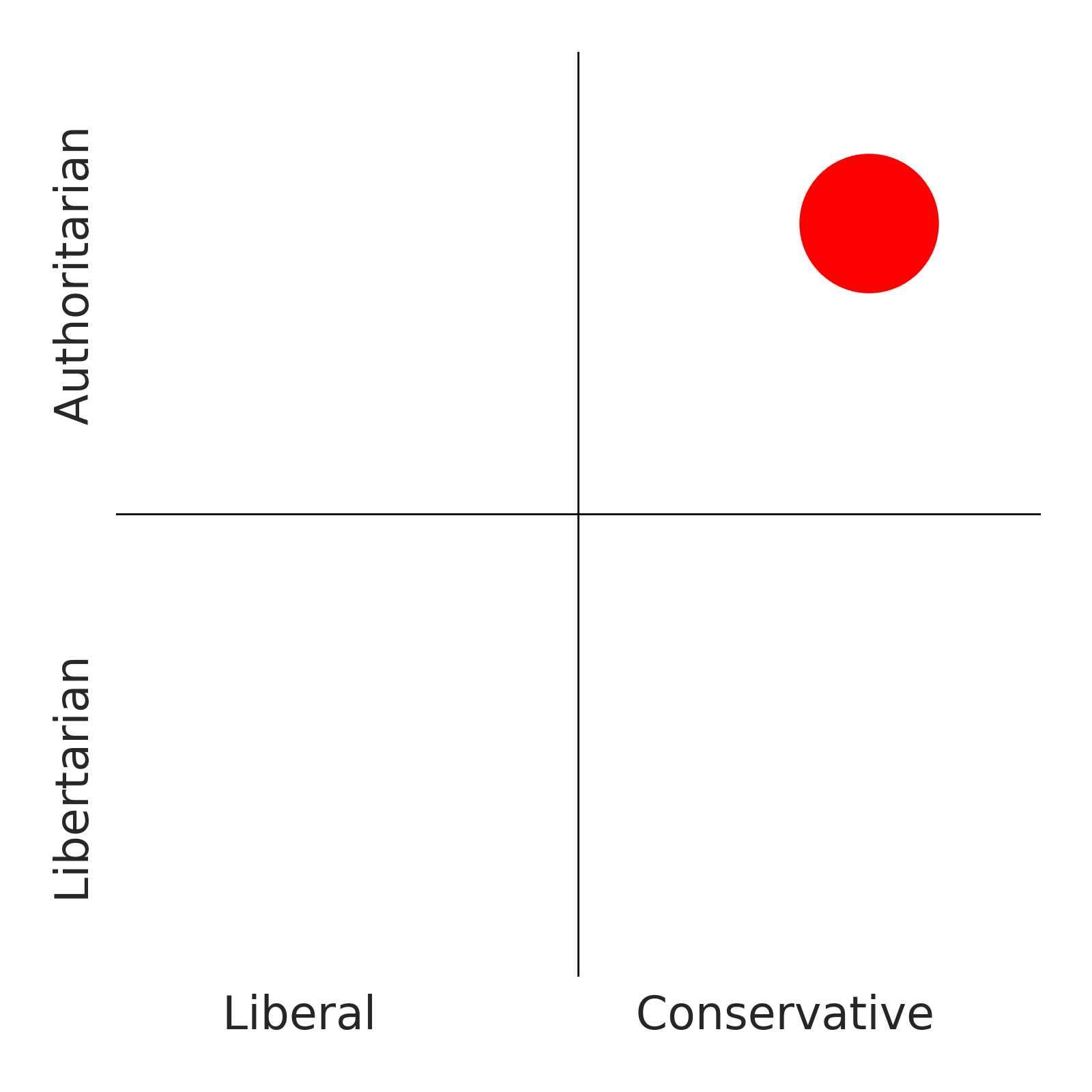
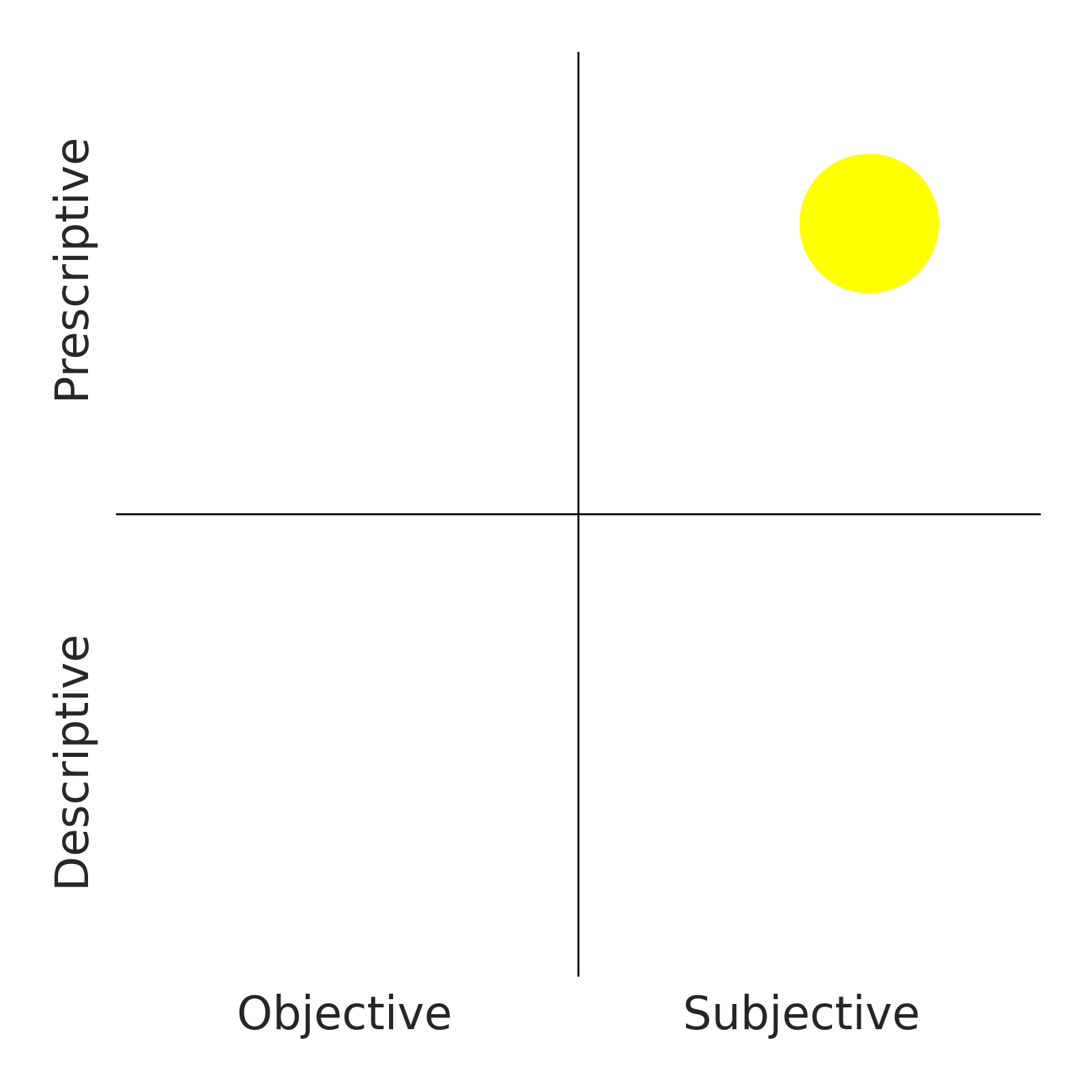
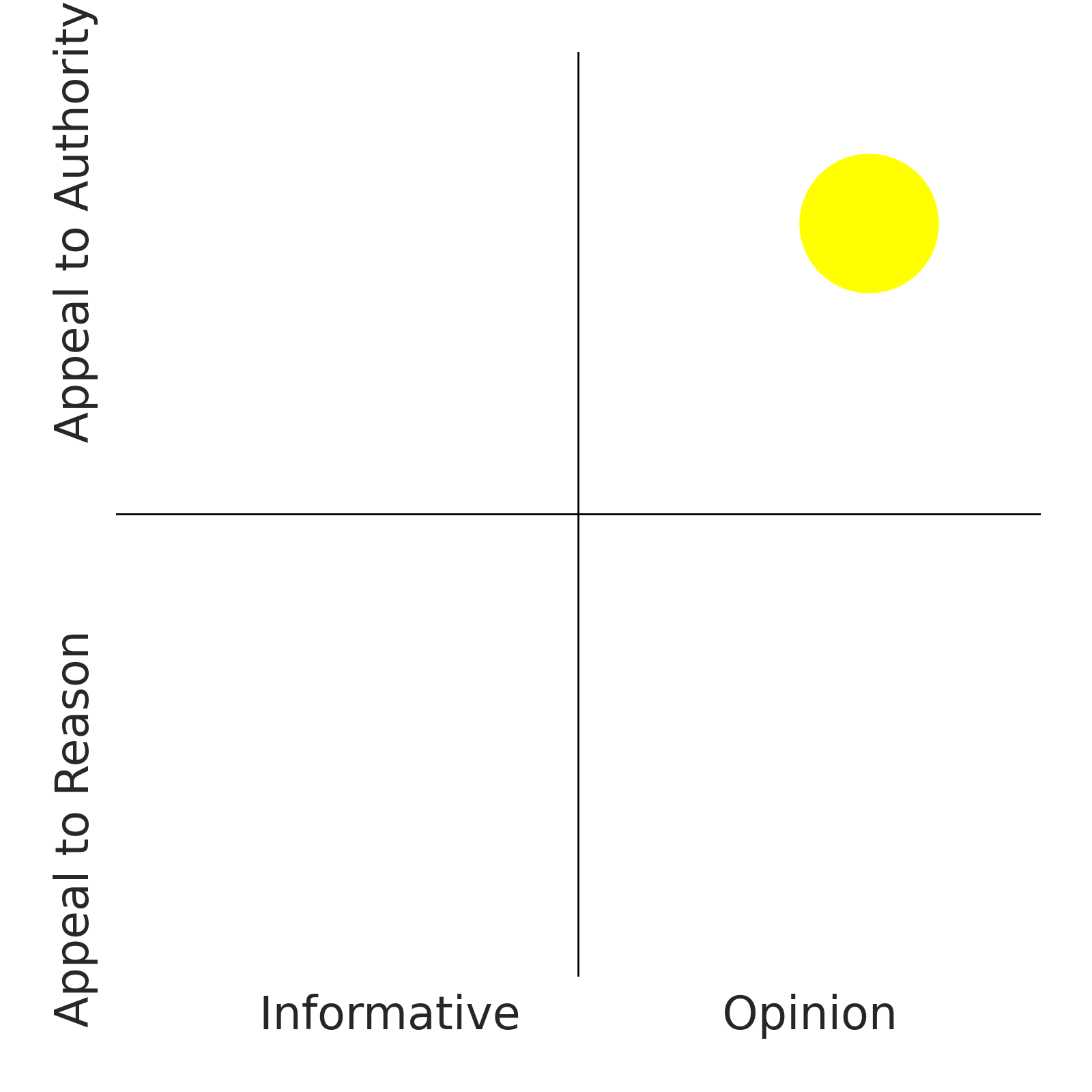
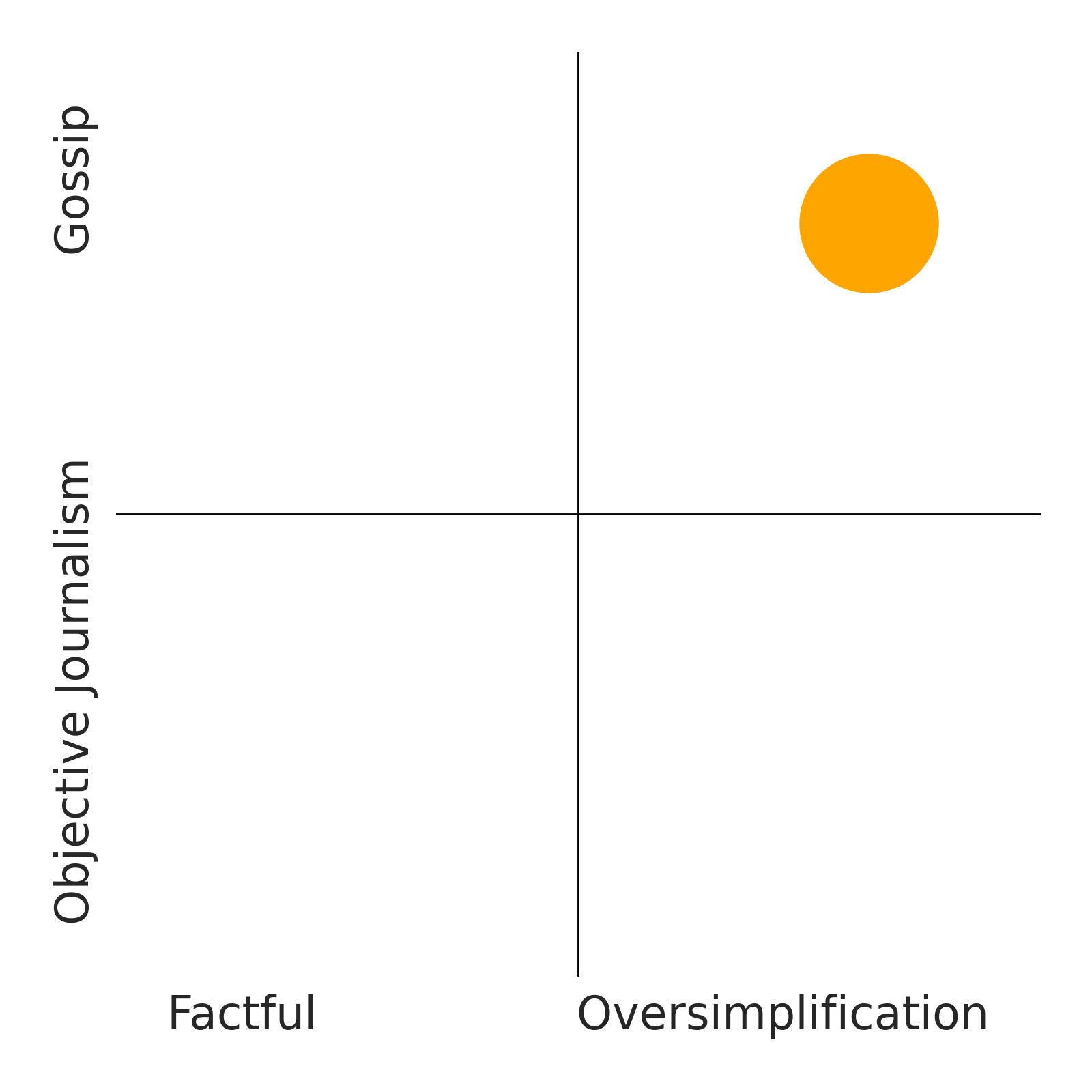
2026 © Helium Trades
Privacy Policy & Disclosure
* Disclaimer: Nothing on this website constitutes investment advice, performance data or any recommendation that any particular security, portfolio of securities, transaction or investment strategy is suitable for any specific person. Helium Trades is not responsible in any way for the accuracy
of any model predictions or price data. Any mention of a particular security and related prediction data is not a recommendation to buy or sell that security. Investments in securities involve the risk of loss. Past performance is no guarantee of future results. Helium Trades is not responsible for any of your investment decisions,
you should consult a financial expert before engaging in any transaction.
Helium Research Assistant

How can I help you today?
Ask any question about thesun.co.uk bias.