See whether Helium helps you make better-informed decisions. Try every Pro Trader feature for 30 days. No credit card required.
Try every Pro Trader feature for 30 days. No credit card required.
July 12, 2026 · 0 shares
Pro-democracy bias strongly emerges, portraying White House-led rule changes as 'electoral subversion,' using international examples and quotes to argue that illiberal actions threaten free elections, while urging broad, nonviolent civil-society countermeasures and cross-sector coalition-building.
An opinion piece arguing that the White House is subverting elections by changing rules, and urging pro-democracy countermeasures.
My bias: cautious; accuracy ~0.65.
Automated analysis; not human reviewed. Limitations: Case-specific; relies on quoted material and attributed sources; does not verify external claims; alternative interpretations could emphasize factual balance or different sourcing. · 16 of 52 available dimensions scored; omitted dimensions are not treated as neutral. · Verified supporting quotes for 8 of 16 scored dimensions.
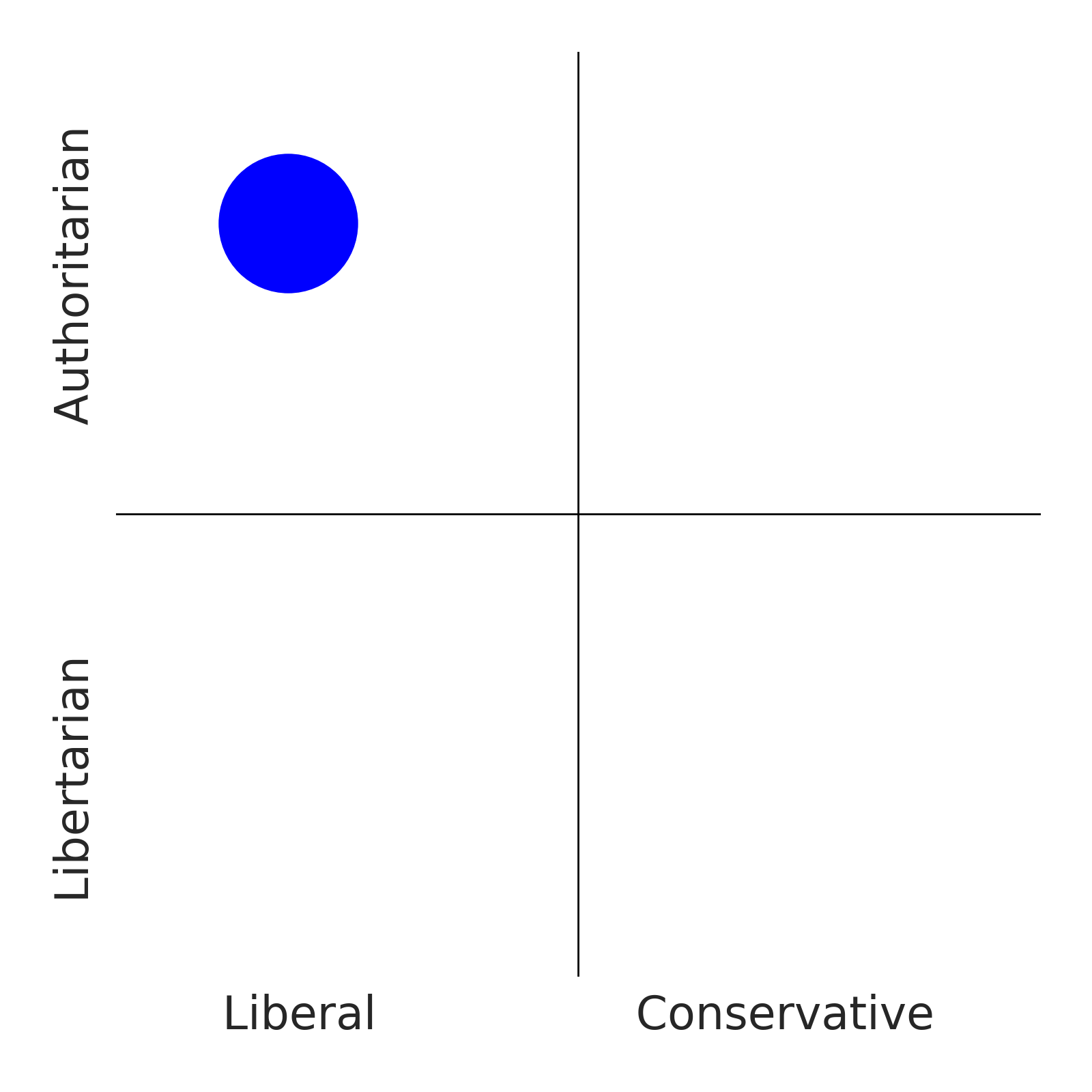
Claim: Framing leans liberal by labeling Trump as denialist and urging resistance, using credible outlets to challenge Trump’s claims.
“The president’s Orwellian speech on Thursday was just the latest instance of his denialism. It is up to us to resist” · exact text match
“No evidence has ever emerged showing that vote counts have been manipulated or corrupted … Among Mr. Trump’s false claims about the 2020 election, none have been more persistent – or more specious – than those concerning the purported vulnerabilities of voting machine technology.” · exact text match
“It is a shame that the president trashed the dignified aura of an address from the White House to peddle conspiracy theories and to sow more doubts about American election integrity.” · exact text match
Counterevidence:
“Other presidents have used such speeches in times of national emergency, to announce major new policies designed to improve Americans’ lives or to honor American traditions.” · exact text match
Why: Loaded descriptors and a call to resistance signal editorial, liberal-leaning framing, supported by contrasts to traditional presidential use of addresses.
Claim: Relies on mainstream, establishment sources and frames Trump's claims as conspiratorial against institutional norms.
“Amid foreboding allusions to the “deep state”, Trump put on what the New York Times’s Peter Baker called “an astonishing spectacle featuring a president intent on persuading the country that its elections cannot be trusted, at least not the ones where his allies fall short … [and] sensational claims about vulnerabilities of the election system”.” · not found in supplied text
Counterevidence:
“On Thursday night, Donald Trump did it again, trashing another American tradition with his primetime address from the White House’s East Room about election integrity. Other presidents have used such speeches in times of national emergency, to announce major new policies designed to improve Americans’ lives or to honor American traditions.” · exact text match
Why: Emphasis on establishment outlets and framing of Trump’s rhetoric as an ‘astonishing spectacle’ supports an elitist framing.
Claim: Article exhibits strong subjective framing with loaded adjectives and normative calls.
“The president’s Orwellian speech on Thursday was just the latest instance of his denialism.” · exact text match
“an astonishing spectacle featuring a president intent on persuading the country that its elections cannot be trusted” · exact text match
“Now it is up to us to mobilize to resist and foil his plan.” · exact text match
Counterevidence:
“The tradition of televised addresses from the White House began on 5 October 1947, when then president Harry Truman took to the airwaves to deliver a speech...” · not found in supplied text
Why: Presence of loaded terms and prescriptive calls indicates strong subjectivity in framing.
Claim: Uses sensational language to emphasize threat to elections.
“an astonishing spectacle featuring a president intent on persuading the country that its elections cannot be trusted” · exact text match
“foreboding allusions to the “deep state”” · exact text match
“grave danger” · exact text match
Counterevidence:
“The tradition of televised addresses from the White House began on 5 October 1947...” · not found in supplied text
Why: Loaded descriptors and dramatic framing signal sensationalistic presentation.
Claim: Frames Trump as a grave threat to election integrity, implying a negative outlook on his impact.
“The president’s longstanding and relentless campaign to undermine confidence in elections has already borne fruit.” · not found in supplied text
“the Save America Act that would make it harder for people to vote.” · not found in supplied text
Counterevidence:
“It is up to us to resist” · exact text match
Why: Depicts Trump as a threat to electoral integrity, coloring the narrative toward caution or alarm.
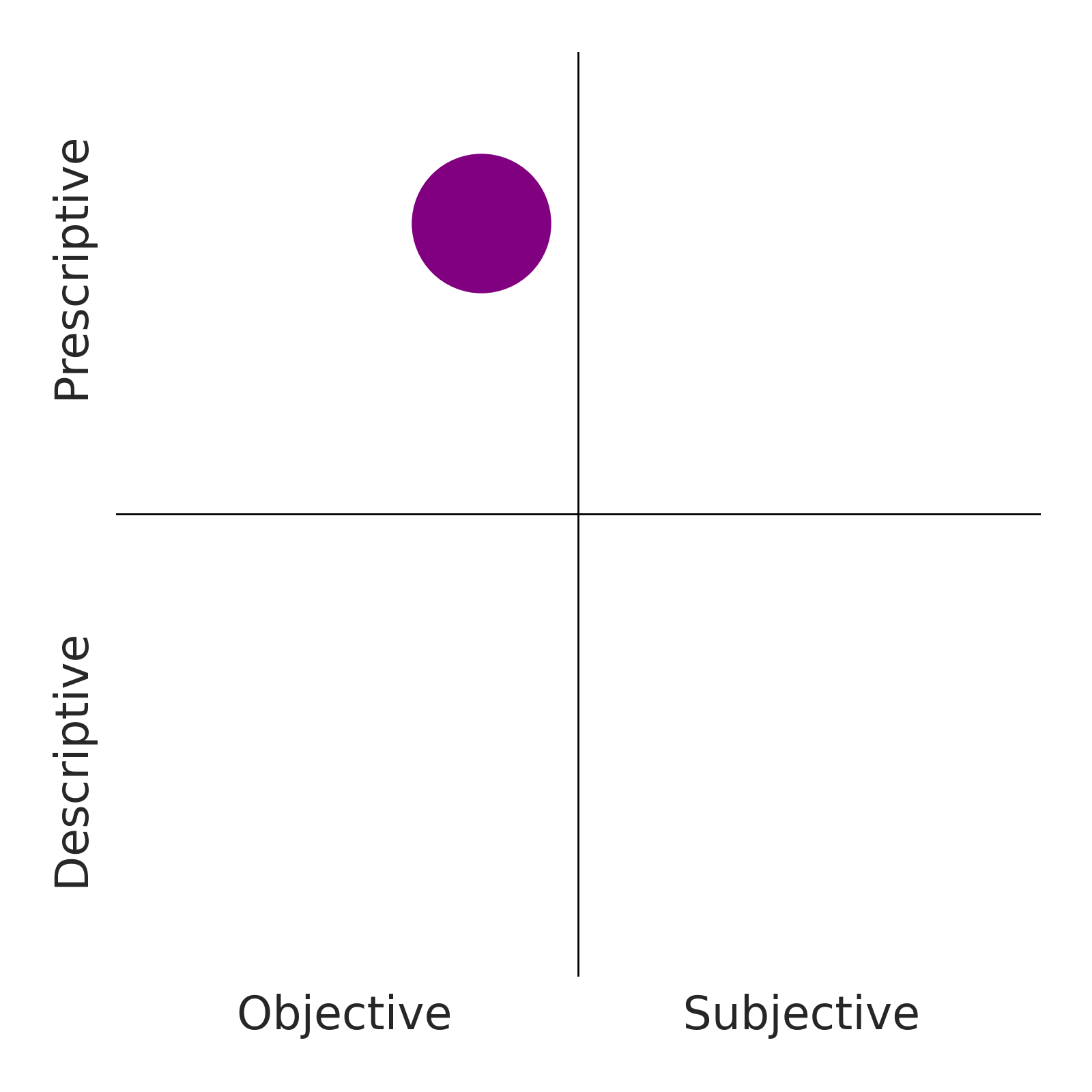
Claim: Strongly prescriptive; calls to action are explicit.
“Now it is up to us to mobilize to resist and foil his plan.” · exact text match
“It is a shame that the president trashed the dignified aura of an address from the White House to peddle conspiracy theories and to sow more doubts about American election integrity.” · exact text match
Counterevidence:
“The tradition of televised addresses from the White House began on 5 October 1947, when then president Harry Truman...” · not found in supplied text
Why: Explicit exhortations to mobilize and resist illustrate strong prescriptive bias.
Claim: Emphasizes fear-inducing frames to persuade readers.
“foreboding allusions to the “deep state”” · exact text match
“an astonishing spectacle... can be trusted” · not found in supplied text
“grave danger” · exact text match
Counterevidence:
“Other presidents have used such speeches in times of national emergency...” · not found in supplied text
Why: Foreboding language and threat framing amplify fear as a rhetorical device.
Claim: High degree of opinionated language throughout the piece.
“Orwellian speech” · exact text match
“denialism” · exact text match
“shameless” · exact text match
Counterevidence:
“As the article notes, various credible outlets are cited.” · not found in supplied text
Why: Multiple evaluative descriptors indicate a strong opinionated stance.
Claim: Distinctly political orientation in favor of defending election integrity against Trump.
“The president’s denialism” · not found in supplied text
“urging resistance” · not found in supplied text
Counterevidence:
“The piece discusses election history and tradition, which is inherently political.” · not found in supplied text
Why: Political subject matter combined with evaluative framing yields clear political bias.
Claim: Represents Trump’s claims as oversimplified or false dichotomies without exploring nuance.
“No evidence has ever emerged showing that vote counts have been manipulated or corrupted …” · exact text match
“the purported vulnerabilities of voting machine technology” · exact text match
Counterevidence:
“It cites a PBS/NPR/Marist poll to illustrate public concern.” · not found in supplied text
Why: Characterizes complex electoral debates with definitive language; balanced context is limited.
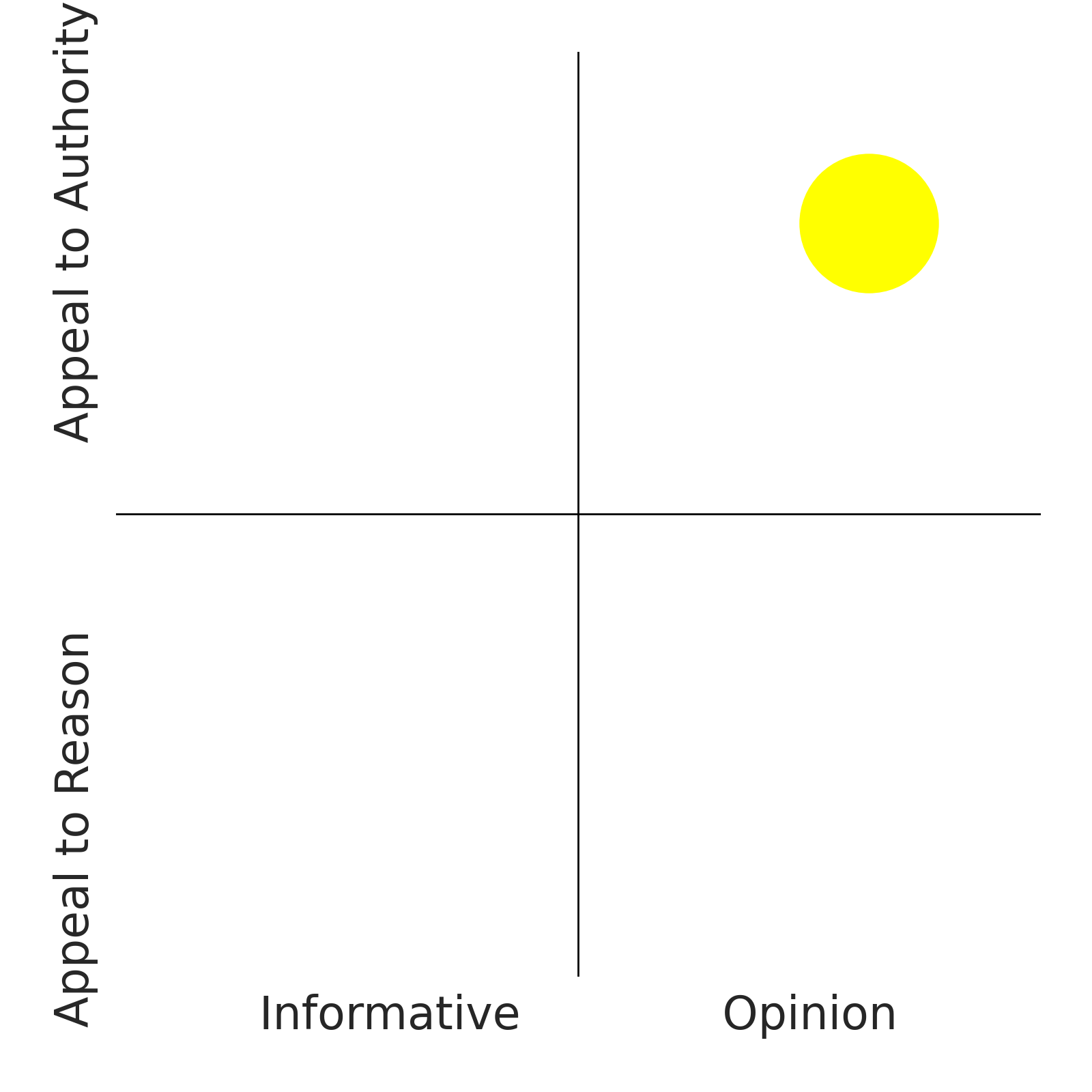
Claim: Uses authorities (New York Times, ABC News, PBS/NPR/Marist) to bolster claims.
“As the New York Times notes: “No evidence has ever emerged showing that vote counts have been manipulated or corrupted …” · exact text match
“As ABC News explains, his “history of crying foul in contests he doesn’t win”” · exact text match
Counterevidence:
“The article also presents its own critical framing, which could be seen as independent from these sources.” · not found in supplied text
Why: Frequent reliance on external authorities supports an appeal-to-authority bias.
Claim: Assumes certainty about absence of manipulation and the threat posed by Trump’s claims.
“No evidence has ever emerged showing that vote counts have been manipulated or corrupted …” · exact text match
“outline a series of steps the federal government will take to protect elections from threats that are, in fact, nonexistent.” · not found in supplied text
Counterevidence:
“The article itself cites external analyses and polling.” · not found in supplied text
Why: Certainty about evidence and threats appears asserted rather than exhaustively demonstrated.
Claim: Presents Trump’s claims as irrational and unsupported by evidence.
“The president claimed that the “election system is so broken and so vulnerable that no one can possibly defend it”” · exact text match
“No evidence has ever emerged showing that vote counts have been manipulated or corrupted …” · exact text match
Counterevidence:
“As ABC News explains, his “history of crying foul in contests he doesn’t win” includes calling the Emmys “all politics” after The Apprentice failed to win.” · exact text match
Why: Cites absence of evidence to debunk claims; uses evaluative language that reinforces a rational critique.
Case-specific: leaning toward liberal-democratic framing; relies on a narrow set of sources; may underrepresent opposing views.
July 17, 2026 · 0 shares
Coverage portrays the DHS visa policy as a security-focused government measure while foregrounding criticisms from press-freedom groups and China, signaling a cautious-to-critical stance toward the policy.
Describes a DHS rule shortening foreign journalist visas and Chinese journalist visas, with official justification and opposition from press groups and China; notes 60-day implementation and broader immigration-policy context.
Automated analysis; not human reviewed. Limitations: Concise, case-specific limitations and plausible alternative interpretations. · 11 of 52 available dimensions scored; omitted dimensions are not treated as neutral. · Verified supporting quotes for 1 of 11 scored dimensions.
Claim: Coverage leans liberal by foregrounding criticisms and using charged language about the policy.
“Trump administration drastically cuts length of foreign journalist visas.” · exact text match
“Advocates for foreign journalists oppose the change, arguing that drastically shorter stays will restrict their ability to live and work in the country.” · exact text match
“The Committee to Protect Journalists released a statement calling the new visa policy “the behavior of a backsliding democracy, not the international vanguard of free speech”.” · exact text match
Counterevidence:
“By implementing “clear, finite limits” on the visas, Mullin said, the US “is reclaiming its ability to properly screen, vet and monitor individuals within our borders”.” · exact text match
Why: Government security framing is presented alongside strong criticisms from press-freedom groups and China.
Claim: The piece emphasizes national-security rhetoric and government justification, indicating a hawkish tilt.
““For nearly half a century, the outdated ‘duration of status’ system has compromised national security and created an environment ripe for immigration fraud,” said the DHS secretary, Markwayne Mullin.” · exact text match
““By implementing ‘clear, finite limits’ on the visas, Mullin said, the US “is reclaiming its ability to properly screen, vet and monitor individuals within our borders.”” · not found in supplied text
Counterevidence:
““We are outraged that the Trump administration has cruelly limited the duration of visas for foreign journalists from a period of up to five years to a fixed eight months,”” · exact text match
“The Committee to Protect Journalists called the policy ‘the behavior of a backsliding democracy, not the international vanguard of free speech’.” · not found in supplied text
Why: Prominent security language and government justification establish a hawkish frame, offset by critics.
Ambiguity: limited excerpt; broader framing unknown.
Left-leaning framing is indicated by emphasis on Democratic calls for oversight of ICE, criticisms of immigration policy, and the use of charged language, with some counterpoints from DHS and reliance on family statements for identity.
A report on Democratic calls for an independent review of ICE hiring practices and ongoing investigations into the Maine shooting, noting related ICE-related deaths and DHS responses, with identification of the officer by media outlets and the officer's alleged violent history present in quotations.
Automated analysis; not human reviewed. Limitations: Concise, case-specific limitations and plausible alternative interpretations. · 50 of 52 available dimensions scored; omitted dimensions are not treated as neutral. · Verified supporting quotes for 0 of 50 scored dimensions.
Claim: Reporting frames ICE and immigration policy with a left-leaning slant by foregrounding Democratic criticisms and oversight calls.
“Democrats call for investigation into ICE officer shooting in Maine after new reports emerge.” · exact text match
“Democratic lawmakers are pressing for a review of ICE hiring practices and continuing calls for an investigation into the circumstances surrounding the killing of an immigrant in Maine by one of the agency’s officers after news media reported allegations of past violent and threatening behavior by the officer, according to his family members.” · not found in supplied text
“Bennie Thompson, a Mississippi congressman and the top Democrat on the US House’s homeland security committee, told the AP in a statement that the officer’s alleged violent history “directly call[s] into question the supposed vetting and training ICE does of its recruits”.” · exact text match
Counterevidence:
“The Department of Homeland Security, which oversees ICE, has not identified Brouillette.” · exact text match
“The exact circumstances of Guerrero’s killing remained unclear on Friday.” · exact text match
Why: Democratic voices are prominent; left-leaning framing evident through emphasis on oversight and criticism of immigration policy.
Claim: The piece frames criticisms of establishment policy (White House/DHS) as central.
“The White House’s aggressive anti-immigrant campaign.” · not found in supplied text
“The president and his Republican allies then “gave this rogue agency vast power and no accountability”” · exact text match
Counterevidence:
“AP, Portland Press Herald, NPR identify the officer and the outlet's coverage; DHS statements are included.” · not found in supplied text
Why: Language centers on criticisms of establishment immigration policy.
Claim: The article uses emotionally charged language to frame the tragedy and its victims.
“"This senseless tragedy must be investigated, and the officer responsible should be taken off our streets and face justice for his actions," Thompson added in his statement.” · verified after text normalization
“Guerrero’s survivors include a three-year-old daughter and the child’s mother.” · not found in supplied text
Counterevidence:
“The article notes that circumstances remain unclear.” · not found in supplied text
Why: Loaded terms and survivor references evoke an emotional response.
Claim: High credibility due to use of multiple reputable sources and explicit caution about verification.
“The Associated Press, the Portland Press Herald and National Public Radio (NPR) all identified the officer in question as David Brouillette, information that the publications attributed to his family.” · exact text match
“has not been able to independently verify the allegations or confirm Brouillette’s involvement in the 13 July shooting death in Biddeford, Maine.” · not found in supplied text
“DHS spokesperson Lauren Bis said to the AP: “We will never confirm or deny attempts to dox our law enforcement officers.” But Bis claimed the officer in question has nearly a decade of federal law enforcement experience.” · exact text match
Counterevidence:
“Some details rely on family statements; identity confirmation by the outlets; verification issues.” · not found in supplied text
Why: Use of multiple credible sources with verification caveats.
Ambiguity around year; reliance on family claims; limited verification; framing risk.
Strong pro-press freedom bias in coverage frames Trump's subpoenas and DOJ actions as an assault on the First Amendment and public-interest journalism, supported by editors' quotes and emphasis on costs, security, and source confidentiality.
A coverage focusing on perceived threats to press freedom from Trump-era subpoenas and related DOJ actions, incorporating editor quotes and public-interest framing around investigative reporting.
My bias: cautious, evidence-based; accuracy ~0.65.
Framing emphasizes Palestinian casualties and portrays Israeli actions as genocidal, citing UN findings and Gaza health ministry data to frame the Gaza conflict as a humanitarian crisis while acknowledging Israeli responses.
Concise, factful, accurate context for the article in one sentence.
Automated analysis; not human reviewed. Limitations: Concise, case-specific limitations and plausible alternative interpretations. · 4 of 52 available dimensions scored; omitted dimensions are not treated as neutral. · Verified supporting quotes for 0 of 4 scored dimensions.
Claim: The article frames Israeli actions in Gaza as genocidal and highlights Palestinian casualties using UN/international sources.
“"An independent UN inquiry has found that Israel continues to commit genocide by deliberately targeting Palestinian children in Gaza."” · not found in supplied text
“"Israel’s offensive in Gaza has killed more than 73,000 Palestinians, including those killed since the ceasefire, Gaza’s health ministry said."” · not found in supplied text
“"The ministry maintains detailed casualty records that are seen as generally reliable by UN agencies and independent experts."” · not found in supplied text
Counterevidence:
“"There was no immediate comment from the Israeli military."” · exact text match
“"Militants have carried out shooting attacks on troops, and Israel has said its strikes are in response to that and other violations."” · not found in supplied text
Why: Foregrounds Palestinian casualties and genocide framing; some Israeli context is acknowledged, indicating mixed framing but with clear tilt.
Claim: The article uses sensational terms (genocide, torture) to frame the conflict.
“"An independent UN inquiry has found that Israel continues to commit genocide by deliberately targeting Palestinian children in Gaza."” · not found in supplied text
“"Photo of bound Palestinian detainee corroborates Israeli torture reports, say rights groups."” · not found in supplied text
“"Israel’s offensive in Gaza has killed more than 73,000 Palestinians, including those killed since the ceasefire, Gaza’s health ministry said."” · not found in supplied text
Counterevidence:
“"The ministry maintains detailed casualty records that are seen as generally reliable by UN agencies and independent experts."” · not found in supplied text
“"There was no immediate comment from the Israeli military."” · exact text match
Why: Loaded language provides sensational framing despite data from credible sources.
Claim: The reporting evokes strong negative emotion toward Israeli actions and sympathy for Palestinians.
“"An independent UN inquiry has found that Israel continues to commit genocide by deliberately targeting Palestinian children in Gaza."” · not found in supplied text
“"Photo of bound Palestinian detainee corroborates Israeli torture reports, say rights groups."” · not found in supplied text
“"The war began after the Hamas-led attack on southern Israel on 7 October 2023 in which about 1,200 people were killed and 251 taken hostage."” · not found in supplied text
Counterevidence:
“"There was no immediate comment from the Israeli military."” · exact text match
“"The ministry maintains detailed casualty records that are seen as generally reliable by UN agencies and independent experts."” · not found in supplied text
Why: Emotional cues shape reader perceptions, though official data and responses provide balance.
Claim: The piece relies on Gaza health ministry figures and UN-related statements; credible data is cited but presented within a compilation.
“"The ministry maintains detailed casualty records that are seen as generally reliable by UN agencies and independent experts."” · not found in supplied text
“"An independent UN inquiry has found that Israel continues to commit genocide by deliberately targeting Palestinian children in Gaza."” · not found in supplied text
“"Israel’s offensive in Gaza has killed more than 73,000 Palestinians, including those killed since the ceasefire, Gaza’s health ministry said."” · not found in supplied text
Counterevidence:
“"There was no immediate comment from the Israeli military."” · exact text match
“"The article includes other headlines and claims without independent verification."” · not found in supplied text
Why: Official data cited, yet the aggregation and framing raise neutrality concerns.
Case-specific: text appears to be a compilation of headlines with selective quotes; evidence gaps and source mix could alter assessment.
Bias summary: emphasizes climate-change–driven heat risks as a public-health crisis, relies on expert authorities and peer‑reviewed methods to attribute deaths to warming, and prescribes emissions reductions, signaling a risk‑focused, pro‑science, pro‑policy framing.
Report on May–June 2026 heatwaves in England and Wales, attributing excess mortality to human-caused climate change, with expert analysis and policy implications.
I rely on official science; confidence ~0.65.
July 17, 2026 · 0 shares
Evidence-based, institutionally anchored reporting relies on official data and expert forecasts to document widespread air-quality impacts from Canadian wildfires, providing health guidance while avoiding overt political framing.
Canadian wildfire smoke crossed into the United States, producing higher-than-normal air-pollution readings in multiple cities and prompting health guidance, with forecasts indicating continued eastward movement and potential cross-border impacts.
Automated analysis; not human reviewed. Limitations: Case-specific; limited to provided text; may not capture full reporting practice beyond quotes and numbers. · 4 of 52 available dimensions scored; omitted dimensions are not treated as neutral. · Verified supporting quotes for 1 of 4 scored dimensions.
Claim: Reporting aims for objective presentation of data with quoted sources and quantified metrics.
“109 million people face another day of poor air quality as smoke from blazes in Ontario drifts over the US” · exact text match
“The air quality index reached a “hazardous” 361, according to the government website AirNow.” · not found in supplied text
Counterevidence:
“Some language like “the wildfire situation across North America just got worse” adds mild evaluative framing.” · not found in supplied text
Why: Quantitative data and quotes dominate; occasional evaluative phrasing appears.
Claim: The piece includes prescriptive health guidance (masks, closing windows) alongside descriptive data.
““If you must be outdoors for short periods of time, an N95 or P100 respirator marked with NIOSH is recommended,” that alert said.” · exact text match
“Great Lakes and energy recommended closing windows, minimizing the opening of doors and using HVAC systems rated Merv-13 or higher.” · exact text match
Counterevidence:
“Authorities are also monitoring the situation rather than prescribing policy, indicating caution.” · not found in supplied text
Why: Explicit health guidance present but balanced by cautionary language about monitoring and forecasts.
Claim: The article relies on official/establishment sources (AirNow, NASA FIRMS, Copernicus) for data and framing.
“according to the government website AirNow.” · exact text match
“NASA’s Fire Information for Resource Management System, or Firms.” · not found in supplied text
“the Copernicus Atmosphere Monitoring Service.” · exact text match
Counterevidence:
“Forecaster Colin McCarthy provides a non-governmental perspective on wildfire activity.” · not found in supplied text
Why: Authoritative sources anchor reporting; independent voice introduces balance.
Claim: The report relies on multiple official and credible sources to present data and forecasts, suggesting high credibility.
“The pungent wildfire blanketed cities such as Chicago and Detroit, where residents on Friday were warned to stay indoors and reduce activity levels after the air quality index reached a “hazardous” 361, according to the government website AirNow.” · exact text match
“NASA’s Fire Information for Resource Management System, or Firms, shows pockets of Canadian wildfires reaching deep into the Northwest Territories.” · not found in supplied text
““Our forecasts show the smoke continuing to move eastwards across the North Atlantic, and potentially towards Europe, highlighting the scale of wildfire pollution and how it can travel thousands of kilometers across borders and impact air quality in places far beyond the fires themselves,” he added.” · exact text match
Counterevidence:
“Forecaster Colin McCarthy is cited as commenting on worsening wildfire activity, signaling independent assessment beyond official agencies.” · not found in supplied text
Why: Official sources anchor reporting; independent forecaster adds balance.
Uncertain data recency; many numbers approximate; limited policy content.
July 15, 2026 · 0 shares
Mostly objective, evidence-based reporting relying on official authorities and diverse voices, with climate-change framing and some sensational quotes; overall a near-neutral bias with a slight tilt toward establishment framing due to reliance on official sources.
News report on widespread northern Ontario wildfires causing Toronto air quality to be labeled as the world’s worst, with health warnings, evacuations, and climate-change framing; cross-border smoke effects noted.
Automated analysis; not human reviewed. · 51 of 52 available dimensions scored; omitted dimensions are not treated as neutral. · Supporting quotes supplied for 0 of 51 scored dimensions; exact matching was not run.
I aim objectivity; bias confidence ~0.65
Left-leaning framing is evident in framing Trump's primetime address as repeating unverified claims and potentially tampering with midterms, citing Democrats and voting-rights groups while recognizing mixed Republican responses and ongoing legislative debates.
Political reporting on Trump's primetime address about 2020 election claims and midterm integrity, citing Democratic officials and voting-rights groups while noting Republican responses and legislative obstacles.
Automated analysis; not human reviewed. · 50 of 52 available dimensions scored; omitted dimensions are not treated as neutral. · Verified supporting quotes for 0 of 50 scored dimensions.
Ambiguity about editorial stance vs quotes; heavy normative language; evidence gaps possible.
July 17, 2026 · 0 shares
The piece frames Trump/Mullin's 2020 election claims as baseless and unsubstantiated, foregrounds expert skepticism about DHS methodology, treats citations from nonpartisan/established sources as credible, and positions critical scrutiny as the responsible journalistic stance.
Report on Mullin's amplification of unverified 2020 election claims, DHS-related findings, and expert skepticism about the underlying data and methodology.
Automated analysis; not human reviewed. Limitations: Concise, case-specific limitations and plausible alternative interpretations. · 1 of 52 available dimensions scored; omitted dimensions are not treated as neutral. · Verified supporting quotes for 1 of 1 scored dimensions.
Claim: The article frames Trump’s and Mullin’s claims as baseless/unsubstantiated, signaling a liberal-leaning evaluation.
“DHS secretary doubles down on Trump's baseless 2020 election claims” · exact text match
“The US homeland security secretary, Markwayne Mullin, doubled down on Donald Trump’s unsubstantiated election claims on Friday amid his agency’s efforts to support the president’s agenda.” · exact text match
“Mullin also repeated many of the president’s baseless conspiracy theories that he pushed on Thursday evening – particularly that voting machines are unsafe and insecure.” · exact text match
Counterevidence:
“Becker noted that this number sounds plausible, but it is only 0.04% of the 68 million eligible voters in those states.” · exact text match
“Al Schmidt, Pennsylvania’s Republican secretary of state, said that voters in the Keystone state ‘must take steps to verify their identity’ and that ‘All evidence has shown that noncitizen voting is extremely rare across the country, including in Pennsylvania.’” · not found in supplied text
Why: Headlines and framing present the claims as baseless while citing expert skepticism, indicating a leaning against the stated claims.
Ambiguity in source reliability and potential framing effects; evidence gaps may shift conclusions.
July 17, 2026 · 0 shares
Coverage portrays the DHS visa policy as a security-focused government measure while foregrounding criticisms from press-freedom groups and China, signaling a cautious-to-critical stance toward the policy.
Describes a DHS rule shortening foreign journalist visas and Chinese journalist visas, with official justification and opposition from press groups and China; notes 60-day implementation and broader immigration-policy context.
Automated analysis; not human reviewed. Limitations: Concise, case-specific limitations and plausible alternative interpretations. · 11 of 52 available dimensions scored; omitted dimensions are not treated as neutral. · Verified supporting quotes for 1 of 11 scored dimensions.
Claim: Coverage leans liberal by foregrounding criticisms and using charged language about the policy.
“Trump administration drastically cuts length of foreign journalist visas.” · exact text match
“Advocates for foreign journalists oppose the change, arguing that drastically shorter stays will restrict their ability to live and work in the country.” · exact text match
“The Committee to Protect Journalists released a statement calling the new visa policy “the behavior of a backsliding democracy, not the international vanguard of free speech”.” · exact text match
Counterevidence:
“By implementing “clear, finite limits” on the visas, Mullin said, the US “is reclaiming its ability to properly screen, vet and monitor individuals within our borders”.” · exact text match
Why: Government security framing is presented alongside strong criticisms from press-freedom groups and China.
Claim: The piece emphasizes national-security rhetoric and government justification, indicating a hawkish tilt.
““For nearly half a century, the outdated ‘duration of status’ system has compromised national security and created an environment ripe for immigration fraud,” said the DHS secretary, Markwayne Mullin.” · exact text match
““By implementing ‘clear, finite limits’ on the visas, Mullin said, the US “is reclaiming its ability to properly screen, vet and monitor individuals within our borders.”” · not found in supplied text
Counterevidence:
““We are outraged that the Trump administration has cruelly limited the duration of visas for foreign journalists from a period of up to five years to a fixed eight months,”” · exact text match
“The Committee to Protect Journalists called the policy ‘the behavior of a backsliding democracy, not the international vanguard of free speech’.” · not found in supplied text
Why: Prominent security language and government justification establish a hawkish frame, offset by critics.
Ambiguity: limited excerpt; broader framing unknown.
Guardian-exclusive framing presents US DRL funding to UK Conservative-linked groups as controversial and potentially misused to influence European politics, foregrounding critic voices while noting official vetting claims and recipients' stated aims.
Guardian-exclusive report detailing DRL grants of $12m to UK Conservative-linked groups (878, Free Speech Union International, Jobs Foundation), highlighting critics' concerns about potential misuse of taxpayer money to influence European politics while presenting official vetting assurances and group missions.
Automated analysis; not human reviewed. Limitations: Concise, case-specific limitations and plausible alternative interpretations. · 13 of 52 available dimensions scored; omitted dimensions are not treated as neutral. · Verified supporting quotes for 3 of 13 scored dimensions.
Claim: The reporting frames the funding as a controversial use of public money to influence politics abroad, featuring criticism from critics and highlighting potential procedural concerns.
“Exclusive: Grants are part of controversial package criticised as misuse of public money to influence European politics” · exact text match
“Some former US officials have criticised the funding as a misuse of public money to seek influence over foreign politics.” · exact text match
Counterevidence:
“A state department spokesperson said that the DRL grants would 'continue to undergo the Department’s standard and rigorous vetting process by grant professionals' and that decisions were still under 'active deliberation'.” · not found in supplied text
Why: Critical framing is foregrounded; official verification language is included but less emphasized.
Claim: The piece is largely descriptive, but includes normative labeling from critics.
“Exclusive: Grants are part of controversial package criticised as misuse of public money to influence European politics” · exact text match
“‘They are usually given to entities with unique capabilities that are hard to find elsewhere. But in this case I would argue that these entities are being funded to subvert legal and competitive processes.’” · not found in supplied text
Counterevidence:
““We take no government money and have no political agenda”” · exact text match
Why: Describes events and criticisms; occasional normative framing appears in quotes from critics.
Claim: Critics’ opinions are prominently featured, shaping the narrative toward skepticism about the funding.
“Some former US officials have criticised the funding as a misuse of public money to seek influence over foreign politics.” · exact text match
“‘horrible stewardship of US taxpayer money.’” · not found in supplied text
Counterevidence:
““We take no government money and have no political agenda”” · exact text match
““Our foreign assistance programming is aligned to support our strategic priorities.”” · not found in supplied text
Why: Criticism is foregrounded, though official viewpoints are also presented.
Claim: The article frames funding to political actors across the Atlantic as controversial and potentially manipulative.
“Exclusive: Grants are part of controversial package criticised as misuse of public money to influence European politics” · exact text match
“Some former US officials have criticised the funding as a misuse of public money to seek influence over foreign politics.” · exact text match
Counterevidence:
““Our foreign assistance programming is aligned to support our strategic priorities.”” · not found in supplied text
Why: Frames as politically charged issue with cross-border influence concerns.
Claim: The piece characterizes efforts as subverting normal funding procedures and references Trump-aligned individuals within the state department.
“In interviews, five former officials suggested that there has been a months-long effort by Trump-aligned individuals in the state department to subvert normal funding procedures and allocate US taxpayer money to conservative and Maga-aligned causes in the UK and Europe.” · exact text match
“A former US official who reviewed the allocations called the lack of procedure around them “outrageous and absurd”.” · exact text match
Counterevidence:
“A state department spokesperson said the DRL grants would 'continue to undergo the Department’s standard and rigorous vetting process by grant professionals'.” · not found in supplied text
Why: Highlights institutional critique and potential anti-establishment framing; includes official defense.
Claim: The piece relies on official documents and statements, balanced with critics’ quotes and contextual detail.
“The documents reviewed by the Guardian set out details of the grants for the first time.” · exact text match
“A state department spokesperson said that the DRL grants would 'continue to undergo the Department’s standard and rigorous vetting process by grant professionals'.” · not found in supplied text
Counterevidence:
““Exclusive: Grants are part of controversial package” (presentation of accusations)” · not found in supplied text
Why: Uses primary documents and quotes; critical framing present but counterpoints included.
Claim: There are concerns about the integrity of grant procedures and stewardship of funds.
“‘horrible stewardship of US taxpayer money.’” · not found in supplied text
““Sole source awards require significant legal justification to avoid required competitive processes,” they said.” · exact text match
Counterevidence:
““Our foreign assistance programming is aligned to support our strategic priorities.”” · not found in supplied text
Why: Critiques of stewardship are explicitly reported with a balancing acknowledgement of official claims.
Claim: The article presents phrasing that suggests illicit manipulation of grant procedures and influence campaigns.
“‘They are usually given to entities with unique capabilities that are hard to find elsewhere. But in this case I would argue that these entities are being funded to subvert legal and competitive processes.’” · not found in supplied text
Counterevidence:
““Sole source awards require significant legal justification to avoid required competitive processes,” they said.” · exact text match
““We take no government money and have no political agenda”” · exact text match
Why: Describes subversion and lack of competition in funding, signaling conspiratorial interpretation; balanced by official statements.
Reporting adopts a strongly liberal-leaning stance, portraying Blanche's conflicts of interest as disqualifying, framing DOJ weaponization as a systemic risk to the rule of law, and urging Senate rejection with support from watchdogs and ethical arguments.
A law professor's critical analysis arguing Blanche's nomination threatens DOJ independence and the rule of law, citing watchdog reports and historical examples to advocate rejection.
I lean evidence-based; bias ~0.6; confidence ~0.65
July 18, 2026 · 0 shares
Whistleblower-focused coverage foregrounds asbestos hazards and public-safety concerns, while citing tribunal findings that protected disclosures were legitimate and that London Underground may bear responsibility for unsafe waste handling.
London Underground whistleblower case regarding asbestos exposure and hazardous waste disposal; tribunal ruled disclosures were protected and highlighted safety and disposal concerns.
Automated analysis; not human reviewed. Limitations: Case-specific; relies on tribunal findings and quoted statements; may not reflect independent hazard data or broader industry context. · 52 of 52 available dimensions scored; omitted dimensions are not treated as neutral. · Verified supporting quotes for 0 of 52 scored dimensions.
Ambiguity: relies on tribunal; no independent hazard data.
July 17, 2026 · 0 shares
Evidence-based, institutionally anchored reporting relies on official data and expert forecasts to document widespread air-quality impacts from Canadian wildfires, providing health guidance while avoiding overt political framing.
Canadian wildfire smoke crossed into the United States, producing higher-than-normal air-pollution readings in multiple cities and prompting health guidance, with forecasts indicating continued eastward movement and potential cross-border impacts.
Automated analysis; not human reviewed. Limitations: Case-specific; limited to provided text; may not capture full reporting practice beyond quotes and numbers. · 4 of 52 available dimensions scored; omitted dimensions are not treated as neutral. · Verified supporting quotes for 1 of 4 scored dimensions.
Claim: Reporting aims for objective presentation of data with quoted sources and quantified metrics.
“109 million people face another day of poor air quality as smoke from blazes in Ontario drifts over the US” · exact text match
“The air quality index reached a “hazardous” 361, according to the government website AirNow.” · not found in supplied text
Counterevidence:
“Some language like “the wildfire situation across North America just got worse” adds mild evaluative framing.” · not found in supplied text
Why: Quantitative data and quotes dominate; occasional evaluative phrasing appears.
Claim: The piece includes prescriptive health guidance (masks, closing windows) alongside descriptive data.
““If you must be outdoors for short periods of time, an N95 or P100 respirator marked with NIOSH is recommended,” that alert said.” · exact text match
“Great Lakes and energy recommended closing windows, minimizing the opening of doors and using HVAC systems rated Merv-13 or higher.” · exact text match
Counterevidence:
“Authorities are also monitoring the situation rather than prescribing policy, indicating caution.” · not found in supplied text
Why: Explicit health guidance present but balanced by cautionary language about monitoring and forecasts.
Claim: The article relies on official/establishment sources (AirNow, NASA FIRMS, Copernicus) for data and framing.
“according to the government website AirNow.” · exact text match
“NASA’s Fire Information for Resource Management System, or Firms.” · not found in supplied text
“the Copernicus Atmosphere Monitoring Service.” · exact text match
Counterevidence:
“Forecaster Colin McCarthy provides a non-governmental perspective on wildfire activity.” · not found in supplied text
Why: Authoritative sources anchor reporting; independent voice introduces balance.
Claim: The report relies on multiple official and credible sources to present data and forecasts, suggesting high credibility.
“The pungent wildfire blanketed cities such as Chicago and Detroit, where residents on Friday were warned to stay indoors and reduce activity levels after the air quality index reached a “hazardous” 361, according to the government website AirNow.” · exact text match
“NASA’s Fire Information for Resource Management System, or Firms, shows pockets of Canadian wildfires reaching deep into the Northwest Territories.” · not found in supplied text
““Our forecasts show the smoke continuing to move eastwards across the North Atlantic, and potentially towards Europe, highlighting the scale of wildfire pollution and how it can travel thousands of kilometers across borders and impact air quality in places far beyond the fires themselves,” he added.” · exact text match
Counterevidence:
“Forecaster Colin McCarthy is cited as commenting on worsening wildfire activity, signaling independent assessment beyond official agencies.” · not found in supplied text
Why: Official sources anchor reporting; independent forecaster adds balance.
Uncertain data recency; many numbers approximate; limited policy content.
Neutral, evidence-forward briefing that relies on official data and cautious language about an ongoing outbreak.
Outbreak report detailing a Legionnaires' disease cluster on New York City's Upper East Side, citing city health department data and ongoing investigations into a source.
Automated analysis; not human reviewed. Limitations: Concise, case-specific limitations and plausible alternative interpretations. · 1 of 52 available dimensions scored; omitted dimensions are not treated as neutral. · Verified supporting quotes for 1 of 1 scored dimensions.
Claim: Article presents information neutrally, focusing on facts and relying on official data rather than opinion.
“One person dies amid legionnaires' disease outbreak in New York City.” · exact text match
“Officials haven’t released additional information about the person’s identity, age or details on when and how they fell ill” · exact text match
“Investigators are still trying to pinpoint the source of the outbreak on Manhattan’s Upper East Side that has infected at least 67 people and hospitalized dozens, according to city health department data.” · exact text match
Why: The prose uses official sources and avoids evaluative language; no contradictory elements are presented.
July 17, 2026 · 0 shares
Balanced, evidence-based biodiversity coverage with multiple expert voices, caveats about uncertainties, and practical containment/monitoring recommendations.
Concise, factful, balanced context for the article in one sentence.
Automated analysis; not human reviewed. Limitations: Concise, case-specific limitations and plausible alternative interpretations. · 52 of 52 available dimensions scored; omitted dimensions are not treated as neutral. · Verified supporting quotes for 2 of 52 scored dimensions.
Claim: No clear liberal or conservative framing; reporting concentrates on biodiversity and policy collaboration.
““Protecting and sustaining our aquatic ecosystems requires a collaborative approach among communities, research institutions and policymakers,” said Gasmen.” · exact text match
“The lake’s main farmed fish is tilapia, which supports local food production and commerce.” · exact text match
Why: Framing centers on biodiversity and policy collaboration, not political ideology.
Claim: Article prescribes mitigation and monitoring strategies.
““The researchers proposed long-term solutions including stronger pens, finer mesh, overflow barriers, routine inspections and community-led monitoring.”” · not found in supplied text
““They also suggest that invasive fish could be harvested for use in aquafeed, subject to screening for pathogens, heavy metals and microplastics.”” · not found in supplied text
Counterevidence:
““The parasite has not been found in Lake Sampaloc’s flowerhorns.”” · not found in supplied text
Why: Explicit policy measures and management steps show prescriptive framing.
Claim: Language references biodiversity fears and parasite concerns.
““Biodiversity fears as human-bred hybrid fish integrate into Philippines lake.”” · not found in supplied text
““Concerns were also raised about potential parasites.”” · not found in supplied text
““The native ayungin, or silver perch, once a common catch, has become increasingly rare and has been classified as endangered by the International Union for Conservation of Nature.”” · not found in supplied text
Why: Fear-laden framing is tempered by evidence and proposed safeguards.
Claim: Article demonstrates credible sourcing and balanced reporting.
““Dr Noël Juvigny-Khenafou, a lecturer in aquatic environmental science at the University of Stirling who was not involved in the research, noted that climate change may also intensify the problem.”” · not found in supplied text
““Protecting and sustaining our aquatic ecosystems requires a collaborative approach among communities, research institutions and policymakers,” said Gasmen.” · exact text match
Why: Independent expert input and diverse sources bolster credibility.
Claim: Article emphasizes scientific evidence and institutional research.
““Research by Hannah Nicole C Gasmen and Dr Janice A Ragaza of Ateneo de Manila University has found that flowerhorns are being incorporated into the existing aquaculture system because, like tilapia, they can survive difficult conditions.”” · not found in supplied text
““Paracapillaria philippinensis, a roundworm capable of infecting humans.”” · not found in supplied text
““The native ayungin... endangered by the International Union for Conservation of Nature”” · not found in supplied text
Counterevidence:
““The planet's most important stories” (advertising)” · not found in supplied text
Why: Cites university researchers and IUCN status; includes specific parasite information.
Claim: Some statements reflect potential future outcomes, not certainties.
““The research, however, suggests that intentional stocking and sale could expand an already established invasive population.”” · verified after text normalization
Why: Use of 'could' indicates speculative outcomes rather than established facts.
Claim: Reporting shows integrity through diverse sources and cautious language.
““Protecting and sustaining our aquatic ecosystems requires a collaborative approach among communities, research institutions and policymakers,” said Gasmen.” · exact text match
““The parasite has not been found in Lake Sampaloc’s flowerhorns, but the researchers advise against promoting the fish for human consumption.”” · not found in supplied text
Why: Cited researchers and caveats indicate balanced reporting.
Unclear quotes; duplicates; limited data on prevalence; need source clarity.
Satirical, strongly left-leaning commentary that mocks conservative figures, right-leaning media, and U.S. foreign policy while lampooning gendered rhetoric and using sensational framing.
Guardian opinion piece employing satire and hyperbole to critique U.S. political leadership, Iran policy, and media commentary.
Automated analysis; not human reviewed. Limitations: Concise, case-specific limitations and plausible alternative interpretations. · 44 of 52 available dimensions scored; omitted dimensions are not treated as neutral. · Verified supporting quotes for 0 of 44 scored dimensions.
Satirical, left-leaning framing; evidence-limited.
Left-leaning, highly opinionated critique that frames Pete Hegseth's testosterone-screening proposal and defense leadership as ill-conceived and politically motivated, using mocking language and selective sourcing to argue against conservative policy and war escalation.
Opinion piece criticizing Hegseth's testosterone-screening plan and related gender-policy discussions in the military while linking them to broader criticisms of defense leadership and foreign policy.
Automated analysis; not human reviewed. Limitations: Concise, case-specific limitations and plausible alternative interpretations. · 51 of 52 available dimensions scored; omitted dimensions are not treated as neutral. · Verified supporting quotes for 4 of 51 scored dimensions.
Claim: The article frames conservative figures/policy negatively, signaling a liberal-leaning frame.
“Pete Hegseth wants testosterone for his soldiers. Finally, some gender-affirming care.” · exact text match
“One day perhaps we’ll see a headline about the defense secretary that doesn’t involve allegations of sexual misconduct or bigotry, claims about past drinking on the job, possible war crimes, Christian nationalism, or his weird fixation on male facial hair.” · exact text match
“Alas, today is not that day. Rather, we are gathered here today because Hegseth is very het up about testosterone.” · exact text match
Counterevidence:
“The New York Times said in its reporting that women would also be screened for testosterone.” · not found in supplied text
“There isn’t an FDA-approved testosterone treatment for women, so presumably this treatment would just be for men.” · exact text match
Why: Loaded critique of conservative figures/policy signals liberal-leaning framing.
Claim: The piece relies heavily on subjective judgments and loaded language.
“One day perhaps we’ll see a headline about the defense secretary that doesn’t involve allegations of sexual misconduct or bigotry, claims about past drinking on the job, possible war crimes, Christian nationalism, or his weird fixation on male facial hair.” · exact text match
“Forget screening troops for testosterone; the US should be screening its defense secretary for basic competence.” · exact text match
Counterevidence:
“The New York Times notes: ... (external sourcing)” · not found in supplied text
Why: Evaluative language drives perception more than neutral reporting.
Claim: The language is sensational, framing issues with dramatic terms.
“the High-T Department of War” · exact text match
“This unnecessary and unlawful war – which has no end in sight and already cost tens of billions” · exact text match
Counterevidence:
“NYT quotes provide external context.” · not found in supplied text
Why: Explicit sensational framing used to heighten impact.
Claim: Prescriptive suggestions dominate over descriptive reporting.
“"Forget screening troops for testosterone; the US should be screening its defense secretary for basic competence."” · not found in supplied text
Why: Explicit policy prescriptions steer the narrative.
Claim: The article critiques war and questions foreign policy decisions, implying a preference for restraint.
“This unnecessary and unlawful war – which has no end in sight and already cost tens of billions – is making life more expensive and more dangerous for everyone.” · exact text match
Counterevidence:
“Iran threatened to halt all energy exports from the Middle East as the US reimposed a blockade on Iran, and Trump warned he would escalate strikes on the country.” · exact text match
Why: Anti-war stance consistent with restraint-favoring framing.
Claim: Gossip-style personal attacks and sensationalized descriptors shape perception.
“"his weird fixation on male facial hair"” · not found in supplied text
“"Rampaging around screaming about “beardos” and trying to butter up your testosterone-obsessed manosphere fans..."” · not found in supplied text
Counterevidence:
“External NYT citation is included.” · not found in supplied text
Why: Personalized insults and labels influence reader perception.
Claim: The piece presents a clear opinion stance rather than neutral reporting.
“"Alas, today is not that day."” · not found in supplied text
“"Forget screening troops for testosterone; the US should be screening its defense secretary for basic competence."” · not found in supplied text
Counterevidence:
“The NYT notes provides external balance.” · not found in supplied text
Why: Opinionated language dominates the narrative.
Claim: The article advances a political viewpoint opposing conservative defense gender policy.
“"unnecessary and unlawful war"” · not found in supplied text
“"Some might call it gender-affirming care."” · not found in supplied text
Counterevidence:
“NYT reference adds external counterpoint.” · not found in supplied text
Why: Clearly political framing and stance.
Claim: Explicit ideological alignment against conservative gender/war policy and in favor of gender-rights framing.
“"some might call it gender-affirming care"” · not found in supplied text
“"unnecessary and unlawful war"” · not found in supplied text
Why: Open ideological stance evident in framing.
Claim: Distrust or critique of government leadership and military establishment.
“"Forget screening troops for testosterone; the US should be screening its defense secretary for basic competence."” · not found in supplied text
“"There’s always money for a certain sort of gender-affirming care."” · not found in supplied text
Counterevidence:
“NYT reference; external framing.” · not found in supplied text
Why: Anti-establishment tone with calls for accountability.
Claim: Emotional language drives reader emotion rather than neutral analysis.
“"This unnecessary and unlawful war"” · not found in supplied text
“"weird fixation"” · not found in supplied text
“"beardos"” · verified after text normalization
Why: Emotional framing used to shape response.
Claim: Suggests conspiratorial motives about policy (e.g., purging women) without evidence.
“"used low testosterone as an excuse to purge women from his so-called High T Department of War."” · not found in supplied text
Why: Speculative insinuations about intent.
Case-specific: strong skepticism about the publisher's framing; ambiguous policy details; reliance on selective sourcing.
Automated analysis; not human reviewed. Limitations: Case-specific; relies on quoted material and attributed sources; does not verify external claims; alternative interpretations could emphasize factual balance or different sourcing. · 16 of 52 available dimensions scored; omitted dimensions are not treated as neutral. · Verified supporting quotes for 8 of 16 scored dimensions.
Claim: Framing leans liberal by labeling Trump as denialist and urging resistance, using credible outlets to challenge Trump’s claims.
“The president’s Orwellian speech on Thursday was just the latest instance of his denialism. It is up to us to resist” · exact text match
“No evidence has ever emerged showing that vote counts have been manipulated or corrupted … Among Mr. Trump’s false claims about the 2020 election, none have been more persistent – or more specious – than those concerning the purported vulnerabilities of voting machine technology.” · exact text match
“It is a shame that the president trashed the dignified aura of an address from the White House to peddle conspiracy theories and to sow more doubts about American election integrity.” · exact text match
Counterevidence:
“Other presidents have used such speeches in times of national emergency, to announce major new policies designed to improve Americans’ lives or to honor American traditions.” · exact text match
Why: Loaded descriptors and a call to resistance signal editorial, liberal-leaning framing, supported by contrasts to traditional presidential use of addresses.
Claim: Relies on mainstream, establishment sources and frames Trump's claims as conspiratorial against institutional norms.
“Amid foreboding allusions to the “deep state”, Trump put on what the New York Times’s Peter Baker called “an astonishing spectacle featuring a president intent on persuading the country that its elections cannot be trusted, at least not the ones where his allies fall short … [and] sensational claims about vulnerabilities of the election system”.” · not found in supplied text
Counterevidence:
“On Thursday night, Donald Trump did it again, trashing another American tradition with his primetime address from the White House’s East Room about election integrity. Other presidents have used such speeches in times of national emergency, to announce major new policies designed to improve Americans’ lives or to honor American traditions.” · exact text match
Why: Emphasis on establishment outlets and framing of Trump’s rhetoric as an ‘astonishing spectacle’ supports an elitist framing.
Claim: Article exhibits strong subjective framing with loaded adjectives and normative calls.
“The president’s Orwellian speech on Thursday was just the latest instance of his denialism.” · exact text match
“an astonishing spectacle featuring a president intent on persuading the country that its elections cannot be trusted” · exact text match
“Now it is up to us to mobilize to resist and foil his plan.” · exact text match
Counterevidence:
“The tradition of televised addresses from the White House began on 5 October 1947, when then president Harry Truman took to the airwaves to deliver a speech...” · not found in supplied text
Why: Presence of loaded terms and prescriptive calls indicates strong subjectivity in framing.
Claim: Uses sensational language to emphasize threat to elections.
“an astonishing spectacle featuring a president intent on persuading the country that its elections cannot be trusted” · exact text match
“foreboding allusions to the “deep state”” · exact text match
“grave danger” · exact text match
Counterevidence:
“The tradition of televised addresses from the White House began on 5 October 1947...” · not found in supplied text
Why: Loaded descriptors and dramatic framing signal sensationalistic presentation.
Claim: Frames Trump as a grave threat to election integrity, implying a negative outlook on his impact.
“The president’s longstanding and relentless campaign to undermine confidence in elections has already borne fruit.” · not found in supplied text
“the Save America Act that would make it harder for people to vote.” · not found in supplied text
Counterevidence:
“It is up to us to resist” · exact text match
Why: Depicts Trump as a threat to electoral integrity, coloring the narrative toward caution or alarm.
Claim: Strongly prescriptive; calls to action are explicit.
“Now it is up to us to mobilize to resist and foil his plan.” · exact text match
“It is a shame that the president trashed the dignified aura of an address from the White House to peddle conspiracy theories and to sow more doubts about American election integrity.” · exact text match
Counterevidence:
“The tradition of televised addresses from the White House began on 5 October 1947, when then president Harry Truman...” · not found in supplied text
Why: Explicit exhortations to mobilize and resist illustrate strong prescriptive bias.
Claim: Emphasizes fear-inducing frames to persuade readers.
“foreboding allusions to the “deep state”” · exact text match
“an astonishing spectacle... can be trusted” · not found in supplied text
“grave danger” · exact text match
Counterevidence:
“Other presidents have used such speeches in times of national emergency...” · not found in supplied text
Why: Foreboding language and threat framing amplify fear as a rhetorical device.
Claim: High degree of opinionated language throughout the piece.
“Orwellian speech” · exact text match
“denialism” · exact text match
“shameless” · exact text match
Counterevidence:
“As the article notes, various credible outlets are cited.” · not found in supplied text
Why: Multiple evaluative descriptors indicate a strong opinionated stance.
Claim: Distinctly political orientation in favor of defending election integrity against Trump.
“The president’s denialism” · not found in supplied text
“urging resistance” · not found in supplied text
Counterevidence:
“The piece discusses election history and tradition, which is inherently political.” · not found in supplied text
Why: Political subject matter combined with evaluative framing yields clear political bias.
Claim: Represents Trump’s claims as oversimplified or false dichotomies without exploring nuance.
“No evidence has ever emerged showing that vote counts have been manipulated or corrupted …” · exact text match
“the purported vulnerabilities of voting machine technology” · exact text match
Counterevidence:
“It cites a PBS/NPR/Marist poll to illustrate public concern.” · not found in supplied text
Why: Characterizes complex electoral debates with definitive language; balanced context is limited.
Claim: Uses authorities (New York Times, ABC News, PBS/NPR/Marist) to bolster claims.
“As the New York Times notes: “No evidence has ever emerged showing that vote counts have been manipulated or corrupted …” · exact text match
“As ABC News explains, his “history of crying foul in contests he doesn’t win”” · exact text match
Counterevidence:
“The article also presents its own critical framing, which could be seen as independent from these sources.” · not found in supplied text
Why: Frequent reliance on external authorities supports an appeal-to-authority bias.
Claim: Assumes certainty about absence of manipulation and the threat posed by Trump’s claims.
“No evidence has ever emerged showing that vote counts have been manipulated or corrupted …” · exact text match
“outline a series of steps the federal government will take to protect elections from threats that are, in fact, nonexistent.” · not found in supplied text
Counterevidence:
“The article itself cites external analyses and polling.” · not found in supplied text
Why: Certainty about evidence and threats appears asserted rather than exhaustively demonstrated.
Claim: Presents Trump’s claims as irrational and unsupported by evidence.
“The president claimed that the “election system is so broken and so vulnerable that no one can possibly defend it”” · exact text match
“No evidence has ever emerged showing that vote counts have been manipulated or corrupted …” · exact text match
Counterevidence:
“As ABC News explains, his “history of crying foul in contests he doesn’t win” includes calling the Emmys “all politics” after The Apprentice failed to win.” · exact text match
Why: Cites absence of evidence to debunk claims; uses evaluative language that reinforces a rational critique.
Case-specific: leaning toward liberal-democratic framing; relies on a narrow set of sources; may underrepresent opposing views.
Opinion column arguing that downgrading FoodNet surveillance for Cyclospora undermines outbreak detection, framing surveillance as essential treatment and urging restoration of mandatory, nationwide counts through expert-led public health systems.
Opinion column by a UCLA physician arguing that the July 2025 CDC FoodNet downgrade undermines outbreak detection and advocating reinstating mandatory active surveillance with weekly national counts.
Automated analysis; not human reviewed. Limitations: Case-specific interpretation limited to one opinion piece; data points are time-bound and may evolve; quotes reflect selection; multiple valid readings exist. · 12 of 52 available dimensions scored; omitted dimensions are not treated as neutral. · Verified supporting quotes for 7 of 12 scored dimensions.
Claim: Mild liberal tilt toward strengthening public health surveillance and criticizing budget cuts.
“Surveillance is the treatment.” · exact text match
“Surveillance is not clerical overhead. It is the promise a country makes to its citizens that it will notice when they begin to get sick.” · exact text match
“That capacity is modest in cost set against the illness and the hospital admissions it prevents, and far cheaper than an outbreak nobody can name.” · exact text match
Counterevidence:
“The CDC says funding has not kept pace with the resources required to maintain surveillance for all eight pathogens, that the remaining pathogens are still trackable through other systems, and that a narrower mandate lets staff focus on core work.” · exact text match
“Of the eight pathogens it was built to watch, six were downgraded to optional. Salmonella and E coli remained mandatory.” · exact text match
Why: Normative framing emphasizes surveillance as essential and cost-effective, aligning with public-health-oriented liberal-leaning policy perspectives.
Claim: Elitist tilt favoring expert public health institutions and metrics over populist critiques.
“Surveillance is the treatment.” · exact text match
“What a health system does not measure can spread in plain sight, and by the time the measurement catches up, the argument is no longer about prevention.” · not found in supplied text
“Restore Cyclospora to mandatory active surveillance at FoodNet’s sites, publish national counts weekly through the summer season, and rebuild the state and local teams who do the interviewing and the tracing.” · exact text match
Counterevidence:
“The Trump administration has called the department it inherited a bloated bureaucracy and promised to close what it deems wasteful and duplicative.” · exact text match
“Let me be careful about what I am and am not claiming.” · exact text match
Why: Affirms value of expert institutions and systematic metrics; includes political counterpoints.
Claim: Strong government surveillance stance reflecting authoritarian tendency.
“Surveillance is the treatment.” · exact text match
“Restore Cyclospora to mandatory active surveillance at FoodNet’s sites, publish national counts weekly through the summer season, and rebuild the state and local teams who do the interviewing and the tracing.” · exact text match
“What a health system does not measure can spread in plain sight, and by the time the measurement catches up, the argument is no longer about prevention.” · not found in supplied text
Counterevidence:
“The change arrived with budget cuts and no public announcement.” · not found in supplied text
“The Trump administration has called the department it inherited a bloated bureaucracy and promised to close what it deems wasteful and duplicative.” · exact text match
Why: Emphasizes government surveillance capacity and duty to notice health issues; includes counterpoints about budget cuts.
Claim: Clear subjective framing with normative language and disclaimer phrases.
“Let me be careful about what I am and am not claiming.” · exact text match
“Surveillance is the treatment.” · exact text match
“The repair is specific. Restore Cyclospora to mandatory active surveillance...” · not found in supplied text
Counterevidence:
“The CDC rationale deserves a hearing.” · not found in supplied text
“Remaining pathogens are still trackable through other systems.” · not found in supplied text
Why: Direct use of opinionated framing balanced with qualifiers.
Claim: Use of emotive language to underscore urgency; mild sensationalism.
“A patient arrives after two weeks of relentless watery diarrhea, sometimes 20 episodes a day.” · exact text match
“Now thousands are sick” · exact text match
“The incubation period runs about a week.” · exact text match
Counterevidence:
“The official rationale deserves a hearing.” · exact text match
“That capacity is modest in cost set against the illness and the hospital admissions it prevents.” · not found in supplied text
Why: Emotive phrases present urgency but not extreme sensationalism.
Claim: Strong prescriptive stance with concrete policy recommendations.
“Restore Cyclospora to mandatory active surveillance at FoodNet’s sites, publish national counts weekly through the summer season, and rebuild the state and local teams who do the interviewing and the tracing.” · exact text match
“Ending outbreaks like these means identifying the source and getting it out of the food supply, and that work runs on timely, comparable case counts.” · exact text match
“Surveillance is not clerical overhead. It is the promise a country makes to its citizens that it will notice when they begin to get sick.” · exact text match
Counterevidence:
“The official rationale deserves a hearing.” · exact text match
“The remaining pathogens are still trackable through other systems.” · not found in supplied text
Why: Explicit policy prescriptions and normative framing indicate strong prescriptive bias.
Claim: Clear opinionated framing with first-person perspective and normative conclusions.
“Let me be careful about what I am and am not claiming.” · exact text match
“Surveillance is the treatment.” · exact text match
“I have practiced intensive care medicine for more than 40 years.” · exact text match
Counterevidence:
“The CDC rationale deserves a hearing.” · not found in supplied text
Why: First-person testimony and prescriptive language indicate opinionated framing.
Claim: Political actors and policy debates frame the reporting.
“The Trump administration has called the department it inherited a bloated bureaucracy and promised to close what it deems wasteful and duplicative.” · exact text match
Counterevidence:
“The official rationale deserves a hearing.” · exact text match
Why: Direct reference to political actors and policy debates.
Claim: Emotional appeals are used to emphasize human impact.
“A patient arrives after two weeks of relentless watery diarrhea, sometimes 20 episodes a day.” · exact text match
“Now thousands are sick” · exact text match
“It will cure the woman in the clinic. It will do nothing for the next thousand people eating from the same contaminated lot.” · not found in supplied text
Counterevidence:
“The official rationale deserves a hearing.” · exact text match
Why: Personal suffering is used to underscore public health stakes.
Claim: Uses numerical data to support a policy argument; predominantly rational in approach.
“As of 15 July, the CDC had confirmed 1,645 domestically acquired cases across 34 states, with 141 hospitalizations, and said it was aware of more than 5,100 further cases awaiting analysis.” · exact text match
“Through early July, the CDC’s national tally held at 145 cases.” · exact text match
“By 13 July, its own confirmed figure was 1,645, and a single state was reporting more illness than the entire country had officially registered.” · exact text match
Counterevidence:
“The official rationale deserves a hearing.” · exact text match
“The remaining pathogens are still trackable through other systems.” · not found in supplied text
Why: Data-driven, but acknowledges official counterarguments; leaves room for interpretation.
Claim: Signals of integrity through caution and explicit caveats.
“Let me be careful about what I am and am not claiming.” · exact text match
“I have practiced intensive care medicine for more than 40 years.” · exact text match
Counterevidence:
“The change arrived with budget cuts and no public announcement.” · not found in supplied text
Why: Disclaimers and professional self-reference suggest fair dealing, tempered by policy advocacy.
Claim: Demonstrates reasoning and factual detail with credible data use.
“Incubation period runs about a week.” · not found in supplied text
“Every case traces back to contaminated food or water that someone consumed.” · exact text match
“As of 15 July, the CDC had confirmed 1,645 domestically acquired cases across 34 states, with 141 hospitalizations, and said it was aware of more than 5,100 further cases awaiting analysis.” · exact text match
Counterevidence:
“The official rationale deserves a hearing.” · exact text match
“Remaining pathogens are still trackable through other systems.” · not found in supplied text
Why: Uses numerical data and biological details to support arguments; acknowledges counterpoints.
Single-author column; data date-limited; potential author bias.
July 17, 2026 · 0 shares
The piece frames South East Water as financially distressed and governance-challenged, foregrounding material survival risk and regulatory penalties while acknowledging revenue growth and shareholder funding.
South East Water’s annual report highlights material survival risk amid outages, governance changes, regulatory penalties, and financing pressures, with shareholder funding and a downgraded rating affecting solvency prospects.
Automated analysis; not human reviewed. Limitations: Concise, case-specific limitations and plausible alternative interpretations. · 8 of 52 available dimensions scored; omitted dimensions are not treated as neutral. · Verified supporting quotes for 3 of 8 scored dimensions.
Claim: There is subjectivity in negative framing.
“a disastrous year in which the lossmaking company paid millions of pounds in fines and its chief executive was forced out” · exact text match
“a series of outages that infuriated customers and politicians” · exact text match
“one of the worst years since privatisation in 1989” · exact text match
Counterevidence:
“revenues surged from £285m to £352m after Ofwat allowed it to increase bills by 7%” · not found in supplied text
Why: Emotive language indicates subjectivity, though factual revenue data are present.
Claim: Occasional dramatic phrasing heightens perceived severity.
“a disastrous year in which the lossmaking company paid millions of pounds in fines and its chief executive was forced out” · exact text match
“The company has gone through one of the worst years since privatisation in 1989” · exact text match
Counterevidence:
“revenues soared from £285m to £352m after Ofwat allowed it to increase bills by 7%” · not found in supplied text
Why: Dramatic language appears, but is offset by numeric data.
Claim: The article frames South East Water as financially distressed with going-concern risk.
“South East Water has warned that there is “material uncertainty” over its survival, after a disastrous year in which the lossmaking company paid millions of pounds in fines and its chief executive was forced out.” · exact text match
““shortly after” it will need “new loan facilities in order to continue as a going concern”” · not found in supplied text
Counterevidence:
“The water supplier to 2.4 million customers said it had sufficient funds to make it through to July 2027” · exact text match
“Discussions with lenders to provide funds are at an advanced stage and are expected to conclude over summer 2026” · not found in supplied text
Why: Explicit going-concern risk with some funding prospects indicates cautious negative framing.
Claim: The article frames the situation as high-risk with survival threats.
“material uncertainty” over its survival” · exact text match
“going concern” · exact text match
“losses widened to £33m” · not found in supplied text
Counterevidence:
“sufficient funds to make it through to July 2027” · exact text match
“advanced-stage funding discussions” · not found in supplied text
Why: Risk language is balanced by funding prospects.
Claim: Emotional negativity toward the company is present.
“a disastrous year in which the lossmaking company paid millions of pounds in fines and its chief executive was forced out” · exact text match
“a series of outages that infuriated customers and politicians” · exact text match
“one of the worst years since privatisation in 1989” · exact text match
Counterevidence:
“revenues soared from £285m to £352m after Ofwat allowed it to increase bills by 7%” · not found in supplied text
Why: Loaded descriptors present; financial metrics provide counterbalance.
Claim: The report uses verifiable regulatory data and financial figures.
“Ofwat, the regulator for water companies in England and Wales, this week said South East will pay a £30.5m redress package related to outages” · not found in supplied text
“revenue rose from £285m to £352m; Ofwat allowed it to increase bills by 7%” · not found in supplied text
“Moody’s downgraded it to junk status” · not found in supplied text
Counterevidence:
“Losses widened to £33m, a negative datapoint” · not found in supplied text
“CEO pay details and service award controversy” · not found in supplied text
Why: Regulatory data and financials support credibility, though negative items exist.
Case-specific: limited excerpt; cross-check with full annual report advised.
Automated analysis; not human reviewed. Limitations: Case-specific; relies on quoted material and attributed sources; does not verify external claims; alternative interpretations could emphasize factual balance or different sourcing. · 16 of 52 available dimensions scored; omitted dimensions are not treated as neutral. · Verified supporting quotes for 8 of 16 scored dimensions.
Claim: Framing leans liberal by labeling Trump as denialist and urging resistance, using credible outlets to challenge Trump’s claims.
“The president’s Orwellian speech on Thursday was just the latest instance of his denialism. It is up to us to resist” · exact text match
“No evidence has ever emerged showing that vote counts have been manipulated or corrupted … Among Mr. Trump’s false claims about the 2020 election, none have been more persistent – or more specious – than those concerning the purported vulnerabilities of voting machine technology.” · exact text match
“It is a shame that the president trashed the dignified aura of an address from the White House to peddle conspiracy theories and to sow more doubts about American election integrity.” · exact text match
Counterevidence:
“Other presidents have used such speeches in times of national emergency, to announce major new policies designed to improve Americans’ lives or to honor American traditions.” · exact text match
Why: Loaded descriptors and a call to resistance signal editorial, liberal-leaning framing, supported by contrasts to traditional presidential use of addresses.
Claim: Relies on mainstream, establishment sources and frames Trump's claims as conspiratorial against institutional norms.
“Amid foreboding allusions to the “deep state”, Trump put on what the New York Times’s Peter Baker called “an astonishing spectacle featuring a president intent on persuading the country that its elections cannot be trusted, at least not the ones where his allies fall short … [and] sensational claims about vulnerabilities of the election system”.” · not found in supplied text
Counterevidence:
“On Thursday night, Donald Trump did it again, trashing another American tradition with his primetime address from the White House’s East Room about election integrity. Other presidents have used such speeches in times of national emergency, to announce major new policies designed to improve Americans’ lives or to honor American traditions.” · exact text match
Why: Emphasis on establishment outlets and framing of Trump’s rhetoric as an ‘astonishing spectacle’ supports an elitist framing.
Claim: Article exhibits strong subjective framing with loaded adjectives and normative calls.
“The president’s Orwellian speech on Thursday was just the latest instance of his denialism.” · exact text match
“an astonishing spectacle featuring a president intent on persuading the country that its elections cannot be trusted” · exact text match
“Now it is up to us to mobilize to resist and foil his plan.” · exact text match
Counterevidence:
“The tradition of televised addresses from the White House began on 5 October 1947, when then president Harry Truman took to the airwaves to deliver a speech...” · not found in supplied text
Why: Presence of loaded terms and prescriptive calls indicates strong subjectivity in framing.
Claim: Uses sensational language to emphasize threat to elections.
“an astonishing spectacle featuring a president intent on persuading the country that its elections cannot be trusted” · exact text match
“foreboding allusions to the “deep state”” · exact text match
“grave danger” · exact text match
Counterevidence:
“The tradition of televised addresses from the White House began on 5 October 1947...” · not found in supplied text
Why: Loaded descriptors and dramatic framing signal sensationalistic presentation.
Claim: Frames Trump as a grave threat to election integrity, implying a negative outlook on his impact.
“The president’s longstanding and relentless campaign to undermine confidence in elections has already borne fruit.” · not found in supplied text
“the Save America Act that would make it harder for people to vote.” · not found in supplied text
Counterevidence:
“It is up to us to resist” · exact text match
Why: Depicts Trump as a threat to electoral integrity, coloring the narrative toward caution or alarm.
Claim: Strongly prescriptive; calls to action are explicit.
“Now it is up to us to mobilize to resist and foil his plan.” · exact text match
“It is a shame that the president trashed the dignified aura of an address from the White House to peddle conspiracy theories and to sow more doubts about American election integrity.” · exact text match
Counterevidence:
“The tradition of televised addresses from the White House began on 5 October 1947, when then president Harry Truman...” · not found in supplied text
Why: Explicit exhortations to mobilize and resist illustrate strong prescriptive bias.
Claim: Emphasizes fear-inducing frames to persuade readers.
“foreboding allusions to the “deep state”” · exact text match
“an astonishing spectacle... can be trusted” · not found in supplied text
“grave danger” · exact text match
Counterevidence:
“Other presidents have used such speeches in times of national emergency...” · not found in supplied text
Why: Foreboding language and threat framing amplify fear as a rhetorical device.
Claim: High degree of opinionated language throughout the piece.
“Orwellian speech” · exact text match
“denialism” · exact text match
“shameless” · exact text match
Counterevidence:
“As the article notes, various credible outlets are cited.” · not found in supplied text
Why: Multiple evaluative descriptors indicate a strong opinionated stance.
Claim: Distinctly political orientation in favor of defending election integrity against Trump.
“The president’s denialism” · not found in supplied text
“urging resistance” · not found in supplied text
Counterevidence:
“The piece discusses election history and tradition, which is inherently political.” · not found in supplied text
Why: Political subject matter combined with evaluative framing yields clear political bias.
Claim: Represents Trump’s claims as oversimplified or false dichotomies without exploring nuance.
“No evidence has ever emerged showing that vote counts have been manipulated or corrupted …” · exact text match
“the purported vulnerabilities of voting machine technology” · exact text match
Counterevidence:
“It cites a PBS/NPR/Marist poll to illustrate public concern.” · not found in supplied text
Why: Characterizes complex electoral debates with definitive language; balanced context is limited.
Claim: Uses authorities (New York Times, ABC News, PBS/NPR/Marist) to bolster claims.
“As the New York Times notes: “No evidence has ever emerged showing that vote counts have been manipulated or corrupted …” · exact text match
“As ABC News explains, his “history of crying foul in contests he doesn’t win”” · exact text match
Counterevidence:
“The article also presents its own critical framing, which could be seen as independent from these sources.” · not found in supplied text
Why: Frequent reliance on external authorities supports an appeal-to-authority bias.
Claim: Assumes certainty about absence of manipulation and the threat posed by Trump’s claims.
“No evidence has ever emerged showing that vote counts have been manipulated or corrupted …” · exact text match
“outline a series of steps the federal government will take to protect elections from threats that are, in fact, nonexistent.” · not found in supplied text
Counterevidence:
“The article itself cites external analyses and polling.” · not found in supplied text
Why: Certainty about evidence and threats appears asserted rather than exhaustively demonstrated.
Claim: Presents Trump’s claims as irrational and unsupported by evidence.
“The president claimed that the “election system is so broken and so vulnerable that no one can possibly defend it”” · exact text match
“No evidence has ever emerged showing that vote counts have been manipulated or corrupted …” · exact text match
Counterevidence:
“As ABC News explains, his “history of crying foul in contests he doesn’t win” includes calling the Emmys “all politics” after The Apprentice failed to win.” · exact text match
Why: Cites absence of evidence to debunk claims; uses evaluative language that reinforces a rational critique.
Case-specific: leaning toward liberal-democratic framing; relies on a narrow set of sources; may underrepresent opposing views.
Automated analysis; not human reviewed. Limitations: Case-specific; relies on quoted material and attributed sources; does not verify external claims; alternative interpretations could emphasize factual balance or different sourcing. · 16 of 52 available dimensions scored; omitted dimensions are not treated as neutral. · Verified supporting quotes for 8 of 16 scored dimensions.
Claim: Framing leans liberal by labeling Trump as denialist and urging resistance, using credible outlets to challenge Trump’s claims.
“The president’s Orwellian speech on Thursday was just the latest instance of his denialism. It is up to us to resist” · exact text match
“No evidence has ever emerged showing that vote counts have been manipulated or corrupted … Among Mr. Trump’s false claims about the 2020 election, none have been more persistent – or more specious – than those concerning the purported vulnerabilities of voting machine technology.” · exact text match
“It is a shame that the president trashed the dignified aura of an address from the White House to peddle conspiracy theories and to sow more doubts about American election integrity.” · exact text match
Counterevidence:
“Other presidents have used such speeches in times of national emergency, to announce major new policies designed to improve Americans’ lives or to honor American traditions.” · exact text match
Why: Loaded descriptors and a call to resistance signal editorial, liberal-leaning framing, supported by contrasts to traditional presidential use of addresses.
Claim: Relies on mainstream, establishment sources and frames Trump's claims as conspiratorial against institutional norms.
“Amid foreboding allusions to the “deep state”, Trump put on what the New York Times’s Peter Baker called “an astonishing spectacle featuring a president intent on persuading the country that its elections cannot be trusted, at least not the ones where his allies fall short … [and] sensational claims about vulnerabilities of the election system”.” · not found in supplied text
Counterevidence:
“On Thursday night, Donald Trump did it again, trashing another American tradition with his primetime address from the White House’s East Room about election integrity. Other presidents have used such speeches in times of national emergency, to announce major new policies designed to improve Americans’ lives or to honor American traditions.” · exact text match
Why: Emphasis on establishment outlets and framing of Trump’s rhetoric as an ‘astonishing spectacle’ supports an elitist framing.
Claim: Article exhibits strong subjective framing with loaded adjectives and normative calls.
“The president’s Orwellian speech on Thursday was just the latest instance of his denialism.” · exact text match
“an astonishing spectacle featuring a president intent on persuading the country that its elections cannot be trusted” · exact text match
“Now it is up to us to mobilize to resist and foil his plan.” · exact text match
Counterevidence:
“The tradition of televised addresses from the White House began on 5 October 1947, when then president Harry Truman took to the airwaves to deliver a speech...” · not found in supplied text
Why: Presence of loaded terms and prescriptive calls indicates strong subjectivity in framing.
Claim: Uses sensational language to emphasize threat to elections.
“an astonishing spectacle featuring a president intent on persuading the country that its elections cannot be trusted” · exact text match
“foreboding allusions to the “deep state”” · exact text match
“grave danger” · exact text match
Counterevidence:
“The tradition of televised addresses from the White House began on 5 October 1947...” · not found in supplied text
Why: Loaded descriptors and dramatic framing signal sensationalistic presentation.
Claim: Frames Trump as a grave threat to election integrity, implying a negative outlook on his impact.
“The president’s longstanding and relentless campaign to undermine confidence in elections has already borne fruit.” · not found in supplied text
“the Save America Act that would make it harder for people to vote.” · not found in supplied text
Counterevidence:
“It is up to us to resist” · exact text match
Why: Depicts Trump as a threat to electoral integrity, coloring the narrative toward caution or alarm.
Claim: Strongly prescriptive; calls to action are explicit.
“Now it is up to us to mobilize to resist and foil his plan.” · exact text match
“It is a shame that the president trashed the dignified aura of an address from the White House to peddle conspiracy theories and to sow more doubts about American election integrity.” · exact text match
Counterevidence:
“The tradition of televised addresses from the White House began on 5 October 1947, when then president Harry Truman...” · not found in supplied text
Why: Explicit exhortations to mobilize and resist illustrate strong prescriptive bias.
Claim: Emphasizes fear-inducing frames to persuade readers.
“foreboding allusions to the “deep state”” · exact text match
“an astonishing spectacle... can be trusted” · not found in supplied text
“grave danger” · exact text match
Counterevidence:
“Other presidents have used such speeches in times of national emergency...” · not found in supplied text
Why: Foreboding language and threat framing amplify fear as a rhetorical device.
Claim: High degree of opinionated language throughout the piece.
“Orwellian speech” · exact text match
“denialism” · exact text match
“shameless” · exact text match
Counterevidence:
“As the article notes, various credible outlets are cited.” · not found in supplied text
Why: Multiple evaluative descriptors indicate a strong opinionated stance.
Claim: Distinctly political orientation in favor of defending election integrity against Trump.
“The president’s denialism” · not found in supplied text
“urging resistance” · not found in supplied text
Counterevidence:
“The piece discusses election history and tradition, which is inherently political.” · not found in supplied text
Why: Political subject matter combined with evaluative framing yields clear political bias.
Claim: Represents Trump’s claims as oversimplified or false dichotomies without exploring nuance.
“No evidence has ever emerged showing that vote counts have been manipulated or corrupted …” · exact text match
“the purported vulnerabilities of voting machine technology” · exact text match
Counterevidence:
“It cites a PBS/NPR/Marist poll to illustrate public concern.” · not found in supplied text
Why: Characterizes complex electoral debates with definitive language; balanced context is limited.
Claim: Uses authorities (New York Times, ABC News, PBS/NPR/Marist) to bolster claims.
“As the New York Times notes: “No evidence has ever emerged showing that vote counts have been manipulated or corrupted …” · exact text match
“As ABC News explains, his “history of crying foul in contests he doesn’t win”” · exact text match
Counterevidence:
“The article also presents its own critical framing, which could be seen as independent from these sources.” · not found in supplied text
Why: Frequent reliance on external authorities supports an appeal-to-authority bias.
Claim: Assumes certainty about absence of manipulation and the threat posed by Trump’s claims.
“No evidence has ever emerged showing that vote counts have been manipulated or corrupted …” · exact text match
“outline a series of steps the federal government will take to protect elections from threats that are, in fact, nonexistent.” · not found in supplied text
Counterevidence:
“The article itself cites external analyses and polling.” · not found in supplied text
Why: Certainty about evidence and threats appears asserted rather than exhaustively demonstrated.
Claim: Presents Trump’s claims as irrational and unsupported by evidence.
“The president claimed that the “election system is so broken and so vulnerable that no one can possibly defend it”” · exact text match
“No evidence has ever emerged showing that vote counts have been manipulated or corrupted …” · exact text match
Counterevidence:
“As ABC News explains, his “history of crying foul in contests he doesn’t win” includes calling the Emmys “all politics” after The Apprentice failed to win.” · exact text match
Why: Cites absence of evidence to debunk claims; uses evaluative language that reinforces a rational critique.
Case-specific: leaning toward liberal-democratic framing; relies on a narrow set of sources; may underrepresent opposing views.
July 12, 2026 · 0 shares
Pro-democracy bias strongly emerges, portraying White House-led rule changes as 'electoral subversion,' using international examples and quotes to argue that illiberal actions threaten free elections, while urging broad, nonviolent civil-society countermeasures and cross-sector coalition-building.
An opinion piece arguing that the White House is subverting elections by changing rules, and urging pro-democracy countermeasures.
My bias: cautious; accuracy ~0.65.
Pro-public-health, anti-industry policy bias favors government intervention to curb obesity, frames environmental drivers over individual blame, cites high costs and inequality, and advocates measures like retailer accountability, advertising bans, and mandatory reporting, supported by parliamentary authority and expert testimony.
Parliamentary report advocates prioritizing public health via robust regulation of the food industry, including advertising bans, retailer accountability, and mandatory reporting.
Automated analysis; not human reviewed. · 51 of 52 available dimensions scored; omitted dimensions are not treated as neutral. · Supporting quotes supplied for 0 of 51 scored dimensions; exact matching was not run.
Public-health tilt; confidence ~0.65 in this analysis.
July 17, 2026 · 0 shares
Evidence-based, institutionally anchored reporting relies on official data and expert forecasts to document widespread air-quality impacts from Canadian wildfires, providing health guidance while avoiding overt political framing.
Canadian wildfire smoke crossed into the United States, producing higher-than-normal air-pollution readings in multiple cities and prompting health guidance, with forecasts indicating continued eastward movement and potential cross-border impacts.
Automated analysis; not human reviewed. Limitations: Case-specific; limited to provided text; may not capture full reporting practice beyond quotes and numbers. · 4 of 52 available dimensions scored; omitted dimensions are not treated as neutral. · Verified supporting quotes for 1 of 4 scored dimensions.
Claim: Reporting aims for objective presentation of data with quoted sources and quantified metrics.
“109 million people face another day of poor air quality as smoke from blazes in Ontario drifts over the US” · exact text match
“The air quality index reached a “hazardous” 361, according to the government website AirNow.” · not found in supplied text
Counterevidence:
“Some language like “the wildfire situation across North America just got worse” adds mild evaluative framing.” · not found in supplied text
Why: Quantitative data and quotes dominate; occasional evaluative phrasing appears.
Claim: The piece includes prescriptive health guidance (masks, closing windows) alongside descriptive data.
““If you must be outdoors for short periods of time, an N95 or P100 respirator marked with NIOSH is recommended,” that alert said.” · exact text match
“Great Lakes and energy recommended closing windows, minimizing the opening of doors and using HVAC systems rated Merv-13 or higher.” · exact text match
Counterevidence:
“Authorities are also monitoring the situation rather than prescribing policy, indicating caution.” · not found in supplied text
Why: Explicit health guidance present but balanced by cautionary language about monitoring and forecasts.
Claim: The article relies on official/establishment sources (AirNow, NASA FIRMS, Copernicus) for data and framing.
“according to the government website AirNow.” · exact text match
“NASA’s Fire Information for Resource Management System, or Firms.” · not found in supplied text
“the Copernicus Atmosphere Monitoring Service.” · exact text match
Counterevidence:
“Forecaster Colin McCarthy provides a non-governmental perspective on wildfire activity.” · not found in supplied text
Why: Authoritative sources anchor reporting; independent voice introduces balance.
Claim: The report relies on multiple official and credible sources to present data and forecasts, suggesting high credibility.
“The pungent wildfire blanketed cities such as Chicago and Detroit, where residents on Friday were warned to stay indoors and reduce activity levels after the air quality index reached a “hazardous” 361, according to the government website AirNow.” · exact text match
“NASA’s Fire Information for Resource Management System, or Firms, shows pockets of Canadian wildfires reaching deep into the Northwest Territories.” · not found in supplied text
““Our forecasts show the smoke continuing to move eastwards across the North Atlantic, and potentially towards Europe, highlighting the scale of wildfire pollution and how it can travel thousands of kilometers across borders and impact air quality in places far beyond the fires themselves,” he added.” · exact text match
Counterevidence:
“Forecaster Colin McCarthy is cited as commenting on worsening wildfire activity, signaling independent assessment beyond official agencies.” · not found in supplied text
Why: Official sources anchor reporting; independent forecaster adds balance.
Uncertain data recency; many numbers approximate; limited policy content.
July 17, 2026 · 0 shares
Balanced, evidence-based biodiversity coverage with multiple expert voices, caveats about uncertainties, and practical containment/monitoring recommendations.
Concise, factful, balanced context for the article in one sentence.
Automated analysis; not human reviewed. Limitations: Concise, case-specific limitations and plausible alternative interpretations. · 52 of 52 available dimensions scored; omitted dimensions are not treated as neutral. · Verified supporting quotes for 2 of 52 scored dimensions.
Claim: No clear liberal or conservative framing; reporting concentrates on biodiversity and policy collaboration.
““Protecting and sustaining our aquatic ecosystems requires a collaborative approach among communities, research institutions and policymakers,” said Gasmen.” · exact text match
“The lake’s main farmed fish is tilapia, which supports local food production and commerce.” · exact text match
Why: Framing centers on biodiversity and policy collaboration, not political ideology.
Claim: Article prescribes mitigation and monitoring strategies.
““The researchers proposed long-term solutions including stronger pens, finer mesh, overflow barriers, routine inspections and community-led monitoring.”” · not found in supplied text
““They also suggest that invasive fish could be harvested for use in aquafeed, subject to screening for pathogens, heavy metals and microplastics.”” · not found in supplied text
Counterevidence:
““The parasite has not been found in Lake Sampaloc’s flowerhorns.”” · not found in supplied text
Why: Explicit policy measures and management steps show prescriptive framing.
Claim: Language references biodiversity fears and parasite concerns.
““Biodiversity fears as human-bred hybrid fish integrate into Philippines lake.”” · not found in supplied text
““Concerns were also raised about potential parasites.”” · not found in supplied text
““The native ayungin, or silver perch, once a common catch, has become increasingly rare and has been classified as endangered by the International Union for Conservation of Nature.”” · not found in supplied text
Why: Fear-laden framing is tempered by evidence and proposed safeguards.
Claim: Article demonstrates credible sourcing and balanced reporting.
““Dr Noël Juvigny-Khenafou, a lecturer in aquatic environmental science at the University of Stirling who was not involved in the research, noted that climate change may also intensify the problem.”” · not found in supplied text
““Protecting and sustaining our aquatic ecosystems requires a collaborative approach among communities, research institutions and policymakers,” said Gasmen.” · exact text match
Why: Independent expert input and diverse sources bolster credibility.
Claim: Article emphasizes scientific evidence and institutional research.
““Research by Hannah Nicole C Gasmen and Dr Janice A Ragaza of Ateneo de Manila University has found that flowerhorns are being incorporated into the existing aquaculture system because, like tilapia, they can survive difficult conditions.”” · not found in supplied text
““Paracapillaria philippinensis, a roundworm capable of infecting humans.”” · not found in supplied text
““The native ayungin... endangered by the International Union for Conservation of Nature”” · not found in supplied text
Counterevidence:
““The planet's most important stories” (advertising)” · not found in supplied text
Why: Cites university researchers and IUCN status; includes specific parasite information.
Claim: Some statements reflect potential future outcomes, not certainties.
““The research, however, suggests that intentional stocking and sale could expand an already established invasive population.”” · verified after text normalization
Why: Use of 'could' indicates speculative outcomes rather than established facts.
Claim: Reporting shows integrity through diverse sources and cautious language.
““Protecting and sustaining our aquatic ecosystems requires a collaborative approach among communities, research institutions and policymakers,” said Gasmen.” · exact text match
““The parasite has not been found in Lake Sampaloc’s flowerhorns, but the researchers advise against promoting the fish for human consumption.”” · not found in supplied text
Why: Cited researchers and caveats indicate balanced reporting.
Unclear quotes; duplicates; limited data on prevalence; need source clarity.
Neutral, evidence-forward briefing that relies on official data and cautious language about an ongoing outbreak.
Outbreak report detailing a Legionnaires' disease cluster on New York City's Upper East Side, citing city health department data and ongoing investigations into a source.
Automated analysis; not human reviewed. Limitations: Concise, case-specific limitations and plausible alternative interpretations. · 1 of 52 available dimensions scored; omitted dimensions are not treated as neutral. · Verified supporting quotes for 1 of 1 scored dimensions.
Claim: Article presents information neutrally, focusing on facts and relying on official data rather than opinion.
“One person dies amid legionnaires' disease outbreak in New York City.” · exact text match
“Officials haven’t released additional information about the person’s identity, age or details on when and how they fell ill” · exact text match
“Investigators are still trying to pinpoint the source of the outbreak on Manhattan’s Upper East Side that has infected at least 67 people and hospitalized dozens, according to city health department data.” · exact text match
Why: The prose uses official sources and avoids evaluative language; no contradictory elements are presented.
July 17, 2026 · 0 shares
Balanced, evidence-based framing using US and Iranian sources, casualty data, and legal-context notes, without editorializing.
Cross-border conflict reporting on US airstrikes on Iran and Iranian retaliation, including regional spillover and energy impacts.
Automated analysis; not human reviewed. Limitations: Concise, case-specific limitations and plausible alternative interpretations. · 11 of 52 available dimensions scored; omitted dimensions are not treated as neutral. · Verified supporting quotes for 1 of 11 scored dimensions.
Claim: Report appears balanced with diverse sourcing and no overt ideological tilt.
“The US hit bridges, energy facilities and a key Iranian port on Friday, expanding its aerial campaign against Iran, and prompting swift Iranian strikes against US allies in the Middle East.” · exact text match
“Strikes on civilian infrastructure not being used for military purposes could constitute a war crime, human rights experts have said.” · exact text match
“The Iranian military responded to US strikes by targeting Bahrain, Kuwait, Jordan, Oman and Qatar.” · exact text match
Counterevidence:
“"The attacks appeared to be the follow-through of Donald Trump’s promise to expand strikes against Iran, including the targeting of infrastructure and power plants."” · not found in supplied text
“"The memorandum of understanding signed by the US and Iran last month said the strait should be open to traffic, both sides interpreted the deal differently."” · not found in supplied text
Why: Diverse sourcing and statements from multiple sides suggest balanced framing; policy-linked context may introduce interpretive framing.
Claim: Text is objective, with no editorial judgments.
“The US hit bridges, energy facilities and a key Iranian port on Friday, expanding its aerial campaign against Iran, and prompting swift Iranian strikes against US allies in the Middle East.” · exact text match
“Iranian state TV reported.” · exact text match
“The US military claimed.” · not found in supplied text
Counterevidence:
“"The attacks appeared to be the follow-through of Donald Trump’s promise to expand strikes against Iran, including the targeting of infrastructure and power plants."” · not found in supplied text
“"The memorandum of understanding signed by the US and Iran last month said the strait should be open to traffic, both sides interpreted the deal differently."” · not found in supplied text
Why: Multiple sources and factual tone support objectivity; policy context offers interpretive framing partly.
Claim: Inclusion of Trump’s promise as a causal hint constitutes mild speculative framing.
“"The attacks appeared to be the follow-through of Donald Trump’s promise to expand strikes against Iran, including the targeting of infrastructure and power plants."” · not found in supplied text
“"The memorandum of understanding signed by the US and Iran last month said the strait should be open to traffic, both sides interpreted the deal differently."” · not found in supplied text
Counterevidence:
“"The current round of fighting has entered its seventh day and further undermined the interim deal between Iran and the US, which was meant to keep the strait open and give room for negotiations to lead to a permanent truce."” · not found in supplied text
Why: References to policy promises and deals indicate speculative framing beyond immediate facts.
Ambiguity: casualty counts rely on state media; limited independent verification.
July 12, 2026 · 0 shares
Pro-democracy bias strongly emerges, portraying White House-led rule changes as 'electoral subversion,' using international examples and quotes to argue that illiberal actions threaten free elections, while urging broad, nonviolent civil-society countermeasures and cross-sector coalition-building.
An opinion piece arguing that the White House is subverting elections by changing rules, and urging pro-democracy countermeasures.
My bias: cautious; accuracy ~0.65.
Strong pro-press freedom bias in coverage frames Trump's subpoenas and DOJ actions as an assault on the First Amendment and public-interest journalism, supported by editors' quotes and emphasis on costs, security, and source confidentiality.
A coverage focusing on perceived threats to press freedom from Trump-era subpoenas and related DOJ actions, incorporating editor quotes and public-interest framing around investigative reporting.
My bias: cautious, evidence-based; accuracy ~0.65.
Guardian-exclusive framing presents US DRL funding to UK Conservative-linked groups as controversial and potentially misused to influence European politics, foregrounding critic voices while noting official vetting claims and recipients' stated aims.
Guardian-exclusive report detailing DRL grants of $12m to UK Conservative-linked groups (878, Free Speech Union International, Jobs Foundation), highlighting critics' concerns about potential misuse of taxpayer money to influence European politics while presenting official vetting assurances and group missions.
Automated analysis; not human reviewed. Limitations: Concise, case-specific limitations and plausible alternative interpretations. · 13 of 52 available dimensions scored; omitted dimensions are not treated as neutral. · Verified supporting quotes for 3 of 13 scored dimensions.
Claim: The reporting frames the funding as a controversial use of public money to influence politics abroad, featuring criticism from critics and highlighting potential procedural concerns.
“Exclusive: Grants are part of controversial package criticised as misuse of public money to influence European politics” · exact text match
“Some former US officials have criticised the funding as a misuse of public money to seek influence over foreign politics.” · exact text match
Counterevidence:
“A state department spokesperson said that the DRL grants would 'continue to undergo the Department’s standard and rigorous vetting process by grant professionals' and that decisions were still under 'active deliberation'.” · not found in supplied text
Why: Critical framing is foregrounded; official verification language is included but less emphasized.
Claim: The piece is largely descriptive, but includes normative labeling from critics.
“Exclusive: Grants are part of controversial package criticised as misuse of public money to influence European politics” · exact text match
“‘They are usually given to entities with unique capabilities that are hard to find elsewhere. But in this case I would argue that these entities are being funded to subvert legal and competitive processes.’” · not found in supplied text
Counterevidence:
““We take no government money and have no political agenda”” · exact text match
Why: Describes events and criticisms; occasional normative framing appears in quotes from critics.
Claim: Critics’ opinions are prominently featured, shaping the narrative toward skepticism about the funding.
“Some former US officials have criticised the funding as a misuse of public money to seek influence over foreign politics.” · exact text match
“‘horrible stewardship of US taxpayer money.’” · not found in supplied text
Counterevidence:
““We take no government money and have no political agenda”” · exact text match
““Our foreign assistance programming is aligned to support our strategic priorities.”” · not found in supplied text
Why: Criticism is foregrounded, though official viewpoints are also presented.
Claim: The article frames funding to political actors across the Atlantic as controversial and potentially manipulative.
“Exclusive: Grants are part of controversial package criticised as misuse of public money to influence European politics” · exact text match
“Some former US officials have criticised the funding as a misuse of public money to seek influence over foreign politics.” · exact text match
Counterevidence:
““Our foreign assistance programming is aligned to support our strategic priorities.”” · not found in supplied text
Why: Frames as politically charged issue with cross-border influence concerns.
Claim: The piece characterizes efforts as subverting normal funding procedures and references Trump-aligned individuals within the state department.
“In interviews, five former officials suggested that there has been a months-long effort by Trump-aligned individuals in the state department to subvert normal funding procedures and allocate US taxpayer money to conservative and Maga-aligned causes in the UK and Europe.” · exact text match
“A former US official who reviewed the allocations called the lack of procedure around them “outrageous and absurd”.” · exact text match
Counterevidence:
“A state department spokesperson said the DRL grants would 'continue to undergo the Department’s standard and rigorous vetting process by grant professionals'.” · not found in supplied text
Why: Highlights institutional critique and potential anti-establishment framing; includes official defense.
Claim: The piece relies on official documents and statements, balanced with critics’ quotes and contextual detail.
“The documents reviewed by the Guardian set out details of the grants for the first time.” · exact text match
“A state department spokesperson said that the DRL grants would 'continue to undergo the Department’s standard and rigorous vetting process by grant professionals'.” · not found in supplied text
Counterevidence:
““Exclusive: Grants are part of controversial package” (presentation of accusations)” · not found in supplied text
Why: Uses primary documents and quotes; critical framing present but counterpoints included.
Claim: There are concerns about the integrity of grant procedures and stewardship of funds.
“‘horrible stewardship of US taxpayer money.’” · not found in supplied text
““Sole source awards require significant legal justification to avoid required competitive processes,” they said.” · exact text match
Counterevidence:
““Our foreign assistance programming is aligned to support our strategic priorities.”” · not found in supplied text
Why: Critiques of stewardship are explicitly reported with a balancing acknowledgement of official claims.
Claim: The article presents phrasing that suggests illicit manipulation of grant procedures and influence campaigns.
“‘They are usually given to entities with unique capabilities that are hard to find elsewhere. But in this case I would argue that these entities are being funded to subvert legal and competitive processes.’” · not found in supplied text
Counterevidence:
““Sole source awards require significant legal justification to avoid required competitive processes,” they said.” · exact text match
““We take no government money and have no political agenda”” · exact text match
Why: Describes subversion and lack of competition in funding, signaling conspiratorial interpretation; balanced by official statements.
Framing emphasizes Palestinian casualties and portrays Israeli actions as genocidal, citing UN findings and Gaza health ministry data to frame the Gaza conflict as a humanitarian crisis while acknowledging Israeli responses.
Concise, factful, accurate context for the article in one sentence.
Automated analysis; not human reviewed. Limitations: Concise, case-specific limitations and plausible alternative interpretations. · 4 of 52 available dimensions scored; omitted dimensions are not treated as neutral. · Verified supporting quotes for 0 of 4 scored dimensions.
Claim: The article frames Israeli actions in Gaza as genocidal and highlights Palestinian casualties using UN/international sources.
“"An independent UN inquiry has found that Israel continues to commit genocide by deliberately targeting Palestinian children in Gaza."” · not found in supplied text
“"Israel’s offensive in Gaza has killed more than 73,000 Palestinians, including those killed since the ceasefire, Gaza’s health ministry said."” · not found in supplied text
“"The ministry maintains detailed casualty records that are seen as generally reliable by UN agencies and independent experts."” · not found in supplied text
Counterevidence:
“"There was no immediate comment from the Israeli military."” · exact text match
“"Militants have carried out shooting attacks on troops, and Israel has said its strikes are in response to that and other violations."” · not found in supplied text
Why: Foregrounds Palestinian casualties and genocide framing; some Israeli context is acknowledged, indicating mixed framing but with clear tilt.
Claim: The article uses sensational terms (genocide, torture) to frame the conflict.
“"An independent UN inquiry has found that Israel continues to commit genocide by deliberately targeting Palestinian children in Gaza."” · not found in supplied text
“"Photo of bound Palestinian detainee corroborates Israeli torture reports, say rights groups."” · not found in supplied text
“"Israel’s offensive in Gaza has killed more than 73,000 Palestinians, including those killed since the ceasefire, Gaza’s health ministry said."” · not found in supplied text
Counterevidence:
“"The ministry maintains detailed casualty records that are seen as generally reliable by UN agencies and independent experts."” · not found in supplied text
“"There was no immediate comment from the Israeli military."” · exact text match
Why: Loaded language provides sensational framing despite data from credible sources.
Claim: The reporting evokes strong negative emotion toward Israeli actions and sympathy for Palestinians.
“"An independent UN inquiry has found that Israel continues to commit genocide by deliberately targeting Palestinian children in Gaza."” · not found in supplied text
“"Photo of bound Palestinian detainee corroborates Israeli torture reports, say rights groups."” · not found in supplied text
“"The war began after the Hamas-led attack on southern Israel on 7 October 2023 in which about 1,200 people were killed and 251 taken hostage."” · not found in supplied text
Counterevidence:
“"There was no immediate comment from the Israeli military."” · exact text match
“"The ministry maintains detailed casualty records that are seen as generally reliable by UN agencies and independent experts."” · not found in supplied text
Why: Emotional cues shape reader perceptions, though official data and responses provide balance.
Claim: The piece relies on Gaza health ministry figures and UN-related statements; credible data is cited but presented within a compilation.
“"The ministry maintains detailed casualty records that are seen as generally reliable by UN agencies and independent experts."” · not found in supplied text
“"An independent UN inquiry has found that Israel continues to commit genocide by deliberately targeting Palestinian children in Gaza."” · not found in supplied text
“"Israel’s offensive in Gaza has killed more than 73,000 Palestinians, including those killed since the ceasefire, Gaza’s health ministry said."” · not found in supplied text
Counterevidence:
“"There was no immediate comment from the Israeli military."” · exact text match
“"The article includes other headlines and claims without independent verification."” · not found in supplied text
Why: Official data cited, yet the aggregation and framing raise neutrality concerns.
Case-specific: text appears to be a compilation of headlines with selective quotes; evidence gaps and source mix could alter assessment.
Left-leaning framing is indicated by emphasis on Democratic calls for oversight of ICE, criticisms of immigration policy, and the use of charged language, with some counterpoints from DHS and reliance on family statements for identity.
A report on Democratic calls for an independent review of ICE hiring practices and ongoing investigations into the Maine shooting, noting related ICE-related deaths and DHS responses, with identification of the officer by media outlets and the officer's alleged violent history present in quotations.
Automated analysis; not human reviewed. Limitations: Concise, case-specific limitations and plausible alternative interpretations. · 50 of 52 available dimensions scored; omitted dimensions are not treated as neutral. · Verified supporting quotes for 0 of 50 scored dimensions.
Claim: Reporting frames ICE and immigration policy with a left-leaning slant by foregrounding Democratic criticisms and oversight calls.
“Democrats call for investigation into ICE officer shooting in Maine after new reports emerge.” · exact text match
“Democratic lawmakers are pressing for a review of ICE hiring practices and continuing calls for an investigation into the circumstances surrounding the killing of an immigrant in Maine by one of the agency’s officers after news media reported allegations of past violent and threatening behavior by the officer, according to his family members.” · not found in supplied text
“Bennie Thompson, a Mississippi congressman and the top Democrat on the US House’s homeland security committee, told the AP in a statement that the officer’s alleged violent history “directly call[s] into question the supposed vetting and training ICE does of its recruits”.” · exact text match
Counterevidence:
“The Department of Homeland Security, which oversees ICE, has not identified Brouillette.” · exact text match
“The exact circumstances of Guerrero’s killing remained unclear on Friday.” · exact text match
Why: Democratic voices are prominent; left-leaning framing evident through emphasis on oversight and criticism of immigration policy.
Claim: The piece frames criticisms of establishment policy (White House/DHS) as central.
“The White House’s aggressive anti-immigrant campaign.” · not found in supplied text
“The president and his Republican allies then “gave this rogue agency vast power and no accountability”” · exact text match
Counterevidence:
“AP, Portland Press Herald, NPR identify the officer and the outlet's coverage; DHS statements are included.” · not found in supplied text
Why: Language centers on criticisms of establishment immigration policy.
Claim: The article uses emotionally charged language to frame the tragedy and its victims.
“"This senseless tragedy must be investigated, and the officer responsible should be taken off our streets and face justice for his actions," Thompson added in his statement.” · verified after text normalization
“Guerrero’s survivors include a three-year-old daughter and the child’s mother.” · not found in supplied text
Counterevidence:
“The article notes that circumstances remain unclear.” · not found in supplied text
Why: Loaded terms and survivor references evoke an emotional response.
Claim: High credibility due to use of multiple reputable sources and explicit caution about verification.
“The Associated Press, the Portland Press Herald and National Public Radio (NPR) all identified the officer in question as David Brouillette, information that the publications attributed to his family.” · exact text match
“has not been able to independently verify the allegations or confirm Brouillette’s involvement in the 13 July shooting death in Biddeford, Maine.” · not found in supplied text
“DHS spokesperson Lauren Bis said to the AP: “We will never confirm or deny attempts to dox our law enforcement officers.” But Bis claimed the officer in question has nearly a decade of federal law enforcement experience.” · exact text match
Counterevidence:
“Some details rely on family statements; identity confirmation by the outlets; verification issues.” · not found in supplied text
Why: Use of multiple credible sources with verification caveats.
Ambiguity around year; reliance on family claims; limited verification; framing risk.
Neutral, issue-focused coverage that emphasizes racist abuse and accountability through quotes and official statements, without clear political framing or advocacy.
Sports news report about England rugby players threatening to walk off due to racist abuse, citing a prior incident and a World Rugby complaint.
Automated analysis; not human reviewed. Limitations: Case-specific: lacks perspective from Argentinian side; limited detail on incident; time and date are approximate. · 3 of 52 available dimensions scored; omitted dimensions are not treated as neutral. · Verified supporting quotes for 3 of 3 scored dimensions.
Claim: Article emphasizes victims of racism and the impact on black players.
“the racial abuse aimed at black squad members” · exact text match
“Asher Opoku-Fordjour and Chandler Cunningham-South were the target of racist slurs” · exact text match
Counterevidence:
“World Rugby later confirmed England had made a complaint” · exact text match
“the perpetrators could not be identified” · not found in supplied text
Why: Focus on victims supports victimization framing.
Claim: Reporting relies on official sources and quotes, supporting credibility.
“World Rugby later confirmed England had made a complaint” · exact text match
“the individual perpetrators could not be identified” · exact text match
“Jamie George promises 'the strongest of reactions'” · verified after text normalization
Why: Use of quotes and official sources indicates credible reporting.
Claim: The article does not display a racist framing; it documents racist abuse and condemnation.
“racially abused” · exact text match
“racist slurs” · exact text match
“racial abuse aimed at black squad members” · exact text match
Why: Direct references to racism and victims support neutrality rather than endorsement.
Ambiguities: lacks Argentinian-side perspective; time is approximate.
Pro-public-health, anti-industry policy bias favors government intervention to curb obesity, frames environmental drivers over individual blame, cites high costs and inequality, and advocates measures like retailer accountability, advertising bans, and mandatory reporting, supported by parliamentary authority and expert testimony.
Parliamentary report advocates prioritizing public health via robust regulation of the food industry, including advertising bans, retailer accountability, and mandatory reporting.
Automated analysis; not human reviewed. · 51 of 52 available dimensions scored; omitted dimensions are not treated as neutral. · Supporting quotes supplied for 0 of 51 scored dimensions; exact matching was not run.
Public-health tilt; confidence ~0.65 in this analysis.
Opinion column arguing that downgrading FoodNet surveillance for Cyclospora undermines outbreak detection, framing surveillance as essential treatment and urging restoration of mandatory, nationwide counts through expert-led public health systems.
Opinion column by a UCLA physician arguing that the July 2025 CDC FoodNet downgrade undermines outbreak detection and advocating reinstating mandatory active surveillance with weekly national counts.
Automated analysis; not human reviewed. Limitations: Case-specific interpretation limited to one opinion piece; data points are time-bound and may evolve; quotes reflect selection; multiple valid readings exist. · 12 of 52 available dimensions scored; omitted dimensions are not treated as neutral. · Verified supporting quotes for 7 of 12 scored dimensions.
Claim: Mild liberal tilt toward strengthening public health surveillance and criticizing budget cuts.
“Surveillance is the treatment.” · exact text match
“Surveillance is not clerical overhead. It is the promise a country makes to its citizens that it will notice when they begin to get sick.” · exact text match
“That capacity is modest in cost set against the illness and the hospital admissions it prevents, and far cheaper than an outbreak nobody can name.” · exact text match
Counterevidence:
“The CDC says funding has not kept pace with the resources required to maintain surveillance for all eight pathogens, that the remaining pathogens are still trackable through other systems, and that a narrower mandate lets staff focus on core work.” · exact text match
“Of the eight pathogens it was built to watch, six were downgraded to optional. Salmonella and E coli remained mandatory.” · exact text match
Why: Normative framing emphasizes surveillance as essential and cost-effective, aligning with public-health-oriented liberal-leaning policy perspectives.
Claim: Elitist tilt favoring expert public health institutions and metrics over populist critiques.
“Surveillance is the treatment.” · exact text match
“What a health system does not measure can spread in plain sight, and by the time the measurement catches up, the argument is no longer about prevention.” · not found in supplied text
“Restore Cyclospora to mandatory active surveillance at FoodNet’s sites, publish national counts weekly through the summer season, and rebuild the state and local teams who do the interviewing and the tracing.” · exact text match
Counterevidence:
“The Trump administration has called the department it inherited a bloated bureaucracy and promised to close what it deems wasteful and duplicative.” · exact text match
“Let me be careful about what I am and am not claiming.” · exact text match
Why: Affirms value of expert institutions and systematic metrics; includes political counterpoints.
Claim: Strong government surveillance stance reflecting authoritarian tendency.
“Surveillance is the treatment.” · exact text match
“Restore Cyclospora to mandatory active surveillance at FoodNet’s sites, publish national counts weekly through the summer season, and rebuild the state and local teams who do the interviewing and the tracing.” · exact text match
“What a health system does not measure can spread in plain sight, and by the time the measurement catches up, the argument is no longer about prevention.” · not found in supplied text
Counterevidence:
“The change arrived with budget cuts and no public announcement.” · not found in supplied text
“The Trump administration has called the department it inherited a bloated bureaucracy and promised to close what it deems wasteful and duplicative.” · exact text match
Why: Emphasizes government surveillance capacity and duty to notice health issues; includes counterpoints about budget cuts.
Claim: Clear subjective framing with normative language and disclaimer phrases.
“Let me be careful about what I am and am not claiming.” · exact text match
“Surveillance is the treatment.” · exact text match
“The repair is specific. Restore Cyclospora to mandatory active surveillance...” · not found in supplied text
Counterevidence:
“The CDC rationale deserves a hearing.” · not found in supplied text
“Remaining pathogens are still trackable through other systems.” · not found in supplied text
Why: Direct use of opinionated framing balanced with qualifiers.
Claim: Use of emotive language to underscore urgency; mild sensationalism.
“A patient arrives after two weeks of relentless watery diarrhea, sometimes 20 episodes a day.” · exact text match
“Now thousands are sick” · exact text match
“The incubation period runs about a week.” · exact text match
Counterevidence:
“The official rationale deserves a hearing.” · exact text match
“That capacity is modest in cost set against the illness and the hospital admissions it prevents.” · not found in supplied text
Why: Emotive phrases present urgency but not extreme sensationalism.
Claim: Strong prescriptive stance with concrete policy recommendations.
“Restore Cyclospora to mandatory active surveillance at FoodNet’s sites, publish national counts weekly through the summer season, and rebuild the state and local teams who do the interviewing and the tracing.” · exact text match
“Ending outbreaks like these means identifying the source and getting it out of the food supply, and that work runs on timely, comparable case counts.” · exact text match
“Surveillance is not clerical overhead. It is the promise a country makes to its citizens that it will notice when they begin to get sick.” · exact text match
Counterevidence:
“The official rationale deserves a hearing.” · exact text match
“The remaining pathogens are still trackable through other systems.” · not found in supplied text
Why: Explicit policy prescriptions and normative framing indicate strong prescriptive bias.
Claim: Clear opinionated framing with first-person perspective and normative conclusions.
“Let me be careful about what I am and am not claiming.” · exact text match
“Surveillance is the treatment.” · exact text match
“I have practiced intensive care medicine for more than 40 years.” · exact text match
Counterevidence:
“The CDC rationale deserves a hearing.” · not found in supplied text
Why: First-person testimony and prescriptive language indicate opinionated framing.
Claim: Political actors and policy debates frame the reporting.
“The Trump administration has called the department it inherited a bloated bureaucracy and promised to close what it deems wasteful and duplicative.” · exact text match
Counterevidence:
“The official rationale deserves a hearing.” · exact text match
Why: Direct reference to political actors and policy debates.
Claim: Emotional appeals are used to emphasize human impact.
“A patient arrives after two weeks of relentless watery diarrhea, sometimes 20 episodes a day.” · exact text match
“Now thousands are sick” · exact text match
“It will cure the woman in the clinic. It will do nothing for the next thousand people eating from the same contaminated lot.” · not found in supplied text
Counterevidence:
“The official rationale deserves a hearing.” · exact text match
Why: Personal suffering is used to underscore public health stakes.
Claim: Uses numerical data to support a policy argument; predominantly rational in approach.
“As of 15 July, the CDC had confirmed 1,645 domestically acquired cases across 34 states, with 141 hospitalizations, and said it was aware of more than 5,100 further cases awaiting analysis.” · exact text match
“Through early July, the CDC’s national tally held at 145 cases.” · exact text match
“By 13 July, its own confirmed figure was 1,645, and a single state was reporting more illness than the entire country had officially registered.” · exact text match
Counterevidence:
“The official rationale deserves a hearing.” · exact text match
“The remaining pathogens are still trackable through other systems.” · not found in supplied text
Why: Data-driven, but acknowledges official counterarguments; leaves room for interpretation.
Claim: Signals of integrity through caution and explicit caveats.
“Let me be careful about what I am and am not claiming.” · exact text match
“I have practiced intensive care medicine for more than 40 years.” · exact text match
Counterevidence:
“The change arrived with budget cuts and no public announcement.” · not found in supplied text
Why: Disclaimers and professional self-reference suggest fair dealing, tempered by policy advocacy.
Claim: Demonstrates reasoning and factual detail with credible data use.
“Incubation period runs about a week.” · not found in supplied text
“Every case traces back to contaminated food or water that someone consumed.” · exact text match
“As of 15 July, the CDC had confirmed 1,645 domestically acquired cases across 34 states, with 141 hospitalizations, and said it was aware of more than 5,100 further cases awaiting analysis.” · exact text match
Counterevidence:
“The official rationale deserves a hearing.” · exact text match
“Remaining pathogens are still trackable through other systems.” · not found in supplied text
Why: Uses numerical data and biological details to support arguments; acknowledges counterpoints.
Single-author column; data date-limited; potential author bias.
July 12, 2026 · 0 shares
Pro-democracy bias strongly emerges, portraying White House-led rule changes as 'electoral subversion,' using international examples and quotes to argue that illiberal actions threaten free elections, while urging broad, nonviolent civil-society countermeasures and cross-sector coalition-building.
An opinion piece arguing that the White House is subverting elections by changing rules, and urging pro-democracy countermeasures.
My bias: cautious; accuracy ~0.65.
A promotional, favorable framing of Castlevania: Belmont's Curse that leans on nostalgia and developer quotes to present it as an accessible, faithful revival, with limited critical scrutiny.
Concise, factful, accurate, balanced context for the article in one sentence: preview piece describing Castlevania: Belmont's Curse, its Paris setting, mechanics, collaboration with Evil Empire, and nostalgic/revival framing.
Automated analysis; not human reviewed. Limitations: Concise, case-specific limitations and plausible alternative interpretations. · 6 of 52 available dimensions scored; omitted dimensions are not treated as neutral. · Verified supporting quotes for 2 of 6 scored dimensions.
Claim: Narrative voice includes subjective impressions and evaluative language.
“As I dispatch bats and skeletons left and right, I’m feeling pretty smug initially – until the first boss I encounter absolutely wipes the floor with me.” · exact text match
“It’s an immensely satisfying retooling of a classic weapon, lending a pleasing kineticism to Rose as I slide, attack and hurtle my way across Paris’s seedy underbelly.” · exact text match
Counterevidence:
““After this intro to the game, the scope is wider and more complex,” teases Nouaille, “the enemy, the territory – everything changes. The rules are different, and the danger is more urgent. It’s not Paris and the master of the keys to this place is very dangerous. I can’t say much more, but I’m excited to see how players respond.”” · exact text match
““When I started making this game, I felt a lot of pressure, because this is a series that I played a lot when I was a child,” says Tsutomu Taniguchi, the game’s producer at Konami, “there’s a lot of amazing titles within it, so it was an intimidating challenge … but when Evil Empire reached out about doing a Castlevania DLC for Dead Cells I thought this is perfect timing!”” · exact text match
Why: First-person impressions indicate subjectivity, tempered by byline quotes from staff.
Claim: The article expresses a positive, promotional stance toward Belmont's Curse.
“Now with Belmont’s Curse, launching in October, Castlevania is finally dashing back to console, where Konami hopes to reclaim its side-scroller throne.” · exact text match
“It’s an immensely satisfying retooling of a classic weapon, lending a pleasing kineticism to Rose…” · not found in supplied text
Counterevidence:
“"The French are really Japanese nerds," adds Dupré, "we grew up with Japanese animation … so despite our differences, the French feel super close to [Japanese] culture."” · verified after text normalization
Why: Frequent positive descriptors and revival framing indicate opinionated tone; one quote provides cultural nuance but does not negate overall stance.
Claim: The article relies on quotes from developers and marketers to support claims.
““When I started making this game, I felt a lot of pressure, because this is a series that I played a lot when I was a child,” says Tsutomu Taniguchi, the game’s producer at Konami, “there’s a lot of amazing titles within it, so it was an intimidating challenge … but when Evil Empire reached out about doing a Castlevania DLC for Dead Cells I thought this is perfect timing!”” · exact text match
““It was a long journey to find the right balance between familiarity and innovation,” says Bérenger Dupré, marketing director at Evil Empire, “and perfecting the whip was a key part of this. Since our team was not only Castlevania old farts like me, but also comprised of this new generation who grew up with the titles that [Castlevania] influenced, it created the right balance between adhering to the newest standards of the genre and remaining true to Castlevania.”” · exact text match
Counterevidence:
“"Working with the French team has been really fun," says Taniguchi, which shows the collaboration context but not independent validation.” · not found in supplied text
Why: Direct quotes from creators/marketing staff bolster claims, illustrating authority-based framing.
Claim: Language frames the game as an elite revival appealing to nostalgia and modern standards.
“Now with Belmont’s Curse, launching in October, Castlevania is finally dashing back to console, where Konami hopes to reclaim its side-scroller throne.” · exact text match
“It’s an immensely satisfying retooling of a classic weapon, lending a pleasing kineticism to Rose...” · not found in supplied text
Counterevidence:
““After this intro to the game, the scope is wider and more complex…”” · not found in supplied text
“"The enemy, the territory – everything changes. The rules are different, and the danger is more urgent."” · not found in supplied text
Why: Promotional framing and revival language indicate advertising bias; the provided counterquotes mitigate intensity.
Year not stated; quotes heavily drive framing; potential promotional tilt.
A sharply opinionated critique of Meta's smart glasses that foregrounds privacy and safety risks, especially for women, frames celebrity endorsements as amplifying harm, cites conflicting media claims to expose corporate misrepresentation, and warns of biometric surveillance and government overreach, while acknowledging some safety features and ongoing updates.
Opinionated examination of Meta's smart glasses focusing on privacy, safety, and potential misuse, citing CNN, BBC, Wired, and celebrity promotion.
Automated analysis; not human reviewed. Limitations: Concise, case-specific limitations and plausible alternative interpretations. · 23 of 52 available dimensions scored; omitted dimensions are not treated as neutral. · Verified supporting quotes for 0 of 23 scored dimensions.
Claim: The piece foregrounds women's safety and privacy concerns and critiques corporate power, aligning with liberal framing.
““Smart glasses are deeply creepy.”” · not found in supplied text
““For a woman, the dangers here are obvious.”” · not found in supplied text
Counterevidence:
“CNN, however, says none of the women they spoke to saw a flashing light on the glasses during their interactions.” · not found in supplied text
Why: Emphasis on safety and gender rights signals liberal framing.
Claim: The reporting uses anti-elite sentiment toward tech giants and celebrity promoters.
““one of the biggest (and most embattled) tech companies on earth”” · not found in supplied text
““how some tech companies continue to make themselves available as collaborators in this monitoring.”” · not found in supplied text
Counterevidence:
““Meta claims they’re doing something about it.”” · not found in supplied text
““Meta has updated the glasses in an effort to prevent this.”” · not found in supplied text
Why: Critique of corporate power and celebrity influence indicates anti-elite stance.
Claim: The text emphasizes civil-liberties and skepticism about surveillance by government and corporations.
““the potential applications of this kind of surveillance technology are spine-chilling when you think about how far western governments are willing to go in order to surveil their citizens”” · not found in supplied text
““Even if we can’t stop the government from watching us, I don’t want to live in a world where anyone off the street can scan my face and access my biodata or record me without my consent.”” · not found in supplied text
Counterevidence:
““Meta claims they’re doing something about it.”” · not found in supplied text
Why: Emphasis on civil liberties and government overreach signals libertarian framing.
Claim: The piece uses opinionated, normative language.
““Smart glasses are deeply creepy.”” · not found in supplied text
““As if a warning like that has ever stopped anyone from abusing technology.”” · not found in supplied text
Counterevidence:
““Meta’s safety guidelines say smart glasses should not be used for ‘harassment, infringing on privacy rights, or capturing sensitive information’.”” · not found in supplied text
Why: Explicit evaluative statements indicate subjectivity.
Claim: The article relies on sensational descriptors to portray risk.
““deeply creepy.”” · not found in supplied text
““spine-chilling”” · not found in supplied text
““digital sexual abuse”” · not found in supplied text
Counterevidence:
““Wired analysis found face-recognition technology embedded into Meta's AI app.”” · not found in supplied text
Why: Emotive language amplifies perceived threat.
Claim: The text prescribes caution and normative views on misuse and safety.
““Even if we can’t stop the government from watching us, I don’t want to live in a world where anyone off the street can scan my face and access my biodata or record me without my consent.”” · not found in supplied text
Counterevidence:
““Meta has updated the glasses in an effort to prevent this.”” · not found in supplied text
Why: Prescribes protective attitudes toward privacy and safety.
Claim: The language conveys fear about privacy and surveillance.
““Smart glasses are deeply creepy.”” · not found in supplied text
““spine-chilling”” · not found in supplied text
““Imagine what this technology could do in the hands of a stalker, or the government.”” · not found in supplied text
Counterevidence:
““Meta claims they’re doing something about it.”” · not found in supplied text
Why: Aims to induce fear to underscore perceived danger.
Claim: The text asserts normative judgments about safety and ethics.
““As if a warning like that has ever stopped anyone from abusing technology.”” · not found in supplied text
““What’s next?”” · not found in supplied text
Counterevidence:
““CNN says none of the women they spoke to saw a flashing light.”” · not found in supplied text
Why: Explicit normative statements indicate opinionated framing.
Claim: The piece emphasizes women's vulnerability to surveillance and harassment.
““For a woman, the dangers here are obvious.”” · not found in supplied text
““One woman told the BBC a man recorded her, and then demanded money to remove the videos from social media, another described being recorded during sexual encounters without her consent.”” · not found in supplied text
Counterevidence:
““Meta’s safety guidelines say smart glasses should not be used for ‘harassment, infringing on privacy rights, or capturing sensitive information’.”” · not found in supplied text
Why: Frames women as primary victims of privacy breaches.
Claim: The article asserts certainty about risks and consequences.
““Imagine what this technology could do in the hands of a stalker, or the government.”” · not found in supplied text
““What’s next?”” · not found in supplied text
Counterevidence:
““Wired analysis found face-recognition technology embedded in Meta's AI app.”” · not found in supplied text
Why: Assertive language suggests overconfidence in predicted outcomes.
Claim: The text frames powerful institutions negatively while describing corporate power and surveillance.
““one of the biggest (and most embattled) tech companies on earth”” · not found in supplied text
““western governments are willing to go in order to surveil their citizens”” · not found in supplied text
““collaborators in this monitoring.”” · not found in supplied text
Counterevidence:
““Meta has updated the glasses in an effort to prevent this.”” · not found in supplied text
Why: Depicts establishment institutions as problematic actors.
Claim: The piece uses emotionally charged phrasing to influence readers.
““deeply creepy.”” · not found in supplied text
““spine-chilling”” · not found in supplied text
““digital sexual abuse”” · not found in supplied text
Counterevidence:
““Wired analysis” provides technical context.” · not found in supplied text
Why: Emotive terms indicate emotional bias.
Claim: The text uses sensational language and hypothetical scenarios, which suggests irrational framing.
““Imagine if every time you left the house, you couldn’t be sure that the stranger you met at a bar – or even the person walking by you in the street – wasn’t secretly recording you.”” · not found in supplied text
““It sounds like something out of a Black Mirror episode…”” · not found in supplied text
Counterevidence:
“CNN, however, says none of the women they spoke to saw a flashing light.” · not found in supplied text
Why: Use of hypotheticals and pop-culture analogies fosters fear-driven reasoning.
Claim: Coverage centers on Meta’s actions and claims, with skepticism about corporate safety promises.
““Meta claims they’re doing something about it.”” · not found in supplied text
““Our glasses have an LED light that activates whenever someone captures content..." the company told CNN in response to a story about misuse of the glasses.” · not found in supplied text
“CNN, however, says none of the women they spoke to saw a flashing light.” · not found in supplied text
Counterevidence:
““Meta has updated the glasses in an effort to prevent this.”” · not found in supplied text
Why: Frequent focus on corporate claims and responses.
Claim: The text uses group-level stakes (women, society) and collective threat framing.
““For a woman, the dangers here are obvious.”” · not found in supplied text
““Even if we can’t stop the government from watching us, I don’t want to live in a world where anyone off the street can scan my face…”” · not found in supplied text
Counterevidence:
““Kylie Jenner is the newest celeb to push Meta’s smart glasses”” · not found in supplied text
Why: Group-focused framing implies collectivist orientation.
Ambiguity: opinionated framing; limited data; sources may bias.
July 17, 2026 · 0 shares
Evidence-based, institutionally anchored reporting relies on official data and expert forecasts to document widespread air-quality impacts from Canadian wildfires, providing health guidance while avoiding overt political framing.
Canadian wildfire smoke crossed into the United States, producing higher-than-normal air-pollution readings in multiple cities and prompting health guidance, with forecasts indicating continued eastward movement and potential cross-border impacts.
Automated analysis; not human reviewed. Limitations: Case-specific; limited to provided text; may not capture full reporting practice beyond quotes and numbers. · 4 of 52 available dimensions scored; omitted dimensions are not treated as neutral. · Verified supporting quotes for 1 of 4 scored dimensions.
Claim: Reporting aims for objective presentation of data with quoted sources and quantified metrics.
“109 million people face another day of poor air quality as smoke from blazes in Ontario drifts over the US” · exact text match
“The air quality index reached a “hazardous” 361, according to the government website AirNow.” · not found in supplied text
Counterevidence:
“Some language like “the wildfire situation across North America just got worse” adds mild evaluative framing.” · not found in supplied text
Why: Quantitative data and quotes dominate; occasional evaluative phrasing appears.
Claim: The piece includes prescriptive health guidance (masks, closing windows) alongside descriptive data.
““If you must be outdoors for short periods of time, an N95 or P100 respirator marked with NIOSH is recommended,” that alert said.” · exact text match
“Great Lakes and energy recommended closing windows, minimizing the opening of doors and using HVAC systems rated Merv-13 or higher.” · exact text match
Counterevidence:
“Authorities are also monitoring the situation rather than prescribing policy, indicating caution.” · not found in supplied text
Why: Explicit health guidance present but balanced by cautionary language about monitoring and forecasts.
Claim: The article relies on official/establishment sources (AirNow, NASA FIRMS, Copernicus) for data and framing.
“according to the government website AirNow.” · exact text match
“NASA’s Fire Information for Resource Management System, or Firms.” · not found in supplied text
“the Copernicus Atmosphere Monitoring Service.” · exact text match
Counterevidence:
“Forecaster Colin McCarthy provides a non-governmental perspective on wildfire activity.” · not found in supplied text
Why: Authoritative sources anchor reporting; independent voice introduces balance.
Claim: The report relies on multiple official and credible sources to present data and forecasts, suggesting high credibility.
“The pungent wildfire blanketed cities such as Chicago and Detroit, where residents on Friday were warned to stay indoors and reduce activity levels after the air quality index reached a “hazardous” 361, according to the government website AirNow.” · exact text match
“NASA’s Fire Information for Resource Management System, or Firms, shows pockets of Canadian wildfires reaching deep into the Northwest Territories.” · not found in supplied text
““Our forecasts show the smoke continuing to move eastwards across the North Atlantic, and potentially towards Europe, highlighting the scale of wildfire pollution and how it can travel thousands of kilometers across borders and impact air quality in places far beyond the fires themselves,” he added.” · exact text match
Counterevidence:
“Forecaster Colin McCarthy is cited as commenting on worsening wildfire activity, signaling independent assessment beyond official agencies.” · not found in supplied text
Why: Official sources anchor reporting; independent forecaster adds balance.
Uncertain data recency; many numbers approximate; limited policy content.
Neutral, evidence-forward briefing that relies on official data and cautious language about an ongoing outbreak.
Outbreak report detailing a Legionnaires' disease cluster on New York City's Upper East Side, citing city health department data and ongoing investigations into a source.
Automated analysis; not human reviewed. Limitations: Concise, case-specific limitations and plausible alternative interpretations. · 1 of 52 available dimensions scored; omitted dimensions are not treated as neutral. · Verified supporting quotes for 1 of 1 scored dimensions.
Claim: Article presents information neutrally, focusing on facts and relying on official data rather than opinion.
“One person dies amid legionnaires' disease outbreak in New York City.” · exact text match
“Officials haven’t released additional information about the person’s identity, age or details on when and how they fell ill” · exact text match
“Investigators are still trying to pinpoint the source of the outbreak on Manhattan’s Upper East Side that has infected at least 67 people and hospitalized dozens, according to city health department data.” · exact text match
Why: The prose uses official sources and avoids evaluative language; no contradictory elements are presented.
July 17, 2026 · 0 shares
Balanced, evidence-based biodiversity coverage with multiple expert voices, caveats about uncertainties, and practical containment/monitoring recommendations.
Concise, factful, balanced context for the article in one sentence.
Automated analysis; not human reviewed. Limitations: Concise, case-specific limitations and plausible alternative interpretations. · 52 of 52 available dimensions scored; omitted dimensions are not treated as neutral. · Verified supporting quotes for 2 of 52 scored dimensions.
Claim: No clear liberal or conservative framing; reporting concentrates on biodiversity and policy collaboration.
““Protecting and sustaining our aquatic ecosystems requires a collaborative approach among communities, research institutions and policymakers,” said Gasmen.” · exact text match
“The lake’s main farmed fish is tilapia, which supports local food production and commerce.” · exact text match
Why: Framing centers on biodiversity and policy collaboration, not political ideology.
Claim: Article prescribes mitigation and monitoring strategies.
““The researchers proposed long-term solutions including stronger pens, finer mesh, overflow barriers, routine inspections and community-led monitoring.”” · not found in supplied text
““They also suggest that invasive fish could be harvested for use in aquafeed, subject to screening for pathogens, heavy metals and microplastics.”” · not found in supplied text
Counterevidence:
““The parasite has not been found in Lake Sampaloc’s flowerhorns.”” · not found in supplied text
Why: Explicit policy measures and management steps show prescriptive framing.
Claim: Language references biodiversity fears and parasite concerns.
““Biodiversity fears as human-bred hybrid fish integrate into Philippines lake.”” · not found in supplied text
““Concerns were also raised about potential parasites.”” · not found in supplied text
““The native ayungin, or silver perch, once a common catch, has become increasingly rare and has been classified as endangered by the International Union for Conservation of Nature.”” · not found in supplied text
Why: Fear-laden framing is tempered by evidence and proposed safeguards.
Claim: Article demonstrates credible sourcing and balanced reporting.
““Dr Noël Juvigny-Khenafou, a lecturer in aquatic environmental science at the University of Stirling who was not involved in the research, noted that climate change may also intensify the problem.”” · not found in supplied text
““Protecting and sustaining our aquatic ecosystems requires a collaborative approach among communities, research institutions and policymakers,” said Gasmen.” · exact text match
Why: Independent expert input and diverse sources bolster credibility.
Claim: Article emphasizes scientific evidence and institutional research.
““Research by Hannah Nicole C Gasmen and Dr Janice A Ragaza of Ateneo de Manila University has found that flowerhorns are being incorporated into the existing aquaculture system because, like tilapia, they can survive difficult conditions.”” · not found in supplied text
““Paracapillaria philippinensis, a roundworm capable of infecting humans.”” · not found in supplied text
““The native ayungin... endangered by the International Union for Conservation of Nature”” · not found in supplied text
Counterevidence:
““The planet's most important stories” (advertising)” · not found in supplied text
Why: Cites university researchers and IUCN status; includes specific parasite information.
Claim: Some statements reflect potential future outcomes, not certainties.
““The research, however, suggests that intentional stocking and sale could expand an already established invasive population.”” · verified after text normalization
Why: Use of 'could' indicates speculative outcomes rather than established facts.
Claim: Reporting shows integrity through diverse sources and cautious language.
““Protecting and sustaining our aquatic ecosystems requires a collaborative approach among communities, research institutions and policymakers,” said Gasmen.” · exact text match
““The parasite has not been found in Lake Sampaloc’s flowerhorns, but the researchers advise against promoting the fish for human consumption.”” · not found in supplied text
Why: Cited researchers and caveats indicate balanced reporting.
Unclear quotes; duplicates; limited data on prevalence; need source clarity.
Automated analysis; not human reviewed. Limitations: Case-specific; relies on quoted material and attributed sources; does not verify external claims; alternative interpretations could emphasize factual balance or different sourcing. · 16 of 52 available dimensions scored; omitted dimensions are not treated as neutral. · Verified supporting quotes for 8 of 16 scored dimensions.
Claim: Framing leans liberal by labeling Trump as denialist and urging resistance, using credible outlets to challenge Trump’s claims.
“The president’s Orwellian speech on Thursday was just the latest instance of his denialism. It is up to us to resist” · exact text match
“No evidence has ever emerged showing that vote counts have been manipulated or corrupted … Among Mr. Trump’s false claims about the 2020 election, none have been more persistent – or more specious – than those concerning the purported vulnerabilities of voting machine technology.” · exact text match
“It is a shame that the president trashed the dignified aura of an address from the White House to peddle conspiracy theories and to sow more doubts about American election integrity.” · exact text match
Counterevidence:
“Other presidents have used such speeches in times of national emergency, to announce major new policies designed to improve Americans’ lives or to honor American traditions.” · exact text match
Why: Loaded descriptors and a call to resistance signal editorial, liberal-leaning framing, supported by contrasts to traditional presidential use of addresses.
Claim: Relies on mainstream, establishment sources and frames Trump's claims as conspiratorial against institutional norms.
“Amid foreboding allusions to the “deep state”, Trump put on what the New York Times’s Peter Baker called “an astonishing spectacle featuring a president intent on persuading the country that its elections cannot be trusted, at least not the ones where his allies fall short … [and] sensational claims about vulnerabilities of the election system”.” · not found in supplied text
Counterevidence:
“On Thursday night, Donald Trump did it again, trashing another American tradition with his primetime address from the White House’s East Room about election integrity. Other presidents have used such speeches in times of national emergency, to announce major new policies designed to improve Americans’ lives or to honor American traditions.” · exact text match
Why: Emphasis on establishment outlets and framing of Trump’s rhetoric as an ‘astonishing spectacle’ supports an elitist framing.
Claim: Article exhibits strong subjective framing with loaded adjectives and normative calls.
“The president’s Orwellian speech on Thursday was just the latest instance of his denialism.” · exact text match
“an astonishing spectacle featuring a president intent on persuading the country that its elections cannot be trusted” · exact text match
“Now it is up to us to mobilize to resist and foil his plan.” · exact text match
Counterevidence:
“The tradition of televised addresses from the White House began on 5 October 1947, when then president Harry Truman took to the airwaves to deliver a speech...” · not found in supplied text
Why: Presence of loaded terms and prescriptive calls indicates strong subjectivity in framing.
Claim: Uses sensational language to emphasize threat to elections.
“an astonishing spectacle featuring a president intent on persuading the country that its elections cannot be trusted” · exact text match
“foreboding allusions to the “deep state”” · exact text match
“grave danger” · exact text match
Counterevidence:
“The tradition of televised addresses from the White House began on 5 October 1947...” · not found in supplied text
Why: Loaded descriptors and dramatic framing signal sensationalistic presentation.
Claim: Frames Trump as a grave threat to election integrity, implying a negative outlook on his impact.
“The president’s longstanding and relentless campaign to undermine confidence in elections has already borne fruit.” · not found in supplied text
“the Save America Act that would make it harder for people to vote.” · not found in supplied text
Counterevidence:
“It is up to us to resist” · exact text match
Why: Depicts Trump as a threat to electoral integrity, coloring the narrative toward caution or alarm.
Claim: Strongly prescriptive; calls to action are explicit.
“Now it is up to us to mobilize to resist and foil his plan.” · exact text match
“It is a shame that the president trashed the dignified aura of an address from the White House to peddle conspiracy theories and to sow more doubts about American election integrity.” · exact text match
Counterevidence:
“The tradition of televised addresses from the White House began on 5 October 1947, when then president Harry Truman...” · not found in supplied text
Why: Explicit exhortations to mobilize and resist illustrate strong prescriptive bias.
Claim: Emphasizes fear-inducing frames to persuade readers.
“foreboding allusions to the “deep state”” · exact text match
“an astonishing spectacle... can be trusted” · not found in supplied text
“grave danger” · exact text match
Counterevidence:
“Other presidents have used such speeches in times of national emergency...” · not found in supplied text
Why: Foreboding language and threat framing amplify fear as a rhetorical device.
Claim: High degree of opinionated language throughout the piece.
“Orwellian speech” · exact text match
“denialism” · exact text match
“shameless” · exact text match
Counterevidence:
“As the article notes, various credible outlets are cited.” · not found in supplied text
Why: Multiple evaluative descriptors indicate a strong opinionated stance.
Claim: Distinctly political orientation in favor of defending election integrity against Trump.
“The president’s denialism” · not found in supplied text
“urging resistance” · not found in supplied text
Counterevidence:
“The piece discusses election history and tradition, which is inherently political.” · not found in supplied text
Why: Political subject matter combined with evaluative framing yields clear political bias.
Claim: Represents Trump’s claims as oversimplified or false dichotomies without exploring nuance.
“No evidence has ever emerged showing that vote counts have been manipulated or corrupted …” · exact text match
“the purported vulnerabilities of voting machine technology” · exact text match
Counterevidence:
“It cites a PBS/NPR/Marist poll to illustrate public concern.” · not found in supplied text
Why: Characterizes complex electoral debates with definitive language; balanced context is limited.
Claim: Uses authorities (New York Times, ABC News, PBS/NPR/Marist) to bolster claims.
“As the New York Times notes: “No evidence has ever emerged showing that vote counts have been manipulated or corrupted …” · exact text match
“As ABC News explains, his “history of crying foul in contests he doesn’t win”” · exact text match
Counterevidence:
“The article also presents its own critical framing, which could be seen as independent from these sources.” · not found in supplied text
Why: Frequent reliance on external authorities supports an appeal-to-authority bias.
Claim: Assumes certainty about absence of manipulation and the threat posed by Trump’s claims.
“No evidence has ever emerged showing that vote counts have been manipulated or corrupted …” · exact text match
“outline a series of steps the federal government will take to protect elections from threats that are, in fact, nonexistent.” · not found in supplied text
Counterevidence:
“The article itself cites external analyses and polling.” · not found in supplied text
Why: Certainty about evidence and threats appears asserted rather than exhaustively demonstrated.
Claim: Presents Trump’s claims as irrational and unsupported by evidence.
“The president claimed that the “election system is so broken and so vulnerable that no one can possibly defend it”” · exact text match
“No evidence has ever emerged showing that vote counts have been manipulated or corrupted …” · exact text match
Counterevidence:
“As ABC News explains, his “history of crying foul in contests he doesn’t win” includes calling the Emmys “all politics” after The Apprentice failed to win.” · exact text match
Why: Cites absence of evidence to debunk claims; uses evaluative language that reinforces a rational critique.
Case-specific: leaning toward liberal-democratic framing; relies on a narrow set of sources; may underrepresent opposing views.
Satirical, strongly left-leaning commentary that mocks conservative figures, right-leaning media, and U.S. foreign policy while lampooning gendered rhetoric and using sensational framing.
Guardian opinion piece employing satire and hyperbole to critique U.S. political leadership, Iran policy, and media commentary.
Automated analysis; not human reviewed. Limitations: Concise, case-specific limitations and plausible alternative interpretations. · 44 of 52 available dimensions scored; omitted dimensions are not treated as neutral. · Verified supporting quotes for 0 of 44 scored dimensions.
Satirical, left-leaning framing; evidence-limited.
July 14, 2026 · 0 shares
Luxuriant, opinionated prose frames Messi’s World Cup clash with England as a mythic contest of will and aura, signaling strong subjectivity and a celebratory bias toward a sports celebrity with occasional cultural commentary rather than neutral reporting.
Stylized sports commentary about Lionel Messi's first meeting with England in a World Cup context, set at Atlanta Stadium and noting 101 games down with three left to play, delivered in ornate, metaphor-rich prose.
Moderate toward subjectivity; confidence ~0.7
Automated analysis; not human reviewed. Limitations: Case-specific; relies on quoted material and attributed sources; does not verify external claims; alternative interpretations could emphasize factual balance or different sourcing. · 16 of 52 available dimensions scored; omitted dimensions are not treated as neutral. · Verified supporting quotes for 8 of 16 scored dimensions.
Claim: Framing leans liberal by labeling Trump as denialist and urging resistance, using credible outlets to challenge Trump’s claims.
“The president’s Orwellian speech on Thursday was just the latest instance of his denialism. It is up to us to resist” · exact text match
“No evidence has ever emerged showing that vote counts have been manipulated or corrupted … Among Mr. Trump’s false claims about the 2020 election, none have been more persistent – or more specious – than those concerning the purported vulnerabilities of voting machine technology.” · exact text match
“It is a shame that the president trashed the dignified aura of an address from the White House to peddle conspiracy theories and to sow more doubts about American election integrity.” · exact text match
Counterevidence:
“Other presidents have used such speeches in times of national emergency, to announce major new policies designed to improve Americans’ lives or to honor American traditions.” · exact text match
Why: Loaded descriptors and a call to resistance signal editorial, liberal-leaning framing, supported by contrasts to traditional presidential use of addresses.
Claim: Relies on mainstream, establishment sources and frames Trump's claims as conspiratorial against institutional norms.
“Amid foreboding allusions to the “deep state”, Trump put on what the New York Times’s Peter Baker called “an astonishing spectacle featuring a president intent on persuading the country that its elections cannot be trusted, at least not the ones where his allies fall short … [and] sensational claims about vulnerabilities of the election system”.” · not found in supplied text
Counterevidence:
“On Thursday night, Donald Trump did it again, trashing another American tradition with his primetime address from the White House’s East Room about election integrity. Other presidents have used such speeches in times of national emergency, to announce major new policies designed to improve Americans’ lives or to honor American traditions.” · exact text match
Why: Emphasis on establishment outlets and framing of Trump’s rhetoric as an ‘astonishing spectacle’ supports an elitist framing.
Claim: Article exhibits strong subjective framing with loaded adjectives and normative calls.
“The president’s Orwellian speech on Thursday was just the latest instance of his denialism.” · exact text match
“an astonishing spectacle featuring a president intent on persuading the country that its elections cannot be trusted” · exact text match
“Now it is up to us to mobilize to resist and foil his plan.” · exact text match
Counterevidence:
“The tradition of televised addresses from the White House began on 5 October 1947, when then president Harry Truman took to the airwaves to deliver a speech...” · not found in supplied text
Why: Presence of loaded terms and prescriptive calls indicates strong subjectivity in framing.
Claim: Uses sensational language to emphasize threat to elections.
“an astonishing spectacle featuring a president intent on persuading the country that its elections cannot be trusted” · exact text match
“foreboding allusions to the “deep state”” · exact text match
“grave danger” · exact text match
Counterevidence:
“The tradition of televised addresses from the White House began on 5 October 1947...” · not found in supplied text
Why: Loaded descriptors and dramatic framing signal sensationalistic presentation.
Claim: Frames Trump as a grave threat to election integrity, implying a negative outlook on his impact.
“The president’s longstanding and relentless campaign to undermine confidence in elections has already borne fruit.” · not found in supplied text
“the Save America Act that would make it harder for people to vote.” · not found in supplied text
Counterevidence:
“It is up to us to resist” · exact text match
Why: Depicts Trump as a threat to electoral integrity, coloring the narrative toward caution or alarm.
Claim: Strongly prescriptive; calls to action are explicit.
“Now it is up to us to mobilize to resist and foil his plan.” · exact text match
“It is a shame that the president trashed the dignified aura of an address from the White House to peddle conspiracy theories and to sow more doubts about American election integrity.” · exact text match
Counterevidence:
“The tradition of televised addresses from the White House began on 5 October 1947, when then president Harry Truman...” · not found in supplied text
Why: Explicit exhortations to mobilize and resist illustrate strong prescriptive bias.
Claim: Emphasizes fear-inducing frames to persuade readers.
“foreboding allusions to the “deep state”” · exact text match
“an astonishing spectacle... can be trusted” · not found in supplied text
“grave danger” · exact text match
Counterevidence:
“Other presidents have used such speeches in times of national emergency...” · not found in supplied text
Why: Foreboding language and threat framing amplify fear as a rhetorical device.
Claim: High degree of opinionated language throughout the piece.
“Orwellian speech” · exact text match
“denialism” · exact text match
“shameless” · exact text match
Counterevidence:
“As the article notes, various credible outlets are cited.” · not found in supplied text
Why: Multiple evaluative descriptors indicate a strong opinionated stance.
Claim: Distinctly political orientation in favor of defending election integrity against Trump.
“The president’s denialism” · not found in supplied text
“urging resistance” · not found in supplied text
Counterevidence:
“The piece discusses election history and tradition, which is inherently political.” · not found in supplied text
Why: Political subject matter combined with evaluative framing yields clear political bias.
Claim: Represents Trump’s claims as oversimplified or false dichotomies without exploring nuance.
“No evidence has ever emerged showing that vote counts have been manipulated or corrupted …” · exact text match
“the purported vulnerabilities of voting machine technology” · exact text match
Counterevidence:
“It cites a PBS/NPR/Marist poll to illustrate public concern.” · not found in supplied text
Why: Characterizes complex electoral debates with definitive language; balanced context is limited.
Claim: Uses authorities (New York Times, ABC News, PBS/NPR/Marist) to bolster claims.
“As the New York Times notes: “No evidence has ever emerged showing that vote counts have been manipulated or corrupted …” · exact text match
“As ABC News explains, his “history of crying foul in contests he doesn’t win”” · exact text match
Counterevidence:
“The article also presents its own critical framing, which could be seen as independent from these sources.” · not found in supplied text
Why: Frequent reliance on external authorities supports an appeal-to-authority bias.
Claim: Assumes certainty about absence of manipulation and the threat posed by Trump’s claims.
“No evidence has ever emerged showing that vote counts have been manipulated or corrupted …” · exact text match
“outline a series of steps the federal government will take to protect elections from threats that are, in fact, nonexistent.” · not found in supplied text
Counterevidence:
“The article itself cites external analyses and polling.” · not found in supplied text
Why: Certainty about evidence and threats appears asserted rather than exhaustively demonstrated.
Claim: Presents Trump’s claims as irrational and unsupported by evidence.
“The president claimed that the “election system is so broken and so vulnerable that no one can possibly defend it”” · exact text match
“No evidence has ever emerged showing that vote counts have been manipulated or corrupted …” · exact text match
Counterevidence:
“As ABC News explains, his “history of crying foul in contests he doesn’t win” includes calling the Emmys “all politics” after The Apprentice failed to win.” · exact text match
Why: Cites absence of evidence to debunk claims; uses evaluative language that reinforces a rational critique.
Case-specific: leaning toward liberal-democratic framing; relies on a narrow set of sources; may underrepresent opposing views.
Satirical, strongly left-leaning commentary that mocks conservative figures, right-leaning media, and U.S. foreign policy while lampooning gendered rhetoric and using sensational framing.
Guardian opinion piece employing satire and hyperbole to critique U.S. political leadership, Iran policy, and media commentary.
Automated analysis; not human reviewed. Limitations: Concise, case-specific limitations and plausible alternative interpretations. · 44 of 52 available dimensions scored; omitted dimensions are not treated as neutral. · Verified supporting quotes for 0 of 44 scored dimensions.
Satirical, left-leaning framing; evidence-limited.
July 14, 2026 · 0 shares
Luxuriant, opinionated prose frames Messi’s World Cup clash with England as a mythic contest of will and aura, signaling strong subjectivity and a celebratory bias toward a sports celebrity with occasional cultural commentary rather than neutral reporting.
Stylized sports commentary about Lionel Messi's first meeting with England in a World Cup context, set at Atlanta Stadium and noting 101 games down with three left to play, delivered in ornate, metaphor-rich prose.
Moderate toward subjectivity; confidence ~0.7
Automated analysis; not human reviewed. Limitations: Case-specific; relies on quoted material and attributed sources; does not verify external claims; alternative interpretations could emphasize factual balance or different sourcing. · 16 of 52 available dimensions scored; omitted dimensions are not treated as neutral. · Verified supporting quotes for 8 of 16 scored dimensions.
Claim: Framing leans liberal by labeling Trump as denialist and urging resistance, using credible outlets to challenge Trump’s claims.
“The president’s Orwellian speech on Thursday was just the latest instance of his denialism. It is up to us to resist” · exact text match
“No evidence has ever emerged showing that vote counts have been manipulated or corrupted … Among Mr. Trump’s false claims about the 2020 election, none have been more persistent – or more specious – than those concerning the purported vulnerabilities of voting machine technology.” · exact text match
“It is a shame that the president trashed the dignified aura of an address from the White House to peddle conspiracy theories and to sow more doubts about American election integrity.” · exact text match
Counterevidence:
“Other presidents have used such speeches in times of national emergency, to announce major new policies designed to improve Americans’ lives or to honor American traditions.” · exact text match
Why: Loaded descriptors and a call to resistance signal editorial, liberal-leaning framing, supported by contrasts to traditional presidential use of addresses.
Claim: Relies on mainstream, establishment sources and frames Trump's claims as conspiratorial against institutional norms.
“Amid foreboding allusions to the “deep state”, Trump put on what the New York Times’s Peter Baker called “an astonishing spectacle featuring a president intent on persuading the country that its elections cannot be trusted, at least not the ones where his allies fall short … [and] sensational claims about vulnerabilities of the election system”.” · not found in supplied text
Counterevidence:
“On Thursday night, Donald Trump did it again, trashing another American tradition with his primetime address from the White House’s East Room about election integrity. Other presidents have used such speeches in times of national emergency, to announce major new policies designed to improve Americans’ lives or to honor American traditions.” · exact text match
Why: Emphasis on establishment outlets and framing of Trump’s rhetoric as an ‘astonishing spectacle’ supports an elitist framing.
Claim: Article exhibits strong subjective framing with loaded adjectives and normative calls.
“The president’s Orwellian speech on Thursday was just the latest instance of his denialism.” · exact text match
“an astonishing spectacle featuring a president intent on persuading the country that its elections cannot be trusted” · exact text match
“Now it is up to us to mobilize to resist and foil his plan.” · exact text match
Counterevidence:
“The tradition of televised addresses from the White House began on 5 October 1947, when then president Harry Truman took to the airwaves to deliver a speech...” · not found in supplied text
Why: Presence of loaded terms and prescriptive calls indicates strong subjectivity in framing.
Claim: Uses sensational language to emphasize threat to elections.
“an astonishing spectacle featuring a president intent on persuading the country that its elections cannot be trusted” · exact text match
“foreboding allusions to the “deep state”” · exact text match
“grave danger” · exact text match
Counterevidence:
“The tradition of televised addresses from the White House began on 5 October 1947...” · not found in supplied text
Why: Loaded descriptors and dramatic framing signal sensationalistic presentation.
Claim: Frames Trump as a grave threat to election integrity, implying a negative outlook on his impact.
“The president’s longstanding and relentless campaign to undermine confidence in elections has already borne fruit.” · not found in supplied text
“the Save America Act that would make it harder for people to vote.” · not found in supplied text
Counterevidence:
“It is up to us to resist” · exact text match
Why: Depicts Trump as a threat to electoral integrity, coloring the narrative toward caution or alarm.
Claim: Strongly prescriptive; calls to action are explicit.
“Now it is up to us to mobilize to resist and foil his plan.” · exact text match
“It is a shame that the president trashed the dignified aura of an address from the White House to peddle conspiracy theories and to sow more doubts about American election integrity.” · exact text match
Counterevidence:
“The tradition of televised addresses from the White House began on 5 October 1947, when then president Harry Truman...” · not found in supplied text
Why: Explicit exhortations to mobilize and resist illustrate strong prescriptive bias.
Claim: Emphasizes fear-inducing frames to persuade readers.
“foreboding allusions to the “deep state”” · exact text match
“an astonishing spectacle... can be trusted” · not found in supplied text
“grave danger” · exact text match
Counterevidence:
“Other presidents have used such speeches in times of national emergency...” · not found in supplied text
Why: Foreboding language and threat framing amplify fear as a rhetorical device.
Claim: High degree of opinionated language throughout the piece.
“Orwellian speech” · exact text match
“denialism” · exact text match
“shameless” · exact text match
Counterevidence:
“As the article notes, various credible outlets are cited.” · not found in supplied text
Why: Multiple evaluative descriptors indicate a strong opinionated stance.
Claim: Distinctly political orientation in favor of defending election integrity against Trump.
“The president’s denialism” · not found in supplied text
“urging resistance” · not found in supplied text
Counterevidence:
“The piece discusses election history and tradition, which is inherently political.” · not found in supplied text
Why: Political subject matter combined with evaluative framing yields clear political bias.
Claim: Represents Trump’s claims as oversimplified or false dichotomies without exploring nuance.
“No evidence has ever emerged showing that vote counts have been manipulated or corrupted …” · exact text match
“the purported vulnerabilities of voting machine technology” · exact text match
Counterevidence:
“It cites a PBS/NPR/Marist poll to illustrate public concern.” · not found in supplied text
Why: Characterizes complex electoral debates with definitive language; balanced context is limited.
Claim: Uses authorities (New York Times, ABC News, PBS/NPR/Marist) to bolster claims.
“As the New York Times notes: “No evidence has ever emerged showing that vote counts have been manipulated or corrupted …” · exact text match
“As ABC News explains, his “history of crying foul in contests he doesn’t win”” · exact text match
Counterevidence:
“The article also presents its own critical framing, which could be seen as independent from these sources.” · not found in supplied text
Why: Frequent reliance on external authorities supports an appeal-to-authority bias.
Claim: Assumes certainty about absence of manipulation and the threat posed by Trump’s claims.
“No evidence has ever emerged showing that vote counts have been manipulated or corrupted …” · exact text match
“outline a series of steps the federal government will take to protect elections from threats that are, in fact, nonexistent.” · not found in supplied text
Counterevidence:
“The article itself cites external analyses and polling.” · not found in supplied text
Why: Certainty about evidence and threats appears asserted rather than exhaustively demonstrated.
Claim: Presents Trump’s claims as irrational and unsupported by evidence.
“The president claimed that the “election system is so broken and so vulnerable that no one can possibly defend it”” · exact text match
“No evidence has ever emerged showing that vote counts have been manipulated or corrupted …” · exact text match
Counterevidence:
“As ABC News explains, his “history of crying foul in contests he doesn’t win” includes calling the Emmys “all politics” after The Apprentice failed to win.” · exact text match
Why: Cites absence of evidence to debunk claims; uses evaluative language that reinforces a rational critique.
Case-specific: leaning toward liberal-democratic framing; relies on a narrow set of sources; may underrepresent opposing views.
July 17, 2026 · 0 shares
The piece frames South East Water as financially distressed and governance-challenged, foregrounding material survival risk and regulatory penalties while acknowledging revenue growth and shareholder funding.
South East Water’s annual report highlights material survival risk amid outages, governance changes, regulatory penalties, and financing pressures, with shareholder funding and a downgraded rating affecting solvency prospects.
Automated analysis; not human reviewed. Limitations: Concise, case-specific limitations and plausible alternative interpretations. · 8 of 52 available dimensions scored; omitted dimensions are not treated as neutral. · Verified supporting quotes for 3 of 8 scored dimensions.
Claim: There is subjectivity in negative framing.
“a disastrous year in which the lossmaking company paid millions of pounds in fines and its chief executive was forced out” · exact text match
“a series of outages that infuriated customers and politicians” · exact text match
“one of the worst years since privatisation in 1989” · exact text match
Counterevidence:
“revenues surged from £285m to £352m after Ofwat allowed it to increase bills by 7%” · not found in supplied text
Why: Emotive language indicates subjectivity, though factual revenue data are present.
Claim: Occasional dramatic phrasing heightens perceived severity.
“a disastrous year in which the lossmaking company paid millions of pounds in fines and its chief executive was forced out” · exact text match
“The company has gone through one of the worst years since privatisation in 1989” · exact text match
Counterevidence:
“revenues soared from £285m to £352m after Ofwat allowed it to increase bills by 7%” · not found in supplied text
Why: Dramatic language appears, but is offset by numeric data.
Claim: The article frames South East Water as financially distressed with going-concern risk.
“South East Water has warned that there is “material uncertainty” over its survival, after a disastrous year in which the lossmaking company paid millions of pounds in fines and its chief executive was forced out.” · exact text match
““shortly after” it will need “new loan facilities in order to continue as a going concern”” · not found in supplied text
Counterevidence:
“The water supplier to 2.4 million customers said it had sufficient funds to make it through to July 2027” · exact text match
“Discussions with lenders to provide funds are at an advanced stage and are expected to conclude over summer 2026” · not found in supplied text
Why: Explicit going-concern risk with some funding prospects indicates cautious negative framing.
Claim: The article frames the situation as high-risk with survival threats.
“material uncertainty” over its survival” · exact text match
“going concern” · exact text match
“losses widened to £33m” · not found in supplied text
Counterevidence:
“sufficient funds to make it through to July 2027” · exact text match
“advanced-stage funding discussions” · not found in supplied text
Why: Risk language is balanced by funding prospects.
Claim: Emotional negativity toward the company is present.
“a disastrous year in which the lossmaking company paid millions of pounds in fines and its chief executive was forced out” · exact text match
“a series of outages that infuriated customers and politicians” · exact text match
“one of the worst years since privatisation in 1989” · exact text match
Counterevidence:
“revenues soared from £285m to £352m after Ofwat allowed it to increase bills by 7%” · not found in supplied text
Why: Loaded descriptors present; financial metrics provide counterbalance.
Claim: The report uses verifiable regulatory data and financial figures.
“Ofwat, the regulator for water companies in England and Wales, this week said South East will pay a £30.5m redress package related to outages” · not found in supplied text
“revenue rose from £285m to £352m; Ofwat allowed it to increase bills by 7%” · not found in supplied text
“Moody’s downgraded it to junk status” · not found in supplied text
Counterevidence:
“Losses widened to £33m, a negative datapoint” · not found in supplied text
“CEO pay details and service award controversy” · not found in supplied text
Why: Regulatory data and financials support credibility, though negative items exist.
Case-specific: limited excerpt; cross-check with full annual report advised.
Automated analysis; not human reviewed. Limitations: Case-specific; relies on quoted material and attributed sources; does not verify external claims; alternative interpretations could emphasize factual balance or different sourcing. · 16 of 52 available dimensions scored; omitted dimensions are not treated as neutral. · Verified supporting quotes for 8 of 16 scored dimensions.
Claim: Framing leans liberal by labeling Trump as denialist and urging resistance, using credible outlets to challenge Trump’s claims.
“The president’s Orwellian speech on Thursday was just the latest instance of his denialism. It is up to us to resist” · exact text match
“No evidence has ever emerged showing that vote counts have been manipulated or corrupted … Among Mr. Trump’s false claims about the 2020 election, none have been more persistent – or more specious – than those concerning the purported vulnerabilities of voting machine technology.” · exact text match
“It is a shame that the president trashed the dignified aura of an address from the White House to peddle conspiracy theories and to sow more doubts about American election integrity.” · exact text match
Counterevidence:
“Other presidents have used such speeches in times of national emergency, to announce major new policies designed to improve Americans’ lives or to honor American traditions.” · exact text match
Why: Loaded descriptors and a call to resistance signal editorial, liberal-leaning framing, supported by contrasts to traditional presidential use of addresses.
Claim: Relies on mainstream, establishment sources and frames Trump's claims as conspiratorial against institutional norms.
“Amid foreboding allusions to the “deep state”, Trump put on what the New York Times’s Peter Baker called “an astonishing spectacle featuring a president intent on persuading the country that its elections cannot be trusted, at least not the ones where his allies fall short … [and] sensational claims about vulnerabilities of the election system”.” · not found in supplied text
Counterevidence:
“On Thursday night, Donald Trump did it again, trashing another American tradition with his primetime address from the White House’s East Room about election integrity. Other presidents have used such speeches in times of national emergency, to announce major new policies designed to improve Americans’ lives or to honor American traditions.” · exact text match
Why: Emphasis on establishment outlets and framing of Trump’s rhetoric as an ‘astonishing spectacle’ supports an elitist framing.
Claim: Article exhibits strong subjective framing with loaded adjectives and normative calls.
“The president’s Orwellian speech on Thursday was just the latest instance of his denialism.” · exact text match
“an astonishing spectacle featuring a president intent on persuading the country that its elections cannot be trusted” · exact text match
“Now it is up to us to mobilize to resist and foil his plan.” · exact text match
Counterevidence:
“The tradition of televised addresses from the White House began on 5 October 1947, when then president Harry Truman took to the airwaves to deliver a speech...” · not found in supplied text
Why: Presence of loaded terms and prescriptive calls indicates strong subjectivity in framing.
Claim: Uses sensational language to emphasize threat to elections.
“an astonishing spectacle featuring a president intent on persuading the country that its elections cannot be trusted” · exact text match
“foreboding allusions to the “deep state”” · exact text match
“grave danger” · exact text match
Counterevidence:
“The tradition of televised addresses from the White House began on 5 October 1947...” · not found in supplied text
Why: Loaded descriptors and dramatic framing signal sensationalistic presentation.
Claim: Frames Trump as a grave threat to election integrity, implying a negative outlook on his impact.
“The president’s longstanding and relentless campaign to undermine confidence in elections has already borne fruit.” · not found in supplied text
“the Save America Act that would make it harder for people to vote.” · not found in supplied text
Counterevidence:
“It is up to us to resist” · exact text match
Why: Depicts Trump as a threat to electoral integrity, coloring the narrative toward caution or alarm.
Claim: Strongly prescriptive; calls to action are explicit.
“Now it is up to us to mobilize to resist and foil his plan.” · exact text match
“It is a shame that the president trashed the dignified aura of an address from the White House to peddle conspiracy theories and to sow more doubts about American election integrity.” · exact text match
Counterevidence:
“The tradition of televised addresses from the White House began on 5 October 1947, when then president Harry Truman...” · not found in supplied text
Why: Explicit exhortations to mobilize and resist illustrate strong prescriptive bias.
Claim: Emphasizes fear-inducing frames to persuade readers.
“foreboding allusions to the “deep state”” · exact text match
“an astonishing spectacle... can be trusted” · not found in supplied text
“grave danger” · exact text match
Counterevidence:
“Other presidents have used such speeches in times of national emergency...” · not found in supplied text
Why: Foreboding language and threat framing amplify fear as a rhetorical device.
Claim: High degree of opinionated language throughout the piece.
“Orwellian speech” · exact text match
“denialism” · exact text match
“shameless” · exact text match
Counterevidence:
“As the article notes, various credible outlets are cited.” · not found in supplied text
Why: Multiple evaluative descriptors indicate a strong opinionated stance.
Claim: Distinctly political orientation in favor of defending election integrity against Trump.
“The president’s denialism” · not found in supplied text
“urging resistance” · not found in supplied text
Counterevidence:
“The piece discusses election history and tradition, which is inherently political.” · not found in supplied text
Why: Political subject matter combined with evaluative framing yields clear political bias.
Claim: Represents Trump’s claims as oversimplified or false dichotomies without exploring nuance.
“No evidence has ever emerged showing that vote counts have been manipulated or corrupted …” · exact text match
“the purported vulnerabilities of voting machine technology” · exact text match
Counterevidence:
“It cites a PBS/NPR/Marist poll to illustrate public concern.” · not found in supplied text
Why: Characterizes complex electoral debates with definitive language; balanced context is limited.
Claim: Uses authorities (New York Times, ABC News, PBS/NPR/Marist) to bolster claims.
“As the New York Times notes: “No evidence has ever emerged showing that vote counts have been manipulated or corrupted …” · exact text match
“As ABC News explains, his “history of crying foul in contests he doesn’t win”” · exact text match
Counterevidence:
“The article also presents its own critical framing, which could be seen as independent from these sources.” · not found in supplied text
Why: Frequent reliance on external authorities supports an appeal-to-authority bias.
Claim: Assumes certainty about absence of manipulation and the threat posed by Trump’s claims.
“No evidence has ever emerged showing that vote counts have been manipulated or corrupted …” · exact text match
“outline a series of steps the federal government will take to protect elections from threats that are, in fact, nonexistent.” · not found in supplied text
Counterevidence:
“The article itself cites external analyses and polling.” · not found in supplied text
Why: Certainty about evidence and threats appears asserted rather than exhaustively demonstrated.
Claim: Presents Trump’s claims as irrational and unsupported by evidence.
“The president claimed that the “election system is so broken and so vulnerable that no one can possibly defend it”” · exact text match
“No evidence has ever emerged showing that vote counts have been manipulated or corrupted …” · exact text match
Counterevidence:
“As ABC News explains, his “history of crying foul in contests he doesn’t win” includes calling the Emmys “all politics” after The Apprentice failed to win.” · exact text match
Why: Cites absence of evidence to debunk claims; uses evaluative language that reinforces a rational critique.
Case-specific: leaning toward liberal-democratic framing; relies on a narrow set of sources; may underrepresent opposing views.
July 12, 2026 · 0 shares
Pro-democracy bias strongly emerges, portraying White House-led rule changes as 'electoral subversion,' using international examples and quotes to argue that illiberal actions threaten free elections, while urging broad, nonviolent civil-society countermeasures and cross-sector coalition-building.
An opinion piece arguing that the White House is subverting elections by changing rules, and urging pro-democracy countermeasures.
My bias: cautious; accuracy ~0.65.
July 17, 2026 · 0 shares
Balanced, evidence-based framing using US and Iranian sources, casualty data, and legal-context notes, without editorializing.
Cross-border conflict reporting on US airstrikes on Iran and Iranian retaliation, including regional spillover and energy impacts.
Automated analysis; not human reviewed. Limitations: Concise, case-specific limitations and plausible alternative interpretations. · 11 of 52 available dimensions scored; omitted dimensions are not treated as neutral. · Verified supporting quotes for 1 of 11 scored dimensions.
Claim: Report appears balanced with diverse sourcing and no overt ideological tilt.
“The US hit bridges, energy facilities and a key Iranian port on Friday, expanding its aerial campaign against Iran, and prompting swift Iranian strikes against US allies in the Middle East.” · exact text match
“Strikes on civilian infrastructure not being used for military purposes could constitute a war crime, human rights experts have said.” · exact text match
“The Iranian military responded to US strikes by targeting Bahrain, Kuwait, Jordan, Oman and Qatar.” · exact text match
Counterevidence:
“"The attacks appeared to be the follow-through of Donald Trump’s promise to expand strikes against Iran, including the targeting of infrastructure and power plants."” · not found in supplied text
“"The memorandum of understanding signed by the US and Iran last month said the strait should be open to traffic, both sides interpreted the deal differently."” · not found in supplied text
Why: Diverse sourcing and statements from multiple sides suggest balanced framing; policy-linked context may introduce interpretive framing.
Claim: Text is objective, with no editorial judgments.
“The US hit bridges, energy facilities and a key Iranian port on Friday, expanding its aerial campaign against Iran, and prompting swift Iranian strikes against US allies in the Middle East.” · exact text match
“Iranian state TV reported.” · exact text match
“The US military claimed.” · not found in supplied text
Counterevidence:
“"The attacks appeared to be the follow-through of Donald Trump’s promise to expand strikes against Iran, including the targeting of infrastructure and power plants."” · not found in supplied text
“"The memorandum of understanding signed by the US and Iran last month said the strait should be open to traffic, both sides interpreted the deal differently."” · not found in supplied text
Why: Multiple sources and factual tone support objectivity; policy context offers interpretive framing partly.
Claim: Inclusion of Trump’s promise as a causal hint constitutes mild speculative framing.
“"The attacks appeared to be the follow-through of Donald Trump’s promise to expand strikes against Iran, including the targeting of infrastructure and power plants."” · not found in supplied text
“"The memorandum of understanding signed by the US and Iran last month said the strait should be open to traffic, both sides interpreted the deal differently."” · not found in supplied text
Counterevidence:
“"The current round of fighting has entered its seventh day and further undermined the interim deal between Iran and the US, which was meant to keep the strait open and give room for negotiations to lead to a permanent truce."” · not found in supplied text
Why: References to policy promises and deals indicate speculative framing beyond immediate facts.
Ambiguity: casualty counts rely on state media; limited independent verification.
July 17, 2026 · 0 shares
Evidence-based, institutionally anchored reporting relies on official data and expert forecasts to document widespread air-quality impacts from Canadian wildfires, providing health guidance while avoiding overt political framing.
Canadian wildfire smoke crossed into the United States, producing higher-than-normal air-pollution readings in multiple cities and prompting health guidance, with forecasts indicating continued eastward movement and potential cross-border impacts.
Automated analysis; not human reviewed. Limitations: Case-specific; limited to provided text; may not capture full reporting practice beyond quotes and numbers. · 4 of 52 available dimensions scored; omitted dimensions are not treated as neutral. · Verified supporting quotes for 1 of 4 scored dimensions.
Claim: Reporting aims for objective presentation of data with quoted sources and quantified metrics.
“109 million people face another day of poor air quality as smoke from blazes in Ontario drifts over the US” · exact text match
“The air quality index reached a “hazardous” 361, according to the government website AirNow.” · not found in supplied text
Counterevidence:
“Some language like “the wildfire situation across North America just got worse” adds mild evaluative framing.” · not found in supplied text
Why: Quantitative data and quotes dominate; occasional evaluative phrasing appears.
Claim: The piece includes prescriptive health guidance (masks, closing windows) alongside descriptive data.
““If you must be outdoors for short periods of time, an N95 or P100 respirator marked with NIOSH is recommended,” that alert said.” · exact text match
“Great Lakes and energy recommended closing windows, minimizing the opening of doors and using HVAC systems rated Merv-13 or higher.” · exact text match
Counterevidence:
“Authorities are also monitoring the situation rather than prescribing policy, indicating caution.” · not found in supplied text
Why: Explicit health guidance present but balanced by cautionary language about monitoring and forecasts.
Claim: The article relies on official/establishment sources (AirNow, NASA FIRMS, Copernicus) for data and framing.
“according to the government website AirNow.” · exact text match
“NASA’s Fire Information for Resource Management System, or Firms.” · not found in supplied text
“the Copernicus Atmosphere Monitoring Service.” · exact text match
Counterevidence:
“Forecaster Colin McCarthy provides a non-governmental perspective on wildfire activity.” · not found in supplied text
Why: Authoritative sources anchor reporting; independent voice introduces balance.
Claim: The report relies on multiple official and credible sources to present data and forecasts, suggesting high credibility.
“The pungent wildfire blanketed cities such as Chicago and Detroit, where residents on Friday were warned to stay indoors and reduce activity levels after the air quality index reached a “hazardous” 361, according to the government website AirNow.” · exact text match
“NASA’s Fire Information for Resource Management System, or Firms, shows pockets of Canadian wildfires reaching deep into the Northwest Territories.” · not found in supplied text
““Our forecasts show the smoke continuing to move eastwards across the North Atlantic, and potentially towards Europe, highlighting the scale of wildfire pollution and how it can travel thousands of kilometers across borders and impact air quality in places far beyond the fires themselves,” he added.” · exact text match
Counterevidence:
“Forecaster Colin McCarthy is cited as commenting on worsening wildfire activity, signaling independent assessment beyond official agencies.” · not found in supplied text
Why: Official sources anchor reporting; independent forecaster adds balance.
Uncertain data recency; many numbers approximate; limited policy content.
July 17, 2026 · 0 shares
Balanced, evidence-based biodiversity coverage with multiple expert voices, caveats about uncertainties, and practical containment/monitoring recommendations.
Concise, factful, balanced context for the article in one sentence.
Automated analysis; not human reviewed. Limitations: Concise, case-specific limitations and plausible alternative interpretations. · 52 of 52 available dimensions scored; omitted dimensions are not treated as neutral. · Verified supporting quotes for 2 of 52 scored dimensions.
Claim: No clear liberal or conservative framing; reporting concentrates on biodiversity and policy collaboration.
““Protecting and sustaining our aquatic ecosystems requires a collaborative approach among communities, research institutions and policymakers,” said Gasmen.” · exact text match
“The lake’s main farmed fish is tilapia, which supports local food production and commerce.” · exact text match
Why: Framing centers on biodiversity and policy collaboration, not political ideology.
Claim: Article prescribes mitigation and monitoring strategies.
““The researchers proposed long-term solutions including stronger pens, finer mesh, overflow barriers, routine inspections and community-led monitoring.”” · not found in supplied text
““They also suggest that invasive fish could be harvested for use in aquafeed, subject to screening for pathogens, heavy metals and microplastics.”” · not found in supplied text
Counterevidence:
““The parasite has not been found in Lake Sampaloc’s flowerhorns.”” · not found in supplied text
Why: Explicit policy measures and management steps show prescriptive framing.
Claim: Language references biodiversity fears and parasite concerns.
““Biodiversity fears as human-bred hybrid fish integrate into Philippines lake.”” · not found in supplied text
““Concerns were also raised about potential parasites.”” · not found in supplied text
““The native ayungin, or silver perch, once a common catch, has become increasingly rare and has been classified as endangered by the International Union for Conservation of Nature.”” · not found in supplied text
Why: Fear-laden framing is tempered by evidence and proposed safeguards.
Claim: Article demonstrates credible sourcing and balanced reporting.
““Dr Noël Juvigny-Khenafou, a lecturer in aquatic environmental science at the University of Stirling who was not involved in the research, noted that climate change may also intensify the problem.”” · not found in supplied text
““Protecting and sustaining our aquatic ecosystems requires a collaborative approach among communities, research institutions and policymakers,” said Gasmen.” · exact text match
Why: Independent expert input and diverse sources bolster credibility.
Claim: Article emphasizes scientific evidence and institutional research.
““Research by Hannah Nicole C Gasmen and Dr Janice A Ragaza of Ateneo de Manila University has found that flowerhorns are being incorporated into the existing aquaculture system because, like tilapia, they can survive difficult conditions.”” · not found in supplied text
““Paracapillaria philippinensis, a roundworm capable of infecting humans.”” · not found in supplied text
““The native ayungin... endangered by the International Union for Conservation of Nature”” · not found in supplied text
Counterevidence:
““The planet's most important stories” (advertising)” · not found in supplied text
Why: Cites university researchers and IUCN status; includes specific parasite information.
Claim: Some statements reflect potential future outcomes, not certainties.
““The research, however, suggests that intentional stocking and sale could expand an already established invasive population.”” · verified after text normalization
Why: Use of 'could' indicates speculative outcomes rather than established facts.
Claim: Reporting shows integrity through diverse sources and cautious language.
““Protecting and sustaining our aquatic ecosystems requires a collaborative approach among communities, research institutions and policymakers,” said Gasmen.” · exact text match
““The parasite has not been found in Lake Sampaloc’s flowerhorns, but the researchers advise against promoting the fish for human consumption.”” · not found in supplied text
Why: Cited researchers and caveats indicate balanced reporting.
Unclear quotes; duplicates; limited data on prevalence; need source clarity.
Automated source summary · Updated July 19, 2026 · Not human reviewed. Check recent article panels for claim-level evidence when available.
Weighted source-level patterns from recent analyzed coverage. Open recent articles below to inspect score-specific evidence and limitations when available.
🚨 Sensational20
💡 Boring <—> Interesting14
📝 Prescriptive10
😨 Fearful12
💭 Opinion60
🗳 Political12
Oversimplification10
🏛️ Appeal to Authority14
👀 Covering Responses15
😢 Victimization10
😤 Overconfidence10
🔒 Ideological16
❌ Low Credibility <—> High Credibility ✅25
💔 Low Integrity <—> High Integrity ❤️16
🪨 Low Intelligence <—> High Intelligence 🦉38
✊ Woke10
🎭 Virtue Signaling18
🎲 Speculation17
🐍 Manipulative22
🔵 Liberal <—> Conservative 🔴-5
🧢 Populist <—> Elitist 🎩0
🗽 Libertarian <—> Authoritarian 🚔0
🗞️ Objective <—> Subjective 👁️ 4
🕊️ Dovish <—> Hawkish 🦁1
📞 Begging the Question2
🗣️ Gossip2
🍼 Immature3
🔄 Circular Reasoning0
🏴 Anti-establishment <—> Pro-establishment 📺2
📏📏 Double Standard4
🧠 Rational <—> Irrational 🤪-5
🤑 Advertising3
💣 Terrorism0
🔪 Cruel2
🔍 Truth-seeking <—> Delusion 🌀0
🔺 Conspiracy0
🐐 Scapegoating2
🤡 Hypocrisy2
🦊 Anti-Corporate <—> Pro-Corporate 👔0
🔬 Scientific <—> Superstitious 🔮-1
👤 Individualist <—> Collectivist 👥2
2026 © Helium Trades
Privacy Policy & Disclosure
* Disclaimer: Nothing on this website constitutes investment advice, performance data or any recommendation that any particular security, portfolio of securities, transaction or investment strategy is suitable for any specific person. Helium Trades is not responsible in any way for the accuracy
of any model predictions or price data. Any mention of a particular security and related prediction data is not a recommendation to buy or sell that security. Investments in securities involve the risk of loss. Past performance is no guarantee of future results. Helium Trades is not responsible for any of your investment decisions,
you should consult a financial expert before engaging in any transaction.
Helium Research Assistant

How can I help you today?
Ask any question about The Guardian bias.