See whether Helium helps you make better-informed decisions. Try every Pro Trader feature for 30 days. No credit card required.
Try every Pro Trader feature for 30 days. No credit card required.
June 05, 2026 · 0 shares
Neutral, fact-focused briefing that reports Ras Baraka's decision to scale back police presence at Delaney Hall ICE detention center and to refrain from spending taxpayers’ money to safeguard the facility, without endorsing or criticizing immigration detention, private operators, or related policing approaches, and without sensationalism or evaluative framing.
Newark mayor Ras Baraka announced a plan to scale back police presence at Delaney Hall ICE Detention Center and to refrain from spending taxpayers’ money to safeguard the facility, which is run by a private prison company in Newark.
Neutral, text-based, data-limited.
June 09, 2026 · 0 shares
Neutral, attribution-based report presenting the governor's claim about restricted access during a visit to an ICE detention facility, with no editorial framing.
Governor Mikie Sherrill claims her visit to the Delaney Hall ICE detention center was strictly limited and she was not allowed to speak with immigrants.
Cautious, data-limited; avoid inference beyond text.
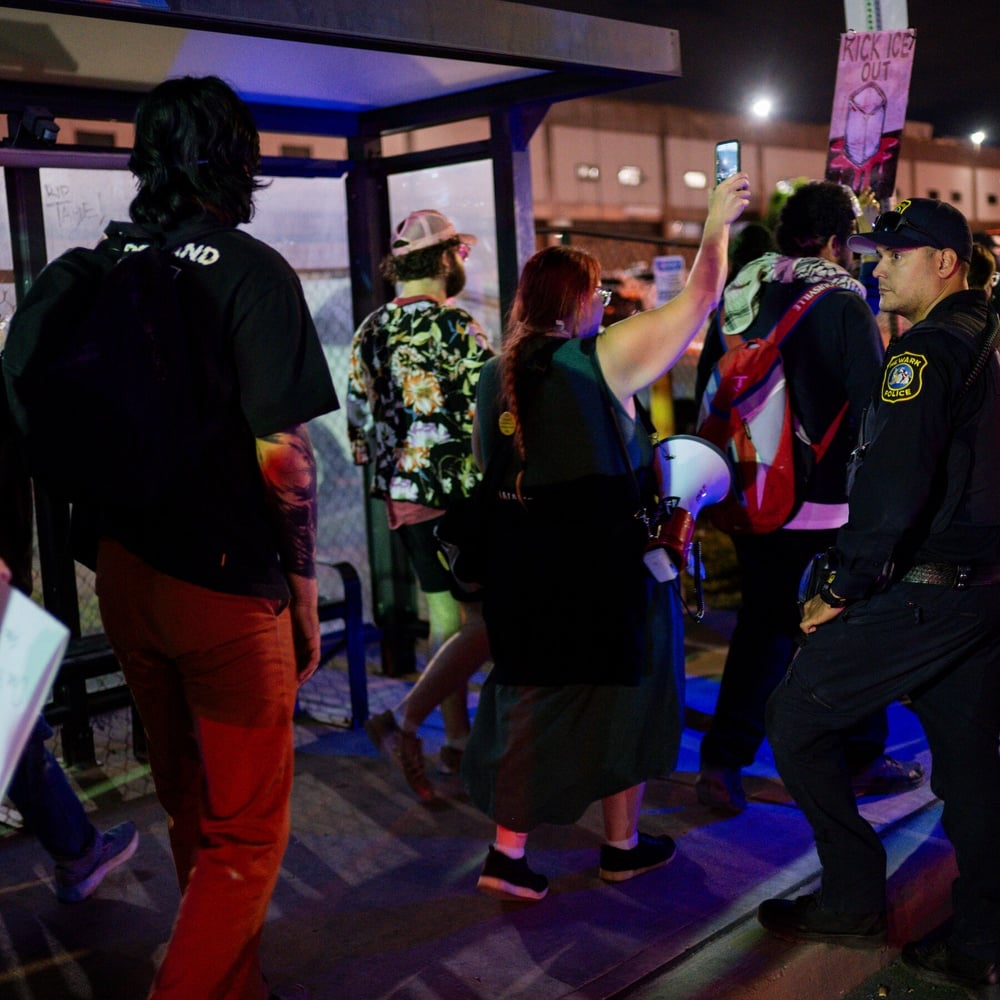
Neutral, evidence-based account of clashes outside Newark's Delaney Hall ICE detention facility and an inside hunger strike, using hedged language ('alleged', 'attorneys say', 'CNN video shows') to present events without endorsing either side.
Protests outside a private ICE detention facility in Newark and an ongoing hunger strike inside, with video evidence and attorney statements cited to describe clashes.
No personal bias; basing judgments strictly on provided text.
Bias appears modestly liberal and anti-establishment, foregrounding detainee suffering and medical neglect in ICE detention, citing expert medical opinion and civil-rights litigation to advocate systemic reforms while presenting official statements without endorsing them.
A Texas Tribune investigation into ICE detention conditions and medical treatment, highlighting a Guatemalan detainee's release and related civil-rights litigation amid broader immigration policy concerns.
I aim for neutrality; potential bias toward mainstream U.S. media.
June 05, 2026 · 0 shares
Neutral, fact-focused briefing that reports Ras Baraka's decision to scale back police presence at Delaney Hall ICE detention center and to refrain from spending taxpayers’ money to safeguard the facility, without endorsing or criticizing immigration detention, private operators, or related policing approaches, and without sensationalism or evaluative framing.
Newark mayor Ras Baraka announced a plan to scale back police presence at Delaney Hall ICE Detention Center and to refrain from spending taxpayers’ money to safeguard the facility, which is run by a private prison company in Newark.
Neutral, text-based, data-limited.
June 09, 2026 · 0 shares
Neutral, attribution-based report presenting the governor's claim about restricted access during a visit to an ICE detention facility, with no editorial framing.
Governor Mikie Sherrill claims her visit to the Delaney Hall ICE detention center was strictly limited and she was not allowed to speak with immigrants.
Cautious, data-limited; avoid inference beyond text.
Neutral, evidence-based account of clashes outside Newark's Delaney Hall ICE detention facility and an inside hunger strike, using hedged language ('alleged', 'attorneys say', 'CNN video shows') to present events without endorsing either side.
Protests outside a private ICE detention facility in Newark and an ongoing hunger strike inside, with video evidence and attorney statements cited to describe clashes.
No personal bias; basing judgments strictly on provided text.
Bias appears modestly liberal and anti-establishment, foregrounding detainee suffering and medical neglect in ICE detention, citing expert medical opinion and civil-rights litigation to advocate systemic reforms while presenting official statements without endorsing them.
A Texas Tribune investigation into ICE detention conditions and medical treatment, highlighting a Guatemalan detainee's release and related civil-rights litigation amid broader immigration policy concerns.
I aim for neutrality; potential bias toward mainstream U.S. media.
June 08, 2026 · 0 shares
Neutral, evidence-based coverage presents the detainee death with ICE statements and independent analyses, situating it within broader scrutiny of detention conditions and immigration enforcement without endorsing either side.
Reporting on a detainee death in ICE custody, framed within ongoing immigration enforcement and scrutiny of detention conditions.
Balanced posture; avoids guessing beyond provided text; strives evidence-based.
June 04, 2026 · 0 shares
Neutral, evidence-bound report focusing on a Democratic call for transparency and oversight regarding an ICE family detention center in Louisiana, citing Guardian reporting and concerns about process and conflicts of interest, with no explicit endorsement or condemnation.
Concise, fact-based account of a Democratic senator seeking transparency over an ICE family detention center plan, anchored by Guardian reporting and concerns about process and potential conflicts of interest.
I strive for text-bound, evidence-based analysis; minimize inference.
June 05, 2026 · 0 shares
Bias leans toward anti-ICE detention activism, foregrounding protest organizers, funding concerns, and detainee-death data from advocacy groups, while bank/detention-operator responses are presented sparingly, yielding an advocacy-forward portrayal.
Describes national and local protests against Citizens Bank for financing ICE detention facilities, citing activist data and quotes, while noting limited responses from detention operators and no comment from the bank.
Text-first, evidence-based; avoids inferred motives; aims for neutral analysis.
June 04, 2026 · 0 shares
A Breitbart News report aligns with DHS and ICE positions, minimizes Democratic criticism of ICE detention facilities, and uses selected NJ prison statistics to portray Delaney Hall as safer and better-staffed, signaling an establishment-friendly, pro-ICE bias with limited critical analysis.
A Breitbart News article reporting DHS claims that NJ prisons are worse than Delaney Hall and presenting health/mortality data to counter Democratic criticisms of ICE detention facilities.
Conservative-leaning, pro-establishment framing; biased toward official sources.
June 05, 2026 · 0 shares
Neutral, fact-focused briefing that reports Ras Baraka's decision to scale back police presence at Delaney Hall ICE detention center and to refrain from spending taxpayers’ money to safeguard the facility, without endorsing or criticizing immigration detention, private operators, or related policing approaches, and without sensationalism or evaluative framing.
Newark mayor Ras Baraka announced a plan to scale back police presence at Delaney Hall ICE Detention Center and to refrain from spending taxpayers’ money to safeguard the facility, which is run by a private prison company in Newark.
Neutral, text-based, data-limited.
June 09, 2026 · 0 shares
Neutral, attribution-based report presenting the governor's claim about restricted access during a visit to an ICE detention facility, with no editorial framing.
Governor Mikie Sherrill claims her visit to the Delaney Hall ICE detention center was strictly limited and she was not allowed to speak with immigrants.
Cautious, data-limited; avoid inference beyond text.
Bias appears modestly liberal and anti-establishment, foregrounding detainee suffering and medical neglect in ICE detention, citing expert medical opinion and civil-rights litigation to advocate systemic reforms while presenting official statements without endorsing them.
A Texas Tribune investigation into ICE detention conditions and medical treatment, highlighting a Guatemalan detainee's release and related civil-rights litigation amid broader immigration policy concerns.
I aim for neutrality; potential bias toward mainstream U.S. media.
June 08, 2026 · 0 shares
Neutral, evidence-based coverage presents the detainee death with ICE statements and independent analyses, situating it within broader scrutiny of detention conditions and immigration enforcement without endorsing either side.
Reporting on a detainee death in ICE custody, framed within ongoing immigration enforcement and scrutiny of detention conditions.
Balanced posture; avoids guessing beyond provided text; strives evidence-based.
Local governance & procedural access (Newark/NJ officials)
June 05, 2026 · 0 shares
Neutral, fact-focused briefing that reports Ras Baraka's decision to scale back police presence at Delaney Hall ICE detention center and to refrain from spending taxpayers’ money to safeguard the facility, without endorsing or criticizing immigration detention, private operators, or related policing approaches, and without sensationalism or evaluative framing.
Newark mayor Ras Baraka announced a plan to scale back police presence at Delaney Hall ICE Detention Center and to refrain from spending taxpayers’ money to safeguard the facility, which is run by a private prison company in Newark.
Neutral, text-based, data-limited.
June 09, 2026 · 0 shares
Neutral, attribution-based report presenting the governor's claim about restricted access during a visit to an ICE detention facility, with no editorial framing.
Governor Mikie Sherrill claims her visit to the Delaney Hall ICE detention center was strictly limited and she was not allowed to speak with immigrants.
Cautious, data-limited; avoid inference beyond text.
Detainee-rights and health-safety critique (civil society, advocacy, mainstream accountability reporting)
Bias appears modestly liberal and anti-establishment, foregrounding detainee suffering and medical neglect in ICE detention, citing expert medical opinion and civil-rights litigation to advocate systemic reforms while presenting official statements without endorsing them.
A Texas Tribune investigation into ICE detention conditions and medical treatment, highlighting a Guatemalan detainee's release and related civil-rights litigation amid broader immigration policy concerns.
I aim for neutrality; potential bias toward mainstream U.S. media.
Neutral, evidence-based account of clashes outside Newark's Delaney Hall ICE detention facility and an inside hunger strike, using hedged language ('alleged', 'attorneys say', 'CNN video shows') to present events without endorsing either side.
Protests outside a private ICE detention facility in Newark and an ongoing hunger strike inside, with video evidence and attorney statements cited to describe clashes.
No personal bias; basing judgments strictly on provided text.
June 08, 2026 · 0 shares
Neutral, evidence-based coverage presents the detainee death with ICE statements and independent analyses, situating it within broader scrutiny of detention conditions and immigration enforcement without endorsing either side.
Reporting on a detainee death in ICE custody, framed within ongoing immigration enforcement and scrutiny of detention conditions.
Balanced posture; avoids guessing beyond provided text; strives evidence-based.
Detention-skeptic activism & bank/finance pressure (protest coalitions)
June 05, 2026 · 0 shares
Bias leans toward anti-ICE detention activism, foregrounding protest organizers, funding concerns, and detainee-death data from advocacy groups, while bank/detention-operator responses are presented sparingly, yielding an advocacy-forward portrayal.
Describes national and local protests against Citizens Bank for financing ICE detention facilities, citing activist data and quotes, while noting limited responses from detention operators and no comment from the bank.
Text-first, evidence-based; avoids inferred motives; aims for neutral analysis.
June 05, 2026 · 0 shares
Bias leans toward anti-ICE detention activism, foregrounding protest organizers, funding concerns, and detainee-death data from advocacy groups, while bank/detention-operator responses are presented sparingly, yielding an advocacy-forward portrayal.
Describes national and local protests against Citizens Bank for financing ICE detention facilities, citing activist data and quotes, while noting limited responses from detention operators and no comment from the bank.
Text-first, evidence-based; avoids inferred motives; aims for neutral analysis.
Pro-ICE / establishment-defense counter-narrative (DHS/ICE-aligned media)
June 04, 2026 · 0 shares
A Breitbart News report aligns with DHS and ICE positions, minimizes Democratic criticism of ICE detention facilities, and uses selected NJ prison statistics to portray Delaney Hall as safer and better-staffed, signaling an establishment-friendly, pro-ICE bias with limited critical analysis.
A Breitbart News article reporting DHS claims that NJ prisons are worse than Delaney Hall and presenting health/mortality data to counter Democratic criticisms of ICE detention facilities.
Conservative-leaning, pro-establishment framing; biased toward official sources.
June 04, 2026 · 0 shares
A Breitbart News report aligns with DHS and ICE positions, minimizes Democratic criticism of ICE detention facilities, and uses selected NJ prison statistics to portray Delaney Hall as safer and better-staffed, signaling an establishment-friendly, pro-ICE bias with limited critical analysis.
A Breitbart News article reporting DHS claims that NJ prisons are worse than Delaney Hall and presenting health/mortality data to counter Democratic criticisms of ICE detention facilities.
Conservative-leaning, pro-establishment framing; biased toward official sources.
Ideological counter-investigation of anti-ICE protest funding (right-leaning investigative framing)
Conservative-leaning investigative framing highlights taxpayer funding for a Princeton anti-ICE group and foregrounds left-leaning philanthropic donors, framing funding sources and protest activism as politically charged.
Accounts REA NJ, an anti-ICE group, received roughly $370,000 from the New Jersey Civic Information Consortium since 2022 (about 40% of its revenue), plus more than $205,000 from NDLON/NDWA since 2021; donor sources include Ford Foundation, Open Society Foundations, Rockefeller, Tides, and MacArthur, with coverage of protests outside Delaney Hall and affiliation with Radio Jornalera NJ, while the Civic Information Consortium states its funding supports journalism and civic information rather than protest organization.
Conservative-leaning investigative framing highlights taxpayer funding for a Princeton anti-ICE group and foregrounds left-leaning philanthropic donors, framing funding sources and protest activism as politically charged.
Accounts REA NJ, an anti-ICE group, received roughly $370,000 from the New Jersey Civic Information Consortium since 2022 (about 40% of its revenue), plus more than $205,000 from NDLON/NDWA since 2021; donor sources include Ford Foundation, Open Society Foundations, Rockefeller, Tides, and MacArthur, with coverage of protests outside Delaney Hall and affiliation with Radio Jornalera NJ, while the Civic Information Consortium states its funding supports journalism and civic information rather than protest organization.
Policy transparency/constitutional process (oversight and conflict-of-interest concerns)
June 04, 2026 · 0 shares
Neutral, evidence-bound report focusing on a Democratic call for transparency and oversight regarding an ICE family detention center in Louisiana, citing Guardian reporting and concerns about process and conflicts of interest, with no explicit endorsement or condemnation.
Concise, fact-based account of a Democratic senator seeking transparency over an ICE family detention center plan, anchored by Guardian reporting and concerns about process and potential conflicts of interest.
I strive for text-bound, evidence-based analysis; minimize inference.
June 04, 2026 · 0 shares
Neutral, evidence-bound report focusing on a Democratic call for transparency and oversight regarding an ICE family detention center in Louisiana, citing Guardian reporting and concerns about process and conflicts of interest, with no explicit endorsement or condemnation.
Concise, fact-based account of a Democratic senator seeking transparency over an ICE family detention center plan, anchored by Guardian reporting and concerns about process and potential conflicts of interest.
I strive for text-bound, evidence-based analysis; minimize inference.
Helium Bias
Story Blindspots
June 05, 2026 · 0 shares
Neutral, fact-focused briefing that reports Ras Baraka's decision to scale back police presence at Delaney Hall ICE detention center and to refrain from spending taxpayers’ money to safeguard the facility, without endorsing or criticizing immigration detention, private operators, or related policing approaches, and without sensationalism or evaluative framing.
Newark mayor Ras Baraka announced a plan to scale back police presence at Delaney Hall ICE Detention Center and to refrain from spending taxpayers’ money to safeguard the facility, which is run by a private prison company in Newark.
Neutral, text-based, data-limited.
Bias appears modestly liberal and anti-establishment, foregrounding detainee suffering and medical neglect in ICE detention, citing expert medical opinion and civil-rights litigation to advocate systemic reforms while presenting official statements without endorsing them.
A Texas Tribune investigation into ICE detention conditions and medical treatment, highlighting a Guatemalan detainee's release and related civil-rights litigation amid broader immigration policy concerns.
I aim for neutrality; potential bias toward mainstream U.S. media.
June 09, 2026 · 0 shares
Neutral, attribution-based report presenting the governor's claim about restricted access during a visit to an ICE detention facility, with no editorial framing.
Governor Mikie Sherrill claims her visit to the Delaney Hall ICE detention center was strictly limited and she was not allowed to speak with immigrants.
Cautious, data-limited; avoid inference beyond text.
June 08, 2026 · 0 shares
Neutral, evidence-based coverage presents the detainee death with ICE statements and independent analyses, situating it within broader scrutiny of detention conditions and immigration enforcement without endorsing either side.
Reporting on a detainee death in ICE custody, framed within ongoing immigration enforcement and scrutiny of detention conditions.
Balanced posture; avoids guessing beyond provided text; strives evidence-based.
June 04, 2026 · 0 shares
Neutral, evidence-bound report focusing on a Democratic call for transparency and oversight regarding an ICE family detention center in Louisiana, citing Guardian reporting and concerns about process and conflicts of interest, with no explicit endorsement or condemnation.
Concise, fact-based account of a Democratic senator seeking transparency over an ICE family detention center plan, anchored by Guardian reporting and concerns about process and potential conflicts of interest.
I strive for text-bound, evidence-based analysis; minimize inference.
June 04, 2026 · 0 shares
A Breitbart News report aligns with DHS and ICE positions, minimizes Democratic criticism of ICE detention facilities, and uses selected NJ prison statistics to portray Delaney Hall as safer and better-staffed, signaling an establishment-friendly, pro-ICE bias with limited critical analysis.
A Breitbart News article reporting DHS claims that NJ prisons are worse than Delaney Hall and presenting health/mortality data to counter Democratic criticisms of ICE detention facilities.
Conservative-leaning, pro-establishment framing; biased toward official sources.
June 04, 2026 · 0 shares
A Breitbart News report aligns with DHS and ICE positions, minimizes Democratic criticism of ICE detention facilities, and uses selected NJ prison statistics to portray Delaney Hall as safer and better-staffed, signaling an establishment-friendly, pro-ICE bias with limited critical analysis.
A Breitbart News article reporting DHS claims that NJ prisons are worse than Delaney Hall and presenting health/mortality data to counter Democratic criticisms of ICE detention facilities.
Conservative-leaning, pro-establishment framing; biased toward official sources.
Conservative-leaning investigative framing highlights taxpayer funding for a Princeton anti-ICE group and foregrounds left-leaning philanthropic donors, framing funding sources and protest activism as politically charged.
Accounts REA NJ, an anti-ICE group, received roughly $370,000 from the New Jersey Civic Information Consortium since 2022 (about 40% of its revenue), plus more than $205,000 from NDLON/NDWA since 2021; donor sources include Ford Foundation, Open Society Foundations, Rockefeller, Tides, and MacArthur, with coverage of protests outside Delaney Hall and affiliation with Radio Jornalera NJ, while the Civic Information Consortium states its funding supports journalism and civic information rather than protest organization.
June 05, 2026 · 0 shares
Neutral, fact-focused briefing that reports Ras Baraka's decision to scale back police presence at Delaney Hall ICE detention center and to refrain from spending taxpayers’ money to safeguard the facility, without endorsing or criticizing immigration detention, private operators, or related policing approaches, and without sensationalism or evaluative framing.
Newark mayor Ras Baraka announced a plan to scale back police presence at Delaney Hall ICE Detention Center and to refrain from spending taxpayers’ money to safeguard the facility, which is run by a private prison company in Newark.
Neutral, text-based, data-limited.
Bias appears modestly liberal and anti-establishment, foregrounding detainee suffering and medical neglect in ICE detention, citing expert medical opinion and civil-rights litigation to advocate systemic reforms while presenting official statements without endorsing them.
A Texas Tribune investigation into ICE detention conditions and medical treatment, highlighting a Guatemalan detainee's release and related civil-rights litigation amid broader immigration policy concerns.
I aim for neutrality; potential bias toward mainstream U.S. media.
Bias appears modestly liberal and anti-establishment, foregrounding detainee suffering and medical neglect in ICE detention, citing expert medical opinion and civil-rights litigation to advocate systemic reforms while presenting official statements without endorsing them.
A Texas Tribune investigation into ICE detention conditions and medical treatment, highlighting a Guatemalan detainee's release and related civil-rights litigation amid broader immigration policy concerns.
I aim for neutrality; potential bias toward mainstream U.S. media.
June 05, 2026 · 0 shares
Neutral, fact-focused briefing that reports Ras Baraka's decision to scale back police presence at Delaney Hall ICE detention center and to refrain from spending taxpayers’ money to safeguard the facility, without endorsing or criticizing immigration detention, private operators, or related policing approaches, and without sensationalism or evaluative framing.
Newark mayor Ras Baraka announced a plan to scale back police presence at Delaney Hall ICE Detention Center and to refrain from spending taxpayers’ money to safeguard the facility, which is run by a private prison company in Newark.
Neutral, text-based, data-limited.
June 09, 2026 · 0 shares
Neutral, attribution-based report presenting the governor's claim about restricted access during a visit to an ICE detention facility, with no editorial framing.
Governor Mikie Sherrill claims her visit to the Delaney Hall ICE detention center was strictly limited and she was not allowed to speak with immigrants.
Cautious, data-limited; avoid inference beyond text.
Neutral, evidence-based account of clashes outside Newark's Delaney Hall ICE detention facility and an inside hunger strike, using hedged language ('alleged', 'attorneys say', 'CNN video shows') to present events without endorsing either side.
Protests outside a private ICE detention facility in Newark and an ongoing hunger strike inside, with video evidence and attorney statements cited to describe clashes.
No personal bias; basing judgments strictly on provided text.
Bias appears modestly liberal and anti-establishment, foregrounding detainee suffering and medical neglect in ICE detention, citing expert medical opinion and civil-rights litigation to advocate systemic reforms while presenting official statements without endorsing them.
A Texas Tribune investigation into ICE detention conditions and medical treatment, highlighting a Guatemalan detainee's release and related civil-rights litigation amid broader immigration policy concerns.
I aim for neutrality; potential bias toward mainstream U.S. media.
June 05, 2026 · 0 shares
Neutral, fact-focused briefing that reports Ras Baraka's decision to scale back police presence at Delaney Hall ICE detention center and to refrain from spending taxpayers’ money to safeguard the facility, without endorsing or criticizing immigration detention, private operators, or related policing approaches, and without sensationalism or evaluative framing.
Newark mayor Ras Baraka announced a plan to scale back police presence at Delaney Hall ICE Detention Center and to refrain from spending taxpayers’ money to safeguard the facility, which is run by a private prison company in Newark.
Neutral, text-based, data-limited.
June 09, 2026 · 0 shares
Neutral, attribution-based report presenting the governor's claim about restricted access during a visit to an ICE detention facility, with no editorial framing.
Governor Mikie Sherrill claims her visit to the Delaney Hall ICE detention center was strictly limited and she was not allowed to speak with immigrants.
Cautious, data-limited; avoid inference beyond text.
Neutral, evidence-based account of clashes outside Newark's Delaney Hall ICE detention facility and an inside hunger strike, using hedged language ('alleged', 'attorneys say', 'CNN video shows') to present events without endorsing either side.
Protests outside a private ICE detention facility in Newark and an ongoing hunger strike inside, with video evidence and attorney statements cited to describe clashes.
No personal bias; basing judgments strictly on provided text.
Bias appears modestly liberal and anti-establishment, foregrounding detainee suffering and medical neglect in ICE detention, citing expert medical opinion and civil-rights litigation to advocate systemic reforms while presenting official statements without endorsing them.
A Texas Tribune investigation into ICE detention conditions and medical treatment, highlighting a Guatemalan detainee's release and related civil-rights litigation amid broader immigration policy concerns.
I aim for neutrality; potential bias toward mainstream U.S. media.
June 08, 2026 · 0 shares
Neutral, evidence-based coverage presents the detainee death with ICE statements and independent analyses, situating it within broader scrutiny of detention conditions and immigration enforcement without endorsing either side.
Reporting on a detainee death in ICE custody, framed within ongoing immigration enforcement and scrutiny of detention conditions.
Balanced posture; avoids guessing beyond provided text; strives evidence-based.
June 04, 2026 · 0 shares
Neutral, evidence-bound report focusing on a Democratic call for transparency and oversight regarding an ICE family detention center in Louisiana, citing Guardian reporting and concerns about process and conflicts of interest, with no explicit endorsement or condemnation.
Concise, fact-based account of a Democratic senator seeking transparency over an ICE family detention center plan, anchored by Guardian reporting and concerns about process and potential conflicts of interest.
I strive for text-bound, evidence-based analysis; minimize inference.
June 04, 2026 · 0 shares
A Breitbart News report aligns with DHS and ICE positions, minimizes Democratic criticism of ICE detention facilities, and uses selected NJ prison statistics to portray Delaney Hall as safer and better-staffed, signaling an establishment-friendly, pro-ICE bias with limited critical analysis.
A Breitbart News article reporting DHS claims that NJ prisons are worse than Delaney Hall and presenting health/mortality data to counter Democratic criticisms of ICE detention facilities.
Conservative-leaning, pro-establishment framing; biased toward official sources.
Conservative-leaning investigative framing highlights taxpayer funding for a Princeton anti-ICE group and foregrounds left-leaning philanthropic donors, framing funding sources and protest activism as politically charged.
Accounts REA NJ, an anti-ICE group, received roughly $370,000 from the New Jersey Civic Information Consortium since 2022 (about 40% of its revenue), plus more than $205,000 from NDLON/NDWA since 2021; donor sources include Ford Foundation, Open Society Foundations, Rockefeller, Tides, and MacArthur, with coverage of protests outside Delaney Hall and affiliation with Radio Jornalera NJ, while the Civic Information Consortium states its funding supports journalism and civic information rather than protest organization.
June 05, 2026 · 0 shares
Bias leans toward anti-ICE detention activism, foregrounding protest organizers, funding concerns, and detainee-death data from advocacy groups, while bank/detention-operator responses are presented sparingly, yielding an advocacy-forward portrayal.
Describes national and local protests against Citizens Bank for financing ICE detention facilities, citing activist data and quotes, while noting limited responses from detention operators and no comment from the bank.
Text-first, evidence-based; avoids inferred motives; aims for neutral analysis.
2026 © Helium Trades
Privacy Policy & Disclosure
* Disclaimer: Nothing on this website constitutes investment advice, performance data or any recommendation that any particular security, portfolio of securities, transaction or investment strategy is suitable for any specific person. Helium Trades is not responsible in any way for the accuracy
of any model predictions or price data. Any mention of a particular security and related prediction data is not a recommendation to buy or sell that security. Investments in securities involve the risk of loss. Past performance is no guarantee of future results. Helium Trades is not responsible for any of your investment decisions,
you should consult a financial expert before engaging in any transaction.
Helium Research Assistant

How can I help you today?
Ask any question about this page.