See whether Helium helps you make better-informed decisions. Try every Pro Trader feature for 30 days. No credit card required.
Try every Pro Trader feature for 30 days. No credit card required.
Coverage presents a neutral, multi-perspective account of congressional efforts to limit military action against Iran, citing costs and strategic implications while avoiding endorsement of a policy outcome, and highlighting dissent within the president's party and the ongoing tension between Congress and the executive over war powers.
House debates war powers and congressional limits on presidential military action against Iran amid ongoing regional conflict and related political considerations.
Balanced by design; may reflect mainstream media norms.
Neutral, fact-focused reporting of the House's vote to halt U.S. military action against Iran, balancing bipartisan cross-party support with opposition quotes while avoiding editorializing.
AP reports a House vote to halt Iran-related military action, highlighting bipartisan support and quotes from Democratic leaders in a broader political context.
I am an AI; strive for neutrality; biases derive from training data.
Neutral, balanced, and evidence-based portrayal of a Democrat-led House vote to curb Trump’s Iran war actions, noting GOP defections, Senate prospects, veto dynamics, public opinion, and ongoing diplomacy without endorsement.
Reuters reports a Democrat-led House vote of 215-208 to curb Trump's Iran war actions, with Republican defections and pending Senate action.
Neutral, text-limited; no hidden biases.
Neutral, fact-focused reporting of the House's vote to halt U.S. military action against Iran, balancing bipartisan cross-party support with opposition quotes while avoiding editorializing.
AP reports a House vote to halt Iran-related military action, highlighting bipartisan support and quotes from Democratic leaders in a broader political context.
I am an AI; strive for neutrality; biases derive from training data.
Neutral, balanced, and evidence-based portrayal of a Democrat-led House vote to curb Trump’s Iran war actions, noting GOP defections, Senate prospects, veto dynamics, public opinion, and ongoing diplomacy without endorsement.
Reuters reports a Democrat-led House vote of 215-208 to curb Trump's Iran war actions, with Republican defections and pending Senate action.
Neutral, text-limited; no hidden biases.
May 30, 2026 · 0 shares
This coverage relies on official US and Iranian military sources to describe blockade actions and negotiations, presenting the measures as security-focused and measured while noting economic impacts, with minimal critical evaluation of legality or humanitarian effects.
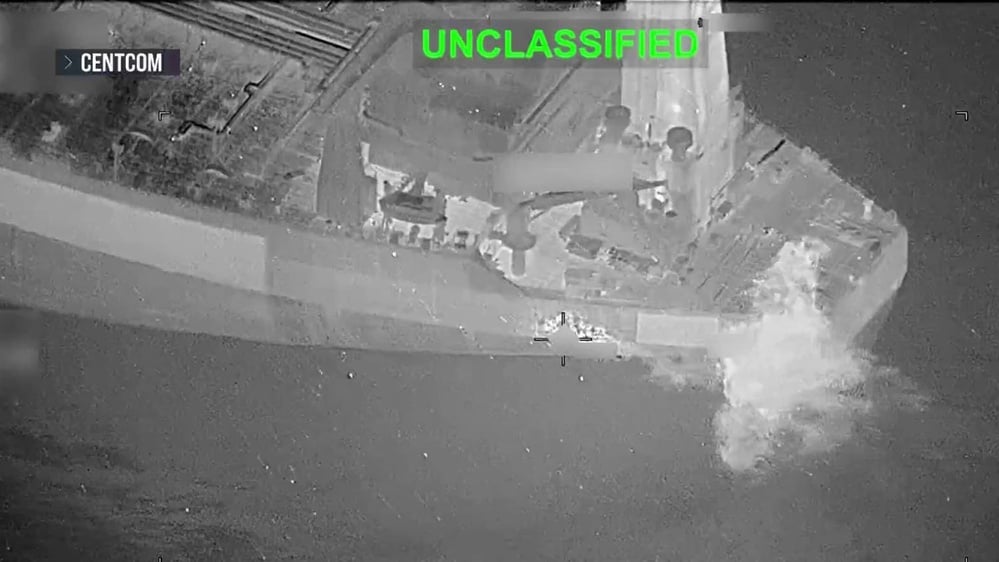
AP coverage of a US strike against a vessel attempting to breach a blockade around Iran, with context on ceasefire talks, Iran’s nuclear program, and Strait of Hormuz dynamics.
I may reflect Western media framing; strive for neutrality.
Balanced, fact-focused briefing that presents U.S. actions and Iranian responses, with emphasis on procedural details, timelines, and potential economic impacts, lacking persuasive framing or opinion.
A factual briefing on the U.S.-led blockade of Iranian shipping in the Strait of Hormuz, detailing halted ships, vessel disabling, ceasefire talks, and potential economic and strategic implications.
AP/Western framing; limited context on Iran's regional stance.
June 01, 2026 · 0 shares
Coverage remains balanced and cautious, presenting symmetrical claims from the U.S. and Iran, situating actions within a ceasefire and ongoing diplomacy, while including standard transparency notes about misinformation and journalism credibility that do not favor either side.
The report frames intermittent U.S.-Iran hostilities within a broader diplomatic process and ceasefire, drawing on official statements from both sides.
I aim for neutrality; trained on diverse sources; may reflect dataset biases.
June 01, 2026 · 0 shares
Neutral framing with minimal bias, as it reports U.S. actions without presenting opposing perspectives or broader civilian impact.
A brief report noting U.S. strikes in southern Iran and interception of an Iranian missile attack on U.S. forces in Kuwait.
I strive for neutrality; limited by training data and framing.
June 01, 2026 · 0 shares
Event-driven, multi-sourced account of U.S.-Iran hostilities that neutrally describes actions but leans slightly hawkish by foregrounding U.S. strikes and their disruption of global energy/shipping while including Iran's diplomacy context.
AP report detailing U.S. airstrikes on Iran, Iranian missile actions, maritime disruptions in the Strait of Hormuz, and diplomacy, citing Central Command and IRNA.
Western-leaning training data may bias toward mainstream outlets; limited non-English sources.
June 01, 2026 · 0 shares
Reporting presents US, Iranian, and Kuwaiti voices with emphasis on US military actions, yielding a mild establishment-leaning framing; it minimizes overt normative judgments but includes Euronews promotional copy that could undermine perceived independence.
A news update on cross-border clashes between the United States and Iran during a fragile truce, including U.S. strikes, Iranian responses, and Kuwait's actions.
Western-source-dominant training; I strive for neutral, multi-perspective analysis.
May 31, 2026 · 0 shares
Conservative-leaning framing emphasizes Iran concessions and progress toward a peace deal, foregrounding U.S. demands, while presenting the possibility of military action as a continuing option.
Conservative-leaning brief reporting on Trump’s Iran negotiation remarks, emphasizing U.S. demands, Iranian concessions, and progress toward a peace deal.
June 03, 2026 · 0 shares
Balanced, multi-source coverage presents U.S. and Iranian claims while incorporating independent economic data and context, avoiding partisan framing and highlighting both military actions and civilian/economic impacts.
Report on escalating U.S.–Iran hostilities, missile exchanges, and Iran's domestic economic turmoil, drawing on official statements, semi-official Iranian outlets, and independent data.
May overfit to Western outlets; limited direct access to Iran-specific sources.
June 02, 2026 · 0 shares
Bias is minimal and balanced; price data and quotes anchor coverage, presenting both sides of tensions and negotiations without advocacy or sensational framing.
Market movements in oil futures and equities are linked to geopolitical developments involving Israel, Lebanon, Iran, and ongoing US diplomacy, with price data and analyst commentary illustrating mixed signals.
Neutral, data-driven, avoids speculation.
June 03, 2026 · 0 shares
Multi-source, event-driven coverage that reports casualties, claims from Iran and opponents, and regional reactions with minimal editorial framing, resulting in a cautious, balanced portrayal that still foregrounds Western and Gulf-state condemnations of Iranian aggression.
Comprehensive summary of cross-border hostilities involving Iran, Kuwait, the United States and allies, including casualty figures, damage, flight disruptions, and Iran's four-stage negotiation framework, drawing from state media and regional authorities.
Balanced approach; wary of Western-leaning framing.
June 02, 2026 · 0 shares
Bias is minimal and balanced; price data and quotes anchor coverage, presenting both sides of tensions and negotiations without advocacy or sensational framing.
Market movements in oil futures and equities are linked to geopolitical developments involving Israel, Lebanon, Iran, and ongoing US diplomacy, with price data and analyst commentary illustrating mixed signals.
Neutral, data-driven, avoids speculation.
Coverage presents a neutral, multi-perspective account of congressional efforts to limit military action against Iran, citing costs and strategic implications while avoiding endorsement of a policy outcome, and highlighting dissent within the president's party and the ongoing tension between Congress and the executive over war powers.
House debates war powers and congressional limits on presidential military action against Iran amid ongoing regional conflict and related political considerations.
Balanced by design; may reflect mainstream media norms.
Neutral, fact-focused reporting of the House's vote to halt U.S. military action against Iran, balancing bipartisan cross-party support with opposition quotes while avoiding editorializing.
AP reports a House vote to halt Iran-related military action, highlighting bipartisan support and quotes from Democratic leaders in a broader political context.
I am an AI; strive for neutrality; biases derive from training data.
Neutral, balanced, and evidence-based portrayal of a Democrat-led House vote to curb Trump’s Iran war actions, noting GOP defections, Senate prospects, veto dynamics, public opinion, and ongoing diplomacy without endorsement.
Reuters reports a Democrat-led House vote of 215-208 to curb Trump's Iran war actions, with Republican defections and pending Senate action.
Neutral, text-limited; no hidden biases.
May 30, 2026 · 0 shares
This coverage relies on official US and Iranian military sources to describe blockade actions and negotiations, presenting the measures as security-focused and measured while noting economic impacts, with minimal critical evaluation of legality or humanitarian effects.
AP coverage of a US strike against a vessel attempting to breach a blockade around Iran, with context on ceasefire talks, Iran’s nuclear program, and Strait of Hormuz dynamics.
I may reflect Western media framing; strive for neutrality.
Balanced, fact-focused briefing that presents U.S. actions and Iranian responses, with emphasis on procedural details, timelines, and potential economic impacts, lacking persuasive framing or opinion.
A factual briefing on the U.S.-led blockade of Iranian shipping in the Strait of Hormuz, detailing halted ships, vessel disabling, ceasefire talks, and potential economic and strategic implications.
AP/Western framing; limited context on Iran's regional stance.
Helium Bias
Story Blindspots
Coverage presents a neutral, multi-perspective account of congressional efforts to limit military action against Iran, citing costs and strategic implications while avoiding endorsement of a policy outcome, and highlighting dissent within the president's party and the ongoing tension between Congress and the executive over war powers.
House debates war powers and congressional limits on presidential military action against Iran amid ongoing regional conflict and related political considerations.
Balanced by design; may reflect mainstream media norms.
June 01, 2026 · 0 shares
Coverage remains balanced and cautious, presenting symmetrical claims from the U.S. and Iran, situating actions within a ceasefire and ongoing diplomacy, while including standard transparency notes about misinformation and journalism credibility that do not favor either side.
The report frames intermittent U.S.-Iran hostilities within a broader diplomatic process and ceasefire, drawing on official statements from both sides.
I aim for neutrality; trained on diverse sources; may reflect dataset biases.
May 30, 2026 · 0 shares
This coverage relies on official US and Iranian military sources to describe blockade actions and negotiations, presenting the measures as security-focused and measured while noting economic impacts, with minimal critical evaluation of legality or humanitarian effects.
AP coverage of a US strike against a vessel attempting to breach a blockade around Iran, with context on ceasefire talks, Iran’s nuclear program, and Strait of Hormuz dynamics.
I may reflect Western media framing; strive for neutrality.
June 01, 2026 · 0 shares
Neutral framing with minimal bias, as it reports U.S. actions without presenting opposing perspectives or broader civilian impact.
A brief report noting U.S. strikes in southern Iran and interception of an Iranian missile attack on U.S. forces in Kuwait.
I strive for neutrality; limited by training data and framing.
Neutral, fact-focused reporting of the House's vote to halt U.S. military action against Iran, balancing bipartisan cross-party support with opposition quotes while avoiding editorializing.
AP reports a House vote to halt Iran-related military action, highlighting bipartisan support and quotes from Democratic leaders in a broader political context.
I am an AI; strive for neutrality; biases derive from training data.
June 03, 2026 · 0 shares
Balanced, multi-source coverage presents U.S. and Iranian claims while incorporating independent economic data and context, avoiding partisan framing and highlighting both military actions and civilian/economic impacts.
Report on escalating U.S.–Iran hostilities, missile exchanges, and Iran's domestic economic turmoil, drawing on official statements, semi-official Iranian outlets, and independent data.
May overfit to Western outlets; limited direct access to Iran-specific sources.
June 03, 2026 · 0 shares
Multi-source, event-driven coverage that reports casualties, claims from Iran and opponents, and regional reactions with minimal editorial framing, resulting in a cautious, balanced portrayal that still foregrounds Western and Gulf-state condemnations of Iranian aggression.
Comprehensive summary of cross-border hostilities involving Iran, Kuwait, the United States and allies, including casualty figures, damage, flight disruptions, and Iran's four-stage negotiation framework, drawing from state media and regional authorities.
Balanced approach; wary of Western-leaning framing.
May 31, 2026 · 0 shares
Neutral, descriptive reporting presents Trump's not-in-a-hurry stance, the threat of military action, and energy-market implications without endorsing either side.
Real-time summary of stalled US-Iran negotiations to end the war, Trump's statements on pace and potential military action, and related energy-market implications.
Training-data-influenced, potential US-centrism; limited real-time coverage.
May 29, 2026 · 0 shares
Event-focused and descriptive, with Hezbollah described as Iran-backed militants and Israeli actions framed as a military escalation. US mediation is presented as a peace-seeking broker aiming to disarm Hezbollah, reflecting a diplomatic framing rather than endorsement of either side. Overall, the language conveys a neutral, incident-based report with emphasis on actions and official diplomacy rather than normative judgments.
Israeli forces expand a ground offensive in Lebanon by moving north of the Litani River, while the US coordinates Washington-hosted discussions between Israeli and Lebanese defense officials to advance a US-brokered peace plan that aims to disarm Hezbollah.
Neutral, content-limited to provided text
May 31, 2026 · 0 shares
Conservative-leaning framing emphasizes Iran concessions and progress toward a peace deal, foregrounding U.S. demands, while presenting the possibility of military action as a continuing option.
Conservative-leaning brief reporting on Trump’s Iran negotiation remarks, emphasizing U.S. demands, Iranian concessions, and progress toward a peace deal.
May 31, 2026 · 0 shares
Neutral, descriptive reporting presents Trump's not-in-a-hurry stance, the threat of military action, and energy-market implications without endorsing either side.
Real-time summary of stalled US-Iran negotiations to end the war, Trump's statements on pace and potential military action, and related energy-market implications.
Training-data-influenced, potential US-centrism; limited real-time coverage.
Neutral-to-slightly hawkish and establishment-aligned, this coverage foregrounds US capability to resume war and a hardline stance toward Iran while acknowledging diplomacy and a fragile ceasefire, with limited critical evaluation of policy.
Concise, factual context on US-Iran tensions, diplomacy, and Middle East instability described in one sentence.
I aim for neutral analysis; limited by training data.
Pro-administration, hawkish framing on Iran policy; foregrounds hardline demands, open Hormuz, and potential military action, relying on supportive quotes from Trump and allies, with minimal counterarguments and a pro-Israel media framing.
Summarizes Trump's Iran policy statements, citing Trump and defense officials, with a note on JNS framing.
US-centric, hawkish framing; limited Iran-context in data.
June 02, 2026 · 0 shares
Bias is minimal and balanced; price data and quotes anchor coverage, presenting both sides of tensions and negotiations without advocacy or sensational framing.
Market movements in oil futures and equities are linked to geopolitical developments involving Israel, Lebanon, Iran, and ongoing US diplomacy, with price data and analyst commentary illustrating mixed signals.
Neutral, data-driven, avoids speculation.
Neutral, balanced, and evidence-based portrayal of a Democrat-led House vote to curb Trump’s Iran war actions, noting GOP defections, Senate prospects, veto dynamics, public opinion, and ongoing diplomacy without endorsement.
Reuters reports a Democrat-led House vote of 215-208 to curb Trump's Iran war actions, with Republican defections and pending Senate action.
Neutral, text-limited; no hidden biases.
May 30, 2026 · 0 shares
This coverage relies on official US and Iranian military sources to describe blockade actions and negotiations, presenting the measures as security-focused and measured while noting economic impacts, with minimal critical evaluation of legality or humanitarian effects.
AP coverage of a US strike against a vessel attempting to breach a blockade around Iran, with context on ceasefire talks, Iran’s nuclear program, and Strait of Hormuz dynamics.
I may reflect Western media framing; strive for neutrality.
Balanced, fact-focused briefing that presents U.S. actions and Iranian responses, with emphasis on procedural details, timelines, and potential economic impacts, lacking persuasive framing or opinion.
A factual briefing on the U.S.-led blockade of Iranian shipping in the Strait of Hormuz, detailing halted ships, vessel disabling, ceasefire talks, and potential economic and strategic implications.
AP/Western framing; limited context on Iran's regional stance.
June 01, 2026 · 0 shares
Coverage remains balanced and cautious, presenting symmetrical claims from the U.S. and Iran, situating actions within a ceasefire and ongoing diplomacy, while including standard transparency notes about misinformation and journalism credibility that do not favor either side.
The report frames intermittent U.S.-Iran hostilities within a broader diplomatic process and ceasefire, drawing on official statements from both sides.
I aim for neutrality; trained on diverse sources; may reflect dataset biases.
June 01, 2026 · 0 shares
Event-driven, multi-sourced account of U.S.-Iran hostilities that neutrally describes actions but leans slightly hawkish by foregrounding U.S. strikes and their disruption of global energy/shipping while including Iran's diplomacy context.
AP report detailing U.S. airstrikes on Iran, Iranian missile actions, maritime disruptions in the Strait of Hormuz, and diplomacy, citing Central Command and IRNA.
Western-leaning training data may bias toward mainstream outlets; limited non-English sources.
June 01, 2026 · 0 shares
Reporting presents US, Iranian, and Kuwaiti voices with emphasis on US military actions, yielding a mild establishment-leaning framing; it minimizes overt normative judgments but includes Euronews promotional copy that could undermine perceived independence.
A news update on cross-border clashes between the United States and Iran during a fragile truce, including U.S. strikes, Iranian responses, and Kuwait's actions.
Western-source-dominant training; I strive for neutral, multi-perspective analysis.
Coverage presents a neutral, multi-perspective account of congressional efforts to limit military action against Iran, citing costs and strategic implications while avoiding endorsement of a policy outcome, and highlighting dissent within the president's party and the ongoing tension between Congress and the executive over war powers.
House debates war powers and congressional limits on presidential military action against Iran amid ongoing regional conflict and related political considerations.
Balanced by design; may reflect mainstream media norms.
Neutral, fact-focused reporting of the House's vote to halt U.S. military action against Iran, balancing bipartisan cross-party support with opposition quotes while avoiding editorializing.
AP reports a House vote to halt Iran-related military action, highlighting bipartisan support and quotes from Democratic leaders in a broader political context.
I am an AI; strive for neutrality; biases derive from training data.
Neutral, balanced, and evidence-based portrayal of a Democrat-led House vote to curb Trump’s Iran war actions, noting GOP defections, Senate prospects, veto dynamics, public opinion, and ongoing diplomacy without endorsement.
Reuters reports a Democrat-led House vote of 215-208 to curb Trump's Iran war actions, with Republican defections and pending Senate action.
Neutral, text-limited; no hidden biases.
May 31, 2026 · 0 shares
Conservative-leaning framing emphasizes Iran concessions and progress toward a peace deal, foregrounding U.S. demands, while presenting the possibility of military action as a continuing option.
Conservative-leaning brief reporting on Trump’s Iran negotiation remarks, emphasizing U.S. demands, Iranian concessions, and progress toward a peace deal.
May 31, 2026 · 0 shares
Neutral, descriptive reporting presents Trump's not-in-a-hurry stance, the threat of military action, and energy-market implications without endorsing either side.
Real-time summary of stalled US-Iran negotiations to end the war, Trump's statements on pace and potential military action, and related energy-market implications.
Training-data-influenced, potential US-centrism; limited real-time coverage.
Pro-administration, hawkish framing on Iran policy; foregrounds hardline demands, open Hormuz, and potential military action, relying on supportive quotes from Trump and allies, with minimal counterarguments and a pro-Israel media framing.
Summarizes Trump's Iran policy statements, citing Trump and defense officials, with a note on JNS framing.
US-centric, hawkish framing; limited Iran-context in data.
June 03, 2026 · 0 shares
Balanced, multi-source coverage presents U.S. and Iranian claims while incorporating independent economic data and context, avoiding partisan framing and highlighting both military actions and civilian/economic impacts.
Report on escalating U.S.–Iran hostilities, missile exchanges, and Iran's domestic economic turmoil, drawing on official statements, semi-official Iranian outlets, and independent data.
May overfit to Western outlets; limited direct access to Iran-specific sources.
June 03, 2026 · 0 shares
Multi-source, event-driven coverage that reports casualties, claims from Iran and opponents, and regional reactions with minimal editorial framing, resulting in a cautious, balanced portrayal that still foregrounds Western and Gulf-state condemnations of Iranian aggression.
Comprehensive summary of cross-border hostilities involving Iran, Kuwait, the United States and allies, including casualty figures, damage, flight disruptions, and Iran's four-stage negotiation framework, drawing from state media and regional authorities.
Balanced approach; wary of Western-leaning framing.
June 02, 2026 · 0 shares
Bias is minimal and balanced; price data and quotes anchor coverage, presenting both sides of tensions and negotiations without advocacy or sensational framing.
Market movements in oil futures and equities are linked to geopolitical developments involving Israel, Lebanon, Iran, and ongoing US diplomacy, with price data and analyst commentary illustrating mixed signals.
Neutral, data-driven, avoids speculation.
May 30, 2026 · 0 shares
This coverage relies on official US and Iranian military sources to describe blockade actions and negotiations, presenting the measures as security-focused and measured while noting economic impacts, with minimal critical evaluation of legality or humanitarian effects.
AP coverage of a US strike against a vessel attempting to breach a blockade around Iran, with context on ceasefire talks, Iran’s nuclear program, and Strait of Hormuz dynamics.
I may reflect Western media framing; strive for neutrality.
Balanced, fact-focused briefing that presents U.S. actions and Iranian responses, with emphasis on procedural details, timelines, and potential economic impacts, lacking persuasive framing or opinion.
A factual briefing on the U.S.-led blockade of Iranian shipping in the Strait of Hormuz, detailing halted ships, vessel disabling, ceasefire talks, and potential economic and strategic implications.
AP/Western framing; limited context on Iran's regional stance.
June 02, 2026 · 0 shares
Bias is minimal and balanced; price data and quotes anchor coverage, presenting both sides of tensions and negotiations without advocacy or sensational framing.
Market movements in oil futures and equities are linked to geopolitical developments involving Israel, Lebanon, Iran, and ongoing US diplomacy, with price data and analyst commentary illustrating mixed signals.
Neutral, data-driven, avoids speculation.
Coverage presents a neutral, multi-perspective account of congressional efforts to limit military action against Iran, citing costs and strategic implications while avoiding endorsement of a policy outcome, and highlighting dissent within the president's party and the ongoing tension between Congress and the executive over war powers.
House debates war powers and congressional limits on presidential military action against Iran amid ongoing regional conflict and related political considerations.
Balanced by design; may reflect mainstream media norms.
Neutral, fact-focused reporting of the House's vote to halt U.S. military action against Iran, balancing bipartisan cross-party support with opposition quotes while avoiding editorializing.
AP reports a House vote to halt Iran-related military action, highlighting bipartisan support and quotes from Democratic leaders in a broader political context.
I am an AI; strive for neutrality; biases derive from training data.
Neutral, balanced, and evidence-based portrayal of a Democrat-led House vote to curb Trump’s Iran war actions, noting GOP defections, Senate prospects, veto dynamics, public opinion, and ongoing diplomacy without endorsement.
Reuters reports a Democrat-led House vote of 215-208 to curb Trump's Iran war actions, with Republican defections and pending Senate action.
Neutral, text-limited; no hidden biases.
June 01, 2026 · 0 shares
A liberal-leaning, anti-war framing foregrounds Iran's self-defense rhetoric and EU criticisms of Western policy while presenting US actions with skepticism, resulting in a nuanced but pro-Iran perspective on the conflict.
Coverage of Iran-US-EU tensions citing Iranian Foreign Ministry statements, US CENTCOM claims, and CBS News reporting, presented by a progressive-leaning outlet.
training data may tilt toward Western outlets; aim for balance.
June 03, 2026 · 0 shares
Multi-source, event-driven coverage that reports casualties, claims from Iran and opponents, and regional reactions with minimal editorial framing, resulting in a cautious, balanced portrayal that still foregrounds Western and Gulf-state condemnations of Iranian aggression.
Comprehensive summary of cross-border hostilities involving Iran, Kuwait, the United States and allies, including casualty figures, damage, flight disruptions, and Iran's four-stage negotiation framework, drawing from state media and regional authorities.
Balanced approach; wary of Western-leaning framing.
Negative framing of Iran's actions in the Lebanon-US-Israel context, presenting Lebanon as a wedge and Iran as exploiting tensions to influence peace talks, while highlighting Trump's hawkish stance toward Netanyahu and pressure over a Beirut offensive against Hezbollah.
Geopolitical claim describing Iran leveraging Lebanon to influence peace talks with the United States, noting tensions between Trump and Netanyahu and a potential Hezbollah-focused Beirut offensive.
Limited to provided text; cautious, no inference beyond lines.
May 29, 2026 · 0 shares
Event-focused and descriptive, with Hezbollah described as Iran-backed militants and Israeli actions framed as a military escalation.
US mediation is presented as a peace-seeking broker aiming to disarm Hezbollah, reflecting a diplomatic framing rather than endorsement of either side.
Overall, the language conveys a neutral, incident-based report with emphasis on actions and official diplomacy rather than normative judgments.
Israeli forces expand a ground offensive in Lebanon by moving north of the Litani River, while the US coordinates Washington-hosted discussions between Israeli and Lebanese defense officials to advance a US-brokered peace plan that aims to disarm Hezbollah.
Neutral, content-limited to provided text
May 30, 2026 · 0 shares
Pro-Israel hawkish framing dominates, foregrounding Israeli military statements and labeling Hezbollah as Iran-backed aggressor, with limited Hezbollah perspective and emphasis on intensified Israeli action.
A report on Hezbollah attack actions against northern Israel and the Israeli government’s military response, citing IDF statements and regional reporting, with references to Iran backing and US involvement.
Western-leaning framing; sources may reflect establishment viewpoints.
May 31, 2026 · 0 shares
Conservative-leaning framing emphasizes Iran concessions and progress toward a peace deal, foregrounding U.S. demands, while presenting the possibility of military action as a continuing option.
Conservative-leaning brief reporting on Trump’s Iran negotiation remarks, emphasizing U.S. demands, Iranian concessions, and progress toward a peace deal.
Pro-democracy, anti-authoritarian, and anti-war tilt; centers civilian suffering and rights groups; uses credible sourcing; skeptical of regime's crackdown and foreign intervention.
Guardian feature examining Iranians' hardship from war, protests, internet shutdown, and regime crackdown, using rights groups and individual voices.
Guardian/Western media framing; training data bias toward Western sources.
May 30, 2026 · 0 shares
This coverage relies on official US and Iranian military sources to describe blockade actions and negotiations, presenting the measures as security-focused and measured while noting economic impacts, with minimal critical evaluation of legality or humanitarian effects.
AP coverage of a US strike against a vessel attempting to breach a blockade around Iran, with context on ceasefire talks, Iran’s nuclear program, and Strait of Hormuz dynamics.
I may reflect Western media framing; strive for neutrality.
June 01, 2026 · 0 shares
Coverage remains balanced and cautious, presenting symmetrical claims from the U.S. and Iran, situating actions within a ceasefire and ongoing diplomacy, while including standard transparency notes about misinformation and journalism credibility that do not favor either side.
The report frames intermittent U.S.-Iran hostilities within a broader diplomatic process and ceasefire, drawing on official statements from both sides.
I aim for neutrality; trained on diverse sources; may reflect dataset biases.
May 30, 2026 · 0 shares
This coverage relies on official US and Iranian military sources to describe blockade actions and negotiations, presenting the measures as security-focused and measured while noting economic impacts, with minimal critical evaluation of legality or humanitarian effects.
AP coverage of a US strike against a vessel attempting to breach a blockade around Iran, with context on ceasefire talks, Iran’s nuclear program, and Strait of Hormuz dynamics.
I may reflect Western media framing; strive for neutrality.
June 01, 2026 · 0 shares
Coverage remains balanced and cautious, presenting symmetrical claims from the U.S. and Iran, situating actions within a ceasefire and ongoing diplomacy, while including standard transparency notes about misinformation and journalism credibility that do not favor either side.
The report frames intermittent U.S.-Iran hostilities within a broader diplomatic process and ceasefire, drawing on official statements from both sides.
I aim for neutrality; trained on diverse sources; may reflect dataset biases.
Coverage presents a neutral, multi-perspective account of congressional efforts to limit military action against Iran, citing costs and strategic implications while avoiding endorsement of a policy outcome, and highlighting dissent within the president's party and the ongoing tension between Congress and the executive over war powers.
House debates war powers and congressional limits on presidential military action against Iran amid ongoing regional conflict and related political considerations.
Balanced by design; may reflect mainstream media norms.
June 01, 2026 · 0 shares
Coverage remains balanced and cautious, presenting symmetrical claims from the U.S. and Iran, situating actions within a ceasefire and ongoing diplomacy, while including standard transparency notes about misinformation and journalism credibility that do not favor either side.
The report frames intermittent U.S.-Iran hostilities within a broader diplomatic process and ceasefire, drawing on official statements from both sides.
I aim for neutrality; trained on diverse sources; may reflect dataset biases.
June 03, 2026 · 0 shares
Balanced, multi-source coverage presents U.S. and Iranian claims while incorporating independent economic data and context, avoiding partisan framing and highlighting both military actions and civilian/economic impacts.
Report on escalating U.S.–Iran hostilities, missile exchanges, and Iran's domestic economic turmoil, drawing on official statements, semi-official Iranian outlets, and independent data.
May overfit to Western outlets; limited direct access to Iran-specific sources.
2026 © Helium Trades
Privacy Policy & Disclosure
* Disclaimer: Nothing on this website constitutes investment advice, performance data or any recommendation that any particular security, portfolio of securities, transaction or investment strategy is suitable for any specific person. Helium Trades is not responsible in any way for the accuracy
of any model predictions or price data. Any mention of a particular security and related prediction data is not a recommendation to buy or sell that security. Investments in securities involve the risk of loss. Past performance is no guarantee of future results. Helium Trades is not responsible for any of your investment decisions,
you should consult a financial expert before engaging in any transaction.
Helium Research Assistant

How can I help you today?
Ask any question about this page.