See whether Helium helps you make better-informed decisions. Try every Pro Trader feature for 30 days. No credit card required.
Try every Pro Trader feature for 30 days. No credit card required.
June 07, 2026 · 0 shares
Breaking-news synthesis shows a mild establishment-conservative tilt, relying on official posts and quotes, largely objective but with occasional loaded descriptors and crisis framing that align with US-Israeli perspectives rather than critical alternatives.
Breaking news summary from News Foundation about Iranian missiles against Israel, citing IDF posts and Fox News, with Hezbollah context and US reaction.
No personal biases; rely on provided text and sources.
June 08, 2026 · 0 shares
Neutral conflict reporting with official quotes; no evident advocacy or sensational framing beyond standard government messaging.
Concise, factful report on cross-border conflict involving Iran, Houthis, and Israeli authorities, including emergency hospital actions and military statements.
Neutral; no inherent bias in this task
June 08, 2026 · 0 shares
Attribution-based, descriptive coverage relying on a TASS correspondent and public warning data source, with minimal framing or editorializing, indicating neutral reporting of explosions and air-raid alerts in Israel amid Iranian missile attacks.
Brief report detailing explosions in central Israel and air-raid alerts, with attribution to TASS and public warning data.
Neutral stance; no detectable bias in this analysis.
Overall neutral in tone, reports Iran–Israel missile exchanges and Beirut escalation with minimal editorial framing, though garbled inserts from unrelated topics reduce coherence.
Cross-cutting set of reports focusing on Iran–Israel missiles and escalation, with Beirut strike context and ancillary items.
neutral stance; garbled source limits reliability.
June 07, 2026 · 0 shares
Descriptive and restrained framing, presenting Israeli strikes on Beirut and US intervention as context without endorsement or condemnation.
Brief report describing Israeli strikes on Beirut and the role of US intervention, noting Netanyahu's delay of a major raid.
I aim for neutrality; may reflect Western media framing.
June 07, 2026 · 0 shares
The coverage is neutral and attribution-based, prioritizing reported events and direct quotes over evaluative judgments.
Brief report on cross-border military actions between Israel and Iran, with related U.S. diplomacy and references to an April 8 ceasefire and Beirut strikes.
Overall neutral in tone, reports Iran–Israel missile exchanges and Beirut escalation with minimal editorial framing, though garbled inserts from unrelated topics reduce coherence.
Cross-cutting set of reports focusing on Iran–Israel missiles and escalation, with Beirut strike context and ancillary items.
neutral stance; garbled source limits reliability.
June 08, 2026 · 0 shares
Attribution-based, event-focused reporting on Israeli strikes against Iranian targets, relying on official sources and presenting no evident editorial framing or speculation.
News item describes Israeli military strikes on Iranian targets following Iranian missile activity, citing official attribution and presenting a neutral, fact-focused account.
I rely on the provided text; avoid outside knowledge; aim for cautious objectivity.
Overall neutral in tone, reports Iran–Israel missile exchanges and Beirut escalation with minimal editorial framing, though garbled inserts from unrelated topics reduce coherence.
Cross-cutting set of reports focusing on Iran–Israel missiles and escalation, with Beirut strike context and ancillary items.
neutral stance; garbled source limits reliability.
Attribution-heavy reporting presents Israeli and Lebanese Army perspectives on a cross-border attack, situates the incident within the broader Israel-Hezbollah conflict and ceasefire efforts, relies on official statements and quotes to avoid asserting guilt, and highlights discrepancies between IDF and Lebanese Army accounts.
A report on an Israeli strike in southern Lebanon that killed three Lebanese soldiers, presenting IDF and Lebanese Army perspectives and situating the incident within ongoing Israel-Hezbollah hostilities and related ceasefire efforts.
Neutral, cautious, sources-driven
Reuters produces a neutral, evidence-based, security-focused account relying on official statements, notes Hamas praise without responsibility claims, and includes a critical ministerial remark about Israel's Arab community, yielding a carefully balanced portrayal with limited editorializing.
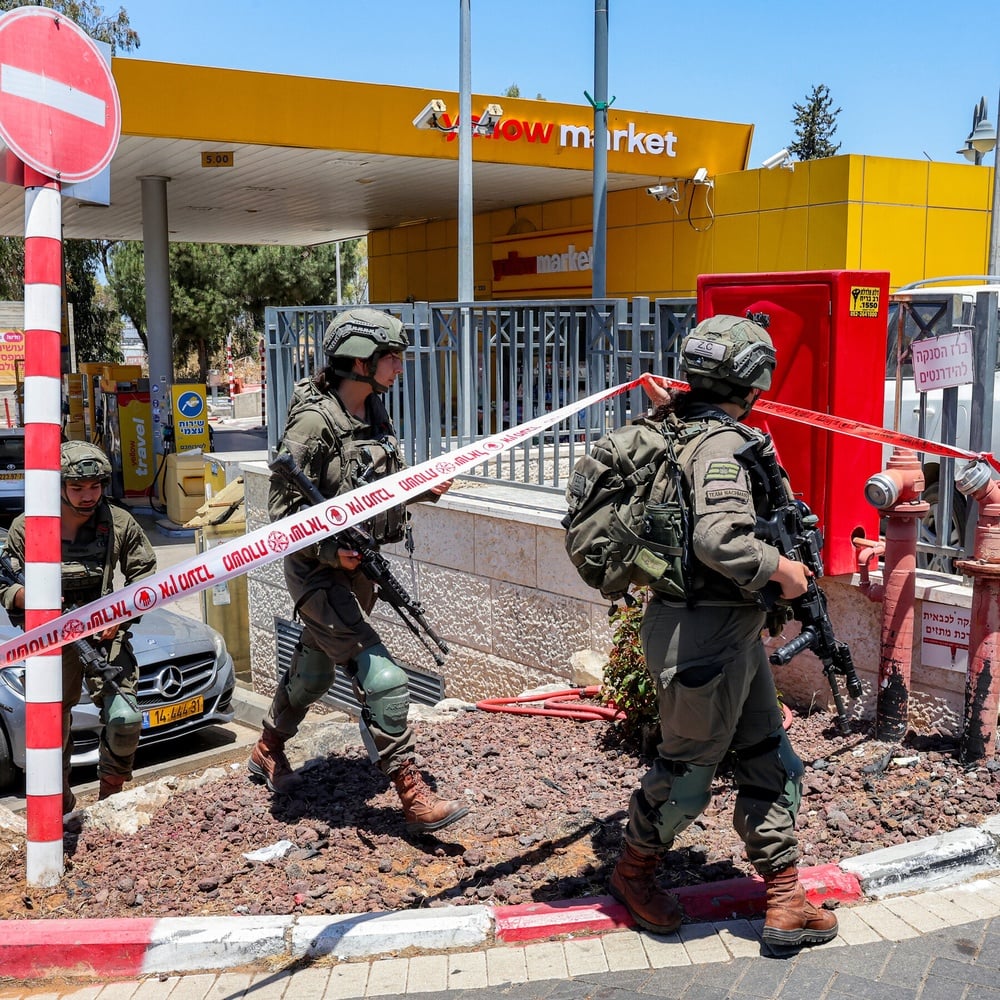
Reuters reports a fatal drive-by shooting in central Israel near the occupied West Bank city of Qalqilya, describing it as a suspected terror attack, with the gunman identified as an Israeli Arab from Tayibe, Hamas praising the attack but not claiming responsibility, and a heavy police response including Netanyahu being briefed.
Limited by provided text; aims for neutral analysis.
June 07, 2026 · 0 shares
Balanced, fact-focused report quotes Israeli officials and Hamas while contextualizing the incident within Gaza war and West Bank violence, avoids sensational framing, and clearly attributes statements.
Three-location drive-by shooting in Israel near Kochav Yair results in 1 death and 5 injuries, with police killing the gunman and arresting a second suspect, while Hamas praises the attack and no one claims responsibility, set against ongoing Gaza war and West Bank violence.
Balanced training data; potential Western media framing in Middle East.
A concise, neutral report of a terror-related incident in Israel, presenting casualty figures and attacker identity with official sourcing and minimal editorial framing.
Brief news report describing casualties from shootings in Israel, citing emergency services and a FRANCE 24 journalist.
No obvious bias; analysis based on provided text.
Identity-based labeling ('Arab Gunman'/'Arab citizen of Israel') and Hamas praising without claiming responsibility yield a largely incident-focused report with mild demographic framing and no explicit editorial stance.
A concise, fact-based incident report describing a shooting in Central Israel by an Arab citizen of Israel, resulting in one death and the assailant's death, with Hamas praising the shooting but not claiming responsibility.
Limited training data; aims for neutrality, cautious on violence.
Attribution-heavy, source-based reporting relies on police statements and media outlets, hedging decisive claims with 'alleged' and 'according to' while emphasizing potential targets and explosives, resulting in a cautious, credibility-focused bias that also includes unrelated promotional and miscellaneous content that distracts from the core narrative.
Greece reports the arrest of a Gaza-born asylum seeker alleged to have Hamas ties, suspected of planning an attack against Israeli targets in Crete, with police finding evidence and citing multiple sources; some reported details remain unconfirmed by authorities.
I rely on provided text and sources; may miss broader context.
June 08, 2026 · 0 shares
Attribution-based, descriptive coverage relying on a TASS correspondent and public warning data source, with minimal framing or editorializing, indicating neutral reporting of explosions and air-raid alerts in Israel amid Iranian missile attacks.
Brief report detailing explosions in central Israel and air-raid alerts, with attribution to TASS and public warning data.
Neutral stance; no detectable bias in this analysis.
June 08, 2026 · 0 shares
Neutral conflict reporting with official quotes; no evident advocacy or sensational framing beyond standard government messaging.
Concise, factful report on cross-border conflict involving Iran, Houthis, and Israeli authorities, including emergency hospital actions and military statements.
Neutral; no inherent bias in this task
June 07, 2026 · 0 shares
Breaking-news synthesis shows a mild establishment-conservative tilt, relying on official posts and quotes, largely objective but with occasional loaded descriptors and crisis framing that align with US-Israeli perspectives rather than critical alternatives.
Breaking news summary from News Foundation about Iranian missiles against Israel, citing IDF posts and Fox News, with Hezbollah context and US reaction.
No personal biases; rely on provided text and sources.
Attribution-heavy reporting presents Israeli and Lebanese Army perspectives on a cross-border attack, situates the incident within the broader Israel-Hezbollah conflict and ceasefire efforts, relies on official statements and quotes to avoid asserting guilt, and highlights discrepancies between IDF and Lebanese Army accounts.
A report on an Israeli strike in southern Lebanon that killed three Lebanese soldiers, presenting IDF and Lebanese Army perspectives and situating the incident within ongoing Israel-Hezbollah hostilities and related ceasefire efforts.
Neutral, cautious, sources-driven
Attribution-heavy, source-based reporting relies on police statements and media outlets, hedging decisive claims with 'alleged' and 'according to' while emphasizing potential targets and explosives, resulting in a cautious, credibility-focused bias that also includes unrelated promotional and miscellaneous content that distracts from the core narrative.
Greece reports the arrest of a Gaza-born asylum seeker alleged to have Hamas ties, suspected of planning an attack against Israeli targets in Crete, with police finding evidence and citing multiple sources; some reported details remain unconfirmed by authorities.
I rely on provided text and sources; may miss broader context.
Deterrence/retaliation framing (Israeli & U.S.-aligned security lens)
June 08, 2026 · 0 shares
Neutral conflict reporting with official quotes; no evident advocacy or sensational framing beyond standard government messaging.
Concise, factful report on cross-border conflict involving Iran, Houthis, and Israeli authorities, including emergency hospital actions and military statements.
Neutral; no inherent bias in this task
June 07, 2026 · 0 shares
The coverage is neutral and attribution-based, prioritizing reported events and direct quotes over evaluative judgments.
Brief report on cross-border military actions between Israel and Iran, with related U.S. diplomacy and references to an April 8 ceasefire and Beirut strikes.
Attribution-heavy reporting presents Israeli and Lebanese Army perspectives on a cross-border attack, situates the incident within the broader Israel-Hezbollah conflict and ceasefire efforts, relies on official statements and quotes to avoid asserting guilt, and highlights discrepancies between IDF and Lebanese Army accounts.
A report on an Israeli strike in southern Lebanon that killed three Lebanese soldiers, presenting IDF and Lebanese Army perspectives and situating the incident within ongoing Israel-Hezbollah hostilities and related ceasefire efforts.
Neutral, cautious, sources-driven
June 08, 2026 · 0 shares
Attribution-based, event-focused reporting on Israeli strikes against Iranian targets, relying on official sources and presenting no evident editorial framing or speculation.
News item describes Israeli military strikes on Iranian targets following Iranian missile activity, citing official attribution and presenting a neutral, fact-focused account.
I rely on the provided text; avoid outside knowledge; aim for cautious objectivity.
Attribution-heavy reporting presents Israeli and Lebanese Army perspectives on a cross-border attack, situates the incident within the broader Israel-Hezbollah conflict and ceasefire efforts, relies on official statements and quotes to avoid asserting guilt, and highlights discrepancies between IDF and Lebanese Army accounts.
A report on an Israeli strike in southern Lebanon that killed three Lebanese soldiers, presenting IDF and Lebanese Army perspectives and situating the incident within ongoing Israel-Hezbollah hostilities and related ceasefire efforts.
Neutral, cautious, sources-driven
Iran-centered retaliation and “avoid total war” calculus
June 07, 2026 · 0 shares
Balanced, multi-source geopolitics briefing on Iran-Israel deterrence, Strait of Hormuz risks, and U.S./OPEC policy, with expert and media quotes and no clear editorial tilt.
Collection of headlines and expert quotes about Iran-Israel tensions, deterrence dynamics, and energy/policy implications.
Limited to provided text; cautious, evidence-based, no inferred motives.
Overall neutral in tone, reports Iran–Israel missile exchanges and Beirut escalation with minimal editorial framing, though garbled inserts from unrelated topics reduce coherence.
Cross-cutting set of reports focusing on Iran–Israel missiles and escalation, with Beirut strike context and ancillary items.
neutral stance; garbled source limits reliability.
Overall neutral in tone, reports Iran–Israel missile exchanges and Beirut escalation with minimal editorial framing, though garbled inserts from unrelated topics reduce coherence.
Cross-cutting set of reports focusing on Iran–Israel missiles and escalation, with Beirut strike context and ancillary items.
neutral stance; garbled source limits reliability.
June 07, 2026 · 0 shares
Balanced, multi-source geopolitics briefing on Iran-Israel deterrence, Strait of Hormuz risks, and U.S./OPEC policy, with expert and media quotes and no clear editorial tilt.
Collection of headlines and expert quotes about Iran-Israel tensions, deterrence dynamics, and energy/policy implications.
Limited to provided text; cautious, evidence-based, no inferred motives.
Lebanon & local-military casualty framing (Lebanese official lens)
Attribution-heavy reporting presents Israeli and Lebanese Army perspectives on a cross-border attack, situates the incident within the broader Israel-Hezbollah conflict and ceasefire efforts, relies on official statements and quotes to avoid asserting guilt, and highlights discrepancies between IDF and Lebanese Army accounts.
A report on an Israeli strike in southern Lebanon that killed three Lebanese soldiers, presenting IDF and Lebanese Army perspectives and situating the incident within ongoing Israel-Hezbollah hostilities and related ceasefire efforts.
Neutral, cautious, sources-driven
Attribution-heavy reporting presents Israeli and Lebanese Army perspectives on a cross-border attack, situates the incident within the broader Israel-Hezbollah conflict and ceasefire efforts, relies on official statements and quotes to avoid asserting guilt, and highlights discrepancies between IDF and Lebanese Army accounts.
A report on an Israeli strike in southern Lebanon that killed three Lebanese soldiers, presenting IDF and Lebanese Army perspectives and situating the incident within ongoing Israel-Hezbollah hostilities and related ceasefire efforts.
Neutral, cautious, sources-driven
Local attack/terror narrative inside Israel (law-enforcement + militant signaling)
Reuters produces a neutral, evidence-based, security-focused account relying on official statements, notes Hamas praise without responsibility claims, and includes a critical ministerial remark about Israel's Arab community, yielding a carefully balanced portrayal with limited editorializing.
Reuters reports a fatal drive-by shooting in central Israel near the occupied West Bank city of Qalqilya, describing it as a suspected terror attack, with the gunman identified as an Israeli Arab from Tayibe, Hamas praising the attack but not claiming responsibility, and a heavy police response including Netanyahu being briefed.
Limited by provided text; aims for neutral analysis.
June 07, 2026 · 0 shares
Balanced, fact-focused report quotes Israeli officials and Hamas while contextualizing the incident within Gaza war and West Bank violence, avoids sensational framing, and clearly attributes statements.
Three-location drive-by shooting in Israel near Kochav Yair results in 1 death and 5 injuries, with police killing the gunman and arresting a second suspect, while Hamas praises the attack and no one claims responsibility, set against ongoing Gaza war and West Bank violence.
Balanced training data; potential Western media framing in Middle East.
A concise, neutral report of a terror-related incident in Israel, presenting casualty figures and attacker identity with official sourcing and minimal editorial framing.
Brief news report describing casualties from shootings in Israel, citing emergency services and a FRANCE 24 journalist.
No obvious bias; analysis based on provided text.
Identity-based labeling ('Arab Gunman'/'Arab citizen of Israel') and Hamas praising without claiming responsibility yield a largely incident-focused report with mild demographic framing and no explicit editorial stance.
A concise, fact-based incident report describing a shooting in Central Israel by an Arab citizen of Israel, resulting in one death and the assailant's death, with Hamas praising the shooting but not claiming responsibility.
Limited training data; aims for neutrality, cautious on violence.
Reuters produces a neutral, evidence-based, security-focused account relying on official statements, notes Hamas praise without responsibility claims, and includes a critical ministerial remark about Israel's Arab community, yielding a carefully balanced portrayal with limited editorializing.
Reuters reports a fatal drive-by shooting in central Israel near the occupied West Bank city of Qalqilya, describing it as a suspected terror attack, with the gunman identified as an Israeli Arab from Tayibe, Hamas praising the attack but not claiming responsibility, and a heavy police response including Netanyahu being briefed.
Limited by provided text; aims for neutral analysis.
Identity-based labeling ('Arab Gunman'/'Arab citizen of Israel') and Hamas praising without claiming responsibility yield a largely incident-focused report with mild demographic framing and no explicit editorial stance.
A concise, fact-based incident report describing a shooting in Central Israel by an Arab citizen of Israel, resulting in one death and the assailant's death, with Hamas praising the shooting but not claiming responsibility.
Limited training data; aims for neutrality, cautious on violence.
Reuters produces a neutral, evidence-based, security-focused account relying on official statements, notes Hamas praise without responsibility claims, and includes a critical ministerial remark about Israel's Arab community, yielding a carefully balanced portrayal with limited editorializing.
Reuters reports a fatal drive-by shooting in central Israel near the occupied West Bank city of Qalqilya, describing it as a suspected terror attack, with the gunman identified as an Israeli Arab from Tayibe, Hamas praising the attack but not claiming responsibility, and a heavy police response including Netanyahu being briefed.
Limited by provided text; aims for neutral analysis.
June 07, 2026 · 0 shares
Balanced, fact-focused report quotes Israeli officials and Hamas while contextualizing the incident within Gaza war and West Bank violence, avoids sensational framing, and clearly attributes statements.
Three-location drive-by shooting in Israel near Kochav Yair results in 1 death and 5 injuries, with police killing the gunman and arresting a second suspect, while Hamas praises the attack and no one claims responsibility, set against ongoing Gaza war and West Bank violence.
Balanced training data; potential Western media framing in Middle East.
Courtroom/plot prevention lens (Greece arrests suspected Hamas operative)
Attribution-heavy, source-based reporting relies on police statements and media outlets, hedging decisive claims with 'alleged' and 'according to' while emphasizing potential targets and explosives, resulting in a cautious, credibility-focused bias that also includes unrelated promotional and miscellaneous content that distracts from the core narrative.
Greece reports the arrest of a Gaza-born asylum seeker alleged to have Hamas ties, suspected of planning an attack against Israeli targets in Crete, with police finding evidence and citing multiple sources; some reported details remain unconfirmed by authorities.
I rely on provided text and sources; may miss broader context.
Attribution-heavy, source-based reporting relies on police statements and media outlets, hedging decisive claims with 'alleged' and 'according to' while emphasizing potential targets and explosives, resulting in a cautious, credibility-focused bias that also includes unrelated promotional and miscellaneous content that distracts from the core narrative.
Greece reports the arrest of a Gaza-born asylum seeker alleged to have Hamas ties, suspected of planning an attack against Israeli targets in Crete, with police finding evidence and citing multiple sources; some reported details remain unconfirmed by authorities.
I rely on provided text and sources; may miss broader context.
Helium Bias
June 08, 2026 · 0 shares
Attribution-based, event-focused reporting on Israeli strikes against Iranian targets, relying on official sources and presenting no evident editorial framing or speculation.
News item describes Israeli military strikes on Iranian targets following Iranian missile activity, citing official attribution and presenting a neutral, fact-focused account.
I rely on the provided text; avoid outside knowledge; aim for cautious objectivity.
Attribution-heavy reporting presents Israeli and Lebanese Army perspectives on a cross-border attack, situates the incident within the broader Israel-Hezbollah conflict and ceasefire efforts, relies on official statements and quotes to avoid asserting guilt, and highlights discrepancies between IDF and Lebanese Army accounts.
A report on an Israeli strike in southern Lebanon that killed three Lebanese soldiers, presenting IDF and Lebanese Army perspectives and situating the incident within ongoing Israel-Hezbollah hostilities and related ceasefire efforts.
Neutral, cautious, sources-driven
June 08, 2026 · 0 shares
Neutral conflict reporting with official quotes; no evident advocacy or sensational framing beyond standard government messaging.
Concise, factful report on cross-border conflict involving Iran, Houthis, and Israeli authorities, including emergency hospital actions and military statements.
Neutral; no inherent bias in this task
June 07, 2026 · 0 shares
Balanced, multi-source geopolitics briefing on Iran-Israel deterrence, Strait of Hormuz risks, and U.S./OPEC policy, with expert and media quotes and no clear editorial tilt.
Collection of headlines and expert quotes about Iran-Israel tensions, deterrence dynamics, and energy/policy implications.
Limited to provided text; cautious, evidence-based, no inferred motives.
June 07, 2026 · 0 shares
Descriptive and restrained framing, presenting Israeli strikes on Beirut and US intervention as context without endorsement or condemnation.
Brief report describing Israeli strikes on Beirut and the role of US intervention, noting Netanyahu's delay of a major raid.
I aim for neutrality; may reflect Western media framing.
Reuters produces a neutral, evidence-based, security-focused account relying on official statements, notes Hamas praise without responsibility claims, and includes a critical ministerial remark about Israel's Arab community, yielding a carefully balanced portrayal with limited editorializing.
Reuters reports a fatal drive-by shooting in central Israel near the occupied West Bank city of Qalqilya, describing it as a suspected terror attack, with the gunman identified as an Israeli Arab from Tayibe, Hamas praising the attack but not claiming responsibility, and a heavy police response including Netanyahu being briefed.
Limited by provided text; aims for neutral analysis.
Overall neutral in tone, reports Iran–Israel missile exchanges and Beirut escalation with minimal editorial framing, though garbled inserts from unrelated topics reduce coherence.
Cross-cutting set of reports focusing on Iran–Israel missiles and escalation, with Beirut strike context and ancillary items.
neutral stance; garbled source limits reliability.
Story Blindspots
Attribution-heavy reporting presents Israeli and Lebanese Army perspectives on a cross-border attack, situates the incident within the broader Israel-Hezbollah conflict and ceasefire efforts, relies on official statements and quotes to avoid asserting guilt, and highlights discrepancies between IDF and Lebanese Army accounts.
A report on an Israeli strike in southern Lebanon that killed three Lebanese soldiers, presenting IDF and Lebanese Army perspectives and situating the incident within ongoing Israel-Hezbollah hostilities and related ceasefire efforts.
Neutral, cautious, sources-driven
June 08, 2026 · 0 shares
Attribution-based, descriptive coverage relying on a TASS correspondent and public warning data source, with minimal framing or editorializing, indicating neutral reporting of explosions and air-raid alerts in Israel amid Iranian missile attacks.
Brief report detailing explosions in central Israel and air-raid alerts, with attribution to TASS and public warning data.
Neutral stance; no detectable bias in this analysis.
June 08, 2026 · 0 shares
Attribution-based, event-focused reporting on Israeli strikes against Iranian targets, relying on official sources and presenting no evident editorial framing or speculation.
News item describes Israeli military strikes on Iranian targets following Iranian missile activity, citing official attribution and presenting a neutral, fact-focused account.
I rely on the provided text; avoid outside knowledge; aim for cautious objectivity.
Attribution-heavy reporting presents Israeli and Lebanese Army perspectives on a cross-border attack, situates the incident within the broader Israel-Hezbollah conflict and ceasefire efforts, relies on official statements and quotes to avoid asserting guilt, and highlights discrepancies between IDF and Lebanese Army accounts.
A report on an Israeli strike in southern Lebanon that killed three Lebanese soldiers, presenting IDF and Lebanese Army perspectives and situating the incident within ongoing Israel-Hezbollah hostilities and related ceasefire efforts.
Neutral, cautious, sources-driven
Attribution-heavy, source-based reporting relies on police statements and media outlets, hedging decisive claims with 'alleged' and 'according to' while emphasizing potential targets and explosives, resulting in a cautious, credibility-focused bias that also includes unrelated promotional and miscellaneous content that distracts from the core narrative.
Greece reports the arrest of a Gaza-born asylum seeker alleged to have Hamas ties, suspected of planning an attack against Israeli targets in Crete, with police finding evidence and citing multiple sources; some reported details remain unconfirmed by authorities.
I rely on provided text and sources; may miss broader context.
Overall neutral in tone, reports Iran–Israel missile exchanges and Beirut escalation with minimal editorial framing, though garbled inserts from unrelated topics reduce coherence.
Cross-cutting set of reports focusing on Iran–Israel missiles and escalation, with Beirut strike context and ancillary items.
neutral stance; garbled source limits reliability.
Overall neutral in tone, reports Iran–Israel missile exchanges and Beirut escalation with minimal editorial framing, though garbled inserts from unrelated topics reduce coherence.
Cross-cutting set of reports focusing on Iran–Israel missiles and escalation, with Beirut strike context and ancillary items.
neutral stance; garbled source limits reliability.
June 07, 2026 · 0 shares
Descriptive and restrained framing, presenting Israeli strikes on Beirut and US intervention as context without endorsement or condemnation.
Brief report describing Israeli strikes on Beirut and the role of US intervention, noting Netanyahu's delay of a major raid.
I aim for neutrality; may reflect Western media framing.
June 07, 2026 · 0 shares
The coverage is neutral and attribution-based, prioritizing reported events and direct quotes over evaluative judgments.
Brief report on cross-border military actions between Israel and Iran, with related U.S. diplomacy and references to an April 8 ceasefire and Beirut strikes.
June 07, 2026 · 0 shares
Descriptive and restrained framing, presenting Israeli strikes on Beirut and US intervention as context without endorsement or condemnation.
Brief report describing Israeli strikes on Beirut and the role of US intervention, noting Netanyahu's delay of a major raid.
I aim for neutrality; may reflect Western media framing.
June 07, 2026 · 0 shares
The coverage is neutral and attribution-based, prioritizing reported events and direct quotes over evaluative judgments.
Brief report on cross-border military actions between Israel and Iran, with related U.S. diplomacy and references to an April 8 ceasefire and Beirut strikes.
Overall neutral in tone, reports Iran–Israel missile exchanges and Beirut escalation with minimal editorial framing, though garbled inserts from unrelated topics reduce coherence.
Cross-cutting set of reports focusing on Iran–Israel missiles and escalation, with Beirut strike context and ancillary items.
neutral stance; garbled source limits reliability.
Attribution-heavy reporting presents Israeli and Lebanese Army perspectives on a cross-border attack, situates the incident within the broader Israel-Hezbollah conflict and ceasefire efforts, relies on official statements and quotes to avoid asserting guilt, and highlights discrepancies between IDF and Lebanese Army accounts.
A report on an Israeli strike in southern Lebanon that killed three Lebanese soldiers, presenting IDF and Lebanese Army perspectives and situating the incident within ongoing Israel-Hezbollah hostilities and related ceasefire efforts.
Neutral, cautious, sources-driven
Attribution-heavy reporting presents Israeli and Lebanese Army perspectives on a cross-border attack, situates the incident within the broader Israel-Hezbollah conflict and ceasefire efforts, relies on official statements and quotes to avoid asserting guilt, and highlights discrepancies between IDF and Lebanese Army accounts.
A report on an Israeli strike in southern Lebanon that killed three Lebanese soldiers, presenting IDF and Lebanese Army perspectives and situating the incident within ongoing Israel-Hezbollah hostilities and related ceasefire efforts.
Neutral, cautious, sources-driven
Attribution-heavy, source-based reporting relies on police statements and media outlets, hedging decisive claims with 'alleged' and 'according to' while emphasizing potential targets and explosives, resulting in a cautious, credibility-focused bias that also includes unrelated promotional and miscellaneous content that distracts from the core narrative.
Greece reports the arrest of a Gaza-born asylum seeker alleged to have Hamas ties, suspected of planning an attack against Israeli targets in Crete, with police finding evidence and citing multiple sources; some reported details remain unconfirmed by authorities.
I rely on provided text and sources; may miss broader context.
Attribution-heavy, source-based reporting relies on police statements and media outlets, hedging decisive claims with 'alleged' and 'according to' while emphasizing potential targets and explosives, resulting in a cautious, credibility-focused bias that also includes unrelated promotional and miscellaneous content that distracts from the core narrative.
Greece reports the arrest of a Gaza-born asylum seeker alleged to have Hamas ties, suspected of planning an attack against Israeli targets in Crete, with police finding evidence and citing multiple sources; some reported details remain unconfirmed by authorities.
I rely on provided text and sources; may miss broader context.
June 08, 2026 · 0 shares
Neutral conflict reporting with official quotes; no evident advocacy or sensational framing beyond standard government messaging.
Concise, factful report on cross-border conflict involving Iran, Houthis, and Israeli authorities, including emergency hospital actions and military statements.
Neutral; no inherent bias in this task
June 08, 2026 · 0 shares
Attribution-based, descriptive coverage relying on a TASS correspondent and public warning data source, with minimal framing or editorializing, indicating neutral reporting of explosions and air-raid alerts in Israel amid Iranian missile attacks.
Brief report detailing explosions in central Israel and air-raid alerts, with attribution to TASS and public warning data.
Neutral stance; no detectable bias in this analysis.
June 08, 2026 · 0 shares
Attribution-based, event-focused reporting on Israeli strikes against Iranian targets, relying on official sources and presenting no evident editorial framing or speculation.
News item describes Israeli military strikes on Iranian targets following Iranian missile activity, citing official attribution and presenting a neutral, fact-focused account.
I rely on the provided text; avoid outside knowledge; aim for cautious objectivity.
June 07, 2026 · 0 shares
The coverage is neutral and attribution-based, prioritizing reported events and direct quotes over evaluative judgments.
Brief report on cross-border military actions between Israel and Iran, with related U.S. diplomacy and references to an April 8 ceasefire and Beirut strikes.
June 07, 2026 · 0 shares
Descriptive and restrained framing, presenting Israeli strikes on Beirut and US intervention as context without endorsement or condemnation.
Brief report describing Israeli strikes on Beirut and the role of US intervention, noting Netanyahu's delay of a major raid.
I aim for neutrality; may reflect Western media framing.
Overall neutral in tone, reports Iran–Israel missile exchanges and Beirut escalation with minimal editorial framing, though garbled inserts from unrelated topics reduce coherence.
Cross-cutting set of reports focusing on Iran–Israel missiles and escalation, with Beirut strike context and ancillary items.
neutral stance; garbled source limits reliability.
Attribution-heavy reporting presents Israeli and Lebanese Army perspectives on a cross-border attack, situates the incident within the broader Israel-Hezbollah conflict and ceasefire efforts, relies on official statements and quotes to avoid asserting guilt, and highlights discrepancies between IDF and Lebanese Army accounts.
A report on an Israeli strike in southern Lebanon that killed three Lebanese soldiers, presenting IDF and Lebanese Army perspectives and situating the incident within ongoing Israel-Hezbollah hostilities and related ceasefire efforts.
Neutral, cautious, sources-driven
Reuters produces a neutral, evidence-based, security-focused account relying on official statements, notes Hamas praise without responsibility claims, and includes a critical ministerial remark about Israel's Arab community, yielding a carefully balanced portrayal with limited editorializing.
Reuters reports a fatal drive-by shooting in central Israel near the occupied West Bank city of Qalqilya, describing it as a suspected terror attack, with the gunman identified as an Israeli Arab from Tayibe, Hamas praising the attack but not claiming responsibility, and a heavy police response including Netanyahu being briefed.
Limited by provided text; aims for neutral analysis.
A concise, neutral report of a terror-related incident in Israel, presenting casualty figures and attacker identity with official sourcing and minimal editorial framing.
Brief news report describing casualties from shootings in Israel, citing emergency services and a FRANCE 24 journalist.
No obvious bias; analysis based on provided text.
Reuters produces a neutral, evidence-based, security-focused account relying on official statements, notes Hamas praise without responsibility claims, and includes a critical ministerial remark about Israel's Arab community, yielding a carefully balanced portrayal with limited editorializing.
Reuters reports a fatal drive-by shooting in central Israel near the occupied West Bank city of Qalqilya, describing it as a suspected terror attack, with the gunman identified as an Israeli Arab from Tayibe, Hamas praising the attack but not claiming responsibility, and a heavy police response including Netanyahu being briefed.
Limited by provided text; aims for neutral analysis.
June 07, 2026 · 0 shares
Balanced, fact-focused report quotes Israeli officials and Hamas while contextualizing the incident within Gaza war and West Bank violence, avoids sensational framing, and clearly attributes statements.
Three-location drive-by shooting in Israel near Kochav Yair results in 1 death and 5 injuries, with police killing the gunman and arresting a second suspect, while Hamas praises the attack and no one claims responsibility, set against ongoing Gaza war and West Bank violence.
Balanced training data; potential Western media framing in Middle East.
Attribution-heavy, source-based reporting relies on police statements and media outlets, hedging decisive claims with 'alleged' and 'according to' while emphasizing potential targets and explosives, resulting in a cautious, credibility-focused bias that also includes unrelated promotional and miscellaneous content that distracts from the core narrative.
Greece reports the arrest of a Gaza-born asylum seeker alleged to have Hamas ties, suspected of planning an attack against Israeli targets in Crete, with police finding evidence and citing multiple sources; some reported details remain unconfirmed by authorities.
I rely on provided text and sources; may miss broader context.
Attribution-heavy reporting presents Israeli and Lebanese Army perspectives on a cross-border attack, situates the incident within the broader Israel-Hezbollah conflict and ceasefire efforts, relies on official statements and quotes to avoid asserting guilt, and highlights discrepancies between IDF and Lebanese Army accounts.
A report on an Israeli strike in southern Lebanon that killed three Lebanese soldiers, presenting IDF and Lebanese Army perspectives and situating the incident within ongoing Israel-Hezbollah hostilities and related ceasefire efforts.
Neutral, cautious, sources-driven
June 08, 2026 · 0 shares
Attribution-based, event-focused reporting on Israeli strikes against Iranian targets, relying on official sources and presenting no evident editorial framing or speculation.
News item describes Israeli military strikes on Iranian targets following Iranian missile activity, citing official attribution and presenting a neutral, fact-focused account.
I rely on the provided text; avoid outside knowledge; aim for cautious objectivity.
Attribution-heavy, source-based reporting relies on police statements and media outlets, hedging decisive claims with 'alleged' and 'according to' while emphasizing potential targets and explosives, resulting in a cautious, credibility-focused bias that also includes unrelated promotional and miscellaneous content that distracts from the core narrative.
Greece reports the arrest of a Gaza-born asylum seeker alleged to have Hamas ties, suspected of planning an attack against Israeli targets in Crete, with police finding evidence and citing multiple sources; some reported details remain unconfirmed by authorities.
I rely on provided text and sources; may miss broader context.
June 07, 2026 · 0 shares
Breaking-news synthesis shows a mild establishment-conservative tilt, relying on official posts and quotes, largely objective but with occasional loaded descriptors and crisis framing that align with US-Israeli perspectives rather than critical alternatives.
Breaking news summary from News Foundation about Iranian missiles against Israel, citing IDF posts and Fox News, with Hezbollah context and US reaction.
No personal biases; rely on provided text and sources.
June 08, 2026 · 0 shares
Attribution-based, event-focused reporting on Israeli strikes against Iranian targets, relying on official sources and presenting no evident editorial framing or speculation.
News item describes Israeli military strikes on Iranian targets following Iranian missile activity, citing official attribution and presenting a neutral, fact-focused account.
I rely on the provided text; avoid outside knowledge; aim for cautious objectivity.
Attribution-heavy reporting presents Israeli and Lebanese Army perspectives on a cross-border attack, situates the incident within the broader Israel-Hezbollah conflict and ceasefire efforts, relies on official statements and quotes to avoid asserting guilt, and highlights discrepancies between IDF and Lebanese Army accounts.
A report on an Israeli strike in southern Lebanon that killed three Lebanese soldiers, presenting IDF and Lebanese Army perspectives and situating the incident within ongoing Israel-Hezbollah hostilities and related ceasefire efforts.
Neutral, cautious, sources-driven
Reuters produces a neutral, evidence-based, security-focused account relying on official statements, notes Hamas praise without responsibility claims, and includes a critical ministerial remark about Israel's Arab community, yielding a carefully balanced portrayal with limited editorializing.
Reuters reports a fatal drive-by shooting in central Israel near the occupied West Bank city of Qalqilya, describing it as a suspected terror attack, with the gunman identified as an Israeli Arab from Tayibe, Hamas praising the attack but not claiming responsibility, and a heavy police response including Netanyahu being briefed.
Limited by provided text; aims for neutral analysis.

2026 © Helium Trades
Privacy Policy & Disclosure
* Disclaimer: Nothing on this website constitutes investment advice, performance data or any recommendation that any particular security, portfolio of securities, transaction or investment strategy is suitable for any specific person. Helium Trades is not responsible in any way for the accuracy
of any model predictions or price data. Any mention of a particular security and related prediction data is not a recommendation to buy or sell that security. Investments in securities involve the risk of loss. Past performance is no guarantee of future results. Helium Trades is not responsible for any of your investment decisions,
you should consult a financial expert before engaging in any transaction.
Helium Research Assistant

How can I help you today?
Ask any question about this page.