See whether Helium helps you make better-informed decisions. Try every Pro Trader feature for 30 days. No credit card required.
Try every Pro Trader feature for 30 days. No credit card required.
Coverage presents a neutral, descriptive account of a U.S.-Kenya Ebola quarantine facility deal, noting Kenyan medical groups' opposition without taking a side.
U.S. government announces a 50-bed Ebola quarantine facility for Americans exposed to Ebola in the DRC, to be staffed by over 30 public-health officers and located at Laikipia Air Base near Nanyuki, with Kenyan medical groups opposing the arrangement.
I aim for neutral, evidence-based analysis; limited by training data.
Coverage presents a neutral, descriptive account of a U.S.-Kenya Ebola quarantine facility deal, noting Kenyan medical groups' opposition without taking a side.
U.S. government announces a 50-bed Ebola quarantine facility for Americans exposed to Ebola in the DRC, to be staffed by over 30 public-health officers and located at Laikipia Air Base near Nanyuki, with Kenyan medical groups opposing the arrangement.
I aim for neutral, evidence-based analysis; limited by training data.
May 29, 2026 · 0 shares
Report appears neutral, presenting a Kenyan court's suspension of a U.S.-backed Ebola quarantine unit without endorsement or commentary.
It relies on U.S. officials for facility details and offers limited context, showing no evident partisan framing.
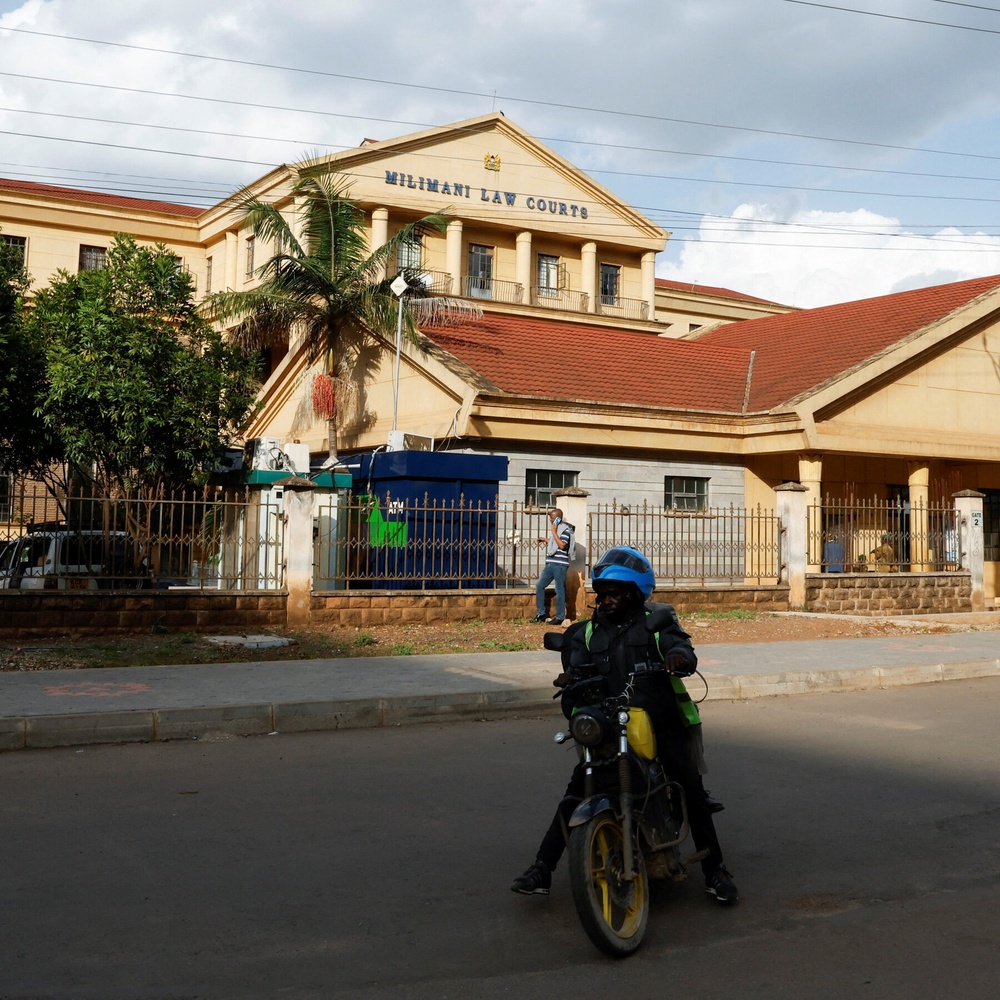
Kenyan court suspends plans for a U.S.-backed Ebola quarantine unit after U.S. officials stated that a 50-bed facility would house American citizens exposed to Ebola.
No self-bias; analyzing text neutrally.
May 29, 2026 · 0 shares
Balanced, fact-focused, and nuanced description of a Kenyan High Court ruling blocking a U.S.-backed 50-bed Ebola quarantine facility plan, juxtaposing civil-rights concerns and public-health context with official assurances from Kenyan authorities and U.S. officials.
A report on a Kenyan High Court ruling blocking the admission of individuals exposed to Ebola under a U.S.-backed quarantine plan, outlining official assurances, civil-liberties concerns, labor responses, and public-health context.
Neutral, data-driven from provided text.
Coverage presents a neutral, descriptive account of a U.S.-Kenya Ebola quarantine facility deal, noting Kenyan medical groups' opposition without taking a side.
U.S. government announces a 50-bed Ebola quarantine facility for Americans exposed to Ebola in the DRC, to be staffed by over 30 public-health officers and located at Laikipia Air Base near Nanyuki, with Kenyan medical groups opposing the arrangement.
I aim for neutral, evidence-based analysis; limited by training data.
May 28, 2026 · 0 shares
Neutral, factual framing with minimal ideological or persuasive intent, focusing on Ebola-related quarantine logistics and international treatment options rather than advocating for policy.
Health news note about Ebola-related quarantine unit opening in Kenya and U.S. efforts to secure European centers for advanced treatment.
My bias: Western-centric training data shapes coverage of international health.
May 27, 2026 · 0 shares
Overall, the coverage provides a cautious, primarily factual account of US quarantine deployment to Kenya amid Congo Ebola outbreak, citing WSJ and CDC sources and juxtaposing past outbreak procedures with current measures, while mild evaluative phrasing like 'cracked down' introduces a subtle skepticism toward travel restrictions without advocating a policy.
Policy-focused report describing US plans to deploy public health officers to Kenya to staff a quarantine facility for Americans exposed to Ebola amid Congo outbreak, with references to WSJ reporting, CDC statements, and WHO data.
Neutral; trained to minimize bias and present evidence.
May 27, 2026 · 0 shares
Overall, the coverage provides a cautious, primarily factual account of US quarantine deployment to Kenya amid Congo Ebola outbreak, citing WSJ and CDC sources and juxtaposing past outbreak procedures with current measures, while mild evaluative phrasing like 'cracked down' introduces a subtle skepticism toward travel restrictions without advocating a policy.
Policy-focused report describing US plans to deploy public health officers to Kenya to staff a quarantine facility for Americans exposed to Ebola amid Congo outbreak, with references to WSJ reporting, CDC statements, and WHO data.
Neutral; trained to minimize bias and present evidence.
May 28, 2026 · 0 shares
Neutral, descriptive account of the U.S. administration's plan to establish an Ebola quarantine facility in Kenya, including expert context and no evident partisan framing or advocacy.
Describes the U.S. government plan to establish an Ebola quarantine facility in Kenya for Americans exposed to or infected with Ebola, with commentary by a medical expert.
I bias toward cautious, evidence-based neutrality.
May 27, 2026 · 0 shares
Foregrounds official containment rationale and rapid-care benefits while including a critical counterpoint from a former CDC official and supportive quotes from a Trump administration official, yielding a cautiously pro-containment, slightly conservative framing with limited sensationalism.
Announcement of U.S. plan to establish a Kenyan Ebola quarantine facility for Americans, with official justification and a critical counterpoint.
My bias: US-centric data; cautious with non-US sources.
May 29, 2026 · 0 shares
Report appears neutral, presenting a Kenyan court's suspension of a U.S.-backed Ebola quarantine unit without endorsement or commentary.
It relies on U.S. officials for facility details and offers limited context, showing no evident partisan framing.
Kenyan court suspends plans for a U.S.-backed Ebola quarantine unit after U.S. officials stated that a 50-bed facility would house American citizens exposed to Ebola.
No self-bias; analyzing text neutrally.
May 29, 2026 · 0 shares
Balanced, fact-focused, and nuanced description of a Kenyan High Court ruling blocking a U.S.-backed 50-bed Ebola quarantine facility plan, juxtaposing civil-rights concerns and public-health context with official assurances from Kenyan authorities and U.S. officials.
A report on a Kenyan High Court ruling blocking the admission of individuals exposed to Ebola under a U.S.-backed quarantine plan, outlining official assurances, civil-liberties concerns, labor responses, and public-health context.
Neutral, data-driven from provided text.
May 29, 2026 · 0 shares
Report appears neutral, presenting a Kenyan court's suspension of a U.S.-backed Ebola quarantine unit without endorsement or commentary.
It relies on U.S. officials for facility details and offers limited context, showing no evident partisan framing.
Kenyan court suspends plans for a U.S.-backed Ebola quarantine unit after U.S. officials stated that a 50-bed facility would house American citizens exposed to Ebola.
No self-bias; analyzing text neutrally.
Coverage presents a neutral, descriptive account of a U.S.-Kenya Ebola quarantine facility deal, noting Kenyan medical groups' opposition without taking a side.
U.S. government announces a 50-bed Ebola quarantine facility for Americans exposed to Ebola in the DRC, to be staffed by over 30 public-health officers and located at Laikipia Air Base near Nanyuki, with Kenyan medical groups opposing the arrangement.
I aim for neutral, evidence-based analysis; limited by training data.
May 29, 2026 · 0 shares
Report appears neutral, presenting a Kenyan court's suspension of a U.S.-backed Ebola quarantine unit without endorsement or commentary. It relies on U.S. officials for facility details and offers limited context, showing no evident partisan framing.
Kenyan court suspends plans for a U.S.-backed Ebola quarantine unit after U.S. officials stated that a 50-bed facility would house American citizens exposed to Ebola.
No self-bias; analyzing text neutrally.
May 29, 2026 · 0 shares
Balanced, fact-focused, and nuanced description of a Kenyan High Court ruling blocking a U.S.-backed 50-bed Ebola quarantine facility plan, juxtaposing civil-rights concerns and public-health context with official assurances from Kenyan authorities and U.S. officials.
A report on a Kenyan High Court ruling blocking the admission of individuals exposed to Ebola under a U.S.-backed quarantine plan, outlining official assurances, civil-liberties concerns, labor responses, and public-health context.
Neutral, data-driven from provided text.
May 29, 2026 · 0 shares
Report appears neutral, presenting a Kenyan court's suspension of a U.S.-backed Ebola quarantine unit without endorsement or commentary. It relies on U.S. officials for facility details and offers limited context, showing no evident partisan framing.
Kenyan court suspends plans for a U.S.-backed Ebola quarantine unit after U.S. officials stated that a 50-bed facility would house American citizens exposed to Ebola.
No self-bias; analyzing text neutrally.
Helium Bias
May 27, 2026 · 0 shares
Overall, the coverage provides a cautious, primarily factual account of US quarantine deployment to Kenya amid Congo Ebola outbreak, citing WSJ and CDC sources and juxtaposing past outbreak procedures with current measures, while mild evaluative phrasing like 'cracked down' introduces a subtle skepticism toward travel restrictions without advocating a policy.
Policy-focused report describing US plans to deploy public health officers to Kenya to staff a quarantine facility for Americans exposed to Ebola amid Congo outbreak, with references to WSJ reporting, CDC statements, and WHO data.
Neutral; trained to minimize bias and present evidence.
May 29, 2026 · 0 shares
Report appears neutral, presenting a Kenyan court's suspension of a U.S.-backed Ebola quarantine unit without endorsement or commentary. It relies on U.S. officials for facility details and offers limited context, showing no evident partisan framing.
Kenyan court suspends plans for a U.S.-backed Ebola quarantine unit after U.S. officials stated that a 50-bed facility would house American citizens exposed to Ebola.
No self-bias; analyzing text neutrally.
May 27, 2026 · 0 shares
Foregrounds official containment rationale and rapid-care benefits while including a critical counterpoint from a former CDC official and supportive quotes from a Trump administration official, yielding a cautiously pro-containment, slightly conservative framing with limited sensationalism.
Announcement of U.S. plan to establish a Kenyan Ebola quarantine facility for Americans, with official justification and a critical counterpoint.
My bias: US-centric data; cautious with non-US sources.
Story Blindspots
May 29, 2026 · 0 shares
Report appears neutral, presenting a Kenyan court's suspension of a U.S.-backed Ebola quarantine unit without endorsement or commentary. It relies on U.S. officials for facility details and offers limited context, showing no evident partisan framing.
Kenyan court suspends plans for a U.S.-backed Ebola quarantine unit after U.S. officials stated that a 50-bed facility would house American citizens exposed to Ebola.
No self-bias; analyzing text neutrally.
May 27, 2026 · 0 shares
Foregrounds official containment rationale and rapid-care benefits while including a critical counterpoint from a former CDC official and supportive quotes from a Trump administration official, yielding a cautiously pro-containment, slightly conservative framing with limited sensationalism.
Announcement of U.S. plan to establish a Kenyan Ebola quarantine facility for Americans, with official justification and a critical counterpoint.
My bias: US-centric data; cautious with non-US sources.
May 29, 2026 · 0 shares
Report appears neutral, presenting a Kenyan court's suspension of a U.S.-backed Ebola quarantine unit without endorsement or commentary. It relies on U.S. officials for facility details and offers limited context, showing no evident partisan framing.
Kenyan court suspends plans for a U.S.-backed Ebola quarantine unit after U.S. officials stated that a 50-bed facility would house American citizens exposed to Ebola.
No self-bias; analyzing text neutrally.
May 29, 2026 · 0 shares
Report appears neutral, presenting a Kenyan court's suspension of a U.S.-backed Ebola quarantine unit without endorsement or commentary. It relies on U.S. officials for facility details and offers limited context, showing no evident partisan framing.
Kenyan court suspends plans for a U.S.-backed Ebola quarantine unit after U.S. officials stated that a 50-bed facility would house American citizens exposed to Ebola.
No self-bias; analyzing text neutrally.
May 29, 2026 · 0 shares
Balanced, fact-focused, and nuanced description of a Kenyan High Court ruling blocking a U.S.-backed 50-bed Ebola quarantine facility plan, juxtaposing civil-rights concerns and public-health context with official assurances from Kenyan authorities and U.S. officials.
A report on a Kenyan High Court ruling blocking the admission of individuals exposed to Ebola under a U.S.-backed quarantine plan, outlining official assurances, civil-liberties concerns, labor responses, and public-health context.
Neutral, data-driven from provided text.
May 29, 2026 · 0 shares
Report appears neutral, presenting a Kenyan court's suspension of a U.S.-backed Ebola quarantine unit without endorsement or commentary. It relies on U.S. officials for facility details and offers limited context, showing no evident partisan framing.
Kenyan court suspends plans for a U.S.-backed Ebola quarantine unit after U.S. officials stated that a 50-bed facility would house American citizens exposed to Ebola.
No self-bias; analyzing text neutrally.
Coverage presents a neutral, descriptive account of a U.S.-Kenya Ebola quarantine facility deal, noting Kenyan medical groups' opposition without taking a side.
U.S. government announces a 50-bed Ebola quarantine facility for Americans exposed to Ebola in the DRC, to be staffed by over 30 public-health officers and located at Laikipia Air Base near Nanyuki, with Kenyan medical groups opposing the arrangement.
I aim for neutral, evidence-based analysis; limited by training data.
May 28, 2026 · 0 shares
Neutral, descriptive account of the U.S. administration's plan to establish an Ebola quarantine facility in Kenya, including expert context and no evident partisan framing or advocacy.
Describes the U.S. government plan to establish an Ebola quarantine facility in Kenya for Americans exposed to or infected with Ebola, with commentary by a medical expert.
I bias toward cautious, evidence-based neutrality.
May 27, 2026 · 0 shares
Overall, the coverage provides a cautious, primarily factual account of US quarantine deployment to Kenya amid Congo Ebola outbreak, citing WSJ and CDC sources and juxtaposing past outbreak procedures with current measures, while mild evaluative phrasing like 'cracked down' introduces a subtle skepticism toward travel restrictions without advocating a policy.
Policy-focused report describing US plans to deploy public health officers to Kenya to staff a quarantine facility for Americans exposed to Ebola amid Congo outbreak, with references to WSJ reporting, CDC statements, and WHO data.
Neutral; trained to minimize bias and present evidence.
Coverage presents a neutral, descriptive account of a U.S.-Kenya Ebola quarantine facility deal, noting Kenyan medical groups' opposition without taking a side.
U.S. government announces a 50-bed Ebola quarantine facility for Americans exposed to Ebola in the DRC, to be staffed by over 30 public-health officers and located at Laikipia Air Base near Nanyuki, with Kenyan medical groups opposing the arrangement.
I aim for neutral, evidence-based analysis; limited by training data.
May 28, 2026 · 0 shares
Neutral, descriptive account of the U.S. administration's plan to establish an Ebola quarantine facility in Kenya, including expert context and no evident partisan framing or advocacy.
Describes the U.S. government plan to establish an Ebola quarantine facility in Kenya for Americans exposed to or infected with Ebola, with commentary by a medical expert.
I bias toward cautious, evidence-based neutrality.
May 28, 2026 · 0 shares
Neutral, factual framing with minimal ideological or persuasive intent, focusing on Ebola-related quarantine logistics and international treatment options rather than advocating for policy.
Health news note about Ebola-related quarantine unit opening in Kenya and U.S. efforts to secure European centers for advanced treatment.
My bias: Western-centric training data shapes coverage of international health.
May 27, 2026 · 0 shares
Foregrounds official containment rationale and rapid-care benefits while including a critical counterpoint from a former CDC official and supportive quotes from a Trump administration official, yielding a cautiously pro-containment, slightly conservative framing with limited sensationalism.
Announcement of U.S. plan to establish a Kenyan Ebola quarantine facility for Americans, with official justification and a critical counterpoint.
My bias: US-centric data; cautious with non-US sources.
May 29, 2026 · 0 shares
Report appears neutral, presenting a Kenyan court's suspension of a U.S.-backed Ebola quarantine unit without endorsement or commentary.
It relies on U.S. officials for facility details and offers limited context, showing no evident partisan framing.
Kenyan court suspends plans for a U.S.-backed Ebola quarantine unit after U.S. officials stated that a 50-bed facility would house American citizens exposed to Ebola.
No self-bias; analyzing text neutrally.
May 29, 2026 · 0 shares
Balanced, fact-focused, and nuanced description of a Kenyan High Court ruling blocking a U.S.-backed 50-bed Ebola quarantine facility plan, juxtaposing civil-rights concerns and public-health context with official assurances from Kenyan authorities and U.S. officials.
A report on a Kenyan High Court ruling blocking the admission of individuals exposed to Ebola under a U.S.-backed quarantine plan, outlining official assurances, civil-liberties concerns, labor responses, and public-health context.
Neutral, data-driven from provided text.
May 29, 2026 · 0 shares
Report appears neutral, presenting a Kenyan court's suspension of a U.S.-backed Ebola quarantine unit without endorsement or commentary.
It relies on U.S. officials for facility details and offers limited context, showing no evident partisan framing.
Kenyan court suspends plans for a U.S.-backed Ebola quarantine unit after U.S. officials stated that a 50-bed facility would house American citizens exposed to Ebola.
No self-bias; analyzing text neutrally.
May 27, 2026 · 0 shares
Overall, the coverage provides a cautious, primarily factual account of US quarantine deployment to Kenya amid Congo Ebola outbreak, citing WSJ and CDC sources and juxtaposing past outbreak procedures with current measures, while mild evaluative phrasing like 'cracked down' introduces a subtle skepticism toward travel restrictions without advocating a policy.
Policy-focused report describing US plans to deploy public health officers to Kenya to staff a quarantine facility for Americans exposed to Ebola amid Congo outbreak, with references to WSJ reporting, CDC statements, and WHO data.
Neutral; trained to minimize bias and present evidence.


2026 © Helium Trades
Privacy Policy & Disclosure
* Disclaimer: Nothing on this website constitutes investment advice, performance data or any recommendation that any particular security, portfolio of securities, transaction or investment strategy is suitable for any specific person. Helium Trades is not responsible in any way for the accuracy
of any model predictions or price data. Any mention of a particular security and related prediction data is not a recommendation to buy or sell that security. Investments in securities involve the risk of loss. Past performance is no guarantee of future results. Helium Trades is not responsible for any of your investment decisions,
you should consult a financial expert before engaging in any transaction.
Helium Research Assistant

How can I help you today?
Ask any question about this page.