See whether Helium helps you make better-informed decisions. Try every Pro Trader feature for 30 days. No credit card required.
Try every Pro Trader feature for 30 days. No credit card required.
Evidence-based, source-driven reporting relying on official investigations and documented data, with minimal evaluative language and no detectable ideological tilt.
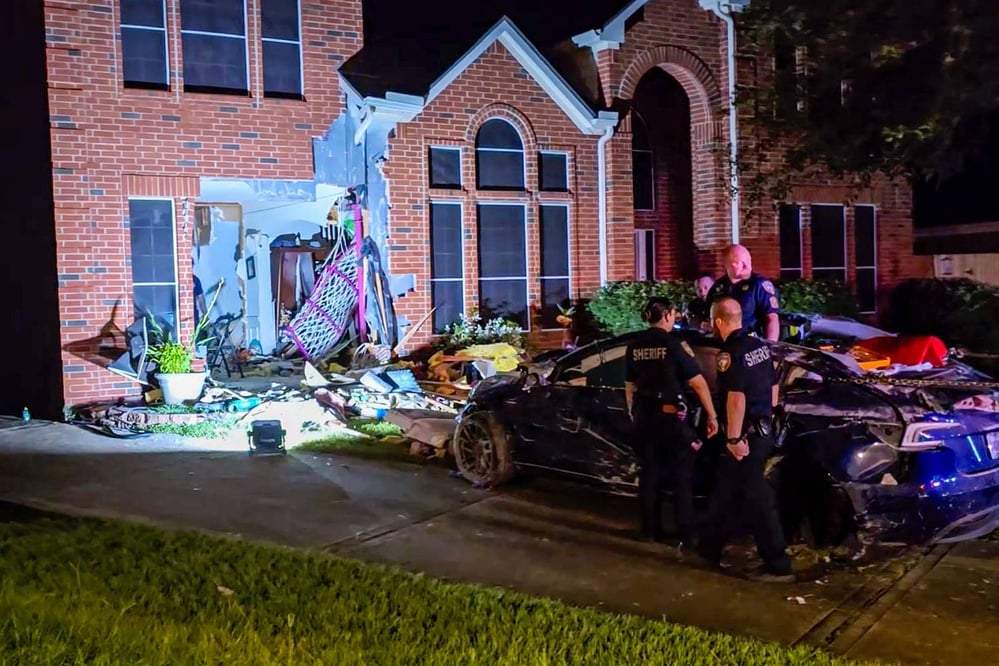
A fatal Katy, Texas crash involving a Tesla Model 3 where investigators say the driver manually overrode Full Self-Driving by pressing the accelerator to 100%, with NTSB preliminary findings and related legal and investigative actions.
Automated analysis; not human reviewed.
Limitations: Concise, case-specific limitations and plausible alternative interpretations.
·
52 of 52 available dimensions scored; omitted dimensions are not treated as neutral.
·
Verified supporting quotes for 2 of 52 scored dimensions.
Claim: No detectable political tilt; neutral framing.
“"manually overrode self-driving by pressing the accelerator all the way to 100%."” · verified after text normalization
“"the weather was clear, the roadway was dry, and daylight conditions were present"” · verified after text normalization
“"Butler told hospital providers that he remembered “putting the car in self driving mode” and that he “passed out,” according to an arrest affidavit."” · not found in supplied text
Why: Neutral framing supported by official data and quotes.
Claim: No populist or elitist framing detected; reporting is factual.
“"NTSB preliminary report"” · not found in supplied text
“"NHTSA"” · not found in supplied text
“"Butler was arrested"” · not found in supplied text
Why: Evidence-based sourcing, not populist/elitist framing.
Claim: No libertarian or authoritarian framing observed.
“"arrest"” · not found in supplied text
“"investigations"” · not found in supplied text
“"preliminary report"” · not found in supplied text
Why: Neutral references to governance and investigations.
Claim: No subjective opinion dominating the narrative.
“"fatal crash"” · not found in supplied text
“"reached speeds greater than 70 mph"” · not found in supplied text
“"butler...arrested"” · not found in supplied text
Why: Descriptive reporting with quotes and data.
Claim: Little sensationalism; factual descriptions dominate.
“"fatal"” · not found in supplied text
“"greater than 70 mph"” · not found in supplied text
“"arrested"” · not found in supplied text
Why: Non-sensational tone; reliance on official info.
Claim: Not applicable; reporting not about markets.
Why: Article not about market sentiment.
Claim: Neutral; article not particularly interesting beyond factual details.
“"reached speeds greater than 70mph"” · not found in supplied text
“"FSD"” · not found in supplied text
“"Google searches"” · not found in supplied text
Why: Facts cited; not sensational.
Claim: Descriptive rather than prescriptive; no guidance or instruction.
“"confirmed in a preliminary report"” · not found in supplied text
“"investigators found"” · not found in supplied text
“"data from Butler’s phone"” · not found in supplied text
Why: Describes events; not prescribing actions.
Claim: No political consensus; no hawkish or dovish framing.
“"arrested"” · not found in supplied text
“"investigations"” · not found in supplied text
“"preliminary report"” · not found in supplied text
Why: Neutral, investigation-focused language.
Claim: No fear-mongering; neutral tone.
“"fatal"” · not found in supplied text
“"70 mph"” · not found in supplied text
“"arrest"” · not found in supplied text
Why: Descriptive, not fear-inducing.
Claim: No circular logic or loaded questions evident.
“"preliminary report"” · not found in supplied text
“"investigations"” · not found in supplied text
“"data"” · not found in supplied text
Why: No reasoning trap apparent.
Claim: No gossip or sensational rumor spreading.
“"Martha Avila inside"” · not found in supplied text
“"Butler was arrested"” · not found in supplied text
“"Google searches"” · not found in supplied text
Why: Covers case facts with official references.
Claim: No opinionated language; quotes convey facts.
“"manually overrode"” · exact text match
“"began"” · not found in supplied text
“"investigation"” · not found in supplied text
Why: Quotations convey claims but no opinionated tone.
Claim: No political argument; not political in scope.
“"investigations"” · not found in supplied text
“"preliminary report"” · not found in supplied text
“"arrest"” · not found in supplied text
Why: Technical/Legal frame; not political.
Claim: No oversimplification; includes multiple factors (speed, weather, etc).
“"weather was clear, roadway dry"” · not found in supplied text
“"speed >70 mph"” · not found in supplied text
“"two-lane road with a 30 mph speed limit"” · not found in supplied text
Why: Contains multiple variables; not oversimplified.
Claim: Not an appeal to authority beyond citing official sources.
“"NTSB"” · not found in supplied text
“"NHTSA"” · not found in supplied text
“"Ashok Elluswamy"” · not found in supplied text
Why: Citing authorities is standard reporting practice, not appeal.
Claim: No immature language or adversarial tone evident.
“"fatally struck a woman"” · not found in supplied text
“"Butler was arrested"” · not found in supplied text
“"Google searches"” · not found in supplied text
Why: Neutral phrasing.
Claim: No circular reasoning detected.
“"preliminary report"” · not found in supplied text
“"investigations"” · not found in supplied text
“"data"” · not found in supplied text
Why: No pattern of repeats or self-referential claims.
Claim: No attempt to cover response; content focuses on crash facts.
“"Posts from this topic will be added to your daily email digest"” · not found in supplied text
Why: UI noise is not part of the reporting; not a deliberate strategy.
Claim: No victim-blaming; states victim and outcome clearly.
“"fatal crash"” · not found in supplied text
“"killing 76-year-old Martha Avila inside"” · not found in supplied text
Why: Describes victim without blame attribution.
Claim: No overconfident language; uses 'confirmed' and 'preliminary report'.
“"confirmed in a preliminary report"” · not found in supplied text
“"investigators found"” · not found in supplied text
“"reached speeds greater than 70 mph"” · not found in supplied text
Why: Qualifiers indicate cautious language.
Claim: No promotional content; article's UI noise lines are likely extraneous.
“"Posts from this topic will be added to your daily email digest and your homepage feed."” · exact text match
“"A free daily digest of the news that matters most."” · exact text match
Why: Presence of UI noise; not promotional content.
Claim: No ideological framing beyond general discussion of safety and investigation.
Why: Describes event; no ideological stance.
Claim: No anti- or pro-establishment framing; uses official sources.
“"NTSB"” · not found in supplied text
“"NHTSA"” · not found in supplied text
“"Tesla AI head Ashok Elluswamy"” · not found in supplied text
Why: Reliance on authorities; neutral stance.
Claim: No strong emotional language; neutral tone.
“"fatal crash"” · not found in supplied text
“"killing 76-year-old Martha Avila inside"” · not found in supplied text
Why: Neutral tone; factual reporting with minor emotive terms.
Claim: No double standards evident.
Why: No consistency claims across contexts.
Claim: Credible due to citing NTSB, NHTSA, and company statements.
“"the National Transportation Safety Board (NTSB) confirmed in a preliminary report"” · not found in supplied text
“"The National Highway Traffic Safety Administration is also investigating the crash."” · not found in supplied text
“"Ashok Elluswamy"” · not found in supplied text
Why: Multiple official sources; supports credibility.
Claim: Reporting reflects cautious, evidence-based language; not irrational.
“"preliminary report"” · not found in supplied text
“"investigators found"” · not found in supplied text
“"data from Butler’s phone"” · not found in supplied text
Why: Sourcing and caution indicate rational framing.
Claim: No explicit advertising; content not promotional.
“"A free daily digest of the news that matters most."” · exact text match
“"Posts from this topic will be added to your daily email digest and your homepage feed."” · exact text match
Why: Branding lines present but not promotional content.
Claim: No evidence of AI authorship; not indicated.
Why: No textual features indicating AI authorship.
Claim: No signals of dishonesty; transparent use of quotes and sources.
“"NTSB preliminary report"” · not found in supplied text
“"Tesla AI head"” · not found in supplied text
“"NHTSA"” · not found in supplied text
Why: Cites official sources; limited editorializing.
Claim: Moderate; includes citations to official sources and data; no speculation.
“"NTSB preliminary report"” · not found in supplied text
“"data from Butler’s phone"” · not found in supplied text
“"the NTSB’s findings align with a statement from Tesla AI head"” · not found in supplied text
Why: Fact-based sourcing; credible but not extraordinary.
Claim: No terrorism framing.
Why: Irrelevant to topic.
Claim: No Marxist framing.
Why: No content related to class struggle.
Claim: No Islamist framing.
Why: No mention of Islamist movements.
Claim: No antisemitic content.
Why: No antisemitic content.
Claim: No anti-LGBT content.
Why: No content regarding LGBT.
Claim: No racial bias detected.
Why: Text is not about race.
Claim: No identity-politics framing.
Why: Content not identity-politics oriented.
Claim: No cruelty framing.
Why: Neutral description of event.
Claim: No virtue signaling detected.
Why: No emphasis on moral posturing.
Claim: No conspiratorial framing.
Why: No claims about conspiracies.
Claim: No advocacy for self-harm or acceptance of it.
Why: No such content.
Claim: No scapegoating.
Why: No blame shifting to groups.
Claim: No hypocrisy detected.
Why: No contrasting standards used elsewhere.
Claim: No anti-enlightenment stance.
Why: No rejection of reason or evidence.
June date unspecified; text includes UI noise; limited quotes.
Neutral, detailed, and fact-based framing that relies on NTSB findings and quotes without editorialization, linking the crash to a driver's override and a prior fatality with minimal interpretation.
NTSB findings that a Tesla driver overrode the driver-assistance mode during a Full Self-Driving crash into a Texas home, referenced alongside a prior fatality of a 76-year-old woman weeks earlier.
Automated analysis; not human reviewed.
Limitations: Concise, case-specific limitations and plausible alternative interpretations.
·
1 of 52 available dimensions scored; omitted dimensions are not treated as neutral.
·
Verified supporting quotes for 0 of 1 scored dimensions.
Dates/context sparse; only one incident; no broader safety context.
Preliminary NTSB findings are framed as validating Elon Musk and Tesla's claim that the driver manually overrode FSD by pressing the accelerator to 100% in a fatal Texas crash, with emphasis on the override narrative while acknowledging ongoing investigation and alternate theories.
NTSB preliminary findings are used to portray Tesla/Musk claims about driver override in a fatal Texas crash, with ongoing investigations and additional investigations by NHTSA.
Automated analysis; not human reviewed. Limitations: Concise, case-specific limitations and plausible alternative interpretations.
Neutral, evidence-based reporting relying on official investigations and statements, with balanced attribution and no evident ideological framing.
Reports on NTSB preliminary findings that a Tesla driver overrode the Full Self-Driving system, with NHTSA investigations and related legal actions.
Automated analysis; not human reviewed.
Limitations: Case-specific; may not capture longer-term editorial tendencies or future updates as investigations progress.
·
52 of 52 available dimensions scored; omitted dimensions are not treated as neutral.
·
Verified supporting quotes for 1 of 52 scored dimensions.
Claim: Article uses neutral framing with official sources and no partisan tilt.
“NTSB investigators confirm Tesla driver overrode Full Self-Driving system in fatal crash.” · exact text match
“The National Highway Traffic Safety Administration is also investigating the crash.” · not found in supplied text
“FSD (Supervised) is supposed to require active driver supervision to take turns, complete lane changes and otherwise navigate to destinations.” · exact text match
Why: Quotes and reporting focus on investigations and system descriptions, indicating neutral framing rather than ideology.
Claim: No populist framing; coverage neutrally references authorities and company statements.
“The NHTSA is conducting its own investigation into this Texas crash” · exact text match
“the investigation's preliminary findings match what Tesla AI head Ashok Elluswamy shared on X in June.” · not found in supplied text
Why: Balance between public agencies and corporate statements, without appeals to elites or populist rhetoric.
Claim: Credibility is supported by multiple named sources and explicit statements of preliminary findings.
“preliminary investigation from the National Transportation Safety Board” · exact text match
“Ashok Elluswamy shared on X in June” · exact text match
“The NHTSA is conducting its own investigation into this Texas crash” · exact text match
Why: Sourcing from NTSB, NHTSA, and Tesla's own statements enhances credibility; no undisclosed sources.
Claim: The piece appears to maintain fairness by quoting multiple sources and acknowledging ongoing investigations.
“NTSB investigators confirm Tesla driver overrode Full Self-Driving system in fatal crash.” · exact text match
“The National Highway Traffic Safety Administration is also investigating the crash.” · not found in supplied text
“Avila's family filed a wrongful death suit... Not long after in July, Butler was charged with manslaughter.” · not found in supplied text
Why: Citing official sources and legal actions supports perceived integrity.
Preliminary findings; few quotes; limited context beyond incident.
Evidence-based, source-driven reporting relying on official investigations and documented data, with minimal evaluative language and no detectable ideological tilt.
A fatal Katy, Texas crash involving a Tesla Model 3 where investigators say the driver manually overrode Full Self-Driving by pressing the accelerator to 100%, with NTSB preliminary findings and related legal and investigative actions.
Automated analysis; not human reviewed.
Limitations: Concise, case-specific limitations and plausible alternative interpretations.
·
52 of 52 available dimensions scored; omitted dimensions are not treated as neutral.
·
Verified supporting quotes for 2 of 52 scored dimensions.
Claim: No detectable political tilt; neutral framing.
“"manually overrode self-driving by pressing the accelerator all the way to 100%."” · verified after text normalization
“"the weather was clear, the roadway was dry, and daylight conditions were present"” · verified after text normalization
“"Butler told hospital providers that he remembered “putting the car in self driving mode” and that he “passed out,” according to an arrest affidavit."” · not found in supplied text
Why: Neutral framing supported by official data and quotes.
Claim: No populist or elitist framing detected; reporting is factual.
“"NTSB preliminary report"” · not found in supplied text
“"NHTSA"” · not found in supplied text
“"Butler was arrested"” · not found in supplied text
Why: Evidence-based sourcing, not populist/elitist framing.
Claim: No libertarian or authoritarian framing observed.
“"arrest"” · not found in supplied text
“"investigations"” · not found in supplied text
“"preliminary report"” · not found in supplied text
Why: Neutral references to governance and investigations.
Claim: No subjective opinion dominating the narrative.
“"fatal crash"” · not found in supplied text
“"reached speeds greater than 70 mph"” · not found in supplied text
“"butler...arrested"” · not found in supplied text
Why: Descriptive reporting with quotes and data.
Claim: Little sensationalism; factual descriptions dominate.
“"fatal"” · not found in supplied text
“"greater than 70 mph"” · not found in supplied text
“"arrested"” · not found in supplied text
Why: Non-sensational tone; reliance on official info.
Claim: Not applicable; reporting not about markets.
Why: Article not about market sentiment.
Claim: Neutral; article not particularly interesting beyond factual details.
“"reached speeds greater than 70mph"” · not found in supplied text
“"FSD"” · not found in supplied text
“"Google searches"” · not found in supplied text
Why: Facts cited; not sensational.
Claim: Descriptive rather than prescriptive; no guidance or instruction.
“"confirmed in a preliminary report"” · not found in supplied text
“"investigators found"” · not found in supplied text
“"data from Butler’s phone"” · not found in supplied text
Why: Describes events; not prescribing actions.
Claim: No political consensus; no hawkish or dovish framing.
“"arrested"” · not found in supplied text
“"investigations"” · not found in supplied text
“"preliminary report"” · not found in supplied text
Why: Neutral, investigation-focused language.
Claim: No fear-mongering; neutral tone.
“"fatal"” · not found in supplied text
“"70 mph"” · not found in supplied text
“"arrest"” · not found in supplied text
Why: Descriptive, not fear-inducing.
Claim: No circular logic or loaded questions evident.
“"preliminary report"” · not found in supplied text
“"investigations"” · not found in supplied text
“"data"” · not found in supplied text
Why: No reasoning trap apparent.
Claim: No gossip or sensational rumor spreading.
“"Martha Avila inside"” · not found in supplied text
“"Butler was arrested"” · not found in supplied text
“"Google searches"” · not found in supplied text
Why: Covers case facts with official references.
Claim: No opinionated language; quotes convey facts.
“"manually overrode"” · exact text match
“"began"” · not found in supplied text
“"investigation"” · not found in supplied text
Why: Quotations convey claims but no opinionated tone.
Claim: No political argument; not political in scope.
“"investigations"” · not found in supplied text
“"preliminary report"” · not found in supplied text
“"arrest"” · not found in supplied text
Why: Technical/Legal frame; not political.
Claim: No oversimplification; includes multiple factors (speed, weather, etc).
“"weather was clear, roadway dry"” · not found in supplied text
“"speed >70 mph"” · not found in supplied text
“"two-lane road with a 30 mph speed limit"” · not found in supplied text
Why: Contains multiple variables; not oversimplified.
Claim: Not an appeal to authority beyond citing official sources.
“"NTSB"” · not found in supplied text
“"NHTSA"” · not found in supplied text
“"Ashok Elluswamy"” · not found in supplied text
Why: Citing authorities is standard reporting practice, not appeal.
Claim: No immature language or adversarial tone evident.
“"fatally struck a woman"” · not found in supplied text
“"Butler was arrested"” · not found in supplied text
“"Google searches"” · not found in supplied text
Why: Neutral phrasing.
Claim: No circular reasoning detected.
“"preliminary report"” · not found in supplied text
“"investigations"” · not found in supplied text
“"data"” · not found in supplied text
Why: No pattern of repeats or self-referential claims.
Claim: No attempt to cover response; content focuses on crash facts.
“"Posts from this topic will be added to your daily email digest"” · not found in supplied text
Why: UI noise is not part of the reporting; not a deliberate strategy.
Claim: No victim-blaming; states victim and outcome clearly.
“"fatal crash"” · not found in supplied text
“"killing 76-year-old Martha Avila inside"” · not found in supplied text
Why: Describes victim without blame attribution.
Claim: No overconfident language; uses 'confirmed' and 'preliminary report'.
“"confirmed in a preliminary report"” · not found in supplied text
“"investigators found"” · not found in supplied text
“"reached speeds greater than 70 mph"” · not found in supplied text
Why: Qualifiers indicate cautious language.
Claim: No promotional content; article's UI noise lines are likely extraneous.
“"Posts from this topic will be added to your daily email digest and your homepage feed."” · exact text match
“"A free daily digest of the news that matters most."” · exact text match
Why: Presence of UI noise; not promotional content.
Claim: No ideological framing beyond general discussion of safety and investigation.
Why: Describes event; no ideological stance.
Claim: No anti- or pro-establishment framing; uses official sources.
“"NTSB"” · not found in supplied text
“"NHTSA"” · not found in supplied text
“"Tesla AI head Ashok Elluswamy"” · not found in supplied text
Why: Reliance on authorities; neutral stance.
Claim: No strong emotional language; neutral tone.
“"fatal crash"” · not found in supplied text
“"killing 76-year-old Martha Avila inside"” · not found in supplied text
Why: Neutral tone; factual reporting with minor emotive terms.
Claim: No double standards evident.
Why: No consistency claims across contexts.
Claim: Credible due to citing NTSB, NHTSA, and company statements.
“"the National Transportation Safety Board (NTSB) confirmed in a preliminary report"” · not found in supplied text
“"The National Highway Traffic Safety Administration is also investigating the crash."” · not found in supplied text
“"Ashok Elluswamy"” · not found in supplied text
Why: Multiple official sources; supports credibility.
Claim: Reporting reflects cautious, evidence-based language; not irrational.
“"preliminary report"” · not found in supplied text
“"investigators found"” · not found in supplied text
“"data from Butler’s phone"” · not found in supplied text
Why: Sourcing and caution indicate rational framing.
Claim: No explicit advertising; content not promotional.
“"A free daily digest of the news that matters most."” · exact text match
“"Posts from this topic will be added to your daily email digest and your homepage feed."” · exact text match
Why: Branding lines present but not promotional content.
Claim: No evidence of AI authorship; not indicated.
Why: No textual features indicating AI authorship.
Claim: No signals of dishonesty; transparent use of quotes and sources.
“"NTSB preliminary report"” · not found in supplied text
“"Tesla AI head"” · not found in supplied text
“"NHTSA"” · not found in supplied text
Why: Cites official sources; limited editorializing.
Claim: Moderate; includes citations to official sources and data; no speculation.
“"NTSB preliminary report"” · not found in supplied text
“"data from Butler’s phone"” · not found in supplied text
“"the NTSB’s findings align with a statement from Tesla AI head"” · not found in supplied text
Why: Fact-based sourcing; credible but not extraordinary.
Claim: No terrorism framing.
Why: Irrelevant to topic.
Claim: No Marxist framing.
Why: No content related to class struggle.
Claim: No Islamist framing.
Why: No mention of Islamist movements.
Claim: No antisemitic content.
Why: No antisemitic content.
Claim: No anti-LGBT content.
Why: No content regarding LGBT.
Claim: No racial bias detected.
Why: Text is not about race.
Claim: No identity-politics framing.
Why: Content not identity-politics oriented.
Claim: No cruelty framing.
Why: Neutral description of event.
Claim: No virtue signaling detected.
Why: No emphasis on moral posturing.
Claim: No conspiratorial framing.
Why: No claims about conspiracies.
Claim: No advocacy for self-harm or acceptance of it.
Why: No such content.
Claim: No scapegoating.
Why: No blame shifting to groups.
Claim: No hypocrisy detected.
Why: No contrasting standards used elsewhere.
Claim: No anti-enlightenment stance.
Why: No rejection of reason or evidence.
June date unspecified; text includes UI noise; limited quotes.
Neutral, evidence-based reporting relying on official investigations and statements, with balanced attribution and no evident ideological framing.
Reports on NTSB preliminary findings that a Tesla driver overrode the Full Self-Driving system, with NHTSA investigations and related legal actions.
Automated analysis; not human reviewed.
Limitations: Case-specific; may not capture longer-term editorial tendencies or future updates as investigations progress.
·
52 of 52 available dimensions scored; omitted dimensions are not treated as neutral.
·
Verified supporting quotes for 1 of 52 scored dimensions.
Claim: Article uses neutral framing with official sources and no partisan tilt.
“NTSB investigators confirm Tesla driver overrode Full Self-Driving system in fatal crash.” · exact text match
“The National Highway Traffic Safety Administration is also investigating the crash.” · not found in supplied text
“FSD (Supervised) is supposed to require active driver supervision to take turns, complete lane changes and otherwise navigate to destinations.” · exact text match
Why: Quotes and reporting focus on investigations and system descriptions, indicating neutral framing rather than ideology.
Claim: No populist framing; coverage neutrally references authorities and company statements.
“The NHTSA is conducting its own investigation into this Texas crash” · exact text match
“the investigation's preliminary findings match what Tesla AI head Ashok Elluswamy shared on X in June.” · not found in supplied text
Why: Balance between public agencies and corporate statements, without appeals to elites or populist rhetoric.
Claim: Credibility is supported by multiple named sources and explicit statements of preliminary findings.
“preliminary investigation from the National Transportation Safety Board” · exact text match
“Ashok Elluswamy shared on X in June” · exact text match
“The NHTSA is conducting its own investigation into this Texas crash” · exact text match
Why: Sourcing from NTSB, NHTSA, and Tesla's own statements enhances credibility; no undisclosed sources.
Claim: The piece appears to maintain fairness by quoting multiple sources and acknowledging ongoing investigations.
“NTSB investigators confirm Tesla driver overrode Full Self-Driving system in fatal crash.” · exact text match
“The National Highway Traffic Safety Administration is also investigating the crash.” · not found in supplied text
“Avila's family filed a wrongful death suit... Not long after in July, Butler was charged with manslaughter.” · not found in supplied text
Why: Citing official sources and legal actions supports perceived integrity.
Preliminary findings; few quotes; limited context beyond incident.
Neutral, evidence-based reporting relying on official investigations and statements, with balanced attribution and no evident ideological framing.
Reports on NTSB preliminary findings that a Tesla driver overrode the Full Self-Driving system, with NHTSA investigations and related legal actions.
Automated analysis; not human reviewed.
Limitations: Case-specific; may not capture longer-term editorial tendencies or future updates as investigations progress.
·
52 of 52 available dimensions scored; omitted dimensions are not treated as neutral.
·
Verified supporting quotes for 1 of 52 scored dimensions.
Claim: Article uses neutral framing with official sources and no partisan tilt.
“NTSB investigators confirm Tesla driver overrode Full Self-Driving system in fatal crash.” · exact text match
“The National Highway Traffic Safety Administration is also investigating the crash.” · not found in supplied text
“FSD (Supervised) is supposed to require active driver supervision to take turns, complete lane changes and otherwise navigate to destinations.” · exact text match
Why: Quotes and reporting focus on investigations and system descriptions, indicating neutral framing rather than ideology.
Claim: No populist framing; coverage neutrally references authorities and company statements.
“The NHTSA is conducting its own investigation into this Texas crash” · exact text match
“the investigation's preliminary findings match what Tesla AI head Ashok Elluswamy shared on X in June.” · not found in supplied text
Why: Balance between public agencies and corporate statements, without appeals to elites or populist rhetoric.
Claim: Credibility is supported by multiple named sources and explicit statements of preliminary findings.
“preliminary investigation from the National Transportation Safety Board” · exact text match
“Ashok Elluswamy shared on X in June” · exact text match
“The NHTSA is conducting its own investigation into this Texas crash” · exact text match
Why: Sourcing from NTSB, NHTSA, and Tesla's own statements enhances credibility; no undisclosed sources.
Claim: The piece appears to maintain fairness by quoting multiple sources and acknowledging ongoing investigations.
“NTSB investigators confirm Tesla driver overrode Full Self-Driving system in fatal crash.” · exact text match
“The National Highway Traffic Safety Administration is also investigating the crash.” · not found in supplied text
“Avila's family filed a wrongful death suit... Not long after in July, Butler was charged with manslaughter.” · not found in supplied text
Why: Citing official sources and legal actions supports perceived integrity.
Preliminary findings; few quotes; limited context beyond incident.
Neutral, evidence-based reporting relying on official investigations and statements, with balanced attribution and no evident ideological framing.
Reports on NTSB preliminary findings that a Tesla driver overrode the Full Self-Driving system, with NHTSA investigations and related legal actions.
Automated analysis; not human reviewed.
Limitations: Case-specific; may not capture longer-term editorial tendencies or future updates as investigations progress.
·
52 of 52 available dimensions scored; omitted dimensions are not treated as neutral.
·
Verified supporting quotes for 1 of 52 scored dimensions.
Claim: Article uses neutral framing with official sources and no partisan tilt.
“NTSB investigators confirm Tesla driver overrode Full Self-Driving system in fatal crash.” · exact text match
“The National Highway Traffic Safety Administration is also investigating the crash.” · not found in supplied text
“FSD (Supervised) is supposed to require active driver supervision to take turns, complete lane changes and otherwise navigate to destinations.” · exact text match
Why: Quotes and reporting focus on investigations and system descriptions, indicating neutral framing rather than ideology.
Claim: No populist framing; coverage neutrally references authorities and company statements.
“The NHTSA is conducting its own investigation into this Texas crash” · exact text match
“the investigation's preliminary findings match what Tesla AI head Ashok Elluswamy shared on X in June.” · not found in supplied text
Why: Balance between public agencies and corporate statements, without appeals to elites or populist rhetoric.
Claim: Credibility is supported by multiple named sources and explicit statements of preliminary findings.
“preliminary investigation from the National Transportation Safety Board” · exact text match
“Ashok Elluswamy shared on X in June” · exact text match
“The NHTSA is conducting its own investigation into this Texas crash” · exact text match
Why: Sourcing from NTSB, NHTSA, and Tesla's own statements enhances credibility; no undisclosed sources.
Claim: The piece appears to maintain fairness by quoting multiple sources and acknowledging ongoing investigations.
“NTSB investigators confirm Tesla driver overrode Full Self-Driving system in fatal crash.” · exact text match
“The National Highway Traffic Safety Administration is also investigating the crash.” · not found in supplied text
“Avila's family filed a wrongful death suit... Not long after in July, Butler was charged with manslaughter.” · not found in supplied text
Why: Citing official sources and legal actions supports perceived integrity.
Preliminary findings; few quotes; limited context beyond incident.
Preliminary NTSB findings are framed as validating Elon Musk and Tesla's claim that the driver manually overrode FSD by pressing the accelerator to 100% in a fatal Texas crash, with emphasis on the override narrative while acknowledging ongoing investigation and alternate theories.
NTSB preliminary findings are used to portray Tesla/Musk claims about driver override in a fatal Texas crash, with ongoing investigations and additional investigations by NHTSA.
Automated analysis; not human reviewed. Limitations: Concise, case-specific limitations and plausible alternative interpretations.
Neutral, evidence-based reporting relying on official investigations and statements, with balanced attribution and no evident ideological framing.
Reports on NTSB preliminary findings that a Tesla driver overrode the Full Self-Driving system, with NHTSA investigations and related legal actions.
Automated analysis; not human reviewed.
Limitations: Case-specific; may not capture longer-term editorial tendencies or future updates as investigations progress.
·
52 of 52 available dimensions scored; omitted dimensions are not treated as neutral.
·
Verified supporting quotes for 1 of 52 scored dimensions.
Claim: Article uses neutral framing with official sources and no partisan tilt.
“NTSB investigators confirm Tesla driver overrode Full Self-Driving system in fatal crash.” · exact text match
“The National Highway Traffic Safety Administration is also investigating the crash.” · not found in supplied text
“FSD (Supervised) is supposed to require active driver supervision to take turns, complete lane changes and otherwise navigate to destinations.” · exact text match
Why: Quotes and reporting focus on investigations and system descriptions, indicating neutral framing rather than ideology.
Claim: No populist framing; coverage neutrally references authorities and company statements.
“The NHTSA is conducting its own investigation into this Texas crash” · exact text match
“the investigation's preliminary findings match what Tesla AI head Ashok Elluswamy shared on X in June.” · not found in supplied text
Why: Balance between public agencies and corporate statements, without appeals to elites or populist rhetoric.
Claim: Credibility is supported by multiple named sources and explicit statements of preliminary findings.
“preliminary investigation from the National Transportation Safety Board” · exact text match
“Ashok Elluswamy shared on X in June” · exact text match
“The NHTSA is conducting its own investigation into this Texas crash” · exact text match
Why: Sourcing from NTSB, NHTSA, and Tesla's own statements enhances credibility; no undisclosed sources.
Claim: The piece appears to maintain fairness by quoting multiple sources and acknowledging ongoing investigations.
“NTSB investigators confirm Tesla driver overrode Full Self-Driving system in fatal crash.” · exact text match
“The National Highway Traffic Safety Administration is also investigating the crash.” · not found in supplied text
“Avila's family filed a wrongful death suit... Not long after in July, Butler was charged with manslaughter.” · not found in supplied text
Why: Citing official sources and legal actions supports perceived integrity.
Preliminary findings; few quotes; limited context beyond incident.
Preliminary NTSB findings are framed as validating Elon Musk and Tesla's claim that the driver manually overrode FSD by pressing the accelerator to 100% in a fatal Texas crash, with emphasis on the override narrative while acknowledging ongoing investigation and alternate theories.
NTSB preliminary findings are used to portray Tesla/Musk claims about driver override in a fatal Texas crash, with ongoing investigations and additional investigations by NHTSA.
Automated analysis; not human reviewed. Limitations: Concise, case-specific limitations and plausible alternative interpretations.
Evidence-based, source-driven reporting relying on official investigations and documented data, with minimal evaluative language and no detectable ideological tilt.
A fatal Katy, Texas crash involving a Tesla Model 3 where investigators say the driver manually overrode Full Self-Driving by pressing the accelerator to 100%, with NTSB preliminary findings and related legal and investigative actions.
Automated analysis; not human reviewed.
Limitations: Concise, case-specific limitations and plausible alternative interpretations.
·
52 of 52 available dimensions scored; omitted dimensions are not treated as neutral.
·
Verified supporting quotes for 2 of 52 scored dimensions.
Claim: No detectable political tilt; neutral framing.
“"manually overrode self-driving by pressing the accelerator all the way to 100%."” · verified after text normalization
“"the weather was clear, the roadway was dry, and daylight conditions were present"” · verified after text normalization
“"Butler told hospital providers that he remembered “putting the car in self driving mode” and that he “passed out,” according to an arrest affidavit."” · not found in supplied text
Why: Neutral framing supported by official data and quotes.
Claim: No populist or elitist framing detected; reporting is factual.
“"NTSB preliminary report"” · not found in supplied text
“"NHTSA"” · not found in supplied text
“"Butler was arrested"” · not found in supplied text
Why: Evidence-based sourcing, not populist/elitist framing.
Claim: No libertarian or authoritarian framing observed.
“"arrest"” · not found in supplied text
“"investigations"” · not found in supplied text
“"preliminary report"” · not found in supplied text
Why: Neutral references to governance and investigations.
Claim: No subjective opinion dominating the narrative.
“"fatal crash"” · not found in supplied text
“"reached speeds greater than 70 mph"” · not found in supplied text
“"butler...arrested"” · not found in supplied text
Why: Descriptive reporting with quotes and data.
Claim: Little sensationalism; factual descriptions dominate.
“"fatal"” · not found in supplied text
“"greater than 70 mph"” · not found in supplied text
“"arrested"” · not found in supplied text
Why: Non-sensational tone; reliance on official info.
Claim: Not applicable; reporting not about markets.
Why: Article not about market sentiment.
Claim: Neutral; article not particularly interesting beyond factual details.
“"reached speeds greater than 70mph"” · not found in supplied text
“"FSD"” · not found in supplied text
“"Google searches"” · not found in supplied text
Why: Facts cited; not sensational.
Claim: Descriptive rather than prescriptive; no guidance or instruction.
“"confirmed in a preliminary report"” · not found in supplied text
“"investigators found"” · not found in supplied text
“"data from Butler’s phone"” · not found in supplied text
Why: Describes events; not prescribing actions.
Claim: No political consensus; no hawkish or dovish framing.
“"arrested"” · not found in supplied text
“"investigations"” · not found in supplied text
“"preliminary report"” · not found in supplied text
Why: Neutral, investigation-focused language.
Claim: No fear-mongering; neutral tone.
“"fatal"” · not found in supplied text
“"70 mph"” · not found in supplied text
“"arrest"” · not found in supplied text
Why: Descriptive, not fear-inducing.
Claim: No circular logic or loaded questions evident.
“"preliminary report"” · not found in supplied text
“"investigations"” · not found in supplied text
“"data"” · not found in supplied text
Why: No reasoning trap apparent.
Claim: No gossip or sensational rumor spreading.
“"Martha Avila inside"” · not found in supplied text
“"Butler was arrested"” · not found in supplied text
“"Google searches"” · not found in supplied text
Why: Covers case facts with official references.
Claim: No opinionated language; quotes convey facts.
“"manually overrode"” · exact text match
“"began"” · not found in supplied text
“"investigation"” · not found in supplied text
Why: Quotations convey claims but no opinionated tone.
Claim: No political argument; not political in scope.
“"investigations"” · not found in supplied text
“"preliminary report"” · not found in supplied text
“"arrest"” · not found in supplied text
Why: Technical/Legal frame; not political.
Claim: No oversimplification; includes multiple factors (speed, weather, etc).
“"weather was clear, roadway dry"” · not found in supplied text
“"speed >70 mph"” · not found in supplied text
“"two-lane road with a 30 mph speed limit"” · not found in supplied text
Why: Contains multiple variables; not oversimplified.
Claim: Not an appeal to authority beyond citing official sources.
“"NTSB"” · not found in supplied text
“"NHTSA"” · not found in supplied text
“"Ashok Elluswamy"” · not found in supplied text
Why: Citing authorities is standard reporting practice, not appeal.
Claim: No immature language or adversarial tone evident.
“"fatally struck a woman"” · not found in supplied text
“"Butler was arrested"” · not found in supplied text
“"Google searches"” · not found in supplied text
Why: Neutral phrasing.
Claim: No circular reasoning detected.
“"preliminary report"” · not found in supplied text
“"investigations"” · not found in supplied text
“"data"” · not found in supplied text
Why: No pattern of repeats or self-referential claims.
Claim: No attempt to cover response; content focuses on crash facts.
“"Posts from this topic will be added to your daily email digest"” · not found in supplied text
Why: UI noise is not part of the reporting; not a deliberate strategy.
Claim: No victim-blaming; states victim and outcome clearly.
“"fatal crash"” · not found in supplied text
“"killing 76-year-old Martha Avila inside"” · not found in supplied text
Why: Describes victim without blame attribution.
Claim: No overconfident language; uses 'confirmed' and 'preliminary report'.
“"confirmed in a preliminary report"” · not found in supplied text
“"investigators found"” · not found in supplied text
“"reached speeds greater than 70 mph"” · not found in supplied text
Why: Qualifiers indicate cautious language.
Claim: No promotional content; article's UI noise lines are likely extraneous.
“"Posts from this topic will be added to your daily email digest and your homepage feed."” · exact text match
“"A free daily digest of the news that matters most."” · exact text match
Why: Presence of UI noise; not promotional content.
Claim: No ideological framing beyond general discussion of safety and investigation.
Why: Describes event; no ideological stance.
Claim: No anti- or pro-establishment framing; uses official sources.
“"NTSB"” · not found in supplied text
“"NHTSA"” · not found in supplied text
“"Tesla AI head Ashok Elluswamy"” · not found in supplied text
Why: Reliance on authorities; neutral stance.
Claim: No strong emotional language; neutral tone.
“"fatal crash"” · not found in supplied text
“"killing 76-year-old Martha Avila inside"” · not found in supplied text
Why: Neutral tone; factual reporting with minor emotive terms.
Claim: No double standards evident.
Why: No consistency claims across contexts.
Claim: Credible due to citing NTSB, NHTSA, and company statements.
“"the National Transportation Safety Board (NTSB) confirmed in a preliminary report"” · not found in supplied text
“"The National Highway Traffic Safety Administration is also investigating the crash."” · not found in supplied text
“"Ashok Elluswamy"” · not found in supplied text
Why: Multiple official sources; supports credibility.
Claim: Reporting reflects cautious, evidence-based language; not irrational.
“"preliminary report"” · not found in supplied text
“"investigators found"” · not found in supplied text
“"data from Butler’s phone"” · not found in supplied text
Why: Sourcing and caution indicate rational framing.
Claim: No explicit advertising; content not promotional.
“"A free daily digest of the news that matters most."” · exact text match
“"Posts from this topic will be added to your daily email digest and your homepage feed."” · exact text match
Why: Branding lines present but not promotional content.
Claim: No evidence of AI authorship; not indicated.
Why: No textual features indicating AI authorship.
Claim: No signals of dishonesty; transparent use of quotes and sources.
“"NTSB preliminary report"” · not found in supplied text
“"Tesla AI head"” · not found in supplied text
“"NHTSA"” · not found in supplied text
Why: Cites official sources; limited editorializing.
Claim: Moderate; includes citations to official sources and data; no speculation.
“"NTSB preliminary report"” · not found in supplied text
“"data from Butler’s phone"” · not found in supplied text
“"the NTSB’s findings align with a statement from Tesla AI head"” · not found in supplied text
Why: Fact-based sourcing; credible but not extraordinary.
Claim: No terrorism framing.
Why: Irrelevant to topic.
Claim: No Marxist framing.
Why: No content related to class struggle.
Claim: No Islamist framing.
Why: No mention of Islamist movements.
Claim: No antisemitic content.
Why: No antisemitic content.
Claim: No anti-LGBT content.
Why: No content regarding LGBT.
Claim: No racial bias detected.
Why: Text is not about race.
Claim: No identity-politics framing.
Why: Content not identity-politics oriented.
Claim: No cruelty framing.
Why: Neutral description of event.
Claim: No virtue signaling detected.
Why: No emphasis on moral posturing.
Claim: No conspiratorial framing.
Why: No claims about conspiracies.
Claim: No advocacy for self-harm or acceptance of it.
Why: No such content.
Claim: No scapegoating.
Why: No blame shifting to groups.
Claim: No hypocrisy detected.
Why: No contrasting standards used elsewhere.
Claim: No anti-enlightenment stance.
Why: No rejection of reason or evidence.
June date unspecified; text includes UI noise; limited quotes.
Evidence-based, source-driven reporting relying on official investigations and documented data, with minimal evaluative language and no detectable ideological tilt.
A fatal Katy, Texas crash involving a Tesla Model 3 where investigators say the driver manually overrode Full Self-Driving by pressing the accelerator to 100%, with NTSB preliminary findings and related legal and investigative actions.
Automated analysis; not human reviewed. Limitations: Concise, case-specific limitations and plausible alternative interpretations. · 52 of 52 available dimensions scored; omitted dimensions are not treated as neutral. · Verified supporting quotes for 2 of 52 scored dimensions.
Claim: No detectable political tilt; neutral framing.
“"manually overrode self-driving by pressing the accelerator all the way to 100%."” · verified after text normalization
“"the weather was clear, the roadway was dry, and daylight conditions were present"” · verified after text normalization
“"Butler told hospital providers that he remembered “putting the car in self driving mode” and that he “passed out,” according to an arrest affidavit."” · not found in supplied text
Why: Neutral framing supported by official data and quotes.
Claim: No populist or elitist framing detected; reporting is factual.
“"NTSB preliminary report"” · not found in supplied text
“"NHTSA"” · not found in supplied text
“"Butler was arrested"” · not found in supplied text
Why: Evidence-based sourcing, not populist/elitist framing.
Claim: No libertarian or authoritarian framing observed.
“"arrest"” · not found in supplied text
“"investigations"” · not found in supplied text
“"preliminary report"” · not found in supplied text
Why: Neutral references to governance and investigations.
Claim: No subjective opinion dominating the narrative.
“"fatal crash"” · not found in supplied text
“"reached speeds greater than 70 mph"” · not found in supplied text
“"butler...arrested"” · not found in supplied text
Why: Descriptive reporting with quotes and data.
Claim: Little sensationalism; factual descriptions dominate.
“"fatal"” · not found in supplied text
“"greater than 70 mph"” · not found in supplied text
“"arrested"” · not found in supplied text
Why: Non-sensational tone; reliance on official info.
Claim: Not applicable; reporting not about markets.
Why: Article not about market sentiment.
Claim: Neutral; article not particularly interesting beyond factual details.
“"reached speeds greater than 70mph"” · not found in supplied text
“"FSD"” · not found in supplied text
“"Google searches"” · not found in supplied text
Why: Facts cited; not sensational.
Claim: Descriptive rather than prescriptive; no guidance or instruction.
“"confirmed in a preliminary report"” · not found in supplied text
“"investigators found"” · not found in supplied text
“"data from Butler’s phone"” · not found in supplied text
Why: Describes events; not prescribing actions.
Claim: No political consensus; no hawkish or dovish framing.
“"arrested"” · not found in supplied text
“"investigations"” · not found in supplied text
“"preliminary report"” · not found in supplied text
Why: Neutral, investigation-focused language.
Claim: No fear-mongering; neutral tone.
“"fatal"” · not found in supplied text
“"70 mph"” · not found in supplied text
“"arrest"” · not found in supplied text
Why: Descriptive, not fear-inducing.
Claim: No circular logic or loaded questions evident.
“"preliminary report"” · not found in supplied text
“"investigations"” · not found in supplied text
“"data"” · not found in supplied text
Why: No reasoning trap apparent.
Claim: No gossip or sensational rumor spreading.
“"Martha Avila inside"” · not found in supplied text
“"Butler was arrested"” · not found in supplied text
“"Google searches"” · not found in supplied text
Why: Covers case facts with official references.
Claim: No opinionated language; quotes convey facts.
“"manually overrode"” · exact text match
“"began"” · not found in supplied text
“"investigation"” · not found in supplied text
Why: Quotations convey claims but no opinionated tone.
Claim: No political argument; not political in scope.
“"investigations"” · not found in supplied text
“"preliminary report"” · not found in supplied text
“"arrest"” · not found in supplied text
Why: Technical/Legal frame; not political.
Claim: No oversimplification; includes multiple factors (speed, weather, etc).
“"weather was clear, roadway dry"” · not found in supplied text
“"speed >70 mph"” · not found in supplied text
“"two-lane road with a 30 mph speed limit"” · not found in supplied text
Why: Contains multiple variables; not oversimplified.
Claim: Not an appeal to authority beyond citing official sources.
“"NTSB"” · not found in supplied text
“"NHTSA"” · not found in supplied text
“"Ashok Elluswamy"” · not found in supplied text
Why: Citing authorities is standard reporting practice, not appeal.
Claim: No immature language or adversarial tone evident.
“"fatally struck a woman"” · not found in supplied text
“"Butler was arrested"” · not found in supplied text
“"Google searches"” · not found in supplied text
Why: Neutral phrasing.
Claim: No circular reasoning detected.
“"preliminary report"” · not found in supplied text
“"investigations"” · not found in supplied text
“"data"” · not found in supplied text
Why: No pattern of repeats or self-referential claims.
Claim: No attempt to cover response; content focuses on crash facts.
“"Posts from this topic will be added to your daily email digest"” · not found in supplied text
Why: UI noise is not part of the reporting; not a deliberate strategy.
Claim: No victim-blaming; states victim and outcome clearly.
“"fatal crash"” · not found in supplied text
“"killing 76-year-old Martha Avila inside"” · not found in supplied text
Why: Describes victim without blame attribution.
Claim: No overconfident language; uses 'confirmed' and 'preliminary report'.
“"confirmed in a preliminary report"” · not found in supplied text
“"investigators found"” · not found in supplied text
“"reached speeds greater than 70 mph"” · not found in supplied text
Why: Qualifiers indicate cautious language.
Claim: No promotional content; article's UI noise lines are likely extraneous.
“"Posts from this topic will be added to your daily email digest and your homepage feed."” · exact text match
“"A free daily digest of the news that matters most."” · exact text match
Why: Presence of UI noise; not promotional content.
Claim: No ideological framing beyond general discussion of safety and investigation.
Why: Describes event; no ideological stance.
Claim: No anti- or pro-establishment framing; uses official sources.
“"NTSB"” · not found in supplied text
“"NHTSA"” · not found in supplied text
“"Tesla AI head Ashok Elluswamy"” · not found in supplied text
Why: Reliance on authorities; neutral stance.
Claim: No strong emotional language; neutral tone.
“"fatal crash"” · not found in supplied text
“"killing 76-year-old Martha Avila inside"” · not found in supplied text
Why: Neutral tone; factual reporting with minor emotive terms.
Claim: No double standards evident.
Why: No consistency claims across contexts.
Claim: Credible due to citing NTSB, NHTSA, and company statements.
“"the National Transportation Safety Board (NTSB) confirmed in a preliminary report"” · not found in supplied text
“"The National Highway Traffic Safety Administration is also investigating the crash."” · not found in supplied text
“"Ashok Elluswamy"” · not found in supplied text
Why: Multiple official sources; supports credibility.
Claim: Reporting reflects cautious, evidence-based language; not irrational.
“"preliminary report"” · not found in supplied text
“"investigators found"” · not found in supplied text
“"data from Butler’s phone"” · not found in supplied text
Why: Sourcing and caution indicate rational framing.
Claim: No explicit advertising; content not promotional.
“"A free daily digest of the news that matters most."” · exact text match
“"Posts from this topic will be added to your daily email digest and your homepage feed."” · exact text match
Why: Branding lines present but not promotional content.
Claim: No evidence of AI authorship; not indicated.
Why: No textual features indicating AI authorship.
Claim: No signals of dishonesty; transparent use of quotes and sources.
“"NTSB preliminary report"” · not found in supplied text
“"Tesla AI head"” · not found in supplied text
“"NHTSA"” · not found in supplied text
Why: Cites official sources; limited editorializing.
Claim: Moderate; includes citations to official sources and data; no speculation.
“"NTSB preliminary report"” · not found in supplied text
“"data from Butler’s phone"” · not found in supplied text
“"the NTSB’s findings align with a statement from Tesla AI head"” · not found in supplied text
Why: Fact-based sourcing; credible but not extraordinary.
Claim: No terrorism framing.
Why: Irrelevant to topic.
Claim: No Marxist framing.
Why: No content related to class struggle.
Claim: No Islamist framing.
Why: No mention of Islamist movements.
Claim: No antisemitic content.
Why: No antisemitic content.
Claim: No anti-LGBT content.
Why: No content regarding LGBT.
Claim: No racial bias detected.
Why: Text is not about race.
Claim: No identity-politics framing.
Why: Content not identity-politics oriented.
Claim: No cruelty framing.
Why: Neutral description of event.
Claim: No virtue signaling detected.
Why: No emphasis on moral posturing.
Claim: No conspiratorial framing.
Why: No claims about conspiracies.
Claim: No advocacy for self-harm or acceptance of it.
Why: No such content.
Claim: No scapegoating.
Why: No blame shifting to groups.
Claim: No hypocrisy detected.
Why: No contrasting standards used elsewhere.
Claim: No anti-enlightenment stance.
Why: No rejection of reason or evidence.
June date unspecified; text includes UI noise; limited quotes.
Neutral, detailed, and fact-based framing that relies on NTSB findings and quotes without editorialization, linking the crash to a driver's override and a prior fatality with minimal interpretation.
NTSB findings that a Tesla driver overrode the driver-assistance mode during a Full Self-Driving crash into a Texas home, referenced alongside a prior fatality of a 76-year-old woman weeks earlier.
Automated analysis; not human reviewed. Limitations: Concise, case-specific limitations and plausible alternative interpretations. · 1 of 52 available dimensions scored; omitted dimensions are not treated as neutral. · Verified supporting quotes for 0 of 1 scored dimensions.
Dates/context sparse; only one incident; no broader safety context.
Neutral, evidence-based reporting relying on official investigations and statements, with balanced attribution and no evident ideological framing.
Reports on NTSB preliminary findings that a Tesla driver overrode the Full Self-Driving system, with NHTSA investigations and related legal actions.
Automated analysis; not human reviewed. Limitations: Case-specific; may not capture longer-term editorial tendencies or future updates as investigations progress. · 52 of 52 available dimensions scored; omitted dimensions are not treated as neutral. · Verified supporting quotes for 1 of 52 scored dimensions.
Claim: Article uses neutral framing with official sources and no partisan tilt.
“NTSB investigators confirm Tesla driver overrode Full Self-Driving system in fatal crash.” · exact text match
“The National Highway Traffic Safety Administration is also investigating the crash.” · not found in supplied text
“FSD (Supervised) is supposed to require active driver supervision to take turns, complete lane changes and otherwise navigate to destinations.” · exact text match
Why: Quotes and reporting focus on investigations and system descriptions, indicating neutral framing rather than ideology.
Claim: No populist framing; coverage neutrally references authorities and company statements.
“The NHTSA is conducting its own investigation into this Texas crash” · exact text match
“the investigation's preliminary findings match what Tesla AI head Ashok Elluswamy shared on X in June.” · not found in supplied text
Why: Balance between public agencies and corporate statements, without appeals to elites or populist rhetoric.
Claim: Credibility is supported by multiple named sources and explicit statements of preliminary findings.
“preliminary investigation from the National Transportation Safety Board” · exact text match
“Ashok Elluswamy shared on X in June” · exact text match
“The NHTSA is conducting its own investigation into this Texas crash” · exact text match
Why: Sourcing from NTSB, NHTSA, and Tesla's own statements enhances credibility; no undisclosed sources.
Claim: The piece appears to maintain fairness by quoting multiple sources and acknowledging ongoing investigations.
“NTSB investigators confirm Tesla driver overrode Full Self-Driving system in fatal crash.” · exact text match
“The National Highway Traffic Safety Administration is also investigating the crash.” · not found in supplied text
“Avila's family filed a wrongful death suit... Not long after in July, Butler was charged with manslaughter.” · not found in supplied text
Why: Citing official sources and legal actions supports perceived integrity.
Preliminary findings; few quotes; limited context beyond incident.
Evidence-based, source-driven reporting relying on official investigations and documented data, with minimal evaluative language and no detectable ideological tilt.
A fatal Katy, Texas crash involving a Tesla Model 3 where investigators say the driver manually overrode Full Self-Driving by pressing the accelerator to 100%, with NTSB preliminary findings and related legal and investigative actions.
Automated analysis; not human reviewed. Limitations: Concise, case-specific limitations and plausible alternative interpretations. · 52 of 52 available dimensions scored; omitted dimensions are not treated as neutral. · Verified supporting quotes for 2 of 52 scored dimensions.
Claim: No detectable political tilt; neutral framing.
“"manually overrode self-driving by pressing the accelerator all the way to 100%."” · verified after text normalization
“"the weather was clear, the roadway was dry, and daylight conditions were present"” · verified after text normalization
“"Butler told hospital providers that he remembered “putting the car in self driving mode” and that he “passed out,” according to an arrest affidavit."” · not found in supplied text
Why: Neutral framing supported by official data and quotes.
Claim: No populist or elitist framing detected; reporting is factual.
“"NTSB preliminary report"” · not found in supplied text
“"NHTSA"” · not found in supplied text
“"Butler was arrested"” · not found in supplied text
Why: Evidence-based sourcing, not populist/elitist framing.
Claim: No libertarian or authoritarian framing observed.
“"arrest"” · not found in supplied text
“"investigations"” · not found in supplied text
“"preliminary report"” · not found in supplied text
Why: Neutral references to governance and investigations.
Claim: No subjective opinion dominating the narrative.
“"fatal crash"” · not found in supplied text
“"reached speeds greater than 70 mph"” · not found in supplied text
“"butler...arrested"” · not found in supplied text
Why: Descriptive reporting with quotes and data.
Claim: Little sensationalism; factual descriptions dominate.
“"fatal"” · not found in supplied text
“"greater than 70 mph"” · not found in supplied text
“"arrested"” · not found in supplied text
Why: Non-sensational tone; reliance on official info.
Claim: Not applicable; reporting not about markets.
Why: Article not about market sentiment.
Claim: Neutral; article not particularly interesting beyond factual details.
“"reached speeds greater than 70mph"” · not found in supplied text
“"FSD"” · not found in supplied text
“"Google searches"” · not found in supplied text
Why: Facts cited; not sensational.
Claim: Descriptive rather than prescriptive; no guidance or instruction.
“"confirmed in a preliminary report"” · not found in supplied text
“"investigators found"” · not found in supplied text
“"data from Butler’s phone"” · not found in supplied text
Why: Describes events; not prescribing actions.
Claim: No political consensus; no hawkish or dovish framing.
“"arrested"” · not found in supplied text
“"investigations"” · not found in supplied text
“"preliminary report"” · not found in supplied text
Why: Neutral, investigation-focused language.
Claim: No fear-mongering; neutral tone.
“"fatal"” · not found in supplied text
“"70 mph"” · not found in supplied text
“"arrest"” · not found in supplied text
Why: Descriptive, not fear-inducing.
Claim: No circular logic or loaded questions evident.
“"preliminary report"” · not found in supplied text
“"investigations"” · not found in supplied text
“"data"” · not found in supplied text
Why: No reasoning trap apparent.
Claim: No gossip or sensational rumor spreading.
“"Martha Avila inside"” · not found in supplied text
“"Butler was arrested"” · not found in supplied text
“"Google searches"” · not found in supplied text
Why: Covers case facts with official references.
Claim: No opinionated language; quotes convey facts.
“"manually overrode"” · exact text match
“"began"” · not found in supplied text
“"investigation"” · not found in supplied text
Why: Quotations convey claims but no opinionated tone.
Claim: No political argument; not political in scope.
“"investigations"” · not found in supplied text
“"preliminary report"” · not found in supplied text
“"arrest"” · not found in supplied text
Why: Technical/Legal frame; not political.
Claim: No oversimplification; includes multiple factors (speed, weather, etc).
“"weather was clear, roadway dry"” · not found in supplied text
“"speed >70 mph"” · not found in supplied text
“"two-lane road with a 30 mph speed limit"” · not found in supplied text
Why: Contains multiple variables; not oversimplified.
Claim: Not an appeal to authority beyond citing official sources.
“"NTSB"” · not found in supplied text
“"NHTSA"” · not found in supplied text
“"Ashok Elluswamy"” · not found in supplied text
Why: Citing authorities is standard reporting practice, not appeal.
Claim: No immature language or adversarial tone evident.
“"fatally struck a woman"” · not found in supplied text
“"Butler was arrested"” · not found in supplied text
“"Google searches"” · not found in supplied text
Why: Neutral phrasing.
Claim: No circular reasoning detected.
“"preliminary report"” · not found in supplied text
“"investigations"” · not found in supplied text
“"data"” · not found in supplied text
Why: No pattern of repeats or self-referential claims.
Claim: No attempt to cover response; content focuses on crash facts.
“"Posts from this topic will be added to your daily email digest"” · not found in supplied text
Why: UI noise is not part of the reporting; not a deliberate strategy.
Claim: No victim-blaming; states victim and outcome clearly.
“"fatal crash"” · not found in supplied text
“"killing 76-year-old Martha Avila inside"” · not found in supplied text
Why: Describes victim without blame attribution.
Claim: No overconfident language; uses 'confirmed' and 'preliminary report'.
“"confirmed in a preliminary report"” · not found in supplied text
“"investigators found"” · not found in supplied text
“"reached speeds greater than 70 mph"” · not found in supplied text
Why: Qualifiers indicate cautious language.
Claim: No promotional content; article's UI noise lines are likely extraneous.
“"Posts from this topic will be added to your daily email digest and your homepage feed."” · exact text match
“"A free daily digest of the news that matters most."” · exact text match
Why: Presence of UI noise; not promotional content.
Claim: No ideological framing beyond general discussion of safety and investigation.
Why: Describes event; no ideological stance.
Claim: No anti- or pro-establishment framing; uses official sources.
“"NTSB"” · not found in supplied text
“"NHTSA"” · not found in supplied text
“"Tesla AI head Ashok Elluswamy"” · not found in supplied text
Why: Reliance on authorities; neutral stance.
Claim: No strong emotional language; neutral tone.
“"fatal crash"” · not found in supplied text
“"killing 76-year-old Martha Avila inside"” · not found in supplied text
Why: Neutral tone; factual reporting with minor emotive terms.
Claim: No double standards evident.
Why: No consistency claims across contexts.
Claim: Credible due to citing NTSB, NHTSA, and company statements.
“"the National Transportation Safety Board (NTSB) confirmed in a preliminary report"” · not found in supplied text
“"The National Highway Traffic Safety Administration is also investigating the crash."” · not found in supplied text
“"Ashok Elluswamy"” · not found in supplied text
Why: Multiple official sources; supports credibility.
Claim: Reporting reflects cautious, evidence-based language; not irrational.
“"preliminary report"” · not found in supplied text
“"investigators found"” · not found in supplied text
“"data from Butler’s phone"” · not found in supplied text
Why: Sourcing and caution indicate rational framing.
Claim: No explicit advertising; content not promotional.
“"A free daily digest of the news that matters most."” · exact text match
“"Posts from this topic will be added to your daily email digest and your homepage feed."” · exact text match
Why: Branding lines present but not promotional content.
Claim: No evidence of AI authorship; not indicated.
Why: No textual features indicating AI authorship.
Claim: No signals of dishonesty; transparent use of quotes and sources.
“"NTSB preliminary report"” · not found in supplied text
“"Tesla AI head"” · not found in supplied text
“"NHTSA"” · not found in supplied text
Why: Cites official sources; limited editorializing.
Claim: Moderate; includes citations to official sources and data; no speculation.
“"NTSB preliminary report"” · not found in supplied text
“"data from Butler’s phone"” · not found in supplied text
“"the NTSB’s findings align with a statement from Tesla AI head"” · not found in supplied text
Why: Fact-based sourcing; credible but not extraordinary.
Claim: No terrorism framing.
Why: Irrelevant to topic.
Claim: No Marxist framing.
Why: No content related to class struggle.
Claim: No Islamist framing.
Why: No mention of Islamist movements.
Claim: No antisemitic content.
Why: No antisemitic content.
Claim: No anti-LGBT content.
Why: No content regarding LGBT.
Claim: No racial bias detected.
Why: Text is not about race.
Claim: No identity-politics framing.
Why: Content not identity-politics oriented.
Claim: No cruelty framing.
Why: Neutral description of event.
Claim: No virtue signaling detected.
Why: No emphasis on moral posturing.
Claim: No conspiratorial framing.
Why: No claims about conspiracies.
Claim: No advocacy for self-harm or acceptance of it.
Why: No such content.
Claim: No scapegoating.
Why: No blame shifting to groups.
Claim: No hypocrisy detected.
Why: No contrasting standards used elsewhere.
Claim: No anti-enlightenment stance.
Why: No rejection of reason or evidence.
June date unspecified; text includes UI noise; limited quotes.
Preliminary NTSB findings are framed as validating Elon Musk and Tesla's claim that the driver manually overrode FSD by pressing the accelerator to 100% in a fatal Texas crash, with emphasis on the override narrative while acknowledging ongoing investigation and alternate theories.
NTSB preliminary findings are used to portray Tesla/Musk claims about driver override in a fatal Texas crash, with ongoing investigations and additional investigations by NHTSA.
Automated analysis; not human reviewed. Limitations: Concise, case-specific limitations and plausible alternative interpretations.
Helium Bias
Neutral, evidence-based reporting relying on official investigations and statements, with balanced attribution and no evident ideological framing.
Reports on NTSB preliminary findings that a Tesla driver overrode the Full Self-Driving system, with NHTSA investigations and related legal actions.
Automated analysis; not human reviewed. Limitations: Case-specific; may not capture longer-term editorial tendencies or future updates as investigations progress. · 52 of 52 available dimensions scored; omitted dimensions are not treated as neutral. · Verified supporting quotes for 1 of 52 scored dimensions.
Claim: Article uses neutral framing with official sources and no partisan tilt.
“NTSB investigators confirm Tesla driver overrode Full Self-Driving system in fatal crash.” · exact text match
“The National Highway Traffic Safety Administration is also investigating the crash.” · not found in supplied text
“FSD (Supervised) is supposed to require active driver supervision to take turns, complete lane changes and otherwise navigate to destinations.” · exact text match
Why: Quotes and reporting focus on investigations and system descriptions, indicating neutral framing rather than ideology.
Claim: No populist framing; coverage neutrally references authorities and company statements.
“The NHTSA is conducting its own investigation into this Texas crash” · exact text match
“the investigation's preliminary findings match what Tesla AI head Ashok Elluswamy shared on X in June.” · not found in supplied text
Why: Balance between public agencies and corporate statements, without appeals to elites or populist rhetoric.
Claim: Credibility is supported by multiple named sources and explicit statements of preliminary findings.
“preliminary investigation from the National Transportation Safety Board” · exact text match
“Ashok Elluswamy shared on X in June” · exact text match
“The NHTSA is conducting its own investigation into this Texas crash” · exact text match
Why: Sourcing from NTSB, NHTSA, and Tesla's own statements enhances credibility; no undisclosed sources.
Claim: The piece appears to maintain fairness by quoting multiple sources and acknowledging ongoing investigations.
“NTSB investigators confirm Tesla driver overrode Full Self-Driving system in fatal crash.” · exact text match
“The National Highway Traffic Safety Administration is also investigating the crash.” · not found in supplied text
“Avila's family filed a wrongful death suit... Not long after in July, Butler was charged with manslaughter.” · not found in supplied text
Why: Citing official sources and legal actions supports perceived integrity.
Preliminary findings; few quotes; limited context beyond incident.
Story Blindspots
Neutral, evidence-based reporting relying on official investigations and statements, with balanced attribution and no evident ideological framing.
Reports on NTSB preliminary findings that a Tesla driver overrode the Full Self-Driving system, with NHTSA investigations and related legal actions.
Automated analysis; not human reviewed. Limitations: Case-specific; may not capture longer-term editorial tendencies or future updates as investigations progress. · 52 of 52 available dimensions scored; omitted dimensions are not treated as neutral. · Verified supporting quotes for 1 of 52 scored dimensions.
Claim: Article uses neutral framing with official sources and no partisan tilt.
“NTSB investigators confirm Tesla driver overrode Full Self-Driving system in fatal crash.” · exact text match
“The National Highway Traffic Safety Administration is also investigating the crash.” · not found in supplied text
“FSD (Supervised) is supposed to require active driver supervision to take turns, complete lane changes and otherwise navigate to destinations.” · exact text match
Why: Quotes and reporting focus on investigations and system descriptions, indicating neutral framing rather than ideology.
Claim: No populist framing; coverage neutrally references authorities and company statements.
“The NHTSA is conducting its own investigation into this Texas crash” · exact text match
“the investigation's preliminary findings match what Tesla AI head Ashok Elluswamy shared on X in June.” · not found in supplied text
Why: Balance between public agencies and corporate statements, without appeals to elites or populist rhetoric.
Claim: Credibility is supported by multiple named sources and explicit statements of preliminary findings.
“preliminary investigation from the National Transportation Safety Board” · exact text match
“Ashok Elluswamy shared on X in June” · exact text match
“The NHTSA is conducting its own investigation into this Texas crash” · exact text match
Why: Sourcing from NTSB, NHTSA, and Tesla's own statements enhances credibility; no undisclosed sources.
Claim: The piece appears to maintain fairness by quoting multiple sources and acknowledging ongoing investigations.
“NTSB investigators confirm Tesla driver overrode Full Self-Driving system in fatal crash.” · exact text match
“The National Highway Traffic Safety Administration is also investigating the crash.” · not found in supplied text
“Avila's family filed a wrongful death suit... Not long after in July, Butler was charged with manslaughter.” · not found in supplied text
Why: Citing official sources and legal actions supports perceived integrity.
Preliminary findings; few quotes; limited context beyond incident.
Preliminary NTSB findings are framed as validating Elon Musk and Tesla's claim that the driver manually overrode FSD by pressing the accelerator to 100% in a fatal Texas crash, with emphasis on the override narrative while acknowledging ongoing investigation and alternate theories.
NTSB preliminary findings are used to portray Tesla/Musk claims about driver override in a fatal Texas crash, with ongoing investigations and additional investigations by NHTSA.
Automated analysis; not human reviewed. Limitations: Concise, case-specific limitations and plausible alternative interpretations.
Evidence-based, source-driven reporting relying on official investigations and documented data, with minimal evaluative language and no detectable ideological tilt.
A fatal Katy, Texas crash involving a Tesla Model 3 where investigators say the driver manually overrode Full Self-Driving by pressing the accelerator to 100%, with NTSB preliminary findings and related legal and investigative actions.
Automated analysis; not human reviewed. Limitations: Concise, case-specific limitations and plausible alternative interpretations. · 52 of 52 available dimensions scored; omitted dimensions are not treated as neutral. · Verified supporting quotes for 2 of 52 scored dimensions.
Claim: No detectable political tilt; neutral framing.
“"manually overrode self-driving by pressing the accelerator all the way to 100%."” · verified after text normalization
“"the weather was clear, the roadway was dry, and daylight conditions were present"” · verified after text normalization
“"Butler told hospital providers that he remembered “putting the car in self driving mode” and that he “passed out,” according to an arrest affidavit."” · not found in supplied text
Why: Neutral framing supported by official data and quotes.
Claim: No populist or elitist framing detected; reporting is factual.
“"NTSB preliminary report"” · not found in supplied text
“"NHTSA"” · not found in supplied text
“"Butler was arrested"” · not found in supplied text
Why: Evidence-based sourcing, not populist/elitist framing.
Claim: No libertarian or authoritarian framing observed.
“"arrest"” · not found in supplied text
“"investigations"” · not found in supplied text
“"preliminary report"” · not found in supplied text
Why: Neutral references to governance and investigations.
Claim: No subjective opinion dominating the narrative.
“"fatal crash"” · not found in supplied text
“"reached speeds greater than 70 mph"” · not found in supplied text
“"butler...arrested"” · not found in supplied text
Why: Descriptive reporting with quotes and data.
Claim: Little sensationalism; factual descriptions dominate.
“"fatal"” · not found in supplied text
“"greater than 70 mph"” · not found in supplied text
“"arrested"” · not found in supplied text
Why: Non-sensational tone; reliance on official info.
Claim: Not applicable; reporting not about markets.
Why: Article not about market sentiment.
Claim: Neutral; article not particularly interesting beyond factual details.
“"reached speeds greater than 70mph"” · not found in supplied text
“"FSD"” · not found in supplied text
“"Google searches"” · not found in supplied text
Why: Facts cited; not sensational.
Claim: Descriptive rather than prescriptive; no guidance or instruction.
“"confirmed in a preliminary report"” · not found in supplied text
“"investigators found"” · not found in supplied text
“"data from Butler’s phone"” · not found in supplied text
Why: Describes events; not prescribing actions.
Claim: No political consensus; no hawkish or dovish framing.
“"arrested"” · not found in supplied text
“"investigations"” · not found in supplied text
“"preliminary report"” · not found in supplied text
Why: Neutral, investigation-focused language.
Claim: No fear-mongering; neutral tone.
“"fatal"” · not found in supplied text
“"70 mph"” · not found in supplied text
“"arrest"” · not found in supplied text
Why: Descriptive, not fear-inducing.
Claim: No circular logic or loaded questions evident.
“"preliminary report"” · not found in supplied text
“"investigations"” · not found in supplied text
“"data"” · not found in supplied text
Why: No reasoning trap apparent.
Claim: No gossip or sensational rumor spreading.
“"Martha Avila inside"” · not found in supplied text
“"Butler was arrested"” · not found in supplied text
“"Google searches"” · not found in supplied text
Why: Covers case facts with official references.
Claim: No opinionated language; quotes convey facts.
“"manually overrode"” · exact text match
“"began"” · not found in supplied text
“"investigation"” · not found in supplied text
Why: Quotations convey claims but no opinionated tone.
Claim: No political argument; not political in scope.
“"investigations"” · not found in supplied text
“"preliminary report"” · not found in supplied text
“"arrest"” · not found in supplied text
Why: Technical/Legal frame; not political.
Claim: No oversimplification; includes multiple factors (speed, weather, etc).
“"weather was clear, roadway dry"” · not found in supplied text
“"speed >70 mph"” · not found in supplied text
“"two-lane road with a 30 mph speed limit"” · not found in supplied text
Why: Contains multiple variables; not oversimplified.
Claim: Not an appeal to authority beyond citing official sources.
“"NTSB"” · not found in supplied text
“"NHTSA"” · not found in supplied text
“"Ashok Elluswamy"” · not found in supplied text
Why: Citing authorities is standard reporting practice, not appeal.
Claim: No immature language or adversarial tone evident.
“"fatally struck a woman"” · not found in supplied text
“"Butler was arrested"” · not found in supplied text
“"Google searches"” · not found in supplied text
Why: Neutral phrasing.
Claim: No circular reasoning detected.
“"preliminary report"” · not found in supplied text
“"investigations"” · not found in supplied text
“"data"” · not found in supplied text
Why: No pattern of repeats or self-referential claims.
Claim: No attempt to cover response; content focuses on crash facts.
“"Posts from this topic will be added to your daily email digest"” · not found in supplied text
Why: UI noise is not part of the reporting; not a deliberate strategy.
Claim: No victim-blaming; states victim and outcome clearly.
“"fatal crash"” · not found in supplied text
“"killing 76-year-old Martha Avila inside"” · not found in supplied text
Why: Describes victim without blame attribution.
Claim: No overconfident language; uses 'confirmed' and 'preliminary report'.
“"confirmed in a preliminary report"” · not found in supplied text
“"investigators found"” · not found in supplied text
“"reached speeds greater than 70 mph"” · not found in supplied text
Why: Qualifiers indicate cautious language.
Claim: No promotional content; article's UI noise lines are likely extraneous.
“"Posts from this topic will be added to your daily email digest and your homepage feed."” · exact text match
“"A free daily digest of the news that matters most."” · exact text match
Why: Presence of UI noise; not promotional content.
Claim: No ideological framing beyond general discussion of safety and investigation.
Why: Describes event; no ideological stance.
Claim: No anti- or pro-establishment framing; uses official sources.
“"NTSB"” · not found in supplied text
“"NHTSA"” · not found in supplied text
“"Tesla AI head Ashok Elluswamy"” · not found in supplied text
Why: Reliance on authorities; neutral stance.
Claim: No strong emotional language; neutral tone.
“"fatal crash"” · not found in supplied text
“"killing 76-year-old Martha Avila inside"” · not found in supplied text
Why: Neutral tone; factual reporting with minor emotive terms.
Claim: No double standards evident.
Why: No consistency claims across contexts.
Claim: Credible due to citing NTSB, NHTSA, and company statements.
“"the National Transportation Safety Board (NTSB) confirmed in a preliminary report"” · not found in supplied text
“"The National Highway Traffic Safety Administration is also investigating the crash."” · not found in supplied text
“"Ashok Elluswamy"” · not found in supplied text
Why: Multiple official sources; supports credibility.
Claim: Reporting reflects cautious, evidence-based language; not irrational.
“"preliminary report"” · not found in supplied text
“"investigators found"” · not found in supplied text
“"data from Butler’s phone"” · not found in supplied text
Why: Sourcing and caution indicate rational framing.
Claim: No explicit advertising; content not promotional.
“"A free daily digest of the news that matters most."” · exact text match
“"Posts from this topic will be added to your daily email digest and your homepage feed."” · exact text match
Why: Branding lines present but not promotional content.
Claim: No evidence of AI authorship; not indicated.
Why: No textual features indicating AI authorship.
Claim: No signals of dishonesty; transparent use of quotes and sources.
“"NTSB preliminary report"” · not found in supplied text
“"Tesla AI head"” · not found in supplied text
“"NHTSA"” · not found in supplied text
Why: Cites official sources; limited editorializing.
Claim: Moderate; includes citations to official sources and data; no speculation.
“"NTSB preliminary report"” · not found in supplied text
“"data from Butler’s phone"” · not found in supplied text
“"the NTSB’s findings align with a statement from Tesla AI head"” · not found in supplied text
Why: Fact-based sourcing; credible but not extraordinary.
Claim: No terrorism framing.
Why: Irrelevant to topic.
Claim: No Marxist framing.
Why: No content related to class struggle.
Claim: No Islamist framing.
Why: No mention of Islamist movements.
Claim: No antisemitic content.
Why: No antisemitic content.
Claim: No anti-LGBT content.
Why: No content regarding LGBT.
Claim: No racial bias detected.
Why: Text is not about race.
Claim: No identity-politics framing.
Why: Content not identity-politics oriented.
Claim: No cruelty framing.
Why: Neutral description of event.
Claim: No virtue signaling detected.
Why: No emphasis on moral posturing.
Claim: No conspiratorial framing.
Why: No claims about conspiracies.
Claim: No advocacy for self-harm or acceptance of it.
Why: No such content.
Claim: No scapegoating.
Why: No blame shifting to groups.
Claim: No hypocrisy detected.
Why: No contrasting standards used elsewhere.
Claim: No anti-enlightenment stance.
Why: No rejection of reason or evidence.
June date unspecified; text includes UI noise; limited quotes.
Neutral, evidence-based reporting relying on official investigations and statements, with balanced attribution and no evident ideological framing.
Reports on NTSB preliminary findings that a Tesla driver overrode the Full Self-Driving system, with NHTSA investigations and related legal actions.
Automated analysis; not human reviewed. Limitations: Case-specific; may not capture longer-term editorial tendencies or future updates as investigations progress. · 52 of 52 available dimensions scored; omitted dimensions are not treated as neutral. · Verified supporting quotes for 1 of 52 scored dimensions.
Claim: Article uses neutral framing with official sources and no partisan tilt.
“NTSB investigators confirm Tesla driver overrode Full Self-Driving system in fatal crash.” · exact text match
“The National Highway Traffic Safety Administration is also investigating the crash.” · not found in supplied text
“FSD (Supervised) is supposed to require active driver supervision to take turns, complete lane changes and otherwise navigate to destinations.” · exact text match
Why: Quotes and reporting focus on investigations and system descriptions, indicating neutral framing rather than ideology.
Claim: No populist framing; coverage neutrally references authorities and company statements.
“The NHTSA is conducting its own investigation into this Texas crash” · exact text match
“the investigation's preliminary findings match what Tesla AI head Ashok Elluswamy shared on X in June.” · not found in supplied text
Why: Balance between public agencies and corporate statements, without appeals to elites or populist rhetoric.
Claim: Credibility is supported by multiple named sources and explicit statements of preliminary findings.
“preliminary investigation from the National Transportation Safety Board” · exact text match
“Ashok Elluswamy shared on X in June” · exact text match
“The NHTSA is conducting its own investigation into this Texas crash” · exact text match
Why: Sourcing from NTSB, NHTSA, and Tesla's own statements enhances credibility; no undisclosed sources.
Claim: The piece appears to maintain fairness by quoting multiple sources and acknowledging ongoing investigations.
“NTSB investigators confirm Tesla driver overrode Full Self-Driving system in fatal crash.” · exact text match
“The National Highway Traffic Safety Administration is also investigating the crash.” · not found in supplied text
“Avila's family filed a wrongful death suit... Not long after in July, Butler was charged with manslaughter.” · not found in supplied text
Why: Citing official sources and legal actions supports perceived integrity.
Preliminary findings; few quotes; limited context beyond incident.
Evidence-based, source-driven reporting relying on official investigations and documented data, with minimal evaluative language and no detectable ideological tilt.
A fatal Katy, Texas crash involving a Tesla Model 3 where investigators say the driver manually overrode Full Self-Driving by pressing the accelerator to 100%, with NTSB preliminary findings and related legal and investigative actions.
Automated analysis; not human reviewed. Limitations: Concise, case-specific limitations and plausible alternative interpretations. · 52 of 52 available dimensions scored; omitted dimensions are not treated as neutral. · Verified supporting quotes for 2 of 52 scored dimensions.
Claim: No detectable political tilt; neutral framing.
“"manually overrode self-driving by pressing the accelerator all the way to 100%."” · verified after text normalization
“"the weather was clear, the roadway was dry, and daylight conditions were present"” · verified after text normalization
“"Butler told hospital providers that he remembered “putting the car in self driving mode” and that he “passed out,” according to an arrest affidavit."” · not found in supplied text
Why: Neutral framing supported by official data and quotes.
Claim: No populist or elitist framing detected; reporting is factual.
“"NTSB preliminary report"” · not found in supplied text
“"NHTSA"” · not found in supplied text
“"Butler was arrested"” · not found in supplied text
Why: Evidence-based sourcing, not populist/elitist framing.
Claim: No libertarian or authoritarian framing observed.
“"arrest"” · not found in supplied text
“"investigations"” · not found in supplied text
“"preliminary report"” · not found in supplied text
Why: Neutral references to governance and investigations.
Claim: No subjective opinion dominating the narrative.
“"fatal crash"” · not found in supplied text
“"reached speeds greater than 70 mph"” · not found in supplied text
“"butler...arrested"” · not found in supplied text
Why: Descriptive reporting with quotes and data.
Claim: Little sensationalism; factual descriptions dominate.
“"fatal"” · not found in supplied text
“"greater than 70 mph"” · not found in supplied text
“"arrested"” · not found in supplied text
Why: Non-sensational tone; reliance on official info.
Claim: Not applicable; reporting not about markets.
Why: Article not about market sentiment.
Claim: Neutral; article not particularly interesting beyond factual details.
“"reached speeds greater than 70mph"” · not found in supplied text
“"FSD"” · not found in supplied text
“"Google searches"” · not found in supplied text
Why: Facts cited; not sensational.
Claim: Descriptive rather than prescriptive; no guidance or instruction.
“"confirmed in a preliminary report"” · not found in supplied text
“"investigators found"” · not found in supplied text
“"data from Butler’s phone"” · not found in supplied text
Why: Describes events; not prescribing actions.
Claim: No political consensus; no hawkish or dovish framing.
“"arrested"” · not found in supplied text
“"investigations"” · not found in supplied text
“"preliminary report"” · not found in supplied text
Why: Neutral, investigation-focused language.
Claim: No fear-mongering; neutral tone.
“"fatal"” · not found in supplied text
“"70 mph"” · not found in supplied text
“"arrest"” · not found in supplied text
Why: Descriptive, not fear-inducing.
Claim: No circular logic or loaded questions evident.
“"preliminary report"” · not found in supplied text
“"investigations"” · not found in supplied text
“"data"” · not found in supplied text
Why: No reasoning trap apparent.
Claim: No gossip or sensational rumor spreading.
“"Martha Avila inside"” · not found in supplied text
“"Butler was arrested"” · not found in supplied text
“"Google searches"” · not found in supplied text
Why: Covers case facts with official references.
Claim: No opinionated language; quotes convey facts.
“"manually overrode"” · exact text match
“"began"” · not found in supplied text
“"investigation"” · not found in supplied text
Why: Quotations convey claims but no opinionated tone.
Claim: No political argument; not political in scope.
“"investigations"” · not found in supplied text
“"preliminary report"” · not found in supplied text
“"arrest"” · not found in supplied text
Why: Technical/Legal frame; not political.
Claim: No oversimplification; includes multiple factors (speed, weather, etc).
“"weather was clear, roadway dry"” · not found in supplied text
“"speed >70 mph"” · not found in supplied text
“"two-lane road with a 30 mph speed limit"” · not found in supplied text
Why: Contains multiple variables; not oversimplified.
Claim: Not an appeal to authority beyond citing official sources.
“"NTSB"” · not found in supplied text
“"NHTSA"” · not found in supplied text
“"Ashok Elluswamy"” · not found in supplied text
Why: Citing authorities is standard reporting practice, not appeal.
Claim: No immature language or adversarial tone evident.
“"fatally struck a woman"” · not found in supplied text
“"Butler was arrested"” · not found in supplied text
“"Google searches"” · not found in supplied text
Why: Neutral phrasing.
Claim: No circular reasoning detected.
“"preliminary report"” · not found in supplied text
“"investigations"” · not found in supplied text
“"data"” · not found in supplied text
Why: No pattern of repeats or self-referential claims.
Claim: No attempt to cover response; content focuses on crash facts.
“"Posts from this topic will be added to your daily email digest"” · not found in supplied text
Why: UI noise is not part of the reporting; not a deliberate strategy.
Claim: No victim-blaming; states victim and outcome clearly.
“"fatal crash"” · not found in supplied text
“"killing 76-year-old Martha Avila inside"” · not found in supplied text
Why: Describes victim without blame attribution.
Claim: No overconfident language; uses 'confirmed' and 'preliminary report'.
“"confirmed in a preliminary report"” · not found in supplied text
“"investigators found"” · not found in supplied text
“"reached speeds greater than 70 mph"” · not found in supplied text
Why: Qualifiers indicate cautious language.
Claim: No promotional content; article's UI noise lines are likely extraneous.
“"Posts from this topic will be added to your daily email digest and your homepage feed."” · exact text match
“"A free daily digest of the news that matters most."” · exact text match
Why: Presence of UI noise; not promotional content.
Claim: No ideological framing beyond general discussion of safety and investigation.
Why: Describes event; no ideological stance.
Claim: No anti- or pro-establishment framing; uses official sources.
“"NTSB"” · not found in supplied text
“"NHTSA"” · not found in supplied text
“"Tesla AI head Ashok Elluswamy"” · not found in supplied text
Why: Reliance on authorities; neutral stance.
Claim: No strong emotional language; neutral tone.
“"fatal crash"” · not found in supplied text
“"killing 76-year-old Martha Avila inside"” · not found in supplied text
Why: Neutral tone; factual reporting with minor emotive terms.
Claim: No double standards evident.
Why: No consistency claims across contexts.
Claim: Credible due to citing NTSB, NHTSA, and company statements.
“"the National Transportation Safety Board (NTSB) confirmed in a preliminary report"” · not found in supplied text
“"The National Highway Traffic Safety Administration is also investigating the crash."” · not found in supplied text
“"Ashok Elluswamy"” · not found in supplied text
Why: Multiple official sources; supports credibility.
Claim: Reporting reflects cautious, evidence-based language; not irrational.
“"preliminary report"” · not found in supplied text
“"investigators found"” · not found in supplied text
“"data from Butler’s phone"” · not found in supplied text
Why: Sourcing and caution indicate rational framing.
Claim: No explicit advertising; content not promotional.
“"A free daily digest of the news that matters most."” · exact text match
“"Posts from this topic will be added to your daily email digest and your homepage feed."” · exact text match
Why: Branding lines present but not promotional content.
Claim: No evidence of AI authorship; not indicated.
Why: No textual features indicating AI authorship.
Claim: No signals of dishonesty; transparent use of quotes and sources.
“"NTSB preliminary report"” · not found in supplied text
“"Tesla AI head"” · not found in supplied text
“"NHTSA"” · not found in supplied text
Why: Cites official sources; limited editorializing.
Claim: Moderate; includes citations to official sources and data; no speculation.
“"NTSB preliminary report"” · not found in supplied text
“"data from Butler’s phone"” · not found in supplied text
“"the NTSB’s findings align with a statement from Tesla AI head"” · not found in supplied text
Why: Fact-based sourcing; credible but not extraordinary.
Claim: No terrorism framing.
Why: Irrelevant to topic.
Claim: No Marxist framing.
Why: No content related to class struggle.
Claim: No Islamist framing.
Why: No mention of Islamist movements.
Claim: No antisemitic content.
Why: No antisemitic content.
Claim: No anti-LGBT content.
Why: No content regarding LGBT.
Claim: No racial bias detected.
Why: Text is not about race.
Claim: No identity-politics framing.
Why: Content not identity-politics oriented.
Claim: No cruelty framing.
Why: Neutral description of event.
Claim: No virtue signaling detected.
Why: No emphasis on moral posturing.
Claim: No conspiratorial framing.
Why: No claims about conspiracies.
Claim: No advocacy for self-harm or acceptance of it.
Why: No such content.
Claim: No scapegoating.
Why: No blame shifting to groups.
Claim: No hypocrisy detected.
Why: No contrasting standards used elsewhere.
Claim: No anti-enlightenment stance.
Why: No rejection of reason or evidence.
June date unspecified; text includes UI noise; limited quotes.
Neutral, detailed, and fact-based framing that relies on NTSB findings and quotes without editorialization, linking the crash to a driver's override and a prior fatality with minimal interpretation.
NTSB findings that a Tesla driver overrode the driver-assistance mode during a Full Self-Driving crash into a Texas home, referenced alongside a prior fatality of a 76-year-old woman weeks earlier.
Automated analysis; not human reviewed. Limitations: Concise, case-specific limitations and plausible alternative interpretations. · 1 of 52 available dimensions scored; omitted dimensions are not treated as neutral. · Verified supporting quotes for 0 of 1 scored dimensions.
Dates/context sparse; only one incident; no broader safety context.
Neutral, evidence-based reporting relying on official investigations and statements, with balanced attribution and no evident ideological framing.
Reports on NTSB preliminary findings that a Tesla driver overrode the Full Self-Driving system, with NHTSA investigations and related legal actions.
Automated analysis; not human reviewed. Limitations: Case-specific; may not capture longer-term editorial tendencies or future updates as investigations progress. · 52 of 52 available dimensions scored; omitted dimensions are not treated as neutral. · Verified supporting quotes for 1 of 52 scored dimensions.
Claim: Article uses neutral framing with official sources and no partisan tilt.
“NTSB investigators confirm Tesla driver overrode Full Self-Driving system in fatal crash.” · exact text match
“The National Highway Traffic Safety Administration is also investigating the crash.” · not found in supplied text
“FSD (Supervised) is supposed to require active driver supervision to take turns, complete lane changes and otherwise navigate to destinations.” · exact text match
Why: Quotes and reporting focus on investigations and system descriptions, indicating neutral framing rather than ideology.
Claim: No populist framing; coverage neutrally references authorities and company statements.
“The NHTSA is conducting its own investigation into this Texas crash” · exact text match
“the investigation's preliminary findings match what Tesla AI head Ashok Elluswamy shared on X in June.” · not found in supplied text
Why: Balance between public agencies and corporate statements, without appeals to elites or populist rhetoric.
Claim: Credibility is supported by multiple named sources and explicit statements of preliminary findings.
“preliminary investigation from the National Transportation Safety Board” · exact text match
“Ashok Elluswamy shared on X in June” · exact text match
“The NHTSA is conducting its own investigation into this Texas crash” · exact text match
Why: Sourcing from NTSB, NHTSA, and Tesla's own statements enhances credibility; no undisclosed sources.
Claim: The piece appears to maintain fairness by quoting multiple sources and acknowledging ongoing investigations.
“NTSB investigators confirm Tesla driver overrode Full Self-Driving system in fatal crash.” · exact text match
“The National Highway Traffic Safety Administration is also investigating the crash.” · not found in supplied text
“Avila's family filed a wrongful death suit... Not long after in July, Butler was charged with manslaughter.” · not found in supplied text
Why: Citing official sources and legal actions supports perceived integrity.
Preliminary findings; few quotes; limited context beyond incident.
Evidence-based, source-driven reporting relying on official investigations and documented data, with minimal evaluative language and no detectable ideological tilt.
A fatal Katy, Texas crash involving a Tesla Model 3 where investigators say the driver manually overrode Full Self-Driving by pressing the accelerator to 100%, with NTSB preliminary findings and related legal and investigative actions.
Automated analysis; not human reviewed. Limitations: Concise, case-specific limitations and plausible alternative interpretations. · 52 of 52 available dimensions scored; omitted dimensions are not treated as neutral. · Verified supporting quotes for 2 of 52 scored dimensions.
Claim: No detectable political tilt; neutral framing.
“"manually overrode self-driving by pressing the accelerator all the way to 100%."” · verified after text normalization
“"the weather was clear, the roadway was dry, and daylight conditions were present"” · verified after text normalization
“"Butler told hospital providers that he remembered “putting the car in self driving mode” and that he “passed out,” according to an arrest affidavit."” · not found in supplied text
Why: Neutral framing supported by official data and quotes.
Claim: No populist or elitist framing detected; reporting is factual.
“"NTSB preliminary report"” · not found in supplied text
“"NHTSA"” · not found in supplied text
“"Butler was arrested"” · not found in supplied text
Why: Evidence-based sourcing, not populist/elitist framing.
Claim: No libertarian or authoritarian framing observed.
“"arrest"” · not found in supplied text
“"investigations"” · not found in supplied text
“"preliminary report"” · not found in supplied text
Why: Neutral references to governance and investigations.
Claim: No subjective opinion dominating the narrative.
“"fatal crash"” · not found in supplied text
“"reached speeds greater than 70 mph"” · not found in supplied text
“"butler...arrested"” · not found in supplied text
Why: Descriptive reporting with quotes and data.
Claim: Little sensationalism; factual descriptions dominate.
“"fatal"” · not found in supplied text
“"greater than 70 mph"” · not found in supplied text
“"arrested"” · not found in supplied text
Why: Non-sensational tone; reliance on official info.
Claim: Not applicable; reporting not about markets.
Why: Article not about market sentiment.
Claim: Neutral; article not particularly interesting beyond factual details.
“"reached speeds greater than 70mph"” · not found in supplied text
“"FSD"” · not found in supplied text
“"Google searches"” · not found in supplied text
Why: Facts cited; not sensational.
Claim: Descriptive rather than prescriptive; no guidance or instruction.
“"confirmed in a preliminary report"” · not found in supplied text
“"investigators found"” · not found in supplied text
“"data from Butler’s phone"” · not found in supplied text
Why: Describes events; not prescribing actions.
Claim: No political consensus; no hawkish or dovish framing.
“"arrested"” · not found in supplied text
“"investigations"” · not found in supplied text
“"preliminary report"” · not found in supplied text
Why: Neutral, investigation-focused language.
Claim: No fear-mongering; neutral tone.
“"fatal"” · not found in supplied text
“"70 mph"” · not found in supplied text
“"arrest"” · not found in supplied text
Why: Descriptive, not fear-inducing.
Claim: No circular logic or loaded questions evident.
“"preliminary report"” · not found in supplied text
“"investigations"” · not found in supplied text
“"data"” · not found in supplied text
Why: No reasoning trap apparent.
Claim: No gossip or sensational rumor spreading.
“"Martha Avila inside"” · not found in supplied text
“"Butler was arrested"” · not found in supplied text
“"Google searches"” · not found in supplied text
Why: Covers case facts with official references.
Claim: No opinionated language; quotes convey facts.
“"manually overrode"” · exact text match
“"began"” · not found in supplied text
“"investigation"” · not found in supplied text
Why: Quotations convey claims but no opinionated tone.
Claim: No political argument; not political in scope.
“"investigations"” · not found in supplied text
“"preliminary report"” · not found in supplied text
“"arrest"” · not found in supplied text
Why: Technical/Legal frame; not political.
Claim: No oversimplification; includes multiple factors (speed, weather, etc).
“"weather was clear, roadway dry"” · not found in supplied text
“"speed >70 mph"” · not found in supplied text
“"two-lane road with a 30 mph speed limit"” · not found in supplied text
Why: Contains multiple variables; not oversimplified.
Claim: Not an appeal to authority beyond citing official sources.
“"NTSB"” · not found in supplied text
“"NHTSA"” · not found in supplied text
“"Ashok Elluswamy"” · not found in supplied text
Why: Citing authorities is standard reporting practice, not appeal.
Claim: No immature language or adversarial tone evident.
“"fatally struck a woman"” · not found in supplied text
“"Butler was arrested"” · not found in supplied text
“"Google searches"” · not found in supplied text
Why: Neutral phrasing.
Claim: No circular reasoning detected.
“"preliminary report"” · not found in supplied text
“"investigations"” · not found in supplied text
“"data"” · not found in supplied text
Why: No pattern of repeats or self-referential claims.
Claim: No attempt to cover response; content focuses on crash facts.
“"Posts from this topic will be added to your daily email digest"” · not found in supplied text
Why: UI noise is not part of the reporting; not a deliberate strategy.
Claim: No victim-blaming; states victim and outcome clearly.
“"fatal crash"” · not found in supplied text
“"killing 76-year-old Martha Avila inside"” · not found in supplied text
Why: Describes victim without blame attribution.
Claim: No overconfident language; uses 'confirmed' and 'preliminary report'.
“"confirmed in a preliminary report"” · not found in supplied text
“"investigators found"” · not found in supplied text
“"reached speeds greater than 70 mph"” · not found in supplied text
Why: Qualifiers indicate cautious language.
Claim: No promotional content; article's UI noise lines are likely extraneous.
“"Posts from this topic will be added to your daily email digest and your homepage feed."” · exact text match
“"A free daily digest of the news that matters most."” · exact text match
Why: Presence of UI noise; not promotional content.
Claim: No ideological framing beyond general discussion of safety and investigation.
Why: Describes event; no ideological stance.
Claim: No anti- or pro-establishment framing; uses official sources.
“"NTSB"” · not found in supplied text
“"NHTSA"” · not found in supplied text
“"Tesla AI head Ashok Elluswamy"” · not found in supplied text
Why: Reliance on authorities; neutral stance.
Claim: No strong emotional language; neutral tone.
“"fatal crash"” · not found in supplied text
“"killing 76-year-old Martha Avila inside"” · not found in supplied text
Why: Neutral tone; factual reporting with minor emotive terms.
Claim: No double standards evident.
Why: No consistency claims across contexts.
Claim: Credible due to citing NTSB, NHTSA, and company statements.
“"the National Transportation Safety Board (NTSB) confirmed in a preliminary report"” · not found in supplied text
“"The National Highway Traffic Safety Administration is also investigating the crash."” · not found in supplied text
“"Ashok Elluswamy"” · not found in supplied text
Why: Multiple official sources; supports credibility.
Claim: Reporting reflects cautious, evidence-based language; not irrational.
“"preliminary report"” · not found in supplied text
“"investigators found"” · not found in supplied text
“"data from Butler’s phone"” · not found in supplied text
Why: Sourcing and caution indicate rational framing.
Claim: No explicit advertising; content not promotional.
“"A free daily digest of the news that matters most."” · exact text match
“"Posts from this topic will be added to your daily email digest and your homepage feed."” · exact text match
Why: Branding lines present but not promotional content.
Claim: No evidence of AI authorship; not indicated.
Why: No textual features indicating AI authorship.
Claim: No signals of dishonesty; transparent use of quotes and sources.
“"NTSB preliminary report"” · not found in supplied text
“"Tesla AI head"” · not found in supplied text
“"NHTSA"” · not found in supplied text
Why: Cites official sources; limited editorializing.
Claim: Moderate; includes citations to official sources and data; no speculation.
“"NTSB preliminary report"” · not found in supplied text
“"data from Butler’s phone"” · not found in supplied text
“"the NTSB’s findings align with a statement from Tesla AI head"” · not found in supplied text
Why: Fact-based sourcing; credible but not extraordinary.
Claim: No terrorism framing.
Why: Irrelevant to topic.
Claim: No Marxist framing.
Why: No content related to class struggle.
Claim: No Islamist framing.
Why: No mention of Islamist movements.
Claim: No antisemitic content.
Why: No antisemitic content.
Claim: No anti-LGBT content.
Why: No content regarding LGBT.
Claim: No racial bias detected.
Why: Text is not about race.
Claim: No identity-politics framing.
Why: Content not identity-politics oriented.
Claim: No cruelty framing.
Why: Neutral description of event.
Claim: No virtue signaling detected.
Why: No emphasis on moral posturing.
Claim: No conspiratorial framing.
Why: No claims about conspiracies.
Claim: No advocacy for self-harm or acceptance of it.
Why: No such content.
Claim: No scapegoating.
Why: No blame shifting to groups.
Claim: No hypocrisy detected.
Why: No contrasting standards used elsewhere.
Claim: No anti-enlightenment stance.
Why: No rejection of reason or evidence.
June date unspecified; text includes UI noise; limited quotes.
Neutral, evidence-based reporting relying on official investigations and statements, with balanced attribution and no evident ideological framing.
Reports on NTSB preliminary findings that a Tesla driver overrode the Full Self-Driving system, with NHTSA investigations and related legal actions.
Automated analysis; not human reviewed. Limitations: Case-specific; may not capture longer-term editorial tendencies or future updates as investigations progress. · 52 of 52 available dimensions scored; omitted dimensions are not treated as neutral. · Verified supporting quotes for 1 of 52 scored dimensions.
Claim: Article uses neutral framing with official sources and no partisan tilt.
“NTSB investigators confirm Tesla driver overrode Full Self-Driving system in fatal crash.” · exact text match
“The National Highway Traffic Safety Administration is also investigating the crash.” · not found in supplied text
“FSD (Supervised) is supposed to require active driver supervision to take turns, complete lane changes and otherwise navigate to destinations.” · exact text match
Why: Quotes and reporting focus on investigations and system descriptions, indicating neutral framing rather than ideology.
Claim: No populist framing; coverage neutrally references authorities and company statements.
“The NHTSA is conducting its own investigation into this Texas crash” · exact text match
“the investigation's preliminary findings match what Tesla AI head Ashok Elluswamy shared on X in June.” · not found in supplied text
Why: Balance between public agencies and corporate statements, without appeals to elites or populist rhetoric.
Claim: Credibility is supported by multiple named sources and explicit statements of preliminary findings.
“preliminary investigation from the National Transportation Safety Board” · exact text match
“Ashok Elluswamy shared on X in June” · exact text match
“The NHTSA is conducting its own investigation into this Texas crash” · exact text match
Why: Sourcing from NTSB, NHTSA, and Tesla's own statements enhances credibility; no undisclosed sources.
Claim: The piece appears to maintain fairness by quoting multiple sources and acknowledging ongoing investigations.
“NTSB investigators confirm Tesla driver overrode Full Self-Driving system in fatal crash.” · exact text match
“The National Highway Traffic Safety Administration is also investigating the crash.” · not found in supplied text
“Avila's family filed a wrongful death suit... Not long after in July, Butler was charged with manslaughter.” · not found in supplied text
Why: Citing official sources and legal actions supports perceived integrity.
Preliminary findings; few quotes; limited context beyond incident.
Neutral, evidence-based reporting relying on official investigations and statements, with balanced attribution and no evident ideological framing.
Reports on NTSB preliminary findings that a Tesla driver overrode the Full Self-Driving system, with NHTSA investigations and related legal actions.
Automated analysis; not human reviewed. Limitations: Case-specific; may not capture longer-term editorial tendencies or future updates as investigations progress. · 52 of 52 available dimensions scored; omitted dimensions are not treated as neutral. · Verified supporting quotes for 1 of 52 scored dimensions.
Claim: Article uses neutral framing with official sources and no partisan tilt.
“NTSB investigators confirm Tesla driver overrode Full Self-Driving system in fatal crash.” · exact text match
“The National Highway Traffic Safety Administration is also investigating the crash.” · not found in supplied text
“FSD (Supervised) is supposed to require active driver supervision to take turns, complete lane changes and otherwise navigate to destinations.” · exact text match
Why: Quotes and reporting focus on investigations and system descriptions, indicating neutral framing rather than ideology.
Claim: No populist framing; coverage neutrally references authorities and company statements.
“The NHTSA is conducting its own investigation into this Texas crash” · exact text match
“the investigation's preliminary findings match what Tesla AI head Ashok Elluswamy shared on X in June.” · not found in supplied text
Why: Balance between public agencies and corporate statements, without appeals to elites or populist rhetoric.
Claim: Credibility is supported by multiple named sources and explicit statements of preliminary findings.
“preliminary investigation from the National Transportation Safety Board” · exact text match
“Ashok Elluswamy shared on X in June” · exact text match
“The NHTSA is conducting its own investigation into this Texas crash” · exact text match
Why: Sourcing from NTSB, NHTSA, and Tesla's own statements enhances credibility; no undisclosed sources.
Claim: The piece appears to maintain fairness by quoting multiple sources and acknowledging ongoing investigations.
“NTSB investigators confirm Tesla driver overrode Full Self-Driving system in fatal crash.” · exact text match
“The National Highway Traffic Safety Administration is also investigating the crash.” · not found in supplied text
“Avila's family filed a wrongful death suit... Not long after in July, Butler was charged with manslaughter.” · not found in supplied text
Why: Citing official sources and legal actions supports perceived integrity.
Preliminary findings; few quotes; limited context beyond incident.
Preliminary NTSB findings are framed as validating Elon Musk and Tesla's claim that the driver manually overrode FSD by pressing the accelerator to 100% in a fatal Texas crash, with emphasis on the override narrative while acknowledging ongoing investigation and alternate theories.
NTSB preliminary findings are used to portray Tesla/Musk claims about driver override in a fatal Texas crash, with ongoing investigations and additional investigations by NHTSA.
Automated analysis; not human reviewed. Limitations: Concise, case-specific limitations and plausible alternative interpretations.
Evidence-based, source-driven reporting relying on official investigations and documented data, with minimal evaluative language and no detectable ideological tilt.
A fatal Katy, Texas crash involving a Tesla Model 3 where investigators say the driver manually overrode Full Self-Driving by pressing the accelerator to 100%, with NTSB preliminary findings and related legal and investigative actions.
Automated analysis; not human reviewed.
Limitations: Concise, case-specific limitations and plausible alternative interpretations.
·
52 of 52 available dimensions scored; omitted dimensions are not treated as neutral.
·
Verified supporting quotes for 2 of 52 scored dimensions.
Claim: No detectable political tilt; neutral framing.
“"manually overrode self-driving by pressing the accelerator all the way to 100%."” · verified after text normalization
“"the weather was clear, the roadway was dry, and daylight conditions were present"” · verified after text normalization
“"Butler told hospital providers that he remembered “putting the car in self driving mode” and that he “passed out,” according to an arrest affidavit."” · not found in supplied text
Why: Neutral framing supported by official data and quotes.
Claim: No populist or elitist framing detected; reporting is factual.
“"NTSB preliminary report"” · not found in supplied text
“"NHTSA"” · not found in supplied text
“"Butler was arrested"” · not found in supplied text
Why: Evidence-based sourcing, not populist/elitist framing.
Claim: No libertarian or authoritarian framing observed.
“"arrest"” · not found in supplied text
“"investigations"” · not found in supplied text
“"preliminary report"” · not found in supplied text
Why: Neutral references to governance and investigations.
Claim: No subjective opinion dominating the narrative.
“"fatal crash"” · not found in supplied text
“"reached speeds greater than 70 mph"” · not found in supplied text
“"butler...arrested"” · not found in supplied text
Why: Descriptive reporting with quotes and data.
Claim: Little sensationalism; factual descriptions dominate.
“"fatal"” · not found in supplied text
“"greater than 70 mph"” · not found in supplied text
“"arrested"” · not found in supplied text
Why: Non-sensational tone; reliance on official info.
Claim: Not applicable; reporting not about markets.
Why: Article not about market sentiment.
Claim: Neutral; article not particularly interesting beyond factual details.
“"reached speeds greater than 70mph"” · not found in supplied text
“"FSD"” · not found in supplied text
“"Google searches"” · not found in supplied text
Why: Facts cited; not sensational.
Claim: Descriptive rather than prescriptive; no guidance or instruction.
“"confirmed in a preliminary report"” · not found in supplied text
“"investigators found"” · not found in supplied text
“"data from Butler’s phone"” · not found in supplied text
Why: Describes events; not prescribing actions.
Claim: No political consensus; no hawkish or dovish framing.
“"arrested"” · not found in supplied text
“"investigations"” · not found in supplied text
“"preliminary report"” · not found in supplied text
Why: Neutral, investigation-focused language.
Claim: No fear-mongering; neutral tone.
“"fatal"” · not found in supplied text
“"70 mph"” · not found in supplied text
“"arrest"” · not found in supplied text
Why: Descriptive, not fear-inducing.
Claim: No circular logic or loaded questions evident.
“"preliminary report"” · not found in supplied text
“"investigations"” · not found in supplied text
“"data"” · not found in supplied text
Why: No reasoning trap apparent.
Claim: No gossip or sensational rumor spreading.
“"Martha Avila inside"” · not found in supplied text
“"Butler was arrested"” · not found in supplied text
“"Google searches"” · not found in supplied text
Why: Covers case facts with official references.
Claim: No opinionated language; quotes convey facts.
“"manually overrode"” · exact text match
“"began"” · not found in supplied text
“"investigation"” · not found in supplied text
Why: Quotations convey claims but no opinionated tone.
Claim: No political argument; not political in scope.
“"investigations"” · not found in supplied text
“"preliminary report"” · not found in supplied text
“"arrest"” · not found in supplied text
Why: Technical/Legal frame; not political.
Claim: No oversimplification; includes multiple factors (speed, weather, etc).
“"weather was clear, roadway dry"” · not found in supplied text
“"speed >70 mph"” · not found in supplied text
“"two-lane road with a 30 mph speed limit"” · not found in supplied text
Why: Contains multiple variables; not oversimplified.
Claim: Not an appeal to authority beyond citing official sources.
“"NTSB"” · not found in supplied text
“"NHTSA"” · not found in supplied text
“"Ashok Elluswamy"” · not found in supplied text
Why: Citing authorities is standard reporting practice, not appeal.
Claim: No immature language or adversarial tone evident.
“"fatally struck a woman"” · not found in supplied text
“"Butler was arrested"” · not found in supplied text
“"Google searches"” · not found in supplied text
Why: Neutral phrasing.
Claim: No circular reasoning detected.
“"preliminary report"” · not found in supplied text
“"investigations"” · not found in supplied text
“"data"” · not found in supplied text
Why: No pattern of repeats or self-referential claims.
Claim: No attempt to cover response; content focuses on crash facts.
“"Posts from this topic will be added to your daily email digest"” · not found in supplied text
Why: UI noise is not part of the reporting; not a deliberate strategy.
Claim: No victim-blaming; states victim and outcome clearly.
“"fatal crash"” · not found in supplied text
“"killing 76-year-old Martha Avila inside"” · not found in supplied text
Why: Describes victim without blame attribution.
Claim: No overconfident language; uses 'confirmed' and 'preliminary report'.
“"confirmed in a preliminary report"” · not found in supplied text
“"investigators found"” · not found in supplied text
“"reached speeds greater than 70 mph"” · not found in supplied text
Why: Qualifiers indicate cautious language.
Claim: No promotional content; article's UI noise lines are likely extraneous.
“"Posts from this topic will be added to your daily email digest and your homepage feed."” · exact text match
“"A free daily digest of the news that matters most."” · exact text match
Why: Presence of UI noise; not promotional content.
Claim: No ideological framing beyond general discussion of safety and investigation.
Why: Describes event; no ideological stance.
Claim: No anti- or pro-establishment framing; uses official sources.
“"NTSB"” · not found in supplied text
“"NHTSA"” · not found in supplied text
“"Tesla AI head Ashok Elluswamy"” · not found in supplied text
Why: Reliance on authorities; neutral stance.
Claim: No strong emotional language; neutral tone.
“"fatal crash"” · not found in supplied text
“"killing 76-year-old Martha Avila inside"” · not found in supplied text
Why: Neutral tone; factual reporting with minor emotive terms.
Claim: No double standards evident.
Why: No consistency claims across contexts.
Claim: Credible due to citing NTSB, NHTSA, and company statements.
“"the National Transportation Safety Board (NTSB) confirmed in a preliminary report"” · not found in supplied text
“"The National Highway Traffic Safety Administration is also investigating the crash."” · not found in supplied text
“"Ashok Elluswamy"” · not found in supplied text
Why: Multiple official sources; supports credibility.
Claim: Reporting reflects cautious, evidence-based language; not irrational.
“"preliminary report"” · not found in supplied text
“"investigators found"” · not found in supplied text
“"data from Butler’s phone"” · not found in supplied text
Why: Sourcing and caution indicate rational framing.
Claim: No explicit advertising; content not promotional.
“"A free daily digest of the news that matters most."” · exact text match
“"Posts from this topic will be added to your daily email digest and your homepage feed."” · exact text match
Why: Branding lines present but not promotional content.
Claim: No evidence of AI authorship; not indicated.
Why: No textual features indicating AI authorship.
Claim: No signals of dishonesty; transparent use of quotes and sources.
“"NTSB preliminary report"” · not found in supplied text
“"Tesla AI head"” · not found in supplied text
“"NHTSA"” · not found in supplied text
Why: Cites official sources; limited editorializing.
Claim: Moderate; includes citations to official sources and data; no speculation.
“"NTSB preliminary report"” · not found in supplied text
“"data from Butler’s phone"” · not found in supplied text
“"the NTSB’s findings align with a statement from Tesla AI head"” · not found in supplied text
Why: Fact-based sourcing; credible but not extraordinary.
Claim: No terrorism framing.
Why: Irrelevant to topic.
Claim: No Marxist framing.
Why: No content related to class struggle.
Claim: No Islamist framing.
Why: No mention of Islamist movements.
Claim: No antisemitic content.
Why: No antisemitic content.
Claim: No anti-LGBT content.
Why: No content regarding LGBT.
Claim: No racial bias detected.
Why: Text is not about race.
Claim: No identity-politics framing.
Why: Content not identity-politics oriented.
Claim: No cruelty framing.
Why: Neutral description of event.
Claim: No virtue signaling detected.
Why: No emphasis on moral posturing.
Claim: No conspiratorial framing.
Why: No claims about conspiracies.
Claim: No advocacy for self-harm or acceptance of it.
Why: No such content.
Claim: No scapegoating.
Why: No blame shifting to groups.
Claim: No hypocrisy detected.
Why: No contrasting standards used elsewhere.
Claim: No anti-enlightenment stance.
Why: No rejection of reason or evidence.
June date unspecified; text includes UI noise; limited quotes.
Neutral, detailed, and fact-based framing that relies on NTSB findings and quotes without editorialization, linking the crash to a driver's override and a prior fatality with minimal interpretation.
NTSB findings that a Tesla driver overrode the driver-assistance mode during a Full Self-Driving crash into a Texas home, referenced alongside a prior fatality of a 76-year-old woman weeks earlier.
Automated analysis; not human reviewed.
Limitations: Concise, case-specific limitations and plausible alternative interpretations.
·
1 of 52 available dimensions scored; omitted dimensions are not treated as neutral.
·
Verified supporting quotes for 0 of 1 scored dimensions.
Dates/context sparse; only one incident; no broader safety context.
Neutral, evidence-based reporting relying on official investigations and statements, with balanced attribution and no evident ideological framing.
Reports on NTSB preliminary findings that a Tesla driver overrode the Full Self-Driving system, with NHTSA investigations and related legal actions.
Automated analysis; not human reviewed.
Limitations: Case-specific; may not capture longer-term editorial tendencies or future updates as investigations progress.
·
52 of 52 available dimensions scored; omitted dimensions are not treated as neutral.
·
Verified supporting quotes for 1 of 52 scored dimensions.
Claim: Article uses neutral framing with official sources and no partisan tilt.
“NTSB investigators confirm Tesla driver overrode Full Self-Driving system in fatal crash.” · exact text match
“The National Highway Traffic Safety Administration is also investigating the crash.” · not found in supplied text
“FSD (Supervised) is supposed to require active driver supervision to take turns, complete lane changes and otherwise navigate to destinations.” · exact text match
Why: Quotes and reporting focus on investigations and system descriptions, indicating neutral framing rather than ideology.
Claim: No populist framing; coverage neutrally references authorities and company statements.
“The NHTSA is conducting its own investigation into this Texas crash” · exact text match
“the investigation's preliminary findings match what Tesla AI head Ashok Elluswamy shared on X in June.” · not found in supplied text
Why: Balance between public agencies and corporate statements, without appeals to elites or populist rhetoric.
Claim: Credibility is supported by multiple named sources and explicit statements of preliminary findings.
“preliminary investigation from the National Transportation Safety Board” · exact text match
“Ashok Elluswamy shared on X in June” · exact text match
“The NHTSA is conducting its own investigation into this Texas crash” · exact text match
Why: Sourcing from NTSB, NHTSA, and Tesla's own statements enhances credibility; no undisclosed sources.
Claim: The piece appears to maintain fairness by quoting multiple sources and acknowledging ongoing investigations.
“NTSB investigators confirm Tesla driver overrode Full Self-Driving system in fatal crash.” · exact text match
“The National Highway Traffic Safety Administration is also investigating the crash.” · not found in supplied text
“Avila's family filed a wrongful death suit... Not long after in July, Butler was charged with manslaughter.” · not found in supplied text
Why: Citing official sources and legal actions supports perceived integrity.
Preliminary findings; few quotes; limited context beyond incident.
Evidence-based, source-driven reporting relying on official investigations and documented data, with minimal evaluative language and no detectable ideological tilt.
A fatal Katy, Texas crash involving a Tesla Model 3 where investigators say the driver manually overrode Full Self-Driving by pressing the accelerator to 100%, with NTSB preliminary findings and related legal and investigative actions.
Automated analysis; not human reviewed.
Limitations: Concise, case-specific limitations and plausible alternative interpretations.
·
52 of 52 available dimensions scored; omitted dimensions are not treated as neutral.
·
Verified supporting quotes for 2 of 52 scored dimensions.
Claim: No detectable political tilt; neutral framing.
“"manually overrode self-driving by pressing the accelerator all the way to 100%."” · verified after text normalization
“"the weather was clear, the roadway was dry, and daylight conditions were present"” · verified after text normalization
“"Butler told hospital providers that he remembered “putting the car in self driving mode” and that he “passed out,” according to an arrest affidavit."” · not found in supplied text
Why: Neutral framing supported by official data and quotes.
Claim: No populist or elitist framing detected; reporting is factual.
“"NTSB preliminary report"” · not found in supplied text
“"NHTSA"” · not found in supplied text
“"Butler was arrested"” · not found in supplied text
Why: Evidence-based sourcing, not populist/elitist framing.
Claim: No libertarian or authoritarian framing observed.
“"arrest"” · not found in supplied text
“"investigations"” · not found in supplied text
“"preliminary report"” · not found in supplied text
Why: Neutral references to governance and investigations.
Claim: No subjective opinion dominating the narrative.
“"fatal crash"” · not found in supplied text
“"reached speeds greater than 70 mph"” · not found in supplied text
“"butler...arrested"” · not found in supplied text
Why: Descriptive reporting with quotes and data.
Claim: Little sensationalism; factual descriptions dominate.
“"fatal"” · not found in supplied text
“"greater than 70 mph"” · not found in supplied text
“"arrested"” · not found in supplied text
Why: Non-sensational tone; reliance on official info.
Claim: Not applicable; reporting not about markets.
Why: Article not about market sentiment.
Claim: Neutral; article not particularly interesting beyond factual details.
“"reached speeds greater than 70mph"” · not found in supplied text
“"FSD"” · not found in supplied text
“"Google searches"” · not found in supplied text
Why: Facts cited; not sensational.
Claim: Descriptive rather than prescriptive; no guidance or instruction.
“"confirmed in a preliminary report"” · not found in supplied text
“"investigators found"” · not found in supplied text
“"data from Butler’s phone"” · not found in supplied text
Why: Describes events; not prescribing actions.
Claim: No political consensus; no hawkish or dovish framing.
“"arrested"” · not found in supplied text
“"investigations"” · not found in supplied text
“"preliminary report"” · not found in supplied text
Why: Neutral, investigation-focused language.
Claim: No fear-mongering; neutral tone.
“"fatal"” · not found in supplied text
“"70 mph"” · not found in supplied text
“"arrest"” · not found in supplied text
Why: Descriptive, not fear-inducing.
Claim: No circular logic or loaded questions evident.
“"preliminary report"” · not found in supplied text
“"investigations"” · not found in supplied text
“"data"” · not found in supplied text
Why: No reasoning trap apparent.
Claim: No gossip or sensational rumor spreading.
“"Martha Avila inside"” · not found in supplied text
“"Butler was arrested"” · not found in supplied text
“"Google searches"” · not found in supplied text
Why: Covers case facts with official references.
Claim: No opinionated language; quotes convey facts.
“"manually overrode"” · exact text match
“"began"” · not found in supplied text
“"investigation"” · not found in supplied text
Why: Quotations convey claims but no opinionated tone.
Claim: No political argument; not political in scope.
“"investigations"” · not found in supplied text
“"preliminary report"” · not found in supplied text
“"arrest"” · not found in supplied text
Why: Technical/Legal frame; not political.
Claim: No oversimplification; includes multiple factors (speed, weather, etc).
“"weather was clear, roadway dry"” · not found in supplied text
“"speed >70 mph"” · not found in supplied text
“"two-lane road with a 30 mph speed limit"” · not found in supplied text
Why: Contains multiple variables; not oversimplified.
Claim: Not an appeal to authority beyond citing official sources.
“"NTSB"” · not found in supplied text
“"NHTSA"” · not found in supplied text
“"Ashok Elluswamy"” · not found in supplied text
Why: Citing authorities is standard reporting practice, not appeal.
Claim: No immature language or adversarial tone evident.
“"fatally struck a woman"” · not found in supplied text
“"Butler was arrested"” · not found in supplied text
“"Google searches"” · not found in supplied text
Why: Neutral phrasing.
Claim: No circular reasoning detected.
“"preliminary report"” · not found in supplied text
“"investigations"” · not found in supplied text
“"data"” · not found in supplied text
Why: No pattern of repeats or self-referential claims.
Claim: No attempt to cover response; content focuses on crash facts.
“"Posts from this topic will be added to your daily email digest"” · not found in supplied text
Why: UI noise is not part of the reporting; not a deliberate strategy.
Claim: No victim-blaming; states victim and outcome clearly.
“"fatal crash"” · not found in supplied text
“"killing 76-year-old Martha Avila inside"” · not found in supplied text
Why: Describes victim without blame attribution.
Claim: No overconfident language; uses 'confirmed' and 'preliminary report'.
“"confirmed in a preliminary report"” · not found in supplied text
“"investigators found"” · not found in supplied text
“"reached speeds greater than 70 mph"” · not found in supplied text
Why: Qualifiers indicate cautious language.
Claim: No promotional content; article's UI noise lines are likely extraneous.
“"Posts from this topic will be added to your daily email digest and your homepage feed."” · exact text match
“"A free daily digest of the news that matters most."” · exact text match
Why: Presence of UI noise; not promotional content.
Claim: No ideological framing beyond general discussion of safety and investigation.
Why: Describes event; no ideological stance.
Claim: No anti- or pro-establishment framing; uses official sources.
“"NTSB"” · not found in supplied text
“"NHTSA"” · not found in supplied text
“"Tesla AI head Ashok Elluswamy"” · not found in supplied text
Why: Reliance on authorities; neutral stance.
Claim: No strong emotional language; neutral tone.
“"fatal crash"” · not found in supplied text
“"killing 76-year-old Martha Avila inside"” · not found in supplied text
Why: Neutral tone; factual reporting with minor emotive terms.
Claim: No double standards evident.
Why: No consistency claims across contexts.
Claim: Credible due to citing NTSB, NHTSA, and company statements.
“"the National Transportation Safety Board (NTSB) confirmed in a preliminary report"” · not found in supplied text
“"The National Highway Traffic Safety Administration is also investigating the crash."” · not found in supplied text
“"Ashok Elluswamy"” · not found in supplied text
Why: Multiple official sources; supports credibility.
Claim: Reporting reflects cautious, evidence-based language; not irrational.
“"preliminary report"” · not found in supplied text
“"investigators found"” · not found in supplied text
“"data from Butler’s phone"” · not found in supplied text
Why: Sourcing and caution indicate rational framing.
Claim: No explicit advertising; content not promotional.
“"A free daily digest of the news that matters most."” · exact text match
“"Posts from this topic will be added to your daily email digest and your homepage feed."” · exact text match
Why: Branding lines present but not promotional content.
Claim: No evidence of AI authorship; not indicated.
Why: No textual features indicating AI authorship.
Claim: No signals of dishonesty; transparent use of quotes and sources.
“"NTSB preliminary report"” · not found in supplied text
“"Tesla AI head"” · not found in supplied text
“"NHTSA"” · not found in supplied text
Why: Cites official sources; limited editorializing.
Claim: Moderate; includes citations to official sources and data; no speculation.
“"NTSB preliminary report"” · not found in supplied text
“"data from Butler’s phone"” · not found in supplied text
“"the NTSB’s findings align with a statement from Tesla AI head"” · not found in supplied text
Why: Fact-based sourcing; credible but not extraordinary.
Claim: No terrorism framing.
Why: Irrelevant to topic.
Claim: No Marxist framing.
Why: No content related to class struggle.
Claim: No Islamist framing.
Why: No mention of Islamist movements.
Claim: No antisemitic content.
Why: No antisemitic content.
Claim: No anti-LGBT content.
Why: No content regarding LGBT.
Claim: No racial bias detected.
Why: Text is not about race.
Claim: No identity-politics framing.
Why: Content not identity-politics oriented.
Claim: No cruelty framing.
Why: Neutral description of event.
Claim: No virtue signaling detected.
Why: No emphasis on moral posturing.
Claim: No conspiratorial framing.
Why: No claims about conspiracies.
Claim: No advocacy for self-harm or acceptance of it.
Why: No such content.
Claim: No scapegoating.
Why: No blame shifting to groups.
Claim: No hypocrisy detected.
Why: No contrasting standards used elsewhere.
Claim: No anti-enlightenment stance.
Why: No rejection of reason or evidence.
June date unspecified; text includes UI noise; limited quotes.
Neutral, evidence-based reporting relying on official investigations and statements, with balanced attribution and no evident ideological framing.
Reports on NTSB preliminary findings that a Tesla driver overrode the Full Self-Driving system, with NHTSA investigations and related legal actions.
Automated analysis; not human reviewed.
Limitations: Case-specific; may not capture longer-term editorial tendencies or future updates as investigations progress.
·
52 of 52 available dimensions scored; omitted dimensions are not treated as neutral.
·
Verified supporting quotes for 1 of 52 scored dimensions.
Claim: Article uses neutral framing with official sources and no partisan tilt.
“NTSB investigators confirm Tesla driver overrode Full Self-Driving system in fatal crash.” · exact text match
“The National Highway Traffic Safety Administration is also investigating the crash.” · not found in supplied text
“FSD (Supervised) is supposed to require active driver supervision to take turns, complete lane changes and otherwise navigate to destinations.” · exact text match
Why: Quotes and reporting focus on investigations and system descriptions, indicating neutral framing rather than ideology.
Claim: No populist framing; coverage neutrally references authorities and company statements.
“The NHTSA is conducting its own investigation into this Texas crash” · exact text match
“the investigation's preliminary findings match what Tesla AI head Ashok Elluswamy shared on X in June.” · not found in supplied text
Why: Balance between public agencies and corporate statements, without appeals to elites or populist rhetoric.
Claim: Credibility is supported by multiple named sources and explicit statements of preliminary findings.
“preliminary investigation from the National Transportation Safety Board” · exact text match
“Ashok Elluswamy shared on X in June” · exact text match
“The NHTSA is conducting its own investigation into this Texas crash” · exact text match
Why: Sourcing from NTSB, NHTSA, and Tesla's own statements enhances credibility; no undisclosed sources.
Claim: The piece appears to maintain fairness by quoting multiple sources and acknowledging ongoing investigations.
“NTSB investigators confirm Tesla driver overrode Full Self-Driving system in fatal crash.” · exact text match
“The National Highway Traffic Safety Administration is also investigating the crash.” · not found in supplied text
“Avila's family filed a wrongful death suit... Not long after in July, Butler was charged with manslaughter.” · not found in supplied text
Why: Citing official sources and legal actions supports perceived integrity.
Preliminary findings; few quotes; limited context beyond incident.
Preliminary NTSB findings are framed as validating Elon Musk and Tesla's claim that the driver manually overrode FSD by pressing the accelerator to 100% in a fatal Texas crash, with emphasis on the override narrative while acknowledging ongoing investigation and alternate theories.
NTSB preliminary findings are used to portray Tesla/Musk claims about driver override in a fatal Texas crash, with ongoing investigations and additional investigations by NHTSA.
Automated analysis; not human reviewed. Limitations: Concise, case-specific limitations and plausible alternative interpretations.
Preliminary NTSB findings are framed as validating Elon Musk and Tesla's claim that the driver manually overrode FSD by pressing the accelerator to 100% in a fatal Texas crash, with emphasis on the override narrative while acknowledging ongoing investigation and alternate theories.
NTSB preliminary findings are used to portray Tesla/Musk claims about driver override in a fatal Texas crash, with ongoing investigations and additional investigations by NHTSA.
Automated analysis; not human reviewed. Limitations: Concise, case-specific limitations and plausible alternative interpretations.
Preliminary NTSB findings are framed as validating Elon Musk and Tesla's claim that the driver manually overrode FSD by pressing the accelerator to 100% in a fatal Texas crash, with emphasis on the override narrative while acknowledging ongoing investigation and alternate theories.
NTSB preliminary findings are used to portray Tesla/Musk claims about driver override in a fatal Texas crash, with ongoing investigations and additional investigations by NHTSA.
Automated analysis; not human reviewed. Limitations: Concise, case-specific limitations and plausible alternative interpretations.
Neutral, evidence-based reporting relying on official investigations and statements, with balanced attribution and no evident ideological framing.
Reports on NTSB preliminary findings that a Tesla driver overrode the Full Self-Driving system, with NHTSA investigations and related legal actions.
Automated analysis; not human reviewed.
Limitations: Case-specific; may not capture longer-term editorial tendencies or future updates as investigations progress.
·
52 of 52 available dimensions scored; omitted dimensions are not treated as neutral.
·
Verified supporting quotes for 1 of 52 scored dimensions.
Claim: Article uses neutral framing with official sources and no partisan tilt.
“NTSB investigators confirm Tesla driver overrode Full Self-Driving system in fatal crash.” · exact text match
“The National Highway Traffic Safety Administration is also investigating the crash.” · not found in supplied text
“FSD (Supervised) is supposed to require active driver supervision to take turns, complete lane changes and otherwise navigate to destinations.” · exact text match
Why: Quotes and reporting focus on investigations and system descriptions, indicating neutral framing rather than ideology.
Claim: No populist framing; coverage neutrally references authorities and company statements.
“The NHTSA is conducting its own investigation into this Texas crash” · exact text match
“the investigation's preliminary findings match what Tesla AI head Ashok Elluswamy shared on X in June.” · not found in supplied text
Why: Balance between public agencies and corporate statements, without appeals to elites or populist rhetoric.
Claim: Credibility is supported by multiple named sources and explicit statements of preliminary findings.
“preliminary investigation from the National Transportation Safety Board” · exact text match
“Ashok Elluswamy shared on X in June” · exact text match
“The NHTSA is conducting its own investigation into this Texas crash” · exact text match
Why: Sourcing from NTSB, NHTSA, and Tesla's own statements enhances credibility; no undisclosed sources.
Claim: The piece appears to maintain fairness by quoting multiple sources and acknowledging ongoing investigations.
“NTSB investigators confirm Tesla driver overrode Full Self-Driving system in fatal crash.” · exact text match
“The National Highway Traffic Safety Administration is also investigating the crash.” · not found in supplied text
“Avila's family filed a wrongful death suit... Not long after in July, Butler was charged with manslaughter.” · not found in supplied text
Why: Citing official sources and legal actions supports perceived integrity.
Preliminary findings; few quotes; limited context beyond incident.
Evidence-based, source-driven reporting relying on official investigations and documented data, with minimal evaluative language and no detectable ideological tilt.
A fatal Katy, Texas crash involving a Tesla Model 3 where investigators say the driver manually overrode Full Self-Driving by pressing the accelerator to 100%, with NTSB preliminary findings and related legal and investigative actions.
Automated analysis; not human reviewed.
Limitations: Concise, case-specific limitations and plausible alternative interpretations.
·
52 of 52 available dimensions scored; omitted dimensions are not treated as neutral.
·
Verified supporting quotes for 2 of 52 scored dimensions.
Claim: No detectable political tilt; neutral framing.
“"manually overrode self-driving by pressing the accelerator all the way to 100%."” · verified after text normalization
“"the weather was clear, the roadway was dry, and daylight conditions were present"” · verified after text normalization
“"Butler told hospital providers that he remembered “putting the car in self driving mode” and that he “passed out,” according to an arrest affidavit."” · not found in supplied text
Why: Neutral framing supported by official data and quotes.
Claim: No populist or elitist framing detected; reporting is factual.
“"NTSB preliminary report"” · not found in supplied text
“"NHTSA"” · not found in supplied text
“"Butler was arrested"” · not found in supplied text
Why: Evidence-based sourcing, not populist/elitist framing.
Claim: No libertarian or authoritarian framing observed.
“"arrest"” · not found in supplied text
“"investigations"” · not found in supplied text
“"preliminary report"” · not found in supplied text
Why: Neutral references to governance and investigations.
Claim: No subjective opinion dominating the narrative.
“"fatal crash"” · not found in supplied text
“"reached speeds greater than 70 mph"” · not found in supplied text
“"butler...arrested"” · not found in supplied text
Why: Descriptive reporting with quotes and data.
Claim: Little sensationalism; factual descriptions dominate.
“"fatal"” · not found in supplied text
“"greater than 70 mph"” · not found in supplied text
“"arrested"” · not found in supplied text
Why: Non-sensational tone; reliance on official info.
Claim: Not applicable; reporting not about markets.
Why: Article not about market sentiment.
Claim: Neutral; article not particularly interesting beyond factual details.
“"reached speeds greater than 70mph"” · not found in supplied text
“"FSD"” · not found in supplied text
“"Google searches"” · not found in supplied text
Why: Facts cited; not sensational.
Claim: Descriptive rather than prescriptive; no guidance or instruction.
“"confirmed in a preliminary report"” · not found in supplied text
“"investigators found"” · not found in supplied text
“"data from Butler’s phone"” · not found in supplied text
Why: Describes events; not prescribing actions.
Claim: No political consensus; no hawkish or dovish framing.
“"arrested"” · not found in supplied text
“"investigations"” · not found in supplied text
“"preliminary report"” · not found in supplied text
Why: Neutral, investigation-focused language.
Claim: No fear-mongering; neutral tone.
“"fatal"” · not found in supplied text
“"70 mph"” · not found in supplied text
“"arrest"” · not found in supplied text
Why: Descriptive, not fear-inducing.
Claim: No circular logic or loaded questions evident.
“"preliminary report"” · not found in supplied text
“"investigations"” · not found in supplied text
“"data"” · not found in supplied text
Why: No reasoning trap apparent.
Claim: No gossip or sensational rumor spreading.
“"Martha Avila inside"” · not found in supplied text
“"Butler was arrested"” · not found in supplied text
“"Google searches"” · not found in supplied text
Why: Covers case facts with official references.
Claim: No opinionated language; quotes convey facts.
“"manually overrode"” · exact text match
“"began"” · not found in supplied text
“"investigation"” · not found in supplied text
Why: Quotations convey claims but no opinionated tone.
Claim: No political argument; not political in scope.
“"investigations"” · not found in supplied text
“"preliminary report"” · not found in supplied text
“"arrest"” · not found in supplied text
Why: Technical/Legal frame; not political.
Claim: No oversimplification; includes multiple factors (speed, weather, etc).
“"weather was clear, roadway dry"” · not found in supplied text
“"speed >70 mph"” · not found in supplied text
“"two-lane road with a 30 mph speed limit"” · not found in supplied text
Why: Contains multiple variables; not oversimplified.
Claim: Not an appeal to authority beyond citing official sources.
“"NTSB"” · not found in supplied text
“"NHTSA"” · not found in supplied text
“"Ashok Elluswamy"” · not found in supplied text
Why: Citing authorities is standard reporting practice, not appeal.
Claim: No immature language or adversarial tone evident.
“"fatally struck a woman"” · not found in supplied text
“"Butler was arrested"” · not found in supplied text
“"Google searches"” · not found in supplied text
Why: Neutral phrasing.
Claim: No circular reasoning detected.
“"preliminary report"” · not found in supplied text
“"investigations"” · not found in supplied text
“"data"” · not found in supplied text
Why: No pattern of repeats or self-referential claims.
Claim: No attempt to cover response; content focuses on crash facts.
“"Posts from this topic will be added to your daily email digest"” · not found in supplied text
Why: UI noise is not part of the reporting; not a deliberate strategy.
Claim: No victim-blaming; states victim and outcome clearly.
“"fatal crash"” · not found in supplied text
“"killing 76-year-old Martha Avila inside"” · not found in supplied text
Why: Describes victim without blame attribution.
Claim: No overconfident language; uses 'confirmed' and 'preliminary report'.
“"confirmed in a preliminary report"” · not found in supplied text
“"investigators found"” · not found in supplied text
“"reached speeds greater than 70 mph"” · not found in supplied text
Why: Qualifiers indicate cautious language.
Claim: No promotional content; article's UI noise lines are likely extraneous.
“"Posts from this topic will be added to your daily email digest and your homepage feed."” · exact text match
“"A free daily digest of the news that matters most."” · exact text match
Why: Presence of UI noise; not promotional content.
Claim: No ideological framing beyond general discussion of safety and investigation.
Why: Describes event; no ideological stance.
Claim: No anti- or pro-establishment framing; uses official sources.
“"NTSB"” · not found in supplied text
“"NHTSA"” · not found in supplied text
“"Tesla AI head Ashok Elluswamy"” · not found in supplied text
Why: Reliance on authorities; neutral stance.
Claim: No strong emotional language; neutral tone.
“"fatal crash"” · not found in supplied text
“"killing 76-year-old Martha Avila inside"” · not found in supplied text
Why: Neutral tone; factual reporting with minor emotive terms.
Claim: No double standards evident.
Why: No consistency claims across contexts.
Claim: Credible due to citing NTSB, NHTSA, and company statements.
“"the National Transportation Safety Board (NTSB) confirmed in a preliminary report"” · not found in supplied text
“"The National Highway Traffic Safety Administration is also investigating the crash."” · not found in supplied text
“"Ashok Elluswamy"” · not found in supplied text
Why: Multiple official sources; supports credibility.
Claim: Reporting reflects cautious, evidence-based language; not irrational.
“"preliminary report"” · not found in supplied text
“"investigators found"” · not found in supplied text
“"data from Butler’s phone"” · not found in supplied text
Why: Sourcing and caution indicate rational framing.
Claim: No explicit advertising; content not promotional.
“"A free daily digest of the news that matters most."” · exact text match
“"Posts from this topic will be added to your daily email digest and your homepage feed."” · exact text match
Why: Branding lines present but not promotional content.
Claim: No evidence of AI authorship; not indicated.
Why: No textual features indicating AI authorship.
Claim: No signals of dishonesty; transparent use of quotes and sources.
“"NTSB preliminary report"” · not found in supplied text
“"Tesla AI head"” · not found in supplied text
“"NHTSA"” · not found in supplied text
Why: Cites official sources; limited editorializing.
Claim: Moderate; includes citations to official sources and data; no speculation.
“"NTSB preliminary report"” · not found in supplied text
“"data from Butler’s phone"” · not found in supplied text
“"the NTSB’s findings align with a statement from Tesla AI head"” · not found in supplied text
Why: Fact-based sourcing; credible but not extraordinary.
Claim: No terrorism framing.
Why: Irrelevant to topic.
Claim: No Marxist framing.
Why: No content related to class struggle.
Claim: No Islamist framing.
Why: No mention of Islamist movements.
Claim: No antisemitic content.
Why: No antisemitic content.
Claim: No anti-LGBT content.
Why: No content regarding LGBT.
Claim: No racial bias detected.
Why: Text is not about race.
Claim: No identity-politics framing.
Why: Content not identity-politics oriented.
Claim: No cruelty framing.
Why: Neutral description of event.
Claim: No virtue signaling detected.
Why: No emphasis on moral posturing.
Claim: No conspiratorial framing.
Why: No claims about conspiracies.
Claim: No advocacy for self-harm or acceptance of it.
Why: No such content.
Claim: No scapegoating.
Why: No blame shifting to groups.
Claim: No hypocrisy detected.
Why: No contrasting standards used elsewhere.
Claim: No anti-enlightenment stance.
Why: No rejection of reason or evidence.
June date unspecified; text includes UI noise; limited quotes.
Evidence-based, source-driven reporting relying on official investigations and documented data, with minimal evaluative language and no detectable ideological tilt.
A fatal Katy, Texas crash involving a Tesla Model 3 where investigators say the driver manually overrode Full Self-Driving by pressing the accelerator to 100%, with NTSB preliminary findings and related legal and investigative actions.
Automated analysis; not human reviewed. Limitations: Concise, case-specific limitations and plausible alternative interpretations. · 52 of 52 available dimensions scored; omitted dimensions are not treated as neutral. · Verified supporting quotes for 2 of 52 scored dimensions.
Claim: No detectable political tilt; neutral framing.
“"manually overrode self-driving by pressing the accelerator all the way to 100%."” · verified after text normalization
“"the weather was clear, the roadway was dry, and daylight conditions were present"” · verified after text normalization
“"Butler told hospital providers that he remembered “putting the car in self driving mode” and that he “passed out,” according to an arrest affidavit."” · not found in supplied text
Why: Neutral framing supported by official data and quotes.
Claim: No populist or elitist framing detected; reporting is factual.
“"NTSB preliminary report"” · not found in supplied text
“"NHTSA"” · not found in supplied text
“"Butler was arrested"” · not found in supplied text
Why: Evidence-based sourcing, not populist/elitist framing.
Claim: No libertarian or authoritarian framing observed.
“"arrest"” · not found in supplied text
“"investigations"” · not found in supplied text
“"preliminary report"” · not found in supplied text
Why: Neutral references to governance and investigations.
Claim: No subjective opinion dominating the narrative.
“"fatal crash"” · not found in supplied text
“"reached speeds greater than 70 mph"” · not found in supplied text
“"butler...arrested"” · not found in supplied text
Why: Descriptive reporting with quotes and data.
Claim: Little sensationalism; factual descriptions dominate.
“"fatal"” · not found in supplied text
“"greater than 70 mph"” · not found in supplied text
“"arrested"” · not found in supplied text
Why: Non-sensational tone; reliance on official info.
Claim: Not applicable; reporting not about markets.
Why: Article not about market sentiment.
Claim: Neutral; article not particularly interesting beyond factual details.
“"reached speeds greater than 70mph"” · not found in supplied text
“"FSD"” · not found in supplied text
“"Google searches"” · not found in supplied text
Why: Facts cited; not sensational.
Claim: Descriptive rather than prescriptive; no guidance or instruction.
“"confirmed in a preliminary report"” · not found in supplied text
“"investigators found"” · not found in supplied text
“"data from Butler’s phone"” · not found in supplied text
Why: Describes events; not prescribing actions.
Claim: No political consensus; no hawkish or dovish framing.
“"arrested"” · not found in supplied text
“"investigations"” · not found in supplied text
“"preliminary report"” · not found in supplied text
Why: Neutral, investigation-focused language.
Claim: No fear-mongering; neutral tone.
“"fatal"” · not found in supplied text
“"70 mph"” · not found in supplied text
“"arrest"” · not found in supplied text
Why: Descriptive, not fear-inducing.
Claim: No circular logic or loaded questions evident.
“"preliminary report"” · not found in supplied text
“"investigations"” · not found in supplied text
“"data"” · not found in supplied text
Why: No reasoning trap apparent.
Claim: No gossip or sensational rumor spreading.
“"Martha Avila inside"” · not found in supplied text
“"Butler was arrested"” · not found in supplied text
“"Google searches"” · not found in supplied text
Why: Covers case facts with official references.
Claim: No opinionated language; quotes convey facts.
“"manually overrode"” · exact text match
“"began"” · not found in supplied text
“"investigation"” · not found in supplied text
Why: Quotations convey claims but no opinionated tone.
Claim: No political argument; not political in scope.
“"investigations"” · not found in supplied text
“"preliminary report"” · not found in supplied text
“"arrest"” · not found in supplied text
Why: Technical/Legal frame; not political.
Claim: No oversimplification; includes multiple factors (speed, weather, etc).
“"weather was clear, roadway dry"” · not found in supplied text
“"speed >70 mph"” · not found in supplied text
“"two-lane road with a 30 mph speed limit"” · not found in supplied text
Why: Contains multiple variables; not oversimplified.
Claim: Not an appeal to authority beyond citing official sources.
“"NTSB"” · not found in supplied text
“"NHTSA"” · not found in supplied text
“"Ashok Elluswamy"” · not found in supplied text
Why: Citing authorities is standard reporting practice, not appeal.
Claim: No immature language or adversarial tone evident.
“"fatally struck a woman"” · not found in supplied text
“"Butler was arrested"” · not found in supplied text
“"Google searches"” · not found in supplied text
Why: Neutral phrasing.
Claim: No circular reasoning detected.
“"preliminary report"” · not found in supplied text
“"investigations"” · not found in supplied text
“"data"” · not found in supplied text
Why: No pattern of repeats or self-referential claims.
Claim: No attempt to cover response; content focuses on crash facts.
“"Posts from this topic will be added to your daily email digest"” · not found in supplied text
Why: UI noise is not part of the reporting; not a deliberate strategy.
Claim: No victim-blaming; states victim and outcome clearly.
“"fatal crash"” · not found in supplied text
“"killing 76-year-old Martha Avila inside"” · not found in supplied text
Why: Describes victim without blame attribution.
Claim: No overconfident language; uses 'confirmed' and 'preliminary report'.
“"confirmed in a preliminary report"” · not found in supplied text
“"investigators found"” · not found in supplied text
“"reached speeds greater than 70 mph"” · not found in supplied text
Why: Qualifiers indicate cautious language.
Claim: No promotional content; article's UI noise lines are likely extraneous.
“"Posts from this topic will be added to your daily email digest and your homepage feed."” · exact text match
“"A free daily digest of the news that matters most."” · exact text match
Why: Presence of UI noise; not promotional content.
Claim: No ideological framing beyond general discussion of safety and investigation.
Why: Describes event; no ideological stance.
Claim: No anti- or pro-establishment framing; uses official sources.
“"NTSB"” · not found in supplied text
“"NHTSA"” · not found in supplied text
“"Tesla AI head Ashok Elluswamy"” · not found in supplied text
Why: Reliance on authorities; neutral stance.
Claim: No strong emotional language; neutral tone.
“"fatal crash"” · not found in supplied text
“"killing 76-year-old Martha Avila inside"” · not found in supplied text
Why: Neutral tone; factual reporting with minor emotive terms.
Claim: No double standards evident.
Why: No consistency claims across contexts.
Claim: Credible due to citing NTSB, NHTSA, and company statements.
“"the National Transportation Safety Board (NTSB) confirmed in a preliminary report"” · not found in supplied text
“"The National Highway Traffic Safety Administration is also investigating the crash."” · not found in supplied text
“"Ashok Elluswamy"” · not found in supplied text
Why: Multiple official sources; supports credibility.
Claim: Reporting reflects cautious, evidence-based language; not irrational.
“"preliminary report"” · not found in supplied text
“"investigators found"” · not found in supplied text
“"data from Butler’s phone"” · not found in supplied text
Why: Sourcing and caution indicate rational framing.
Claim: No explicit advertising; content not promotional.
“"A free daily digest of the news that matters most."” · exact text match
“"Posts from this topic will be added to your daily email digest and your homepage feed."” · exact text match
Why: Branding lines present but not promotional content.
Claim: No evidence of AI authorship; not indicated.
Why: No textual features indicating AI authorship.
Claim: No signals of dishonesty; transparent use of quotes and sources.
“"NTSB preliminary report"” · not found in supplied text
“"Tesla AI head"” · not found in supplied text
“"NHTSA"” · not found in supplied text
Why: Cites official sources; limited editorializing.
Claim: Moderate; includes citations to official sources and data; no speculation.
“"NTSB preliminary report"” · not found in supplied text
“"data from Butler’s phone"” · not found in supplied text
“"the NTSB’s findings align with a statement from Tesla AI head"” · not found in supplied text
Why: Fact-based sourcing; credible but not extraordinary.
Claim: No terrorism framing.
Why: Irrelevant to topic.
Claim: No Marxist framing.
Why: No content related to class struggle.
Claim: No Islamist framing.
Why: No mention of Islamist movements.
Claim: No antisemitic content.
Why: No antisemitic content.
Claim: No anti-LGBT content.
Why: No content regarding LGBT.
Claim: No racial bias detected.
Why: Text is not about race.
Claim: No identity-politics framing.
Why: Content not identity-politics oriented.
Claim: No cruelty framing.
Why: Neutral description of event.
Claim: No virtue signaling detected.
Why: No emphasis on moral posturing.
Claim: No conspiratorial framing.
Why: No claims about conspiracies.
Claim: No advocacy for self-harm or acceptance of it.
Why: No such content.
Claim: No scapegoating.
Why: No blame shifting to groups.
Claim: No hypocrisy detected.
Why: No contrasting standards used elsewhere.
Claim: No anti-enlightenment stance.
Why: No rejection of reason or evidence.
June date unspecified; text includes UI noise; limited quotes.
Preliminary NTSB findings are framed as validating Elon Musk and Tesla's claim that the driver manually overrode FSD by pressing the accelerator to 100% in a fatal Texas crash, with emphasis on the override narrative while acknowledging ongoing investigation and alternate theories.
NTSB preliminary findings are used to portray Tesla/Musk claims about driver override in a fatal Texas crash, with ongoing investigations and additional investigations by NHTSA.
Automated analysis; not human reviewed. Limitations: Concise, case-specific limitations and plausible alternative interpretations.
Neutral, evidence-based reporting relying on official investigations and statements, with balanced attribution and no evident ideological framing.
Reports on NTSB preliminary findings that a Tesla driver overrode the Full Self-Driving system, with NHTSA investigations and related legal actions.
Automated analysis; not human reviewed. Limitations: Case-specific; may not capture longer-term editorial tendencies or future updates as investigations progress. · 52 of 52 available dimensions scored; omitted dimensions are not treated as neutral. · Verified supporting quotes for 1 of 52 scored dimensions.
Claim: Article uses neutral framing with official sources and no partisan tilt.
“NTSB investigators confirm Tesla driver overrode Full Self-Driving system in fatal crash.” · exact text match
“The National Highway Traffic Safety Administration is also investigating the crash.” · not found in supplied text
“FSD (Supervised) is supposed to require active driver supervision to take turns, complete lane changes and otherwise navigate to destinations.” · exact text match
Why: Quotes and reporting focus on investigations and system descriptions, indicating neutral framing rather than ideology.
Claim: No populist framing; coverage neutrally references authorities and company statements.
“The NHTSA is conducting its own investigation into this Texas crash” · exact text match
“the investigation's preliminary findings match what Tesla AI head Ashok Elluswamy shared on X in June.” · not found in supplied text
Why: Balance between public agencies and corporate statements, without appeals to elites or populist rhetoric.
Claim: Credibility is supported by multiple named sources and explicit statements of preliminary findings.
“preliminary investigation from the National Transportation Safety Board” · exact text match
“Ashok Elluswamy shared on X in June” · exact text match
“The NHTSA is conducting its own investigation into this Texas crash” · exact text match
Why: Sourcing from NTSB, NHTSA, and Tesla's own statements enhances credibility; no undisclosed sources.
Claim: The piece appears to maintain fairness by quoting multiple sources and acknowledging ongoing investigations.
“NTSB investigators confirm Tesla driver overrode Full Self-Driving system in fatal crash.” · exact text match
“The National Highway Traffic Safety Administration is also investigating the crash.” · not found in supplied text
“Avila's family filed a wrongful death suit... Not long after in July, Butler was charged with manslaughter.” · not found in supplied text
Why: Citing official sources and legal actions supports perceived integrity.
Preliminary findings; few quotes; limited context beyond incident.
Preliminary NTSB findings are framed as validating Elon Musk and Tesla's claim that the driver manually overrode FSD by pressing the accelerator to 100% in a fatal Texas crash, with emphasis on the override narrative while acknowledging ongoing investigation and alternate theories.
NTSB preliminary findings are used to portray Tesla/Musk claims about driver override in a fatal Texas crash, with ongoing investigations and additional investigations by NHTSA.
Automated analysis; not human reviewed. Limitations: Concise, case-specific limitations and plausible alternative interpretations.
Neutral, evidence-based reporting relying on official investigations and statements, with balanced attribution and no evident ideological framing.
Reports on NTSB preliminary findings that a Tesla driver overrode the Full Self-Driving system, with NHTSA investigations and related legal actions.
Automated analysis; not human reviewed. Limitations: Case-specific; may not capture longer-term editorial tendencies or future updates as investigations progress. · 52 of 52 available dimensions scored; omitted dimensions are not treated as neutral. · Verified supporting quotes for 1 of 52 scored dimensions.
Claim: Article uses neutral framing with official sources and no partisan tilt.
“NTSB investigators confirm Tesla driver overrode Full Self-Driving system in fatal crash.” · exact text match
“The National Highway Traffic Safety Administration is also investigating the crash.” · not found in supplied text
“FSD (Supervised) is supposed to require active driver supervision to take turns, complete lane changes and otherwise navigate to destinations.” · exact text match
Why: Quotes and reporting focus on investigations and system descriptions, indicating neutral framing rather than ideology.
Claim: No populist framing; coverage neutrally references authorities and company statements.
“The NHTSA is conducting its own investigation into this Texas crash” · exact text match
“the investigation's preliminary findings match what Tesla AI head Ashok Elluswamy shared on X in June.” · not found in supplied text
Why: Balance between public agencies and corporate statements, without appeals to elites or populist rhetoric.
Claim: Credibility is supported by multiple named sources and explicit statements of preliminary findings.
“preliminary investigation from the National Transportation Safety Board” · exact text match
“Ashok Elluswamy shared on X in June” · exact text match
“The NHTSA is conducting its own investigation into this Texas crash” · exact text match
Why: Sourcing from NTSB, NHTSA, and Tesla's own statements enhances credibility; no undisclosed sources.
Claim: The piece appears to maintain fairness by quoting multiple sources and acknowledging ongoing investigations.
“NTSB investigators confirm Tesla driver overrode Full Self-Driving system in fatal crash.” · exact text match
“The National Highway Traffic Safety Administration is also investigating the crash.” · not found in supplied text
“Avila's family filed a wrongful death suit... Not long after in July, Butler was charged with manslaughter.” · not found in supplied text
Why: Citing official sources and legal actions supports perceived integrity.
Preliminary findings; few quotes; limited context beyond incident.

2026 © Helium Trades
Privacy Policy & Disclosure
* Disclaimer: Nothing on this website constitutes investment advice, performance data or any recommendation that any particular security, portfolio of securities, transaction or investment strategy is suitable for any specific person. Helium Trades is not responsible in any way for the accuracy
of any model predictions or price data. Any mention of a particular security and related prediction data is not a recommendation to buy or sell that security. Investments in securities involve the risk of loss. Past performance is no guarantee of future results. Helium Trades is not responsible for any of your investment decisions,
you should consult a financial expert before engaging in any transaction.
Helium Research Assistant

How can I help you today?
Ask any question about this page.


