See whether Helium helps you make better-informed decisions. Try every Pro Trader feature for 30 days. No credit card required.
Try every Pro Trader feature for 30 days. No credit card required.
June 08, 2026 · 0 shares
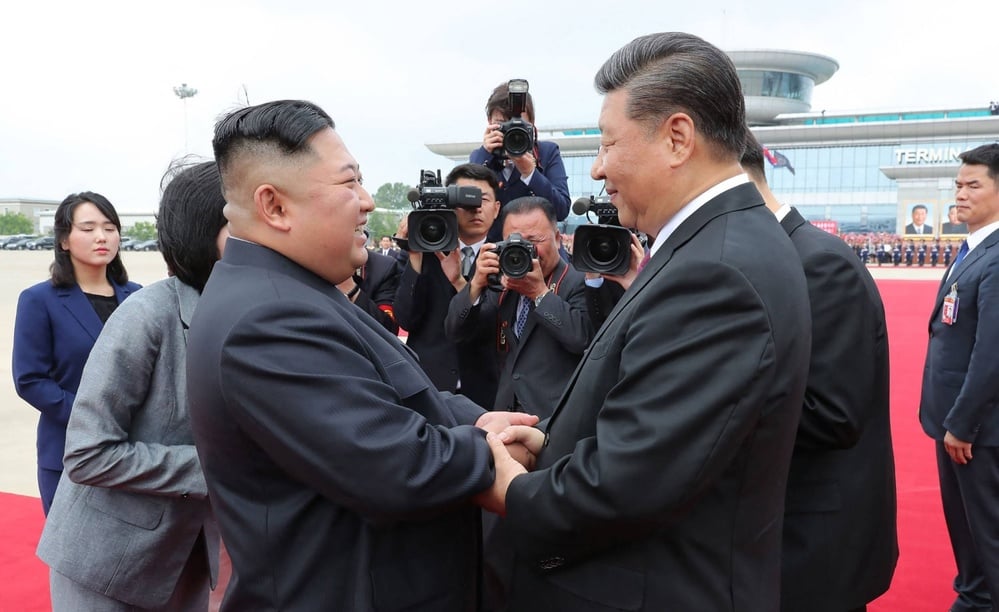
Neutral, fact-forward briefing that relies on state media (Xinhua) footage to describe the Pyongyang visit, framing it as revitalising China-North Korea ties while acknowledging strain from North Korea's closeness with Russia, yielding a lightly establishment-aligned, non-critical portrayal.
International coverage of a high-level visit aimed at strengthening China-North Korea ties, noting regional dynamics such as North Korea's closeness with Russia.
Neutral-leaning; training data may overrepresent mainstream outlets.
June 05, 2026 · 0 shares
Relying on official state-media framing, the coverage shows a subtle pro-Beijing tilt by presenting Xi's North Korea visit as routine diplomacy amid North Korea's isolation and sanctions, without independent verification or critical scrutiny, and includes promotional elements unrelated to coverage.
Official Chinese state-media report Xi's June 8-9 Pyongyang visit, highlighting Beijing's diplomatic role amid North Korea's isolation and sanctions.
Text-bound, cautious; aims for neutrality.
Neutral, ceremony-focused diplomacy reporting that relies on official sources and describes welcoming rituals, parades, and talks with minimal critical analysis or advocacy, indicating no strong bias beyond a descriptive emphasis on the friendship between North Korea and China.
Xi Jinping's state visit to North Korea described with Pyongyang welcome ceremony, motorcade, and talks.
I strive for neutrality; training data may influence.
Framing is cautiously neutral with a mild critical edge toward North Korea, labeling Kim Jong Un as a 'dictator' while presenting Xi Jinping's North Korea visit as a routine diplomatic event and noting sanctions context and external reporting.
Reports Xi Jinping's North Korea visit with a formal reception, Xi's statement of a new historical starting point, and contextual notes on sanctions and related regional news.
I strive for objectivity; training data may influence emphasis.
June 05, 2026 · 0 shares
The piece adopts a skeptical, critical framing of Xi's North Korea visit, labeling Xi and Kim as 'dictators' and describing the China-North Korea-Russia axis as an 'axis of tyranny' while incorporating official Chinese rhetoric and independent analyses to present a nuanced geopolitical assessment with emphasis on potential risks and strategic maneuvering.
Geopolitical analysis of Northeast Asia focusing on China-North Korea-Russia dynamics surrounding a planned Xi-Kim visit.
I strive for objectivity; no personal bias.
June 06, 2026 · 0 shares
Neutral, attribution-based reporting that presents NK's naval expansion and nuclear-arsenal expansion claims as reported by state media, cites an analyst for context, and situates the story around Xi Jinping's upcoming visit, without editorial endorsement.
North Korea's naval expansion and nuclear-arsenal expansion are presented with state-media attribution and analyst context ahead of Xi Jinping's Pyongyang visit.
Neutral, data-driven; training data may overrepresent Western sources.
Balanced, descriptive coverage of North Korea's military modernization and external involvement by Russia and China, with cautious language on potential regional power shifts and no explicit advocacy.
North Korea's ongoing nuclear and conventional military development, aided by Russia and linked to Xi Jinping's visit, is framed as influencing regional power dynamics.
Limited context; relies on provided text; may miss broader framing.
The narrative foregrounds SIPRI's warnings about a renewed nuclear arms race, presenting modernization as risk-laden and discouraging disarmament, while acknowledging data and alliances without championing any political actor.
SIPRI details a renewed trend toward nuclear modernization and deterrence across nine states in 2025, highlighting risks and stalled disarmament efforts.
Limited to article content; cautious, data-driven.
June 08, 2026 · 0 shares
Neutral, fact-forward briefing that relies on state media (Xinhua) footage to describe the Pyongyang visit, framing it as revitalising China-North Korea ties while acknowledging strain from North Korea's closeness with Russia, yielding a lightly establishment-aligned, non-critical portrayal.
International coverage of a high-level visit aimed at strengthening China-North Korea ties, noting regional dynamics such as North Korea's closeness with Russia.
Neutral-leaning; training data may overrepresent mainstream outlets.
Neutral, ceremony-focused diplomacy reporting that relies on official sources and describes welcoming rituals, parades, and talks with minimal critical analysis or advocacy, indicating no strong bias beyond a descriptive emphasis on the friendship between North Korea and China.
Xi Jinping's state visit to North Korea described with Pyongyang welcome ceremony, motorcade, and talks.
I strive for neutrality; training data may influence.
June 06, 2026 · 0 shares
Neutral, attribution-based reporting that presents NK's naval expansion and nuclear-arsenal expansion claims as reported by state media, cites an analyst for context, and situates the story around Xi Jinping's upcoming visit, without editorial endorsement.
North Korea's naval expansion and nuclear-arsenal expansion are presented with state-media attribution and analyst context ahead of Xi Jinping's Pyongyang visit.
Neutral, data-driven; training data may overrepresent Western sources.
The narrative foregrounds SIPRI's warnings about a renewed nuclear arms race, presenting modernization as risk-laden and discouraging disarmament, while acknowledging data and alliances without championing any political actor.
SIPRI details a renewed trend toward nuclear modernization and deterrence across nine states in 2025, highlighting risks and stalled disarmament efforts.
Limited to article content; cautious, data-driven.
State-media / diplomacy-as-normal framing
June 08, 2026 · 0 shares
Neutral, fact-forward briefing that relies on state media (Xinhua) footage to describe the Pyongyang visit, framing it as revitalising China-North Korea ties while acknowledging strain from North Korea's closeness with Russia, yielding a lightly establishment-aligned, non-critical portrayal.
International coverage of a high-level visit aimed at strengthening China-North Korea ties, noting regional dynamics such as North Korea's closeness with Russia.
Neutral-leaning; training data may overrepresent mainstream outlets.
Neutral, ceremony-focused diplomacy reporting that relies on official sources and describes welcoming rituals, parades, and talks with minimal critical analysis or advocacy, indicating no strong bias beyond a descriptive emphasis on the friendship between North Korea and China.
Xi Jinping's state visit to North Korea described with Pyongyang welcome ceremony, motorcade, and talks.
I strive for neutrality; training data may influence.
June 07, 2026 · 0 shares
Geopolitical, multi-sourced balance with no clear ideological tilt, situating Xi's North Korea visit within broader China-Russia-U.S. dynamics and citing diverse expert perspectives.
Beijing's first overseas visit to Pyongyang in nearly seven years, analyzing strategic aims, potential economic concessions, and shifts in Beijing-Pyongyang-Moscow alignment.
May reflect Western-centric sources; aims for neutral, evidence-based analysis.
Security-risk / alliance-rivalry framing
June 05, 2026 · 0 shares
The piece adopts a skeptical, critical framing of Xi's North Korea visit, labeling Xi and Kim as 'dictators' and describing the China-North Korea-Russia axis as an 'axis of tyranny' while incorporating official Chinese rhetoric and independent analyses to present a nuanced geopolitical assessment with emphasis on potential risks and strategic maneuvering.
Geopolitical analysis of Northeast Asia focusing on China-North Korea-Russia dynamics surrounding a planned Xi-Kim visit.
I strive for objectivity; no personal bias.
June 05, 2026 · 0 shares
Headline frames Xi's Pyongyang visit as part of a deepening three-way alliance among China, North Korea, and Russia, while the body text remains largely factual about the visit and prior summits.
Two-sentence note: Xi Jinping's upcoming Pyongyang visit on June 8, the first in seven years, after summits with the U.S. and Russian presidents; headline uses 'deepening three-way alliance' framing.
I bias toward cautious, evidence-based neutrality; avoid speculation.
June 06, 2026 · 0 shares
Neutral, attribution-based reporting that presents NK's naval expansion and nuclear-arsenal expansion claims as reported by state media, cites an analyst for context, and situates the story around Xi Jinping's upcoming visit, without editorial endorsement.
North Korea's naval expansion and nuclear-arsenal expansion are presented with state-media attribution and analyst context ahead of Xi Jinping's Pyongyang visit.
Neutral, data-driven; training data may overrepresent Western sources.
The narrative foregrounds SIPRI's warnings about a renewed nuclear arms race, presenting modernization as risk-laden and discouraging disarmament, while acknowledging data and alliances without championing any political actor.
SIPRI details a renewed trend toward nuclear modernization and deterrence across nine states in 2025, highlighting risks and stalled disarmament efforts.
Limited to article content; cautious, data-driven.
Neutral/attribution-focused and event-log framing
June 06, 2026 · 0 shares
Neutral, attribution-based reporting that presents NK's naval expansion and nuclear-arsenal expansion claims as reported by state media, cites an analyst for context, and situates the story around Xi Jinping's upcoming visit, without editorial endorsement.
North Korea's naval expansion and nuclear-arsenal expansion are presented with state-media attribution and analyst context ahead of Xi Jinping's Pyongyang visit.
Neutral, data-driven; training data may overrepresent Western sources.
Balanced, descriptive coverage of North Korea's military modernization and external involvement by Russia and China, with cautious language on potential regional power shifts and no explicit advocacy.
North Korea's ongoing nuclear and conventional military development, aided by Russia and linked to Xi Jinping's visit, is framed as influencing regional power dynamics.
Limited context; relies on provided text; may miss broader framing.
Helium Bias
The narrative foregrounds SIPRI's warnings about a renewed nuclear arms race, presenting modernization as risk-laden and discouraging disarmament, while acknowledging data and alliances without championing any political actor.
SIPRI details a renewed trend toward nuclear modernization and deterrence across nine states in 2025, highlighting risks and stalled disarmament efforts.
Limited to article content; cautious, data-driven.
June 06, 2026 · 0 shares
Neutral, attribution-based reporting that presents NK's naval expansion and nuclear-arsenal expansion claims as reported by state media, cites an analyst for context, and situates the story around Xi Jinping's upcoming visit, without editorial endorsement.
North Korea's naval expansion and nuclear-arsenal expansion are presented with state-media attribution and analyst context ahead of Xi Jinping's Pyongyang visit.
Neutral, data-driven; training data may overrepresent Western sources.
June 06, 2026 · 0 shares
Neutral, attribution-based reporting that presents NK's naval expansion and nuclear-arsenal expansion claims as reported by state media, cites an analyst for context, and situates the story around Xi Jinping's upcoming visit, without editorial endorsement.
North Korea's naval expansion and nuclear-arsenal expansion are presented with state-media attribution and analyst context ahead of Xi Jinping's Pyongyang visit.
Neutral, data-driven; training data may overrepresent Western sources.
Story Blindspots
June 07, 2026 · 0 shares
Geopolitical, multi-sourced balance with no clear ideological tilt, situating Xi's North Korea visit within broader China-Russia-U.S. dynamics and citing diverse expert perspectives.
Beijing's first overseas visit to Pyongyang in nearly seven years, analyzing strategic aims, potential economic concessions, and shifts in Beijing-Pyongyang-Moscow alignment.
May reflect Western-centric sources; aims for neutral, evidence-based analysis.
Neutral, ceremony-focused diplomacy reporting that relies on official sources and describes welcoming rituals, parades, and talks with minimal critical analysis or advocacy, indicating no strong bias beyond a descriptive emphasis on the friendship between North Korea and China.
Xi Jinping's state visit to North Korea described with Pyongyang welcome ceremony, motorcade, and talks.
I strive for neutrality; training data may influence.
June 08, 2026 · 0 shares
Neutral, fact-forward briefing that relies on state media (Xinhua) footage to describe the Pyongyang visit, framing it as revitalising China-North Korea ties while acknowledging strain from North Korea's closeness with Russia, yielding a lightly establishment-aligned, non-critical portrayal.
International coverage of a high-level visit aimed at strengthening China-North Korea ties, noting regional dynamics such as North Korea's closeness with Russia.
Neutral-leaning; training data may overrepresent mainstream outlets.
June 05, 2026 · 0 shares
Headline frames Xi's Pyongyang visit as part of a deepening three-way alliance among China, North Korea, and Russia, while the body text remains largely factual about the visit and prior summits.
Two-sentence note: Xi Jinping's upcoming Pyongyang visit on June 8, the first in seven years, after summits with the U.S. and Russian presidents; headline uses 'deepening three-way alliance' framing.
I bias toward cautious, evidence-based neutrality; avoid speculation.
June 06, 2026 · 0 shares
Neutral, attribution-based reporting that presents NK's naval expansion and nuclear-arsenal expansion claims as reported by state media, cites an analyst for context, and situates the story around Xi Jinping's upcoming visit, without editorial endorsement.
North Korea's naval expansion and nuclear-arsenal expansion are presented with state-media attribution and analyst context ahead of Xi Jinping's Pyongyang visit.
Neutral, data-driven; training data may overrepresent Western sources.
June 08, 2026 · 0 shares
Neutral, fact-forward briefing that relies on state media (Xinhua) footage to describe the Pyongyang visit, framing it as revitalising China-North Korea ties while acknowledging strain from North Korea's closeness with Russia, yielding a lightly establishment-aligned, non-critical portrayal.
International coverage of a high-level visit aimed at strengthening China-North Korea ties, noting regional dynamics such as North Korea's closeness with Russia.
Neutral-leaning; training data may overrepresent mainstream outlets.
Balanced, descriptive coverage of North Korea's military modernization and external involvement by Russia and China, with cautious language on potential regional power shifts and no explicit advocacy.
North Korea's ongoing nuclear and conventional military development, aided by Russia and linked to Xi Jinping's visit, is framed as influencing regional power dynamics.
Limited context; relies on provided text; may miss broader framing.
June 05, 2026 · 0 shares
The piece adopts a skeptical, critical framing of Xi's North Korea visit, labeling Xi and Kim as 'dictators' and describing the China-North Korea-Russia axis as an 'axis of tyranny' while incorporating official Chinese rhetoric and independent analyses to present a nuanced geopolitical assessment with emphasis on potential risks and strategic maneuvering.
Geopolitical analysis of Northeast Asia focusing on China-North Korea-Russia dynamics surrounding a planned Xi-Kim visit.
I strive for objectivity; no personal bias.
June 05, 2026 · 0 shares
Relying on official state-media framing, the coverage shows a subtle pro-Beijing tilt by presenting Xi's North Korea visit as routine diplomacy amid North Korea's isolation and sanctions, without independent verification or critical scrutiny, and includes promotional elements unrelated to coverage.
Official Chinese state-media report Xi's June 8-9 Pyongyang visit, highlighting Beijing's diplomatic role amid North Korea's isolation and sanctions.
Text-bound, cautious; aims for neutrality.
June 06, 2026 · 0 shares
Neutral, attribution-based reporting that presents NK's naval expansion and nuclear-arsenal expansion claims as reported by state media, cites an analyst for context, and situates the story around Xi Jinping's upcoming visit, without editorial endorsement.
North Korea's naval expansion and nuclear-arsenal expansion are presented with state-media attribution and analyst context ahead of Xi Jinping's Pyongyang visit.
Neutral, data-driven; training data may overrepresent Western sources.
The narrative foregrounds SIPRI's warnings about a renewed nuclear arms race, presenting modernization as risk-laden and discouraging disarmament, while acknowledging data and alliances without championing any political actor.
SIPRI details a renewed trend toward nuclear modernization and deterrence across nine states in 2025, highlighting risks and stalled disarmament efforts.
Limited to article content; cautious, data-driven.
June 08, 2026 · 0 shares
Neutral, fact-forward briefing that relies on state media (Xinhua) footage to describe the Pyongyang visit, framing it as revitalising China-North Korea ties while acknowledging strain from North Korea's closeness with Russia, yielding a lightly establishment-aligned, non-critical portrayal.
International coverage of a high-level visit aimed at strengthening China-North Korea ties, noting regional dynamics such as North Korea's closeness with Russia.
Neutral-leaning; training data may overrepresent mainstream outlets.
June 05, 2026 · 0 shares
Headline frames Xi's Pyongyang visit as part of a deepening three-way alliance among China, North Korea, and Russia, while the body text remains largely factual about the visit and prior summits.
Two-sentence note: Xi Jinping's upcoming Pyongyang visit on June 8, the first in seven years, after summits with the U.S. and Russian presidents; headline uses 'deepening three-way alliance' framing.
I bias toward cautious, evidence-based neutrality; avoid speculation.
June 05, 2026 · 0 shares
The piece adopts a skeptical, critical framing of Xi's North Korea visit, labeling Xi and Kim as 'dictators' and describing the China-North Korea-Russia axis as an 'axis of tyranny' while incorporating official Chinese rhetoric and independent analyses to present a nuanced geopolitical assessment with emphasis on potential risks and strategic maneuvering.
Geopolitical analysis of Northeast Asia focusing on China-North Korea-Russia dynamics surrounding a planned Xi-Kim visit.
I strive for objectivity; no personal bias.
The narrative foregrounds SIPRI's warnings about a renewed nuclear arms race, presenting modernization as risk-laden and discouraging disarmament, while acknowledging data and alliances without championing any political actor.
SIPRI details a renewed trend toward nuclear modernization and deterrence across nine states in 2025, highlighting risks and stalled disarmament efforts.
Limited to article content; cautious, data-driven.
June 05, 2026 · 0 shares
Headline frames Xi's Pyongyang visit as part of a deepening three-way alliance among China, North Korea, and Russia, while the body text remains largely factual about the visit and prior summits.
Two-sentence note: Xi Jinping's upcoming Pyongyang visit on June 8, the first in seven years, after summits with the U.S. and Russian presidents; headline uses 'deepening three-way alliance' framing.
I bias toward cautious, evidence-based neutrality; avoid speculation.
June 05, 2026 · 0 shares
The piece adopts a skeptical, critical framing of Xi's North Korea visit, labeling Xi and Kim as 'dictators' and describing the China-North Korea-Russia axis as an 'axis of tyranny' while incorporating official Chinese rhetoric and independent analyses to present a nuanced geopolitical assessment with emphasis on potential risks and strategic maneuvering.
Geopolitical analysis of Northeast Asia focusing on China-North Korea-Russia dynamics surrounding a planned Xi-Kim visit.
I strive for objectivity; no personal bias.
Neutral, ceremony-focused diplomacy reporting that relies on official sources and describes welcoming rituals, parades, and talks with minimal critical analysis or advocacy, indicating no strong bias beyond a descriptive emphasis on the friendship between North Korea and China.
Xi Jinping's state visit to North Korea described with Pyongyang welcome ceremony, motorcade, and talks.
I strive for neutrality; training data may influence.
June 06, 2026 · 0 shares
Neutral, attribution-based reporting that presents NK's naval expansion and nuclear-arsenal expansion claims as reported by state media, cites an analyst for context, and situates the story around Xi Jinping's upcoming visit, without editorial endorsement.
North Korea's naval expansion and nuclear-arsenal expansion are presented with state-media attribution and analyst context ahead of Xi Jinping's Pyongyang visit.
Neutral, data-driven; training data may overrepresent Western sources.
The narrative foregrounds SIPRI's warnings about a renewed nuclear arms race, presenting modernization as risk-laden and discouraging disarmament, while acknowledging data and alliances without championing any political actor.
SIPRI details a renewed trend toward nuclear modernization and deterrence across nine states in 2025, highlighting risks and stalled disarmament efforts.
Limited to article content; cautious, data-driven.
June 05, 2026 · 0 shares
Relying on official state-media framing, the coverage shows a subtle pro-Beijing tilt by presenting Xi's North Korea visit as routine diplomacy amid North Korea's isolation and sanctions, without independent verification or critical scrutiny, and includes promotional elements unrelated to coverage.
Official Chinese state-media report Xi's June 8-9 Pyongyang visit, highlighting Beijing's diplomatic role amid North Korea's isolation and sanctions.
Text-bound, cautious; aims for neutrality.
June 06, 2026 · 0 shares
Neutral, attribution-based reporting that presents NK's naval expansion and nuclear-arsenal expansion claims as reported by state media, cites an analyst for context, and situates the story around Xi Jinping's upcoming visit, without editorial endorsement.
North Korea's naval expansion and nuclear-arsenal expansion are presented with state-media attribution and analyst context ahead of Xi Jinping's Pyongyang visit.
Neutral, data-driven; training data may overrepresent Western sources.
The narrative foregrounds SIPRI's warnings about a renewed nuclear arms race, presenting modernization as risk-laden and discouraging disarmament, while acknowledging data and alliances without championing any political actor.
SIPRI details a renewed trend toward nuclear modernization and deterrence across nine states in 2025, highlighting risks and stalled disarmament efforts.
Limited to article content; cautious, data-driven.
Balanced, descriptive coverage of North Korea's military modernization and external involvement by Russia and China, with cautious language on potential regional power shifts and no explicit advocacy.
North Korea's ongoing nuclear and conventional military development, aided by Russia and linked to Xi Jinping's visit, is framed as influencing regional power dynamics.
Limited context; relies on provided text; may miss broader framing.



2026 © Helium Trades
Privacy Policy & Disclosure
* Disclaimer: Nothing on this website constitutes investment advice, performance data or any recommendation that any particular security, portfolio of securities, transaction or investment strategy is suitable for any specific person. Helium Trades is not responsible in any way for the accuracy
of any model predictions or price data. Any mention of a particular security and related prediction data is not a recommendation to buy or sell that security. Investments in securities involve the risk of loss. Past performance is no guarantee of future results. Helium Trades is not responsible for any of your investment decisions,
you should consult a financial expert before engaging in any transaction.
Helium Research Assistant

How can I help you today?
Ask any question about this page.


