See whether Helium helps you make better-informed decisions. Try every Pro Trader feature for 30 days. No credit card required.
Try every Pro Trader feature for 30 days. No credit card required.
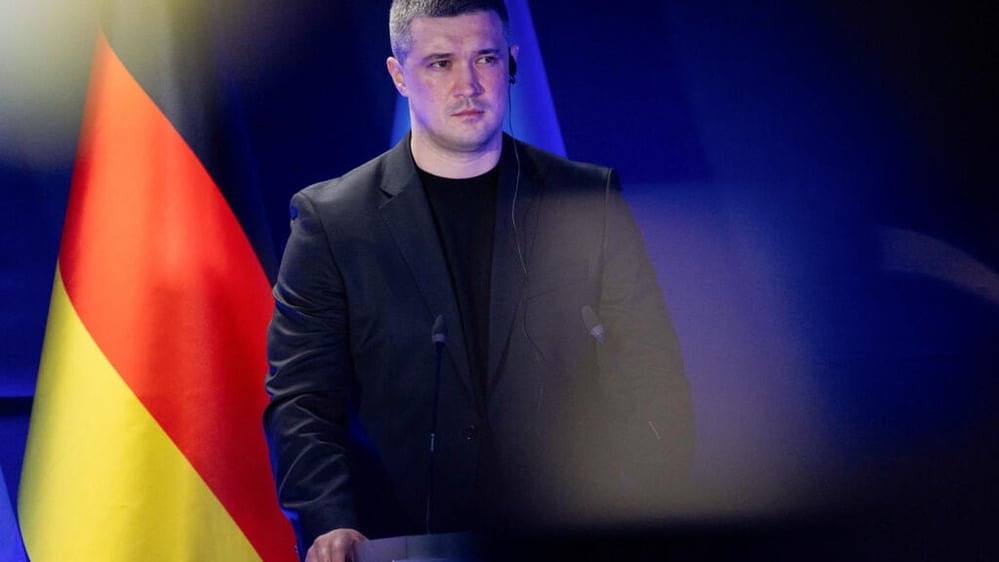
Coverage centers on street protests opposing Zelensky's removal of Defence Minister Mykhailo Fedorov, portrays Fedorov as a popular reformer, and includes a military official's protest quote, signaling a populist-leaning, pro-Fedorov framing with limited elite critique.
Report on protests in Ukraine following the removal of defence minister Mykhailo Fedorov, highlighting public sentiment and elite dissent.
Automated analysis; not human reviewed.
Limitations: Concise, case-specific limitations and plausible alternative interpretations.
·
51 of 52 available dimensions scored; omitted dimensions are not treated as neutral.
·
Verified supporting quotes for 3 of 51 scored dimensions.
Claim: No explicit left-right editorial tilt; coverage centers on protests and minister popularity.
“Zelensky faces fury on Ukrainian streets after dropping popular defence minister” · exact text match
“Large protests erupted in several Ukrainian cities on Thursday morning against the removal of popular defence minister Mykhailo Fedorov.” · exact text match
Counterevidence:
“The deputy commander protest quote shows elite dissent which could indicate elite political actor involvement.” · not found in supplied text
Why: Lack of policy positions makes left-right tilt unlikely; event-centric framing dominates.
Claim: Emphasis on mass protests and 'popular' minister suggests populist sentiment.
“Large protests erupted in several Ukrainian cities on Thursday morning against the removal of popular defence minister Mykhailo Fedorov.” · exact text match
“More than a thousand people gathered on a central square in Kyiv, singing the national anthem, waving Ukrainian and EU flags and chanting 'shame' and 'bring Fedorov back'.” · not found in supplied text
Counterevidence:
“A deputy commander criticizes the removal as a 'great evil,' indicating elite dissent rather than a pure populist uplift.” · not found in supplied text
Why: Public demonstrations and the framing of Fedorov as popular align with populist sentiment, tempered by elite dissent.
Claim: Subjectivities appear through loaded language and quotes.
“Zelensky faces fury on Ukrainian streets after dropping popular defence minister” · exact text match
“chanting 'shame' and 'bring Fedorov back'” · not found in supplied text
“The air force’s deputy commander has resigned in protest, calling Mykhailo Fedorov’s removal 'a great evil' for Ukraine’s defence” · verified after text normalization
Counterevidence:
“The article also provides numerical data (More than a thousand) which is neutral descriptive.” · not found in supplied text
Why: Use of emotionally charged terms and quotes indicates subjective framing alongside factual reporting.
Claim: Headline uses dramatic language ('fury'), indicating mild sensational tilt.
“Zelensky faces fury on Ukrainian streets after dropping popular defence minister” · exact text match
Counterevidence:
“Other lines provide factual details (numbers, quotes) without exaggeration.” · not found in supplied text
Why: Dramatic phrasing in the headline aligns with sensational-toned framing, though supported by reported events.
Claim: Coverage leans toward sympathetic portrayal of Fedorov and public anger at the removal.
“fury on Ukrainian streets after dropping popular defence minister” · exact text match
“More than a thousand people gathered... chanting 'shame' and 'bring Fedorov back'” · not found in supplied text
Counterevidence:
“Quotes from an air force deputy commander express dissent but not explicit stance by author.” · not found in supplied text
Why: Pro-Fedorov sentiment appears through emphasis on protests and minister's popularity.
Claim: Event-centered political coverage with potential framing around public sentiment.
“Zelensky faces fury on Ukrainian streets after dropping popular defence minister” · exact text match
“More than a thousand people gathered... chanting 'shame' and 'bring Fedorov back'.” · not found in supplied text
Counterevidence:
“No policy details are discussed.” · not found in supplied text
Why: Subject matter is political; emphasis on protest and public reaction suggests political framing.
Claim: Emotional descriptors (fury, shame) show affective framing.
“fury on Ukrainian streets” · exact text match
“chanting 'shame' and 'bring Fedorov back'” · not found in supplied text
Counterevidence:
“Numbers and quotes supply factual support.” · not found in supplied text
Why: Emotional framing accompanies event description.
Claim: Sourcing includes numbers and quotes from officials, supporting credibility.
“More than a thousand people gathered on a central square in Kyiv, singing the national anthem, waving Ukrainian and EU flags and chanting” · exact text match
“The air force’s deputy commander has resigned in protest, calling Mykhailo Fedorov’s removal 'a great evil' for Ukraine’s defence” · verified after text normalization
Why: Concrete numbers and direct quotes bolster credibility, but framing could influence interpretation.
Limited quotes; unknown author; stance may be misread.
July 16, 2026 · 0 shares
Balanced, multi-voiced coverage of Ukraine's wartime cabinet reshuffle surrounding the dismissal of defense minister Mykhailo Fedorov, incorporating protests, internal disagreements (Fedorov vs. Syrskyi), Zelenskyy's call for renewal, a Kremlin perspective, and responses from supporters and critics, while noting limited official comment from Ukraine’s General Staff and including a promotional ad line embedded in the piece.
Reuters reports on protests across Ukraine over the firing of defense minister Mykhailo Fedorov during a wartime cabinet reshuffle, including competing claims and perspectives from protesters, Fedorov, Syrskyi, Zelenskyy, Koretskyi, and a Kremlin spokesperson, with no immediate comment from Ukraine’s General Staff.
Automated analysis; not human reviewed.
Limitations: Concise, case-specific limitations and plausible alternative interpretations.
·
52 of 52 available dimensions scored; omitted dimensions are not treated as neutral.
·
Verified supporting quotes for 1 of 52 scored dimensions.
Claim: No pronounced tilt toward liberal or conservative framing; coverage presents multiple viewpoints.
“Hundreds of people took to the streets in Kyiv and other Ukrainian cities to demand an explanation for Mykhailo Fedorov’s ouster.” · not found in supplied text
“Zelenskyy announced his latest shake-up to widespread shock on Sunday, arguing the government and law enforcement agencies needed renewAL.” · not found in supplied text
Counterevidence:
“"We’re in favour of an upgrade — not a downgrade," said a protester who identified himself as Ali, who described Fedorov as an effective and modern manager.” · verified after text normalization
Why: Diverse sources and viewpoints indicate no clear ideological tilt.
Claim: High credibility due to sourcing and attribution typical of Reuters; multiple viewpoints cited.
“KYIV, July 16 (Reuters); 'Ukraine’s General Staff did not immediately respond to Reuters’ request for comment'; 'Additional reporting by Olena Harmash; Editing by Sharon Singleton and Alison Williams'” · not found in supplied text
Counterevidence:
“Lack of an official comment from Ukraine’s General Staff is noted as a gap.” · not found in supplied text
Why: Sourcing and editor notes support credibility; some information gaps acknowledged.
Claim: Inline promotional line introduces promotional content that may affect perceived neutrality.
“When politics gets loud, you rely on HuffPost to cut through the noise and get it right.
That kind of reporting only survives if readers support it. Become a member and back journalism that holds power accountable.”
· exact text match
Counterevidence:
“The ad line is clearly labeled as promotion and separated in the text.” · not found in supplied text
Why: Presence of an inline promotional message could influence reader perception of neutrality.
Ad insertion and limited official quotes; context gaps.
July 16, 2026 · 0 shares
Neutral, event-driven coverage describing Zelenskyy’s wartime cabinet reshuffle and the dismissal of defense minister Mykhailo Fedorov, reporting protests and a resignation with minimal editorializing and embedded promotional content.
A concise report on Ukraine’s defense minister dismissal and Zelenskyy’s wartime cabinet reshuffle, noting protests and a resigning commander.
Automated analysis; not human reviewed.
Limitations: Case-specific; limited excerpt; potential promotional content could affect interpretation.
·
1 of 52 available dimensions scored; omitted dimensions are not treated as neutral.
·
Verified supporting quotes for 1 of 1 scored dimensions.
Claim: No detectable liberal or conservative framing; reporting appears event-focused.
“Dismissal of Ukraine’s defense chief sparks political crisis” · exact text match
“Rare protests erupted in Ukraine on Thursday over the dismissal of defense minister Mykhailo Fedorov” · exact text match
Counterevidence:
“Volodymyr Zelenskyy’s reshuffle has fueled public anger over his exclusion of Fedorov” · exact text match
Why: The text describes events without ideological language.
Case-specific: neutral stance; evidence limited to event-based report; promo content.
July 16, 2026 · 0 shares
Mild subjectivity detected in descriptor choices (calling Fedorov 'popular' and 'young') with supportive rally coverage and contextual reference to Zelensky's removal stirring anger.
A brief news note about protests following the removal of Ukraine's defense minister Mykhailo Fedorov, with supporters rallying in Kyiv and nationwide after Zelensky's removal announcement.
Automated analysis; not human reviewed.
Limitations: Concise, case-specific limitations and plausible alternative interpretations.
·
1 of 52 available dimensions scored; omitted dimensions are not treated as neutral.
·
Verified supporting quotes for 1 of 1 scored dimensions.
Claim: The article uses mild subjectivity by describing Fedorov as popular and young.
“Departure of Ukraine's popular defense minister sparks protests.” · exact text match
“Rallies in support of Mykhailo Fedorov, Ukraine's young and popular defense minister, were held in Kyiv and around the country on Thursday, after President Volodymyr Zelensky angered politicians, military officials and the general public by announcing his removal the previous day.” · exact text match
Why: Descriptors 'popular' and 'young' indicate subjective framing within event-centered reporting.
Limited excerpt; context and sources missing; interpretation may vary.
July 16, 2026 · 0 shares
Neutral briefing describing reform efforts by ousted defence minister and clashes with top army leadership, with drone warfare characterized as a game-changer without editorial endorsement.
Six-month tenure of ousted defence minister Mykhailo Fedorov, marked by reform efforts that provoked clashes with senior military leadership, and a drone-warfare strategy described as game-changing in Ukraine's confrontation with a formidable opponent.
Automated analysis; not human reviewed.
Limitations: Concise, case-specific limitations and plausible alternative interpretations.
·
1 of 52 available dimensions scored; omitted dimensions are not treated as neutral.
·
Verified supporting quotes for 1 of 1 scored dimensions.
Claim: Article appears neutrally framed with no strong ideological slant; describes reforms and clashes without endorsing either side.
“Mykhailo Fedorov: Ousted defence chief's reforms riled Ukrainian army bosses.” · exact text match
“which he viewed as out of date, inflexible and mired in bureaucracy.” · exact text match
“Fedorov's early bet on drone warfare was a game-changer as Ukraine faced off against a more formidable opponent.” · exact text match
Counterevidence:
“"game-changer" could be interpreted as positive about drone warfare.” · not found in supplied text
“The phrase 'ambitious drive to reform the military' hints at potential support for reforms.” · not found in supplied text
Why: Descriptive attribution to actors and lack of explicit endorsement indicate neutral framing.
Opponent unnamed; context limited; relies on brief phrasing.
Headlinelike framing blends sensational language with a claim of internal power rivalry, while the body acknowledges internal tensions, suggesting a slight bias toward drama over fuller context.
Brief note on Ukraine's defence minister Mykhailo Fedorov's resignation amid internal civil and military leadership tensions over countering Russia.
Automated analysis; not human reviewed.
Limitations: Based on a short excerpt without sourcing; unnamed general; limited context; cannot verify full causal chain or motives.
·
2 of 52 available dimensions scored; omitted dimensions are not treated as neutral.
·
Verified supporting quotes for 2 of 2 scored dimensions.
Claim: Headline-like framing with dramatic phrasing suggests sensationalism in reporting.
“How rivalry with a top general brought down Ukraine's popular defence minister Fedorov.” · exact text match
Counterevidence:
“The second sentence states 'The forced resignation of 35-year-old Defence Minister Mykhailo Fedorov in a sweeping government reshuffle has exposed competing visions within the country’s civil and military leadership on how best to hold back the Russian advance.'” · not found in supplied text
Why: Headline foregrounds drama ('brought down') while the body mentions nuanced context.
Claim: The piece attributes the minister's resignation to rivalry as a single cause.
“How rivalry with a top general brought down Ukraine's popular defence minister Fedorov.” · exact text match
Counterevidence:
“has exposed competing visions within the country’s civil and military leadership” · exact text match
Why: The headline asserts a single cause, while the body hints at internal tensions.
Unnamed general; no sourcing; limited context.
Balanced account of internal Ukraine defense leadership tensions, presenting Fedorov's reform push, Syrskyi's defense of the status quo, and Zelenskyy's reshuffle, while promotional text embedded in the article introduces advertising-like lines that may dilute perceived neutrality.
Report on a clash between Ukraine's reform-minded defense minister and the top military commander, and the political-military implications of Zelenskyy's reshuffle during the war.
Automated analysis; not human reviewed.
Limitations: Case-specific evidence limited to quoted material and observable article features; alternative interpretations of framing are possible.
·
1 of 52 available dimensions scored; omitted dimensions are not treated as neutral.
·
Verified supporting quotes for 0 of 1 scored dimensions.
Claim: Presence of promotional/advertising content within the article text.
“"Take a smarter break in your day - and see how far you get."” · exact text match
“"tells the innovative stories you want to know"” · not found in supplied text
“"Every time publishes a story, you’ll get an alert straight to your inbox!"” · verified after text normalization
Counterevidence:
“"Syrskyi, in his first public comments following Fedorov's dismissal, thanked the ousted minister and wished him \"continued success as part of the Ukrainian team.\""” · exact text match
“"Zelenskyy reshuffled his government this week and chose to leave Fedorov off the list.
The former defense minister said Thursday that he had been pushed out and declined a government advisory role."”
· not found in supplied text
Why: Promotional-style lines are embedded alongside reporting, which could influence tone; however, counterquotes indicate traditional news reporting is present.
Ads in text may distort tone; limited context.
Nuanced, multi-voiced coverage of Fedorov's removal that balances reformist praise with dissent, protests, and uncertainty about military readiness and modernization.
Ukraine's defense minister Mykhailo Fedorov was removed after six months; coverage details reforms, internal rifts, protests, and reactions from multiple sources.
Automated analysis; not human reviewed.
Limitations: Concise, case-specific limitations and plausible alternative interpretations.
·
52 of 52 available dimensions scored; omitted dimensions are not treated as neutral.
·
Verified supporting quotes for 5 of 52 scored dimensions.
Claim: No explicit left-right ideological tilt; coverage includes both reform advocacy and concerns about consequences.
“Soldiers praised many of his reforms.” · exact text match
“Fedorov started to change a lot of mechanisms and rules, and he was on the right track.” · not found in supplied text
Counterevidence:
“The minister's dismissal has been deeply unpopular in Ukraine, where soldiers and civilians alike see him as a desperately needed catalyst for reform that could swing the war in Ukraine's favor.” · not found in supplied text
“For Russia, it is good, a Ukrainian officer said of Fedorov's dismissal.” · not found in supplied text
Why: Reporting includes both praise and concern with no single ideological slant dominating.
Claim: Language occasionally uses dramatic framing (protests, 'monumental victory for Russia'), suggesting a mild sensational tone.
“Ukraine is ousting its pro-tech defense minister after just 6 months.
Troops fear it's a monumental victory for Russia.”
· exact text match
“On Thursday morning, rare wartime mass protests erupted in Kyiv, Kharkiv, Lviv, Dnipro, and other major cities as thousands gathered to call for the decision's reversal.” · exact text match
“huge mistake that will set the army back 1,000 steps” · exact text match
Counterevidence:
“Soldiers praised many of his reforms.” · exact text match
“This year, due in part to innovative mid-range drone strikes on enemy logistics, Russia's battlefield momentum not only stalled but reversed.” · not found in supplied text
Why: Pervasive quotes reflect dramatic framing but supported by factual events; the overall tone remains descriptive.
Claim: Use of anonymous sources and call signs creates a gossipy tone around internal debates.
“the commander, identified only by the call sign 'Fierce' for security purposes” · not found in supplied text
“an officer in Ukraine's Unmanned Systems Forces who asked to be identified only by his first name for security reasons” · exact text match
“spoke to on the condition of anonymity for security reasons” · verified after text normalization
Counterevidence:
“The piece also includes named individuals and documented events (protests, parliamentary vote).” · not found in supplied text
Why: Insider-style sourcing adds a gossipy tone but is balanced by verifiable events.
Claim: Quotes reflect opinions from military personnel and supporters, but the article itself remains descriptive rather than prescriptive.
“The Ukrainian army needs to be modern and high-tech, and with Soviet-style leadership, we will not achieve progress” · exact text match
Counterevidence:
“Soldiers praised many of his reforms; other quotes emphasize reform momentum.” · not found in supplied text
Why: Opinions are present but not said to be the article's stance.
Claim: The report covers responses from military, protesters, and media; however, emphasis leans toward reform narratives.
“rare wartime mass protests erupted” · exact text match
“United24 Media pausing publications in protest” · not found in supplied text
Counterevidence:
“Pro-reform voices are also quoted; the piece cites multiple actors.” · not found in supplied text
Why: Response voices are included, though there's a discernible reform-forward framing.
Claim: Emotionally charged language appears in quotes describing popularity of reform and consequences of removal.
“These actions have made him wildly popular among Ukraine's warfighters.” · exact text match
“huge mistake that will set the army back 1,000 steps” · exact text match
“rare wartime mass protests erupted” · exact text match
Counterevidence:
“There are also neutral factual statements and multiple viewpoints.” · not found in supplied text
Why: Emotion-laden phrasing is present in quotes, influencing perception but not dominating the narrative.
Claim: Multiple quotes and events corroborate the narrative, but some responses are omitted or not fully cited.
“"I had a candid conversation with the president yesterday..."” · not found in supplied text
“"The president's office did not immediately respond to a request for comment on Fedorov's dismissal..."” · not found in supplied text
“"On Thursday morning, rare wartime mass protests erupted"” · not found in supplied text
Counterevidence:
“"The minister's dismissal will be finalized once the Ukrainian parliament votes..."” · not found in supplied text
Why: Diverse sourcing supports credibility, though some gaps and incomplete citations temper certainty.
Claim: Contains predictions about outcomes of leadership change on military capability and war effort.
“If Fedorov is removed, it means the supply of our army will stagnate, there will be fewer drones, much less meaningful decisions” · exact text match
Counterevidence:
“The article also provides contextual reforms and past achievements to ground claims.” · not found in supplied text
Why: Forward-looking statements appear as quotes, not editorial assertions.
Claim: Framing emphasizes corruption investigations and governance reforms, highlighting integrity concerns.
“Fedorov subjected ministry officials to lie-detector tests and uncovered some $6.7 billion in overspending through a corruption investigation.” · exact text match
Counterevidence:
“Supporters frame reforms positively; reporting still includes criticism and protest.” · not found in supplied text
Why: Integrity-related elements are foregrounded, signaling emphasis on governance quality.
Ambiguities in context; missing complete quotes and context.
Coverage centers on street protests opposing Zelensky's removal of Defence Minister Mykhailo Fedorov, portrays Fedorov as a popular reformer, and includes a military official's protest quote, signaling a populist-leaning, pro-Fedorov framing with limited elite critique.
Report on protests in Ukraine following the removal of defence minister Mykhailo Fedorov, highlighting public sentiment and elite dissent.
Automated analysis; not human reviewed.
Limitations: Concise, case-specific limitations and plausible alternative interpretations.
·
51 of 52 available dimensions scored; omitted dimensions are not treated as neutral.
·
Verified supporting quotes for 3 of 51 scored dimensions.
Claim: No explicit left-right editorial tilt; coverage centers on protests and minister popularity.
“Zelensky faces fury on Ukrainian streets after dropping popular defence minister” · exact text match
“Large protests erupted in several Ukrainian cities on Thursday morning against the removal of popular defence minister Mykhailo Fedorov.” · exact text match
Counterevidence:
“The deputy commander protest quote shows elite dissent which could indicate elite political actor involvement.” · not found in supplied text
Why: Lack of policy positions makes left-right tilt unlikely; event-centric framing dominates.
Claim: Emphasis on mass protests and 'popular' minister suggests populist sentiment.
“Large protests erupted in several Ukrainian cities on Thursday morning against the removal of popular defence minister Mykhailo Fedorov.” · exact text match
“More than a thousand people gathered on a central square in Kyiv, singing the national anthem, waving Ukrainian and EU flags and chanting 'shame' and 'bring Fedorov back'.” · not found in supplied text
Counterevidence:
“A deputy commander criticizes the removal as a 'great evil,' indicating elite dissent rather than a pure populist uplift.” · not found in supplied text
Why: Public demonstrations and the framing of Fedorov as popular align with populist sentiment, tempered by elite dissent.
Claim: Subjectivities appear through loaded language and quotes.
“Zelensky faces fury on Ukrainian streets after dropping popular defence minister” · exact text match
“chanting 'shame' and 'bring Fedorov back'” · not found in supplied text
“The air force’s deputy commander has resigned in protest, calling Mykhailo Fedorov’s removal 'a great evil' for Ukraine’s defence” · verified after text normalization
Counterevidence:
“The article also provides numerical data (More than a thousand) which is neutral descriptive.” · not found in supplied text
Why: Use of emotionally charged terms and quotes indicates subjective framing alongside factual reporting.
Claim: Headline uses dramatic language ('fury'), indicating mild sensational tilt.
“Zelensky faces fury on Ukrainian streets after dropping popular defence minister” · exact text match
Counterevidence:
“Other lines provide factual details (numbers, quotes) without exaggeration.” · not found in supplied text
Why: Dramatic phrasing in the headline aligns with sensational-toned framing, though supported by reported events.
Claim: Coverage leans toward sympathetic portrayal of Fedorov and public anger at the removal.
“fury on Ukrainian streets after dropping popular defence minister” · exact text match
“More than a thousand people gathered... chanting 'shame' and 'bring Fedorov back'” · not found in supplied text
Counterevidence:
“Quotes from an air force deputy commander express dissent but not explicit stance by author.” · not found in supplied text
Why: Pro-Fedorov sentiment appears through emphasis on protests and minister's popularity.
Claim: Event-centered political coverage with potential framing around public sentiment.
“Zelensky faces fury on Ukrainian streets after dropping popular defence minister” · exact text match
“More than a thousand people gathered... chanting 'shame' and 'bring Fedorov back'.” · not found in supplied text
Counterevidence:
“No policy details are discussed.” · not found in supplied text
Why: Subject matter is political; emphasis on protest and public reaction suggests political framing.
Claim: Emotional descriptors (fury, shame) show affective framing.
“fury on Ukrainian streets” · exact text match
“chanting 'shame' and 'bring Fedorov back'” · not found in supplied text
Counterevidence:
“Numbers and quotes supply factual support.” · not found in supplied text
Why: Emotional framing accompanies event description.
Claim: Sourcing includes numbers and quotes from officials, supporting credibility.
“More than a thousand people gathered on a central square in Kyiv, singing the national anthem, waving Ukrainian and EU flags and chanting” · exact text match
“The air force’s deputy commander has resigned in protest, calling Mykhailo Fedorov’s removal 'a great evil' for Ukraine’s defence” · verified after text normalization
Why: Concrete numbers and direct quotes bolster credibility, but framing could influence interpretation.
Limited quotes; unknown author; stance may be misread.
July 16, 2026 · 0 shares
Balanced, multi-voiced coverage of Ukraine's wartime cabinet reshuffle surrounding the dismissal of defense minister Mykhailo Fedorov, incorporating protests, internal disagreements (Fedorov vs. Syrskyi), Zelenskyy's call for renewal, a Kremlin perspective, and responses from supporters and critics, while noting limited official comment from Ukraine’s General Staff and including a promotional ad line embedded in the piece.
Reuters reports on protests across Ukraine over the firing of defense minister Mykhailo Fedorov during a wartime cabinet reshuffle, including competing claims and perspectives from protesters, Fedorov, Syrskyi, Zelenskyy, Koretskyi, and a Kremlin spokesperson, with no immediate comment from Ukraine’s General Staff.
Automated analysis; not human reviewed.
Limitations: Concise, case-specific limitations and plausible alternative interpretations.
·
52 of 52 available dimensions scored; omitted dimensions are not treated as neutral.
·
Verified supporting quotes for 1 of 52 scored dimensions.
Claim: No pronounced tilt toward liberal or conservative framing; coverage presents multiple viewpoints.
“Hundreds of people took to the streets in Kyiv and other Ukrainian cities to demand an explanation for Mykhailo Fedorov’s ouster.” · not found in supplied text
“Zelenskyy announced his latest shake-up to widespread shock on Sunday, arguing the government and law enforcement agencies needed renewAL.” · not found in supplied text
Counterevidence:
“"We’re in favour of an upgrade — not a downgrade," said a protester who identified himself as Ali, who described Fedorov as an effective and modern manager.” · verified after text normalization
Why: Diverse sources and viewpoints indicate no clear ideological tilt.
Claim: High credibility due to sourcing and attribution typical of Reuters; multiple viewpoints cited.
“KYIV, July 16 (Reuters); 'Ukraine’s General Staff did not immediately respond to Reuters’ request for comment'; 'Additional reporting by Olena Harmash; Editing by Sharon Singleton and Alison Williams'” · not found in supplied text
Counterevidence:
“Lack of an official comment from Ukraine’s General Staff is noted as a gap.” · not found in supplied text
Why: Sourcing and editor notes support credibility; some information gaps acknowledged.
Claim: Inline promotional line introduces promotional content that may affect perceived neutrality.
“When politics gets loud, you rely on HuffPost to cut through the noise and get it right.
That kind of reporting only survives if readers support it. Become a member and back journalism that holds power accountable.”
· exact text match
Counterevidence:
“The ad line is clearly labeled as promotion and separated in the text.” · not found in supplied text
Why: Presence of an inline promotional message could influence reader perception of neutrality.
Ad insertion and limited official quotes; context gaps.
July 16, 2026 · 0 shares
Mild subjectivity detected in descriptor choices (calling Fedorov 'popular' and 'young') with supportive rally coverage and contextual reference to Zelensky's removal stirring anger.
A brief news note about protests following the removal of Ukraine's defense minister Mykhailo Fedorov, with supporters rallying in Kyiv and nationwide after Zelensky's removal announcement.
Automated analysis; not human reviewed.
Limitations: Concise, case-specific limitations and plausible alternative interpretations.
·
1 of 52 available dimensions scored; omitted dimensions are not treated as neutral.
·
Verified supporting quotes for 1 of 1 scored dimensions.
Claim: The article uses mild subjectivity by describing Fedorov as popular and young.
“Departure of Ukraine's popular defense minister sparks protests.” · exact text match
“Rallies in support of Mykhailo Fedorov, Ukraine's young and popular defense minister, were held in Kyiv and around the country on Thursday, after President Volodymyr Zelensky angered politicians, military officials and the general public by announcing his removal the previous day.” · exact text match
Why: Descriptors 'popular' and 'young' indicate subjective framing within event-centered reporting.
Limited excerpt; context and sources missing; interpretation may vary.
July 16, 2026 · 0 shares
Balanced, multi-voiced coverage of Ukraine's wartime cabinet reshuffle surrounding the dismissal of defense minister Mykhailo Fedorov, incorporating protests, internal disagreements (Fedorov vs. Syrskyi), Zelenskyy's call for renewal, a Kremlin perspective, and responses from supporters and critics, while noting limited official comment from Ukraine’s General Staff and including a promotional ad line embedded in the piece.
Reuters reports on protests across Ukraine over the firing of defense minister Mykhailo Fedorov during a wartime cabinet reshuffle, including competing claims and perspectives from protesters, Fedorov, Syrskyi, Zelenskyy, Koretskyi, and a Kremlin spokesperson, with no immediate comment from Ukraine’s General Staff.
Automated analysis; not human reviewed.
Limitations: Concise, case-specific limitations and plausible alternative interpretations.
·
52 of 52 available dimensions scored; omitted dimensions are not treated as neutral.
·
Verified supporting quotes for 1 of 52 scored dimensions.
Claim: No pronounced tilt toward liberal or conservative framing; coverage presents multiple viewpoints.
“Hundreds of people took to the streets in Kyiv and other Ukrainian cities to demand an explanation for Mykhailo Fedorov’s ouster.” · not found in supplied text
“Zelenskyy announced his latest shake-up to widespread shock on Sunday, arguing the government and law enforcement agencies needed renewAL.” · not found in supplied text
Counterevidence:
“"We’re in favour of an upgrade — not a downgrade," said a protester who identified himself as Ali, who described Fedorov as an effective and modern manager.” · verified after text normalization
Why: Diverse sources and viewpoints indicate no clear ideological tilt.
Claim: High credibility due to sourcing and attribution typical of Reuters; multiple viewpoints cited.
“KYIV, July 16 (Reuters); 'Ukraine’s General Staff did not immediately respond to Reuters’ request for comment'; 'Additional reporting by Olena Harmash; Editing by Sharon Singleton and Alison Williams'” · not found in supplied text
Counterevidence:
“Lack of an official comment from Ukraine’s General Staff is noted as a gap.” · not found in supplied text
Why: Sourcing and editor notes support credibility; some information gaps acknowledged.
Claim: Inline promotional line introduces promotional content that may affect perceived neutrality.
“When politics gets loud, you rely on HuffPost to cut through the noise and get it right.
That kind of reporting only survives if readers support it. Become a member and back journalism that holds power accountable.”
· exact text match
Counterevidence:
“The ad line is clearly labeled as promotion and separated in the text.” · not found in supplied text
Why: Presence of an inline promotional message could influence reader perception of neutrality.
Ad insertion and limited official quotes; context gaps.
July 16, 2026 · 0 shares
Balanced, multi-voiced reportage that presents protesters, supporters, and critics of Zelensky's dismissal of Defence Minister Mykhailo Fedorov, without endorsing any side, and notes internal tensions and reform legacy.
News report on protests in Ukraine following President Zelensky's dismissal of Defence Minister Mykhailo Fedorov, including voices from protesters, soldiers, reform advocates, and coverage of the reshuffle and rumored tensions within military leadership.
Automated analysis; not human reviewed.
Limitations: Concise, case-specific limitations and plausible alternative interpretations.
·
52 of 52 available dimensions scored; omitted dimensions are not treated as neutral.
·
Verified supporting quotes for 1 of 52 scored dimensions.
Claim: No evident tilt toward liberal or conservative framing; coverage presents multiple viewpoints.
“Protests in Ukrainian cities against Zelensky's removal of defence minister” · exact text match
“A crowd of people - mostly young - gathered in Kyiv, holding up signs reading "Hands off Fedorov" and "Stop sabotaging victory!"” · not found in supplied text
“There had been rumours that Mykhailo Fedorov's dismissal was linked to tensions between him and Commander-in-Chief Oleksandr Syrskyi.” · exact text match
Counterevidence:
“I don't know anyone who supports the decision to replace him. Not within the army, not in society.” · exact text match
“Prominent blogger Serhii Sternenko hailed his former boss as "the best minister of defence in our entire history".” · not found in supplied text
Why: Diversely sourced voices indicate balanced, not ideological skewed reporting.
Claim: High credibility due to use of direct quotes and multiple named sources.
“A crowd of people - mostly young - gathered in Kyiv, holding up signs reading "Hands off Fedorov" and "Stop sabotaging victory!"” · not found in supplied text
“Zelensky has not yet explained his decision, which is causing significant upset among commentators and the military as well as parts of civil society.” · exact text match
“Prominent blogger Serhii Sternenko hailed his former boss as "the best minister of defence in our entire history"” · not found in supplied text
Counterevidence:
“This is the worst mistake Zelensky has made during his entire presidency," Oleksandr, a Ukrainian soldier, told the BBC.” · not found in supplied text
Why: Direct quotes and named sources support credibility.
Claim: Explicit mention of rumours about dismissals and tensions; limited to contextual speculation.
“There had been rumours that Mykhailo Fedorov's dismissal was linked to tensions between him and Commander-in-Chief Oleksandr Syrskyi.” · exact text match
Counterevidence:
“When the president said he did not plan to replace Syrskyi, I ... said I would learn to work with him.” · not found in supplied text
“I don't believe he has yet chosen a side in the Syrskyi matter.” · exact text match
Why: Text acknowledges rumors while providing statements that mitigate speculation.
Ambiguities in context; evidence gaps could sway the bias reading.
July 16, 2026 · 0 shares
Balanced, multi-voiced coverage of Ukraine's wartime cabinet reshuffle surrounding the dismissal of defense minister Mykhailo Fedorov, incorporating protests, internal disagreements (Fedorov vs. Syrskyi), Zelenskyy's call for renewal, a Kremlin perspective, and responses from supporters and critics, while noting limited official comment from Ukraine’s General Staff and including a promotional ad line embedded in the piece.
Reuters reports on protests across Ukraine over the firing of defense minister Mykhailo Fedorov during a wartime cabinet reshuffle, including competing claims and perspectives from protesters, Fedorov, Syrskyi, Zelenskyy, Koretskyi, and a Kremlin spokesperson, with no immediate comment from Ukraine’s General Staff.
Automated analysis; not human reviewed.
Limitations: Concise, case-specific limitations and plausible alternative interpretations.
·
52 of 52 available dimensions scored; omitted dimensions are not treated as neutral.
·
Verified supporting quotes for 1 of 52 scored dimensions.
Claim: No pronounced tilt toward liberal or conservative framing; coverage presents multiple viewpoints.
“Hundreds of people took to the streets in Kyiv and other Ukrainian cities to demand an explanation for Mykhailo Fedorov’s ouster.” · not found in supplied text
“Zelenskyy announced his latest shake-up to widespread shock on Sunday, arguing the government and law enforcement agencies needed renewAL.” · not found in supplied text
Counterevidence:
“"We’re in favour of an upgrade — not a downgrade," said a protester who identified himself as Ali, who described Fedorov as an effective and modern manager.” · verified after text normalization
Why: Diverse sources and viewpoints indicate no clear ideological tilt.
Claim: High credibility due to sourcing and attribution typical of Reuters; multiple viewpoints cited.
“KYIV, July 16 (Reuters); 'Ukraine’s General Staff did not immediately respond to Reuters’ request for comment'; 'Additional reporting by Olena Harmash; Editing by Sharon Singleton and Alison Williams'” · not found in supplied text
Counterevidence:
“Lack of an official comment from Ukraine’s General Staff is noted as a gap.” · not found in supplied text
Why: Sourcing and editor notes support credibility; some information gaps acknowledged.
Claim: Inline promotional line introduces promotional content that may affect perceived neutrality.
“When politics gets loud, you rely on HuffPost to cut through the noise and get it right.
That kind of reporting only survives if readers support it. Become a member and back journalism that holds power accountable.”
· exact text match
Counterevidence:
“The ad line is clearly labeled as promotion and separated in the text.” · not found in supplied text
Why: Presence of an inline promotional message could influence reader perception of neutrality.
Ad insertion and limited official quotes; context gaps.
July 16, 2026 · 0 shares
Balanced, multi-voiced coverage of Ukraine's wartime cabinet reshuffle surrounding the dismissal of defense minister Mykhailo Fedorov, incorporating protests, internal disagreements (Fedorov vs. Syrskyi), Zelenskyy's call for renewal, a Kremlin perspective, and responses from supporters and critics, while noting limited official comment from Ukraine’s General Staff and including a promotional ad line embedded in the piece.
Reuters reports on protests across Ukraine over the firing of defense minister Mykhailo Fedorov during a wartime cabinet reshuffle, including competing claims and perspectives from protesters, Fedorov, Syrskyi, Zelenskyy, Koretskyi, and a Kremlin spokesperson, with no immediate comment from Ukraine’s General Staff.
Automated analysis; not human reviewed.
Limitations: Concise, case-specific limitations and plausible alternative interpretations.
·
52 of 52 available dimensions scored; omitted dimensions are not treated as neutral.
·
Verified supporting quotes for 1 of 52 scored dimensions.
Claim: No pronounced tilt toward liberal or conservative framing; coverage presents multiple viewpoints.
“Hundreds of people took to the streets in Kyiv and other Ukrainian cities to demand an explanation for Mykhailo Fedorov’s ouster.” · not found in supplied text
“Zelenskyy announced his latest shake-up to widespread shock on Sunday, arguing the government and law enforcement agencies needed renewAL.” · not found in supplied text
Counterevidence:
“"We’re in favour of an upgrade — not a downgrade," said a protester who identified himself as Ali, who described Fedorov as an effective and modern manager.” · verified after text normalization
Why: Diverse sources and viewpoints indicate no clear ideological tilt.
Claim: High credibility due to sourcing and attribution typical of Reuters; multiple viewpoints cited.
“KYIV, July 16 (Reuters); 'Ukraine’s General Staff did not immediately respond to Reuters’ request for comment'; 'Additional reporting by Olena Harmash; Editing by Sharon Singleton and Alison Williams'” · not found in supplied text
Counterevidence:
“Lack of an official comment from Ukraine’s General Staff is noted as a gap.” · not found in supplied text
Why: Sourcing and editor notes support credibility; some information gaps acknowledged.
Claim: Inline promotional line introduces promotional content that may affect perceived neutrality.
“When politics gets loud, you rely on HuffPost to cut through the noise and get it right.
That kind of reporting only survives if readers support it. Become a member and back journalism that holds power accountable.”
· exact text match
Counterevidence:
“The ad line is clearly labeled as promotion and separated in the text.” · not found in supplied text
Why: Presence of an inline promotional message could influence reader perception of neutrality.
Ad insertion and limited official quotes; context gaps.
July 16, 2026 · 0 shares
Balanced, multi-voiced reportage that presents protesters, supporters, and critics of Zelensky's dismissal of Defence Minister Mykhailo Fedorov, without endorsing any side, and notes internal tensions and reform legacy.
News report on protests in Ukraine following President Zelensky's dismissal of Defence Minister Mykhailo Fedorov, including voices from protesters, soldiers, reform advocates, and coverage of the reshuffle and rumored tensions within military leadership.
Automated analysis; not human reviewed.
Limitations: Concise, case-specific limitations and plausible alternative interpretations.
·
52 of 52 available dimensions scored; omitted dimensions are not treated as neutral.
·
Verified supporting quotes for 1 of 52 scored dimensions.
Claim: No evident tilt toward liberal or conservative framing; coverage presents multiple viewpoints.
“Protests in Ukrainian cities against Zelensky's removal of defence minister” · exact text match
“A crowd of people - mostly young - gathered in Kyiv, holding up signs reading "Hands off Fedorov" and "Stop sabotaging victory!"” · not found in supplied text
“There had been rumours that Mykhailo Fedorov's dismissal was linked to tensions between him and Commander-in-Chief Oleksandr Syrskyi.” · exact text match
Counterevidence:
“I don't know anyone who supports the decision to replace him. Not within the army, not in society.” · exact text match
“Prominent blogger Serhii Sternenko hailed his former boss as "the best minister of defence in our entire history".” · not found in supplied text
Why: Diversely sourced voices indicate balanced, not ideological skewed reporting.
Claim: High credibility due to use of direct quotes and multiple named sources.
“A crowd of people - mostly young - gathered in Kyiv, holding up signs reading "Hands off Fedorov" and "Stop sabotaging victory!"” · not found in supplied text
“Zelensky has not yet explained his decision, which is causing significant upset among commentators and the military as well as parts of civil society.” · exact text match
“Prominent blogger Serhii Sternenko hailed his former boss as "the best minister of defence in our entire history"” · not found in supplied text
Counterevidence:
“This is the worst mistake Zelensky has made during his entire presidency," Oleksandr, a Ukrainian soldier, told the BBC.” · not found in supplied text
Why: Direct quotes and named sources support credibility.
Claim: Explicit mention of rumours about dismissals and tensions; limited to contextual speculation.
“There had been rumours that Mykhailo Fedorov's dismissal was linked to tensions between him and Commander-in-Chief Oleksandr Syrskyi.” · exact text match
Counterevidence:
“When the president said he did not plan to replace Syrskyi, I ... said I would learn to work with him.” · not found in supplied text
“I don't believe he has yet chosen a side in the Syrskyi matter.” · exact text match
Why: Text acknowledges rumors while providing statements that mitigate speculation.
Ambiguities in context; evidence gaps could sway the bias reading.
July 16, 2026 · 0 shares
Balanced, multi-voiced coverage of Ukraine's wartime cabinet reshuffle surrounding the dismissal of defense minister Mykhailo Fedorov, incorporating protests, internal disagreements (Fedorov vs. Syrskyi), Zelenskyy's call for renewal, a Kremlin perspective, and responses from supporters and critics, while noting limited official comment from Ukraine’s General Staff and including a promotional ad line embedded in the piece.
Reuters reports on protests across Ukraine over the firing of defense minister Mykhailo Fedorov during a wartime cabinet reshuffle, including competing claims and perspectives from protesters, Fedorov, Syrskyi, Zelenskyy, Koretskyi, and a Kremlin spokesperson, with no immediate comment from Ukraine’s General Staff.
Automated analysis; not human reviewed. Limitations: Concise, case-specific limitations and plausible alternative interpretations. · 52 of 52 available dimensions scored; omitted dimensions are not treated as neutral. · Verified supporting quotes for 1 of 52 scored dimensions.
Claim: No pronounced tilt toward liberal or conservative framing; coverage presents multiple viewpoints.
“Hundreds of people took to the streets in Kyiv and other Ukrainian cities to demand an explanation for Mykhailo Fedorov’s ouster.” · not found in supplied text
“Zelenskyy announced his latest shake-up to widespread shock on Sunday, arguing the government and law enforcement agencies needed renewAL.” · not found in supplied text
Counterevidence:
“"We’re in favour of an upgrade — not a downgrade," said a protester who identified himself as Ali, who described Fedorov as an effective and modern manager.” · verified after text normalization
Why: Diverse sources and viewpoints indicate no clear ideological tilt.
Claim: High credibility due to sourcing and attribution typical of Reuters; multiple viewpoints cited.
“KYIV, July 16 (Reuters); 'Ukraine’s General Staff did not immediately respond to Reuters’ request for comment'; 'Additional reporting by Olena Harmash; Editing by Sharon Singleton and Alison Williams'” · not found in supplied text
Counterevidence:
“Lack of an official comment from Ukraine’s General Staff is noted as a gap.” · not found in supplied text
Why: Sourcing and editor notes support credibility; some information gaps acknowledged.
Claim: Inline promotional line introduces promotional content that may affect perceived neutrality.
“When politics gets loud, you rely on HuffPost to cut through the noise and get it right. That kind of reporting only survives if readers support it. Become a member and back journalism that holds power accountable.” · exact text match
Counterevidence:
“The ad line is clearly labeled as promotion and separated in the text.” · not found in supplied text
Why: Presence of an inline promotional message could influence reader perception of neutrality.
Ad insertion and limited official quotes; context gaps.
July 16, 2026 · 0 shares
Balanced, multi-voiced reportage that presents protesters, supporters, and critics of Zelensky's dismissal of Defence Minister Mykhailo Fedorov, without endorsing any side, and notes internal tensions and reform legacy.
News report on protests in Ukraine following President Zelensky's dismissal of Defence Minister Mykhailo Fedorov, including voices from protesters, soldiers, reform advocates, and coverage of the reshuffle and rumored tensions within military leadership.
Automated analysis; not human reviewed. Limitations: Concise, case-specific limitations and plausible alternative interpretations. · 52 of 52 available dimensions scored; omitted dimensions are not treated as neutral. · Verified supporting quotes for 1 of 52 scored dimensions.
Claim: No evident tilt toward liberal or conservative framing; coverage presents multiple viewpoints.
“Protests in Ukrainian cities against Zelensky's removal of defence minister” · exact text match
“A crowd of people - mostly young - gathered in Kyiv, holding up signs reading "Hands off Fedorov" and "Stop sabotaging victory!"” · not found in supplied text
“There had been rumours that Mykhailo Fedorov's dismissal was linked to tensions between him and Commander-in-Chief Oleksandr Syrskyi.” · exact text match
Counterevidence:
“I don't know anyone who supports the decision to replace him. Not within the army, not in society.” · exact text match
“Prominent blogger Serhii Sternenko hailed his former boss as "the best minister of defence in our entire history".” · not found in supplied text
Why: Diversely sourced voices indicate balanced, not ideological skewed reporting.
Claim: High credibility due to use of direct quotes and multiple named sources.
“A crowd of people - mostly young - gathered in Kyiv, holding up signs reading "Hands off Fedorov" and "Stop sabotaging victory!"” · not found in supplied text
“Zelensky has not yet explained his decision, which is causing significant upset among commentators and the military as well as parts of civil society.” · exact text match
“Prominent blogger Serhii Sternenko hailed his former boss as "the best minister of defence in our entire history"” · not found in supplied text
Counterevidence:
“This is the worst mistake Zelensky has made during his entire presidency," Oleksandr, a Ukrainian soldier, told the BBC.” · not found in supplied text
Why: Direct quotes and named sources support credibility.
Claim: Explicit mention of rumours about dismissals and tensions; limited to contextual speculation.
“There had been rumours that Mykhailo Fedorov's dismissal was linked to tensions between him and Commander-in-Chief Oleksandr Syrskyi.” · exact text match
Counterevidence:
“When the president said he did not plan to replace Syrskyi, I ... said I would learn to work with him.” · not found in supplied text
“I don't believe he has yet chosen a side in the Syrskyi matter.” · exact text match
Why: Text acknowledges rumors while providing statements that mitigate speculation.
Ambiguities in context; evidence gaps could sway the bias reading.
Pro-Fedorov reformers (tech-modernization supporters)
Coverage centers on street protests opposing Zelensky's removal of Defence Minister Mykhailo Fedorov, portrays Fedorov as a popular reformer, and includes a military official's protest quote, signaling a populist-leaning, pro-Fedorov framing with limited elite critique.
Report on protests in Ukraine following the removal of defence minister Mykhailo Fedorov, highlighting public sentiment and elite dissent.
Automated analysis; not human reviewed. Limitations: Concise, case-specific limitations and plausible alternative interpretations. · 51 of 52 available dimensions scored; omitted dimensions are not treated as neutral. · Verified supporting quotes for 3 of 51 scored dimensions.
Claim: No explicit left-right editorial tilt; coverage centers on protests and minister popularity.
“Zelensky faces fury on Ukrainian streets after dropping popular defence minister” · exact text match
“Large protests erupted in several Ukrainian cities on Thursday morning against the removal of popular defence minister Mykhailo Fedorov.” · exact text match
Counterevidence:
“The deputy commander protest quote shows elite dissent which could indicate elite political actor involvement.” · not found in supplied text
Why: Lack of policy positions makes left-right tilt unlikely; event-centric framing dominates.
Claim: Emphasis on mass protests and 'popular' minister suggests populist sentiment.
“Large protests erupted in several Ukrainian cities on Thursday morning against the removal of popular defence minister Mykhailo Fedorov.” · exact text match
“More than a thousand people gathered on a central square in Kyiv, singing the national anthem, waving Ukrainian and EU flags and chanting 'shame' and 'bring Fedorov back'.” · not found in supplied text
Counterevidence:
“A deputy commander criticizes the removal as a 'great evil,' indicating elite dissent rather than a pure populist uplift.” · not found in supplied text
Why: Public demonstrations and the framing of Fedorov as popular align with populist sentiment, tempered by elite dissent.
Claim: Subjectivities appear through loaded language and quotes.
“Zelensky faces fury on Ukrainian streets after dropping popular defence minister” · exact text match
“chanting 'shame' and 'bring Fedorov back'” · not found in supplied text
“The air force’s deputy commander has resigned in protest, calling Mykhailo Fedorov’s removal 'a great evil' for Ukraine’s defence” · verified after text normalization
Counterevidence:
“The article also provides numerical data (More than a thousand) which is neutral descriptive.” · not found in supplied text
Why: Use of emotionally charged terms and quotes indicates subjective framing alongside factual reporting.
Claim: Headline uses dramatic language ('fury'), indicating mild sensational tilt.
“Zelensky faces fury on Ukrainian streets after dropping popular defence minister” · exact text match
Counterevidence:
“Other lines provide factual details (numbers, quotes) without exaggeration.” · not found in supplied text
Why: Dramatic phrasing in the headline aligns with sensational-toned framing, though supported by reported events.
Claim: Coverage leans toward sympathetic portrayal of Fedorov and public anger at the removal.
“fury on Ukrainian streets after dropping popular defence minister” · exact text match
“More than a thousand people gathered... chanting 'shame' and 'bring Fedorov back'” · not found in supplied text
Counterevidence:
“Quotes from an air force deputy commander express dissent but not explicit stance by author.” · not found in supplied text
Why: Pro-Fedorov sentiment appears through emphasis on protests and minister's popularity.
Claim: Event-centered political coverage with potential framing around public sentiment.
“Zelensky faces fury on Ukrainian streets after dropping popular defence minister” · exact text match
“More than a thousand people gathered... chanting 'shame' and 'bring Fedorov back'.” · not found in supplied text
Counterevidence:
“No policy details are discussed.” · not found in supplied text
Why: Subject matter is political; emphasis on protest and public reaction suggests political framing.
Claim: Emotional descriptors (fury, shame) show affective framing.
“fury on Ukrainian streets” · exact text match
“chanting 'shame' and 'bring Fedorov back'” · not found in supplied text
Counterevidence:
“Numbers and quotes supply factual support.” · not found in supplied text
Why: Emotional framing accompanies event description.
Claim: Sourcing includes numbers and quotes from officials, supporting credibility.
“More than a thousand people gathered on a central square in Kyiv, singing the national anthem, waving Ukrainian and EU flags and chanting” · exact text match
“The air force’s deputy commander has resigned in protest, calling Mykhailo Fedorov’s removal 'a great evil' for Ukraine’s defence” · verified after text normalization
Why: Concrete numbers and direct quotes bolster credibility, but framing could influence interpretation.
Limited quotes; unknown author; stance may be misread.
July 16, 2026 · 0 shares
Balanced, multi-voiced coverage of Ukraine's wartime cabinet reshuffle surrounding the dismissal of defense minister Mykhailo Fedorov, incorporating protests, internal disagreements (Fedorov vs. Syrskyi), Zelenskyy's call for renewal, a Kremlin perspective, and responses from supporters and critics, while noting limited official comment from Ukraine’s General Staff and including a promotional ad line embedded in the piece.
Reuters reports on protests across Ukraine over the firing of defense minister Mykhailo Fedorov during a wartime cabinet reshuffle, including competing claims and perspectives from protesters, Fedorov, Syrskyi, Zelenskyy, Koretskyi, and a Kremlin spokesperson, with no immediate comment from Ukraine’s General Staff.
Automated analysis; not human reviewed. Limitations: Concise, case-specific limitations and plausible alternative interpretations. · 52 of 52 available dimensions scored; omitted dimensions are not treated as neutral. · Verified supporting quotes for 1 of 52 scored dimensions.
Claim: No pronounced tilt toward liberal or conservative framing; coverage presents multiple viewpoints.
“Hundreds of people took to the streets in Kyiv and other Ukrainian cities to demand an explanation for Mykhailo Fedorov’s ouster.” · not found in supplied text
“Zelenskyy announced his latest shake-up to widespread shock on Sunday, arguing the government and law enforcement agencies needed renewAL.” · not found in supplied text
Counterevidence:
“"We’re in favour of an upgrade — not a downgrade," said a protester who identified himself as Ali, who described Fedorov as an effective and modern manager.” · verified after text normalization
Why: Diverse sources and viewpoints indicate no clear ideological tilt.
Claim: High credibility due to sourcing and attribution typical of Reuters; multiple viewpoints cited.
“KYIV, July 16 (Reuters); 'Ukraine’s General Staff did not immediately respond to Reuters’ request for comment'; 'Additional reporting by Olena Harmash; Editing by Sharon Singleton and Alison Williams'” · not found in supplied text
Counterevidence:
“Lack of an official comment from Ukraine’s General Staff is noted as a gap.” · not found in supplied text
Why: Sourcing and editor notes support credibility; some information gaps acknowledged.
Claim: Inline promotional line introduces promotional content that may affect perceived neutrality.
“When politics gets loud, you rely on HuffPost to cut through the noise and get it right. That kind of reporting only survives if readers support it. Become a member and back journalism that holds power accountable.” · exact text match
Counterevidence:
“The ad line is clearly labeled as promotion and separated in the text.” · not found in supplied text
Why: Presence of an inline promotional message could influence reader perception of neutrality.
Ad insertion and limited official quotes; context gaps.
July 16, 2026 · 0 shares
Coverage is neutral in tone but subtly favorable to Ukraine by linking Defense Minister Mykhailo Fedorov to drone success while reporting mass protests against his ouster.
Mass protests across Ukraine oppose the ouster of Defense Minister Mykhailo Fedorov, with demonstrators calling for reinstatement and Fedorov described as emblematic of Ukraine's drone program against Russia.
Automated analysis; not human reviewed. Limitations: Case-specific; limited context; quotes may reflect the reported view rather than publisher stance. · 1 of 52 available dimensions scored; omitted dimensions are not treated as neutral. · Verified supporting quotes for 1 of 1 scored dimensions.
Claim: Neutral reporting with no explicit ideological slant; minor positive framing via drone-success reference.
“Mass Protests Across Ukraine Oppose Ouster of Defense Minister.” · exact text match
“Demonstrators demanded the reinstatement of Mykhailo Fedorov, who had come to symbolize Ukraine’s success in using drones to strike back against Russia.” · exact text match
Why: No explicit ideology; the only positive descriptor links Fedorov to drone success.
Sparse text; potential tilt toward pro-Fedorov framing via drone-success phrasing.
Nuanced, multi-voiced coverage of Fedorov's removal that balances reformist praise with dissent, protests, and uncertainty about military readiness and modernization.
Ukraine's defense minister Mykhailo Fedorov was removed after six months; coverage details reforms, internal rifts, protests, and reactions from multiple sources.
Automated analysis; not human reviewed. Limitations: Concise, case-specific limitations and plausible alternative interpretations. · 52 of 52 available dimensions scored; omitted dimensions are not treated as neutral. · Verified supporting quotes for 5 of 52 scored dimensions.
Claim: No explicit left-right ideological tilt; coverage includes both reform advocacy and concerns about consequences.
“Soldiers praised many of his reforms.” · exact text match
“Fedorov started to change a lot of mechanisms and rules, and he was on the right track.” · not found in supplied text
Counterevidence:
“The minister's dismissal has been deeply unpopular in Ukraine, where soldiers and civilians alike see him as a desperately needed catalyst for reform that could swing the war in Ukraine's favor.” · not found in supplied text
“For Russia, it is good, a Ukrainian officer said of Fedorov's dismissal.” · not found in supplied text
Why: Reporting includes both praise and concern with no single ideological slant dominating.
Claim: Language occasionally uses dramatic framing (protests, 'monumental victory for Russia'), suggesting a mild sensational tone.
“Ukraine is ousting its pro-tech defense minister after just 6 months. Troops fear it's a monumental victory for Russia.” · exact text match
“On Thursday morning, rare wartime mass protests erupted in Kyiv, Kharkiv, Lviv, Dnipro, and other major cities as thousands gathered to call for the decision's reversal.” · exact text match
“huge mistake that will set the army back 1,000 steps” · exact text match
Counterevidence:
“Soldiers praised many of his reforms.” · exact text match
“This year, due in part to innovative mid-range drone strikes on enemy logistics, Russia's battlefield momentum not only stalled but reversed.” · not found in supplied text
Why: Pervasive quotes reflect dramatic framing but supported by factual events; the overall tone remains descriptive.
Claim: Use of anonymous sources and call signs creates a gossipy tone around internal debates.
“the commander, identified only by the call sign 'Fierce' for security purposes” · not found in supplied text
“an officer in Ukraine's Unmanned Systems Forces who asked to be identified only by his first name for security reasons” · exact text match
“spoke to on the condition of anonymity for security reasons” · verified after text normalization
Counterevidence:
“The piece also includes named individuals and documented events (protests, parliamentary vote).” · not found in supplied text
Why: Insider-style sourcing adds a gossipy tone but is balanced by verifiable events.
Claim: Quotes reflect opinions from military personnel and supporters, but the article itself remains descriptive rather than prescriptive.
“The Ukrainian army needs to be modern and high-tech, and with Soviet-style leadership, we will not achieve progress” · exact text match
Counterevidence:
“Soldiers praised many of his reforms; other quotes emphasize reform momentum.” · not found in supplied text
Why: Opinions are present but not said to be the article's stance.
Claim: The report covers responses from military, protesters, and media; however, emphasis leans toward reform narratives.
“rare wartime mass protests erupted” · exact text match
“United24 Media pausing publications in protest” · not found in supplied text
Counterevidence:
“Pro-reform voices are also quoted; the piece cites multiple actors.” · not found in supplied text
Why: Response voices are included, though there's a discernible reform-forward framing.
Claim: Emotionally charged language appears in quotes describing popularity of reform and consequences of removal.
“These actions have made him wildly popular among Ukraine's warfighters.” · exact text match
“huge mistake that will set the army back 1,000 steps” · exact text match
“rare wartime mass protests erupted” · exact text match
Counterevidence:
“There are also neutral factual statements and multiple viewpoints.” · not found in supplied text
Why: Emotion-laden phrasing is present in quotes, influencing perception but not dominating the narrative.
Claim: Multiple quotes and events corroborate the narrative, but some responses are omitted or not fully cited.
“"I had a candid conversation with the president yesterday..."” · not found in supplied text
“"The president's office did not immediately respond to a request for comment on Fedorov's dismissal..."” · not found in supplied text
“"On Thursday morning, rare wartime mass protests erupted"” · not found in supplied text
Counterevidence:
“"The minister's dismissal will be finalized once the Ukrainian parliament votes..."” · not found in supplied text
Why: Diverse sourcing supports credibility, though some gaps and incomplete citations temper certainty.
Claim: Contains predictions about outcomes of leadership change on military capability and war effort.
“If Fedorov is removed, it means the supply of our army will stagnate, there will be fewer drones, much less meaningful decisions” · exact text match
Counterevidence:
“The article also provides contextual reforms and past achievements to ground claims.” · not found in supplied text
Why: Forward-looking statements appear as quotes, not editorial assertions.
Claim: Framing emphasizes corruption investigations and governance reforms, highlighting integrity concerns.
“Fedorov subjected ministry officials to lie-detector tests and uncovered some $6.7 billion in overspending through a corruption investigation.” · exact text match
Counterevidence:
“Supporters frame reforms positively; reporting still includes criticism and protest.” · not found in supplied text
Why: Integrity-related elements are foregrounded, signaling emphasis on governance quality.
Ambiguities in context; missing complete quotes and context.
July 16, 2026 · 0 shares
Coverage is neutral in tone but subtly favorable to Ukraine by linking Defense Minister Mykhailo Fedorov to drone success while reporting mass protests against his ouster.
Mass protests across Ukraine oppose the ouster of Defense Minister Mykhailo Fedorov, with demonstrators calling for reinstatement and Fedorov described as emblematic of Ukraine's drone program against Russia.
Automated analysis; not human reviewed. Limitations: Case-specific; limited context; quotes may reflect the reported view rather than publisher stance. · 1 of 52 available dimensions scored; omitted dimensions are not treated as neutral. · Verified supporting quotes for 1 of 1 scored dimensions.
Claim: Neutral reporting with no explicit ideological slant; minor positive framing via drone-success reference.
“Mass Protests Across Ukraine Oppose Ouster of Defense Minister.” · exact text match
“Demonstrators demanded the reinstatement of Mykhailo Fedorov, who had come to symbolize Ukraine’s success in using drones to strike back against Russia.” · exact text match
Why: No explicit ideology; the only positive descriptor links Fedorov to drone success.
Sparse text; potential tilt toward pro-Fedorov framing via drone-success phrasing.
Balanced account of internal Ukraine defense leadership tensions, presenting Fedorov's reform push, Syrskyi's defense of the status quo, and Zelenskyy's reshuffle, while promotional text embedded in the article introduces advertising-like lines that may dilute perceived neutrality.
Report on a clash between Ukraine's reform-minded defense minister and the top military commander, and the political-military implications of Zelenskyy's reshuffle during the war.
Automated analysis; not human reviewed. Limitations: Case-specific evidence limited to quoted material and observable article features; alternative interpretations of framing are possible. · 1 of 52 available dimensions scored; omitted dimensions are not treated as neutral. · Verified supporting quotes for 0 of 1 scored dimensions.
Claim: Presence of promotional/advertising content within the article text.
“"Take a smarter break in your day - and see how far you get."” · exact text match
“"tells the innovative stories you want to know"” · not found in supplied text
“"Every time publishes a story, you’ll get an alert straight to your inbox!"” · verified after text normalization
Counterevidence:
“"Syrskyi, in his first public comments following Fedorov's dismissal, thanked the ousted minister and wished him \"continued success as part of the Ukrainian team.\""” · exact text match
“"Zelenskyy reshuffled his government this week and chose to leave Fedorov off the list. The former defense minister said Thursday that he had been pushed out and declined a government advisory role."” · not found in supplied text
Why: Promotional-style lines are embedded alongside reporting, which could influence tone; however, counterquotes indicate traditional news reporting is present.
Ads in text may distort tone; limited context.
Nuanced, multi-voiced coverage of Fedorov's removal that balances reformist praise with dissent, protests, and uncertainty about military readiness and modernization.
Ukraine's defense minister Mykhailo Fedorov was removed after six months; coverage details reforms, internal rifts, protests, and reactions from multiple sources.
Automated analysis; not human reviewed. Limitations: Concise, case-specific limitations and plausible alternative interpretations. · 52 of 52 available dimensions scored; omitted dimensions are not treated as neutral. · Verified supporting quotes for 5 of 52 scored dimensions.
Claim: No explicit left-right ideological tilt; coverage includes both reform advocacy and concerns about consequences.
“Soldiers praised many of his reforms.” · exact text match
“Fedorov started to change a lot of mechanisms and rules, and he was on the right track.” · not found in supplied text
Counterevidence:
“The minister's dismissal has been deeply unpopular in Ukraine, where soldiers and civilians alike see him as a desperately needed catalyst for reform that could swing the war in Ukraine's favor.” · not found in supplied text
“For Russia, it is good, a Ukrainian officer said of Fedorov's dismissal.” · not found in supplied text
Why: Reporting includes both praise and concern with no single ideological slant dominating.
Claim: Language occasionally uses dramatic framing (protests, 'monumental victory for Russia'), suggesting a mild sensational tone.
“Ukraine is ousting its pro-tech defense minister after just 6 months. Troops fear it's a monumental victory for Russia.” · exact text match
“On Thursday morning, rare wartime mass protests erupted in Kyiv, Kharkiv, Lviv, Dnipro, and other major cities as thousands gathered to call for the decision's reversal.” · exact text match
“huge mistake that will set the army back 1,000 steps” · exact text match
Counterevidence:
“Soldiers praised many of his reforms.” · exact text match
“This year, due in part to innovative mid-range drone strikes on enemy logistics, Russia's battlefield momentum not only stalled but reversed.” · not found in supplied text
Why: Pervasive quotes reflect dramatic framing but supported by factual events; the overall tone remains descriptive.
Claim: Use of anonymous sources and call signs creates a gossipy tone around internal debates.
“the commander, identified only by the call sign 'Fierce' for security purposes” · not found in supplied text
“an officer in Ukraine's Unmanned Systems Forces who asked to be identified only by his first name for security reasons” · exact text match
“spoke to on the condition of anonymity for security reasons” · verified after text normalization
Counterevidence:
“The piece also includes named individuals and documented events (protests, parliamentary vote).” · not found in supplied text
Why: Insider-style sourcing adds a gossipy tone but is balanced by verifiable events.
Claim: Quotes reflect opinions from military personnel and supporters, but the article itself remains descriptive rather than prescriptive.
“The Ukrainian army needs to be modern and high-tech, and with Soviet-style leadership, we will not achieve progress” · exact text match
Counterevidence:
“Soldiers praised many of his reforms; other quotes emphasize reform momentum.” · not found in supplied text
Why: Opinions are present but not said to be the article's stance.
Claim: The report covers responses from military, protesters, and media; however, emphasis leans toward reform narratives.
“rare wartime mass protests erupted” · exact text match
“United24 Media pausing publications in protest” · not found in supplied text
Counterevidence:
“Pro-reform voices are also quoted; the piece cites multiple actors.” · not found in supplied text
Why: Response voices are included, though there's a discernible reform-forward framing.
Claim: Emotionally charged language appears in quotes describing popularity of reform and consequences of removal.
“These actions have made him wildly popular among Ukraine's warfighters.” · exact text match
“huge mistake that will set the army back 1,000 steps” · exact text match
“rare wartime mass protests erupted” · exact text match
Counterevidence:
“There are also neutral factual statements and multiple viewpoints.” · not found in supplied text
Why: Emotion-laden phrasing is present in quotes, influencing perception but not dominating the narrative.
Claim: Multiple quotes and events corroborate the narrative, but some responses are omitted or not fully cited.
“"I had a candid conversation with the president yesterday..."” · not found in supplied text
“"The president's office did not immediately respond to a request for comment on Fedorov's dismissal..."” · not found in supplied text
“"On Thursday morning, rare wartime mass protests erupted"” · not found in supplied text
Counterevidence:
“"The minister's dismissal will be finalized once the Ukrainian parliament votes..."” · not found in supplied text
Why: Diverse sourcing supports credibility, though some gaps and incomplete citations temper certainty.
Claim: Contains predictions about outcomes of leadership change on military capability and war effort.
“If Fedorov is removed, it means the supply of our army will stagnate, there will be fewer drones, much less meaningful decisions” · exact text match
Counterevidence:
“The article also provides contextual reforms and past achievements to ground claims.” · not found in supplied text
Why: Forward-looking statements appear as quotes, not editorial assertions.
Claim: Framing emphasizes corruption investigations and governance reforms, highlighting integrity concerns.
“Fedorov subjected ministry officials to lie-detector tests and uncovered some $6.7 billion in overspending through a corruption investigation.” · exact text match
Counterevidence:
“Supporters frame reforms positively; reporting still includes criticism and protest.” · not found in supplied text
Why: Integrity-related elements are foregrounded, signaling emphasis on governance quality.
Ambiguities in context; missing complete quotes and context.
Military establishment / reform-skeptical insiders
July 16, 2026 · 0 shares
Neutral briefing describing reform efforts by ousted defence minister and clashes with top army leadership, with drone warfare characterized as a game-changer without editorial endorsement.
Six-month tenure of ousted defence minister Mykhailo Fedorov, marked by reform efforts that provoked clashes with senior military leadership, and a drone-warfare strategy described as game-changing in Ukraine's confrontation with a formidable opponent.
Automated analysis; not human reviewed. Limitations: Concise, case-specific limitations and plausible alternative interpretations. · 1 of 52 available dimensions scored; omitted dimensions are not treated as neutral. · Verified supporting quotes for 1 of 1 scored dimensions.
Claim: Article appears neutrally framed with no strong ideological slant; describes reforms and clashes without endorsing either side.
“Mykhailo Fedorov: Ousted defence chief's reforms riled Ukrainian army bosses.” · exact text match
“which he viewed as out of date, inflexible and mired in bureaucracy.” · exact text match
“Fedorov's early bet on drone warfare was a game-changer as Ukraine faced off against a more formidable opponent.” · exact text match
Counterevidence:
“"game-changer" could be interpreted as positive about drone warfare.” · not found in supplied text
“The phrase 'ambitious drive to reform the military' hints at potential support for reforms.” · not found in supplied text
Why: Descriptive attribution to actors and lack of explicit endorsement indicate neutral framing.
Opponent unnamed; context limited; relies on brief phrasing.
July 16, 2026 · 0 shares
Mild subjectivity detected in descriptor choices (calling Fedorov 'popular' and 'young') with supportive rally coverage and contextual reference to Zelensky's removal stirring anger.
A brief news note about protests following the removal of Ukraine's defense minister Mykhailo Fedorov, with supporters rallying in Kyiv and nationwide after Zelensky's removal announcement.
Automated analysis; not human reviewed. Limitations: Concise, case-specific limitations and plausible alternative interpretations. · 1 of 52 available dimensions scored; omitted dimensions are not treated as neutral. · Verified supporting quotes for 1 of 1 scored dimensions.
Claim: The article uses mild subjectivity by describing Fedorov as popular and young.
“Departure of Ukraine's popular defense minister sparks protests.” · exact text match
“Rallies in support of Mykhailo Fedorov, Ukraine's young and popular defense minister, were held in Kyiv and around the country on Thursday, after President Volodymyr Zelensky angered politicians, military officials and the general public by announcing his removal the previous day.” · exact text match
Why: Descriptors 'popular' and 'young' indicate subjective framing within event-centered reporting.
Limited excerpt; context and sources missing; interpretation may vary.
Headlinelike framing blends sensational language with a claim of internal power rivalry, while the body acknowledges internal tensions, suggesting a slight bias toward drama over fuller context.
Brief note on Ukraine's defence minister Mykhailo Fedorov's resignation amid internal civil and military leadership tensions over countering Russia.
Automated analysis; not human reviewed. Limitations: Based on a short excerpt without sourcing; unnamed general; limited context; cannot verify full causal chain or motives. · 2 of 52 available dimensions scored; omitted dimensions are not treated as neutral. · Verified supporting quotes for 2 of 2 scored dimensions.
Claim: Headline-like framing with dramatic phrasing suggests sensationalism in reporting.
“How rivalry with a top general brought down Ukraine's popular defence minister Fedorov.” · exact text match
Counterevidence:
“The second sentence states 'The forced resignation of 35-year-old Defence Minister Mykhailo Fedorov in a sweeping government reshuffle has exposed competing visions within the country’s civil and military leadership on how best to hold back the Russian advance.'” · not found in supplied text
Why: Headline foregrounds drama ('brought down') while the body mentions nuanced context.
Claim: The piece attributes the minister's resignation to rivalry as a single cause.
“How rivalry with a top general brought down Ukraine's popular defence minister Fedorov.” · exact text match
Counterevidence:
“has exposed competing visions within the country’s civil and military leadership” · exact text match
Why: The headline asserts a single cause, while the body hints at internal tensions.
Unnamed general; no sourcing; limited context.
Balanced account of internal Ukraine defense leadership tensions, presenting Fedorov's reform push, Syrskyi's defense of the status quo, and Zelenskyy's reshuffle, while promotional text embedded in the article introduces advertising-like lines that may dilute perceived neutrality.
Report on a clash between Ukraine's reform-minded defense minister and the top military commander, and the political-military implications of Zelenskyy's reshuffle during the war.
Automated analysis; not human reviewed. Limitations: Case-specific evidence limited to quoted material and observable article features; alternative interpretations of framing are possible. · 1 of 52 available dimensions scored; omitted dimensions are not treated as neutral. · Verified supporting quotes for 0 of 1 scored dimensions.
Claim: Presence of promotional/advertising content within the article text.
“"Take a smarter break in your day - and see how far you get."” · exact text match
“"tells the innovative stories you want to know"” · not found in supplied text
“"Every time publishes a story, you’ll get an alert straight to your inbox!"” · verified after text normalization
Counterevidence:
“"Syrskyi, in his first public comments following Fedorov's dismissal, thanked the ousted minister and wished him \"continued success as part of the Ukrainian team.\""” · exact text match
“"Zelenskyy reshuffled his government this week and chose to leave Fedorov off the list. The former defense minister said Thursday that he had been pushed out and declined a government advisory role."” · not found in supplied text
Why: Promotional-style lines are embedded alongside reporting, which could influence tone; however, counterquotes indicate traditional news reporting is present.
Ads in text may distort tone; limited context.
Kremlin framing (leadership-change minimization)
July 16, 2026 · 0 shares
Balanced, multi-voiced coverage of Ukraine's wartime cabinet reshuffle surrounding the dismissal of defense minister Mykhailo Fedorov, incorporating protests, internal disagreements (Fedorov vs. Syrskyi), Zelenskyy's call for renewal, a Kremlin perspective, and responses from supporters and critics, while noting limited official comment from Ukraine’s General Staff and including a promotional ad line embedded in the piece.
Reuters reports on protests across Ukraine over the firing of defense minister Mykhailo Fedorov during a wartime cabinet reshuffle, including competing claims and perspectives from protesters, Fedorov, Syrskyi, Zelenskyy, Koretskyi, and a Kremlin spokesperson, with no immediate comment from Ukraine’s General Staff.
Automated analysis; not human reviewed. Limitations: Concise, case-specific limitations and plausible alternative interpretations. · 52 of 52 available dimensions scored; omitted dimensions are not treated as neutral. · Verified supporting quotes for 1 of 52 scored dimensions.
Claim: No pronounced tilt toward liberal or conservative framing; coverage presents multiple viewpoints.
“Hundreds of people took to the streets in Kyiv and other Ukrainian cities to demand an explanation for Mykhailo Fedorov’s ouster.” · not found in supplied text
“Zelenskyy announced his latest shake-up to widespread shock on Sunday, arguing the government and law enforcement agencies needed renewAL.” · not found in supplied text
Counterevidence:
“"We’re in favour of an upgrade — not a downgrade," said a protester who identified himself as Ali, who described Fedorov as an effective and modern manager.” · verified after text normalization
Why: Diverse sources and viewpoints indicate no clear ideological tilt.
Claim: High credibility due to sourcing and attribution typical of Reuters; multiple viewpoints cited.
“KYIV, July 16 (Reuters); 'Ukraine’s General Staff did not immediately respond to Reuters’ request for comment'; 'Additional reporting by Olena Harmash; Editing by Sharon Singleton and Alison Williams'” · not found in supplied text
Counterevidence:
“Lack of an official comment from Ukraine’s General Staff is noted as a gap.” · not found in supplied text
Why: Sourcing and editor notes support credibility; some information gaps acknowledged.
Claim: Inline promotional line introduces promotional content that may affect perceived neutrality.
“When politics gets loud, you rely on HuffPost to cut through the noise and get it right. That kind of reporting only survives if readers support it. Become a member and back journalism that holds power accountable.” · exact text match
Counterevidence:
“The ad line is clearly labeled as promotion and separated in the text.” · not found in supplied text
Why: Presence of an inline promotional message could influence reader perception of neutrality.
Ad insertion and limited official quotes; context gaps.
July 16, 2026 · 0 shares
Balanced, multi-voiced coverage of Ukraine's wartime cabinet reshuffle surrounding the dismissal of defense minister Mykhailo Fedorov, incorporating protests, internal disagreements (Fedorov vs. Syrskyi), Zelenskyy's call for renewal, a Kremlin perspective, and responses from supporters and critics, while noting limited official comment from Ukraine’s General Staff and including a promotional ad line embedded in the piece.
Reuters reports on protests across Ukraine over the firing of defense minister Mykhailo Fedorov during a wartime cabinet reshuffle, including competing claims and perspectives from protesters, Fedorov, Syrskyi, Zelenskyy, Koretskyi, and a Kremlin spokesperson, with no immediate comment from Ukraine’s General Staff.
Automated analysis; not human reviewed. Limitations: Concise, case-specific limitations and plausible alternative interpretations. · 52 of 52 available dimensions scored; omitted dimensions are not treated as neutral. · Verified supporting quotes for 1 of 52 scored dimensions.
Claim: No pronounced tilt toward liberal or conservative framing; coverage presents multiple viewpoints.
“Hundreds of people took to the streets in Kyiv and other Ukrainian cities to demand an explanation for Mykhailo Fedorov’s ouster.” · not found in supplied text
“Zelenskyy announced his latest shake-up to widespread shock on Sunday, arguing the government and law enforcement agencies needed renewAL.” · not found in supplied text
Counterevidence:
“"We’re in favour of an upgrade — not a downgrade," said a protester who identified himself as Ali, who described Fedorov as an effective and modern manager.” · verified after text normalization
Why: Diverse sources and viewpoints indicate no clear ideological tilt.
Claim: High credibility due to sourcing and attribution typical of Reuters; multiple viewpoints cited.
“KYIV, July 16 (Reuters); 'Ukraine’s General Staff did not immediately respond to Reuters’ request for comment'; 'Additional reporting by Olena Harmash; Editing by Sharon Singleton and Alison Williams'” · not found in supplied text
Counterevidence:
“Lack of an official comment from Ukraine’s General Staff is noted as a gap.” · not found in supplied text
Why: Sourcing and editor notes support credibility; some information gaps acknowledged.
Claim: Inline promotional line introduces promotional content that may affect perceived neutrality.
“When politics gets loud, you rely on HuffPost to cut through the noise and get it right. That kind of reporting only survives if readers support it. Become a member and back journalism that holds power accountable.” · exact text match
Counterevidence:
“The ad line is clearly labeled as promotion and separated in the text.” · not found in supplied text
Why: Presence of an inline promotional message could influence reader perception of neutrality.
Ad insertion and limited official quotes; context gaps.
Helium Bias
Story Blindspots
Coverage centers on street protests opposing Zelensky's removal of Defence Minister Mykhailo Fedorov, portrays Fedorov as a popular reformer, and includes a military official's protest quote, signaling a populist-leaning, pro-Fedorov framing with limited elite critique.
Report on protests in Ukraine following the removal of defence minister Mykhailo Fedorov, highlighting public sentiment and elite dissent.
Automated analysis; not human reviewed. Limitations: Concise, case-specific limitations and plausible alternative interpretations. · 51 of 52 available dimensions scored; omitted dimensions are not treated as neutral. · Verified supporting quotes for 3 of 51 scored dimensions.
Claim: No explicit left-right editorial tilt; coverage centers on protests and minister popularity.
“Zelensky faces fury on Ukrainian streets after dropping popular defence minister” · exact text match
“Large protests erupted in several Ukrainian cities on Thursday morning against the removal of popular defence minister Mykhailo Fedorov.” · exact text match
Counterevidence:
“The deputy commander protest quote shows elite dissent which could indicate elite political actor involvement.” · not found in supplied text
Why: Lack of policy positions makes left-right tilt unlikely; event-centric framing dominates.
Claim: Emphasis on mass protests and 'popular' minister suggests populist sentiment.
“Large protests erupted in several Ukrainian cities on Thursday morning against the removal of popular defence minister Mykhailo Fedorov.” · exact text match
“More than a thousand people gathered on a central square in Kyiv, singing the national anthem, waving Ukrainian and EU flags and chanting 'shame' and 'bring Fedorov back'.” · not found in supplied text
Counterevidence:
“A deputy commander criticizes the removal as a 'great evil,' indicating elite dissent rather than a pure populist uplift.” · not found in supplied text
Why: Public demonstrations and the framing of Fedorov as popular align with populist sentiment, tempered by elite dissent.
Claim: Subjectivities appear through loaded language and quotes.
“Zelensky faces fury on Ukrainian streets after dropping popular defence minister” · exact text match
“chanting 'shame' and 'bring Fedorov back'” · not found in supplied text
“The air force’s deputy commander has resigned in protest, calling Mykhailo Fedorov’s removal 'a great evil' for Ukraine’s defence” · verified after text normalization
Counterevidence:
“The article also provides numerical data (More than a thousand) which is neutral descriptive.” · not found in supplied text
Why: Use of emotionally charged terms and quotes indicates subjective framing alongside factual reporting.
Claim: Headline uses dramatic language ('fury'), indicating mild sensational tilt.
“Zelensky faces fury on Ukrainian streets after dropping popular defence minister” · exact text match
Counterevidence:
“Other lines provide factual details (numbers, quotes) without exaggeration.” · not found in supplied text
Why: Dramatic phrasing in the headline aligns with sensational-toned framing, though supported by reported events.
Claim: Coverage leans toward sympathetic portrayal of Fedorov and public anger at the removal.
“fury on Ukrainian streets after dropping popular defence minister” · exact text match
“More than a thousand people gathered... chanting 'shame' and 'bring Fedorov back'” · not found in supplied text
Counterevidence:
“Quotes from an air force deputy commander express dissent but not explicit stance by author.” · not found in supplied text
Why: Pro-Fedorov sentiment appears through emphasis on protests and minister's popularity.
Claim: Event-centered political coverage with potential framing around public sentiment.
“Zelensky faces fury on Ukrainian streets after dropping popular defence minister” · exact text match
“More than a thousand people gathered... chanting 'shame' and 'bring Fedorov back'.” · not found in supplied text
Counterevidence:
“No policy details are discussed.” · not found in supplied text
Why: Subject matter is political; emphasis on protest and public reaction suggests political framing.
Claim: Emotional descriptors (fury, shame) show affective framing.
“fury on Ukrainian streets” · exact text match
“chanting 'shame' and 'bring Fedorov back'” · not found in supplied text
Counterevidence:
“Numbers and quotes supply factual support.” · not found in supplied text
Why: Emotional framing accompanies event description.
Claim: Sourcing includes numbers and quotes from officials, supporting credibility.
“More than a thousand people gathered on a central square in Kyiv, singing the national anthem, waving Ukrainian and EU flags and chanting” · exact text match
“The air force’s deputy commander has resigned in protest, calling Mykhailo Fedorov’s removal 'a great evil' for Ukraine’s defence” · verified after text normalization
Why: Concrete numbers and direct quotes bolster credibility, but framing could influence interpretation.
Limited quotes; unknown author; stance may be misread.
July 16, 2026 · 0 shares
Balanced, multi-voiced coverage of Ukraine's wartime cabinet reshuffle surrounding the dismissal of defense minister Mykhailo Fedorov, incorporating protests, internal disagreements (Fedorov vs. Syrskyi), Zelenskyy's call for renewal, a Kremlin perspective, and responses from supporters and critics, while noting limited official comment from Ukraine’s General Staff and including a promotional ad line embedded in the piece.
Reuters reports on protests across Ukraine over the firing of defense minister Mykhailo Fedorov during a wartime cabinet reshuffle, including competing claims and perspectives from protesters, Fedorov, Syrskyi, Zelenskyy, Koretskyi, and a Kremlin spokesperson, with no immediate comment from Ukraine’s General Staff.
Automated analysis; not human reviewed. Limitations: Concise, case-specific limitations and plausible alternative interpretations. · 52 of 52 available dimensions scored; omitted dimensions are not treated as neutral. · Verified supporting quotes for 1 of 52 scored dimensions.
Claim: No pronounced tilt toward liberal or conservative framing; coverage presents multiple viewpoints.
“Hundreds of people took to the streets in Kyiv and other Ukrainian cities to demand an explanation for Mykhailo Fedorov’s ouster.” · not found in supplied text
“Zelenskyy announced his latest shake-up to widespread shock on Sunday, arguing the government and law enforcement agencies needed renewAL.” · not found in supplied text
Counterevidence:
“"We’re in favour of an upgrade — not a downgrade," said a protester who identified himself as Ali, who described Fedorov as an effective and modern manager.” · verified after text normalization
Why: Diverse sources and viewpoints indicate no clear ideological tilt.
Claim: High credibility due to sourcing and attribution typical of Reuters; multiple viewpoints cited.
“KYIV, July 16 (Reuters); 'Ukraine’s General Staff did not immediately respond to Reuters’ request for comment'; 'Additional reporting by Olena Harmash; Editing by Sharon Singleton and Alison Williams'” · not found in supplied text
Counterevidence:
“Lack of an official comment from Ukraine’s General Staff is noted as a gap.” · not found in supplied text
Why: Sourcing and editor notes support credibility; some information gaps acknowledged.
Claim: Inline promotional line introduces promotional content that may affect perceived neutrality.
“When politics gets loud, you rely on HuffPost to cut through the noise and get it right. That kind of reporting only survives if readers support it. Become a member and back journalism that holds power accountable.” · exact text match
Counterevidence:
“The ad line is clearly labeled as promotion and separated in the text.” · not found in supplied text
Why: Presence of an inline promotional message could influence reader perception of neutrality.
Ad insertion and limited official quotes; context gaps.
July 16, 2026 · 0 shares
Balanced, multi-voiced reportage that presents protesters, supporters, and critics of Zelensky's dismissal of Defence Minister Mykhailo Fedorov, without endorsing any side, and notes internal tensions and reform legacy.
News report on protests in Ukraine following President Zelensky's dismissal of Defence Minister Mykhailo Fedorov, including voices from protesters, soldiers, reform advocates, and coverage of the reshuffle and rumored tensions within military leadership.
Automated analysis; not human reviewed. Limitations: Concise, case-specific limitations and plausible alternative interpretations. · 52 of 52 available dimensions scored; omitted dimensions are not treated as neutral. · Verified supporting quotes for 1 of 52 scored dimensions.
Claim: No evident tilt toward liberal or conservative framing; coverage presents multiple viewpoints.
“Protests in Ukrainian cities against Zelensky's removal of defence minister” · exact text match
“A crowd of people - mostly young - gathered in Kyiv, holding up signs reading "Hands off Fedorov" and "Stop sabotaging victory!"” · not found in supplied text
“There had been rumours that Mykhailo Fedorov's dismissal was linked to tensions between him and Commander-in-Chief Oleksandr Syrskyi.” · exact text match
Counterevidence:
“I don't know anyone who supports the decision to replace him. Not within the army, not in society.” · exact text match
“Prominent blogger Serhii Sternenko hailed his former boss as "the best minister of defence in our entire history".” · not found in supplied text
Why: Diversely sourced voices indicate balanced, not ideological skewed reporting.
Claim: High credibility due to use of direct quotes and multiple named sources.
“A crowd of people - mostly young - gathered in Kyiv, holding up signs reading "Hands off Fedorov" and "Stop sabotaging victory!"” · not found in supplied text
“Zelensky has not yet explained his decision, which is causing significant upset among commentators and the military as well as parts of civil society.” · exact text match
“Prominent blogger Serhii Sternenko hailed his former boss as "the best minister of defence in our entire history"” · not found in supplied text
Counterevidence:
“This is the worst mistake Zelensky has made during his entire presidency," Oleksandr, a Ukrainian soldier, told the BBC.” · not found in supplied text
Why: Direct quotes and named sources support credibility.
Claim: Explicit mention of rumours about dismissals and tensions; limited to contextual speculation.
“There had been rumours that Mykhailo Fedorov's dismissal was linked to tensions between him and Commander-in-Chief Oleksandr Syrskyi.” · exact text match
Counterevidence:
“When the president said he did not plan to replace Syrskyi, I ... said I would learn to work with him.” · not found in supplied text
“I don't believe he has yet chosen a side in the Syrskyi matter.” · exact text match
Why: Text acknowledges rumors while providing statements that mitigate speculation.
Ambiguities in context; evidence gaps could sway the bias reading.
July 16, 2026 · 0 shares
Balanced, multi-voiced coverage of Ukraine's wartime cabinet reshuffle surrounding the dismissal of defense minister Mykhailo Fedorov, incorporating protests, internal disagreements (Fedorov vs. Syrskyi), Zelenskyy's call for renewal, a Kremlin perspective, and responses from supporters and critics, while noting limited official comment from Ukraine’s General Staff and including a promotional ad line embedded in the piece.
Reuters reports on protests across Ukraine over the firing of defense minister Mykhailo Fedorov during a wartime cabinet reshuffle, including competing claims and perspectives from protesters, Fedorov, Syrskyi, Zelenskyy, Koretskyi, and a Kremlin spokesperson, with no immediate comment from Ukraine’s General Staff.
Automated analysis; not human reviewed. Limitations: Concise, case-specific limitations and plausible alternative interpretations. · 52 of 52 available dimensions scored; omitted dimensions are not treated as neutral. · Verified supporting quotes for 1 of 52 scored dimensions.
Claim: No pronounced tilt toward liberal or conservative framing; coverage presents multiple viewpoints.
“Hundreds of people took to the streets in Kyiv and other Ukrainian cities to demand an explanation for Mykhailo Fedorov’s ouster.” · not found in supplied text
“Zelenskyy announced his latest shake-up to widespread shock on Sunday, arguing the government and law enforcement agencies needed renewAL.” · not found in supplied text
Counterevidence:
“"We’re in favour of an upgrade — not a downgrade," said a protester who identified himself as Ali, who described Fedorov as an effective and modern manager.” · verified after text normalization
Why: Diverse sources and viewpoints indicate no clear ideological tilt.
Claim: High credibility due to sourcing and attribution typical of Reuters; multiple viewpoints cited.
“KYIV, July 16 (Reuters); 'Ukraine’s General Staff did not immediately respond to Reuters’ request for comment'; 'Additional reporting by Olena Harmash; Editing by Sharon Singleton and Alison Williams'” · not found in supplied text
Counterevidence:
“Lack of an official comment from Ukraine’s General Staff is noted as a gap.” · not found in supplied text
Why: Sourcing and editor notes support credibility; some information gaps acknowledged.
Claim: Inline promotional line introduces promotional content that may affect perceived neutrality.
“When politics gets loud, you rely on HuffPost to cut through the noise and get it right. That kind of reporting only survives if readers support it. Become a member and back journalism that holds power accountable.” · exact text match
Counterevidence:
“The ad line is clearly labeled as promotion and separated in the text.” · not found in supplied text
Why: Presence of an inline promotional message could influence reader perception of neutrality.
Ad insertion and limited official quotes; context gaps.
July 16, 2026 · 0 shares
Balanced, multi-voiced coverage of Ukraine's wartime cabinet reshuffle surrounding the dismissal of defense minister Mykhailo Fedorov, incorporating protests, internal disagreements (Fedorov vs. Syrskyi), Zelenskyy's call for renewal, a Kremlin perspective, and responses from supporters and critics, while noting limited official comment from Ukraine’s General Staff and including a promotional ad line embedded in the piece.
Reuters reports on protests across Ukraine over the firing of defense minister Mykhailo Fedorov during a wartime cabinet reshuffle, including competing claims and perspectives from protesters, Fedorov, Syrskyi, Zelenskyy, Koretskyi, and a Kremlin spokesperson, with no immediate comment from Ukraine’s General Staff.
Automated analysis; not human reviewed. Limitations: Concise, case-specific limitations and plausible alternative interpretations. · 52 of 52 available dimensions scored; omitted dimensions are not treated as neutral. · Verified supporting quotes for 1 of 52 scored dimensions.
Claim: No pronounced tilt toward liberal or conservative framing; coverage presents multiple viewpoints.
“Hundreds of people took to the streets in Kyiv and other Ukrainian cities to demand an explanation for Mykhailo Fedorov’s ouster.” · not found in supplied text
“Zelenskyy announced his latest shake-up to widespread shock on Sunday, arguing the government and law enforcement agencies needed renewAL.” · not found in supplied text
Counterevidence:
“"We’re in favour of an upgrade — not a downgrade," said a protester who identified himself as Ali, who described Fedorov as an effective and modern manager.” · verified after text normalization
Why: Diverse sources and viewpoints indicate no clear ideological tilt.
Claim: High credibility due to sourcing and attribution typical of Reuters; multiple viewpoints cited.
“KYIV, July 16 (Reuters); 'Ukraine’s General Staff did not immediately respond to Reuters’ request for comment'; 'Additional reporting by Olena Harmash; Editing by Sharon Singleton and Alison Williams'” · not found in supplied text
Counterevidence:
“Lack of an official comment from Ukraine’s General Staff is noted as a gap.” · not found in supplied text
Why: Sourcing and editor notes support credibility; some information gaps acknowledged.
Claim: Inline promotional line introduces promotional content that may affect perceived neutrality.
“When politics gets loud, you rely on HuffPost to cut through the noise and get it right. That kind of reporting only survives if readers support it. Become a member and back journalism that holds power accountable.” · exact text match
Counterevidence:
“The ad line is clearly labeled as promotion and separated in the text.” · not found in supplied text
Why: Presence of an inline promotional message could influence reader perception of neutrality.
Ad insertion and limited official quotes; context gaps.
Balanced account of internal Ukraine defense leadership tensions, presenting Fedorov's reform push, Syrskyi's defense of the status quo, and Zelenskyy's reshuffle, while promotional text embedded in the article introduces advertising-like lines that may dilute perceived neutrality.
Report on a clash between Ukraine's reform-minded defense minister and the top military commander, and the political-military implications of Zelenskyy's reshuffle during the war.
Automated analysis; not human reviewed. Limitations: Case-specific evidence limited to quoted material and observable article features; alternative interpretations of framing are possible. · 1 of 52 available dimensions scored; omitted dimensions are not treated as neutral. · Verified supporting quotes for 0 of 1 scored dimensions.
Claim: Presence of promotional/advertising content within the article text.
“"Take a smarter break in your day - and see how far you get."” · exact text match
“"tells the innovative stories you want to know"” · not found in supplied text
“"Every time publishes a story, you’ll get an alert straight to your inbox!"” · verified after text normalization
Counterevidence:
“"Syrskyi, in his first public comments following Fedorov's dismissal, thanked the ousted minister and wished him \"continued success as part of the Ukrainian team.\""” · exact text match
“"Zelenskyy reshuffled his government this week and chose to leave Fedorov off the list. The former defense minister said Thursday that he had been pushed out and declined a government advisory role."” · not found in supplied text
Why: Promotional-style lines are embedded alongside reporting, which could influence tone; however, counterquotes indicate traditional news reporting is present.
Ads in text may distort tone; limited context.
Nuanced, multi-voiced coverage of Fedorov's removal that balances reformist praise with dissent, protests, and uncertainty about military readiness and modernization.
Ukraine's defense minister Mykhailo Fedorov was removed after six months; coverage details reforms, internal rifts, protests, and reactions from multiple sources.
Automated analysis; not human reviewed. Limitations: Concise, case-specific limitations and plausible alternative interpretations. · 52 of 52 available dimensions scored; omitted dimensions are not treated as neutral. · Verified supporting quotes for 5 of 52 scored dimensions.
Claim: No explicit left-right ideological tilt; coverage includes both reform advocacy and concerns about consequences.
“Soldiers praised many of his reforms.” · exact text match
“Fedorov started to change a lot of mechanisms and rules, and he was on the right track.” · not found in supplied text
Counterevidence:
“The minister's dismissal has been deeply unpopular in Ukraine, where soldiers and civilians alike see him as a desperately needed catalyst for reform that could swing the war in Ukraine's favor.” · not found in supplied text
“For Russia, it is good, a Ukrainian officer said of Fedorov's dismissal.” · not found in supplied text
Why: Reporting includes both praise and concern with no single ideological slant dominating.
Claim: Language occasionally uses dramatic framing (protests, 'monumental victory for Russia'), suggesting a mild sensational tone.
“Ukraine is ousting its pro-tech defense minister after just 6 months. Troops fear it's a monumental victory for Russia.” · exact text match
“On Thursday morning, rare wartime mass protests erupted in Kyiv, Kharkiv, Lviv, Dnipro, and other major cities as thousands gathered to call for the decision's reversal.” · exact text match
“huge mistake that will set the army back 1,000 steps” · exact text match
Counterevidence:
“Soldiers praised many of his reforms.” · exact text match
“This year, due in part to innovative mid-range drone strikes on enemy logistics, Russia's battlefield momentum not only stalled but reversed.” · not found in supplied text
Why: Pervasive quotes reflect dramatic framing but supported by factual events; the overall tone remains descriptive.
Claim: Use of anonymous sources and call signs creates a gossipy tone around internal debates.
“the commander, identified only by the call sign 'Fierce' for security purposes” · not found in supplied text
“an officer in Ukraine's Unmanned Systems Forces who asked to be identified only by his first name for security reasons” · exact text match
“spoke to on the condition of anonymity for security reasons” · verified after text normalization
Counterevidence:
“The piece also includes named individuals and documented events (protests, parliamentary vote).” · not found in supplied text
Why: Insider-style sourcing adds a gossipy tone but is balanced by verifiable events.
Claim: Quotes reflect opinions from military personnel and supporters, but the article itself remains descriptive rather than prescriptive.
“The Ukrainian army needs to be modern and high-tech, and with Soviet-style leadership, we will not achieve progress” · exact text match
Counterevidence:
“Soldiers praised many of his reforms; other quotes emphasize reform momentum.” · not found in supplied text
Why: Opinions are present but not said to be the article's stance.
Claim: The report covers responses from military, protesters, and media; however, emphasis leans toward reform narratives.
“rare wartime mass protests erupted” · exact text match
“United24 Media pausing publications in protest” · not found in supplied text
Counterevidence:
“Pro-reform voices are also quoted; the piece cites multiple actors.” · not found in supplied text
Why: Response voices are included, though there's a discernible reform-forward framing.
Claim: Emotionally charged language appears in quotes describing popularity of reform and consequences of removal.
“These actions have made him wildly popular among Ukraine's warfighters.” · exact text match
“huge mistake that will set the army back 1,000 steps” · exact text match
“rare wartime mass protests erupted” · exact text match
Counterevidence:
“There are also neutral factual statements and multiple viewpoints.” · not found in supplied text
Why: Emotion-laden phrasing is present in quotes, influencing perception but not dominating the narrative.
Claim: Multiple quotes and events corroborate the narrative, but some responses are omitted or not fully cited.
“"I had a candid conversation with the president yesterday..."” · not found in supplied text
“"The president's office did not immediately respond to a request for comment on Fedorov's dismissal..."” · not found in supplied text
“"On Thursday morning, rare wartime mass protests erupted"” · not found in supplied text
Counterevidence:
“"The minister's dismissal will be finalized once the Ukrainian parliament votes..."” · not found in supplied text
Why: Diverse sourcing supports credibility, though some gaps and incomplete citations temper certainty.
Claim: Contains predictions about outcomes of leadership change on military capability and war effort.
“If Fedorov is removed, it means the supply of our army will stagnate, there will be fewer drones, much less meaningful decisions” · exact text match
Counterevidence:
“The article also provides contextual reforms and past achievements to ground claims.” · not found in supplied text
Why: Forward-looking statements appear as quotes, not editorial assertions.
Claim: Framing emphasizes corruption investigations and governance reforms, highlighting integrity concerns.
“Fedorov subjected ministry officials to lie-detector tests and uncovered some $6.7 billion in overspending through a corruption investigation.” · exact text match
Counterevidence:
“Supporters frame reforms positively; reporting still includes criticism and protest.” · not found in supplied text
Why: Integrity-related elements are foregrounded, signaling emphasis on governance quality.
Ambiguities in context; missing complete quotes and context.
July 16, 2026 · 0 shares
Balanced, multi-voiced reportage that presents protesters, supporters, and critics of Zelensky's dismissal of Defence Minister Mykhailo Fedorov, without endorsing any side, and notes internal tensions and reform legacy.
News report on protests in Ukraine following President Zelensky's dismissal of Defence Minister Mykhailo Fedorov, including voices from protesters, soldiers, reform advocates, and coverage of the reshuffle and rumored tensions within military leadership.
Automated analysis; not human reviewed. Limitations: Concise, case-specific limitations and plausible alternative interpretations. · 52 of 52 available dimensions scored; omitted dimensions are not treated as neutral. · Verified supporting quotes for 1 of 52 scored dimensions.
Claim: No evident tilt toward liberal or conservative framing; coverage presents multiple viewpoints.
“Protests in Ukrainian cities against Zelensky's removal of defence minister” · exact text match
“A crowd of people - mostly young - gathered in Kyiv, holding up signs reading "Hands off Fedorov" and "Stop sabotaging victory!"” · not found in supplied text
“There had been rumours that Mykhailo Fedorov's dismissal was linked to tensions between him and Commander-in-Chief Oleksandr Syrskyi.” · exact text match
Counterevidence:
“I don't know anyone who supports the decision to replace him. Not within the army, not in society.” · exact text match
“Prominent blogger Serhii Sternenko hailed his former boss as "the best minister of defence in our entire history".” · not found in supplied text
Why: Diversely sourced voices indicate balanced, not ideological skewed reporting.
Claim: High credibility due to use of direct quotes and multiple named sources.
“A crowd of people - mostly young - gathered in Kyiv, holding up signs reading "Hands off Fedorov" and "Stop sabotaging victory!"” · not found in supplied text
“Zelensky has not yet explained his decision, which is causing significant upset among commentators and the military as well as parts of civil society.” · exact text match
“Prominent blogger Serhii Sternenko hailed his former boss as "the best minister of defence in our entire history"” · not found in supplied text
Counterevidence:
“This is the worst mistake Zelensky has made during his entire presidency," Oleksandr, a Ukrainian soldier, told the BBC.” · not found in supplied text
Why: Direct quotes and named sources support credibility.
Claim: Explicit mention of rumours about dismissals and tensions; limited to contextual speculation.
“There had been rumours that Mykhailo Fedorov's dismissal was linked to tensions between him and Commander-in-Chief Oleksandr Syrskyi.” · exact text match
Counterevidence:
“When the president said he did not plan to replace Syrskyi, I ... said I would learn to work with him.” · not found in supplied text
“I don't believe he has yet chosen a side in the Syrskyi matter.” · exact text match
Why: Text acknowledges rumors while providing statements that mitigate speculation.
Ambiguities in context; evidence gaps could sway the bias reading.
July 16, 2026 · 0 shares
Neutral briefing describing reform efforts by ousted defence minister and clashes with top army leadership, with drone warfare characterized as a game-changer without editorial endorsement.
Six-month tenure of ousted defence minister Mykhailo Fedorov, marked by reform efforts that provoked clashes with senior military leadership, and a drone-warfare strategy described as game-changing in Ukraine's confrontation with a formidable opponent.
Automated analysis; not human reviewed. Limitations: Concise, case-specific limitations and plausible alternative interpretations. · 1 of 52 available dimensions scored; omitted dimensions are not treated as neutral. · Verified supporting quotes for 1 of 1 scored dimensions.
Claim: Article appears neutrally framed with no strong ideological slant; describes reforms and clashes without endorsing either side.
“Mykhailo Fedorov: Ousted defence chief's reforms riled Ukrainian army bosses.” · exact text match
“which he viewed as out of date, inflexible and mired in bureaucracy.” · exact text match
“Fedorov's early bet on drone warfare was a game-changer as Ukraine faced off against a more formidable opponent.” · exact text match
Counterevidence:
“"game-changer" could be interpreted as positive about drone warfare.” · not found in supplied text
“The phrase 'ambitious drive to reform the military' hints at potential support for reforms.” · not found in supplied text
Why: Descriptive attribution to actors and lack of explicit endorsement indicate neutral framing.
Opponent unnamed; context limited; relies on brief phrasing.
July 16, 2026 · 0 shares
Neutral, event-driven coverage describing Zelenskyy’s wartime cabinet reshuffle and the dismissal of defense minister Mykhailo Fedorov, reporting protests and a resignation with minimal editorializing and embedded promotional content.
A concise report on Ukraine’s defense minister dismissal and Zelenskyy’s wartime cabinet reshuffle, noting protests and a resigning commander.
Automated analysis; not human reviewed. Limitations: Case-specific; limited excerpt; potential promotional content could affect interpretation. · 1 of 52 available dimensions scored; omitted dimensions are not treated as neutral. · Verified supporting quotes for 1 of 1 scored dimensions.
Claim: No detectable liberal or conservative framing; reporting appears event-focused.
“Dismissal of Ukraine’s defense chief sparks political crisis” · exact text match
“Rare protests erupted in Ukraine on Thursday over the dismissal of defense minister Mykhailo Fedorov” · exact text match
Counterevidence:
“Volodymyr Zelenskyy’s reshuffle has fueled public anger over his exclusion of Fedorov” · exact text match
Why: The text describes events without ideological language.
Case-specific: neutral stance; evidence limited to event-based report; promo content.
July 16, 2026 · 0 shares
Balanced, multi-voiced coverage of Ukraine's wartime cabinet reshuffle surrounding the dismissal of defense minister Mykhailo Fedorov, incorporating protests, internal disagreements (Fedorov vs. Syrskyi), Zelenskyy's call for renewal, a Kremlin perspective, and responses from supporters and critics, while noting limited official comment from Ukraine’s General Staff and including a promotional ad line embedded in the piece.
Reuters reports on protests across Ukraine over the firing of defense minister Mykhailo Fedorov during a wartime cabinet reshuffle, including competing claims and perspectives from protesters, Fedorov, Syrskyi, Zelenskyy, Koretskyi, and a Kremlin spokesperson, with no immediate comment from Ukraine’s General Staff.
Automated analysis; not human reviewed. Limitations: Concise, case-specific limitations and plausible alternative interpretations. · 52 of 52 available dimensions scored; omitted dimensions are not treated as neutral. · Verified supporting quotes for 1 of 52 scored dimensions.
Claim: No pronounced tilt toward liberal or conservative framing; coverage presents multiple viewpoints.
“Hundreds of people took to the streets in Kyiv and other Ukrainian cities to demand an explanation for Mykhailo Fedorov’s ouster.” · not found in supplied text
“Zelenskyy announced his latest shake-up to widespread shock on Sunday, arguing the government and law enforcement agencies needed renewAL.” · not found in supplied text
Counterevidence:
“"We’re in favour of an upgrade — not a downgrade," said a protester who identified himself as Ali, who described Fedorov as an effective and modern manager.” · verified after text normalization
Why: Diverse sources and viewpoints indicate no clear ideological tilt.
Claim: High credibility due to sourcing and attribution typical of Reuters; multiple viewpoints cited.
“KYIV, July 16 (Reuters); 'Ukraine’s General Staff did not immediately respond to Reuters’ request for comment'; 'Additional reporting by Olena Harmash; Editing by Sharon Singleton and Alison Williams'” · not found in supplied text
Counterevidence:
“Lack of an official comment from Ukraine’s General Staff is noted as a gap.” · not found in supplied text
Why: Sourcing and editor notes support credibility; some information gaps acknowledged.
Claim: Inline promotional line introduces promotional content that may affect perceived neutrality.
“When politics gets loud, you rely on HuffPost to cut through the noise and get it right. That kind of reporting only survives if readers support it. Become a member and back journalism that holds power accountable.” · exact text match
Counterevidence:
“The ad line is clearly labeled as promotion and separated in the text.” · not found in supplied text
Why: Presence of an inline promotional message could influence reader perception of neutrality.
Ad insertion and limited official quotes; context gaps.
Balanced account of internal Ukraine defense leadership tensions, presenting Fedorov's reform push, Syrskyi's defense of the status quo, and Zelenskyy's reshuffle, while promotional text embedded in the article introduces advertising-like lines that may dilute perceived neutrality.
Report on a clash between Ukraine's reform-minded defense minister and the top military commander, and the political-military implications of Zelenskyy's reshuffle during the war.
Automated analysis; not human reviewed. Limitations: Case-specific evidence limited to quoted material and observable article features; alternative interpretations of framing are possible. · 1 of 52 available dimensions scored; omitted dimensions are not treated as neutral. · Verified supporting quotes for 0 of 1 scored dimensions.
Claim: Presence of promotional/advertising content within the article text.
“"Take a smarter break in your day - and see how far you get."” · exact text match
“"tells the innovative stories you want to know"” · not found in supplied text
“"Every time publishes a story, you’ll get an alert straight to your inbox!"” · verified after text normalization
Counterevidence:
“"Syrskyi, in his first public comments following Fedorov's dismissal, thanked the ousted minister and wished him \"continued success as part of the Ukrainian team.\""” · exact text match
“"Zelenskyy reshuffled his government this week and chose to leave Fedorov off the list. The former defense minister said Thursday that he had been pushed out and declined a government advisory role."” · not found in supplied text
Why: Promotional-style lines are embedded alongside reporting, which could influence tone; however, counterquotes indicate traditional news reporting is present.
Ads in text may distort tone; limited context.
July 16, 2026 · 0 shares
Neutral briefing describing reform efforts by ousted defence minister and clashes with top army leadership, with drone warfare characterized as a game-changer without editorial endorsement.
Six-month tenure of ousted defence minister Mykhailo Fedorov, marked by reform efforts that provoked clashes with senior military leadership, and a drone-warfare strategy described as game-changing in Ukraine's confrontation with a formidable opponent.
Automated analysis; not human reviewed. Limitations: Concise, case-specific limitations and plausible alternative interpretations. · 1 of 52 available dimensions scored; omitted dimensions are not treated as neutral. · Verified supporting quotes for 1 of 1 scored dimensions.
Claim: Article appears neutrally framed with no strong ideological slant; describes reforms and clashes without endorsing either side.
“Mykhailo Fedorov: Ousted defence chief's reforms riled Ukrainian army bosses.” · exact text match
“which he viewed as out of date, inflexible and mired in bureaucracy.” · exact text match
“Fedorov's early bet on drone warfare was a game-changer as Ukraine faced off against a more formidable opponent.” · exact text match
Counterevidence:
“"game-changer" could be interpreted as positive about drone warfare.” · not found in supplied text
“The phrase 'ambitious drive to reform the military' hints at potential support for reforms.” · not found in supplied text
Why: Descriptive attribution to actors and lack of explicit endorsement indicate neutral framing.
Opponent unnamed; context limited; relies on brief phrasing.
Balanced account of internal Ukraine defense leadership tensions, presenting Fedorov's reform push, Syrskyi's defense of the status quo, and Zelenskyy's reshuffle, while promotional text embedded in the article introduces advertising-like lines that may dilute perceived neutrality.
Report on a clash between Ukraine's reform-minded defense minister and the top military commander, and the political-military implications of Zelenskyy's reshuffle during the war.
Automated analysis; not human reviewed. Limitations: Case-specific evidence limited to quoted material and observable article features; alternative interpretations of framing are possible. · 1 of 52 available dimensions scored; omitted dimensions are not treated as neutral. · Verified supporting quotes for 0 of 1 scored dimensions.
Claim: Presence of promotional/advertising content within the article text.
“"Take a smarter break in your day - and see how far you get."” · exact text match
“"tells the innovative stories you want to know"” · not found in supplied text
“"Every time publishes a story, you’ll get an alert straight to your inbox!"” · verified after text normalization
Counterevidence:
“"Syrskyi, in his first public comments following Fedorov's dismissal, thanked the ousted minister and wished him \"continued success as part of the Ukrainian team.\""” · exact text match
“"Zelenskyy reshuffled his government this week and chose to leave Fedorov off the list. The former defense minister said Thursday that he had been pushed out and declined a government advisory role."” · not found in supplied text
Why: Promotional-style lines are embedded alongside reporting, which could influence tone; however, counterquotes indicate traditional news reporting is present.
Ads in text may distort tone; limited context.
Nuanced, multi-voiced coverage of Fedorov's removal that balances reformist praise with dissent, protests, and uncertainty about military readiness and modernization.
Ukraine's defense minister Mykhailo Fedorov was removed after six months; coverage details reforms, internal rifts, protests, and reactions from multiple sources.
Automated analysis; not human reviewed. Limitations: Concise, case-specific limitations and plausible alternative interpretations. · 52 of 52 available dimensions scored; omitted dimensions are not treated as neutral. · Verified supporting quotes for 5 of 52 scored dimensions.
Claim: No explicit left-right ideological tilt; coverage includes both reform advocacy and concerns about consequences.
“Soldiers praised many of his reforms.” · exact text match
“Fedorov started to change a lot of mechanisms and rules, and he was on the right track.” · not found in supplied text
Counterevidence:
“The minister's dismissal has been deeply unpopular in Ukraine, where soldiers and civilians alike see him as a desperately needed catalyst for reform that could swing the war in Ukraine's favor.” · not found in supplied text
“For Russia, it is good, a Ukrainian officer said of Fedorov's dismissal.” · not found in supplied text
Why: Reporting includes both praise and concern with no single ideological slant dominating.
Claim: Language occasionally uses dramatic framing (protests, 'monumental victory for Russia'), suggesting a mild sensational tone.
“Ukraine is ousting its pro-tech defense minister after just 6 months. Troops fear it's a monumental victory for Russia.” · exact text match
“On Thursday morning, rare wartime mass protests erupted in Kyiv, Kharkiv, Lviv, Dnipro, and other major cities as thousands gathered to call for the decision's reversal.” · exact text match
“huge mistake that will set the army back 1,000 steps” · exact text match
Counterevidence:
“Soldiers praised many of his reforms.” · exact text match
“This year, due in part to innovative mid-range drone strikes on enemy logistics, Russia's battlefield momentum not only stalled but reversed.” · not found in supplied text
Why: Pervasive quotes reflect dramatic framing but supported by factual events; the overall tone remains descriptive.
Claim: Use of anonymous sources and call signs creates a gossipy tone around internal debates.
“the commander, identified only by the call sign 'Fierce' for security purposes” · not found in supplied text
“an officer in Ukraine's Unmanned Systems Forces who asked to be identified only by his first name for security reasons” · exact text match
“spoke to on the condition of anonymity for security reasons” · verified after text normalization
Counterevidence:
“The piece also includes named individuals and documented events (protests, parliamentary vote).” · not found in supplied text
Why: Insider-style sourcing adds a gossipy tone but is balanced by verifiable events.
Claim: Quotes reflect opinions from military personnel and supporters, but the article itself remains descriptive rather than prescriptive.
“The Ukrainian army needs to be modern and high-tech, and with Soviet-style leadership, we will not achieve progress” · exact text match
Counterevidence:
“Soldiers praised many of his reforms; other quotes emphasize reform momentum.” · not found in supplied text
Why: Opinions are present but not said to be the article's stance.
Claim: The report covers responses from military, protesters, and media; however, emphasis leans toward reform narratives.
“rare wartime mass protests erupted” · exact text match
“United24 Media pausing publications in protest” · not found in supplied text
Counterevidence:
“Pro-reform voices are also quoted; the piece cites multiple actors.” · not found in supplied text
Why: Response voices are included, though there's a discernible reform-forward framing.
Claim: Emotionally charged language appears in quotes describing popularity of reform and consequences of removal.
“These actions have made him wildly popular among Ukraine's warfighters.” · exact text match
“huge mistake that will set the army back 1,000 steps” · exact text match
“rare wartime mass protests erupted” · exact text match
Counterevidence:
“There are also neutral factual statements and multiple viewpoints.” · not found in supplied text
Why: Emotion-laden phrasing is present in quotes, influencing perception but not dominating the narrative.
Claim: Multiple quotes and events corroborate the narrative, but some responses are omitted or not fully cited.
“"I had a candid conversation with the president yesterday..."” · not found in supplied text
“"The president's office did not immediately respond to a request for comment on Fedorov's dismissal..."” · not found in supplied text
“"On Thursday morning, rare wartime mass protests erupted"” · not found in supplied text
Counterevidence:
“"The minister's dismissal will be finalized once the Ukrainian parliament votes..."” · not found in supplied text
Why: Diverse sourcing supports credibility, though some gaps and incomplete citations temper certainty.
Claim: Contains predictions about outcomes of leadership change on military capability and war effort.
“If Fedorov is removed, it means the supply of our army will stagnate, there will be fewer drones, much less meaningful decisions” · exact text match
Counterevidence:
“The article also provides contextual reforms and past achievements to ground claims.” · not found in supplied text
Why: Forward-looking statements appear as quotes, not editorial assertions.
Claim: Framing emphasizes corruption investigations and governance reforms, highlighting integrity concerns.
“Fedorov subjected ministry officials to lie-detector tests and uncovered some $6.7 billion in overspending through a corruption investigation.” · exact text match
Counterevidence:
“Supporters frame reforms positively; reporting still includes criticism and protest.” · not found in supplied text
Why: Integrity-related elements are foregrounded, signaling emphasis on governance quality.
Ambiguities in context; missing complete quotes and context.
Nuanced, multi-voiced coverage of Fedorov's removal that balances reformist praise with dissent, protests, and uncertainty about military readiness and modernization.
Ukraine's defense minister Mykhailo Fedorov was removed after six months; coverage details reforms, internal rifts, protests, and reactions from multiple sources.
Automated analysis; not human reviewed. Limitations: Concise, case-specific limitations and plausible alternative interpretations. · 52 of 52 available dimensions scored; omitted dimensions are not treated as neutral. · Verified supporting quotes for 5 of 52 scored dimensions.
Claim: No explicit left-right ideological tilt; coverage includes both reform advocacy and concerns about consequences.
“Soldiers praised many of his reforms.” · exact text match
“Fedorov started to change a lot of mechanisms and rules, and he was on the right track.” · not found in supplied text
Counterevidence:
“The minister's dismissal has been deeply unpopular in Ukraine, where soldiers and civilians alike see him as a desperately needed catalyst for reform that could swing the war in Ukraine's favor.” · not found in supplied text
“For Russia, it is good, a Ukrainian officer said of Fedorov's dismissal.” · not found in supplied text
Why: Reporting includes both praise and concern with no single ideological slant dominating.
Claim: Language occasionally uses dramatic framing (protests, 'monumental victory for Russia'), suggesting a mild sensational tone.
“Ukraine is ousting its pro-tech defense minister after just 6 months. Troops fear it's a monumental victory for Russia.” · exact text match
“On Thursday morning, rare wartime mass protests erupted in Kyiv, Kharkiv, Lviv, Dnipro, and other major cities as thousands gathered to call for the decision's reversal.” · exact text match
“huge mistake that will set the army back 1,000 steps” · exact text match
Counterevidence:
“Soldiers praised many of his reforms.” · exact text match
“This year, due in part to innovative mid-range drone strikes on enemy logistics, Russia's battlefield momentum not only stalled but reversed.” · not found in supplied text
Why: Pervasive quotes reflect dramatic framing but supported by factual events; the overall tone remains descriptive.
Claim: Use of anonymous sources and call signs creates a gossipy tone around internal debates.
“the commander, identified only by the call sign 'Fierce' for security purposes” · not found in supplied text
“an officer in Ukraine's Unmanned Systems Forces who asked to be identified only by his first name for security reasons” · exact text match
“spoke to on the condition of anonymity for security reasons” · verified after text normalization
Counterevidence:
“The piece also includes named individuals and documented events (protests, parliamentary vote).” · not found in supplied text
Why: Insider-style sourcing adds a gossipy tone but is balanced by verifiable events.
Claim: Quotes reflect opinions from military personnel and supporters, but the article itself remains descriptive rather than prescriptive.
“The Ukrainian army needs to be modern and high-tech, and with Soviet-style leadership, we will not achieve progress” · exact text match
Counterevidence:
“Soldiers praised many of his reforms; other quotes emphasize reform momentum.” · not found in supplied text
Why: Opinions are present but not said to be the article's stance.
Claim: The report covers responses from military, protesters, and media; however, emphasis leans toward reform narratives.
“rare wartime mass protests erupted” · exact text match
“United24 Media pausing publications in protest” · not found in supplied text
Counterevidence:
“Pro-reform voices are also quoted; the piece cites multiple actors.” · not found in supplied text
Why: Response voices are included, though there's a discernible reform-forward framing.
Claim: Emotionally charged language appears in quotes describing popularity of reform and consequences of removal.
“These actions have made him wildly popular among Ukraine's warfighters.” · exact text match
“huge mistake that will set the army back 1,000 steps” · exact text match
“rare wartime mass protests erupted” · exact text match
Counterevidence:
“There are also neutral factual statements and multiple viewpoints.” · not found in supplied text
Why: Emotion-laden phrasing is present in quotes, influencing perception but not dominating the narrative.
Claim: Multiple quotes and events corroborate the narrative, but some responses are omitted or not fully cited.
“"I had a candid conversation with the president yesterday..."” · not found in supplied text
“"The president's office did not immediately respond to a request for comment on Fedorov's dismissal..."” · not found in supplied text
“"On Thursday morning, rare wartime mass protests erupted"” · not found in supplied text
Counterevidence:
“"The minister's dismissal will be finalized once the Ukrainian parliament votes..."” · not found in supplied text
Why: Diverse sourcing supports credibility, though some gaps and incomplete citations temper certainty.
Claim: Contains predictions about outcomes of leadership change on military capability and war effort.
“If Fedorov is removed, it means the supply of our army will stagnate, there will be fewer drones, much less meaningful decisions” · exact text match
Counterevidence:
“The article also provides contextual reforms and past achievements to ground claims.” · not found in supplied text
Why: Forward-looking statements appear as quotes, not editorial assertions.
Claim: Framing emphasizes corruption investigations and governance reforms, highlighting integrity concerns.
“Fedorov subjected ministry officials to lie-detector tests and uncovered some $6.7 billion in overspending through a corruption investigation.” · exact text match
Counterevidence:
“Supporters frame reforms positively; reporting still includes criticism and protest.” · not found in supplied text
Why: Integrity-related elements are foregrounded, signaling emphasis on governance quality.
Ambiguities in context; missing complete quotes and context.
July 16, 2026 · 0 shares
Balanced, multi-voiced coverage of Ukraine's wartime cabinet reshuffle surrounding the dismissal of defense minister Mykhailo Fedorov, incorporating protests, internal disagreements (Fedorov vs. Syrskyi), Zelenskyy's call for renewal, a Kremlin perspective, and responses from supporters and critics, while noting limited official comment from Ukraine’s General Staff and including a promotional ad line embedded in the piece.
Reuters reports on protests across Ukraine over the firing of defense minister Mykhailo Fedorov during a wartime cabinet reshuffle, including competing claims and perspectives from protesters, Fedorov, Syrskyi, Zelenskyy, Koretskyi, and a Kremlin spokesperson, with no immediate comment from Ukraine’s General Staff.
Automated analysis; not human reviewed. Limitations: Concise, case-specific limitations and plausible alternative interpretations. · 52 of 52 available dimensions scored; omitted dimensions are not treated as neutral. · Verified supporting quotes for 1 of 52 scored dimensions.
Claim: No pronounced tilt toward liberal or conservative framing; coverage presents multiple viewpoints.
“Hundreds of people took to the streets in Kyiv and other Ukrainian cities to demand an explanation for Mykhailo Fedorov’s ouster.” · not found in supplied text
“Zelenskyy announced his latest shake-up to widespread shock on Sunday, arguing the government and law enforcement agencies needed renewAL.” · not found in supplied text
Counterevidence:
“"We’re in favour of an upgrade — not a downgrade," said a protester who identified himself as Ali, who described Fedorov as an effective and modern manager.” · verified after text normalization
Why: Diverse sources and viewpoints indicate no clear ideological tilt.
Claim: High credibility due to sourcing and attribution typical of Reuters; multiple viewpoints cited.
“KYIV, July 16 (Reuters); 'Ukraine’s General Staff did not immediately respond to Reuters’ request for comment'; 'Additional reporting by Olena Harmash; Editing by Sharon Singleton and Alison Williams'” · not found in supplied text
Counterevidence:
“Lack of an official comment from Ukraine’s General Staff is noted as a gap.” · not found in supplied text
Why: Sourcing and editor notes support credibility; some information gaps acknowledged.
Claim: Inline promotional line introduces promotional content that may affect perceived neutrality.
“When politics gets loud, you rely on HuffPost to cut through the noise and get it right. That kind of reporting only survives if readers support it. Become a member and back journalism that holds power accountable.” · exact text match
Counterevidence:
“The ad line is clearly labeled as promotion and separated in the text.” · not found in supplied text
Why: Presence of an inline promotional message could influence reader perception of neutrality.
Ad insertion and limited official quotes; context gaps.
Balanced account of internal Ukraine defense leadership tensions, presenting Fedorov's reform push, Syrskyi's defense of the status quo, and Zelenskyy's reshuffle, while promotional text embedded in the article introduces advertising-like lines that may dilute perceived neutrality.
Report on a clash between Ukraine's reform-minded defense minister and the top military commander, and the political-military implications of Zelenskyy's reshuffle during the war.
Automated analysis; not human reviewed. Limitations: Case-specific evidence limited to quoted material and observable article features; alternative interpretations of framing are possible. · 1 of 52 available dimensions scored; omitted dimensions are not treated as neutral. · Verified supporting quotes for 0 of 1 scored dimensions.
Claim: Presence of promotional/advertising content within the article text.
“"Take a smarter break in your day - and see how far you get."” · exact text match
“"tells the innovative stories you want to know"” · not found in supplied text
“"Every time publishes a story, you’ll get an alert straight to your inbox!"” · verified after text normalization
Counterevidence:
“"Syrskyi, in his first public comments following Fedorov's dismissal, thanked the ousted minister and wished him \"continued success as part of the Ukrainian team.\""” · exact text match
“"Zelenskyy reshuffled his government this week and chose to leave Fedorov off the list. The former defense minister said Thursday that he had been pushed out and declined a government advisory role."” · not found in supplied text
Why: Promotional-style lines are embedded alongside reporting, which could influence tone; however, counterquotes indicate traditional news reporting is present.
Ads in text may distort tone; limited context.
Coverage centers on street protests opposing Zelensky's removal of Defence Minister Mykhailo Fedorov, portrays Fedorov as a popular reformer, and includes a military official's protest quote, signaling a populist-leaning, pro-Fedorov framing with limited elite critique.
Report on protests in Ukraine following the removal of defence minister Mykhailo Fedorov, highlighting public sentiment and elite dissent.
Automated analysis; not human reviewed. Limitations: Concise, case-specific limitations and plausible alternative interpretations. · 51 of 52 available dimensions scored; omitted dimensions are not treated as neutral. · Verified supporting quotes for 3 of 51 scored dimensions.
Claim: No explicit left-right editorial tilt; coverage centers on protests and minister popularity.
“Zelensky faces fury on Ukrainian streets after dropping popular defence minister” · exact text match
“Large protests erupted in several Ukrainian cities on Thursday morning against the removal of popular defence minister Mykhailo Fedorov.” · exact text match
Counterevidence:
“The deputy commander protest quote shows elite dissent which could indicate elite political actor involvement.” · not found in supplied text
Why: Lack of policy positions makes left-right tilt unlikely; event-centric framing dominates.
Claim: Emphasis on mass protests and 'popular' minister suggests populist sentiment.
“Large protests erupted in several Ukrainian cities on Thursday morning against the removal of popular defence minister Mykhailo Fedorov.” · exact text match
“More than a thousand people gathered on a central square in Kyiv, singing the national anthem, waving Ukrainian and EU flags and chanting 'shame' and 'bring Fedorov back'.” · not found in supplied text
Counterevidence:
“A deputy commander criticizes the removal as a 'great evil,' indicating elite dissent rather than a pure populist uplift.” · not found in supplied text
Why: Public demonstrations and the framing of Fedorov as popular align with populist sentiment, tempered by elite dissent.
Claim: Subjectivities appear through loaded language and quotes.
“Zelensky faces fury on Ukrainian streets after dropping popular defence minister” · exact text match
“chanting 'shame' and 'bring Fedorov back'” · not found in supplied text
“The air force’s deputy commander has resigned in protest, calling Mykhailo Fedorov’s removal 'a great evil' for Ukraine’s defence” · verified after text normalization
Counterevidence:
“The article also provides numerical data (More than a thousand) which is neutral descriptive.” · not found in supplied text
Why: Use of emotionally charged terms and quotes indicates subjective framing alongside factual reporting.
Claim: Headline uses dramatic language ('fury'), indicating mild sensational tilt.
“Zelensky faces fury on Ukrainian streets after dropping popular defence minister” · exact text match
Counterevidence:
“Other lines provide factual details (numbers, quotes) without exaggeration.” · not found in supplied text
Why: Dramatic phrasing in the headline aligns with sensational-toned framing, though supported by reported events.
Claim: Coverage leans toward sympathetic portrayal of Fedorov and public anger at the removal.
“fury on Ukrainian streets after dropping popular defence minister” · exact text match
“More than a thousand people gathered... chanting 'shame' and 'bring Fedorov back'” · not found in supplied text
Counterevidence:
“Quotes from an air force deputy commander express dissent but not explicit stance by author.” · not found in supplied text
Why: Pro-Fedorov sentiment appears through emphasis on protests and minister's popularity.
Claim: Event-centered political coverage with potential framing around public sentiment.
“Zelensky faces fury on Ukrainian streets after dropping popular defence minister” · exact text match
“More than a thousand people gathered... chanting 'shame' and 'bring Fedorov back'.” · not found in supplied text
Counterevidence:
“No policy details are discussed.” · not found in supplied text
Why: Subject matter is political; emphasis on protest and public reaction suggests political framing.
Claim: Emotional descriptors (fury, shame) show affective framing.
“fury on Ukrainian streets” · exact text match
“chanting 'shame' and 'bring Fedorov back'” · not found in supplied text
Counterevidence:
“Numbers and quotes supply factual support.” · not found in supplied text
Why: Emotional framing accompanies event description.
Claim: Sourcing includes numbers and quotes from officials, supporting credibility.
“More than a thousand people gathered on a central square in Kyiv, singing the national anthem, waving Ukrainian and EU flags and chanting” · exact text match
“The air force’s deputy commander has resigned in protest, calling Mykhailo Fedorov’s removal 'a great evil' for Ukraine’s defence” · verified after text normalization
Why: Concrete numbers and direct quotes bolster credibility, but framing could influence interpretation.
Limited quotes; unknown author; stance may be misread.
July 16, 2026 · 0 shares
Balanced, multi-voiced coverage of Ukraine's wartime cabinet reshuffle surrounding the dismissal of defense minister Mykhailo Fedorov, incorporating protests, internal disagreements (Fedorov vs. Syrskyi), Zelenskyy's call for renewal, a Kremlin perspective, and responses from supporters and critics, while noting limited official comment from Ukraine’s General Staff and including a promotional ad line embedded in the piece.
Reuters reports on protests across Ukraine over the firing of defense minister Mykhailo Fedorov during a wartime cabinet reshuffle, including competing claims and perspectives from protesters, Fedorov, Syrskyi, Zelenskyy, Koretskyi, and a Kremlin spokesperson, with no immediate comment from Ukraine’s General Staff.
Automated analysis; not human reviewed. Limitations: Concise, case-specific limitations and plausible alternative interpretations. · 52 of 52 available dimensions scored; omitted dimensions are not treated as neutral. · Verified supporting quotes for 1 of 52 scored dimensions.
Claim: No pronounced tilt toward liberal or conservative framing; coverage presents multiple viewpoints.
“Hundreds of people took to the streets in Kyiv and other Ukrainian cities to demand an explanation for Mykhailo Fedorov’s ouster.” · not found in supplied text
“Zelenskyy announced his latest shake-up to widespread shock on Sunday, arguing the government and law enforcement agencies needed renewAL.” · not found in supplied text
Counterevidence:
“"We’re in favour of an upgrade — not a downgrade," said a protester who identified himself as Ali, who described Fedorov as an effective and modern manager.” · verified after text normalization
Why: Diverse sources and viewpoints indicate no clear ideological tilt.
Claim: High credibility due to sourcing and attribution typical of Reuters; multiple viewpoints cited.
“KYIV, July 16 (Reuters); 'Ukraine’s General Staff did not immediately respond to Reuters’ request for comment'; 'Additional reporting by Olena Harmash; Editing by Sharon Singleton and Alison Williams'” · not found in supplied text
Counterevidence:
“Lack of an official comment from Ukraine’s General Staff is noted as a gap.” · not found in supplied text
Why: Sourcing and editor notes support credibility; some information gaps acknowledged.
Claim: Inline promotional line introduces promotional content that may affect perceived neutrality.
“When politics gets loud, you rely on HuffPost to cut through the noise and get it right. That kind of reporting only survives if readers support it. Become a member and back journalism that holds power accountable.” · exact text match
Counterevidence:
“The ad line is clearly labeled as promotion and separated in the text.” · not found in supplied text
Why: Presence of an inline promotional message could influence reader perception of neutrality.
Ad insertion and limited official quotes; context gaps.
July 16, 2026 · 0 shares
Mild subjectivity detected in descriptor choices (calling Fedorov 'popular' and 'young') with supportive rally coverage and contextual reference to Zelensky's removal stirring anger.
A brief news note about protests following the removal of Ukraine's defense minister Mykhailo Fedorov, with supporters rallying in Kyiv and nationwide after Zelensky's removal announcement.
Automated analysis; not human reviewed. Limitations: Concise, case-specific limitations and plausible alternative interpretations. · 1 of 52 available dimensions scored; omitted dimensions are not treated as neutral. · Verified supporting quotes for 1 of 1 scored dimensions.
Claim: The article uses mild subjectivity by describing Fedorov as popular and young.
“Departure of Ukraine's popular defense minister sparks protests.” · exact text match
“Rallies in support of Mykhailo Fedorov, Ukraine's young and popular defense minister, were held in Kyiv and around the country on Thursday, after President Volodymyr Zelensky angered politicians, military officials and the general public by announcing his removal the previous day.” · exact text match
Why: Descriptors 'popular' and 'young' indicate subjective framing within event-centered reporting.
Limited excerpt; context and sources missing; interpretation may vary.
Coverage centers on street protests opposing Zelensky's removal of Defence Minister Mykhailo Fedorov, portrays Fedorov as a popular reformer, and includes a military official's protest quote, signaling a populist-leaning, pro-Fedorov framing with limited elite critique.
Report on protests in Ukraine following the removal of defence minister Mykhailo Fedorov, highlighting public sentiment and elite dissent.
Automated analysis; not human reviewed. Limitations: Concise, case-specific limitations and plausible alternative interpretations. · 51 of 52 available dimensions scored; omitted dimensions are not treated as neutral. · Verified supporting quotes for 3 of 51 scored dimensions.
Claim: No explicit left-right editorial tilt; coverage centers on protests and minister popularity.
“Zelensky faces fury on Ukrainian streets after dropping popular defence minister” · exact text match
“Large protests erupted in several Ukrainian cities on Thursday morning against the removal of popular defence minister Mykhailo Fedorov.” · exact text match
Counterevidence:
“The deputy commander protest quote shows elite dissent which could indicate elite political actor involvement.” · not found in supplied text
Why: Lack of policy positions makes left-right tilt unlikely; event-centric framing dominates.
Claim: Emphasis on mass protests and 'popular' minister suggests populist sentiment.
“Large protests erupted in several Ukrainian cities on Thursday morning against the removal of popular defence minister Mykhailo Fedorov.” · exact text match
“More than a thousand people gathered on a central square in Kyiv, singing the national anthem, waving Ukrainian and EU flags and chanting 'shame' and 'bring Fedorov back'.” · not found in supplied text
Counterevidence:
“A deputy commander criticizes the removal as a 'great evil,' indicating elite dissent rather than a pure populist uplift.” · not found in supplied text
Why: Public demonstrations and the framing of Fedorov as popular align with populist sentiment, tempered by elite dissent.
Claim: Subjectivities appear through loaded language and quotes.
“Zelensky faces fury on Ukrainian streets after dropping popular defence minister” · exact text match
“chanting 'shame' and 'bring Fedorov back'” · not found in supplied text
“The air force’s deputy commander has resigned in protest, calling Mykhailo Fedorov’s removal 'a great evil' for Ukraine’s defence” · verified after text normalization
Counterevidence:
“The article also provides numerical data (More than a thousand) which is neutral descriptive.” · not found in supplied text
Why: Use of emotionally charged terms and quotes indicates subjective framing alongside factual reporting.
Claim: Headline uses dramatic language ('fury'), indicating mild sensational tilt.
“Zelensky faces fury on Ukrainian streets after dropping popular defence minister” · exact text match
Counterevidence:
“Other lines provide factual details (numbers, quotes) without exaggeration.” · not found in supplied text
Why: Dramatic phrasing in the headline aligns with sensational-toned framing, though supported by reported events.
Claim: Coverage leans toward sympathetic portrayal of Fedorov and public anger at the removal.
“fury on Ukrainian streets after dropping popular defence minister” · exact text match
“More than a thousand people gathered... chanting 'shame' and 'bring Fedorov back'” · not found in supplied text
Counterevidence:
“Quotes from an air force deputy commander express dissent but not explicit stance by author.” · not found in supplied text
Why: Pro-Fedorov sentiment appears through emphasis on protests and minister's popularity.
Claim: Event-centered political coverage with potential framing around public sentiment.
“Zelensky faces fury on Ukrainian streets after dropping popular defence minister” · exact text match
“More than a thousand people gathered... chanting 'shame' and 'bring Fedorov back'.” · not found in supplied text
Counterevidence:
“No policy details are discussed.” · not found in supplied text
Why: Subject matter is political; emphasis on protest and public reaction suggests political framing.
Claim: Emotional descriptors (fury, shame) show affective framing.
“fury on Ukrainian streets” · exact text match
“chanting 'shame' and 'bring Fedorov back'” · not found in supplied text
Counterevidence:
“Numbers and quotes supply factual support.” · not found in supplied text
Why: Emotional framing accompanies event description.
Claim: Sourcing includes numbers and quotes from officials, supporting credibility.
“More than a thousand people gathered on a central square in Kyiv, singing the national anthem, waving Ukrainian and EU flags and chanting” · exact text match
“The air force’s deputy commander has resigned in protest, calling Mykhailo Fedorov’s removal 'a great evil' for Ukraine’s defence” · verified after text normalization
Why: Concrete numbers and direct quotes bolster credibility, but framing could influence interpretation.
Limited quotes; unknown author; stance may be misread.
July 16, 2026 · 0 shares
Balanced, multi-voiced coverage of Ukraine's wartime cabinet reshuffle surrounding the dismissal of defense minister Mykhailo Fedorov, incorporating protests, internal disagreements (Fedorov vs. Syrskyi), Zelenskyy's call for renewal, a Kremlin perspective, and responses from supporters and critics, while noting limited official comment from Ukraine’s General Staff and including a promotional ad line embedded in the piece.
Reuters reports on protests across Ukraine over the firing of defense minister Mykhailo Fedorov during a wartime cabinet reshuffle, including competing claims and perspectives from protesters, Fedorov, Syrskyi, Zelenskyy, Koretskyi, and a Kremlin spokesperson, with no immediate comment from Ukraine’s General Staff.
Automated analysis; not human reviewed. Limitations: Concise, case-specific limitations and plausible alternative interpretations. · 52 of 52 available dimensions scored; omitted dimensions are not treated as neutral. · Verified supporting quotes for 1 of 52 scored dimensions.
Claim: No pronounced tilt toward liberal or conservative framing; coverage presents multiple viewpoints.
“Hundreds of people took to the streets in Kyiv and other Ukrainian cities to demand an explanation for Mykhailo Fedorov’s ouster.” · not found in supplied text
“Zelenskyy announced his latest shake-up to widespread shock on Sunday, arguing the government and law enforcement agencies needed renewAL.” · not found in supplied text
Counterevidence:
“"We’re in favour of an upgrade — not a downgrade," said a protester who identified himself as Ali, who described Fedorov as an effective and modern manager.” · verified after text normalization
Why: Diverse sources and viewpoints indicate no clear ideological tilt.
Claim: High credibility due to sourcing and attribution typical of Reuters; multiple viewpoints cited.
“KYIV, July 16 (Reuters); 'Ukraine’s General Staff did not immediately respond to Reuters’ request for comment'; 'Additional reporting by Olena Harmash; Editing by Sharon Singleton and Alison Williams'” · not found in supplied text
Counterevidence:
“Lack of an official comment from Ukraine’s General Staff is noted as a gap.” · not found in supplied text
Why: Sourcing and editor notes support credibility; some information gaps acknowledged.
Claim: Inline promotional line introduces promotional content that may affect perceived neutrality.
“When politics gets loud, you rely on HuffPost to cut through the noise and get it right. That kind of reporting only survives if readers support it. Become a member and back journalism that holds power accountable.” · exact text match
Counterevidence:
“The ad line is clearly labeled as promotion and separated in the text.” · not found in supplied text
Why: Presence of an inline promotional message could influence reader perception of neutrality.
Ad insertion and limited official quotes; context gaps.
July 16, 2026 · 0 shares
Balanced, multi-voiced coverage of Ukraine's wartime cabinet reshuffle surrounding the dismissal of defense minister Mykhailo Fedorov, incorporating protests, internal disagreements (Fedorov vs. Syrskyi), Zelenskyy's call for renewal, a Kremlin perspective, and responses from supporters and critics, while noting limited official comment from Ukraine’s General Staff and including a promotional ad line embedded in the piece.
Reuters reports on protests across Ukraine over the firing of defense minister Mykhailo Fedorov during a wartime cabinet reshuffle, including competing claims and perspectives from protesters, Fedorov, Syrskyi, Zelenskyy, Koretskyi, and a Kremlin spokesperson, with no immediate comment from Ukraine’s General Staff.
Automated analysis; not human reviewed. Limitations: Concise, case-specific limitations and plausible alternative interpretations. · 52 of 52 available dimensions scored; omitted dimensions are not treated as neutral. · Verified supporting quotes for 1 of 52 scored dimensions.
Claim: No pronounced tilt toward liberal or conservative framing; coverage presents multiple viewpoints.
“Hundreds of people took to the streets in Kyiv and other Ukrainian cities to demand an explanation for Mykhailo Fedorov’s ouster.” · not found in supplied text
“Zelenskyy announced his latest shake-up to widespread shock on Sunday, arguing the government and law enforcement agencies needed renewAL.” · not found in supplied text
Counterevidence:
“"We’re in favour of an upgrade — not a downgrade," said a protester who identified himself as Ali, who described Fedorov as an effective and modern manager.” · verified after text normalization
Why: Diverse sources and viewpoints indicate no clear ideological tilt.
Claim: High credibility due to sourcing and attribution typical of Reuters; multiple viewpoints cited.
“KYIV, July 16 (Reuters); 'Ukraine’s General Staff did not immediately respond to Reuters’ request for comment'; 'Additional reporting by Olena Harmash; Editing by Sharon Singleton and Alison Williams'” · not found in supplied text
Counterevidence:
“Lack of an official comment from Ukraine’s General Staff is noted as a gap.” · not found in supplied text
Why: Sourcing and editor notes support credibility; some information gaps acknowledged.
Claim: Inline promotional line introduces promotional content that may affect perceived neutrality.
“When politics gets loud, you rely on HuffPost to cut through the noise and get it right. That kind of reporting only survives if readers support it. Become a member and back journalism that holds power accountable.” · exact text match
Counterevidence:
“The ad line is clearly labeled as promotion and separated in the text.” · not found in supplied text
Why: Presence of an inline promotional message could influence reader perception of neutrality.
Ad insertion and limited official quotes; context gaps.
Balanced account of internal Ukraine defense leadership tensions, presenting Fedorov's reform push, Syrskyi's defense of the status quo, and Zelenskyy's reshuffle, while promotional text embedded in the article introduces advertising-like lines that may dilute perceived neutrality.
Report on a clash between Ukraine's reform-minded defense minister and the top military commander, and the political-military implications of Zelenskyy's reshuffle during the war.
Automated analysis; not human reviewed. Limitations: Case-specific evidence limited to quoted material and observable article features; alternative interpretations of framing are possible. · 1 of 52 available dimensions scored; omitted dimensions are not treated as neutral. · Verified supporting quotes for 0 of 1 scored dimensions.
Claim: Presence of promotional/advertising content within the article text.
“"Take a smarter break in your day - and see how far you get."” · exact text match
“"tells the innovative stories you want to know"” · not found in supplied text
“"Every time publishes a story, you’ll get an alert straight to your inbox!"” · verified after text normalization
Counterevidence:
“"Syrskyi, in his first public comments following Fedorov's dismissal, thanked the ousted minister and wished him \"continued success as part of the Ukrainian team.\""” · exact text match
“"Zelenskyy reshuffled his government this week and chose to leave Fedorov off the list. The former defense minister said Thursday that he had been pushed out and declined a government advisory role."” · not found in supplied text
Why: Promotional-style lines are embedded alongside reporting, which could influence tone; however, counterquotes indicate traditional news reporting is present.
Ads in text may distort tone; limited context.
July 16, 2026 · 0 shares
Balanced, multi-voiced coverage of Ukraine's wartime cabinet reshuffle surrounding the dismissal of defense minister Mykhailo Fedorov, incorporating protests, internal disagreements (Fedorov vs. Syrskyi), Zelenskyy's call for renewal, a Kremlin perspective, and responses from supporters and critics, while noting limited official comment from Ukraine’s General Staff and including a promotional ad line embedded in the piece.
Reuters reports on protests across Ukraine over the firing of defense minister Mykhailo Fedorov during a wartime cabinet reshuffle, including competing claims and perspectives from protesters, Fedorov, Syrskyi, Zelenskyy, Koretskyi, and a Kremlin spokesperson, with no immediate comment from Ukraine’s General Staff.
Automated analysis; not human reviewed. Limitations: Concise, case-specific limitations and plausible alternative interpretations. · 52 of 52 available dimensions scored; omitted dimensions are not treated as neutral. · Verified supporting quotes for 1 of 52 scored dimensions.
Claim: No pronounced tilt toward liberal or conservative framing; coverage presents multiple viewpoints.
“Hundreds of people took to the streets in Kyiv and other Ukrainian cities to demand an explanation for Mykhailo Fedorov’s ouster.” · not found in supplied text
“Zelenskyy announced his latest shake-up to widespread shock on Sunday, arguing the government and law enforcement agencies needed renewAL.” · not found in supplied text
Counterevidence:
“"We’re in favour of an upgrade — not a downgrade," said a protester who identified himself as Ali, who described Fedorov as an effective and modern manager.” · verified after text normalization
Why: Diverse sources and viewpoints indicate no clear ideological tilt.
Claim: High credibility due to sourcing and attribution typical of Reuters; multiple viewpoints cited.
“KYIV, July 16 (Reuters); 'Ukraine’s General Staff did not immediately respond to Reuters’ request for comment'; 'Additional reporting by Olena Harmash; Editing by Sharon Singleton and Alison Williams'” · not found in supplied text
Counterevidence:
“Lack of an official comment from Ukraine’s General Staff is noted as a gap.” · not found in supplied text
Why: Sourcing and editor notes support credibility; some information gaps acknowledged.
Claim: Inline promotional line introduces promotional content that may affect perceived neutrality.
“When politics gets loud, you rely on HuffPost to cut through the noise and get it right. That kind of reporting only survives if readers support it. Become a member and back journalism that holds power accountable.” · exact text match
Counterevidence:
“The ad line is clearly labeled as promotion and separated in the text.” · not found in supplied text
Why: Presence of an inline promotional message could influence reader perception of neutrality.
Ad insertion and limited official quotes; context gaps.
July 16, 2026 · 0 shares
Balanced, multi-voiced reportage that presents protesters, supporters, and critics of Zelensky's dismissal of Defence Minister Mykhailo Fedorov, without endorsing any side, and notes internal tensions and reform legacy.
News report on protests in Ukraine following President Zelensky's dismissal of Defence Minister Mykhailo Fedorov, including voices from protesters, soldiers, reform advocates, and coverage of the reshuffle and rumored tensions within military leadership.
Automated analysis; not human reviewed. Limitations: Concise, case-specific limitations and plausible alternative interpretations. · 52 of 52 available dimensions scored; omitted dimensions are not treated as neutral. · Verified supporting quotes for 1 of 52 scored dimensions.
Claim: No evident tilt toward liberal or conservative framing; coverage presents multiple viewpoints.
“Protests in Ukrainian cities against Zelensky's removal of defence minister” · exact text match
“A crowd of people - mostly young - gathered in Kyiv, holding up signs reading "Hands off Fedorov" and "Stop sabotaging victory!"” · not found in supplied text
“There had been rumours that Mykhailo Fedorov's dismissal was linked to tensions between him and Commander-in-Chief Oleksandr Syrskyi.” · exact text match
Counterevidence:
“I don't know anyone who supports the decision to replace him. Not within the army, not in society.” · exact text match
“Prominent blogger Serhii Sternenko hailed his former boss as "the best minister of defence in our entire history".” · not found in supplied text
Why: Diversely sourced voices indicate balanced, not ideological skewed reporting.
Claim: High credibility due to use of direct quotes and multiple named sources.
“A crowd of people - mostly young - gathered in Kyiv, holding up signs reading "Hands off Fedorov" and "Stop sabotaging victory!"” · not found in supplied text
“Zelensky has not yet explained his decision, which is causing significant upset among commentators and the military as well as parts of civil society.” · exact text match
“Prominent blogger Serhii Sternenko hailed his former boss as "the best minister of defence in our entire history"” · not found in supplied text
Counterevidence:
“This is the worst mistake Zelensky has made during his entire presidency," Oleksandr, a Ukrainian soldier, told the BBC.” · not found in supplied text
Why: Direct quotes and named sources support credibility.
Claim: Explicit mention of rumours about dismissals and tensions; limited to contextual speculation.
“There had been rumours that Mykhailo Fedorov's dismissal was linked to tensions between him and Commander-in-Chief Oleksandr Syrskyi.” · exact text match
Counterevidence:
“When the president said he did not plan to replace Syrskyi, I ... said I would learn to work with him.” · not found in supplied text
“I don't believe he has yet chosen a side in the Syrskyi matter.” · exact text match
Why: Text acknowledges rumors while providing statements that mitigate speculation.
Ambiguities in context; evidence gaps could sway the bias reading.
July 16, 2026 · 0 shares
Balanced, multi-voiced coverage of Ukraine's wartime cabinet reshuffle surrounding the dismissal of defense minister Mykhailo Fedorov, incorporating protests, internal disagreements (Fedorov vs. Syrskyi), Zelenskyy's call for renewal, a Kremlin perspective, and responses from supporters and critics, while noting limited official comment from Ukraine’s General Staff and including a promotional ad line embedded in the piece.
Reuters reports on protests across Ukraine over the firing of defense minister Mykhailo Fedorov during a wartime cabinet reshuffle, including competing claims and perspectives from protesters, Fedorov, Syrskyi, Zelenskyy, Koretskyi, and a Kremlin spokesperson, with no immediate comment from Ukraine’s General Staff.
Automated analysis; not human reviewed. Limitations: Concise, case-specific limitations and plausible alternative interpretations. · 52 of 52 available dimensions scored; omitted dimensions are not treated as neutral. · Verified supporting quotes for 1 of 52 scored dimensions.
Claim: No pronounced tilt toward liberal or conservative framing; coverage presents multiple viewpoints.
“Hundreds of people took to the streets in Kyiv and other Ukrainian cities to demand an explanation for Mykhailo Fedorov’s ouster.” · not found in supplied text
“Zelenskyy announced his latest shake-up to widespread shock on Sunday, arguing the government and law enforcement agencies needed renewAL.” · not found in supplied text
Counterevidence:
“"We’re in favour of an upgrade — not a downgrade," said a protester who identified himself as Ali, who described Fedorov as an effective and modern manager.” · verified after text normalization
Why: Diverse sources and viewpoints indicate no clear ideological tilt.
Claim: High credibility due to sourcing and attribution typical of Reuters; multiple viewpoints cited.
“KYIV, July 16 (Reuters); 'Ukraine’s General Staff did not immediately respond to Reuters’ request for comment'; 'Additional reporting by Olena Harmash; Editing by Sharon Singleton and Alison Williams'” · not found in supplied text
Counterevidence:
“Lack of an official comment from Ukraine’s General Staff is noted as a gap.” · not found in supplied text
Why: Sourcing and editor notes support credibility; some information gaps acknowledged.
Claim: Inline promotional line introduces promotional content that may affect perceived neutrality.
“When politics gets loud, you rely on HuffPost to cut through the noise and get it right. That kind of reporting only survives if readers support it. Become a member and back journalism that holds power accountable.” · exact text match
Counterevidence:
“The ad line is clearly labeled as promotion and separated in the text.” · not found in supplied text
Why: Presence of an inline promotional message could influence reader perception of neutrality.
Ad insertion and limited official quotes; context gaps.
July 16, 2026 · 0 shares
Balanced, multi-voiced reportage that presents protesters, supporters, and critics of Zelensky's dismissal of Defence Minister Mykhailo Fedorov, without endorsing any side, and notes internal tensions and reform legacy.
News report on protests in Ukraine following President Zelensky's dismissal of Defence Minister Mykhailo Fedorov, including voices from protesters, soldiers, reform advocates, and coverage of the reshuffle and rumored tensions within military leadership.
Automated analysis; not human reviewed. Limitations: Concise, case-specific limitations and plausible alternative interpretations. · 52 of 52 available dimensions scored; omitted dimensions are not treated as neutral. · Verified supporting quotes for 1 of 52 scored dimensions.
Claim: No evident tilt toward liberal or conservative framing; coverage presents multiple viewpoints.
“Protests in Ukrainian cities against Zelensky's removal of defence minister” · exact text match
“A crowd of people - mostly young - gathered in Kyiv, holding up signs reading "Hands off Fedorov" and "Stop sabotaging victory!"” · not found in supplied text
“There had been rumours that Mykhailo Fedorov's dismissal was linked to tensions between him and Commander-in-Chief Oleksandr Syrskyi.” · exact text match
Counterevidence:
“I don't know anyone who supports the decision to replace him. Not within the army, not in society.” · exact text match
“Prominent blogger Serhii Sternenko hailed his former boss as "the best minister of defence in our entire history".” · not found in supplied text
Why: Diversely sourced voices indicate balanced, not ideological skewed reporting.
Claim: High credibility due to use of direct quotes and multiple named sources.
“A crowd of people - mostly young - gathered in Kyiv, holding up signs reading "Hands off Fedorov" and "Stop sabotaging victory!"” · not found in supplied text
“Zelensky has not yet explained his decision, which is causing significant upset among commentators and the military as well as parts of civil society.” · exact text match
“Prominent blogger Serhii Sternenko hailed his former boss as "the best minister of defence in our entire history"” · not found in supplied text
Counterevidence:
“This is the worst mistake Zelensky has made during his entire presidency," Oleksandr, a Ukrainian soldier, told the BBC.” · not found in supplied text
Why: Direct quotes and named sources support credibility.
Claim: Explicit mention of rumours about dismissals and tensions; limited to contextual speculation.
“There had been rumours that Mykhailo Fedorov's dismissal was linked to tensions between him and Commander-in-Chief Oleksandr Syrskyi.” · exact text match
Counterevidence:
“When the president said he did not plan to replace Syrskyi, I ... said I would learn to work with him.” · not found in supplied text
“I don't believe he has yet chosen a side in the Syrskyi matter.” · exact text match
Why: Text acknowledges rumors while providing statements that mitigate speculation.
Ambiguities in context; evidence gaps could sway the bias reading.
July 16, 2026 · 0 shares
Neutral briefing describing reform efforts by ousted defence minister and clashes with top army leadership, with drone warfare characterized as a game-changer without editorial endorsement.
Six-month tenure of ousted defence minister Mykhailo Fedorov, marked by reform efforts that provoked clashes with senior military leadership, and a drone-warfare strategy described as game-changing in Ukraine's confrontation with a formidable opponent.
Automated analysis; not human reviewed.
Limitations: Concise, case-specific limitations and plausible alternative interpretations.
·
1 of 52 available dimensions scored; omitted dimensions are not treated as neutral.
·
Verified supporting quotes for 1 of 1 scored dimensions.
Claim: Article appears neutrally framed with no strong ideological slant; describes reforms and clashes without endorsing either side.
“Mykhailo Fedorov: Ousted defence chief's reforms riled Ukrainian army bosses.” · exact text match
“which he viewed as out of date, inflexible and mired in bureaucracy.” · exact text match
“Fedorov's early bet on drone warfare was a game-changer as Ukraine faced off against a more formidable opponent.” · exact text match
Counterevidence:
“"game-changer" could be interpreted as positive about drone warfare.” · not found in supplied text
“The phrase 'ambitious drive to reform the military' hints at potential support for reforms.” · not found in supplied text
Why: Descriptive attribution to actors and lack of explicit endorsement indicate neutral framing.
Opponent unnamed; context limited; relies on brief phrasing.
Headlinelike framing blends sensational language with a claim of internal power rivalry, while the body acknowledges internal tensions, suggesting a slight bias toward drama over fuller context.
Brief note on Ukraine's defence minister Mykhailo Fedorov's resignation amid internal civil and military leadership tensions over countering Russia.
Automated analysis; not human reviewed.
Limitations: Based on a short excerpt without sourcing; unnamed general; limited context; cannot verify full causal chain or motives.
·
2 of 52 available dimensions scored; omitted dimensions are not treated as neutral.
·
Verified supporting quotes for 2 of 2 scored dimensions.
Claim: Headline-like framing with dramatic phrasing suggests sensationalism in reporting.
“How rivalry with a top general brought down Ukraine's popular defence minister Fedorov.” · exact text match
Counterevidence:
“The second sentence states 'The forced resignation of 35-year-old Defence Minister Mykhailo Fedorov in a sweeping government reshuffle has exposed competing visions within the country’s civil and military leadership on how best to hold back the Russian advance.'” · not found in supplied text
Why: Headline foregrounds drama ('brought down') while the body mentions nuanced context.
Claim: The piece attributes the minister's resignation to rivalry as a single cause.
“How rivalry with a top general brought down Ukraine's popular defence minister Fedorov.” · exact text match
Counterevidence:
“has exposed competing visions within the country’s civil and military leadership” · exact text match
Why: The headline asserts a single cause, while the body hints at internal tensions.
Unnamed general; no sourcing; limited context.
Balanced account of internal Ukraine defense leadership tensions, presenting Fedorov's reform push, Syrskyi's defense of the status quo, and Zelenskyy's reshuffle, while promotional text embedded in the article introduces advertising-like lines that may dilute perceived neutrality.
Report on a clash between Ukraine's reform-minded defense minister and the top military commander, and the political-military implications of Zelenskyy's reshuffle during the war.
Automated analysis; not human reviewed.
Limitations: Case-specific evidence limited to quoted material and observable article features; alternative interpretations of framing are possible.
·
1 of 52 available dimensions scored; omitted dimensions are not treated as neutral.
·
Verified supporting quotes for 0 of 1 scored dimensions.
Claim: Presence of promotional/advertising content within the article text.
“"Take a smarter break in your day - and see how far you get."” · exact text match
“"tells the innovative stories you want to know"” · not found in supplied text
“"Every time publishes a story, you’ll get an alert straight to your inbox!"” · verified after text normalization
Counterevidence:
“"Syrskyi, in his first public comments following Fedorov's dismissal, thanked the ousted minister and wished him \"continued success as part of the Ukrainian team.\""” · exact text match
“"Zelenskyy reshuffled his government this week and chose to leave Fedorov off the list.
The former defense minister said Thursday that he had been pushed out and declined a government advisory role."”
· not found in supplied text
Why: Promotional-style lines are embedded alongside reporting, which could influence tone; however, counterquotes indicate traditional news reporting is present.
Ads in text may distort tone; limited context.
July 16, 2026 · 0 shares
Neutral briefing describing reform efforts by ousted defence minister and clashes with top army leadership, with drone warfare characterized as a game-changer without editorial endorsement.
Six-month tenure of ousted defence minister Mykhailo Fedorov, marked by reform efforts that provoked clashes with senior military leadership, and a drone-warfare strategy described as game-changing in Ukraine's confrontation with a formidable opponent.
Automated analysis; not human reviewed.
Limitations: Concise, case-specific limitations and plausible alternative interpretations.
·
1 of 52 available dimensions scored; omitted dimensions are not treated as neutral.
·
Verified supporting quotes for 1 of 1 scored dimensions.
Claim: Article appears neutrally framed with no strong ideological slant; describes reforms and clashes without endorsing either side.
“Mykhailo Fedorov: Ousted defence chief's reforms riled Ukrainian army bosses.” · exact text match
“which he viewed as out of date, inflexible and mired in bureaucracy.” · exact text match
“Fedorov's early bet on drone warfare was a game-changer as Ukraine faced off against a more formidable opponent.” · exact text match
Counterevidence:
“"game-changer" could be interpreted as positive about drone warfare.” · not found in supplied text
“The phrase 'ambitious drive to reform the military' hints at potential support for reforms.” · not found in supplied text
Why: Descriptive attribution to actors and lack of explicit endorsement indicate neutral framing.
Opponent unnamed; context limited; relies on brief phrasing.
Nuanced, multi-voiced coverage of Fedorov's removal that balances reformist praise with dissent, protests, and uncertainty about military readiness and modernization.
Ukraine's defense minister Mykhailo Fedorov was removed after six months; coverage details reforms, internal rifts, protests, and reactions from multiple sources.
Automated analysis; not human reviewed.
Limitations: Concise, case-specific limitations and plausible alternative interpretations.
·
52 of 52 available dimensions scored; omitted dimensions are not treated as neutral.
·
Verified supporting quotes for 5 of 52 scored dimensions.
Claim: No explicit left-right ideological tilt; coverage includes both reform advocacy and concerns about consequences.
“Soldiers praised many of his reforms.” · exact text match
“Fedorov started to change a lot of mechanisms and rules, and he was on the right track.” · not found in supplied text
Counterevidence:
“The minister's dismissal has been deeply unpopular in Ukraine, where soldiers and civilians alike see him as a desperately needed catalyst for reform that could swing the war in Ukraine's favor.” · not found in supplied text
“For Russia, it is good, a Ukrainian officer said of Fedorov's dismissal.” · not found in supplied text
Why: Reporting includes both praise and concern with no single ideological slant dominating.
Claim: Language occasionally uses dramatic framing (protests, 'monumental victory for Russia'), suggesting a mild sensational tone.
“Ukraine is ousting its pro-tech defense minister after just 6 months.
Troops fear it's a monumental victory for Russia.”
· exact text match
“On Thursday morning, rare wartime mass protests erupted in Kyiv, Kharkiv, Lviv, Dnipro, and other major cities as thousands gathered to call for the decision's reversal.” · exact text match
“huge mistake that will set the army back 1,000 steps” · exact text match
Counterevidence:
“Soldiers praised many of his reforms.” · exact text match
“This year, due in part to innovative mid-range drone strikes on enemy logistics, Russia's battlefield momentum not only stalled but reversed.” · not found in supplied text
Why: Pervasive quotes reflect dramatic framing but supported by factual events; the overall tone remains descriptive.
Claim: Use of anonymous sources and call signs creates a gossipy tone around internal debates.
“the commander, identified only by the call sign 'Fierce' for security purposes” · not found in supplied text
“an officer in Ukraine's Unmanned Systems Forces who asked to be identified only by his first name for security reasons” · exact text match
“spoke to on the condition of anonymity for security reasons” · verified after text normalization
Counterevidence:
“The piece also includes named individuals and documented events (protests, parliamentary vote).” · not found in supplied text
Why: Insider-style sourcing adds a gossipy tone but is balanced by verifiable events.
Claim: Quotes reflect opinions from military personnel and supporters, but the article itself remains descriptive rather than prescriptive.
“The Ukrainian army needs to be modern and high-tech, and with Soviet-style leadership, we will not achieve progress” · exact text match
Counterevidence:
“Soldiers praised many of his reforms; other quotes emphasize reform momentum.” · not found in supplied text
Why: Opinions are present but not said to be the article's stance.
Claim: The report covers responses from military, protesters, and media; however, emphasis leans toward reform narratives.
“rare wartime mass protests erupted” · exact text match
“United24 Media pausing publications in protest” · not found in supplied text
Counterevidence:
“Pro-reform voices are also quoted; the piece cites multiple actors.” · not found in supplied text
Why: Response voices are included, though there's a discernible reform-forward framing.
Claim: Emotionally charged language appears in quotes describing popularity of reform and consequences of removal.
“These actions have made him wildly popular among Ukraine's warfighters.” · exact text match
“huge mistake that will set the army back 1,000 steps” · exact text match
“rare wartime mass protests erupted” · exact text match
Counterevidence:
“There are also neutral factual statements and multiple viewpoints.” · not found in supplied text
Why: Emotion-laden phrasing is present in quotes, influencing perception but not dominating the narrative.
Claim: Multiple quotes and events corroborate the narrative, but some responses are omitted or not fully cited.
“"I had a candid conversation with the president yesterday..."” · not found in supplied text
“"The president's office did not immediately respond to a request for comment on Fedorov's dismissal..."” · not found in supplied text
“"On Thursday morning, rare wartime mass protests erupted"” · not found in supplied text
Counterevidence:
“"The minister's dismissal will be finalized once the Ukrainian parliament votes..."” · not found in supplied text
Why: Diverse sourcing supports credibility, though some gaps and incomplete citations temper certainty.
Claim: Contains predictions about outcomes of leadership change on military capability and war effort.
“If Fedorov is removed, it means the supply of our army will stagnate, there will be fewer drones, much less meaningful decisions” · exact text match
Counterevidence:
“The article also provides contextual reforms and past achievements to ground claims.” · not found in supplied text
Why: Forward-looking statements appear as quotes, not editorial assertions.
Claim: Framing emphasizes corruption investigations and governance reforms, highlighting integrity concerns.
“Fedorov subjected ministry officials to lie-detector tests and uncovered some $6.7 billion in overspending through a corruption investigation.” · exact text match
Counterevidence:
“Supporters frame reforms positively; reporting still includes criticism and protest.” · not found in supplied text
Why: Integrity-related elements are foregrounded, signaling emphasis on governance quality.
Ambiguities in context; missing complete quotes and context.
Coverage centers on street protests opposing Zelensky's removal of Defence Minister Mykhailo Fedorov, portrays Fedorov as a popular reformer, and includes a military official's protest quote, signaling a populist-leaning, pro-Fedorov framing with limited elite critique.
Report on protests in Ukraine following the removal of defence minister Mykhailo Fedorov, highlighting public sentiment and elite dissent.
Automated analysis; not human reviewed.
Limitations: Concise, case-specific limitations and plausible alternative interpretations.
·
51 of 52 available dimensions scored; omitted dimensions are not treated as neutral.
·
Verified supporting quotes for 3 of 51 scored dimensions.
Claim: No explicit left-right editorial tilt; coverage centers on protests and minister popularity.
“Zelensky faces fury on Ukrainian streets after dropping popular defence minister” · exact text match
“Large protests erupted in several Ukrainian cities on Thursday morning against the removal of popular defence minister Mykhailo Fedorov.” · exact text match
Counterevidence:
“The deputy commander protest quote shows elite dissent which could indicate elite political actor involvement.” · not found in supplied text
Why: Lack of policy positions makes left-right tilt unlikely; event-centric framing dominates.
Claim: Emphasis on mass protests and 'popular' minister suggests populist sentiment.
“Large protests erupted in several Ukrainian cities on Thursday morning against the removal of popular defence minister Mykhailo Fedorov.” · exact text match
“More than a thousand people gathered on a central square in Kyiv, singing the national anthem, waving Ukrainian and EU flags and chanting 'shame' and 'bring Fedorov back'.” · not found in supplied text
Counterevidence:
“A deputy commander criticizes the removal as a 'great evil,' indicating elite dissent rather than a pure populist uplift.” · not found in supplied text
Why: Public demonstrations and the framing of Fedorov as popular align with populist sentiment, tempered by elite dissent.
Claim: Subjectivities appear through loaded language and quotes.
“Zelensky faces fury on Ukrainian streets after dropping popular defence minister” · exact text match
“chanting 'shame' and 'bring Fedorov back'” · not found in supplied text
“The air force’s deputy commander has resigned in protest, calling Mykhailo Fedorov’s removal 'a great evil' for Ukraine’s defence” · verified after text normalization
Counterevidence:
“The article also provides numerical data (More than a thousand) which is neutral descriptive.” · not found in supplied text
Why: Use of emotionally charged terms and quotes indicates subjective framing alongside factual reporting.
Claim: Headline uses dramatic language ('fury'), indicating mild sensational tilt.
“Zelensky faces fury on Ukrainian streets after dropping popular defence minister” · exact text match
Counterevidence:
“Other lines provide factual details (numbers, quotes) without exaggeration.” · not found in supplied text
Why: Dramatic phrasing in the headline aligns with sensational-toned framing, though supported by reported events.
Claim: Coverage leans toward sympathetic portrayal of Fedorov and public anger at the removal.
“fury on Ukrainian streets after dropping popular defence minister” · exact text match
“More than a thousand people gathered... chanting 'shame' and 'bring Fedorov back'” · not found in supplied text
Counterevidence:
“Quotes from an air force deputy commander express dissent but not explicit stance by author.” · not found in supplied text
Why: Pro-Fedorov sentiment appears through emphasis on protests and minister's popularity.
Claim: Event-centered political coverage with potential framing around public sentiment.
“Zelensky faces fury on Ukrainian streets after dropping popular defence minister” · exact text match
“More than a thousand people gathered... chanting 'shame' and 'bring Fedorov back'.” · not found in supplied text
Counterevidence:
“No policy details are discussed.” · not found in supplied text
Why: Subject matter is political; emphasis on protest and public reaction suggests political framing.
Claim: Emotional descriptors (fury, shame) show affective framing.
“fury on Ukrainian streets” · exact text match
“chanting 'shame' and 'bring Fedorov back'” · not found in supplied text
Counterevidence:
“Numbers and quotes supply factual support.” · not found in supplied text
Why: Emotional framing accompanies event description.
Claim: Sourcing includes numbers and quotes from officials, supporting credibility.
“More than a thousand people gathered on a central square in Kyiv, singing the national anthem, waving Ukrainian and EU flags and chanting” · exact text match
“The air force’s deputy commander has resigned in protest, calling Mykhailo Fedorov’s removal 'a great evil' for Ukraine’s defence” · verified after text normalization
Why: Concrete numbers and direct quotes bolster credibility, but framing could influence interpretation.
Limited quotes; unknown author; stance may be misread.
July 16, 2026 · 0 shares
Balanced, multi-voiced coverage of Ukraine's wartime cabinet reshuffle surrounding the dismissal of defense minister Mykhailo Fedorov, incorporating protests, internal disagreements (Fedorov vs. Syrskyi), Zelenskyy's call for renewal, a Kremlin perspective, and responses from supporters and critics, while noting limited official comment from Ukraine’s General Staff and including a promotional ad line embedded in the piece.
Reuters reports on protests across Ukraine over the firing of defense minister Mykhailo Fedorov during a wartime cabinet reshuffle, including competing claims and perspectives from protesters, Fedorov, Syrskyi, Zelenskyy, Koretskyi, and a Kremlin spokesperson, with no immediate comment from Ukraine’s General Staff.
Automated analysis; not human reviewed.
Limitations: Concise, case-specific limitations and plausible alternative interpretations.
·
52 of 52 available dimensions scored; omitted dimensions are not treated as neutral.
·
Verified supporting quotes for 1 of 52 scored dimensions.
Claim: No pronounced tilt toward liberal or conservative framing; coverage presents multiple viewpoints.
“Hundreds of people took to the streets in Kyiv and other Ukrainian cities to demand an explanation for Mykhailo Fedorov’s ouster.” · not found in supplied text
“Zelenskyy announced his latest shake-up to widespread shock on Sunday, arguing the government and law enforcement agencies needed renewAL.” · not found in supplied text
Counterevidence:
“"We’re in favour of an upgrade — not a downgrade," said a protester who identified himself as Ali, who described Fedorov as an effective and modern manager.” · verified after text normalization
Why: Diverse sources and viewpoints indicate no clear ideological tilt.
Claim: High credibility due to sourcing and attribution typical of Reuters; multiple viewpoints cited.
“KYIV, July 16 (Reuters); 'Ukraine’s General Staff did not immediately respond to Reuters’ request for comment'; 'Additional reporting by Olena Harmash; Editing by Sharon Singleton and Alison Williams'” · not found in supplied text
Counterevidence:
“Lack of an official comment from Ukraine’s General Staff is noted as a gap.” · not found in supplied text
Why: Sourcing and editor notes support credibility; some information gaps acknowledged.
Claim: Inline promotional line introduces promotional content that may affect perceived neutrality.
“When politics gets loud, you rely on HuffPost to cut through the noise and get it right.
That kind of reporting only survives if readers support it. Become a member and back journalism that holds power accountable.”
· exact text match
Counterevidence:
“The ad line is clearly labeled as promotion and separated in the text.” · not found in supplied text
Why: Presence of an inline promotional message could influence reader perception of neutrality.
Ad insertion and limited official quotes; context gaps.
July 16, 2026 · 0 shares
Mild subjectivity detected in descriptor choices (calling Fedorov 'popular' and 'young') with supportive rally coverage and contextual reference to Zelensky's removal stirring anger.
A brief news note about protests following the removal of Ukraine's defense minister Mykhailo Fedorov, with supporters rallying in Kyiv and nationwide after Zelensky's removal announcement.
Automated analysis; not human reviewed.
Limitations: Concise, case-specific limitations and plausible alternative interpretations.
·
1 of 52 available dimensions scored; omitted dimensions are not treated as neutral.
·
Verified supporting quotes for 1 of 1 scored dimensions.
Claim: The article uses mild subjectivity by describing Fedorov as popular and young.
“Departure of Ukraine's popular defense minister sparks protests.” · exact text match
“Rallies in support of Mykhailo Fedorov, Ukraine's young and popular defense minister, were held in Kyiv and around the country on Thursday, after President Volodymyr Zelensky angered politicians, military officials and the general public by announcing his removal the previous day.” · exact text match
Why: Descriptors 'popular' and 'young' indicate subjective framing within event-centered reporting.
Limited excerpt; context and sources missing; interpretation may vary.
July 16, 2026 · 0 shares
Balanced, multi-voiced coverage of Ukraine's wartime cabinet reshuffle surrounding the dismissal of defense minister Mykhailo Fedorov, incorporating protests, internal disagreements (Fedorov vs. Syrskyi), Zelenskyy's call for renewal, a Kremlin perspective, and responses from supporters and critics, while noting limited official comment from Ukraine’s General Staff and including a promotional ad line embedded in the piece.
Reuters reports on protests across Ukraine over the firing of defense minister Mykhailo Fedorov during a wartime cabinet reshuffle, including competing claims and perspectives from protesters, Fedorov, Syrskyi, Zelenskyy, Koretskyi, and a Kremlin spokesperson, with no immediate comment from Ukraine’s General Staff.
Automated analysis; not human reviewed.
Limitations: Concise, case-specific limitations and plausible alternative interpretations.
·
52 of 52 available dimensions scored; omitted dimensions are not treated as neutral.
·
Verified supporting quotes for 1 of 52 scored dimensions.
Claim: No pronounced tilt toward liberal or conservative framing; coverage presents multiple viewpoints.
“Hundreds of people took to the streets in Kyiv and other Ukrainian cities to demand an explanation for Mykhailo Fedorov’s ouster.” · not found in supplied text
“Zelenskyy announced his latest shake-up to widespread shock on Sunday, arguing the government and law enforcement agencies needed renewAL.” · not found in supplied text
Counterevidence:
“"We’re in favour of an upgrade — not a downgrade," said a protester who identified himself as Ali, who described Fedorov as an effective and modern manager.” · verified after text normalization
Why: Diverse sources and viewpoints indicate no clear ideological tilt.
Claim: High credibility due to sourcing and attribution typical of Reuters; multiple viewpoints cited.
“KYIV, July 16 (Reuters); 'Ukraine’s General Staff did not immediately respond to Reuters’ request for comment'; 'Additional reporting by Olena Harmash; Editing by Sharon Singleton and Alison Williams'” · not found in supplied text
Counterevidence:
“Lack of an official comment from Ukraine’s General Staff is noted as a gap.” · not found in supplied text
Why: Sourcing and editor notes support credibility; some information gaps acknowledged.
Claim: Inline promotional line introduces promotional content that may affect perceived neutrality.
“When politics gets loud, you rely on HuffPost to cut through the noise and get it right.
That kind of reporting only survives if readers support it. Become a member and back journalism that holds power accountable.”
· exact text match
Counterevidence:
“The ad line is clearly labeled as promotion and separated in the text.” · not found in supplied text
Why: Presence of an inline promotional message could influence reader perception of neutrality.
Ad insertion and limited official quotes; context gaps.
July 16, 2026 · 0 shares
Balanced, multi-voiced reportage that presents protesters, supporters, and critics of Zelensky's dismissal of Defence Minister Mykhailo Fedorov, without endorsing any side, and notes internal tensions and reform legacy.
News report on protests in Ukraine following President Zelensky's dismissal of Defence Minister Mykhailo Fedorov, including voices from protesters, soldiers, reform advocates, and coverage of the reshuffle and rumored tensions within military leadership.
Automated analysis; not human reviewed.
Limitations: Concise, case-specific limitations and plausible alternative interpretations.
·
52 of 52 available dimensions scored; omitted dimensions are not treated as neutral.
·
Verified supporting quotes for 1 of 52 scored dimensions.
Claim: No evident tilt toward liberal or conservative framing; coverage presents multiple viewpoints.
“Protests in Ukrainian cities against Zelensky's removal of defence minister” · exact text match
“A crowd of people - mostly young - gathered in Kyiv, holding up signs reading "Hands off Fedorov" and "Stop sabotaging victory!"” · not found in supplied text
“There had been rumours that Mykhailo Fedorov's dismissal was linked to tensions between him and Commander-in-Chief Oleksandr Syrskyi.” · exact text match
Counterevidence:
“I don't know anyone who supports the decision to replace him. Not within the army, not in society.” · exact text match
“Prominent blogger Serhii Sternenko hailed his former boss as "the best minister of defence in our entire history".” · not found in supplied text
Why: Diversely sourced voices indicate balanced, not ideological skewed reporting.
Claim: High credibility due to use of direct quotes and multiple named sources.
“A crowd of people - mostly young - gathered in Kyiv, holding up signs reading "Hands off Fedorov" and "Stop sabotaging victory!"” · not found in supplied text
“Zelensky has not yet explained his decision, which is causing significant upset among commentators and the military as well as parts of civil society.” · exact text match
“Prominent blogger Serhii Sternenko hailed his former boss as "the best minister of defence in our entire history"” · not found in supplied text
Counterevidence:
“This is the worst mistake Zelensky has made during his entire presidency," Oleksandr, a Ukrainian soldier, told the BBC.” · not found in supplied text
Why: Direct quotes and named sources support credibility.
Claim: Explicit mention of rumours about dismissals and tensions; limited to contextual speculation.
“There had been rumours that Mykhailo Fedorov's dismissal was linked to tensions between him and Commander-in-Chief Oleksandr Syrskyi.” · exact text match
Counterevidence:
“When the president said he did not plan to replace Syrskyi, I ... said I would learn to work with him.” · not found in supplied text
“I don't believe he has yet chosen a side in the Syrskyi matter.” · exact text match
Why: Text acknowledges rumors while providing statements that mitigate speculation.
Ambiguities in context; evidence gaps could sway the bias reading.
July 16, 2026 · 0 shares
Coverage is neutral in tone but subtly favorable to Ukraine by linking Defense Minister Mykhailo Fedorov to drone success while reporting mass protests against his ouster.
Mass protests across Ukraine oppose the ouster of Defense Minister Mykhailo Fedorov, with demonstrators calling for reinstatement and Fedorov described as emblematic of Ukraine's drone program against Russia.
Automated analysis; not human reviewed.
Limitations: Case-specific; limited context; quotes may reflect the reported view rather than publisher stance.
·
1 of 52 available dimensions scored; omitted dimensions are not treated as neutral.
·
Verified supporting quotes for 1 of 1 scored dimensions.
Claim: Neutral reporting with no explicit ideological slant; minor positive framing via drone-success reference.
“Mass Protests Across Ukraine Oppose Ouster of Defense Minister.” · exact text match
“Demonstrators demanded the reinstatement of Mykhailo Fedorov, who had come to symbolize Ukraine’s success in using drones to strike back against Russia.” · exact text match
Why: No explicit ideology; the only positive descriptor links Fedorov to drone success.
Sparse text; potential tilt toward pro-Fedorov framing via drone-success phrasing.
Nuanced, multi-voiced coverage of Fedorov's removal that balances reformist praise with dissent, protests, and uncertainty about military readiness and modernization.
Ukraine's defense minister Mykhailo Fedorov was removed after six months; coverage details reforms, internal rifts, protests, and reactions from multiple sources.
Automated analysis; not human reviewed.
Limitations: Concise, case-specific limitations and plausible alternative interpretations.
·
52 of 52 available dimensions scored; omitted dimensions are not treated as neutral.
·
Verified supporting quotes for 5 of 52 scored dimensions.
Claim: No explicit left-right ideological tilt; coverage includes both reform advocacy and concerns about consequences.
“Soldiers praised many of his reforms.” · exact text match
“Fedorov started to change a lot of mechanisms and rules, and he was on the right track.” · not found in supplied text
Counterevidence:
“The minister's dismissal has been deeply unpopular in Ukraine, where soldiers and civilians alike see him as a desperately needed catalyst for reform that could swing the war in Ukraine's favor.” · not found in supplied text
“For Russia, it is good, a Ukrainian officer said of Fedorov's dismissal.” · not found in supplied text
Why: Reporting includes both praise and concern with no single ideological slant dominating.
Claim: Language occasionally uses dramatic framing (protests, 'monumental victory for Russia'), suggesting a mild sensational tone.
“Ukraine is ousting its pro-tech defense minister after just 6 months.
Troops fear it's a monumental victory for Russia.”
· exact text match
“On Thursday morning, rare wartime mass protests erupted in Kyiv, Kharkiv, Lviv, Dnipro, and other major cities as thousands gathered to call for the decision's reversal.” · exact text match
“huge mistake that will set the army back 1,000 steps” · exact text match
Counterevidence:
“Soldiers praised many of his reforms.” · exact text match
“This year, due in part to innovative mid-range drone strikes on enemy logistics, Russia's battlefield momentum not only stalled but reversed.” · not found in supplied text
Why: Pervasive quotes reflect dramatic framing but supported by factual events; the overall tone remains descriptive.
Claim: Use of anonymous sources and call signs creates a gossipy tone around internal debates.
“the commander, identified only by the call sign 'Fierce' for security purposes” · not found in supplied text
“an officer in Ukraine's Unmanned Systems Forces who asked to be identified only by his first name for security reasons” · exact text match
“spoke to on the condition of anonymity for security reasons” · verified after text normalization
Counterevidence:
“The piece also includes named individuals and documented events (protests, parliamentary vote).” · not found in supplied text
Why: Insider-style sourcing adds a gossipy tone but is balanced by verifiable events.
Claim: Quotes reflect opinions from military personnel and supporters, but the article itself remains descriptive rather than prescriptive.
“The Ukrainian army needs to be modern and high-tech, and with Soviet-style leadership, we will not achieve progress” · exact text match
Counterevidence:
“Soldiers praised many of his reforms; other quotes emphasize reform momentum.” · not found in supplied text
Why: Opinions are present but not said to be the article's stance.
Claim: The report covers responses from military, protesters, and media; however, emphasis leans toward reform narratives.
“rare wartime mass protests erupted” · exact text match
“United24 Media pausing publications in protest” · not found in supplied text
Counterevidence:
“Pro-reform voices are also quoted; the piece cites multiple actors.” · not found in supplied text
Why: Response voices are included, though there's a discernible reform-forward framing.
Claim: Emotionally charged language appears in quotes describing popularity of reform and consequences of removal.
“These actions have made him wildly popular among Ukraine's warfighters.” · exact text match
“huge mistake that will set the army back 1,000 steps” · exact text match
“rare wartime mass protests erupted” · exact text match
Counterevidence:
“There are also neutral factual statements and multiple viewpoints.” · not found in supplied text
Why: Emotion-laden phrasing is present in quotes, influencing perception but not dominating the narrative.
Claim: Multiple quotes and events corroborate the narrative, but some responses are omitted or not fully cited.
“"I had a candid conversation with the president yesterday..."” · not found in supplied text
“"The president's office did not immediately respond to a request for comment on Fedorov's dismissal..."” · not found in supplied text
“"On Thursday morning, rare wartime mass protests erupted"” · not found in supplied text
Counterevidence:
“"The minister's dismissal will be finalized once the Ukrainian parliament votes..."” · not found in supplied text
Why: Diverse sourcing supports credibility, though some gaps and incomplete citations temper certainty.
Claim: Contains predictions about outcomes of leadership change on military capability and war effort.
“If Fedorov is removed, it means the supply of our army will stagnate, there will be fewer drones, much less meaningful decisions” · exact text match
Counterevidence:
“The article also provides contextual reforms and past achievements to ground claims.” · not found in supplied text
Why: Forward-looking statements appear as quotes, not editorial assertions.
Claim: Framing emphasizes corruption investigations and governance reforms, highlighting integrity concerns.
“Fedorov subjected ministry officials to lie-detector tests and uncovered some $6.7 billion in overspending through a corruption investigation.” · exact text match
Counterevidence:
“Supporters frame reforms positively; reporting still includes criticism and protest.” · not found in supplied text
Why: Integrity-related elements are foregrounded, signaling emphasis on governance quality.
Ambiguities in context; missing complete quotes and context.
July 16, 2026 · 0 shares
Neutral briefing describing reform efforts by ousted defence minister and clashes with top army leadership, with drone warfare characterized as a game-changer without editorial endorsement.
Six-month tenure of ousted defence minister Mykhailo Fedorov, marked by reform efforts that provoked clashes with senior military leadership, and a drone-warfare strategy described as game-changing in Ukraine's confrontation with a formidable opponent.
Automated analysis; not human reviewed.
Limitations: Concise, case-specific limitations and plausible alternative interpretations.
·
1 of 52 available dimensions scored; omitted dimensions are not treated as neutral.
·
Verified supporting quotes for 1 of 1 scored dimensions.
Claim: Article appears neutrally framed with no strong ideological slant; describes reforms and clashes without endorsing either side.
“Mykhailo Fedorov: Ousted defence chief's reforms riled Ukrainian army bosses.” · exact text match
“which he viewed as out of date, inflexible and mired in bureaucracy.” · exact text match
“Fedorov's early bet on drone warfare was a game-changer as Ukraine faced off against a more formidable opponent.” · exact text match
Counterevidence:
“"game-changer" could be interpreted as positive about drone warfare.” · not found in supplied text
“The phrase 'ambitious drive to reform the military' hints at potential support for reforms.” · not found in supplied text
Why: Descriptive attribution to actors and lack of explicit endorsement indicate neutral framing.
Opponent unnamed; context limited; relies on brief phrasing.
July 16, 2026 · 0 shares
Mild subjectivity detected in descriptor choices (calling Fedorov 'popular' and 'young') with supportive rally coverage and contextual reference to Zelensky's removal stirring anger.
A brief news note about protests following the removal of Ukraine's defense minister Mykhailo Fedorov, with supporters rallying in Kyiv and nationwide after Zelensky's removal announcement.
Automated analysis; not human reviewed.
Limitations: Concise, case-specific limitations and plausible alternative interpretations.
·
1 of 52 available dimensions scored; omitted dimensions are not treated as neutral.
·
Verified supporting quotes for 1 of 1 scored dimensions.
Claim: The article uses mild subjectivity by describing Fedorov as popular and young.
“Departure of Ukraine's popular defense minister sparks protests.” · exact text match
“Rallies in support of Mykhailo Fedorov, Ukraine's young and popular defense minister, were held in Kyiv and around the country on Thursday, after President Volodymyr Zelensky angered politicians, military officials and the general public by announcing his removal the previous day.” · exact text match
Why: Descriptors 'popular' and 'young' indicate subjective framing within event-centered reporting.
Limited excerpt; context and sources missing; interpretation may vary.
July 16, 2026 · 0 shares
Balanced, multi-voiced coverage of Ukraine's wartime cabinet reshuffle surrounding the dismissal of defense minister Mykhailo Fedorov, incorporating protests, internal disagreements (Fedorov vs. Syrskyi), Zelenskyy's call for renewal, a Kremlin perspective, and responses from supporters and critics, while noting limited official comment from Ukraine’s General Staff and including a promotional ad line embedded in the piece.
Reuters reports on protests across Ukraine over the firing of defense minister Mykhailo Fedorov during a wartime cabinet reshuffle, including competing claims and perspectives from protesters, Fedorov, Syrskyi, Zelenskyy, Koretskyi, and a Kremlin spokesperson, with no immediate comment from Ukraine’s General Staff.
Automated analysis; not human reviewed.
Limitations: Concise, case-specific limitations and plausible alternative interpretations.
·
52 of 52 available dimensions scored; omitted dimensions are not treated as neutral.
·
Verified supporting quotes for 1 of 52 scored dimensions.
Claim: No pronounced tilt toward liberal or conservative framing; coverage presents multiple viewpoints.
“Hundreds of people took to the streets in Kyiv and other Ukrainian cities to demand an explanation for Mykhailo Fedorov’s ouster.” · not found in supplied text
“Zelenskyy announced his latest shake-up to widespread shock on Sunday, arguing the government and law enforcement agencies needed renewAL.” · not found in supplied text
Counterevidence:
“"We’re in favour of an upgrade — not a downgrade," said a protester who identified himself as Ali, who described Fedorov as an effective and modern manager.” · verified after text normalization
Why: Diverse sources and viewpoints indicate no clear ideological tilt.
Claim: High credibility due to sourcing and attribution typical of Reuters; multiple viewpoints cited.
“KYIV, July 16 (Reuters); 'Ukraine’s General Staff did not immediately respond to Reuters’ request for comment'; 'Additional reporting by Olena Harmash; Editing by Sharon Singleton and Alison Williams'” · not found in supplied text
Counterevidence:
“Lack of an official comment from Ukraine’s General Staff is noted as a gap.” · not found in supplied text
Why: Sourcing and editor notes support credibility; some information gaps acknowledged.
Claim: Inline promotional line introduces promotional content that may affect perceived neutrality.
“When politics gets loud, you rely on HuffPost to cut through the noise and get it right.
That kind of reporting only survives if readers support it. Become a member and back journalism that holds power accountable.”
· exact text match
Counterevidence:
“The ad line is clearly labeled as promotion and separated in the text.” · not found in supplied text
Why: Presence of an inline promotional message could influence reader perception of neutrality.
Ad insertion and limited official quotes; context gaps.
Headlinelike framing blends sensational language with a claim of internal power rivalry, while the body acknowledges internal tensions, suggesting a slight bias toward drama over fuller context.
Brief note on Ukraine's defence minister Mykhailo Fedorov's resignation amid internal civil and military leadership tensions over countering Russia.
Automated analysis; not human reviewed.
Limitations: Based on a short excerpt without sourcing; unnamed general; limited context; cannot verify full causal chain or motives.
·
2 of 52 available dimensions scored; omitted dimensions are not treated as neutral.
·
Verified supporting quotes for 2 of 2 scored dimensions.
Claim: Headline-like framing with dramatic phrasing suggests sensationalism in reporting.
“How rivalry with a top general brought down Ukraine's popular defence minister Fedorov.” · exact text match
Counterevidence:
“The second sentence states 'The forced resignation of 35-year-old Defence Minister Mykhailo Fedorov in a sweeping government reshuffle has exposed competing visions within the country’s civil and military leadership on how best to hold back the Russian advance.'” · not found in supplied text
Why: Headline foregrounds drama ('brought down') while the body mentions nuanced context.
Claim: The piece attributes the minister's resignation to rivalry as a single cause.
“How rivalry with a top general brought down Ukraine's popular defence minister Fedorov.” · exact text match
Counterevidence:
“has exposed competing visions within the country’s civil and military leadership” · exact text match
Why: The headline asserts a single cause, while the body hints at internal tensions.
Unnamed general; no sourcing; limited context.
July 16, 2026 · 0 shares
Neutral, event-driven coverage describing Zelenskyy’s wartime cabinet reshuffle and the dismissal of defense minister Mykhailo Fedorov, reporting protests and a resignation with minimal editorializing and embedded promotional content.
A concise report on Ukraine’s defense minister dismissal and Zelenskyy’s wartime cabinet reshuffle, noting protests and a resigning commander.
Automated analysis; not human reviewed.
Limitations: Case-specific; limited excerpt; potential promotional content could affect interpretation.
·
1 of 52 available dimensions scored; omitted dimensions are not treated as neutral.
·
Verified supporting quotes for 1 of 1 scored dimensions.
Claim: No detectable liberal or conservative framing; reporting appears event-focused.
“Dismissal of Ukraine’s defense chief sparks political crisis” · exact text match
“Rare protests erupted in Ukraine on Thursday over the dismissal of defense minister Mykhailo Fedorov” · exact text match
Counterevidence:
“Volodymyr Zelenskyy’s reshuffle has fueled public anger over his exclusion of Fedorov” · exact text match
Why: The text describes events without ideological language.
Case-specific: neutral stance; evidence limited to event-based report; promo content.
Balanced account of internal Ukraine defense leadership tensions, presenting Fedorov's reform push, Syrskyi's defense of the status quo, and Zelenskyy's reshuffle, while promotional text embedded in the article introduces advertising-like lines that may dilute perceived neutrality.
Report on a clash between Ukraine's reform-minded defense minister and the top military commander, and the political-military implications of Zelenskyy's reshuffle during the war.
Automated analysis; not human reviewed.
Limitations: Case-specific evidence limited to quoted material and observable article features; alternative interpretations of framing are possible.
·
1 of 52 available dimensions scored; omitted dimensions are not treated as neutral.
·
Verified supporting quotes for 0 of 1 scored dimensions.
Claim: Presence of promotional/advertising content within the article text.
“"Take a smarter break in your day - and see how far you get."” · exact text match
“"tells the innovative stories you want to know"” · not found in supplied text
“"Every time publishes a story, you’ll get an alert straight to your inbox!"” · verified after text normalization
Counterevidence:
“"Syrskyi, in his first public comments following Fedorov's dismissal, thanked the ousted minister and wished him \"continued success as part of the Ukrainian team.\""” · exact text match
“"Zelenskyy reshuffled his government this week and chose to leave Fedorov off the list.
The former defense minister said Thursday that he had been pushed out and declined a government advisory role."”
· not found in supplied text
Why: Promotional-style lines are embedded alongside reporting, which could influence tone; however, counterquotes indicate traditional news reporting is present.
Ads in text may distort tone; limited context.
July 16, 2026 · 0 shares
Balanced, multi-voiced coverage of Ukraine's wartime cabinet reshuffle surrounding the dismissal of defense minister Mykhailo Fedorov, incorporating protests, internal disagreements (Fedorov vs. Syrskyi), Zelenskyy's call for renewal, a Kremlin perspective, and responses from supporters and critics, while noting limited official comment from Ukraine’s General Staff and including a promotional ad line embedded in the piece.
Reuters reports on protests across Ukraine over the firing of defense minister Mykhailo Fedorov during a wartime cabinet reshuffle, including competing claims and perspectives from protesters, Fedorov, Syrskyi, Zelenskyy, Koretskyi, and a Kremlin spokesperson, with no immediate comment from Ukraine’s General Staff.
Automated analysis; not human reviewed.
Limitations: Concise, case-specific limitations and plausible alternative interpretations.
·
52 of 52 available dimensions scored; omitted dimensions are not treated as neutral.
·
Verified supporting quotes for 1 of 52 scored dimensions.
Claim: No pronounced tilt toward liberal or conservative framing; coverage presents multiple viewpoints.
“Hundreds of people took to the streets in Kyiv and other Ukrainian cities to demand an explanation for Mykhailo Fedorov’s ouster.” · not found in supplied text
“Zelenskyy announced his latest shake-up to widespread shock on Sunday, arguing the government and law enforcement agencies needed renewAL.” · not found in supplied text
Counterevidence:
“"We’re in favour of an upgrade — not a downgrade," said a protester who identified himself as Ali, who described Fedorov as an effective and modern manager.” · verified after text normalization
Why: Diverse sources and viewpoints indicate no clear ideological tilt.
Claim: High credibility due to sourcing and attribution typical of Reuters; multiple viewpoints cited.
“KYIV, July 16 (Reuters); 'Ukraine’s General Staff did not immediately respond to Reuters’ request for comment'; 'Additional reporting by Olena Harmash; Editing by Sharon Singleton and Alison Williams'” · not found in supplied text
Counterevidence:
“Lack of an official comment from Ukraine’s General Staff is noted as a gap.” · not found in supplied text
Why: Sourcing and editor notes support credibility; some information gaps acknowledged.
Claim: Inline promotional line introduces promotional content that may affect perceived neutrality.
“When politics gets loud, you rely on HuffPost to cut through the noise and get it right.
That kind of reporting only survives if readers support it. Become a member and back journalism that holds power accountable.”
· exact text match
Counterevidence:
“The ad line is clearly labeled as promotion and separated in the text.” · not found in supplied text
Why: Presence of an inline promotional message could influence reader perception of neutrality.
Ad insertion and limited official quotes; context gaps.
July 16, 2026 · 0 shares
Balanced, multi-voiced coverage of Ukraine's wartime cabinet reshuffle surrounding the dismissal of defense minister Mykhailo Fedorov, incorporating protests, internal disagreements (Fedorov vs. Syrskyi), Zelenskyy's call for renewal, a Kremlin perspective, and responses from supporters and critics, while noting limited official comment from Ukraine’s General Staff and including a promotional ad line embedded in the piece.
Reuters reports on protests across Ukraine over the firing of defense minister Mykhailo Fedorov during a wartime cabinet reshuffle, including competing claims and perspectives from protesters, Fedorov, Syrskyi, Zelenskyy, Koretskyi, and a Kremlin spokesperson, with no immediate comment from Ukraine’s General Staff.
Automated analysis; not human reviewed.
Limitations: Concise, case-specific limitations and plausible alternative interpretations.
·
52 of 52 available dimensions scored; omitted dimensions are not treated as neutral.
·
Verified supporting quotes for 1 of 52 scored dimensions.
Claim: No pronounced tilt toward liberal or conservative framing; coverage presents multiple viewpoints.
“Hundreds of people took to the streets in Kyiv and other Ukrainian cities to demand an explanation for Mykhailo Fedorov’s ouster.” · not found in supplied text
“Zelenskyy announced his latest shake-up to widespread shock on Sunday, arguing the government and law enforcement agencies needed renewAL.” · not found in supplied text
Counterevidence:
“"We’re in favour of an upgrade — not a downgrade," said a protester who identified himself as Ali, who described Fedorov as an effective and modern manager.” · verified after text normalization
Why: Diverse sources and viewpoints indicate no clear ideological tilt.
Claim: High credibility due to sourcing and attribution typical of Reuters; multiple viewpoints cited.
“KYIV, July 16 (Reuters); 'Ukraine’s General Staff did not immediately respond to Reuters’ request for comment'; 'Additional reporting by Olena Harmash; Editing by Sharon Singleton and Alison Williams'” · not found in supplied text
Counterevidence:
“Lack of an official comment from Ukraine’s General Staff is noted as a gap.” · not found in supplied text
Why: Sourcing and editor notes support credibility; some information gaps acknowledged.
Claim: Inline promotional line introduces promotional content that may affect perceived neutrality.
“When politics gets loud, you rely on HuffPost to cut through the noise and get it right.
That kind of reporting only survives if readers support it. Become a member and back journalism that holds power accountable.”
· exact text match
Counterevidence:
“The ad line is clearly labeled as promotion and separated in the text.” · not found in supplied text
Why: Presence of an inline promotional message could influence reader perception of neutrality.
Ad insertion and limited official quotes; context gaps.
July 16, 2026 · 0 shares
Balanced, multi-voiced reportage that presents protesters, supporters, and critics of Zelensky's dismissal of Defence Minister Mykhailo Fedorov, without endorsing any side, and notes internal tensions and reform legacy.
News report on protests in Ukraine following President Zelensky's dismissal of Defence Minister Mykhailo Fedorov, including voices from protesters, soldiers, reform advocates, and coverage of the reshuffle and rumored tensions within military leadership.
Automated analysis; not human reviewed.
Limitations: Concise, case-specific limitations and plausible alternative interpretations.
·
52 of 52 available dimensions scored; omitted dimensions are not treated as neutral.
·
Verified supporting quotes for 1 of 52 scored dimensions.
Claim: No evident tilt toward liberal or conservative framing; coverage presents multiple viewpoints.
“Protests in Ukrainian cities against Zelensky's removal of defence minister” · exact text match
“A crowd of people - mostly young - gathered in Kyiv, holding up signs reading "Hands off Fedorov" and "Stop sabotaging victory!"” · not found in supplied text
“There had been rumours that Mykhailo Fedorov's dismissal was linked to tensions between him and Commander-in-Chief Oleksandr Syrskyi.” · exact text match
Counterevidence:
“I don't know anyone who supports the decision to replace him. Not within the army, not in society.” · exact text match
“Prominent blogger Serhii Sternenko hailed his former boss as "the best minister of defence in our entire history".” · not found in supplied text
Why: Diversely sourced voices indicate balanced, not ideological skewed reporting.
Claim: High credibility due to use of direct quotes and multiple named sources.
“A crowd of people - mostly young - gathered in Kyiv, holding up signs reading "Hands off Fedorov" and "Stop sabotaging victory!"” · not found in supplied text
“Zelensky has not yet explained his decision, which is causing significant upset among commentators and the military as well as parts of civil society.” · exact text match
“Prominent blogger Serhii Sternenko hailed his former boss as "the best minister of defence in our entire history"” · not found in supplied text
Counterevidence:
“This is the worst mistake Zelensky has made during his entire presidency," Oleksandr, a Ukrainian soldier, told the BBC.” · not found in supplied text
Why: Direct quotes and named sources support credibility.
Claim: Explicit mention of rumours about dismissals and tensions; limited to contextual speculation.
“There had been rumours that Mykhailo Fedorov's dismissal was linked to tensions between him and Commander-in-Chief Oleksandr Syrskyi.” · exact text match
Counterevidence:
“When the president said he did not plan to replace Syrskyi, I ... said I would learn to work with him.” · not found in supplied text
“I don't believe he has yet chosen a side in the Syrskyi matter.” · exact text match
Why: Text acknowledges rumors while providing statements that mitigate speculation.
Ambiguities in context; evidence gaps could sway the bias reading.
Balanced account of internal Ukraine defense leadership tensions, presenting Fedorov's reform push, Syrskyi's defense of the status quo, and Zelenskyy's reshuffle, while promotional text embedded in the article introduces advertising-like lines that may dilute perceived neutrality.
Report on a clash between Ukraine's reform-minded defense minister and the top military commander, and the political-military implications of Zelenskyy's reshuffle during the war.
Automated analysis; not human reviewed.
Limitations: Case-specific evidence limited to quoted material and observable article features; alternative interpretations of framing are possible.
·
1 of 52 available dimensions scored; omitted dimensions are not treated as neutral.
·
Verified supporting quotes for 0 of 1 scored dimensions.
Claim: Presence of promotional/advertising content within the article text.
“"Take a smarter break in your day - and see how far you get."” · exact text match
“"tells the innovative stories you want to know"” · not found in supplied text
“"Every time publishes a story, you’ll get an alert straight to your inbox!"” · verified after text normalization
Counterevidence:
“"Syrskyi, in his first public comments following Fedorov's dismissal, thanked the ousted minister and wished him \"continued success as part of the Ukrainian team.\""” · exact text match
“"Zelenskyy reshuffled his government this week and chose to leave Fedorov off the list.
The former defense minister said Thursday that he had been pushed out and declined a government advisory role."”
· not found in supplied text
Why: Promotional-style lines are embedded alongside reporting, which could influence tone; however, counterquotes indicate traditional news reporting is present.
Ads in text may distort tone; limited context.
July 16, 2026 · 0 shares
Balanced, multi-voiced coverage of Ukraine's wartime cabinet reshuffle surrounding the dismissal of defense minister Mykhailo Fedorov, incorporating protests, internal disagreements (Fedorov vs. Syrskyi), Zelenskyy's call for renewal, a Kremlin perspective, and responses from supporters and critics, while noting limited official comment from Ukraine’s General Staff and including a promotional ad line embedded in the piece.
Reuters reports on protests across Ukraine over the firing of defense minister Mykhailo Fedorov during a wartime cabinet reshuffle, including competing claims and perspectives from protesters, Fedorov, Syrskyi, Zelenskyy, Koretskyi, and a Kremlin spokesperson, with no immediate comment from Ukraine’s General Staff.
Automated analysis; not human reviewed. Limitations: Concise, case-specific limitations and plausible alternative interpretations. · 52 of 52 available dimensions scored; omitted dimensions are not treated as neutral. · Verified supporting quotes for 1 of 52 scored dimensions.
Claim: No pronounced tilt toward liberal or conservative framing; coverage presents multiple viewpoints.
“Hundreds of people took to the streets in Kyiv and other Ukrainian cities to demand an explanation for Mykhailo Fedorov’s ouster.” · not found in supplied text
“Zelenskyy announced his latest shake-up to widespread shock on Sunday, arguing the government and law enforcement agencies needed renewAL.” · not found in supplied text
Counterevidence:
“"We’re in favour of an upgrade — not a downgrade," said a protester who identified himself as Ali, who described Fedorov as an effective and modern manager.” · verified after text normalization
Why: Diverse sources and viewpoints indicate no clear ideological tilt.
Claim: High credibility due to sourcing and attribution typical of Reuters; multiple viewpoints cited.
“KYIV, July 16 (Reuters); 'Ukraine’s General Staff did not immediately respond to Reuters’ request for comment'; 'Additional reporting by Olena Harmash; Editing by Sharon Singleton and Alison Williams'” · not found in supplied text
Counterevidence:
“Lack of an official comment from Ukraine’s General Staff is noted as a gap.” · not found in supplied text
Why: Sourcing and editor notes support credibility; some information gaps acknowledged.
Claim: Inline promotional line introduces promotional content that may affect perceived neutrality.
“When politics gets loud, you rely on HuffPost to cut through the noise and get it right. That kind of reporting only survives if readers support it. Become a member and back journalism that holds power accountable.” · exact text match
Counterevidence:
“The ad line is clearly labeled as promotion and separated in the text.” · not found in supplied text
Why: Presence of an inline promotional message could influence reader perception of neutrality.
Ad insertion and limited official quotes; context gaps.
July 16, 2026 · 0 shares
Neutral briefing describing reform efforts by ousted defence minister and clashes with top army leadership, with drone warfare characterized as a game-changer without editorial endorsement.
Six-month tenure of ousted defence minister Mykhailo Fedorov, marked by reform efforts that provoked clashes with senior military leadership, and a drone-warfare strategy described as game-changing in Ukraine's confrontation with a formidable opponent.
Automated analysis; not human reviewed. Limitations: Concise, case-specific limitations and plausible alternative interpretations. · 1 of 52 available dimensions scored; omitted dimensions are not treated as neutral. · Verified supporting quotes for 1 of 1 scored dimensions.
Claim: Article appears neutrally framed with no strong ideological slant; describes reforms and clashes without endorsing either side.
“Mykhailo Fedorov: Ousted defence chief's reforms riled Ukrainian army bosses.” · exact text match
“which he viewed as out of date, inflexible and mired in bureaucracy.” · exact text match
“Fedorov's early bet on drone warfare was a game-changer as Ukraine faced off against a more formidable opponent.” · exact text match
Counterevidence:
“"game-changer" could be interpreted as positive about drone warfare.” · not found in supplied text
“The phrase 'ambitious drive to reform the military' hints at potential support for reforms.” · not found in supplied text
Why: Descriptive attribution to actors and lack of explicit endorsement indicate neutral framing.
Opponent unnamed; context limited; relies on brief phrasing.
Balanced account of internal Ukraine defense leadership tensions, presenting Fedorov's reform push, Syrskyi's defense of the status quo, and Zelenskyy's reshuffle, while promotional text embedded in the article introduces advertising-like lines that may dilute perceived neutrality.
Report on a clash between Ukraine's reform-minded defense minister and the top military commander, and the political-military implications of Zelenskyy's reshuffle during the war.
Automated analysis; not human reviewed. Limitations: Case-specific evidence limited to quoted material and observable article features; alternative interpretations of framing are possible. · 1 of 52 available dimensions scored; omitted dimensions are not treated as neutral. · Verified supporting quotes for 0 of 1 scored dimensions.
Claim: Presence of promotional/advertising content within the article text.
“"Take a smarter break in your day - and see how far you get."” · exact text match
“"tells the innovative stories you want to know"” · not found in supplied text
“"Every time publishes a story, you’ll get an alert straight to your inbox!"” · verified after text normalization
Counterevidence:
“"Syrskyi, in his first public comments following Fedorov's dismissal, thanked the ousted minister and wished him \"continued success as part of the Ukrainian team.\""” · exact text match
“"Zelenskyy reshuffled his government this week and chose to leave Fedorov off the list. The former defense minister said Thursday that he had been pushed out and declined a government advisory role."” · not found in supplied text
Why: Promotional-style lines are embedded alongside reporting, which could influence tone; however, counterquotes indicate traditional news reporting is present.
Ads in text may distort tone; limited context.
Coverage centers on street protests opposing Zelensky's removal of Defence Minister Mykhailo Fedorov, portrays Fedorov as a popular reformer, and includes a military official's protest quote, signaling a populist-leaning, pro-Fedorov framing with limited elite critique.
Report on protests in Ukraine following the removal of defence minister Mykhailo Fedorov, highlighting public sentiment and elite dissent.
Automated analysis; not human reviewed. Limitations: Concise, case-specific limitations and plausible alternative interpretations. · 51 of 52 available dimensions scored; omitted dimensions are not treated as neutral. · Verified supporting quotes for 3 of 51 scored dimensions.
Claim: No explicit left-right editorial tilt; coverage centers on protests and minister popularity.
“Zelensky faces fury on Ukrainian streets after dropping popular defence minister” · exact text match
“Large protests erupted in several Ukrainian cities on Thursday morning against the removal of popular defence minister Mykhailo Fedorov.” · exact text match
Counterevidence:
“The deputy commander protest quote shows elite dissent which could indicate elite political actor involvement.” · not found in supplied text
Why: Lack of policy positions makes left-right tilt unlikely; event-centric framing dominates.
Claim: Emphasis on mass protests and 'popular' minister suggests populist sentiment.
“Large protests erupted in several Ukrainian cities on Thursday morning against the removal of popular defence minister Mykhailo Fedorov.” · exact text match
“More than a thousand people gathered on a central square in Kyiv, singing the national anthem, waving Ukrainian and EU flags and chanting 'shame' and 'bring Fedorov back'.” · not found in supplied text
Counterevidence:
“A deputy commander criticizes the removal as a 'great evil,' indicating elite dissent rather than a pure populist uplift.” · not found in supplied text
Why: Public demonstrations and the framing of Fedorov as popular align with populist sentiment, tempered by elite dissent.
Claim: Subjectivities appear through loaded language and quotes.
“Zelensky faces fury on Ukrainian streets after dropping popular defence minister” · exact text match
“chanting 'shame' and 'bring Fedorov back'” · not found in supplied text
“The air force’s deputy commander has resigned in protest, calling Mykhailo Fedorov’s removal 'a great evil' for Ukraine’s defence” · verified after text normalization
Counterevidence:
“The article also provides numerical data (More than a thousand) which is neutral descriptive.” · not found in supplied text
Why: Use of emotionally charged terms and quotes indicates subjective framing alongside factual reporting.
Claim: Headline uses dramatic language ('fury'), indicating mild sensational tilt.
“Zelensky faces fury on Ukrainian streets after dropping popular defence minister” · exact text match
Counterevidence:
“Other lines provide factual details (numbers, quotes) without exaggeration.” · not found in supplied text
Why: Dramatic phrasing in the headline aligns with sensational-toned framing, though supported by reported events.
Claim: Coverage leans toward sympathetic portrayal of Fedorov and public anger at the removal.
“fury on Ukrainian streets after dropping popular defence minister” · exact text match
“More than a thousand people gathered... chanting 'shame' and 'bring Fedorov back'” · not found in supplied text
Counterevidence:
“Quotes from an air force deputy commander express dissent but not explicit stance by author.” · not found in supplied text
Why: Pro-Fedorov sentiment appears through emphasis on protests and minister's popularity.
Claim: Event-centered political coverage with potential framing around public sentiment.
“Zelensky faces fury on Ukrainian streets after dropping popular defence minister” · exact text match
“More than a thousand people gathered... chanting 'shame' and 'bring Fedorov back'.” · not found in supplied text
Counterevidence:
“No policy details are discussed.” · not found in supplied text
Why: Subject matter is political; emphasis on protest and public reaction suggests political framing.
Claim: Emotional descriptors (fury, shame) show affective framing.
“fury on Ukrainian streets” · exact text match
“chanting 'shame' and 'bring Fedorov back'” · not found in supplied text
Counterevidence:
“Numbers and quotes supply factual support.” · not found in supplied text
Why: Emotional framing accompanies event description.
Claim: Sourcing includes numbers and quotes from officials, supporting credibility.
“More than a thousand people gathered on a central square in Kyiv, singing the national anthem, waving Ukrainian and EU flags and chanting” · exact text match
“The air force’s deputy commander has resigned in protest, calling Mykhailo Fedorov’s removal 'a great evil' for Ukraine’s defence” · verified after text normalization
Why: Concrete numbers and direct quotes bolster credibility, but framing could influence interpretation.
Limited quotes; unknown author; stance may be misread.
July 16, 2026 · 0 shares
Balanced, multi-voiced coverage of Ukraine's wartime cabinet reshuffle surrounding the dismissal of defense minister Mykhailo Fedorov, incorporating protests, internal disagreements (Fedorov vs. Syrskyi), Zelenskyy's call for renewal, a Kremlin perspective, and responses from supporters and critics, while noting limited official comment from Ukraine’s General Staff and including a promotional ad line embedded in the piece.
Reuters reports on protests across Ukraine over the firing of defense minister Mykhailo Fedorov during a wartime cabinet reshuffle, including competing claims and perspectives from protesters, Fedorov, Syrskyi, Zelenskyy, Koretskyi, and a Kremlin spokesperson, with no immediate comment from Ukraine’s General Staff.
Automated analysis; not human reviewed. Limitations: Concise, case-specific limitations and plausible alternative interpretations. · 52 of 52 available dimensions scored; omitted dimensions are not treated as neutral. · Verified supporting quotes for 1 of 52 scored dimensions.
Claim: No pronounced tilt toward liberal or conservative framing; coverage presents multiple viewpoints.
“Hundreds of people took to the streets in Kyiv and other Ukrainian cities to demand an explanation for Mykhailo Fedorov’s ouster.” · not found in supplied text
“Zelenskyy announced his latest shake-up to widespread shock on Sunday, arguing the government and law enforcement agencies needed renewAL.” · not found in supplied text
Counterevidence:
“"We’re in favour of an upgrade — not a downgrade," said a protester who identified himself as Ali, who described Fedorov as an effective and modern manager.” · verified after text normalization
Why: Diverse sources and viewpoints indicate no clear ideological tilt.
Claim: High credibility due to sourcing and attribution typical of Reuters; multiple viewpoints cited.
“KYIV, July 16 (Reuters); 'Ukraine’s General Staff did not immediately respond to Reuters’ request for comment'; 'Additional reporting by Olena Harmash; Editing by Sharon Singleton and Alison Williams'” · not found in supplied text
Counterevidence:
“Lack of an official comment from Ukraine’s General Staff is noted as a gap.” · not found in supplied text
Why: Sourcing and editor notes support credibility; some information gaps acknowledged.
Claim: Inline promotional line introduces promotional content that may affect perceived neutrality.
“When politics gets loud, you rely on HuffPost to cut through the noise and get it right. That kind of reporting only survives if readers support it. Become a member and back journalism that holds power accountable.” · exact text match
Counterevidence:
“The ad line is clearly labeled as promotion and separated in the text.” · not found in supplied text
Why: Presence of an inline promotional message could influence reader perception of neutrality.
Ad insertion and limited official quotes; context gaps.
July 16, 2026 · 0 shares
Mild subjectivity detected in descriptor choices (calling Fedorov 'popular' and 'young') with supportive rally coverage and contextual reference to Zelensky's removal stirring anger.
A brief news note about protests following the removal of Ukraine's defense minister Mykhailo Fedorov, with supporters rallying in Kyiv and nationwide after Zelensky's removal announcement.
Automated analysis; not human reviewed. Limitations: Concise, case-specific limitations and plausible alternative interpretations. · 1 of 52 available dimensions scored; omitted dimensions are not treated as neutral. · Verified supporting quotes for 1 of 1 scored dimensions.
Claim: The article uses mild subjectivity by describing Fedorov as popular and young.
“Departure of Ukraine's popular defense minister sparks protests.” · exact text match
“Rallies in support of Mykhailo Fedorov, Ukraine's young and popular defense minister, were held in Kyiv and around the country on Thursday, after President Volodymyr Zelensky angered politicians, military officials and the general public by announcing his removal the previous day.” · exact text match
Why: Descriptors 'popular' and 'young' indicate subjective framing within event-centered reporting.
Limited excerpt; context and sources missing; interpretation may vary.
July 16, 2026 · 0 shares
Balanced, multi-voiced coverage of Ukraine's wartime cabinet reshuffle surrounding the dismissal of defense minister Mykhailo Fedorov, incorporating protests, internal disagreements (Fedorov vs. Syrskyi), Zelenskyy's call for renewal, a Kremlin perspective, and responses from supporters and critics, while noting limited official comment from Ukraine’s General Staff and including a promotional ad line embedded in the piece.
Reuters reports on protests across Ukraine over the firing of defense minister Mykhailo Fedorov during a wartime cabinet reshuffle, including competing claims and perspectives from protesters, Fedorov, Syrskyi, Zelenskyy, Koretskyi, and a Kremlin spokesperson, with no immediate comment from Ukraine’s General Staff.
Automated analysis; not human reviewed. Limitations: Concise, case-specific limitations and plausible alternative interpretations. · 52 of 52 available dimensions scored; omitted dimensions are not treated as neutral. · Verified supporting quotes for 1 of 52 scored dimensions.
Claim: No pronounced tilt toward liberal or conservative framing; coverage presents multiple viewpoints.
“Hundreds of people took to the streets in Kyiv and other Ukrainian cities to demand an explanation for Mykhailo Fedorov’s ouster.” · not found in supplied text
“Zelenskyy announced his latest shake-up to widespread shock on Sunday, arguing the government and law enforcement agencies needed renewAL.” · not found in supplied text
Counterevidence:
“"We’re in favour of an upgrade — not a downgrade," said a protester who identified himself as Ali, who described Fedorov as an effective and modern manager.” · verified after text normalization
Why: Diverse sources and viewpoints indicate no clear ideological tilt.
Claim: High credibility due to sourcing and attribution typical of Reuters; multiple viewpoints cited.
“KYIV, July 16 (Reuters); 'Ukraine’s General Staff did not immediately respond to Reuters’ request for comment'; 'Additional reporting by Olena Harmash; Editing by Sharon Singleton and Alison Williams'” · not found in supplied text
Counterevidence:
“Lack of an official comment from Ukraine’s General Staff is noted as a gap.” · not found in supplied text
Why: Sourcing and editor notes support credibility; some information gaps acknowledged.
Claim: Inline promotional line introduces promotional content that may affect perceived neutrality.
“When politics gets loud, you rely on HuffPost to cut through the noise and get it right. That kind of reporting only survives if readers support it. Become a member and back journalism that holds power accountable.” · exact text match
Counterevidence:
“The ad line is clearly labeled as promotion and separated in the text.” · not found in supplied text
Why: Presence of an inline promotional message could influence reader perception of neutrality.
Ad insertion and limited official quotes; context gaps.
July 16, 2026 · 0 shares
Balanced, multi-voiced reportage that presents protesters, supporters, and critics of Zelensky's dismissal of Defence Minister Mykhailo Fedorov, without endorsing any side, and notes internal tensions and reform legacy.
News report on protests in Ukraine following President Zelensky's dismissal of Defence Minister Mykhailo Fedorov, including voices from protesters, soldiers, reform advocates, and coverage of the reshuffle and rumored tensions within military leadership.
Automated analysis; not human reviewed. Limitations: Concise, case-specific limitations and plausible alternative interpretations. · 52 of 52 available dimensions scored; omitted dimensions are not treated as neutral. · Verified supporting quotes for 1 of 52 scored dimensions.
Claim: No evident tilt toward liberal or conservative framing; coverage presents multiple viewpoints.
“Protests in Ukrainian cities against Zelensky's removal of defence minister” · exact text match
“A crowd of people - mostly young - gathered in Kyiv, holding up signs reading "Hands off Fedorov" and "Stop sabotaging victory!"” · not found in supplied text
“There had been rumours that Mykhailo Fedorov's dismissal was linked to tensions between him and Commander-in-Chief Oleksandr Syrskyi.” · exact text match
Counterevidence:
“I don't know anyone who supports the decision to replace him. Not within the army, not in society.” · exact text match
“Prominent blogger Serhii Sternenko hailed his former boss as "the best minister of defence in our entire history".” · not found in supplied text
Why: Diversely sourced voices indicate balanced, not ideological skewed reporting.
Claim: High credibility due to use of direct quotes and multiple named sources.
“A crowd of people - mostly young - gathered in Kyiv, holding up signs reading "Hands off Fedorov" and "Stop sabotaging victory!"” · not found in supplied text
“Zelensky has not yet explained his decision, which is causing significant upset among commentators and the military as well as parts of civil society.” · exact text match
“Prominent blogger Serhii Sternenko hailed his former boss as "the best minister of defence in our entire history"” · not found in supplied text
Counterevidence:
“This is the worst mistake Zelensky has made during his entire presidency," Oleksandr, a Ukrainian soldier, told the BBC.” · not found in supplied text
Why: Direct quotes and named sources support credibility.
Claim: Explicit mention of rumours about dismissals and tensions; limited to contextual speculation.
“There had been rumours that Mykhailo Fedorov's dismissal was linked to tensions between him and Commander-in-Chief Oleksandr Syrskyi.” · exact text match
Counterevidence:
“When the president said he did not plan to replace Syrskyi, I ... said I would learn to work with him.” · not found in supplied text
“I don't believe he has yet chosen a side in the Syrskyi matter.” · exact text match
Why: Text acknowledges rumors while providing statements that mitigate speculation.
Ambiguities in context; evidence gaps could sway the bias reading.


2026 © Helium Trades
Privacy Policy & Disclosure
* Disclaimer: Nothing on this website constitutes investment advice, performance data or any recommendation that any particular security, portfolio of securities, transaction or investment strategy is suitable for any specific person. Helium Trades is not responsible in any way for the accuracy
of any model predictions or price data. Any mention of a particular security and related prediction data is not a recommendation to buy or sell that security. Investments in securities involve the risk of loss. Past performance is no guarantee of future results. Helium Trades is not responsible for any of your investment decisions,
you should consult a financial expert before engaging in any transaction.
Helium Research Assistant

How can I help you today?
Ask any question about this page.