* Nothing on this website constitutes investment advice, performance data or any recommendation that any particular security, portfolio of securities, transaction or investment strategy is suitable for any specific person. Helium Trades is not responsible in any way for the accuracy of any model predictions or price data. Any mention of a particular security and related prediction data is not a recommendation to buy or sell that security. Investments in securities involve the risk of loss. Past performance is no guarantee of future results. Helium Trades is not responsible for any of your investment decisions, you should consult a financial expert before engaging in any transaction.
Alternet Media Bias
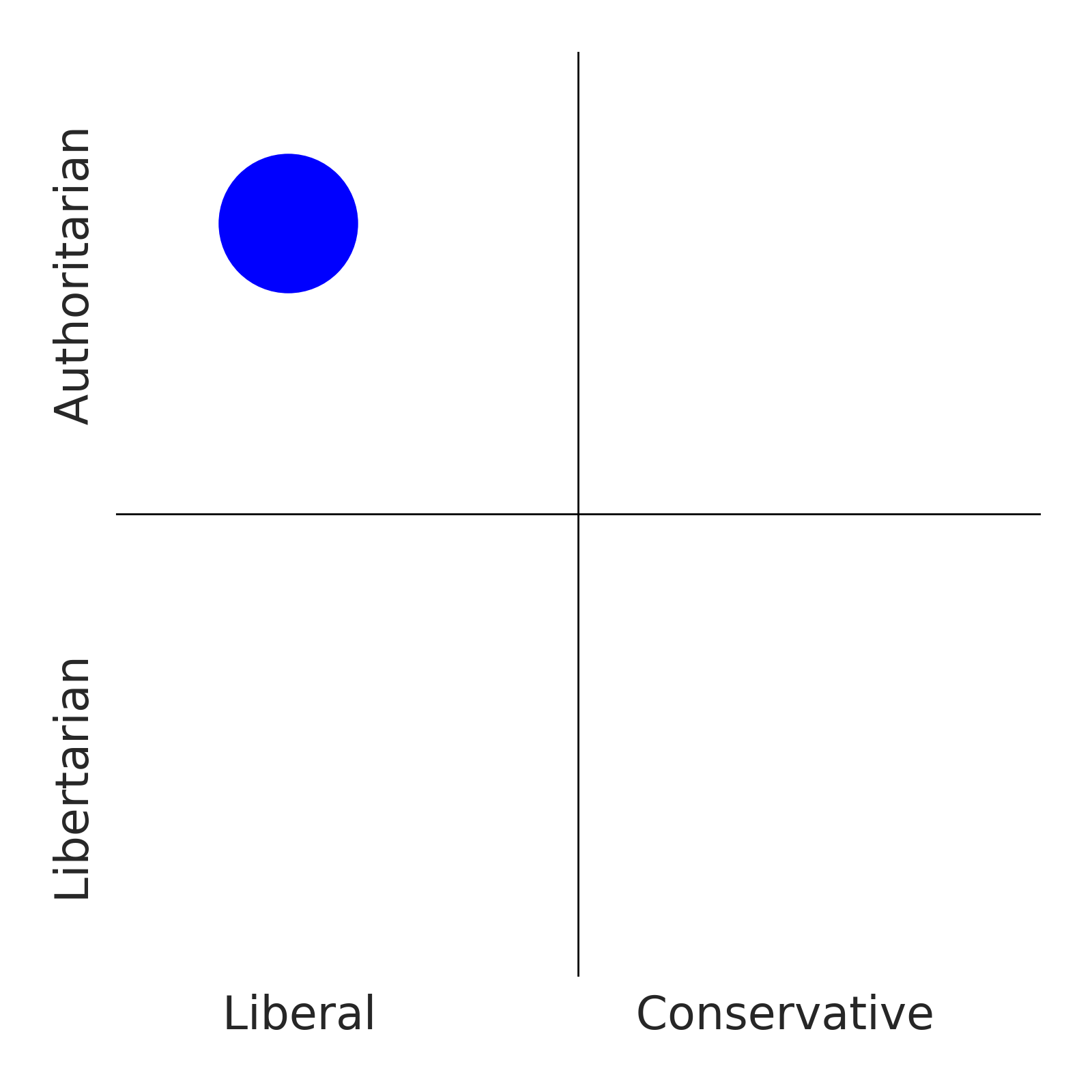
Overall orientation: The sample is overwhelmingly anti-Trump / anti-MAGA and aligned with liberal, pro-democratic-institutions framing.
Coverage is dominated by Trump's conduct, GOP midterm prospects, courts, press access, the economy, and Iran — with few stories centered on Democratic weaknesses (a rare partial counterexample is the favorable-to-El-Sayed but GOP-critical Michigan Senate piece
Framing treats a 67-33 forecast as nearly decisive, uses the loaded term “torpedo” for Republican attacks, and presents the Republican candidate as running out of time in a must-win Senate race.
Context
This is a Michigan U.S. Senate race in the coming midterms; Republicans need to win the seat as part of their effort to keep control of the Senate, and the state is described as a must-win swing state.
Hidden Assumptions
The article treats a 67 percent forecast as nearly decisive, minimizing Rogers’s remaining 33 percent chance with the word “only.”
It assumes the unnamed forecasting expert’s warning that time is running out is an objective fact rather than one interpretation of the race.
It assumes that because Republican attacks have “not seemed” to change the race so far, they are unlikely to matter significantly going forward.
Automated analysis; not human reviewed.Limitations: The supplied text appears to include a trailing cluster of related-promotional headlines, so I treated the opening paragraphs as the substantive article and did not use the headline cluster as evidence.
·
5 of 55 available dimensions scored; omitted dimensions are not treated as neutral. ·
Verified supporting quotes for 5 of 5 scored dimensions.
🔵 Liberal <—> Conservative 🔴
Inspect evidence · 85% classification confidence
Claim: The framing is favorable to El-Sayed and presents the Republican campaign’s strategy in negative terms.
“Republicans have attempted to torpedo El-Sayed's chances by accentuating his progressive stances as too left-wing, as well as his past affiliations with controversial commentator Hasan Piker, but so far, these efforts have not seemed to seal the deal with voters.”
· exact text match
“Tranter's site currently gives El-Sayed a 67 percent chance of winning the race, with Rogers only having a 33 percent chance.”
· exact text match
Why: The verb “torpedo” frames GOP attacks as destructively motivated, while the word “only” diminishes Rogers’s one-in-three chance, both of which push the framing leftward.
💭 Opinion
Inspect evidence · 75% classification confidence
Claim: The article embeds interpretation and evaluation in its lead rather than confining the assessment to labeled commentary.
“Republicans are still running behind in a must-win swing state race in the coming midterms, and as one of the nation's top election forecasting experts warned, the party is almost out of time to turn things around.”
· exact text match
Why: The phrases “must-win” and “almost out of time” are presented as the article’s own framing, not solely as neutral, sourced reporting.
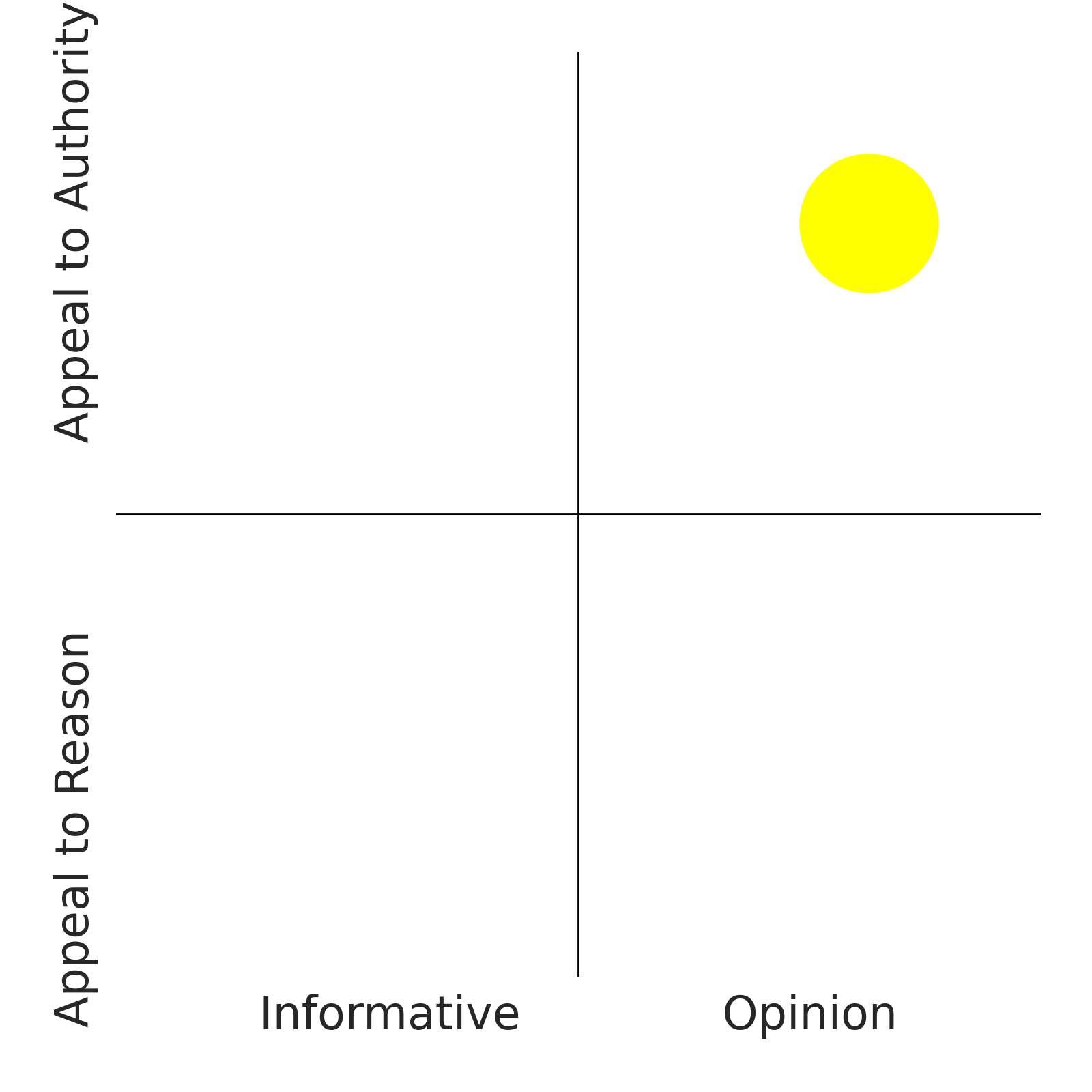
🏛️ Appeal to Authority
Inspect evidence · 70% classification confidence
Claim: The article leans on expert status and the reputation of Decision Desk HQ rather than explaining the forecasting method.
“as one of the nation's top election forecasting experts warned”
· exact text match
“Decision Desk HQ is an outlet considered to be one of the foremost sources for election results tracking in the U.S.”
· exact text match
Why: Credibility is assigned through “top” expert status and “foremost sources” language, not through transparent methodology or direct citations.
❌ Low Credibility <—> High Credibility ✅
Inspect evidence · 70% classification confidence
Claim: The report includes named sourcing and specific figures, but couples them with unhedged factual-sounding assertions.
“Scott Tranter, told NewsNation that “time is running out” for Rogers to reverse his fortunes”
· verified after text normalization
“Republicans have attempted to torpedo El-Sayed's chances by accentuating his progressive stances as too left-wing”
· exact text match
Why: There is enough named attribution and numerical specificity to be moderately credible, but the unhedged claims about Republican motives lower its credibility.
🐍 Manipulative
Inspect evidence · 70% classification confidence
Claim: The article uses loaded urgency and contrastive wording to imply the race is effectively decided.
“the party is almost out of time to turn things around”
· exact text match
“Rogers only having a 33 percent chance”
· exact text match
Why: “Almost out of time” is offered as an urgent warning, while “only” minimizes a real one-in-three probability, an observable loaded-framing technique.
Analysis Self-Critique
The supplied text appears to include a trailing cluster of related-promotional headlines, so I treated the opening paragraphs as the substantive article and did not use the headline cluster as evidence.
, and even neutral-leaning items like the Sanders–Bannon AI conference
Frames a Sanders-Bannon appearance as an "unlikely duo" demanding a halt to AI and pairs the event with a record-low labor-share statistic, leaning on a populist anti-corporate frame.
Hidden Assumptions
The newsworthiness of the event depends on the assumption that ideological opponents agreeing on AI is exceptional and surprising.
The juxtaposition of the record-low labor-share statistic with the anti-AI conference presumes that AI and data-center buildout is a cause or symptom of declining worker compensation.
Automated analysis; not human reviewed.Limitations: The supplied article text is partially truncated with content omitted after '[…]' markers, so the analysis rests on an incomplete excerpt. The 'as of mid-2026' dating and the referent of 'one does not bite the hands that feed' cannot be fully resolved from the visible text.
·
6 of 55 available dimensions scored; omitted dimensions are not treated as neutral. ·
Verified supporting quotes for 2 of 6 scored dimensions.
🧢 Populist <—> Elitist 🎩
Inspect evidence · 65% classification confidence
Claim: The publisher places a historically low labor-share figure in the context of an anti-AI protest, giving credence to a populist economic critique.
“the percentage of the total economy going to workers as wages fell to a record low of 52.9 percent (down from above 65 percent when tracking began in […]”
· not found in supplied text
Why: Presenting the BLS labor-share decline in the same piece as the anti-AI conference invites the reader to connect AI and data-center expansion to declining worker compensation, a core populist argument.
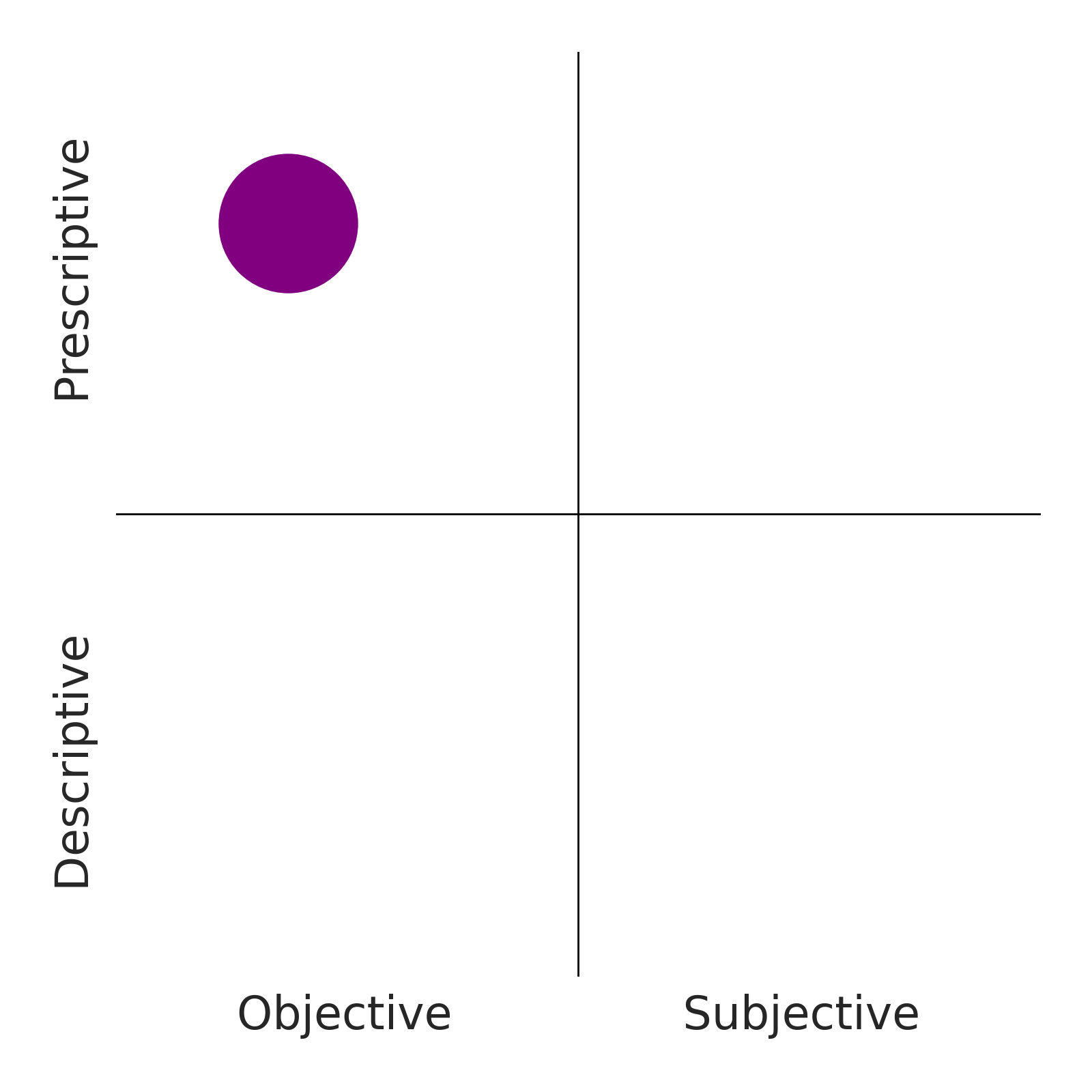
🗞️ Objective <—> Subjective 👁️
Inspect evidence · 70% classification confidence
Claim: The publisher uses value-laden framing, designating the pairing an "unlikely duo" rather than offering a purely neutral description.
“"unlikely duo" of Bernie Sanders and Steve Bannon keynoted a Washington conference”
· not found in supplied text
Why: The scare-quoted "unlikely duo" presents an editorial judgment about the oddity of the alliance, even if the phrase is drawn from a source.
😩 Pessimistic <—> Optimistic 🌞
Inspect evidence · 55% classification confidence
Claim: The publisher's selections emphasize risks rather than benefits of AI, lending a pessimistic cast.
“the risks AI poses to jobs and even to the human species”
· exact text match
Why: The article leads with the conference's demand to 'stop AI' and foregrounds risk language about jobs and humanity, downplaying any potential benefits.
💡 Boring <—> Interesting
Inspect evidence · 60% classification confidence
Claim: The publisher relies on the novelty of the cross-ideological alliance as the story's central hook.
“"unlikely duo" of Bernie Sanders and Steve Bannon keynoted a Washington conference”
· not found in supplied text
Why: The conspicuous use of "unlikely duo," complete with scare quotes, spotlights the unusual alliance as the most newsworthy element.
🗳 Political
Inspect evidence · 85% classification confidence
Claim: The article is anchored in partisan identity and a political demand, marking it as an explicitly political news item.
“Bernie Sanders and Republican Steve Bannon have some common ground in their disdain for AI”
· not found in supplied text
Why: Naming two prominent partisan figures, labeling Bannon 'Republican,' and foregrounding a political stance situate the piece squarely in political coverage.
❌ Low Credibility <—> High Credibility ✅
Inspect evidence · 55% classification confidence
Claim: The article exhibits moderate sourcing credibility through explicit attribution to an official statistical agency.
“according to the Bureau of Labor Statistics”
· exact text match
Why: Attribution to BLS for the 52.9 percent record-low figure reflects an attempt at verifiable sourcing, though the full context is truncated and the figure cannot be independently validated from the supplied text.
Analysis Self-Critique
The supplied article text is partially truncated with content omitted after '[…]' markers, so the analysis rests on an incomplete excerpt. The 'as of mid-2026' dating and the referent of 'one does not bite the hands that feed' cannot be fully resolved from the visible text.
still skew pessimistic about corporate/AI risks).
Framing & wording patterns: Nearly every record shows opinion embedded in news and sensationalized, mocking headlines: 'White House panic skyrockets as Trump triggers death spiral economy'
Framing treats Trump as the cause of an economic 'death spiral' and treats Republican midterm losses as the probable verdict, while leaning on Bloomberg-sourced data for authority.
Hidden Assumptions
The article assumes Trump's 'unilateral war on Iran' is the primary driver of the energy-price increases it describes.
It presupposes that consumer anxiety and polling are reliable indicators of how voters will act in the November midterms.
The 'death spiral' framing assumes that negative economic indicators should be weighted more heavily than the acknowledged growth and stability.
Automated analysis; not human reviewed.Limitations: The supplied text mixes article body with caption and sidebar headline links, and many economic claims are attributed to Bloomberg or economists, so the publisher's independent framing is only partially separable from sourced reporting.
·
13 of 54 available dimensions scored; omitted dimensions are not treated as neutral. ·
Verified supporting quotes for 13 of 13 scored dimensions.
🔵 Liberal <—> Conservative 🔴
Inspect evidence · 75% classification confidence
Claim: The publisher frames Trump and Republicans as culpable for an economic 'death spiral' heading into the midterms.
“White House panic skyrockets as Trump triggers death spiral economy.”
· exact text match
“The reality — that polls suggest voters are in fact quite anxious about the state of the economy, and preparing to punish Republicans in November’s midterm elections — has become hard for even President Donald Trump to ignore.”
· exact text match
Counterevidence:
“an economy that is a mess of contradictions — growing and stable but expensive and inequitable”
· exact text match
Why: The headline and repeated focus on Republican electoral punishment are partisan in direction, even though the article cites Bloomberg data and acknowledges economic complexity.
🗞️ Objective <—> Subjective 👁️
Inspect evidence · 75% classification confidence
Claim: The article mixes factual reporting with explicitly evaluative and emotional framing in its headline and commentary.
“White House panic skyrockets as Trump triggers death spiral economy.”
· exact text match
“And now Trump and Republicans must put on a happy face and assure voters that the economy is still coming together”
· exact text match
Why: Words like 'panic,' 'death spiral,' and 'must put on a happy face' are subjective judgments rather than neutral description.
🗞️ Objective <—> Sensational 🚨
Inspect evidence · 80% classification confidence
Claim: The presentation uses catastrophic metaphors and panic language to dramatize economic news.
“White House panic skyrockets as Trump triggers death spiral economy.”
· exact text match
Why: The headline's 'panic skyrockets' and 'death spiral' are sensationalist, exceeding what the sourced data alone establishes.
📉 Bearish <—> Bullish 📈
Inspect evidence · 80% classification confidence
Claim: The economic outlook is presented as deteriorating, emphasizing record costs, sluggish inflation progress, and sliding sentiment.
“Gasoline prices, at about $4.30 a gallon on average, are at their highest ever for September”
· exact text match
“Consumer sentiment slid below estimates in September”
· exact text match
Counterevidence:
“an economy that is a mess of contradictions — growing and stable but expensive and inequitable”
· exact text match
Why: The selected indicators and quotations tilt heavily toward negative economic conditions, with growth and stability mentioned only as part of a contradictory mix.
😩 Pessimistic <—> Optimistic 🌞
Inspect evidence · 75% classification confidence
Claim: The overall tone is pessimistic, highlighting anxiety and likely voter punishment rather than possible upsides.
“a latent anxiety hung over [the RNC midterm celebration in] Dallas”
· exact text match
“polls suggest voters are in fact quite anxious about the state of the economy, and preparing to punish Republicans in November’s midterm elections”
· exact text match
Why: The article repeatedly selects anxiety, panic, and punishment vocabulary to characterize the economic and political mood.
😨 Fearful
Inspect evidence · 75% classification confidence
Claim: The framing evokes alarm through panic and catastrophe language.
“White House panic skyrockets as Trump triggers death spiral economy.”
· exact text match
“voters are in fact quite anxious about the state of the economy”
· exact text match
Why: The headline leads with panic and the body emphasizes voter anxiety, producing a fear-forward presentation.
💭 Opinion
Inspect evidence · 75% classification confidence
Claim: The article is built around evaluative commentary and exhortation as much as factual reporting.
“And now Trump and Republicans must put on a happy face and assure voters that the economy is still coming together”
· exact text match
“[F]raming the economy as humming along is a risky gamble”
· exact text match
Why: Even where sourced, the framing is judgmental and the headline is plainly opinionated.
🗳 Political
Inspect evidence · 85% classification confidence
Claim: The report centers on partisan competition, Republican electoral risk, and Trump's power.
“preparing to punish Republicans in November’s midterm elections”
· exact text match
“how much longer Trump can single-handedly reshape the federal government”
· exact text match
Why: The subject and stakes are explicitly political, with party outcomes and presidential power as the core narrative.
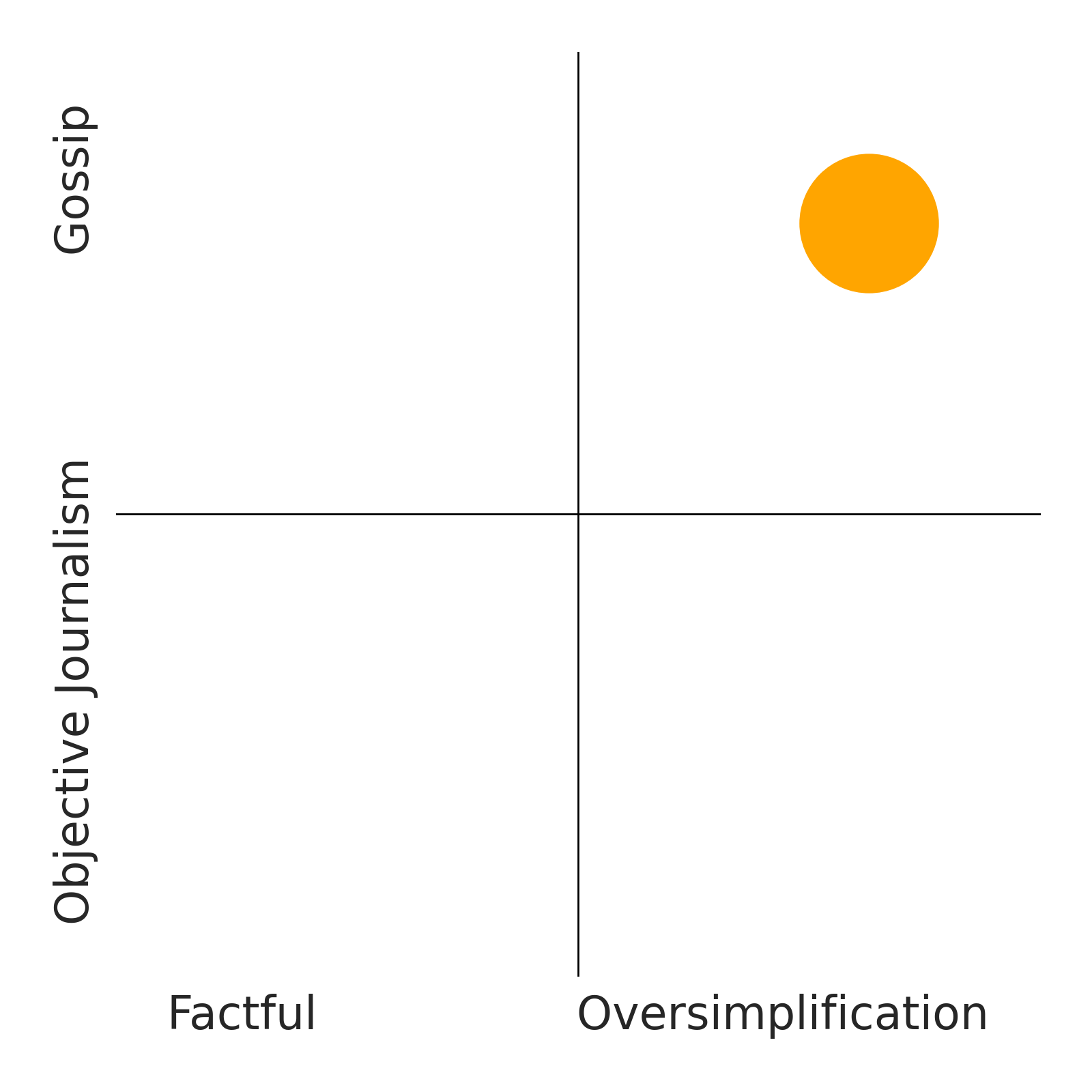
Oversimplification
Inspect evidence · 60% classification confidence
Claim: Complex economic conditions are compressed into a single causal story of Trump causing a 'death spiral.'
“White House panic skyrockets as Trump triggers death spiral economy.”
· exact text match
Counterevidence:
“an economy that is a mess of contradictions — growing and stable but expensive and inequitable”
· exact text match
Why: The body acknowledges contradictions and multiple causes, but the headline reduces the economy to a Trump-caused death spiral.
😤 Overconfident
Inspect evidence · 60% classification confidence
Claim: The headline asserts causation and outcome with more certainty than the hedged body supports.
“White House panic skyrockets as Trump triggers death spiral economy.”
· exact text match
Counterevidence:
“seems likely to dictate the results of the vote”
· exact text match
Why: The body uses hedged language about likely effects, while the headline states a definitive spiral and cause.
🙁 Negative <—> Positive 🙂
Inspect evidence · 75% classification confidence
Claim: The article's language carries a strongly negative emotional charge.
“White House panic skyrockets as Trump triggers death spiral economy.”
· exact text match
“a latent anxiety hung over [the RNC midterm celebration in] Dallas”
· exact text match
Why: The dominant emotional markers are panic, death spiral, and anxiety, with little positive emotional framing.
❌ Low Credibility <—> High Credibility ✅
Inspect evidence · 65% classification confidence
Claim: The report consistently attributes economic data and quotations to identifiable sources, supporting source transparency.
“said Bloomberg writer Josh Wingrove”
· exact text match
“Just 35 percent of Republicans in the University of Michigan survey believe the government is doing a good job with the economy, the lowest reading since Trump returned to the White House”
· exact text match
Why: Specific data, named sources, and attributed quotations are present, though the sensational framing reduces overall balance.
🐍 Manipulative
Inspect evidence · 60% classification confidence
Claim: The presentation uses loaded, emotionally charged framing that steers the reader before presenting evidence.
“White House panic skyrockets as Trump triggers death spiral economy.”
· exact text match
“And now Trump and Republicans must put on a happy face and assure voters that the economy is still coming together”
· exact text match
Counterevidence:
“an economy that is a mess of contradictions — growing and stable but expensive and inequitable”
· exact text match
Why: Loaded headline phrases and editorializing about Republicans' 'happy face' are observable framing techniques, despite some hedged sourcing in the body.
Analysis Self-Critique
The supplied text mixes article body with caption and sidebar headline links, and many economic claims are attributed to Bloomberg or economists, so the publisher's independent framing is only partially separable from sourced reporting.
; 'C-Span callers hang
Helium Bias: My analysis relies solely on a supplied bias-inventory sample skewed toward September 2026 and high-bias articles, likely omitting routine neutral coverage.
I cannot verify underlying facts (including the fictional-seeming Iran war and $5,000-check context), infer actual AI authorship, or observe unpublished stories.
Ratings of values are inferences from wording patterns, not direct evidence of intent.
Automated source summary · Updated September 24, 2026 · Not human reviewed. Check recent article panels for claim-level evidence when available.
Weighted source-level patterns from recent analyzed coverage. Open recent articles below to inspect score-specific evidence and limitations when available.
* Disclaimer: Nothing on this website constitutes investment advice, performance data or any recommendation that any particular security, portfolio of securities, transaction or investment strategy is suitable for any specific person. Helium Trades is not responsible in any way for the accuracy
of any model predictions or price data. Any mention of a particular security and related prediction data is not a recommendation to buy or sell that security. Investments in securities involve the risk of loss. Past performance is no guarantee of future results. Helium Trades is not responsible for any of your investment decisions,
you should consult a financial expert before engaging in any transaction.