See whether Helium helps you make better-informed decisions. Try every Pro Trader feature for 30 days. No credit card required.
Try every Pro Trader feature for 30 days. No credit card required.
Observable pattern and scope. The sample is dominated by U.S. politics, elections, presidents, socialism, foreign policy, war, alliances, and national security, with a secondary stream of literary, cultural, philosophical, and memoir writing.
DSA/socialist politics appears especially frequent [62].
This is a topic-selection finding, not evidence about stories the source did not publish.
The records are heavily concentrated in July–August 2026, with some earlier newsletter and metadata items, and may overrepresent unusually opinionated headlines rather than ordinary output.
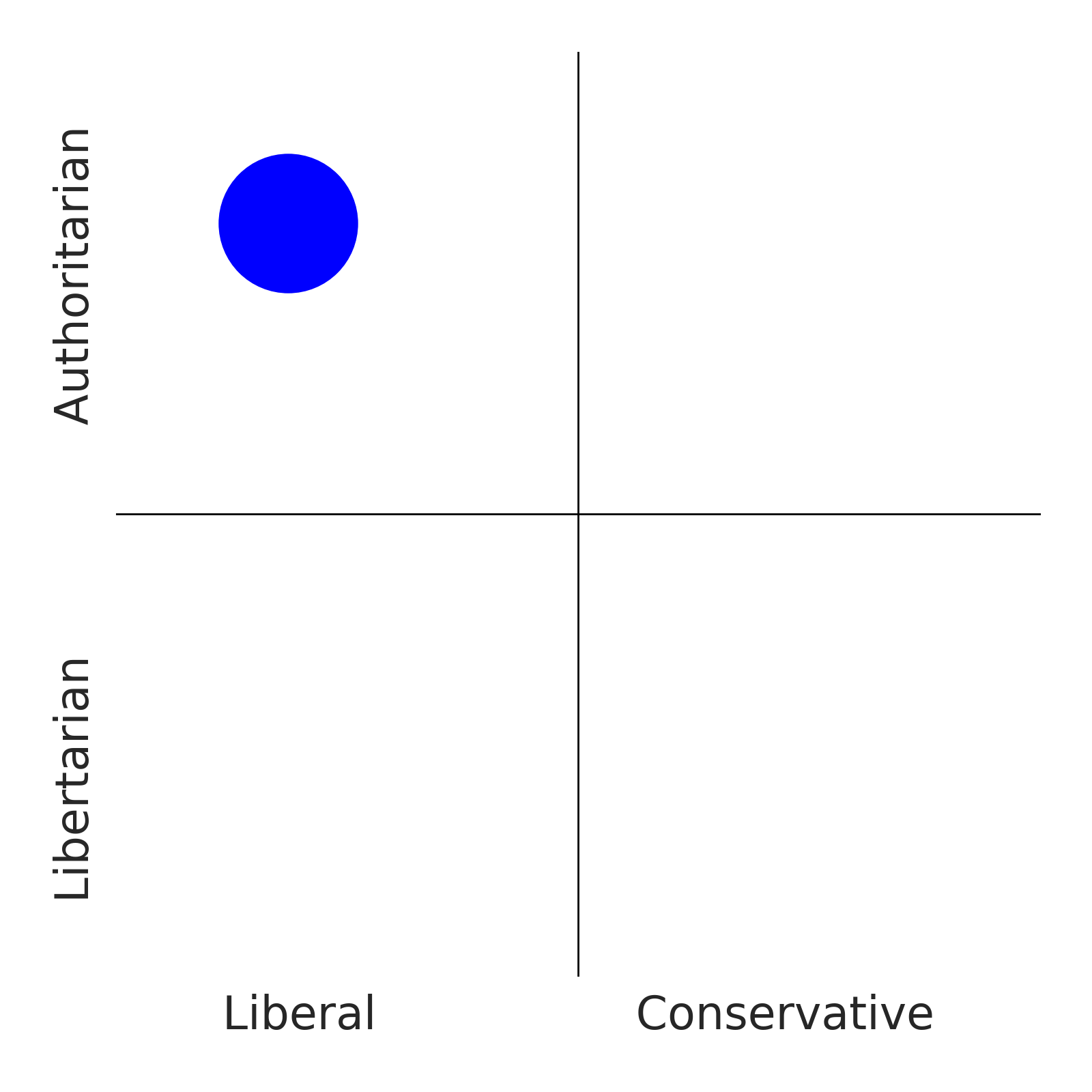
General framing and worldview. The most consistent perspective is center-right or conservative on socialism, markets, debt, and cultural politics: socialism is described as unpopular, fringe, or electorally dangerous
Alarmist, anti-socialism framing that casts socialism as a dangerous idea to reject and emphasizes American agency to experiment.
Automated analysis; not human reviewed. · 4 of 52 available dimensions scored; omitted dimensions are not treated as neutral. · Verified supporting quotes for 4 of 4 scored dimensions.
Claim: Conservative framing that opposes socialism and emphasizes American agency to reject ideas
“We're Not One Election Away From Ruin.” · exact text match
“Americans still have the power to experiment with and reject bad ideas, including socialism.” · exact text match
Why: Direct quotes indicate alarm about socialism and emphasis on individual agency, consistent with conservative framing.
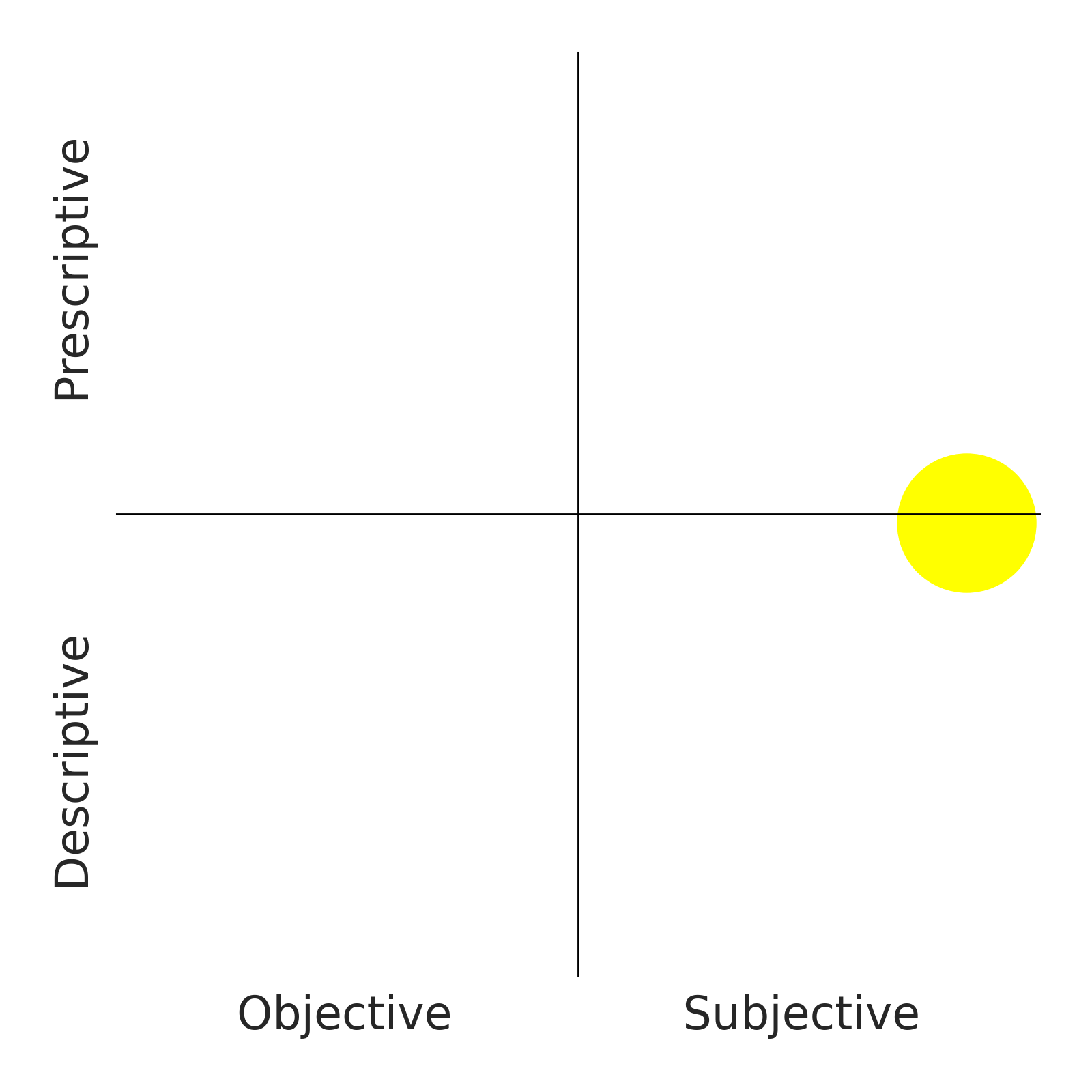
Claim: Prescribes action to readers to reject ideas and experiment
“Americans still have the power to experiment with and reject bad ideas, including socialism.” · exact text match
Why: The sentence urges action to reject ideas and to experiment, a prescriptive stance.
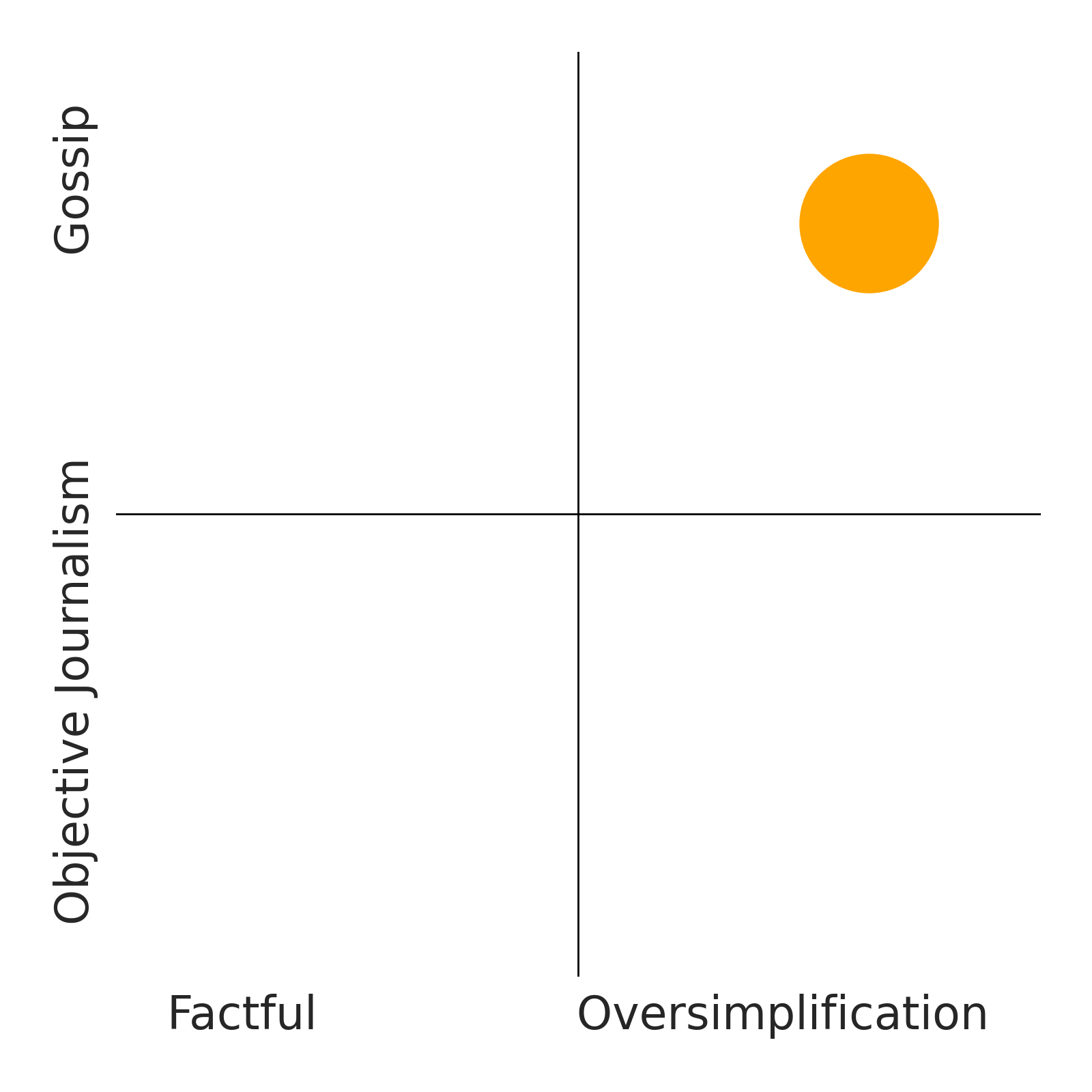
Claim: Fear-based framing around political threat
“We're Not One Election Away From Ruin.” · exact text match
Why: The word 'ruin' signals fear-based framing.
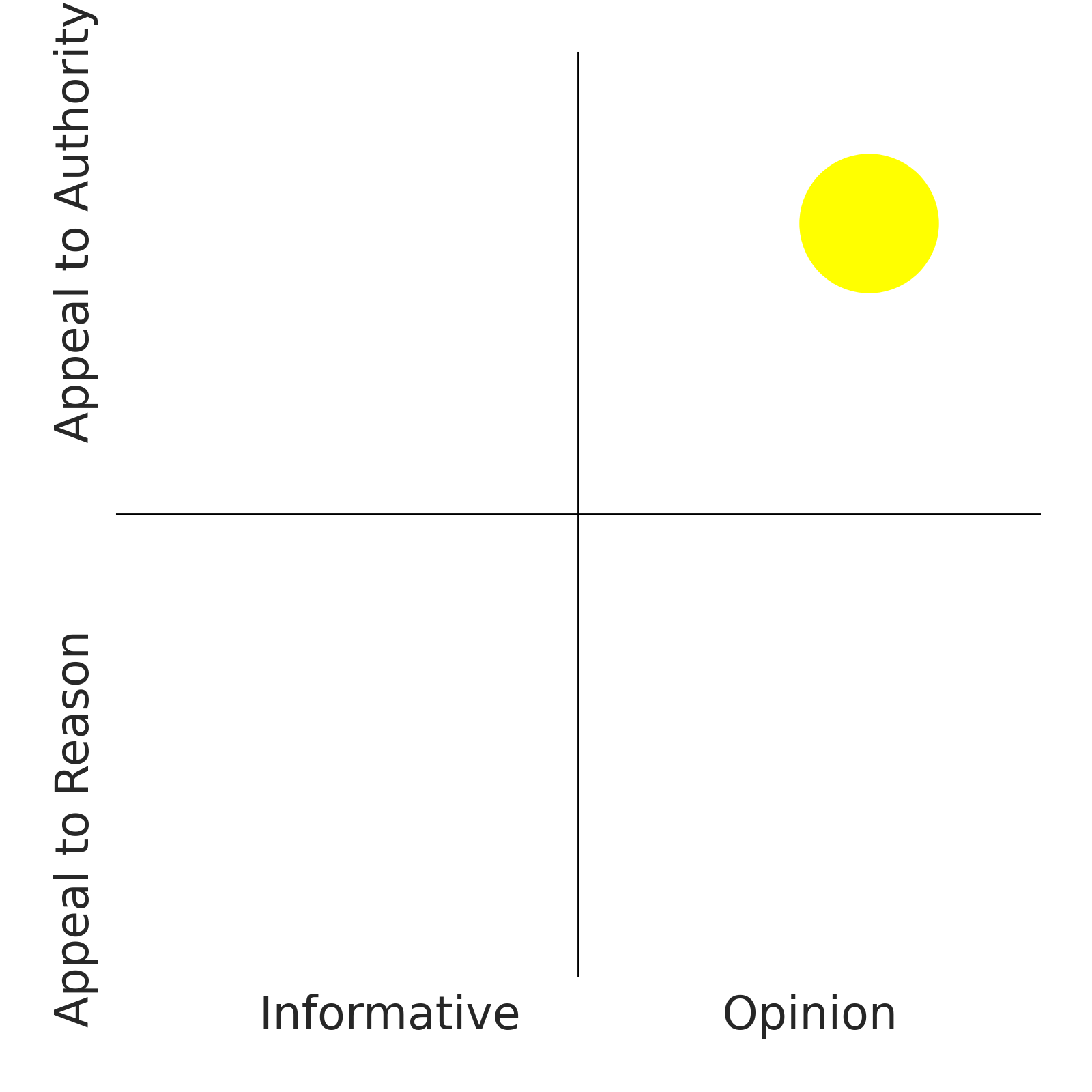
Claim: Opinionated framing characteristic of a political column
“We're Not One Election Away From Ruin.” · exact text match
Why: The tone includes evaluative and normative statements typical of opinion writing.
Frames democratic socialism as deeply unpopular with voters while noting progressive electoral momentum.
Automated analysis; not human reviewed. Limitations: The article text is a fragmentary collection of headlines, metadata, and a few sentences, making it difficult to confidently assess the publisher's broader framing and sourcing. · 12 of 53 available dimensions scored; omitted dimensions are not treated as neutral. · Verified supporting quotes for 12 of 12 scored dimensions.
Claim: The publisher frames democratic socialism as having a significant problem due to voter unpopularity, a conservative-aligned critique.
“Democratic Socialism Has a Big Problem. It’s deeply unpopular with voters.” · exact text match
Why: The headline directly criticizes democratic socialism, a left-wing ideology, by asserting unpopularity.
Claim: The central claim about unpopularity is a subjective opinion presented as fact.
“Democratic Socialism Has a Big Problem. It’s deeply unpopular with voters.” · exact text match
Why: No attribution or data is provided to support the claim of unpopularity.
Claim: The phrasing 'big problem' and 'deeply unpopular' is sensational, emphasizing drama over nuance.
“Democratic Socialism Has a Big Problem. It’s deeply unpopular with voters.” · exact text match
Why: The language is dramatic and not qualified.
Claim: The headline implies a crisis or threat, which can induce fear.
“Democratic Socialism Has a Big Problem.” · exact text match
Why: The word 'problem' suggests imminent negative consequences, but context is limited.
Claim: The article assumes that voter unpopularity is a significant problem without evidence.
“Democratic Socialism Has a Big Problem. It’s deeply unpopular with voters.” · exact text match
Why: The claim is presented as self-evident, but the article does not provide supporting data or arguments.
Claim: The headline and framing are clearly opinionated, not neutral reporting.
“Democratic Socialism Has a Big Problem.” · exact text match
Why: No opposing viewpoints or factual basis is provided; it is an editorial stance.
Claim: The article focuses on a political issue and takes a side.
“Democratic Socialism Has a Big Problem. It’s deeply unpopular with voters.” · exact text match
Why: The content is explicitly about a political ideology and electoral politics.
Claim: The article reduces a complex ideology to a single claim about popularity.
“It’s deeply unpopular with voters.” · exact text match
Why: No nuance is given about differing polls or definitions of democratic socialism.
Claim: The article relies on the authority of a Pew Research director for credibility.
“Carroll Doherty is the former director of political research at Pew Research Center.” · exact text match
Why: The byline or credit to a respected research institute lends unearned weight to the opinion, though the connection is unclear.
Claim: The article states the unpopularity as an unqualified fact.
“It’s deeply unpopular with voters.” · exact text match
Why: No hedging language or attribution is used; it is presented as certain.
Claim: The article makes an unsupported strong claim and provides minimal factual reporting.
“Democratic Socialism Has a Big Problem. It’s deeply unpopular with voters.” · exact text match
Why: No data, sources, or balanced reporting is evident; the article is too short to establish trust.
Claim: The headline uses loaded language and a declarative problem statement to shape reader perception.
“Democratic Socialism Has a Big Problem.” · exact text match
Why: The phrasing 'big problem' is manipulative as it frames the topic negatively without justification.
The article text is a fragmentary collection of headlines, metadata, and a few sentences, making it difficult to confidently assess the publisher's broader framing and sourcing.
Conservative framing portrays the Democratic Socialists of America as an insurgent, anti-democratic force within the Democratic Party, invoking John Adams' warnings about democracy.
Automated analysis; not human reviewed. · 1 of 52 available dimensions scored; omitted dimensions are not treated as neutral. · Verified supporting quotes for 1 of 1 scored dimensions.
Claim: Framing is conservative-leaning, portraying DSA as insurgent and democracy-threatening.
“The Democratic Socialists of America, an insurgency within the Democratic Party” · exact text match
“This is the democracy John Adams warned us about” · exact text match
Why: Insurgent and anti-democratic framing used to depict DSA as threat to democracy.
Conservative framing casts the Democratic Socialists of America as fringe and argues that a socialist takeover is not imminent, while emphasizing socialism's unpopularity.
Background: Democratic Socialists of America (DSA) and its positions outside the mainstream; The article notes DSA advocacy including abolition of police, prisons, the Pentagon, and the U.S. Senate; It also discusses the notion that socialism is not imminent and remains unpopular.
Automated analysis; not human reviewed. Limitations: The article_text contains garbled filler and non-substantive placeholders; reliability of interpretation is limited by the quality of the source text. · 20 of 52 available dimensions scored; omitted dimensions are not treated as neutral. · Verified supporting quotes for 10 of 20 scored dimensions.
Claim: Framing is conservative with skepticism toward socialism and DSA's fringe status.
“A Socialist Takeover Is Not Imminent.” · exact text match
“Socialism still isn’t very popular, even among those dissatisfied with our economy.” · exact text match
“The DSA champions many views that exist wildly outside the mainstream of American politics.” · not found in supplied text
Why: Headlines and quotes frame socialism as unlikely and outside mainstream; cross-party conspiratorial claim indicates conservative framing.
Claim: No strong populist or elitist framing detected; neutral orientation.
“The DSA champions many views that exist wildly outside the mainstream of American politics.” · not found in supplied text
Why: Evidence focuses on mainstream/outside-mainstream labels rather than populist/elitist orientation.
Claim: No explicit libertarian or authoritarian tilt; mentions abolition but not a state-power ideology.
“The DSA champions many views that exist wildly outside the mainstream of American politics.” · not found in supplied text
“abolition of the police, prisons, the Pentagon, and the U.S. Senate.” · exact text match
Why: Ambiguous; mentions abolition but not a clear orientation toward statism or libertarianism.
Claim: Subjective framing detected; normative judgments present.
“A Socialist Takeover Is Not Imminent.” · exact text match
“The DSA champions many views that exist wildly outside the mainstream of American politics.” · not found in supplied text
Why: Language is normative, not purely descriptive.
Claim: Headline framing shows mild sensationalism but not extreme.
“A Socialist Takeover Is Not Imminent.” · exact text match
Why: Headline with a strong claim, but not hyperbolic.
Claim: Cross-party insinuations and fringe framing render the piece moderately interesting.
“I’m not a conspiracy theorist, but it’s almost like the GOP is secretly promoting the Democratic Socialists of America, which is now producing a lot of the energy and excitement within the Democratic and Republican parties.” · exact text match
Why: Conspiratorial claim adds interest.
Claim: Primarily descriptive; no prescriptive policy guidance.
“A Socialist Takeover Is Not Imminent.” · exact text match
Why: Describes rather than prescribes.
Claim: No clear hawkish/dovish tilt on warfare policy.
“abolition of the Pentagon” · not found in supplied text
Why: Minimal mention without clear tilt.
Claim: No explicit fear-based framing.
Claim: No explicit circular reasoning observed.
“A Socialist Takeover Is Not Imminent.” · exact text match
Why: No clear fallacious reasoning detected.
Claim: No direct gossip framing; mentions of energy and excitement are ambiguous.
“energy and excitement within the Democratic and Republican parties.” · exact text match
Why: Not a gossip piece; more about political energy.
Claim: High degree of opinionated framing; normative judgments about socialism.
“A Socialist Takeover Is Not Imminent.” · exact text match
“Socialism still isn’t very popular, even among those dissatisfied with our economy.” · exact text match
Why: Direct normative judgments.
Claim: Clear political bias; skeptical of socialism, aligned with mainstream political discourse.
“A Socialist Takeover Is Not Imminent.” · exact text match
“The DSA champions many views that exist wildly outside the mainstream of American politics.” · not found in supplied text
Why: Explicit political framing against socialism.
Claim: Potential oversimplification by reducing broad political debates to not imminent and unpopular.
“A Socialist Takeover Is Not Imminent.” · exact text match
“Socialism still isn’t very popular, even among those dissatisfied with our economy.” · exact text match
Why: Complex political dynamics condensed into a simple horizon.
Claim: Headline asserts a strong timeline claim; may exceed what is supported by text.
“A Socialist Takeover Is Not Imminent.” · exact text match
Why: Timelines asserted in headlines often exceed the embedded evidence.
Claim: Framing aligns with establishment critique by labeling DSA as outside mainstream.
“The DSA champions many views that exist wildly outside the mainstream of American politics.” · not found in supplied text
Why: Outside-mainstream framing suggests establishment-friendly critique.
Claim: Mix of rational framing with some conspiratorial rhetoric; not purely irrational.
“I’m not a conspiracy theorist, but it’s almost like the GOP is secretly promoting the Democratic Socialists of America, which is now producing a lot of the energy and excitement within the Democratic and Republican parties.” · exact text match
Why: Conspiratorial language coexists with descriptive claims.
Claim: Unknown authorship; no explicit AI indicators.
Claim: Editorial integrity compromised by garbled filler text included in article_text.
“Jonah Goldberg is editor-in-chief and co-founder of , based in Washington, D.C. Prior to that, enormous lizards roamed the Earth.” · exact text match
Why: Unclear or irrelevant passages reduce perceived reliability.
The article_text contains garbled filler and non-substantive placeholders; reliability of interpretation is limited by the quality of the source text.
August 19, 2026 · 0 shares
Promotional conservative political newsletter framing that treats free-market advocacy as a virtue and describes Trump's midterm targeting of John Thune as scapegoating rather than legitimate political opposition.
The text is a promotional launch page for a new conservative politics newsletter rather than a traditional news article, containing subscription prompts and an editorial biography.
Automated analysis; not human reviewed. · 51 of 54 available dimensions scored; omitted dimensions are not treated as neutral. · Verified supporting quotes for 0 of 51 scored dimensions.
The column leads with a schoolyard taunt ("More mush from the wimp") to dismiss the president's Iran policy as feckless posturing.
Automated analysis; not human reviewed. Limitations: The text is a two-sentence opinion snippet, constraining analysis to this limited sample. · 9 of 54 available dimensions scored; omitted dimensions are not treated as neutral. · Verified supporting quotes for 8 of 9 scored dimensions.
Claim: The text is heavily subjective, expressing the author's personal views and ridicule.
“the Iranians probably are right to shrug them off” · exact text match
“dumb, empty threats” · exact text match
Why: Framing and word choice center the author's own reaction rather than factual reporting.
Claim: The article uses extreme and exaggerated language to describe the administration's policy.
“run the gamut from war crimes to outright genocide” · exact text match
Why: Hyperbolic framing equating an economic policy announcement to 'war crimes' or 'genocide' is sensational.
Claim: The author opposes hawkish economic threats against Iran.
“Trump makes these kinds of dumb, empty threats all the time” · exact text match
Why: By mocking the threats and encouraging Iran to ignore them, the author positions himself against a confrontational stance.
Claim: The article makes strong evaluative judgments with no factual grounding, signaling an opinion piece.
“More mush from the wimp” · exact text match
“dumb, empty threats” · exact text match
Why: Uses subjective, name-calling language to evaluate foreign policy, a clear marker of opinion-led content.
Claim: The piece reduces a complex foreign policy decision to a personal insult.
“Trump Is Impotent vs. Iran. More mush from the wimp.” · exact text match
Why: The primary analytical move is a personal attack that oversimplifies US-Iran relations.
Claim: The tone is immature and taunting.
“More mush from the wimp” · exact text match
“dumb, empty threats” · exact text match
Why: Childish taunts signal an immature rhetorical style.
Claim: The article's overall emotional tone is negative, focusing on the absurdity of the policy.
“impotent” · not found in supplied text
“dumb” · exact text match
Why: Words like 'impotent' and 'dumb' convey strong negative emotion toward the announced policy.
Claim: The article positions itself as rational by dismissing the policy as intellectually and strategically vacuous.
“dumb, empty threats” · exact text match
“the Iranians probably are right to shrug them off” · exact text match
Why: It claims the rational high ground by labeling the policy 'dumb' and 'empty' while asserting its own assessment is correct.
Claim: The article speculates about Iran's reaction to the threats.
“the Iranians probably are right to shrug them off” · exact text match
Why: Assuming the policy's effect on Iran's behavior is an unverified forecast.
The text is a two-sentence opinion snippet, constraining analysis to this limited sample.
Frames U.S. debt as a moral 'tragedy' born of 'stupidity and cowardice,' blaming voters for twice electing a self-proclaimed 'king of debt' while mocking their religious and electoral choices.
The national debt is the total amount the U.S. federal government owes; the president and Congress share responsibility for fiscal policy, which is why the text presumes that voters and their leaders control the debt's trajectory.
Automated analysis; not human reviewed. Limitations: The available input is truncated to a headline, subtitle, and opening paragraph of a paywalled commentary, so the analysis may not reflect the full argument or any data presented later in the text. · 9 of 54 available dimensions scored; omitted dimensions are not treated as neutral. · Verified supporting quotes for 7 of 9 scored dimensions.
Claim: The text endorses morally traditional and fiscally conservative values.
“The wicked person borrows and does not repay, but the righteous one is gracious and giving” · exact text match
“the self-proclaimed 'king of debt'” · not found in supplied text
Why: Appeals to scripture and condemns borrowing with a moral register, marking it as conservative in a values sense.
Claim: The text shows elitist disdain for the electorate and their religious practice.
“Americans, who like to talk about their Christian faith more than study it” · exact text match
Why: Dismisses ordinary Americans' religiosity and political choices, reflecting an anti-populist, elite stance.
Claim: The language is heavily subjective and value-laden.
“The Tragedy of U.S. Debt” · exact text match
“self-abasing toadies” · exact text match
Why: Uses framing words like 'Tragedy' and pejorative names, imposing subjective judgment rather than neutral description.
Claim: The overall characterization is overwhelmingly negative.
“The Tragedy of U.S. Debt” · exact text match
“infamous deadbeat and serial bankrupt” · exact text match
Why: Describes the situation and the president in uniformly disparaging terms with no balancing positive framing.
Claim: The text is a pure expression of opinion, not a report of facts.
“Stupidity and cowardice are a costly combination.” · exact text match
Why: Presents a naked value judgment and personal evaluation as established fact.
Claim: The content is explicitly about elections and partisan control of government.
“have twice elected the self-proclaimed 'king of debt,' an infamous deadbeat and serial bankrupt, as president” · not found in supplied text
“his self-abasing toadies in Congress” · exact text match
Why: Directly comments on presidential elections and control of Congress, making it politically charged.
Claim: A complex economic issue is reduced to simple character flaws.
“Stupidity and cowardice are a costly combination.” · exact text match
Why: Attributes the cause of national debt solely to 'stupidity and cowardice,' ignoring structural, economic, and political complexity.
Claim: The text asserts a causal claim with high certainty despite offering no evidence.
“are a costly combination” · exact text match
Why: States the 'stupidity and cowardice' cause-effect relationship as unquestionable fact without supporting data.
Claim: The text relies on emotional labeling and insult rather than reasoned analysis.
“self-abasing toadies” · exact text match
“infamous deadbeat and serial bankrupt” · exact text match
Why: Resorts to ad hominem rhetorical attacks instead of engaging with policy or evidence.
The available input is truncated to a headline, subtitle, and opening paragraph of a paywalled commentary, so the analysis may not reflect the full argument or any data presented later in the text.
August 03, 2026 · 0 shares
Emotionally charged, opinionated language frames the Iran War as a heavy tax on allies and attributes it to Donald Trump's political cowardice.
Automated analysis; not human reviewed. Limitations: The supplied text is a truncated snippet with paywall elements; bias analysis is based primarily on the headline and one factual paragraph. · 6 of 53 available dimensions scored; omitted dimensions are not treated as neutral. · Verified supporting quotes for 6 of 6 scored dimensions.
Claim: The article frames Trump's Iran policy as cowardly and harmful to allies, indicating a liberal or anti-Trump bias.
“Sacrificing (even more) global partners on the altar of Donald Trump’s political cowardice.” · exact text match
Why: The strong negative language against Trump and characterization of his actions as cowardly reflects a liberal (anti-conservative) stance.
Claim: The article is an opinion piece with subjective interpretations rather than neutral reporting.
“The Iran War Is a Heavy Tax on Our Asian Allies. Sacrificing (even more) global partners on the altar of Donald Trump’s political cowardice.” · exact text match
Why: The headline is a subjective claim presented as fact, and the rest of the supplied text is a commentary.
Claim: The article is critical of the Iran War, suggesting a dovish stance.
“The Iran War Is a Heavy Tax on Our Asian Allies.” · exact text match
Why: Calling the conflict a 'heavy tax' on allies implies opposition to the war or its conduct.
Claim: The article is an opinion piece, not news.
“The Iran War Is a Heavy Tax on Our Asian Allies. Sacrificing (even more) global partners on the altar of Donald Trump’s political cowardice.” · exact text match
Why: The content is clearly opinionated, with no attempt at neutral reporting.
Claim: The article reduces complex foreign policy to personal cowardice.
“Sacrificing (even more) global partners on the altar of Donald Trump’s political cowardice.” · exact text match
Why: Attributing the entire Iran policy to Trump's personal cowardice oversimplifies the issue.
Claim: The article uses negatively charged language to evoke an emotional response.
“The Iran War Is a Heavy Tax on Our Asian Allies.” · exact text match
“Sacrificing (even more) global partners on the altar of Donald Trump’s political cowardice.” · exact text match
Why: Words like 'heavy tax' and 'sacrificing on the altar' and 'political cowardice' are emotionally loaded and negative.
The supplied text is a truncated snippet with paywall elements; bias analysis is based primarily on the headline and one factual paragraph.
Strongly opinionated framing denigrates Trump with personal insults and a sensationalized portrayal of his fitness for office.
Automated analysis; not human reviewed. · 1 of 52 available dimensions scored; omitted dimensions are not treated as neutral. · Verified supporting quotes for 1 of 1 scored dimensions.
Claim: Text uses overtly subjective, evaluative language about Trump.
“Donald Trump is a terrible president, and he’s an even worse first lady.” · exact text match
Why: The sentence uses strong evaluative adjectives, indicating subjectivity rather than neutral reporting.
Frames Trump's claim of unlimited power as hubris, using a Greek tragedy analogy to imply moral failure.
The article references a January interview where Trump made that statement, and the author uses the analogy of Greek tragedy to comment on it.
Automated analysis; not human reviewed. Limitations: The article content is extremely brief, primarily a headline and one quoted exchange, limiting the depth of bias analysis. · 6 of 53 available dimensions scored; omitted dimensions are not treated as neutral. · Verified supporting quotes for 5 of 6 scored dimensions.
Claim: The article uses highbrow literary references aligning with elite culture.
“Christopher Nolan’s blockbuster adaptation of The Odyssey has made Ancient Greek literature newly relevant.” · exact text match
Why: Referencing Ancient Greek literature and a Nolan film implies an educated, elite readership.
Claim: The article is not a factual report but a subjective commentary.
“A Whiff of Greek Tragedy. Will Trump ever learn the folly of hubris?” · exact text match
Why: The entire piece consists of an opinionated headline and a brief commentary, lacking factual reporting.
Claim: The article expresses a strong opinion about Trump's hubris.
“Will Trump ever learn the folly of hubris?” · exact text match
Why: The headline is a rhetorical question that presupposes Trump's actions are foolish and hubristic.
Claim: The article is heavily political, focusing on President Trump's conduct.
“asked President Trump if there were any limits on his global powers” · exact text match
Why: The content directly addresses the president's interpretation of his own power, a political topic.
Claim: The article comes from an establishment conservative perspective.
“Jonah Goldberg is editor-in-chief and co-founder of , based in Washington, D.C. ... senior fellow at the American Enterprise Institute.” · not found in supplied text
Why: The author's affiliation with AEI and a Washington-based publication suggests a mainstream conservative establishment viewpoint.
Claim: The article conveys a negative emotional tone toward Trump.
“Will Trump ever learn the folly of hubris?” · exact text match
Why: The word 'folly' and the comparison to Greek tragedy carry a negative judgment.
The article content is extremely brief, primarily a headline and one quoted exchange, limiting the depth of bias analysis.
Framing characterizes the reduction in U.S.–South Korea exercises as an unjustified snub of a key ally, yoking the announcement to a purported U.S. munitions-readiness crisis.
Automated analysis; not human reviewed. Limitations: Analysis is limited to the introduction and opening segment of a podcast; later discussion and context are unavailable. Scalar classifications rely on the episode title and the host's introductory framing. Full homogeneity of the article's stance cannot be confirmed from the provided excerpt. · 2 of 54 available dimensions scored; omitted dimensions are not treated as neutral. · Verified supporting quotes for 2 of 2 scored dimensions.
Claim: The headline word 'Snubbing' characterizes Trump's decision in interpretive or subjective terms rather than neutrally.
“Why Trump Is Snubbing South Korea” · exact text match
Why: 'Snubbing' implies a motive of disrespect or disdain, going beyond a neutral description of the decision.
Claim: The publisher frames the scaling back of U.S.–South Korea exercises in mildly hawkish institutionalist terms by linking the decision to a purported U.S. munitions crisis.
“and the US munitions crisis” · exact text match
“scale back military exercises with South Korea” · exact text match
Why: The episode headline treats the exercise cuts and munitions readiness as connected national-security concerns, implying the reduction undercuts alliance readiness.
Analysis is limited to the introduction and opening segment of a podcast; later discussion and context are unavailable. Scalar classifications rely on the episode title and the host's introductory framing. Full homogeneity of the article's stance cannot be confirmed from the provided excerpt.
August 07, 2026 · 0 shares
Frames Republicans and Trump as blameworthy for the Max Miller scandal, assuming the allegations are credible and that Trump should have known.
Automated analysis; not human reviewed. Limitations: The article content is limited to a headline and one paragraph; full article context is unavailable, which may affect bias classification. · 5 of 53 available dimensions scored; omitted dimensions are not treated as neutral. · Verified supporting quotes for 5 of 5 scored dimensions.
Claim: The article criticizes Republicans and Trump, indicating a left-leaning bias relative to the conservative spectrum.
“Republicans Have Themselves to Blame for the Max Miller Scandal.” · exact text match
“Trump ought to have known Miller was a snake before he took him in.” · exact text match
Why: The headline explicitly blames Republicans and Trump, a framing typical of left-leaning or anti-Trump conservative outlets.
Claim: The headline expresses subjective opinion rather than objective reporting.
“Republicans Have Themselves to Blame for the Max Miller Scandal.” · exact text match
“Trump ought to have known Miller was a snake before he took him in.” · exact text match
Why: The headline makes a judgmental assertion assigning blame and using pejorative language ('snake'), which is subjective.
Claim: The headline prescribes what Trump ought to have known, indicating a prescriptive stance.
“Trump ought to have known Miller was a snake before he took him in.” · exact text match
Why: The word 'ought' directly prescribes a course of action or knowledge, moving beyond description.
Claim: The article's headline is opinion-based, and the body presents allegations with editorial framing.
“Republicans Have Themselves to Blame for the Max Miller Scandal.” · exact text match
“Trump ought to have known Miller was a snake before he took him in.” · exact text match
Why: The headline states a clear opinion, and the article's framing is editorial rather than strictly factual.
Claim: The article focuses on political actors and electoral consequences, making it highly political.
“Republicans Have Themselves to Blame for the Max Miller Scandal.” · exact text match
“Ohio GOP Rep. Max Miller” · exact text match
Why: The subject matter is a political scandal involving a congressman, senators, and former president, purely political content.
The article content is limited to a headline and one paragraph; full article context is unavailable, which may affect bias classification.
The source commonly treats constitutional restraint, competent governance, alliances, liberal democracy, and expert institutions as desirable reference points.
The AI-policy article prioritizes U.S. technological leadership and liberal open societies
AI policy is framed as a strategic U.S.–China race, urging rapid capability growth to win and safeguard liberal open societies from a potential Chinese-dominated totalitarian order.
Automated analysis; not human reviewed. Limitations: The article's framing is normative and pro-establishment, emphasizing liberal-order outcomes and rapid policy reprioritization, with limited empirical backing for some claims. · 17 of 52 available dimensions scored; omitted dimensions are not treated as neutral. · Verified supporting quotes for 8 of 17 scored dimensions.
Claim: The article frames AI policy as a struggle between liberalism and a totalitarian order.
“The central question is whether AI will empower free and open societies—ones grounded in liberalism (broadly defined)—or support a censored and surveilled totalitarian order grounded in a byzantine adherence to ideological dogma.” · exact text match
Why: Directly shows framing around liberalism vs totalitarianism.
Claim: The piece leans toward establishment by aligning with policy elites and corporate framing.
“Stay ahead of the policies shaping free enterprise and impacting American business.” · exact text match
“Get the U.S. Chamber’s free newsletter for insights on the economic policy, workforce trends, and regulatory landscape that affect businesses and markets.” · exact text match
Why: Mentions Chamber of Commerce and policy-focused framing.
Claim: The piece expresses preference for reducing regulatory friction to accelerate AI development.
“Trying to hold back the future by imposing regulations on models’ capabilities will only make our defenses weaker.” · not found in supplied text
Why: Quotes reflect hostility to restrictive regulation.
Claim: The article moves from descriptive harms to prescribing policy.
“We need to operate under a national imperative that focuses on maximizing capability growth and letting harms enter as constraints to be measured, mitigated, engineered against, or compensated for, rather than allowing them to stall or prevent growth.” · exact text match
Why: Directly demonstrates prescriptive shift.
Claim: Framing emphasizes high-stakes outcomes for liberalism and global power balance.
“The fate of liberalism itself hangs in the balance.” · not found in supplied text
“A China that becomes AI-dominant will soon become militarily and economically dominant. It will eventually come to control the infrastructure of modern life.” · exact text match
Why: Quotes show fear and high-stakes framing.
Claim: Author expresses normative judgments about the optimal AI policy.
“If America is to win the AI race, then AI policy needs a full-scale reprioritization.” · exact text match
Why: A clear normative claim about policy priorities.
Claim: The piece frames AI policy within international power competition between the U.S. and China.
“The world is increasingly split between two superpowers, the U.S. and China, each leaning heavily in its own direction.” · exact text match
Why: Direct reference to U.S.–China geopolitical framing.
Claim: The analysis reduces complex AI policy tradeoffs to prioritizing growth and dominance.
“All other concerns, as real and valid as they are, ought to be subordinate to this one.” · exact text match
Why: Suggests overly simplified framing of tradeoffs.
Claim: The author asserts that U.S. AI dominance is achievable with reprioritization.
“If America is to win the AI race, then AI policy needs a full-scale reprioritization.” · exact text match
Why: Speech expresses high confidence in policy outcome.
Claim: Argument relies on rational policy framing but asserts normative conclusions.
“The underlying concerns in each example are valid, yet lead to a suboptimal approach.” · exact text match
Why: Explicit acknowledgment of concerns but normative stance.
The article's framing is normative and pro-establishment, emphasizing liberal-order outcomes and rapid policy reprioritization, with limited empirical backing for some claims.
July 24, 2026 · 0 shares
The publisher frames the Fed's 2 percent inflation target as a historically grounded, credibility-preserving policy anchored in expert consensus and central-bank independence, using selective historical anecdotes and accountability rhetoric to legitimize the target.
The article traces the rationale, history, and political implications of the Federal Reserve's 2 percent inflation target, including its adoption in 2012 and debates about its justification and credibility.
Automated analysis; not human reviewed. Limitations: Case-specific; relies on a single article's quotes; broader corroboration would improve robustness. · 4 of 52 available dimensions scored; omitted dimensions are not treated as neutral. · Verified supporting quotes for 1 of 4 scored dimensions.
Claim: The text blends descriptive history with normative accountability frames and a 'happy medium' justification.
“This is a way to hold the central bank accountable. It tells … the markets and the politicians, ‘This is what we want to do. And if we’re not meeting our target, you should ask us why not.’” · exact text match
“Given the Fed’s statutory mandate to balance price stability with maximum employment, the 2 percent number was seen as a happy medium between the two.” · exact text match
“The Fed publicly aims for a stable target of 2 percent annual inflation.” · not found in supplied text
Counterevidence:
“There’s no economic model or particular rationale for why 2 versus 1.5 or 3.” · not found in supplied text
“The number was not settled upon by exact science.” · not found in supplied text
Why: Mixes historical description with prescriptive language about accountability and trade-offs.
Claim: Inflation is framed as having political implications, notably a liability for Trump.
“The specter of rising prices remains a significant political liability for President Donald Trump.” · not found in supplied text
“May’s PCE numbers saw inflation rise to 4.1 percent, partially because of elevated oil prices resulting from the Iran war.” · exact text match
Counterevidence:
“Trump brushed off that bump, saying “the numbers were great”.” · not found in supplied text
Why: Highlights political framing around inflation, with some counterpoint from Trump.
Claim: Reporting frames the inflation-target policy as a broadly adopted, credibility-based central-bank convention.
“The central banks move in herds, and once a few did it, then the U.S. adopted it, everybody kind of adopted it,” · exact text match
“Now it’s kind of accepted, even though there’s no economic model or particular rationale for why 2 versus 1.5 or 3.” · exact text match
“This is a way to hold the central bank accountable. It tells … the markets and the politicians, ‘This is what we want to do. And if we’re not meeting our target, you should ask us why not.’” · exact text match
Counterevidence:
“But even by the account of those intimately involved in crafting the target, the number was not settled upon by exact science.” · not found in supplied text
“There’s no economic model or particular rationale for why 2 versus 1.5 or 3.” · not found in supplied text
Why: Quotes emphasize consensus-driven adoption and accountability rhetoric, signaling establishment-aligned framing.
Claim: Reporting relies on credible sources and presents multiple viewpoints to frame the debate.
“David Wessel, the director of The Hutchins Center on Fiscal and Monetary Policy at the Brookings Institution, told .” · exact text match
“One of the Federal Reserve’s main aims is to keep inflation expectations anchored in the public, Ferguson wrote.” · not found in supplied text
“Greenspan defined price stability as “that state in which expected changes in the general price level do not effectively alter business or household decisions.”” · exact text match
Counterevidence:
“But even by the account of those intimately involved in crafting the target, the number was not settled upon by exact science.” · not found in supplied text
Why: Multiple credible sources are cited to contextualize the history and debate, reflecting methodological fairness.
Paywall-derived text may skew complete context; cross-check with additional sources.
Frames the proposed triumphal arch as un-American by contrasting it with a conservative essayist's description of American monuments as celebrating ideas over power.
Automated analysis; not human reviewed. Limitations: The article text is very short and lacks explicit publisher identification, limiting contextual analysis. · 3 of 52 available dimensions scored; omitted dimensions are not treated as neutral. · Verified supporting quotes for 2 of 3 scored dimensions.
Claim: The article presents an opinionated framing that a monument to power is un-American.
“Historians see the president’s proposed triumphal arch as a departure from the tradition of and meaning behind American monuments.” · exact text match
Why: The article asserts a departure without presenting counterarguments and uses a quote to support its view.
Claim: The article addresses a presidential monument proposal.
“the president’s proposed triumphal arch” · exact text match
Why: The topic involves the president and national monuments, making it political.
Claim: The article relies on the authority of Charles Krauthammer and unnamed historians.
“In 2005, conservative essayist Charles Krauthammer praised the monuments on the National Mall for being dedicated to 'the power and glory of ideas.'” · not found in supplied text
Why: The article uses these authorities to support its framing of the proposed arch as a departure.
The article text is very short and lacks explicit publisher identification, limiting contextual analysis.
Populist, anti-elite framing uses sensational labels like 'COVID pope' and 'elitist spectacle' to portray Fauci and the press as targets of a populist critique during a Senate hearing.
Fauci's appearance before a Senate committee to address purported discrepancies between public pandemic statements and private diary records.
Automated analysis; not human reviewed. Limitations: The article_text is extremely short and frame-laden; cannot verify broader context; potential bias due to editorial framing; minimal evidence in this excerpt. · 45 of 52 available dimensions scored; omitted dimensions are not treated as neutral. · Verified supporting quotes for 14 of 45 scored dimensions.
Claim: Conservative-leaning framing critical of elites.
“Liars and Loons.” · exact text match
“COVID pope Anthony Fauci” · exact text match
“White House Correspondents’ Dinner isn’t the most self-discrediting elitist spectacle of the past seven days.” · exact text match
Why: Loaded labels and elitist critique align with conservative populist framing.
Claim: Explicit populist critique of elites.
“missed populist opportunity” · exact text match
“elitist spectacle” · exact text match
“self-discrediting elitist spectacle” · exact text match
Why: References to populism and elitism indicate populist framing.
Claim: No explicit libertarian/authoritarian dynamic detected.
“missed populist opportunity” · exact text match
Why: Anti-elite rhetoric without a clear liberty/authority axis.
Claim: Subjective framing evident through evaluative language.
“Liars and Loons.” · exact text match
“COVID pope Anthony Fauci” · exact text match
Why: Evaluative labels indicate viewpoint.
Claim: Sensational labeling used to frame the subject.
“Liars and Loons.” · exact text match
“COVID pope Anthony Fauci” · exact text match
Why: Loaded terms constitute sensational framing.
Claim: Normative judgments present.
“missed populist opportunity” · exact text match
“elitist spectacle” · exact text match
Why: Normative terms indicate prescriptive stance.
Claim: Opinionated portrayal rather than neutral reporting.
“Liars and Loons.” · exact text match
“COVID pope Anthony Fauci” · exact text match
Why: Opinion-bearing descriptors evident.
Claim: Partisan framing with populist critique of elites.
“missed populist opportunity” · exact text match
“elitist spectacle” · exact text match
“COVID pope” · exact text match
Why: Multiple phrases align with a partisan frame.
Claim: Reductive labeling oversimplifies complex debates.
“Liars and Loons.” · exact text match
Why: Binary labeling reduces nuance.
Claim: Absolute labels imply certainty beyond provided context.
“Liars and Loons.” · exact text match
Why: Absolute descriptors imply certainty beyond context.
Claim: Anti-establishment tilt via elitist framing.
“elitist spectacle” · exact text match
“self-discrediting elitist spectacle” · exact text match
Why: Elitist labeling signals anti-establishment framing.
Claim: Emotionally charged framing dominates.
“Liars and Loons.” · exact text match
“COVID pope Anthony Fauci” · exact text match
Why: Emotion-driven language used to persuade.
Claim: Emotional, non-neutral framing dominates.
“Liars and Loons.” · exact text match
“COVID pope Anthony Fauci” · exact text match
Why: Non-neutral descriptors suggest irrational framing.
Claim: Insulting language implies lower perceived integrity.
“Liars and Loons.” · exact text match
Why: Ad hominem phrasing signals biased portrayal.
Claim: Very limited substantive content; only a single sentence present.
“The body contains a single substantive sentence; paywall prompts.” · not found in supplied text
Why: Content depth is insufficient for reliable analysis.
The article_text is extremely short and frame-laden; cannot verify broader context; potential bias due to editorial framing; minimal evidence in this excerpt.
August 18, 2026 · 0 shares
The framing asserts an unbroken U.S. regime-change drive against Iran and presents Tehran's fears as confirmed by the war.
Automated analysis; not human reviewed. Limitations: Only a brief excerpt was available; the full argument and any source citations could not be assessed. · 8 of 54 available dimensions scored; omitted dimensions are not treated as neutral. · Verified supporting quotes for 8 of 8 scored dimensions.
Claim: The text frames U.S. policy toward Iran as motivated by regime change, a critical anti-interventionist position.
“The Iran War Was Always About Regime Change.” · exact text match
“Washington wants the Islamic Republic gone” · exact text match
Why: The dominant frame criticizes U.S. regime-change aims and uses Iran's perspective as the interpretive anchor, a liberal/anti-interventionist stance.
Claim: The text presents an interpretive geopolitical claim as an absolute statement.
“The Iran War Was Always About Regime Change.” · exact text match
Why: The headline's absolute declarative presents a contested interpretation as settled fact rather than as one reading.
Claim: The text's framing is critical of U.S. war aims rather than supportive of military action.
“The Iran War Was Always About Regime Change.” · exact text match
Why: Regime-change framing treats the war as an aggressive U.S. project rather than as a defensive necessity, which is a dovish/anti-war frame.
Claim: The text states as premise the conclusion that the war was always about regime change.
“The Iran War Was Always About Regime Change. The conflict affirms the Islamic Republic’s longtime belief that the U.S. seeks nothing short of its overthrow.” · exact text match
Why: The conclusion that the war was about regime change is used as the evidence that Iran's belief is affirmed, without independent proof.
Claim: The text advances an authored argument rather than factual reporting.
“The war taught Tehran three lessons it never unlearned” · exact text match
Why: The author's interpretive claims about Tehran's lessons are stated as conclusions, not as neutral reporting.
Claim: The text makes a contested claim about U.S. political-military intentions.
“Washington wants the Islamic Republic gone” · exact text match
Why: The core subject is U.S.-Iran regime-change politics, with a sharp claim about Washington's intentions.
Claim: The text reduces the Iran war to a single all-encompassing motive.
“The Iran War Was Always About Regime Change.” · exact text match
Why: The word 'always' reduces a complex conflict to a single, fixed motive.
Claim: The text uses affirming and absolute language to describe a contested interpretation.
“The conflict affirms the Islamic Republic’s longtime belief that the U.S. seeks nothing short of its overthrow.” · exact text match
Why: The verb 'affirms' and phrase 'nothing short of' express certainty about U.S. intent and Iran's interpretation beyond what the excerpt supports.
Only a brief excerpt was available; the full argument and any source citations could not be assessed.
Rhetoric and propaganda indicators. Observable techniques include loaded labeling (“wimp,” “impotent,” “terrible,” and “hubris”)
The column leads with a schoolyard taunt ("More mush from the wimp") to dismiss the president's Iran policy as feckless posturing.
Automated analysis; not human reviewed. Limitations: The text is a two-sentence opinion snippet, constraining analysis to this limited sample. · 9 of 54 available dimensions scored; omitted dimensions are not treated as neutral. · Verified supporting quotes for 8 of 9 scored dimensions.
Claim: The text is heavily subjective, expressing the author's personal views and ridicule.
“the Iranians probably are right to shrug them off” · exact text match
“dumb, empty threats” · exact text match
Why: Framing and word choice center the author's own reaction rather than factual reporting.
Claim: The article uses extreme and exaggerated language to describe the administration's policy.
“run the gamut from war crimes to outright genocide” · exact text match
Why: Hyperbolic framing equating an economic policy announcement to 'war crimes' or 'genocide' is sensational.
Claim: The author opposes hawkish economic threats against Iran.
“Trump makes these kinds of dumb, empty threats all the time” · exact text match
Why: By mocking the threats and encouraging Iran to ignore them, the author positions himself against a confrontational stance.
Claim: The article makes strong evaluative judgments with no factual grounding, signaling an opinion piece.
“More mush from the wimp” · exact text match
“dumb, empty threats” · exact text match
Why: Uses subjective, name-calling language to evaluate foreign policy, a clear marker of opinion-led content.
Claim: The piece reduces a complex foreign policy decision to a personal insult.
“Trump Is Impotent vs. Iran. More mush from the wimp.” · exact text match
Why: The primary analytical move is a personal attack that oversimplifies US-Iran relations.
Claim: The tone is immature and taunting.
“More mush from the wimp” · exact text match
“dumb, empty threats” · exact text match
Why: Childish taunts signal an immature rhetorical style.
Claim: The article's overall emotional tone is negative, focusing on the absurdity of the policy.
“impotent” · not found in supplied text
“dumb” · exact text match
Why: Words like 'impotent' and 'dumb' convey strong negative emotion toward the announced policy.
Claim: The article positions itself as rational by dismissing the policy as intellectually and strategically vacuous.
“dumb, empty threats” · exact text match
“the Iranians probably are right to shrug them off” · exact text match
Why: It claims the rational high ground by labeling the policy 'dumb' and 'empty' while asserting its own assessment is correct.
Claim: The article speculates about Iran's reaction to the threats.
“the Iranians probably are right to shrug them off” · exact text match
Why: Assuming the policy's effect on Iran's behavior is an unverified forecast.
The text is a two-sentence opinion snippet, constraining analysis to this limited sample.
Strongly opinionated framing denigrates Trump with personal insults and a sensationalized portrayal of his fitness for office.
Automated analysis; not human reviewed. · 1 of 52 available dimensions scored; omitted dimensions are not treated as neutral. · Verified supporting quotes for 1 of 1 scored dimensions.
Claim: Text uses overtly subjective, evaluative language about Trump.
“Donald Trump is a terrible president, and he’s an even worse first lady.” · exact text match
Why: The sentence uses strong evaluative adjectives, indicating subjectivity rather than neutral reporting.
Frames Trump's claim of unlimited power as hubris, using a Greek tragedy analogy to imply moral failure.
The article references a January interview where Trump made that statement, and the author uses the analogy of Greek tragedy to comment on it.
Automated analysis; not human reviewed. Limitations: The article content is extremely brief, primarily a headline and one quoted exchange, limiting the depth of bias analysis. · 6 of 53 available dimensions scored; omitted dimensions are not treated as neutral. · Verified supporting quotes for 5 of 6 scored dimensions.
Claim: The article uses highbrow literary references aligning with elite culture.
“Christopher Nolan’s blockbuster adaptation of The Odyssey has made Ancient Greek literature newly relevant.” · exact text match
Why: Referencing Ancient Greek literature and a Nolan film implies an educated, elite readership.
Claim: The article is not a factual report but a subjective commentary.
“A Whiff of Greek Tragedy. Will Trump ever learn the folly of hubris?” · exact text match
Why: The entire piece consists of an opinionated headline and a brief commentary, lacking factual reporting.
Claim: The article expresses a strong opinion about Trump's hubris.
“Will Trump ever learn the folly of hubris?” · exact text match
Why: The headline is a rhetorical question that presupposes Trump's actions are foolish and hubristic.
Claim: The article is heavily political, focusing on President Trump's conduct.
“asked President Trump if there were any limits on his global powers” · exact text match
Why: The content directly addresses the president's interpretation of his own power, a political topic.
Claim: The article comes from an establishment conservative perspective.
“Jonah Goldberg is editor-in-chief and co-founder of , based in Washington, D.C. ... senior fellow at the American Enterprise Institute.” · not found in supplied text
Why: The author's affiliation with AEI and a Washington-based publication suggests a mainstream conservative establishment viewpoint.
Claim: The article conveys a negative emotional tone toward Trump.
“Will Trump ever learn the folly of hubris?” · exact text match
Why: The word 'folly' and the comparison to Greek tragedy carry a negative judgment.
The article content is extremely brief, primarily a headline and one quoted exchange, limiting the depth of bias analysis.
Frames absurdism as an inadequate and dismissible response to the search for meaning, using a colloquial pejorative term.
Automated analysis; not human reviewed. Limitations: Limited to headline and subtitle; no article body to assess deeper framing. · 9 of 52 available dimensions scored; omitted dimensions are not treated as neutral. · Verified supporting quotes for 9 of 9 scored dimensions.
Claim: The article frames its central claim as a normative assertion rather than an objective report.
“You Can't Brainrot Your Way to Hope. Absurdism is no answer to a search for meaning.” · exact text match
Why: The title presents a value judgment as a factual statement.
Claim: The language is somewhat sensational.
“You Can't Brainrot Your Way to Hope.” · exact text match
Why: 'Brainrot' is a sensational term meant to provoke reaction.
Claim: The article prescribes that absurdism is not an answer to meaning.
“Absurdism is no answer to a search for meaning.” · exact text match
Why: Direct prescriptive claim about what is not a valid approach.
Claim: The entire content is an opinion, not a factual report.
“You Can't Brainrot Your Way to Hope. Absurdism is no answer to a search for meaning.” · exact text match
Why: No factual assertions, only normative judgment.
Claim: The article reduces complex philosophical issues to a simple dismissal.
“Absurdism is no answer to a search for meaning.” · exact text match
Why: Dismisses an entire philosophical stance in one sentence without nuance.
Claim: The term 'brainrot' is informal and pejorative, suggesting immaturity.
“You Can't Brainrot Your Way to Hope.” · exact text match
Why: 'Brainrot' is a slang term often used in dismissive online discourse.
Claim: The assertion is presented as certain without qualification.
“You Can't Brainrot Your Way to Hope. Absurdism is no answer to a search for meaning.” · exact text match
Why: Uses definitive language ('can't', 'no answer') without hedging.
Claim: Low credibility due to lack of evidential support.
“You Can't Brainrot Your Way to Hope. Absurdism is no answer to a search for meaning.” · exact text match
Why: No sources, data, or reasoning provided; purely opinion.
Claim: Use of emotionally loaded language to influence reader perception.
“You Can't Brainrot Your Way to Hope.” · exact text match
Why: The term 'brainrot' has strong negative connotations and may manipulate readers to dismiss the opposing view.
Limited to headline and subtitle; no article body to assess deeper framing.
The framing suggests an anti-socialist viewpoint by describing losses as wins for the left and mocking the 'socialist in chief' while tying the president's endorsement failures to the left's electoral setbacks.
Automated analysis; not human reviewed. Limitations: The article text is extremely short and excerpted, lacking the full newsletter content. The analysis relies on the visible snippet, which contains strong opinionated language but limited factual detail. · 53 of 53 available dimensions scored; omitted dimensions are not treated as neutral. · Verified supporting quotes for 17 of 53 scored dimensions.
Claim: The article exhibits a conservative bias by labeling the president as 'socialist in chief' and framing electoral results as defeats for socialists.
“Taking an embarrassing 'L' in one major race” · not found in supplied text
“the socialist in chief” · not found in supplied text
Why: The use of pejorative language and the focus on socialist defeats indicate a conservative political leaning.
Claim: The commentary has a slightly populist tone by mocking political elites and endorsements.
“the left wins by losing” · exact text match
“socialist in chief” · exact text match
Why: The framing suggests a scepticism of establishment figures but does not strongly embrace populist rhetoric.
Claim: The article does not display a clear stance on authoritarianism or libertarianism, leaning neutral.
“He took an embarrassing 'L' in one major race” · not found in supplied text
Why: The text does not provide substantial evidence of either libertarian or authoritarian views.
Claim: The article is subjective, using opinionated language and commentary.
“The socialist in chief is forever boasting about the power of his endorsements” · exact text match
Why: The phrase 'socialist in chief' and the tone are clearly subjective.
Claim: The article uses sensational language to attract attention.
“embarrassing 'L'” · not found in supplied text
“ominously underwhelming victory” · exact text match
Why: Words like 'embarrassing' and 'ominously' are sensational.
Claim: The article does not discuss financial markets, so this dimension is not applicable.
Why: No financial content.
Claim: The topic of political election results is somewhat interesting.
Why: Political commentary can be engaging.
Claim: The article is more prescriptive than descriptive, implying how the left should interpret losses.
“the left wins by losing” · exact text match
Why: The phrase suggests a prescriptive interpretation.
Claim: No foreign policy content.
Why: No relevant content.
Claim: The article does not evoke fear directly.
Why: No fear-mongering.
Claim: The phrase 'the left wins by losing' assumes a premise that is not argued.
“the left wins by losing” · exact text match
Why: It presupposes a paradoxical claim.
Claim: The article has a gossipy tone about political figures.
“the socialist in chief is forever boasting” · not found in supplied text
Why: Politicizing personal behavior.
Claim: The article is highly opinionated.
“The socialist in chief is forever boasting about the power of his endorsements” · exact text match
Why: The language is clearly opinion.
Claim: The article is heavily political.
“Last night was a rough one at the polls for socialists.” · exact text match
Why: Focuses on electoral politics.
Claim: The article oversimplifies complex election outcomes into a simple narrative.
“In Wisconsin, the left wins by losing.” · exact text match
Why: Reduces election results to a paradox.
Claim: No appeal to authority.
Why: No references to experts.
Claim: The article uses colloquial and somewhat immature language.
“socialist in chief” · exact text match
Why: Nicknames and informal tone.
Claim: The argument may be circular in interpreting losses as wins.
“the left wins by losing” · exact text match
Why: It frames losses as wins.
Claim: No covering response.
Why: No such bias.
Claim: No victimization framing.
Why: Not present.
Claim: The article asserts the outcome without caveats.
“He took an embarrassing 'L' in one major race” · not found in supplied text
Why: Confident assertions about political losses.
Claim: Not spam.
Why: It has some promotional text but is not spam.
Claim: The article is ideologically driven.
“socialist in chief” · exact text match
Why: Labeling and framing.
Claim: The article appears to be critical of the establishment, particularly the 'socialist in chief.'
“He took an embarrassing 'L'” · not found in supplied text
Why: Criticism of a political leader suggests some anti-establishment sentiment.
Claim: The tone is slightly negative.
“embarrassing 'L'” · not found in supplied text
“ominously” · exact text match
Why: Negative word choices.
Claim: Potential double standard in interpreting losses as wins for the left.
“the left wins by losing” · exact text match
Why: Possible inconsistency.
Claim: The article is opinionated and likely not highly credible as a news source.
“The socialist in chief is forever boasting” · exact text match
Why: Subjective language reduces credibility for factual reporting.
Claim: The article presents a somewhat irrational argument that losing is winning, which is counterintuitive.
“the left wins by losing” · exact text match
Why: The phrase implies a paradoxical interpretation that requires unusual logic.
Claim: No advertorial content.
Why: No advertising.
Claim: The article speculates about the left's strategy.
Why: Some speculation.
Claim: The article uses loaded language and framing to manipulate reader perception.
“the left wins by losing” · exact text match
Why: Uses paradoxical framing to guide interpretation.
Claim: The text shows some AI-like patterns but not strongly.
“the left wins by losing” · exact text match
Why: The phrase is somewhat generic, but not conclusive.
Claim: The article appears to be opinion-driven, but it does not show obvious dishonesty.
Why: The article is openly opinionated, which is not necessarily low integrity.
Claim: The article shows moderate intelligence with playful commentary.
“the left wins by losing” · exact text match
Why: It has some wit but limited depth.
Claim: The paradox 'wins by losing' could indicate delusional thinking.
“the left wins by losing” · exact text match
Why: Interpreting losses as wins lacks evidence.
Claim: No terrorism content.
Why: Not applicable.
Claim: No Marxist ideology promoted.
Why: Not relevant.
Claim: No Islamist content.
Why: Not applicable.
Claim: No anti-Semitic content.
Why: Not present.
Claim: No anti-LGBT content.
Why: Not present.
Claim: No racism content.
Why: Not present.
Claim: No woke content.
Why: Not present.
Claim: No cruelty.
Why: Not present.
Claim: No virtue signaling.
Why: Not present.
Claim: No conspiracy theories.
Why: Not present.
Claim: No such bias.
Why: Not applicable.
Claim: No scapegoating.
Why: Not present.
Claim: No clear hypocrisy in the publisher's framing.
Why: Not present.
Claim: No anti-enlightenment content.
Why: Not present.
The article text is extremely short and excerpted, lacking the full newsletter content. The analysis relies on the visible snippet, which contains strong opinionated language but limited factual detail.
AI policy is framed as a strategic U.S.–China race, urging rapid capability growth to win and safeguard liberal open societies from a potential Chinese-dominated totalitarian order.
Automated analysis; not human reviewed. Limitations: The article's framing is normative and pro-establishment, emphasizing liberal-order outcomes and rapid policy reprioritization, with limited empirical backing for some claims. · 17 of 52 available dimensions scored; omitted dimensions are not treated as neutral. · Verified supporting quotes for 8 of 17 scored dimensions.
Claim: The article frames AI policy as a struggle between liberalism and a totalitarian order.
“The central question is whether AI will empower free and open societies—ones grounded in liberalism (broadly defined)—or support a censored and surveilled totalitarian order grounded in a byzantine adherence to ideological dogma.” · exact text match
Why: Directly shows framing around liberalism vs totalitarianism.
Claim: The piece leans toward establishment by aligning with policy elites and corporate framing.
“Stay ahead of the policies shaping free enterprise and impacting American business.” · exact text match
“Get the U.S. Chamber’s free newsletter for insights on the economic policy, workforce trends, and regulatory landscape that affect businesses and markets.” · exact text match
Why: Mentions Chamber of Commerce and policy-focused framing.
Claim: The piece expresses preference for reducing regulatory friction to accelerate AI development.
“Trying to hold back the future by imposing regulations on models’ capabilities will only make our defenses weaker.” · not found in supplied text
Why: Quotes reflect hostility to restrictive regulation.
Claim: The article moves from descriptive harms to prescribing policy.
“We need to operate under a national imperative that focuses on maximizing capability growth and letting harms enter as constraints to be measured, mitigated, engineered against, or compensated for, rather than allowing them to stall or prevent growth.” · exact text match
Why: Directly demonstrates prescriptive shift.
Claim: Framing emphasizes high-stakes outcomes for liberalism and global power balance.
“The fate of liberalism itself hangs in the balance.” · not found in supplied text
“A China that becomes AI-dominant will soon become militarily and economically dominant. It will eventually come to control the infrastructure of modern life.” · exact text match
Why: Quotes show fear and high-stakes framing.
Claim: Author expresses normative judgments about the optimal AI policy.
“If America is to win the AI race, then AI policy needs a full-scale reprioritization.” · exact text match
Why: A clear normative claim about policy priorities.
Claim: The piece frames AI policy within international power competition between the U.S. and China.
“The world is increasingly split between two superpowers, the U.S. and China, each leaning heavily in its own direction.” · exact text match
Why: Direct reference to U.S.–China geopolitical framing.
Claim: The analysis reduces complex AI policy tradeoffs to prioritizing growth and dominance.
“All other concerns, as real and valid as they are, ought to be subordinate to this one.” · exact text match
Why: Suggests overly simplified framing of tradeoffs.
Claim: The author asserts that U.S. AI dominance is achievable with reprioritization.
“If America is to win the AI race, then AI policy needs a full-scale reprioritization.” · exact text match
Why: Speech expresses high confidence in policy outcome.
Claim: Argument relies on rational policy framing but asserts normative conclusions.
“The underlying concerns in each example are valid, yet lead to a suboptimal approach.” · exact text match
Why: Explicit acknowledgment of concerns but normative stance.
The article's framing is normative and pro-establishment, emphasizing liberal-order outcomes and rapid policy reprioritization, with limited empirical backing for some claims.
August 03, 2026 · 0 shares
Emotionally charged, opinionated language frames the Iran War as a heavy tax on allies and attributes it to Donald Trump's political cowardice.
Automated analysis; not human reviewed. Limitations: The supplied text is a truncated snippet with paywall elements; bias analysis is based primarily on the headline and one factual paragraph. · 6 of 53 available dimensions scored; omitted dimensions are not treated as neutral. · Verified supporting quotes for 6 of 6 scored dimensions.
Claim: The article frames Trump's Iran policy as cowardly and harmful to allies, indicating a liberal or anti-Trump bias.
“Sacrificing (even more) global partners on the altar of Donald Trump’s political cowardice.” · exact text match
Why: The strong negative language against Trump and characterization of his actions as cowardly reflects a liberal (anti-conservative) stance.
Claim: The article is an opinion piece with subjective interpretations rather than neutral reporting.
“The Iran War Is a Heavy Tax on Our Asian Allies. Sacrificing (even more) global partners on the altar of Donald Trump’s political cowardice.” · exact text match
Why: The headline is a subjective claim presented as fact, and the rest of the supplied text is a commentary.
Claim: The article is critical of the Iran War, suggesting a dovish stance.
“The Iran War Is a Heavy Tax on Our Asian Allies.” · exact text match
Why: Calling the conflict a 'heavy tax' on allies implies opposition to the war or its conduct.
Claim: The article is an opinion piece, not news.
“The Iran War Is a Heavy Tax on Our Asian Allies. Sacrificing (even more) global partners on the altar of Donald Trump’s political cowardice.” · exact text match
Why: The content is clearly opinionated, with no attempt at neutral reporting.
Claim: The article reduces complex foreign policy to personal cowardice.
“Sacrificing (even more) global partners on the altar of Donald Trump’s political cowardice.” · exact text match
Why: Attributing the entire Iran policy to Trump's personal cowardice oversimplifies the issue.
Claim: The article uses negatively charged language to evoke an emotional response.
“The Iran War Is a Heavy Tax on Our Asian Allies.” · exact text match
“Sacrificing (even more) global partners on the altar of Donald Trump’s political cowardice.” · exact text match
Why: Words like 'heavy tax' and 'sacrificing on the altar' and 'political cowardice' are emotionally loaded and negative.
The supplied text is a truncated snippet with paywall elements; bias analysis is based primarily on the headline and one factual paragraph.
August 04, 2026 · 0 shares
Frames the Iran conflict as spiraling beyond presidential control, implying dangerous escalation and lost command.
Automated analysis; not human reviewed. Limitations: The article is a podcast transcript, mixing reported news with opinion discussion; attribution boundaries are sometimes unclear. · 19 of 53 available dimensions scored; omitted dimensions are not treated as neutral. · Verified supporting quotes for 17 of 19 scored dimensions.
Claim: The headline and framing criticize Trump's control of the war, which aligns with a liberal-leaning critique of a Republican president.
“The Iran War Is Spiraling Out of Trump's Control” · exact text match
Why: The headline directly attributes loss of control to Trump, a conservative figure. The dispatch is typically center-right, but this specific framing is critical.
Claim: The headline is a subjective assertion of loss of control, while the body reports news objectively.
“The Iran War Is Spiraling Out of Trump's Control” · exact text match
Why: The headline is a subjective framing; the body includes attributed news reports.
Claim: The headline uses dramatic language ('spiraling out of control'), but the body is measured.
“The Iran War Is Spiraling Out of Trump's Control” · exact text match
Why: Sensational headline, but not throughout the article.
Claim: The topic of potential war expansion with great power involvement is engaging.
“Will Russia and China step up their support for Iran?” · exact text match
Why: Poses a consequential geopolitical question.
Claim: The framing emphasizes risks of uncontrolled escalation, implying a cautionary, dovish perspective.
“What is the possibility of unintentional escalation and a broadening war spinning out of control?” · exact text match
Why: The focus on unintentional escalation and loss of control suggests a cautionary stance.
Claim: The headline and framing evoke fear of uncontrollable escalation.
“The Iran War Is Spiraling Out of Trump's Control” · exact text match
“the possibility of unintentional escalation and a broadening war spinning out of control” · exact text match
Why: Directly uses language of losing control and unintended escalation.
Claim: The roundtable includes opinionated discussion, not just factual reporting.
“David, I wanna start with you because it appears that you and I were thinking along the same lines” · exact text match
Why: The format includes personal opinions and analysis.
Claim: The entire topic is about US foreign policy and war, highly political.
“The Iran War Is Spiraling Out of Trump's Control” · exact text match
Why: Directly addresses presidential control and geopolitical conflict.
Claim: The headline simplifies a complex situation into a single narrative of lost control.
“The Iran War Is Spiraling Out of Trump's Control” · exact text match
Why: Headline reduces multifaceted conflict to a single frame.
Claim: The article cites unnamed officials and news reports to lend credibility.
“according to a US and a European official with knowledge of the matter” · exact text match
“Three sources familiar with the deal told Reuters” · exact text match
Why: Relies on official sources and established media for claims.
Claim: The headline asserts with certainty that the war is spiraling out of control.
“The Iran War Is Spiraling Out of Trump's Control” · exact text match
Why: Headline presents a definitive statement, though the discussion includes uncertainty.
Claim: The framing of 'spiraling out of Trump's control' reflects a particular ideological critique of the administration.
“The Iran War Is Spiraling Out of Trump's Control” · exact text match
Why: The headline is ideological in attributing loss of control to Trump, but the article body is more balanced.
Claim: The article relies on mainstream news sources (NBC, Reuters, WSJ) and features former military/intelligence contributors.
“NBC News, July thirty-first. ... Reuters, July twenty-eighth. ... Wall Street Journal, July twenty-fourth.” · not found in supplied text
Why: Cites established news organizations and experts with institutional backgrounds.
Claim: The headline and framing carry a negative emotional charge.
“The Iran War Is Spiraling Out of Trump's Control” · exact text match
Why: Negative connotation of 'spiraling out of control'.
Claim: The article attributes its claims to named news organizations and officials, but relies on anonymous sources and includes opinion.
“NBC News, July thirty-first.” · exact text match
“Reuters, July twenty-eighth.” · exact text match
“Wall Street Journal, July twenty-fourth.” · exact text match
Why: Cites multiple mainstream news sources, though some claims are unattributed in the summary.
Claim: The discussion presents multiple sources and considers possibilities rationally, without emotional appeals.
“Russia is providing electronic intelligence to Iran that is likely helping it pinpoint American forces...” · not found in supplied text
“Iran is expected to receive within weeks a first shipment of up to four hundred Chinese-made shoulder-fired air defense missile launchers.” · exact text match
Why: The article cites specific news reports and discusses risks rationally.
Claim: The article heavily focuses on possible future actions and risks, not established facts.
“Will Russia and China step up their support for Iran?” · exact text match
“What is the possibility of unintentional escalation” · exact text match
Why: The core questions are speculative about future events.
Claim: The transcript note says it was generated using AI, but the content is human discussion.
“The podcast transcription below was generated using artificial intelligence” · exact text match
Why: The note refers to transcription, not the original content; the article itself is human-written.
Claim: The discussion engages with multiple reports and considers strategic implications.
“We'll discuss the risk of the war's expansion with Russia and China stepping up support for Iran” · exact text match
Why: Examines geopolitical dynamics and multiple source reports.
The article is a podcast transcript, mixing reported news with opinion discussion; attribution boundaries are sometimes unclear.
Framing characterizes the reduction in U.S.–South Korea exercises as an unjustified snub of a key ally, yoking the announcement to a purported U.S. munitions-readiness crisis.
Automated analysis; not human reviewed. Limitations: Analysis is limited to the introduction and opening segment of a podcast; later discussion and context are unavailable. Scalar classifications rely on the episode title and the host's introductory framing. Full homogeneity of the article's stance cannot be confirmed from the provided excerpt. · 2 of 54 available dimensions scored; omitted dimensions are not treated as neutral. · Verified supporting quotes for 2 of 2 scored dimensions.
Claim: The headline word 'Snubbing' characterizes Trump's decision in interpretive or subjective terms rather than neutrally.
“Why Trump Is Snubbing South Korea” · exact text match
Why: 'Snubbing' implies a motive of disrespect or disdain, going beyond a neutral description of the decision.
Claim: The publisher frames the scaling back of U.S.–South Korea exercises in mildly hawkish institutionalist terms by linking the decision to a purported U.S. munitions crisis.
“and the US munitions crisis” · exact text match
“scale back military exercises with South Korea” · exact text match
Why: The episode headline treats the exercise cuts and munitions readiness as connected national-security concerns, implying the reduction undercuts alliance readiness.
Analysis is limited to the introduction and opening segment of a podcast; later discussion and context are unavailable. Scalar classifications rely on the episode title and the host's introductory framing. Full homogeneity of the article's stance cannot be confirmed from the provided excerpt.
Frames Telegram monitoring as a heroic civilian life-saver and draws the reader into a single resident's felt, emotional experience rather than detached analysis.
The context is Russia's ongoing full-scale invasion of Ukraine, which has brought repeated missile and drone strikes to Kyiv; residents commonly rely on Telegram and local alert channels for real-time information during attacks.
Automated analysis; not human reviewed. Limitations: The analysis is limited by the truncated excerpt; the full article's latter framing, sourcing, and broader claims were not available. · 2 of 54 available dimensions scored; omitted dimensions are not treated as neutral. · Verified supporting quotes for 1 of 2 scored dimensions.
Claim: The reporting is told through one person's immediate sensory experience rather than detached or aggregated analysis.
“Huddle in the hallway of his apartment, Dima, 25, follows the attack live through a Telegram channel.” · not found in supplied text
Why: The opening focuses on a named individual's embodied position ('Huddled') and immediate action, producing a subjective experiential frame.
Claim: The opening uses emotionally charged sensory language that signals distress and danger.
“The walls of the apartment building shake as alarms from cars jolted by the force of the explosions join the sirens echoing across the city in a cacophony.” · exact text match
Why: The narrative chooses details such as shaking walls, jolted car alarms, and cacophony, adding emotional intensity even though the underlying attack itself is already threatening.
The analysis is limited by the truncated excerpt; the full article's latter framing, sourcing, and broader claims were not available.
The framing leads with Russia as a political threat and Trump’s peace effort as a string of failures, while treating the rest as a fast-moving news roundup.
The items are a collection of political briefings in a newsletter format. Count Binface is a recurring British satirical political candidate, and Reaper drones are U.S. military unmanned aircraft, neither of which is explained in the supplied text.
Automated analysis; not human reviewed. Limitations: The visible content is a newsletter headline teaser rather than a full article, so assessments are limited by the absence of detailed reporting. · 2 of 54 available dimensions scored; omitted dimensions are not treated as neutral. · Verified supporting quotes for 2 of 2 scored dimensions.
Claim: The framing includes an evaluative judgment about a political figure's record rather than only reporting events.
“A Brief History of Trump’s Failures to Bring Peace” · exact text match
Why: The word 'Failures' assigns fault and renders a verdict, which is more subjective than a plain factual report.
Claim: The substantive items are overwhelmingly political and national-security content with no clearly non-political core.
“Poland says it foiled a Russian plot to kill a U.S. citizen in Warsaw” · exact text match
“A Brief History of Trump’s Failures to Bring Peace” · exact text match
Why: Each substantive line concerns electoral politics, Russian state action, military capacity, or a political candidate.
The visible content is a newsletter headline teaser rather than a full article, so assessments are limited by the absence of detailed reporting.
August 11, 2026 · 0 shares
Frames the military draft controversy as a crisis threatening Netanyahu's political survival.
Automated analysis; not human reviewed. Limitations: The supplied text is a very short excerpt; full article context is missing.
The supplied text is a very short excerpt; full article context is missing.
Straightforward wire-style report that attributes claims to each side rather than adjudicating the facts, avoiding overt evaluative language.
The incident occurred amid the Israel-Hamas war, during which aid distribution in Gaza has been disrupted and international observers have warned of imminent famine.
September 07, 2025 · 0 shares
Neutral-to-optimistic self-presentation of a media outlet's policies, emphasizing nonpartisan coverage, civil discourse, and high ethical standards while asserting editorial integrity and moderation, signaling a pro-establishment, credibility-focused bias.
I may favor neutrality and credibility due to training on balanced sources.
October 07, 2024 · 0 shares
The article presents a neutral and informative overview of a Monthly Mailbag with Valerie Smith, emphasizing community engagement and high standards for comments while providing little insight into specific political viewpoints, resulting in a balanced approach.
Limited exposure to nuanced, neutral perspectives.
Highest apparent values:
July 24, 2026 · 0 shares
Publisher frames the Trump-Saudi nuclear deal with a negative, adversarial tone that labels it inferior and linking Saudi leadership to autocracy and jihadist entanglements through loaded language and a personal jab at the president's negotiating style.
Editorial framing critiques a U.S.-Saudi nuclear deal, depicting Saudi leadership as autocratic and tied to jihadist ideology, and portraying Trump's negotiation as underperforming.
Automated analysis; not human reviewed. Limitations: Concise, case-specific limitations and plausible alternative interpretations. · 52 of 52 available dimensions scored; omitted dimensions are not treated as neutral. · Verified supporting quotes for 2 of 52 scored dimensions.
Claim: The piece frames the Trump-Saudi deal with a conservative, adversarial stance.
“With Saudi Arabia, Another Inferior Nuclear Deal.” · exact text match
“Once again, Mr. ‘Art of the Deal’ underperforms his predecessors.” · exact text match
“The Trump administration has offered a nuclear development deal to Saudi Arabia, a country pulled in two ways between the desire of its hereditary despot to move toward something closer to global normalcy and its economic-political elite’s longstanding entanglements with jihadist ideology and international terrorism.” · exact text match
Why: Loaded, pejorative terms and normative judgments align with conservative op-ed rhetoric.
Claim: The text expresses populist-elitist framing by highlighting elite entanglements and autocratic leadership.
“the economic-political elite’s longstanding entanglements with jihadist ideology and international terrorism” · not found in supplied text
“hereditary despot” · exact text match
“a country pulled in two ways between the desire of its hereditary despot to move toward something closer to global normalcy and its economic-political elite’s longstanding entanglements with jihadist ideology and international terrorism.” · exact text match
Why: Mentions 'economic-political elite’ and 'hereditary despot' to frame elites negatively.
Claim: The text shows clearly subjective framing rather than objectivity.
“Inferior” · exact text match
“underperforms his predecessors” · exact text match
“a country pulled in two ways between the hereditary despot’s desire for global normalcy and the elite’s entanglements.” · not found in supplied text
Why: Loaded adjectives and normative judgments indicate subjectivity.
Claim: The piece presents an opinionated take on the Saudi deal and Trump’s handling.
“With Saudi Arabia, Another Inferior Nuclear Deal.” · exact text match
“Once again, Mr. ‘Art of the Deal’ underperforms his predecessors.” · exact text match
Why: Normative language signals editorial stance.
Case-specific: loaded, normative framing; limited evidence.
Alarmist, anti-socialism framing that casts socialism as a dangerous idea to reject and emphasizes American agency to experiment.
Automated analysis; not human reviewed. · 4 of 52 available dimensions scored; omitted dimensions are not treated as neutral. · Verified supporting quotes for 4 of 4 scored dimensions.
Claim: Conservative framing that opposes socialism and emphasizes American agency to reject ideas
“We're Not One Election Away From Ruin.” · exact text match
“Americans still have the power to experiment with and reject bad ideas, including socialism.” · exact text match
Why: Direct quotes indicate alarm about socialism and emphasis on individual agency, consistent with conservative framing.
Claim: Prescribes action to readers to reject ideas and experiment
“Americans still have the power to experiment with and reject bad ideas, including socialism.” · exact text match
Why: The sentence urges action to reject ideas and to experiment, a prescriptive stance.
Claim: Fear-based framing around political threat
“We're Not One Election Away From Ruin.” · exact text match
Why: The word 'ruin' signals fear-based framing.
Claim: Opinionated framing characteristic of a political column
“We're Not One Election Away From Ruin.” · exact text match
Why: The tone includes evaluative and normative statements typical of opinion writing.
Frames democratic socialism as deeply unpopular with voters while noting progressive electoral momentum.
Automated analysis; not human reviewed. Limitations: The article text is a fragmentary collection of headlines, metadata, and a few sentences, making it difficult to confidently assess the publisher's broader framing and sourcing. · 12 of 53 available dimensions scored; omitted dimensions are not treated as neutral. · Verified supporting quotes for 12 of 12 scored dimensions.
Claim: The publisher frames democratic socialism as having a significant problem due to voter unpopularity, a conservative-aligned critique.
“Democratic Socialism Has a Big Problem. It’s deeply unpopular with voters.” · exact text match
Why: The headline directly criticizes democratic socialism, a left-wing ideology, by asserting unpopularity.
Claim: The central claim about unpopularity is a subjective opinion presented as fact.
“Democratic Socialism Has a Big Problem. It’s deeply unpopular with voters.” · exact text match
Why: No attribution or data is provided to support the claim of unpopularity.
Claim: The phrasing 'big problem' and 'deeply unpopular' is sensational, emphasizing drama over nuance.
“Democratic Socialism Has a Big Problem. It’s deeply unpopular with voters.” · exact text match
Why: The language is dramatic and not qualified.
Claim: The headline implies a crisis or threat, which can induce fear.
“Democratic Socialism Has a Big Problem.” · exact text match
Why: The word 'problem' suggests imminent negative consequences, but context is limited.
Claim: The article assumes that voter unpopularity is a significant problem without evidence.
“Democratic Socialism Has a Big Problem. It’s deeply unpopular with voters.” · exact text match
Why: The claim is presented as self-evident, but the article does not provide supporting data or arguments.
Claim: The headline and framing are clearly opinionated, not neutral reporting.
“Democratic Socialism Has a Big Problem.” · exact text match
Why: No opposing viewpoints or factual basis is provided; it is an editorial stance.
Claim: The article focuses on a political issue and takes a side.
“Democratic Socialism Has a Big Problem. It’s deeply unpopular with voters.” · exact text match
Why: The content is explicitly about a political ideology and electoral politics.
Claim: The article reduces a complex ideology to a single claim about popularity.
“It’s deeply unpopular with voters.” · exact text match
Why: No nuance is given about differing polls or definitions of democratic socialism.
Claim: The article relies on the authority of a Pew Research director for credibility.
“Carroll Doherty is the former director of political research at Pew Research Center.” · exact text match
Why: The byline or credit to a respected research institute lends unearned weight to the opinion, though the connection is unclear.
Claim: The article states the unpopularity as an unqualified fact.
“It’s deeply unpopular with voters.” · exact text match
Why: No hedging language or attribution is used; it is presented as certain.
Claim: The article makes an unsupported strong claim and provides minimal factual reporting.
“Democratic Socialism Has a Big Problem. It’s deeply unpopular with voters.” · exact text match
Why: No data, sources, or balanced reporting is evident; the article is too short to establish trust.
Claim: The headline uses loaded language and a declarative problem statement to shape reader perception.
“Democratic Socialism Has a Big Problem.” · exact text match
Why: The phrasing 'big problem' is manipulative as it frames the topic negatively without justification.
The article text is a fragmentary collection of headlines, metadata, and a few sentences, making it difficult to confidently assess the publisher's broader framing and sourcing.
Conservative framing casts the Democratic Socialists of America as fringe and argues that a socialist takeover is not imminent, while emphasizing socialism's unpopularity.
Background: Democratic Socialists of America (DSA) and its positions outside the mainstream; The article notes DSA advocacy including abolition of police, prisons, the Pentagon, and the U.S. Senate; It also discusses the notion that socialism is not imminent and remains unpopular.
Automated analysis; not human reviewed. Limitations: The article_text contains garbled filler and non-substantive placeholders; reliability of interpretation is limited by the quality of the source text. · 20 of 52 available dimensions scored; omitted dimensions are not treated as neutral. · Verified supporting quotes for 10 of 20 scored dimensions.
Claim: Framing is conservative with skepticism toward socialism and DSA's fringe status.
“A Socialist Takeover Is Not Imminent.” · exact text match
“Socialism still isn’t very popular, even among those dissatisfied with our economy.” · exact text match
“The DSA champions many views that exist wildly outside the mainstream of American politics.” · not found in supplied text
Why: Headlines and quotes frame socialism as unlikely and outside mainstream; cross-party conspiratorial claim indicates conservative framing.
Claim: No strong populist or elitist framing detected; neutral orientation.
“The DSA champions many views that exist wildly outside the mainstream of American politics.” · not found in supplied text
Why: Evidence focuses on mainstream/outside-mainstream labels rather than populist/elitist orientation.
Claim: No explicit libertarian or authoritarian tilt; mentions abolition but not a state-power ideology.
“The DSA champions many views that exist wildly outside the mainstream of American politics.” · not found in supplied text
“abolition of the police, prisons, the Pentagon, and the U.S. Senate.” · exact text match
Why: Ambiguous; mentions abolition but not a clear orientation toward statism or libertarianism.
Claim: Subjective framing detected; normative judgments present.
“A Socialist Takeover Is Not Imminent.” · exact text match
“The DSA champions many views that exist wildly outside the mainstream of American politics.” · not found in supplied text
Why: Language is normative, not purely descriptive.
Claim: Headline framing shows mild sensationalism but not extreme.
“A Socialist Takeover Is Not Imminent.” · exact text match
Why: Headline with a strong claim, but not hyperbolic.
Claim: Cross-party insinuations and fringe framing render the piece moderately interesting.
“I’m not a conspiracy theorist, but it’s almost like the GOP is secretly promoting the Democratic Socialists of America, which is now producing a lot of the energy and excitement within the Democratic and Republican parties.” · exact text match
Why: Conspiratorial claim adds interest.
Claim: Primarily descriptive; no prescriptive policy guidance.
“A Socialist Takeover Is Not Imminent.” · exact text match
Why: Describes rather than prescribes.
Claim: No clear hawkish/dovish tilt on warfare policy.
“abolition of the Pentagon” · not found in supplied text
Why: Minimal mention without clear tilt.
Claim: No explicit fear-based framing.
Claim: No explicit circular reasoning observed.
“A Socialist Takeover Is Not Imminent.” · exact text match
Why: No clear fallacious reasoning detected.
Claim: No direct gossip framing; mentions of energy and excitement are ambiguous.
“energy and excitement within the Democratic and Republican parties.” · exact text match
Why: Not a gossip piece; more about political energy.
Claim: High degree of opinionated framing; normative judgments about socialism.
“A Socialist Takeover Is Not Imminent.” · exact text match
“Socialism still isn’t very popular, even among those dissatisfied with our economy.” · exact text match
Why: Direct normative judgments.
Claim: Clear political bias; skeptical of socialism, aligned with mainstream political discourse.
“A Socialist Takeover Is Not Imminent.” · exact text match
“The DSA champions many views that exist wildly outside the mainstream of American politics.” · not found in supplied text
Why: Explicit political framing against socialism.
Claim: Potential oversimplification by reducing broad political debates to not imminent and unpopular.
“A Socialist Takeover Is Not Imminent.” · exact text match
“Socialism still isn’t very popular, even among those dissatisfied with our economy.” · exact text match
Why: Complex political dynamics condensed into a simple horizon.
Claim: Headline asserts a strong timeline claim; may exceed what is supported by text.
“A Socialist Takeover Is Not Imminent.” · exact text match
Why: Timelines asserted in headlines often exceed the embedded evidence.
Claim: Framing aligns with establishment critique by labeling DSA as outside mainstream.
“The DSA champions many views that exist wildly outside the mainstream of American politics.” · not found in supplied text
Why: Outside-mainstream framing suggests establishment-friendly critique.
Claim: Mix of rational framing with some conspiratorial rhetoric; not purely irrational.
“I’m not a conspiracy theorist, but it’s almost like the GOP is secretly promoting the Democratic Socialists of America, which is now producing a lot of the energy and excitement within the Democratic and Republican parties.” · exact text match
Why: Conspiratorial language coexists with descriptive claims.
Claim: Unknown authorship; no explicit AI indicators.
Claim: Editorial integrity compromised by garbled filler text included in article_text.
“Jonah Goldberg is editor-in-chief and co-founder of , based in Washington, D.C. Prior to that, enormous lizards roamed the Earth.” · exact text match
Why: Unclear or irrelevant passages reduce perceived reliability.
The article_text contains garbled filler and non-substantive placeholders; reliability of interpretation is limited by the quality of the source text.
AI policy is framed as a strategic U.S.–China race, urging rapid capability growth to win and safeguard liberal open societies from a potential Chinese-dominated totalitarian order.
Automated analysis; not human reviewed. Limitations: The article's framing is normative and pro-establishment, emphasizing liberal-order outcomes and rapid policy reprioritization, with limited empirical backing for some claims. · 17 of 52 available dimensions scored; omitted dimensions are not treated as neutral. · Verified supporting quotes for 8 of 17 scored dimensions.
Claim: The article frames AI policy as a struggle between liberalism and a totalitarian order.
“The central question is whether AI will empower free and open societies—ones grounded in liberalism (broadly defined)—or support a censored and surveilled totalitarian order grounded in a byzantine adherence to ideological dogma.” · exact text match
Why: Directly shows framing around liberalism vs totalitarianism.
Claim: The piece leans toward establishment by aligning with policy elites and corporate framing.
“Stay ahead of the policies shaping free enterprise and impacting American business.” · exact text match
“Get the U.S. Chamber’s free newsletter for insights on the economic policy, workforce trends, and regulatory landscape that affect businesses and markets.” · exact text match
Why: Mentions Chamber of Commerce and policy-focused framing.
Claim: The piece expresses preference for reducing regulatory friction to accelerate AI development.
“Trying to hold back the future by imposing regulations on models’ capabilities will only make our defenses weaker.” · not found in supplied text
Why: Quotes reflect hostility to restrictive regulation.
Claim: The article moves from descriptive harms to prescribing policy.
“We need to operate under a national imperative that focuses on maximizing capability growth and letting harms enter as constraints to be measured, mitigated, engineered against, or compensated for, rather than allowing them to stall or prevent growth.” · exact text match
Why: Directly demonstrates prescriptive shift.
Claim: Framing emphasizes high-stakes outcomes for liberalism and global power balance.
“The fate of liberalism itself hangs in the balance.” · not found in supplied text
“A China that becomes AI-dominant will soon become militarily and economically dominant. It will eventually come to control the infrastructure of modern life.” · exact text match
Why: Quotes show fear and high-stakes framing.
Claim: Author expresses normative judgments about the optimal AI policy.
“If America is to win the AI race, then AI policy needs a full-scale reprioritization.” · exact text match
Why: A clear normative claim about policy priorities.
Claim: The piece frames AI policy within international power competition between the U.S. and China.
“The world is increasingly split between two superpowers, the U.S. and China, each leaning heavily in its own direction.” · exact text match
Why: Direct reference to U.S.–China geopolitical framing.
Claim: The analysis reduces complex AI policy tradeoffs to prioritizing growth and dominance.
“All other concerns, as real and valid as they are, ought to be subordinate to this one.” · exact text match
Why: Suggests overly simplified framing of tradeoffs.
Claim: The author asserts that U.S. AI dominance is achievable with reprioritization.
“If America is to win the AI race, then AI policy needs a full-scale reprioritization.” · exact text match
Why: Speech expresses high confidence in policy outcome.
Claim: Argument relies on rational policy framing but asserts normative conclusions.
“The underlying concerns in each example are valid, yet lead to a suboptimal approach.” · exact text match
Why: Explicit acknowledgment of concerns but normative stance.
The article's framing is normative and pro-establishment, emphasizing liberal-order outcomes and rapid policy reprioritization, with limited empirical backing for some claims.
AI policy is framed as a strategic U.S.–China race, urging rapid capability growth to win and safeguard liberal open societies from a potential Chinese-dominated totalitarian order.
Automated analysis; not human reviewed. Limitations: The article's framing is normative and pro-establishment, emphasizing liberal-order outcomes and rapid policy reprioritization, with limited empirical backing for some claims. · 17 of 52 available dimensions scored; omitted dimensions are not treated as neutral. · Verified supporting quotes for 8 of 17 scored dimensions.
Claim: The article frames AI policy as a struggle between liberalism and a totalitarian order.
“The central question is whether AI will empower free and open societies—ones grounded in liberalism (broadly defined)—or support a censored and surveilled totalitarian order grounded in a byzantine adherence to ideological dogma.” · exact text match
Why: Directly shows framing around liberalism vs totalitarianism.
Claim: The piece leans toward establishment by aligning with policy elites and corporate framing.
“Stay ahead of the policies shaping free enterprise and impacting American business.” · exact text match
“Get the U.S. Chamber’s free newsletter for insights on the economic policy, workforce trends, and regulatory landscape that affect businesses and markets.” · exact text match
Why: Mentions Chamber of Commerce and policy-focused framing.
Claim: The piece expresses preference for reducing regulatory friction to accelerate AI development.
“Trying to hold back the future by imposing regulations on models’ capabilities will only make our defenses weaker.” · not found in supplied text
Why: Quotes reflect hostility to restrictive regulation.
Claim: The article moves from descriptive harms to prescribing policy.
“We need to operate under a national imperative that focuses on maximizing capability growth and letting harms enter as constraints to be measured, mitigated, engineered against, or compensated for, rather than allowing them to stall or prevent growth.” · exact text match
Why: Directly demonstrates prescriptive shift.
Claim: Framing emphasizes high-stakes outcomes for liberalism and global power balance.
“The fate of liberalism itself hangs in the balance.” · not found in supplied text
“A China that becomes AI-dominant will soon become militarily and economically dominant. It will eventually come to control the infrastructure of modern life.” · exact text match
Why: Quotes show fear and high-stakes framing.
Claim: Author expresses normative judgments about the optimal AI policy.
“If America is to win the AI race, then AI policy needs a full-scale reprioritization.” · exact text match
Why: A clear normative claim about policy priorities.
Claim: The piece frames AI policy within international power competition between the U.S. and China.
“The world is increasingly split between two superpowers, the U.S. and China, each leaning heavily in its own direction.” · exact text match
Why: Direct reference to U.S.–China geopolitical framing.
Claim: The analysis reduces complex AI policy tradeoffs to prioritizing growth and dominance.
“All other concerns, as real and valid as they are, ought to be subordinate to this one.” · exact text match
Why: Suggests overly simplified framing of tradeoffs.
Claim: The author asserts that U.S. AI dominance is achievable with reprioritization.
“If America is to win the AI race, then AI policy needs a full-scale reprioritization.” · exact text match
Why: Speech expresses high confidence in policy outcome.
Claim: Argument relies on rational policy framing but asserts normative conclusions.
“The underlying concerns in each example are valid, yet lead to a suboptimal approach.” · exact text match
Why: Explicit acknowledgment of concerns but normative stance.
The article's framing is normative and pro-establishment, emphasizing liberal-order outcomes and rapid policy reprioritization, with limited empirical backing for some claims.
July 24, 2026 · 0 shares
The publisher frames the Fed's 2 percent inflation target as a historically grounded, credibility-preserving policy anchored in expert consensus and central-bank independence, using selective historical anecdotes and accountability rhetoric to legitimize the target.
The article traces the rationale, history, and political implications of the Federal Reserve's 2 percent inflation target, including its adoption in 2012 and debates about its justification and credibility.
Automated analysis; not human reviewed. Limitations: Case-specific; relies on a single article's quotes; broader corroboration would improve robustness. · 4 of 52 available dimensions scored; omitted dimensions are not treated as neutral. · Verified supporting quotes for 1 of 4 scored dimensions.
Claim: The text blends descriptive history with normative accountability frames and a 'happy medium' justification.
“This is a way to hold the central bank accountable. It tells … the markets and the politicians, ‘This is what we want to do. And if we’re not meeting our target, you should ask us why not.’” · exact text match
“Given the Fed’s statutory mandate to balance price stability with maximum employment, the 2 percent number was seen as a happy medium between the two.” · exact text match
“The Fed publicly aims for a stable target of 2 percent annual inflation.” · not found in supplied text
Counterevidence:
“There’s no economic model or particular rationale for why 2 versus 1.5 or 3.” · not found in supplied text
“The number was not settled upon by exact science.” · not found in supplied text
Why: Mixes historical description with prescriptive language about accountability and trade-offs.
Claim: Inflation is framed as having political implications, notably a liability for Trump.
“The specter of rising prices remains a significant political liability for President Donald Trump.” · not found in supplied text
“May’s PCE numbers saw inflation rise to 4.1 percent, partially because of elevated oil prices resulting from the Iran war.” · exact text match
Counterevidence:
“Trump brushed off that bump, saying “the numbers were great”.” · not found in supplied text
Why: Highlights political framing around inflation, with some counterpoint from Trump.
Claim: Reporting frames the inflation-target policy as a broadly adopted, credibility-based central-bank convention.
“The central banks move in herds, and once a few did it, then the U.S. adopted it, everybody kind of adopted it,” · exact text match
“Now it’s kind of accepted, even though there’s no economic model or particular rationale for why 2 versus 1.5 or 3.” · exact text match
“This is a way to hold the central bank accountable. It tells … the markets and the politicians, ‘This is what we want to do. And if we’re not meeting our target, you should ask us why not.’” · exact text match
Counterevidence:
“But even by the account of those intimately involved in crafting the target, the number was not settled upon by exact science.” · not found in supplied text
“There’s no economic model or particular rationale for why 2 versus 1.5 or 3.” · not found in supplied text
Why: Quotes emphasize consensus-driven adoption and accountability rhetoric, signaling establishment-aligned framing.
Claim: Reporting relies on credible sources and presents multiple viewpoints to frame the debate.
“David Wessel, the director of The Hutchins Center on Fiscal and Monetary Policy at the Brookings Institution, told .” · exact text match
“One of the Federal Reserve’s main aims is to keep inflation expectations anchored in the public, Ferguson wrote.” · not found in supplied text
“Greenspan defined price stability as “that state in which expected changes in the general price level do not effectively alter business or household decisions.”” · exact text match
Counterevidence:
“But even by the account of those intimately involved in crafting the target, the number was not settled upon by exact science.” · not found in supplied text
Why: Multiple credible sources are cited to contextualize the history and debate, reflecting methodological fairness.
Paywall-derived text may skew complete context; cross-check with additional sources.
Framing characterizes the reduction in U.S.–South Korea exercises as an unjustified snub of a key ally, yoking the announcement to a purported U.S. munitions-readiness crisis.
Automated analysis; not human reviewed. Limitations: Analysis is limited to the introduction and opening segment of a podcast; later discussion and context are unavailable. Scalar classifications rely on the episode title and the host's introductory framing. Full homogeneity of the article's stance cannot be confirmed from the provided excerpt. · 2 of 54 available dimensions scored; omitted dimensions are not treated as neutral. · Verified supporting quotes for 2 of 2 scored dimensions.
Claim: The headline word 'Snubbing' characterizes Trump's decision in interpretive or subjective terms rather than neutrally.
“Why Trump Is Snubbing South Korea” · exact text match
Why: 'Snubbing' implies a motive of disrespect or disdain, going beyond a neutral description of the decision.
Claim: The publisher frames the scaling back of U.S.–South Korea exercises in mildly hawkish institutionalist terms by linking the decision to a purported U.S. munitions crisis.
“and the US munitions crisis” · exact text match
“scale back military exercises with South Korea” · exact text match
Why: The episode headline treats the exercise cuts and munitions readiness as connected national-security concerns, implying the reduction undercuts alliance readiness.
Analysis is limited to the introduction and opening segment of a podcast; later discussion and context are unavailable. Scalar classifications rely on the episode title and the host's introductory framing. Full homogeneity of the article's stance cannot be confirmed from the provided excerpt.
Publisher frames Christian Zionism as essential defense against rising antisemitism among religious Americans, using prescriptive framing to elevate Zionism while portraying contemporary supporters as waning.
An opinion piece arguing for defending Christian Zionism to counter antisemitism, authored by an IRD leader and citing related policy and terrorism-themed headlines.
Automated analysis; not human reviewed. Limitations: Limited excerpt; potential page chrome content; context may be broader. · 47 of 52 available dimensions scored; omitted dimensions are not treated as neutral. · Verified supporting quotes for 0 of 47 scored dimensions.
Ambiguities in scope; paywall fragments; potential pro-Zionist framing; evidence incomplete.
A prescriptive cultural framing champions canonical children's literature as a morally clarifying supplement to founding political texts.
Automated analysis; not human reviewed. Limitations: The substantive text available is only a short teaser; the full column text was not supplied. · 3 of 54 available dimensions scored; omitted dimensions are not treated as neutral. · Verified supporting quotes for 3 of 3 scored dimensions.
Claim: The text expresses subjective judgment about moral clarity and reading.
“The world is full of complexity and nuance, but sometimes you need the moral clarity of a children’s book.” · exact text match
Why: The assertion that readers need moral clarity from children's books is a value judgment rather than an objective report.
Claim: The text is prescriptive, telling readers what they should read.
“Of course you need to read The Federalist Papers, but save some time for The Once and Future King, Watership Down, and The Wind in the Willows.” · exact text match
Why: This sentence directly instructs readers on what to read, marking the text as prescriptive rather than descriptive.
Claim: The text makes normative reading recommendations rather than factual assertions.
“The world is full of complexity and nuance, but sometimes you need the moral clarity of a children’s book.” · exact text match
“Of course you need to read The Federalist Papers, but save some time for The Once and Future King, Watership Down, and The Wind in the Willows.” · exact text match
Why: The imperative phrasing 'you need' and 'save some time' conveys a personal value judgment about what should be read, with no factual support.
The substantive text available is only a short teaser; the full column text was not supplied.
The framing is literary and essayistic, treating elite tennis greatness as a psychological puzzle and anchoring that view with David Foster Wallace's 1992 dismissal of Tracy Austin's memoir.
Automated analysis; not human reviewed. Limitations: The supplied text is mostly a truncated preview headline, subtitle, and subscriber wrapper content, leaving little substantive reporting on which to base a fuller editorial bias assessment.
The supplied text is mostly a truncated preview headline, subtitle, and subscriber wrapper content, leaving little substantive reporting on which to base a fuller editorial bias assessment.
Framing treats eccentricity and individual nonconformity as socially valuable, using Helen DeWitt's prize refusal to imply that institutional promotional requirements can obstruct such people.
Automated analysis; not human reviewed. Limitations: The supplied text is limited to a headline and a few extracted paragraphs from a broader essay, so conclusions depend on a thin portion of the original piece. · 4 of 54 available dimensions scored; omitted dimensions are not treated as neutral. · Verified supporting quotes for 4 of 4 scored dimensions.
Claim: The essay makes an evaluative case about eccentric people instead of neutrally reporting events.
“Eccentric people help bring our society to new heights. How can we support them?” · exact text match
Why: The sentence asserts a positive value judgment about eccentricity and asks a normative follow-up question, indicating part of the piece is subjective commentary.
Claim: The essay is primarily concerned with prescribing support for eccentric people.
“How can we support them?” · exact text match
Why: The explicit question asks for action or change, which is prescriptive rather than descriptive.
Claim: The publisher presents a value-laden opinion about eccentric people rather than purely factual content.
“Eccentric people help bring our society to new heights.” · exact text match
Why: This is an evaluative, contestable claim expressed as fact, making the text noticeably opinionated.
Claim: The article emphasizes support for distinct, nonconforming individuals as the source of social benefits.
“Eccentric people help bring our society to new heights. How can we support them?” · exact text match
Why: The focus on eccentrics and their distinctive behavior reflects an individualist orientation, though supporting them is framed as a beneficial social goal.
The supplied text is limited to a headline and a few extracted paragraphs from a broader essay, so conclusions depend on a thin portion of the original piece.
July 24, 2026 · 0 shares
Publisher frames the Trump-Saudi nuclear deal with a negative, adversarial tone that labels it inferior and linking Saudi leadership to autocracy and jihadist entanglements through loaded language and a personal jab at the president's negotiating style.
Editorial framing critiques a U.S.-Saudi nuclear deal, depicting Saudi leadership as autocratic and tied to jihadist ideology, and portraying Trump's negotiation as underperforming.
Automated analysis; not human reviewed. Limitations: Concise, case-specific limitations and plausible alternative interpretations. · 52 of 52 available dimensions scored; omitted dimensions are not treated as neutral. · Verified supporting quotes for 2 of 52 scored dimensions.
Claim: The piece frames the Trump-Saudi deal with a conservative, adversarial stance.
“With Saudi Arabia, Another Inferior Nuclear Deal.” · exact text match
“Once again, Mr. ‘Art of the Deal’ underperforms his predecessors.” · exact text match
“The Trump administration has offered a nuclear development deal to Saudi Arabia, a country pulled in two ways between the desire of its hereditary despot to move toward something closer to global normalcy and its economic-political elite’s longstanding entanglements with jihadist ideology and international terrorism.” · exact text match
Why: Loaded, pejorative terms and normative judgments align with conservative op-ed rhetoric.
Claim: The text expresses populist-elitist framing by highlighting elite entanglements and autocratic leadership.
“the economic-political elite’s longstanding entanglements with jihadist ideology and international terrorism” · not found in supplied text
“hereditary despot” · exact text match
“a country pulled in two ways between the desire of its hereditary despot to move toward something closer to global normalcy and its economic-political elite’s longstanding entanglements with jihadist ideology and international terrorism.” · exact text match
Why: Mentions 'economic-political elite’ and 'hereditary despot' to frame elites negatively.
Claim: The text shows clearly subjective framing rather than objectivity.
“Inferior” · exact text match
“underperforms his predecessors” · exact text match
“a country pulled in two ways between the hereditary despot’s desire for global normalcy and the elite’s entanglements.” · not found in supplied text
Why: Loaded adjectives and normative judgments indicate subjectivity.
Claim: The piece presents an opinionated take on the Saudi deal and Trump’s handling.
“With Saudi Arabia, Another Inferior Nuclear Deal.” · exact text match
“Once again, Mr. ‘Art of the Deal’ underperforms his predecessors.” · exact text match
Why: Normative language signals editorial stance.
Case-specific: loaded, normative framing; limited evidence.
The column leads with a schoolyard taunt ("More mush from the wimp") to dismiss the president's Iran policy as feckless posturing.
Automated analysis; not human reviewed. Limitations: The text is a two-sentence opinion snippet, constraining analysis to this limited sample. · 9 of 54 available dimensions scored; omitted dimensions are not treated as neutral. · Verified supporting quotes for 8 of 9 scored dimensions.
Claim: The text is heavily subjective, expressing the author's personal views and ridicule.
“the Iranians probably are right to shrug them off” · exact text match
“dumb, empty threats” · exact text match
Why: Framing and word choice center the author's own reaction rather than factual reporting.
Claim: The article uses extreme and exaggerated language to describe the administration's policy.
“run the gamut from war crimes to outright genocide” · exact text match
Why: Hyperbolic framing equating an economic policy announcement to 'war crimes' or 'genocide' is sensational.
Claim: The author opposes hawkish economic threats against Iran.
“Trump makes these kinds of dumb, empty threats all the time” · exact text match
Why: By mocking the threats and encouraging Iran to ignore them, the author positions himself against a confrontational stance.
Claim: The article makes strong evaluative judgments with no factual grounding, signaling an opinion piece.
“More mush from the wimp” · exact text match
“dumb, empty threats” · exact text match
Why: Uses subjective, name-calling language to evaluate foreign policy, a clear marker of opinion-led content.
Claim: The piece reduces a complex foreign policy decision to a personal insult.
“Trump Is Impotent vs. Iran. More mush from the wimp.” · exact text match
Why: The primary analytical move is a personal attack that oversimplifies US-Iran relations.
Claim: The tone is immature and taunting.
“More mush from the wimp” · exact text match
“dumb, empty threats” · exact text match
Why: Childish taunts signal an immature rhetorical style.
Claim: The article's overall emotional tone is negative, focusing on the absurdity of the policy.
“impotent” · not found in supplied text
“dumb” · exact text match
Why: Words like 'impotent' and 'dumb' convey strong negative emotion toward the announced policy.
Claim: The article positions itself as rational by dismissing the policy as intellectually and strategically vacuous.
“dumb, empty threats” · exact text match
“the Iranians probably are right to shrug them off” · exact text match
Why: It claims the rational high ground by labeling the policy 'dumb' and 'empty' while asserting its own assessment is correct.
Claim: The article speculates about Iran's reaction to the threats.
“the Iranians probably are right to shrug them off” · exact text match
Why: Assuming the policy's effect on Iran's behavior is an unverified forecast.
The text is a two-sentence opinion snippet, constraining analysis to this limited sample.
Frames U.S. debt as a moral 'tragedy' born of 'stupidity and cowardice,' blaming voters for twice electing a self-proclaimed 'king of debt' while mocking their religious and electoral choices.
The national debt is the total amount the U.S. federal government owes; the president and Congress share responsibility for fiscal policy, which is why the text presumes that voters and their leaders control the debt's trajectory.
Automated analysis; not human reviewed. Limitations: The available input is truncated to a headline, subtitle, and opening paragraph of a paywalled commentary, so the analysis may not reflect the full argument or any data presented later in the text. · 9 of 54 available dimensions scored; omitted dimensions are not treated as neutral. · Verified supporting quotes for 7 of 9 scored dimensions.
Claim: The text endorses morally traditional and fiscally conservative values.
“The wicked person borrows and does not repay, but the righteous one is gracious and giving” · exact text match
“the self-proclaimed 'king of debt'” · not found in supplied text
Why: Appeals to scripture and condemns borrowing with a moral register, marking it as conservative in a values sense.
Claim: The text shows elitist disdain for the electorate and their religious practice.
“Americans, who like to talk about their Christian faith more than study it” · exact text match
Why: Dismisses ordinary Americans' religiosity and political choices, reflecting an anti-populist, elite stance.
Claim: The language is heavily subjective and value-laden.
“The Tragedy of U.S. Debt” · exact text match
“self-abasing toadies” · exact text match
Why: Uses framing words like 'Tragedy' and pejorative names, imposing subjective judgment rather than neutral description.
Claim: The overall characterization is overwhelmingly negative.
“The Tragedy of U.S. Debt” · exact text match
“infamous deadbeat and serial bankrupt” · exact text match
Why: Describes the situation and the president in uniformly disparaging terms with no balancing positive framing.
Claim: The text is a pure expression of opinion, not a report of facts.
“Stupidity and cowardice are a costly combination.” · exact text match
Why: Presents a naked value judgment and personal evaluation as established fact.
Claim: The content is explicitly about elections and partisan control of government.
“have twice elected the self-proclaimed 'king of debt,' an infamous deadbeat and serial bankrupt, as president” · not found in supplied text
“his self-abasing toadies in Congress” · exact text match
Why: Directly comments on presidential elections and control of Congress, making it politically charged.
Claim: A complex economic issue is reduced to simple character flaws.
“Stupidity and cowardice are a costly combination.” · exact text match
Why: Attributes the cause of national debt solely to 'stupidity and cowardice,' ignoring structural, economic, and political complexity.
Claim: The text asserts a causal claim with high certainty despite offering no evidence.
“are a costly combination” · exact text match
Why: States the 'stupidity and cowardice' cause-effect relationship as unquestionable fact without supporting data.
Claim: The text relies on emotional labeling and insult rather than reasoned analysis.
“self-abasing toadies” · exact text match
“infamous deadbeat and serial bankrupt” · exact text match
Why: Resorts to ad hominem rhetorical attacks instead of engaging with policy or evidence.
The available input is truncated to a headline, subtitle, and opening paragraph of a paywalled commentary, so the analysis may not reflect the full argument or any data presented later in the text.
Strongly opinionated framing denigrates Trump with personal insults and a sensationalized portrayal of his fitness for office.
Automated analysis; not human reviewed. · 1 of 52 available dimensions scored; omitted dimensions are not treated as neutral. · Verified supporting quotes for 1 of 1 scored dimensions.
Claim: Text uses overtly subjective, evaluative language about Trump.
“Donald Trump is a terrible president, and he’s an even worse first lady.” · exact text match
Why: The sentence uses strong evaluative adjectives, indicating subjectivity rather than neutral reporting.
AI policy is framed as a strategic U.S.–China race, urging rapid capability growth to win and safeguard liberal open societies from a potential Chinese-dominated totalitarian order.
Automated analysis; not human reviewed. Limitations: The article's framing is normative and pro-establishment, emphasizing liberal-order outcomes and rapid policy reprioritization, with limited empirical backing for some claims. · 17 of 52 available dimensions scored; omitted dimensions are not treated as neutral. · Verified supporting quotes for 8 of 17 scored dimensions.
Claim: The article frames AI policy as a struggle between liberalism and a totalitarian order.
“The central question is whether AI will empower free and open societies—ones grounded in liberalism (broadly defined)—or support a censored and surveilled totalitarian order grounded in a byzantine adherence to ideological dogma.” · exact text match
Why: Directly shows framing around liberalism vs totalitarianism.
Claim: The piece leans toward establishment by aligning with policy elites and corporate framing.
“Stay ahead of the policies shaping free enterprise and impacting American business.” · exact text match
“Get the U.S. Chamber’s free newsletter for insights on the economic policy, workforce trends, and regulatory landscape that affect businesses and markets.” · exact text match
Why: Mentions Chamber of Commerce and policy-focused framing.
Claim: The piece expresses preference for reducing regulatory friction to accelerate AI development.
“Trying to hold back the future by imposing regulations on models’ capabilities will only make our defenses weaker.” · not found in supplied text
Why: Quotes reflect hostility to restrictive regulation.
Claim: The article moves from descriptive harms to prescribing policy.
“We need to operate under a national imperative that focuses on maximizing capability growth and letting harms enter as constraints to be measured, mitigated, engineered against, or compensated for, rather than allowing them to stall or prevent growth.” · exact text match
Why: Directly demonstrates prescriptive shift.
Claim: Framing emphasizes high-stakes outcomes for liberalism and global power balance.
“The fate of liberalism itself hangs in the balance.” · not found in supplied text
“A China that becomes AI-dominant will soon become militarily and economically dominant. It will eventually come to control the infrastructure of modern life.” · exact text match
Why: Quotes show fear and high-stakes framing.
Claim: Author expresses normative judgments about the optimal AI policy.
“If America is to win the AI race, then AI policy needs a full-scale reprioritization.” · exact text match
Why: A clear normative claim about policy priorities.
Claim: The piece frames AI policy within international power competition between the U.S. and China.
“The world is increasingly split between two superpowers, the U.S. and China, each leaning heavily in its own direction.” · exact text match
Why: Direct reference to U.S.–China geopolitical framing.
Claim: The analysis reduces complex AI policy tradeoffs to prioritizing growth and dominance.
“All other concerns, as real and valid as they are, ought to be subordinate to this one.” · exact text match
Why: Suggests overly simplified framing of tradeoffs.
Claim: The author asserts that U.S. AI dominance is achievable with reprioritization.
“If America is to win the AI race, then AI policy needs a full-scale reprioritization.” · exact text match
Why: Speech expresses high confidence in policy outcome.
Claim: Argument relies on rational policy framing but asserts normative conclusions.
“The underlying concerns in each example are valid, yet lead to a suboptimal approach.” · exact text match
Why: Explicit acknowledgment of concerns but normative stance.
The article's framing is normative and pro-establishment, emphasizing liberal-order outcomes and rapid policy reprioritization, with limited empirical backing for some claims.
AI policy is framed as a strategic U.S.–China race, urging rapid capability growth to win and safeguard liberal open societies from a potential Chinese-dominated totalitarian order.
Automated analysis; not human reviewed. Limitations: The article's framing is normative and pro-establishment, emphasizing liberal-order outcomes and rapid policy reprioritization, with limited empirical backing for some claims. · 17 of 52 available dimensions scored; omitted dimensions are not treated as neutral. · Verified supporting quotes for 8 of 17 scored dimensions.
Claim: The article frames AI policy as a struggle between liberalism and a totalitarian order.
“The central question is whether AI will empower free and open societies—ones grounded in liberalism (broadly defined)—or support a censored and surveilled totalitarian order grounded in a byzantine adherence to ideological dogma.” · exact text match
Why: Directly shows framing around liberalism vs totalitarianism.
Claim: The piece leans toward establishment by aligning with policy elites and corporate framing.
“Stay ahead of the policies shaping free enterprise and impacting American business.” · exact text match
“Get the U.S. Chamber’s free newsletter for insights on the economic policy, workforce trends, and regulatory landscape that affect businesses and markets.” · exact text match
Why: Mentions Chamber of Commerce and policy-focused framing.
Claim: The piece expresses preference for reducing regulatory friction to accelerate AI development.
“Trying to hold back the future by imposing regulations on models’ capabilities will only make our defenses weaker.” · not found in supplied text
Why: Quotes reflect hostility to restrictive regulation.
Claim: The article moves from descriptive harms to prescribing policy.
“We need to operate under a national imperative that focuses on maximizing capability growth and letting harms enter as constraints to be measured, mitigated, engineered against, or compensated for, rather than allowing them to stall or prevent growth.” · exact text match
Why: Directly demonstrates prescriptive shift.
Claim: Framing emphasizes high-stakes outcomes for liberalism and global power balance.
“The fate of liberalism itself hangs in the balance.” · not found in supplied text
“A China that becomes AI-dominant will soon become militarily and economically dominant. It will eventually come to control the infrastructure of modern life.” · exact text match
Why: Quotes show fear and high-stakes framing.
Claim: Author expresses normative judgments about the optimal AI policy.
“If America is to win the AI race, then AI policy needs a full-scale reprioritization.” · exact text match
Why: A clear normative claim about policy priorities.
Claim: The piece frames AI policy within international power competition between the U.S. and China.
“The world is increasingly split between two superpowers, the U.S. and China, each leaning heavily in its own direction.” · exact text match
Why: Direct reference to U.S.–China geopolitical framing.
Claim: The analysis reduces complex AI policy tradeoffs to prioritizing growth and dominance.
“All other concerns, as real and valid as they are, ought to be subordinate to this one.” · exact text match
Why: Suggests overly simplified framing of tradeoffs.
Claim: The author asserts that U.S. AI dominance is achievable with reprioritization.
“If America is to win the AI race, then AI policy needs a full-scale reprioritization.” · exact text match
Why: Speech expresses high confidence in policy outcome.
Claim: Argument relies on rational policy framing but asserts normative conclusions.
“The underlying concerns in each example are valid, yet lead to a suboptimal approach.” · exact text match
Why: Explicit acknowledgment of concerns but normative stance.
The article's framing is normative and pro-establishment, emphasizing liberal-order outcomes and rapid policy reprioritization, with limited empirical backing for some claims.
Frames absurdism as an inadequate and dismissible response to the search for meaning, using a colloquial pejorative term.
Automated analysis; not human reviewed. Limitations: Limited to headline and subtitle; no article body to assess deeper framing. · 9 of 52 available dimensions scored; omitted dimensions are not treated as neutral. · Verified supporting quotes for 9 of 9 scored dimensions.
Claim: The article frames its central claim as a normative assertion rather than an objective report.
“You Can't Brainrot Your Way to Hope. Absurdism is no answer to a search for meaning.” · exact text match
Why: The title presents a value judgment as a factual statement.
Claim: The language is somewhat sensational.
“You Can't Brainrot Your Way to Hope.” · exact text match
Why: 'Brainrot' is a sensational term meant to provoke reaction.
Claim: The article prescribes that absurdism is not an answer to meaning.
“Absurdism is no answer to a search for meaning.” · exact text match
Why: Direct prescriptive claim about what is not a valid approach.
Claim: The entire content is an opinion, not a factual report.
“You Can't Brainrot Your Way to Hope. Absurdism is no answer to a search for meaning.” · exact text match
Why: No factual assertions, only normative judgment.
Claim: The article reduces complex philosophical issues to a simple dismissal.
“Absurdism is no answer to a search for meaning.” · exact text match
Why: Dismisses an entire philosophical stance in one sentence without nuance.
Claim: The term 'brainrot' is informal and pejorative, suggesting immaturity.
“You Can't Brainrot Your Way to Hope.” · exact text match
Why: 'Brainrot' is a slang term often used in dismissive online discourse.
Claim: The assertion is presented as certain without qualification.
“You Can't Brainrot Your Way to Hope. Absurdism is no answer to a search for meaning.” · exact text match
Why: Uses definitive language ('can't', 'no answer') without hedging.
Claim: Low credibility due to lack of evidential support.
“You Can't Brainrot Your Way to Hope. Absurdism is no answer to a search for meaning.” · exact text match
Why: No sources, data, or reasoning provided; purely opinion.
Claim: Use of emotionally loaded language to influence reader perception.
“You Can't Brainrot Your Way to Hope.” · exact text match
Why: The term 'brainrot' has strong negative connotations and may manipulate readers to dismiss the opposing view.
Limited to headline and subtitle; no article body to assess deeper framing.
August 18, 2026 · 0 shares
The framing asserts an unbroken U.S. regime-change drive against Iran and presents Tehran's fears as confirmed by the war.
Automated analysis; not human reviewed. Limitations: Only a brief excerpt was available; the full argument and any source citations could not be assessed. · 8 of 54 available dimensions scored; omitted dimensions are not treated as neutral. · Verified supporting quotes for 8 of 8 scored dimensions.
Claim: The text frames U.S. policy toward Iran as motivated by regime change, a critical anti-interventionist position.
“The Iran War Was Always About Regime Change.” · exact text match
“Washington wants the Islamic Republic gone” · exact text match
Why: The dominant frame criticizes U.S. regime-change aims and uses Iran's perspective as the interpretive anchor, a liberal/anti-interventionist stance.
Claim: The text presents an interpretive geopolitical claim as an absolute statement.
“The Iran War Was Always About Regime Change.” · exact text match
Why: The headline's absolute declarative presents a contested interpretation as settled fact rather than as one reading.
Claim: The text's framing is critical of U.S. war aims rather than supportive of military action.
“The Iran War Was Always About Regime Change.” · exact text match
Why: Regime-change framing treats the war as an aggressive U.S. project rather than as a defensive necessity, which is a dovish/anti-war frame.
Claim: The text states as premise the conclusion that the war was always about regime change.
“The Iran War Was Always About Regime Change. The conflict affirms the Islamic Republic’s longtime belief that the U.S. seeks nothing short of its overthrow.” · exact text match
Why: The conclusion that the war was about regime change is used as the evidence that Iran's belief is affirmed, without independent proof.
Claim: The text advances an authored argument rather than factual reporting.
“The war taught Tehran three lessons it never unlearned” · exact text match
Why: The author's interpretive claims about Tehran's lessons are stated as conclusions, not as neutral reporting.
Claim: The text makes a contested claim about U.S. political-military intentions.
“Washington wants the Islamic Republic gone” · exact text match
Why: The core subject is U.S.-Iran regime-change politics, with a sharp claim about Washington's intentions.
Claim: The text reduces the Iran war to a single all-encompassing motive.
“The Iran War Was Always About Regime Change.” · exact text match
Why: The word 'always' reduces a complex conflict to a single, fixed motive.
Claim: The text uses affirming and absolute language to describe a contested interpretation.
“The conflict affirms the Islamic Republic’s longtime belief that the U.S. seeks nothing short of its overthrow.” · exact text match
Why: The verb 'affirms' and phrase 'nothing short of' express certainty about U.S. intent and Iran's interpretation beyond what the excerpt supports.
Only a brief excerpt was available; the full argument and any source citations could not be assessed.
Publisher frames Christian Zionism as essential defense against rising antisemitism among religious Americans, using prescriptive framing to elevate Zionism while portraying contemporary supporters as waning.
An opinion piece arguing for defending Christian Zionism to counter antisemitism, authored by an IRD leader and citing related policy and terrorism-themed headlines.
Automated analysis; not human reviewed. Limitations: Limited excerpt; potential page chrome content; context may be broader. · 47 of 52 available dimensions scored; omitted dimensions are not treated as neutral. · Verified supporting quotes for 0 of 47 scored dimensions.
Ambiguities in scope; paywall fragments; potential pro-Zionist framing; evidence incomplete.
Frames democratic socialism as deeply unpopular with voters while noting progressive electoral momentum.
Automated analysis; not human reviewed. Limitations: The article text is a fragmentary collection of headlines, metadata, and a few sentences, making it difficult to confidently assess the publisher's broader framing and sourcing. · 12 of 53 available dimensions scored; omitted dimensions are not treated as neutral. · Verified supporting quotes for 12 of 12 scored dimensions.
Claim: The publisher frames democratic socialism as having a significant problem due to voter unpopularity, a conservative-aligned critique.
“Democratic Socialism Has a Big Problem. It’s deeply unpopular with voters.” · exact text match
Why: The headline directly criticizes democratic socialism, a left-wing ideology, by asserting unpopularity.
Claim: The central claim about unpopularity is a subjective opinion presented as fact.
“Democratic Socialism Has a Big Problem. It’s deeply unpopular with voters.” · exact text match
Why: No attribution or data is provided to support the claim of unpopularity.
Claim: The phrasing 'big problem' and 'deeply unpopular' is sensational, emphasizing drama over nuance.
“Democratic Socialism Has a Big Problem. It’s deeply unpopular with voters.” · exact text match
Why: The language is dramatic and not qualified.
Claim: The headline implies a crisis or threat, which can induce fear.
“Democratic Socialism Has a Big Problem.” · exact text match
Why: The word 'problem' suggests imminent negative consequences, but context is limited.
Claim: The article assumes that voter unpopularity is a significant problem without evidence.
“Democratic Socialism Has a Big Problem. It’s deeply unpopular with voters.” · exact text match
Why: The claim is presented as self-evident, but the article does not provide supporting data or arguments.
Claim: The headline and framing are clearly opinionated, not neutral reporting.
“Democratic Socialism Has a Big Problem.” · exact text match
Why: No opposing viewpoints or factual basis is provided; it is an editorial stance.
Claim: The article focuses on a political issue and takes a side.
“Democratic Socialism Has a Big Problem. It’s deeply unpopular with voters.” · exact text match
Why: The content is explicitly about a political ideology and electoral politics.
Claim: The article reduces a complex ideology to a single claim about popularity.
“It’s deeply unpopular with voters.” · exact text match
Why: No nuance is given about differing polls or definitions of democratic socialism.
Claim: The article relies on the authority of a Pew Research director for credibility.
“Carroll Doherty is the former director of political research at Pew Research Center.” · exact text match
Why: The byline or credit to a respected research institute lends unearned weight to the opinion, though the connection is unclear.
Claim: The article states the unpopularity as an unqualified fact.
“It’s deeply unpopular with voters.” · exact text match
Why: No hedging language or attribution is used; it is presented as certain.
Claim: The article makes an unsupported strong claim and provides minimal factual reporting.
“Democratic Socialism Has a Big Problem. It’s deeply unpopular with voters.” · exact text match
Why: No data, sources, or balanced reporting is evident; the article is too short to establish trust.
Claim: The headline uses loaded language and a declarative problem statement to shape reader perception.
“Democratic Socialism Has a Big Problem.” · exact text match
Why: The phrasing 'big problem' is manipulative as it frames the topic negatively without justification.
The article text is a fragmentary collection of headlines, metadata, and a few sentences, making it difficult to confidently assess the publisher's broader framing and sourcing.
Strongly opinionated framing denigrates Trump with personal insults and a sensationalized portrayal of his fitness for office.
Automated analysis; not human reviewed. · 1 of 52 available dimensions scored; omitted dimensions are not treated as neutral. · Verified supporting quotes for 1 of 1 scored dimensions.
Claim: Text uses overtly subjective, evaluative language about Trump.
“Donald Trump is a terrible president, and he’s an even worse first lady.” · exact text match
Why: The sentence uses strong evaluative adjectives, indicating subjectivity rather than neutral reporting.
Conservative framing portrays the Democratic Socialists of America as an insurgent, anti-democratic force within the Democratic Party, invoking John Adams' warnings about democracy.
Automated analysis; not human reviewed. · 1 of 52 available dimensions scored; omitted dimensions are not treated as neutral. · Verified supporting quotes for 1 of 1 scored dimensions.
Claim: Framing is conservative-leaning, portraying DSA as insurgent and democracy-threatening.
“The Democratic Socialists of America, an insurgency within the Democratic Party” · exact text match
“This is the democracy John Adams warned us about” · exact text match
Why: Insurgent and anti-democratic framing used to depict DSA as threat to democracy.
AI-authorship assessment. The underlying articles cannot be reliably classified as AI-written from these summaries.
The supplied bias annotations themselves appear plausibly AI-assisted because they repeatedly use formulaic categories, identical “claim-level evidence” and “hidden assumptions” templates, and sometimes contain garbled filler such as the lizard sentence
Conservative framing casts the Democratic Socialists of America as fringe and argues that a socialist takeover is not imminent, while emphasizing socialism's unpopularity.
Background: Democratic Socialists of America (DSA) and its positions outside the mainstream; The article notes DSA advocacy including abolition of police, prisons, the Pentagon, and the U.S. Senate; It also discusses the notion that socialism is not imminent and remains unpopular.
Automated analysis; not human reviewed. Limitations: The article_text contains garbled filler and non-substantive placeholders; reliability of interpretation is limited by the quality of the source text. · 20 of 52 available dimensions scored; omitted dimensions are not treated as neutral. · Verified supporting quotes for 10 of 20 scored dimensions.
Claim: Framing is conservative with skepticism toward socialism and DSA's fringe status.
“A Socialist Takeover Is Not Imminent.” · exact text match
“Socialism still isn’t very popular, even among those dissatisfied with our economy.” · exact text match
“The DSA champions many views that exist wildly outside the mainstream of American politics.” · not found in supplied text
Why: Headlines and quotes frame socialism as unlikely and outside mainstream; cross-party conspiratorial claim indicates conservative framing.
Claim: No strong populist or elitist framing detected; neutral orientation.
“The DSA champions many views that exist wildly outside the mainstream of American politics.” · not found in supplied text
Why: Evidence focuses on mainstream/outside-mainstream labels rather than populist/elitist orientation.
Claim: No explicit libertarian or authoritarian tilt; mentions abolition but not a state-power ideology.
“The DSA champions many views that exist wildly outside the mainstream of American politics.” · not found in supplied text
“abolition of the police, prisons, the Pentagon, and the U.S. Senate.” · exact text match
Why: Ambiguous; mentions abolition but not a clear orientation toward statism or libertarianism.
Claim: Subjective framing detected; normative judgments present.
“A Socialist Takeover Is Not Imminent.” · exact text match
“The DSA champions many views that exist wildly outside the mainstream of American politics.” · not found in supplied text
Why: Language is normative, not purely descriptive.
Claim: Headline framing shows mild sensationalism but not extreme.
“A Socialist Takeover Is Not Imminent.” · exact text match
Why: Headline with a strong claim, but not hyperbolic.
Claim: Cross-party insinuations and fringe framing render the piece moderately interesting.
“I’m not a conspiracy theorist, but it’s almost like the GOP is secretly promoting the Democratic Socialists of America, which is now producing a lot of the energy and excitement within the Democratic and Republican parties.” · exact text match
Why: Conspiratorial claim adds interest.
Claim: Primarily descriptive; no prescriptive policy guidance.
“A Socialist Takeover Is Not Imminent.” · exact text match
Why: Describes rather than prescribes.
Claim: No clear hawkish/dovish tilt on warfare policy.
“abolition of the Pentagon” · not found in supplied text
Why: Minimal mention without clear tilt.
Claim: No explicit fear-based framing.
Claim: No explicit circular reasoning observed.
“A Socialist Takeover Is Not Imminent.” · exact text match
Why: No clear fallacious reasoning detected.
Claim: No direct gossip framing; mentions of energy and excitement are ambiguous.
“energy and excitement within the Democratic and Republican parties.” · exact text match
Why: Not a gossip piece; more about political energy.
Claim: High degree of opinionated framing; normative judgments about socialism.
“A Socialist Takeover Is Not Imminent.” · exact text match
“Socialism still isn’t very popular, even among those dissatisfied with our economy.” · exact text match
Why: Direct normative judgments.
Claim: Clear political bias; skeptical of socialism, aligned with mainstream political discourse.
“A Socialist Takeover Is Not Imminent.” · exact text match
“The DSA champions many views that exist wildly outside the mainstream of American politics.” · not found in supplied text
Why: Explicit political framing against socialism.
Claim: Potential oversimplification by reducing broad political debates to not imminent and unpopular.
“A Socialist Takeover Is Not Imminent.” · exact text match
“Socialism still isn’t very popular, even among those dissatisfied with our economy.” · exact text match
Why: Complex political dynamics condensed into a simple horizon.
Claim: Headline asserts a strong timeline claim; may exceed what is supported by text.
“A Socialist Takeover Is Not Imminent.” · exact text match
Why: Timelines asserted in headlines often exceed the embedded evidence.
Claim: Framing aligns with establishment critique by labeling DSA as outside mainstream.
“The DSA champions many views that exist wildly outside the mainstream of American politics.” · not found in supplied text
Why: Outside-mainstream framing suggests establishment-friendly critique.
Claim: Mix of rational framing with some conspiratorial rhetoric; not purely irrational.
“I’m not a conspiracy theorist, but it’s almost like the GOP is secretly promoting the Democratic Socialists of America, which is now producing a lot of the energy and excitement within the Democratic and Republican parties.” · exact text match
Why: Conspiratorial language coexists with descriptive claims.
Claim: Unknown authorship; no explicit AI indicators.
Claim: Editorial integrity compromised by garbled filler text included in article_text.
“Jonah Goldberg is editor-in-chief and co-founder of , based in Washington, D.C. Prior to that, enormous lizards roamed the Earth.” · exact text match
Why: Unclear or irrelevant passages reduce perceived reliability.
The article_text contains garbled filler and non-substantive placeholders; reliability of interpretation is limited by the quality of the source text.
Automated source summary · Updated August 23, 2026 · Not human reviewed. Check recent article panels for claim-level evidence when available.
Weighted source-level patterns from recent analyzed coverage. Open recent articles below to inspect score-specific evidence and limitations when available.
🔵 Liberal <—> Conservative 🔴6
🗞️ Objective <—> Subjective 👁️ 13
🚨 Sensational45
💡 Boring <—> Interesting19
📝 Prescriptive30
😨 Fearful16
📞 Begging the Question6
💭 Opinion100
🗳 Political44
Oversimplification22
🏛️ Appeal to Authority24
🍼 Immature10
👀 Covering Responses18
😢 Victimization8
😤 Overconfidence30
🔒 Ideological64
🏴 Anti-establishment <—> Pro-establishment 📺7
📏📏 Double Standard16
❌ Low Credibility <—> High Credibility ✅17
🤑 Advertising15
🤖 Written by AI18
💔 Low Integrity <—> High Integrity ❤️15
🪨 Low Intelligence <—> High Intelligence 🦉40
✊ Woke15
🔪 Cruel6
🎭 Virtue Signaling36
🔺 Conspiracy10
🐐 Scapegoating6
🤡 Hypocrisy6
🎲 Speculation29
🐍 Manipulative52
🧢 Populist <—> Elitist 🎩5
🗽 Libertarian <—> Authoritarian 🚔-3
📉 Bearish <—> Bullish 📈-1
😩 Pessimistic <—> Optimistic 🌞-4
🕊️ Dovish <—> Hawkish 🦁2
🗣️ Gossip2
🔄 Circular Reasoning4
🗑️ Spam4
🧠 Rational <—> Irrational 🤪-4
💣 Terrorism2
🔍 Truth-seeking <—> Delusion 🌀0
⛓️ Anti-enlightenment0
🦊 Anti-Corporate <—> Pro-Corporate 👔2
🔬 Scientific <—> Superstitious 🔮-1
👤 Individualist <—> Collectivist 👥1
2026 © Helium Trades
Privacy Policy & Disclosure
* Disclaimer: Nothing on this website constitutes investment advice, performance data or any recommendation that any particular security, portfolio of securities, transaction or investment strategy is suitable for any specific person. Helium Trades is not responsible in any way for the accuracy
of any model predictions or price data. Any mention of a particular security and related prediction data is not a recommendation to buy or sell that security. Investments in securities involve the risk of loss. Past performance is no guarantee of future results. Helium Trades is not responsible for any of your investment decisions,
you should consult a financial expert before engaging in any transaction.

Helium Research Assistant
How can I help you today?
Ask any question about The Dispatch bias.