See whether Helium helps you make better-informed decisions. Try every Pro Trader feature for 30 days. No credit card required.
Try every Pro Trader feature for 30 days. No credit card required.
An admiring tribute frames Dolly Parton's death through Jane Fonda's personal memories, celebrating Parton as a feminist and a universally loved figure rather than offering critical assessment.
Automated analysis; not human reviewed. Limitations: The supplied text is an interview transcript; it offers no independent verification of the death, burial, or Fonda's recollections. · 5 of 54 available dimensions scored; omitted dimensions are not treated as neutral. · Verified supporting quotes for 4 of 5 scored dimensions.
Claim: The framing presents Parton's feminism and the working-women movement as praiseworthy, indicating a culturally liberal orientation.
“Jane Fonda Exclusive: Dolly Parton, a Feminist, Wrote the Anthem for Working Women with “9 to 5”” · exact text match
“This is the anthem of the secretaries’ movement.” · exact text match
Why: The headline's unqualified label 'a Feminist' and the approving use of Fonda's 'anthem of the secretaries’ movement' frame the story through a progressive feminist lens.
Claim: The report is framed as a personal tribute built on emotional memories rather than detached factual reporting.
“She could see through people to their essence.” · not found in supplied text
“She meant — she meant love. She really did. She loved everyone.” · exact text match
Why: The dominant content is Fonda's emotional, unverifiable character assessments presented as tribute.
Claim: The publisher's presentation incorporates evaluative assertions about Parton's character and legacy as framing.
“Jane Fonda Exclusive: Dolly Parton, a Feminist, Wrote the Anthem for Working Women with “9 to 5”” · exact text match
“AMY GOODMAN: And finally, would you call Dolly a feminist?” · exact text match
Why: The segment is structured around asking for and highlighting a verdict on Parton's feminism, and the headline states that verdict as framing.
Claim: The tone is strongly positive and celebratory, emphasizing affection and love in evaluating Parton.
“the legend of Dolly Parton will live on” · exact text match
“She loved everyone.” · exact text match
Why: The host closes with the legend living on and Fonda repeatedly describes love; the overall tone is celebratory.
Claim: The report displays visible sourcing and attribution for the central claims.
“AMY GOODMAN: This is !, democracynow.org. I’m Amy Goodman.” · exact text match
“80 years old, reportedly battling cancer” · exact text match
Why: The host identifies the outlet and interviewer, quotes speakers by name, and hedges the cancer detail with 'reportedly.'
The supplied text is an interview transcript; it offers no independent verification of the death, burial, or Fonda's recollections.
The disclosure is framed as a corruption scandal implicating the Trump family, foregrounding the 'Secretly Funded' headline, Democratic demands for a probe, and Senator Murphy's 'treason' rhetoric while printing the administration's denials as counterpoint.
The report extends long-standing scrutiny of Trump family contacts with Russians, notably Donald Trump Jr.'s June 2016 Trump Tower meeting with a Russian lawyer and U.S. investigations into Russian interference in the 2016 election. In the current Congress, Republicans hold the House majority, so Democrats' investigation letters carry limited compulsory power unless control of the House changes.
Automated analysis; not human reviewed. Limitations: The supplied text is a transcript-style capture with the outlet name partly redacted as '!' and duplicate donation-appeal blocks interspersed, which I treated as page chrome; the publication date is absent, and the headline appears embedded in the body rather than as a standalone lede. · 11 of 55 available dimensions scored; omitted dimensions are not treated as neutral. · Verified supporting quotes for 10 of 11 scored dimensions.
Claim: The publisher frames the disclosure to validate Democratic criticism of the Trump family.
“A Russian Oligarch Secretly Funded Donald Trump Jr.’s Bahamas Wedding; Democrats Demand Probe” · exact text match
“It is as close to treason as you get—accepting lavish gifts, millions of dollars in gifts perhaps, from the enemy of this nation.” · exact text match
Counterevidence:
“I have no idea who Umar is, never heard of him, and he didn’t pay for Don and Bettina’s wedding” · exact text match
Why: The headline and lead foreground Democratic investigation demands and the strongest Democratic condemnation, while the administration's denial is printed later as a rebuttal rather than as the organizing frame.
Claim: Attributed facts are mixed with editorializing and evaluative language.
“A Russian Oligarch Secretly Funded Donald Trump Jr.’s Bahamas Wedding; Democrats Demand Probe” · exact text match
“It’s like he didn’t get his brother’s memo.” · exact text match
Why: The headline's 'Secretly Funded' presupposes concealment and wrongdoing, and interviewer commentary mocks Eric Trump's denial, going beyond neutral reporting.
Claim: The story is packaged with dramatic scandal-oriented language.
“A Russian Oligarch Secretly Funded Donald Trump Jr.’s Bahamas Wedding; Democrats Demand Probe” · exact text match
“It is as close to treason as you get—accepting lavish gifts, millions of dollars in gifts perhaps, from the enemy of this nation.” · exact text match
Why: The title's 'Secretly Funded' plus the prominently featured 'treason' quotation raise emotional stakes beyond the underlying payment facts.
Claim: The content is heavily political, centered on partisan investigative and denunciatory statements.
“Congressional Democrats have opened an investigation after ProPublica revealed that a Russian oligarch close to Vladimir Putin bankrolled part of Donald Trump Jr.'s Bahamas wedding in May.” · exact text match
“AMY GOODMAN: Democratic Congressmember Robert Garcia, the top Democrat on the House Oversight Committee, said the bankrolling of the wedding raises 'serious national security and public corruption concerns.'” · not found in supplied text
Why: The reported event is itself a congressional-corruption controversy, and the piece centers on partisan demands and federal-official responses.
Claim: The framing is adversarial to the sitting administration and its congressional allies.
“As you have the House Speaker Johnson desperately trying to recess Congress until after the elections.” · exact text match
Why: Interviewer characterization of Speaker Johnson and the overall expose-the-powerful framing position the coverage against the current administration's interests.
Claim: The tone is negatively charged toward the Trump family and the payment.
“It is as close to treason as you get—accepting lavish gifts, millions of dollars in gifts perhaps, from the enemy of this nation.” · exact text match
“It’s like he didn’t get his brother’s memo.” · exact text match
Counterevidence:
“It’s unfortunate that something so personal and happy can be recast as something political or sinister simply because of who someone is or where they come from.” · exact text match
Why: Indignation about 'treason' and mockery of the family's denials dominate, though the included sympathetic quote from Trump Jr. provides a partial counterweight.
Claim: Visible sourcing, attribution, and uncertainty practices are strong.
“ProPublica revealed on Monday that a Russian oligarch close to Vladimir Putin bankrolled part of Donald Trump Jr.'s Bahamas wedding in May.” · verified after text normalization
“We asked both Kremlev and Don Jr. and neither of them said.” · exact text match
Why: The source outlet is named, direct quotes are attributed, and unanswerable questions are disclosed rather than papered over.
Claim: Reporting is epistemically careful, separating verified facts from open questions.
“The basic fact we have is that a member of Putin’s circle is financially supporting the president’s son. As soon as we get to why, we start to have all these really weird questions come up.” · exact text match
Why: The reporter repeatedly marks unknowns—motive, how the men met, and what future cooperation means—rather than asserting them as fact.
Claim: The text is a human-produced broadcast transcript, not AI-generated prose.
“AMY GOODMAN: This is !, Democracynow.org, the War and Peace Report. I’m Amy Goodman.” · exact text match
Why: Named speakers, interview turn-taking, first-person hosting language, and the program identifier are independent indicators of human transcription.
Claim: The piece consistently attributes claims to named sources and includes dissenting responses.
“ProPublica reports that Umar Kremlev paid hundreds of thousands of dollars on wedding expenses, including the rental of a private island.” · exact text match
“Donald Trump Jr. and his newlywed wife Bettina Anderson confirmed ProPublica’s findings, writing on social media” · exact text match
Why: Central claims are sourced to ProPublica and to the Trump family's own confirmation, and the administration's denials are printed verbatim; the loaded headline slightly tempers this.
Claim: The report supplies substantive context and probing follow-up questions.
“He was an obscure figure with a criminal record and a different name. He changed his name and over the course of his—the government has given him assets and taken other actions that have turned him into a very wealthy magnate, a dominant figure in the sports betting world in Russia.” · exact text match
Why: Biographical background on Kremlev, the guest-list scale, and documentation of a prior Istanbul event provide context beyond the bare allegation.
The supplied text is a transcript-style capture with the outlet name partly redacted as '!' and duplicate donation-appeal blocks interspersed, which I treated as page chrome; the publication date is absent, and the headline appears embedded in the body rather than as a standalone lede.
September 11, 2026 · 0 shares
An investigative interview that challenges official U.S. accounts of airstrikes and post-9/11 national-security policy, emphasizing civilian casualties, government secrecy, and the use of counterterrorism authorities to suppress dissent.
Automated analysis; not human reviewed. Limitations: The supplied text is fragmentary and contains ellipses that remove surrounding context, leaving some references (e.g., the 31-times-higher comparison, 'that policy,' and Minab) partially ambiguous. · 5 of 54 available dimensions scored; omitted dimensions are not treated as neutral. · Verified supporting quotes for 5 of 5 scored dimensions.
Claim: The host's questions frame U.S. security policies and official airstrike explanations through a skeptical, accountability-oriented civil-liberties lens.
“But why would you believe that, if they haven’t even investigated Minab, or have investigated and decided they will not release the results?” · exact text match
“For example, under Austin, then the secretary of defense, what was put into place to more protect civilians?” · exact text match
Why: Questioning official explanations on behalf of civilian protection and transparency is characteristic of a progressive/liberal editorial orientation.
Claim: The host asks a rhetorical question that prescribes investigation and disclosure rather than just describing events.
“But why would you believe that, if they haven’t even investigated Minab, or have investigated and decided they will not release the results?” · exact text match
Why: The rhetorical question implies an obligation to investigate and release results.
Claim: The host centers civilian harm and protection in questions about military operations.
“For example, under Austin, then the secretary of defense, what was put into place to more protect civilians?” · exact text match
Why: The question treats military-caused civilian harm as a central concern and seeks accountability for it.
Claim: The interview is positioned around contested national-security policy and administration conduct.
“I want to bring Azmat Khan into this conversation.” · exact text match
Why: Selection of a journalist whose investigation contradicts U.S. accounts, and the host's follow-up, place the piece firmly in political controversy.
Claim: The host is openly skeptical of official national-security accounts.
“But why would you believe that, if they haven’t even investigated Minab, or have investigated and decided they will not release the results?” · exact text match
Why: Challenging government explanations and secrecy is an anti-establishment editorial stance.
The supplied text is fragmentary and contains ellipses that remove surrounding context, leaving some references (e.g., the 31-times-higher comparison, 'that policy,' and Minab) partially ambiguous.
September 10, 2026 · 0 shares
A humanitarian-aid interview that frames Afghanistan as abandoned by the United States and NATO, emphasizing broken promises, zero U.S. funding, and Taliban restrictions on women and girls.
Automated analysis; not human reviewed. Limitations: The supplied text is a truncated excerpt with embedded donation appeals, so complete editorial context is unavailable. · 8 of 54 available dimensions scored; omitted dimensions are not treated as neutral. · Verified supporting quotes for 7 of 8 scored dimensions.
Claim: Framing attributes responsibility for Afghanistan's humanitarian crisis to the U.S.-led NATO intervention and withdrawal.
“Despite the outsized role it played in destabilizing the country, there has been “zero funding” this year from the U.S.” · exact text match
““Don’t forget your promises when you went for the door abruptly five years ago,” Egeland says, addressing the United States and other, largely European, countries that made up the U.S.-led NATO coalition in Afghanistan.” · exact text match
Why: The publisher frames U.S./NATO as having destabilized Afghanistan and broken promises, a left-leaning critical stance.
Claim: The narrative uses qualitative judgment and emotional emphasis rather than purely neutral description.
“The crisis is most severe for women and girls, whose basic rights to education, freedom of movement and access to services have been severely restricted over the last five years.” · exact text match
Why: The phrase "most severe" and the evaluative list of rights reflect a value-laden framing.
Claim: The overall tone is pessimistic about Afghanistan's situation and the international response.
“And the world is not here. The international community is not really here to help them.” · exact text match
“We’re so overstretched and underfunded.” · exact text match
Why: The selected quotes emphasize absence of help and inadequate resources.
Claim: The overall framing is critical of NATO's military engagement and urges humanitarian, not military, responsibility.
“Despite the outsized role it played in destabilizing the country...” · not found in supplied text
““Don’t forget your promises when you went for the door abruptly five years ago,”” · exact text match
Why: It emphasizes harm from NATO's role and exit while focusing on aid needs rather than military solutions.
Claim: The coverage is explicitly political, focused on government promises, funding, and international policy.
“Don’t forget your promises when you went for the door abruptly five years ago” · exact text match
“there has been “zero funding” this year from the U.S.” · exact text match
Why: It centers on political accountability and state policy choices rather than being apolitical.
Claim: The framing is critical of established governments and international bodies for abandoning Afghanistan.
“Where are the other diplomats?” · exact text match
“And the world is not here. The international community is not really here to help them.” · exact text match
Why: The text challenges Western governments and the international community directly, an anti-establishment stance.
Claim: The report includes emotionally negative details to convey suffering.
“cried when she told that she sold her 12-year-old daughter as a child bride for $600.” · exact text match
Why: The anecdote is selected for its emotional impact within an already negative humanitarian story.
Claim: The reporting attributes claims to a named expert and includes epistemic hedging.
“there is zero funding from the United States of America to humanitarian work, that I know of, here in Afghanistan this year at all.” · exact text match
Why: The qualifier "that I know of" and named attribution show a cautious sourcing practice.
The supplied text is a truncated excerpt with embedded donation appeals, so complete editorial context is unavailable.
September 14, 2026 · 0 shares
Framing centers the 9/11 anniversary on accusations that U.S. and Saudi officials concealed Saudi involvement and that only presidential action can bring justice.
The September 11 attacks occurred on September 11, 2001; the article is set at a 25th-anniversary ceremony at ground zero and draws on a 2011 interview with former Senator Bob Graham.
Automated analysis; not human reviewed. Limitations: The supplied text is a truncated transcript mixed with donation prompts; full context and independent verification of the legal claims are unavailable. · 11 of 54 available dimensions scored; omitted dimensions are not treated as neutral. · Verified supporting quotes for 9 of 11 scored dimensions.
Claim: Framing presents emotional personal accusations as the central story.
““One Betrayal After Another”: 9/11 Widow Blasts U.S.” · exact text match
“It has been one betrayal after another.” · exact text match
Why: Headline and direct quote use charged emotional language rather than neutral description.
Claim: Selection and headline emphasize outrage and conflict.
““One Betrayal After Another”: 9/11 Widow Blasts U.S.” · exact text match
“Tell the Saudis to stop lying.” · exact text match
Why: Uses 'Blasts' and 'One Betrayal After Another' to dramatize the event.
Claim: Frame emphasizes failure to achieve justice.
“how can it be 25 years and still we have no justice” · exact text match
“They have just chosen over and over again to protect it rather than let the truth be told.” · not found in supplied text
Why: Repeated 'no justice' and 'betrayal' frame the outcome as continued failure.
Claim: Article prescribes what President Trump must do.
“it is the president—current President Trump’s—responsibility to tell the kingdom that the evidence points directly at them” · exact text match
“Tell the Saudis to stop lying.” · exact text match
Why: Directive language instructs an official action.
Claim: The argument assumes the evidence proves Saudi government involvement.
“And because that evidence has now been in a courtroom, it is the president—current President Trump’s—responsibility to tell the kingdom that the evidence points directly at them” · exact text match
Why: Uses the fact that evidence was presented in court as proof that it points to the Saudis.
Claim: Story is explicitly about government policy and official actions.
“He served as chair of the Senate Select Committee on Intelligence and headed the congressional joint inquiry into the deadly hijackings.” · exact text match
“it is the president—current President Trump’s—responsibility” · exact text match
Why: The story concerns federal officials, Congress, and executive responsibility.
Claim: Credibility of the accusation is bolstered by institutional roles and a judge's ruling.
“He served as chair of the Senate Select Committee on Intelligence and headed the congressional joint inquiry into the deadly hijackings.” · exact text match
“federal judge has ruled in our favor” · exact text match
Why: The article leverages congressional and judicial authority to support the claim.
Claim: Frame emphasizes victims' grievances and betrayal.
“9/11 Widow Blasts U.S.” · exact text match
“It has been one betrayal after another.” · exact text match
Why: Centers a widow's personal grievance and uses 'betrayal' to frame systemic injustice.
Claim: Assertions of direct Saudi culpability exceed the support supplied in the text.
“That evidence points directly at them” · not found in supplied text
“We have already taken an abundance of evidence into a courtroom.” · exact text match
Why: Phrases 'points directly at them' assert certainty beyond what the excerpt establishes.
Claim: Frame is anti-establishment, accusing U.S. and Saudi officials of protecting themselves.
“They have just chosen over and over again to protect it rather than let the truth be told” · exact text match
“That is when we filed a lawsuit against Saudi officials, Saudi state-run banks, state-run charities.” · exact text match
Why: Claims government officials repeatedly concealed truth and protected Saudi interests.
Claim: Language conveys strong negative emotion.
“It has been one betrayal after another.” · exact text match
““One Betrayal After Another”: 9/11 Widow Blasts U.S.” · exact text match
Why: 'Betrayal' and 'Blasts' express anger and grief.
The supplied text is a truncated transcript mixed with donation prompts; full context and independent verification of the legal claims are unavailable.
Framing presents the Trump administration's mail-ballot rules as a deliberate voter-suppression scheme, amplifying an anonymous whistleblower and a Democratic senator's 'failure is a feature' charge without an administration counterpoint.
In U.S. elections, states set mail-in voting rules and deadlines; the Postal Service's role is transporting and delivering ballots. A federal judge's injunction has blocked implementation while lawsuits over the executive order proceed.
Automated analysis; not human reviewed. Limitations: The supplied text is a partisan interview transcript; no USPS or Trump administration response is included, and the central allegations come from an anonymous whistleblower, so reliability cannot be independently checked. · 5 of 54 available dimensions scored; omitted dimensions are not treated as neutral. · Verified supporting quotes for 3 of 5 scored dimensions.
Claim: The report frames the administration's mail-ballot policy as deliberate sabotage, amplifying the whistleblower's and Democratic critics' accusations with no opposing source.
““Catastrophic Failure”: Postal Service Whistleblower Warns Mail-In Voting Rules Could Derail Election” · exact text match
“So, it’s sabotaging the system, which is malignly designed in the first place.” · exact text match
Why: The headline and aired segment give prominent, unchallenged place to allegations of intentional failure, a liberal/left critique of the administration's voting policy.
Claim: The segment presents a senator's sabotage characterization and a lawyer's speculation as part of the news narrative without an opposing view.
“Failure is not a bug; it’s a feature.” · exact text match
Why: The publisher includes loaded, conclusory language from Blumenthal as a substantive point, making the report more subjective than straight factual reporting.
Claim: The report repeatedly uses catastrophe and fear language about the election and voter disenfranchisement.
““Catastrophic Failure”: Postal Service Whistleblower Warns Mail-In Voting Rules Could Derail Election” · exact text match
“this is a really scary thing that’s going on right now” · exact text match
Why: Headline and quoted commentary emphasize impending catastrophe and fear, which is more alarmist than neutral.
Claim: The entire segment concerns partisan conflict over election administration, voting rights, and the Trump administration's executive order.
“With the midterm elections two months away, a federal whistleblower has warned that the U.S. Postal Service’s new mail voting system is untested, fatally flawed and likely to lead to a 'catastrophic failure' if it’s implemented ahead of November’s midterm elections.” · not found in supplied text
Why: All content is keyed to the election, a presidential executive order, lawsuits, and a Democratic senator's response, making it highly political.
Claim: The report names its sources, attributes direct quotes, and cites a separate ProPublica report, but relies on an anonymous whistleblower and a one-sided interview.
“USPS leadership, it appears, has discarded all best practices as they speed the project to be ready for a September 1 implementation — raising questions about whether catastrophic failure would be a feature rather than a bug.” · exact text match
“ProPublica reported, quote, 'Top U.S. Postal Service officials tasked with issuing new regulations on mail voting expressed concerns in internal meetings about how the rules they were drafting could delay or block ballots from reaching large swaths of eligible voters for the upcoming midterms, but the rules moved forward anyway.'” · not found in supplied text
Why: Direct quotes and named attribution support credibility, while anonymity and the absence of any administration response temper it.
The supplied text is a partisan interview transcript; no USPS or Trump administration response is included, and the central allegations come from an anonymous whistleblower, so reliability cannot be independently checked.
September 04, 2026 · 0 shares
Framing strongly condemns ICE enforcement as terrorizing and abducting immigrant families, centers community resistance, and adds editorial asides that intensify the condemnation.
Automated analysis; not human reviewed. Limitations: The transcript mixes anchor narration with extended source quotations; unedited footage and omitted context are unavailable, so the division between publisher assertion and quoted testimony depends on transcript formatting. · 11 of 54 available dimensions scored; omitted dimensions are not treated as neutral. · Verified supporting quotes for 10 of 11 scored dimensions.
Claim: The report is framed from an immigrant-rights, anti-Trump enforcement perspective.
“We go to Danbury, Connecticut, where residents held a mass demonstration this week to protest recent immigration arrests and to support the city’s immigrant community.” · exact text match
““Terrorizing Our City”: ICE Targets Immigrants in Danbury, CT, Including at School Bus Stops” · exact text match
Why: The lede centers protest and support for immigrants, and the headline adopts a condemnation of ICE, aligning with the left side of the U.S. political spectrum.
Claim: The presentation mixes factual reporting with evaluative labels and editorial inference.
““Terrorizing Our City”: ICE Targets Immigrants in Danbury, CT, Including at School Bus Stops” · exact text match
“So, he didn’t deny what ICE was doing.” · exact text match
Why: The headline uses a loaded judgment and the host draws an interpretive conclusion from Homan's response.
Claim: The headline and selected testimony use dramatic, fear-evoking language.
““Terrorizing Our City”: ICE Targets Immigrants in Danbury, CT, Including at School Bus Stops” · exact text match
“They just do a gross display of force and intimidation in a grocery store parking lot, where they’re just walking around, kind of hunting their next target.” · exact text match
Why: The word "Terrorizing" and the hunting metaphor evoke fear and outrage.
Claim: The piece foregrounds fear, trauma, and terror in describing immigration enforcement.
“We really have been describing it as the administration terrorizing our city, because that is what it felt like. The streets were empty. Kids stayed home from practice. Kids stayed home from school.” · not found in supplied text
“just to intentionally terrorize the kids, so that when they get off the bus, their parents are gone, in detention, feeling traumatized, alone, scared to death.” · exact text match
Why: Fear-based reactions are repeatedly featured and the headline reinforces them.
Claim: The framing presumes that arrests are "terrorizing" and "abduction" without establishing those classifications.
““Terrorizing Our City”: ICE Targets Immigrants in Danbury, CT, Including at School Bus Stops” · exact text match
“As you mentioned, at least 65 people were abducted over four days.” · exact text match
Why: The headline and featured testimony assume the contested conclusion that enforcement is terror or abduction.
Claim: The anchor inserts opinionated descriptors and draws conclusions beyond the quoted facts.
“CNN’s Dana Bash asked so-called border czar Tom Homan about the bus stop arrests.” · exact text match
“So, he didn’t deny what ICE was doing.” · exact text match
Why: "so-called" is an editorial qualifier, and "So, he didn’t deny" treats non-denial as an incriminating inference.
Claim: The report centers a contentious federal immigration-enforcement policy and protest response.
“More than a thousand people rallied in Danbury, Connecticut, Wednesday night to protest recent immigration arrests in Connecticut.” · exact text match
“Danbury, like many other communities across the United States, has been the target of a spike in immigration enforcement under the Trump administration” · exact text match
Why: The subject is a partisan-charged federal enforcement action and its political reaction.
Claim: Complex enforcement actions are compressed into decontextualized violence metaphors.
“They just do a gross display of force and intimidation in a grocery store parking lot, where they’re just walking around, kind of hunting their next target.” · exact text match
“As you mentioned, at least 65 people were abducted over four days.” · exact text match
Why: Legal arrests are described as hunting and abduction, omitting legal context and implying simple victimization.
Claim: Immigrant families are presented primarily as victims of abduction and terror rather than as parties in a legal process.
“As you mentioned, at least 65 people were abducted over four days. That’s over 65 families that have had their entire lives turned upside down and uprooted.” · exact text match
Why: The repeated victimhood framing is carried by the featured source and reinforced by the headline.
Claim: The overall emotional tone is negative, emphasizing distress and fear.
“The streets were empty. Kids stayed home from practice. Kids stayed home from school.” · exact text match
“feeling traumatized, alone, scared to death.” · exact text match
Why: The chosen testimony and imagery stress fear and emotional injury.
Claim: Editorial labels and inferences steer interpretation using loaded framing.
“CNN’s Dana Bash asked so-called border czar Tom Homan about the bus stop arrests.” · exact text match
“So, he didn’t deny what ICE was doing.” · exact text match
Why: Calling Homan "so-called border czar" and casting his non-denial as a tacit admission are observable framing techniques.
The transcript mixes anchor narration with extended source quotations; unedited footage and omitted context are unavailable, so the division between publisher assertion and quoted testimony depends on transcript formatting.
September 18, 2026 · 0 shares
Framing asserts ICE is obstructing proof of immigration status, while the body's underlying claim is attributed to lawyers, creating a headline-led critical narrative.
U.S. Citizenship and Immigration Services is the federal agency that adjudicates immigration benefits and maintains many status records; ICE is the immigration enforcement agency. Immigrants in deportation proceedings often need such agency records to establish eligibility to remain.
Automated analysis; not human reviewed. Limitations: The supplied excerpt is short, contains placeholder tokens, and lacks named lawyers, a publication date, a link, or any agency response, limiting verification of the claim's scope. · 3 of 55 available dimensions scored; omitted dimensions are not treated as neutral. · Verified supporting quotes for 3 of 3 scored dimensions.
Claim: The report's framing is critical of federal immigration agencies and emphasizes harm to immigrants, a left-leaning presentation.
“ICE Is Heavily Redacting Documents Needed to Prove Immigration Status” · exact text match
“are rejecting and heavily redacting vital documents and records needed by immigrants to prove they have permission to be in the U.S. and fight their deportation” · exact text match
Why: The headline and lead characterize agency actions as 'heavy' and the withheld records as 'vital,' while no agency rationale or counterpoint is included, aligning the framing with an immigrant-protective, agency-critical stance.
Claim: The presentation is subjective because the headline asserts a fact that the body attributes to unnamed lawyers.
“ICE Is Heavily Redacting Documents Needed to Prove Immigration Status” · exact text match
“lawyers who spoke to The New York Times say federal agencies — such as U.S. Citizenship and Immigration Services — are rejecting and heavily redacting” · exact text match
Why: The headline drops the attribution and uses evaluative language, making the framing more assertive than the sourced body claim.
Claim: The headline expresses certainty that exceeds the article's attributed sourcing.
“ICE Is Heavily Redacting Documents Needed to Prove Immigration Status” · exact text match
“lawyers who spoke to The New York Times say” · exact text match
Why: No agency response, data, named lawyers, or document examples are provided, yet the headline states categorically that ICE is heavily redacting.
The supplied excerpt is short, contains placeholder tokens, and lacks named lawyers, a publication date, a link, or any agency response, limiting verification of the claim's scope.
The framing treats the U.S. deportation arrangement as a harmful policy and presents the arrests of the deportees as suspicious reprisals for speaking out, while relying on a quoted source for the strongest criticism.
Automated analysis; not human reviewed. Limitations: The supplied text is a truncated excerpt with multiple ellipses, so the full report may contain additional context or attribution. · 3 of 55 available dimensions scored; omitted dimensions are not treated as neutral. · Verified supporting quotes for 3 of 3 scored dimensions.
Claim: The text's presentation emphasizes criticism of U.S. deportation policy, using the receiving country's human-rights record and deportees' lack of ties to the country.
“a country they have no ties to” · exact text match
“the United States started this horrendous policy” · exact text match
Why: The unqualified 'no ties' detail and the placement of a source's 'horrendous policy' quote give the report a critical, immigrant-rights-oriented framing.
Claim: The story uses strongly negative language and graphic allegations, creating a negative emotional register.
“the United States started this horrendous policy” · exact text match
“Equatorial Guinea uses torture, uses incommunicado detentions, and often extrajudicial killings” · exact text match
Why: 'Horrendous,' 'torture,' and 'extrajudicial killings' are emotionally potent; regardless of attribution, their inclusion shapes tone.
Claim: The arrests are characterized as retaliation even though the only cited basis is an apparent inference from their speech.
“in apparent retaliation for speaking out” · exact text match
Why: 'Apparent' marks an inference, and the excerpt provides no named source or investigation establishing that the arrests were motivated by speech.
The supplied text is a truncated excerpt with multiple ellipses, so the full report may contain additional context or attribution.
Automated analysis; not human reviewed. Limitations: The supplied text is a partisan interview transcript; all critical statements are attributed to Rep. Castro or his lawyer, but the publisher's selection and framing are advocacy-oriented. · 8 of 54 available dimensions scored; omitted dimensions are not treated as neutral. · Verified supporting quotes for 5 of 8 scored dimensions.
Claim: The publisher gives a prominent platform to a Democratic critic who calls for shutting down the immigration facility and disbanding ICE.
“This is really abusive, and it’s traumatizing a lot of kids.” · not found in supplied text
“shameful and disgusting that Stephen Miller and Donald Trump and these folks are going after their family members.” · exact text match
Why: The interview centers on Democratic criticism of Republican-led immigration enforcement and uses emotionally charged language that aligns with progressive framing.
Claim: The publisher highlights claims that investors profit from immigrant detention, framing it as exploitation.
“There are American investors who are making money off of their imprisonment.” · not found in supplied text
“It is — to me, it represents the commodification of child imprisonment.” · exact text match
Why: Emphasis on private profit from detention supports an anti-elite, anti-corporate outlook.
Claim: The publisher endorses the demand to close the detention center and describes ICE as abusive and rogue.
“this is an agency that has become very abusive, that has absolutely gone rogue and that should be disbanded.” · exact text match
Why: Calls for dismantling an immigration enforcement agency reflect a strong opposition to state authority in this area.
Claim: The text uses subjective and emotionally charged descriptions as central framing, though attributed to the interviewee.
“You have kids as young as 2 months old who have been in prison there.” · exact text match
Why: Language like 'prison' and 'abusive' conveys subjective judgment and strongly negative framing.
Claim: The piece is prescriptive, explicitly demanding government action to close the facility and stop targeting military families.
“I join 110 other Democrats in calling for the United States government to shut down the Dilley detention center.” · exact text match
“I’m calling on the Trump administration to stop targeting military families.” · not found in supplied text
Why: The principal content consists of policy demands and calls for official action.
Claim: Most of the article’s substantive content is the personal opinion and advocacy of Rep. Castro.
“It is — to me, it represents the commodification of child imprisonment.” · exact text match
Why: The interview format centers on the politician's personal assessments, demands, and characterizations.
Claim: The coverage is explicitly political, identifying party affiliations and attacking named officials.
“Texas Democratic Congressmember Joaquin Castro” · exact text match
“Donald Trump and his administration, with the help of governors like Greg Abbott, are targeting them.” · exact text match
Why: The article repeatedly criticizes Republican officials and promotes Democratic policy positions.
Claim: The article uses attributed sourcing and references to reports but is heavily opinionated.
“According to the family’s lawyer” · exact text match
“The Texas Tribune reported earlier this month” · exact text match
Why: Some factual sourcing exists, but the overwhelming presence of opinion and advocacy limits credibility as neutral reporting.
The supplied text is a partisan interview transcript; all critical statements are attributed to Rep. Castro or his lawyer, but the publisher's selection and framing are advocacy-oriented.
A critical, mildly left-coded framing appears in describing the Trump administration's Venezuela equity arrangement as an 'unprecedented scheme,' while the surrounding report otherwise stays close to attributed facts.
Automated analysis; not human reviewed. Limitations: The supplied text is a short brief with limited context; the only clear framing cue is the word 'scheme,' and the reported title 'interim President' cannot be verified from the text. · 5 of 54 available dimensions scored; omitted dimensions are not treated as neutral. · Verified supporting quotes for 5 of 5 scored dimensions.
Claim: The publisher's framing conveys skepticism about the Trump administration's Venezuela equity arrangement by labeling it an 'unprecedented scheme.'
“President Trump announced an unprecedented scheme” · exact text match
Counterevidence:
“Energy Secretary Chris Wright: "The catalyst for transforming Venezuela is energy. The catalyst for improving the life conditions of Americans, our hemisphere and everyone in the world is to massively expand energy production around the world."” · verified after text normalization
Why: The word 'scheme' is a loaded, evaluative label for a government policy, indicating a mildly critical left-coded stance, though the article also includes the administration's positive framing.
Claim: The article injects a subjective evaluation into an otherwise factual report by calling the arrangement an 'unprecedented scheme.'
“unprecedented scheme” · exact text match
Why: The phrase 'unprecedented scheme' is a subjective characterization rather than a neutral description, but most of the report is attributed and factual.
Claim: The article's use of the loaded term 'scheme' expresses editorial opinion about the deal.
“unprecedented scheme” · exact text match
Why: The term 'scheme' carries negative editorial judgment, but the rest of the article is largely factual and attributed, so the opinionated element is limited.
Claim: The report is centered on a U.S.-Venezuela governmental energy agreement involving the Trump administration and Venezuelan officials.
“Wright was speaking from the Miraflores presidential palace in Caracas at a signing ceremony with Venezuela's interim President Delcy Rodríguez.” · verified after text normalization
Why: The core event is a U.S. government official participating in a foreign energy deal, making the report inherently political.
Claim: The article displays basic sourcing by attributing the investment pledge to Chevron and specifying where and when the announcement occurred.
“Chevron says it will invest more than $7 billion into its Venezuela joint ventures over the next five years” · exact text match
“Wright was speaking from the Miraflores presidential palace in Caracas at a signing ceremony with Venezuela's interim President Delcy Rodríguez.” · verified after text normalization
Why: The article uses explicit attribution and concrete event details, but the brief format and lack of independent verification limit higher credibility.
The supplied text is a short brief with limited context; the only clear framing cue is the word 'scheme,' and the reported title 'interim President' cannot be verified from the text.
September 17, 2026 · 0 shares
Framing presents the administration's beef-import expansion as a corrupt corporate giveaway and a food-safety threat, with Schlosser's critical commentary treated as authoritative.
Automated analysis; not human reviewed. Limitations: Input limitation: the analysis relies solely on a single interview transcript with no independent verification or opposing perspective. · 17 of 55 available dimensions scored; omitted dimensions are not treated as neutral. · Verified supporting quotes for 14 of 17 scored dimensions.
Claim: The publisher frames Trump's beef-import policy and food-safety deregulation as harmful to workers and consumers.
“Trump’s move is “basically screwing over American ranchers”” · not found in supplied text
“the great issue of the 21st century is going to be resistance to unchecked corporate power” · exact text match
Why: The selection and framing criticize Trump's policy as harming domestic ranchers and elevate corporate power as the core problem.
Claim: The framing sides with working people and immigrants against corporate and wealthy interests.
“working people and the poor are relegated to the “fast-food industrial system” of cheap, mass-produced food of dubious safety” · exact text match
“demonizing and terrorizing these hard-working people who feed us” · exact text match
Why: It portrays the food system as divided between affluent consumers and exploited workers and immigrants, a populist frame.
Claim: The report shifts from straight news into strongly evaluative commentary through selected guest assertions.
“It smells like a pretty corrupt deal” · exact text match
“I could spend hours talking about the disgrace of Bobby Kennedy Jr., the unethical qualities of Bobby Kennedy Jr., the routine lies” · exact text match
Why: Loaded conclusions are presented as conclusions of the interview rather than as merely attributed allegations.
Claim: The coverage uses alarmist labels and dramatic framing.
“customers at the grocery store will have no way to identify this “mystery meat”” · not found in supplied text
“dismantle the food safety system, as is happening right now in the United States” · exact text match
Why: The word 'mystery meat' and the dramatic 'dismantle' language heighten alarm beyond neutral description.
Claim: The piece explicitly recommends policy and investigative actions.
“strict antitrust enforcement, labor unions, food safety laws—these can really have an impact on our food system and on what we eat” · exact text match
“my hope is that we will get a full federal investigation” · exact text match
Why: Schlosser and the hosts prescribe regulatory, union, and congressional remedies.
Claim: The article alarms readers about unidentified contaminated meat.
“customers at the grocery store will have no way to identify this “mystery meat”” · not found in supplied text
“some of the meat most likely to be contaminated” · exact text match
Why: The inability to know meat origin and the contamination risk are presented as a present danger.
Claim: The article is dominated by the guest's opinions presented as analysis.
“It smells like a pretty corrupt deal” · exact text match
“the outrageous, unconscionable arrest and detention of immigrants” · exact text match
Why: Numerous evaluative statements about corruption, disgrace, and brutality are the article's substance.
Claim: The story is explicitly political, centered on a presidential policy decision and its consequences.
“President Donald Trump last month authorized the duty-free importation of 660 million pounds of cheap beef trimmings” · exact text match
“President Trump’s proclamation in August came just a day after he met in the White House with Joesley Batista” · exact text match
Why: The central event is a presidential action and a policy critique.
Claim: The argument leans on the authority of one investigative journalist and his book.
“says investigative journalist Eric Schlosser” · exact text match
“author of the landmark book Fast Food Nation” · exact text match
Why: His credentials and book are the primary basis for accepting the claims, with little independent verification.
Claim: Immigrants and workers are framed primarily as victims of exploitation.
“demonizing and terrorizing these hard-working people who feed us” · exact text match
“the outrageous, unconscionable arrest and detention of immigrants” · exact text match
Why: The language emphasizes suffering and injustice rather than agency or policy nuance.
Claim: Some causal and risk assertions are stated more firmly than the evidence presented supports.
“It smells like a pretty corrupt deal” · exact text match
“some of the meat most likely to be contaminated” · exact text match
Why: Corruption and contamination risk are asserted as near-certain even though the only link shown is timing and suspicion.
Claim: The analysis is shaped by a consistent anti-corporate, progressive worldview.
“the great issue of the 21st century is going to be resistance to unchecked corporate power” · exact text match
“we are fed by immigrants” · exact text match
Why: The framing reduces complex policy to a struggle between corporate power and ordinary people.
Claim: The framing is anti-establishment, targeting corporate power and official policy.
“the food system now is controlled as never before by a handful of very, very powerful companies” · exact text match
“So much attention goes to Trump, and what we really need to be looking at are the corporations who are benefiting profoundly from all this deregulation” · exact text match
Why: It directs blame away from a single politician toward concentrated corporate power, an anti-establishment frame.
Claim: The framing is strongly anti-corporate.
“the great issue of the 21st century is going to be resistance to unchecked corporate power” · exact text match
“It’s how every sector of the American economy has been taken over by a handful of corporations” · exact text match
Why: Corporate concentration is named the central problem requiring resistance.
Claim: The report speculates about the source and meaning of the beef imports.
“most likely coming from Brazil” · exact text match
“It smells like a pretty corrupt deal” · exact text match
Why: Key claims rely on likelihood and inference rather than confirmed evidence.
Claim: The coverage uses loaded language and selective framing.
“mystery meat” · exact text match
“basically screwing over American ranchers” · exact text match
Why: Emotionally loaded labels and metaphors shape the reader's reaction.
Claim: The article implies a coordinated corrupt arrangement from coincidental timing.
“It smells like a pretty corrupt deal” · exact text match
“another really weird coincidence” · exact text match
Why: Timing is presented as evidence of a corrupt deal, a conspiracy-adjacent inference.
Input limitation: the analysis relies solely on a single interview transcript with no independent verification or opposing perspective.
The disclosure is framed as a corruption scandal implicating the Trump family, foregrounding the 'Secretly Funded' headline, Democratic demands for a probe, and Senator Murphy's 'treason' rhetoric while printing the administration's denials as counterpoint.
The report extends long-standing scrutiny of Trump family contacts with Russians, notably Donald Trump Jr.'s June 2016 Trump Tower meeting with a Russian lawyer and U.S. investigations into Russian interference in the 2016 election. In the current Congress, Republicans hold the House majority, so Democrats' investigation letters carry limited compulsory power unless control of the House changes.
Automated analysis; not human reviewed. Limitations: The supplied text is a transcript-style capture with the outlet name partly redacted as '!' and duplicate donation-appeal blocks interspersed, which I treated as page chrome; the publication date is absent, and the headline appears embedded in the body rather than as a standalone lede. · 11 of 55 available dimensions scored; omitted dimensions are not treated as neutral. · Verified supporting quotes for 10 of 11 scored dimensions.
Claim: The publisher frames the disclosure to validate Democratic criticism of the Trump family.
“A Russian Oligarch Secretly Funded Donald Trump Jr.’s Bahamas Wedding; Democrats Demand Probe” · exact text match
“It is as close to treason as you get—accepting lavish gifts, millions of dollars in gifts perhaps, from the enemy of this nation.” · exact text match
Counterevidence:
“I have no idea who Umar is, never heard of him, and he didn’t pay for Don and Bettina’s wedding” · exact text match
Why: The headline and lead foreground Democratic investigation demands and the strongest Democratic condemnation, while the administration's denial is printed later as a rebuttal rather than as the organizing frame.
Claim: Attributed facts are mixed with editorializing and evaluative language.
“A Russian Oligarch Secretly Funded Donald Trump Jr.’s Bahamas Wedding; Democrats Demand Probe” · exact text match
“It’s like he didn’t get his brother’s memo.” · exact text match
Why: The headline's 'Secretly Funded' presupposes concealment and wrongdoing, and interviewer commentary mocks Eric Trump's denial, going beyond neutral reporting.
Claim: The story is packaged with dramatic scandal-oriented language.
“A Russian Oligarch Secretly Funded Donald Trump Jr.’s Bahamas Wedding; Democrats Demand Probe” · exact text match
“It is as close to treason as you get—accepting lavish gifts, millions of dollars in gifts perhaps, from the enemy of this nation.” · exact text match
Why: The title's 'Secretly Funded' plus the prominently featured 'treason' quotation raise emotional stakes beyond the underlying payment facts.
Claim: The content is heavily political, centered on partisan investigative and denunciatory statements.
“Congressional Democrats have opened an investigation after ProPublica revealed that a Russian oligarch close to Vladimir Putin bankrolled part of Donald Trump Jr.'s Bahamas wedding in May.” · exact text match
“AMY GOODMAN: Democratic Congressmember Robert Garcia, the top Democrat on the House Oversight Committee, said the bankrolling of the wedding raises 'serious national security and public corruption concerns.'” · not found in supplied text
Why: The reported event is itself a congressional-corruption controversy, and the piece centers on partisan demands and federal-official responses.
Claim: The framing is adversarial to the sitting administration and its congressional allies.
“As you have the House Speaker Johnson desperately trying to recess Congress until after the elections.” · exact text match
Why: Interviewer characterization of Speaker Johnson and the overall expose-the-powerful framing position the coverage against the current administration's interests.
Claim: The tone is negatively charged toward the Trump family and the payment.
“It is as close to treason as you get—accepting lavish gifts, millions of dollars in gifts perhaps, from the enemy of this nation.” · exact text match
“It’s like he didn’t get his brother’s memo.” · exact text match
Counterevidence:
“It’s unfortunate that something so personal and happy can be recast as something political or sinister simply because of who someone is or where they come from.” · exact text match
Why: Indignation about 'treason' and mockery of the family's denials dominate, though the included sympathetic quote from Trump Jr. provides a partial counterweight.
Claim: Visible sourcing, attribution, and uncertainty practices are strong.
“ProPublica revealed on Monday that a Russian oligarch close to Vladimir Putin bankrolled part of Donald Trump Jr.'s Bahamas wedding in May.” · verified after text normalization
“We asked both Kremlev and Don Jr. and neither of them said.” · exact text match
Why: The source outlet is named, direct quotes are attributed, and unanswerable questions are disclosed rather than papered over.
Claim: Reporting is epistemically careful, separating verified facts from open questions.
“The basic fact we have is that a member of Putin’s circle is financially supporting the president’s son. As soon as we get to why, we start to have all these really weird questions come up.” · exact text match
Why: The reporter repeatedly marks unknowns—motive, how the men met, and what future cooperation means—rather than asserting them as fact.
Claim: The text is a human-produced broadcast transcript, not AI-generated prose.
“AMY GOODMAN: This is !, Democracynow.org, the War and Peace Report. I’m Amy Goodman.” · exact text match
Why: Named speakers, interview turn-taking, first-person hosting language, and the program identifier are independent indicators of human transcription.
Claim: The piece consistently attributes claims to named sources and includes dissenting responses.
“ProPublica reports that Umar Kremlev paid hundreds of thousands of dollars on wedding expenses, including the rental of a private island.” · exact text match
“Donald Trump Jr. and his newlywed wife Bettina Anderson confirmed ProPublica’s findings, writing on social media” · exact text match
Why: Central claims are sourced to ProPublica and to the Trump family's own confirmation, and the administration's denials are printed verbatim; the loaded headline slightly tempers this.
Claim: The report supplies substantive context and probing follow-up questions.
“He was an obscure figure with a criminal record and a different name. He changed his name and over the course of his—the government has given him assets and taken other actions that have turned him into a very wealthy magnate, a dominant figure in the sports betting world in Russia.” · exact text match
Why: Biographical background on Kremlev, the guest-list scale, and documentation of a prior Istanbul event provide context beyond the bare allegation.
The supplied text is a transcript-style capture with the outlet name partly redacted as '!' and duplicate donation-appeal blocks interspersed, which I treated as page chrome; the publication date is absent, and the headline appears embedded in the body rather than as a standalone lede.
September 08, 2026 · 0 shares
Framing presents post-9/11 reopening as a knowingly deadly cover-up, casts city officials and corporate media as culpable, and centers survivors and workers as betrayed victims.
The September 11, 2001 attacks destroyed the World Trade Center, exposing responders, downtown workers, and residents to toxic dust. The James Zadroga 9/11 Health and Compensation Act later created the World Trade Center Health Program to provide monitoring and treatment for certified 9/11-related conditions.
Automated analysis; not human reviewed. Limitations: The text is a partial interview transcript; claims are attributed to participants but not independently verified, and causal relationships are asserted rather than demonstrated. · 14 of 54 available dimensions scored; omitted dimensions are not treated as neutral. · Verified supporting quotes for 10 of 14 scored dimensions.
Claim: The segment takes a strongly progressive stance, criticizing both Giuliani and Bloomberg while supporting unions and public healthcare.
“he had a corrupt administration then, and what he’s doing now is corrupt” · exact text match
“the city of New York fought, under Mayor Bloomberg’s tenure, any recognition there was an occupational hazard” · exact text match
Why: The publisher frames Republican-era mayors as corrupt or obstructionist and treats labor and public-health interests sympathetically.
Claim: The framing is populist, siding with ordinary workers and civil servants against city elites and corporate interests.
“People were ordered back to their desks in Lower Manhattan, which turned out to be a death sentence.” · exact text match
“They’re paying $18 an hour. You get paid more to shovel snow in New York City at $30 an hour.” · exact text match
Why: The narrative emphasizes betrayal of working people by city leadership and corporate decisions.
Claim: The piece blends reporting with strongly evaluative language and advocacy.
“the reality is that he had a corrupt administration then, and what he’s doing now is corrupt” · exact text match
“So, 'never forget' — they have been forgetting every day since.” · not found in supplied text
Why: Direct character judgments and rhetorical indictment go beyond neutral description.
Claim: Headline and interview language use dramatic, emotionally charged metaphors.
“25 Years After 9/11: Cover-Up of Air Quality Risk Proved to Be “Death Sentence” for Thousands” · exact text match
“which turned out to be a death sentence” · exact text match
Why: 'Death sentence' and 'cover-up' are dramatic labels for contested causation and intent.
Claim: The overall tone is pessimistic, stressing ongoing death, official amnesia, and failure.
“they have been forgetting every day since” · exact text match
“the result is all the people who have died since then” · exact text match
Why: The segment dwells on betrayal, preventable deaths, and continuing failures with no uplifting resolution.
Claim: The language is rage-inducing, portraying a systematic cover-up and deadly neglect.
“25 Years After 9/11: Cover-Up of Air Quality Risk Proved to Be “Death Sentence” for Thousands” · exact text match
Why: The headline's 'death sentence' metaphor is designed to provoke anger and alarm.
Claim: The framing assumes the conclusion—that officials knowingly covered up lethal risk—rather than establishing it.
“25 Years After 9/11: Cover-Up of Air Quality Risk Proved to Be “Death Sentence” for Thousands” · exact text match
Why: The headline states the contested conclusion as the premise of the retrospective.
Claim: The segment is highly opinionated, with hosts and guests delivering judgments rather than neutral reporting.
“the reality is that he had a corrupt administration then, and what he’s doing now is corrupt” · exact text match
“I see it, ultimately, as a failure on my part, a failure of the profession of journalism” · exact text match
Why: Moral judgments and self-referential assessments are presented as conclusions.
Claim: The content is highly political, focusing on mayoral decisions, labor disputes, and government accountability.
“Mayor Giuliani developing a national reputation in the aftermath of 9/11 as “America’s mayor,” when some of the major decisions that caused so many lives to be lost were made by him” · exact text match
“the city of New York fought, under Mayor Bloomberg’s tenure, any recognition there was an occupational hazard” · exact text match
Why: The discussion centers on partisan and governmental culpability and policy choices.
Claim: The piece repeatedly frames responders, survivors, and civil servants as powerless victims of official decisions.
“People were ordered back to their desks in Lower Manhattan, which turned out to be a death sentence.” · exact text match
“so they sold out the retirees who had kept the city of New York running” · not found in supplied text
Why: The agency of victims is minimized while officials and corporate actors are cast as deciding their fates.
Claim: The text states contested causal and intentional conclusions as settled fact.
“25 Years After 9/11: Cover-Up of Air Quality Risk Proved to Be “Death Sentence” for Thousands” · exact text match
Why: The headline asserts cover-up and causation without acknowledging uncertainty or competing evidence.
Claim: The piece is strongly anti-establishment, condemning city government, corporate media, and political reputations.
“the corporate news media portrays him as “America’s mayor,” but the reality is that he had a corrupt administration then” · not found in supplied text
“the city of New York subsequently tried to undermine the quality of the healthcare these retirees had by selling it out for Medicare Advantage” · exact text match
Why: Institutional actors—city government and corporate media—are cast as culpable rather than authoritative.
Claim: The emotional valence is strongly negative, expressing grief, anger, and betrayal.
“the result is all the people who have died since then” · exact text match
“we all failed” · exact text match
Why: The closing lines are mournful and accusatory, projecting collective guilt and loss.
Claim: The framing is anti-corporate, criticizing corporate media and corporate healthcare arrangements.
“the corporate news media portrays him as “America’s mayor,” but the reality is that he had a corrupt administration then” · not found in supplied text
“we could sell that out to something like Medicare — to Aetna, and we could realize $600 million” · exact text match
Why: Corporate media and Aetna are presented as self-interested actors at odds with public health and truth.
The text is a partial interview transcript; claims are attributed to participants but not independently verified, and causal relationships are asserted rather than demonstrated.
September 08, 2026 · 0 shares
Framing presents the 9/11 aftermath as a deliberate corporate and Wall Street attack on workers, with government complicity in a toxic-air cover-up, told through emotional union testimony.
A transcript excerpt from a 9/11 anniversary segment on an independent news outlet, containing a union activist's first-person account and a related headline on post-9/11 health effects.
Automated analysis; not human reviewed. Limitations: The supplied text is a fragmented excerpt with repeated passages and truncation markers, so the original article's structure and some context are missing. · 7 of 54 available dimensions scored; omitted dimensions are not treated as neutral. · Verified supporting quotes for 7 of 7 scored dimensions.
Claim: The publisher frames post-9/11 events as an opportunity to exploit workers for Wall Street's benefit.
“to lessen the value of workers and put more into the hands of Wall Street, that also is the story of 9/11.” · exact text match
Why: This language presents a left/worker-vs-corporate narrative as the central meaning of the attack.
Claim: The narrative pits grassroots workers and unions against Wall Street and federal privatization.
“if it were not for the people on the ground, the grassroots organization, the people who were willing to tell the stories” · exact text match
“put more into the hands of Wall Street” · exact text match
Why: An anti-elite, pro-grassroots framing is evident in the contrast between 'people on the ground' and 'Wall Street.'
Claim: The reporting relies heavily on first-person emotional recollection rather than detached, balanced exposition.
“And I know the exact moment that my friends die.” · exact text match
Why: A personal, emotionally charged memory is presented as a central part of the story.
Claim: The overall tone emphasizes death, destruction, betrayal, and ongoing health threats.
“destroying retiree healthcare, destroying pensions” · exact text match
“we breathe toxic fumes on the planes” · exact text match
Why: The selected details and language create a bleak, negative emotional setting.
Claim: The text criticizes corporate and Wall Street gains and privatization of federal security.
“to lessen the value of workers and put more into the hands of Wall Street” · exact text match
“trying to keep federal security from being privatized” · exact text match
Why: The text explicitly opposes privatization and Wall Street enrichment at worker expense.
Claim: The text favors collective action through unions and grassroots organization.
“we continue to fight as a union” · exact text match
“people on the ground, the grassroots organization” · exact text match
Why: The focus is on group solidarity and union struggle rather than individual agency.
Claim: The text uses strongly loaded terms and one-sided emotional testimony to shape reaction.
“Cover-Up of Air Quality Risk Proved to Be “Death Sentence” for Thousands” · exact text match
“appease the hijackers” · exact text match
Why: Conclusive emotional labels are used instead of qualified or balanced language.
The supplied text is a fragmented excerpt with repeated passages and truncation markers, so the original article's structure and some context are missing.
The coverage frames the record release as overdue accountability that exposes official lying about ground-zero toxins, largely adopting 9/11 Health Watch’s advocacy perspective.
Automated analysis; not human reviewed. Limitations: This is a Democracy Now interview segment built around an advocacy group's account; key claims that officials 'lied' are attributed to single-source speakers and not independently verified. · 6 of 54 available dimensions scored; omitted dimensions are not treated as neutral. · Verified supporting quotes for 6 of 6 scored dimensions.
Claim: The framing is critical of Republican-led federal and city responses and sympathetic to progressive health-advocacy groups.
“some of which indicate New York City officials lied to the public about the hazardous toxins that burned and remained in the air for months up to half a mile from ground zero” · exact text match
“The Bush administration, the Giuliani administration all denied that there was an impact from these toxins” · exact text match
Why: The reported framing emphasizes official deception by named Republican administrations and presents 9/11 Health Watch's perspective sympathetically, though it does not use explicit partisan labels.
Claim: The coverage contrasts ordinary survivors and responders with unresponsive officialdom.
“These people had to fight, sick and dying, for years.” · exact text match
“Administration after administration has ignored those calling for answers and clarity, instead choosing to bury them in legal arguments and in red tape.” · exact text match
Why: The selected quotes and framing elevate the experience of survivors and activists against government institutions, though these statements come from quoted allies rather than direct editorializing.
Claim: The report mixes factual reporting with explicit evaluative claims and advocacy language.
“some of which indicate New York City officials lied to the public about the hazardous toxins” · exact text match
“Blasphemous.” · exact text match
Why: The host asserts official lying and includes emotional evaluative quotes, moving beyond straightforward news reporting, though it also preserves attributed sourcing and some uncertainty.
Claim: The coverage centers on a political accountability struggle involving elected officials and administrations.
“The Bush administration, the Giuliani administration all denied that there was an impact from these toxins” · exact text match
“Administration after administration has ignored those calling for answers and clarity” · exact text match
Why: The story is built around government conduct, mayoral action, litigation, and criticism of named officials and administrations, making it substantially political in framing.
Claim: The article treats successive city and federal administrations as self-protective and unaccountable.
“instead of mitigating the harm, they mitigated the city’s liability.” · exact text match
“Administration after administration has ignored those calling for answers and clarity” · exact text match
Why: The central narrative criticizes government actors for withholding records and protecting themselves, but the piece also credits the current mayor and corporation counsel for action, which tempers anti-establishment intensity.
Claim: The report shows visible sourcing and specific procedural detail, but it is one-sided and advocacy-oriented.
“Benjamin Chevat, executive director of 9/11 Health Watch, which sued for the release of the records.” · exact text match
“Judge Clynes, in our case, in one of our cases, found that the city violated the law, actively preventing us from receiving the documents that we were entitled to see.” · exact text match
Why: Named speakers, direct quotes, and concrete court and litigation details support credibility, but the reliance on a single advocacy source and lack of independent verification reduce the rating.
This is a Democracy Now interview segment built around an advocacy group's account; key claims that officials 'lied' are attributed to single-source speakers and not independently verified.
A survivor-centered roundtable frames the 9/11 health aftermath as an ongoing institutional failure, emphasizing neglected victims and the need for expanded coverage.
The James Zadroga 9/11 Health and Compensation Act, enacted in 2010, funds federal monitoring and treatment for 9/11-related conditions and has been reauthorized multiple times. This interview centers on perceived gaps in that program.
Automated analysis; not human reviewed. Limitations: The supplied text is an edited interview transcript with no balancing official response or independent verification, so publisher framing may be over-attributed from guests' testimony. · 7 of 54 available dimensions scored; omitted dimensions are not treated as neutral. · Verified supporting quotes for 6 of 7 scored dimensions.
Claim: The publisher frames the 9/11 healthcare story through survivor and worker perspectives, with questions that assume official neglect.
“Who has been left out from being cared for today, 25 years later?” · exact text match
“Twenty-five years after the 9/11 attacks, many New York City residents are still grappling with complicated health conditions related to exposure to the toxic air and debris around ground zero.” · exact text match
Why: The host's question presupposes a coverage gap and the lead frames persistent harm, signaling a progressive advocacy stance on public health and workers' rights.
Claim: The piece is built on personal testimony and advocacy rather than detached news reporting.
“Talk about what you were doing 25 years ago, what you understood to be the case in safety for the firefighters, and for you, as a firefighting woman, what that has meant.” · exact text match
“Who has been left out from being cared for today, 25 years later?” · exact text match
Why: The interview solicits personal memory and opinion, and the question invites advocacy, making the piece heavily subjective.
Claim: The tone is somber and critical, emphasizing ongoing unmet needs rather than progress.
“many New York City residents are still grappling with complicated health conditions related to exposure to the toxic air and debris around ground zero” · exact text match
“which is still not covered” · exact text match
Why: The report highlights persistent illness and coverage gaps, giving it a pessimistic valence despite acknowledging past advocacy successes.
Claim: The report blends description with calls to remedy perceived gaps in coverage and transparency.
“Who has been left out from being cared for today, 25 years later?” · exact text match
“I hope that the city continues to do this going forward, that they release all of the documents, that we have full transparency, so we can know.” · exact text match
Why: The host's question presupposes a wrong to fix, and a featured guest's hope for policy change is included without counterpoint, pushing toward prescription.
Claim: The transcript functions as an advocacy roundtable dominated by opinion and personal experience rather than neutral reporting.
“Who has been left out from being cared for today, 25 years later?” · exact text match
“This just doesn’t make any sense.” · exact text match
Why: The question is argumentative and the selected quote expresses a subjective judgment, making the overall piece opinionated.
Claim: The report addresses contested public policy, including healthcare coverage, union advocacy, and government transparency.
“Who has been left out from being cared for today, 25 years later?” · exact text match
“I also wanted there to be a story of the advocacy efforts and the fact that we were involved in the subsequent advocacy efforts that secured the Zadroga Act on three different occasions.” · exact text match
Why: The interview centers on disputes over who receives government healthcare benefits, a political-policy subject.
Claim: The framing is critical of official institutions, presenting government agencies as dismissive or inadequate.
“And at first, there was no proper decontamination at all.” · exact text match
“EMS personnel were told, 'Oh, you couldn't be getting sick. You’re not a firefighter. So don’t worry. Just go back to work.'” · not found in supplied text
Why: The narrative repeatedly criticizes official agencies and employers, without presenting their responses.
The supplied text is an edited interview transcript with no balancing official response or independent verification, so publisher framing may be over-attributed from guests' testimony.
September 08, 2026 · 0 shares
Framing presents post-9/11 reopening as a knowingly deadly cover-up, casts city officials and corporate media as culpable, and centers survivors and workers as betrayed victims.
The September 11, 2001 attacks destroyed the World Trade Center, exposing responders, downtown workers, and residents to toxic dust. The James Zadroga 9/11 Health and Compensation Act later created the World Trade Center Health Program to provide monitoring and treatment for certified 9/11-related conditions.
Automated analysis; not human reviewed. Limitations: The text is a partial interview transcript; claims are attributed to participants but not independently verified, and causal relationships are asserted rather than demonstrated. · 14 of 54 available dimensions scored; omitted dimensions are not treated as neutral. · Verified supporting quotes for 10 of 14 scored dimensions.
Claim: The segment takes a strongly progressive stance, criticizing both Giuliani and Bloomberg while supporting unions and public healthcare.
“he had a corrupt administration then, and what he’s doing now is corrupt” · exact text match
“the city of New York fought, under Mayor Bloomberg’s tenure, any recognition there was an occupational hazard” · exact text match
Why: The publisher frames Republican-era mayors as corrupt or obstructionist and treats labor and public-health interests sympathetically.
Claim: The framing is populist, siding with ordinary workers and civil servants against city elites and corporate interests.
“People were ordered back to their desks in Lower Manhattan, which turned out to be a death sentence.” · exact text match
“They’re paying $18 an hour. You get paid more to shovel snow in New York City at $30 an hour.” · exact text match
Why: The narrative emphasizes betrayal of working people by city leadership and corporate decisions.
Claim: The piece blends reporting with strongly evaluative language and advocacy.
“the reality is that he had a corrupt administration then, and what he’s doing now is corrupt” · exact text match
“So, 'never forget' — they have been forgetting every day since.” · not found in supplied text
Why: Direct character judgments and rhetorical indictment go beyond neutral description.
Claim: Headline and interview language use dramatic, emotionally charged metaphors.
“25 Years After 9/11: Cover-Up of Air Quality Risk Proved to Be “Death Sentence” for Thousands” · exact text match
“which turned out to be a death sentence” · exact text match
Why: 'Death sentence' and 'cover-up' are dramatic labels for contested causation and intent.
Claim: The overall tone is pessimistic, stressing ongoing death, official amnesia, and failure.
“they have been forgetting every day since” · exact text match
“the result is all the people who have died since then” · exact text match
Why: The segment dwells on betrayal, preventable deaths, and continuing failures with no uplifting resolution.
Claim: The language is rage-inducing, portraying a systematic cover-up and deadly neglect.
“25 Years After 9/11: Cover-Up of Air Quality Risk Proved to Be “Death Sentence” for Thousands” · exact text match
Why: The headline's 'death sentence' metaphor is designed to provoke anger and alarm.
Claim: The framing assumes the conclusion—that officials knowingly covered up lethal risk—rather than establishing it.
“25 Years After 9/11: Cover-Up of Air Quality Risk Proved to Be “Death Sentence” for Thousands” · exact text match
Why: The headline states the contested conclusion as the premise of the retrospective.
Claim: The segment is highly opinionated, with hosts and guests delivering judgments rather than neutral reporting.
“the reality is that he had a corrupt administration then, and what he’s doing now is corrupt” · exact text match
“I see it, ultimately, as a failure on my part, a failure of the profession of journalism” · exact text match
Why: Moral judgments and self-referential assessments are presented as conclusions.
Claim: The content is highly political, focusing on mayoral decisions, labor disputes, and government accountability.
“Mayor Giuliani developing a national reputation in the aftermath of 9/11 as “America’s mayor,” when some of the major decisions that caused so many lives to be lost were made by him” · exact text match
“the city of New York fought, under Mayor Bloomberg’s tenure, any recognition there was an occupational hazard” · exact text match
Why: The discussion centers on partisan and governmental culpability and policy choices.
Claim: The piece repeatedly frames responders, survivors, and civil servants as powerless victims of official decisions.
“People were ordered back to their desks in Lower Manhattan, which turned out to be a death sentence.” · exact text match
“so they sold out the retirees who had kept the city of New York running” · not found in supplied text
Why: The agency of victims is minimized while officials and corporate actors are cast as deciding their fates.
Claim: The text states contested causal and intentional conclusions as settled fact.
“25 Years After 9/11: Cover-Up of Air Quality Risk Proved to Be “Death Sentence” for Thousands” · exact text match
Why: The headline asserts cover-up and causation without acknowledging uncertainty or competing evidence.
Claim: The piece is strongly anti-establishment, condemning city government, corporate media, and political reputations.
“the corporate news media portrays him as “America’s mayor,” but the reality is that he had a corrupt administration then” · not found in supplied text
“the city of New York subsequently tried to undermine the quality of the healthcare these retirees had by selling it out for Medicare Advantage” · exact text match
Why: Institutional actors—city government and corporate media—are cast as culpable rather than authoritative.
Claim: The emotional valence is strongly negative, expressing grief, anger, and betrayal.
“the result is all the people who have died since then” · exact text match
“we all failed” · exact text match
Why: The closing lines are mournful and accusatory, projecting collective guilt and loss.
Claim: The framing is anti-corporate, criticizing corporate media and corporate healthcare arrangements.
“the corporate news media portrays him as “America’s mayor,” but the reality is that he had a corrupt administration then” · not found in supplied text
“we could sell that out to something like Medicare — to Aetna, and we could realize $600 million” · exact text match
Why: Corporate media and Aetna are presented as self-interested actors at odds with public health and truth.
The text is a partial interview transcript; claims are attributed to participants but not independently verified, and causal relationships are asserted rather than demonstrated.
The framing emphasizes unresolved official concealment and Saudi-state connections around the 9/11 investigation, treating victim families' demands for disclosure as the central moral perspective.
Automated analysis; not human reviewed. Limitations: The supplied text is an excerpted transcript with ellipses and truncated lines, so exact wording and surrounding interview context are incomplete. · 10 of 54 available dimensions scored; omitted dimensions are not treated as neutral. · Verified supporting quotes for 10 of 10 scored dimensions.
Claim: The framing contrasts a U.S.-Saudi elite relationship with facts kept from the American public.
“There was a relationship between the United States and the Saudi royal family that may be the reason why the FBI and others have been jealous in safeguarding this information and keeping a lot of the facts from the American public” · exact text match
Why: The statement depicts a powerful relationship as the reason for withholding information from ordinary Americans, a populist anti-elite frame.
Claim: The program mixes reporting with strong editorial commentary.
“That was a flawed project that has brought enormous disrepute to the United States over time, that is wallpaper for Islamist militants around the world.” · exact text match
Why: Words like "flawed," "disrepute," and "wallpaper" are evaluative and opinionated rather than neutral descriptive language.
Claim: The program uses dramatic, emotionally loaded headline language.
““One Betrayal After Another”: 9/11 Widow Blasts U.S.” · exact text match
Why: The headline frames the story around "betrayal" and a widow's "blast," dramatizing rather than neutrally summarizing the segment.
Claim: The article is pessimistic about official accountability.
“To this day, the FBI has not accounted for what happened to all this evidence that was gathered in the U.K., for why the Justice Department did not try to extradite Omar al-Bayoumi on material support charges, and for why this evidence basically disappeared from the FBI files in this largest, supposedly most exhaustive investigation that it had ever conducted.” · exact text match
Why: It highlights unresolved questions and alleged disappearance of evidence, conveying a negative assessment of the investigation.
Claim: The article moves beyond description to advocate disclosure.
“Yes, it will be very embarrassing for the kingdom, but that is not a reason to keep everything a secret.” · exact text match
Why: The statement advances an argument about what should happen—disclosure—rather than only describing events.
Claim: The story centers on government conduct and international state relationships.
“There was a relationship between the United States and the Saudi royal family that may be the reason why the FBI and others have been jealous in safeguarding this information and keeping a lot of the facts from the American public” · exact text match
Why: The claim focuses on a U.S.-Saudi government relationship and official secrecy, placing the report squarely in a political controversy.
Claim: A categorical assertion is made about a disputed historical conclusion.
“It has been proved now from an FBI—a couple of FBI memos—that he was in fact a Saudi intelligence agent.” · exact text match
Why: The phrase "has been proved" and "in fact" state certainty about al-Bayoumi's role based on limited documents.
Claim: The story is sharply critical of FBI, Justice Department, and official investigations.
“To this day, the FBI has not accounted for what happened to all this evidence that was gathered in the U.K., for why the Justice Department did not try to extradite Omar al-Bayoumi on material support charges, and for why this evidence basically disappeared from the FBI files in this largest, supposedly most exhaustive investigation that it had ever conducted.” · exact text match
Why: It challenges official handling of the investigation and frames evidence as having disappeared, an anti-establishment orientation.
Claim: The report relies on named sources and attributed claims.
“We speak with ProPublica journalist Tim Golden” · exact text match
“Terry Strada, national chair of 9/11 Families United” · exact text match
Why: It identifies a named ProPublica reporter and a named victim-family organization chair, and most claims are attributed to them.
Claim: The piece includes explicitly speculative linkage between evidence and the attacks.
“There’s another piece of evidence that was a flight diagram that showed the calculations of an airplane to reach a point on the horizon that could have been perhaps something connected to the attacks.” · exact text match
Why: The phrase "could have been perhaps" is explicit speculation about a possible connection to the attacks.
The supplied text is an excerpted transcript with ellipses and truncated lines, so exact wording and surrounding interview context are incomplete.
September 14, 2026 · 0 shares
Framing centers the 9/11 anniversary on accusations that U.S. and Saudi officials concealed Saudi involvement and that only presidential action can bring justice.
The September 11 attacks occurred on September 11, 2001; the article is set at a 25th-anniversary ceremony at ground zero and draws on a 2011 interview with former Senator Bob Graham.
Automated analysis; not human reviewed. Limitations: The supplied text is a truncated transcript mixed with donation prompts; full context and independent verification of the legal claims are unavailable. · 11 of 54 available dimensions scored; omitted dimensions are not treated as neutral. · Verified supporting quotes for 9 of 11 scored dimensions.
Claim: Framing presents emotional personal accusations as the central story.
““One Betrayal After Another”: 9/11 Widow Blasts U.S.” · exact text match
“It has been one betrayal after another.” · exact text match
Why: Headline and direct quote use charged emotional language rather than neutral description.
Claim: Selection and headline emphasize outrage and conflict.
““One Betrayal After Another”: 9/11 Widow Blasts U.S.” · exact text match
“Tell the Saudis to stop lying.” · exact text match
Why: Uses 'Blasts' and 'One Betrayal After Another' to dramatize the event.
Claim: Frame emphasizes failure to achieve justice.
“how can it be 25 years and still we have no justice” · exact text match
“They have just chosen over and over again to protect it rather than let the truth be told.” · not found in supplied text
Why: Repeated 'no justice' and 'betrayal' frame the outcome as continued failure.
Claim: Article prescribes what President Trump must do.
“it is the president—current President Trump’s—responsibility to tell the kingdom that the evidence points directly at them” · exact text match
“Tell the Saudis to stop lying.” · exact text match
Why: Directive language instructs an official action.
Claim: The argument assumes the evidence proves Saudi government involvement.
“And because that evidence has now been in a courtroom, it is the president—current President Trump’s—responsibility to tell the kingdom that the evidence points directly at them” · exact text match
Why: Uses the fact that evidence was presented in court as proof that it points to the Saudis.
Claim: Story is explicitly about government policy and official actions.
“He served as chair of the Senate Select Committee on Intelligence and headed the congressional joint inquiry into the deadly hijackings.” · exact text match
“it is the president—current President Trump’s—responsibility” · exact text match
Why: The story concerns federal officials, Congress, and executive responsibility.
Claim: Credibility of the accusation is bolstered by institutional roles and a judge's ruling.
“He served as chair of the Senate Select Committee on Intelligence and headed the congressional joint inquiry into the deadly hijackings.” · exact text match
“federal judge has ruled in our favor” · exact text match
Why: The article leverages congressional and judicial authority to support the claim.
Claim: Frame emphasizes victims' grievances and betrayal.
“9/11 Widow Blasts U.S.” · exact text match
“It has been one betrayal after another.” · exact text match
Why: Centers a widow's personal grievance and uses 'betrayal' to frame systemic injustice.
Claim: Assertions of direct Saudi culpability exceed the support supplied in the text.
“That evidence points directly at them” · not found in supplied text
“We have already taken an abundance of evidence into a courtroom.” · exact text match
Why: Phrases 'points directly at them' assert certainty beyond what the excerpt establishes.
Claim: Frame is anti-establishment, accusing U.S. and Saudi officials of protecting themselves.
“They have just chosen over and over again to protect it rather than let the truth be told” · exact text match
“That is when we filed a lawsuit against Saudi officials, Saudi state-run banks, state-run charities.” · exact text match
Why: Claims government officials repeatedly concealed truth and protected Saudi interests.
Claim: Language conveys strong negative emotion.
“It has been one betrayal after another.” · exact text match
““One Betrayal After Another”: 9/11 Widow Blasts U.S.” · exact text match
Why: 'Betrayal' and 'Blasts' express anger and grief.
The supplied text is a truncated transcript mixed with donation prompts; full context and independent verification of the legal claims are unavailable.
September 09, 2026 · 0 shares
Framing treats post-9/11 U.S. counterterrorism as an Islamophobic domestic war, foregrounding victim and activist testimony while treating systemic abuse as established fact.
Automated analysis; not human reviewed. Limitations: The article text is truncated with ellipses and contains overlapping quotes, making exact speaker attributions and full context uncertain. · 5 of 54 available dimensions scored; omitted dimensions are not treated as neutral. · Verified supporting quotes for 2 of 5 scored dimensions.
Claim: The segment frames post-9/11 counterterrorism as an Islamophobic wave of persecution of Muslim Americans.
“Let's Just Round Them Up: The Rise of Islamophobia in the Post-9/11 Domestic War on Terror.” · not found in supplied text
“2001, unleashed a wave of Islamophobia in the United States that resulted in widespread harassment and persecution of Muslim Americans.” · exact text match
Why: The title and opening describe government actions as producing widespread persecution, a critical framing typical of the left side of the U.S. political spectrum.
Claim: The text criticizes post-9/11 state power as violating constitutional rights and creating forced disappearances.
“And there was almost, like, a whatever basic constitutional rights exist do not apply in this situation.” · exact text match
“the campaign that we launched was Stop the Disappearances Campaign.” · exact text match
Why: The repeated emphasis on rights violations and disappearances places the framing against state authority and in favor of civil liberties.
Claim: The presentation is value-laden and advocacy-oriented rather than neutral.
“Let's Just Round Them Up: The Rise of Islamophobia in the Post-9/11 Domestic War on Terror.” · not found in supplied text
“we are seeing a resurgence of Islamophobia at levels that is unprecedented, and at the same time, it's not as effective as it used to be.” · verified after text normalization
Why: The loaded title and inclusion of evaluative guest conclusions without counterpoint produce a subjective, opinion-inflected frame.
Claim: The framing is critical of the post-9/11 war-on-terror approach and prefers treating the attacks as an intelligence, not immigration, failure.
“one of the failures of 9/11, one of the reasons it happened, was because of an intelligence failure, not an immigration failure” · exact text match
“That is not the way to investigate terrorism, as far as I'm concerned.” · verified after text normalization
Why: By rejecting immigration enforcement and prosecution as the way to investigate terrorism, the text aligns with an anti-war/dovish position.
Claim: The segment is expressly political, tying the discussion to midterm elections and criticizing presidential administration policy.
“the key midterm races that will determine the balance of power in the House and Senate” · exact text match
“The Bush administration kept using immigration as a tool to clamp down” · not found in supplied text
Why: It invokes partisan control of Congress and evaluates a president's counterterrorism policy.
The article text is truncated with ellipses and contains overlapping quotes, making exact speaker attributions and full context uncertain.
Frames the Afghanistan war as a tragic failure by centering Afghan civilian deaths, U.S. anti-war activism, and the neglect of Afghan grievances.
After the September 11, 2001 attacks, the U.S. demanded that Afghanistan’s Taliban government hand over Osama bin Laden; when it refused, the U.S. launched military operations in Afghanistan in October 2001.
Automated analysis; not human reviewed. Limitations: The supplied text contains ellipses and incomplete sentences, making some exact continuations and attributions uncertain. · 8 of 54 available dimensions scored; omitted dimensions are not treated as neutral. · Verified supporting quotes for 8 of 8 scored dimensions.
Claim: The framing emphasizes civilian casualties and anti-war dissent rather than strategic justifications for the invasion.
“my government was going to use my brother as justification for killing other people” · exact text match
“We did not listen to the Afghan people’s grievances.” · exact text match
Why: These quotes criticize U.S. policy and foreground civilian harm and accountability.
Claim: The report is built around personal testimony and emotional reactions rather than detached analysis.
“I’m going to try not to get emotional.” · exact text match
“It was their family, shot on the floor.” · exact text match
Why: The transcript repeatedly foregrounds individual grief and trauma.
Claim: The text moves from describing what happened to explicitly advising what the U.S. should do.
“we need to be careful not to kill innocent people” · exact text match
“not to repeat the 1990s of turning our backs on the country.” · exact text match
Why: These statements contain normative judgments about how the U.S. should act.
Claim: The selected voices advocate caution, civilian protection, and listening to grievances over military action.
“asking our government to please be cautious and not do something they couldn’t take back” · exact text match
“We did not listen to the Afghan people’s grievances.” · exact text match
Why: The framing presents restraint and accountability as preferable to the initial war response.
Claim: The subject matter is expressly about war, government policy, and civic lobbying.
“Bush addressed the nation, making the case for war against al-Qaeda, whose leader, Osama bin Laden, was based in Afghanistan.” · exact text match
“We did not listen to the Afghan people’s grievances.” · exact text match
Why: The entire segment concerns contested U.S. war policy and political accountability.
Claim: The narrative repeatedly returns to civilian deaths and family suffering as the central moral context.
“It was 19 people in total.” · exact text match
“It was their family, shot on the floor.” · exact text match
Why: Specific civilian deaths and grief are used as the emotional and political center of the report.
Claim: The text portrays official Washington and U.S. government actions as heedless of civilian consequences.
“when we would go to some of these congresspeople’s offices, they would say, “We’ll get those terrorists. We’re going to get them.”” · exact text match
“my government was going to use my brother as justification for killing other people” · exact text match
Why: Government and congressional voices are juxtaposed with civilians who urged caution.
Claim: The segment uses grief and trauma statements to elicit an emotional response.
“I’m going to try not to get emotional.” · exact text match
“the shock and the horror” · exact text match
Why: The participants’ emotional reactions are foregrounded rather than minimized.
The supplied text contains ellipses and incomplete sentences, making some exact continuations and attributions uncertain.
Framing adopts the film's condemnatory account of Israeli military actions as deliberate, systemic civilian mass killing and presents official Israeli criticism as refusal to face reality.
Automated analysis; not human reviewed. Limitations: The supplied excerpt is truncated with ellipses, so the full context and exact attribution of some quotes are incomplete. · 7 of 54 available dimensions scored; omitted dimensions are not treated as neutral. · Verified supporting quotes for 7 of 7 scored dimensions.
Claim: The framing aligns with a left/progressive critique of Israel, using human-rights condemnation rather than neutral or national-security framing.
“deliberately and systematically target and massacre civilians in Gaza” · exact text match
Why: Describing Israeli military action as intentional civilian massacre is a progressive/left critique of Israeli policy.
Claim: The language is strongly subjective, using moral condemnation and emotional framing.
“deliberately and systematically target and massacre civilians in Gaza” · exact text match
“this mass killing is systemic—not by accident, but by design” · exact text match
Why: A contested interpretation of military intent is presented as established reality rather than as an allegation.
Claim: Evaluative and loaded characterizations are presented as reportorial description.
“The film NAZA, which documents the Israeli military’s use of secret AI-powered systems to deliberately and systematically target and massacre civilians in Gaza” · exact text match
Why: The wording 'deliberately and systematically target and massacre' is a moral and factual judgment, not neutral description.
Claim: The covered dispute is political: an Israeli government minister threatened citizenship over a film about the Gaza war.
“In a post on X Sunday, Zohar called the documentary “vile” and accused the filmmakers of treason.” · exact text match
Why: The event is centered on political retaliation and official condemnation rather than purely cultural award coverage.
Claim: Assertions of intent and design are made with more certainty than the supplied evidence supports.
“The film NAZA, which documents the Israeli military’s use of secret AI-powered systems to deliberately and systematically target and massacre civilians in Gaza” · exact text match
“the Israeli intelligence officers we spoke with talked to us about how this mass killing is systemic—not by accident, but by design” · exact text match
Why: The film is described as documenting deliberate targeting, and insider testimony is relayed as confirmation of systemic design, without marking these as disputed.
Claim: The framing is anti-establishment, portraying Israeli political and media elites as attacking truth-tellers.
“the Israeli politicians, the journalists back home—who are now attacking this film, denying it without even seeing it, and so much is being done to not look at reality” · exact text match
Why: The quoted characterization of established politicians and journalists as refusing to look at reality is an anti-establishment frame.
Claim: The language carries a strongly negative emotional charge through atrocity terms.
“deliberately and systematically target and massacre civilians in Gaza” · exact text match
“this mass killing is systemic—not by accident, but by design” · exact text match
Why: Words like 'massacre' and the graphic assertion of deliberate mass killing are emotionally intense and negative.
The supplied excerpt is truncated with ellipses, so the full context and exact attribution of some quotes are incomplete.
Framing portrays Yemen as a victim of U.S.-backed Saudi military and blockade policy, warns of imminent all-out war, and emphasizes U.S. culpability across successive administrations.
Automated analysis; not human reviewed. Limitations: The supplied text is a partial transcript with ellipses, speaker boundaries were inferred from formatting, and one quoted date (May 2015) appears internally inconsistent with the cited Gaza context, limiting confidence in attribution and chronology. · 11 of 54 available dimensions scored; omitted dimensions are not treated as neutral. · Verified supporting quotes for 11 of 11 scored dimensions.
Claim: The host’s framing assigns blame to U.S.-backed Saudi policy and describes Yemen as devastated by that policy, aligning with left/progressive criticism.
“Yemen has been under a blockade by the Saudi forces, of course fully backed by the United States—the fourth administration now in the United States that’s been supporting the Saudis and has devastated Yemen.” · exact text match
Why: This is an unhedged blame-framing of U.S. foreign policy, with no comparable criticism of Ansar Allah or Houthi actions in the host’s own framing.
Claim: The host presents contested political characterizations as settled descriptions rather than as attributed opinions.
“Yemen has been under a blockade by the Saudi forces, of course fully backed by the United States—the fourth administration now in the United States that’s been supporting the Saudis and has devastated Yemen.” · exact text match
Why: The use of ‘of course’ and ‘has devastated Yemen’ presents a value-laden causal account without hedging or alternative explanation.
Claim: The opening uses fear and crisis language to frame the story.
“Fear is growing—Yemen spiraling back into all-out war as Houthi forces and Saudi Arabia exchange new strikes.” · exact text match
“Yemen is at risk of spiraling back into all-out war” · exact text match
Why: Phrases such as ‘Fear is growing’ and ‘spiraling back into all-out war’ are emotionally charged crisis framing rather than neutral description.
Claim: The report emphasizes deterioration, unresolved war, and continued blockade, creating a pessimistic overall tone.
“Yemen is at risk of spiraling back into all-out war” · exact text match
“the blockade has not been fully lifted” · exact text match
Why: The dominant trajectory is negative, with no offsetting positive or hopeful development presented in the host’s framing.
Claim: The framing is critical of continued Saudi/U.S. military and blockade pressure and highlights the limits of the ceasefire.
“This ceasefire has been in place since 2022, but it has not ended the war in Yemen.” · exact text match
“They had a bombing campaign that lasted for eight years and the blockade has not been fully lifted.” · exact text match
Why: The host emphasizes the failure of military/blockade pressure to resolve the conflict, which fits an anti-war/dovish frame.
Claim: The text explicitly invokes fear of all-out war in its opening.
“Fear is growing—Yemen spiraling back into all-out war” · exact text match
Why: This is a fear-based hook rather than a neutral description of events.
Claim: The host makes unhedged political assertions using phrases such as ‘of course’ and ‘has devastated Yemen.’
“Yemen has been under a blockade by the Saudi forces, of course fully backed by the United States—the fourth administration now in the United States that’s been supporting the Saudis and has devastated Yemen.” · exact text match
Why: The assertions are presented as settled fact rather than as attributed or debatable claims.
Claim: The report is framed around U.S. and Saudi political culpability for the conflict.
“the fourth administration now in the United States that’s been supporting the Saudis and has devastated Yemen” · exact text match
Why: The dominant frame is geopolitical accountability, emphasizing a politically charged through-line across U.S. presidencies.
Claim: Yemen is framed overwhelmingly as a victim of external military and blockade policies.
“has devastated Yemen” · exact text match
“the blockade has not been fully lifted” · exact text match
Why: The focus is on externally inflicted suffering and unresolved harm rather than on Yemeni agency or internal political dynamics.
Claim: The framing is critical of U.S. establishment foreign policy across multiple administrations.
“the fourth administration now in the United States that’s been supporting the Saudis and has devastated Yemen” · exact text match
Why: Casting successive U.S. administrations as complicit in devastation positions the report against mainstream U.S. foreign-policy consensus.
Claim: The tone is emotionally negative, using fear and devastation as central emotional cues.
“Fear is growing” · exact text match
“has devastated Yemen” · exact text match
Why: Negative emotional valence is prominent in the host’s framing, particularly through fear and catastrophe language.
The supplied text is a partial transcript with ellipses, speaker boundaries were inferred from formatting, and one quoted date (May 2015) appears internally inconsistent with the cited Gaza context, limiting confidence in attribution and chronology.
The segment amplifies B'Tselem's allegations as established fact, presenting Israel's West Bank policies as a coherent 'Elimination Project' and urging international intervention without Israeli counterpoints.
B'Tselem is an Israeli human rights organization; the West Bank has been under Israeli military occupation since 1967. The interview is set against the Gaza war that followed Hamas's October 7, 2023 attack on Israel and amid international debate over Israeli settlements and U.S. arms sales to Israel.
Automated analysis; not human reviewed. Limitations: This transcript is one-sided by design—an interview with B'Tselem and a Palestinian farmer—so bias scores reflect the publisher's selection and advocacy framing, not an independent factual record. · 16 of 55 available dimensions scored; omitted dimensions are not treated as neutral. · Verified supporting quotes for 12 of 16 scored dimensions.
Claim: The segment consistently frames Israel as perpetrating an 'Elimination Project' and the U.S. as an enabler, without balancing Israeli official viewpoints.
“U.S. taxpayer dollars are funding these crimes.” · exact text match
“The world must act to stop Israel’s Elimination Project in the West Bank.” · exact text match
Why: The publisher includes celebrity calls to action and anti-Israel conclusions without rebuttal, matching a left/pro-Palestinian political orientation.
Claim: The publisher blends news reporting with advocacy, using an assertive headline and explicit calls to action.
““The Elimination Project”: Israel’s Systematic Dismantling of Palestinian Life in West Bank: B’Tselem” · exact text match
“The world must act to stop Israel’s Elimination Project in the West Bank.” · exact text match
Why: The title asserts systematic dismantling and the segment includes editorial-style imperatives rather than neutral description.
Claim: The segment repeatedly prescribes international action, sanctions, and systemic measures.
“In order to truly challenge the system, to truly stop Israel and make sure that Israel truly has consequences for its crimes against the Palestinian people across the territories under its control, we need to see measures that target the system itself.” · not found in supplied text
“The international community must end the impunity that allows it to continue.” · exact text match
Why: Direct calls for international intervention and systemic change dominate the closing discussion.
Claim: The article opposes military sales and supports an end to violence, criticizing U.S. arms transfers to Israel.
“There is no question that the U.S. is the primary enabler of the genocide in Gaza, of The Elimination Project in the West Bank” · exact text match
“As Amnesty International reiterates its call for a ceasefire in the U.S.-Iran War” · not found in supplied text
Why: Criticizes U.S. weapons supply and highlights ceasefire advocacy, reflecting a dovish orientation.
Claim: The article's organizing label presumes the conclusion that Israel is carrying out an elimination project and then presents evidence for it.
“We actually find that there is one very coherent logic behind all of them, and this is the logic of elimination of Palestinian collective life in the West Bank.” · exact text match
Why: The premise of elimination is asserted early and used to interpret all subsequent examples, rather than being tested.
Claim: The segment is structured around advocacy and editorial commentary rather than neutral reporting.
“This project is rooted in an apartheid system that has been in place for generations.” · exact text match
“The world must act to stop Israel’s Elimination Project in the West Bank.” · exact text match
Why: Presents unqualified value judgments and action appeals as part of the newscast.
Claim: The report is squarely about partisan and geopolitical conflict, with explicit positions on U.S. and Israeli policy.
“This project is rooted in an apartheid system that has been in place for generations.” · exact text match
“U.S. taxpayer dollars are funding these crimes.” · exact text match
Why: Takes sides in a highly contested political conflict and critiques government policy.
Claim: The segment reduces complex West Bank dynamics to a single 'logic of elimination' with one coherent explanation.
“We actually find that there is one very coherent logic behind all of them, and this is the logic of elimination of Palestinian collective life in the West Bank.” · exact text match
Why: Presents all Israeli policies as one unified eliminationist program, collapsing multiple factors into a single motive.
Claim: The segment leans on the authority of B'Tselem, named experts, and celebrities to support its claims.
“A major new report by the Israeli human rights group B’Tselem titled “The Elimination Project”” · exact text match
“Leading celebrities have joined B’Tselem in calling for the international community to intervene” · exact text match
Why: The report and celebrity endorsements are used to validate the framing, with no independent verification.
Claim: The coverage emphasizes Palestinian suffering and victimhood, including detailed accounts of losses and attacks.
“We cannot reach our lands. We cannot go outside Halhul. They open only one gate from 8 o’clock until 5 o’clock every day.” · not found in supplied text
“Settlers “attack farmers, beat farmers … damaging our cars, also damaging our fields, uprooting our trees.”” · exact text match
Why: Focuses on harms to a farming community and frames Palestinians as subjects of systematic victimization.
Claim: The publisher states conclusions as certain without caveats or alternative evidence.
“There is no question that the U.S. is the primary enabler of the genocide in Gaza, of The Elimination Project in the West Bank” · exact text match
“Israel is carrying out a campaign to eliminate Palestinian collective existence in the West Bank.” · exact text match
Why: Uses unqualified certainty for contested factual and legal characterizations.
Claim: The segment applies a settler-colonial/apartheid ideological framework to categorize the conflict.
“This project is rooted in an apartheid system that has been in place for generations.” · exact text match
“The Elimination Project in the West Bank operates through five domains of action that work together and reinforce each other: killing, violence, intimidation, movement restrictions, economic strangulation, social and political destruction, ethnic cleansing and territorial takeover.” · exact text match
Why: The explanation relies on systemic ideological labels and a master narrative.
Claim: The article positions itself against U.S. and Israeli policy establishments and the international community's 'empty statements.'
“The problem is that there isn’t true political will to do something.” · not found in supplied text
“U.S. is the primary enabler of the genocide in Gaza” · exact text match
Why: Critiques official policy and calls for challenging the entire political system.
Claim: The article uses emotionally charged language and personal testimony to evoke moral outrage.
“Another community displaced from its land.” · exact text match
“Settlers “attack farmers, beat farmers … damaging our cars, also damaging our fields, uprooting our trees.”” · exact text match
Why: Emotive images of displacement and destruction contribute to a negative emotional framing.
Claim: The article is sourced to named interviewees and a published report, but it is one-sided and lacks independent verification or Israeli response.
“A major new report by the Israeli human rights group B’Tselem titled “The Elimination Project”” · exact text match
“In Tel Aviv, Ori Givati is with us, B’Tselem director of international relations.” · exact text match
Why: Transparent sourcing and direct quotes support credibility, but the absence of counterperspectives and reliance on advocacy material lower it.
Claim: The segment uses loaded terminology and emotional appeals to steer the audience toward a conclusion.
““The Elimination Project”: Israel’s Systematic Dismantling of Palestinian Life in West Bank: B’Tselem” · exact text match
“The world must act to stop Israel’s Elimination Project in the West Bank.” · exact text match
Why: Combines advocacy slogans and emotionally charged material within an interview format.
This transcript is one-sided by design—an interview with B'Tselem and a Palestinian farmer—so bias scores reflect the publisher's selection and advocacy framing, not an independent factual record.
Framing adopts the film's condemnatory account of Israeli military actions as deliberate, systemic civilian mass killing and presents official Israeli criticism as refusal to face reality.
Automated analysis; not human reviewed. Limitations: The supplied excerpt is truncated with ellipses, so the full context and exact attribution of some quotes are incomplete. · 7 of 54 available dimensions scored; omitted dimensions are not treated as neutral. · Verified supporting quotes for 7 of 7 scored dimensions.
Claim: The framing aligns with a left/progressive critique of Israel, using human-rights condemnation rather than neutral or national-security framing.
“deliberately and systematically target and massacre civilians in Gaza” · exact text match
Why: Describing Israeli military action as intentional civilian massacre is a progressive/left critique of Israeli policy.
Claim: The language is strongly subjective, using moral condemnation and emotional framing.
“deliberately and systematically target and massacre civilians in Gaza” · exact text match
“this mass killing is systemic—not by accident, but by design” · exact text match
Why: A contested interpretation of military intent is presented as established reality rather than as an allegation.
Claim: Evaluative and loaded characterizations are presented as reportorial description.
“The film NAZA, which documents the Israeli military’s use of secret AI-powered systems to deliberately and systematically target and massacre civilians in Gaza” · exact text match
Why: The wording 'deliberately and systematically target and massacre' is a moral and factual judgment, not neutral description.
Claim: The covered dispute is political: an Israeli government minister threatened citizenship over a film about the Gaza war.
“In a post on X Sunday, Zohar called the documentary “vile” and accused the filmmakers of treason.” · exact text match
Why: The event is centered on political retaliation and official condemnation rather than purely cultural award coverage.
Claim: Assertions of intent and design are made with more certainty than the supplied evidence supports.
“The film NAZA, which documents the Israeli military’s use of secret AI-powered systems to deliberately and systematically target and massacre civilians in Gaza” · exact text match
“the Israeli intelligence officers we spoke with talked to us about how this mass killing is systemic—not by accident, but by design” · exact text match
Why: The film is described as documenting deliberate targeting, and insider testimony is relayed as confirmation of systemic design, without marking these as disputed.
Claim: The framing is anti-establishment, portraying Israeli political and media elites as attacking truth-tellers.
“the Israeli politicians, the journalists back home—who are now attacking this film, denying it without even seeing it, and so much is being done to not look at reality” · exact text match
Why: The quoted characterization of established politicians and journalists as refusing to look at reality is an anti-establishment frame.
Claim: The language carries a strongly negative emotional charge through atrocity terms.
“deliberately and systematically target and massacre civilians in Gaza” · exact text match
“this mass killing is systemic—not by accident, but by design” · exact text match
Why: Words like 'massacre' and the graphic assertion of deliberate mass killing are emotionally intense and negative.
The supplied excerpt is truncated with ellipses, so the full context and exact attribution of some quotes are incomplete.
September 10, 2026 · 0 shares
A humanitarian-aid interview that frames Afghanistan as abandoned by the United States and NATO, emphasizing broken promises, zero U.S. funding, and Taliban restrictions on women and girls.
Automated analysis; not human reviewed. Limitations: The supplied text is a truncated excerpt with embedded donation appeals, so complete editorial context is unavailable. · 8 of 54 available dimensions scored; omitted dimensions are not treated as neutral. · Verified supporting quotes for 7 of 8 scored dimensions.
Claim: Framing attributes responsibility for Afghanistan's humanitarian crisis to the U.S.-led NATO intervention and withdrawal.
“Despite the outsized role it played in destabilizing the country, there has been “zero funding” this year from the U.S.” · exact text match
““Don’t forget your promises when you went for the door abruptly five years ago,” Egeland says, addressing the United States and other, largely European, countries that made up the U.S.-led NATO coalition in Afghanistan.” · exact text match
Why: The publisher frames U.S./NATO as having destabilized Afghanistan and broken promises, a left-leaning critical stance.
Claim: The narrative uses qualitative judgment and emotional emphasis rather than purely neutral description.
“The crisis is most severe for women and girls, whose basic rights to education, freedom of movement and access to services have been severely restricted over the last five years.” · exact text match
Why: The phrase "most severe" and the evaluative list of rights reflect a value-laden framing.
Claim: The overall tone is pessimistic about Afghanistan's situation and the international response.
“And the world is not here. The international community is not really here to help them.” · exact text match
“We’re so overstretched and underfunded.” · exact text match
Why: The selected quotes emphasize absence of help and inadequate resources.
Claim: The overall framing is critical of NATO's military engagement and urges humanitarian, not military, responsibility.
“Despite the outsized role it played in destabilizing the country...” · not found in supplied text
““Don’t forget your promises when you went for the door abruptly five years ago,”” · exact text match
Why: It emphasizes harm from NATO's role and exit while focusing on aid needs rather than military solutions.
Claim: The coverage is explicitly political, focused on government promises, funding, and international policy.
“Don’t forget your promises when you went for the door abruptly five years ago” · exact text match
“there has been “zero funding” this year from the U.S.” · exact text match
Why: It centers on political accountability and state policy choices rather than being apolitical.
Claim: The framing is critical of established governments and international bodies for abandoning Afghanistan.
“Where are the other diplomats?” · exact text match
“And the world is not here. The international community is not really here to help them.” · exact text match
Why: The text challenges Western governments and the international community directly, an anti-establishment stance.
Claim: The report includes emotionally negative details to convey suffering.
“cried when she told that she sold her 12-year-old daughter as a child bride for $600.” · exact text match
Why: The anecdote is selected for its emotional impact within an already negative humanitarian story.
Claim: The reporting attributes claims to a named expert and includes epistemic hedging.
“there is zero funding from the United States of America to humanitarian work, that I know of, here in Afghanistan this year at all.” · exact text match
Why: The qualifier "that I know of" and named attribution show a cautious sourcing practice.
The supplied text is a truncated excerpt with embedded donation appeals, so complete editorial context is unavailable.
Frames the Afghanistan war as a tragic failure by centering Afghan civilian deaths, U.S. anti-war activism, and the neglect of Afghan grievances.
After the September 11, 2001 attacks, the U.S. demanded that Afghanistan’s Taliban government hand over Osama bin Laden; when it refused, the U.S. launched military operations in Afghanistan in October 2001.
Automated analysis; not human reviewed. Limitations: The supplied text contains ellipses and incomplete sentences, making some exact continuations and attributions uncertain. · 8 of 54 available dimensions scored; omitted dimensions are not treated as neutral. · Verified supporting quotes for 8 of 8 scored dimensions.
Claim: The framing emphasizes civilian casualties and anti-war dissent rather than strategic justifications for the invasion.
“my government was going to use my brother as justification for killing other people” · exact text match
“We did not listen to the Afghan people’s grievances.” · exact text match
Why: These quotes criticize U.S. policy and foreground civilian harm and accountability.
Claim: The report is built around personal testimony and emotional reactions rather than detached analysis.
“I’m going to try not to get emotional.” · exact text match
“It was their family, shot on the floor.” · exact text match
Why: The transcript repeatedly foregrounds individual grief and trauma.
Claim: The text moves from describing what happened to explicitly advising what the U.S. should do.
“we need to be careful not to kill innocent people” · exact text match
“not to repeat the 1990s of turning our backs on the country.” · exact text match
Why: These statements contain normative judgments about how the U.S. should act.
Claim: The selected voices advocate caution, civilian protection, and listening to grievances over military action.
“asking our government to please be cautious and not do something they couldn’t take back” · exact text match
“We did not listen to the Afghan people’s grievances.” · exact text match
Why: The framing presents restraint and accountability as preferable to the initial war response.
Claim: The subject matter is expressly about war, government policy, and civic lobbying.
“Bush addressed the nation, making the case for war against al-Qaeda, whose leader, Osama bin Laden, was based in Afghanistan.” · exact text match
“We did not listen to the Afghan people’s grievances.” · exact text match
Why: The entire segment concerns contested U.S. war policy and political accountability.
Claim: The narrative repeatedly returns to civilian deaths and family suffering as the central moral context.
“It was 19 people in total.” · exact text match
“It was their family, shot on the floor.” · exact text match
Why: Specific civilian deaths and grief are used as the emotional and political center of the report.
Claim: The text portrays official Washington and U.S. government actions as heedless of civilian consequences.
“when we would go to some of these congresspeople’s offices, they would say, “We’ll get those terrorists. We’re going to get them.”” · exact text match
“my government was going to use my brother as justification for killing other people” · exact text match
Why: Government and congressional voices are juxtaposed with civilians who urged caution.
Claim: The segment uses grief and trauma statements to elicit an emotional response.
“I’m going to try not to get emotional.” · exact text match
“the shock and the horror” · exact text match
Why: The participants’ emotional reactions are foregrounded rather than minimized.
The supplied text contains ellipses and incomplete sentences, making some exact continuations and attributions uncertain.
The segment frames the U.S. munitions shortage as the predictable result of too many wars and a contractor-driven Pentagon, not as a logistical or strategic problem.
Patriot and THAAD are U.S. missile-defense systems; the F-35 is a multirole fighter aircraft; General Dynamics is a major U.S. defense contractor.
Automated analysis; not human reviewed. Limitations: The supplied content is an interview transcript, so the guest's claims and the publisher's editorial framing are tightly interwoven; key cost figures are not independently verified. · 9 of 54 available dimensions scored; omitted dimensions are not treated as neutral. · Verified supporting quotes for 8 of 9 scored dimensions.
Claim: The segment's framing prioritizes domestic social spending and reduced military spending, a left/progressive stance.
“So, we need to demand that rather than doubling down on a bigger arms industry, we start meeting people’s needs.” · exact text match
Why: The selected conclusion directs policy toward domestic needs and against military expansion, a progressive position.
Claim: The segment uses unqualified evaluative language rather than neutral description.
“The Pentagon is completely dysfunctional when it comes to fighting this kind of war.” · not found in supplied text
Why: The statement is a blanket judgment about Pentagon performance, not an observation.
Claim: The segment uses morally loaded, dramatic labels to make its argument.
“if you’re going to arm a genocide, wage an illegal war on Iran, the prior arming of Ukraine, you’re going to run out of munitions.” · exact text match
Why: Charging genocide and illegal war is dramatic, morally loaded framing.
Claim: The segment prescribes a specific policy direction rather than merely describing events.
“So, we need to demand that rather than doubling down on a bigger arms industry, we start meeting people’s needs.” · exact text match
Why: The conclusion explicitly tells the audience what should be demanded.
Claim: The segment is strongly anti-war and favors diplomacy over military operations.
“We really have a diplomacy gap more than a munitions gap.” · exact text match
Why: The contrast explicitly favors diplomacy and criticizes the war in Iran as unnecessary.
Claim: The segment is heavily opinionated, featuring direct subjective judgments.
“I think Hegseth and Trump, they have a foreign policy more based on fantasy and the president’s ego than any kind of analysis.” · exact text match
Why: A personal, evaluative judgment about officials' motives is presented as commentary.
Claim: The segment places the issue in a political contest over national priorities.
“I’m worried about a democracy gap, a public health gap, environmental protection gap, equality gap.” · exact text match
Why: It uses broad political categories and social priorities to frame a military-policy issue.
Claim: The segment frames the Pentagon and defense industry as self-interested parts of the establishment.
“the U.S. policy establishment and the defense industry are less interested in effectiveness than in running a “money-making machine.”” · exact text match
Why: It describes the policy establishment and contractors as driven by profit rather than public effectiveness.
Claim: The segment attributes new reporting to named outlets and identifies an expert source.
“According to Reuters, the U.S. Army has used up much of its global stockpile of surface-to-surface long-range missiles.” · exact text match
“The Washington Post revealed several U.S. military leaders have advised Defense Secretary Pete Hegseth against extending the war in Iran because the six-month-old war has degraded the military’s ability to confront threats elsewhere.” · exact text match
Why: Visible sourcing and named attributions support credibility, although the piece is an opinion interview.
The supplied content is an interview transcript, so the guest's claims and the publisher's editorial framing are tightly interwoven; key cost figures are not independently verified.
The segment frames the U.S. munitions shortage as the predictable result of too many wars and a contractor-driven Pentagon, not as a logistical or strategic problem.
Patriot and THAAD are U.S. missile-defense systems; the F-35 is a multirole fighter aircraft; General Dynamics is a major U.S. defense contractor.
Automated analysis; not human reviewed. Limitations: The supplied content is an interview transcript, so the guest's claims and the publisher's editorial framing are tightly interwoven; key cost figures are not independently verified. · 9 of 54 available dimensions scored; omitted dimensions are not treated as neutral. · Verified supporting quotes for 8 of 9 scored dimensions.
Claim: The segment's framing prioritizes domestic social spending and reduced military spending, a left/progressive stance.
“So, we need to demand that rather than doubling down on a bigger arms industry, we start meeting people’s needs.” · exact text match
Why: The selected conclusion directs policy toward domestic needs and against military expansion, a progressive position.
Claim: The segment uses unqualified evaluative language rather than neutral description.
“The Pentagon is completely dysfunctional when it comes to fighting this kind of war.” · not found in supplied text
Why: The statement is a blanket judgment about Pentagon performance, not an observation.
Claim: The segment uses morally loaded, dramatic labels to make its argument.
“if you’re going to arm a genocide, wage an illegal war on Iran, the prior arming of Ukraine, you’re going to run out of munitions.” · exact text match
Why: Charging genocide and illegal war is dramatic, morally loaded framing.
Claim: The segment prescribes a specific policy direction rather than merely describing events.
“So, we need to demand that rather than doubling down on a bigger arms industry, we start meeting people’s needs.” · exact text match
Why: The conclusion explicitly tells the audience what should be demanded.
Claim: The segment is strongly anti-war and favors diplomacy over military operations.
“We really have a diplomacy gap more than a munitions gap.” · exact text match
Why: The contrast explicitly favors diplomacy and criticizes the war in Iran as unnecessary.
Claim: The segment is heavily opinionated, featuring direct subjective judgments.
“I think Hegseth and Trump, they have a foreign policy more based on fantasy and the president’s ego than any kind of analysis.” · exact text match
Why: A personal, evaluative judgment about officials' motives is presented as commentary.
Claim: The segment places the issue in a political contest over national priorities.
“I’m worried about a democracy gap, a public health gap, environmental protection gap, equality gap.” · exact text match
Why: It uses broad political categories and social priorities to frame a military-policy issue.
Claim: The segment frames the Pentagon and defense industry as self-interested parts of the establishment.
“the U.S. policy establishment and the defense industry are less interested in effectiveness than in running a “money-making machine.”” · exact text match
Why: It describes the policy establishment and contractors as driven by profit rather than public effectiveness.
Claim: The segment attributes new reporting to named outlets and identifies an expert source.
“According to Reuters, the U.S. Army has used up much of its global stockpile of surface-to-surface long-range missiles.” · exact text match
“The Washington Post revealed several U.S. military leaders have advised Defense Secretary Pete Hegseth against extending the war in Iran because the six-month-old war has degraded the military’s ability to confront threats elsewhere.” · exact text match
Why: Visible sourcing and named attributions support credibility, although the piece is an opinion interview.
The supplied content is an interview transcript, so the guest's claims and the publisher's editorial framing are tightly interwoven; key cost figures are not independently verified.
A labor-solidarity frame centering laid-off immigrant workers' hardship, CEO pay disparity, and calls for corporate and union accountability, while company explanations are presented as contested claims.
The federal WARN Act generally requires covered employers to provide 60 days' advance notice before mass layoffs or plant closures, or to continue pay and benefits for that period; a company can claim compliance by paying severance after the closure.
Automated analysis; not human reviewed. Limitations: Case-specific limitation: the supplied transcript cannot be independently verified for worker counts, compensation ratios, market share, or company motives. · 15 of 54 available dimensions scored; omitted dimensions are not treated as neutral. · Verified supporting quotes for 9 of 15 scored dimensions.
Claim: The coverage emphasizes economic inequality and worker advocacy, with no corporate or management voice interviewed.
“Tyson Foods CEO and President Donnie King made over $34 million last year, nearly 800 times more than the median Tyson worker” · exact text match
“On Thursday, dozens of laid-off workers protested at the Illinois state Capitol in Springfield, urging Illinois Governor JB Pritzker to reopen the plant under state ownership and provide relief to all affected workers.” · exact text match
Why: CEO pay disparity and the state-ownership demand align the coverage with progressive and labor-aligned positions.
Claim: The coverage frames 'working people' against 'bosses' and union leadership, endorsing rank-and-file militancy.
“We need to take on the bosses and be serious about the level of inequality and exploitation that working people are facing today.” · not found in supplied text
“It’s time that our union leadership catch up.” · exact text match
Why: The recurring worker-versus-boss dichotomy and criticism of union leadership are populist in orientation.
Claim: The coverage blends factual reporting with explicit activist moral judgments.
“Working people need more, they deserve more, and they’re ready to fight for it.” · exact text match
Why: The statement is an evaluative call presented as a concluding message.
Claim: Emotionally loaded language and dramatic worker testimony heighten the story beyond plain reporting.
““They Got Zero Notice”: 2,500 Workers Laid Off as Tyson Foods Shutters Meatpacking Plant in Illinois” · exact text match
“This closing make me a lot of stress. A lot of stress. Every day I have to think about it. I don’t sleep.” · exact text match
Why: The 'zero notice' headline and the worker's distress quote add dramatic emphasis.
Claim: The coverage moves from description to explicit prescriptions for action.
“We need to take on the bosses and be serious about the level of inequality and exploitation that working people are facing today.” · not found in supplied text
“It has to be organized for, it has to be fought for, and it can be won.” · exact text match
Why: Calls to 'take on the bosses' and 'fight' are prescriptive rather than merely descriptive.
Claim: The coverage presents explicit evaluative statements as takeaway messages.
“Working people need more, they deserve more, and they’re ready to fight for it.” · exact text match
Why: This is a value judgment about what workers deserve, presented without hedging.
Claim: The coverage centers on political demands, government intervention, and union governance.
“On Thursday, dozens of laid-off workers protested at the Illinois state Capitol in Springfield, urging Illinois Governor JB Pritzker to reopen the plant under state ownership and provide relief to all affected workers.” · exact text match
“We need to take on the bosses and be serious about the level of inequality and exploitation that working people are facing today.” · not found in supplied text
Why: State ownership, gubernatorial intervention, and union leadership elections are political subjects.
Claim: The 'zero notice' framing asserts a contested point as fact, despite later reporting that Tyson says it is paying severance in lieu of notice.
“They got zero notice to the workers, to their union, their families or their community.” · exact text match
Counterevidence:
“The company has claimed that they will continue to pay workers severance pay until October, which would keep them in compliance with the WARN Act.” · exact text match
Why: The absolute claim of zero notice is later qualified by the company's compliance claim.
Claim: The coverage uses a consistent labor-versus-capital conflict lens to explain the closure and union politics.
“We need to take on the bosses and be serious about the level of inequality and exploitation that working people are facing today.” · not found in supplied text
“Working people in this country have never had their rights or their dignity handed to them by the bosses. It has to be organized for, it has to be fought for, and it can be won.” · not found in supplied text
Why: The framing consistently interprets events through collective worker struggle against bosses.
Claim: The coverage is adversarial to corporate power and current union leadership, urging grassroots militancy.
“We need to take on the bosses and be serious about the level of inequality and exploitation that working people are facing today.” · not found in supplied text
“It’s time that our union leadership catch up.” · exact text match
Why: Criticism of both corporate management and union officialdom is anti-establishment in orientation.
Claim: The coverage uses emotionally negative testimony to elicit sympathy for laid-off workers.
“This closing make me a lot of stress. A lot of stress. Every day I have to think about it. I don’t sleep.” · exact text match
Why: The worker's distress is quoted at length, giving the segment a negative emotional valence.
Claim: The coverage names sources, uses direct quotes, and attributes disputed claims.
“Caitlyn Clark, director at Essential Workers for Democracy” · exact text match
“The company has claimed that they will continue to pay workers severance pay until October, which would keep them in compliance with the WARN Act.” · exact text match
Why: Named sources and explicit attribution support credibility, though the source list is one-sided.
Claim: The coverage is strongly adversarial to Tyson and the Big Four meatpackers.
“Tyson Foods CEO and President Donnie King made over $34 million last year, nearly 800 times more than the median Tyson worker” · exact text match
“we’ve also seen a yearslong corporate consolidation in the meatpacking industry that’s led to alleged collusion between the Big Four packers to repress the prices that they pay to cattle producers” · exact text match
Why: CEO pay disparity and alleged collusion are highlighted to criticize corporate behavior.
Claim: The coverage advocates collective organization, union solidarity, and collective action as the remedy.
“Working people in this country have never had their rights or their dignity handed to them by the bosses. It has to be organized for, it has to be fought for, and it can be won.” · not found in supplied text
“When we look at labor history, we see that the eight-hour workday, the weekend, the 40-hour workweek, those are all due to the power of the labor movement, due to solidarity and strikes.” · exact text match
Why: Collective action and union power are presented as the necessary path to worker gains.
Claim: The coverage generally attributes contested claims to sources and identifies company defenses rather than presenting them as established fact.
“The company has claimed that they will continue to pay workers severance pay until October, which would keep them in compliance with the WARN Act.” · exact text match
“we’ve also seen a yearslong corporate consolidation in the meatpacking industry that’s led to alleged collusion between the Big Four packers to repress the prices that they pay to cattle producers” · exact text match
Why: Use of 'claimed' and 'alleged' preserves epistemic distance from disputed assertions.
Case-specific limitation: the supplied transcript cannot be independently verified for worker counts, compensation ratios, market share, or company motives.
Framing presents the Trump administration's mail-ballot rules as a deliberate voter-suppression scheme, amplifying an anonymous whistleblower and a Democratic senator's 'failure is a feature' charge without an administration counterpoint.
In U.S. elections, states set mail-in voting rules and deadlines; the Postal Service's role is transporting and delivering ballots. A federal judge's injunction has blocked implementation while lawsuits over the executive order proceed.
Automated analysis; not human reviewed. Limitations: The supplied text is a partisan interview transcript; no USPS or Trump administration response is included, and the central allegations come from an anonymous whistleblower, so reliability cannot be independently checked. · 5 of 54 available dimensions scored; omitted dimensions are not treated as neutral. · Verified supporting quotes for 3 of 5 scored dimensions.
Claim: The report frames the administration's mail-ballot policy as deliberate sabotage, amplifying the whistleblower's and Democratic critics' accusations with no opposing source.
““Catastrophic Failure”: Postal Service Whistleblower Warns Mail-In Voting Rules Could Derail Election” · exact text match
“So, it’s sabotaging the system, which is malignly designed in the first place.” · exact text match
Why: The headline and aired segment give prominent, unchallenged place to allegations of intentional failure, a liberal/left critique of the administration's voting policy.
Claim: The segment presents a senator's sabotage characterization and a lawyer's speculation as part of the news narrative without an opposing view.
“Failure is not a bug; it’s a feature.” · exact text match
Why: The publisher includes loaded, conclusory language from Blumenthal as a substantive point, making the report more subjective than straight factual reporting.
Claim: The report repeatedly uses catastrophe and fear language about the election and voter disenfranchisement.
““Catastrophic Failure”: Postal Service Whistleblower Warns Mail-In Voting Rules Could Derail Election” · exact text match
“this is a really scary thing that’s going on right now” · exact text match
Why: Headline and quoted commentary emphasize impending catastrophe and fear, which is more alarmist than neutral.
Claim: The entire segment concerns partisan conflict over election administration, voting rights, and the Trump administration's executive order.
“With the midterm elections two months away, a federal whistleblower has warned that the U.S. Postal Service’s new mail voting system is untested, fatally flawed and likely to lead to a 'catastrophic failure' if it’s implemented ahead of November’s midterm elections.” · not found in supplied text
Why: All content is keyed to the election, a presidential executive order, lawsuits, and a Democratic senator's response, making it highly political.
Claim: The report names its sources, attributes direct quotes, and cites a separate ProPublica report, but relies on an anonymous whistleblower and a one-sided interview.
“USPS leadership, it appears, has discarded all best practices as they speed the project to be ready for a September 1 implementation — raising questions about whether catastrophic failure would be a feature rather than a bug.” · exact text match
“ProPublica reported, quote, 'Top U.S. Postal Service officials tasked with issuing new regulations on mail voting expressed concerns in internal meetings about how the rules they were drafting could delay or block ballots from reaching large swaths of eligible voters for the upcoming midterms, but the rules moved forward anyway.'” · not found in supplied text
Why: Direct quotes and named attribution support credibility, while anonymity and the absence of any administration response temper it.
The supplied text is a partisan interview transcript; no USPS or Trump administration response is included, and the central allegations come from an anonymous whistleblower, so reliability cannot be independently checked.
September 03, 2026 · 0 shares
A cautious but hopeful expert-driven framing that emphasizes AI's diagnostic benefits while insisting that human clinicians must stay in ultimate control.
Automated analysis; not human reviewed. Limitations: The supplied text is an interview transcript with some overlapping speech and an unconfirmed host assertion of '29% more cancers'; the underlying study data were not provided. · 6 of 54 available dimensions scored; omitted dimensions are not treated as neutral. · Verified supporting quotes for 3 of 6 scored dimensions.
Claim: The article presents AI in medicine as promising and a milestone while acknowledging limitations.
“I think it’s a really big milestone” · exact text match
“It’s a very promising study.” · exact text match
Why: Selected statements highlight progress and promising results, though cautions about responsibility temper the optimism.
Claim: The piece moves from description of AI tools into a normative recommendation that humans must retain final control.
“Doctors have to be responsible, have to take the responsibility of this, until we are more confident we have frameworks developed that can deploy these AI models in a more responsible way.” · not found in supplied text
Why: The expert repeatedly frames human control as a required condition, not merely a description of current practice.
Claim: The article is built around an asserted expert viewpoint and a prescriptive headline rather than neutral news reporting.
“AI Could Revolutionize Medicine, But Humans Must Be in Charge” · exact text match
“Doctors have to be responsible, have to take the responsibility of this.” · not found in supplied text
Why: The headline and the researcher's normative statements give the piece an opinion-driven framing.
Claim: The piece attributes claims to a named researcher at a specific institution and includes caveats about AI limitations.
“But FDA right now does not have a proper protocol for how to even approve the use of these models for very important decisions, like a diagnosis or a treatment decision, because these models are still not as well understood.” · exact text match
Why: The interviewee is identified with institutional credentials, and the content explicitly notes regulatory and technical uncertainty.
Claim: The report grounds its discussion in empirical examples and study findings rather than speculative or emotional appeals.
“About 76% of the FDA-approved AI models are actually for radiology, followed by cardiology and then others.” · exact text match
“And then, the false positive rates were actually similar. It’s a very promising study.” · exact text match
Why: Uses specific FDA percentages and a false-positive-rate comparison to support conclusions about AI in medicine.
Claim: The content distinguishes AI subfields, explains model mechanisms, and notes regulatory gaps.
“Large language models are actually pretty newer. So, they came out in 2022. They were popularized by ChatGPT, which now almost everyone uses.” · exact text match
“FDA right now does not have a proper protocol for how to even approve the use of these models for very important decisions.” · not found in supplied text
Why: Provides specific technical distinctions and caveats that demonstrate a nuanced, informed discussion.
The supplied text is an interview transcript with some overlapping speech and an unconfirmed host assertion of '29% more cancers'; the underlying study data were not provided.
Reporting frames Salvadorans' post-expiration situation as an “uncertain future” and foregrounds DHS's deferral while attributing official assurances.
Temporary Protected Status is a U.S. immigration designation that can provide work authorization and protection from removal to nationals of designated countries; when it expires without extension, beneficiaries may lose those protections.
Automated analysis; not human reviewed. Limitations: The supplied text is a brief excerpt that includes a fundraising appeal; the short passage limits confidence in broader framing classifications. · 3 of 54 available dimensions scored; omitted dimensions are not treated as neutral. · Verified supporting quotes for 3 of 3 scored dimensions.
Claim: Story centers on a federal immigration-status policy decision and administrative announcement.
“In a statement, the Department of Homeland Security said it would announce the fate of TPS for Salvadoran immigrants and asylum seekers “at the appropriate time,”” · exact text match
Why: The subject is a U.S. government program affecting immigration status, making the item political.
Claim: Uses attributed official sourcing and a hedged population estimate rather than presenting unsourced assertions.
“an estimated 200,000 Salvadorans” · exact text match
“In a statement, the Department of Homeland Security said” · exact text match
Why: Attribution and hedging support reliability.
Claim: Reports DHS's statement and marks the population figure as an estimate, signaling fair sourcing.
“an estimated 200,000 Salvadorans” · exact text match
“Salvadorans would retain protected status” · exact text match
Why: Transparent about uncertainty and includes the official assurance.
The supplied text is a brief excerpt that includes a fundraising appeal; the short passage limits confidence in broader framing classifications.
Framing presents the Trump administration's mail-ballot rules as a deliberate voter-suppression scheme, amplifying an anonymous whistleblower and a Democratic senator's 'failure is a feature' charge without an administration counterpoint.
In U.S. elections, states set mail-in voting rules and deadlines; the Postal Service's role is transporting and delivering ballots. A federal judge's injunction has blocked implementation while lawsuits over the executive order proceed.
Automated analysis; not human reviewed. Limitations: The supplied text is a partisan interview transcript; no USPS or Trump administration response is included, and the central allegations come from an anonymous whistleblower, so reliability cannot be independently checked. · 5 of 54 available dimensions scored; omitted dimensions are not treated as neutral. · Verified supporting quotes for 3 of 5 scored dimensions.
Claim: The report frames the administration's mail-ballot policy as deliberate sabotage, amplifying the whistleblower's and Democratic critics' accusations with no opposing source.
““Catastrophic Failure”: Postal Service Whistleblower Warns Mail-In Voting Rules Could Derail Election” · exact text match
“So, it’s sabotaging the system, which is malignly designed in the first place.” · exact text match
Why: The headline and aired segment give prominent, unchallenged place to allegations of intentional failure, a liberal/left critique of the administration's voting policy.
Claim: The segment presents a senator's sabotage characterization and a lawyer's speculation as part of the news narrative without an opposing view.
“Failure is not a bug; it’s a feature.” · exact text match
Why: The publisher includes loaded, conclusory language from Blumenthal as a substantive point, making the report more subjective than straight factual reporting.
Claim: The report repeatedly uses catastrophe and fear language about the election and voter disenfranchisement.
““Catastrophic Failure”: Postal Service Whistleblower Warns Mail-In Voting Rules Could Derail Election” · exact text match
“this is a really scary thing that’s going on right now” · exact text match
Why: Headline and quoted commentary emphasize impending catastrophe and fear, which is more alarmist than neutral.
Claim: The entire segment concerns partisan conflict over election administration, voting rights, and the Trump administration's executive order.
“With the midterm elections two months away, a federal whistleblower has warned that the U.S. Postal Service’s new mail voting system is untested, fatally flawed and likely to lead to a 'catastrophic failure' if it’s implemented ahead of November’s midterm elections.” · not found in supplied text
Why: All content is keyed to the election, a presidential executive order, lawsuits, and a Democratic senator's response, making it highly political.
Claim: The report names its sources, attributes direct quotes, and cites a separate ProPublica report, but relies on an anonymous whistleblower and a one-sided interview.
“USPS leadership, it appears, has discarded all best practices as they speed the project to be ready for a September 1 implementation — raising questions about whether catastrophic failure would be a feature rather than a bug.” · exact text match
“ProPublica reported, quote, 'Top U.S. Postal Service officials tasked with issuing new regulations on mail voting expressed concerns in internal meetings about how the rules they were drafting could delay or block ballots from reaching large swaths of eligible voters for the upcoming midterms, but the rules moved forward anyway.'” · not found in supplied text
Why: Direct quotes and named attribution support credibility, while anonymity and the absence of any administration response temper it.
The supplied text is a partisan interview transcript; no USPS or Trump administration response is included, and the central allegations come from an anonymous whistleblower, so reliability cannot be independently checked.
September 04, 2026 · 0 shares
Framing strongly condemns ICE enforcement as terrorizing and abducting immigrant families, centers community resistance, and adds editorial asides that intensify the condemnation.
Automated analysis; not human reviewed. Limitations: The transcript mixes anchor narration with extended source quotations; unedited footage and omitted context are unavailable, so the division between publisher assertion and quoted testimony depends on transcript formatting. · 11 of 54 available dimensions scored; omitted dimensions are not treated as neutral. · Verified supporting quotes for 10 of 11 scored dimensions.
Claim: The report is framed from an immigrant-rights, anti-Trump enforcement perspective.
“We go to Danbury, Connecticut, where residents held a mass demonstration this week to protest recent immigration arrests and to support the city’s immigrant community.” · exact text match
““Terrorizing Our City”: ICE Targets Immigrants in Danbury, CT, Including at School Bus Stops” · exact text match
Why: The lede centers protest and support for immigrants, and the headline adopts a condemnation of ICE, aligning with the left side of the U.S. political spectrum.
Claim: The presentation mixes factual reporting with evaluative labels and editorial inference.
““Terrorizing Our City”: ICE Targets Immigrants in Danbury, CT, Including at School Bus Stops” · exact text match
“So, he didn’t deny what ICE was doing.” · exact text match
Why: The headline uses a loaded judgment and the host draws an interpretive conclusion from Homan's response.
Claim: The headline and selected testimony use dramatic, fear-evoking language.
““Terrorizing Our City”: ICE Targets Immigrants in Danbury, CT, Including at School Bus Stops” · exact text match
“They just do a gross display of force and intimidation in a grocery store parking lot, where they’re just walking around, kind of hunting their next target.” · exact text match
Why: The word "Terrorizing" and the hunting metaphor evoke fear and outrage.
Claim: The piece foregrounds fear, trauma, and terror in describing immigration enforcement.
“We really have been describing it as the administration terrorizing our city, because that is what it felt like. The streets were empty. Kids stayed home from practice. Kids stayed home from school.” · not found in supplied text
“just to intentionally terrorize the kids, so that when they get off the bus, their parents are gone, in detention, feeling traumatized, alone, scared to death.” · exact text match
Why: Fear-based reactions are repeatedly featured and the headline reinforces them.
Claim: The framing presumes that arrests are "terrorizing" and "abduction" without establishing those classifications.
““Terrorizing Our City”: ICE Targets Immigrants in Danbury, CT, Including at School Bus Stops” · exact text match
“As you mentioned, at least 65 people were abducted over four days.” · exact text match
Why: The headline and featured testimony assume the contested conclusion that enforcement is terror or abduction.
Claim: The anchor inserts opinionated descriptors and draws conclusions beyond the quoted facts.
“CNN’s Dana Bash asked so-called border czar Tom Homan about the bus stop arrests.” · exact text match
“So, he didn’t deny what ICE was doing.” · exact text match
Why: "so-called" is an editorial qualifier, and "So, he didn’t deny" treats non-denial as an incriminating inference.
Claim: The report centers a contentious federal immigration-enforcement policy and protest response.
“More than a thousand people rallied in Danbury, Connecticut, Wednesday night to protest recent immigration arrests in Connecticut.” · exact text match
“Danbury, like many other communities across the United States, has been the target of a spike in immigration enforcement under the Trump administration” · exact text match
Why: The subject is a partisan-charged federal enforcement action and its political reaction.
Claim: Complex enforcement actions are compressed into decontextualized violence metaphors.
“They just do a gross display of force and intimidation in a grocery store parking lot, where they’re just walking around, kind of hunting their next target.” · exact text match
“As you mentioned, at least 65 people were abducted over four days.” · exact text match
Why: Legal arrests are described as hunting and abduction, omitting legal context and implying simple victimization.
Claim: Immigrant families are presented primarily as victims of abduction and terror rather than as parties in a legal process.
“As you mentioned, at least 65 people were abducted over four days. That’s over 65 families that have had their entire lives turned upside down and uprooted.” · exact text match
Why: The repeated victimhood framing is carried by the featured source and reinforced by the headline.
Claim: The overall emotional tone is negative, emphasizing distress and fear.
“The streets were empty. Kids stayed home from practice. Kids stayed home from school.” · exact text match
“feeling traumatized, alone, scared to death.” · exact text match
Why: The chosen testimony and imagery stress fear and emotional injury.
Claim: Editorial labels and inferences steer interpretation using loaded framing.
“CNN’s Dana Bash asked so-called border czar Tom Homan about the bus stop arrests.” · exact text match
“So, he didn’t deny what ICE was doing.” · exact text match
Why: Calling Homan "so-called border czar" and casting his non-denial as a tacit admission are observable framing techniques.
The transcript mixes anchor narration with extended source quotations; unedited footage and omitted context are unavailable, so the division between publisher assertion and quoted testimony depends on transcript formatting.
September 08, 2026 · 0 shares
Framing presents post-9/11 reopening as a knowingly deadly cover-up, casts city officials and corporate media as culpable, and centers survivors and workers as betrayed victims.
The September 11, 2001 attacks destroyed the World Trade Center, exposing responders, downtown workers, and residents to toxic dust. The James Zadroga 9/11 Health and Compensation Act later created the World Trade Center Health Program to provide monitoring and treatment for certified 9/11-related conditions.
Automated analysis; not human reviewed. Limitations: The text is a partial interview transcript; claims are attributed to participants but not independently verified, and causal relationships are asserted rather than demonstrated. · 14 of 54 available dimensions scored; omitted dimensions are not treated as neutral. · Verified supporting quotes for 10 of 14 scored dimensions.
Claim: The segment takes a strongly progressive stance, criticizing both Giuliani and Bloomberg while supporting unions and public healthcare.
“he had a corrupt administration then, and what he’s doing now is corrupt” · exact text match
“the city of New York fought, under Mayor Bloomberg’s tenure, any recognition there was an occupational hazard” · exact text match
Why: The publisher frames Republican-era mayors as corrupt or obstructionist and treats labor and public-health interests sympathetically.
Claim: The framing is populist, siding with ordinary workers and civil servants against city elites and corporate interests.
“People were ordered back to their desks in Lower Manhattan, which turned out to be a death sentence.” · exact text match
“They’re paying $18 an hour. You get paid more to shovel snow in New York City at $30 an hour.” · exact text match
Why: The narrative emphasizes betrayal of working people by city leadership and corporate decisions.
Claim: The piece blends reporting with strongly evaluative language and advocacy.
“the reality is that he had a corrupt administration then, and what he’s doing now is corrupt” · exact text match
“So, 'never forget' — they have been forgetting every day since.” · not found in supplied text
Why: Direct character judgments and rhetorical indictment go beyond neutral description.
Claim: Headline and interview language use dramatic, emotionally charged metaphors.
“25 Years After 9/11: Cover-Up of Air Quality Risk Proved to Be “Death Sentence” for Thousands” · exact text match
“which turned out to be a death sentence” · exact text match
Why: 'Death sentence' and 'cover-up' are dramatic labels for contested causation and intent.
Claim: The overall tone is pessimistic, stressing ongoing death, official amnesia, and failure.
“they have been forgetting every day since” · exact text match
“the result is all the people who have died since then” · exact text match
Why: The segment dwells on betrayal, preventable deaths, and continuing failures with no uplifting resolution.
Claim: The language is rage-inducing, portraying a systematic cover-up and deadly neglect.
“25 Years After 9/11: Cover-Up of Air Quality Risk Proved to Be “Death Sentence” for Thousands” · exact text match
Why: The headline's 'death sentence' metaphor is designed to provoke anger and alarm.
Claim: The framing assumes the conclusion—that officials knowingly covered up lethal risk—rather than establishing it.
“25 Years After 9/11: Cover-Up of Air Quality Risk Proved to Be “Death Sentence” for Thousands” · exact text match
Why: The headline states the contested conclusion as the premise of the retrospective.
Claim: The segment is highly opinionated, with hosts and guests delivering judgments rather than neutral reporting.
“the reality is that he had a corrupt administration then, and what he’s doing now is corrupt” · exact text match
“I see it, ultimately, as a failure on my part, a failure of the profession of journalism” · exact text match
Why: Moral judgments and self-referential assessments are presented as conclusions.
Claim: The content is highly political, focusing on mayoral decisions, labor disputes, and government accountability.
“Mayor Giuliani developing a national reputation in the aftermath of 9/11 as “America’s mayor,” when some of the major decisions that caused so many lives to be lost were made by him” · exact text match
“the city of New York fought, under Mayor Bloomberg’s tenure, any recognition there was an occupational hazard” · exact text match
Why: The discussion centers on partisan and governmental culpability and policy choices.
Claim: The piece repeatedly frames responders, survivors, and civil servants as powerless victims of official decisions.
“People were ordered back to their desks in Lower Manhattan, which turned out to be a death sentence.” · exact text match
“so they sold out the retirees who had kept the city of New York running” · not found in supplied text
Why: The agency of victims is minimized while officials and corporate actors are cast as deciding their fates.
Claim: The text states contested causal and intentional conclusions as settled fact.
“25 Years After 9/11: Cover-Up of Air Quality Risk Proved to Be “Death Sentence” for Thousands” · exact text match
Why: The headline asserts cover-up and causation without acknowledging uncertainty or competing evidence.
Claim: The piece is strongly anti-establishment, condemning city government, corporate media, and political reputations.
“the corporate news media portrays him as “America’s mayor,” but the reality is that he had a corrupt administration then” · not found in supplied text
“the city of New York subsequently tried to undermine the quality of the healthcare these retirees had by selling it out for Medicare Advantage” · exact text match
Why: Institutional actors—city government and corporate media—are cast as culpable rather than authoritative.
Claim: The emotional valence is strongly negative, expressing grief, anger, and betrayal.
“the result is all the people who have died since then” · exact text match
“we all failed” · exact text match
Why: The closing lines are mournful and accusatory, projecting collective guilt and loss.
Claim: The framing is anti-corporate, criticizing corporate media and corporate healthcare arrangements.
“the corporate news media portrays him as “America’s mayor,” but the reality is that he had a corrupt administration then” · not found in supplied text
“we could sell that out to something like Medicare — to Aetna, and we could realize $600 million” · exact text match
Why: Corporate media and Aetna are presented as self-interested actors at odds with public health and truth.
The text is a partial interview transcript; claims are attributed to participants but not independently verified, and causal relationships are asserted rather than demonstrated.
September 08, 2026 · 0 shares
Framing presents the 9/11 aftermath as a deliberate corporate and Wall Street attack on workers, with government complicity in a toxic-air cover-up, told through emotional union testimony.
A transcript excerpt from a 9/11 anniversary segment on an independent news outlet, containing a union activist's first-person account and a related headline on post-9/11 health effects.
Automated analysis; not human reviewed. Limitations: The supplied text is a fragmented excerpt with repeated passages and truncation markers, so the original article's structure and some context are missing. · 7 of 54 available dimensions scored; omitted dimensions are not treated as neutral. · Verified supporting quotes for 7 of 7 scored dimensions.
Claim: The publisher frames post-9/11 events as an opportunity to exploit workers for Wall Street's benefit.
“to lessen the value of workers and put more into the hands of Wall Street, that also is the story of 9/11.” · exact text match
Why: This language presents a left/worker-vs-corporate narrative as the central meaning of the attack.
Claim: The narrative pits grassroots workers and unions against Wall Street and federal privatization.
“if it were not for the people on the ground, the grassroots organization, the people who were willing to tell the stories” · exact text match
“put more into the hands of Wall Street” · exact text match
Why: An anti-elite, pro-grassroots framing is evident in the contrast between 'people on the ground' and 'Wall Street.'
Claim: The reporting relies heavily on first-person emotional recollection rather than detached, balanced exposition.
“And I know the exact moment that my friends die.” · exact text match
Why: A personal, emotionally charged memory is presented as a central part of the story.
Claim: The overall tone emphasizes death, destruction, betrayal, and ongoing health threats.
“destroying retiree healthcare, destroying pensions” · exact text match
“we breathe toxic fumes on the planes” · exact text match
Why: The selected details and language create a bleak, negative emotional setting.
Claim: The text criticizes corporate and Wall Street gains and privatization of federal security.
“to lessen the value of workers and put more into the hands of Wall Street” · exact text match
“trying to keep federal security from being privatized” · exact text match
Why: The text explicitly opposes privatization and Wall Street enrichment at worker expense.
Claim: The text favors collective action through unions and grassroots organization.
“we continue to fight as a union” · exact text match
“people on the ground, the grassroots organization” · exact text match
Why: The focus is on group solidarity and union struggle rather than individual agency.
Claim: The text uses strongly loaded terms and one-sided emotional testimony to shape reaction.
“Cover-Up of Air Quality Risk Proved to Be “Death Sentence” for Thousands” · exact text match
“appease the hijackers” · exact text match
Why: Conclusive emotional labels are used instead of qualified or balanced language.
The supplied text is a fragmented excerpt with repeated passages and truncation markers, so the original article's structure and some context are missing.
A critical, mildly left-coded framing appears in describing the Trump administration's Venezuela equity arrangement as an 'unprecedented scheme,' while the surrounding report otherwise stays close to attributed facts.
Automated analysis; not human reviewed. Limitations: The supplied text is a short brief with limited context; the only clear framing cue is the word 'scheme,' and the reported title 'interim President' cannot be verified from the text. · 5 of 54 available dimensions scored; omitted dimensions are not treated as neutral. · Verified supporting quotes for 5 of 5 scored dimensions.
Claim: The publisher's framing conveys skepticism about the Trump administration's Venezuela equity arrangement by labeling it an 'unprecedented scheme.'
“President Trump announced an unprecedented scheme” · exact text match
Counterevidence:
“Energy Secretary Chris Wright: "The catalyst for transforming Venezuela is energy. The catalyst for improving the life conditions of Americans, our hemisphere and everyone in the world is to massively expand energy production around the world."” · verified after text normalization
Why: The word 'scheme' is a loaded, evaluative label for a government policy, indicating a mildly critical left-coded stance, though the article also includes the administration's positive framing.
Claim: The article injects a subjective evaluation into an otherwise factual report by calling the arrangement an 'unprecedented scheme.'
“unprecedented scheme” · exact text match
Why: The phrase 'unprecedented scheme' is a subjective characterization rather than a neutral description, but most of the report is attributed and factual.
Claim: The article's use of the loaded term 'scheme' expresses editorial opinion about the deal.
“unprecedented scheme” · exact text match
Why: The term 'scheme' carries negative editorial judgment, but the rest of the article is largely factual and attributed, so the opinionated element is limited.
Claim: The report is centered on a U.S.-Venezuela governmental energy agreement involving the Trump administration and Venezuelan officials.
“Wright was speaking from the Miraflores presidential palace in Caracas at a signing ceremony with Venezuela's interim President Delcy Rodríguez.” · verified after text normalization
Why: The core event is a U.S. government official participating in a foreign energy deal, making the report inherently political.
Claim: The article displays basic sourcing by attributing the investment pledge to Chevron and specifying where and when the announcement occurred.
“Chevron says it will invest more than $7 billion into its Venezuela joint ventures over the next five years” · exact text match
“Wright was speaking from the Miraflores presidential palace in Caracas at a signing ceremony with Venezuela's interim President Delcy Rodríguez.” · verified after text normalization
Why: The article uses explicit attribution and concrete event details, but the brief format and lack of independent verification limit higher credibility.
The supplied text is a short brief with limited context; the only clear framing cue is the word 'scheme,' and the reported title 'interim President' cannot be verified from the text.
September 03, 2026 · 0 shares
The reporting frames the polling-site cut as a Republican vote-suppression attack with racial consequences, leaning on a 'modern-day poll tax' metaphor and foregrounding Democratic and civil-rights criticism.
Automated analysis; not human reviewed. Limitations: The supplied text is a transcript that mixes reporting, guest statements, and promotional blocks, so publisher-adopted framing is inferred partly from host statements and selection. · 8 of 54 available dimensions scored; omitted dimensions are not treated as neutral. · Verified supporting quotes for 8 of 8 scored dimensions.
Claim: The report promotes the interpretation that Republicans are suppressing Democratic turnout.
“the Republicans are trying to cut Democrat participation any which way” · exact text match
Why: The host states this as the likely motivation behind the vote, framing the policy as partisan suppression.
Claim: The report centers a people-versus-power frame.
“The most powerful people in this county, the most powerful people in this country don’t want us to be able to vote easily.” · exact text match
Why: This foregrounded speaker statement casts the dispute as ordinary people against powerful officeholders, a populist framing.
Claim: The host inserts his own assessment into the report.
“And it looks like it’s a toss-up, or perhaps he’s ahead in the polls, way raising more money than Paxton.” · exact text match
Why: The sentence uses 'looks like' and 'perhaps' to offer commentary rather than plain factual reporting.
Claim: The headline uses an emotionally loaded historical analogy.
““Modern-Day Poll Tax”: Dem. Texas Commissioner Slams GOP Vote to Close 92 Polling Sites” · exact text match
Why: Labeling the cut a 'modern-day poll tax' and using 'Slams' makes the headline sensational rather than neutral.
Claim: The transcript mixes news reporting with explicit commentary and advocacy.
“And it looks like it’s a toss-up, or perhaps he’s ahead in the polls, way raising more money than Paxton.” · exact text match
Why: Host commentary and foregrounding of one party's framing make the piece opinionated.
Claim: The coverage is overtly partisan, endorsing a Democratic campaign frame.
“the Republicans are trying to cut Democrat participation any which way” · exact text match
Why: The host advances a partisan explanation rather than merely reporting the parties' positions.
Claim: The transcript supplies detailed, attributed sourcing and includes a counterargument.
“During a marathon 10-hour hearing on Tuesday, commissioners heard from dozens of citizens who opposed the reduction.” · exact text match
“Supporters of the cuts argue too few voters were using the sites, to justify their expense.” · exact text match
Why: Named speakers, direct quotes, and a brief statement of the supporters' rationale support credibility despite the advocacy framing.
Claim: The report speculates about Republican motives and Democratic chances.
“we’re wondering if this is the motivation” · exact text match
Why: The host explicitly frames the suppression motive as an open speculation.
The supplied text is a transcript that mixes reporting, guest statements, and promotional blocks, so publisher-adopted framing is inferred partly from host statements and selection.
September 10, 2026 · 0 shares
An anti-war, left-critical framing depicts the post-9/11 'war on terror' as a self-defeating U.S. project that inspired foreign emulation, enabled nativist and anti-Muslim repression, and shaped U.S. support for Israel's actions against Palestinians.
Automated analysis; not human reviewed. Limitations: Truncated transcript with incomplete quotes and donation-appeal text; full publisher framing is not fully assessable. · 8 of 54 available dimensions scored; omitted dimensions are not treated as neutral. · Verified supporting quotes for 8 of 8 scored dimensions.
Claim: The framing adopts a left/progressive critical stance toward U.S. foreign policy, Islamophobia, and Israel.
“Israel’s genocide of Palestinians in Gaza and the West Bank” · exact text match
“American extractive and exploitative foreign” · exact text match
Why: Use of 'genocide' and characterization of U.S. policy as 'extractive and exploitative' are value-laden left/progressive framings.
Claim: The framing is critical of state surveillance and repression, favoring civil liberties.
“the surveillance and the law enforcement repression of Muslims inside the United States” · exact text match
Why: Citing domestic surveillance and law-enforcement repression of Muslims frames those state powers negatively.
Claim: The piece is primarily subjective opinion and analysis, using value-laden language and contested characterization.
“Israel’s genocide of Palestinians in Gaza and the West Bank” · exact text match
“The wars in Iraq and Afghanistan became nightmares” · exact text match
Why: Contested terms like 'genocide' and evaluative language like 'nightmares' mark subjective framing.
Claim: The outlook is pessimistic, emphasizing that U.S. leaders could not control violent consequences.
“They’ve never been able to do so.” · exact text match
Why: The final assessment that presidents never controlled the consequences of overwhelming violence is a negative conclusion.
Claim: The interview is strongly anti-war, portraying U.S. military campaigns as catastrophic and self-defeating.
“The wars in Iraq and Afghanistan became nightmares” · exact text match
“open-ended war against Islam” · exact text match
Why: Describing the wars as 'nightmares' and criticizing an 'open-ended war against Islam' shows anti-war framing.
Claim: The content is heavily political, centered on partisan and policy conflict over national security and Trump.
“Trump and MAGA movement’s rhetoric of violence” · exact text match
Why: Direct discussion of Trump, MAGA, violence, and the politics of the war on terror makes the content strongly political.
Claim: The framing is anti-establishment, blaming U.S. leaders and the post-9/11 national security consensus.
“our leaders told us to understand 9/11 as an assault of a foreign civilization” · exact text match
“hollowing out of American institutional capacity to inhibit nativism” · exact text match
Why: It criticizes leaders' interpretive framing and describes a hollowed-out institutional capacity that enabled nativism.
Claim: The tone is emotionally negative, conveying outrage and alarm about war and repression.
“The wars in Iraq and Afghanistan became nightmares” · exact text match
“Israel’s genocide of Palestinians in Gaza and the West Bank” · exact text match
Why: Words like 'nightmares' and 'genocide' carry strong negative emotional charge.
Truncated transcript with incomplete quotes and donation-appeal text; full publisher framing is not fully assessable.
Framing adopts the film's condemnatory account of Israeli military actions as deliberate, systemic civilian mass killing and presents official Israeli criticism as refusal to face reality.
Automated analysis; not human reviewed. Limitations: The supplied excerpt is truncated with ellipses, so the full context and exact attribution of some quotes are incomplete. · 7 of 54 available dimensions scored; omitted dimensions are not treated as neutral. · Verified supporting quotes for 7 of 7 scored dimensions.
Claim: The framing aligns with a left/progressive critique of Israel, using human-rights condemnation rather than neutral or national-security framing.
“deliberately and systematically target and massacre civilians in Gaza” · exact text match
Why: Describing Israeli military action as intentional civilian massacre is a progressive/left critique of Israeli policy.
Claim: The language is strongly subjective, using moral condemnation and emotional framing.
“deliberately and systematically target and massacre civilians in Gaza” · exact text match
“this mass killing is systemic—not by accident, but by design” · exact text match
Why: A contested interpretation of military intent is presented as established reality rather than as an allegation.
Claim: Evaluative and loaded characterizations are presented as reportorial description.
“The film NAZA, which documents the Israeli military’s use of secret AI-powered systems to deliberately and systematically target and massacre civilians in Gaza” · exact text match
Why: The wording 'deliberately and systematically target and massacre' is a moral and factual judgment, not neutral description.
Claim: The covered dispute is political: an Israeli government minister threatened citizenship over a film about the Gaza war.
“In a post on X Sunday, Zohar called the documentary “vile” and accused the filmmakers of treason.” · exact text match
Why: The event is centered on political retaliation and official condemnation rather than purely cultural award coverage.
Claim: Assertions of intent and design are made with more certainty than the supplied evidence supports.
“The film NAZA, which documents the Israeli military’s use of secret AI-powered systems to deliberately and systematically target and massacre civilians in Gaza” · exact text match
“the Israeli intelligence officers we spoke with talked to us about how this mass killing is systemic—not by accident, but by design” · exact text match
Why: The film is described as documenting deliberate targeting, and insider testimony is relayed as confirmation of systemic design, without marking these as disputed.
Claim: The framing is anti-establishment, portraying Israeli political and media elites as attacking truth-tellers.
“the Israeli politicians, the journalists back home—who are now attacking this film, denying it without even seeing it, and so much is being done to not look at reality” · exact text match
Why: The quoted characterization of established politicians and journalists as refusing to look at reality is an anti-establishment frame.
Claim: The language carries a strongly negative emotional charge through atrocity terms.
“deliberately and systematically target and massacre civilians in Gaza” · exact text match
“this mass killing is systemic—not by accident, but by design” · exact text match
Why: Words like 'massacre' and the graphic assertion of deliberate mass killing are emotionally intense and negative.
The supplied excerpt is truncated with ellipses, so the full context and exact attribution of some quotes are incomplete.
The segment amplifies B'Tselem's allegations as established fact, presenting Israel's West Bank policies as a coherent 'Elimination Project' and urging international intervention without Israeli counterpoints.
B'Tselem is an Israeli human rights organization; the West Bank has been under Israeli military occupation since 1967. The interview is set against the Gaza war that followed Hamas's October 7, 2023 attack on Israel and amid international debate over Israeli settlements and U.S. arms sales to Israel.
Automated analysis; not human reviewed. Limitations: This transcript is one-sided by design—an interview with B'Tselem and a Palestinian farmer—so bias scores reflect the publisher's selection and advocacy framing, not an independent factual record. · 16 of 55 available dimensions scored; omitted dimensions are not treated as neutral. · Verified supporting quotes for 12 of 16 scored dimensions.
Claim: The segment consistently frames Israel as perpetrating an 'Elimination Project' and the U.S. as an enabler, without balancing Israeli official viewpoints.
“U.S. taxpayer dollars are funding these crimes.” · exact text match
“The world must act to stop Israel’s Elimination Project in the West Bank.” · exact text match
Why: The publisher includes celebrity calls to action and anti-Israel conclusions without rebuttal, matching a left/pro-Palestinian political orientation.
Claim: The publisher blends news reporting with advocacy, using an assertive headline and explicit calls to action.
““The Elimination Project”: Israel’s Systematic Dismantling of Palestinian Life in West Bank: B’Tselem” · exact text match
“The world must act to stop Israel’s Elimination Project in the West Bank.” · exact text match
Why: The title asserts systematic dismantling and the segment includes editorial-style imperatives rather than neutral description.
Claim: The segment repeatedly prescribes international action, sanctions, and systemic measures.
“In order to truly challenge the system, to truly stop Israel and make sure that Israel truly has consequences for its crimes against the Palestinian people across the territories under its control, we need to see measures that target the system itself.” · not found in supplied text
“The international community must end the impunity that allows it to continue.” · exact text match
Why: Direct calls for international intervention and systemic change dominate the closing discussion.
Claim: The article opposes military sales and supports an end to violence, criticizing U.S. arms transfers to Israel.
“There is no question that the U.S. is the primary enabler of the genocide in Gaza, of The Elimination Project in the West Bank” · exact text match
“As Amnesty International reiterates its call for a ceasefire in the U.S.-Iran War” · not found in supplied text
Why: Criticizes U.S. weapons supply and highlights ceasefire advocacy, reflecting a dovish orientation.
Claim: The article's organizing label presumes the conclusion that Israel is carrying out an elimination project and then presents evidence for it.
“We actually find that there is one very coherent logic behind all of them, and this is the logic of elimination of Palestinian collective life in the West Bank.” · exact text match
Why: The premise of elimination is asserted early and used to interpret all subsequent examples, rather than being tested.
Claim: The segment is structured around advocacy and editorial commentary rather than neutral reporting.
“This project is rooted in an apartheid system that has been in place for generations.” · exact text match
“The world must act to stop Israel’s Elimination Project in the West Bank.” · exact text match
Why: Presents unqualified value judgments and action appeals as part of the newscast.
Claim: The report is squarely about partisan and geopolitical conflict, with explicit positions on U.S. and Israeli policy.
“This project is rooted in an apartheid system that has been in place for generations.” · exact text match
“U.S. taxpayer dollars are funding these crimes.” · exact text match
Why: Takes sides in a highly contested political conflict and critiques government policy.
Claim: The segment reduces complex West Bank dynamics to a single 'logic of elimination' with one coherent explanation.
“We actually find that there is one very coherent logic behind all of them, and this is the logic of elimination of Palestinian collective life in the West Bank.” · exact text match
Why: Presents all Israeli policies as one unified eliminationist program, collapsing multiple factors into a single motive.
Claim: The segment leans on the authority of B'Tselem, named experts, and celebrities to support its claims.
“A major new report by the Israeli human rights group B’Tselem titled “The Elimination Project”” · exact text match
“Leading celebrities have joined B’Tselem in calling for the international community to intervene” · exact text match
Why: The report and celebrity endorsements are used to validate the framing, with no independent verification.
Claim: The coverage emphasizes Palestinian suffering and victimhood, including detailed accounts of losses and attacks.
“We cannot reach our lands. We cannot go outside Halhul. They open only one gate from 8 o’clock until 5 o’clock every day.” · not found in supplied text
“Settlers “attack farmers, beat farmers … damaging our cars, also damaging our fields, uprooting our trees.”” · exact text match
Why: Focuses on harms to a farming community and frames Palestinians as subjects of systematic victimization.
Claim: The publisher states conclusions as certain without caveats or alternative evidence.
“There is no question that the U.S. is the primary enabler of the genocide in Gaza, of The Elimination Project in the West Bank” · exact text match
“Israel is carrying out a campaign to eliminate Palestinian collective existence in the West Bank.” · exact text match
Why: Uses unqualified certainty for contested factual and legal characterizations.
Claim: The segment applies a settler-colonial/apartheid ideological framework to categorize the conflict.
“This project is rooted in an apartheid system that has been in place for generations.” · exact text match
“The Elimination Project in the West Bank operates through five domains of action that work together and reinforce each other: killing, violence, intimidation, movement restrictions, economic strangulation, social and political destruction, ethnic cleansing and territorial takeover.” · exact text match
Why: The explanation relies on systemic ideological labels and a master narrative.
Claim: The article positions itself against U.S. and Israeli policy establishments and the international community's 'empty statements.'
“The problem is that there isn’t true political will to do something.” · not found in supplied text
“U.S. is the primary enabler of the genocide in Gaza” · exact text match
Why: Critiques official policy and calls for challenging the entire political system.
Claim: The article uses emotionally charged language and personal testimony to evoke moral outrage.
“Another community displaced from its land.” · exact text match
“Settlers “attack farmers, beat farmers … damaging our cars, also damaging our fields, uprooting our trees.”” · exact text match
Why: Emotive images of displacement and destruction contribute to a negative emotional framing.
Claim: The article is sourced to named interviewees and a published report, but it is one-sided and lacks independent verification or Israeli response.
“A major new report by the Israeli human rights group B’Tselem titled “The Elimination Project”” · exact text match
“In Tel Aviv, Ori Givati is with us, B’Tselem director of international relations.” · exact text match
Why: Transparent sourcing and direct quotes support credibility, but the absence of counterperspectives and reliance on advocacy material lower it.
Claim: The segment uses loaded terminology and emotional appeals to steer the audience toward a conclusion.
““The Elimination Project”: Israel’s Systematic Dismantling of Palestinian Life in West Bank: B’Tselem” · exact text match
“The world must act to stop Israel’s Elimination Project in the West Bank.” · exact text match
Why: Combines advocacy slogans and emotionally charged material within an interview format.
This transcript is one-sided by design—an interview with B'Tselem and a Palestinian farmer—so bias scores reflect the publisher's selection and advocacy framing, not an independent factual record.
September 03, 2026 · 0 shares
The reporting frames the polling-site cut as a Republican vote-suppression attack with racial consequences, leaning on a 'modern-day poll tax' metaphor and foregrounding Democratic and civil-rights criticism.
Automated analysis; not human reviewed. Limitations: The supplied text is a transcript that mixes reporting, guest statements, and promotional blocks, so publisher-adopted framing is inferred partly from host statements and selection. · 8 of 54 available dimensions scored; omitted dimensions are not treated as neutral. · Verified supporting quotes for 8 of 8 scored dimensions.
Claim: The report promotes the interpretation that Republicans are suppressing Democratic turnout.
“the Republicans are trying to cut Democrat participation any which way” · exact text match
Why: The host states this as the likely motivation behind the vote, framing the policy as partisan suppression.
Claim: The report centers a people-versus-power frame.
“The most powerful people in this county, the most powerful people in this country don’t want us to be able to vote easily.” · exact text match
Why: This foregrounded speaker statement casts the dispute as ordinary people against powerful officeholders, a populist framing.
Claim: The host inserts his own assessment into the report.
“And it looks like it’s a toss-up, or perhaps he’s ahead in the polls, way raising more money than Paxton.” · exact text match
Why: The sentence uses 'looks like' and 'perhaps' to offer commentary rather than plain factual reporting.
Claim: The headline uses an emotionally loaded historical analogy.
““Modern-Day Poll Tax”: Dem. Texas Commissioner Slams GOP Vote to Close 92 Polling Sites” · exact text match
Why: Labeling the cut a 'modern-day poll tax' and using 'Slams' makes the headline sensational rather than neutral.
Claim: The transcript mixes news reporting with explicit commentary and advocacy.
“And it looks like it’s a toss-up, or perhaps he’s ahead in the polls, way raising more money than Paxton.” · exact text match
Why: Host commentary and foregrounding of one party's framing make the piece opinionated.
Claim: The coverage is overtly partisan, endorsing a Democratic campaign frame.
“the Republicans are trying to cut Democrat participation any which way” · exact text match
Why: The host advances a partisan explanation rather than merely reporting the parties' positions.
Claim: The transcript supplies detailed, attributed sourcing and includes a counterargument.
“During a marathon 10-hour hearing on Tuesday, commissioners heard from dozens of citizens who opposed the reduction.” · exact text match
“Supporters of the cuts argue too few voters were using the sites, to justify their expense.” · exact text match
Why: Named speakers, direct quotes, and a brief statement of the supporters' rationale support credibility despite the advocacy framing.
Claim: The report speculates about Republican motives and Democratic chances.
“we’re wondering if this is the motivation” · exact text match
Why: The host explicitly frames the suppression motive as an open speculation.
The supplied text is a transcript that mixes reporting, guest statements, and promotional blocks, so publisher-adopted framing is inferred partly from host statements and selection.
The segment frames the U.S. munitions shortage as the predictable result of too many wars and a contractor-driven Pentagon, not as a logistical or strategic problem.
Patriot and THAAD are U.S. missile-defense systems; the F-35 is a multirole fighter aircraft; General Dynamics is a major U.S. defense contractor.
Automated analysis; not human reviewed. Limitations: The supplied content is an interview transcript, so the guest's claims and the publisher's editorial framing are tightly interwoven; key cost figures are not independently verified. · 9 of 54 available dimensions scored; omitted dimensions are not treated as neutral. · Verified supporting quotes for 8 of 9 scored dimensions.
Claim: The segment's framing prioritizes domestic social spending and reduced military spending, a left/progressive stance.
“So, we need to demand that rather than doubling down on a bigger arms industry, we start meeting people’s needs.” · exact text match
Why: The selected conclusion directs policy toward domestic needs and against military expansion, a progressive position.
Claim: The segment uses unqualified evaluative language rather than neutral description.
“The Pentagon is completely dysfunctional when it comes to fighting this kind of war.” · not found in supplied text
Why: The statement is a blanket judgment about Pentagon performance, not an observation.
Claim: The segment uses morally loaded, dramatic labels to make its argument.
“if you’re going to arm a genocide, wage an illegal war on Iran, the prior arming of Ukraine, you’re going to run out of munitions.” · exact text match
Why: Charging genocide and illegal war is dramatic, morally loaded framing.
Claim: The segment prescribes a specific policy direction rather than merely describing events.
“So, we need to demand that rather than doubling down on a bigger arms industry, we start meeting people’s needs.” · exact text match
Why: The conclusion explicitly tells the audience what should be demanded.
Claim: The segment is strongly anti-war and favors diplomacy over military operations.
“We really have a diplomacy gap more than a munitions gap.” · exact text match
Why: The contrast explicitly favors diplomacy and criticizes the war in Iran as unnecessary.
Claim: The segment is heavily opinionated, featuring direct subjective judgments.
“I think Hegseth and Trump, they have a foreign policy more based on fantasy and the president’s ego than any kind of analysis.” · exact text match
Why: A personal, evaluative judgment about officials' motives is presented as commentary.
Claim: The segment places the issue in a political contest over national priorities.
“I’m worried about a democracy gap, a public health gap, environmental protection gap, equality gap.” · exact text match
Why: It uses broad political categories and social priorities to frame a military-policy issue.
Claim: The segment frames the Pentagon and defense industry as self-interested parts of the establishment.
“the U.S. policy establishment and the defense industry are less interested in effectiveness than in running a “money-making machine.”” · exact text match
Why: It describes the policy establishment and contractors as driven by profit rather than public effectiveness.
Claim: The segment attributes new reporting to named outlets and identifies an expert source.
“According to Reuters, the U.S. Army has used up much of its global stockpile of surface-to-surface long-range missiles.” · exact text match
“The Washington Post revealed several U.S. military leaders have advised Defense Secretary Pete Hegseth against extending the war in Iran because the six-month-old war has degraded the military’s ability to confront threats elsewhere.” · exact text match
Why: Visible sourcing and named attributions support credibility, although the piece is an opinion interview.
The supplied content is an interview transcript, so the guest's claims and the publisher's editorial framing are tightly interwoven; key cost figures are not independently verified.
September 17, 2026 · 0 shares
Frames the Trump administration’s policies as “abusive” and “evil” in the publisher’s own voice, then gives philosopher Susan Neiman an undisturbed platform to argue that avoiding moral language enabled those policies.
Automated analysis; not human reviewed. Limitations: The supplied text is largely an interview transcript, so most opinions belong to the guest rather than the publisher; the publisher’s own framing is limited to the lead-in and question selection. Donation-appeal text was treated as page chrome and excluded, and no external verification of cited statistics (e.g., 1.8% leadership figure) was possible. · 22 of 55 available dimensions scored; omitted dimensions are not treated as neutral. · Verified supporting quotes for 20 of 22 scored dimensions.
Claim: The publisher’s own framing asserts that the Trump administration’s policies were abusive and evil, a contested left-coded moral judgment stated as fact.
“The Trump administration’s abusive policies have been aided by a general reluctance to call them out as evil” · exact text match
Why: The lead sentence states a contested moral characterization as fact, and the entire segment presents only critical perspectives on the administration.
Claim: The segment validates ordinary East Germans’ resentment of West German elite domination while featuring an elite academic philosopher as its sole voice.
“West Germans have been contemptuous of East Germans for a very long time. 1.8% of leadership jobs, and that’s leadership in the media, in the government, in universities, in corporations—1.8% of leadership inside East Germany is East German.” · exact text match
“So there’s a lot of resentment, understandably, and a lot of desire for change.” · exact text match
Why: The content sympathizes with popular resentment against established elites, giving a mild populist tilt despite the elite-intellectual interview format.
Claim: The discussion condemns executive power, contempt for the rule of law, and drift toward fascism, indicating an anti-authoritarian orientation.
“We talk about the contempt for the rule of law that we already saw to some extent in the first administration and we’re seeing even more blatantly now.” · exact text match
“the tendencies towards fascism—I don’t think that’s too strong an expression” · exact text match
Why: Criticism of authoritarian tendencies and lawlessness is presented sympathetically; no pro-order or pro-executive-power counterpoint appears.
Claim: The publisher presents a moral opinion (“abusive”, “evil”) as established fact, and the segment is built around the guest’s subjective judgments.
“The Trump administration’s abusive policies have been aided by a general reluctance to call them out as evil” · exact text match
Counterevidence:
“Neiman argues that evil — far from being an outdated religious concept — is a vital way to understand how injustice works in the world.” · exact text match
Why: Words such as “abusive” and “evil” are asserted in the publisher’s voice without hedging, though the core thesis is attributed to Neiman as an argument.
Claim: The dominant register is pessimistic about democratic decline and fascist tendencies, with hope confined to one speculative electoral scenario.
“It’s deeply concerning that the AfD got so many voters.” · exact text match
“the tendencies towards fascism—I don’t think that’s too strong an expression” · exact text match
Why: The AfD result and Trump-era developments are framed as deeply concerning, with a single hopeful reference to a possible Berlin outcome.
Claim: The combination of moral philosophy, German electoral analysis, and intellectual history makes the segment intellectually engaging.
“Stephen Miller is echoing two sources; I don’t know if he knows it. One is the Nazi legal theorist Carl Schmitt but the other is something that goes back to the ancient Greeks, and it’s about the Athenians defending a genocide.” · exact text match
Why: Unexpected connections (Miller with Carl Schmitt and ancient Athens) and sustained philosophical argument generate interest beyond routine political news.
Claim: Neiman explicitly prescribes that people become comfortable using moral language to call things evil, and the publisher presents this as the book’s mission.
“We need to get more comfortable with it if we’re going to understand exactly how we have been affected—maybe “brainwashed” is the appropriate term—by the idea that morality is for losers, suckers, fools.” · exact text match
Why: The interview urges a course of action (adopting moral language) rather than merely describing events.
Claim: The segment is critical of war-rationalizing rhetoric, specifically condemning the George W. Bush administration’s “moral clarity” for a war judged neither moral nor clear.
“His use of words like “moral clarity” for a war that was neither moral nor clear is I think something that prepared us to think that when politicians use moral language, they are trying to pull the wool over our faces.” · exact text match
Why: Rejecting the Iraq war’s moral framing indicates an anti-war orientation; no hawkish content appears.
Claim: The publisher’s framing presumes the interview’s conclusion — that the administration’s policies were abusive and evil — as its premise.
“The Trump administration’s abusive policies have been aided by a general reluctance to call them out as evil” · exact text match
Why: The contested judgment “evil” is embedded in the premise of the opening sentence and then elaborated by the guest.
Claim: The segment is dominated by the guest’s personal moral and political opinions, presented at length without challenge or balance.
“Neiman argues that evil — far from being an outdated religious concept — is a vital way to understand how injustice works in the world.” · exact text match
Why: The entire interview is a platform for Neiman’s arguments; her premises are not questioned and no alternative view appears.
Claim: The content is overtly political, combining partisan moral judgment with coverage of elections and executive power.
“The German far-right party, AfD, recently won nearly 44% of the vote in the east German state of Saxony-Anhalt.” · exact text match
“The Trump administration’s abusive policies have been aided by a general reluctance to call them out as evil” · exact text match
Why: Electoral politics and moral judgments about a partisan administration constitute the substance of the piece.
Claim: The piece relies heavily on a credentialed philosopher’s authority, presenting her credentials prominently and accepting her assertions.
“We speak with moral philosopher Susan Neiman, author of the new book Call It Evil: Understanding the Trump Era.” · exact text match
“Susan Neiman is the director emerita of the Einstein Forum in Potsdam, Germany” · exact text match
Why: The guest’s academic standing and authorship are used to lend weight to the argument, and her claims are not empirically tested.
Claim: The piece operates within a consistent left-liberal moral framework, treating its conclusions as self-evident and not engaging rival frameworks.
“because although we could see the immorality in the first term and the tendencies towards fascism—I don’t think that’s too strong an expression—we’re so convinced that moral concepts are for suckers” · not found in supplied text
Why: The segment’s explanations assume a shared moral-political vocabulary (“we could see the immorality”); no conservative or alternative interpretation is entertained.
Claim: The publisher and guest take an anti-establishment stance toward mainstream parties, corporate capitulation, and the status quo.
“part of it is the other parties are just awful. They are incapable.” · exact text match
“that Google changed its maps to “Lake America” was for me” · exact text match
Why: Mainstream German parties are dismissed as “awful” and corporate behavior is mocked for capitulating, presented sympathetically with no establishment defender included.
Claim: The tone is negatively charged, using terms like “evil”, “brainwashed”, and “fascism” to characterize political actors.
“part of how people are “brainwashed … by the idea that morality is for losers, suckers, fools”” · not found in supplied text
“the tendencies towards fascism—I don’t think that’s too strong an expression” · exact text match
Why: The vocabulary conveys strong negative emotion about political developments and opponents; no positive emotional framing offsets it.
Claim: Sourcing and attribution are visible and the guest is identified, but unhedged editorial assertions and a one-sided format limit credibility as straight news.
“I’m Amy Goodman with Nermeen Shaikh.” · exact text match
“The Trump administration’s abusive policies have been aided by a general reluctance to call them out as evil” · exact text match
Why: Transparent speaker identification and quote attribution coexist with a lead-in that states contested views as fact, yielding moderate credibility.
Claim: The segment functions substantially as promotion for Neiman’s new book, repeating its title and making its thesis the framing device.
“It’s titled Call it Evil: Understanding the Trump Era.” · exact text match
“author of the new book Call It Evil: Understanding the Trump Era” · exact text match
Why: The book is named twice, its argument frames the entire interview, and the guest is introduced as its author.
Claim: The argument privileges collective moral commitment and shared rule-of-law obligations over individual self-interest.
“the rule of law depends on people having a commitment to abide by the rule of law even when a legal decision goes against you. That is a moral commitment.” · exact text match
Why: Neiman rejects the view that self-interest is the only human motive and emphasizes shared moral commitments, a collectivist position.
Claim: The guest offers causal speculation about millions of voters’ motives without supporting evidence.
“people threw up their hands and were unable to condemn what was actually going on in a shocking kind of way.” · exact text match
Why: The explanation for Trump’s re-election attributes motives to voters based on assertion; no data or polling is offered.
Claim: The publisher uses loaded moral language in its own framing and selects a one-sided set of voices and facts.
“The Trump administration’s abusive policies have been aided by a general reluctance to call them out as evil” · exact text match
Why: The intro’s unhedged “abusive”/“evil” assertion frames the discussion before any evidence is presented, and no balancing perspective is included.
Claim: The interview is transparent about speakers and attribution, and the guest explicitly hedges uncertainty, though the publisher endorses conclusions uncritically.
“I don’t know yet. In fact, I was just asked yesterday to write a piece for Le Monde on exactly that question” · exact text match
“I’m Amy Goodman with Nermeen Shaikh.” · exact text match
Why: Named hosts, clear attribution, and a guest who declines to speculate before elections are honesty signals; the unhedged editorial framing of the intro limits the score.
Claim: The interview engages high-level philosophical, historical, and constitutional arguments rather than simple polemic.
“Moral concepts come before religious concepts in every culture. Religion is a way to express certain moral concepts.” · exact text match
“No Constitution can protect a people without any virtue.” · exact text match
Why: References to moral philosophy, James Madison, Adam Smith, Darwin, and Foucault indicate substantial analytical content.
The supplied text is largely an interview transcript, so most opinions belong to the guest rather than the publisher; the publisher’s own framing is limited to the lead-in and question selection. Donation-appeal text was treated as page chrome and excluded, and no external verification of cited statistics (e.g., 1.8% leadership figure) was possible.
Automated analysis; not human reviewed. Limitations: The supplied text is a partisan interview transcript; all critical statements are attributed to Rep. Castro or his lawyer, but the publisher's selection and framing are advocacy-oriented. · 8 of 54 available dimensions scored; omitted dimensions are not treated as neutral. · Verified supporting quotes for 5 of 8 scored dimensions.
Claim: The publisher gives a prominent platform to a Democratic critic who calls for shutting down the immigration facility and disbanding ICE.
“This is really abusive, and it’s traumatizing a lot of kids.” · not found in supplied text
“shameful and disgusting that Stephen Miller and Donald Trump and these folks are going after their family members.” · exact text match
Why: The interview centers on Democratic criticism of Republican-led immigration enforcement and uses emotionally charged language that aligns with progressive framing.
Claim: The publisher highlights claims that investors profit from immigrant detention, framing it as exploitation.
“There are American investors who are making money off of their imprisonment.” · not found in supplied text
“It is — to me, it represents the commodification of child imprisonment.” · exact text match
Why: Emphasis on private profit from detention supports an anti-elite, anti-corporate outlook.
Claim: The publisher endorses the demand to close the detention center and describes ICE as abusive and rogue.
“this is an agency that has become very abusive, that has absolutely gone rogue and that should be disbanded.” · exact text match
Why: Calls for dismantling an immigration enforcement agency reflect a strong opposition to state authority in this area.
Claim: The text uses subjective and emotionally charged descriptions as central framing, though attributed to the interviewee.
“You have kids as young as 2 months old who have been in prison there.” · exact text match
Why: Language like 'prison' and 'abusive' conveys subjective judgment and strongly negative framing.
Claim: The piece is prescriptive, explicitly demanding government action to close the facility and stop targeting military families.
“I join 110 other Democrats in calling for the United States government to shut down the Dilley detention center.” · exact text match
“I’m calling on the Trump administration to stop targeting military families.” · not found in supplied text
Why: The principal content consists of policy demands and calls for official action.
Claim: Most of the article’s substantive content is the personal opinion and advocacy of Rep. Castro.
“It is — to me, it represents the commodification of child imprisonment.” · exact text match
Why: The interview format centers on the politician's personal assessments, demands, and characterizations.
Claim: The coverage is explicitly political, identifying party affiliations and attacking named officials.
“Texas Democratic Congressmember Joaquin Castro” · exact text match
“Donald Trump and his administration, with the help of governors like Greg Abbott, are targeting them.” · exact text match
Why: The article repeatedly criticizes Republican officials and promotes Democratic policy positions.
Claim: The article uses attributed sourcing and references to reports but is heavily opinionated.
“According to the family’s lawyer” · exact text match
“The Texas Tribune reported earlier this month” · exact text match
Why: Some factual sourcing exists, but the overwhelming presence of opinion and advocacy limits credibility as neutral reporting.
The supplied text is a partisan interview transcript; all critical statements are attributed to Rep. Castro or his lawyer, but the publisher's selection and framing are advocacy-oriented.
September 17, 2026 · 0 shares
Frames the Trump administration’s policies as “abusive” and “evil” in the publisher’s own voice, then gives philosopher Susan Neiman an undisturbed platform to argue that avoiding moral language enabled those policies.
Automated analysis; not human reviewed. Limitations: The supplied text is largely an interview transcript, so most opinions belong to the guest rather than the publisher; the publisher’s own framing is limited to the lead-in and question selection. Donation-appeal text was treated as page chrome and excluded, and no external verification of cited statistics (e.g., 1.8% leadership figure) was possible. · 22 of 55 available dimensions scored; omitted dimensions are not treated as neutral. · Verified supporting quotes for 20 of 22 scored dimensions.
Claim: The publisher’s own framing asserts that the Trump administration’s policies were abusive and evil, a contested left-coded moral judgment stated as fact.
“The Trump administration’s abusive policies have been aided by a general reluctance to call them out as evil” · exact text match
Why: The lead sentence states a contested moral characterization as fact, and the entire segment presents only critical perspectives on the administration.
Claim: The segment validates ordinary East Germans’ resentment of West German elite domination while featuring an elite academic philosopher as its sole voice.
“West Germans have been contemptuous of East Germans for a very long time. 1.8% of leadership jobs, and that’s leadership in the media, in the government, in universities, in corporations—1.8% of leadership inside East Germany is East German.” · exact text match
“So there’s a lot of resentment, understandably, and a lot of desire for change.” · exact text match
Why: The content sympathizes with popular resentment against established elites, giving a mild populist tilt despite the elite-intellectual interview format.
Claim: The discussion condemns executive power, contempt for the rule of law, and drift toward fascism, indicating an anti-authoritarian orientation.
“We talk about the contempt for the rule of law that we already saw to some extent in the first administration and we’re seeing even more blatantly now.” · exact text match
“the tendencies towards fascism—I don’t think that’s too strong an expression” · exact text match
Why: Criticism of authoritarian tendencies and lawlessness is presented sympathetically; no pro-order or pro-executive-power counterpoint appears.
Claim: The publisher presents a moral opinion (“abusive”, “evil”) as established fact, and the segment is built around the guest’s subjective judgments.
“The Trump administration’s abusive policies have been aided by a general reluctance to call them out as evil” · exact text match
Counterevidence:
“Neiman argues that evil — far from being an outdated religious concept — is a vital way to understand how injustice works in the world.” · exact text match
Why: Words such as “abusive” and “evil” are asserted in the publisher’s voice without hedging, though the core thesis is attributed to Neiman as an argument.
Claim: The dominant register is pessimistic about democratic decline and fascist tendencies, with hope confined to one speculative electoral scenario.
“It’s deeply concerning that the AfD got so many voters.” · exact text match
“the tendencies towards fascism—I don’t think that’s too strong an expression” · exact text match
Why: The AfD result and Trump-era developments are framed as deeply concerning, with a single hopeful reference to a possible Berlin outcome.
Claim: The combination of moral philosophy, German electoral analysis, and intellectual history makes the segment intellectually engaging.
“Stephen Miller is echoing two sources; I don’t know if he knows it. One is the Nazi legal theorist Carl Schmitt but the other is something that goes back to the ancient Greeks, and it’s about the Athenians defending a genocide.” · exact text match
Why: Unexpected connections (Miller with Carl Schmitt and ancient Athens) and sustained philosophical argument generate interest beyond routine political news.
Claim: Neiman explicitly prescribes that people become comfortable using moral language to call things evil, and the publisher presents this as the book’s mission.
“We need to get more comfortable with it if we’re going to understand exactly how we have been affected—maybe “brainwashed” is the appropriate term—by the idea that morality is for losers, suckers, fools.” · exact text match
Why: The interview urges a course of action (adopting moral language) rather than merely describing events.
Claim: The segment is critical of war-rationalizing rhetoric, specifically condemning the George W. Bush administration’s “moral clarity” for a war judged neither moral nor clear.
“His use of words like “moral clarity” for a war that was neither moral nor clear is I think something that prepared us to think that when politicians use moral language, they are trying to pull the wool over our faces.” · exact text match
Why: Rejecting the Iraq war’s moral framing indicates an anti-war orientation; no hawkish content appears.
Claim: The publisher’s framing presumes the interview’s conclusion — that the administration’s policies were abusive and evil — as its premise.
“The Trump administration’s abusive policies have been aided by a general reluctance to call them out as evil” · exact text match
Why: The contested judgment “evil” is embedded in the premise of the opening sentence and then elaborated by the guest.
Claim: The segment is dominated by the guest’s personal moral and political opinions, presented at length without challenge or balance.
“Neiman argues that evil — far from being an outdated religious concept — is a vital way to understand how injustice works in the world.” · exact text match
Why: The entire interview is a platform for Neiman’s arguments; her premises are not questioned and no alternative view appears.
Claim: The content is overtly political, combining partisan moral judgment with coverage of elections and executive power.
“The German far-right party, AfD, recently won nearly 44% of the vote in the east German state of Saxony-Anhalt.” · exact text match
“The Trump administration’s abusive policies have been aided by a general reluctance to call them out as evil” · exact text match
Why: Electoral politics and moral judgments about a partisan administration constitute the substance of the piece.
Claim: The piece relies heavily on a credentialed philosopher’s authority, presenting her credentials prominently and accepting her assertions.
“We speak with moral philosopher Susan Neiman, author of the new book Call It Evil: Understanding the Trump Era.” · exact text match
“Susan Neiman is the director emerita of the Einstein Forum in Potsdam, Germany” · exact text match
Why: The guest’s academic standing and authorship are used to lend weight to the argument, and her claims are not empirically tested.
Claim: The piece operates within a consistent left-liberal moral framework, treating its conclusions as self-evident and not engaging rival frameworks.
“because although we could see the immorality in the first term and the tendencies towards fascism—I don’t think that’s too strong an expression—we’re so convinced that moral concepts are for suckers” · not found in supplied text
Why: The segment’s explanations assume a shared moral-political vocabulary (“we could see the immorality”); no conservative or alternative interpretation is entertained.
Claim: The publisher and guest take an anti-establishment stance toward mainstream parties, corporate capitulation, and the status quo.
“part of it is the other parties are just awful. They are incapable.” · exact text match
“that Google changed its maps to “Lake America” was for me” · exact text match
Why: Mainstream German parties are dismissed as “awful” and corporate behavior is mocked for capitulating, presented sympathetically with no establishment defender included.
Claim: The tone is negatively charged, using terms like “evil”, “brainwashed”, and “fascism” to characterize political actors.
“part of how people are “brainwashed … by the idea that morality is for losers, suckers, fools”” · not found in supplied text
“the tendencies towards fascism—I don’t think that’s too strong an expression” · exact text match
Why: The vocabulary conveys strong negative emotion about political developments and opponents; no positive emotional framing offsets it.
Claim: Sourcing and attribution are visible and the guest is identified, but unhedged editorial assertions and a one-sided format limit credibility as straight news.
“I’m Amy Goodman with Nermeen Shaikh.” · exact text match
“The Trump administration’s abusive policies have been aided by a general reluctance to call them out as evil” · exact text match
Why: Transparent speaker identification and quote attribution coexist with a lead-in that states contested views as fact, yielding moderate credibility.
Claim: The segment functions substantially as promotion for Neiman’s new book, repeating its title and making its thesis the framing device.
“It’s titled Call it Evil: Understanding the Trump Era.” · exact text match
“author of the new book Call It Evil: Understanding the Trump Era” · exact text match
Why: The book is named twice, its argument frames the entire interview, and the guest is introduced as its author.
Claim: The argument privileges collective moral commitment and shared rule-of-law obligations over individual self-interest.
“the rule of law depends on people having a commitment to abide by the rule of law even when a legal decision goes against you. That is a moral commitment.” · exact text match
Why: Neiman rejects the view that self-interest is the only human motive and emphasizes shared moral commitments, a collectivist position.
Claim: The guest offers causal speculation about millions of voters’ motives without supporting evidence.
“people threw up their hands and were unable to condemn what was actually going on in a shocking kind of way.” · exact text match
Why: The explanation for Trump’s re-election attributes motives to voters based on assertion; no data or polling is offered.
Claim: The publisher uses loaded moral language in its own framing and selects a one-sided set of voices and facts.
“The Trump administration’s abusive policies have been aided by a general reluctance to call them out as evil” · exact text match
Why: The intro’s unhedged “abusive”/“evil” assertion frames the discussion before any evidence is presented, and no balancing perspective is included.
Claim: The interview is transparent about speakers and attribution, and the guest explicitly hedges uncertainty, though the publisher endorses conclusions uncritically.
“I don’t know yet. In fact, I was just asked yesterday to write a piece for Le Monde on exactly that question” · exact text match
“I’m Amy Goodman with Nermeen Shaikh.” · exact text match
Why: Named hosts, clear attribution, and a guest who declines to speculate before elections are honesty signals; the unhedged editorial framing of the intro limits the score.
Claim: The interview engages high-level philosophical, historical, and constitutional arguments rather than simple polemic.
“Moral concepts come before religious concepts in every culture. Religion is a way to express certain moral concepts.” · exact text match
“No Constitution can protect a people without any virtue.” · exact text match
Why: References to moral philosophy, James Madison, Adam Smith, Darwin, and Foucault indicate substantial analytical content.
The supplied text is largely an interview transcript, so most opinions belong to the guest rather than the publisher; the publisher’s own framing is limited to the lead-in and question selection. Donation-appeal text was treated as page chrome and excluded, and no external verification of cited statistics (e.g., 1.8% leadership figure) was possible.
A progressive advocacy framing treats the 1972 Gary Convention and 1963 March on Washington as authoritative templates, calls today's backlash 'the dying gasp of a system that needs a major overhaul,' and promotes left policy remedies such as public utilities, Medicare for All, and a guaranteed income.
The 1963 March on Washington was the civil rights demonstration at the Lincoln Memorial where Martin Luther King Jr. delivered his 'I Have a Dream' speech; the 1972 Gary Convention was a landmark gathering of Black elected officials, activists, and cultural figures during the Black Power era.
Automated analysis; not human reviewed. Limitations: The supplied text is a partial interview transcript, so the assessment is limited to the selected framing and quotes rather than the full program or editorial context. · 14 of 54 available dimensions scored; omitted dimensions are not treated as neutral. · Verified supporting quotes for 13 of 14 scored dimensions.
Claim: The framing consistently advances progressive and left economic policies while calling for systemic overhaul.
“the public space is the great equalizer in a racialized capitalist system” · exact text match
“not only Medicare for All, but King's call for a guaranteed annual income, a Bill of Rights that would talk about education for all” · verified after text normalization
Why: These passages recommend public utilities, universal healthcare, guaranteed income, and education guarantees, placing the content clearly on the liberal/progressive side of the scale.
Claim: The piece is presented as an interview and centers the guest's normative interpretation rather than neutral reporting.
“this is one of, if not the most dangerous moment in the history of these United States of America” · exact text match
Why: The selected content leads with a highly evaluative crisis claim, showing subjective opinion and advocacy rather than detached description.
Claim: The framing uses superlative crisis language to heighten urgency.
“this is one of, if not the most dangerous moment in the history of these United States of America” · exact text match
Why: 'Most dangerous moment in history' is a dramatic superlative that amplifies stakes beyond a plainly descriptive register.
Claim: Despite urgent warnings, the framing ends on a hopeful, change-oriented note.
“I'm very optimistic that, as Maya Angelou says, strong young women and men, strong people, keep coming on. We are going to change this country, no matter how difficult it is.” · verified after text normalization
Why: The explicit optimism and confidence in eventual change outweigh the preceding warnings, giving the overall tone a positive tilt.
Claim: The article repeatedly prescribes policy and strategy rather than merely describing events.
“So we need public utilities.” · exact text match
“These bold ideas is what we need right now — bold, bold, transformative ideas.” · exact text match
Why: The content is dominated by recommendations for what society should do, from public utilities to Medicare for All and guaranteed income.
Claim: The interview is built around the guest's opinions and calls to action.
“It was one of the great gatherings in the history of Black people in this country” · exact text match
Why: The headline and framing showcase an evaluative historical claim from a named advocate, with much of the piece consisting of opinion and recommendation.
Claim: The piece is overtly political, centering voting rights, representation, and redistributive policy.
“to warn against the attacks on voting rights” · exact text match
Why: The selection frames a current political issue as under attack and discusses electoral and coalition strategies, making political engagement central.
Claim: The piece includes a categorical prediction about future political change without supplying evidence for that outcome.
“We are going to change this country, no matter how difficult it is.” · exact text match
Why: The future-tense certainty is a motivational assertion rather than a conclusion supported by data or analysis in the text.
Claim: The framing is critical of existing institutions and calls for major systemic change.
“the dying gasp of a system that needs a major overhaul” · exact text match
Why: The quoted characterization presents the current order as a failing system, a core anti-establishment stance.
Claim: The piece is transparent about its sourcing and attribution, naming the guest and quoting him directly.
“Ron Daniels joins us now, president of the Institute of the Black World 21st Century, convener of the National African American Reparations Commission” · exact text match
Why: Attribution to a named, credentialed speaker and the use of direct quotes support credibility even though the content is opinionated.
Claim: The framing is sharply critical of corporate power, specifically private utilities and U.S. Steel.
“they don't serve almost any community well, but they certainly don't serve Black and Brown and marginalized communities well” · verified after text normalization
“when U.S. Steel eventually pulled out, it was a devastating blow to the city of Gary” · exact text match
Why: These passages attribute community harms to private utility behavior and corporate withdrawal, placing the piece on the anti-corporate side.
Claim: The piece favors collective and public solutions over individual or market-based ones.
“the public space is the great equalizer in a racialized capitalist system” · exact text match
Why: Public space and public utilities are presented as equalizers, indicating a collectivist preference for shared provision.
Claim: The piece connects historical convention legacies, deindustrialization, and current policy debates in a substantive way.
“U.S. Steel was the second-largest steel-producing center.” · exact text match
“when U.S. Steel eventually pulled out, it was a devastating blow to the city of Gary” · exact text match
Why: The argument uses historical and industrial context to explain current conditions, showing more analytic depth than a simple headline.
Claim: The framing centers African American political power and links it to structural remedies.
“bringing together thousands of activists to plan for increasing African American political power” · not found in supplied text
“a Bill of Rights that would talk about education for all” · exact text match
Why: The primary lens is identity-group political power combined with prescriptive institutional remedies, matching the supplied definition.
The supplied text is a partial interview transcript, so the assessment is limited to the selected framing and quotes rather than the full program or editorial context.
The segment amplifies B'Tselem's allegations as established fact, presenting Israel's West Bank policies as a coherent 'Elimination Project' and urging international intervention without Israeli counterpoints.
B'Tselem is an Israeli human rights organization; the West Bank has been under Israeli military occupation since 1967. The interview is set against the Gaza war that followed Hamas's October 7, 2023 attack on Israel and amid international debate over Israeli settlements and U.S. arms sales to Israel.
Automated analysis; not human reviewed. Limitations: This transcript is one-sided by design—an interview with B'Tselem and a Palestinian farmer—so bias scores reflect the publisher's selection and advocacy framing, not an independent factual record. · 16 of 55 available dimensions scored; omitted dimensions are not treated as neutral. · Verified supporting quotes for 12 of 16 scored dimensions.
Claim: The segment consistently frames Israel as perpetrating an 'Elimination Project' and the U.S. as an enabler, without balancing Israeli official viewpoints.
“U.S. taxpayer dollars are funding these crimes.” · exact text match
“The world must act to stop Israel’s Elimination Project in the West Bank.” · exact text match
Why: The publisher includes celebrity calls to action and anti-Israel conclusions without rebuttal, matching a left/pro-Palestinian political orientation.
Claim: The publisher blends news reporting with advocacy, using an assertive headline and explicit calls to action.
““The Elimination Project”: Israel’s Systematic Dismantling of Palestinian Life in West Bank: B’Tselem” · exact text match
“The world must act to stop Israel’s Elimination Project in the West Bank.” · exact text match
Why: The title asserts systematic dismantling and the segment includes editorial-style imperatives rather than neutral description.
Claim: The segment repeatedly prescribes international action, sanctions, and systemic measures.
“In order to truly challenge the system, to truly stop Israel and make sure that Israel truly has consequences for its crimes against the Palestinian people across the territories under its control, we need to see measures that target the system itself.” · not found in supplied text
“The international community must end the impunity that allows it to continue.” · exact text match
Why: Direct calls for international intervention and systemic change dominate the closing discussion.
Claim: The article opposes military sales and supports an end to violence, criticizing U.S. arms transfers to Israel.
“There is no question that the U.S. is the primary enabler of the genocide in Gaza, of The Elimination Project in the West Bank” · exact text match
“As Amnesty International reiterates its call for a ceasefire in the U.S.-Iran War” · not found in supplied text
Why: Criticizes U.S. weapons supply and highlights ceasefire advocacy, reflecting a dovish orientation.
Claim: The article's organizing label presumes the conclusion that Israel is carrying out an elimination project and then presents evidence for it.
“We actually find that there is one very coherent logic behind all of them, and this is the logic of elimination of Palestinian collective life in the West Bank.” · exact text match
Why: The premise of elimination is asserted early and used to interpret all subsequent examples, rather than being tested.
Claim: The segment is structured around advocacy and editorial commentary rather than neutral reporting.
“This project is rooted in an apartheid system that has been in place for generations.” · exact text match
“The world must act to stop Israel’s Elimination Project in the West Bank.” · exact text match
Why: Presents unqualified value judgments and action appeals as part of the newscast.
Claim: The report is squarely about partisan and geopolitical conflict, with explicit positions on U.S. and Israeli policy.
“This project is rooted in an apartheid system that has been in place for generations.” · exact text match
“U.S. taxpayer dollars are funding these crimes.” · exact text match
Why: Takes sides in a highly contested political conflict and critiques government policy.
Claim: The segment reduces complex West Bank dynamics to a single 'logic of elimination' with one coherent explanation.
“We actually find that there is one very coherent logic behind all of them, and this is the logic of elimination of Palestinian collective life in the West Bank.” · exact text match
Why: Presents all Israeli policies as one unified eliminationist program, collapsing multiple factors into a single motive.
Claim: The segment leans on the authority of B'Tselem, named experts, and celebrities to support its claims.
“A major new report by the Israeli human rights group B’Tselem titled “The Elimination Project”” · exact text match
“Leading celebrities have joined B’Tselem in calling for the international community to intervene” · exact text match
Why: The report and celebrity endorsements are used to validate the framing, with no independent verification.
Claim: The coverage emphasizes Palestinian suffering and victimhood, including detailed accounts of losses and attacks.
“We cannot reach our lands. We cannot go outside Halhul. They open only one gate from 8 o’clock until 5 o’clock every day.” · not found in supplied text
“Settlers “attack farmers, beat farmers … damaging our cars, also damaging our fields, uprooting our trees.”” · exact text match
Why: Focuses on harms to a farming community and frames Palestinians as subjects of systematic victimization.
Claim: The publisher states conclusions as certain without caveats or alternative evidence.
“There is no question that the U.S. is the primary enabler of the genocide in Gaza, of The Elimination Project in the West Bank” · exact text match
“Israel is carrying out a campaign to eliminate Palestinian collective existence in the West Bank.” · exact text match
Why: Uses unqualified certainty for contested factual and legal characterizations.
Claim: The segment applies a settler-colonial/apartheid ideological framework to categorize the conflict.
“This project is rooted in an apartheid system that has been in place for generations.” · exact text match
“The Elimination Project in the West Bank operates through five domains of action that work together and reinforce each other: killing, violence, intimidation, movement restrictions, economic strangulation, social and political destruction, ethnic cleansing and territorial takeover.” · exact text match
Why: The explanation relies on systemic ideological labels and a master narrative.
Claim: The article positions itself against U.S. and Israeli policy establishments and the international community's 'empty statements.'
“The problem is that there isn’t true political will to do something.” · not found in supplied text
“U.S. is the primary enabler of the genocide in Gaza” · exact text match
Why: Critiques official policy and calls for challenging the entire political system.
Claim: The article uses emotionally charged language and personal testimony to evoke moral outrage.
“Another community displaced from its land.” · exact text match
“Settlers “attack farmers, beat farmers … damaging our cars, also damaging our fields, uprooting our trees.”” · exact text match
Why: Emotive images of displacement and destruction contribute to a negative emotional framing.
Claim: The article is sourced to named interviewees and a published report, but it is one-sided and lacks independent verification or Israeli response.
“A major new report by the Israeli human rights group B’Tselem titled “The Elimination Project”” · exact text match
“In Tel Aviv, Ori Givati is with us, B’Tselem director of international relations.” · exact text match
Why: Transparent sourcing and direct quotes support credibility, but the absence of counterperspectives and reliance on advocacy material lower it.
Claim: The segment uses loaded terminology and emotional appeals to steer the audience toward a conclusion.
““The Elimination Project”: Israel’s Systematic Dismantling of Palestinian Life in West Bank: B’Tselem” · exact text match
“The world must act to stop Israel’s Elimination Project in the West Bank.” · exact text match
Why: Combines advocacy slogans and emotionally charged material within an interview format.
This transcript is one-sided by design—an interview with B'Tselem and a Palestinian farmer—so bias scores reflect the publisher's selection and advocacy framing, not an independent factual record.
September 10, 2026 · 0 shares
An anti-war, left-critical framing depicts the post-9/11 'war on terror' as a self-defeating U.S. project that inspired foreign emulation, enabled nativist and anti-Muslim repression, and shaped U.S. support for Israel's actions against Palestinians.
Automated analysis; not human reviewed. Limitations: Truncated transcript with incomplete quotes and donation-appeal text; full publisher framing is not fully assessable. · 8 of 54 available dimensions scored; omitted dimensions are not treated as neutral. · Verified supporting quotes for 8 of 8 scored dimensions.
Claim: The framing adopts a left/progressive critical stance toward U.S. foreign policy, Islamophobia, and Israel.
“Israel’s genocide of Palestinians in Gaza and the West Bank” · exact text match
“American extractive and exploitative foreign” · exact text match
Why: Use of 'genocide' and characterization of U.S. policy as 'extractive and exploitative' are value-laden left/progressive framings.
Claim: The framing is critical of state surveillance and repression, favoring civil liberties.
“the surveillance and the law enforcement repression of Muslims inside the United States” · exact text match
Why: Citing domestic surveillance and law-enforcement repression of Muslims frames those state powers negatively.
Claim: The piece is primarily subjective opinion and analysis, using value-laden language and contested characterization.
“Israel’s genocide of Palestinians in Gaza and the West Bank” · exact text match
“The wars in Iraq and Afghanistan became nightmares” · exact text match
Why: Contested terms like 'genocide' and evaluative language like 'nightmares' mark subjective framing.
Claim: The outlook is pessimistic, emphasizing that U.S. leaders could not control violent consequences.
“They’ve never been able to do so.” · exact text match
Why: The final assessment that presidents never controlled the consequences of overwhelming violence is a negative conclusion.
Claim: The interview is strongly anti-war, portraying U.S. military campaigns as catastrophic and self-defeating.
“The wars in Iraq and Afghanistan became nightmares” · exact text match
“open-ended war against Islam” · exact text match
Why: Describing the wars as 'nightmares' and criticizing an 'open-ended war against Islam' shows anti-war framing.
Claim: The content is heavily political, centered on partisan and policy conflict over national security and Trump.
“Trump and MAGA movement’s rhetoric of violence” · exact text match
Why: Direct discussion of Trump, MAGA, violence, and the politics of the war on terror makes the content strongly political.
Claim: The framing is anti-establishment, blaming U.S. leaders and the post-9/11 national security consensus.
“our leaders told us to understand 9/11 as an assault of a foreign civilization” · exact text match
“hollowing out of American institutional capacity to inhibit nativism” · exact text match
Why: It criticizes leaders' interpretive framing and describes a hollowed-out institutional capacity that enabled nativism.
Claim: The tone is emotionally negative, conveying outrage and alarm about war and repression.
“The wars in Iraq and Afghanistan became nightmares” · exact text match
“Israel’s genocide of Palestinians in Gaza and the West Bank” · exact text match
Why: Words like 'nightmares' and 'genocide' carry strong negative emotional charge.
Truncated transcript with incomplete quotes and donation-appeal text; full publisher framing is not fully assessable.
Framing portrays Yemen as a victim of U.S.-backed Saudi military and blockade policy, warns of imminent all-out war, and emphasizes U.S. culpability across successive administrations.
Automated analysis; not human reviewed. Limitations: The supplied text is a partial transcript with ellipses, speaker boundaries were inferred from formatting, and one quoted date (May 2015) appears internally inconsistent with the cited Gaza context, limiting confidence in attribution and chronology. · 11 of 54 available dimensions scored; omitted dimensions are not treated as neutral. · Verified supporting quotes for 11 of 11 scored dimensions.
Claim: The host’s framing assigns blame to U.S.-backed Saudi policy and describes Yemen as devastated by that policy, aligning with left/progressive criticism.
“Yemen has been under a blockade by the Saudi forces, of course fully backed by the United States—the fourth administration now in the United States that’s been supporting the Saudis and has devastated Yemen.” · exact text match
Why: This is an unhedged blame-framing of U.S. foreign policy, with no comparable criticism of Ansar Allah or Houthi actions in the host’s own framing.
Claim: The host presents contested political characterizations as settled descriptions rather than as attributed opinions.
“Yemen has been under a blockade by the Saudi forces, of course fully backed by the United States—the fourth administration now in the United States that’s been supporting the Saudis and has devastated Yemen.” · exact text match
Why: The use of ‘of course’ and ‘has devastated Yemen’ presents a value-laden causal account without hedging or alternative explanation.
Claim: The opening uses fear and crisis language to frame the story.
“Fear is growing—Yemen spiraling back into all-out war as Houthi forces and Saudi Arabia exchange new strikes.” · exact text match
“Yemen is at risk of spiraling back into all-out war” · exact text match
Why: Phrases such as ‘Fear is growing’ and ‘spiraling back into all-out war’ are emotionally charged crisis framing rather than neutral description.
Claim: The report emphasizes deterioration, unresolved war, and continued blockade, creating a pessimistic overall tone.
“Yemen is at risk of spiraling back into all-out war” · exact text match
“the blockade has not been fully lifted” · exact text match
Why: The dominant trajectory is negative, with no offsetting positive or hopeful development presented in the host’s framing.
Claim: The framing is critical of continued Saudi/U.S. military and blockade pressure and highlights the limits of the ceasefire.
“This ceasefire has been in place since 2022, but it has not ended the war in Yemen.” · exact text match
“They had a bombing campaign that lasted for eight years and the blockade has not been fully lifted.” · exact text match
Why: The host emphasizes the failure of military/blockade pressure to resolve the conflict, which fits an anti-war/dovish frame.
Claim: The text explicitly invokes fear of all-out war in its opening.
“Fear is growing—Yemen spiraling back into all-out war” · exact text match
Why: This is a fear-based hook rather than a neutral description of events.
Claim: The host makes unhedged political assertions using phrases such as ‘of course’ and ‘has devastated Yemen.’
“Yemen has been under a blockade by the Saudi forces, of course fully backed by the United States—the fourth administration now in the United States that’s been supporting the Saudis and has devastated Yemen.” · exact text match
Why: The assertions are presented as settled fact rather than as attributed or debatable claims.
Claim: The report is framed around U.S. and Saudi political culpability for the conflict.
“the fourth administration now in the United States that’s been supporting the Saudis and has devastated Yemen” · exact text match
Why: The dominant frame is geopolitical accountability, emphasizing a politically charged through-line across U.S. presidencies.
Claim: Yemen is framed overwhelmingly as a victim of external military and blockade policies.
“has devastated Yemen” · exact text match
“the blockade has not been fully lifted” · exact text match
Why: The focus is on externally inflicted suffering and unresolved harm rather than on Yemeni agency or internal political dynamics.
Claim: The framing is critical of U.S. establishment foreign policy across multiple administrations.
“the fourth administration now in the United States that’s been supporting the Saudis and has devastated Yemen” · exact text match
Why: Casting successive U.S. administrations as complicit in devastation positions the report against mainstream U.S. foreign-policy consensus.
Claim: The tone is emotionally negative, using fear and devastation as central emotional cues.
“Fear is growing” · exact text match
“has devastated Yemen” · exact text match
Why: Negative emotional valence is prominent in the host’s framing, particularly through fear and catastrophe language.
The supplied text is a partial transcript with ellipses, speaker boundaries were inferred from formatting, and one quoted date (May 2015) appears internally inconsistent with the cited Gaza context, limiting confidence in attribution and chronology.
The segment amplifies B'Tselem's allegations as established fact, presenting Israel's West Bank policies as a coherent 'Elimination Project' and urging international intervention without Israeli counterpoints.
B'Tselem is an Israeli human rights organization; the West Bank has been under Israeli military occupation since 1967. The interview is set against the Gaza war that followed Hamas's October 7, 2023 attack on Israel and amid international debate over Israeli settlements and U.S. arms sales to Israel.
Automated analysis; not human reviewed. Limitations: This transcript is one-sided by design—an interview with B'Tselem and a Palestinian farmer—so bias scores reflect the publisher's selection and advocacy framing, not an independent factual record. · 16 of 55 available dimensions scored; omitted dimensions are not treated as neutral. · Verified supporting quotes for 12 of 16 scored dimensions.
Claim: The segment consistently frames Israel as perpetrating an 'Elimination Project' and the U.S. as an enabler, without balancing Israeli official viewpoints.
“U.S. taxpayer dollars are funding these crimes.” · exact text match
“The world must act to stop Israel’s Elimination Project in the West Bank.” · exact text match
Why: The publisher includes celebrity calls to action and anti-Israel conclusions without rebuttal, matching a left/pro-Palestinian political orientation.
Claim: The publisher blends news reporting with advocacy, using an assertive headline and explicit calls to action.
““The Elimination Project”: Israel’s Systematic Dismantling of Palestinian Life in West Bank: B’Tselem” · exact text match
“The world must act to stop Israel’s Elimination Project in the West Bank.” · exact text match
Why: The title asserts systematic dismantling and the segment includes editorial-style imperatives rather than neutral description.
Claim: The segment repeatedly prescribes international action, sanctions, and systemic measures.
“In order to truly challenge the system, to truly stop Israel and make sure that Israel truly has consequences for its crimes against the Palestinian people across the territories under its control, we need to see measures that target the system itself.” · not found in supplied text
“The international community must end the impunity that allows it to continue.” · exact text match
Why: Direct calls for international intervention and systemic change dominate the closing discussion.
Claim: The article opposes military sales and supports an end to violence, criticizing U.S. arms transfers to Israel.
“There is no question that the U.S. is the primary enabler of the genocide in Gaza, of The Elimination Project in the West Bank” · exact text match
“As Amnesty International reiterates its call for a ceasefire in the U.S.-Iran War” · not found in supplied text
Why: Criticizes U.S. weapons supply and highlights ceasefire advocacy, reflecting a dovish orientation.
Claim: The article's organizing label presumes the conclusion that Israel is carrying out an elimination project and then presents evidence for it.
“We actually find that there is one very coherent logic behind all of them, and this is the logic of elimination of Palestinian collective life in the West Bank.” · exact text match
Why: The premise of elimination is asserted early and used to interpret all subsequent examples, rather than being tested.
Claim: The segment is structured around advocacy and editorial commentary rather than neutral reporting.
“This project is rooted in an apartheid system that has been in place for generations.” · exact text match
“The world must act to stop Israel’s Elimination Project in the West Bank.” · exact text match
Why: Presents unqualified value judgments and action appeals as part of the newscast.
Claim: The report is squarely about partisan and geopolitical conflict, with explicit positions on U.S. and Israeli policy.
“This project is rooted in an apartheid system that has been in place for generations.” · exact text match
“U.S. taxpayer dollars are funding these crimes.” · exact text match
Why: Takes sides in a highly contested political conflict and critiques government policy.
Claim: The segment reduces complex West Bank dynamics to a single 'logic of elimination' with one coherent explanation.
“We actually find that there is one very coherent logic behind all of them, and this is the logic of elimination of Palestinian collective life in the West Bank.” · exact text match
Why: Presents all Israeli policies as one unified eliminationist program, collapsing multiple factors into a single motive.
Claim: The segment leans on the authority of B'Tselem, named experts, and celebrities to support its claims.
“A major new report by the Israeli human rights group B’Tselem titled “The Elimination Project”” · exact text match
“Leading celebrities have joined B’Tselem in calling for the international community to intervene” · exact text match
Why: The report and celebrity endorsements are used to validate the framing, with no independent verification.
Claim: The coverage emphasizes Palestinian suffering and victimhood, including detailed accounts of losses and attacks.
“We cannot reach our lands. We cannot go outside Halhul. They open only one gate from 8 o’clock until 5 o’clock every day.” · not found in supplied text
“Settlers “attack farmers, beat farmers … damaging our cars, also damaging our fields, uprooting our trees.”” · exact text match
Why: Focuses on harms to a farming community and frames Palestinians as subjects of systematic victimization.
Claim: The publisher states conclusions as certain without caveats or alternative evidence.
“There is no question that the U.S. is the primary enabler of the genocide in Gaza, of The Elimination Project in the West Bank” · exact text match
“Israel is carrying out a campaign to eliminate Palestinian collective existence in the West Bank.” · exact text match
Why: Uses unqualified certainty for contested factual and legal characterizations.
Claim: The segment applies a settler-colonial/apartheid ideological framework to categorize the conflict.
“This project is rooted in an apartheid system that has been in place for generations.” · exact text match
“The Elimination Project in the West Bank operates through five domains of action that work together and reinforce each other: killing, violence, intimidation, movement restrictions, economic strangulation, social and political destruction, ethnic cleansing and territorial takeover.” · exact text match
Why: The explanation relies on systemic ideological labels and a master narrative.
Claim: The article positions itself against U.S. and Israeli policy establishments and the international community's 'empty statements.'
“The problem is that there isn’t true political will to do something.” · not found in supplied text
“U.S. is the primary enabler of the genocide in Gaza” · exact text match
Why: Critiques official policy and calls for challenging the entire political system.
Claim: The article uses emotionally charged language and personal testimony to evoke moral outrage.
“Another community displaced from its land.” · exact text match
“Settlers “attack farmers, beat farmers … damaging our cars, also damaging our fields, uprooting our trees.”” · exact text match
Why: Emotive images of displacement and destruction contribute to a negative emotional framing.
Claim: The article is sourced to named interviewees and a published report, but it is one-sided and lacks independent verification or Israeli response.
“A major new report by the Israeli human rights group B’Tselem titled “The Elimination Project”” · exact text match
“In Tel Aviv, Ori Givati is with us, B’Tselem director of international relations.” · exact text match
Why: Transparent sourcing and direct quotes support credibility, but the absence of counterperspectives and reliance on advocacy material lower it.
Claim: The segment uses loaded terminology and emotional appeals to steer the audience toward a conclusion.
““The Elimination Project”: Israel’s Systematic Dismantling of Palestinian Life in West Bank: B’Tselem” · exact text match
“The world must act to stop Israel’s Elimination Project in the West Bank.” · exact text match
Why: Combines advocacy slogans and emotionally charged material within an interview format.
This transcript is one-sided by design—an interview with B'Tselem and a Palestinian farmer—so bias scores reflect the publisher's selection and advocacy framing, not an independent factual record.
A labor-solidarity frame centering laid-off immigrant workers' hardship, CEO pay disparity, and calls for corporate and union accountability, while company explanations are presented as contested claims.
The federal WARN Act generally requires covered employers to provide 60 days' advance notice before mass layoffs or plant closures, or to continue pay and benefits for that period; a company can claim compliance by paying severance after the closure.
Automated analysis; not human reviewed. Limitations: Case-specific limitation: the supplied transcript cannot be independently verified for worker counts, compensation ratios, market share, or company motives. · 15 of 54 available dimensions scored; omitted dimensions are not treated as neutral. · Verified supporting quotes for 9 of 15 scored dimensions.
Claim: The coverage emphasizes economic inequality and worker advocacy, with no corporate or management voice interviewed.
“Tyson Foods CEO and President Donnie King made over $34 million last year, nearly 800 times more than the median Tyson worker” · exact text match
“On Thursday, dozens of laid-off workers protested at the Illinois state Capitol in Springfield, urging Illinois Governor JB Pritzker to reopen the plant under state ownership and provide relief to all affected workers.” · exact text match
Why: CEO pay disparity and the state-ownership demand align the coverage with progressive and labor-aligned positions.
Claim: The coverage frames 'working people' against 'bosses' and union leadership, endorsing rank-and-file militancy.
“We need to take on the bosses and be serious about the level of inequality and exploitation that working people are facing today.” · not found in supplied text
“It’s time that our union leadership catch up.” · exact text match
Why: The recurring worker-versus-boss dichotomy and criticism of union leadership are populist in orientation.
Claim: The coverage blends factual reporting with explicit activist moral judgments.
“Working people need more, they deserve more, and they’re ready to fight for it.” · exact text match
Why: The statement is an evaluative call presented as a concluding message.
Claim: Emotionally loaded language and dramatic worker testimony heighten the story beyond plain reporting.
““They Got Zero Notice”: 2,500 Workers Laid Off as Tyson Foods Shutters Meatpacking Plant in Illinois” · exact text match
“This closing make me a lot of stress. A lot of stress. Every day I have to think about it. I don’t sleep.” · exact text match
Why: The 'zero notice' headline and the worker's distress quote add dramatic emphasis.
Claim: The coverage moves from description to explicit prescriptions for action.
“We need to take on the bosses and be serious about the level of inequality and exploitation that working people are facing today.” · not found in supplied text
“It has to be organized for, it has to be fought for, and it can be won.” · exact text match
Why: Calls to 'take on the bosses' and 'fight' are prescriptive rather than merely descriptive.
Claim: The coverage presents explicit evaluative statements as takeaway messages.
“Working people need more, they deserve more, and they’re ready to fight for it.” · exact text match
Why: This is a value judgment about what workers deserve, presented without hedging.
Claim: The coverage centers on political demands, government intervention, and union governance.
“On Thursday, dozens of laid-off workers protested at the Illinois state Capitol in Springfield, urging Illinois Governor JB Pritzker to reopen the plant under state ownership and provide relief to all affected workers.” · exact text match
“We need to take on the bosses and be serious about the level of inequality and exploitation that working people are facing today.” · not found in supplied text
Why: State ownership, gubernatorial intervention, and union leadership elections are political subjects.
Claim: The 'zero notice' framing asserts a contested point as fact, despite later reporting that Tyson says it is paying severance in lieu of notice.
“They got zero notice to the workers, to their union, their families or their community.” · exact text match
Counterevidence:
“The company has claimed that they will continue to pay workers severance pay until October, which would keep them in compliance with the WARN Act.” · exact text match
Why: The absolute claim of zero notice is later qualified by the company's compliance claim.
Claim: The coverage uses a consistent labor-versus-capital conflict lens to explain the closure and union politics.
“We need to take on the bosses and be serious about the level of inequality and exploitation that working people are facing today.” · not found in supplied text
“Working people in this country have never had their rights or their dignity handed to them by the bosses. It has to be organized for, it has to be fought for, and it can be won.” · not found in supplied text
Why: The framing consistently interprets events through collective worker struggle against bosses.
Claim: The coverage is adversarial to corporate power and current union leadership, urging grassroots militancy.
“We need to take on the bosses and be serious about the level of inequality and exploitation that working people are facing today.” · not found in supplied text
“It’s time that our union leadership catch up.” · exact text match
Why: Criticism of both corporate management and union officialdom is anti-establishment in orientation.
Claim: The coverage uses emotionally negative testimony to elicit sympathy for laid-off workers.
“This closing make me a lot of stress. A lot of stress. Every day I have to think about it. I don’t sleep.” · exact text match
Why: The worker's distress is quoted at length, giving the segment a negative emotional valence.
Claim: The coverage names sources, uses direct quotes, and attributes disputed claims.
“Caitlyn Clark, director at Essential Workers for Democracy” · exact text match
“The company has claimed that they will continue to pay workers severance pay until October, which would keep them in compliance with the WARN Act.” · exact text match
Why: Named sources and explicit attribution support credibility, though the source list is one-sided.
Claim: The coverage is strongly adversarial to Tyson and the Big Four meatpackers.
“Tyson Foods CEO and President Donnie King made over $34 million last year, nearly 800 times more than the median Tyson worker” · exact text match
“we’ve also seen a yearslong corporate consolidation in the meatpacking industry that’s led to alleged collusion between the Big Four packers to repress the prices that they pay to cattle producers” · exact text match
Why: CEO pay disparity and alleged collusion are highlighted to criticize corporate behavior.
Claim: The coverage advocates collective organization, union solidarity, and collective action as the remedy.
“Working people in this country have never had their rights or their dignity handed to them by the bosses. It has to be organized for, it has to be fought for, and it can be won.” · not found in supplied text
“When we look at labor history, we see that the eight-hour workday, the weekend, the 40-hour workweek, those are all due to the power of the labor movement, due to solidarity and strikes.” · exact text match
Why: Collective action and union power are presented as the necessary path to worker gains.
Claim: The coverage generally attributes contested claims to sources and identifies company defenses rather than presenting them as established fact.
“The company has claimed that they will continue to pay workers severance pay until October, which would keep them in compliance with the WARN Act.” · exact text match
“we’ve also seen a yearslong corporate consolidation in the meatpacking industry that’s led to alleged collusion between the Big Four packers to repress the prices that they pay to cattle producers” · exact text match
Why: Use of 'claimed' and 'alleged' preserves epistemic distance from disputed assertions.
Case-specific limitation: the supplied transcript cannot be independently verified for worker counts, compensation ratios, market share, or company motives.
September 17, 2026 · 0 shares
Framing presents the administration's beef-import expansion as a corrupt corporate giveaway and a food-safety threat, with Schlosser's critical commentary treated as authoritative.
Automated analysis; not human reviewed. Limitations: Input limitation: the analysis relies solely on a single interview transcript with no independent verification or opposing perspective. · 17 of 55 available dimensions scored; omitted dimensions are not treated as neutral. · Verified supporting quotes for 14 of 17 scored dimensions.
Claim: The publisher frames Trump's beef-import policy and food-safety deregulation as harmful to workers and consumers.
“Trump’s move is “basically screwing over American ranchers”” · not found in supplied text
“the great issue of the 21st century is going to be resistance to unchecked corporate power” · exact text match
Why: The selection and framing criticize Trump's policy as harming domestic ranchers and elevate corporate power as the core problem.
Claim: The framing sides with working people and immigrants against corporate and wealthy interests.
“working people and the poor are relegated to the “fast-food industrial system” of cheap, mass-produced food of dubious safety” · exact text match
“demonizing and terrorizing these hard-working people who feed us” · exact text match
Why: It portrays the food system as divided between affluent consumers and exploited workers and immigrants, a populist frame.
Claim: The report shifts from straight news into strongly evaluative commentary through selected guest assertions.
“It smells like a pretty corrupt deal” · exact text match
“I could spend hours talking about the disgrace of Bobby Kennedy Jr., the unethical qualities of Bobby Kennedy Jr., the routine lies” · exact text match
Why: Loaded conclusions are presented as conclusions of the interview rather than as merely attributed allegations.
Claim: The coverage uses alarmist labels and dramatic framing.
“customers at the grocery store will have no way to identify this “mystery meat”” · not found in supplied text
“dismantle the food safety system, as is happening right now in the United States” · exact text match
Why: The word 'mystery meat' and the dramatic 'dismantle' language heighten alarm beyond neutral description.
Claim: The piece explicitly recommends policy and investigative actions.
“strict antitrust enforcement, labor unions, food safety laws—these can really have an impact on our food system and on what we eat” · exact text match
“my hope is that we will get a full federal investigation” · exact text match
Why: Schlosser and the hosts prescribe regulatory, union, and congressional remedies.
Claim: The article alarms readers about unidentified contaminated meat.
“customers at the grocery store will have no way to identify this “mystery meat”” · not found in supplied text
“some of the meat most likely to be contaminated” · exact text match
Why: The inability to know meat origin and the contamination risk are presented as a present danger.
Claim: The article is dominated by the guest's opinions presented as analysis.
“It smells like a pretty corrupt deal” · exact text match
“the outrageous, unconscionable arrest and detention of immigrants” · exact text match
Why: Numerous evaluative statements about corruption, disgrace, and brutality are the article's substance.
Claim: The story is explicitly political, centered on a presidential policy decision and its consequences.
“President Donald Trump last month authorized the duty-free importation of 660 million pounds of cheap beef trimmings” · exact text match
“President Trump’s proclamation in August came just a day after he met in the White House with Joesley Batista” · exact text match
Why: The central event is a presidential action and a policy critique.
Claim: The argument leans on the authority of one investigative journalist and his book.
“says investigative journalist Eric Schlosser” · exact text match
“author of the landmark book Fast Food Nation” · exact text match
Why: His credentials and book are the primary basis for accepting the claims, with little independent verification.
Claim: Immigrants and workers are framed primarily as victims of exploitation.
“demonizing and terrorizing these hard-working people who feed us” · exact text match
“the outrageous, unconscionable arrest and detention of immigrants” · exact text match
Why: The language emphasizes suffering and injustice rather than agency or policy nuance.
Claim: Some causal and risk assertions are stated more firmly than the evidence presented supports.
“It smells like a pretty corrupt deal” · exact text match
“some of the meat most likely to be contaminated” · exact text match
Why: Corruption and contamination risk are asserted as near-certain even though the only link shown is timing and suspicion.
Claim: The analysis is shaped by a consistent anti-corporate, progressive worldview.
“the great issue of the 21st century is going to be resistance to unchecked corporate power” · exact text match
“we are fed by immigrants” · exact text match
Why: The framing reduces complex policy to a struggle between corporate power and ordinary people.
Claim: The framing is anti-establishment, targeting corporate power and official policy.
“the food system now is controlled as never before by a handful of very, very powerful companies” · exact text match
“So much attention goes to Trump, and what we really need to be looking at are the corporations who are benefiting profoundly from all this deregulation” · exact text match
Why: It directs blame away from a single politician toward concentrated corporate power, an anti-establishment frame.
Claim: The framing is strongly anti-corporate.
“the great issue of the 21st century is going to be resistance to unchecked corporate power” · exact text match
“It’s how every sector of the American economy has been taken over by a handful of corporations” · exact text match
Why: Corporate concentration is named the central problem requiring resistance.
Claim: The report speculates about the source and meaning of the beef imports.
“most likely coming from Brazil” · exact text match
“It smells like a pretty corrupt deal” · exact text match
Why: Key claims rely on likelihood and inference rather than confirmed evidence.
Claim: The coverage uses loaded language and selective framing.
“mystery meat” · exact text match
“basically screwing over American ranchers” · exact text match
Why: Emotionally loaded labels and metaphors shape the reader's reaction.
Claim: The article implies a coordinated corrupt arrangement from coincidental timing.
“It smells like a pretty corrupt deal” · exact text match
“another really weird coincidence” · exact text match
Why: Timing is presented as evidence of a corrupt deal, a conspiracy-adjacent inference.
Input limitation: the analysis relies solely on a single interview transcript with no independent verification or opposing perspective.
A progressive advocacy framing treats the 1972 Gary Convention and 1963 March on Washington as authoritative templates, calls today's backlash 'the dying gasp of a system that needs a major overhaul,' and promotes left policy remedies such as public utilities, Medicare for All, and a guaranteed income.
The 1963 March on Washington was the civil rights demonstration at the Lincoln Memorial where Martin Luther King Jr. delivered his 'I Have a Dream' speech; the 1972 Gary Convention was a landmark gathering of Black elected officials, activists, and cultural figures during the Black Power era.
Automated analysis; not human reviewed. Limitations: The supplied text is a partial interview transcript, so the assessment is limited to the selected framing and quotes rather than the full program or editorial context. · 14 of 54 available dimensions scored; omitted dimensions are not treated as neutral. · Verified supporting quotes for 13 of 14 scored dimensions.
Claim: The framing consistently advances progressive and left economic policies while calling for systemic overhaul.
“the public space is the great equalizer in a racialized capitalist system” · exact text match
“not only Medicare for All, but King's call for a guaranteed annual income, a Bill of Rights that would talk about education for all” · verified after text normalization
Why: These passages recommend public utilities, universal healthcare, guaranteed income, and education guarantees, placing the content clearly on the liberal/progressive side of the scale.
Claim: The piece is presented as an interview and centers the guest's normative interpretation rather than neutral reporting.
“this is one of, if not the most dangerous moment in the history of these United States of America” · exact text match
Why: The selected content leads with a highly evaluative crisis claim, showing subjective opinion and advocacy rather than detached description.
Claim: The framing uses superlative crisis language to heighten urgency.
“this is one of, if not the most dangerous moment in the history of these United States of America” · exact text match
Why: 'Most dangerous moment in history' is a dramatic superlative that amplifies stakes beyond a plainly descriptive register.
Claim: Despite urgent warnings, the framing ends on a hopeful, change-oriented note.
“I'm very optimistic that, as Maya Angelou says, strong young women and men, strong people, keep coming on. We are going to change this country, no matter how difficult it is.” · verified after text normalization
Why: The explicit optimism and confidence in eventual change outweigh the preceding warnings, giving the overall tone a positive tilt.
Claim: The article repeatedly prescribes policy and strategy rather than merely describing events.
“So we need public utilities.” · exact text match
“These bold ideas is what we need right now — bold, bold, transformative ideas.” · exact text match
Why: The content is dominated by recommendations for what society should do, from public utilities to Medicare for All and guaranteed income.
Claim: The interview is built around the guest's opinions and calls to action.
“It was one of the great gatherings in the history of Black people in this country” · exact text match
Why: The headline and framing showcase an evaluative historical claim from a named advocate, with much of the piece consisting of opinion and recommendation.
Claim: The piece is overtly political, centering voting rights, representation, and redistributive policy.
“to warn against the attacks on voting rights” · exact text match
Why: The selection frames a current political issue as under attack and discusses electoral and coalition strategies, making political engagement central.
Claim: The piece includes a categorical prediction about future political change without supplying evidence for that outcome.
“We are going to change this country, no matter how difficult it is.” · exact text match
Why: The future-tense certainty is a motivational assertion rather than a conclusion supported by data or analysis in the text.
Claim: The framing is critical of existing institutions and calls for major systemic change.
“the dying gasp of a system that needs a major overhaul” · exact text match
Why: The quoted characterization presents the current order as a failing system, a core anti-establishment stance.
Claim: The piece is transparent about its sourcing and attribution, naming the guest and quoting him directly.
“Ron Daniels joins us now, president of the Institute of the Black World 21st Century, convener of the National African American Reparations Commission” · exact text match
Why: Attribution to a named, credentialed speaker and the use of direct quotes support credibility even though the content is opinionated.
Claim: The framing is sharply critical of corporate power, specifically private utilities and U.S. Steel.
“they don't serve almost any community well, but they certainly don't serve Black and Brown and marginalized communities well” · verified after text normalization
“when U.S. Steel eventually pulled out, it was a devastating blow to the city of Gary” · exact text match
Why: These passages attribute community harms to private utility behavior and corporate withdrawal, placing the piece on the anti-corporate side.
Claim: The piece favors collective and public solutions over individual or market-based ones.
“the public space is the great equalizer in a racialized capitalist system” · exact text match
Why: Public space and public utilities are presented as equalizers, indicating a collectivist preference for shared provision.
Claim: The piece connects historical convention legacies, deindustrialization, and current policy debates in a substantive way.
“U.S. Steel was the second-largest steel-producing center.” · exact text match
“when U.S. Steel eventually pulled out, it was a devastating blow to the city of Gary” · exact text match
Why: The argument uses historical and industrial context to explain current conditions, showing more analytic depth than a simple headline.
Claim: The framing centers African American political power and links it to structural remedies.
“bringing together thousands of activists to plan for increasing African American political power” · not found in supplied text
“a Bill of Rights that would talk about education for all” · exact text match
Why: The primary lens is identity-group political power combined with prescriptive institutional remedies, matching the supplied definition.
The supplied text is a partial interview transcript, so the assessment is limited to the selected framing and quotes rather than the full program or editorial context.
A labor-solidarity frame centering laid-off immigrant workers' hardship, CEO pay disparity, and calls for corporate and union accountability, while company explanations are presented as contested claims.
The federal WARN Act generally requires covered employers to provide 60 days' advance notice before mass layoffs or plant closures, or to continue pay and benefits for that period; a company can claim compliance by paying severance after the closure.
Automated analysis; not human reviewed. Limitations: Case-specific limitation: the supplied transcript cannot be independently verified for worker counts, compensation ratios, market share, or company motives. · 15 of 54 available dimensions scored; omitted dimensions are not treated as neutral. · Verified supporting quotes for 9 of 15 scored dimensions.
Claim: The coverage emphasizes economic inequality and worker advocacy, with no corporate or management voice interviewed.
“Tyson Foods CEO and President Donnie King made over $34 million last year, nearly 800 times more than the median Tyson worker” · exact text match
“On Thursday, dozens of laid-off workers protested at the Illinois state Capitol in Springfield, urging Illinois Governor JB Pritzker to reopen the plant under state ownership and provide relief to all affected workers.” · exact text match
Why: CEO pay disparity and the state-ownership demand align the coverage with progressive and labor-aligned positions.
Claim: The coverage frames 'working people' against 'bosses' and union leadership, endorsing rank-and-file militancy.
“We need to take on the bosses and be serious about the level of inequality and exploitation that working people are facing today.” · not found in supplied text
“It’s time that our union leadership catch up.” · exact text match
Why: The recurring worker-versus-boss dichotomy and criticism of union leadership are populist in orientation.
Claim: The coverage blends factual reporting with explicit activist moral judgments.
“Working people need more, they deserve more, and they’re ready to fight for it.” · exact text match
Why: The statement is an evaluative call presented as a concluding message.
Claim: Emotionally loaded language and dramatic worker testimony heighten the story beyond plain reporting.
““They Got Zero Notice”: 2,500 Workers Laid Off as Tyson Foods Shutters Meatpacking Plant in Illinois” · exact text match
“This closing make me a lot of stress. A lot of stress. Every day I have to think about it. I don’t sleep.” · exact text match
Why: The 'zero notice' headline and the worker's distress quote add dramatic emphasis.
Claim: The coverage moves from description to explicit prescriptions for action.
“We need to take on the bosses and be serious about the level of inequality and exploitation that working people are facing today.” · not found in supplied text
“It has to be organized for, it has to be fought for, and it can be won.” · exact text match
Why: Calls to 'take on the bosses' and 'fight' are prescriptive rather than merely descriptive.
Claim: The coverage presents explicit evaluative statements as takeaway messages.
“Working people need more, they deserve more, and they’re ready to fight for it.” · exact text match
Why: This is a value judgment about what workers deserve, presented without hedging.
Claim: The coverage centers on political demands, government intervention, and union governance.
“On Thursday, dozens of laid-off workers protested at the Illinois state Capitol in Springfield, urging Illinois Governor JB Pritzker to reopen the plant under state ownership and provide relief to all affected workers.” · exact text match
“We need to take on the bosses and be serious about the level of inequality and exploitation that working people are facing today.” · not found in supplied text
Why: State ownership, gubernatorial intervention, and union leadership elections are political subjects.
Claim: The 'zero notice' framing asserts a contested point as fact, despite later reporting that Tyson says it is paying severance in lieu of notice.
“They got zero notice to the workers, to their union, their families or their community.” · exact text match
Counterevidence:
“The company has claimed that they will continue to pay workers severance pay until October, which would keep them in compliance with the WARN Act.” · exact text match
Why: The absolute claim of zero notice is later qualified by the company's compliance claim.
Claim: The coverage uses a consistent labor-versus-capital conflict lens to explain the closure and union politics.
“We need to take on the bosses and be serious about the level of inequality and exploitation that working people are facing today.” · not found in supplied text
“Working people in this country have never had their rights or their dignity handed to them by the bosses. It has to be organized for, it has to be fought for, and it can be won.” · not found in supplied text
Why: The framing consistently interprets events through collective worker struggle against bosses.
Claim: The coverage is adversarial to corporate power and current union leadership, urging grassroots militancy.
“We need to take on the bosses and be serious about the level of inequality and exploitation that working people are facing today.” · not found in supplied text
“It’s time that our union leadership catch up.” · exact text match
Why: Criticism of both corporate management and union officialdom is anti-establishment in orientation.
Claim: The coverage uses emotionally negative testimony to elicit sympathy for laid-off workers.
“This closing make me a lot of stress. A lot of stress. Every day I have to think about it. I don’t sleep.” · exact text match
Why: The worker's distress is quoted at length, giving the segment a negative emotional valence.
Claim: The coverage names sources, uses direct quotes, and attributes disputed claims.
“Caitlyn Clark, director at Essential Workers for Democracy” · exact text match
“The company has claimed that they will continue to pay workers severance pay until October, which would keep them in compliance with the WARN Act.” · exact text match
Why: Named sources and explicit attribution support credibility, though the source list is one-sided.
Claim: The coverage is strongly adversarial to Tyson and the Big Four meatpackers.
“Tyson Foods CEO and President Donnie King made over $34 million last year, nearly 800 times more than the median Tyson worker” · exact text match
“we’ve also seen a yearslong corporate consolidation in the meatpacking industry that’s led to alleged collusion between the Big Four packers to repress the prices that they pay to cattle producers” · exact text match
Why: CEO pay disparity and alleged collusion are highlighted to criticize corporate behavior.
Claim: The coverage advocates collective organization, union solidarity, and collective action as the remedy.
“Working people in this country have never had their rights or their dignity handed to them by the bosses. It has to be organized for, it has to be fought for, and it can be won.” · not found in supplied text
“When we look at labor history, we see that the eight-hour workday, the weekend, the 40-hour workweek, those are all due to the power of the labor movement, due to solidarity and strikes.” · exact text match
Why: Collective action and union power are presented as the necessary path to worker gains.
Claim: The coverage generally attributes contested claims to sources and identifies company defenses rather than presenting them as established fact.
“The company has claimed that they will continue to pay workers severance pay until October, which would keep them in compliance with the WARN Act.” · exact text match
“we’ve also seen a yearslong corporate consolidation in the meatpacking industry that’s led to alleged collusion between the Big Four packers to repress the prices that they pay to cattle producers” · exact text match
Why: Use of 'claimed' and 'alleged' preserves epistemic distance from disputed assertions.
Case-specific limitation: the supplied transcript cannot be independently verified for worker counts, compensation ratios, market share, or company motives.
September 08, 2026 · 0 shares
Framing presents the 9/11 aftermath as a deliberate corporate and Wall Street attack on workers, with government complicity in a toxic-air cover-up, told through emotional union testimony.
A transcript excerpt from a 9/11 anniversary segment on an independent news outlet, containing a union activist's first-person account and a related headline on post-9/11 health effects.
Automated analysis; not human reviewed. Limitations: The supplied text is a fragmented excerpt with repeated passages and truncation markers, so the original article's structure and some context are missing. · 7 of 54 available dimensions scored; omitted dimensions are not treated as neutral. · Verified supporting quotes for 7 of 7 scored dimensions.
Claim: The publisher frames post-9/11 events as an opportunity to exploit workers for Wall Street's benefit.
“to lessen the value of workers and put more into the hands of Wall Street, that also is the story of 9/11.” · exact text match
Why: This language presents a left/worker-vs-corporate narrative as the central meaning of the attack.
Claim: The narrative pits grassroots workers and unions against Wall Street and federal privatization.
“if it were not for the people on the ground, the grassroots organization, the people who were willing to tell the stories” · exact text match
“put more into the hands of Wall Street” · exact text match
Why: An anti-elite, pro-grassroots framing is evident in the contrast between 'people on the ground' and 'Wall Street.'
Claim: The reporting relies heavily on first-person emotional recollection rather than detached, balanced exposition.
“And I know the exact moment that my friends die.” · exact text match
Why: A personal, emotionally charged memory is presented as a central part of the story.
Claim: The overall tone emphasizes death, destruction, betrayal, and ongoing health threats.
“destroying retiree healthcare, destroying pensions” · exact text match
“we breathe toxic fumes on the planes” · exact text match
Why: The selected details and language create a bleak, negative emotional setting.
Claim: The text criticizes corporate and Wall Street gains and privatization of federal security.
“to lessen the value of workers and put more into the hands of Wall Street” · exact text match
“trying to keep federal security from being privatized” · exact text match
Why: The text explicitly opposes privatization and Wall Street enrichment at worker expense.
Claim: The text favors collective action through unions and grassroots organization.
“we continue to fight as a union” · exact text match
“people on the ground, the grassroots organization” · exact text match
Why: The focus is on group solidarity and union struggle rather than individual agency.
Claim: The text uses strongly loaded terms and one-sided emotional testimony to shape reaction.
“Cover-Up of Air Quality Risk Proved to Be “Death Sentence” for Thousands” · exact text match
“appease the hijackers” · exact text match
Why: Conclusive emotional labels are used instead of qualified or balanced language.
The supplied text is a fragmented excerpt with repeated passages and truncation markers, so the original article's structure and some context are missing.
The disclosure is framed as a corruption scandal implicating the Trump family, foregrounding the 'Secretly Funded' headline, Democratic demands for a probe, and Senator Murphy's 'treason' rhetoric while printing the administration's denials as counterpoint.
The report extends long-standing scrutiny of Trump family contacts with Russians, notably Donald Trump Jr.'s June 2016 Trump Tower meeting with a Russian lawyer and U.S. investigations into Russian interference in the 2016 election. In the current Congress, Republicans hold the House majority, so Democrats' investigation letters carry limited compulsory power unless control of the House changes.
Automated analysis; not human reviewed. Limitations: The supplied text is a transcript-style capture with the outlet name partly redacted as '!' and duplicate donation-appeal blocks interspersed, which I treated as page chrome; the publication date is absent, and the headline appears embedded in the body rather than as a standalone lede. · 11 of 55 available dimensions scored; omitted dimensions are not treated as neutral. · Verified supporting quotes for 10 of 11 scored dimensions.
Claim: The publisher frames the disclosure to validate Democratic criticism of the Trump family.
“A Russian Oligarch Secretly Funded Donald Trump Jr.’s Bahamas Wedding; Democrats Demand Probe” · exact text match
“It is as close to treason as you get—accepting lavish gifts, millions of dollars in gifts perhaps, from the enemy of this nation.” · exact text match
Counterevidence:
“I have no idea who Umar is, never heard of him, and he didn’t pay for Don and Bettina’s wedding” · exact text match
Why: The headline and lead foreground Democratic investigation demands and the strongest Democratic condemnation, while the administration's denial is printed later as a rebuttal rather than as the organizing frame.
Claim: Attributed facts are mixed with editorializing and evaluative language.
“A Russian Oligarch Secretly Funded Donald Trump Jr.’s Bahamas Wedding; Democrats Demand Probe” · exact text match
“It’s like he didn’t get his brother’s memo.” · exact text match
Why: The headline's 'Secretly Funded' presupposes concealment and wrongdoing, and interviewer commentary mocks Eric Trump's denial, going beyond neutral reporting.
Claim: The story is packaged with dramatic scandal-oriented language.
“A Russian Oligarch Secretly Funded Donald Trump Jr.’s Bahamas Wedding; Democrats Demand Probe” · exact text match
“It is as close to treason as you get—accepting lavish gifts, millions of dollars in gifts perhaps, from the enemy of this nation.” · exact text match
Why: The title's 'Secretly Funded' plus the prominently featured 'treason' quotation raise emotional stakes beyond the underlying payment facts.
Claim: The content is heavily political, centered on partisan investigative and denunciatory statements.
“Congressional Democrats have opened an investigation after ProPublica revealed that a Russian oligarch close to Vladimir Putin bankrolled part of Donald Trump Jr.'s Bahamas wedding in May.” · exact text match
“AMY GOODMAN: Democratic Congressmember Robert Garcia, the top Democrat on the House Oversight Committee, said the bankrolling of the wedding raises 'serious national security and public corruption concerns.'” · not found in supplied text
Why: The reported event is itself a congressional-corruption controversy, and the piece centers on partisan demands and federal-official responses.
Claim: The framing is adversarial to the sitting administration and its congressional allies.
“As you have the House Speaker Johnson desperately trying to recess Congress until after the elections.” · exact text match
Why: Interviewer characterization of Speaker Johnson and the overall expose-the-powerful framing position the coverage against the current administration's interests.
Claim: The tone is negatively charged toward the Trump family and the payment.
“It is as close to treason as you get—accepting lavish gifts, millions of dollars in gifts perhaps, from the enemy of this nation.” · exact text match
“It’s like he didn’t get his brother’s memo.” · exact text match
Counterevidence:
“It’s unfortunate that something so personal and happy can be recast as something political or sinister simply because of who someone is or where they come from.” · exact text match
Why: Indignation about 'treason' and mockery of the family's denials dominate, though the included sympathetic quote from Trump Jr. provides a partial counterweight.
Claim: Visible sourcing, attribution, and uncertainty practices are strong.
“ProPublica revealed on Monday that a Russian oligarch close to Vladimir Putin bankrolled part of Donald Trump Jr.'s Bahamas wedding in May.” · verified after text normalization
“We asked both Kremlev and Don Jr. and neither of them said.” · exact text match
Why: The source outlet is named, direct quotes are attributed, and unanswerable questions are disclosed rather than papered over.
Claim: Reporting is epistemically careful, separating verified facts from open questions.
“The basic fact we have is that a member of Putin’s circle is financially supporting the president’s son. As soon as we get to why, we start to have all these really weird questions come up.” · exact text match
Why: The reporter repeatedly marks unknowns—motive, how the men met, and what future cooperation means—rather than asserting them as fact.
Claim: The text is a human-produced broadcast transcript, not AI-generated prose.
“AMY GOODMAN: This is !, Democracynow.org, the War and Peace Report. I’m Amy Goodman.” · exact text match
Why: Named speakers, interview turn-taking, first-person hosting language, and the program identifier are independent indicators of human transcription.
Claim: The piece consistently attributes claims to named sources and includes dissenting responses.
“ProPublica reports that Umar Kremlev paid hundreds of thousands of dollars on wedding expenses, including the rental of a private island.” · exact text match
“Donald Trump Jr. and his newlywed wife Bettina Anderson confirmed ProPublica’s findings, writing on social media” · exact text match
Why: Central claims are sourced to ProPublica and to the Trump family's own confirmation, and the administration's denials are printed verbatim; the loaded headline slightly tempers this.
Claim: The report supplies substantive context and probing follow-up questions.
“He was an obscure figure with a criminal record and a different name. He changed his name and over the course of his—the government has given him assets and taken other actions that have turned him into a very wealthy magnate, a dominant figure in the sports betting world in Russia.” · exact text match
Why: Biographical background on Kremlev, the guest-list scale, and documentation of a prior Istanbul event provide context beyond the bare allegation.
The supplied text is a transcript-style capture with the outlet name partly redacted as '!' and duplicate donation-appeal blocks interspersed, which I treated as page chrome; the publication date is absent, and the headline appears embedded in the body rather than as a standalone lede.
September 04, 2026 · 0 shares
Framing strongly condemns ICE enforcement as terrorizing and abducting immigrant families, centers community resistance, and adds editorial asides that intensify the condemnation.
Automated analysis; not human reviewed. Limitations: The transcript mixes anchor narration with extended source quotations; unedited footage and omitted context are unavailable, so the division between publisher assertion and quoted testimony depends on transcript formatting. · 11 of 54 available dimensions scored; omitted dimensions are not treated as neutral. · Verified supporting quotes for 10 of 11 scored dimensions.
Claim: The report is framed from an immigrant-rights, anti-Trump enforcement perspective.
“We go to Danbury, Connecticut, where residents held a mass demonstration this week to protest recent immigration arrests and to support the city’s immigrant community.” · exact text match
““Terrorizing Our City”: ICE Targets Immigrants in Danbury, CT, Including at School Bus Stops” · exact text match
Why: The lede centers protest and support for immigrants, and the headline adopts a condemnation of ICE, aligning with the left side of the U.S. political spectrum.
Claim: The presentation mixes factual reporting with evaluative labels and editorial inference.
““Terrorizing Our City”: ICE Targets Immigrants in Danbury, CT, Including at School Bus Stops” · exact text match
“So, he didn’t deny what ICE was doing.” · exact text match
Why: The headline uses a loaded judgment and the host draws an interpretive conclusion from Homan's response.
Claim: The headline and selected testimony use dramatic, fear-evoking language.
““Terrorizing Our City”: ICE Targets Immigrants in Danbury, CT, Including at School Bus Stops” · exact text match
“They just do a gross display of force and intimidation in a grocery store parking lot, where they’re just walking around, kind of hunting their next target.” · exact text match
Why: The word "Terrorizing" and the hunting metaphor evoke fear and outrage.
Claim: The piece foregrounds fear, trauma, and terror in describing immigration enforcement.
“We really have been describing it as the administration terrorizing our city, because that is what it felt like. The streets were empty. Kids stayed home from practice. Kids stayed home from school.” · not found in supplied text
“just to intentionally terrorize the kids, so that when they get off the bus, their parents are gone, in detention, feeling traumatized, alone, scared to death.” · exact text match
Why: Fear-based reactions are repeatedly featured and the headline reinforces them.
Claim: The framing presumes that arrests are "terrorizing" and "abduction" without establishing those classifications.
““Terrorizing Our City”: ICE Targets Immigrants in Danbury, CT, Including at School Bus Stops” · exact text match
“As you mentioned, at least 65 people were abducted over four days.” · exact text match
Why: The headline and featured testimony assume the contested conclusion that enforcement is terror or abduction.
Claim: The anchor inserts opinionated descriptors and draws conclusions beyond the quoted facts.
“CNN’s Dana Bash asked so-called border czar Tom Homan about the bus stop arrests.” · exact text match
“So, he didn’t deny what ICE was doing.” · exact text match
Why: "so-called" is an editorial qualifier, and "So, he didn’t deny" treats non-denial as an incriminating inference.
Claim: The report centers a contentious federal immigration-enforcement policy and protest response.
“More than a thousand people rallied in Danbury, Connecticut, Wednesday night to protest recent immigration arrests in Connecticut.” · exact text match
“Danbury, like many other communities across the United States, has been the target of a spike in immigration enforcement under the Trump administration” · exact text match
Why: The subject is a partisan-charged federal enforcement action and its political reaction.
Claim: Complex enforcement actions are compressed into decontextualized violence metaphors.
“They just do a gross display of force and intimidation in a grocery store parking lot, where they’re just walking around, kind of hunting their next target.” · exact text match
“As you mentioned, at least 65 people were abducted over four days.” · exact text match
Why: Legal arrests are described as hunting and abduction, omitting legal context and implying simple victimization.
Claim: Immigrant families are presented primarily as victims of abduction and terror rather than as parties in a legal process.
“As you mentioned, at least 65 people were abducted over four days. That’s over 65 families that have had their entire lives turned upside down and uprooted.” · exact text match
Why: The repeated victimhood framing is carried by the featured source and reinforced by the headline.
Claim: The overall emotional tone is negative, emphasizing distress and fear.
“The streets were empty. Kids stayed home from practice. Kids stayed home from school.” · exact text match
“feeling traumatized, alone, scared to death.” · exact text match
Why: The chosen testimony and imagery stress fear and emotional injury.
Claim: Editorial labels and inferences steer interpretation using loaded framing.
“CNN’s Dana Bash asked so-called border czar Tom Homan about the bus stop arrests.” · exact text match
“So, he didn’t deny what ICE was doing.” · exact text match
Why: Calling Homan "so-called border czar" and casting his non-denial as a tacit admission are observable framing techniques.
The transcript mixes anchor narration with extended source quotations; unedited footage and omitted context are unavailable, so the division between publisher assertion and quoted testimony depends on transcript formatting.
Reporting frames Salvadorans' post-expiration situation as an “uncertain future” and foregrounds DHS's deferral while attributing official assurances.
Temporary Protected Status is a U.S. immigration designation that can provide work authorization and protection from removal to nationals of designated countries; when it expires without extension, beneficiaries may lose those protections.
Automated analysis; not human reviewed. Limitations: The supplied text is a brief excerpt that includes a fundraising appeal; the short passage limits confidence in broader framing classifications. · 3 of 54 available dimensions scored; omitted dimensions are not treated as neutral. · Verified supporting quotes for 3 of 3 scored dimensions.
Claim: Story centers on a federal immigration-status policy decision and administrative announcement.
“In a statement, the Department of Homeland Security said it would announce the fate of TPS for Salvadoran immigrants and asylum seekers “at the appropriate time,”” · exact text match
Why: The subject is a U.S. government program affecting immigration status, making the item political.
Claim: Uses attributed official sourcing and a hedged population estimate rather than presenting unsourced assertions.
“an estimated 200,000 Salvadorans” · exact text match
“In a statement, the Department of Homeland Security said” · exact text match
Why: Attribution and hedging support reliability.
Claim: Reports DHS's statement and marks the population figure as an estimate, signaling fair sourcing.
“an estimated 200,000 Salvadorans” · exact text match
“Salvadorans would retain protected status” · exact text match
Why: Transparent about uncertainty and includes the official assurance.
The supplied text is a brief excerpt that includes a fundraising appeal; the short passage limits confidence in broader framing classifications.
The disclosure is framed as a corruption scandal implicating the Trump family, foregrounding the 'Secretly Funded' headline, Democratic demands for a probe, and Senator Murphy's 'treason' rhetoric while printing the administration's denials as counterpoint.
The report extends long-standing scrutiny of Trump family contacts with Russians, notably Donald Trump Jr.'s June 2016 Trump Tower meeting with a Russian lawyer and U.S. investigations into Russian interference in the 2016 election. In the current Congress, Republicans hold the House majority, so Democrats' investigation letters carry limited compulsory power unless control of the House changes.
Automated analysis; not human reviewed. Limitations: The supplied text is a transcript-style capture with the outlet name partly redacted as '!' and duplicate donation-appeal blocks interspersed, which I treated as page chrome; the publication date is absent, and the headline appears embedded in the body rather than as a standalone lede. · 11 of 55 available dimensions scored; omitted dimensions are not treated as neutral. · Verified supporting quotes for 10 of 11 scored dimensions.
Claim: The publisher frames the disclosure to validate Democratic criticism of the Trump family.
“A Russian Oligarch Secretly Funded Donald Trump Jr.’s Bahamas Wedding; Democrats Demand Probe” · exact text match
“It is as close to treason as you get—accepting lavish gifts, millions of dollars in gifts perhaps, from the enemy of this nation.” · exact text match
Counterevidence:
“I have no idea who Umar is, never heard of him, and he didn’t pay for Don and Bettina’s wedding” · exact text match
Why: The headline and lead foreground Democratic investigation demands and the strongest Democratic condemnation, while the administration's denial is printed later as a rebuttal rather than as the organizing frame.
Claim: Attributed facts are mixed with editorializing and evaluative language.
“A Russian Oligarch Secretly Funded Donald Trump Jr.’s Bahamas Wedding; Democrats Demand Probe” · exact text match
“It’s like he didn’t get his brother’s memo.” · exact text match
Why: The headline's 'Secretly Funded' presupposes concealment and wrongdoing, and interviewer commentary mocks Eric Trump's denial, going beyond neutral reporting.
Claim: The story is packaged with dramatic scandal-oriented language.
“A Russian Oligarch Secretly Funded Donald Trump Jr.’s Bahamas Wedding; Democrats Demand Probe” · exact text match
“It is as close to treason as you get—accepting lavish gifts, millions of dollars in gifts perhaps, from the enemy of this nation.” · exact text match
Why: The title's 'Secretly Funded' plus the prominently featured 'treason' quotation raise emotional stakes beyond the underlying payment facts.
Claim: The content is heavily political, centered on partisan investigative and denunciatory statements.
“Congressional Democrats have opened an investigation after ProPublica revealed that a Russian oligarch close to Vladimir Putin bankrolled part of Donald Trump Jr.'s Bahamas wedding in May.” · exact text match
“AMY GOODMAN: Democratic Congressmember Robert Garcia, the top Democrat on the House Oversight Committee, said the bankrolling of the wedding raises 'serious national security and public corruption concerns.'” · not found in supplied text
Why: The reported event is itself a congressional-corruption controversy, and the piece centers on partisan demands and federal-official responses.
Claim: The framing is adversarial to the sitting administration and its congressional allies.
“As you have the House Speaker Johnson desperately trying to recess Congress until after the elections.” · exact text match
Why: Interviewer characterization of Speaker Johnson and the overall expose-the-powerful framing position the coverage against the current administration's interests.
Claim: The tone is negatively charged toward the Trump family and the payment.
“It is as close to treason as you get—accepting lavish gifts, millions of dollars in gifts perhaps, from the enemy of this nation.” · exact text match
“It’s like he didn’t get his brother’s memo.” · exact text match
Counterevidence:
“It’s unfortunate that something so personal and happy can be recast as something political or sinister simply because of who someone is or where they come from.” · exact text match
Why: Indignation about 'treason' and mockery of the family's denials dominate, though the included sympathetic quote from Trump Jr. provides a partial counterweight.
Claim: Visible sourcing, attribution, and uncertainty practices are strong.
“ProPublica revealed on Monday that a Russian oligarch close to Vladimir Putin bankrolled part of Donald Trump Jr.'s Bahamas wedding in May.” · verified after text normalization
“We asked both Kremlev and Don Jr. and neither of them said.” · exact text match
Why: The source outlet is named, direct quotes are attributed, and unanswerable questions are disclosed rather than papered over.
Claim: Reporting is epistemically careful, separating verified facts from open questions.
“The basic fact we have is that a member of Putin’s circle is financially supporting the president’s son. As soon as we get to why, we start to have all these really weird questions come up.” · exact text match
Why: The reporter repeatedly marks unknowns—motive, how the men met, and what future cooperation means—rather than asserting them as fact.
Claim: The text is a human-produced broadcast transcript, not AI-generated prose.
“AMY GOODMAN: This is !, Democracynow.org, the War and Peace Report. I’m Amy Goodman.” · exact text match
Why: Named speakers, interview turn-taking, first-person hosting language, and the program identifier are independent indicators of human transcription.
Claim: The piece consistently attributes claims to named sources and includes dissenting responses.
“ProPublica reports that Umar Kremlev paid hundreds of thousands of dollars on wedding expenses, including the rental of a private island.” · exact text match
“Donald Trump Jr. and his newlywed wife Bettina Anderson confirmed ProPublica’s findings, writing on social media” · exact text match
Why: Central claims are sourced to ProPublica and to the Trump family's own confirmation, and the administration's denials are printed verbatim; the loaded headline slightly tempers this.
Claim: The report supplies substantive context and probing follow-up questions.
“He was an obscure figure with a criminal record and a different name. He changed his name and over the course of his—the government has given him assets and taken other actions that have turned him into a very wealthy magnate, a dominant figure in the sports betting world in Russia.” · exact text match
Why: Biographical background on Kremlev, the guest-list scale, and documentation of a prior Istanbul event provide context beyond the bare allegation.
The supplied text is a transcript-style capture with the outlet name partly redacted as '!' and duplicate donation-appeal blocks interspersed, which I treated as page chrome; the publication date is absent, and the headline appears embedded in the body rather than as a standalone lede.
September 10, 2026 · 0 shares
A humanitarian-aid interview that frames Afghanistan as abandoned by the United States and NATO, emphasizing broken promises, zero U.S. funding, and Taliban restrictions on women and girls.
Automated analysis; not human reviewed. Limitations: The supplied text is a truncated excerpt with embedded donation appeals, so complete editorial context is unavailable. · 8 of 54 available dimensions scored; omitted dimensions are not treated as neutral. · Verified supporting quotes for 7 of 8 scored dimensions.
Claim: Framing attributes responsibility for Afghanistan's humanitarian crisis to the U.S.-led NATO intervention and withdrawal.
“Despite the outsized role it played in destabilizing the country, there has been “zero funding” this year from the U.S.” · exact text match
““Don’t forget your promises when you went for the door abruptly five years ago,” Egeland says, addressing the United States and other, largely European, countries that made up the U.S.-led NATO coalition in Afghanistan.” · exact text match
Why: The publisher frames U.S./NATO as having destabilized Afghanistan and broken promises, a left-leaning critical stance.
Claim: The narrative uses qualitative judgment and emotional emphasis rather than purely neutral description.
“The crisis is most severe for women and girls, whose basic rights to education, freedom of movement and access to services have been severely restricted over the last five years.” · exact text match
Why: The phrase "most severe" and the evaluative list of rights reflect a value-laden framing.
Claim: The overall tone is pessimistic about Afghanistan's situation and the international response.
“And the world is not here. The international community is not really here to help them.” · exact text match
“We’re so overstretched and underfunded.” · exact text match
Why: The selected quotes emphasize absence of help and inadequate resources.
Claim: The overall framing is critical of NATO's military engagement and urges humanitarian, not military, responsibility.
“Despite the outsized role it played in destabilizing the country...” · not found in supplied text
““Don’t forget your promises when you went for the door abruptly five years ago,”” · exact text match
Why: It emphasizes harm from NATO's role and exit while focusing on aid needs rather than military solutions.
Claim: The coverage is explicitly political, focused on government promises, funding, and international policy.
“Don’t forget your promises when you went for the door abruptly five years ago” · exact text match
“there has been “zero funding” this year from the U.S.” · exact text match
Why: It centers on political accountability and state policy choices rather than being apolitical.
Claim: The framing is critical of established governments and international bodies for abandoning Afghanistan.
“Where are the other diplomats?” · exact text match
“And the world is not here. The international community is not really here to help them.” · exact text match
Why: The text challenges Western governments and the international community directly, an anti-establishment stance.
Claim: The report includes emotionally negative details to convey suffering.
“cried when she told that she sold her 12-year-old daughter as a child bride for $600.” · exact text match
Why: The anecdote is selected for its emotional impact within an already negative humanitarian story.
Claim: The reporting attributes claims to a named expert and includes epistemic hedging.
“there is zero funding from the United States of America to humanitarian work, that I know of, here in Afghanistan this year at all.” · exact text match
Why: The qualifier "that I know of" and named attribution show a cautious sourcing practice.
The supplied text is a truncated excerpt with embedded donation appeals, so complete editorial context is unavailable.
The framing emphasizes unresolved official concealment and Saudi-state connections around the 9/11 investigation, treating victim families' demands for disclosure as the central moral perspective.
Automated analysis; not human reviewed. Limitations: The supplied text is an excerpted transcript with ellipses and truncated lines, so exact wording and surrounding interview context are incomplete. · 10 of 54 available dimensions scored; omitted dimensions are not treated as neutral. · Verified supporting quotes for 10 of 10 scored dimensions.
Claim: The framing contrasts a U.S.-Saudi elite relationship with facts kept from the American public.
“There was a relationship between the United States and the Saudi royal family that may be the reason why the FBI and others have been jealous in safeguarding this information and keeping a lot of the facts from the American public” · exact text match
Why: The statement depicts a powerful relationship as the reason for withholding information from ordinary Americans, a populist anti-elite frame.
Claim: The program mixes reporting with strong editorial commentary.
“That was a flawed project that has brought enormous disrepute to the United States over time, that is wallpaper for Islamist militants around the world.” · exact text match
Why: Words like "flawed," "disrepute," and "wallpaper" are evaluative and opinionated rather than neutral descriptive language.
Claim: The program uses dramatic, emotionally loaded headline language.
““One Betrayal After Another”: 9/11 Widow Blasts U.S.” · exact text match
Why: The headline frames the story around "betrayal" and a widow's "blast," dramatizing rather than neutrally summarizing the segment.
Claim: The article is pessimistic about official accountability.
“To this day, the FBI has not accounted for what happened to all this evidence that was gathered in the U.K., for why the Justice Department did not try to extradite Omar al-Bayoumi on material support charges, and for why this evidence basically disappeared from the FBI files in this largest, supposedly most exhaustive investigation that it had ever conducted.” · exact text match
Why: It highlights unresolved questions and alleged disappearance of evidence, conveying a negative assessment of the investigation.
Claim: The article moves beyond description to advocate disclosure.
“Yes, it will be very embarrassing for the kingdom, but that is not a reason to keep everything a secret.” · exact text match
Why: The statement advances an argument about what should happen—disclosure—rather than only describing events.
Claim: The story centers on government conduct and international state relationships.
“There was a relationship between the United States and the Saudi royal family that may be the reason why the FBI and others have been jealous in safeguarding this information and keeping a lot of the facts from the American public” · exact text match
Why: The claim focuses on a U.S.-Saudi government relationship and official secrecy, placing the report squarely in a political controversy.
Claim: A categorical assertion is made about a disputed historical conclusion.
“It has been proved now from an FBI—a couple of FBI memos—that he was in fact a Saudi intelligence agent.” · exact text match
Why: The phrase "has been proved" and "in fact" state certainty about al-Bayoumi's role based on limited documents.
Claim: The story is sharply critical of FBI, Justice Department, and official investigations.
“To this day, the FBI has not accounted for what happened to all this evidence that was gathered in the U.K., for why the Justice Department did not try to extradite Omar al-Bayoumi on material support charges, and for why this evidence basically disappeared from the FBI files in this largest, supposedly most exhaustive investigation that it had ever conducted.” · exact text match
Why: It challenges official handling of the investigation and frames evidence as having disappeared, an anti-establishment orientation.
Claim: The report relies on named sources and attributed claims.
“We speak with ProPublica journalist Tim Golden” · exact text match
“Terry Strada, national chair of 9/11 Families United” · exact text match
Why: It identifies a named ProPublica reporter and a named victim-family organization chair, and most claims are attributed to them.
Claim: The piece includes explicitly speculative linkage between evidence and the attacks.
“There’s another piece of evidence that was a flight diagram that showed the calculations of an airplane to reach a point on the horizon that could have been perhaps something connected to the attacks.” · exact text match
Why: The phrase "could have been perhaps" is explicit speculation about a possible connection to the attacks.
The supplied text is an excerpted transcript with ellipses and truncated lines, so exact wording and surrounding interview context are incomplete.
The framing treats the U.S. deportation arrangement as a harmful policy and presents the arrests of the deportees as suspicious reprisals for speaking out, while relying on a quoted source for the strongest criticism.
Automated analysis; not human reviewed. Limitations: The supplied text is a truncated excerpt with multiple ellipses, so the full report may contain additional context or attribution. · 3 of 55 available dimensions scored; omitted dimensions are not treated as neutral. · Verified supporting quotes for 3 of 3 scored dimensions.
Claim: The text's presentation emphasizes criticism of U.S. deportation policy, using the receiving country's human-rights record and deportees' lack of ties to the country.
“a country they have no ties to” · exact text match
“the United States started this horrendous policy” · exact text match
Why: The unqualified 'no ties' detail and the placement of a source's 'horrendous policy' quote give the report a critical, immigrant-rights-oriented framing.
Claim: The story uses strongly negative language and graphic allegations, creating a negative emotional register.
“the United States started this horrendous policy” · exact text match
“Equatorial Guinea uses torture, uses incommunicado detentions, and often extrajudicial killings” · exact text match
Why: 'Horrendous,' 'torture,' and 'extrajudicial killings' are emotionally potent; regardless of attribution, their inclusion shapes tone.
Claim: The arrests are characterized as retaliation even though the only cited basis is an apparent inference from their speech.
“in apparent retaliation for speaking out” · exact text match
Why: 'Apparent' marks an inference, and the excerpt provides no named source or investigation establishing that the arrests were motivated by speech.
The supplied text is a truncated excerpt with multiple ellipses, so the full report may contain additional context or attribution.
September 18, 2026 · 0 shares
Framing asserts ICE is obstructing proof of immigration status, while the body's underlying claim is attributed to lawyers, creating a headline-led critical narrative.
U.S. Citizenship and Immigration Services is the federal agency that adjudicates immigration benefits and maintains many status records; ICE is the immigration enforcement agency. Immigrants in deportation proceedings often need such agency records to establish eligibility to remain.
Automated analysis; not human reviewed. Limitations: The supplied excerpt is short, contains placeholder tokens, and lacks named lawyers, a publication date, a link, or any agency response, limiting verification of the claim's scope. · 3 of 55 available dimensions scored; omitted dimensions are not treated as neutral. · Verified supporting quotes for 3 of 3 scored dimensions.
Claim: The report's framing is critical of federal immigration agencies and emphasizes harm to immigrants, a left-leaning presentation.
“ICE Is Heavily Redacting Documents Needed to Prove Immigration Status” · exact text match
“are rejecting and heavily redacting vital documents and records needed by immigrants to prove they have permission to be in the U.S. and fight their deportation” · exact text match
Why: The headline and lead characterize agency actions as 'heavy' and the withheld records as 'vital,' while no agency rationale or counterpoint is included, aligning the framing with an immigrant-protective, agency-critical stance.
Claim: The presentation is subjective because the headline asserts a fact that the body attributes to unnamed lawyers.
“ICE Is Heavily Redacting Documents Needed to Prove Immigration Status” · exact text match
“lawyers who spoke to The New York Times say federal agencies — such as U.S. Citizenship and Immigration Services — are rejecting and heavily redacting” · exact text match
Why: The headline drops the attribution and uses evaluative language, making the framing more assertive than the sourced body claim.
Claim: The headline expresses certainty that exceeds the article's attributed sourcing.
“ICE Is Heavily Redacting Documents Needed to Prove Immigration Status” · exact text match
“lawyers who spoke to The New York Times say” · exact text match
Why: No agency response, data, named lawyers, or document examples are provided, yet the headline states categorically that ICE is heavily redacting.
The supplied excerpt is short, contains placeholder tokens, and lacks named lawyers, a publication date, a link, or any agency response, limiting verification of the claim's scope.
Uses the Windows on the World story as commemorative evidence of immigrant contributions and as a springboard for opposing current immigration enforcement.
Automated analysis; not human reviewed. Limitations: The transcript contains inaudible portions and an apparent casualty-count inconsistency (79 workers vs 70 co-workers), limiting exact verification. · 6 of 54 available dimensions scored; omitted dimensions are not treated as neutral. · Verified supporting quotes for 4 of 6 scored dimensions.
Claim: The segment frames the 9/11 restaurant story through an immigrant-rights lens and includes statements opposing current immigration enforcement.
“The extraordinary immigrant workforce of Windows [of the World] and what they collectively created is just a reminder of the contributions of immigrant New Yorkers to the restaurant world and to the culture of the city.” · not found in supplied text
“But we need to keep fighting against the system that’s making immigrant communities as, you know, the worst thing that’s ever happened to America.” · exact text match
Why: The selected interviews, host questions, and closing emphasis align with progressive positions on immigration and against ICE and deportation.
Claim: The segment blends reporting with celebratory and commemorative judgments about the restaurant and its workers.
“Windows on the World was also a place of beauty, of diversity, of opportunity.” · exact text match
“We want people to remember not just the tragedy, but the real beauty and the specific stories of what was lost on that day.” · exact text match
Why: Evaluative language and an explicit 'remember the beauty' framing make the presentation more subjective than a neutral factual report.
Claim: The segment closes on a hopeful, resilience-centered note despite the tragic subject.
“I think the story of Windows on the World is a story of a resilience, a resilience in the face of adversity. And this adversity, we will overcome it if we don’t give up. And we shall never give up.” · exact text match
Why: Repeated statements about hope, overcoming adversity, and never giving up give the overall framing an optimistic tilt.
Claim: The segment includes leading questions and personal advocacy in addition to reporting.
“given this, I think, over 50,000 people arrested by ICE just last month, are you hoping to spur [inaudible] further conversation about the role of immigrants in U.S. society today?” · exact text match
“I mean, I think we want people to remember not just the tragedy, but the real beauty and the specific stories of what was lost on that day.” · exact text match
Why: Host questions and filmmaker statements advance a point of view, not just factual reporting.
Claim: The documentary discussion is used as a springboard for commentary on ICE, asylum policy, and deportation.
“But we do know that ICE hangs out around restaurants looking for people.” · exact text match
“And, Betsy, following up on that, given this, I think, over 50,000 people arrested by ICE just last month, are you hoping to spur [inaudible] further conversation about the role of immigrants in U.S. society today?” · not found in supplied text
Why: The segment engages directly with current immigration politics and frames the documentary story as relevant to that debate.
Claim: The segment positions itself against government immigration enforcement and calls for resistance to the system.
“We have to fight against it.” · exact text match
“But we need to keep fighting against the system that’s making immigrant communities as, you know, the worst thing that’s ever happened to America.” · exact text match
Why: The speakers and hosts treat ICE, the current administration, and 'the system' as targets of opposition, an anti-establishment stance.
The transcript contains inaudible portions and an apparent casualty-count inconsistency (79 workers vs 70 co-workers), limiting exact verification.
An admiring tribute frames Dolly Parton's death through Jane Fonda's personal memories, celebrating Parton as a feminist and a universally loved figure rather than offering critical assessment.
Automated analysis; not human reviewed. Limitations: The supplied text is an interview transcript; it offers no independent verification of the death, burial, or Fonda's recollections. · 5 of 54 available dimensions scored; omitted dimensions are not treated as neutral. · Verified supporting quotes for 4 of 5 scored dimensions.
Claim: The framing presents Parton's feminism and the working-women movement as praiseworthy, indicating a culturally liberal orientation.
“Jane Fonda Exclusive: Dolly Parton, a Feminist, Wrote the Anthem for Working Women with “9 to 5”” · exact text match
“This is the anthem of the secretaries’ movement.” · exact text match
Why: The headline's unqualified label 'a Feminist' and the approving use of Fonda's 'anthem of the secretaries’ movement' frame the story through a progressive feminist lens.
Claim: The report is framed as a personal tribute built on emotional memories rather than detached factual reporting.
“She could see through people to their essence.” · not found in supplied text
“She meant — she meant love. She really did. She loved everyone.” · exact text match
Why: The dominant content is Fonda's emotional, unverifiable character assessments presented as tribute.
Claim: The publisher's presentation incorporates evaluative assertions about Parton's character and legacy as framing.
“Jane Fonda Exclusive: Dolly Parton, a Feminist, Wrote the Anthem for Working Women with “9 to 5”” · exact text match
“AMY GOODMAN: And finally, would you call Dolly a feminist?” · exact text match
Why: The segment is structured around asking for and highlighting a verdict on Parton's feminism, and the headline states that verdict as framing.
Claim: The tone is strongly positive and celebratory, emphasizing affection and love in evaluating Parton.
“the legend of Dolly Parton will live on” · exact text match
“She loved everyone.” · exact text match
Why: The host closes with the legend living on and Fonda repeatedly describes love; the overall tone is celebratory.
Claim: The report displays visible sourcing and attribution for the central claims.
“AMY GOODMAN: This is !, democracynow.org. I’m Amy Goodman.” · exact text match
“80 years old, reportedly battling cancer” · exact text match
Why: The host identifies the outlet and interviewer, quotes speakers by name, and hedges the cancer detail with 'reportedly.'
The supplied text is an interview transcript; it offers no independent verification of the death, burial, or Fonda's recollections.
September 08, 2026 · 0 shares
Framing presents the 9/11 aftermath as a deliberate corporate and Wall Street attack on workers, with government complicity in a toxic-air cover-up, told through emotional union testimony.
A transcript excerpt from a 9/11 anniversary segment on an independent news outlet, containing a union activist's first-person account and a related headline on post-9/11 health effects.
Automated analysis; not human reviewed. Limitations: The supplied text is a fragmented excerpt with repeated passages and truncation markers, so the original article's structure and some context are missing. · 7 of 54 available dimensions scored; omitted dimensions are not treated as neutral. · Verified supporting quotes for 7 of 7 scored dimensions.
Claim: The publisher frames post-9/11 events as an opportunity to exploit workers for Wall Street's benefit.
“to lessen the value of workers and put more into the hands of Wall Street, that also is the story of 9/11.” · exact text match
Why: This language presents a left/worker-vs-corporate narrative as the central meaning of the attack.
Claim: The narrative pits grassroots workers and unions against Wall Street and federal privatization.
“if it were not for the people on the ground, the grassroots organization, the people who were willing to tell the stories” · exact text match
“put more into the hands of Wall Street” · exact text match
Why: An anti-elite, pro-grassroots framing is evident in the contrast between 'people on the ground' and 'Wall Street.'
Claim: The reporting relies heavily on first-person emotional recollection rather than detached, balanced exposition.
“And I know the exact moment that my friends die.” · exact text match
Why: A personal, emotionally charged memory is presented as a central part of the story.
Claim: The overall tone emphasizes death, destruction, betrayal, and ongoing health threats.
“destroying retiree healthcare, destroying pensions” · exact text match
“we breathe toxic fumes on the planes” · exact text match
Why: The selected details and language create a bleak, negative emotional setting.
Claim: The text criticizes corporate and Wall Street gains and privatization of federal security.
“to lessen the value of workers and put more into the hands of Wall Street” · exact text match
“trying to keep federal security from being privatized” · exact text match
Why: The text explicitly opposes privatization and Wall Street enrichment at worker expense.
Claim: The text favors collective action through unions and grassroots organization.
“we continue to fight as a union” · exact text match
“people on the ground, the grassroots organization” · exact text match
Why: The focus is on group solidarity and union struggle rather than individual agency.
Claim: The text uses strongly loaded terms and one-sided emotional testimony to shape reaction.
“Cover-Up of Air Quality Risk Proved to Be “Death Sentence” for Thousands” · exact text match
“appease the hijackers” · exact text match
Why: Conclusive emotional labels are used instead of qualified or balanced language.
The supplied text is a fragmented excerpt with repeated passages and truncation markers, so the original article's structure and some context are missing.
September 04, 2026 · 0 shares
Framing strongly condemns ICE enforcement as terrorizing and abducting immigrant families, centers community resistance, and adds editorial asides that intensify the condemnation.
Automated analysis; not human reviewed. Limitations: The transcript mixes anchor narration with extended source quotations; unedited footage and omitted context are unavailable, so the division between publisher assertion and quoted testimony depends on transcript formatting. · 11 of 54 available dimensions scored; omitted dimensions are not treated as neutral. · Verified supporting quotes for 10 of 11 scored dimensions.
Claim: The report is framed from an immigrant-rights, anti-Trump enforcement perspective.
“We go to Danbury, Connecticut, where residents held a mass demonstration this week to protest recent immigration arrests and to support the city’s immigrant community.” · exact text match
““Terrorizing Our City”: ICE Targets Immigrants in Danbury, CT, Including at School Bus Stops” · exact text match
Why: The lede centers protest and support for immigrants, and the headline adopts a condemnation of ICE, aligning with the left side of the U.S. political spectrum.
Claim: The presentation mixes factual reporting with evaluative labels and editorial inference.
““Terrorizing Our City”: ICE Targets Immigrants in Danbury, CT, Including at School Bus Stops” · exact text match
“So, he didn’t deny what ICE was doing.” · exact text match
Why: The headline uses a loaded judgment and the host draws an interpretive conclusion from Homan's response.
Claim: The headline and selected testimony use dramatic, fear-evoking language.
““Terrorizing Our City”: ICE Targets Immigrants in Danbury, CT, Including at School Bus Stops” · exact text match
“They just do a gross display of force and intimidation in a grocery store parking lot, where they’re just walking around, kind of hunting their next target.” · exact text match
Why: The word "Terrorizing" and the hunting metaphor evoke fear and outrage.
Claim: The piece foregrounds fear, trauma, and terror in describing immigration enforcement.
“We really have been describing it as the administration terrorizing our city, because that is what it felt like. The streets were empty. Kids stayed home from practice. Kids stayed home from school.” · not found in supplied text
“just to intentionally terrorize the kids, so that when they get off the bus, their parents are gone, in detention, feeling traumatized, alone, scared to death.” · exact text match
Why: Fear-based reactions are repeatedly featured and the headline reinforces them.
Claim: The framing presumes that arrests are "terrorizing" and "abduction" without establishing those classifications.
““Terrorizing Our City”: ICE Targets Immigrants in Danbury, CT, Including at School Bus Stops” · exact text match
“As you mentioned, at least 65 people were abducted over four days.” · exact text match
Why: The headline and featured testimony assume the contested conclusion that enforcement is terror or abduction.
Claim: The anchor inserts opinionated descriptors and draws conclusions beyond the quoted facts.
“CNN’s Dana Bash asked so-called border czar Tom Homan about the bus stop arrests.” · exact text match
“So, he didn’t deny what ICE was doing.” · exact text match
Why: "so-called" is an editorial qualifier, and "So, he didn’t deny" treats non-denial as an incriminating inference.
Claim: The report centers a contentious federal immigration-enforcement policy and protest response.
“More than a thousand people rallied in Danbury, Connecticut, Wednesday night to protest recent immigration arrests in Connecticut.” · exact text match
“Danbury, like many other communities across the United States, has been the target of a spike in immigration enforcement under the Trump administration” · exact text match
Why: The subject is a partisan-charged federal enforcement action and its political reaction.
Claim: Complex enforcement actions are compressed into decontextualized violence metaphors.
“They just do a gross display of force and intimidation in a grocery store parking lot, where they’re just walking around, kind of hunting their next target.” · exact text match
“As you mentioned, at least 65 people were abducted over four days.” · exact text match
Why: Legal arrests are described as hunting and abduction, omitting legal context and implying simple victimization.
Claim: Immigrant families are presented primarily as victims of abduction and terror rather than as parties in a legal process.
“As you mentioned, at least 65 people were abducted over four days. That’s over 65 families that have had their entire lives turned upside down and uprooted.” · exact text match
Why: The repeated victimhood framing is carried by the featured source and reinforced by the headline.
Claim: The overall emotional tone is negative, emphasizing distress and fear.
“The streets were empty. Kids stayed home from practice. Kids stayed home from school.” · exact text match
“feeling traumatized, alone, scared to death.” · exact text match
Why: The chosen testimony and imagery stress fear and emotional injury.
Claim: Editorial labels and inferences steer interpretation using loaded framing.
“CNN’s Dana Bash asked so-called border czar Tom Homan about the bus stop arrests.” · exact text match
“So, he didn’t deny what ICE was doing.” · exact text match
Why: Calling Homan "so-called border czar" and casting his non-denial as a tacit admission are observable framing techniques.
The transcript mixes anchor narration with extended source quotations; unedited footage and omitted context are unavailable, so the division between publisher assertion and quoted testimony depends on transcript formatting.
Framing adopts the film's condemnatory account of Israeli military actions as deliberate, systemic civilian mass killing and presents official Israeli criticism as refusal to face reality.
Automated analysis; not human reviewed. Limitations: The supplied excerpt is truncated with ellipses, so the full context and exact attribution of some quotes are incomplete. · 7 of 54 available dimensions scored; omitted dimensions are not treated as neutral. · Verified supporting quotes for 7 of 7 scored dimensions.
Claim: The framing aligns with a left/progressive critique of Israel, using human-rights condemnation rather than neutral or national-security framing.
“deliberately and systematically target and massacre civilians in Gaza” · exact text match
Why: Describing Israeli military action as intentional civilian massacre is a progressive/left critique of Israeli policy.
Claim: The language is strongly subjective, using moral condemnation and emotional framing.
“deliberately and systematically target and massacre civilians in Gaza” · exact text match
“this mass killing is systemic—not by accident, but by design” · exact text match
Why: A contested interpretation of military intent is presented as established reality rather than as an allegation.
Claim: Evaluative and loaded characterizations are presented as reportorial description.
“The film NAZA, which documents the Israeli military’s use of secret AI-powered systems to deliberately and systematically target and massacre civilians in Gaza” · exact text match
Why: The wording 'deliberately and systematically target and massacre' is a moral and factual judgment, not neutral description.
Claim: The covered dispute is political: an Israeli government minister threatened citizenship over a film about the Gaza war.
“In a post on X Sunday, Zohar called the documentary “vile” and accused the filmmakers of treason.” · exact text match
Why: The event is centered on political retaliation and official condemnation rather than purely cultural award coverage.
Claim: Assertions of intent and design are made with more certainty than the supplied evidence supports.
“The film NAZA, which documents the Israeli military’s use of secret AI-powered systems to deliberately and systematically target and massacre civilians in Gaza” · exact text match
“the Israeli intelligence officers we spoke with talked to us about how this mass killing is systemic—not by accident, but by design” · exact text match
Why: The film is described as documenting deliberate targeting, and insider testimony is relayed as confirmation of systemic design, without marking these as disputed.
Claim: The framing is anti-establishment, portraying Israeli political and media elites as attacking truth-tellers.
“the Israeli politicians, the journalists back home—who are now attacking this film, denying it without even seeing it, and so much is being done to not look at reality” · exact text match
Why: The quoted characterization of established politicians and journalists as refusing to look at reality is an anti-establishment frame.
Claim: The language carries a strongly negative emotional charge through atrocity terms.
“deliberately and systematically target and massacre civilians in Gaza” · exact text match
“this mass killing is systemic—not by accident, but by design” · exact text match
Why: Words like 'massacre' and the graphic assertion of deliberate mass killing are emotionally intense and negative.
The supplied excerpt is truncated with ellipses, so the full context and exact attribution of some quotes are incomplete.
A critical, mildly left-coded framing appears in describing the Trump administration's Venezuela equity arrangement as an 'unprecedented scheme,' while the surrounding report otherwise stays close to attributed facts.
Automated analysis; not human reviewed. Limitations: The supplied text is a short brief with limited context; the only clear framing cue is the word 'scheme,' and the reported title 'interim President' cannot be verified from the text. · 5 of 54 available dimensions scored; omitted dimensions are not treated as neutral. · Verified supporting quotes for 5 of 5 scored dimensions.
Claim: The publisher's framing conveys skepticism about the Trump administration's Venezuela equity arrangement by labeling it an 'unprecedented scheme.'
“President Trump announced an unprecedented scheme” · exact text match
Counterevidence:
“Energy Secretary Chris Wright: "The catalyst for transforming Venezuela is energy. The catalyst for improving the life conditions of Americans, our hemisphere and everyone in the world is to massively expand energy production around the world."” · verified after text normalization
Why: The word 'scheme' is a loaded, evaluative label for a government policy, indicating a mildly critical left-coded stance, though the article also includes the administration's positive framing.
Claim: The article injects a subjective evaluation into an otherwise factual report by calling the arrangement an 'unprecedented scheme.'
“unprecedented scheme” · exact text match
Why: The phrase 'unprecedented scheme' is a subjective characterization rather than a neutral description, but most of the report is attributed and factual.
Claim: The article's use of the loaded term 'scheme' expresses editorial opinion about the deal.
“unprecedented scheme” · exact text match
Why: The term 'scheme' carries negative editorial judgment, but the rest of the article is largely factual and attributed, so the opinionated element is limited.
Claim: The report is centered on a U.S.-Venezuela governmental energy agreement involving the Trump administration and Venezuelan officials.
“Wright was speaking from the Miraflores presidential palace in Caracas at a signing ceremony with Venezuela's interim President Delcy Rodríguez.” · verified after text normalization
Why: The core event is a U.S. government official participating in a foreign energy deal, making the report inherently political.
Claim: The article displays basic sourcing by attributing the investment pledge to Chevron and specifying where and when the announcement occurred.
“Chevron says it will invest more than $7 billion into its Venezuela joint ventures over the next five years” · exact text match
“Wright was speaking from the Miraflores presidential palace in Caracas at a signing ceremony with Venezuela's interim President Delcy Rodríguez.” · verified after text normalization
Why: The article uses explicit attribution and concrete event details, but the brief format and lack of independent verification limit higher credibility.
The supplied text is a short brief with limited context; the only clear framing cue is the word 'scheme,' and the reported title 'interim President' cannot be verified from the text.
Automated analysis; not human reviewed. Limitations: The supplied text is a partisan interview transcript; all critical statements are attributed to Rep. Castro or his lawyer, but the publisher's selection and framing are advocacy-oriented. · 8 of 54 available dimensions scored; omitted dimensions are not treated as neutral. · Verified supporting quotes for 5 of 8 scored dimensions.
Claim: The publisher gives a prominent platform to a Democratic critic who calls for shutting down the immigration facility and disbanding ICE.
“This is really abusive, and it’s traumatizing a lot of kids.” · not found in supplied text
“shameful and disgusting that Stephen Miller and Donald Trump and these folks are going after their family members.” · exact text match
Why: The interview centers on Democratic criticism of Republican-led immigration enforcement and uses emotionally charged language that aligns with progressive framing.
Claim: The publisher highlights claims that investors profit from immigrant detention, framing it as exploitation.
“There are American investors who are making money off of their imprisonment.” · not found in supplied text
“It is — to me, it represents the commodification of child imprisonment.” · exact text match
Why: Emphasis on private profit from detention supports an anti-elite, anti-corporate outlook.
Claim: The publisher endorses the demand to close the detention center and describes ICE as abusive and rogue.
“this is an agency that has become very abusive, that has absolutely gone rogue and that should be disbanded.” · exact text match
Why: Calls for dismantling an immigration enforcement agency reflect a strong opposition to state authority in this area.
Claim: The text uses subjective and emotionally charged descriptions as central framing, though attributed to the interviewee.
“You have kids as young as 2 months old who have been in prison there.” · exact text match
Why: Language like 'prison' and 'abusive' conveys subjective judgment and strongly negative framing.
Claim: The piece is prescriptive, explicitly demanding government action to close the facility and stop targeting military families.
“I join 110 other Democrats in calling for the United States government to shut down the Dilley detention center.” · exact text match
“I’m calling on the Trump administration to stop targeting military families.” · not found in supplied text
Why: The principal content consists of policy demands and calls for official action.
Claim: Most of the article’s substantive content is the personal opinion and advocacy of Rep. Castro.
“It is — to me, it represents the commodification of child imprisonment.” · exact text match
Why: The interview format centers on the politician's personal assessments, demands, and characterizations.
Claim: The coverage is explicitly political, identifying party affiliations and attacking named officials.
“Texas Democratic Congressmember Joaquin Castro” · exact text match
“Donald Trump and his administration, with the help of governors like Greg Abbott, are targeting them.” · exact text match
Why: The article repeatedly criticizes Republican officials and promotes Democratic policy positions.
Claim: The article uses attributed sourcing and references to reports but is heavily opinionated.
“According to the family’s lawyer” · exact text match
“The Texas Tribune reported earlier this month” · exact text match
Why: Some factual sourcing exists, but the overwhelming presence of opinion and advocacy limits credibility as neutral reporting.
The supplied text is a partisan interview transcript; all critical statements are attributed to Rep. Castro or his lawyer, but the publisher's selection and framing are advocacy-oriented.
September 14, 2026 · 0 shares
Framing centers the 9/11 anniversary on accusations that U.S. and Saudi officials concealed Saudi involvement and that only presidential action can bring justice.
The September 11 attacks occurred on September 11, 2001; the article is set at a 25th-anniversary ceremony at ground zero and draws on a 2011 interview with former Senator Bob Graham.
Automated analysis; not human reviewed. Limitations: The supplied text is a truncated transcript mixed with donation prompts; full context and independent verification of the legal claims are unavailable. · 11 of 54 available dimensions scored; omitted dimensions are not treated as neutral. · Verified supporting quotes for 9 of 11 scored dimensions.
Claim: Framing presents emotional personal accusations as the central story.
““One Betrayal After Another”: 9/11 Widow Blasts U.S.” · exact text match
“It has been one betrayal after another.” · exact text match
Why: Headline and direct quote use charged emotional language rather than neutral description.
Claim: Selection and headline emphasize outrage and conflict.
““One Betrayal After Another”: 9/11 Widow Blasts U.S.” · exact text match
“Tell the Saudis to stop lying.” · exact text match
Why: Uses 'Blasts' and 'One Betrayal After Another' to dramatize the event.
Claim: Frame emphasizes failure to achieve justice.
“how can it be 25 years and still we have no justice” · exact text match
“They have just chosen over and over again to protect it rather than let the truth be told.” · not found in supplied text
Why: Repeated 'no justice' and 'betrayal' frame the outcome as continued failure.
Claim: Article prescribes what President Trump must do.
“it is the president—current President Trump’s—responsibility to tell the kingdom that the evidence points directly at them” · exact text match
“Tell the Saudis to stop lying.” · exact text match
Why: Directive language instructs an official action.
Claim: The argument assumes the evidence proves Saudi government involvement.
“And because that evidence has now been in a courtroom, it is the president—current President Trump’s—responsibility to tell the kingdom that the evidence points directly at them” · exact text match
Why: Uses the fact that evidence was presented in court as proof that it points to the Saudis.
Claim: Story is explicitly about government policy and official actions.
“He served as chair of the Senate Select Committee on Intelligence and headed the congressional joint inquiry into the deadly hijackings.” · exact text match
“it is the president—current President Trump’s—responsibility” · exact text match
Why: The story concerns federal officials, Congress, and executive responsibility.
Claim: Credibility of the accusation is bolstered by institutional roles and a judge's ruling.
“He served as chair of the Senate Select Committee on Intelligence and headed the congressional joint inquiry into the deadly hijackings.” · exact text match
“federal judge has ruled in our favor” · exact text match
Why: The article leverages congressional and judicial authority to support the claim.
Claim: Frame emphasizes victims' grievances and betrayal.
“9/11 Widow Blasts U.S.” · exact text match
“It has been one betrayal after another.” · exact text match
Why: Centers a widow's personal grievance and uses 'betrayal' to frame systemic injustice.
Claim: Assertions of direct Saudi culpability exceed the support supplied in the text.
“That evidence points directly at them” · not found in supplied text
“We have already taken an abundance of evidence into a courtroom.” · exact text match
Why: Phrases 'points directly at them' assert certainty beyond what the excerpt establishes.
Claim: Frame is anti-establishment, accusing U.S. and Saudi officials of protecting themselves.
“They have just chosen over and over again to protect it rather than let the truth be told” · exact text match
“That is when we filed a lawsuit against Saudi officials, Saudi state-run banks, state-run charities.” · exact text match
Why: Claims government officials repeatedly concealed truth and protected Saudi interests.
Claim: Language conveys strong negative emotion.
“It has been one betrayal after another.” · exact text match
““One Betrayal After Another”: 9/11 Widow Blasts U.S.” · exact text match
Why: 'Betrayal' and 'Blasts' express anger and grief.
The supplied text is a truncated transcript mixed with donation prompts; full context and independent verification of the legal claims are unavailable.
The coverage frames the record release as overdue accountability that exposes official lying about ground-zero toxins, largely adopting 9/11 Health Watch’s advocacy perspective.
Automated analysis; not human reviewed. Limitations: This is a Democracy Now interview segment built around an advocacy group's account; key claims that officials 'lied' are attributed to single-source speakers and not independently verified. · 6 of 54 available dimensions scored; omitted dimensions are not treated as neutral. · Verified supporting quotes for 6 of 6 scored dimensions.
Claim: The framing is critical of Republican-led federal and city responses and sympathetic to progressive health-advocacy groups.
“some of which indicate New York City officials lied to the public about the hazardous toxins that burned and remained in the air for months up to half a mile from ground zero” · exact text match
“The Bush administration, the Giuliani administration all denied that there was an impact from these toxins” · exact text match
Why: The reported framing emphasizes official deception by named Republican administrations and presents 9/11 Health Watch's perspective sympathetically, though it does not use explicit partisan labels.
Claim: The coverage contrasts ordinary survivors and responders with unresponsive officialdom.
“These people had to fight, sick and dying, for years.” · exact text match
“Administration after administration has ignored those calling for answers and clarity, instead choosing to bury them in legal arguments and in red tape.” · exact text match
Why: The selected quotes and framing elevate the experience of survivors and activists against government institutions, though these statements come from quoted allies rather than direct editorializing.
Claim: The report mixes factual reporting with explicit evaluative claims and advocacy language.
“some of which indicate New York City officials lied to the public about the hazardous toxins” · exact text match
“Blasphemous.” · exact text match
Why: The host asserts official lying and includes emotional evaluative quotes, moving beyond straightforward news reporting, though it also preserves attributed sourcing and some uncertainty.
Claim: The coverage centers on a political accountability struggle involving elected officials and administrations.
“The Bush administration, the Giuliani administration all denied that there was an impact from these toxins” · exact text match
“Administration after administration has ignored those calling for answers and clarity” · exact text match
Why: The story is built around government conduct, mayoral action, litigation, and criticism of named officials and administrations, making it substantially political in framing.
Claim: The article treats successive city and federal administrations as self-protective and unaccountable.
“instead of mitigating the harm, they mitigated the city’s liability.” · exact text match
“Administration after administration has ignored those calling for answers and clarity” · exact text match
Why: The central narrative criticizes government actors for withholding records and protecting themselves, but the piece also credits the current mayor and corporation counsel for action, which tempers anti-establishment intensity.
Claim: The report shows visible sourcing and specific procedural detail, but it is one-sided and advocacy-oriented.
“Benjamin Chevat, executive director of 9/11 Health Watch, which sued for the release of the records.” · exact text match
“Judge Clynes, in our case, in one of our cases, found that the city violated the law, actively preventing us from receiving the documents that we were entitled to see.” · exact text match
Why: Named speakers, direct quotes, and concrete court and litigation details support credibility, but the reliance on a single advocacy source and lack of independent verification reduce the rating.
This is a Democracy Now interview segment built around an advocacy group's account; key claims that officials 'lied' are attributed to single-source speakers and not independently verified.
The framing emphasizes unresolved official concealment and Saudi-state connections around the 9/11 investigation, treating victim families' demands for disclosure as the central moral perspective.
Automated analysis; not human reviewed. Limitations: The supplied text is an excerpted transcript with ellipses and truncated lines, so exact wording and surrounding interview context are incomplete. · 10 of 54 available dimensions scored; omitted dimensions are not treated as neutral. · Verified supporting quotes for 10 of 10 scored dimensions.
Claim: The framing contrasts a U.S.-Saudi elite relationship with facts kept from the American public.
“There was a relationship between the United States and the Saudi royal family that may be the reason why the FBI and others have been jealous in safeguarding this information and keeping a lot of the facts from the American public” · exact text match
Why: The statement depicts a powerful relationship as the reason for withholding information from ordinary Americans, a populist anti-elite frame.
Claim: The program mixes reporting with strong editorial commentary.
“That was a flawed project that has brought enormous disrepute to the United States over time, that is wallpaper for Islamist militants around the world.” · exact text match
Why: Words like "flawed," "disrepute," and "wallpaper" are evaluative and opinionated rather than neutral descriptive language.
Claim: The program uses dramatic, emotionally loaded headline language.
““One Betrayal After Another”: 9/11 Widow Blasts U.S.” · exact text match
Why: The headline frames the story around "betrayal" and a widow's "blast," dramatizing rather than neutrally summarizing the segment.
Claim: The article is pessimistic about official accountability.
“To this day, the FBI has not accounted for what happened to all this evidence that was gathered in the U.K., for why the Justice Department did not try to extradite Omar al-Bayoumi on material support charges, and for why this evidence basically disappeared from the FBI files in this largest, supposedly most exhaustive investigation that it had ever conducted.” · exact text match
Why: It highlights unresolved questions and alleged disappearance of evidence, conveying a negative assessment of the investigation.
Claim: The article moves beyond description to advocate disclosure.
“Yes, it will be very embarrassing for the kingdom, but that is not a reason to keep everything a secret.” · exact text match
Why: The statement advances an argument about what should happen—disclosure—rather than only describing events.
Claim: The story centers on government conduct and international state relationships.
“There was a relationship between the United States and the Saudi royal family that may be the reason why the FBI and others have been jealous in safeguarding this information and keeping a lot of the facts from the American public” · exact text match
Why: The claim focuses on a U.S.-Saudi government relationship and official secrecy, placing the report squarely in a political controversy.
Claim: A categorical assertion is made about a disputed historical conclusion.
“It has been proved now from an FBI—a couple of FBI memos—that he was in fact a Saudi intelligence agent.” · exact text match
Why: The phrase "has been proved" and "in fact" state certainty about al-Bayoumi's role based on limited documents.
Claim: The story is sharply critical of FBI, Justice Department, and official investigations.
“To this day, the FBI has not accounted for what happened to all this evidence that was gathered in the U.K., for why the Justice Department did not try to extradite Omar al-Bayoumi on material support charges, and for why this evidence basically disappeared from the FBI files in this largest, supposedly most exhaustive investigation that it had ever conducted.” · exact text match
Why: It challenges official handling of the investigation and frames evidence as having disappeared, an anti-establishment orientation.
Claim: The report relies on named sources and attributed claims.
“We speak with ProPublica journalist Tim Golden” · exact text match
“Terry Strada, national chair of 9/11 Families United” · exact text match
Why: It identifies a named ProPublica reporter and a named victim-family organization chair, and most claims are attributed to them.
Claim: The piece includes explicitly speculative linkage between evidence and the attacks.
“There’s another piece of evidence that was a flight diagram that showed the calculations of an airplane to reach a point on the horizon that could have been perhaps something connected to the attacks.” · exact text match
Why: The phrase "could have been perhaps" is explicit speculation about a possible connection to the attacks.
The supplied text is an excerpted transcript with ellipses and truncated lines, so exact wording and surrounding interview context are incomplete.
Framing presents the Trump administration's mail-ballot rules as a deliberate voter-suppression scheme, amplifying an anonymous whistleblower and a Democratic senator's 'failure is a feature' charge without an administration counterpoint.
In U.S. elections, states set mail-in voting rules and deadlines; the Postal Service's role is transporting and delivering ballots. A federal judge's injunction has blocked implementation while lawsuits over the executive order proceed.
Automated analysis; not human reviewed. Limitations: The supplied text is a partisan interview transcript; no USPS or Trump administration response is included, and the central allegations come from an anonymous whistleblower, so reliability cannot be independently checked. · 5 of 54 available dimensions scored; omitted dimensions are not treated as neutral. · Verified supporting quotes for 3 of 5 scored dimensions.
Claim: The report frames the administration's mail-ballot policy as deliberate sabotage, amplifying the whistleblower's and Democratic critics' accusations with no opposing source.
““Catastrophic Failure”: Postal Service Whistleblower Warns Mail-In Voting Rules Could Derail Election” · exact text match
“So, it’s sabotaging the system, which is malignly designed in the first place.” · exact text match
Why: The headline and aired segment give prominent, unchallenged place to allegations of intentional failure, a liberal/left critique of the administration's voting policy.
Claim: The segment presents a senator's sabotage characterization and a lawyer's speculation as part of the news narrative without an opposing view.
“Failure is not a bug; it’s a feature.” · exact text match
Why: The publisher includes loaded, conclusory language from Blumenthal as a substantive point, making the report more subjective than straight factual reporting.
Claim: The report repeatedly uses catastrophe and fear language about the election and voter disenfranchisement.
““Catastrophic Failure”: Postal Service Whistleblower Warns Mail-In Voting Rules Could Derail Election” · exact text match
“this is a really scary thing that’s going on right now” · exact text match
Why: Headline and quoted commentary emphasize impending catastrophe and fear, which is more alarmist than neutral.
Claim: The entire segment concerns partisan conflict over election administration, voting rights, and the Trump administration's executive order.
“With the midterm elections two months away, a federal whistleblower has warned that the U.S. Postal Service’s new mail voting system is untested, fatally flawed and likely to lead to a 'catastrophic failure' if it’s implemented ahead of November’s midterm elections.” · not found in supplied text
Why: All content is keyed to the election, a presidential executive order, lawsuits, and a Democratic senator's response, making it highly political.
Claim: The report names its sources, attributes direct quotes, and cites a separate ProPublica report, but relies on an anonymous whistleblower and a one-sided interview.
“USPS leadership, it appears, has discarded all best practices as they speed the project to be ready for a September 1 implementation — raising questions about whether catastrophic failure would be a feature rather than a bug.” · exact text match
“ProPublica reported, quote, 'Top U.S. Postal Service officials tasked with issuing new regulations on mail voting expressed concerns in internal meetings about how the rules they were drafting could delay or block ballots from reaching large swaths of eligible voters for the upcoming midterms, but the rules moved forward anyway.'” · not found in supplied text
Why: Direct quotes and named attribution support credibility, while anonymity and the absence of any administration response temper it.
The supplied text is a partisan interview transcript; no USPS or Trump administration response is included, and the central allegations come from an anonymous whistleblower, so reliability cannot be independently checked.
September 08, 2026 · 0 shares
Framing presents post-9/11 reopening as a knowingly deadly cover-up, casts city officials and corporate media as culpable, and centers survivors and workers as betrayed victims.
The September 11, 2001 attacks destroyed the World Trade Center, exposing responders, downtown workers, and residents to toxic dust. The James Zadroga 9/11 Health and Compensation Act later created the World Trade Center Health Program to provide monitoring and treatment for certified 9/11-related conditions.
Automated analysis; not human reviewed. Limitations: The text is a partial interview transcript; claims are attributed to participants but not independently verified, and causal relationships are asserted rather than demonstrated. · 14 of 54 available dimensions scored; omitted dimensions are not treated as neutral. · Verified supporting quotes for 10 of 14 scored dimensions.
Claim: The segment takes a strongly progressive stance, criticizing both Giuliani and Bloomberg while supporting unions and public healthcare.
“he had a corrupt administration then, and what he’s doing now is corrupt” · exact text match
“the city of New York fought, under Mayor Bloomberg’s tenure, any recognition there was an occupational hazard” · exact text match
Why: The publisher frames Republican-era mayors as corrupt or obstructionist and treats labor and public-health interests sympathetically.
Claim: The framing is populist, siding with ordinary workers and civil servants against city elites and corporate interests.
“People were ordered back to their desks in Lower Manhattan, which turned out to be a death sentence.” · exact text match
“They’re paying $18 an hour. You get paid more to shovel snow in New York City at $30 an hour.” · exact text match
Why: The narrative emphasizes betrayal of working people by city leadership and corporate decisions.
Claim: The piece blends reporting with strongly evaluative language and advocacy.
“the reality is that he had a corrupt administration then, and what he’s doing now is corrupt” · exact text match
“So, 'never forget' — they have been forgetting every day since.” · not found in supplied text
Why: Direct character judgments and rhetorical indictment go beyond neutral description.
Claim: Headline and interview language use dramatic, emotionally charged metaphors.
“25 Years After 9/11: Cover-Up of Air Quality Risk Proved to Be “Death Sentence” for Thousands” · exact text match
“which turned out to be a death sentence” · exact text match
Why: 'Death sentence' and 'cover-up' are dramatic labels for contested causation and intent.
Claim: The overall tone is pessimistic, stressing ongoing death, official amnesia, and failure.
“they have been forgetting every day since” · exact text match
“the result is all the people who have died since then” · exact text match
Why: The segment dwells on betrayal, preventable deaths, and continuing failures with no uplifting resolution.
Claim: The language is rage-inducing, portraying a systematic cover-up and deadly neglect.
“25 Years After 9/11: Cover-Up of Air Quality Risk Proved to Be “Death Sentence” for Thousands” · exact text match
Why: The headline's 'death sentence' metaphor is designed to provoke anger and alarm.
Claim: The framing assumes the conclusion—that officials knowingly covered up lethal risk—rather than establishing it.
“25 Years After 9/11: Cover-Up of Air Quality Risk Proved to Be “Death Sentence” for Thousands” · exact text match
Why: The headline states the contested conclusion as the premise of the retrospective.
Claim: The segment is highly opinionated, with hosts and guests delivering judgments rather than neutral reporting.
“the reality is that he had a corrupt administration then, and what he’s doing now is corrupt” · exact text match
“I see it, ultimately, as a failure on my part, a failure of the profession of journalism” · exact text match
Why: Moral judgments and self-referential assessments are presented as conclusions.
Claim: The content is highly political, focusing on mayoral decisions, labor disputes, and government accountability.
“Mayor Giuliani developing a national reputation in the aftermath of 9/11 as “America’s mayor,” when some of the major decisions that caused so many lives to be lost were made by him” · exact text match
“the city of New York fought, under Mayor Bloomberg’s tenure, any recognition there was an occupational hazard” · exact text match
Why: The discussion centers on partisan and governmental culpability and policy choices.
Claim: The piece repeatedly frames responders, survivors, and civil servants as powerless victims of official decisions.
“People were ordered back to their desks in Lower Manhattan, which turned out to be a death sentence.” · exact text match
“so they sold out the retirees who had kept the city of New York running” · not found in supplied text
Why: The agency of victims is minimized while officials and corporate actors are cast as deciding their fates.
Claim: The text states contested causal and intentional conclusions as settled fact.
“25 Years After 9/11: Cover-Up of Air Quality Risk Proved to Be “Death Sentence” for Thousands” · exact text match
Why: The headline asserts cover-up and causation without acknowledging uncertainty or competing evidence.
Claim: The piece is strongly anti-establishment, condemning city government, corporate media, and political reputations.
“the corporate news media portrays him as “America’s mayor,” but the reality is that he had a corrupt administration then” · not found in supplied text
“the city of New York subsequently tried to undermine the quality of the healthcare these retirees had by selling it out for Medicare Advantage” · exact text match
Why: Institutional actors—city government and corporate media—are cast as culpable rather than authoritative.
Claim: The emotional valence is strongly negative, expressing grief, anger, and betrayal.
“the result is all the people who have died since then” · exact text match
“we all failed” · exact text match
Why: The closing lines are mournful and accusatory, projecting collective guilt and loss.
Claim: The framing is anti-corporate, criticizing corporate media and corporate healthcare arrangements.
“the corporate news media portrays him as “America’s mayor,” but the reality is that he had a corrupt administration then” · not found in supplied text
“we could sell that out to something like Medicare — to Aetna, and we could realize $600 million” · exact text match
Why: Corporate media and Aetna are presented as self-interested actors at odds with public health and truth.
The text is a partial interview transcript; claims are attributed to participants but not independently verified, and causal relationships are asserted rather than demonstrated.
September 08, 2026 · 0 shares
Framing presents the 9/11 aftermath as a deliberate corporate and Wall Street attack on workers, with government complicity in a toxic-air cover-up, told through emotional union testimony.
A transcript excerpt from a 9/11 anniversary segment on an independent news outlet, containing a union activist's first-person account and a related headline on post-9/11 health effects.
Automated analysis; not human reviewed. Limitations: The supplied text is a fragmented excerpt with repeated passages and truncation markers, so the original article's structure and some context are missing. · 7 of 54 available dimensions scored; omitted dimensions are not treated as neutral. · Verified supporting quotes for 7 of 7 scored dimensions.
Claim: The publisher frames post-9/11 events as an opportunity to exploit workers for Wall Street's benefit.
“to lessen the value of workers and put more into the hands of Wall Street, that also is the story of 9/11.” · exact text match
Why: This language presents a left/worker-vs-corporate narrative as the central meaning of the attack.
Claim: The narrative pits grassroots workers and unions against Wall Street and federal privatization.
“if it were not for the people on the ground, the grassroots organization, the people who were willing to tell the stories” · exact text match
“put more into the hands of Wall Street” · exact text match
Why: An anti-elite, pro-grassroots framing is evident in the contrast between 'people on the ground' and 'Wall Street.'
Claim: The reporting relies heavily on first-person emotional recollection rather than detached, balanced exposition.
“And I know the exact moment that my friends die.” · exact text match
Why: A personal, emotionally charged memory is presented as a central part of the story.
Claim: The overall tone emphasizes death, destruction, betrayal, and ongoing health threats.
“destroying retiree healthcare, destroying pensions” · exact text match
“we breathe toxic fumes on the planes” · exact text match
Why: The selected details and language create a bleak, negative emotional setting.
Claim: The text criticizes corporate and Wall Street gains and privatization of federal security.
“to lessen the value of workers and put more into the hands of Wall Street” · exact text match
“trying to keep federal security from being privatized” · exact text match
Why: The text explicitly opposes privatization and Wall Street enrichment at worker expense.
Claim: The text favors collective action through unions and grassroots organization.
“we continue to fight as a union” · exact text match
“people on the ground, the grassroots organization” · exact text match
Why: The focus is on group solidarity and union struggle rather than individual agency.
Claim: The text uses strongly loaded terms and one-sided emotional testimony to shape reaction.
“Cover-Up of Air Quality Risk Proved to Be “Death Sentence” for Thousands” · exact text match
“appease the hijackers” · exact text match
Why: Conclusive emotional labels are used instead of qualified or balanced language.
The supplied text is a fragmented excerpt with repeated passages and truncation markers, so the original article's structure and some context are missing.
A survivor-centered roundtable frames the 9/11 health aftermath as an ongoing institutional failure, emphasizing neglected victims and the need for expanded coverage.
The James Zadroga 9/11 Health and Compensation Act, enacted in 2010, funds federal monitoring and treatment for 9/11-related conditions and has been reauthorized multiple times. This interview centers on perceived gaps in that program.
Automated analysis; not human reviewed. Limitations: The supplied text is an edited interview transcript with no balancing official response or independent verification, so publisher framing may be over-attributed from guests' testimony. · 7 of 54 available dimensions scored; omitted dimensions are not treated as neutral. · Verified supporting quotes for 6 of 7 scored dimensions.
Claim: The publisher frames the 9/11 healthcare story through survivor and worker perspectives, with questions that assume official neglect.
“Who has been left out from being cared for today, 25 years later?” · exact text match
“Twenty-five years after the 9/11 attacks, many New York City residents are still grappling with complicated health conditions related to exposure to the toxic air and debris around ground zero.” · exact text match
Why: The host's question presupposes a coverage gap and the lead frames persistent harm, signaling a progressive advocacy stance on public health and workers' rights.
Claim: The piece is built on personal testimony and advocacy rather than detached news reporting.
“Talk about what you were doing 25 years ago, what you understood to be the case in safety for the firefighters, and for you, as a firefighting woman, what that has meant.” · exact text match
“Who has been left out from being cared for today, 25 years later?” · exact text match
Why: The interview solicits personal memory and opinion, and the question invites advocacy, making the piece heavily subjective.
Claim: The tone is somber and critical, emphasizing ongoing unmet needs rather than progress.
“many New York City residents are still grappling with complicated health conditions related to exposure to the toxic air and debris around ground zero” · exact text match
“which is still not covered” · exact text match
Why: The report highlights persistent illness and coverage gaps, giving it a pessimistic valence despite acknowledging past advocacy successes.
Claim: The report blends description with calls to remedy perceived gaps in coverage and transparency.
“Who has been left out from being cared for today, 25 years later?” · exact text match
“I hope that the city continues to do this going forward, that they release all of the documents, that we have full transparency, so we can know.” · exact text match
Why: The host's question presupposes a wrong to fix, and a featured guest's hope for policy change is included without counterpoint, pushing toward prescription.
Claim: The transcript functions as an advocacy roundtable dominated by opinion and personal experience rather than neutral reporting.
“Who has been left out from being cared for today, 25 years later?” · exact text match
“This just doesn’t make any sense.” · exact text match
Why: The question is argumentative and the selected quote expresses a subjective judgment, making the overall piece opinionated.
Claim: The report addresses contested public policy, including healthcare coverage, union advocacy, and government transparency.
“Who has been left out from being cared for today, 25 years later?” · exact text match
“I also wanted there to be a story of the advocacy efforts and the fact that we were involved in the subsequent advocacy efforts that secured the Zadroga Act on three different occasions.” · exact text match
Why: The interview centers on disputes over who receives government healthcare benefits, a political-policy subject.
Claim: The framing is critical of official institutions, presenting government agencies as dismissive or inadequate.
“And at first, there was no proper decontamination at all.” · exact text match
“EMS personnel were told, 'Oh, you couldn't be getting sick. You’re not a firefighter. So don’t worry. Just go back to work.'” · not found in supplied text
Why: The narrative repeatedly criticizes official agencies and employers, without presenting their responses.
The supplied text is an edited interview transcript with no balancing official response or independent verification, so publisher framing may be over-attributed from guests' testimony.
Frames the Afghanistan war as a tragic failure by centering Afghan civilian deaths, U.S. anti-war activism, and the neglect of Afghan grievances.
After the September 11, 2001 attacks, the U.S. demanded that Afghanistan’s Taliban government hand over Osama bin Laden; when it refused, the U.S. launched military operations in Afghanistan in October 2001.
Automated analysis; not human reviewed. Limitations: The supplied text contains ellipses and incomplete sentences, making some exact continuations and attributions uncertain. · 8 of 54 available dimensions scored; omitted dimensions are not treated as neutral. · Verified supporting quotes for 8 of 8 scored dimensions.
Claim: The framing emphasizes civilian casualties and anti-war dissent rather than strategic justifications for the invasion.
“my government was going to use my brother as justification for killing other people” · exact text match
“We did not listen to the Afghan people’s grievances.” · exact text match
Why: These quotes criticize U.S. policy and foreground civilian harm and accountability.
Claim: The report is built around personal testimony and emotional reactions rather than detached analysis.
“I’m going to try not to get emotional.” · exact text match
“It was their family, shot on the floor.” · exact text match
Why: The transcript repeatedly foregrounds individual grief and trauma.
Claim: The text moves from describing what happened to explicitly advising what the U.S. should do.
“we need to be careful not to kill innocent people” · exact text match
“not to repeat the 1990s of turning our backs on the country.” · exact text match
Why: These statements contain normative judgments about how the U.S. should act.
Claim: The selected voices advocate caution, civilian protection, and listening to grievances over military action.
“asking our government to please be cautious and not do something they couldn’t take back” · exact text match
“We did not listen to the Afghan people’s grievances.” · exact text match
Why: The framing presents restraint and accountability as preferable to the initial war response.
Claim: The subject matter is expressly about war, government policy, and civic lobbying.
“Bush addressed the nation, making the case for war against al-Qaeda, whose leader, Osama bin Laden, was based in Afghanistan.” · exact text match
“We did not listen to the Afghan people’s grievances.” · exact text match
Why: The entire segment concerns contested U.S. war policy and political accountability.
Claim: The narrative repeatedly returns to civilian deaths and family suffering as the central moral context.
“It was 19 people in total.” · exact text match
“It was their family, shot on the floor.” · exact text match
Why: Specific civilian deaths and grief are used as the emotional and political center of the report.
Claim: The text portrays official Washington and U.S. government actions as heedless of civilian consequences.
“when we would go to some of these congresspeople’s offices, they would say, “We’ll get those terrorists. We’re going to get them.”” · exact text match
“my government was going to use my brother as justification for killing other people” · exact text match
Why: Government and congressional voices are juxtaposed with civilians who urged caution.
Claim: The segment uses grief and trauma statements to elicit an emotional response.
“I’m going to try not to get emotional.” · exact text match
“the shock and the horror” · exact text match
Why: The participants’ emotional reactions are foregrounded rather than minimized.
The supplied text contains ellipses and incomplete sentences, making some exact continuations and attributions uncertain.
Framing adopts the film's condemnatory account of Israeli military actions as deliberate, systemic civilian mass killing and presents official Israeli criticism as refusal to face reality.
Automated analysis; not human reviewed. Limitations: The supplied excerpt is truncated with ellipses, so the full context and exact attribution of some quotes are incomplete. · 7 of 54 available dimensions scored; omitted dimensions are not treated as neutral. · Verified supporting quotes for 7 of 7 scored dimensions.
Claim: The framing aligns with a left/progressive critique of Israel, using human-rights condemnation rather than neutral or national-security framing.
“deliberately and systematically target and massacre civilians in Gaza” · exact text match
Why: Describing Israeli military action as intentional civilian massacre is a progressive/left critique of Israeli policy.
Claim: The language is strongly subjective, using moral condemnation and emotional framing.
“deliberately and systematically target and massacre civilians in Gaza” · exact text match
“this mass killing is systemic—not by accident, but by design” · exact text match
Why: A contested interpretation of military intent is presented as established reality rather than as an allegation.
Claim: Evaluative and loaded characterizations are presented as reportorial description.
“The film NAZA, which documents the Israeli military’s use of secret AI-powered systems to deliberately and systematically target and massacre civilians in Gaza” · exact text match
Why: The wording 'deliberately and systematically target and massacre' is a moral and factual judgment, not neutral description.
Claim: The covered dispute is political: an Israeli government minister threatened citizenship over a film about the Gaza war.
“In a post on X Sunday, Zohar called the documentary “vile” and accused the filmmakers of treason.” · exact text match
Why: The event is centered on political retaliation and official condemnation rather than purely cultural award coverage.
Claim: Assertions of intent and design are made with more certainty than the supplied evidence supports.
“The film NAZA, which documents the Israeli military’s use of secret AI-powered systems to deliberately and systematically target and massacre civilians in Gaza” · exact text match
“the Israeli intelligence officers we spoke with talked to us about how this mass killing is systemic—not by accident, but by design” · exact text match
Why: The film is described as documenting deliberate targeting, and insider testimony is relayed as confirmation of systemic design, without marking these as disputed.
Claim: The framing is anti-establishment, portraying Israeli political and media elites as attacking truth-tellers.
“the Israeli politicians, the journalists back home—who are now attacking this film, denying it without even seeing it, and so much is being done to not look at reality” · exact text match
Why: The quoted characterization of established politicians and journalists as refusing to look at reality is an anti-establishment frame.
Claim: The language carries a strongly negative emotional charge through atrocity terms.
“deliberately and systematically target and massacre civilians in Gaza” · exact text match
“this mass killing is systemic—not by accident, but by design” · exact text match
Why: Words like 'massacre' and the graphic assertion of deliberate mass killing are emotionally intense and negative.
The supplied excerpt is truncated with ellipses, so the full context and exact attribution of some quotes are incomplete.
September 11, 2026 · 0 shares
An investigative interview that challenges official U.S. accounts of airstrikes and post-9/11 national-security policy, emphasizing civilian casualties, government secrecy, and the use of counterterrorism authorities to suppress dissent.
Automated analysis; not human reviewed. Limitations: The supplied text is fragmentary and contains ellipses that remove surrounding context, leaving some references (e.g., the 31-times-higher comparison, 'that policy,' and Minab) partially ambiguous. · 5 of 54 available dimensions scored; omitted dimensions are not treated as neutral. · Verified supporting quotes for 5 of 5 scored dimensions.
Claim: The host's questions frame U.S. security policies and official airstrike explanations through a skeptical, accountability-oriented civil-liberties lens.
“But why would you believe that, if they haven’t even investigated Minab, or have investigated and decided they will not release the results?” · exact text match
“For example, under Austin, then the secretary of defense, what was put into place to more protect civilians?” · exact text match
Why: Questioning official explanations on behalf of civilian protection and transparency is characteristic of a progressive/liberal editorial orientation.
Claim: The host asks a rhetorical question that prescribes investigation and disclosure rather than just describing events.
“But why would you believe that, if they haven’t even investigated Minab, or have investigated and decided they will not release the results?” · exact text match
Why: The rhetorical question implies an obligation to investigate and release results.
Claim: The host centers civilian harm and protection in questions about military operations.
“For example, under Austin, then the secretary of defense, what was put into place to more protect civilians?” · exact text match
Why: The question treats military-caused civilian harm as a central concern and seeks accountability for it.
Claim: The interview is positioned around contested national-security policy and administration conduct.
“I want to bring Azmat Khan into this conversation.” · exact text match
Why: Selection of a journalist whose investigation contradicts U.S. accounts, and the host's follow-up, place the piece firmly in political controversy.
Claim: The host is openly skeptical of official national-security accounts.
“But why would you believe that, if they haven’t even investigated Minab, or have investigated and decided they will not release the results?” · exact text match
Why: Challenging government explanations and secrecy is an anti-establishment editorial stance.
The supplied text is fragmentary and contains ellipses that remove surrounding context, leaving some references (e.g., the 31-times-higher comparison, 'that policy,' and Minab) partially ambiguous.
September 10, 2026 · 0 shares
An anti-war, left-critical framing depicts the post-9/11 'war on terror' as a self-defeating U.S. project that inspired foreign emulation, enabled nativist and anti-Muslim repression, and shaped U.S. support for Israel's actions against Palestinians.
Automated analysis; not human reviewed. Limitations: Truncated transcript with incomplete quotes and donation-appeal text; full publisher framing is not fully assessable. · 8 of 54 available dimensions scored; omitted dimensions are not treated as neutral. · Verified supporting quotes for 8 of 8 scored dimensions.
Claim: The framing adopts a left/progressive critical stance toward U.S. foreign policy, Islamophobia, and Israel.
“Israel’s genocide of Palestinians in Gaza and the West Bank” · exact text match
“American extractive and exploitative foreign” · exact text match
Why: Use of 'genocide' and characterization of U.S. policy as 'extractive and exploitative' are value-laden left/progressive framings.
Claim: The framing is critical of state surveillance and repression, favoring civil liberties.
“the surveillance and the law enforcement repression of Muslims inside the United States” · exact text match
Why: Citing domestic surveillance and law-enforcement repression of Muslims frames those state powers negatively.
Claim: The piece is primarily subjective opinion and analysis, using value-laden language and contested characterization.
“Israel’s genocide of Palestinians in Gaza and the West Bank” · exact text match
“The wars in Iraq and Afghanistan became nightmares” · exact text match
Why: Contested terms like 'genocide' and evaluative language like 'nightmares' mark subjective framing.
Claim: The outlook is pessimistic, emphasizing that U.S. leaders could not control violent consequences.
“They’ve never been able to do so.” · exact text match
Why: The final assessment that presidents never controlled the consequences of overwhelming violence is a negative conclusion.
Claim: The interview is strongly anti-war, portraying U.S. military campaigns as catastrophic and self-defeating.
“The wars in Iraq and Afghanistan became nightmares” · exact text match
“open-ended war against Islam” · exact text match
Why: Describing the wars as 'nightmares' and criticizing an 'open-ended war against Islam' shows anti-war framing.
Claim: The content is heavily political, centered on partisan and policy conflict over national security and Trump.
“Trump and MAGA movement’s rhetoric of violence” · exact text match
Why: Direct discussion of Trump, MAGA, violence, and the politics of the war on terror makes the content strongly political.
Claim: The framing is anti-establishment, blaming U.S. leaders and the post-9/11 national security consensus.
“our leaders told us to understand 9/11 as an assault of a foreign civilization” · exact text match
“hollowing out of American institutional capacity to inhibit nativism” · exact text match
Why: It criticizes leaders' interpretive framing and describes a hollowed-out institutional capacity that enabled nativism.
Claim: The tone is emotionally negative, conveying outrage and alarm about war and repression.
“The wars in Iraq and Afghanistan became nightmares” · exact text match
“Israel’s genocide of Palestinians in Gaza and the West Bank” · exact text match
Why: Words like 'nightmares' and 'genocide' carry strong negative emotional charge.
Truncated transcript with incomplete quotes and donation-appeal text; full publisher framing is not fully assessable.
September 14, 2026 · 0 shares
Framing centers the 9/11 anniversary on accusations that U.S. and Saudi officials concealed Saudi involvement and that only presidential action can bring justice.
The September 11 attacks occurred on September 11, 2001; the article is set at a 25th-anniversary ceremony at ground zero and draws on a 2011 interview with former Senator Bob Graham.
Automated analysis; not human reviewed. Limitations: The supplied text is a truncated transcript mixed with donation prompts; full context and independent verification of the legal claims are unavailable. · 11 of 54 available dimensions scored; omitted dimensions are not treated as neutral. · Verified supporting quotes for 9 of 11 scored dimensions.
Claim: Framing presents emotional personal accusations as the central story.
““One Betrayal After Another”: 9/11 Widow Blasts U.S.” · exact text match
“It has been one betrayal after another.” · exact text match
Why: Headline and direct quote use charged emotional language rather than neutral description.
Claim: Selection and headline emphasize outrage and conflict.
““One Betrayal After Another”: 9/11 Widow Blasts U.S.” · exact text match
“Tell the Saudis to stop lying.” · exact text match
Why: Uses 'Blasts' and 'One Betrayal After Another' to dramatize the event.
Claim: Frame emphasizes failure to achieve justice.
“how can it be 25 years and still we have no justice” · exact text match
“They have just chosen over and over again to protect it rather than let the truth be told.” · not found in supplied text
Why: Repeated 'no justice' and 'betrayal' frame the outcome as continued failure.
Claim: Article prescribes what President Trump must do.
“it is the president—current President Trump’s—responsibility to tell the kingdom that the evidence points directly at them” · exact text match
“Tell the Saudis to stop lying.” · exact text match
Why: Directive language instructs an official action.
Claim: The argument assumes the evidence proves Saudi government involvement.
“And because that evidence has now been in a courtroom, it is the president—current President Trump’s—responsibility to tell the kingdom that the evidence points directly at them” · exact text match
Why: Uses the fact that evidence was presented in court as proof that it points to the Saudis.
Claim: Story is explicitly about government policy and official actions.
“He served as chair of the Senate Select Committee on Intelligence and headed the congressional joint inquiry into the deadly hijackings.” · exact text match
“it is the president—current President Trump’s—responsibility” · exact text match
Why: The story concerns federal officials, Congress, and executive responsibility.
Claim: Credibility of the accusation is bolstered by institutional roles and a judge's ruling.
“He served as chair of the Senate Select Committee on Intelligence and headed the congressional joint inquiry into the deadly hijackings.” · exact text match
“federal judge has ruled in our favor” · exact text match
Why: The article leverages congressional and judicial authority to support the claim.
Claim: Frame emphasizes victims' grievances and betrayal.
“9/11 Widow Blasts U.S.” · exact text match
“It has been one betrayal after another.” · exact text match
Why: Centers a widow's personal grievance and uses 'betrayal' to frame systemic injustice.
Claim: Assertions of direct Saudi culpability exceed the support supplied in the text.
“That evidence points directly at them” · not found in supplied text
“We have already taken an abundance of evidence into a courtroom.” · exact text match
Why: Phrases 'points directly at them' assert certainty beyond what the excerpt establishes.
Claim: Frame is anti-establishment, accusing U.S. and Saudi officials of protecting themselves.
“They have just chosen over and over again to protect it rather than let the truth be told” · exact text match
“That is when we filed a lawsuit against Saudi officials, Saudi state-run banks, state-run charities.” · exact text match
Why: Claims government officials repeatedly concealed truth and protected Saudi interests.
Claim: Language conveys strong negative emotion.
“It has been one betrayal after another.” · exact text match
““One Betrayal After Another”: 9/11 Widow Blasts U.S.” · exact text match
Why: 'Betrayal' and 'Blasts' express anger and grief.
The supplied text is a truncated transcript mixed with donation prompts; full context and independent verification of the legal claims are unavailable.
Automated analysis; not human reviewed. Limitations: The supplied text is a partisan interview transcript; all critical statements are attributed to Rep. Castro or his lawyer, but the publisher's selection and framing are advocacy-oriented. · 8 of 54 available dimensions scored; omitted dimensions are not treated as neutral. · Verified supporting quotes for 5 of 8 scored dimensions.
Claim: The publisher gives a prominent platform to a Democratic critic who calls for shutting down the immigration facility and disbanding ICE.
“This is really abusive, and it’s traumatizing a lot of kids.” · not found in supplied text
“shameful and disgusting that Stephen Miller and Donald Trump and these folks are going after their family members.” · exact text match
Why: The interview centers on Democratic criticism of Republican-led immigration enforcement and uses emotionally charged language that aligns with progressive framing.
Claim: The publisher highlights claims that investors profit from immigrant detention, framing it as exploitation.
“There are American investors who are making money off of their imprisonment.” · not found in supplied text
“It is — to me, it represents the commodification of child imprisonment.” · exact text match
Why: Emphasis on private profit from detention supports an anti-elite, anti-corporate outlook.
Claim: The publisher endorses the demand to close the detention center and describes ICE as abusive and rogue.
“this is an agency that has become very abusive, that has absolutely gone rogue and that should be disbanded.” · exact text match
Why: Calls for dismantling an immigration enforcement agency reflect a strong opposition to state authority in this area.
Claim: The text uses subjective and emotionally charged descriptions as central framing, though attributed to the interviewee.
“You have kids as young as 2 months old who have been in prison there.” · exact text match
Why: Language like 'prison' and 'abusive' conveys subjective judgment and strongly negative framing.
Claim: The piece is prescriptive, explicitly demanding government action to close the facility and stop targeting military families.
“I join 110 other Democrats in calling for the United States government to shut down the Dilley detention center.” · exact text match
“I’m calling on the Trump administration to stop targeting military families.” · not found in supplied text
Why: The principal content consists of policy demands and calls for official action.
Claim: Most of the article’s substantive content is the personal opinion and advocacy of Rep. Castro.
“It is — to me, it represents the commodification of child imprisonment.” · exact text match
Why: The interview format centers on the politician's personal assessments, demands, and characterizations.
Claim: The coverage is explicitly political, identifying party affiliations and attacking named officials.
“Texas Democratic Congressmember Joaquin Castro” · exact text match
“Donald Trump and his administration, with the help of governors like Greg Abbott, are targeting them.” · exact text match
Why: The article repeatedly criticizes Republican officials and promotes Democratic policy positions.
Claim: The article uses attributed sourcing and references to reports but is heavily opinionated.
“According to the family’s lawyer” · exact text match
“The Texas Tribune reported earlier this month” · exact text match
Why: Some factual sourcing exists, but the overwhelming presence of opinion and advocacy limits credibility as neutral reporting.
The supplied text is a partisan interview transcript; all critical statements are attributed to Rep. Castro or his lawyer, but the publisher's selection and framing are advocacy-oriented.
The segment amplifies B'Tselem's allegations as established fact, presenting Israel's West Bank policies as a coherent 'Elimination Project' and urging international intervention without Israeli counterpoints.
B'Tselem is an Israeli human rights organization; the West Bank has been under Israeli military occupation since 1967. The interview is set against the Gaza war that followed Hamas's October 7, 2023 attack on Israel and amid international debate over Israeli settlements and U.S. arms sales to Israel.
Automated analysis; not human reviewed. Limitations: This transcript is one-sided by design—an interview with B'Tselem and a Palestinian farmer—so bias scores reflect the publisher's selection and advocacy framing, not an independent factual record. · 16 of 55 available dimensions scored; omitted dimensions are not treated as neutral. · Verified supporting quotes for 12 of 16 scored dimensions.
Claim: The segment consistently frames Israel as perpetrating an 'Elimination Project' and the U.S. as an enabler, without balancing Israeli official viewpoints.
“U.S. taxpayer dollars are funding these crimes.” · exact text match
“The world must act to stop Israel’s Elimination Project in the West Bank.” · exact text match
Why: The publisher includes celebrity calls to action and anti-Israel conclusions without rebuttal, matching a left/pro-Palestinian political orientation.
Claim: The publisher blends news reporting with advocacy, using an assertive headline and explicit calls to action.
““The Elimination Project”: Israel’s Systematic Dismantling of Palestinian Life in West Bank: B’Tselem” · exact text match
“The world must act to stop Israel’s Elimination Project in the West Bank.” · exact text match
Why: The title asserts systematic dismantling and the segment includes editorial-style imperatives rather than neutral description.
Claim: The segment repeatedly prescribes international action, sanctions, and systemic measures.
“In order to truly challenge the system, to truly stop Israel and make sure that Israel truly has consequences for its crimes against the Palestinian people across the territories under its control, we need to see measures that target the system itself.” · not found in supplied text
“The international community must end the impunity that allows it to continue.” · exact text match
Why: Direct calls for international intervention and systemic change dominate the closing discussion.
Claim: The article opposes military sales and supports an end to violence, criticizing U.S. arms transfers to Israel.
“There is no question that the U.S. is the primary enabler of the genocide in Gaza, of The Elimination Project in the West Bank” · exact text match
“As Amnesty International reiterates its call for a ceasefire in the U.S.-Iran War” · not found in supplied text
Why: Criticizes U.S. weapons supply and highlights ceasefire advocacy, reflecting a dovish orientation.
Claim: The article's organizing label presumes the conclusion that Israel is carrying out an elimination project and then presents evidence for it.
“We actually find that there is one very coherent logic behind all of them, and this is the logic of elimination of Palestinian collective life in the West Bank.” · exact text match
Why: The premise of elimination is asserted early and used to interpret all subsequent examples, rather than being tested.
Claim: The segment is structured around advocacy and editorial commentary rather than neutral reporting.
“This project is rooted in an apartheid system that has been in place for generations.” · exact text match
“The world must act to stop Israel’s Elimination Project in the West Bank.” · exact text match
Why: Presents unqualified value judgments and action appeals as part of the newscast.
Claim: The report is squarely about partisan and geopolitical conflict, with explicit positions on U.S. and Israeli policy.
“This project is rooted in an apartheid system that has been in place for generations.” · exact text match
“U.S. taxpayer dollars are funding these crimes.” · exact text match
Why: Takes sides in a highly contested political conflict and critiques government policy.
Claim: The segment reduces complex West Bank dynamics to a single 'logic of elimination' with one coherent explanation.
“We actually find that there is one very coherent logic behind all of them, and this is the logic of elimination of Palestinian collective life in the West Bank.” · exact text match
Why: Presents all Israeli policies as one unified eliminationist program, collapsing multiple factors into a single motive.
Claim: The segment leans on the authority of B'Tselem, named experts, and celebrities to support its claims.
“A major new report by the Israeli human rights group B’Tselem titled “The Elimination Project”” · exact text match
“Leading celebrities have joined B’Tselem in calling for the international community to intervene” · exact text match
Why: The report and celebrity endorsements are used to validate the framing, with no independent verification.
Claim: The coverage emphasizes Palestinian suffering and victimhood, including detailed accounts of losses and attacks.
“We cannot reach our lands. We cannot go outside Halhul. They open only one gate from 8 o’clock until 5 o’clock every day.” · not found in supplied text
“Settlers “attack farmers, beat farmers … damaging our cars, also damaging our fields, uprooting our trees.”” · exact text match
Why: Focuses on harms to a farming community and frames Palestinians as subjects of systematic victimization.
Claim: The publisher states conclusions as certain without caveats or alternative evidence.
“There is no question that the U.S. is the primary enabler of the genocide in Gaza, of The Elimination Project in the West Bank” · exact text match
“Israel is carrying out a campaign to eliminate Palestinian collective existence in the West Bank.” · exact text match
Why: Uses unqualified certainty for contested factual and legal characterizations.
Claim: The segment applies a settler-colonial/apartheid ideological framework to categorize the conflict.
“This project is rooted in an apartheid system that has been in place for generations.” · exact text match
“The Elimination Project in the West Bank operates through five domains of action that work together and reinforce each other: killing, violence, intimidation, movement restrictions, economic strangulation, social and political destruction, ethnic cleansing and territorial takeover.” · exact text match
Why: The explanation relies on systemic ideological labels and a master narrative.
Claim: The article positions itself against U.S. and Israeli policy establishments and the international community's 'empty statements.'
“The problem is that there isn’t true political will to do something.” · not found in supplied text
“U.S. is the primary enabler of the genocide in Gaza” · exact text match
Why: Critiques official policy and calls for challenging the entire political system.
Claim: The article uses emotionally charged language and personal testimony to evoke moral outrage.
“Another community displaced from its land.” · exact text match
“Settlers “attack farmers, beat farmers … damaging our cars, also damaging our fields, uprooting our trees.”” · exact text match
Why: Emotive images of displacement and destruction contribute to a negative emotional framing.
Claim: The article is sourced to named interviewees and a published report, but it is one-sided and lacks independent verification or Israeli response.
“A major new report by the Israeli human rights group B’Tselem titled “The Elimination Project”” · exact text match
“In Tel Aviv, Ori Givati is with us, B’Tselem director of international relations.” · exact text match
Why: Transparent sourcing and direct quotes support credibility, but the absence of counterperspectives and reliance on advocacy material lower it.
Claim: The segment uses loaded terminology and emotional appeals to steer the audience toward a conclusion.
““The Elimination Project”: Israel’s Systematic Dismantling of Palestinian Life in West Bank: B’Tselem” · exact text match
“The world must act to stop Israel’s Elimination Project in the West Bank.” · exact text match
Why: Combines advocacy slogans and emotionally charged material within an interview format.
This transcript is one-sided by design—an interview with B'Tselem and a Palestinian farmer—so bias scores reflect the publisher's selection and advocacy framing, not an independent factual record.
September 17, 2026 · 0 shares
Frames the Trump administration’s policies as “abusive” and “evil” in the publisher’s own voice, then gives philosopher Susan Neiman an undisturbed platform to argue that avoiding moral language enabled those policies.
Automated analysis; not human reviewed. Limitations: The supplied text is largely an interview transcript, so most opinions belong to the guest rather than the publisher; the publisher’s own framing is limited to the lead-in and question selection. Donation-appeal text was treated as page chrome and excluded, and no external verification of cited statistics (e.g., 1.8% leadership figure) was possible. · 22 of 55 available dimensions scored; omitted dimensions are not treated as neutral. · Verified supporting quotes for 20 of 22 scored dimensions.
Claim: The publisher’s own framing asserts that the Trump administration’s policies were abusive and evil, a contested left-coded moral judgment stated as fact.
“The Trump administration’s abusive policies have been aided by a general reluctance to call them out as evil” · exact text match
Why: The lead sentence states a contested moral characterization as fact, and the entire segment presents only critical perspectives on the administration.
Claim: The segment validates ordinary East Germans’ resentment of West German elite domination while featuring an elite academic philosopher as its sole voice.
“West Germans have been contemptuous of East Germans for a very long time. 1.8% of leadership jobs, and that’s leadership in the media, in the government, in universities, in corporations—1.8% of leadership inside East Germany is East German.” · exact text match
“So there’s a lot of resentment, understandably, and a lot of desire for change.” · exact text match
Why: The content sympathizes with popular resentment against established elites, giving a mild populist tilt despite the elite-intellectual interview format.
Claim: The discussion condemns executive power, contempt for the rule of law, and drift toward fascism, indicating an anti-authoritarian orientation.
“We talk about the contempt for the rule of law that we already saw to some extent in the first administration and we’re seeing even more blatantly now.” · exact text match
“the tendencies towards fascism—I don’t think that’s too strong an expression” · exact text match
Why: Criticism of authoritarian tendencies and lawlessness is presented sympathetically; no pro-order or pro-executive-power counterpoint appears.
Claim: The publisher presents a moral opinion (“abusive”, “evil”) as established fact, and the segment is built around the guest’s subjective judgments.
“The Trump administration’s abusive policies have been aided by a general reluctance to call them out as evil” · exact text match
Counterevidence:
“Neiman argues that evil — far from being an outdated religious concept — is a vital way to understand how injustice works in the world.” · exact text match
Why: Words such as “abusive” and “evil” are asserted in the publisher’s voice without hedging, though the core thesis is attributed to Neiman as an argument.
Claim: The dominant register is pessimistic about democratic decline and fascist tendencies, with hope confined to one speculative electoral scenario.
“It’s deeply concerning that the AfD got so many voters.” · exact text match
“the tendencies towards fascism—I don’t think that’s too strong an expression” · exact text match
Why: The AfD result and Trump-era developments are framed as deeply concerning, with a single hopeful reference to a possible Berlin outcome.
Claim: The combination of moral philosophy, German electoral analysis, and intellectual history makes the segment intellectually engaging.
“Stephen Miller is echoing two sources; I don’t know if he knows it. One is the Nazi legal theorist Carl Schmitt but the other is something that goes back to the ancient Greeks, and it’s about the Athenians defending a genocide.” · exact text match
Why: Unexpected connections (Miller with Carl Schmitt and ancient Athens) and sustained philosophical argument generate interest beyond routine political news.
Claim: Neiman explicitly prescribes that people become comfortable using moral language to call things evil, and the publisher presents this as the book’s mission.
“We need to get more comfortable with it if we’re going to understand exactly how we have been affected—maybe “brainwashed” is the appropriate term—by the idea that morality is for losers, suckers, fools.” · exact text match
Why: The interview urges a course of action (adopting moral language) rather than merely describing events.
Claim: The segment is critical of war-rationalizing rhetoric, specifically condemning the George W. Bush administration’s “moral clarity” for a war judged neither moral nor clear.
“His use of words like “moral clarity” for a war that was neither moral nor clear is I think something that prepared us to think that when politicians use moral language, they are trying to pull the wool over our faces.” · exact text match
Why: Rejecting the Iraq war’s moral framing indicates an anti-war orientation; no hawkish content appears.
Claim: The publisher’s framing presumes the interview’s conclusion — that the administration’s policies were abusive and evil — as its premise.
“The Trump administration’s abusive policies have been aided by a general reluctance to call them out as evil” · exact text match
Why: The contested judgment “evil” is embedded in the premise of the opening sentence and then elaborated by the guest.
Claim: The segment is dominated by the guest’s personal moral and political opinions, presented at length without challenge or balance.
“Neiman argues that evil — far from being an outdated religious concept — is a vital way to understand how injustice works in the world.” · exact text match
Why: The entire interview is a platform for Neiman’s arguments; her premises are not questioned and no alternative view appears.
Claim: The content is overtly political, combining partisan moral judgment with coverage of elections and executive power.
“The German far-right party, AfD, recently won nearly 44% of the vote in the east German state of Saxony-Anhalt.” · exact text match
“The Trump administration’s abusive policies have been aided by a general reluctance to call them out as evil” · exact text match
Why: Electoral politics and moral judgments about a partisan administration constitute the substance of the piece.
Claim: The piece relies heavily on a credentialed philosopher’s authority, presenting her credentials prominently and accepting her assertions.
“We speak with moral philosopher Susan Neiman, author of the new book Call It Evil: Understanding the Trump Era.” · exact text match
“Susan Neiman is the director emerita of the Einstein Forum in Potsdam, Germany” · exact text match
Why: The guest’s academic standing and authorship are used to lend weight to the argument, and her claims are not empirically tested.
Claim: The piece operates within a consistent left-liberal moral framework, treating its conclusions as self-evident and not engaging rival frameworks.
“because although we could see the immorality in the first term and the tendencies towards fascism—I don’t think that’s too strong an expression—we’re so convinced that moral concepts are for suckers” · not found in supplied text
Why: The segment’s explanations assume a shared moral-political vocabulary (“we could see the immorality”); no conservative or alternative interpretation is entertained.
Claim: The publisher and guest take an anti-establishment stance toward mainstream parties, corporate capitulation, and the status quo.
“part of it is the other parties are just awful. They are incapable.” · exact text match
“that Google changed its maps to “Lake America” was for me” · exact text match
Why: Mainstream German parties are dismissed as “awful” and corporate behavior is mocked for capitulating, presented sympathetically with no establishment defender included.
Claim: The tone is negatively charged, using terms like “evil”, “brainwashed”, and “fascism” to characterize political actors.
“part of how people are “brainwashed … by the idea that morality is for losers, suckers, fools”” · not found in supplied text
“the tendencies towards fascism—I don’t think that’s too strong an expression” · exact text match
Why: The vocabulary conveys strong negative emotion about political developments and opponents; no positive emotional framing offsets it.
Claim: Sourcing and attribution are visible and the guest is identified, but unhedged editorial assertions and a one-sided format limit credibility as straight news.
“I’m Amy Goodman with Nermeen Shaikh.” · exact text match
“The Trump administration’s abusive policies have been aided by a general reluctance to call them out as evil” · exact text match
Why: Transparent speaker identification and quote attribution coexist with a lead-in that states contested views as fact, yielding moderate credibility.
Claim: The segment functions substantially as promotion for Neiman’s new book, repeating its title and making its thesis the framing device.
“It’s titled Call it Evil: Understanding the Trump Era.” · exact text match
“author of the new book Call It Evil: Understanding the Trump Era” · exact text match
Why: The book is named twice, its argument frames the entire interview, and the guest is introduced as its author.
Claim: The argument privileges collective moral commitment and shared rule-of-law obligations over individual self-interest.
“the rule of law depends on people having a commitment to abide by the rule of law even when a legal decision goes against you. That is a moral commitment.” · exact text match
Why: Neiman rejects the view that self-interest is the only human motive and emphasizes shared moral commitments, a collectivist position.
Claim: The guest offers causal speculation about millions of voters’ motives without supporting evidence.
“people threw up their hands and were unable to condemn what was actually going on in a shocking kind of way.” · exact text match
Why: The explanation for Trump’s re-election attributes motives to voters based on assertion; no data or polling is offered.
Claim: The publisher uses loaded moral language in its own framing and selects a one-sided set of voices and facts.
“The Trump administration’s abusive policies have been aided by a general reluctance to call them out as evil” · exact text match
Why: The intro’s unhedged “abusive”/“evil” assertion frames the discussion before any evidence is presented, and no balancing perspective is included.
Claim: The interview is transparent about speakers and attribution, and the guest explicitly hedges uncertainty, though the publisher endorses conclusions uncritically.
“I don’t know yet. In fact, I was just asked yesterday to write a piece for Le Monde on exactly that question” · exact text match
“I’m Amy Goodman with Nermeen Shaikh.” · exact text match
Why: Named hosts, clear attribution, and a guest who declines to speculate before elections are honesty signals; the unhedged editorial framing of the intro limits the score.
Claim: The interview engages high-level philosophical, historical, and constitutional arguments rather than simple polemic.
“Moral concepts come before religious concepts in every culture. Religion is a way to express certain moral concepts.” · exact text match
“No Constitution can protect a people without any virtue.” · exact text match
Why: References to moral philosophy, James Madison, Adam Smith, Darwin, and Foucault indicate substantial analytical content.
The supplied text is largely an interview transcript, so most opinions belong to the guest rather than the publisher; the publisher’s own framing is limited to the lead-in and question selection. Donation-appeal text was treated as page chrome and excluded, and no external verification of cited statistics (e.g., 1.8% leadership figure) was possible.
September 08, 2026 · 0 shares
Framing presents post-9/11 reopening as a knowingly deadly cover-up, casts city officials and corporate media as culpable, and centers survivors and workers as betrayed victims.
The September 11, 2001 attacks destroyed the World Trade Center, exposing responders, downtown workers, and residents to toxic dust. The James Zadroga 9/11 Health and Compensation Act later created the World Trade Center Health Program to provide monitoring and treatment for certified 9/11-related conditions.
Automated analysis; not human reviewed. Limitations: The text is a partial interview transcript; claims are attributed to participants but not independently verified, and causal relationships are asserted rather than demonstrated. · 14 of 54 available dimensions scored; omitted dimensions are not treated as neutral. · Verified supporting quotes for 10 of 14 scored dimensions.
Claim: The segment takes a strongly progressive stance, criticizing both Giuliani and Bloomberg while supporting unions and public healthcare.
“he had a corrupt administration then, and what he’s doing now is corrupt” · exact text match
“the city of New York fought, under Mayor Bloomberg’s tenure, any recognition there was an occupational hazard” · exact text match
Why: The publisher frames Republican-era mayors as corrupt or obstructionist and treats labor and public-health interests sympathetically.
Claim: The framing is populist, siding with ordinary workers and civil servants against city elites and corporate interests.
“People were ordered back to their desks in Lower Manhattan, which turned out to be a death sentence.” · exact text match
“They’re paying $18 an hour. You get paid more to shovel snow in New York City at $30 an hour.” · exact text match
Why: The narrative emphasizes betrayal of working people by city leadership and corporate decisions.
Claim: The piece blends reporting with strongly evaluative language and advocacy.
“the reality is that he had a corrupt administration then, and what he’s doing now is corrupt” · exact text match
“So, 'never forget' — they have been forgetting every day since.” · not found in supplied text
Why: Direct character judgments and rhetorical indictment go beyond neutral description.
Claim: Headline and interview language use dramatic, emotionally charged metaphors.
“25 Years After 9/11: Cover-Up of Air Quality Risk Proved to Be “Death Sentence” for Thousands” · exact text match
“which turned out to be a death sentence” · exact text match
Why: 'Death sentence' and 'cover-up' are dramatic labels for contested causation and intent.
Claim: The overall tone is pessimistic, stressing ongoing death, official amnesia, and failure.
“they have been forgetting every day since” · exact text match
“the result is all the people who have died since then” · exact text match
Why: The segment dwells on betrayal, preventable deaths, and continuing failures with no uplifting resolution.
Claim: The language is rage-inducing, portraying a systematic cover-up and deadly neglect.
“25 Years After 9/11: Cover-Up of Air Quality Risk Proved to Be “Death Sentence” for Thousands” · exact text match
Why: The headline's 'death sentence' metaphor is designed to provoke anger and alarm.
Claim: The framing assumes the conclusion—that officials knowingly covered up lethal risk—rather than establishing it.
“25 Years After 9/11: Cover-Up of Air Quality Risk Proved to Be “Death Sentence” for Thousands” · exact text match
Why: The headline states the contested conclusion as the premise of the retrospective.
Claim: The segment is highly opinionated, with hosts and guests delivering judgments rather than neutral reporting.
“the reality is that he had a corrupt administration then, and what he’s doing now is corrupt” · exact text match
“I see it, ultimately, as a failure on my part, a failure of the profession of journalism” · exact text match
Why: Moral judgments and self-referential assessments are presented as conclusions.
Claim: The content is highly political, focusing on mayoral decisions, labor disputes, and government accountability.
“Mayor Giuliani developing a national reputation in the aftermath of 9/11 as “America’s mayor,” when some of the major decisions that caused so many lives to be lost were made by him” · exact text match
“the city of New York fought, under Mayor Bloomberg’s tenure, any recognition there was an occupational hazard” · exact text match
Why: The discussion centers on partisan and governmental culpability and policy choices.
Claim: The piece repeatedly frames responders, survivors, and civil servants as powerless victims of official decisions.
“People were ordered back to their desks in Lower Manhattan, which turned out to be a death sentence.” · exact text match
“so they sold out the retirees who had kept the city of New York running” · not found in supplied text
Why: The agency of victims is minimized while officials and corporate actors are cast as deciding their fates.
Claim: The text states contested causal and intentional conclusions as settled fact.
“25 Years After 9/11: Cover-Up of Air Quality Risk Proved to Be “Death Sentence” for Thousands” · exact text match
Why: The headline asserts cover-up and causation without acknowledging uncertainty or competing evidence.
Claim: The piece is strongly anti-establishment, condemning city government, corporate media, and political reputations.
“the corporate news media portrays him as “America’s mayor,” but the reality is that he had a corrupt administration then” · not found in supplied text
“the city of New York subsequently tried to undermine the quality of the healthcare these retirees had by selling it out for Medicare Advantage” · exact text match
Why: Institutional actors—city government and corporate media—are cast as culpable rather than authoritative.
Claim: The emotional valence is strongly negative, expressing grief, anger, and betrayal.
“the result is all the people who have died since then” · exact text match
“we all failed” · exact text match
Why: The closing lines are mournful and accusatory, projecting collective guilt and loss.
Claim: The framing is anti-corporate, criticizing corporate media and corporate healthcare arrangements.
“the corporate news media portrays him as “America’s mayor,” but the reality is that he had a corrupt administration then” · not found in supplied text
“we could sell that out to something like Medicare — to Aetna, and we could realize $600 million” · exact text match
Why: Corporate media and Aetna are presented as self-interested actors at odds with public health and truth.
The text is a partial interview transcript; claims are attributed to participants but not independently verified, and causal relationships are asserted rather than demonstrated.
September 04, 2026 · 0 shares
Framing strongly condemns ICE enforcement as terrorizing and abducting immigrant families, centers community resistance, and adds editorial asides that intensify the condemnation.
Automated analysis; not human reviewed. Limitations: The transcript mixes anchor narration with extended source quotations; unedited footage and omitted context are unavailable, so the division between publisher assertion and quoted testimony depends on transcript formatting. · 11 of 54 available dimensions scored; omitted dimensions are not treated as neutral. · Verified supporting quotes for 10 of 11 scored dimensions.
Claim: The report is framed from an immigrant-rights, anti-Trump enforcement perspective.
“We go to Danbury, Connecticut, where residents held a mass demonstration this week to protest recent immigration arrests and to support the city’s immigrant community.” · exact text match
““Terrorizing Our City”: ICE Targets Immigrants in Danbury, CT, Including at School Bus Stops” · exact text match
Why: The lede centers protest and support for immigrants, and the headline adopts a condemnation of ICE, aligning with the left side of the U.S. political spectrum.
Claim: The presentation mixes factual reporting with evaluative labels and editorial inference.
““Terrorizing Our City”: ICE Targets Immigrants in Danbury, CT, Including at School Bus Stops” · exact text match
“So, he didn’t deny what ICE was doing.” · exact text match
Why: The headline uses a loaded judgment and the host draws an interpretive conclusion from Homan's response.
Claim: The headline and selected testimony use dramatic, fear-evoking language.
““Terrorizing Our City”: ICE Targets Immigrants in Danbury, CT, Including at School Bus Stops” · exact text match
“They just do a gross display of force and intimidation in a grocery store parking lot, where they’re just walking around, kind of hunting their next target.” · exact text match
Why: The word "Terrorizing" and the hunting metaphor evoke fear and outrage.
Claim: The piece foregrounds fear, trauma, and terror in describing immigration enforcement.
“We really have been describing it as the administration terrorizing our city, because that is what it felt like. The streets were empty. Kids stayed home from practice. Kids stayed home from school.” · not found in supplied text
“just to intentionally terrorize the kids, so that when they get off the bus, their parents are gone, in detention, feeling traumatized, alone, scared to death.” · exact text match
Why: Fear-based reactions are repeatedly featured and the headline reinforces them.
Claim: The framing presumes that arrests are "terrorizing" and "abduction" without establishing those classifications.
““Terrorizing Our City”: ICE Targets Immigrants in Danbury, CT, Including at School Bus Stops” · exact text match
“As you mentioned, at least 65 people were abducted over four days.” · exact text match
Why: The headline and featured testimony assume the contested conclusion that enforcement is terror or abduction.
Claim: The anchor inserts opinionated descriptors and draws conclusions beyond the quoted facts.
“CNN’s Dana Bash asked so-called border czar Tom Homan about the bus stop arrests.” · exact text match
“So, he didn’t deny what ICE was doing.” · exact text match
Why: "so-called" is an editorial qualifier, and "So, he didn’t deny" treats non-denial as an incriminating inference.
Claim: The report centers a contentious federal immigration-enforcement policy and protest response.
“More than a thousand people rallied in Danbury, Connecticut, Wednesday night to protest recent immigration arrests in Connecticut.” · exact text match
“Danbury, like many other communities across the United States, has been the target of a spike in immigration enforcement under the Trump administration” · exact text match
Why: The subject is a partisan-charged federal enforcement action and its political reaction.
Claim: Complex enforcement actions are compressed into decontextualized violence metaphors.
“They just do a gross display of force and intimidation in a grocery store parking lot, where they’re just walking around, kind of hunting their next target.” · exact text match
“As you mentioned, at least 65 people were abducted over four days.” · exact text match
Why: Legal arrests are described as hunting and abduction, omitting legal context and implying simple victimization.
Claim: Immigrant families are presented primarily as victims of abduction and terror rather than as parties in a legal process.
“As you mentioned, at least 65 people were abducted over four days. That’s over 65 families that have had their entire lives turned upside down and uprooted.” · exact text match
Why: The repeated victimhood framing is carried by the featured source and reinforced by the headline.
Claim: The overall emotional tone is negative, emphasizing distress and fear.
“The streets were empty. Kids stayed home from practice. Kids stayed home from school.” · exact text match
“feeling traumatized, alone, scared to death.” · exact text match
Why: The chosen testimony and imagery stress fear and emotional injury.
Claim: Editorial labels and inferences steer interpretation using loaded framing.
“CNN’s Dana Bash asked so-called border czar Tom Homan about the bus stop arrests.” · exact text match
“So, he didn’t deny what ICE was doing.” · exact text match
Why: Calling Homan "so-called border czar" and casting his non-denial as a tacit admission are observable framing techniques.
The transcript mixes anchor narration with extended source quotations; unedited footage and omitted context are unavailable, so the division between publisher assertion and quoted testimony depends on transcript formatting.
Framing presents the Trump administration's mail-ballot rules as a deliberate voter-suppression scheme, amplifying an anonymous whistleblower and a Democratic senator's 'failure is a feature' charge without an administration counterpoint.
In U.S. elections, states set mail-in voting rules and deadlines; the Postal Service's role is transporting and delivering ballots. A federal judge's injunction has blocked implementation while lawsuits over the executive order proceed.
Automated analysis; not human reviewed. Limitations: The supplied text is a partisan interview transcript; no USPS or Trump administration response is included, and the central allegations come from an anonymous whistleblower, so reliability cannot be independently checked. · 5 of 54 available dimensions scored; omitted dimensions are not treated as neutral. · Verified supporting quotes for 3 of 5 scored dimensions.
Claim: The report frames the administration's mail-ballot policy as deliberate sabotage, amplifying the whistleblower's and Democratic critics' accusations with no opposing source.
““Catastrophic Failure”: Postal Service Whistleblower Warns Mail-In Voting Rules Could Derail Election” · exact text match
“So, it’s sabotaging the system, which is malignly designed in the first place.” · exact text match
Why: The headline and aired segment give prominent, unchallenged place to allegations of intentional failure, a liberal/left critique of the administration's voting policy.
Claim: The segment presents a senator's sabotage characterization and a lawyer's speculation as part of the news narrative without an opposing view.
“Failure is not a bug; it’s a feature.” · exact text match
Why: The publisher includes loaded, conclusory language from Blumenthal as a substantive point, making the report more subjective than straight factual reporting.
Claim: The report repeatedly uses catastrophe and fear language about the election and voter disenfranchisement.
““Catastrophic Failure”: Postal Service Whistleblower Warns Mail-In Voting Rules Could Derail Election” · exact text match
“this is a really scary thing that’s going on right now” · exact text match
Why: Headline and quoted commentary emphasize impending catastrophe and fear, which is more alarmist than neutral.
Claim: The entire segment concerns partisan conflict over election administration, voting rights, and the Trump administration's executive order.
“With the midterm elections two months away, a federal whistleblower has warned that the U.S. Postal Service’s new mail voting system is untested, fatally flawed and likely to lead to a 'catastrophic failure' if it’s implemented ahead of November’s midterm elections.” · not found in supplied text
Why: All content is keyed to the election, a presidential executive order, lawsuits, and a Democratic senator's response, making it highly political.
Claim: The report names its sources, attributes direct quotes, and cites a separate ProPublica report, but relies on an anonymous whistleblower and a one-sided interview.
“USPS leadership, it appears, has discarded all best practices as they speed the project to be ready for a September 1 implementation — raising questions about whether catastrophic failure would be a feature rather than a bug.” · exact text match
“ProPublica reported, quote, 'Top U.S. Postal Service officials tasked with issuing new regulations on mail voting expressed concerns in internal meetings about how the rules they were drafting could delay or block ballots from reaching large swaths of eligible voters for the upcoming midterms, but the rules moved forward anyway.'” · not found in supplied text
Why: Direct quotes and named attribution support credibility, while anonymity and the absence of any administration response temper it.
The supplied text is a partisan interview transcript; no USPS or Trump administration response is included, and the central allegations come from an anonymous whistleblower, so reliability cannot be independently checked.
Framing adopts the film's condemnatory account of Israeli military actions as deliberate, systemic civilian mass killing and presents official Israeli criticism as refusal to face reality.
Automated analysis; not human reviewed. Limitations: The supplied excerpt is truncated with ellipses, so the full context and exact attribution of some quotes are incomplete. · 7 of 54 available dimensions scored; omitted dimensions are not treated as neutral. · Verified supporting quotes for 7 of 7 scored dimensions.
Claim: The framing aligns with a left/progressive critique of Israel, using human-rights condemnation rather than neutral or national-security framing.
“deliberately and systematically target and massacre civilians in Gaza” · exact text match
Why: Describing Israeli military action as intentional civilian massacre is a progressive/left critique of Israeli policy.
Claim: The language is strongly subjective, using moral condemnation and emotional framing.
“deliberately and systematically target and massacre civilians in Gaza” · exact text match
“this mass killing is systemic—not by accident, but by design” · exact text match
Why: A contested interpretation of military intent is presented as established reality rather than as an allegation.
Claim: Evaluative and loaded characterizations are presented as reportorial description.
“The film NAZA, which documents the Israeli military’s use of secret AI-powered systems to deliberately and systematically target and massacre civilians in Gaza” · exact text match
Why: The wording 'deliberately and systematically target and massacre' is a moral and factual judgment, not neutral description.
Claim: The covered dispute is political: an Israeli government minister threatened citizenship over a film about the Gaza war.
“In a post on X Sunday, Zohar called the documentary “vile” and accused the filmmakers of treason.” · exact text match
Why: The event is centered on political retaliation and official condemnation rather than purely cultural award coverage.
Claim: Assertions of intent and design are made with more certainty than the supplied evidence supports.
“The film NAZA, which documents the Israeli military’s use of secret AI-powered systems to deliberately and systematically target and massacre civilians in Gaza” · exact text match
“the Israeli intelligence officers we spoke with talked to us about how this mass killing is systemic—not by accident, but by design” · exact text match
Why: The film is described as documenting deliberate targeting, and insider testimony is relayed as confirmation of systemic design, without marking these as disputed.
Claim: The framing is anti-establishment, portraying Israeli political and media elites as attacking truth-tellers.
“the Israeli politicians, the journalists back home—who are now attacking this film, denying it without even seeing it, and so much is being done to not look at reality” · exact text match
Why: The quoted characterization of established politicians and journalists as refusing to look at reality is an anti-establishment frame.
Claim: The language carries a strongly negative emotional charge through atrocity terms.
“deliberately and systematically target and massacre civilians in Gaza” · exact text match
“this mass killing is systemic—not by accident, but by design” · exact text match
Why: Words like 'massacre' and the graphic assertion of deliberate mass killing are emotionally intense and negative.
The supplied excerpt is truncated with ellipses, so the full context and exact attribution of some quotes are incomplete.
The segment amplifies B'Tselem's allegations as established fact, presenting Israel's West Bank policies as a coherent 'Elimination Project' and urging international intervention without Israeli counterpoints.
B'Tselem is an Israeli human rights organization; the West Bank has been under Israeli military occupation since 1967. The interview is set against the Gaza war that followed Hamas's October 7, 2023 attack on Israel and amid international debate over Israeli settlements and U.S. arms sales to Israel.
Automated analysis; not human reviewed. Limitations: This transcript is one-sided by design—an interview with B'Tselem and a Palestinian farmer—so bias scores reflect the publisher's selection and advocacy framing, not an independent factual record. · 16 of 55 available dimensions scored; omitted dimensions are not treated as neutral. · Verified supporting quotes for 12 of 16 scored dimensions.
Claim: The segment consistently frames Israel as perpetrating an 'Elimination Project' and the U.S. as an enabler, without balancing Israeli official viewpoints.
“U.S. taxpayer dollars are funding these crimes.” · exact text match
“The world must act to stop Israel’s Elimination Project in the West Bank.” · exact text match
Why: The publisher includes celebrity calls to action and anti-Israel conclusions without rebuttal, matching a left/pro-Palestinian political orientation.
Claim: The publisher blends news reporting with advocacy, using an assertive headline and explicit calls to action.
““The Elimination Project”: Israel’s Systematic Dismantling of Palestinian Life in West Bank: B’Tselem” · exact text match
“The world must act to stop Israel’s Elimination Project in the West Bank.” · exact text match
Why: The title asserts systematic dismantling and the segment includes editorial-style imperatives rather than neutral description.
Claim: The segment repeatedly prescribes international action, sanctions, and systemic measures.
“In order to truly challenge the system, to truly stop Israel and make sure that Israel truly has consequences for its crimes against the Palestinian people across the territories under its control, we need to see measures that target the system itself.” · not found in supplied text
“The international community must end the impunity that allows it to continue.” · exact text match
Why: Direct calls for international intervention and systemic change dominate the closing discussion.
Claim: The article opposes military sales and supports an end to violence, criticizing U.S. arms transfers to Israel.
“There is no question that the U.S. is the primary enabler of the genocide in Gaza, of The Elimination Project in the West Bank” · exact text match
“As Amnesty International reiterates its call for a ceasefire in the U.S.-Iran War” · not found in supplied text
Why: Criticizes U.S. weapons supply and highlights ceasefire advocacy, reflecting a dovish orientation.
Claim: The article's organizing label presumes the conclusion that Israel is carrying out an elimination project and then presents evidence for it.
“We actually find that there is one very coherent logic behind all of them, and this is the logic of elimination of Palestinian collective life in the West Bank.” · exact text match
Why: The premise of elimination is asserted early and used to interpret all subsequent examples, rather than being tested.
Claim: The segment is structured around advocacy and editorial commentary rather than neutral reporting.
“This project is rooted in an apartheid system that has been in place for generations.” · exact text match
“The world must act to stop Israel’s Elimination Project in the West Bank.” · exact text match
Why: Presents unqualified value judgments and action appeals as part of the newscast.
Claim: The report is squarely about partisan and geopolitical conflict, with explicit positions on U.S. and Israeli policy.
“This project is rooted in an apartheid system that has been in place for generations.” · exact text match
“U.S. taxpayer dollars are funding these crimes.” · exact text match
Why: Takes sides in a highly contested political conflict and critiques government policy.
Claim: The segment reduces complex West Bank dynamics to a single 'logic of elimination' with one coherent explanation.
“We actually find that there is one very coherent logic behind all of them, and this is the logic of elimination of Palestinian collective life in the West Bank.” · exact text match
Why: Presents all Israeli policies as one unified eliminationist program, collapsing multiple factors into a single motive.
Claim: The segment leans on the authority of B'Tselem, named experts, and celebrities to support its claims.
“A major new report by the Israeli human rights group B’Tselem titled “The Elimination Project”” · exact text match
“Leading celebrities have joined B’Tselem in calling for the international community to intervene” · exact text match
Why: The report and celebrity endorsements are used to validate the framing, with no independent verification.
Claim: The coverage emphasizes Palestinian suffering and victimhood, including detailed accounts of losses and attacks.
“We cannot reach our lands. We cannot go outside Halhul. They open only one gate from 8 o’clock until 5 o’clock every day.” · not found in supplied text
“Settlers “attack farmers, beat farmers … damaging our cars, also damaging our fields, uprooting our trees.”” · exact text match
Why: Focuses on harms to a farming community and frames Palestinians as subjects of systematic victimization.
Claim: The publisher states conclusions as certain without caveats or alternative evidence.
“There is no question that the U.S. is the primary enabler of the genocide in Gaza, of The Elimination Project in the West Bank” · exact text match
“Israel is carrying out a campaign to eliminate Palestinian collective existence in the West Bank.” · exact text match
Why: Uses unqualified certainty for contested factual and legal characterizations.
Claim: The segment applies a settler-colonial/apartheid ideological framework to categorize the conflict.
“This project is rooted in an apartheid system that has been in place for generations.” · exact text match
“The Elimination Project in the West Bank operates through five domains of action that work together and reinforce each other: killing, violence, intimidation, movement restrictions, economic strangulation, social and political destruction, ethnic cleansing and territorial takeover.” · exact text match
Why: The explanation relies on systemic ideological labels and a master narrative.
Claim: The article positions itself against U.S. and Israeli policy establishments and the international community's 'empty statements.'
“The problem is that there isn’t true political will to do something.” · not found in supplied text
“U.S. is the primary enabler of the genocide in Gaza” · exact text match
Why: Critiques official policy and calls for challenging the entire political system.
Claim: The article uses emotionally charged language and personal testimony to evoke moral outrage.
“Another community displaced from its land.” · exact text match
“Settlers “attack farmers, beat farmers … damaging our cars, also damaging our fields, uprooting our trees.”” · exact text match
Why: Emotive images of displacement and destruction contribute to a negative emotional framing.
Claim: The article is sourced to named interviewees and a published report, but it is one-sided and lacks independent verification or Israeli response.
“A major new report by the Israeli human rights group B’Tselem titled “The Elimination Project”” · exact text match
“In Tel Aviv, Ori Givati is with us, B’Tselem director of international relations.” · exact text match
Why: Transparent sourcing and direct quotes support credibility, but the absence of counterperspectives and reliance on advocacy material lower it.
Claim: The segment uses loaded terminology and emotional appeals to steer the audience toward a conclusion.
““The Elimination Project”: Israel’s Systematic Dismantling of Palestinian Life in West Bank: B’Tselem” · exact text match
“The world must act to stop Israel’s Elimination Project in the West Bank.” · exact text match
Why: Combines advocacy slogans and emotionally charged material within an interview format.
This transcript is one-sided by design—an interview with B'Tselem and a Palestinian farmer—so bias scores reflect the publisher's selection and advocacy framing, not an independent factual record.
Framing adopts the film's condemnatory account of Israeli military actions as deliberate, systemic civilian mass killing and presents official Israeli criticism as refusal to face reality.
Automated analysis; not human reviewed. Limitations: The supplied excerpt is truncated with ellipses, so the full context and exact attribution of some quotes are incomplete. · 7 of 54 available dimensions scored; omitted dimensions are not treated as neutral. · Verified supporting quotes for 7 of 7 scored dimensions.
Claim: The framing aligns with a left/progressive critique of Israel, using human-rights condemnation rather than neutral or national-security framing.
“deliberately and systematically target and massacre civilians in Gaza” · exact text match
Why: Describing Israeli military action as intentional civilian massacre is a progressive/left critique of Israeli policy.
Claim: The language is strongly subjective, using moral condemnation and emotional framing.
“deliberately and systematically target and massacre civilians in Gaza” · exact text match
“this mass killing is systemic—not by accident, but by design” · exact text match
Why: A contested interpretation of military intent is presented as established reality rather than as an allegation.
Claim: Evaluative and loaded characterizations are presented as reportorial description.
“The film NAZA, which documents the Israeli military’s use of secret AI-powered systems to deliberately and systematically target and massacre civilians in Gaza” · exact text match
Why: The wording 'deliberately and systematically target and massacre' is a moral and factual judgment, not neutral description.
Claim: The covered dispute is political: an Israeli government minister threatened citizenship over a film about the Gaza war.
“In a post on X Sunday, Zohar called the documentary “vile” and accused the filmmakers of treason.” · exact text match
Why: The event is centered on political retaliation and official condemnation rather than purely cultural award coverage.
Claim: Assertions of intent and design are made with more certainty than the supplied evidence supports.
“The film NAZA, which documents the Israeli military’s use of secret AI-powered systems to deliberately and systematically target and massacre civilians in Gaza” · exact text match
“the Israeli intelligence officers we spoke with talked to us about how this mass killing is systemic—not by accident, but by design” · exact text match
Why: The film is described as documenting deliberate targeting, and insider testimony is relayed as confirmation of systemic design, without marking these as disputed.
Claim: The framing is anti-establishment, portraying Israeli political and media elites as attacking truth-tellers.
“the Israeli politicians, the journalists back home—who are now attacking this film, denying it without even seeing it, and so much is being done to not look at reality” · exact text match
Why: The quoted characterization of established politicians and journalists as refusing to look at reality is an anti-establishment frame.
Claim: The language carries a strongly negative emotional charge through atrocity terms.
“deliberately and systematically target and massacre civilians in Gaza” · exact text match
“this mass killing is systemic—not by accident, but by design” · exact text match
Why: Words like 'massacre' and the graphic assertion of deliberate mass killing are emotionally intense and negative.
The supplied excerpt is truncated with ellipses, so the full context and exact attribution of some quotes are incomplete.
September 08, 2026 · 0 shares
Framing presents post-9/11 reopening as a knowingly deadly cover-up, casts city officials and corporate media as culpable, and centers survivors and workers as betrayed victims.
The September 11, 2001 attacks destroyed the World Trade Center, exposing responders, downtown workers, and residents to toxic dust. The James Zadroga 9/11 Health and Compensation Act later created the World Trade Center Health Program to provide monitoring and treatment for certified 9/11-related conditions.
Automated analysis; not human reviewed. Limitations: The text is a partial interview transcript; claims are attributed to participants but not independently verified, and causal relationships are asserted rather than demonstrated. · 14 of 54 available dimensions scored; omitted dimensions are not treated as neutral. · Verified supporting quotes for 10 of 14 scored dimensions.
Claim: The segment takes a strongly progressive stance, criticizing both Giuliani and Bloomberg while supporting unions and public healthcare.
“he had a corrupt administration then, and what he’s doing now is corrupt” · exact text match
“the city of New York fought, under Mayor Bloomberg’s tenure, any recognition there was an occupational hazard” · exact text match
Why: The publisher frames Republican-era mayors as corrupt or obstructionist and treats labor and public-health interests sympathetically.
Claim: The framing is populist, siding with ordinary workers and civil servants against city elites and corporate interests.
“People were ordered back to their desks in Lower Manhattan, which turned out to be a death sentence.” · exact text match
“They’re paying $18 an hour. You get paid more to shovel snow in New York City at $30 an hour.” · exact text match
Why: The narrative emphasizes betrayal of working people by city leadership and corporate decisions.
Claim: The piece blends reporting with strongly evaluative language and advocacy.
“the reality is that he had a corrupt administration then, and what he’s doing now is corrupt” · exact text match
“So, 'never forget' — they have been forgetting every day since.” · not found in supplied text
Why: Direct character judgments and rhetorical indictment go beyond neutral description.
Claim: Headline and interview language use dramatic, emotionally charged metaphors.
“25 Years After 9/11: Cover-Up of Air Quality Risk Proved to Be “Death Sentence” for Thousands” · exact text match
“which turned out to be a death sentence” · exact text match
Why: 'Death sentence' and 'cover-up' are dramatic labels for contested causation and intent.
Claim: The overall tone is pessimistic, stressing ongoing death, official amnesia, and failure.
“they have been forgetting every day since” · exact text match
“the result is all the people who have died since then” · exact text match
Why: The segment dwells on betrayal, preventable deaths, and continuing failures with no uplifting resolution.
Claim: The language is rage-inducing, portraying a systematic cover-up and deadly neglect.
“25 Years After 9/11: Cover-Up of Air Quality Risk Proved to Be “Death Sentence” for Thousands” · exact text match
Why: The headline's 'death sentence' metaphor is designed to provoke anger and alarm.
Claim: The framing assumes the conclusion—that officials knowingly covered up lethal risk—rather than establishing it.
“25 Years After 9/11: Cover-Up of Air Quality Risk Proved to Be “Death Sentence” for Thousands” · exact text match
Why: The headline states the contested conclusion as the premise of the retrospective.
Claim: The segment is highly opinionated, with hosts and guests delivering judgments rather than neutral reporting.
“the reality is that he had a corrupt administration then, and what he’s doing now is corrupt” · exact text match
“I see it, ultimately, as a failure on my part, a failure of the profession of journalism” · exact text match
Why: Moral judgments and self-referential assessments are presented as conclusions.
Claim: The content is highly political, focusing on mayoral decisions, labor disputes, and government accountability.
“Mayor Giuliani developing a national reputation in the aftermath of 9/11 as “America’s mayor,” when some of the major decisions that caused so many lives to be lost were made by him” · exact text match
“the city of New York fought, under Mayor Bloomberg’s tenure, any recognition there was an occupational hazard” · exact text match
Why: The discussion centers on partisan and governmental culpability and policy choices.
Claim: The piece repeatedly frames responders, survivors, and civil servants as powerless victims of official decisions.
“People were ordered back to their desks in Lower Manhattan, which turned out to be a death sentence.” · exact text match
“so they sold out the retirees who had kept the city of New York running” · not found in supplied text
Why: The agency of victims is minimized while officials and corporate actors are cast as deciding their fates.
Claim: The text states contested causal and intentional conclusions as settled fact.
“25 Years After 9/11: Cover-Up of Air Quality Risk Proved to Be “Death Sentence” for Thousands” · exact text match
Why: The headline asserts cover-up and causation without acknowledging uncertainty or competing evidence.
Claim: The piece is strongly anti-establishment, condemning city government, corporate media, and political reputations.
“the corporate news media portrays him as “America’s mayor,” but the reality is that he had a corrupt administration then” · not found in supplied text
“the city of New York subsequently tried to undermine the quality of the healthcare these retirees had by selling it out for Medicare Advantage” · exact text match
Why: Institutional actors—city government and corporate media—are cast as culpable rather than authoritative.
Claim: The emotional valence is strongly negative, expressing grief, anger, and betrayal.
“the result is all the people who have died since then” · exact text match
“we all failed” · exact text match
Why: The closing lines are mournful and accusatory, projecting collective guilt and loss.
Claim: The framing is anti-corporate, criticizing corporate media and corporate healthcare arrangements.
“the corporate news media portrays him as “America’s mayor,” but the reality is that he had a corrupt administration then” · not found in supplied text
“we could sell that out to something like Medicare — to Aetna, and we could realize $600 million” · exact text match
Why: Corporate media and Aetna are presented as self-interested actors at odds with public health and truth.
The text is a partial interview transcript; claims are attributed to participants but not independently verified, and causal relationships are asserted rather than demonstrated.
Automated source summary · Updated September 27, 2026 · Not human reviewed. Check recent article panels for claim-level evidence when available.
Weighted source-level patterns from recent analyzed coverage. Open recent articles below to inspect score-specific evidence and limitations when available.
🔵 Liberal <—> Conservative 🔴-30
🧢 Populist <—> Elitist 🎩-20
🗽 Libertarian <—> Authoritarian 🚔-14
🗞️ Objective <—> Subjective 👁️ 8
🚨 Sensational75
📉 Bearish <—> Bullish 📈-9
😩 Pessimistic <—> Optimistic 🌞-18
💡 Boring <—> Interesting25
📝 Prescriptive34
🕊️ Dovish <—> Hawkish 🦁-10
😨 Fearful36
📞 Begging the Question8
💭 Opinion100
🗳 Political54
Oversimplification26
🏛️ Appeal to Authority28
🍼 Immature6
👀 Covering Responses27
😢 Victimization40
😤 Overconfidence34
🔒 Ideological60
🏴 Anti-establishment <—> Pro-establishment 📺-21
📏📏 Double Standard24
❌ Low Credibility <—> High Credibility ✅25
🧠 Rational <—> Irrational 🤪-10
🤑 Advertising8
💔 Low Integrity <—> High Integrity ❤️20
🪨 Low Intelligence <—> High Intelligence 🦉52
⚠️🌍 Racism12
✊ Woke70
🔪 Cruel18
🎭 Virtue Signaling72
🔺 Conspiracy20
🐐 Scapegoating12
🤡 Hypocrisy10
🦊 Anti-Corporate <—> Pro-Corporate 👔-12
🎲 Speculation30
🐍 Manipulative67
🗣️ Gossip2
🔄 Circular Reasoning4
🗑️ Spam1
💣 Terrorism2
👺 Marxism0
⛓️ Islamist0
🚫✡️ Anti-semitism0
🔍 Truth-seeking <—> Delusion 🌀0
❤️🔥 Suicidal Empathy0
⛓️ Anti-enlightenment0
🔬 Scientific <—> Superstitious 🔮-3
👤 Individualist <—> Collectivist 👥5
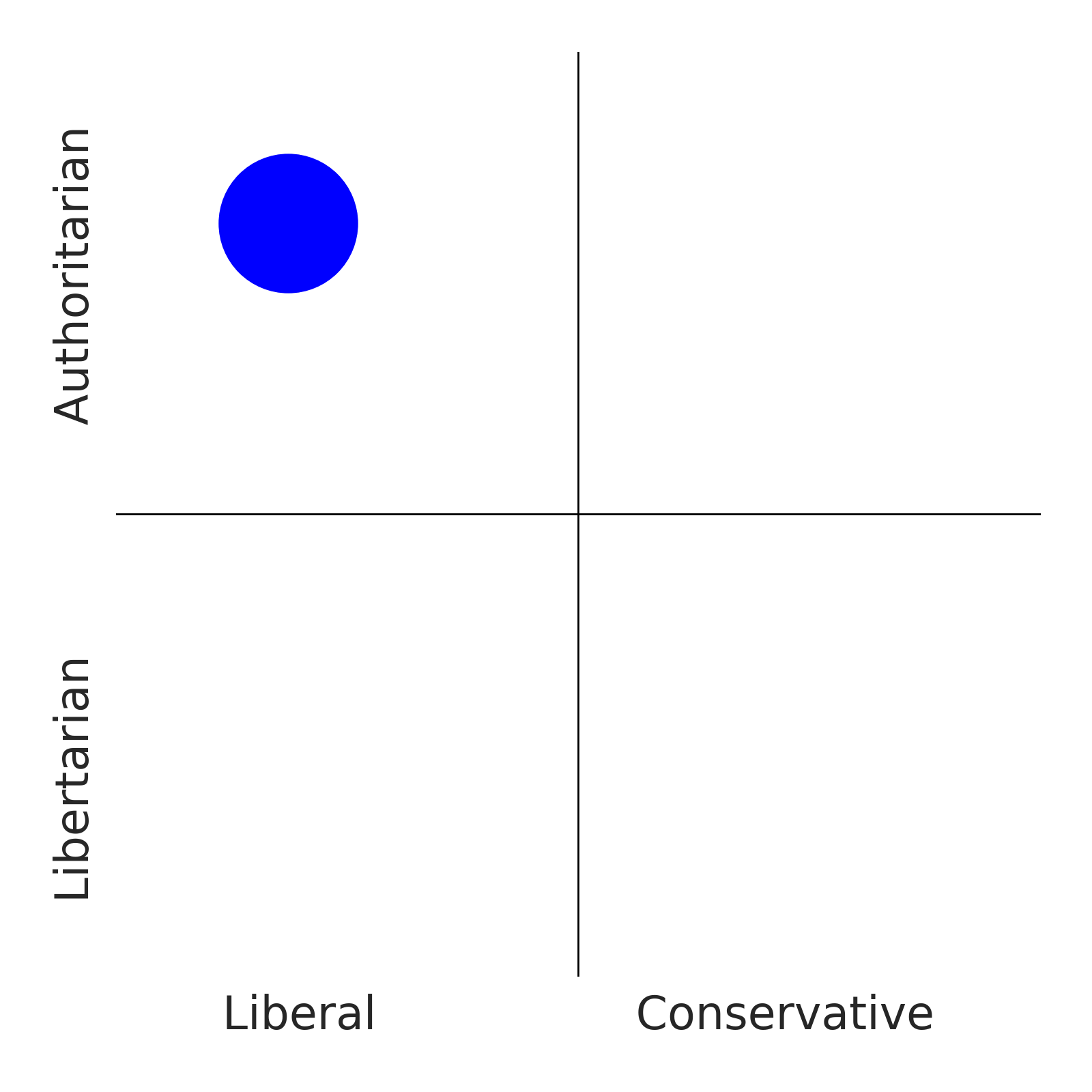
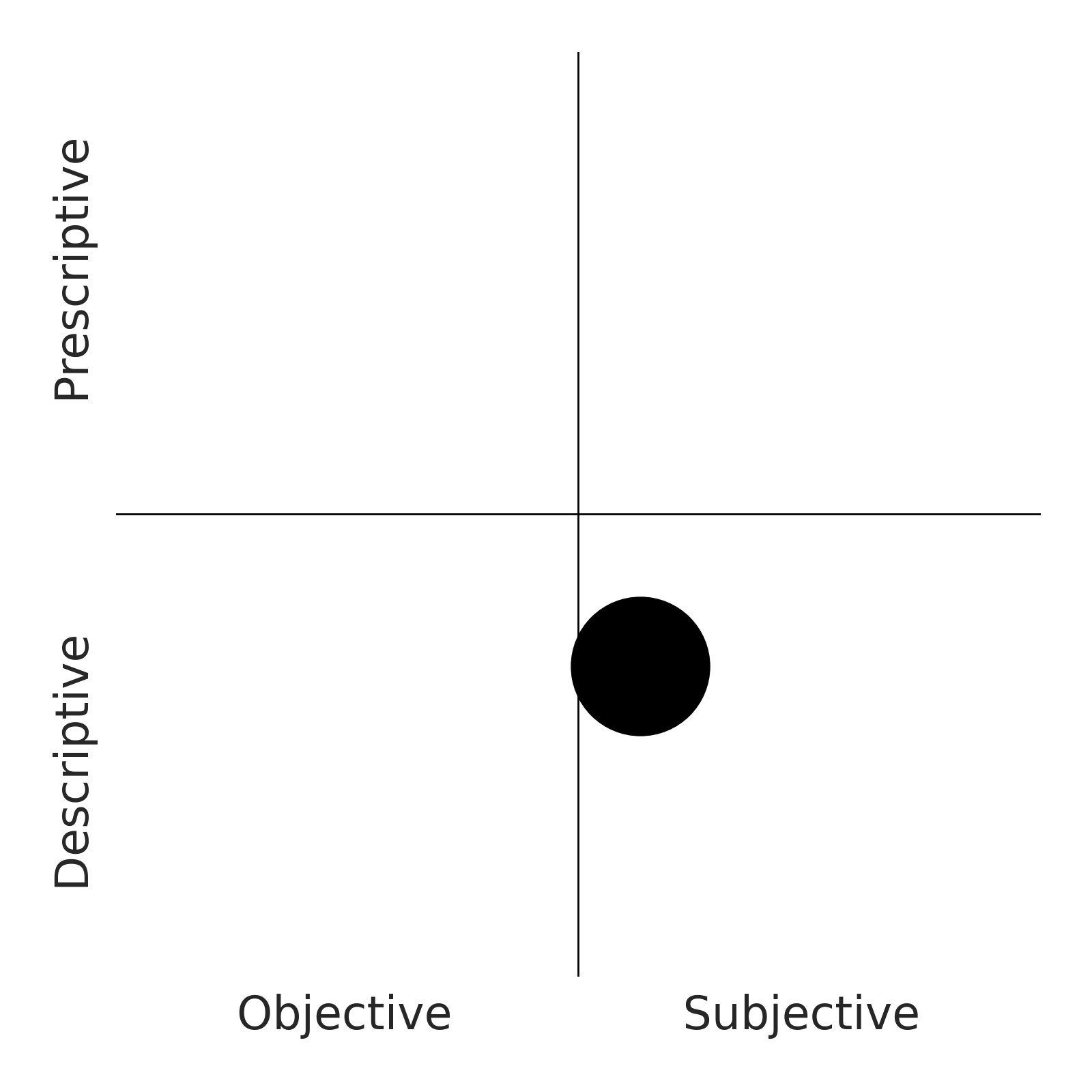
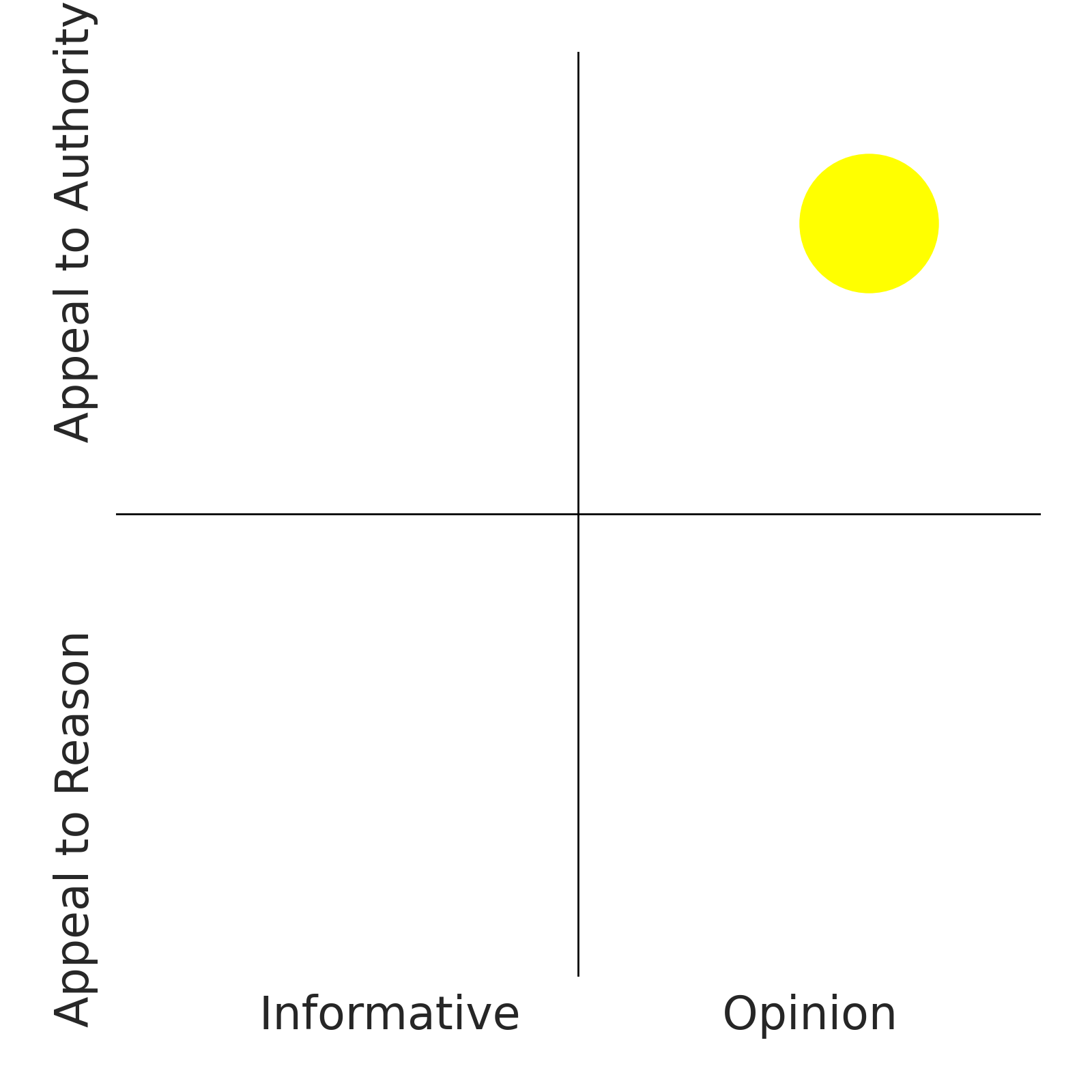
October 07, 2026 · 0 shares
The article adopts an activist frame that presents contested casualty figures and genocide allegations as established fact without attribution or counter-evidence.
The October 7, 2023, Hamas attack on Israel killed nearly 1,200 people and triggered the ongoing Israel-Hamas war in Gaza.
Automated analysis; not human reviewed. · 55 of 55 available dimensions scored; omitted dimensions are not treated as neutral. · Verified supporting quotes for 25 of 55 scored dimensions.
Claim: The framing consistently adopts pro-Palestinian, anti-Israeli occupation narratives typical of left-leaning outlets.
“In Gaza, October 7, 2023, is viewed as the beginning of the genocide.” · exact text match
Why: The genocide framing and emphasis on Israeli actions align with progressive/left critiques of Israel.
Claim: The report is dominated by the journalist's subjective descriptions and opinions.
“The Israeli Air Force is still hovering all around different parts of the Gaza Strip, and the IDF is still hunting Gazans” · exact text match
Why: Unattributed metaphors like 'hunting' frame the account subjectively.
Claim: Language is emotive and sensational, emphasizing dramatic suffering.
“spreading death and displacement once and once again” · exact text match
Why: Repetitive, vivid phrasing heightens emotional impact beyond neutral reportage.
Claim: The tone is overwhelmingly bleak and hopeless.
“We are not living, my friend. We are dead in Gaza.” · exact text match
Why: Direct quotes and framing convey extreme pessimism.
Claim: The piece implicitly prescribes condemnation of Israel and action by the international community.
“Statements were made by international and U.N. figures, diplomats all over the world, condemning the situation” · exact text match
Why: Mention of condemnations implies a normative stance against Israel's actions.
Claim: Framing is dovish, focused on humanitarian suffering and criticizing military action.
“The IDF is still hunting Gazans” · not found in supplied text
Why: Criticism of military operations aligns with dovish perspectives.
Claim: Content is fear-inducing, detailing death, destruction, and displacement.
“People are today reminded, since the last night — they’re reminded that the Israeli Air Force is still hovering all around different parts of the Gaza Strip” · not found in supplied text
Why: Repetitive emphasis on ongoing threats creates a fearful tone.
Claim: Assumes the conflict is genocide without debating the premise.
“Three Years into Genocide” · exact text match
Why: The headline treats 'genocide' as a settled fact.
Claim: The piece is heavily opinionated through guest commentary and framing.
“The organization was also helping the general population by empowering them” · exact text match
Why: Largely composed of personal perspectives presented as fact.
Claim: The content is deeply political, centered on the Israel-Palestine conflict.
“In Gaza, October 7, 2023, is viewed as the beginning of the genocide.” · exact text match
Why: Directly engages highly political subject matter.
Claim: Complex conflict dynamics are reduced to a one-sided narrative of Israeli aggression.
“Israel controls around 70% of Gaza” · exact text match
Why: Omits context of Hamas actions and Israeli security concerns.
Claim: Relies on U.N. and diplomatic condemnations as authoritative.
“According to the U.N., over 560 humanitarian workers have been killed in Gaza” · exact text match
Why: Cites international bodies to bolster claims.
Claim: Assumes genocide and interprets events through that lens.
“In the three years since the Hamas attack on Israel that killed nearly 1,200 people, Israeli forces have killed over 74,000 Palestinians.” · exact text match
Why: Casualty comparison implies intent without demonstration.
Claim: Offers primarily one side's perspective, with limited Israeli response.
“We end today’s show in Gaza, where today’s date, October 7th, is seen as the beginning of Israel’s genocide.” · exact text match
Why: Nearly all content is from Palestinian sources.
Claim: Portrays Gazans exclusively as victims of Israeli actions.
“The people who are living in the tents, with no even minimum standard for living, are living in exacerbating safety and security risks.” · exact text match
Why: Focuses on suffering without agency or context.
Claim: States contested figures and allegations with high certainty.
“Israel killed over 74,000 people, according to the Gaza Health Ministry” · exact text match
Why: Presents ministry figures as fact without noting limitations.
Claim: The piece is driven by a clear ideological opposition to Israeli policy.
“The organization was also helping the general population by empowering them” · exact text match
Why: Consistent anti-occupation framing.
Claim: The article is anti-establishment in challenging Israeli and by extension U.S. policy.
“despite a so-called ceasefire” · exact text match
Why: Skepticism toward official ceasefire claims suggests an anti-establishment tilt.
Claim: Strongly negative emotional tone throughout.
“We are not living, my friend. We are dead in Gaza.” · exact text match
Why: Emotive language dominates the piece.
Claim: Applies humanitarian concern primarily to Palestinian suffering, with little on Israeli victims.
“Over the past three years, Israel killed over 74,000 people” · exact text match
Why: Asymmetric focus on one side's casualties.
Claim: Limited sourcing and one-sided perspective reduce credibility.
“According to the Gaza Health Ministry” · not found in supplied text
Why: Relies on contested sources without balance.
Claim: The piece relies on emotive anecdotal claims and contested figures without critical scrutiny.
“Every single aspect of the life of the people of Gaza has changed once and forever” · exact text match
Why: Heavy reliance on personal testimony and sweeping statements over empirical verification.
Claim: Emphasizes collective Palestinian suffering over individual rights.
“The people who are living in the tents, with no even minimum standard for living” · exact text match
Why: Frames issues in terms of group victimhood.
Claim: Includes speculative assertions about undercounts and intent.
“but many believe that number is a vast undercount” · exact text match
Why: Relies on unspecified beliefs rather than verified data.
Claim: Uses emotive repetition and one-sided framing to sway readers.
“spreading death and displacement once and once again” · exact text match
Why: Repetitive phrasing enhances emotional impact.
Claim: The piece offers emotive narrative but limited analytical depth.
“Every single aspect of the life of the people of Gaza has changed once and forever” · exact text match
Why: Relies on repetition and anecdote over complex analysis.
Claim: Presents a one-dimensional reality ignoring Israeli perspectives.
“Israel controls around 70% of Gaza” · exact text match
Why: Omits context that might complicate the narrative.
Claim: Frames the outlet as uniquely giving voice to the unheard.
“You turn to us for voices you won't hear anywhere else.” · exact text match
Why: Self-promotional claim of moral distinctiveness.
Claim: Attributes all suffering to Israel and the IDF.
“The IDF is still hunting Gazans” · not found in supplied text
Why: Singles out Israeli forces as the cause of death and displacement.
September 29, 2026 · 0 shares
Framing casts the U.S. occupation of Afghanistan as an ongoing outrage and Afghans as its decades-long victims, foregrounding a documentary maker's indictment of Western-allied Afghan forces.
Automated analysis; not human reviewed. Limitations: The supplied text is a short excerpt consisting of a headline, a promotional blurb, donation appeals, and a related headline; the full documentary and article are unavailable for context. · 10 of 55 available dimensions scored; omitted dimensions are not treated as neutral. · Verified supporting quotes for 10 of 10 scored dimensions.
Claim: The report frames the U.S.-led war in Afghanistan through an anti-occupation, victim-centered perspective consistent with left/progressive politics.
“Photos of Soldiers Posing with Afghan Corpses the Latest Outrage of U.S. Occupation of Afghanistan” · exact text match
“While urban areas benefited from U.S. occupation during the war” · exact text match
Why: Repeated use of 'U.S. occupation' and 'outrage' frames American involvement negatively.
Claim: The report presents evaluative claims as settled context rather than clearly labeled opinion.
“While urban areas benefited from U.S. occupation during the war” · exact text match
“Afghans "Have Been the Victims" of U.S. Military, Taliban, Cartels & More for Decades” · exact text match
Counterevidence:
“says Khaja” · exact text match
Why: The headline asserts victimhood and the body states a benefit assessment without attribution.
Claim: The report uses emotionally charged, alarmist language and imagery to heighten impact.
“they were drug cartels, they were ruthless criminals, they were rapists” · exact text match
“Photos of Soldiers Posing with Afghan Corpses the Latest Outrage of U.S. Occupation of Afghanistan” · exact text match
Why: Strong epithets and 'outrage' language go beyond neutral description.
Claim: The report emphasizes long-term victimization and recurring outrages, conveying a pessimistic view of the Afghan war's effects.
“Afghans "Have Been the Victims" of U.S. Military, Taliban, Cartels & More for Decades” · exact text match
“Photos of Soldiers Posing with Afghan Corpses the Latest Outrage of U.S. Occupation of Afghanistan” · exact text match
Why: No positive or forward-looking framing is included; the focus is on harm and grievance.
Claim: The report is critical of Western military intervention and emphasizes its harms, indicating an anti-war/dovish stance.
“what went wrong in the U.S.-led war in Afghanistan” · exact text match
“Photos of Soldiers Posing with Afghan Corpses the Latest Outrage of U.S. Occupation of Afghanistan” · exact text match
Why: The framing treats the war's failures and occupation's outrages as central.
Claim: The report is largely editorial/promotional, mixing documentary advocacy with evaluative assertions.
“While urban areas benefited from U.S. occupation during the war” · exact text match
“Photos of Soldiers Posing with Afghan Corpses the Latest Outrage of U.S. Occupation of Afghanistan” · exact text match
Counterevidence:
“says Khaja” · exact text match
Why: The text promotes a viewpoint about the war rather than merely reporting events.
Claim: The report is highly political, engaging a contested debate over U.S. foreign policy and occupation.
“what went wrong in the U.S.-led war in Afghanistan” · exact text match
“Photos of Soldiers Posing with Afghan Corpses the Latest Outrage of U.S. Occupation of Afghanistan” · exact text match
Why: War and occupation are political subjects framed with a clear critical stance.
Claim: The report frames Afghans predominantly as passive victims of external and internal forces.
“Afghans "Have Been the Victims" of U.S. Military, Taliban, Cartels & More for Decades” · exact text match
Why: The headline directly casts Afghans as victims without agency or variation.
Claim: The report is anti-establishment, challenging official military and government narratives about the Afghan war.
“Western forces allied themselves with forces that in rural Afghanistan were considered worse than the Taliban” · exact text match
Why: It implicates Western militaries in alliances with abusive local actors, contradicting official framing.
Claim: The report's tone is strongly negative and emotionally charged, tending toward anger and grievance.
“Photos of Soldiers Posing with Afghan Corpses the Latest Outrage of U.S. Occupation of Afghanistan” · exact text match
“they were ruthless criminals, they were rapists” · exact text match
Why: Outrage and criminal accusations elicit an emotional response rather than detached analysis.
The supplied text is a short excerpt consisting of a headline, a promotional blurb, donation appeals, and a related headline; the full documentary and article are unavailable for context.
September 28, 2026 · 0 shares
Framing adopts the documentary’s allegations as established fact, portraying U.K. officials as concealing Israeli wrongdoing to keep selling arms.
During the period described, David Cameron was U.K. foreign secretary; U.K. arms export licensing decisions are made by ministers with reference to international humanitarian law risk assessments.
Automated analysis; not human reviewed. Limitations: Analysis relies on a single edited transcript; the underlying Foreign Office documents and full documentary were not accessible for verification. · 9 of 55 available dimensions scored; omitted dimensions are not treated as neutral. · Verified supporting quotes for 6 of 9 scored dimensions.
Claim: The coverage frames Israel’s Gaza actions as genocidal and U.K. arms sales as a duplicitous process, aligning with a left/pro-Palestinian critical stance.
“how the United Kingdom ignored or concealed mounting evidence of Israel’s genocidal actions in Gaza after the October 7 attacks.” · exact text match
“what we found was a doctored process … It’s quite extraordinary the level of duplicity that was going on in order for us to keep selling Israel arms.” · exact text match
Why: The lead summary asserts Israel’s 'genocidal actions' as fact, and the producer’s characterization of a 'doctored process' is amplified without a countervailing official perspective.
Claim: The coverage mixes factual sourcing with value-laden, judgmental characterizations.
“how the United Kingdom ignored or concealed mounting evidence of Israel’s genocidal actions in Gaza” · exact text match
“what we found was a doctored process … It’s quite extraordinary the level of duplicity” · exact text match
Why: Factual documentary details are framed with words like 'genocidal,' 'doctored,' and 'duplicity,' which are evaluative rather than neutral.
Claim: The presentation uses expose-style language and moral condemnation.
““Britain’s Gaza Secrets Exposed”: How U.K. Downplayed Israeli Crimes to Keep Selling Weapons” · exact text match
Why: The headline's 'Secrets Exposed' and 'Downplayed Israeli Crimes' are sensational framing devices.
Claim: The coverage is critical of arms sales and warfare, endorsing the view that the U.K. should stop selling weapons to Israel.
“you do not sell arms to a country that may be committing war crimes.” · exact text match
“You’re meant to stop the genocide, not aid it, not sell weapons.” · exact text match
Why: The argument that arms sales should cease when war crimes are possible is presented without challenge and reinforced by the documentary's framing.
Claim: The coverage incorporates editorialized opinion and strong evaluative language rather than confining itself to factual reporting.
“what we found was a doctored process … It’s quite extraordinary the level of duplicity” · exact text match
“shocked by the handling of Gaza.” · exact text match
Why: Judgmental phrases and the producer’s conclusions are integrated into the story, increasing opinion content.
Claim: The coverage centers on a politically contested foreign-policy dispute, presented through government and party-political conflict.
“The British Labour Party is holding its annual conference in Liverpool.” · exact text match
“He spoke a day after police arrested more than 50 protesters outside the conference for holding signs reading 'I oppose genocide. I support Palestine Action.'” · not found in supplied text
Why: The coverage centers on Labour conference politics, government foreign policy, arms export decisions, and protest arrests, all explicitly political.
Claim: The coverage is critical of established U.K. institutions, specifically the government and the BBC, over Gaza coverage and arms policy.
“unacceptable government pressure, and they didn’t, perhaps, react in the way they should.” · exact text match
“They caved in a little bit during the first year and a half of the Gaza war.” · exact text match
Why: The criticism of the government and BBC’s response is highlighted and framed as failure, indicating an anti-establishment orientation.
Claim: The coverage uses grief-stricken personal testimony and strongly negative moral language to frame the events.
“I always remember Trish just crying out to me, 'It's Jim.'” · not found in supplied text
“the most appalling attacks taking place on a daily basis” · exact text match
Why: The emotional parent interviews and repeated condemnation of attacks give the piece a negative, emotionally charged tone.
Claim: The coverage is visibly sourced through named interviews, documentary excerpts, and disclosed court documents, but relies largely on unverified allegations and one-sided testimony.
“Presented by journalist Ramita Navai and produced by Ben De Pear for Channel 4’s investigative program Dispatches” · exact text match
“We managed to get hold of these, because they’re court documents.” · not found in supplied text
Why: Sourcing and documentary provenance are transparent, but the coverage does not present independent verification or significant counter-perspectives.
Analysis relies on a single edited transcript; the underlying Foreign Office documents and full documentary were not accessible for verification.
September 16, 2026 · 0 shares
The segment amplifies B'Tselem's allegations as established fact, presenting Israel's West Bank policies as a coherent 'Elimination Project' and urging international intervention without Israeli counterpoints.
B'Tselem is an Israeli human rights organization; the West Bank has been under Israeli military occupation since 1967. The interview is set against the Gaza war that followed Hamas's October 7, 2023 attack on Israel and amid international debate over Israeli settlements and U.S. arms sales to Israel.
Automated analysis; not human reviewed. Limitations: This transcript is one-sided by design—an interview with B'Tselem and a Palestinian farmer—so bias scores reflect the publisher's selection and advocacy framing, not an independent factual record. · 16 of 55 available dimensions scored; omitted dimensions are not treated as neutral. · Verified supporting quotes for 12 of 16 scored dimensions.
Claim: The segment consistently frames Israel as perpetrating an 'Elimination Project' and the U.S. as an enabler, without balancing Israeli official viewpoints.
“U.S. taxpayer dollars are funding these crimes.” · exact text match
“The world must act to stop Israel’s Elimination Project in the West Bank.” · exact text match
Why: The publisher includes celebrity calls to action and anti-Israel conclusions without rebuttal, matching a left/pro-Palestinian political orientation.
Claim: The publisher blends news reporting with advocacy, using an assertive headline and explicit calls to action.
““The Elimination Project”: Israel’s Systematic Dismantling of Palestinian Life in West Bank: B’Tselem” · exact text match
“The world must act to stop Israel’s Elimination Project in the West Bank.” · exact text match
Why: The title asserts systematic dismantling and the segment includes editorial-style imperatives rather than neutral description.
Claim: The segment repeatedly prescribes international action, sanctions, and systemic measures.
“In order to truly challenge the system, to truly stop Israel and make sure that Israel truly has consequences for its crimes against the Palestinian people across the territories under its control, we need to see measures that target the system itself.” · not found in supplied text
“The international community must end the impunity that allows it to continue.” · exact text match
Why: Direct calls for international intervention and systemic change dominate the closing discussion.
Claim: The article opposes military sales and supports an end to violence, criticizing U.S. arms transfers to Israel.
“There is no question that the U.S. is the primary enabler of the genocide in Gaza, of The Elimination Project in the West Bank” · exact text match
“As Amnesty International reiterates its call for a ceasefire in the U.S.-Iran War” · not found in supplied text
Why: Criticizes U.S. weapons supply and highlights ceasefire advocacy, reflecting a dovish orientation.
Claim: The article's organizing label presumes the conclusion that Israel is carrying out an elimination project and then presents evidence for it.
“We actually find that there is one very coherent logic behind all of them, and this is the logic of elimination of Palestinian collective life in the West Bank.” · exact text match
Why: The premise of elimination is asserted early and used to interpret all subsequent examples, rather than being tested.
Claim: The segment is structured around advocacy and editorial commentary rather than neutral reporting.
“This project is rooted in an apartheid system that has been in place for generations.” · exact text match
“The world must act to stop Israel’s Elimination Project in the West Bank.” · exact text match
Why: Presents unqualified value judgments and action appeals as part of the newscast.
Claim: The report is squarely about partisan and geopolitical conflict, with explicit positions on U.S. and Israeli policy.
“This project is rooted in an apartheid system that has been in place for generations.” · exact text match
“U.S. taxpayer dollars are funding these crimes.” · exact text match
Why: Takes sides in a highly contested political conflict and critiques government policy.
Claim: The segment reduces complex West Bank dynamics to a single 'logic of elimination' with one coherent explanation.
“We actually find that there is one very coherent logic behind all of them, and this is the logic of elimination of Palestinian collective life in the West Bank.” · exact text match
Why: Presents all Israeli policies as one unified eliminationist program, collapsing multiple factors into a single motive.
Claim: The segment leans on the authority of B'Tselem, named experts, and celebrities to support its claims.
“A major new report by the Israeli human rights group B’Tselem titled “The Elimination Project”” · exact text match
“Leading celebrities have joined B’Tselem in calling for the international community to intervene” · exact text match
Why: The report and celebrity endorsements are used to validate the framing, with no independent verification.
Claim: The coverage emphasizes Palestinian suffering and victimhood, including detailed accounts of losses and attacks.
“We cannot reach our lands. We cannot go outside Halhul. They open only one gate from 8 o’clock until 5 o’clock every day.” · not found in supplied text
“Settlers “attack farmers, beat farmers … damaging our cars, also damaging our fields, uprooting our trees.”” · exact text match
Why: Focuses on harms to a farming community and frames Palestinians as subjects of systematic victimization.
Claim: The publisher states conclusions as certain without caveats or alternative evidence.
“There is no question that the U.S. is the primary enabler of the genocide in Gaza, of The Elimination Project in the West Bank” · exact text match
“Israel is carrying out a campaign to eliminate Palestinian collective existence in the West Bank.” · exact text match
Why: Uses unqualified certainty for contested factual and legal characterizations.
Claim: The segment applies a settler-colonial/apartheid ideological framework to categorize the conflict.
“This project is rooted in an apartheid system that has been in place for generations.” · exact text match
“The Elimination Project in the West Bank operates through five domains of action that work together and reinforce each other: killing, violence, intimidation, movement restrictions, economic strangulation, social and political destruction, ethnic cleansing and territorial takeover.” · exact text match
Why: The explanation relies on systemic ideological labels and a master narrative.
Claim: The article positions itself against U.S. and Israeli policy establishments and the international community's 'empty statements.'
“The problem is that there isn’t true political will to do something.” · not found in supplied text
“U.S. is the primary enabler of the genocide in Gaza” · exact text match
Why: Critiques official policy and calls for challenging the entire political system.
Claim: The article uses emotionally charged language and personal testimony to evoke moral outrage.
“Another community displaced from its land.” · exact text match
“Settlers “attack farmers, beat farmers … damaging our cars, also damaging our fields, uprooting our trees.”” · exact text match
Why: Emotive images of displacement and destruction contribute to a negative emotional framing.
Claim: The article is sourced to named interviewees and a published report, but it is one-sided and lacks independent verification or Israeli response.
“A major new report by the Israeli human rights group B’Tselem titled “The Elimination Project”” · exact text match
“In Tel Aviv, Ori Givati is with us, B’Tselem director of international relations.” · exact text match
Why: Transparent sourcing and direct quotes support credibility, but the absence of counterperspectives and reliance on advocacy material lower it.
Claim: The segment uses loaded terminology and emotional appeals to steer the audience toward a conclusion.
““The Elimination Project”: Israel’s Systematic Dismantling of Palestinian Life in West Bank: B’Tselem” · exact text match
“The world must act to stop Israel’s Elimination Project in the West Bank.” · exact text match
Why: Combines advocacy slogans and emotionally charged material within an interview format.
This transcript is one-sided by design—an interview with B'Tselem and a Palestinian farmer—so bias scores reflect the publisher's selection and advocacy framing, not an independent factual record.
September 29, 2026 · 0 shares
Framing presents Israel's Gaza campaign as genocide and the Trump-brokered ceasefire as a sham, foregrounding Palestinian casualties and critical voices while labeling the agreement 'so-called.'
Automated analysis; not human reviewed. Limitations: The supplied text interleaves repeated fundraising appeals and duplicate passages, which were treated as non-substantive; the boundary between the publisher's own claims and long guest quotations is occasionally blurred, limiting the precision of framing scores. · 9 of 55 available dimensions scored; omitted dimensions are not treated as neutral. · Verified supporting quotes for 7 of 9 scored dimensions.
Claim: Publisher framing is strongly liberal, adopting a Palestinian-rights perspective and criticizing Israel and the Trump administration.
“Since the so-called ceasefire brokered by Trump last October, nearly 1,400 Palestinians have been killed in Israeli attacks.” · not found in supplied text
““Buying More Time for the Genocide”: Muhammad Shehada on Trump’s Gaza Plan 1 Year Later” · exact text match
Why: The headline uses 'Genocide' and the lead uses 'so-called ceasefire' to editorialize against Israel and the Trump plan, aligned with liberal/pro-Palestinian framing.
Claim: Framing mixes factual reporting with value-laden characterization of events.
“Since the so-called ceasefire brokered by Trump last October, nearly 1,400 Palestinians have been killed in Israeli attacks.” · not found in supplied text
Why: Neutral-sounding casualty data is undercut by the editorializing phrase 'so-called ceasefire,' making the framing subjective.
Claim: Presentation uses emotional and attention-grabbing language typical of sensational coverage.
““Buying More Time for the Genocide”: Muhammad Shehada on Trump’s Gaza Plan 1 Year Later” · exact text match
Why: The headline foregrounds 'Genocide' and 'Buying More Time,' emotionally charged phrasing, while the body substantiates specific data.
Claim: The report is strongly anti-war, opposing Israeli military action and settlement expansion.
““The [ceasefire] plan ended up just buying more time for the genocide,” says Muhammad Shehada” · exact text match
“This has to stop.” · exact text match
Why: The selected commentary and official remarks uniformly condemn continued military action and settlement expansion, with no pro-war counterpoint.
Claim: The report is highly opinionated, elevating a commentator's political judgment in the headline and narrative.
““Buying More Time for the Genocide”: Muhammad Shehada on Trump’s Gaza Plan 1 Year Later” · exact text match
Why: The headline states an interpretive conclusion and the body gives extensive space to Shehada's evaluative claims.
Claim: Coverage is heavily political, centered on sanctions, elections, and government policy disputes.
“Denmark, along with 11 other countries, is also backing sanctions on trade with Israeli settlements in the occupied West Bank.” · exact text match
Why: The report centers on high-stakes political disputes and advocacy rather than a neutral record of events.
Claim: The tone is emotionally negative, emphasizing suffering and moral outrage.
“These are extremely harrowing times.” · exact text match
“still monstrous and atrocious” · exact text match
Why: Host and guest use affective language that shapes a negative emotional reading of the situation.
Claim: Source attribution is visible, but editorializing reduces confidence in impartial credibility.
“The Palestinian death toll from Israel’s war on Gaza has surpassed 74,000, according to the Ministry of Health in Gaza.” · exact text match
“Gaza’s Government Media Office puts the toll even higher at more than 1,400.” · exact text match
Why: The report identifies its sources and distinguishes attributed claims, yet the 'so-called ceasefire' language and emotional headline signal partiality.
Claim: Framing relies on loaded terminology and one-sided presentation, characteristic of persuasive rather than neutral reporting.
“so-called ceasefire” · exact text match
“the plan ended up just buying more time for the genocide” · exact text match
Why: The scare-quoted 'so-called ceasefire' and repeated genocide characterization steer interpretation without presenting a counter-framework.
The supplied text interleaves repeated fundraising appeals and duplicate passages, which were treated as non-substantive; the boundary between the publisher's own claims and long guest quotations is occasionally blurred, limiting the precision of framing scores.
September 21, 2026 · 0 shares
The framing treats the U.S. deportation arrangement as a harmful policy and presents the arrests of the deportees as suspicious reprisals for speaking out, while relying on a quoted source for the strongest criticism.
Automated analysis; not human reviewed. Limitations: The supplied text is a truncated excerpt with multiple ellipses, so the full report may contain additional context or attribution. · 3 of 55 available dimensions scored; omitted dimensions are not treated as neutral. · Verified supporting quotes for 3 of 3 scored dimensions.
Claim: The text's presentation emphasizes criticism of U.S. deportation policy, using the receiving country's human-rights record and deportees' lack of ties to the country.
“a country they have no ties to” · exact text match
“the United States started this horrendous policy” · exact text match
Why: The unqualified 'no ties' detail and the placement of a source's 'horrendous policy' quote give the report a critical, immigrant-rights-oriented framing.
Claim: The story uses strongly negative language and graphic allegations, creating a negative emotional register.
“the United States started this horrendous policy” · exact text match
“Equatorial Guinea uses torture, uses incommunicado detentions, and often extrajudicial killings” · exact text match
Why: 'Horrendous,' 'torture,' and 'extrajudicial killings' are emotionally potent; regardless of attribution, their inclusion shapes tone.
Claim: The arrests are characterized as retaliation even though the only cited basis is an apparent inference from their speech.
“in apparent retaliation for speaking out” · exact text match
Why: 'Apparent' marks an inference, and the excerpt provides no named source or investigation establishing that the arrests were motivated by speech.
The supplied text is a truncated excerpt with multiple ellipses, so the full report may contain additional context or attribution.
September 18, 2026 · 0 shares
The disclosure is framed as a corruption scandal implicating the Trump family, foregrounding the 'Secretly Funded' headline, Democratic demands for a probe, and Senator Murphy's 'treason' rhetoric while printing the administration's denials as counterpoint.
The report extends long-standing scrutiny of Trump family contacts with Russians, notably Donald Trump Jr.'s June 2016 Trump Tower meeting with a Russian lawyer and U.S. investigations into Russian interference in the 2016 election. In the current Congress, Republicans hold the House majority, so Democrats' investigation letters carry limited compulsory power unless control of the House changes.
Automated analysis; not human reviewed. Limitations: The supplied text is a transcript-style capture with the outlet name partly redacted as '!' and duplicate donation-appeal blocks interspersed, which I treated as page chrome; the publication date is absent, and the headline appears embedded in the body rather than as a standalone lede. · 11 of 55 available dimensions scored; omitted dimensions are not treated as neutral. · Verified supporting quotes for 10 of 11 scored dimensions.
Claim: The publisher frames the disclosure to validate Democratic criticism of the Trump family.
“A Russian Oligarch Secretly Funded Donald Trump Jr.’s Bahamas Wedding; Democrats Demand Probe” · exact text match
“It is as close to treason as you get—accepting lavish gifts, millions of dollars in gifts perhaps, from the enemy of this nation.” · exact text match
Counterevidence:
“I have no idea who Umar is, never heard of him, and he didn’t pay for Don and Bettina’s wedding” · exact text match
Why: The headline and lead foreground Democratic investigation demands and the strongest Democratic condemnation, while the administration's denial is printed later as a rebuttal rather than as the organizing frame.
Claim: Attributed facts are mixed with editorializing and evaluative language.
“A Russian Oligarch Secretly Funded Donald Trump Jr.’s Bahamas Wedding; Democrats Demand Probe” · exact text match
“It’s like he didn’t get his brother’s memo.” · exact text match
Why: The headline's 'Secretly Funded' presupposes concealment and wrongdoing, and interviewer commentary mocks Eric Trump's denial, going beyond neutral reporting.
Claim: The story is packaged with dramatic scandal-oriented language.
“A Russian Oligarch Secretly Funded Donald Trump Jr.’s Bahamas Wedding; Democrats Demand Probe” · exact text match
“It is as close to treason as you get—accepting lavish gifts, millions of dollars in gifts perhaps, from the enemy of this nation.” · exact text match
Why: The title's 'Secretly Funded' plus the prominently featured 'treason' quotation raise emotional stakes beyond the underlying payment facts.
Claim: The content is heavily political, centered on partisan investigative and denunciatory statements.
“Congressional Democrats have opened an investigation after ProPublica revealed that a Russian oligarch close to Vladimir Putin bankrolled part of Donald Trump Jr.'s Bahamas wedding in May.” · exact text match
“AMY GOODMAN: Democratic Congressmember Robert Garcia, the top Democrat on the House Oversight Committee, said the bankrolling of the wedding raises 'serious national security and public corruption concerns.'” · not found in supplied text
Why: The reported event is itself a congressional-corruption controversy, and the piece centers on partisan demands and federal-official responses.
Claim: The framing is adversarial to the sitting administration and its congressional allies.
“As you have the House Speaker Johnson desperately trying to recess Congress until after the elections.” · exact text match
Why: Interviewer characterization of Speaker Johnson and the overall expose-the-powerful framing position the coverage against the current administration's interests.
Claim: The tone is negatively charged toward the Trump family and the payment.
“It is as close to treason as you get—accepting lavish gifts, millions of dollars in gifts perhaps, from the enemy of this nation.” · exact text match
“It’s like he didn’t get his brother’s memo.” · exact text match
Counterevidence:
“It’s unfortunate that something so personal and happy can be recast as something political or sinister simply because of who someone is or where they come from.” · exact text match
Why: Indignation about 'treason' and mockery of the family's denials dominate, though the included sympathetic quote from Trump Jr. provides a partial counterweight.
Claim: Visible sourcing, attribution, and uncertainty practices are strong.
“ProPublica revealed on Monday that a Russian oligarch close to Vladimir Putin bankrolled part of Donald Trump Jr.'s Bahamas wedding in May.” · verified after text normalization
“We asked both Kremlev and Don Jr. and neither of them said.” · exact text match
Why: The source outlet is named, direct quotes are attributed, and unanswerable questions are disclosed rather than papered over.
Claim: Reporting is epistemically careful, separating verified facts from open questions.
“The basic fact we have is that a member of Putin’s circle is financially supporting the president’s son. As soon as we get to why, we start to have all these really weird questions come up.” · exact text match
Why: The reporter repeatedly marks unknowns—motive, how the men met, and what future cooperation means—rather than asserting them as fact.
Claim: The text is a human-produced broadcast transcript, not AI-generated prose.
“AMY GOODMAN: This is !, Democracynow.org, the War and Peace Report. I’m Amy Goodman.” · exact text match
Why: Named speakers, interview turn-taking, first-person hosting language, and the program identifier are independent indicators of human transcription.
Claim: The piece consistently attributes claims to named sources and includes dissenting responses.
“ProPublica reports that Umar Kremlev paid hundreds of thousands of dollars on wedding expenses, including the rental of a private island.” · exact text match
“Donald Trump Jr. and his newlywed wife Bettina Anderson confirmed ProPublica’s findings, writing on social media” · exact text match
Why: Central claims are sourced to ProPublica and to the Trump family's own confirmation, and the administration's denials are printed verbatim; the loaded headline slightly tempers this.
Claim: The report supplies substantive context and probing follow-up questions.
“He was an obscure figure with a criminal record and a different name. He changed his name and over the course of his—the government has given him assets and taken other actions that have turned him into a very wealthy magnate, a dominant figure in the sports betting world in Russia.” · exact text match
Why: Biographical background on Kremlev, the guest-list scale, and documentation of a prior Istanbul event provide context beyond the bare allegation.
The supplied text is a transcript-style capture with the outlet name partly redacted as '!' and duplicate donation-appeal blocks interspersed, which I treated as page chrome; the publication date is absent, and the headline appears embedded in the body rather than as a standalone lede.
October 14, 2026 · 0 shares
The publisher frames the DHS raid as part of racist persecution of Ilhan Omar, asserting President Trump's racist motives as fact and presenting the event solely through a sympathetic allied Somali American politician's denunciations.
Automated analysis; not human reviewed. Limitations: The raid's legal basis, scope, and any DHS or agency explanation are absent, and the remarks characterized as racist invective are not quoted; the text is also a short interview promo, so the framing cannot be weighed against the agency's account. · 16 of 55 available dimensions scored; omitted dimensions are not treated as neutral. · Verified supporting quotes for 16 of 16 scored dimensions.
Claim: Publisher asserts as fact that Trump has racially targeted Omar and directs racist invective at Somali Americans, while presenting Omar solely through sympathetic framing.
“Omar has faced years of racist targeting from President Trump over her ethnicity and immigrant background” · exact text match
“As Trump spews racist invective against the Somali American community in Minnesota” · exact text match
Why: Unattributed racism charges against a Republican president plus a one-sided sympathetic portrait of a progressive congressmember mark a distinctly liberal frame.
Claim: Loaded evaluative language appears in the publisher's own voice rather than as attributed opinion.
“As Trump spews racist invective against the Somali American community in Minnesota” · exact text match
Why: The verb 'spews' and flat racism assertions push the framing toward subjectivity.
Claim: A federal raid on a sitting congressmember's home is a high-salience, unusual development.
“federal agents from the Department of Homeland Security raided the Washington, D.C., home of Congressmember Ilhan Omar” · exact text match
Why: The event's rarity and political stakes make the item intrinsically engaging.
Claim: Mildly rage-adjacent framing without fear appeals or quotation of the criticized remarks.
“As Trump spews racist invective against the Somali American community in Minnesota” · exact text match
Why: Vivid condemnation invites indignation but stops short of fear-mongering.
Claim: Publisher's own evaluative claims about Trump's motives are woven into the news copy.
“Omar has faced years of racist targeting from President Trump over her ethnicity and immigrant background” · exact text match
Why: Unattributed motive characterization mixes opinion with reporting, though most commentary is quoted and attributed.
Claim: The item is wholly centered on partisan conflict between the Trump administration and a Democratic congressmember.
“On Monday, federal agents from the Department of Homeland Security raided the Washington, D.C., home of Congressmember Ilhan Omar.” · exact text match
Why: A federal raid on a lawmaker and dueling political characterizations make the entire report political.
Claim: A complex law-enforcement action is reduced to a racism narrative with no explanatory detail.
“federal agents from the Department of Homeland Security raided the Washington, D.C., home of Congressmember Ilhan Omar” · exact text match
Why: The raid's purpose, scope, and legal basis are absent, leaving a single reductive frame.
Claim: Omar is framed primarily as a long-suffering victim of racist targeting.
“Omar has faced years of racist targeting from President Trump over her ethnicity and immigrant background” · exact text match
Why: The publisher's own sentence establishes a victim frame before any guest commentary.
Claim: Trump's allegedly racist motive is stated as settled fact without supporting evidence in the text.
“Omar has faced years of racist targeting from President Trump over her ethnicity and immigrant background” · exact text match
Why: Flat motive attribution with no quoted statements or documentation exceeds what the supplied text can support.
Claim: The publisher advances a cohesive progressive advocacy frame rather than neutral reporting.
“Omar has faced years of racist targeting from President Trump over her ethnicity and immigrant background” · exact text match
Why: Openly aligned moral framing and curated sympathetic sourcing mark ideological presentation.
Claim: Publisher frames the sitting administration's raid as persecution, positioning itself against current executive power.
“Omar has faced years of racist targeting from President Trump over her ethnicity and immigrant background” · exact text match
Why: Casting the incumbent administration as a racist persecuting force is anti-establishment in posture, though the piece defends members of Congress.
Claim: The piece carries a predominantly negative, indignant emotional register toward the administration.
“As Trump spews racist invective against the Somali American community in Minnesota” · exact text match
“Omar has faced years of racist targeting from President Trump” · exact text match
Why: Condemnatory, charged language in the publisher's voice dominates the tone.
Claim: Specific event, named agency, and verifiable background support moderate reliability, tempered by unsourced editorial claims.
“On Monday, federal agents from the Department of Homeland Security raided the Washington, D.C., home of Congressmember Ilhan Omar.” · exact text match
Why: Concrete checkable specifics and accurate attribution raise credibility, while flat unsourced motive claims hold it to a modest positive.
Claim: The raid is presented with no stated legal basis and immediately folded into a persecution narrative.
“On Monday, federal agents from the Department of Homeland Security raided the Washington, D.C., home of Congressmember Ilhan Omar.” · exact text match
Why: Selective omission of the agency's rationale paired with one-sided framing is an observable manipulation technique.
Claim: Editorial motive assertions are presented as fact and no counterpoint is given on a contested action, though guest quotes are transparently attributed.
“Omar has faced years of racist targeting from President Trump over her ethnicity and immigrant background” · exact text match
Counterevidence:
“says our guest Zaynab Mohamed, a fellow Somali immigrant who represents Minneapolis in Minnesota’s state Senate” · exact text match
Why: Unattributed characterization in a news voice lowers fairness signals; clear labeling of the guest as an allied source partially offsets it.
Claim: The excerpt delivers dense, relevant biographical context efficiently.
“Omar is the first Somali American elected to federal office, the first woman of color to represent Minnesota and, along with Michigan’s Rashida Tlaib, one of the first Muslim women to serve in Congress.” · exact text match
Why: Compact contextualization equips readers to situate the event, showing competent editorial synthesis.
The raid's legal basis, scope, and any DHS or agency explanation are absent, and the remarks characterized as racist invective are not quoted; the text is also a short interview promo, so the framing cannot be weighed against the agency's account.
October 07, 2026 · 0 shares
The article adopts an activist frame that presents contested casualty figures and genocide allegations as established fact without attribution or counter-evidence.
The October 7, 2023, Hamas attack on Israel killed nearly 1,200 people and triggered the ongoing Israel-Hamas war in Gaza.
Automated analysis; not human reviewed. · 55 of 55 available dimensions scored; omitted dimensions are not treated as neutral. · Verified supporting quotes for 25 of 55 scored dimensions.
Claim: The framing consistently adopts pro-Palestinian, anti-Israeli occupation narratives typical of left-leaning outlets.
“In Gaza, October 7, 2023, is viewed as the beginning of the genocide.” · exact text match
Why: The genocide framing and emphasis on Israeli actions align with progressive/left critiques of Israel.
Claim: The report is dominated by the journalist's subjective descriptions and opinions.
“The Israeli Air Force is still hovering all around different parts of the Gaza Strip, and the IDF is still hunting Gazans” · exact text match
Why: Unattributed metaphors like 'hunting' frame the account subjectively.
Claim: Language is emotive and sensational, emphasizing dramatic suffering.
“spreading death and displacement once and once again” · exact text match
Why: Repetitive, vivid phrasing heightens emotional impact beyond neutral reportage.
Claim: The tone is overwhelmingly bleak and hopeless.
“We are not living, my friend. We are dead in Gaza.” · exact text match
Why: Direct quotes and framing convey extreme pessimism.
Claim: The piece implicitly prescribes condemnation of Israel and action by the international community.
“Statements were made by international and U.N. figures, diplomats all over the world, condemning the situation” · exact text match
Why: Mention of condemnations implies a normative stance against Israel's actions.
Claim: Framing is dovish, focused on humanitarian suffering and criticizing military action.
“The IDF is still hunting Gazans” · not found in supplied text
Why: Criticism of military operations aligns with dovish perspectives.
Claim: Content is fear-inducing, detailing death, destruction, and displacement.
“People are today reminded, since the last night — they’re reminded that the Israeli Air Force is still hovering all around different parts of the Gaza Strip” · not found in supplied text
Why: Repetitive emphasis on ongoing threats creates a fearful tone.
Claim: Assumes the conflict is genocide without debating the premise.
“Three Years into Genocide” · exact text match
Why: The headline treats 'genocide' as a settled fact.
Claim: The piece is heavily opinionated through guest commentary and framing.
“The organization was also helping the general population by empowering them” · exact text match
Why: Largely composed of personal perspectives presented as fact.
Claim: The content is deeply political, centered on the Israel-Palestine conflict.
“In Gaza, October 7, 2023, is viewed as the beginning of the genocide.” · exact text match
Why: Directly engages highly political subject matter.
Claim: Complex conflict dynamics are reduced to a one-sided narrative of Israeli aggression.
“Israel controls around 70% of Gaza” · exact text match
Why: Omits context of Hamas actions and Israeli security concerns.
Claim: Relies on U.N. and diplomatic condemnations as authoritative.
“According to the U.N., over 560 humanitarian workers have been killed in Gaza” · exact text match
Why: Cites international bodies to bolster claims.
Claim: Assumes genocide and interprets events through that lens.
“In the three years since the Hamas attack on Israel that killed nearly 1,200 people, Israeli forces have killed over 74,000 Palestinians.” · exact text match
Why: Casualty comparison implies intent without demonstration.
Claim: Offers primarily one side's perspective, with limited Israeli response.
“We end today’s show in Gaza, where today’s date, October 7th, is seen as the beginning of Israel’s genocide.” · exact text match
Why: Nearly all content is from Palestinian sources.
Claim: Portrays Gazans exclusively as victims of Israeli actions.
“The people who are living in the tents, with no even minimum standard for living, are living in exacerbating safety and security risks.” · exact text match
Why: Focuses on suffering without agency or context.
Claim: States contested figures and allegations with high certainty.
“Israel killed over 74,000 people, according to the Gaza Health Ministry” · exact text match
Why: Presents ministry figures as fact without noting limitations.
Claim: The piece is driven by a clear ideological opposition to Israeli policy.
“The organization was also helping the general population by empowering them” · exact text match
Why: Consistent anti-occupation framing.
Claim: The article is anti-establishment in challenging Israeli and by extension U.S. policy.
“despite a so-called ceasefire” · exact text match
Why: Skepticism toward official ceasefire claims suggests an anti-establishment tilt.
Claim: Strongly negative emotional tone throughout.
“We are not living, my friend. We are dead in Gaza.” · exact text match
Why: Emotive language dominates the piece.
Claim: Applies humanitarian concern primarily to Palestinian suffering, with little on Israeli victims.
“Over the past three years, Israel killed over 74,000 people” · exact text match
Why: Asymmetric focus on one side's casualties.
Claim: Limited sourcing and one-sided perspective reduce credibility.
“According to the Gaza Health Ministry” · not found in supplied text
Why: Relies on contested sources without balance.
Claim: The piece relies on emotive anecdotal claims and contested figures without critical scrutiny.
“Every single aspect of the life of the people of Gaza has changed once and forever” · exact text match
Why: Heavy reliance on personal testimony and sweeping statements over empirical verification.
Claim: Emphasizes collective Palestinian suffering over individual rights.
“The people who are living in the tents, with no even minimum standard for living” · exact text match
Why: Frames issues in terms of group victimhood.
Claim: Includes speculative assertions about undercounts and intent.
“but many believe that number is a vast undercount” · exact text match
Why: Relies on unspecified beliefs rather than verified data.
Claim: Uses emotive repetition and one-sided framing to sway readers.
“spreading death and displacement once and once again” · exact text match
Why: Repetitive phrasing enhances emotional impact.
Claim: The piece offers emotive narrative but limited analytical depth.
“Every single aspect of the life of the people of Gaza has changed once and forever” · exact text match
Why: Relies on repetition and anecdote over complex analysis.
Claim: Presents a one-dimensional reality ignoring Israeli perspectives.
“Israel controls around 70% of Gaza” · exact text match
Why: Omits context that might complicate the narrative.
Claim: Frames the outlet as uniquely giving voice to the unheard.
“You turn to us for voices you won't hear anywhere else.” · exact text match
Why: Self-promotional claim of moral distinctiveness.
Claim: Attributes all suffering to Israel and the IDF.
“The IDF is still hunting Gazans” · not found in supplied text
Why: Singles out Israeli forces as the cause of death and displacement.
Coverage leans liberal and anti-Trump, employing loaded, alarmist phrasing such as 'dictatorship' and 'slush fund' while citing investigative voices, framing DOJ actions as threats to democratic norms and Trump with alleged criminal conduct.
Segment from Democracy Now featuring David Cay Johnston criticizing a DOJ memo that bars IRS investigations into Trump's taxes and a $1.776B anti-weaponization fund.
Training data skew left; may underrepresent conservative perspectives.
Pro-Palestinian slant. Foregrounds survivor testimony alleging torture and sexual violence by Israeli forces. Frames detention as designed to break detainees and emphasizes systemic mistreatment, including international responses. Includes fundraising and advocacy language.
Democracy Now segment featuring Gaza flotilla participants recounting detention and abuse in Israeli custody, with coverage of related international reactions and incidents.
Training data skew toward liberal, human-rights framing; may underrepresent Israeli voices.
August 12, 2026 · 0 shares
Strongly critical of U.K. and Israeli policy, framing British actions as complicity in genocide and presenting pro-Palestinian activism as justified resistance.
Automated analysis; not human reviewed. · 20 of 53 available dimensions scored; omitted dimensions are not treated as neutral. · Verified supporting quotes for 18 of 20 scored dimensions.
Claim: The article adopts a strong left-wing perspective, framing U.K. and Israeli actions as genocide and complicity.
“The tribunal concluded the British government was complicit in Israel’s genocide in Gaza” · exact text match
Why: Use of 'genocide' as asserted fact and consistent criticism of U.K. and Israel from left-wing guests and host.
Claim: The article criticizes government crackdowns and criminalization of protest as authoritarian.
“British police have arrested over 3,000 people for expressing support for the group Palestine Action” · exact text match
Why: Portrays state actions as excessive and silencing dissent, favoring civil liberties.
Claim: The article presents the tribunal's conclusions as objective fact without disclaimers.
“The tribunal concluded the British government was complicit in Israel’s genocide in Gaza” · exact text match
Why: Does not qualify the genocide claim as an opinion or contested finding.
Claim: The article uses emotional language and graphic testimony to drive its narrative.
“operated on six children... an 18-month-old child with a 15% burn” · not found in supplied text
Why: Graphic medical details evoke strong emotion, but tone remains serious rather than tabloid-style.
Claim: The article strongly advocates for protest and policy change.
“Protest, please. Do all you can.” · exact text match
Why: Direct call to action from Jeremy Corbyn.
Claim: The article opposes military support for Israel and advocates for diplomatic and peaceful measures.
“why are we criminalizing people who take part in protest in Britain?” · exact text match
Why: Critical of arms sales and military action, supports ceasefire and sanctions.
Claim: The article invokes fear of genocide and repression to motivate action.
“the genocide they’re still going through” · exact text match
Why: Moderate; mainly uses outrage rather than explicit fear-mongering.
Claim: The article is heavily opinionated, presenting strong viewpoints as justified.
“it isn’t really an apology. What it says is we got it wrong, which isn’t quite the same thing” · exact text match
Why: Evaluative language throughout without balanced counterpoints.
Claim: The article is deeply political, focusing on government policy and activism.
“Britain’s new Prime Minister Andy Burnham recently apologized for the Labour Party’s initial stance on Gaza” · exact text match
Why: Central topic is U.K. government complicity and political accountability.
Claim: The article reduces complex geopolitical conflict to a clear narrative of genocide and complicity.
“complicit in Israel’s genocide in Gaza” · exact text match
Why: Single frame of genocide omits nuances, but is supported by some legal arguments.
Claim: The article relies heavily on the authority of the tribunal and expert witnesses.
“co-chairs: former Labour Party leader Jeremy Corbyn, Israeli professor of human rights law Neve Gordon and Palestinian legal scholar Shahd Hammouri” · not found in supplied text
Why: Uses credentials and tribunal status to lend weight to conclusions.
Claim: The article emphasizes Palestinian suffering and portrays them as victims.
“Palestinian kids are dying of starvation, of dehydration, of operations that can’t succeed” · exact text match
Why: Extensive focus on harm to civilians and children.
Claim: The article asserts the genocide label with certainty beyond its own evidence.
“one of the biggest crimes in humanity” · exact text match
Why: Uses superlative language without acknowledging ongoing legal disputes.
Claim: The article consistently reflects a left-wing anti-Zionist ideology.
“The U.K. was too slow to call for a ceasefire” · exact text match
Why: Persistent critical stance toward Israel and U.S., support for collective action.
Claim: The article portrays the British government and political establishment as complicit in violence and repression.
“the edge of the so-called democratic system has reached” · exact text match
Why: Describes the system's limits and criticizes government actions.
Claim: The article conveys strong negative emotion toward Israel and U.K. government.
“their hands are full of blood” · exact text match
Why: Emotive language throughout, particularly from guests.
Claim: The article lacks balance and presents a one-sided view, reducing credibility for neutral assessment.
“Had it not been for the U.K.'s material support to Israel, we could have saved tens of thousands of lives.” · exact text match
Why: No opposing viewpoints or critical questions toward the tribunal's conclusions.
Claim: The article promotes the new book by the guests.
“The three have just published a new book. It’s titled The Gaza Tribunal: Britain’s Complicity in Genocide.” · exact text match
Why: Minor promotional element, not dominant.
Claim: The article valorizes collective protest and solidarity over individual action.
“Protest works” · exact text match
Why: Emphasis on marches and collective movement.
Claim: The article uses emotionally charged testimony and framing to influence readers.
“I then operated on a 5-year-old girl who had had her arm blown off” · exact text match
Why: Graphic descriptions and moral appeals are manipulative but not deceptive.
Coverage leans liberal and anti-Trump, employing loaded, alarmist phrasing such as 'dictatorship' and 'slush fund' while citing investigative voices, framing DOJ actions as threats to democratic norms and Trump with alleged criminal conduct.
Segment from Democracy Now featuring David Cay Johnston criticizing a DOJ memo that bars IRS investigations into Trump's taxes and a $1.776B anti-weaponization fund.
Training data skew left; may underrepresent conservative perspectives.
August 03, 2026 · 0 shares
Celebratory portrayal of Howard Zinn as a heroic activist-historian, emphasizing his street-level involvement and criticizing centrist historians and establishment figures.
Howard Zinn (1922-2010) was a historian and activist best known for 'A People's History of the United States' (1980), which presents U.S. history from the perspective of marginalized groups. The book has sold millions of copies and has been both influential and controversial.
Automated analysis; not human reviewed. · 14 of 52 available dimensions scored; omitted dimensions are not treated as neutral. · Verified supporting quotes for 12 of 14 scored dimensions.
Claim: Engaging story with personal anecdotes like Matt Damon's oral report.
“10-year-old Mattie Damon goes to school and does an oral report in class about Christopher Columbus and all of his crimes. And they actually — they called his parents, because they were so concerned that he was coming into school talking about this.” · exact text match
Why: The anecdote is vivid and memorable, adding human interest.
Claim: Highly opinionated, full of praise and advocacy.
“His work is still seen as threatening to many, and by others, by empowering so many.” · not found in supplied text
Why: This statement presents a value judgment without evidence, reflecting opinion.
Claim: Highly political, covering political activism and controversy.
“President Trump directly attacked Zinn’s work.” · exact text match
Why: The article centers on political conflict and activism.
Claim: Oversimplifies critics of Zinn as resentful.
“centrist or liberal historians are so resentful of him and his work, because he was such a frontline fighter.” · exact text match
Why: This reduces complex scholarly criticism to mere resentment.
Claim: Often appeals to Zinn's authority and experience.
“Howard Zinn was their beloved professor.” · exact text match
Why: The article uses Zinn's status as a beloved professor and historian to lend weight to his views.
Claim: Presents Zinn's historical views as unquestionably honest.
“We should be honest about the history of our country.” · exact text match
Why: Zinn's assertion of honesty implies his version is the truth, without acknowledging alternative interpretations.
Claim: Strong leftist ideological lens throughout.
“being an academic was always secondary to being in the streets and making history, not just studying history.” · exact text match
Why: The article consistently promotes a leftist view of activism over academic detachment.
Claim: Anti-establishment, criticizing Trump, Pentagon, and centrist historians.
“centrist or liberal historians are so resentful of him and his work, because he was such a frontline fighter.” · exact text match
Why: The article explicitly dismisses centrist historians and frames Zinn as a threat to the establishment.
Claim: Very positive emotional tone toward Zinn.
“remarkable life” · exact text match
“incredible generation of women” · exact text match
Why: The language is consistently laudatory, evoking admiration.
Claim: High credibility due to use of direct quotes and specific facts.
“Howard Zinn died in 2010 at the age of 87, but his work is still seen as threatening to many” · exact text match
Why: The article provides verifiable details (age, sales figures, specific events) and direct quotes.
Claim: Anti-corporate, mentioning privatization of FIFA.
“the attempted privatization of FIFA.” · exact text match
Why: The article briefly criticizes corporate influence in sports.
Claim: The article has high integrity due to direct sourcing and quotes, but is one-sided.
“HOWARD ZINN: And we don’t know how many people we killed or how many people were terribly burned as a result of what we did.” · exact text match
Why: The article includes lengthy verbatim quotes from Zinn and other sources, lending credibility, but lacks opposing viewpoints.
Claim: Demonstrates deep knowledge and thoughtful commentary.
“Dave Zirin discusses his biography of Howard Zinn, detailing the historian's lifelong activism from union organizing to civil rights and anti-war movements.” · not found in supplied text
Why: The article contains detailed historical references and coherent analysis.
Claim: Focuses on race and gender alongside class, with a progressive identity lens.
“their fight against the patriarchy and sexism on their campus.” · exact text match
Why: The article mentions sexism and patriarchy, but the primary focus is class and anti-war; woke bias is moderate.
April 22, 2026 · 0 shares
I may reflect Western/liberal sources due to training data.
April 29, 2026 · 0 shares
Left-leaning, anti-Trump, and anti-war framing that emphasizes Iran's leverage, criticizes U.S. policy and Western media narratives, and highlights geopolitical complexity involving Pakistan, Russia, and China.
An interview features a critical perspective on U.S. policy toward Iran, framing Iran as negotiating on its own terms and portraying Western media coverage as biased, while emphasizing geopolitical maneuvering involving Pakistan, Russia, and China.
I lean liberal, favor anti-war framing; derived from the provided transcript content
April 16, 2026 · 0 shares
Left-leaning, emotionally charged, prescriptive and sensational bias that defends humanitarian aid and condemns Trump-era dismantling by DOGE and Musk.
Whistleblower Nicholas Enrich recounts the Trump administration's DOGE-led dismantling of USAID, arguing it endangers global health and mass lives, with Lancet data and other sources cited.
Slight left-leaning due to training data; strive objectivity.
Coverage leans liberal and anti-Trump, employing loaded, alarmist phrasing such as 'dictatorship' and 'slush fund' while citing investigative voices, framing DOJ actions as threats to democratic norms and Trump with alleged criminal conduct.
Segment from Democracy Now featuring David Cay Johnston criticizing a DOJ memo that bars IRS investigations into Trump's taxes and a $1.776B anti-weaponization fund.
Training data skew left; may underrepresent conservative perspectives.
Left-leaning, pro-democracy framing that casts Trump and allies as corrupt, highlights DOJ weaponization concerns and a controversial $1.7 billion fund, and advocates anti-corruption legislation with loaded language to shape perception.
Democracy Now! coverage centers on Rep. Jamie Raskin's critique of Trump's IRS lawsuit, alleged DOJ weaponization, and anti-corruption proposals, presenting Democratic scrutiny of Trump governance.
Left-leaning framing; may underrepresent conservative voices
Left-leaning, advocacy-oriented framing foregrounds Palestinian land-rights claims and international-law concerns over a U.S.-Israel embassy plan in Jerusalem while incorporating limited pro-Israel rhetoric, signaling a strongly pro-Palestinian orientation.
A Democracy Now!-style segment featuring Rashid Khalidi arguing that land for a U.S. embassy in West Jerusalem is owned by Palestinian families and should not be leased to the United States, alongside pro-Israel framing from Mike Huckabee and discussion of the Mamilla Cemetery context.
Left-leaning framing; ~0.65 confidence in assessment.
June 09, 2026 · 0 shares
Clear liberal-leaning, anti-Trump bias, condemning Trump as authoritarian and malignant, praising independent media, and framing Knicks' moment as overshadowed by politics.
Sports-political coverage of Trump's appearance at Game 3 of the NBA Finals, crowd reaction, and related commentary on media independence and power.
Rely on training data; potential liberal tilt; avoid unprovided claims.
Coverage leans liberal and anti-Trump, employing loaded, alarmist phrasing such as 'dictatorship' and 'slush fund' while citing investigative voices, framing DOJ actions as threats to democratic norms and Trump with alleged criminal conduct.
Segment from Democracy Now featuring David Cay Johnston criticizing a DOJ memo that bars IRS investigations into Trump's taxes and a $1.776B anti-weaponization fund.
Training data skew left; may underrepresent conservative perspectives.
July 22, 2026 · 0 shares
Left-leaning tilt evident through emphasis on antiwar critique, independent-media framing, and activist protest coverage, with Democratic objections to war funding foregrounded while defense officials' arguments are included, resulting in a politically charged and somewhat sensational presentation.
Democracy Now. coverage of Defense Secretary Pete Hegseth's Senate Appropriations Committee hearing on the cost and funding of the Iran war amid rising costs and antiwar protests.
Automated analysis; not human reviewed. · 52 of 52 available dimensions scored; omitted dimensions are not treated as neutral. · Verified supporting quotes for 0 of 52 scored dimensions.
Claim: Left-leaning framing through emphasis on antiwar critique and independent-media framing.
“"Unlimited Money for Bombs": Democrats Slam Hegseth for Seeking $67B for Iran War” · exact text match
“"You’re requesting billions of dollars in supplemental funding for a war that you said would last for weeks and that the president has no plan or ability to end," said Senator Kirsten Gillibrand, a Democrat from New York, during the hearing. "You are asking for unlimited money for bombs when people can’t feed their families."” · verified after text normalization
“"this still-unauthorized and extremely unpopular war has caused gas, diesel, fertilizer and other essentials that New Yorkers and our farmers need."” · not found in supplied text
Counterevidence:
“"Not unlimited bombs, Senator. I’m asking for the right bombs at the right time to ensure we can deter our adversaries into the future."” · not found in supplied text
“"generational investment. And it was the previous administration that didn’t fund this department."” · not found in supplied text
Why: Quotations and framing indicate a coverage tilt toward antiwar, liberal viewpoints, with some balancing quotes from the defense secretary.
Claim: Anti-elite, populist framing through emphasis on independent media and donor-driven funding.
“"Commercial media consolidation is already devastating newsrooms across the country. That is why we need to keep fighting for an independent press. We must build an independent media that includes diverse perspectives and keeps the public empowered with reliable information."” · not found in supplied text
“"For the only time this month, a group of generous donors will TRIPLE all donations made today, which means your $15 gift is worth $45. Please donate today, so we can keep bringing you fearless reporting from authentic voices and help keep our democracy intact."” · not found in supplied text
“"We rely on contributions from you, our viewers and listeners to do our work. If you visit us daily or weekly or even just once a month, now is a great time to make your monthly contribution."” · exact text match
Counterevidence:
“"Not unlimited bombs, Senator. I’m asking for the right bombs at the right time to ensure we can deter our adversaries into the future."” · not found in supplied text
Why: Text promotes independent media and donor support, signaling anti-elite framing; counterquotes show other perspective.
Claim: Occasional normative language indicating subjectivity, interspersed with objective figures.
“"The cost of the war on Iran has soared to over $37 billion"” · not found in supplied text
“"independent estimates and media reports based on internal leaks suggest the true figure is much higher."” · not found in supplied text
“"this still-unauthorized and extremely unpopular war"” · not found in supplied text
Counterevidence:
“"Not unlimited bombs, Senator. I’m asking for the right bombs at the right time to ensure we can deter our adversaries into the future."” · not found in supplied text
Why: Numbers and quotes are mixed with normative descriptors, creating a balance but with subjective framing.
Claim: Some sensational framing in the headline and language.
“"Unlimited Money for Bombs": Democrats Slam Hegseth for Seeking $67B for Iran War” · exact text match
“the 11th straight day of bombing” · not found in supplied text
“the cost has soared to over $37 billion” · not found in supplied text
Counterevidence:
“"Not unlimited bombs, Senator. I’m asking for the right bombs at the right time"” · not found in supplied text
Why: Headlines and phrases frame the issue with strong, provocative language, indicating heightened sensational framing.
Claim: High degree of political framing around Democratic objections to war funding and Republican defense.
“"Democrats Slam Hegseth for Seeking $67B for Iran War"” · not found in supplied text
“"You are asking for unlimited money for bombs when people can’t feed their families."” · verified after text normalization
“the war is described as unpopular and unauthorized” · not found in supplied text
Counterevidence:
“"Not unlimited bombs... right bombs at the right time"” · not found in supplied text
Why: Framing revolves around political dispute over war funding and party lines.
Claim: The coverage centers on formal political processes, with emphasis on official statements and hearings.
“"The U.S. is continuing to strike Iran for an 11th straight day."” · not found in supplied text
“"Defense Secretary Pete Hegseth on Tuesday revealed the cost..."” · not found in supplied text
“"SEN. KIRSTEN GILLIBRAND" quotes” · not found in supplied text
Counterevidence:
“"the still-unauthorized and extremely unpopular war".” · not found in supplied text
Why: Focus on government actions and official statements with antiwar critique in the foreground.
Claim: Inclusion of emotionally charged phrases and civilian impact concerns.
“"people can’t feed their families"” · not found in supplied text
“"extremely unpopular war"” · not found in supplied text
“"gas, diesel, fertilizer and other essentials"” · not found in supplied text
Counterevidence:
“"Not unlimited bombs"” · not found in supplied text
Why: Emotional language accompanies factual data, shaping reader response.
Claim: Donor-driven fundraising language appears within the article, giving advertorial tone.
“"For the only time this month, a group of generous donors will TRIPLE all donations..."” · not found in supplied text
Counterevidence:
“"We rely on contributions to do our work."” · not found in supplied text
Why: Within-article fundraising language can create advertorial impression.
Claim: Use of loaded framing (bold headline, donor appeals) as manipulative techniques.
“"Unlimited Money for Bombs"” · exact text match
“advertisement-style donor language” · not found in supplied text
Counterevidence:
“quotes from officials presenting policy details” · not found in supplied text
Why: Loaded framing and fundraising language may steer reader perception.
Claim: Potentially compromised by advertising content and ad-like fundraising asks embedded in the article.
“"For the only time this month, a group of generous donors will TRIPLE all donations made today, which means your $15 gift is worth $45."” · not found in supplied text
“"We rely on contributions from you, our viewers and listeners to do our work."” · not found in supplied text
Counterevidence:
“"This is democracy now. I’m Amy Goodman."” · not found in supplied text
Why: Donation solicitations embedded within the article content may influence perceived integrity.
Ambiguities in numbers and donor content; potential left-leaning tilt; case-specific limitations.
May 29, 2026 · 0 shares
Left-leaning, accountability-focused bias emphasizing Boeing safety failures, advocating punitive damages and stronger scrutiny, foregrounding victims and independent political action, and viewing settlement as insufficient while noting limited corporate defense.
Coverage centers on a Chicago jury's civil verdict against Boeing for the death of Samya Stumo in two 737 MAX crashes, highlighting MCAS-related safety concerns, corporate accountability, and ongoing calls for punitive remedies and further scrutiny.
Slight left-leaning tilt; may overemphasize corporate accountability.
May 21, 2026 · 0 shares
Bias is clearly liberal-leaning and anti-Trump, portraying refugee policy as racist toward nonwhite entrants while foregrounding humanitarian concerns and independent journalism.
Report examines a proposed refugee resettlement expansion prioritizing white South Africans amid broader refugee restrictions, including expert commentary and global displacement statistics.
I aim for objectivity; may lean liberal due to sources.
Anchored in Amnesty International's 2025 death penalty report, framing emphasizes humanitarian concerns and independent journalism while criticizing state repression and data secrecy (notably Iran and China), yielding a strongly anti-death-penalty, pro-abolition bias that also highlights global abolition progress.
Amnesty International's 2025 death penalty report documents rising executions globally, led by Iran, with data gaps in China, and notes a broad abolition trend amid humanitarian concerns.
Western-leaning HR focus; may underrepresent non-Western viewpoints.
August 03, 2026 · 0 shares
Celebratory portrayal of Howard Zinn as a heroic activist-historian, emphasizing his street-level involvement and criticizing centrist historians and establishment figures.
Howard Zinn (1922-2010) was a historian and activist best known for 'A People's History of the United States' (1980), which presents U.S. history from the perspective of marginalized groups. The book has sold millions of copies and has been both influential and controversial.
Automated analysis; not human reviewed. · 14 of 52 available dimensions scored; omitted dimensions are not treated as neutral. · Verified supporting quotes for 12 of 14 scored dimensions.
Claim: Engaging story with personal anecdotes like Matt Damon's oral report.
“10-year-old Mattie Damon goes to school and does an oral report in class about Christopher Columbus and all of his crimes. And they actually — they called his parents, because they were so concerned that he was coming into school talking about this.” · exact text match
Why: The anecdote is vivid and memorable, adding human interest.
Claim: Highly opinionated, full of praise and advocacy.
“His work is still seen as threatening to many, and by others, by empowering so many.” · not found in supplied text
Why: This statement presents a value judgment without evidence, reflecting opinion.
Claim: Highly political, covering political activism and controversy.
“President Trump directly attacked Zinn’s work.” · exact text match
Why: The article centers on political conflict and activism.
Claim: Oversimplifies critics of Zinn as resentful.
“centrist or liberal historians are so resentful of him and his work, because he was such a frontline fighter.” · exact text match
Why: This reduces complex scholarly criticism to mere resentment.
Claim: Often appeals to Zinn's authority and experience.
“Howard Zinn was their beloved professor.” · exact text match
Why: The article uses Zinn's status as a beloved professor and historian to lend weight to his views.
Claim: Presents Zinn's historical views as unquestionably honest.
“We should be honest about the history of our country.” · exact text match
Why: Zinn's assertion of honesty implies his version is the truth, without acknowledging alternative interpretations.
Claim: Strong leftist ideological lens throughout.
“being an academic was always secondary to being in the streets and making history, not just studying history.” · exact text match
Why: The article consistently promotes a leftist view of activism over academic detachment.
Claim: Anti-establishment, criticizing Trump, Pentagon, and centrist historians.
“centrist or liberal historians are so resentful of him and his work, because he was such a frontline fighter.” · exact text match
Why: The article explicitly dismisses centrist historians and frames Zinn as a threat to the establishment.
Claim: Very positive emotional tone toward Zinn.
“remarkable life” · exact text match
“incredible generation of women” · exact text match
Why: The language is consistently laudatory, evoking admiration.
Claim: High credibility due to use of direct quotes and specific facts.
“Howard Zinn died in 2010 at the age of 87, but his work is still seen as threatening to many” · exact text match
Why: The article provides verifiable details (age, sales figures, specific events) and direct quotes.
Claim: Anti-corporate, mentioning privatization of FIFA.
“the attempted privatization of FIFA.” · exact text match
Why: The article briefly criticizes corporate influence in sports.
Claim: The article has high integrity due to direct sourcing and quotes, but is one-sided.
“HOWARD ZINN: And we don’t know how many people we killed or how many people were terribly burned as a result of what we did.” · exact text match
Why: The article includes lengthy verbatim quotes from Zinn and other sources, lending credibility, but lacks opposing viewpoints.
Claim: Demonstrates deep knowledge and thoughtful commentary.
“Dave Zirin discusses his biography of Howard Zinn, detailing the historian's lifelong activism from union organizing to civil rights and anti-war movements.” · not found in supplied text
Why: The article contains detailed historical references and coherent analysis.
Claim: Focuses on race and gender alongside class, with a progressive identity lens.
“their fight against the patriarchy and sexism on their campus.” · exact text match
Why: The article mentions sexism and patriarchy, but the primary focus is class and anti-war; woke bias is moderate.
June 03, 2026 · 0 shares
Segment presents a clearly liberal-leaning, critical portrayal of Bill Pulte's appointment as DNI, foregrounding claims of inexperience, potential misuse of power, and systemic abuses by immigration authorities, supported by quotes from legal scholars and a former attorney general.
Segment discusses Bill Pulte's nomination as DNI and presents criticisms from Matt Platkin and Nancy Gertner about his background, while also addressing broader concerns about DHS/ICE abuses and potential legal reforms.
AI-limited; potential left bias; aims for objectivity but may reflect training data.
Coverage shows a pro-detainee rights orientation, foregrounding detainees' conditions and alleged abuses, highlighting state oversight and legal action against GEO Group, and including voices from detainees, families, and advocates to frame release and humane treatment as central goals.
A news report about a hunger strike by detainees at a private ICE jail in Newark, with state-level legal actions and call for oversight.
Slight tilt toward pro-immigrant rights.
May 13, 2026 · 0 shares
Left-leaning, pro-democratic governance framing dominates, foregrounding grassroots resistance to AI data centers and environmental and democratic harms while including a pro-data-center counterpoint to illustrate conflict with billionaire tech interests.
Overview: A Democracy Now segment features Astra Taylor opposing AI data centers, highlighting environmental, energy, and democratic governance concerns, while including pro-data-center commentary from industry voices and reporting on local and national policy actions.
Skeptical of corporate power; favors democratic governance and regulation.
Left-leaning, anti-authoritarian framing that relies on NGO authority (RSF) to critique U.S. press freedom, foregrounds structural vulnerabilities (media consolidation, job losses, legal constraints) and violence against journalists, and situates domestic leadership and international actions as threats to journalism.
Overview of RSF's World Press Freedom Index findings, showing US decline from 17th in 2002 to 64th in the latest index, with examples of domestic and international pressures on journalism.
I may overindex NGO sources; risk underrepresenting counterpoints.
Left-leaning, pro-democracy framing that casts Trump and allies as corrupt, highlights DOJ weaponization concerns and a controversial $1.7 billion fund, and advocates anti-corruption legislation with loaded language to shape perception.
Democracy Now! coverage centers on Rep. Jamie Raskin's critique of Trump's IRS lawsuit, alleged DOJ weaponization, and anti-corruption proposals, presenting Democratic scrutiny of Trump governance.
Left-leaning framing; may underrepresent conservative voices
Coverage presents ICE actions as dangerous and unaccountable, foregrounds immigrant-witness protections and independent investigations, and relies on Democratic voices to frame enforcement critically.
Broadcast report on an ICE killing in Houston, detention and potential deportation of three witnesses, and advocacy for independent investigations and witness protections.
Automated analysis; not human reviewed. · 10 of 52 available dimensions scored; omitted dimensions are not treated as neutral. · Verified supporting quotes for 2 of 10 scored dimensions.
Claim: Reporting frames ICE actions as dangerous and unaccountable via Democratic voices.
“There is a Trump militia roaming our streets, our towns, our cities, killing people regardless of immigration status with absolutely no accountability.” · exact text match
“ICE should not exist as it exists. There is no reason for this kind of criminal activity.” · exact text match
Counterevidence:
“DHS claims that somebody is weaponizing the vehicle. That’s what they said in the case of Lorenzo Salgado. That is clearly not true from the video footage.” · not found in supplied text
“There are no bodycam footage. There are no bodycams that these men are wearing, the ICE agents.” · not found in supplied text
Why: Quotes reflect anti-ICE framing; counterclaims from DHS appear later in the text.
Claim: The piece relies on emotional judgments and normative assertions rather than neutral reporting.
“Amy, this, what ICE is doing, is absolutely horrific and unacceptable.” · exact text match
“There is a Trump militia roaming our streets, our towns, our cities, killing people regardless of immigration status with absolutely no accountability.” · exact text match
Counterevidence:
“The article also presents names, locations, detainee statuses, and visa options that could be considered factual details.” · not found in supplied text
Why: Emotional language coexists with factual details; tone is advocacy.
Claim: Language aims to evoke fear about enforcement practices.
“"roaming our streets, our towns, our cities, killing people"” · not found in supplied text
“"absolutely horrific and unacceptable"” · not found in supplied text
Counterevidence:
“The piece also includes procedural details that anchor analysis.” · not found in supplied text
Why: Fear-laden descriptors frame enforcement as dangerous.
Claim: Reporting leans toward Democratic critique and reform recommendations.
“"almost 200 members of Congress, almost the entire Democratic caucus, demanding accountability"” · not found in supplied text
“"we do not trust DHS"” · not found in supplied text
Counterevidence:
“"The article includes quotes from multiple sources; not purely one-sided."” · not found in supplied text
Why: Explicit calls for accountability align with Democratic critique.
Claim: Foregrounds victims to justify policy critique.
“"the wife and a young child" left behind” · not found in supplied text
“"Help my brother!"” · not found in supplied text
Counterevidence:
“Policy discussions and visa options broaden the context.” · not found in supplied text
Why: Victims' suffering foregrounded to drive argument.
Claim: Calls for independent investigations reflect skepticism toward established institutions.
“"independent investigations"” · not found in supplied text
“"There is no reason for this kind of criminal activity"” · not found in supplied text
Counterevidence:
“"DHS funding information is cited; engagement with institutions is present."” · not found in supplied text
Why: Positions institutions as needing oversight rather than deference.
Claim: Framing uses conspiratorial language such as 'Trump militia' to shape perception.
“"There is a Trump militia roaming our streets"” · not found in supplied text
Counterevidence:
“Quotes from lawmakers and attorneys frame issues in policy terms rather than conspiratorial claims.” · not found in supplied text
Why: Rhetorical framing uses conspiratorial language to provoke fear.
Case-specific ambiguity: limited excerpt; quotes may reflect a vantage; verify with independent sources.
April 15, 2026 · 0 shares
Strongly pro-Lebanese civilian bias; frames Israeli actions as a scorched-earth campaign violating international law, relies on Lebanese Health Ministry figures and eyewitness testimony, and critiques peace talks excluding Hezbollah.
Democracy Now coverage on Israeli bombardment in southern Lebanon, citing eyewitness accounts and Lebanon Health Ministry data to highlight civilian casualties, displacement, and parallels to Gaza.
Neutral default; trained on broad media, may overemphasize civilian harm.
This framing treats the DOJ fund as a controversial slush fund tied to Trump, foregrounds collusion and fraud on the court allegations, and emphasizes accountability and the rule of law through quotes from judges and Democrats, reflecting an establishment-aligned, anti-Trump bias.
A legal-political report on DOJ discarding a controversial fund linked to Trump's IRS settlement and a judge reopening the case over collusion concerns.
My bias: training data favors caution and evidence; possible pro-establishment tilt.
July 16, 2026 · 0 shares
Left-leaning framing emphasizes Earthjustice’s lawsuit against a Trump ESA reinterpretation, portraying habitat-protection rollbacks as harmful while spotlighting environmental advocacy and legal action.
Democracy Now coverage of Earthjustice-led litigation against a Trump administration rule change that would redefine 'harm' under the Endangered Species Act to exclude habitat destruction.
Automated analysis; not human reviewed. Limitations: Concise, case-specific limitations and plausible alternative interpretations. · 24 of 52 available dimensions scored; omitted dimensions are not treated as neutral. · Verified supporting quotes for 2 of 24 scored dimensions.
Claim: Reporting frames policy as left-leaning and pro-environment, emphasizing environmental protection and criticizing the policy change.
“The Trump administration has introduced a new interpretation of the Endangered Species Act, a bedrock of successful U.S. wildlife conservation for more than 50 years, dramatically weakening its power to protect natural habitats and opening vulnerable lands to real estate development, oil drilling and other extractive industries.” · exact text match
“a total repudiation of the premise that endangered species need places to have shelter, to have food, to raise their young.” · exact text match
“They’re saying that if a company wants to drill for oil and destroy the last patch of land that an endangered species needs to live on, that that’s totally fine, go ahead.” · exact text match
Counterevidence:
“"The Endangered Species Act is a landmark law for protecting the natural world."” · not found in supplied text
“"It was passed almost unanimously by Congress in 1973, signed by President Richard Nixon, supported by majorities in both parties, and it has always recognized that in order to save endangered species, they need to have a place to live."” · not found in supplied text
Why: The language foregrounds environmental protection and frames policy change as harmful; juxtaposed with citations of broad Act support.
Claim: Article expresses a subjective stance supporting habitat protections.
“"a bedrock of successful U.S. wildlife conservation for more than 50 years"” · not found in supplied text
“We’re just determined to restore the protections that these species need.” · exact text match
Counterevidence:
“"The Endangered Species Act is a landmark law for protecting the natural world."” · not found in supplied text
“"passed almost unanimously by Congress"” · not found in supplied text
Why: Language emphasizes moral value of habitat protection and litigation.
Claim: The narrative uses sensational language about policy change harming species.
“"dramatically weakening its power to protect natural habitats"” · not found in supplied text
“"a total repudiation of the premise"” · not found in supplied text
“"destroy the last patch of land"” · not found in supplied text
Counterevidence:
“"It was passed almost unanimously by Congress in 1973"” · not found in supplied text
Why: Loaded phrasing amplifies perceived threat to biodiversity.
Claim: Case is presented as a noteworthy confrontation between environmental groups and the administration.
“"We want to thank you, Ben Levitan"” · not found in supplied text
“"Habitat destruction is the biggest driver of extinction"” · not found in supplied text
Counterevidence:
“"This is a routine regulatory change"” · not found in supplied text
Why: The piece centers on a litigation event with emotive language.
Claim: Prescribes outcomes (reversing the action and restoring protections).
“"what we are hoping is that the Trump administration’s latest action... will be reversed"” · not found in supplied text
“"the conservation of species habitat, will be recognized by the Trump administration"” · not found in supplied text
Counterevidence:
“"an intergovernmental body of leading scientists" has found habitat destruction as top driver” · not found in supplied text
Why: The article advocates for a policy outcome (reversal) and habitat protection.
Claim: Stresses risk of biodiversity loss from habitat destruction.
“"habitat destruction is the biggest driver of extinction"” · not found in supplied text
“"opening vulnerable lands to real estate development"” · not found in supplied text
Counterevidence:
“"This is not about fear; it's about protecting species"” · not found in supplied text
Why: Describes potential negative outcomes to evoke concern.
Claim: The text reflects an opinion-driven framing favoring Earthjustice.
“"We’re just determined to restore the protections"” · not found in supplied text
“"a total repudiation"” · not found in supplied text
Counterevidence:
“"The Endangered Species Act is a landmark law"” · not found in supplied text
Why: The piece uses opinionated language and advocacy statements.
Claim: Summarizes complex legal change as a simple redefinition of 'harm'.
“"reinterpreting the word 'harm'"” · not found in supplied text
“"to no longer include destruction of habitat where endangered species live"” · not found in supplied text
Counterevidence:
“"the Gulf of Mexico exemption"” · not found in supplied text
Why: Reduces nuanced statutory interpretation to a single phrase.
Claim: Uses scientific authority to support claims.
“"an intergovernmental body of leading scientists has found"” · not found in supplied text
Counterevidence:
“"If someone wants to log a forest ... that’s fine"” · not found in supplied text
Why: Appeals to scientists' authority while juxtaposing opposing viewpoints.
Claim: Limited presentation of the administration's position; heavy emphasis on plaintiffs.
“"Conservation groups... are now suing"” · not found in supplied text
“"Ben Levitan" quotes emphasize plaintiffs' perspective” · not found in supplied text
Counterevidence:
“"the Interior and Commerce departments announced a rule change last week"” · not found in supplied text
Why: Lacks multi-perspective coverage; centers plaintiffs’ framing.
Claim: Endangered species portrayed as victims needing protection.
“"endangered species need places to have shelter, to have food, to raise their young"” · not found in supplied text
“"web of life unravel"” · not found in supplied text
Counterevidence:
“"exemption ... Drilling in Gulf of Mexico"” · not found in supplied text
Why: Animal and habitat protection framed as moral imperative against harm.
Claim: Certainty about consequences of the policy change.
“"will be reversed"” · not found in supplied text
“"the conservation of species habitat, will be recognized by the Trump administration"” · not found in supplied text
Counterevidence:
“"will be reversed"” · not found in supplied text
Why: Certainty expressed about outcomes beyond information presented.
Claim: Article framed within a broad environmentalist ideology.
“"Center for Biological Diversity, the Sierra Club, Oregon Wild"” · not found in supplied text
Counterevidence:
“"a coalition of conservation groups"” · not found in supplied text
Why: Group labels and framing indicate environmentalist ideology.
Claim: Affirms the legitimacy of established institutions (Act, Congress, Nixon).
“"The Endangered Species Act is a landmark law for protecting the natural world."” · not found in supplied text
“"It was passed almost unanimously by Congress in 1973, signed by President Richard Nixon"” · not found in supplied text
Counterevidence:
“"opening vulnerable lands to real estate development, oil drilling and other extractive industries"” · not found in supplied text
Why: Valuates the Act and historic political support as justification for protections.
Claim: Use of emotive language to evoke concern.
“"attack on the environment"” · not found in supplied text
“"web of life unravel"” · not found in supplied text
Counterevidence:
“"landmark law"” · not found in supplied text
Why: Emotive framing accompanies factual claims.
Claim: Credibility supported by citations to organizations and officials.
“"Earthjustice"” · not found in supplied text
“"Center for Biological Diversity"” · not found in supplied text
“"intergovernmental body of leading scientists"” · not found in supplied text
Counterevidence:
“"Democracy Now" may present a particular viewpoint” · not found in supplied text
Why: Credible sources cited; potential bias due to outlet's framing.
Claim: The piece uses emotive, value-laden language, potentially obscuring a neutral assessment of the policy.
“a total repudiation of the premise that endangered species need places to have shelter, to have food, to raise their young.” · exact text match
“opening vulnerable lands to real estate development, oil drilling and other extractive industries.” · exact text match
Counterevidence:
“"The Endangered Species Act is a landmark law for protecting the natural world."” · not found in supplied text
Why: Rhetorical framing and emotive language suggest bias beyond a neutral policy discussion.
Claim: Scientific claims are used to support arguments; not superstition.
“"intergovernmental body of leading scientists" has found habitat loss as top driver” · not found in supplied text
Counterevidence:
“"gulf of mexico exemption"” · not found in supplied text
Why: Reliance on scientific sources reduces superstition.
Claim: Emphasizes collective action by advocacy groups.
“"a coalition of conservation groups"” · not found in supplied text
“Earthjustice representing the case” · not found in supplied text
Counterevidence:
“"Republicans" not included” · not found in supplied text
Why: Focus on coalition rather than individuals.
Claim: Some statements presume outcomes (reversal of action).
“"will be reversed"” · not found in supplied text
“"what we’re hoping"” · not found in supplied text
Counterevidence:
“"The statute requires..."” · not found in supplied text
Why: Outcomes and motivations described with predictive language.
Claim: Use of loaded framing and selective emphasis.
“"attack on the environment"” · not found in supplied text
“"dramatically weakening"” · not found in supplied text
Counterevidence:
“"It has always recognized..."” · not found in supplied text
Why: Framing choices emphasize urgency and moral stakes.
Claim: Rigorous invocation of legal history and authority while non-sympathetic to the other side.
“"was passed almost unanimously by Congress"” · not found in supplied text
“"majorities in both parties"” · not found in supplied text
Counterevidence:
“"opening vulnerable lands to real estate development"” · not found in supplied text
Why: The piece stresses legitimacy of the Act and law-based arguments while focusing on the group’s case.
Claim: Moderate factual grounding; uses historic references.
“"passed in 1973"” · not found in supplied text
“"bedrock of successful U.S. wildlife conservation"” · not found in supplied text
Counterevidence:
“"we need to consider the administration's view"” · not found in supplied text
Why: Incorporates factual details but frames them within advocacy.
Claim: Signals moral virtue by endorsing environmental protection.
“"a bedrock of successful U.S. wildlife conservation for more than 50 years"” · not found in supplied text
“"we are not going to let the web of life unravel"” · not found in supplied text
Counterevidence:
“"the Gulf exemption"” · not found in supplied text
Why: Statements emphasize virtue in protecting habitats.
Activist-leaning source; limited Trump rationale; sparse policy nuance.
April 03, 2026 · 0 shares
A liberal-leaning, anti-Trump bias is evident, foregrounding David Cole’s critique of Pam Bondi and alleging DOJ politicization and erosion of independence, using loaded language to portray tenure as a failure and civil rights concerns as central, with few counterpoints.
Discussion of Pam Bondi's firing amid allegations of politicization and DOJ independence concerns, featuring critical commentary by law professor David Cole.
Neutral; aware of liberal-leaning context in sources.
April 16, 2026 · 0 shares
Left-leaning, emotionally charged, prescriptive and sensational bias that defends humanitarian aid and condemns Trump-era dismantling by DOGE and Musk.
Whistleblower Nicholas Enrich recounts the Trump administration's DOGE-led dismantling of USAID, arguing it endangers global health and mass lives, with Lancet data and other sources cited.
Slight left-leaning due to training data; strive objectivity.
Slight left-leaning bias from training data; aims for balanced, sourced analysis.
Coverage presents ICE actions as dangerous and unaccountable, foregrounds immigrant-witness protections and independent investigations, and relies on Democratic voices to frame enforcement critically.
Broadcast report on an ICE killing in Houston, detention and potential deportation of three witnesses, and advocacy for independent investigations and witness protections.
Automated analysis; not human reviewed. · 10 of 52 available dimensions scored; omitted dimensions are not treated as neutral. · Verified supporting quotes for 2 of 10 scored dimensions.
Claim: Reporting frames ICE actions as dangerous and unaccountable via Democratic voices.
“There is a Trump militia roaming our streets, our towns, our cities, killing people regardless of immigration status with absolutely no accountability.” · exact text match
“ICE should not exist as it exists. There is no reason for this kind of criminal activity.” · exact text match
Counterevidence:
“DHS claims that somebody is weaponizing the vehicle. That’s what they said in the case of Lorenzo Salgado. That is clearly not true from the video footage.” · not found in supplied text
“There are no bodycam footage. There are no bodycams that these men are wearing, the ICE agents.” · not found in supplied text
Why: Quotes reflect anti-ICE framing; counterclaims from DHS appear later in the text.
Claim: The piece relies on emotional judgments and normative assertions rather than neutral reporting.
“Amy, this, what ICE is doing, is absolutely horrific and unacceptable.” · exact text match
“There is a Trump militia roaming our streets, our towns, our cities, killing people regardless of immigration status with absolutely no accountability.” · exact text match
Counterevidence:
“The article also presents names, locations, detainee statuses, and visa options that could be considered factual details.” · not found in supplied text
Why: Emotional language coexists with factual details; tone is advocacy.
Claim: Language aims to evoke fear about enforcement practices.
“"roaming our streets, our towns, our cities, killing people"” · not found in supplied text
“"absolutely horrific and unacceptable"” · not found in supplied text
Counterevidence:
“The piece also includes procedural details that anchor analysis.” · not found in supplied text
Why: Fear-laden descriptors frame enforcement as dangerous.
Claim: Reporting leans toward Democratic critique and reform recommendations.
“"almost 200 members of Congress, almost the entire Democratic caucus, demanding accountability"” · not found in supplied text
“"we do not trust DHS"” · not found in supplied text
Counterevidence:
“"The article includes quotes from multiple sources; not purely one-sided."” · not found in supplied text
Why: Explicit calls for accountability align with Democratic critique.
Claim: Foregrounds victims to justify policy critique.
“"the wife and a young child" left behind” · not found in supplied text
“"Help my brother!"” · not found in supplied text
Counterevidence:
“Policy discussions and visa options broaden the context.” · not found in supplied text
Why: Victims' suffering foregrounded to drive argument.
Claim: Calls for independent investigations reflect skepticism toward established institutions.
“"independent investigations"” · not found in supplied text
“"There is no reason for this kind of criminal activity"” · not found in supplied text
Counterevidence:
“"DHS funding information is cited; engagement with institutions is present."” · not found in supplied text
Why: Positions institutions as needing oversight rather than deference.
Claim: Framing uses conspiratorial language such as 'Trump militia' to shape perception.
“"There is a Trump militia roaming our streets"” · not found in supplied text
Counterevidence:
“Quotes from lawmakers and attorneys frame issues in policy terms rather than conspiratorial claims.” · not found in supplied text
Why: Rhetorical framing uses conspiratorial language to provoke fear.
Case-specific ambiguity: limited excerpt; quotes may reflect a vantage; verify with independent sources.
Left-leaning, pro-detainee rights, anti-ICE/private-prison stance; emphasizes alleged abuses and for-profit harms, drawing on activist and legal voices while noting official statements.
Report on protests outside Newark's GEO-run Delaney Hall ICE detention facility, focusing on hunger-strikes, alleged abuses, health-care shortcomings, and calls for oversight and closure, with input from detainees, activists, and politicians.
Lean toward civil liberties and detainee rights; wary of government/private-prison power.
June 04, 2026 · 0 shares
Left-leaning coverage critical of Trump-era immigration crackdowns and far-right extremism, foregrounding state violence and independent reporting while citing multiple sources to balance perspectives.
Investigative interview-style report about Bovino's leadership in immigration crackdowns and connections to far-right extremism, featuring voices of Amanda Moore and Charles Davis.
Potentially biased toward liberal critique of Trump-era immigration policy.
Left-leaning humanitarian framing; limited Israeli-state perspective.
April 20, 2026 · 0 shares
Left-leaning framing presents Iran as having a legitimate legal basis to regulate the Strait of Hormuz and critiques Western condemnation as selective enforcement of international law.
A Democracy Now interview with Jamshidi arguing Iran's regulatory actions in the Strait of Hormuz have a legal basis and that Western condemnation demonstrates selective application of international law.
May reflect left-leaning sources; strives for neutrality.
October 07, 2026 · 0 shares
The article adopts an activist frame that presents contested casualty figures and genocide allegations as established fact without attribution or counter-evidence.
The October 7, 2023, Hamas attack on Israel killed nearly 1,200 people and triggered the ongoing Israel-Hamas war in Gaza.
Automated analysis; not human reviewed. · 55 of 55 available dimensions scored; omitted dimensions are not treated as neutral. · Verified supporting quotes for 25 of 55 scored dimensions.
Claim: The framing consistently adopts pro-Palestinian, anti-Israeli occupation narratives typical of left-leaning outlets.
“In Gaza, October 7, 2023, is viewed as the beginning of the genocide.” · exact text match
Why: The genocide framing and emphasis on Israeli actions align with progressive/left critiques of Israel.
Claim: The report is dominated by the journalist's subjective descriptions and opinions.
“The Israeli Air Force is still hovering all around different parts of the Gaza Strip, and the IDF is still hunting Gazans” · exact text match
Why: Unattributed metaphors like 'hunting' frame the account subjectively.
Claim: Language is emotive and sensational, emphasizing dramatic suffering.
“spreading death and displacement once and once again” · exact text match
Why: Repetitive, vivid phrasing heightens emotional impact beyond neutral reportage.
Claim: The tone is overwhelmingly bleak and hopeless.
“We are not living, my friend. We are dead in Gaza.” · exact text match
Why: Direct quotes and framing convey extreme pessimism.
Claim: The piece implicitly prescribes condemnation of Israel and action by the international community.
“Statements were made by international and U.N. figures, diplomats all over the world, condemning the situation” · exact text match
Why: Mention of condemnations implies a normative stance against Israel's actions.
Claim: Framing is dovish, focused on humanitarian suffering and criticizing military action.
“The IDF is still hunting Gazans” · not found in supplied text
Why: Criticism of military operations aligns with dovish perspectives.
Claim: Content is fear-inducing, detailing death, destruction, and displacement.
“People are today reminded, since the last night — they’re reminded that the Israeli Air Force is still hovering all around different parts of the Gaza Strip” · not found in supplied text
Why: Repetitive emphasis on ongoing threats creates a fearful tone.
Claim: Assumes the conflict is genocide without debating the premise.
“Three Years into Genocide” · exact text match
Why: The headline treats 'genocide' as a settled fact.
Claim: The piece is heavily opinionated through guest commentary and framing.
“The organization was also helping the general population by empowering them” · exact text match
Why: Largely composed of personal perspectives presented as fact.
Claim: The content is deeply political, centered on the Israel-Palestine conflict.
“In Gaza, October 7, 2023, is viewed as the beginning of the genocide.” · exact text match
Why: Directly engages highly political subject matter.
Claim: Complex conflict dynamics are reduced to a one-sided narrative of Israeli aggression.
“Israel controls around 70% of Gaza” · exact text match
Why: Omits context of Hamas actions and Israeli security concerns.
Claim: Relies on U.N. and diplomatic condemnations as authoritative.
“According to the U.N., over 560 humanitarian workers have been killed in Gaza” · exact text match
Why: Cites international bodies to bolster claims.
Claim: Assumes genocide and interprets events through that lens.
“In the three years since the Hamas attack on Israel that killed nearly 1,200 people, Israeli forces have killed over 74,000 Palestinians.” · exact text match
Why: Casualty comparison implies intent without demonstration.
Claim: Offers primarily one side's perspective, with limited Israeli response.
“We end today’s show in Gaza, where today’s date, October 7th, is seen as the beginning of Israel’s genocide.” · exact text match
Why: Nearly all content is from Palestinian sources.
Claim: Portrays Gazans exclusively as victims of Israeli actions.
“The people who are living in the tents, with no even minimum standard for living, are living in exacerbating safety and security risks.” · exact text match
Why: Focuses on suffering without agency or context.
Claim: States contested figures and allegations with high certainty.
“Israel killed over 74,000 people, according to the Gaza Health Ministry” · exact text match
Why: Presents ministry figures as fact without noting limitations.
Claim: The piece is driven by a clear ideological opposition to Israeli policy.
“The organization was also helping the general population by empowering them” · exact text match
Why: Consistent anti-occupation framing.
Claim: The article is anti-establishment in challenging Israeli and by extension U.S. policy.
“despite a so-called ceasefire” · exact text match
Why: Skepticism toward official ceasefire claims suggests an anti-establishment tilt.
Claim: Strongly negative emotional tone throughout.
“We are not living, my friend. We are dead in Gaza.” · exact text match
Why: Emotive language dominates the piece.
Claim: Applies humanitarian concern primarily to Palestinian suffering, with little on Israeli victims.
“Over the past three years, Israel killed over 74,000 people” · exact text match
Why: Asymmetric focus on one side's casualties.
Claim: Limited sourcing and one-sided perspective reduce credibility.
“According to the Gaza Health Ministry” · not found in supplied text
Why: Relies on contested sources without balance.
Claim: The piece relies on emotive anecdotal claims and contested figures without critical scrutiny.
“Every single aspect of the life of the people of Gaza has changed once and forever” · exact text match
Why: Heavy reliance on personal testimony and sweeping statements over empirical verification.
Claim: Emphasizes collective Palestinian suffering over individual rights.
“The people who are living in the tents, with no even minimum standard for living” · exact text match
Why: Frames issues in terms of group victimhood.
Claim: Includes speculative assertions about undercounts and intent.
“but many believe that number is a vast undercount” · exact text match
Why: Relies on unspecified beliefs rather than verified data.
Claim: Uses emotive repetition and one-sided framing to sway readers.
“spreading death and displacement once and once again” · exact text match
Why: Repetitive phrasing enhances emotional impact.
Claim: The piece offers emotive narrative but limited analytical depth.
“Every single aspect of the life of the people of Gaza has changed once and forever” · exact text match
Why: Relies on repetition and anecdote over complex analysis.
Claim: Presents a one-dimensional reality ignoring Israeli perspectives.
“Israel controls around 70% of Gaza” · exact text match
Why: Omits context that might complicate the narrative.
Claim: Frames the outlet as uniquely giving voice to the unheard.
“You turn to us for voices you won't hear anywhere else.” · exact text match
Why: Self-promotional claim of moral distinctiveness.
Claim: Attributes all suffering to Israel and the IDF.
“The IDF is still hunting Gazans” · not found in supplied text
Why: Singles out Israeli forces as the cause of death and displacement.
Pro-Palestinian slant. Foregrounds survivor testimony alleging torture and sexual violence by Israeli forces. Frames detention as designed to break detainees and emphasizes systemic mistreatment, including international responses. Includes fundraising and advocacy language.
Democracy Now segment featuring Gaza flotilla participants recounting detention and abuse in Israeli custody, with coverage of related international reactions and incidents.
Training data skew toward liberal, human-rights framing; may underrepresent Israeli voices.
Democracy Now's framing foregrounds Israel critique, highlights genocide language, accountability mechanisms, and Western-ally impunity in coverage of Netanyahu and Gaza.
Democracy Now's program features calls for ICC action against Netanyahu and a genocide scholar's warning that Gaza may represent a future genocide and impunity.
Automated analysis; not human reviewed. · 17 of 52 available dimensions scored; omitted dimensions are not treated as neutral. · Verified supporting quotes for 0 of 17 scored dimensions.
Claim: The article frames Israel's actions as genocide and emphasizes accountability and Western-aligned accountability mechanisms.
“"Israel’s assault on Gaza predicts 'the future of genocide'.” · not found in supplied text
“"The denial of what Israel has done is ubiquitous because there is no [accountability] mechanism that kicks into place."” · not found in supplied text
“"Benjamin Netanyahu is a war criminal, the architect of a horrific genocide against the Palestinian people."” · not found in supplied text
Counterevidence:
“"it’s not impossible to think that a new American administration... will have a different politics vis-à-vis Israel after the next election."” · not found in supplied text
Why: Explicit quotes show condemnation of Israel and emphasis on accountability, indicating a liberal framing.
Claim: The text highlights elites (real estate moguls and Western politicians) profiting from outcomes, signaling an anti-elite framing.
“"real estate moguls who will invest and profit from this venture"” · not found in supplied text
Counterevidence:
“"the federal government, however, does... join the ICC and execute this warrant"” · not found in supplied text
Why: References to elites profiting and to elite political actors frame around anti-elite stance.
Claim: Authority framing centers on who can enforce the ICC warrant (federal vs NYC authorities), reflecting governance-power concerns.
“"we do not have the independent legal authority to enforce this warrant. The federal government, however, does, and I call on them to join the ICC and execute this warrant."” · not found in supplied text
Why: Focus on institutional power rather than individual liberties signals nuanced governance framing.
Claim: Moral judgments about Netanyahu and genocide signal subjective framing.
“"Benjamin Netanyahu is a war criminal, the architect of a horrific genocide"” · not found in supplied text
Counterevidence:
“"we can examine every tool we have to defend the humanity and dignity of all people"” · not found in supplied text
Why: Explicit moral judgments indicate subjective framing.
Claim: Loaded language (genocide, war criminal) contributes sensational framing.
“"the future of genocide"” · not found in supplied text
“"war criminal"” · not found in supplied text
“"genocide"” · not found in supplied text
Counterevidence:
“"ICC arrest warrant"” · not found in supplied text
Why: Use of loaded terms signals sensational framing.
Claim: The report moves from description to prescription (calls for arrest and enforcement).
“"I call on them to join the ICC and execute this warrant."” · not found in supplied text
“"Benjamin Netanyahu should be arrested and tried for his crimes"” · not found in supplied text
Counterevidence:
“"we cannot end the genocide on our own"” · not found in supplied text
Why: Description is complemented by explicit calls to action.
Claim: Support for stronger enforcement of international law and accountability.
“"join the ICC and execute this warrant"” · not found in supplied text
“"not welcome in New York City... war criminal at large"” · not found in supplied text
Counterevidence:
“"not possible to enforce by NYC alone"” · not found in supplied text
Why: Editorial stance favors vigorous enforcement of international law and accountability.
Claim: Use of genocide and impunity frames fear about future violence and consequences.
“"the future of genocide"” · not found in supplied text
“"impunity"” · not found in supplied text
Why: Language aims to evoke fear about genocide and impunity.
Claim: Moral judgments and normative statements underscore opinionated framing.
“"Benjamin Netanyahu is a war criminal"” · not found in supplied text
“"genocide"” · not found in supplied text
Counterevidence:
“"Haaretz editorial"” · not found in supplied text
Why: Explicit moral valuations indicate opinionated framing.
Claim: The coverage frames events within a political accountability and ICC governance frame.
“"ICC arrest warrant"” · not found in supplied text
“"call on federal authorities to enforce this warrant"” · not found in supplied text
Why: Editorial vantage reveals a political framing around international law and accountability.
Claim: Broad statements about allied nations failing to uphold law may oversimplify geopolitical complexity.
“"allies... have failed to uphold international law"” · not found in supplied text
Counterevidence:
“"the federal government, however, does" enforce the warrant” · not found in supplied text
Why: Generalization may obscure nuance in international law enforcement.
Claim: Some claims assert near certainty about accountability outcomes.
“"almost certainly escape accountability"” · not found in supplied text
Counterevidence:
“"not impossible to think that a new American administration... will have a different politics"” · not found in supplied text
Why: Certainty is hedged by alternate possibilities mentioned in the text.
Claim: The piece critiques establishment actors (US and European allies) for enabling impunity.
“"international allies, including the United States and many European states, have failed to uphold international law."” · not found in supplied text
Counterevidence:
“"the federal government, however, does" have the authority to enforce the warrant” · not found in supplied text
Why: Frame as failing establishment actors; anti-establishment sentiment.
Claim: The piece includes a strong, future-oriented assertion about genocide that may go beyond current evidence.
“"the future of genocide"” · not found in supplied text
Counterevidence:
“"not impossible to think that a new American administration... will have a different politics vis-à-vis Israel after the next election."” · not found in supplied text
Why: Presence of strong normative language that could outpace evidence; hedged by the respondent's caveats.
Ambiguity in framing; evidence-heavy quotes; may reflect editorial stance rather than neutral synthesis.
April 01, 2026 · 0 shares
Tends to emphasize environmental framing; may downplay geopolitics.
This piece adopts a pro-journalist rights and humanitarian framing, portraying Israel as responsible for war crimes and Western complicity, while citing CPJ and Lebanese authorities as authoritative sources, resulting in a strongly critical, morally charged stance with relatively limited balance toward Israeli official positions.
Lebanese journalist Amal Khalil was killed by an Israeli drone strike in southern Lebanon while reporting, rescue efforts were blocked for hours, and international voices including CPJ and Lebanese officials called for investigations into possible war crimes.
Slight pro-press freedom tilt; may underrepresent Israeli official positions.
October 07, 2026 · 0 shares
The article adopts an activist frame that presents contested casualty figures and genocide allegations as established fact without attribution or counter-evidence.
The October 7, 2023, Hamas attack on Israel killed nearly 1,200 people and triggered the ongoing Israel-Hamas war in Gaza.
Automated analysis; not human reviewed. · 55 of 55 available dimensions scored; omitted dimensions are not treated as neutral. · Verified supporting quotes for 25 of 55 scored dimensions.
Claim: The framing consistently adopts pro-Palestinian, anti-Israeli occupation narratives typical of left-leaning outlets.
“In Gaza, October 7, 2023, is viewed as the beginning of the genocide.” · exact text match
Why: The genocide framing and emphasis on Israeli actions align with progressive/left critiques of Israel.
Claim: The report is dominated by the journalist's subjective descriptions and opinions.
“The Israeli Air Force is still hovering all around different parts of the Gaza Strip, and the IDF is still hunting Gazans” · exact text match
Why: Unattributed metaphors like 'hunting' frame the account subjectively.
Claim: Language is emotive and sensational, emphasizing dramatic suffering.
“spreading death and displacement once and once again” · exact text match
Why: Repetitive, vivid phrasing heightens emotional impact beyond neutral reportage.
Claim: The tone is overwhelmingly bleak and hopeless.
“We are not living, my friend. We are dead in Gaza.” · exact text match
Why: Direct quotes and framing convey extreme pessimism.
Claim: The piece implicitly prescribes condemnation of Israel and action by the international community.
“Statements were made by international and U.N. figures, diplomats all over the world, condemning the situation” · exact text match
Why: Mention of condemnations implies a normative stance against Israel's actions.
Claim: Framing is dovish, focused on humanitarian suffering and criticizing military action.
“The IDF is still hunting Gazans” · not found in supplied text
Why: Criticism of military operations aligns with dovish perspectives.
Claim: Content is fear-inducing, detailing death, destruction, and displacement.
“People are today reminded, since the last night — they’re reminded that the Israeli Air Force is still hovering all around different parts of the Gaza Strip” · not found in supplied text
Why: Repetitive emphasis on ongoing threats creates a fearful tone.
Claim: Assumes the conflict is genocide without debating the premise.
“Three Years into Genocide” · exact text match
Why: The headline treats 'genocide' as a settled fact.
Claim: The piece is heavily opinionated through guest commentary and framing.
“The organization was also helping the general population by empowering them” · exact text match
Why: Largely composed of personal perspectives presented as fact.
Claim: The content is deeply political, centered on the Israel-Palestine conflict.
“In Gaza, October 7, 2023, is viewed as the beginning of the genocide.” · exact text match
Why: Directly engages highly political subject matter.
Claim: Complex conflict dynamics are reduced to a one-sided narrative of Israeli aggression.
“Israel controls around 70% of Gaza” · exact text match
Why: Omits context of Hamas actions and Israeli security concerns.
Claim: Relies on U.N. and diplomatic condemnations as authoritative.
“According to the U.N., over 560 humanitarian workers have been killed in Gaza” · exact text match
Why: Cites international bodies to bolster claims.
Claim: Assumes genocide and interprets events through that lens.
“In the three years since the Hamas attack on Israel that killed nearly 1,200 people, Israeli forces have killed over 74,000 Palestinians.” · exact text match
Why: Casualty comparison implies intent without demonstration.
Claim: Offers primarily one side's perspective, with limited Israeli response.
“We end today’s show in Gaza, where today’s date, October 7th, is seen as the beginning of Israel’s genocide.” · exact text match
Why: Nearly all content is from Palestinian sources.
Claim: Portrays Gazans exclusively as victims of Israeli actions.
“The people who are living in the tents, with no even minimum standard for living, are living in exacerbating safety and security risks.” · exact text match
Why: Focuses on suffering without agency or context.
Claim: States contested figures and allegations with high certainty.
“Israel killed over 74,000 people, according to the Gaza Health Ministry” · exact text match
Why: Presents ministry figures as fact without noting limitations.
Claim: The piece is driven by a clear ideological opposition to Israeli policy.
“The organization was also helping the general population by empowering them” · exact text match
Why: Consistent anti-occupation framing.
Claim: The article is anti-establishment in challenging Israeli and by extension U.S. policy.
“despite a so-called ceasefire” · exact text match
Why: Skepticism toward official ceasefire claims suggests an anti-establishment tilt.
Claim: Strongly negative emotional tone throughout.
“We are not living, my friend. We are dead in Gaza.” · exact text match
Why: Emotive language dominates the piece.
Claim: Applies humanitarian concern primarily to Palestinian suffering, with little on Israeli victims.
“Over the past three years, Israel killed over 74,000 people” · exact text match
Why: Asymmetric focus on one side's casualties.
Claim: Limited sourcing and one-sided perspective reduce credibility.
“According to the Gaza Health Ministry” · not found in supplied text
Why: Relies on contested sources without balance.
Claim: The piece relies on emotive anecdotal claims and contested figures without critical scrutiny.
“Every single aspect of the life of the people of Gaza has changed once and forever” · exact text match
Why: Heavy reliance on personal testimony and sweeping statements over empirical verification.
Claim: Emphasizes collective Palestinian suffering over individual rights.
“The people who are living in the tents, with no even minimum standard for living” · exact text match
Why: Frames issues in terms of group victimhood.
Claim: Includes speculative assertions about undercounts and intent.
“but many believe that number is a vast undercount” · exact text match
Why: Relies on unspecified beliefs rather than verified data.
Claim: Uses emotive repetition and one-sided framing to sway readers.
“spreading death and displacement once and once again” · exact text match
Why: Repetitive phrasing enhances emotional impact.
Claim: The piece offers emotive narrative but limited analytical depth.
“Every single aspect of the life of the people of Gaza has changed once and forever” · exact text match
Why: Relies on repetition and anecdote over complex analysis.
Claim: Presents a one-dimensional reality ignoring Israeli perspectives.
“Israel controls around 70% of Gaza” · exact text match
Why: Omits context that might complicate the narrative.
Claim: Frames the outlet as uniquely giving voice to the unheard.
“You turn to us for voices you won't hear anywhere else.” · exact text match
Why: Self-promotional claim of moral distinctiveness.
Claim: Attributes all suffering to Israel and the IDF.
“The IDF is still hunting Gazans” · not found in supplied text
Why: Singles out Israeli forces as the cause of death and displacement.
August 12, 2026 · 0 shares
Strongly critical of U.K. and Israeli policy, framing British actions as complicity in genocide and presenting pro-Palestinian activism as justified resistance.
Automated analysis; not human reviewed. · 20 of 53 available dimensions scored; omitted dimensions are not treated as neutral. · Verified supporting quotes for 18 of 20 scored dimensions.
Claim: The article adopts a strong left-wing perspective, framing U.K. and Israeli actions as genocide and complicity.
“The tribunal concluded the British government was complicit in Israel’s genocide in Gaza” · exact text match
Why: Use of 'genocide' as asserted fact and consistent criticism of U.K. and Israel from left-wing guests and host.
Claim: The article criticizes government crackdowns and criminalization of protest as authoritarian.
“British police have arrested over 3,000 people for expressing support for the group Palestine Action” · exact text match
Why: Portrays state actions as excessive and silencing dissent, favoring civil liberties.
Claim: The article presents the tribunal's conclusions as objective fact without disclaimers.
“The tribunal concluded the British government was complicit in Israel’s genocide in Gaza” · exact text match
Why: Does not qualify the genocide claim as an opinion or contested finding.
Claim: The article uses emotional language and graphic testimony to drive its narrative.
“operated on six children... an 18-month-old child with a 15% burn” · not found in supplied text
Why: Graphic medical details evoke strong emotion, but tone remains serious rather than tabloid-style.
Claim: The article strongly advocates for protest and policy change.
“Protest, please. Do all you can.” · exact text match
Why: Direct call to action from Jeremy Corbyn.
Claim: The article opposes military support for Israel and advocates for diplomatic and peaceful measures.
“why are we criminalizing people who take part in protest in Britain?” · exact text match
Why: Critical of arms sales and military action, supports ceasefire and sanctions.
Claim: The article invokes fear of genocide and repression to motivate action.
“the genocide they’re still going through” · exact text match
Why: Moderate; mainly uses outrage rather than explicit fear-mongering.
Claim: The article is heavily opinionated, presenting strong viewpoints as justified.
“it isn’t really an apology. What it says is we got it wrong, which isn’t quite the same thing” · exact text match
Why: Evaluative language throughout without balanced counterpoints.
Claim: The article is deeply political, focusing on government policy and activism.
“Britain’s new Prime Minister Andy Burnham recently apologized for the Labour Party’s initial stance on Gaza” · exact text match
Why: Central topic is U.K. government complicity and political accountability.
Claim: The article reduces complex geopolitical conflict to a clear narrative of genocide and complicity.
“complicit in Israel’s genocide in Gaza” · exact text match
Why: Single frame of genocide omits nuances, but is supported by some legal arguments.
Claim: The article relies heavily on the authority of the tribunal and expert witnesses.
“co-chairs: former Labour Party leader Jeremy Corbyn, Israeli professor of human rights law Neve Gordon and Palestinian legal scholar Shahd Hammouri” · not found in supplied text
Why: Uses credentials and tribunal status to lend weight to conclusions.
Claim: The article emphasizes Palestinian suffering and portrays them as victims.
“Palestinian kids are dying of starvation, of dehydration, of operations that can’t succeed” · exact text match
Why: Extensive focus on harm to civilians and children.
Claim: The article asserts the genocide label with certainty beyond its own evidence.
“one of the biggest crimes in humanity” · exact text match
Why: Uses superlative language without acknowledging ongoing legal disputes.
Claim: The article consistently reflects a left-wing anti-Zionist ideology.
“The U.K. was too slow to call for a ceasefire” · exact text match
Why: Persistent critical stance toward Israel and U.S., support for collective action.
Claim: The article portrays the British government and political establishment as complicit in violence and repression.
“the edge of the so-called democratic system has reached” · exact text match
Why: Describes the system's limits and criticizes government actions.
Claim: The article conveys strong negative emotion toward Israel and U.K. government.
“their hands are full of blood” · exact text match
Why: Emotive language throughout, particularly from guests.
Claim: The article lacks balance and presents a one-sided view, reducing credibility for neutral assessment.
“Had it not been for the U.K.'s material support to Israel, we could have saved tens of thousands of lives.” · exact text match
Why: No opposing viewpoints or critical questions toward the tribunal's conclusions.
Claim: The article promotes the new book by the guests.
“The three have just published a new book. It’s titled The Gaza Tribunal: Britain’s Complicity in Genocide.” · exact text match
Why: Minor promotional element, not dominant.
Claim: The article valorizes collective protest and solidarity over individual action.
“Protest works” · exact text match
Why: Emphasis on marches and collective movement.
Claim: The article uses emotionally charged testimony and framing to influence readers.
“I then operated on a 5-year-old girl who had had her arm blown off” · exact text match
Why: Graphic descriptions and moral appeals are manipulative but not deceptive.
August 04, 2026 · 0 shares
Frames oil company profits as unjustly soaring due to U.S. war policy, using causal attribution and critical language.
Automated analysis; not human reviewed. · 14 of 53 available dimensions scored; omitted dimensions are not treated as neutral. · Verified supporting quotes for 12 of 14 scored dimensions.
Claim: The publisher frames oil company profits as a consequence of war, reflecting a critical anti-corporate, anti-war perspective typical of left-leaning media.
“Oil Companies Report Soaring Profits Amid U.S. War on Iran” · exact text match
“oil giants continue to report making soaring profits thanks to rising gas prices due to the war on Iran” · not found in supplied text
Why: The headline and lead sentence attribute profit increases directly to 'U.S. War on Iran' and use 'soaring' with negative connotation, consistent with a liberal critique.
Claim: The framing casts oil companies as profiteering elites, appealing to anti-corporate sentiment.
“Oil Companies Report Soaring Profits Amid U.S. War on Iran” · exact text match
“BP reported making nearly $6 billion ... Saudi Aramco has reported it made $33 billion ... a 33% jump” · not found in supplied text
Why: Emphasis on large profit figures with 'soaring' implies excessive gain, a populist trope.
Claim: The headline and causal claim ('due to the war') are subjective interpretive statements rather than neutral reporting.
“Oil Companies Report Soaring Profits Amid U.S. War on Iran” · exact text match
“thanks to rising gas prices due to the war on Iran” · exact text match
Why: The publisher asserts a causal link without attributing to any source, making it a subjective framing.
Claim: The word 'soaring' and the dramatic headline amplify emotional impact beyond standard factual reporting.
“Oil Companies Report Soaring Profits Amid U.S. War on Iran” · exact text match
“soaring profits” · exact text match
Why: 'Soaring' is an emotionally charged term, but the article also includes specific numbers, so sensationalism is moderate.
Claim: Describing U.S. actions as 'war on Iran' and linking it to corporate profiteering implies a critical, anti-war stance.
“U.S. War on Iran” · exact text match
“due to the war on Iran” · exact text match
Why: The phrasing 'war on Iran' presents U.S. policy as aggressive, and the profiteering narrative reinforces a dovish critique.
Claim: The causal attribution and use of 'soaring' constitute opinionated framing rather than neutral fact presentation.
“thanks to rising gas prices due to the war on Iran” · exact text match
“soaring profits” · exact text match
Why: The publisher judges the profits as 'soaring' and assigns a cause—both are interpretive, not purely factual.
Claim: The topic and framing are deeply political, linking corporate profits to a controversial U.S. foreign policy.
“U.S. War on Iran” · exact text match
“President Trump criticized oil firms” · exact text match
Why: The article explicitly engages with U.S. war policy and presidential criticism, making it highly political.
Claim: The article simplifies complex market dynamics to a single cause—war-driven price increases—without nuance.
“thanks to rising gas prices due to the war on Iran” · exact text match
Why: Gas prices are influenced by many factors; attributing profit rise solely to war is an oversimplification.
Claim: The causal claim is stated without hedging or attribution, implying certainty beyond the evidence presented.
“thanks to rising gas prices due to the war on Iran” · exact text match
Why: No source or qualification is given for the causal link, presenting it as an established fact.
Claim: The framing attacks both corporate profits and U.S. war policy, indicating anti-establishment positioning.
“Oil Companies Report Soaring Profits Amid U.S. War on Iran” · exact text match
“President Trump criticized oil firms” · exact text match
Why: Criticism of both oil giants and the war policy (implicitly) aligns with anti-establishment rhetoric.
Claim: The negative framing ('soaring', 'war on Iran') imparts a slightly negative emotional tone.
“soaring profits” · exact text match
“U.S. War on Iran” · exact text match
Why: The language evokes criticism and concern, but the article is not highly emotional overall.
Claim: The article reports verifiable profit figures but undermines credibility with an unsupported causal claim.
“BP reported making nearly $6 billion” · exact text match
“Saudi Aramco has reported it made $33 billion” · exact text match
“thanks to rising gas prices due to the war on Iran” · exact text match
Why: Profit figures are attributable, but the causal attribution lacks sourcing, reducing overall trustworthiness.
Claim: The article portrays oil companies as profiting from war, a critical anti-corporate stance.
“Oil giants continue to report making soaring profits” · exact text match
“President Trump criticized oil firms for making too much money” · exact text match
Why: The framing emphasizes excessive corporate profits, implying wrongdoing.
Claim: The article uses loaded language and a causal assumption to shape reader perception without presenting counterarguments.
“Oil Companies Report Soaring Profits Amid U.S. War on Iran” · exact text match
“thanks to rising gas prices due to the war on Iran” · exact text match
Why: The headline and lead present an interpretive frame as fact, which can manipulate reader conclusions.
September 29, 2026 · 0 shares
Framing casts the U.S. occupation of Afghanistan as an ongoing outrage and Afghans as its decades-long victims, foregrounding a documentary maker's indictment of Western-allied Afghan forces.
Automated analysis; not human reviewed. Limitations: The supplied text is a short excerpt consisting of a headline, a promotional blurb, donation appeals, and a related headline; the full documentary and article are unavailable for context. · 10 of 55 available dimensions scored; omitted dimensions are not treated as neutral. · Verified supporting quotes for 10 of 10 scored dimensions.
Claim: The report frames the U.S.-led war in Afghanistan through an anti-occupation, victim-centered perspective consistent with left/progressive politics.
“Photos of Soldiers Posing with Afghan Corpses the Latest Outrage of U.S. Occupation of Afghanistan” · exact text match
“While urban areas benefited from U.S. occupation during the war” · exact text match
Why: Repeated use of 'U.S. occupation' and 'outrage' frames American involvement negatively.
Claim: The report presents evaluative claims as settled context rather than clearly labeled opinion.
“While urban areas benefited from U.S. occupation during the war” · exact text match
“Afghans "Have Been the Victims" of U.S. Military, Taliban, Cartels & More for Decades” · exact text match
Counterevidence:
“says Khaja” · exact text match
Why: The headline asserts victimhood and the body states a benefit assessment without attribution.
Claim: The report uses emotionally charged, alarmist language and imagery to heighten impact.
“they were drug cartels, they were ruthless criminals, they were rapists” · exact text match
“Photos of Soldiers Posing with Afghan Corpses the Latest Outrage of U.S. Occupation of Afghanistan” · exact text match
Why: Strong epithets and 'outrage' language go beyond neutral description.
Claim: The report emphasizes long-term victimization and recurring outrages, conveying a pessimistic view of the Afghan war's effects.
“Afghans "Have Been the Victims" of U.S. Military, Taliban, Cartels & More for Decades” · exact text match
“Photos of Soldiers Posing with Afghan Corpses the Latest Outrage of U.S. Occupation of Afghanistan” · exact text match
Why: No positive or forward-looking framing is included; the focus is on harm and grievance.
Claim: The report is critical of Western military intervention and emphasizes its harms, indicating an anti-war/dovish stance.
“what went wrong in the U.S.-led war in Afghanistan” · exact text match
“Photos of Soldiers Posing with Afghan Corpses the Latest Outrage of U.S. Occupation of Afghanistan” · exact text match
Why: The framing treats the war's failures and occupation's outrages as central.
Claim: The report is largely editorial/promotional, mixing documentary advocacy with evaluative assertions.
“While urban areas benefited from U.S. occupation during the war” · exact text match
“Photos of Soldiers Posing with Afghan Corpses the Latest Outrage of U.S. Occupation of Afghanistan” · exact text match
Counterevidence:
“says Khaja” · exact text match
Why: The text promotes a viewpoint about the war rather than merely reporting events.
Claim: The report is highly political, engaging a contested debate over U.S. foreign policy and occupation.
“what went wrong in the U.S.-led war in Afghanistan” · exact text match
“Photos of Soldiers Posing with Afghan Corpses the Latest Outrage of U.S. Occupation of Afghanistan” · exact text match
Why: War and occupation are political subjects framed with a clear critical stance.
Claim: The report frames Afghans predominantly as passive victims of external and internal forces.
“Afghans "Have Been the Victims" of U.S. Military, Taliban, Cartels & More for Decades” · exact text match
Why: The headline directly casts Afghans as victims without agency or variation.
Claim: The report is anti-establishment, challenging official military and government narratives about the Afghan war.
“Western forces allied themselves with forces that in rural Afghanistan were considered worse than the Taliban” · exact text match
Why: It implicates Western militaries in alliances with abusive local actors, contradicting official framing.
Claim: The report's tone is strongly negative and emotionally charged, tending toward anger and grievance.
“Photos of Soldiers Posing with Afghan Corpses the Latest Outrage of U.S. Occupation of Afghanistan” · exact text match
“they were ruthless criminals, they were rapists” · exact text match
Why: Outrage and criminal accusations elicit an emotional response rather than detached analysis.
The supplied text is a short excerpt consisting of a headline, a promotional blurb, donation appeals, and a related headline; the full documentary and article are unavailable for context.
September 17, 2026 · 0 shares
Frames the Trump administration’s policies as “abusive” and “evil” in the publisher’s own voice, then gives philosopher Susan Neiman an undisturbed platform to argue that avoiding moral language enabled those policies.
Automated analysis; not human reviewed. Limitations: The supplied text is largely an interview transcript, so most opinions belong to the guest rather than the publisher; the publisher’s own framing is limited to the lead-in and question selection. Donation-appeal text was treated as page chrome and excluded, and no external verification of cited statistics (e.g., 1.8% leadership figure) was possible. · 22 of 55 available dimensions scored; omitted dimensions are not treated as neutral. · Verified supporting quotes for 20 of 22 scored dimensions.
Claim: The publisher’s own framing asserts that the Trump administration’s policies were abusive and evil, a contested left-coded moral judgment stated as fact.
“The Trump administration’s abusive policies have been aided by a general reluctance to call them out as evil” · exact text match
Why: The lead sentence states a contested moral characterization as fact, and the entire segment presents only critical perspectives on the administration.
Claim: The segment validates ordinary East Germans’ resentment of West German elite domination while featuring an elite academic philosopher as its sole voice.
“West Germans have been contemptuous of East Germans for a very long time. 1.8% of leadership jobs, and that’s leadership in the media, in the government, in universities, in corporations—1.8% of leadership inside East Germany is East German.” · exact text match
“So there’s a lot of resentment, understandably, and a lot of desire for change.” · exact text match
Why: The content sympathizes with popular resentment against established elites, giving a mild populist tilt despite the elite-intellectual interview format.
Claim: The discussion condemns executive power, contempt for the rule of law, and drift toward fascism, indicating an anti-authoritarian orientation.
“We talk about the contempt for the rule of law that we already saw to some extent in the first administration and we’re seeing even more blatantly now.” · exact text match
“the tendencies towards fascism—I don’t think that’s too strong an expression” · exact text match
Why: Criticism of authoritarian tendencies and lawlessness is presented sympathetically; no pro-order or pro-executive-power counterpoint appears.
Claim: The publisher presents a moral opinion (“abusive”, “evil”) as established fact, and the segment is built around the guest’s subjective judgments.
“The Trump administration’s abusive policies have been aided by a general reluctance to call them out as evil” · exact text match
Counterevidence:
“Neiman argues that evil — far from being an outdated religious concept — is a vital way to understand how injustice works in the world.” · exact text match
Why: Words such as “abusive” and “evil” are asserted in the publisher’s voice without hedging, though the core thesis is attributed to Neiman as an argument.
Claim: The dominant register is pessimistic about democratic decline and fascist tendencies, with hope confined to one speculative electoral scenario.
“It’s deeply concerning that the AfD got so many voters.” · exact text match
“the tendencies towards fascism—I don’t think that’s too strong an expression” · exact text match
Why: The AfD result and Trump-era developments are framed as deeply concerning, with a single hopeful reference to a possible Berlin outcome.
Claim: The combination of moral philosophy, German electoral analysis, and intellectual history makes the segment intellectually engaging.
“Stephen Miller is echoing two sources; I don’t know if he knows it. One is the Nazi legal theorist Carl Schmitt but the other is something that goes back to the ancient Greeks, and it’s about the Athenians defending a genocide.” · exact text match
Why: Unexpected connections (Miller with Carl Schmitt and ancient Athens) and sustained philosophical argument generate interest beyond routine political news.
Claim: Neiman explicitly prescribes that people become comfortable using moral language to call things evil, and the publisher presents this as the book’s mission.
“We need to get more comfortable with it if we’re going to understand exactly how we have been affected—maybe “brainwashed” is the appropriate term—by the idea that morality is for losers, suckers, fools.” · exact text match
Why: The interview urges a course of action (adopting moral language) rather than merely describing events.
Claim: The segment is critical of war-rationalizing rhetoric, specifically condemning the George W. Bush administration’s “moral clarity” for a war judged neither moral nor clear.
“His use of words like “moral clarity” for a war that was neither moral nor clear is I think something that prepared us to think that when politicians use moral language, they are trying to pull the wool over our faces.” · exact text match
Why: Rejecting the Iraq war’s moral framing indicates an anti-war orientation; no hawkish content appears.
Claim: The publisher’s framing presumes the interview’s conclusion — that the administration’s policies were abusive and evil — as its premise.
“The Trump administration’s abusive policies have been aided by a general reluctance to call them out as evil” · exact text match
Why: The contested judgment “evil” is embedded in the premise of the opening sentence and then elaborated by the guest.
Claim: The segment is dominated by the guest’s personal moral and political opinions, presented at length without challenge or balance.
“Neiman argues that evil — far from being an outdated religious concept — is a vital way to understand how injustice works in the world.” · exact text match
Why: The entire interview is a platform for Neiman’s arguments; her premises are not questioned and no alternative view appears.
Claim: The content is overtly political, combining partisan moral judgment with coverage of elections and executive power.
“The German far-right party, AfD, recently won nearly 44% of the vote in the east German state of Saxony-Anhalt.” · exact text match
“The Trump administration’s abusive policies have been aided by a general reluctance to call them out as evil” · exact text match
Why: Electoral politics and moral judgments about a partisan administration constitute the substance of the piece.
Claim: The piece relies heavily on a credentialed philosopher’s authority, presenting her credentials prominently and accepting her assertions.
“We speak with moral philosopher Susan Neiman, author of the new book Call It Evil: Understanding the Trump Era.” · exact text match
“Susan Neiman is the director emerita of the Einstein Forum in Potsdam, Germany” · exact text match
Why: The guest’s academic standing and authorship are used to lend weight to the argument, and her claims are not empirically tested.
Claim: The piece operates within a consistent left-liberal moral framework, treating its conclusions as self-evident and not engaging rival frameworks.
“because although we could see the immorality in the first term and the tendencies towards fascism—I don’t think that’s too strong an expression—we’re so convinced that moral concepts are for suckers” · not found in supplied text
Why: The segment’s explanations assume a shared moral-political vocabulary (“we could see the immorality”); no conservative or alternative interpretation is entertained.
Claim: The publisher and guest take an anti-establishment stance toward mainstream parties, corporate capitulation, and the status quo.
“part of it is the other parties are just awful. They are incapable.” · exact text match
“that Google changed its maps to “Lake America” was for me” · exact text match
Why: Mainstream German parties are dismissed as “awful” and corporate behavior is mocked for capitulating, presented sympathetically with no establishment defender included.
Claim: The tone is negatively charged, using terms like “evil”, “brainwashed”, and “fascism” to characterize political actors.
“part of how people are “brainwashed … by the idea that morality is for losers, suckers, fools”” · not found in supplied text
“the tendencies towards fascism—I don’t think that’s too strong an expression” · exact text match
Why: The vocabulary conveys strong negative emotion about political developments and opponents; no positive emotional framing offsets it.
Claim: Sourcing and attribution are visible and the guest is identified, but unhedged editorial assertions and a one-sided format limit credibility as straight news.
“I’m Amy Goodman with Nermeen Shaikh.” · exact text match
“The Trump administration’s abusive policies have been aided by a general reluctance to call them out as evil” · exact text match
Why: Transparent speaker identification and quote attribution coexist with a lead-in that states contested views as fact, yielding moderate credibility.
Claim: The segment functions substantially as promotion for Neiman’s new book, repeating its title and making its thesis the framing device.
“It’s titled Call it Evil: Understanding the Trump Era.” · exact text match
“author of the new book Call It Evil: Understanding the Trump Era” · exact text match
Why: The book is named twice, its argument frames the entire interview, and the guest is introduced as its author.
Claim: The argument privileges collective moral commitment and shared rule-of-law obligations over individual self-interest.
“the rule of law depends on people having a commitment to abide by the rule of law even when a legal decision goes against you. That is a moral commitment.” · exact text match
Why: Neiman rejects the view that self-interest is the only human motive and emphasizes shared moral commitments, a collectivist position.
Claim: The guest offers causal speculation about millions of voters’ motives without supporting evidence.
“people threw up their hands and were unable to condemn what was actually going on in a shocking kind of way.” · exact text match
Why: The explanation for Trump’s re-election attributes motives to voters based on assertion; no data or polling is offered.
Claim: The publisher uses loaded moral language in its own framing and selects a one-sided set of voices and facts.
“The Trump administration’s abusive policies have been aided by a general reluctance to call them out as evil” · exact text match
Why: The intro’s unhedged “abusive”/“evil” assertion frames the discussion before any evidence is presented, and no balancing perspective is included.
Claim: The interview is transparent about speakers and attribution, and the guest explicitly hedges uncertainty, though the publisher endorses conclusions uncritically.
“I don’t know yet. In fact, I was just asked yesterday to write a piece for Le Monde on exactly that question” · exact text match
“I’m Amy Goodman with Nermeen Shaikh.” · exact text match
Why: Named hosts, clear attribution, and a guest who declines to speculate before elections are honesty signals; the unhedged editorial framing of the intro limits the score.
Claim: The interview engages high-level philosophical, historical, and constitutional arguments rather than simple polemic.
“Moral concepts come before religious concepts in every culture. Religion is a way to express certain moral concepts.” · exact text match
“No Constitution can protect a people without any virtue.” · exact text match
Why: References to moral philosophy, James Madison, Adam Smith, Darwin, and Foucault indicate substantial analytical content.
The supplied text is largely an interview transcript, so most opinions belong to the guest rather than the publisher; the publisher’s own framing is limited to the lead-in and question selection. Donation-appeal text was treated as page chrome and excluded, and no external verification of cited statistics (e.g., 1.8% leadership figure) was possible.
October 14, 2026 · 0 shares
The headline and lead frame ICE’s retention of released immigrants’ documents as prolonged and presumptively unjustified, while the body relies on a plaintiffs’ lawyer’s constitutional claim without an ICE response.
Automated analysis; not human reviewed. Limitations: Short excerpt with no ICE response or full court filing, so balance and completeness cannot be fully assessed. · 55 of 55 available dimensions scored; omitted dimensions are not treated as neutral. · Verified supporting quotes for 13 of 55 scored dimensions.
Claim: The report frames an immigration-enforcement lawsuit sympathetically toward immigrant plaintiffs and critically toward ICE.
“Immigrants Sue ICE for Keeping Their Documents Long After Their Release” · exact text match
“even though at least some of them still have pending immigration cases” · exact text match
Why: The headline and qualifying clause emphasize immigrant plaintiffs’ release and ICE’s continued retention, a framing aligned with liberal immigration-rights concerns.
Claim: The report highlights constitutional limits on agency property retention and the return of documents.
“the Constitution and ICE’s own rules point to get the document back without delay.” · exact text match
Why: The selected lawyer quote stresses individual property rights against agency retention, tilting libertarian rather than authoritarian.
Claim: The report is largely attributive, presenting the allegations as a lawsuit and quoting the plaintiffs’ lawyer.
“The lawsuit, filed Tuesday in federal court in Washington, D.C., says ICE has held onto the property of seven people for more than five months after their release” · exact text match
Why: It attributes the central claim to the lawsuit rather than asserting it in the publisher’s own voice.
Claim: The headline uses mildly dramatic time phrasing but the body remains factual.
“Immigrants Sue ICE for Keeping Their Documents Long After Their Release” · exact text match
Why: The phrase 'Long After Their Release' adds emphasis, though the overall report is not highly sensational.
Claim: The text describes the lawsuit and legal claim rather than prescribing policy.
“The lawsuit, filed Tuesday in federal court in Washington, D.C., says ICE has held onto the property of seven people for more than five months after their release” · exact text match
Why: It reports a legal action and does not call for specific policy changes.
Claim: Mostly factual, but the report includes a framed lawyer quote and no ICE response.
“If ICE has a legitimate operational reason to keep somebody’s property, it needs to identify it.” · exact text match
Why: The lawyer’s argument is presented without a balancing agency response, adding a mild opinionative tilt.
Claim: The report concerns immigration enforcement and a lawsuit against ICE, a politically salient topic.
“Immigrants Sue ICE for Keeping Their Documents Long After Their Release” · exact text match
Why: Immigration detention and ICE conduct are core political issues.
Claim: The report centers released immigrants as harmed by retained documents, with little context beyond their allegation.
“ICE has held onto the property of seven people for more than five months after their release” · exact text match
“withheld items that include Social Security cards, work permits, phones and even car keys” · exact text match
Why: The emphasis on prolonged retention and necessary personal documents frames the plaintiffs as victims.
Claim: The report adopts an immigration-rights framing in its headline and selection of plaintiff-lawyer claims.
“Immigrants Sue ICE for Keeping Their Documents Long After Their Release” · exact text match
Why: The framing aligns with an immigration-rights perspective but remains mostly reportorial.
Claim: The framing is mildly negative toward ICE through the emphasis on prolonged retention after release.
“Long After Their Release” · exact text match
Why: The time phrase invites disapproval of ICE’s conduct, though the tone remains restrained.
Claim: The report attributes the allegations to a lawsuit and a named lawyer but does not include ICE comment or court filing details.
“Craig Martin, a lawyer representing the plaintiffs, said” · exact text match
“The lawsuit, filed Tuesday in federal court in Washington, D.C., says” · exact text match
Why: Named sourcing and explicit attribution support credibility, while the one-sided excerpt limits completeness.
Claim: The report omits ICE’s response while using a loaded time phrase in the headline.
“Long After Their Release” · exact text match
Why: The omission and emphatic headline frame ICE negatively without presenting the agency’s account.
Claim: The text has human-reporting features such as attributed quotes and a dateline-style legal reference.
“Craig Martin, a lawyer representing the plaintiffs, said” · exact text match
Why: The short excerpt lacks strong AI indicators and includes ordinary reporting structure.
Short excerpt with no ICE response or full court filing, so balance and completeness cannot be fully assessed.
October 14, 2026 · 0 shares
Strong pro-Palestinian advocacy framing: a critic's 'propaganda show' accusation is elevated to the headline and the only quoted voice is a human rights lawyer, with no Israeli account included.
Automated analysis; not human reviewed. Limitations: The supplied text is a truncated digest excerpt with no stated publisher, byline, or date; the raids' exact timing ('this week') is ambiguous, and any fuller context, including a possible Israeli response elsewhere in the original report, cannot be assessed. · 18 of 55 available dimensions scored; omitted dimensions are not treated as neutral. · Verified supporting quotes for 18 of 18 scored dimensions.
Claim: Coverage adopts the Palestinian critics' frame, headlining an anti-government accusation and quoting only a human rights advocate with no Israeli perspective.
““Propaganda Show”: IDF Raids Palestinian NGOs in the West Bank Ahead of Israeli Elections” · exact text match
“despite the fact that it was already forced to close its West Bank offices in 2022.” · exact text match
Why: Elevating a critic's accusation to the headline and editorially asserting that Israel's claim is contradicted reflect a left-leaning framing of the Israel-Palestine conflict.
Claim: The framing treats state designation and closure of civil-society groups with skepticism.
“designated as “terrorist” organizations” · exact text match
Why: Scare-quoting the government's 'terrorist' label and stressing 'forced closure' signal a mildly anti-authoritarian posture toward state power.
Claim: A single critical source supplies the entire interpretive frame, with no opposing account.
““This is part of the whole propaganda show that this government is actually implementing just before the Israeli election,” says human rights lawyer Sahar Francis.” · exact text match
Why: The only quoted voice is a partisan advocate; no Israeli government or military response appears in the text.
Claim: The reported raid on an organization already closed since 2022 is an unusual detail.
“one of the organizations that Israel claims to have raided this week despite the fact that it was already forced to close its West Bank offices in 2022.” · exact text match
Why: The apparent contradiction of raiding a shuttered office is a striking, non-routine element.
Claim: The text reports events and sourced commentary without advocating any policy or action.
“Israeli forces have raided what they say are the offices of several Palestinian NGOs in the occupied West Bank.” · exact text match
Why: No prescriptions, demands, or recommendations appear; the piece stays descriptive.
Claim: Civilian harm from the military operation is foregrounded and no security rationale is given.
“Palestinian officials say a child was injured from Israeli gunfire, while others suffered from tear gas inhalation.” · exact text match
Why: Leading with harm to civilians while omitting any military justification tilts the framing dovish.
Claim: A sourced opinion phrase functions as the headline.
““Propaganda Show”: IDF Raids Palestinian NGOs in the West Bank Ahead of Israeli Elections” · exact text match
Why: The publisher elevates an interpretive accusation into the title rather than a neutral description.
Claim: The story is framed around Israeli electoral politics and government conduct.
“just before the Israeli election” · exact text match
Why: Election timing and government action are central to both the headline and the lead quote.
Claim: A contested military-political event is attributed to a single stated motive from one source.
“says human rights lawyer Sahar Francis” · exact text match
Why: No stated Israeli rationale or countervailing view reduces the situation to one actor's interpretation.
Claim: Every framing choice aligns with one side of the conflict.
““Propaganda Show”: IDF Raids Palestinian NGOs in the West Bank Ahead of Israeli Elections” · exact text match
“one of the organizations that Israel claims to have raided this week despite the fact that it was already forced to close its West Bank offices in 2022.” · exact text match
Why: Headline adoption of a critic's phrase, a sole critical source, and editorial contradiction of Israel's claim form a consistent ideological orientation.
Claim: Official Israeli government claims and designations are challenged rather than relayed neutrally.
“designated as “terrorist” organizations” · exact text match
“Israel claims to have raided this week despite the fact that it was already forced to close its West Bank offices in 2022.” · exact text match
Why: Scare quotes plus an editorial contradiction of the official account show skepticism toward state authority.
Claim: Selected headline and closing lines emphasize injustice and suffering.
“the persecution and the collective punishment for the whole Palestinian community.” · exact text match
Why: Choosing a bleak persecution accusation as the closing frame gives the piece a negative emotional cast.
Claim: Key contested claims are attributed and hedged, though sourcing is one-sided.
“Palestinian officials say a child was injured from Israeli gunfire” · exact text match
“At least one journalist was reportedly detained in the raids” · exact text match
Why: Consistent attribution and 'reportedly' show epistemic care, limited by the missing Israeli response.
Claim: Contested claims are consistently attributed and hedged rather than asserted.
“Palestinian officials say a child was injured from Israeli gunfire” · exact text match
“At least one journalist was reportedly detained” · exact text match
Why: Hedging and attribution of the injury, detention, and even the raid's target keep the presentation evidence-based.
Claim: The headline promotes a motive speculation linking the raids to election timing.
““Propaganda Show”: IDF Raids Palestinian NGOs in the West Bank Ahead of Israeli Elections” · exact text match
Why: The pre-election political-motive claim is an interpretation, yet it is headlined as the story's frame.
Claim: A loaded accusation serves as the headline while the other side's account is omitted.
““Propaganda Show”: IDF Raids Palestinian NGOs in the West Bank Ahead of Israeli Elections” · exact text match
Counterevidence:
“At least one journalist was reportedly detained in the raids” · exact text match
Why: Adopting a partisan phrase as the title plus the absence of any Israeli response are observable one-sided techniques.
Claim: Unverified assertions are hedged with attribution.
“Israeli forces have raided what they say are the offices” · exact text match
“At least one journalist was reportedly detained” · exact text match
Counterevidence:
“one of the organizations that Israel claims to have raided this week despite the fact that it was already forced to close its West Bank offices in 2022.” · exact text match
Why: Careful hedging of contested facts modestly outweighs one-sided sourcing in observable honesty signals.
Claim: The brief supplies specific context linking the raids to prior designations and closures.
“which come four years after the forced closure of multiple NGOs that the Israeli government designated as “terrorist” organizations.” · exact text match
Why: Concise reporting with dates, named organizations, and sourced claims indicates above-average substance.
The supplied text is a truncated digest excerpt with no stated publisher, byline, or date; the raids' exact timing ('this week') is ambiguous, and any fuller context, including a possible Israeli response elsewhere in the original report, cannot be assessed.
October 14, 2026 · 0 shares
The publisher frames the DHS raid as part of racist persecution of Ilhan Omar, asserting President Trump's racist motives as fact and presenting the event solely through a sympathetic allied Somali American politician's denunciations.
Automated analysis; not human reviewed. Limitations: The raid's legal basis, scope, and any DHS or agency explanation are absent, and the remarks characterized as racist invective are not quoted; the text is also a short interview promo, so the framing cannot be weighed against the agency's account. · 16 of 55 available dimensions scored; omitted dimensions are not treated as neutral. · Verified supporting quotes for 16 of 16 scored dimensions.
Claim: Publisher asserts as fact that Trump has racially targeted Omar and directs racist invective at Somali Americans, while presenting Omar solely through sympathetic framing.
“Omar has faced years of racist targeting from President Trump over her ethnicity and immigrant background” · exact text match
“As Trump spews racist invective against the Somali American community in Minnesota” · exact text match
Why: Unattributed racism charges against a Republican president plus a one-sided sympathetic portrait of a progressive congressmember mark a distinctly liberal frame.
Claim: Loaded evaluative language appears in the publisher's own voice rather than as attributed opinion.
“As Trump spews racist invective against the Somali American community in Minnesota” · exact text match
Why: The verb 'spews' and flat racism assertions push the framing toward subjectivity.
Claim: A federal raid on a sitting congressmember's home is a high-salience, unusual development.
“federal agents from the Department of Homeland Security raided the Washington, D.C., home of Congressmember Ilhan Omar” · exact text match
Why: The event's rarity and political stakes make the item intrinsically engaging.
Claim: Mildly rage-adjacent framing without fear appeals or quotation of the criticized remarks.
“As Trump spews racist invective against the Somali American community in Minnesota” · exact text match
Why: Vivid condemnation invites indignation but stops short of fear-mongering.
Claim: Publisher's own evaluative claims about Trump's motives are woven into the news copy.
“Omar has faced years of racist targeting from President Trump over her ethnicity and immigrant background” · exact text match
Why: Unattributed motive characterization mixes opinion with reporting, though most commentary is quoted and attributed.
Claim: The item is wholly centered on partisan conflict between the Trump administration and a Democratic congressmember.
“On Monday, federal agents from the Department of Homeland Security raided the Washington, D.C., home of Congressmember Ilhan Omar.” · exact text match
Why: A federal raid on a lawmaker and dueling political characterizations make the entire report political.
Claim: A complex law-enforcement action is reduced to a racism narrative with no explanatory detail.
“federal agents from the Department of Homeland Security raided the Washington, D.C., home of Congressmember Ilhan Omar” · exact text match
Why: The raid's purpose, scope, and legal basis are absent, leaving a single reductive frame.
Claim: Omar is framed primarily as a long-suffering victim of racist targeting.
“Omar has faced years of racist targeting from President Trump over her ethnicity and immigrant background” · exact text match
Why: The publisher's own sentence establishes a victim frame before any guest commentary.
Claim: Trump's allegedly racist motive is stated as settled fact without supporting evidence in the text.
“Omar has faced years of racist targeting from President Trump over her ethnicity and immigrant background” · exact text match
Why: Flat motive attribution with no quoted statements or documentation exceeds what the supplied text can support.
Claim: The publisher advances a cohesive progressive advocacy frame rather than neutral reporting.
“Omar has faced years of racist targeting from President Trump over her ethnicity and immigrant background” · exact text match
Why: Openly aligned moral framing and curated sympathetic sourcing mark ideological presentation.
Claim: Publisher frames the sitting administration's raid as persecution, positioning itself against current executive power.
“Omar has faced years of racist targeting from President Trump over her ethnicity and immigrant background” · exact text match
Why: Casting the incumbent administration as a racist persecuting force is anti-establishment in posture, though the piece defends members of Congress.
Claim: The piece carries a predominantly negative, indignant emotional register toward the administration.
“As Trump spews racist invective against the Somali American community in Minnesota” · exact text match
“Omar has faced years of racist targeting from President Trump” · exact text match
Why: Condemnatory, charged language in the publisher's voice dominates the tone.
Claim: Specific event, named agency, and verifiable background support moderate reliability, tempered by unsourced editorial claims.
“On Monday, federal agents from the Department of Homeland Security raided the Washington, D.C., home of Congressmember Ilhan Omar.” · exact text match
Why: Concrete checkable specifics and accurate attribution raise credibility, while flat unsourced motive claims hold it to a modest positive.
Claim: The raid is presented with no stated legal basis and immediately folded into a persecution narrative.
“On Monday, federal agents from the Department of Homeland Security raided the Washington, D.C., home of Congressmember Ilhan Omar.” · exact text match
Why: Selective omission of the agency's rationale paired with one-sided framing is an observable manipulation technique.
Claim: Editorial motive assertions are presented as fact and no counterpoint is given on a contested action, though guest quotes are transparently attributed.
“Omar has faced years of racist targeting from President Trump over her ethnicity and immigrant background” · exact text match
Counterevidence:
“says our guest Zaynab Mohamed, a fellow Somali immigrant who represents Minneapolis in Minnesota’s state Senate” · exact text match
Why: Unattributed characterization in a news voice lowers fairness signals; clear labeling of the guest as an allied source partially offsets it.
Claim: The excerpt delivers dense, relevant biographical context efficiently.
“Omar is the first Somali American elected to federal office, the first woman of color to represent Minnesota and, along with Michigan’s Rashida Tlaib, one of the first Muslim women to serve in Congress.” · exact text match
Why: Compact contextualization equips readers to situate the event, showing competent editorial synthesis.
The raid's legal basis, scope, and any DHS or agency explanation are absent, and the remarks characterized as racist invective are not quoted; the text is also a short interview promo, so the framing cannot be weighed against the agency's account.
October 14, 2026 · 0 shares
A progressive interview program foregrounds populist anti-oligarch narratives through one-sidedly curated clips that frame the midterms as a corruption-versus-affordability referendum favoring Democrats over Trump and 'cartoonishly corrupt' Republicans.
Automated analysis; not human reviewed. Limitations: The publisher's name appears redacted (replaced by '!') throughout the transcript, and the scenario — a November 3, 2026 midterm with specific race standings attributed to polls that are never cited — cannot be verified against the supplied text alone. · 23 of 55 available dimensions scored; omitted dimensions are not treated as neutral. · Verified supporting quotes for 23 of 23 scored dimensions.
Claim: The program's host framing, clip selection, and guest all favor Democrats and progressives over Trump and Republican candidates.
“which indicates he is fearful of losing not only the House, but the Senate” · exact text match
“you have a cartoonishly corrupt Republican Senate candidate against a new-generation populist Democrat” · exact text match
Counterevidence:
“His policies will raise your — your — the cost of every gallon of gasoline” · exact text match
Why: Host editorializing about Trump's motives plus a guest who calls the Republican nominee cartoonishly corrupt while praising the Democrat shows a consistent liberal lean in framing and selection.
Claim: The segment frames populist, anti-oligarch candidates and themes as the ascendant, mainstream force in politics.
“those anti-corruption, populist, anti-oligarch themes, are now very mainstream” · exact text match
Why: The program platforms and validates Bernie Sanders-style populism while treating 'corporate' politicians as the discredited establishment.
Claim: The segment is an opinion-led interview presenting evaluative judgments as analysis.
“Ossoff has done a fantastic job of turning the race into a referendum on his own Republican challenger” · exact text match
Why: The host centers a commentator's subjective assessments of candidates' effectiveness rather than neutral reportage.
Claim: Selected soundbites amplify vivid, dramatized corruption rhetoric.
“while the world burns and you pay more for everything, your tax dollars become the royal family’s wealth” · exact text match
Counterevidence:
“I wanted to ask about whether predictions are overstated about who can win” · exact text match
Why: Airing theatrical 'royal family' rhetoric shows mild sensational amplification, though most content is substantive race analysis.
Claim: The segment offers substantive, state-specific electoral detail beyond generic coverage.
“Competitive races now include Ohio, Alaska, Texas and Kansas. Kansas has not sent a Democrat to the Senate in nearly a century.” · exact text match
Why: Specific race mechanics and historical context make the discussion engaging rather than boilerplate.
Claim: The discussion platforms anti-war framing, treating the Iran war as a cost burden to be defunded.
“Will they use that power to cut off funding for the Iran war?” · exact text match
Why: The guest's scenario for Democratic power centers on cutting war funding, and candidates' anti-war clips are amplified without any pro-war counterweight.
Claim: Key framing questions presuppose their premises, such as Trump's unpopularity and an existing affordability crisis.
“Will there be that surge of turnout based on how unpopular Trump is and how bad the affordability crisis is?” · exact text match
Why: The question assumes both the unpopularity and the crisis as settled drivers rather than establishing them.
Claim: The segment dwells on a candidate's personal scandal details alongside policy substance.
“partying in Dubai in 2024, New Year’s Eve, with two indicted fugitive healthcare executives and a woman not his wife” · exact text match
Why: Salacious personal details accompany substantively relevant fraud allegations, adding a gossipy register.
Claim: The content is dominated by the guest's and host's political judgments rather than neutral reportage.
“I think, at one level, he is doing the Democrats a big favor by being so extra visible in the states where the Democrats are trying to expand the map.” · exact text match
Why: Core claims are personal strategic assessments rather than attributed reporting.
Claim: The entire segment consists of partisan electoral politics.
“With Republican majorities in both chambers of Congress on the line, the Trump administration has thrown its time and resources into holding rallies in newly competitive states.” · exact text match
Why: Every topic — races, turnout, impeachment scenarios — is party politics.
Claim: Candidates aligned with the show's politics are framed as targets of establishment vilification.
“the corporate Democratic faction spending tens of millions of dollars to vilify him and cast him as a terrorist sympathizer” · exact text match
Why: The guest frames El-Sayed as besieged by his own party's establishment and by Islamophobic attacks, a mild victimization lens.
Claim: The discussion is organized around a progressive ideological thesis that populist economics is now electorally mainstream.
“where those themes, those anti-corruption, populist, anti-oligarch themes, are now very mainstream” · exact text match
Why: Race analysis is consistently filtered through anti-oligarch ideology rather than neutral horse-race reporting.
Claim: The segment treats party establishments, especially 'corporate Democrats,' as targets of a shifting anti-establishment politics.
“it will destroy their argument that the Democratic Party has to continue nominating more corporate-aligned candidates” · exact text match
Why: Anti-establishment framing is explicit for both parties and is celebrated as historically significant by the guest.
Claim: The tone skews negative toward Trump and Republican candidates.
“you have a cartoonishly corrupt Republican Senate candidate against a new-generation populist Democrat” · exact text match
Why: Repeated ridicule and corruption framing produce a mildly negative emotional register.
Claim: Republican candidates are framed through corruption allegations while Democratic candidates receive favorable characterization.
“Ossoff has done a fantastic job of turning the race into a referendum on his own Republican challenger” · exact text match
Counterevidence:
“His policies will raise your — your — the cost of every gallon of gasoline” · exact text match
Why: Clip selection and guest praise create asymmetric treatment, though the show also airs Republican attack clips and critiques its own party's establishment.
Claim: The program attributes key claims to named sources and hedges appropriately.
“One Pentagon official said, quote, “The call came from the White House. We have to get this done.”” · exact text match
“The Wall Street Journal has published video of the Texas Republican Attorney General Ken Paxton” · exact text match
Why: Direct quotation and named sourcing are visible credibility practices, offset by opinion-heavy framing.
Claim: The electoral analysis is largely reasoned, including explicit epistemic caution about polling, though embedded in loaded rhetoric.
“These are open questions, because I think the way polling has worked in the last few election cycles, we’ve seen a lot of polls that have not been accurate.” · exact text match
Why: The guest grounds predictions in poll unreliability and historical analogy rather than bare assertion, supporting a mildly rational classification.
Claim: The program promotes its own election broadcast, upcoming segments, and anniversary event.
“will be doing a four-hour broadcast from 8:00 to midnight Eastern Time that day” · exact text match
“Watch: Celebrating 30 Years of Independent Global News with !” · exact text match
Why: Repeated self-promotion of the election special and related content injects promotional material into the news segment.
Claim: The segment frames corporate-aligned politics negatively while celebrating anti-billionaire, anti-oligarch candidates.
“corporate Democrats inside the Democratic Party are afraid of Abdul El-Sayed winning” · exact text match
Why: Corporate alignment is treated as a discrediting trait, and anti-corporate populism as the winning electoral path.
Claim: Much of the segment forecasts outcomes: turnout, election results, impeachment, and post-election governing.
“I think the question is going to be, for Democrats, if they win power: What do they actually stand for?” · exact text match
Why: Turnout surges, impeachment likelihood, and governing failure scenarios are all projected before the election, though with explicit hedging.
Claim: The host presents speculative interpretations of Trump's motives as indicated fact.
“President Trump is surprising many by going through this deep-red state tour, which indicates he is fearful of losing not only the House, but the Senate” · exact text match
Why: Mind-reading framing and curated clip stacking are observable persuasive techniques, though not extreme.
Claim: The program shows basic honesty practices: verbatim clips, named sourcing, and airing of opposing arguments.
“In the primaries, progressives were surprised by the Wisconsin loss of Francesca Hong, who was polling very strongly.” · exact text match
Counterevidence:
“which indicates he is fearful of losing not only the House, but the Senate” · exact text match
Why: The host volunteers counter-evidence against progressive momentum, a fairness signal, though the overall framing remains one-sided.
Claim: The analysis draws on historical analogy and structural political reasoning.
“if you look at 2006, a similar moment — second-term Republican president, Democrats win” · exact text match
Why: The guest connects current races to prior electoral cycles and systemic corruption dynamics, showing above-average analytical depth.
The publisher's name appears redacted (replaced by '!') throughout the transcript, and the scenario — a November 3, 2026 midterm with specific race standings attributed to polls that are never cited — cannot be verified against the supplied text alone.
October 13, 2026 · 0 shares
An antiwar, anti-establishment framing foregrounds Saudi and U.S. responsibility for Yemen's suffering — capped by the host's casual 'U.S. war in Vietnam' analogy — while the platformed scholar guest also sharply characterizes the Houthis as extremist, repressive, and Taliban-like.
The Bab al-Mandab Strait is a maritime chokepoint linking the Red Sea and the Gulf of Aden and a critical artery for global shipping, which is why Houthi control of it carries significance well beyond Yemen's borders.
Automated analysis; not human reviewed. Limitations: The outlet name is redacted in the supplied text (exclamation-mark placeholders such as 'Welcome to !'), and the broadcast references 2025–2026 events that cannot be independently checked here; the lede's death toll (at least 12) also differs slightly from the anchor's read (13). · 17 of 55 available dimensions scored; omitted dimensions are not treated as neutral. · Verified supporting quotes for 16 of 17 scored dimensions.
Claim: The publisher's framing assigns the war to Saudi Arabia/U.S. responsibility and blames U.S. aid cuts for looming famine, a left/antiwar orientation.
“It's kind of Saudi Arabia's, you know, U.S. war in Vietnam.” · verified after text normalization
“A Crisis Made in America: Yemen on Brink of Famine After U.S. Cuts Aid While Fueling War” · exact text match
Why: The anchor's own analogy and a promoted headline blaming U.S. policy indicate a progressive anti-intervention lean rather than neutral framing.
Claim: The outlet self-presents as an independent alternative whose voices mainstream media excludes.
“You turn to us for voices you won't hear anywhere else.” · exact text match
Why: Claiming unheard voices implies mainstream suppression, a mild populist media stance; an Oxford-based expert guest tempers the lean.
Claim: The anchor injects personal editorial analogies into the framing.
“It's kind of Saudi Arabia's, you know, U.S. war in Vietnam.” · verified after text normalization
Why: Opinion-laden host framing tilts the setup, though most reporting stays attributed to named sources.
Claim: Occasional vivid, unverified details heighten drama.
“is reportedly shuttling between palaces with heavy security and bunkers” · exact text match
Why: A 'reportedly' sourced rumor about the crown prince's movements dramatizes the story beyond core verified facts.
Claim: The dominant outlook is strongly bleak — prolonged war and worsening humanitarian conditions.
“the future is, unfortunately, as far as I can tell — and again, I hope I'm wrong — is very bleak.” · verified after text normalization
“things are getting worse by the day” · exact text match
Why: The selected expert's closing forecast of continued war and deteriorating conditions shapes the report's conclusion.
Claim: The story combines a deadly strike on Riyadh, capture of a strategic chokepoint, and possible U.S. entry into the war.
“taking control of the strategic Bab al-Mandab Strait” · exact text match
Why: Multiple simultaneous, high-stakes developments with global shipping implications make the report highly newsworthy.
Claim: The centerpiece analysis stresses the futility of air campaigns and humanitarian cost over any case for escalation.
“it's been demonstrated elsewhere in the world, that, you know, airstrikes on their own do not win a war.” · verified after text normalization
Why: The publisher selected and foregrounded force-skeptical analysis and civilian-harm data, a dovish lean, while still reporting Houthi aggression factually.
Claim: A large share of the content is attributed personal assessment and forecast.
“my belief, and that of most other people I've heard and spoken to, is that this restarting of the war, renewal of the war, is going to last until one side or the other gets close to winning.” · verified after text normalization
Why: The interview format devotes most of the runtime to the guest's judgments and predictions, clearly attributed but opinion-heavy.
Claim: The content is inherently geopolitical, involving war, heads of state, and a U.S. presidential decision.
“President Trump is now weighing whether to join the Saudi fight against the Houthis in Yemen.” · exact text match
Why: Interstate conflict, U.S. foreign policy, and presidential deliberation make the subject matter firmly political.
Claim: A mild antiwar ideological slant coexists with criticism of multiple parties.
“It's kind of Saudi Arabia's, you know, U.S. war in Vietnam.” · verified after text normalization
Why: The host's loaded analogy leans one direction, but the guest's sharp critique of the Houthis keeps the framing from being one-sided.
Claim: The framing is skeptical of the U.S.-Saudi policy establishment and positioned against mainstream coverage.
“You turn to us for voices you won't hear anywhere else.” · exact text match
“It's kind of Saudi Arabia's, you know, U.S. war in Vietnam.” · verified after text normalization
Why: Anti-mainstream self-positioning and an antiwar Vietnam analogy indicate anti-establishment orientation, tempered by reliance on an established scholar.
Claim: The factual skeleton rests on named institutions, officials, and experts with preserved attribution.
“The Yemen Data Project reported more than 250 Saudi air raids on Yemen last month, the highest number since 2022, killing at least 66 civilians and injuring 90.” · not found in supplied text
Why: Named data projects, Reuters reporting, and on-record spokespersons support the claims, with only minor toll wording differences between the lede and transcript.
Claim: Analysis rests on historical evidence and hedged reasoning rather than assertion.
“they did, you know, aerial bombing for seven years, and it got nowhere. Trump did aerial bombing for 52 days, and it didn't really go anywhere, either.” · verified after text normalization
Why: Conclusions are tied to cited precedent and explicit uncertainty ('I hope I'm wrong'), with only minor loaded analogies.
Claim: The report includes explicit forecasting of the war's trajectory.
“is going to last until one side or the other gets close to winning” · exact text match
Why: The guest projects duration and outcome, hedged but speculative, anchoring the closing analysis.
Claim: A host question embeds its characterization of the war as a premise.
“Saudi Arabia has been at war with Yemen for over a decade. It's kind of Saudi Arabia's, you know, U.S. war in Vietnam.” · verified after text normalization
Why: The question presupposes the conflict's nature and a Vietnam equivalence before the guest answers — a mild loaded-framing technique, though the guest's reply complicates it.
Claim: Contentious claims, including from belligerents, retain explicit attribution.
“Yemen's Saudi-backed, internationally recognized government says Houthi strikes over the past 24 hours within Yemen killed at least five civilians” · verified after text normalization
Why: Attribution is preserved even for interested parties, and external data is credited (Reuters, Yemen Data Project), signaling honest sourcing practice.
Claim: The analysis distinguishes the internal civil war from the foreign intervention and supplies deep historical context.
“It's a war between Yemenis, between the Houthis and the government, and basically what I would call the non-Houthis or the anti-Houthis.” · verified after text normalization
Why: The report unpacks party structures, Houthi ideology and population control, Yemen's two-state history, and why airstrikes failed, well above surface-level war coverage.
The outlet name is redacted in the supplied text (exclamation-mark placeholders such as 'Welcome to !'), and the broadcast references 2025–2026 events that cannot be independently checked here; the lede's death toll (at least 12) also differs slightly from the anchor's read (13).
October 10, 2026 · 0 shares
Frames Trump’s SpaceX bond purchase as a conflict-of-interest concern by juxtaposing it with a subsequent space policy order and contrasting his trading volume with Biden’s.
U.S. presidents are generally subject to financial disclosure requirements and conflict-of-interest norms, though the president is not covered by all federal conflict-of-interest statutes that apply to other executive-branch employees.
Automated analysis; not human reviewed. Limitations: The supplied text is a short excerpt without byline, publication date, or full article body, limiting bias assessment to the headline and brief reported summary. · 7 of 55 available dimensions scored; omitted dimensions are not treated as neutral. · Verified supporting quotes for 7 of 7 scored dimensions.
Claim: The report uses a politically loaded contrast with Joe Biden to frame Trump’s stock trading as exceptional.
“By contrast, Joe Biden made a total of 13 trades during his entire term.” · exact text match
Why: Unfavorable comparison with a Democratic predecessor signals a liberal-leaning critical frame, though the sourcing limits certainty.
Claim: The headline uses dramatic juxtaposition to heighten the conflict-of-interest implication.
“Trump Bought Millions of Dollars of SpaceX Bonds Days Before Space Policy Order” · exact text match
Why: The 'Days Before' construction and 'Millions' emphasize timing and scale for dramatic effect.
Claim: The report includes an evaluative claim about the unprecedented nature of the trading.
“Such stock trading by a sitting president is unprecedented.” · exact text match
Why: 'Unprecedented' is an evaluative assessment presented without direct sourcing in the excerpt.
Claim: The article is centrally focused on presidential political ethics and policy.
“President Trump’s newly released financial disclosure shows that he purchased as much as $5 million in SpaceX bonds shortly before he signed a new space policy that could benefit Elon Musk and his company.” · exact text match
Why: The core subject is a sitting president’s finances, policy action, and comparison to a predecessor.
Claim: The report cites a financial disclosure and ABC as sources.
“newly released financial disclosure shows” · exact text match
“ABC recently reported” · exact text match
Why: Named sourcing and attribution support credibility, though the excerpt is brief.
Claim: The article speculates that a policy could benefit a company in which Trump had purchased bonds.
“could benefit Elon Musk and his company.” · exact text match
Why: The benefit is framed with 'could' and lacks a stated causal link in the excerpt.
Claim: The headline juxtaposes bond purchases and a subsequent policy order to imply a questionable connection.
“Trump Bought Millions of Dollars of SpaceX Bonds Days Before Space Policy Order” · exact text match
Why: Loaded framing through temporal juxtaposition encourages an inference beyond the stated facts.
The supplied text is a short excerpt without byline, publication date, or full article body, limiting bias assessment to the headline and brief reported summary.
2026 © Helium Trades
Privacy Policy & Disclosure
* Disclaimer: Nothing on this website constitutes investment advice, performance data or any recommendation that any particular security, portfolio of securities, transaction or investment strategy is suitable for any specific person. Helium Trades is not responsible in any way for the accuracy
of any model predictions or price data. Any mention of a particular security and related prediction data is not a recommendation to buy or sell that security. Investments in securities involve the risk of loss. Past performance is no guarantee of future results. Helium Trades is not responsible for any of your investment decisions,
you should consult a financial expert before engaging in any transaction.
Helium Research Assistant

How can I help you today?
Ask any question about Democracy Now bias.


