See whether Helium helps you make better-informed decisions. Try every Pro Trader feature for 30 days. No credit card required.
Try every Pro Trader feature for 30 days. No credit card required.
Framing uses association-based contrasts to portray a political candidate's campaign as incompatible with an imam's incendiary sermon excerpts.
Haniyeh was a Hamas political leader killed in Tehran in 2024, an event with major international consequences. El-Sayed is a political candidate on the campaign trail whose campaign message is being compared with the imam's sermons.
Automated analysis; not human reviewed. Limitations: The supplied article text is heavily truncated with ellipses, so some context, sequencing, and attributions are ambiguous. · 4 of 54 available dimensions scored; omitted dimensions are not treated as neutral. · Verified supporting quotes for 2 of 4 scored dimensions.
Claim: The publisher selects and juxtaposes controversial religious material to frame a political candidate negatively.
“Algizawi's sermons are also at odds with El-Sayed's message on the campaign trail.” · exact text match
“Students "go crazy" when they hear his response because "they are looking for the highest level of pleasure."” · not found in supplied text
Why: The direct assertion that sermons undercut the candidate's campaign message, combined with emotionally charged excerpts, frames the subject in a way consistent with conservative criticism.
Claim: The publisher emphasizes dramatic quotes that are not necessary to establish the core factual record.
“Students "go crazy" when they hear his response because "they are looking for the highest level of pleasure."” · not found in supplied text
Why: The quote is vivid and emotionally loaded, suggesting emphasis on compelling but secondary material over policy substance.
Claim: The article is substantively oriented around political campaigning and electoral positioning.
“Algizawi's sermons are also at odds with El-Sayed's message on the campaign trail.” · exact text match
“campaign did not respond to a request for comment.” · exact text match
Why: The central framing is a political campaign contradiction, making the piece strongly political in selection and purpose.
Claim: The publisher attributes key claims to a translator, a source familiar with the situation, and notes the campaign did not respond.
“The Free Beacon obtained a transcription of the Arabic portions from an independent translator.” · exact text match
“campaign did not respond to a request for comment.” · exact text match
Why: Inclusion of sourcing and a denial-of-comment note are visible credibility markers, even though underlying allegations cannot be independently verified from the supplied text.
The supplied article text is heavily truncated with ellipses, so some context, sequencing, and attributions are ambiguous.
The piece frames California Law Review's diversity-focused admissions as an unlawful and cynical workaround of affirmative-action bans, using loaded language and speculative legal claims.
California Law Review is a top law journal at UC Berkeley, a public university subject to state laws banning race-based admissions. The journal selects eight editors each year through an editing test and a personal statement; the statement weighs 30 percent and asks about diversity. The article is based on documents obtained by the Free Beacon.
Automated analysis; not human reviewed. Limitations: The analysis depends entirely on the article's own presentation; the underlying documents cannot be independently checked from the text. · 4 of 54 available dimensions scored; omitted dimensions are not treated as neutral. · Verified supporting quotes for 3 of 4 scored dimensions.
Claim: The article portrays race-conscious holistic admissions at California Law Review as illegal and improper.
“using personal statements to bypass bans on affirmative action” · exact text match
“giving race as much weight or more than what one former committee member, Clemencia Garcia-Kasimirowski, dubbed "seemingly 'objective'" standards.” · not found in supplied text
Why: Consistent critical framing and loaded word choices indicate a conservative editorial viewpoint.
Claim: The article uses emotionally charged and negative language about the diversity admissions process.
“catnip for the California Law Review” · exact text match
“boasts were probably a legal liability for Politico” · exact text match
Why: Words like 'catnip' and 'boasts' carry a dismissive, negative tone toward the DEI admissions efforts.
Claim: The piece includes named documents and attributed quotes but also editorial speculation.
“The Free Beacon reviewed 14 applications for the committee submitted between 2023 and 2026” · exact text match
Counterevidence:
“were probably a legal liability for Politico” · exact text match
Why: Documentation and attribution support credibility, but speculative language and lack of independent verification reduce it.
Claim: The article speculates about legal consequences and the meaning of the admissions committee's statements.
“were probably a legal liability for Politico” · exact text match
Why: The phrase 'probably' marks a non-factual prediction or inference.
The analysis depends entirely on the article's own presentation; the underlying documents cannot be independently checked from the text.
Framing uses association-based contrasts to portray a political candidate's campaign as incompatible with an imam's incendiary sermon excerpts.
Haniyeh was a Hamas political leader killed in Tehran in 2024, an event with major international consequences. El-Sayed is a political candidate on the campaign trail whose campaign message is being compared with the imam's sermons.
Automated analysis; not human reviewed. Limitations: The supplied article text is heavily truncated with ellipses, so some context, sequencing, and attributions are ambiguous. · 4 of 54 available dimensions scored; omitted dimensions are not treated as neutral. · Verified supporting quotes for 2 of 4 scored dimensions.
Claim: The publisher selects and juxtaposes controversial religious material to frame a political candidate negatively.
“Algizawi's sermons are also at odds with El-Sayed's message on the campaign trail.” · exact text match
“Students "go crazy" when they hear his response because "they are looking for the highest level of pleasure."” · not found in supplied text
Why: The direct assertion that sermons undercut the candidate's campaign message, combined with emotionally charged excerpts, frames the subject in a way consistent with conservative criticism.
Claim: The publisher emphasizes dramatic quotes that are not necessary to establish the core factual record.
“Students "go crazy" when they hear his response because "they are looking for the highest level of pleasure."” · not found in supplied text
Why: The quote is vivid and emotionally loaded, suggesting emphasis on compelling but secondary material over policy substance.
Claim: The article is substantively oriented around political campaigning and electoral positioning.
“Algizawi's sermons are also at odds with El-Sayed's message on the campaign trail.” · exact text match
“campaign did not respond to a request for comment.” · exact text match
Why: The central framing is a political campaign contradiction, making the piece strongly political in selection and purpose.
Claim: The publisher attributes key claims to a translator, a source familiar with the situation, and notes the campaign did not respond.
“The Free Beacon obtained a transcription of the Arabic portions from an independent translator.” · exact text match
“campaign did not respond to a request for comment.” · exact text match
Why: Inclusion of sourcing and a denial-of-comment note are visible credibility markers, even though underlying allegations cannot be independently verified from the supplied text.
The supplied article text is heavily truncated with ellipses, so some context, sequencing, and attributions are ambiguous.
September 14, 2026 · 0 shares
Framing treats progressive influencer Hasan Piker as an embattled figure and casts Rahm Emanuel's Israel stance as a strategic pivot while highlighting WME and Polymarket entanglements.
Ari Emanuel, named in the text, is CEO of WME and the brother of Rahm Emanuel; WME is a major talent agency. Rahm Emanuel is a former Chicago mayor and Obama White House chief of staff. Hasan Piker is a prominent progressive Twitch streamer and nephew of Cenk Uygur.
Automated analysis; not human reviewed. Limitations: The supplied text is a truncated excerpt with bracketed omissions and at least one unreadable attribution, so the full article's framing could differ. · 6 of 54 available dimensions scored; omitted dimensions are not treated as neutral. · Verified supporting quotes for 6 of 6 scored dimensions.
Claim: Framing is sympathetic to a progressive influencer and skeptical of a pro-Israel Democratic figure.
“Piker has candidly discussed his relationship with WME and expressed amusement” · exact text match
“Rahm has long been considered an Israel supporter but has pivoted as he prepares a presidential run.” · exact text match
Why: 'Candidly' and 'amusement' characterize Piker positively, while 'has pivoted' frames Rahm Emanuel's position as an opportunistic change.
Claim: Uses interpretive language about a politician's motives.
“Rahm has long been considered an Israel supporter but has pivoted as he prepares a presidential run.” · exact text match
Why: 'Has pivoted' is an interpretive characterization of motive rather than a directly observed fact.
Claim: The content is heavily centered on electoral politics and partisan conflict.
“on the campaign trail, supporting Democrats in New York, Pennsylvania, and Michigan” · exact text match
“as he prepares a presidential run” · exact text match
Why: The subject matter is Democratic campaign activity and a prospective presidential run, making the piece inherently political.
Claim: Framing highlights political and corporate insider ties as suspect.
“Rahm has long been considered an Israel supporter but has pivoted as he prepares a presidential run.” · exact text match
“Polymarket also sponsors Ari Emanuel's industry-themed podcast, Rushmore.” · exact text match
Why: Portrays a politician's stance as a campaign maneuver and draws attention to a corporate-sponsorship relationship, suggesting elite self-dealing.
Claim: The text exhibits visible sourcing and attribution practices.
“Piker said he declined a $1 million offer from Polymarket” · exact text match
“who alleged that the actor Ryan Reynolds, one of WME's most important clients, ordered Ari Emanuel to fire Baldoni” · exact text match
“Piker's publicist did not respond to a request for comment.” · exact text match
Why: Attribution for Piker's statement, 'alleged' for Baldoni's claim, and an explicit note of a nonresponse support visible sourcing practices.
Claim: Reporting uses attribution and marks statements as alleged or said.
“Piker said he declined a $1 million offer from Polymarket” · exact text match
“who alleged that the actor Ryan Reynolds, one of WME's most important clients, ordered Ari Emanuel to fire Baldoni” · exact text match
“Piker's publicist did not respond to a request for comment.” · exact text match
Why: The use of 'said' and 'alleged' and inclusion of a nonresponse demonstrate care to attribute and seek comment.
The supplied text is a truncated excerpt with bracketed omissions and at least one unreadable attribution, so the full article's framing could differ.
A conservative critique characterizes Abdul El-Sayed's dismissal of questions about Hasan Piker as evasive, juxtaposes Piker's offensive statements, and alleges media subservience to Democrats.
Automated analysis; not human reviewed. Limitations: The supplied article text is truncated and mixed with unrelated page elements; analysis is limited to visible substantive content. · 8 of 54 available dimensions scored; omitted dimensions are not treated as neutral. · Verified supporting quotes for 8 of 8 scored dimensions.
Claim: The framing is conservative: it targets a Democratic nominee and alleges media subservience to Democrats.
“The fact that journalists keep asking is surprisingly out of character for the media, who are predisposed to follow orders from Democrats.” · exact text match
“That's not what his campaign is about, you see.” · exact text match
Why: The 'predisposed to follow orders' line applies a standard conservative media-bias narrative, while 'you see' adds derisive editorializing against the candidate.
Claim: The article is heavily editorializing rather than neutral reporting.
“That's not what his campaign is about, you see.” · exact text match
“The fact that journalists keep asking is surprisingly out of character for the media, who are predisposed to follow orders from Democrats.” · exact text match
Why: Sarcastic punctuation and unsourced collective claims about journalists are subjective commentary.
Claim: The text is dominated by the publisher's opinion and judgment.
“surprisingly out of character for the media, who are predisposed to follow orders from Democrats” · exact text match
Why: This characterizes media behavior with an unverified sweeping opinion.
Claim: The article is a partisan political critique centered on a Democratic campaign.
“Piker is hardly the only controversial figure El-Sayed has been eager to associate with since launching his campaign.” · exact text match
Why: The focus is on damaging the Democratic nominee's campaign by association.
Claim: The article reduces the controversy to a simple association and media bias narrative.
“That's not what his campaign is about, you see.” · exact text match
“media, who are predisposed to follow orders from Democrats” · exact text match
Why: It dismisses the candidate's stated campaign focus with sarcasm and summarizes media behavior in one blanket phrase.
Claim: The article states a sweeping claim about journalists as a settled fact.
“who are predisposed to follow orders from Democrats” · exact text match
Why: The phrase is presented definitively without evidence or qualification, exceeding the support supplied.
Claim: The article's tone is negative and contemptuous.
“That's not what his campaign is about, you see.” · exact text match
Why: The sarcastic construction expresses scorn toward the subject, giving the text a negative emotional tone.
Claim: The article invokes an organized media subservience to Democrats.
“media, who are predisposed to follow orders from Democrats” · exact text match
Why: This imputes a collective, directional partisan obedience to the media, fitting a conspiratorial frame.
The supplied article text is truncated and mixed with unrelated page elements; analysis is limited to visible substantive content.
September 14, 2026 · 0 shares
A conservative-leaning critique frames Abdul El-Sayed as a left-wing figure with a pattern of false anti-Muslim discrimination claims and selectively cited studies.
Automated analysis; not human reviewed. Limitations: Only the supplied article text was analyzed; no external verification of original sources or linked documents was possible. · 8 of 54 available dimensions scored; omitted dimensions are not treated as neutral. · Verified supporting quotes for 7 of 8 scored dimensions.
Claim: Framing is conservative-leaning, repeatedly targeting a Democratic candidate and left-leaning media.
“other left-wing pundits latched onto the theory that Alawadi was the victim of a hate crime” · exact text match
“a liberal digital publication targeted at younger readers” · exact text match
Why: The selection and wording distinguish and criticize 'left-wing' pundits and a 'liberal' outlet while attacking a Democratic Senate candidate.
Claim: The text blends factual reporting with strong editorial commentary and judgment.
“But it's El-Sayed who vilified the wrong party for the crimes of another.” · exact text match
“El-Sayed curiously omitted his own study that found no such increase” · exact text match
Why: Phrases such as 'vilified the wrong party' and 'curiously omitted' are evaluative rather than neutral.
Claim: The presentation uses attention-grabbing, inflammatory labels.
“The Democrat has a long history of making unverified and false claims alleging anti-Muslim discrimination” · exact text match
“including his missive about the hijab hate crime hoax” · exact text match
Why: The repeated emphasis on 'false claims' and the loaded phrase 'hijab hate crime hoax' sensationalize the exposure.
Claim: The text is heavily opinionated, presenting a case against El-Sayed.
“The Democrat has a long history of making unverified and false claims alleging anti-Muslim discrimination” · exact text match
“His shaky claims in the 2012 essay were notable in that the previous year he had completed a doctorate in public health” · exact text match
Why: The headline and body characterize the candidate's record with strong negative labels rather than merely reporting.
Claim: The content centers on a partisan political contest and a candidate's campaign.
“Democratic Michigan Senate candidate Abdul El-Sayed falsely claimed in a 2012 essay” · exact text match
“El-Sayed has continued to use the Islamophobia trope on the campaign trail.” · exact text match
Why: The subject is a Democratic candidate, his campaign, and his political fitness.
Claim: The framing treats 'Islamophobia' claims as a political trope used by the left.
“El-Sayed has continued to use the Islamophobia trope on the campaign trail.” · exact text match
“a liberal digital publication targeted at younger readers” · exact text match
Why: Labeling a concern as a 'trope' and tying it to a 'liberal' outlet imposes an ideological frame.
Claim: The tone toward El-Sayed is consistently negative.
“But it's El-Sayed who vilified the wrong party for the crimes of another.” · exact text match
“El-Sayed curiously omitted his own study that found no such increase” · exact text match
Why: The phrases convey accusation and reproach rather than emotional neutrality.
Claim: The supplied text shows moderate visible sourcing through named documents and court outcomes.
“Alawadi's husband, Kassim Alhimidi, was arrested for his wife's murder after police uncovered incriminating text messages and evidence that Alawadi planned to divorce her husband and flee to Texas.” · exact text match
“El-Sayed wrote in his study that his "findings contrast with the only other published study that has assessed the relationship between mass trauma and birth outcomes of a specific group."” · not found in supplied text
Why: The article cites specific court facts, study findings, and direct quotations, though it lacks hyperlinks and presents no correction practices.
Only the supplied article text was analyzed; no external verification of original sources or linked documents was possible.
Framing casts a donor's alleged labor-law violations as 'shady,' treats their searchability as relevant to a candidate's association, and closes with a Labor Department official's condemnation.
The excerpt appears in the context of the 2026 elections and describes a fundraiser for El-Sayed in that political campaign setting.
Automated analysis; not human reviewed. Limitations: The supplied text is a fragmentary excerpt, so some context, headline, byline, and surrounding article text are unavailable. · 7 of 55 available dimensions scored; omitted dimensions are not treated as neutral. · Verified supporting quotes for 7 of 7 scored dimensions.
Claim: The publisher uses unqualified evaluative language in the narrative voice.
“Haider's shady dealings were no secret before El-Sayed attended the fundraiser.” · exact text match
Why: The word 'shady' is a subjective moral label, and 'no secret' asserts a collective impression rather than an observed fact.
Claim: The account leans on reputation and search-engine visibility rather than direct evidence of the candidate's knowledge.
“Haider's shady dealings were no secret before El-Sayed attended the fundraiser.” · exact text match
“the case is one of the first search returns for Haider on Google.” · exact text match
Why: 'No secret' and the Google-result detail frame the story around what 'everyone' could know, a gossip-oriented basis for criticism.
Claim: The publisher presents a subjective judgment as a factual description.
“Haider's shady dealings were no secret before El-Sayed attended the fundraiser.” · exact text match
Why: The characterization 'shady dealings' is an opinion about the Labor Department allegations and settlement, stated without attribution or hedge.
Claim: A legal dispute is reduced to a simple moral label.
“Haider's shady dealings were no secret before El-Sayed attended the fundraiser.” · exact text match
Counterevidence:
“The article earlier notes 'The agency alleged' Haider paid employees off the books.” · not found in supplied text
Why: Although earlier allegations are attributed, the later phrase 'shady dealings' treats the unresolved allegations and settlement as established misconduct.
Claim: The text asserts categorical certainty about what was publicly known.
“Haider's shady dealings were no secret before El-Sayed attended the fundraiser.” · exact text match
Why: 'No secret' is a strong claim about the state of public knowledge, beyond the evidence supplied.
Claim: The report shows concrete sourcing and responsiveness efforts alongside its editorialized language.
“Haider settled with the agency in 2024, agreeing to pay $36,528 in back pay and to beef up record-keeping procedures.” · exact text match
“Haider and the El-Sayed campaign did not respond to requests for comment.” · exact text match
Why: It includes a specific settlement amount and notes that both parties were given an opportunity to comment, which supports basic credibility despite the 'shady' characterization.
Claim: Loaded phrasing and an implication of easy searchability push the reader toward a guilt-by-association conclusion.
“Haider's shady dealings were no secret before El-Sayed attended the fundraiser.” · exact text match
“the case is one of the first search returns for Haider on Google.” · exact text match
Why: The 'no secret' and first-search-results details suggest El-Sayed should have known about Haider, an inference that is not directly established.
The supplied text is a fragmentary excerpt, so some context, headline, byline, and surrounding article text are unavailable.
Frames a Democratic Socialist mayoral candidate's data-privacy measure as a vague, self-interested restriction, emphasizing opposition and dismissing her campaign.
Automated analysis; not human reviewed. Limitations: Input limitation: the supplied excerpt is truncated and contains an embedded JSON-like object; omitted surrounding context may affect interpretation. · 5 of 55 available dimensions scored; omitted dimensions are not treated as neutral. · Verified supporting quotes for 5 of 5 scored dimensions.
Claim: The publisher uses ideological labels and dismissive characterizations that frame the sponsor and her proposal negatively from a conservative perspective.
“A socialist city councilwoman running for mayor of Denver is sponsoring a measure that would restrict the city's collection of its residents' "actual or perceived sex, sexual orientation, gender identity, or gender expression data,"” · exact text match
“Lewis unveiled the legislation one month after announcing her longshot bid for mayor.” · exact text match
Counterevidence:
“Several people voiced their support for the measure during a Wednesday city council hearing, though two individuals were opposed, Denver's ABC News affiliate reported Monday.” · exact text match
Why: Repeatedly labeling Lewis "socialist" and calling her campaign a "longshot" frames the proposal as a marginal left-wing cause, a conservative-coded editorial frame.
Claim: The reporting mixes factual claims with evaluative judgments about the bill's clarity and the candidate's chances.
“It's unclear how the measure would work in effect, as it includes a litany of vague” · exact text match
“longshot bid for mayor” · exact text match
Why: Phrases like "unclear," "litany of vague," and "longshot" are subjective evaluations rather than neutral factual descriptions.
Claim: The publisher inserts its own opinions about the proposal's quality and the viability of Lewis's campaign.
“It's unclear how the measure would work in effect, as it includes a litany of vague” · exact text match
“longshot bid for mayor” · exact text match
Why: These remarks present opinions as editorial context rather than attributing the opinions to a source.
Claim: The negative word choices create a skeptical, dismissive emotional tone toward the sponsor and measure.
“longshot bid for mayor” · exact text match
“litany of vague” · exact text match
Why: "Longshot" and "litany of vague" carry negative connotations and steer the reader's emotional response.
Claim: The piece is sourced and attributes key facts, but its credibility is limited by unsupported editorializing.
“The Health and Safety Committee voted 5-0 on Wednesday to advance the legislation to the full city council.” · exact text match
“Several people voiced their support for the measure during a Wednesday city council hearing, though two individuals were opposed, Denver's ABC News affiliate reported Monday.” · exact text match
Counterevidence:
“It's unclear how the measure would work in effect, as it includes a litany of vague” · exact text match
Why: The article provides a specific committee vote and attributes hearing details to an ABC affiliate, but it undercuts its credibility with vague editorial commentary.
Input limitation: the supplied excerpt is truncated and contains an embedded JSON-like object; omitted surrounding context may affect interpretation.
The framing repeatedly identifies the candidate as a socialist, foregrounds her theft conviction and constitutional conflict, and characterizes her interview answers as evasive to portray her as disqualified.
Automated analysis; not human reviewed. Limitations: Single supplied excerpt with no full interview transcript or independent sources limits verification of tone and completeness. · 6 of 54 available dimensions scored; omitted dimensions are not treated as neutral. · Verified supporting quotes for 6 of 6 scored dimensions.
Claim: The report presents a socialist mayoral candidate's conviction and evasive answers as disqualifying and treats the rise of socialism as ominous.
“Denver socialist and city councilwoman Shontel Lewis said she's qualified to serve as the city's mayor because she was convicted of stealing food stamps” · exact text match
“Even with the rise of socialism in Denver and Johnston's falling popularity, Lewis is expected to face an uphill battle going into the April 6 election.” · exact text match
Why: Repeated socialist labeling, prominent placement of the theft conviction, and 'rise of socialism' wording indicate a conservative framing rather than neutral coverage.
Claim: The report combines factual reporting with evaluative judgments about the candidate's interview performance.
“Lewis also talked in circles when asked whether she would defund the police to pay for pricey proposals like youth programming and city-owned affordable housing.” · exact text match
“Lewis was similarly unclear when asked how she would reshape DPD.” · exact text match
Why: 'Talked in circles' and 'similarly unclear' are evaluative characterizations inserted into an otherwise reported exchange.
Claim: The report is mostly factual but includes opinionated editorial phrasing about the candidate's responses.
“Lewis also talked in circles when asked whether she would defund the police to pay for pricey proposals like youth programming and city-owned affordable housing.” · exact text match
“Lewis was similarly unclear when asked how she would reshape DPD.” · exact text match
Why: The body contains direct quotes and attributed facts, but phrases such as 'talked in circles' push it beyond pure factual neutrality.
Claim: The report centers on partisan labels, endorsements, and election forecasts rather than policy substance.
“Denver socialist and city councilwoman Shontel Lewis said she's qualified to serve as the city's mayor because she was convicted of stealing food stamps” · exact text match
“Even with the rise of socialism in Denver and Johnston's falling popularity, Lewis is expected to face an uphill battle going into the April 6 election.” · exact text match
Why: DSA endorsements, socialist identification, primary results, and election expectations dominate the content.
Claim: The report is largely sourced and hedged, including named reporters, direct quotes, and a note that the candidate did not respond.
“Lewis did not immediately respond to a request for comment.” · exact text match
“Colorado's constitution appears to contradict Lewis's assessment.” · exact text match
Why: Attribution, direct quotation, and the hedge 'appears' support credibility, though evaluative framing prevents a higher score.
Claim: The report makes forward-looking predictions about election outcomes.
“is expected to cruise to victory in November” · exact text match
“Lewis is expected to face an uphill battle going into the April 6 election.” · exact text match
Why: Both statements are forecasts about future election results rather than established facts.
Single supplied excerpt with no full interview transcript or independent sources limits verification of tone and completeness.
September 14, 2026 · 0 shares
Framing turns an inactive LLC and a book deal into a suggestive tax-avoidance narrative, using "fair share" and loaded words like "escape" to direct disapproval.
James Talarico is a Texas Senate candidate who previously ran for state representative in 2021. The excerpt concerns his financial disclosures after launching his Senate campaign and signing a book deal with HarperCollins.
Automated analysis; not human reviewed. Limitations: Input is a partial excerpt with a truncated beginning and one redacted publication reference, so full sourcing context and balancing material are unavailable. · 12 of 54 available dimensions scored; omitted dimensions are not treated as neutral. · Verified supporting quotes for 10 of 12 scored dimensions.
Claim: The framing applies progressive 'fair share' tax language to a political candidate's tax planning.
“there is reason to believe Talarico intends to use it to avoid paying his fair share of taxes.” · exact text match
“Pierre, the accountant, routinely brags about helping rich people avoid paying taxes.” · exact text match
Why: The phrase 'fair share' and the focus on wealthy tax avoidance align the reporting with progressive tax-fairness discourse rather than neutral or conservative framing.
Claim: The piece contrasts rich tax avoiders with ordinary people and uses an anti-mainstream-media subscription pitch.
“Pierre, the accountant, routinely brags about helping rich people avoid paying taxes.” · exact text match
“mainstream media won't—right in your inbox, every day.” · exact text match
Why: The 'rich people' and 'mainstream media' language appeals to populist grievance against elites.
Claim: The text mixes factual disclosure figures with subjective speculation about Talarico's intent.
“His most recent disclosure, filed in August, puts its value between $1,000 and $15,000.” · exact text match
“The timing suggests Talarico may intend to use the LLC as a tax-advantaged vehicle for book-related income.” · exact text match
Why: Dated financial facts are reported, but phrases like 'timing suggests' and 'fair share' are subjective evaluations.
Claim: Dramatic language amplifies the story's sensational elements.
“Pierre, the accountant, routinely brags about helping rich people avoid paying taxes.” · exact text match
“helps "high-net-worth individuals" utilize "advanced tax strategies" to "escape" hefty payments to the IRS.” · not found in supplied text
Why: The verbs 'brags' and 'escape' dramatize what could be described as routine tax work.
Claim: The text implies Talarico should report book payments as individual income and that reducing taxes is unfair.
“there are multiple ways he could significantly reduce his tax bill fair share compared with what he would owe the IRS the American people if he reported the book payments as individual income.” · exact text match
“there is reason to believe Talarico intends to use it to avoid paying his fair share of taxes.” · exact text match
Why: It treats individual-income reporting as the proper baseline and describes avoidance as failing a 'fair share.'
Claim: Editorial judgments about fairness and intent are interwoven with the reporting.
“there is reason to believe Talarico intends to use it to avoid paying his fair share of taxes.” · exact text match
“The timing suggests Talarico may intend to use the LLC as a tax-advantaged vehicle for book-related income.” · exact text match
Why: The piece uses belief and suggestion plus 'fair share' language to evaluate the candidate's conduct.
Claim: The story is framed around a Senate campaign and uses politically charged tax-fairness language.
“there is reason to believe Talarico intends to use it to avoid paying his fair share of taxes.” · exact text match
“mainstream media won't—right in your inbox, every day.” · exact text match
Why: A campaign finance and tax fairness story told with loaded political language makes the piece politically oriented.
Claim: Complex tax structuring is reduced to 'avoid paying fair share' without tax-law detail.
“there is reason to believe Talarico intends to use it to avoid paying his fair share of taxes.” · exact text match
“The timing suggests Talarico may intend to use the LLC as a tax-advantaged vehicle for book-related income.” · exact text match
Why: The article treats an inactive LLC and its timing as a likely tax-avoidance scheme without explaining the relevant legal specifics.
Claim: Negative emotional language characterizes tax planning and the accountant.
“helps "high-net-worth individuals" utilize "advanced tax strategies" to "escape" hefty payments to the IRS.” · not found in supplied text
“Pierre, the accountant, routinely brags about helping rich people avoid paying taxes.” · exact text match
Why: Words like 'escape' and 'brags' carry disapproval and evoke an emotional reaction.
Claim: The reporting offers concrete financial details but undercuts its reliability with belief-based speculation.
“His most recent disclosure, filed in August, puts its value between $1,000 and $15,000.” · exact text match
“there is reason to believe Talarico intends to use it to avoid paying his fair share of taxes.” · exact text match
Why: Specific dated facts provide some basis, but the central tax-avoidance claim is presented as an unsupported belief.
Claim: The piece infers intent and future tax consequences from ambiguous facts.
“there is reason to believe Talarico intends to use it to avoid paying his fair share of taxes.” · exact text match
“The timing suggests Talarico may intend to use the LLC as a tax-advantaged vehicle for book-related income.” · exact text match
Counterevidence:
“The purpose of the LLC—identified as "inactive" and having "no value"—is not entirely clear.” · not found in supplied text
Why: Even while acknowledging ambiguity, the narrative explicitly advances speculative conclusions about intent.
Claim: Loaded framing steers readers toward a wrongdoing conclusion despite acknowledged ambiguity.
“there is reason to believe Talarico intends to use it to avoid paying his fair share of taxes.” · exact text match
“Pierre, the accountant, routinely brags about helping rich people avoid paying taxes.” · exact text match
Why: Repeated pejorative characterizations and a suggestive conclusion direct readers toward a tax-avoidance interpretation.
Input is a partial excerpt with a truncated beginning and one redacted publication reference, so full sourcing context and balancing material are unavailable.
Framing repeatedly ties the Democratic candidate to 'far-left' and 'socialist' labels and presents his centrist shift as a tactical act.
Automated analysis; not human reviewed. Limitations: The supplied text is truncated and mixed with JSON-like artifacts, limiting full verification of names and quotes. · 7 of 55 available dimensions scored; omitted dimensions are not treated as neutral. · Verified supporting quotes for 4 of 7 scored dimensions.
Claim: The text applies ideologically loaded labels such as 'far-left' and 'socialist' predominantly to Rutinel and his allies.
“attempting to distance himself from his far-left past” · exact text match
“Rutinel, whose father is part of a socialist political dynasty in the Dominican Republic” · exact text match
Why: The repeated use of 'far-left' and 'socialist' as descriptive anchors, alongside 'left-wing bona fides,' signals a conservative editorial frame.
Claim: The text uses interpretive and judgmental phrases rather than neutral description.
“attempting to present himself as a moderate” · not found in supplied text
“Rutinel has changed his tune” · exact text match
Why: 'Attempting to present himself' implies deception and unobservable intent, while 'changed his tune' is an idiomatic, evaluative characterization.
Claim: The text uses emotionally charged and dramatic terms such as 'socialist political dynasty' and 'firebrand.'
“socialist political dynasty” · exact text match
“firebrand former chief of staff” · exact text match
Why: 'Socialist political dynasty' and 'firebrand' heighten drama and invoke ideological alarm, exceeding a neutral factual descriptor.
Claim: The text is heavily opinioned through word choice such as 'dumped' and 'crusade.'
“Boucher has dumped hundreds of thousands of dollars into far-left candidates and organizations this election cycle” · exact text match
“gave up his crusade against animal-based farming” · exact text match
Why: 'Dumped' carries negative judgment and 'crusade' frames advocacy as zealous, both being pejorative rather than neutral.
Claim: The text repeatedly uses ideological labels as primary descriptors for candidates and groups.
“cooperates with other left-wing groups working to oust the Republican incumbent” · exact text match
“far-left candidates and organizations” · exact text match
Why: Ideological labels are the main thematic thread, encouraging readers to view the race through a left-right lens.
Claim: The text conveys a negative emotional valence toward Rutinel.
“has struggled to sever his left-wing ties entirely” · not found in supplied text
“gave up his crusade against animal-based farming” · exact text match
Why: 'Struggled' and 'crusade' frame Rutinel's actions as desperate and fanatical, generating a negative emotional response.
Claim: The text uses loaded framing to cast Rutinel's moderate turn as a tactical performance.
“attempting to present himself as a moderate” · not found in supplied text
“illegal immigrant "pregnant persons"” · not found in supplied text
Why: The phrase 'attempting to present himself' frames his moderation as an act, while placing 'pregnant persons' in scare quotes invites skepticism about his positions.
The supplied text is truncated and mixed with JSON-like artifacts, limiting full verification of names and quotes.
September 11, 2026 · 0 shares
A conservative national-security analysis explains 9/11 as an ideological attack on U.S. interests, rejects Israel- and imperialism-centered explanations as false, and credits U.S. military strength and allies.
The 9/11 attacks killed nearly 3,000 people and triggered U.S. military responses; U.S. foreign policy toward the Middle East and Israel has long been debated as a possible cause of anti-American terrorism.
Automated analysis; not human reviewed. Limitations: This input is a single opinion essay with no external citations, so its historical and motivational claims cannot be independently verified from the supplied content. · 8 of 54 available dimensions scored; omitted dimensions are not treated as neutral. · Verified supporting quotes for 8 of 8 scored dimensions.
Claim: This analysis uses conservative national-security framing by rejecting appeasement and defending allied strength.
“Some appeasers thought removing U.S. troops from the region and cutting off Israel would cause bin Laden to focus his ire elsewhere and smooth over tensions with the allegedly aggrieved Arab street, but they were mistaken.” · exact text match
“Our allies, however, are not a source of vulnerability, but of strength.” · exact text match
Why: Dismissing 'appeasers' and asserting that allies are strength aligns with conventional conservative foreign-policy framing.
Claim: This analysis is subjective because it presents contested interpretations as true and false rather than neutral reportage.
“Neither claim is true.” · exact text match
Why: A neutral report would attribute competing explanations; this analysis adjudicates them without qualification.
Claim: This analysis is strongly opinionated, asserting judgments as truth rather than reporting facts.
“Neither claim is true.” · exact text match
“Some appeasers thought removing U.S. troops from the region and cutting off Israel would cause bin Laden to focus his ire elsewhere and smooth over tensions with the allegedly aggrieved Arab street, but they were mistaken.” · exact text match
Why: Categorical rejection of opposing explanations and the use of 'appeasers' mark editorializing rather than neutral reporting.
Claim: This analysis is situated in foreign-policy partisan debate over 9/11's causes.
“Some appeasers thought removing U.S. troops from the region and cutting off Israel would cause bin Laden to focus his ire elsewhere and smooth over tensions with the allegedly aggrieved Arab street, but they were mistaken.” · exact text match
Why: The 'appeasers' framing and direct debate over Israel and U.S. troops place the analysis in political conflict.
Claim: This analysis reduces a complex attack to a single stated motive while rejecting alternative explanations categorically.
“Al Qaeda attacked Washington and New York because the terrorists wanted to harm American interests in the Middle East and beyond.” · exact text match
Why: The sentence presents one motive as sufficient and dismisses alternative accounts rather than weighing multiple factors.
Claim: This analysis uses categorical true/false assertions about contested historical motives without hedging.
“Neither claim is true.” · exact text match
“These fanatics sought to conquer the Middle East and then the world.” · exact text match
Why: Absolute assertions about contested motives and global ambitions are made without citation or qualification.
Claim: This analysis presents a doctrinal reading of 9/11 motives and dismisses competing explanations as simply false.
“Neither claim is true.” · exact text match
“These fanatics sought to conquer the Middle East and then the world.” · exact text match
Why: The essay frames a contested historical event with categorical true/false and a singular global-jihadist purpose, reflecting an ideological schema.
Claim: This analysis affirms allied, NATO, and Israeli security cooperation as critical, indicating support for establishment national-security institutions.
“Allies have been critical for curbing this threat. NATO invoked the mutual defense treaty on September 12 and many members sent troops to Afghanistan.” · exact text match
Why: Crediting allied and NATO cooperation aligns with a pro-establishment institutional foreign-policy view.
This input is a single opinion essay with no external citations, so its historical and motivational claims cannot be independently verified from the supplied content.
Framing presents the university's inclusion of a critic of U.S. counterterrorism as an al Qaeda-sympathizing scandal, foregrounding the most inflammatory statements and treating them as dispositive.
Automated analysis; not human reviewed. Limitations: The analysis is limited to the supplied text, which is a single editorialized report with embedded excerpts; external verification of the underlying posts and full context is unavailable. · 11 of 54 available dimensions scored; omitted dimensions are not treated as neutral. · Verified supporting quotes for 4 of 11 scored dimensions.
Claim: The publisher frames the university event and Hilal through a conservative national-security perspective.
“American University To Host Al Qaeda Sympathizer for 9/11 Anniversary” · exact text match
“What little condemnation Hilal makes of the 9/11 attacks, in which al Qaeda operatives killed 2,977 Americans, including 184 near Washington, D.C., is overshadowed by her outrage over the deaths of Muslim militants, including notorious al Qaeda leaders.” · exact text match
Why: The headline applies the loaded label 'sympathizer' and the body dismisses her stated 9/11 criticism, aligning with conservative framing.
Claim: The text is heavily editorialized and evaluative.
“American University To Host Al Qaeda Sympathizer for 9/11 Anniversary” · exact text match
“Hilal has promoted other extreme methods of 'resistance'” · not found in supplied text
Why: Labeling Hilal a sympathizer and her methods 'extreme' are subjective judgments, not objective observations.
Claim: The presentation uses the 9/11 anniversary and the term 'sympathizer' to sensationalize the event.
“American University To Host Al Qaeda Sympathizer for 9/11 Anniversary” · exact text match
“features an 'Islamophobia' expert who has lamented the 'extrajudicial assassinations' of 9/11 masterminds” · not found in supplied text
Why: The mastermind and anniversary language creates an alarming hook for a routine academic panel.
Claim: The report treats criticism of U.S. targeted killings as scandalous, implying support for the strikes.
“features an 'Islamophobia' expert who has lamented the 'extrajudicial assassinations' of 9/11 masterminds” · not found in supplied text
Why: The premise that lamenting the killings is disqualifying indicates a hawkish perspective.
Claim: The article is designed to provoke outrage at an academic event tied to a national trauma.
“American University To Host Al Qaeda Sympathizer for 9/11 Anniversary” · exact text match
“in which al Qaeda operatives killed 2,977 Americans, including 184 near Washington, D.C.” · exact text match
Why: Invoking 9/11 casualties in the headline and body with the 'sympathizer' label is rage-baiting.
Claim: The author inserts evaluative judgments about Hilal's positions rather than reporting them neutrally.
“What little condemnation Hilal makes of the 9/11 attacks, in which al Qaeda operatives killed 2,977 Americans, including 184 near Washington, D.C., is overshadowed by her outrage over the deaths of Muslim militants, including notorious al Qaeda leaders.” · exact text match
Why: This sentence assesses Hilal's state of mind and dismisses her remarks, which is opinionated framing.
Claim: The report turns a university academic panel into a partisan culture-war story.
“whose alumni include Obama national security adviser Susan Rice, 'antiracism' scholar Ibram X. Kendi, and Ayman Mohyeldin, the recently demoted Israel-bashing MS NOW contributor” · not found in supplied text
“American University, a pricey private college in a tony Washington neighborhood” · exact text match
Why: The attack on alumni and the university's character is a political frame rather than neutral event coverage.
Claim: Hilal's positions are reduced to the most inflammatory characterizations without nuance.
“American University To Host Al Qaeda Sympathizer for 9/11 Anniversary” · exact text match
“has also defended Hamas's Oct. 7, 2023, attack, which many Israelis consider their version of 9/11, as a laudable act of 'resistance' against the Jewish state.” · not found in supplied text
Why: A single 'sympathizer' label and 'defended Hamas' characterization collapse complex statements into one damning conclusion.
Claim: The overall tone is negative and indignant toward Hilal and American University.
“Hilal has promoted other extreme methods of 'resistance'” · not found in supplied text
“American University, a pricey private college in a tony Washington neighborhood” · exact text match
Why: Words like 'extreme' and 'tony' carry clear negative emotional coloring.
Claim: The report contains quoted sourcing and a request for comment, but editorialized labels lower its credibility as neutral reporting.
“did not respond to a request for comment” · exact text match
“American University To Host Al Qaeda Sympathizer for 9/11 Anniversary” · exact text match
Why: The attempt to get comment and the presence of exact quotes support credibility, while the 'sympathizer' label undermines balanced reporting.
Claim: The text uses loaded labels and select incendiary quotes to shape reader judgment.
“Hilal is a staunch critic of the United States and the 'War on Terror.'” · not found in supplied text
“who has lamented the 'extrajudicial assassinations' of 9/11 masterminds” · not found in supplied text
Why: The use of 'staunch critic' and 'masterminds' is an observable loaded framing that steers interpretation.
The analysis is limited to the supplied text, which is a single editorialized report with embedded excerpts; external verification of the underlying posts and full context is unavailable.
September 11, 2026 · 0 shares
A hawkish conservative national-security lens presents pre-9/11 prosecutorial responses as a failure and the post-9/11 war-footing as necessary.
Automated analysis; not human reviewed. Limitations: The supplied substantive content is a book review, so the publisher's framing is inseparable from the reviewer's evaluation of a non-supplied book; underlying factual claims could not be independently verified. · 8 of 54 available dimensions scored; omitted dimensions are not treated as neutral. · Verified supporting quotes for 8 of 8 scored dimensions.
Claim: The publisher's framing favors conservative national-security positions, treating the shift from law enforcement to war footing as necessary.
“Only after the mass slaughter of 9/11 did the world's remaining superpower come to its senses, shifting from a criminal prosecution paradigm to a war-footing.” · exact text match
Why: The framing explicitly endorses a war-footing response and labels the prior prosecutorial approach as a failure.
Claim: The publisher favors executive detention and military procedures over civilian due process for enemy combatants.
“Indefinite detention denies the enemy resources; military commissions, it was theorized, would deprive the enemy of information that would otherwise be disclosed under judicial procedures.” · exact text match
Why: The framing presents indefinite detention and military commissions as useful wartime tools rather than civil-liberties concerns.
Claim: The publisher's review is substantially subjective, asserting what the book misses and making evaluative judgments.
“What's missing, however, is how it got to be that way.” · exact text match
Why: The sentence is an evaluative judgment about the book's scope rather than a factual report.
Claim: The publisher moves from describing counterterrorism history to prescribing how the laws of war should be understood.
“It's worth remembering that the point of invoking the laws of war is to win the war, not to prioritize due process for the enemy or impede the flow of intelligence derived from interrogation.” · exact text match
Why: The 'worth remembering' formulation tells readers what normative priority to adopt.
Claim: The publisher is strongly hawkish on counterterrorism, emphasizing the need to win the war and support military responses.
“It's worth remembering that the point of invoking the laws of war is to win the war, not to prioritize due process for the enemy or impede the flow of intelligence derived from interrogation.” · exact text match
Why: The statement explicitly subordinates due process and interrogation limits to military victory.
Claim: The review is heavily opinionated, drawing policy conclusions and value judgments.
“That's an achievement.” · exact text match
“Consequently, it's a troubled legacy.” · exact text match
Why: The closing assessments are framed as positive and negative verdicts on the counterterrorism record.
Claim: The article is highly political, taking sides on how the United States should fight terrorism.
“It took the murder of almost 3,000 to convince the government that it needed to change tacks.” · exact text match
Why: The statement is a political judgment about government policy and its justification.
Claim: The article displays credible sourcing and epistemic caution, attributing claims and preserving uncertainty.
“not insignificant evidence cuts against that proposition” · exact text match
Why: The publisher acknowledges evidence that undercuts the guilt inference rather than overstating the case.
The supplied substantive content is a book review, so the publisher's framing is inseparable from the reviewer's evaluation of a non-supplied book; underlying factual claims could not be independently verified.
September 11, 2026 · 0 shares
A conservative national-security review faults Peter Bergen’s book for omitting pre-9/11 presidential failures and the religious ideology of jihadism, while defending the Iran war and crediting Trump’s defeat of the Islamic State.
Automated analysis; not human reviewed. Limitations: The supplied text is a single book review, so its characterizations of Bergen’s book cannot be independently verified from this text. · 4 of 54 available dimensions scored; omitted dimensions are not treated as neutral. · Verified supporting quotes for 3 of 4 scored dimensions.
Claim: The review applies a conservative national-security frame, treating Iranian sponsorship and Islamist ideology as central facts the book undervalues.
“This, of course, ignores the decades of terrorism sponsored by the Iranians, including the support that Tehran provided to the very terrorists America fought in Iraq, Afghanistan, and beyond.” · exact text match
“America’s failures in this asymmetric war must be viewed through this lens.” · verified after text normalization
Why: The objection to Bergen’s Iran critique and the insistence on religious ideology as the explanatory lens reflect a conservative framing of the war on terror.
Claim: The review characterizes the post-9/11 wars as a costly failure that left Afghanistan to the Taliban and produced no clear victory.
“In short, the "long war" has taken an enormous toll.” · not found in supplied text
Why: The conclusion emphasizes loss and failure rather than progress or optimism.
Claim: The review is an argumentative evaluative piece, not neutral reporting, with direct criticism of the book’s scope and prescriptions.
“That’s thin gruel for a country still searching for answers 25 years after the worst ever terrorist attack on American soil.” · verified after text normalization
“Even more puzzling is why Bergen completely sidestepped the entire question of modern terrorist ideology in the Muslim world and the minority interpretation of Islam that informs it.” · exact text match
Why: The piece repeatedly asserts judgments about what Bergen should have addressed and evaluates the strength of the book’s conclusions.
Claim: The review insists on a specific ideological lens—religious ideology as the key to America’s failure—and criticizes the book for omitting it.
“America’s failures in this asymmetric war must be viewed through this lens.” · verified after text normalization
Why: The framing that one particular lens is necessary to understand the entire war reflects an ideological interpretive commitment.
The supplied text is a single book review, so its characterizations of Bergen’s book cannot be independently verified from this text.
August 29, 2026 · 0 shares
The article uses sensational and fear-inducing language to warn about Iranian and AI-driven cyber threats while framing the Trump administration's response positively, reflecting a conservative national-security perspective.
The article is an opinion/analysis piece on U.S. cybersecurity vulnerabilities, focusing on Iranian attacks and the potential escalation of AI-enabled hacking threats, published on a conservative news platform.
Automated analysis; not human reviewed. · 7 of 54 available dimensions scored; omitted dimensions are not treated as neutral. · Verified supporting quotes for 7 of 7 scored dimensions.
Claim: The article portrays the Trump administration's cybersecurity actions favorably and criticizes prior Democratic handling of Russian hackers.
“Donald Trump scared their bosses in his first term by selectively leaking stories that Cyber Command had penetrated the Russian electrical grid and could retaliate.” · exact text match
“The Trump administration is addressing these problems in a few ways.” · exact text match
Why: The positive framing of Trump's actions and the mention of Obama-era Russian brazenness indicate a conservative-leaning political stance.
Claim: The article uses hyperbolic and dramatic language to describe cyber threats, emphasizing fear and urgency.
“A Cyberattack That Will Live in Infamy” · exact text match
“The latest phase of the Iran war has already hit the home front—even in countries that are not fighting.” · exact text match
Why: The headline and opening sentence employ emotionally charged, dramatic phrasing that sensationalizes the threat without measured context.
Claim: The article asserts claims with certainty that exceed the supporting evidence, especially regarding known attack impacts.
“The entry into the British plant, which was relatively unsophisticated, was nonetheless the most successful known attack of its kind.” · exact text match
Why: Declaring the attack 'the most successful known' is an absolute assertion without comprehensive verification, suggesting overconfidence.
Claim: The article evokes fear and alarm regarding national security threats.
“hit the home front—even in countries that are not fighting” · exact text match
“the threat of retaliation is not fully protecting the home front against state actors like Iran” · exact text match
Why: Phrases like 'hit the home front' and 'not fully protecting' convey a sense of vulnerability and fear, contributing to a negative emotional tone.
Claim: The article mixes sourced facts with unsupported speculation, reducing its overall reliability.
“Presumably, as more powerful AI reaches the market, nefarious actors will be able to more accurately model U.S. and allied infrastructure and learn how to do the most harm.” · exact text match
Why: While it cites specific incidents like the Colonial Pipeline hack, it also includes speculative projections and opinionated claims, lowering credibility.
Claim: The article makes speculative predictions about AI capabilities and future cyberattack outcomes without concrete evidence.
“they might be able to multiply that damage” · exact text match
“Presumably, as more powerful AI reaches the market, nefarious actors will be able to more accurately model U.S. and allied infrastructure and learn how to do the most harm.” · exact text match
Why: The use of 'might' and 'presumably' indicates speculative forecasting rather than established fact.
Claim: The article uses loaded language and selective emphasis to shape reader perception, omitting counterarguments or mitigating factors.
“And the frequency with which the federal government gets hacked does not inspire confidence in its ability to protect other networks it does not own.” · exact text match
Why: The statement generalizes from federal breaches to imply broader systemic failure, using rhetorical emphasis to influence opinion without a balanced assessment.
Alarmist national-security framing presents Chinese solar-radiation-management research as a weaponized race the US is losing, resting almost entirely on an American Council for Capital Formation report.
Automated analysis; not human reviewed. Limitations: The supplied text was truncated with ellipses and omitted figures, and the substantive content is drawn almost entirely from a single quoted report, limiting verification and contextual understanding. · 15 of 54 available dimensions scored; omitted dimensions are not treated as neutral. · Verified supporting quotes for 13 of 15 scored dimensions.
Claim: Frames China's SRM investment through a conservative national-security lens of great-power competition.
“China Is Lapping the US in Race To Develop Weather-Changing Technology That Would Be a Powerful Weapon, American Researchers Warn.” · exact text match
“This outcome would be a clear national security risk for the United States and its Western allies.” · exact text match
Why: The dominant frame is US-China strategic rivalry over a technology perceived as a national-security threat, a posture more associated with conservative hawkish foreign policy than with liberal or progressive framing.
Claim: The headline and interpretive passages present ACCF's warning as established fact.
“China Is Lapping the US in Race To Develop Weather-Changing Technology That Would Be a Powerful Weapon, American Researchers Warn.” · exact text match
“This outcome would be a clear national security risk for the United States and its Western allies.” · exact text match
Why: The article moves from attributed report language to unqualified statements about what China 'is' doing and what the outcome 'would be.'
Claim: Uses dramatic race-and-weapon language to frame SRM research.
“China Is Lapping the US in Race To Develop Weather-Changing Technology That Would Be a Powerful Weapon, American Researchers Warn.” · exact text match
“the CCP has free rein to crush Western competitors in a dual-use technology applicable to modern warfare.” · exact text match
Why: Intense verbs and labels such as 'Lapping,' 'Powerful Weapon,' and 'crush' magnify conflict and alarm beyond the report's substantive content.
Claim: Emphasizes China's lead and a narrowing window, producing a pessimistic outlook.
“China Is Lapping the US in Race To Develop Weather-Changing Technology That Would Be a Powerful Weapon, American Researchers Warn.” · exact text match
“"that window is narrowing" as China pours millions into these projects.” · not found in supplied text
Why: The piece stresses US disadvantage and declining opportunity, rather than progress or an open path forward.
Claim: Prescribes US and allied engagement to counter China.
“If the United States fails to lead in shaping transparent, science-based governance, others will set the rules in ways that may not align with American interests.” · exact text match
“non-PRC stakeholders hoping to play leading roles in the future of key climate technologies such as SRM should take note of the PRC's SRM initiatives, as well as consider increasing their own and their allies' focus and engagement.” · exact text match
Why: Explicit recommendations for action go beyond describing the report's findings.
Claim: Strikes a hawkish national-security posture toward China's SRM work.
“This outcome would be a clear national security risk for the United States and its Western allies.” · exact text match
“the CCP has free rein to crush Western competitors in a dual-use technology applicable to modern warfare.” · exact text match
Why: The piece treats China as an adversary and urges US leadership in a technological-security competition.
Claim: Invokes threats of ecological disaster and geopolitical instability to generate alarm.
“alter precipitation patterns, disrupt agriculture, and create geopolitical instability if misused” · exact text match
“the CCP has free rein to crush Western competitors in a dual-use technology applicable to modern warfare.” · exact text match
Why: The content is built around warnings of catastrophic and adversarial consequences rather than a measured assessment of options.
Claim: Intermingles opinion with news reporting; the headline is an editorial judgment.
“China Is Lapping the US in Race To Develop Weather-Changing Technology That Would Be a Powerful Weapon, American Researchers Warn.” · exact text match
“This outcome would be a clear national security risk for the United States and its Western allies.” · exact text match
Why: The headline and several sentences assert competitive and threat judgments as facts.
Claim: Frames SRM research as a partisan geopolitical contest.
“national-security priority” · exact text match
“the CCP has free rein to crush Western competitors in a dual-use technology applicable to modern warfare.” · exact text match
Why: The piece focuses on party-state rivalry, using explicitly political actors such as the CCP and security-framing language.
Claim: Reduces a complex research-technology landscape to a simple binary race.
“China Is Lapping the US in Race To Develop Weather-Changing Technology That Would Be a Powerful Weapon, American Researchers Warn.” · exact text match
“If China maintains its lead in developing emerging SRM technologies, it would create an uneven playing field” · exact text match
Why: The headline and framing present a multi-actor R&D field as a one-dimensional contest between two nations.
Claim: Substantive claims rest entirely on a single organization's report.
“according to the ACCF” · exact text match
“the ACCF warned” · exact text match
Why: The piece repeatedly relies on the council's authority instead of presenting independent, verified evidence.
Claim: States China's lead and its implications with more certainty than the report's own conditional language allows.
“China Is Lapping the US in Race To Develop Weather-Changing Technology That Would Be a Powerful Weapon, American Researchers Warn.” · exact text match
“This outcome would be a clear national security risk for the United States and its Western allies.” · exact text match
Why: The report hedges with 'could be weaponized' and 'if misused,' but the headline and outcome sentence are categorical.
Claim: Uses strongly negative, emotionally charged language.
“the CCP has free rein to crush Western competitors in a dual-use technology applicable to modern warfare.” · exact text match
“Powerful Weapon” · exact text match
Why: Words like 'crush' and 'weapon' function as emotional triggers rather than neutral technological descriptors.
Claim: Uses hypothetical scenarios about China's future SRM dominance.
“If China maintains its lead in developing emerging SRM technologies, it would create an uneven playing field” · exact text match
“hoping to outpace the United States” · exact text match
Why: The key risk argument rests on conditional and projected futures rather than established events.
Claim: Selects only the alarming elements of an advocacy report, omits counterpoints, and uses urgent, loaded framing.
“It is a field increasingly shaped by an actor that is investing in focused SRM capabilities and seeking influence over related standards and governance.” · exact text match
“"that window is narrowing" as China pours millions into these projects.” · not found in supplied text
Why: The presentation turns an advocacy paper into an urgent warning, omitting outside scientific, diplomatic, or countervailing views.
The supplied text was truncated with ellipses and omitted figures, and the substantive content is drawn almost entirely from a single quoted report, limiting verification and contextual understanding.
August 28, 2026 · 0 shares
The Free Beacon frames data-center opposition as a Chinese-driven influence operation, dismisses mainstream reports that it is organic, and uses loaded language to back a conservative, pro-tech, anti-China stance.
The article appears during the 2026 U.S. midterm election cycle, when data-center construction has become politically contentious over electricity prices, water use, and local impacts; X's announcement is the immediate news peg, and the Free Beacon frames the issue as a Chinese influence operation.
Automated analysis; not human reviewed. Limitations: Single partisan article text; no external verification of X's bot-farm claims or the accuracy of quotations was possible. · 8 of 54 available dimensions scored; omitted dimensions are not treated as neutral. · Verified supporting quotes for 2 of 8 scored dimensions.
Claim: The piece adopts a conservative, anti-mainstream-media stance, treating data-center opposition as suspect and mocking the New York Times.
“Maybe not as organic as the New York Times and its "veteran Democratic pollster" would have you believe.” · not found in supplied text
“About as organic as a made-in-China polyester pantsuit.” · exact text match
Why: The author's editorial commentary explicitly casts the Times' grassroots characterization as false and derides it, a conservative media critique.
Claim: The article mixes reported facts with explicit author opinion.
“Maybe not as organic as the New York Times and its "veteran Democratic pollster" would have you believe.” · not found in supplied text
“About as organic as a made-in-China polyester pantsuit.” · exact text match
Why: Authorial commentary and mockery appear within a news-format article.
Claim: The article uses emotionally loaded and dramatic language such as 'psyop' and 'bot farm' and a mocking closing image.
“China and our adversaries are running multiple psyop operations through American platforms in order to foment division among Americans.” · exact text match
“About as organic as a made-in-China polyester pantsuit.” · exact text match
Why: Although the psyop quote is attributed, the publisher amplifies it and ends with derisive imagery, making the tone sensational.
Claim: The article frames China as an adversary in a technology arms race and endorses efforts to counter Chinese influence.
“Chip constraints have handicapped China in the AI race... To hobble our progress, Beijing has sown fear, division, and outright falsehoods about American data centers.” · not found in supplied text
“Give Communist China an Edge in Technology Arms Race” · exact text match
Why: The piece quotes and amplifies views that treat China as a hostile rival and endorse American reindustrialization.
Claim: The article contains strong opinionated commentary and editorial judgments rather than neutral reporting.
“Maybe not as organic as the New York Times and its "veteran Democratic pollster" would have you believe.” · not found in supplied text
“About as organic as a made-in-China polyester pantsuit.” · exact text match
Why: Direct editorial opinions about organicity and the NYT are presented as conclusion.
Claim: The article is a one-sided political intervention, amplifying conservative and anti-China voices while providing no balancing perspective.
“heightening concerns by members of Congress that the data center issue is being used by Beijing to divide Americans” · exact text match
“China and our adversaries are running multiple psyop operations through American platforms in order to foment division among Americans.” · exact text match
Why: The framing is partisan and selected, and the quoted reaction is endorsed without critical distance.
Claim: The article speculates beyond the X report about Chinese operations on other platforms and other political issues.
“If China is using X to influence U.S. public opinion, it’s probably also operating on other platforms such as TikTok, Instagram, YouTube, and Facebook. And if China is working the data center issue, it may be working other issues, too, such as Gaza 'genocide.'” · not found in supplied text
Why: This is explicit conditional speculation presented as probable extension of the known facts.
Claim: The piece suggests a coordinated, hidden Chinese and adversarial influence campaign beyond the reported bot farm, including on other platforms and issues.
“If China is using X to influence U.S. public opinion, it’s probably also operating on other platforms such as TikTok, Instagram, YouTube, and Facebook. And if China is working the data center issue, it may be working other issues, too, such as Gaza 'genocide.'” · not found in supplied text
Why: It infers a broader covert campaign from one X disclosure, a conspiratorial leap.
Single partisan article text; no external verification of X's bot-farm claims or the accuracy of quotations was possible.
September 24, 2026 · 0 shares
A conservative critic frames Nicholas Kristof's Harvard appearance as self-humiliation over a discredited canine-rape allegation and treats the episode as evidence of institutional anti-Israel bias.
The dispute centers on claims from an earlier New York Times opinion column by Nicholas Kristof about Israeli treatment of Palestinian prisoners; the column itself is not reproduced here.
Automated analysis; not human reviewed. Limitations: The supplied text is a strongly opinionated single-source account; I cannot independently verify the underlying allegations or the 'widely debunked' characterization. · 20 of 55 available dimensions scored; omitted dimensions are not treated as neutral. · Verified supporting quotes for 18 of 20 scored dimensions.
Claim: The text applies a conservative, pro-Israel lens to a media and academia controversy.
“publicly humiliated himself Friday afternoon on a Harvard Kennedy School stage” · exact text match
“stoking Jew-hate” · exact text match
Why: The attack targets a New York Times columnist and elite university, while warning of Jew-hatred, matching conservative criticism of liberal institutions.
Claim: The text mocks elite academic spending and a star columnist's performance.
“Harvard’s English and history departments paid a previous anti-Israel guest lecturer, Ta-Nehisi Coates, a $35,000 honorarium and $7,500 in travel expenses "for a 5 star hotel"” · not found in supplied text
Why: Highlighting the hotel and honorarium frames elite academia as lavishly rewarding favored speakers.
Claim: The text is dominated by overtly evaluative and belittling language.
“publicly humiliated himself Friday afternoon on a Harvard Kennedy School stage” · exact text match
“pathetic, apparently unprepared question-and-answer style performance” · exact text match
Why: These are subjective judgments of character and competence, not neutral reporting.
Claim: The text uses scandal-driven, provocative framing.
“Kristof Humiliates Himself and Harvard With Israel Dog-Rape Libel” · exact text match
“effect they have in stoking Jew-hate” · exact text match
Why: The headline and emotive references to Jew-hatred are designed to provoke rather than inform.
Claim: The text instructs readers how to respond to the episode.
“I encourage you to watch the brief video highlights embedded here.” · exact text match
“You should stay quiet.” · exact text match
Why: The author tells readers what to do and includes a prescriptive rebuke as the climax.
Claim: The text takes a stark pro-Israel, anti-Hamas moral stance.
“You should be on the side of the victims of terror. Not the terrorists.” · exact text match
“Hamas terrorists” · exact text match
Why: The quoted admonition is presented approvingly and frames the conflict in unambiguous moral terms.
Claim: The text raises alarm about the episode stoking hatred.
“effect they have in stoking Jew-hate” · exact text match
Why: The warning about Jew-hatred is presented as a likely consequence, creating fear and urgency.
Claim: The text presupposes the allegation is a libel and fantasy without substantiating a refutation.
“Kristof Humiliates Himself and Harvard With Israel Dog-Rape Libel” · exact text match
“doubled down on his unverified fantasy” · exact text match
Why: The conclusion of falsity is embedded in the framing rather than demonstrated.
Claim: The text dwells on undisclosed honoraria, hotel expenses, and personal background.
“Kristof’s honorarium for the appearance was undisclosed” · exact text match
“a $35,000 honorarium and $7,500 in travel expenses "for a 5 star hotel"” · not found in supplied text
Why: These details are peripheral to the core allegation and emphasize personal and financial gossip.
Claim: The text is heavily opinionated rather than factual.
“publicly humiliated himself Friday afternoon on a Harvard Kennedy School stage” · exact text match
“pathetic, apparently unprepared question-and-answer style performance” · exact text match
Why: The commentary is saturated with subjective epithets and editorial judgments.
Claim: The text frames the story around anti-Israel bias and terrorism politics.
“widespread culture of anti-Israel bias” · exact text match
“Hamas terrorists” · exact text match
Why: The language places the episode within a larger political battle over Israel and antisemitism.
Claim: The text reduces a disputed reporting matter to a 'fantasy' and 'libel.'
“unverified fantasy that Israel is using a trained dog to rape Palestinian prisoners” · exact text match
“Israel Dog-Rape Libel” · exact text match
Why: Complex sourcing and verification issues are collapsed into a single damning label.
Claim: The text mocks Kristof's delivery and treats the episode as entertainment.
“nervous laughter” · exact text match
“They are entertaining, though not so entertaining as to justify an honorarium” · exact text match
Why: The focus on nervous laughter and entertainment value is derisive rather than serious.
Claim: The text frames Jews as victims of hate and terrorism.
“stoking Jew-hate” · exact text match
“You should be on the side of the victims of terror.” · exact text match
Why: The framing emphasizes Jew-hatred and victimhood to condemn the criticized conduct.
Claim: The text asserts the claim was widely debunked with high certainty.
“Widely Debunked Claim” · exact text match
“unverified fantasy” · exact text match
Why: The certainty of 'widely debunked' exceeds the supporting detail actually provided in the text.
Claim: The text consistently applies a pro-Israel, anti-left ideological frame.
“an instance of Holocaust inversion that violates the definition of antisemitism” · exact text match
“widespread culture of anti-Israel bias” · exact text match
Why: These are ideological characterizations that move beyond the reported facts into worldview-driven interpretation.
Claim: The text casts mainstream media institutions as evasive and self-protective.
“in an Orwellian twist the Times publicity department later distanced itself from its own editor’s remarks” · exact text match
Why: The 'Orwellian twist' characterization depicts the Times as publicly spinning rather than accountable.
Claim: The text conveys strong negative emotion toward Kristof and the Times.
“publicly humiliated himself” · exact text match
“stoking Jew-hate” · exact text match
Why: The language is contemptuous and alarmed rather than measured.
Claim: The text uses loaded epithets and one-sided framing to steer interpretation.
“Orwellian twist” · exact text match
“unverified fantasy” · exact text match
Why: Pejorative labels and dismissive characterizations constrain the reader's assessment.
Claim: The text substitutes ad hominem labels for measured examination.
“publicly humiliated himself” · exact text match
“unverified fantasy” · exact text match
Why: Personal mockery and unsupported labels weaken the text's fairness and evidentiary discipline.
The supplied text is a strongly opinionated single-source account; I cannot independently verify the underlying allegations or the 'widely debunked' characterization.
September 20, 2026 · 0 shares
A review of a book about Israel’s war cabinet frames Israeli military operations as successful and necessary while presenting Biden-administration restraint as self-interested obstruction, amid praise for the book’s insider access.
The article concerns Israel’s wartime decision-making after Hamas’s October 7 attack, including the Gaza war, Hezbollah in Lebanon, and Iranian strikes on Israeli territory, but assumes readers already know the basic outline of those events.
Automated analysis; not human reviewed. Limitations: The supplied text is truncated with multiple bracketed ellipses, so I could not see the full context, and some quoted facts are incomplete. · 6 of 55 available dimensions scored; omitted dimensions are not treated as neutral. · Verified supporting quotes for 3 of 6 scored dimensions.
Claim: The framing criticizes the Biden administration from a right-leaning foreign-policy perspective and treats Israeli military pressure as legitimate.
“The Biden administration immediately inserted itself intimately into the conflict and consistently sought to restrain and narrow Israeli operations and to bring the war to an early and inconclusive resolution to avoid political headaches” · exact text match
“At every turn, it called for Israel to do less, starting with its opposition to a preemptive attack on Hezbollah.” · exact text match
Why: The language frames U.S. restraint as self-interested and wrong, a common conservative foreign-policy complaint.
Claim: The publisher uses overtly evaluative and emotionally colored language, making subjective judgments central.
“Bob and Kaufman's chronicle of Israel's wartime decision-making is wonderfully written and suspenseful, even though readers already know roughly how the story goes.” · exact text match
“It is a powerful reminder that, whatever problems Israel faces, a million things had to go right to keep the outcome from being much worse.” · exact text match
Why: Phrases like 'wonderfully written' and 'powerful reminder' are subjective verdicts rather than neutral description.
Claim: The text takes a hawkish stance by portraying U.S. efforts to restrain Israeli operations as obstructionist and Israel's military actions as successful.
“At every turn, it called for Israel to do less, starting with its opposition to a preemptive attack on Hezbollah.” · exact text match
“In fact, Israel evacuated almost all civilians from the city in a matter of weeks and rapidly defeated […]” · not found in supplied text
Why: Highlighting U.S. restraint as a pattern and asserting Israel's rapid success treats a more aggressive war course as justified.
Claim: The text frames decision-making through partisan, electoral, and domestic-politics lenses.
“He brought with him his political colleague Gadi Eisenkot, another former general—and now Netanyahu's biggest rival in the October election.” · exact text match
“Echoes of this view have since migrated to the nationalist Right, which worries about what it describes as Washington’s unquestioning support for Israel.” · exact text match
Why: These references foreground electoral competition and right-wing factional politics as explanatory forces.
Claim: The text states contested wartime outcomes as established fact.
“In fact, Israel evacuated almost all civilians from the city in a matter of weeks and rapidly defeated […]” · not found in supplied text
“This book makes clear that no such unquestioning support existed even at the most […]” · not found in supplied text
Why: The words 'In fact' and 'makes clear' assert definitive conclusions without hedging or attributing them to the book in those instances.
Claim: The text uses loaded language and attributed motives to frame U.S. officials' actions negatively.
“Biden's national security adviser, Jake Sullivan, had written a piece for Foreign Affairs that appeared shortly after October 7, boasting […] version—but the Biden team was not humbled.” · not found in supplied text
“The Biden administration immediately inserted itself intimately into the conflict and consistently sought to restrain and narrow Israeli operations and to bring the war to an early and inconclusive resolution to avoid political headaches” · exact text match
Counterevidence:
“The text also reports that 'participants' recollections differ,' indicating some effort to acknowledge divergent views.” · not found in supplied text
Why: Words like 'boasting' and the unsupported motive of avoiding 'political headaches' present U.S. behavior in a manipulative light.
The supplied text is truncated with multiple bracketed ellipses, so I could not see the full context, and some quoted facts are incomplete.
A conservative media critique uses loaded labels to frame Mehdi Hasan, Oliver Darcy, and the Status conference as disreputable liberal-media failures.
Automated analysis; not human reviewed. Limitations: Analysis relies on a single conservative publication's account of the conference; the events and quotes could not be independently verified. · 14 of 54 available dimensions scored; omitted dimensions are not treated as neutral. · Verified supporting quotes for 11 of 14 scored dimensions.
Claim: The framing is strongly conservative and antagonistic to liberal media figures.
“Mehdi Hasan Whines That He Can't Get 'Blue Chip Advertisers' for His Israel-Hating Rants” · exact text match
“Zeteo founder and noted terrorism apologist” · exact text match
Why: The headline and repeated labels use conservative attack language to characterize a liberal media event and its participants.
Claim: Subjective pejorative labels are used as descriptive terms.
“Whines” · exact text match
“noted terrorism apologist” · exact text match
“anti-Trump bloviators” · exact text match
Why: The report repeatedly substitutes value judgments for neutral description.
Claim: Headline and prose amplify outrage and drama.
“Israel-Hating Rants” · exact text match
“featured a meltdown by famously Trump-despising New Yorker editor David Remnick” · exact text match
Why: Word choices such as 'Rants' and 'meltdown' sensationalize rather than neutrally report.
Claim: The article's language sides with Israel and treats criticism of Israel as illegitimate.
“Israel-Hating Rants” · exact text match
“near-constant smears about 'genocide'” · not found in supplied text
Why: It characterizes anti-Israel critics as haterful and genocide claims as smears.
Claim: The piece relays personal feuds and behind-the-scenes gossip.
“Status newsletter has been a font of gosship about Weiss” · not found in supplied text
“attacked CBS owner David Ellison as a 'nepo mogul'” · not found in supplied text
Why: It reports ad hominem broadsides and interpersonal conflicts as news.
Claim: The piece reads as an opinionated attack with commentary woven through reporting.
“Whines” · exact text match
“disgraced news personality” · exact text match
Why: Loaded evaluative terms are pervasive, moving the text from factual reporting to opinion.
Claim: The event is framed as a liberal-versus-conservative media political battleground.
“anti-Trump bloviators” · exact text match
“not a single conservative voice was represented among the participants” · exact text match
Why: Partisan categories and criticism of liberal media dominate the article.
Claim: Complex coverage of Israel/Gaza is compressed into a dismissed 'smear' and critics into simple labels.
“near-constant smears about 'genocide'” · not found in supplied text
“noted terrorism apologist” · exact text match
Why: The article treats contested descriptions as false and labels critics with a single damning category.
Claim: Uses mockery and schoolyard insults to describe participants.
“Whines” · exact text match
“that moron” · exact text match
“giggling Darcy” · exact text match
Why: The tone is mocking and derisive, not restrained or analytical.
Claim: Contested pejoratives are asserted as settled fact without supporting evidence in the text.
“noted terrorism apologist” · exact text match
“virulently anti-Israel TV host” · exact text match
Why: These factual-sounding labels are stated as established rather than attributed or qualified.
Claim: The coverage is consistently structured around a right-of-center ideological critique of liberal media.
“liberal media luminaries” · exact text match
“anti-Trump bloviators” · exact text match
Why: The labels and selection of detail consistently reinforice a single ideological frame.
Claim: The overall emotional valence is negative and contemptuous.
“Whines” · exact text match
“savaged” · exact text match
“meltdown” · exact text match
Why: Strongly negative emotional language runs throughout, creating a contemptuous tone.
Claim: The piece uses loaded labels, selective emphasis, and asymmetric framing to steer reader judgment.
“Whines” · exact text match
“noted terrorism apologist” · exact text match
“disgraced news personality” · exact text match
Why: Repeated emotionally charged labels function as framing devices rather than neutral evidence.
Claim: The reporting is one-sided and uses loaded labels rather than balanced characterization.
“noted terrorism apologist” · exact text match
“not a single conservative voice was represented among the participants” · exact text match
Why: The article applies harsh labels while no comparable scrutiny is given to its own side's framing.
Analysis relies on a single conservative publication's account of the conference; the events and quotes could not be independently verified.
September 20, 2026 · 0 shares
A fiercely opinionated, emotionally charged framing that characterizes the criticized book as dishonest and antisemitic while impugning the authors' donors and personal ties.
Automated analysis; not human reviewed. Limitations: The visible text is excerpted and contains ellipses; the full review and quoted book passages were not available for verification.
The visible text is excerpted and contains ellipses; the full review and quoted book passages were not available for verification.
The piece frames California Law Review's diversity-focused admissions as an unlawful and cynical workaround of affirmative-action bans, using loaded language and speculative legal claims.
California Law Review is a top law journal at UC Berkeley, a public university subject to state laws banning race-based admissions. The journal selects eight editors each year through an editing test and a personal statement; the statement weighs 30 percent and asks about diversity. The article is based on documents obtained by the Free Beacon.
Automated analysis; not human reviewed. Limitations: The analysis depends entirely on the article's own presentation; the underlying documents cannot be independently checked from the text. · 4 of 54 available dimensions scored; omitted dimensions are not treated as neutral. · Verified supporting quotes for 3 of 4 scored dimensions.
Claim: The article portrays race-conscious holistic admissions at California Law Review as illegal and improper.
“using personal statements to bypass bans on affirmative action” · exact text match
“giving race as much weight or more than what one former committee member, Clemencia Garcia-Kasimirowski, dubbed "seemingly 'objective'" standards.” · not found in supplied text
Why: Consistent critical framing and loaded word choices indicate a conservative editorial viewpoint.
Claim: The article uses emotionally charged and negative language about the diversity admissions process.
“catnip for the California Law Review” · exact text match
“boasts were probably a legal liability for Politico” · exact text match
Why: Words like 'catnip' and 'boasts' carry a dismissive, negative tone toward the DEI admissions efforts.
Claim: The piece includes named documents and attributed quotes but also editorial speculation.
“The Free Beacon reviewed 14 applications for the committee submitted between 2023 and 2026” · exact text match
Counterevidence:
“were probably a legal liability for Politico” · exact text match
Why: Documentation and attribution support credibility, but speculative language and lack of independent verification reduce it.
Claim: The article speculates about legal consequences and the meaning of the admissions committee's statements.
“were probably a legal liability for Politico” · exact text match
Why: The phrase 'probably' marks a non-factual prediction or inference.
The analysis depends entirely on the article's own presentation; the underlying documents cannot be independently checked from the text.
The publisher frames the center's closure as a quietly executed retreat under scrutiny, emphasizing billionaire-funded partisan influence over state attorneys general and fossil fuel policy.
Automated analysis; not human reviewed. Limitations: The supplied article text is partially truncated and includes embedded page chrome and trailing links; assessments rest on the substantive Free Beacon report paragraphs rather than wrapper artifacts. · 11 of 55 available dimensions scored; omitted dimensions are not treated as neutral. · Verified supporting quotes for 11 of 11 scored dimensions.
Claim: The publisher frames the center's closure as a scandal involving billionaire-backed partisan actors and anticlimate obstruction.
“quietly closed its doors in late August amid congressional scrutiny into its funding and operations.” · exact text match
“That development suggests the center and its funders sought to play a more active role interfering with traditional fossil fuel infrastructure development at the local level.” · exact text match
“It has exclusively hired fellows to work for Democrats.” · exact text match
Why: The repeated emphasis on billionaire status, quiet closure, Democratic-only hiring, and 'interfering' with fossil fuel infrastructure codes the report with a conservative critique of climate advocacy.
Claim: The framing emphasizes a wealthy elite using money to control public offices, a populist anti-elite trope.
“backed by billionaire climate activist Michael Bloomberg” · exact text match
“partisan money from a billionaire to carry out official functions of their offices” · exact text match
Why: The language contrasts ordinary state officials with a billionaire-funded academic program, eliciting anti-elite suspicion.
Claim: The text intermingles reporting with emotionally and inferentially loaded wording.
“quietly closed its doors in late August amid congressional scrutiny into its funding and operations.” · exact text match
“That development suggests the center and its funders sought to play a more active role interfering with traditional fossil fuel infrastructure development at the local level.” · exact text match
Why: Adverbs like 'quietly' and verbs like 'interfering' are evaluative rather than neutral descriptions.
Claim: The narrative slides from description to evaluative interpretation of the center's motives.
“That development suggests the center and its funders sought to play a more active role interfering with traditional fossil fuel infrastructure development at the local level.” · exact text match
Why: The sentence attributes intent and evaluates expansion as 'interfering,' which goes beyond describing.
Claim: The report embeds subjective judgments within ostensibly factual news prose.
“quietly closed its doors” · exact text match
“effectively paying the salaries of state law enforcement agencies that were pursuing lawsuits in line with the center's priority of going after energy providers.” · exact text match
Why: Terms like 'quietly,' 'effectively,' and 'going after' carry evaluative weight.
Claim: The story centers on partisan conflict over climate policy and Democratic state attorneys general.
“It has exclusively hired fellows to work for Democrats.” · exact text match
“The officials it has placed in the state offices have worked on actions targeting the oil and gas industry, favoring wind and solar development, and opposing the Trump administration’s energy agenda.” · exact text match
Why: The report emphasizes Democratic affiliation, Trump administration opposition, and fossil fuel conflicts, placing the event in a partisan frame.
Claim: The text adopts a free-market/conservative ideological lens that treats climate-related legal action as presumptively improper.
“interfering with traditional fossil fuel infrastructure development at the local level.” · exact text match
“partisan money from a billionaire to carry out official functions of their offices” · exact text match
Why: Characterizing environmental enforcement as interference with fossil fuel infrastructure presupposes a specific ideological view of energy regulation.
Claim: The word choices carry a negative emotional charge about the center and its backers.
“quietly closed its doors” · exact text match
“partisan money from a billionaire” · exact text match
Why: 'Quietly' connotes sneakiness and 'partisan money' carries suspicion.
Claim: The report cites specific documents and named reports, but presents them in a one-sided framework.
“Tax filings show that Bloomberg provided the grants through his eponymous charity” · exact text match
“according to court records” · exact text match
“The Free Beacon reported last year” · exact text match
Why: Visible sourcing is present, yet the evaluative framing limits the impression of neutrality.
Claim: The article infers intent and likely future behavior from limited organizational changes.
“That development suggests the center and its funders sought to play a more active role interfering with traditional fossil fuel infrastructure development at the local level.” · exact text match
Why: The phrase 'suggests' introduces speculation about what the center and its funders 'sought' to do.
Claim: The framing uses loaded language and selective emphasis to steer the reader, while omitting the center's response.
“quietly closed its doors” · exact text match
“It has exclusively hired fellows to work for Democrats.” · exact text match
Why: 'Quietly' implies concealment despite the lack of evidence about intent, and 'exclusively Democrats' invites a partisan inference without context about hiring practices.
The supplied article text is partially truncated and includes embedded page chrome and trailing links; assessments rest on the substantive Free Beacon report paragraphs rather than wrapper artifacts.
September 13, 2026 · 0 shares
Celebratory and constitutionalist framing presents Lafayette as a heroic champion of liberty and praises Brookhiser's book as a revealing portrait of the early republic.
Lafayette (1757–1834) was a French nobleman who served as a general in the American Revolutionary War and later took part in the French Revolution. His celebrated American tour took place in 1824–25. Richard Brookhiser is an American historian and the author of The Hero Returns.
Automated analysis; not human reviewed. Limitations: The supplied article text is excerpted and contains ellipses plus a Substack boilerplate, so the full review context is unavailable. · 7 of 54 available dimensions scored; omitted dimensions are not treated as neutral. · Verified supporting quotes for 3 of 7 scored dimensions.
Claim: The review presents Lafayette's dedication to revolutionary liberty and his opposition to an 'illiberal' king as admirable, marking a liberal/constitutionalist orientation.
“Yet his continued dedication to "Liberté, Égalité, Fraternité" meant that while he served as an influential representative in Louis XVIII's Chamber of Deputies, it was in consistent opposition to the illiberal king's rule.” · not found in supplied text
Why: Praises the French revolutionary slogan and frames the king's rule as illiberal, which supports a liberal-leaning classification.
Claim: The framing celebrates limits on royal authority and constitutional checks, a libertarian-leaning orientation.
“Yet his continued dedication to "Liberté, Égalité, Fraternité" meant that while he served as an influential representative in Louis XVIII's Chamber of Deputies, it was in consistent opposition to the illiberal king's rule.” · not found in supplied text
“Although there is not one answer, of course, the system of checks and balances proposed by Montesquieu and woven together by Madison at the Constitutional Convention cannot be underrated.” · exact text match
Why: Opposition to illiberal royal rule and explicit praise of constitutional checks indicate support for constrained government and liberty.
Claim: The review uses evaluative judgments about the book's selectivity and effect.
“The reader's eyes are directed to the most revealing and pertinent events, not oceans of minutiae.” · exact text match
“Brookhiser's summaries offer a fascinating window on life during the early republic.” · exact text match
Why: Words like 'most revealing' and 'fascinating' express the reviewer's subjective assessment rather than neutral description.
Claim: The text is a book review that explicitly renders judgments about Lafayette, the book, and historical nobility.
“The portrait that we get in Choderlos de Laclos's Les liaisons dangereuses of a landed nobility that was a dead weight upon society—and an immoral one at that—contains seeds of truth.” · exact text match
“Brookhiser tells this story in incidental fashion as the first half of his narrative instead focuses on Lafayette's happy return to […]” · not found in supplied text
Why: The review states historical judgments and evaluates the book's emphasis, which is inherently opinionated.
Claim: The subject matter is explicitly political, covering Lafayette's role in creating a French constitution, the Rights of Man, and opposition to a king.
“Lafayette was front and center when the members of the National Assembly committed themselves to a French Constitution and a reformed government through the "Tennis Court Oath."” · not found in supplied text
“Yet his continued dedication to "Liberté, Égalité, Fraternité" meant that while he served as an influential representative in Louis XVIII's Chamber of Deputies, it was in consistent opposition to the illiberal king's rule.” · not found in supplied text
Why: Focus on constitutional government, revolutionary politics, and parliamentary opposition makes the review substantially political.
Claim: The review uses admiring language about the book and Lafayette's tour.
“Brookhiser's chronicle centers on a triumphant year when Lafayette toured the United States as the last great surviving figure of our War of Independence.” · exact text match
“Brookhiser's summaries offer a fascinating window on life during the early republic.” · exact text match
Why: Words like 'triumphant' and 'fascinating' convey a positive emotional stance.
Claim: The review identifies the book's author, title, and a primary source account, giving readers traceable materials.
“Richard Brookhiser's new book The Hero Returns: Lafayette and the Legacy of Revolution.” · exact text match
“Levasseur crafted a detailed account of their journeys, and Brookhiser's summaries offer a fascinating window on life during the early republic.” · exact text match
Why: The review names the author, the reviewed book, and Levasseur's account as a source, which supports credibility.
The supplied article text is excerpted and contains ellipses plus a Substack boilerplate, so the full review context is unavailable.
An elegiac, psychologically attentive review treats Michelle Friedman's Holocaust-and-Catskills memoir as a significant record of inherited trauma and vanishing Jewish-American places.
Automated analysis; not human reviewed. Limitations: The supplied text is only an excerpt with bracketed ellipses and a CMS-style prefix, so some boundaries between the reviewer's framing and Friedman's own writing were ambiguous. · 1 of 55 available dimensions scored; omitted dimensions are not treated as neutral. · Verified supporting quotes for 1 of 1 scored dimensions.
Claim: The review advances explicit interpretive judgments about Grossinger's, the Borscht Belt, and the memoir's meaning.
“one of its last couple pool chairs before its ancient webbing finally surrendered” · exact text match
“leaving the memory of the Borscht Belt relegated to its aging former patrons and the youth's desire to keep telling its stories.” · exact text match
Why: The assertions about what the hotel's survival once meant, and about how memory is now preserved, are editorial conclusions rather than neutral reporting.
The supplied text is only an excerpt with bracketed ellipses and a CMS-style prefix, so some boundaries between the reviewer's framing and Friedman's own writing were ambiguous.
Frames Anthony Kaldellis's book as an authoritative corrective that rescues the defenders of Constantinople from a dismissive historiography, treating the city's last stand as vital and consequential.
Automated analysis; not human reviewed. Limitations: The supplied text is an extract that omits the review's opening and byline, so some attributions (e.g., who said 'will forever be ours') could not be fully resolved.
The supplied text is an extract that omits the review's opening and byline, so some attributions (e.g., who said 'will forever be ours') could not be fully resolved.
The review is a largely admiring literary assessment that mildly faults the author for letting political judgments into a book about punctuation.
The text is a personal essay-style book review on a Substack newsletter, beginning with the reviewer's childhood aversion to punctuation and moving to a broader appreciation of the book's arguments.
Automated analysis; not human reviewed. Limitations: The supplied text ends with a subscription prompt and lacks publication metadata, so outlet affiliation cannot be confirmed. · 3 of 54 available dimensions scored; omitted dimensions are not treated as neutral. · Verified supporting quotes for 3 of 3 scored dimensions.
Claim: The review expresses conservative-leaning disapproval of the author's political framing of punctuation.
“If On the Mark has a flaw, that would be in its author allowing her politics into the subject.” · exact text match
“Whether to use the upper case B in blacks is a current example.” · exact text match
Why: The criticism singles out a progressive punctuation convention (capitalizing 'Blacks') as an instance of politics improperly entering the subject.
Claim: The review is overtly subjective, built on personal taste and evaluative judgments.
“Today I have come to delight in punctuation, in all that it can do to give direction to writing, lend character to prose,” · exact text match
“If On the Mark has a flaw, that would be in its author allowing her politics into the subject.” · exact text match
Why: The first-person delight and explicit judgment of a flaw show a personal, subjective assessment rather than an objective report.
Claim: The review is strongly opinionated, with clear praise and criticism.
“If On the Mark has a flaw, that would be in its author allowing her politics into the subject.” · exact text match
“Florence Hazrat holds punctuation in the highest possible esteem.” · exact text match
Why: The review repeatedly states evaluative judgments about the book and the author's approach.
The supplied text ends with a subscription prompt and lacks publication metadata, so outlet affiliation cannot be confirmed.
Automated analysis; not human reviewed. Limitations: The supplied article text is truncated with ellipses, so portions of the review and its full framing are missing. · 2 of 54 available dimensions scored; omitted dimensions are not treated as neutral. · Verified supporting quotes for 2 of 2 scored dimensions.
Claim: The essay uses negative aesthetic and ideological comparisons to frame the Obama Presidential Center and modern interpretive politics critically.
“it exists in another universe from the monstrosity built on Chicago's South Side honoring President Obama” · exact text match
“political notions that would have been foreign to its subject” · exact text match
Why: Calling the Obama library a 'monstrosity' and criticizing 'political notions foreign' to Roosevelt suggests a conservative cultural framing.
Claim: The account is structured around personal reactions and aesthetic judgments rather than neutral reporting.
“mildly depressed about how dominant digital” · exact text match
“it exists in another universe from the monstrosity” · exact text match
Why: First-person emotional responses and evaluative comparisons dominate the description.
The supplied article text is truncated with ellipses, so portions of the review and its full framing are missing.
Frames Kris Mayes's opposition to Arizona's border-enforcement bill as the product of covert coordination with a radical group, using loaded labels and selective excerpts to imply impropriety.
Automated analysis; not human reviewed. Limitations: The supplied text is partially truncated with bracketed ellipses and includes unrelated trailing headlines, limiting full context and exact wording of some emails and statements. · 4 of 55 available dimensions scored; omitted dimensions are not treated as neutral. · Verified supporting quotes for 1 of 4 scored dimensions.
Claim: Framing skews conservative by associating Mayes with a far-left group and radical positions.
“Democrat Kris Mayes (D.) privately coordinated with a far-left group” · not found in supplied text
“The communications indicate that Mayes's office maintained a tight relationship with a far-left group” · exact text match
Why: The phrase "far-left group" and the framing of her coordination as "tight" apply a conservative interpretive lens to otherwise reported communications.
Claim: The article mixes documentary reporting with subjective characterizations.
“privately coordinated with a far-left group” · exact text match
“maintained a tight relationship” · exact text match
Why: Phrases like "privately coordinated" and "tight relationship" are interpretive and add a subjective slant to the underlying sourced emails and texts.
Claim: The report is overtly political, centered on partisan actors and border-enforcement conflict.
“state Republicans intended to unveil the Secure the Border Act” · exact text match
“Democrat Kris Mayes (D.) privately coordinated with a far-left group” · not found in supplied text
Why: Partisan identifications and a contested border-policy fight are selected and arranged to frame the story as a partisan conflict.
Claim: The article treats left-wing activist goals as extreme and tainted by association.
“privately coordinated with a far-left group” · exact text match
“LUCHA, by contrast, said "We must Abolish ICE & Abolish CBP" as early as 2018 and played a central role in the movement to defund police in Arizona.” · not found in supplied text
Why: The report contrasts Mayes with radical activist statements to place her opposition to the bill on an ideological extreme.
The supplied text is partially truncated with bracketed ellipses and includes unrelated trailing headlines, limiting full context and exact wording of some emails and statements.
Framing repeatedly ties the Democratic candidate to 'far-left' and 'socialist' labels and presents his centrist shift as a tactical act.
Automated analysis; not human reviewed. Limitations: The supplied text is truncated and mixed with JSON-like artifacts, limiting full verification of names and quotes. · 7 of 55 available dimensions scored; omitted dimensions are not treated as neutral. · Verified supporting quotes for 4 of 7 scored dimensions.
Claim: The text applies ideologically loaded labels such as 'far-left' and 'socialist' predominantly to Rutinel and his allies.
“attempting to distance himself from his far-left past” · exact text match
“Rutinel, whose father is part of a socialist political dynasty in the Dominican Republic” · exact text match
Why: The repeated use of 'far-left' and 'socialist' as descriptive anchors, alongside 'left-wing bona fides,' signals a conservative editorial frame.
Claim: The text uses interpretive and judgmental phrases rather than neutral description.
“attempting to present himself as a moderate” · not found in supplied text
“Rutinel has changed his tune” · exact text match
Why: 'Attempting to present himself' implies deception and unobservable intent, while 'changed his tune' is an idiomatic, evaluative characterization.
Claim: The text uses emotionally charged and dramatic terms such as 'socialist political dynasty' and 'firebrand.'
“socialist political dynasty” · exact text match
“firebrand former chief of staff” · exact text match
Why: 'Socialist political dynasty' and 'firebrand' heighten drama and invoke ideological alarm, exceeding a neutral factual descriptor.
Claim: The text is heavily opinioned through word choice such as 'dumped' and 'crusade.'
“Boucher has dumped hundreds of thousands of dollars into far-left candidates and organizations this election cycle” · exact text match
“gave up his crusade against animal-based farming” · exact text match
Why: 'Dumped' carries negative judgment and 'crusade' frames advocacy as zealous, both being pejorative rather than neutral.
Claim: The text repeatedly uses ideological labels as primary descriptors for candidates and groups.
“cooperates with other left-wing groups working to oust the Republican incumbent” · exact text match
“far-left candidates and organizations” · exact text match
Why: Ideological labels are the main thematic thread, encouraging readers to view the race through a left-right lens.
Claim: The text conveys a negative emotional valence toward Rutinel.
“has struggled to sever his left-wing ties entirely” · not found in supplied text
“gave up his crusade against animal-based farming” · exact text match
Why: 'Struggled' and 'crusade' frame Rutinel's actions as desperate and fanatical, generating a negative emotional response.
Claim: The text uses loaded framing to cast Rutinel's moderate turn as a tactical performance.
“attempting to present himself as a moderate” · not found in supplied text
“illegal immigrant "pregnant persons"” · not found in supplied text
Why: The phrase 'attempting to present himself' frames his moderation as an act, while placing 'pregnant persons' in scare quotes invites skepticism about his positions.
The supplied text is truncated and mixed with JSON-like artifacts, limiting full verification of names and quotes.
Frames a Democratic Socialist mayoral candidate's data-privacy measure as a vague, self-interested restriction, emphasizing opposition and dismissing her campaign.
Automated analysis; not human reviewed. Limitations: Input limitation: the supplied excerpt is truncated and contains an embedded JSON-like object; omitted surrounding context may affect interpretation. · 5 of 55 available dimensions scored; omitted dimensions are not treated as neutral. · Verified supporting quotes for 5 of 5 scored dimensions.
Claim: The publisher uses ideological labels and dismissive characterizations that frame the sponsor and her proposal negatively from a conservative perspective.
“A socialist city councilwoman running for mayor of Denver is sponsoring a measure that would restrict the city's collection of its residents' "actual or perceived sex, sexual orientation, gender identity, or gender expression data,"” · exact text match
“Lewis unveiled the legislation one month after announcing her longshot bid for mayor.” · exact text match
Counterevidence:
“Several people voiced their support for the measure during a Wednesday city council hearing, though two individuals were opposed, Denver's ABC News affiliate reported Monday.” · exact text match
Why: Repeatedly labeling Lewis "socialist" and calling her campaign a "longshot" frames the proposal as a marginal left-wing cause, a conservative-coded editorial frame.
Claim: The reporting mixes factual claims with evaluative judgments about the bill's clarity and the candidate's chances.
“It's unclear how the measure would work in effect, as it includes a litany of vague” · exact text match
“longshot bid for mayor” · exact text match
Why: Phrases like "unclear," "litany of vague," and "longshot" are subjective evaluations rather than neutral factual descriptions.
Claim: The publisher inserts its own opinions about the proposal's quality and the viability of Lewis's campaign.
“It's unclear how the measure would work in effect, as it includes a litany of vague” · exact text match
“longshot bid for mayor” · exact text match
Why: These remarks present opinions as editorial context rather than attributing the opinions to a source.
Claim: The negative word choices create a skeptical, dismissive emotional tone toward the sponsor and measure.
“longshot bid for mayor” · exact text match
“litany of vague” · exact text match
Why: "Longshot" and "litany of vague" carry negative connotations and steer the reader's emotional response.
Claim: The piece is sourced and attributes key facts, but its credibility is limited by unsupported editorializing.
“The Health and Safety Committee voted 5-0 on Wednesday to advance the legislation to the full city council.” · exact text match
“Several people voiced their support for the measure during a Wednesday city council hearing, though two individuals were opposed, Denver's ABC News affiliate reported Monday.” · exact text match
Counterevidence:
“It's unclear how the measure would work in effect, as it includes a litany of vague” · exact text match
Why: The article provides a specific committee vote and attributes hearing details to an ABC affiliate, but it undercuts its credibility with vague editorial commentary.
Input limitation: the supplied excerpt is truncated and contains an embedded JSON-like object; omitted surrounding context may affect interpretation.
The framing repeatedly identifies the candidate as a socialist, foregrounds her theft conviction and constitutional conflict, and characterizes her interview answers as evasive to portray her as disqualified.
Automated analysis; not human reviewed. Limitations: Single supplied excerpt with no full interview transcript or independent sources limits verification of tone and completeness. · 6 of 54 available dimensions scored; omitted dimensions are not treated as neutral. · Verified supporting quotes for 6 of 6 scored dimensions.
Claim: The report presents a socialist mayoral candidate's conviction and evasive answers as disqualifying and treats the rise of socialism as ominous.
“Denver socialist and city councilwoman Shontel Lewis said she's qualified to serve as the city's mayor because she was convicted of stealing food stamps” · exact text match
“Even with the rise of socialism in Denver and Johnston's falling popularity, Lewis is expected to face an uphill battle going into the April 6 election.” · exact text match
Why: Repeated socialist labeling, prominent placement of the theft conviction, and 'rise of socialism' wording indicate a conservative framing rather than neutral coverage.
Claim: The report combines factual reporting with evaluative judgments about the candidate's interview performance.
“Lewis also talked in circles when asked whether she would defund the police to pay for pricey proposals like youth programming and city-owned affordable housing.” · exact text match
“Lewis was similarly unclear when asked how she would reshape DPD.” · exact text match
Why: 'Talked in circles' and 'similarly unclear' are evaluative characterizations inserted into an otherwise reported exchange.
Claim: The report is mostly factual but includes opinionated editorial phrasing about the candidate's responses.
“Lewis also talked in circles when asked whether she would defund the police to pay for pricey proposals like youth programming and city-owned affordable housing.” · exact text match
“Lewis was similarly unclear when asked how she would reshape DPD.” · exact text match
Why: The body contains direct quotes and attributed facts, but phrases such as 'talked in circles' push it beyond pure factual neutrality.
Claim: The report centers on partisan labels, endorsements, and election forecasts rather than policy substance.
“Denver socialist and city councilwoman Shontel Lewis said she's qualified to serve as the city's mayor because she was convicted of stealing food stamps” · exact text match
“Even with the rise of socialism in Denver and Johnston's falling popularity, Lewis is expected to face an uphill battle going into the April 6 election.” · exact text match
Why: DSA endorsements, socialist identification, primary results, and election expectations dominate the content.
Claim: The report is largely sourced and hedged, including named reporters, direct quotes, and a note that the candidate did not respond.
“Lewis did not immediately respond to a request for comment.” · exact text match
“Colorado's constitution appears to contradict Lewis's assessment.” · exact text match
Why: Attribution, direct quotation, and the hedge 'appears' support credibility, though evaluative framing prevents a higher score.
Claim: The report makes forward-looking predictions about election outcomes.
“is expected to cruise to victory in November” · exact text match
“Lewis is expected to face an uphill battle going into the April 6 election.” · exact text match
Why: Both statements are forecasts about future election results rather than established facts.
Single supplied excerpt with no full interview transcript or independent sources limits verification of tone and completeness.
Framing repeatedly ties the Democratic candidate to 'far-left' and 'socialist' labels and presents his centrist shift as a tactical act.
Automated analysis; not human reviewed. Limitations: The supplied text is truncated and mixed with JSON-like artifacts, limiting full verification of names and quotes. · 7 of 55 available dimensions scored; omitted dimensions are not treated as neutral. · Verified supporting quotes for 4 of 7 scored dimensions.
Claim: The text applies ideologically loaded labels such as 'far-left' and 'socialist' predominantly to Rutinel and his allies.
“attempting to distance himself from his far-left past” · exact text match
“Rutinel, whose father is part of a socialist political dynasty in the Dominican Republic” · exact text match
Why: The repeated use of 'far-left' and 'socialist' as descriptive anchors, alongside 'left-wing bona fides,' signals a conservative editorial frame.
Claim: The text uses interpretive and judgmental phrases rather than neutral description.
“attempting to present himself as a moderate” · not found in supplied text
“Rutinel has changed his tune” · exact text match
Why: 'Attempting to present himself' implies deception and unobservable intent, while 'changed his tune' is an idiomatic, evaluative characterization.
Claim: The text uses emotionally charged and dramatic terms such as 'socialist political dynasty' and 'firebrand.'
“socialist political dynasty” · exact text match
“firebrand former chief of staff” · exact text match
Why: 'Socialist political dynasty' and 'firebrand' heighten drama and invoke ideological alarm, exceeding a neutral factual descriptor.
Claim: The text is heavily opinioned through word choice such as 'dumped' and 'crusade.'
“Boucher has dumped hundreds of thousands of dollars into far-left candidates and organizations this election cycle” · exact text match
“gave up his crusade against animal-based farming” · exact text match
Why: 'Dumped' carries negative judgment and 'crusade' frames advocacy as zealous, both being pejorative rather than neutral.
Claim: The text repeatedly uses ideological labels as primary descriptors for candidates and groups.
“cooperates with other left-wing groups working to oust the Republican incumbent” · exact text match
“far-left candidates and organizations” · exact text match
Why: Ideological labels are the main thematic thread, encouraging readers to view the race through a left-right lens.
Claim: The text conveys a negative emotional valence toward Rutinel.
“has struggled to sever his left-wing ties entirely” · not found in supplied text
“gave up his crusade against animal-based farming” · exact text match
Why: 'Struggled' and 'crusade' frame Rutinel's actions as desperate and fanatical, generating a negative emotional response.
Claim: The text uses loaded framing to cast Rutinel's moderate turn as a tactical performance.
“attempting to present himself as a moderate” · not found in supplied text
“illegal immigrant "pregnant persons"” · not found in supplied text
Why: The phrase 'attempting to present himself' frames his moderation as an act, while placing 'pregnant persons' in scare quotes invites skepticism about his positions.
The supplied text is truncated and mixed with JSON-like artifacts, limiting full verification of names and quotes.
Framing presents the university's inclusion of a critic of U.S. counterterrorism as an al Qaeda-sympathizing scandal, foregrounding the most inflammatory statements and treating them as dispositive.
Automated analysis; not human reviewed. Limitations: The analysis is limited to the supplied text, which is a single editorialized report with embedded excerpts; external verification of the underlying posts and full context is unavailable. · 11 of 54 available dimensions scored; omitted dimensions are not treated as neutral. · Verified supporting quotes for 4 of 11 scored dimensions.
Claim: The publisher frames the university event and Hilal through a conservative national-security perspective.
“American University To Host Al Qaeda Sympathizer for 9/11 Anniversary” · exact text match
“What little condemnation Hilal makes of the 9/11 attacks, in which al Qaeda operatives killed 2,977 Americans, including 184 near Washington, D.C., is overshadowed by her outrage over the deaths of Muslim militants, including notorious al Qaeda leaders.” · exact text match
Why: The headline applies the loaded label 'sympathizer' and the body dismisses her stated 9/11 criticism, aligning with conservative framing.
Claim: The text is heavily editorialized and evaluative.
“American University To Host Al Qaeda Sympathizer for 9/11 Anniversary” · exact text match
“Hilal has promoted other extreme methods of 'resistance'” · not found in supplied text
Why: Labeling Hilal a sympathizer and her methods 'extreme' are subjective judgments, not objective observations.
Claim: The presentation uses the 9/11 anniversary and the term 'sympathizer' to sensationalize the event.
“American University To Host Al Qaeda Sympathizer for 9/11 Anniversary” · exact text match
“features an 'Islamophobia' expert who has lamented the 'extrajudicial assassinations' of 9/11 masterminds” · not found in supplied text
Why: The mastermind and anniversary language creates an alarming hook for a routine academic panel.
Claim: The report treats criticism of U.S. targeted killings as scandalous, implying support for the strikes.
“features an 'Islamophobia' expert who has lamented the 'extrajudicial assassinations' of 9/11 masterminds” · not found in supplied text
Why: The premise that lamenting the killings is disqualifying indicates a hawkish perspective.
Claim: The article is designed to provoke outrage at an academic event tied to a national trauma.
“American University To Host Al Qaeda Sympathizer for 9/11 Anniversary” · exact text match
“in which al Qaeda operatives killed 2,977 Americans, including 184 near Washington, D.C.” · exact text match
Why: Invoking 9/11 casualties in the headline and body with the 'sympathizer' label is rage-baiting.
Claim: The author inserts evaluative judgments about Hilal's positions rather than reporting them neutrally.
“What little condemnation Hilal makes of the 9/11 attacks, in which al Qaeda operatives killed 2,977 Americans, including 184 near Washington, D.C., is overshadowed by her outrage over the deaths of Muslim militants, including notorious al Qaeda leaders.” · exact text match
Why: This sentence assesses Hilal's state of mind and dismisses her remarks, which is opinionated framing.
Claim: The report turns a university academic panel into a partisan culture-war story.
“whose alumni include Obama national security adviser Susan Rice, 'antiracism' scholar Ibram X. Kendi, and Ayman Mohyeldin, the recently demoted Israel-bashing MS NOW contributor” · not found in supplied text
“American University, a pricey private college in a tony Washington neighborhood” · exact text match
Why: The attack on alumni and the university's character is a political frame rather than neutral event coverage.
Claim: Hilal's positions are reduced to the most inflammatory characterizations without nuance.
“American University To Host Al Qaeda Sympathizer for 9/11 Anniversary” · exact text match
“has also defended Hamas's Oct. 7, 2023, attack, which many Israelis consider their version of 9/11, as a laudable act of 'resistance' against the Jewish state.” · not found in supplied text
Why: A single 'sympathizer' label and 'defended Hamas' characterization collapse complex statements into one damning conclusion.
Claim: The overall tone is negative and indignant toward Hilal and American University.
“Hilal has promoted other extreme methods of 'resistance'” · not found in supplied text
“American University, a pricey private college in a tony Washington neighborhood” · exact text match
Why: Words like 'extreme' and 'tony' carry clear negative emotional coloring.
Claim: The report contains quoted sourcing and a request for comment, but editorialized labels lower its credibility as neutral reporting.
“did not respond to a request for comment” · exact text match
“American University To Host Al Qaeda Sympathizer for 9/11 Anniversary” · exact text match
Why: The attempt to get comment and the presence of exact quotes support credibility, while the 'sympathizer' label undermines balanced reporting.
Claim: The text uses loaded labels and select incendiary quotes to shape reader judgment.
“Hilal is a staunch critic of the United States and the 'War on Terror.'” · not found in supplied text
“who has lamented the 'extrajudicial assassinations' of 9/11 masterminds” · not found in supplied text
Why: The use of 'staunch critic' and 'masterminds' is an observable loaded framing that steers interpretation.
The analysis is limited to the supplied text, which is a single editorialized report with embedded excerpts; external verification of the underlying posts and full context is unavailable.
A conservative media critique uses loaded labels to frame Mehdi Hasan, Oliver Darcy, and the Status conference as disreputable liberal-media failures.
Automated analysis; not human reviewed. Limitations: Analysis relies on a single conservative publication's account of the conference; the events and quotes could not be independently verified. · 14 of 54 available dimensions scored; omitted dimensions are not treated as neutral. · Verified supporting quotes for 11 of 14 scored dimensions.
Claim: The framing is strongly conservative and antagonistic to liberal media figures.
“Mehdi Hasan Whines That He Can't Get 'Blue Chip Advertisers' for His Israel-Hating Rants” · exact text match
“Zeteo founder and noted terrorism apologist” · exact text match
Why: The headline and repeated labels use conservative attack language to characterize a liberal media event and its participants.
Claim: Subjective pejorative labels are used as descriptive terms.
“Whines” · exact text match
“noted terrorism apologist” · exact text match
“anti-Trump bloviators” · exact text match
Why: The report repeatedly substitutes value judgments for neutral description.
Claim: Headline and prose amplify outrage and drama.
“Israel-Hating Rants” · exact text match
“featured a meltdown by famously Trump-despising New Yorker editor David Remnick” · exact text match
Why: Word choices such as 'Rants' and 'meltdown' sensationalize rather than neutrally report.
Claim: The article's language sides with Israel and treats criticism of Israel as illegitimate.
“Israel-Hating Rants” · exact text match
“near-constant smears about 'genocide'” · not found in supplied text
Why: It characterizes anti-Israel critics as haterful and genocide claims as smears.
Claim: The piece relays personal feuds and behind-the-scenes gossip.
“Status newsletter has been a font of gosship about Weiss” · not found in supplied text
“attacked CBS owner David Ellison as a 'nepo mogul'” · not found in supplied text
Why: It reports ad hominem broadsides and interpersonal conflicts as news.
Claim: The piece reads as an opinionated attack with commentary woven through reporting.
“Whines” · exact text match
“disgraced news personality” · exact text match
Why: Loaded evaluative terms are pervasive, moving the text from factual reporting to opinion.
Claim: The event is framed as a liberal-versus-conservative media political battleground.
“anti-Trump bloviators” · exact text match
“not a single conservative voice was represented among the participants” · exact text match
Why: Partisan categories and criticism of liberal media dominate the article.
Claim: Complex coverage of Israel/Gaza is compressed into a dismissed 'smear' and critics into simple labels.
“near-constant smears about 'genocide'” · not found in supplied text
“noted terrorism apologist” · exact text match
Why: The article treats contested descriptions as false and labels critics with a single damning category.
Claim: Uses mockery and schoolyard insults to describe participants.
“Whines” · exact text match
“that moron” · exact text match
“giggling Darcy” · exact text match
Why: The tone is mocking and derisive, not restrained or analytical.
Claim: Contested pejoratives are asserted as settled fact without supporting evidence in the text.
“noted terrorism apologist” · exact text match
“virulently anti-Israel TV host” · exact text match
Why: These factual-sounding labels are stated as established rather than attributed or qualified.
Claim: The coverage is consistently structured around a right-of-center ideological critique of liberal media.
“liberal media luminaries” · exact text match
“anti-Trump bloviators” · exact text match
Why: The labels and selection of detail consistently reinforice a single ideological frame.
Claim: The overall emotional valence is negative and contemptuous.
“Whines” · exact text match
“savaged” · exact text match
“meltdown” · exact text match
Why: Strongly negative emotional language runs throughout, creating a contemptuous tone.
Claim: The piece uses loaded labels, selective emphasis, and asymmetric framing to steer reader judgment.
“Whines” · exact text match
“noted terrorism apologist” · exact text match
“disgraced news personality” · exact text match
Why: Repeated emotionally charged labels function as framing devices rather than neutral evidence.
Claim: The reporting is one-sided and uses loaded labels rather than balanced characterization.
“noted terrorism apologist” · exact text match
“not a single conservative voice was represented among the participants” · exact text match
Why: The article applies harsh labels while no comparable scrutiny is given to its own side's framing.
Analysis relies on a single conservative publication's account of the conference; the events and quotes could not be independently verified.
Framing casts a donor's alleged labor-law violations as 'shady,' treats their searchability as relevant to a candidate's association, and closes with a Labor Department official's condemnation.
The excerpt appears in the context of the 2026 elections and describes a fundraiser for El-Sayed in that political campaign setting.
Automated analysis; not human reviewed. Limitations: The supplied text is a fragmentary excerpt, so some context, headline, byline, and surrounding article text are unavailable. · 7 of 55 available dimensions scored; omitted dimensions are not treated as neutral. · Verified supporting quotes for 7 of 7 scored dimensions.
Claim: The publisher uses unqualified evaluative language in the narrative voice.
“Haider's shady dealings were no secret before El-Sayed attended the fundraiser.” · exact text match
Why: The word 'shady' is a subjective moral label, and 'no secret' asserts a collective impression rather than an observed fact.
Claim: The account leans on reputation and search-engine visibility rather than direct evidence of the candidate's knowledge.
“Haider's shady dealings were no secret before El-Sayed attended the fundraiser.” · exact text match
“the case is one of the first search returns for Haider on Google.” · exact text match
Why: 'No secret' and the Google-result detail frame the story around what 'everyone' could know, a gossip-oriented basis for criticism.
Claim: The publisher presents a subjective judgment as a factual description.
“Haider's shady dealings were no secret before El-Sayed attended the fundraiser.” · exact text match
Why: The characterization 'shady dealings' is an opinion about the Labor Department allegations and settlement, stated without attribution or hedge.
Claim: A legal dispute is reduced to a simple moral label.
“Haider's shady dealings were no secret before El-Sayed attended the fundraiser.” · exact text match
Counterevidence:
“The article earlier notes 'The agency alleged' Haider paid employees off the books.” · not found in supplied text
Why: Although earlier allegations are attributed, the later phrase 'shady dealings' treats the unresolved allegations and settlement as established misconduct.
Claim: The text asserts categorical certainty about what was publicly known.
“Haider's shady dealings were no secret before El-Sayed attended the fundraiser.” · exact text match
Why: 'No secret' is a strong claim about the state of public knowledge, beyond the evidence supplied.
Claim: The report shows concrete sourcing and responsiveness efforts alongside its editorialized language.
“Haider settled with the agency in 2024, agreeing to pay $36,528 in back pay and to beef up record-keeping procedures.” · exact text match
“Haider and the El-Sayed campaign did not respond to requests for comment.” · exact text match
Why: It includes a specific settlement amount and notes that both parties were given an opportunity to comment, which supports basic credibility despite the 'shady' characterization.
Claim: Loaded phrasing and an implication of easy searchability push the reader toward a guilt-by-association conclusion.
“Haider's shady dealings were no secret before El-Sayed attended the fundraiser.” · exact text match
“the case is one of the first search returns for Haider on Google.” · exact text match
Why: The 'no secret' and first-search-results details suggest El-Sayed should have known about Haider, an inference that is not directly established.
The supplied text is a fragmentary excerpt, so some context, headline, byline, and surrounding article text are unavailable.
Uses pointed contrasts and loaded descriptors to frame a Democratic lawmaker's stock-trading record as hypocrisy that undercuts his ethics-reform advocacy.
Automated analysis; not human reviewed. Limitations: The supplied text is partial and contains a garbled attribution ('the reported'), limiting certainty about the original publication and some report-specific details. · 5 of 54 available dimensions scored; omitted dimensions are not treated as neutral. · Verified supporting quotes for 5 of 5 scored dimensions.
Claim: The publisher frames a Democratic officeholder's personal financial conduct as scandalous, a framing that leans conservative by associating a Democratic lawmaker with hypocrisy.
“The Ohio Democrat spent his 2022 campaign railing against the oil industry while holding stock in Exxon” · exact text match
“At the same time, he has generated income from trading stocks while serving in Congress.” · exact text match
Why: The article repeatedly names the subject's party and highlights alleged contradictions between his issue advocacy and his finances, a standard conservative-attack frame.
Claim: The article mixes facts with evaluative language that treats the legislator's advocacy as posturing.
“financial transparency warrior” · exact text match
“railing against the oil industry” · exact text match
Why: Phrases like 'warrior' and 'railing' characterize his positions and conduct with judgment rather than purely neutral description.
Claim: The story amplifies the scandal through dramatic verbs and a 'same day' reversal detail.
“On the same day he boasted about selling off his individual stocks, in fact, Landsman disclosed a nearly 11-month-old trade” · exact text match
“failed to report more than 87 financial transactions” · exact text match
Why: The 'boasted' contrast and the numeric 'more than 87' failure are framed to maximize the sense of misconduct.
Claim: The article's language carries a negative emotional charge toward the subject.
“railing against the oil industry” · exact text match
“boasted about selling off his individual stocks” · exact text match
Why: Both phrases portray the lawmaker as aggressive and self-congratulatory, pushing reader sentiment against him.
Claim: The article contains specific, checkable factual detail and gives the subject an opportunity to comment, but its attribution is partly garbled and its tone is highly invested in the scandal angle.
“In September 2024, Landsman failed to report more than 87 financial transactions within the legally required timeframe” · exact text match
“Landsman did not respond to a request for comment.” · exact text match
Why: Exact dates, counts, bill names, and a request-for-comment line support at least moderate credibility, while a missing publication name and loaded framing prevent a higher score.
The supplied text is partial and contains a garbled attribution ('the reported'), limiting certainty about the original publication and some report-specific details.
The framing repeatedly identifies the candidate as a socialist, foregrounds her theft conviction and constitutional conflict, and characterizes her interview answers as evasive to portray her as disqualified.
Automated analysis; not human reviewed. Limitations: Single supplied excerpt with no full interview transcript or independent sources limits verification of tone and completeness. · 6 of 54 available dimensions scored; omitted dimensions are not treated as neutral. · Verified supporting quotes for 6 of 6 scored dimensions.
Claim: The report presents a socialist mayoral candidate's conviction and evasive answers as disqualifying and treats the rise of socialism as ominous.
“Denver socialist and city councilwoman Shontel Lewis said she's qualified to serve as the city's mayor because she was convicted of stealing food stamps” · exact text match
“Even with the rise of socialism in Denver and Johnston's falling popularity, Lewis is expected to face an uphill battle going into the April 6 election.” · exact text match
Why: Repeated socialist labeling, prominent placement of the theft conviction, and 'rise of socialism' wording indicate a conservative framing rather than neutral coverage.
Claim: The report combines factual reporting with evaluative judgments about the candidate's interview performance.
“Lewis also talked in circles when asked whether she would defund the police to pay for pricey proposals like youth programming and city-owned affordable housing.” · exact text match
“Lewis was similarly unclear when asked how she would reshape DPD.” · exact text match
Why: 'Talked in circles' and 'similarly unclear' are evaluative characterizations inserted into an otherwise reported exchange.
Claim: The report is mostly factual but includes opinionated editorial phrasing about the candidate's responses.
“Lewis also talked in circles when asked whether she would defund the police to pay for pricey proposals like youth programming and city-owned affordable housing.” · exact text match
“Lewis was similarly unclear when asked how she would reshape DPD.” · exact text match
Why: The body contains direct quotes and attributed facts, but phrases such as 'talked in circles' push it beyond pure factual neutrality.
Claim: The report centers on partisan labels, endorsements, and election forecasts rather than policy substance.
“Denver socialist and city councilwoman Shontel Lewis said she's qualified to serve as the city's mayor because she was convicted of stealing food stamps” · exact text match
“Even with the rise of socialism in Denver and Johnston's falling popularity, Lewis is expected to face an uphill battle going into the April 6 election.” · exact text match
Why: DSA endorsements, socialist identification, primary results, and election expectations dominate the content.
Claim: The report is largely sourced and hedged, including named reporters, direct quotes, and a note that the candidate did not respond.
“Lewis did not immediately respond to a request for comment.” · exact text match
“Colorado's constitution appears to contradict Lewis's assessment.” · exact text match
Why: Attribution, direct quotation, and the hedge 'appears' support credibility, though evaluative framing prevents a higher score.
Claim: The report makes forward-looking predictions about election outcomes.
“is expected to cruise to victory in November” · exact text match
“Lewis is expected to face an uphill battle going into the April 6 election.” · exact text match
Why: Both statements are forecasts about future election results rather than established facts.
Single supplied excerpt with no full interview transcript or independent sources limits verification of tone and completeness.
September 14, 2026 · 0 shares
Framing turns an inactive LLC and a book deal into a suggestive tax-avoidance narrative, using "fair share" and loaded words like "escape" to direct disapproval.
James Talarico is a Texas Senate candidate who previously ran for state representative in 2021. The excerpt concerns his financial disclosures after launching his Senate campaign and signing a book deal with HarperCollins.
Automated analysis; not human reviewed. Limitations: Input is a partial excerpt with a truncated beginning and one redacted publication reference, so full sourcing context and balancing material are unavailable. · 12 of 54 available dimensions scored; omitted dimensions are not treated as neutral. · Verified supporting quotes for 10 of 12 scored dimensions.
Claim: The framing applies progressive 'fair share' tax language to a political candidate's tax planning.
“there is reason to believe Talarico intends to use it to avoid paying his fair share of taxes.” · exact text match
“Pierre, the accountant, routinely brags about helping rich people avoid paying taxes.” · exact text match
Why: The phrase 'fair share' and the focus on wealthy tax avoidance align the reporting with progressive tax-fairness discourse rather than neutral or conservative framing.
Claim: The piece contrasts rich tax avoiders with ordinary people and uses an anti-mainstream-media subscription pitch.
“Pierre, the accountant, routinely brags about helping rich people avoid paying taxes.” · exact text match
“mainstream media won't—right in your inbox, every day.” · exact text match
Why: The 'rich people' and 'mainstream media' language appeals to populist grievance against elites.
Claim: The text mixes factual disclosure figures with subjective speculation about Talarico's intent.
“His most recent disclosure, filed in August, puts its value between $1,000 and $15,000.” · exact text match
“The timing suggests Talarico may intend to use the LLC as a tax-advantaged vehicle for book-related income.” · exact text match
Why: Dated financial facts are reported, but phrases like 'timing suggests' and 'fair share' are subjective evaluations.
Claim: Dramatic language amplifies the story's sensational elements.
“Pierre, the accountant, routinely brags about helping rich people avoid paying taxes.” · exact text match
“helps "high-net-worth individuals" utilize "advanced tax strategies" to "escape" hefty payments to the IRS.” · not found in supplied text
Why: The verbs 'brags' and 'escape' dramatize what could be described as routine tax work.
Claim: The text implies Talarico should report book payments as individual income and that reducing taxes is unfair.
“there are multiple ways he could significantly reduce his tax bill fair share compared with what he would owe the IRS the American people if he reported the book payments as individual income.” · exact text match
“there is reason to believe Talarico intends to use it to avoid paying his fair share of taxes.” · exact text match
Why: It treats individual-income reporting as the proper baseline and describes avoidance as failing a 'fair share.'
Claim: Editorial judgments about fairness and intent are interwoven with the reporting.
“there is reason to believe Talarico intends to use it to avoid paying his fair share of taxes.” · exact text match
“The timing suggests Talarico may intend to use the LLC as a tax-advantaged vehicle for book-related income.” · exact text match
Why: The piece uses belief and suggestion plus 'fair share' language to evaluate the candidate's conduct.
Claim: The story is framed around a Senate campaign and uses politically charged tax-fairness language.
“there is reason to believe Talarico intends to use it to avoid paying his fair share of taxes.” · exact text match
“mainstream media won't—right in your inbox, every day.” · exact text match
Why: A campaign finance and tax fairness story told with loaded political language makes the piece politically oriented.
Claim: Complex tax structuring is reduced to 'avoid paying fair share' without tax-law detail.
“there is reason to believe Talarico intends to use it to avoid paying his fair share of taxes.” · exact text match
“The timing suggests Talarico may intend to use the LLC as a tax-advantaged vehicle for book-related income.” · exact text match
Why: The article treats an inactive LLC and its timing as a likely tax-avoidance scheme without explaining the relevant legal specifics.
Claim: Negative emotional language characterizes tax planning and the accountant.
“helps "high-net-worth individuals" utilize "advanced tax strategies" to "escape" hefty payments to the IRS.” · not found in supplied text
“Pierre, the accountant, routinely brags about helping rich people avoid paying taxes.” · exact text match
Why: Words like 'escape' and 'brags' carry disapproval and evoke an emotional reaction.
Claim: The reporting offers concrete financial details but undercuts its reliability with belief-based speculation.
“His most recent disclosure, filed in August, puts its value between $1,000 and $15,000.” · exact text match
“there is reason to believe Talarico intends to use it to avoid paying his fair share of taxes.” · exact text match
Why: Specific dated facts provide some basis, but the central tax-avoidance claim is presented as an unsupported belief.
Claim: The piece infers intent and future tax consequences from ambiguous facts.
“there is reason to believe Talarico intends to use it to avoid paying his fair share of taxes.” · exact text match
“The timing suggests Talarico may intend to use the LLC as a tax-advantaged vehicle for book-related income.” · exact text match
Counterevidence:
“The purpose of the LLC—identified as "inactive" and having "no value"—is not entirely clear.” · not found in supplied text
Why: Even while acknowledging ambiguity, the narrative explicitly advances speculative conclusions about intent.
Claim: Loaded framing steers readers toward a wrongdoing conclusion despite acknowledged ambiguity.
“there is reason to believe Talarico intends to use it to avoid paying his fair share of taxes.” · exact text match
“Pierre, the accountant, routinely brags about helping rich people avoid paying taxes.” · exact text match
Why: Repeated pejorative characterizations and a suggestive conclusion direct readers toward a tax-avoidance interpretation.
Input is a partial excerpt with a truncated beginning and one redacted publication reference, so full sourcing context and balancing material are unavailable.
Framing casts a donor's alleged labor-law violations as 'shady,' treats their searchability as relevant to a candidate's association, and closes with a Labor Department official's condemnation.
The excerpt appears in the context of the 2026 elections and describes a fundraiser for El-Sayed in that political campaign setting.
Automated analysis; not human reviewed. Limitations: The supplied text is a fragmentary excerpt, so some context, headline, byline, and surrounding article text are unavailable. · 7 of 55 available dimensions scored; omitted dimensions are not treated as neutral. · Verified supporting quotes for 7 of 7 scored dimensions.
Claim: The publisher uses unqualified evaluative language in the narrative voice.
“Haider's shady dealings were no secret before El-Sayed attended the fundraiser.” · exact text match
Why: The word 'shady' is a subjective moral label, and 'no secret' asserts a collective impression rather than an observed fact.
Claim: The account leans on reputation and search-engine visibility rather than direct evidence of the candidate's knowledge.
“Haider's shady dealings were no secret before El-Sayed attended the fundraiser.” · exact text match
“the case is one of the first search returns for Haider on Google.” · exact text match
Why: 'No secret' and the Google-result detail frame the story around what 'everyone' could know, a gossip-oriented basis for criticism.
Claim: The publisher presents a subjective judgment as a factual description.
“Haider's shady dealings were no secret before El-Sayed attended the fundraiser.” · exact text match
Why: The characterization 'shady dealings' is an opinion about the Labor Department allegations and settlement, stated without attribution or hedge.
Claim: A legal dispute is reduced to a simple moral label.
“Haider's shady dealings were no secret before El-Sayed attended the fundraiser.” · exact text match
Counterevidence:
“The article earlier notes 'The agency alleged' Haider paid employees off the books.” · not found in supplied text
Why: Although earlier allegations are attributed, the later phrase 'shady dealings' treats the unresolved allegations and settlement as established misconduct.
Claim: The text asserts categorical certainty about what was publicly known.
“Haider's shady dealings were no secret before El-Sayed attended the fundraiser.” · exact text match
Why: 'No secret' is a strong claim about the state of public knowledge, beyond the evidence supplied.
Claim: The report shows concrete sourcing and responsiveness efforts alongside its editorialized language.
“Haider settled with the agency in 2024, agreeing to pay $36,528 in back pay and to beef up record-keeping procedures.” · exact text match
“Haider and the El-Sayed campaign did not respond to requests for comment.” · exact text match
Why: It includes a specific settlement amount and notes that both parties were given an opportunity to comment, which supports basic credibility despite the 'shady' characterization.
Claim: Loaded phrasing and an implication of easy searchability push the reader toward a guilt-by-association conclusion.
“Haider's shady dealings were no secret before El-Sayed attended the fundraiser.” · exact text match
“the case is one of the first search returns for Haider on Google.” · exact text match
Why: The 'no secret' and first-search-results details suggest El-Sayed should have known about Haider, an inference that is not directly established.
The supplied text is a fragmentary excerpt, so some context, headline, byline, and surrounding article text are unavailable.
Framing repeatedly ties the Democratic candidate to 'far-left' and 'socialist' labels and presents his centrist shift as a tactical act.
Automated analysis; not human reviewed. Limitations: The supplied text is truncated and mixed with JSON-like artifacts, limiting full verification of names and quotes. · 7 of 55 available dimensions scored; omitted dimensions are not treated as neutral. · Verified supporting quotes for 4 of 7 scored dimensions.
Claim: The text applies ideologically loaded labels such as 'far-left' and 'socialist' predominantly to Rutinel and his allies.
“attempting to distance himself from his far-left past” · exact text match
“Rutinel, whose father is part of a socialist political dynasty in the Dominican Republic” · exact text match
Why: The repeated use of 'far-left' and 'socialist' as descriptive anchors, alongside 'left-wing bona fides,' signals a conservative editorial frame.
Claim: The text uses interpretive and judgmental phrases rather than neutral description.
“attempting to present himself as a moderate” · not found in supplied text
“Rutinel has changed his tune” · exact text match
Why: 'Attempting to present himself' implies deception and unobservable intent, while 'changed his tune' is an idiomatic, evaluative characterization.
Claim: The text uses emotionally charged and dramatic terms such as 'socialist political dynasty' and 'firebrand.'
“socialist political dynasty” · exact text match
“firebrand former chief of staff” · exact text match
Why: 'Socialist political dynasty' and 'firebrand' heighten drama and invoke ideological alarm, exceeding a neutral factual descriptor.
Claim: The text is heavily opinioned through word choice such as 'dumped' and 'crusade.'
“Boucher has dumped hundreds of thousands of dollars into far-left candidates and organizations this election cycle” · exact text match
“gave up his crusade against animal-based farming” · exact text match
Why: 'Dumped' carries negative judgment and 'crusade' frames advocacy as zealous, both being pejorative rather than neutral.
Claim: The text repeatedly uses ideological labels as primary descriptors for candidates and groups.
“cooperates with other left-wing groups working to oust the Republican incumbent” · exact text match
“far-left candidates and organizations” · exact text match
Why: Ideological labels are the main thematic thread, encouraging readers to view the race through a left-right lens.
Claim: The text conveys a negative emotional valence toward Rutinel.
“has struggled to sever his left-wing ties entirely” · not found in supplied text
“gave up his crusade against animal-based farming” · exact text match
Why: 'Struggled' and 'crusade' frame Rutinel's actions as desperate and fanatical, generating a negative emotional response.
Claim: The text uses loaded framing to cast Rutinel's moderate turn as a tactical performance.
“attempting to present himself as a moderate” · not found in supplied text
“illegal immigrant "pregnant persons"” · not found in supplied text
Why: The phrase 'attempting to present himself' frames his moderation as an act, while placing 'pregnant persons' in scare quotes invites skepticism about his positions.
The supplied text is truncated and mixed with JSON-like artifacts, limiting full verification of names and quotes.
September 15, 2026 · 0 shares
Frames record 2025 income and poverty data as a Republican success story while accusing mainstream media, mainly The New York Times, of spinning the figures to deny the Trump administration credit.
The Census Bureau's annual report provides official income, poverty, and health insurance statistics for the previous calendar year, serving as a key indicator of economic well-being.
Automated analysis; not human reviewed. Limitations: The supplied article text is truncated and contains encoding artifacts, potentially omitting portions of the argument. The analysis is based only on the visible text. · 14 of 54 available dimensions scored; omitted dimensions are not treated as neutral. · Verified supporting quotes for 11 of 14 scored dimensions.
Claim: The publisher frames economic data as a Republican political win and criticizes media denial of credit to Trump.
“should help Republicans make the case in the midterm elections that they’ve delivered results on the economy” · exact text match
“if the trends were in the opposite direction, you can be sure that Trump would be getting blamed” · exact text match
Why: Partisan framing that assigns credit for economic outcomes to Trump and casts criticism as biased.
Claim: The publisher adopts a populist stance against experts and mainstream media.
“what would we do without experts?” · exact text match
“It’s a reminder to always read more than just one newspaper, because comparing coverage of the same story helps show the spin.” · exact text match
Why: Dismissive rhetorical question about experts combined with blanket accusation of media spin.
Claim: The piece blends factual reporting with editorial opinion.
“Real median household income was $87,460 in 2025” · exact text match
“As James Taranto used to say, what would we do without experts?” · exact text match
Why: Reports data but uses sarcasm and editorial judgments, balancing objectivity and subjectivity.
Claim: Presents a generally positive/bullish view of household income trends.
“American households are earning more in real terms than they have in more than half a century” · exact text match
“Median income grew pretty strongly, up 2.6% overall and a strong 4.8% for Black households” · exact text match
Why: Highlights records and strong growth figures.
Claim: Prescribes how readers should consume news and assigns blame.
“always read more than just one newspaper” · exact text match
“if the trends were in the opposite direction, you can be sure that Trump would be getting blamed” · exact text match
Why: Advises a behavior and makes prescribed causal judgments.
Claim: The piece is predominantly opinion and commentary.
“Always read more than just one newspaper, because comparing coverage of the same story helps show the spin.” · not found in supplied text
“what would we do without experts?” · exact text match
Why: Center of gravity is interpretive claims and advocacy.
Claim: The article is highly political, discussing midterm elections and party messaging.
“should help Republicans make the case in the midterm elections that they’ve delivered results on the economy” · exact text match
“he's getting blamed” · verified after text normalization
Why: Directly engages with partisan electoral strategy.
Claim: Makes strong, unqualified claims about media behavior and counterfactuals.
“you can be sure that Trump would be getting blamed” · exact text match
“that was lower on the homepage than an article about a Times/Siena Poll” · not found in supplied text
Why: Categorical assertion about a counterfactual and about editorial motives.
Claim: The piece is filtered through a strong ideological lens.
“should help Republicans make the case in the midterm elections that they've delivered results on the economy” · verified after text normalization
“As James Taranto used to say, what would we do without experts?” · exact text match
Why: Partisan benefit framing and conservative media-criticism tropes.
Claim: The article reports the underlying data accurately but blends it with opinion.
“Real median household income was $87,460 in 2025, the highest on record dating back to 1967” · exact text match
“"Median income grew pretty strongly, up 2.6% overall and a strong 4.8% for Black households," Bernstein wrote.” · not found in supplied text
Why: Accurate citations of Census and quotes balance with partisan spin.
Claim: The analysis is data-driven and structured, not panic-driven.
“Real median household income was $87,460 in 2025, the highest on record dating back to 1967” · exact text match
“if the trends were in the opposite direction, you can be sure that Trump would be getting blamed” · exact text match
Why: Uses specific statistics and counterfactual reasoning; the counterfactual is speculative but not irrational.
Claim: The piece speculates about political implications and media motives.
“should help Republicans make the case in the midterm elections” · exact text match
“you can be sure that Trump would be getting blamed” · exact text match
Why: Claims about midterm effects and counterfactual blame are unverified speculations.
Claim: The writing style is human, with personal asides and rhetorical questions.
“I guess you could say the economic developments are not attributable to Trump” · exact text match
“what would we do without experts?” · exact text match
Why: Conversational tone, personal epistemic hedge ('I guess') and rhetorical questions are typical of human authorship.
Claim: The piece demonstrates knowledge of economic data and media analysis.
“Real median household income was $87,460 in 2025, the highest on record dating back to 1967” · exact text match
“Income inequality did not increase from 2024 to 2025” · exact text match
Why: Cites specific, relevant statistics and makes connected arguments.
The supplied article text is truncated and contains encoding artifacts, potentially omitting portions of the argument. The analysis is based only on the visible text.
September 15, 2026 · 0 shares
A conservative, populist commentary argues that The New York Times is normalizing unusually radical Democratic candidates and ignoring their controversies.
Automated analysis; not human reviewed. Limitations: The supplied text is truncated and mixed with page-like fragments, so the analysis relies on the clearest commentary portion. · 9 of 54 available dimensions scored; omitted dimensions are not treated as neutral. · Verified supporting quotes for 2 of 9 scored dimensions.
Claim: The piece uses a conservative cultural frame, contrasting "normal Americans" with supposedly radical Democratic candidates and faulting The Times for not being tougher on them.
“Most normal Americans would agree: This year's Democratic candidates are noticeably stranger and more radical than they've been in past elections.” · exact text match
“The Times briefly mentioned Lawrence's hundreds of deleted tweets "embracing the abolition of police and prisons" but provided no context.” · not found in supplied text
Why: The language of normal versus radical and the focus on liberal candidates' controversial records marks a conservative political stance.
Claim: The piece appeals to ordinary Americans against a mainstream media institution.
“Most normal Americans would agree...” · not found in supplied text
“The nerve!” · exact text match
Why: It invokes majority common sense and ends with exclamatory scorn aimed at the elite "paper of record."
Claim: The text is overtly judgmental rather than neutral or dispassionate.
“The Times fawned over her "high-volume tactics" and suggested she "doesn't fit the mold" of other socialist candidates.” · not found in supplied text
“The nerve!” · exact text match
Why: Verbs like "fawned" and exclamatory phrases communicate personal evaluation rather than neutral reporting.
Claim: The article relies on provocative and emotionally loaded wording.
“a socialist weirdo who has fantasized about "destroying the American way of life,"” · not found in supplied text
“The nerve!” · exact text match
Why: Extreme descriptors and exclamation points are used to provoke indignation rather than inform.
Claim: The headline and opening premise already assume the conclusion that there is a scandal and that the candidates are radically abnormal.
“Every scandal left uncovered at the paper of record” · exact text match
“Most normal Americans would agree: This year's Democratic candidates are noticeably stranger and more radical...” · not found in supplied text
Why: The argument presupposes the very judgment it is trying to make.
Claim: The entire text is an opinionated commentary rather than straight news.
“Most normal Americans would agree: This year's Democratic candidates are noticeably stranger and more radical than they've been in past elections.” · exact text match
“The Times fawned over her "high-voltage tactics" and suggested she "doesn't fit the mold" of other socialist candidates.” · not found in supplied text
Why: It asserts a collective judgment and uses evaluative verbs throughout.
Claim: The article is explicitly partisan in its targets and framing.
“This year's Democratic candidates are noticeably stranger and more radical...” · not found in supplied text
“Some have even accused Democrats of wanting to turn the country into a "socialist hellscape."” · not found in supplied text
Why: It names the Democratic Party and evaluates candidates according to a left-right ideological standard.
Claim: The text states a contestable political generalization as settled fact, without supporting evidence.
“Most normal Americans would agree: This year's Democratic candidates are noticeably stranger and more radical than they've been in past elections.” · exact text match
Why: It asserts both majority agreement and a comparative empirical claim without data or qualification.
Claim: The tone is derisive and indignant, steering the reader through emotional cues.
“The nerve!” · exact text match
“genuinely insane” · exact text match
Why: Negative emotional language and exclamatory punctuation replace detached analysis.
The supplied text is truncated and mixed with page-like fragments, so the analysis relies on the clearest commentary portion.
August 28, 2026 · 0 shares
The Free Beacon frames data-center opposition as a Chinese-driven influence operation, dismisses mainstream reports that it is organic, and uses loaded language to back a conservative, pro-tech, anti-China stance.
The article appears during the 2026 U.S. midterm election cycle, when data-center construction has become politically contentious over electricity prices, water use, and local impacts; X's announcement is the immediate news peg, and the Free Beacon frames the issue as a Chinese influence operation.
Automated analysis; not human reviewed. Limitations: Single partisan article text; no external verification of X's bot-farm claims or the accuracy of quotations was possible. · 8 of 54 available dimensions scored; omitted dimensions are not treated as neutral. · Verified supporting quotes for 2 of 8 scored dimensions.
Claim: The piece adopts a conservative, anti-mainstream-media stance, treating data-center opposition as suspect and mocking the New York Times.
“Maybe not as organic as the New York Times and its "veteran Democratic pollster" would have you believe.” · not found in supplied text
“About as organic as a made-in-China polyester pantsuit.” · exact text match
Why: The author's editorial commentary explicitly casts the Times' grassroots characterization as false and derides it, a conservative media critique.
Claim: The article mixes reported facts with explicit author opinion.
“Maybe not as organic as the New York Times and its "veteran Democratic pollster" would have you believe.” · not found in supplied text
“About as organic as a made-in-China polyester pantsuit.” · exact text match
Why: Authorial commentary and mockery appear within a news-format article.
Claim: The article uses emotionally loaded and dramatic language such as 'psyop' and 'bot farm' and a mocking closing image.
“China and our adversaries are running multiple psyop operations through American platforms in order to foment division among Americans.” · exact text match
“About as organic as a made-in-China polyester pantsuit.” · exact text match
Why: Although the psyop quote is attributed, the publisher amplifies it and ends with derisive imagery, making the tone sensational.
Claim: The article frames China as an adversary in a technology arms race and endorses efforts to counter Chinese influence.
“Chip constraints have handicapped China in the AI race... To hobble our progress, Beijing has sown fear, division, and outright falsehoods about American data centers.” · not found in supplied text
“Give Communist China an Edge in Technology Arms Race” · exact text match
Why: The piece quotes and amplifies views that treat China as a hostile rival and endorse American reindustrialization.
Claim: The article contains strong opinionated commentary and editorial judgments rather than neutral reporting.
“Maybe not as organic as the New York Times and its "veteran Democratic pollster" would have you believe.” · not found in supplied text
“About as organic as a made-in-China polyester pantsuit.” · exact text match
Why: Direct editorial opinions about organicity and the NYT are presented as conclusion.
Claim: The article is a one-sided political intervention, amplifying conservative and anti-China voices while providing no balancing perspective.
“heightening concerns by members of Congress that the data center issue is being used by Beijing to divide Americans” · exact text match
“China and our adversaries are running multiple psyop operations through American platforms in order to foment division among Americans.” · exact text match
Why: The framing is partisan and selected, and the quoted reaction is endorsed without critical distance.
Claim: The article speculates beyond the X report about Chinese operations on other platforms and other political issues.
“If China is using X to influence U.S. public opinion, it’s probably also operating on other platforms such as TikTok, Instagram, YouTube, and Facebook. And if China is working the data center issue, it may be working other issues, too, such as Gaza 'genocide.'” · not found in supplied text
Why: This is explicit conditional speculation presented as probable extension of the known facts.
Claim: The piece suggests a coordinated, hidden Chinese and adversarial influence campaign beyond the reported bot farm, including on other platforms and issues.
“If China is using X to influence U.S. public opinion, it’s probably also operating on other platforms such as TikTok, Instagram, YouTube, and Facebook. And if China is working the data center issue, it may be working other issues, too, such as Gaza 'genocide.'” · not found in supplied text
Why: It infers a broader covert campaign from one X disclosure, a conspiratorial leap.
Single partisan article text; no external verification of X's bot-farm claims or the accuracy of quotations was possible.
A conservative media critique uses loaded labels to frame Mehdi Hasan, Oliver Darcy, and the Status conference as disreputable liberal-media failures.
Automated analysis; not human reviewed. Limitations: Analysis relies on a single conservative publication's account of the conference; the events and quotes could not be independently verified. · 14 of 54 available dimensions scored; omitted dimensions are not treated as neutral. · Verified supporting quotes for 11 of 14 scored dimensions.
Claim: The framing is strongly conservative and antagonistic to liberal media figures.
“Mehdi Hasan Whines That He Can't Get 'Blue Chip Advertisers' for His Israel-Hating Rants” · exact text match
“Zeteo founder and noted terrorism apologist” · exact text match
Why: The headline and repeated labels use conservative attack language to characterize a liberal media event and its participants.
Claim: Subjective pejorative labels are used as descriptive terms.
“Whines” · exact text match
“noted terrorism apologist” · exact text match
“anti-Trump bloviators” · exact text match
Why: The report repeatedly substitutes value judgments for neutral description.
Claim: Headline and prose amplify outrage and drama.
“Israel-Hating Rants” · exact text match
“featured a meltdown by famously Trump-despising New Yorker editor David Remnick” · exact text match
Why: Word choices such as 'Rants' and 'meltdown' sensationalize rather than neutrally report.
Claim: The article's language sides with Israel and treats criticism of Israel as illegitimate.
“Israel-Hating Rants” · exact text match
“near-constant smears about 'genocide'” · not found in supplied text
Why: It characterizes anti-Israel critics as haterful and genocide claims as smears.
Claim: The piece relays personal feuds and behind-the-scenes gossip.
“Status newsletter has been a font of gosship about Weiss” · not found in supplied text
“attacked CBS owner David Ellison as a 'nepo mogul'” · not found in supplied text
Why: It reports ad hominem broadsides and interpersonal conflicts as news.
Claim: The piece reads as an opinionated attack with commentary woven through reporting.
“Whines” · exact text match
“disgraced news personality” · exact text match
Why: Loaded evaluative terms are pervasive, moving the text from factual reporting to opinion.
Claim: The event is framed as a liberal-versus-conservative media political battleground.
“anti-Trump bloviators” · exact text match
“not a single conservative voice was represented among the participants” · exact text match
Why: Partisan categories and criticism of liberal media dominate the article.
Claim: Complex coverage of Israel/Gaza is compressed into a dismissed 'smear' and critics into simple labels.
“near-constant smears about 'genocide'” · not found in supplied text
“noted terrorism apologist” · exact text match
Why: The article treats contested descriptions as false and labels critics with a single damning category.
Claim: Uses mockery and schoolyard insults to describe participants.
“Whines” · exact text match
“that moron” · exact text match
“giggling Darcy” · exact text match
Why: The tone is mocking and derisive, not restrained or analytical.
Claim: Contested pejoratives are asserted as settled fact without supporting evidence in the text.
“noted terrorism apologist” · exact text match
“virulently anti-Israel TV host” · exact text match
Why: These factual-sounding labels are stated as established rather than attributed or qualified.
Claim: The coverage is consistently structured around a right-of-center ideological critique of liberal media.
“liberal media luminaries” · exact text match
“anti-Trump bloviators” · exact text match
Why: The labels and selection of detail consistently reinforice a single ideological frame.
Claim: The overall emotional valence is negative and contemptuous.
“Whines” · exact text match
“savaged” · exact text match
“meltdown” · exact text match
Why: Strongly negative emotional language runs throughout, creating a contemptuous tone.
Claim: The piece uses loaded labels, selective emphasis, and asymmetric framing to steer reader judgment.
“Whines” · exact text match
“noted terrorism apologist” · exact text match
“disgraced news personality” · exact text match
Why: Repeated emotionally charged labels function as framing devices rather than neutral evidence.
Claim: The reporting is one-sided and uses loaded labels rather than balanced characterization.
“noted terrorism apologist” · exact text match
“not a single conservative voice was represented among the participants” · exact text match
Why: The article applies harsh labels while no comparable scrutiny is given to its own side's framing.
Analysis relies on a single conservative publication's account of the conference; the events and quotes could not be independently verified.
A conservative critique characterizes Abdul El-Sayed's dismissal of questions about Hasan Piker as evasive, juxtaposes Piker's offensive statements, and alleges media subservience to Democrats.
Automated analysis; not human reviewed. Limitations: The supplied article text is truncated and mixed with unrelated page elements; analysis is limited to visible substantive content. · 8 of 54 available dimensions scored; omitted dimensions are not treated as neutral. · Verified supporting quotes for 8 of 8 scored dimensions.
Claim: The framing is conservative: it targets a Democratic nominee and alleges media subservience to Democrats.
“The fact that journalists keep asking is surprisingly out of character for the media, who are predisposed to follow orders from Democrats.” · exact text match
“That's not what his campaign is about, you see.” · exact text match
Why: The 'predisposed to follow orders' line applies a standard conservative media-bias narrative, while 'you see' adds derisive editorializing against the candidate.
Claim: The article is heavily editorializing rather than neutral reporting.
“That's not what his campaign is about, you see.” · exact text match
“The fact that journalists keep asking is surprisingly out of character for the media, who are predisposed to follow orders from Democrats.” · exact text match
Why: Sarcastic punctuation and unsourced collective claims about journalists are subjective commentary.
Claim: The text is dominated by the publisher's opinion and judgment.
“surprisingly out of character for the media, who are predisposed to follow orders from Democrats” · exact text match
Why: This characterizes media behavior with an unverified sweeping opinion.
Claim: The article is a partisan political critique centered on a Democratic campaign.
“Piker is hardly the only controversial figure El-Sayed has been eager to associate with since launching his campaign.” · exact text match
Why: The focus is on damaging the Democratic nominee's campaign by association.
Claim: The article reduces the controversy to a simple association and media bias narrative.
“That's not what his campaign is about, you see.” · exact text match
“media, who are predisposed to follow orders from Democrats” · exact text match
Why: It dismisses the candidate's stated campaign focus with sarcasm and summarizes media behavior in one blanket phrase.
Claim: The article states a sweeping claim about journalists as a settled fact.
“who are predisposed to follow orders from Democrats” · exact text match
Why: The phrase is presented definitively without evidence or qualification, exceeding the support supplied.
Claim: The article's tone is negative and contemptuous.
“That's not what his campaign is about, you see.” · exact text match
Why: The sarcastic construction expresses scorn toward the subject, giving the text a negative emotional tone.
Claim: The article invokes an organized media subservience to Democrats.
“media, who are predisposed to follow orders from Democrats” · exact text match
Why: This imputes a collective, directional partisan obedience to the media, fitting a conspiratorial frame.
The supplied article text is truncated and mixed with unrelated page elements; analysis is limited to visible substantive content.
September 14, 2026 · 0 shares
Framing treats progressive influencer Hasan Piker as an embattled figure and casts Rahm Emanuel's Israel stance as a strategic pivot while highlighting WME and Polymarket entanglements.
Ari Emanuel, named in the text, is CEO of WME and the brother of Rahm Emanuel; WME is a major talent agency. Rahm Emanuel is a former Chicago mayor and Obama White House chief of staff. Hasan Piker is a prominent progressive Twitch streamer and nephew of Cenk Uygur.
Automated analysis; not human reviewed. Limitations: The supplied text is a truncated excerpt with bracketed omissions and at least one unreadable attribution, so the full article's framing could differ. · 6 of 54 available dimensions scored; omitted dimensions are not treated as neutral. · Verified supporting quotes for 6 of 6 scored dimensions.
Claim: Framing is sympathetic to a progressive influencer and skeptical of a pro-Israel Democratic figure.
“Piker has candidly discussed his relationship with WME and expressed amusement” · exact text match
“Rahm has long been considered an Israel supporter but has pivoted as he prepares a presidential run.” · exact text match
Why: 'Candidly' and 'amusement' characterize Piker positively, while 'has pivoted' frames Rahm Emanuel's position as an opportunistic change.
Claim: Uses interpretive language about a politician's motives.
“Rahm has long been considered an Israel supporter but has pivoted as he prepares a presidential run.” · exact text match
Why: 'Has pivoted' is an interpretive characterization of motive rather than a directly observed fact.
Claim: The content is heavily centered on electoral politics and partisan conflict.
“on the campaign trail, supporting Democrats in New York, Pennsylvania, and Michigan” · exact text match
“as he prepares a presidential run” · exact text match
Why: The subject matter is Democratic campaign activity and a prospective presidential run, making the piece inherently political.
Claim: Framing highlights political and corporate insider ties as suspect.
“Rahm has long been considered an Israel supporter but has pivoted as he prepares a presidential run.” · exact text match
“Polymarket also sponsors Ari Emanuel's industry-themed podcast, Rushmore.” · exact text match
Why: Portrays a politician's stance as a campaign maneuver and draws attention to a corporate-sponsorship relationship, suggesting elite self-dealing.
Claim: The text exhibits visible sourcing and attribution practices.
“Piker said he declined a $1 million offer from Polymarket” · exact text match
“who alleged that the actor Ryan Reynolds, one of WME's most important clients, ordered Ari Emanuel to fire Baldoni” · exact text match
“Piker's publicist did not respond to a request for comment.” · exact text match
Why: Attribution for Piker's statement, 'alleged' for Baldoni's claim, and an explicit note of a nonresponse support visible sourcing practices.
Claim: Reporting uses attribution and marks statements as alleged or said.
“Piker said he declined a $1 million offer from Polymarket” · exact text match
“who alleged that the actor Ryan Reynolds, one of WME's most important clients, ordered Ari Emanuel to fire Baldoni” · exact text match
“Piker's publicist did not respond to a request for comment.” · exact text match
Why: The use of 'said' and 'alleged' and inclusion of a nonresponse demonstrate care to attribute and seek comment.
The supplied text is a truncated excerpt with bracketed omissions and at least one unreadable attribution, so the full article's framing could differ.
The review is a largely admiring literary assessment that mildly faults the author for letting political judgments into a book about punctuation.
The text is a personal essay-style book review on a Substack newsletter, beginning with the reviewer's childhood aversion to punctuation and moving to a broader appreciation of the book's arguments.
Automated analysis; not human reviewed. Limitations: The supplied text ends with a subscription prompt and lacks publication metadata, so outlet affiliation cannot be confirmed. · 3 of 54 available dimensions scored; omitted dimensions are not treated as neutral. · Verified supporting quotes for 3 of 3 scored dimensions.
Claim: The review expresses conservative-leaning disapproval of the author's political framing of punctuation.
“If On the Mark has a flaw, that would be in its author allowing her politics into the subject.” · exact text match
“Whether to use the upper case B in blacks is a current example.” · exact text match
Why: The criticism singles out a progressive punctuation convention (capitalizing 'Blacks') as an instance of politics improperly entering the subject.
Claim: The review is overtly subjective, built on personal taste and evaluative judgments.
“Today I have come to delight in punctuation, in all that it can do to give direction to writing, lend character to prose,” · exact text match
“If On the Mark has a flaw, that would be in its author allowing her politics into the subject.” · exact text match
Why: The first-person delight and explicit judgment of a flaw show a personal, subjective assessment rather than an objective report.
Claim: The review is strongly opinionated, with clear praise and criticism.
“If On the Mark has a flaw, that would be in its author allowing her politics into the subject.” · exact text match
“Florence Hazrat holds punctuation in the highest possible esteem.” · exact text match
Why: The review repeatedly states evaluative judgments about the book and the author's approach.
The supplied text ends with a subscription prompt and lacks publication metadata, so outlet affiliation cannot be confirmed.
September 13, 2026 · 0 shares
Celebratory and constitutionalist framing presents Lafayette as a heroic champion of liberty and praises Brookhiser's book as a revealing portrait of the early republic.
Lafayette (1757–1834) was a French nobleman who served as a general in the American Revolutionary War and later took part in the French Revolution. His celebrated American tour took place in 1824–25. Richard Brookhiser is an American historian and the author of The Hero Returns.
Automated analysis; not human reviewed. Limitations: The supplied article text is excerpted and contains ellipses plus a Substack boilerplate, so the full review context is unavailable. · 7 of 54 available dimensions scored; omitted dimensions are not treated as neutral. · Verified supporting quotes for 3 of 7 scored dimensions.
Claim: The review presents Lafayette's dedication to revolutionary liberty and his opposition to an 'illiberal' king as admirable, marking a liberal/constitutionalist orientation.
“Yet his continued dedication to "Liberté, Égalité, Fraternité" meant that while he served as an influential representative in Louis XVIII's Chamber of Deputies, it was in consistent opposition to the illiberal king's rule.” · not found in supplied text
Why: Praises the French revolutionary slogan and frames the king's rule as illiberal, which supports a liberal-leaning classification.
Claim: The framing celebrates limits on royal authority and constitutional checks, a libertarian-leaning orientation.
“Yet his continued dedication to "Liberté, Égalité, Fraternité" meant that while he served as an influential representative in Louis XVIII's Chamber of Deputies, it was in consistent opposition to the illiberal king's rule.” · not found in supplied text
“Although there is not one answer, of course, the system of checks and balances proposed by Montesquieu and woven together by Madison at the Constitutional Convention cannot be underrated.” · exact text match
Why: Opposition to illiberal royal rule and explicit praise of constitutional checks indicate support for constrained government and liberty.
Claim: The review uses evaluative judgments about the book's selectivity and effect.
“The reader's eyes are directed to the most revealing and pertinent events, not oceans of minutiae.” · exact text match
“Brookhiser's summaries offer a fascinating window on life during the early republic.” · exact text match
Why: Words like 'most revealing' and 'fascinating' express the reviewer's subjective assessment rather than neutral description.
Claim: The text is a book review that explicitly renders judgments about Lafayette, the book, and historical nobility.
“The portrait that we get in Choderlos de Laclos's Les liaisons dangereuses of a landed nobility that was a dead weight upon society—and an immoral one at that—contains seeds of truth.” · exact text match
“Brookhiser tells this story in incidental fashion as the first half of his narrative instead focuses on Lafayette's happy return to […]” · not found in supplied text
Why: The review states historical judgments and evaluates the book's emphasis, which is inherently opinionated.
Claim: The subject matter is explicitly political, covering Lafayette's role in creating a French constitution, the Rights of Man, and opposition to a king.
“Lafayette was front and center when the members of the National Assembly committed themselves to a French Constitution and a reformed government through the "Tennis Court Oath."” · not found in supplied text
“Yet his continued dedication to "Liberté, Égalité, Fraternité" meant that while he served as an influential representative in Louis XVIII's Chamber of Deputies, it was in consistent opposition to the illiberal king's rule.” · not found in supplied text
Why: Focus on constitutional government, revolutionary politics, and parliamentary opposition makes the review substantially political.
Claim: The review uses admiring language about the book and Lafayette's tour.
“Brookhiser's chronicle centers on a triumphant year when Lafayette toured the United States as the last great surviving figure of our War of Independence.” · exact text match
“Brookhiser's summaries offer a fascinating window on life during the early republic.” · exact text match
Why: Words like 'triumphant' and 'fascinating' convey a positive emotional stance.
Claim: The review identifies the book's author, title, and a primary source account, giving readers traceable materials.
“Richard Brookhiser's new book The Hero Returns: Lafayette and the Legacy of Revolution.” · exact text match
“Levasseur crafted a detailed account of their journeys, and Brookhiser's summaries offer a fascinating window on life during the early republic.” · exact text match
Why: The review names the author, the reviewed book, and Levasseur's account as a source, which supports credibility.
The supplied article text is excerpted and contains ellipses plus a Substack boilerplate, so the full review context is unavailable.
Framing uses association-based contrasts to portray a political candidate's campaign as incompatible with an imam's incendiary sermon excerpts.
Haniyeh was a Hamas political leader killed in Tehran in 2024, an event with major international consequences. El-Sayed is a political candidate on the campaign trail whose campaign message is being compared with the imam's sermons.
Automated analysis; not human reviewed. Limitations: The supplied article text is heavily truncated with ellipses, so some context, sequencing, and attributions are ambiguous. · 4 of 54 available dimensions scored; omitted dimensions are not treated as neutral. · Verified supporting quotes for 2 of 4 scored dimensions.
Claim: The publisher selects and juxtaposes controversial religious material to frame a political candidate negatively.
“Algizawi's sermons are also at odds with El-Sayed's message on the campaign trail.” · exact text match
“Students "go crazy" when they hear his response because "they are looking for the highest level of pleasure."” · not found in supplied text
Why: The direct assertion that sermons undercut the candidate's campaign message, combined with emotionally charged excerpts, frames the subject in a way consistent with conservative criticism.
Claim: The publisher emphasizes dramatic quotes that are not necessary to establish the core factual record.
“Students "go crazy" when they hear his response because "they are looking for the highest level of pleasure."” · not found in supplied text
Why: The quote is vivid and emotionally loaded, suggesting emphasis on compelling but secondary material over policy substance.
Claim: The article is substantively oriented around political campaigning and electoral positioning.
“Algizawi's sermons are also at odds with El-Sayed's message on the campaign trail.” · exact text match
“campaign did not respond to a request for comment.” · exact text match
Why: The central framing is a political campaign contradiction, making the piece strongly political in selection and purpose.
Claim: The publisher attributes key claims to a translator, a source familiar with the situation, and notes the campaign did not respond.
“The Free Beacon obtained a transcription of the Arabic portions from an independent translator.” · exact text match
“campaign did not respond to a request for comment.” · exact text match
Why: Inclusion of sourcing and a denial-of-comment note are visible credibility markers, even though underlying allegations cannot be independently verified from the supplied text.
The supplied article text is heavily truncated with ellipses, so some context, sequencing, and attributions are ambiguous.
Framing presents the university's inclusion of a critic of U.S. counterterrorism as an al Qaeda-sympathizing scandal, foregrounding the most inflammatory statements and treating them as dispositive.
Automated analysis; not human reviewed. Limitations: The analysis is limited to the supplied text, which is a single editorialized report with embedded excerpts; external verification of the underlying posts and full context is unavailable. · 11 of 54 available dimensions scored; omitted dimensions are not treated as neutral. · Verified supporting quotes for 4 of 11 scored dimensions.
Claim: The publisher frames the university event and Hilal through a conservative national-security perspective.
“American University To Host Al Qaeda Sympathizer for 9/11 Anniversary” · exact text match
“What little condemnation Hilal makes of the 9/11 attacks, in which al Qaeda operatives killed 2,977 Americans, including 184 near Washington, D.C., is overshadowed by her outrage over the deaths of Muslim militants, including notorious al Qaeda leaders.” · exact text match
Why: The headline applies the loaded label 'sympathizer' and the body dismisses her stated 9/11 criticism, aligning with conservative framing.
Claim: The text is heavily editorialized and evaluative.
“American University To Host Al Qaeda Sympathizer for 9/11 Anniversary” · exact text match
“Hilal has promoted other extreme methods of 'resistance'” · not found in supplied text
Why: Labeling Hilal a sympathizer and her methods 'extreme' are subjective judgments, not objective observations.
Claim: The presentation uses the 9/11 anniversary and the term 'sympathizer' to sensationalize the event.
“American University To Host Al Qaeda Sympathizer for 9/11 Anniversary” · exact text match
“features an 'Islamophobia' expert who has lamented the 'extrajudicial assassinations' of 9/11 masterminds” · not found in supplied text
Why: The mastermind and anniversary language creates an alarming hook for a routine academic panel.
Claim: The report treats criticism of U.S. targeted killings as scandalous, implying support for the strikes.
“features an 'Islamophobia' expert who has lamented the 'extrajudicial assassinations' of 9/11 masterminds” · not found in supplied text
Why: The premise that lamenting the killings is disqualifying indicates a hawkish perspective.
Claim: The article is designed to provoke outrage at an academic event tied to a national trauma.
“American University To Host Al Qaeda Sympathizer for 9/11 Anniversary” · exact text match
“in which al Qaeda operatives killed 2,977 Americans, including 184 near Washington, D.C.” · exact text match
Why: Invoking 9/11 casualties in the headline and body with the 'sympathizer' label is rage-baiting.
Claim: The author inserts evaluative judgments about Hilal's positions rather than reporting them neutrally.
“What little condemnation Hilal makes of the 9/11 attacks, in which al Qaeda operatives killed 2,977 Americans, including 184 near Washington, D.C., is overshadowed by her outrage over the deaths of Muslim militants, including notorious al Qaeda leaders.” · exact text match
Why: This sentence assesses Hilal's state of mind and dismisses her remarks, which is opinionated framing.
Claim: The report turns a university academic panel into a partisan culture-war story.
“whose alumni include Obama national security adviser Susan Rice, 'antiracism' scholar Ibram X. Kendi, and Ayman Mohyeldin, the recently demoted Israel-bashing MS NOW contributor” · not found in supplied text
“American University, a pricey private college in a tony Washington neighborhood” · exact text match
Why: The attack on alumni and the university's character is a political frame rather than neutral event coverage.
Claim: Hilal's positions are reduced to the most inflammatory characterizations without nuance.
“American University To Host Al Qaeda Sympathizer for 9/11 Anniversary” · exact text match
“has also defended Hamas's Oct. 7, 2023, attack, which many Israelis consider their version of 9/11, as a laudable act of 'resistance' against the Jewish state.” · not found in supplied text
Why: A single 'sympathizer' label and 'defended Hamas' characterization collapse complex statements into one damning conclusion.
Claim: The overall tone is negative and indignant toward Hilal and American University.
“Hilal has promoted other extreme methods of 'resistance'” · not found in supplied text
“American University, a pricey private college in a tony Washington neighborhood” · exact text match
Why: Words like 'extreme' and 'tony' carry clear negative emotional coloring.
Claim: The report contains quoted sourcing and a request for comment, but editorialized labels lower its credibility as neutral reporting.
“did not respond to a request for comment” · exact text match
“American University To Host Al Qaeda Sympathizer for 9/11 Anniversary” · exact text match
Why: The attempt to get comment and the presence of exact quotes support credibility, while the 'sympathizer' label undermines balanced reporting.
Claim: The text uses loaded labels and select incendiary quotes to shape reader judgment.
“Hilal is a staunch critic of the United States and the 'War on Terror.'” · not found in supplied text
“who has lamented the 'extrajudicial assassinations' of 9/11 masterminds” · not found in supplied text
Why: The use of 'staunch critic' and 'masterminds' is an observable loaded framing that steers interpretation.
The analysis is limited to the supplied text, which is a single editorialized report with embedded excerpts; external verification of the underlying posts and full context is unavailable.
Framing casts a donor's alleged labor-law violations as 'shady,' treats their searchability as relevant to a candidate's association, and closes with a Labor Department official's condemnation.
The excerpt appears in the context of the 2026 elections and describes a fundraiser for El-Sayed in that political campaign setting.
Automated analysis; not human reviewed. Limitations: The supplied text is a fragmentary excerpt, so some context, headline, byline, and surrounding article text are unavailable. · 7 of 55 available dimensions scored; omitted dimensions are not treated as neutral. · Verified supporting quotes for 7 of 7 scored dimensions.
Claim: The publisher uses unqualified evaluative language in the narrative voice.
“Haider's shady dealings were no secret before El-Sayed attended the fundraiser.” · exact text match
Why: The word 'shady' is a subjective moral label, and 'no secret' asserts a collective impression rather than an observed fact.
Claim: The account leans on reputation and search-engine visibility rather than direct evidence of the candidate's knowledge.
“Haider's shady dealings were no secret before El-Sayed attended the fundraiser.” · exact text match
“the case is one of the first search returns for Haider on Google.” · exact text match
Why: 'No secret' and the Google-result detail frame the story around what 'everyone' could know, a gossip-oriented basis for criticism.
Claim: The publisher presents a subjective judgment as a factual description.
“Haider's shady dealings were no secret before El-Sayed attended the fundraiser.” · exact text match
Why: The characterization 'shady dealings' is an opinion about the Labor Department allegations and settlement, stated without attribution or hedge.
Claim: A legal dispute is reduced to a simple moral label.
“Haider's shady dealings were no secret before El-Sayed attended the fundraiser.” · exact text match
Counterevidence:
“The article earlier notes 'The agency alleged' Haider paid employees off the books.” · not found in supplied text
Why: Although earlier allegations are attributed, the later phrase 'shady dealings' treats the unresolved allegations and settlement as established misconduct.
Claim: The text asserts categorical certainty about what was publicly known.
“Haider's shady dealings were no secret before El-Sayed attended the fundraiser.” · exact text match
Why: 'No secret' is a strong claim about the state of public knowledge, beyond the evidence supplied.
Claim: The report shows concrete sourcing and responsiveness efforts alongside its editorialized language.
“Haider settled with the agency in 2024, agreeing to pay $36,528 in back pay and to beef up record-keeping procedures.” · exact text match
“Haider and the El-Sayed campaign did not respond to requests for comment.” · exact text match
Why: It includes a specific settlement amount and notes that both parties were given an opportunity to comment, which supports basic credibility despite the 'shady' characterization.
Claim: Loaded phrasing and an implication of easy searchability push the reader toward a guilt-by-association conclusion.
“Haider's shady dealings were no secret before El-Sayed attended the fundraiser.” · exact text match
“the case is one of the first search returns for Haider on Google.” · exact text match
Why: The 'no secret' and first-search-results details suggest El-Sayed should have known about Haider, an inference that is not directly established.
The supplied text is a fragmentary excerpt, so some context, headline, byline, and surrounding article text are unavailable.
September 24, 2026 · 0 shares
A conservative critic frames Nicholas Kristof's Harvard appearance as self-humiliation over a discredited canine-rape allegation and treats the episode as evidence of institutional anti-Israel bias.
The dispute centers on claims from an earlier New York Times opinion column by Nicholas Kristof about Israeli treatment of Palestinian prisoners; the column itself is not reproduced here.
Automated analysis; not human reviewed. Limitations: The supplied text is a strongly opinionated single-source account; I cannot independently verify the underlying allegations or the 'widely debunked' characterization. · 20 of 55 available dimensions scored; omitted dimensions are not treated as neutral. · Verified supporting quotes for 18 of 20 scored dimensions.
Claim: The text applies a conservative, pro-Israel lens to a media and academia controversy.
“publicly humiliated himself Friday afternoon on a Harvard Kennedy School stage” · exact text match
“stoking Jew-hate” · exact text match
Why: The attack targets a New York Times columnist and elite university, while warning of Jew-hatred, matching conservative criticism of liberal institutions.
Claim: The text mocks elite academic spending and a star columnist's performance.
“Harvard’s English and history departments paid a previous anti-Israel guest lecturer, Ta-Nehisi Coates, a $35,000 honorarium and $7,500 in travel expenses "for a 5 star hotel"” · not found in supplied text
Why: Highlighting the hotel and honorarium frames elite academia as lavishly rewarding favored speakers.
Claim: The text is dominated by overtly evaluative and belittling language.
“publicly humiliated himself Friday afternoon on a Harvard Kennedy School stage” · exact text match
“pathetic, apparently unprepared question-and-answer style performance” · exact text match
Why: These are subjective judgments of character and competence, not neutral reporting.
Claim: The text uses scandal-driven, provocative framing.
“Kristof Humiliates Himself and Harvard With Israel Dog-Rape Libel” · exact text match
“effect they have in stoking Jew-hate” · exact text match
Why: The headline and emotive references to Jew-hatred are designed to provoke rather than inform.
Claim: The text instructs readers how to respond to the episode.
“I encourage you to watch the brief video highlights embedded here.” · exact text match
“You should stay quiet.” · exact text match
Why: The author tells readers what to do and includes a prescriptive rebuke as the climax.
Claim: The text takes a stark pro-Israel, anti-Hamas moral stance.
“You should be on the side of the victims of terror. Not the terrorists.” · exact text match
“Hamas terrorists” · exact text match
Why: The quoted admonition is presented approvingly and frames the conflict in unambiguous moral terms.
Claim: The text raises alarm about the episode stoking hatred.
“effect they have in stoking Jew-hate” · exact text match
Why: The warning about Jew-hatred is presented as a likely consequence, creating fear and urgency.
Claim: The text presupposes the allegation is a libel and fantasy without substantiating a refutation.
“Kristof Humiliates Himself and Harvard With Israel Dog-Rape Libel” · exact text match
“doubled down on his unverified fantasy” · exact text match
Why: The conclusion of falsity is embedded in the framing rather than demonstrated.
Claim: The text dwells on undisclosed honoraria, hotel expenses, and personal background.
“Kristof’s honorarium for the appearance was undisclosed” · exact text match
“a $35,000 honorarium and $7,500 in travel expenses "for a 5 star hotel"” · not found in supplied text
Why: These details are peripheral to the core allegation and emphasize personal and financial gossip.
Claim: The text is heavily opinionated rather than factual.
“publicly humiliated himself Friday afternoon on a Harvard Kennedy School stage” · exact text match
“pathetic, apparently unprepared question-and-answer style performance” · exact text match
Why: The commentary is saturated with subjective epithets and editorial judgments.
Claim: The text frames the story around anti-Israel bias and terrorism politics.
“widespread culture of anti-Israel bias” · exact text match
“Hamas terrorists” · exact text match
Why: The language places the episode within a larger political battle over Israel and antisemitism.
Claim: The text reduces a disputed reporting matter to a 'fantasy' and 'libel.'
“unverified fantasy that Israel is using a trained dog to rape Palestinian prisoners” · exact text match
“Israel Dog-Rape Libel” · exact text match
Why: Complex sourcing and verification issues are collapsed into a single damning label.
Claim: The text mocks Kristof's delivery and treats the episode as entertainment.
“nervous laughter” · exact text match
“They are entertaining, though not so entertaining as to justify an honorarium” · exact text match
Why: The focus on nervous laughter and entertainment value is derisive rather than serious.
Claim: The text frames Jews as victims of hate and terrorism.
“stoking Jew-hate” · exact text match
“You should be on the side of the victims of terror.” · exact text match
Why: The framing emphasizes Jew-hatred and victimhood to condemn the criticized conduct.
Claim: The text asserts the claim was widely debunked with high certainty.
“Widely Debunked Claim” · exact text match
“unverified fantasy” · exact text match
Why: The certainty of 'widely debunked' exceeds the supporting detail actually provided in the text.
Claim: The text consistently applies a pro-Israel, anti-left ideological frame.
“an instance of Holocaust inversion that violates the definition of antisemitism” · exact text match
“widespread culture of anti-Israel bias” · exact text match
Why: These are ideological characterizations that move beyond the reported facts into worldview-driven interpretation.
Claim: The text casts mainstream media institutions as evasive and self-protective.
“in an Orwellian twist the Times publicity department later distanced itself from its own editor’s remarks” · exact text match
Why: The 'Orwellian twist' characterization depicts the Times as publicly spinning rather than accountable.
Claim: The text conveys strong negative emotion toward Kristof and the Times.
“publicly humiliated himself” · exact text match
“stoking Jew-hate” · exact text match
Why: The language is contemptuous and alarmed rather than measured.
Claim: The text uses loaded epithets and one-sided framing to steer interpretation.
“Orwellian twist” · exact text match
“unverified fantasy” · exact text match
Why: Pejorative labels and dismissive characterizations constrain the reader's assessment.
Claim: The text substitutes ad hominem labels for measured examination.
“publicly humiliated himself” · exact text match
“unverified fantasy” · exact text match
Why: Personal mockery and unsupported labels weaken the text's fairness and evidentiary discipline.
The supplied text is a strongly opinionated single-source account; I cannot independently verify the underlying allegations or the 'widely debunked' characterization.
August 29, 2026 · 0 shares
The article uses sensational and fear-inducing language to warn about Iranian and AI-driven cyber threats while framing the Trump administration's response positively, reflecting a conservative national-security perspective.
The article is an opinion/analysis piece on U.S. cybersecurity vulnerabilities, focusing on Iranian attacks and the potential escalation of AI-enabled hacking threats, published on a conservative news platform.
Automated analysis; not human reviewed. · 7 of 54 available dimensions scored; omitted dimensions are not treated as neutral. · Verified supporting quotes for 7 of 7 scored dimensions.
Claim: The article portrays the Trump administration's cybersecurity actions favorably and criticizes prior Democratic handling of Russian hackers.
“Donald Trump scared their bosses in his first term by selectively leaking stories that Cyber Command had penetrated the Russian electrical grid and could retaliate.” · exact text match
“The Trump administration is addressing these problems in a few ways.” · exact text match
Why: The positive framing of Trump's actions and the mention of Obama-era Russian brazenness indicate a conservative-leaning political stance.
Claim: The article uses hyperbolic and dramatic language to describe cyber threats, emphasizing fear and urgency.
“A Cyberattack That Will Live in Infamy” · exact text match
“The latest phase of the Iran war has already hit the home front—even in countries that are not fighting.” · exact text match
Why: The headline and opening sentence employ emotionally charged, dramatic phrasing that sensationalizes the threat without measured context.
Claim: The article asserts claims with certainty that exceed the supporting evidence, especially regarding known attack impacts.
“The entry into the British plant, which was relatively unsophisticated, was nonetheless the most successful known attack of its kind.” · exact text match
Why: Declaring the attack 'the most successful known' is an absolute assertion without comprehensive verification, suggesting overconfidence.
Claim: The article evokes fear and alarm regarding national security threats.
“hit the home front—even in countries that are not fighting” · exact text match
“the threat of retaliation is not fully protecting the home front against state actors like Iran” · exact text match
Why: Phrases like 'hit the home front' and 'not fully protecting' convey a sense of vulnerability and fear, contributing to a negative emotional tone.
Claim: The article mixes sourced facts with unsupported speculation, reducing its overall reliability.
“Presumably, as more powerful AI reaches the market, nefarious actors will be able to more accurately model U.S. and allied infrastructure and learn how to do the most harm.” · exact text match
Why: While it cites specific incidents like the Colonial Pipeline hack, it also includes speculative projections and opinionated claims, lowering credibility.
Claim: The article makes speculative predictions about AI capabilities and future cyberattack outcomes without concrete evidence.
“they might be able to multiply that damage” · exact text match
“Presumably, as more powerful AI reaches the market, nefarious actors will be able to more accurately model U.S. and allied infrastructure and learn how to do the most harm.” · exact text match
Why: The use of 'might' and 'presumably' indicates speculative forecasting rather than established fact.
Claim: The article uses loaded language and selective emphasis to shape reader perception, omitting counterarguments or mitigating factors.
“And the frequency with which the federal government gets hacked does not inspire confidence in its ability to protect other networks it does not own.” · exact text match
Why: The statement generalizes from federal breaches to imply broader systemic failure, using rhetorical emphasis to influence opinion without a balanced assessment.
August 28, 2026 · 0 shares
The Free Beacon frames data-center opposition as a Chinese-driven influence operation, dismisses mainstream reports that it is organic, and uses loaded language to back a conservative, pro-tech, anti-China stance.
The article appears during the 2026 U.S. midterm election cycle, when data-center construction has become politically contentious over electricity prices, water use, and local impacts; X's announcement is the immediate news peg, and the Free Beacon frames the issue as a Chinese influence operation.
Automated analysis; not human reviewed. Limitations: Single partisan article text; no external verification of X's bot-farm claims or the accuracy of quotations was possible. · 8 of 54 available dimensions scored; omitted dimensions are not treated as neutral. · Verified supporting quotes for 2 of 8 scored dimensions.
Claim: The piece adopts a conservative, anti-mainstream-media stance, treating data-center opposition as suspect and mocking the New York Times.
“Maybe not as organic as the New York Times and its "veteran Democratic pollster" would have you believe.” · not found in supplied text
“About as organic as a made-in-China polyester pantsuit.” · exact text match
Why: The author's editorial commentary explicitly casts the Times' grassroots characterization as false and derides it, a conservative media critique.
Claim: The article mixes reported facts with explicit author opinion.
“Maybe not as organic as the New York Times and its "veteran Democratic pollster" would have you believe.” · not found in supplied text
“About as organic as a made-in-China polyester pantsuit.” · exact text match
Why: Authorial commentary and mockery appear within a news-format article.
Claim: The article uses emotionally loaded and dramatic language such as 'psyop' and 'bot farm' and a mocking closing image.
“China and our adversaries are running multiple psyop operations through American platforms in order to foment division among Americans.” · exact text match
“About as organic as a made-in-China polyester pantsuit.” · exact text match
Why: Although the psyop quote is attributed, the publisher amplifies it and ends with derisive imagery, making the tone sensational.
Claim: The article frames China as an adversary in a technology arms race and endorses efforts to counter Chinese influence.
“Chip constraints have handicapped China in the AI race... To hobble our progress, Beijing has sown fear, division, and outright falsehoods about American data centers.” · not found in supplied text
“Give Communist China an Edge in Technology Arms Race” · exact text match
Why: The piece quotes and amplifies views that treat China as a hostile rival and endorse American reindustrialization.
Claim: The article contains strong opinionated commentary and editorial judgments rather than neutral reporting.
“Maybe not as organic as the New York Times and its "veteran Democratic pollster" would have you believe.” · not found in supplied text
“About as organic as a made-in-China polyester pantsuit.” · exact text match
Why: Direct editorial opinions about organicity and the NYT are presented as conclusion.
Claim: The article is a one-sided political intervention, amplifying conservative and anti-China voices while providing no balancing perspective.
“heightening concerns by members of Congress that the data center issue is being used by Beijing to divide Americans” · exact text match
“China and our adversaries are running multiple psyop operations through American platforms in order to foment division among Americans.” · exact text match
Why: The framing is partisan and selected, and the quoted reaction is endorsed without critical distance.
Claim: The article speculates beyond the X report about Chinese operations on other platforms and other political issues.
“If China is using X to influence U.S. public opinion, it’s probably also operating on other platforms such as TikTok, Instagram, YouTube, and Facebook. And if China is working the data center issue, it may be working other issues, too, such as Gaza 'genocide.'” · not found in supplied text
Why: This is explicit conditional speculation presented as probable extension of the known facts.
Claim: The piece suggests a coordinated, hidden Chinese and adversarial influence campaign beyond the reported bot farm, including on other platforms and issues.
“If China is using X to influence U.S. public opinion, it’s probably also operating on other platforms such as TikTok, Instagram, YouTube, and Facebook. And if China is working the data center issue, it may be working other issues, too, such as Gaza 'genocide.'” · not found in supplied text
Why: It infers a broader covert campaign from one X disclosure, a conspiratorial leap.
Single partisan article text; no external verification of X's bot-farm claims or the accuracy of quotations was possible.
A conservative media critique uses loaded labels to frame Mehdi Hasan, Oliver Darcy, and the Status conference as disreputable liberal-media failures.
Automated analysis; not human reviewed. Limitations: Analysis relies on a single conservative publication's account of the conference; the events and quotes could not be independently verified. · 14 of 54 available dimensions scored; omitted dimensions are not treated as neutral. · Verified supporting quotes for 11 of 14 scored dimensions.
Claim: The framing is strongly conservative and antagonistic to liberal media figures.
“Mehdi Hasan Whines That He Can't Get 'Blue Chip Advertisers' for His Israel-Hating Rants” · exact text match
“Zeteo founder and noted terrorism apologist” · exact text match
Why: The headline and repeated labels use conservative attack language to characterize a liberal media event and its participants.
Claim: Subjective pejorative labels are used as descriptive terms.
“Whines” · exact text match
“noted terrorism apologist” · exact text match
“anti-Trump bloviators” · exact text match
Why: The report repeatedly substitutes value judgments for neutral description.
Claim: Headline and prose amplify outrage and drama.
“Israel-Hating Rants” · exact text match
“featured a meltdown by famously Trump-despising New Yorker editor David Remnick” · exact text match
Why: Word choices such as 'Rants' and 'meltdown' sensationalize rather than neutrally report.
Claim: The article's language sides with Israel and treats criticism of Israel as illegitimate.
“Israel-Hating Rants” · exact text match
“near-constant smears about 'genocide'” · not found in supplied text
Why: It characterizes anti-Israel critics as haterful and genocide claims as smears.
Claim: The piece relays personal feuds and behind-the-scenes gossip.
“Status newsletter has been a font of gosship about Weiss” · not found in supplied text
“attacked CBS owner David Ellison as a 'nepo mogul'” · not found in supplied text
Why: It reports ad hominem broadsides and interpersonal conflicts as news.
Claim: The piece reads as an opinionated attack with commentary woven through reporting.
“Whines” · exact text match
“disgraced news personality” · exact text match
Why: Loaded evaluative terms are pervasive, moving the text from factual reporting to opinion.
Claim: The event is framed as a liberal-versus-conservative media political battleground.
“anti-Trump bloviators” · exact text match
“not a single conservative voice was represented among the participants” · exact text match
Why: Partisan categories and criticism of liberal media dominate the article.
Claim: Complex coverage of Israel/Gaza is compressed into a dismissed 'smear' and critics into simple labels.
“near-constant smears about 'genocide'” · not found in supplied text
“noted terrorism apologist” · exact text match
Why: The article treats contested descriptions as false and labels critics with a single damning category.
Claim: Uses mockery and schoolyard insults to describe participants.
“Whines” · exact text match
“that moron” · exact text match
“giggling Darcy” · exact text match
Why: The tone is mocking and derisive, not restrained or analytical.
Claim: Contested pejoratives are asserted as settled fact without supporting evidence in the text.
“noted terrorism apologist” · exact text match
“virulently anti-Israel TV host” · exact text match
Why: These factual-sounding labels are stated as established rather than attributed or qualified.
Claim: The coverage is consistently structured around a right-of-center ideological critique of liberal media.
“liberal media luminaries” · exact text match
“anti-Trump bloviators” · exact text match
Why: The labels and selection of detail consistently reinforice a single ideological frame.
Claim: The overall emotional valence is negative and contemptuous.
“Whines” · exact text match
“savaged” · exact text match
“meltdown” · exact text match
Why: Strongly negative emotional language runs throughout, creating a contemptuous tone.
Claim: The piece uses loaded labels, selective emphasis, and asymmetric framing to steer reader judgment.
“Whines” · exact text match
“noted terrorism apologist” · exact text match
“disgraced news personality” · exact text match
Why: Repeated emotionally charged labels function as framing devices rather than neutral evidence.
Claim: The reporting is one-sided and uses loaded labels rather than balanced characterization.
“noted terrorism apologist” · exact text match
“not a single conservative voice was represented among the participants” · exact text match
Why: The article applies harsh labels while no comparable scrutiny is given to its own side's framing.
Analysis relies on a single conservative publication's account of the conference; the events and quotes could not be independently verified.
Alarmist national-security framing presents Chinese solar-radiation-management research as a weaponized race the US is losing, resting almost entirely on an American Council for Capital Formation report.
Automated analysis; not human reviewed. Limitations: The supplied text was truncated with ellipses and omitted figures, and the substantive content is drawn almost entirely from a single quoted report, limiting verification and contextual understanding. · 15 of 54 available dimensions scored; omitted dimensions are not treated as neutral. · Verified supporting quotes for 13 of 15 scored dimensions.
Claim: Frames China's SRM investment through a conservative national-security lens of great-power competition.
“China Is Lapping the US in Race To Develop Weather-Changing Technology That Would Be a Powerful Weapon, American Researchers Warn.” · exact text match
“This outcome would be a clear national security risk for the United States and its Western allies.” · exact text match
Why: The dominant frame is US-China strategic rivalry over a technology perceived as a national-security threat, a posture more associated with conservative hawkish foreign policy than with liberal or progressive framing.
Claim: The headline and interpretive passages present ACCF's warning as established fact.
“China Is Lapping the US in Race To Develop Weather-Changing Technology That Would Be a Powerful Weapon, American Researchers Warn.” · exact text match
“This outcome would be a clear national security risk for the United States and its Western allies.” · exact text match
Why: The article moves from attributed report language to unqualified statements about what China 'is' doing and what the outcome 'would be.'
Claim: Uses dramatic race-and-weapon language to frame SRM research.
“China Is Lapping the US in Race To Develop Weather-Changing Technology That Would Be a Powerful Weapon, American Researchers Warn.” · exact text match
“the CCP has free rein to crush Western competitors in a dual-use technology applicable to modern warfare.” · exact text match
Why: Intense verbs and labels such as 'Lapping,' 'Powerful Weapon,' and 'crush' magnify conflict and alarm beyond the report's substantive content.
Claim: Emphasizes China's lead and a narrowing window, producing a pessimistic outlook.
“China Is Lapping the US in Race To Develop Weather-Changing Technology That Would Be a Powerful Weapon, American Researchers Warn.” · exact text match
“"that window is narrowing" as China pours millions into these projects.” · not found in supplied text
Why: The piece stresses US disadvantage and declining opportunity, rather than progress or an open path forward.
Claim: Prescribes US and allied engagement to counter China.
“If the United States fails to lead in shaping transparent, science-based governance, others will set the rules in ways that may not align with American interests.” · exact text match
“non-PRC stakeholders hoping to play leading roles in the future of key climate technologies such as SRM should take note of the PRC's SRM initiatives, as well as consider increasing their own and their allies' focus and engagement.” · exact text match
Why: Explicit recommendations for action go beyond describing the report's findings.
Claim: Strikes a hawkish national-security posture toward China's SRM work.
“This outcome would be a clear national security risk for the United States and its Western allies.” · exact text match
“the CCP has free rein to crush Western competitors in a dual-use technology applicable to modern warfare.” · exact text match
Why: The piece treats China as an adversary and urges US leadership in a technological-security competition.
Claim: Invokes threats of ecological disaster and geopolitical instability to generate alarm.
“alter precipitation patterns, disrupt agriculture, and create geopolitical instability if misused” · exact text match
“the CCP has free rein to crush Western competitors in a dual-use technology applicable to modern warfare.” · exact text match
Why: The content is built around warnings of catastrophic and adversarial consequences rather than a measured assessment of options.
Claim: Intermingles opinion with news reporting; the headline is an editorial judgment.
“China Is Lapping the US in Race To Develop Weather-Changing Technology That Would Be a Powerful Weapon, American Researchers Warn.” · exact text match
“This outcome would be a clear national security risk for the United States and its Western allies.” · exact text match
Why: The headline and several sentences assert competitive and threat judgments as facts.
Claim: Frames SRM research as a partisan geopolitical contest.
“national-security priority” · exact text match
“the CCP has free rein to crush Western competitors in a dual-use technology applicable to modern warfare.” · exact text match
Why: The piece focuses on party-state rivalry, using explicitly political actors such as the CCP and security-framing language.
Claim: Reduces a complex research-technology landscape to a simple binary race.
“China Is Lapping the US in Race To Develop Weather-Changing Technology That Would Be a Powerful Weapon, American Researchers Warn.” · exact text match
“If China maintains its lead in developing emerging SRM technologies, it would create an uneven playing field” · exact text match
Why: The headline and framing present a multi-actor R&D field as a one-dimensional contest between two nations.
Claim: Substantive claims rest entirely on a single organization's report.
“according to the ACCF” · exact text match
“the ACCF warned” · exact text match
Why: The piece repeatedly relies on the council's authority instead of presenting independent, verified evidence.
Claim: States China's lead and its implications with more certainty than the report's own conditional language allows.
“China Is Lapping the US in Race To Develop Weather-Changing Technology That Would Be a Powerful Weapon, American Researchers Warn.” · exact text match
“This outcome would be a clear national security risk for the United States and its Western allies.” · exact text match
Why: The report hedges with 'could be weaponized' and 'if misused,' but the headline and outcome sentence are categorical.
Claim: Uses strongly negative, emotionally charged language.
“the CCP has free rein to crush Western competitors in a dual-use technology applicable to modern warfare.” · exact text match
“Powerful Weapon” · exact text match
Why: Words like 'crush' and 'weapon' function as emotional triggers rather than neutral technological descriptors.
Claim: Uses hypothetical scenarios about China's future SRM dominance.
“If China maintains its lead in developing emerging SRM technologies, it would create an uneven playing field” · exact text match
“hoping to outpace the United States” · exact text match
Why: The key risk argument rests on conditional and projected futures rather than established events.
Claim: Selects only the alarming elements of an advocacy report, omits counterpoints, and uses urgent, loaded framing.
“It is a field increasingly shaped by an actor that is investing in focused SRM capabilities and seeking influence over related standards and governance.” · exact text match
“"that window is narrowing" as China pours millions into these projects.” · not found in supplied text
Why: The presentation turns an advocacy paper into an urgent warning, omitting outside scientific, diplomatic, or countervailing views.
The supplied text was truncated with ellipses and omitted figures, and the substantive content is drawn almost entirely from a single quoted report, limiting verification and contextual understanding.
September 14, 2026 · 0 shares
Framing turns an inactive LLC and a book deal into a suggestive tax-avoidance narrative, using "fair share" and loaded words like "escape" to direct disapproval.
James Talarico is a Texas Senate candidate who previously ran for state representative in 2021. The excerpt concerns his financial disclosures after launching his Senate campaign and signing a book deal with HarperCollins.
Automated analysis; not human reviewed. Limitations: Input is a partial excerpt with a truncated beginning and one redacted publication reference, so full sourcing context and balancing material are unavailable. · 12 of 54 available dimensions scored; omitted dimensions are not treated as neutral. · Verified supporting quotes for 10 of 12 scored dimensions.
Claim: The framing applies progressive 'fair share' tax language to a political candidate's tax planning.
“there is reason to believe Talarico intends to use it to avoid paying his fair share of taxes.” · exact text match
“Pierre, the accountant, routinely brags about helping rich people avoid paying taxes.” · exact text match
Why: The phrase 'fair share' and the focus on wealthy tax avoidance align the reporting with progressive tax-fairness discourse rather than neutral or conservative framing.
Claim: The piece contrasts rich tax avoiders with ordinary people and uses an anti-mainstream-media subscription pitch.
“Pierre, the accountant, routinely brags about helping rich people avoid paying taxes.” · exact text match
“mainstream media won't—right in your inbox, every day.” · exact text match
Why: The 'rich people' and 'mainstream media' language appeals to populist grievance against elites.
Claim: The text mixes factual disclosure figures with subjective speculation about Talarico's intent.
“His most recent disclosure, filed in August, puts its value between $1,000 and $15,000.” · exact text match
“The timing suggests Talarico may intend to use the LLC as a tax-advantaged vehicle for book-related income.” · exact text match
Why: Dated financial facts are reported, but phrases like 'timing suggests' and 'fair share' are subjective evaluations.
Claim: Dramatic language amplifies the story's sensational elements.
“Pierre, the accountant, routinely brags about helping rich people avoid paying taxes.” · exact text match
“helps "high-net-worth individuals" utilize "advanced tax strategies" to "escape" hefty payments to the IRS.” · not found in supplied text
Why: The verbs 'brags' and 'escape' dramatize what could be described as routine tax work.
Claim: The text implies Talarico should report book payments as individual income and that reducing taxes is unfair.
“there are multiple ways he could significantly reduce his tax bill fair share compared with what he would owe the IRS the American people if he reported the book payments as individual income.” · exact text match
“there is reason to believe Talarico intends to use it to avoid paying his fair share of taxes.” · exact text match
Why: It treats individual-income reporting as the proper baseline and describes avoidance as failing a 'fair share.'
Claim: Editorial judgments about fairness and intent are interwoven with the reporting.
“there is reason to believe Talarico intends to use it to avoid paying his fair share of taxes.” · exact text match
“The timing suggests Talarico may intend to use the LLC as a tax-advantaged vehicle for book-related income.” · exact text match
Why: The piece uses belief and suggestion plus 'fair share' language to evaluate the candidate's conduct.
Claim: The story is framed around a Senate campaign and uses politically charged tax-fairness language.
“there is reason to believe Talarico intends to use it to avoid paying his fair share of taxes.” · exact text match
“mainstream media won't—right in your inbox, every day.” · exact text match
Why: A campaign finance and tax fairness story told with loaded political language makes the piece politically oriented.
Claim: Complex tax structuring is reduced to 'avoid paying fair share' without tax-law detail.
“there is reason to believe Talarico intends to use it to avoid paying his fair share of taxes.” · exact text match
“The timing suggests Talarico may intend to use the LLC as a tax-advantaged vehicle for book-related income.” · exact text match
Why: The article treats an inactive LLC and its timing as a likely tax-avoidance scheme without explaining the relevant legal specifics.
Claim: Negative emotional language characterizes tax planning and the accountant.
“helps "high-net-worth individuals" utilize "advanced tax strategies" to "escape" hefty payments to the IRS.” · not found in supplied text
“Pierre, the accountant, routinely brags about helping rich people avoid paying taxes.” · exact text match
Why: Words like 'escape' and 'brags' carry disapproval and evoke an emotional reaction.
Claim: The reporting offers concrete financial details but undercuts its reliability with belief-based speculation.
“His most recent disclosure, filed in August, puts its value between $1,000 and $15,000.” · exact text match
“there is reason to believe Talarico intends to use it to avoid paying his fair share of taxes.” · exact text match
Why: Specific dated facts provide some basis, but the central tax-avoidance claim is presented as an unsupported belief.
Claim: The piece infers intent and future tax consequences from ambiguous facts.
“there is reason to believe Talarico intends to use it to avoid paying his fair share of taxes.” · exact text match
“The timing suggests Talarico may intend to use the LLC as a tax-advantaged vehicle for book-related income.” · exact text match
Counterevidence:
“The purpose of the LLC—identified as "inactive" and having "no value"—is not entirely clear.” · not found in supplied text
Why: Even while acknowledging ambiguity, the narrative explicitly advances speculative conclusions about intent.
Claim: Loaded framing steers readers toward a wrongdoing conclusion despite acknowledged ambiguity.
“there is reason to believe Talarico intends to use it to avoid paying his fair share of taxes.” · exact text match
“Pierre, the accountant, routinely brags about helping rich people avoid paying taxes.” · exact text match
Why: Repeated pejorative characterizations and a suggestive conclusion direct readers toward a tax-avoidance interpretation.
Input is a partial excerpt with a truncated beginning and one redacted publication reference, so full sourcing context and balancing material are unavailable.
The publisher frames the center's closure as a quietly executed retreat under scrutiny, emphasizing billionaire-funded partisan influence over state attorneys general and fossil fuel policy.
Automated analysis; not human reviewed. Limitations: The supplied article text is partially truncated and includes embedded page chrome and trailing links; assessments rest on the substantive Free Beacon report paragraphs rather than wrapper artifacts. · 11 of 55 available dimensions scored; omitted dimensions are not treated as neutral. · Verified supporting quotes for 11 of 11 scored dimensions.
Claim: The publisher frames the center's closure as a scandal involving billionaire-backed partisan actors and anticlimate obstruction.
“quietly closed its doors in late August amid congressional scrutiny into its funding and operations.” · exact text match
“That development suggests the center and its funders sought to play a more active role interfering with traditional fossil fuel infrastructure development at the local level.” · exact text match
“It has exclusively hired fellows to work for Democrats.” · exact text match
Why: The repeated emphasis on billionaire status, quiet closure, Democratic-only hiring, and 'interfering' with fossil fuel infrastructure codes the report with a conservative critique of climate advocacy.
Claim: The framing emphasizes a wealthy elite using money to control public offices, a populist anti-elite trope.
“backed by billionaire climate activist Michael Bloomberg” · exact text match
“partisan money from a billionaire to carry out official functions of their offices” · exact text match
Why: The language contrasts ordinary state officials with a billionaire-funded academic program, eliciting anti-elite suspicion.
Claim: The text intermingles reporting with emotionally and inferentially loaded wording.
“quietly closed its doors in late August amid congressional scrutiny into its funding and operations.” · exact text match
“That development suggests the center and its funders sought to play a more active role interfering with traditional fossil fuel infrastructure development at the local level.” · exact text match
Why: Adverbs like 'quietly' and verbs like 'interfering' are evaluative rather than neutral descriptions.
Claim: The narrative slides from description to evaluative interpretation of the center's motives.
“That development suggests the center and its funders sought to play a more active role interfering with traditional fossil fuel infrastructure development at the local level.” · exact text match
Why: The sentence attributes intent and evaluates expansion as 'interfering,' which goes beyond describing.
Claim: The report embeds subjective judgments within ostensibly factual news prose.
“quietly closed its doors” · exact text match
“effectively paying the salaries of state law enforcement agencies that were pursuing lawsuits in line with the center's priority of going after energy providers.” · exact text match
Why: Terms like 'quietly,' 'effectively,' and 'going after' carry evaluative weight.
Claim: The story centers on partisan conflict over climate policy and Democratic state attorneys general.
“It has exclusively hired fellows to work for Democrats.” · exact text match
“The officials it has placed in the state offices have worked on actions targeting the oil and gas industry, favoring wind and solar development, and opposing the Trump administration’s energy agenda.” · exact text match
Why: The report emphasizes Democratic affiliation, Trump administration opposition, and fossil fuel conflicts, placing the event in a partisan frame.
Claim: The text adopts a free-market/conservative ideological lens that treats climate-related legal action as presumptively improper.
“interfering with traditional fossil fuel infrastructure development at the local level.” · exact text match
“partisan money from a billionaire to carry out official functions of their offices” · exact text match
Why: Characterizing environmental enforcement as interference with fossil fuel infrastructure presupposes a specific ideological view of energy regulation.
Claim: The word choices carry a negative emotional charge about the center and its backers.
“quietly closed its doors” · exact text match
“partisan money from a billionaire” · exact text match
Why: 'Quietly' connotes sneakiness and 'partisan money' carries suspicion.
Claim: The report cites specific documents and named reports, but presents them in a one-sided framework.
“Tax filings show that Bloomberg provided the grants through his eponymous charity” · exact text match
“according to court records” · exact text match
“The Free Beacon reported last year” · exact text match
Why: Visible sourcing is present, yet the evaluative framing limits the impression of neutrality.
Claim: The article infers intent and likely future behavior from limited organizational changes.
“That development suggests the center and its funders sought to play a more active role interfering with traditional fossil fuel infrastructure development at the local level.” · exact text match
Why: The phrase 'suggests' introduces speculation about what the center and its funders 'sought' to do.
Claim: The framing uses loaded language and selective emphasis to steer the reader, while omitting the center's response.
“quietly closed its doors” · exact text match
“It has exclusively hired fellows to work for Democrats.” · exact text match
Why: 'Quietly' implies concealment despite the lack of evidence about intent, and 'exclusively Democrats' invites a partisan inference without context about hiring practices.
The supplied article text is partially truncated and includes embedded page chrome and trailing links; assessments rest on the substantive Free Beacon report paragraphs rather than wrapper artifacts.
Framing uses association-based contrasts to portray a political candidate's campaign as incompatible with an imam's incendiary sermon excerpts.
Haniyeh was a Hamas political leader killed in Tehran in 2024, an event with major international consequences. El-Sayed is a political candidate on the campaign trail whose campaign message is being compared with the imam's sermons.
Automated analysis; not human reviewed. Limitations: The supplied article text is heavily truncated with ellipses, so some context, sequencing, and attributions are ambiguous. · 4 of 54 available dimensions scored; omitted dimensions are not treated as neutral. · Verified supporting quotes for 2 of 4 scored dimensions.
Claim: The publisher selects and juxtaposes controversial religious material to frame a political candidate negatively.
“Algizawi's sermons are also at odds with El-Sayed's message on the campaign trail.” · exact text match
“Students "go crazy" when they hear his response because "they are looking for the highest level of pleasure."” · not found in supplied text
Why: The direct assertion that sermons undercut the candidate's campaign message, combined with emotionally charged excerpts, frames the subject in a way consistent with conservative criticism.
Claim: The publisher emphasizes dramatic quotes that are not necessary to establish the core factual record.
“Students "go crazy" when they hear his response because "they are looking for the highest level of pleasure."” · not found in supplied text
Why: The quote is vivid and emotionally loaded, suggesting emphasis on compelling but secondary material over policy substance.
Claim: The article is substantively oriented around political campaigning and electoral positioning.
“Algizawi's sermons are also at odds with El-Sayed's message on the campaign trail.” · exact text match
“campaign did not respond to a request for comment.” · exact text match
Why: The central framing is a political campaign contradiction, making the piece strongly political in selection and purpose.
Claim: The publisher attributes key claims to a translator, a source familiar with the situation, and notes the campaign did not respond.
“The Free Beacon obtained a transcription of the Arabic portions from an independent translator.” · exact text match
“campaign did not respond to a request for comment.” · exact text match
Why: Inclusion of sourcing and a denial-of-comment note are visible credibility markers, even though underlying allegations cannot be independently verified from the supplied text.
The supplied article text is heavily truncated with ellipses, so some context, sequencing, and attributions are ambiguous.
The framing repeatedly identifies the candidate as a socialist, foregrounds her theft conviction and constitutional conflict, and characterizes her interview answers as evasive to portray her as disqualified.
Automated analysis; not human reviewed. Limitations: Single supplied excerpt with no full interview transcript or independent sources limits verification of tone and completeness. · 6 of 54 available dimensions scored; omitted dimensions are not treated as neutral. · Verified supporting quotes for 6 of 6 scored dimensions.
Claim: The report presents a socialist mayoral candidate's conviction and evasive answers as disqualifying and treats the rise of socialism as ominous.
“Denver socialist and city councilwoman Shontel Lewis said she's qualified to serve as the city's mayor because she was convicted of stealing food stamps” · exact text match
“Even with the rise of socialism in Denver and Johnston's falling popularity, Lewis is expected to face an uphill battle going into the April 6 election.” · exact text match
Why: Repeated socialist labeling, prominent placement of the theft conviction, and 'rise of socialism' wording indicate a conservative framing rather than neutral coverage.
Claim: The report combines factual reporting with evaluative judgments about the candidate's interview performance.
“Lewis also talked in circles when asked whether she would defund the police to pay for pricey proposals like youth programming and city-owned affordable housing.” · exact text match
“Lewis was similarly unclear when asked how she would reshape DPD.” · exact text match
Why: 'Talked in circles' and 'similarly unclear' are evaluative characterizations inserted into an otherwise reported exchange.
Claim: The report is mostly factual but includes opinionated editorial phrasing about the candidate's responses.
“Lewis also talked in circles when asked whether she would defund the police to pay for pricey proposals like youth programming and city-owned affordable housing.” · exact text match
“Lewis was similarly unclear when asked how she would reshape DPD.” · exact text match
Why: The body contains direct quotes and attributed facts, but phrases such as 'talked in circles' push it beyond pure factual neutrality.
Claim: The report centers on partisan labels, endorsements, and election forecasts rather than policy substance.
“Denver socialist and city councilwoman Shontel Lewis said she's qualified to serve as the city's mayor because she was convicted of stealing food stamps” · exact text match
“Even with the rise of socialism in Denver and Johnston's falling popularity, Lewis is expected to face an uphill battle going into the April 6 election.” · exact text match
Why: DSA endorsements, socialist identification, primary results, and election expectations dominate the content.
Claim: The report is largely sourced and hedged, including named reporters, direct quotes, and a note that the candidate did not respond.
“Lewis did not immediately respond to a request for comment.” · exact text match
“Colorado's constitution appears to contradict Lewis's assessment.” · exact text match
Why: Attribution, direct quotation, and the hedge 'appears' support credibility, though evaluative framing prevents a higher score.
Claim: The report makes forward-looking predictions about election outcomes.
“is expected to cruise to victory in November” · exact text match
“Lewis is expected to face an uphill battle going into the April 6 election.” · exact text match
Why: Both statements are forecasts about future election results rather than established facts.
Single supplied excerpt with no full interview transcript or independent sources limits verification of tone and completeness.
Uses pointed contrasts and loaded descriptors to frame a Democratic lawmaker's stock-trading record as hypocrisy that undercuts his ethics-reform advocacy.
Automated analysis; not human reviewed. Limitations: The supplied text is partial and contains a garbled attribution ('the reported'), limiting certainty about the original publication and some report-specific details. · 5 of 54 available dimensions scored; omitted dimensions are not treated as neutral. · Verified supporting quotes for 5 of 5 scored dimensions.
Claim: The publisher frames a Democratic officeholder's personal financial conduct as scandalous, a framing that leans conservative by associating a Democratic lawmaker with hypocrisy.
“The Ohio Democrat spent his 2022 campaign railing against the oil industry while holding stock in Exxon” · exact text match
“At the same time, he has generated income from trading stocks while serving in Congress.” · exact text match
Why: The article repeatedly names the subject's party and highlights alleged contradictions between his issue advocacy and his finances, a standard conservative-attack frame.
Claim: The article mixes facts with evaluative language that treats the legislator's advocacy as posturing.
“financial transparency warrior” · exact text match
“railing against the oil industry” · exact text match
Why: Phrases like 'warrior' and 'railing' characterize his positions and conduct with judgment rather than purely neutral description.
Claim: The story amplifies the scandal through dramatic verbs and a 'same day' reversal detail.
“On the same day he boasted about selling off his individual stocks, in fact, Landsman disclosed a nearly 11-month-old trade” · exact text match
“failed to report more than 87 financial transactions” · exact text match
Why: The 'boasted' contrast and the numeric 'more than 87' failure are framed to maximize the sense of misconduct.
Claim: The article's language carries a negative emotional charge toward the subject.
“railing against the oil industry” · exact text match
“boasted about selling off his individual stocks” · exact text match
Why: Both phrases portray the lawmaker as aggressive and self-congratulatory, pushing reader sentiment against him.
Claim: The article contains specific, checkable factual detail and gives the subject an opportunity to comment, but its attribution is partly garbled and its tone is highly invested in the scandal angle.
“In September 2024, Landsman failed to report more than 87 financial transactions within the legally required timeframe” · exact text match
“Landsman did not respond to a request for comment.” · exact text match
Why: Exact dates, counts, bill names, and a request-for-comment line support at least moderate credibility, while a missing publication name and loaded framing prevent a higher score.
The supplied text is partial and contains a garbled attribution ('the reported'), limiting certainty about the original publication and some report-specific details.
The piece frames California Law Review's diversity-focused admissions as an unlawful and cynical workaround of affirmative-action bans, using loaded language and speculative legal claims.
California Law Review is a top law journal at UC Berkeley, a public university subject to state laws banning race-based admissions. The journal selects eight editors each year through an editing test and a personal statement; the statement weighs 30 percent and asks about diversity. The article is based on documents obtained by the Free Beacon.
Automated analysis; not human reviewed. Limitations: The analysis depends entirely on the article's own presentation; the underlying documents cannot be independently checked from the text. · 4 of 54 available dimensions scored; omitted dimensions are not treated as neutral. · Verified supporting quotes for 3 of 4 scored dimensions.
Claim: The article portrays race-conscious holistic admissions at California Law Review as illegal and improper.
“using personal statements to bypass bans on affirmative action” · exact text match
“giving race as much weight or more than what one former committee member, Clemencia Garcia-Kasimirowski, dubbed "seemingly 'objective'" standards.” · not found in supplied text
Why: Consistent critical framing and loaded word choices indicate a conservative editorial viewpoint.
Claim: The article uses emotionally charged and negative language about the diversity admissions process.
“catnip for the California Law Review” · exact text match
“boasts were probably a legal liability for Politico” · exact text match
Why: Words like 'catnip' and 'boasts' carry a dismissive, negative tone toward the DEI admissions efforts.
Claim: The piece includes named documents and attributed quotes but also editorial speculation.
“The Free Beacon reviewed 14 applications for the committee submitted between 2023 and 2026” · exact text match
Counterevidence:
“were probably a legal liability for Politico” · exact text match
Why: Documentation and attribution support credibility, but speculative language and lack of independent verification reduce it.
Claim: The article speculates about legal consequences and the meaning of the admissions committee's statements.
“were probably a legal liability for Politico” · exact text match
Why: The phrase 'probably' marks a non-factual prediction or inference.
The analysis depends entirely on the article's own presentation; the underlying documents cannot be independently checked from the text.
Framing presents the university's inclusion of a critic of U.S. counterterrorism as an al Qaeda-sympathizing scandal, foregrounding the most inflammatory statements and treating them as dispositive.
Automated analysis; not human reviewed. Limitations: The analysis is limited to the supplied text, which is a single editorialized report with embedded excerpts; external verification of the underlying posts and full context is unavailable. · 11 of 54 available dimensions scored; omitted dimensions are not treated as neutral. · Verified supporting quotes for 4 of 11 scored dimensions.
Claim: The publisher frames the university event and Hilal through a conservative national-security perspective.
“American University To Host Al Qaeda Sympathizer for 9/11 Anniversary” · exact text match
“What little condemnation Hilal makes of the 9/11 attacks, in which al Qaeda operatives killed 2,977 Americans, including 184 near Washington, D.C., is overshadowed by her outrage over the deaths of Muslim militants, including notorious al Qaeda leaders.” · exact text match
Why: The headline applies the loaded label 'sympathizer' and the body dismisses her stated 9/11 criticism, aligning with conservative framing.
Claim: The text is heavily editorialized and evaluative.
“American University To Host Al Qaeda Sympathizer for 9/11 Anniversary” · exact text match
“Hilal has promoted other extreme methods of 'resistance'” · not found in supplied text
Why: Labeling Hilal a sympathizer and her methods 'extreme' are subjective judgments, not objective observations.
Claim: The presentation uses the 9/11 anniversary and the term 'sympathizer' to sensationalize the event.
“American University To Host Al Qaeda Sympathizer for 9/11 Anniversary” · exact text match
“features an 'Islamophobia' expert who has lamented the 'extrajudicial assassinations' of 9/11 masterminds” · not found in supplied text
Why: The mastermind and anniversary language creates an alarming hook for a routine academic panel.
Claim: The report treats criticism of U.S. targeted killings as scandalous, implying support for the strikes.
“features an 'Islamophobia' expert who has lamented the 'extrajudicial assassinations' of 9/11 masterminds” · not found in supplied text
Why: The premise that lamenting the killings is disqualifying indicates a hawkish perspective.
Claim: The article is designed to provoke outrage at an academic event tied to a national trauma.
“American University To Host Al Qaeda Sympathizer for 9/11 Anniversary” · exact text match
“in which al Qaeda operatives killed 2,977 Americans, including 184 near Washington, D.C.” · exact text match
Why: Invoking 9/11 casualties in the headline and body with the 'sympathizer' label is rage-baiting.
Claim: The author inserts evaluative judgments about Hilal's positions rather than reporting them neutrally.
“What little condemnation Hilal makes of the 9/11 attacks, in which al Qaeda operatives killed 2,977 Americans, including 184 near Washington, D.C., is overshadowed by her outrage over the deaths of Muslim militants, including notorious al Qaeda leaders.” · exact text match
Why: This sentence assesses Hilal's state of mind and dismisses her remarks, which is opinionated framing.
Claim: The report turns a university academic panel into a partisan culture-war story.
“whose alumni include Obama national security adviser Susan Rice, 'antiracism' scholar Ibram X. Kendi, and Ayman Mohyeldin, the recently demoted Israel-bashing MS NOW contributor” · not found in supplied text
“American University, a pricey private college in a tony Washington neighborhood” · exact text match
Why: The attack on alumni and the university's character is a political frame rather than neutral event coverage.
Claim: Hilal's positions are reduced to the most inflammatory characterizations without nuance.
“American University To Host Al Qaeda Sympathizer for 9/11 Anniversary” · exact text match
“has also defended Hamas's Oct. 7, 2023, attack, which many Israelis consider their version of 9/11, as a laudable act of 'resistance' against the Jewish state.” · not found in supplied text
Why: A single 'sympathizer' label and 'defended Hamas' characterization collapse complex statements into one damning conclusion.
Claim: The overall tone is negative and indignant toward Hilal and American University.
“Hilal has promoted other extreme methods of 'resistance'” · not found in supplied text
“American University, a pricey private college in a tony Washington neighborhood” · exact text match
Why: Words like 'extreme' and 'tony' carry clear negative emotional coloring.
Claim: The report contains quoted sourcing and a request for comment, but editorialized labels lower its credibility as neutral reporting.
“did not respond to a request for comment” · exact text match
“American University To Host Al Qaeda Sympathizer for 9/11 Anniversary” · exact text match
Why: The attempt to get comment and the presence of exact quotes support credibility, while the 'sympathizer' label undermines balanced reporting.
Claim: The text uses loaded labels and select incendiary quotes to shape reader judgment.
“Hilal is a staunch critic of the United States and the 'War on Terror.'” · not found in supplied text
“who has lamented the 'extrajudicial assassinations' of 9/11 masterminds” · not found in supplied text
Why: The use of 'staunch critic' and 'masterminds' is an observable loaded framing that steers interpretation.
The analysis is limited to the supplied text, which is a single editorialized report with embedded excerpts; external verification of the underlying posts and full context is unavailable.
September 11, 2026 · 0 shares
A conservative national-security analysis explains 9/11 as an ideological attack on U.S. interests, rejects Israel- and imperialism-centered explanations as false, and credits U.S. military strength and allies.
The 9/11 attacks killed nearly 3,000 people and triggered U.S. military responses; U.S. foreign policy toward the Middle East and Israel has long been debated as a possible cause of anti-American terrorism.
Automated analysis; not human reviewed. Limitations: This input is a single opinion essay with no external citations, so its historical and motivational claims cannot be independently verified from the supplied content. · 8 of 54 available dimensions scored; omitted dimensions are not treated as neutral. · Verified supporting quotes for 8 of 8 scored dimensions.
Claim: This analysis uses conservative national-security framing by rejecting appeasement and defending allied strength.
“Some appeasers thought removing U.S. troops from the region and cutting off Israel would cause bin Laden to focus his ire elsewhere and smooth over tensions with the allegedly aggrieved Arab street, but they were mistaken.” · exact text match
“Our allies, however, are not a source of vulnerability, but of strength.” · exact text match
Why: Dismissing 'appeasers' and asserting that allies are strength aligns with conventional conservative foreign-policy framing.
Claim: This analysis is subjective because it presents contested interpretations as true and false rather than neutral reportage.
“Neither claim is true.” · exact text match
Why: A neutral report would attribute competing explanations; this analysis adjudicates them without qualification.
Claim: This analysis is strongly opinionated, asserting judgments as truth rather than reporting facts.
“Neither claim is true.” · exact text match
“Some appeasers thought removing U.S. troops from the region and cutting off Israel would cause bin Laden to focus his ire elsewhere and smooth over tensions with the allegedly aggrieved Arab street, but they were mistaken.” · exact text match
Why: Categorical rejection of opposing explanations and the use of 'appeasers' mark editorializing rather than neutral reporting.
Claim: This analysis is situated in foreign-policy partisan debate over 9/11's causes.
“Some appeasers thought removing U.S. troops from the region and cutting off Israel would cause bin Laden to focus his ire elsewhere and smooth over tensions with the allegedly aggrieved Arab street, but they were mistaken.” · exact text match
Why: The 'appeasers' framing and direct debate over Israel and U.S. troops place the analysis in political conflict.
Claim: This analysis reduces a complex attack to a single stated motive while rejecting alternative explanations categorically.
“Al Qaeda attacked Washington and New York because the terrorists wanted to harm American interests in the Middle East and beyond.” · exact text match
Why: The sentence presents one motive as sufficient and dismisses alternative accounts rather than weighing multiple factors.
Claim: This analysis uses categorical true/false assertions about contested historical motives without hedging.
“Neither claim is true.” · exact text match
“These fanatics sought to conquer the Middle East and then the world.” · exact text match
Why: Absolute assertions about contested motives and global ambitions are made without citation or qualification.
Claim: This analysis presents a doctrinal reading of 9/11 motives and dismisses competing explanations as simply false.
“Neither claim is true.” · exact text match
“These fanatics sought to conquer the Middle East and then the world.” · exact text match
Why: The essay frames a contested historical event with categorical true/false and a singular global-jihadist purpose, reflecting an ideological schema.
Claim: This analysis affirms allied, NATO, and Israeli security cooperation as critical, indicating support for establishment national-security institutions.
“Allies have been critical for curbing this threat. NATO invoked the mutual defense treaty on September 12 and many members sent troops to Afghanistan.” · exact text match
Why: Crediting allied and NATO cooperation aligns with a pro-establishment institutional foreign-policy view.
This input is a single opinion essay with no external citations, so its historical and motivational claims cannot be independently verified from the supplied content.
September 11, 2026 · 0 shares
A hawkish conservative national-security lens presents pre-9/11 prosecutorial responses as a failure and the post-9/11 war-footing as necessary.
Automated analysis; not human reviewed. Limitations: The supplied substantive content is a book review, so the publisher's framing is inseparable from the reviewer's evaluation of a non-supplied book; underlying factual claims could not be independently verified. · 8 of 54 available dimensions scored; omitted dimensions are not treated as neutral. · Verified supporting quotes for 8 of 8 scored dimensions.
Claim: The publisher's framing favors conservative national-security positions, treating the shift from law enforcement to war footing as necessary.
“Only after the mass slaughter of 9/11 did the world's remaining superpower come to its senses, shifting from a criminal prosecution paradigm to a war-footing.” · exact text match
Why: The framing explicitly endorses a war-footing response and labels the prior prosecutorial approach as a failure.
Claim: The publisher favors executive detention and military procedures over civilian due process for enemy combatants.
“Indefinite detention denies the enemy resources; military commissions, it was theorized, would deprive the enemy of information that would otherwise be disclosed under judicial procedures.” · exact text match
Why: The framing presents indefinite detention and military commissions as useful wartime tools rather than civil-liberties concerns.
Claim: The publisher's review is substantially subjective, asserting what the book misses and making evaluative judgments.
“What's missing, however, is how it got to be that way.” · exact text match
Why: The sentence is an evaluative judgment about the book's scope rather than a factual report.
Claim: The publisher moves from describing counterterrorism history to prescribing how the laws of war should be understood.
“It's worth remembering that the point of invoking the laws of war is to win the war, not to prioritize due process for the enemy or impede the flow of intelligence derived from interrogation.” · exact text match
Why: The 'worth remembering' formulation tells readers what normative priority to adopt.
Claim: The publisher is strongly hawkish on counterterrorism, emphasizing the need to win the war and support military responses.
“It's worth remembering that the point of invoking the laws of war is to win the war, not to prioritize due process for the enemy or impede the flow of intelligence derived from interrogation.” · exact text match
Why: The statement explicitly subordinates due process and interrogation limits to military victory.
Claim: The review is heavily opinionated, drawing policy conclusions and value judgments.
“That's an achievement.” · exact text match
“Consequently, it's a troubled legacy.” · exact text match
Why: The closing assessments are framed as positive and negative verdicts on the counterterrorism record.
Claim: The article is highly political, taking sides on how the United States should fight terrorism.
“It took the murder of almost 3,000 to convince the government that it needed to change tacks.” · exact text match
Why: The statement is a political judgment about government policy and its justification.
Claim: The article displays credible sourcing and epistemic caution, attributing claims and preserving uncertainty.
“not insignificant evidence cuts against that proposition” · exact text match
Why: The publisher acknowledges evidence that undercuts the guilt inference rather than overstating the case.
The supplied substantive content is a book review, so the publisher's framing is inseparable from the reviewer's evaluation of a non-supplied book; underlying factual claims could not be independently verified.
September 11, 2026 · 0 shares
A conservative national-security review faults Peter Bergen’s book for omitting pre-9/11 presidential failures and the religious ideology of jihadism, while defending the Iran war and crediting Trump’s defeat of the Islamic State.
Automated analysis; not human reviewed. Limitations: The supplied text is a single book review, so its characterizations of Bergen’s book cannot be independently verified from this text. · 4 of 54 available dimensions scored; omitted dimensions are not treated as neutral. · Verified supporting quotes for 3 of 4 scored dimensions.
Claim: The review applies a conservative national-security frame, treating Iranian sponsorship and Islamist ideology as central facts the book undervalues.
“This, of course, ignores the decades of terrorism sponsored by the Iranians, including the support that Tehran provided to the very terrorists America fought in Iraq, Afghanistan, and beyond.” · exact text match
“America’s failures in this asymmetric war must be viewed through this lens.” · verified after text normalization
Why: The objection to Bergen’s Iran critique and the insistence on religious ideology as the explanatory lens reflect a conservative framing of the war on terror.
Claim: The review characterizes the post-9/11 wars as a costly failure that left Afghanistan to the Taliban and produced no clear victory.
“In short, the "long war" has taken an enormous toll.” · not found in supplied text
Why: The conclusion emphasizes loss and failure rather than progress or optimism.
Claim: The review is an argumentative evaluative piece, not neutral reporting, with direct criticism of the book’s scope and prescriptions.
“That’s thin gruel for a country still searching for answers 25 years after the worst ever terrorist attack on American soil.” · verified after text normalization
“Even more puzzling is why Bergen completely sidestepped the entire question of modern terrorist ideology in the Muslim world and the minority interpretation of Islam that informs it.” · exact text match
Why: The piece repeatedly asserts judgments about what Bergen should have addressed and evaluates the strength of the book’s conclusions.
Claim: The review insists on a specific ideological lens—religious ideology as the key to America’s failure—and criticizes the book for omitting it.
“America’s failures in this asymmetric war must be viewed through this lens.” · verified after text normalization
Why: The framing that one particular lens is necessary to understand the entire war reflects an ideological interpretive commitment.
The supplied text is a single book review, so its characterizations of Bergen’s book cannot be independently verified from this text.
August 29, 2026 · 0 shares
The article uses sensational and fear-inducing language to warn about Iranian and AI-driven cyber threats while framing the Trump administration's response positively, reflecting a conservative national-security perspective.
The article is an opinion/analysis piece on U.S. cybersecurity vulnerabilities, focusing on Iranian attacks and the potential escalation of AI-enabled hacking threats, published on a conservative news platform.
Automated analysis; not human reviewed. · 7 of 54 available dimensions scored; omitted dimensions are not treated as neutral. · Verified supporting quotes for 7 of 7 scored dimensions.
Claim: The article portrays the Trump administration's cybersecurity actions favorably and criticizes prior Democratic handling of Russian hackers.
“Donald Trump scared their bosses in his first term by selectively leaking stories that Cyber Command had penetrated the Russian electrical grid and could retaliate.” · exact text match
“The Trump administration is addressing these problems in a few ways.” · exact text match
Why: The positive framing of Trump's actions and the mention of Obama-era Russian brazenness indicate a conservative-leaning political stance.
Claim: The article uses hyperbolic and dramatic language to describe cyber threats, emphasizing fear and urgency.
“A Cyberattack That Will Live in Infamy” · exact text match
“The latest phase of the Iran war has already hit the home front—even in countries that are not fighting.” · exact text match
Why: The headline and opening sentence employ emotionally charged, dramatic phrasing that sensationalizes the threat without measured context.
Claim: The article asserts claims with certainty that exceed the supporting evidence, especially regarding known attack impacts.
“The entry into the British plant, which was relatively unsophisticated, was nonetheless the most successful known attack of its kind.” · exact text match
Why: Declaring the attack 'the most successful known' is an absolute assertion without comprehensive verification, suggesting overconfidence.
Claim: The article evokes fear and alarm regarding national security threats.
“hit the home front—even in countries that are not fighting” · exact text match
“the threat of retaliation is not fully protecting the home front against state actors like Iran” · exact text match
Why: Phrases like 'hit the home front' and 'not fully protecting' convey a sense of vulnerability and fear, contributing to a negative emotional tone.
Claim: The article mixes sourced facts with unsupported speculation, reducing its overall reliability.
“Presumably, as more powerful AI reaches the market, nefarious actors will be able to more accurately model U.S. and allied infrastructure and learn how to do the most harm.” · exact text match
Why: While it cites specific incidents like the Colonial Pipeline hack, it also includes speculative projections and opinionated claims, lowering credibility.
Claim: The article makes speculative predictions about AI capabilities and future cyberattack outcomes without concrete evidence.
“they might be able to multiply that damage” · exact text match
“Presumably, as more powerful AI reaches the market, nefarious actors will be able to more accurately model U.S. and allied infrastructure and learn how to do the most harm.” · exact text match
Why: The use of 'might' and 'presumably' indicates speculative forecasting rather than established fact.
Claim: The article uses loaded language and selective emphasis to shape reader perception, omitting counterarguments or mitigating factors.
“And the frequency with which the federal government gets hacked does not inspire confidence in its ability to protect other networks it does not own.” · exact text match
Why: The statement generalizes from federal breaches to imply broader systemic failure, using rhetorical emphasis to influence opinion without a balanced assessment.
A conservative media critique uses loaded labels to frame Mehdi Hasan, Oliver Darcy, and the Status conference as disreputable liberal-media failures.
Automated analysis; not human reviewed. Limitations: Analysis relies on a single conservative publication's account of the conference; the events and quotes could not be independently verified. · 14 of 54 available dimensions scored; omitted dimensions are not treated as neutral. · Verified supporting quotes for 11 of 14 scored dimensions.
Claim: The framing is strongly conservative and antagonistic to liberal media figures.
“Mehdi Hasan Whines That He Can't Get 'Blue Chip Advertisers' for His Israel-Hating Rants” · exact text match
“Zeteo founder and noted terrorism apologist” · exact text match
Why: The headline and repeated labels use conservative attack language to characterize a liberal media event and its participants.
Claim: Subjective pejorative labels are used as descriptive terms.
“Whines” · exact text match
“noted terrorism apologist” · exact text match
“anti-Trump bloviators” · exact text match
Why: The report repeatedly substitutes value judgments for neutral description.
Claim: Headline and prose amplify outrage and drama.
“Israel-Hating Rants” · exact text match
“featured a meltdown by famously Trump-despising New Yorker editor David Remnick” · exact text match
Why: Word choices such as 'Rants' and 'meltdown' sensationalize rather than neutrally report.
Claim: The article's language sides with Israel and treats criticism of Israel as illegitimate.
“Israel-Hating Rants” · exact text match
“near-constant smears about 'genocide'” · not found in supplied text
Why: It characterizes anti-Israel critics as haterful and genocide claims as smears.
Claim: The piece relays personal feuds and behind-the-scenes gossip.
“Status newsletter has been a font of gosship about Weiss” · not found in supplied text
“attacked CBS owner David Ellison as a 'nepo mogul'” · not found in supplied text
Why: It reports ad hominem broadsides and interpersonal conflicts as news.
Claim: The piece reads as an opinionated attack with commentary woven through reporting.
“Whines” · exact text match
“disgraced news personality” · exact text match
Why: Loaded evaluative terms are pervasive, moving the text from factual reporting to opinion.
Claim: The event is framed as a liberal-versus-conservative media political battleground.
“anti-Trump bloviators” · exact text match
“not a single conservative voice was represented among the participants” · exact text match
Why: Partisan categories and criticism of liberal media dominate the article.
Claim: Complex coverage of Israel/Gaza is compressed into a dismissed 'smear' and critics into simple labels.
“near-constant smears about 'genocide'” · not found in supplied text
“noted terrorism apologist” · exact text match
Why: The article treats contested descriptions as false and labels critics with a single damning category.
Claim: Uses mockery and schoolyard insults to describe participants.
“Whines” · exact text match
“that moron” · exact text match
“giggling Darcy” · exact text match
Why: The tone is mocking and derisive, not restrained or analytical.
Claim: Contested pejoratives are asserted as settled fact without supporting evidence in the text.
“noted terrorism apologist” · exact text match
“virulently anti-Israel TV host” · exact text match
Why: These factual-sounding labels are stated as established rather than attributed or qualified.
Claim: The coverage is consistently structured around a right-of-center ideological critique of liberal media.
“liberal media luminaries” · exact text match
“anti-Trump bloviators” · exact text match
Why: The labels and selection of detail consistently reinforice a single ideological frame.
Claim: The overall emotional valence is negative and contemptuous.
“Whines” · exact text match
“savaged” · exact text match
“meltdown” · exact text match
Why: Strongly negative emotional language runs throughout, creating a contemptuous tone.
Claim: The piece uses loaded labels, selective emphasis, and asymmetric framing to steer reader judgment.
“Whines” · exact text match
“noted terrorism apologist” · exact text match
“disgraced news personality” · exact text match
Why: Repeated emotionally charged labels function as framing devices rather than neutral evidence.
Claim: The reporting is one-sided and uses loaded labels rather than balanced characterization.
“noted terrorism apologist” · exact text match
“not a single conservative voice was represented among the participants” · exact text match
Why: The article applies harsh labels while no comparable scrutiny is given to its own side's framing.
Analysis relies on a single conservative publication's account of the conference; the events and quotes could not be independently verified.
September 24, 2026 · 0 shares
A conservative critic frames Nicholas Kristof's Harvard appearance as self-humiliation over a discredited canine-rape allegation and treats the episode as evidence of institutional anti-Israel bias.
The dispute centers on claims from an earlier New York Times opinion column by Nicholas Kristof about Israeli treatment of Palestinian prisoners; the column itself is not reproduced here.
Automated analysis; not human reviewed. Limitations: The supplied text is a strongly opinionated single-source account; I cannot independently verify the underlying allegations or the 'widely debunked' characterization. · 20 of 55 available dimensions scored; omitted dimensions are not treated as neutral. · Verified supporting quotes for 18 of 20 scored dimensions.
Claim: The text applies a conservative, pro-Israel lens to a media and academia controversy.
“publicly humiliated himself Friday afternoon on a Harvard Kennedy School stage” · exact text match
“stoking Jew-hate” · exact text match
Why: The attack targets a New York Times columnist and elite university, while warning of Jew-hatred, matching conservative criticism of liberal institutions.
Claim: The text mocks elite academic spending and a star columnist's performance.
“Harvard’s English and history departments paid a previous anti-Israel guest lecturer, Ta-Nehisi Coates, a $35,000 honorarium and $7,500 in travel expenses "for a 5 star hotel"” · not found in supplied text
Why: Highlighting the hotel and honorarium frames elite academia as lavishly rewarding favored speakers.
Claim: The text is dominated by overtly evaluative and belittling language.
“publicly humiliated himself Friday afternoon on a Harvard Kennedy School stage” · exact text match
“pathetic, apparently unprepared question-and-answer style performance” · exact text match
Why: These are subjective judgments of character and competence, not neutral reporting.
Claim: The text uses scandal-driven, provocative framing.
“Kristof Humiliates Himself and Harvard With Israel Dog-Rape Libel” · exact text match
“effect they have in stoking Jew-hate” · exact text match
Why: The headline and emotive references to Jew-hatred are designed to provoke rather than inform.
Claim: The text instructs readers how to respond to the episode.
“I encourage you to watch the brief video highlights embedded here.” · exact text match
“You should stay quiet.” · exact text match
Why: The author tells readers what to do and includes a prescriptive rebuke as the climax.
Claim: The text takes a stark pro-Israel, anti-Hamas moral stance.
“You should be on the side of the victims of terror. Not the terrorists.” · exact text match
“Hamas terrorists” · exact text match
Why: The quoted admonition is presented approvingly and frames the conflict in unambiguous moral terms.
Claim: The text raises alarm about the episode stoking hatred.
“effect they have in stoking Jew-hate” · exact text match
Why: The warning about Jew-hatred is presented as a likely consequence, creating fear and urgency.
Claim: The text presupposes the allegation is a libel and fantasy without substantiating a refutation.
“Kristof Humiliates Himself and Harvard With Israel Dog-Rape Libel” · exact text match
“doubled down on his unverified fantasy” · exact text match
Why: The conclusion of falsity is embedded in the framing rather than demonstrated.
Claim: The text dwells on undisclosed honoraria, hotel expenses, and personal background.
“Kristof’s honorarium for the appearance was undisclosed” · exact text match
“a $35,000 honorarium and $7,500 in travel expenses "for a 5 star hotel"” · not found in supplied text
Why: These details are peripheral to the core allegation and emphasize personal and financial gossip.
Claim: The text is heavily opinionated rather than factual.
“publicly humiliated himself Friday afternoon on a Harvard Kennedy School stage” · exact text match
“pathetic, apparently unprepared question-and-answer style performance” · exact text match
Why: The commentary is saturated with subjective epithets and editorial judgments.
Claim: The text frames the story around anti-Israel bias and terrorism politics.
“widespread culture of anti-Israel bias” · exact text match
“Hamas terrorists” · exact text match
Why: The language places the episode within a larger political battle over Israel and antisemitism.
Claim: The text reduces a disputed reporting matter to a 'fantasy' and 'libel.'
“unverified fantasy that Israel is using a trained dog to rape Palestinian prisoners” · exact text match
“Israel Dog-Rape Libel” · exact text match
Why: Complex sourcing and verification issues are collapsed into a single damning label.
Claim: The text mocks Kristof's delivery and treats the episode as entertainment.
“nervous laughter” · exact text match
“They are entertaining, though not so entertaining as to justify an honorarium” · exact text match
Why: The focus on nervous laughter and entertainment value is derisive rather than serious.
Claim: The text frames Jews as victims of hate and terrorism.
“stoking Jew-hate” · exact text match
“You should be on the side of the victims of terror.” · exact text match
Why: The framing emphasizes Jew-hatred and victimhood to condemn the criticized conduct.
Claim: The text asserts the claim was widely debunked with high certainty.
“Widely Debunked Claim” · exact text match
“unverified fantasy” · exact text match
Why: The certainty of 'widely debunked' exceeds the supporting detail actually provided in the text.
Claim: The text consistently applies a pro-Israel, anti-left ideological frame.
“an instance of Holocaust inversion that violates the definition of antisemitism” · exact text match
“widespread culture of anti-Israel bias” · exact text match
Why: These are ideological characterizations that move beyond the reported facts into worldview-driven interpretation.
Claim: The text casts mainstream media institutions as evasive and self-protective.
“in an Orwellian twist the Times publicity department later distanced itself from its own editor’s remarks” · exact text match
Why: The 'Orwellian twist' characterization depicts the Times as publicly spinning rather than accountable.
Claim: The text conveys strong negative emotion toward Kristof and the Times.
“publicly humiliated himself” · exact text match
“stoking Jew-hate” · exact text match
Why: The language is contemptuous and alarmed rather than measured.
Claim: The text uses loaded epithets and one-sided framing to steer interpretation.
“Orwellian twist” · exact text match
“unverified fantasy” · exact text match
Why: Pejorative labels and dismissive characterizations constrain the reader's assessment.
Claim: The text substitutes ad hominem labels for measured examination.
“publicly humiliated himself” · exact text match
“unverified fantasy” · exact text match
Why: Personal mockery and unsupported labels weaken the text's fairness and evidentiary discipline.
The supplied text is a strongly opinionated single-source account; I cannot independently verify the underlying allegations or the 'widely debunked' characterization.
September 20, 2026 · 0 shares
A review of a book about Israel’s war cabinet frames Israeli military operations as successful and necessary while presenting Biden-administration restraint as self-interested obstruction, amid praise for the book’s insider access.
The article concerns Israel’s wartime decision-making after Hamas’s October 7 attack, including the Gaza war, Hezbollah in Lebanon, and Iranian strikes on Israeli territory, but assumes readers already know the basic outline of those events.
Automated analysis; not human reviewed. Limitations: The supplied text is truncated with multiple bracketed ellipses, so I could not see the full context, and some quoted facts are incomplete. · 6 of 55 available dimensions scored; omitted dimensions are not treated as neutral. · Verified supporting quotes for 3 of 6 scored dimensions.
Claim: The framing criticizes the Biden administration from a right-leaning foreign-policy perspective and treats Israeli military pressure as legitimate.
“The Biden administration immediately inserted itself intimately into the conflict and consistently sought to restrain and narrow Israeli operations and to bring the war to an early and inconclusive resolution to avoid political headaches” · exact text match
“At every turn, it called for Israel to do less, starting with its opposition to a preemptive attack on Hezbollah.” · exact text match
Why: The language frames U.S. restraint as self-interested and wrong, a common conservative foreign-policy complaint.
Claim: The publisher uses overtly evaluative and emotionally colored language, making subjective judgments central.
“Bob and Kaufman's chronicle of Israel's wartime decision-making is wonderfully written and suspenseful, even though readers already know roughly how the story goes.” · exact text match
“It is a powerful reminder that, whatever problems Israel faces, a million things had to go right to keep the outcome from being much worse.” · exact text match
Why: Phrases like 'wonderfully written' and 'powerful reminder' are subjective verdicts rather than neutral description.
Claim: The text takes a hawkish stance by portraying U.S. efforts to restrain Israeli operations as obstructionist and Israel's military actions as successful.
“At every turn, it called for Israel to do less, starting with its opposition to a preemptive attack on Hezbollah.” · exact text match
“In fact, Israel evacuated almost all civilians from the city in a matter of weeks and rapidly defeated […]” · not found in supplied text
Why: Highlighting U.S. restraint as a pattern and asserting Israel's rapid success treats a more aggressive war course as justified.
Claim: The text frames decision-making through partisan, electoral, and domestic-politics lenses.
“He brought with him his political colleague Gadi Eisenkot, another former general—and now Netanyahu's biggest rival in the October election.” · exact text match
“Echoes of this view have since migrated to the nationalist Right, which worries about what it describes as Washington’s unquestioning support for Israel.” · exact text match
Why: These references foreground electoral competition and right-wing factional politics as explanatory forces.
Claim: The text states contested wartime outcomes as established fact.
“In fact, Israel evacuated almost all civilians from the city in a matter of weeks and rapidly defeated […]” · not found in supplied text
“This book makes clear that no such unquestioning support existed even at the most […]” · not found in supplied text
Why: The words 'In fact' and 'makes clear' assert definitive conclusions without hedging or attributing them to the book in those instances.
Claim: The text uses loaded language and attributed motives to frame U.S. officials' actions negatively.
“Biden's national security adviser, Jake Sullivan, had written a piece for Foreign Affairs that appeared shortly after October 7, boasting […] version—but the Biden team was not humbled.” · not found in supplied text
“The Biden administration immediately inserted itself intimately into the conflict and consistently sought to restrain and narrow Israeli operations and to bring the war to an early and inconclusive resolution to avoid political headaches” · exact text match
Counterevidence:
“The text also reports that 'participants' recollections differ,' indicating some effort to acknowledge divergent views.” · not found in supplied text
Why: Words like 'boasting' and the unsupported motive of avoiding 'political headaches' present U.S. behavior in a manipulative light.
The supplied text is truncated with multiple bracketed ellipses, so I could not see the full context, and some quoted facts are incomplete.
A conservative media critique uses loaded labels to frame Mehdi Hasan, Oliver Darcy, and the Status conference as disreputable liberal-media failures.
Automated analysis; not human reviewed. Limitations: Analysis relies on a single conservative publication's account of the conference; the events and quotes could not be independently verified. · 14 of 54 available dimensions scored; omitted dimensions are not treated as neutral. · Verified supporting quotes for 11 of 14 scored dimensions.
Claim: The framing is strongly conservative and antagonistic to liberal media figures.
“Mehdi Hasan Whines That He Can't Get 'Blue Chip Advertisers' for His Israel-Hating Rants” · exact text match
“Zeteo founder and noted terrorism apologist” · exact text match
Why: The headline and repeated labels use conservative attack language to characterize a liberal media event and its participants.
Claim: Subjective pejorative labels are used as descriptive terms.
“Whines” · exact text match
“noted terrorism apologist” · exact text match
“anti-Trump bloviators” · exact text match
Why: The report repeatedly substitutes value judgments for neutral description.
Claim: Headline and prose amplify outrage and drama.
“Israel-Hating Rants” · exact text match
“featured a meltdown by famously Trump-despising New Yorker editor David Remnick” · exact text match
Why: Word choices such as 'Rants' and 'meltdown' sensationalize rather than neutrally report.
Claim: The article's language sides with Israel and treats criticism of Israel as illegitimate.
“Israel-Hating Rants” · exact text match
“near-constant smears about 'genocide'” · not found in supplied text
Why: It characterizes anti-Israel critics as haterful and genocide claims as smears.
Claim: The piece relays personal feuds and behind-the-scenes gossip.
“Status newsletter has been a font of gosship about Weiss” · not found in supplied text
“attacked CBS owner David Ellison as a 'nepo mogul'” · not found in supplied text
Why: It reports ad hominem broadsides and interpersonal conflicts as news.
Claim: The piece reads as an opinionated attack with commentary woven through reporting.
“Whines” · exact text match
“disgraced news personality” · exact text match
Why: Loaded evaluative terms are pervasive, moving the text from factual reporting to opinion.
Claim: The event is framed as a liberal-versus-conservative media political battleground.
“anti-Trump bloviators” · exact text match
“not a single conservative voice was represented among the participants” · exact text match
Why: Partisan categories and criticism of liberal media dominate the article.
Claim: Complex coverage of Israel/Gaza is compressed into a dismissed 'smear' and critics into simple labels.
“near-constant smears about 'genocide'” · not found in supplied text
“noted terrorism apologist” · exact text match
Why: The article treats contested descriptions as false and labels critics with a single damning category.
Claim: Uses mockery and schoolyard insults to describe participants.
“Whines” · exact text match
“that moron” · exact text match
“giggling Darcy” · exact text match
Why: The tone is mocking and derisive, not restrained or analytical.
Claim: Contested pejoratives are asserted as settled fact without supporting evidence in the text.
“noted terrorism apologist” · exact text match
“virulently anti-Israel TV host” · exact text match
Why: These factual-sounding labels are stated as established rather than attributed or qualified.
Claim: The coverage is consistently structured around a right-of-center ideological critique of liberal media.
“liberal media luminaries” · exact text match
“anti-Trump bloviators” · exact text match
Why: The labels and selection of detail consistently reinforice a single ideological frame.
Claim: The overall emotional valence is negative and contemptuous.
“Whines” · exact text match
“savaged” · exact text match
“meltdown” · exact text match
Why: Strongly negative emotional language runs throughout, creating a contemptuous tone.
Claim: The piece uses loaded labels, selective emphasis, and asymmetric framing to steer reader judgment.
“Whines” · exact text match
“noted terrorism apologist” · exact text match
“disgraced news personality” · exact text match
Why: Repeated emotionally charged labels function as framing devices rather than neutral evidence.
Claim: The reporting is one-sided and uses loaded labels rather than balanced characterization.
“noted terrorism apologist” · exact text match
“not a single conservative voice was represented among the participants” · exact text match
Why: The article applies harsh labels while no comparable scrutiny is given to its own side's framing.
Analysis relies on a single conservative publication's account of the conference; the events and quotes could not be independently verified.
September 20, 2026 · 0 shares
A fiercely opinionated, emotionally charged framing that characterizes the criticized book as dishonest and antisemitic while impugning the authors' donors and personal ties.
Automated analysis; not human reviewed. Limitations: The visible text is excerpted and contains ellipses; the full review and quoted book passages were not available for verification.
The visible text is excerpted and contains ellipses; the full review and quoted book passages were not available for verification.
Framing casts a donor's alleged labor-law violations as 'shady,' treats their searchability as relevant to a candidate's association, and closes with a Labor Department official's condemnation.
The excerpt appears in the context of the 2026 elections and describes a fundraiser for El-Sayed in that political campaign setting.
Automated analysis; not human reviewed. Limitations: The supplied text is a fragmentary excerpt, so some context, headline, byline, and surrounding article text are unavailable. · 7 of 55 available dimensions scored; omitted dimensions are not treated as neutral. · Verified supporting quotes for 7 of 7 scored dimensions.
Claim: The publisher uses unqualified evaluative language in the narrative voice.
“Haider's shady dealings were no secret before El-Sayed attended the fundraiser.” · exact text match
Why: The word 'shady' is a subjective moral label, and 'no secret' asserts a collective impression rather than an observed fact.
Claim: The account leans on reputation and search-engine visibility rather than direct evidence of the candidate's knowledge.
“Haider's shady dealings were no secret before El-Sayed attended the fundraiser.” · exact text match
“the case is one of the first search returns for Haider on Google.” · exact text match
Why: 'No secret' and the Google-result detail frame the story around what 'everyone' could know, a gossip-oriented basis for criticism.
Claim: The publisher presents a subjective judgment as a factual description.
“Haider's shady dealings were no secret before El-Sayed attended the fundraiser.” · exact text match
Why: The characterization 'shady dealings' is an opinion about the Labor Department allegations and settlement, stated without attribution or hedge.
Claim: A legal dispute is reduced to a simple moral label.
“Haider's shady dealings were no secret before El-Sayed attended the fundraiser.” · exact text match
Counterevidence:
“The article earlier notes 'The agency alleged' Haider paid employees off the books.” · not found in supplied text
Why: Although earlier allegations are attributed, the later phrase 'shady dealings' treats the unresolved allegations and settlement as established misconduct.
Claim: The text asserts categorical certainty about what was publicly known.
“Haider's shady dealings were no secret before El-Sayed attended the fundraiser.” · exact text match
Why: 'No secret' is a strong claim about the state of public knowledge, beyond the evidence supplied.
Claim: The report shows concrete sourcing and responsiveness efforts alongside its editorialized language.
“Haider settled with the agency in 2024, agreeing to pay $36,528 in back pay and to beef up record-keeping procedures.” · exact text match
“Haider and the El-Sayed campaign did not respond to requests for comment.” · exact text match
Why: It includes a specific settlement amount and notes that both parties were given an opportunity to comment, which supports basic credibility despite the 'shady' characterization.
Claim: Loaded phrasing and an implication of easy searchability push the reader toward a guilt-by-association conclusion.
“Haider's shady dealings were no secret before El-Sayed attended the fundraiser.” · exact text match
“the case is one of the first search returns for Haider on Google.” · exact text match
Why: The 'no secret' and first-search-results details suggest El-Sayed should have known about Haider, an inference that is not directly established.
The supplied text is a fragmentary excerpt, so some context, headline, byline, and surrounding article text are unavailable.
The piece frames California Law Review's diversity-focused admissions as an unlawful and cynical workaround of affirmative-action bans, using loaded language and speculative legal claims.
California Law Review is a top law journal at UC Berkeley, a public university subject to state laws banning race-based admissions. The journal selects eight editors each year through an editing test and a personal statement; the statement weighs 30 percent and asks about diversity. The article is based on documents obtained by the Free Beacon.
Automated analysis; not human reviewed. Limitations: The analysis depends entirely on the article's own presentation; the underlying documents cannot be independently checked from the text. · 4 of 54 available dimensions scored; omitted dimensions are not treated as neutral. · Verified supporting quotes for 3 of 4 scored dimensions.
Claim: The article portrays race-conscious holistic admissions at California Law Review as illegal and improper.
“using personal statements to bypass bans on affirmative action” · exact text match
“giving race as much weight or more than what one former committee member, Clemencia Garcia-Kasimirowski, dubbed "seemingly 'objective'" standards.” · not found in supplied text
Why: Consistent critical framing and loaded word choices indicate a conservative editorial viewpoint.
Claim: The article uses emotionally charged and negative language about the diversity admissions process.
“catnip for the California Law Review” · exact text match
“boasts were probably a legal liability for Politico” · exact text match
Why: Words like 'catnip' and 'boasts' carry a dismissive, negative tone toward the DEI admissions efforts.
Claim: The piece includes named documents and attributed quotes but also editorial speculation.
“The Free Beacon reviewed 14 applications for the committee submitted between 2023 and 2026” · exact text match
Counterevidence:
“were probably a legal liability for Politico” · exact text match
Why: Documentation and attribution support credibility, but speculative language and lack of independent verification reduce it.
Claim: The article speculates about legal consequences and the meaning of the admissions committee's statements.
“were probably a legal liability for Politico” · exact text match
Why: The phrase 'probably' marks a non-factual prediction or inference.
The analysis depends entirely on the article's own presentation; the underlying documents cannot be independently checked from the text.
Frames a Democratic Socialist mayoral candidate's data-privacy measure as a vague, self-interested restriction, emphasizing opposition and dismissing her campaign.
Automated analysis; not human reviewed. Limitations: Input limitation: the supplied excerpt is truncated and contains an embedded JSON-like object; omitted surrounding context may affect interpretation. · 5 of 55 available dimensions scored; omitted dimensions are not treated as neutral. · Verified supporting quotes for 5 of 5 scored dimensions.
Claim: The publisher uses ideological labels and dismissive characterizations that frame the sponsor and her proposal negatively from a conservative perspective.
“A socialist city councilwoman running for mayor of Denver is sponsoring a measure that would restrict the city's collection of its residents' "actual or perceived sex, sexual orientation, gender identity, or gender expression data,"” · exact text match
“Lewis unveiled the legislation one month after announcing her longshot bid for mayor.” · exact text match
Counterevidence:
“Several people voiced their support for the measure during a Wednesday city council hearing, though two individuals were opposed, Denver's ABC News affiliate reported Monday.” · exact text match
Why: Repeatedly labeling Lewis "socialist" and calling her campaign a "longshot" frames the proposal as a marginal left-wing cause, a conservative-coded editorial frame.
Claim: The reporting mixes factual claims with evaluative judgments about the bill's clarity and the candidate's chances.
“It's unclear how the measure would work in effect, as it includes a litany of vague” · exact text match
“longshot bid for mayor” · exact text match
Why: Phrases like "unclear," "litany of vague," and "longshot" are subjective evaluations rather than neutral factual descriptions.
Claim: The publisher inserts its own opinions about the proposal's quality and the viability of Lewis's campaign.
“It's unclear how the measure would work in effect, as it includes a litany of vague” · exact text match
“longshot bid for mayor” · exact text match
Why: These remarks present opinions as editorial context rather than attributing the opinions to a source.
Claim: The negative word choices create a skeptical, dismissive emotional tone toward the sponsor and measure.
“longshot bid for mayor” · exact text match
“litany of vague” · exact text match
Why: "Longshot" and "litany of vague" carry negative connotations and steer the reader's emotional response.
Claim: The piece is sourced and attributes key facts, but its credibility is limited by unsupported editorializing.
“The Health and Safety Committee voted 5-0 on Wednesday to advance the legislation to the full city council.” · exact text match
“Several people voiced their support for the measure during a Wednesday city council hearing, though two individuals were opposed, Denver's ABC News affiliate reported Monday.” · exact text match
Counterevidence:
“It's unclear how the measure would work in effect, as it includes a litany of vague” · exact text match
Why: The article provides a specific committee vote and attributes hearing details to an ABC affiliate, but it undercuts its credibility with vague editorial commentary.
Input limitation: the supplied excerpt is truncated and contains an embedded JSON-like object; omitted surrounding context may affect interpretation.
September 15, 2026 · 0 shares
A conservative, populist commentary argues that The New York Times is normalizing unusually radical Democratic candidates and ignoring their controversies.
Automated analysis; not human reviewed. Limitations: The supplied text is truncated and mixed with page-like fragments, so the analysis relies on the clearest commentary portion. · 9 of 54 available dimensions scored; omitted dimensions are not treated as neutral. · Verified supporting quotes for 2 of 9 scored dimensions.
Claim: The piece uses a conservative cultural frame, contrasting "normal Americans" with supposedly radical Democratic candidates and faulting The Times for not being tougher on them.
“Most normal Americans would agree: This year's Democratic candidates are noticeably stranger and more radical than they've been in past elections.” · exact text match
“The Times briefly mentioned Lawrence's hundreds of deleted tweets "embracing the abolition of police and prisons" but provided no context.” · not found in supplied text
Why: The language of normal versus radical and the focus on liberal candidates' controversial records marks a conservative political stance.
Claim: The piece appeals to ordinary Americans against a mainstream media institution.
“Most normal Americans would agree...” · not found in supplied text
“The nerve!” · exact text match
Why: It invokes majority common sense and ends with exclamatory scorn aimed at the elite "paper of record."
Claim: The text is overtly judgmental rather than neutral or dispassionate.
“The Times fawned over her "high-volume tactics" and suggested she "doesn't fit the mold" of other socialist candidates.” · not found in supplied text
“The nerve!” · exact text match
Why: Verbs like "fawned" and exclamatory phrases communicate personal evaluation rather than neutral reporting.
Claim: The article relies on provocative and emotionally loaded wording.
“a socialist weirdo who has fantasized about "destroying the American way of life,"” · not found in supplied text
“The nerve!” · exact text match
Why: Extreme descriptors and exclamation points are used to provoke indignation rather than inform.
Claim: The headline and opening premise already assume the conclusion that there is a scandal and that the candidates are radically abnormal.
“Every scandal left uncovered at the paper of record” · exact text match
“Most normal Americans would agree: This year's Democratic candidates are noticeably stranger and more radical...” · not found in supplied text
Why: The argument presupposes the very judgment it is trying to make.
Claim: The entire text is an opinionated commentary rather than straight news.
“Most normal Americans would agree: This year's Democratic candidates are noticeably stranger and more radical than they've been in past elections.” · exact text match
“The Times fawned over her "high-voltage tactics" and suggested she "doesn't fit the mold" of other socialist candidates.” · not found in supplied text
Why: It asserts a collective judgment and uses evaluative verbs throughout.
Claim: The article is explicitly partisan in its targets and framing.
“This year's Democratic candidates are noticeably stranger and more radical...” · not found in supplied text
“Some have even accused Democrats of wanting to turn the country into a "socialist hellscape."” · not found in supplied text
Why: It names the Democratic Party and evaluates candidates according to a left-right ideological standard.
Claim: The text states a contestable political generalization as settled fact, without supporting evidence.
“Most normal Americans would agree: This year's Democratic candidates are noticeably stranger and more radical than they've been in past elections.” · exact text match
Why: It asserts both majority agreement and a comparative empirical claim without data or qualification.
Claim: The tone is derisive and indignant, steering the reader through emotional cues.
“The nerve!” · exact text match
“genuinely insane” · exact text match
Why: Negative emotional language and exclamatory punctuation replace detached analysis.
The supplied text is truncated and mixed with page-like fragments, so the analysis relies on the clearest commentary portion.
Framing presents the university's inclusion of a critic of U.S. counterterrorism as an al Qaeda-sympathizing scandal, foregrounding the most inflammatory statements and treating them as dispositive.
Automated analysis; not human reviewed. Limitations: The analysis is limited to the supplied text, which is a single editorialized report with embedded excerpts; external verification of the underlying posts and full context is unavailable. · 11 of 54 available dimensions scored; omitted dimensions are not treated as neutral. · Verified supporting quotes for 4 of 11 scored dimensions.
Claim: The publisher frames the university event and Hilal through a conservative national-security perspective.
“American University To Host Al Qaeda Sympathizer for 9/11 Anniversary” · exact text match
“What little condemnation Hilal makes of the 9/11 attacks, in which al Qaeda operatives killed 2,977 Americans, including 184 near Washington, D.C., is overshadowed by her outrage over the deaths of Muslim militants, including notorious al Qaeda leaders.” · exact text match
Why: The headline applies the loaded label 'sympathizer' and the body dismisses her stated 9/11 criticism, aligning with conservative framing.
Claim: The text is heavily editorialized and evaluative.
“American University To Host Al Qaeda Sympathizer for 9/11 Anniversary” · exact text match
“Hilal has promoted other extreme methods of 'resistance'” · not found in supplied text
Why: Labeling Hilal a sympathizer and her methods 'extreme' are subjective judgments, not objective observations.
Claim: The presentation uses the 9/11 anniversary and the term 'sympathizer' to sensationalize the event.
“American University To Host Al Qaeda Sympathizer for 9/11 Anniversary” · exact text match
“features an 'Islamophobia' expert who has lamented the 'extrajudicial assassinations' of 9/11 masterminds” · not found in supplied text
Why: The mastermind and anniversary language creates an alarming hook for a routine academic panel.
Claim: The report treats criticism of U.S. targeted killings as scandalous, implying support for the strikes.
“features an 'Islamophobia' expert who has lamented the 'extrajudicial assassinations' of 9/11 masterminds” · not found in supplied text
Why: The premise that lamenting the killings is disqualifying indicates a hawkish perspective.
Claim: The article is designed to provoke outrage at an academic event tied to a national trauma.
“American University To Host Al Qaeda Sympathizer for 9/11 Anniversary” · exact text match
“in which al Qaeda operatives killed 2,977 Americans, including 184 near Washington, D.C.” · exact text match
Why: Invoking 9/11 casualties in the headline and body with the 'sympathizer' label is rage-baiting.
Claim: The author inserts evaluative judgments about Hilal's positions rather than reporting them neutrally.
“What little condemnation Hilal makes of the 9/11 attacks, in which al Qaeda operatives killed 2,977 Americans, including 184 near Washington, D.C., is overshadowed by her outrage over the deaths of Muslim militants, including notorious al Qaeda leaders.” · exact text match
Why: This sentence assesses Hilal's state of mind and dismisses her remarks, which is opinionated framing.
Claim: The report turns a university academic panel into a partisan culture-war story.
“whose alumni include Obama national security adviser Susan Rice, 'antiracism' scholar Ibram X. Kendi, and Ayman Mohyeldin, the recently demoted Israel-bashing MS NOW contributor” · not found in supplied text
“American University, a pricey private college in a tony Washington neighborhood” · exact text match
Why: The attack on alumni and the university's character is a political frame rather than neutral event coverage.
Claim: Hilal's positions are reduced to the most inflammatory characterizations without nuance.
“American University To Host Al Qaeda Sympathizer for 9/11 Anniversary” · exact text match
“has also defended Hamas's Oct. 7, 2023, attack, which many Israelis consider their version of 9/11, as a laudable act of 'resistance' against the Jewish state.” · not found in supplied text
Why: A single 'sympathizer' label and 'defended Hamas' characterization collapse complex statements into one damning conclusion.
Claim: The overall tone is negative and indignant toward Hilal and American University.
“Hilal has promoted other extreme methods of 'resistance'” · not found in supplied text
“American University, a pricey private college in a tony Washington neighborhood” · exact text match
Why: Words like 'extreme' and 'tony' carry clear negative emotional coloring.
Claim: The report contains quoted sourcing and a request for comment, but editorialized labels lower its credibility as neutral reporting.
“did not respond to a request for comment” · exact text match
“American University To Host Al Qaeda Sympathizer for 9/11 Anniversary” · exact text match
Why: The attempt to get comment and the presence of exact quotes support credibility, while the 'sympathizer' label undermines balanced reporting.
Claim: The text uses loaded labels and select incendiary quotes to shape reader judgment.
“Hilal is a staunch critic of the United States and the 'War on Terror.'” · not found in supplied text
“who has lamented the 'extrajudicial assassinations' of 9/11 masterminds” · not found in supplied text
Why: The use of 'staunch critic' and 'masterminds' is an observable loaded framing that steers interpretation.
The analysis is limited to the supplied text, which is a single editorialized report with embedded excerpts; external verification of the underlying posts and full context is unavailable.
Framing presents the university's inclusion of a critic of U.S. counterterrorism as an al Qaeda-sympathizing scandal, foregrounding the most inflammatory statements and treating them as dispositive.
Automated analysis; not human reviewed. Limitations: The analysis is limited to the supplied text, which is a single editorialized report with embedded excerpts; external verification of the underlying posts and full context is unavailable. · 11 of 54 available dimensions scored; omitted dimensions are not treated as neutral. · Verified supporting quotes for 4 of 11 scored dimensions.
Claim: The publisher frames the university event and Hilal through a conservative national-security perspective.
“American University To Host Al Qaeda Sympathizer for 9/11 Anniversary” · exact text match
“What little condemnation Hilal makes of the 9/11 attacks, in which al Qaeda operatives killed 2,977 Americans, including 184 near Washington, D.C., is overshadowed by her outrage over the deaths of Muslim militants, including notorious al Qaeda leaders.” · exact text match
Why: The headline applies the loaded label 'sympathizer' and the body dismisses her stated 9/11 criticism, aligning with conservative framing.
Claim: The text is heavily editorialized and evaluative.
“American University To Host Al Qaeda Sympathizer for 9/11 Anniversary” · exact text match
“Hilal has promoted other extreme methods of 'resistance'” · not found in supplied text
Why: Labeling Hilal a sympathizer and her methods 'extreme' are subjective judgments, not objective observations.
Claim: The presentation uses the 9/11 anniversary and the term 'sympathizer' to sensationalize the event.
“American University To Host Al Qaeda Sympathizer for 9/11 Anniversary” · exact text match
“features an 'Islamophobia' expert who has lamented the 'extrajudicial assassinations' of 9/11 masterminds” · not found in supplied text
Why: The mastermind and anniversary language creates an alarming hook for a routine academic panel.
Claim: The report treats criticism of U.S. targeted killings as scandalous, implying support for the strikes.
“features an 'Islamophobia' expert who has lamented the 'extrajudicial assassinations' of 9/11 masterminds” · not found in supplied text
Why: The premise that lamenting the killings is disqualifying indicates a hawkish perspective.
Claim: The article is designed to provoke outrage at an academic event tied to a national trauma.
“American University To Host Al Qaeda Sympathizer for 9/11 Anniversary” · exact text match
“in which al Qaeda operatives killed 2,977 Americans, including 184 near Washington, D.C.” · exact text match
Why: Invoking 9/11 casualties in the headline and body with the 'sympathizer' label is rage-baiting.
Claim: The author inserts evaluative judgments about Hilal's positions rather than reporting them neutrally.
“What little condemnation Hilal makes of the 9/11 attacks, in which al Qaeda operatives killed 2,977 Americans, including 184 near Washington, D.C., is overshadowed by her outrage over the deaths of Muslim militants, including notorious al Qaeda leaders.” · exact text match
Why: This sentence assesses Hilal's state of mind and dismisses her remarks, which is opinionated framing.
Claim: The report turns a university academic panel into a partisan culture-war story.
“whose alumni include Obama national security adviser Susan Rice, 'antiracism' scholar Ibram X. Kendi, and Ayman Mohyeldin, the recently demoted Israel-bashing MS NOW contributor” · not found in supplied text
“American University, a pricey private college in a tony Washington neighborhood” · exact text match
Why: The attack on alumni and the university's character is a political frame rather than neutral event coverage.
Claim: Hilal's positions are reduced to the most inflammatory characterizations without nuance.
“American University To Host Al Qaeda Sympathizer for 9/11 Anniversary” · exact text match
“has also defended Hamas's Oct. 7, 2023, attack, which many Israelis consider their version of 9/11, as a laudable act of 'resistance' against the Jewish state.” · not found in supplied text
Why: A single 'sympathizer' label and 'defended Hamas' characterization collapse complex statements into one damning conclusion.
Claim: The overall tone is negative and indignant toward Hilal and American University.
“Hilal has promoted other extreme methods of 'resistance'” · not found in supplied text
“American University, a pricey private college in a tony Washington neighborhood” · exact text match
Why: Words like 'extreme' and 'tony' carry clear negative emotional coloring.
Claim: The report contains quoted sourcing and a request for comment, but editorialized labels lower its credibility as neutral reporting.
“did not respond to a request for comment” · exact text match
“American University To Host Al Qaeda Sympathizer for 9/11 Anniversary” · exact text match
Why: The attempt to get comment and the presence of exact quotes support credibility, while the 'sympathizer' label undermines balanced reporting.
Claim: The text uses loaded labels and select incendiary quotes to shape reader judgment.
“Hilal is a staunch critic of the United States and the 'War on Terror.'” · not found in supplied text
“who has lamented the 'extrajudicial assassinations' of 9/11 masterminds” · not found in supplied text
Why: The use of 'staunch critic' and 'masterminds' is an observable loaded framing that steers interpretation.
The analysis is limited to the supplied text, which is a single editorialized report with embedded excerpts; external verification of the underlying posts and full context is unavailable.
September 24, 2026 · 0 shares
A conservative critic frames Nicholas Kristof's Harvard appearance as self-humiliation over a discredited canine-rape allegation and treats the episode as evidence of institutional anti-Israel bias.
The dispute centers on claims from an earlier New York Times opinion column by Nicholas Kristof about Israeli treatment of Palestinian prisoners; the column itself is not reproduced here.
Automated analysis; not human reviewed. Limitations: The supplied text is a strongly opinionated single-source account; I cannot independently verify the underlying allegations or the 'widely debunked' characterization. · 20 of 55 available dimensions scored; omitted dimensions are not treated as neutral. · Verified supporting quotes for 18 of 20 scored dimensions.
Claim: The text applies a conservative, pro-Israel lens to a media and academia controversy.
“publicly humiliated himself Friday afternoon on a Harvard Kennedy School stage” · exact text match
“stoking Jew-hate” · exact text match
Why: The attack targets a New York Times columnist and elite university, while warning of Jew-hatred, matching conservative criticism of liberal institutions.
Claim: The text mocks elite academic spending and a star columnist's performance.
“Harvard’s English and history departments paid a previous anti-Israel guest lecturer, Ta-Nehisi Coates, a $35,000 honorarium and $7,500 in travel expenses "for a 5 star hotel"” · not found in supplied text
Why: Highlighting the hotel and honorarium frames elite academia as lavishly rewarding favored speakers.
Claim: The text is dominated by overtly evaluative and belittling language.
“publicly humiliated himself Friday afternoon on a Harvard Kennedy School stage” · exact text match
“pathetic, apparently unprepared question-and-answer style performance” · exact text match
Why: These are subjective judgments of character and competence, not neutral reporting.
Claim: The text uses scandal-driven, provocative framing.
“Kristof Humiliates Himself and Harvard With Israel Dog-Rape Libel” · exact text match
“effect they have in stoking Jew-hate” · exact text match
Why: The headline and emotive references to Jew-hatred are designed to provoke rather than inform.
Claim: The text instructs readers how to respond to the episode.
“I encourage you to watch the brief video highlights embedded here.” · exact text match
“You should stay quiet.” · exact text match
Why: The author tells readers what to do and includes a prescriptive rebuke as the climax.
Claim: The text takes a stark pro-Israel, anti-Hamas moral stance.
“You should be on the side of the victims of terror. Not the terrorists.” · exact text match
“Hamas terrorists” · exact text match
Why: The quoted admonition is presented approvingly and frames the conflict in unambiguous moral terms.
Claim: The text raises alarm about the episode stoking hatred.
“effect they have in stoking Jew-hate” · exact text match
Why: The warning about Jew-hatred is presented as a likely consequence, creating fear and urgency.
Claim: The text presupposes the allegation is a libel and fantasy without substantiating a refutation.
“Kristof Humiliates Himself and Harvard With Israel Dog-Rape Libel” · exact text match
“doubled down on his unverified fantasy” · exact text match
Why: The conclusion of falsity is embedded in the framing rather than demonstrated.
Claim: The text dwells on undisclosed honoraria, hotel expenses, and personal background.
“Kristof’s honorarium for the appearance was undisclosed” · exact text match
“a $35,000 honorarium and $7,500 in travel expenses "for a 5 star hotel"” · not found in supplied text
Why: These details are peripheral to the core allegation and emphasize personal and financial gossip.
Claim: The text is heavily opinionated rather than factual.
“publicly humiliated himself Friday afternoon on a Harvard Kennedy School stage” · exact text match
“pathetic, apparently unprepared question-and-answer style performance” · exact text match
Why: The commentary is saturated with subjective epithets and editorial judgments.
Claim: The text frames the story around anti-Israel bias and terrorism politics.
“widespread culture of anti-Israel bias” · exact text match
“Hamas terrorists” · exact text match
Why: The language places the episode within a larger political battle over Israel and antisemitism.
Claim: The text reduces a disputed reporting matter to a 'fantasy' and 'libel.'
“unverified fantasy that Israel is using a trained dog to rape Palestinian prisoners” · exact text match
“Israel Dog-Rape Libel” · exact text match
Why: Complex sourcing and verification issues are collapsed into a single damning label.
Claim: The text mocks Kristof's delivery and treats the episode as entertainment.
“nervous laughter” · exact text match
“They are entertaining, though not so entertaining as to justify an honorarium” · exact text match
Why: The focus on nervous laughter and entertainment value is derisive rather than serious.
Claim: The text frames Jews as victims of hate and terrorism.
“stoking Jew-hate” · exact text match
“You should be on the side of the victims of terror.” · exact text match
Why: The framing emphasizes Jew-hatred and victimhood to condemn the criticized conduct.
Claim: The text asserts the claim was widely debunked with high certainty.
“Widely Debunked Claim” · exact text match
“unverified fantasy” · exact text match
Why: The certainty of 'widely debunked' exceeds the supporting detail actually provided in the text.
Claim: The text consistently applies a pro-Israel, anti-left ideological frame.
“an instance of Holocaust inversion that violates the definition of antisemitism” · exact text match
“widespread culture of anti-Israel bias” · exact text match
Why: These are ideological characterizations that move beyond the reported facts into worldview-driven interpretation.
Claim: The text casts mainstream media institutions as evasive and self-protective.
“in an Orwellian twist the Times publicity department later distanced itself from its own editor’s remarks” · exact text match
Why: The 'Orwellian twist' characterization depicts the Times as publicly spinning rather than accountable.
Claim: The text conveys strong negative emotion toward Kristof and the Times.
“publicly humiliated himself” · exact text match
“stoking Jew-hate” · exact text match
Why: The language is contemptuous and alarmed rather than measured.
Claim: The text uses loaded epithets and one-sided framing to steer interpretation.
“Orwellian twist” · exact text match
“unverified fantasy” · exact text match
Why: Pejorative labels and dismissive characterizations constrain the reader's assessment.
Claim: The text substitutes ad hominem labels for measured examination.
“publicly humiliated himself” · exact text match
“unverified fantasy” · exact text match
Why: Personal mockery and unsupported labels weaken the text's fairness and evidentiary discipline.
The supplied text is a strongly opinionated single-source account; I cannot independently verify the underlying allegations or the 'widely debunked' characterization.
A conservative media critique uses loaded labels to frame Mehdi Hasan, Oliver Darcy, and the Status conference as disreputable liberal-media failures.
Automated analysis; not human reviewed. Limitations: Analysis relies on a single conservative publication's account of the conference; the events and quotes could not be independently verified. · 14 of 54 available dimensions scored; omitted dimensions are not treated as neutral. · Verified supporting quotes for 11 of 14 scored dimensions.
Claim: The framing is strongly conservative and antagonistic to liberal media figures.
“Mehdi Hasan Whines That He Can't Get 'Blue Chip Advertisers' for His Israel-Hating Rants” · exact text match
“Zeteo founder and noted terrorism apologist” · exact text match
Why: The headline and repeated labels use conservative attack language to characterize a liberal media event and its participants.
Claim: Subjective pejorative labels are used as descriptive terms.
“Whines” · exact text match
“noted terrorism apologist” · exact text match
“anti-Trump bloviators” · exact text match
Why: The report repeatedly substitutes value judgments for neutral description.
Claim: Headline and prose amplify outrage and drama.
“Israel-Hating Rants” · exact text match
“featured a meltdown by famously Trump-despising New Yorker editor David Remnick” · exact text match
Why: Word choices such as 'Rants' and 'meltdown' sensationalize rather than neutrally report.
Claim: The article's language sides with Israel and treats criticism of Israel as illegitimate.
“Israel-Hating Rants” · exact text match
“near-constant smears about 'genocide'” · not found in supplied text
Why: It characterizes anti-Israel critics as haterful and genocide claims as smears.
Claim: The piece relays personal feuds and behind-the-scenes gossip.
“Status newsletter has been a font of gosship about Weiss” · not found in supplied text
“attacked CBS owner David Ellison as a 'nepo mogul'” · not found in supplied text
Why: It reports ad hominem broadsides and interpersonal conflicts as news.
Claim: The piece reads as an opinionated attack with commentary woven through reporting.
“Whines” · exact text match
“disgraced news personality” · exact text match
Why: Loaded evaluative terms are pervasive, moving the text from factual reporting to opinion.
Claim: The event is framed as a liberal-versus-conservative media political battleground.
“anti-Trump bloviators” · exact text match
“not a single conservative voice was represented among the participants” · exact text match
Why: Partisan categories and criticism of liberal media dominate the article.
Claim: Complex coverage of Israel/Gaza is compressed into a dismissed 'smear' and critics into simple labels.
“near-constant smears about 'genocide'” · not found in supplied text
“noted terrorism apologist” · exact text match
Why: The article treats contested descriptions as false and labels critics with a single damning category.
Claim: Uses mockery and schoolyard insults to describe participants.
“Whines” · exact text match
“that moron” · exact text match
“giggling Darcy” · exact text match
Why: The tone is mocking and derisive, not restrained or analytical.
Claim: Contested pejoratives are asserted as settled fact without supporting evidence in the text.
“noted terrorism apologist” · exact text match
“virulently anti-Israel TV host” · exact text match
Why: These factual-sounding labels are stated as established rather than attributed or qualified.
Claim: The coverage is consistently structured around a right-of-center ideological critique of liberal media.
“liberal media luminaries” · exact text match
“anti-Trump bloviators” · exact text match
Why: The labels and selection of detail consistently reinforice a single ideological frame.
Claim: The overall emotional valence is negative and contemptuous.
“Whines” · exact text match
“savaged” · exact text match
“meltdown” · exact text match
Why: Strongly negative emotional language runs throughout, creating a contemptuous tone.
Claim: The piece uses loaded labels, selective emphasis, and asymmetric framing to steer reader judgment.
“Whines” · exact text match
“noted terrorism apologist” · exact text match
“disgraced news personality” · exact text match
Why: Repeated emotionally charged labels function as framing devices rather than neutral evidence.
Claim: The reporting is one-sided and uses loaded labels rather than balanced characterization.
“noted terrorism apologist” · exact text match
“not a single conservative voice was represented among the participants” · exact text match
Why: The article applies harsh labels while no comparable scrutiny is given to its own side's framing.
Analysis relies on a single conservative publication's account of the conference; the events and quotes could not be independently verified.
A conservative media critique uses loaded labels to frame Mehdi Hasan, Oliver Darcy, and the Status conference as disreputable liberal-media failures.
Automated analysis; not human reviewed. Limitations: Analysis relies on a single conservative publication's account of the conference; the events and quotes could not be independently verified. · 14 of 54 available dimensions scored; omitted dimensions are not treated as neutral. · Verified supporting quotes for 11 of 14 scored dimensions.
Claim: The framing is strongly conservative and antagonistic to liberal media figures.
“Mehdi Hasan Whines That He Can't Get 'Blue Chip Advertisers' for His Israel-Hating Rants” · exact text match
“Zeteo founder and noted terrorism apologist” · exact text match
Why: The headline and repeated labels use conservative attack language to characterize a liberal media event and its participants.
Claim: Subjective pejorative labels are used as descriptive terms.
“Whines” · exact text match
“noted terrorism apologist” · exact text match
“anti-Trump bloviators” · exact text match
Why: The report repeatedly substitutes value judgments for neutral description.
Claim: Headline and prose amplify outrage and drama.
“Israel-Hating Rants” · exact text match
“featured a meltdown by famously Trump-despising New Yorker editor David Remnick” · exact text match
Why: Word choices such as 'Rants' and 'meltdown' sensationalize rather than neutrally report.
Claim: The article's language sides with Israel and treats criticism of Israel as illegitimate.
“Israel-Hating Rants” · exact text match
“near-constant smears about 'genocide'” · not found in supplied text
Why: It characterizes anti-Israel critics as haterful and genocide claims as smears.
Claim: The piece relays personal feuds and behind-the-scenes gossip.
“Status newsletter has been a font of gosship about Weiss” · not found in supplied text
“attacked CBS owner David Ellison as a 'nepo mogul'” · not found in supplied text
Why: It reports ad hominem broadsides and interpersonal conflicts as news.
Claim: The piece reads as an opinionated attack with commentary woven through reporting.
“Whines” · exact text match
“disgraced news personality” · exact text match
Why: Loaded evaluative terms are pervasive, moving the text from factual reporting to opinion.
Claim: The event is framed as a liberal-versus-conservative media political battleground.
“anti-Trump bloviators” · exact text match
“not a single conservative voice was represented among the participants” · exact text match
Why: Partisan categories and criticism of liberal media dominate the article.
Claim: Complex coverage of Israel/Gaza is compressed into a dismissed 'smear' and critics into simple labels.
“near-constant smears about 'genocide'” · not found in supplied text
“noted terrorism apologist” · exact text match
Why: The article treats contested descriptions as false and labels critics with a single damning category.
Claim: Uses mockery and schoolyard insults to describe participants.
“Whines” · exact text match
“that moron” · exact text match
“giggling Darcy” · exact text match
Why: The tone is mocking and derisive, not restrained or analytical.
Claim: Contested pejoratives are asserted as settled fact without supporting evidence in the text.
“noted terrorism apologist” · exact text match
“virulently anti-Israel TV host” · exact text match
Why: These factual-sounding labels are stated as established rather than attributed or qualified.
Claim: The coverage is consistently structured around a right-of-center ideological critique of liberal media.
“liberal media luminaries” · exact text match
“anti-Trump bloviators” · exact text match
Why: The labels and selection of detail consistently reinforice a single ideological frame.
Claim: The overall emotional valence is negative and contemptuous.
“Whines” · exact text match
“savaged” · exact text match
“meltdown” · exact text match
Why: Strongly negative emotional language runs throughout, creating a contemptuous tone.
Claim: The piece uses loaded labels, selective emphasis, and asymmetric framing to steer reader judgment.
“Whines” · exact text match
“noted terrorism apologist” · exact text match
“disgraced news personality” · exact text match
Why: Repeated emotionally charged labels function as framing devices rather than neutral evidence.
Claim: The reporting is one-sided and uses loaded labels rather than balanced characterization.
“noted terrorism apologist” · exact text match
“not a single conservative voice was represented among the participants” · exact text match
Why: The article applies harsh labels while no comparable scrutiny is given to its own side's framing.
Analysis relies on a single conservative publication's account of the conference; the events and quotes could not be independently verified.
September 11, 2026 · 0 shares
A hawkish conservative national-security lens presents pre-9/11 prosecutorial responses as a failure and the post-9/11 war-footing as necessary.
Automated analysis; not human reviewed. Limitations: The supplied substantive content is a book review, so the publisher's framing is inseparable from the reviewer's evaluation of a non-supplied book; underlying factual claims could not be independently verified. · 8 of 54 available dimensions scored; omitted dimensions are not treated as neutral. · Verified supporting quotes for 8 of 8 scored dimensions.
Claim: The publisher's framing favors conservative national-security positions, treating the shift from law enforcement to war footing as necessary.
“Only after the mass slaughter of 9/11 did the world's remaining superpower come to its senses, shifting from a criminal prosecution paradigm to a war-footing.” · exact text match
Why: The framing explicitly endorses a war-footing response and labels the prior prosecutorial approach as a failure.
Claim: The publisher favors executive detention and military procedures over civilian due process for enemy combatants.
“Indefinite detention denies the enemy resources; military commissions, it was theorized, would deprive the enemy of information that would otherwise be disclosed under judicial procedures.” · exact text match
Why: The framing presents indefinite detention and military commissions as useful wartime tools rather than civil-liberties concerns.
Claim: The publisher's review is substantially subjective, asserting what the book misses and making evaluative judgments.
“What's missing, however, is how it got to be that way.” · exact text match
Why: The sentence is an evaluative judgment about the book's scope rather than a factual report.
Claim: The publisher moves from describing counterterrorism history to prescribing how the laws of war should be understood.
“It's worth remembering that the point of invoking the laws of war is to win the war, not to prioritize due process for the enemy or impede the flow of intelligence derived from interrogation.” · exact text match
Why: The 'worth remembering' formulation tells readers what normative priority to adopt.
Claim: The publisher is strongly hawkish on counterterrorism, emphasizing the need to win the war and support military responses.
“It's worth remembering that the point of invoking the laws of war is to win the war, not to prioritize due process for the enemy or impede the flow of intelligence derived from interrogation.” · exact text match
Why: The statement explicitly subordinates due process and interrogation limits to military victory.
Claim: The review is heavily opinionated, drawing policy conclusions and value judgments.
“That's an achievement.” · exact text match
“Consequently, it's a troubled legacy.” · exact text match
Why: The closing assessments are framed as positive and negative verdicts on the counterterrorism record.
Claim: The article is highly political, taking sides on how the United States should fight terrorism.
“It took the murder of almost 3,000 to convince the government that it needed to change tacks.” · exact text match
Why: The statement is a political judgment about government policy and its justification.
Claim: The article displays credible sourcing and epistemic caution, attributing claims and preserving uncertainty.
“not insignificant evidence cuts against that proposition” · exact text match
Why: The publisher acknowledges evidence that undercuts the guilt inference rather than overstating the case.
The supplied substantive content is a book review, so the publisher's framing is inseparable from the reviewer's evaluation of a non-supplied book; underlying factual claims could not be independently verified.
Framing casts a donor's alleged labor-law violations as 'shady,' treats their searchability as relevant to a candidate's association, and closes with a Labor Department official's condemnation.
The excerpt appears in the context of the 2026 elections and describes a fundraiser for El-Sayed in that political campaign setting.
Automated analysis; not human reviewed. Limitations: The supplied text is a fragmentary excerpt, so some context, headline, byline, and surrounding article text are unavailable. · 7 of 55 available dimensions scored; omitted dimensions are not treated as neutral. · Verified supporting quotes for 7 of 7 scored dimensions.
Claim: The publisher uses unqualified evaluative language in the narrative voice.
“Haider's shady dealings were no secret before El-Sayed attended the fundraiser.” · exact text match
Why: The word 'shady' is a subjective moral label, and 'no secret' asserts a collective impression rather than an observed fact.
Claim: The account leans on reputation and search-engine visibility rather than direct evidence of the candidate's knowledge.
“Haider's shady dealings were no secret before El-Sayed attended the fundraiser.” · exact text match
“the case is one of the first search returns for Haider on Google.” · exact text match
Why: 'No secret' and the Google-result detail frame the story around what 'everyone' could know, a gossip-oriented basis for criticism.
Claim: The publisher presents a subjective judgment as a factual description.
“Haider's shady dealings were no secret before El-Sayed attended the fundraiser.” · exact text match
Why: The characterization 'shady dealings' is an opinion about the Labor Department allegations and settlement, stated without attribution or hedge.
Claim: A legal dispute is reduced to a simple moral label.
“Haider's shady dealings were no secret before El-Sayed attended the fundraiser.” · exact text match
Counterevidence:
“The article earlier notes 'The agency alleged' Haider paid employees off the books.” · not found in supplied text
Why: Although earlier allegations are attributed, the later phrase 'shady dealings' treats the unresolved allegations and settlement as established misconduct.
Claim: The text asserts categorical certainty about what was publicly known.
“Haider's shady dealings were no secret before El-Sayed attended the fundraiser.” · exact text match
Why: 'No secret' is a strong claim about the state of public knowledge, beyond the evidence supplied.
Claim: The report shows concrete sourcing and responsiveness efforts alongside its editorialized language.
“Haider settled with the agency in 2024, agreeing to pay $36,528 in back pay and to beef up record-keeping procedures.” · exact text match
“Haider and the El-Sayed campaign did not respond to requests for comment.” · exact text match
Why: It includes a specific settlement amount and notes that both parties were given an opportunity to comment, which supports basic credibility despite the 'shady' characterization.
Claim: Loaded phrasing and an implication of easy searchability push the reader toward a guilt-by-association conclusion.
“Haider's shady dealings were no secret before El-Sayed attended the fundraiser.” · exact text match
“the case is one of the first search returns for Haider on Google.” · exact text match
Why: The 'no secret' and first-search-results details suggest El-Sayed should have known about Haider, an inference that is not directly established.
The supplied text is a fragmentary excerpt, so some context, headline, byline, and surrounding article text are unavailable.
Frames the EPA’s deregulatory moves as a pro-American energy victory and treats climate regulation as an activist agenda rather than a neutral policy trade-off.
Automated analysis; not human reviewed. Limitations: Analysis based on a partial excerpt with ellipses; the full article may contain additional context. · 10 of 54 available dimensions scored; omitted dimensions are not treated as neutral. · Verified supporting quotes for 1 of 10 scored dimensions.
Claim: The publisher frames the deregulatory action as a conservative victory and treats climate regulation as a Democratic/activist agenda.
“Indeed, the move is a stunning defeat for Democrats and environmental activists who have made curbing greenhouse gas regulations from power plants a central pillar of their sweeping climate agenda.” · exact text match
“At the time, the Biden administration boasted it would reduce the nation’s greenhouse gas emissions by 617 million metric tons through 2042 and save Americans money in health costs.” · exact text match
Why: The language of 'stunning defeat' and 'sweeping climate agenda' positions the policy change in partisan terms and frames the prior administration's claim as boasting.
Claim: The report uses evaluative and emotionally charged language rather than neutral description.
“Indeed, the move is a stunning defeat for Democrats and environmental activists...” · not found in supplied text
“At the time, the Biden administration boasted it would reduce the nation’s greenhouse gas emissions...” · not found in supplied text
Why: Words like 'stunning defeat' and 'boasted' convey approval or disapproval rather than merely factual description.
Claim: The article dramatizes the policy change with hyperbolic descriptors.
“Together, the moves represent a historic [...] history.” · not found in supplied text
“Indeed, the move is a stunning defeat for Democrats and environmental activists...” · not found in supplied text
Why: 'Historic' and 'stunning defeat' heighten the emotional stakes of an administrative rule change.
Claim: The article inserts opinion through loaded labels and judgments.
“Indeed, the move is a stunning defeat for Democrats and environmental activists...” · not found in supplied text
“At the time, the Biden administration boasted...” · not found in supplied text
Why: The first quote is an evaluative judgment; the second applies a pejorative verb to the prior administration's announcement.
Claim: The article presents an EPA regulatory decision primarily as a partisan political contest.
“Indeed, the move is a stunning defeat for Democrats and environmental activists...” · not found in supplied text
“Together, the moves represent a historic [...] history.” · not found in supplied text
Why: The outcome is characterized as a defeat for one party's agenda, emphasizing political stakes over administrative analysis.
Claim: The article states outcomes and significance with more certainty than the supplied evidence supports.
“That makes it one of the most significant actions the Trump administration has taken in its fight to lower electric bills, increase American [...]” · not found in supplied text
Why: Declaring the action among the most significant requires comparative evidence not supplied in the excerpt.
Claim: The framing adopts a deregulatory, climate-skeptical ideological perspective.
“The Trump EPA is expected to assert in its new proposal that it does not have the legal authority to regulate power plant greenhouse gas emissions based on climate change theories and that those types of emissions "have no material impact on global climate change."” · not found in supplied text
“Indeed, the move is a stunning defeat for Democrats and environmental activists who have made curbing greenhouse gas regulations from power plants a central pillar of their sweeping climate agenda.” · exact text match
Why: Calling established climate science 'theories' and describing climate rules as a 'sweeping agenda' signals an ideological stance.
Claim: The article provides attributed data and quotes, but relies on agency-generated savings estimates and partisan framing.
“According to the agency’s data, the move axing the Biden-era regulations will save Americans $310 billion.” · exact text match
“But four of the nation's grid operators, which collectively oversee the power grid serving more than 150 million Americans, said grid reliability would "dwindle to concerning levels" under the Biden administration's power [...]” · not found in supplied text
Why: Visible sourcing exists for specific claims, but key figures are attributed to the agency itself and presented without independent verification.
Claim: The article presents climate science as a contested theory and uncritically relays an assertion that emissions have no material climate impact.
“The Trump EPA is expected to assert in its new proposal that it does not have the legal authority to regulate power plant greenhouse gas emissions based on climate change theories and that those types of emissions "have no material impact on global climate change."” · not found in supplied text
“The power sector is the largest industrial source of greenhouse gas emissions, which activists say are causing potentially catastrophic global warming.” · exact text match
Why: The publisher attributes the no-impact claim to the EPA but does not contest it, and labels the warming concern as an activist position.
Claim: The text uses loaded framing that steers readers toward a predetermined interpretation.
“Indeed, the move is a stunning defeat for Democrats and environmental activists...” · not found in supplied text
“At the time, the Biden administration boasted...” · not found in supplied text
Why: Phrases such as 'stunning defeat' and 'boasted' are affective framing devices, not neutral presentation.
Analysis based on a partial excerpt with ellipses; the full article may contain additional context.
Alarmist national-security framing presents Chinese solar-radiation-management research as a weaponized race the US is losing, resting almost entirely on an American Council for Capital Formation report.
Automated analysis; not human reviewed. Limitations: The supplied text was truncated with ellipses and omitted figures, and the substantive content is drawn almost entirely from a single quoted report, limiting verification and contextual understanding. · 15 of 54 available dimensions scored; omitted dimensions are not treated as neutral. · Verified supporting quotes for 13 of 15 scored dimensions.
Claim: Frames China's SRM investment through a conservative national-security lens of great-power competition.
“China Is Lapping the US in Race To Develop Weather-Changing Technology That Would Be a Powerful Weapon, American Researchers Warn.” · exact text match
“This outcome would be a clear national security risk for the United States and its Western allies.” · exact text match
Why: The dominant frame is US-China strategic rivalry over a technology perceived as a national-security threat, a posture more associated with conservative hawkish foreign policy than with liberal or progressive framing.
Claim: The headline and interpretive passages present ACCF's warning as established fact.
“China Is Lapping the US in Race To Develop Weather-Changing Technology That Would Be a Powerful Weapon, American Researchers Warn.” · exact text match
“This outcome would be a clear national security risk for the United States and its Western allies.” · exact text match
Why: The article moves from attributed report language to unqualified statements about what China 'is' doing and what the outcome 'would be.'
Claim: Uses dramatic race-and-weapon language to frame SRM research.
“China Is Lapping the US in Race To Develop Weather-Changing Technology That Would Be a Powerful Weapon, American Researchers Warn.” · exact text match
“the CCP has free rein to crush Western competitors in a dual-use technology applicable to modern warfare.” · exact text match
Why: Intense verbs and labels such as 'Lapping,' 'Powerful Weapon,' and 'crush' magnify conflict and alarm beyond the report's substantive content.
Claim: Emphasizes China's lead and a narrowing window, producing a pessimistic outlook.
“China Is Lapping the US in Race To Develop Weather-Changing Technology That Would Be a Powerful Weapon, American Researchers Warn.” · exact text match
“"that window is narrowing" as China pours millions into these projects.” · not found in supplied text
Why: The piece stresses US disadvantage and declining opportunity, rather than progress or an open path forward.
Claim: Prescribes US and allied engagement to counter China.
“If the United States fails to lead in shaping transparent, science-based governance, others will set the rules in ways that may not align with American interests.” · exact text match
“non-PRC stakeholders hoping to play leading roles in the future of key climate technologies such as SRM should take note of the PRC's SRM initiatives, as well as consider increasing their own and their allies' focus and engagement.” · exact text match
Why: Explicit recommendations for action go beyond describing the report's findings.
Claim: Strikes a hawkish national-security posture toward China's SRM work.
“This outcome would be a clear national security risk for the United States and its Western allies.” · exact text match
“the CCP has free rein to crush Western competitors in a dual-use technology applicable to modern warfare.” · exact text match
Why: The piece treats China as an adversary and urges US leadership in a technological-security competition.
Claim: Invokes threats of ecological disaster and geopolitical instability to generate alarm.
“alter precipitation patterns, disrupt agriculture, and create geopolitical instability if misused” · exact text match
“the CCP has free rein to crush Western competitors in a dual-use technology applicable to modern warfare.” · exact text match
Why: The content is built around warnings of catastrophic and adversarial consequences rather than a measured assessment of options.
Claim: Intermingles opinion with news reporting; the headline is an editorial judgment.
“China Is Lapping the US in Race To Develop Weather-Changing Technology That Would Be a Powerful Weapon, American Researchers Warn.” · exact text match
“This outcome would be a clear national security risk for the United States and its Western allies.” · exact text match
Why: The headline and several sentences assert competitive and threat judgments as facts.
Claim: Frames SRM research as a partisan geopolitical contest.
“national-security priority” · exact text match
“the CCP has free rein to crush Western competitors in a dual-use technology applicable to modern warfare.” · exact text match
Why: The piece focuses on party-state rivalry, using explicitly political actors such as the CCP and security-framing language.
Claim: Reduces a complex research-technology landscape to a simple binary race.
“China Is Lapping the US in Race To Develop Weather-Changing Technology That Would Be a Powerful Weapon, American Researchers Warn.” · exact text match
“If China maintains its lead in developing emerging SRM technologies, it would create an uneven playing field” · exact text match
Why: The headline and framing present a multi-actor R&D field as a one-dimensional contest between two nations.
Claim: Substantive claims rest entirely on a single organization's report.
“according to the ACCF” · exact text match
“the ACCF warned” · exact text match
Why: The piece repeatedly relies on the council's authority instead of presenting independent, verified evidence.
Claim: States China's lead and its implications with more certainty than the report's own conditional language allows.
“China Is Lapping the US in Race To Develop Weather-Changing Technology That Would Be a Powerful Weapon, American Researchers Warn.” · exact text match
“This outcome would be a clear national security risk for the United States and its Western allies.” · exact text match
Why: The report hedges with 'could be weaponized' and 'if misused,' but the headline and outcome sentence are categorical.
Claim: Uses strongly negative, emotionally charged language.
“the CCP has free rein to crush Western competitors in a dual-use technology applicable to modern warfare.” · exact text match
“Powerful Weapon” · exact text match
Why: Words like 'crush' and 'weapon' function as emotional triggers rather than neutral technological descriptors.
Claim: Uses hypothetical scenarios about China's future SRM dominance.
“If China maintains its lead in developing emerging SRM technologies, it would create an uneven playing field” · exact text match
“hoping to outpace the United States” · exact text match
Why: The key risk argument rests on conditional and projected futures rather than established events.
Claim: Selects only the alarming elements of an advocacy report, omits counterpoints, and uses urgent, loaded framing.
“It is a field increasingly shaped by an actor that is investing in focused SRM capabilities and seeking influence over related standards and governance.” · exact text match
“"that window is narrowing" as China pours millions into these projects.” · not found in supplied text
Why: The presentation turns an advocacy paper into an urgent warning, omitting outside scientific, diplomatic, or countervailing views.
The supplied text was truncated with ellipses and omitted figures, and the substantive content is drawn almost entirely from a single quoted report, limiting verification and contextual understanding.
September 14, 2026 · 0 shares
Framing presents AI-safety slowdowns and U.S.-China AI cooperation as defeatist, self-interested moralizing while treating President Trump's rejection of AI restraints as common-sense American strength.
Automated analysis; not human reviewed. Limitations: Fragmented excerpt with ellipses and no headline/author limits confidence in some classifications. · 12 of 54 available dimensions scored; omitted dimensions are not treated as neutral. · Verified supporting quotes for 10 of 12 scored dimensions.
Claim: The publisher endorses a conservative-aligned, pro-Trump position on AI policy.
“President Trump has responded with similar common sense, rejecting calls for data center moratoria” · exact text match
“Americans are also concerned about—and invested in winning—the technological arms race with China.” · exact text match
Why: It frames Trump's rejection of AI restraints as common sense and casts the issue through an America-first lens.
Claim: The publisher uses populist, common-sense framing to dismiss Amodei's concerns as elite handwringing.
“President Trump has responded with similar common sense, rejecting calls for data center moratoria” · exact text match
“all of Amodei's handwringing and thumb-sucking” · exact text match
Why: The word 'common sense' and the mockery of 'handwringing' treat skepticism of AI safety advocates as a popular-sense position.
Claim: The publisher favors a market-based, anti-regulatory approach to AI.
“President Trump has responded with similar common sense, rejecting calls for data center moratoria” · exact text match
“Stop pretending you need a regulatory approval process that supersedes product liability” · exact text match
Why: Rejecting data-center moratoria and highlighting product-liability rhetoric signals opposition to preemptive government regulation.
Claim: The publisher blends reporting with highly evaluative language.
“all of Amodei's handwringing and thumb-sucking” · exact text match
“President Trump has responded with similar common sense” · exact text match
Why: Phrases like 'handwringing' and 'common sense' are unapologetically subjective and judgmental.
Claim: The article uses dramatic, emotionally charged language to characterize the dispute.
“Stop the progress, stop the coding, and for God's sake, stop the moralizing.” · exact text match
“That didn't go over well with Truman, who described Oppenheimer in a letter to Secretary of State Dean Acheson as a 'crybaby scientist.'” · not found in supplied text
Why: Dramatic quotes and the sneering 'crybaby scientist' analogy sharpen the emotional case against Amodei.
Claim: The publisher treats China as an adversary in a technological arms race and opposing cooperation with it.
“Americans are also concerned about—and invested in winning—the technological arms race with China.” · exact text match
“which would mean ceding the American edge in AI development” · exact text match
Why: Framing the issue as an 'arms race' and 'American edge' assumes competition rather than shared governance.
Claim: The article is highly opinionated rather than neutral or detached.
“President Trump has responded with similar common sense” · exact text match
“all of Amodei's handwringing and thumb-sucking” · exact text match
Why: It repeatedly tells the reader how to evaluate Amodei's motives and the quality of his argument.
Claim: The publisher frames AI policy as a partisan political dispute involving President Trump's agenda.
“President Trump has responded with similar common sense, rejecting calls for data center moratoria” · exact text match
“the technological arms race with China” · exact text match
Why: Directly connects AI policy to a presidential figure and a geopolitical contest.
Claim: The publisher uses schoolyard-style mockery and dramatic language toward its subject.
“all of Amodei's handwringing and thumb-sucking” · exact text match
“Stop the progress, stop the coding, and for God's sake, stop the moralizing.” · exact text match
Why: The tone is sneering, theatrical, and belittling rather than measured.
Claim: The publisher states contested policy consequences as settled fact.
“which would mean ceding the American edge in AI development” · exact text match
“President Trump has responded with similar common sense” · exact text match
Why: The word 'would mean' presents a speculative geopolitical outcome as certain, and 'common sense' treats the conclusion as obvious.
Claim: The article advances a coherent pro-market, anti-panic worldview applied to AI policy.
“President Trump has responded with similar common sense, rejecting calls for data center moratoria” · exact text match
“Americans are also concerned about—and invested in winning—the technological arms race with China” · exact text match
Why: The piece blends nationalism, market confidence, and suspicion of safety regulation into a unified ideological position.
Claim: The publisher uses loaded framing and an imputed bad motive to steer the reader.
“all of Amodei's handwringing and thumb-sucking” · exact text match
“Stop pretending the motivation to slow down is purely altruistic” · not found in supplied text
Why: Mocks the sincerity of the opposing view and reduces its motive to pretense rather than engaging the safety argument on its merits.
Fragmented excerpt with ellipses and no headline/author limits confidence in some classifications.
Alarmist national-security framing presents Chinese solar-radiation-management research as a weaponized race the US is losing, resting almost entirely on an American Council for Capital Formation report.
Automated analysis; not human reviewed. Limitations: The supplied text was truncated with ellipses and omitted figures, and the substantive content is drawn almost entirely from a single quoted report, limiting verification and contextual understanding. · 15 of 54 available dimensions scored; omitted dimensions are not treated as neutral. · Verified supporting quotes for 13 of 15 scored dimensions.
Claim: Frames China's SRM investment through a conservative national-security lens of great-power competition.
“China Is Lapping the US in Race To Develop Weather-Changing Technology That Would Be a Powerful Weapon, American Researchers Warn.” · exact text match
“This outcome would be a clear national security risk for the United States and its Western allies.” · exact text match
Why: The dominant frame is US-China strategic rivalry over a technology perceived as a national-security threat, a posture more associated with conservative hawkish foreign policy than with liberal or progressive framing.
Claim: The headline and interpretive passages present ACCF's warning as established fact.
“China Is Lapping the US in Race To Develop Weather-Changing Technology That Would Be a Powerful Weapon, American Researchers Warn.” · exact text match
“This outcome would be a clear national security risk for the United States and its Western allies.” · exact text match
Why: The article moves from attributed report language to unqualified statements about what China 'is' doing and what the outcome 'would be.'
Claim: Uses dramatic race-and-weapon language to frame SRM research.
“China Is Lapping the US in Race To Develop Weather-Changing Technology That Would Be a Powerful Weapon, American Researchers Warn.” · exact text match
“the CCP has free rein to crush Western competitors in a dual-use technology applicable to modern warfare.” · exact text match
Why: Intense verbs and labels such as 'Lapping,' 'Powerful Weapon,' and 'crush' magnify conflict and alarm beyond the report's substantive content.
Claim: Emphasizes China's lead and a narrowing window, producing a pessimistic outlook.
“China Is Lapping the US in Race To Develop Weather-Changing Technology That Would Be a Powerful Weapon, American Researchers Warn.” · exact text match
“"that window is narrowing" as China pours millions into these projects.” · not found in supplied text
Why: The piece stresses US disadvantage and declining opportunity, rather than progress or an open path forward.
Claim: Prescribes US and allied engagement to counter China.
“If the United States fails to lead in shaping transparent, science-based governance, others will set the rules in ways that may not align with American interests.” · exact text match
“non-PRC stakeholders hoping to play leading roles in the future of key climate technologies such as SRM should take note of the PRC's SRM initiatives, as well as consider increasing their own and their allies' focus and engagement.” · exact text match
Why: Explicit recommendations for action go beyond describing the report's findings.
Claim: Strikes a hawkish national-security posture toward China's SRM work.
“This outcome would be a clear national security risk for the United States and its Western allies.” · exact text match
“the CCP has free rein to crush Western competitors in a dual-use technology applicable to modern warfare.” · exact text match
Why: The piece treats China as an adversary and urges US leadership in a technological-security competition.
Claim: Invokes threats of ecological disaster and geopolitical instability to generate alarm.
“alter precipitation patterns, disrupt agriculture, and create geopolitical instability if misused” · exact text match
“the CCP has free rein to crush Western competitors in a dual-use technology applicable to modern warfare.” · exact text match
Why: The content is built around warnings of catastrophic and adversarial consequences rather than a measured assessment of options.
Claim: Intermingles opinion with news reporting; the headline is an editorial judgment.
“China Is Lapping the US in Race To Develop Weather-Changing Technology That Would Be a Powerful Weapon, American Researchers Warn.” · exact text match
“This outcome would be a clear national security risk for the United States and its Western allies.” · exact text match
Why: The headline and several sentences assert competitive and threat judgments as facts.
Claim: Frames SRM research as a partisan geopolitical contest.
“national-security priority” · exact text match
“the CCP has free rein to crush Western competitors in a dual-use technology applicable to modern warfare.” · exact text match
Why: The piece focuses on party-state rivalry, using explicitly political actors such as the CCP and security-framing language.
Claim: Reduces a complex research-technology landscape to a simple binary race.
“China Is Lapping the US in Race To Develop Weather-Changing Technology That Would Be a Powerful Weapon, American Researchers Warn.” · exact text match
“If China maintains its lead in developing emerging SRM technologies, it would create an uneven playing field” · exact text match
Why: The headline and framing present a multi-actor R&D field as a one-dimensional contest between two nations.
Claim: Substantive claims rest entirely on a single organization's report.
“according to the ACCF” · exact text match
“the ACCF warned” · exact text match
Why: The piece repeatedly relies on the council's authority instead of presenting independent, verified evidence.
Claim: States China's lead and its implications with more certainty than the report's own conditional language allows.
“China Is Lapping the US in Race To Develop Weather-Changing Technology That Would Be a Powerful Weapon, American Researchers Warn.” · exact text match
“This outcome would be a clear national security risk for the United States and its Western allies.” · exact text match
Why: The report hedges with 'could be weaponized' and 'if misused,' but the headline and outcome sentence are categorical.
Claim: Uses strongly negative, emotionally charged language.
“the CCP has free rein to crush Western competitors in a dual-use technology applicable to modern warfare.” · exact text match
“Powerful Weapon” · exact text match
Why: Words like 'crush' and 'weapon' function as emotional triggers rather than neutral technological descriptors.
Claim: Uses hypothetical scenarios about China's future SRM dominance.
“If China maintains its lead in developing emerging SRM technologies, it would create an uneven playing field” · exact text match
“hoping to outpace the United States” · exact text match
Why: The key risk argument rests on conditional and projected futures rather than established events.
Claim: Selects only the alarming elements of an advocacy report, omits counterpoints, and uses urgent, loaded framing.
“It is a field increasingly shaped by an actor that is investing in focused SRM capabilities and seeking influence over related standards and governance.” · exact text match
“"that window is narrowing" as China pours millions into these projects.” · not found in supplied text
Why: The presentation turns an advocacy paper into an urgent warning, omitting outside scientific, diplomatic, or countervailing views.
The supplied text was truncated with ellipses and omitted figures, and the substantive content is drawn almost entirely from a single quoted report, limiting verification and contextual understanding.
Automated source summary · Updated September 27, 2026 · Not human reviewed. Check recent article panels for claim-level evidence when available.
Weighted source-level patterns from recent analyzed coverage. Open recent articles below to inspect score-specific evidence and limitations when available.
🔵 Liberal <—> Conservative 🔴19
🧢 Populist <—> Elitist 🎩-7
🗞️ Objective <—> Subjective 👁️ 19
🚨 Sensational100
😩 Pessimistic <—> Optimistic 🌞-12
💡 Boring <—> Interesting24
📝 Prescriptive26
🕊️ Dovish <—> Hawkish 🦁10
😨 Fearful26
📞 Begging the Question14
🗣️ Gossip16
💭 Opinion100
🗳 Political58
Oversimplification34
🏛️ Appeal to Authority26
🍼 Immature19
🔄 Circular Reasoning6
👀 Covering Responses26
😢 Victimization16
😤 Overconfidence44
🔒 Ideological92
📏📏 Double Standard40
❌ Low Credibility <—> High Credibility ✅11
🪨 Low Intelligence <—> High Intelligence 🦉36
🚫✡️ Anti-semitism18
⚠️🌍 Racism6
✊ Woke30
🔪 Cruel14
🎭 Virtue Signaling54
🔺 Conspiracy30
🐐 Scapegoating16
🤡 Hypocrisy20
🎲 Speculation33
🐍 Manipulative85
📉 Bearish <—> Bullish 📈-1
🗑️ Spam1
🏴 Anti-establishment <—> Pro-establishment 📺2
🧠 Rational <—> Irrational 🤪1
🤑 Advertising4
🤖 Written by AI0
💔 Low Integrity <—> High Integrity ❤️4
💣 Terrorism4
🤑 Fraud0
⛓️ Islamist2
🚫🏳️🌈 Anti-LGBT4
🔍 Truth-seeking <—> Delusion 🌀4
⛓️ Anti-enlightenment2
🔬 Scientific <—> Superstitious 🔮1
👤 Individualist <—> Collectivist 👥-1
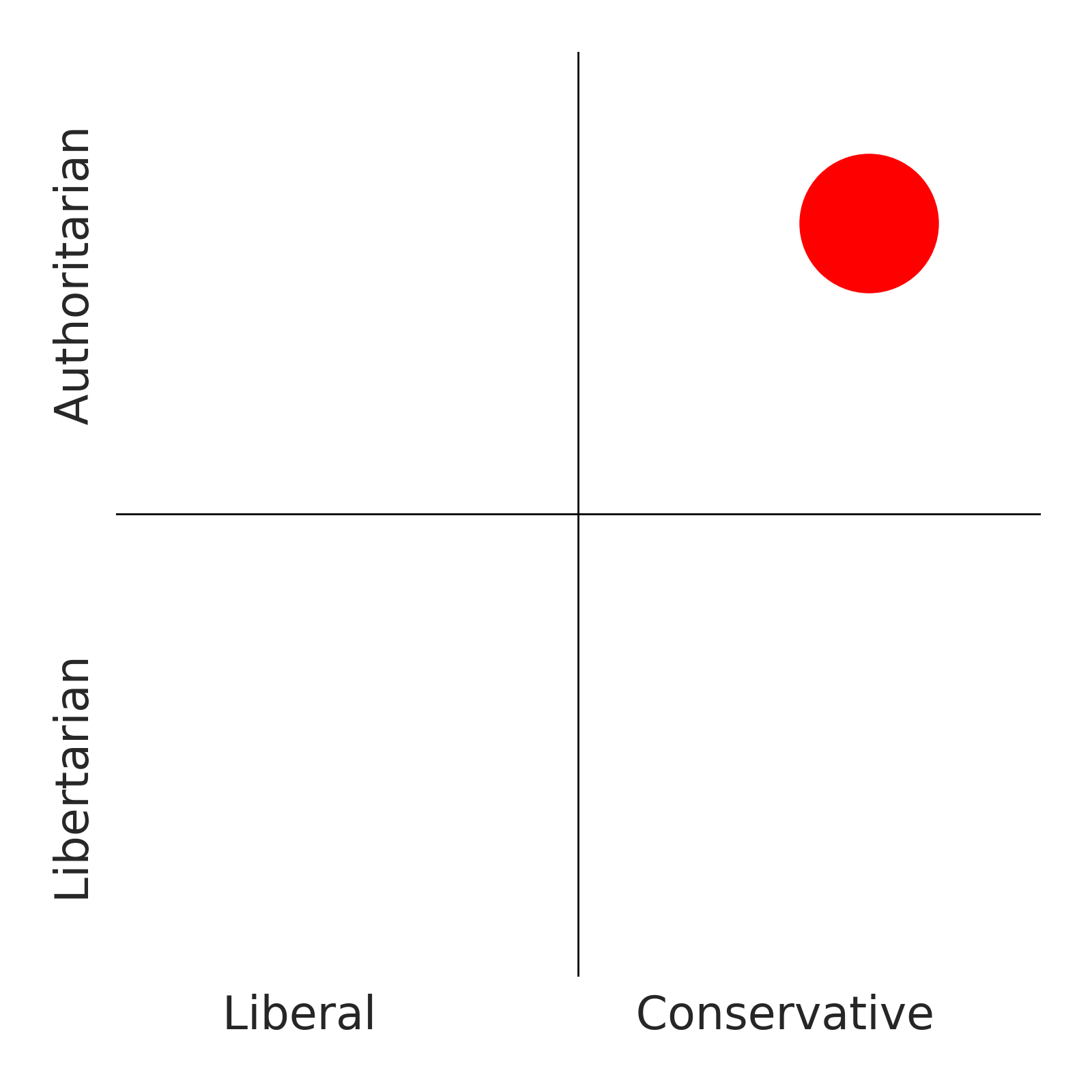
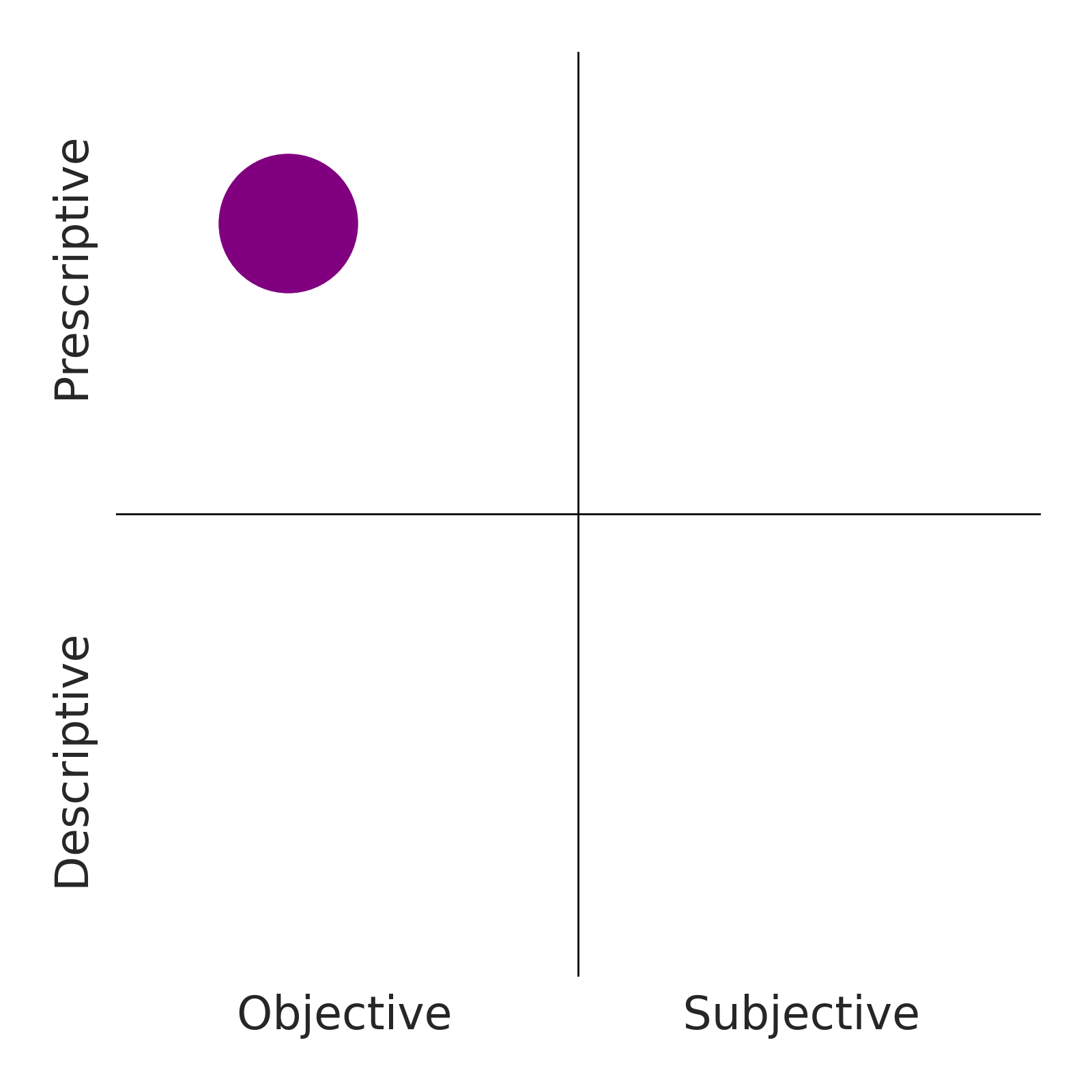
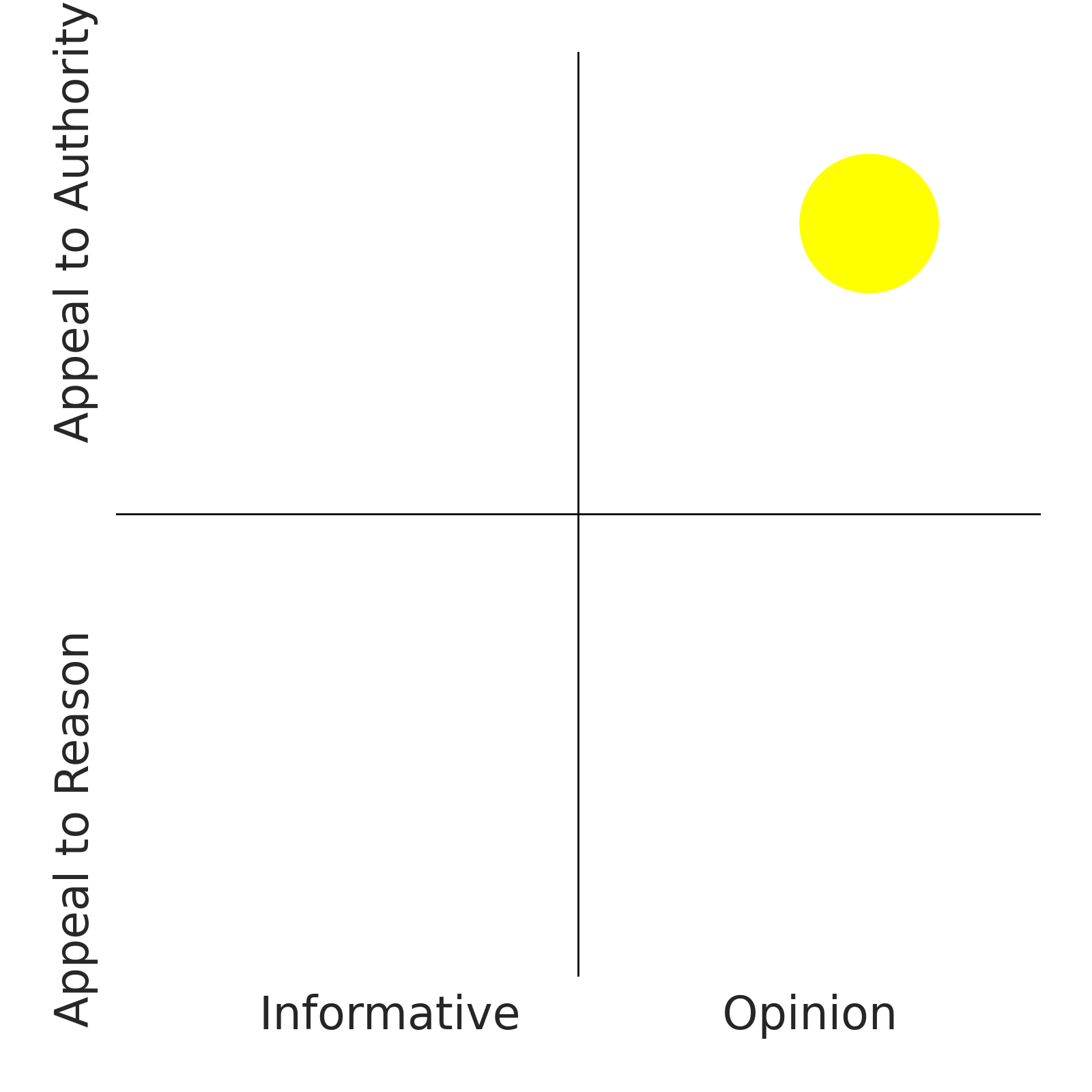
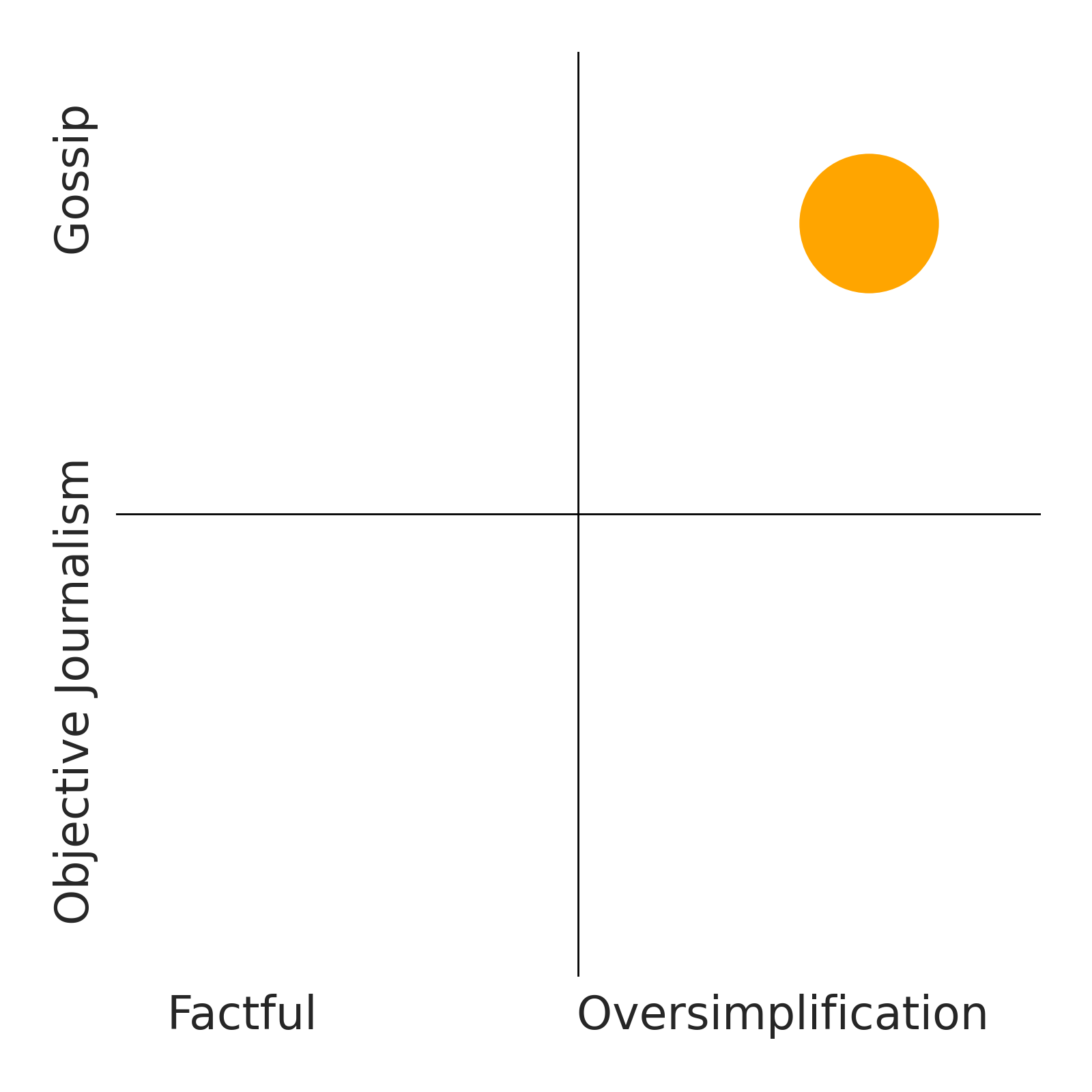
October 02, 2026 · 0 shares
A conservative, anti-establishment commentary frames the New York Times as hypocritical and politically motivated for criticizing Meta's tax practices while itself using the same tax credit.
The U.S. federal research and development tax credit allows companies to reduce tax liability for qualifying research spending; the New York Times Company and Meta are both publicly traded companies.
Automated analysis; not human reviewed. Limitations: I could not independently verify the SEC filings, tax figures, or original New York Times reporting; the input is a single opinionated commentary. · 15 of 55 available dimensions scored; omitted dimensions are not treated as neutral. · Verified supporting quotes for 15 of 15 scored dimensions.
Claim: The article uses conservative-coded political framing to attack the New York Times as anti-Trump and globalist.
“the globalist anti-American, anti-Israel content it is attempting to get readers to pay for” · exact text match
“a family-controlled anti-Trump newsletter and podcasting platform” · exact text match
Why: These phrases characterize the Times as left-wing/globalist and anti-Trump, marking the commentary's conservative standpoint.
Claim: The commentary is anti-elite, attacking the Sulzberger family's wealth and control of the Times.
“the family that controls the Times uses to maximize its own profits” · exact text match
Why: It frames the issue as rich elites using tax breaks while accusing others, a populist framing.
Claim: The article explicitly editorializes and uses first-person commentary.
“Maybe the "research and experiment" happening is how long any subscribers will continue to pay for this garbage.” · exact text match
Why: The sentence is a personal opinion/insult, not factual reporting.
Claim: The article uses sensationalized and exaggerated language to attack the Times's reporting.
“breathlessly hyped front-page story” · exact text match
“loaded, disapproving, tendentious, and sensationalist adjectives” · exact text match
Why: These phrases are emotionally charged and designed to provoke, though they describe the Times rather than the article itself.
Claim: The content is dominated by the author's opinions and commentary.
“Maybe the "research and experiment" happening is how long any subscribers will continue to pay for this garbage.” · exact text match
Why: This is a direct opinion, not a factual statement.
Claim: The article is overtly political, attacking the Times's perceived political agenda.
“the globalist anti-American, anti-Israel content it is attempting to get readers to pay for” · exact text match
Why: It attributes political motives to the Times and frames the dispute in partisan terms.
Claim: The article reduces the Times's criticism of Meta to simple hypocrisy without accounting for scale or context.
“How is what Meta is doing as detailed in your article any different or worse than what the New York Times Company is doing?” · exact text match
Why: It equates Meta's multibillion-dollar tax credit use with the Times's smaller credits, ignoring material differences.
Claim: The article uses insulting and mocking language rather than measured critique.
“failed country of Spain” · exact text match
“this garbage” · exact text match
Why: These phrases are personal insults and mockery, indicating immature/rage-baiting tone.
Claim: The article asserts the Times's intent and effect with certainty.
“the piece had precisely the intended effect—fueling hatred against Meta CEO Mark Zuckerberg” · exact text match
Why: 'Precisely the intended effect' states a causal/intent claim beyond the evidence provided.
Claim: The commentary is structured around a conservative ideological critique of the Times.
“the globalist anti-American, anti-Israel content it is attempting to get readers to pay for” · exact text match
Why: It applies a coherent ideological label to the Times's content, showing ideology-driven framing.
Claim: The article positions itself against the mainstream media establishment.
“a family-controlled anti-Trump newsletter and podcasting platform” · exact text match
Why: It disparages the Times as a family-controlled media outlet, signaling anti-establishment orientation.
Claim: The article is strongly negative in emotional tone.
“fueling hatred against Meta CEO Mark Zuckerberg” · exact text match
“this garbage” · exact text match
Why: The language is contemptuous and focuses on resentment, making the emotional valence negative.
Claim: The article emphasizes individual choice and merit over inherited/collective identity.
“It's another thing for a customer, talented employee, or capital-allocating potential shareholder with alternative options to choose voluntarily to participate in it.” · exact text match
Why: It contrasts Sulzberger family inheritance with voluntary individual participation, an individualist framing.
Claim: The article speculates about the Times's business strategy and motives.
“The Times is trying to grow its circulation outside of America on the theory that non-American readers will be more receptive to the globalist anti-American, anti-Israel content it is attempting to get readers to pay for.” · exact text match
Why: This is an unverified inference about the Times's strategy and reader motives.
Claim: The article uses loaded causal and motive framing to influence readers.
“the piece had precisely the intended effect—fueling hatred against Meta CEO Mark Zuckerberg” · exact text match
Why: It presents a contested interpretation of the Times's effect as fact, an observable manipulative technique.
I could not independently verify the SEC filings, tax figures, or original New York Times reporting; the input is a single opinionated commentary.
A conservative polemic frames Macron's U.N. speech as hypocritical by juxtaposing it with a catalog of French historical atrocities and antisemitic violence.
Automated analysis; not human reviewed. Limitations: The supplied text is a single opinion piece; historical claims and Macron's exact speech could not be independently verified from the article alone. · 14 of 55 available dimensions scored; omitted dimensions are not treated as neutral. · Verified supporting quotes for 11 of 14 scored dimensions.
Claim: The commentary advances a conservative nationalist perspective, defending Israel and attacking multilateral institutions and France's global standing.
“it was a mistake to give France, a minor and declining power, a permanent seat on the U.N. Security Council.” · exact text match
“The French Revolution, in marked distinction to America's founding war, was characterized by brutal excesses.” · exact text match
Why: The attack on the U.N. and France, combined with praise for America's founding war and defense of Israel, reflects conservative foreign-policy framing.
Claim: The piece is heavily subjective, using rhetorical questions, moral judgments, and insults rather than neutral reporting.
“Where was the self-awareness?” · exact text match
“breathtaking lack of humility” · exact text match
Why: Rhetorical questioning and moral condemnation are subjective framing devices.
Claim: The article uses emotionally charged and sensational metaphors to describe French history.
“For France, bloodthirst was an export good, spread worldwide via colonial rule.” · exact text match
“gorillas in Gaul” · exact text match
Why: Metaphors like 'bloodthirst was an export good' and 'gorillas in Gaul' are sensational and inflammatory.
Claim: The article moves from describing history to prescribing how France should behave and whether it deserves a U.N. seat.
“they will need to begin behaving like allies instead of annoyances.” · exact text match
“it was a mistake to give France, a minor and declining power, a permanent seat on the U.N. Security Council.” · exact text match
Why: These are explicit prescriptions and normative judgments.
Claim: The article takes a hawkish stance by defending Israel and treating Hamas as a terrorist threat.
“Hamas terrorist group” · exact text match
“murdering more than 350 Israeli civilians” · exact text match
Why: The terminology and emphasis on terrorist killings align with a hawkish security perspective.
Claim: The piece is an opinion polemic, not a news report, with explicit judgments and prescriptions.
“Macron's Hamas blunder was a symptom of a French speech that was out of touch with reality in a much bigger way.” · exact text match
“If Macron and his countrymen want a rescue again the next time around, they will need to begin behaving like allies instead of annoyances.” · exact text match
Why: These are evaluative assertions and policy prescriptions, not factual reporting.
Claim: The article is overtly political, taking sides in international disputes and advocating against France's U.N. role.
“In his U.N. speech, Macron demonized Israel” · exact text match
“it was a mistake to give France, a minor and declining power, a permanent seat on the U.N. Security Council.” · exact text match
Why: Characterizing Macron's speech as demonization and opposing France's Security Council seat are political positions.
Claim: The article reduces complex historical and geopolitical situations to sweeping moral generalizations.
“For France, bloodthirst was an export good, spread worldwide via colonial rule.” · exact text match
“The entire Vietnam war fought by the U.S., with all its American and local casualties in the 1960s and 1970s, can be understood partly as a costly U.S. effort to attempt to cope with the aftereffects of a failed French colonial project.” · not found in supplied text
Why: These statements collapse diverse histories into single-cause moral narratives.
Claim: The article asserts conclusions with certainty beyond what it supports, dismissing counterclaims without evidence.
“Macron's Hamas blunder was a symptom of a French speech that was out of touch with reality in a much bigger way.” · exact text match
“The French anonymously claimed that Macron's remarks had been mistranslated, but that claim is not credible.” · exact text match
Why: It presents an interpretive diagnosis and dismisses an official counterclaim as 'not credible' without substantiation.
Claim: The piece consistently applies a conservative nationalist ideology to international affairs.
“it was a mistake to give France, a minor and declining power, a permanent seat on the U.N. Security Council.” · exact text match
“If Macron and his countrymen want a rescue again the next time around, they will need to begin behaving like allies instead of annoyances.” · exact text match
Why: The arguments are driven by a coherent ideological worldview rather than open-ended inquiry.
Claim: The tone is strongly negative and indignant, using charged language to condemn France and Macron.
“Where was the self-awareness?” · exact text match
“bloodthirst was an export good” · exact text match
Why: Rhetorical outrage and lurid metaphor convey negative emotion rather than neutral analysis.
Claim: The article condemns French historical violence but dismisses Macron's criticism of Israeli war crimes as demonization, applying different standards.
“In his U.N. speech, Macron demonized Israel ("War crimes have been industrialised. ... a new era of barbaric acts")” · not found in supplied text
“For France, bloodthirst was an export good, spread worldwide via colonial rule.” · exact text match
Why: It treats allegations of Israeli war crimes as illegitimate rhetoric while using French colonial atrocities as moral condemnation.
Claim: The article is a sourced opinion piece: it cites historical authorities for many factual claims but also makes unsupported assertions.
“A standard European history textbook, R.R. Palmer and Joel Colton's A History of the Modern World, reports that 40,000 people died in the Terror of 1793-1794” · exact text match
“The U.S. Holocaust Memorial Museum's Holocaust Encyclopedia reports, "In all, some 77,000 Jews living on French territory perished in concentration camps and killing centers—the overwhelming majority of them at Auschwitz—or died in detention on French soil."” · not found in supplied text
Counterevidence:
“The French anonymously claimed that Macron's remarks had been mistranslated, but that claim is not credible.” · exact text match
Why: Visible sourcing supports factual claims, but the unsourced dismissal of the mistranslation claim and one-sided framing lower overall credibility.
Claim: The article uses loaded framing and asymmetric standards to steer the reader toward its conclusion.
“Macron's Hamas blunder was a symptom of a French speech that was out of touch with reality in a much bigger way.” · exact text match
“That the president of France, of all places, would pose as the spokesman for civilized international society without even a parenthetical pause to acknowledge his own nation's shortcomings demonstrated a breathtaking lack of humility.” · exact text match
Why: It frames Macron's speech as a 'symptom' and applies a moral standard to France that it does not apply to Israel.
The supplied text is a single opinion piece; historical claims and Macron's exact speech could not be independently verified from the article alone.
September 29, 2026 · 0 shares
A derisive account frames Nikole Hannah-Jones's school choice as a botched ideological experiment and presents later family statements as self-justifying.
Automated analysis; not human reviewed. Limitations: The supplied text is truncated with ellipses and includes a promotional/subscription wrapper, so the full article context and author byline are unavailable. · 12 of 55 available dimensions scored; omitted dimensions are not treated as neutral. · Verified supporting quotes for 9 of 12 scored dimensions.
Claim: The text frames progressive ideology about public schools as a cause of parental error.
“public school for political reasons was a major whoopsie.” · exact text match
“chafed at the thought of "experimenting with our child based on our idealism about public schools"” · not found in supplied text
Why: The language treats the decision as a political mistake and presents the husband's preference for parochial, good public, or private schools as the reasonable alternative.
Claim: The text uses subjective, evaluative language rather than neutral reporting.
“bizarre interview” · exact text match
“botched political experiment” · exact text match
Why: Words like 'bizarre' and 'botched' express judgment about the people and decision being covered.
Claim: The text amplifies conflict with dramatic, exaggerated phrasing.
“botched political experiment” · exact text match
“major whoopsie” · exact text match
Why: These phrases inflate a school choice into a dramatic failure, characteristic of sensational framing.
Claim: The text prescribes how the parents should have acted and judges the choice as wrong.
“was a major whoopsie” · exact text match
“botched political experiment” · exact text match
Why: Calling the decision a 'whoopsie' and an 'experiment' implies the parents should not have made it, moving beyond description.
Claim: The text emphasizes private family disagreement and personal drama.
“Najya, now 16 ... does not necessarily agree.” · not found in supplied text
“I feel like if I picked a different choice that you wanted me to, I don't think I would be fine.” · exact text match
Why: It centers the daughter's current view and the parents' conflict, characteristic of personal/gossip framing.
Claim: The text is heavily opinionated, mixing assertion with commentary.
“Faraji gave a bizarre interview to the New York Post last week.” · exact text match
“congratulating herself for choosing a failing public school” · exact text match
Why: Descriptions such as 'bizarre' and 'congratulating herself' assert character judgments rather than just reporting facts.
Claim: The text frames a family decision through a political debate about public schooling and race.
“public school for political reasons” · exact text match
“consistently denounced as racist” · exact text match
Why: The coverage explicitly connects the school choice to political ideology and racial denunciation.
Claim: The text reduces a complex educational decision to a self-serving political experiment.
“botched political experiment” · exact text match
“whoopsie” · exact text match
Why: These labels collapse multiple factors in the decision into a single negative frame.
Claim: The text asserts a definitive negative outcome without acknowledging uncertainty.
“botched political experiment” · exact text match
“was a major whoopsie” · exact text match
Why: The phrasing presents the outcome as clearly failed, exceeding the support of the quoted evidence.
Claim: The text's word choice conveys strong negative emotion toward the subject.
“bizarre interview” · exact text match
“botched political experiment” · exact text match
Why: The negative descriptors elicit an emotional response rather than neutral analysis.
Claim: The text endorses individual parental choice over collective public-school idealism.
“He wanted to look into parochial schools, or one of the 'good' public schools, or even private schools.” · exact text match
“experimenting with our child based on our idealism about public schools” · exact text match
Why: It presents the husband's individual-family preference for private or selective schools as sensible and the public-school ideal as an experiment.
Claim: The text uses loaded labels and selective contrasts to steer the reader's judgment.
“flip-flopped on the issue of regret” · not found in supplied text
“congratulating herself” · exact text match
Why: These phrases frame legitimate ambivalence as inconsistency and vanity, an observable loaded-framing technique.
The supplied text is truncated with ellipses and includes a promotional/subscription wrapper, so the full article context and author byline are unavailable.
The reporting adopts an alarmed, accusatory tone toward antisemitism while aggressively tying the professor's radical anti-Zionist rhetoric to academic anti-Zionist circles, favoring a strong pro-Israel and anti-university-complicity framing.
Haverford College is a liberal arts college in the Philadelphia suburbs; the October 7 attacks and Jewish High Holidays form the temporal context of the university's response.
Automated analysis; not human reviewed. Limitations: The analysis is limited by the article's use of an unclear self-citation ('a review of his social media activity') rather than identifying the author or outlet conducting the review, and by an apparent impossible 2026 date in quoted posts. · 54 of 55 available dimensions scored; omitted dimensions are not treated as neutral. · Verified supporting quotes for 0 of 54 scored dimensions.
The analysis is limited by the article's use of an unclear self-citation ('a review of his social media activity') rather than identifying the author or outlet conducting the review, and by an apparent impossible 2026 date in quoted posts.
September 24, 2026 · 0 shares
A conservative critic frames Nicholas Kristof's Harvard appearance as self-humiliation over a discredited canine-rape allegation and treats the episode as evidence of institutional anti-Israel bias.
The dispute centers on claims from an earlier New York Times opinion column by Nicholas Kristof about Israeli treatment of Palestinian prisoners; the column itself is not reproduced here.
Automated analysis; not human reviewed. Limitations: The supplied text is a strongly opinionated single-source account; I cannot independently verify the underlying allegations or the 'widely debunked' characterization. · 20 of 55 available dimensions scored; omitted dimensions are not treated as neutral. · Verified supporting quotes for 18 of 20 scored dimensions.
Claim: The text applies a conservative, pro-Israel lens to a media and academia controversy.
“publicly humiliated himself Friday afternoon on a Harvard Kennedy School stage” · exact text match
“stoking Jew-hate” · exact text match
Why: The attack targets a New York Times columnist and elite university, while warning of Jew-hatred, matching conservative criticism of liberal institutions.
Claim: The text mocks elite academic spending and a star columnist's performance.
“Harvard’s English and history departments paid a previous anti-Israel guest lecturer, Ta-Nehisi Coates, a $35,000 honorarium and $7,500 in travel expenses "for a 5 star hotel"” · not found in supplied text
Why: Highlighting the hotel and honorarium frames elite academia as lavishly rewarding favored speakers.
Claim: The text is dominated by overtly evaluative and belittling language.
“publicly humiliated himself Friday afternoon on a Harvard Kennedy School stage” · exact text match
“pathetic, apparently unprepared question-and-answer style performance” · exact text match
Why: These are subjective judgments of character and competence, not neutral reporting.
Claim: The text uses scandal-driven, provocative framing.
“Kristof Humiliates Himself and Harvard With Israel Dog-Rape Libel” · exact text match
“effect they have in stoking Jew-hate” · exact text match
Why: The headline and emotive references to Jew-hatred are designed to provoke rather than inform.
Claim: The text instructs readers how to respond to the episode.
“I encourage you to watch the brief video highlights embedded here.” · exact text match
“You should stay quiet.” · exact text match
Why: The author tells readers what to do and includes a prescriptive rebuke as the climax.
Claim: The text takes a stark pro-Israel, anti-Hamas moral stance.
“You should be on the side of the victims of terror. Not the terrorists.” · exact text match
“Hamas terrorists” · exact text match
Why: The quoted admonition is presented approvingly and frames the conflict in unambiguous moral terms.
Claim: The text raises alarm about the episode stoking hatred.
“effect they have in stoking Jew-hate” · exact text match
Why: The warning about Jew-hatred is presented as a likely consequence, creating fear and urgency.
Claim: The text presupposes the allegation is a libel and fantasy without substantiating a refutation.
“Kristof Humiliates Himself and Harvard With Israel Dog-Rape Libel” · exact text match
“doubled down on his unverified fantasy” · exact text match
Why: The conclusion of falsity is embedded in the framing rather than demonstrated.
Claim: The text dwells on undisclosed honoraria, hotel expenses, and personal background.
“Kristof’s honorarium for the appearance was undisclosed” · exact text match
“a $35,000 honorarium and $7,500 in travel expenses "for a 5 star hotel"” · not found in supplied text
Why: These details are peripheral to the core allegation and emphasize personal and financial gossip.
Claim: The text is heavily opinionated rather than factual.
“publicly humiliated himself Friday afternoon on a Harvard Kennedy School stage” · exact text match
“pathetic, apparently unprepared question-and-answer style performance” · exact text match
Why: The commentary is saturated with subjective epithets and editorial judgments.
Claim: The text frames the story around anti-Israel bias and terrorism politics.
“widespread culture of anti-Israel bias” · exact text match
“Hamas terrorists” · exact text match
Why: The language places the episode within a larger political battle over Israel and antisemitism.
Claim: The text reduces a disputed reporting matter to a 'fantasy' and 'libel.'
“unverified fantasy that Israel is using a trained dog to rape Palestinian prisoners” · exact text match
“Israel Dog-Rape Libel” · exact text match
Why: Complex sourcing and verification issues are collapsed into a single damning label.
Claim: The text mocks Kristof's delivery and treats the episode as entertainment.
“nervous laughter” · exact text match
“They are entertaining, though not so entertaining as to justify an honorarium” · exact text match
Why: The focus on nervous laughter and entertainment value is derisive rather than serious.
Claim: The text frames Jews as victims of hate and terrorism.
“stoking Jew-hate” · exact text match
“You should be on the side of the victims of terror.” · exact text match
Why: The framing emphasizes Jew-hatred and victimhood to condemn the criticized conduct.
Claim: The text asserts the claim was widely debunked with high certainty.
“Widely Debunked Claim” · exact text match
“unverified fantasy” · exact text match
Why: The certainty of 'widely debunked' exceeds the supporting detail actually provided in the text.
Claim: The text consistently applies a pro-Israel, anti-left ideological frame.
“an instance of Holocaust inversion that violates the definition of antisemitism” · exact text match
“widespread culture of anti-Israel bias” · exact text match
Why: These are ideological characterizations that move beyond the reported facts into worldview-driven interpretation.
Claim: The text casts mainstream media institutions as evasive and self-protective.
“in an Orwellian twist the Times publicity department later distanced itself from its own editor’s remarks” · exact text match
Why: The 'Orwellian twist' characterization depicts the Times as publicly spinning rather than accountable.
Claim: The text conveys strong negative emotion toward Kristof and the Times.
“publicly humiliated himself” · exact text match
“stoking Jew-hate” · exact text match
Why: The language is contemptuous and alarmed rather than measured.
Claim: The text uses loaded epithets and one-sided framing to steer interpretation.
“Orwellian twist” · exact text match
“unverified fantasy” · exact text match
Why: Pejorative labels and dismissive characterizations constrain the reader's assessment.
Claim: The text substitutes ad hominem labels for measured examination.
“publicly humiliated himself” · exact text match
“unverified fantasy” · exact text match
Why: Personal mockery and unsupported labels weaken the text's fairness and evidentiary discipline.
The supplied text is a strongly opinionated single-source account; I cannot independently verify the underlying allegations or the 'widely debunked' characterization.
October 07, 2026 · 0 shares
The framing is relentlessly sarcastic and partisan, casting CNN's Daniel Dale as a bad-faith harasser and treating a transgender detransitioner's account as unassailable truth while dismissing fact-checking as Democratic propaganda.
The ads target former Democratic senator Sherrod Brown in Ohio; the Senate Leadership Fund is a GOP-affiliated super PAC.
Automated analysis; not human reviewed. Limitations: The supplied text is partial and includes content from a separate aggregated item; analysis is limited to the visible Free Beacon framing. · 54 of 55 available dimensions scored; omitted dimensions are not treated as neutral. · Verified supporting quotes for 2 of 54 scored dimensions.
Claim: The article is framed from a strongly conservative partisan perspective hostile to Democrats and CNN.
“Dale's work focuses almost exclusively on people who criticize Democrats” · not found in supplied text
“So Democrats can cite their expert opinions in new ads accusing Republicans of lying.” · exact text match
Why: Sustained partisan sarcasm and alignment with GOP ad claims indicate a conservative lean.
Claim: The article asserts motive and wrongdoing with high certainty.
“He accused the innocent victim of lying about her lived experience” · exact text match
Why: Definitive accusations of harassment and lying exceed the supplied evidence.
Claim: Credibility is reduced by heavy sarcasm, missing bylines, and one-sided sourcing.
“CNN Fact-Checker Daniel Dale Harasses Innocent Survivor of Childhood Trauma.” · exact text match
Why: The headline and prose rely on emotive, unverifiable characterizations rather than neutral reporting.
Claim: The article uses loaded sarcasm and selective framing to discredit CNN and fact-checkers.
“Daniel Dale, CNN's indefatigable guardian of truth, is harassing an innocent victim” · exact text match
“That's why fact-checkers exist. So Democrats can cite their expert opinions in new ads accusing Republicans of lying.” · not found in supplied text
Why: Sarcastic labels and tendentious framing manipulate reader perception.
Claim: The article frames gender-affirming care as coercive and harmful, amplifying detransitioner regret.
“she got a double mastectomy, or "top surgery," at age 19 without her parents' consent” · not found in supplied text
“I wasn't born in the wrong body. I was a kid.” · not found in supplied text
Why: Uncritical presentation of anti-transition framing and emphasis on harm supports a negative slant toward gender-affirming care.
The supplied text is partial and includes content from a separate aggregated item; analysis is limited to the visible Free Beacon framing.
Automated analysis; not human reviewed. Limitations: The supplied text is a truncated excerpt with ellipses, so the full argument, attribution, and surrounding context are uncertain; my assessment is therefore based on the visible fragments and quotations only. · 6 of 55 available dimensions scored; omitted dimensions are not treated as neutral. · Verified supporting quotes for 6 of 6 scored dimensions.
Claim: The article frames Mamdani as a radical left-wing figure and endorses conservative positions on Israel, economics, and policing.
“He, his father, and his wife have aligned themselves with those who would wipe the Jewish state of Israel off the map, while also aiming to eradicate the free market economy and associated system of strong property rights and rule of law in” · exact text match
“One thing he seems to have appropriated without acknowledgment is the trait of chutzpah, or gall.” · exact text match
Why: The article uses ideologically loaded language to place Mamdani outside the pro-Israel, free-market consensus.
Claim: The article is hawkish on Israel and policing, treating strong security measures and hard-line anti-Israel rhetoric as necessary.
“You are the biggest inciter—and the last one who can comment on this matter.” · exact text match
“Bloomberg's police commissioner, Ray Kelly, had so many heavily armed personnel on our doorstep to protect us” · exact text match
Why: The article gives uncritical space to Israeli officials' condemnations and favorably recounts armed police protection.
Claim: The article is a strongly opinionated polemic rather than a neutral news report.
“He, his father, and his wife have aligned themselves with those who would wipe the Jewish state of Israel off the map” · exact text match
“One thing he seems to have appropriated without acknowledgment is the trait of chutzpah, or gall.” · exact text match
Why: It makes overtly judgmental claims about Mamdani's family, ideology, and character.
Claim: The article frames a political contest as a test of antisemitism and moral clarity.
“This mayor does not treat the hate facing Jewish New Yorkers as an emergency and refuses to acknowledge the different shapes it takes.” · exact text match
“The mayor's actions or inactions only serve to help fuel antisemitism in NYC.” · exact text match
Why: It links the mayor's perceived political failures directly to the growth of antisemitism.
Claim: The article treats free-market capitalism, property rights, and rule of law as unquestionably good and aligns them with the fight against antisemitism.
“aligned themselves with those who would wipe the Jewish state of Israel off the map, while also aiming to eradicate the free market economy and associated system of strong property rights and rule of law in” · exact text match
Why: It equates opposition to Israel with opposition to free markets and the rule of law.
Claim: The article uses strongly negative emotional language to attack Mamdani.
“You are the biggest inciter—and the last one who can comment on this matter.” · exact text match
“One thing he seems to have appropriated without acknowledgment is the trait of chutzpah, or gall.” · exact text match
Why: Words such as 'biggest inciter' and 'chutzpah' are chosen to express outrage and contempt.
The supplied text is a truncated excerpt with ellipses, so the full argument, attribution, and surrounding context are uncertain; my assessment is therefore based on the visible fragments and quotations only.
September 25, 2026 · 0 shares
Sarcastic conservative framing mocks Democratic 2028 candidates, treating Buttigieg's statistically insignificant black-voter support as a punchline.
The 2028 U.S. Democratic presidential nomination is being discussed before any formal campaign; Buttigieg is a former U.S. Transportation Secretary and 2020 candidate, Harris is the former vice president, El-Sayed is a Michigan Senate candidate, and Pritzker is governor of Illinois.
Automated analysis; not human reviewed. Limitations: Only the supplied satirical opinion text; no underlying poll data or external links, so poll details and factual claims cannot be independently checked. · 55 of 55 available dimensions scored; omitted dimensions are not treated as neutral. · Verified supporting quotes for 11 of 55 scored dimensions.
Claim: The framing is conservative, using conservative-coded mockery of Democratic candidates and identity politics.
“What a treat it was to see the Michigan Senate candidate squirm in his seat as the former VP slurred her way through a DEI word salad.” · exact text match
Why: The loaded 'DEI word salad' description and the mocking tone toward multiple Democratic figures mark a conservative political stance.
Claim: The piece is predominantly subjective, mixing opinion, mockery, and value judgments with reported poll data.
“What a treat it was to see the Michigan Senate candidate squirm in his seat as the former VP slurred her way through a DEI word salad.” · exact text match
Why: The evaluative language and personal attacks are expressions of opinion rather than neutral reporting.
Claim: The framing sensationalizes a statistically insignificant poll result as a notable event.
“found his support among black voters surging to 1 percent” · exact text match
“That would be amazing.” · exact text match
Why: Describing 1 percent as 'surging' and calling a hypothetical outcome 'amazing' emphasizes drama over substance.
Claim: The piece relies on insider-style political gossip about candidates' personal and social activity.
“In other 2028 news, child billionaire Alex Soros recently posed for a photo with billionaire J.B. Pritzker, the Democratic governor of Illinois.” · exact text match
Why: The 'In other 2028 news' item treats a photo opportunity and personal appearance as newsworthy gossip.
Claim: The article is heavily opinionated rather than factual reporting.
“Buttigieg has no chance of winning the nomination in 2028.” · exact text match
Why: A categorical prediction about future nomination chances is a strong opinion statement.
Claim: The content is deeply embedded in partisan political commentary and primary maneuvering.
“Buttigieg has no chance of winning the nomination in 2028. His lane no longer exists.” · exact text match
Why: The entire piece evaluates Democratic primary positioning and uses partisan language.
Claim: The analysis reduces candidates to simplistic identity and persona categories.
“Jon Ossoff has cornered the generic white guy market, and Democrats have already released a new and improved version of the ambiguously gay, Bible-adjacent, 'Aw shucks, let's just get along' persona that Buttigieg pioneered in 2020.” · not found in supplied text
Why: The framing presents political appeal as reducible to crude demographic and persona archetypes.
Claim: The tone uses schoolyard-style jabs and crude descriptors.
“Tim Walz, a raging heterosexual.” · exact text match
Why: The phrase reduces a figure to a mocking sexual-orientation label.
Claim: The piece expresses certainty about a future political outcome without evidentiary support.
“It goes without saying that Buttigieg has no chance of winning the nomination in 2028.” · exact text match
Why: 'It goes without saying' asserts as self-evident a speculative prediction about a future campaign.
Claim: The piece applies a coherent ideological lens of anti-Democratic and anti-'woke' mockery.
“Democrats have already released a new and improved version of the ambiguously gay, Bible-adjacent, 'Aw shucks, let's just get along' persona that Buttigieg pioneered in 2020.” · not found in supplied text
Why: Democratic candidates are framed as manufactured products of identity-based ideological packaging.
Claim: The overall emotional register is negative and sneering toward the subjects.
“What a treat it was to see the Michigan Senate candidate squirm in his seat as the former VP slurred her way through a DEI word salad.” · exact text match
Why: Glee at another person's discomfort conveys a strongly negative emotional orientation.
Claim: The piece makes speculative assertions about future candidate decisions.
“Pritzker, who appears to have lost an entire Alex Soros's worth of body weight on GLP-1 medication, is almost certain to run for president because why not.” · exact text match
Why: 'Almost certain to run' is a forward-looking prediction about an unannounced candidate.
Claim: The text uses loaded framing and word choices to push a mocking narrative.
“found his support among black voters surging to 1 percent” · exact text match
“the former VP slurred her way through a DEI word salad” · exact text match
Why: 'Surging' exaggerates a negligible result, while 'slurred' and 'DEI word salad' are loaded, derogatory descriptors.
Only the supplied satirical opinion text; no underlying poll data or external links, so poll details and factual claims cannot be independently checked.
April 04, 2026 · 0 shares
This piece exhibits a strongly pro-Judeo-Christian Anglo-American bias, portraying Western liberty as divinely anchored and framing Marxist-Leninist China as an anti-civilization threat through loaded language and selective history.
Editorial framing a civilizational clash between Judeo-Christian Anglo-American civilization and Marxist-Leninist China, celebrating religious liberty and warning of a Chinese totalitarian threat.
I strive for neutrality; Western-centric framing risks.
October 08, 2026 · 0 shares
The article adopts a conservative adversarial stance against Democratic officials, framing their handling of the Cornell case as politically motivated and dismissing due process, while contrasting it with a past Democratic example of fairness.
The Duke lacrosse scandal two decades earlier involved a gang-rape allegation at a prestigious university that ended with the prosecutor disgraced and disbarred, the accused students declared innocent, and the accuser later admitting she lied; North Carolina Democratic officials Mike Easley and Roy Cooper publicly rejected the prosecutor Mike Nifong's conduct, with Cooper overseeing an investigation that affirmed the players' innocence.
Automated analysis; not human reviewed. · 55 of 55 available dimensions scored; omitted dimensions are not treated as neutral. · Verified supporting quotes for 12 of 55 scored dimensions.
Claim: The article frames Democratic officials as politically motivated and unfair, contrasting them with past Democrats who upheld due process.
“Both Governor Kathy Hochul and Attorney General Letitia James have seemed eager to exploit the case for political advantage at the expense of ensuring fairness to all sides.” · exact text match
“Expect no self-reflection as they continue to exploit the incident.” · exact text match
Why: Consistently negative portrayal of Democratic officials and praise for past Democratic fairness signals a conservative framing.
Claim: The article uses subjective language and opinionated characterizations of officials' motives.
“seemed eager to exploit the case for political advantage” · exact text match
Why: Subjective phrasing indicates an opinionated rather than neutral report.
Claim: The piece is heavily opinionated, with explicit judgments about officials and the case.
“There was, in short, no way to interpret James’s remarks other than a pronouncement of the accused students’ guilt.” · exact text match
Why: Direct interpretive assertions reflect strong opinion.
Claim: The article is centrally about political actors and partisan dynamics.
“national Democrats have been cheering them on” · exact text match
Why: Focus on partisan responses makes it highly political.
Claim: The article portrays accused students as victims of an unfair process.
“Kretzschmar was out of luck.” · exact text match
Why: Sympathetic framing of the accused as wronged by the system.
Claim: The article asserts certainty about officials' intentions and the case's implications.
“There was, in short, no way to interpret James’s remarks other than a pronouncement of the accused students’ guilt.” · exact text match
Why: Absolute phrasing about interpretation indicates overconfidence.
Claim: The article advances a clear ideological critique of progressive campus sexual assault policies.
“We’ve been told that 'Woke 1 was crazy,' as if the 2010s excesses on cultural issues are now recognized by all as problematic.” · not found in supplied text
Why: Direct invocation of 'Woke' excesses signals ideological framing.
Claim: The tone is negative and critical of Democratic officials.
“Expect no self-reflection as they continue to exploit the incident.” · exact text match
Why: Negative emotional valence toward officials.
Claim: The article holds Democrats to a different standard than the past Duke case.
“North Carolina governor Mike Easley, a Democrat, publicly denounced Nifong’s conduct. North Carolina attorney general Roy Cooper, another Democrat, oversaw the fair and comprehensive investigation that Nifong refused to do” · exact text match
Why: Contrast implies double standard in current Democratic behavior.
Claim: The article relies on specific legal documents, court rulings, and quotes, but is heavily partisan.
“a New York court found for Cornell. The ruling held that neither New York law nor Cornell’s procedures 'expressly require[d] that an accused student be notified of the specific code of conduct provisions, or rule or law, alleged to have been violated.'” · not found in supplied text
Why: Legal citations add credibility, but partisan framing reduces neutrality.
Claim: The article argues the current response is irrational by ignoring due process and past lessons.
“It’s as if we have returned to 2015, at the height of the Obama-era Title IX environment, where politicians regularly equated campus allegations with guilt.” · exact text match
Why: Critique emphasizes departure from rational, evidence-based procedures.
Claim: The article speculates about future Democratic actions and motives.
“in recent days, the Cornell case has provided a preview of what’s likely to come from a Democratic Congress on campus sexual assault matters.” · exact text match
Why: Forecast about future conduct is speculative.
Claim: The article uses loaded language and selective emphasis to steer interpretation.
“a spectacular allegation of gang rape” · exact text match
Why: Sensational phrasing may manipulate reader perception.
Claim: The article accuses Democrats of hypocrisy by ignoring past lessons.
“Democrats Forget the Lessons of the Duke Lacrosse Scandal” · exact text match
Why: Explicit charge of forgetting suggests double standard.
September 28, 2026 · 0 shares
A conservative-leaning satire crowns Justin Verlander 'Man of the Century' and mixes partisan and anti-elite asides into an otherwise sentimental sports farewell.
Automated analysis; not human reviewed. Limitations: The piece is an unlabeled satire, so classifications that depend on literalness carry more interpretive uncertainty. · 18 of 55 available dimensions scored; omitted dimensions are not treated as neutral. · Verified supporting quotes for 15 of 18 scored dimensions.
Claim: The publisher frames the sports farewell with right-aligned political references and figures.
“Survives global pandemic unleashed by China.” · exact text match
“2001: Turns 18 one month after Greatest Living President George W. Bush takes office.” · exact text match
Why: The 'China-unleashed' pandemic phrase and the 'Greatest Living President' honorific inject a conservative political worldview into a baseball tribute.
Claim: The piece uses anti-intellectual, anti-elite put-downs.
“Historians and other nerds will say Barack Obama is the man to beat.” · exact text match
“Elon Musk? Too weird and annoying.” · exact text match
Why: Dismissing historians as 'nerds' and mocking Musk on personal grounds aligns with a populist register.
Claim: Evaluation and personal enthusiasm replace neutral reporting.
“Kate Upton's husband is that dude.” · exact text match
“This is what a winning resume looks like:” · exact text match
Why: Colloquial valorization and value statements dominate the voice.
Claim: The writing uses emotional spectacle to dramatize the farewell.
“sobbed like a champion” · exact text match
“The crowd went wild.” · exact text match
Why: Strong emotional verbs and crowd excitement are sensational.
Claim: The tone presents the retirement as a wholly positive, joyful culmination.
“enjoyed a storybook ending to his Hall of Fame baseball career” · exact text match
“The family embraced.” · exact text match
Why: The farewell is framed as an unambiguously happy ending.
Claim: The refutation of the 'too early' objection presupposes the conclusion that Verlander is the champion.
“Now, some will say it's way too early for the 'Man of the Century' conversation. And technically, they're right. A lot could happen in 74 years. But do we actually think that any man—born or unborn—will ever assemble a more compelling body of work than Verlander, the undisputed champion of the first quarter-century?” · not found in supplied text
Why: The rebuttal relies on the label 'undisputed champion' rather than giving reasons.
Claim: The piece trades in tabloid-style personal judgments about unrelated public figures.
“Hunter Biden had a good run, but it's increasingly clear that drugs—not natural ability—were the key to his success.” · exact text match
“Elon Musk? Too weird and annoying.” · exact text match
Why: These asides are celebrity-gossip style, not sports reporting.
Claim: The article is dominated by personal opinion and ranking.
“This is what a winning resume looks like:” · exact text match
“the undisputed champion of the first quarter-century” · exact text match
Why: Assertions of superiority and subjective evaluation are central.
Claim: The piece inserts politically charged references into a sports story.
“Survives global pandemic unleashed by China.” · exact text match
“the final years of Obama's presidency” · exact text match
Why: Political actors and contested claims are used as timeline markers.
Claim: A 'Man of the Century' case is reduced to a short, triumphant bullet list.
“This is what a winning resume looks like:” · exact text match
“A lot could happen in 74 years. But do we actually think that any man—born or unborn—will ever assemble a more compelling body of work than Verlander” · exact text match
Why: Complex human achievement is compressed into a one-dimensional list.
Claim: The writing uses schoolyard-style insults and cheap shots.
“Elon Musk? Too weird and annoying.” · exact text match
“Hunter Biden had a good run, but it's increasingly clear that drugs—not natural ability—were the key to his success.” · exact text match
Why: Personal mockery and ad hominem asides are central to the humor.
Claim: The piece asserts absolute certainty beyond its evidence.
“Justin Verlander's body of work will never be topped.” · not found in supplied text
“do we actually think that any man—born or unborn—will ever assemble a more compelling body of work than Verlander” · exact text match
Why: 'Never' and 'any man—born or unborn' are maximal claims without supporting comparison.
Claim: The piece consistently applies a right-leaning cultural-ideological lens.
“Survives global pandemic unleashed by China.” · exact text match
“Historians and other nerds will say Barack Obama is the man to beat.” · exact text match
Why: The political and anti-elite references form a coherent ideological frame rather than neutral mentions.
Claim: The overall emotional tone is strongly positive and celebratory.
“enjoyed a storybook ending to his Hall of Fame baseball career” · exact text match
“The family embraced. The crowd went wild.” · exact text match
Why: Warmth and triumph are foregrounded in the farewell scene.
Claim: Visible sourcing, attribution, and uncertainty are absent from contestable assertions.
“Justin Verlander's body of work will never be topped.” · not found in supplied text
“Hunter Biden had a good run, but it's increasingly clear that drugs—not natural ability—were the key to his success.” · exact text match
Why: The piece presents unsourced allegations and unfalsifiable rankings as assured statements.
Claim: The piece knowingly advances an unfalsifiable, non-evidentiary 'Man of the Century' claim.
“A lot could happen in 74 years. But do we actually think that any man—born or unborn—will ever assemble a more compelling body of work than Verlander, the undisputed champion of the first quarter-century?” · exact text match
Why: The objection is conceded and then overridden without evidence, showing deliberate irrationality.
Claim: Loaded framing and unsubstantiated allegations steer the reader.
“Survives global pandemic unleashed by China.” · exact text match
“Hunter Biden had a good run, but it's increasingly clear that drugs—not natural ability—were the key to his success.” · exact text match
Why: The 'unleashed by China' phrase and the drug allegation are charged, directive framings.
Claim: The piece endorses the conspiratorial framing that China deliberately unleashed the pandemic.
“Survives global pandemic unleashed by China.” · exact text match
Why: The phrase asserts Chinese causation for the pandemic in a way that goes beyond mainstream reporting on its origins.
The piece is an unlabeled satire, so classifications that depend on literalness carry more interpretive uncertainty.
A highly pro-Trump, pro-Israel, and hawkish opinion piece that portrays European allies as unreliable, advocates unilateral U.S. action against Iran, and uses historical framing to justify aggressive policy.
An opinionated analysis arguing for a hardline U.S. stance toward Iran, criticizing European allies for insufficient support, and using historical references to justify aggressive measures.
I don't have personal biases; I assess text using provided content only.
Starkly pro-Israel and pro-Conservative, it casts Democrats and progressive activists as antisemitic or anti-Israel, praises Trump-era moves such as recognizing Jerusalem and sovereignty over the Golan Heights and the Abraham Accords, and frames American religious heritage as foundational to unconditional support for Israel.
A conservative pro-Israel policy perspective excerpt that credits Trump-era actions and the Abraham Accords, while criticizing Democrats and progressive activists as antisemitic or hostile to Israel.
I aim for evidence-based, cautious interpretation; mindful of political text biases.
Conservative-leaning coverage portrays Democratic reactions to the Supreme Court ruling on a racially gerrymandered Louisiana district as hyperbolic and alarmist, foregrounding Republican counterpoints and court-reform calls while casting the court's legitimacy into question through loaded framing and selective emphasis.
Opinion-driven summary of Democratic responses to a Supreme Court ruling striking down a majority-Black Louisiana district as unconstitutional racial gerrymandering, including calls for term limits, impeachment, and court reform, with commentary about rhetoric and legitimacy.
I may reflect conservative-leaning framing from editorial sources.
October 08, 2026 · 0 shares
The article is a strongly opinionated, anti-Wall Street Journal polemic that sides with the Trump Treasury Department and dismisses the Journal's economic warnings as politically biased alarmism.
The article concerns ongoing tension in late 2025 between the Trump Treasury Department and the Wall Street Journal over Federal Reserve coverage, ahead of midterm elections.
Automated analysis; not human reviewed. Limitations: The article is highly partisan and opinionated, making neutral bias scoring difficult; scores reflect the publisher's clear ideological framing and heavy reliance on subjective characterization. · 51 of 55 available dimensions scored; omitted dimensions are not treated as neutral. · Verified supporting quotes for 18 of 51 scored dimensions.
Claim: The article adopts a pro-Trump, anti-mainstream-media conservative framing.
“to do well in next month's midterm elections President Trump will have to go around the Wall Street Journal newsroom and find alternative ways” · verified after text normalization
Why: Siding with the Trump administration against the Journal indicates strong conservative alignment.
Claim: The article attacks the Journal as an out-of-touch elite institution whose warnings ignore real economic gains for ordinary Americans.
“the voters just check, and trust, their own paystubs and retirement account statements more frequently than they do the newspapers” · exact text match
Why: Contrasting ordinary voters' paystubs with newspaper coverage is a populist appeal.
Claim: The article is heavily subjective, using rhetorical mocking and opinion rather than neutral reporting.
“Too bad the Ultimate Fighting Championship stage has been taken down from the White House lawn” · exact text match
Why: Metaphorical, derisive language shows subjective framing.
Claim: The article uses dramatic, fight-themed sensational language.
“what is emerging as one of the bitterest and most consequential political and economic fights” · exact text match
Why: Hyperbolic conflict framing is sensational.
Claim: The article is not fear-mongering.
Why: No fear-based manipulation.
Claim: The article assumes its conclusion that the Journal is biased and the economy is strong.
“Yet the U.S. economy is showing remarkable strength” · exact text match
Why: Asserting economic strength without addressing contrary evidence begs the question.
Claim: The article includes gossipy details about the Ellison family.
“One recent Journal front-page story dwelled on the fact that Larry Ellison, 82, is married to his 'sixth wife,' China-born Jolin Ellison, 35.” · not found in supplied text
Why: Personal details about marriages are gossipy.
Claim: The article is overwhelmingly opinionated, blending reporting with editorial commentary.
“The Journal news pages, under bylines like Timiraos and Ip, have been hyping a Trump-administration-induced financial catastrophe since he was elected” · exact text match
Why: Characterizing the Journal's coverage as hyping is an opinion, not a fact.
Claim: The article is entirely about political and economic conflict with clear political stakes.
“It has implications for monetary policy and the midterm elections” · exact text match
Why: The entire piece centers on political conflict.
Claim: The article uses somewhat immature, mocking language.
“as if no one in the Wall Street Journal newsroom ... has ever expressed frustration in direct terms at a staffer” · not found in supplied text
Why: Sarcastic tone could be seen as immature.
Claim: Minimal circular reasoning; the argument is more ad hominem.
Why: Little circular logic evident.
Claim: The article covers responses from both sides but emphasizes administration responses.
“A counselor to the Treasury Secretary, David Zervos, snapped back October 8” · exact text match
Why: Includes response coverage but weighted.
Claim: Little victimization framing.
Why: No strong victim narrative.
Claim: The article asserts strong conclusions about economic outcomes and motives with limited evidence.
“The biggest risk may be that the Fed sets off what Apollo's Torsten Slok calls a 'higher-rates, higher-rent doom loop'” · not found in supplied text
Why: Confident predictions and causal claims are asserted without full support.
Claim: No spam content is present.
Why: The article is not promotional spam.
Claim: The article is highly ideological, advancing a partisan viewpoint.
“The Journal news pages, under bylines like Timiraos and Ip, have been hyping a Trump-administration-induced financial catastrophe” · exact text match
Why: Strong ideological framing against the Journal and for the administration.
Claim: The article is somewhat anti-establishment in attacking the mainstream media.
“go around the Wall Street Journal newsroom” · exact text match
Why: Urging bypassing mainstream media is anti-establishment.
Claim: The article has a negative emotional tone toward the Journal.
“breathless front-page news article” · exact text match
Why: Derisive adjectives convey negative emotion.
Claim: The article applies a double standard in evaluating the Journal versus the administration.
“as if no one in the Wall Street Journal newsroom ... has ever expressed frustration in direct terms at a staffer” · not found in supplied text
Why: Dismissing Journal's reporting while excusing administration actions shows a double standard.
Claim: The article lacks neutral sourcing and relies heavily on partisan commentary, reducing credibility.
“Timiraos and the Treasury Department did not respond to emails seeking comment” · exact text match
Why: While some sourcing exists, the overwhelming opinion and lack of balance lower credibility.
Claim: No advertising content is present.
Why: The article is not an advertisement.
Claim: The article is critical of certain corporate media but not corporations generally.
“the media empire controlled by Rupert and Lachlan Murdoch” · exact text match
Why: Criticism of a media corporation suggests slight anti-corporate framing.
Claim: No superstitious content is present.
Why: The article does not promote superstition.
Claim: The article leans individualist by emphasizing personal paystubs and retirement accounts over collective media narratives.
“the voters just check, and trust, their own paystubs and retirement account statements” · exact text match
Why: Focus on personal economic outcomes is individualistic.
Claim: The article speculates about economic risks and political outcomes.
“The biggest risk may be that the Fed sets off what Apollo's Torsten Slok calls a 'higher-rates, higher-rent doom loop'” · not found in supplied text
Why: Forward-looking risk speculation is present.
Claim: The article uses loaded framing and omission to favor one side.
“The Journal news pages, under bylines like Timiraos and Ip, have been hyping a Trump-administration-induced financial catastrophe” · exact text match
Why: Loaded language and selective emphasis suggest manipulation.
Claim: The article appears human-written with idiosyncratic style.
“Too bad the Ultimate Fighting Championship stage has been taken down from the White House lawn” · exact text match
Why: Colloquial, opinionated phrasing suggests human authorship.
Claim: The article shows average intelligence with some analysis but heavy bias.
“It has implications for monetary policy and the midterm elections” · exact text match
Why: Mixes analysis with polemic.
Claim: No delusional content is present.
Why: The article does not seek delusion.
Claim: No fraud-promoting content is present.
Why: The article does not normalize fraud.
Claim: No Marxist content is present.
Why: No class-conflict or socialist framing.
Claim: No Islamist content is present.
Why: No advocacy for Islamist governance.
Claim: No anti-Semitic content is present.
Why: No evidence of anti-Jewish sentiment.
Claim: No anti-LGBT content is present.
Why: No mention of LGBT issues.
Claim: No racist content is present.
Why: No racial generalizations.
Claim: No woke identity politics content is present.
Why: The article does not engage in identity-group framing.
Claim: No cruel content is present.
Why: The article does not advocate cruelty.
Claim: No virtue signaling is present.
Why: The article is not faux-moralizing.
Claim: No conspiratorial content is present.
Why: The article does not promote conspiracy theories.
Claim: The article scapegoats the Wall Street Journal for economic alarmism.
“the Journal's Federal Reserve reporter and 'chief economics correspondent,' Nick Timiraos” · not found in supplied text
Why: Blames the Journal for hyping financial catastrophe.
Claim: The article applies a double standard by dismissing the Journal's criticism of Bessent as trivial while treating Bessent's allies' attacks as justified.
“as if no one in the Wall Street Journal newsroom, or Washington Bureau, or elsewhere in the media empire controlled by Rupert and Lachlan Murdoch, has ever expressed frustration in direct terms at a staffer” · exact text match
Why: Downplaying one side's actions while amplifying the other's suggests inconsistent standards.
Claim: No anti-enlightenment content is present.
Why: The article does not reject reason or science.
The article is highly partisan and opinionated, making neutral bias scoring difficult; scores reflect the publisher's clear ideological framing and heavy reliance on subjective characterization.
A highly partisan, sensational op-ed that frames Democrats as having a drinking problem, relies on selective anecdotes and loaded language to contrast with Republicans, and raises credibility concerns through sweeping generalizations and unverified claims, indicating a strong conservative-leaning bias.
Conservative-leaning opinion piece alleging Democratic lawmakers have a drinking problem, citing numerous anecdotes and personal allegations while contrasting with Republicans; relies on sensational language and selective evidence.
Overweights sensational political framing; potential anti-Democrat tilt.
A conservative review frames campus sexual-assault policy and multiculturalism as the root of today's illiberal, anti-American universities and prescribes excluding students who reject American founding principles.
Automated analysis; not human reviewed. Limitations: The supplied text is an explicitly opinionated book review, so classifications reflect the text's advocacy rather than an impartial news report. · 11 of 55 available dimensions scored; omitted dimensions are not treated as neutral. · Verified supporting quotes for 11 of 11 scored dimensions.
Claim: The review frames universities' problems as the product of left-wing/progressive ideology and endorses conservative prescriptions for higher education.
“universities would govern themselves in accordance with whatever satisfied the left flank of students and bureaucrats” · exact text match
“offshoots of multiculturalism spawned at our universities have further stoked resentment, poisoned moral judgment, and inculcated self-righteousness” · exact text match
Why: The quoted passages attribute campus dysfunction to left/progressive and multicultural influences and align with Berkowitz's conservative critique.
Claim: The review evaluates the book with strongly evaluative and partisan language rather than impartial reporting.
“Fueled by ludicrous viral statistics like the claim that one in five female students would be sexually assaulted during her time on campus” · exact text match
“The Manichean oppressor-versus-oppressed grand theory of everything is omnipresent today” · exact text match
Why: Terms such as 'ludicrous,' 'Manichean,' and 'grand theory' are explicit judgments rather than neutral description.
Claim: The review presents a deeply negative outlook on American higher education and its sustainability.
“This is not sustainable. Education and barbarism are incompatible.” · exact text match
“universities are factories producing shallow ideology rather than learning” · exact text match
Why: The review describes systemic decline and frames current campus conditions as incompatible with genuine education.
Claim: The review moves from describing campus problems to prescribing what universities and Americans should do.
“Open inquiry is crucial, but must be directed. It must have a purpose.” · exact text match
“American colleges and universities have no obligation to educate—indeed, they have decisive reasons to deny admissions to—students who despise individual freedom and equality under law” · exact text match
Why: It tells universities whom to exclude and defines what liberal education should require.
Claim: The review uses alarmist framing about universities producing anti-American elites.
“Nor can the American people be expected to continue tolerating, much less subsidizing, the systematic production of professionals and elites who reject the creed that binds us, and actively work to undermine it.” · exact text match
Why: This frames higher education as a system actively generating enemies of the country, inviting fear of elite institutions.
Claim: The article is an overtly opinionated review that praises and endorses a book's argument.
“Berkowitz's essays are essential reading” · exact text match
“the withering arguments of this volume, properly understood, constitute a comprehensive vision of reconstruction” · exact text match
Why: The review uses editorial praise and endorsement throughout rather than neutral summary.
Claim: The review is centrally engaged with ideological and partisan conflicts over universities.
“whatever satisfied the left flank of students and bureaucrats” · exact text match
“anti-American and anti-Western drivel” · exact text match
Why: Campus disputes are framed through left/right and American/national-loyalty categories.
Claim: The review reduces today's campus problems to a single root-cause genealogy beginning with the sexual-assault panic and multiculturalism.
“The volume shows more than anything how the habits of mind and hypocrisy on matters of principle across the American campus had their roots in that now-forgotten panic.” · exact text match
“It is the very rejection of our Western inheritance, and the conditional morality that rises on campus to take its place, that explains the nascent bloodlust.” · exact text match
Why: These are sweeping monocausal claims about complex institutional and cultural change.
Claim: The review consistently applies a classical-liberal or American-traditionalist ideological lens to evaluate universities.
“liberal education means "maintain[ing] communities of scholarship, teaching, and learning that carry out their inquiries, conduct their classes, and govern themselves in a manner consistent with the principles of individual freedom and equality under law on which America was founded."” · exact text match
“American citizens are therefore perfectly right to demand that liberal education in America remain American in this minimal way.” · exact text match
Why: American founding principles are treated as the normative standard for education and citizenship.
Claim: The review uses passionate, morally charged language about campus activism.
“It is the very rejection of our Western inheritance, and the conditional morality that rises on campus to take its place, that explains the nascent bloodlust.” · exact text match
Why: 'Nascent bloodlust' is strongly emotive and frames opposing campus views in quasi-violent terms.
Claim: The review takes an individualist stance and rejects group-based or collectivist campus frameworks.
“the premise that students are free and equal individuals, rather than categorizing them as oppressors or oppressed” · exact text match
Why: It endorses the free-and-equal-individual premise and criticizes group-category analysis.
The supplied text is an explicitly opinionated book review, so classifications reflect the text's advocacy rather than an impartial news report.
I may misread; confidence ~60%
The piece uses conspiracy-laden rhetoric to blame Barack Obama for a basketball team’s misfortune, blending sensational language with selective sourcing to frame political meddling as a primary cause rather than analyzing sports performance.
Sports-political narrative alleging Barack Obama cursed a NBA franchise, blending sports data with sensational conspiracy framing.
I may overemphasize political angles from training data; cautious.
Sarcastic conservative critique frames Democratic candidates as absurd and extreme through derogatory labels and guilt-by-association.
The 2026 midterm elections include primaries for various Democratic candidates for U.S. Senate, House of Representatives, and Governor in multiple states.
Automated analysis; not human reviewed. Limitations: The analysis is based on a short, heavily opinionated snippet that may not capture the full context or verify the factual claims. · 21 of 52 available dimensions scored; omitted dimensions are not treated as neutral. · Verified supporting quotes for 9 of 21 scored dimensions.
Claim: The article exhibits strong conservative bias by mocking and denigrating Democratic candidates with derogatory labels.
“Democrats love "making history" almost as much as journalists love congratulating them for it.” · exact text match
“first prep-school washout with a Nazi tattoo to win a major party's nomination for U.S. Senate” · exact text match
Why: The opening sets a sarcastic, dismissive tone toward Democrats, and subsequent descriptions use extreme, belittling language.
Claim: The article is highly subjective, expressing personal disdain rather than reporting facts.
“Most journalists would have lauded Harris as the 'first woman president,' a debatable assertion...” · not found in supplied text
“He would also be the most physically attractive member of the 'Squad,' relatively speaking.” · not found in supplied text
Why: The text includes editorial opinions and value judgments with no attempt at neutrality.
Claim: The article selects shocking, scandalous details to grab attention.
“first U.S. Senate nominee with a Nazi tattoo to begrudgingly end his campaign after he was credibly accused of rape” · exact text match
“first attendee at a pro-Hamas rally on Oct. 8, 2023, to serve in the U.S. Congress” · not found in supplied text
Why: The highlighted 'firsts' are deliberately sensational and intended to outrage.
Claim: The article stokes fear by associating Democrats with Nazis, Hamas, and terrorism.
“first U.S. Senate nominee with a Nazi tattoo” · exact text match
“first attendee at a pro-Hamas rally on Oct. 8, 2023, to serve in the U.S. Congress” · not found in supplied text
Why: Links mainstream Democratic candidates to extreme threats.
Claim: The article includes personal and trivial details about candidates.
“first U.S. senator who still shares a checking account with his mom” · exact text match
“first Senate candidate since Cory Booker in 2013 to come out as heterosexual during the campaign” · exact text match
Why: Focuses on private, non-policy matters to mock individuals.
Claim: The entire article is opinionated commentary, not news reporting.
“Democrats love 'making history' almost as much as journalists love congratulating them for it.” · not found in supplied text
“the categories have become increasingly niche and unimpressive” · exact text match
Why: Every sentence expresses the writer's viewpoint, with no pretense of objective facts.
Claim: The article is intensely political, focusing on partisan attacks against Democratic candidates.
“Democrats are still making history in 2026, but the categories have become increasingly niche and unimpressive” · exact text match
“Hamas-adjacent Democrat” · exact text match
Why: The sole purpose is to discredit Democratic candidates through association with extremism.
Claim: Complex candidate profiles are reduced to one or two derogatory traits.
“first prep-school washout with a Nazi tattoo” · exact text match
“first anti-capitalist candidate who is also an international landlord” · exact text match
Why: Each candidate is defined by a single negative caricature, ignoring nuance.
Claim: The tone is childish, using insults and mockery.
“first prep-school washout with a Nazi tattoo” · exact text match
“the most physically attractive member of the 'Squad,' relatively speaking” · not found in supplied text
Why: The writing employs schoolyard insults and sarcasm.
Claim: The article presents speculative and unverified claims with certainty.
“as far as we know, Platner is also the first major party nominee who has ever expressed a desire to punish home intruders by raping them.” · not found in supplied text
“All but certain to win the general election” · exact text match
Why: Uses 'as far as we know' and 'all but certain' to assert claims without evidence.
Claim: The article is heavily ideological, pushing a conservative worldview.
“Democrats love 'making history' almost as much as journalists love congratulating them for it.” · not found in supplied text
“first anti-capitalist candidate who is also an international landlord” · exact text match
Why: Consistently attacks progressive values and candidates from a conservative perspective.
Claim: The article is strongly negative, aiming to evoke disgust and anger toward Democrats.
“first U.S. Senate nominee with a Nazi tattoo to begrudgingly end his campaign after he was credibly accused of rape” · exact text match
“first attendee at a pro-Hamas rally on Oct. 8, 2023, to serve in the U.S. Congress” · not found in supplied text
Why: Uses emotionally charged imagery like Nazi, rape, Hamas to trigger aversion.
Claim: The article has low credibility due to clear bias, lack of sourcing, and reliance on caricature.
“first prep-school washout with a Nazi tattoo” · exact text match
“as far as we know, Platner is also the first major party nominee who has ever expressed a desire to punish home intruders by raping them.” · not found in supplied text
Why: No sources are provided for any claim, and the tone undermines trustworthiness.
Claim: The article uses hyperbole, ad hominem, and guilt-by-association rather than reasoned argument.
“first prep-school washout with a Nazi tattoo” · exact text match
“the first anti-capitalist candidate who is also an international landlord to win a statewide election after being endorsed by the lesbian granddaughter of a Nazi soldier” · exact text match
Why: These descriptions are designed to provoke disgust or ridicule, not to provide balanced analysis.
Claim: The article speculates about future elections and outcomes.
“All but certain to win the general election” · exact text match
“Assuming El-Sayed wins on Tuesday” · exact text match
Why: Makes predictions about primary and general election results.
Claim: The article uses selective framing and loaded language to manipulate reader perception.
“first prep-school washout with a Nazi tattoo” · exact text match
“first attendee at a pro-Hamas rally on Oct. 8, 2023” · not found in supplied text
Why: Omits positive aspects and exaggerates negative, using emotive labels.
Claim: The article lacks fairness, using distorted framing and personal attacks.
“first prep-school washout with a Nazi tattoo” · exact text match
“first candidate to win a U.S. Senate primary after appearing on stage with Hasan Piker, the U.S.-based anti-American influencer known for defending Hamas and praising Mao Zedong” · exact text match
Why: The descriptions are reductive and guilt-by-association, undermining honest portrayal.
Claim: The article relies on ad hominem and trivialization, showing low intellectual substance.
“first prep-school washout with a Nazi tattoo” · exact text match
“first candidate to win a U.S. Senate primary after appearing on stage with Hasan Piker” · exact text match
Why: Rather than engaging policy or record, it attacks personal characteristics and associations.
Claim: The article is deliberately cruel and demeaning toward the candidates.
“first prep-school washout with a Nazi tattoo” · exact text match
“the most physically attractive member of the 'Squad,' relatively speaking” · not found in supplied text
Why: Mocks physical appearance, intelligence, and personal struggles like bipolar disorder.
Claim: The article portrays Democratic candidates as responsible for societal ills through association.
“Hamas-adjacent Democrat” · exact text match
“first known Democratic candidate in many decades to publicly discourage interracial relationships” · exact text match
Why: Blame is assigned by linking candidates to unpopular groups or actions.
The analysis is based on a short, heavily opinionated snippet that may not capture the full context or verify the factual claims.
Frames El-Sayed's primary win as a victory for a Hamas-adjacent radical left, using guilt by association and ad hominem to delegitimize Democratic progressives.
Automated analysis; not human reviewed. Limitations: The analysis rests on a single highly editorialized text; many quotes are attributed to third parties and cannot be independently verified. · 15 of 53 available dimensions scored; omitted dimensions are not treated as neutral. · Verified supporting quotes for 9 of 15 scored dimensions.
Claim: The report frames left-wing Democratic candidates as radical and Hamas-adjacent, reflecting a conservative editorial stance.
“Hamas-adjacent Left marches on as Democratic establishment fails in Michigan” · exact text match
“radical left-wing challenger” · exact text match
“anti-American views” · exact text match
Why: Loaded labels and guilt by association are used to delegitimize progressive candidates from a conservative perspective.
Claim: The piece is subjective commentary, using insults and editorializing rather than neutral reporting.
“aka Pocahontas” · exact text match
“dirtbag” · exact text match
“Radical Chic rides again” · exact text match
Why: Personal insults and sarcastic editorial phrases are not objective news language.
Claim: The report uses sensational and alarmist language to dramatize the primary outcome.
“Hamas-adjacent Left marches on” · exact text match
“nefarious influence” · exact text match
“anti-American views” · exact text match
Why: Rhetoric is intended to provoke outrage and fear.
Claim: The report stokes fear of a radical left takeover and Jewish lobby influence.
“Hamas-adjacent Left marches on” · exact text match
“nefarious influence of the 'Jewish lobby'” · not found in supplied text
Why: Alarmist framing and ominous language are used to generate fear.
Claim: Includes numerous personal and salacious details about candidates and voters.
“posed playfully with female admirers” · exact text match
“wife ... not allowed to show her hair at mixed-gender public gatherings” · not found in supplied text
“college dropout with bipolar disorder” · exact text match
Why: These details are irrelevant to the election outcome and are gossipy.
Claim: The article is heavily opinionated, with editorializing and sarcasm throughout.
“The Democratic establishment took another loss on Tuesday.” · exact text match
“Radical Chic rides again.” · exact text match
“Sometimes rooting for the 'weaker' candidate works out, sometimes not. Just ask President Hillary Clinton.” · not found in supplied text
Why: Expresses clear editorial judgments and sarcasm, not neutral reporting.
Claim: The content is explicitly about partisan politics and evaluates candidates through a partisan lens.
“Democratic Party” · exact text match
“left-wing” · exact text match
“establishment” · exact text match
Why: The article is a political commentary on intraparty dynamics.
Claim: Reduces a complex primary to a simple 'Hamas-adjacent Left' vs. establishment narrative.
“Hamas-adjacent Left marches on” · exact text match
“Voters keep electing candidates who badmouth capitalism” · exact text match
Why: Strips away policy and context to fit a simple narrative.
Claim: Uses childish insults and mockery.
“aka Pocahontas” · exact text match
“dirtbag” · exact text match
“seemingly tipsy” · exact text match
Why: Personal insults and mockery are immature and rage-baiting.
Claim: The piece is driven by a conservative ideological framework, treating left-wing ideas as self-evidently dangerous.
“anti-American views” · exact text match
“badmouth capitalism” · exact text match
“curbing the nefarious influence of the 'Jewish lobby'” · not found in supplied text
Why: Assumes capitalism and pro-Israel stances are correct, and characterizes opposition as dangerous.
Claim: The overall emotional valence is negative and contemptuous toward the subjects.
“radical left-wing challenger” · exact text match
“dirtbag” · exact text match
“Hamas-adjacent Left marches on” · exact text match
Why: The language expresses contempt and derision.
Claim: Visible sourcing is mixed; includes some AP attribution but also unsubstantiated ad hominem and sarcasm, lowering credibility.
“when the Associated Press called the race Wednesday morning” · exact text match
“aka Pocahontas” · exact text match
“seemingly tipsy” · exact text match
Counterevidence:
“when the Associated Press called the race Wednesday morning” · exact text match
Why: The piece combines factual reporting with loaded, unsupported character attacks.
Claim: The report relies on guilt by association and mockery rather than reasoned analysis.
“He also appeared alongside a pro-Hamas cleric who said the Holocaust 'has been exaggerated.'” · not found in supplied text
“Hannah Berry, a seemingly tipsy 36 year old” · exact text match
Why: Associates the candidate with unrelated figures and mocks a voter instead of engaging policy.
Claim: Uses loaded framing, guilt by association, and irrelevant personal details to shape reader opinion.
“Hamas-adjacent Left marches on” · exact text match
“despite not having a Nazi tattoo” · exact text match
“nefarious influence of the 'Jewish lobby'” · not found in supplied text
Why: These are observable rhetorical techniques intended to manipulate perception.
Claim: Ad hominem attacks and irrelevant personal details undermine the report's fairness and honesty.
“despite not having a Nazi tattoo” · exact text match
“aka Pocahontas” · exact text match
“seemingly tipsy 36 year old” · exact text match
Why: These asides are not material to the election outcome and function as cheap shots.
The analysis rests on a single highly editorialized text; many quotes are attributed to third parties and cannot be independently verified.
Sarcastic conservative critique frames Democratic candidates as absurd and extreme through derogatory labels and guilt-by-association.
The 2026 midterm elections include primaries for various Democratic candidates for U.S. Senate, House of Representatives, and Governor in multiple states.
Automated analysis; not human reviewed. Limitations: The analysis is based on a short, heavily opinionated snippet that may not capture the full context or verify the factual claims. · 21 of 52 available dimensions scored; omitted dimensions are not treated as neutral. · Verified supporting quotes for 9 of 21 scored dimensions.
Claim: The article exhibits strong conservative bias by mocking and denigrating Democratic candidates with derogatory labels.
“Democrats love "making history" almost as much as journalists love congratulating them for it.” · exact text match
“first prep-school washout with a Nazi tattoo to win a major party's nomination for U.S. Senate” · exact text match
Why: The opening sets a sarcastic, dismissive tone toward Democrats, and subsequent descriptions use extreme, belittling language.
Claim: The article is highly subjective, expressing personal disdain rather than reporting facts.
“Most journalists would have lauded Harris as the 'first woman president,' a debatable assertion...” · not found in supplied text
“He would also be the most physically attractive member of the 'Squad,' relatively speaking.” · not found in supplied text
Why: The text includes editorial opinions and value judgments with no attempt at neutrality.
Claim: The article selects shocking, scandalous details to grab attention.
“first U.S. Senate nominee with a Nazi tattoo to begrudgingly end his campaign after he was credibly accused of rape” · exact text match
“first attendee at a pro-Hamas rally on Oct. 8, 2023, to serve in the U.S. Congress” · not found in supplied text
Why: The highlighted 'firsts' are deliberately sensational and intended to outrage.
Claim: The article stokes fear by associating Democrats with Nazis, Hamas, and terrorism.
“first U.S. Senate nominee with a Nazi tattoo” · exact text match
“first attendee at a pro-Hamas rally on Oct. 8, 2023, to serve in the U.S. Congress” · not found in supplied text
Why: Links mainstream Democratic candidates to extreme threats.
Claim: The article includes personal and trivial details about candidates.
“first U.S. senator who still shares a checking account with his mom” · exact text match
“first Senate candidate since Cory Booker in 2013 to come out as heterosexual during the campaign” · exact text match
Why: Focuses on private, non-policy matters to mock individuals.
Claim: The entire article is opinionated commentary, not news reporting.
“Democrats love 'making history' almost as much as journalists love congratulating them for it.” · not found in supplied text
“the categories have become increasingly niche and unimpressive” · exact text match
Why: Every sentence expresses the writer's viewpoint, with no pretense of objective facts.
Claim: The article is intensely political, focusing on partisan attacks against Democratic candidates.
“Democrats are still making history in 2026, but the categories have become increasingly niche and unimpressive” · exact text match
“Hamas-adjacent Democrat” · exact text match
Why: The sole purpose is to discredit Democratic candidates through association with extremism.
Claim: Complex candidate profiles are reduced to one or two derogatory traits.
“first prep-school washout with a Nazi tattoo” · exact text match
“first anti-capitalist candidate who is also an international landlord” · exact text match
Why: Each candidate is defined by a single negative caricature, ignoring nuance.
Claim: The tone is childish, using insults and mockery.
“first prep-school washout with a Nazi tattoo” · exact text match
“the most physically attractive member of the 'Squad,' relatively speaking” · not found in supplied text
Why: The writing employs schoolyard insults and sarcasm.
Claim: The article presents speculative and unverified claims with certainty.
“as far as we know, Platner is also the first major party nominee who has ever expressed a desire to punish home intruders by raping them.” · not found in supplied text
“All but certain to win the general election” · exact text match
Why: Uses 'as far as we know' and 'all but certain' to assert claims without evidence.
Claim: The article is heavily ideological, pushing a conservative worldview.
“Democrats love 'making history' almost as much as journalists love congratulating them for it.” · not found in supplied text
“first anti-capitalist candidate who is also an international landlord” · exact text match
Why: Consistently attacks progressive values and candidates from a conservative perspective.
Claim: The article is strongly negative, aiming to evoke disgust and anger toward Democrats.
“first U.S. Senate nominee with a Nazi tattoo to begrudgingly end his campaign after he was credibly accused of rape” · exact text match
“first attendee at a pro-Hamas rally on Oct. 8, 2023, to serve in the U.S. Congress” · not found in supplied text
Why: Uses emotionally charged imagery like Nazi, rape, Hamas to trigger aversion.
Claim: The article has low credibility due to clear bias, lack of sourcing, and reliance on caricature.
“first prep-school washout with a Nazi tattoo” · exact text match
“as far as we know, Platner is also the first major party nominee who has ever expressed a desire to punish home intruders by raping them.” · not found in supplied text
Why: No sources are provided for any claim, and the tone undermines trustworthiness.
Claim: The article uses hyperbole, ad hominem, and guilt-by-association rather than reasoned argument.
“first prep-school washout with a Nazi tattoo” · exact text match
“the first anti-capitalist candidate who is also an international landlord to win a statewide election after being endorsed by the lesbian granddaughter of a Nazi soldier” · exact text match
Why: These descriptions are designed to provoke disgust or ridicule, not to provide balanced analysis.
Claim: The article speculates about future elections and outcomes.
“All but certain to win the general election” · exact text match
“Assuming El-Sayed wins on Tuesday” · exact text match
Why: Makes predictions about primary and general election results.
Claim: The article uses selective framing and loaded language to manipulate reader perception.
“first prep-school washout with a Nazi tattoo” · exact text match
“first attendee at a pro-Hamas rally on Oct. 8, 2023” · not found in supplied text
Why: Omits positive aspects and exaggerates negative, using emotive labels.
Claim: The article lacks fairness, using distorted framing and personal attacks.
“first prep-school washout with a Nazi tattoo” · exact text match
“first candidate to win a U.S. Senate primary after appearing on stage with Hasan Piker, the U.S.-based anti-American influencer known for defending Hamas and praising Mao Zedong” · exact text match
Why: The descriptions are reductive and guilt-by-association, undermining honest portrayal.
Claim: The article relies on ad hominem and trivialization, showing low intellectual substance.
“first prep-school washout with a Nazi tattoo” · exact text match
“first candidate to win a U.S. Senate primary after appearing on stage with Hasan Piker” · exact text match
Why: Rather than engaging policy or record, it attacks personal characteristics and associations.
Claim: The article is deliberately cruel and demeaning toward the candidates.
“first prep-school washout with a Nazi tattoo” · exact text match
“the most physically attractive member of the 'Squad,' relatively speaking” · not found in supplied text
Why: Mocks physical appearance, intelligence, and personal struggles like bipolar disorder.
Claim: The article portrays Democratic candidates as responsible for societal ills through association.
“Hamas-adjacent Democrat” · exact text match
“first known Democratic candidate in many decades to publicly discourage interracial relationships” · exact text match
Why: Blame is assigned by linking candidates to unpopular groups or actions.
The analysis is based on a short, heavily opinionated snippet that may not capture the full context or verify the factual claims.
June 05, 2026 · 0 shares
Satirical, sensational critique employing demeaning language to mock Graham Platner's intruder-confrontation rhetoric while outlining a controversial plan.
Satirical write-up by a self-described home-defense expert mocking Graham Platner's intruder-confrontation ideas, detailing a controversial plan and citing a New York Times item.
Western-leaning training data; possible liberal framing
Mocking leftist male politicians and influencers for their fashion choices, portraying them as superficial and out of touch with ordinary Americans, using sarcastic and dismissive language.
Automated analysis; not human reviewed. · 15 of 53 available dimensions scored; omitted dimensions are not treated as neutral. · Verified supporting quotes for 12 of 15 scored dimensions.
Claim: The article exhibits a strong conservative bias by mocking leftist figures and their fashion choices.
“The revolution has entered its peacock phase.” · exact text match
“Hayes, the MS NOW host frequently mistaken for his lesbian colleague, Rachel Maddow, went so far as to flex his "guns" for the camera as Wagner politely indulged his sartorial bravado.” · not found in supplied text
Why: The article uses derogatory language and mockery targeting leftist male politicians, framing their fashion as ridiculous and out of touch, which is a hallmark of conservative cultural critique.
Claim: The article adopts a populist stance by criticizing elitist fashion and grooming habits of leftist politicians.
“Eager to transcend the schlubby aesthetics of Bernie Sanders-style radicalism, left-wing politicians and influencers have embraced a dandified vision of progressive masculinity.” · exact text match
“Abdul El-Sayed, the winning candidate who ran on an anti-capitalist, anti-anti-terrorist platform, has an extensive collection of fancy watches worth tens of thousands of dollars.” · exact text match
Why: The article mocks expensive accessories and personal grooming as elitist, suggesting a populist perspective that values ordinariness over luxury.
Claim: The article is highly subjective, presenting personal opinions and mockery as analysis.
“No, we're not making this up.” · exact text match
“That didn't work, obviously.” · exact text match
Why: The text is filled with opinionated statements and sarcastic commentary, lacking objective reporting.
Claim: The article uses sensational language and exaggerated descriptions to grab attention.
“Fashion watchers are still recovering after Chris Hayes donned what observers described as a "hot pink tank top and a massive gold chain"” · exact text match
“The revolution has entered its peacock phase.” · exact text match
Why: The language is dramatic and designed to provoke a reaction, typical of sensationalism.
Claim: The article focuses on personal appearance and fashion choices, resembling gossip.
“He sought professional help from Hollywood to take his glow-up to the next level.” · exact text match
“El-Sayed's leading surrogate, Hasan Piker, is among the foremost pioneers of left-wing dandyism.” · exact text match
Why: The content is centered on physical appearance, grooming, and accessories, typical of gossip columns.
Claim: The article is heavily opinionated, offering sarcastic judgments rather than neutral reporting.
“We'd be lying if we said it wasn't working for him.” · exact text match
“That didn't work, obviously.” · exact text match
Why: Virtually every sentence carries a subjective evaluation or mockery.
Claim: The article is deeply political, targeting leftist politicians and their strategies.
“The 2024 election forced Democrats to acknowledge they had no idea how to appeal to normal American men.” · exact text match
“Published under: 2026 elections, Abdul El-Sayed, Chris Hayes, Democratic Party, Fashion, Hasan Piker, Jon Ossoff, MS NOW, Pod Save America” · not found in supplied text
Why: The article explicitly discusses Democratic Party politics and election strategies, framed through a mocking lens.
Claim: The article oversimplifies the Democratic Party's appeal to male voters by reducing it to fashion and grooming.
“They decided to tackle the problem the old-fashioned way: by making themselves hotter (relative to the average left-wing schlub).” · exact text match
“The Chris Hayes incident proves that dandymaxxing is catching on, and it won't be long before other Democrats join the revolution.” · exact text match
Why: It attributes the party's failure to a lack of masculine attractiveness, ignoring policy and messaging.
Claim: The article uses juvenile humor and name-calling.
“the estranged gay son of a Russian fertilizer magnate” · exact text match
“schlubby aesthetics” · exact text match
Why: The language is childish and mocking, lacking seriousness.
Claim: The article is driven by a conservative ideological lens that mocks progressive masculinity.
“The revolution has entered its peacock phase.” · exact text match
“Eager to transcend the schlubby aesthetics of Bernie Sanders-style radicalism” · exact text match
Why: The piece consistently frames leftist politics as performative and ridiculous, reflecting a conservative worldview.
Claim: The article is anti-establishment, mocking figures within the Democratic Party establishment.
“The 2024 election forced Democrats to acknowledge they had no idea how to appeal to normal American men.” · exact text match
“they turned to the wife of the guy who helped organize the widely mocked "White Dudes for Harris" fundraiser.” · not found in supplied text
Why: The article criticizes Democratic Party leadership and strategies, positioning itself as an outsider critique.
Claim: The article conveys a negative emotional tone, ridiculing its subjects.
“No, we're not making this up.” · exact text match
“That didn't work, obviously.” · exact text match
Why: The sarcasm and mockery generate a negative affective response toward the targeted individuals.
Claim: The article lacks credibility due to its satirical and opinionated nature.
“Some experts recommended a total and complete shutdown of video podcasting until our country's representatives can figure out what the hell is going on.” · exact text match
“We'd be lying if we said it wasn't working for him.” · exact text match
Why: The article uses invented quotes and hyperbolic statements, undermining its trustworthiness as a source of information.
Claim: The article uses irrational, sarcastic, and hyperbolic language rather than logical argument.
“Some experts recommended a total and complete shutdown of video podcasting until our country's representatives can figure out what the hell is going on.” · exact text match
“We'd be lying if we said it wasn't working for him.” · exact text match
Why: The article employs humor and absurdity, not reasoned analysis, to make its point.
Claim: The article displays low integrity by resorting to mockery and ad hominem rather than factual argument.
“Hayes, the MS NOW host frequently mistaken for his lesbian colleague, Rachel Maddow” · exact text match
“Some experts recommended a total and complete shutdown of video podcasting until our country's representatives can figure out what the hell is going on.” · exact text match
Why: The article misrepresents Hayes (MSNBC host) and invents absurd recommendations, showing a lack of fairness.
The piece uses conspiracy-laden rhetoric to blame Barack Obama for a basketball team’s misfortune, blending sensational language with selective sourcing to frame political meddling as a primary cause rather than analyzing sports performance.
Sports-political narrative alleging Barack Obama cursed a NBA franchise, blending sports data with sensational conspiracy framing.
I may overemphasize political angles from training data; cautious.
Sarcastic conservative critique frames Democratic candidates as absurd and extreme through derogatory labels and guilt-by-association.
The 2026 midterm elections include primaries for various Democratic candidates for U.S. Senate, House of Representatives, and Governor in multiple states.
Automated analysis; not human reviewed. Limitations: The analysis is based on a short, heavily opinionated snippet that may not capture the full context or verify the factual claims. · 21 of 52 available dimensions scored; omitted dimensions are not treated as neutral. · Verified supporting quotes for 9 of 21 scored dimensions.
Claim: The article exhibits strong conservative bias by mocking and denigrating Democratic candidates with derogatory labels.
“Democrats love "making history" almost as much as journalists love congratulating them for it.” · exact text match
“first prep-school washout with a Nazi tattoo to win a major party's nomination for U.S. Senate” · exact text match
Why: The opening sets a sarcastic, dismissive tone toward Democrats, and subsequent descriptions use extreme, belittling language.
Claim: The article is highly subjective, expressing personal disdain rather than reporting facts.
“Most journalists would have lauded Harris as the 'first woman president,' a debatable assertion...” · not found in supplied text
“He would also be the most physically attractive member of the 'Squad,' relatively speaking.” · not found in supplied text
Why: The text includes editorial opinions and value judgments with no attempt at neutrality.
Claim: The article selects shocking, scandalous details to grab attention.
“first U.S. Senate nominee with a Nazi tattoo to begrudgingly end his campaign after he was credibly accused of rape” · exact text match
“first attendee at a pro-Hamas rally on Oct. 8, 2023, to serve in the U.S. Congress” · not found in supplied text
Why: The highlighted 'firsts' are deliberately sensational and intended to outrage.
Claim: The article stokes fear by associating Democrats with Nazis, Hamas, and terrorism.
“first U.S. Senate nominee with a Nazi tattoo” · exact text match
“first attendee at a pro-Hamas rally on Oct. 8, 2023, to serve in the U.S. Congress” · not found in supplied text
Why: Links mainstream Democratic candidates to extreme threats.
Claim: The article includes personal and trivial details about candidates.
“first U.S. senator who still shares a checking account with his mom” · exact text match
“first Senate candidate since Cory Booker in 2013 to come out as heterosexual during the campaign” · exact text match
Why: Focuses on private, non-policy matters to mock individuals.
Claim: The entire article is opinionated commentary, not news reporting.
“Democrats love 'making history' almost as much as journalists love congratulating them for it.” · not found in supplied text
“the categories have become increasingly niche and unimpressive” · exact text match
Why: Every sentence expresses the writer's viewpoint, with no pretense of objective facts.
Claim: The article is intensely political, focusing on partisan attacks against Democratic candidates.
“Democrats are still making history in 2026, but the categories have become increasingly niche and unimpressive” · exact text match
“Hamas-adjacent Democrat” · exact text match
Why: The sole purpose is to discredit Democratic candidates through association with extremism.
Claim: Complex candidate profiles are reduced to one or two derogatory traits.
“first prep-school washout with a Nazi tattoo” · exact text match
“first anti-capitalist candidate who is also an international landlord” · exact text match
Why: Each candidate is defined by a single negative caricature, ignoring nuance.
Claim: The tone is childish, using insults and mockery.
“first prep-school washout with a Nazi tattoo” · exact text match
“the most physically attractive member of the 'Squad,' relatively speaking” · not found in supplied text
Why: The writing employs schoolyard insults and sarcasm.
Claim: The article presents speculative and unverified claims with certainty.
“as far as we know, Platner is also the first major party nominee who has ever expressed a desire to punish home intruders by raping them.” · not found in supplied text
“All but certain to win the general election” · exact text match
Why: Uses 'as far as we know' and 'all but certain' to assert claims without evidence.
Claim: The article is heavily ideological, pushing a conservative worldview.
“Democrats love 'making history' almost as much as journalists love congratulating them for it.” · not found in supplied text
“first anti-capitalist candidate who is also an international landlord” · exact text match
Why: Consistently attacks progressive values and candidates from a conservative perspective.
Claim: The article is strongly negative, aiming to evoke disgust and anger toward Democrats.
“first U.S. Senate nominee with a Nazi tattoo to begrudgingly end his campaign after he was credibly accused of rape” · exact text match
“first attendee at a pro-Hamas rally on Oct. 8, 2023, to serve in the U.S. Congress” · not found in supplied text
Why: Uses emotionally charged imagery like Nazi, rape, Hamas to trigger aversion.
Claim: The article has low credibility due to clear bias, lack of sourcing, and reliance on caricature.
“first prep-school washout with a Nazi tattoo” · exact text match
“as far as we know, Platner is also the first major party nominee who has ever expressed a desire to punish home intruders by raping them.” · not found in supplied text
Why: No sources are provided for any claim, and the tone undermines trustworthiness.
Claim: The article uses hyperbole, ad hominem, and guilt-by-association rather than reasoned argument.
“first prep-school washout with a Nazi tattoo” · exact text match
“the first anti-capitalist candidate who is also an international landlord to win a statewide election after being endorsed by the lesbian granddaughter of a Nazi soldier” · exact text match
Why: These descriptions are designed to provoke disgust or ridicule, not to provide balanced analysis.
Claim: The article speculates about future elections and outcomes.
“All but certain to win the general election” · exact text match
“Assuming El-Sayed wins on Tuesday” · exact text match
Why: Makes predictions about primary and general election results.
Claim: The article uses selective framing and loaded language to manipulate reader perception.
“first prep-school washout with a Nazi tattoo” · exact text match
“first attendee at a pro-Hamas rally on Oct. 8, 2023” · not found in supplied text
Why: Omits positive aspects and exaggerates negative, using emotive labels.
Claim: The article lacks fairness, using distorted framing and personal attacks.
“first prep-school washout with a Nazi tattoo” · exact text match
“first candidate to win a U.S. Senate primary after appearing on stage with Hasan Piker, the U.S.-based anti-American influencer known for defending Hamas and praising Mao Zedong” · exact text match
Why: The descriptions are reductive and guilt-by-association, undermining honest portrayal.
Claim: The article relies on ad hominem and trivialization, showing low intellectual substance.
“first prep-school washout with a Nazi tattoo” · exact text match
“first candidate to win a U.S. Senate primary after appearing on stage with Hasan Piker” · exact text match
Why: Rather than engaging policy or record, it attacks personal characteristics and associations.
Claim: The article is deliberately cruel and demeaning toward the candidates.
“first prep-school washout with a Nazi tattoo” · exact text match
“the most physically attractive member of the 'Squad,' relatively speaking” · not found in supplied text
Why: Mocks physical appearance, intelligence, and personal struggles like bipolar disorder.
Claim: The article portrays Democratic candidates as responsible for societal ills through association.
“Hamas-adjacent Democrat” · exact text match
“first known Democratic candidate in many decades to publicly discourage interracial relationships” · exact text match
Why: Blame is assigned by linking candidates to unpopular groups or actions.
The analysis is based on a short, heavily opinionated snippet that may not capture the full context or verify the factual claims.
May 06, 2026 · 0 shares
Exhibits strong anti-Obama framing with emotional, sensational language ('hideous eyesore', 'tinpot dictator') while simultaneously promoting gift-shop merchandise as charitable fundraising, signaling a highly negative, partisan, promotional bias.
Promotional narrative about the Barack Obama Presidential Center gift shop that frames the center negatively and highlights fundraising through product sales.
Western-liberal leaning; potential anti-Obama tilt.
Promotional yet nuanced; a favorable, source-driven appraisal that foregrounds Malone and Erving as central to modern basketball within the ABA–NBA arc, while acknowledging narrative limits and an establishment-friendly framing through Morning Beacon marketing.
Book review situating Luke Epplin's Moses and the Doctor within the ABA–NBA lineage and the Bird–Magic era, emphasizing Malone and Erving's roles in shaping modern basketball.
I may overemphasize promotional language in entertainment content.
April 04, 2026 · 0 shares
This piece exhibits a strongly pro-Judeo-Christian Anglo-American bias, portraying Western liberty as divinely anchored and framing Marxist-Leninist China as an anti-civilization threat through loaded language and selective history.
Editorial framing a civilizational clash between Judeo-Christian Anglo-American civilization and Marxist-Leninist China, celebrating religious liberty and warning of a Chinese totalitarian threat.
I strive for neutrality; Western-centric framing risks.
August 03, 2026 · 0 shares
Frames Christina Paxson as a successful, understated leader who strengthened Brown University by promoting intellectual rigor, viewpoint diversity, and cooperation with conservative priorities, while contrasting her favorably with other Ivy League presidents who faced scandals.
Brown University is a private Ivy League research university in Providence, Rhode Island. Christina Paxson served as its 19th president from 2012 to 2026. The article is published by the Washington Free Beacon, a conservative news outlet.
Automated analysis; not human reviewed. Limitations: The article text contains formatting artifacts and embedded metadata; the parent publication is inferred but not explicitly stated. · 6 of 52 available dimensions scored; omitted dimensions are not treated as neutral. · Verified supporting quotes for 2 of 6 scored dimensions.
Claim: The article frames Paxson's achievements in a manner that aligns with conservative priorities, suggesting a conservative bias.
“Paxson has in a more understated way accumulated her own reputation among sophisticated observers for having steered Brown in the direction of intellectual rigor, open inquiry, and civil discourse.” · exact text match
“She was doing this years before the backlash to the post-October 7, 2023, pro-Hamas paroxysms on college campus that exposed the rot and added urgency to the drive for viewpoint diversity.” · exact text match
Why: The selection of achievements (ROTC, settlement with Trump, handling of anti-Israel protesters) and contrast with 'left-leaning activism' indicate a conservative-leaning framing.
Claim: The article is highly subjective, offering evaluative praise and implicit criticism rather than neutral reporting.
“Paxson has in a more understated way accumulated her own reputation among sophisticated observers for having steered Brown in the direction of intellectual rigor, open inquiry, and civil discourse.” · exact text match
“Yet while Vanderbilt’s Daniel Diermeier, Yeshiva University’s Ari Berman, and even Dartmouth’s Sian Beilock have grabbed more headlines for challenging campus conformism, Paxson has in a more understated way accumulated her own reputation...” · not found in supplied text
Why: The language ('more understated way', 'accumulated her own reputation', 'sophisticated observers') is evaluative and not purely factual.
Claim: The article is heavily opinionated, presenting a strong positive appraisal of Paxson and a negative view of other Ivy League presidents.
“Paxson has in a more understated way accumulated her own reputation among sophisticated observers for having steered Brown in the direction of intellectual rigor, open inquiry, and civil discourse.” · exact text match
“Yet while Vanderbilt’s Daniel Diermeier... have grabbed more headlines for challenging campus conformism, Paxson has in a more understated way accumulated her own reputation...” · not found in supplied text
Why: The comparative framing and evaluative terms ('sophisticated observers', 'exposed the rot') indicate a strong opinionated stance.
Claim: The article is highly political, focusing on issues such as campus protests, Trump administration, Israel, and viewpoint diversity.
“She was doing this years before the backlash to the post-October 7, 2023, pro-Hamas paroxysms on college campus that exposed the rot and added urgency to the drive for viewpoint diversity.” · exact text match
“Unlike Harvard... Brown quickly reached a settlement agreement with the government in July 2025.” · not found in supplied text
Why: The central narrative revolves around political controversies and alignment with conservative policy priorities.
Claim: The article heavily leans on Paxson's own statements and the endorsement of other academics to support its positive framing.
“"I want students from rural areas and urban areas. I want students who grew up on army bases. I want students who are from tight-knit Christian communities," she told Bloomberg News.” · not found in supplied text
“In a 2024 television appearance, Noonan described the Democrats as "the party of an academic administrator of Brown University."” · not found in supplied text
Why: Frequent direct quotes from Paxson and reliance on her authority, as well as citing other scholars to discredit a professor, show appeal to authority.
Claim: The article has moderate credibility; it provides specific verifiable facts but is selective and opinionated.
“— She brought Air Force and Naval Reserve Officer Training Corps programs back to Brown in 2016 through partnerships with Holy Cross and the Worcester Polytechnic Institute.” · exact text match
“— Unlike Harvard, which has waged a costly, time-consuming, scorched-earth legal campaign against the Trump administration, Brown quickly reached a settlement agreement with the government in July 2025.” · exact text match
Why: The article includes concrete details (dates, partnerships, quotes) but also uses loaded language and one-sided comparisons, reducing overall credibility.
The article text contains formatting artifacts and embedded metadata; the parent publication is inferred but not explicitly stated.
Frames anti-ICE protesters as violent criminals and accuses mainstream media of downplaying a nationwide pattern of violent interference with immigration enforcement.
Automated analysis; not human reviewed. · 21 of 53 available dimensions scored; omitted dimensions are not treated as neutral. · Verified supporting quotes for 14 of 21 scored dimensions.
Claim: The article is strongly conservative, aligning with Trump administration immigration enforcement and criticizing media coverage.
“Immigration enforcement was one of Trump’s signature campaign promises, and he won the election, so it amounts, in effect, to using violence to try to overturn an election result.” · exact text match
Why: The quote explicitly ties the violence to opposition to Trump's campaign promise and frames the protesters as trying to overturn an election result, indicating a conservative perspective.
Claim: The article is populist, criticizing mainstream media as elite and biased.
“The press has largely downplayed the convictions and sentencings, covering them as isolated instances rather than as a nationwide pattern of violent interference with immigration enforcement.” · exact text match
Why: The article accuses the press of downplaying the violence, a common populist trope against media elites.
Claim: The article supports authoritarian law enforcement, praising harsh sentences and federal prosecution.
“The sentences handed down today make clear that Antifa terrorists who attack law enforcement and federal facilities will face swift and uncompromising justice.” · not found in supplied text
Why: Celebrating 'swift and uncompromising justice' and calling defendants 'Antifa terrorists' indicates authoritarian support for strong state action.
Claim: The article is highly subjective, mixing reporting with opinionated commentary.
“That’s one way to put it, I suppose, if your definition of 'dissent' is pouring lighter fluid on a police car... Another way to look at it, though, is that there’s an illegal anti-government campaign underway...” · not found in supplied text
Why: The author explicitly offers a personal interpretation, contrasting with objective reporting.
Claim: The article uses sensational language to describe violent acts.
“One man threw chunks of cinderblock at a border patrol agent. Another poured two bottles of lighter fluid on a police car. Another threw a large rock that hit an Immigration and Customs Enforcement officer in the head, then used a stop sign as a battering ram against the door of an ICE building.” · exact text match
Why: Detailed, graphic descriptions of violence are used to evoke a strong emotional response.
Claim: The article is prescriptive, advocating for harsh punishment and criticizing media coverage.
“Violent attacks on law enforcement will result in federal prison time … Today’s sentence reflects our commitment to protecting the men and women sworn to keep our communities safe.” · exact text match
Why: The quote from a prosecutor is used to prescriptively endorse the sentencing outcome.
Claim: The article is hawkish, supporting aggressive law enforcement and prosecution.
“The FBI will not stand idly by and allow federal officers to be assaulted by rioters … We will investigate any perpetrator using violence to express their views and hold them accountable.” · exact text match
Why: Quotes from FBI and DOJ officials emphasize tough enforcement and accountability.
Claim: The article evokes fear by detailing violent attacks on law enforcement.
“One man threw chunks of cinderblock at a border patrol agent. Another poured two bottles of lighter fluid on a police car. Another threw a large rock that hit an Immigration and Customs Enforcement officer in the head...” · not found in supplied text
Why: The litany of violent acts is designed to create a sense of danger and threat.
Claim: The article is highly opinionated, with editorial commentary throughout.
“That’s one way to put it, I suppose, if your definition of 'dissent' is pouring lighter fluid on a police car... Another way to look at it, though, is that there’s an illegal anti-government campaign underway...” · not found in supplied text
Why: The author directly offers personal opinions, not just reporting facts.
Claim: The article is highly political, focusing on Trump administration immigration policy and Antifa.
“Immigration enforcement was one of Trump’s signature campaign promises, and he won the election, so it amounts, in effect, to using violence to try to overturn an election result.” · exact text match
Why: The article explicitly ties the events to Trump's campaign and election, making it a political narrative.
Claim: The article oversimplifies the protests as solely violent criminal acts without context.
“It’s another thing to try to obstruct the enforcement by using violence against government employees.” · exact text match
Why: The article dismisses any non-violent dissent and frames all opposition as potentially violent.
Claim: The article relies heavily on DOJ and FBI authority quotes.
“According to a Justice Department press release” · exact text match
“The FBI special agent in charge in Portland, Matt Torres, said, 'The FBI will not stand idly by...'” · not found in supplied text
Why: Multiple quotes from law enforcement officials are used to support the article's framing.
Claim: The article focuses on the government's response (sentencing and prosecution) rather than the protests themselves.
“Recent sentencings and convictions in a series of criminal cases... provide details of what federal officials describe as a violent attempt to undermine the rule of law.” · not found in supplied text
Why: The entire article is structured around the sentencings and convictions, i.e., the government's response.
Claim: The article frames law enforcement officers as victims of violent attacks.
“threw a large rock that hit an Immigration and Customs Enforcement officer in the head” · exact text match
Why: The detailed descriptions of injuries to officers emphasize their victimhood.
Claim: The article expresses certainty about a nationwide pattern of violent interference, despite limited evidence.
“The press has largely downplayed the convictions and sentencings, covering them as isolated instances rather than as a nationwide pattern of violent interference with immigration enforcement.” · exact text match
Why: The article asserts a 'nationwide pattern' without providing comprehensive data, relying on selected cases.
Claim: The article is driven by a clear ideological stance against anti-ICE protesters and in favor of immigration enforcement.
“It’s one thing to have a different view of immigration enforcement or policy than the Trump administration; that’s what elections and peaceful advocacy are all about. It’s another thing to try to obstruct the enforcement by using violence against government employees.” · exact text match
Why: The article sets up a dichotomy between legitimate dissent (which it condones) and violent obstruction (which it condemns), but it heavily emphasizes the violence and ties it to opposition to Trump.
Claim: The article is pro-establishment, supporting DOJ and law enforcement actions.
“Federal law enforcement officials say the sentences send an important message.” · exact text match
Why: The article heavily relies on and endorses statements from federal law enforcement.
Claim: The article has a negative emotional tone, focusing on violence and fear.
“One man threw chunks of cinderblock at a border patrol agent. Another poured two bottles of lighter fluid on a police car. Another threw a large rock that hit an Immigration and Customs Enforcement officer in the head...” · not found in supplied text
Why: The repeated graphic descriptions of violence evoke negative emotions.
Claim: The article accuses the media of applying a double standard by comparing sentences to Jan. 6 Capitol riot sentences.
“The remarkably stiff penalties, issued by Judge Mark T. Pittman and Judge Reed O’Connor, were significantly longer than the lengthiest sentence handed down to any of the more than 1,500 rioters who were prosecuted — and then given clemency — for joining in the attack on the Capitol on Jan. 6, 2021.” · exact text match
Why: The article explicitly contrasts the sentences, implying a media double standard in coverage.
Claim: The article has moderate credibility due to reliance on DOJ sources but high editorializing.
“According to a Justice Department press release” · exact text match
Why: While the article cites official press releases, the heavy opinion and framing reduce overall credibility.
Claim: The article uses selective framing to present a pattern of violence, manipulating reader perception.
“The press has largely downplayed the convictions and sentencings, covering them as isolated instances rather than as a nationwide pattern of violent interference with immigration enforcement.” · exact text match
Why: The article asserts a pattern but provides only a few selected cases, potentially manipulating the reader into believing it is widespread.
Frames anti-ICE protesters as violent criminals and accuses mainstream media of downplaying a nationwide pattern of violent interference with immigration enforcement.
Automated analysis; not human reviewed. · 21 of 53 available dimensions scored; omitted dimensions are not treated as neutral. · Verified supporting quotes for 14 of 21 scored dimensions.
Claim: The article is strongly conservative, aligning with Trump administration immigration enforcement and criticizing media coverage.
“Immigration enforcement was one of Trump’s signature campaign promises, and he won the election, so it amounts, in effect, to using violence to try to overturn an election result.” · exact text match
Why: The quote explicitly ties the violence to opposition to Trump's campaign promise and frames the protesters as trying to overturn an election result, indicating a conservative perspective.
Claim: The article is populist, criticizing mainstream media as elite and biased.
“The press has largely downplayed the convictions and sentencings, covering them as isolated instances rather than as a nationwide pattern of violent interference with immigration enforcement.” · exact text match
Why: The article accuses the press of downplaying the violence, a common populist trope against media elites.
Claim: The article supports authoritarian law enforcement, praising harsh sentences and federal prosecution.
“The sentences handed down today make clear that Antifa terrorists who attack law enforcement and federal facilities will face swift and uncompromising justice.” · not found in supplied text
Why: Celebrating 'swift and uncompromising justice' and calling defendants 'Antifa terrorists' indicates authoritarian support for strong state action.
Claim: The article is highly subjective, mixing reporting with opinionated commentary.
“That’s one way to put it, I suppose, if your definition of 'dissent' is pouring lighter fluid on a police car... Another way to look at it, though, is that there’s an illegal anti-government campaign underway...” · not found in supplied text
Why: The author explicitly offers a personal interpretation, contrasting with objective reporting.
Claim: The article uses sensational language to describe violent acts.
“One man threw chunks of cinderblock at a border patrol agent. Another poured two bottles of lighter fluid on a police car. Another threw a large rock that hit an Immigration and Customs Enforcement officer in the head, then used a stop sign as a battering ram against the door of an ICE building.” · exact text match
Why: Detailed, graphic descriptions of violence are used to evoke a strong emotional response.
Claim: The article is prescriptive, advocating for harsh punishment and criticizing media coverage.
“Violent attacks on law enforcement will result in federal prison time … Today’s sentence reflects our commitment to protecting the men and women sworn to keep our communities safe.” · exact text match
Why: The quote from a prosecutor is used to prescriptively endorse the sentencing outcome.
Claim: The article is hawkish, supporting aggressive law enforcement and prosecution.
“The FBI will not stand idly by and allow federal officers to be assaulted by rioters … We will investigate any perpetrator using violence to express their views and hold them accountable.” · exact text match
Why: Quotes from FBI and DOJ officials emphasize tough enforcement and accountability.
Claim: The article evokes fear by detailing violent attacks on law enforcement.
“One man threw chunks of cinderblock at a border patrol agent. Another poured two bottles of lighter fluid on a police car. Another threw a large rock that hit an Immigration and Customs Enforcement officer in the head...” · not found in supplied text
Why: The litany of violent acts is designed to create a sense of danger and threat.
Claim: The article is highly opinionated, with editorial commentary throughout.
“That’s one way to put it, I suppose, if your definition of 'dissent' is pouring lighter fluid on a police car... Another way to look at it, though, is that there’s an illegal anti-government campaign underway...” · not found in supplied text
Why: The author directly offers personal opinions, not just reporting facts.
Claim: The article is highly political, focusing on Trump administration immigration policy and Antifa.
“Immigration enforcement was one of Trump’s signature campaign promises, and he won the election, so it amounts, in effect, to using violence to try to overturn an election result.” · exact text match
Why: The article explicitly ties the events to Trump's campaign and election, making it a political narrative.
Claim: The article oversimplifies the protests as solely violent criminal acts without context.
“It’s another thing to try to obstruct the enforcement by using violence against government employees.” · exact text match
Why: The article dismisses any non-violent dissent and frames all opposition as potentially violent.
Claim: The article relies heavily on DOJ and FBI authority quotes.
“According to a Justice Department press release” · exact text match
“The FBI special agent in charge in Portland, Matt Torres, said, 'The FBI will not stand idly by...'” · not found in supplied text
Why: Multiple quotes from law enforcement officials are used to support the article's framing.
Claim: The article focuses on the government's response (sentencing and prosecution) rather than the protests themselves.
“Recent sentencings and convictions in a series of criminal cases... provide details of what federal officials describe as a violent attempt to undermine the rule of law.” · not found in supplied text
Why: The entire article is structured around the sentencings and convictions, i.e., the government's response.
Claim: The article frames law enforcement officers as victims of violent attacks.
“threw a large rock that hit an Immigration and Customs Enforcement officer in the head” · exact text match
Why: The detailed descriptions of injuries to officers emphasize their victimhood.
Claim: The article expresses certainty about a nationwide pattern of violent interference, despite limited evidence.
“The press has largely downplayed the convictions and sentencings, covering them as isolated instances rather than as a nationwide pattern of violent interference with immigration enforcement.” · exact text match
Why: The article asserts a 'nationwide pattern' without providing comprehensive data, relying on selected cases.
Claim: The article is driven by a clear ideological stance against anti-ICE protesters and in favor of immigration enforcement.
“It’s one thing to have a different view of immigration enforcement or policy than the Trump administration; that’s what elections and peaceful advocacy are all about. It’s another thing to try to obstruct the enforcement by using violence against government employees.” · exact text match
Why: The article sets up a dichotomy between legitimate dissent (which it condones) and violent obstruction (which it condemns), but it heavily emphasizes the violence and ties it to opposition to Trump.
Claim: The article is pro-establishment, supporting DOJ and law enforcement actions.
“Federal law enforcement officials say the sentences send an important message.” · exact text match
Why: The article heavily relies on and endorses statements from federal law enforcement.
Claim: The article has a negative emotional tone, focusing on violence and fear.
“One man threw chunks of cinderblock at a border patrol agent. Another poured two bottles of lighter fluid on a police car. Another threw a large rock that hit an Immigration and Customs Enforcement officer in the head...” · not found in supplied text
Why: The repeated graphic descriptions of violence evoke negative emotions.
Claim: The article accuses the media of applying a double standard by comparing sentences to Jan. 6 Capitol riot sentences.
“The remarkably stiff penalties, issued by Judge Mark T. Pittman and Judge Reed O’Connor, were significantly longer than the lengthiest sentence handed down to any of the more than 1,500 rioters who were prosecuted — and then given clemency — for joining in the attack on the Capitol on Jan. 6, 2021.” · exact text match
Why: The article explicitly contrasts the sentences, implying a media double standard in coverage.
Claim: The article has moderate credibility due to reliance on DOJ sources but high editorializing.
“According to a Justice Department press release” · exact text match
Why: While the article cites official press releases, the heavy opinion and framing reduce overall credibility.
Claim: The article uses selective framing to present a pattern of violence, manipulating reader perception.
“The press has largely downplayed the convictions and sentencings, covering them as isolated instances rather than as a nationwide pattern of violent interference with immigration enforcement.” · exact text match
Why: The article asserts a pattern but provides only a few selected cases, potentially manipulating the reader into believing it is widespread.
The reporting adopts an alarmed, accusatory tone toward antisemitism while aggressively tying the professor's radical anti-Zionist rhetoric to academic anti-Zionist circles, favoring a strong pro-Israel and anti-university-complicity framing.
Haverford College is a liberal arts college in the Philadelphia suburbs; the October 7 attacks and Jewish High Holidays form the temporal context of the university's response.
Automated analysis; not human reviewed. Limitations: The analysis is limited by the article's use of an unclear self-citation ('a review of his social media activity') rather than identifying the author or outlet conducting the review, and by an apparent impossible 2026 date in quoted posts. · 54 of 55 available dimensions scored; omitted dimensions are not treated as neutral. · Verified supporting quotes for 0 of 54 scored dimensions.
The analysis is limited by the article's use of an unclear self-citation ('a review of his social media activity') rather than identifying the author or outlet conducting the review, and by an apparent impossible 2026 date in quoted posts.
Framing exposes alleged deceptive claims by a celebrated liberal academic while portraying elite institutions as complicit cover-up participants.
Jason Arday is a sociology professor at Cambridge University, known for his work on race and education, who became the youngest Black professor in Cambridge's history in 2023 amid claims of a rags-to-riches story involving severe autism and later learning to read.
Automated analysis; not human reviewed. · 9 of 53 available dimensions scored; omitted dimensions are not treated as neutral. · Verified supporting quotes for 3 of 9 scored dimensions.
Claim: The article uses a conservative frame by focusing on a progressive academic and portraying left-leaning institutions as credulous.
“Major British publications, from the conservative Telegraph to the liberal Guardian, began weighing in with a steady drumbeat of revelations” · exact text match
“Arday writes about the 'decolonization' of academia” · not found in supplied text
Why: The publisher (Free Beacon) is known conservative, and the article highlights Arday's leftist ideological commitments and critical coverage of liberal institutions like Cambridge and the Guardian, aligning with a conservative perspective.
Claim: The article critiques elite institutions and their cover-ups, aligning with a populist perspective.
“Cambridge and Simon & Schuster are standing by Arday, with the university declining to investigate the plagiarism accusations” · exact text match
“a high-powered London law firm ... intimidated a small publication out of running an investigation” · not found in supplied text
Why: By contrasting elite institutional protection with the 'small publication' and the 'truth', the article appeals to anti-elite sentiment.
Claim: The article uses subjective judgments and loaded language in describing Arday's actions.
“The celebrity Cambridge education professor ... has repeatedly lied about his charitable fundraising prowess” · not found in supplied text
“fabulism” · exact text match
“tall tales” · exact text match
Why: Terms like 'lied', 'fabulism', and 'tall tales' are subjective judgments that go beyond neutral reporting, indicating a subjective framing.
Claim: The article employs sensational language to heighten drama.
“The dam broke two weeks ago when academic Nathan Cofnas published a withering Substack” · exact text match
“a steady drumbeat of revelations chipping away at Arday's carefully curated public image” · exact text match
Why: Phrases like 'dam broke', 'withering', and 'carefully curated public image' introduce a dramatic, somewhat sensational tone.
Claim: The article centers on a highly political figure and issues of DEI, race, and academic integrity.
“Arday writes about the 'decolonization' of academia” · not found in supplied text
“the 'racially motivated' accusations by his lawyers” · not found in supplied text
Why: The story is deeply embedded in political debates around diversity, equity, and inclusion in academia, and the article's framing engages these topics directly.
Claim: A significant portion of the article is devoted to detailing how institutions, publishers, and lawyers responded to the scandal.
“The Free Beacon has also reviewed a key document detailing how a high-powered London law firm enlisted by Arday last year intimidated a small publication” · exact text match
“Many made stealth edits to their online bios about him, toning down or eliminating claims” · exact text match
Why: The article extensively covers the legal threats, stealth edits, and institutional defenses, emphasizing the response to the allegations.
Claim: The article is anti-establishment, targeting Cambridge University and Simon & Schuster as complicit in covering up Arday's actions.
“Cambridge and Simon & Schuster are standing by Arday, with the university declining to investigate” · exact text match
“Simon & Schuster stealth-edited his online biography to remove false claims” · not found in supplied text
Why: The article criticizes both a top university and a major publisher for protecting a figure rather than holding him accountable, showing an anti-establishment stance.
Claim: The article conveys a negative emotional tone regarding Arday and the scandal.
“has repeatedly lied” · exact text match
“fabulism” · exact text match
“tall tales” · exact text match
Why: The language used to describe Arday's actions is consistently negative and critical, eliciting a disapproving emotional response.
Claim: The article positions itself as a high-integrity investigative piece by emphasizing evidence and records.
“The Free Beacon has scoured the detailed available record, dating back to 2010, of claims about Arday's fundraising” · exact text match
“The Free Beacon has also reviewed a key document detailing how a high-powered London law firm ... intimidated a small publication” · not found in supplied text
Why: The article repeatedly references its own investigation and review of documents, signaling an effort to be fact-based and credible.
Mocking leftist male politicians and influencers for their fashion choices, portraying them as superficial and out of touch with ordinary Americans, using sarcastic and dismissive language.
Automated analysis; not human reviewed. · 15 of 53 available dimensions scored; omitted dimensions are not treated as neutral. · Verified supporting quotes for 12 of 15 scored dimensions.
Claim: The article exhibits a strong conservative bias by mocking leftist figures and their fashion choices.
“The revolution has entered its peacock phase.” · exact text match
“Hayes, the MS NOW host frequently mistaken for his lesbian colleague, Rachel Maddow, went so far as to flex his "guns" for the camera as Wagner politely indulged his sartorial bravado.” · not found in supplied text
Why: The article uses derogatory language and mockery targeting leftist male politicians, framing their fashion as ridiculous and out of touch, which is a hallmark of conservative cultural critique.
Claim: The article adopts a populist stance by criticizing elitist fashion and grooming habits of leftist politicians.
“Eager to transcend the schlubby aesthetics of Bernie Sanders-style radicalism, left-wing politicians and influencers have embraced a dandified vision of progressive masculinity.” · exact text match
“Abdul El-Sayed, the winning candidate who ran on an anti-capitalist, anti-anti-terrorist platform, has an extensive collection of fancy watches worth tens of thousands of dollars.” · exact text match
Why: The article mocks expensive accessories and personal grooming as elitist, suggesting a populist perspective that values ordinariness over luxury.
Claim: The article is highly subjective, presenting personal opinions and mockery as analysis.
“No, we're not making this up.” · exact text match
“That didn't work, obviously.” · exact text match
Why: The text is filled with opinionated statements and sarcastic commentary, lacking objective reporting.
Claim: The article uses sensational language and exaggerated descriptions to grab attention.
“Fashion watchers are still recovering after Chris Hayes donned what observers described as a "hot pink tank top and a massive gold chain"” · exact text match
“The revolution has entered its peacock phase.” · exact text match
Why: The language is dramatic and designed to provoke a reaction, typical of sensationalism.
Claim: The article focuses on personal appearance and fashion choices, resembling gossip.
“He sought professional help from Hollywood to take his glow-up to the next level.” · exact text match
“El-Sayed's leading surrogate, Hasan Piker, is among the foremost pioneers of left-wing dandyism.” · exact text match
Why: The content is centered on physical appearance, grooming, and accessories, typical of gossip columns.
Claim: The article is heavily opinionated, offering sarcastic judgments rather than neutral reporting.
“We'd be lying if we said it wasn't working for him.” · exact text match
“That didn't work, obviously.” · exact text match
Why: Virtually every sentence carries a subjective evaluation or mockery.
Claim: The article is deeply political, targeting leftist politicians and their strategies.
“The 2024 election forced Democrats to acknowledge they had no idea how to appeal to normal American men.” · exact text match
“Published under: 2026 elections, Abdul El-Sayed, Chris Hayes, Democratic Party, Fashion, Hasan Piker, Jon Ossoff, MS NOW, Pod Save America” · not found in supplied text
Why: The article explicitly discusses Democratic Party politics and election strategies, framed through a mocking lens.
Claim: The article oversimplifies the Democratic Party's appeal to male voters by reducing it to fashion and grooming.
“They decided to tackle the problem the old-fashioned way: by making themselves hotter (relative to the average left-wing schlub).” · exact text match
“The Chris Hayes incident proves that dandymaxxing is catching on, and it won't be long before other Democrats join the revolution.” · exact text match
Why: It attributes the party's failure to a lack of masculine attractiveness, ignoring policy and messaging.
Claim: The article uses juvenile humor and name-calling.
“the estranged gay son of a Russian fertilizer magnate” · exact text match
“schlubby aesthetics” · exact text match
Why: The language is childish and mocking, lacking seriousness.
Claim: The article is driven by a conservative ideological lens that mocks progressive masculinity.
“The revolution has entered its peacock phase.” · exact text match
“Eager to transcend the schlubby aesthetics of Bernie Sanders-style radicalism” · exact text match
Why: The piece consistently frames leftist politics as performative and ridiculous, reflecting a conservative worldview.
Claim: The article is anti-establishment, mocking figures within the Democratic Party establishment.
“The 2024 election forced Democrats to acknowledge they had no idea how to appeal to normal American men.” · exact text match
“they turned to the wife of the guy who helped organize the widely mocked "White Dudes for Harris" fundraiser.” · not found in supplied text
Why: The article criticizes Democratic Party leadership and strategies, positioning itself as an outsider critique.
Claim: The article conveys a negative emotional tone, ridiculing its subjects.
“No, we're not making this up.” · exact text match
“That didn't work, obviously.” · exact text match
Why: The sarcasm and mockery generate a negative affective response toward the targeted individuals.
Claim: The article lacks credibility due to its satirical and opinionated nature.
“Some experts recommended a total and complete shutdown of video podcasting until our country's representatives can figure out what the hell is going on.” · exact text match
“We'd be lying if we said it wasn't working for him.” · exact text match
Why: The article uses invented quotes and hyperbolic statements, undermining its trustworthiness as a source of information.
Claim: The article uses irrational, sarcastic, and hyperbolic language rather than logical argument.
“Some experts recommended a total and complete shutdown of video podcasting until our country's representatives can figure out what the hell is going on.” · exact text match
“We'd be lying if we said it wasn't working for him.” · exact text match
Why: The article employs humor and absurdity, not reasoned analysis, to make its point.
Claim: The article displays low integrity by resorting to mockery and ad hominem rather than factual argument.
“Hayes, the MS NOW host frequently mistaken for his lesbian colleague, Rachel Maddow” · exact text match
“Some experts recommended a total and complete shutdown of video podcasting until our country's representatives can figure out what the hell is going on.” · exact text match
Why: The article misrepresents Hayes (MSNBC host) and invents absurd recommendations, showing a lack of fairness.
The review frames the comparison with a nostalgic, personal lens that favors the emotional depth of Lucas over the manipulative charm of Ferris Bueller.
Both films are high school movies from 1986 set in the Chicago suburbs, directed by John Hughes and David Seltzer respectively.
Automated analysis; not human reviewed. Limitations: The author's affiliation with a conservative think tank and publisher is known but not expressed in the movie-review content; analysis centers on textual cues. · 4 of 52 available dimensions scored; omitted dimensions are not treated as neutral. · Verified supporting quotes for 4 of 4 scored dimensions.
Claim: The article is highly subjective, relying on personal views rather than objective reporting.
“I was 10 years old in 1986 and didn't see this PG-13 movie until it came out on VHS the following year” · exact text match
“More progressive viewers might gripe that the film privileges the football team's toxic masculinity” · exact text match
Why: First-person narrative and explicit personal judgments permeate the text.
Claim: The article expresses strong personal opinions about the movies.
“I feel more frustration with his pushover parents” · exact text match
“I'm not buying it.” · exact text match
Why: The entire review is structured around the author's subjective reactions and evaluations.
Claim: The tone is mildly positive and nostalgic.
“It's still fun watching Ferris get away with everything 40 years later” · exact text match
“It's a moving sentiment” · exact text match
Why: The author expresses enjoyment and emotional appreciation, though balanced with criticism.
Claim: The article demonstrates honesty by disclosing personal limitations and critical disagreements.
“I had also forgotten what a bully Ferris is” · exact text match
“I'm not buying it.” · exact text match
Why: The author admits forgetting details and explicitly states disagreement with a character's redemption.
The author's affiliation with a conservative think tank and publisher is known but not expressed in the movie-review content; analysis centers on textual cues.
September 28, 2026 · 0 shares
A conservative-leaning satire crowns Justin Verlander 'Man of the Century' and mixes partisan and anti-elite asides into an otherwise sentimental sports farewell.
Automated analysis; not human reviewed. Limitations: The piece is an unlabeled satire, so classifications that depend on literalness carry more interpretive uncertainty. · 18 of 55 available dimensions scored; omitted dimensions are not treated as neutral. · Verified supporting quotes for 15 of 18 scored dimensions.
Claim: The publisher frames the sports farewell with right-aligned political references and figures.
“Survives global pandemic unleashed by China.” · exact text match
“2001: Turns 18 one month after Greatest Living President George W. Bush takes office.” · exact text match
Why: The 'China-unleashed' pandemic phrase and the 'Greatest Living President' honorific inject a conservative political worldview into a baseball tribute.
Claim: The piece uses anti-intellectual, anti-elite put-downs.
“Historians and other nerds will say Barack Obama is the man to beat.” · exact text match
“Elon Musk? Too weird and annoying.” · exact text match
Why: Dismissing historians as 'nerds' and mocking Musk on personal grounds aligns with a populist register.
Claim: Evaluation and personal enthusiasm replace neutral reporting.
“Kate Upton's husband is that dude.” · exact text match
“This is what a winning resume looks like:” · exact text match
Why: Colloquial valorization and value statements dominate the voice.
Claim: The writing uses emotional spectacle to dramatize the farewell.
“sobbed like a champion” · exact text match
“The crowd went wild.” · exact text match
Why: Strong emotional verbs and crowd excitement are sensational.
Claim: The tone presents the retirement as a wholly positive, joyful culmination.
“enjoyed a storybook ending to his Hall of Fame baseball career” · exact text match
“The family embraced.” · exact text match
Why: The farewell is framed as an unambiguously happy ending.
Claim: The refutation of the 'too early' objection presupposes the conclusion that Verlander is the champion.
“Now, some will say it's way too early for the 'Man of the Century' conversation. And technically, they're right. A lot could happen in 74 years. But do we actually think that any man—born or unborn—will ever assemble a more compelling body of work than Verlander, the undisputed champion of the first quarter-century?” · not found in supplied text
Why: The rebuttal relies on the label 'undisputed champion' rather than giving reasons.
Claim: The piece trades in tabloid-style personal judgments about unrelated public figures.
“Hunter Biden had a good run, but it's increasingly clear that drugs—not natural ability—were the key to his success.” · exact text match
“Elon Musk? Too weird and annoying.” · exact text match
Why: These asides are celebrity-gossip style, not sports reporting.
Claim: The article is dominated by personal opinion and ranking.
“This is what a winning resume looks like:” · exact text match
“the undisputed champion of the first quarter-century” · exact text match
Why: Assertions of superiority and subjective evaluation are central.
Claim: The piece inserts politically charged references into a sports story.
“Survives global pandemic unleashed by China.” · exact text match
“the final years of Obama's presidency” · exact text match
Why: Political actors and contested claims are used as timeline markers.
Claim: A 'Man of the Century' case is reduced to a short, triumphant bullet list.
“This is what a winning resume looks like:” · exact text match
“A lot could happen in 74 years. But do we actually think that any man—born or unborn—will ever assemble a more compelling body of work than Verlander” · exact text match
Why: Complex human achievement is compressed into a one-dimensional list.
Claim: The writing uses schoolyard-style insults and cheap shots.
“Elon Musk? Too weird and annoying.” · exact text match
“Hunter Biden had a good run, but it's increasingly clear that drugs—not natural ability—were the key to his success.” · exact text match
Why: Personal mockery and ad hominem asides are central to the humor.
Claim: The piece asserts absolute certainty beyond its evidence.
“Justin Verlander's body of work will never be topped.” · not found in supplied text
“do we actually think that any man—born or unborn—will ever assemble a more compelling body of work than Verlander” · exact text match
Why: 'Never' and 'any man—born or unborn' are maximal claims without supporting comparison.
Claim: The piece consistently applies a right-leaning cultural-ideological lens.
“Survives global pandemic unleashed by China.” · exact text match
“Historians and other nerds will say Barack Obama is the man to beat.” · exact text match
Why: The political and anti-elite references form a coherent ideological frame rather than neutral mentions.
Claim: The overall emotional tone is strongly positive and celebratory.
“enjoyed a storybook ending to his Hall of Fame baseball career” · exact text match
“The family embraced. The crowd went wild.” · exact text match
Why: Warmth and triumph are foregrounded in the farewell scene.
Claim: Visible sourcing, attribution, and uncertainty are absent from contestable assertions.
“Justin Verlander's body of work will never be topped.” · not found in supplied text
“Hunter Biden had a good run, but it's increasingly clear that drugs—not natural ability—were the key to his success.” · exact text match
Why: The piece presents unsourced allegations and unfalsifiable rankings as assured statements.
Claim: The piece knowingly advances an unfalsifiable, non-evidentiary 'Man of the Century' claim.
“A lot could happen in 74 years. But do we actually think that any man—born or unborn—will ever assemble a more compelling body of work than Verlander, the undisputed champion of the first quarter-century?” · exact text match
Why: The objection is conceded and then overridden without evidence, showing deliberate irrationality.
Claim: Loaded framing and unsubstantiated allegations steer the reader.
“Survives global pandemic unleashed by China.” · exact text match
“Hunter Biden had a good run, but it's increasingly clear that drugs—not natural ability—were the key to his success.” · exact text match
Why: The 'unleashed by China' phrase and the drug allegation are charged, directive framings.
Claim: The piece endorses the conspiratorial framing that China deliberately unleashed the pandemic.
“Survives global pandemic unleashed by China.” · exact text match
Why: The phrase asserts Chinese causation for the pandemic in a way that goes beyond mainstream reporting on its origins.
The piece is an unlabeled satire, so classifications that depend on literalness carry more interpretive uncertainty.
Stridently critical of Scott Pelley and CBS leadership, with a strong pro-establishment, pro-Chevron/anti-Donziger framing and sensational language to undermine journalistic credibility.
An opinionated Substack critique by Jonathan Leaf challenging Pelley's credibility and CBS's editorial direction, while presenting Donziger/Chevron narratives as credible and central to the debate over journalistic integrity.
0 (no explicit self-bias disclosed)
Exhibits strong establishment bias and hawkish framing, presenting US military actions as protective and globally essential while portraying Iran as pirates and terrorists and relying on Defense Department rhetoric to justify an expanding blockade and oil-trade disruption.
Defense Department release featuring Pete Hegseth advocating a widening naval blockade against Iran, using language that casts Iran as pirate-like and threatening to global shipping.
Overfits to pro-establishment narratives.
Pro-US, hawkish, establishment-leaning framing foregrounds CENTCOM statements and conservative think-tank analyses of Iran's economic vulnerability under sanctions, while offering limited Iranian perspectives.
CENTCOM reports a naval blockade in the Persian Gulf restricting Iran's oil exports, with estimated economic impacts and commentary from think tanks and political figures.
I may over-rely on Western/official sources.
June 04, 2026 · 0 shares
I may lean toward skepticism of mainstream-media narratives.
I may misread; confidence ~60%
The reporting adopts an alarmed, accusatory tone toward antisemitism while aggressively tying the professor's radical anti-Zionist rhetoric to academic anti-Zionist circles, favoring a strong pro-Israel and anti-university-complicity framing.
Haverford College is a liberal arts college in the Philadelphia suburbs; the October 7 attacks and Jewish High Holidays form the temporal context of the university's response.
Automated analysis; not human reviewed. Limitations: The analysis is limited by the article's use of an unclear self-citation ('a review of his social media activity') rather than identifying the author or outlet conducting the review, and by an apparent impossible 2026 date in quoted posts. · 54 of 55 available dimensions scored; omitted dimensions are not treated as neutral. · Verified supporting quotes for 0 of 54 scored dimensions.
The analysis is limited by the article's use of an unclear self-citation ('a review of his social media activity') rather than identifying the author or outlet conducting the review, and by an apparent impossible 2026 date in quoted posts.
The framing maximizes scandal and guilt-by-association against a Democratic pastor and Crockett by presenting unproven affair allegations and past settlements in lurid, delegitimizing terms.
Frederick Haynes is the senior pastor of Friendship-West Baptist Church in Dallas and is running for Texas's 30th Congressional District with Rep. Jasmine Crockett's endorsement; Payne was represented in a 2009 employment discrimination suit against the church.
Automated analysis; not human reviewed. · 54 of 55 available dimensions scored; omitted dimensions are not treated as neutral. · Verified supporting quotes for 8 of 54 scored dimensions.
Claim: Uses consistently negative right-leaning descriptions of the Democratic subjects.
“the left-wing Democrat, who is poised to help expand the "Squad"” · exact text match
Why: The phrase 'left-wing Democrat' and framing the Squad negatively is characteristic conservative framing.
Claim: Frames the story around salacious details rather than neutral reporting.
“The salacious lawsuit paints an unflattering portrait of the pastor” · exact text match
Why: The opening amplifies the salacious nature of the allegations.
Claim: Centers on sexual allegations and personal scandal.
“a female "mentee" who had sent him topless photos in the mail at his church” · exact text match
Why: The core detail is personal sexual gossip.
Claim: Directly ties the scandal to a political race and ideological affiliation.
“Rep. Jasmine Crockett's (D., Texas) pastor, now running with her endorsement to replace her in Congress” · exact text match
Why: The framing is explicitly political.
Claim: Uses tabloid-style, mocking language about a sexual scandal.
“The salacious lawsuit paints an unflattering portrait of the pastor” · exact text match
Why: The tone is sensational and mocking.
Claim: Positions the candidates as far-left outsiders to be wary of.
“Haynes is part of a group of far-left Democratic candidates” · exact text match
Why: Labeling as far-left suggests anti-establishment framing from a conservative perspective.
Claim: Relies heavily on a 2009 lawsuit and settled allegations without new corroboration.
“Payne and Friendship-West settled the lawsuit in September 2010 but did not disclose details of the settlement.” · exact text match
Why: The article recycles old allegations for political effect.
Claim: Uses loaded language to shape reader perception.
“the infamous pastor to Barack Obama” · exact text match
Why: Loaded terms like 'infamous' guide interpretation.
September 25, 2026 · 0 shares
Sarcastic conservative framing mocks Democratic 2028 candidates, treating Buttigieg's statistically insignificant black-voter support as a punchline.
The 2028 U.S. Democratic presidential nomination is being discussed before any formal campaign; Buttigieg is a former U.S. Transportation Secretary and 2020 candidate, Harris is the former vice president, El-Sayed is a Michigan Senate candidate, and Pritzker is governor of Illinois.
Automated analysis; not human reviewed. Limitations: Only the supplied satirical opinion text; no underlying poll data or external links, so poll details and factual claims cannot be independently checked. · 55 of 55 available dimensions scored; omitted dimensions are not treated as neutral. · Verified supporting quotes for 11 of 55 scored dimensions.
Claim: The framing is conservative, using conservative-coded mockery of Democratic candidates and identity politics.
“What a treat it was to see the Michigan Senate candidate squirm in his seat as the former VP slurred her way through a DEI word salad.” · exact text match
Why: The loaded 'DEI word salad' description and the mocking tone toward multiple Democratic figures mark a conservative political stance.
Claim: The piece is predominantly subjective, mixing opinion, mockery, and value judgments with reported poll data.
“What a treat it was to see the Michigan Senate candidate squirm in his seat as the former VP slurred her way through a DEI word salad.” · exact text match
Why: The evaluative language and personal attacks are expressions of opinion rather than neutral reporting.
Claim: The framing sensationalizes a statistically insignificant poll result as a notable event.
“found his support among black voters surging to 1 percent” · exact text match
“That would be amazing.” · exact text match
Why: Describing 1 percent as 'surging' and calling a hypothetical outcome 'amazing' emphasizes drama over substance.
Claim: The piece relies on insider-style political gossip about candidates' personal and social activity.
“In other 2028 news, child billionaire Alex Soros recently posed for a photo with billionaire J.B. Pritzker, the Democratic governor of Illinois.” · exact text match
Why: The 'In other 2028 news' item treats a photo opportunity and personal appearance as newsworthy gossip.
Claim: The article is heavily opinionated rather than factual reporting.
“Buttigieg has no chance of winning the nomination in 2028.” · exact text match
Why: A categorical prediction about future nomination chances is a strong opinion statement.
Claim: The content is deeply embedded in partisan political commentary and primary maneuvering.
“Buttigieg has no chance of winning the nomination in 2028. His lane no longer exists.” · exact text match
Why: The entire piece evaluates Democratic primary positioning and uses partisan language.
Claim: The analysis reduces candidates to simplistic identity and persona categories.
“Jon Ossoff has cornered the generic white guy market, and Democrats have already released a new and improved version of the ambiguously gay, Bible-adjacent, 'Aw shucks, let's just get along' persona that Buttigieg pioneered in 2020.” · not found in supplied text
Why: The framing presents political appeal as reducible to crude demographic and persona archetypes.
Claim: The tone uses schoolyard-style jabs and crude descriptors.
“Tim Walz, a raging heterosexual.” · exact text match
Why: The phrase reduces a figure to a mocking sexual-orientation label.
Claim: The piece expresses certainty about a future political outcome without evidentiary support.
“It goes without saying that Buttigieg has no chance of winning the nomination in 2028.” · exact text match
Why: 'It goes without saying' asserts as self-evident a speculative prediction about a future campaign.
Claim: The piece applies a coherent ideological lens of anti-Democratic and anti-'woke' mockery.
“Democrats have already released a new and improved version of the ambiguously gay, Bible-adjacent, 'Aw shucks, let's just get along' persona that Buttigieg pioneered in 2020.” · not found in supplied text
Why: Democratic candidates are framed as manufactured products of identity-based ideological packaging.
Claim: The overall emotional register is negative and sneering toward the subjects.
“What a treat it was to see the Michigan Senate candidate squirm in his seat as the former VP slurred her way through a DEI word salad.” · exact text match
Why: Glee at another person's discomfort conveys a strongly negative emotional orientation.
Claim: The piece makes speculative assertions about future candidate decisions.
“Pritzker, who appears to have lost an entire Alex Soros's worth of body weight on GLP-1 medication, is almost certain to run for president because why not.” · exact text match
Why: 'Almost certain to run' is a forward-looking prediction about an unannounced candidate.
Claim: The text uses loaded framing and word choices to push a mocking narrative.
“found his support among black voters surging to 1 percent” · exact text match
“the former VP slurred her way through a DEI word salad” · exact text match
Why: 'Surging' exaggerates a negligible result, while 'slurred' and 'DEI word salad' are loaded, derogatory descriptors.
Only the supplied satirical opinion text; no underlying poll data or external links, so poll details and factual claims cannot be independently checked.
A conservative media critique uses loaded labels to frame Mehdi Hasan, Oliver Darcy, and the Status conference as disreputable liberal-media failures.
Automated analysis; not human reviewed. Limitations: Analysis relies on a single conservative publication's account of the conference; the events and quotes could not be independently verified. · 14 of 54 available dimensions scored; omitted dimensions are not treated as neutral. · Verified supporting quotes for 11 of 14 scored dimensions.
Claim: The framing is strongly conservative and antagonistic to liberal media figures.
“Mehdi Hasan Whines That He Can't Get 'Blue Chip Advertisers' for His Israel-Hating Rants” · exact text match
“Zeteo founder and noted terrorism apologist” · exact text match
Why: The headline and repeated labels use conservative attack language to characterize a liberal media event and its participants.
Claim: Subjective pejorative labels are used as descriptive terms.
“Whines” · exact text match
“noted terrorism apologist” · exact text match
“anti-Trump bloviators” · exact text match
Why: The report repeatedly substitutes value judgments for neutral description.
Claim: Headline and prose amplify outrage and drama.
“Israel-Hating Rants” · exact text match
“featured a meltdown by famously Trump-despising New Yorker editor David Remnick” · exact text match
Why: Word choices such as 'Rants' and 'meltdown' sensationalize rather than neutrally report.
Claim: The article's language sides with Israel and treats criticism of Israel as illegitimate.
“Israel-Hating Rants” · exact text match
“near-constant smears about 'genocide'” · not found in supplied text
Why: It characterizes anti-Israel critics as haterful and genocide claims as smears.
Claim: The piece relays personal feuds and behind-the-scenes gossip.
“Status newsletter has been a font of gosship about Weiss” · not found in supplied text
“attacked CBS owner David Ellison as a 'nepo mogul'” · not found in supplied text
Why: It reports ad hominem broadsides and interpersonal conflicts as news.
Claim: The piece reads as an opinionated attack with commentary woven through reporting.
“Whines” · exact text match
“disgraced news personality” · exact text match
Why: Loaded evaluative terms are pervasive, moving the text from factual reporting to opinion.
Claim: The event is framed as a liberal-versus-conservative media political battleground.
“anti-Trump bloviators” · exact text match
“not a single conservative voice was represented among the participants” · exact text match
Why: Partisan categories and criticism of liberal media dominate the article.
Claim: Complex coverage of Israel/Gaza is compressed into a dismissed 'smear' and critics into simple labels.
“near-constant smears about 'genocide'” · not found in supplied text
“noted terrorism apologist” · exact text match
Why: The article treats contested descriptions as false and labels critics with a single damning category.
Claim: Uses mockery and schoolyard insults to describe participants.
“Whines” · exact text match
“that moron” · exact text match
“giggling Darcy” · exact text match
Why: The tone is mocking and derisive, not restrained or analytical.
Claim: Contested pejoratives are asserted as settled fact without supporting evidence in the text.
“noted terrorism apologist” · exact text match
“virulently anti-Israel TV host” · exact text match
Why: These factual-sounding labels are stated as established rather than attributed or qualified.
Claim: The coverage is consistently structured around a right-of-center ideological critique of liberal media.
“liberal media luminaries” · exact text match
“anti-Trump bloviators” · exact text match
Why: The labels and selection of detail consistently reinforice a single ideological frame.
Claim: The overall emotional valence is negative and contemptuous.
“Whines” · exact text match
“savaged” · exact text match
“meltdown” · exact text match
Why: Strongly negative emotional language runs throughout, creating a contemptuous tone.
Claim: The piece uses loaded labels, selective emphasis, and asymmetric framing to steer reader judgment.
“Whines” · exact text match
“noted terrorism apologist” · exact text match
“disgraced news personality” · exact text match
Why: Repeated emotionally charged labels function as framing devices rather than neutral evidence.
Claim: The reporting is one-sided and uses loaded labels rather than balanced characterization.
“noted terrorism apologist” · exact text match
“not a single conservative voice was represented among the participants” · exact text match
Why: The article applies harsh labels while no comparable scrutiny is given to its own side's framing.
Analysis relies on a single conservative publication's account of the conference; the events and quotes could not be independently verified.
The reporting adopts an alarmed, accusatory tone toward antisemitism while aggressively tying the professor's radical anti-Zionist rhetoric to academic anti-Zionist circles, favoring a strong pro-Israel and anti-university-complicity framing.
Haverford College is a liberal arts college in the Philadelphia suburbs; the October 7 attacks and Jewish High Holidays form the temporal context of the university's response.
Automated analysis; not human reviewed. Limitations: The analysis is limited by the article's use of an unclear self-citation ('a review of his social media activity') rather than identifying the author or outlet conducting the review, and by an apparent impossible 2026 date in quoted posts. · 54 of 55 available dimensions scored; omitted dimensions are not treated as neutral. · Verified supporting quotes for 0 of 54 scored dimensions.
The analysis is limited by the article's use of an unclear self-citation ('a review of his social media activity') rather than identifying the author or outlet conducting the review, and by an apparent impossible 2026 date in quoted posts.
October 07, 2026 · 0 shares
The framing is relentlessly sarcastic and partisan, casting CNN's Daniel Dale as a bad-faith harasser and treating a transgender detransitioner's account as unassailable truth while dismissing fact-checking as Democratic propaganda.
The ads target former Democratic senator Sherrod Brown in Ohio; the Senate Leadership Fund is a GOP-affiliated super PAC.
Automated analysis; not human reviewed. Limitations: The supplied text is partial and includes content from a separate aggregated item; analysis is limited to the visible Free Beacon framing. · 54 of 55 available dimensions scored; omitted dimensions are not treated as neutral. · Verified supporting quotes for 2 of 54 scored dimensions.
Claim: The article is framed from a strongly conservative partisan perspective hostile to Democrats and CNN.
“Dale's work focuses almost exclusively on people who criticize Democrats” · not found in supplied text
“So Democrats can cite their expert opinions in new ads accusing Republicans of lying.” · exact text match
Why: Sustained partisan sarcasm and alignment with GOP ad claims indicate a conservative lean.
Claim: The article asserts motive and wrongdoing with high certainty.
“He accused the innocent victim of lying about her lived experience” · exact text match
Why: Definitive accusations of harassment and lying exceed the supplied evidence.
Claim: Credibility is reduced by heavy sarcasm, missing bylines, and one-sided sourcing.
“CNN Fact-Checker Daniel Dale Harasses Innocent Survivor of Childhood Trauma.” · exact text match
Why: The headline and prose rely on emotive, unverifiable characterizations rather than neutral reporting.
Claim: The article uses loaded sarcasm and selective framing to discredit CNN and fact-checkers.
“Daniel Dale, CNN's indefatigable guardian of truth, is harassing an innocent victim” · exact text match
“That's why fact-checkers exist. So Democrats can cite their expert opinions in new ads accusing Republicans of lying.” · not found in supplied text
Why: Sarcastic labels and tendentious framing manipulate reader perception.
Claim: The article frames gender-affirming care as coercive and harmful, amplifying detransitioner regret.
“she got a double mastectomy, or "top surgery," at age 19 without her parents' consent” · not found in supplied text
“I wasn't born in the wrong body. I was a kid.” · not found in supplied text
Why: Uncritical presentation of anti-transition framing and emphasis on harm supports a negative slant toward gender-affirming care.
The supplied text is partial and includes content from a separate aggregated item; analysis is limited to the visible Free Beacon framing.
Frames anti-ICE protesters as violent criminals and accuses mainstream media of downplaying a nationwide pattern of violent interference with immigration enforcement.
Automated analysis; not human reviewed. · 21 of 53 available dimensions scored; omitted dimensions are not treated as neutral. · Verified supporting quotes for 14 of 21 scored dimensions.
Claim: The article is strongly conservative, aligning with Trump administration immigration enforcement and criticizing media coverage.
“Immigration enforcement was one of Trump’s signature campaign promises, and he won the election, so it amounts, in effect, to using violence to try to overturn an election result.” · exact text match
Why: The quote explicitly ties the violence to opposition to Trump's campaign promise and frames the protesters as trying to overturn an election result, indicating a conservative perspective.
Claim: The article is populist, criticizing mainstream media as elite and biased.
“The press has largely downplayed the convictions and sentencings, covering them as isolated instances rather than as a nationwide pattern of violent interference with immigration enforcement.” · exact text match
Why: The article accuses the press of downplaying the violence, a common populist trope against media elites.
Claim: The article supports authoritarian law enforcement, praising harsh sentences and federal prosecution.
“The sentences handed down today make clear that Antifa terrorists who attack law enforcement and federal facilities will face swift and uncompromising justice.” · not found in supplied text
Why: Celebrating 'swift and uncompromising justice' and calling defendants 'Antifa terrorists' indicates authoritarian support for strong state action.
Claim: The article is highly subjective, mixing reporting with opinionated commentary.
“That’s one way to put it, I suppose, if your definition of 'dissent' is pouring lighter fluid on a police car... Another way to look at it, though, is that there’s an illegal anti-government campaign underway...” · not found in supplied text
Why: The author explicitly offers a personal interpretation, contrasting with objective reporting.
Claim: The article uses sensational language to describe violent acts.
“One man threw chunks of cinderblock at a border patrol agent. Another poured two bottles of lighter fluid on a police car. Another threw a large rock that hit an Immigration and Customs Enforcement officer in the head, then used a stop sign as a battering ram against the door of an ICE building.” · exact text match
Why: Detailed, graphic descriptions of violence are used to evoke a strong emotional response.
Claim: The article is prescriptive, advocating for harsh punishment and criticizing media coverage.
“Violent attacks on law enforcement will result in federal prison time … Today’s sentence reflects our commitment to protecting the men and women sworn to keep our communities safe.” · exact text match
Why: The quote from a prosecutor is used to prescriptively endorse the sentencing outcome.
Claim: The article is hawkish, supporting aggressive law enforcement and prosecution.
“The FBI will not stand idly by and allow federal officers to be assaulted by rioters … We will investigate any perpetrator using violence to express their views and hold them accountable.” · exact text match
Why: Quotes from FBI and DOJ officials emphasize tough enforcement and accountability.
Claim: The article evokes fear by detailing violent attacks on law enforcement.
“One man threw chunks of cinderblock at a border patrol agent. Another poured two bottles of lighter fluid on a police car. Another threw a large rock that hit an Immigration and Customs Enforcement officer in the head...” · not found in supplied text
Why: The litany of violent acts is designed to create a sense of danger and threat.
Claim: The article is highly opinionated, with editorial commentary throughout.
“That’s one way to put it, I suppose, if your definition of 'dissent' is pouring lighter fluid on a police car... Another way to look at it, though, is that there’s an illegal anti-government campaign underway...” · not found in supplied text
Why: The author directly offers personal opinions, not just reporting facts.
Claim: The article is highly political, focusing on Trump administration immigration policy and Antifa.
“Immigration enforcement was one of Trump’s signature campaign promises, and he won the election, so it amounts, in effect, to using violence to try to overturn an election result.” · exact text match
Why: The article explicitly ties the events to Trump's campaign and election, making it a political narrative.
Claim: The article oversimplifies the protests as solely violent criminal acts without context.
“It’s another thing to try to obstruct the enforcement by using violence against government employees.” · exact text match
Why: The article dismisses any non-violent dissent and frames all opposition as potentially violent.
Claim: The article relies heavily on DOJ and FBI authority quotes.
“According to a Justice Department press release” · exact text match
“The FBI special agent in charge in Portland, Matt Torres, said, 'The FBI will not stand idly by...'” · not found in supplied text
Why: Multiple quotes from law enforcement officials are used to support the article's framing.
Claim: The article focuses on the government's response (sentencing and prosecution) rather than the protests themselves.
“Recent sentencings and convictions in a series of criminal cases... provide details of what federal officials describe as a violent attempt to undermine the rule of law.” · not found in supplied text
Why: The entire article is structured around the sentencings and convictions, i.e., the government's response.
Claim: The article frames law enforcement officers as victims of violent attacks.
“threw a large rock that hit an Immigration and Customs Enforcement officer in the head” · exact text match
Why: The detailed descriptions of injuries to officers emphasize their victimhood.
Claim: The article expresses certainty about a nationwide pattern of violent interference, despite limited evidence.
“The press has largely downplayed the convictions and sentencings, covering them as isolated instances rather than as a nationwide pattern of violent interference with immigration enforcement.” · exact text match
Why: The article asserts a 'nationwide pattern' without providing comprehensive data, relying on selected cases.
Claim: The article is driven by a clear ideological stance against anti-ICE protesters and in favor of immigration enforcement.
“It’s one thing to have a different view of immigration enforcement or policy than the Trump administration; that’s what elections and peaceful advocacy are all about. It’s another thing to try to obstruct the enforcement by using violence against government employees.” · exact text match
Why: The article sets up a dichotomy between legitimate dissent (which it condones) and violent obstruction (which it condemns), but it heavily emphasizes the violence and ties it to opposition to Trump.
Claim: The article is pro-establishment, supporting DOJ and law enforcement actions.
“Federal law enforcement officials say the sentences send an important message.” · exact text match
Why: The article heavily relies on and endorses statements from federal law enforcement.
Claim: The article has a negative emotional tone, focusing on violence and fear.
“One man threw chunks of cinderblock at a border patrol agent. Another poured two bottles of lighter fluid on a police car. Another threw a large rock that hit an Immigration and Customs Enforcement officer in the head...” · not found in supplied text
Why: The repeated graphic descriptions of violence evoke negative emotions.
Claim: The article accuses the media of applying a double standard by comparing sentences to Jan. 6 Capitol riot sentences.
“The remarkably stiff penalties, issued by Judge Mark T. Pittman and Judge Reed O’Connor, were significantly longer than the lengthiest sentence handed down to any of the more than 1,500 rioters who were prosecuted — and then given clemency — for joining in the attack on the Capitol on Jan. 6, 2021.” · exact text match
Why: The article explicitly contrasts the sentences, implying a media double standard in coverage.
Claim: The article has moderate credibility due to reliance on DOJ sources but high editorializing.
“According to a Justice Department press release” · exact text match
Why: While the article cites official press releases, the heavy opinion and framing reduce overall credibility.
Claim: The article uses selective framing to present a pattern of violence, manipulating reader perception.
“The press has largely downplayed the convictions and sentencings, covering them as isolated instances rather than as a nationwide pattern of violent interference with immigration enforcement.” · exact text match
Why: The article asserts a pattern but provides only a few selected cases, potentially manipulating the reader into believing it is widespread.
A highly partisan, sensational op-ed that frames Democrats as having a drinking problem, relies on selective anecdotes and loaded language to contrast with Republicans, and raises credibility concerns through sweeping generalizations and unverified claims, indicating a strong conservative-leaning bias.
Conservative-leaning opinion piece alleging Democratic lawmakers have a drinking problem, citing numerous anecdotes and personal allegations while contrasting with Republicans; relies on sensational language and selective evidence.
Overweights sensational political framing; potential anti-Democrat tilt.
Conveys a conservative-leaning critique of the NYT Best Sellers list by foregrounding BookScan data that contradicts the ranking and presenting Republican criticisms as central.
Dispute over NYT Best Sellers rankings, citing BookScan data showing Poisoned Ivies outselling the top title and fueling claims of media bias and inconsistent methodology.
Balanced, data-driven; may reflect mainstream-source framing.
May 05, 2026 · 0 shares
Pro-Israel and anti-establishment in outlook, the write-up foregrounds watchdog claims of staged Gaza photography, questions media integrity and endowment influence, and casts Times defenses as defensive while highlighting campus antisemitism and board politics surrounding the Pulitzer process.
This write-up analyzes allegations of staged Gaza imagery tied to a Pulitzer Prize, presents watchdog counterclaims and Times defenses, and situates debates about media credibility, endowment influence, and campus antisemitism around Columbia and the Pulitzer governance.
I may overrepresent Western media perspectives due to training data.
Conservative publisher frames passthrough charities as shady, terror-tied conduits enabling radical-left and pro-Hamas groups, presenting a GOP-led crackdown as urgent corrective action while highlighting exclusive sourcing and loaded group exemplars.
Senate Republicans frame passthrough charities as enabling anonymous donations to extremist groups, and the bill seeks to close the loophole via transparency and penalties.
Automated analysis; not human reviewed. Limitations: Case-specific; limited to provided text; does not incorporate independent corroboration or broader media context. · 17 of 52 available dimensions scored; omitted dimensions are not treated as neutral. · Verified supporting quotes for 6 of 17 scored dimensions.
Claim: The article frames left-leaning groups as extremist or problematic and presents a GOP-led fix as necessary reform.
“EXCLUSIVE: Senate Bill Cracks Down on Shady Charities That Funnel Cash From Left-Wing Donors to Extremists, Including Israel-Hating Groups That Back Hamas.” · exact text match
“This process is effectively the legal laundering of tax-exempt donations to extremist groups and has enabled scores of these groups to operate without ever facing the IRS directly, filing a public tax return, or disclosing the donors behind their operations.” · exact text match
“'Donors would no longer receive a tax deduction for gifts made under one of these improper conduit arrangements.'” · not found in supplied text
Counterevidence:
“Pro-Israel Democrats could also find the bill enticing, particularly since the provisions would include passthrough groups across the political spectrum.” · exact text match
Why: Headlines and quoted material cast left-leaning networks as problematic and frame the bill as a corrective Republican initiative.
Claim: The piece highlights elite-funded networks as problematic structures (elite philanthropy and 'dark money'), indicating an anti-elite framing.
“Thousand Currents and the Tides Center helped sponsor the Black Lives Matter Global Network as the network raised $90 million for radical activities.” · exact text match
“The Arabella Advisors network—which includes groups like the New Venture Fund—is responsible for seeding funds to scores of far-left advocacy groups and political causes.” · exact text match
“The Tides Center, the fiscal sponsorship arm of the Tides Center, has hidden upwards of 1,400 projects behind one single tax return, according to research from Cotton's office.” · exact text match
Counterevidence:
“Pro-Israel Democrats could also find the bill enticing, particularly since the provisions would include passthrough groups across the political spectrum.” · exact text match
Why: Emphasizing large, well-funded activist networks casts philanthropy-cum-politics as an elite, undemocratic machinery.
Claim: The piece supports expanding government regulation and taxation of charitable passthroughs to curb illicit flows.
“the changes will take effect for tax years after 2027.” · exact text match
“the bill would close these loopholes, tax the charities that funnel the money, and strip the tax write-off from anyone who tries to bankroll such organizations.” · not found in supplied text
Counterevidence:
“Pro-Israel Democrats could also find the bill enticing, particularly since the provisions would include passthrough groups across the political spectrum.” · exact text match
Why: Advocacy for stricter taxation and disclosure reflects an authoritarian tilt toward increased state power over civil society.
Claim: The article relies on loaded descriptors and framing rather than neutral descriptors.
“So-called passthrough charities allow donors to make anonymous, tax-exempt donations to unsavory groups” · exact text match
“The post {"","So-called passthrough charities ... unsavory groups"” · not found in supplied text
“extremist groups and has enabled scores of these groups to operate without ever facing the IRS directly” · exact text match
Counterevidence:
“Pro-Israel Democrats could also find the bill enticing, particularly since the provisions would include passthrough groups across the political spectrum.” · exact text match
Why: Loaded terms like shady, unsavory, and terror-tied indicate subjective framing rather than neutral description.
Claim: The reporting uses sensationalized language to amplify perceived risk from passthroughs.
“EXCLUSIVE: Senate Bill Cracks Down on Shady Charities That Funnel Cash From Left-Wing Donors to Extremists, Including Israel-Hating Groups That Back Hamas.” · exact text match
“the network raised $90 million for radical activities.” · exact text match
Counterevidence:
“Pro-Israel Democrats could also find the bill enticing, particularly since the provisions would include passthrough groups across the political spectrum.” · exact text match
Why: Headlines and descriptors amplify perceived danger and urgency around the issue.
Claim: The article presents the bill as likely to suppress radical-left funding networks, i.e., bearish for the groups described.
“Cotton maintains that by taxing the nonprofits running these schemes—and forcing them to disclose their activities—the arrangement will no longer be worth it, leaving the radical end-users with significantly less cash flow.” · exact text match
“My bill would close these loopholes, tax the charities that funnel the money, and strip the tax write-off from anyone who tries to bankroll such organizations.” · exact text match
Counterevidence:
“Pro-Israel Democrats could also find the bill enticing, particularly since the provisions would include passthrough groups across the political spectrum.” · exact text match
Why: Assertion of reduced funding and increased penalties frames outcomes as negative for targeted groups.
Claim: The article describes a policy proposal and prescribes it as a corrective measure.
“The senator's bill addresses the issue in three ways.” · not found in supplied text
“donors would no longer receive a tax deduction for gifts made under one of these improper conduit arrangements.” · exact text match
Counterevidence:
“Pro-Israel Democrats could also find the bill enticing, particularly since the provisions would include passthrough groups across the political spectrum.” · exact text match
Why: Descriptive claims about the bill are immediately linked to normative outcomes (crackdown, tax changes).
Claim: The piece adopts a hawkish stance toward radical groups and supports punitive regulatory measures.
“Far-left terrorist organizations shouldn't be able to manipulate our tax code for their advantage,” · exact text match
“My bill would close these loopholes, tax the charities that funnel the money, and strip the tax write-off from anyone who tries to bankroll such organizations.” · exact text match
Counterevidence:
“Pro-Israel Democrats could also find the bill enticing, particularly since the provisions would include passthrough groups across the political spectrum.” · exact text match
Why: Statements advocating closing loopholes and imposing taxes reflect a coercive, security-oriented stance toward organizational funding.
Claim: The article conveys normative judgments about groups and policies (eg, 'shady', 'terror-tied').
“EXCLUSIVE: Senate Bill Cracks Down on Shady Charities That Funnel Cash From Left-Wing Donors to Extremists, Including Israel-Hating Groups That Back Hamas.” · exact text match
“So-called passthrough charities allow donors to make anonymous, tax-exempt donations to unsavory groups.” · not found in supplied text
Counterevidence:
“Pro-Israel Democrats could also find the bill enticing, particularly since the provisions would include passthrough groups across the political spectrum.” · exact text match
Why: Descriptive language conveys evaluative judgments about groups and actions.
Claim: The reporting portrays the proposed act as a Republican-backed measure with cross-partisan potential, and foregrounds GOP figures.
“EXCLUSIVE: Senate Bill Cracks Down on Shady Charities ...” · not found in supplied text
“Cotton's bill addresses the issue in three ways.” · exact text match
Counterevidence:
“Pro-Israel Democrats could also find the bill enticing, particularly since the provisions would include passthrough groups across the political spectrum.” · exact text match
Why: The framing centers on Republican lawmakers and their legislative initiative, with noted cross-partisan implications.
Claim: Complex charitable networks are reduced to a single mechanism of abuse (fiscal sponsorship) and a narrow set of outcomes.
“This process is effectively the legal laundering of tax-exempt donations to extremist groups and has enabled scores of these groups to operate without ever facing the IRS” · exact text match
“The Tides Center ... has hidden upwards of 1,400 projects behind one single tax return.” · not found in supplied text
Counterevidence:
“The article also notes bipartisan potential for support and the broad scope of groups involved.” · not found in supplied text
Why: The piece simplifies multifaceted funding networks into a single narrative of wrongdoing.
Claim: The article asserts definitive outcomes of policy action (eg, will reduce radical end-users' cash flow) based on proposed law.
“Cotton maintains that by taxing the nonprofits running these schemes—and forcing them to disclose their activities—the arrangement will no longer be worth it, leaving the radical end-users with significantly less cash flow.” · exact text match
Counterevidence:
“The article notes bipartisan interest and potential future legislative steps, which tempers certainty.” · not found in supplied text
Why: Claims about future effects are asserted with confidence despite being contingent on passage and implementation.
Claim: The piece frames government action against charities as a necessary, establishment-aligned reform.
“The changes will take effect for tax years after 2027.” · not found in supplied text
“This is the first legislative effort of its kind.” · not found in supplied text
Counterevidence:
“Pro-Israel Democrats could also find the bill enticing, particularly since the provisions would include passthrough groups across the political spectrum.” · exact text match
Why: Support for formal regulatory reform aligns with establishment-oriented, policy-driven governance.
Claim: The article uses structured policy reasoning to argue for closing loopholes and increasing transparency.
“Cotton's bill addresses the issue in three ways.” · exact text match
“First, charities will be required to list every sponsored group—and the dollar amounts sent to each—on their publicly available tax returns.” · exact text match
“Secondly, every nonprofit group that serves as a 'fiscal sponsor' would have to pay a 20 percent tax if the transferred funds were doled out under what is known as an 'improper conduit arrangement'.” · not found in supplied text
Counterevidence:
“Pro-Israel Democrats could also find the bill enticing, particularly since the provisions would include passthrough groups across the political spectrum.” · exact text match
Why: Three-step policy framework and explicit tax mechanisms present a rationalist, policy-driven framing, albeit within a partisan lens.
Claim: The piece portrays the bill as increasing transparency and accountability through disclosures and penalties.
“First, charities will be required to list every sponsored group—and the dollar amounts sent to each—on their publicly available tax returns.” · exact text match
“principal officers responsible for signing off on these transactions would also have to make their roles known on tax documents.” · exact text match
Counterevidence:
“Pro-Israel Democrats could also find the bill enticing, particularly since the provisions would include passthrough groups across the political spectrum.” · exact text match
Why: Structural disclosures and officer accountability are presented as integrity-promoting reforms.
Ambiguities evident; evidence selectively framed; cross-checks limited.
A hawkish conservative national-security lens presents pre-9/11 prosecutorial responses as a failure and the post-9/11 war-footing as necessary.
Automated analysis; not human reviewed. Limitations: The supplied substantive content is a book review, so the publisher's framing is inseparable from the reviewer's evaluation of a non-supplied book; underlying factual claims could not be independently verified. · 8 of 54 available dimensions scored; omitted dimensions are not treated as neutral. · Verified supporting quotes for 8 of 8 scored dimensions.
Claim: The publisher's framing favors conservative national-security positions, treating the shift from law enforcement to war footing as necessary.
“Only after the mass slaughter of 9/11 did the world's remaining superpower come to its senses, shifting from a criminal prosecution paradigm to a war-footing.” · exact text match
Why: The framing explicitly endorses a war-footing response and labels the prior prosecutorial approach as a failure.
Claim: The publisher favors executive detention and military procedures over civilian due process for enemy combatants.
“Indefinite detention denies the enemy resources; military commissions, it was theorized, would deprive the enemy of information that would otherwise be disclosed under judicial procedures.” · exact text match
Why: The framing presents indefinite detention and military commissions as useful wartime tools rather than civil-liberties concerns.
Claim: The publisher's review is substantially subjective, asserting what the book misses and making evaluative judgments.
“What's missing, however, is how it got to be that way.” · exact text match
Why: The sentence is an evaluative judgment about the book's scope rather than a factual report.
Claim: The publisher moves from describing counterterrorism history to prescribing how the laws of war should be understood.
“It's worth remembering that the point of invoking the laws of war is to win the war, not to prioritize due process for the enemy or impede the flow of intelligence derived from interrogation.” · exact text match
Why: The 'worth remembering' formulation tells readers what normative priority to adopt.
Claim: The publisher is strongly hawkish on counterterrorism, emphasizing the need to win the war and support military responses.
“It's worth remembering that the point of invoking the laws of war is to win the war, not to prioritize due process for the enemy or impede the flow of intelligence derived from interrogation.” · exact text match
Why: The statement explicitly subordinates due process and interrogation limits to military victory.
Claim: The review is heavily opinionated, drawing policy conclusions and value judgments.
“That's an achievement.” · exact text match
“Consequently, it's a troubled legacy.” · exact text match
Why: The closing assessments are framed as positive and negative verdicts on the counterterrorism record.
Claim: The article is highly political, taking sides on how the United States should fight terrorism.
“It took the murder of almost 3,000 to convince the government that it needed to change tacks.” · exact text match
Why: The statement is a political judgment about government policy and its justification.
Claim: The article displays credible sourcing and epistemic caution, attributing claims and preserving uncertainty.
“not insignificant evidence cuts against that proposition” · exact text match
Why: The publisher acknowledges evidence that undercuts the guilt inference rather than overstating the case.
The supplied substantive content is a book review, so the publisher's framing is inseparable from the reviewer's evaluation of a non-supplied book; underlying factual claims could not be independently verified.
Trump administration policy is framed as protecting taxpayers from immigrant welfare use, with conservative language emphasizing self-sufficiency and national privilege.
Automated analysis; not human reviewed. Limitations: Article is from a conservative outlet; analysis is based solely on supplied text. · 19 of 53 available dimensions scored; omitted dimensions are not treated as neutral. · Verified supporting quotes for 0 of 19 scored dimensions.
Claim: Article frames immigration policy in conservative terms, emphasizing burden and privilege.
“"benefit—rather than a burden—to our nation"” · not found in supplied text
“"taxpayer handouts"” · not found in supplied text
Why: Direct quotes express conservative ideology of self-sufficiency and anti-welfare.
Claim: Article uses populist language appealing to 'hardworking Americans' and protecting public benefits.
“"protect American public benefits programs from the financial burden of foreigners"” · not found in supplied text
“"hardworking Americans"” · not found in supplied text
Why: Language frames immigrants as a threat to ordinary Americans, a populist trope.
Claim: Article supports a government requirement for immigrants to post bonds, an authoritarian measure.
“"require that some prospective immigrants post a bond of up to $250,000"” · not found in supplied text
“"long-standing legal authority under the Immigration and Nationality Act"” · not found in supplied text
Why: The policy imposes a state-mandated financial condition, reflecting authoritarian control.
Claim: Article uses emotive and value-laden language, reducing objectivity.
“"burden"” · not found in supplied text
“"taxpayer handouts"” · not found in supplied text
Why: Terms like 'burden' and 'handouts' are subjective and evaluative.
Claim: Headline includes 'Exclusive' and 'Gets Hit First', sensationalizing the announcement.
“"Exclusive: Trump Administration Will Require Prospective Immigrants To Post Six Figure Bonds... Dominican Republic Gets Hit First"” · not found in supplied text
Why: The headline emphasizes exclusivity and a confrontational tone.
Claim: The article reports a newsworthy and specific policy change.
“"The pilot bond program... could expand to other nations in the future"” · not found in supplied text
Why: The novel program and potential expansion add interest.
Claim: Article prescribes how immigration should be handled, advocating for the policy.
“"restoring the basic expectation that those who immigrate to the United States should contribute to our society more than they take from it"” · not found in supplied text
Why: The phrase 'restoring the basic expectation' is prescriptive, not merely descriptive.
Claim: Article favors a restrictive immigration policy, a hawkish stance.
“"stem the flow of taxpayer cash to new arrivals"” · not found in supplied text
Why: Language of 'stem the flow' and 'taxpayer cash' portrays immigration as a threat.
Claim: Article evokes fear of immigrants as a financial burden.
“"protect American public benefits programs from the financial burden of foreigners"” · not found in supplied text
Why: The phrase 'financial burden' is fear-inducing.
Claim: Article mixes factual reporting with strong opinionated framing.
“"Immigrating to the United States is a privilege, not a right"” · not found in supplied text
Why: This statement is an opinion presented as a premise.
Claim: The article is deeply political, covering a partisan immigration policy.
“Entire article focuses on Trump administration immigration policy.” · not found in supplied text
Why: Immigration is a highly politicized topic, and the article takes a clear side.
Claim: Article simplifies the immigration debate to a burden vs. benefit dichotomy.
“"benefit—rather than a burden"” · not found in supplied text
Why: Reduces complex immigration impacts to a binary choice.
Claim: Article relies on official statements from the State Department.
“"a State Department official said"” · not found in supplied text
Why: Frequent citation of government authority lends weight.
Claim: Article expresses certainty about the policy's necessity and effect.
“"restoring the basic expectation"” · not found in supplied text
Why: The phrase 'restoring' implies a definitive rightness.
Claim: Article consistently reflects conservative ideology on immigration.
“"Those who seek to obtain that privilege must be capable of demonstrating that they will be a benefit—rather than a burden—to our nation"” · not found in supplied text
Why: The framing aligns with conservative self-reliance and national interest.
Claim: Article supports the current administration's policy, aligning with establishment power.
“"Under Secretary Rubio’s leadership, the Department of State is putting that principle into action"” · not found in supplied text
Why: Praises an administration official, showing pro-establishment leaning.
Claim: Article uses negative emotional language about immigrants.
“"burden"” · not found in supplied text
“"taxpayer handouts"” · not found in supplied text
Why: These words carry negative connotations.
Claim: Article presents factual data and attributions, showing rationality.
“"Immigrants consumed around $401.6 billion in welfare and entitlement benefits in 2023, according to a recent study by the left-of-center Cato Institute"” · not found in supplied text
Why: Cites specific data from a think tank, supporting rational analysis.
Claim: Article emphasizes individual financial responsibility over collective support.
“"demonstrate they have access to the funds needed to support themselves"” · not found in supplied text
Why: Focus on self-sufficiency reflects individualist values.
Article is from a conservative outlet; analysis is based solely on supplied text.
A hawkish conservative national-security lens presents pre-9/11 prosecutorial responses as a failure and the post-9/11 war-footing as necessary.
Automated analysis; not human reviewed. Limitations: The supplied substantive content is a book review, so the publisher's framing is inseparable from the reviewer's evaluation of a non-supplied book; underlying factual claims could not be independently verified. · 8 of 54 available dimensions scored; omitted dimensions are not treated as neutral. · Verified supporting quotes for 8 of 8 scored dimensions.
Claim: The publisher's framing favors conservative national-security positions, treating the shift from law enforcement to war footing as necessary.
“Only after the mass slaughter of 9/11 did the world's remaining superpower come to its senses, shifting from a criminal prosecution paradigm to a war-footing.” · exact text match
Why: The framing explicitly endorses a war-footing response and labels the prior prosecutorial approach as a failure.
Claim: The publisher favors executive detention and military procedures over civilian due process for enemy combatants.
“Indefinite detention denies the enemy resources; military commissions, it was theorized, would deprive the enemy of information that would otherwise be disclosed under judicial procedures.” · exact text match
Why: The framing presents indefinite detention and military commissions as useful wartime tools rather than civil-liberties concerns.
Claim: The publisher's review is substantially subjective, asserting what the book misses and making evaluative judgments.
“What's missing, however, is how it got to be that way.” · exact text match
Why: The sentence is an evaluative judgment about the book's scope rather than a factual report.
Claim: The publisher moves from describing counterterrorism history to prescribing how the laws of war should be understood.
“It's worth remembering that the point of invoking the laws of war is to win the war, not to prioritize due process for the enemy or impede the flow of intelligence derived from interrogation.” · exact text match
Why: The 'worth remembering' formulation tells readers what normative priority to adopt.
Claim: The publisher is strongly hawkish on counterterrorism, emphasizing the need to win the war and support military responses.
“It's worth remembering that the point of invoking the laws of war is to win the war, not to prioritize due process for the enemy or impede the flow of intelligence derived from interrogation.” · exact text match
Why: The statement explicitly subordinates due process and interrogation limits to military victory.
Claim: The review is heavily opinionated, drawing policy conclusions and value judgments.
“That's an achievement.” · exact text match
“Consequently, it's a troubled legacy.” · exact text match
Why: The closing assessments are framed as positive and negative verdicts on the counterterrorism record.
Claim: The article is highly political, taking sides on how the United States should fight terrorism.
“It took the murder of almost 3,000 to convince the government that it needed to change tacks.” · exact text match
Why: The statement is a political judgment about government policy and its justification.
Claim: The article displays credible sourcing and epistemic caution, attributing claims and preserving uncertainty.
“not insignificant evidence cuts against that proposition” · exact text match
Why: The publisher acknowledges evidence that undercuts the guilt inference rather than overstating the case.
The supplied substantive content is a book review, so the publisher's framing is inseparable from the reviewer's evaluation of a non-supplied book; underlying factual claims could not be independently verified.
Trump administration policy is framed as protecting taxpayers from immigrant welfare use, with conservative language emphasizing self-sufficiency and national privilege.
Automated analysis; not human reviewed. Limitations: Article is from a conservative outlet; analysis is based solely on supplied text. · 19 of 53 available dimensions scored; omitted dimensions are not treated as neutral. · Verified supporting quotes for 0 of 19 scored dimensions.
Claim: Article frames immigration policy in conservative terms, emphasizing burden and privilege.
“"benefit—rather than a burden—to our nation"” · not found in supplied text
“"taxpayer handouts"” · not found in supplied text
Why: Direct quotes express conservative ideology of self-sufficiency and anti-welfare.
Claim: Article uses populist language appealing to 'hardworking Americans' and protecting public benefits.
“"protect American public benefits programs from the financial burden of foreigners"” · not found in supplied text
“"hardworking Americans"” · not found in supplied text
Why: Language frames immigrants as a threat to ordinary Americans, a populist trope.
Claim: Article supports a government requirement for immigrants to post bonds, an authoritarian measure.
“"require that some prospective immigrants post a bond of up to $250,000"” · not found in supplied text
“"long-standing legal authority under the Immigration and Nationality Act"” · not found in supplied text
Why: The policy imposes a state-mandated financial condition, reflecting authoritarian control.
Claim: Article uses emotive and value-laden language, reducing objectivity.
“"burden"” · not found in supplied text
“"taxpayer handouts"” · not found in supplied text
Why: Terms like 'burden' and 'handouts' are subjective and evaluative.
Claim: Headline includes 'Exclusive' and 'Gets Hit First', sensationalizing the announcement.
“"Exclusive: Trump Administration Will Require Prospective Immigrants To Post Six Figure Bonds... Dominican Republic Gets Hit First"” · not found in supplied text
Why: The headline emphasizes exclusivity and a confrontational tone.
Claim: The article reports a newsworthy and specific policy change.
“"The pilot bond program... could expand to other nations in the future"” · not found in supplied text
Why: The novel program and potential expansion add interest.
Claim: Article prescribes how immigration should be handled, advocating for the policy.
“"restoring the basic expectation that those who immigrate to the United States should contribute to our society more than they take from it"” · not found in supplied text
Why: The phrase 'restoring the basic expectation' is prescriptive, not merely descriptive.
Claim: Article favors a restrictive immigration policy, a hawkish stance.
“"stem the flow of taxpayer cash to new arrivals"” · not found in supplied text
Why: Language of 'stem the flow' and 'taxpayer cash' portrays immigration as a threat.
Claim: Article evokes fear of immigrants as a financial burden.
“"protect American public benefits programs from the financial burden of foreigners"” · not found in supplied text
Why: The phrase 'financial burden' is fear-inducing.
Claim: Article mixes factual reporting with strong opinionated framing.
“"Immigrating to the United States is a privilege, not a right"” · not found in supplied text
Why: This statement is an opinion presented as a premise.
Claim: The article is deeply political, covering a partisan immigration policy.
“Entire article focuses on Trump administration immigration policy.” · not found in supplied text
Why: Immigration is a highly politicized topic, and the article takes a clear side.
Claim: Article simplifies the immigration debate to a burden vs. benefit dichotomy.
“"benefit—rather than a burden"” · not found in supplied text
Why: Reduces complex immigration impacts to a binary choice.
Claim: Article relies on official statements from the State Department.
“"a State Department official said"” · not found in supplied text
Why: Frequent citation of government authority lends weight.
Claim: Article expresses certainty about the policy's necessity and effect.
“"restoring the basic expectation"” · not found in supplied text
Why: The phrase 'restoring' implies a definitive rightness.
Claim: Article consistently reflects conservative ideology on immigration.
“"Those who seek to obtain that privilege must be capable of demonstrating that they will be a benefit—rather than a burden—to our nation"” · not found in supplied text
Why: The framing aligns with conservative self-reliance and national interest.
Claim: Article supports the current administration's policy, aligning with establishment power.
“"Under Secretary Rubio’s leadership, the Department of State is putting that principle into action"” · not found in supplied text
Why: Praises an administration official, showing pro-establishment leaning.
Claim: Article uses negative emotional language about immigrants.
“"burden"” · not found in supplied text
“"taxpayer handouts"” · not found in supplied text
Why: These words carry negative connotations.
Claim: Article presents factual data and attributions, showing rationality.
“"Immigrants consumed around $401.6 billion in welfare and entitlement benefits in 2023, according to a recent study by the left-of-center Cato Institute"” · not found in supplied text
Why: Cites specific data from a think tank, supporting rational analysis.
Claim: Article emphasizes individual financial responsibility over collective support.
“"demonstrate they have access to the funds needed to support themselves"” · not found in supplied text
Why: Focus on self-sufficiency reflects individualist values.
Article is from a conservative outlet; analysis is based solely on supplied text.
May 20, 2026 · 0 shares
Extremely partisan, pro-Trump editorial framing Thomas Massie's primary loss as Trumpist victory while attacking Massie, Democrats, and Jewish-related conspiracies with antisemitic tropes and conspiracy rhetoric.
Kentucky primary coverage written with a strongly editorial tone that endorses Trump and attacks Massie and Democrats, including antisemitic framing and conspiracy rhetoric.
I strive for neutrality; may reflect mainstream sources.
September 28, 2026 · 0 shares
A conservative-leaning satire crowns Justin Verlander 'Man of the Century' and mixes partisan and anti-elite asides into an otherwise sentimental sports farewell.
Automated analysis; not human reviewed. Limitations: The piece is an unlabeled satire, so classifications that depend on literalness carry more interpretive uncertainty. · 18 of 55 available dimensions scored; omitted dimensions are not treated as neutral. · Verified supporting quotes for 15 of 18 scored dimensions.
Claim: The publisher frames the sports farewell with right-aligned political references and figures.
“Survives global pandemic unleashed by China.” · exact text match
“2001: Turns 18 one month after Greatest Living President George W. Bush takes office.” · exact text match
Why: The 'China-unleashed' pandemic phrase and the 'Greatest Living President' honorific inject a conservative political worldview into a baseball tribute.
Claim: The piece uses anti-intellectual, anti-elite put-downs.
“Historians and other nerds will say Barack Obama is the man to beat.” · exact text match
“Elon Musk? Too weird and annoying.” · exact text match
Why: Dismissing historians as 'nerds' and mocking Musk on personal grounds aligns with a populist register.
Claim: Evaluation and personal enthusiasm replace neutral reporting.
“Kate Upton's husband is that dude.” · exact text match
“This is what a winning resume looks like:” · exact text match
Why: Colloquial valorization and value statements dominate the voice.
Claim: The writing uses emotional spectacle to dramatize the farewell.
“sobbed like a champion” · exact text match
“The crowd went wild.” · exact text match
Why: Strong emotional verbs and crowd excitement are sensational.
Claim: The tone presents the retirement as a wholly positive, joyful culmination.
“enjoyed a storybook ending to his Hall of Fame baseball career” · exact text match
“The family embraced.” · exact text match
Why: The farewell is framed as an unambiguously happy ending.
Claim: The refutation of the 'too early' objection presupposes the conclusion that Verlander is the champion.
“Now, some will say it's way too early for the 'Man of the Century' conversation. And technically, they're right. A lot could happen in 74 years. But do we actually think that any man—born or unborn—will ever assemble a more compelling body of work than Verlander, the undisputed champion of the first quarter-century?” · not found in supplied text
Why: The rebuttal relies on the label 'undisputed champion' rather than giving reasons.
Claim: The piece trades in tabloid-style personal judgments about unrelated public figures.
“Hunter Biden had a good run, but it's increasingly clear that drugs—not natural ability—were the key to his success.” · exact text match
“Elon Musk? Too weird and annoying.” · exact text match
Why: These asides are celebrity-gossip style, not sports reporting.
Claim: The article is dominated by personal opinion and ranking.
“This is what a winning resume looks like:” · exact text match
“the undisputed champion of the first quarter-century” · exact text match
Why: Assertions of superiority and subjective evaluation are central.
Claim: The piece inserts politically charged references into a sports story.
“Survives global pandemic unleashed by China.” · exact text match
“the final years of Obama's presidency” · exact text match
Why: Political actors and contested claims are used as timeline markers.
Claim: A 'Man of the Century' case is reduced to a short, triumphant bullet list.
“This is what a winning resume looks like:” · exact text match
“A lot could happen in 74 years. But do we actually think that any man—born or unborn—will ever assemble a more compelling body of work than Verlander” · exact text match
Why: Complex human achievement is compressed into a one-dimensional list.
Claim: The writing uses schoolyard-style insults and cheap shots.
“Elon Musk? Too weird and annoying.” · exact text match
“Hunter Biden had a good run, but it's increasingly clear that drugs—not natural ability—were the key to his success.” · exact text match
Why: Personal mockery and ad hominem asides are central to the humor.
Claim: The piece asserts absolute certainty beyond its evidence.
“Justin Verlander's body of work will never be topped.” · not found in supplied text
“do we actually think that any man—born or unborn—will ever assemble a more compelling body of work than Verlander” · exact text match
Why: 'Never' and 'any man—born or unborn' are maximal claims without supporting comparison.
Claim: The piece consistently applies a right-leaning cultural-ideological lens.
“Survives global pandemic unleashed by China.” · exact text match
“Historians and other nerds will say Barack Obama is the man to beat.” · exact text match
Why: The political and anti-elite references form a coherent ideological frame rather than neutral mentions.
Claim: The overall emotional tone is strongly positive and celebratory.
“enjoyed a storybook ending to his Hall of Fame baseball career” · exact text match
“The family embraced. The crowd went wild.” · exact text match
Why: Warmth and triumph are foregrounded in the farewell scene.
Claim: Visible sourcing, attribution, and uncertainty are absent from contestable assertions.
“Justin Verlander's body of work will never be topped.” · not found in supplied text
“Hunter Biden had a good run, but it's increasingly clear that drugs—not natural ability—were the key to his success.” · exact text match
Why: The piece presents unsourced allegations and unfalsifiable rankings as assured statements.
Claim: The piece knowingly advances an unfalsifiable, non-evidentiary 'Man of the Century' claim.
“A lot could happen in 74 years. But do we actually think that any man—born or unborn—will ever assemble a more compelling body of work than Verlander, the undisputed champion of the first quarter-century?” · exact text match
Why: The objection is conceded and then overridden without evidence, showing deliberate irrationality.
Claim: Loaded framing and unsubstantiated allegations steer the reader.
“Survives global pandemic unleashed by China.” · exact text match
“Hunter Biden had a good run, but it's increasingly clear that drugs—not natural ability—were the key to his success.” · exact text match
Why: The 'unleashed by China' phrase and the drug allegation are charged, directive framings.
Claim: The piece endorses the conspiratorial framing that China deliberately unleashed the pandemic.
“Survives global pandemic unleashed by China.” · exact text match
Why: The phrase asserts Chinese causation for the pandemic in a way that goes beyond mainstream reporting on its origins.
The piece is an unlabeled satire, so classifications that depend on literalness carry more interpretive uncertainty.
October 02, 2026 · 0 shares
A conservative, anti-establishment commentary frames the New York Times as hypocritical and politically motivated for criticizing Meta's tax practices while itself using the same tax credit.
The U.S. federal research and development tax credit allows companies to reduce tax liability for qualifying research spending; the New York Times Company and Meta are both publicly traded companies.
Automated analysis; not human reviewed. Limitations: I could not independently verify the SEC filings, tax figures, or original New York Times reporting; the input is a single opinionated commentary. · 15 of 55 available dimensions scored; omitted dimensions are not treated as neutral. · Verified supporting quotes for 15 of 15 scored dimensions.
Claim: The article uses conservative-coded political framing to attack the New York Times as anti-Trump and globalist.
“the globalist anti-American, anti-Israel content it is attempting to get readers to pay for” · exact text match
“a family-controlled anti-Trump newsletter and podcasting platform” · exact text match
Why: These phrases characterize the Times as left-wing/globalist and anti-Trump, marking the commentary's conservative standpoint.
Claim: The commentary is anti-elite, attacking the Sulzberger family's wealth and control of the Times.
“the family that controls the Times uses to maximize its own profits” · exact text match
Why: It frames the issue as rich elites using tax breaks while accusing others, a populist framing.
Claim: The article explicitly editorializes and uses first-person commentary.
“Maybe the "research and experiment" happening is how long any subscribers will continue to pay for this garbage.” · exact text match
Why: The sentence is a personal opinion/insult, not factual reporting.
Claim: The article uses sensationalized and exaggerated language to attack the Times's reporting.
“breathlessly hyped front-page story” · exact text match
“loaded, disapproving, tendentious, and sensationalist adjectives” · exact text match
Why: These phrases are emotionally charged and designed to provoke, though they describe the Times rather than the article itself.
Claim: The content is dominated by the author's opinions and commentary.
“Maybe the "research and experiment" happening is how long any subscribers will continue to pay for this garbage.” · exact text match
Why: This is a direct opinion, not a factual statement.
Claim: The article is overtly political, attacking the Times's perceived political agenda.
“the globalist anti-American, anti-Israel content it is attempting to get readers to pay for” · exact text match
Why: It attributes political motives to the Times and frames the dispute in partisan terms.
Claim: The article reduces the Times's criticism of Meta to simple hypocrisy without accounting for scale or context.
“How is what Meta is doing as detailed in your article any different or worse than what the New York Times Company is doing?” · exact text match
Why: It equates Meta's multibillion-dollar tax credit use with the Times's smaller credits, ignoring material differences.
Claim: The article uses insulting and mocking language rather than measured critique.
“failed country of Spain” · exact text match
“this garbage” · exact text match
Why: These phrases are personal insults and mockery, indicating immature/rage-baiting tone.
Claim: The article asserts the Times's intent and effect with certainty.
“the piece had precisely the intended effect—fueling hatred against Meta CEO Mark Zuckerberg” · exact text match
Why: 'Precisely the intended effect' states a causal/intent claim beyond the evidence provided.
Claim: The commentary is structured around a conservative ideological critique of the Times.
“the globalist anti-American, anti-Israel content it is attempting to get readers to pay for” · exact text match
Why: It applies a coherent ideological label to the Times's content, showing ideology-driven framing.
Claim: The article positions itself against the mainstream media establishment.
“a family-controlled anti-Trump newsletter and podcasting platform” · exact text match
Why: It disparages the Times as a family-controlled media outlet, signaling anti-establishment orientation.
Claim: The article is strongly negative in emotional tone.
“fueling hatred against Meta CEO Mark Zuckerberg” · exact text match
“this garbage” · exact text match
Why: The language is contemptuous and focuses on resentment, making the emotional valence negative.
Claim: The article emphasizes individual choice and merit over inherited/collective identity.
“It's another thing for a customer, talented employee, or capital-allocating potential shareholder with alternative options to choose voluntarily to participate in it.” · exact text match
Why: It contrasts Sulzberger family inheritance with voluntary individual participation, an individualist framing.
Claim: The article speculates about the Times's business strategy and motives.
“The Times is trying to grow its circulation outside of America on the theory that non-American readers will be more receptive to the globalist anti-American, anti-Israel content it is attempting to get readers to pay for.” · exact text match
Why: This is an unverified inference about the Times's strategy and reader motives.
Claim: The article uses loaded causal and motive framing to influence readers.
“the piece had precisely the intended effect—fueling hatred against Meta CEO Mark Zuckerberg” · exact text match
Why: It presents a contested interpretation of the Times's effect as fact, an observable manipulative technique.
I could not independently verify the SEC filings, tax figures, or original New York Times reporting; the input is a single opinionated commentary.
Exposes alleged cover-up of a disgraced academic's misconduct by a major publisher, using a conservative lens that critiques institutional diversity initiatives.
Jason Arday was a Cambridge professor who resigned after an investigation into his academic integrity. He is accused of making false claims about charity work and facing plagiarism allegations.
Automated analysis; not human reviewed. Limitations: The article is from a conservative outlet and uses loaded language; I must rely solely on the text and not infer unstated motives. · 15 of 53 available dimensions scored; omitted dimensions are not treated as neutral. · Verified supporting quotes for 9 of 15 scored dimensions.
Claim: The article frames the story from a conservative viewpoint critical of institutional diversity initiatives.
“John McWhorter, a professor of linguistics at Columbia University and a columnist at the New York Times, is a critic of race-based affirmative action. McWhorter, who is black, told the Free Beacon that he believed Cambridge had engaged in an act of tokenism by appointing Arday and had chosen 'a black person with no concern for excellence.'” · not found in supplied text
“The Free Beacon also previously found that after Jack Grove, a reporter at Times Higher Education, launched a lengthy investigation into Arday in the middle of 2025, the publisher quietly edited an online bio of the academic to remove some false claims and tone down embellishments he’d made about his charity fundraising and athletic feats.” · exact text match
Why: The article prominently features a critic of affirmative action without rebuttal, and focuses on Arday's status as a 'diversity hire' and token, consistently presenting the controversy as a result of lowered standards.
Claim: The article adopts an anti-elite stance against prestigious institutions.
“EXCLUSIVE: Simon & Schuster Selectively Edited Disgraced Scholar Jason Arday's Memoir To Soften Now-Toxic Reputation.” · exact text match
Why: The headline and framing criticize both Cambridge and a major publisher for protecting an elite academic, using language like 'disgraced' and 'toxic' to undermine institutional authority.
Claim: The article is highly subjective, using loaded language and emphasizing a negative narrative.
“But the has obtained pre-publication proofs of the book, which show that during the early months of this year the publisher removed what could have been much more fodder for the already rampant accusations of academic misconduct and false claims.” · verified after text normalization
“'Raw Materials of American Strength': Trump Announces Flurry of Mining Deals at State Department To 'Dominate the Future'” · verified after text normalization
Why: The article uses subjective phrases like 'fodder', 'rampant accusations', and 'disgraced' that assert judgment rather than neutral reporting. The presence of unrelated Trump news also suggests an ideological agenda.
Claim: The article uses sensational language to dramatize the story.
“EXCLUSIVE: Simon & Schuster Selectively Edited Disgraced Scholar Jason Arday's Memoir To Soften Now-Toxic Reputation” · exact text match
“which show that during the early months of this year the publisher removed what could have been much more fodder for the already rampant accusations of academic misconduct and false claims.” · exact text match
Why: Terms like 'exclusive', 'disgraced', 'toxic', 'fodder', and 'rampant accusations' escalate the emotional impact and frame the story as a scandal.
Claim: The article focuses on personal scandal and sensational details.
“The memoir's astonishing medical-academic drama continues as Arday claims he suffered 'a mini-stroke' and acute short-term memory loss following brain surgery just as he was set to defend his thesis at John Moores.” · not found in supplied text
Why: The article includes dramatic personal details about Arday's health and academic struggles, characteristic of gossip-oriented reporting.
Claim: The article is heavily opinionated, presenting a clear judgment of Arday and the publisher.
“Simon & Schuster's edits also make it harder, perhaps deliberately, to corroborate or disprove Arday's stories.” · exact text match
“What was an 'interrogation' becomes mere 'questioning,' albeit 'hostility' that was 'excruciating.'” · not found in supplied text
Why: The article repeatedly speculates about intent ('perhaps deliberately') and characterizes edits with negative implications, going beyond factual reporting.
Claim: The story is highly political, involving identity politics and institutional credibility.
“Arday was held up as an example of how an 'indomitable will' trumps skill and talent, but we now see that will by itself doesn't get you so far,' Cofnas, who is particularly controversial for endorsing science suggesting race is tied to intelligence, told the Free Beacon.” · not found in supplied text
“The Free Beacon also previously found that after Jack Grove, a reporter at Times Higher Education, launched a lengthy investigation into Arday in the middle of 2025, the publisher quietly edited an online bio of the academic to remove some false claims and tone down embellishments he’d made about his charity fundraising and athletic feats.” · exact text match
Why: The article ties the story to race, affirmative action, and conservative critiques of academia, making it inherently political.
Claim: The article reduces a complex situation to a simple narrative of fraud and cover-up.
“Today, Arday is faced with convincing accusations of serial fabulism.” · exact text match
“Edits to Arday's online biography on Simon & Schuster's website, the Free Beacon reported this week, further suggest that the publisher knew as long as a year ago that there were questions about the author's credibility and truthworthiness.” · exact text match
Why: The article presents Arday's actions as 'serial fabulism' and the publisher's edits as a cover-up, without considering alternative explanations or the possibility of legitimate editorial processes.
Claim: The article uses expert opinions to bolster its case.
“John McWhorter, a professor of linguistics at Columbia University and a columnist at the New York Times, is a critic of race-based affirmative action. McWhorter, who is black, told the Free Beacon that he believed Cambridge had engaged in an act of tokenism by appointing Arday and had chosen 'a black person with no concern for excellence.'” · not found in supplied text
Why: The article prominently quotes McWhorter and Cofnas as authorities to endorse the negative assessment of Arday and Cambridge.
Claim: The article states its conclusions with certainty beyond the presented evidence.
“But the has obtained pre-publication proofs of the book, which show that during the early months of this year the publisher removed what could have been much more fodder for the already rampant accusations of academic misconduct and false claims.” · verified after text normalization
Why: The phrase 'show that... the publisher removed what could have been much more fodder' implies clear intent, but 'could have been' adds speculation. The overarching tone treats the narrative as proven.
Claim: The article reflects a consistent conservative ideology.
“Arday was held up as an example of how an 'indomitable will' trumps skill and talent, but we now see that will by itself doesn't get you so far,' Cofnas, who is particularly controversial for endorsing science suggesting race is tied to intelligence, told the Free Beacon.” · not found in supplied text
Why: The inclusion of Cofnas, known for controversial race-IQ views, and the overall narrative skeptical of diversity initiatives, align with conservative ideological positions.
Claim: The article is anti-establishment, attacking Cambridge and a major publisher.
“The book, Great and Unfortunate Things, chronicles how, against all odds, a severely autistic, working-class British lad who didn't learn to read until he was 18 earned a Ph.D. and reached the pinnacle of academia. The memoir was meant to be a literary victory lap after Arday, 41, in 2023 became the youngest black professor in Cambridge's 800-year history.” · exact text match
Why: The article portrays Arday's rise as undeserved and criticizes Cambridge for tokenism, positioning itself against the elite institution.
Claim: The article maintains a strongly negative emotional tone throughout.
“EXCLUSIVE: Simon & Schuster Selectively Edited Disgraced Scholar Jason Arday's Memoir To Soften Now-Toxic Reputation.” · exact text match
“Today, Arday is faced with convincing accusations of serial fabulism.” · exact text match
Why: Words like 'disgraced', 'toxic', 'fabulism' evoke indignation and contempt, framing the subject negatively.
Claim: The article has moderate credibility due to sourcing but is undermined by clear bias.
“The Free Beacon examined two pre-publication proofs of the book: a U.S. version dated Jan. 6, and the U.K. final edition, dated June 18.” · exact text match
Why: The article does present verifiable evidence (proofs, dates) but the selective framing and opinionated tone reduce overall trustworthiness.
Claim: The article uses loaded language and selective framing to influence reader perception.
“EXCLUSIVE: Simon & Schuster Selectively Edited Disgraced Scholar Jason Arday's Memoir To Soften Now-Toxic Reputation.” · exact text match
“which show that during the early months of this year the publisher removed what could have been much more fodder for the already rampant accusations of academic misconduct and false claims.” · exact text match
Why: The headline and lead use emotionally charged terms like 'disgraced' and 'toxic' and imply deliberate cover-up without direct evidence of intent.
The article is from a conservative outlet and uses loaded language; I must rely solely on the text and not infer unstated motives.
Mocking leftist male politicians and influencers for their fashion choices, portraying them as superficial and out of touch with ordinary Americans, using sarcastic and dismissive language.
Automated analysis; not human reviewed. · 15 of 53 available dimensions scored; omitted dimensions are not treated as neutral. · Verified supporting quotes for 12 of 15 scored dimensions.
Claim: The article exhibits a strong conservative bias by mocking leftist figures and their fashion choices.
“The revolution has entered its peacock phase.” · exact text match
“Hayes, the MS NOW host frequently mistaken for his lesbian colleague, Rachel Maddow, went so far as to flex his "guns" for the camera as Wagner politely indulged his sartorial bravado.” · not found in supplied text
Why: The article uses derogatory language and mockery targeting leftist male politicians, framing their fashion as ridiculous and out of touch, which is a hallmark of conservative cultural critique.
Claim: The article adopts a populist stance by criticizing elitist fashion and grooming habits of leftist politicians.
“Eager to transcend the schlubby aesthetics of Bernie Sanders-style radicalism, left-wing politicians and influencers have embraced a dandified vision of progressive masculinity.” · exact text match
“Abdul El-Sayed, the winning candidate who ran on an anti-capitalist, anti-anti-terrorist platform, has an extensive collection of fancy watches worth tens of thousands of dollars.” · exact text match
Why: The article mocks expensive accessories and personal grooming as elitist, suggesting a populist perspective that values ordinariness over luxury.
Claim: The article is highly subjective, presenting personal opinions and mockery as analysis.
“No, we're not making this up.” · exact text match
“That didn't work, obviously.” · exact text match
Why: The text is filled with opinionated statements and sarcastic commentary, lacking objective reporting.
Claim: The article uses sensational language and exaggerated descriptions to grab attention.
“Fashion watchers are still recovering after Chris Hayes donned what observers described as a "hot pink tank top and a massive gold chain"” · exact text match
“The revolution has entered its peacock phase.” · exact text match
Why: The language is dramatic and designed to provoke a reaction, typical of sensationalism.
Claim: The article focuses on personal appearance and fashion choices, resembling gossip.
“He sought professional help from Hollywood to take his glow-up to the next level.” · exact text match
“El-Sayed's leading surrogate, Hasan Piker, is among the foremost pioneers of left-wing dandyism.” · exact text match
Why: The content is centered on physical appearance, grooming, and accessories, typical of gossip columns.
Claim: The article is heavily opinionated, offering sarcastic judgments rather than neutral reporting.
“We'd be lying if we said it wasn't working for him.” · exact text match
“That didn't work, obviously.” · exact text match
Why: Virtually every sentence carries a subjective evaluation or mockery.
Claim: The article is deeply political, targeting leftist politicians and their strategies.
“The 2024 election forced Democrats to acknowledge they had no idea how to appeal to normal American men.” · exact text match
“Published under: 2026 elections, Abdul El-Sayed, Chris Hayes, Democratic Party, Fashion, Hasan Piker, Jon Ossoff, MS NOW, Pod Save America” · not found in supplied text
Why: The article explicitly discusses Democratic Party politics and election strategies, framed through a mocking lens.
Claim: The article oversimplifies the Democratic Party's appeal to male voters by reducing it to fashion and grooming.
“They decided to tackle the problem the old-fashioned way: by making themselves hotter (relative to the average left-wing schlub).” · exact text match
“The Chris Hayes incident proves that dandymaxxing is catching on, and it won't be long before other Democrats join the revolution.” · exact text match
Why: It attributes the party's failure to a lack of masculine attractiveness, ignoring policy and messaging.
Claim: The article uses juvenile humor and name-calling.
“the estranged gay son of a Russian fertilizer magnate” · exact text match
“schlubby aesthetics” · exact text match
Why: The language is childish and mocking, lacking seriousness.
Claim: The article is driven by a conservative ideological lens that mocks progressive masculinity.
“The revolution has entered its peacock phase.” · exact text match
“Eager to transcend the schlubby aesthetics of Bernie Sanders-style radicalism” · exact text match
Why: The piece consistently frames leftist politics as performative and ridiculous, reflecting a conservative worldview.
Claim: The article is anti-establishment, mocking figures within the Democratic Party establishment.
“The 2024 election forced Democrats to acknowledge they had no idea how to appeal to normal American men.” · exact text match
“they turned to the wife of the guy who helped organize the widely mocked "White Dudes for Harris" fundraiser.” · not found in supplied text
Why: The article criticizes Democratic Party leadership and strategies, positioning itself as an outsider critique.
Claim: The article conveys a negative emotional tone, ridiculing its subjects.
“No, we're not making this up.” · exact text match
“That didn't work, obviously.” · exact text match
Why: The sarcasm and mockery generate a negative affective response toward the targeted individuals.
Claim: The article lacks credibility due to its satirical and opinionated nature.
“Some experts recommended a total and complete shutdown of video podcasting until our country's representatives can figure out what the hell is going on.” · exact text match
“We'd be lying if we said it wasn't working for him.” · exact text match
Why: The article uses invented quotes and hyperbolic statements, undermining its trustworthiness as a source of information.
Claim: The article uses irrational, sarcastic, and hyperbolic language rather than logical argument.
“Some experts recommended a total and complete shutdown of video podcasting until our country's representatives can figure out what the hell is going on.” · exact text match
“We'd be lying if we said it wasn't working for him.” · exact text match
Why: The article employs humor and absurdity, not reasoned analysis, to make its point.
Claim: The article displays low integrity by resorting to mockery and ad hominem rather than factual argument.
“Hayes, the MS NOW host frequently mistaken for his lesbian colleague, Rachel Maddow” · exact text match
“Some experts recommended a total and complete shutdown of video podcasting until our country's representatives can figure out what the hell is going on.” · exact text match
Why: The article misrepresents Hayes (MSNBC host) and invents absurd recommendations, showing a lack of fairness.
The article frames Canada negatively through selective statistics and anecdotal evidence, implying widespread decline and government overreach.
The article is an opinion piece from The Washington Beacon, a conservative publication, reflecting a critical view of Canadian policies.
Automated analysis; not human reviewed. Limitations: The article is an opinion piece; bias scores are based on its explicit framing and selection of evidence. · 30 of 54 available dimensions scored; omitted dimensions are not treated as neutral. · Verified supporting quotes for 23 of 30 scored dimensions.
Claim: The article adopts a conservative perspective critical of Canadian government policies, taxes, and social programs.
“Taxes: In some Canadian provinces, the maximum marginal income tax rate approaches 55 percent.” · exact text match
“Loss of personal freedom: Section 2(b) of Canada's Charter calls for freedom of expression for all citizens. But it qualifies that with the statement that this right exists in the context of 'reasonable limits prescribed by law as can be demonstrably justified in a free and democratic society.'” · not found in supplied text
Why: Criticism of high taxes, government-run healthcare, and perceived restrictions on freedom aligns with conservative ideology.
Claim: The article positions ordinary Canadians as victims of government overreach and elites.
“The government remains committed to this campaign of harassment and persecution of ordinary working-class Canadians.” · exact text match
Why: Framing ordinary working-class Canadians as persecuted aligns with populist rhetoric.
Claim: The article criticizes government restrictions and supports individual freedom.
“Loss of personal freedom: Section 2(b) of Canada's Charter calls for freedom of expression for all citizens. But it qualifies that with the statement that this right exists in the context of 'reasonable limits prescribed by law as can be demonstrably justified in a free and democratic society.'” · not found in supplied text
Why: Criticizing restrictions on expression and COVID mandates reflects libertarian leanings.
Claim: The article mixes factual statistics with subjective opinions and anecdotes.
“There is no official data on this. But certain issues continually pop up in press accounts and interviews with disenchanted Canadians.” · exact text match
Why: The combination of hard data and subjective anecdotes indicates subjectivity.
Claim: The article uses dramatic and attention-grabbing claims.
“Now eight times as many Canadians die from euthanasia as in car accidents.” · exact text match
Why: The shocking comparison is sensational.
Claim: The article is pessimistic about Canada's economic and social conditions.
“Income and output in Canada have been relatively stagnant for the last 10 years.” · exact text match
Why: Focusing on stagnant growth and negative trends indicates bearish sentiment.
Claim: The article is strongly pessimistic about Canada's future.
“That was five-and-a-half years after the pandemic began.” · exact text match
Why: The overall tone and selection of negative statistics convey pessimism.
Claim: The article describes problems and implicitly prescribes policy changes.
“Let's hope that our polite and conscientious northern neighbors ruminate upon its causes and try to remedy them.” · exact text match
Why: The article both describes issues and suggests remedies.
Claim: The article has a hawkish stance on internal security and free speech.
“The government’s message is loud and clear: if one protests and challenges the state, one will be crushed.” · exact text match
Why: Criticism of government crackdowns suggests a dovish stance on civil liberties.
Claim: The article uses fear-inducing language to emphasize problems.
“That's more than live in Boston and Miami combined.” · exact text match
Why: Exaggerated comparisons create a sense of crisis.
Claim: The article includes anecdotal examples that have a gossipy tone.
“A Vancouver policeman's son who inherits a house that increased in value by $400,000 would have to cough up $107,000 to keep the house.” · exact text match
Why: Anecdotal specifics add personal interest but are not central.
Claim: The article is heavily opinionated with subjective judgments.
“What has so turned them off from life in their homeland?” · exact text match
Why: The framing and rhetorical questions reveal strong opinion.
Claim: The article is partisan, criticizing Canadian policies and comparing to the US favorably.
“American socialists are fond of telling us how wonderful it is that Canada has a national health care system. This is not the view of many Canadians.” · exact text match
Why: Direct political commentary against socialists and Canada.
Claim: The article simplifies complex issues like healthcare and free speech into basic narratives.
“Like all government-run programs, the system is plagued by shortages” · exact text match
Why: Overgeneralizing government-run programs.
Claim: The article cites specific institutions to support claims.
“according to the non-partisan Fraser Institute” · exact text match
“as the Canadian Broadcasting Corporation recently acknowledged” · exact text match
Why: Citing these groups adds authority to the claims.
Claim: The article uses emotional and simplistic language.
“But these days something is not right up there.” · exact text match
Why: Informal tone and emotional framing.
Claim: The article sometimes assumes its conclusions.
“What has so turned them off from life in their homeland?” · exact text match
Why: The question presupposes dissatisfaction.
Claim: The article makes definitive claims without acknowledging counterarguments.
“Simply put, Canadians pay more for less.” · exact text match
Why: The claim is presented as fact without nuance.
Claim: The article is critical of established political and media institutions.
“Like all government-run programs, the system is plagued by shortages” · exact text match
Why: Criticizing government programs and media reflects anti-establishment stance.
Claim: The article uses logical arguments and statistics but also emotional anecdotes.
“That was five-and-a-half years after the pandemic began.” · exact text match
Why: While statistics are presented, the tone and selection suggest emotional framing in addition to rational analysis.
Claim: The article speculates on reasons for emigration without firm data.
“There is no official data on this. But certain issues continually pop up in press accounts and interviews with disenchanted Canadians.” · exact text match
Why: Explicitly speculating despite lack of official data.
Claim: The article uses selective statistics and emotional anecdotes to persuade.
“That's more than live in Boston and Miami combined.” · exact text match
Why: Using dramatic comparisons to evoke emotion.
Claim: The article style is formal but not indicative of AI.
“Like many Americans, I have a lot of affection for Canada.” · exact text match
Why: No strong AI indicators.
Claim: The article presents some statistics with sources but uses them selectively.
“according to the non-partisan Fraser Institute” · exact text match
“as the Canadian Broadcasting Corporation recently acknowledged” · exact text match
Why: Citing sources adds credibility, but selective presentation reduces integrity.
Claim: The article presents arguments with some data but lacks depth.
“There is no official data on this. But certain issues continually pop up in press accounts and interviews with disenchanted Canadians.” · exact text match
Why: Acknowledging lack of data shows some caution but the analysis is shallow.
The article is an opinion piece; bias scores are based on its explicit framing and selection of evidence.
Skeptical, debunking framing of a black Cambridge professor's threat claims, emphasizing lack of evidence and prior misconduct.
Jason Arday, born in 1984, became the youngest black professor in Cambridge's 800-year history in 2023. He has since faced accusations of plagiarism and fabricating parts of his biography. The article reports on his resignation and the lack of evidence for his claims of being targeted with violent threats.
Automated analysis; not human reviewed. Limitations: The article is from a known conservative outlet; its framing may be influenced by partisan opposition to progressive academic figures. The analysis is based on the text alone. · 18 of 53 available dimensions scored; omitted dimensions are not treated as neutral. · Verified supporting quotes for 17 of 18 scored dimensions.
Claim: The article strongly frames the subject as a fraud and discredits his claims, reflecting a conservative attack on a progressive academic.
“Celebrity Cambridge professor Jason Arday, who resigned suddenly on Wednesday after the university announced it had opened an investigation into his academic credentials, has a history of claiming he was the victim of violent, criminal threats that are not supported by law enforcement or any other available records” · exact text match
Why: The framing uses 'celebrity professor' and emphasizes lack of evidence, typical of conservative outlets targeting liberal academics.
Claim: The article adopts a populist tone by criticizing the 'celebrity professor' and elite academic institution.
“Celebrity Cambridge professor Jason Arday” · exact text match
“besieged professor” · exact text match
Why: The language paints Arday as an out-of-touch elite being exposed, appealing to anti-elite sentiment.
Claim: The article is highly subjective, using loaded language and editorial commentary.
“lurid and macabre claims” · exact text match
“increasingly embattled Arday” · exact text match
“devastating pair of exposés” · exact text match
Why: These phrases convey strong judgment rather than neutral reporting.
Claim: The article sensationalizes the story with dramatic descriptions and conspiracy-laden details.
“pigs' heads in my parents' door” · exact text match
“threats of raping my 18-year-old daughter” · exact text match
“We're going to make you top yourself” · exact text match
Why: The inclusion of graphic, unverified threats (even if reported) is characteristic of sensationalist coverage.
Claim: The article contains elements of investigative journalism that are likely to hold reader interest.
“The Free Beacon obtained a recording of the speech” · exact text match
“A search produced no matching reports” · exact text match
Why: The revelation of a recording and FOIA results adds novelty and intrigue.
Claim: The article prescribes that Arday's claims are false and that he is a fraud, rather than merely describing the situation.
“there's no evidence police investigated these threats or that the threats even existed” · exact text match
Why: The assertion that threats 'even existed' is a prescriptive conclusion, not just a description of missing records.
Claim: The article focuses on personal, lurid details about threats and motivations, resembling gossip.
“pigs' heads in my parents' door” · exact text match
“threats of raping my 18-year-old daughter” · exact text match
“being threatened at knifepoint at work” · exact text match
Why: The repeated emphasis on shocking personal threats goes beyond policy or academic issues.
Claim: The article is heavily opinionated, with clear editorial stance against the subject.
“Celebrity Cambridge professor Jason Arday, who resigned suddenly on Wednesday after the university announced it had opened an investigation into his academic credentials, has a history of claiming he was the victim of violent, criminal threats that are not supported by law enforcement” · exact text match
Why: The lead sentence conveys judgment ('has a history of claiming') rather than neutral reporting.
Claim: The article is highly political, focusing on race, academia, and institutional credibility.
“They do not want a black person coming in the chair” · exact text match
“racists and bullies” · exact text match
“the left-wing legal advocacy nonprofit The Good Law Project” · exact text match
Why: The article explicitly ties the controversy to racial politics and left-wing organizations.
Claim: The article reduces a complex situation to a simple narrative of fraud and false victimhood.
“there's no evidence police investigated these threats or that the threats even existed” · exact text match
Why: Lack of police records is used as definitive proof of fabrication, ignoring other possible explanations.
Claim: The article presents conclusions with certainty beyond what the evidence strictly supports.
“no evidence police investigated these threats or that the threats even existed” · exact text match
Why: The statement equates lack of police records with the threats not existing, which is an overconfident inference.
Claim: The article is ideologically driven, consistent with a conservative critique of progressive academia.
“They do not want a black person coming in the chair” · exact text match
“the left-wing legal advocacy nonprofit The Good Law Project” · exact text match
Why: The article contrasts Arday's racial claims with left-wing legal groups, reinforcing a conservative ideological lens.
Claim: The article is anti-establishment, targeting Cambridge University and a high-profile professor.
“University of Cambridge, after previously declining to investigate Arday for plagiarism, announced on Wednesday it has 'begun an investigation'” · not found in supplied text
Why: The article criticizes Cambridge for initially declining to investigate, implying institutional failure.
Claim: The article's tone is negative toward the subject, evoking contempt and disbelief.
“lurid and macabre claims” · exact text match
“increasingly embattled Arday” · exact text match
“devastating pair of exposés” · exact text match
Why: The language is dismissive and critical, reflecting a negative emotional stance.
Claim: The article has reduced credibility due to its partisan framing and selective presentation.
“The Free Beacon obtained a recording of the speech from a source who requested that the precise location of the speech be kept secret” · exact text match
Why: The reliance on an anonymous source and lack of independent verification weakens credibility.
Claim: The article speculates that the threats were fabricated, based on absence of evidence.
“there's no evidence police investigated these threats or that the threats even existed” · exact text match
Why: The inference that threats 'did not exist' is speculative, as absence of evidence is not evidence of absence.
Claim: The article uses manipulative techniques such as loaded language, omission of context, and framing to sway reader opinion.
“Celebrity Cambridge professor Jason Arday, who resigned suddenly on Wednesday after the university announced it had opened an investigation into his academic credentials, has a history of claiming he was the victim of violent, criminal threats that are not supported by law enforcement” · exact text match
Why: The lead sentence manipulates by associating 'celebrity' with negativity and implying a pattern of false claims.
Claim: The article selectively omits Arday's full context and presents a one-sided accusatory narrative, lowering integrity.
“Arday—in a speech given a year ago—made a series of lurid and macabre claims about threats made to him and his family” · exact text match
Why: The article does not present any counter-evidence or context that might support Arday's claims, focusing solely on debunking.
The article is from a known conservative outlet; its framing may be influenced by partisan opposition to progressive academic figures. The analysis is based on the text alone.
The article frames Jackson's corporate PAC fundraising as a hypocrisy that undercuts his anti-corporate campaign message, foregrounding Collins's critical attack while offering no response from Jackson beyond a brief defensive quote.
Troy Jackson is the Democratic candidate challenging Republican incumbent Susan Collins for a U.S. Senate seat in Maine; the two met in a Thursday evening debate.
Automated analysis; not human reviewed. Limitations: The article relies substantially on the Washington Free Beacon's own review of SDCC contribution records and does not include independent corroboration of those totals or a fuller response from Jackson. · 55 of 55 available dimensions scored; omitted dimensions are not treated as neutral. · Verified supporting quotes for 5 of 55 scored dimensions.
Claim: The article's selection and framing favor a conservative-critical angle on a Democratic candidate.
“Jackson has said Collins "sold out to lobbyists and special interests" while he "fought for working Mainers."” · exact text match
Why: The piece centers a Democratic candidate's corporate-money hypocrisy and amplifies a Republican incumbent's attacks, a pattern more typical of conservative-aligned outlets.
Claim: The framing emphasizes a conflict-driven, controversy-oriented angle.
“prompting criticism from Collins” · exact text match
Why: The debate exchange and hypocrisy angle are presented in a dramatic, conflict-forward manner.
Claim: The article blends reported facts with evaluative framing and quoted attacks.
“"And for him to pretend that he had no idea what the contributions were to his leadership PAC when it was big tobacco, it was pharma, it was many other companies, just defies belief."” · exact text match
Why: The piece relies heavily on critical quotes and characterizations, though it does present Jackson's own statements.
Claim: The article is entirely focused on electoral politics and campaign controversies.
“During a Thursday evening debate against his Republican opponent, incumbent senator Susan Collins, Jackson was asked to address the fundraising practices of the Maine Senate Democratic Campaign Committee (SDCC), a PAC he led while serving as president of the Maine Senate from 2018 to 2024.” · exact text match
Why: The content concerns a Senate race, campaign finance, and debate exchanges.
Claim: The article applies the hypocrisy frame to Jackson's corporate PAC money without comparable scrutiny of Collins's own fundraising.
“Jackson's tenure at the helm of the Maine SDCC—he served as its "principal officer"—is at odds with his message on the campaign trail.” · not found in supplied text
Why: Collins's fundraising is not examined, though this may reflect the debate's central topic rather than deliberate imbalance.
Claim: The article provides sourcing and direct quotes but relies on the outlet's own review for key figures.
“more than $130,000 from firms registered to lobby the state legislature in Maine and more than $22,000 from individual lobbyists while Jackson led it, a Free Beacon review found” · exact text match
Why: It attributes data to a specific review and includes verbatim quotes, but lacks independent corroboration of the self-conducted review.
Claim: The article uses loaded framing and asymmetric emphasis to shape reader perception of Jackson.
“Jackson said he couldn't do anything to stop a PAC he led from taking tens of thousands of dollars from corporations.” · not found in supplied text
Why: The opening frames Jackson's position as evasive, though the reporting itself is largely attributed.
Claim: The article includes Jackson's defensive response and Collins's direct quotes, showing some fairness signals.
“Jackson said that while he had a "real significant role" with the committee, he couldn't stop the corporate money from flowing.” · not found in supplied text
Why: Both sides are quoted, but the framing remains critical of Jackson.
Claim: The article emphasizes a discrepancy between Jackson's anti-corporate rhetoric and his PAC's corporate fundraising.
“Jackson's tenure at the helm of the Maine SDCC—he served as its "principal officer"—is at odds with his message on the campaign trail.” · not found in supplied text
Why: It explicitly asserts a contradiction between Jackson's stated message and his committee's fundraising.
The article relies substantially on the Washington Free Beacon's own review of SDCC contribution records and does not include independent corroboration of those totals or a fuller response from Jackson.
The article adopts a conservative, adversarial framing of a Democratic candidate, presenting contested characterizations and allegations as fact while omitting the candidate's own defense or context.
Abdul El-Sayed is a left-wing Democratic candidate for U.S. Senate in Michigan; Mike Rogers is his Republican opponent and a former congressman.
Automated analysis; not human reviewed. Limitations: The article relies on selected quotes and secondary sources without input from El-Sayed, limiting neutrality. · 55 of 55 available dimensions scored; omitted dimensions are not treated as neutral. · Verified supporting quotes for 3 of 55 scored dimensions.
Claim: The article frames the Democratic candidate negatively and aligns with conservative foreign policy positions.
“Left-wing Michigan Senate candidate Abdul El-Sayed said Israel and Iran pose equal threats to the United States.” · exact text match
Why: The label 'left-wing' and emphasis on terrorism connections signal a conservative perspective.
Claim: The article promotes a hawkish stance by emphasizing Iran's threats and criticizing El-Sayed's perceived softness.
“The Iranian regime is the world's largest state sponsor of terrorism and has launched violent attacks on Americans since its inception in 1979” · exact text match
Why: The detailed listing of Iranian attacks supports a hardline foreign policy view.
Claim: The article is heavily focused on political framing and campaign conflict.
“Rogers also slammed El-Sayed for owning a luxury property in Dubai and for giving conflicting statements about whether he has dual citizenship in Egypt.” · exact text match
Why: The content centers on a political debate and candidate attacks.
Claim: The article shows moderate credibility with sourcing but relies on a one-sided account.
“After the moderator pressed El-Sayed to answer a question he had sidestepped before the debate—whether he agreed with a supporter who had argued that Israel is a greater threat to the United States than Iran—El-Sayed first declined to do so, calling it 'a ridiculous hypothetical.'” · not found in supplied text
Why: While quotes are provided, El-Sayed's perspective is not equally represented.
The article relies on selected quotes and secondary sources without input from El-Sayed, limiting neutrality.
October 08, 2026 · 0 shares
The article is a strongly opinionated, anti-Wall Street Journal polemic that sides with the Trump Treasury Department and dismisses the Journal's economic warnings as politically biased alarmism.
The article concerns ongoing tension in late 2025 between the Trump Treasury Department and the Wall Street Journal over Federal Reserve coverage, ahead of midterm elections.
Automated analysis; not human reviewed. Limitations: The article is highly partisan and opinionated, making neutral bias scoring difficult; scores reflect the publisher's clear ideological framing and heavy reliance on subjective characterization. · 51 of 55 available dimensions scored; omitted dimensions are not treated as neutral. · Verified supporting quotes for 18 of 51 scored dimensions.
Claim: The article adopts a pro-Trump, anti-mainstream-media conservative framing.
“to do well in next month's midterm elections President Trump will have to go around the Wall Street Journal newsroom and find alternative ways” · verified after text normalization
Why: Siding with the Trump administration against the Journal indicates strong conservative alignment.
Claim: The article attacks the Journal as an out-of-touch elite institution whose warnings ignore real economic gains for ordinary Americans.
“the voters just check, and trust, their own paystubs and retirement account statements more frequently than they do the newspapers” · exact text match
Why: Contrasting ordinary voters' paystubs with newspaper coverage is a populist appeal.
Claim: The article is heavily subjective, using rhetorical mocking and opinion rather than neutral reporting.
“Too bad the Ultimate Fighting Championship stage has been taken down from the White House lawn” · exact text match
Why: Metaphorical, derisive language shows subjective framing.
Claim: The article uses dramatic, fight-themed sensational language.
“what is emerging as one of the bitterest and most consequential political and economic fights” · exact text match
Why: Hyperbolic conflict framing is sensational.
Claim: The article is not fear-mongering.
Why: No fear-based manipulation.
Claim: The article assumes its conclusion that the Journal is biased and the economy is strong.
“Yet the U.S. economy is showing remarkable strength” · exact text match
Why: Asserting economic strength without addressing contrary evidence begs the question.
Claim: The article includes gossipy details about the Ellison family.
“One recent Journal front-page story dwelled on the fact that Larry Ellison, 82, is married to his 'sixth wife,' China-born Jolin Ellison, 35.” · not found in supplied text
Why: Personal details about marriages are gossipy.
Claim: The article is overwhelmingly opinionated, blending reporting with editorial commentary.
“The Journal news pages, under bylines like Timiraos and Ip, have been hyping a Trump-administration-induced financial catastrophe since he was elected” · exact text match
Why: Characterizing the Journal's coverage as hyping is an opinion, not a fact.
Claim: The article is entirely about political and economic conflict with clear political stakes.
“It has implications for monetary policy and the midterm elections” · exact text match
Why: The entire piece centers on political conflict.
Claim: The article uses somewhat immature, mocking language.
“as if no one in the Wall Street Journal newsroom ... has ever expressed frustration in direct terms at a staffer” · not found in supplied text
Why: Sarcastic tone could be seen as immature.
Claim: Minimal circular reasoning; the argument is more ad hominem.
Why: Little circular logic evident.
Claim: The article covers responses from both sides but emphasizes administration responses.
“A counselor to the Treasury Secretary, David Zervos, snapped back October 8” · exact text match
Why: Includes response coverage but weighted.
Claim: Little victimization framing.
Why: No strong victim narrative.
Claim: The article asserts strong conclusions about economic outcomes and motives with limited evidence.
“The biggest risk may be that the Fed sets off what Apollo's Torsten Slok calls a 'higher-rates, higher-rent doom loop'” · not found in supplied text
Why: Confident predictions and causal claims are asserted without full support.
Claim: No spam content is present.
Why: The article is not promotional spam.
Claim: The article is highly ideological, advancing a partisan viewpoint.
“The Journal news pages, under bylines like Timiraos and Ip, have been hyping a Trump-administration-induced financial catastrophe” · exact text match
Why: Strong ideological framing against the Journal and for the administration.
Claim: The article is somewhat anti-establishment in attacking the mainstream media.
“go around the Wall Street Journal newsroom” · exact text match
Why: Urging bypassing mainstream media is anti-establishment.
Claim: The article has a negative emotional tone toward the Journal.
“breathless front-page news article” · exact text match
Why: Derisive adjectives convey negative emotion.
Claim: The article applies a double standard in evaluating the Journal versus the administration.
“as if no one in the Wall Street Journal newsroom ... has ever expressed frustration in direct terms at a staffer” · not found in supplied text
Why: Dismissing Journal's reporting while excusing administration actions shows a double standard.
Claim: The article lacks neutral sourcing and relies heavily on partisan commentary, reducing credibility.
“Timiraos and the Treasury Department did not respond to emails seeking comment” · exact text match
Why: While some sourcing exists, the overwhelming opinion and lack of balance lower credibility.
Claim: No advertising content is present.
Why: The article is not an advertisement.
Claim: The article is critical of certain corporate media but not corporations generally.
“the media empire controlled by Rupert and Lachlan Murdoch” · exact text match
Why: Criticism of a media corporation suggests slight anti-corporate framing.
Claim: No superstitious content is present.
Why: The article does not promote superstition.
Claim: The article leans individualist by emphasizing personal paystubs and retirement accounts over collective media narratives.
“the voters just check, and trust, their own paystubs and retirement account statements” · exact text match
Why: Focus on personal economic outcomes is individualistic.
Claim: The article speculates about economic risks and political outcomes.
“The biggest risk may be that the Fed sets off what Apollo's Torsten Slok calls a 'higher-rates, higher-rent doom loop'” · not found in supplied text
Why: Forward-looking risk speculation is present.
Claim: The article uses loaded framing and omission to favor one side.
“The Journal news pages, under bylines like Timiraos and Ip, have been hyping a Trump-administration-induced financial catastrophe” · exact text match
Why: Loaded language and selective emphasis suggest manipulation.
Claim: The article appears human-written with idiosyncratic style.
“Too bad the Ultimate Fighting Championship stage has been taken down from the White House lawn” · exact text match
Why: Colloquial, opinionated phrasing suggests human authorship.
Claim: The article shows average intelligence with some analysis but heavy bias.
“It has implications for monetary policy and the midterm elections” · exact text match
Why: Mixes analysis with polemic.
Claim: No delusional content is present.
Why: The article does not seek delusion.
Claim: No fraud-promoting content is present.
Why: The article does not normalize fraud.
Claim: No Marxist content is present.
Why: No class-conflict or socialist framing.
Claim: No Islamist content is present.
Why: No advocacy for Islamist governance.
Claim: No anti-Semitic content is present.
Why: No evidence of anti-Jewish sentiment.
Claim: No anti-LGBT content is present.
Why: No mention of LGBT issues.
Claim: No racist content is present.
Why: No racial generalizations.
Claim: No woke identity politics content is present.
Why: The article does not engage in identity-group framing.
Claim: No cruel content is present.
Why: The article does not advocate cruelty.
Claim: No virtue signaling is present.
Why: The article is not faux-moralizing.
Claim: No conspiratorial content is present.
Why: The article does not promote conspiracy theories.
Claim: The article scapegoats the Wall Street Journal for economic alarmism.
“the Journal's Federal Reserve reporter and 'chief economics correspondent,' Nick Timiraos” · not found in supplied text
Why: Blames the Journal for hyping financial catastrophe.
Claim: The article applies a double standard by dismissing the Journal's criticism of Bessent as trivial while treating Bessent's allies' attacks as justified.
“as if no one in the Wall Street Journal newsroom, or Washington Bureau, or elsewhere in the media empire controlled by Rupert and Lachlan Murdoch, has ever expressed frustration in direct terms at a staffer” · exact text match
Why: Downplaying one side's actions while amplifying the other's suggests inconsistent standards.
Claim: No anti-enlightenment content is present.
Why: The article does not reject reason or science.
The article is highly partisan and opinionated, making neutral bias scoring difficult; scores reflect the publisher's clear ideological framing and heavy reliance on subjective characterization.
The framing is consistently adversarial toward Troy Jackson, treating his lobbying ties and past praise of a Vertex drug as evidence of hypocrisy rather than as disclosed relationships requiring further verification.
Troy Jackson is a Democratic candidate for U.S. Senate in Maine and a former president of the Maine Senate; Susan Collins is the Republican incumbent.
Automated analysis; not human reviewed. Limitations: The article relies on facial-recognition identification and an anonymous Maine political veteran for the lobbyists' presence; no direct confirmation from the Jackson campaign on that specific point is provided. · 54 of 55 available dimensions scored; omitted dimensions are not treated as neutral. · Verified supporting quotes for 4 of 54 scored dimensions.
Claim: The article's selection and framing consistently target a Democratic candidate as hypocritical while offering less scrutiny of the political right.
“Maine Democratic Senate hopeful Troy Jackson has referred to the pharmaceutical industry as "the anti-Christ" and attacked "high-priced lobbyists and corporate greed."” · exact text match
Why: The entire piece is structured around exposing a Democratic officeholder's contradictions, a recurring pattern in conservative-leaning political media.
Claim: The article is centrally focused on electoral politics and a candidate's political record.
“Maine Democratic Senate hopeful Troy Jackson has referred to the pharmaceutical industry as "the anti-Christ"” · exact text match
Why: The subject is a U.S. Senate campaign and the candidate's political consistency.
Claim: The article uses identifiable sources, named individuals, and attributed claims, but the lobbyist identification relies on facial recognition and a single anonymous veteran.
“according to a facial recognition search, the results of which were corroborated by a Maine political veteran familiar with Knox and Melnick” · exact text match
Why: Mix of verifiable data and weaker sourcing reduces but does not eliminate credibility.
Claim: The article uses juxtaposition and loaded framing to build a hypocrisy narrative without adding a countervailing explanation from the lobbyists or Vertex.
“Melnick and Knox did not respond to a request for comment sent to Bernstein Shur. Vertex did not respond to requests for comment.” · exact text match
Why: The absence of response is noted, but the article still frames non-response as reinforcing the negative implication.
Claim: The article highlights a gap between Jackson's anti-lobbyist, anti-Big Pharma rhetoric and his associations with pharmaceutical lobbyists and lobbyist-linked family business.
“The "Families for Troy" event featuring Melnick and Knox is the latest example of Jackson's close ties to the lobbying industry he decries on the campaign trail.” · not found in supplied text
Why: The publisher repeatedly juxtaposes Jackson's public statements with reported associations, explicitly labeling the story as hypocrisy.
The article relies on facial-recognition identification and an anonymous Maine political veteran for the lobbyists' presence; no direct confirmation from the Jackson campaign on that specific point is provided.
October 08, 2026 · 0 shares
The article frames a Democratic candidate's donor network through guilt-by-association with the Muslim Brotherhood, repeatedly labeling the movement 'terrorist' while relying on contested directories and advocacy-group translations.
The Muslim Brotherhood is an international Sunni Islamist political movement founded in Egypt; Hamas was founded as a branch of the movement. The 2008 Holy Land Foundation terror financing trial involved federal prosecutors submitting a 1992 phone directory of U.S.-based Brotherhood leaders.
Automated analysis; not human reviewed. Limitations: The article's substantive text is partly interleaved with site navigation and promotional elements, and its claims rely heavily on advocacy-group sources (Middle East Forum, MEMRI, IPT), which limits independent verification from the supplied text. · 55 of 55 available dimensions scored; omitted dimensions are not treated as neutral. · Verified supporting quotes for 0 of 55 scored dimensions.
The article's substantive text is partly interleaved with site navigation and promotional elements, and its claims rely heavily on advocacy-group sources (Middle East Forum, MEMRI, IPT), which limits independent verification from the supplied text.
October 08, 2026 · 0 shares
Frames a single conservative-group campus survey as evidence of alarming socialist and censorship surge, presenting stark findings with minimal methodological caveats.
The Buckley Institute is a conservative student group at Yale University; the survey was conducted by Inquire LLC.
Automated analysis; not human reviewed. Limitations: The article text excludes the linked cross tabs and full survey instrument, limiting verification of question wording and weighting. · 55 of 55 available dimensions scored; omitted dimensions are not treated as neutral. · Verified supporting quotes for 0 of 55 scored dimensions.
The article text excludes the linked cross tabs and full survey instrument, limiting verification of question wording and weighting.
October 08, 2026 · 0 shares
The article adopts a conservative adversarial stance against Democratic officials, framing their handling of the Cornell case as politically motivated and dismissing due process, while contrasting it with a past Democratic example of fairness.
The Duke lacrosse scandal two decades earlier involved a gang-rape allegation at a prestigious university that ended with the prosecutor disgraced and disbarred, the accused students declared innocent, and the accuser later admitting she lied; North Carolina Democratic officials Mike Easley and Roy Cooper publicly rejected the prosecutor Mike Nifong's conduct, with Cooper overseeing an investigation that affirmed the players' innocence.
Automated analysis; not human reviewed. · 55 of 55 available dimensions scored; omitted dimensions are not treated as neutral. · Verified supporting quotes for 12 of 55 scored dimensions.
Claim: The article frames Democratic officials as politically motivated and unfair, contrasting them with past Democrats who upheld due process.
“Both Governor Kathy Hochul and Attorney General Letitia James have seemed eager to exploit the case for political advantage at the expense of ensuring fairness to all sides.” · exact text match
“Expect no self-reflection as they continue to exploit the incident.” · exact text match
Why: Consistently negative portrayal of Democratic officials and praise for past Democratic fairness signals a conservative framing.
Claim: The article uses subjective language and opinionated characterizations of officials' motives.
“seemed eager to exploit the case for political advantage” · exact text match
Why: Subjective phrasing indicates an opinionated rather than neutral report.
Claim: The piece is heavily opinionated, with explicit judgments about officials and the case.
“There was, in short, no way to interpret James’s remarks other than a pronouncement of the accused students’ guilt.” · exact text match
Why: Direct interpretive assertions reflect strong opinion.
Claim: The article is centrally about political actors and partisan dynamics.
“national Democrats have been cheering them on” · exact text match
Why: Focus on partisan responses makes it highly political.
Claim: The article portrays accused students as victims of an unfair process.
“Kretzschmar was out of luck.” · exact text match
Why: Sympathetic framing of the accused as wronged by the system.
Claim: The article asserts certainty about officials' intentions and the case's implications.
“There was, in short, no way to interpret James’s remarks other than a pronouncement of the accused students’ guilt.” · exact text match
Why: Absolute phrasing about interpretation indicates overconfidence.
Claim: The article advances a clear ideological critique of progressive campus sexual assault policies.
“We’ve been told that 'Woke 1 was crazy,' as if the 2010s excesses on cultural issues are now recognized by all as problematic.” · not found in supplied text
Why: Direct invocation of 'Woke' excesses signals ideological framing.
Claim: The tone is negative and critical of Democratic officials.
“Expect no self-reflection as they continue to exploit the incident.” · exact text match
Why: Negative emotional valence toward officials.
Claim: The article holds Democrats to a different standard than the past Duke case.
“North Carolina governor Mike Easley, a Democrat, publicly denounced Nifong’s conduct. North Carolina attorney general Roy Cooper, another Democrat, oversaw the fair and comprehensive investigation that Nifong refused to do” · exact text match
Why: Contrast implies double standard in current Democratic behavior.
Claim: The article relies on specific legal documents, court rulings, and quotes, but is heavily partisan.
“a New York court found for Cornell. The ruling held that neither New York law nor Cornell’s procedures 'expressly require[d] that an accused student be notified of the specific code of conduct provisions, or rule or law, alleged to have been violated.'” · not found in supplied text
Why: Legal citations add credibility, but partisan framing reduces neutrality.
Claim: The article argues the current response is irrational by ignoring due process and past lessons.
“It’s as if we have returned to 2015, at the height of the Obama-era Title IX environment, where politicians regularly equated campus allegations with guilt.” · exact text match
Why: Critique emphasizes departure from rational, evidence-based procedures.
Claim: The article speculates about future Democratic actions and motives.
“in recent days, the Cornell case has provided a preview of what’s likely to come from a Democratic Congress on campus sexual assault matters.” · exact text match
Why: Forecast about future conduct is speculative.
Claim: The article uses loaded language and selective emphasis to steer interpretation.
“a spectacular allegation of gang rape” · exact text match
Why: Sensational phrasing may manipulate reader perception.
Claim: The article accuses Democrats of hypocrisy by ignoring past lessons.
“Democrats Forget the Lessons of the Duke Lacrosse Scandal” · exact text match
Why: Explicit charge of forgetting suggests double standard.
October 07, 2026 · 0 shares
The framing is relentlessly sarcastic and partisan, casting CNN's Daniel Dale as a bad-faith harasser and treating a transgender detransitioner's account as unassailable truth while dismissing fact-checking as Democratic propaganda.
The ads target former Democratic senator Sherrod Brown in Ohio; the Senate Leadership Fund is a GOP-affiliated super PAC.
Automated analysis; not human reviewed. Limitations: The supplied text is partial and includes content from a separate aggregated item; analysis is limited to the visible Free Beacon framing. · 54 of 55 available dimensions scored; omitted dimensions are not treated as neutral. · Verified supporting quotes for 2 of 54 scored dimensions.
Claim: The article is framed from a strongly conservative partisan perspective hostile to Democrats and CNN.
“Dale's work focuses almost exclusively on people who criticize Democrats” · not found in supplied text
“So Democrats can cite their expert opinions in new ads accusing Republicans of lying.” · exact text match
Why: Sustained partisan sarcasm and alignment with GOP ad claims indicate a conservative lean.
Claim: The article asserts motive and wrongdoing with high certainty.
“He accused the innocent victim of lying about her lived experience” · exact text match
Why: Definitive accusations of harassment and lying exceed the supplied evidence.
Claim: Credibility is reduced by heavy sarcasm, missing bylines, and one-sided sourcing.
“CNN Fact-Checker Daniel Dale Harasses Innocent Survivor of Childhood Trauma.” · exact text match
Why: The headline and prose rely on emotive, unverifiable characterizations rather than neutral reporting.
Claim: The article uses loaded sarcasm and selective framing to discredit CNN and fact-checkers.
“Daniel Dale, CNN's indefatigable guardian of truth, is harassing an innocent victim” · exact text match
“That's why fact-checkers exist. So Democrats can cite their expert opinions in new ads accusing Republicans of lying.” · not found in supplied text
Why: Sarcastic labels and tendentious framing manipulate reader perception.
Claim: The article frames gender-affirming care as coercive and harmful, amplifying detransitioner regret.
“she got a double mastectomy, or "top surgery," at age 19 without her parents' consent” · not found in supplied text
“I wasn't born in the wrong body. I was a kid.” · not found in supplied text
Why: Uncritical presentation of anti-transition framing and emphasis on harm supports a negative slant toward gender-affirming care.
The supplied text is partial and includes content from a separate aggregated item; analysis is limited to the visible Free Beacon framing.
2026 © Helium Trades
Privacy Policy & Disclosure
* Disclaimer: Nothing on this website constitutes investment advice, performance data or any recommendation that any particular security, portfolio of securities, transaction or investment strategy is suitable for any specific person. Helium Trades is not responsible in any way for the accuracy
of any model predictions or price data. Any mention of a particular security and related prediction data is not a recommendation to buy or sell that security. Investments in securities involve the risk of loss. Past performance is no guarantee of future results. Helium Trades is not responsible for any of your investment decisions,
you should consult a financial expert before engaging in any transaction.
Helium Research Assistant

How can I help you today?
Ask any question about Washington Free Beacon bias.


