See whether Helium helps you make better-informed decisions. Try every Pro Trader feature for 30 days. No credit card required.
Try every Pro Trader feature for 30 days. No credit card required.
Coverage and salience: The supplied sample is overwhelmingly entertainment-centered: streaming and television previews, episode recaps, film reviews, rankings, celebrity tributes, trailers, and “what to watch” lists.
Examples include Netflix recommendations
August 07, 2026 · 0 shares
Enthusiastic and promotional framing with casual, opinionated language and an assumption of reader familiarity with streaming culture.
Automated analysis; not human reviewed. Limitations: The article includes an affiliate commission disclaimer, which may influence promotional tone. · 8 of 53 available dimensions scored; omitted dimensions are not treated as neutral. · Verified supporting quotes for 7 of 8 scored dimensions.
Claim: The article uses strongly subjective language to describe shows.
“You won’t find better workout inspo than this.” · exact text match
Why: The statement is a personal recommendation, not an objective fact.
Claim: The article is engaging for its target audience.
“Let’s go girls.” · exact text match
Why: The interjection and casual tone aim to maintain reader interest.
Claim: The article prescribes which shows to watch.
“these are the must-see shows on Netflix in 2026.” · exact text match
Why: The phrase 'must-see' is prescriptive, urging the reader to watch.
Claim: The article contains many strong opinions about the shows.
“It’s nothing you’ve not seen before, but I Will Find You delivers thanks to an impeccable cast.” · exact text match
“If Ted Lasso had bigger balls.” · exact text match
Why: Multiple subjective evaluations and comparisons are presented as fact.
Claim: The article uses absolute terms like 'must-see' without supporting evidence.
“these are the must-see shows on Netflix in 2026.” · exact text match
Why: While typical for listicles, the certainty exceeds the subjective basis.
Claim: The article conveys positive enthusiasm for the shows.
“Let’s go girls.” · exact text match
“You won’t find better workout inspo than this.” · exact text match
Why: Excitement and encouragement are consistently expressed.
Claim: The article includes an affiliate commission disclaimer and promotes Netflix shows.
“We may earn commission from links on this page, but we only recommend products we back.” · exact text match
Why: The disclaimer indicates potential financial incentive for recommendations, though the content is editorial.
Claim: The article presents Netflix in a generally positive light.
“Netflix is still the biggest name in at-home entertainment” · not found in supplied text
Why: The statement praises Netflix's dominance, though some criticism is present.
The article includes an affiliate commission disclaimer, which may influence promotional tone.
A strongly opinionated, subjective ranking of MCU movies using sensational and often dismissive language, while also promoting affiliate product links.
Automated analysis; not human reviewed. Limitations: The article is a long listicle with predominantly subjective content; objective facts are sparse and limited to historical and numerical claims. · 8 of 52 available dimensions scored; omitted dimensions are not treated as neutral. · Verified supporting quotes for 8 of 8 scored dimensions.
Claim: The entire article consists of opinionated critiques.
“It’s a bummer that you can’t just walk into a Marvel movie without doing your homework” · exact text match
Why: Every ranking and description is a personal opinion, not a factual report.
Claim: The article reduces complex movies to simple labels.
“A nothingburger sequel” · exact text match
Why: The movie is dismissed with a single subjective term.
Claim: The article uses informal, slangy language.
“nothingburger” · exact text match
“dumb fun” · exact text match
Why: These terms are casual and not analytical.
Claim: The article presents subjective judgments as definitive.
“A nothingburger sequel” · exact text match
Why: The statement is delivered as a fact without qualification.
Claim: The article has a slightly negative emotional tone.
“It’s a bummer” · exact text match
“nothingburger” · exact text match
“dumb fun” · exact text match
Why: The selected phrases convey disappointment and dismissal.
Claim: The article is low credibility due to heavy opinion.
“We may earn a commission from these links.” · exact text match
Why: The presence of affiliate marketing and lack of factual verification reduce trustworthiness.
Claim: The article includes affiliate commission disclosures.
“We may earn a commission from these links.” · exact text match
Why: The disclosure is explicit and repeated, indicating promotional intent.
Claim: The article is favorable to the MCU franchise.
“the Marvel Cinematic Universe is on the verge of bouncing back” · exact text match
Why: The framing suggests optimism about the franchise's future.
The article is a long listicle with predominantly subjective content; objective facts are sparse and limited to historical and numerical claims.
Openly subjective, confident film-quality verdicts with personal-preference asides and disclosed affiliate links.
The list aggregates editorial critical judgment without revealing a methodology; it presumes familiarity with Scott's major films.
Automated analysis; not human reviewed. Limitations: Ranking criteria and their weighting are not disclosed, so the verdicts reflect personal taste and cannot be independently verified. · 7 of 54 available dimensions scored; omitted dimensions are not treated as neutral. · Verified supporting quotes for 7 of 7 scored dimensions.
Claim: The writing is first-person and treats personal taste as the basis for judgments.
“Personally, I prefer the Disney version with the foxes and the singing.” · exact text match
“we’re always here for a vintage Denzel Washington performance.” · verified after text normalization
Why: Explicit personal-preference pronouns ('I prefer') and fan-like enthusiasm mark the piece as highly subjective.
Claim: The text issues unqualified verdicts on film quality.
“The Dog Stars is a so-so thriller that’s held together by virtue of its talented cast trying their best to make it through a slog.” · exact text match
“Gladiator II simply didn’t meet the lofty heights set by its predecessor.” · exact text match
Why: Evaluative judgments are asserted without hedging or citation.
Claim: Universal audience claims and predictions are stated as fact.
“You know who was disappointed when Prometheus first came out? Everyone.” · exact text match
“it'll stand the test of time.” · exact text match
Why: Claims about what 'everyone' felt and a future prediction exceed what the text can support.
Claim: The overall tone leans positive and enthusiastic toward Scott's better-known work.
“Alien is a masterpiece.” · exact text match
“It's the pinnacle of dystopian sci-fi.” · exact text match
Counterevidence:
“Gladiator II simply didn’t meet the lofty heights set by its predecessor.” · exact text match
Why: Superlative praise dominates the top-ranked entries, while negative verdicts are confined to weaker entries.
Claim: Descriptive claims about films, casts, and release dates are consistent with common knowledge, while verdicts are opinion.
“The Dog Stars marks Scott’s return to the science-fiction genre that he mastered long ago with the seminal 1979 smash hit Alien.” · exact text match
Why: The asserted facts (e.g., Alien's 1979 release) are accurate, but no external citations appear and the analysis is subjective.
Claim: The piece carries affiliate link disclosures and product-curation language.
“Every product was carefully curated by an editor. We may earn a commission from these links.” · verified after text normalization
“We may earn commission from links on this page, but we only recommend products we back.” · exact text match
Why: Explicit commission disclosures indicate commercial links, though the criticism itself is not promotional.
Claim: The text signals honest practice through transparent affiliate disclosure and mixed praise/criticism.
“We may earn commission from links on this page, but we only recommend products we back.” · exact text match
Why: The commission statement is disclosed rather than hidden, and the list criticizes as often as it praises.
Ranking criteria and their weighting are not disclosed, so the verdicts reflect personal taste and cannot be independently verified.
August 13, 2026 · 0 shares
Hype-forward fan framing that mixes personal praise, promotional logline quotes, and unverified studio rumors.
Automated analysis; not human reviewed. Limitations: Only the supplied promotional entertainment text was analyzed; no external verification of the show's claims or rumors is available. · 7 of 53 available dimensions scored; omitted dimensions are not treated as neutral. · Verified supporting quotes for 7 of 7 scored dimensions.
Claim: The piece uses first-person taste judgments and personal reactions rather than neutral reporting.
“There’s a sad, uneventful version of MobLand out in the multiverse that doesn’t star Pierce Brosnan and Helen Mirren.” · exact text match
“I’m sure he’s not wrong.” · exact text match
Why: The writer repeatedly interjects personal enthusiasm and subjective evaluations of the show and cast.
Claim: Uses hyperbolic and dramatic language to hype the trailer and season.
“Tom Hardy Triumphantly Returns in the MobLand Season 2 Trailer” · exact text match
“And it looks like Pierce Brosnan and Helen Mirren will continue to wreak havoc on the Paramount crime drama.” · exact text match
Why: Loaded verbs like 'triumphantly' and 'wreak havoc' plus repeated 'bonkers berserk' emphasize excitement over information.
Claim: Includes reported celebrity dispute and reconciliation without independent sourcing.
“the rumored brief split between Hardy and MobLand’s 101 Studios, after it was reported that the star was leaving the series due to a falling-out with the producers.” · exact text match
Why: Focuses on behind-the-scenes personal conflict framed as rumor.
Claim: Presents personal opinions as a primary frame.
“There’s a sad, uneventful version of MobLand out in the multiverse that doesn’t star Pierce Brosnan and Helen Mirren.” · exact text match
“anything that begins with Brosnan going “bonkers berserk” is up my alley.” · exact text match
Why: First-person commentary and subjective judgments dominate the trailer and logline summary.
Claim: Displays strong positive affect toward the show and cast.
“There’s a sad, uneventful version of MobLand out in the multiverse that doesn’t star Pierce Brosnan and Helen Mirren.” · exact text match
“Tom Hardy Triumphantly Returns in the MobLand Season 2 Trailer” · exact text match
Why: The writer frames the show's existence as a gift and excitedly praises the trailer.
Claim: Promotes the series with uncritical praise and includes a sales-linked disclosure.
“We may earn commission from links on this page, but we only recommend products we back.” · exact text match
“anything that begins with Brosnan going “bonkers berserk” is up my alley.” · exact text match
Why: The article functions as promotional coverage, using hype and an affiliate disclosure.
Claim: Forecasts season behavior and reports unresolved rumors as potential outcomes.
“it looks like season 2 will show them at their most reckless point yet” · exact text match
“Hardy is set to potentially sign on for a third season.” · exact text match
Why: Uses hedged and unconfirmed language to project future plot and contract moves.
Only the supplied promotional entertainment text was analyzed; no external verification of the show's claims or rumors is available.
July 31, 2026 · 0 shares
Hyperbolic promotional framing that compares the fictional CIA drama favorably to real intelligence agencies to generate excitement for the new season.
Automated analysis; not human reviewed. · 8 of 52 available dimensions scored; omitted dimensions are not treated as neutral. · Verified supporting quotes for 8 of 8 scored dimensions.
Claim: The article mixes personal opinion and subjective judgment into reporting.
“explosions larger than any I’ve ever seen on TV” · exact text match
“Basically, she puts the real CIA to shame.” · exact text match
Why: Use of first-person ‘I’ and subjective comparisons.
Claim: The article uses hyperbolic language about explosions and makes unfounded comparisons to real intelligence agencies.
“explosions larger than any I’ve ever seen on TV” · exact text match
“Basically, she puts the real CIA to shame.” · exact text match
Why: Direct quotes show exaggerated claims typical of sensationalism.
Claim: The article presents an extremely positive outlook on the show's quality.
“Basically, she puts the real CIA to shame.” · exact text match
Why: Unqualified praise indicates bullish stance.
Claim: The article expresses subjective opinions as definitive statements.
“Basically, she puts the real CIA to shame.” · exact text match
Why: Opinionated comparison presented without factual basis.
Claim: The article asserts the explosions are the largest ever seen on TV without evidence.
“explosions larger than any I’ve ever seen on TV” · exact text match
Why: Unverifiable superlative claim with no supporting data.
Claim: The article uses enthusiastic and positive language to generate excitement.
“explosions larger than any I’ve ever seen on TV” · exact text match
“Basically, she puts the real CIA to shame.” · exact text match
Why: Positive emotional framing intended to hype the show.
Claim: The article lacks credible sourcing and relies on promotional hyperbole.
“explosions larger than any I’ve ever seen on TV” · exact text match
“Basically, she puts the real CIA to shame.” · exact text match
Why: Unsubstantiated claims reduce trustworthiness.
Claim: The entire article functions as a promotional advertisement for the show, including release schedule and affiliate disclosure.
“Here’s Your Complete Release Schedule for Lioness Season 3” · exact text match
“We may earn commission from links on this page, but we only recommend products we back.” · exact text match
Why: Explicit promotional intent and affiliate commission disclosure indicate advertorial content.
A subjective critical review that faults Ted Lasso season 4 for its inability to balance humor and sincere emotional depth, while also noting its handling of feminist optics.
Automated analysis; not human reviewed. Limitations: The article is an opinion piece; bias scores are based on the author's subjective tone and value judgments, which are inherently personal rather than factual. · 19 of 53 available dimensions scored; omitted dimensions are not treated as neutral. · Verified supporting quotes for 15 of 19 scored dimensions.
Claim: The author adopts a progressive stance on gender optics.
“There’s an implication by Alice that because Rebecca didn’t consider hiring anyone but Ted Lasso—not even another woman—she might be an anti-feminist.” · exact text match
“the systemic underestimation of women’s sports and the needs of women athletes.” · exact text match
Why: The mention of 'anti-feminist' implication and 'systemic underestimation' signals a liberal-leaning perspective, but the article is primarily an entertainment critique, not a political one.
Claim: The article is an expression of personal opinion rather than objective reporting.
“I can't take Ted Lasso seriously anymore.” · not found in supplied text
“maddeningly clear that Ted Lasso, in its current shape, just can’t reach the same emotional depths no matter how far it stretches.” · exact text match
Why: The entire text consists of the author's judgments and reactions, with no factual reporting.
Claim: The article engages a specific audience interested in TV criticism.
“I'm excited to see and learn more about the new characters.” · verified after text normalization
Why: The personal stake and detailed analysis appeal to fans of the show, but it's not broadly gripping.
Claim: The article prescribes what the show should do differently.
“It feels like Lasso is a week late to its own season.” · exact text match
“did we really need a whole episode meandering around Kansas before getting here?” · exact text match
Why: The author repeatedly tells what the show should have done, rather than merely describing it.
Claim: The article is almost entirely opinion.
“Maybe it bodes ill for the show, but the optimist in me says that maybe the show just needs some warming up” · exact text match
Why: No factual reporting; all content is the author's subjective assessment.
Claim: The article touches on feminist issues in a political context.
“the series creeps alarmingly close to a dated social satire circa Trump’s first term” · exact text match
Why: Mention of Trump era and feminist optics gives a slight political tint, but it's not the main focus.
Claim: The article makes broad, unqualified statements about the show's quality.
“the show just can’t reach the same emotional depths no matter how far it stretches.” · not found in supplied text
Why: This claim about emotional depth is absolute and not supported by detailed evidence, oversimplifying the show's complexity.
Claim: The author expresses certainty in their critique beyond mere opinion.
“But this only makes the first episode of this season more infuriating.” · exact text match
Why: While opinion, the language like 'infuriating' implies a strong conviction, but it's still within personal reaction.
Claim: The article is not spam; it is substantive content.
“It’s all very obviously material that Ted Lasso aims to explore in greater detail” · exact text match
Why: The article is a proper review, not spam.
Claim: The article criticizes a popular established show.
“I can't take Ted Lasso Seriously Anymore.” · not found in supplied text
Why: The title and content take a contrarian stance against a widely praised series, slightly anti-establishment.
Claim: The overall tone is negative and frustrated.
“infuriating” · exact text match
“I can't take Ted Lasso Seriously Anymore” · not found in supplied text
Why: The author expresses clear frustration and disappointment, giving a negative emotional tone.
Claim: The article lacks factual sourcing and attribution, reducing credibility.
“the show finally hits the pitch to set the main story of the season in motion: Ted Lasso must coach a second-division women’s football team to championship glory.” · exact text match
Why: No citations or verifiable data; it's all opinion and episode description.
Claim: The author's critique follows logical reasoning from stated observations.
“It feels like Lasso is a week late to its own season.” · exact text match
Why: The article presents coherent arguments about pacing and character arcs, though they are subjective.
Claim: The article includes a commission disclaimer but is not advertorial.
“We may earn commission from links on this page, but we only recommend products we back.” · exact text match
Why: The disclaimer is boilerplate; the review content shows no promotional intent.
Claim: The article speculates about future plot developments.
“worse, leave dangling for season 5” · exact text match
Why: The author speculates about future seasons, but it's based on current episode structure.
Claim: The text displays human-like personal voice and idiosyncratic expressions.
“For the love of Christ, Batman is not a fascist! Sorry. I get worked up when that bad take rears its ugly head” · exact text match
Why: The informal, emotional, and self-aware tone is characteristic of human writing.
Claim: The author states personal views transparently without deception.
“Though I’m unsure if I can stomach more of its saccharine sense of humor” · exact text match
Why: The author acknowledges uncertainty and personal taste, which signals honesty, but it's still an opinion piece.
Claim: The article demonstrates thoughtful analysis and coherent structure.
“One of the biggest differences between season 1 and season 4 lies in Jason Sudeikis’s Ted.” · exact text match
Why: The author draws comparisons and identifies character changes, indicating a considered critique.
The article is an opinion piece; bias scores are based on the author's subjective tone and value judgments, which are inherently personal rather than factual.
August 10, 2026 · 0 shares
A highly partisan, angry, and sarcastic commentary urging Democrats to align with progressive positions and attack Republicans, using hyperbolic and ad hominem language.
Automated analysis; not human reviewed. Limitations: The article is a highly opinionated blog post, not a news report, so bias analysis is based on framing and tone rather than factual reporting. · 18 of 53 available dimensions scored; omitted dimensions are not treated as neutral. · Verified supporting quotes for 0 of 18 scored dimensions.
Claim: The article displays strong left-wing partisan bias, attacking Republicans and moderate Democrats.
“'Can Democrats Please Just Focus on Beating Republicans? Please?'” · not found in supplied text
Why: Headline and tone show clear leftist partisan alignment.
Claim: The article adopts a populist tone, criticizing elite moderate Democrats and praising grassroots initiatives.
“'God, put these people on an ice floe and send them off into the northern sea.'” · not found in supplied text
Why: Attack on Third Way moderate Democrats, a populist stance.
Claim: The article is entirely subjective opinion, not objective reporting.
“'I really shouldn’t have to point this out to Democrats.'” · not found in supplied text
Why: Author's personal opinion is the basis.
Claim: The article uses sensational and hyperbolic language.
“'It’s red meat, but it’s spoiled, and it carries the prion disease.'” · not found in supplied text
Why: Metaphor is sensational and exaggerated.
Claim: The article is highly prescriptive, telling Democrats what to do.
“'Can Democrats Please Just Focus on Beating Republicans? Please?'” · not found in supplied text
Why: Direct prescription.
Claim: The article is overwhelmingly opinionated.
“'I really shouldn’t have to point this out to Democrats.'” · not found in supplied text
Why: Entirety is opinion.
Claim: The article is highly political, focusing on partisan conflict.
“'All because the government suggested we all wear masks during a pandemic. We are in the hands of the madmen.'” · not found in supplied text
Why: Political framing of mask mandates.
Claim: The article oversimplifies complex issues.
“'All because the government suggested we all wear masks during a pandemic.'” · not found in supplied text
Why: Reduces complex political conflict to a single cause.
Claim: The article uses immature and insulting language.
“'What a puddle of aging vomit this man is.'” · not found in supplied text
Why: Grade-school insult.
Claim: The article expresses certainty beyond evidence.
“'There is a gathering power within the Democratic party, and there is absolutely no need to be afraid of it or of winning.'” · not found in supplied text
Why: Absolute assertion without evidence.
Claim: The article is driven by a strong progressive ideology.
“'There is a gathering power within the Democratic party, and there is absolutely no need to be afraid of it or of winning.'” · not found in supplied text
Why: Ideological commitment to progressive movement.
Claim: The article has a strongly negative emotional tone.
“'What a puddle of aging vomit this man is.'” · not found in supplied text
Why: Highly negative language.
Claim: The article applies different standards to Democrats and Republicans.
“'Do we really have to point out how many wing-nut talk-show hosts have said intemperate things without losing their clout with conservative candidates?'” · not found in supplied text
Why: Implies that Democrats should not be judged by the same standard.
Claim: The article uses emotional and irrational arguments, including ad hominem and hyperbolic rhetoric.
“'What a puddle of aging vomit this man is.'” · not found in supplied text
Why: Extreme personal insult is irrational.
Claim: The article uses emotional manipulation through loaded language.
“'God, put these people on an ice floe and send them off into the northern sea.'” · not found in supplied text
Why: Extreme imagery to provoke emotional response.
Claim: The article advocates for cruel treatment of opponents.
“'God, put these people on an ice floe and send them off into the northern sea.'” · not found in supplied text
Why: Literal suggestion of harm.
Claim: The article blames moderate Democrats and Republicans for problems.
“'The Third Way people are not “moderates.” They are conservative Democrats'” · not found in supplied text
Why: Attribution of blame to a group.
Claim: The article criticizes Republicans for intemperate speech while using intemperate speech.
“'Do we really have to point out how many wing-nut talk-show hosts have said intemperate things'” · not found in supplied text
“'What a puddle of aging vomit this man is.'” · not found in supplied text
Why: Double standard in criticizing others' speech while engaging in similar.
The article is a highly opinionated blog post, not a news report, so bias analysis is based on framing and tone rather than factual reporting.
Uses hyperbolic language and emotional appeals to condemn the Trump administration's policies on disability rights and minority issues, framing them as deliberate cruelty.
Automated analysis; not human reviewed. · 17 of 52 available dimensions scored; omitted dimensions are not treated as neutral. · Verified supporting quotes for 13 of 17 scored dimensions.
Claim: The article frames the Trump administration as deliberately making minority and disabled lives miserable, using strongly negative language toward conservatives.
“Now That It's Made Minority Lives Miserable, the Trump Administration Is Coming to Ruin the Lives of Disabled Americans Next.” · exact text match
“conservative Bible-bangers who were miffed that its provisions covered people with AIDS.” · exact text match
Why: The headline and repeated use of 'ruin', 'miserable', and 'Bible-bangers' demonstrate a strong liberal framing against the administration and conservatives.
Claim: The article is entirely opinion-based, not objective reporting.
“Well, they’ve gone out of their way to make the lives of most minority citizens miserable, so I guess it’s time for the infirm and aged to get their time in the barrel.” · exact text match
Why: The first-person opinion and evaluative language ('miserable', 'time in the barrel') mark it as subjective.
Claim: The article uses sensational language to provoke emotional response.
“Now That It's Made Minority Lives Miserable, the Trump Administration Is Coming to Ruin the Lives of Disabled Americans Next.” · exact text match
Why: The headline is a dramatic, alarmist claim without supporting evidence.
Claim: The article instills fear about imminent harm to disabled Americans.
“Now That It's Made Minority Lives Miserable, the Trump Administration Is Coming to Ruin the Lives of Disabled Americans Next.” · exact text match
Why: The phrase 'coming to ruin' implies immediate threat.
Claim: The article is heavily opinionated with personal judgments.
“Remember when Republicans used to care about their fellow human beings?” · exact text match
Why: The rhetorical question expresses a clear opinion rather than reporting.
Claim: The article targets Trump administration and Republicans with partisan criticism.
“Now That the Trump Administration Has Made Minority Lives Miserable, It’s Coming to Ruin the Lives of Disabled Americans Next” · exact text match
Why: The subject is explicitly political, and the tone is adversarial.
Claim: The article reduces complex policy debates to simple narratives of cruelty.
“coming to ruin the lives of disabled Americans” · not found in supplied text
Why: Characterizing policy changes as a deliberate plot to 'ruin lives' is an oversimplification.
Claim: The article uses name-calling and dismissive language.
“conservative Bible-bangers” · exact text match
Why: The term 'Bible-bangers' is a derogatory label.
Claim: The article portrays minorities and disabled people as victims of intentional harm.
“made minority lives miserable” · not found in supplied text
“ruin the lives of disabled Americans” · not found in supplied text
Why: Both phrases depict groups as passive victims of government action.
Claim: The article expresses certainty about outcomes without supporting evidence.
“I’m sure that this galaxy-brained move will turn things right around come the midterms.” · exact text match
Why: The phrase 'I’m sure' asserts certainty about a speculative political consequence.
Claim: The article is driven by a left-wing ideological perspective.
“Remember when Republicans used to care about their fellow human beings?” · exact text match
Why: The implied answer is that Republicans no longer care, reflecting a partisan ideological attack.
Claim: The article conveys strong negative emotion toward the administration.
“Now That It's Made Minority Lives Miserable” · exact text match
Why: The word 'miserable' is emotionally charged and negative.
Claim: The article lacks credibility due to reliance on opinion and exaggeration.
“I’m sure that this galaxy-brained move will turn things right around come the midterms.” · exact text match
Why: Sarcasm and certainty without evidence undermine trustworthiness.
Claim: The article relies on emotional rhetoric rather than reasoned argument.
“I’m sure that this galaxy-brained move will turn things right around come the midterms.” · exact text match
Why: The sarcastic, dismissive tone bypasses rational analysis and appeals to emotion.
Claim: The article uses loaded language and fear to manipulate reader emotions.
“Now That It's Made Minority Lives Miserable, the Trump Administration Is Coming to Ruin the Lives of Disabled Americans Next.” · exact text match
Why: The headline is designed to provoke outrage and fear rather than inform.
Claim: The prose does not exhibit AI patterns; it appears human-written.
Why: No typical AI indicators such as formulaic structure or repetition were observed.
Claim: The article makes sweeping, unsubstantiated claims about the administration's intent and effects.
“made minority lives miserable” · not found in supplied text
“coming to ruin the lives of disabled Americans” · not found in supplied text
Why: These assertions present the administration's actions as factually malicious without nuance or attribution, reducing integrity.
Dominant framing: The source commonly treats culture as consumable entertainment and brands as the organizing context.
Release dates, platforms, casts, trailers, loglines, and celebrity access are repeatedly foregrounded
August 13, 2026 · 0 shares
Hype-forward fan framing that mixes personal praise, promotional logline quotes, and unverified studio rumors.
Automated analysis; not human reviewed. Limitations: Only the supplied promotional entertainment text was analyzed; no external verification of the show's claims or rumors is available. · 7 of 53 available dimensions scored; omitted dimensions are not treated as neutral. · Verified supporting quotes for 7 of 7 scored dimensions.
Claim: The piece uses first-person taste judgments and personal reactions rather than neutral reporting.
“There’s a sad, uneventful version of MobLand out in the multiverse that doesn’t star Pierce Brosnan and Helen Mirren.” · exact text match
“I’m sure he’s not wrong.” · exact text match
Why: The writer repeatedly interjects personal enthusiasm and subjective evaluations of the show and cast.
Claim: Uses hyperbolic and dramatic language to hype the trailer and season.
“Tom Hardy Triumphantly Returns in the MobLand Season 2 Trailer” · exact text match
“And it looks like Pierce Brosnan and Helen Mirren will continue to wreak havoc on the Paramount crime drama.” · exact text match
Why: Loaded verbs like 'triumphantly' and 'wreak havoc' plus repeated 'bonkers berserk' emphasize excitement over information.
Claim: Includes reported celebrity dispute and reconciliation without independent sourcing.
“the rumored brief split between Hardy and MobLand’s 101 Studios, after it was reported that the star was leaving the series due to a falling-out with the producers.” · exact text match
Why: Focuses on behind-the-scenes personal conflict framed as rumor.
Claim: Presents personal opinions as a primary frame.
“There’s a sad, uneventful version of MobLand out in the multiverse that doesn’t star Pierce Brosnan and Helen Mirren.” · exact text match
“anything that begins with Brosnan going “bonkers berserk” is up my alley.” · exact text match
Why: First-person commentary and subjective judgments dominate the trailer and logline summary.
Claim: Displays strong positive affect toward the show and cast.
“There’s a sad, uneventful version of MobLand out in the multiverse that doesn’t star Pierce Brosnan and Helen Mirren.” · exact text match
“Tom Hardy Triumphantly Returns in the MobLand Season 2 Trailer” · exact text match
Why: The writer frames the show's existence as a gift and excitedly praises the trailer.
Claim: Promotes the series with uncritical praise and includes a sales-linked disclosure.
“We may earn commission from links on this page, but we only recommend products we back.” · exact text match
“anything that begins with Brosnan going “bonkers berserk” is up my alley.” · exact text match
Why: The article functions as promotional coverage, using hype and an affiliate disclosure.
Claim: Forecasts season behavior and reports unresolved rumors as potential outcomes.
“it looks like season 2 will show them at their most reckless point yet” · exact text match
“Hardy is set to potentially sign on for a third season.” · exact text match
Why: Uses hedged and unconfirmed language to project future plot and contract moves.
Only the supplied promotional entertainment text was analyzed; no external verification of the show's claims or rumors is available.
A promotional preview celebrating Nicolas Cage's performance in the upcoming Madden biopic as unexpectedly excellent and a potential career highlight.
Automated analysis; not human reviewed. · 4 of 53 available dimensions scored; omitted dimensions are not treated as neutral. · Verified supporting quotes for 4 of 4 scored dimensions.
Claim: The article frames the biopic preview using subjective evaluative language.
“Shockingly Good” · exact text match
“could be one of Cage’s best performances” · exact text match
Why: The headline and body use subjective superlatives without disclaimers.
Claim: The article expresses strong opinions about biopic fatigue and Cage's performance.
“we’ve developed a bit of biopic fatigue” · exact text match
“Cage doesn’t seem to be doing an SNL-caliber impersonation but instead a proper performance” · exact text match
Why: These are personal/editorial opinions.
Claim: The article conveys positive excitement about the upcoming film.
“Shockingly Good” · exact text match
“it’s not a stretch to think this could be one of Cage’s best performances” · exact text match
Why: The tone is enthusiastic and positive.
Claim: The article serves as a promotional preview for the Madden biopic.
“Amazon MGM Studios will release Madden” · exact text match
“We may earn commission from links on this page” · exact text match
Why: The article announces the release date and includes affiliate disclosure, indicating promotional intent.
August 06, 2026 · 0 shares
Promotional framing that highlights the show's promise and release details, leveraging the acclaimed source material and star power.
Automated analysis; not human reviewed. Limitations: Limited context from a short promotional article; analysis based on explicit content without external verification. · 5 of 53 available dimensions scored; omitted dimensions are not treated as neutral. · Verified supporting quotes for 3 of 5 scored dimensions.
Claim: The article frames the series with subjective praise.
“actually looks promising” · exact text match
“we've got high hopes for this one” · verified after text normalization
Why: The publisher uses positive subjective evaluations about the show's quality.
Claim: The article provides release schedule details that are newsworthy for fans.
“The first two episodes of The Shards arrive on August 6” · not found in supplied text
Why: The central information is a release schedule, which is of interest to potential viewers.
Claim: The article includes positive opinions about the show's potential.
“actually looks promising” · exact text match
“we've got high hopes for this one” · verified after text normalization
Why: The publisher inserts subjective judgments about the quality of the upcoming series.
Claim: The article provides specific, verifiable details about release dates, cast, and plot.
“The first season will be nine episodes long” · exact text match
“Cast includes Kaia Gerber, Igby Rigney, and Homer Gere” · not found in supplied text
Why: The publisher states concrete factual information that is likely accurate based on official announcements.
Claim: The article promotes the series and includes an affiliate commission disclaimer.
“We may earn commission from links on this page” · exact text match
Why: The article provides a release schedule and positive framing, and explicitly states potential commission, indicating promotional intent.
Limited context from a short promotional article; analysis based on explicit content without external verification.
August 14, 2026 · 0 shares
The framing is promotional and superlative, declaring the film the year's best family movie and selling it as a sentimental bonding experience through filmmaker and producer enthusiasm.
Automated analysis; not human reviewed. Limitations: The supplied text is a promotional feature excerpt with no release date, review, or box-office data, so the 'best family film' claim cannot be independently verified. · 8 of 54 available dimensions scored; omitted dimensions are not treated as neutral. · Verified supporting quotes for 8 of 8 scored dimensions.
Claim: The text makes subjective judgments and direct recommendations rather than neutral reporting.
“The Year's Best Family Film Is About Bloodthirsty Dinosaurs.” · exact text match
“you should consider taking yours or bringing your own (older) children.” · exact text match
Why: The headline's unqualified 'best' claim and the direct reader recommendation express personal opinion about quality and audience.
Claim: The text uses graphic, lurid language to dramatize the film's dinosaur violence.
“a movie in which primitive beasts gorge themselves on old ladies, stray pets, and annoying neighbors” · exact text match
“the actual threat of getting torn limb from limb by huge, hungry reptiles” · exact text match
Why: Violent, exaggerated phrasing such as 'gorge themselves' and 'torn limb from limb' sensationalizes the premise.
Claim: The text frames the violent film as uplifting and emotionally positive.
“this harrowing tale has an uplifting family story at its heart” · exact text match
“The End of Oak Street is a bonding experience” · exact text match
Why: Despite the horrific premise, the dominant emotional framing is positive through words like 'uplifting' and 'bonding experience.'
Claim: The text tells readers what they should do rather than merely describing the film.
“you should consider taking yours or bringing your own (older) children.” · exact text match
“The End of Oak Street is one movie you can see together with older kids or older parents.” · exact text match
Why: Direct instructions to readers use should and can to prescribe how and with whom to watch the film.
Claim: The text is heavily opinionated, using an unqualified superlative and personal endorsement.
“The Year's Best Family Film Is About Bloodthirsty Dinosaurs.” · exact text match
“The End of Oak Street is a bonding experience” · exact text match
Why: An unqualified 'best' judgment and categorical personal endorsement are opinion rather than factual reporting.
Claim: The text asserts certainty about the film's quality and function without external support.
“The Year's Best Family Film Is About Bloodthirsty Dinosaurs.” · exact text match
“The End of Oak Street is a bonding experience” · exact text match
Why: The superlative 'best' and categorical 'is a bonding experience' exceed the supplied support of personal premiere attendance and interviews.
Claim: The text uses emotionally charged positive and sad language to shape reader response.
“That was very heartbreaking for me.” · exact text match
“this harrowing tale has an uplifting family story at its heart” · exact text match
Why: Words such as 'heartbreaking' and 'uplifting' carry strong emotional framing.
Claim: The text functions as promotional marketing for the film.
“you should consider taking yours or bringing your own (older) children.” · exact text match
“The End of Oak Street is a bonding experience” · exact text match
Why: The direct recommendation and personal endorsement are promotional in function.
The supplied text is a promotional feature excerpt with no release date, review, or box-office data, so the 'best family film' claim cannot be independently verified.
August 02, 2026 · 0 shares
A subjective and sensational review that enthusiastically appraises the show's pacing and plot.
Automated analysis; not human reviewed. Limitations: The article is a TV show review; most bias dimensions are unsupported or irrelevant. · 6 of 52 available dimensions scored; omitted dimensions are not treated as neutral. · Verified supporting quotes for 5 of 6 scored dimensions.
Claim: The article presents subjective opinions about the show's quality.
“The Lioness Season 3 Premiere Is the Right Kind of Insane.” · exact text match
“breakneck Lioness Wikiraces at its finest—and just the way we like it.” · exact text match
Why: The headline and concluding sentence express personal enthusiasm, not objective reporting.
Claim: The article uses sensational language to describe the show.
“Strap in.” · exact text match
“God help us if Sheridan’s character starts to feel the Force” · exact text match
“crotch-ripping dogs” · exact text match
Why: Exaggerated and hyperbolic phrasing intended to excite readers.
Claim: The article is written in an engaging, interesting style.
“Ever heard of Wikiracing?” · exact text match
“It’s breakneck Lioness Wikiraces at its finest” · exact text match
Why: The article uses hooks and vivid descriptions to maintain reader interest.
Claim: The article is heavily opinionated rather than factual.
“there’s barely any time to react to anything anyway” · exact text match
“just the way we like it” · exact text match
Why: The piece primarily offers the author's appraisal, not neutral description.
Claim: The article conveys a positive, excited emotional tone.
“thrilling success” · exact text match
“breakneck Lioness Wikiraces at its finest” · exact text match
Why: Positive emotional language dominates the review.
Claim: The article speculates about character views and future plot.
“I expect that Joe McNamara will view drone warfare... as advancements with far more cons than pros” · not found in supplied text
Why: One sentence uses 'I expect' to forecast character perspective.
The article is a TV show review; most bias dimensions are unsupported or irrelevant.
A promotional preview celebrating Nicolas Cage's performance in the upcoming Madden biopic as unexpectedly excellent and a potential career highlight.
Automated analysis; not human reviewed. · 4 of 53 available dimensions scored; omitted dimensions are not treated as neutral. · Verified supporting quotes for 4 of 4 scored dimensions.
Claim: The article frames the biopic preview using subjective evaluative language.
“Shockingly Good” · exact text match
“could be one of Cage’s best performances” · exact text match
Why: The headline and body use subjective superlatives without disclaimers.
Claim: The article expresses strong opinions about biopic fatigue and Cage's performance.
“we’ve developed a bit of biopic fatigue” · exact text match
“Cage doesn’t seem to be doing an SNL-caliber impersonation but instead a proper performance” · exact text match
Why: These are personal/editorial opinions.
Claim: The article conveys positive excitement about the upcoming film.
“Shockingly Good” · exact text match
“it’s not a stretch to think this could be one of Cage’s best performances” · exact text match
Why: The tone is enthusiastic and positive.
Claim: The article serves as a promotional preview for the Madden biopic.
“Amazon MGM Studios will release Madden” · exact text match
“We may earn commission from links on this page” · exact text match
Why: The article announces the release date and includes affiliate disclosure, indicating promotional intent.
August 11, 2026 · 0 shares
Strongly subjective promotional recommendation that dismisses a biographical film as fabricated and endorses the subject's own audiobook as the sole authentic account.
Anthony Bourdain was a renowned chef, author, and television personality who died in 2018. His memoir Kitchen Confidential is a classic of culinary literature. The film 'Tony' is a biographical drama about his early life.
Automated analysis; not human reviewed. Limitations: Analysis based on a short opinion piece with strong promotional framing; limited to subjective assessment. · 8 of 53 available dimensions scored; omitted dimensions are not treated as neutral. · Verified supporting quotes for 7 of 8 scored dimensions.
Claim: The article presents a personal opinion as a recommendation rather than objective reporting.
“I’m not a huge audiobook guy” · exact text match
“Something felt different” · exact text match
“It’s the only account of Bourdain’s life that you’ll ever need.” · exact text match
Why: The author repeatedly uses first-person perspective and personal judgments, indicating high subjectivity.
Claim: Uses hyperbolic language to describe the audiobook.
“brutally honest, explicit, and poetically descriptive” · exact text match
“only account you’ll ever need.” · not found in supplied text
Why: The phrasing is deliberately intense and superlative, pushing beyond neutral description.
Claim: The article instructs the reader to skip the film and listen to the audiobook.
“Skip Tony and Listen to Anthony Bourdain's Kitchen Confidential Audiobook Instead” · exact text match
“why wouldn’t you?” · exact text match
Why: The headline and closing question are direct prescriptions for action.
Claim: Includes gossipy details about Bourdain's life that counter the film.
“He never burned down a restaurant, and he certainly didn’t make every decision in his life just to chase a girl.” · exact text match
Why: The statement engages in personal speculation about Bourdain's biography, resembling gossip.
Claim: The article is heavily based on the author's personal preferences and judgments.
“I’m not a huge audiobook guy” · exact text match
“I never felt like I learned anything” · exact text match
“it just felt wrong” · exact text match
Why: Multiple personal anecdotes and subjective reactions dominate the text.
Claim: Appeals to Bourdain's own voice and authority as the ultimate source.
“it just felt wrong to hear the man’s story any other way than from his own mouth” · exact text match
“he told me himself.” · exact text match
Why: The argument relies on Bourdain's personal narration as inherently more truthful.
Claim: Makes an absolute claim that the audiobook is the only account needed.
“It’s the only account of Bourdain’s life that you’ll ever need.” · exact text match
Why: The statement is absolute and not qualified with uncertainty.
Claim: The article promotes a specific product with affiliate links.
“Every product was carefully curated by an editor. We may earn a commission from these links.” · verified after text normalization
“We may earn commission from links on this page, but we only recommend products we back.” · exact text match
Why: Clear disclosure of affiliate commission and product curation indicates promotional intent.
Analysis based on a short opinion piece with strong promotional framing; limited to subjective assessment.
August 07, 2026 · 0 shares
Enthusiastic and promotional framing with casual, opinionated language and an assumption of reader familiarity with streaming culture.
Automated analysis; not human reviewed. Limitations: The article includes an affiliate commission disclaimer, which may influence promotional tone. · 8 of 53 available dimensions scored; omitted dimensions are not treated as neutral. · Verified supporting quotes for 7 of 8 scored dimensions.
Claim: The article uses strongly subjective language to describe shows.
“You won’t find better workout inspo than this.” · exact text match
Why: The statement is a personal recommendation, not an objective fact.
Claim: The article is engaging for its target audience.
“Let’s go girls.” · exact text match
Why: The interjection and casual tone aim to maintain reader interest.
Claim: The article prescribes which shows to watch.
“these are the must-see shows on Netflix in 2026.” · exact text match
Why: The phrase 'must-see' is prescriptive, urging the reader to watch.
Claim: The article contains many strong opinions about the shows.
“It’s nothing you’ve not seen before, but I Will Find You delivers thanks to an impeccable cast.” · exact text match
“If Ted Lasso had bigger balls.” · exact text match
Why: Multiple subjective evaluations and comparisons are presented as fact.
Claim: The article uses absolute terms like 'must-see' without supporting evidence.
“these are the must-see shows on Netflix in 2026.” · exact text match
Why: While typical for listicles, the certainty exceeds the subjective basis.
Claim: The article conveys positive enthusiasm for the shows.
“Let’s go girls.” · exact text match
“You won’t find better workout inspo than this.” · exact text match
Why: Excitement and encouragement are consistently expressed.
Claim: The article includes an affiliate commission disclaimer and promotes Netflix shows.
“We may earn commission from links on this page, but we only recommend products we back.” · exact text match
Why: The disclaimer indicates potential financial incentive for recommendations, though the content is editorial.
Claim: The article presents Netflix in a generally positive light.
“Netflix is still the biggest name in at-home entertainment” · not found in supplied text
Why: The statement praises Netflix's dominance, though some criticism is present.
The article includes an affiliate commission disclaimer, which may influence promotional tone.
A promotional luxury-watch feature that frames Grand Seiko's new Hawaii-exclusive model with uniformly admiring language, then adds scarcity and exclusivity hooks to drive consumer desire.
Automated analysis; not human reviewed. Limitations: The article contains a clearly duplicated sentence ('And no, Grand Seiko hasn't just picked two nice beaches...') that may indicate an editing artifact, and the disclosed affiliate commission suggests the piece functions as advertorial content, limiting independent assessment. · 6 of 54 available dimensions scored; omitted dimensions are not treated as neutral. · Verified supporting quotes for 6 of 6 scored dimensions.
Claim: The headline presents the watch as objectively 'one of the best' Grand Seiko models of 2026 without supporting comparative analysis.
“This New Blue Dial Watch Is One of the Best Grand Seiko Models of 2026” · exact text match
Why: The superlative quality claim is asserted directly by the publisher without any testing, ranking, or expert validation provided in the article.
Claim: The article's tone is consistently positive and enthusiastic, presenting the watch as aspirational and beautiful.
“So far, so dreamy.” · exact text match
“glides continuously around the dial rather than ticking” · exact text match
Why: Descriptive language is uniformly admiring, framing the product aesthetically and emotionally rather than analytically.
Claim: The article accurately attributes specifications to the manufacturer but functions primarily as brand promotion with minimal independent verification.
“Grand Seiko said in a statement” · exact text match
“We earn a commission for products purchased through some links in this article.” · exact text match
Why: Technical details are attributed to the manufacturer's statement, and the explicit commission disclosure signals that promotion is a primary purpose, reducing independent credibility.
Claim: The article serves as promotional marketing for Grand Seiko, aiming to drive purchases through positive framing, with direct commission disclosure.
“We earn a commission for products purchased through some links in this article.” · exact text match
“This New Blue Dial Watch Is One of the Best Grand Seiko Models of 2026” · exact text match
Why: The headline brands the watch as one of the best of 2026 without comparative evidence, every product element is praised, and the commission disclosure confirms a direct financial incentive in promoting purchases.
Claim: The piece takes an entirely favorable, uncritical stance toward the Grand Seiko brand.
“Grand Seiko has given us plenty of reasons to want one of its watches over the years.” · exact text match
Why: The brand is framed as consistently desirable, and no downside, cost-benefit context, or alternative is presented beyond the travel inconvenience framing.
Claim: Uses artificial scarcity and exclusivity framing to intensify consumer desire.
“Only 50 are being made, each priced at $7,600 – around £5,600 – and they're available exclusively from Ben Bridge's two Grand Seiko boutiques in Honolulu” · exact text match
Why: Limited availability, exclusive boutique access, and the 'big catch' hook are used to increase perceived value and urgency for the reader.
The article contains a clearly duplicated sentence ('And no, Grand Seiko hasn't just picked two nice beaches...') that may indicate an editing artifact, and the disclosed affiliate commission suggests the piece functions as advertorial content, limiting independent assessment.
'Sexy' is presented as an aesthetic stamp of prestige, with festival wins and auteur names used to make each pick's place in a sponsored listicle feel self-evident.
Automated analysis; not human reviewed. Limitations: The model's training data may lack context on the newest films (e.g., 'Wuthering Heights,' 'Pillion') and the publisher's review standards, limiting verification of the specific praise and platform availability claims. · 6 of 54 available dimensions scored; omitted dimensions are not treated as neutral. · Verified supporting quotes for 5 of 6 scored dimensions.
Claim: Positions film-festival prestige and auteur recognition as markers of a film's quality.
“picking up Best Director and the Queer Palm awards in the year it premiered at the Cannes Film Festival” · exact text match
Why: The article repeatedly invokes awards and directorial credentials to justify its selections.
Claim: Presents a clearly subjective, taste-based list of films the editor personally considers 'sexiest.'
“Here’s our pick of the 20 sexiest movies you can stream on Prime Video right now” · exact text match
Why: The use of 'our pick' and 'sexiest' explicitly positions the list as one editor's subjective opinion.
Claim: The listicle is designed to appeal to a general audience interested in streaming recommendations.
“we’ve got you covered” · exact text match
Why: Uses an inclusive and engaging tone to attract interest in the recommendations.
Claim: Makes strong positive qualitative claims about film quality with little or no counterargument or nuance.
“It’s a masterpiece of modern queer cinema” · not found in supplied text
Why: Declares a film a 'masterpiece' without evidence, showing certainty about a subjective opinion.
Claim: The article is moderately credible for its genre, providing specific checkable details about each film.
“picking up Best Director and the Queer Palm awards in the year it premiered at the Cannes Film Festival” · exact text match
Why: Makes some factual claims that are verifiable, but the emphasis on opinion and the lack of broader sourcing limits trust.
Claim: The recommendations are made within an affiliate commission structure, potentially influencing which films are highlighted.
“Every product was carefully curated by an editor. We may earn a commission from these links.” · verified after text normalization
“We may earn commission from links on this page, but we only recommend products we back.” · exact text match
Why: The article explicitly discloses the affiliate model, which creates an incentive to recommend titles that generate revenue.
The model's training data may lack context on the newest films (e.g., 'Wuthering Heights,' 'Pillion') and the publisher's review standards, limiting verification of the specific praise and platform availability claims.
August 24, 2026 · 0 shares
Reporting is neutral and attributive, treating the infringement claim as an allegation and including Sheridan's earlier denial and legal context.
Yellowstone is a Kevin Costner-starring western franchise created by Taylor Sheridan that ran on Paramount for five seasons and has multiple spinoffs; copyright infringement requires proving the defendant had access to the work and copied substantial protected expression.
Automated analysis; not human reviewed. Limitations: No external verification of lawsuit, court filings, or responses beyond the supplied text. · 4 of 54 available dimensions scored; omitted dimensions are not treated as neutral. · Verified supporting quotes for 4 of 4 scored dimensions.
Claim: Text uses attributed claims and does not adopt allegations as facts.
“According to a new lawsuit filed in California on Friday, entertainment journalist Lauren J. Salkin claims that Sheridan stole the idea for his Kevin Costner-starring western franchise from her ten years ago.” · exact text match
Why: The phrasing attributes the claim to the lawsuit rather than asserting it as fact.
Claim: Text explains legal requirements rather than urging a particular outcome.
“To prove copyright infringement, Salkin will need to prove two things to the court.” · exact text match
Why: This is a neutral explanation of the legal framework, not a recommendation or editorial prescription.
Claim: Text names sources and identifies unresponded claims, supporting trustworthiness.
“As The Los Angeles Times reports, she submitted the script for consideration to Sheridan’s management company, Elevate Entertainment, in February 2017.” · exact text match
“Neither Paramount nor Sheridan has responded to Salkin’s claims yet.” · exact text match
Why: Attribution to named outlets and explicit acknowledgment of non-response meet visible credibility markers.
Claim: Text includes both the plaintiff's allegations and Sheridan's prior denial, showing balance.
“But as Sheridan told The Hollywood Reporter in 2023, he was actively pitching the idea for Yellowstone far before his deal with Paramount in 2017.” · exact text match
Why: Including the opposing statement alongside the lawsuit creates a fairer account.
No external verification of lawsuit, court filings, or responses beyond the supplied text.
Worldview and perspective: The perspective is generally anglophone, celebrity- and franchise-oriented, entertainment-industry literate, and addressed to culturally engaged fans.
It assumes familiarity with franchises, prestige-TV conventions, and prior seasons
A subjective critical review that faults Ted Lasso season 4 for its inability to balance humor and sincere emotional depth, while also noting its handling of feminist optics.
Automated analysis; not human reviewed. Limitations: The article is an opinion piece; bias scores are based on the author's subjective tone and value judgments, which are inherently personal rather than factual. · 19 of 53 available dimensions scored; omitted dimensions are not treated as neutral. · Verified supporting quotes for 15 of 19 scored dimensions.
Claim: The author adopts a progressive stance on gender optics.
“There’s an implication by Alice that because Rebecca didn’t consider hiring anyone but Ted Lasso—not even another woman—she might be an anti-feminist.” · exact text match
“the systemic underestimation of women’s sports and the needs of women athletes.” · exact text match
Why: The mention of 'anti-feminist' implication and 'systemic underestimation' signals a liberal-leaning perspective, but the article is primarily an entertainment critique, not a political one.
Claim: The article is an expression of personal opinion rather than objective reporting.
“I can't take Ted Lasso seriously anymore.” · not found in supplied text
“maddeningly clear that Ted Lasso, in its current shape, just can’t reach the same emotional depths no matter how far it stretches.” · exact text match
Why: The entire text consists of the author's judgments and reactions, with no factual reporting.
Claim: The article engages a specific audience interested in TV criticism.
“I'm excited to see and learn more about the new characters.” · verified after text normalization
Why: The personal stake and detailed analysis appeal to fans of the show, but it's not broadly gripping.
Claim: The article prescribes what the show should do differently.
“It feels like Lasso is a week late to its own season.” · exact text match
“did we really need a whole episode meandering around Kansas before getting here?” · exact text match
Why: The author repeatedly tells what the show should have done, rather than merely describing it.
Claim: The article is almost entirely opinion.
“Maybe it bodes ill for the show, but the optimist in me says that maybe the show just needs some warming up” · exact text match
Why: No factual reporting; all content is the author's subjective assessment.
Claim: The article touches on feminist issues in a political context.
“the series creeps alarmingly close to a dated social satire circa Trump’s first term” · exact text match
Why: Mention of Trump era and feminist optics gives a slight political tint, but it's not the main focus.
Claim: The article makes broad, unqualified statements about the show's quality.
“the show just can’t reach the same emotional depths no matter how far it stretches.” · not found in supplied text
Why: This claim about emotional depth is absolute and not supported by detailed evidence, oversimplifying the show's complexity.
Claim: The author expresses certainty in their critique beyond mere opinion.
“But this only makes the first episode of this season more infuriating.” · exact text match
Why: While opinion, the language like 'infuriating' implies a strong conviction, but it's still within personal reaction.
Claim: The article is not spam; it is substantive content.
“It’s all very obviously material that Ted Lasso aims to explore in greater detail” · exact text match
Why: The article is a proper review, not spam.
Claim: The article criticizes a popular established show.
“I can't take Ted Lasso Seriously Anymore.” · not found in supplied text
Why: The title and content take a contrarian stance against a widely praised series, slightly anti-establishment.
Claim: The overall tone is negative and frustrated.
“infuriating” · exact text match
“I can't take Ted Lasso Seriously Anymore” · not found in supplied text
Why: The author expresses clear frustration and disappointment, giving a negative emotional tone.
Claim: The article lacks factual sourcing and attribution, reducing credibility.
“the show finally hits the pitch to set the main story of the season in motion: Ted Lasso must coach a second-division women’s football team to championship glory.” · exact text match
Why: No citations or verifiable data; it's all opinion and episode description.
Claim: The author's critique follows logical reasoning from stated observations.
“It feels like Lasso is a week late to its own season.” · exact text match
Why: The article presents coherent arguments about pacing and character arcs, though they are subjective.
Claim: The article includes a commission disclaimer but is not advertorial.
“We may earn commission from links on this page, but we only recommend products we back.” · exact text match
Why: The disclaimer is boilerplate; the review content shows no promotional intent.
Claim: The article speculates about future plot developments.
“worse, leave dangling for season 5” · exact text match
Why: The author speculates about future seasons, but it's based on current episode structure.
Claim: The text displays human-like personal voice and idiosyncratic expressions.
“For the love of Christ, Batman is not a fascist! Sorry. I get worked up when that bad take rears its ugly head” · exact text match
Why: The informal, emotional, and self-aware tone is characteristic of human writing.
Claim: The author states personal views transparently without deception.
“Though I’m unsure if I can stomach more of its saccharine sense of humor” · exact text match
Why: The author acknowledges uncertainty and personal taste, which signals honesty, but it's still an opinion piece.
Claim: The article demonstrates thoughtful analysis and coherent structure.
“One of the biggest differences between season 1 and season 4 lies in Jason Sudeikis’s Ted.” · exact text match
Why: The author draws comparisons and identifies character changes, indicating a considered critique.
The article is an opinion piece; bias scores are based on the author's subjective tone and value judgments, which are inherently personal rather than factual.
August 21, 2026 · 0 shares
Delivers a light-entertainment update as unapologetic first-person fan commentary, packaging personal speculation and inside jokes as the item's chief value.
No additional background is needed; the piece is a promotional commentary on the just-released season 3 teaser and images.
Automated analysis; not human reviewed. Limitations: Confidence levels reflect limited evidence from a single short entertainment commentary. · 5 of 54 available dimensions scored; omitted dimensions are not treated as neutral. · Verified supporting quotes for 5 of 5 scored dimensions.
Claim: The piece is heavily subjective, foregrounding first-person opinions and framing the news through personal commentary.
“Personally, I can’t wait to see what’s up with the Hannibal Lecter-y dude who we see smashing his face against plexiglass.” · exact text match
“I do have a few takeaways and predictions about The Pitt’s trilogy-capper.” · exact text match
Why: The item is explicitly presented from the author's perspective, with 'Personally' and repeated first-person asides in place of neutral reporting.
Claim: The piece contains some engaging and distinctive details that could capture a target audience's attention.
“Fun fact: The Silence of the Lambs was mostly filmed in Pittsburgh!” · exact text match
Why: The trivia and behind-the-scenes commentary add some payoff for readers interested in production trivia, but the overall appeal is narrow.
Claim: The author editorializes heavily instead of providing straightforward description of the teaser's contents.
“Robby needs some better deodorant! He’s looking sweatier than he is rested.” · exact text match
Why: The text is structured around the author's own preferences, jokes, and recommendations rather than objective summary.
Claim: The wording conveys a mildly positive, affectionate tone toward the show and the cast.
“Let’s hope Dr. Robby takes a shower before the shift really ramps up. I’m sure his patients will thank him.” · exact text match
Why: The playful, affectionate jibe suggests warmth toward the material rather than negativity, though the signal is weak.
Claim: The author engages in speculative prediction about the upcoming season, presenting guesses about creative intent and plot direction.
“The Pitt’s writers clearly wanted to show some love to those clamoring for a night shift season.” · exact text match
Why: The phrase 'clearly wanted' asserts the writers' motive without evidence, making it a speculative interpretation presented as fact.
Confidence levels reflect limited evidence from a single short entertainment commentary.
August 26, 2026 · 0 shares
The ranking frames fan-favorite characters through affectionate hyperbole and moral complexity, celebrating villains as entertaining and heroes as flawed.
Automated analysis; not human reviewed. Limitations: Exact numeric rankings are not provided; reverse order is inferred, and the article includes a teaser for an unrelated story that was excluded.
Exact numeric rankings are not provided; reverse order is inferred, and the article includes a teaser for an unrelated story that was excluded.
A celebratory, first-person critic’s list treats personal enthusiasm and festival prestige as the principal measures of cinematic worth.
Barbenheimer summer refers to the simultaneous 2023 theatrical releases of Barbie and Oppenheimer, a joint box-office and pop-culture phenomenon used as a benchmark for moviegoing buzz.
Automated analysis; not human reviewed. Limitations: No external sources or verifiable data are provided; the supplied text is a subjective listicle with an affiliate-commerce disclosure. · 12 of 54 available dimensions scored; omitted dimensions are not treated as neutral. · Verified supporting quotes for 12 of 12 scored dimensions.
Claim: The capsule reviews use progressive-inflected framing around racial injustice, colonial dispossession, and Israeli-Palestinian violence.
“sanitized version of southern history is disseminated by white homeowners” · exact text match
“It took nine years for the capitalist raiders who killed Chocobar to be tried in court.” · exact text match
“when the Israel Defense Forces killed a five-year-old Palestinian girl named Hind Rajab” · exact text match
Why: The selected films are described with systemic-critique language that treats white historical tourism, capitalist raiders, and Israeli military action as culpable, giving the list a left-leaning cultural frame.
Claim: The recommendations rely on festival-prestige and auteur-credential markers as implicit quality cues.
“Venice, TIFF, and New York Film Festival are chock-full of intriguing work from old masters and promising new voices alike.” · exact text match
“Pillion also won Best Screenplay at Cannes in May.” · exact text match
Why: Institutional festival status and authorial pedigree are used to add weight, though the tone is enthusiastic rather than condescending.
Claim: Film judgments are presented through first-person experience and subjective taste rather than impartial criteria.
“I love excitement around movies!” · exact text match
“When I saw Late Fame at last year’s New York Film Festival, it stood out for the way it captured something I’d noticed but hadn’t yet seen in a movie.” · exact text match
“The hardest I’ve laughed at a scene from a movie this year came in the criminally under-seen first feature from Brandon Daley.” · exact text match
Why: The dominant mode is personal testimony and evaluative enthusiasm.
Claim: The prose uses emotionally heightened and hyperbolic descriptors to dramatize films and box-office demand.
“This documentary absolutely haunted me.” · exact text match
“resale tickets are going for astronomical sums” · exact text match
“This shattering docudrama” · exact text match
Why: Language is vivid and excited, though it operates within film-criticism conventions rather than tabloid scandal.
Claim: The overall framing is enthusiastic and forward-looking about the moviegoing moment.
“That’s great! I love excitement around movies!” · exact text match
“Buckle up. Movie season is coming!” · exact text match
Why: Exclamations and anticipation convey strong positive sentiment about the industry’s cultural resurgence.
Claim: The list contains unusually specific and striking production details.
“The film’s distributor provides downright-nasty scratch-and-sniff stink-o-vision cards at select screenings” · exact text match
“shot the first commercial feature entirely with IMAX cameras” · exact text match
Why: Concrete, unusual facts make the descriptions vivid beyond simple ranking.
Claim: The article’s central function is ranking and recommendation, with pervasive evaluative statements.
“The 26 Best Movies of 2026” · exact text match
“It’s a beautiful, assured, and understated work” · exact text match
Why: The title itself asserts a best-of ranking, and the body is composed of qualitative judgments.
Claim: The list includes and endorses explicitly political documentaries and conflict dramas, though it is framed as entertainment coverage.
“Lucrecia Martel’s first documentary feature centers around the 2009 murder of Indigenous activist Javier Chocobar.” · exact text match
“This shattering docudrama from Kaouther Ben Hania utilizes real phone recordings to depict a traumatizing event during the war in Gaza: when the Israel Defense Forces killed a five-year-old Palestinian girl named Hind Rajab.” · exact text match
Why: Political subjects are embedded in several capsule reviews, but the overall purpose is a movie list rather than advocacy.
Claim: The writing is explicitly emotionally engaged, with positive affect dominating.
“I love excitement around movies!” · exact text match
“I had a blast.” · exact text match
“This documentary absolutely haunted me.” · exact text match
Why: Recurrent affective language colors the evaluations and skews positive overall.
Claim: The page includes an affiliate-commerce disclosure that frames content as editor-curated product recommendations.
“Every product was carefully curated by an editor. We may earn a commission from these links. Here’s how we test products and why you should trust us.” · verified after text normalization
Why: The explicit commission disclosure signals a commercial monetization frame, though the list itself covers movies rather than purchasable goods.
Claim: The writing is transparent about commercial ties and willing to qualify its praise.
“We may earn a commission from these links. Here’s how we test products and why you should trust us.” · exact text match
“some of the magic admittedly wore off” · exact text match
Why: Visible disclosure and admitted second thoughts signal observable honesty rather than promotional certainty.
Claim: The criticism demonstrates developed film knowledge and formal vocabulary.
“tonally distinct, pitch-perfect Sirk-meets-Showgirls melodrama” · exact text match
“It’s a nuanced depiction of childhood bullying.” · exact text match
Why: Intertextual references and differentiated aesthetic judgments mark an informed critical register.
No external sources or verifiable data are provided; the supplied text is a subjective listicle with an affiliate-commerce disclosure.
August 27, 2026 · 0 shares
A glowing, sentimental tribute frames Peter Cullen's Optimus Prime as a moral father figure and credits fan loyalty with reviving his career.
Automated analysis; not human reviewed. Limitations: The supplied text is a single, highly personal tribute; no independent verification of biographical facts is possible from this text alone. · 2 of 54 available dimensions scored; omitted dimensions are not treated as neutral. · Verified supporting quotes for 2 of 2 scored dimensions.
Claim: The account is written as a personal, first-person appreciation rather than an objective biography.
“I have no doubt that Optimus Prime became more of an honorable and inspirational figure thanks to his memorable vocal performances.” · exact text match
Why: First-person judgments and recollections drive the narrative.
Claim: The tribute consistently uses admiring and sentimental language about Peter Cullen and Optimus Prime.
“He himself transformed what might have been a cynical animated toy commercial into a model of decency and fortitude.” · exact text match
“The beautiful thing is that all those kids who grew up loving his Optimus Prime actually had his back decades later.” · exact text match
Why: The phrasing evaluates Cullen's work and fans' loyalty in warm, celebratory terms rather than neutral reporting.
The supplied text is a single, highly personal tribute; no independent verification of biographical facts is possible from this text alone.
Openly subjective, confident film-quality verdicts with personal-preference asides and disclosed affiliate links.
The list aggregates editorial critical judgment without revealing a methodology; it presumes familiarity with Scott's major films.
Automated analysis; not human reviewed. Limitations: Ranking criteria and their weighting are not disclosed, so the verdicts reflect personal taste and cannot be independently verified. · 7 of 54 available dimensions scored; omitted dimensions are not treated as neutral. · Verified supporting quotes for 7 of 7 scored dimensions.
Claim: The writing is first-person and treats personal taste as the basis for judgments.
“Personally, I prefer the Disney version with the foxes and the singing.” · exact text match
“we’re always here for a vintage Denzel Washington performance.” · verified after text normalization
Why: Explicit personal-preference pronouns ('I prefer') and fan-like enthusiasm mark the piece as highly subjective.
Claim: The text issues unqualified verdicts on film quality.
“The Dog Stars is a so-so thriller that’s held together by virtue of its talented cast trying their best to make it through a slog.” · exact text match
“Gladiator II simply didn’t meet the lofty heights set by its predecessor.” · exact text match
Why: Evaluative judgments are asserted without hedging or citation.
Claim: Universal audience claims and predictions are stated as fact.
“You know who was disappointed when Prometheus first came out? Everyone.” · exact text match
“it'll stand the test of time.” · exact text match
Why: Claims about what 'everyone' felt and a future prediction exceed what the text can support.
Claim: The overall tone leans positive and enthusiastic toward Scott's better-known work.
“Alien is a masterpiece.” · exact text match
“It's the pinnacle of dystopian sci-fi.” · exact text match
Counterevidence:
“Gladiator II simply didn’t meet the lofty heights set by its predecessor.” · exact text match
Why: Superlative praise dominates the top-ranked entries, while negative verdicts are confined to weaker entries.
Claim: Descriptive claims about films, casts, and release dates are consistent with common knowledge, while verdicts are opinion.
“The Dog Stars marks Scott’s return to the science-fiction genre that he mastered long ago with the seminal 1979 smash hit Alien.” · exact text match
Why: The asserted facts (e.g., Alien's 1979 release) are accurate, but no external citations appear and the analysis is subjective.
Claim: The piece carries affiliate link disclosures and product-curation language.
“Every product was carefully curated by an editor. We may earn a commission from these links.” · verified after text normalization
“We may earn commission from links on this page, but we only recommend products we back.” · exact text match
Why: Explicit commission disclosures indicate commercial links, though the criticism itself is not promotional.
Claim: The text signals honest practice through transparent affiliate disclosure and mixed praise/criticism.
“We may earn commission from links on this page, but we only recommend products we back.” · exact text match
Why: The commission statement is disclosed rather than hidden, and the list criticizes as often as it praises.
Ranking criteria and their weighting are not disclosed, so the verdicts reflect personal taste and cannot be independently verified.
Uses hyperbolic language and emotional appeals to condemn the Trump administration's policies on disability rights and minority issues, framing them as deliberate cruelty.
Automated analysis; not human reviewed. · 17 of 52 available dimensions scored; omitted dimensions are not treated as neutral. · Verified supporting quotes for 13 of 17 scored dimensions.
Claim: The article frames the Trump administration as deliberately making minority and disabled lives miserable, using strongly negative language toward conservatives.
“Now That It's Made Minority Lives Miserable, the Trump Administration Is Coming to Ruin the Lives of Disabled Americans Next.” · exact text match
“conservative Bible-bangers who were miffed that its provisions covered people with AIDS.” · exact text match
Why: The headline and repeated use of 'ruin', 'miserable', and 'Bible-bangers' demonstrate a strong liberal framing against the administration and conservatives.
Claim: The article is entirely opinion-based, not objective reporting.
“Well, they’ve gone out of their way to make the lives of most minority citizens miserable, so I guess it’s time for the infirm and aged to get their time in the barrel.” · exact text match
Why: The first-person opinion and evaluative language ('miserable', 'time in the barrel') mark it as subjective.
Claim: The article uses sensational language to provoke emotional response.
“Now That It's Made Minority Lives Miserable, the Trump Administration Is Coming to Ruin the Lives of Disabled Americans Next.” · exact text match
Why: The headline is a dramatic, alarmist claim without supporting evidence.
Claim: The article instills fear about imminent harm to disabled Americans.
“Now That It's Made Minority Lives Miserable, the Trump Administration Is Coming to Ruin the Lives of Disabled Americans Next.” · exact text match
Why: The phrase 'coming to ruin' implies immediate threat.
Claim: The article is heavily opinionated with personal judgments.
“Remember when Republicans used to care about their fellow human beings?” · exact text match
Why: The rhetorical question expresses a clear opinion rather than reporting.
Claim: The article targets Trump administration and Republicans with partisan criticism.
“Now That the Trump Administration Has Made Minority Lives Miserable, It’s Coming to Ruin the Lives of Disabled Americans Next” · exact text match
Why: The subject is explicitly political, and the tone is adversarial.
Claim: The article reduces complex policy debates to simple narratives of cruelty.
“coming to ruin the lives of disabled Americans” · not found in supplied text
Why: Characterizing policy changes as a deliberate plot to 'ruin lives' is an oversimplification.
Claim: The article uses name-calling and dismissive language.
“conservative Bible-bangers” · exact text match
Why: The term 'Bible-bangers' is a derogatory label.
Claim: The article portrays minorities and disabled people as victims of intentional harm.
“made minority lives miserable” · not found in supplied text
“ruin the lives of disabled Americans” · not found in supplied text
Why: Both phrases depict groups as passive victims of government action.
Claim: The article expresses certainty about outcomes without supporting evidence.
“I’m sure that this galaxy-brained move will turn things right around come the midterms.” · exact text match
Why: The phrase 'I’m sure' asserts certainty about a speculative political consequence.
Claim: The article is driven by a left-wing ideological perspective.
“Remember when Republicans used to care about their fellow human beings?” · exact text match
Why: The implied answer is that Republicans no longer care, reflecting a partisan ideological attack.
Claim: The article conveys strong negative emotion toward the administration.
“Now That It's Made Minority Lives Miserable” · exact text match
Why: The word 'miserable' is emotionally charged and negative.
Claim: The article lacks credibility due to reliance on opinion and exaggeration.
“I’m sure that this galaxy-brained move will turn things right around come the midterms.” · exact text match
Why: Sarcasm and certainty without evidence undermine trustworthiness.
Claim: The article relies on emotional rhetoric rather than reasoned argument.
“I’m sure that this galaxy-brained move will turn things right around come the midterms.” · exact text match
Why: The sarcastic, dismissive tone bypasses rational analysis and appeals to emotion.
Claim: The article uses loaded language and fear to manipulate reader emotions.
“Now That It's Made Minority Lives Miserable, the Trump Administration Is Coming to Ruin the Lives of Disabled Americans Next.” · exact text match
Why: The headline is designed to provoke outrage and fear rather than inform.
Claim: The prose does not exhibit AI patterns; it appears human-written.
Why: No typical AI indicators such as formulaic structure or repetition were observed.
Claim: The article makes sweeping, unsubstantiated claims about the administration's intent and effects.
“made minority lives miserable” · not found in supplied text
“coming to ruin the lives of disabled Americans” · not found in supplied text
Why: These assertions present the administration's actions as factually malicious without nuance or attribution, reducing integrity.
August 10, 2026 · 0 shares
A highly partisan, angry, and sarcastic commentary urging Democrats to align with progressive positions and attack Republicans, using hyperbolic and ad hominem language.
Automated analysis; not human reviewed. Limitations: The article is a highly opinionated blog post, not a news report, so bias analysis is based on framing and tone rather than factual reporting. · 18 of 53 available dimensions scored; omitted dimensions are not treated as neutral. · Verified supporting quotes for 0 of 18 scored dimensions.
Claim: The article displays strong left-wing partisan bias, attacking Republicans and moderate Democrats.
“'Can Democrats Please Just Focus on Beating Republicans? Please?'” · not found in supplied text
Why: Headline and tone show clear leftist partisan alignment.
Claim: The article adopts a populist tone, criticizing elite moderate Democrats and praising grassroots initiatives.
“'God, put these people on an ice floe and send them off into the northern sea.'” · not found in supplied text
Why: Attack on Third Way moderate Democrats, a populist stance.
Claim: The article is entirely subjective opinion, not objective reporting.
“'I really shouldn’t have to point this out to Democrats.'” · not found in supplied text
Why: Author's personal opinion is the basis.
Claim: The article uses sensational and hyperbolic language.
“'It’s red meat, but it’s spoiled, and it carries the prion disease.'” · not found in supplied text
Why: Metaphor is sensational and exaggerated.
Claim: The article is highly prescriptive, telling Democrats what to do.
“'Can Democrats Please Just Focus on Beating Republicans? Please?'” · not found in supplied text
Why: Direct prescription.
Claim: The article is overwhelmingly opinionated.
“'I really shouldn’t have to point this out to Democrats.'” · not found in supplied text
Why: Entirety is opinion.
Claim: The article is highly political, focusing on partisan conflict.
“'All because the government suggested we all wear masks during a pandemic. We are in the hands of the madmen.'” · not found in supplied text
Why: Political framing of mask mandates.
Claim: The article oversimplifies complex issues.
“'All because the government suggested we all wear masks during a pandemic.'” · not found in supplied text
Why: Reduces complex political conflict to a single cause.
Claim: The article uses immature and insulting language.
“'What a puddle of aging vomit this man is.'” · not found in supplied text
Why: Grade-school insult.
Claim: The article expresses certainty beyond evidence.
“'There is a gathering power within the Democratic party, and there is absolutely no need to be afraid of it or of winning.'” · not found in supplied text
Why: Absolute assertion without evidence.
Claim: The article is driven by a strong progressive ideology.
“'There is a gathering power within the Democratic party, and there is absolutely no need to be afraid of it or of winning.'” · not found in supplied text
Why: Ideological commitment to progressive movement.
Claim: The article has a strongly negative emotional tone.
“'What a puddle of aging vomit this man is.'” · not found in supplied text
Why: Highly negative language.
Claim: The article applies different standards to Democrats and Republicans.
“'Do we really have to point out how many wing-nut talk-show hosts have said intemperate things without losing their clout with conservative candidates?'” · not found in supplied text
Why: Implies that Democrats should not be judged by the same standard.
Claim: The article uses emotional and irrational arguments, including ad hominem and hyperbolic rhetoric.
“'What a puddle of aging vomit this man is.'” · not found in supplied text
Why: Extreme personal insult is irrational.
Claim: The article uses emotional manipulation through loaded language.
“'God, put these people on an ice floe and send them off into the northern sea.'” · not found in supplied text
Why: Extreme imagery to provoke emotional response.
Claim: The article advocates for cruel treatment of opponents.
“'God, put these people on an ice floe and send them off into the northern sea.'” · not found in supplied text
Why: Literal suggestion of harm.
Claim: The article blames moderate Democrats and Republicans for problems.
“'The Third Way people are not “moderates.” They are conservative Democrats'” · not found in supplied text
Why: Attribution of blame to a group.
Claim: The article criticizes Republicans for intemperate speech while using intemperate speech.
“'Do we really have to point out how many wing-nut talk-show hosts have said intemperate things'” · not found in supplied text
“'What a puddle of aging vomit this man is.'” · not found in supplied text
Why: Double standard in criticizing others' speech while engaging in similar.
The article is a highly opinionated blog post, not a news report, so bias analysis is based on framing and tone rather than factual reporting.
August 21, 2026 · 0 shares
The article uses a witty, sharply critical, and sarcastic tone to condemn the biopic 'Tony,' mocking the director's and lead actor's creative choices while arguing that it fails to capture Anthony Bourdain's true life.
Anthony Bourdain was a famously influential chef and TV personality; his 2000 memoir 'Kitchen Confidential' detailed his early life and career, and he later became known for travel and food shows such as 'Parts Unknown' and 'No Reservations' before his death in 2018. This review belongs to a broader debate about the quality and methods of biographical films.
Automated analysis; not human reviewed. Limitations: The central ambiguity is that the supplied text is a heavily subjective review, meaning my measurements of 'bias' are based on the review's persuasive and critical style, not its facts about the actual film. · 8 of 54 available dimensions scored; omitted dimensions are not treated as neutral. · Verified supporting quotes for 6 of 8 scored dimensions.
Claim: The article is a subjective, opinion-driven film review that clearly expresses a personal critical stance.
“The Anthony Bourdain Biopic Is Wildly Misunderstood” · exact text match
Why: The headline itself uses a subjective, evaluative term ('Wildly Misunderstood') and the text is entirely structured around the author's critical judgment rather than objective reporting.
Claim: The article presents a fresh, engaging, and complex argument that captures the reader's interest.
“Tony is a fitting endpoint to the biopic wars: a movie that is so afraid of capturing its titanic subject that it ceases to be about the man at all.” · exact text match
Why: The author crafts a compelling and original thesis about the film's failure, comparing it to other movies and offering a unique perspective that is generally more interesting than a simple summary.
Claim: The author prescribes what a biopic should do, telling us what filmmakers should have done with the material.
“But these films should, at the absolute least, seek to understand something elusive or even unknowable about their subject while still revering the truth.” · exact text match
Why: The author explicitly states what biopics 'should' do, which is a prescriptive judgment about the genre.
Claim: The text presents personal, unverified opinions about the film's quality and creative choices.
“Tony tells a hybrid teen romance/workplace dramedy that craves immunity to criticism about its portrayal of Anthony Bourdain” · exact text match
“Tony considers the basic beats of Kitchen Confidential and swerves to the saltine cracker version of it.” · not found in supplied text
Why: The author uses metaphorical and judgmental language ('saltine cracker version') to dismiss the film, clearly expressing an opinion rather than stating verifiable facts.
Claim: The author states subjective opinions about the film as if they are undeniable facts.
“something that absolutely did not happen.” · exact text match
“It couldn’t care less about the thing itself.” · exact text match
Why: The author uses the absolute term 'absolutely' to assert a fact (that the event never happened) and closes with a definitive, dismissive claim about the film's intent, going beyond the evidence presented.
Claim: The overall tone of the article is critical and critical, conveying a sense of disappointment and mockery.
“Biopic Bourdain accidentally burns down the restaurant” · exact text match
“What’s Deliver Me From Nowhere’s version of Tony’s kitchen fire? Springsteen decides to swim the length of the Delaware River to cure his existential torment?” · exact text match
Why: The article's tone is sarcastic and sarcastic, using humor and mockery to critique the film, which contributes to a generally negative emotional undercurrent.
Claim: The author criticizes the film's creators for not having a personal relationship with Anthony Bourdain, while simultaneously admitting to the same lack of connection.
“Johnson bragged to Grub Street that he has "no relationship" to Bourdain.” · verified after text normalization
“Like Johnson and Sessa, I don’t really have a relationship to Bourdain either.” · exact text match
Why: The author uses the director's detachment from the subject matter as a core criticism of the film but then explicitly admits to having the same level of detachment, applying a critical standard to the filmmaker that he does not apply to himself.
Claim: The article demonstrates a high level of cultural and literary intelligence, effectively using comparisons and contextual references.
“After years of controversial, frenzied biopic-making (Bohemian Rhapsody, King Richard, A Complete Unknown, and countless more)” · not found in supplied text
“In the vein of Adventureland, The Way Way Back, or Licorice Pizza” · not found in supplied text
Why: The author demonstrates a broad knowledge of film, popular culture, and literature, weaving specific references into a cohesive and critical argument about the genre, indicating a high level of intelligence in the text.
The central ambiguity is that the supplied text is a heavily subjective review, meaning my measurements of 'bias' are based on the review's persuasive and critical style, not its facts about the actual film.
The review frames Ted Lasso’s season 4 as a “painful caricature” of its earlier, more thoughtful self, while acknowledging a glimmer of hope in this episode.
Automated analysis; not human reviewed. Limitations: The supplied text is a single subjective episode review with no access to the episode itself, independent sources, or alternative critical perspectives. · 3 of 54 available dimensions scored; omitted dimensions are not treated as neutral. · Verified supporting quotes for 3 of 3 scored dimensions.
Claim: The piece is a highly personal, opinion-based review rather than neutral reporting.
“I remember when I was hooked on Ted Lasso, line and sinker.” · exact text match
“I fail to see a reason why I should want Roy to have a good ending here.” · exact text match
Why: First-person feelings and preferences shape the analysis throughout.
Claim: The overall tone is predominantly negative about the current season, with only a slight note of hope.
“the show has been a painful caricature of itself, and season 4 has only calcified all of its worst attributes” · exact text match
Counterevidence:
“I like it. Truly.” · exact text match
Why: The language is emotionally loaded and critical about the season, though it includes some positive reactions to specific moments.
Claim: The review includes unsupported guesses about discarded storylines and future plot developments.
“I wouldn’t be shocked if this turned out to be a discarded season 2 storyline that’s been salvaged for parts.” · exact text match
“We can intelligently guess Jane lost her baby” · exact text match
Why: The writer uses “wouldn’t be shocked” and “guess” to hypothesize without evidence.
The supplied text is a single subjective episode review with no access to the episode itself, independent sources, or alternative critical perspectives.
August 26, 2026 · 0 shares
Nostalgia-laced criticism frames the show's advocacy for women's sports as grounds for stricter standards while condemning season 4 as a painful caricature of its former self.
Appearing in a Hearst magazine during Ted Lasso season 4's run, this is one critic's weekly recap that acknowledges it has previously taken a negative tone toward the current season.
Automated analysis; not human reviewed. Limitations: This is a subjective critic's review, so intensity of tone directly influences bias scores and the analysis reflects entertainment commentary rather than news reporting. · 4 of 54 available dimensions scored; omitted dimensions are not treated as neutral. · Verified supporting quotes for 4 of 4 scored dimensions.
Claim: The review adopts a progressive advocacy stance toward women's professional sports, using the show's purported advocacy as a benchmark for criticism.
“If Ted Lasso wants to advocate for women’s sports, then it better be a good show.” · exact text match
“a disservice to the real causes it clearly wants to champion.” · exact text match
Why: The language endorses women's sports advocacy, a broadly progressive value, but the context is entertainment criticism rather than explicit politics.
Claim: The review expresses consistently negative emotional judgments about the show's current season while offering limited praise for the latest episode.
“the show has been a painful caricature of itself” · exact text match
“I fail to see a reason why I should want Roy to have a good ending here.” · exact text match
Why: The wording conveys sustained disappointment and frustrated personal responses, indicating a negative emotional stance.
Claim: The review provides specific episode details, character names, and verbatim dialogue, supporting its factual claims about the episode's content.
“Trent Crimm (James Lance) and his guest Dr. Fieldstone (Sarah Niles)” · exact text match
“Keeley says that she’s only interested in Zelda because she’s so excited “to be building something with my best friend from the ground up.”” · exact text match
Why: Visible specificity and direct quotes lend accuracy to the recap portion, though overall it remains a clearly subjective review.
Claim: The review speculates about future plot developments, including the nature of Jane's loss and Roy and Keeley's potential marriage.
“We can intelligently guess Jane lost her baby, but the circumstances behind it” · exact text match
“the show’s season trailers tease that Roy and Keeley might actually tie the knot” · exact text match
Why: The review explicitly offers guesses and interprets teaser information as foreshadowing, moving beyond reported events.
This is a subjective critic's review, so intensity of tone directly influences bias scores and the analysis reflects entertainment commentary rather than news reporting.
Main biases and observable persuasion techniques: The strongest biases are promotional/advertising, opinion and emotional bias, celebrity/franchise bias, and occasional partisan political bias. Observable techniques include loaded superlatives, “must-see” prescriptions, bandwagon or universalizing claims such as “truly universally loved”
The tribute is uniformly adulatory, framing Dolly Parton as universally beloved and extraordinary without any critical perspective.
The piece is an obituary tribute published after Dolly Parton's nephew announced her death on Instagram, reflecting on her career and cultural impact.
Automated analysis; not human reviewed. Limitations: This analysis is based solely on the supplied tribute text, which is openly editorial and emotional; no external verification was possible. · 4 of 54 available dimensions scored; omitted dimensions are not treated as neutral. · Verified supporting quotes for 4 of 4 scored dimensions.
Claim: The tribute presents Dolly Parton's advocacy for marriage equality and transgender rights as praiseworthy components of her legacy.
“She used that voice to advocate for marriage equality in the aughts and for the rights of transgender Tennesseans earlier this decade.” · exact text match
Why: Highlighting these stances in an admiring tribute signals a favorable view of socially liberal causes, though the mention is brief and not the main focus.
Claim: The writing repeatedly employs subjective superlatives and personal emotional framing rather than objective reporting.
“She became as successful as a human being can be by never holding any of that joy, empathy, and sincerity back.” · exact text match
“Today each of us has lost a family member.” · exact text match
Why: The language is openly adulatory and personal, describing feelings of loss and universal love rather than neutral facts.
Claim: The tribute makes strong universal claims about Parton's being universally loved without providing poll or survey support.
“After all, who is more universally loved than her?” · exact text match
“Can you name anyone everyone loves more? Nobody could.” · exact text match
Why: These rhetorical assertions present an unprovable generalization as settled fact in an anecdotal context.
Claim: The tone is extremely positive and emotionally charged, expressing collective grief and admiration.
“Dolly was a singular talent, a truly great American, a figure who operated in pure joy, empathy, and sincerity.” · exact text match
“That voice—familiar, comforting, kind, maternal almost—made a West Hollywood bar crowd be quiet.” · exact text match
Why: The prose is celebratory and sentimental, repeatedly emphasizing warmth and universal affection.
This analysis is based solely on the supplied tribute text, which is openly editorial and emotional; no external verification was possible.
A promotional luxury-watch feature that frames Grand Seiko's new Hawaii-exclusive model with uniformly admiring language, then adds scarcity and exclusivity hooks to drive consumer desire.
Automated analysis; not human reviewed. Limitations: The article contains a clearly duplicated sentence ('And no, Grand Seiko hasn't just picked two nice beaches...') that may indicate an editing artifact, and the disclosed affiliate commission suggests the piece functions as advertorial content, limiting independent assessment. · 6 of 54 available dimensions scored; omitted dimensions are not treated as neutral. · Verified supporting quotes for 6 of 6 scored dimensions.
Claim: The headline presents the watch as objectively 'one of the best' Grand Seiko models of 2026 without supporting comparative analysis.
“This New Blue Dial Watch Is One of the Best Grand Seiko Models of 2026” · exact text match
Why: The superlative quality claim is asserted directly by the publisher without any testing, ranking, or expert validation provided in the article.
Claim: The article's tone is consistently positive and enthusiastic, presenting the watch as aspirational and beautiful.
“So far, so dreamy.” · exact text match
“glides continuously around the dial rather than ticking” · exact text match
Why: Descriptive language is uniformly admiring, framing the product aesthetically and emotionally rather than analytically.
Claim: The article accurately attributes specifications to the manufacturer but functions primarily as brand promotion with minimal independent verification.
“Grand Seiko said in a statement” · exact text match
“We earn a commission for products purchased through some links in this article.” · exact text match
Why: Technical details are attributed to the manufacturer's statement, and the explicit commission disclosure signals that promotion is a primary purpose, reducing independent credibility.
Claim: The article serves as promotional marketing for Grand Seiko, aiming to drive purchases through positive framing, with direct commission disclosure.
“We earn a commission for products purchased through some links in this article.” · exact text match
“This New Blue Dial Watch Is One of the Best Grand Seiko Models of 2026” · exact text match
Why: The headline brands the watch as one of the best of 2026 without comparative evidence, every product element is praised, and the commission disclosure confirms a direct financial incentive in promoting purchases.
Claim: The piece takes an entirely favorable, uncritical stance toward the Grand Seiko brand.
“Grand Seiko has given us plenty of reasons to want one of its watches over the years.” · exact text match
Why: The brand is framed as consistently desirable, and no downside, cost-benefit context, or alternative is presented beyond the travel inconvenience framing.
Claim: Uses artificial scarcity and exclusivity framing to intensify consumer desire.
“Only 50 are being made, each priced at $7,600 – around £5,600 – and they're available exclusively from Ben Bridge's two Grand Seiko boutiques in Honolulu” · exact text match
Why: Limited availability, exclusive boutique access, and the 'big catch' hook are used to increase perceived value and urgency for the reader.
The article contains a clearly duplicated sentence ('And no, Grand Seiko hasn't just picked two nice beaches...') that may indicate an editing artifact, and the disclosed affiliate commission suggests the piece functions as advertorial content, limiting independent assessment.
Frames the GTA VI reveal as visually impressive but lacking genuine innovation, while predicting its inevitable success and the author's own eventual participation.
Automated analysis; not human reviewed. · 2 of 54 available dimensions scored; omitted dimensions are not treated as neutral. · Verified supporting quotes for 2 of 2 scored dimensions.
Claim: The article asserts with certainty that no other video game city has more expressive, dynamic NPCs than GTA VI, based on a 26-minute preview.
“You won’t see (or hear) more expressive, dynamic NPCs in a video game city anywhere else.” · exact text match
Why: The statement is an unqualified universal claim that exceeds the evidence of a single preview.
Claim: The article makes forward-looking predictions about GTA VI's cultural impact and commercial success.
“GTA 6 will be a generation-defining piece of entertainment.” · exact text match
“success of GTA 6 feel more inevitable than ever.” · exact text match
Why: The article asserts future outcomes without supporting evidence, going beyond descriptive analysis of the preview.
August 14, 2026 · 0 shares
Promotional scheduling coverage frames an unreleased superhero series as a long-overdue redemption, using superlatives and speculative viewership comparisons rather than neutral reporting.
Automated analysis; not human reviewed. Limitations: The supplied text truncates the promised episode-by-episode schedule, so individual episode dates are unavailable. · 5 of 54 available dimensions scored; omitted dimensions are not treated as neutral. · Verified supporting quotes for 5 of 5 scored dimensions.
Claim: The coverage uses subjective genre comparisons and value judgments rather than neutral description.
“While it isn’t quite “DC’s True Detective,” it’s definitely gunning for a new kind of Green Lantern story. (Maybe “DC’s Yellowstone” is more apt.)” · exact text match
Why: Comparisons and 'gunning for' are interpretive assessments of the show's creative ambition.
Claim: The piece evaluates the unreleased series in strongly positive terms.
“Lanterns is shaping up rule HBO Sunday nights, if for no other reason than giving audiences a worthwhile Green Lantern for once.” · exact text match
Why: The wording predicts the show will be worthwhile and deserving of HBO's Sunday slot before it has aired.
Claim: The release schedule includes personal endorsements and value judgments.
“For DC Comics fans who fear nothing, here’s how to tune in to the newest must-see superhero series.” · exact text match
Why: Calling the show a 'must-see' is an opinion presented as guidance.
Claim: The article functions as promotional coverage for an HBO property.
“newest must-see superhero series” · exact text match
“shaping up rule HBO Sunday nights, if for no other reason than giving audiences a worthwhile Green Lantern for once.” · exact text match
Why: The evaluative and exhortative language is closer to promotion than neutral schedule reporting.
Claim: The piece speculates about future viewership relative to Game of Thrones.
“Will Lanterns find an audience the size of Game of Thrones, or is Targaryen firepower too strong for the will of the Lantern Corps? We’ll find out next week when the viewership numbers start coming in.” · exact text match
Why: It poses an unanswered audience-size question and forecasts that numbers will resolve it.
The supplied text truncates the promised episode-by-episode schedule, so individual episode dates are unavailable.
Uses hyperbolic language and emotional appeals to condemn the Trump administration's policies on disability rights and minority issues, framing them as deliberate cruelty.
Automated analysis; not human reviewed. · 17 of 52 available dimensions scored; omitted dimensions are not treated as neutral. · Verified supporting quotes for 13 of 17 scored dimensions.
Claim: The article frames the Trump administration as deliberately making minority and disabled lives miserable, using strongly negative language toward conservatives.
“Now That It's Made Minority Lives Miserable, the Trump Administration Is Coming to Ruin the Lives of Disabled Americans Next.” · exact text match
“conservative Bible-bangers who were miffed that its provisions covered people with AIDS.” · exact text match
Why: The headline and repeated use of 'ruin', 'miserable', and 'Bible-bangers' demonstrate a strong liberal framing against the administration and conservatives.
Claim: The article is entirely opinion-based, not objective reporting.
“Well, they’ve gone out of their way to make the lives of most minority citizens miserable, so I guess it’s time for the infirm and aged to get their time in the barrel.” · exact text match
Why: The first-person opinion and evaluative language ('miserable', 'time in the barrel') mark it as subjective.
Claim: The article uses sensational language to provoke emotional response.
“Now That It's Made Minority Lives Miserable, the Trump Administration Is Coming to Ruin the Lives of Disabled Americans Next.” · exact text match
Why: The headline is a dramatic, alarmist claim without supporting evidence.
Claim: The article instills fear about imminent harm to disabled Americans.
“Now That It's Made Minority Lives Miserable, the Trump Administration Is Coming to Ruin the Lives of Disabled Americans Next.” · exact text match
Why: The phrase 'coming to ruin' implies immediate threat.
Claim: The article is heavily opinionated with personal judgments.
“Remember when Republicans used to care about their fellow human beings?” · exact text match
Why: The rhetorical question expresses a clear opinion rather than reporting.
Claim: The article targets Trump administration and Republicans with partisan criticism.
“Now That the Trump Administration Has Made Minority Lives Miserable, It’s Coming to Ruin the Lives of Disabled Americans Next” · exact text match
Why: The subject is explicitly political, and the tone is adversarial.
Claim: The article reduces complex policy debates to simple narratives of cruelty.
“coming to ruin the lives of disabled Americans” · not found in supplied text
Why: Characterizing policy changes as a deliberate plot to 'ruin lives' is an oversimplification.
Claim: The article uses name-calling and dismissive language.
“conservative Bible-bangers” · exact text match
Why: The term 'Bible-bangers' is a derogatory label.
Claim: The article portrays minorities and disabled people as victims of intentional harm.
“made minority lives miserable” · not found in supplied text
“ruin the lives of disabled Americans” · not found in supplied text
Why: Both phrases depict groups as passive victims of government action.
Claim: The article expresses certainty about outcomes without supporting evidence.
“I’m sure that this galaxy-brained move will turn things right around come the midterms.” · exact text match
Why: The phrase 'I’m sure' asserts certainty about a speculative political consequence.
Claim: The article is driven by a left-wing ideological perspective.
“Remember when Republicans used to care about their fellow human beings?” · exact text match
Why: The implied answer is that Republicans no longer care, reflecting a partisan ideological attack.
Claim: The article conveys strong negative emotion toward the administration.
“Now That It's Made Minority Lives Miserable” · exact text match
Why: The word 'miserable' is emotionally charged and negative.
Claim: The article lacks credibility due to reliance on opinion and exaggeration.
“I’m sure that this galaxy-brained move will turn things right around come the midterms.” · exact text match
Why: Sarcasm and certainty without evidence undermine trustworthiness.
Claim: The article relies on emotional rhetoric rather than reasoned argument.
“I’m sure that this galaxy-brained move will turn things right around come the midterms.” · exact text match
Why: The sarcastic, dismissive tone bypasses rational analysis and appeals to emotion.
Claim: The article uses loaded language and fear to manipulate reader emotions.
“Now That It's Made Minority Lives Miserable, the Trump Administration Is Coming to Ruin the Lives of Disabled Americans Next.” · exact text match
Why: The headline is designed to provoke outrage and fear rather than inform.
Claim: The prose does not exhibit AI patterns; it appears human-written.
Why: No typical AI indicators such as formulaic structure or repetition were observed.
Claim: The article makes sweeping, unsubstantiated claims about the administration's intent and effects.
“made minority lives miserable” · not found in supplied text
“coming to ruin the lives of disabled Americans” · not found in supplied text
Why: These assertions present the administration's actions as factually malicious without nuance or attribution, reducing integrity.
August 10, 2026 · 0 shares
A highly partisan, angry, and sarcastic commentary urging Democrats to align with progressive positions and attack Republicans, using hyperbolic and ad hominem language.
Automated analysis; not human reviewed. Limitations: The article is a highly opinionated blog post, not a news report, so bias analysis is based on framing and tone rather than factual reporting. · 18 of 53 available dimensions scored; omitted dimensions are not treated as neutral. · Verified supporting quotes for 0 of 18 scored dimensions.
Claim: The article displays strong left-wing partisan bias, attacking Republicans and moderate Democrats.
“'Can Democrats Please Just Focus on Beating Republicans? Please?'” · not found in supplied text
Why: Headline and tone show clear leftist partisan alignment.
Claim: The article adopts a populist tone, criticizing elite moderate Democrats and praising grassroots initiatives.
“'God, put these people on an ice floe and send them off into the northern sea.'” · not found in supplied text
Why: Attack on Third Way moderate Democrats, a populist stance.
Claim: The article is entirely subjective opinion, not objective reporting.
“'I really shouldn’t have to point this out to Democrats.'” · not found in supplied text
Why: Author's personal opinion is the basis.
Claim: The article uses sensational and hyperbolic language.
“'It’s red meat, but it’s spoiled, and it carries the prion disease.'” · not found in supplied text
Why: Metaphor is sensational and exaggerated.
Claim: The article is highly prescriptive, telling Democrats what to do.
“'Can Democrats Please Just Focus on Beating Republicans? Please?'” · not found in supplied text
Why: Direct prescription.
Claim: The article is overwhelmingly opinionated.
“'I really shouldn’t have to point this out to Democrats.'” · not found in supplied text
Why: Entirety is opinion.
Claim: The article is highly political, focusing on partisan conflict.
“'All because the government suggested we all wear masks during a pandemic. We are in the hands of the madmen.'” · not found in supplied text
Why: Political framing of mask mandates.
Claim: The article oversimplifies complex issues.
“'All because the government suggested we all wear masks during a pandemic.'” · not found in supplied text
Why: Reduces complex political conflict to a single cause.
Claim: The article uses immature and insulting language.
“'What a puddle of aging vomit this man is.'” · not found in supplied text
Why: Grade-school insult.
Claim: The article expresses certainty beyond evidence.
“'There is a gathering power within the Democratic party, and there is absolutely no need to be afraid of it or of winning.'” · not found in supplied text
Why: Absolute assertion without evidence.
Claim: The article is driven by a strong progressive ideology.
“'There is a gathering power within the Democratic party, and there is absolutely no need to be afraid of it or of winning.'” · not found in supplied text
Why: Ideological commitment to progressive movement.
Claim: The article has a strongly negative emotional tone.
“'What a puddle of aging vomit this man is.'” · not found in supplied text
Why: Highly negative language.
Claim: The article applies different standards to Democrats and Republicans.
“'Do we really have to point out how many wing-nut talk-show hosts have said intemperate things without losing their clout with conservative candidates?'” · not found in supplied text
Why: Implies that Democrats should not be judged by the same standard.
Claim: The article uses emotional and irrational arguments, including ad hominem and hyperbolic rhetoric.
“'What a puddle of aging vomit this man is.'” · not found in supplied text
Why: Extreme personal insult is irrational.
Claim: The article uses emotional manipulation through loaded language.
“'God, put these people on an ice floe and send them off into the northern sea.'” · not found in supplied text
Why: Extreme imagery to provoke emotional response.
Claim: The article advocates for cruel treatment of opponents.
“'God, put these people on an ice floe and send them off into the northern sea.'” · not found in supplied text
Why: Literal suggestion of harm.
Claim: The article blames moderate Democrats and Republicans for problems.
“'The Third Way people are not “moderates.” They are conservative Democrats'” · not found in supplied text
Why: Attribution of blame to a group.
Claim: The article criticizes Republicans for intemperate speech while using intemperate speech.
“'Do we really have to point out how many wing-nut talk-show hosts have said intemperate things'” · not found in supplied text
“'What a puddle of aging vomit this man is.'” · not found in supplied text
Why: Double standard in criticizing others' speech while engaging in similar.
The article is a highly opinionated blog post, not a news report, so bias analysis is based on framing and tone rather than factual reporting.
AI authorship: AI authorship is possible but not demonstrable.
Recurrent listicle templates, generic hype formulas, compressed plot summaries, and repetitive evaluative phrasing could be AI-assisted.
Conversely, idiosyncratic first-person reactions, jokes, cultural references, and disclosed personal taste appear throughout
August 21, 2026 · 0 shares
The article uses a witty, sharply critical, and sarcastic tone to condemn the biopic 'Tony,' mocking the director's and lead actor's creative choices while arguing that it fails to capture Anthony Bourdain's true life.
Anthony Bourdain was a famously influential chef and TV personality; his 2000 memoir 'Kitchen Confidential' detailed his early life and career, and he later became known for travel and food shows such as 'Parts Unknown' and 'No Reservations' before his death in 2018. This review belongs to a broader debate about the quality and methods of biographical films.
Automated analysis; not human reviewed. Limitations: The central ambiguity is that the supplied text is a heavily subjective review, meaning my measurements of 'bias' are based on the review's persuasive and critical style, not its facts about the actual film. · 8 of 54 available dimensions scored; omitted dimensions are not treated as neutral. · Verified supporting quotes for 6 of 8 scored dimensions.
Claim: The article is a subjective, opinion-driven film review that clearly expresses a personal critical stance.
“The Anthony Bourdain Biopic Is Wildly Misunderstood” · exact text match
Why: The headline itself uses a subjective, evaluative term ('Wildly Misunderstood') and the text is entirely structured around the author's critical judgment rather than objective reporting.
Claim: The article presents a fresh, engaging, and complex argument that captures the reader's interest.
“Tony is a fitting endpoint to the biopic wars: a movie that is so afraid of capturing its titanic subject that it ceases to be about the man at all.” · exact text match
Why: The author crafts a compelling and original thesis about the film's failure, comparing it to other movies and offering a unique perspective that is generally more interesting than a simple summary.
Claim: The author prescribes what a biopic should do, telling us what filmmakers should have done with the material.
“But these films should, at the absolute least, seek to understand something elusive or even unknowable about their subject while still revering the truth.” · exact text match
Why: The author explicitly states what biopics 'should' do, which is a prescriptive judgment about the genre.
Claim: The text presents personal, unverified opinions about the film's quality and creative choices.
“Tony tells a hybrid teen romance/workplace dramedy that craves immunity to criticism about its portrayal of Anthony Bourdain” · exact text match
“Tony considers the basic beats of Kitchen Confidential and swerves to the saltine cracker version of it.” · not found in supplied text
Why: The author uses metaphorical and judgmental language ('saltine cracker version') to dismiss the film, clearly expressing an opinion rather than stating verifiable facts.
Claim: The author states subjective opinions about the film as if they are undeniable facts.
“something that absolutely did not happen.” · exact text match
“It couldn’t care less about the thing itself.” · exact text match
Why: The author uses the absolute term 'absolutely' to assert a fact (that the event never happened) and closes with a definitive, dismissive claim about the film's intent, going beyond the evidence presented.
Claim: The overall tone of the article is critical and critical, conveying a sense of disappointment and mockery.
“Biopic Bourdain accidentally burns down the restaurant” · exact text match
“What’s Deliver Me From Nowhere’s version of Tony’s kitchen fire? Springsteen decides to swim the length of the Delaware River to cure his existential torment?” · exact text match
Why: The article's tone is sarcastic and sarcastic, using humor and mockery to critique the film, which contributes to a generally negative emotional undercurrent.
Claim: The author criticizes the film's creators for not having a personal relationship with Anthony Bourdain, while simultaneously admitting to the same lack of connection.
“Johnson bragged to Grub Street that he has "no relationship" to Bourdain.” · verified after text normalization
“Like Johnson and Sessa, I don’t really have a relationship to Bourdain either.” · exact text match
Why: The author uses the director's detachment from the subject matter as a core criticism of the film but then explicitly admits to having the same level of detachment, applying a critical standard to the filmmaker that he does not apply to himself.
Claim: The article demonstrates a high level of cultural and literary intelligence, effectively using comparisons and contextual references.
“After years of controversial, frenzied biopic-making (Bohemian Rhapsody, King Richard, A Complete Unknown, and countless more)” · not found in supplied text
“In the vein of Adventureland, The Way Way Back, or Licorice Pizza” · not found in supplied text
Why: The author demonstrates a broad knowledge of film, popular culture, and literature, weaving specific references into a cohesive and critical argument about the genre, indicating a high level of intelligence in the text.
The central ambiguity is that the supplied text is a heavily subjective review, meaning my measurements of 'bias' are based on the review's persuasive and critical style, not its facts about the actual film.
August 21, 2026 · 0 shares
Delivers a light-entertainment update as unapologetic first-person fan commentary, packaging personal speculation and inside jokes as the item's chief value.
No additional background is needed; the piece is a promotional commentary on the just-released season 3 teaser and images.
Automated analysis; not human reviewed. Limitations: Confidence levels reflect limited evidence from a single short entertainment commentary. · 5 of 54 available dimensions scored; omitted dimensions are not treated as neutral. · Verified supporting quotes for 5 of 5 scored dimensions.
Claim: The piece is heavily subjective, foregrounding first-person opinions and framing the news through personal commentary.
“Personally, I can’t wait to see what’s up with the Hannibal Lecter-y dude who we see smashing his face against plexiglass.” · exact text match
“I do have a few takeaways and predictions about The Pitt’s trilogy-capper.” · exact text match
Why: The item is explicitly presented from the author's perspective, with 'Personally' and repeated first-person asides in place of neutral reporting.
Claim: The piece contains some engaging and distinctive details that could capture a target audience's attention.
“Fun fact: The Silence of the Lambs was mostly filmed in Pittsburgh!” · exact text match
Why: The trivia and behind-the-scenes commentary add some payoff for readers interested in production trivia, but the overall appeal is narrow.
Claim: The author editorializes heavily instead of providing straightforward description of the teaser's contents.
“Robby needs some better deodorant! He’s looking sweatier than he is rested.” · exact text match
Why: The text is structured around the author's own preferences, jokes, and recommendations rather than objective summary.
Claim: The wording conveys a mildly positive, affectionate tone toward the show and the cast.
“Let’s hope Dr. Robby takes a shower before the shift really ramps up. I’m sure his patients will thank him.” · exact text match
Why: The playful, affectionate jibe suggests warmth toward the material rather than negativity, though the signal is weak.
Claim: The author engages in speculative prediction about the upcoming season, presenting guesses about creative intent and plot direction.
“The Pitt’s writers clearly wanted to show some love to those clamoring for a night shift season.” · exact text match
Why: The phrase 'clearly wanted' asserts the writers' motive without evidence, making it a speculative interpretation presented as fact.
Confidence levels reflect limited evidence from a single short entertainment commentary.
Openly subjective, confident film-quality verdicts with personal-preference asides and disclosed affiliate links.
The list aggregates editorial critical judgment without revealing a methodology; it presumes familiarity with Scott's major films.
Automated analysis; not human reviewed. Limitations: Ranking criteria and their weighting are not disclosed, so the verdicts reflect personal taste and cannot be independently verified. · 7 of 54 available dimensions scored; omitted dimensions are not treated as neutral. · Verified supporting quotes for 7 of 7 scored dimensions.
Claim: The writing is first-person and treats personal taste as the basis for judgments.
“Personally, I prefer the Disney version with the foxes and the singing.” · exact text match
“we’re always here for a vintage Denzel Washington performance.” · verified after text normalization
Why: Explicit personal-preference pronouns ('I prefer') and fan-like enthusiasm mark the piece as highly subjective.
Claim: The text issues unqualified verdicts on film quality.
“The Dog Stars is a so-so thriller that’s held together by virtue of its talented cast trying their best to make it through a slog.” · exact text match
“Gladiator II simply didn’t meet the lofty heights set by its predecessor.” · exact text match
Why: Evaluative judgments are asserted without hedging or citation.
Claim: Universal audience claims and predictions are stated as fact.
“You know who was disappointed when Prometheus first came out? Everyone.” · exact text match
“it'll stand the test of time.” · exact text match
Why: Claims about what 'everyone' felt and a future prediction exceed what the text can support.
Claim: The overall tone leans positive and enthusiastic toward Scott's better-known work.
“Alien is a masterpiece.” · exact text match
“It's the pinnacle of dystopian sci-fi.” · exact text match
Counterevidence:
“Gladiator II simply didn’t meet the lofty heights set by its predecessor.” · exact text match
Why: Superlative praise dominates the top-ranked entries, while negative verdicts are confined to weaker entries.
Claim: Descriptive claims about films, casts, and release dates are consistent with common knowledge, while verdicts are opinion.
“The Dog Stars marks Scott’s return to the science-fiction genre that he mastered long ago with the seminal 1979 smash hit Alien.” · exact text match
Why: The asserted facts (e.g., Alien's 1979 release) are accurate, but no external citations appear and the analysis is subjective.
Claim: The piece carries affiliate link disclosures and product-curation language.
“Every product was carefully curated by an editor. We may earn a commission from these links.” · verified after text normalization
“We may earn commission from links on this page, but we only recommend products we back.” · exact text match
Why: Explicit commission disclosures indicate commercial links, though the criticism itself is not promotional.
Claim: The text signals honest practice through transparent affiliate disclosure and mixed praise/criticism.
“We may earn commission from links on this page, but we only recommend products we back.” · exact text match
Why: The commission statement is disclosed rather than hidden, and the list criticizes as often as it praises.
Ranking criteria and their weighting are not disclosed, so the verdicts reflect personal taste and cannot be independently verified.
Highest three apparent values:
August 02, 2026 · 0 shares
A subjective and sensational review that enthusiastically appraises the show's pacing and plot.
Automated analysis; not human reviewed. Limitations: The article is a TV show review; most bias dimensions are unsupported or irrelevant. · 6 of 52 available dimensions scored; omitted dimensions are not treated as neutral. · Verified supporting quotes for 5 of 6 scored dimensions.
Claim: The article presents subjective opinions about the show's quality.
“The Lioness Season 3 Premiere Is the Right Kind of Insane.” · exact text match
“breakneck Lioness Wikiraces at its finest—and just the way we like it.” · exact text match
Why: The headline and concluding sentence express personal enthusiasm, not objective reporting.
Claim: The article uses sensational language to describe the show.
“Strap in.” · exact text match
“God help us if Sheridan’s character starts to feel the Force” · exact text match
“crotch-ripping dogs” · exact text match
Why: Exaggerated and hyperbolic phrasing intended to excite readers.
Claim: The article is written in an engaging, interesting style.
“Ever heard of Wikiracing?” · exact text match
“It’s breakneck Lioness Wikiraces at its finest” · exact text match
Why: The article uses hooks and vivid descriptions to maintain reader interest.
Claim: The article is heavily opinionated rather than factual.
“there’s barely any time to react to anything anyway” · exact text match
“just the way we like it” · exact text match
Why: The piece primarily offers the author's appraisal, not neutral description.
Claim: The article conveys a positive, excited emotional tone.
“thrilling success” · exact text match
“breakneck Lioness Wikiraces at its finest” · exact text match
Why: Positive emotional language dominates the review.
Claim: The article speculates about character views and future plot.
“I expect that Joe McNamara will view drone warfare... as advancements with far more cons than pros” · not found in supplied text
Why: One sentence uses 'I expect' to forecast character perspective.
The article is a TV show review; most bias dimensions are unsupported or irrelevant.
August 16, 2026 · 0 shares
A review of a TV episode that evaluates Taylor Sheridan's use of animal metaphors, with a critical and playful tone.
The review references previous episodes and other Taylor Sheridan shows like Yellowstone and Landman, and includes a release schedule note, but these are minor.
Automated analysis; not human reviewed. Limitations: The analysis relies solely on the provided review text, which is subjective and focuses on metaphors and plot points; I don't have access to the actual episode content. · 54 of 54 available dimensions scored; omitted dimensions are not treated as neutral. · Verified supporting quotes for 26 of 54 scored dimensions.
Claim: The review critiques government and military narratives, but not from a strong partisan stance.
“the wolves are honeypotting the bear with their sexiest wolves?” · exact text match
Why: The tone is satirical about espionage and political metaphors, but no direct political alignment is evident.
Claim: Lightly critical of political elites and their metaphorical maneuvering.
“Politicians are like crabs, we move sideways to go forward.” · not found in supplied text
Why: Quotes Sheridan's metaphor about politicians, but the review itself is not overtly populist or elitist.
Claim: Slight lean toward questioning government surveillance and conspiracies, but not strongly.
“expose conspiracy theories about Covid-19 and China to his wife” · exact text match
Why: Mentions conspiracy theories without endorsing or challenging them directly, so not a clear stance.
Claim: The article is a subjective review with personal opinions and rhetorical questions.
“What she likes about this guy is beyond me.” · exact text match
“Wow. Where to even begin?” · exact text match
Why: Explicitly expresses personal opinions and reactions, making it highly subjective.
Claim: The review uses sensational language but is not overly dramatic.
“Sheridan wrote his magnum opus of animal metaphors.” · exact text match
Why: Uses exaggerated praise but stays within review conventions, not tabloid-style sensationalism.
Claim: Neutral on overall outlook, focused on entertainment critique.
“Lioness Episode 3 Is Chock-Full of Taylor Sheridan Cheese.” · exact text match
Why: No market or economic content, so this dimension is largely irrelevant.
Claim: Slightly negative about the episode's metaphor, but not overall pessimistic.
“It stops making sense when you leave the metaphor entirely.” · exact text match
Why: Criticizes the metaphor but still engages with the content, so the tone is more playful than pessimistic.
Claim: The review is engaging and humorous, making it interesting.
“Wow. Where to even begin? Wolves and tigers and bears? Oh my.” · exact text match
Why: Use of humor and rhetorical questions adds interest, though it's a niche entertainment topic.
Claim: The article describes the episode's plot and metaphors but does not prescribe actions.
“Joe comes up with a plan to leak that they’ve captured a Russian agent” · exact text match
Why: It is a recap/review that describes events, not a prescriptive piece.
Claim: Slight lean toward criticizing aggressive espionage tactics, but not a strong stance.
“Russian agents have been honeypotting politicians” · exact text match
Why: Mentions spy activities without endorsing or condemning them policy-wise.
Claim: Minimal fear-mongering; focuses on plot and metaphor.
“Russia to act out and point them in the right direction” · exact text match
Why: No emphasis on threat or fear; it's a recap.
Claim: Assumes the audience finds the metaphor absurd without fully explaining.
“That’s the disease, in this metaphor.” · exact text match
Why: The review questions the metaphor but doesn't commit a logical fallacy.
Claim: Some insider-like commentary about characters, but not gossip about real people.
“Kaitlyn’s husband continues to sit on his porch with three open laptops” · not found in supplied text
Why: Discusses fictional character details, which is standard review fare.
Claim: Highly opinionated, filled with personal evaluation.
“What she likes about this guy is beyond me.” · exact text match
Why: Clear personal opinion and judgment.
Claim: Contains political themes but not overtly partisan.
“Russian agents have been honeypotting politicians” · exact text match
Why: Political espionage is a plot element, but the review doesn't take a political stance.
Claim: Simplifies the episode's complexity into a metaphor critique.
“It stops making sense when you leave the metaphor entirely.” · exact text match
Why: Focuses on a single metaphor, neglecting other plot elements.
Claim: Cites Taylor Sheridan's previous works as context, but not as a persuasive fallback.
“Taylor Sheridan loves an extended animal metaphor.” · exact text match
Why: Uses author's tendencies as context, not as an authority to prove a point.
Claim: Playful and sarcastic, but not immature.
“Wow. Where to even begin? Wolves and tigers and bears? Oh my.” · exact text match
Why: Joking tone but within review norms.
Claim: No circular reasoning evident.
“She’s saying that the wolves are honeypotting the bear with their sexiest wolves?” · not found in supplied text
Why: Rhetorical confusion, but not circular.
Claim: No indication of manipulating responses.
“None” · not found in supplied text
Why: No evidence of such.
Claim: No victimization framing.
“None” · not found in supplied text
Why: Not present.
Claim: Makes confident judgments about the metaphor's failure without deep analysis.
“It stops making sense when you leave the metaphor entirely.” · exact text match
Why: States a subjective opinion with certainty, but it's clearly opinion.
Claim: Not spammy; it's a typical recap/review.
“None” · not found in supplied text
Why: Contains relevant content.
Claim: No strong ideology.
“None” · not found in supplied text
Why: It's an entertainment review.
Claim: Slightly anti-establishment due to mocking political metaphors.
“Politicians are like crabs” · exact text match
Why: Quotes a metaphor that characterizes politicians as sideways movers, but the review doesn't take a strong stance.
Claim: Slightly positive emotional tone, playful and engaged.
“I love that one. It’s bookmarked in my Yellowstone quote book.” · exact text match
Why: Shows enthusiasm, but not overwhelmingly emotional.
Claim: No double standards.
“None” · not found in supplied text
Why: Not present.
Claim: The review clearly states opinions and quotes dialogue, not trying to pass as factual reporting.
“Wow. Where to even begin? Wolves and tigers and bears? Oh my.” · exact text match
Why: It is transparent about being opinion, and includes specific details from the episode.
Claim: Points out that the metaphor is irrational and falls apart.
“Where to even begin? Wolves and tigers and bears? Oh my.” · exact text match
Why: Criticizes the metaphor's logical inconsistency, but the review is playful, not a rigorous analysis.
Claim: Includes a minor promotional note about release schedule and commissions.
“Here’s Your Complete Release Schedule for ‘Lioness'” · not found in supplied text
Why: Has a promotional block for related content, but the main article is not advertorial.
Claim: Slight anti-corporate or anti-establishment sentiment in the political metaphor.
“Politicians are like crabs, we move sideways to go forward.” · not found in supplied text
Why: Not strong, but there is a cynical view towards politicians.
Claim: No supernatural or unscientific claims.
“None” · not found in supplied text
Why: Not present.
Claim: No collectivist or individualist framing.
“None” · not found in supplied text
Why: Not present.
Claim: Some speculation about Russian actions, but within show context.
“Maybe it will provoke Russia to act out and point them in the right direction.” · exact text match
Why: Speculates about plot outcomes, but it's a review.
Claim: No manipulation techniques; it's direct opinion.
“None” · not found in supplied text
Why: Not present.
Claim: No clear AI indicators; style is casual and specific.
“I love that one. It’s bookmarked in my Yellowstone quote book.” · exact text match
Why: Personal references and informal tone suggest human writing.
Claim: The review is honest about its subjective nature and does not misrepresent facts.
“I guess the only way to fight wolves, in this metaphor, is with more wolves.” · exact text match
Why: No signs of dishonesty, but the review is openly opinionated.
Claim: The review is witty and insightful about the metaphor's flaws.
“It stops making sense when you leave the metaphor entirely.” · exact text match
Why: Shows media literacy but stays superficial.
Claim: The review is grounded in discussing a fictional show, not delusional.
“None” · not found in supplied text
Why: Clearly separates fiction and reality.
Claim: No terrorism content.
“None” · not found in supplied text
Why: Not present.
Claim: No Marxist analysis.
“None” · not found in supplied text
Why: Not present.
Claim: No Islamist content.
“None” · not found in supplied text
Why: Not present.
Claim: No anti-Semitic content.
“None” · not found in supplied text
Why: Not present.
Claim: No anti-LGBT content.
“None” · not found in supplied text
Why: Not present.
Claim: No racist content.
“None” · not found in supplied text
Why: Not present.
Claim: No identity politics framing.
“None” · not found in supplied text
Why: Not present.
Claim: No cruelty.
“None” · not found in supplied text
Why: Not present.
Claim: No virtue signaling.
“None” · not found in supplied text
Why: Not present.
Claim: Mentions conspiracy theories but does not endorse them.
“expose conspiracy theories about Covid-19 and China” · exact text match
Why: Describes a character's conspiracy beliefs without validating them.
Claim: No empathy for self-harm.
“None” · not found in supplied text
Why: Not applicable.
Claim: No scapegoating.
“None” · not found in supplied text
Why: Not present.
Claim: No hypocrisy detected.
“None” · not found in supplied text
Why: No inconsistent standards.
Claim: No anti-enlightenment content.
“None” · not found in supplied text
Why: Not present.
The analysis relies solely on the provided review text, which is subjective and focuses on metaphors and plot points; I don't have access to the actual episode content.
August 27, 2026 · 0 shares
A glowing, sentimental tribute frames Peter Cullen's Optimus Prime as a moral father figure and credits fan loyalty with reviving his career.
Automated analysis; not human reviewed. Limitations: The supplied text is a single, highly personal tribute; no independent verification of biographical facts is possible from this text alone. · 2 of 54 available dimensions scored; omitted dimensions are not treated as neutral. · Verified supporting quotes for 2 of 2 scored dimensions.
Claim: The account is written as a personal, first-person appreciation rather than an objective biography.
“I have no doubt that Optimus Prime became more of an honorable and inspirational figure thanks to his memorable vocal performances.” · exact text match
Why: First-person judgments and recollections drive the narrative.
Claim: The tribute consistently uses admiring and sentimental language about Peter Cullen and Optimus Prime.
“He himself transformed what might have been a cynical animated toy commercial into a model of decency and fortitude.” · exact text match
“The beautiful thing is that all those kids who grew up loving his Optimus Prime actually had his back decades later.” · exact text match
Why: The phrasing evaluates Cullen's work and fans' loyalty in warm, celebratory terms rather than neutral reporting.
The supplied text is a single, highly personal tribute; no independent verification of biographical facts is possible from this text alone.
August 26, 2026 · 0 shares
The ranking frames fan-favorite characters through affectionate hyperbole and moral complexity, celebrating villains as entertaining and heroes as flawed.
Automated analysis; not human reviewed. Limitations: Exact numeric rankings are not provided; reverse order is inferred, and the article includes a teaser for an unrelated story that was excluded.
Exact numeric rankings are not provided; reverse order is inferred, and the article includes a teaser for an unrelated story that was excluded.
August 07, 2026 · 0 shares
Enthusiastic and promotional framing with casual, opinionated language and an assumption of reader familiarity with streaming culture.
Automated analysis; not human reviewed. Limitations: The article includes an affiliate commission disclaimer, which may influence promotional tone. · 8 of 53 available dimensions scored; omitted dimensions are not treated as neutral. · Verified supporting quotes for 7 of 8 scored dimensions.
Claim: The article uses strongly subjective language to describe shows.
“You won’t find better workout inspo than this.” · exact text match
Why: The statement is a personal recommendation, not an objective fact.
Claim: The article is engaging for its target audience.
“Let’s go girls.” · exact text match
Why: The interjection and casual tone aim to maintain reader interest.
Claim: The article prescribes which shows to watch.
“these are the must-see shows on Netflix in 2026.” · exact text match
Why: The phrase 'must-see' is prescriptive, urging the reader to watch.
Claim: The article contains many strong opinions about the shows.
“It’s nothing you’ve not seen before, but I Will Find You delivers thanks to an impeccable cast.” · exact text match
“If Ted Lasso had bigger balls.” · exact text match
Why: Multiple subjective evaluations and comparisons are presented as fact.
Claim: The article uses absolute terms like 'must-see' without supporting evidence.
“these are the must-see shows on Netflix in 2026.” · exact text match
Why: While typical for listicles, the certainty exceeds the subjective basis.
Claim: The article conveys positive enthusiasm for the shows.
“Let’s go girls.” · exact text match
“You won’t find better workout inspo than this.” · exact text match
Why: Excitement and encouragement are consistently expressed.
Claim: The article includes an affiliate commission disclaimer and promotes Netflix shows.
“We may earn commission from links on this page, but we only recommend products we back.” · exact text match
Why: The disclaimer indicates potential financial incentive for recommendations, though the content is editorial.
Claim: The article presents Netflix in a generally positive light.
“Netflix is still the biggest name in at-home entertainment” · not found in supplied text
Why: The statement praises Netflix's dominance, though some criticism is present.
The article includes an affiliate commission disclaimer, which may influence promotional tone.
A promotional luxury-watch feature that frames Grand Seiko's new Hawaii-exclusive model with uniformly admiring language, then adds scarcity and exclusivity hooks to drive consumer desire.
Automated analysis; not human reviewed. Limitations: The article contains a clearly duplicated sentence ('And no, Grand Seiko hasn't just picked two nice beaches...') that may indicate an editing artifact, and the disclosed affiliate commission suggests the piece functions as advertorial content, limiting independent assessment. · 6 of 54 available dimensions scored; omitted dimensions are not treated as neutral. · Verified supporting quotes for 6 of 6 scored dimensions.
Claim: The headline presents the watch as objectively 'one of the best' Grand Seiko models of 2026 without supporting comparative analysis.
“This New Blue Dial Watch Is One of the Best Grand Seiko Models of 2026” · exact text match
Why: The superlative quality claim is asserted directly by the publisher without any testing, ranking, or expert validation provided in the article.
Claim: The article's tone is consistently positive and enthusiastic, presenting the watch as aspirational and beautiful.
“So far, so dreamy.” · exact text match
“glides continuously around the dial rather than ticking” · exact text match
Why: Descriptive language is uniformly admiring, framing the product aesthetically and emotionally rather than analytically.
Claim: The article accurately attributes specifications to the manufacturer but functions primarily as brand promotion with minimal independent verification.
“Grand Seiko said in a statement” · exact text match
“We earn a commission for products purchased through some links in this article.” · exact text match
Why: Technical details are attributed to the manufacturer's statement, and the explicit commission disclosure signals that promotion is a primary purpose, reducing independent credibility.
Claim: The article serves as promotional marketing for Grand Seiko, aiming to drive purchases through positive framing, with direct commission disclosure.
“We earn a commission for products purchased through some links in this article.” · exact text match
“This New Blue Dial Watch Is One of the Best Grand Seiko Models of 2026” · exact text match
Why: The headline brands the watch as one of the best of 2026 without comparative evidence, every product element is praised, and the commission disclosure confirms a direct financial incentive in promoting purchases.
Claim: The piece takes an entirely favorable, uncritical stance toward the Grand Seiko brand.
“Grand Seiko has given us plenty of reasons to want one of its watches over the years.” · exact text match
Why: The brand is framed as consistently desirable, and no downside, cost-benefit context, or alternative is presented beyond the travel inconvenience framing.
Claim: Uses artificial scarcity and exclusivity framing to intensify consumer desire.
“Only 50 are being made, each priced at $7,600 – around £5,600 – and they're available exclusively from Ben Bridge's two Grand Seiko boutiques in Honolulu” · exact text match
Why: Limited availability, exclusive boutique access, and the 'big catch' hook are used to increase perceived value and urgency for the reader.
The article contains a clearly duplicated sentence ('And no, Grand Seiko hasn't just picked two nice beaches...') that may indicate an editing artifact, and the disclosed affiliate commission suggests the piece functions as advertorial content, limiting independent assessment.
Promotional affiliate content that frames Lego sets as quality investments and advises waiting for discounts, while pushing specific product purchases.
This is an affiliate marketing roundup from Hearst Magazine Media, likely intended for hobbyists interested in Lego, focusing on Amazon deals.
A strongly opinionated, subjective ranking of MCU movies using sensational and often dismissive language, while also promoting affiliate product links.
Automated analysis; not human reviewed. Limitations: The article is a long listicle with predominantly subjective content; objective facts are sparse and limited to historical and numerical claims. · 8 of 52 available dimensions scored; omitted dimensions are not treated as neutral. · Verified supporting quotes for 8 of 8 scored dimensions.
Claim: The entire article consists of opinionated critiques.
“It’s a bummer that you can’t just walk into a Marvel movie without doing your homework” · exact text match
Why: Every ranking and description is a personal opinion, not a factual report.
Claim: The article reduces complex movies to simple labels.
“A nothingburger sequel” · exact text match
Why: The movie is dismissed with a single subjective term.
Claim: The article uses informal, slangy language.
“nothingburger” · exact text match
“dumb fun” · exact text match
Why: These terms are casual and not analytical.
Claim: The article presents subjective judgments as definitive.
“A nothingburger sequel” · exact text match
Why: The statement is delivered as a fact without qualification.
Claim: The article has a slightly negative emotional tone.
“It’s a bummer” · exact text match
“nothingburger” · exact text match
“dumb fun” · exact text match
Why: The selected phrases convey disappointment and dismissal.
Claim: The article is low credibility due to heavy opinion.
“We may earn a commission from these links.” · exact text match
Why: The presence of affiliate marketing and lack of factual verification reduce trustworthiness.
Claim: The article includes affiliate commission disclosures.
“We may earn a commission from these links.” · exact text match
Why: The disclosure is explicit and repeated, indicating promotional intent.
Claim: The article is favorable to the MCU franchise.
“the Marvel Cinematic Universe is on the verge of bouncing back” · exact text match
Why: The framing suggests optimism about the franchise's future.
The article is a long listicle with predominantly subjective content; objective facts are sparse and limited to historical and numerical claims.
The review frames Ted Lasso’s season 4 as a “painful caricature” of its earlier, more thoughtful self, while acknowledging a glimmer of hope in this episode.
Automated analysis; not human reviewed. Limitations: The supplied text is a single subjective episode review with no access to the episode itself, independent sources, or alternative critical perspectives. · 3 of 54 available dimensions scored; omitted dimensions are not treated as neutral. · Verified supporting quotes for 3 of 3 scored dimensions.
Claim: The piece is a highly personal, opinion-based review rather than neutral reporting.
“I remember when I was hooked on Ted Lasso, line and sinker.” · exact text match
“I fail to see a reason why I should want Roy to have a good ending here.” · exact text match
Why: First-person feelings and preferences shape the analysis throughout.
Claim: The overall tone is predominantly negative about the current season, with only a slight note of hope.
“the show has been a painful caricature of itself, and season 4 has only calcified all of its worst attributes” · exact text match
Counterevidence:
“I like it. Truly.” · exact text match
Why: The language is emotionally loaded and critical about the season, though it includes some positive reactions to specific moments.
Claim: The review includes unsupported guesses about discarded storylines and future plot developments.
“I wouldn’t be shocked if this turned out to be a discarded season 2 storyline that’s been salvaged for parts.” · exact text match
“We can intelligently guess Jane lost her baby” · exact text match
Why: The writer uses “wouldn’t be shocked” and “guess” to hypothesize without evidence.
The supplied text is a single subjective episode review with no access to the episode itself, independent sources, or alternative critical perspectives.
July 31, 2026 · 0 shares
Hyperbolic promotional framing that compares the fictional CIA drama favorably to real intelligence agencies to generate excitement for the new season.
Automated analysis; not human reviewed. · 8 of 52 available dimensions scored; omitted dimensions are not treated as neutral. · Verified supporting quotes for 8 of 8 scored dimensions.
Claim: The article mixes personal opinion and subjective judgment into reporting.
“explosions larger than any I’ve ever seen on TV” · exact text match
“Basically, she puts the real CIA to shame.” · exact text match
Why: Use of first-person ‘I’ and subjective comparisons.
Claim: The article uses hyperbolic language about explosions and makes unfounded comparisons to real intelligence agencies.
“explosions larger than any I’ve ever seen on TV” · exact text match
“Basically, she puts the real CIA to shame.” · exact text match
Why: Direct quotes show exaggerated claims typical of sensationalism.
Claim: The article presents an extremely positive outlook on the show's quality.
“Basically, she puts the real CIA to shame.” · exact text match
Why: Unqualified praise indicates bullish stance.
Claim: The article expresses subjective opinions as definitive statements.
“Basically, she puts the real CIA to shame.” · exact text match
Why: Opinionated comparison presented without factual basis.
Claim: The article asserts the explosions are the largest ever seen on TV without evidence.
“explosions larger than any I’ve ever seen on TV” · exact text match
Why: Unverifiable superlative claim with no supporting data.
Claim: The article uses enthusiastic and positive language to generate excitement.
“explosions larger than any I’ve ever seen on TV” · exact text match
“Basically, she puts the real CIA to shame.” · exact text match
Why: Positive emotional framing intended to hype the show.
Claim: The article lacks credible sourcing and relies on promotional hyperbole.
“explosions larger than any I’ve ever seen on TV” · exact text match
“Basically, she puts the real CIA to shame.” · exact text match
Why: Unsubstantiated claims reduce trustworthiness.
Claim: The entire article functions as a promotional advertisement for the show, including release schedule and affiliate disclosure.
“Here’s Your Complete Release Schedule for Lioness Season 3” · exact text match
“We may earn commission from links on this page, but we only recommend products we back.” · exact text match
Why: Explicit promotional intent and affiliate commission disclosure indicate advertorial content.
August 06, 2026 · 0 shares
Frames the film 'Primetime' as a psychological thriller that depicts Chris Hansen as a delusional and creepy figure, while strongly critiquing the show 'To Catch a Predator' as ethically and journalistically corrupt.
To Catch a Predator was an NBC reality program that used online decoys to catch men seeking sex with minors, often resulting in arrests and significant controversy over its methods and legal issues.
Automated analysis; not human reviewed. Limitations: The article is a film preview with strong opinionated framing; analysis is based on subjective promotional content, not objective news reporting. · 3 of 53 available dimensions scored; omitted dimensions are not treated as neutral. · Verified supporting quotes for 3 of 3 scored dimensions.
Claim: The article is heavily opinionated, offering personal judgments on the film, the actor, and the show.
“While Pattinson was one hell of an antagonist in Christopher Nolan’s summer epic, the actor is really putting on his A game as the antiheroic Hansen in Primetime.” · exact text match
“It’s good enough to call it now: This is a shoo-in for an Oscar nomination for Robert Pattinson.” · exact text match
Why: These are evaluative judgments, not factual reporting.
Claim: The article expresses certainty about an Oscar nomination that is speculative.
“It’s good enough to call it now: This is a shoo-in for an Oscar nomination for Robert Pattinson.” · exact text match
Why: The statement presents a speculative prediction as a certainty without evidence.
Claim: The article includes speculative predictions about the film's Oscar chances.
“It’s good enough to call it now: This is a shoo-in for an Oscar nomination for Robert Pattinson.” · exact text match
Why: Predicting an Oscar nomination is speculative.
The article is a film preview with strong opinionated framing; analysis is based on subjective promotional content, not objective news reporting.
Uses hyperbolic language and emotional appeals to condemn the Trump administration's policies on disability rights and minority issues, framing them as deliberate cruelty.
Automated analysis; not human reviewed. · 17 of 52 available dimensions scored; omitted dimensions are not treated as neutral. · Verified supporting quotes for 13 of 17 scored dimensions.
Claim: The article frames the Trump administration as deliberately making minority and disabled lives miserable, using strongly negative language toward conservatives.
“Now That It's Made Minority Lives Miserable, the Trump Administration Is Coming to Ruin the Lives of Disabled Americans Next.” · exact text match
“conservative Bible-bangers who were miffed that its provisions covered people with AIDS.” · exact text match
Why: The headline and repeated use of 'ruin', 'miserable', and 'Bible-bangers' demonstrate a strong liberal framing against the administration and conservatives.
Claim: The article is entirely opinion-based, not objective reporting.
“Well, they’ve gone out of their way to make the lives of most minority citizens miserable, so I guess it’s time for the infirm and aged to get their time in the barrel.” · exact text match
Why: The first-person opinion and evaluative language ('miserable', 'time in the barrel') mark it as subjective.
Claim: The article uses sensational language to provoke emotional response.
“Now That It's Made Minority Lives Miserable, the Trump Administration Is Coming to Ruin the Lives of Disabled Americans Next.” · exact text match
Why: The headline is a dramatic, alarmist claim without supporting evidence.
Claim: The article instills fear about imminent harm to disabled Americans.
“Now That It's Made Minority Lives Miserable, the Trump Administration Is Coming to Ruin the Lives of Disabled Americans Next.” · exact text match
Why: The phrase 'coming to ruin' implies immediate threat.
Claim: The article is heavily opinionated with personal judgments.
“Remember when Republicans used to care about their fellow human beings?” · exact text match
Why: The rhetorical question expresses a clear opinion rather than reporting.
Claim: The article targets Trump administration and Republicans with partisan criticism.
“Now That the Trump Administration Has Made Minority Lives Miserable, It’s Coming to Ruin the Lives of Disabled Americans Next” · exact text match
Why: The subject is explicitly political, and the tone is adversarial.
Claim: The article reduces complex policy debates to simple narratives of cruelty.
“coming to ruin the lives of disabled Americans” · not found in supplied text
Why: Characterizing policy changes as a deliberate plot to 'ruin lives' is an oversimplification.
Claim: The article uses name-calling and dismissive language.
“conservative Bible-bangers” · exact text match
Why: The term 'Bible-bangers' is a derogatory label.
Claim: The article portrays minorities and disabled people as victims of intentional harm.
“made minority lives miserable” · not found in supplied text
“ruin the lives of disabled Americans” · not found in supplied text
Why: Both phrases depict groups as passive victims of government action.
Claim: The article expresses certainty about outcomes without supporting evidence.
“I’m sure that this galaxy-brained move will turn things right around come the midterms.” · exact text match
Why: The phrase 'I’m sure' asserts certainty about a speculative political consequence.
Claim: The article is driven by a left-wing ideological perspective.
“Remember when Republicans used to care about their fellow human beings?” · exact text match
Why: The implied answer is that Republicans no longer care, reflecting a partisan ideological attack.
Claim: The article conveys strong negative emotion toward the administration.
“Now That It's Made Minority Lives Miserable” · exact text match
Why: The word 'miserable' is emotionally charged and negative.
Claim: The article lacks credibility due to reliance on opinion and exaggeration.
“I’m sure that this galaxy-brained move will turn things right around come the midterms.” · exact text match
Why: Sarcasm and certainty without evidence undermine trustworthiness.
Claim: The article relies on emotional rhetoric rather than reasoned argument.
“I’m sure that this galaxy-brained move will turn things right around come the midterms.” · exact text match
Why: The sarcastic, dismissive tone bypasses rational analysis and appeals to emotion.
Claim: The article uses loaded language and fear to manipulate reader emotions.
“Now That It's Made Minority Lives Miserable, the Trump Administration Is Coming to Ruin the Lives of Disabled Americans Next.” · exact text match
Why: The headline is designed to provoke outrage and fear rather than inform.
Claim: The prose does not exhibit AI patterns; it appears human-written.
Why: No typical AI indicators such as formulaic structure or repetition were observed.
Claim: The article makes sweeping, unsubstantiated claims about the administration's intent and effects.
“made minority lives miserable” · not found in supplied text
“coming to ruin the lives of disabled Americans” · not found in supplied text
Why: These assertions present the administration's actions as factually malicious without nuance or attribution, reducing integrity.
August 10, 2026 · 0 shares
A highly partisan, angry, and sarcastic commentary urging Democrats to align with progressive positions and attack Republicans, using hyperbolic and ad hominem language.
Automated analysis; not human reviewed. Limitations: The article is a highly opinionated blog post, not a news report, so bias analysis is based on framing and tone rather than factual reporting. · 18 of 53 available dimensions scored; omitted dimensions are not treated as neutral. · Verified supporting quotes for 0 of 18 scored dimensions.
Claim: The article displays strong left-wing partisan bias, attacking Republicans and moderate Democrats.
“'Can Democrats Please Just Focus on Beating Republicans? Please?'” · not found in supplied text
Why: Headline and tone show clear leftist partisan alignment.
Claim: The article adopts a populist tone, criticizing elite moderate Democrats and praising grassroots initiatives.
“'God, put these people on an ice floe and send them off into the northern sea.'” · not found in supplied text
Why: Attack on Third Way moderate Democrats, a populist stance.
Claim: The article is entirely subjective opinion, not objective reporting.
“'I really shouldn’t have to point this out to Democrats.'” · not found in supplied text
Why: Author's personal opinion is the basis.
Claim: The article uses sensational and hyperbolic language.
“'It’s red meat, but it’s spoiled, and it carries the prion disease.'” · not found in supplied text
Why: Metaphor is sensational and exaggerated.
Claim: The article is highly prescriptive, telling Democrats what to do.
“'Can Democrats Please Just Focus on Beating Republicans? Please?'” · not found in supplied text
Why: Direct prescription.
Claim: The article is overwhelmingly opinionated.
“'I really shouldn’t have to point this out to Democrats.'” · not found in supplied text
Why: Entirety is opinion.
Claim: The article is highly political, focusing on partisan conflict.
“'All because the government suggested we all wear masks during a pandemic. We are in the hands of the madmen.'” · not found in supplied text
Why: Political framing of mask mandates.
Claim: The article oversimplifies complex issues.
“'All because the government suggested we all wear masks during a pandemic.'” · not found in supplied text
Why: Reduces complex political conflict to a single cause.
Claim: The article uses immature and insulting language.
“'What a puddle of aging vomit this man is.'” · not found in supplied text
Why: Grade-school insult.
Claim: The article expresses certainty beyond evidence.
“'There is a gathering power within the Democratic party, and there is absolutely no need to be afraid of it or of winning.'” · not found in supplied text
Why: Absolute assertion without evidence.
Claim: The article is driven by a strong progressive ideology.
“'There is a gathering power within the Democratic party, and there is absolutely no need to be afraid of it or of winning.'” · not found in supplied text
Why: Ideological commitment to progressive movement.
Claim: The article has a strongly negative emotional tone.
“'What a puddle of aging vomit this man is.'” · not found in supplied text
Why: Highly negative language.
Claim: The article applies different standards to Democrats and Republicans.
“'Do we really have to point out how many wing-nut talk-show hosts have said intemperate things without losing their clout with conservative candidates?'” · not found in supplied text
Why: Implies that Democrats should not be judged by the same standard.
Claim: The article uses emotional and irrational arguments, including ad hominem and hyperbolic rhetoric.
“'What a puddle of aging vomit this man is.'” · not found in supplied text
Why: Extreme personal insult is irrational.
Claim: The article uses emotional manipulation through loaded language.
“'God, put these people on an ice floe and send them off into the northern sea.'” · not found in supplied text
Why: Extreme imagery to provoke emotional response.
Claim: The article advocates for cruel treatment of opponents.
“'God, put these people on an ice floe and send them off into the northern sea.'” · not found in supplied text
Why: Literal suggestion of harm.
Claim: The article blames moderate Democrats and Republicans for problems.
“'The Third Way people are not “moderates.” They are conservative Democrats'” · not found in supplied text
Why: Attribution of blame to a group.
Claim: The article criticizes Republicans for intemperate speech while using intemperate speech.
“'Do we really have to point out how many wing-nut talk-show hosts have said intemperate things'” · not found in supplied text
“'What a puddle of aging vomit this man is.'” · not found in supplied text
Why: Double standard in criticizing others' speech while engaging in similar.
The article is a highly opinionated blog post, not a news report, so bias analysis is based on framing and tone rather than factual reporting.
Automated source summary · Updated August 30, 2026 · Not human reviewed. Check recent article panels for claim-level evidence when available.
Weighted source-level patterns from recent analyzed coverage. Open recent articles below to inspect score-specific evidence and limitations when available.
🗞️ Objective <—> Subjective 👁️ 17
🚨 Sensational55
📉 Bearish <—> Bullish 📈6
😩 Pessimistic <—> Optimistic 🌞23
💡 Boring <—> Interesting23
📝 Prescriptive14
😨 Fearful8
💭 Opinion100
🗳 Political12
Oversimplification18
🏛️ Appeal to Authority18
🍼 Immature9
👀 Covering Responses14
😤 Overconfidence32
🔒 Ideological16
📏📏 Double Standard8
❌ Low Credibility <—> High Credibility ✅22
🤑 Advertising26
💔 Low Integrity <—> High Integrity ❤️13
🪨 Low Intelligence <—> High Intelligence 🦉40
✊ Woke15
🔪 Cruel6
🎭 Virtue Signaling18
🔺 Conspiracy10
🎲 Speculation34
🐍 Manipulative45
🔵 Liberal <—> Conservative 🔴-5
🧢 Populist <—> Elitist 🎩0
🗽 Libertarian <—> Authoritarian 🚔-1
📞 Begging the Question2
🗣️ Gossip4
🔄 Circular Reasoning0
😢 Victimization4
🗑️ Spam3
🏴 Anti-establishment <—> Pro-establishment 📺4
🧠 Rational <—> Irrational 🤪-1
🔍 Truth-seeking <—> Delusion 🌀0
❤️🔥 Suicidal Empathy0
🐐 Scapegoating4
🤡 Hypocrisy2
🦊 Anti-Corporate <—> Pro-Corporate 👔4
👤 Individualist <—> Collectivist 👥1
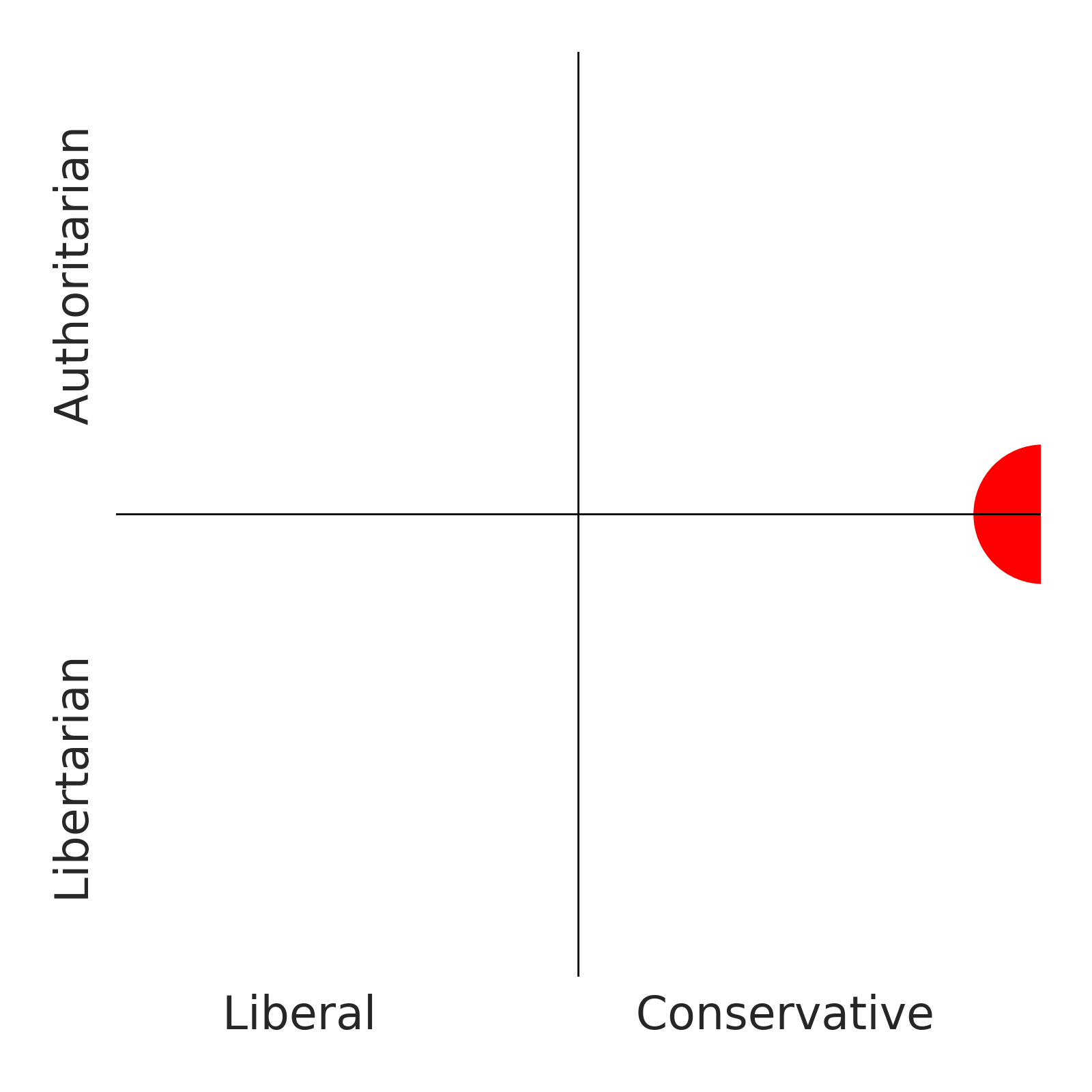
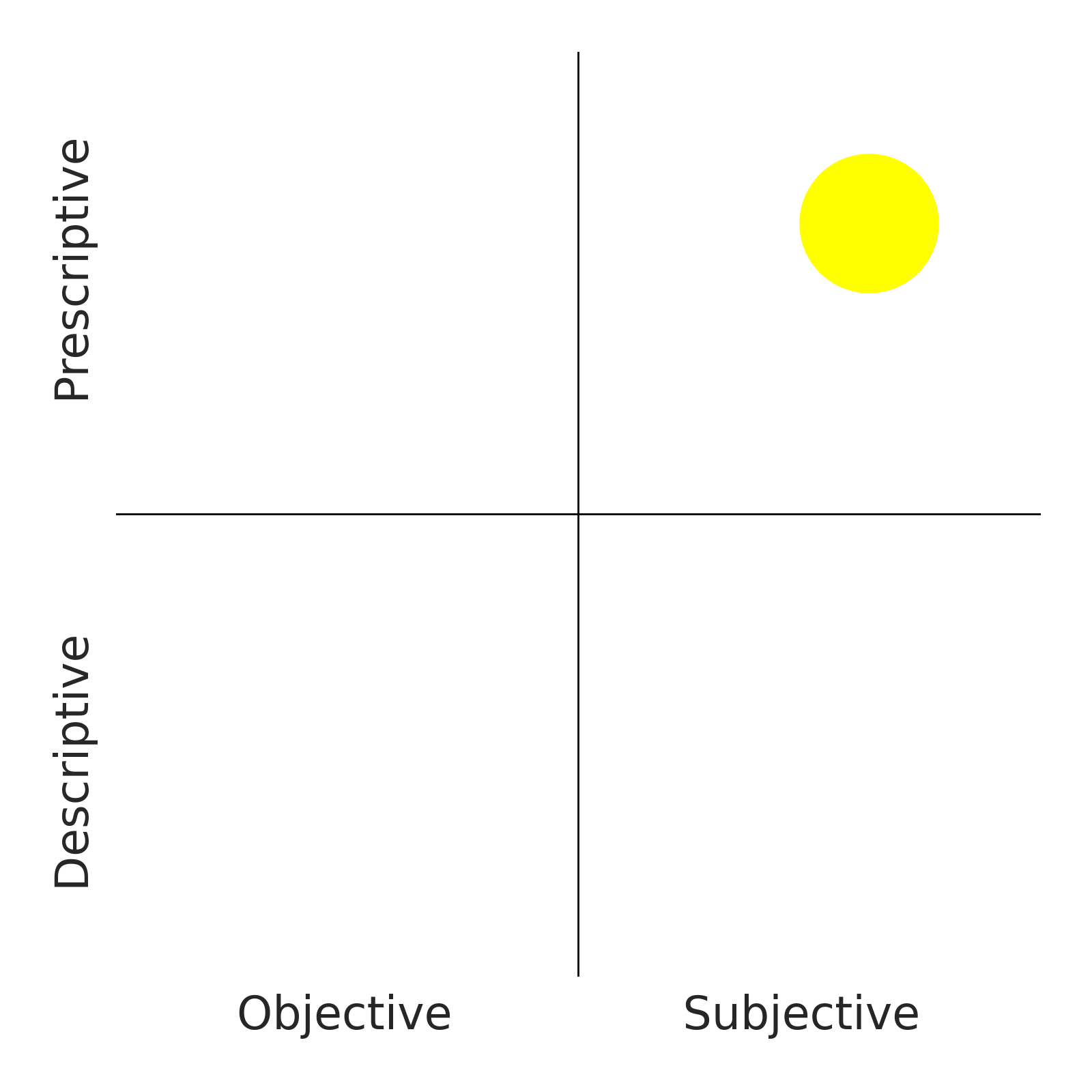
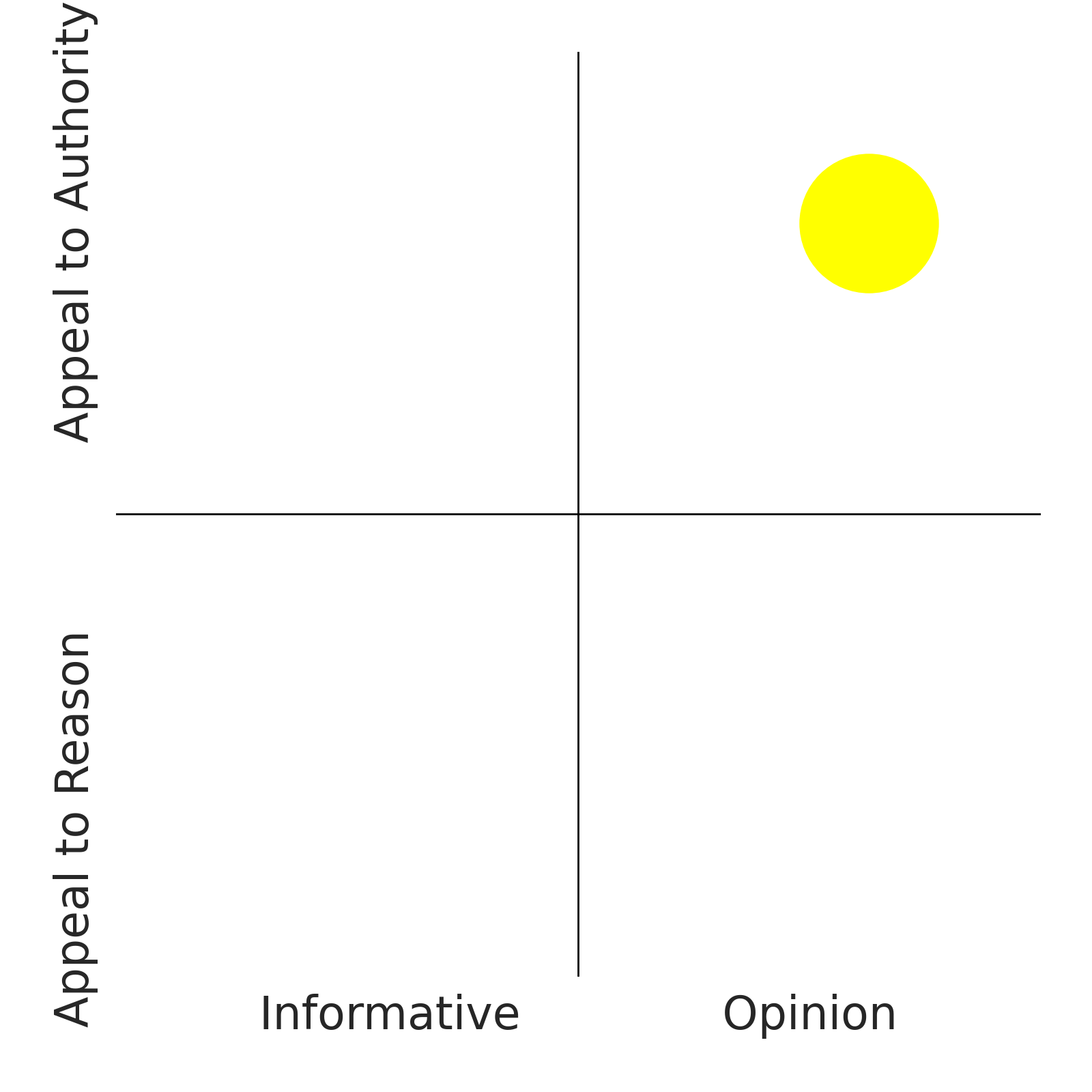
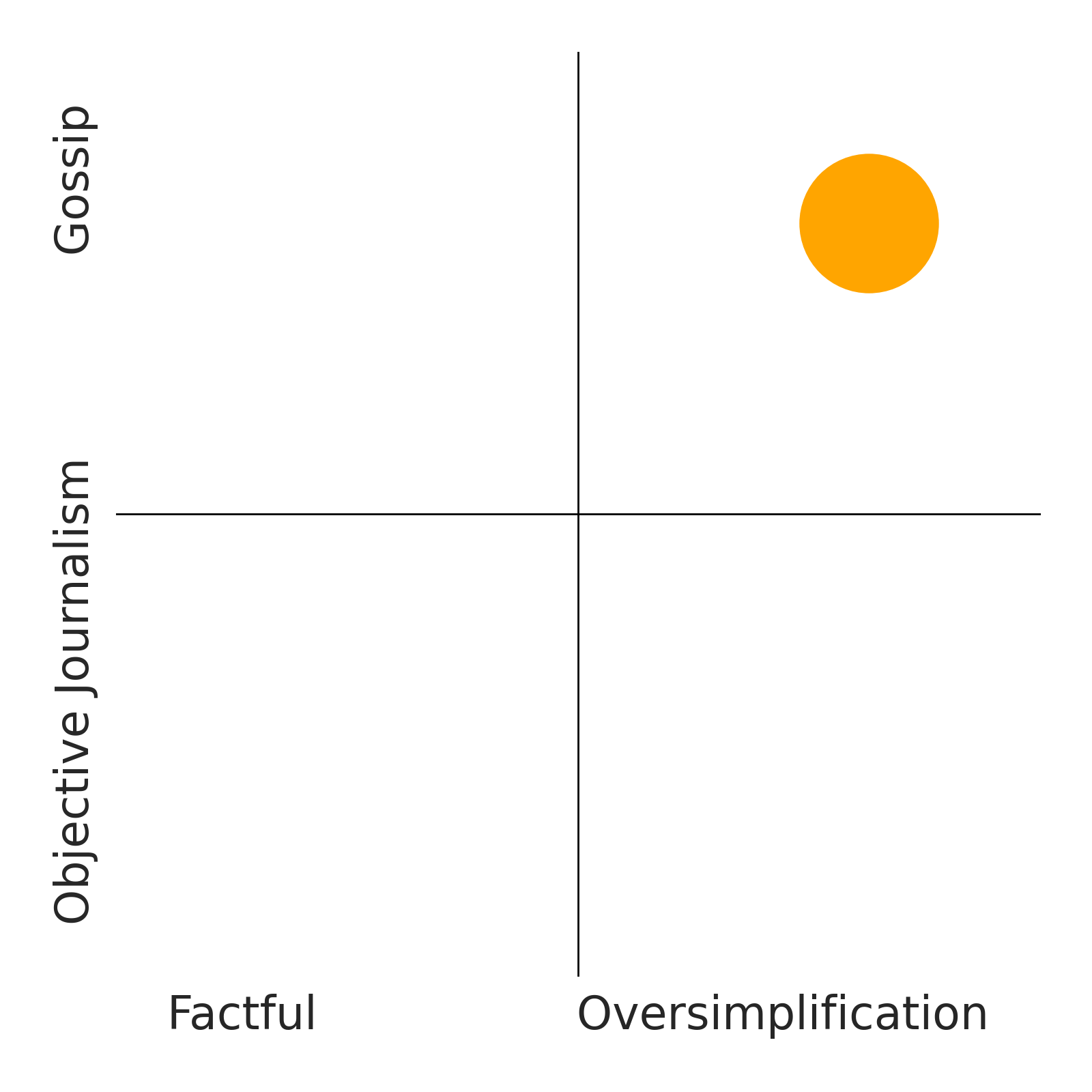
2026 © Helium Trades
Privacy Policy & Disclosure
* Disclaimer: Nothing on this website constitutes investment advice, performance data or any recommendation that any particular security, portfolio of securities, transaction or investment strategy is suitable for any specific person. Helium Trades is not responsible in any way for the accuracy
of any model predictions or price data. Any mention of a particular security and related prediction data is not a recommendation to buy or sell that security. Investments in securities involve the risk of loss. Past performance is no guarantee of future results. Helium Trades is not responsible for any of your investment decisions,
you should consult a financial expert before engaging in any transaction.


